

Xinjiang Halal Food
Muslim Travel Guide Xinjiang: Shawan Big Plate Chicken, Urumqi Halal Food and Hami Mosques
Articles • yusuf908 posted the article • 0 comments • 235 views • 2026-05-22 22:10
Reposted from the web
Summary: This Muslim travel guide to Xinjiang follows the route through Shawan, Urumqi, and Hami, covering big plate chicken, Hui Muslim restaurants, Urumqi halal food, shrines, Hami mosques, and final reflections from a region-wide journey.
Travel Notes from Shawan, Urumqi, and Hami is presented here as a firsthand travel account in clear English, beginning with this scene: Ten of my travelogues were deleted one after another recently, likely due to title violations, so I am reposting them after making edits. The account keeps its focus on Urumqi Halal Food, Hui Muslims, Xinjiang Travel while preserving the names, places, food, and historical details from the Chinese source.
Ten of my travelogues were deleted one after another recently, likely due to title violations, so I am reposting them after making edits.
Leaving Yili for Urumqi, you pass through Shawan City in the Tacheng region. Shawan is less than two hundred kilometers from Urumqi and is a very small city, but it is said to be the birthplace of the famous Xinjiang dish, big plate chicken (dapanji).
We arrived in downtown Shawan around 11:00 PM. I called Yulan Qiaotou Big Plate Chicken and Yuwentao Qiaotoubao Big Plate Chicken on the way, only to find out they had sold out of chicken by 7:00 PM. In the city, police stopped our car and checked our IDs. I said salaam to the officer, and he was stunned, asking, 'Are you Hui Muslim?' I said yes and asked if he hadn't already seen my ID. I decided to ask the officer which big plate chicken place was good. He said they were all about the same and we could eat anywhere on this street, so we ended up eating at this Jimiba No. 8 flagship store on Urumqi West Road.
Jimiba No. 8 Flagship Store
There were still many people at this shop at midnight. What surprised me even more was seeing the long-lost halal certification sign in the shop. This was the first halal sign we had seen in our many days of traveling through Xinjiang.
I asked the owner why the shop was called Jimiba No. 8, and she said they were the eighth shop to open on this street, so they have always been called No. 8.
The specialty of Shawan big plate chicken is that it uses a whole chicken per plate. It costs 130 yuan per serving. Since there were two of us, we split it into two large plates, and adding noodles costs extra. This shop is considered an old establishment in Shawan. The taste is fine, but it is not amazing enough to make you scream. Actually, big plate chicken appeared to serve passing truck drivers, focusing on being economical and affordable. It is basically at the level of a rest area fast food for drivers, so there is no need to come to Shawan specifically for it. Besides, I think many Xinjiang restaurants in Beijing can match this level, and some even suit my taste better. Shawan's big plate chicken is quite spicy and the chicken is tough, while Beijingers are used to soft, tender, salty, and savory flavors, so they might not be used to the authentic Shawan taste.
We stayed in Shawan for one night and arrived in Urumqi the next morning. Before checking in, we went straight to the Hamude Restaurant in Midong District, which I had wanted to visit for a long time, for lunch.
Hamude Restaurant
Hamude Restaurant is a family business. Three generations of the family are old Urumqi Hui Muslims who have worked in the catering industry. It is a restaurant family, and everyone from the kitchen to the front of the house is family. The owner is very strict about choosing ingredients. They do not trust meat from slaughterhouses and insist on finding an imam they know to slaughter the beef, lamb, and chicken. This increases their costs, but it guarantees quality.
The authorities think the name Hamude does not meet regulations, so they have not issued a halal certification mark. However, this shop is actually more reliable than many restaurants that have the certification, and they do not sell alcohol.
We had been traveling all the way without a proper big meal. This first meal in Urumqi really filled us up, so much so that we only ate this one meal for the day and were not hungry until dinner.
Hamude's big plate chicken (dapanji) is made in the authentic Urumqi Hui Muslim style. The chicken is soft and tender, and the wide belt noodles (pidaimian) served with it are very chewy. It suits our taste better than the one we had in Shawan.
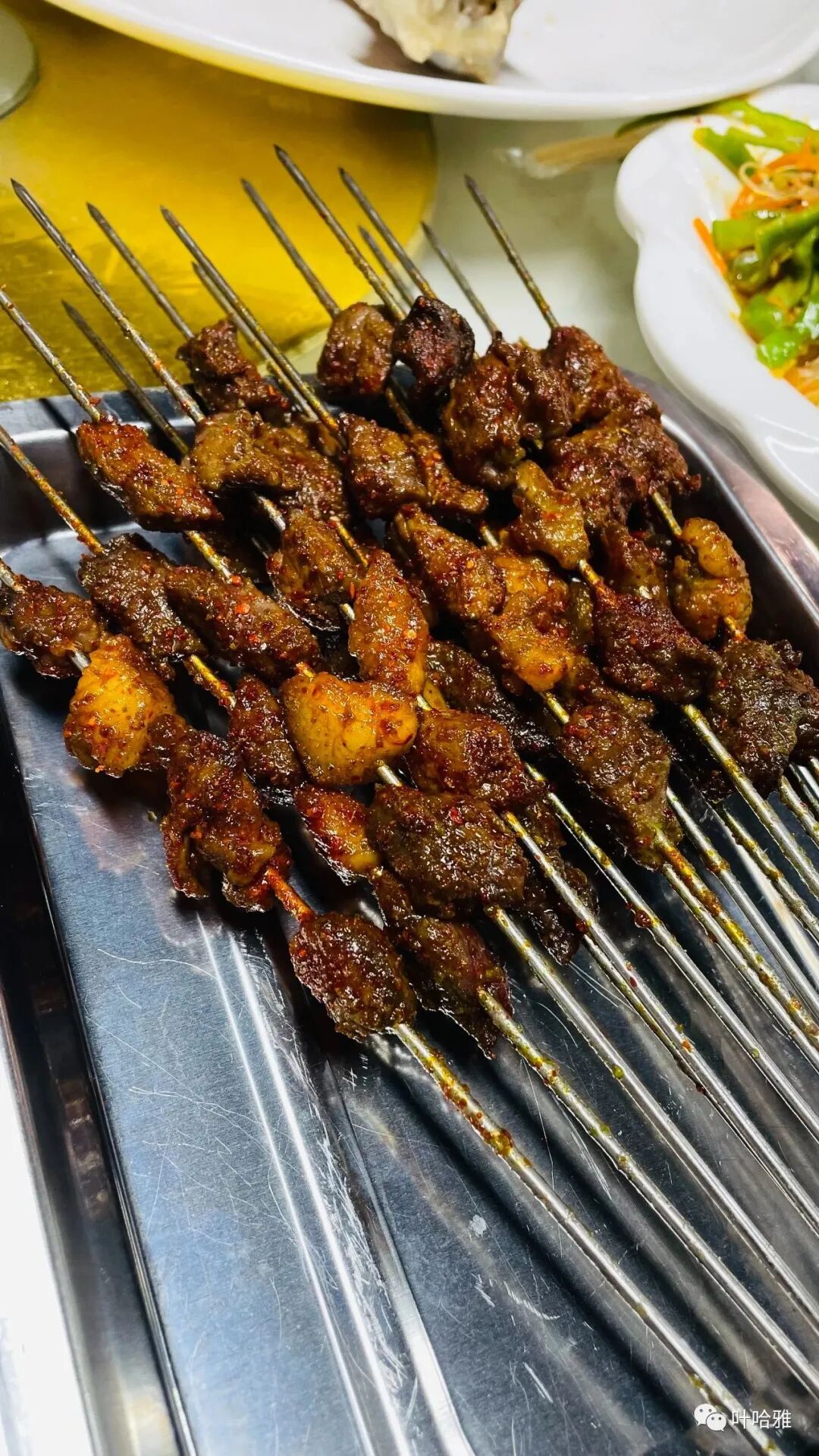
This grilled meat (kaorou) is a very popular barbecue dish in the shop. Many customers think it is cheap and delicious because the owner puts a lot of effort into the ingredients.
Hamude is located at commercial unit S7-101, Vanke Park No. 5, Midong District. It is a ground-floor shop.
Rumi's Secret
Rumi's Secret used to be in Beijing and just moved back to Urumqi. The owner is a Uyghur from Urumqi, and he insisted on not selling alcohol even when he was in Beijing.
This shop is located inside Greentown Rose Garden in the Shuimogou District of Urumqi. The environment is much better than it was in Beijing, as it now has a garden and a pond.
In the evening, there are singers performing with ethnic musical instruments, and the atmosphere is incredibly stylish.
The owner explained that since the outdoor space is the main feature, the restaurant is only open for half the year and closes during the winter. The owner is preparing a branch in Sanya, so you can visit Rumi's Secret in Sanya during the winter in the future.
Friends can come here for coffee and afternoon tea, or host parties and gatherings. The food and service are both excellent.
Address: Inside Greentown Rose Garden, Shuimogou District.
Aiju Restaurant.
If you like Western food and care about the atmosphere, you can come to Aiju Restaurant in Tianshan District, right across from Vanke Plaza.
A Uyghur friend brought me here specifically. Most of the people inside are young Uyghurs, and there is a live band performance.
The Western food tastes just as good as in Beijing, and the prices are about the same, with an average cost of over 200 per person.
The dishes look, smell, and taste great, and the steak is also good. With unique ethnic singers performing, it is a great place for a date with a wonderful atmosphere.
We stayed at the China Southern Pearl Hotel in Urumqi for three days. It is a halal hotel, and there is a Muqam halal restaurant on the second floor.
The China Southern Pearl Hotel is also the designated hotel for flight crews, so it is mostly filled with flight attendants and pilots.
Erdaoqiao Baida Mosque.
The Baida Mosque in Urumqi is less than a hundred years old. This is my second time here. It is currently open, but you can only enter during prayer times.
Being able to quietly join a congregational namaz here is a luxury.
For breakfast in Urumqi, head over to the area near Sunshine City Wenlan Mansion (Yangguangcheng Wenlan Gongguan). There are many small shops here with local ethnic character.
I had steamed buns (baozi) and milk tea at Babahan Milk Tea House, and I also tried the milk rice (naizifan).
This is my third time in Urumqi. I am meeting friends every day, so what I eat does not really matter anymore.
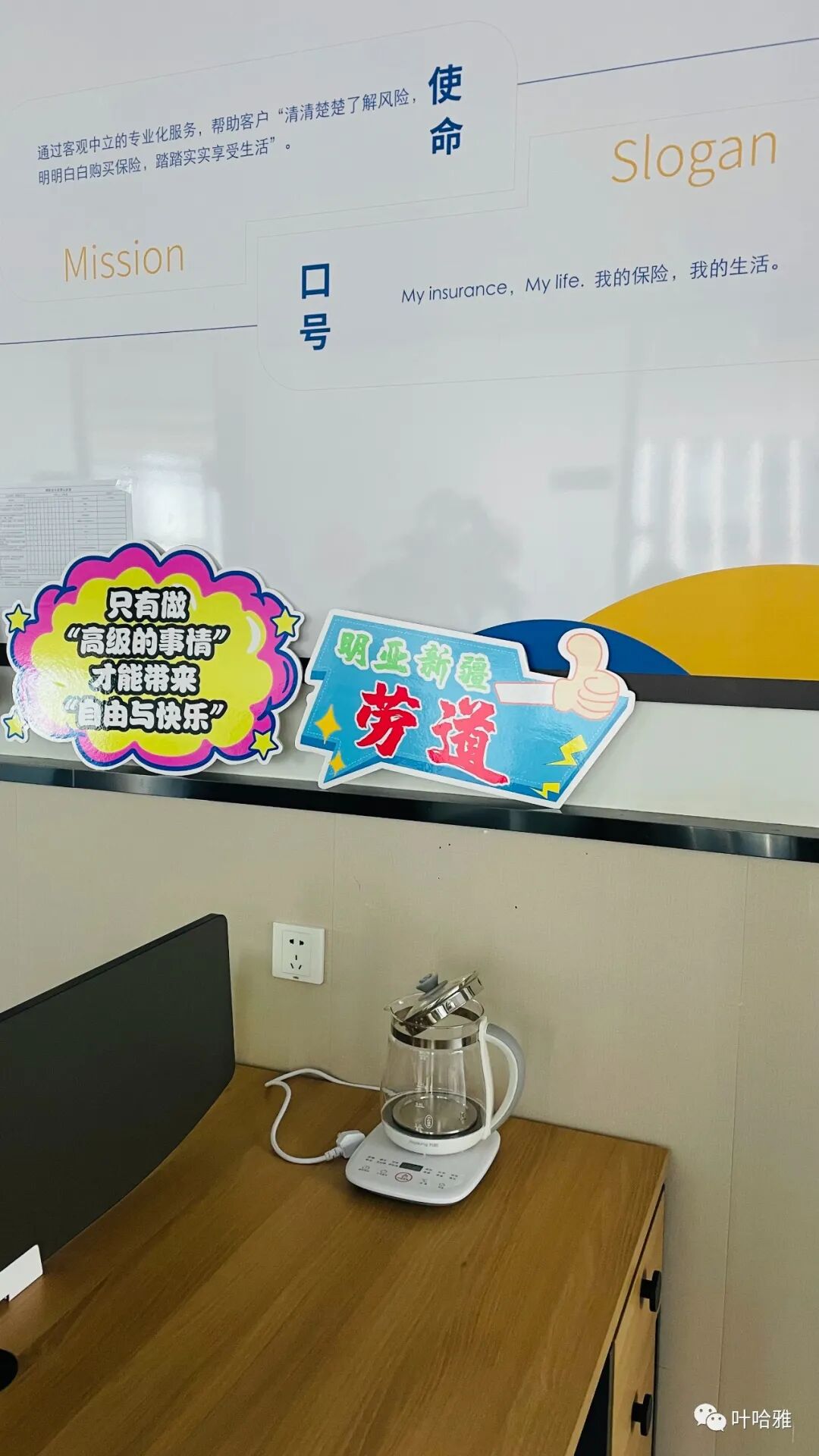
After breakfast, I visited colleagues at the Mingya Xinjiang branch. I met many of them for the first time. My team's furthest partner is in Kashgar, and I welcome everyone to join our Xinjiang branch.
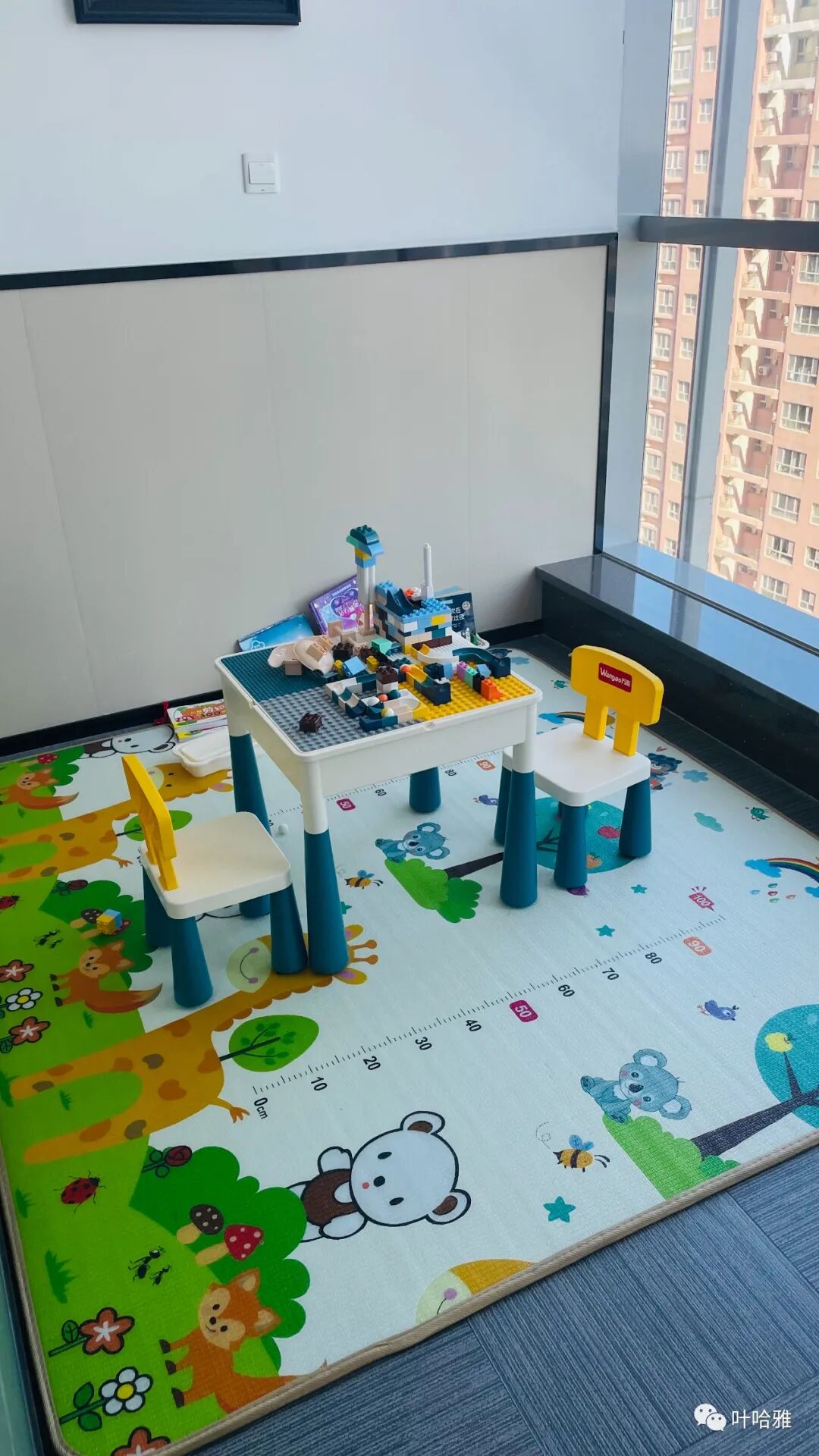
The company has a children's play area for moms who bring their kids to work. At Mingya, you can balance both family and career.
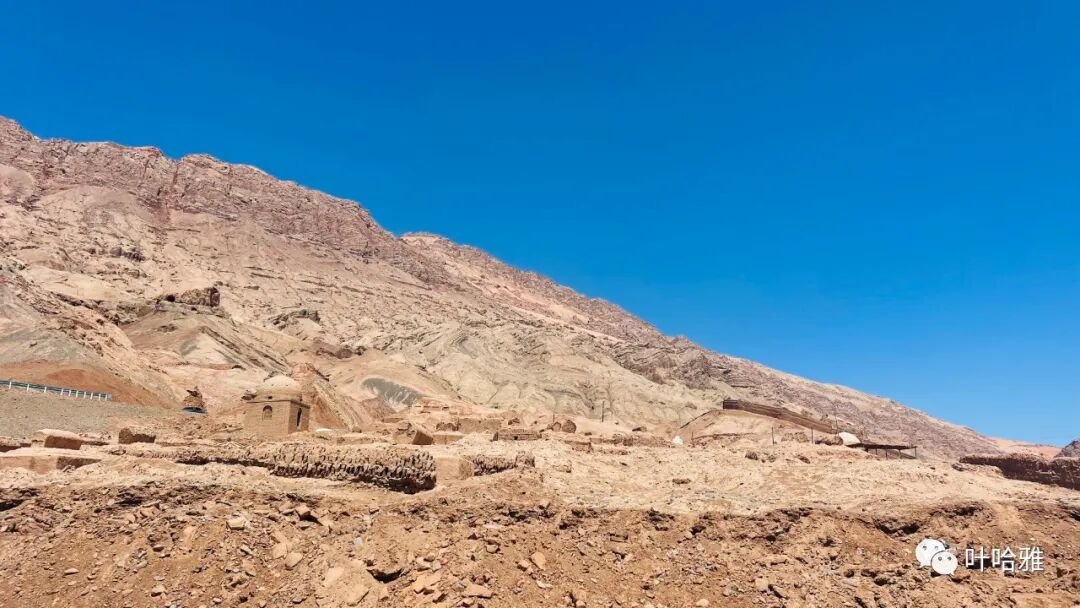
We left Urumqi and headed east, arriving at Tuyugou Mazar Village in less than half a day.
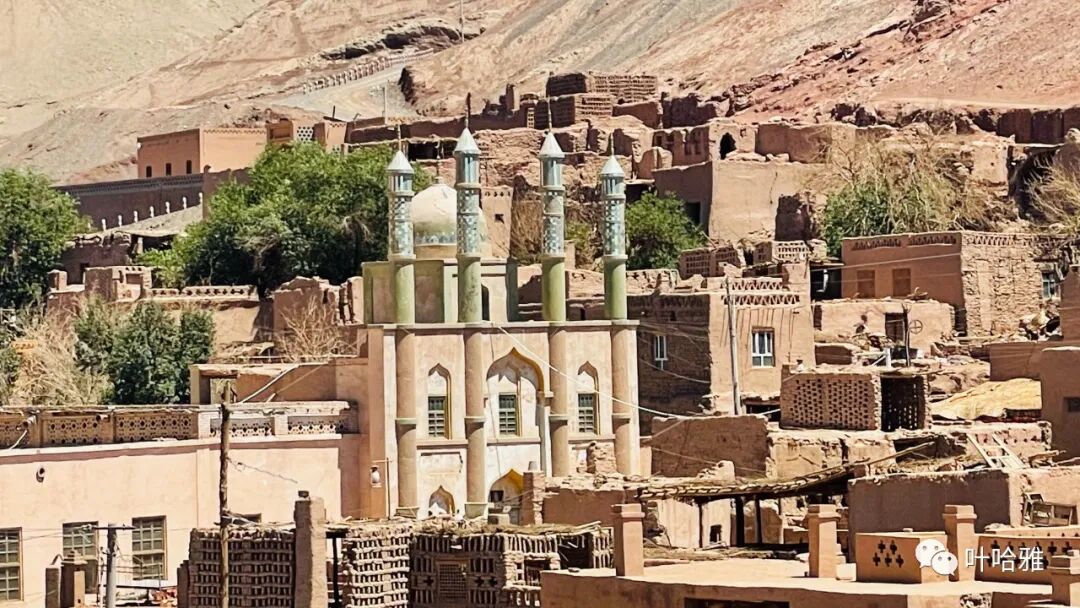
Tuyugou Mazar is said to be the site of the story of the Seven Sleepers and their dog mentioned in the Quran, and locals call it the Saint's Tomb. However, this legend is not widely accepted, as it is generally believed that the story of the seven people and the dog took place in Jordan.
The Mazar is called the Ashab-i-Kahf Mazar. People say a group of people from a country in the west traveled east to seek the truth, reached a cave in the Turpan area, entered it to practice their faith, and never came out again. You need to buy a ticket to enter Mazar Village. I saw the Mazar was closed, so I gave up on the idea of visiting the village because it was just too hot, with daytime temperatures reaching nearly 50 degrees. I have visited the Emin Minaret (Sugongta), Grape Valley, and the Karez Well in Turpan before, so I did not stop there on this trip.
Hami is the last stop on our Xinjiang trip because the Gaisi Gongbei is here, even though the Tomb of the Hami Kings is more famous.
Tuluke Buzuerrega Mosque
The mosque was closed, the shrine (gongbei) was not open, and some Islamic historical sites I found online do not actually exist anymore.
We wandered over to this place, Bayawan Food, to have some mixed noodles (banmian).
I ordered a serving of mushroom and meat mixed noodles (banmian). It was delicious. You really cannot go wrong with mixed noodles in Xinjiang.
Gais, Wuais, and Wangasi were three Arab sages who came to China to spread the faith during the Tang Dynasty. Gais passed away from illness while passing through Xingxingxia. The King of Hami built a shrine (gongbei) for him there, but his remains were moved to Hami during the Republic of China era. There is no mosque in Xingxingxia now.
When Sheng Shicai was in power, he had the remains of Gais thrown into the wilderness, but Hui Muslim and Uyghur brothers from Hami secretly recovered them and moved them to the suburbs of Hami for burial.
I could only catch a glimpse of the dome of the Gais tomb from the side of the road.
Zhongshan South Road Mosque
Lingmingtang Hami Branch
The Lingmingtang was also closed. I asked someone there and learned that even the elders cannot come to visit the graves right now.
The shrines (gongbei) at Lingmingtang are built in a very grand style and have a distinct traditional Chinese charm.
Hami Shaanxi Grand Mosque
The Hami Shaanxi Grand Mosque was first built during the Tongzhi reign of the Qing Dynasty. It is currently open, and I chatted for a while with an elder from Gansu at the mosque entrance.
Behind the Shaanxi Grand Mosque (Shaanxi Dasi) is the Uyghur mosque. The Shaanxi Grand Mosque was not necessarily built by people from Shaanxi, but most of the people who pray there are Hui Muslims.
After I finished my namaz at the Shaanxi Grand Mosque in Hami, I went over to the Uyghur mosque to pray two rak'ahs. No one said anything, and the atmosphere was harmonious.
My trip to Xinjiang ends here. This was my third time in Xinjiang, and I have now traveled across the entire region and met the people I wanted to see. My only regret is that I could not enter some of the historical sites. I look forward to coming back in the near future to make up for this. view all
Summary: This Muslim travel guide to Xinjiang follows the route through Shawan, Urumqi, and Hami, covering big plate chicken, Hui Muslim restaurants, Urumqi halal food, shrines, Hami mosques, and final reflections from a region-wide journey.
Travel Notes from Shawan, Urumqi, and Hami is presented here as a firsthand travel account in clear English, beginning with this scene: Ten of my travelogues were deleted one after another recently, likely due to title violations, so I am reposting them after making edits. The account keeps its focus on Urumqi Halal Food, Hui Muslims, Xinjiang Travel while preserving the names, places, food, and historical details from the Chinese source.
Ten of my travelogues were deleted one after another recently, likely due to title violations, so I am reposting them after making edits.
Leaving Yili for Urumqi, you pass through Shawan City in the Tacheng region. Shawan is less than two hundred kilometers from Urumqi and is a very small city, but it is said to be the birthplace of the famous Xinjiang dish, big plate chicken (dapanji).
We arrived in downtown Shawan around 11:00 PM. I called Yulan Qiaotou Big Plate Chicken and Yuwentao Qiaotoubao Big Plate Chicken on the way, only to find out they had sold out of chicken by 7:00 PM. In the city, police stopped our car and checked our IDs. I said salaam to the officer, and he was stunned, asking, 'Are you Hui Muslim?' I said yes and asked if he hadn't already seen my ID. I decided to ask the officer which big plate chicken place was good. He said they were all about the same and we could eat anywhere on this street, so we ended up eating at this Jimiba No. 8 flagship store on Urumqi West Road.
Jimiba No. 8 Flagship Store
There were still many people at this shop at midnight. What surprised me even more was seeing the long-lost halal certification sign in the shop. This was the first halal sign we had seen in our many days of traveling through Xinjiang.
I asked the owner why the shop was called Jimiba No. 8, and she said they were the eighth shop to open on this street, so they have always been called No. 8.
The specialty of Shawan big plate chicken is that it uses a whole chicken per plate. It costs 130 yuan per serving. Since there were two of us, we split it into two large plates, and adding noodles costs extra. This shop is considered an old establishment in Shawan. The taste is fine, but it is not amazing enough to make you scream. Actually, big plate chicken appeared to serve passing truck drivers, focusing on being economical and affordable. It is basically at the level of a rest area fast food for drivers, so there is no need to come to Shawan specifically for it. Besides, I think many Xinjiang restaurants in Beijing can match this level, and some even suit my taste better. Shawan's big plate chicken is quite spicy and the chicken is tough, while Beijingers are used to soft, tender, salty, and savory flavors, so they might not be used to the authentic Shawan taste.
We stayed in Shawan for one night and arrived in Urumqi the next morning. Before checking in, we went straight to the Hamude Restaurant in Midong District, which I had wanted to visit for a long time, for lunch.
Hamude Restaurant
Hamude Restaurant is a family business. Three generations of the family are old Urumqi Hui Muslims who have worked in the catering industry. It is a restaurant family, and everyone from the kitchen to the front of the house is family. The owner is very strict about choosing ingredients. They do not trust meat from slaughterhouses and insist on finding an imam they know to slaughter the beef, lamb, and chicken. This increases their costs, but it guarantees quality.
The authorities think the name Hamude does not meet regulations, so they have not issued a halal certification mark. However, this shop is actually more reliable than many restaurants that have the certification, and they do not sell alcohol.
We had been traveling all the way without a proper big meal. This first meal in Urumqi really filled us up, so much so that we only ate this one meal for the day and were not hungry until dinner.
Hamude's big plate chicken (dapanji) is made in the authentic Urumqi Hui Muslim style. The chicken is soft and tender, and the wide belt noodles (pidaimian) served with it are very chewy. It suits our taste better than the one we had in Shawan.
This grilled meat (kaorou) is a very popular barbecue dish in the shop. Many customers think it is cheap and delicious because the owner puts a lot of effort into the ingredients.
Hamude is located at commercial unit S7-101, Vanke Park No. 5, Midong District. It is a ground-floor shop.
Rumi's Secret
Rumi's Secret used to be in Beijing and just moved back to Urumqi. The owner is a Uyghur from Urumqi, and he insisted on not selling alcohol even when he was in Beijing.
This shop is located inside Greentown Rose Garden in the Shuimogou District of Urumqi. The environment is much better than it was in Beijing, as it now has a garden and a pond.
In the evening, there are singers performing with ethnic musical instruments, and the atmosphere is incredibly stylish.
The owner explained that since the outdoor space is the main feature, the restaurant is only open for half the year and closes during the winter. The owner is preparing a branch in Sanya, so you can visit Rumi's Secret in Sanya during the winter in the future.
Friends can come here for coffee and afternoon tea, or host parties and gatherings. The food and service are both excellent.
Address: Inside Greentown Rose Garden, Shuimogou District.
Aiju Restaurant.
If you like Western food and care about the atmosphere, you can come to Aiju Restaurant in Tianshan District, right across from Vanke Plaza.
A Uyghur friend brought me here specifically. Most of the people inside are young Uyghurs, and there is a live band performance.
The Western food tastes just as good as in Beijing, and the prices are about the same, with an average cost of over 200 per person.
The dishes look, smell, and taste great, and the steak is also good. With unique ethnic singers performing, it is a great place for a date with a wonderful atmosphere.
We stayed at the China Southern Pearl Hotel in Urumqi for three days. It is a halal hotel, and there is a Muqam halal restaurant on the second floor.
The China Southern Pearl Hotel is also the designated hotel for flight crews, so it is mostly filled with flight attendants and pilots.
Erdaoqiao Baida Mosque.
The Baida Mosque in Urumqi is less than a hundred years old. This is my second time here. It is currently open, but you can only enter during prayer times.
Being able to quietly join a congregational namaz here is a luxury.
For breakfast in Urumqi, head over to the area near Sunshine City Wenlan Mansion (Yangguangcheng Wenlan Gongguan). There are many small shops here with local ethnic character.
I had steamed buns (baozi) and milk tea at Babahan Milk Tea House, and I also tried the milk rice (naizifan).
This is my third time in Urumqi. I am meeting friends every day, so what I eat does not really matter anymore.
After breakfast, I visited colleagues at the Mingya Xinjiang branch. I met many of them for the first time. My team's furthest partner is in Kashgar, and I welcome everyone to join our Xinjiang branch.
The company has a children's play area for moms who bring their kids to work. At Mingya, you can balance both family and career.
We left Urumqi and headed east, arriving at Tuyugou Mazar Village in less than half a day.
Tuyugou Mazar is said to be the site of the story of the Seven Sleepers and their dog mentioned in the Quran, and locals call it the Saint's Tomb. However, this legend is not widely accepted, as it is generally believed that the story of the seven people and the dog took place in Jordan.
The Mazar is called the Ashab-i-Kahf Mazar. People say a group of people from a country in the west traveled east to seek the truth, reached a cave in the Turpan area, entered it to practice their faith, and never came out again. You need to buy a ticket to enter Mazar Village. I saw the Mazar was closed, so I gave up on the idea of visiting the village because it was just too hot, with daytime temperatures reaching nearly 50 degrees. I have visited the Emin Minaret (Sugongta), Grape Valley, and the Karez Well in Turpan before, so I did not stop there on this trip.
Hami is the last stop on our Xinjiang trip because the Gaisi Gongbei is here, even though the Tomb of the Hami Kings is more famous.
Tuluke Buzuerrega Mosque
The mosque was closed, the shrine (gongbei) was not open, and some Islamic historical sites I found online do not actually exist anymore.
We wandered over to this place, Bayawan Food, to have some mixed noodles (banmian).
I ordered a serving of mushroom and meat mixed noodles (banmian). It was delicious. You really cannot go wrong with mixed noodles in Xinjiang.
Gais, Wuais, and Wangasi were three Arab sages who came to China to spread the faith during the Tang Dynasty. Gais passed away from illness while passing through Xingxingxia. The King of Hami built a shrine (gongbei) for him there, but his remains were moved to Hami during the Republic of China era. There is no mosque in Xingxingxia now.
When Sheng Shicai was in power, he had the remains of Gais thrown into the wilderness, but Hui Muslim and Uyghur brothers from Hami secretly recovered them and moved them to the suburbs of Hami for burial.
I could only catch a glimpse of the dome of the Gais tomb from the side of the road.
Zhongshan South Road Mosque
Lingmingtang Hami Branch
The Lingmingtang was also closed. I asked someone there and learned that even the elders cannot come to visit the graves right now.
The shrines (gongbei) at Lingmingtang are built in a very grand style and have a distinct traditional Chinese charm.
Hami Shaanxi Grand Mosque
The Hami Shaanxi Grand Mosque was first built during the Tongzhi reign of the Qing Dynasty. It is currently open, and I chatted for a while with an elder from Gansu at the mosque entrance.
Behind the Shaanxi Grand Mosque (Shaanxi Dasi) is the Uyghur mosque. The Shaanxi Grand Mosque was not necessarily built by people from Shaanxi, but most of the people who pray there are Hui Muslims.
After I finished my namaz at the Shaanxi Grand Mosque in Hami, I went over to the Uyghur mosque to pray two rak'ahs. No one said anything, and the atmosphere was harmonious.
My trip to Xinjiang ends here. This was my third time in Xinjiang, and I have now traveled across the entire region and met the people I wanted to see. My only regret is that I could not enter some of the historical sites. I look forward to coming back in the near future to make up for this. view all
Reposted from the web
Summary: This Muslim travel guide to Xinjiang follows the route through Shawan, Urumqi, and Hami, covering big plate chicken, Hui Muslim restaurants, Urumqi halal food, shrines, Hami mosques, and final reflections from a region-wide journey.
Travel Notes from Shawan, Urumqi, and Hami is presented here as a firsthand travel account in clear English, beginning with this scene: Ten of my travelogues were deleted one after another recently, likely due to title violations, so I am reposting them after making edits. The account keeps its focus on Urumqi Halal Food, Hui Muslims, Xinjiang Travel while preserving the names, places, food, and historical details from the Chinese source.
Ten of my travelogues were deleted one after another recently, likely due to title violations, so I am reposting them after making edits.
Leaving Yili for Urumqi, you pass through Shawan City in the Tacheng region. Shawan is less than two hundred kilometers from Urumqi and is a very small city, but it is said to be the birthplace of the famous Xinjiang dish, big plate chicken (dapanji).
We arrived in downtown Shawan around 11:00 PM. I called Yulan Qiaotou Big Plate Chicken and Yuwentao Qiaotoubao Big Plate Chicken on the way, only to find out they had sold out of chicken by 7:00 PM. In the city, police stopped our car and checked our IDs. I said salaam to the officer, and he was stunned, asking, 'Are you Hui Muslim?' I said yes and asked if he hadn't already seen my ID. I decided to ask the officer which big plate chicken place was good. He said they were all about the same and we could eat anywhere on this street, so we ended up eating at this Jimiba No. 8 flagship store on Urumqi West Road.
Jimiba No. 8 Flagship Store
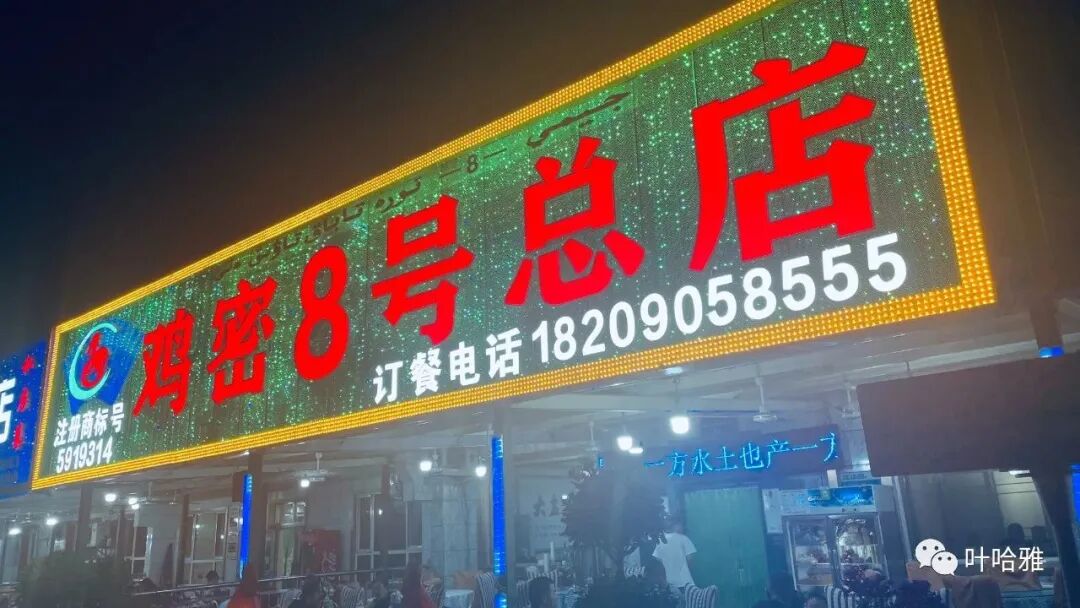
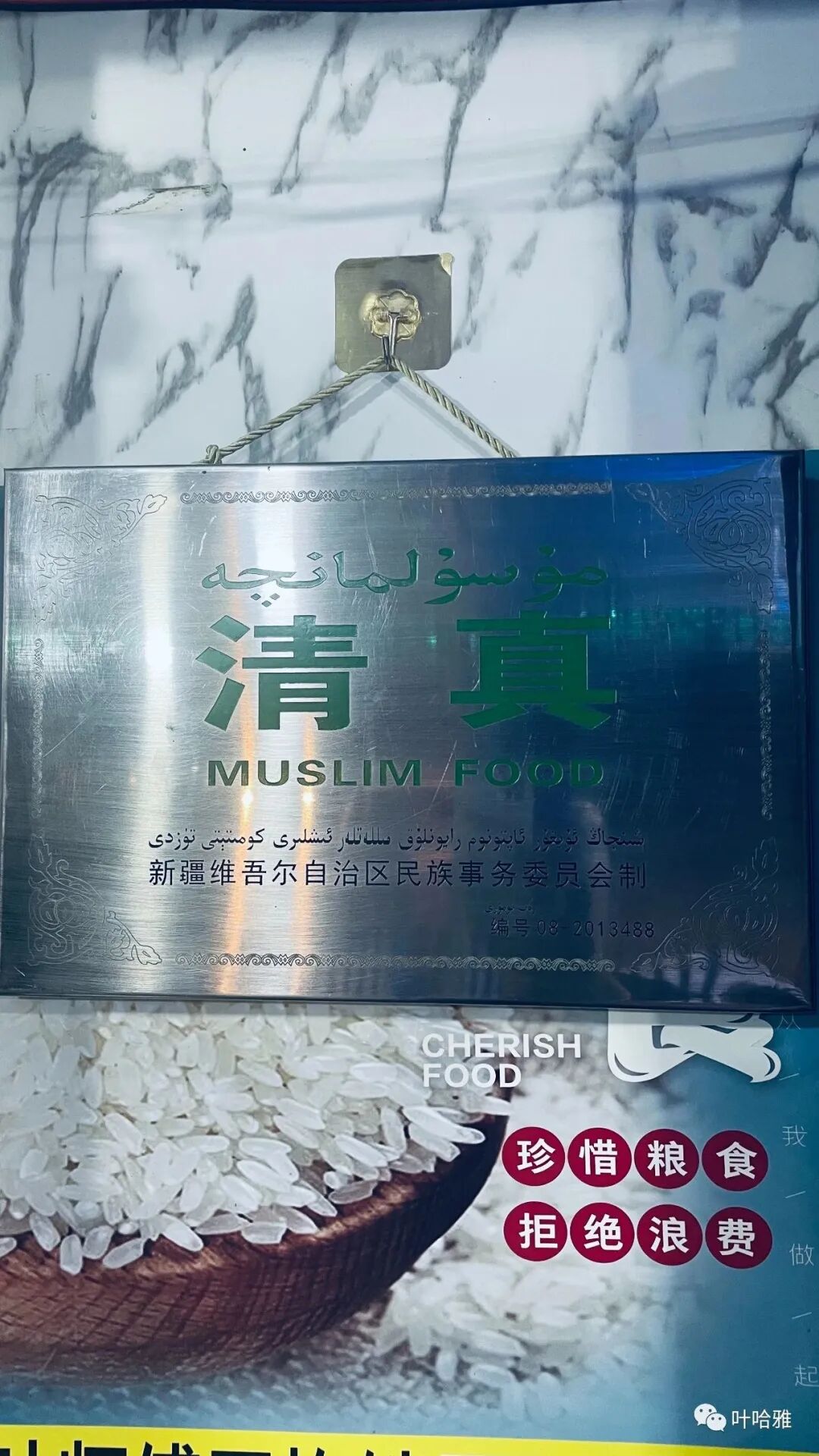
There were still many people at this shop at midnight. What surprised me even more was seeing the long-lost halal certification sign in the shop. This was the first halal sign we had seen in our many days of traveling through Xinjiang.
I asked the owner why the shop was called Jimiba No. 8, and she said they were the eighth shop to open on this street, so they have always been called No. 8.
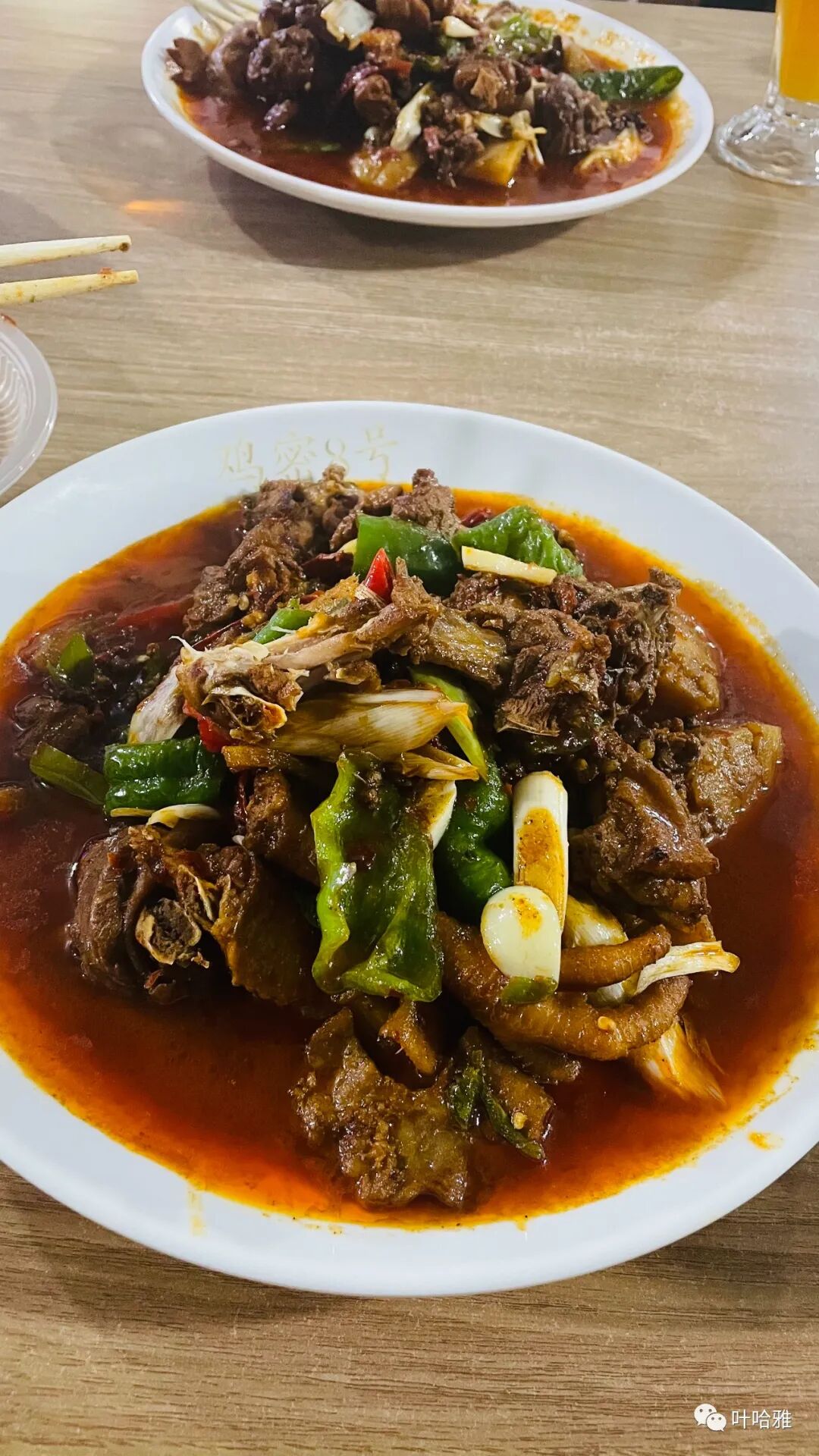
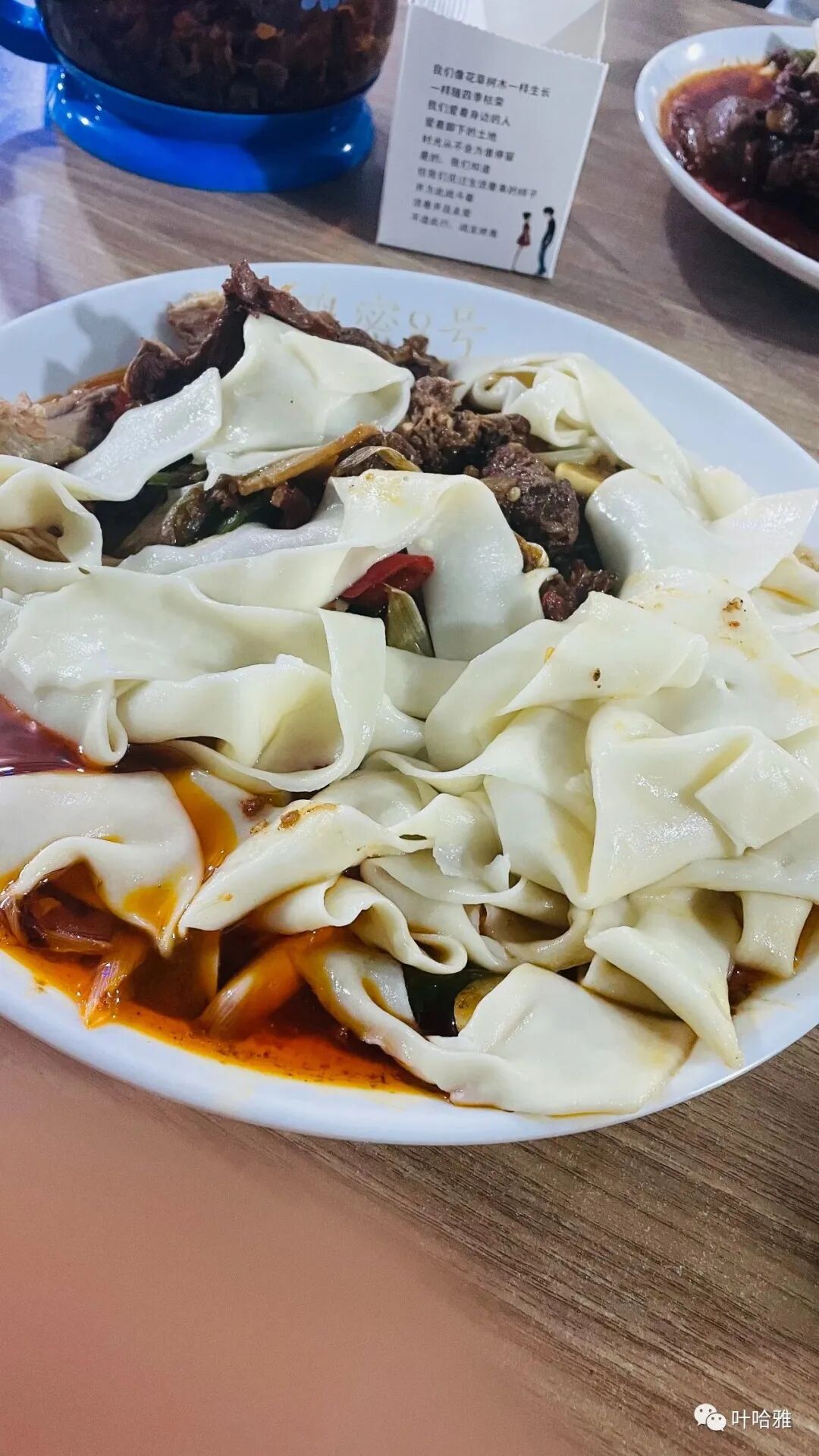
The specialty of Shawan big plate chicken is that it uses a whole chicken per plate. It costs 130 yuan per serving. Since there were two of us, we split it into two large plates, and adding noodles costs extra. This shop is considered an old establishment in Shawan. The taste is fine, but it is not amazing enough to make you scream. Actually, big plate chicken appeared to serve passing truck drivers, focusing on being economical and affordable. It is basically at the level of a rest area fast food for drivers, so there is no need to come to Shawan specifically for it. Besides, I think many Xinjiang restaurants in Beijing can match this level, and some even suit my taste better. Shawan's big plate chicken is quite spicy and the chicken is tough, while Beijingers are used to soft, tender, salty, and savory flavors, so they might not be used to the authentic Shawan taste.
We stayed in Shawan for one night and arrived in Urumqi the next morning. Before checking in, we went straight to the Hamude Restaurant in Midong District, which I had wanted to visit for a long time, for lunch.
Hamude Restaurant
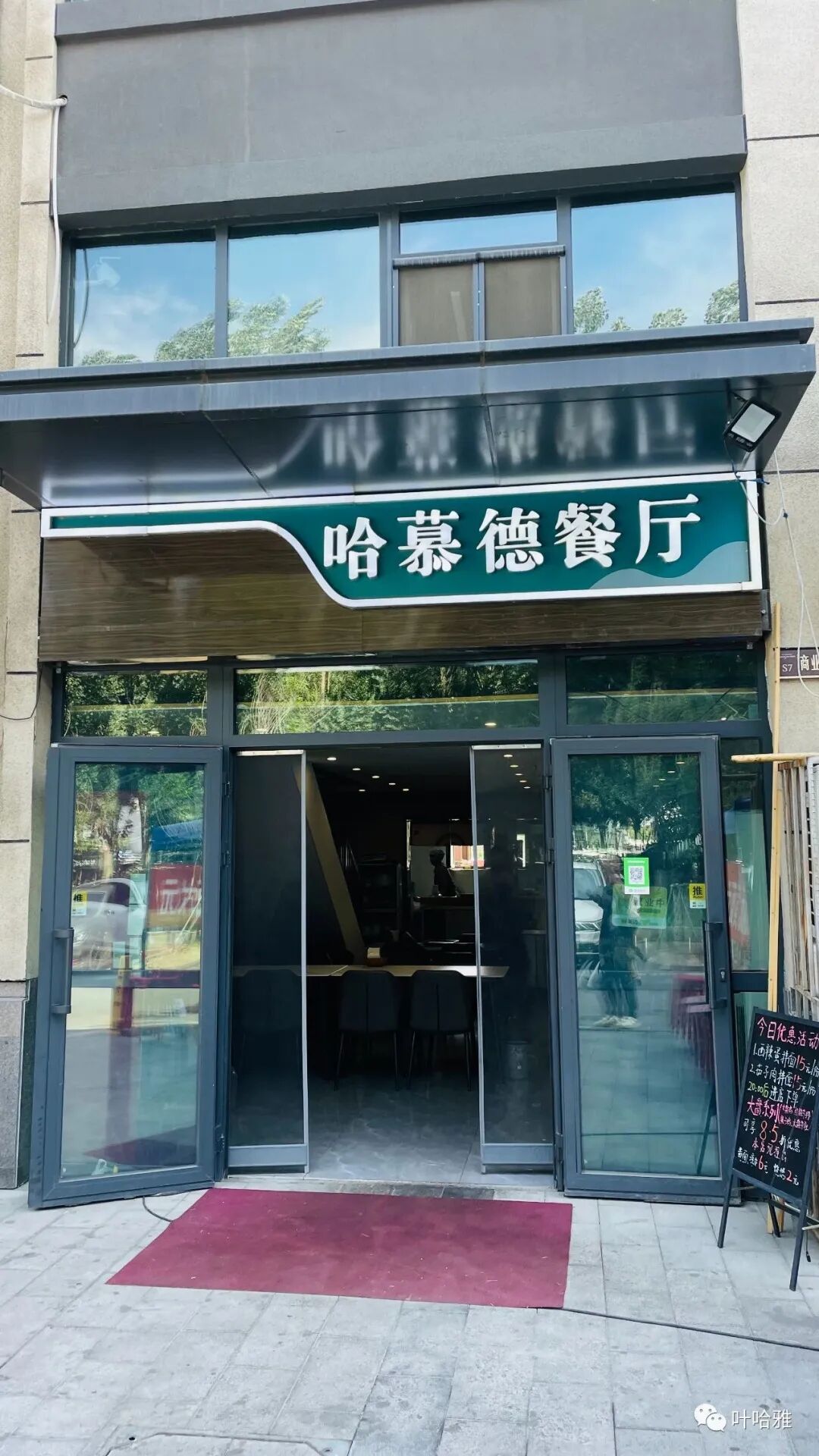
Hamude Restaurant is a family business. Three generations of the family are old Urumqi Hui Muslims who have worked in the catering industry. It is a restaurant family, and everyone from the kitchen to the front of the house is family. The owner is very strict about choosing ingredients. They do not trust meat from slaughterhouses and insist on finding an imam they know to slaughter the beef, lamb, and chicken. This increases their costs, but it guarantees quality.
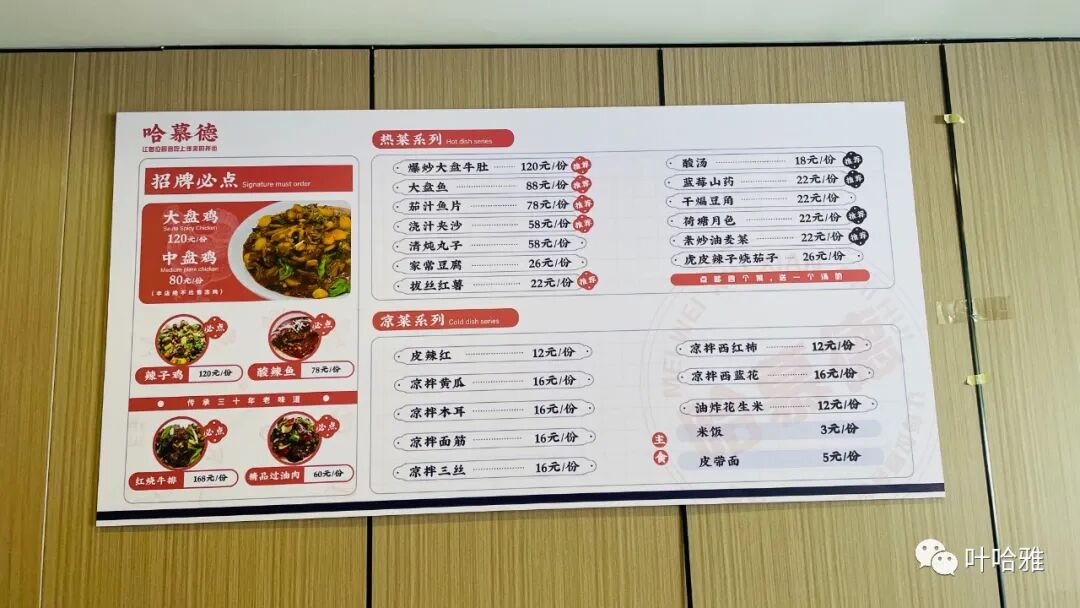
The authorities think the name Hamude does not meet regulations, so they have not issued a halal certification mark. However, this shop is actually more reliable than many restaurants that have the certification, and they do not sell alcohol.
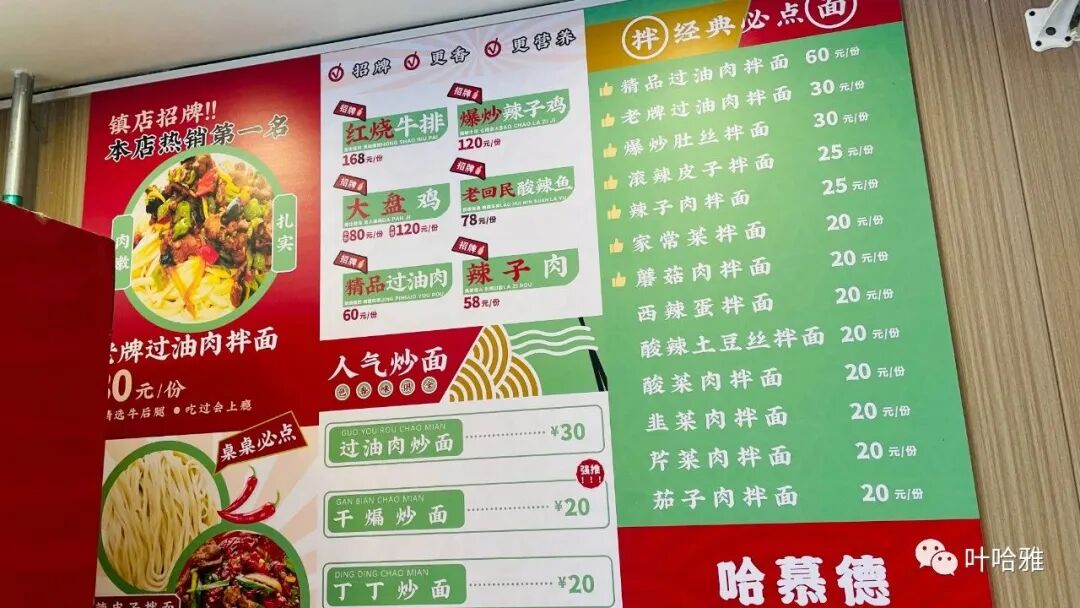
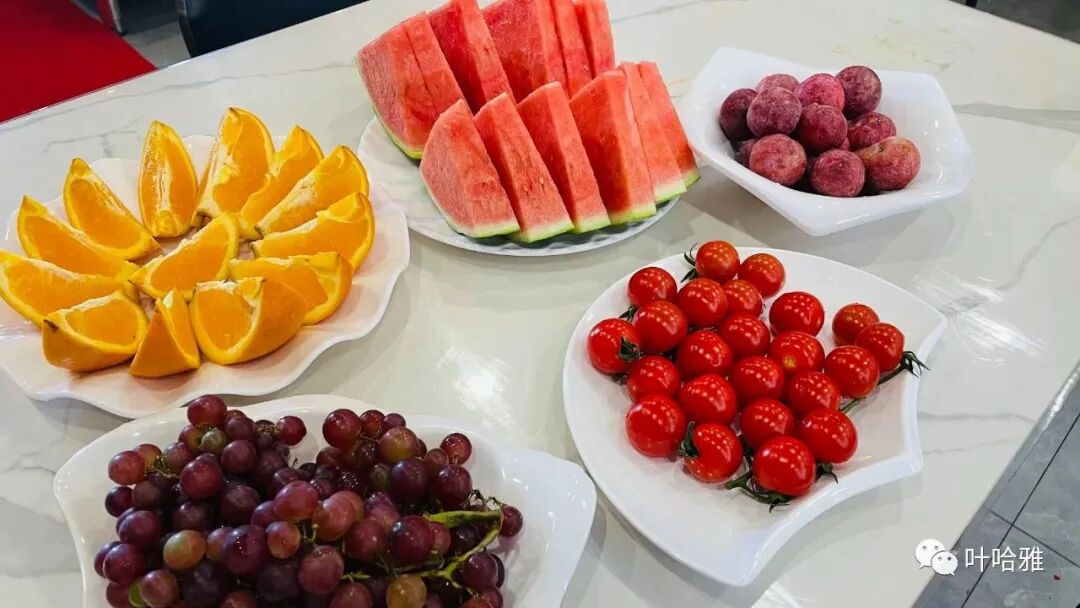
We had been traveling all the way without a proper big meal. This first meal in Urumqi really filled us up, so much so that we only ate this one meal for the day and were not hungry until dinner.
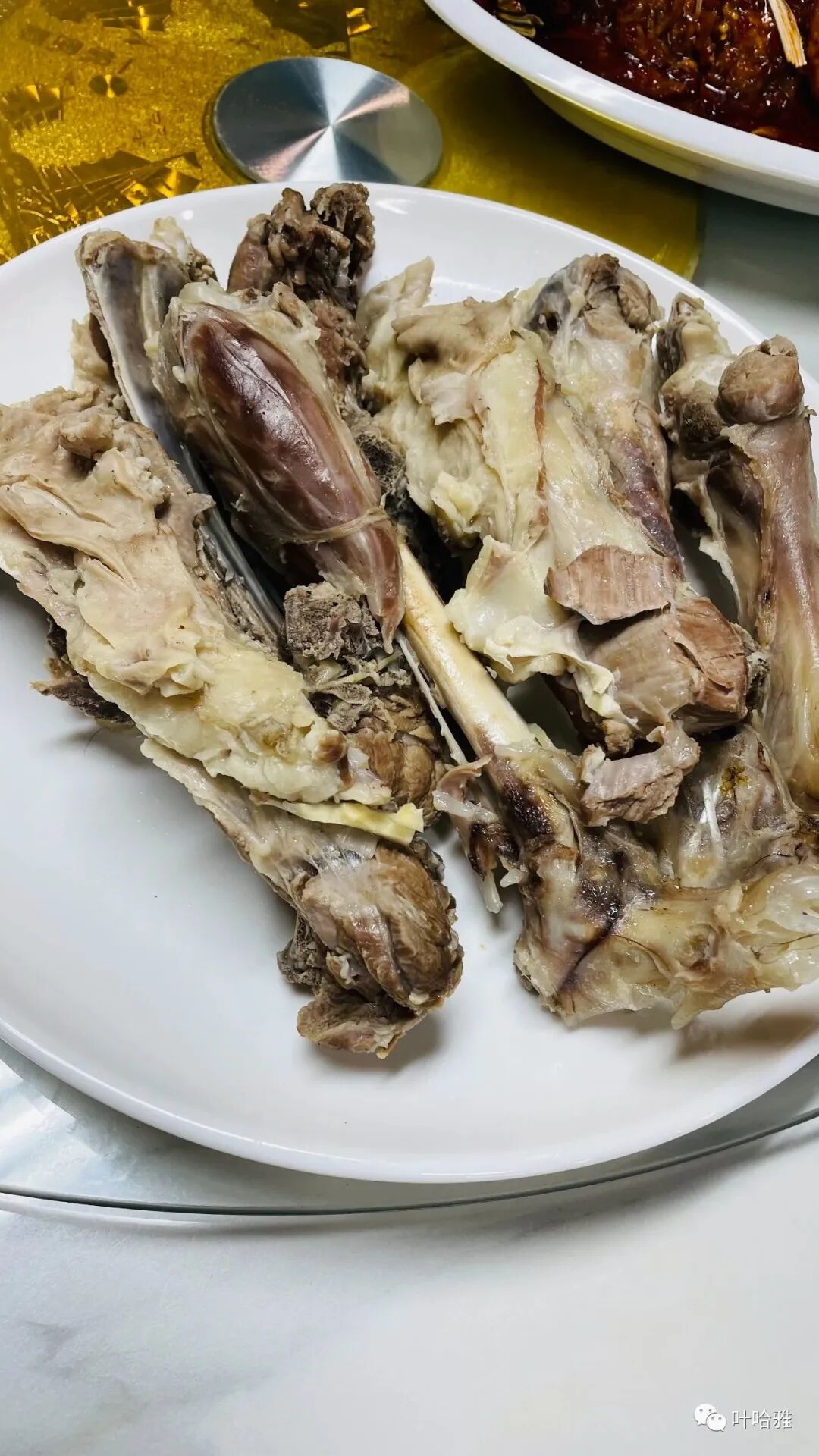
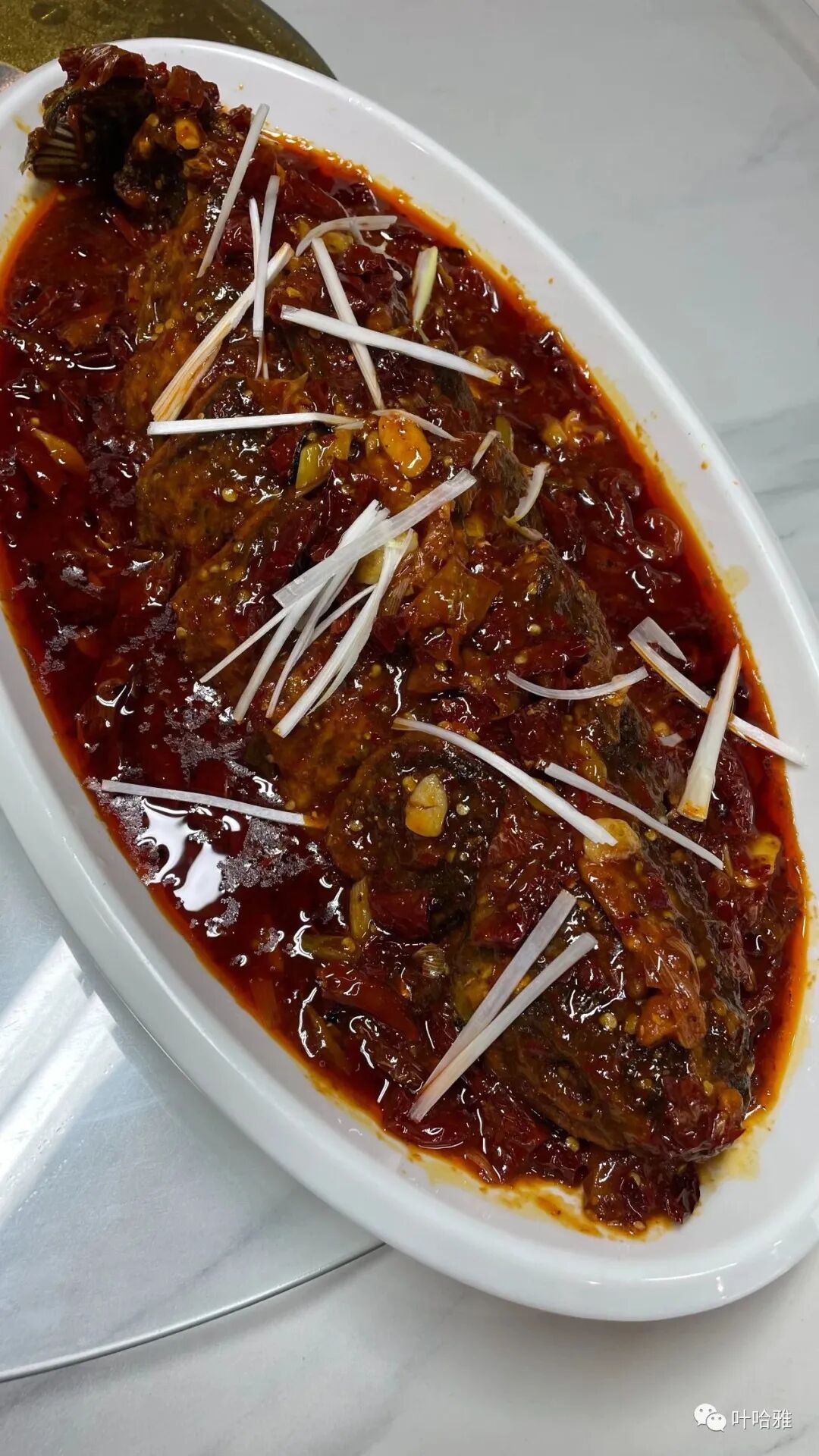
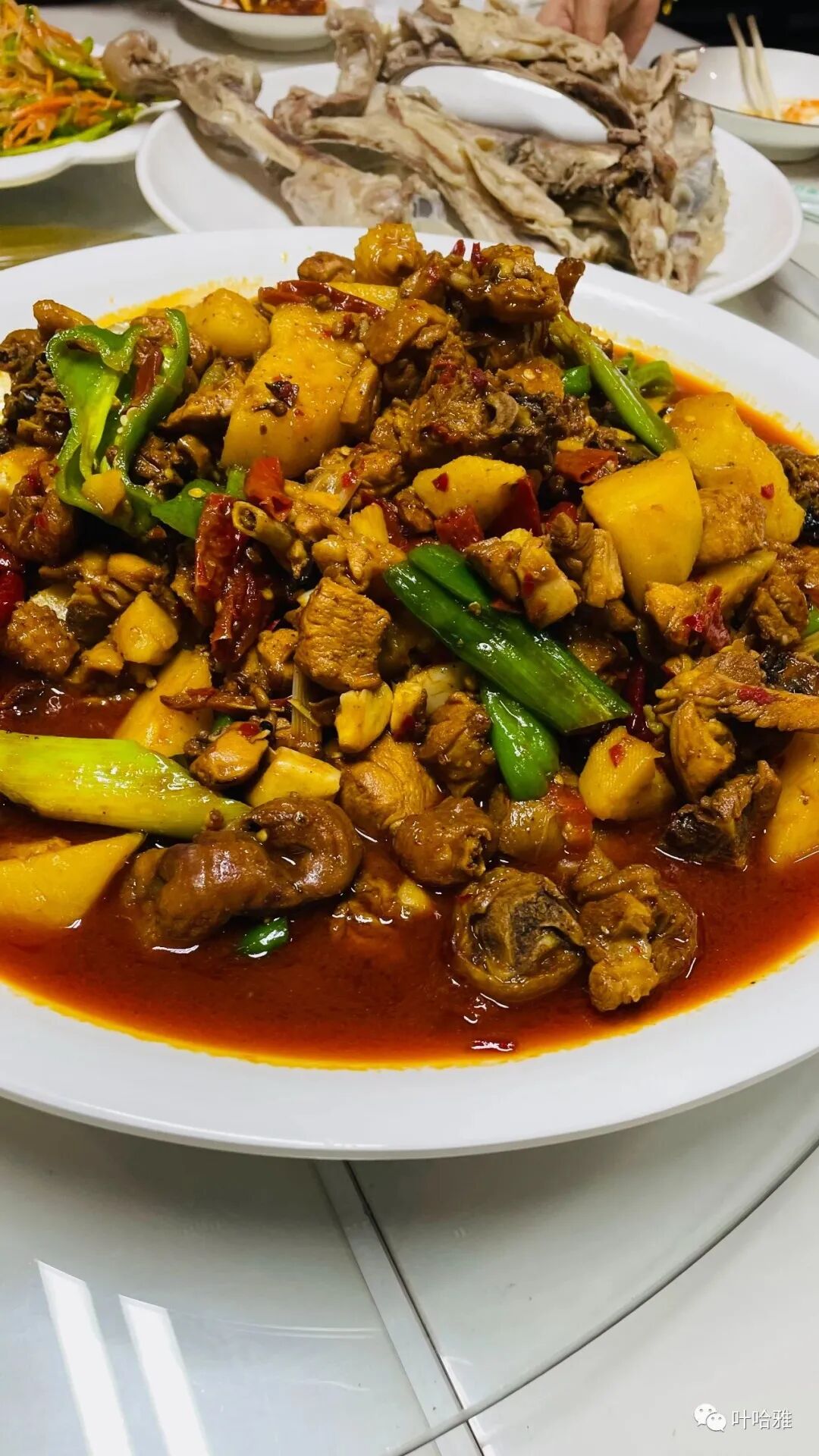
Hamude's big plate chicken (dapanji) is made in the authentic Urumqi Hui Muslim style. The chicken is soft and tender, and the wide belt noodles (pidaimian) served with it are very chewy. It suits our taste better than the one we had in Shawan.
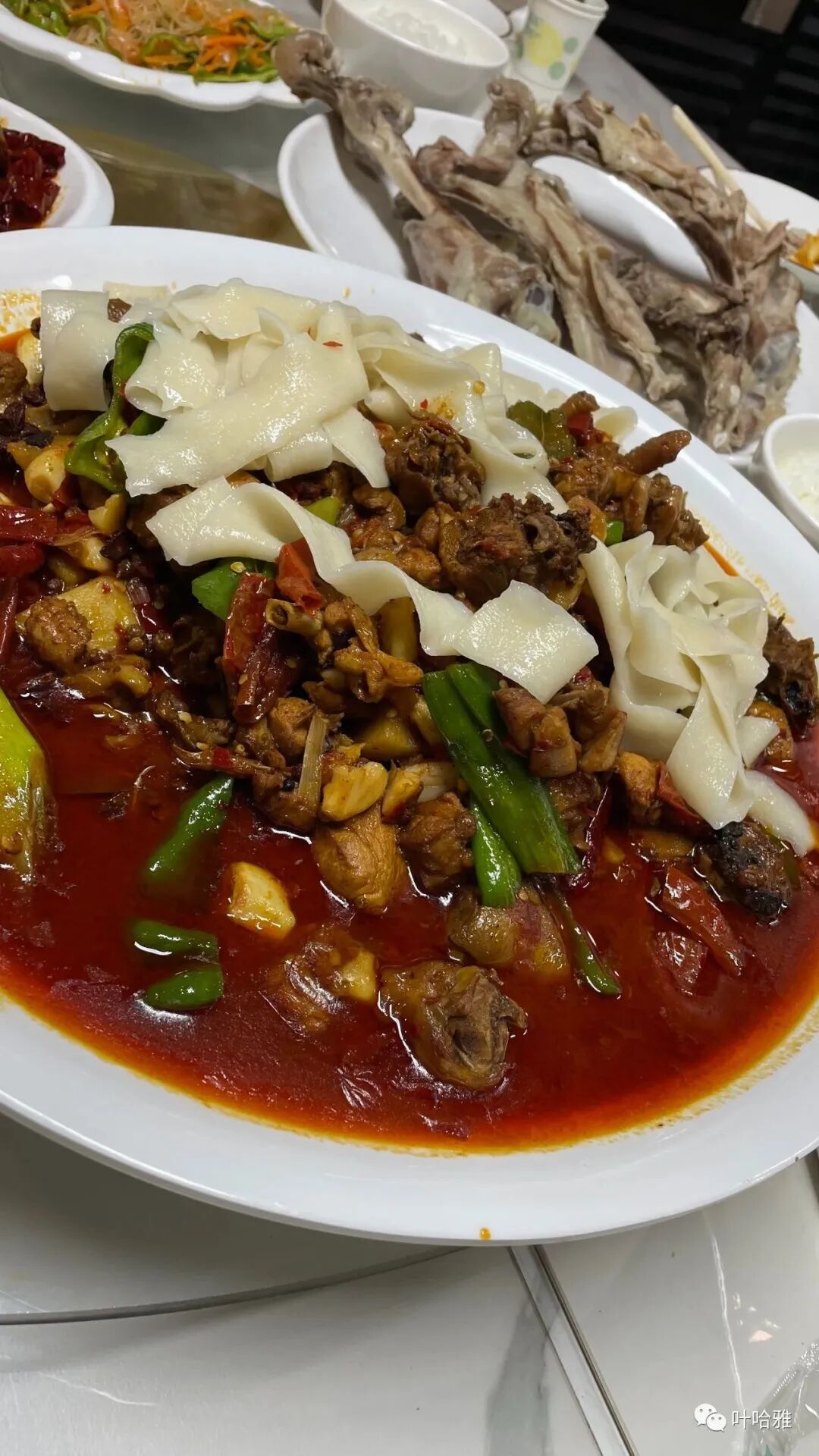
This grilled meat (kaorou) is a very popular barbecue dish in the shop. Many customers think it is cheap and delicious because the owner puts a lot of effort into the ingredients.
Hamude is located at commercial unit S7-101, Vanke Park No. 5, Midong District. It is a ground-floor shop.
Rumi's Secret
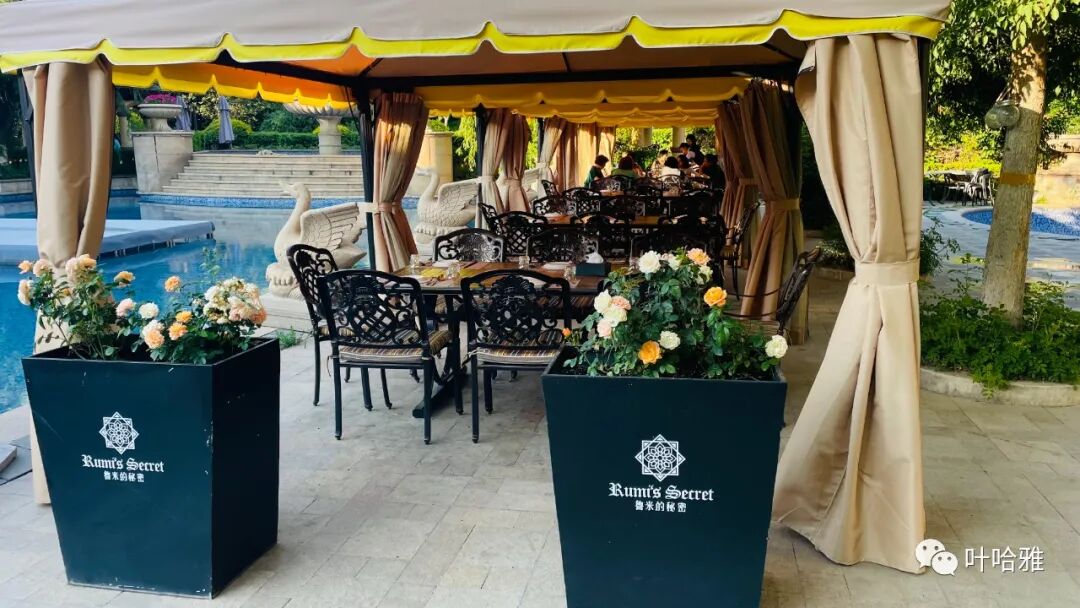
Rumi's Secret used to be in Beijing and just moved back to Urumqi. The owner is a Uyghur from Urumqi, and he insisted on not selling alcohol even when he was in Beijing.
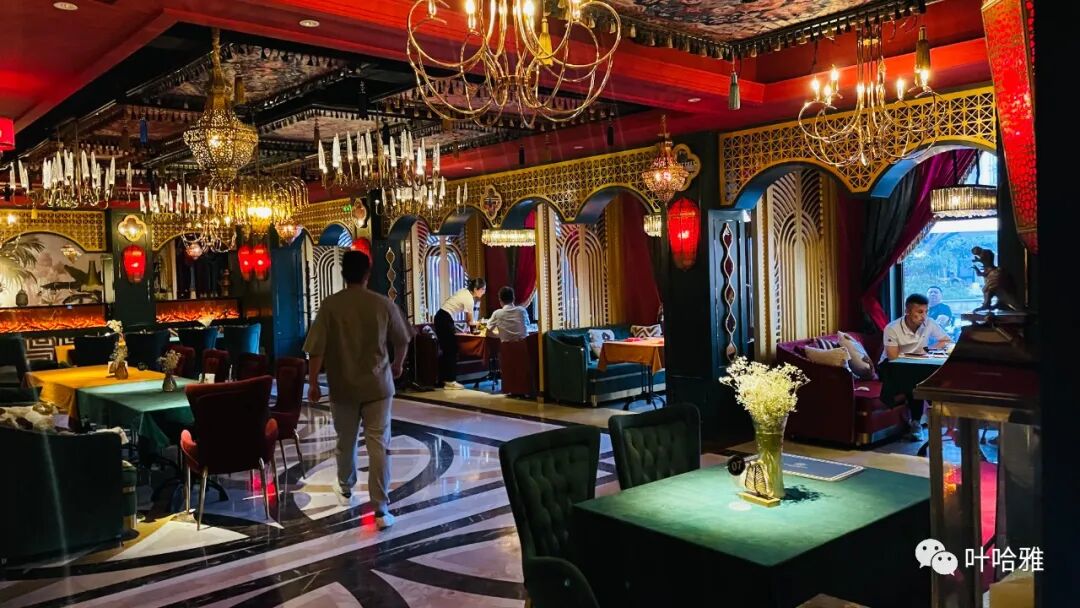
This shop is located inside Greentown Rose Garden in the Shuimogou District of Urumqi. The environment is much better than it was in Beijing, as it now has a garden and a pond.
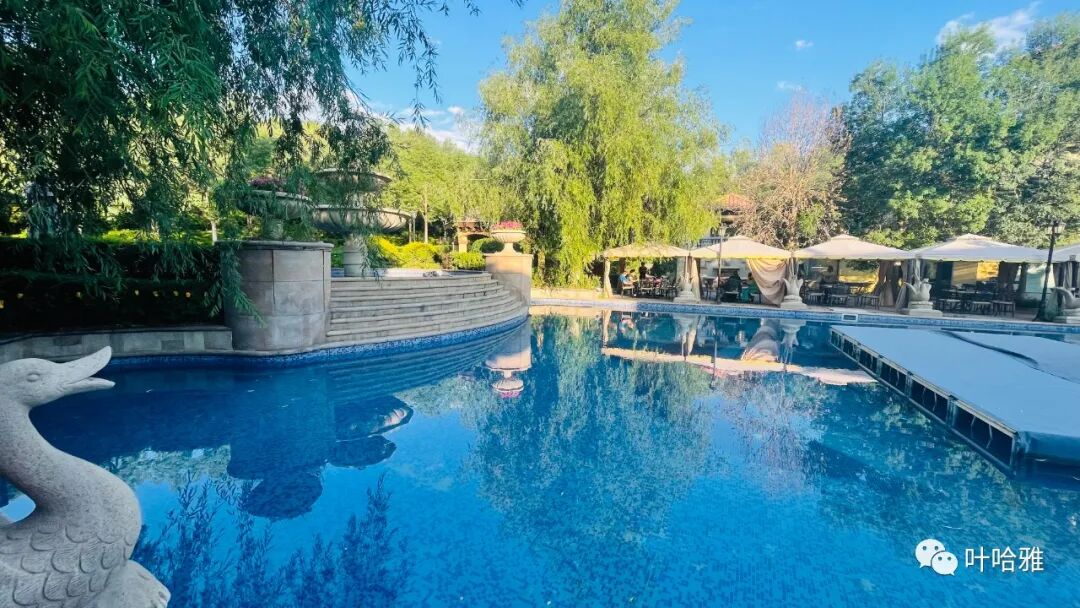
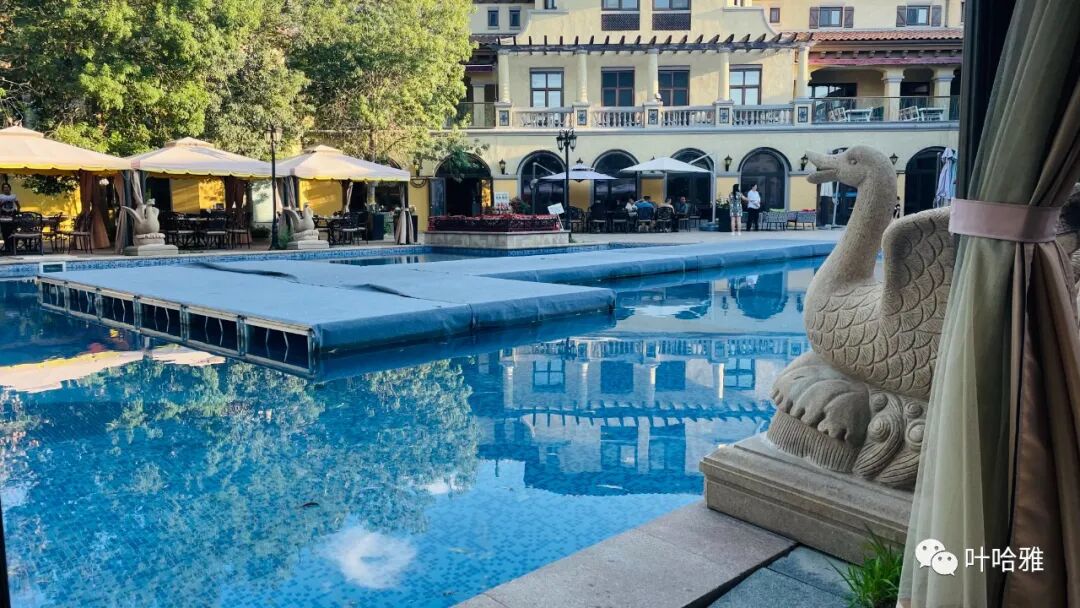
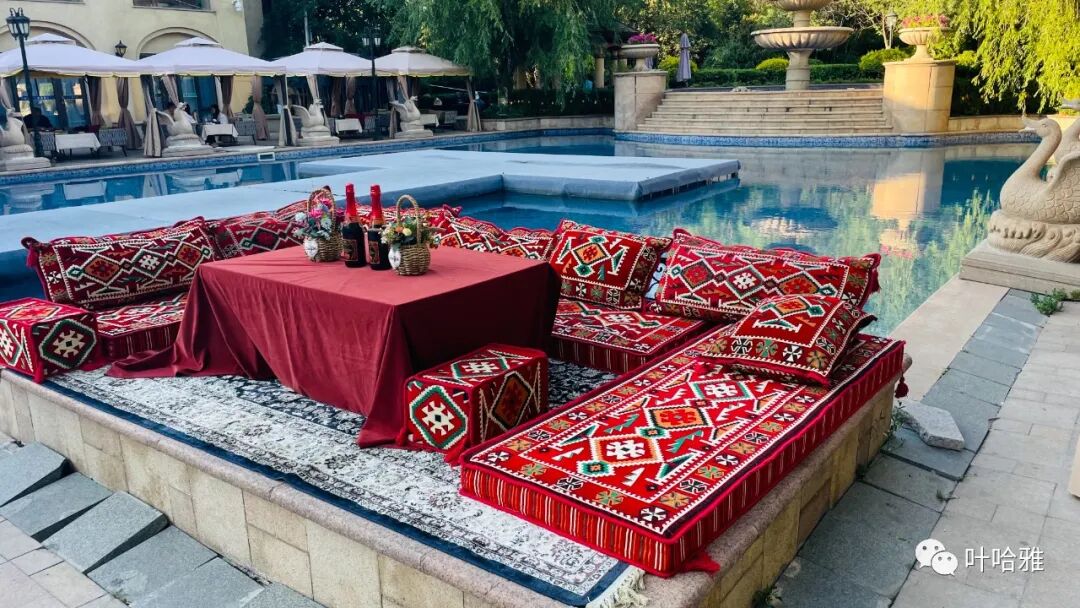
In the evening, there are singers performing with ethnic musical instruments, and the atmosphere is incredibly stylish.
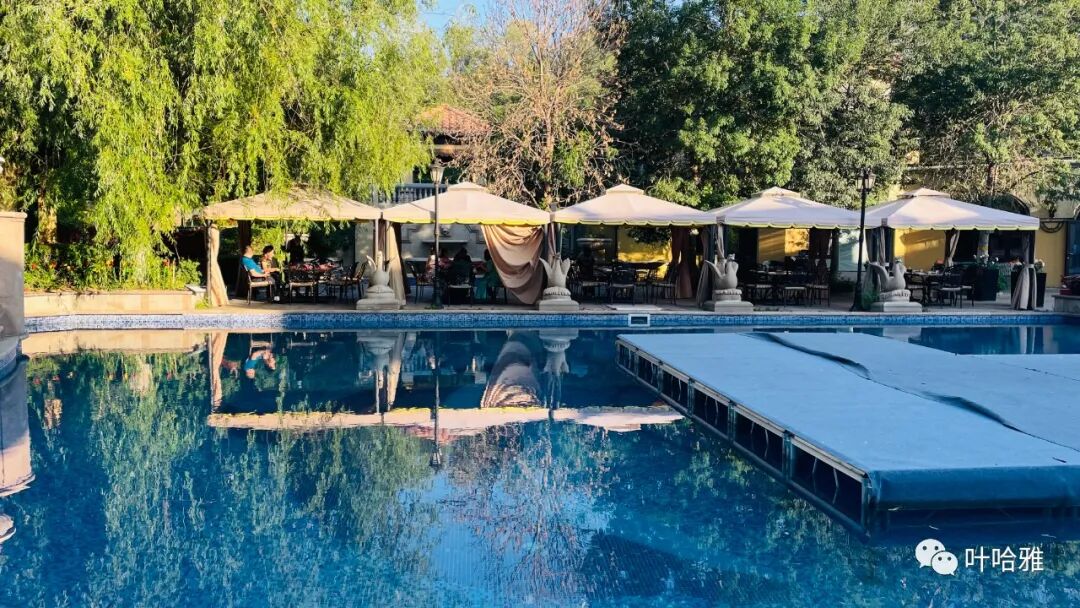
The owner explained that since the outdoor space is the main feature, the restaurant is only open for half the year and closes during the winter. The owner is preparing a branch in Sanya, so you can visit Rumi's Secret in Sanya during the winter in the future.
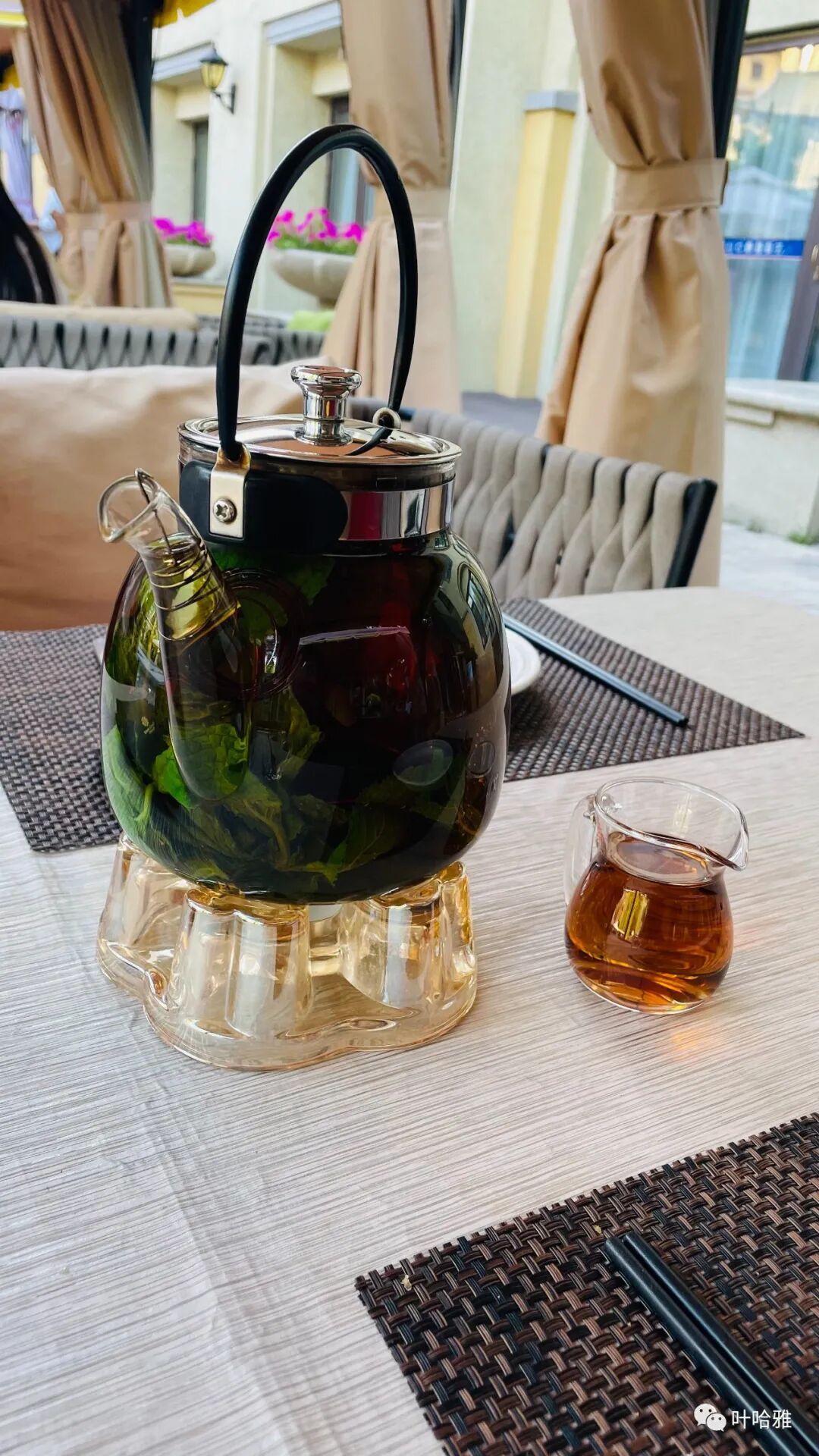
Friends can come here for coffee and afternoon tea, or host parties and gatherings. The food and service are both excellent.
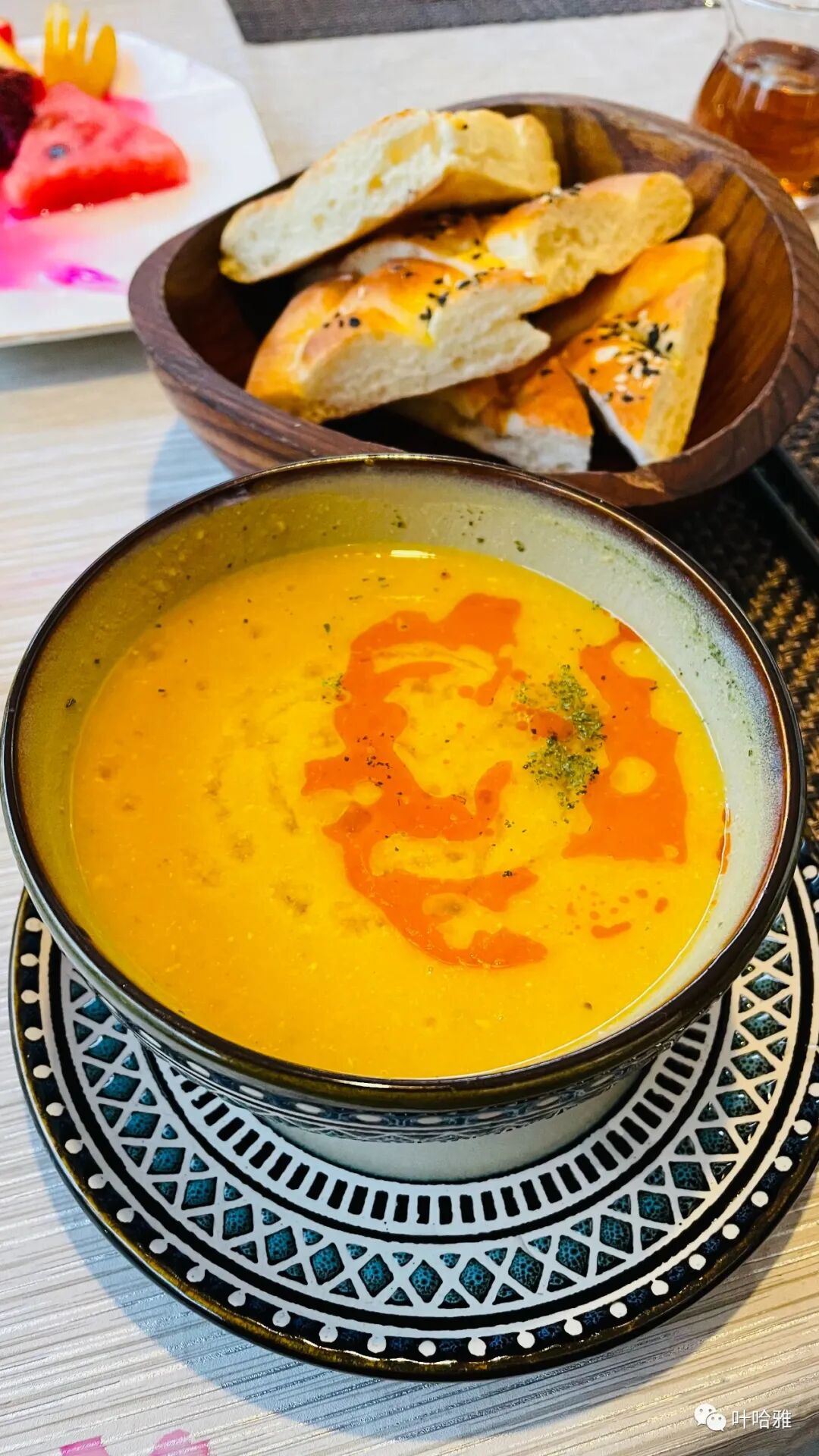
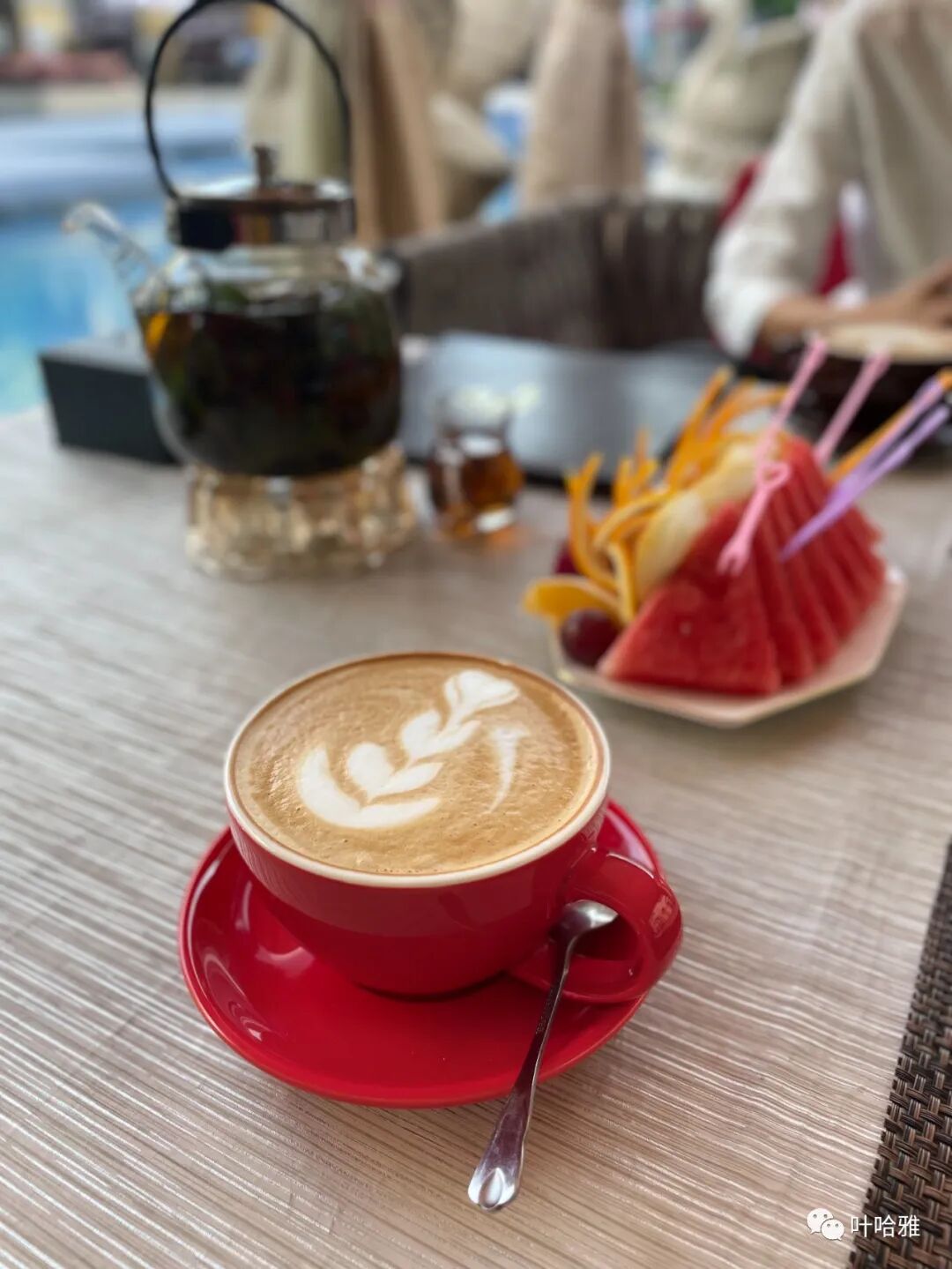
Address: Inside Greentown Rose Garden, Shuimogou District.
Aiju Restaurant.
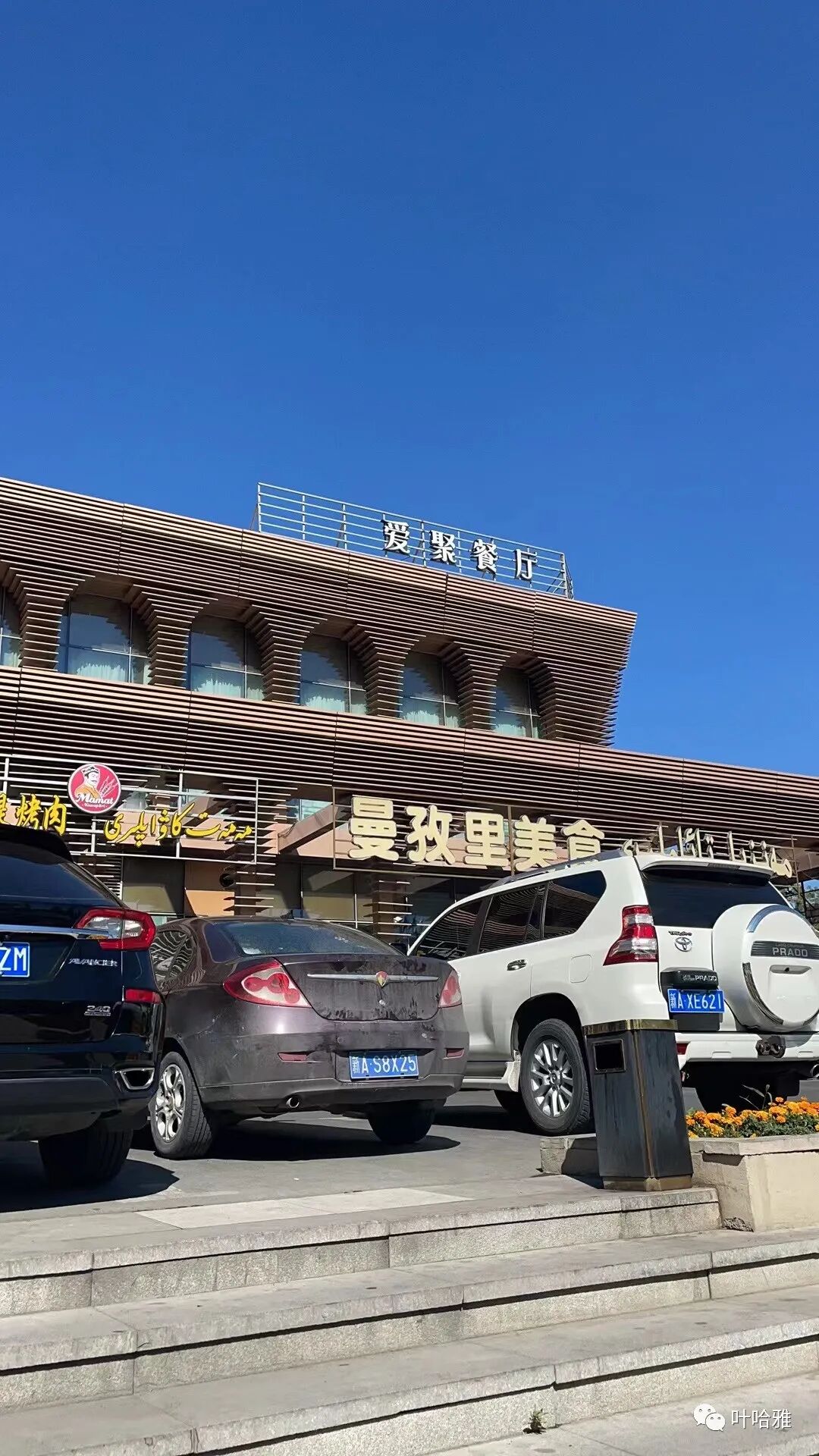
If you like Western food and care about the atmosphere, you can come to Aiju Restaurant in Tianshan District, right across from Vanke Plaza.
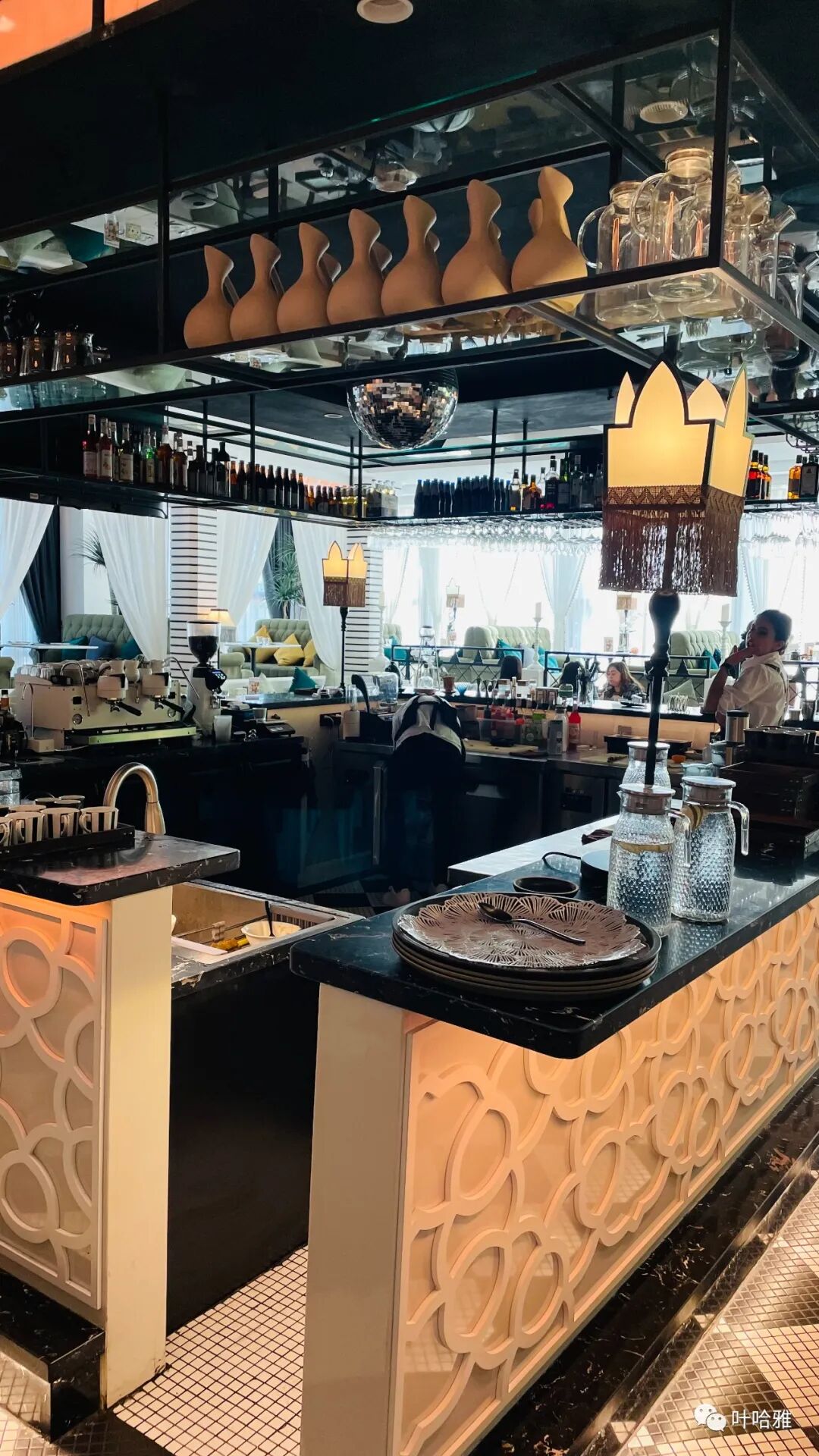
A Uyghur friend brought me here specifically. Most of the people inside are young Uyghurs, and there is a live band performance.
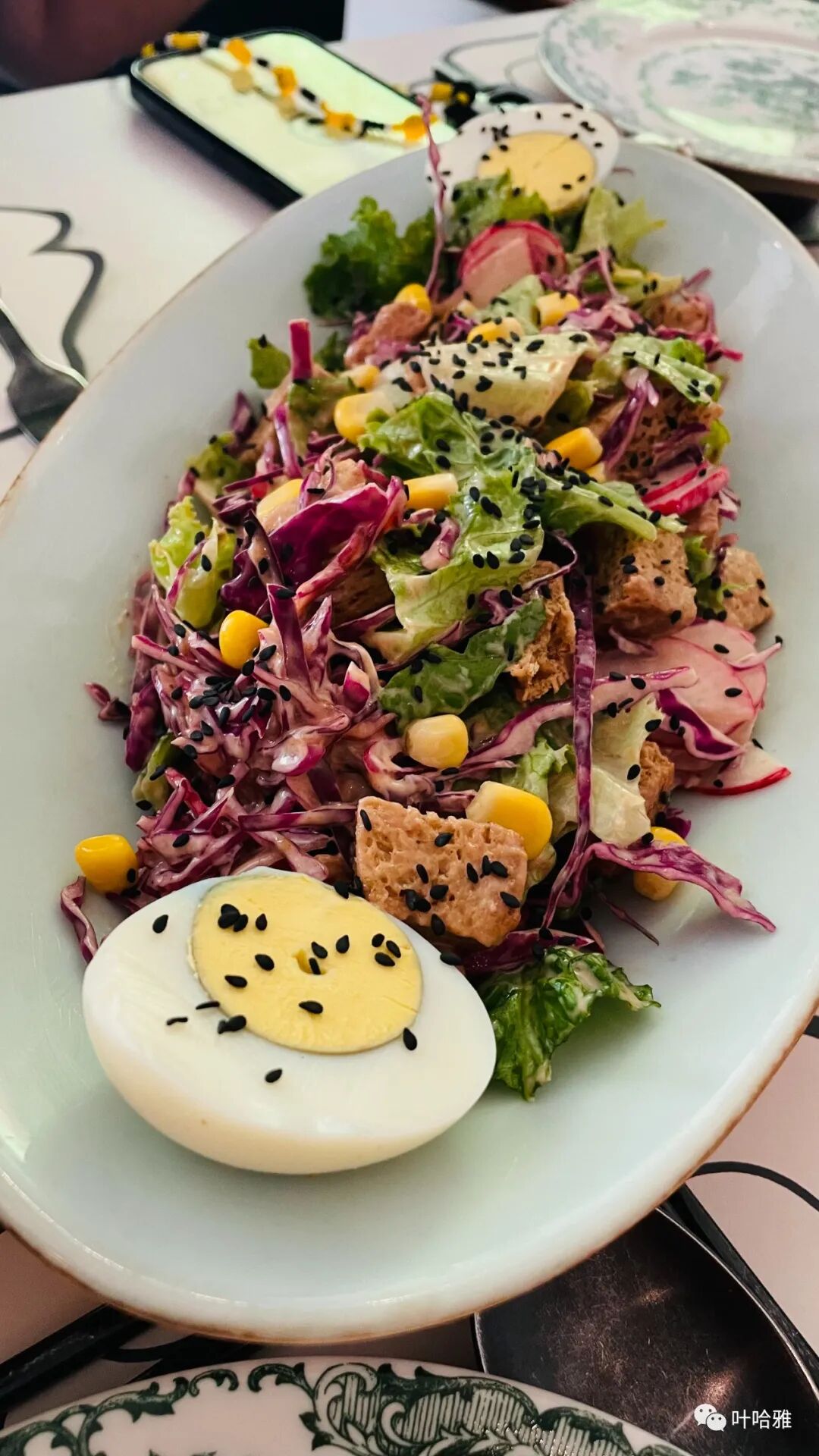
The Western food tastes just as good as in Beijing, and the prices are about the same, with an average cost of over 200 per person.
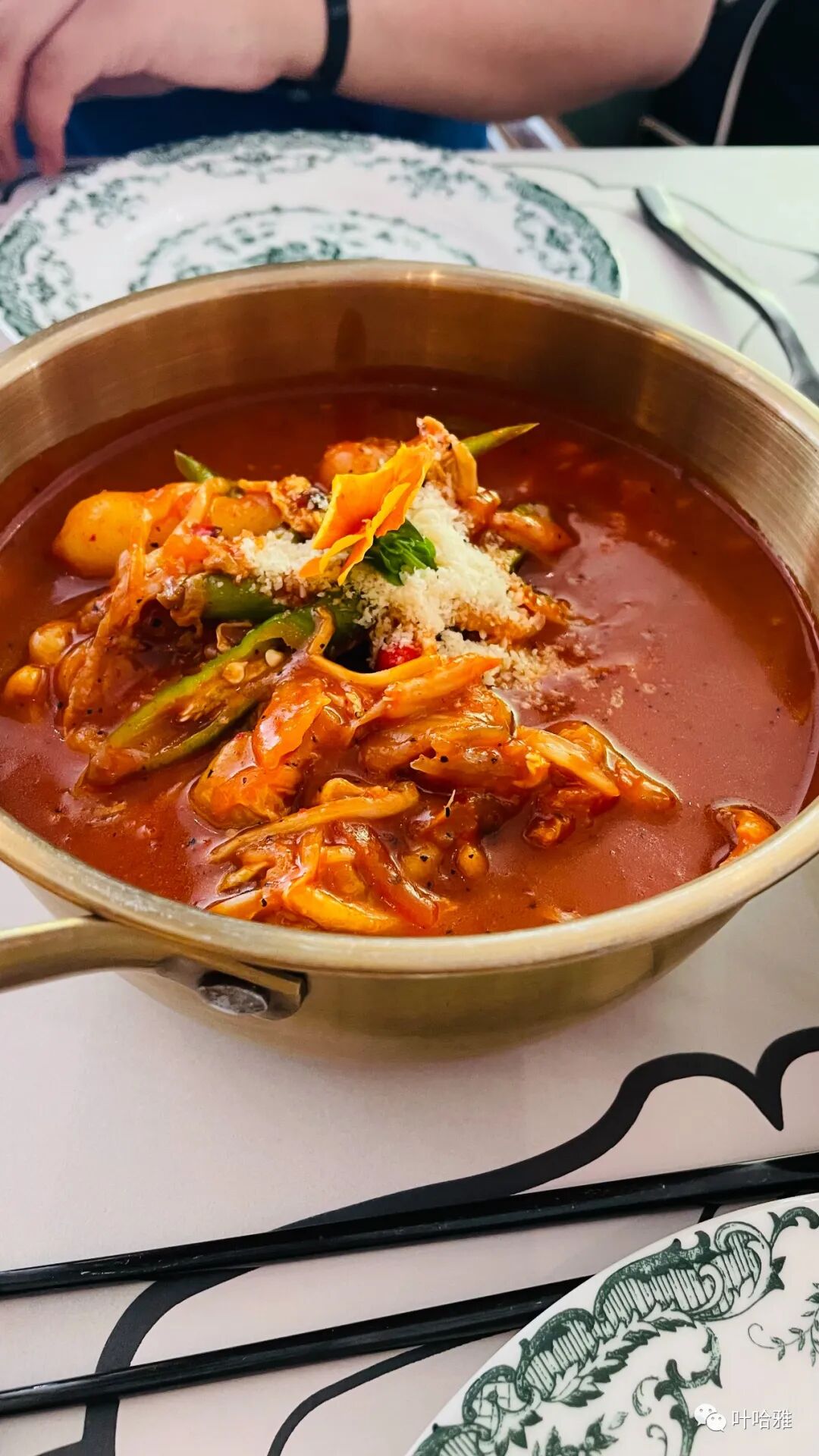
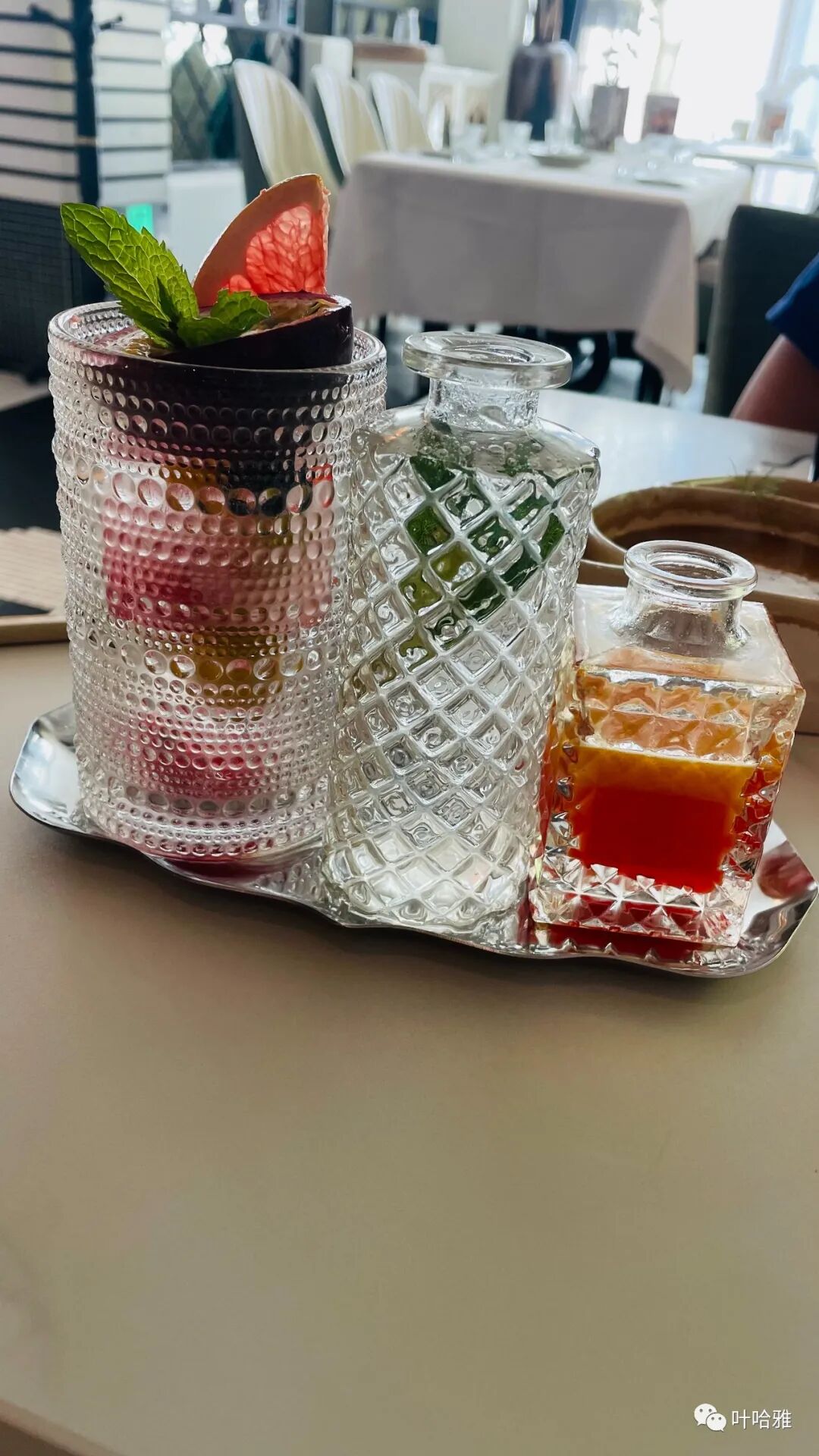
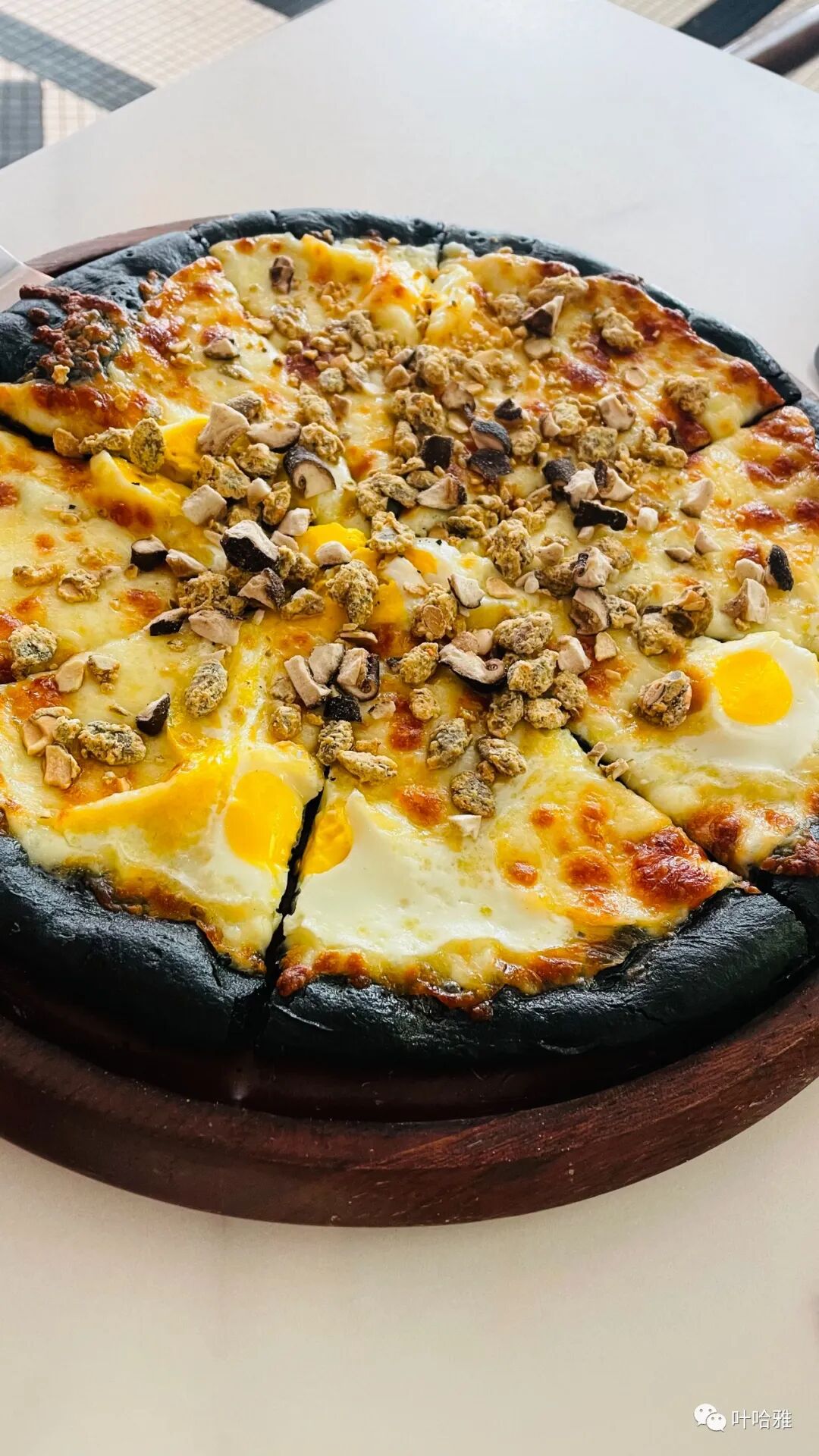
The dishes look, smell, and taste great, and the steak is also good. With unique ethnic singers performing, it is a great place for a date with a wonderful atmosphere.
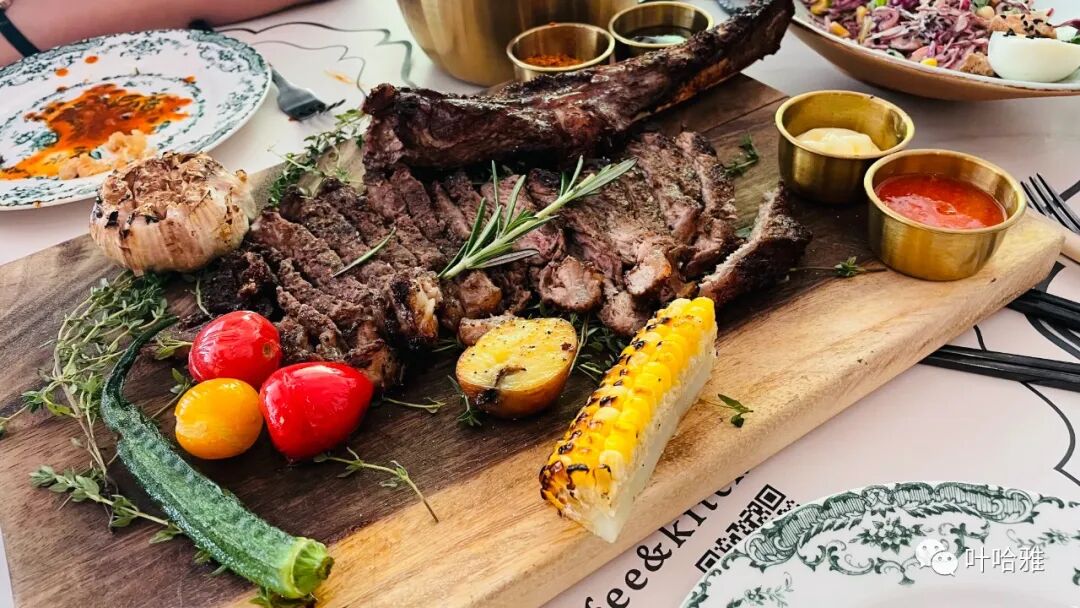
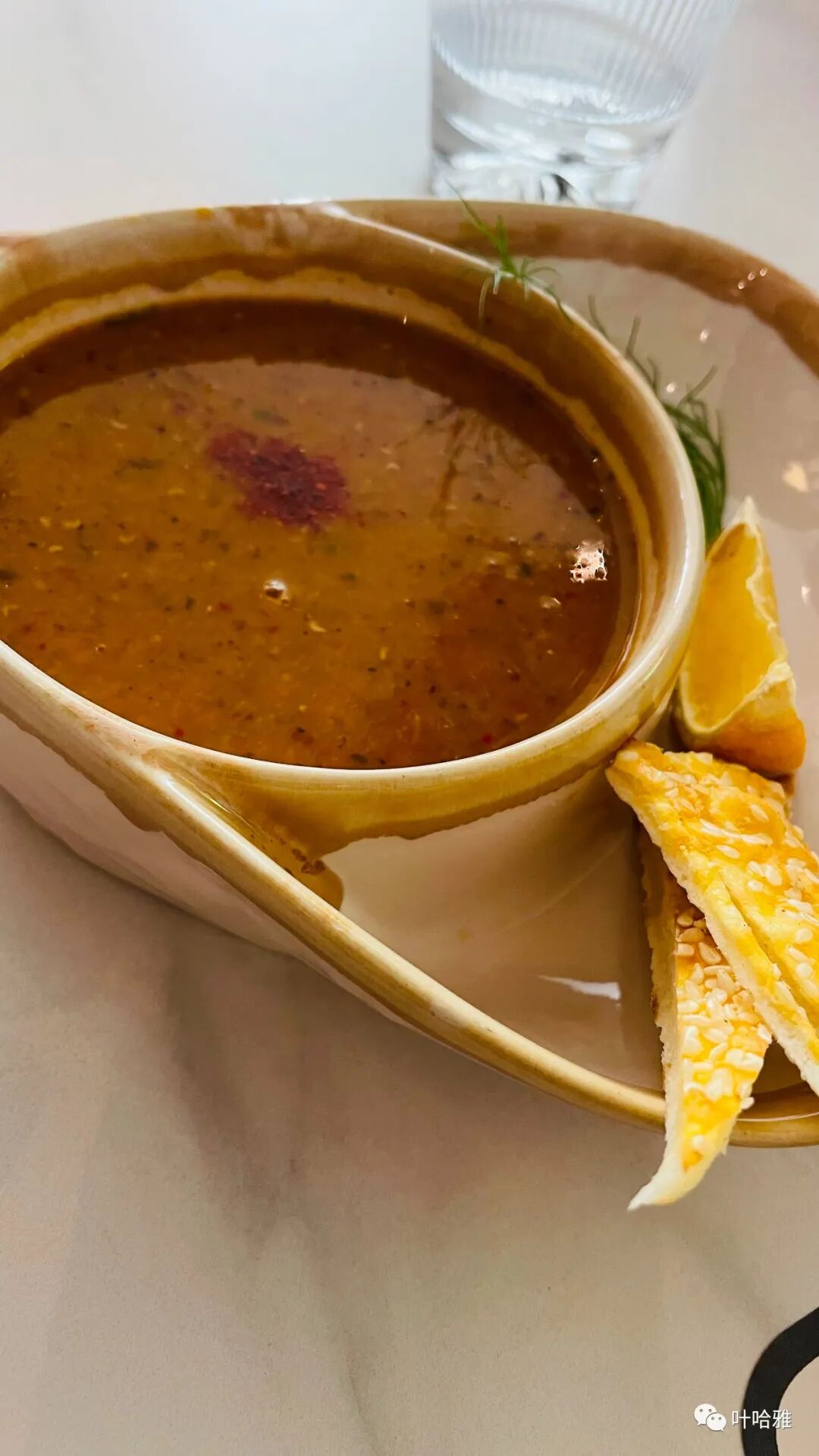
We stayed at the China Southern Pearl Hotel in Urumqi for three days. It is a halal hotel, and there is a Muqam halal restaurant on the second floor.
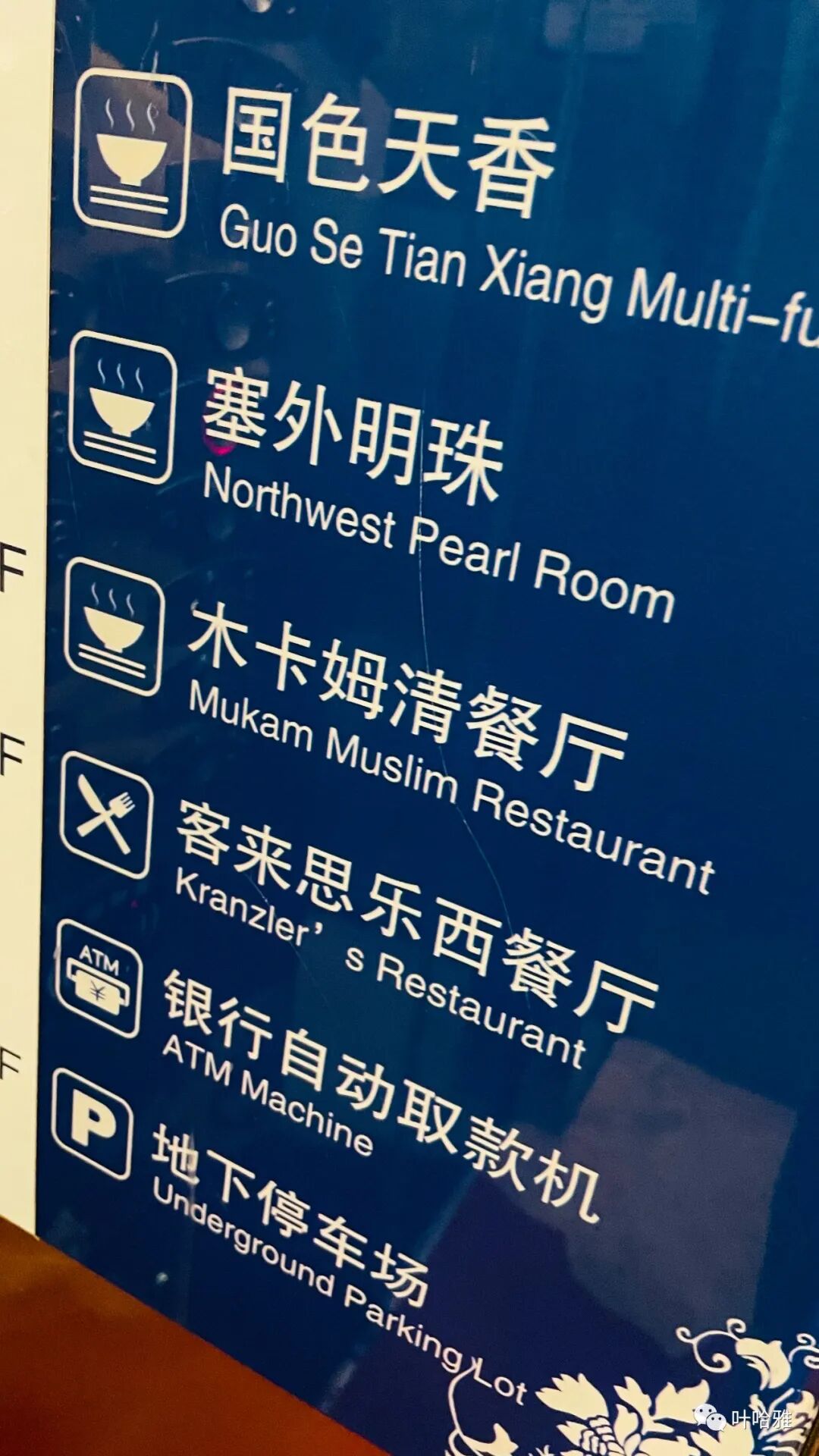
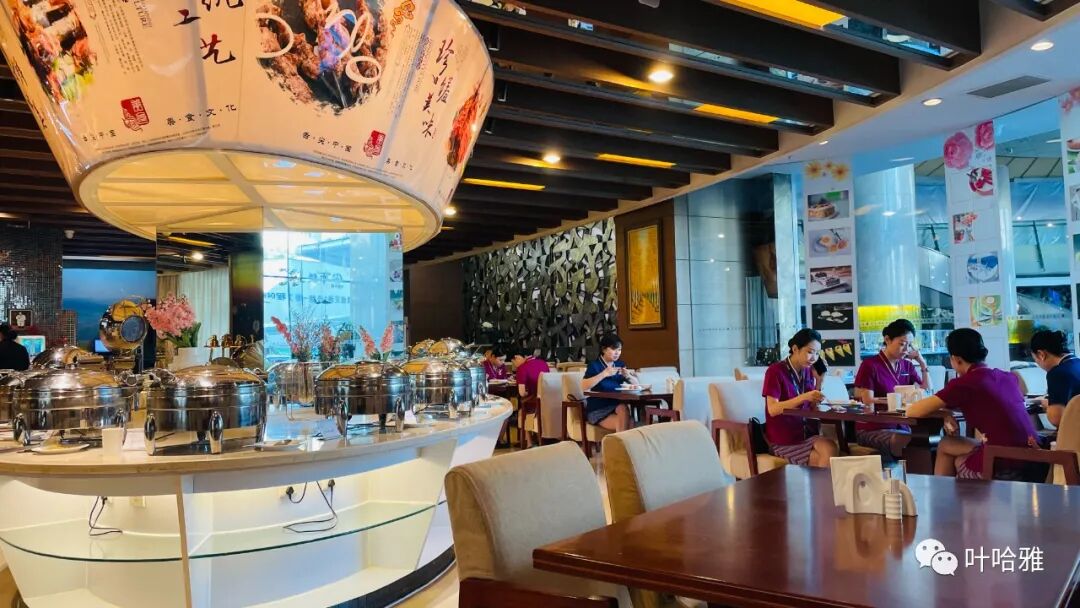
The China Southern Pearl Hotel is also the designated hotel for flight crews, so it is mostly filled with flight attendants and pilots.
Erdaoqiao Baida Mosque.
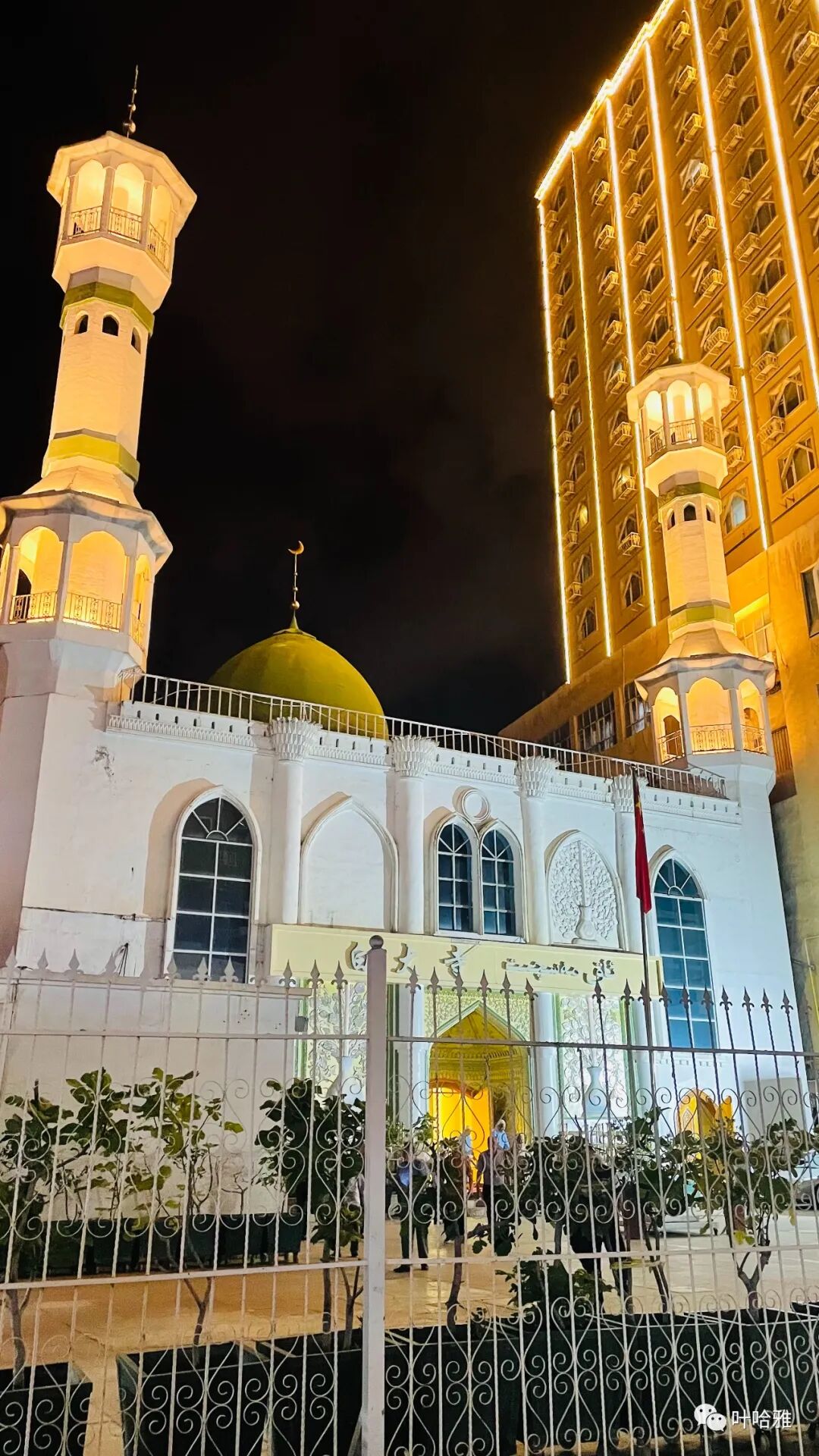
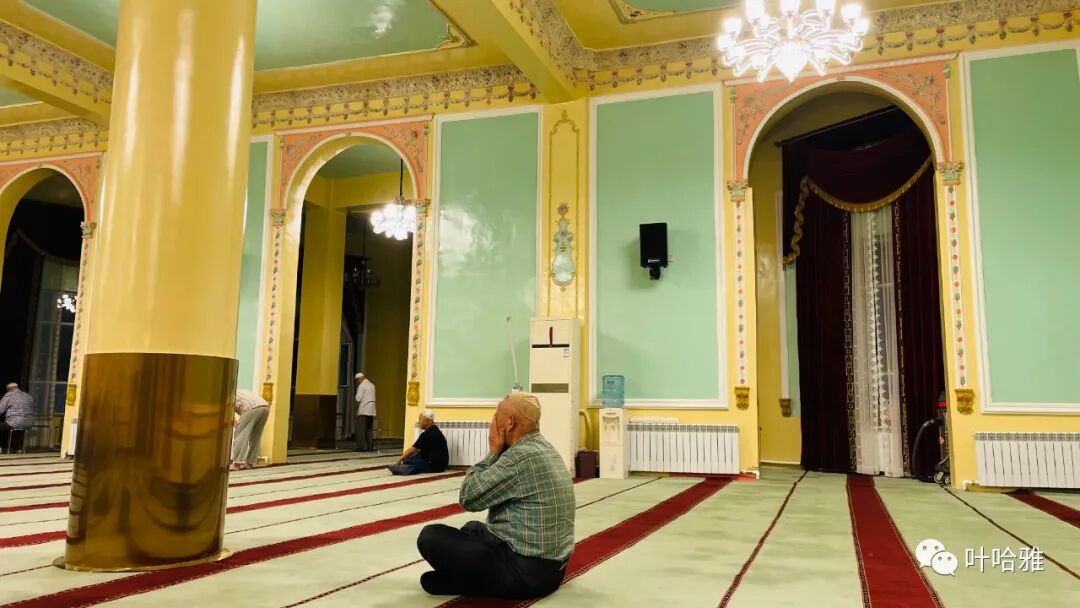
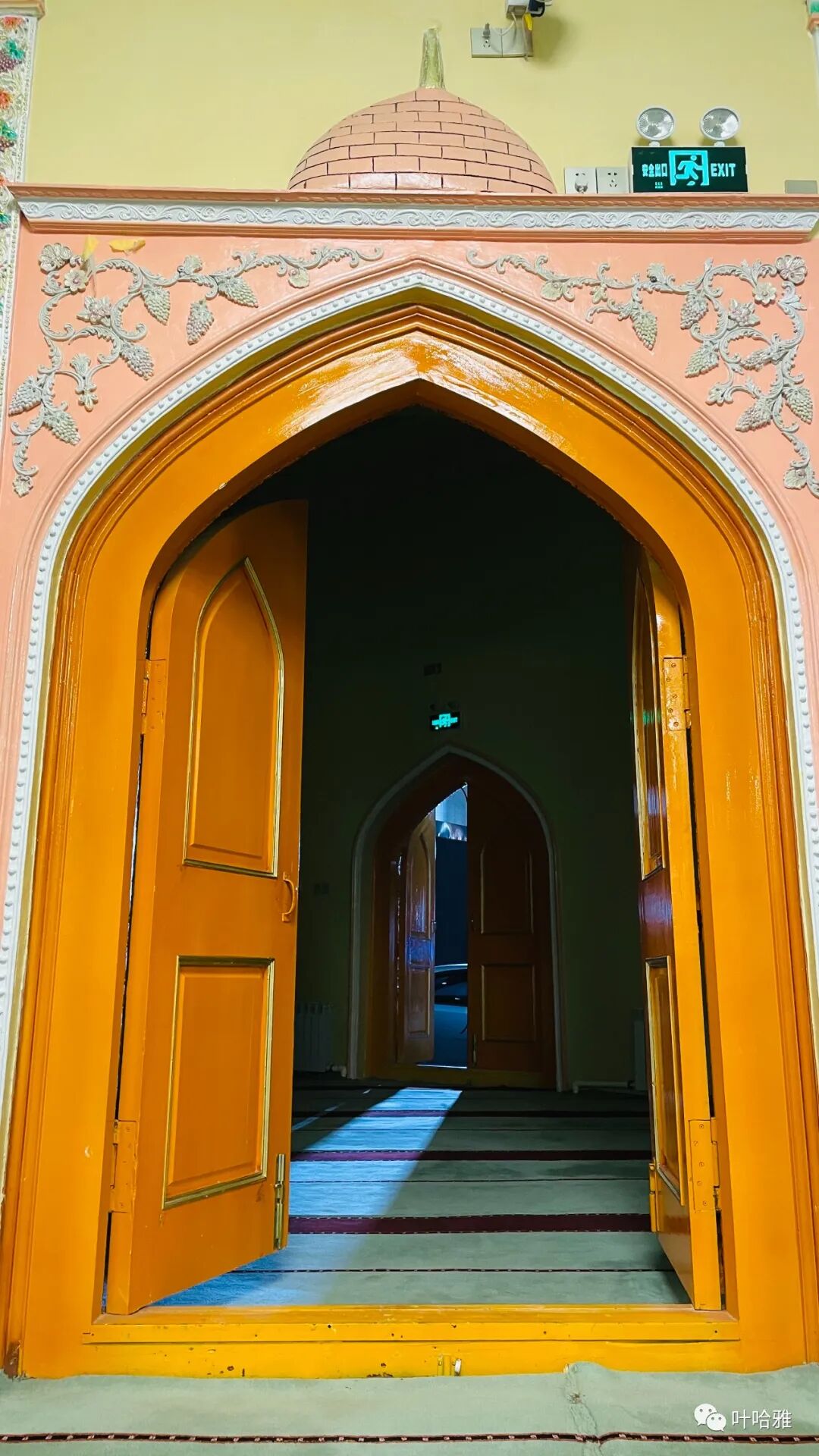
The Baida Mosque in Urumqi is less than a hundred years old. This is my second time here. It is currently open, but you can only enter during prayer times.
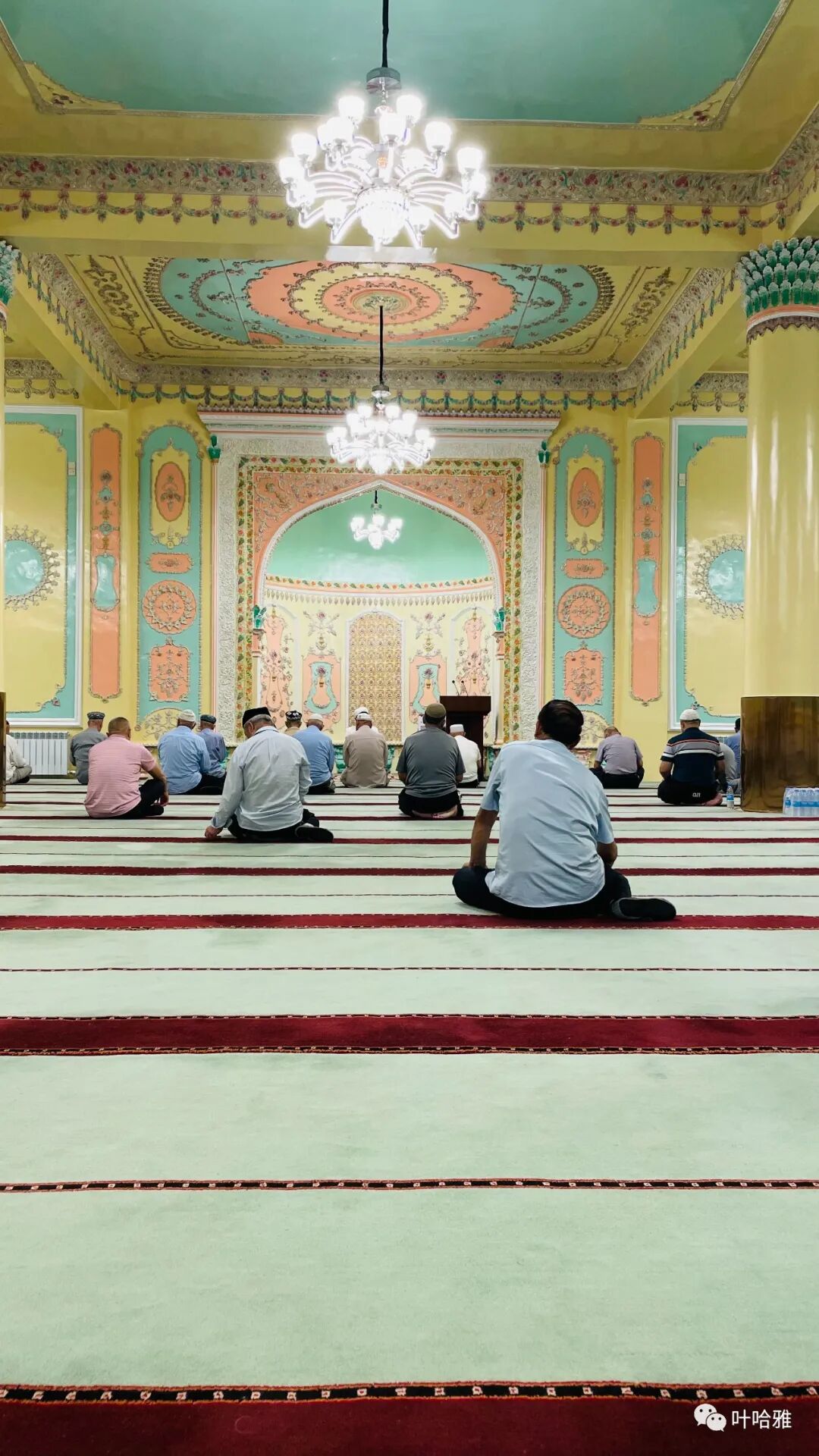
Being able to quietly join a congregational namaz here is a luxury.
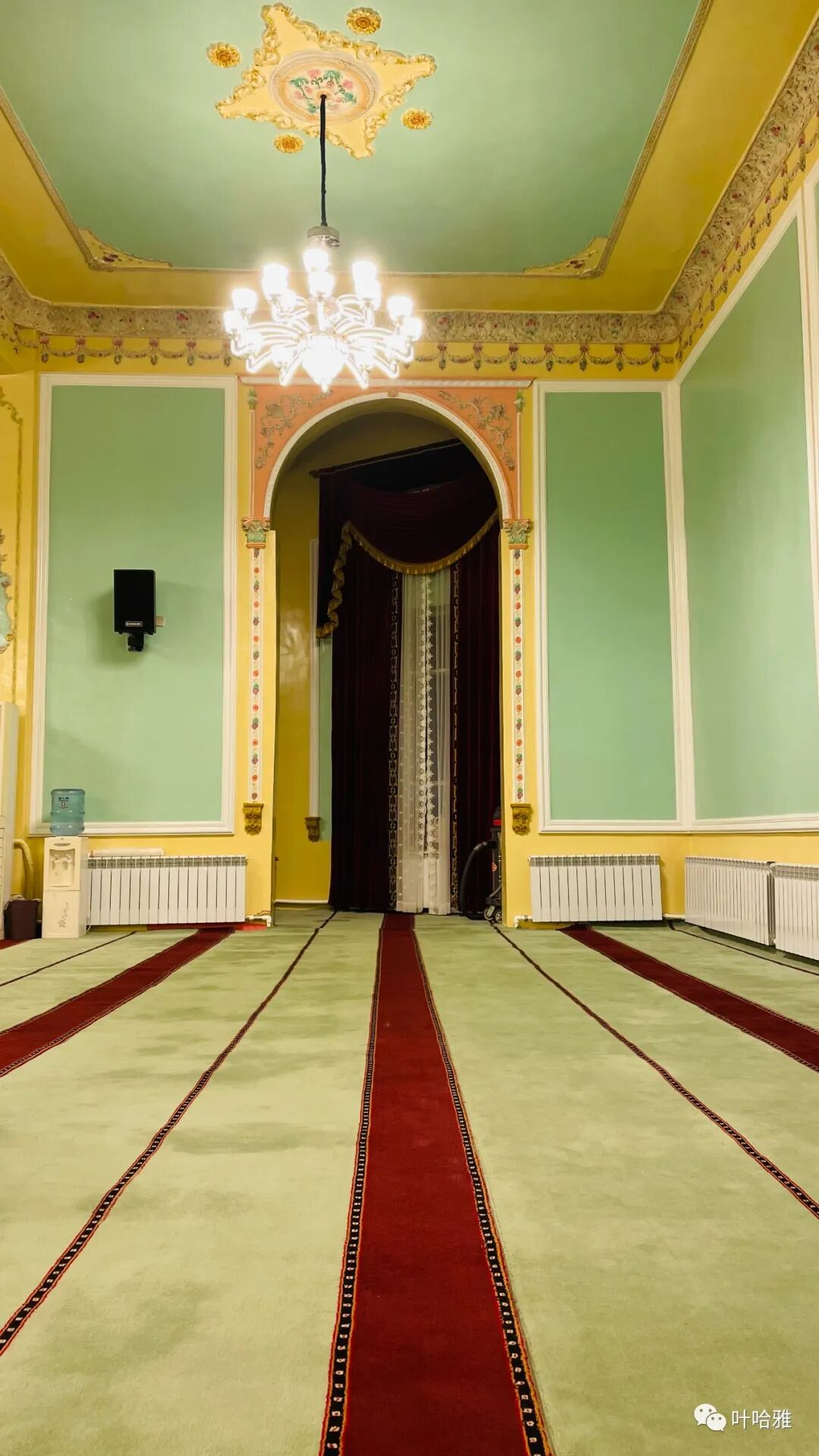
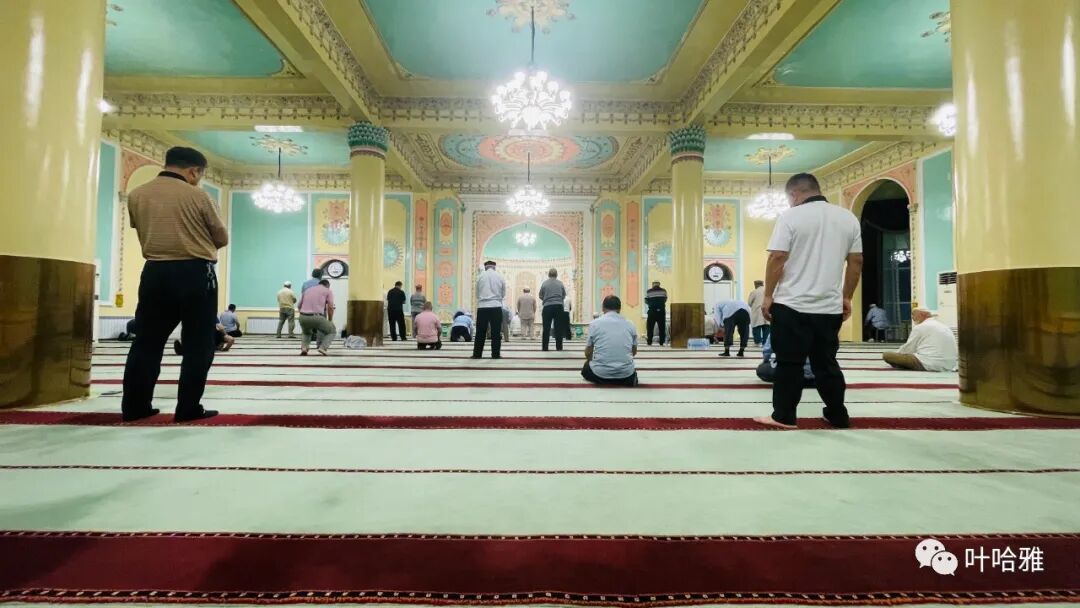
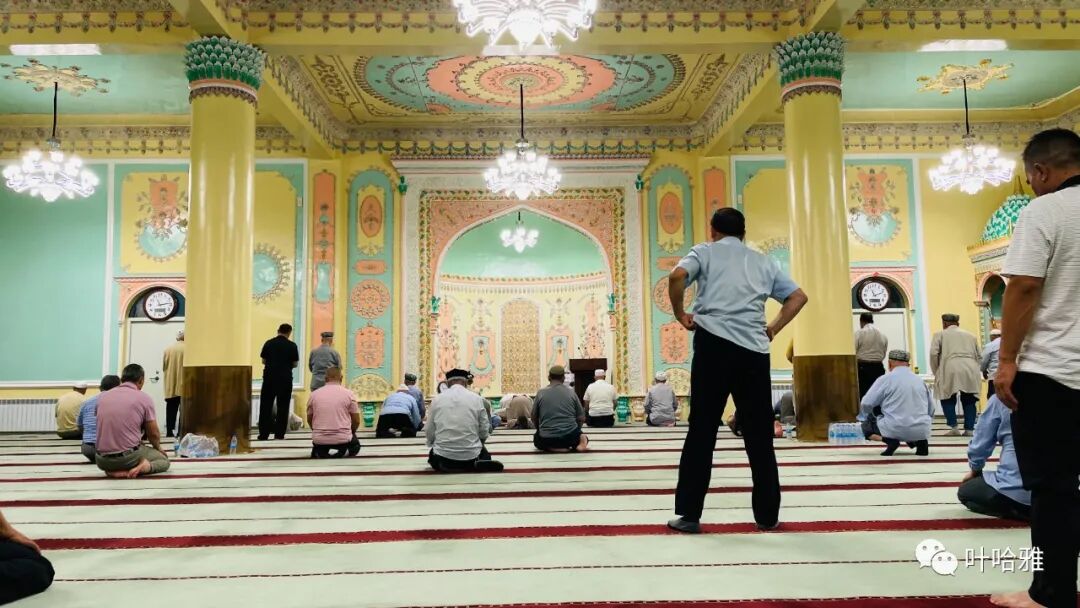
For breakfast in Urumqi, head over to the area near Sunshine City Wenlan Mansion (Yangguangcheng Wenlan Gongguan). There are many small shops here with local ethnic character.
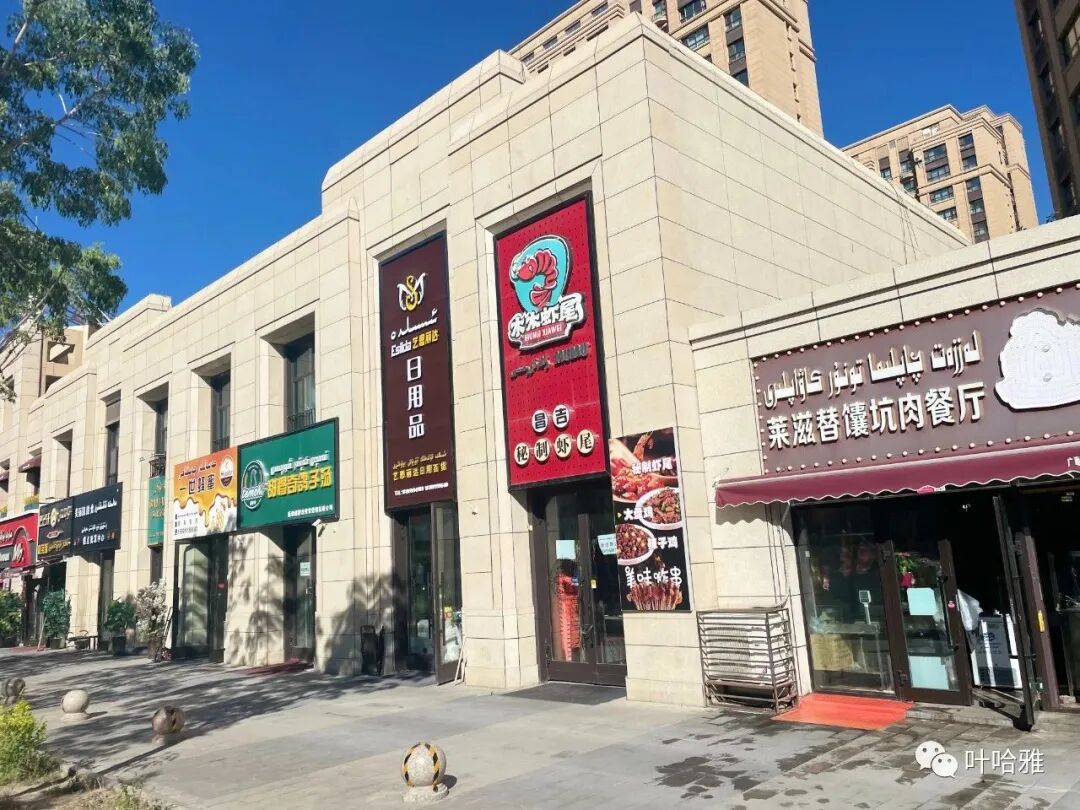
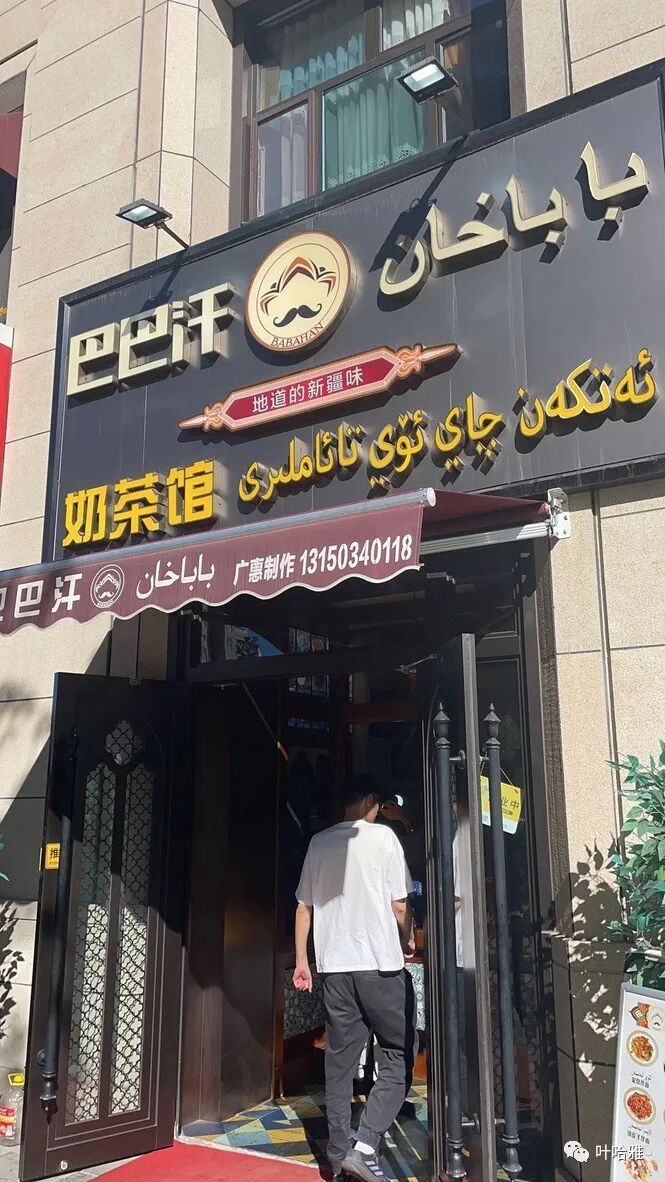
I had steamed buns (baozi) and milk tea at Babahan Milk Tea House, and I also tried the milk rice (naizifan).
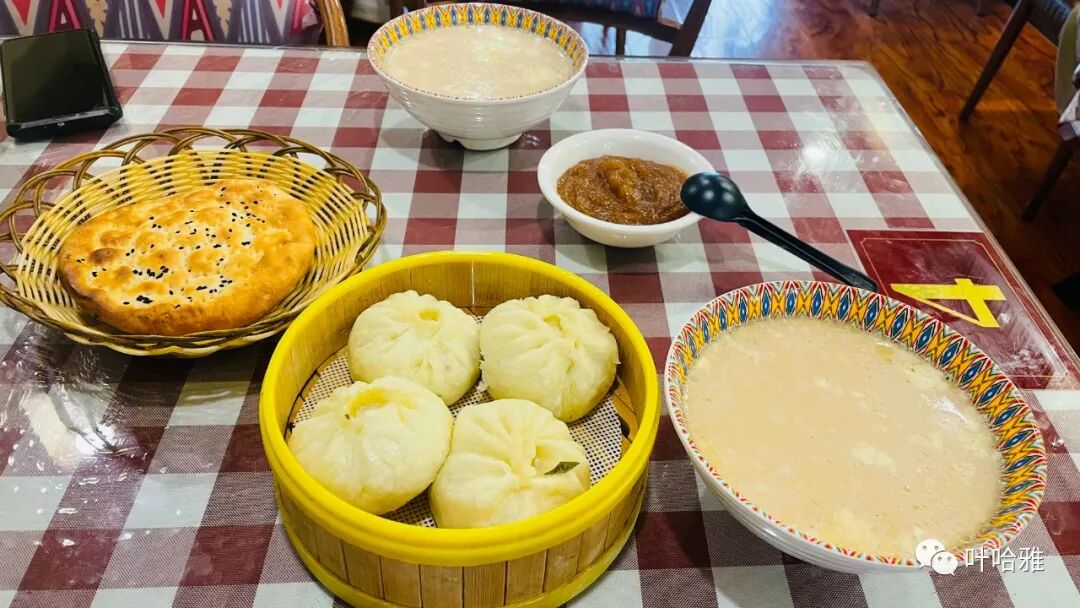
This is my third time in Urumqi. I am meeting friends every day, so what I eat does not really matter anymore.
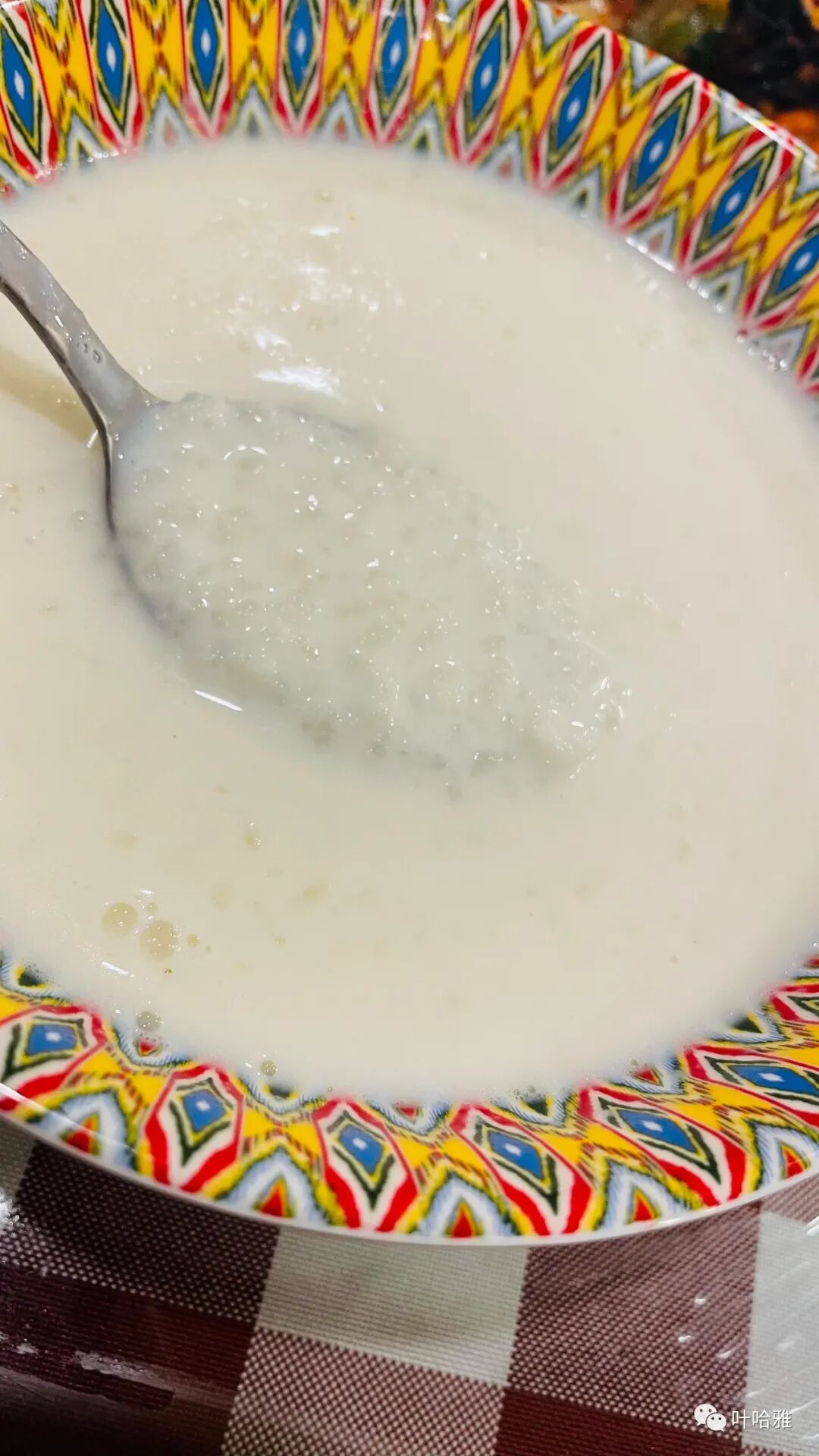
After breakfast, I visited colleagues at the Mingya Xinjiang branch. I met many of them for the first time. My team's furthest partner is in Kashgar, and I welcome everyone to join our Xinjiang branch.
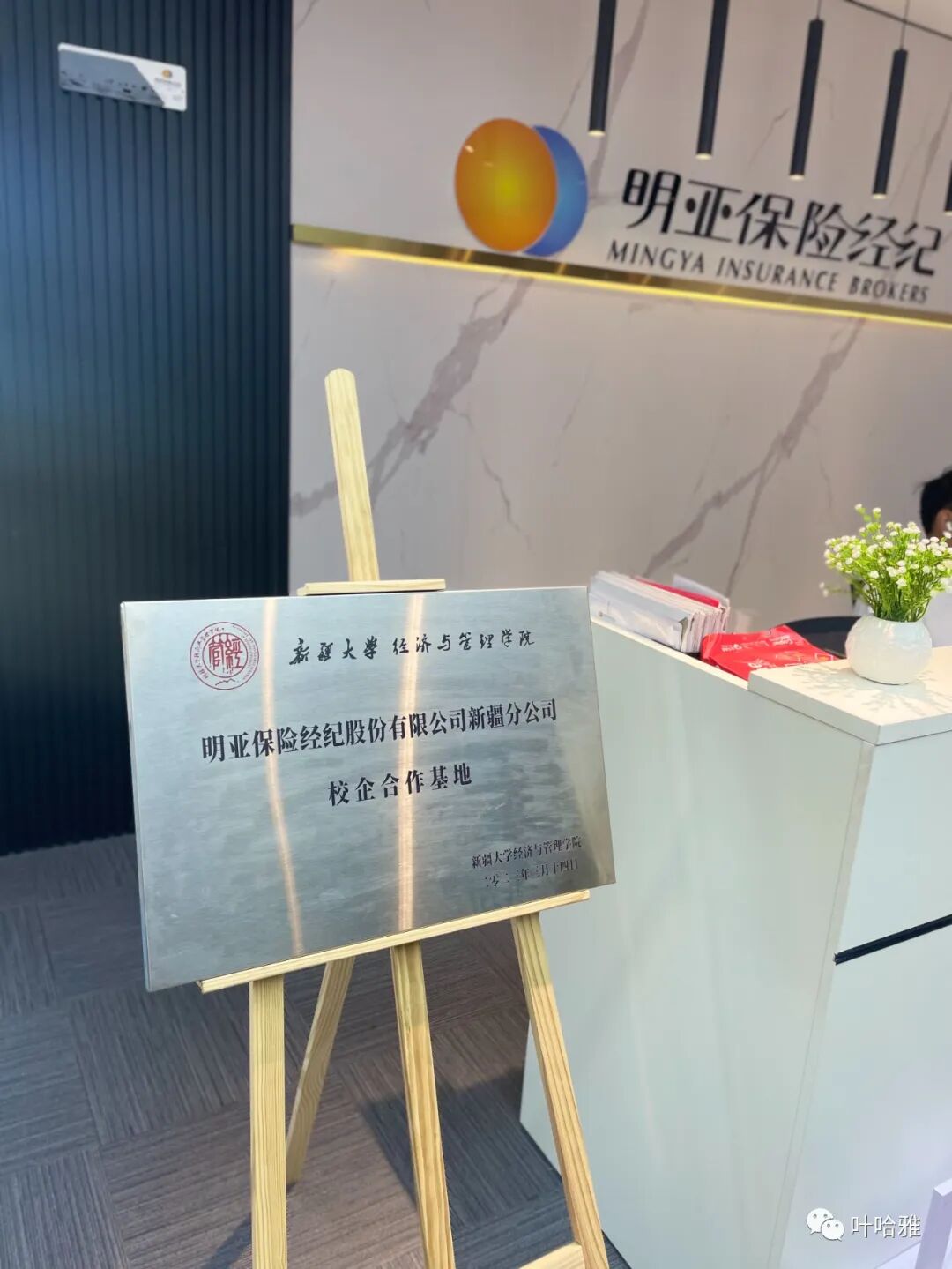
The company has a children's play area for moms who bring their kids to work. At Mingya, you can balance both family and career.
We left Urumqi and headed east, arriving at Tuyugou Mazar Village in less than half a day.
Tuyugou Mazar is said to be the site of the story of the Seven Sleepers and their dog mentioned in the Quran, and locals call it the Saint's Tomb. However, this legend is not widely accepted, as it is generally believed that the story of the seven people and the dog took place in Jordan.
The Mazar is called the Ashab-i-Kahf Mazar. People say a group of people from a country in the west traveled east to seek the truth, reached a cave in the Turpan area, entered it to practice their faith, and never came out again. You need to buy a ticket to enter Mazar Village. I saw the Mazar was closed, so I gave up on the idea of visiting the village because it was just too hot, with daytime temperatures reaching nearly 50 degrees. I have visited the Emin Minaret (Sugongta), Grape Valley, and the Karez Well in Turpan before, so I did not stop there on this trip.
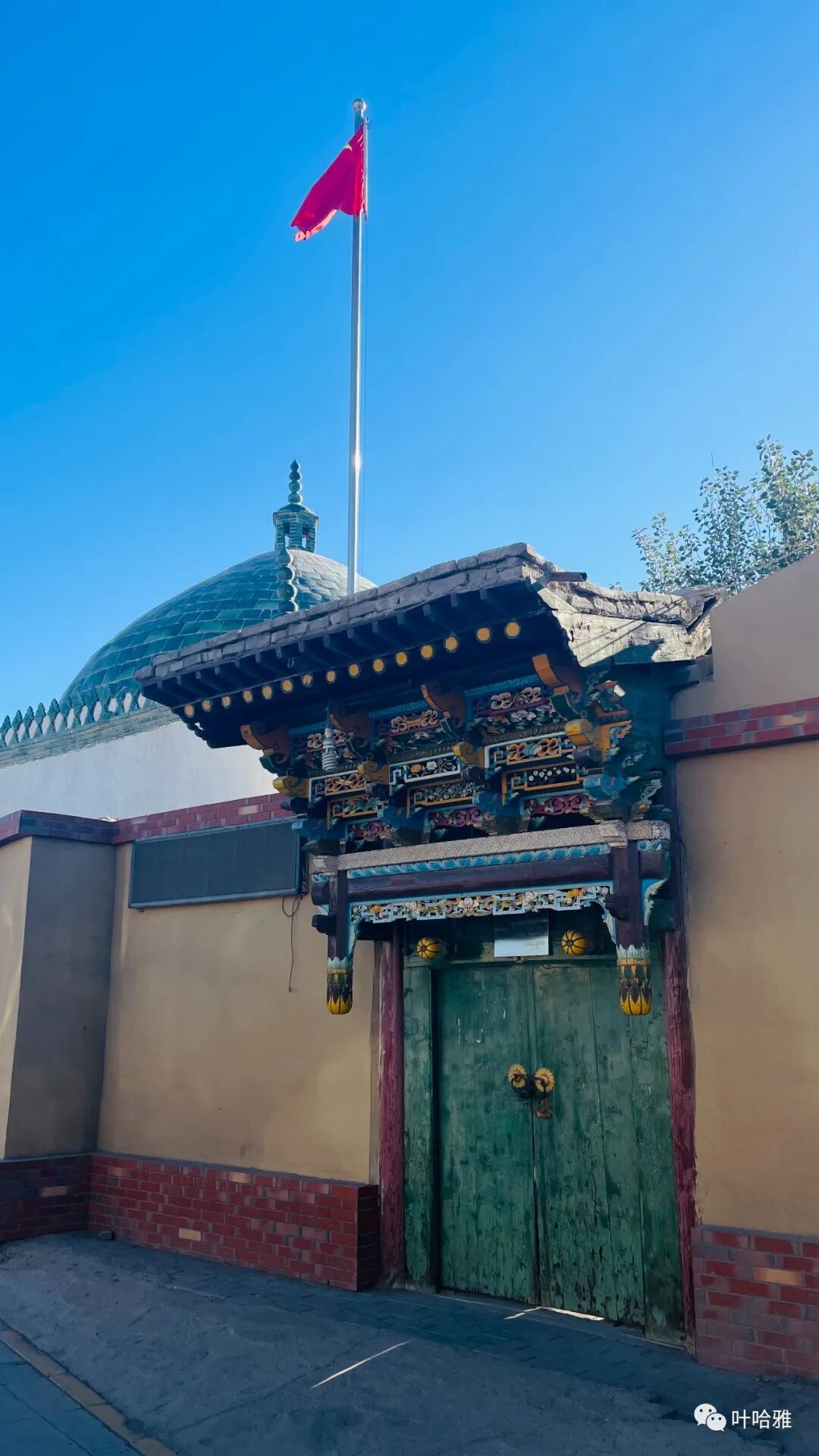
Hami is the last stop on our Xinjiang trip because the Gaisi Gongbei is here, even though the Tomb of the Hami Kings is more famous.
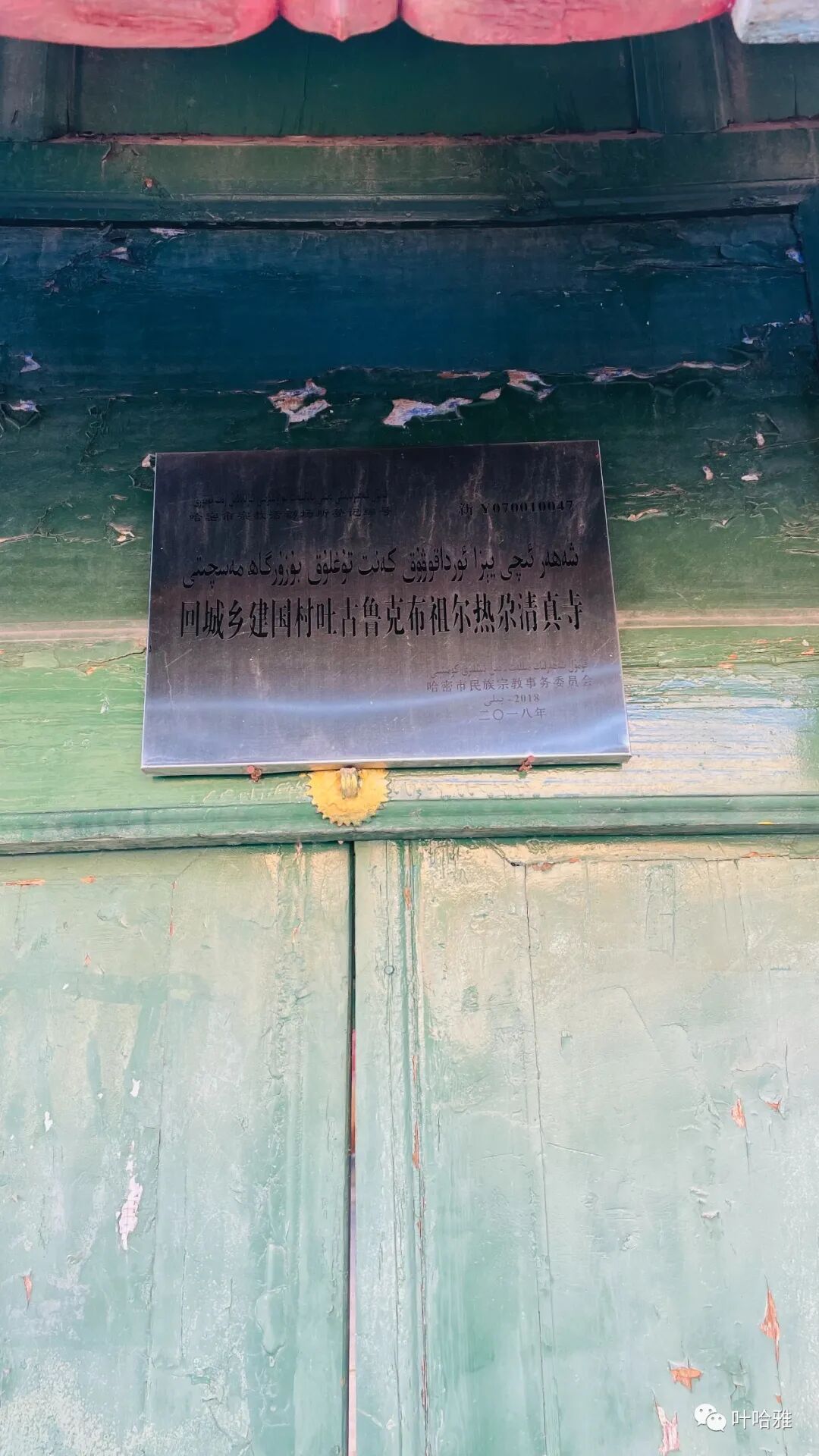
Tuluke Buzuerrega Mosque
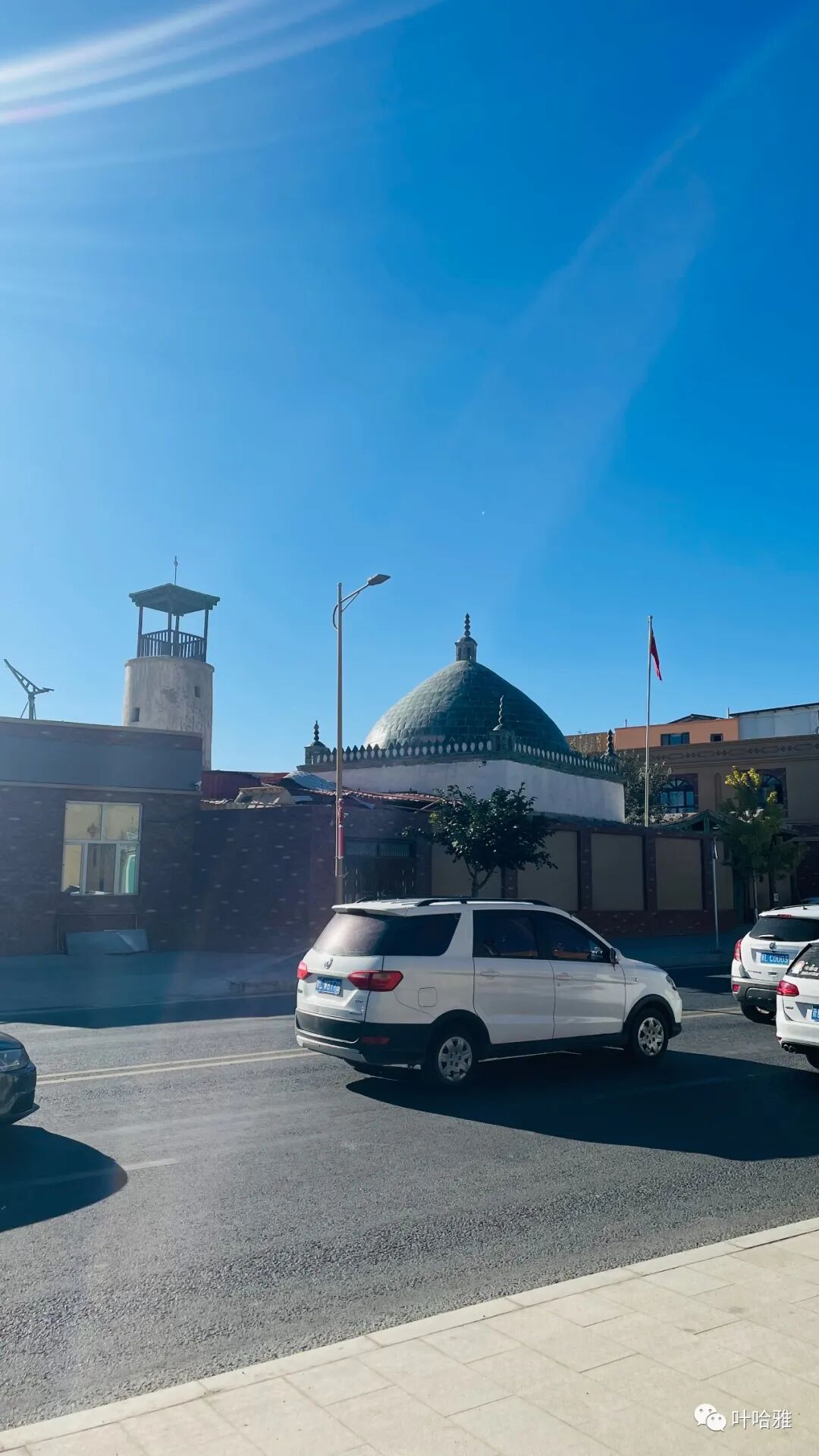
The mosque was closed, the shrine (gongbei) was not open, and some Islamic historical sites I found online do not actually exist anymore.
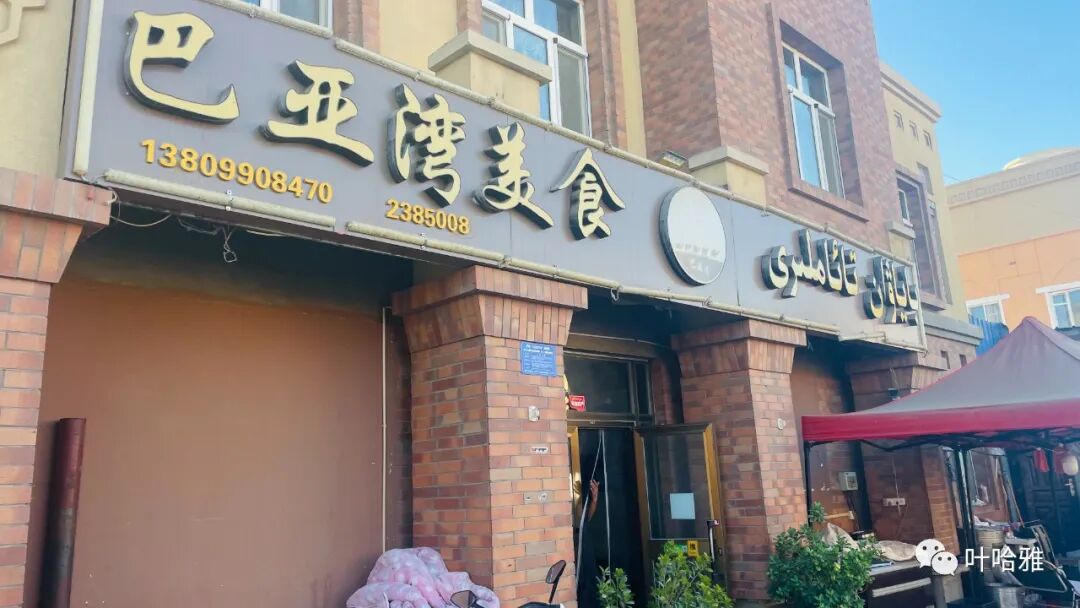
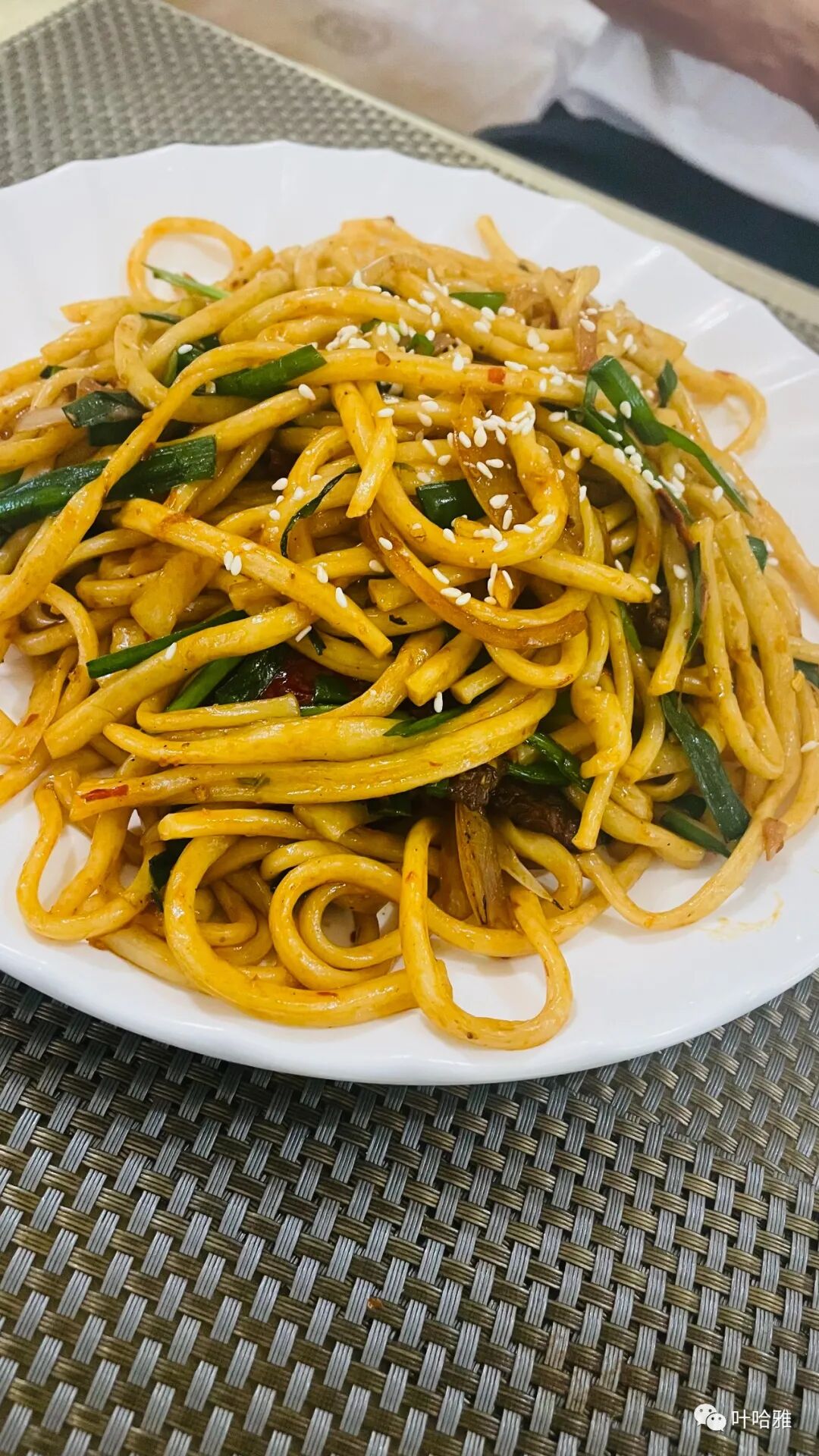
We wandered over to this place, Bayawan Food, to have some mixed noodles (banmian).
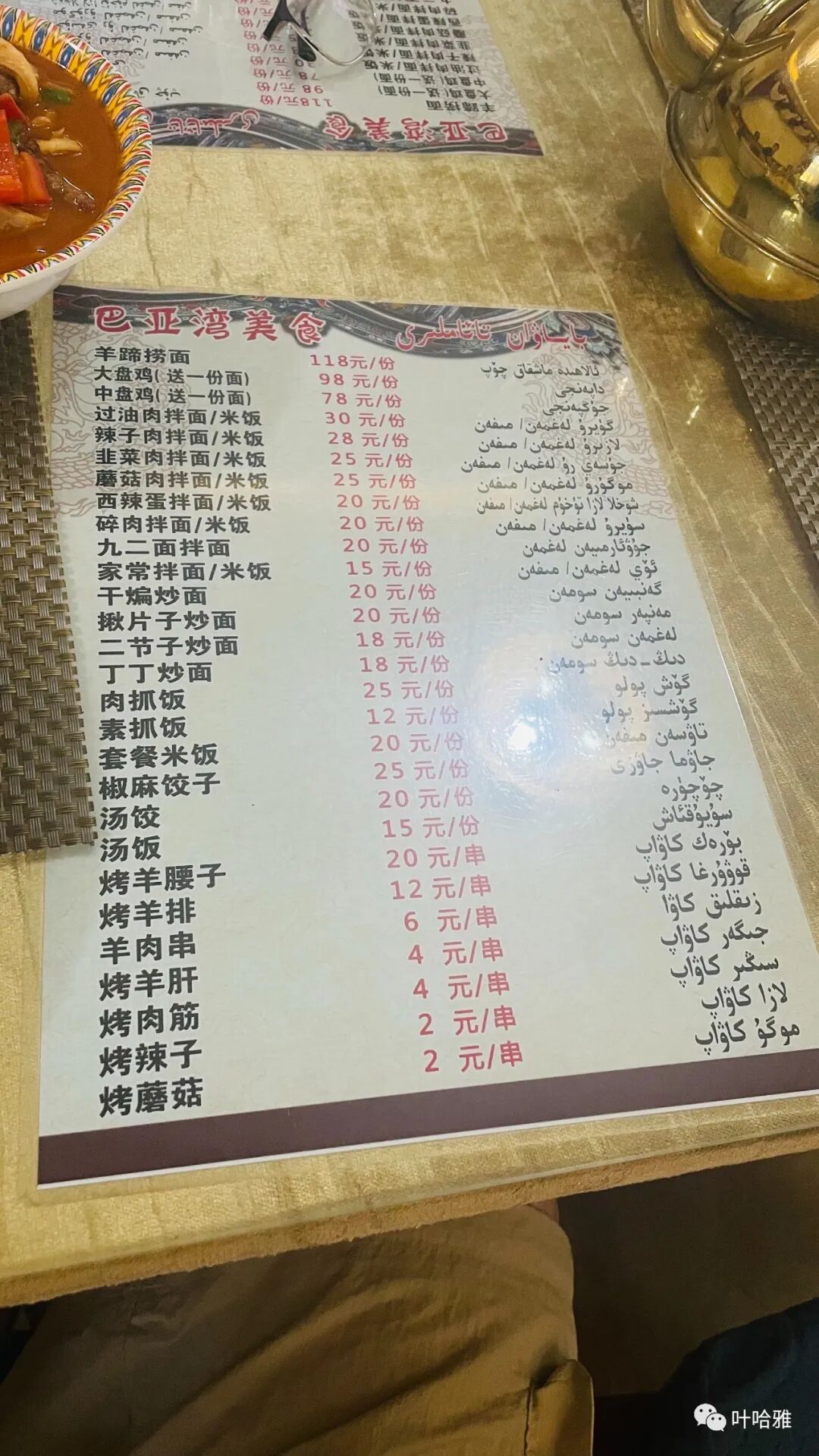
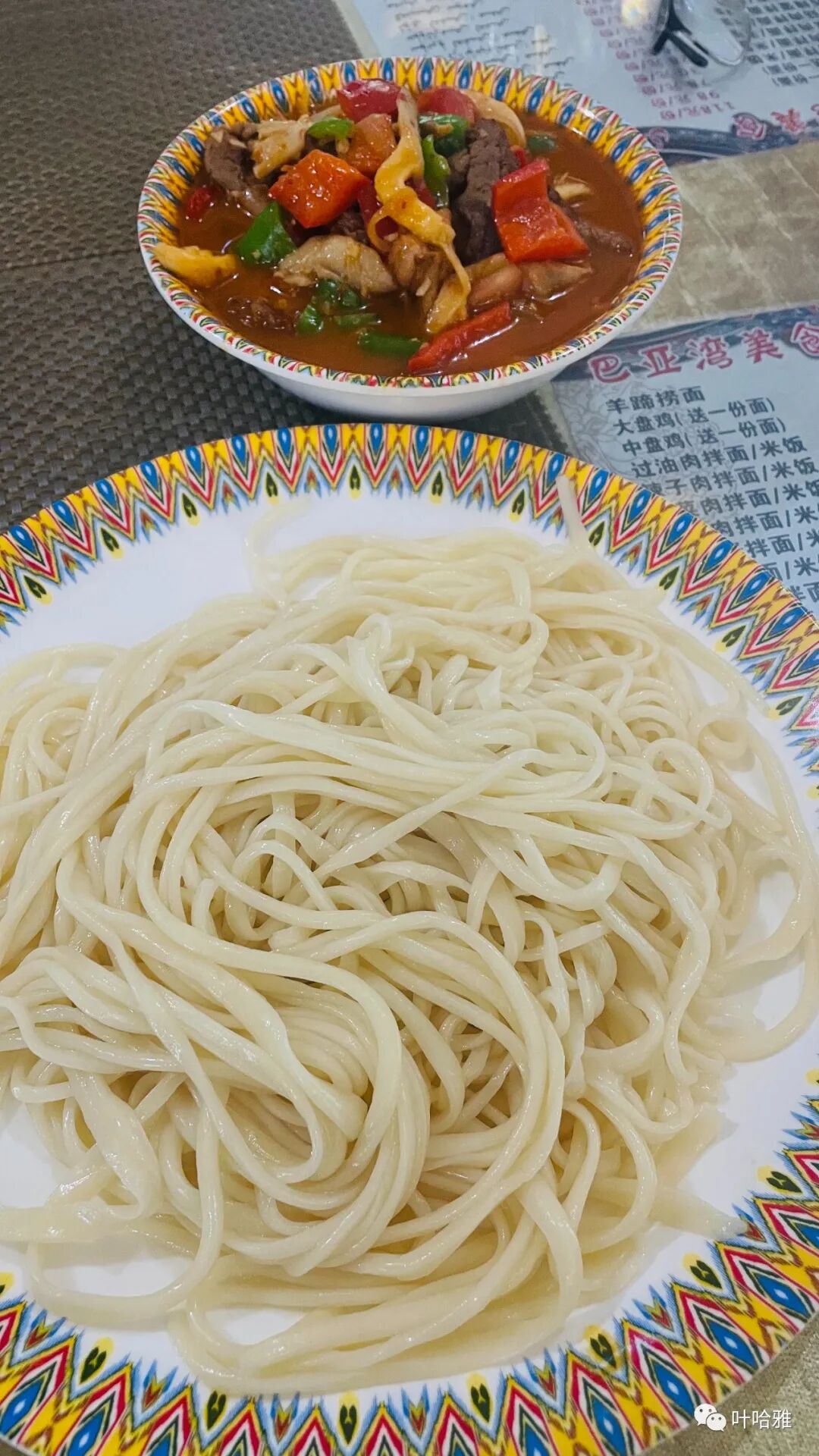
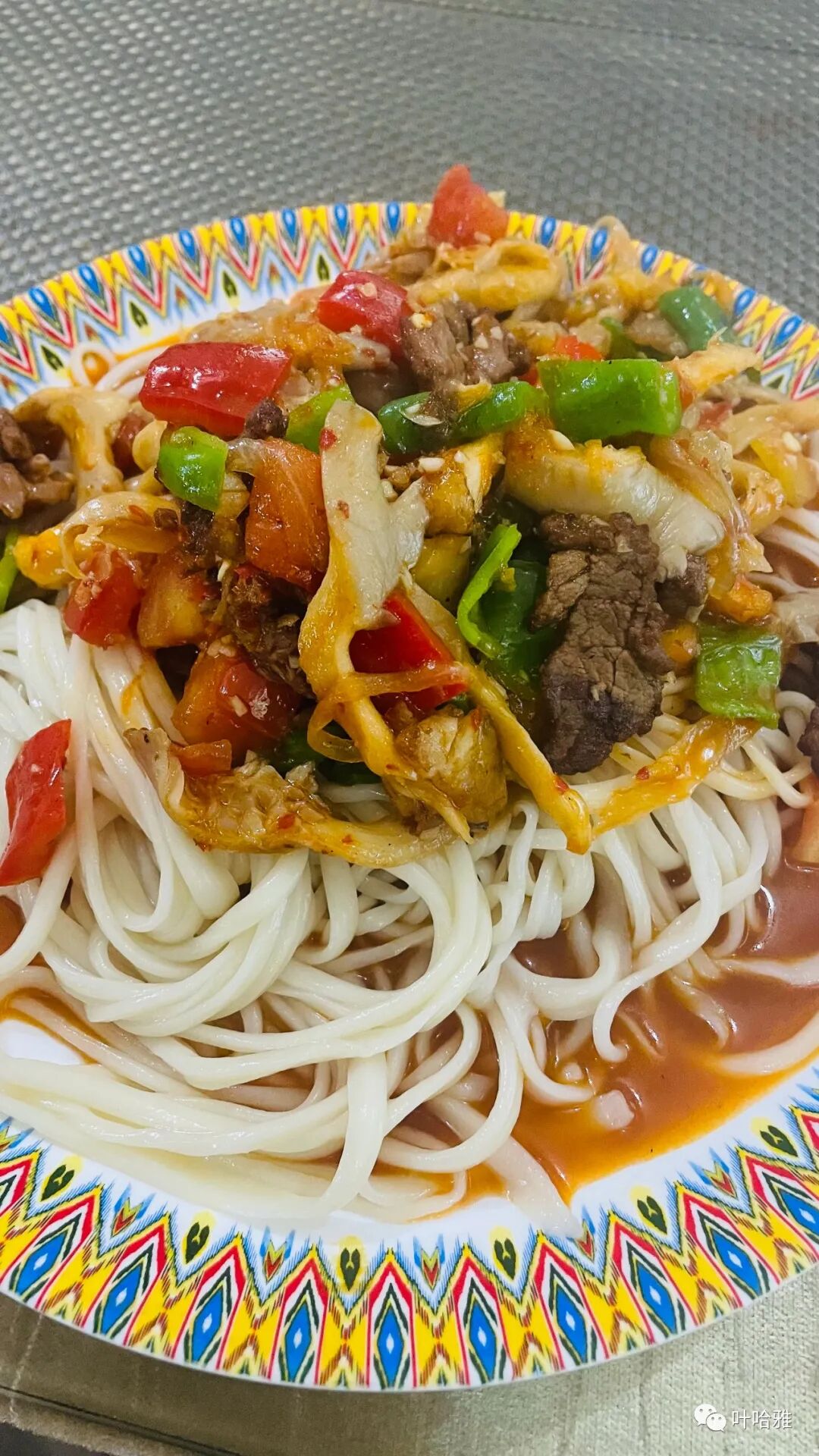
I ordered a serving of mushroom and meat mixed noodles (banmian). It was delicious. You really cannot go wrong with mixed noodles in Xinjiang.
Gais, Wuais, and Wangasi were three Arab sages who came to China to spread the faith during the Tang Dynasty. Gais passed away from illness while passing through Xingxingxia. The King of Hami built a shrine (gongbei) for him there, but his remains were moved to Hami during the Republic of China era. There is no mosque in Xingxingxia now.
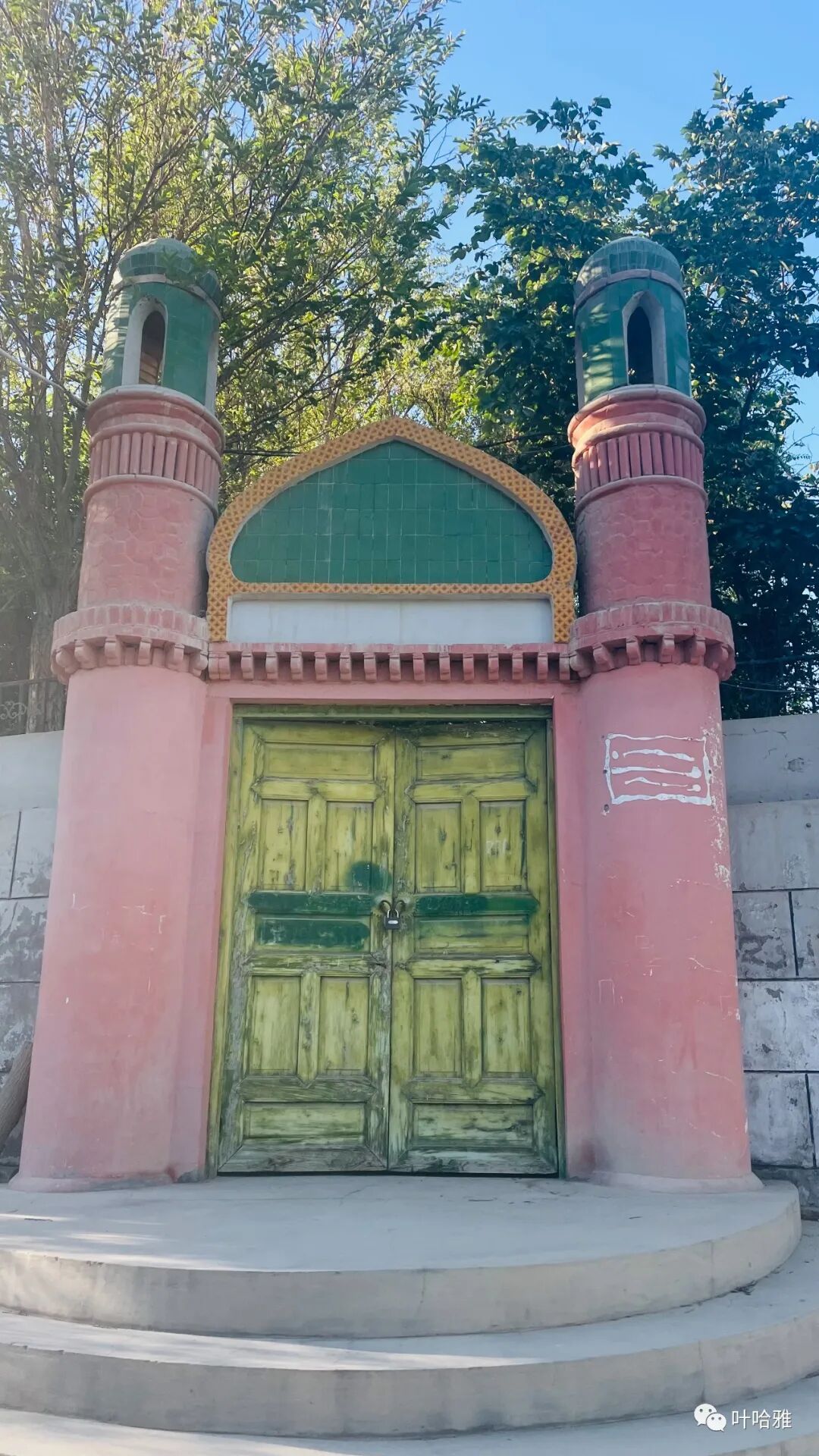
When Sheng Shicai was in power, he had the remains of Gais thrown into the wilderness, but Hui Muslim and Uyghur brothers from Hami secretly recovered them and moved them to the suburbs of Hami for burial.
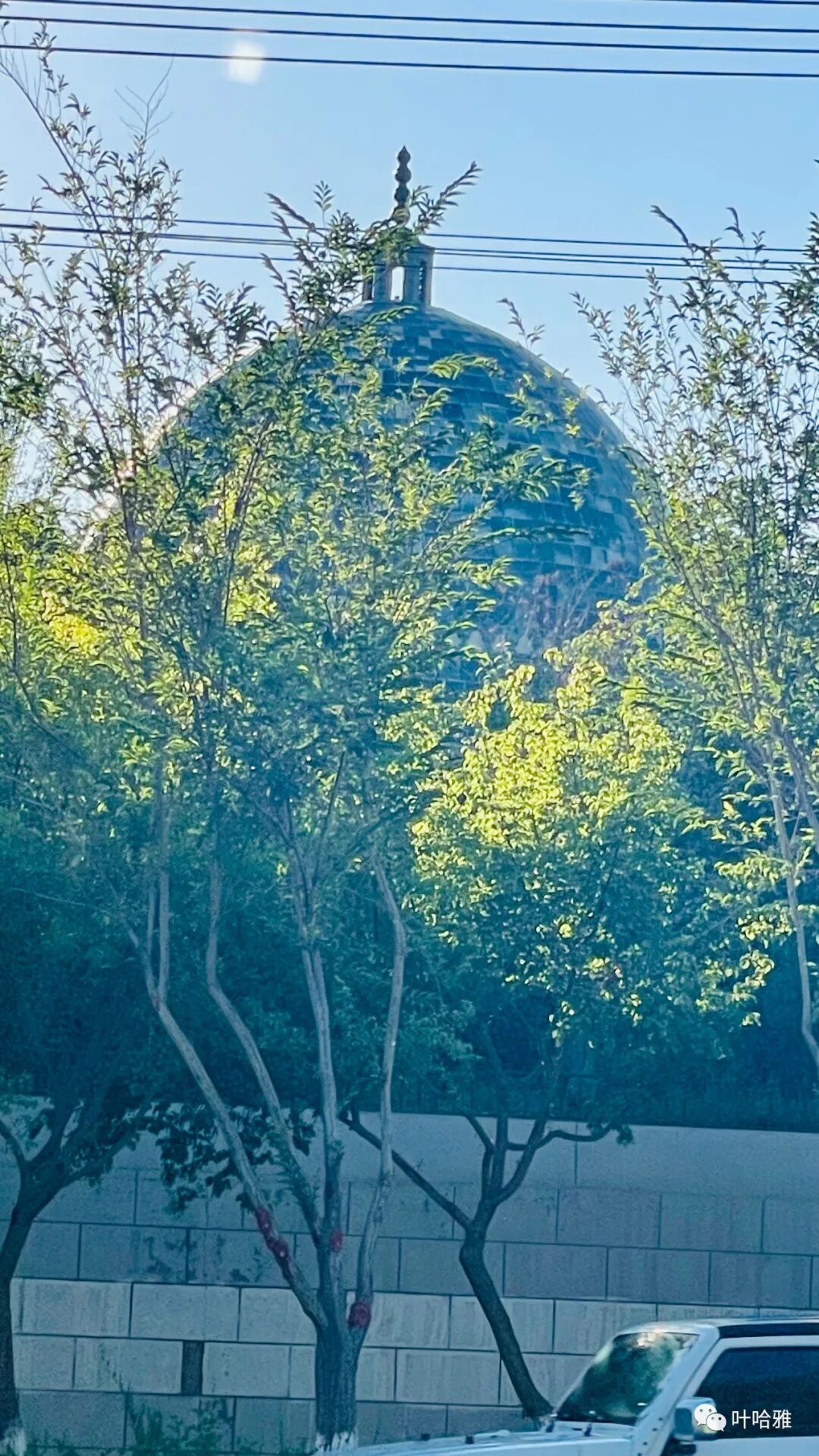
I could only catch a glimpse of the dome of the Gais tomb from the side of the road.
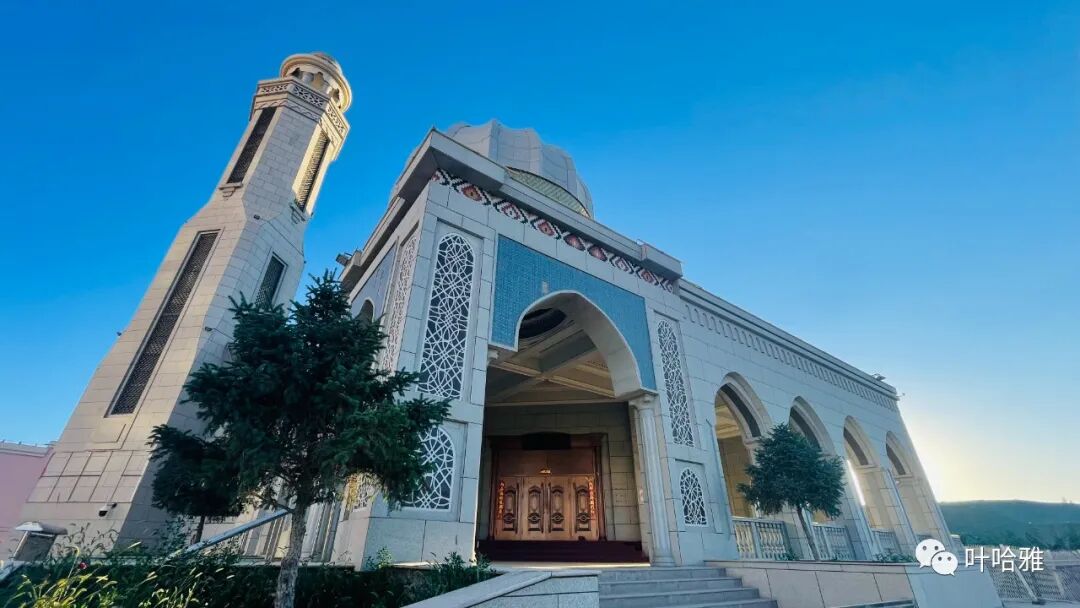
Zhongshan South Road Mosque
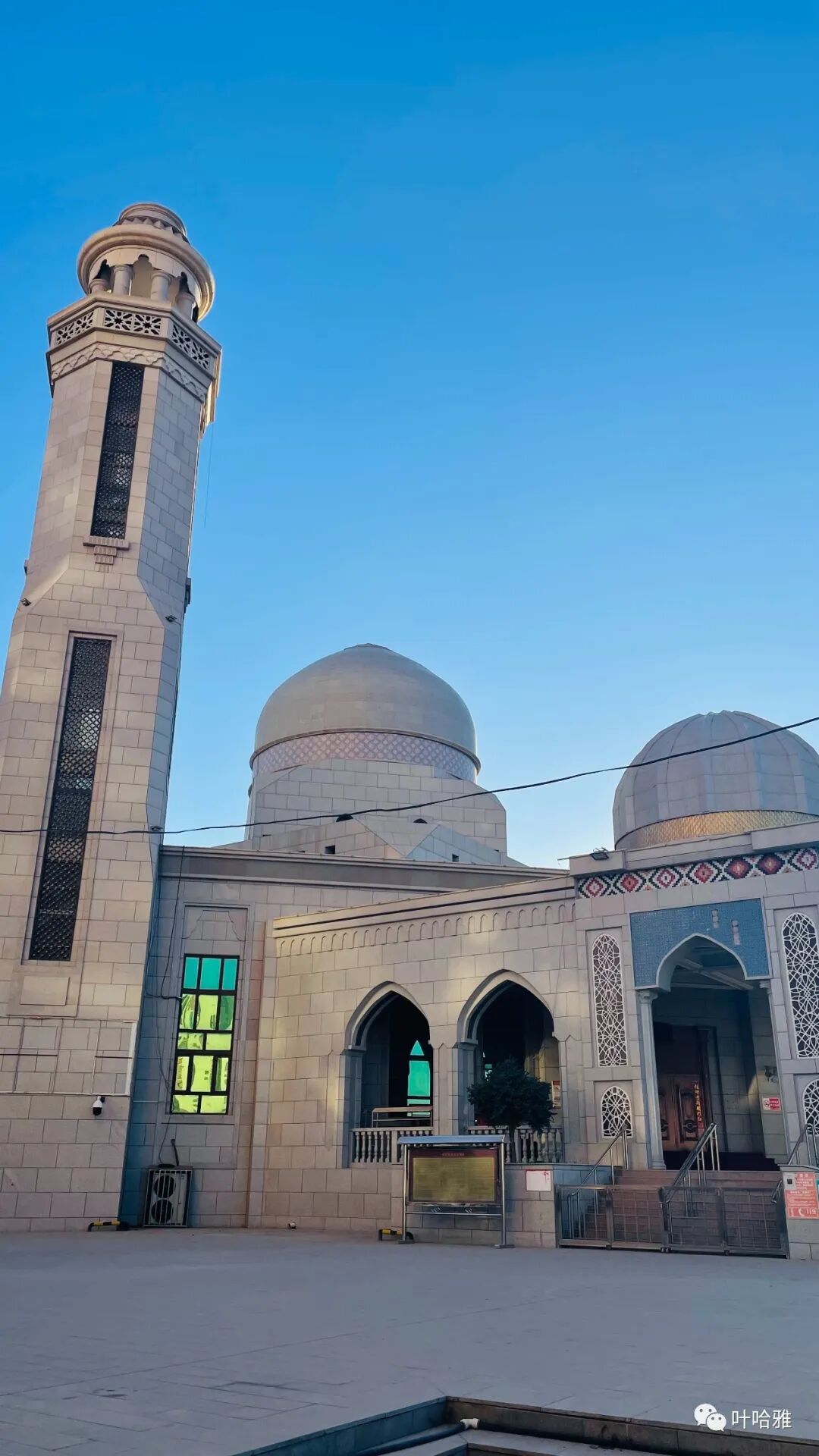
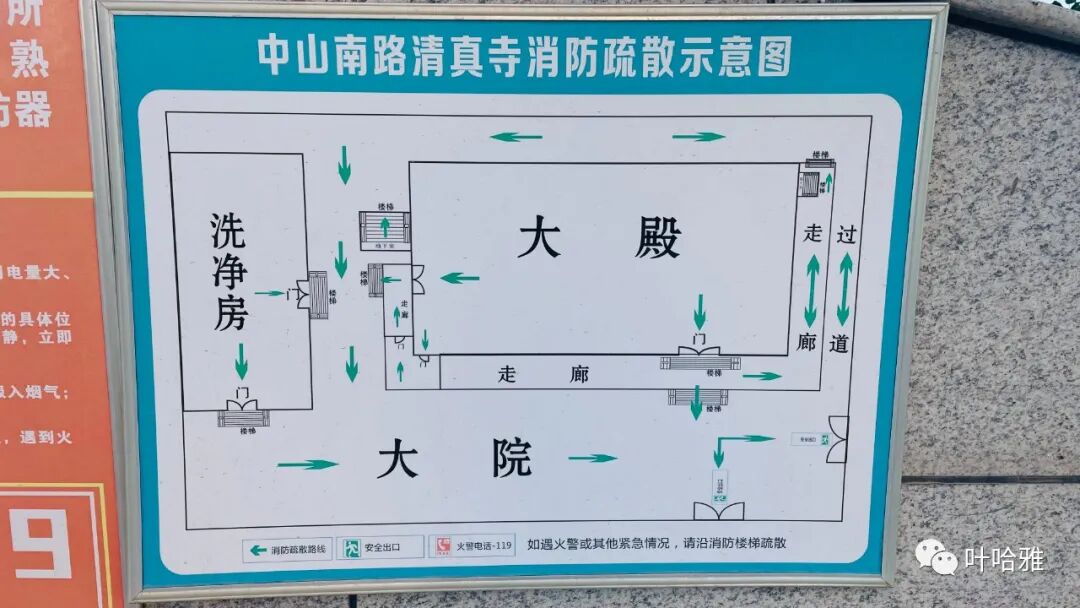
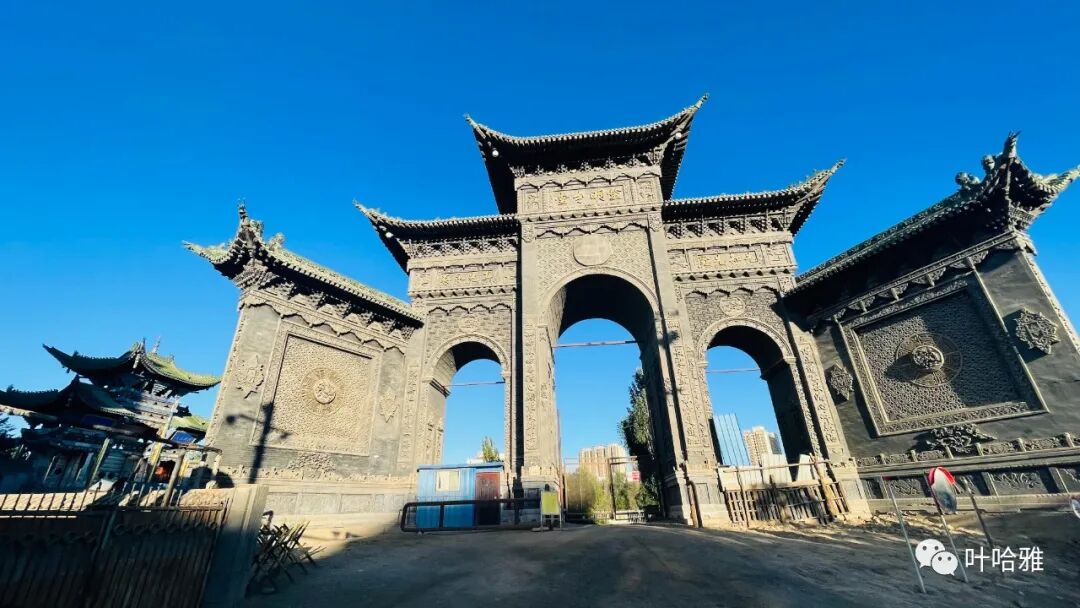
Lingmingtang Hami Branch
The Lingmingtang was also closed. I asked someone there and learned that even the elders cannot come to visit the graves right now.
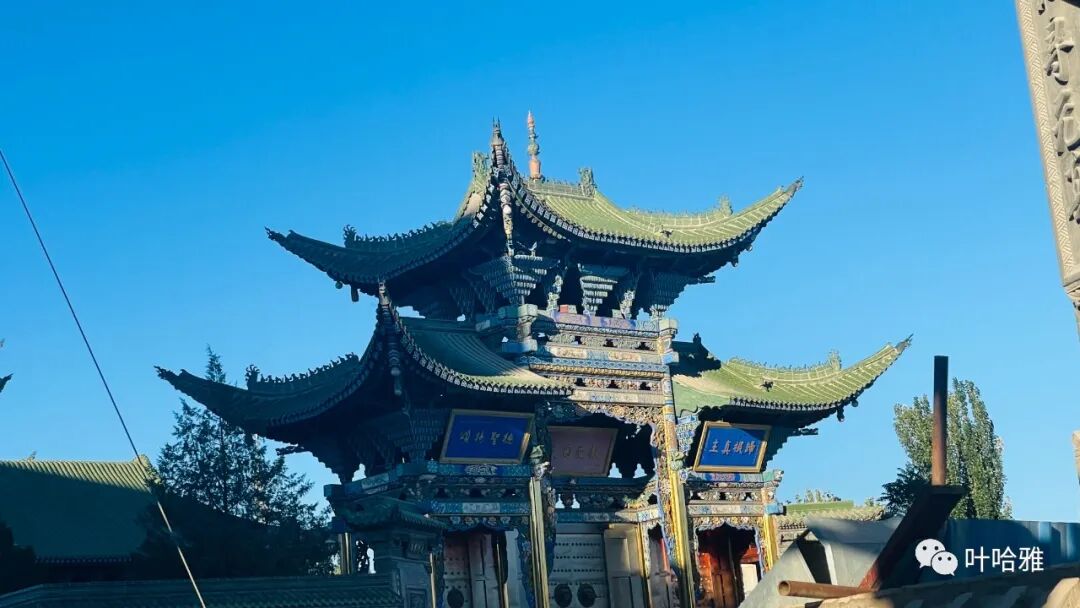
The shrines (gongbei) at Lingmingtang are built in a very grand style and have a distinct traditional Chinese charm.
Hami Shaanxi Grand Mosque
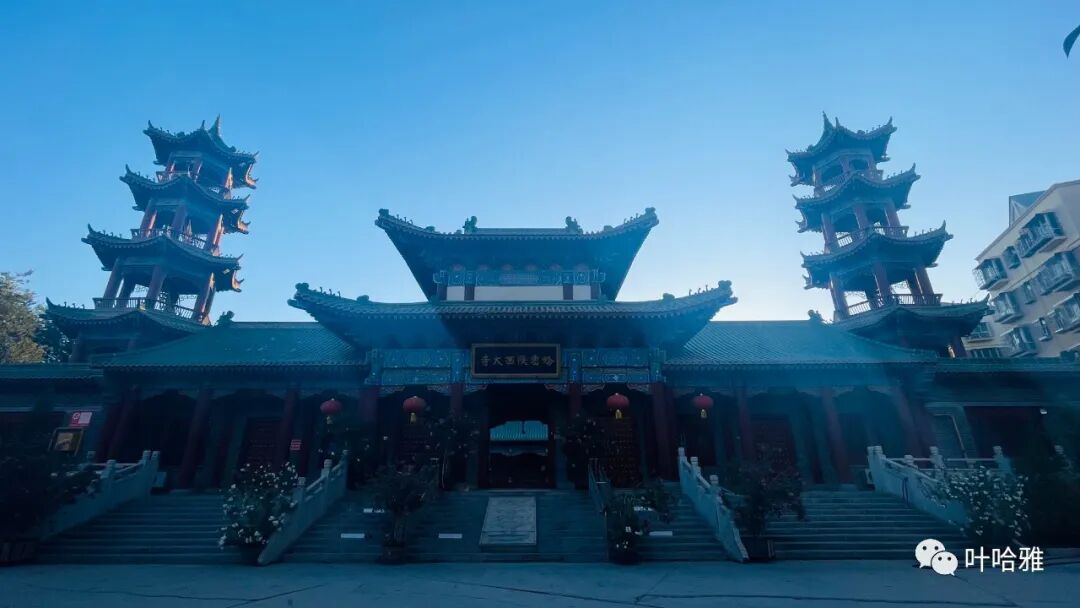
The Hami Shaanxi Grand Mosque was first built during the Tongzhi reign of the Qing Dynasty. It is currently open, and I chatted for a while with an elder from Gansu at the mosque entrance.
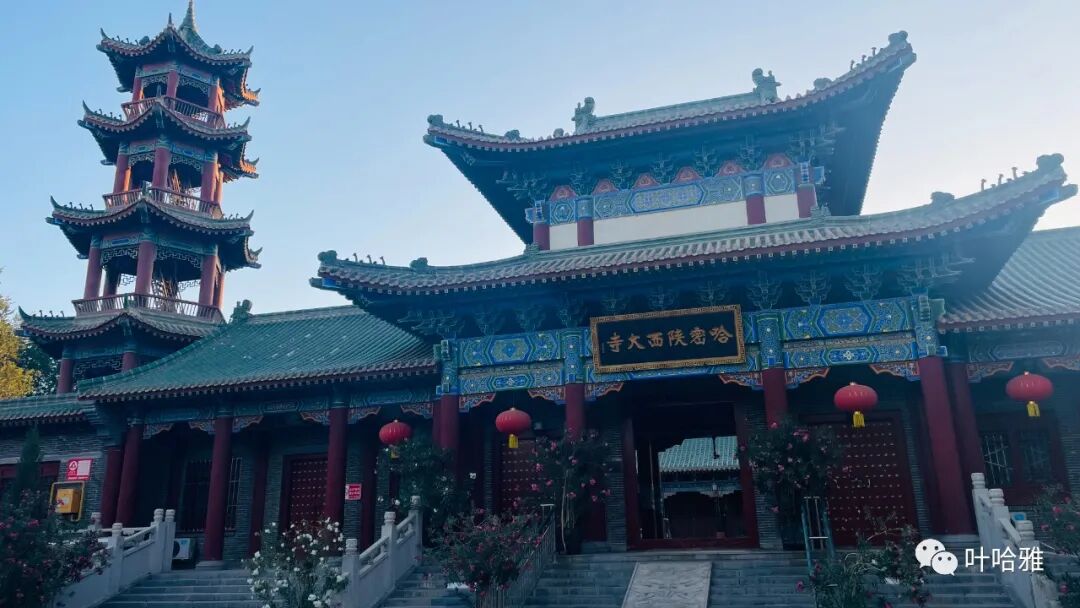
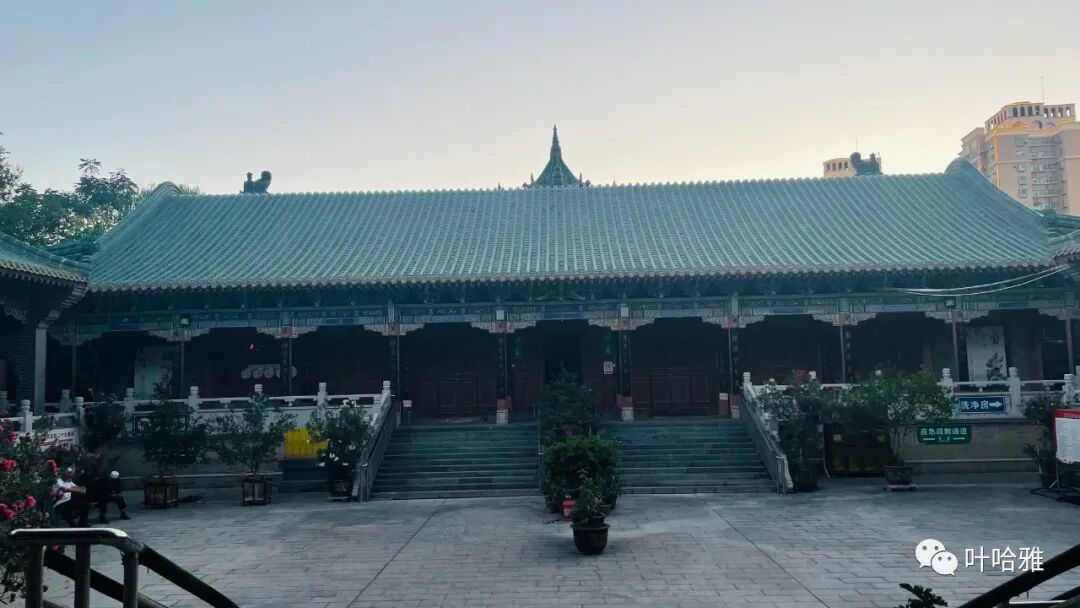
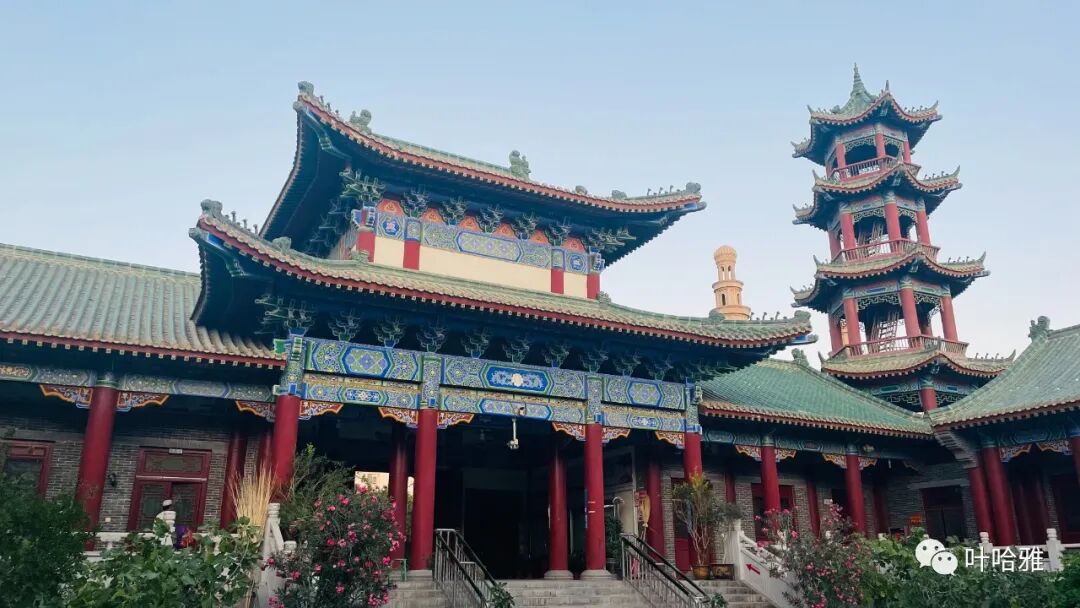
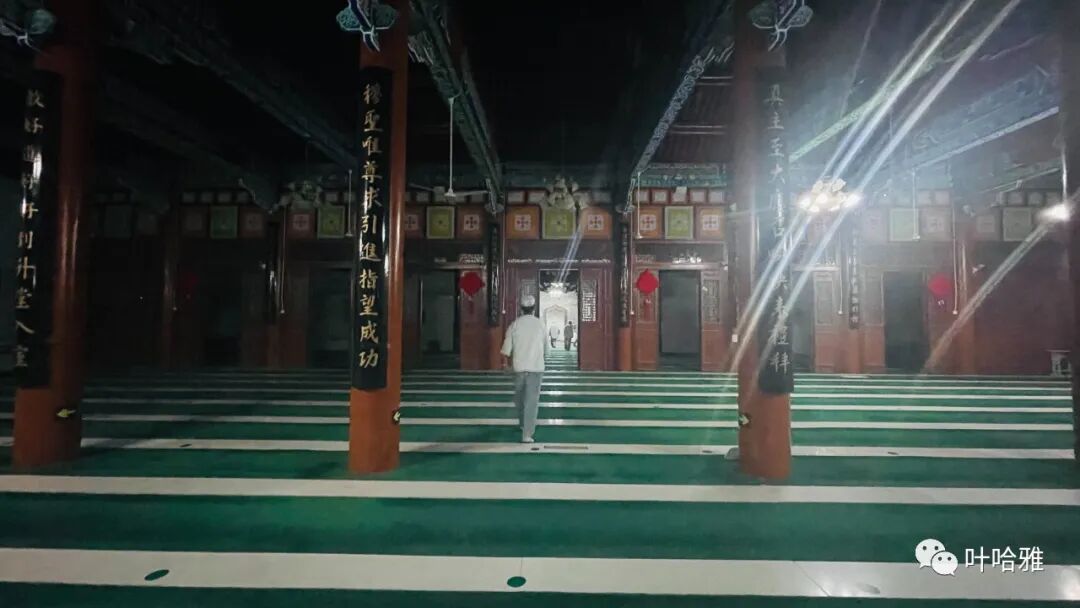
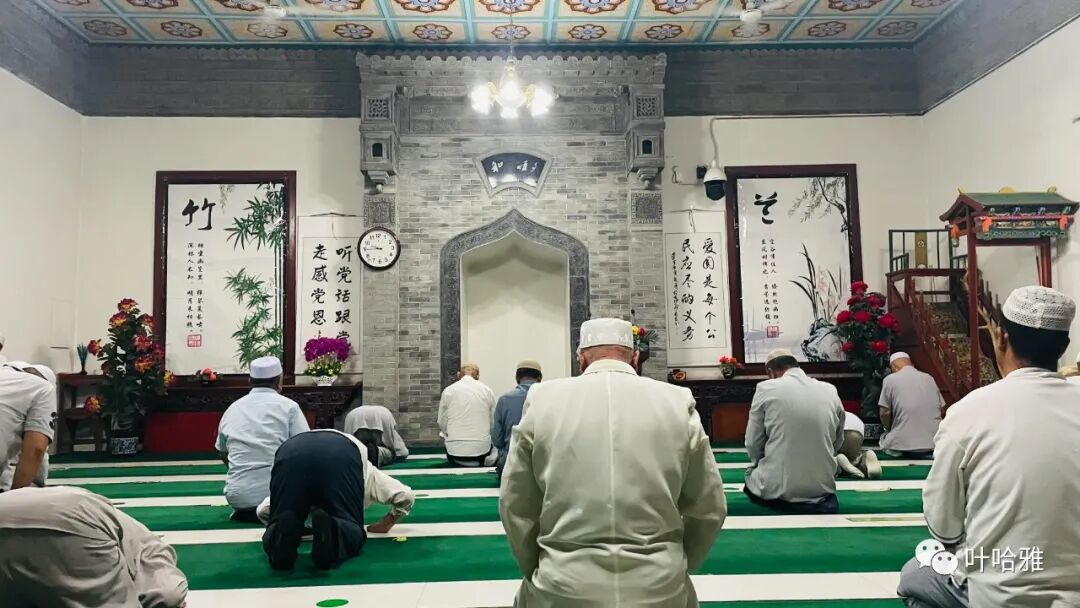
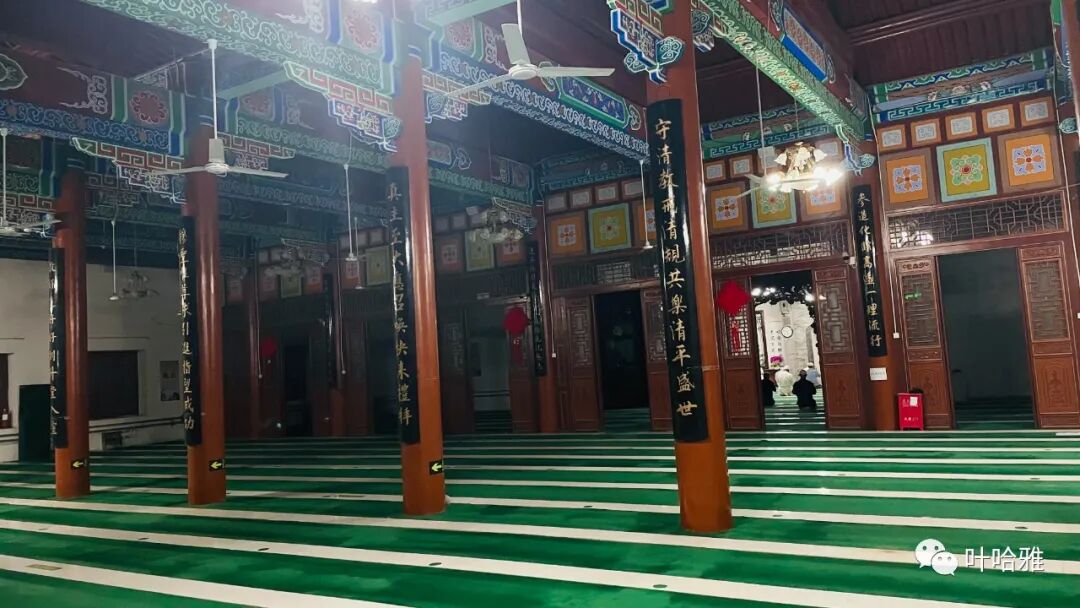
Behind the Shaanxi Grand Mosque (Shaanxi Dasi) is the Uyghur mosque. The Shaanxi Grand Mosque was not necessarily built by people from Shaanxi, but most of the people who pray there are Hui Muslims.
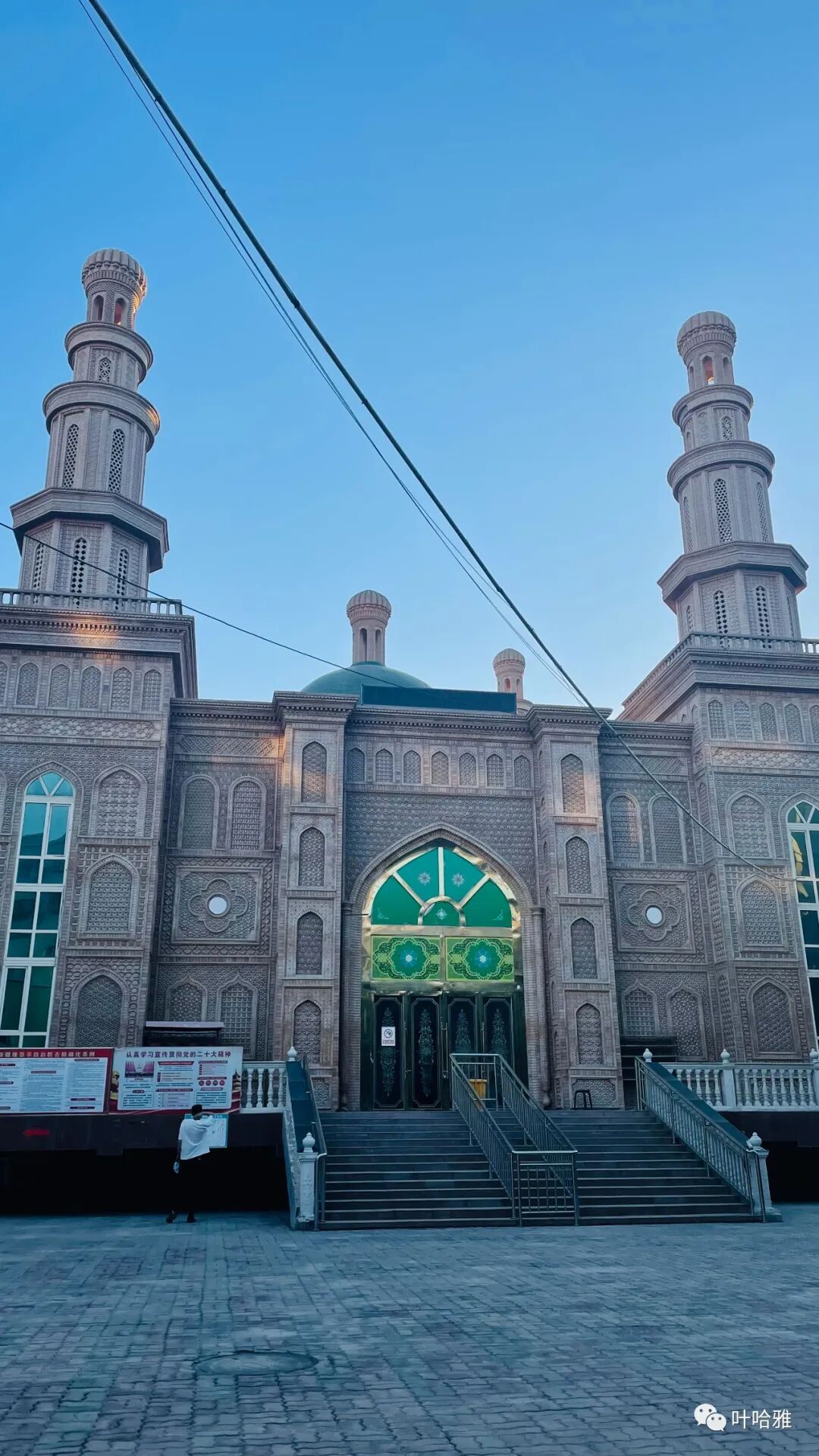
After I finished my namaz at the Shaanxi Grand Mosque in Hami, I went over to the Uyghur mosque to pray two rak'ahs. No one said anything, and the atmosphere was harmonious.
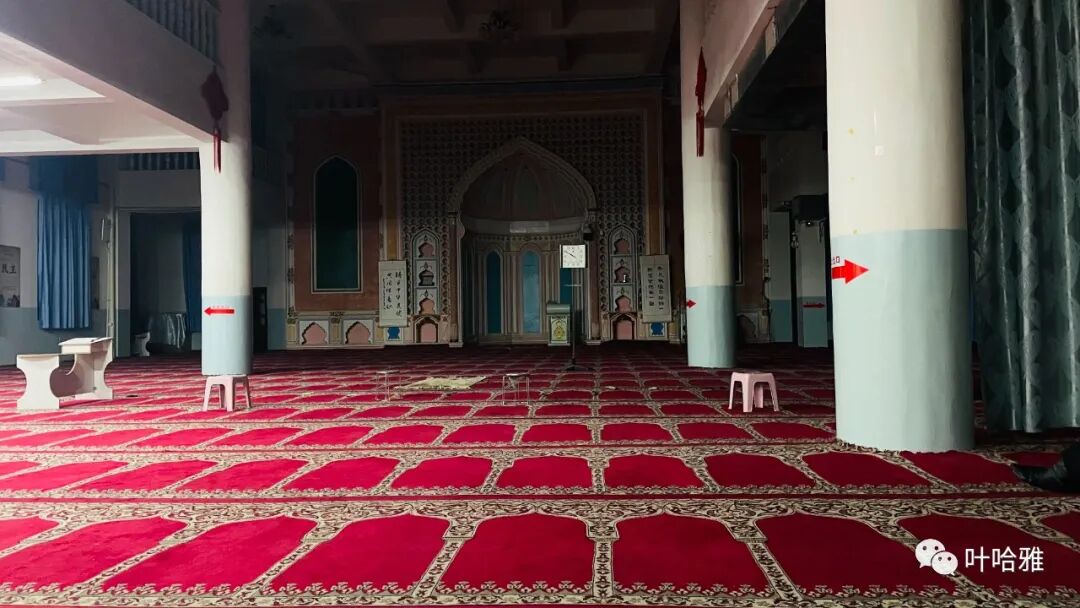
My trip to Xinjiang ends here. This was my third time in Xinjiang, and I have now traveled across the entire region and met the people I wanted to see. My only regret is that I could not enter some of the historical sites. I look forward to coming back in the near future to make up for this.
Summary: This Muslim travel guide to Xinjiang follows the route through Shawan, Urumqi, and Hami, covering big plate chicken, Hui Muslim restaurants, Urumqi halal food, shrines, Hami mosques, and final reflections from a region-wide journey.
Travel Notes from Shawan, Urumqi, and Hami is presented here as a firsthand travel account in clear English, beginning with this scene: Ten of my travelogues were deleted one after another recently, likely due to title violations, so I am reposting them after making edits. The account keeps its focus on Urumqi Halal Food, Hui Muslims, Xinjiang Travel while preserving the names, places, food, and historical details from the Chinese source.
Ten of my travelogues were deleted one after another recently, likely due to title violations, so I am reposting them after making edits.
Leaving Yili for Urumqi, you pass through Shawan City in the Tacheng region. Shawan is less than two hundred kilometers from Urumqi and is a very small city, but it is said to be the birthplace of the famous Xinjiang dish, big plate chicken (dapanji).
We arrived in downtown Shawan around 11:00 PM. I called Yulan Qiaotou Big Plate Chicken and Yuwentao Qiaotoubao Big Plate Chicken on the way, only to find out they had sold out of chicken by 7:00 PM. In the city, police stopped our car and checked our IDs. I said salaam to the officer, and he was stunned, asking, 'Are you Hui Muslim?' I said yes and asked if he hadn't already seen my ID. I decided to ask the officer which big plate chicken place was good. He said they were all about the same and we could eat anywhere on this street, so we ended up eating at this Jimiba No. 8 flagship store on Urumqi West Road.
Jimiba No. 8 Flagship Store
There were still many people at this shop at midnight. What surprised me even more was seeing the long-lost halal certification sign in the shop. This was the first halal sign we had seen in our many days of traveling through Xinjiang.
I asked the owner why the shop was called Jimiba No. 8, and she said they were the eighth shop to open on this street, so they have always been called No. 8.
The specialty of Shawan big plate chicken is that it uses a whole chicken per plate. It costs 130 yuan per serving. Since there were two of us, we split it into two large plates, and adding noodles costs extra. This shop is considered an old establishment in Shawan. The taste is fine, but it is not amazing enough to make you scream. Actually, big plate chicken appeared to serve passing truck drivers, focusing on being economical and affordable. It is basically at the level of a rest area fast food for drivers, so there is no need to come to Shawan specifically for it. Besides, I think many Xinjiang restaurants in Beijing can match this level, and some even suit my taste better. Shawan's big plate chicken is quite spicy and the chicken is tough, while Beijingers are used to soft, tender, salty, and savory flavors, so they might not be used to the authentic Shawan taste.
We stayed in Shawan for one night and arrived in Urumqi the next morning. Before checking in, we went straight to the Hamude Restaurant in Midong District, which I had wanted to visit for a long time, for lunch.
Hamude Restaurant
Hamude Restaurant is a family business. Three generations of the family are old Urumqi Hui Muslims who have worked in the catering industry. It is a restaurant family, and everyone from the kitchen to the front of the house is family. The owner is very strict about choosing ingredients. They do not trust meat from slaughterhouses and insist on finding an imam they know to slaughter the beef, lamb, and chicken. This increases their costs, but it guarantees quality.
The authorities think the name Hamude does not meet regulations, so they have not issued a halal certification mark. However, this shop is actually more reliable than many restaurants that have the certification, and they do not sell alcohol.
We had been traveling all the way without a proper big meal. This first meal in Urumqi really filled us up, so much so that we only ate this one meal for the day and were not hungry until dinner.
Hamude's big plate chicken (dapanji) is made in the authentic Urumqi Hui Muslim style. The chicken is soft and tender, and the wide belt noodles (pidaimian) served with it are very chewy. It suits our taste better than the one we had in Shawan.
This grilled meat (kaorou) is a very popular barbecue dish in the shop. Many customers think it is cheap and delicious because the owner puts a lot of effort into the ingredients.
Hamude is located at commercial unit S7-101, Vanke Park No. 5, Midong District. It is a ground-floor shop.
Rumi's Secret
Rumi's Secret used to be in Beijing and just moved back to Urumqi. The owner is a Uyghur from Urumqi, and he insisted on not selling alcohol even when he was in Beijing.
This shop is located inside Greentown Rose Garden in the Shuimogou District of Urumqi. The environment is much better than it was in Beijing, as it now has a garden and a pond.
In the evening, there are singers performing with ethnic musical instruments, and the atmosphere is incredibly stylish.
The owner explained that since the outdoor space is the main feature, the restaurant is only open for half the year and closes during the winter. The owner is preparing a branch in Sanya, so you can visit Rumi's Secret in Sanya during the winter in the future.
Friends can come here for coffee and afternoon tea, or host parties and gatherings. The food and service are both excellent.
Address: Inside Greentown Rose Garden, Shuimogou District.
Aiju Restaurant.
If you like Western food and care about the atmosphere, you can come to Aiju Restaurant in Tianshan District, right across from Vanke Plaza.
A Uyghur friend brought me here specifically. Most of the people inside are young Uyghurs, and there is a live band performance.
The Western food tastes just as good as in Beijing, and the prices are about the same, with an average cost of over 200 per person.
The dishes look, smell, and taste great, and the steak is also good. With unique ethnic singers performing, it is a great place for a date with a wonderful atmosphere.
We stayed at the China Southern Pearl Hotel in Urumqi for three days. It is a halal hotel, and there is a Muqam halal restaurant on the second floor.
The China Southern Pearl Hotel is also the designated hotel for flight crews, so it is mostly filled with flight attendants and pilots.
Erdaoqiao Baida Mosque.
The Baida Mosque in Urumqi is less than a hundred years old. This is my second time here. It is currently open, but you can only enter during prayer times.
Being able to quietly join a congregational namaz here is a luxury.
For breakfast in Urumqi, head over to the area near Sunshine City Wenlan Mansion (Yangguangcheng Wenlan Gongguan). There are many small shops here with local ethnic character.
I had steamed buns (baozi) and milk tea at Babahan Milk Tea House, and I also tried the milk rice (naizifan).
This is my third time in Urumqi. I am meeting friends every day, so what I eat does not really matter anymore.
After breakfast, I visited colleagues at the Mingya Xinjiang branch. I met many of them for the first time. My team's furthest partner is in Kashgar, and I welcome everyone to join our Xinjiang branch.
The company has a children's play area for moms who bring their kids to work. At Mingya, you can balance both family and career.
We left Urumqi and headed east, arriving at Tuyugou Mazar Village in less than half a day.
Tuyugou Mazar is said to be the site of the story of the Seven Sleepers and their dog mentioned in the Quran, and locals call it the Saint's Tomb. However, this legend is not widely accepted, as it is generally believed that the story of the seven people and the dog took place in Jordan.
The Mazar is called the Ashab-i-Kahf Mazar. People say a group of people from a country in the west traveled east to seek the truth, reached a cave in the Turpan area, entered it to practice their faith, and never came out again. You need to buy a ticket to enter Mazar Village. I saw the Mazar was closed, so I gave up on the idea of visiting the village because it was just too hot, with daytime temperatures reaching nearly 50 degrees. I have visited the Emin Minaret (Sugongta), Grape Valley, and the Karez Well in Turpan before, so I did not stop there on this trip.
Hami is the last stop on our Xinjiang trip because the Gaisi Gongbei is here, even though the Tomb of the Hami Kings is more famous.
Tuluke Buzuerrega Mosque
The mosque was closed, the shrine (gongbei) was not open, and some Islamic historical sites I found online do not actually exist anymore.
We wandered over to this place, Bayawan Food, to have some mixed noodles (banmian).
I ordered a serving of mushroom and meat mixed noodles (banmian). It was delicious. You really cannot go wrong with mixed noodles in Xinjiang.
Gais, Wuais, and Wangasi were three Arab sages who came to China to spread the faith during the Tang Dynasty. Gais passed away from illness while passing through Xingxingxia. The King of Hami built a shrine (gongbei) for him there, but his remains were moved to Hami during the Republic of China era. There is no mosque in Xingxingxia now.
When Sheng Shicai was in power, he had the remains of Gais thrown into the wilderness, but Hui Muslim and Uyghur brothers from Hami secretly recovered them and moved them to the suburbs of Hami for burial.
I could only catch a glimpse of the dome of the Gais tomb from the side of the road.
Zhongshan South Road Mosque
Lingmingtang Hami Branch
The Lingmingtang was also closed. I asked someone there and learned that even the elders cannot come to visit the graves right now.
The shrines (gongbei) at Lingmingtang are built in a very grand style and have a distinct traditional Chinese charm.
Hami Shaanxi Grand Mosque
The Hami Shaanxi Grand Mosque was first built during the Tongzhi reign of the Qing Dynasty. It is currently open, and I chatted for a while with an elder from Gansu at the mosque entrance.
Behind the Shaanxi Grand Mosque (Shaanxi Dasi) is the Uyghur mosque. The Shaanxi Grand Mosque was not necessarily built by people from Shaanxi, but most of the people who pray there are Hui Muslims.
After I finished my namaz at the Shaanxi Grand Mosque in Hami, I went over to the Uyghur mosque to pray two rak'ahs. No one said anything, and the atmosphere was harmonious.
My trip to Xinjiang ends here. This was my third time in Xinjiang, and I have now traveled across the entire region and met the people I wanted to see. My only regret is that I could not enter some of the historical sites. I look forward to coming back in the near future to make up for this.
Muslim Travel Guide China: Yarkand Altun Mosque, Khanate Tombs and Turdi Haji Manor
Articles • yusuf908 posted the article • 0 comments • 181 views • 2026-05-22 21:11
Reposted from the web
Summary: This Muslim travel guide to southern Xinjiang follows the route from Ruoqiang to Yarkand, with halal food stops, mosque visits, Altun Mosque, Yarkand Khanate royal tombs, Turdi Haji Manor, Uyghur history, and road trip notes.
A Southern Xinjiang Muslim Journey: The Yarkand Khanate Tombs and the Turdi Haji Manor is presented here as a firsthand travel account in clear English, beginning with this scene: We entered Xinjiang from Mangya City in Qinghai, and the first city we reached was Ruoqiang. The account keeps its focus on Yarkand Travel, Chagatai Khanate, Uyghur History while preserving the names, places, food, and historical details from the Chinese source.
We entered Xinjiang from Mangya City in Qinghai, and the first city we reached was Ruoqiang. Since we planned to drive from southern Xinjiang to northern Xinjiang, we hit a sandstorm as soon as we crossed the border. Yellow sand filled the sky, making it impossible to keep our eyes open, and the highway was covered in shifting sand, creating an instantly eerie atmosphere.
Starting from Ruoqiang, we could no longer find restaurants with halal signs.
To know if a restaurant is okay to eat at, you either have to guess or ask. This Yangyangyang Pilaf (zhuafan) shop is an old establishment, and it is safe to eat there.
Our first meal in Xinjiang was the pilaf from this shop. To be honest, their pilaf was just as good as any other I had in later cities.
Next door to Yangyangyang, we found an Azhen Rice Noodles (mifen) shop. This chain also has locations in Beijing and is halal.
Since we couldn't find it on domestic maps, we had to ask passersby for the location of the mosque. After finding it, we discovered it wasn't open. Ruoqiang Mosque was the first mosque we passed on our Xinjiang trip.
After a short break, we continued to the next city, Qiemo. We checked into the Qiemo Hotel in the evening and learned from the staff that the breakfast is halal.
Qiemo Hotel is considered a relatively good state-run guesthouse in the area. Most prefectures in Xinjiang have these types of state-run hotels, so stay in one if you want to avoid bad accommodation experiences.
On the inside of the hotel room door, there was a sign that read, 'Walls have ears, watch your words.' This made me wonder what must have happened here before; otherwise, why would they need such a warning?
Qiemo has a grand bazaar and two night markets. We visited both. They aren't very large, but the food at the night markets is delicious.
We ate baked buns (kaobaozi), roasted pigeon, and red willow skewer meat (hongliu kaorou) at the Yudu Night Market.
Roasted meat (kaorou) tastes good everywhere in Xinjiang, even at highway rest stops.
I had my first bowl of mixed noodles (banmian) in Xinjiang at Ma's Barbecue (Ma Ji Shaokao), and I have never had a bad bowl of mixed noodles in this region.
Wusu carbonated drink.
I found a Flaming Mountain Restaurant (Huoyanshan Canting) in Qiemo. This chain used to have locations in Beijing, but they have all closed down now.
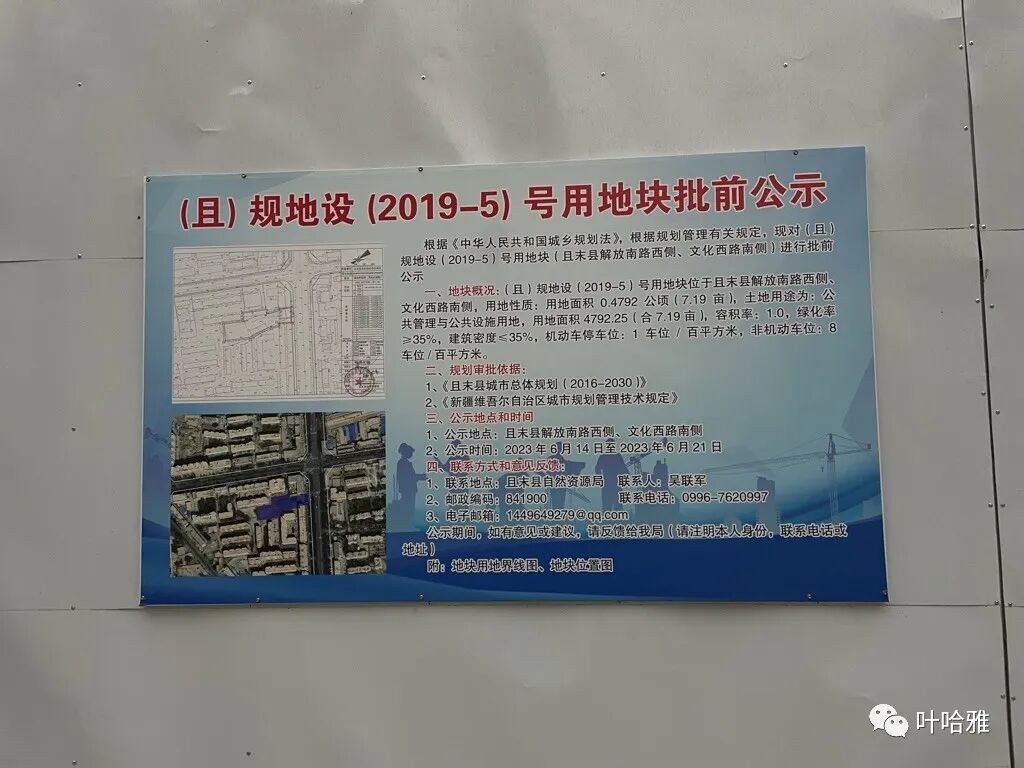
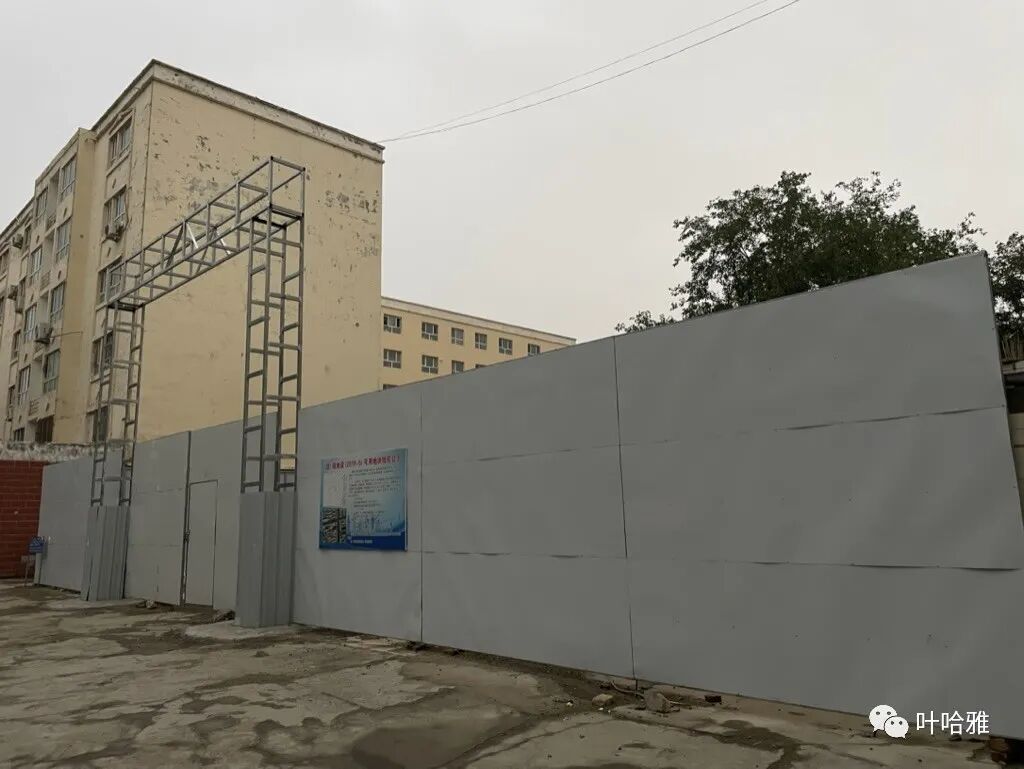
I searched for a mosque on Google Maps for a long time without success, then I suddenly realized this plot of land might be it.
It is now a construction site.
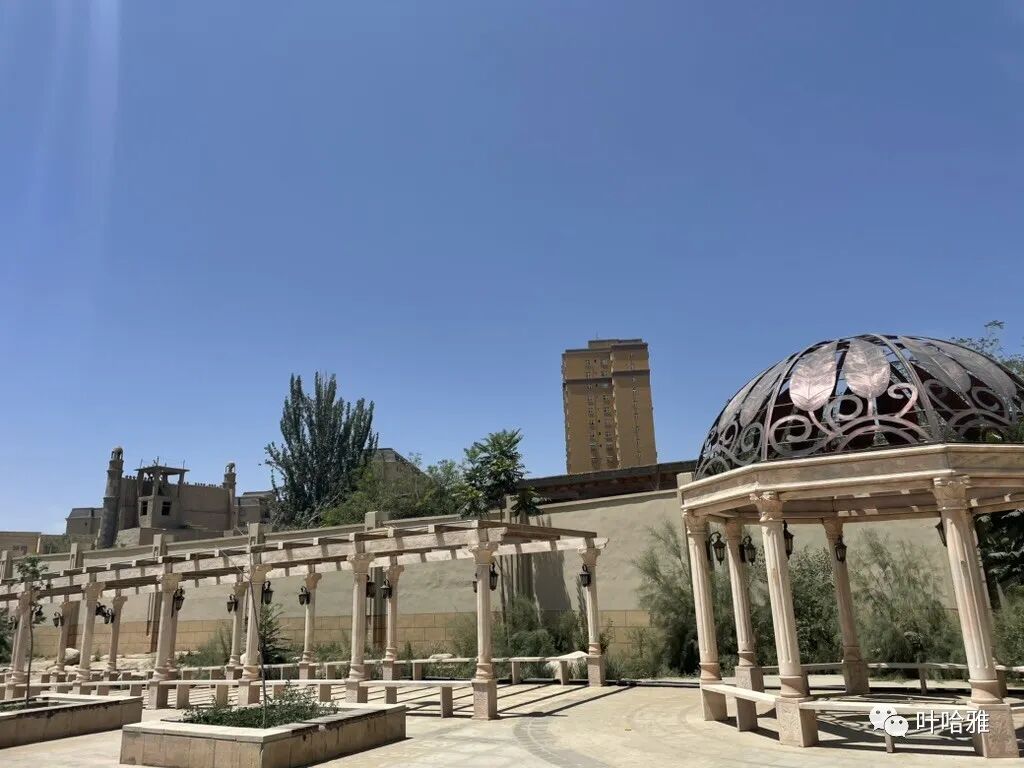
The next day we continued driving west to Yutian County because there is an Id Kah Mosque (Aitiga'er Qingzhensi) there.
Unfortunately, photography is not allowed at the mosque. The security guard deleted the photo I took of the main gate, so I only have one photo of the side.
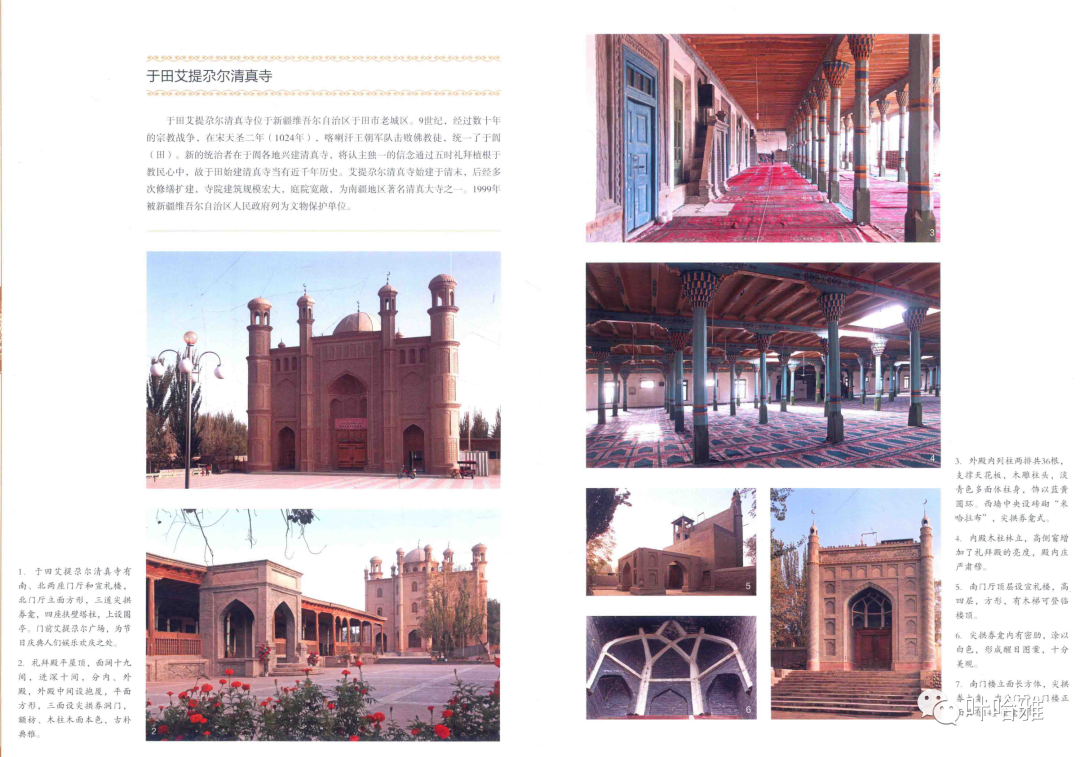
The image above shows the original appearance of the Id Kah Mosque, taken from the second volume of 'Architectural Art of Islam in China'.
With nowhere else to go, we had to find a nearby restaurant to eat. We happened to see this Hotan Canteen (Hetian Shitang). Yutian County is part of the Hotan region, and since there are Hotan Canteens in Beijing, I wanted to see how this one was different.
The restaurant environment was quite nice, but the food was not good and the prices were high. Combined with my earlier unpleasant experience, I just wanted to leave this city as soon as possible.
I left Yutian and arrived at Hotan Tuancheng. Because I was told not to take photos earlier, I was very careful when I first got to Hotan. I started by taking a few secret photos from inside the car. Later, I saw tourists everywhere and no one was stopping them, so I became bolder. Strangely, I never ran into any more photo restrictions during the rest of my trip in Xinjiang.
Hotan Tuancheng is just like the Old City of Kashgar; it has been renovated and contains both homes and shops. It is worth walking around and eating there. The girls in Hotan are even prettier, and I feel they are better looking than the ones in Kashgar.
A kind girl in Hotan warned us not to drive the wrong way on a one-way street. We were embarrassed because we first thought she was trying to chat us up.
I had my first bowl of yogurt shaved ice (suannai baobing) at this shop in Tuancheng. My first impression of Hotan is really good.
Jiaman Mosque is in the center of Hotan Tuancheng. It was first built during the Guangxu reign of the Qing Dynasty (1875).
I asked the Uyghur grandfather at the entrance if I could go inside, but he shook his head.
Pishan County is a place I have always wanted to visit. When I arrived, it was completely different from what I expected. The city was built with help from Anhui Province. There is almost no local ethnic character, and the buildings use the Anhui style, making me feel like I was in Anhui.
The Pishan County Guest House is state-run, like guest houses in other parts of Xinjiang. They are usually the best hotels in the area. If you do not know where to stay, choosing the guest house is a safe bet, and the breakfast is always halal.
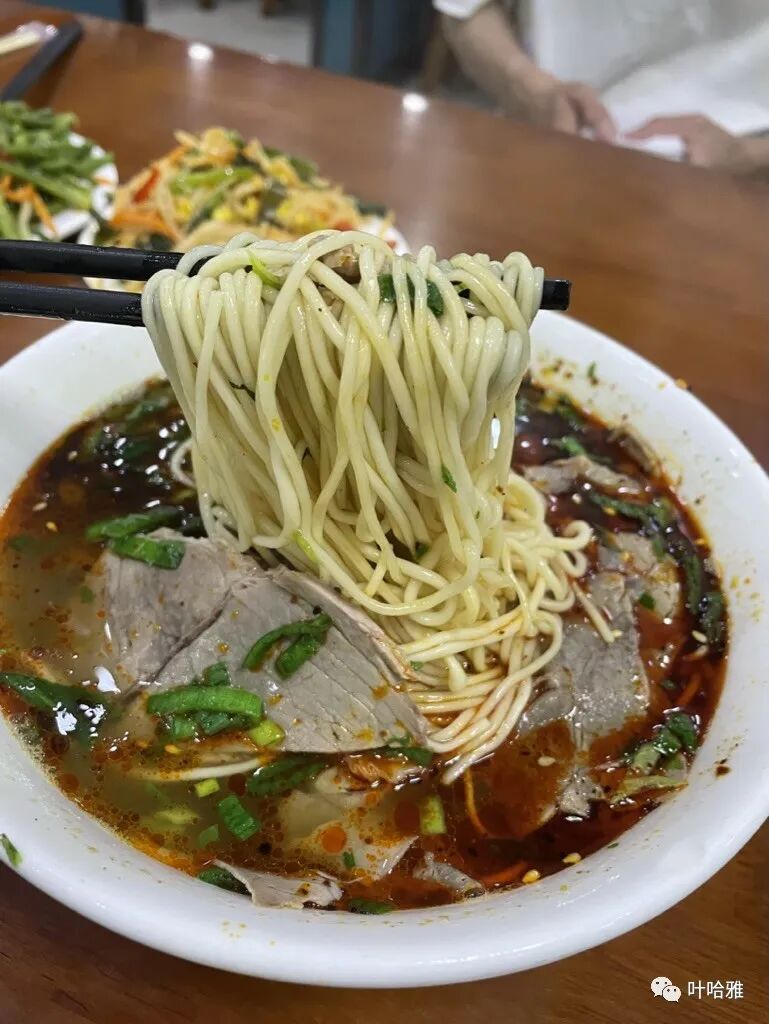
I ate at a beef noodle shop run by Uyghurs in Pishan County. It is really hard to find halal restaurants here, and none of them looked like one, but this place called Magake seemed reliable.
I specifically walked around the supermarket and could not find a single halal food item. Even these sausages had no halal label.
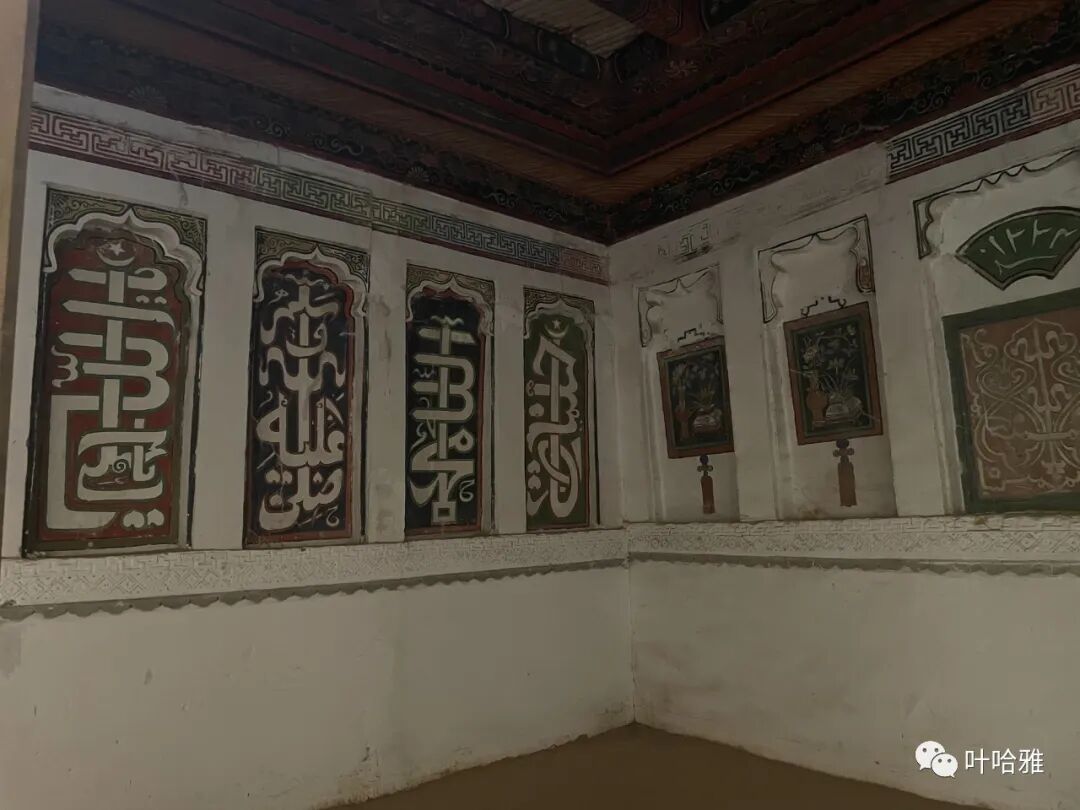
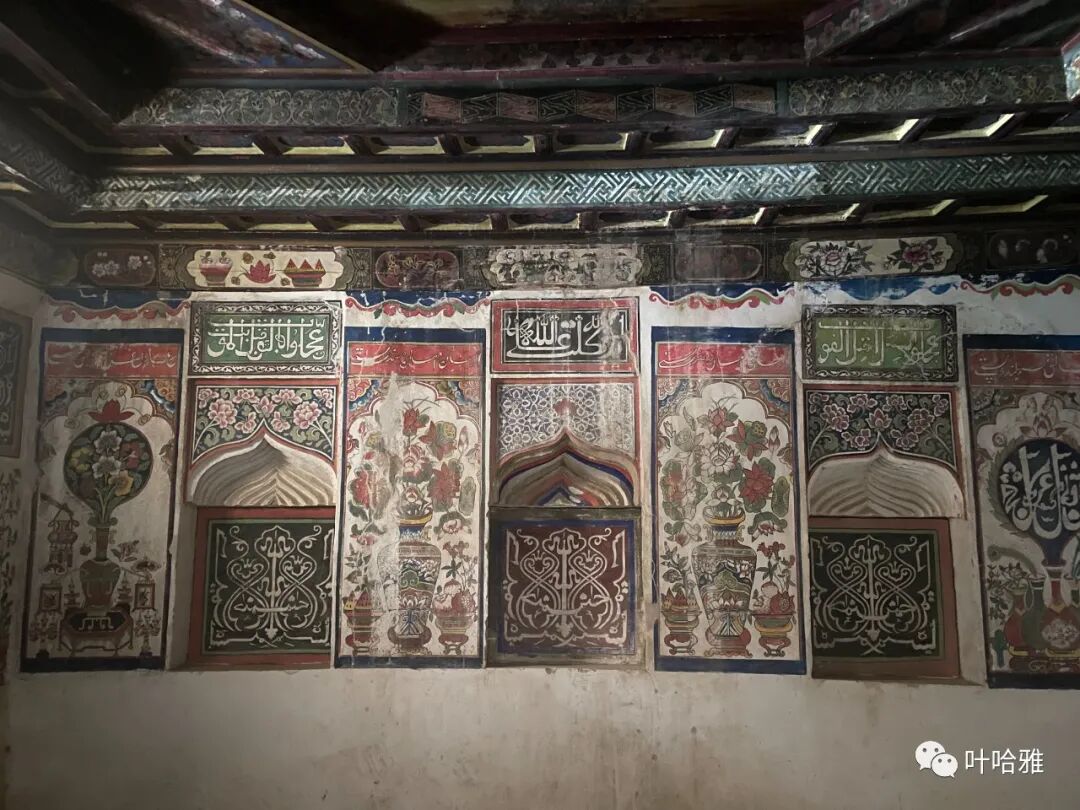
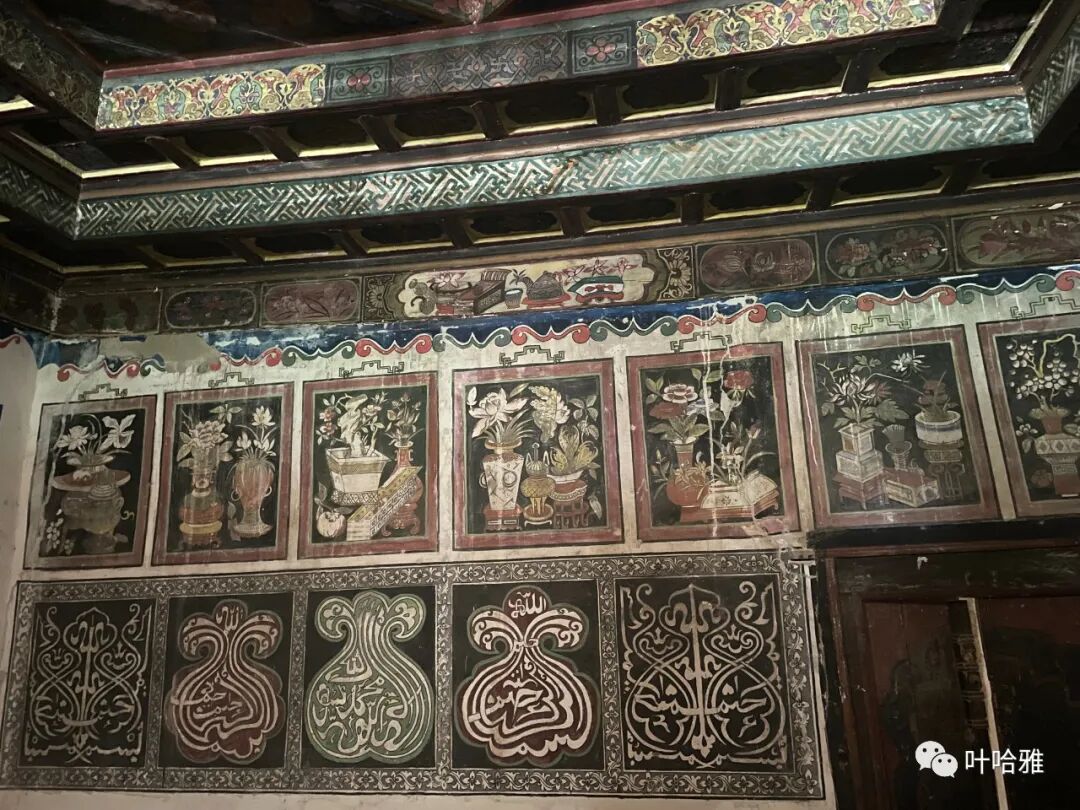
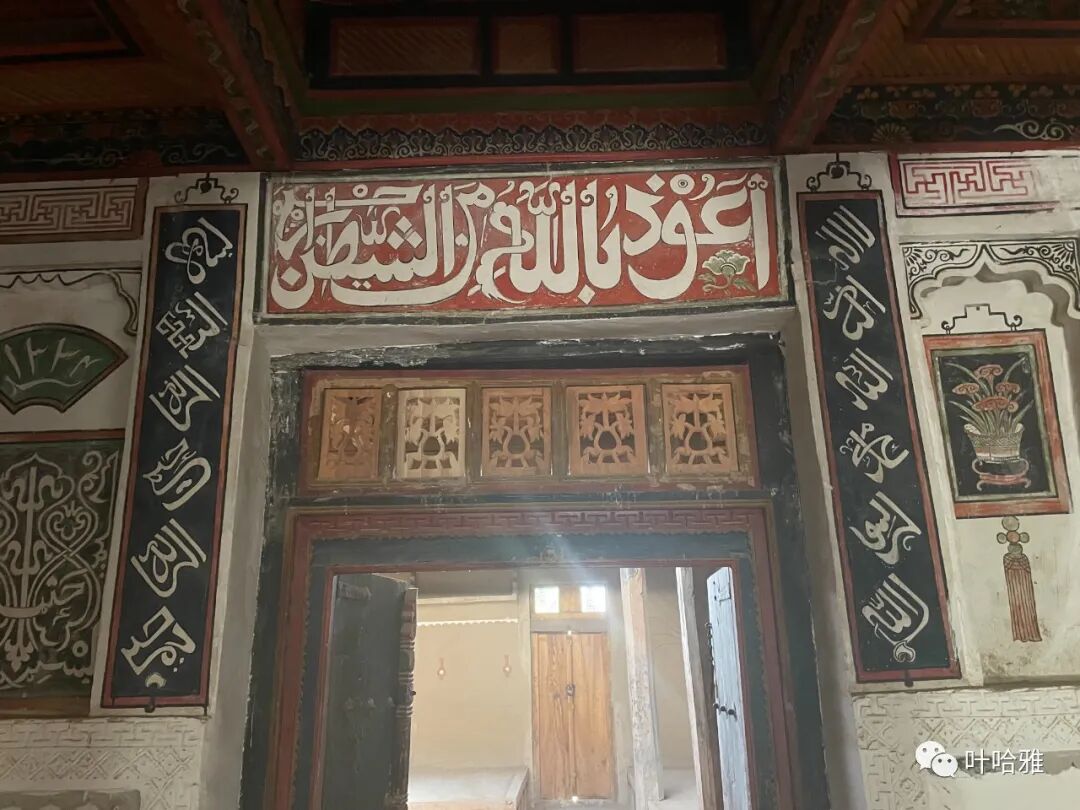
A niche spot worth visiting in Pishan County is the Turdi Haji Manor.
Turdi Haji was a wealthy landlord (bai) in Xinjiang during the Republic of China era. He built this manor in 1916. It covers 2,500 square meters and is now a Major Historical and Cultural Site Protected at the National Level.
The gate was locked when we arrived at the manor. We made a phone call, and the local tourism bureau sent a worker to open it for us. Admission was free.
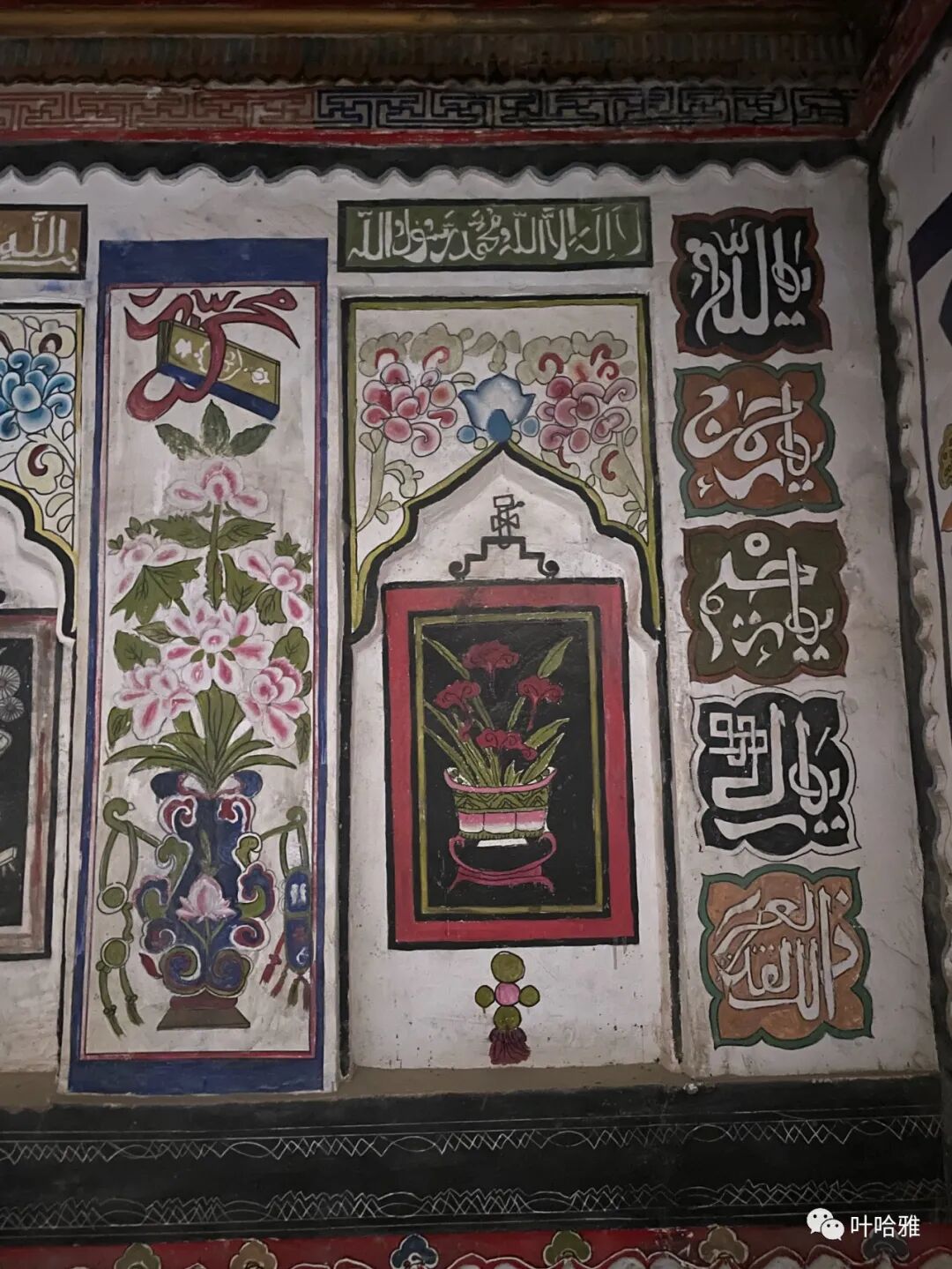
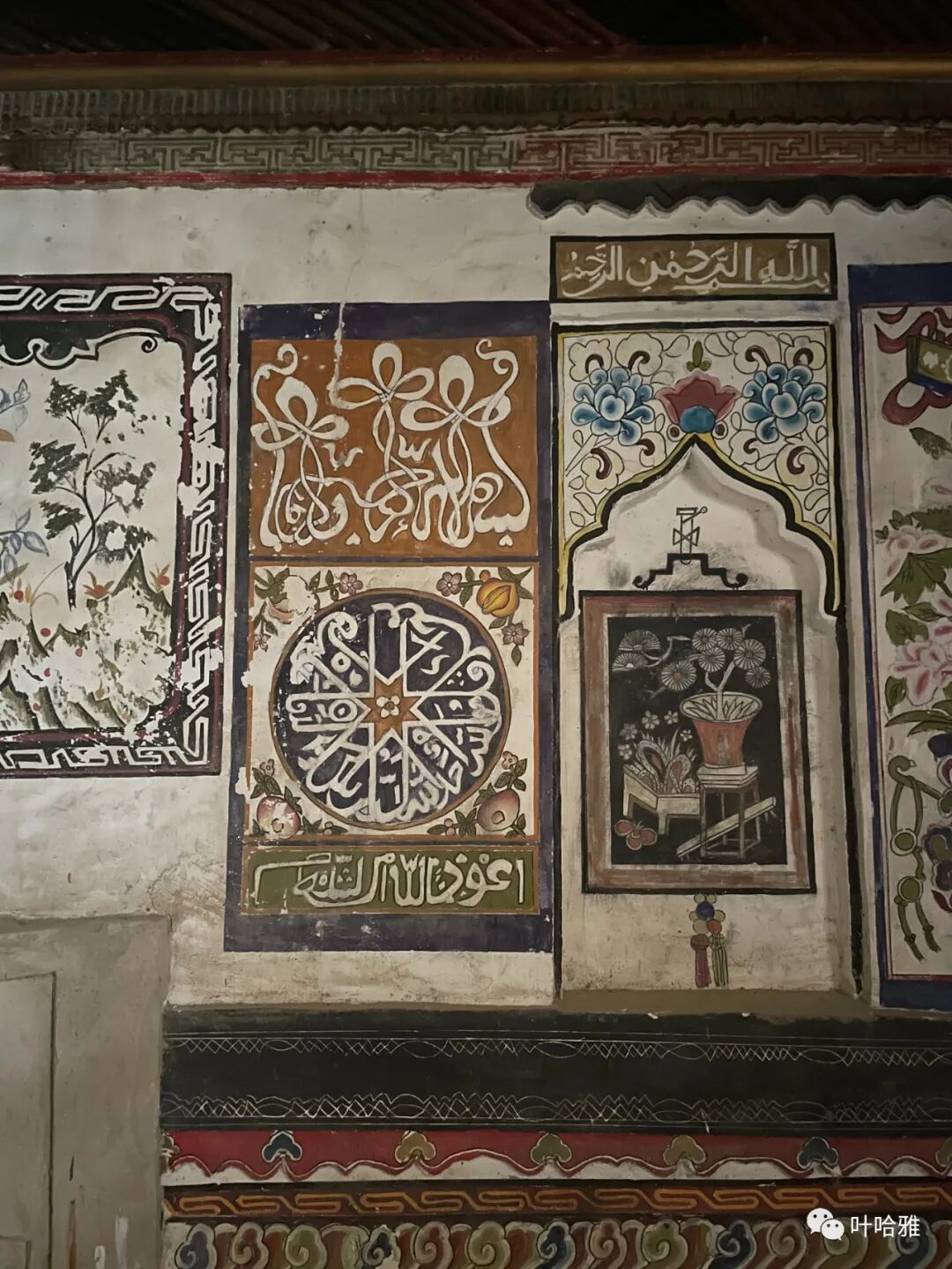
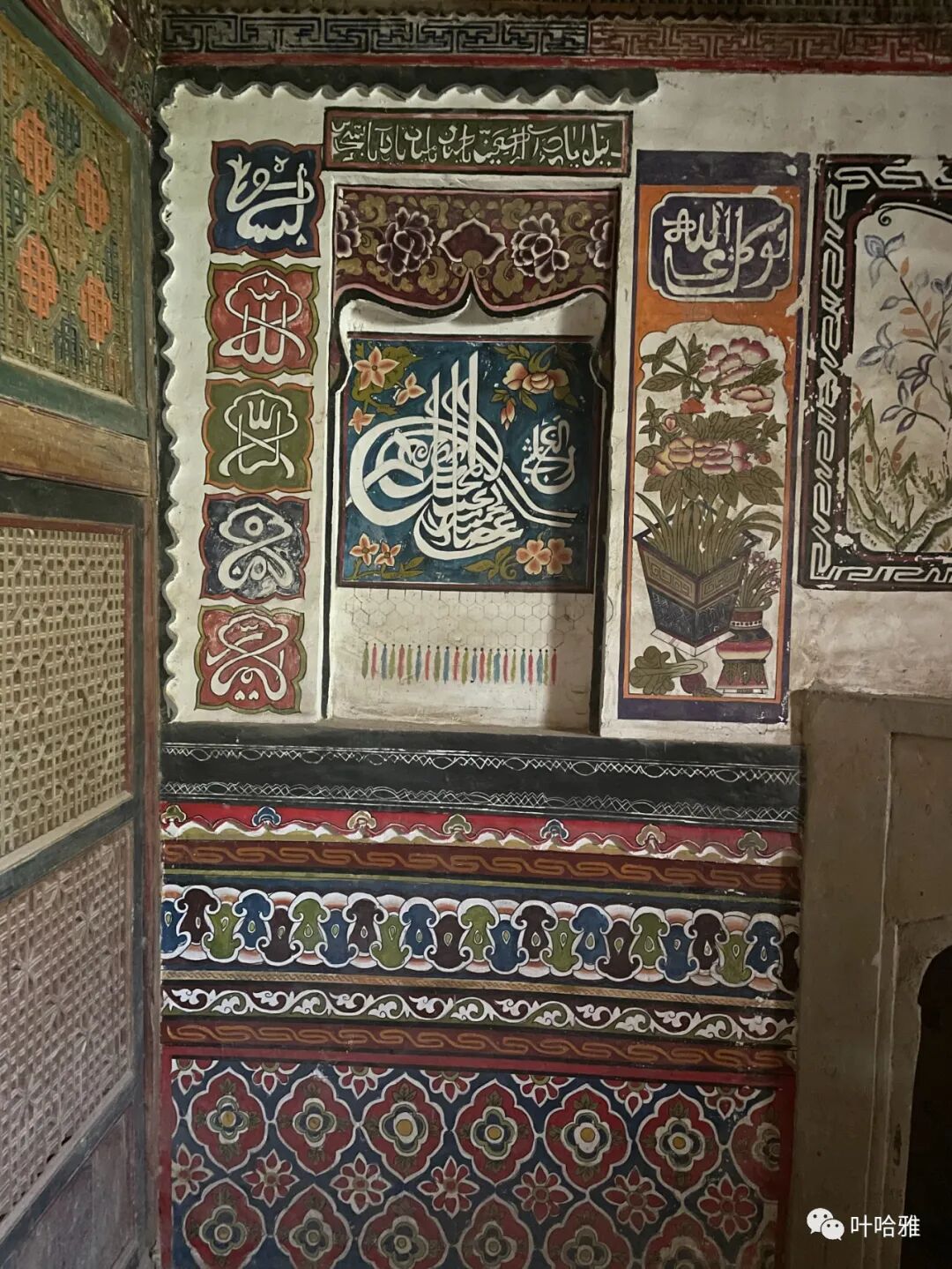
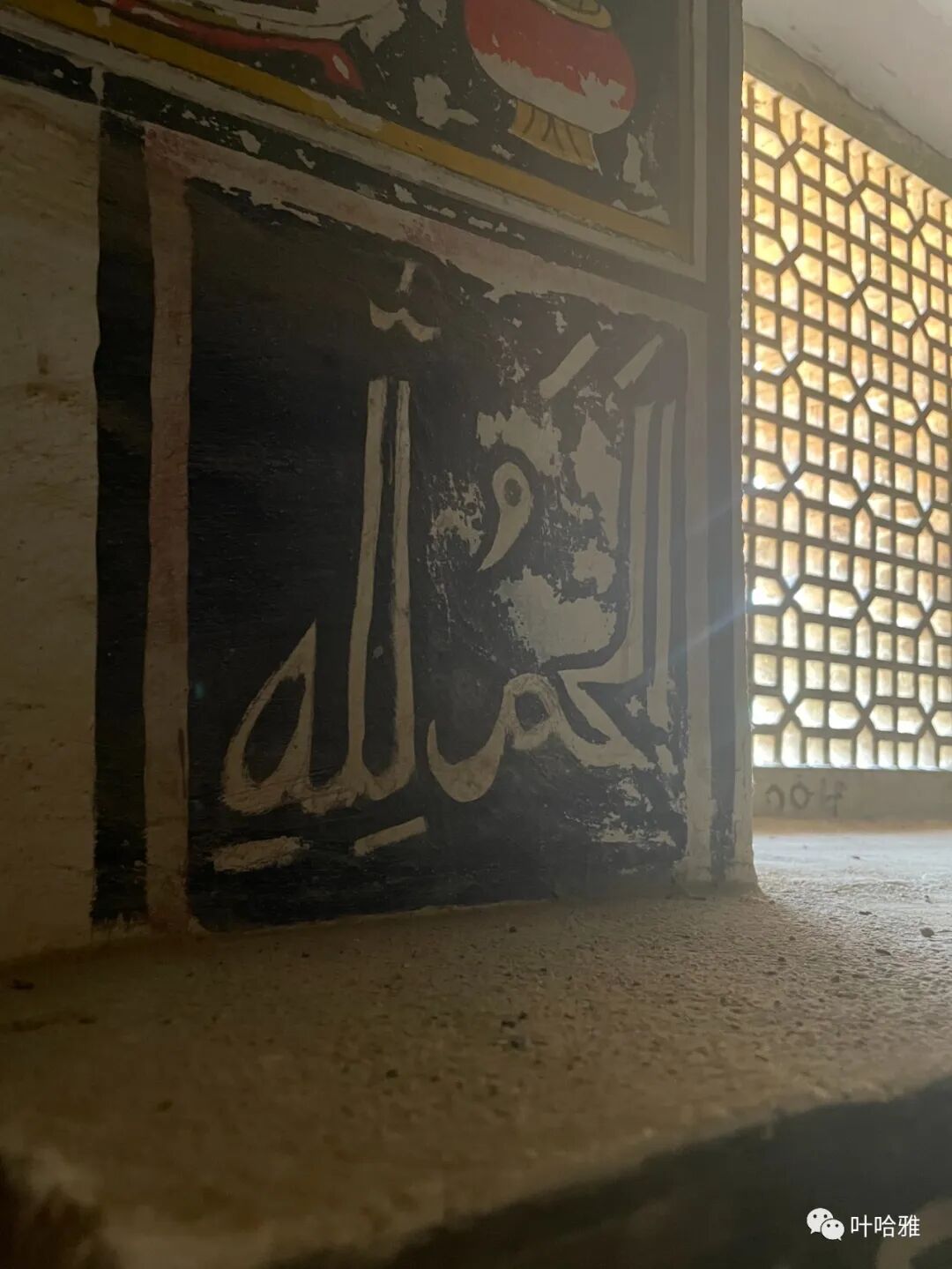
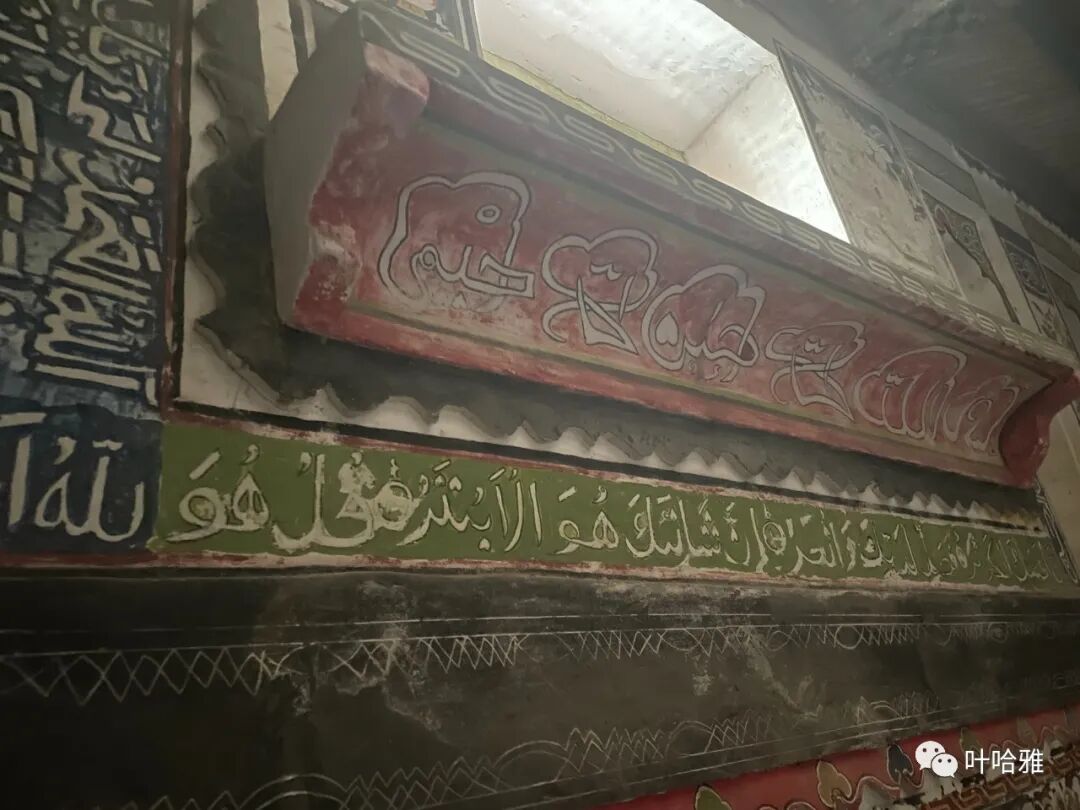
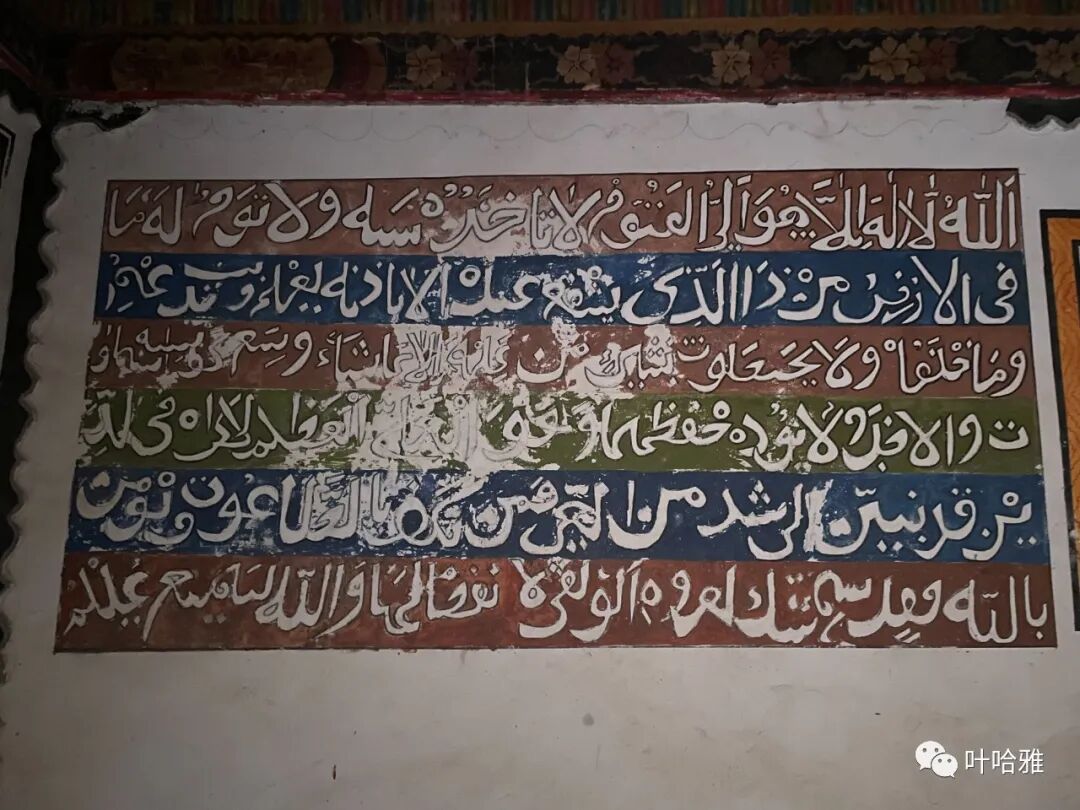
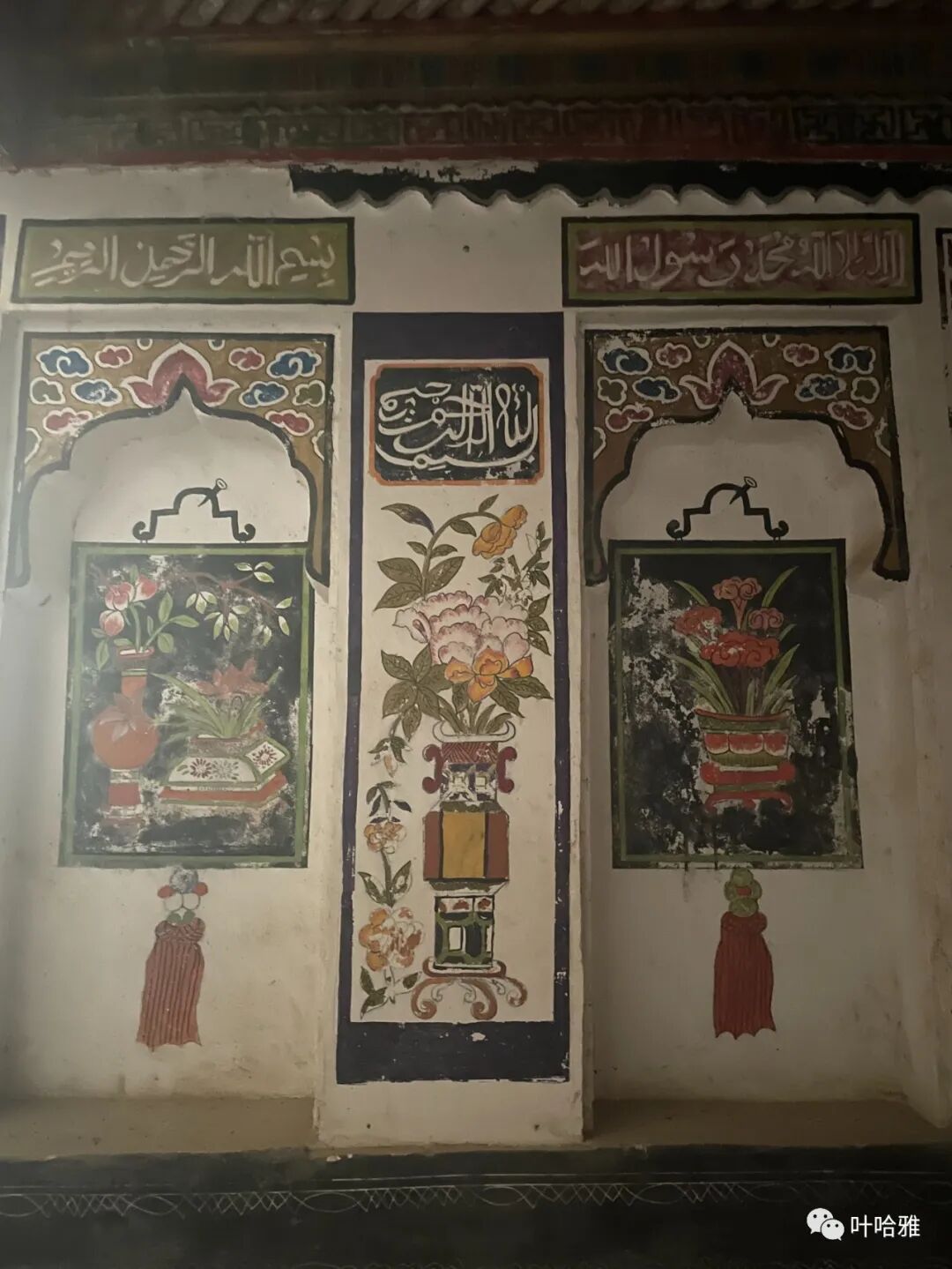
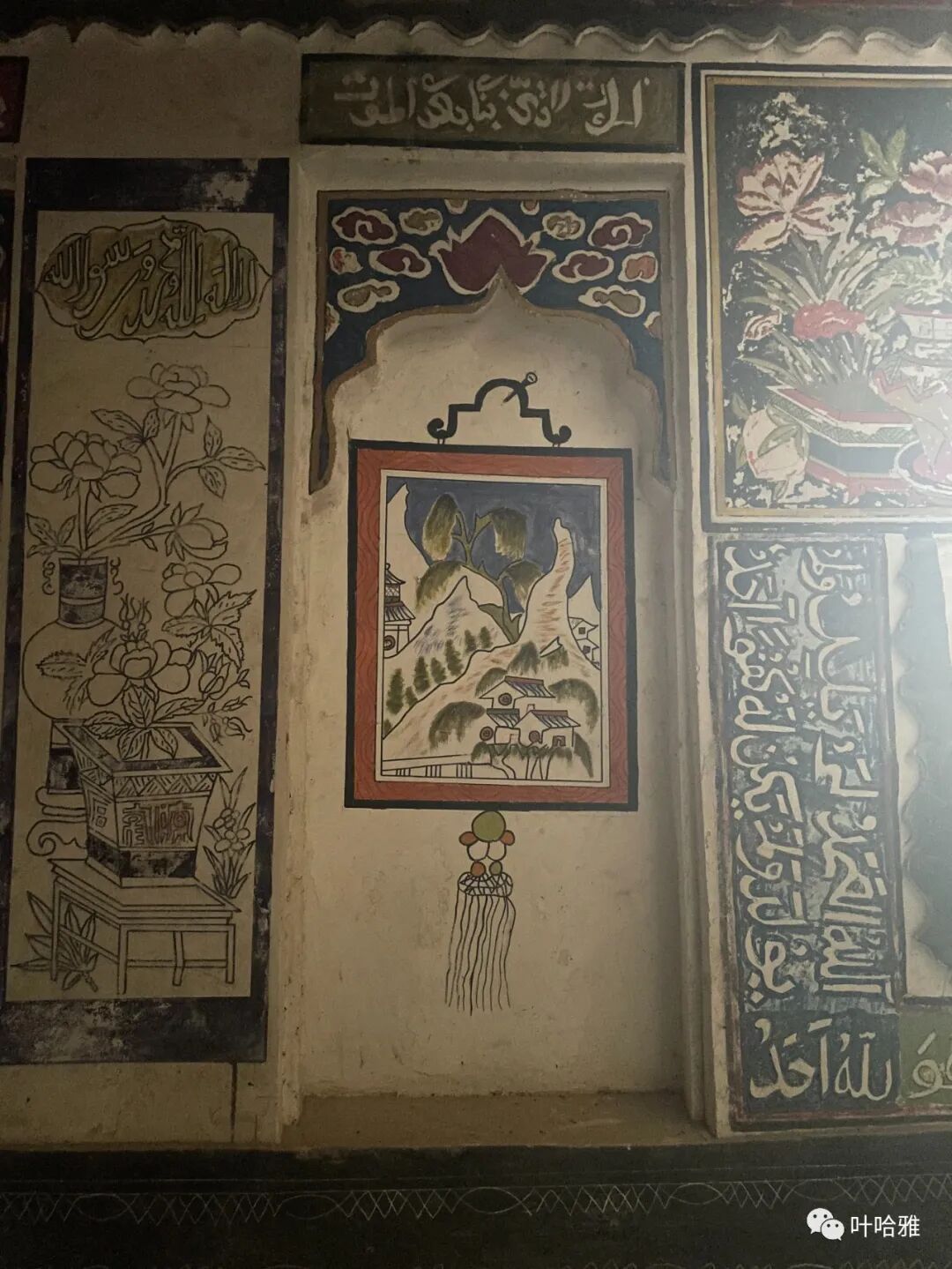
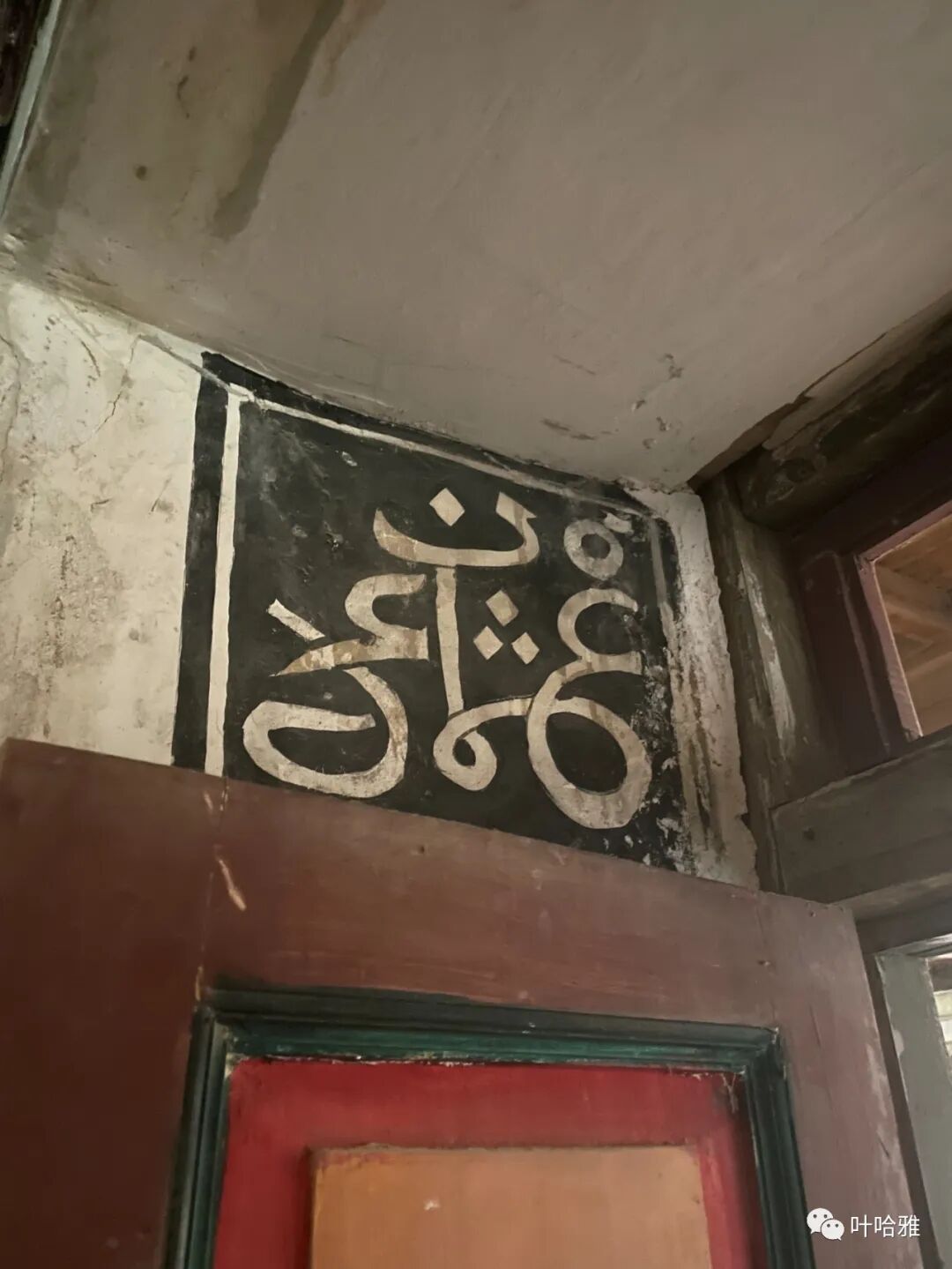
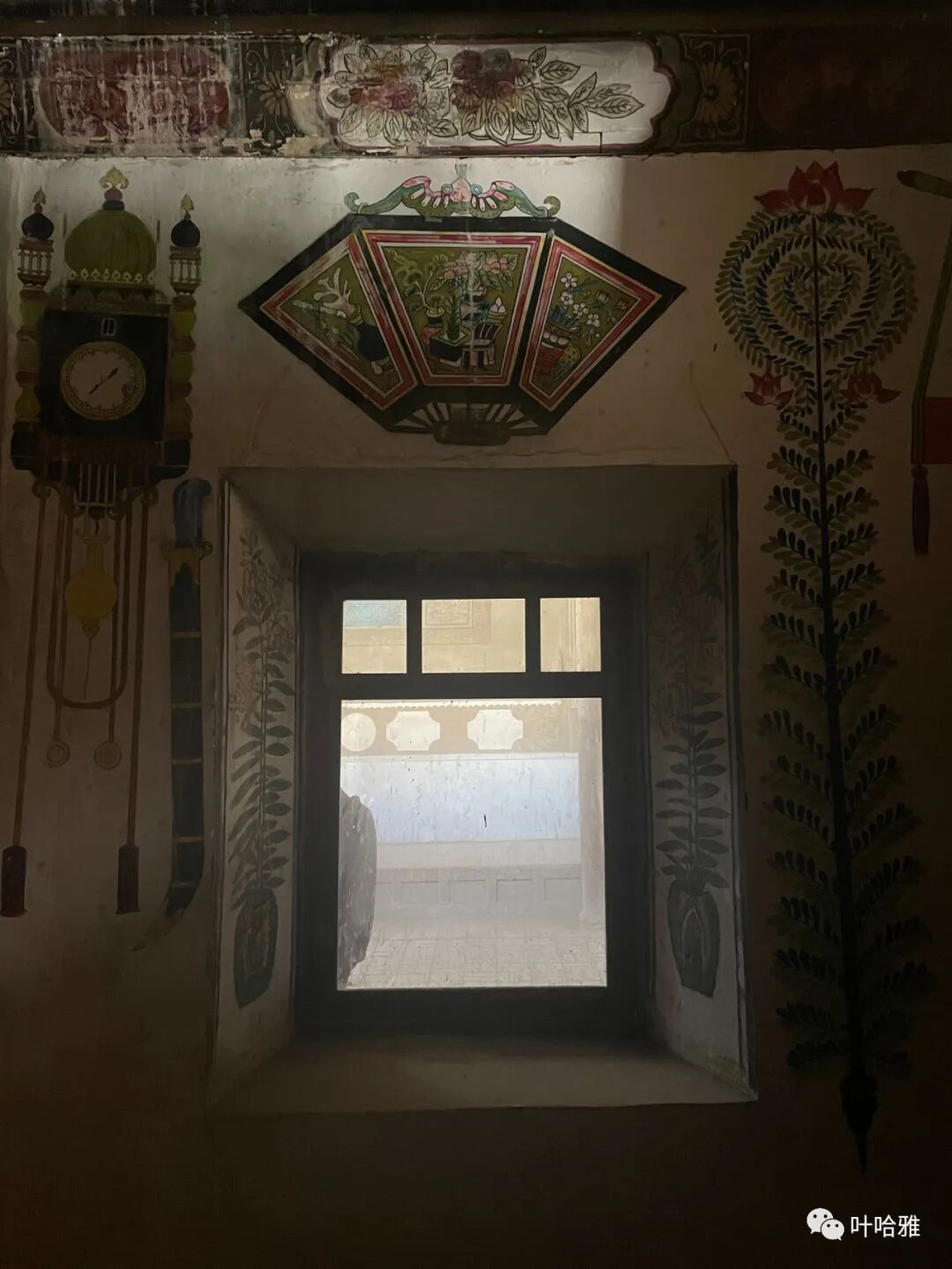
What drew me to the manor were the painted decorations inside. They still have Arabic script, including the Shahada and excerpts from the Quran, along with some Uyghur script.
This is very rare to see in a private home today. The manor blends styles from Central Asia, West Asia, and the Middle East, so I just thought of it as a mosque.
Leaving Hotan Prefecture for Kashgar Prefecture, you pass through Yarkant County (Shache), which was once the site of the Yarkant Khanate palace.
The old mosque district, with the Jiaman Mosque at its center, is currently undergoing renovations.
We ate Nurgul cold jelly noodles (liangfen liangpi) in Yarkant County. The whole room was full of women, and we were the only table of men.
But these cold noodles were really delicious, and they even added chickpeas.
The Yarkant Khanate Palace is a must-visit spot for tourists with a 40 yuan ticket, but it is a new building modeled after the original, so it is optional. However, the Amanisahan and Yarkant Khanate Royal Mausoleum across the street is worth a visit.
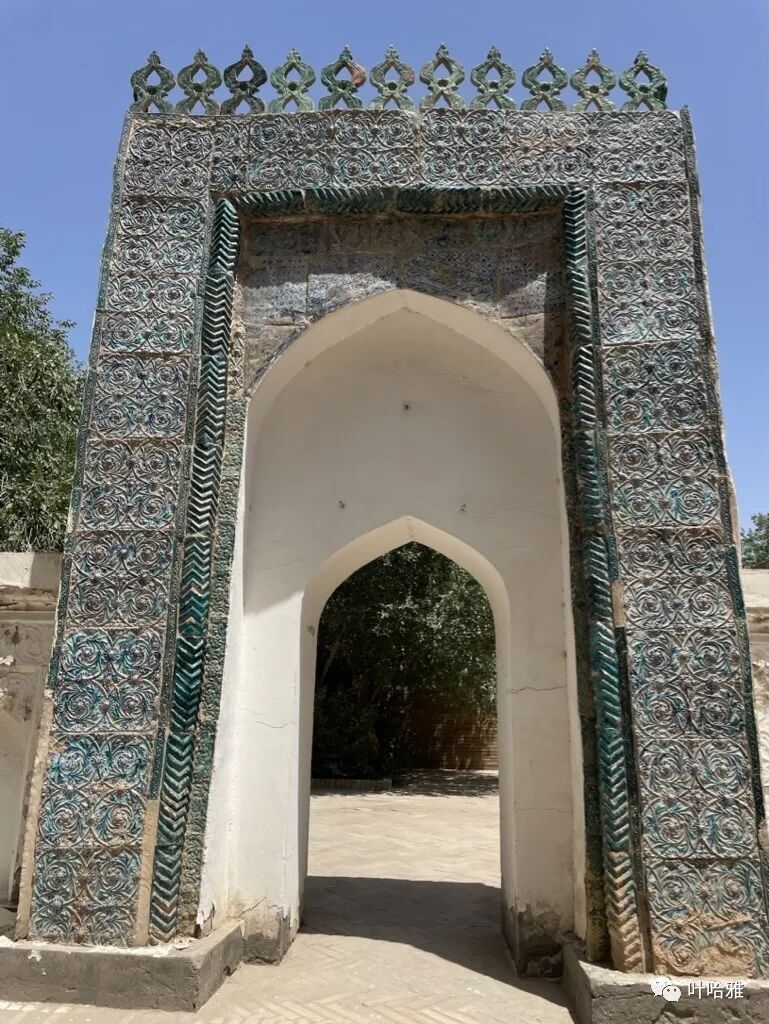
Next to the royal mausoleum is the Altun Mosque. It was open, but not for visitors, and there was someone guarding the entrance.
Altun Mosque
Amanisahan (1526-1560) was the master who compiled the Twelve Muqam art. She married into the palace at 13 and died during childbirth at 34.
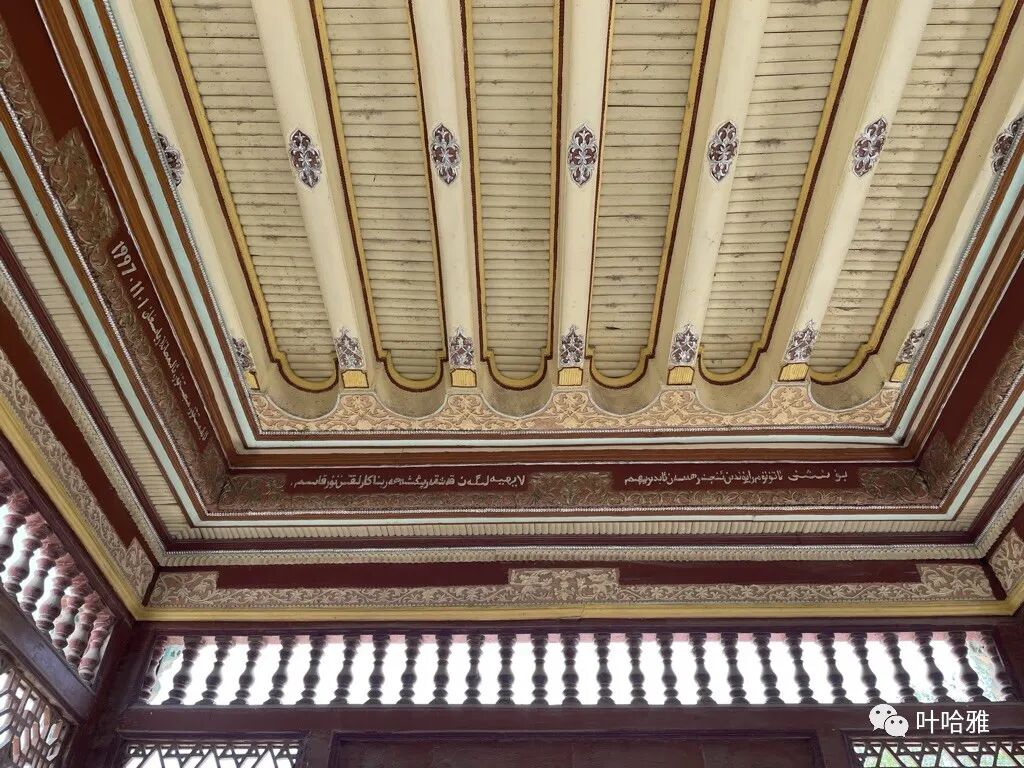
The Yarkant Khanate Royal Mausoleum holds the remains of generations of the royal family. Yarkant County was formerly known as Yarkant City and served as the capital of the Khanate, which followed the Black Mountain sect.
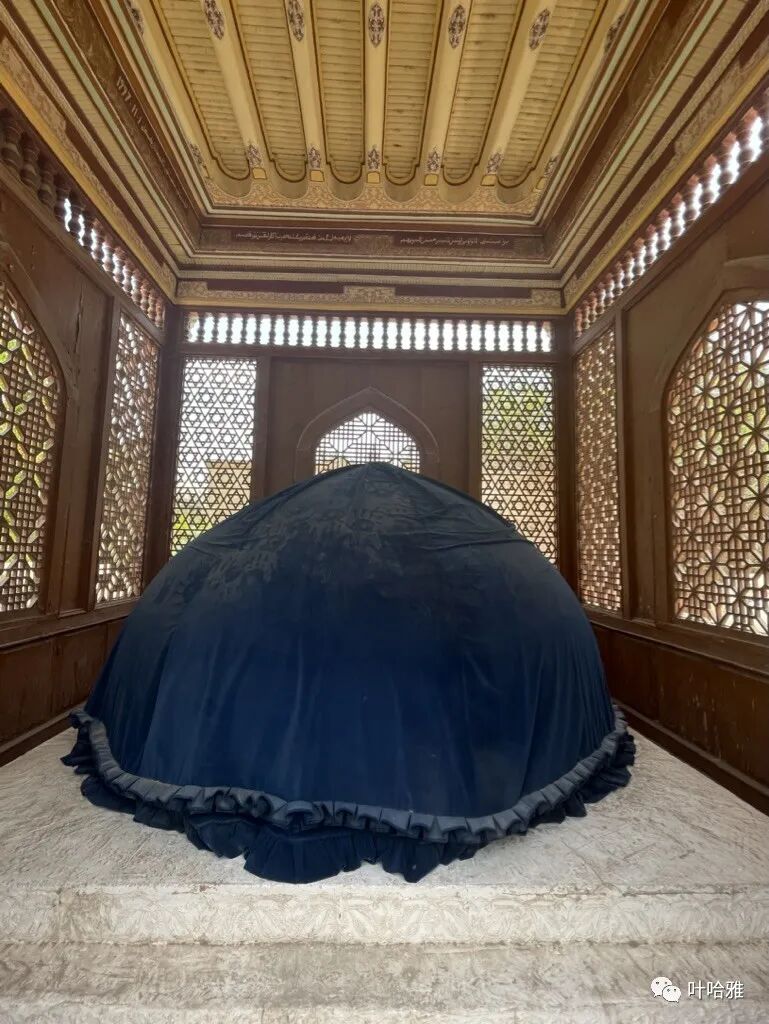
The tomb of Sultan Said, the founder of the Khanate.
I had a shaved ice (baobing) in the square. The summer heat in southern Xinjiang is intense, and shaved ice is the perfect way to cool down and quench your thirst.
Azina Mosque
Azina Mosque appeared, and I carefully took a quick photo from the car. I haven't had enough of the beauty of Yarkant (Shache) and Hotan yet, so I think I will come back again. view all
Summary: This Muslim travel guide to southern Xinjiang follows the route from Ruoqiang to Yarkand, with halal food stops, mosque visits, Altun Mosque, Yarkand Khanate royal tombs, Turdi Haji Manor, Uyghur history, and road trip notes.
A Southern Xinjiang Muslim Journey: The Yarkand Khanate Tombs and the Turdi Haji Manor is presented here as a firsthand travel account in clear English, beginning with this scene: We entered Xinjiang from Mangya City in Qinghai, and the first city we reached was Ruoqiang. The account keeps its focus on Yarkand Travel, Chagatai Khanate, Uyghur History while preserving the names, places, food, and historical details from the Chinese source.
We entered Xinjiang from Mangya City in Qinghai, and the first city we reached was Ruoqiang. Since we planned to drive from southern Xinjiang to northern Xinjiang, we hit a sandstorm as soon as we crossed the border. Yellow sand filled the sky, making it impossible to keep our eyes open, and the highway was covered in shifting sand, creating an instantly eerie atmosphere.
Starting from Ruoqiang, we could no longer find restaurants with halal signs.
To know if a restaurant is okay to eat at, you either have to guess or ask. This Yangyangyang Pilaf (zhuafan) shop is an old establishment, and it is safe to eat there.
Our first meal in Xinjiang was the pilaf from this shop. To be honest, their pilaf was just as good as any other I had in later cities.
Next door to Yangyangyang, we found an Azhen Rice Noodles (mifen) shop. This chain also has locations in Beijing and is halal.
Since we couldn't find it on domestic maps, we had to ask passersby for the location of the mosque. After finding it, we discovered it wasn't open. Ruoqiang Mosque was the first mosque we passed on our Xinjiang trip.
After a short break, we continued to the next city, Qiemo. We checked into the Qiemo Hotel in the evening and learned from the staff that the breakfast is halal.
Qiemo Hotel is considered a relatively good state-run guesthouse in the area. Most prefectures in Xinjiang have these types of state-run hotels, so stay in one if you want to avoid bad accommodation experiences.
On the inside of the hotel room door, there was a sign that read, 'Walls have ears, watch your words.' This made me wonder what must have happened here before; otherwise, why would they need such a warning?
Qiemo has a grand bazaar and two night markets. We visited both. They aren't very large, but the food at the night markets is delicious.
We ate baked buns (kaobaozi), roasted pigeon, and red willow skewer meat (hongliu kaorou) at the Yudu Night Market.
Roasted meat (kaorou) tastes good everywhere in Xinjiang, even at highway rest stops.
I had my first bowl of mixed noodles (banmian) in Xinjiang at Ma's Barbecue (Ma Ji Shaokao), and I have never had a bad bowl of mixed noodles in this region.
Wusu carbonated drink.
I found a Flaming Mountain Restaurant (Huoyanshan Canting) in Qiemo. This chain used to have locations in Beijing, but they have all closed down now.
I searched for a mosque on Google Maps for a long time without success, then I suddenly realized this plot of land might be it.
It is now a construction site.
The next day we continued driving west to Yutian County because there is an Id Kah Mosque (Aitiga'er Qingzhensi) there.
Unfortunately, photography is not allowed at the mosque. The security guard deleted the photo I took of the main gate, so I only have one photo of the side.
The image above shows the original appearance of the Id Kah Mosque, taken from the second volume of 'Architectural Art of Islam in China'.
With nowhere else to go, we had to find a nearby restaurant to eat. We happened to see this Hotan Canteen (Hetian Shitang). Yutian County is part of the Hotan region, and since there are Hotan Canteens in Beijing, I wanted to see how this one was different.
The restaurant environment was quite nice, but the food was not good and the prices were high. Combined with my earlier unpleasant experience, I just wanted to leave this city as soon as possible.
I left Yutian and arrived at Hotan Tuancheng. Because I was told not to take photos earlier, I was very careful when I first got to Hotan. I started by taking a few secret photos from inside the car. Later, I saw tourists everywhere and no one was stopping them, so I became bolder. Strangely, I never ran into any more photo restrictions during the rest of my trip in Xinjiang.
Hotan Tuancheng is just like the Old City of Kashgar; it has been renovated and contains both homes and shops. It is worth walking around and eating there. The girls in Hotan are even prettier, and I feel they are better looking than the ones in Kashgar.
A kind girl in Hotan warned us not to drive the wrong way on a one-way street. We were embarrassed because we first thought she was trying to chat us up.
I had my first bowl of yogurt shaved ice (suannai baobing) at this shop in Tuancheng. My first impression of Hotan is really good.
Jiaman Mosque is in the center of Hotan Tuancheng. It was first built during the Guangxu reign of the Qing Dynasty (1875).
I asked the Uyghur grandfather at the entrance if I could go inside, but he shook his head.
Pishan County is a place I have always wanted to visit. When I arrived, it was completely different from what I expected. The city was built with help from Anhui Province. There is almost no local ethnic character, and the buildings use the Anhui style, making me feel like I was in Anhui.
The Pishan County Guest House is state-run, like guest houses in other parts of Xinjiang. They are usually the best hotels in the area. If you do not know where to stay, choosing the guest house is a safe bet, and the breakfast is always halal.
I ate at a beef noodle shop run by Uyghurs in Pishan County. It is really hard to find halal restaurants here, and none of them looked like one, but this place called Magake seemed reliable.
I specifically walked around the supermarket and could not find a single halal food item. Even these sausages had no halal label.
A niche spot worth visiting in Pishan County is the Turdi Haji Manor.
Turdi Haji was a wealthy landlord (bai) in Xinjiang during the Republic of China era. He built this manor in 1916. It covers 2,500 square meters and is now a Major Historical and Cultural Site Protected at the National Level.
The gate was locked when we arrived at the manor. We made a phone call, and the local tourism bureau sent a worker to open it for us. Admission was free.
What drew me to the manor were the painted decorations inside. They still have Arabic script, including the Shahada and excerpts from the Quran, along with some Uyghur script.
This is very rare to see in a private home today. The manor blends styles from Central Asia, West Asia, and the Middle East, so I just thought of it as a mosque.
Leaving Hotan Prefecture for Kashgar Prefecture, you pass through Yarkant County (Shache), which was once the site of the Yarkant Khanate palace.
The old mosque district, with the Jiaman Mosque at its center, is currently undergoing renovations.
We ate Nurgul cold jelly noodles (liangfen liangpi) in Yarkant County. The whole room was full of women, and we were the only table of men.
But these cold noodles were really delicious, and they even added chickpeas.
The Yarkant Khanate Palace is a must-visit spot for tourists with a 40 yuan ticket, but it is a new building modeled after the original, so it is optional. However, the Amanisahan and Yarkant Khanate Royal Mausoleum across the street is worth a visit.
Next to the royal mausoleum is the Altun Mosque. It was open, but not for visitors, and there was someone guarding the entrance.
Altun Mosque
Amanisahan (1526-1560) was the master who compiled the Twelve Muqam art. She married into the palace at 13 and died during childbirth at 34.
The Yarkant Khanate Royal Mausoleum holds the remains of generations of the royal family. Yarkant County was formerly known as Yarkant City and served as the capital of the Khanate, which followed the Black Mountain sect.
The tomb of Sultan Said, the founder of the Khanate.
I had a shaved ice (baobing) in the square. The summer heat in southern Xinjiang is intense, and shaved ice is the perfect way to cool down and quench your thirst.
Azina Mosque
Azina Mosque appeared, and I carefully took a quick photo from the car. I haven't had enough of the beauty of Yarkant (Shache) and Hotan yet, so I think I will come back again. view all
Reposted from the web
Summary: This Muslim travel guide to southern Xinjiang follows the route from Ruoqiang to Yarkand, with halal food stops, mosque visits, Altun Mosque, Yarkand Khanate royal tombs, Turdi Haji Manor, Uyghur history, and road trip notes.
A Southern Xinjiang Muslim Journey: The Yarkand Khanate Tombs and the Turdi Haji Manor is presented here as a firsthand travel account in clear English, beginning with this scene: We entered Xinjiang from Mangya City in Qinghai, and the first city we reached was Ruoqiang. The account keeps its focus on Yarkand Travel, Chagatai Khanate, Uyghur History while preserving the names, places, food, and historical details from the Chinese source.
We entered Xinjiang from Mangya City in Qinghai, and the first city we reached was Ruoqiang. Since we planned to drive from southern Xinjiang to northern Xinjiang, we hit a sandstorm as soon as we crossed the border. Yellow sand filled the sky, making it impossible to keep our eyes open, and the highway was covered in shifting sand, creating an instantly eerie atmosphere.
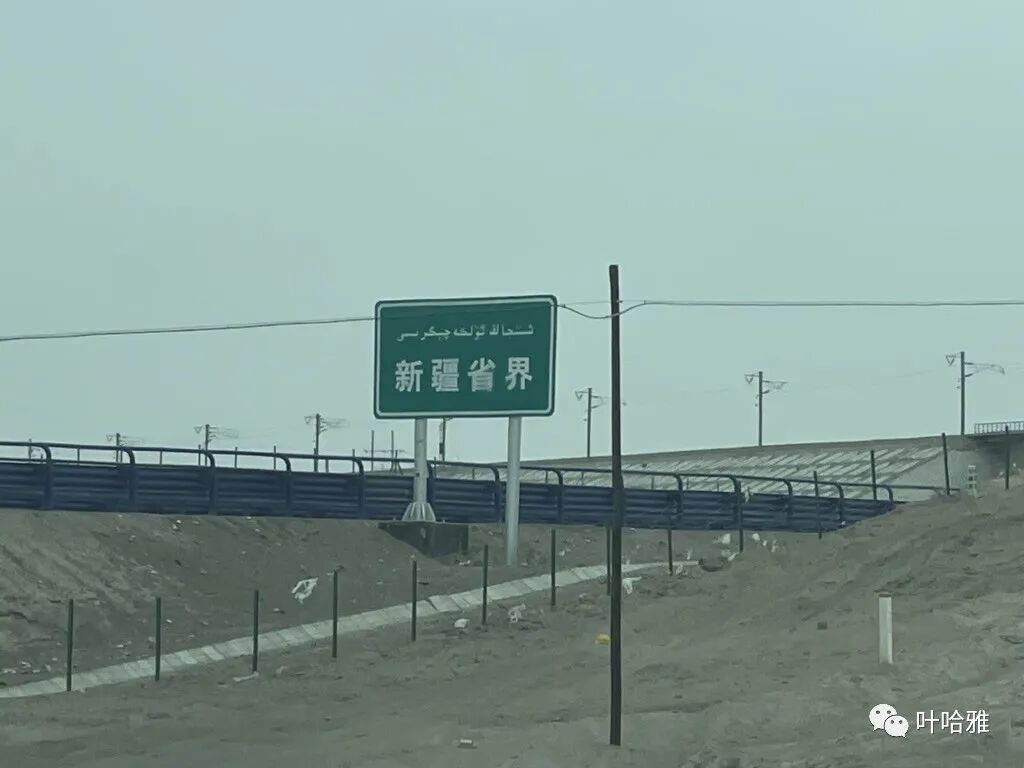
Starting from Ruoqiang, we could no longer find restaurants with halal signs.
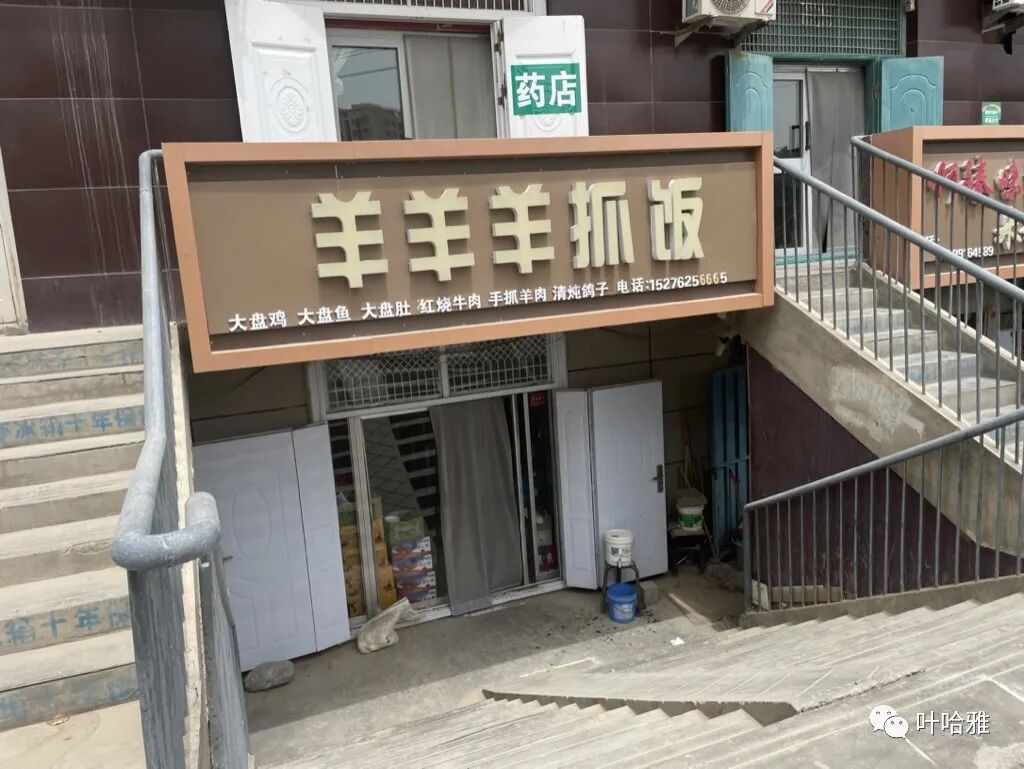
To know if a restaurant is okay to eat at, you either have to guess or ask. This Yangyangyang Pilaf (zhuafan) shop is an old establishment, and it is safe to eat there.
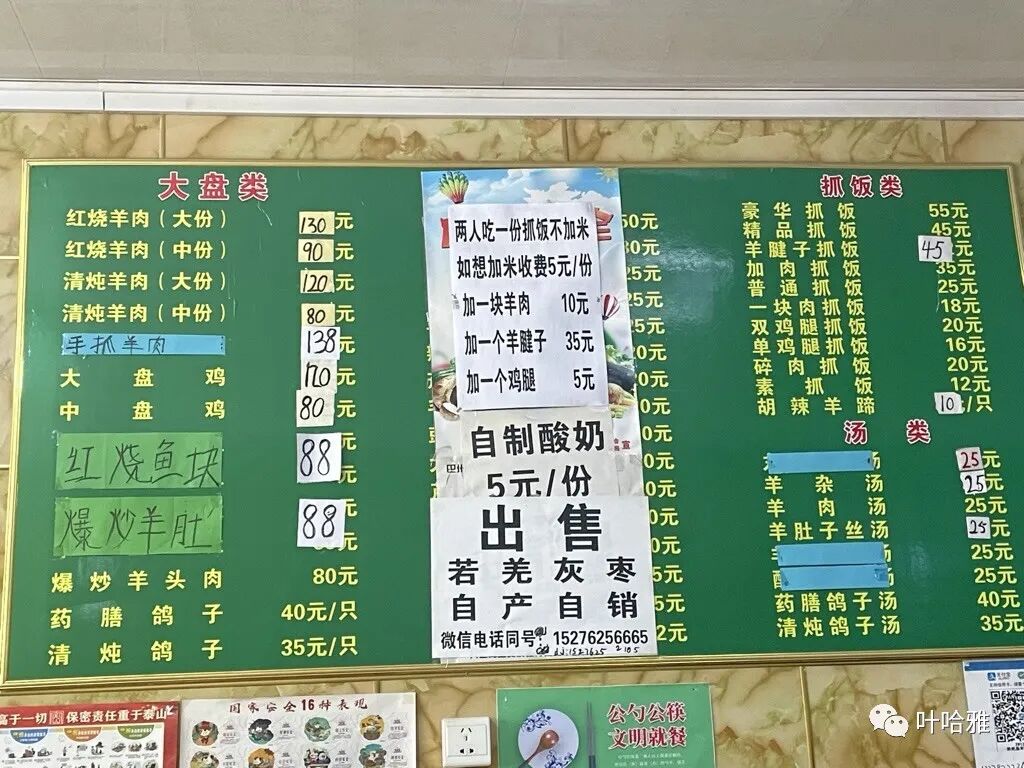
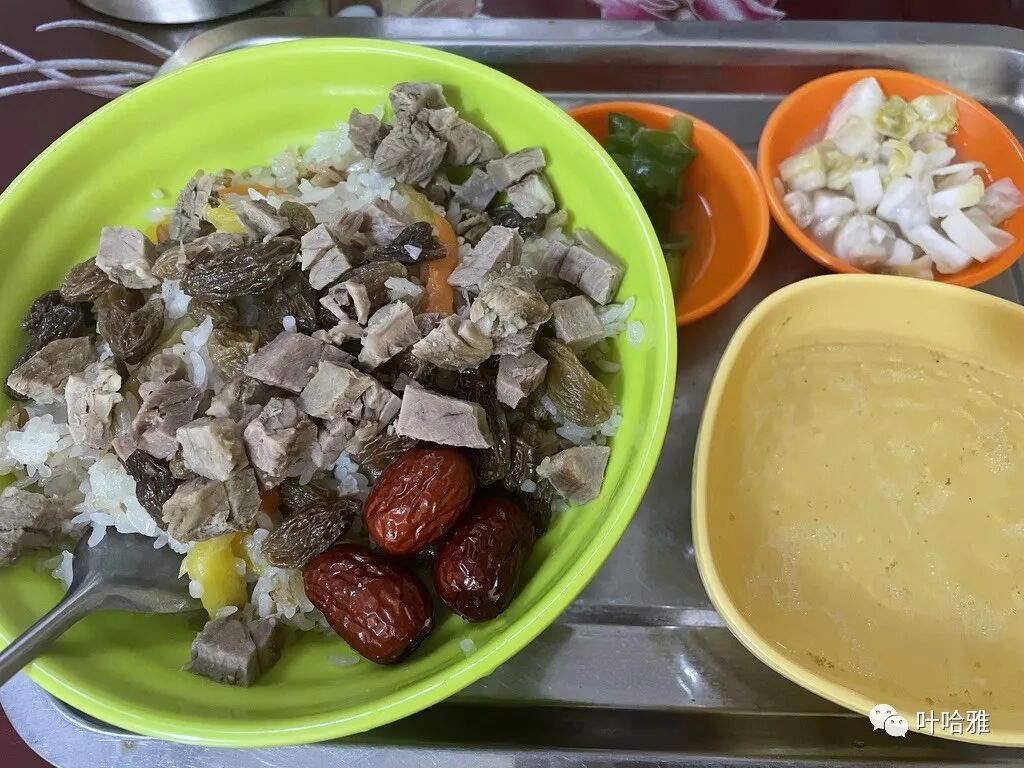
Our first meal in Xinjiang was the pilaf from this shop. To be honest, their pilaf was just as good as any other I had in later cities.
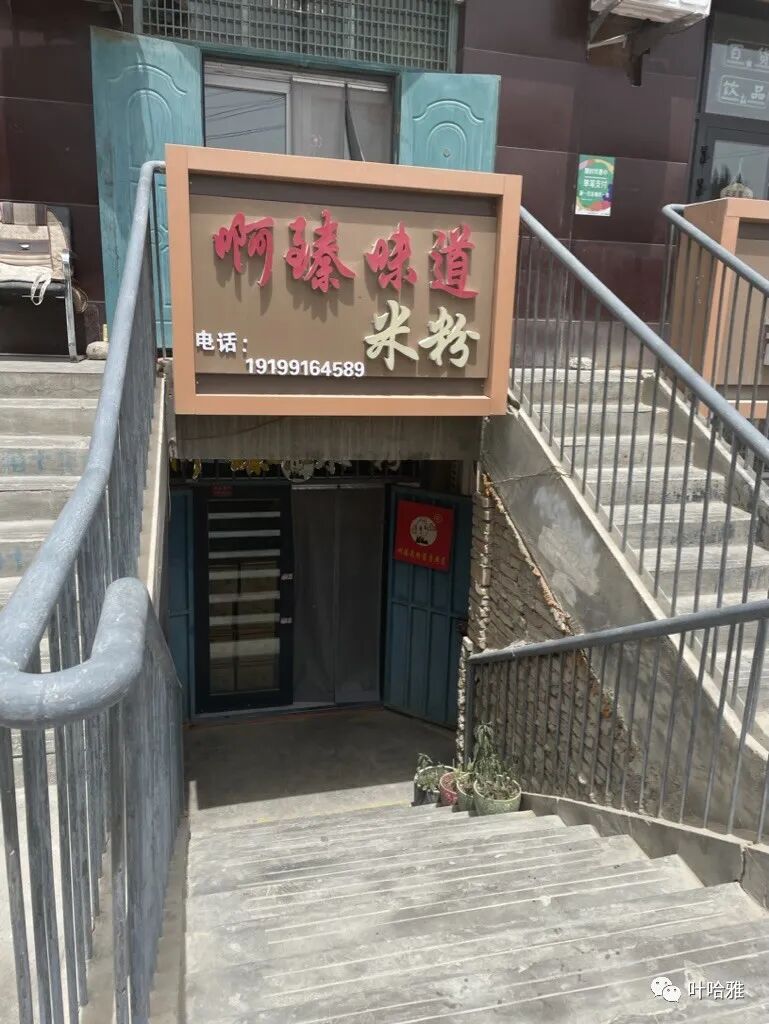
Next door to Yangyangyang, we found an Azhen Rice Noodles (mifen) shop. This chain also has locations in Beijing and is halal.
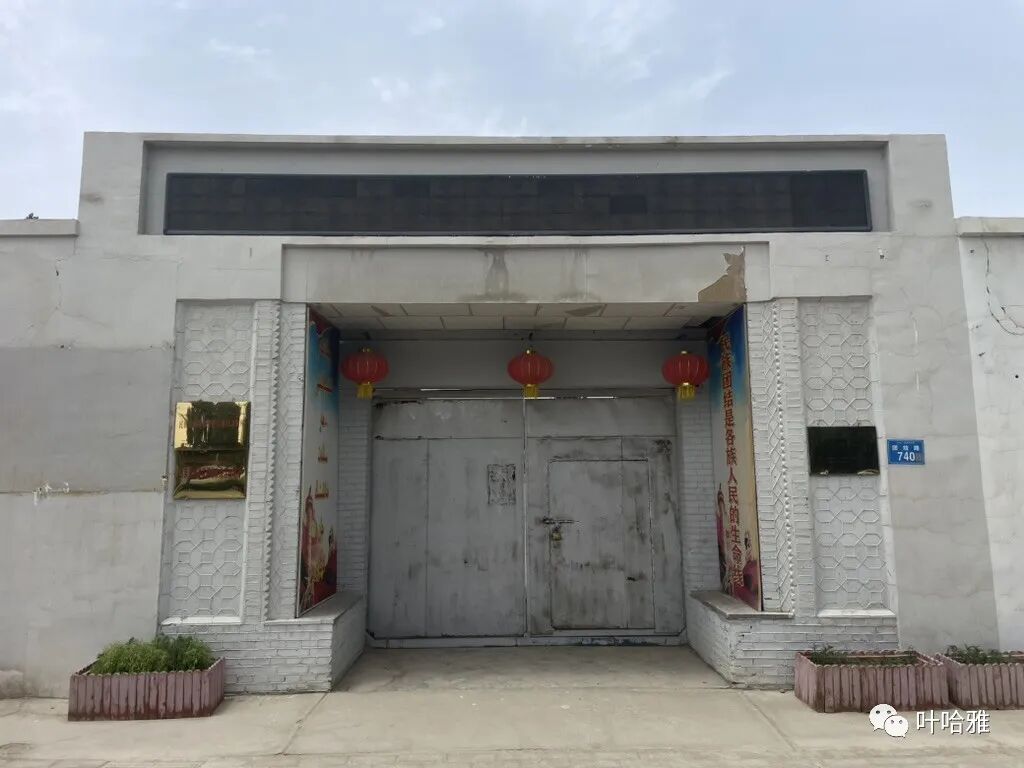
Since we couldn't find it on domestic maps, we had to ask passersby for the location of the mosque. After finding it, we discovered it wasn't open. Ruoqiang Mosque was the first mosque we passed on our Xinjiang trip.
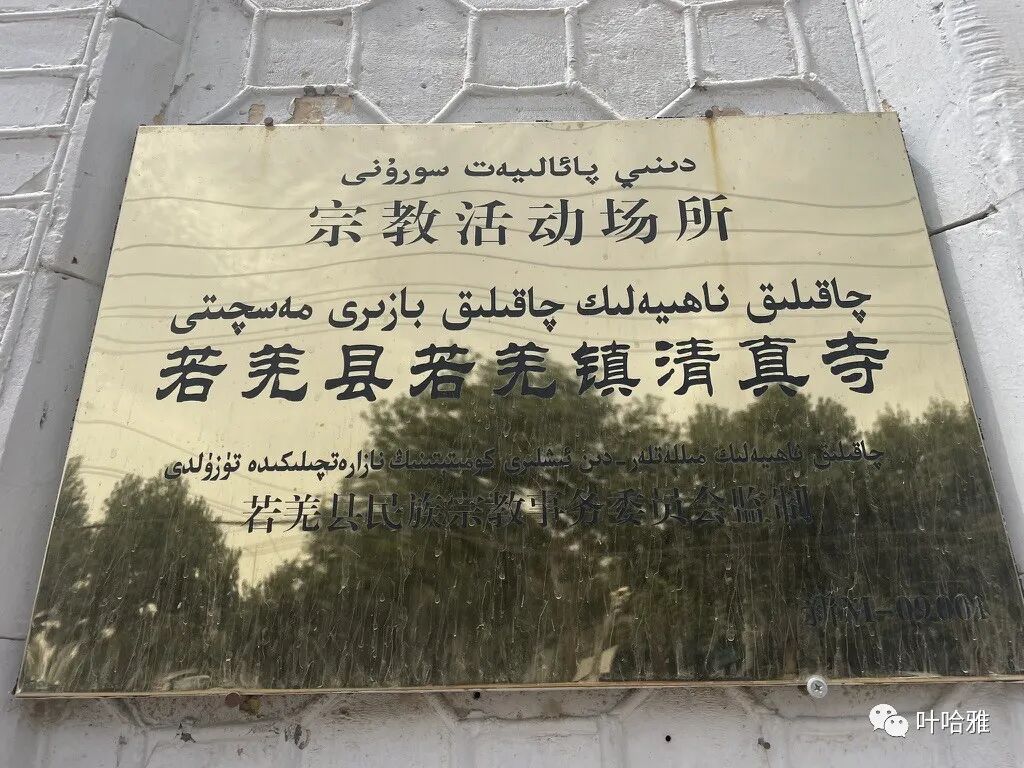
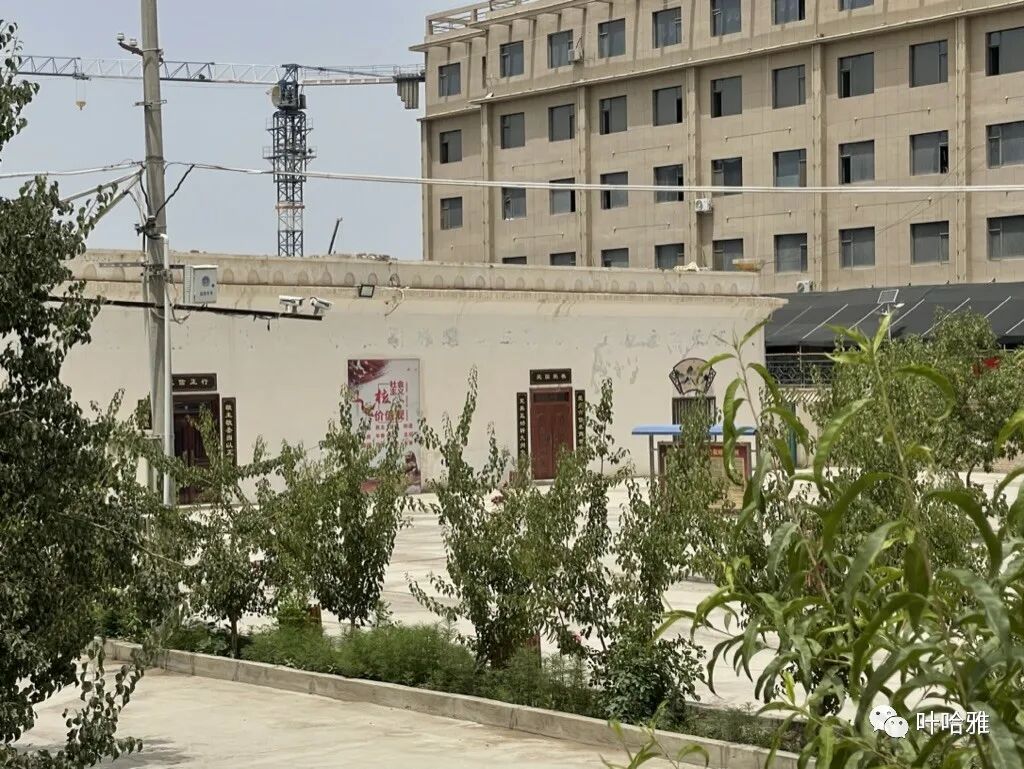
After a short break, we continued to the next city, Qiemo. We checked into the Qiemo Hotel in the evening and learned from the staff that the breakfast is halal.
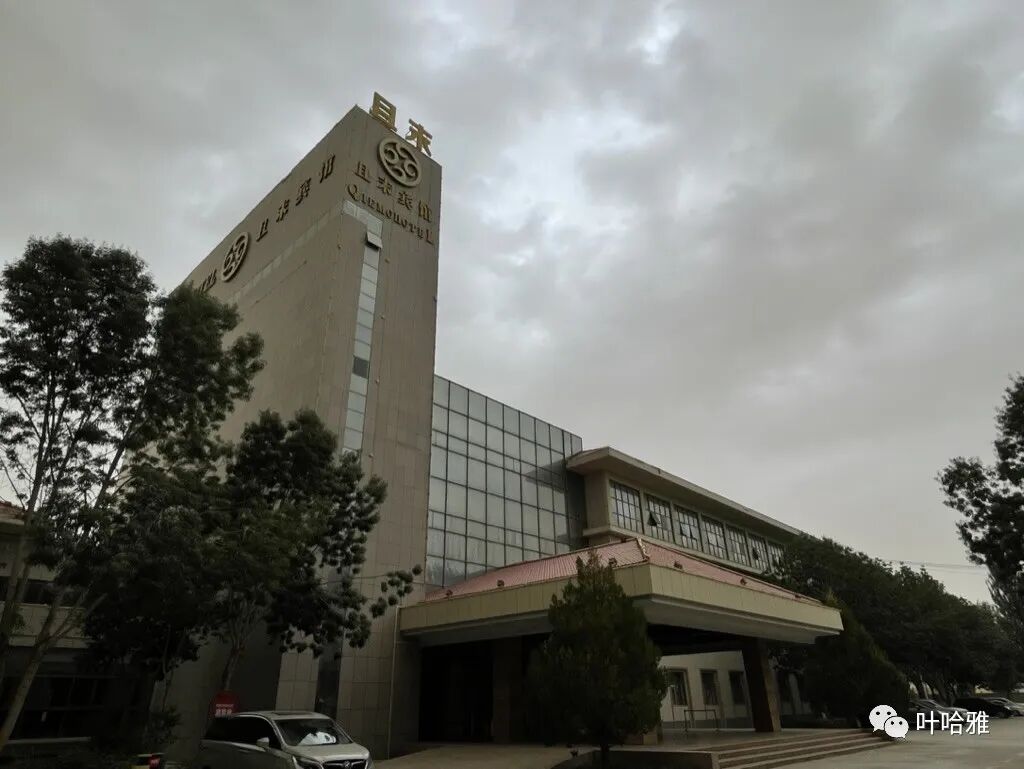
Qiemo Hotel is considered a relatively good state-run guesthouse in the area. Most prefectures in Xinjiang have these types of state-run hotels, so stay in one if you want to avoid bad accommodation experiences.
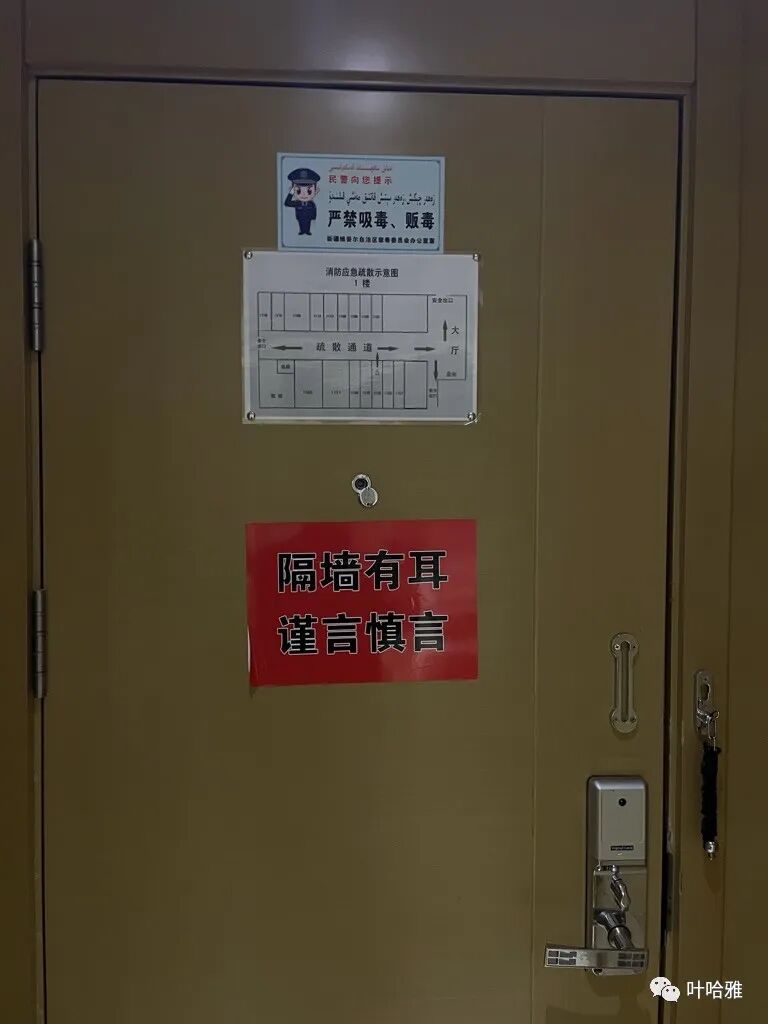
On the inside of the hotel room door, there was a sign that read, 'Walls have ears, watch your words.' This made me wonder what must have happened here before; otherwise, why would they need such a warning?
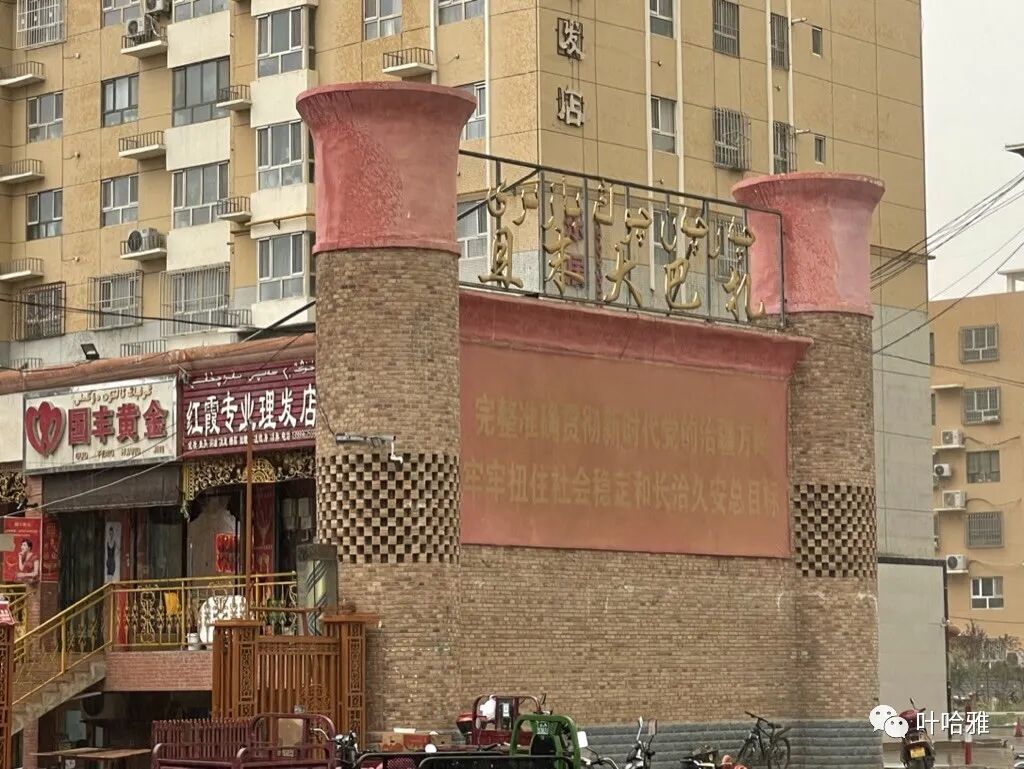
Qiemo has a grand bazaar and two night markets. We visited both. They aren't very large, but the food at the night markets is delicious.
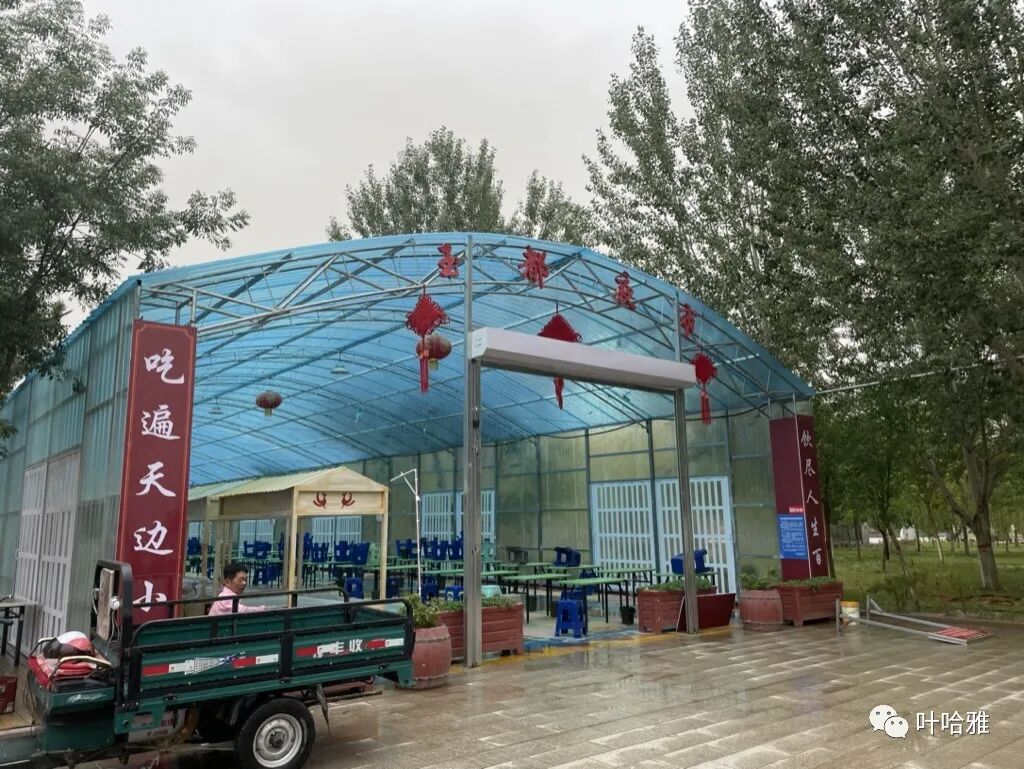
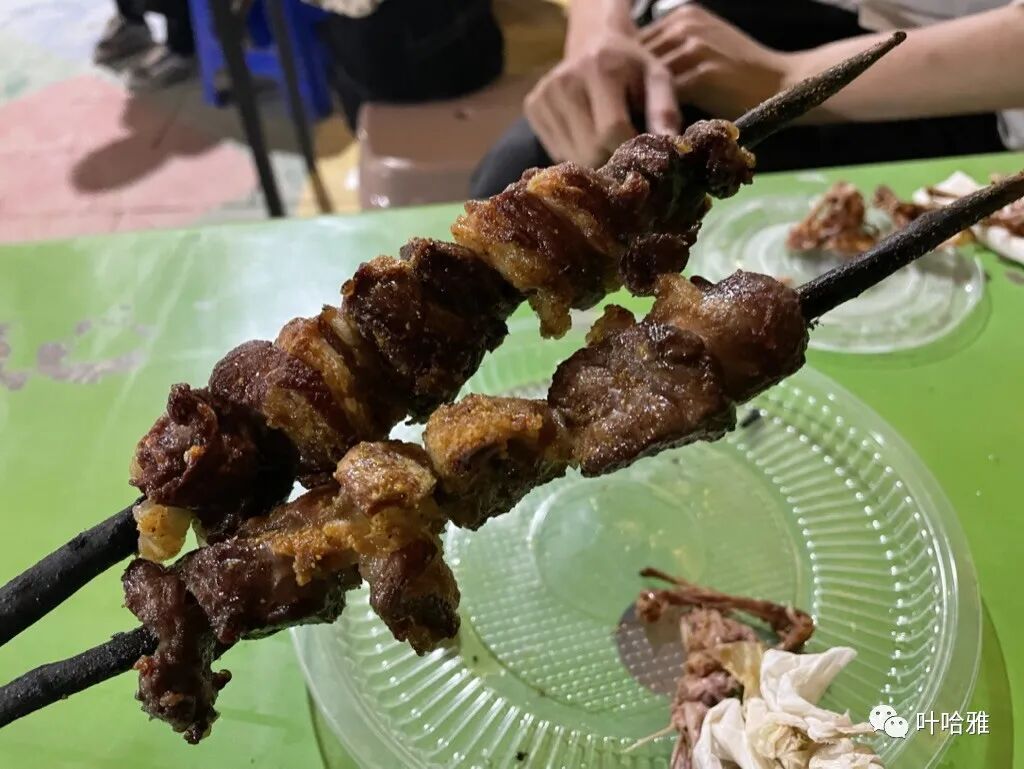
We ate baked buns (kaobaozi), roasted pigeon, and red willow skewer meat (hongliu kaorou) at the Yudu Night Market.
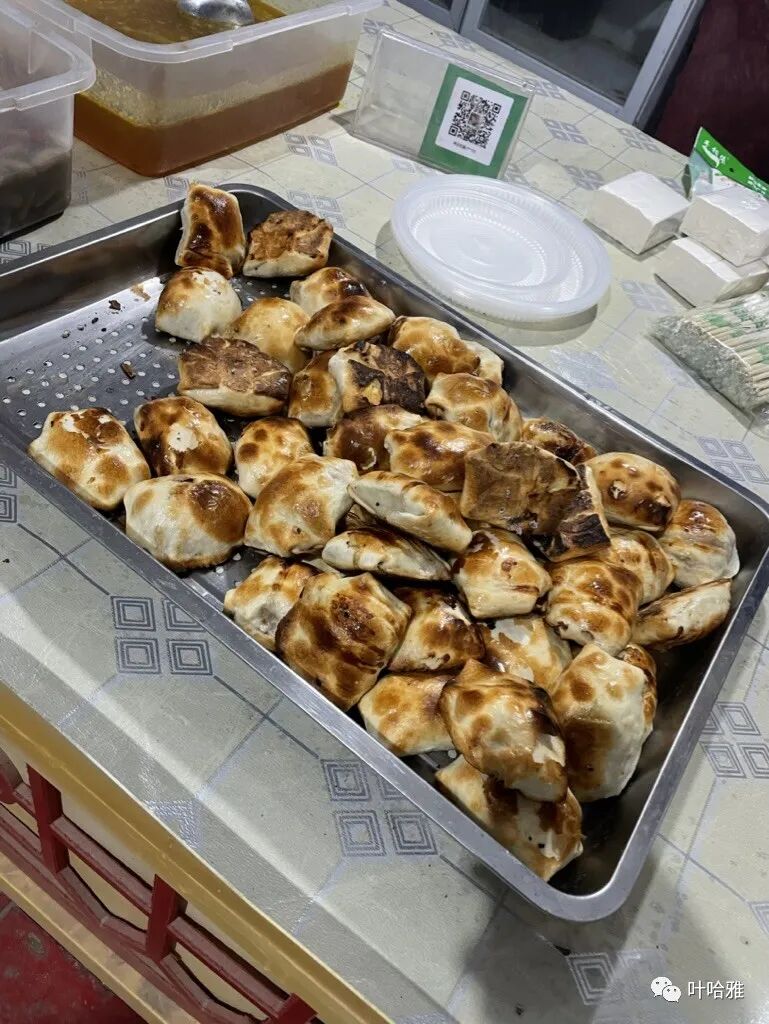
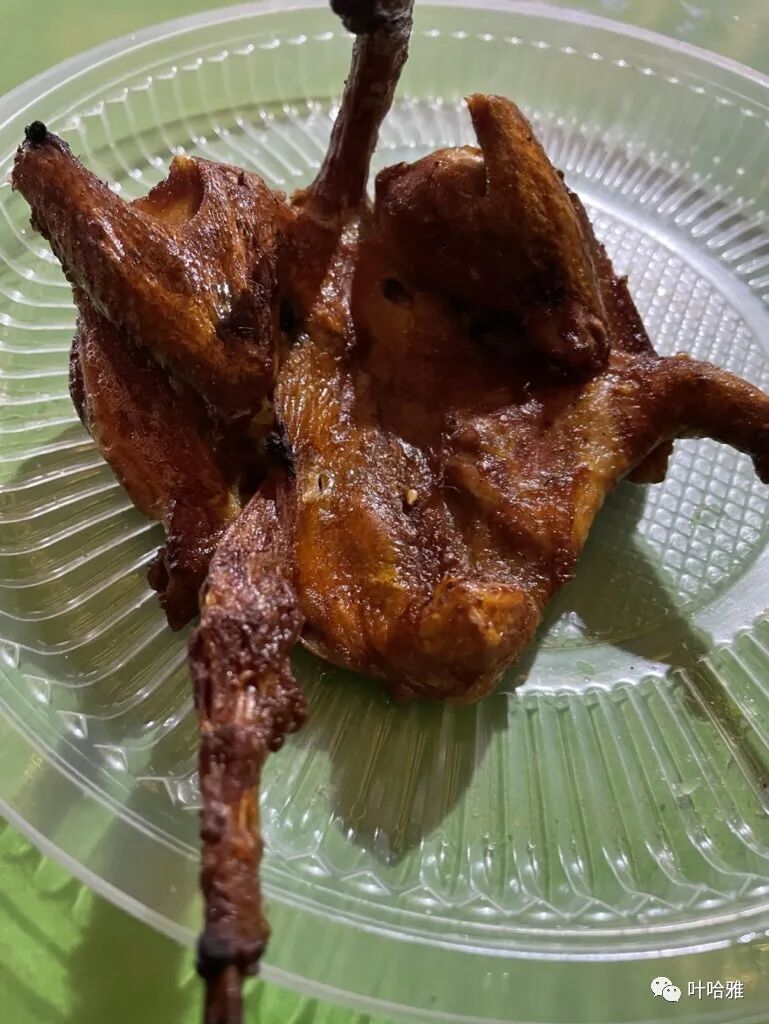
Roasted meat (kaorou) tastes good everywhere in Xinjiang, even at highway rest stops.
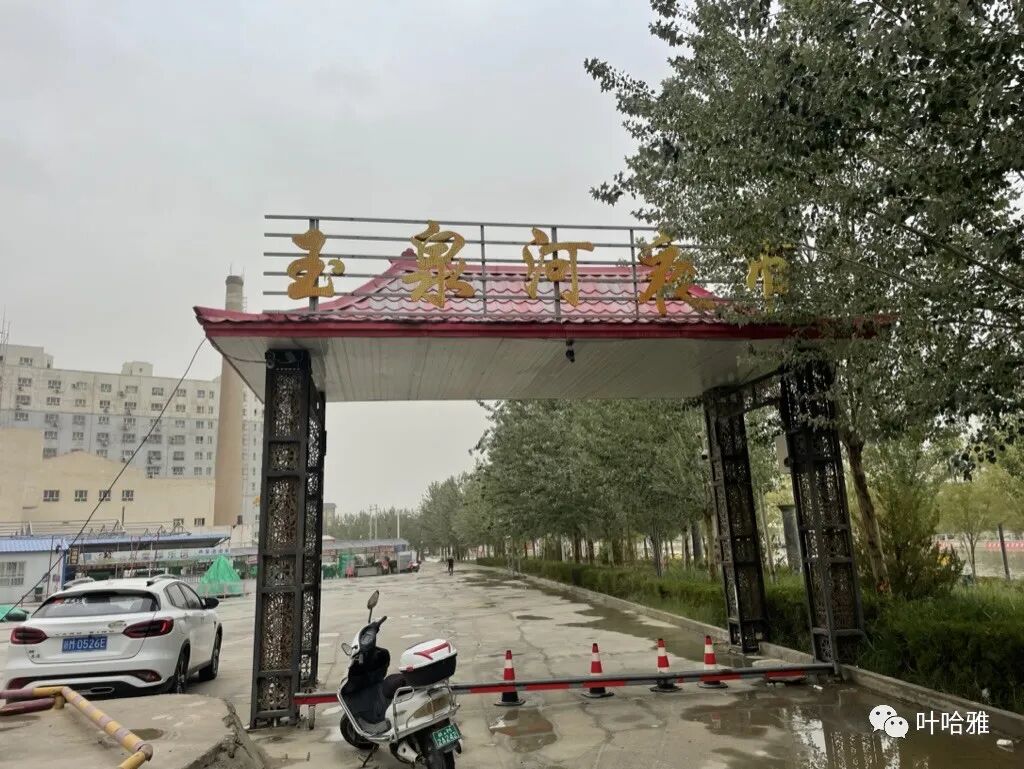
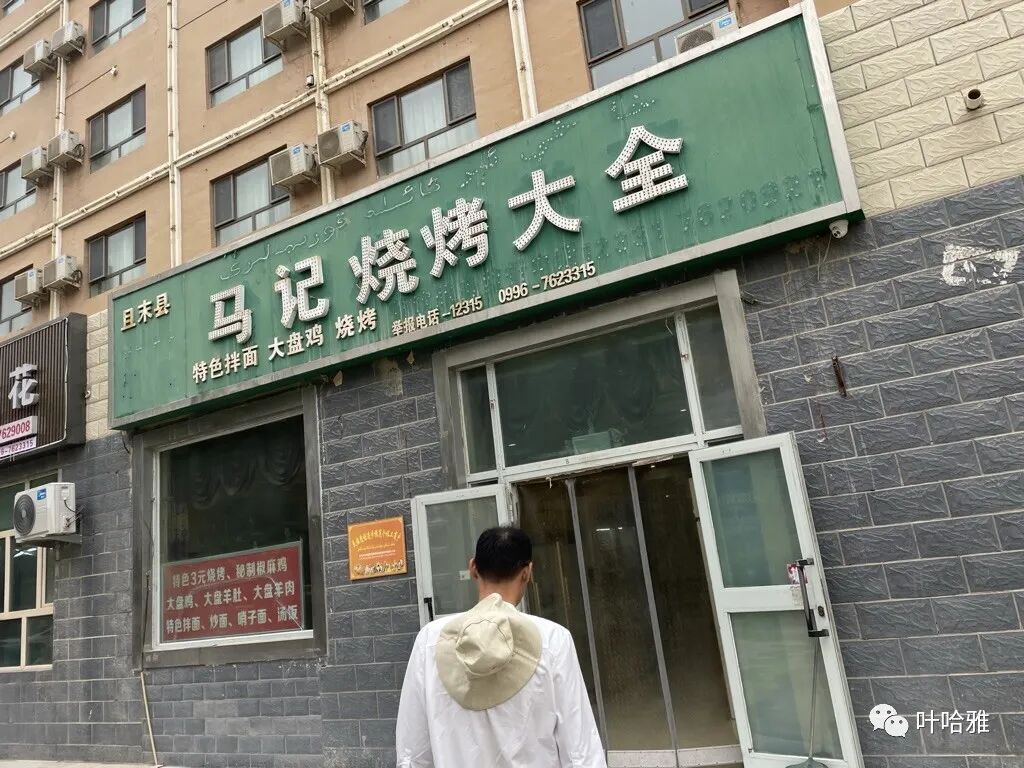
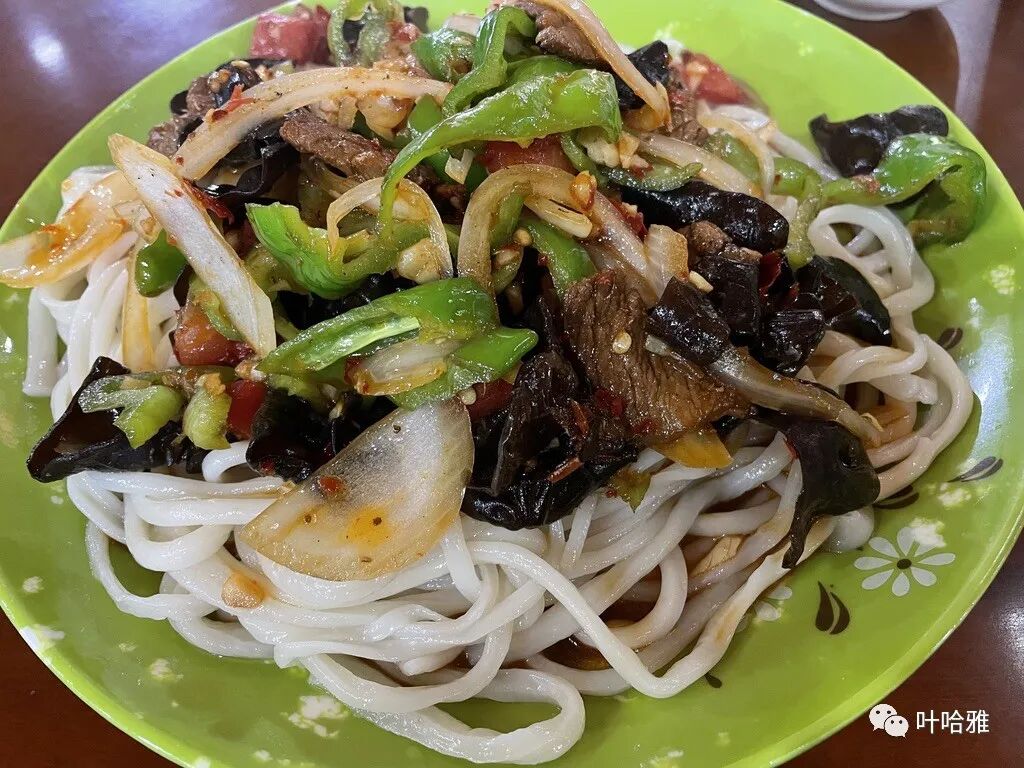
I had my first bowl of mixed noodles (banmian) in Xinjiang at Ma's Barbecue (Ma Ji Shaokao), and I have never had a bad bowl of mixed noodles in this region.
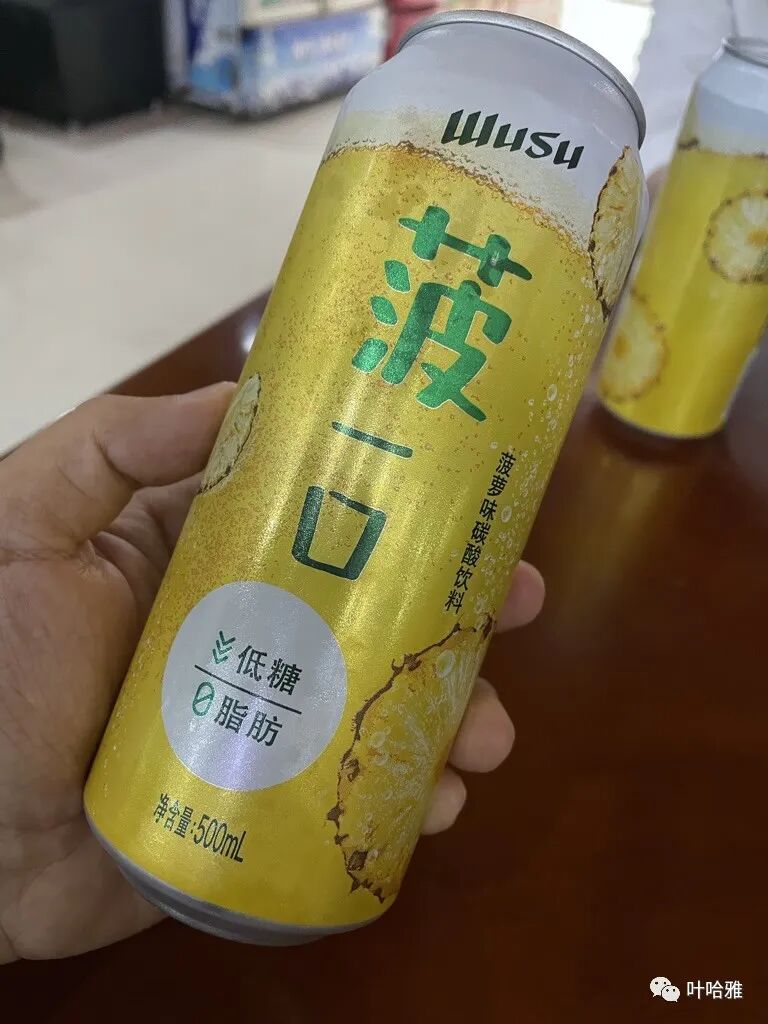
Wusu carbonated drink.
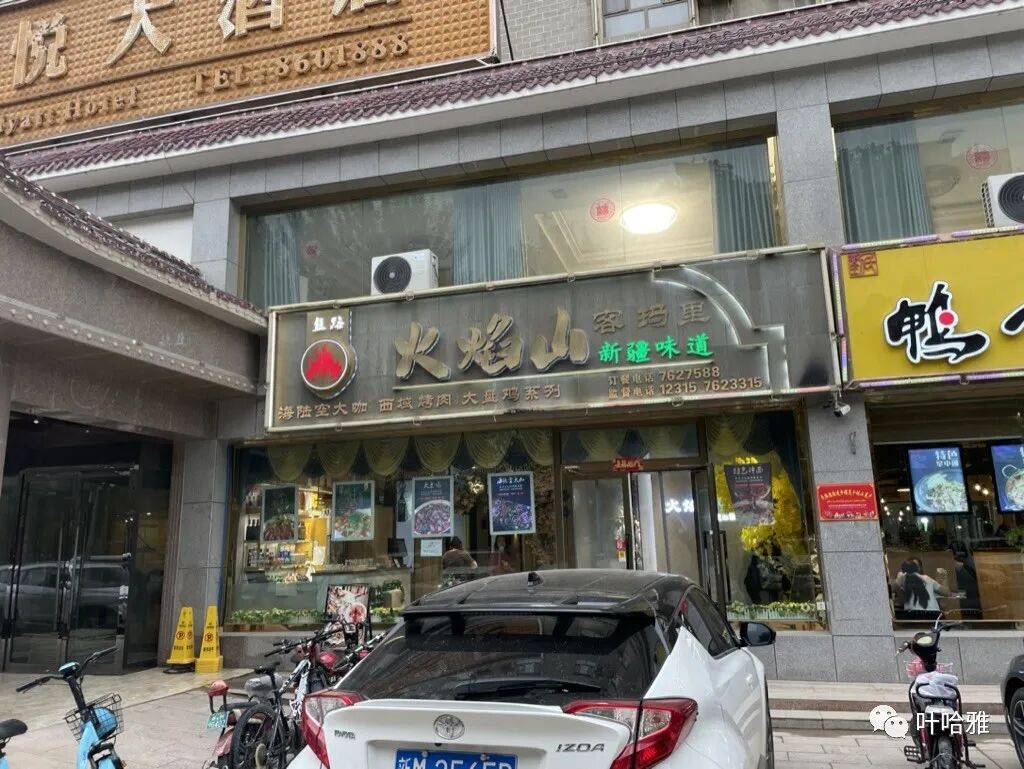
I found a Flaming Mountain Restaurant (Huoyanshan Canting) in Qiemo. This chain used to have locations in Beijing, but they have all closed down now.
I searched for a mosque on Google Maps for a long time without success, then I suddenly realized this plot of land might be it.
It is now a construction site.
The next day we continued driving west to Yutian County because there is an Id Kah Mosque (Aitiga'er Qingzhensi) there.
Unfortunately, photography is not allowed at the mosque. The security guard deleted the photo I took of the main gate, so I only have one photo of the side.
The image above shows the original appearance of the Id Kah Mosque, taken from the second volume of 'Architectural Art of Islam in China'.
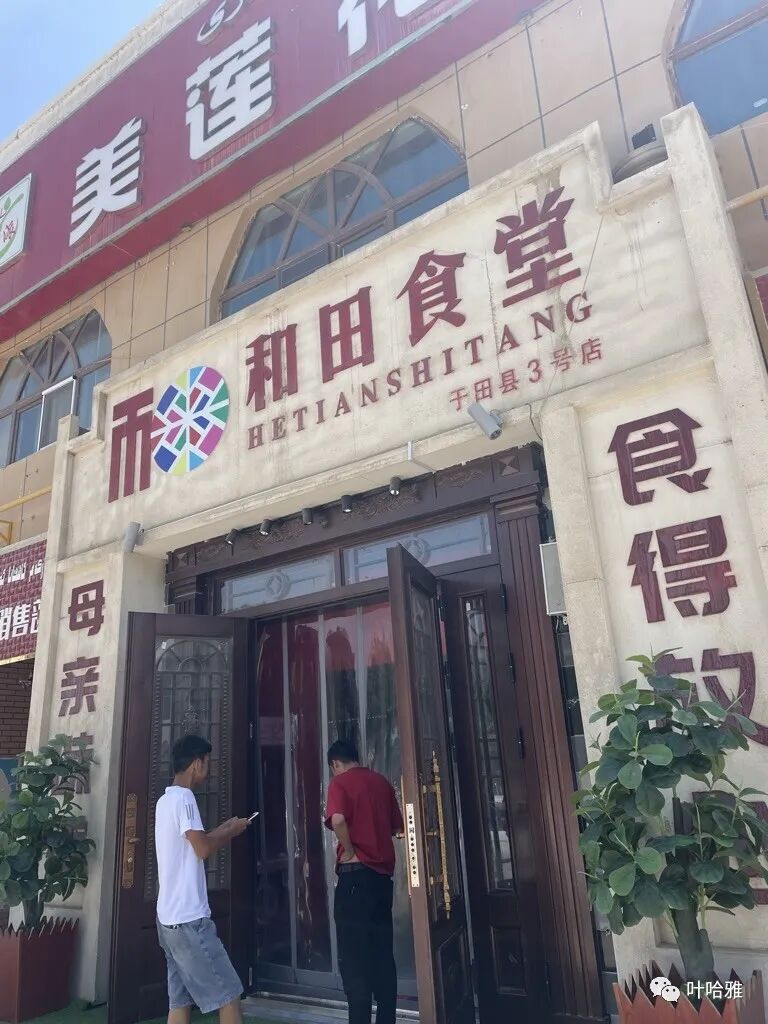
With nowhere else to go, we had to find a nearby restaurant to eat. We happened to see this Hotan Canteen (Hetian Shitang). Yutian County is part of the Hotan region, and since there are Hotan Canteens in Beijing, I wanted to see how this one was different.
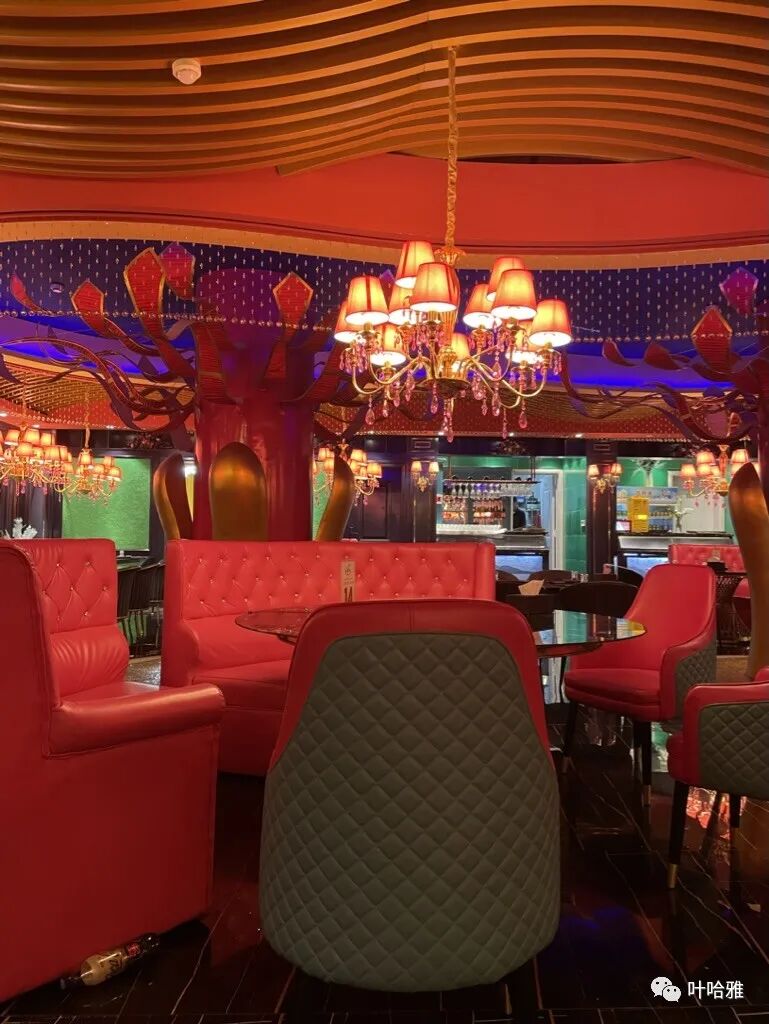
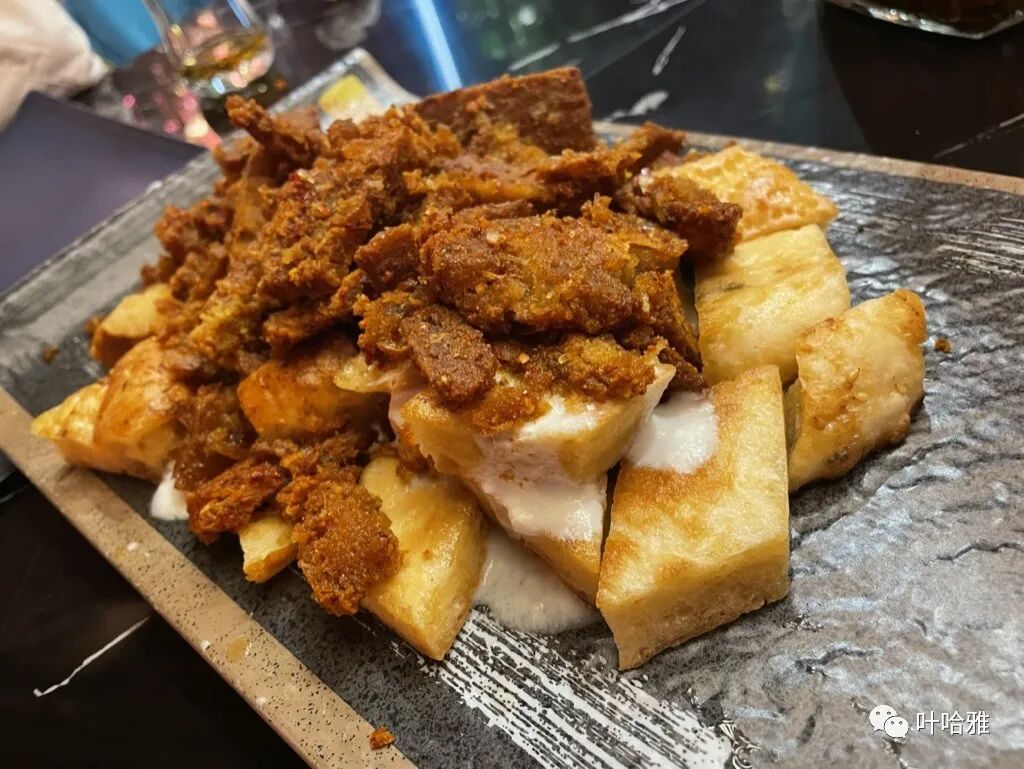
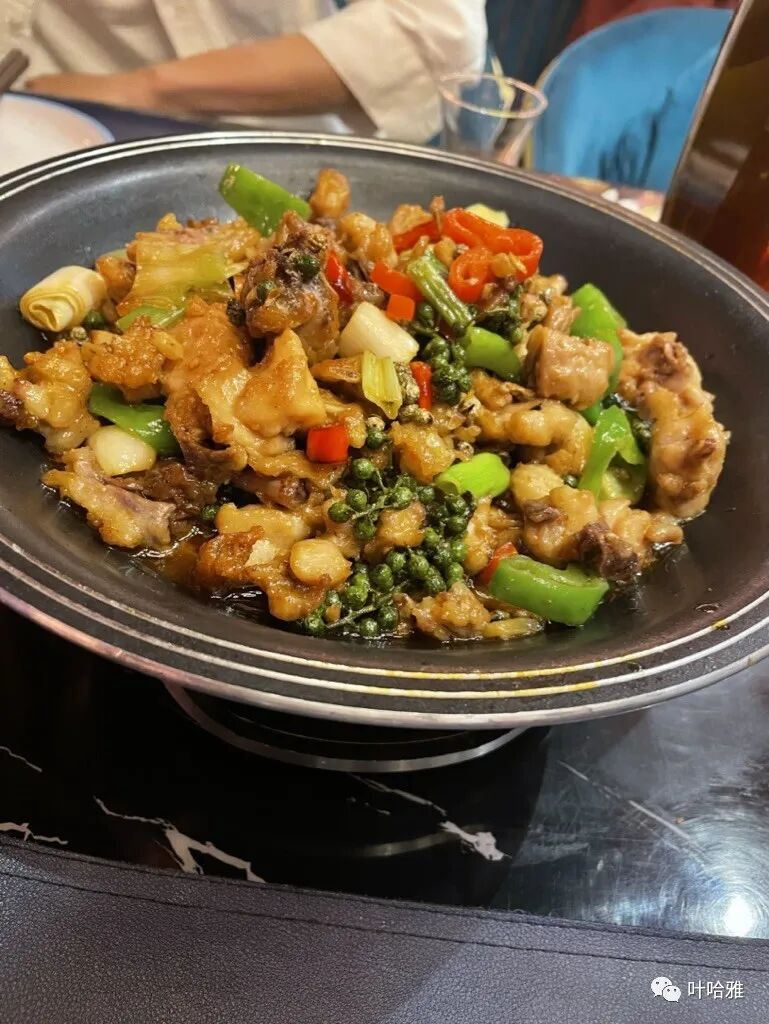
The restaurant environment was quite nice, but the food was not good and the prices were high. Combined with my earlier unpleasant experience, I just wanted to leave this city as soon as possible.
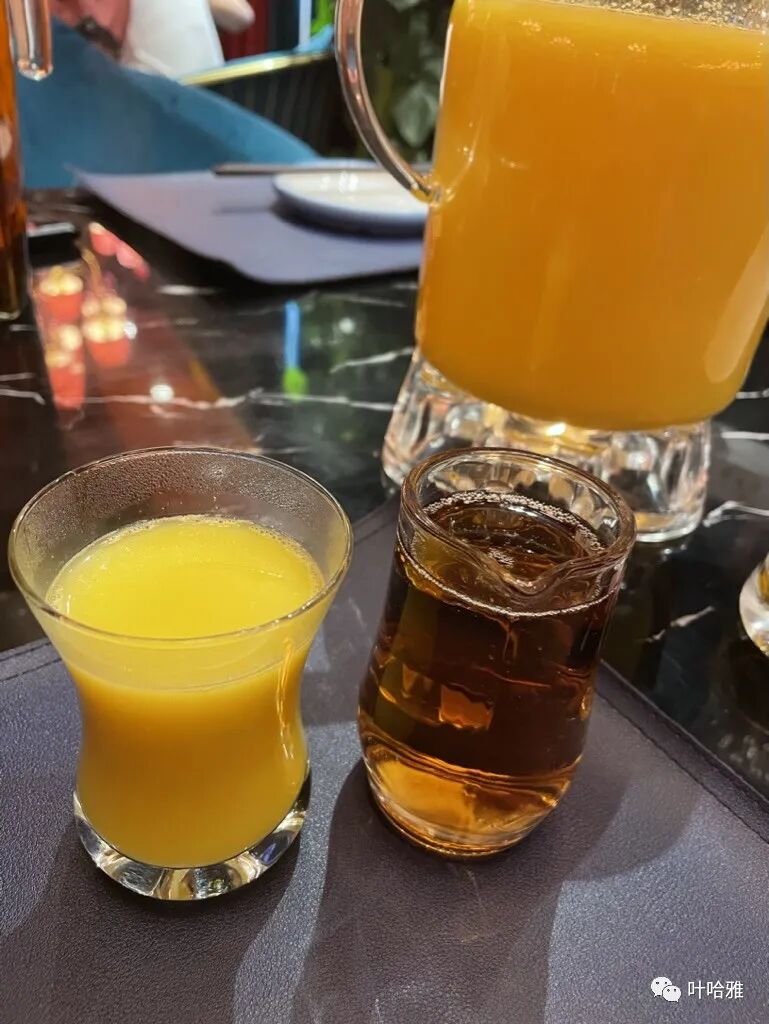
I left Yutian and arrived at Hotan Tuancheng. Because I was told not to take photos earlier, I was very careful when I first got to Hotan. I started by taking a few secret photos from inside the car. Later, I saw tourists everywhere and no one was stopping them, so I became bolder. Strangely, I never ran into any more photo restrictions during the rest of my trip in Xinjiang.
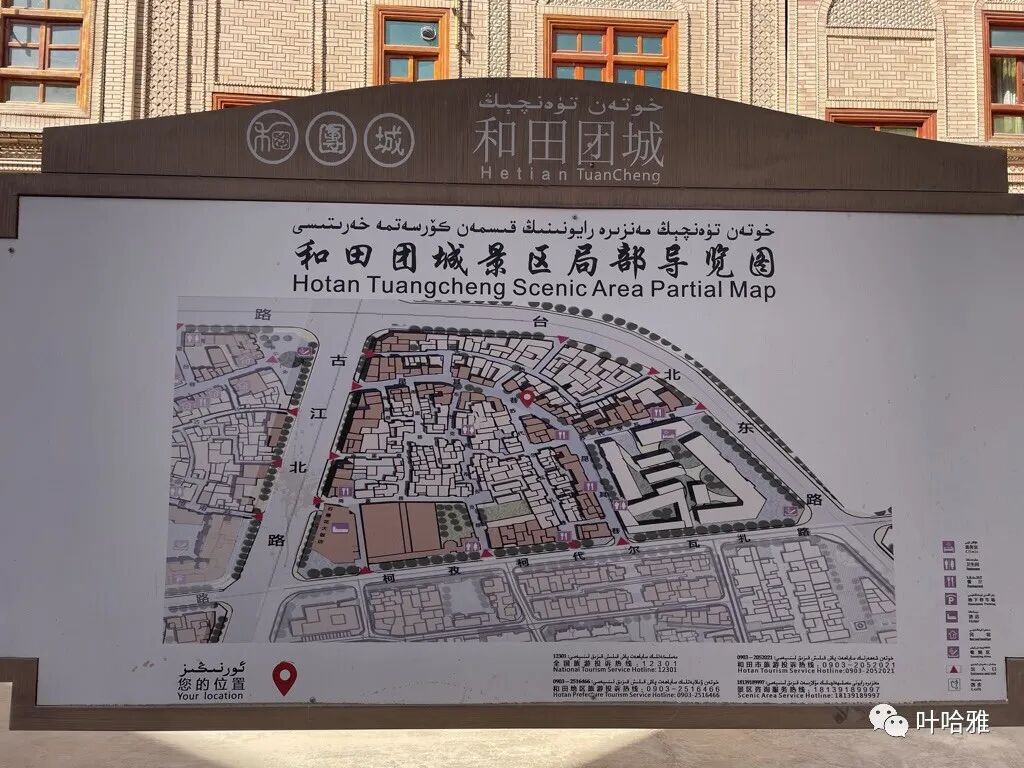
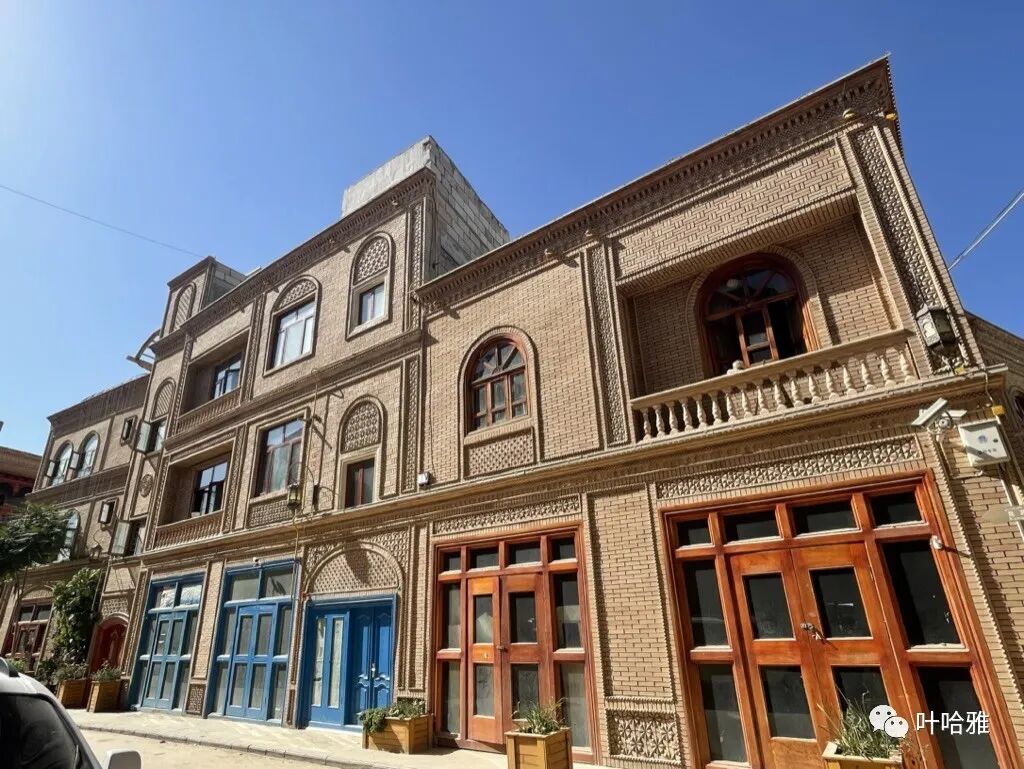
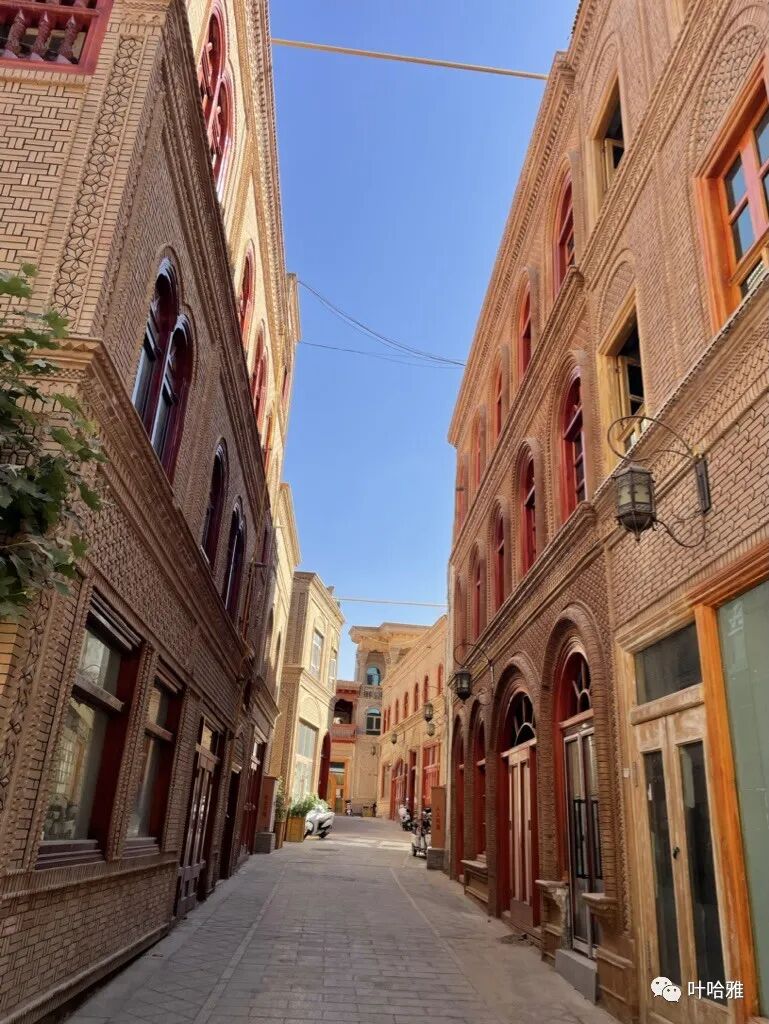
Hotan Tuancheng is just like the Old City of Kashgar; it has been renovated and contains both homes and shops. It is worth walking around and eating there. The girls in Hotan are even prettier, and I feel they are better looking than the ones in Kashgar.
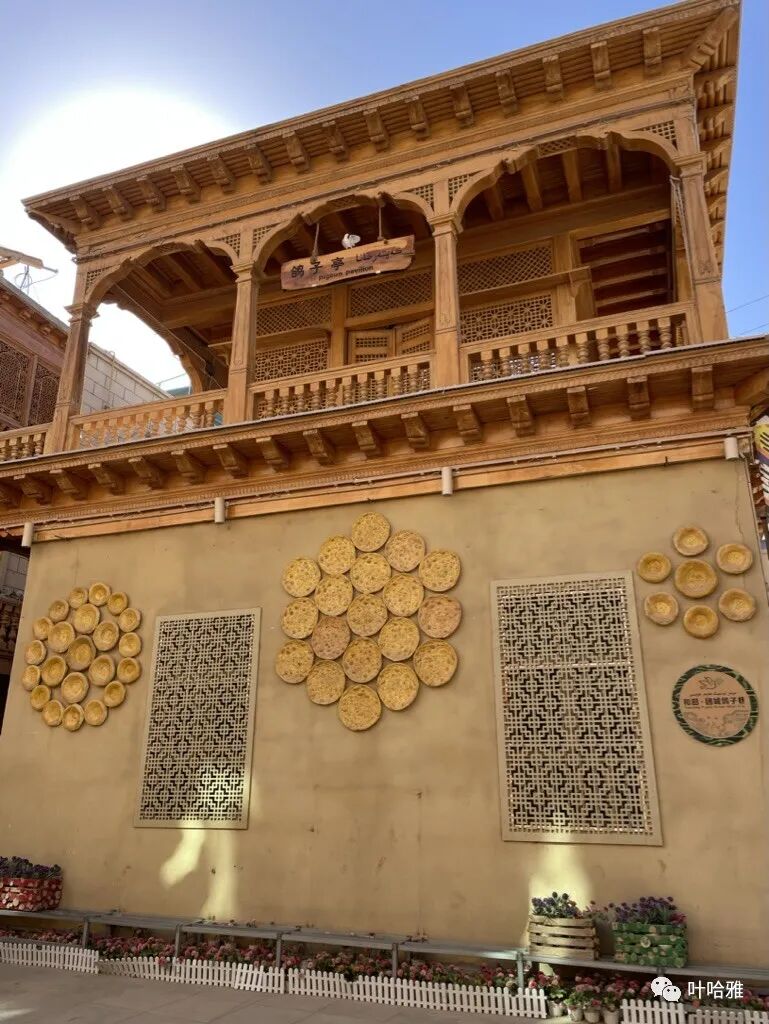
A kind girl in Hotan warned us not to drive the wrong way on a one-way street. We were embarrassed because we first thought she was trying to chat us up.
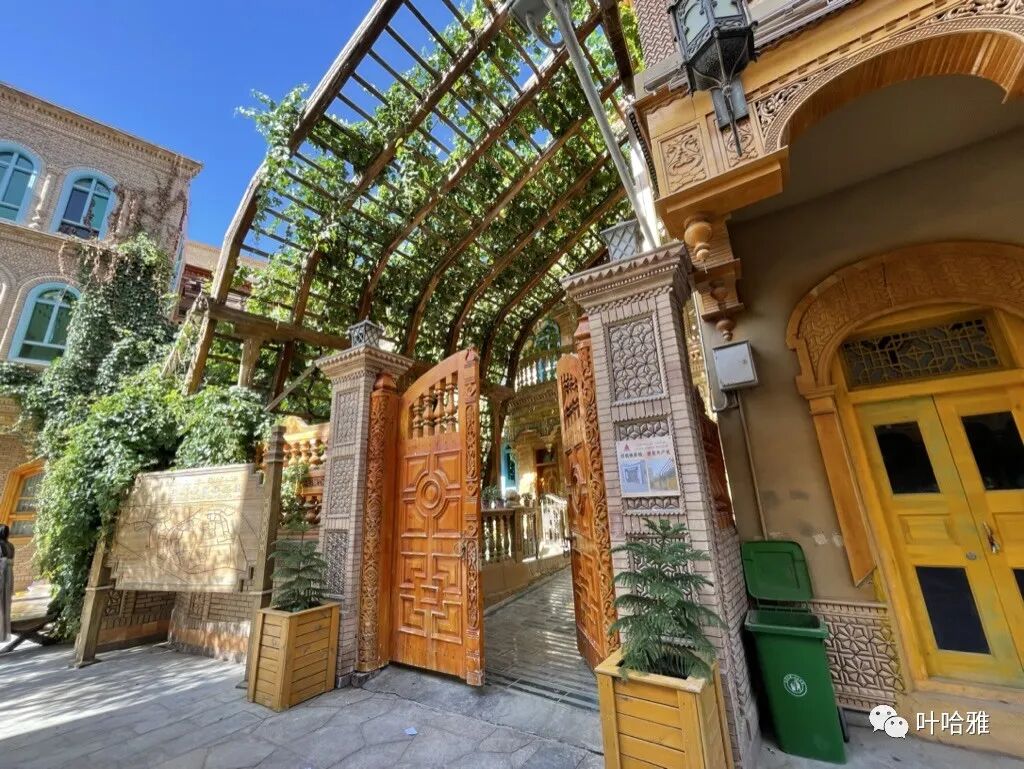
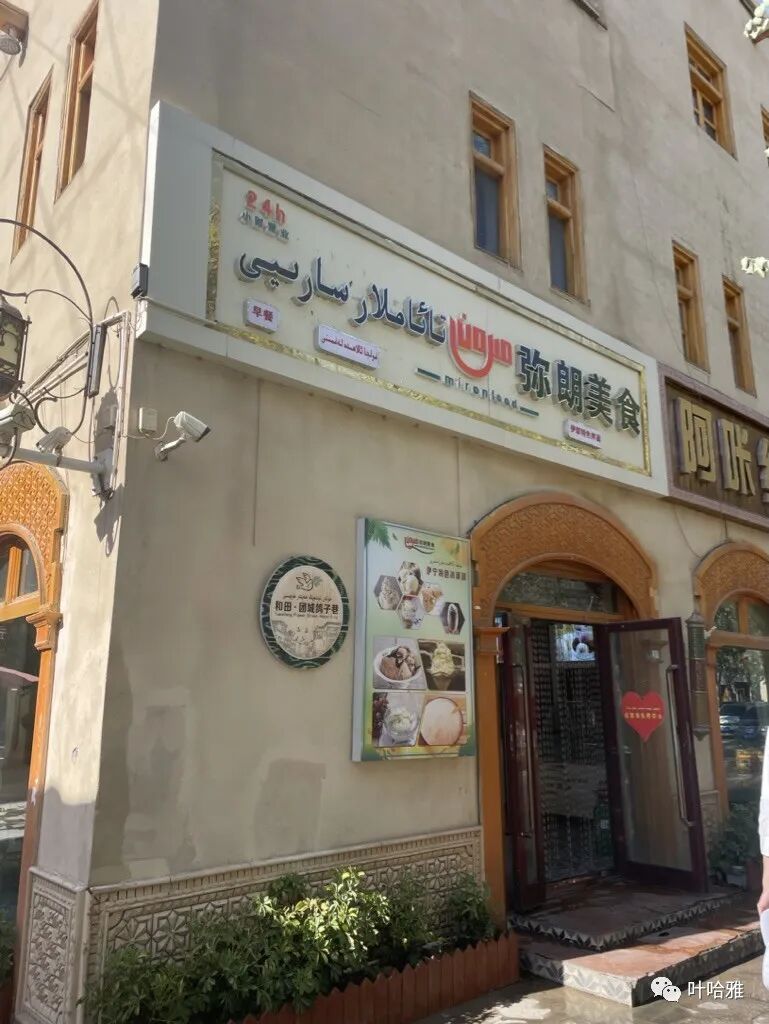
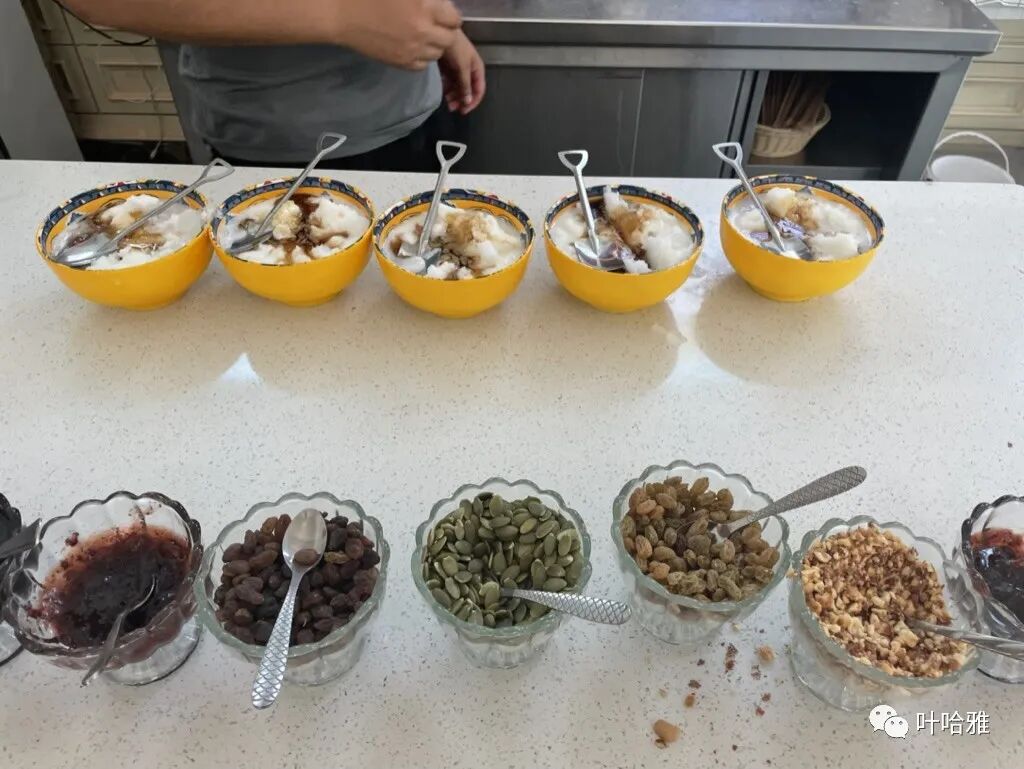
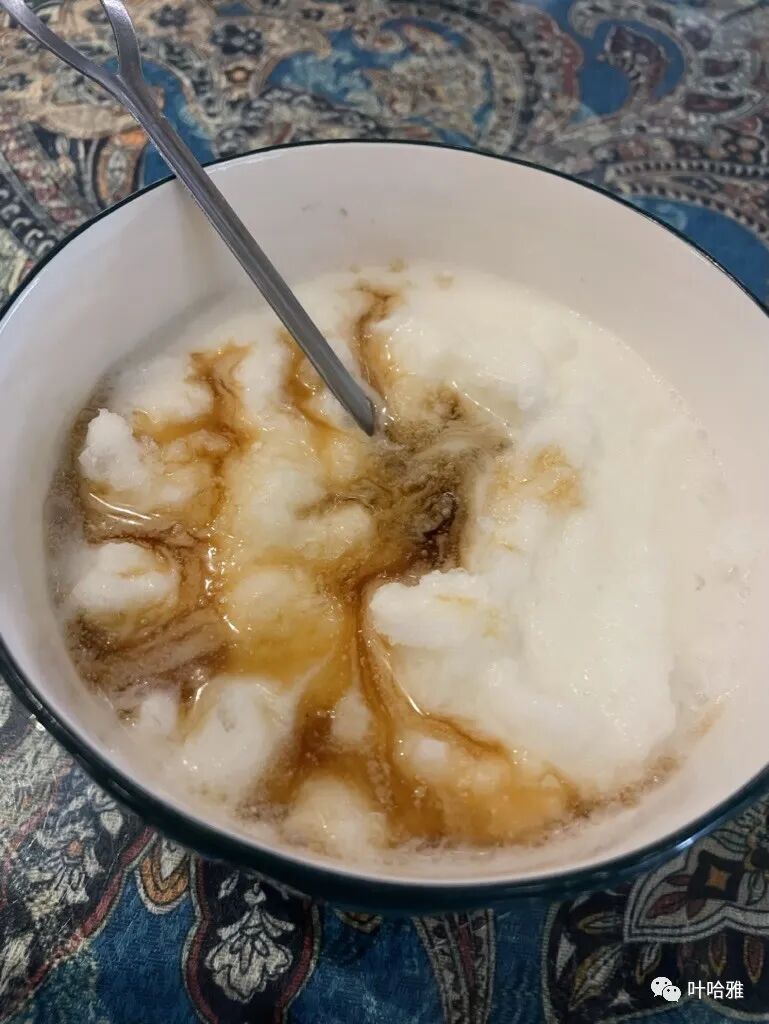
I had my first bowl of yogurt shaved ice (suannai baobing) at this shop in Tuancheng. My first impression of Hotan is really good.
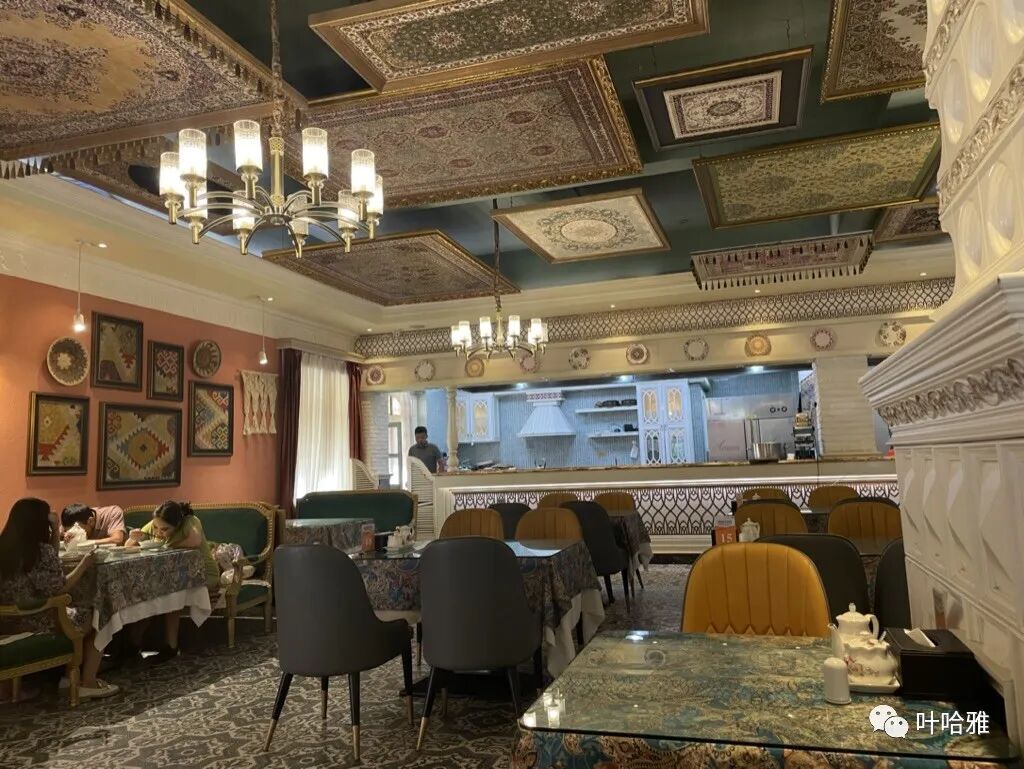
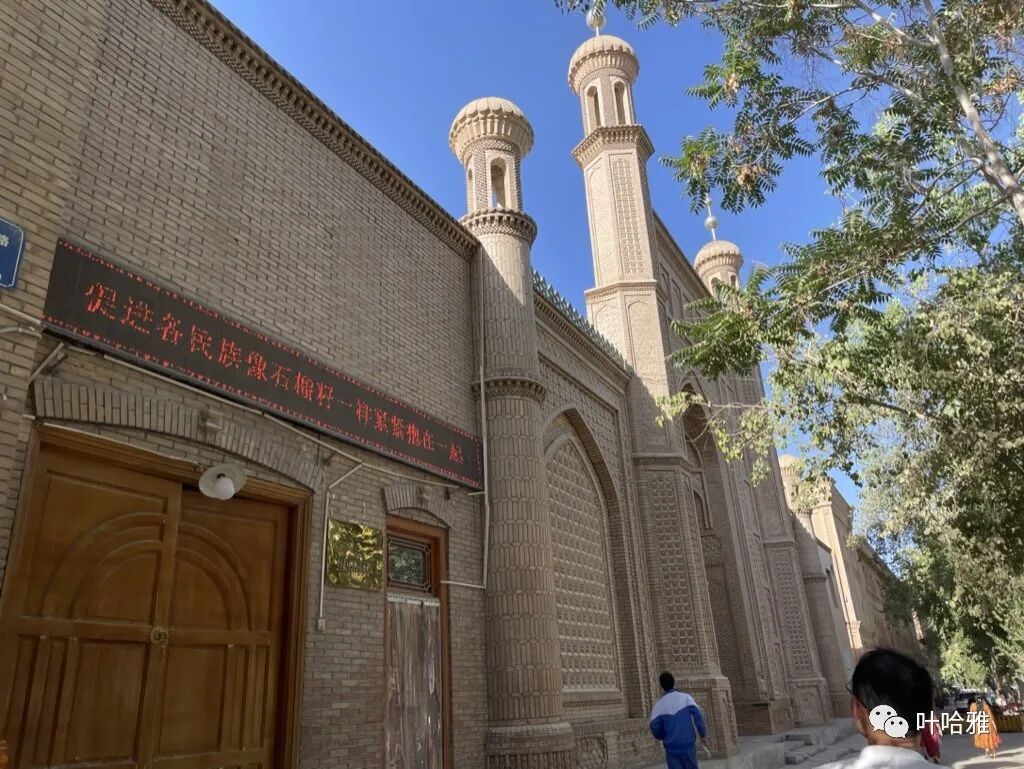
Jiaman Mosque is in the center of Hotan Tuancheng. It was first built during the Guangxu reign of the Qing Dynasty (1875).
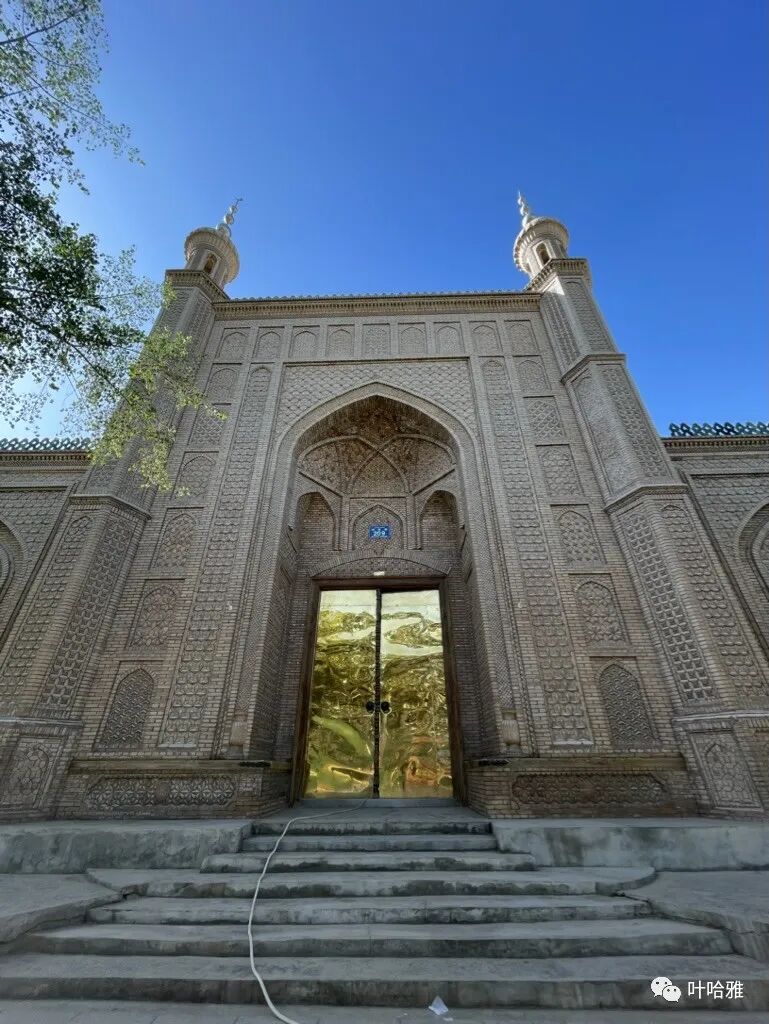
I asked the Uyghur grandfather at the entrance if I could go inside, but he shook his head.
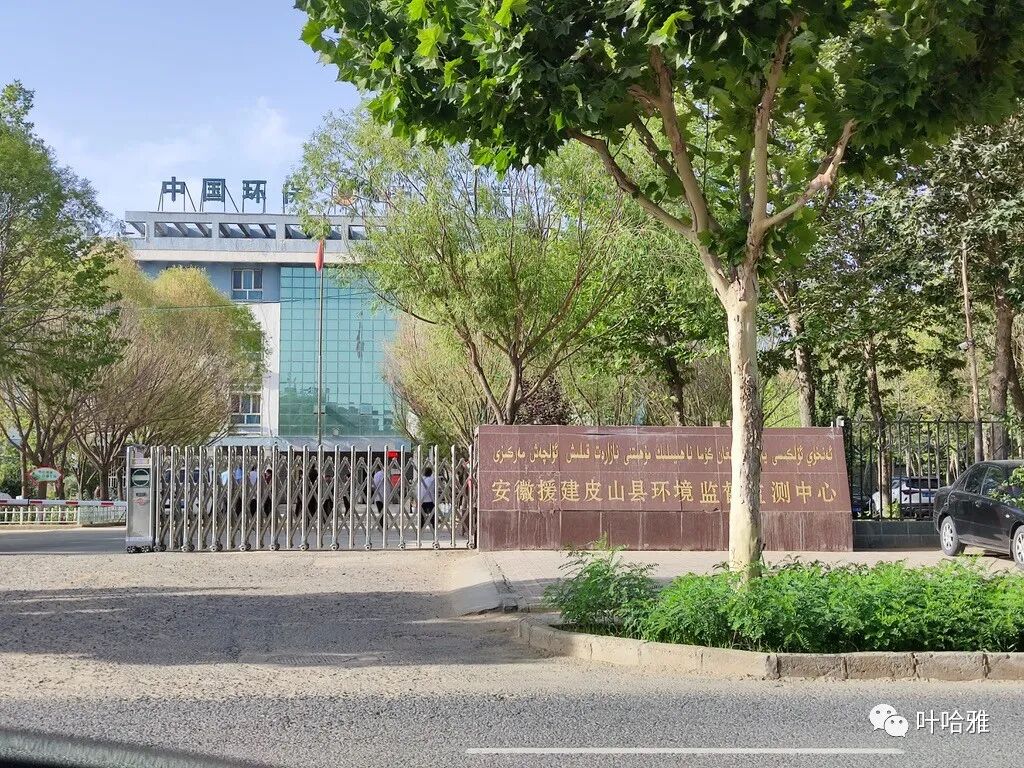
Pishan County is a place I have always wanted to visit. When I arrived, it was completely different from what I expected. The city was built with help from Anhui Province. There is almost no local ethnic character, and the buildings use the Anhui style, making me feel like I was in Anhui.
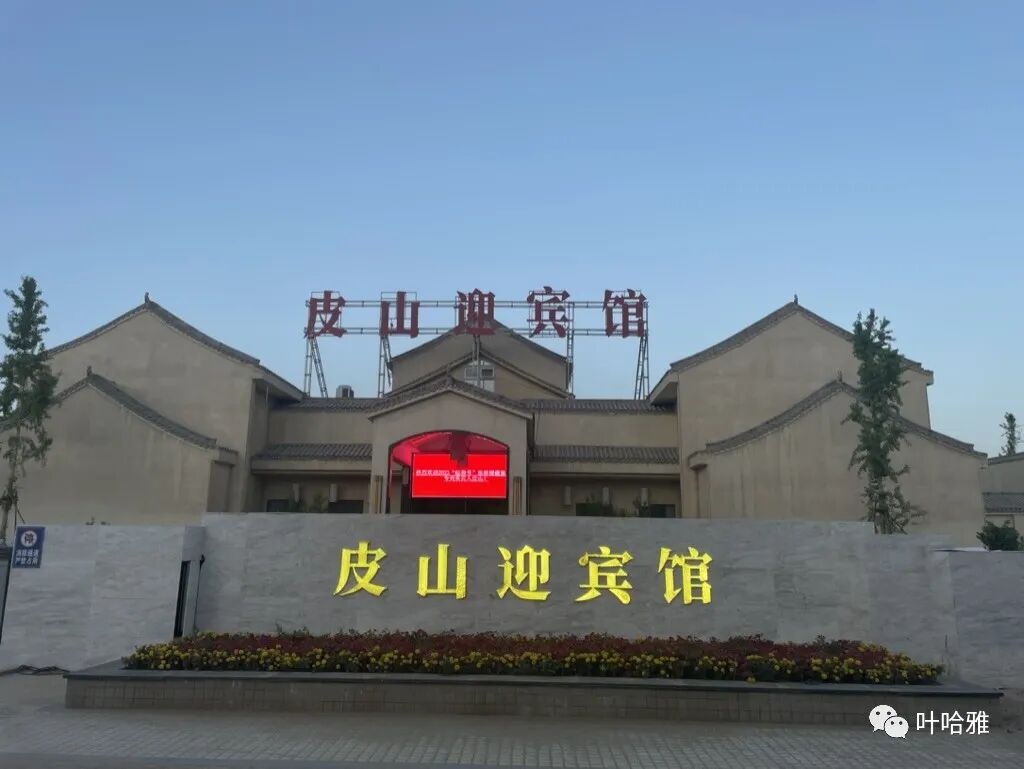
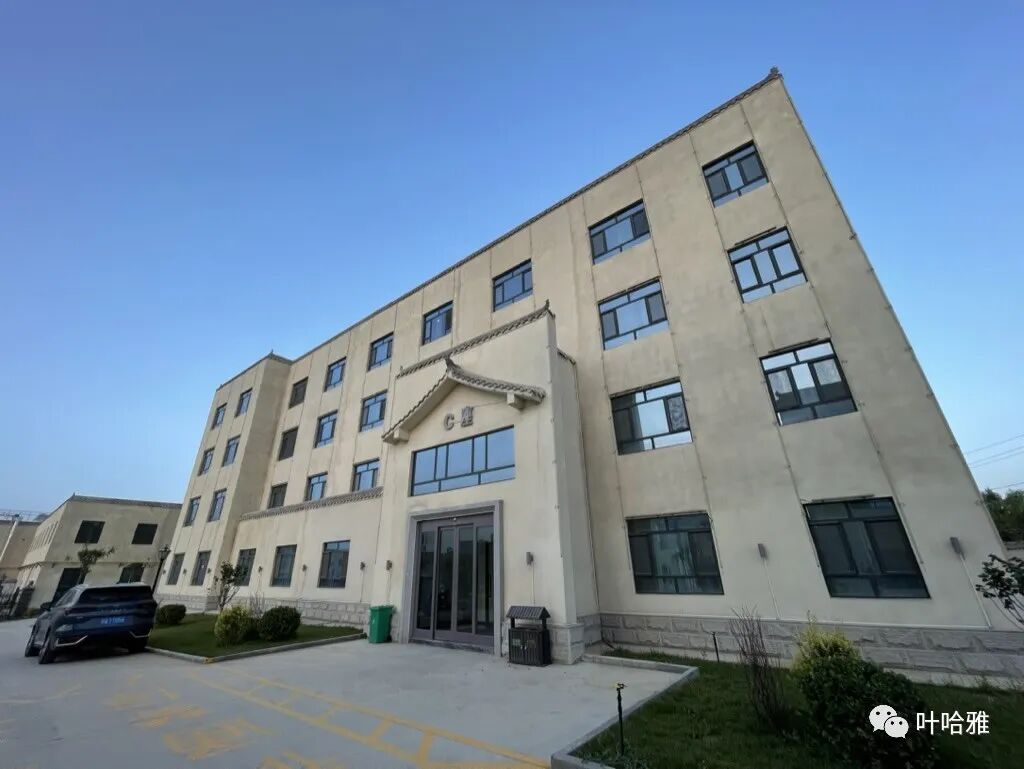
The Pishan County Guest House is state-run, like guest houses in other parts of Xinjiang. They are usually the best hotels in the area. If you do not know where to stay, choosing the guest house is a safe bet, and the breakfast is always halal.
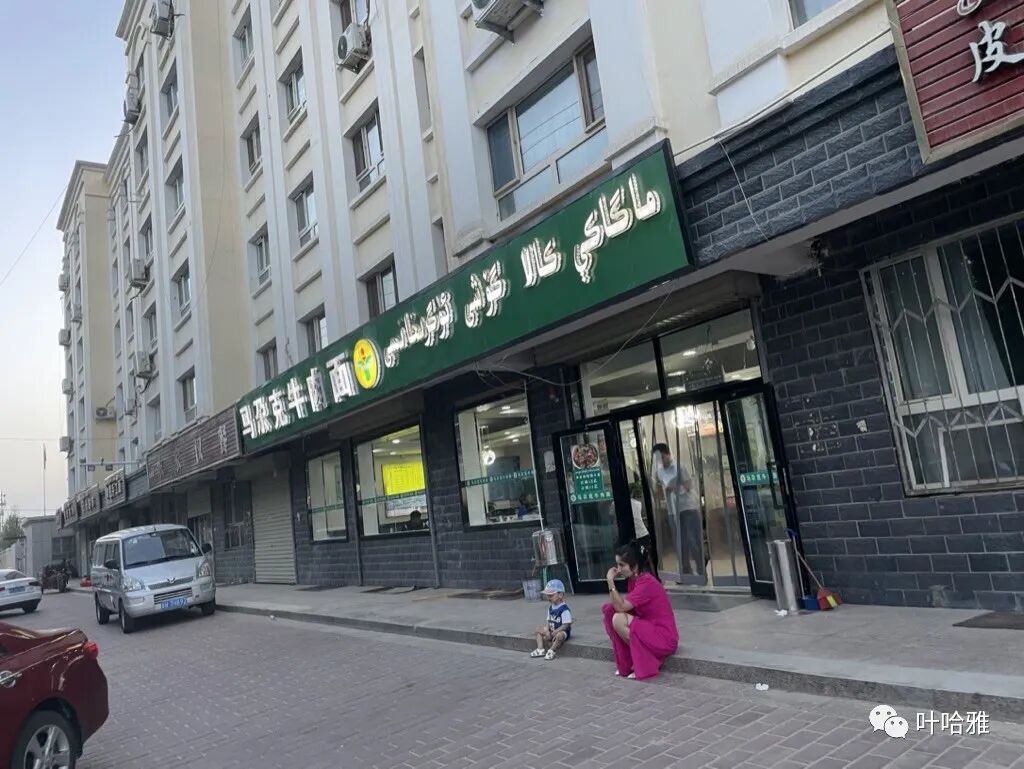
I ate at a beef noodle shop run by Uyghurs in Pishan County. It is really hard to find halal restaurants here, and none of them looked like one, but this place called Magake seemed reliable.
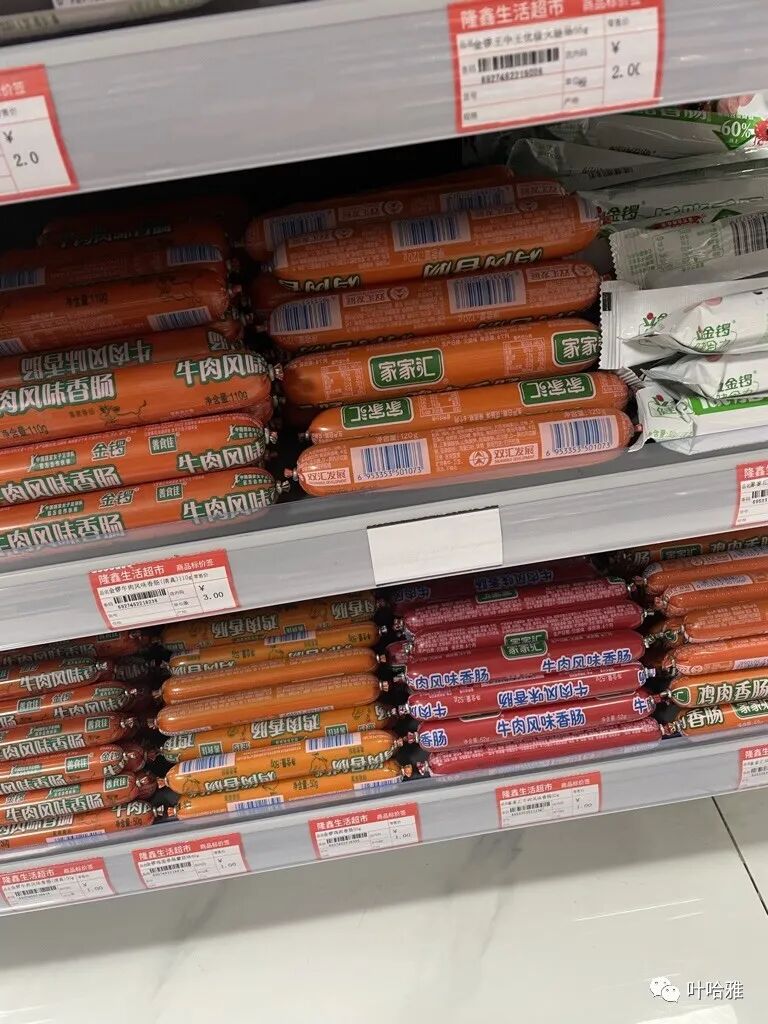
I specifically walked around the supermarket and could not find a single halal food item. Even these sausages had no halal label.
A niche spot worth visiting in Pishan County is the Turdi Haji Manor.
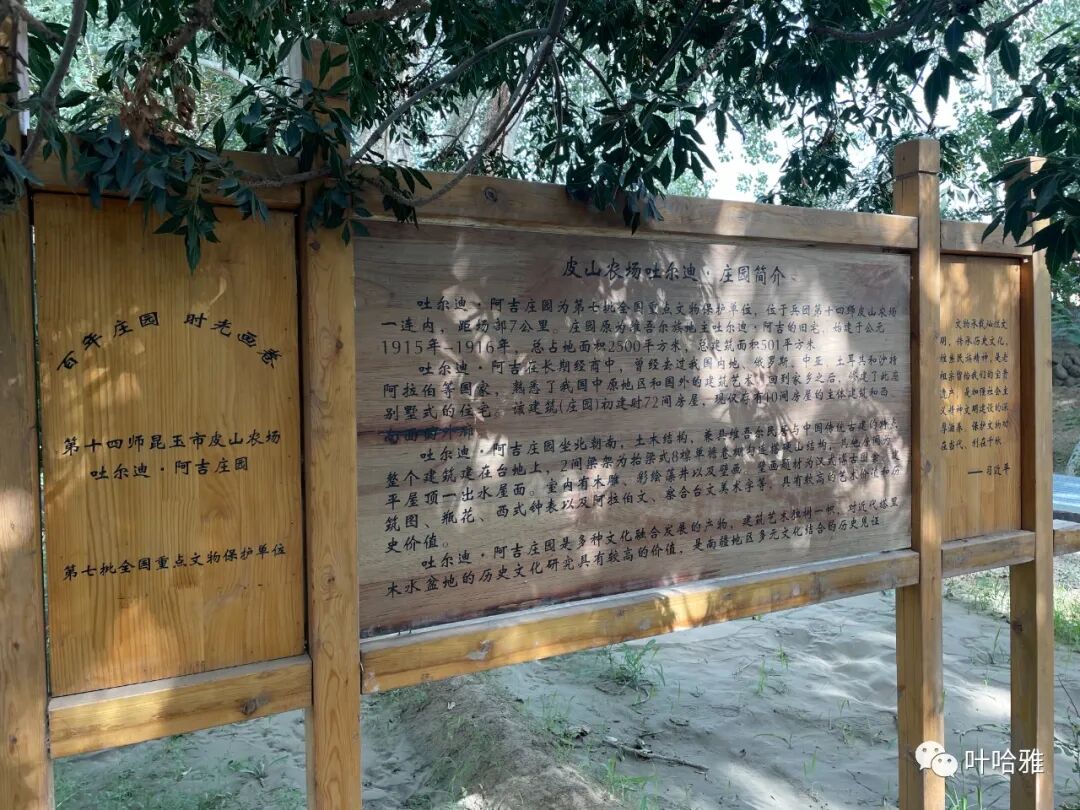
Turdi Haji was a wealthy landlord (bai) in Xinjiang during the Republic of China era. He built this manor in 1916. It covers 2,500 square meters and is now a Major Historical and Cultural Site Protected at the National Level.
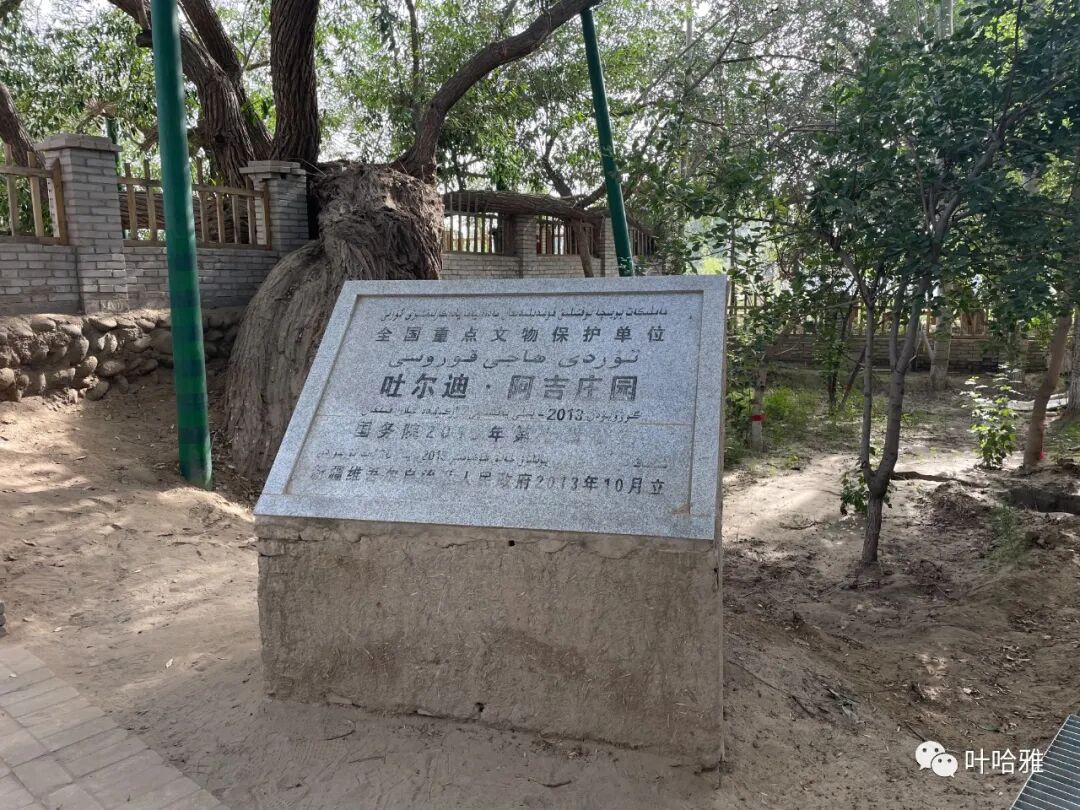
The gate was locked when we arrived at the manor. We made a phone call, and the local tourism bureau sent a worker to open it for us. Admission was free.
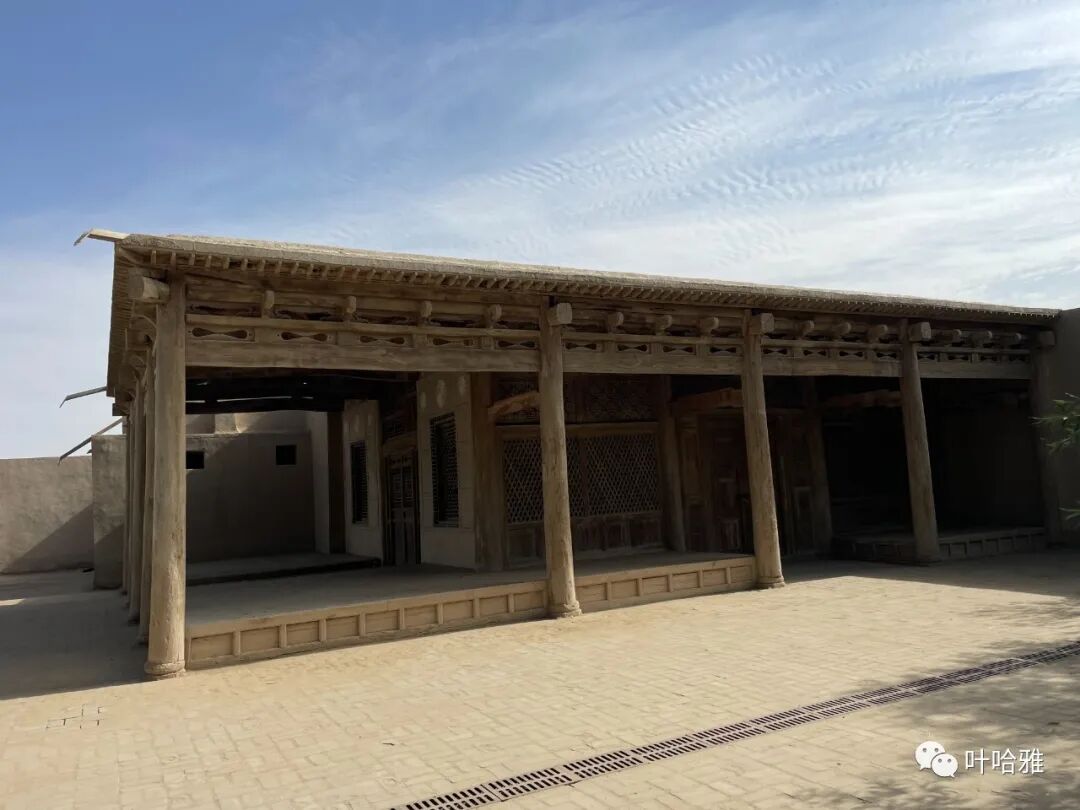
What drew me to the manor were the painted decorations inside. They still have Arabic script, including the Shahada and excerpts from the Quran, along with some Uyghur script.
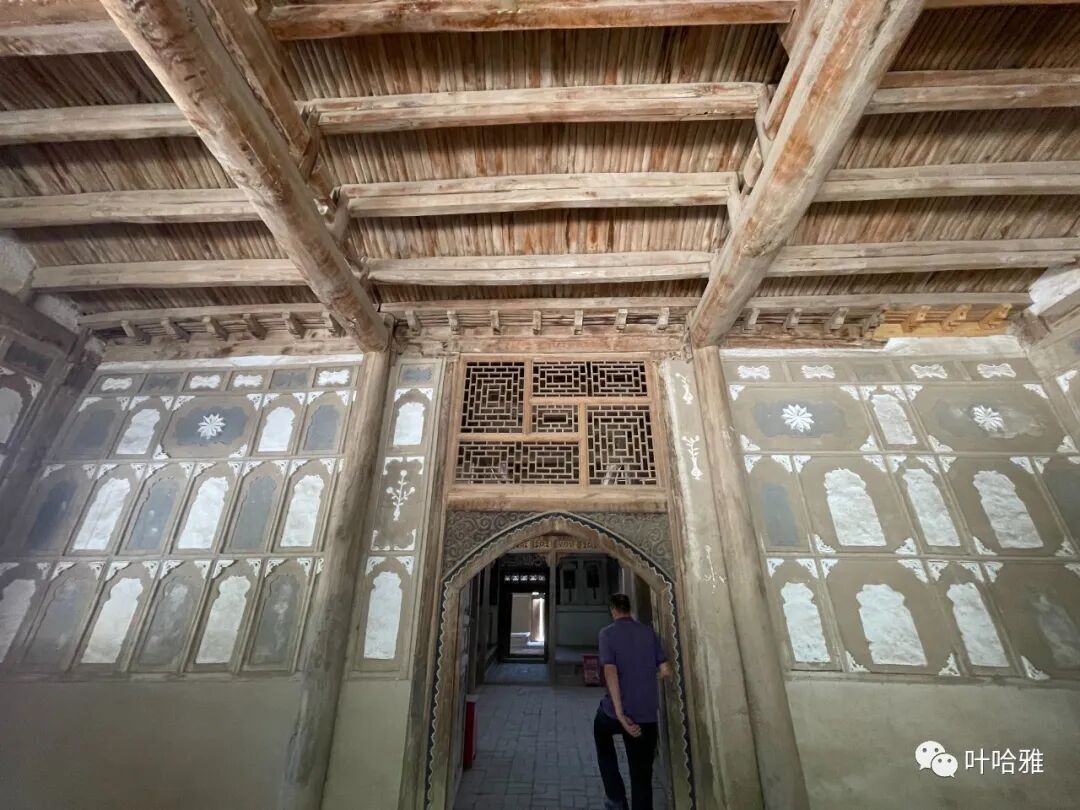
This is very rare to see in a private home today. The manor blends styles from Central Asia, West Asia, and the Middle East, so I just thought of it as a mosque.
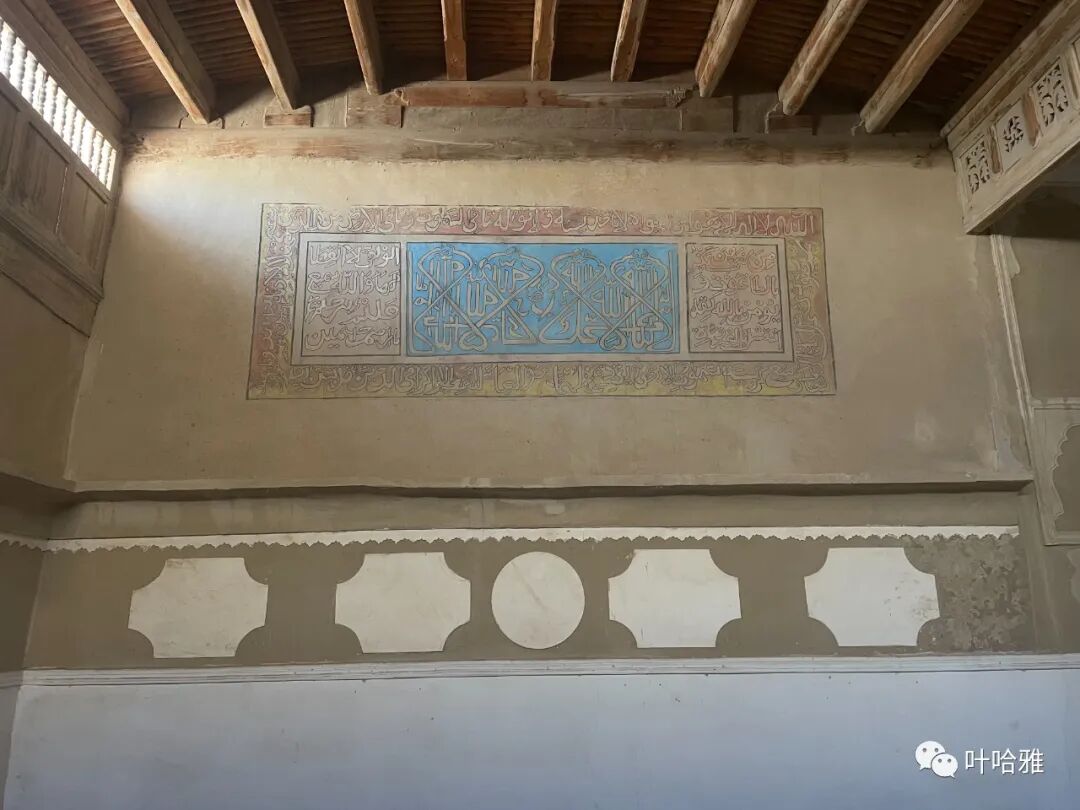
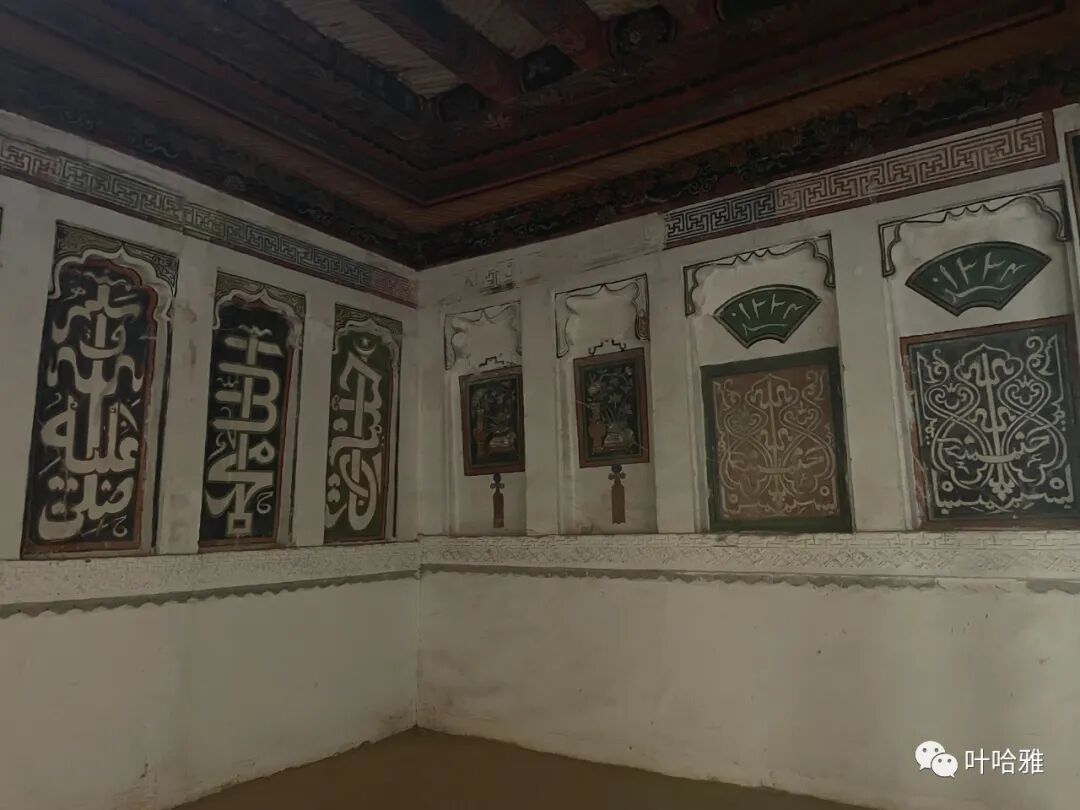
Leaving Hotan Prefecture for Kashgar Prefecture, you pass through Yarkant County (Shache), which was once the site of the Yarkant Khanate palace.
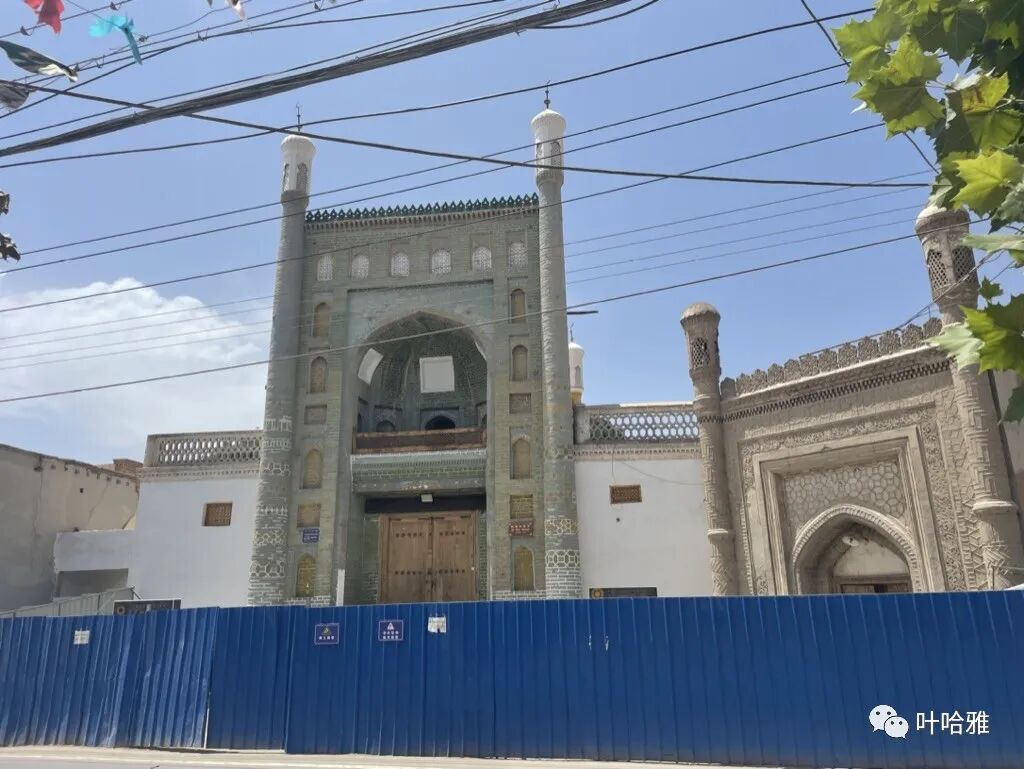
The old mosque district, with the Jiaman Mosque at its center, is currently undergoing renovations.
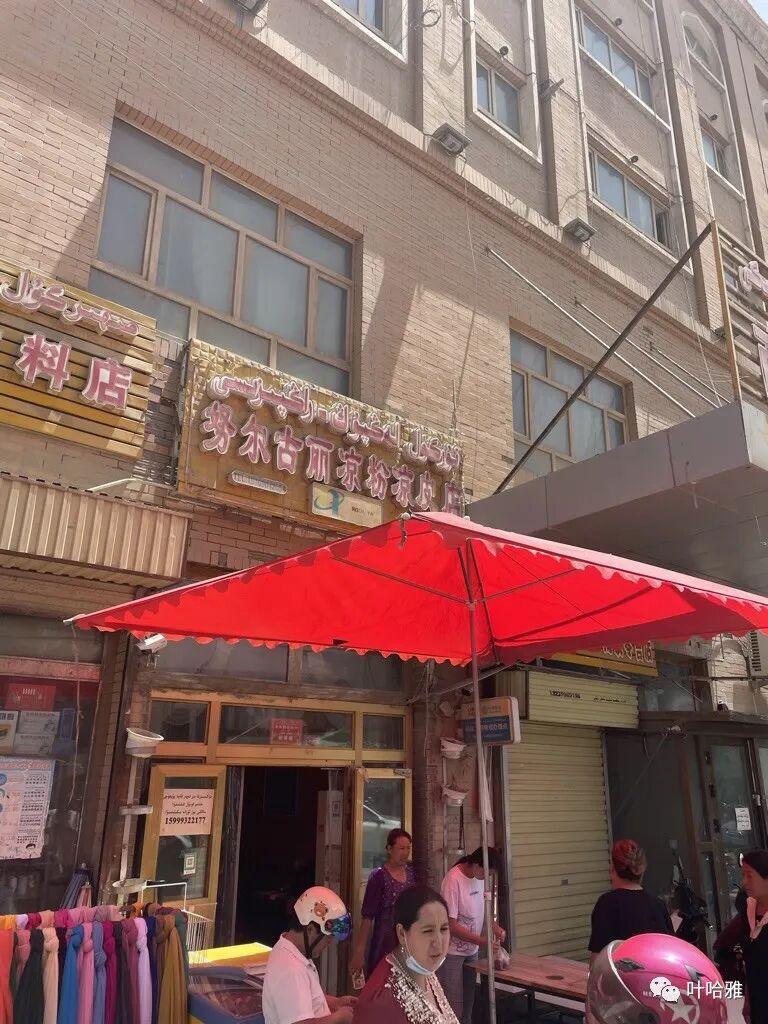
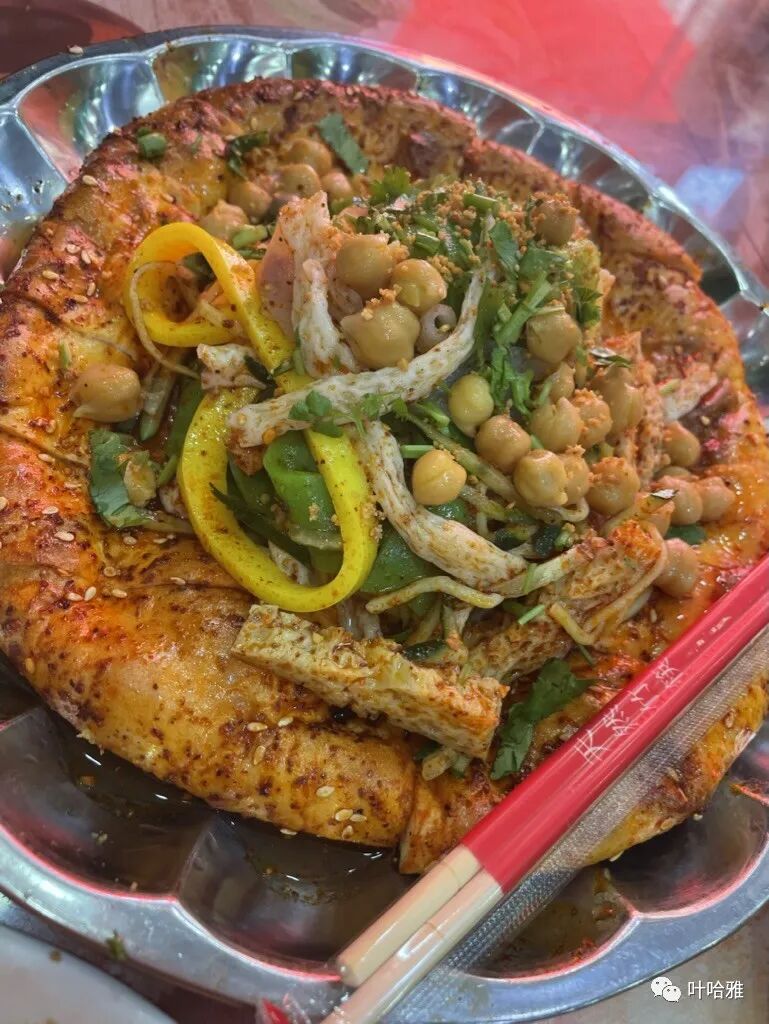
We ate Nurgul cold jelly noodles (liangfen liangpi) in Yarkant County. The whole room was full of women, and we were the only table of men.
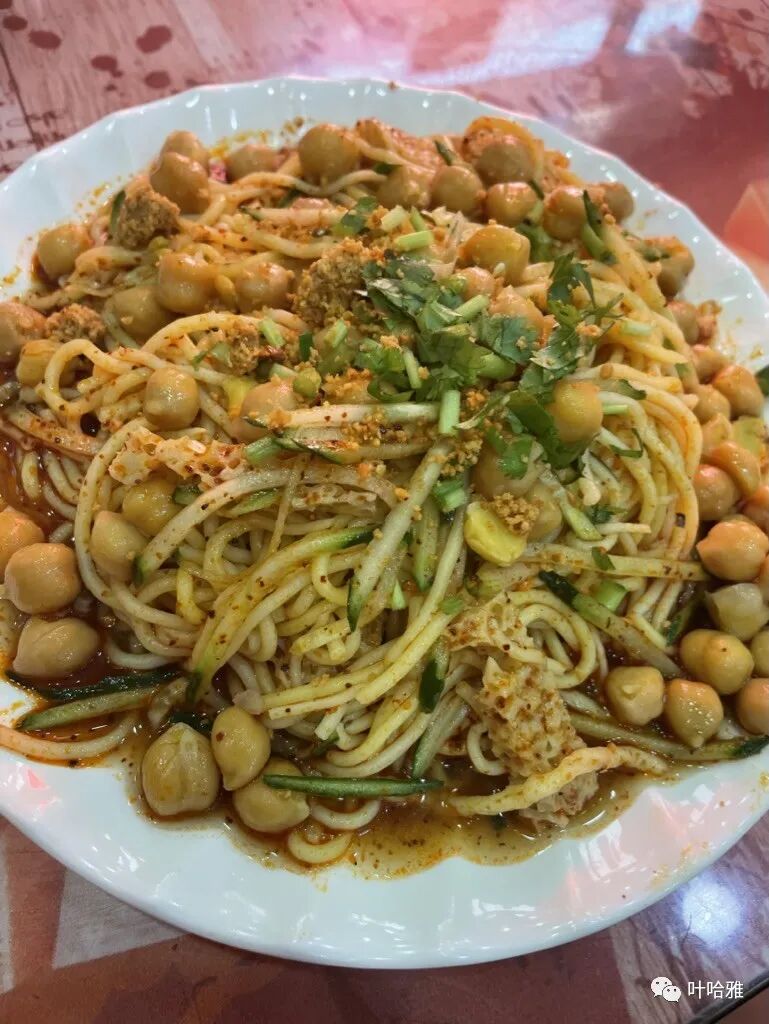
But these cold noodles were really delicious, and they even added chickpeas.
The Yarkant Khanate Palace is a must-visit spot for tourists with a 40 yuan ticket, but it is a new building modeled after the original, so it is optional. However, the Amanisahan and Yarkant Khanate Royal Mausoleum across the street is worth a visit.
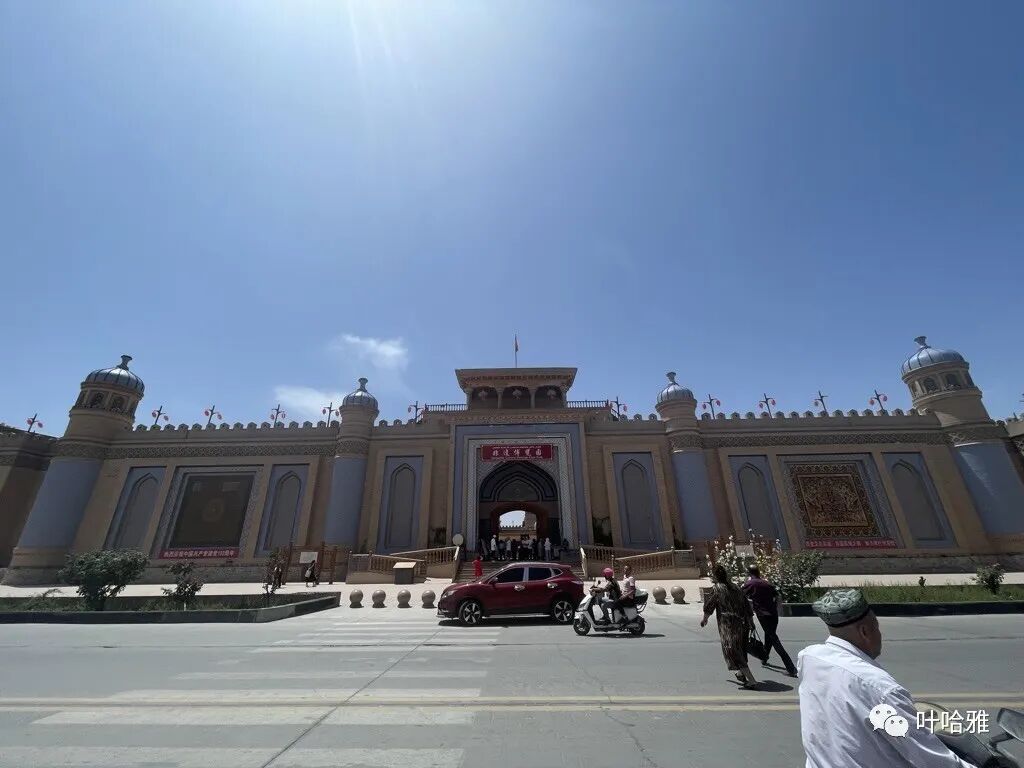
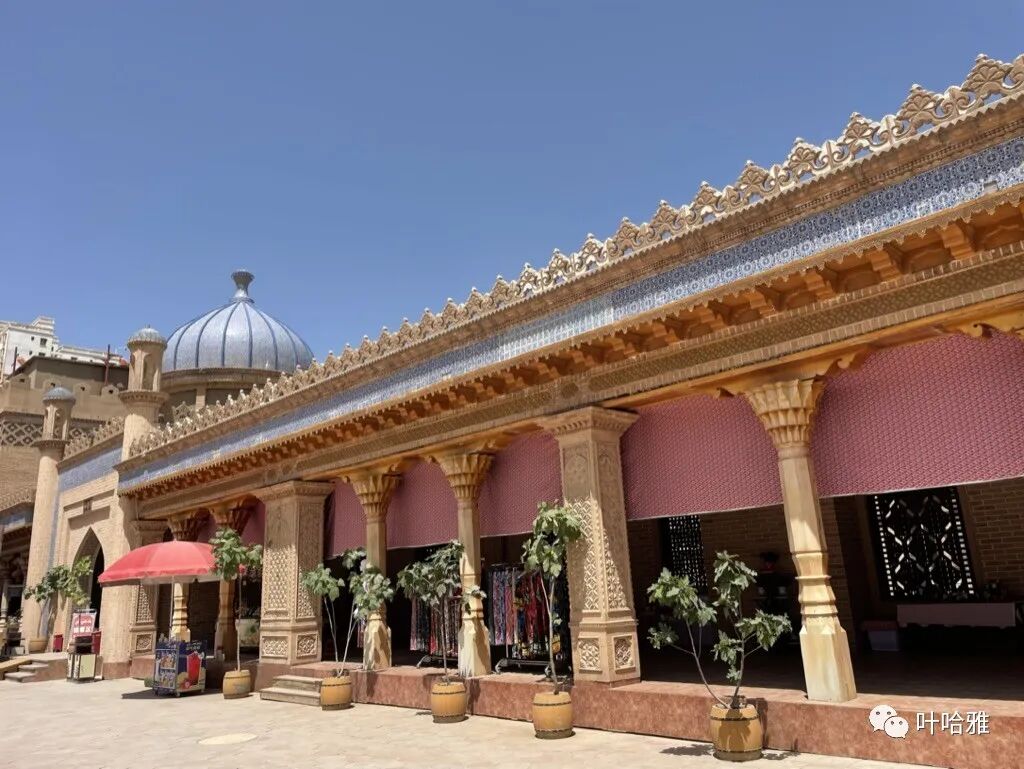
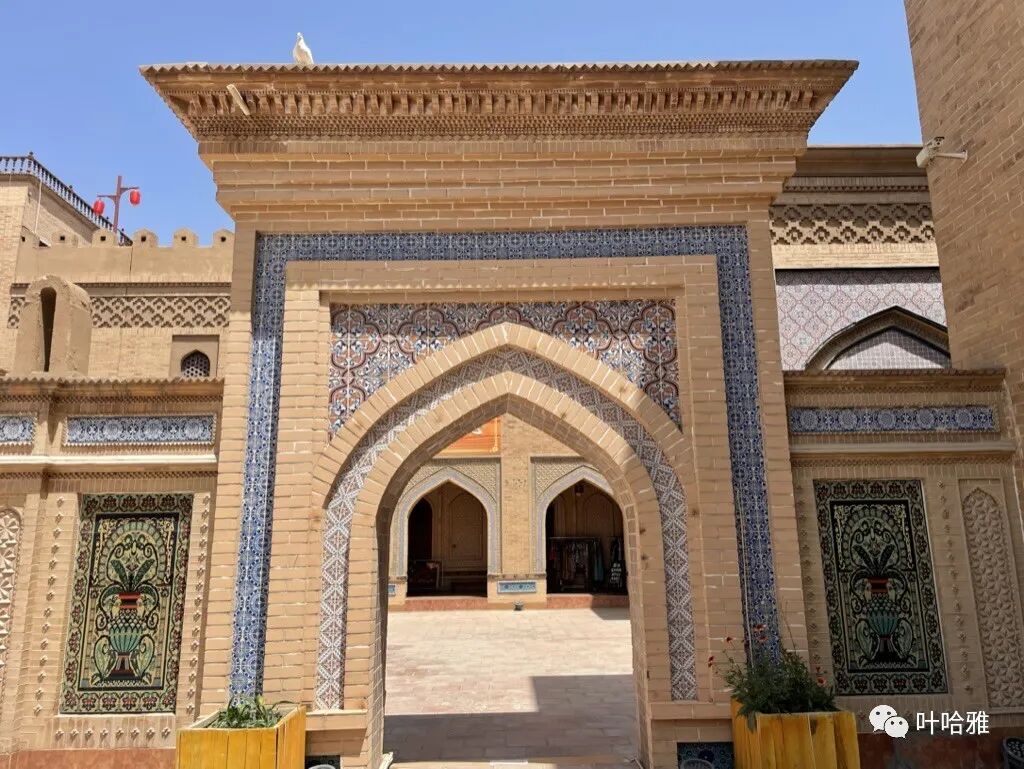
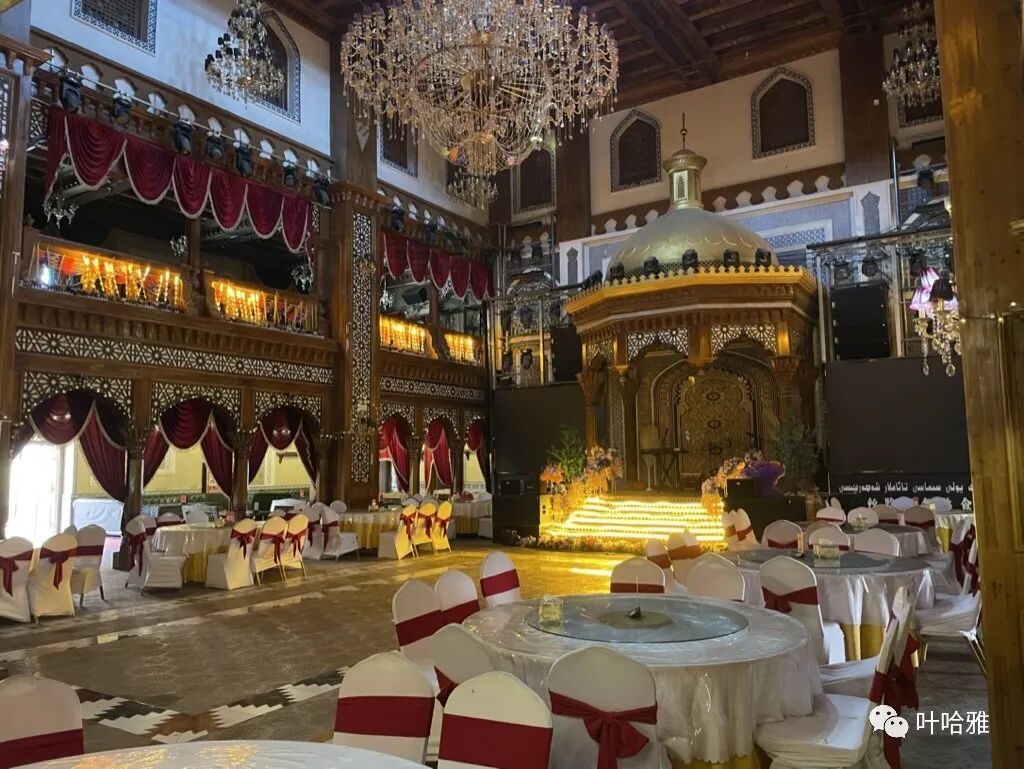
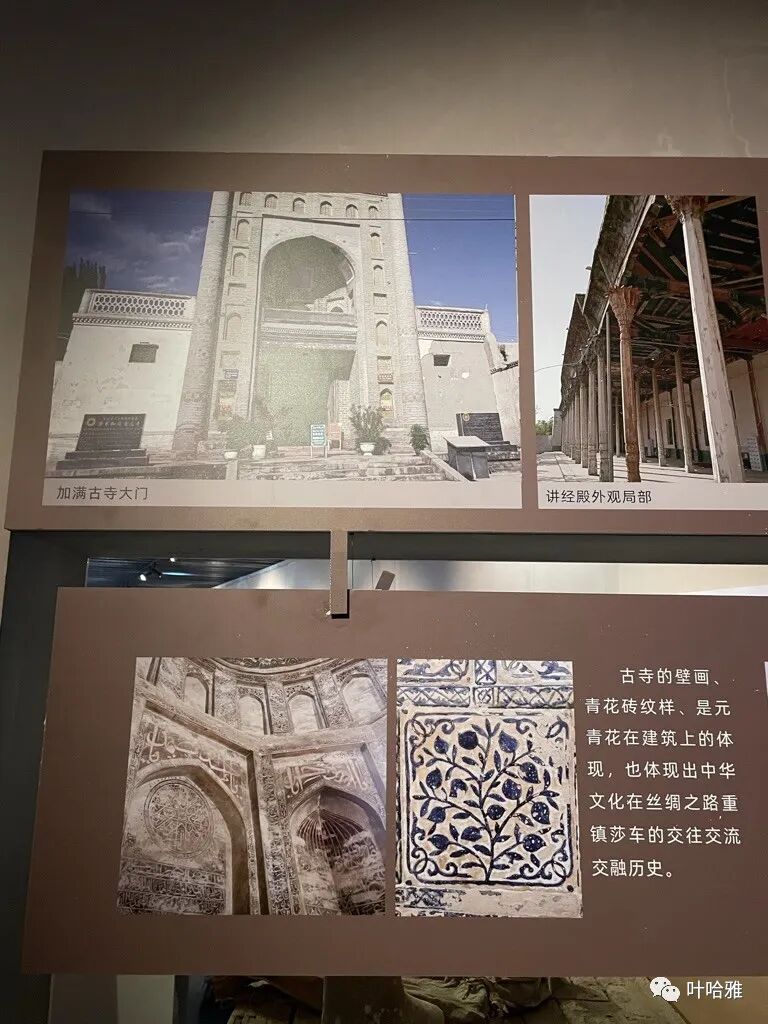
Next to the royal mausoleum is the Altun Mosque. It was open, but not for visitors, and there was someone guarding the entrance.
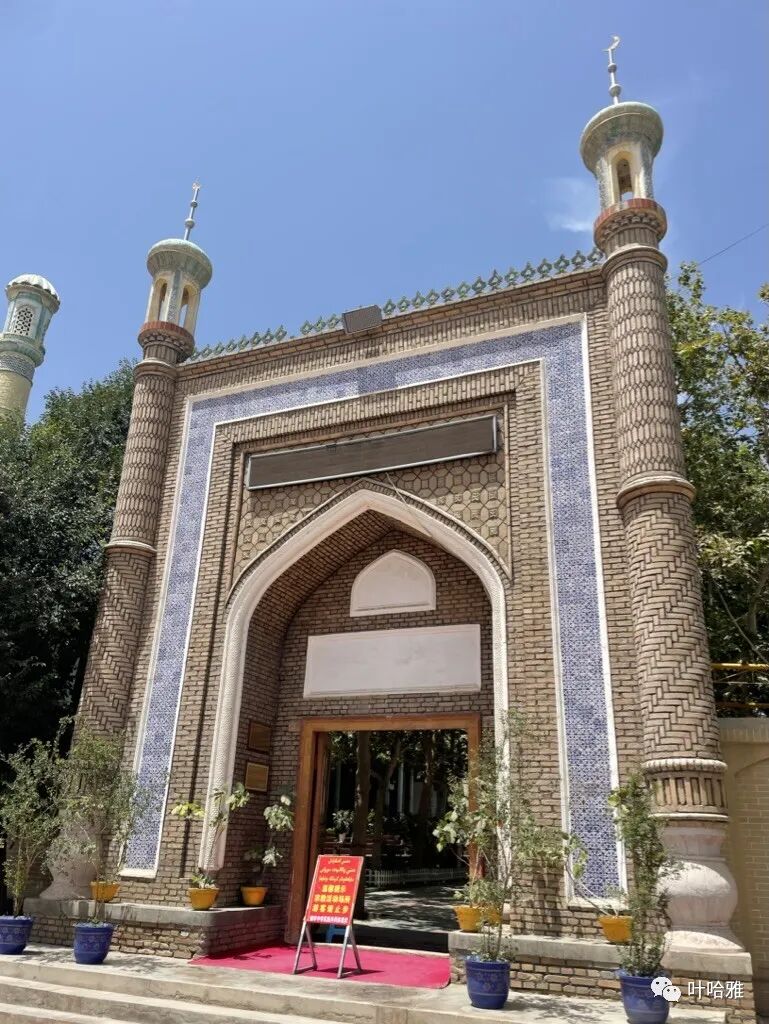
Altun Mosque
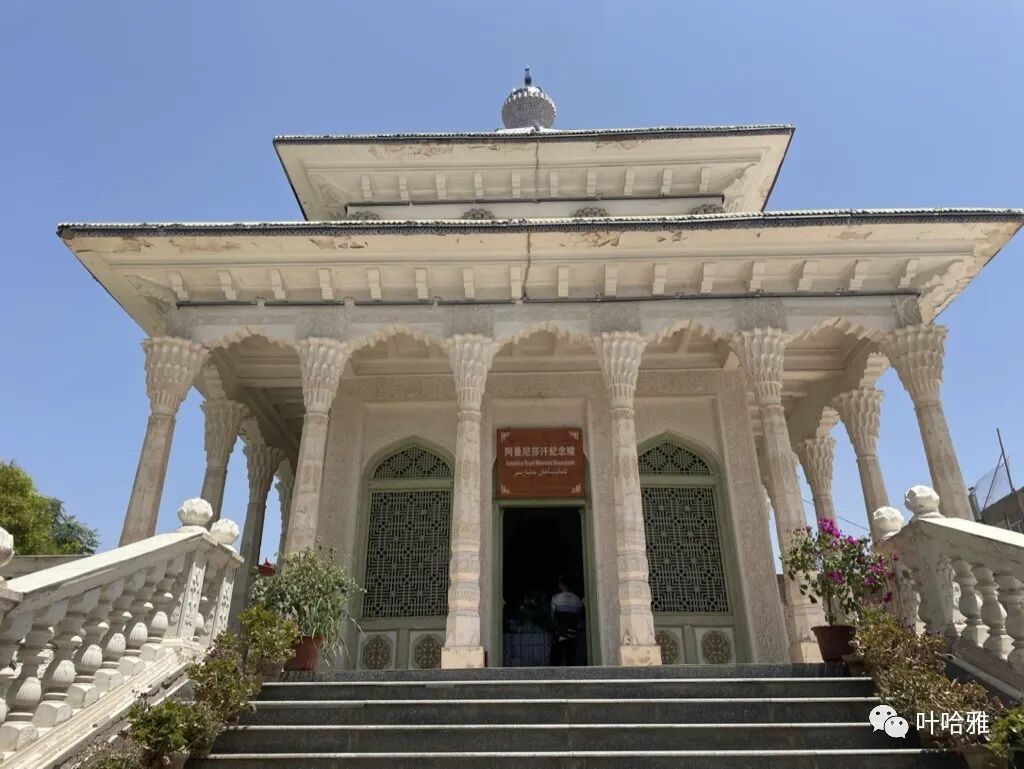
Amanisahan (1526-1560) was the master who compiled the Twelve Muqam art. She married into the palace at 13 and died during childbirth at 34.
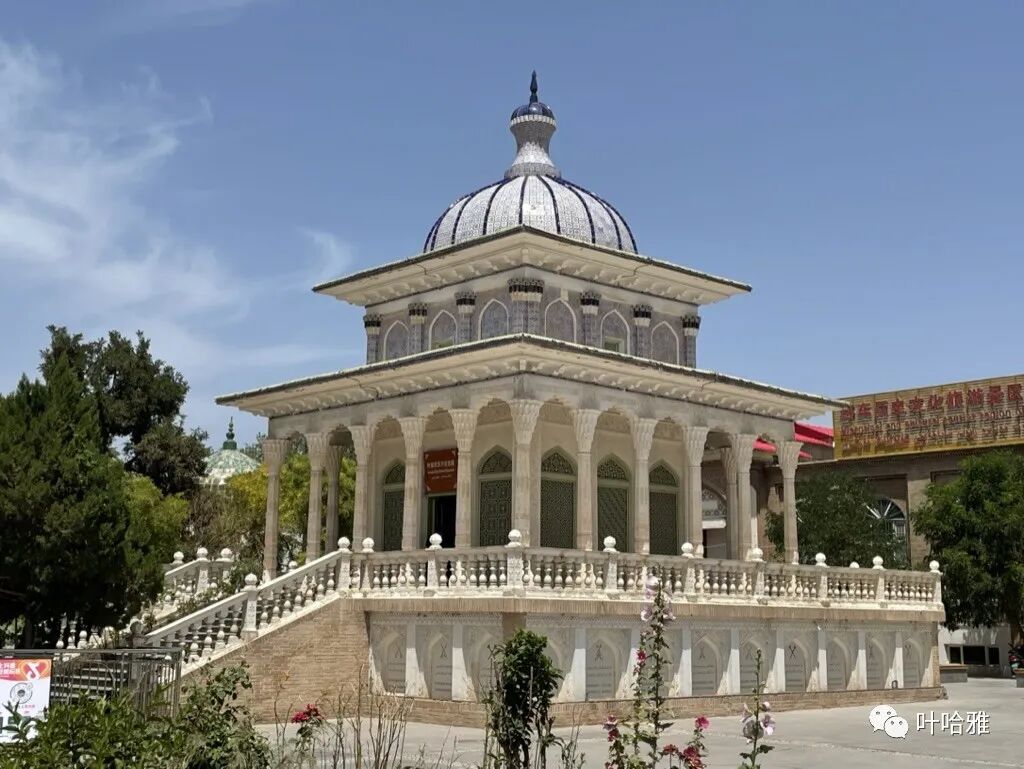
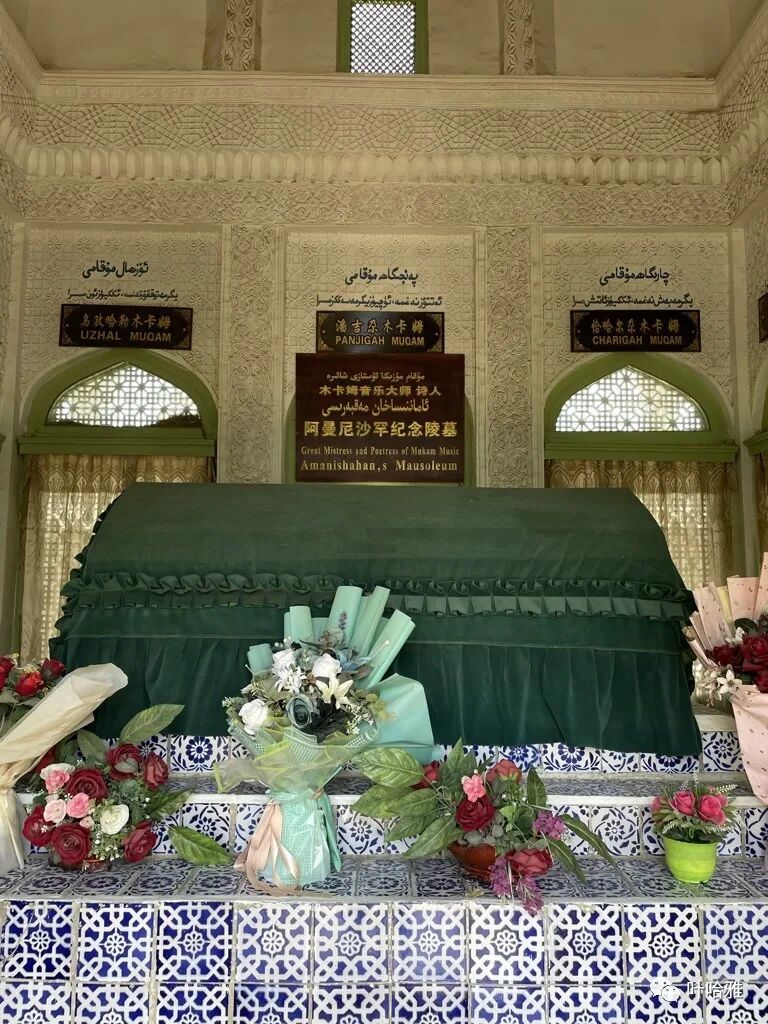
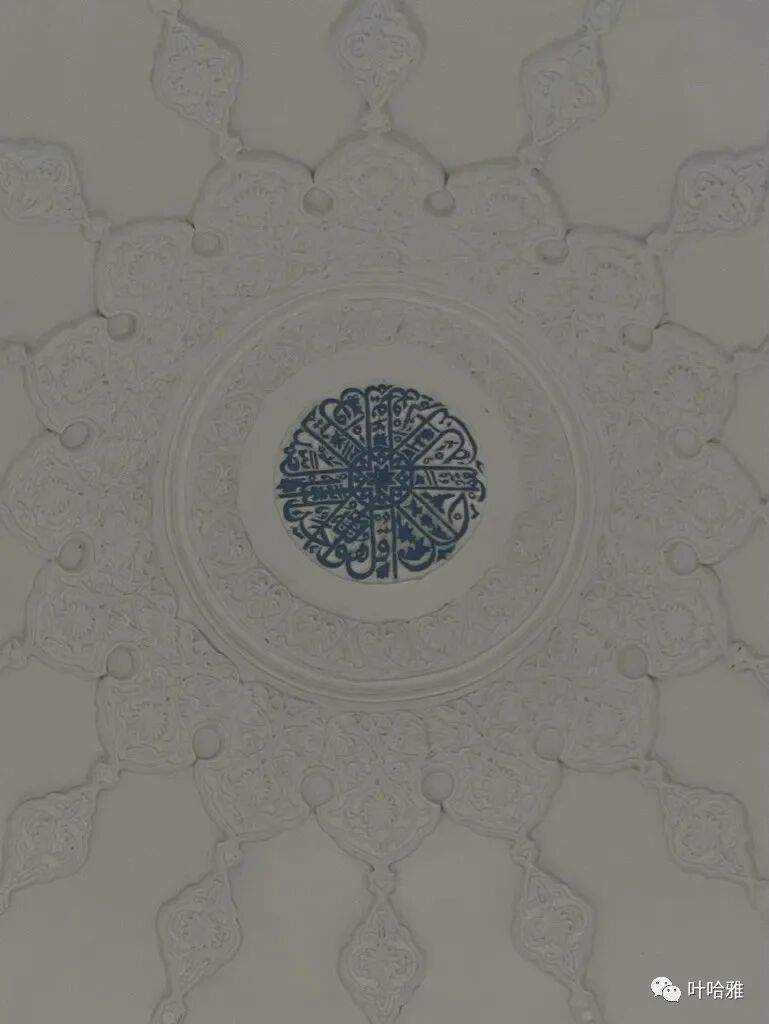
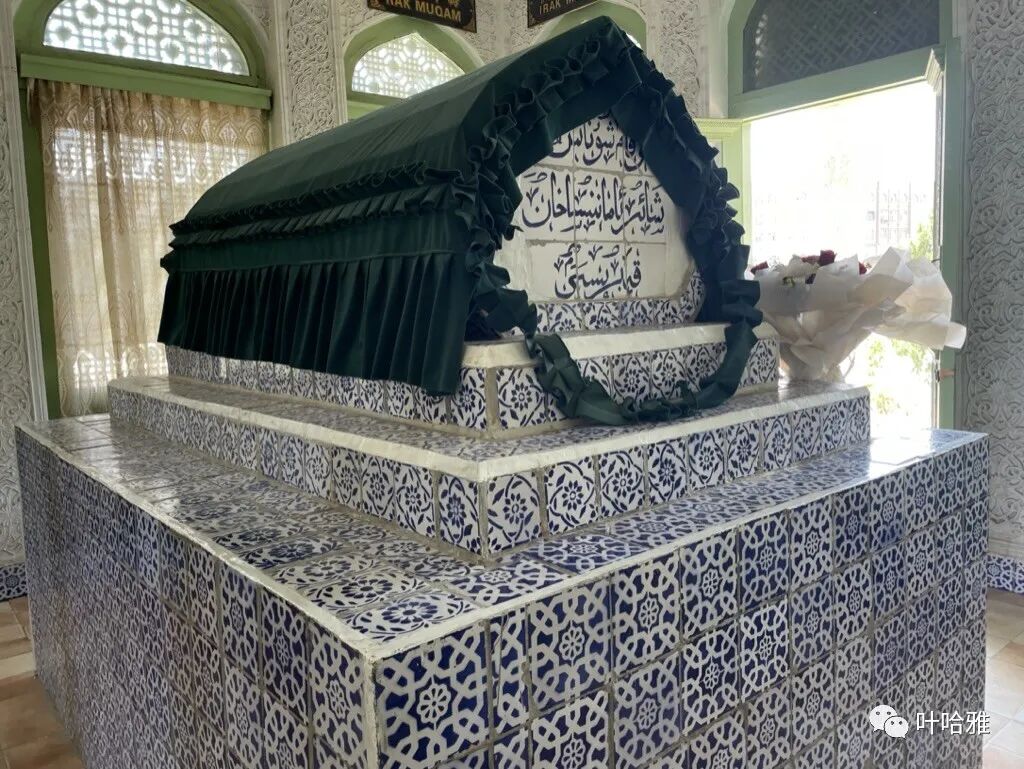
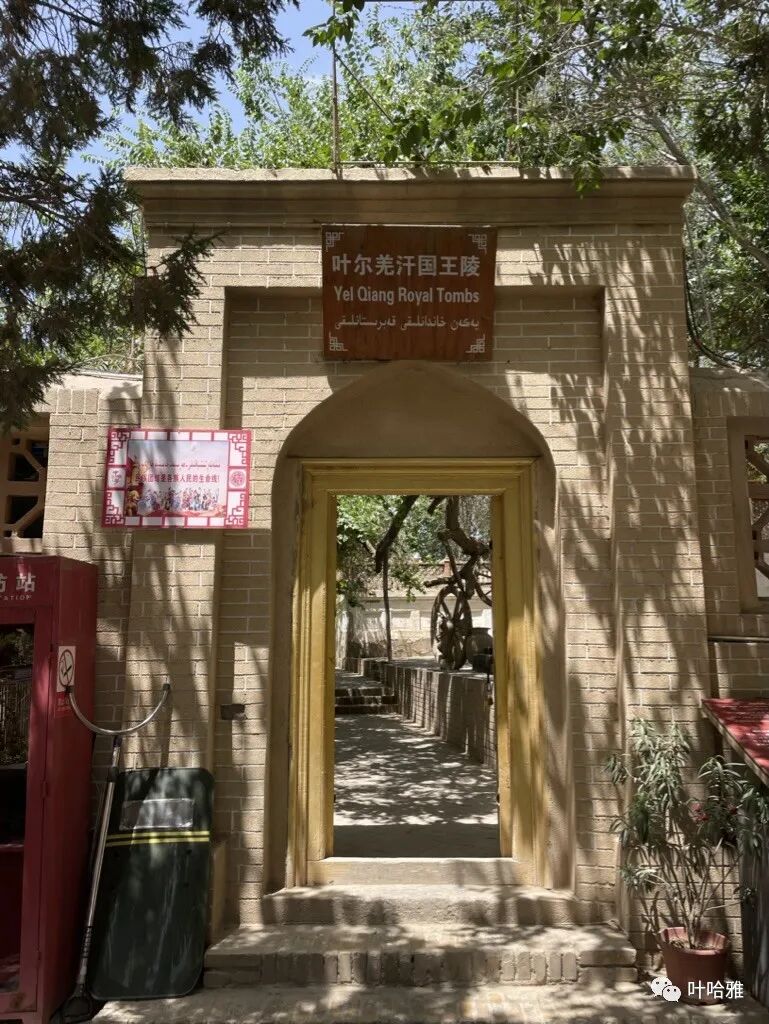
The Yarkant Khanate Royal Mausoleum holds the remains of generations of the royal family. Yarkant County was formerly known as Yarkant City and served as the capital of the Khanate, which followed the Black Mountain sect.
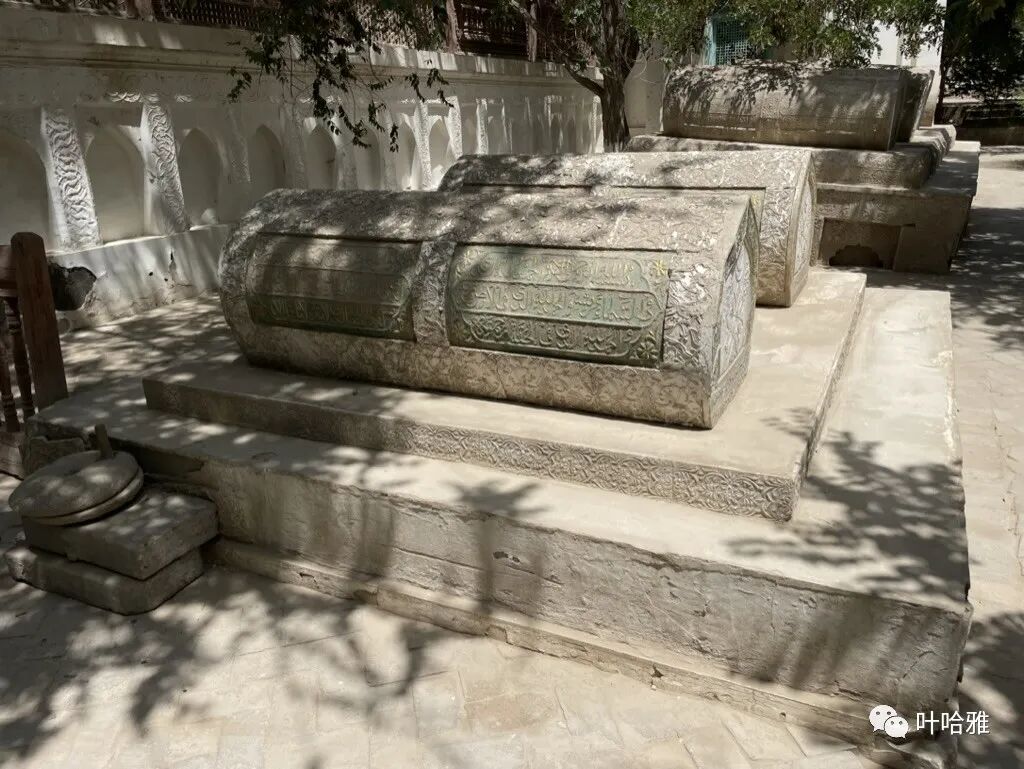
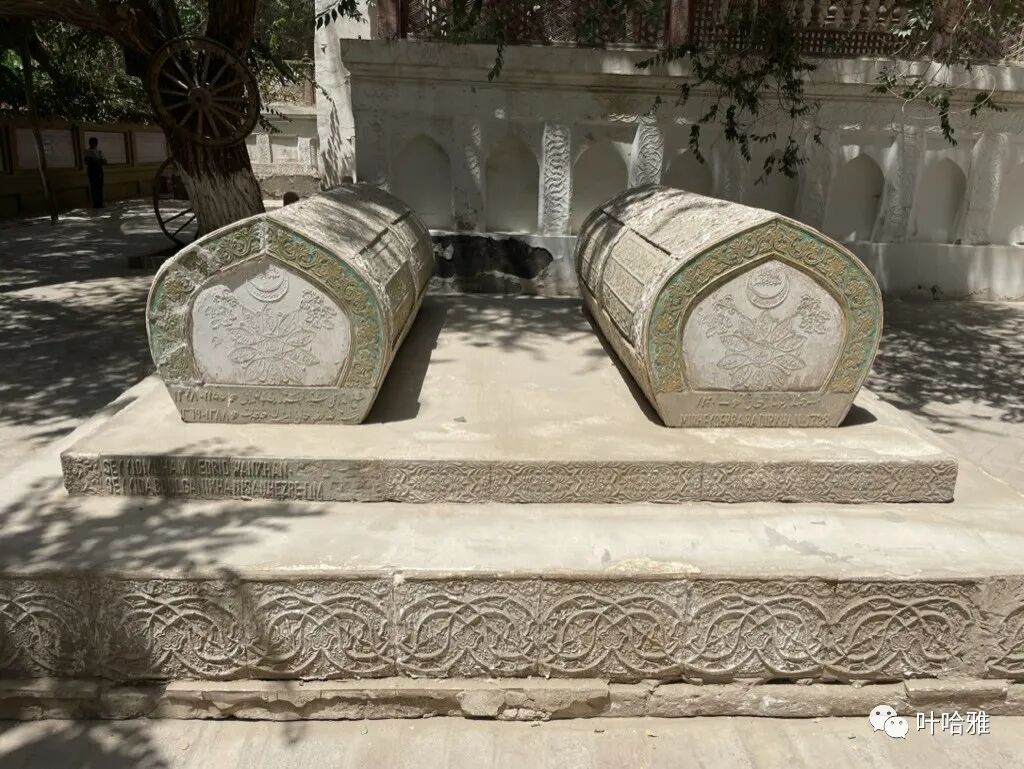
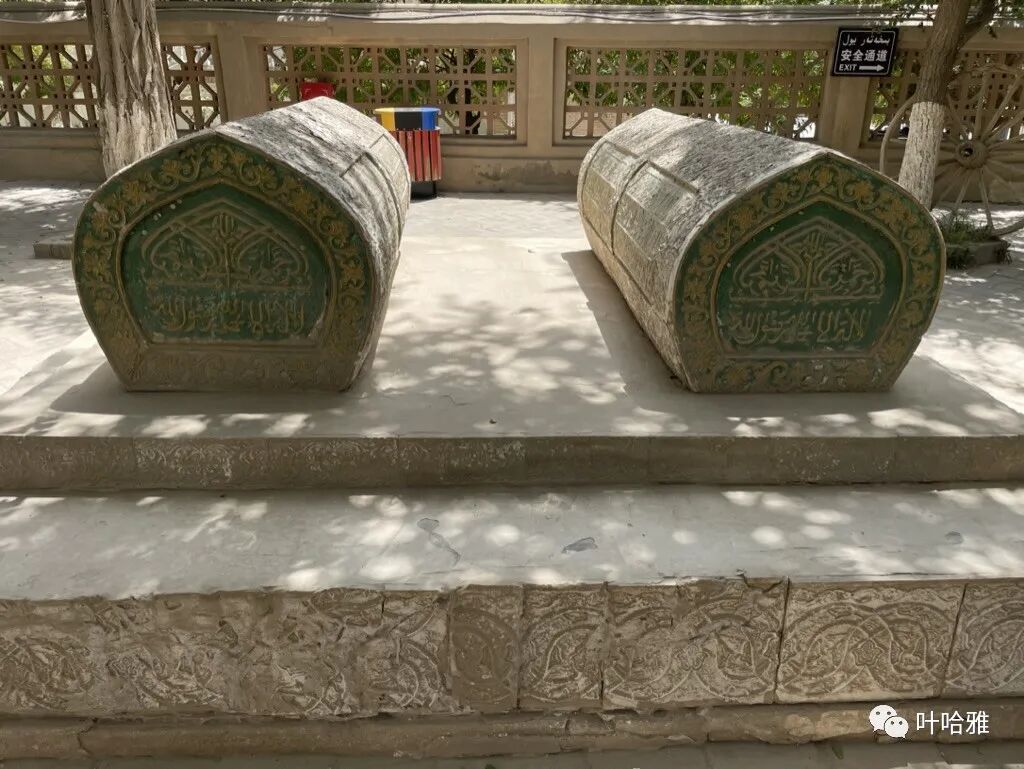
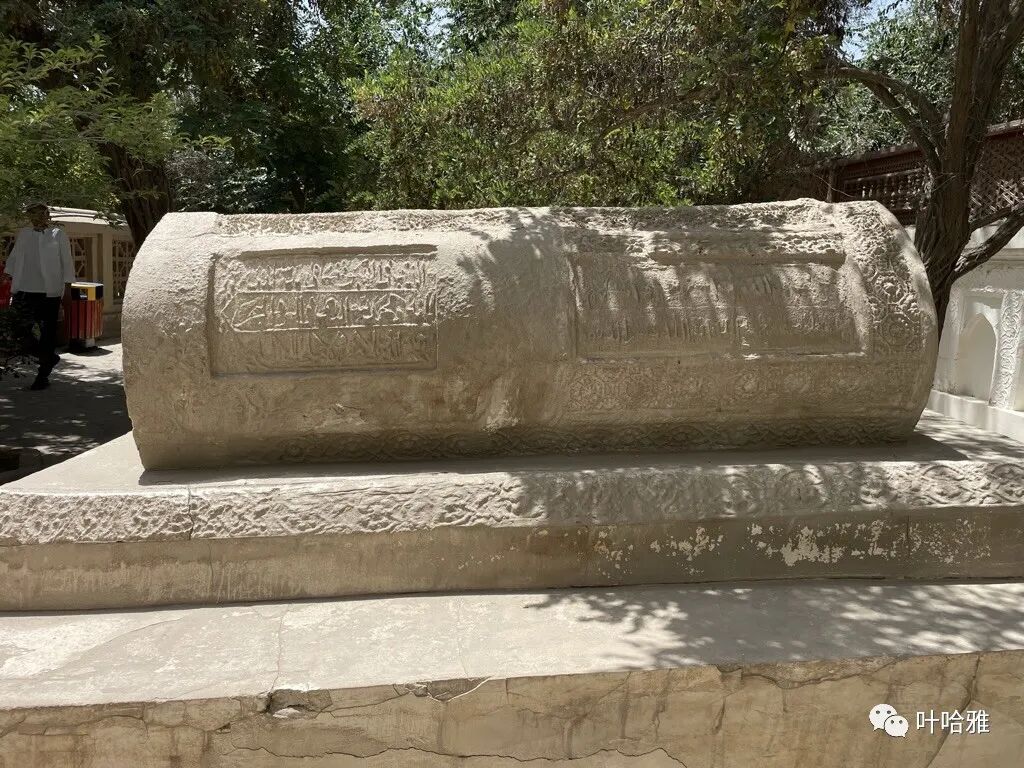
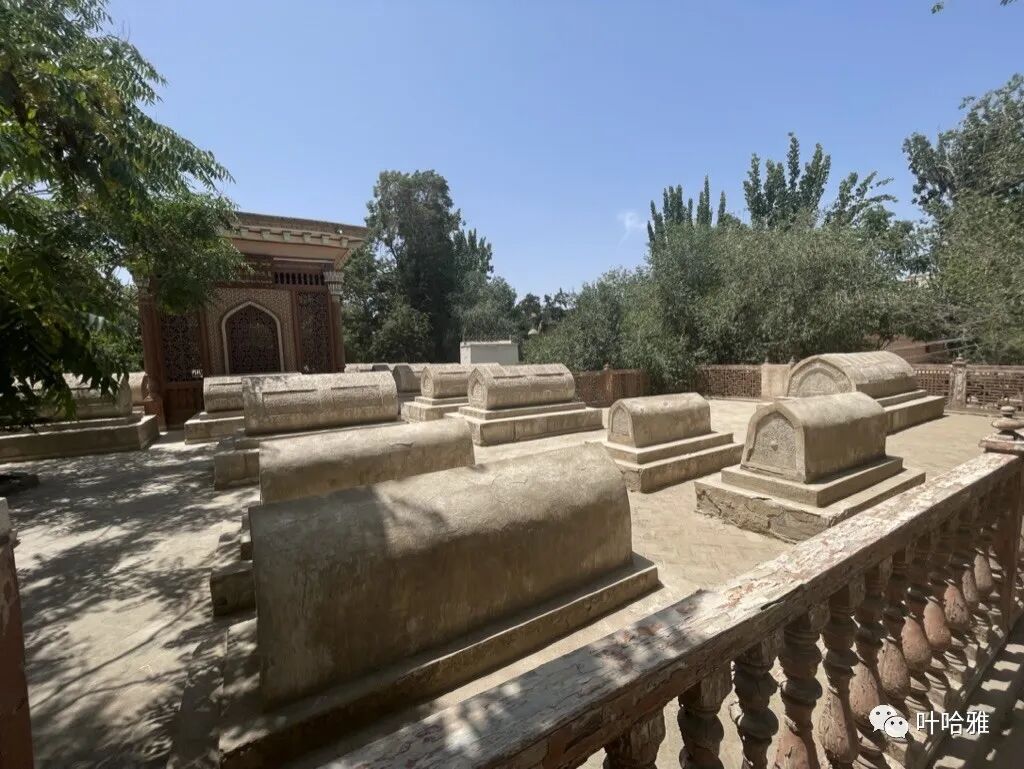
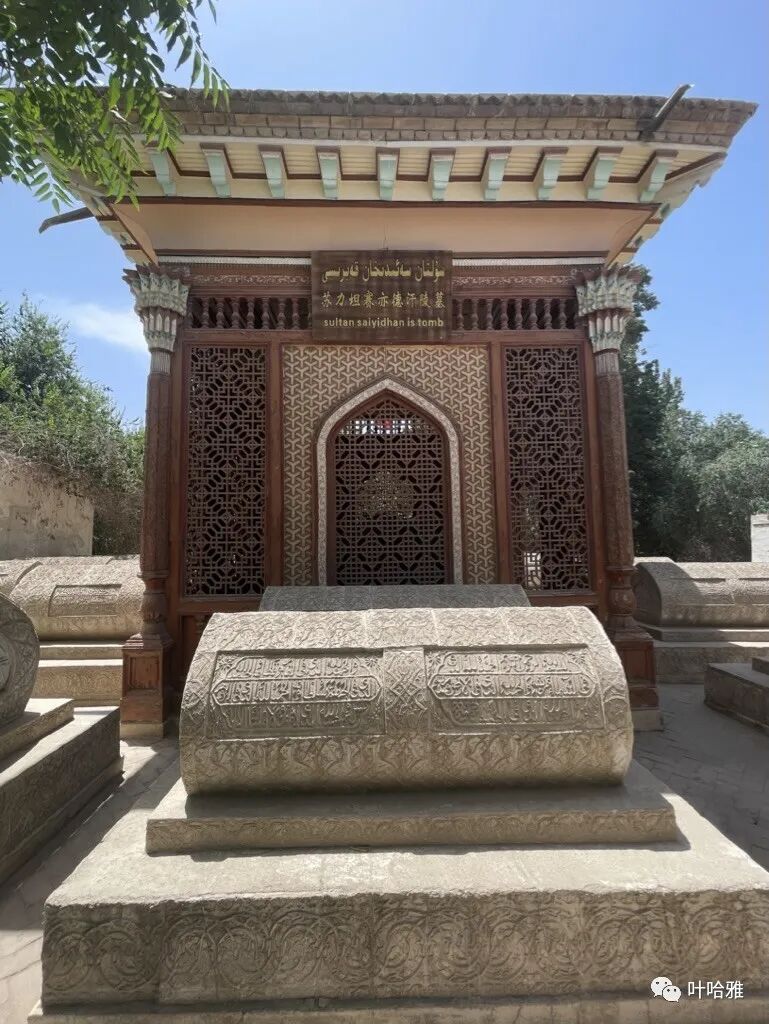
The tomb of Sultan Said, the founder of the Khanate.
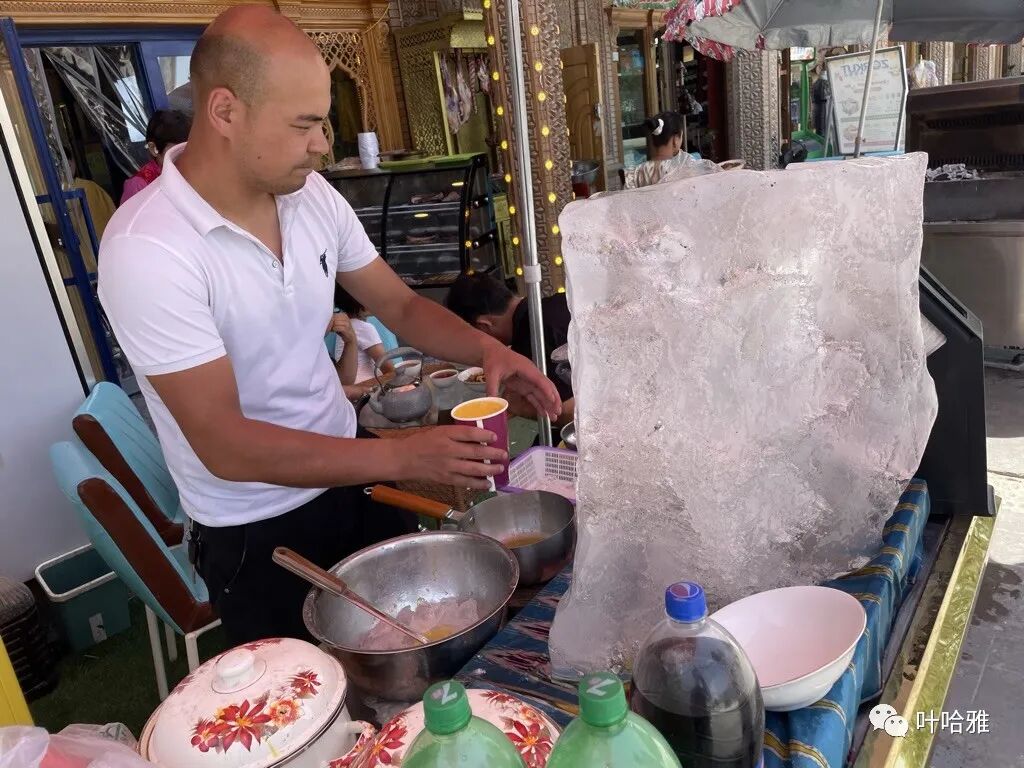
I had a shaved ice (baobing) in the square. The summer heat in southern Xinjiang is intense, and shaved ice is the perfect way to cool down and quench your thirst.
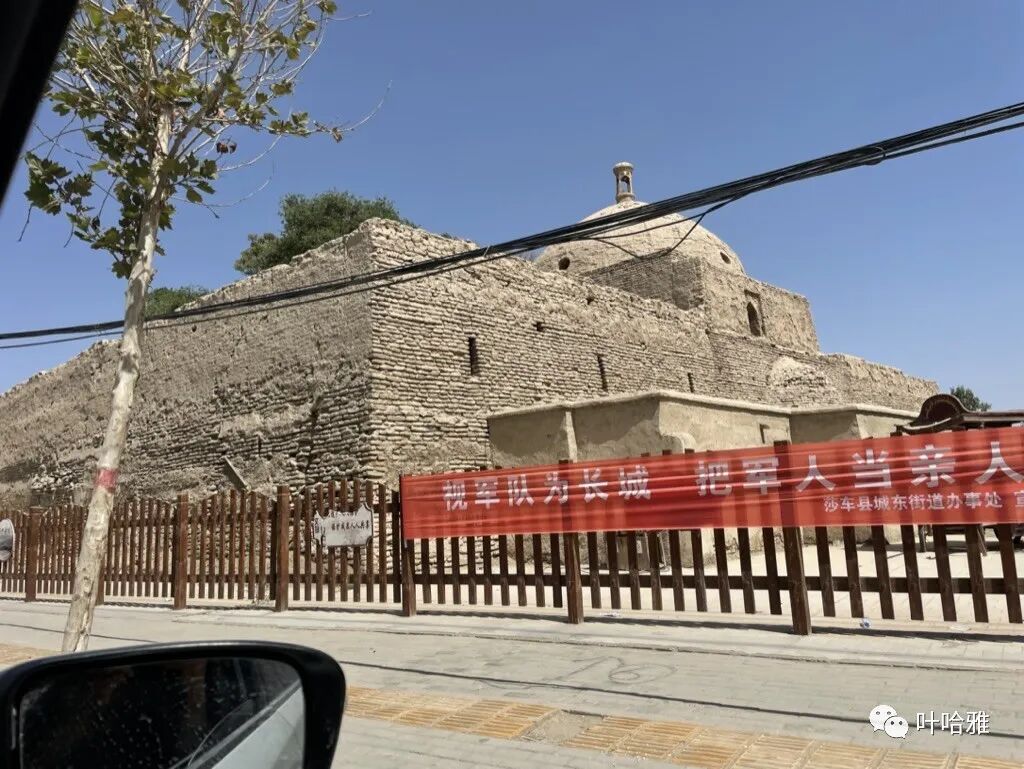
Azina Mosque
Azina Mosque appeared, and I carefully took a quick photo from the car. I haven't had enough of the beauty of Yarkant (Shache) and Hotan yet, so I think I will come back again.
Summary: This Muslim travel guide to southern Xinjiang follows the route from Ruoqiang to Yarkand, with halal food stops, mosque visits, Altun Mosque, Yarkand Khanate royal tombs, Turdi Haji Manor, Uyghur history, and road trip notes.
A Southern Xinjiang Muslim Journey: The Yarkand Khanate Tombs and the Turdi Haji Manor is presented here as a firsthand travel account in clear English, beginning with this scene: We entered Xinjiang from Mangya City in Qinghai, and the first city we reached was Ruoqiang. The account keeps its focus on Yarkand Travel, Chagatai Khanate, Uyghur History while preserving the names, places, food, and historical details from the Chinese source.
We entered Xinjiang from Mangya City in Qinghai, and the first city we reached was Ruoqiang. Since we planned to drive from southern Xinjiang to northern Xinjiang, we hit a sandstorm as soon as we crossed the border. Yellow sand filled the sky, making it impossible to keep our eyes open, and the highway was covered in shifting sand, creating an instantly eerie atmosphere.
Starting from Ruoqiang, we could no longer find restaurants with halal signs.
To know if a restaurant is okay to eat at, you either have to guess or ask. This Yangyangyang Pilaf (zhuafan) shop is an old establishment, and it is safe to eat there.
Our first meal in Xinjiang was the pilaf from this shop. To be honest, their pilaf was just as good as any other I had in later cities.
Next door to Yangyangyang, we found an Azhen Rice Noodles (mifen) shop. This chain also has locations in Beijing and is halal.
Since we couldn't find it on domestic maps, we had to ask passersby for the location of the mosque. After finding it, we discovered it wasn't open. Ruoqiang Mosque was the first mosque we passed on our Xinjiang trip.
After a short break, we continued to the next city, Qiemo. We checked into the Qiemo Hotel in the evening and learned from the staff that the breakfast is halal.
Qiemo Hotel is considered a relatively good state-run guesthouse in the area. Most prefectures in Xinjiang have these types of state-run hotels, so stay in one if you want to avoid bad accommodation experiences.
On the inside of the hotel room door, there was a sign that read, 'Walls have ears, watch your words.' This made me wonder what must have happened here before; otherwise, why would they need such a warning?
Qiemo has a grand bazaar and two night markets. We visited both. They aren't very large, but the food at the night markets is delicious.
We ate baked buns (kaobaozi), roasted pigeon, and red willow skewer meat (hongliu kaorou) at the Yudu Night Market.
Roasted meat (kaorou) tastes good everywhere in Xinjiang, even at highway rest stops.
I had my first bowl of mixed noodles (banmian) in Xinjiang at Ma's Barbecue (Ma Ji Shaokao), and I have never had a bad bowl of mixed noodles in this region.
Wusu carbonated drink.
I found a Flaming Mountain Restaurant (Huoyanshan Canting) in Qiemo. This chain used to have locations in Beijing, but they have all closed down now.
I searched for a mosque on Google Maps for a long time without success, then I suddenly realized this plot of land might be it.
It is now a construction site.
The next day we continued driving west to Yutian County because there is an Id Kah Mosque (Aitiga'er Qingzhensi) there.
Unfortunately, photography is not allowed at the mosque. The security guard deleted the photo I took of the main gate, so I only have one photo of the side.
The image above shows the original appearance of the Id Kah Mosque, taken from the second volume of 'Architectural Art of Islam in China'.
With nowhere else to go, we had to find a nearby restaurant to eat. We happened to see this Hotan Canteen (Hetian Shitang). Yutian County is part of the Hotan region, and since there are Hotan Canteens in Beijing, I wanted to see how this one was different.
The restaurant environment was quite nice, but the food was not good and the prices were high. Combined with my earlier unpleasant experience, I just wanted to leave this city as soon as possible.
I left Yutian and arrived at Hotan Tuancheng. Because I was told not to take photos earlier, I was very careful when I first got to Hotan. I started by taking a few secret photos from inside the car. Later, I saw tourists everywhere and no one was stopping them, so I became bolder. Strangely, I never ran into any more photo restrictions during the rest of my trip in Xinjiang.
Hotan Tuancheng is just like the Old City of Kashgar; it has been renovated and contains both homes and shops. It is worth walking around and eating there. The girls in Hotan are even prettier, and I feel they are better looking than the ones in Kashgar.
A kind girl in Hotan warned us not to drive the wrong way on a one-way street. We were embarrassed because we first thought she was trying to chat us up.
I had my first bowl of yogurt shaved ice (suannai baobing) at this shop in Tuancheng. My first impression of Hotan is really good.
Jiaman Mosque is in the center of Hotan Tuancheng. It was first built during the Guangxu reign of the Qing Dynasty (1875).
I asked the Uyghur grandfather at the entrance if I could go inside, but he shook his head.
Pishan County is a place I have always wanted to visit. When I arrived, it was completely different from what I expected. The city was built with help from Anhui Province. There is almost no local ethnic character, and the buildings use the Anhui style, making me feel like I was in Anhui.
The Pishan County Guest House is state-run, like guest houses in other parts of Xinjiang. They are usually the best hotels in the area. If you do not know where to stay, choosing the guest house is a safe bet, and the breakfast is always halal.
I ate at a beef noodle shop run by Uyghurs in Pishan County. It is really hard to find halal restaurants here, and none of them looked like one, but this place called Magake seemed reliable.
I specifically walked around the supermarket and could not find a single halal food item. Even these sausages had no halal label.
A niche spot worth visiting in Pishan County is the Turdi Haji Manor.
Turdi Haji was a wealthy landlord (bai) in Xinjiang during the Republic of China era. He built this manor in 1916. It covers 2,500 square meters and is now a Major Historical and Cultural Site Protected at the National Level.
The gate was locked when we arrived at the manor. We made a phone call, and the local tourism bureau sent a worker to open it for us. Admission was free.
What drew me to the manor were the painted decorations inside. They still have Arabic script, including the Shahada and excerpts from the Quran, along with some Uyghur script.
This is very rare to see in a private home today. The manor blends styles from Central Asia, West Asia, and the Middle East, so I just thought of it as a mosque.
Leaving Hotan Prefecture for Kashgar Prefecture, you pass through Yarkant County (Shache), which was once the site of the Yarkant Khanate palace.
The old mosque district, with the Jiaman Mosque at its center, is currently undergoing renovations.
We ate Nurgul cold jelly noodles (liangfen liangpi) in Yarkant County. The whole room was full of women, and we were the only table of men.
But these cold noodles were really delicious, and they even added chickpeas.
The Yarkant Khanate Palace is a must-visit spot for tourists with a 40 yuan ticket, but it is a new building modeled after the original, so it is optional. However, the Amanisahan and Yarkant Khanate Royal Mausoleum across the street is worth a visit.
Next to the royal mausoleum is the Altun Mosque. It was open, but not for visitors, and there was someone guarding the entrance.
Altun Mosque
Amanisahan (1526-1560) was the master who compiled the Twelve Muqam art. She married into the palace at 13 and died during childbirth at 34.
The Yarkant Khanate Royal Mausoleum holds the remains of generations of the royal family. Yarkant County was formerly known as Yarkant City and served as the capital of the Khanate, which followed the Black Mountain sect.
The tomb of Sultan Said, the founder of the Khanate.
I had a shaved ice (baobing) in the square. The summer heat in southern Xinjiang is intense, and shaved ice is the perfect way to cool down and quench your thirst.
Azina Mosque
Azina Mosque appeared, and I carefully took a quick photo from the car. I haven't had enough of the beauty of Yarkant (Shache) and Hotan yet, so I think I will come back again.
Muslim Travel Guide China: Northern Xinjiang Sayram Lake, Yining Shaanxi Mosque and Halal Food
Articles • yusuf908 posted the article • 0 comments • 155 views • 2026-05-22 21:11
Reposted from the web
Summary: This Muslim travel guide to northern Xinjiang follows the Duku Highway, Bayanbulak Grassland, Nalati, Yining Shaanxi Mosque, Sayram Lake, Hui and Uyghur prayer life, and local halal food on the road.
A Halal Trip to Northern Xinjiang: Is Sayram Lake Actually Called Sailimai? is presented here as a firsthand travel account in clear English, beginning with this scene: Driving from Urumqi in Northern Xinjiang to Southern Xinjiang via the Duku Highway is a classic road trip, but I chose to drive from south to north. The account keeps its focus on Urumqi Halal Food, Hui Muslims, Xinjiang Travel while preserving the names, places, food, and historical details from the Chinese source.
Driving from Urumqi in Northern Xinjiang to Southern Xinjiang via the Duku Highway is a classic road trip, but I chose to drive from south to north. Going in reverse helps avoid the heavy traffic of the peak tourist season. The route passes through the Bayanbulak Grassland and the Nalati Grassland. The 560-kilometer drive from Kuqa to Yili includes about half on the Duku Highway, taking nine hours in total. You can experience all four seasons in a single day.
Having an electronic toll collection (ETC) tag saves time. Not many cars in Xinjiang have them, even though highways have ETC lanes. Most drivers get stuck in lines at the manual toll booths. Using an ETC tag on the Duku Highway costs 19 yuan, while the manual toll is 20 yuan.
The Duku Highway has an average elevation of 2,000 meters. You can see high-altitude snow-capped mountains, vast grasslands, deep canyons, and lakes. The scenery is truly beautiful. There are many rest areas along the way for sightseeing. A few spots are paid attractions, but I skipped those as they did not seem necessary.
Before reaching Yining County in Yili, you pass through the Bayanbulak Grassland and the Nalati Grassland. The Bayanbulak Grassland stretches for hundreds of kilometers. The endless sea of green grass and the blue sky wiped away all the fatigue from driving.
You can drive your own car into the Nalati Scenic Area, but you must book tickets on their official WeChat account a few days in advance. Self-driving tickets are in high demand, so it is best to get them early. We did not plan to enter the scenic area and just drove past it. These photos were taken with a phone, and the scenery inside is basically the same.
After a long day of travel, we arrived in Yining County, Yili Prefecture, after 10 p.m., just in time for the Maghrib (shamu) prayer.
This was our first time joining a congregational prayer at a mosque since arriving in Xinjiang, and I felt incredibly moved.
The elders at the mosque were very welcoming and told us about the Shaanxi Grand Mosque. The Yining Shaanxi Grand Mosque was built in 1751 during the 16th year of the Qianlong reign of the Qing Dynasty. The main hall has two floors; the first floor has Uyghur-style interiors, while the second floor is in a traditional Chinese style. Currently, only the first floor is open.
Many places in Xinjiang have Shaanxi mosques, which were usually built by Hui Muslims who moved from inland China. During prayer time, I saw Uyghur elders and Hui Muslims praying together. After the prayer, everyone greeted each other, and the atmosphere was very harmonious.
The Shaanxi Grand Mosque is located in the Kazanqi Old Town in the center of Yining, which is also a popular spot for tourists.
Another national cultural heritage site in Yining is the minaret of the Jiefang South Road Mosque, also known as the Baitula Mosque. It was built in 1773 during the 38th year of the Qianlong reign of the Qing Dynasty. The main building was demolished and rebuilt in 1996, but the minaret was preserved.
This street is also a night market packed with food, and it stays busy until after one in the morning.
I spent 10 yuan at the night market on three pieces of milk tofu (naidoufu). I took a bite, and it was sour and smelly; I think I ate it the wrong way.
For dinner, I had mixed noodles (banmian) and wontons (huntun) at Wuziqiaokelike on Jiefang South Road. The place was full of people, and the food tasted good.
Another food bazaar in Yining is on Hanren Street. I used to hear that there were no Han people on Hanren Street. That might have been true at one time, but it is definitely not the case now, as there are plenty of Han tourists there.
I had a bowl of starch noodle soup (fentang) at a Uyghur stall.
Aibaoersake Kazakh Theme Restaurant
I had Kazakh breakfast twice in Six-Star Street in Yining. Kazakh people eat stir-fried dishes for breakfast, which is very hardcore.
The staff clearly looked Kazakh, with facial features similar to Mongolians.
Baorsak is the fried dough food shown below. It is fluffy and soft, and you can dip it in various sauces. It is a Kazakh specialty, a bit like the fried dough (youxiang) eaten by Hui Muslims.
Baorsak
Kazakh potatoes
You definitely have to drink milk tea in the morning. It is salty and served with Kazakh potatoes, stir-fried meat with chili peppers, and a side of smoked horse sausage. Having such a special breakfast in Yili is very satisfying.
For a main meal, try traditional Yili stir-fry. I recommend Yimaisi, located not far from Six Star Street. It is owned by the same people as the Lari Hot Pot next door. This restaurant has been open for nearly eight years and is one of the few places in Xinjiang that does not serve alcohol or allow smoking. Staying open for eight years means the food must be good enough to win over the locals.
I tried their stir-fried dishes and every single one was delicious. The owner told me that they make as many ingredients as possible from scratch instead of buying pre-made items. Even their yogurt shaved ice (suannai baobing) is made with great care.
Yogurt shaved ice (suannai baobing)
Fermented vegetable noodle soup (jiangshui mian)
This was my first time eating fermented vegetable noodle soup (jiangshui mian) served hot. I had only eaten it cold before in Gansu.
Freshly fried dough fritters (youxiang)
It is worth noting that not only are the meat dishes good, but their vegetable dishes are also very flavorful. It is no wonder the owner can keep the business booming without selling alcohol, which is not an easy thing to do in Xinjiang. This was the most impressive restaurant we ate at in Yining.
Another place in Six Star Street, Laoha Fast Food, was recommended by a friend for breakfast. The environment is simple, but it feels very authentic and the prices are much cheaper.
The interesting thing about this shop is that breakfast is self-service. You take what you want to eat, and when you finish, you go to the owner to pay. You just tell them what you ate based on your own memory. The owner cannot keep track of everyone, and I believe very few people would lie about what they ate.
There is a popular restaurant in Six Star Street called Blue Wall Mianfeizi that many friends recommended I try. It is called Blue Wall because the walls are painted blue, which is a common color for houses in Yili.
The lung and noodle dish (mianfeizi) is truly delicious and business is very good, but their operating hours are short and they close as soon as it gets dark.
Lung noodles (mianfeizi)
Mudanhan ice cream
Across from the blue-walled lung noodles (mianfeizi) shop is a beautiful ice cream parlor called Mudanhan. Ice cream shops are popular spots for people in Yili to relax and chat, and you can find them everywhere. However, Mudanhan uses better ingredients than the others I have tried. Their ice cream is made with pure milk, has no ice crystals, and tastes rich and smooth.
Six Star Street also has a long-standing ice cream shop called Gulandamu. It is an old shop with a traditional residential style and a nice atmosphere, but the ice cream is not as pure in texture as Mudanhan. Mudanhan is a better fit for young people.
The buildings on Six Star Street are mostly in a Russian style because the area was influenced by Tsarist Russia in the past. This Russian-style neighborhood look is at least a hundred years old. Even the mosque on Six Star Street is in a Russian style and is very beautiful. The young men and women in Yili also dress with a Russian flair. This is part of Yili's charm, where you can experience the collision of different cultures.
Dongguan West Mosque in Yangbulake Village
Leaving Yining, we saw the Kazakh Dongguan West Mosque in Yangbulake Village on the way to the Horgos border crossing, but it was not open.
Horgos has two national gates. The first is the old gate, and below it is the new gate. If you have a passport, you can take a visa-free one-day trip to Kazakhstan.
We set off from Yining to Shuiding Town in Huocheng to visit the gongbei of the wife of Ma Mingxin, the founding master of the Jahriyya order.
The wife's gongbei in Shuiding Town
The Zhang family wife's gongbei has been closed for all activities for many years, and the inside is overgrown with weeds.
Ma Mingxin, the founding master of the Jahriyya order, had two wives. One was a Salar grandmother who committed suicide after learning that Ma Mingxin had been killed. The other was this Zhang family wife from Caoyagou, Tongwei, Gansu. She and her three daughters were exiled to Xinjiang, and the three daughters died on the way.
Mrs. Zhang's daughter, Mrs. Hagu, drowned herself in a lake on her way to Yili. According to an imam from the Jahriyya (Zhepai) order, the name Sayram Lake comes from Mrs. Hagu's religious name, Salima. Mrs. Zhang was exiled alone to work as a slave in an official residence in Yili.
In the 46th year of the Qianlong reign, Mrs. Zhang killed an official's entire family with a knife in the middle of the night. She later turned herself in, was sentenced to death by the Qing court, and was buried by the Yili River.
After visiting this shrine (gongbei), I have now been to all the main shrines of the Jahriyya order. Although I am not a member of a Sufi order (menhuan) and only knew about them from books before, visiting them in person and talking with the families has given me a lot to think about. The information in books about these orders is still quite one-sided.
I left Shuiding Town and headed toward Urumqi. On the way, I passed Sayram Lake and accidentally found a rest area in Guozigou. There is a path that leads directly to the Sayram Lake scenic area, so I didn't have to buy a ticket and saved the 300 yuan self-driving fee.
Remember this entrance: navigate to the Guozigou pasture in Huocheng County. Go up the mountain from this point, and you can reach the top in about an hour to look down at the full view of Sayram Lake.
The horses along the way are raised by Kazakh people. You can also ride a horse up the mountain, but they charge by the hour, and the actual cost is about the same as the scenic area entrance ticket.
We reached the top of the mountain in no time. The scenery in front of us was beautiful, and it was free, too.
The beauty of Sayram Lake is just as good as Kanas Lake, which I have visited before. Plus, after hearing the stories of the Jahriyya order on this trip, I feel it has even more meaning. As for whether it should be called Sayram Lake or Salima Lake, it really doesn't matter to the Jahriyya.
I remember the imam saying that in winter, one part of the lake never freezes, which seems to be a sign. The imam had tears in his eyes when he mentioned that history, a scene I could never have felt just by reading a book. view all
Summary: This Muslim travel guide to northern Xinjiang follows the Duku Highway, Bayanbulak Grassland, Nalati, Yining Shaanxi Mosque, Sayram Lake, Hui and Uyghur prayer life, and local halal food on the road.
A Halal Trip to Northern Xinjiang: Is Sayram Lake Actually Called Sailimai? is presented here as a firsthand travel account in clear English, beginning with this scene: Driving from Urumqi in Northern Xinjiang to Southern Xinjiang via the Duku Highway is a classic road trip, but I chose to drive from south to north. The account keeps its focus on Urumqi Halal Food, Hui Muslims, Xinjiang Travel while preserving the names, places, food, and historical details from the Chinese source.
Driving from Urumqi in Northern Xinjiang to Southern Xinjiang via the Duku Highway is a classic road trip, but I chose to drive from south to north. Going in reverse helps avoid the heavy traffic of the peak tourist season. The route passes through the Bayanbulak Grassland and the Nalati Grassland. The 560-kilometer drive from Kuqa to Yili includes about half on the Duku Highway, taking nine hours in total. You can experience all four seasons in a single day.
Having an electronic toll collection (ETC) tag saves time. Not many cars in Xinjiang have them, even though highways have ETC lanes. Most drivers get stuck in lines at the manual toll booths. Using an ETC tag on the Duku Highway costs 19 yuan, while the manual toll is 20 yuan.
The Duku Highway has an average elevation of 2,000 meters. You can see high-altitude snow-capped mountains, vast grasslands, deep canyons, and lakes. The scenery is truly beautiful. There are many rest areas along the way for sightseeing. A few spots are paid attractions, but I skipped those as they did not seem necessary.
Before reaching Yining County in Yili, you pass through the Bayanbulak Grassland and the Nalati Grassland. The Bayanbulak Grassland stretches for hundreds of kilometers. The endless sea of green grass and the blue sky wiped away all the fatigue from driving.
You can drive your own car into the Nalati Scenic Area, but you must book tickets on their official WeChat account a few days in advance. Self-driving tickets are in high demand, so it is best to get them early. We did not plan to enter the scenic area and just drove past it. These photos were taken with a phone, and the scenery inside is basically the same.
After a long day of travel, we arrived in Yining County, Yili Prefecture, after 10 p.m., just in time for the Maghrib (shamu) prayer.
This was our first time joining a congregational prayer at a mosque since arriving in Xinjiang, and I felt incredibly moved.
The elders at the mosque were very welcoming and told us about the Shaanxi Grand Mosque. The Yining Shaanxi Grand Mosque was built in 1751 during the 16th year of the Qianlong reign of the Qing Dynasty. The main hall has two floors; the first floor has Uyghur-style interiors, while the second floor is in a traditional Chinese style. Currently, only the first floor is open.
Many places in Xinjiang have Shaanxi mosques, which were usually built by Hui Muslims who moved from inland China. During prayer time, I saw Uyghur elders and Hui Muslims praying together. After the prayer, everyone greeted each other, and the atmosphere was very harmonious.
The Shaanxi Grand Mosque is located in the Kazanqi Old Town in the center of Yining, which is also a popular spot for tourists.
Another national cultural heritage site in Yining is the minaret of the Jiefang South Road Mosque, also known as the Baitula Mosque. It was built in 1773 during the 38th year of the Qianlong reign of the Qing Dynasty. The main building was demolished and rebuilt in 1996, but the minaret was preserved.
This street is also a night market packed with food, and it stays busy until after one in the morning.
I spent 10 yuan at the night market on three pieces of milk tofu (naidoufu). I took a bite, and it was sour and smelly; I think I ate it the wrong way.
For dinner, I had mixed noodles (banmian) and wontons (huntun) at Wuziqiaokelike on Jiefang South Road. The place was full of people, and the food tasted good.
Another food bazaar in Yining is on Hanren Street. I used to hear that there were no Han people on Hanren Street. That might have been true at one time, but it is definitely not the case now, as there are plenty of Han tourists there.
I had a bowl of starch noodle soup (fentang) at a Uyghur stall.
Aibaoersake Kazakh Theme Restaurant
I had Kazakh breakfast twice in Six-Star Street in Yining. Kazakh people eat stir-fried dishes for breakfast, which is very hardcore.
The staff clearly looked Kazakh, with facial features similar to Mongolians.
Baorsak is the fried dough food shown below. It is fluffy and soft, and you can dip it in various sauces. It is a Kazakh specialty, a bit like the fried dough (youxiang) eaten by Hui Muslims.
Baorsak
Kazakh potatoes
You definitely have to drink milk tea in the morning. It is salty and served with Kazakh potatoes, stir-fried meat with chili peppers, and a side of smoked horse sausage. Having such a special breakfast in Yili is very satisfying.
For a main meal, try traditional Yili stir-fry. I recommend Yimaisi, located not far from Six Star Street. It is owned by the same people as the Lari Hot Pot next door. This restaurant has been open for nearly eight years and is one of the few places in Xinjiang that does not serve alcohol or allow smoking. Staying open for eight years means the food must be good enough to win over the locals.
I tried their stir-fried dishes and every single one was delicious. The owner told me that they make as many ingredients as possible from scratch instead of buying pre-made items. Even their yogurt shaved ice (suannai baobing) is made with great care.
Yogurt shaved ice (suannai baobing)
Fermented vegetable noodle soup (jiangshui mian)
This was my first time eating fermented vegetable noodle soup (jiangshui mian) served hot. I had only eaten it cold before in Gansu.
Freshly fried dough fritters (youxiang)
It is worth noting that not only are the meat dishes good, but their vegetable dishes are also very flavorful. It is no wonder the owner can keep the business booming without selling alcohol, which is not an easy thing to do in Xinjiang. This was the most impressive restaurant we ate at in Yining.
Another place in Six Star Street, Laoha Fast Food, was recommended by a friend for breakfast. The environment is simple, but it feels very authentic and the prices are much cheaper.
The interesting thing about this shop is that breakfast is self-service. You take what you want to eat, and when you finish, you go to the owner to pay. You just tell them what you ate based on your own memory. The owner cannot keep track of everyone, and I believe very few people would lie about what they ate.
There is a popular restaurant in Six Star Street called Blue Wall Mianfeizi that many friends recommended I try. It is called Blue Wall because the walls are painted blue, which is a common color for houses in Yili.
The lung and noodle dish (mianfeizi) is truly delicious and business is very good, but their operating hours are short and they close as soon as it gets dark.
Lung noodles (mianfeizi)
Mudanhan ice cream
Across from the blue-walled lung noodles (mianfeizi) shop is a beautiful ice cream parlor called Mudanhan. Ice cream shops are popular spots for people in Yili to relax and chat, and you can find them everywhere. However, Mudanhan uses better ingredients than the others I have tried. Their ice cream is made with pure milk, has no ice crystals, and tastes rich and smooth.
Six Star Street also has a long-standing ice cream shop called Gulandamu. It is an old shop with a traditional residential style and a nice atmosphere, but the ice cream is not as pure in texture as Mudanhan. Mudanhan is a better fit for young people.
The buildings on Six Star Street are mostly in a Russian style because the area was influenced by Tsarist Russia in the past. This Russian-style neighborhood look is at least a hundred years old. Even the mosque on Six Star Street is in a Russian style and is very beautiful. The young men and women in Yili also dress with a Russian flair. This is part of Yili's charm, where you can experience the collision of different cultures.
Dongguan West Mosque in Yangbulake Village
Leaving Yining, we saw the Kazakh Dongguan West Mosque in Yangbulake Village on the way to the Horgos border crossing, but it was not open.
Horgos has two national gates. The first is the old gate, and below it is the new gate. If you have a passport, you can take a visa-free one-day trip to Kazakhstan.
We set off from Yining to Shuiding Town in Huocheng to visit the gongbei of the wife of Ma Mingxin, the founding master of the Jahriyya order.
The wife's gongbei in Shuiding Town
The Zhang family wife's gongbei has been closed for all activities for many years, and the inside is overgrown with weeds.
Ma Mingxin, the founding master of the Jahriyya order, had two wives. One was a Salar grandmother who committed suicide after learning that Ma Mingxin had been killed. The other was this Zhang family wife from Caoyagou, Tongwei, Gansu. She and her three daughters were exiled to Xinjiang, and the three daughters died on the way.
Mrs. Zhang's daughter, Mrs. Hagu, drowned herself in a lake on her way to Yili. According to an imam from the Jahriyya (Zhepai) order, the name Sayram Lake comes from Mrs. Hagu's religious name, Salima. Mrs. Zhang was exiled alone to work as a slave in an official residence in Yili.
In the 46th year of the Qianlong reign, Mrs. Zhang killed an official's entire family with a knife in the middle of the night. She later turned herself in, was sentenced to death by the Qing court, and was buried by the Yili River.
After visiting this shrine (gongbei), I have now been to all the main shrines of the Jahriyya order. Although I am not a member of a Sufi order (menhuan) and only knew about them from books before, visiting them in person and talking with the families has given me a lot to think about. The information in books about these orders is still quite one-sided.
I left Shuiding Town and headed toward Urumqi. On the way, I passed Sayram Lake and accidentally found a rest area in Guozigou. There is a path that leads directly to the Sayram Lake scenic area, so I didn't have to buy a ticket and saved the 300 yuan self-driving fee.
Remember this entrance: navigate to the Guozigou pasture in Huocheng County. Go up the mountain from this point, and you can reach the top in about an hour to look down at the full view of Sayram Lake.
The horses along the way are raised by Kazakh people. You can also ride a horse up the mountain, but they charge by the hour, and the actual cost is about the same as the scenic area entrance ticket.
We reached the top of the mountain in no time. The scenery in front of us was beautiful, and it was free, too.
The beauty of Sayram Lake is just as good as Kanas Lake, which I have visited before. Plus, after hearing the stories of the Jahriyya order on this trip, I feel it has even more meaning. As for whether it should be called Sayram Lake or Salima Lake, it really doesn't matter to the Jahriyya.
I remember the imam saying that in winter, one part of the lake never freezes, which seems to be a sign. The imam had tears in his eyes when he mentioned that history, a scene I could never have felt just by reading a book. view all
Reposted from the web
Summary: This Muslim travel guide to northern Xinjiang follows the Duku Highway, Bayanbulak Grassland, Nalati, Yining Shaanxi Mosque, Sayram Lake, Hui and Uyghur prayer life, and local halal food on the road.
A Halal Trip to Northern Xinjiang: Is Sayram Lake Actually Called Sailimai? is presented here as a firsthand travel account in clear English, beginning with this scene: Driving from Urumqi in Northern Xinjiang to Southern Xinjiang via the Duku Highway is a classic road trip, but I chose to drive from south to north. The account keeps its focus on Urumqi Halal Food, Hui Muslims, Xinjiang Travel while preserving the names, places, food, and historical details from the Chinese source.
Driving from Urumqi in Northern Xinjiang to Southern Xinjiang via the Duku Highway is a classic road trip, but I chose to drive from south to north. Going in reverse helps avoid the heavy traffic of the peak tourist season. The route passes through the Bayanbulak Grassland and the Nalati Grassland. The 560-kilometer drive from Kuqa to Yili includes about half on the Duku Highway, taking nine hours in total. You can experience all four seasons in a single day.
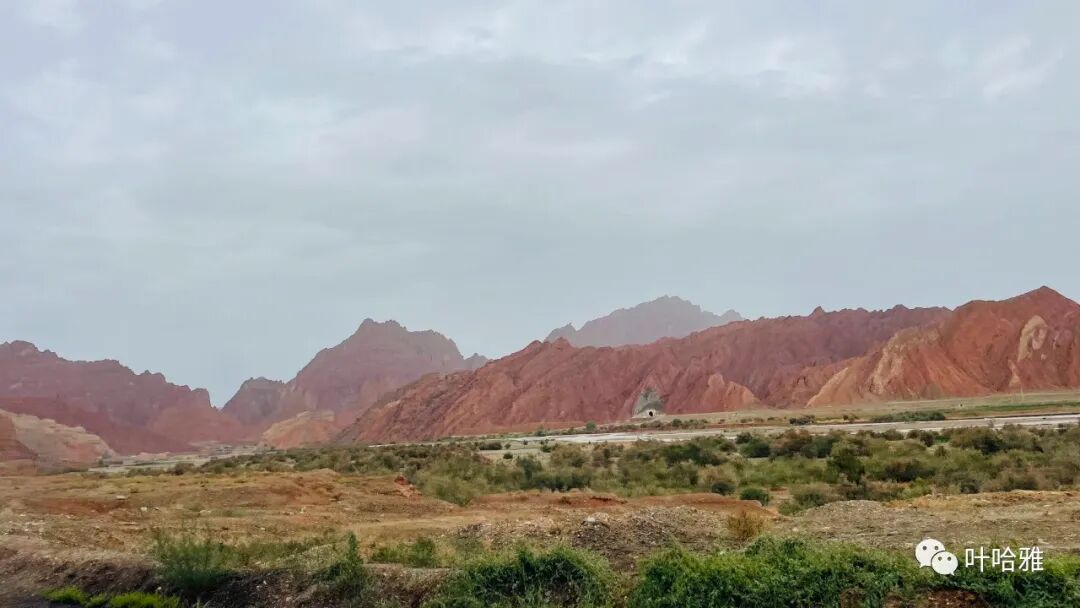
Having an electronic toll collection (ETC) tag saves time. Not many cars in Xinjiang have them, even though highways have ETC lanes. Most drivers get stuck in lines at the manual toll booths. Using an ETC tag on the Duku Highway costs 19 yuan, while the manual toll is 20 yuan.
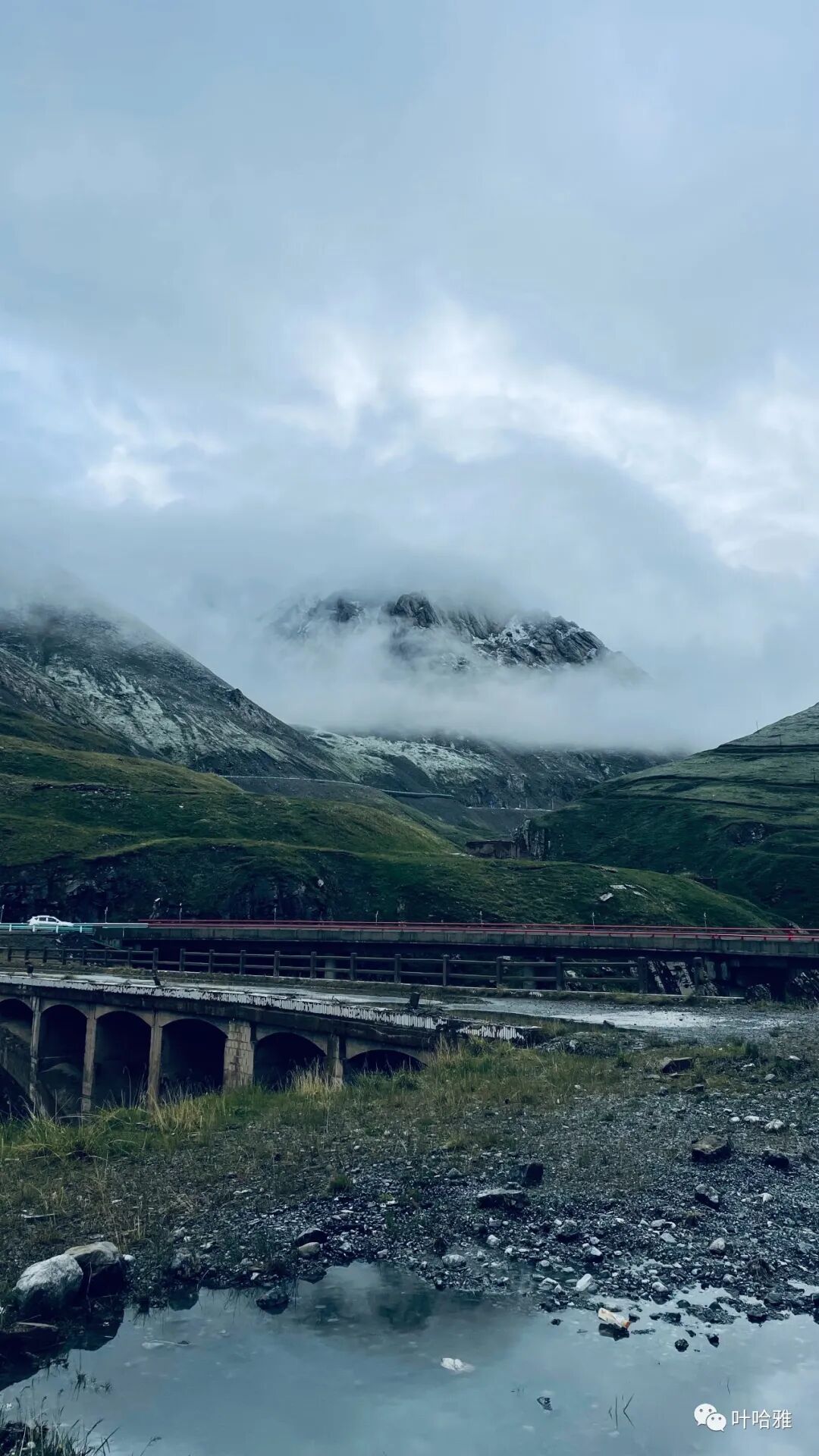
The Duku Highway has an average elevation of 2,000 meters. You can see high-altitude snow-capped mountains, vast grasslands, deep canyons, and lakes. The scenery is truly beautiful. There are many rest areas along the way for sightseeing. A few spots are paid attractions, but I skipped those as they did not seem necessary.
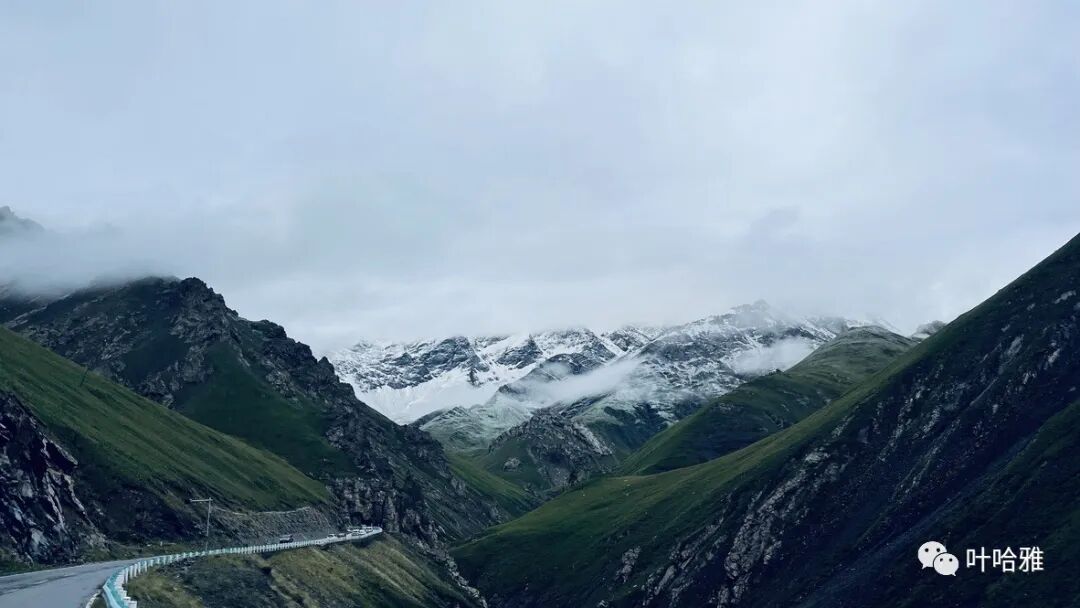
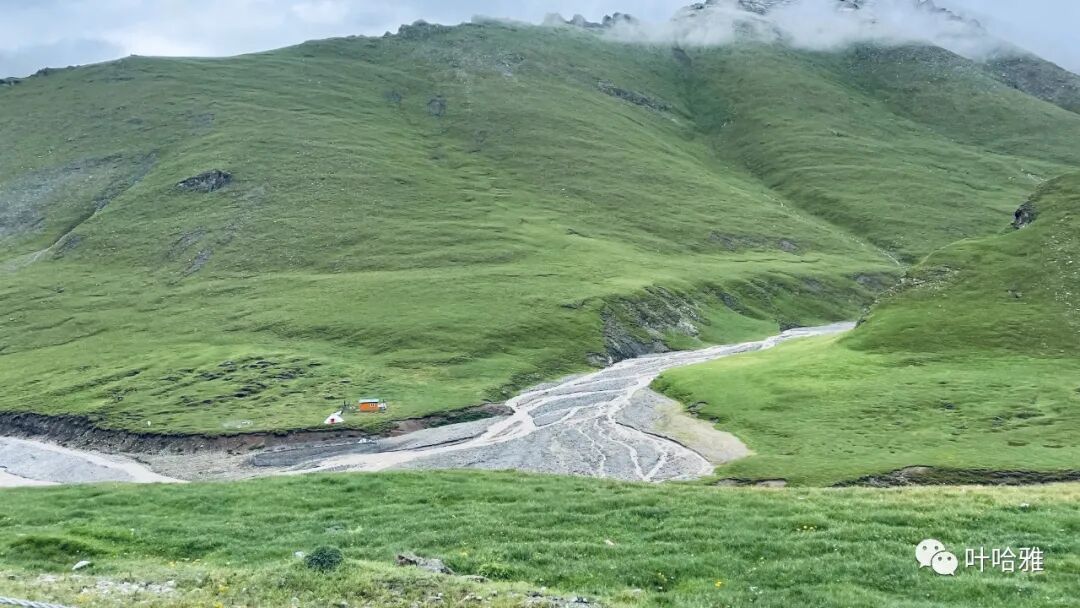
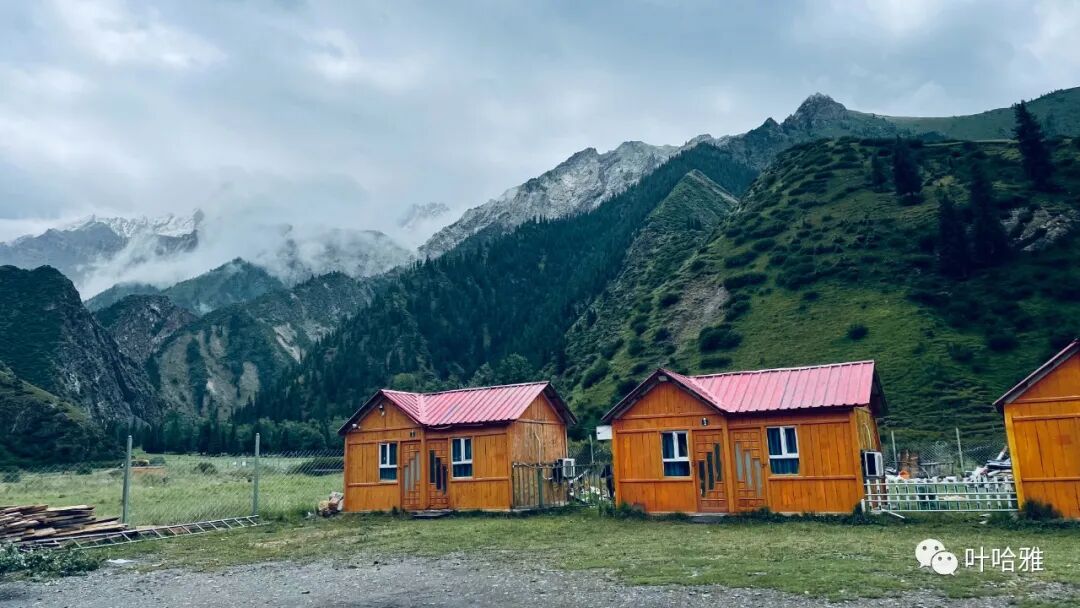
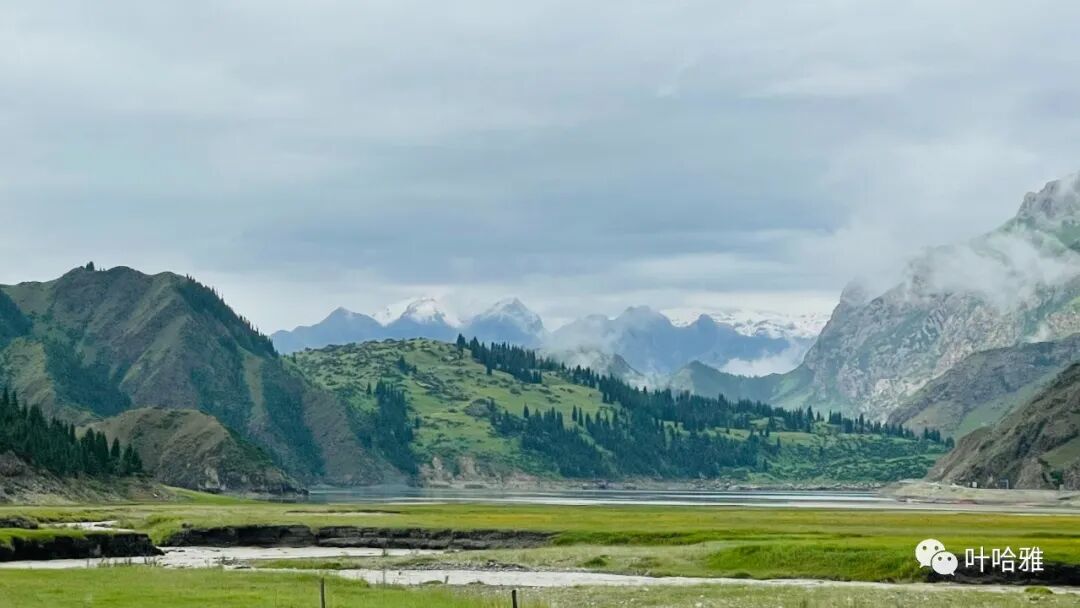
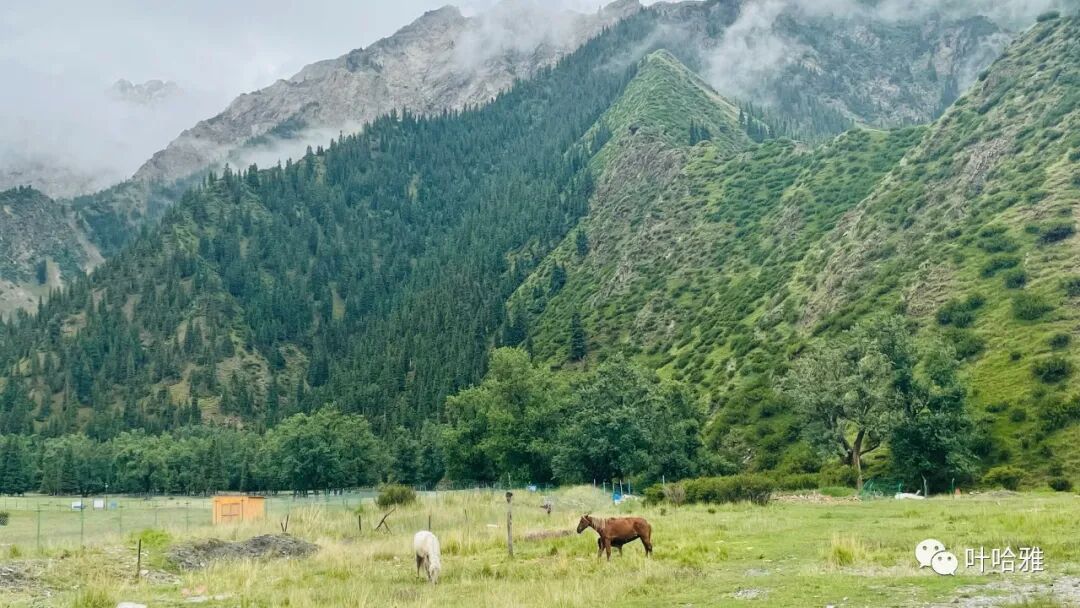
Before reaching Yining County in Yili, you pass through the Bayanbulak Grassland and the Nalati Grassland. The Bayanbulak Grassland stretches for hundreds of kilometers. The endless sea of green grass and the blue sky wiped away all the fatigue from driving.
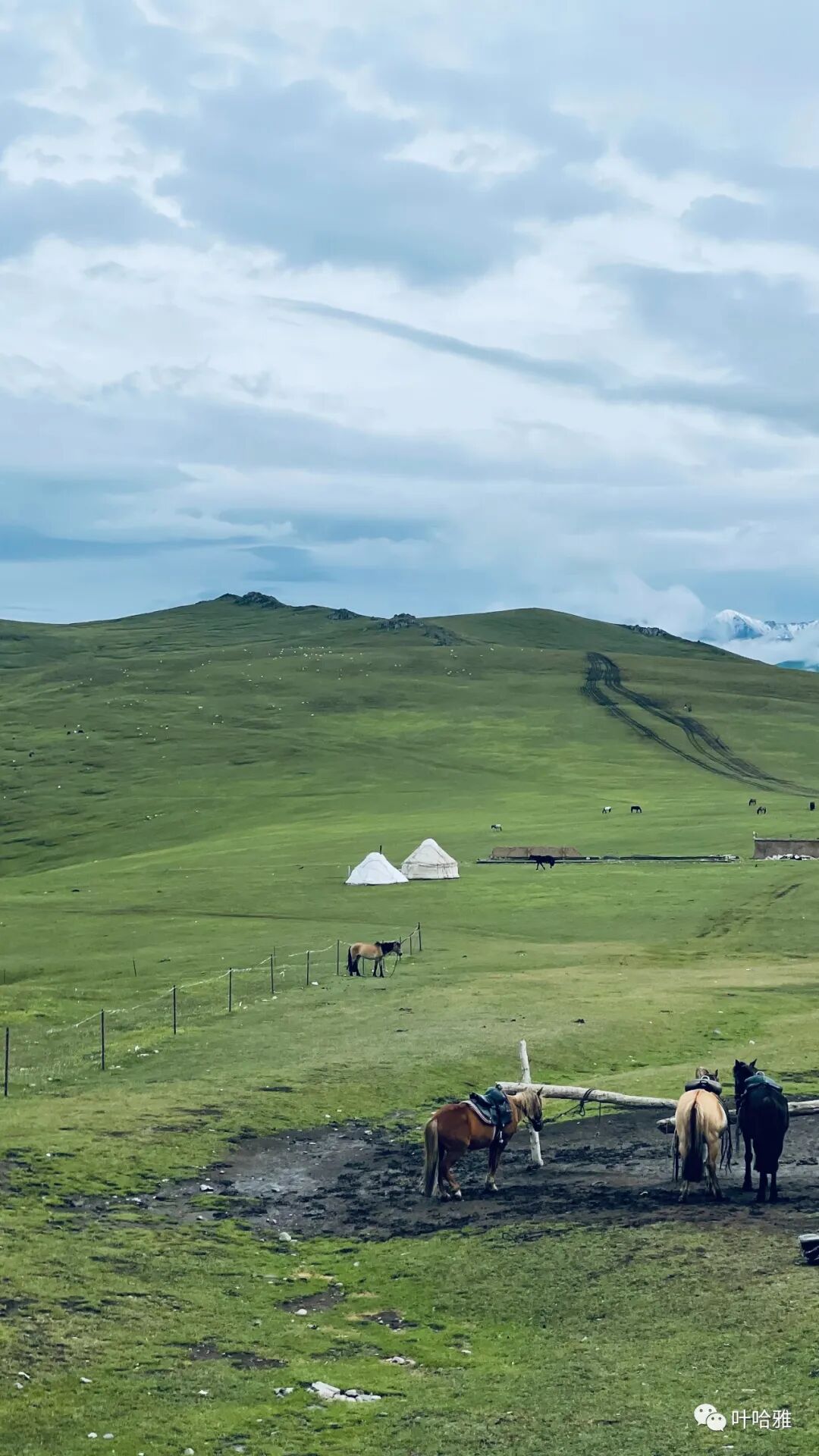
You can drive your own car into the Nalati Scenic Area, but you must book tickets on their official WeChat account a few days in advance. Self-driving tickets are in high demand, so it is best to get them early. We did not plan to enter the scenic area and just drove past it. These photos were taken with a phone, and the scenery inside is basically the same.
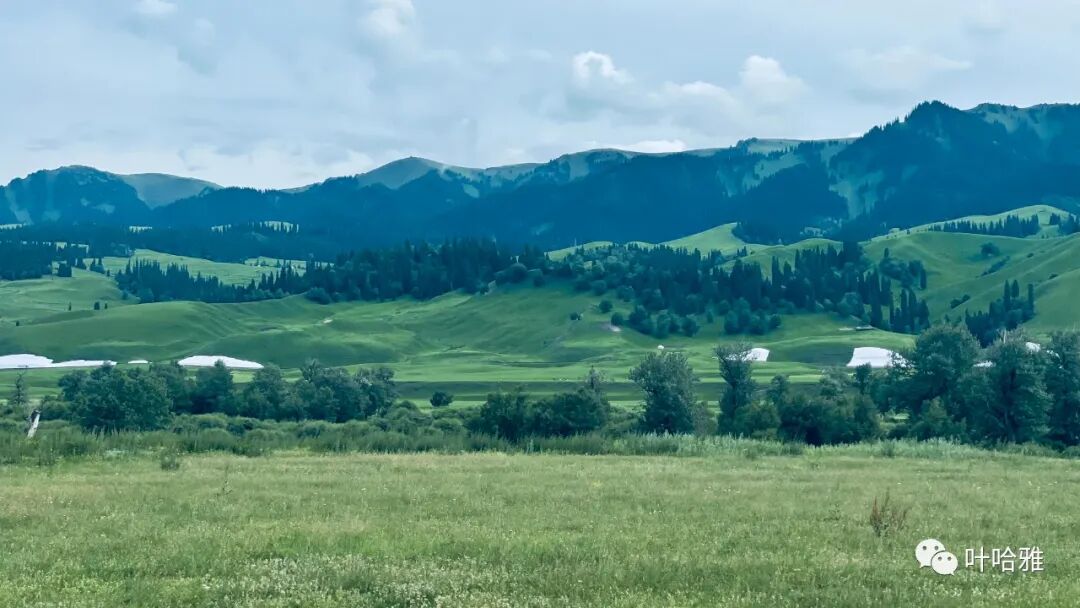
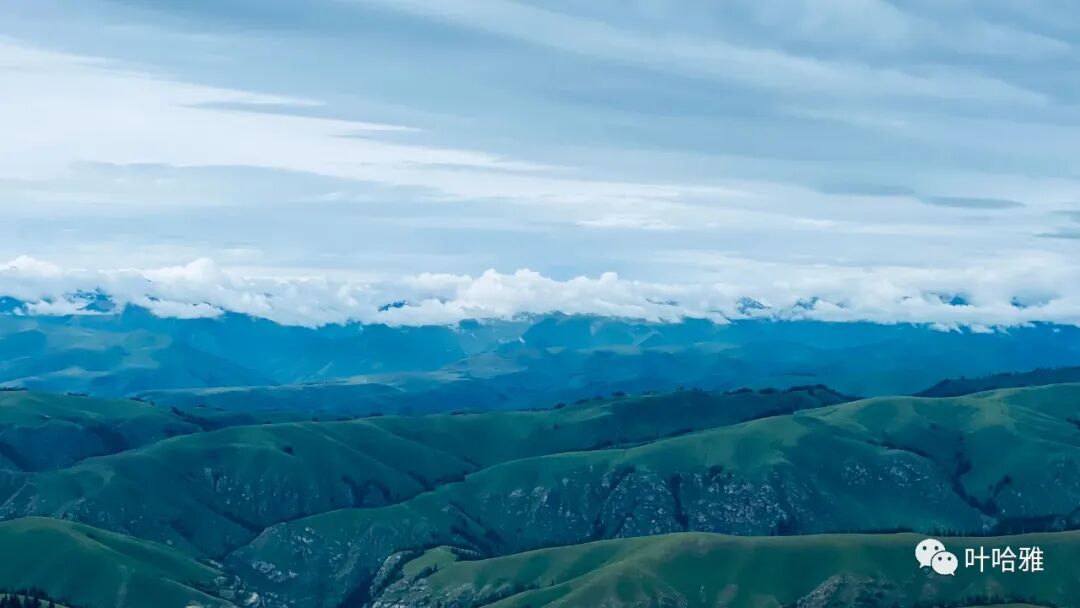
After a long day of travel, we arrived in Yining County, Yili Prefecture, after 10 p.m., just in time for the Maghrib (shamu) prayer.
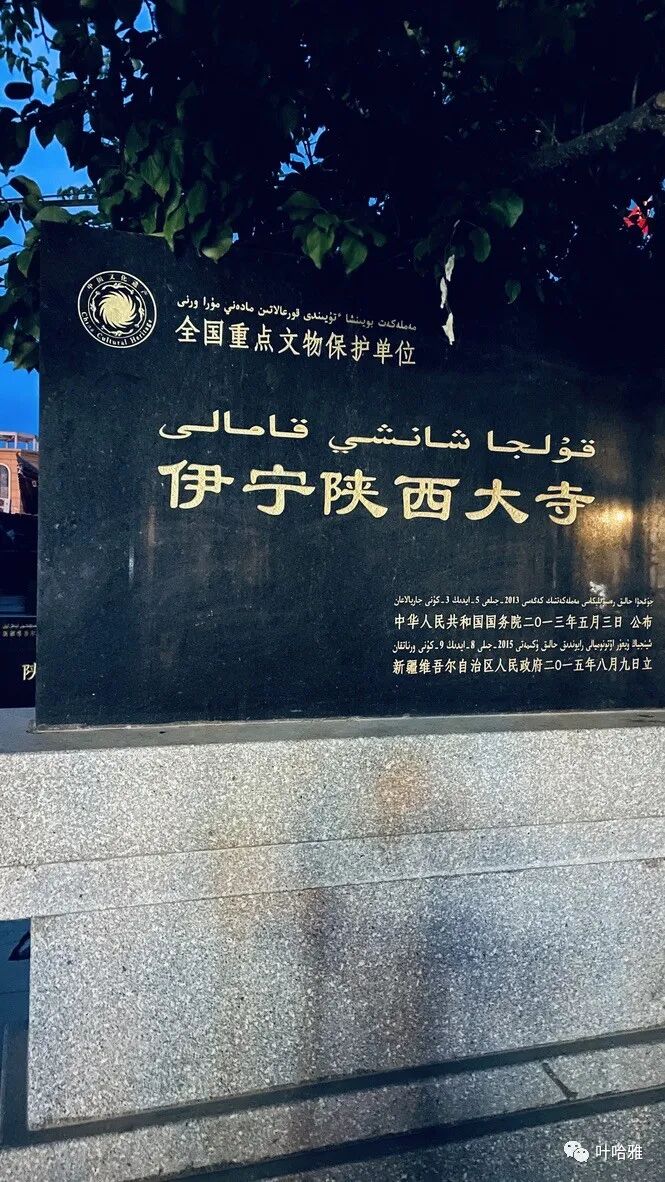
This was our first time joining a congregational prayer at a mosque since arriving in Xinjiang, and I felt incredibly moved.
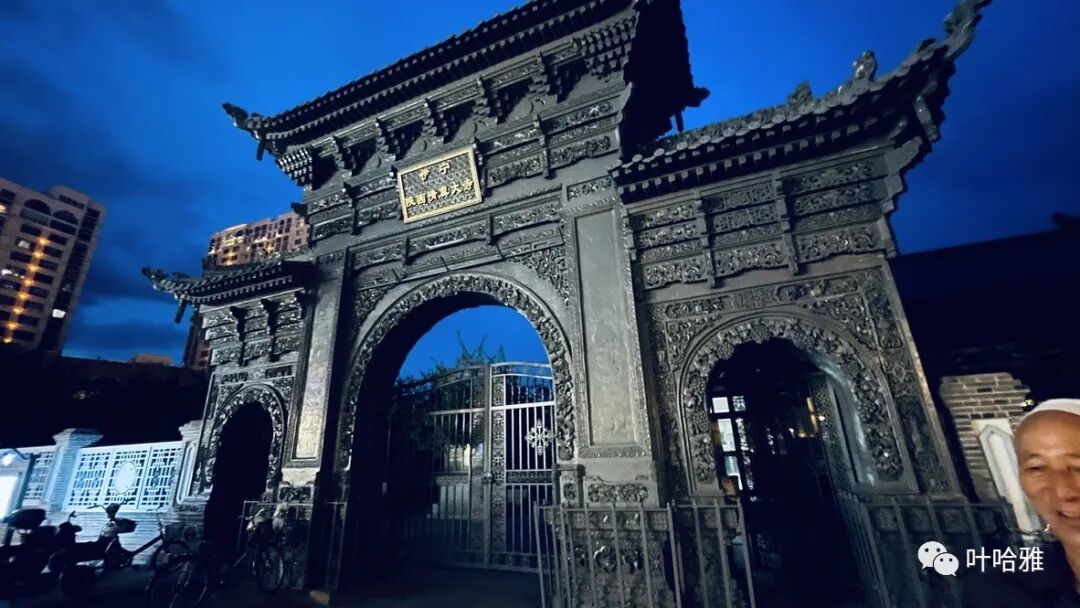
The elders at the mosque were very welcoming and told us about the Shaanxi Grand Mosque. The Yining Shaanxi Grand Mosque was built in 1751 during the 16th year of the Qianlong reign of the Qing Dynasty. The main hall has two floors; the first floor has Uyghur-style interiors, while the second floor is in a traditional Chinese style. Currently, only the first floor is open.
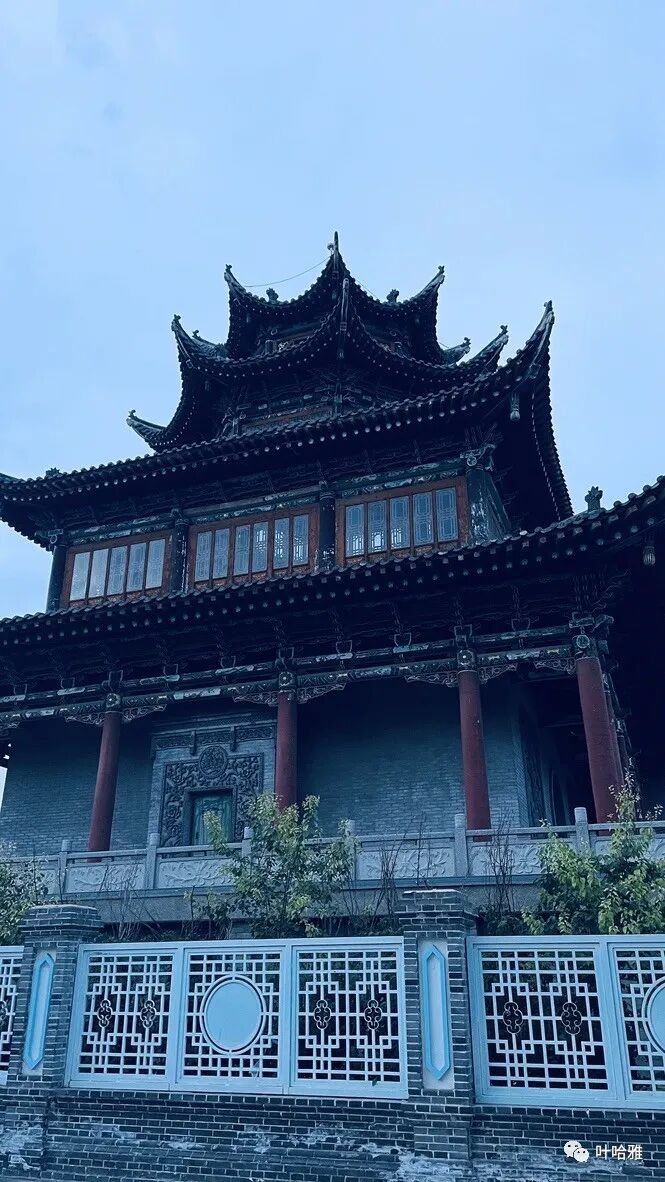
Many places in Xinjiang have Shaanxi mosques, which were usually built by Hui Muslims who moved from inland China. During prayer time, I saw Uyghur elders and Hui Muslims praying together. After the prayer, everyone greeted each other, and the atmosphere was very harmonious.
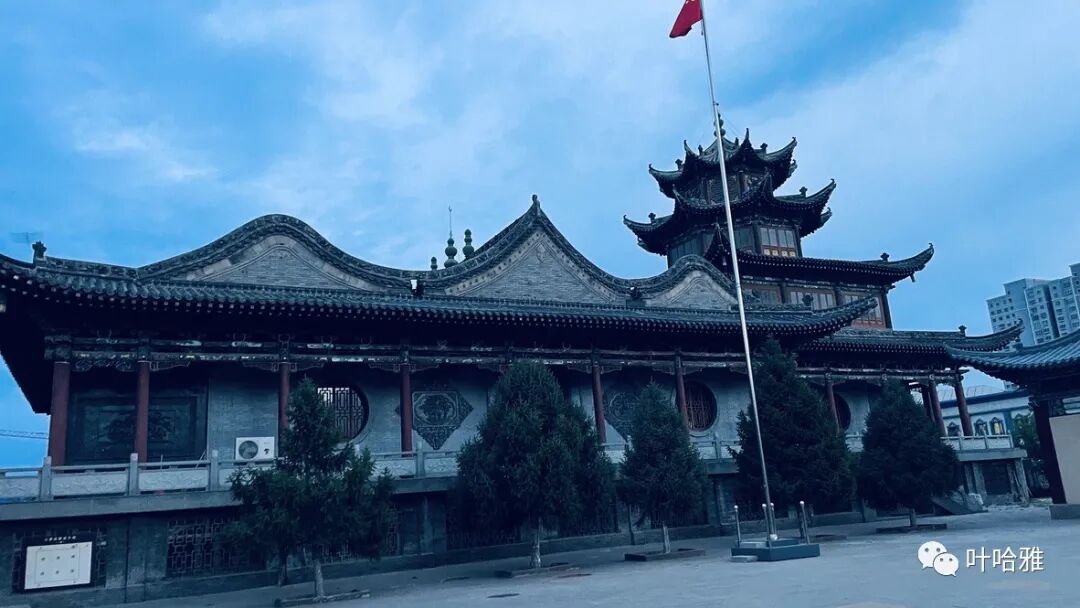
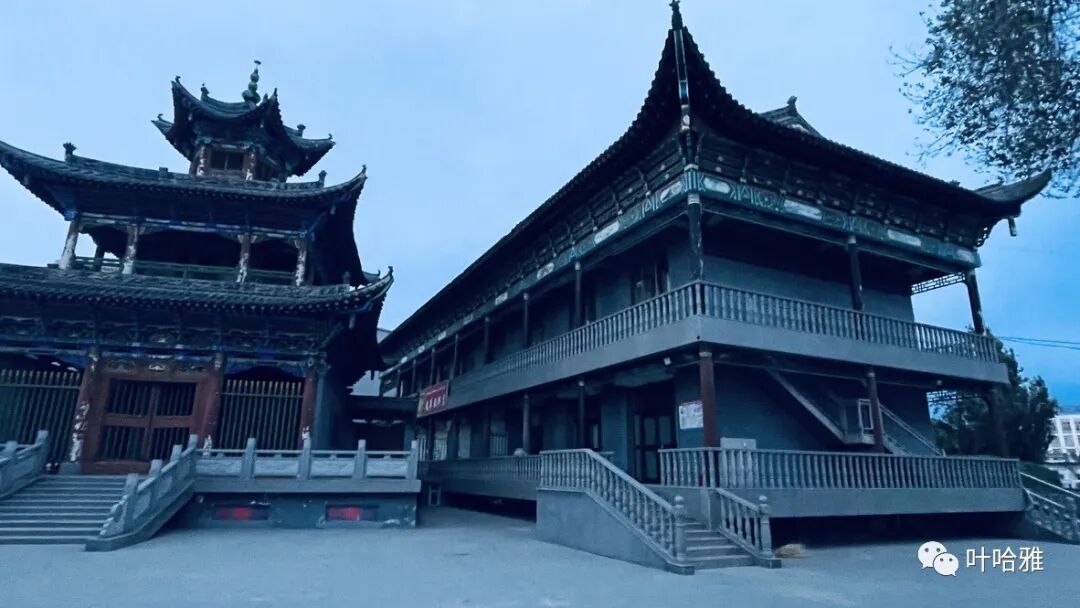
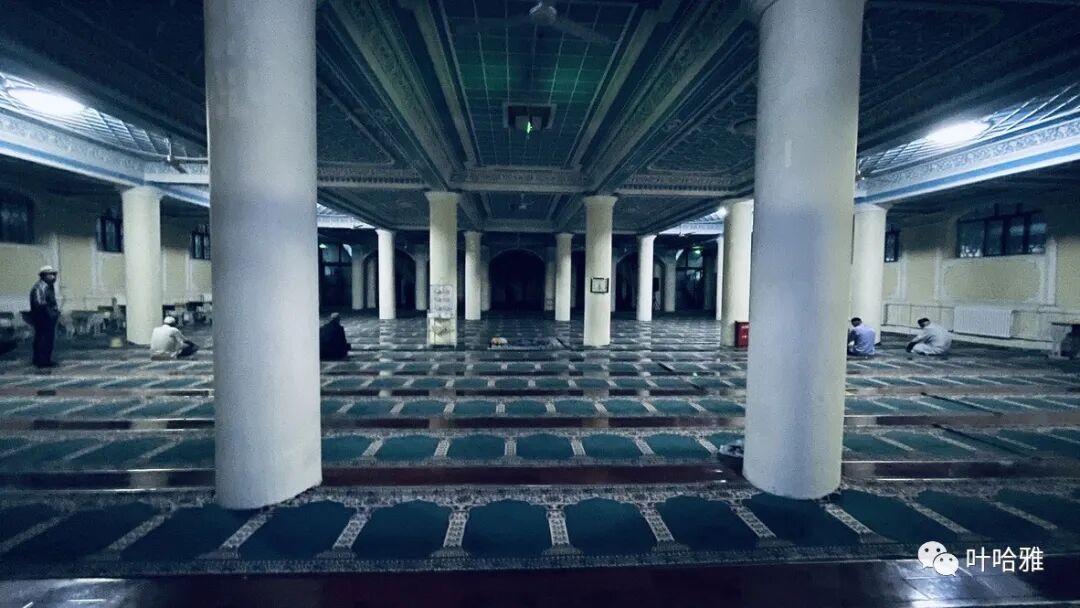
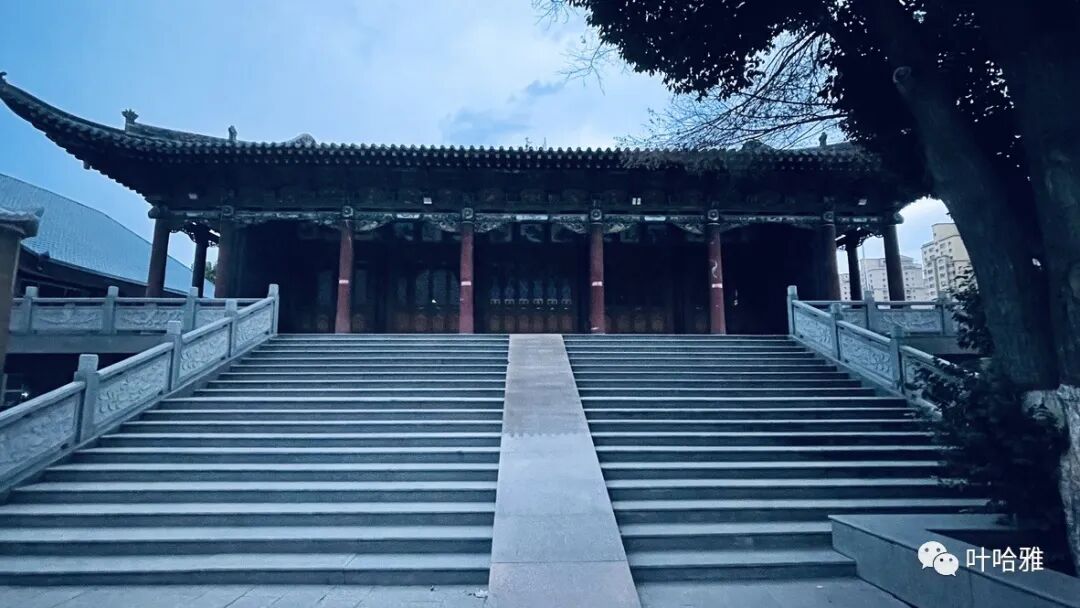
The Shaanxi Grand Mosque is located in the Kazanqi Old Town in the center of Yining, which is also a popular spot for tourists.
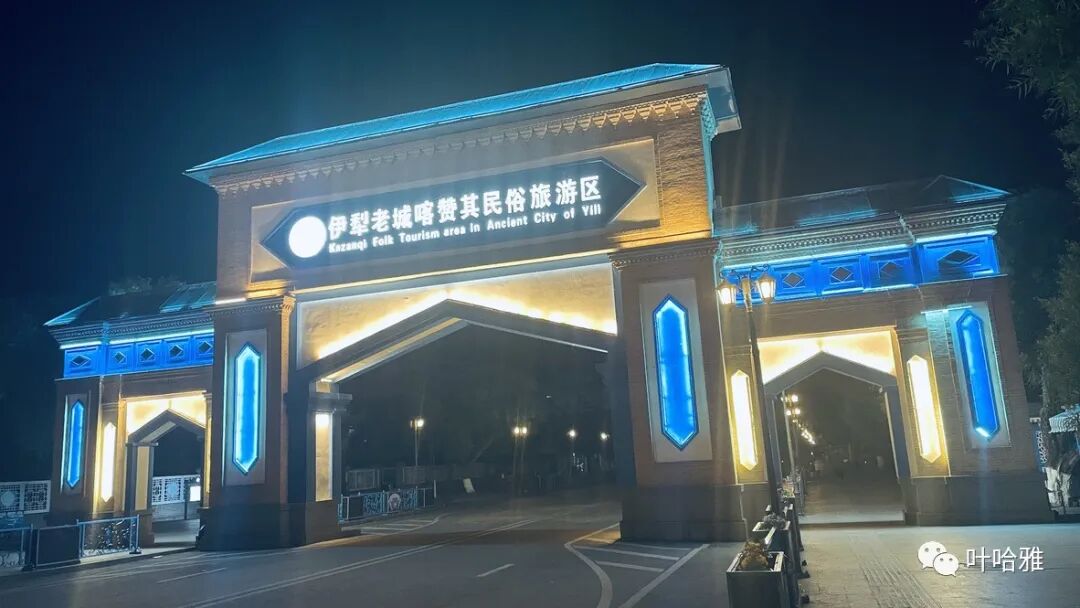
Another national cultural heritage site in Yining is the minaret of the Jiefang South Road Mosque, also known as the Baitula Mosque. It was built in 1773 during the 38th year of the Qianlong reign of the Qing Dynasty. The main building was demolished and rebuilt in 1996, but the minaret was preserved.
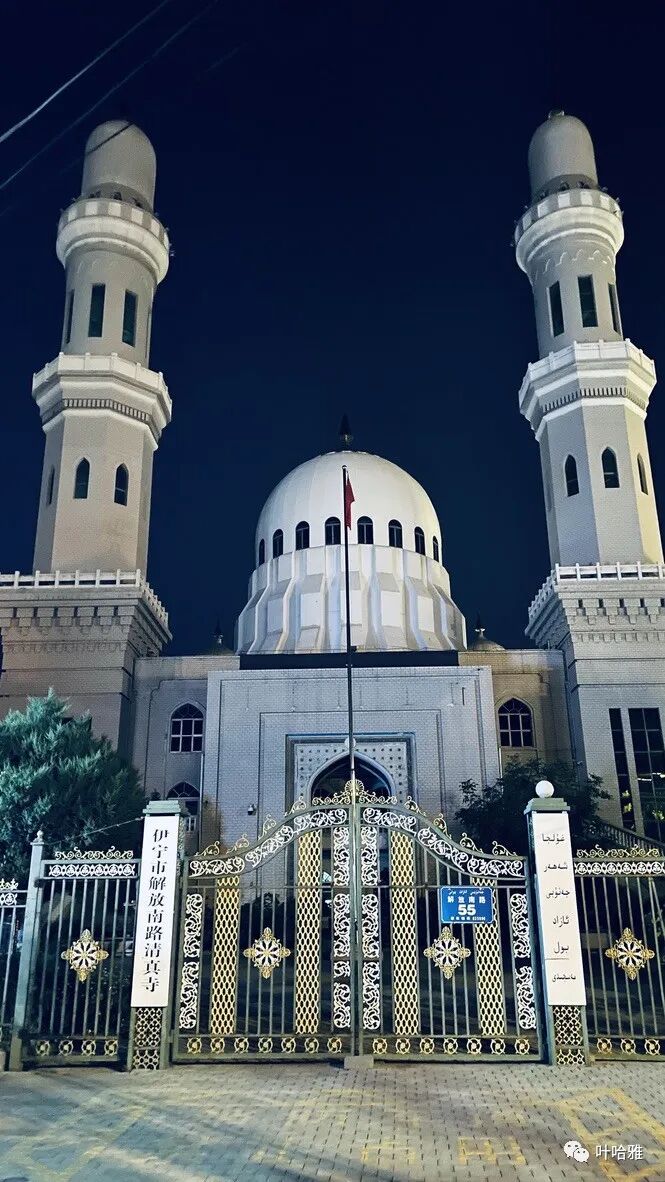
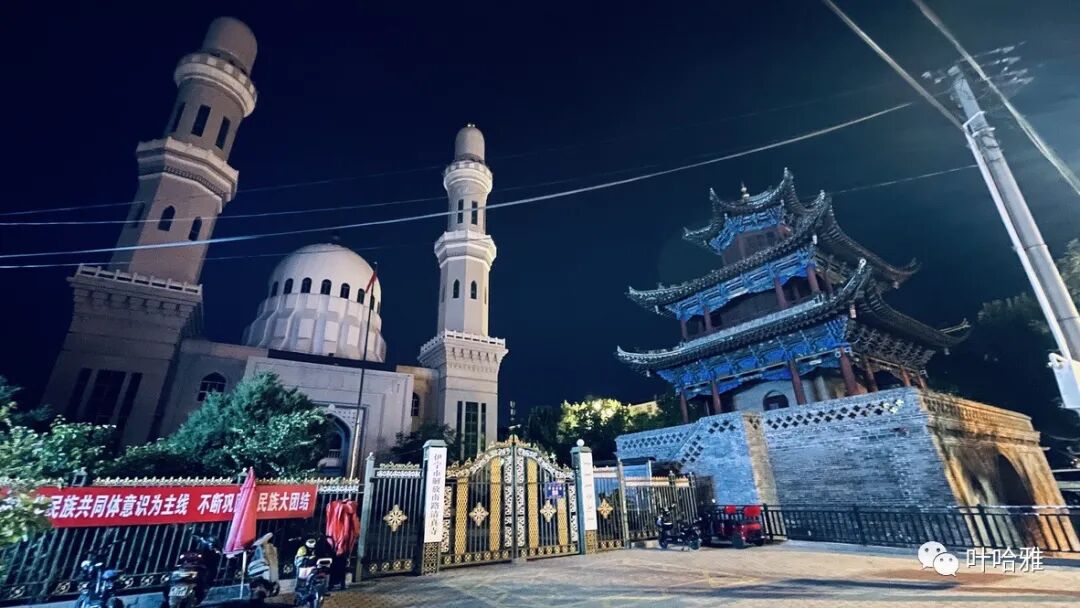
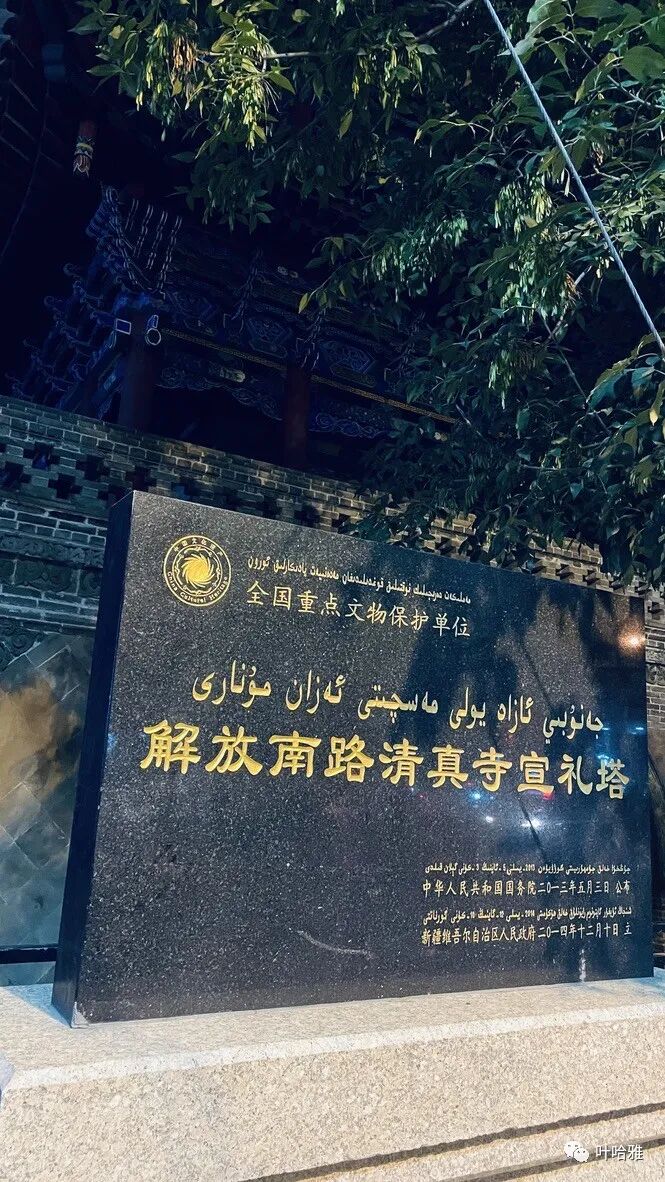
This street is also a night market packed with food, and it stays busy until after one in the morning.
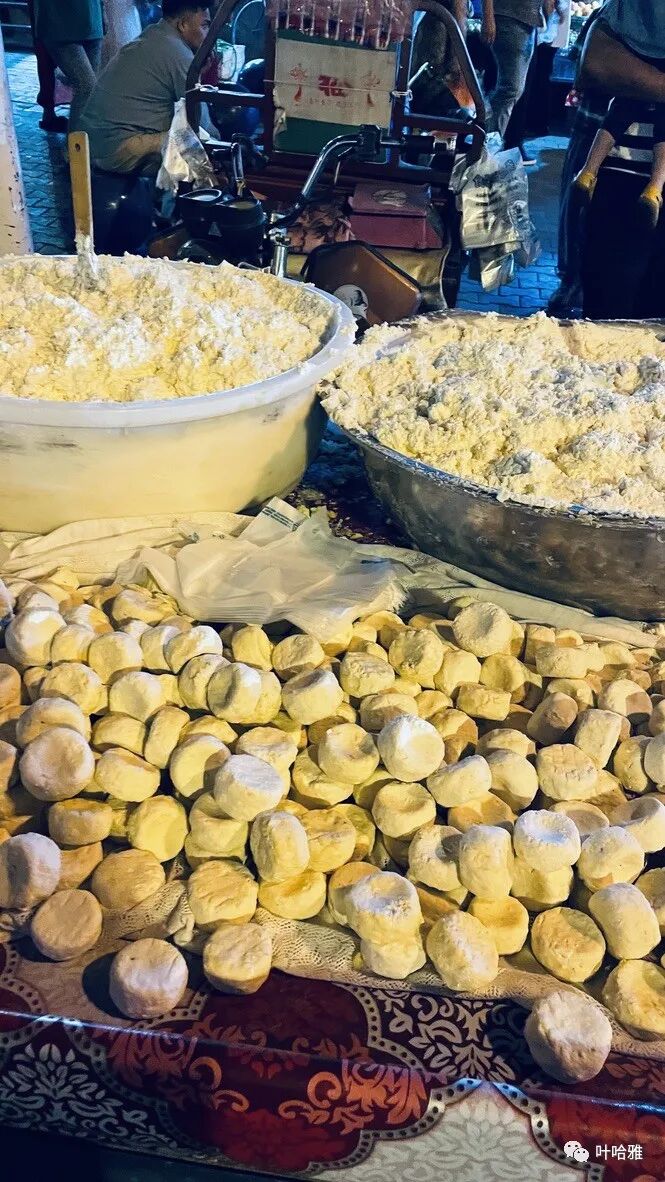
I spent 10 yuan at the night market on three pieces of milk tofu (naidoufu). I took a bite, and it was sour and smelly; I think I ate it the wrong way.
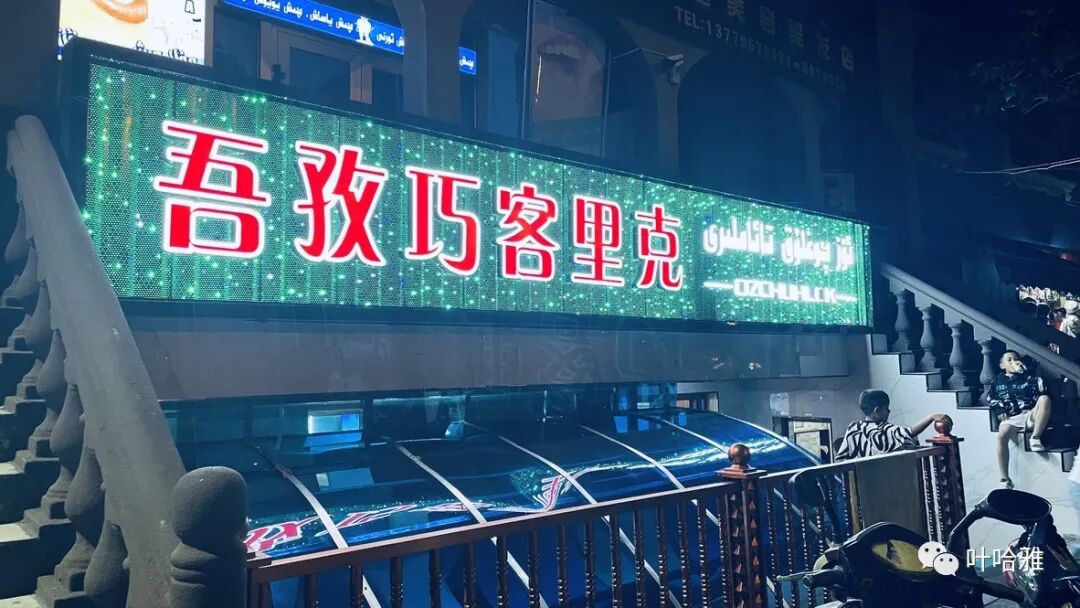
For dinner, I had mixed noodles (banmian) and wontons (huntun) at Wuziqiaokelike on Jiefang South Road. The place was full of people, and the food tasted good.
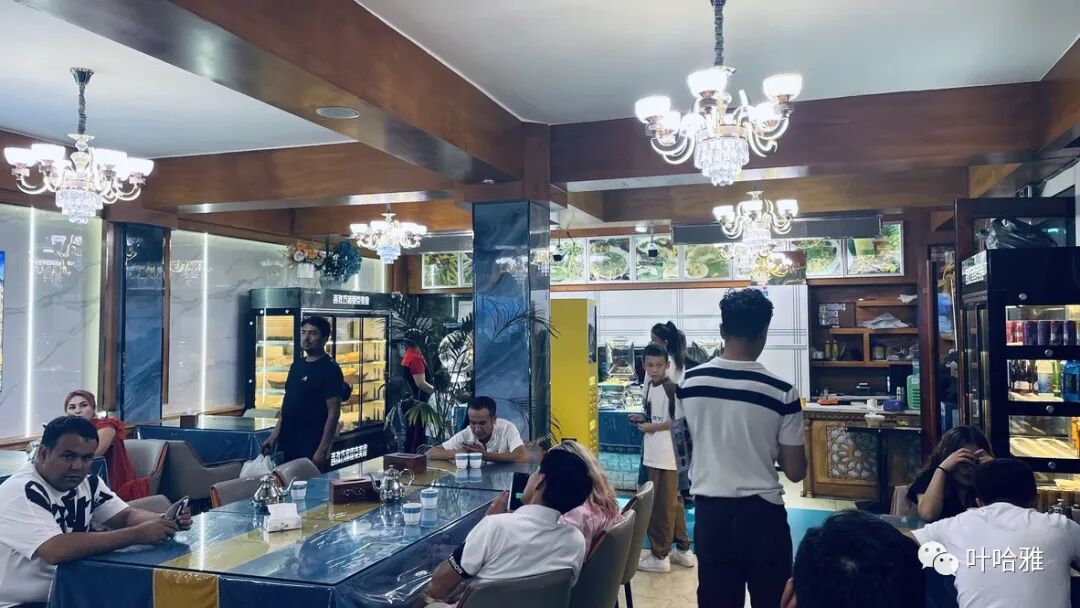
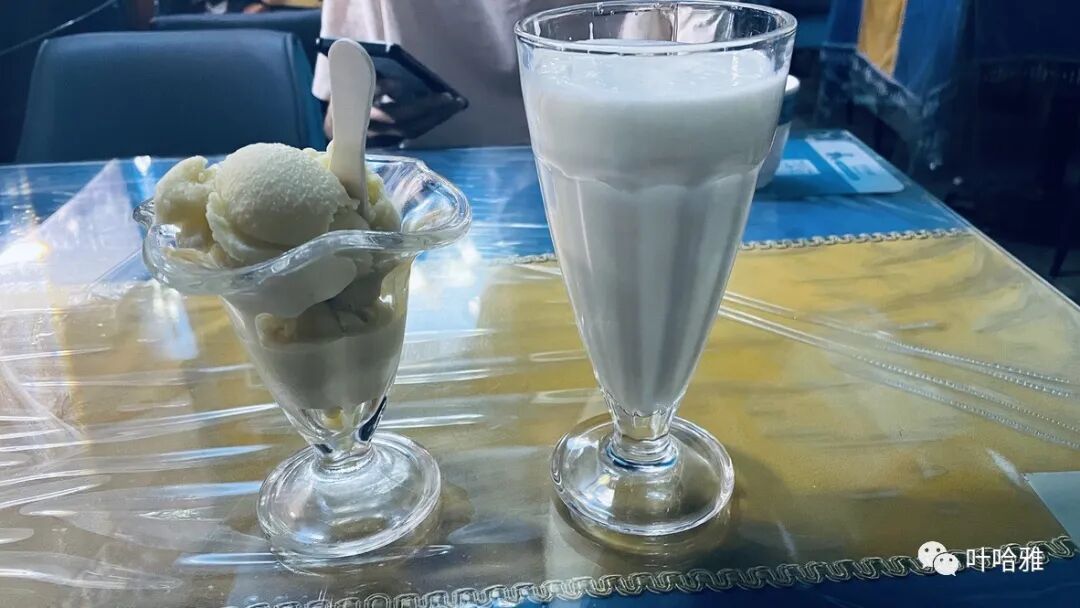
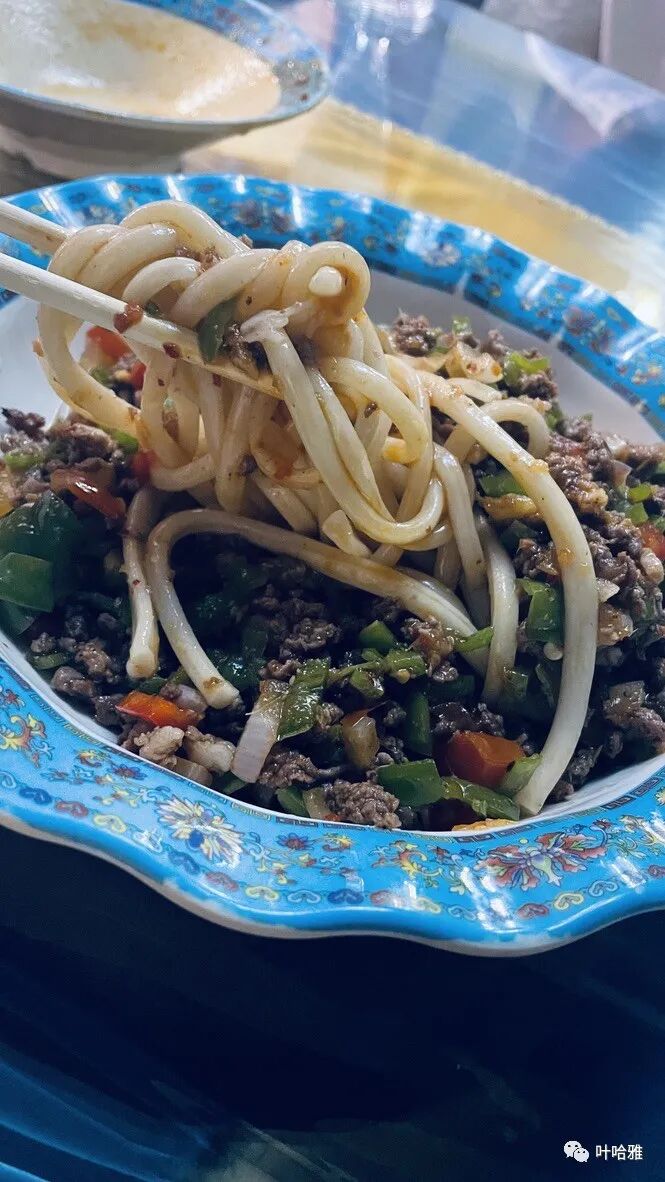
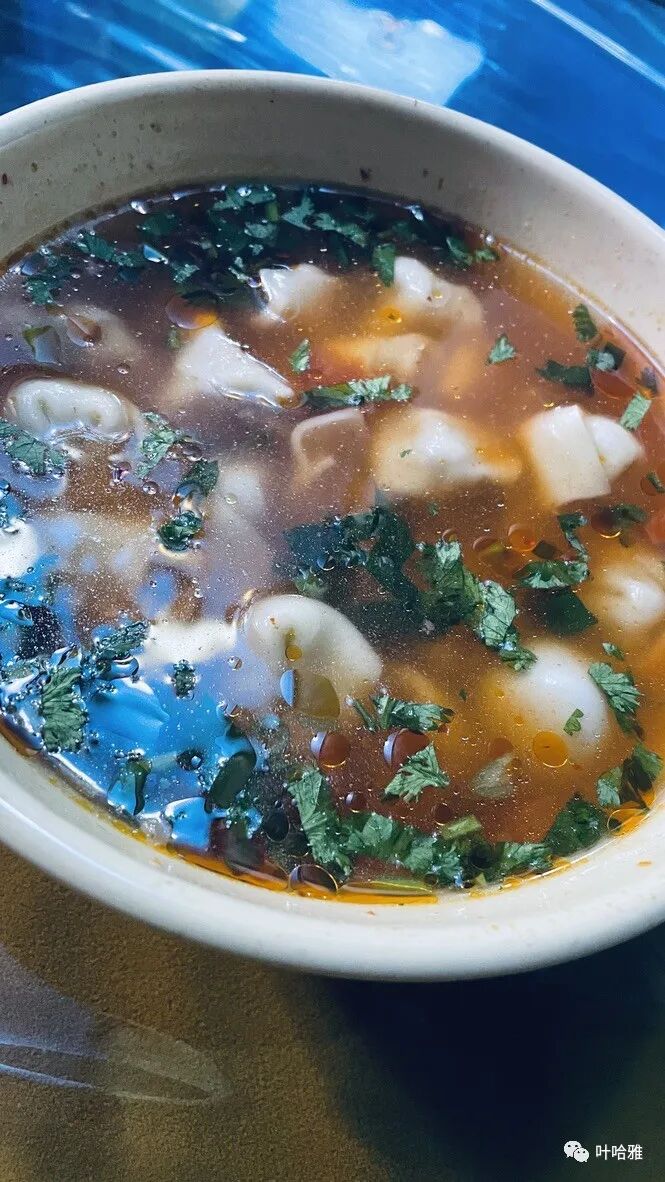
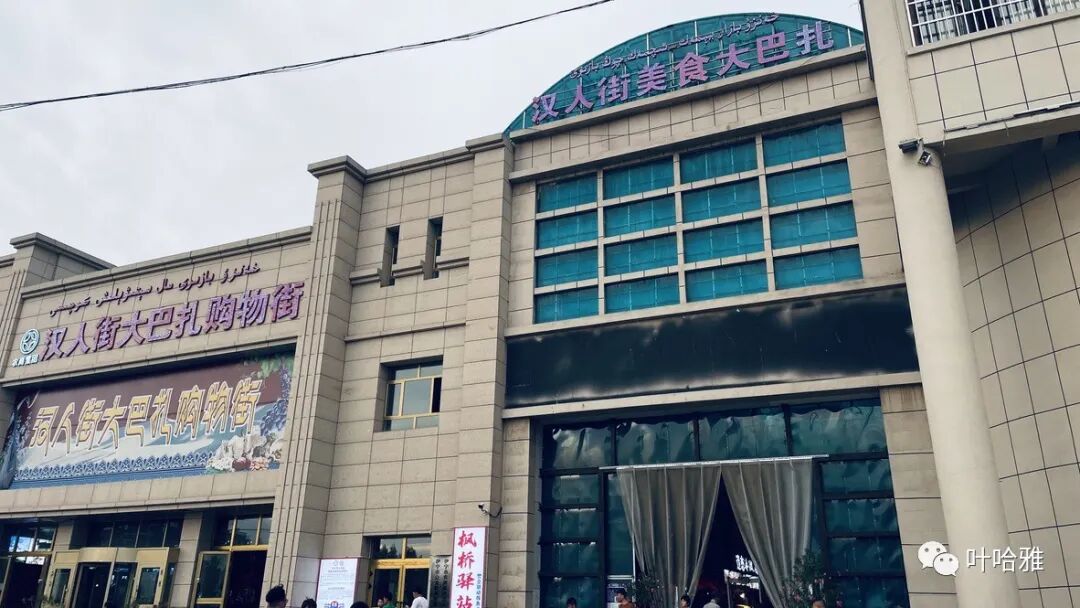
Another food bazaar in Yining is on Hanren Street. I used to hear that there were no Han people on Hanren Street. That might have been true at one time, but it is definitely not the case now, as there are plenty of Han tourists there.
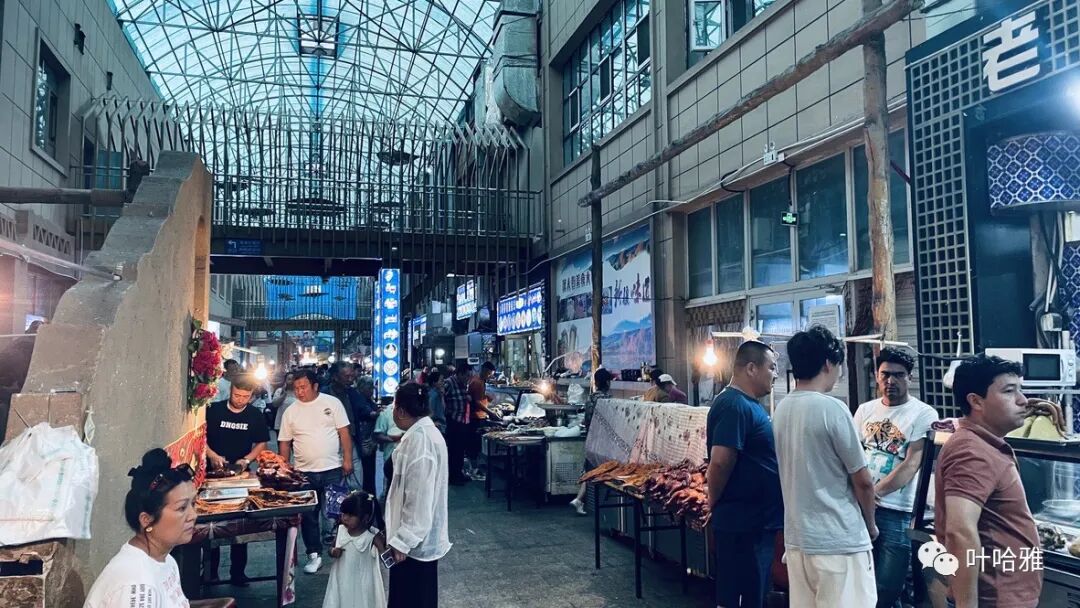
I had a bowl of starch noodle soup (fentang) at a Uyghur stall.
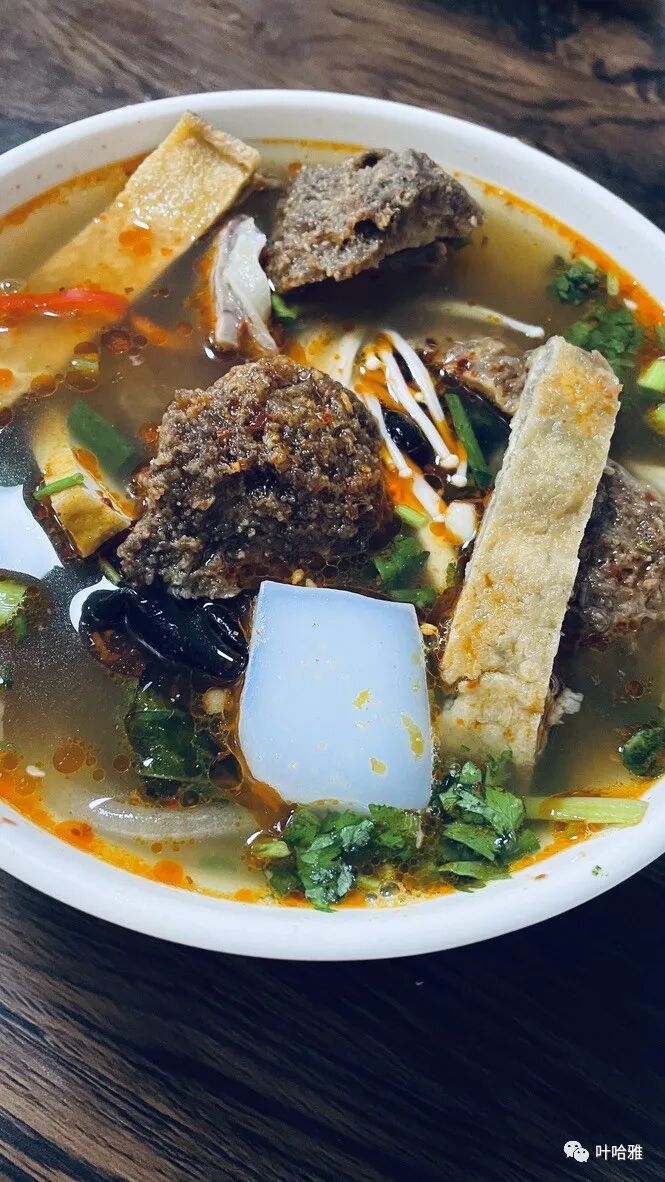
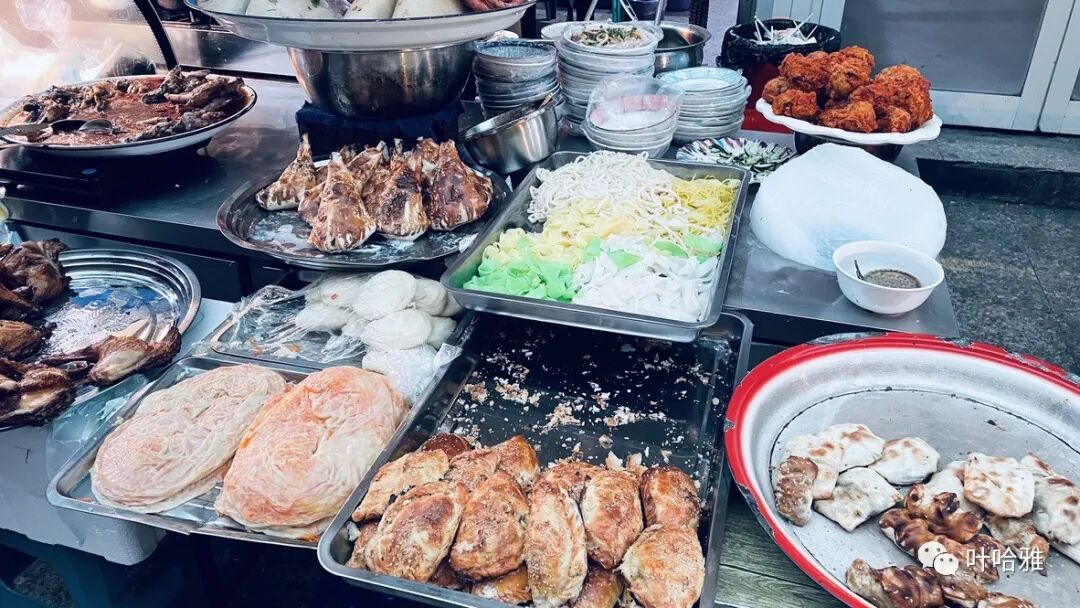
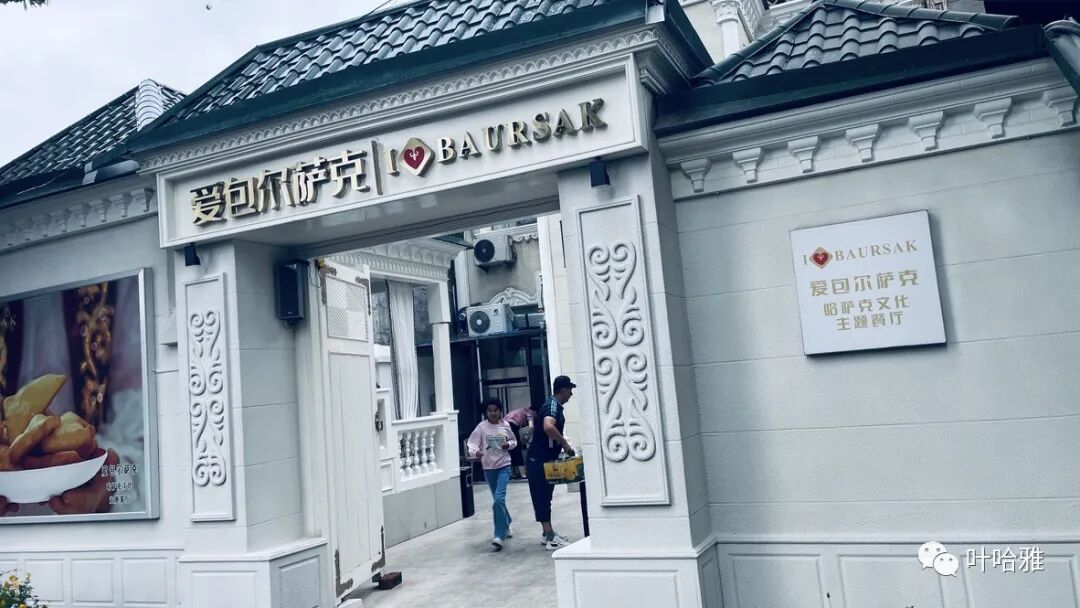
Aibaoersake Kazakh Theme Restaurant
I had Kazakh breakfast twice in Six-Star Street in Yining. Kazakh people eat stir-fried dishes for breakfast, which is very hardcore.
The staff clearly looked Kazakh, with facial features similar to Mongolians.
Baorsak is the fried dough food shown below. It is fluffy and soft, and you can dip it in various sauces. It is a Kazakh specialty, a bit like the fried dough (youxiang) eaten by Hui Muslims.
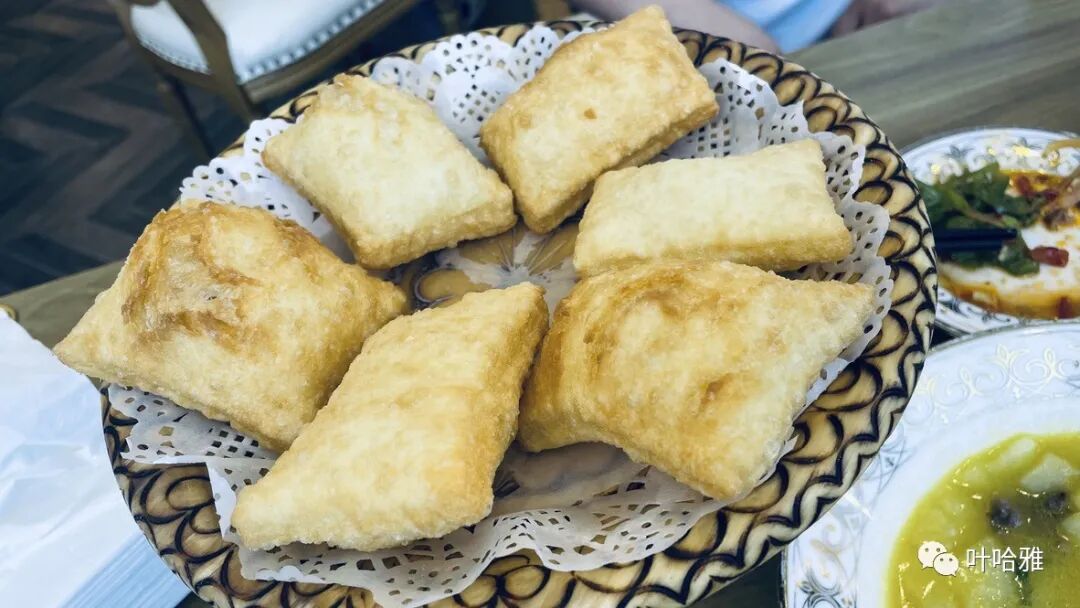
Baorsak
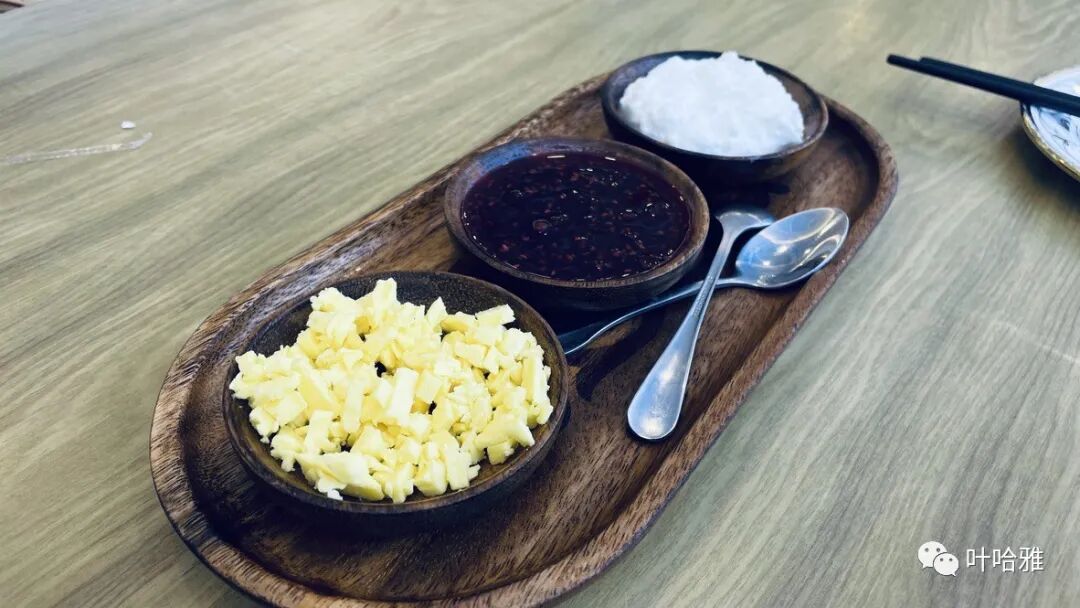
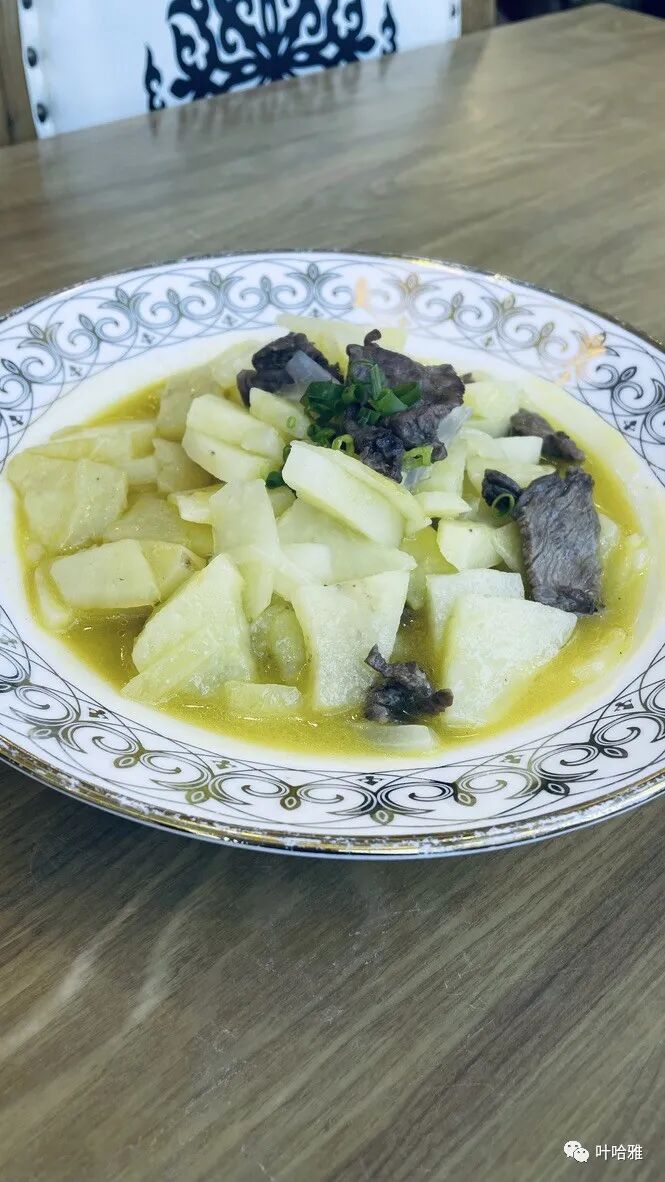
Kazakh potatoes
You definitely have to drink milk tea in the morning. It is salty and served with Kazakh potatoes, stir-fried meat with chili peppers, and a side of smoked horse sausage. Having such a special breakfast in Yili is very satisfying.
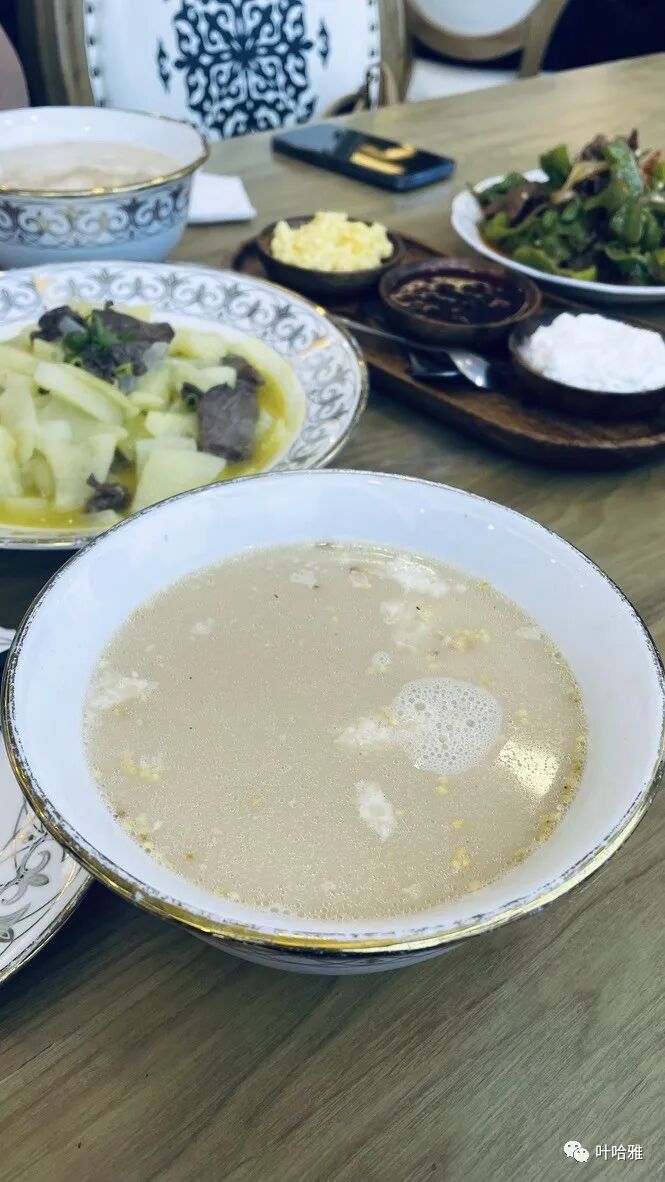
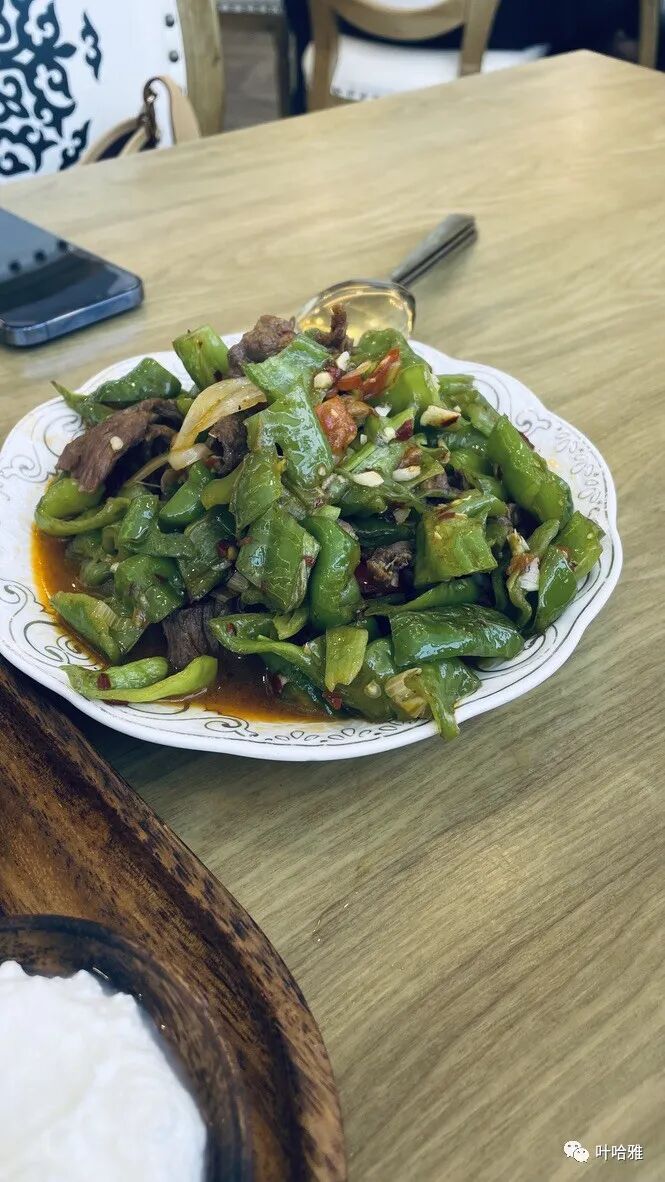
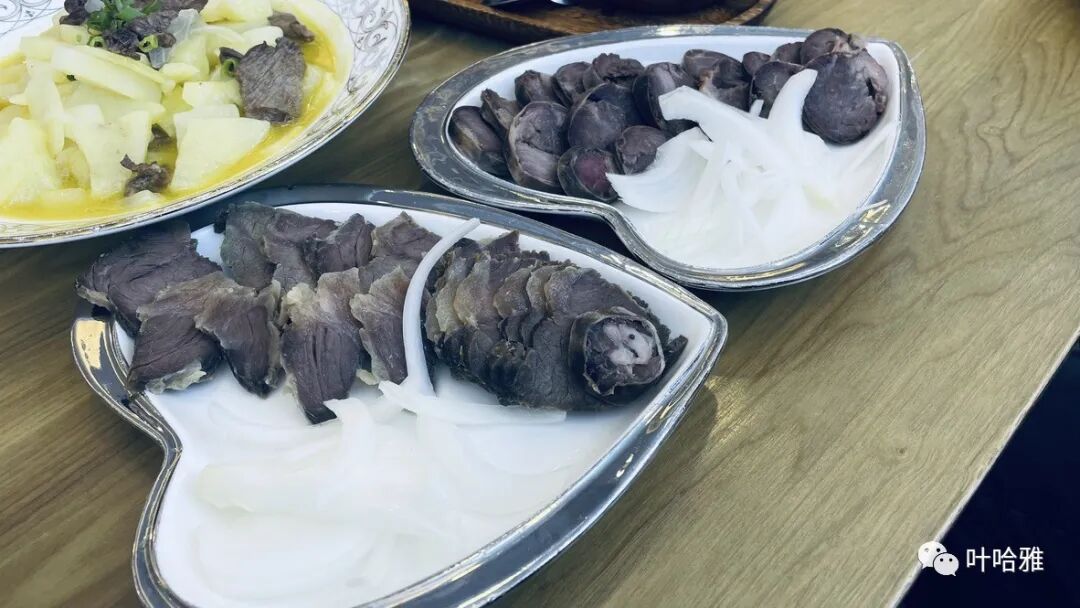
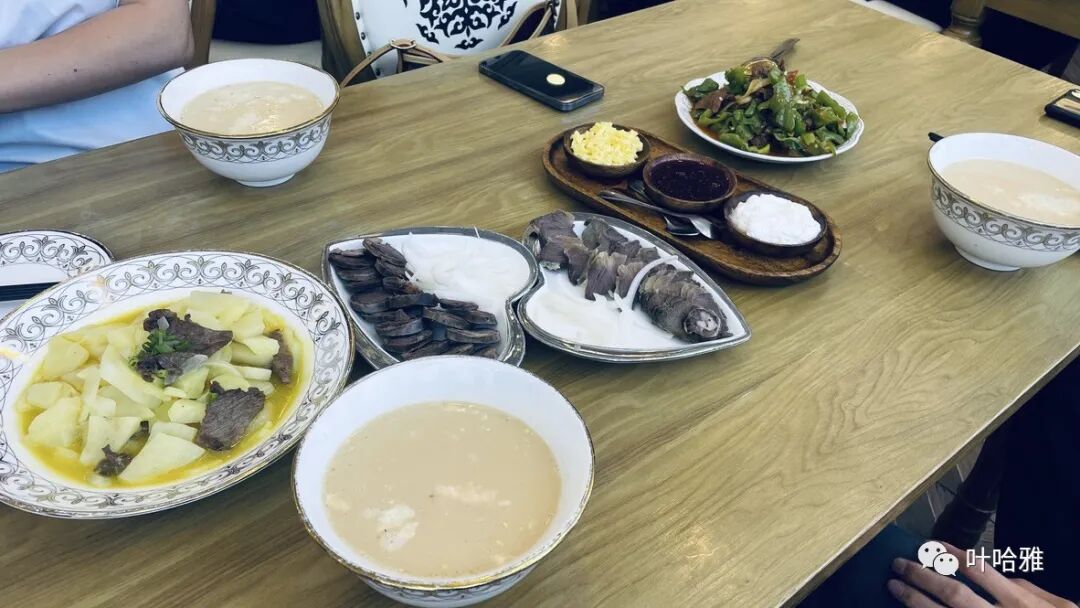
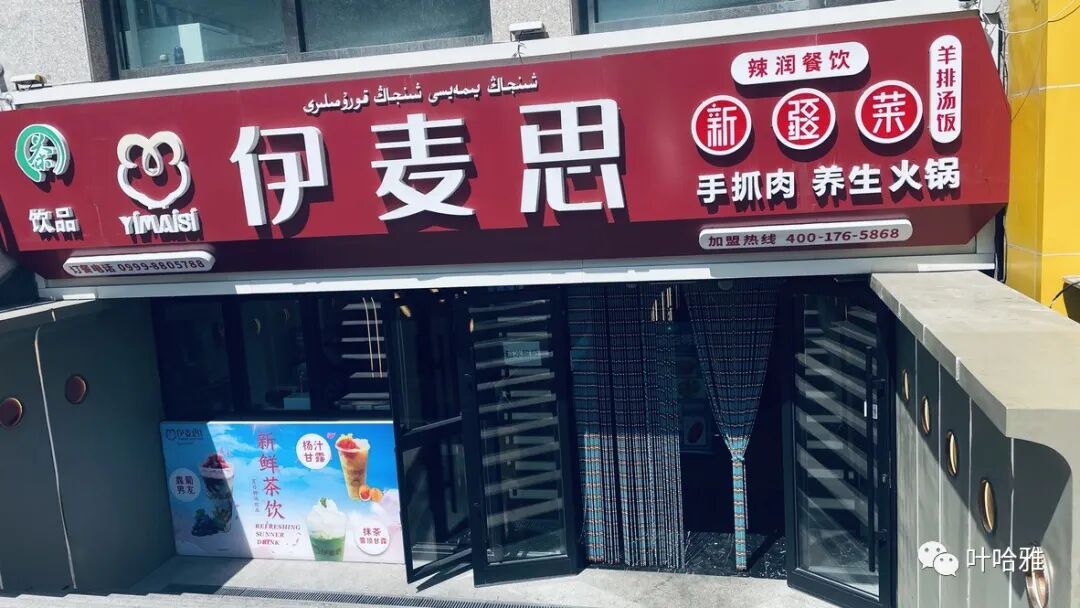
For a main meal, try traditional Yili stir-fry. I recommend Yimaisi, located not far from Six Star Street. It is owned by the same people as the Lari Hot Pot next door. This restaurant has been open for nearly eight years and is one of the few places in Xinjiang that does not serve alcohol or allow smoking. Staying open for eight years means the food must be good enough to win over the locals.
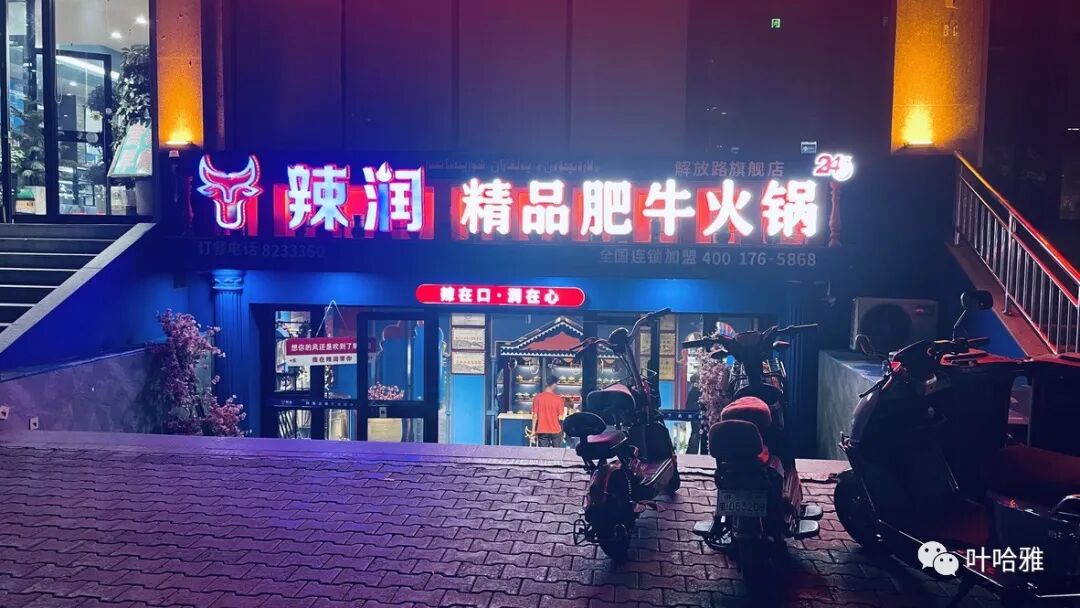
I tried their stir-fried dishes and every single one was delicious. The owner told me that they make as many ingredients as possible from scratch instead of buying pre-made items. Even their yogurt shaved ice (suannai baobing) is made with great care.
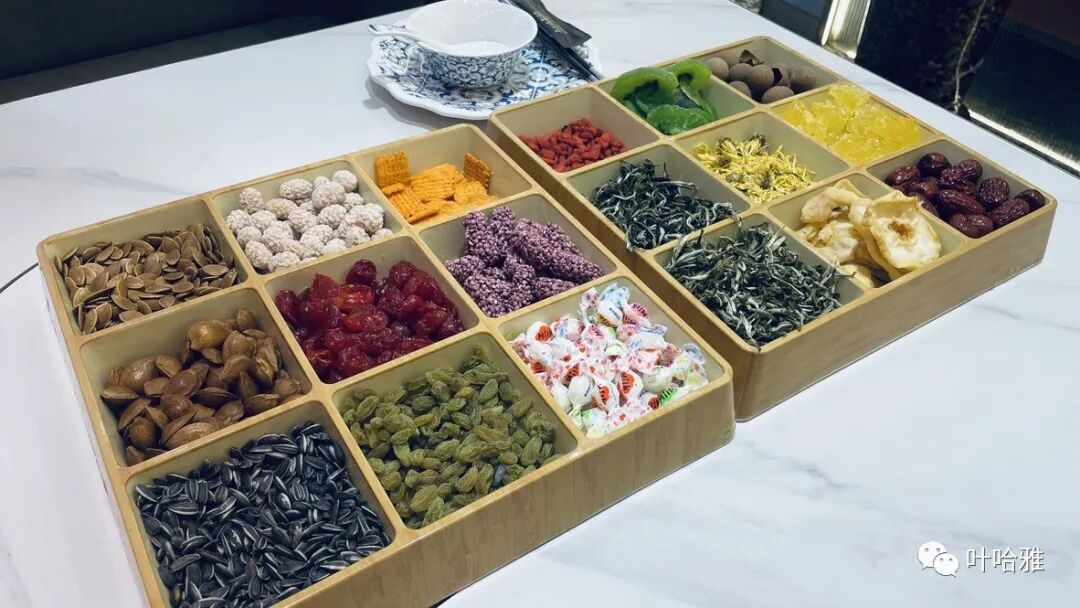
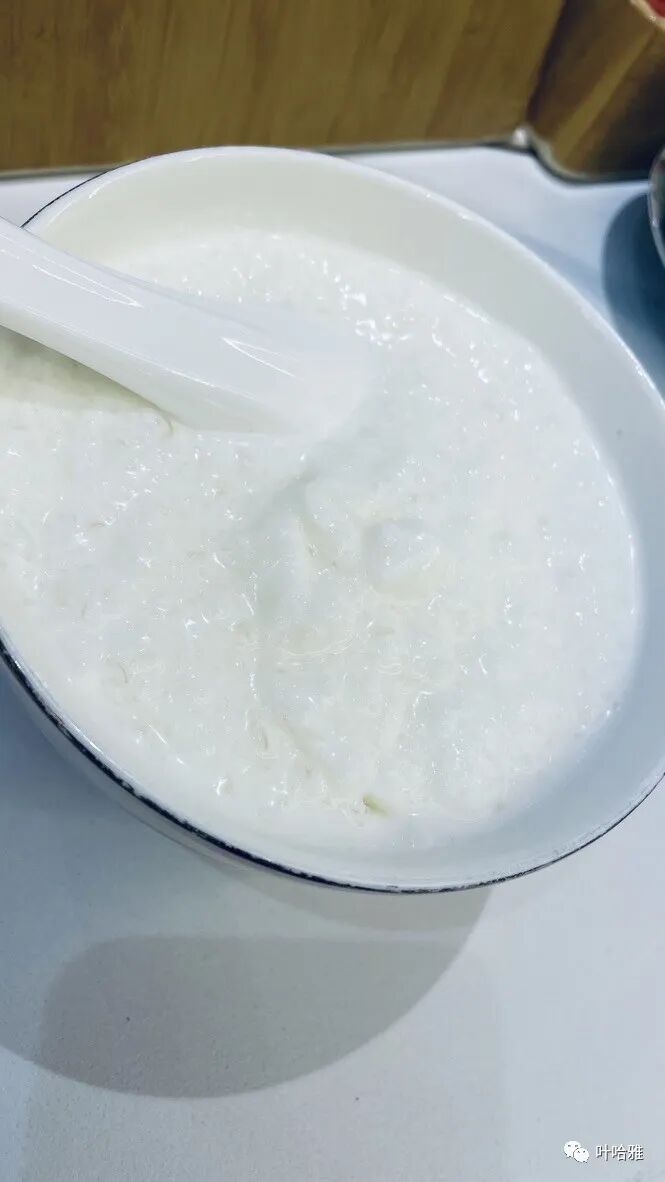
Yogurt shaved ice (suannai baobing)
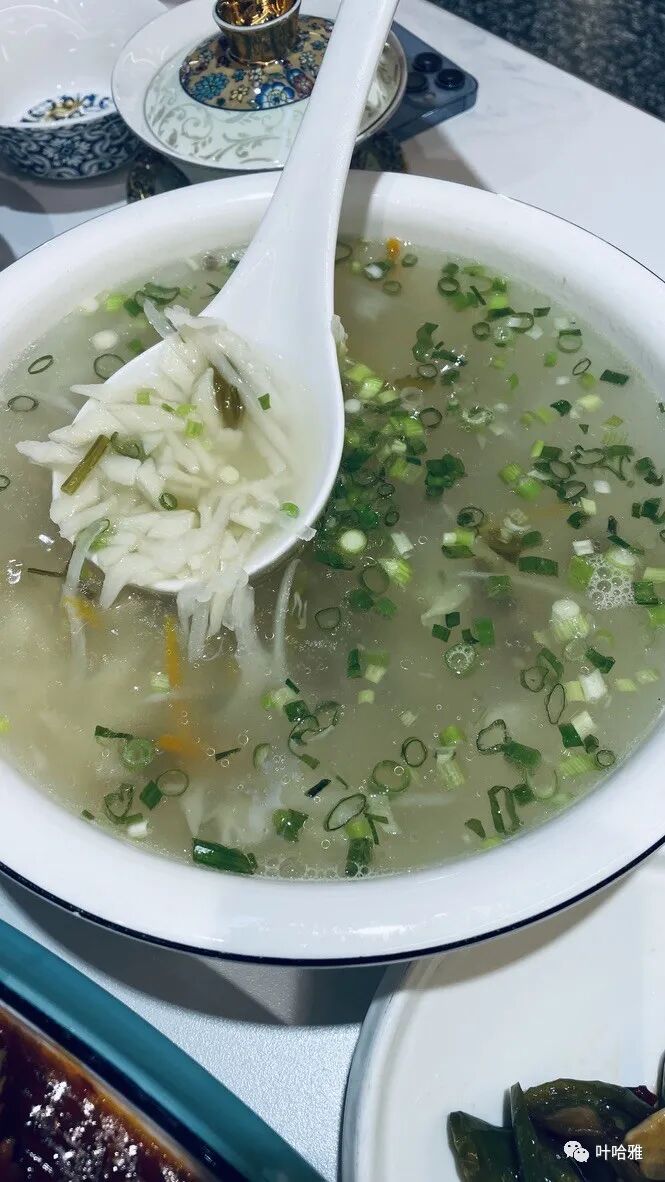
Fermented vegetable noodle soup (jiangshui mian)
This was my first time eating fermented vegetable noodle soup (jiangshui mian) served hot. I had only eaten it cold before in Gansu.
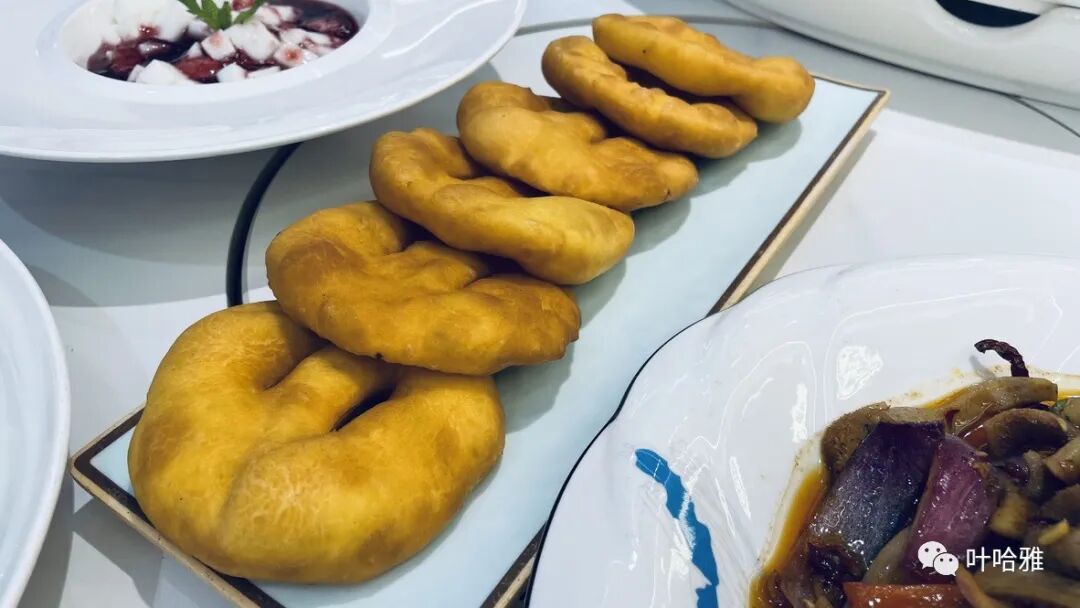
Freshly fried dough fritters (youxiang)
It is worth noting that not only are the meat dishes good, but their vegetable dishes are also very flavorful. It is no wonder the owner can keep the business booming without selling alcohol, which is not an easy thing to do in Xinjiang. This was the most impressive restaurant we ate at in Yining.
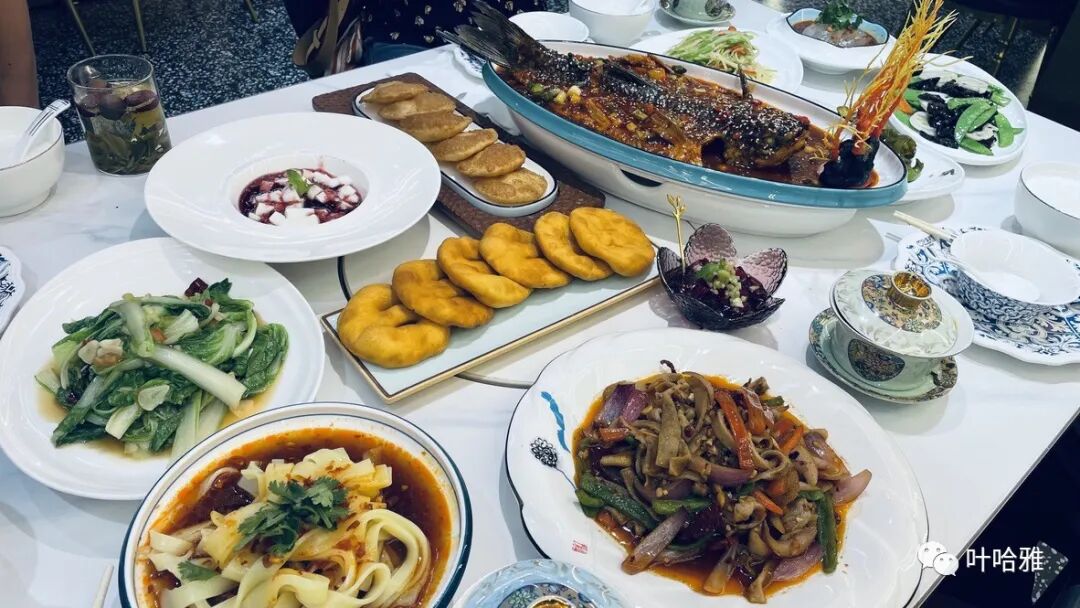
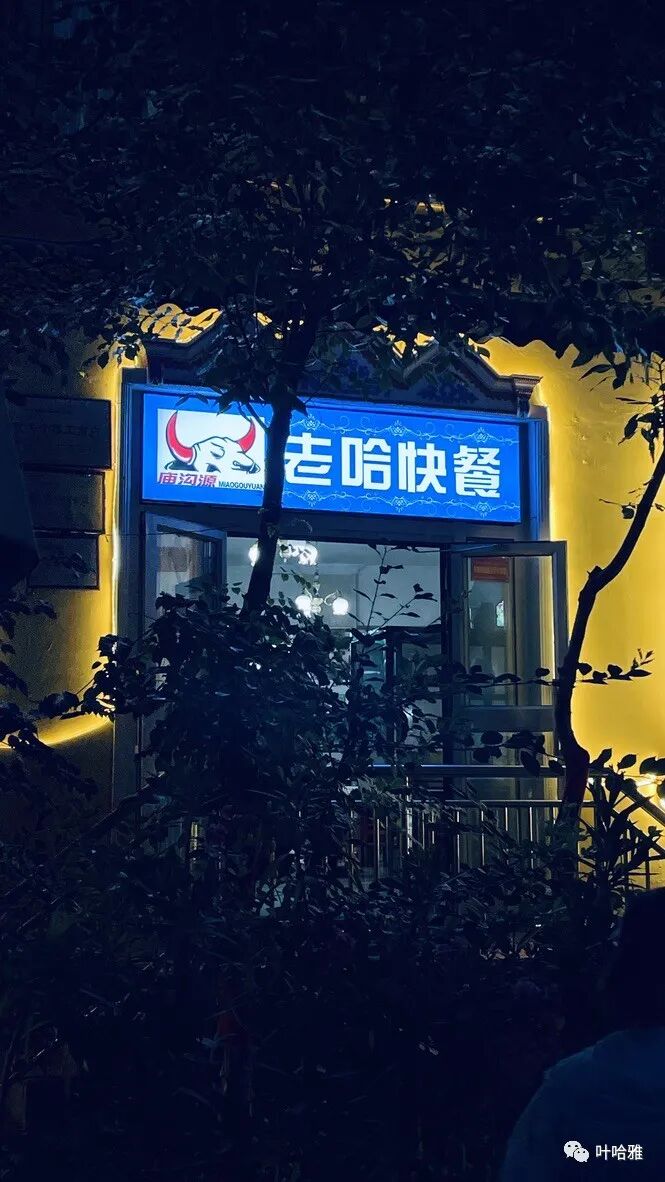
Another place in Six Star Street, Laoha Fast Food, was recommended by a friend for breakfast. The environment is simple, but it feels very authentic and the prices are much cheaper.
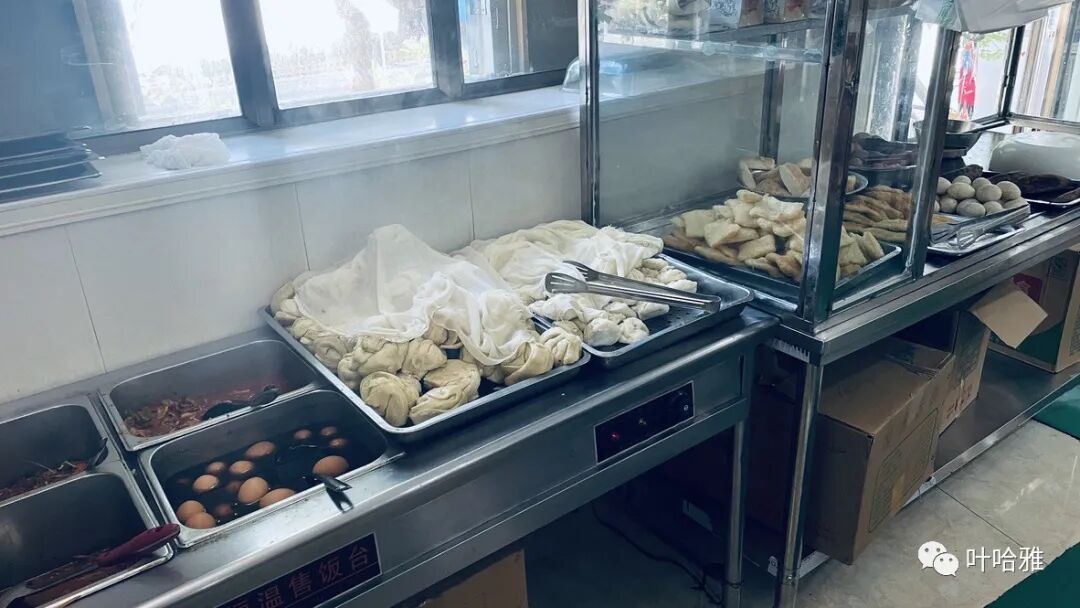
The interesting thing about this shop is that breakfast is self-service. You take what you want to eat, and when you finish, you go to the owner to pay. You just tell them what you ate based on your own memory. The owner cannot keep track of everyone, and I believe very few people would lie about what they ate.
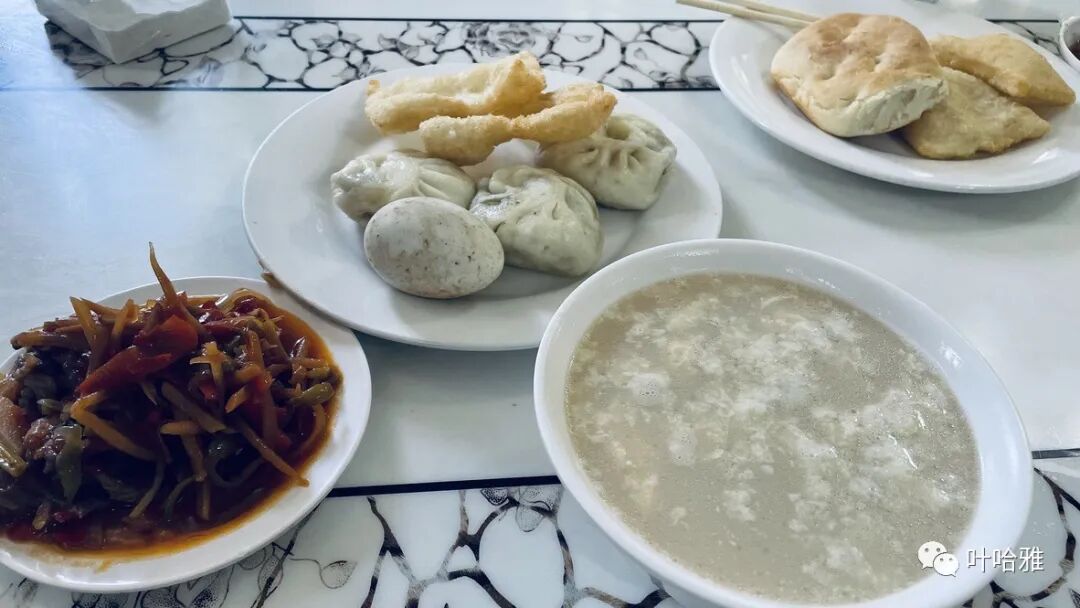
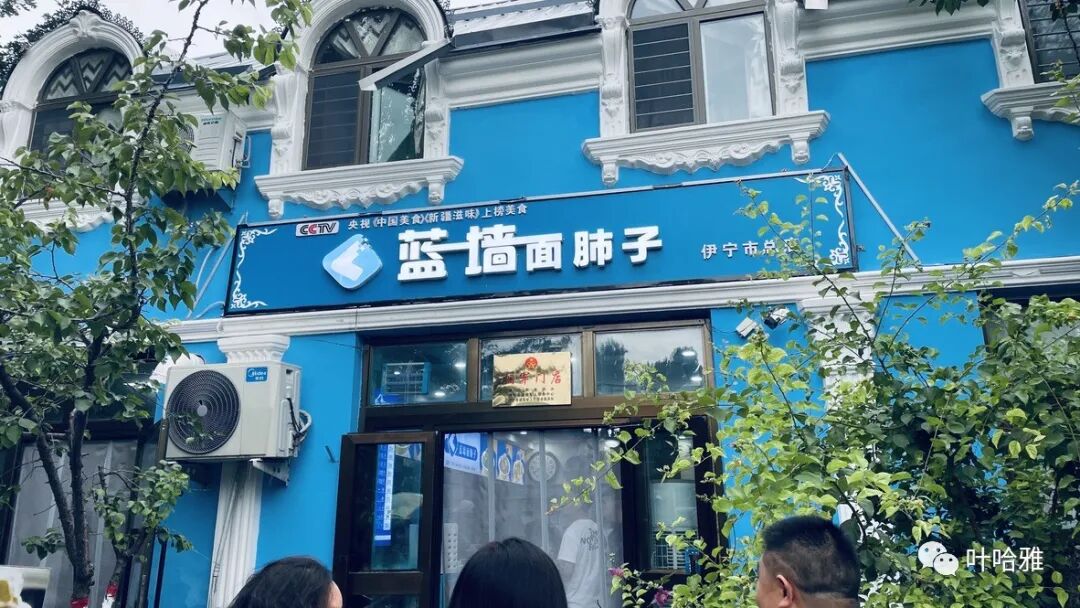
There is a popular restaurant in Six Star Street called Blue Wall Mianfeizi that many friends recommended I try. It is called Blue Wall because the walls are painted blue, which is a common color for houses in Yili.
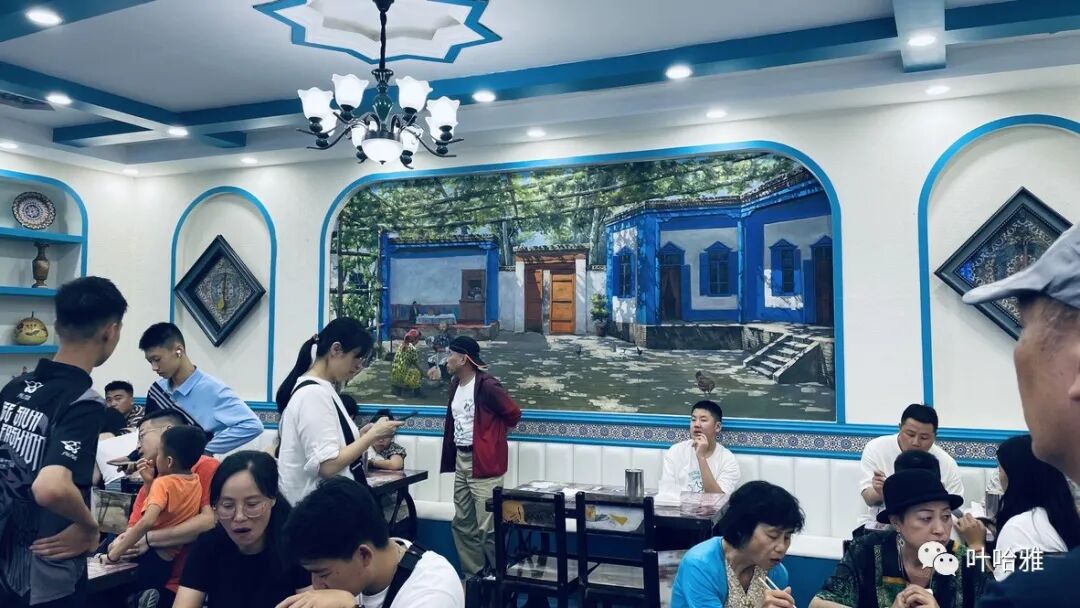
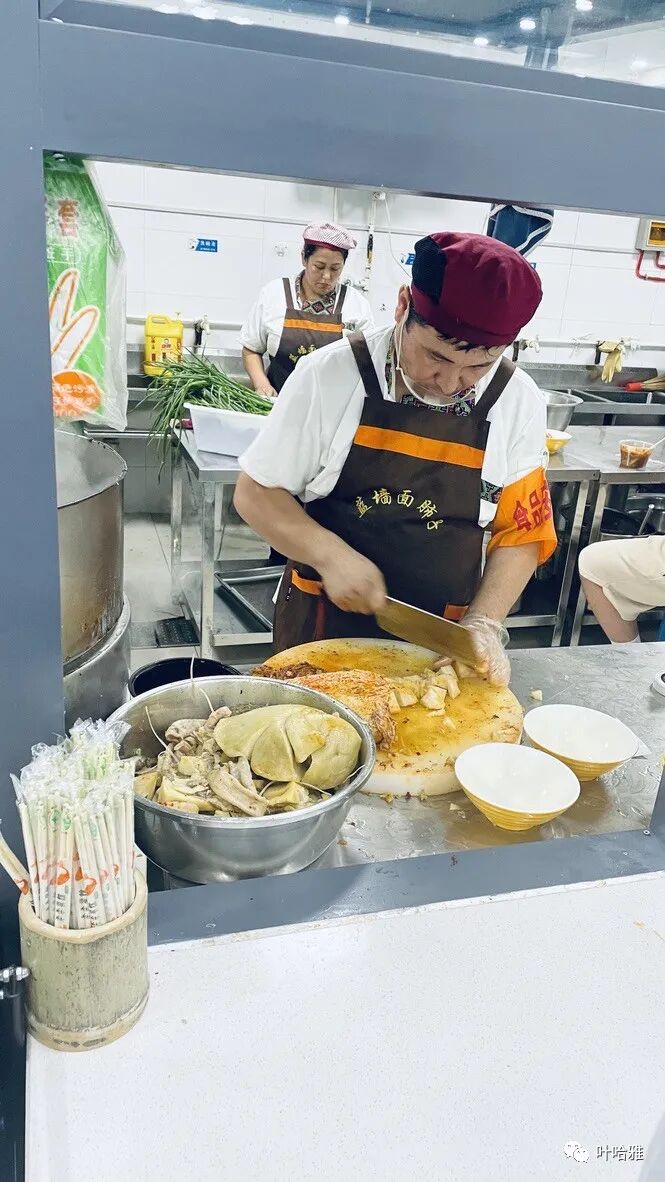
The lung and noodle dish (mianfeizi) is truly delicious and business is very good, but their operating hours are short and they close as soon as it gets dark.
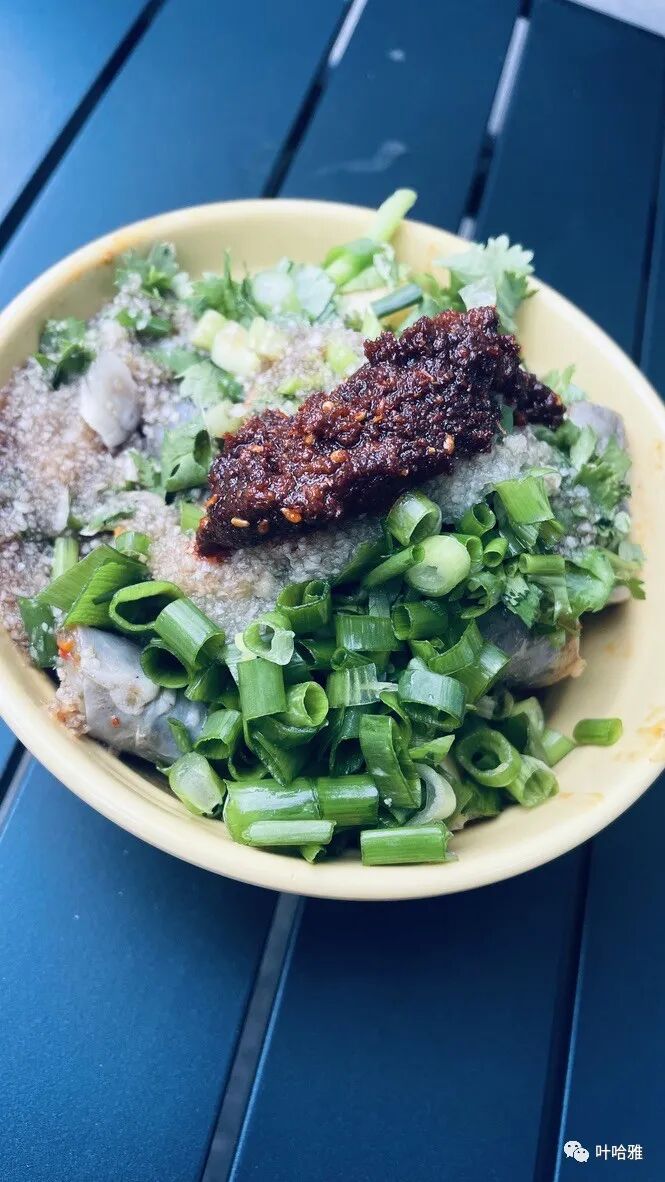
Lung noodles (mianfeizi)
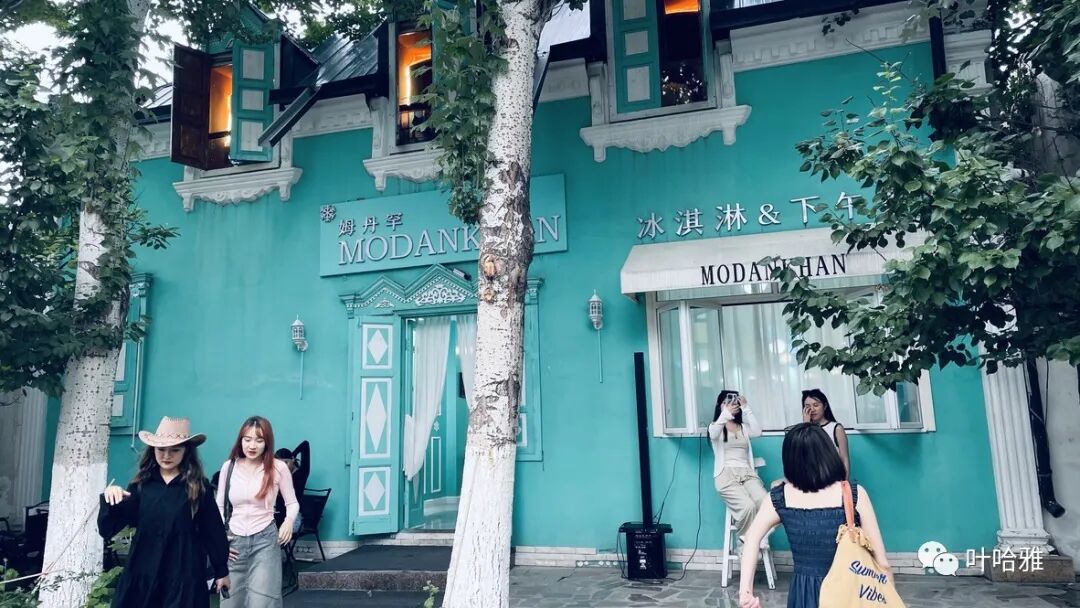
Mudanhan ice cream
Across from the blue-walled lung noodles (mianfeizi) shop is a beautiful ice cream parlor called Mudanhan. Ice cream shops are popular spots for people in Yili to relax and chat, and you can find them everywhere. However, Mudanhan uses better ingredients than the others I have tried. Their ice cream is made with pure milk, has no ice crystals, and tastes rich and smooth.
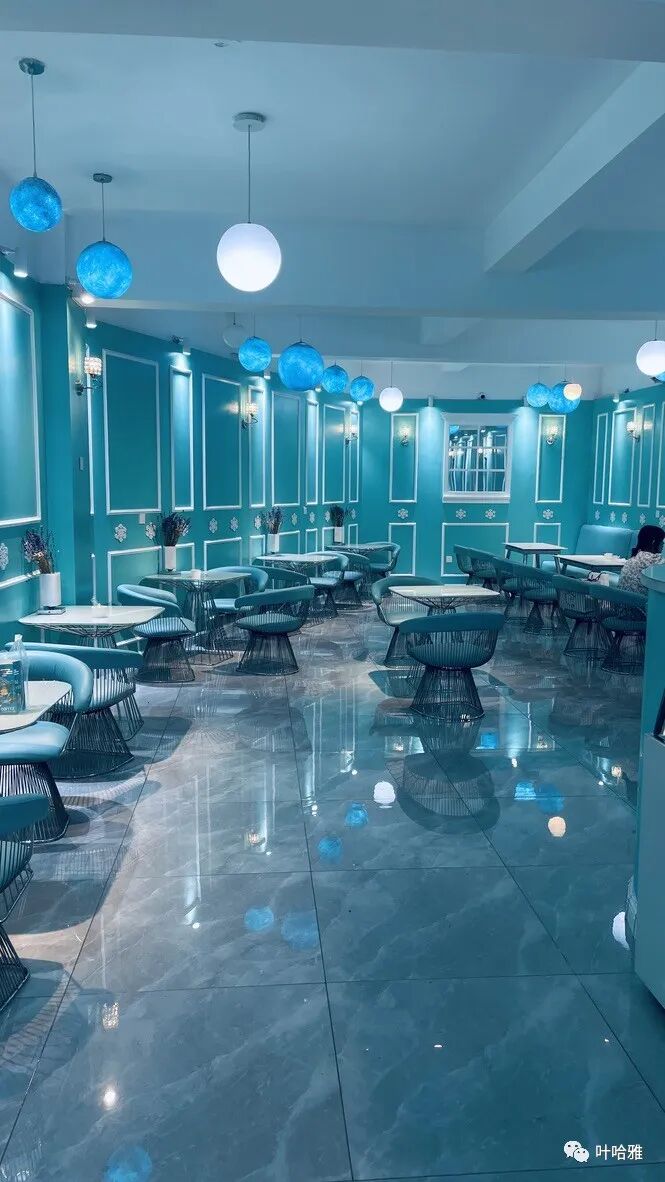
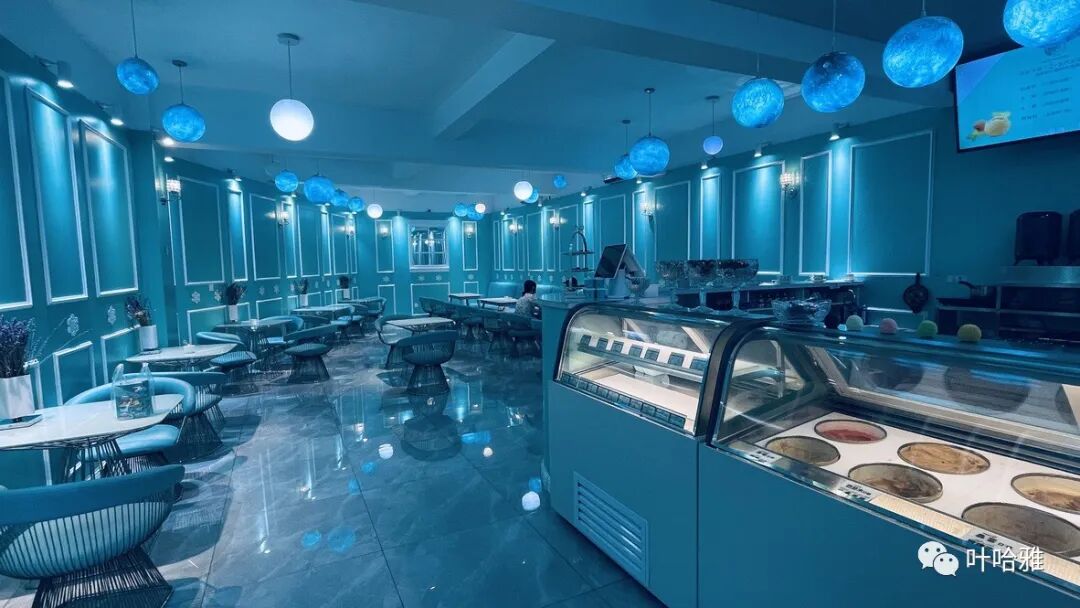
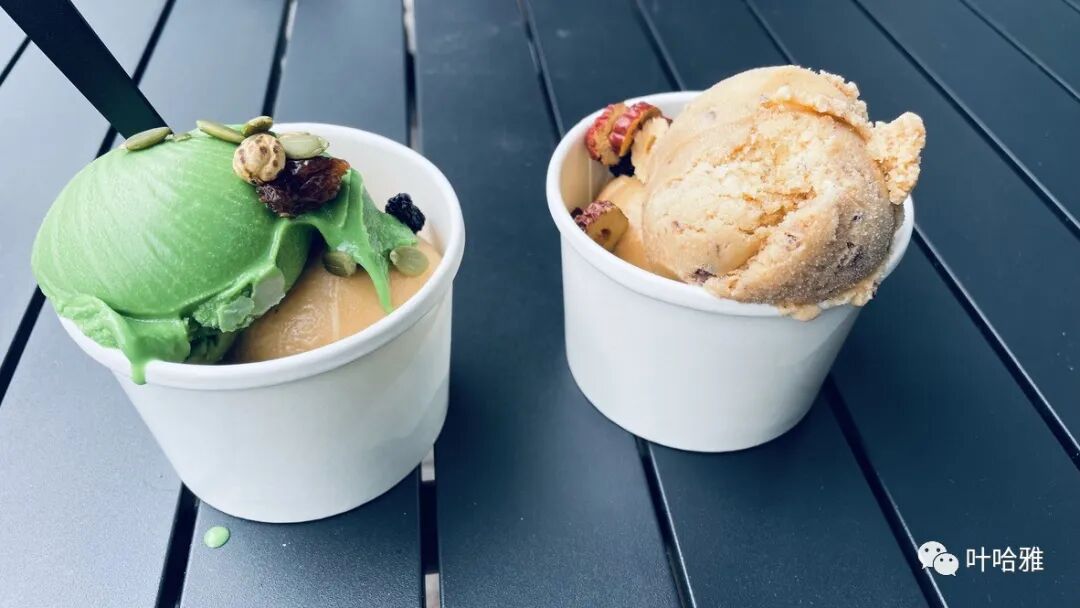
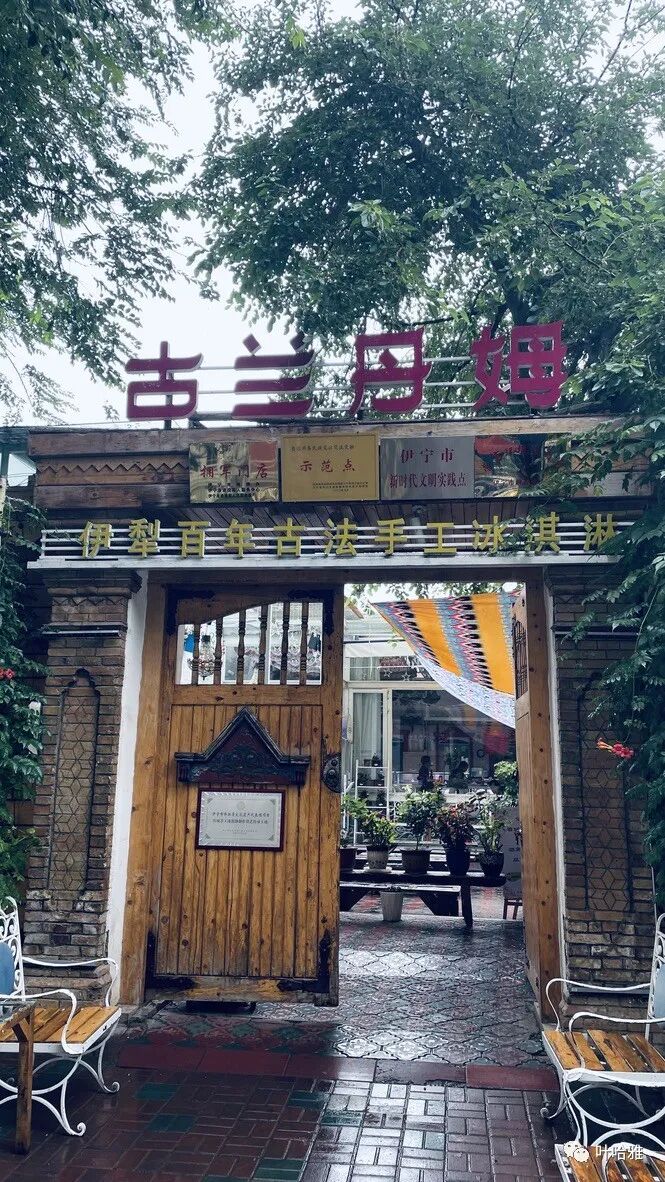
Six Star Street also has a long-standing ice cream shop called Gulandamu. It is an old shop with a traditional residential style and a nice atmosphere, but the ice cream is not as pure in texture as Mudanhan. Mudanhan is a better fit for young people.
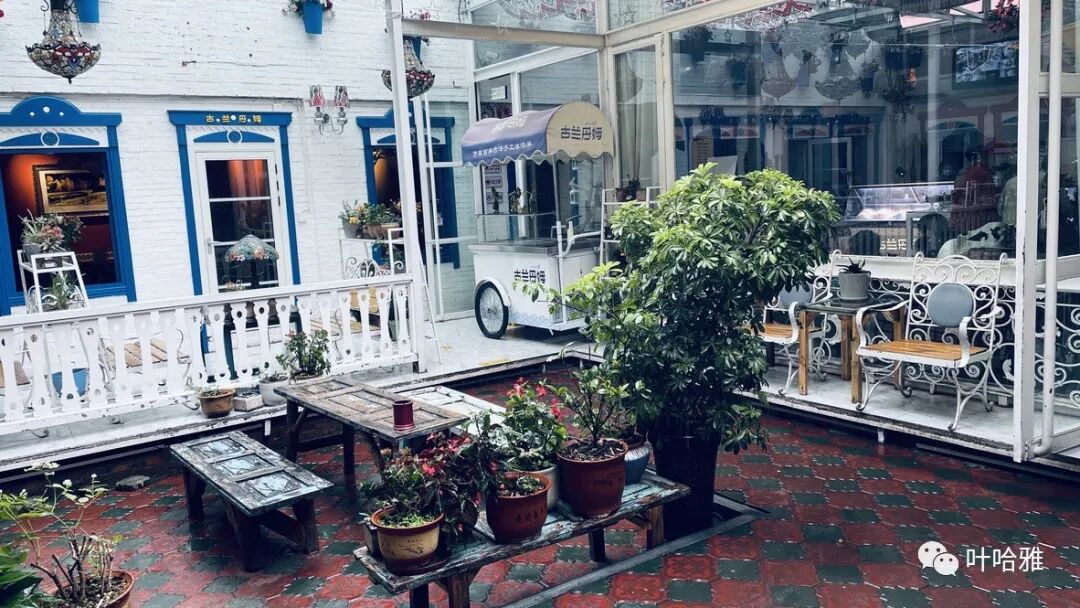
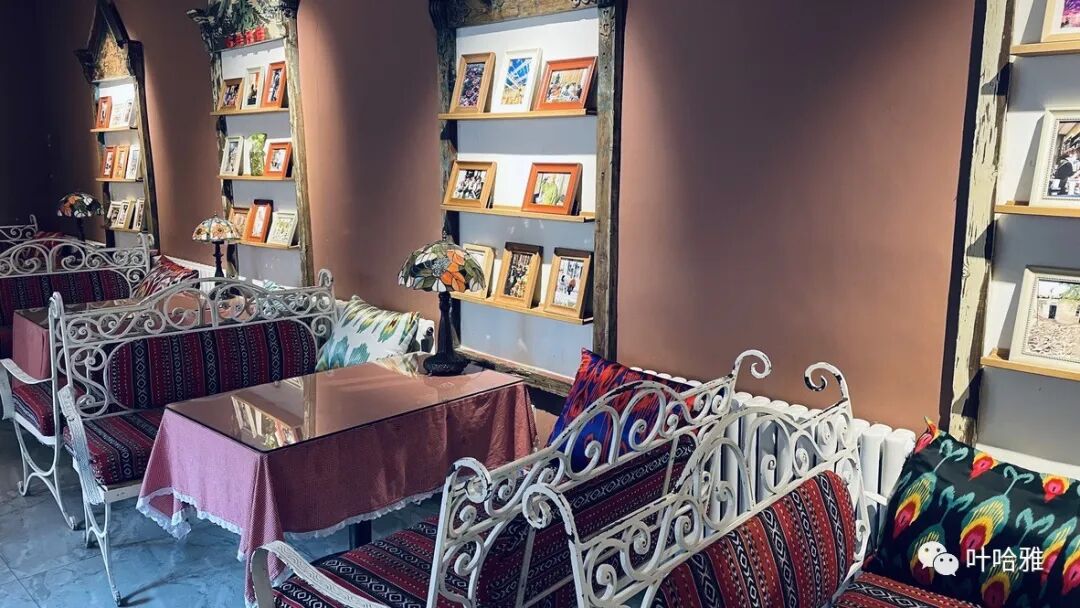
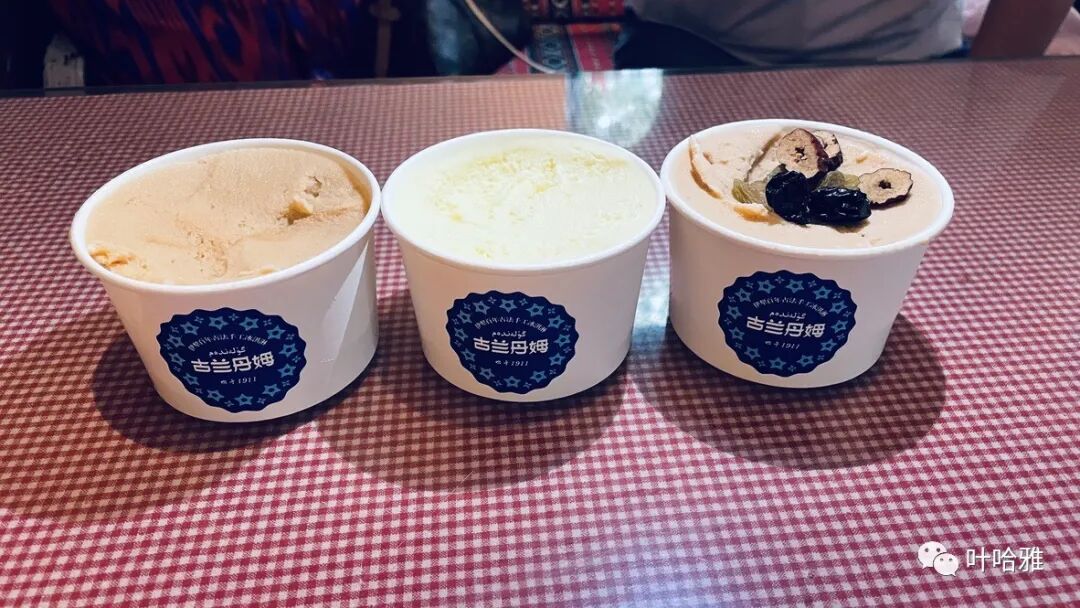
The buildings on Six Star Street are mostly in a Russian style because the area was influenced by Tsarist Russia in the past. This Russian-style neighborhood look is at least a hundred years old. Even the mosque on Six Star Street is in a Russian style and is very beautiful. The young men and women in Yili also dress with a Russian flair. This is part of Yili's charm, where you can experience the collision of different cultures.
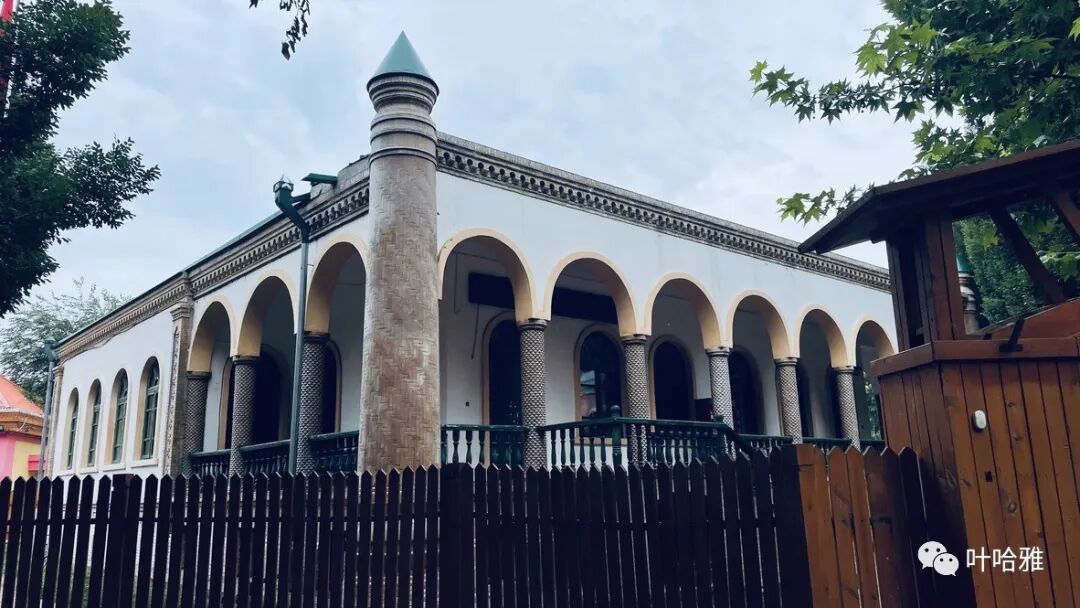
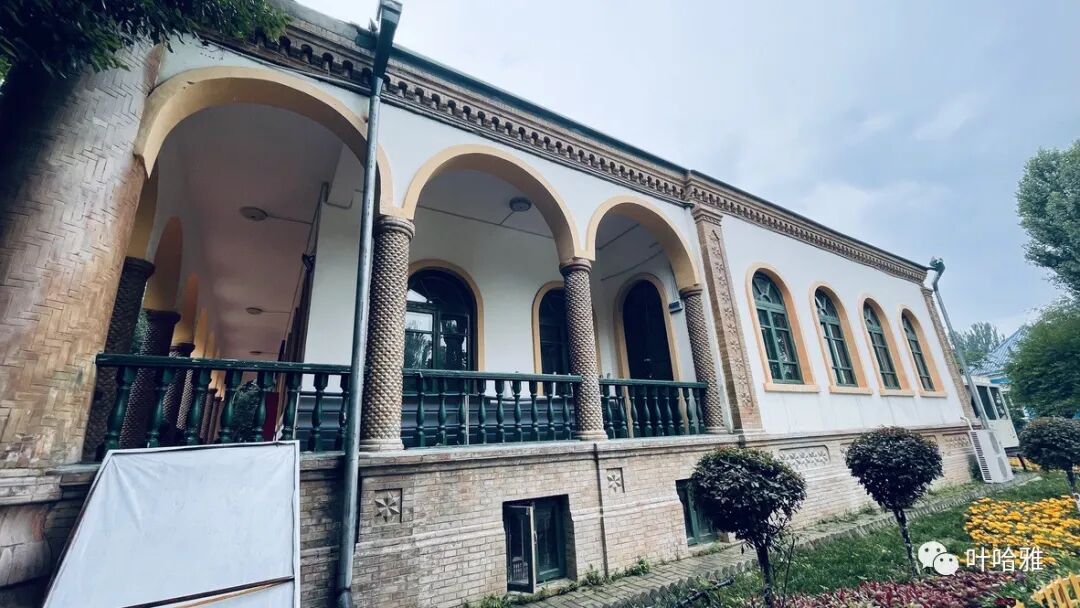
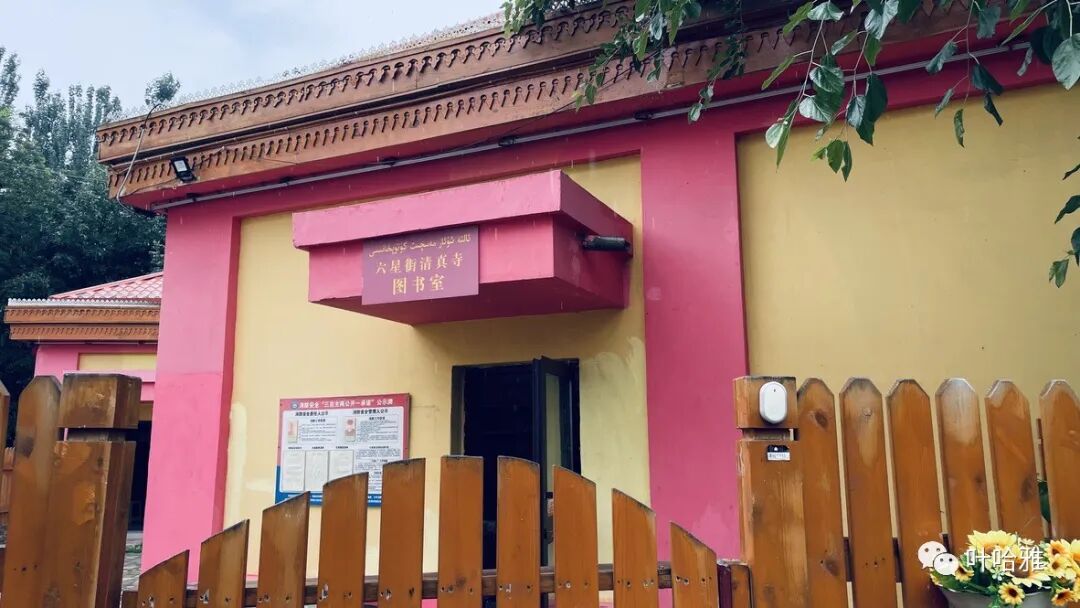
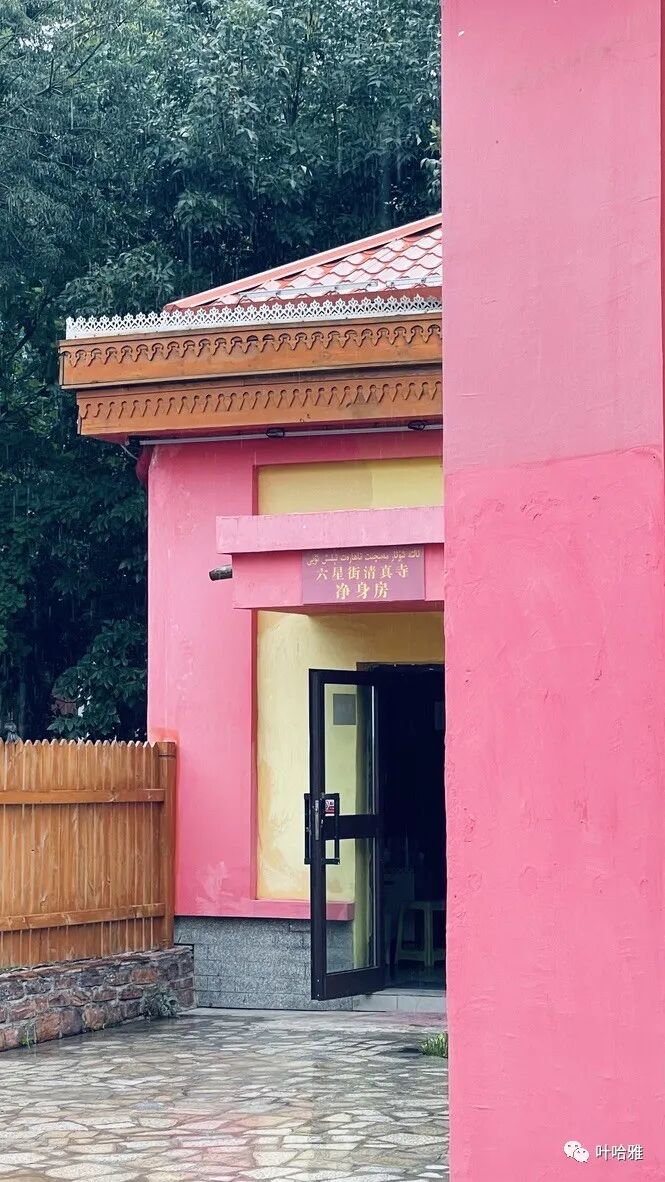
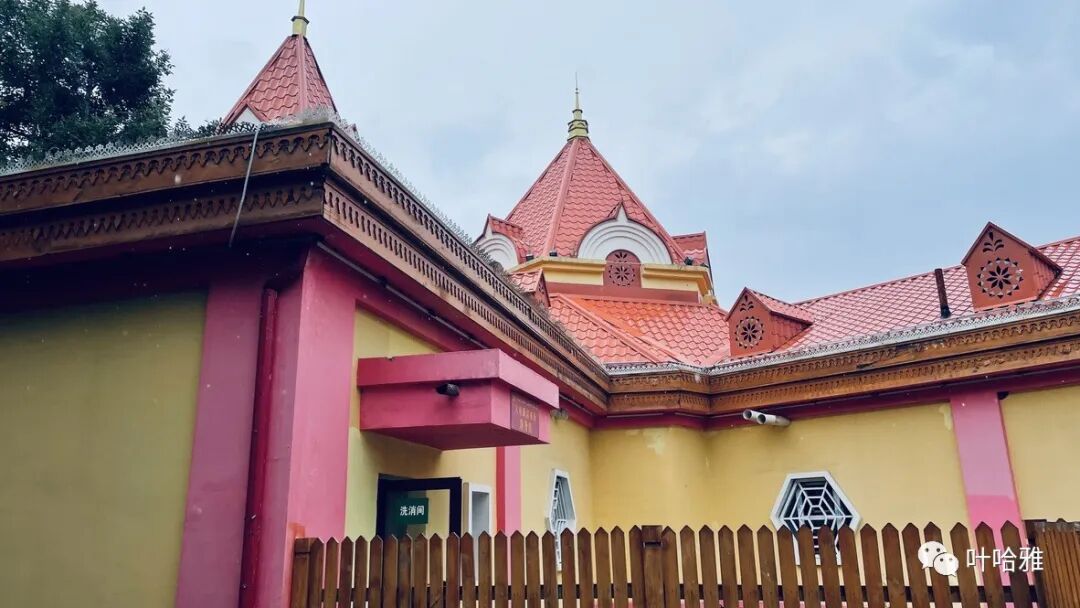
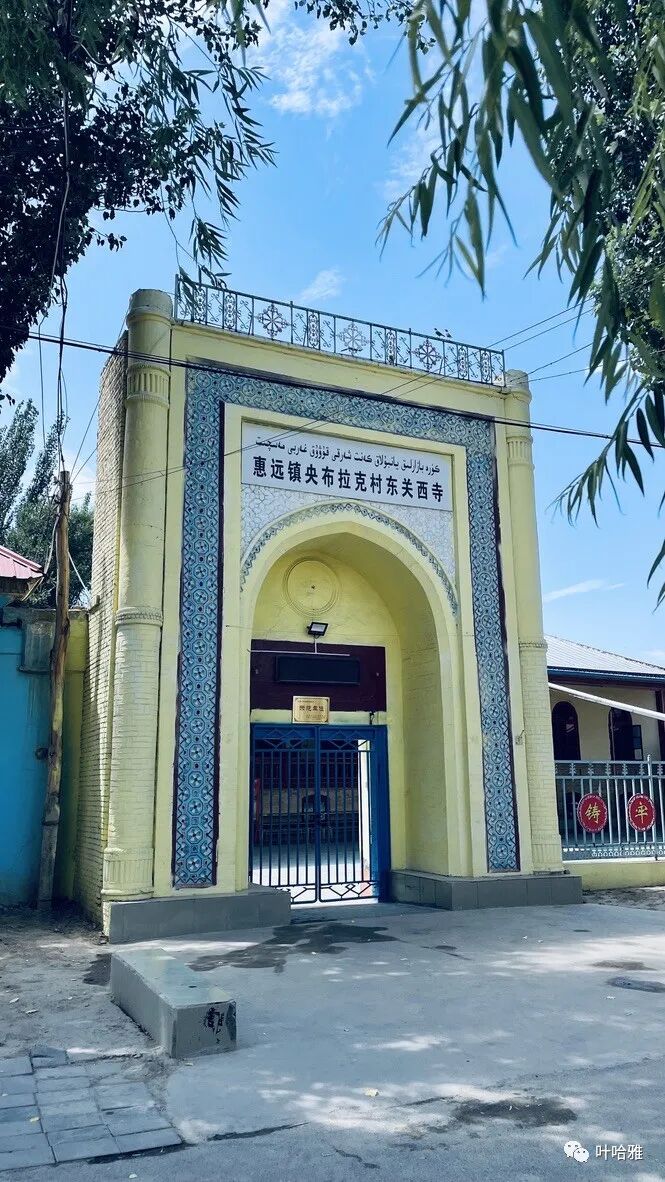
Dongguan West Mosque in Yangbulake Village
Leaving Yining, we saw the Kazakh Dongguan West Mosque in Yangbulake Village on the way to the Horgos border crossing, but it was not open.
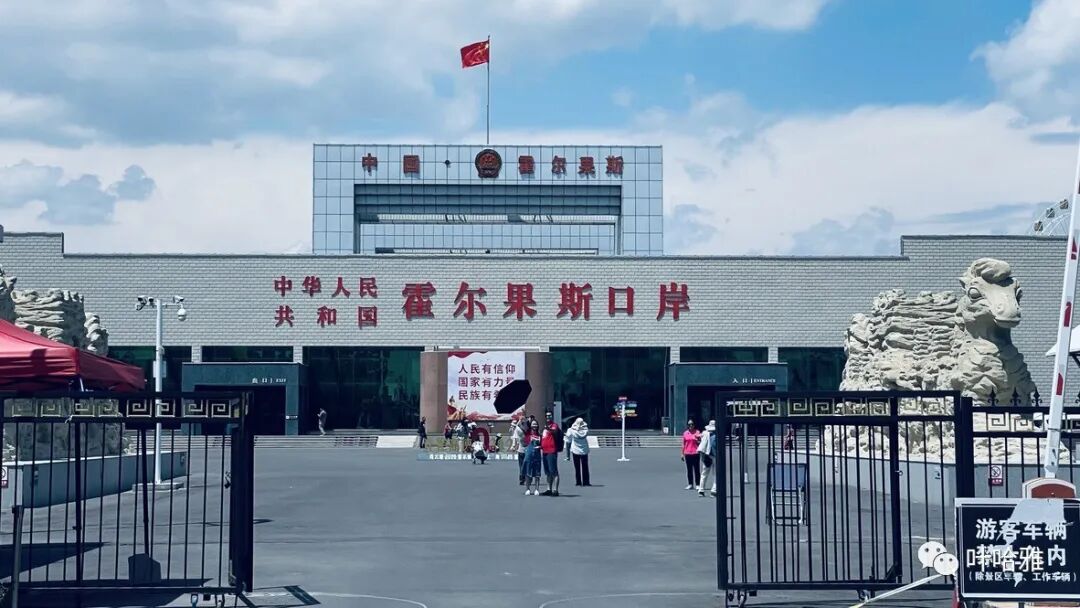
Horgos has two national gates. The first is the old gate, and below it is the new gate. If you have a passport, you can take a visa-free one-day trip to Kazakhstan.
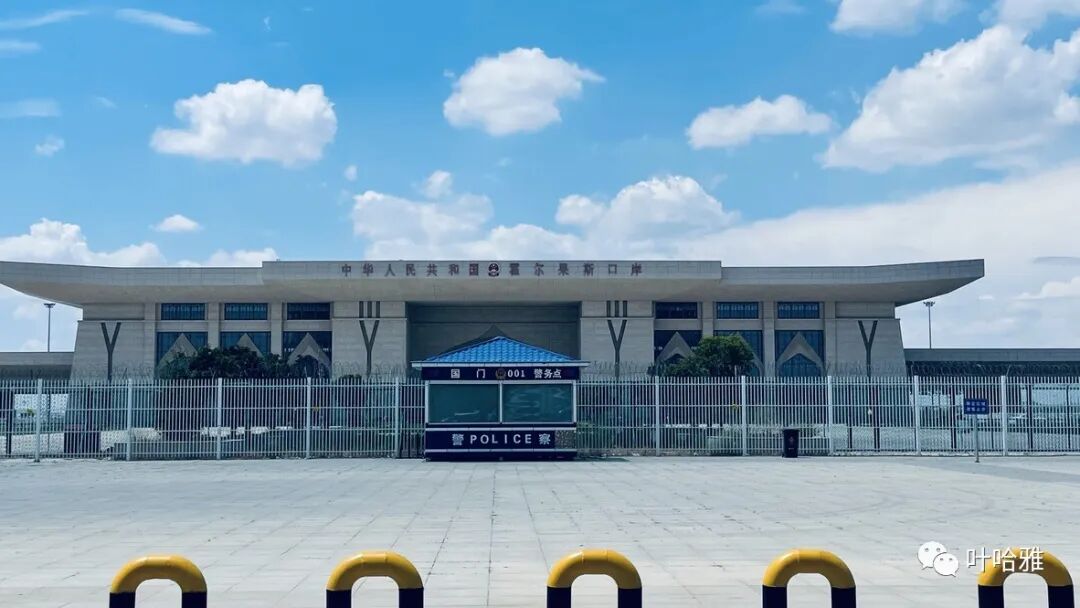
We set off from Yining to Shuiding Town in Huocheng to visit the gongbei of the wife of Ma Mingxin, the founding master of the Jahriyya order.
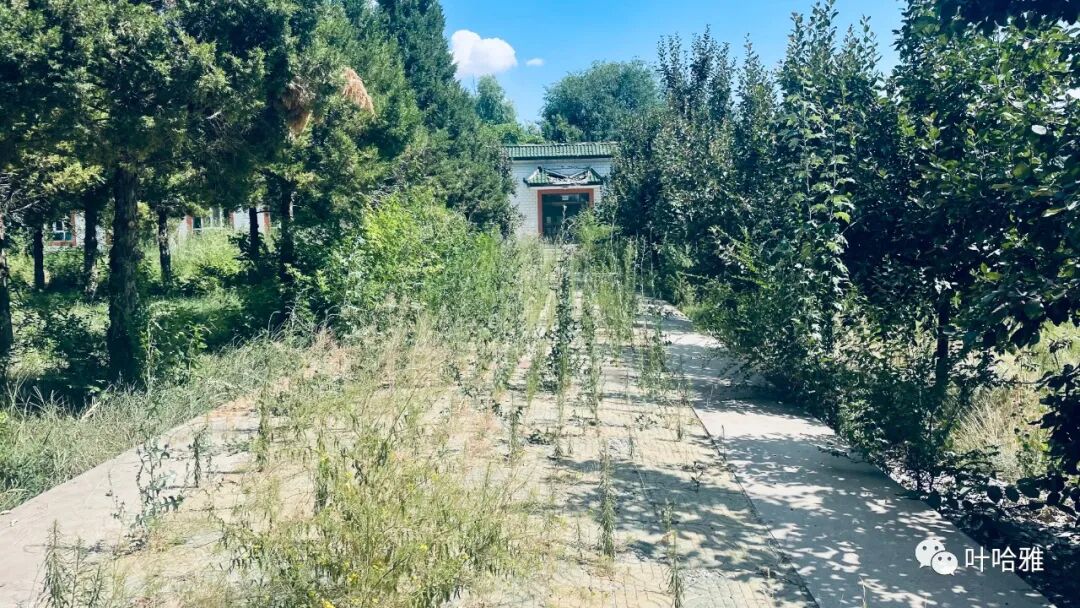
The wife's gongbei in Shuiding Town
The Zhang family wife's gongbei has been closed for all activities for many years, and the inside is overgrown with weeds.
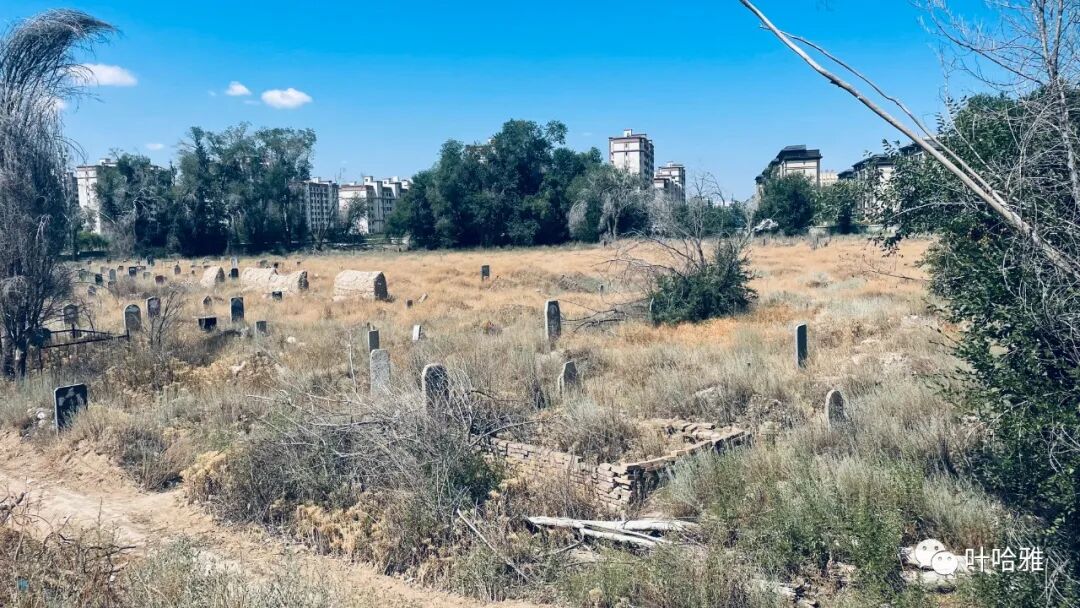
Ma Mingxin, the founding master of the Jahriyya order, had two wives. One was a Salar grandmother who committed suicide after learning that Ma Mingxin had been killed. The other was this Zhang family wife from Caoyagou, Tongwei, Gansu. She and her three daughters were exiled to Xinjiang, and the three daughters died on the way.
Mrs. Zhang's daughter, Mrs. Hagu, drowned herself in a lake on her way to Yili. According to an imam from the Jahriyya (Zhepai) order, the name Sayram Lake comes from Mrs. Hagu's religious name, Salima. Mrs. Zhang was exiled alone to work as a slave in an official residence in Yili.
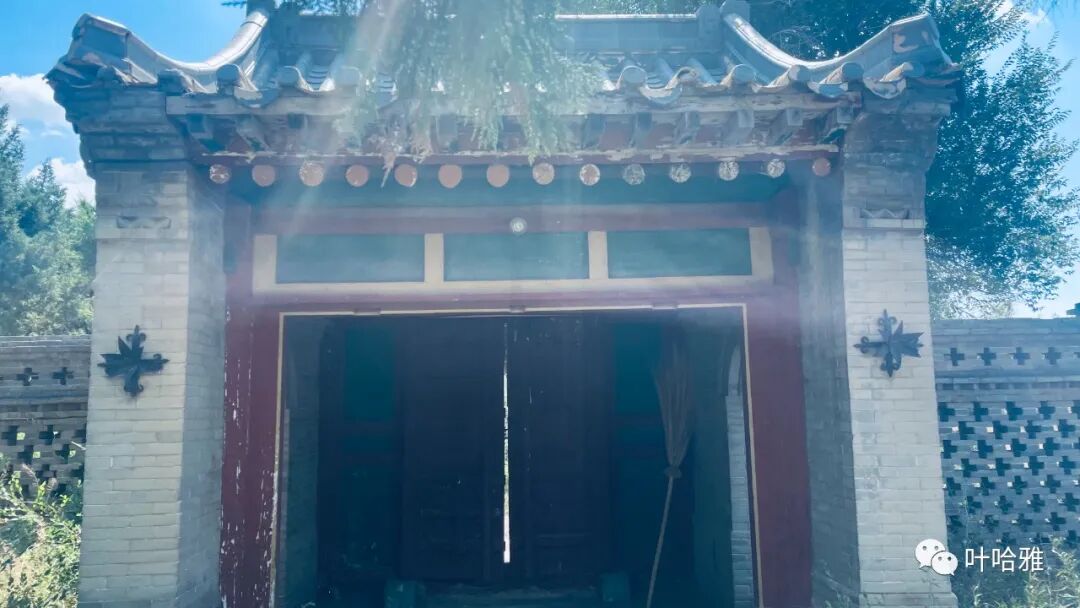
In the 46th year of the Qianlong reign, Mrs. Zhang killed an official's entire family with a knife in the middle of the night. She later turned herself in, was sentenced to death by the Qing court, and was buried by the Yili River.
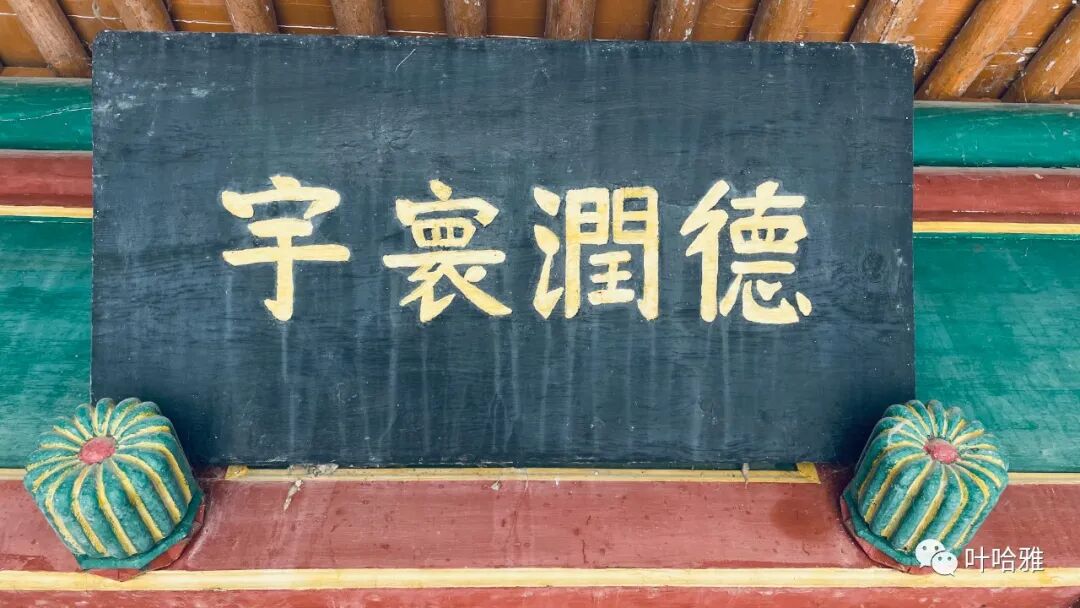
After visiting this shrine (gongbei), I have now been to all the main shrines of the Jahriyya order. Although I am not a member of a Sufi order (menhuan) and only knew about them from books before, visiting them in person and talking with the families has given me a lot to think about. The information in books about these orders is still quite one-sided.
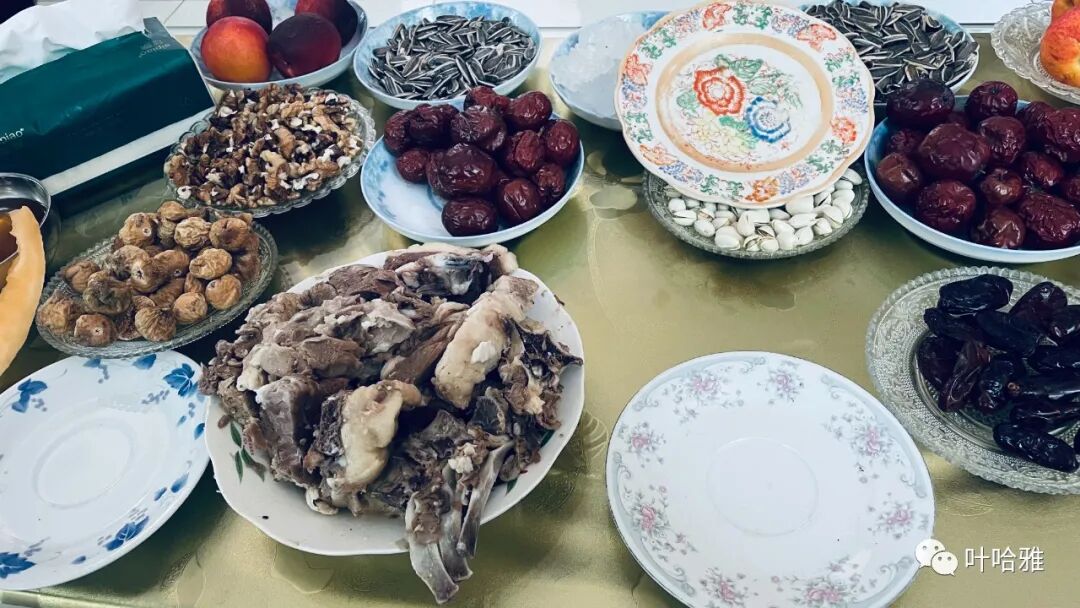
I left Shuiding Town and headed toward Urumqi. On the way, I passed Sayram Lake and accidentally found a rest area in Guozigou. There is a path that leads directly to the Sayram Lake scenic area, so I didn't have to buy a ticket and saved the 300 yuan self-driving fee.
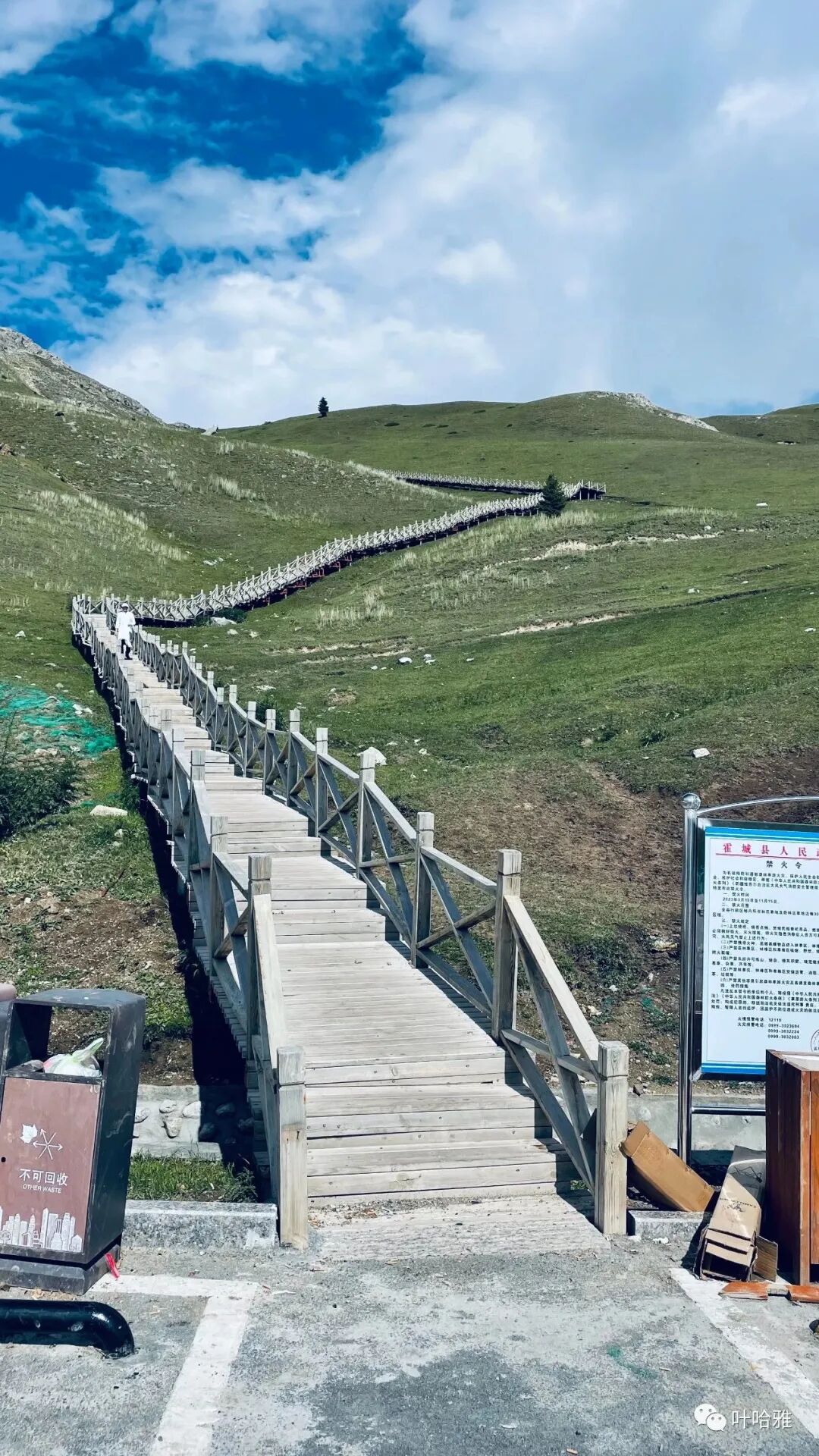
Remember this entrance: navigate to the Guozigou pasture in Huocheng County. Go up the mountain from this point, and you can reach the top in about an hour to look down at the full view of Sayram Lake.
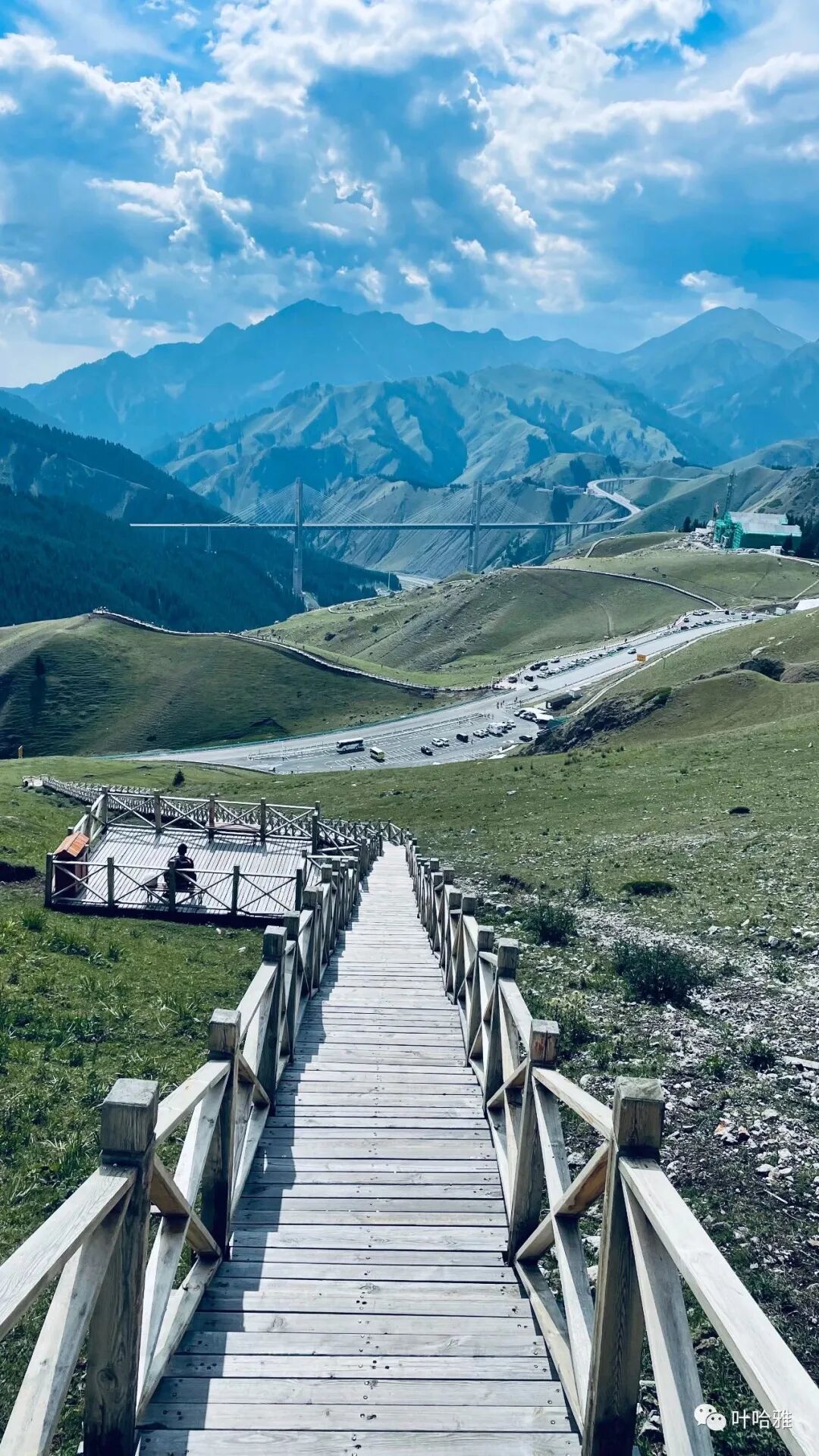
The horses along the way are raised by Kazakh people. You can also ride a horse up the mountain, but they charge by the hour, and the actual cost is about the same as the scenic area entrance ticket.
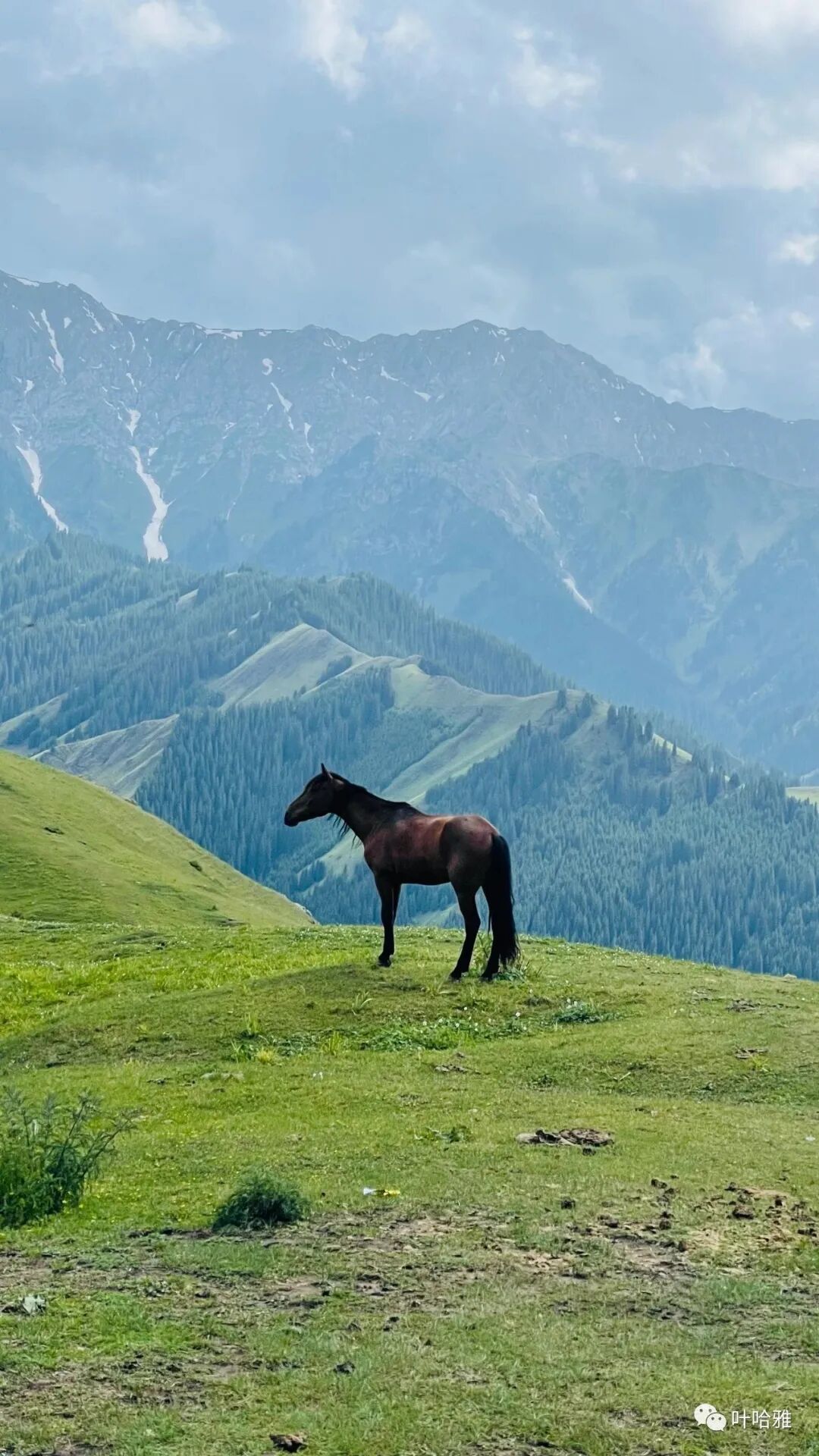
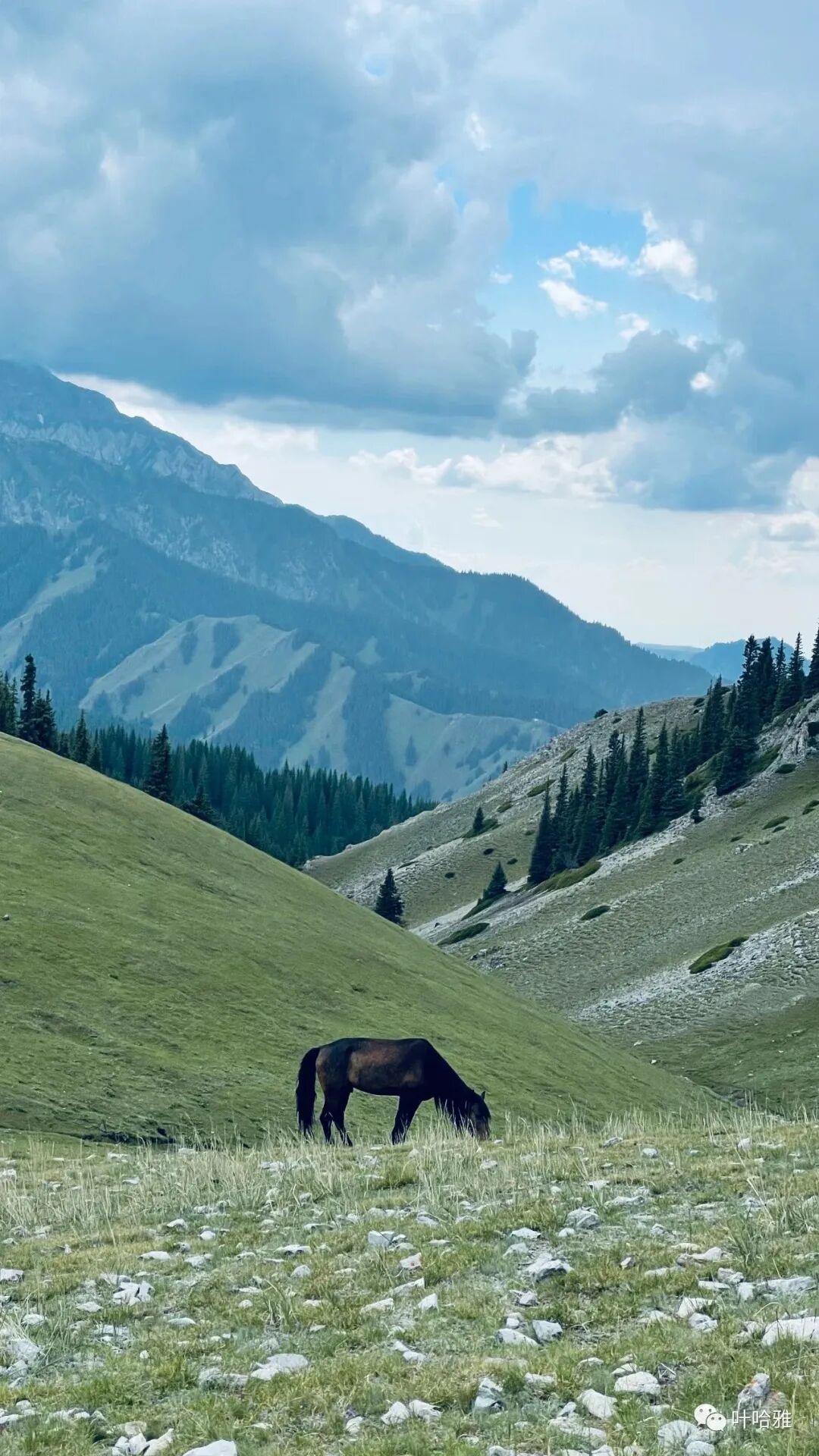
We reached the top of the mountain in no time. The scenery in front of us was beautiful, and it was free, too.
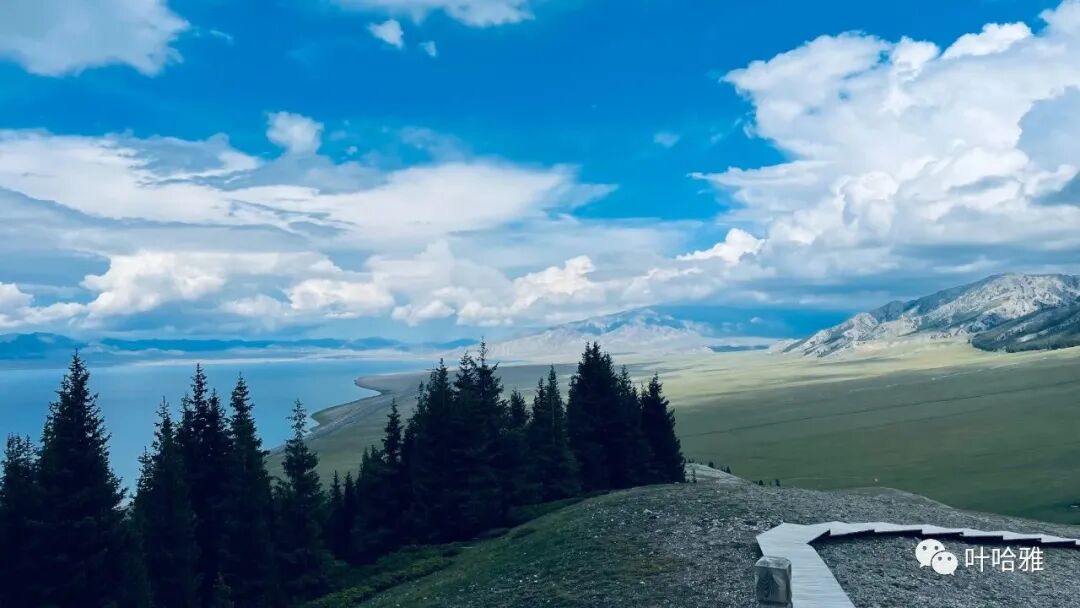
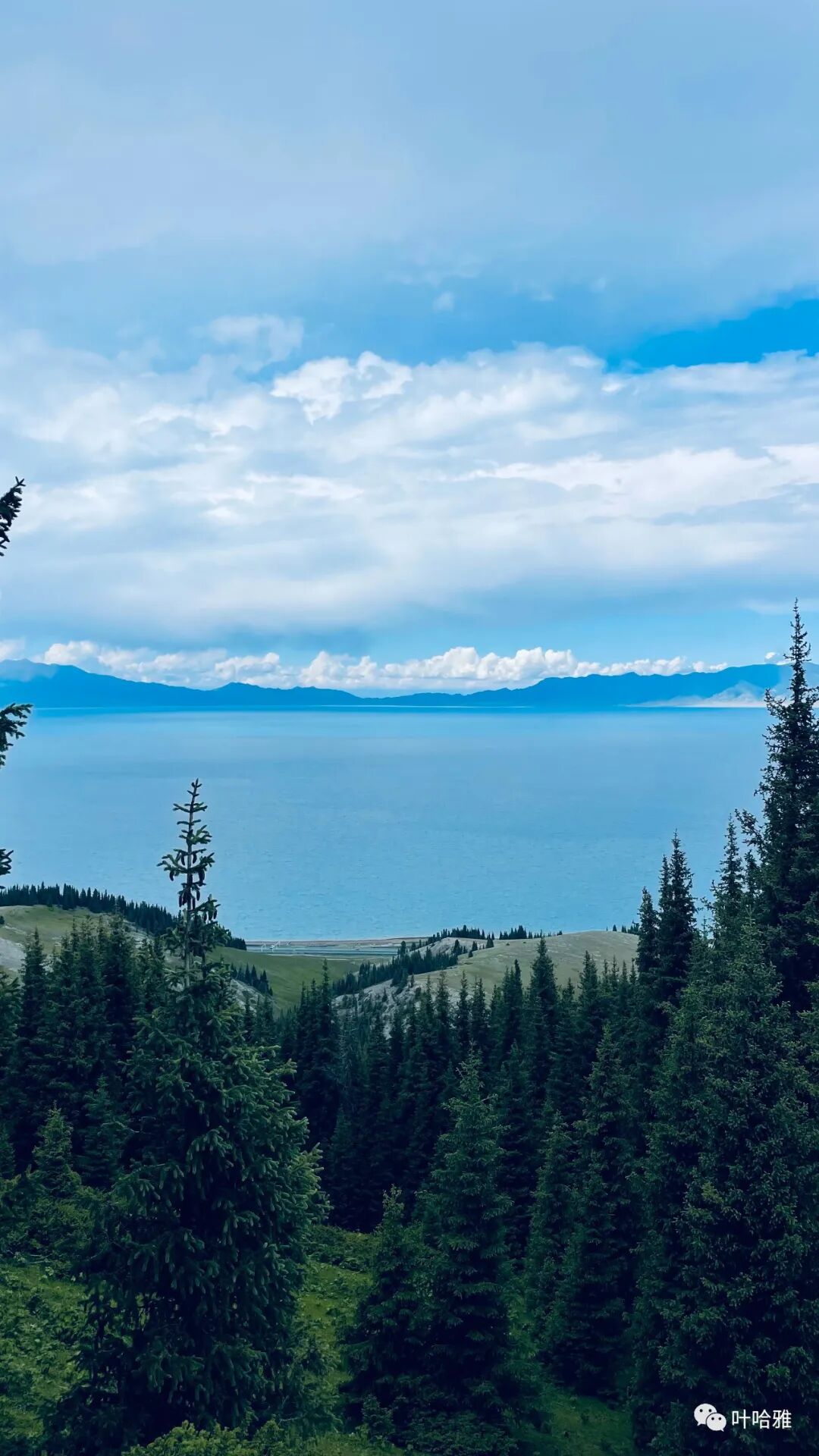
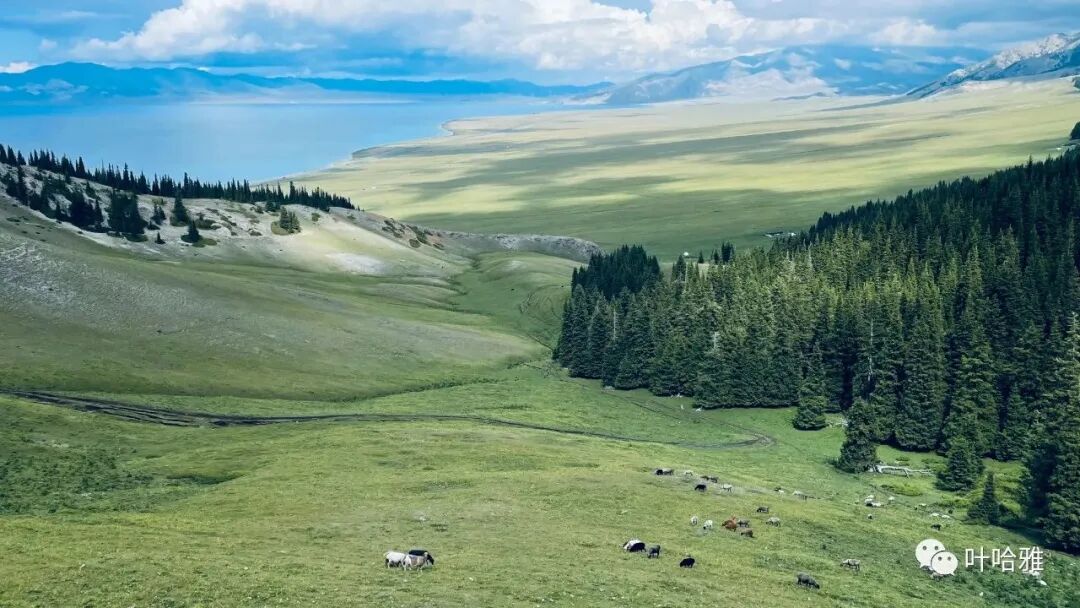
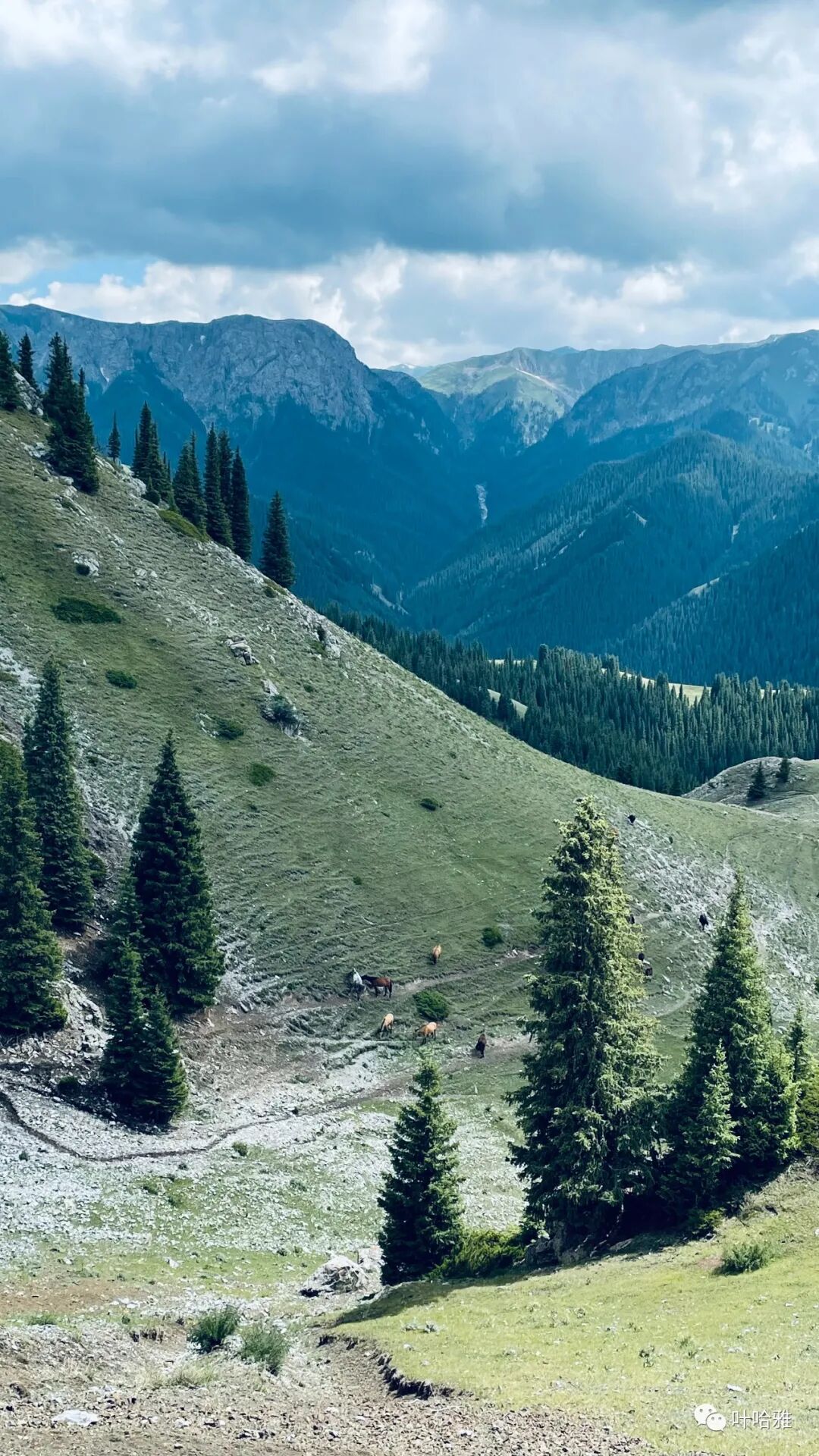
The beauty of Sayram Lake is just as good as Kanas Lake, which I have visited before. Plus, after hearing the stories of the Jahriyya order on this trip, I feel it has even more meaning. As for whether it should be called Sayram Lake or Salima Lake, it really doesn't matter to the Jahriyya.
I remember the imam saying that in winter, one part of the lake never freezes, which seems to be a sign. The imam had tears in his eyes when he mentioned that history, a scene I could never have felt just by reading a book.
Summary: This Muslim travel guide to northern Xinjiang follows the Duku Highway, Bayanbulak Grassland, Nalati, Yining Shaanxi Mosque, Sayram Lake, Hui and Uyghur prayer life, and local halal food on the road.
A Halal Trip to Northern Xinjiang: Is Sayram Lake Actually Called Sailimai? is presented here as a firsthand travel account in clear English, beginning with this scene: Driving from Urumqi in Northern Xinjiang to Southern Xinjiang via the Duku Highway is a classic road trip, but I chose to drive from south to north. The account keeps its focus on Urumqi Halal Food, Hui Muslims, Xinjiang Travel while preserving the names, places, food, and historical details from the Chinese source.
Driving from Urumqi in Northern Xinjiang to Southern Xinjiang via the Duku Highway is a classic road trip, but I chose to drive from south to north. Going in reverse helps avoid the heavy traffic of the peak tourist season. The route passes through the Bayanbulak Grassland and the Nalati Grassland. The 560-kilometer drive from Kuqa to Yili includes about half on the Duku Highway, taking nine hours in total. You can experience all four seasons in a single day.
Having an electronic toll collection (ETC) tag saves time. Not many cars in Xinjiang have them, even though highways have ETC lanes. Most drivers get stuck in lines at the manual toll booths. Using an ETC tag on the Duku Highway costs 19 yuan, while the manual toll is 20 yuan.
The Duku Highway has an average elevation of 2,000 meters. You can see high-altitude snow-capped mountains, vast grasslands, deep canyons, and lakes. The scenery is truly beautiful. There are many rest areas along the way for sightseeing. A few spots are paid attractions, but I skipped those as they did not seem necessary.
Before reaching Yining County in Yili, you pass through the Bayanbulak Grassland and the Nalati Grassland. The Bayanbulak Grassland stretches for hundreds of kilometers. The endless sea of green grass and the blue sky wiped away all the fatigue from driving.
You can drive your own car into the Nalati Scenic Area, but you must book tickets on their official WeChat account a few days in advance. Self-driving tickets are in high demand, so it is best to get them early. We did not plan to enter the scenic area and just drove past it. These photos were taken with a phone, and the scenery inside is basically the same.
After a long day of travel, we arrived in Yining County, Yili Prefecture, after 10 p.m., just in time for the Maghrib (shamu) prayer.
This was our first time joining a congregational prayer at a mosque since arriving in Xinjiang, and I felt incredibly moved.
The elders at the mosque were very welcoming and told us about the Shaanxi Grand Mosque. The Yining Shaanxi Grand Mosque was built in 1751 during the 16th year of the Qianlong reign of the Qing Dynasty. The main hall has two floors; the first floor has Uyghur-style interiors, while the second floor is in a traditional Chinese style. Currently, only the first floor is open.
Many places in Xinjiang have Shaanxi mosques, which were usually built by Hui Muslims who moved from inland China. During prayer time, I saw Uyghur elders and Hui Muslims praying together. After the prayer, everyone greeted each other, and the atmosphere was very harmonious.
The Shaanxi Grand Mosque is located in the Kazanqi Old Town in the center of Yining, which is also a popular spot for tourists.
Another national cultural heritage site in Yining is the minaret of the Jiefang South Road Mosque, also known as the Baitula Mosque. It was built in 1773 during the 38th year of the Qianlong reign of the Qing Dynasty. The main building was demolished and rebuilt in 1996, but the minaret was preserved.
This street is also a night market packed with food, and it stays busy until after one in the morning.
I spent 10 yuan at the night market on three pieces of milk tofu (naidoufu). I took a bite, and it was sour and smelly; I think I ate it the wrong way.
For dinner, I had mixed noodles (banmian) and wontons (huntun) at Wuziqiaokelike on Jiefang South Road. The place was full of people, and the food tasted good.
Another food bazaar in Yining is on Hanren Street. I used to hear that there were no Han people on Hanren Street. That might have been true at one time, but it is definitely not the case now, as there are plenty of Han tourists there.
I had a bowl of starch noodle soup (fentang) at a Uyghur stall.
Aibaoersake Kazakh Theme Restaurant
I had Kazakh breakfast twice in Six-Star Street in Yining. Kazakh people eat stir-fried dishes for breakfast, which is very hardcore.
The staff clearly looked Kazakh, with facial features similar to Mongolians.
Baorsak is the fried dough food shown below. It is fluffy and soft, and you can dip it in various sauces. It is a Kazakh specialty, a bit like the fried dough (youxiang) eaten by Hui Muslims.
Baorsak
Kazakh potatoes
You definitely have to drink milk tea in the morning. It is salty and served with Kazakh potatoes, stir-fried meat with chili peppers, and a side of smoked horse sausage. Having such a special breakfast in Yili is very satisfying.
For a main meal, try traditional Yili stir-fry. I recommend Yimaisi, located not far from Six Star Street. It is owned by the same people as the Lari Hot Pot next door. This restaurant has been open for nearly eight years and is one of the few places in Xinjiang that does not serve alcohol or allow smoking. Staying open for eight years means the food must be good enough to win over the locals.
I tried their stir-fried dishes and every single one was delicious. The owner told me that they make as many ingredients as possible from scratch instead of buying pre-made items. Even their yogurt shaved ice (suannai baobing) is made with great care.
Yogurt shaved ice (suannai baobing)
Fermented vegetable noodle soup (jiangshui mian)
This was my first time eating fermented vegetable noodle soup (jiangshui mian) served hot. I had only eaten it cold before in Gansu.
Freshly fried dough fritters (youxiang)
It is worth noting that not only are the meat dishes good, but their vegetable dishes are also very flavorful. It is no wonder the owner can keep the business booming without selling alcohol, which is not an easy thing to do in Xinjiang. This was the most impressive restaurant we ate at in Yining.
Another place in Six Star Street, Laoha Fast Food, was recommended by a friend for breakfast. The environment is simple, but it feels very authentic and the prices are much cheaper.
The interesting thing about this shop is that breakfast is self-service. You take what you want to eat, and when you finish, you go to the owner to pay. You just tell them what you ate based on your own memory. The owner cannot keep track of everyone, and I believe very few people would lie about what they ate.
There is a popular restaurant in Six Star Street called Blue Wall Mianfeizi that many friends recommended I try. It is called Blue Wall because the walls are painted blue, which is a common color for houses in Yili.
The lung and noodle dish (mianfeizi) is truly delicious and business is very good, but their operating hours are short and they close as soon as it gets dark.
Lung noodles (mianfeizi)
Mudanhan ice cream
Across from the blue-walled lung noodles (mianfeizi) shop is a beautiful ice cream parlor called Mudanhan. Ice cream shops are popular spots for people in Yili to relax and chat, and you can find them everywhere. However, Mudanhan uses better ingredients than the others I have tried. Their ice cream is made with pure milk, has no ice crystals, and tastes rich and smooth.
Six Star Street also has a long-standing ice cream shop called Gulandamu. It is an old shop with a traditional residential style and a nice atmosphere, but the ice cream is not as pure in texture as Mudanhan. Mudanhan is a better fit for young people.
The buildings on Six Star Street are mostly in a Russian style because the area was influenced by Tsarist Russia in the past. This Russian-style neighborhood look is at least a hundred years old. Even the mosque on Six Star Street is in a Russian style and is very beautiful. The young men and women in Yili also dress with a Russian flair. This is part of Yili's charm, where you can experience the collision of different cultures.
Dongguan West Mosque in Yangbulake Village
Leaving Yining, we saw the Kazakh Dongguan West Mosque in Yangbulake Village on the way to the Horgos border crossing, but it was not open.
Horgos has two national gates. The first is the old gate, and below it is the new gate. If you have a passport, you can take a visa-free one-day trip to Kazakhstan.
We set off from Yining to Shuiding Town in Huocheng to visit the gongbei of the wife of Ma Mingxin, the founding master of the Jahriyya order.
The wife's gongbei in Shuiding Town
The Zhang family wife's gongbei has been closed for all activities for many years, and the inside is overgrown with weeds.
Ma Mingxin, the founding master of the Jahriyya order, had two wives. One was a Salar grandmother who committed suicide after learning that Ma Mingxin had been killed. The other was this Zhang family wife from Caoyagou, Tongwei, Gansu. She and her three daughters were exiled to Xinjiang, and the three daughters died on the way.
Mrs. Zhang's daughter, Mrs. Hagu, drowned herself in a lake on her way to Yili. According to an imam from the Jahriyya (Zhepai) order, the name Sayram Lake comes from Mrs. Hagu's religious name, Salima. Mrs. Zhang was exiled alone to work as a slave in an official residence in Yili.
In the 46th year of the Qianlong reign, Mrs. Zhang killed an official's entire family with a knife in the middle of the night. She later turned herself in, was sentenced to death by the Qing court, and was buried by the Yili River.
After visiting this shrine (gongbei), I have now been to all the main shrines of the Jahriyya order. Although I am not a member of a Sufi order (menhuan) and only knew about them from books before, visiting them in person and talking with the families has given me a lot to think about. The information in books about these orders is still quite one-sided.
I left Shuiding Town and headed toward Urumqi. On the way, I passed Sayram Lake and accidentally found a rest area in Guozigou. There is a path that leads directly to the Sayram Lake scenic area, so I didn't have to buy a ticket and saved the 300 yuan self-driving fee.
Remember this entrance: navigate to the Guozigou pasture in Huocheng County. Go up the mountain from this point, and you can reach the top in about an hour to look down at the full view of Sayram Lake.
The horses along the way are raised by Kazakh people. You can also ride a horse up the mountain, but they charge by the hour, and the actual cost is about the same as the scenic area entrance ticket.
We reached the top of the mountain in no time. The scenery in front of us was beautiful, and it was free, too.
The beauty of Sayram Lake is just as good as Kanas Lake, which I have visited before. Plus, after hearing the stories of the Jahriyya order on this trip, I feel it has even more meaning. As for whether it should be called Sayram Lake or Salima Lake, it really doesn't matter to the Jahriyya.
I remember the imam saying that in winter, one part of the lake never freezes, which seems to be a sign. The imam had tears in his eyes when he mentioned that history, a scene I could never have felt just by reading a book.
Muslim Travel Guide Xinjiang: Shawan Big Plate Chicken, Urumqi Halal Food and Hami Mosques
Articles • yusuf908 posted the article • 0 comments • 235 views • 2026-05-22 22:10
Reposted from the web
Summary: This Muslim travel guide to Xinjiang follows the route through Shawan, Urumqi, and Hami, covering big plate chicken, Hui Muslim restaurants, Urumqi halal food, shrines, Hami mosques, and final reflections from a region-wide journey.
Travel Notes from Shawan, Urumqi, and Hami is presented here as a firsthand travel account in clear English, beginning with this scene: Ten of my travelogues were deleted one after another recently, likely due to title violations, so I am reposting them after making edits. The account keeps its focus on Urumqi Halal Food, Hui Muslims, Xinjiang Travel while preserving the names, places, food, and historical details from the Chinese source.
Ten of my travelogues were deleted one after another recently, likely due to title violations, so I am reposting them after making edits.
Leaving Yili for Urumqi, you pass through Shawan City in the Tacheng region. Shawan is less than two hundred kilometers from Urumqi and is a very small city, but it is said to be the birthplace of the famous Xinjiang dish, big plate chicken (dapanji).
We arrived in downtown Shawan around 11:00 PM. I called Yulan Qiaotou Big Plate Chicken and Yuwentao Qiaotoubao Big Plate Chicken on the way, only to find out they had sold out of chicken by 7:00 PM. In the city, police stopped our car and checked our IDs. I said salaam to the officer, and he was stunned, asking, 'Are you Hui Muslim?' I said yes and asked if he hadn't already seen my ID. I decided to ask the officer which big plate chicken place was good. He said they were all about the same and we could eat anywhere on this street, so we ended up eating at this Jimiba No. 8 flagship store on Urumqi West Road.
Jimiba No. 8 Flagship Store
There were still many people at this shop at midnight. What surprised me even more was seeing the long-lost halal certification sign in the shop. This was the first halal sign we had seen in our many days of traveling through Xinjiang.
I asked the owner why the shop was called Jimiba No. 8, and she said they were the eighth shop to open on this street, so they have always been called No. 8.
The specialty of Shawan big plate chicken is that it uses a whole chicken per plate. It costs 130 yuan per serving. Since there were two of us, we split it into two large plates, and adding noodles costs extra. This shop is considered an old establishment in Shawan. The taste is fine, but it is not amazing enough to make you scream. Actually, big plate chicken appeared to serve passing truck drivers, focusing on being economical and affordable. It is basically at the level of a rest area fast food for drivers, so there is no need to come to Shawan specifically for it. Besides, I think many Xinjiang restaurants in Beijing can match this level, and some even suit my taste better. Shawan's big plate chicken is quite spicy and the chicken is tough, while Beijingers are used to soft, tender, salty, and savory flavors, so they might not be used to the authentic Shawan taste.
We stayed in Shawan for one night and arrived in Urumqi the next morning. Before checking in, we went straight to the Hamude Restaurant in Midong District, which I had wanted to visit for a long time, for lunch.
Hamude Restaurant
Hamude Restaurant is a family business. Three generations of the family are old Urumqi Hui Muslims who have worked in the catering industry. It is a restaurant family, and everyone from the kitchen to the front of the house is family. The owner is very strict about choosing ingredients. They do not trust meat from slaughterhouses and insist on finding an imam they know to slaughter the beef, lamb, and chicken. This increases their costs, but it guarantees quality.
The authorities think the name Hamude does not meet regulations, so they have not issued a halal certification mark. However, this shop is actually more reliable than many restaurants that have the certification, and they do not sell alcohol.
We had been traveling all the way without a proper big meal. This first meal in Urumqi really filled us up, so much so that we only ate this one meal for the day and were not hungry until dinner.
Hamude's big plate chicken (dapanji) is made in the authentic Urumqi Hui Muslim style. The chicken is soft and tender, and the wide belt noodles (pidaimian) served with it are very chewy. It suits our taste better than the one we had in Shawan.
This grilled meat (kaorou) is a very popular barbecue dish in the shop. Many customers think it is cheap and delicious because the owner puts a lot of effort into the ingredients.
Hamude is located at commercial unit S7-101, Vanke Park No. 5, Midong District. It is a ground-floor shop.
Rumi's Secret
Rumi's Secret used to be in Beijing and just moved back to Urumqi. The owner is a Uyghur from Urumqi, and he insisted on not selling alcohol even when he was in Beijing.
This shop is located inside Greentown Rose Garden in the Shuimogou District of Urumqi. The environment is much better than it was in Beijing, as it now has a garden and a pond.
In the evening, there are singers performing with ethnic musical instruments, and the atmosphere is incredibly stylish.
The owner explained that since the outdoor space is the main feature, the restaurant is only open for half the year and closes during the winter. The owner is preparing a branch in Sanya, so you can visit Rumi's Secret in Sanya during the winter in the future.
Friends can come here for coffee and afternoon tea, or host parties and gatherings. The food and service are both excellent.
Address: Inside Greentown Rose Garden, Shuimogou District.
Aiju Restaurant.
If you like Western food and care about the atmosphere, you can come to Aiju Restaurant in Tianshan District, right across from Vanke Plaza.
A Uyghur friend brought me here specifically. Most of the people inside are young Uyghurs, and there is a live band performance.
The Western food tastes just as good as in Beijing, and the prices are about the same, with an average cost of over 200 per person.
The dishes look, smell, and taste great, and the steak is also good. With unique ethnic singers performing, it is a great place for a date with a wonderful atmosphere.
We stayed at the China Southern Pearl Hotel in Urumqi for three days. It is a halal hotel, and there is a Muqam halal restaurant on the second floor.
The China Southern Pearl Hotel is also the designated hotel for flight crews, so it is mostly filled with flight attendants and pilots.
Erdaoqiao Baida Mosque.
The Baida Mosque in Urumqi is less than a hundred years old. This is my second time here. It is currently open, but you can only enter during prayer times.
Being able to quietly join a congregational namaz here is a luxury.
For breakfast in Urumqi, head over to the area near Sunshine City Wenlan Mansion (Yangguangcheng Wenlan Gongguan). There are many small shops here with local ethnic character.
I had steamed buns (baozi) and milk tea at Babahan Milk Tea House, and I also tried the milk rice (naizifan).
This is my third time in Urumqi. I am meeting friends every day, so what I eat does not really matter anymore.
After breakfast, I visited colleagues at the Mingya Xinjiang branch. I met many of them for the first time. My team's furthest partner is in Kashgar, and I welcome everyone to join our Xinjiang branch.
The company has a children's play area for moms who bring their kids to work. At Mingya, you can balance both family and career.
We left Urumqi and headed east, arriving at Tuyugou Mazar Village in less than half a day.
Tuyugou Mazar is said to be the site of the story of the Seven Sleepers and their dog mentioned in the Quran, and locals call it the Saint's Tomb. However, this legend is not widely accepted, as it is generally believed that the story of the seven people and the dog took place in Jordan.
The Mazar is called the Ashab-i-Kahf Mazar. People say a group of people from a country in the west traveled east to seek the truth, reached a cave in the Turpan area, entered it to practice their faith, and never came out again. You need to buy a ticket to enter Mazar Village. I saw the Mazar was closed, so I gave up on the idea of visiting the village because it was just too hot, with daytime temperatures reaching nearly 50 degrees. I have visited the Emin Minaret (Sugongta), Grape Valley, and the Karez Well in Turpan before, so I did not stop there on this trip.
Hami is the last stop on our Xinjiang trip because the Gaisi Gongbei is here, even though the Tomb of the Hami Kings is more famous.
Tuluke Buzuerrega Mosque
The mosque was closed, the shrine (gongbei) was not open, and some Islamic historical sites I found online do not actually exist anymore.
We wandered over to this place, Bayawan Food, to have some mixed noodles (banmian).
I ordered a serving of mushroom and meat mixed noodles (banmian). It was delicious. You really cannot go wrong with mixed noodles in Xinjiang.
Gais, Wuais, and Wangasi were three Arab sages who came to China to spread the faith during the Tang Dynasty. Gais passed away from illness while passing through Xingxingxia. The King of Hami built a shrine (gongbei) for him there, but his remains were moved to Hami during the Republic of China era. There is no mosque in Xingxingxia now.
When Sheng Shicai was in power, he had the remains of Gais thrown into the wilderness, but Hui Muslim and Uyghur brothers from Hami secretly recovered them and moved them to the suburbs of Hami for burial.
I could only catch a glimpse of the dome of the Gais tomb from the side of the road.
Zhongshan South Road Mosque
Lingmingtang Hami Branch
The Lingmingtang was also closed. I asked someone there and learned that even the elders cannot come to visit the graves right now.
The shrines (gongbei) at Lingmingtang are built in a very grand style and have a distinct traditional Chinese charm.
Hami Shaanxi Grand Mosque
The Hami Shaanxi Grand Mosque was first built during the Tongzhi reign of the Qing Dynasty. It is currently open, and I chatted for a while with an elder from Gansu at the mosque entrance.
Behind the Shaanxi Grand Mosque (Shaanxi Dasi) is the Uyghur mosque. The Shaanxi Grand Mosque was not necessarily built by people from Shaanxi, but most of the people who pray there are Hui Muslims.
After I finished my namaz at the Shaanxi Grand Mosque in Hami, I went over to the Uyghur mosque to pray two rak'ahs. No one said anything, and the atmosphere was harmonious.
My trip to Xinjiang ends here. This was my third time in Xinjiang, and I have now traveled across the entire region and met the people I wanted to see. My only regret is that I could not enter some of the historical sites. I look forward to coming back in the near future to make up for this. view all
Summary: This Muslim travel guide to Xinjiang follows the route through Shawan, Urumqi, and Hami, covering big plate chicken, Hui Muslim restaurants, Urumqi halal food, shrines, Hami mosques, and final reflections from a region-wide journey.
Travel Notes from Shawan, Urumqi, and Hami is presented here as a firsthand travel account in clear English, beginning with this scene: Ten of my travelogues were deleted one after another recently, likely due to title violations, so I am reposting them after making edits. The account keeps its focus on Urumqi Halal Food, Hui Muslims, Xinjiang Travel while preserving the names, places, food, and historical details from the Chinese source.
Ten of my travelogues were deleted one after another recently, likely due to title violations, so I am reposting them after making edits.
Leaving Yili for Urumqi, you pass through Shawan City in the Tacheng region. Shawan is less than two hundred kilometers from Urumqi and is a very small city, but it is said to be the birthplace of the famous Xinjiang dish, big plate chicken (dapanji).
We arrived in downtown Shawan around 11:00 PM. I called Yulan Qiaotou Big Plate Chicken and Yuwentao Qiaotoubao Big Plate Chicken on the way, only to find out they had sold out of chicken by 7:00 PM. In the city, police stopped our car and checked our IDs. I said salaam to the officer, and he was stunned, asking, 'Are you Hui Muslim?' I said yes and asked if he hadn't already seen my ID. I decided to ask the officer which big plate chicken place was good. He said they were all about the same and we could eat anywhere on this street, so we ended up eating at this Jimiba No. 8 flagship store on Urumqi West Road.
Jimiba No. 8 Flagship Store
There were still many people at this shop at midnight. What surprised me even more was seeing the long-lost halal certification sign in the shop. This was the first halal sign we had seen in our many days of traveling through Xinjiang.
I asked the owner why the shop was called Jimiba No. 8, and she said they were the eighth shop to open on this street, so they have always been called No. 8.
The specialty of Shawan big plate chicken is that it uses a whole chicken per plate. It costs 130 yuan per serving. Since there were two of us, we split it into two large plates, and adding noodles costs extra. This shop is considered an old establishment in Shawan. The taste is fine, but it is not amazing enough to make you scream. Actually, big plate chicken appeared to serve passing truck drivers, focusing on being economical and affordable. It is basically at the level of a rest area fast food for drivers, so there is no need to come to Shawan specifically for it. Besides, I think many Xinjiang restaurants in Beijing can match this level, and some even suit my taste better. Shawan's big plate chicken is quite spicy and the chicken is tough, while Beijingers are used to soft, tender, salty, and savory flavors, so they might not be used to the authentic Shawan taste.
We stayed in Shawan for one night and arrived in Urumqi the next morning. Before checking in, we went straight to the Hamude Restaurant in Midong District, which I had wanted to visit for a long time, for lunch.
Hamude Restaurant
Hamude Restaurant is a family business. Three generations of the family are old Urumqi Hui Muslims who have worked in the catering industry. It is a restaurant family, and everyone from the kitchen to the front of the house is family. The owner is very strict about choosing ingredients. They do not trust meat from slaughterhouses and insist on finding an imam they know to slaughter the beef, lamb, and chicken. This increases their costs, but it guarantees quality.
The authorities think the name Hamude does not meet regulations, so they have not issued a halal certification mark. However, this shop is actually more reliable than many restaurants that have the certification, and they do not sell alcohol.
We had been traveling all the way without a proper big meal. This first meal in Urumqi really filled us up, so much so that we only ate this one meal for the day and were not hungry until dinner.
Hamude's big plate chicken (dapanji) is made in the authentic Urumqi Hui Muslim style. The chicken is soft and tender, and the wide belt noodles (pidaimian) served with it are very chewy. It suits our taste better than the one we had in Shawan.
This grilled meat (kaorou) is a very popular barbecue dish in the shop. Many customers think it is cheap and delicious because the owner puts a lot of effort into the ingredients.
Hamude is located at commercial unit S7-101, Vanke Park No. 5, Midong District. It is a ground-floor shop.
Rumi's Secret
Rumi's Secret used to be in Beijing and just moved back to Urumqi. The owner is a Uyghur from Urumqi, and he insisted on not selling alcohol even when he was in Beijing.
This shop is located inside Greentown Rose Garden in the Shuimogou District of Urumqi. The environment is much better than it was in Beijing, as it now has a garden and a pond.
In the evening, there are singers performing with ethnic musical instruments, and the atmosphere is incredibly stylish.
The owner explained that since the outdoor space is the main feature, the restaurant is only open for half the year and closes during the winter. The owner is preparing a branch in Sanya, so you can visit Rumi's Secret in Sanya during the winter in the future.
Friends can come here for coffee and afternoon tea, or host parties and gatherings. The food and service are both excellent.
Address: Inside Greentown Rose Garden, Shuimogou District.
Aiju Restaurant.
If you like Western food and care about the atmosphere, you can come to Aiju Restaurant in Tianshan District, right across from Vanke Plaza.
A Uyghur friend brought me here specifically. Most of the people inside are young Uyghurs, and there is a live band performance.
The Western food tastes just as good as in Beijing, and the prices are about the same, with an average cost of over 200 per person.
The dishes look, smell, and taste great, and the steak is also good. With unique ethnic singers performing, it is a great place for a date with a wonderful atmosphere.
We stayed at the China Southern Pearl Hotel in Urumqi for three days. It is a halal hotel, and there is a Muqam halal restaurant on the second floor.
The China Southern Pearl Hotel is also the designated hotel for flight crews, so it is mostly filled with flight attendants and pilots.
Erdaoqiao Baida Mosque.
The Baida Mosque in Urumqi is less than a hundred years old. This is my second time here. It is currently open, but you can only enter during prayer times.
Being able to quietly join a congregational namaz here is a luxury.
For breakfast in Urumqi, head over to the area near Sunshine City Wenlan Mansion (Yangguangcheng Wenlan Gongguan). There are many small shops here with local ethnic character.
I had steamed buns (baozi) and milk tea at Babahan Milk Tea House, and I also tried the milk rice (naizifan).
This is my third time in Urumqi. I am meeting friends every day, so what I eat does not really matter anymore.
After breakfast, I visited colleagues at the Mingya Xinjiang branch. I met many of them for the first time. My team's furthest partner is in Kashgar, and I welcome everyone to join our Xinjiang branch.
The company has a children's play area for moms who bring their kids to work. At Mingya, you can balance both family and career.
We left Urumqi and headed east, arriving at Tuyugou Mazar Village in less than half a day.
Tuyugou Mazar is said to be the site of the story of the Seven Sleepers and their dog mentioned in the Quran, and locals call it the Saint's Tomb. However, this legend is not widely accepted, as it is generally believed that the story of the seven people and the dog took place in Jordan.
The Mazar is called the Ashab-i-Kahf Mazar. People say a group of people from a country in the west traveled east to seek the truth, reached a cave in the Turpan area, entered it to practice their faith, and never came out again. You need to buy a ticket to enter Mazar Village. I saw the Mazar was closed, so I gave up on the idea of visiting the village because it was just too hot, with daytime temperatures reaching nearly 50 degrees. I have visited the Emin Minaret (Sugongta), Grape Valley, and the Karez Well in Turpan before, so I did not stop there on this trip.
Hami is the last stop on our Xinjiang trip because the Gaisi Gongbei is here, even though the Tomb of the Hami Kings is more famous.
Tuluke Buzuerrega Mosque
The mosque was closed, the shrine (gongbei) was not open, and some Islamic historical sites I found online do not actually exist anymore.
We wandered over to this place, Bayawan Food, to have some mixed noodles (banmian).
I ordered a serving of mushroom and meat mixed noodles (banmian). It was delicious. You really cannot go wrong with mixed noodles in Xinjiang.
Gais, Wuais, and Wangasi were three Arab sages who came to China to spread the faith during the Tang Dynasty. Gais passed away from illness while passing through Xingxingxia. The King of Hami built a shrine (gongbei) for him there, but his remains were moved to Hami during the Republic of China era. There is no mosque in Xingxingxia now.
When Sheng Shicai was in power, he had the remains of Gais thrown into the wilderness, but Hui Muslim and Uyghur brothers from Hami secretly recovered them and moved them to the suburbs of Hami for burial.
I could only catch a glimpse of the dome of the Gais tomb from the side of the road.
Zhongshan South Road Mosque
Lingmingtang Hami Branch
The Lingmingtang was also closed. I asked someone there and learned that even the elders cannot come to visit the graves right now.
The shrines (gongbei) at Lingmingtang are built in a very grand style and have a distinct traditional Chinese charm.
Hami Shaanxi Grand Mosque
The Hami Shaanxi Grand Mosque was first built during the Tongzhi reign of the Qing Dynasty. It is currently open, and I chatted for a while with an elder from Gansu at the mosque entrance.
Behind the Shaanxi Grand Mosque (Shaanxi Dasi) is the Uyghur mosque. The Shaanxi Grand Mosque was not necessarily built by people from Shaanxi, but most of the people who pray there are Hui Muslims.
After I finished my namaz at the Shaanxi Grand Mosque in Hami, I went over to the Uyghur mosque to pray two rak'ahs. No one said anything, and the atmosphere was harmonious.
My trip to Xinjiang ends here. This was my third time in Xinjiang, and I have now traveled across the entire region and met the people I wanted to see. My only regret is that I could not enter some of the historical sites. I look forward to coming back in the near future to make up for this. view all
Reposted from the web
Summary: This Muslim travel guide to Xinjiang follows the route through Shawan, Urumqi, and Hami, covering big plate chicken, Hui Muslim restaurants, Urumqi halal food, shrines, Hami mosques, and final reflections from a region-wide journey.
Travel Notes from Shawan, Urumqi, and Hami is presented here as a firsthand travel account in clear English, beginning with this scene: Ten of my travelogues were deleted one after another recently, likely due to title violations, so I am reposting them after making edits. The account keeps its focus on Urumqi Halal Food, Hui Muslims, Xinjiang Travel while preserving the names, places, food, and historical details from the Chinese source.
Ten of my travelogues were deleted one after another recently, likely due to title violations, so I am reposting them after making edits.
Leaving Yili for Urumqi, you pass through Shawan City in the Tacheng region. Shawan is less than two hundred kilometers from Urumqi and is a very small city, but it is said to be the birthplace of the famous Xinjiang dish, big plate chicken (dapanji).
We arrived in downtown Shawan around 11:00 PM. I called Yulan Qiaotou Big Plate Chicken and Yuwentao Qiaotoubao Big Plate Chicken on the way, only to find out they had sold out of chicken by 7:00 PM. In the city, police stopped our car and checked our IDs. I said salaam to the officer, and he was stunned, asking, 'Are you Hui Muslim?' I said yes and asked if he hadn't already seen my ID. I decided to ask the officer which big plate chicken place was good. He said they were all about the same and we could eat anywhere on this street, so we ended up eating at this Jimiba No. 8 flagship store on Urumqi West Road.
Jimiba No. 8 Flagship Store
There were still many people at this shop at midnight. What surprised me even more was seeing the long-lost halal certification sign in the shop. This was the first halal sign we had seen in our many days of traveling through Xinjiang.
I asked the owner why the shop was called Jimiba No. 8, and she said they were the eighth shop to open on this street, so they have always been called No. 8.
The specialty of Shawan big plate chicken is that it uses a whole chicken per plate. It costs 130 yuan per serving. Since there were two of us, we split it into two large plates, and adding noodles costs extra. This shop is considered an old establishment in Shawan. The taste is fine, but it is not amazing enough to make you scream. Actually, big plate chicken appeared to serve passing truck drivers, focusing on being economical and affordable. It is basically at the level of a rest area fast food for drivers, so there is no need to come to Shawan specifically for it. Besides, I think many Xinjiang restaurants in Beijing can match this level, and some even suit my taste better. Shawan's big plate chicken is quite spicy and the chicken is tough, while Beijingers are used to soft, tender, salty, and savory flavors, so they might not be used to the authentic Shawan taste.
We stayed in Shawan for one night and arrived in Urumqi the next morning. Before checking in, we went straight to the Hamude Restaurant in Midong District, which I had wanted to visit for a long time, for lunch.
Hamude Restaurant
Hamude Restaurant is a family business. Three generations of the family are old Urumqi Hui Muslims who have worked in the catering industry. It is a restaurant family, and everyone from the kitchen to the front of the house is family. The owner is very strict about choosing ingredients. They do not trust meat from slaughterhouses and insist on finding an imam they know to slaughter the beef, lamb, and chicken. This increases their costs, but it guarantees quality.
The authorities think the name Hamude does not meet regulations, so they have not issued a halal certification mark. However, this shop is actually more reliable than many restaurants that have the certification, and they do not sell alcohol.
We had been traveling all the way without a proper big meal. This first meal in Urumqi really filled us up, so much so that we only ate this one meal for the day and were not hungry until dinner.
Hamude's big plate chicken (dapanji) is made in the authentic Urumqi Hui Muslim style. The chicken is soft and tender, and the wide belt noodles (pidaimian) served with it are very chewy. It suits our taste better than the one we had in Shawan.
This grilled meat (kaorou) is a very popular barbecue dish in the shop. Many customers think it is cheap and delicious because the owner puts a lot of effort into the ingredients.
Hamude is located at commercial unit S7-101, Vanke Park No. 5, Midong District. It is a ground-floor shop.
Rumi's Secret
Rumi's Secret used to be in Beijing and just moved back to Urumqi. The owner is a Uyghur from Urumqi, and he insisted on not selling alcohol even when he was in Beijing.
This shop is located inside Greentown Rose Garden in the Shuimogou District of Urumqi. The environment is much better than it was in Beijing, as it now has a garden and a pond.
In the evening, there are singers performing with ethnic musical instruments, and the atmosphere is incredibly stylish.
The owner explained that since the outdoor space is the main feature, the restaurant is only open for half the year and closes during the winter. The owner is preparing a branch in Sanya, so you can visit Rumi's Secret in Sanya during the winter in the future.
Friends can come here for coffee and afternoon tea, or host parties and gatherings. The food and service are both excellent.
Address: Inside Greentown Rose Garden, Shuimogou District.
Aiju Restaurant.
If you like Western food and care about the atmosphere, you can come to Aiju Restaurant in Tianshan District, right across from Vanke Plaza.
A Uyghur friend brought me here specifically. Most of the people inside are young Uyghurs, and there is a live band performance.
The Western food tastes just as good as in Beijing, and the prices are about the same, with an average cost of over 200 per person.
The dishes look, smell, and taste great, and the steak is also good. With unique ethnic singers performing, it is a great place for a date with a wonderful atmosphere.
We stayed at the China Southern Pearl Hotel in Urumqi for three days. It is a halal hotel, and there is a Muqam halal restaurant on the second floor.
The China Southern Pearl Hotel is also the designated hotel for flight crews, so it is mostly filled with flight attendants and pilots.
Erdaoqiao Baida Mosque.
The Baida Mosque in Urumqi is less than a hundred years old. This is my second time here. It is currently open, but you can only enter during prayer times.
Being able to quietly join a congregational namaz here is a luxury.
For breakfast in Urumqi, head over to the area near Sunshine City Wenlan Mansion (Yangguangcheng Wenlan Gongguan). There are many small shops here with local ethnic character.
I had steamed buns (baozi) and milk tea at Babahan Milk Tea House, and I also tried the milk rice (naizifan).
This is my third time in Urumqi. I am meeting friends every day, so what I eat does not really matter anymore.
After breakfast, I visited colleagues at the Mingya Xinjiang branch. I met many of them for the first time. My team's furthest partner is in Kashgar, and I welcome everyone to join our Xinjiang branch.
The company has a children's play area for moms who bring their kids to work. At Mingya, you can balance both family and career.
We left Urumqi and headed east, arriving at Tuyugou Mazar Village in less than half a day.
Tuyugou Mazar is said to be the site of the story of the Seven Sleepers and their dog mentioned in the Quran, and locals call it the Saint's Tomb. However, this legend is not widely accepted, as it is generally believed that the story of the seven people and the dog took place in Jordan.
The Mazar is called the Ashab-i-Kahf Mazar. People say a group of people from a country in the west traveled east to seek the truth, reached a cave in the Turpan area, entered it to practice their faith, and never came out again. You need to buy a ticket to enter Mazar Village. I saw the Mazar was closed, so I gave up on the idea of visiting the village because it was just too hot, with daytime temperatures reaching nearly 50 degrees. I have visited the Emin Minaret (Sugongta), Grape Valley, and the Karez Well in Turpan before, so I did not stop there on this trip.
Hami is the last stop on our Xinjiang trip because the Gaisi Gongbei is here, even though the Tomb of the Hami Kings is more famous.
Tuluke Buzuerrega Mosque
The mosque was closed, the shrine (gongbei) was not open, and some Islamic historical sites I found online do not actually exist anymore.
We wandered over to this place, Bayawan Food, to have some mixed noodles (banmian).
I ordered a serving of mushroom and meat mixed noodles (banmian). It was delicious. You really cannot go wrong with mixed noodles in Xinjiang.
Gais, Wuais, and Wangasi were three Arab sages who came to China to spread the faith during the Tang Dynasty. Gais passed away from illness while passing through Xingxingxia. The King of Hami built a shrine (gongbei) for him there, but his remains were moved to Hami during the Republic of China era. There is no mosque in Xingxingxia now.
When Sheng Shicai was in power, he had the remains of Gais thrown into the wilderness, but Hui Muslim and Uyghur brothers from Hami secretly recovered them and moved them to the suburbs of Hami for burial.
I could only catch a glimpse of the dome of the Gais tomb from the side of the road.
Zhongshan South Road Mosque
Lingmingtang Hami Branch
The Lingmingtang was also closed. I asked someone there and learned that even the elders cannot come to visit the graves right now.
The shrines (gongbei) at Lingmingtang are built in a very grand style and have a distinct traditional Chinese charm.
Hami Shaanxi Grand Mosque
The Hami Shaanxi Grand Mosque was first built during the Tongzhi reign of the Qing Dynasty. It is currently open, and I chatted for a while with an elder from Gansu at the mosque entrance.
Behind the Shaanxi Grand Mosque (Shaanxi Dasi) is the Uyghur mosque. The Shaanxi Grand Mosque was not necessarily built by people from Shaanxi, but most of the people who pray there are Hui Muslims.
After I finished my namaz at the Shaanxi Grand Mosque in Hami, I went over to the Uyghur mosque to pray two rak'ahs. No one said anything, and the atmosphere was harmonious.
My trip to Xinjiang ends here. This was my third time in Xinjiang, and I have now traveled across the entire region and met the people I wanted to see. My only regret is that I could not enter some of the historical sites. I look forward to coming back in the near future to make up for this.
Summary: This Muslim travel guide to Xinjiang follows the route through Shawan, Urumqi, and Hami, covering big plate chicken, Hui Muslim restaurants, Urumqi halal food, shrines, Hami mosques, and final reflections from a region-wide journey.
Travel Notes from Shawan, Urumqi, and Hami is presented here as a firsthand travel account in clear English, beginning with this scene: Ten of my travelogues were deleted one after another recently, likely due to title violations, so I am reposting them after making edits. The account keeps its focus on Urumqi Halal Food, Hui Muslims, Xinjiang Travel while preserving the names, places, food, and historical details from the Chinese source.
Ten of my travelogues were deleted one after another recently, likely due to title violations, so I am reposting them after making edits.
Leaving Yili for Urumqi, you pass through Shawan City in the Tacheng region. Shawan is less than two hundred kilometers from Urumqi and is a very small city, but it is said to be the birthplace of the famous Xinjiang dish, big plate chicken (dapanji).
We arrived in downtown Shawan around 11:00 PM. I called Yulan Qiaotou Big Plate Chicken and Yuwentao Qiaotoubao Big Plate Chicken on the way, only to find out they had sold out of chicken by 7:00 PM. In the city, police stopped our car and checked our IDs. I said salaam to the officer, and he was stunned, asking, 'Are you Hui Muslim?' I said yes and asked if he hadn't already seen my ID. I decided to ask the officer which big plate chicken place was good. He said they were all about the same and we could eat anywhere on this street, so we ended up eating at this Jimiba No. 8 flagship store on Urumqi West Road.
Jimiba No. 8 Flagship Store
There were still many people at this shop at midnight. What surprised me even more was seeing the long-lost halal certification sign in the shop. This was the first halal sign we had seen in our many days of traveling through Xinjiang.
I asked the owner why the shop was called Jimiba No. 8, and she said they were the eighth shop to open on this street, so they have always been called No. 8.
The specialty of Shawan big plate chicken is that it uses a whole chicken per plate. It costs 130 yuan per serving. Since there were two of us, we split it into two large plates, and adding noodles costs extra. This shop is considered an old establishment in Shawan. The taste is fine, but it is not amazing enough to make you scream. Actually, big plate chicken appeared to serve passing truck drivers, focusing on being economical and affordable. It is basically at the level of a rest area fast food for drivers, so there is no need to come to Shawan specifically for it. Besides, I think many Xinjiang restaurants in Beijing can match this level, and some even suit my taste better. Shawan's big plate chicken is quite spicy and the chicken is tough, while Beijingers are used to soft, tender, salty, and savory flavors, so they might not be used to the authentic Shawan taste.
We stayed in Shawan for one night and arrived in Urumqi the next morning. Before checking in, we went straight to the Hamude Restaurant in Midong District, which I had wanted to visit for a long time, for lunch.
Hamude Restaurant
Hamude Restaurant is a family business. Three generations of the family are old Urumqi Hui Muslims who have worked in the catering industry. It is a restaurant family, and everyone from the kitchen to the front of the house is family. The owner is very strict about choosing ingredients. They do not trust meat from slaughterhouses and insist on finding an imam they know to slaughter the beef, lamb, and chicken. This increases their costs, but it guarantees quality.
The authorities think the name Hamude does not meet regulations, so they have not issued a halal certification mark. However, this shop is actually more reliable than many restaurants that have the certification, and they do not sell alcohol.
We had been traveling all the way without a proper big meal. This first meal in Urumqi really filled us up, so much so that we only ate this one meal for the day and were not hungry until dinner.
Hamude's big plate chicken (dapanji) is made in the authentic Urumqi Hui Muslim style. The chicken is soft and tender, and the wide belt noodles (pidaimian) served with it are very chewy. It suits our taste better than the one we had in Shawan.
This grilled meat (kaorou) is a very popular barbecue dish in the shop. Many customers think it is cheap and delicious because the owner puts a lot of effort into the ingredients.
Hamude is located at commercial unit S7-101, Vanke Park No. 5, Midong District. It is a ground-floor shop.
Rumi's Secret
Rumi's Secret used to be in Beijing and just moved back to Urumqi. The owner is a Uyghur from Urumqi, and he insisted on not selling alcohol even when he was in Beijing.
This shop is located inside Greentown Rose Garden in the Shuimogou District of Urumqi. The environment is much better than it was in Beijing, as it now has a garden and a pond.
In the evening, there are singers performing with ethnic musical instruments, and the atmosphere is incredibly stylish.
The owner explained that since the outdoor space is the main feature, the restaurant is only open for half the year and closes during the winter. The owner is preparing a branch in Sanya, so you can visit Rumi's Secret in Sanya during the winter in the future.
Friends can come here for coffee and afternoon tea, or host parties and gatherings. The food and service are both excellent.
Address: Inside Greentown Rose Garden, Shuimogou District.
Aiju Restaurant.
If you like Western food and care about the atmosphere, you can come to Aiju Restaurant in Tianshan District, right across from Vanke Plaza.
A Uyghur friend brought me here specifically. Most of the people inside are young Uyghurs, and there is a live band performance.
The Western food tastes just as good as in Beijing, and the prices are about the same, with an average cost of over 200 per person.
The dishes look, smell, and taste great, and the steak is also good. With unique ethnic singers performing, it is a great place for a date with a wonderful atmosphere.
We stayed at the China Southern Pearl Hotel in Urumqi for three days. It is a halal hotel, and there is a Muqam halal restaurant on the second floor.
The China Southern Pearl Hotel is also the designated hotel for flight crews, so it is mostly filled with flight attendants and pilots.
Erdaoqiao Baida Mosque.
The Baida Mosque in Urumqi is less than a hundred years old. This is my second time here. It is currently open, but you can only enter during prayer times.
Being able to quietly join a congregational namaz here is a luxury.
For breakfast in Urumqi, head over to the area near Sunshine City Wenlan Mansion (Yangguangcheng Wenlan Gongguan). There are many small shops here with local ethnic character.
I had steamed buns (baozi) and milk tea at Babahan Milk Tea House, and I also tried the milk rice (naizifan).
This is my third time in Urumqi. I am meeting friends every day, so what I eat does not really matter anymore.
After breakfast, I visited colleagues at the Mingya Xinjiang branch. I met many of them for the first time. My team's furthest partner is in Kashgar, and I welcome everyone to join our Xinjiang branch.
The company has a children's play area for moms who bring their kids to work. At Mingya, you can balance both family and career.
We left Urumqi and headed east, arriving at Tuyugou Mazar Village in less than half a day.
Tuyugou Mazar is said to be the site of the story of the Seven Sleepers and their dog mentioned in the Quran, and locals call it the Saint's Tomb. However, this legend is not widely accepted, as it is generally believed that the story of the seven people and the dog took place in Jordan.
The Mazar is called the Ashab-i-Kahf Mazar. People say a group of people from a country in the west traveled east to seek the truth, reached a cave in the Turpan area, entered it to practice their faith, and never came out again. You need to buy a ticket to enter Mazar Village. I saw the Mazar was closed, so I gave up on the idea of visiting the village because it was just too hot, with daytime temperatures reaching nearly 50 degrees. I have visited the Emin Minaret (Sugongta), Grape Valley, and the Karez Well in Turpan before, so I did not stop there on this trip.
Hami is the last stop on our Xinjiang trip because the Gaisi Gongbei is here, even though the Tomb of the Hami Kings is more famous.
Tuluke Buzuerrega Mosque
The mosque was closed, the shrine (gongbei) was not open, and some Islamic historical sites I found online do not actually exist anymore.
We wandered over to this place, Bayawan Food, to have some mixed noodles (banmian).
I ordered a serving of mushroom and meat mixed noodles (banmian). It was delicious. You really cannot go wrong with mixed noodles in Xinjiang.
Gais, Wuais, and Wangasi were three Arab sages who came to China to spread the faith during the Tang Dynasty. Gais passed away from illness while passing through Xingxingxia. The King of Hami built a shrine (gongbei) for him there, but his remains were moved to Hami during the Republic of China era. There is no mosque in Xingxingxia now.
When Sheng Shicai was in power, he had the remains of Gais thrown into the wilderness, but Hui Muslim and Uyghur brothers from Hami secretly recovered them and moved them to the suburbs of Hami for burial.
I could only catch a glimpse of the dome of the Gais tomb from the side of the road.
Zhongshan South Road Mosque
Lingmingtang Hami Branch
The Lingmingtang was also closed. I asked someone there and learned that even the elders cannot come to visit the graves right now.
The shrines (gongbei) at Lingmingtang are built in a very grand style and have a distinct traditional Chinese charm.
Hami Shaanxi Grand Mosque
The Hami Shaanxi Grand Mosque was first built during the Tongzhi reign of the Qing Dynasty. It is currently open, and I chatted for a while with an elder from Gansu at the mosque entrance.
Behind the Shaanxi Grand Mosque (Shaanxi Dasi) is the Uyghur mosque. The Shaanxi Grand Mosque was not necessarily built by people from Shaanxi, but most of the people who pray there are Hui Muslims.
After I finished my namaz at the Shaanxi Grand Mosque in Hami, I went over to the Uyghur mosque to pray two rak'ahs. No one said anything, and the atmosphere was harmonious.
My trip to Xinjiang ends here. This was my third time in Xinjiang, and I have now traveled across the entire region and met the people I wanted to see. My only regret is that I could not enter some of the historical sites. I look forward to coming back in the near future to make up for this.
Muslim Travel Guide China: Yarkand Altun Mosque, Khanate Tombs and Turdi Haji Manor
Articles • yusuf908 posted the article • 0 comments • 181 views • 2026-05-22 21:11
Reposted from the web
Summary: This Muslim travel guide to southern Xinjiang follows the route from Ruoqiang to Yarkand, with halal food stops, mosque visits, Altun Mosque, Yarkand Khanate royal tombs, Turdi Haji Manor, Uyghur history, and road trip notes.
A Southern Xinjiang Muslim Journey: The Yarkand Khanate Tombs and the Turdi Haji Manor is presented here as a firsthand travel account in clear English, beginning with this scene: We entered Xinjiang from Mangya City in Qinghai, and the first city we reached was Ruoqiang. The account keeps its focus on Yarkand Travel, Chagatai Khanate, Uyghur History while preserving the names, places, food, and historical details from the Chinese source.
We entered Xinjiang from Mangya City in Qinghai, and the first city we reached was Ruoqiang. Since we planned to drive from southern Xinjiang to northern Xinjiang, we hit a sandstorm as soon as we crossed the border. Yellow sand filled the sky, making it impossible to keep our eyes open, and the highway was covered in shifting sand, creating an instantly eerie atmosphere.
Starting from Ruoqiang, we could no longer find restaurants with halal signs.
To know if a restaurant is okay to eat at, you either have to guess or ask. This Yangyangyang Pilaf (zhuafan) shop is an old establishment, and it is safe to eat there.
Our first meal in Xinjiang was the pilaf from this shop. To be honest, their pilaf was just as good as any other I had in later cities.
Next door to Yangyangyang, we found an Azhen Rice Noodles (mifen) shop. This chain also has locations in Beijing and is halal.
Since we couldn't find it on domestic maps, we had to ask passersby for the location of the mosque. After finding it, we discovered it wasn't open. Ruoqiang Mosque was the first mosque we passed on our Xinjiang trip.
After a short break, we continued to the next city, Qiemo. We checked into the Qiemo Hotel in the evening and learned from the staff that the breakfast is halal.
Qiemo Hotel is considered a relatively good state-run guesthouse in the area. Most prefectures in Xinjiang have these types of state-run hotels, so stay in one if you want to avoid bad accommodation experiences.
On the inside of the hotel room door, there was a sign that read, 'Walls have ears, watch your words.' This made me wonder what must have happened here before; otherwise, why would they need such a warning?
Qiemo has a grand bazaar and two night markets. We visited both. They aren't very large, but the food at the night markets is delicious.
We ate baked buns (kaobaozi), roasted pigeon, and red willow skewer meat (hongliu kaorou) at the Yudu Night Market.
Roasted meat (kaorou) tastes good everywhere in Xinjiang, even at highway rest stops.
I had my first bowl of mixed noodles (banmian) in Xinjiang at Ma's Barbecue (Ma Ji Shaokao), and I have never had a bad bowl of mixed noodles in this region.
Wusu carbonated drink.
I found a Flaming Mountain Restaurant (Huoyanshan Canting) in Qiemo. This chain used to have locations in Beijing, but they have all closed down now.
I searched for a mosque on Google Maps for a long time without success, then I suddenly realized this plot of land might be it.
It is now a construction site.
The next day we continued driving west to Yutian County because there is an Id Kah Mosque (Aitiga'er Qingzhensi) there.
Unfortunately, photography is not allowed at the mosque. The security guard deleted the photo I took of the main gate, so I only have one photo of the side.
The image above shows the original appearance of the Id Kah Mosque, taken from the second volume of 'Architectural Art of Islam in China'.
With nowhere else to go, we had to find a nearby restaurant to eat. We happened to see this Hotan Canteen (Hetian Shitang). Yutian County is part of the Hotan region, and since there are Hotan Canteens in Beijing, I wanted to see how this one was different.
The restaurant environment was quite nice, but the food was not good and the prices were high. Combined with my earlier unpleasant experience, I just wanted to leave this city as soon as possible.
I left Yutian and arrived at Hotan Tuancheng. Because I was told not to take photos earlier, I was very careful when I first got to Hotan. I started by taking a few secret photos from inside the car. Later, I saw tourists everywhere and no one was stopping them, so I became bolder. Strangely, I never ran into any more photo restrictions during the rest of my trip in Xinjiang.
Hotan Tuancheng is just like the Old City of Kashgar; it has been renovated and contains both homes and shops. It is worth walking around and eating there. The girls in Hotan are even prettier, and I feel they are better looking than the ones in Kashgar.
A kind girl in Hotan warned us not to drive the wrong way on a one-way street. We were embarrassed because we first thought she was trying to chat us up.
I had my first bowl of yogurt shaved ice (suannai baobing) at this shop in Tuancheng. My first impression of Hotan is really good.
Jiaman Mosque is in the center of Hotan Tuancheng. It was first built during the Guangxu reign of the Qing Dynasty (1875).
I asked the Uyghur grandfather at the entrance if I could go inside, but he shook his head.
Pishan County is a place I have always wanted to visit. When I arrived, it was completely different from what I expected. The city was built with help from Anhui Province. There is almost no local ethnic character, and the buildings use the Anhui style, making me feel like I was in Anhui.
The Pishan County Guest House is state-run, like guest houses in other parts of Xinjiang. They are usually the best hotels in the area. If you do not know where to stay, choosing the guest house is a safe bet, and the breakfast is always halal.
I ate at a beef noodle shop run by Uyghurs in Pishan County. It is really hard to find halal restaurants here, and none of them looked like one, but this place called Magake seemed reliable.
I specifically walked around the supermarket and could not find a single halal food item. Even these sausages had no halal label.
A niche spot worth visiting in Pishan County is the Turdi Haji Manor.
Turdi Haji was a wealthy landlord (bai) in Xinjiang during the Republic of China era. He built this manor in 1916. It covers 2,500 square meters and is now a Major Historical and Cultural Site Protected at the National Level.
The gate was locked when we arrived at the manor. We made a phone call, and the local tourism bureau sent a worker to open it for us. Admission was free.
What drew me to the manor were the painted decorations inside. They still have Arabic script, including the Shahada and excerpts from the Quran, along with some Uyghur script.
This is very rare to see in a private home today. The manor blends styles from Central Asia, West Asia, and the Middle East, so I just thought of it as a mosque.
Leaving Hotan Prefecture for Kashgar Prefecture, you pass through Yarkant County (Shache), which was once the site of the Yarkant Khanate palace.
The old mosque district, with the Jiaman Mosque at its center, is currently undergoing renovations.
We ate Nurgul cold jelly noodles (liangfen liangpi) in Yarkant County. The whole room was full of women, and we were the only table of men.
But these cold noodles were really delicious, and they even added chickpeas.
The Yarkant Khanate Palace is a must-visit spot for tourists with a 40 yuan ticket, but it is a new building modeled after the original, so it is optional. However, the Amanisahan and Yarkant Khanate Royal Mausoleum across the street is worth a visit.
Next to the royal mausoleum is the Altun Mosque. It was open, but not for visitors, and there was someone guarding the entrance.
Altun Mosque
Amanisahan (1526-1560) was the master who compiled the Twelve Muqam art. She married into the palace at 13 and died during childbirth at 34.
The Yarkant Khanate Royal Mausoleum holds the remains of generations of the royal family. Yarkant County was formerly known as Yarkant City and served as the capital of the Khanate, which followed the Black Mountain sect.
The tomb of Sultan Said, the founder of the Khanate.
I had a shaved ice (baobing) in the square. The summer heat in southern Xinjiang is intense, and shaved ice is the perfect way to cool down and quench your thirst.
Azina Mosque
Azina Mosque appeared, and I carefully took a quick photo from the car. I haven't had enough of the beauty of Yarkant (Shache) and Hotan yet, so I think I will come back again. view all
Summary: This Muslim travel guide to southern Xinjiang follows the route from Ruoqiang to Yarkand, with halal food stops, mosque visits, Altun Mosque, Yarkand Khanate royal tombs, Turdi Haji Manor, Uyghur history, and road trip notes.
A Southern Xinjiang Muslim Journey: The Yarkand Khanate Tombs and the Turdi Haji Manor is presented here as a firsthand travel account in clear English, beginning with this scene: We entered Xinjiang from Mangya City in Qinghai, and the first city we reached was Ruoqiang. The account keeps its focus on Yarkand Travel, Chagatai Khanate, Uyghur History while preserving the names, places, food, and historical details from the Chinese source.
We entered Xinjiang from Mangya City in Qinghai, and the first city we reached was Ruoqiang. Since we planned to drive from southern Xinjiang to northern Xinjiang, we hit a sandstorm as soon as we crossed the border. Yellow sand filled the sky, making it impossible to keep our eyes open, and the highway was covered in shifting sand, creating an instantly eerie atmosphere.
Starting from Ruoqiang, we could no longer find restaurants with halal signs.
To know if a restaurant is okay to eat at, you either have to guess or ask. This Yangyangyang Pilaf (zhuafan) shop is an old establishment, and it is safe to eat there.
Our first meal in Xinjiang was the pilaf from this shop. To be honest, their pilaf was just as good as any other I had in later cities.
Next door to Yangyangyang, we found an Azhen Rice Noodles (mifen) shop. This chain also has locations in Beijing and is halal.
Since we couldn't find it on domestic maps, we had to ask passersby for the location of the mosque. After finding it, we discovered it wasn't open. Ruoqiang Mosque was the first mosque we passed on our Xinjiang trip.
After a short break, we continued to the next city, Qiemo. We checked into the Qiemo Hotel in the evening and learned from the staff that the breakfast is halal.
Qiemo Hotel is considered a relatively good state-run guesthouse in the area. Most prefectures in Xinjiang have these types of state-run hotels, so stay in one if you want to avoid bad accommodation experiences.
On the inside of the hotel room door, there was a sign that read, 'Walls have ears, watch your words.' This made me wonder what must have happened here before; otherwise, why would they need such a warning?
Qiemo has a grand bazaar and two night markets. We visited both. They aren't very large, but the food at the night markets is delicious.
We ate baked buns (kaobaozi), roasted pigeon, and red willow skewer meat (hongliu kaorou) at the Yudu Night Market.
Roasted meat (kaorou) tastes good everywhere in Xinjiang, even at highway rest stops.
I had my first bowl of mixed noodles (banmian) in Xinjiang at Ma's Barbecue (Ma Ji Shaokao), and I have never had a bad bowl of mixed noodles in this region.
Wusu carbonated drink.
I found a Flaming Mountain Restaurant (Huoyanshan Canting) in Qiemo. This chain used to have locations in Beijing, but they have all closed down now.
I searched for a mosque on Google Maps for a long time without success, then I suddenly realized this plot of land might be it.
It is now a construction site.
The next day we continued driving west to Yutian County because there is an Id Kah Mosque (Aitiga'er Qingzhensi) there.
Unfortunately, photography is not allowed at the mosque. The security guard deleted the photo I took of the main gate, so I only have one photo of the side.
The image above shows the original appearance of the Id Kah Mosque, taken from the second volume of 'Architectural Art of Islam in China'.
With nowhere else to go, we had to find a nearby restaurant to eat. We happened to see this Hotan Canteen (Hetian Shitang). Yutian County is part of the Hotan region, and since there are Hotan Canteens in Beijing, I wanted to see how this one was different.
The restaurant environment was quite nice, but the food was not good and the prices were high. Combined with my earlier unpleasant experience, I just wanted to leave this city as soon as possible.
I left Yutian and arrived at Hotan Tuancheng. Because I was told not to take photos earlier, I was very careful when I first got to Hotan. I started by taking a few secret photos from inside the car. Later, I saw tourists everywhere and no one was stopping them, so I became bolder. Strangely, I never ran into any more photo restrictions during the rest of my trip in Xinjiang.
Hotan Tuancheng is just like the Old City of Kashgar; it has been renovated and contains both homes and shops. It is worth walking around and eating there. The girls in Hotan are even prettier, and I feel they are better looking than the ones in Kashgar.
A kind girl in Hotan warned us not to drive the wrong way on a one-way street. We were embarrassed because we first thought she was trying to chat us up.
I had my first bowl of yogurt shaved ice (suannai baobing) at this shop in Tuancheng. My first impression of Hotan is really good.
Jiaman Mosque is in the center of Hotan Tuancheng. It was first built during the Guangxu reign of the Qing Dynasty (1875).
I asked the Uyghur grandfather at the entrance if I could go inside, but he shook his head.
Pishan County is a place I have always wanted to visit. When I arrived, it was completely different from what I expected. The city was built with help from Anhui Province. There is almost no local ethnic character, and the buildings use the Anhui style, making me feel like I was in Anhui.
The Pishan County Guest House is state-run, like guest houses in other parts of Xinjiang. They are usually the best hotels in the area. If you do not know where to stay, choosing the guest house is a safe bet, and the breakfast is always halal.
I ate at a beef noodle shop run by Uyghurs in Pishan County. It is really hard to find halal restaurants here, and none of them looked like one, but this place called Magake seemed reliable.
I specifically walked around the supermarket and could not find a single halal food item. Even these sausages had no halal label.
A niche spot worth visiting in Pishan County is the Turdi Haji Manor.
Turdi Haji was a wealthy landlord (bai) in Xinjiang during the Republic of China era. He built this manor in 1916. It covers 2,500 square meters and is now a Major Historical and Cultural Site Protected at the National Level.
The gate was locked when we arrived at the manor. We made a phone call, and the local tourism bureau sent a worker to open it for us. Admission was free.
What drew me to the manor were the painted decorations inside. They still have Arabic script, including the Shahada and excerpts from the Quran, along with some Uyghur script.
This is very rare to see in a private home today. The manor blends styles from Central Asia, West Asia, and the Middle East, so I just thought of it as a mosque.
Leaving Hotan Prefecture for Kashgar Prefecture, you pass through Yarkant County (Shache), which was once the site of the Yarkant Khanate palace.
The old mosque district, with the Jiaman Mosque at its center, is currently undergoing renovations.
We ate Nurgul cold jelly noodles (liangfen liangpi) in Yarkant County. The whole room was full of women, and we were the only table of men.
But these cold noodles were really delicious, and they even added chickpeas.
The Yarkant Khanate Palace is a must-visit spot for tourists with a 40 yuan ticket, but it is a new building modeled after the original, so it is optional. However, the Amanisahan and Yarkant Khanate Royal Mausoleum across the street is worth a visit.
Next to the royal mausoleum is the Altun Mosque. It was open, but not for visitors, and there was someone guarding the entrance.
Altun Mosque
Amanisahan (1526-1560) was the master who compiled the Twelve Muqam art. She married into the palace at 13 and died during childbirth at 34.
The Yarkant Khanate Royal Mausoleum holds the remains of generations of the royal family. Yarkant County was formerly known as Yarkant City and served as the capital of the Khanate, which followed the Black Mountain sect.
The tomb of Sultan Said, the founder of the Khanate.
I had a shaved ice (baobing) in the square. The summer heat in southern Xinjiang is intense, and shaved ice is the perfect way to cool down and quench your thirst.
Azina Mosque
Azina Mosque appeared, and I carefully took a quick photo from the car. I haven't had enough of the beauty of Yarkant (Shache) and Hotan yet, so I think I will come back again. view all
Reposted from the web
Summary: This Muslim travel guide to southern Xinjiang follows the route from Ruoqiang to Yarkand, with halal food stops, mosque visits, Altun Mosque, Yarkand Khanate royal tombs, Turdi Haji Manor, Uyghur history, and road trip notes.
A Southern Xinjiang Muslim Journey: The Yarkand Khanate Tombs and the Turdi Haji Manor is presented here as a firsthand travel account in clear English, beginning with this scene: We entered Xinjiang from Mangya City in Qinghai, and the first city we reached was Ruoqiang. The account keeps its focus on Yarkand Travel, Chagatai Khanate, Uyghur History while preserving the names, places, food, and historical details from the Chinese source.
We entered Xinjiang from Mangya City in Qinghai, and the first city we reached was Ruoqiang. Since we planned to drive from southern Xinjiang to northern Xinjiang, we hit a sandstorm as soon as we crossed the border. Yellow sand filled the sky, making it impossible to keep our eyes open, and the highway was covered in shifting sand, creating an instantly eerie atmosphere.
Starting from Ruoqiang, we could no longer find restaurants with halal signs.
To know if a restaurant is okay to eat at, you either have to guess or ask. This Yangyangyang Pilaf (zhuafan) shop is an old establishment, and it is safe to eat there.
Our first meal in Xinjiang was the pilaf from this shop. To be honest, their pilaf was just as good as any other I had in later cities.
Next door to Yangyangyang, we found an Azhen Rice Noodles (mifen) shop. This chain also has locations in Beijing and is halal.
Since we couldn't find it on domestic maps, we had to ask passersby for the location of the mosque. After finding it, we discovered it wasn't open. Ruoqiang Mosque was the first mosque we passed on our Xinjiang trip.
After a short break, we continued to the next city, Qiemo. We checked into the Qiemo Hotel in the evening and learned from the staff that the breakfast is halal.
Qiemo Hotel is considered a relatively good state-run guesthouse in the area. Most prefectures in Xinjiang have these types of state-run hotels, so stay in one if you want to avoid bad accommodation experiences.
On the inside of the hotel room door, there was a sign that read, 'Walls have ears, watch your words.' This made me wonder what must have happened here before; otherwise, why would they need such a warning?
Qiemo has a grand bazaar and two night markets. We visited both. They aren't very large, but the food at the night markets is delicious.
We ate baked buns (kaobaozi), roasted pigeon, and red willow skewer meat (hongliu kaorou) at the Yudu Night Market.
Roasted meat (kaorou) tastes good everywhere in Xinjiang, even at highway rest stops.
I had my first bowl of mixed noodles (banmian) in Xinjiang at Ma's Barbecue (Ma Ji Shaokao), and I have never had a bad bowl of mixed noodles in this region.
Wusu carbonated drink.
I found a Flaming Mountain Restaurant (Huoyanshan Canting) in Qiemo. This chain used to have locations in Beijing, but they have all closed down now.
I searched for a mosque on Google Maps for a long time without success, then I suddenly realized this plot of land might be it.
It is now a construction site.
The next day we continued driving west to Yutian County because there is an Id Kah Mosque (Aitiga'er Qingzhensi) there.
Unfortunately, photography is not allowed at the mosque. The security guard deleted the photo I took of the main gate, so I only have one photo of the side.
The image above shows the original appearance of the Id Kah Mosque, taken from the second volume of 'Architectural Art of Islam in China'.
With nowhere else to go, we had to find a nearby restaurant to eat. We happened to see this Hotan Canteen (Hetian Shitang). Yutian County is part of the Hotan region, and since there are Hotan Canteens in Beijing, I wanted to see how this one was different.
The restaurant environment was quite nice, but the food was not good and the prices were high. Combined with my earlier unpleasant experience, I just wanted to leave this city as soon as possible.
I left Yutian and arrived at Hotan Tuancheng. Because I was told not to take photos earlier, I was very careful when I first got to Hotan. I started by taking a few secret photos from inside the car. Later, I saw tourists everywhere and no one was stopping them, so I became bolder. Strangely, I never ran into any more photo restrictions during the rest of my trip in Xinjiang.
Hotan Tuancheng is just like the Old City of Kashgar; it has been renovated and contains both homes and shops. It is worth walking around and eating there. The girls in Hotan are even prettier, and I feel they are better looking than the ones in Kashgar.
A kind girl in Hotan warned us not to drive the wrong way on a one-way street. We were embarrassed because we first thought she was trying to chat us up.
I had my first bowl of yogurt shaved ice (suannai baobing) at this shop in Tuancheng. My first impression of Hotan is really good.
Jiaman Mosque is in the center of Hotan Tuancheng. It was first built during the Guangxu reign of the Qing Dynasty (1875).
I asked the Uyghur grandfather at the entrance if I could go inside, but he shook his head.
Pishan County is a place I have always wanted to visit. When I arrived, it was completely different from what I expected. The city was built with help from Anhui Province. There is almost no local ethnic character, and the buildings use the Anhui style, making me feel like I was in Anhui.
The Pishan County Guest House is state-run, like guest houses in other parts of Xinjiang. They are usually the best hotels in the area. If you do not know where to stay, choosing the guest house is a safe bet, and the breakfast is always halal.
I ate at a beef noodle shop run by Uyghurs in Pishan County. It is really hard to find halal restaurants here, and none of them looked like one, but this place called Magake seemed reliable.
I specifically walked around the supermarket and could not find a single halal food item. Even these sausages had no halal label.
A niche spot worth visiting in Pishan County is the Turdi Haji Manor.
Turdi Haji was a wealthy landlord (bai) in Xinjiang during the Republic of China era. He built this manor in 1916. It covers 2,500 square meters and is now a Major Historical and Cultural Site Protected at the National Level.
The gate was locked when we arrived at the manor. We made a phone call, and the local tourism bureau sent a worker to open it for us. Admission was free.
What drew me to the manor were the painted decorations inside. They still have Arabic script, including the Shahada and excerpts from the Quran, along with some Uyghur script.
This is very rare to see in a private home today. The manor blends styles from Central Asia, West Asia, and the Middle East, so I just thought of it as a mosque.
Leaving Hotan Prefecture for Kashgar Prefecture, you pass through Yarkant County (Shache), which was once the site of the Yarkant Khanate palace.
The old mosque district, with the Jiaman Mosque at its center, is currently undergoing renovations.
We ate Nurgul cold jelly noodles (liangfen liangpi) in Yarkant County. The whole room was full of women, and we were the only table of men.
But these cold noodles were really delicious, and they even added chickpeas.
The Yarkant Khanate Palace is a must-visit spot for tourists with a 40 yuan ticket, but it is a new building modeled after the original, so it is optional. However, the Amanisahan and Yarkant Khanate Royal Mausoleum across the street is worth a visit.
Next to the royal mausoleum is the Altun Mosque. It was open, but not for visitors, and there was someone guarding the entrance.
Altun Mosque
Amanisahan (1526-1560) was the master who compiled the Twelve Muqam art. She married into the palace at 13 and died during childbirth at 34.
The Yarkant Khanate Royal Mausoleum holds the remains of generations of the royal family. Yarkant County was formerly known as Yarkant City and served as the capital of the Khanate, which followed the Black Mountain sect.
The tomb of Sultan Said, the founder of the Khanate.
I had a shaved ice (baobing) in the square. The summer heat in southern Xinjiang is intense, and shaved ice is the perfect way to cool down and quench your thirst.
Azina Mosque
Azina Mosque appeared, and I carefully took a quick photo from the car. I haven't had enough of the beauty of Yarkant (Shache) and Hotan yet, so I think I will come back again.
Summary: This Muslim travel guide to southern Xinjiang follows the route from Ruoqiang to Yarkand, with halal food stops, mosque visits, Altun Mosque, Yarkand Khanate royal tombs, Turdi Haji Manor, Uyghur history, and road trip notes.
A Southern Xinjiang Muslim Journey: The Yarkand Khanate Tombs and the Turdi Haji Manor is presented here as a firsthand travel account in clear English, beginning with this scene: We entered Xinjiang from Mangya City in Qinghai, and the first city we reached was Ruoqiang. The account keeps its focus on Yarkand Travel, Chagatai Khanate, Uyghur History while preserving the names, places, food, and historical details from the Chinese source.
We entered Xinjiang from Mangya City in Qinghai, and the first city we reached was Ruoqiang. Since we planned to drive from southern Xinjiang to northern Xinjiang, we hit a sandstorm as soon as we crossed the border. Yellow sand filled the sky, making it impossible to keep our eyes open, and the highway was covered in shifting sand, creating an instantly eerie atmosphere.
Starting from Ruoqiang, we could no longer find restaurants with halal signs.
To know if a restaurant is okay to eat at, you either have to guess or ask. This Yangyangyang Pilaf (zhuafan) shop is an old establishment, and it is safe to eat there.
Our first meal in Xinjiang was the pilaf from this shop. To be honest, their pilaf was just as good as any other I had in later cities.
Next door to Yangyangyang, we found an Azhen Rice Noodles (mifen) shop. This chain also has locations in Beijing and is halal.
Since we couldn't find it on domestic maps, we had to ask passersby for the location of the mosque. After finding it, we discovered it wasn't open. Ruoqiang Mosque was the first mosque we passed on our Xinjiang trip.
After a short break, we continued to the next city, Qiemo. We checked into the Qiemo Hotel in the evening and learned from the staff that the breakfast is halal.
Qiemo Hotel is considered a relatively good state-run guesthouse in the area. Most prefectures in Xinjiang have these types of state-run hotels, so stay in one if you want to avoid bad accommodation experiences.
On the inside of the hotel room door, there was a sign that read, 'Walls have ears, watch your words.' This made me wonder what must have happened here before; otherwise, why would they need such a warning?
Qiemo has a grand bazaar and two night markets. We visited both. They aren't very large, but the food at the night markets is delicious.
We ate baked buns (kaobaozi), roasted pigeon, and red willow skewer meat (hongliu kaorou) at the Yudu Night Market.
Roasted meat (kaorou) tastes good everywhere in Xinjiang, even at highway rest stops.
I had my first bowl of mixed noodles (banmian) in Xinjiang at Ma's Barbecue (Ma Ji Shaokao), and I have never had a bad bowl of mixed noodles in this region.
Wusu carbonated drink.
I found a Flaming Mountain Restaurant (Huoyanshan Canting) in Qiemo. This chain used to have locations in Beijing, but they have all closed down now.
I searched for a mosque on Google Maps for a long time without success, then I suddenly realized this plot of land might be it.
It is now a construction site.
The next day we continued driving west to Yutian County because there is an Id Kah Mosque (Aitiga'er Qingzhensi) there.
Unfortunately, photography is not allowed at the mosque. The security guard deleted the photo I took of the main gate, so I only have one photo of the side.
The image above shows the original appearance of the Id Kah Mosque, taken from the second volume of 'Architectural Art of Islam in China'.
With nowhere else to go, we had to find a nearby restaurant to eat. We happened to see this Hotan Canteen (Hetian Shitang). Yutian County is part of the Hotan region, and since there are Hotan Canteens in Beijing, I wanted to see how this one was different.
The restaurant environment was quite nice, but the food was not good and the prices were high. Combined with my earlier unpleasant experience, I just wanted to leave this city as soon as possible.
I left Yutian and arrived at Hotan Tuancheng. Because I was told not to take photos earlier, I was very careful when I first got to Hotan. I started by taking a few secret photos from inside the car. Later, I saw tourists everywhere and no one was stopping them, so I became bolder. Strangely, I never ran into any more photo restrictions during the rest of my trip in Xinjiang.
Hotan Tuancheng is just like the Old City of Kashgar; it has been renovated and contains both homes and shops. It is worth walking around and eating there. The girls in Hotan are even prettier, and I feel they are better looking than the ones in Kashgar.
A kind girl in Hotan warned us not to drive the wrong way on a one-way street. We were embarrassed because we first thought she was trying to chat us up.
I had my first bowl of yogurt shaved ice (suannai baobing) at this shop in Tuancheng. My first impression of Hotan is really good.
Jiaman Mosque is in the center of Hotan Tuancheng. It was first built during the Guangxu reign of the Qing Dynasty (1875).
I asked the Uyghur grandfather at the entrance if I could go inside, but he shook his head.
Pishan County is a place I have always wanted to visit. When I arrived, it was completely different from what I expected. The city was built with help from Anhui Province. There is almost no local ethnic character, and the buildings use the Anhui style, making me feel like I was in Anhui.
The Pishan County Guest House is state-run, like guest houses in other parts of Xinjiang. They are usually the best hotels in the area. If you do not know where to stay, choosing the guest house is a safe bet, and the breakfast is always halal.
I ate at a beef noodle shop run by Uyghurs in Pishan County. It is really hard to find halal restaurants here, and none of them looked like one, but this place called Magake seemed reliable.
I specifically walked around the supermarket and could not find a single halal food item. Even these sausages had no halal label.
A niche spot worth visiting in Pishan County is the Turdi Haji Manor.
Turdi Haji was a wealthy landlord (bai) in Xinjiang during the Republic of China era. He built this manor in 1916. It covers 2,500 square meters and is now a Major Historical and Cultural Site Protected at the National Level.
The gate was locked when we arrived at the manor. We made a phone call, and the local tourism bureau sent a worker to open it for us. Admission was free.
What drew me to the manor were the painted decorations inside. They still have Arabic script, including the Shahada and excerpts from the Quran, along with some Uyghur script.
This is very rare to see in a private home today. The manor blends styles from Central Asia, West Asia, and the Middle East, so I just thought of it as a mosque.
Leaving Hotan Prefecture for Kashgar Prefecture, you pass through Yarkant County (Shache), which was once the site of the Yarkant Khanate palace.
The old mosque district, with the Jiaman Mosque at its center, is currently undergoing renovations.
We ate Nurgul cold jelly noodles (liangfen liangpi) in Yarkant County. The whole room was full of women, and we were the only table of men.
But these cold noodles were really delicious, and they even added chickpeas.
The Yarkant Khanate Palace is a must-visit spot for tourists with a 40 yuan ticket, but it is a new building modeled after the original, so it is optional. However, the Amanisahan and Yarkant Khanate Royal Mausoleum across the street is worth a visit.
Next to the royal mausoleum is the Altun Mosque. It was open, but not for visitors, and there was someone guarding the entrance.
Altun Mosque
Amanisahan (1526-1560) was the master who compiled the Twelve Muqam art. She married into the palace at 13 and died during childbirth at 34.
The Yarkant Khanate Royal Mausoleum holds the remains of generations of the royal family. Yarkant County was formerly known as Yarkant City and served as the capital of the Khanate, which followed the Black Mountain sect.
The tomb of Sultan Said, the founder of the Khanate.
I had a shaved ice (baobing) in the square. The summer heat in southern Xinjiang is intense, and shaved ice is the perfect way to cool down and quench your thirst.
Azina Mosque
Azina Mosque appeared, and I carefully took a quick photo from the car. I haven't had enough of the beauty of Yarkant (Shache) and Hotan yet, so I think I will come back again.
Muslim Travel Guide China: Northern Xinjiang Sayram Lake, Yining Shaanxi Mosque and Halal Food
Articles • yusuf908 posted the article • 0 comments • 155 views • 2026-05-22 21:11
Reposted from the web
Summary: This Muslim travel guide to northern Xinjiang follows the Duku Highway, Bayanbulak Grassland, Nalati, Yining Shaanxi Mosque, Sayram Lake, Hui and Uyghur prayer life, and local halal food on the road.
A Halal Trip to Northern Xinjiang: Is Sayram Lake Actually Called Sailimai? is presented here as a firsthand travel account in clear English, beginning with this scene: Driving from Urumqi in Northern Xinjiang to Southern Xinjiang via the Duku Highway is a classic road trip, but I chose to drive from south to north. The account keeps its focus on Urumqi Halal Food, Hui Muslims, Xinjiang Travel while preserving the names, places, food, and historical details from the Chinese source.
Driving from Urumqi in Northern Xinjiang to Southern Xinjiang via the Duku Highway is a classic road trip, but I chose to drive from south to north. Going in reverse helps avoid the heavy traffic of the peak tourist season. The route passes through the Bayanbulak Grassland and the Nalati Grassland. The 560-kilometer drive from Kuqa to Yili includes about half on the Duku Highway, taking nine hours in total. You can experience all four seasons in a single day.
Having an electronic toll collection (ETC) tag saves time. Not many cars in Xinjiang have them, even though highways have ETC lanes. Most drivers get stuck in lines at the manual toll booths. Using an ETC tag on the Duku Highway costs 19 yuan, while the manual toll is 20 yuan.
The Duku Highway has an average elevation of 2,000 meters. You can see high-altitude snow-capped mountains, vast grasslands, deep canyons, and lakes. The scenery is truly beautiful. There are many rest areas along the way for sightseeing. A few spots are paid attractions, but I skipped those as they did not seem necessary.
Before reaching Yining County in Yili, you pass through the Bayanbulak Grassland and the Nalati Grassland. The Bayanbulak Grassland stretches for hundreds of kilometers. The endless sea of green grass and the blue sky wiped away all the fatigue from driving.
You can drive your own car into the Nalati Scenic Area, but you must book tickets on their official WeChat account a few days in advance. Self-driving tickets are in high demand, so it is best to get them early. We did not plan to enter the scenic area and just drove past it. These photos were taken with a phone, and the scenery inside is basically the same.
After a long day of travel, we arrived in Yining County, Yili Prefecture, after 10 p.m., just in time for the Maghrib (shamu) prayer.
This was our first time joining a congregational prayer at a mosque since arriving in Xinjiang, and I felt incredibly moved.
The elders at the mosque were very welcoming and told us about the Shaanxi Grand Mosque. The Yining Shaanxi Grand Mosque was built in 1751 during the 16th year of the Qianlong reign of the Qing Dynasty. The main hall has two floors; the first floor has Uyghur-style interiors, while the second floor is in a traditional Chinese style. Currently, only the first floor is open.
Many places in Xinjiang have Shaanxi mosques, which were usually built by Hui Muslims who moved from inland China. During prayer time, I saw Uyghur elders and Hui Muslims praying together. After the prayer, everyone greeted each other, and the atmosphere was very harmonious.
The Shaanxi Grand Mosque is located in the Kazanqi Old Town in the center of Yining, which is also a popular spot for tourists.
Another national cultural heritage site in Yining is the minaret of the Jiefang South Road Mosque, also known as the Baitula Mosque. It was built in 1773 during the 38th year of the Qianlong reign of the Qing Dynasty. The main building was demolished and rebuilt in 1996, but the minaret was preserved.
This street is also a night market packed with food, and it stays busy until after one in the morning.
I spent 10 yuan at the night market on three pieces of milk tofu (naidoufu). I took a bite, and it was sour and smelly; I think I ate it the wrong way.
For dinner, I had mixed noodles (banmian) and wontons (huntun) at Wuziqiaokelike on Jiefang South Road. The place was full of people, and the food tasted good.
Another food bazaar in Yining is on Hanren Street. I used to hear that there were no Han people on Hanren Street. That might have been true at one time, but it is definitely not the case now, as there are plenty of Han tourists there.
I had a bowl of starch noodle soup (fentang) at a Uyghur stall.
Aibaoersake Kazakh Theme Restaurant
I had Kazakh breakfast twice in Six-Star Street in Yining. Kazakh people eat stir-fried dishes for breakfast, which is very hardcore.
The staff clearly looked Kazakh, with facial features similar to Mongolians.
Baorsak is the fried dough food shown below. It is fluffy and soft, and you can dip it in various sauces. It is a Kazakh specialty, a bit like the fried dough (youxiang) eaten by Hui Muslims.
Baorsak
Kazakh potatoes
You definitely have to drink milk tea in the morning. It is salty and served with Kazakh potatoes, stir-fried meat with chili peppers, and a side of smoked horse sausage. Having such a special breakfast in Yili is very satisfying.
For a main meal, try traditional Yili stir-fry. I recommend Yimaisi, located not far from Six Star Street. It is owned by the same people as the Lari Hot Pot next door. This restaurant has been open for nearly eight years and is one of the few places in Xinjiang that does not serve alcohol or allow smoking. Staying open for eight years means the food must be good enough to win over the locals.
I tried their stir-fried dishes and every single one was delicious. The owner told me that they make as many ingredients as possible from scratch instead of buying pre-made items. Even their yogurt shaved ice (suannai baobing) is made with great care.
Yogurt shaved ice (suannai baobing)
Fermented vegetable noodle soup (jiangshui mian)
This was my first time eating fermented vegetable noodle soup (jiangshui mian) served hot. I had only eaten it cold before in Gansu.
Freshly fried dough fritters (youxiang)
It is worth noting that not only are the meat dishes good, but their vegetable dishes are also very flavorful. It is no wonder the owner can keep the business booming without selling alcohol, which is not an easy thing to do in Xinjiang. This was the most impressive restaurant we ate at in Yining.
Another place in Six Star Street, Laoha Fast Food, was recommended by a friend for breakfast. The environment is simple, but it feels very authentic and the prices are much cheaper.
The interesting thing about this shop is that breakfast is self-service. You take what you want to eat, and when you finish, you go to the owner to pay. You just tell them what you ate based on your own memory. The owner cannot keep track of everyone, and I believe very few people would lie about what they ate.
There is a popular restaurant in Six Star Street called Blue Wall Mianfeizi that many friends recommended I try. It is called Blue Wall because the walls are painted blue, which is a common color for houses in Yili.
The lung and noodle dish (mianfeizi) is truly delicious and business is very good, but their operating hours are short and they close as soon as it gets dark.
Lung noodles (mianfeizi)
Mudanhan ice cream
Across from the blue-walled lung noodles (mianfeizi) shop is a beautiful ice cream parlor called Mudanhan. Ice cream shops are popular spots for people in Yili to relax and chat, and you can find them everywhere. However, Mudanhan uses better ingredients than the others I have tried. Their ice cream is made with pure milk, has no ice crystals, and tastes rich and smooth.
Six Star Street also has a long-standing ice cream shop called Gulandamu. It is an old shop with a traditional residential style and a nice atmosphere, but the ice cream is not as pure in texture as Mudanhan. Mudanhan is a better fit for young people.
The buildings on Six Star Street are mostly in a Russian style because the area was influenced by Tsarist Russia in the past. This Russian-style neighborhood look is at least a hundred years old. Even the mosque on Six Star Street is in a Russian style and is very beautiful. The young men and women in Yili also dress with a Russian flair. This is part of Yili's charm, where you can experience the collision of different cultures.
Dongguan West Mosque in Yangbulake Village
Leaving Yining, we saw the Kazakh Dongguan West Mosque in Yangbulake Village on the way to the Horgos border crossing, but it was not open.
Horgos has two national gates. The first is the old gate, and below it is the new gate. If you have a passport, you can take a visa-free one-day trip to Kazakhstan.
We set off from Yining to Shuiding Town in Huocheng to visit the gongbei of the wife of Ma Mingxin, the founding master of the Jahriyya order.
The wife's gongbei in Shuiding Town
The Zhang family wife's gongbei has been closed for all activities for many years, and the inside is overgrown with weeds.
Ma Mingxin, the founding master of the Jahriyya order, had two wives. One was a Salar grandmother who committed suicide after learning that Ma Mingxin had been killed. The other was this Zhang family wife from Caoyagou, Tongwei, Gansu. She and her three daughters were exiled to Xinjiang, and the three daughters died on the way.
Mrs. Zhang's daughter, Mrs. Hagu, drowned herself in a lake on her way to Yili. According to an imam from the Jahriyya (Zhepai) order, the name Sayram Lake comes from Mrs. Hagu's religious name, Salima. Mrs. Zhang was exiled alone to work as a slave in an official residence in Yili.
In the 46th year of the Qianlong reign, Mrs. Zhang killed an official's entire family with a knife in the middle of the night. She later turned herself in, was sentenced to death by the Qing court, and was buried by the Yili River.
After visiting this shrine (gongbei), I have now been to all the main shrines of the Jahriyya order. Although I am not a member of a Sufi order (menhuan) and only knew about them from books before, visiting them in person and talking with the families has given me a lot to think about. The information in books about these orders is still quite one-sided.
I left Shuiding Town and headed toward Urumqi. On the way, I passed Sayram Lake and accidentally found a rest area in Guozigou. There is a path that leads directly to the Sayram Lake scenic area, so I didn't have to buy a ticket and saved the 300 yuan self-driving fee.
Remember this entrance: navigate to the Guozigou pasture in Huocheng County. Go up the mountain from this point, and you can reach the top in about an hour to look down at the full view of Sayram Lake.
The horses along the way are raised by Kazakh people. You can also ride a horse up the mountain, but they charge by the hour, and the actual cost is about the same as the scenic area entrance ticket.
We reached the top of the mountain in no time. The scenery in front of us was beautiful, and it was free, too.
The beauty of Sayram Lake is just as good as Kanas Lake, which I have visited before. Plus, after hearing the stories of the Jahriyya order on this trip, I feel it has even more meaning. As for whether it should be called Sayram Lake or Salima Lake, it really doesn't matter to the Jahriyya.
I remember the imam saying that in winter, one part of the lake never freezes, which seems to be a sign. The imam had tears in his eyes when he mentioned that history, a scene I could never have felt just by reading a book. view all
Summary: This Muslim travel guide to northern Xinjiang follows the Duku Highway, Bayanbulak Grassland, Nalati, Yining Shaanxi Mosque, Sayram Lake, Hui and Uyghur prayer life, and local halal food on the road.
A Halal Trip to Northern Xinjiang: Is Sayram Lake Actually Called Sailimai? is presented here as a firsthand travel account in clear English, beginning with this scene: Driving from Urumqi in Northern Xinjiang to Southern Xinjiang via the Duku Highway is a classic road trip, but I chose to drive from south to north. The account keeps its focus on Urumqi Halal Food, Hui Muslims, Xinjiang Travel while preserving the names, places, food, and historical details from the Chinese source.
Driving from Urumqi in Northern Xinjiang to Southern Xinjiang via the Duku Highway is a classic road trip, but I chose to drive from south to north. Going in reverse helps avoid the heavy traffic of the peak tourist season. The route passes through the Bayanbulak Grassland and the Nalati Grassland. The 560-kilometer drive from Kuqa to Yili includes about half on the Duku Highway, taking nine hours in total. You can experience all four seasons in a single day.
Having an electronic toll collection (ETC) tag saves time. Not many cars in Xinjiang have them, even though highways have ETC lanes. Most drivers get stuck in lines at the manual toll booths. Using an ETC tag on the Duku Highway costs 19 yuan, while the manual toll is 20 yuan.
The Duku Highway has an average elevation of 2,000 meters. You can see high-altitude snow-capped mountains, vast grasslands, deep canyons, and lakes. The scenery is truly beautiful. There are many rest areas along the way for sightseeing. A few spots are paid attractions, but I skipped those as they did not seem necessary.
Before reaching Yining County in Yili, you pass through the Bayanbulak Grassland and the Nalati Grassland. The Bayanbulak Grassland stretches for hundreds of kilometers. The endless sea of green grass and the blue sky wiped away all the fatigue from driving.
You can drive your own car into the Nalati Scenic Area, but you must book tickets on their official WeChat account a few days in advance. Self-driving tickets are in high demand, so it is best to get them early. We did not plan to enter the scenic area and just drove past it. These photos were taken with a phone, and the scenery inside is basically the same.
After a long day of travel, we arrived in Yining County, Yili Prefecture, after 10 p.m., just in time for the Maghrib (shamu) prayer.
This was our first time joining a congregational prayer at a mosque since arriving in Xinjiang, and I felt incredibly moved.
The elders at the mosque were very welcoming and told us about the Shaanxi Grand Mosque. The Yining Shaanxi Grand Mosque was built in 1751 during the 16th year of the Qianlong reign of the Qing Dynasty. The main hall has two floors; the first floor has Uyghur-style interiors, while the second floor is in a traditional Chinese style. Currently, only the first floor is open.
Many places in Xinjiang have Shaanxi mosques, which were usually built by Hui Muslims who moved from inland China. During prayer time, I saw Uyghur elders and Hui Muslims praying together. After the prayer, everyone greeted each other, and the atmosphere was very harmonious.
The Shaanxi Grand Mosque is located in the Kazanqi Old Town in the center of Yining, which is also a popular spot for tourists.
Another national cultural heritage site in Yining is the minaret of the Jiefang South Road Mosque, also known as the Baitula Mosque. It was built in 1773 during the 38th year of the Qianlong reign of the Qing Dynasty. The main building was demolished and rebuilt in 1996, but the minaret was preserved.
This street is also a night market packed with food, and it stays busy until after one in the morning.
I spent 10 yuan at the night market on three pieces of milk tofu (naidoufu). I took a bite, and it was sour and smelly; I think I ate it the wrong way.
For dinner, I had mixed noodles (banmian) and wontons (huntun) at Wuziqiaokelike on Jiefang South Road. The place was full of people, and the food tasted good.
Another food bazaar in Yining is on Hanren Street. I used to hear that there were no Han people on Hanren Street. That might have been true at one time, but it is definitely not the case now, as there are plenty of Han tourists there.
I had a bowl of starch noodle soup (fentang) at a Uyghur stall.
Aibaoersake Kazakh Theme Restaurant
I had Kazakh breakfast twice in Six-Star Street in Yining. Kazakh people eat stir-fried dishes for breakfast, which is very hardcore.
The staff clearly looked Kazakh, with facial features similar to Mongolians.
Baorsak is the fried dough food shown below. It is fluffy and soft, and you can dip it in various sauces. It is a Kazakh specialty, a bit like the fried dough (youxiang) eaten by Hui Muslims.
Baorsak
Kazakh potatoes
You definitely have to drink milk tea in the morning. It is salty and served with Kazakh potatoes, stir-fried meat with chili peppers, and a side of smoked horse sausage. Having such a special breakfast in Yili is very satisfying.
For a main meal, try traditional Yili stir-fry. I recommend Yimaisi, located not far from Six Star Street. It is owned by the same people as the Lari Hot Pot next door. This restaurant has been open for nearly eight years and is one of the few places in Xinjiang that does not serve alcohol or allow smoking. Staying open for eight years means the food must be good enough to win over the locals.
I tried their stir-fried dishes and every single one was delicious. The owner told me that they make as many ingredients as possible from scratch instead of buying pre-made items. Even their yogurt shaved ice (suannai baobing) is made with great care.
Yogurt shaved ice (suannai baobing)
Fermented vegetable noodle soup (jiangshui mian)
This was my first time eating fermented vegetable noodle soup (jiangshui mian) served hot. I had only eaten it cold before in Gansu.
Freshly fried dough fritters (youxiang)
It is worth noting that not only are the meat dishes good, but their vegetable dishes are also very flavorful. It is no wonder the owner can keep the business booming without selling alcohol, which is not an easy thing to do in Xinjiang. This was the most impressive restaurant we ate at in Yining.
Another place in Six Star Street, Laoha Fast Food, was recommended by a friend for breakfast. The environment is simple, but it feels very authentic and the prices are much cheaper.
The interesting thing about this shop is that breakfast is self-service. You take what you want to eat, and when you finish, you go to the owner to pay. You just tell them what you ate based on your own memory. The owner cannot keep track of everyone, and I believe very few people would lie about what they ate.
There is a popular restaurant in Six Star Street called Blue Wall Mianfeizi that many friends recommended I try. It is called Blue Wall because the walls are painted blue, which is a common color for houses in Yili.
The lung and noodle dish (mianfeizi) is truly delicious and business is very good, but their operating hours are short and they close as soon as it gets dark.
Lung noodles (mianfeizi)
Mudanhan ice cream
Across from the blue-walled lung noodles (mianfeizi) shop is a beautiful ice cream parlor called Mudanhan. Ice cream shops are popular spots for people in Yili to relax and chat, and you can find them everywhere. However, Mudanhan uses better ingredients than the others I have tried. Their ice cream is made with pure milk, has no ice crystals, and tastes rich and smooth.
Six Star Street also has a long-standing ice cream shop called Gulandamu. It is an old shop with a traditional residential style and a nice atmosphere, but the ice cream is not as pure in texture as Mudanhan. Mudanhan is a better fit for young people.
The buildings on Six Star Street are mostly in a Russian style because the area was influenced by Tsarist Russia in the past. This Russian-style neighborhood look is at least a hundred years old. Even the mosque on Six Star Street is in a Russian style and is very beautiful. The young men and women in Yili also dress with a Russian flair. This is part of Yili's charm, where you can experience the collision of different cultures.
Dongguan West Mosque in Yangbulake Village
Leaving Yining, we saw the Kazakh Dongguan West Mosque in Yangbulake Village on the way to the Horgos border crossing, but it was not open.
Horgos has two national gates. The first is the old gate, and below it is the new gate. If you have a passport, you can take a visa-free one-day trip to Kazakhstan.
We set off from Yining to Shuiding Town in Huocheng to visit the gongbei of the wife of Ma Mingxin, the founding master of the Jahriyya order.
The wife's gongbei in Shuiding Town
The Zhang family wife's gongbei has been closed for all activities for many years, and the inside is overgrown with weeds.
Ma Mingxin, the founding master of the Jahriyya order, had two wives. One was a Salar grandmother who committed suicide after learning that Ma Mingxin had been killed. The other was this Zhang family wife from Caoyagou, Tongwei, Gansu. She and her three daughters were exiled to Xinjiang, and the three daughters died on the way.
Mrs. Zhang's daughter, Mrs. Hagu, drowned herself in a lake on her way to Yili. According to an imam from the Jahriyya (Zhepai) order, the name Sayram Lake comes from Mrs. Hagu's religious name, Salima. Mrs. Zhang was exiled alone to work as a slave in an official residence in Yili.
In the 46th year of the Qianlong reign, Mrs. Zhang killed an official's entire family with a knife in the middle of the night. She later turned herself in, was sentenced to death by the Qing court, and was buried by the Yili River.
After visiting this shrine (gongbei), I have now been to all the main shrines of the Jahriyya order. Although I am not a member of a Sufi order (menhuan) and only knew about them from books before, visiting them in person and talking with the families has given me a lot to think about. The information in books about these orders is still quite one-sided.
I left Shuiding Town and headed toward Urumqi. On the way, I passed Sayram Lake and accidentally found a rest area in Guozigou. There is a path that leads directly to the Sayram Lake scenic area, so I didn't have to buy a ticket and saved the 300 yuan self-driving fee.
Remember this entrance: navigate to the Guozigou pasture in Huocheng County. Go up the mountain from this point, and you can reach the top in about an hour to look down at the full view of Sayram Lake.
The horses along the way are raised by Kazakh people. You can also ride a horse up the mountain, but they charge by the hour, and the actual cost is about the same as the scenic area entrance ticket.
We reached the top of the mountain in no time. The scenery in front of us was beautiful, and it was free, too.
The beauty of Sayram Lake is just as good as Kanas Lake, which I have visited before. Plus, after hearing the stories of the Jahriyya order on this trip, I feel it has even more meaning. As for whether it should be called Sayram Lake or Salima Lake, it really doesn't matter to the Jahriyya.
I remember the imam saying that in winter, one part of the lake never freezes, which seems to be a sign. The imam had tears in his eyes when he mentioned that history, a scene I could never have felt just by reading a book. view all
Reposted from the web
Summary: This Muslim travel guide to northern Xinjiang follows the Duku Highway, Bayanbulak Grassland, Nalati, Yining Shaanxi Mosque, Sayram Lake, Hui and Uyghur prayer life, and local halal food on the road.
A Halal Trip to Northern Xinjiang: Is Sayram Lake Actually Called Sailimai? is presented here as a firsthand travel account in clear English, beginning with this scene: Driving from Urumqi in Northern Xinjiang to Southern Xinjiang via the Duku Highway is a classic road trip, but I chose to drive from south to north. The account keeps its focus on Urumqi Halal Food, Hui Muslims, Xinjiang Travel while preserving the names, places, food, and historical details from the Chinese source.
Driving from Urumqi in Northern Xinjiang to Southern Xinjiang via the Duku Highway is a classic road trip, but I chose to drive from south to north. Going in reverse helps avoid the heavy traffic of the peak tourist season. The route passes through the Bayanbulak Grassland and the Nalati Grassland. The 560-kilometer drive from Kuqa to Yili includes about half on the Duku Highway, taking nine hours in total. You can experience all four seasons in a single day.
Having an electronic toll collection (ETC) tag saves time. Not many cars in Xinjiang have them, even though highways have ETC lanes. Most drivers get stuck in lines at the manual toll booths. Using an ETC tag on the Duku Highway costs 19 yuan, while the manual toll is 20 yuan.
The Duku Highway has an average elevation of 2,000 meters. You can see high-altitude snow-capped mountains, vast grasslands, deep canyons, and lakes. The scenery is truly beautiful. There are many rest areas along the way for sightseeing. A few spots are paid attractions, but I skipped those as they did not seem necessary.
Before reaching Yining County in Yili, you pass through the Bayanbulak Grassland and the Nalati Grassland. The Bayanbulak Grassland stretches for hundreds of kilometers. The endless sea of green grass and the blue sky wiped away all the fatigue from driving.
You can drive your own car into the Nalati Scenic Area, but you must book tickets on their official WeChat account a few days in advance. Self-driving tickets are in high demand, so it is best to get them early. We did not plan to enter the scenic area and just drove past it. These photos were taken with a phone, and the scenery inside is basically the same.
After a long day of travel, we arrived in Yining County, Yili Prefecture, after 10 p.m., just in time for the Maghrib (shamu) prayer.
This was our first time joining a congregational prayer at a mosque since arriving in Xinjiang, and I felt incredibly moved.
The elders at the mosque were very welcoming and told us about the Shaanxi Grand Mosque. The Yining Shaanxi Grand Mosque was built in 1751 during the 16th year of the Qianlong reign of the Qing Dynasty. The main hall has two floors; the first floor has Uyghur-style interiors, while the second floor is in a traditional Chinese style. Currently, only the first floor is open.
Many places in Xinjiang have Shaanxi mosques, which were usually built by Hui Muslims who moved from inland China. During prayer time, I saw Uyghur elders and Hui Muslims praying together. After the prayer, everyone greeted each other, and the atmosphere was very harmonious.
The Shaanxi Grand Mosque is located in the Kazanqi Old Town in the center of Yining, which is also a popular spot for tourists.
Another national cultural heritage site in Yining is the minaret of the Jiefang South Road Mosque, also known as the Baitula Mosque. It was built in 1773 during the 38th year of the Qianlong reign of the Qing Dynasty. The main building was demolished and rebuilt in 1996, but the minaret was preserved.
This street is also a night market packed with food, and it stays busy until after one in the morning.
I spent 10 yuan at the night market on three pieces of milk tofu (naidoufu). I took a bite, and it was sour and smelly; I think I ate it the wrong way.
For dinner, I had mixed noodles (banmian) and wontons (huntun) at Wuziqiaokelike on Jiefang South Road. The place was full of people, and the food tasted good.
Another food bazaar in Yining is on Hanren Street. I used to hear that there were no Han people on Hanren Street. That might have been true at one time, but it is definitely not the case now, as there are plenty of Han tourists there.
I had a bowl of starch noodle soup (fentang) at a Uyghur stall.
Aibaoersake Kazakh Theme Restaurant
I had Kazakh breakfast twice in Six-Star Street in Yining. Kazakh people eat stir-fried dishes for breakfast, which is very hardcore.
The staff clearly looked Kazakh, with facial features similar to Mongolians.
Baorsak is the fried dough food shown below. It is fluffy and soft, and you can dip it in various sauces. It is a Kazakh specialty, a bit like the fried dough (youxiang) eaten by Hui Muslims.
Baorsak
Kazakh potatoes
You definitely have to drink milk tea in the morning. It is salty and served with Kazakh potatoes, stir-fried meat with chili peppers, and a side of smoked horse sausage. Having such a special breakfast in Yili is very satisfying.
For a main meal, try traditional Yili stir-fry. I recommend Yimaisi, located not far from Six Star Street. It is owned by the same people as the Lari Hot Pot next door. This restaurant has been open for nearly eight years and is one of the few places in Xinjiang that does not serve alcohol or allow smoking. Staying open for eight years means the food must be good enough to win over the locals.
I tried their stir-fried dishes and every single one was delicious. The owner told me that they make as many ingredients as possible from scratch instead of buying pre-made items. Even their yogurt shaved ice (suannai baobing) is made with great care.
Yogurt shaved ice (suannai baobing)
Fermented vegetable noodle soup (jiangshui mian)
This was my first time eating fermented vegetable noodle soup (jiangshui mian) served hot. I had only eaten it cold before in Gansu.
Freshly fried dough fritters (youxiang)
It is worth noting that not only are the meat dishes good, but their vegetable dishes are also very flavorful. It is no wonder the owner can keep the business booming without selling alcohol, which is not an easy thing to do in Xinjiang. This was the most impressive restaurant we ate at in Yining.
Another place in Six Star Street, Laoha Fast Food, was recommended by a friend for breakfast. The environment is simple, but it feels very authentic and the prices are much cheaper.
The interesting thing about this shop is that breakfast is self-service. You take what you want to eat, and when you finish, you go to the owner to pay. You just tell them what you ate based on your own memory. The owner cannot keep track of everyone, and I believe very few people would lie about what they ate.
There is a popular restaurant in Six Star Street called Blue Wall Mianfeizi that many friends recommended I try. It is called Blue Wall because the walls are painted blue, which is a common color for houses in Yili.
The lung and noodle dish (mianfeizi) is truly delicious and business is very good, but their operating hours are short and they close as soon as it gets dark.
Lung noodles (mianfeizi)
Mudanhan ice cream
Across from the blue-walled lung noodles (mianfeizi) shop is a beautiful ice cream parlor called Mudanhan. Ice cream shops are popular spots for people in Yili to relax and chat, and you can find them everywhere. However, Mudanhan uses better ingredients than the others I have tried. Their ice cream is made with pure milk, has no ice crystals, and tastes rich and smooth.
Six Star Street also has a long-standing ice cream shop called Gulandamu. It is an old shop with a traditional residential style and a nice atmosphere, but the ice cream is not as pure in texture as Mudanhan. Mudanhan is a better fit for young people.
The buildings on Six Star Street are mostly in a Russian style because the area was influenced by Tsarist Russia in the past. This Russian-style neighborhood look is at least a hundred years old. Even the mosque on Six Star Street is in a Russian style and is very beautiful. The young men and women in Yili also dress with a Russian flair. This is part of Yili's charm, where you can experience the collision of different cultures.
Dongguan West Mosque in Yangbulake Village
Leaving Yining, we saw the Kazakh Dongguan West Mosque in Yangbulake Village on the way to the Horgos border crossing, but it was not open.
Horgos has two national gates. The first is the old gate, and below it is the new gate. If you have a passport, you can take a visa-free one-day trip to Kazakhstan.
We set off from Yining to Shuiding Town in Huocheng to visit the gongbei of the wife of Ma Mingxin, the founding master of the Jahriyya order.
The wife's gongbei in Shuiding Town
The Zhang family wife's gongbei has been closed for all activities for many years, and the inside is overgrown with weeds.
Ma Mingxin, the founding master of the Jahriyya order, had two wives. One was a Salar grandmother who committed suicide after learning that Ma Mingxin had been killed. The other was this Zhang family wife from Caoyagou, Tongwei, Gansu. She and her three daughters were exiled to Xinjiang, and the three daughters died on the way.
Mrs. Zhang's daughter, Mrs. Hagu, drowned herself in a lake on her way to Yili. According to an imam from the Jahriyya (Zhepai) order, the name Sayram Lake comes from Mrs. Hagu's religious name, Salima. Mrs. Zhang was exiled alone to work as a slave in an official residence in Yili.
In the 46th year of the Qianlong reign, Mrs. Zhang killed an official's entire family with a knife in the middle of the night. She later turned herself in, was sentenced to death by the Qing court, and was buried by the Yili River.
After visiting this shrine (gongbei), I have now been to all the main shrines of the Jahriyya order. Although I am not a member of a Sufi order (menhuan) and only knew about them from books before, visiting them in person and talking with the families has given me a lot to think about. The information in books about these orders is still quite one-sided.
I left Shuiding Town and headed toward Urumqi. On the way, I passed Sayram Lake and accidentally found a rest area in Guozigou. There is a path that leads directly to the Sayram Lake scenic area, so I didn't have to buy a ticket and saved the 300 yuan self-driving fee.
Remember this entrance: navigate to the Guozigou pasture in Huocheng County. Go up the mountain from this point, and you can reach the top in about an hour to look down at the full view of Sayram Lake.
The horses along the way are raised by Kazakh people. You can also ride a horse up the mountain, but they charge by the hour, and the actual cost is about the same as the scenic area entrance ticket.
We reached the top of the mountain in no time. The scenery in front of us was beautiful, and it was free, too.
The beauty of Sayram Lake is just as good as Kanas Lake, which I have visited before. Plus, after hearing the stories of the Jahriyya order on this trip, I feel it has even more meaning. As for whether it should be called Sayram Lake or Salima Lake, it really doesn't matter to the Jahriyya.
I remember the imam saying that in winter, one part of the lake never freezes, which seems to be a sign. The imam had tears in his eyes when he mentioned that history, a scene I could never have felt just by reading a book.
Summary: This Muslim travel guide to northern Xinjiang follows the Duku Highway, Bayanbulak Grassland, Nalati, Yining Shaanxi Mosque, Sayram Lake, Hui and Uyghur prayer life, and local halal food on the road.
A Halal Trip to Northern Xinjiang: Is Sayram Lake Actually Called Sailimai? is presented here as a firsthand travel account in clear English, beginning with this scene: Driving from Urumqi in Northern Xinjiang to Southern Xinjiang via the Duku Highway is a classic road trip, but I chose to drive from south to north. The account keeps its focus on Urumqi Halal Food, Hui Muslims, Xinjiang Travel while preserving the names, places, food, and historical details from the Chinese source.
Driving from Urumqi in Northern Xinjiang to Southern Xinjiang via the Duku Highway is a classic road trip, but I chose to drive from south to north. Going in reverse helps avoid the heavy traffic of the peak tourist season. The route passes through the Bayanbulak Grassland and the Nalati Grassland. The 560-kilometer drive from Kuqa to Yili includes about half on the Duku Highway, taking nine hours in total. You can experience all four seasons in a single day.
Having an electronic toll collection (ETC) tag saves time. Not many cars in Xinjiang have them, even though highways have ETC lanes. Most drivers get stuck in lines at the manual toll booths. Using an ETC tag on the Duku Highway costs 19 yuan, while the manual toll is 20 yuan.
The Duku Highway has an average elevation of 2,000 meters. You can see high-altitude snow-capped mountains, vast grasslands, deep canyons, and lakes. The scenery is truly beautiful. There are many rest areas along the way for sightseeing. A few spots are paid attractions, but I skipped those as they did not seem necessary.
Before reaching Yining County in Yili, you pass through the Bayanbulak Grassland and the Nalati Grassland. The Bayanbulak Grassland stretches for hundreds of kilometers. The endless sea of green grass and the blue sky wiped away all the fatigue from driving.
You can drive your own car into the Nalati Scenic Area, but you must book tickets on their official WeChat account a few days in advance. Self-driving tickets are in high demand, so it is best to get them early. We did not plan to enter the scenic area and just drove past it. These photos were taken with a phone, and the scenery inside is basically the same.
After a long day of travel, we arrived in Yining County, Yili Prefecture, after 10 p.m., just in time for the Maghrib (shamu) prayer.
This was our first time joining a congregational prayer at a mosque since arriving in Xinjiang, and I felt incredibly moved.
The elders at the mosque were very welcoming and told us about the Shaanxi Grand Mosque. The Yining Shaanxi Grand Mosque was built in 1751 during the 16th year of the Qianlong reign of the Qing Dynasty. The main hall has two floors; the first floor has Uyghur-style interiors, while the second floor is in a traditional Chinese style. Currently, only the first floor is open.
Many places in Xinjiang have Shaanxi mosques, which were usually built by Hui Muslims who moved from inland China. During prayer time, I saw Uyghur elders and Hui Muslims praying together. After the prayer, everyone greeted each other, and the atmosphere was very harmonious.
The Shaanxi Grand Mosque is located in the Kazanqi Old Town in the center of Yining, which is also a popular spot for tourists.
Another national cultural heritage site in Yining is the minaret of the Jiefang South Road Mosque, also known as the Baitula Mosque. It was built in 1773 during the 38th year of the Qianlong reign of the Qing Dynasty. The main building was demolished and rebuilt in 1996, but the minaret was preserved.
This street is also a night market packed with food, and it stays busy until after one in the morning.
I spent 10 yuan at the night market on three pieces of milk tofu (naidoufu). I took a bite, and it was sour and smelly; I think I ate it the wrong way.
For dinner, I had mixed noodles (banmian) and wontons (huntun) at Wuziqiaokelike on Jiefang South Road. The place was full of people, and the food tasted good.
Another food bazaar in Yining is on Hanren Street. I used to hear that there were no Han people on Hanren Street. That might have been true at one time, but it is definitely not the case now, as there are plenty of Han tourists there.
I had a bowl of starch noodle soup (fentang) at a Uyghur stall.
Aibaoersake Kazakh Theme Restaurant
I had Kazakh breakfast twice in Six-Star Street in Yining. Kazakh people eat stir-fried dishes for breakfast, which is very hardcore.
The staff clearly looked Kazakh, with facial features similar to Mongolians.
Baorsak is the fried dough food shown below. It is fluffy and soft, and you can dip it in various sauces. It is a Kazakh specialty, a bit like the fried dough (youxiang) eaten by Hui Muslims.
Baorsak
Kazakh potatoes
You definitely have to drink milk tea in the morning. It is salty and served with Kazakh potatoes, stir-fried meat with chili peppers, and a side of smoked horse sausage. Having such a special breakfast in Yili is very satisfying.
For a main meal, try traditional Yili stir-fry. I recommend Yimaisi, located not far from Six Star Street. It is owned by the same people as the Lari Hot Pot next door. This restaurant has been open for nearly eight years and is one of the few places in Xinjiang that does not serve alcohol or allow smoking. Staying open for eight years means the food must be good enough to win over the locals.
I tried their stir-fried dishes and every single one was delicious. The owner told me that they make as many ingredients as possible from scratch instead of buying pre-made items. Even their yogurt shaved ice (suannai baobing) is made with great care.
Yogurt shaved ice (suannai baobing)
Fermented vegetable noodle soup (jiangshui mian)
This was my first time eating fermented vegetable noodle soup (jiangshui mian) served hot. I had only eaten it cold before in Gansu.
Freshly fried dough fritters (youxiang)
It is worth noting that not only are the meat dishes good, but their vegetable dishes are also very flavorful. It is no wonder the owner can keep the business booming without selling alcohol, which is not an easy thing to do in Xinjiang. This was the most impressive restaurant we ate at in Yining.
Another place in Six Star Street, Laoha Fast Food, was recommended by a friend for breakfast. The environment is simple, but it feels very authentic and the prices are much cheaper.
The interesting thing about this shop is that breakfast is self-service. You take what you want to eat, and when you finish, you go to the owner to pay. You just tell them what you ate based on your own memory. The owner cannot keep track of everyone, and I believe very few people would lie about what they ate.
There is a popular restaurant in Six Star Street called Blue Wall Mianfeizi that many friends recommended I try. It is called Blue Wall because the walls are painted blue, which is a common color for houses in Yili.
The lung and noodle dish (mianfeizi) is truly delicious and business is very good, but their operating hours are short and they close as soon as it gets dark.
Lung noodles (mianfeizi)
Mudanhan ice cream
Across from the blue-walled lung noodles (mianfeizi) shop is a beautiful ice cream parlor called Mudanhan. Ice cream shops are popular spots for people in Yili to relax and chat, and you can find them everywhere. However, Mudanhan uses better ingredients than the others I have tried. Their ice cream is made with pure milk, has no ice crystals, and tastes rich and smooth.
Six Star Street also has a long-standing ice cream shop called Gulandamu. It is an old shop with a traditional residential style and a nice atmosphere, but the ice cream is not as pure in texture as Mudanhan. Mudanhan is a better fit for young people.
The buildings on Six Star Street are mostly in a Russian style because the area was influenced by Tsarist Russia in the past. This Russian-style neighborhood look is at least a hundred years old. Even the mosque on Six Star Street is in a Russian style and is very beautiful. The young men and women in Yili also dress with a Russian flair. This is part of Yili's charm, where you can experience the collision of different cultures.
Dongguan West Mosque in Yangbulake Village
Leaving Yining, we saw the Kazakh Dongguan West Mosque in Yangbulake Village on the way to the Horgos border crossing, but it was not open.
Horgos has two national gates. The first is the old gate, and below it is the new gate. If you have a passport, you can take a visa-free one-day trip to Kazakhstan.
We set off from Yining to Shuiding Town in Huocheng to visit the gongbei of the wife of Ma Mingxin, the founding master of the Jahriyya order.
The wife's gongbei in Shuiding Town
The Zhang family wife's gongbei has been closed for all activities for many years, and the inside is overgrown with weeds.
Ma Mingxin, the founding master of the Jahriyya order, had two wives. One was a Salar grandmother who committed suicide after learning that Ma Mingxin had been killed. The other was this Zhang family wife from Caoyagou, Tongwei, Gansu. She and her three daughters were exiled to Xinjiang, and the three daughters died on the way.
Mrs. Zhang's daughter, Mrs. Hagu, drowned herself in a lake on her way to Yili. According to an imam from the Jahriyya (Zhepai) order, the name Sayram Lake comes from Mrs. Hagu's religious name, Salima. Mrs. Zhang was exiled alone to work as a slave in an official residence in Yili.
In the 46th year of the Qianlong reign, Mrs. Zhang killed an official's entire family with a knife in the middle of the night. She later turned herself in, was sentenced to death by the Qing court, and was buried by the Yili River.
After visiting this shrine (gongbei), I have now been to all the main shrines of the Jahriyya order. Although I am not a member of a Sufi order (menhuan) and only knew about them from books before, visiting them in person and talking with the families has given me a lot to think about. The information in books about these orders is still quite one-sided.
I left Shuiding Town and headed toward Urumqi. On the way, I passed Sayram Lake and accidentally found a rest area in Guozigou. There is a path that leads directly to the Sayram Lake scenic area, so I didn't have to buy a ticket and saved the 300 yuan self-driving fee.
Remember this entrance: navigate to the Guozigou pasture in Huocheng County. Go up the mountain from this point, and you can reach the top in about an hour to look down at the full view of Sayram Lake.
The horses along the way are raised by Kazakh people. You can also ride a horse up the mountain, but they charge by the hour, and the actual cost is about the same as the scenic area entrance ticket.
We reached the top of the mountain in no time. The scenery in front of us was beautiful, and it was free, too.
The beauty of Sayram Lake is just as good as Kanas Lake, which I have visited before. Plus, after hearing the stories of the Jahriyya order on this trip, I feel it has even more meaning. As for whether it should be called Sayram Lake or Salima Lake, it really doesn't matter to the Jahriyya.
I remember the imam saying that in winter, one part of the lake never freezes, which seems to be a sign. The imam had tears in his eyes when he mentioned that history, a scene I could never have felt just by reading a book.