

Yinchuan Travel
Exploring Shatan Gongbei & Diannong River: A Journey Through Yinchuan's Sufi Heritage and Yellow River Scenery
Articles • Hasan09 posted the article • 0 comments • 4 views • 6 hours ago
[Internet Repost]
Exploring Yinchuan's Shatan Gongbei and Diannong River: Ancient Waterwheels and Sufi Shrines Along Binhe Avenue
Abstract:
Exploring Shatan Gongbei, nestled along the banks of Yinchuan's Diannong River. Documenting the breathtaking wetlands and giant ancient waterwheels along the summer Yellow River Golden Bank Binhe Avenue, blending natural ecological waterscapes with solemn Sufi historical landmarks.
Waterwheels
Summer scenery of the Lingwu section of Yinchuan Binhe Avenue, featuring waterwheels. The Ningxia Yellow River Golden Bank Binhe Avenue, officially known as the Yellow River Standardized Embankment Binhe Avenue, spans a total length of 508 kilometers. Fully connected in July 2010, it links ten cities, counties, and districts within the Yellow River irrigation area. The crest road is fully constructed to Class-1 highway standards as a two-way six-lane road with a 24-meter roadbed width.
Shot on Rolleiflex 3.5F Planar 75MM F3.5, home-developed film directly scanned.
Stone Lions
Stone lions beneath the Zhenhe Pagoda in Lingwu, standing over one meter tall. They look adorable yet show some wear and tear, and are estimated to date back to the Qing Dynasty.
Linhof Technika Wollensak 162MM F4.5, home-developed film directly scanned.
Lingzhou Ancient City Wall Ruins
Located in the urban area of present-day Lingwu. Rebuilt after the devastating 1738 Ningxia earthquake (the third year of the Qianlong era), with subsequent modern repairs and reinforcements. Listed as an Autonomous Region-level Key Cultural Relic Protection Unit in December 2010.
Rolleiflex 3.5F Planar 75MM F3.5, home-developed film directly scanned.
Summer Diannong River
Yinchuan's Diannong River (an ancient Han Dynasty name) in summer, with swaying reeds and rippling waters.
On September 17, 2018, Ningxia officially renamed the 'Aiyi River' back to 'Diannong River' (originally named Aiyi River in 2004, renamed Aiyi River [with a different Chinese character] in 2008, changed back to Aiyi River in 2015, and renamed Diannong River again in 2018). The characters 'Diannong' are derived from the ancient local name Diannong City in the Yinchuan region, which was first built in the fifth year of the Yuanding era of the Western Han Dynasty (112 BCE), boasting a history of over 2,000 years.
The Diannong River stretches from the Xinqiao flood retention basin in Yongning County to the south, flowing north into the Yellow River at the Binhe Plaza in Shizuizi Park, Yuanying Town, Huinong District, Shizuishan. It spans six counties and districts—Yongning County, Xingqing District, Jinfeng District, Helan County, Pingluo County, and Huinong District—covering a total length of 180.5 kilometers.
Linhof Technika Schneider Symmar 240MM F5.6, home-developed film directly scanned.
Shatan Gongbei
Located inside the Shatan Mosque in Xingqing District, Yinchuan. It features a stone monument inscribed with the prominent characters 'Yuanweng Na Laotye' (Elder Yuanweng Na) and his religious name 'Haoke Menlaxi'. Flanking inscriptions are weathered and hard to make out, erected in the third year of the Qianlong era (1737). According to relevant cultural authorities, it was originally built during the Yuan Dynasty.
Gongbei (Sufi shrine / mausoleum complex): Originally referring to a dome-shaped building, it is translated to mean the dome over a Sufi master's mausoleum. By extension, it refers to the burial architecture of Sufi masters, menhuan (Sufi orders / brotherhoods) founders, spiritual ancestors, and revered sages. view all
Exploring Yinchuan's Shatan Gongbei and Diannong River: Ancient Waterwheels and Sufi Shrines Along Binhe Avenue
Abstract:
Exploring Shatan Gongbei, nestled along the banks of Yinchuan's Diannong River. Documenting the breathtaking wetlands and giant ancient waterwheels along the summer Yellow River Golden Bank Binhe Avenue, blending natural ecological waterscapes with solemn Sufi historical landmarks.
Waterwheels
Summer scenery of the Lingwu section of Yinchuan Binhe Avenue, featuring waterwheels. The Ningxia Yellow River Golden Bank Binhe Avenue, officially known as the Yellow River Standardized Embankment Binhe Avenue, spans a total length of 508 kilometers. Fully connected in July 2010, it links ten cities, counties, and districts within the Yellow River irrigation area. The crest road is fully constructed to Class-1 highway standards as a two-way six-lane road with a 24-meter roadbed width.
Shot on Rolleiflex 3.5F Planar 75MM F3.5, home-developed film directly scanned.
Stone Lions
Stone lions beneath the Zhenhe Pagoda in Lingwu, standing over one meter tall. They look adorable yet show some wear and tear, and are estimated to date back to the Qing Dynasty.
Linhof Technika Wollensak 162MM F4.5, home-developed film directly scanned.
Lingzhou Ancient City Wall Ruins
Located in the urban area of present-day Lingwu. Rebuilt after the devastating 1738 Ningxia earthquake (the third year of the Qianlong era), with subsequent modern repairs and reinforcements. Listed as an Autonomous Region-level Key Cultural Relic Protection Unit in December 2010.
Rolleiflex 3.5F Planar 75MM F3.5, home-developed film directly scanned.
Summer Diannong River
Yinchuan's Diannong River (an ancient Han Dynasty name) in summer, with swaying reeds and rippling waters.
On September 17, 2018, Ningxia officially renamed the 'Aiyi River' back to 'Diannong River' (originally named Aiyi River in 2004, renamed Aiyi River [with a different Chinese character] in 2008, changed back to Aiyi River in 2015, and renamed Diannong River again in 2018). The characters 'Diannong' are derived from the ancient local name Diannong City in the Yinchuan region, which was first built in the fifth year of the Yuanding era of the Western Han Dynasty (112 BCE), boasting a history of over 2,000 years.
The Diannong River stretches from the Xinqiao flood retention basin in Yongning County to the south, flowing north into the Yellow River at the Binhe Plaza in Shizuizi Park, Yuanying Town, Huinong District, Shizuishan. It spans six counties and districts—Yongning County, Xingqing District, Jinfeng District, Helan County, Pingluo County, and Huinong District—covering a total length of 180.5 kilometers.
Linhof Technika Schneider Symmar 240MM F5.6, home-developed film directly scanned.
Shatan Gongbei
Located inside the Shatan Mosque in Xingqing District, Yinchuan. It features a stone monument inscribed with the prominent characters 'Yuanweng Na Laotye' (Elder Yuanweng Na) and his religious name 'Haoke Menlaxi'. Flanking inscriptions are weathered and hard to make out, erected in the third year of the Qianlong era (1737). According to relevant cultural authorities, it was originally built during the Yuan Dynasty.
Gongbei (Sufi shrine / mausoleum complex): Originally referring to a dome-shaped building, it is translated to mean the dome over a Sufi master's mausoleum. By extension, it refers to the burial architecture of Sufi masters, menhuan (Sufi orders / brotherhoods) founders, spiritual ancestors, and revered sages. view all
[Internet Repost]
Exploring Yinchuan's Shatan Gongbei and Diannong River: Ancient Waterwheels and Sufi Shrines Along Binhe Avenue
Abstract:
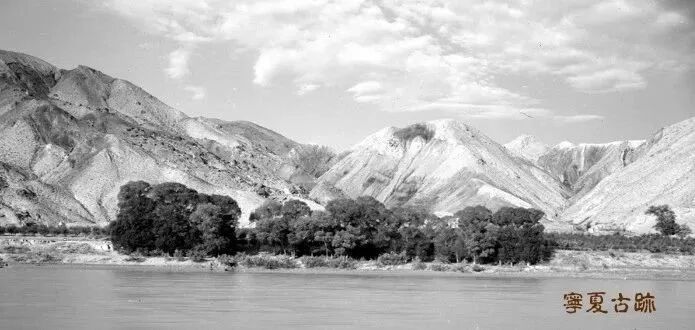
Exploring Shatan Gongbei, nestled along the banks of Yinchuan's Diannong River. Documenting the breathtaking wetlands and giant ancient waterwheels along the summer Yellow River Golden Bank Binhe Avenue, blending natural ecological waterscapes with solemn Sufi historical landmarks.
Waterwheels

Summer scenery of the Lingwu section of Yinchuan Binhe Avenue, featuring waterwheels. The Ningxia Yellow River Golden Bank Binhe Avenue, officially known as the Yellow River Standardized Embankment Binhe Avenue, spans a total length of 508 kilometers. Fully connected in July 2010, it links ten cities, counties, and districts within the Yellow River irrigation area. The crest road is fully constructed to Class-1 highway standards as a two-way six-lane road with a 24-meter roadbed width.
Shot on Rolleiflex 3.5F Planar 75MM F3.5, home-developed film directly scanned.

Stone Lions
Stone lions beneath the Zhenhe Pagoda in Lingwu, standing over one meter tall. They look adorable yet show some wear and tear, and are estimated to date back to the Qing Dynasty.

Linhof Technika Wollensak 162MM F4.5, home-developed film directly scanned.
Lingzhou Ancient City Wall Ruins

Located in the urban area of present-day Lingwu. Rebuilt after the devastating 1738 Ningxia earthquake (the third year of the Qianlong era), with subsequent modern repairs and reinforcements. Listed as an Autonomous Region-level Key Cultural Relic Protection Unit in December 2010.
Rolleiflex 3.5F Planar 75MM F3.5, home-developed film directly scanned.

Summer Diannong River
Yinchuan's Diannong River (an ancient Han Dynasty name) in summer, with swaying reeds and rippling waters.
On September 17, 2018, Ningxia officially renamed the 'Aiyi River' back to 'Diannong River' (originally named Aiyi River in 2004, renamed Aiyi River [with a different Chinese character] in 2008, changed back to Aiyi River in 2015, and renamed Diannong River again in 2018). The characters 'Diannong' are derived from the ancient local name Diannong City in the Yinchuan region, which was first built in the fifth year of the Yuanding era of the Western Han Dynasty (112 BCE), boasting a history of over 2,000 years.
The Diannong River stretches from the Xinqiao flood retention basin in Yongning County to the south, flowing north into the Yellow River at the Binhe Plaza in Shizuizi Park, Yuanying Town, Huinong District, Shizuishan. It spans six counties and districts—Yongning County, Xingqing District, Jinfeng District, Helan County, Pingluo County, and Huinong District—covering a total length of 180.5 kilometers.
Linhof Technika Schneider Symmar 240MM F5.6, home-developed film directly scanned.
Shatan Gongbei
Located inside the Shatan Mosque in Xingqing District, Yinchuan. It features a stone monument inscribed with the prominent characters 'Yuanweng Na Laotye' (Elder Yuanweng Na) and his religious name 'Haoke Menlaxi'. Flanking inscriptions are weathered and hard to make out, erected in the third year of the Qianlong era (1737). According to relevant cultural authorities, it was originally built during the Yuan Dynasty.
Gongbei (Sufi shrine / mausoleum complex): Originally referring to a dome-shaped building, it is translated to mean the dome over a Sufi master's mausoleum. By extension, it refers to the burial architecture of Sufi masters, menhuan (Sufi orders / brotherhoods) founders, spiritual ancestors, and revered sages.
Exploring Yinchuan's Shatan Gongbei and Diannong River: Ancient Waterwheels and Sufi Shrines Along Binhe Avenue
Abstract:
Exploring Shatan Gongbei, nestled along the banks of Yinchuan's Diannong River. Documenting the breathtaking wetlands and giant ancient waterwheels along the summer Yellow River Golden Bank Binhe Avenue, blending natural ecological waterscapes with solemn Sufi historical landmarks.
Waterwheels
Summer scenery of the Lingwu section of Yinchuan Binhe Avenue, featuring waterwheels. The Ningxia Yellow River Golden Bank Binhe Avenue, officially known as the Yellow River Standardized Embankment Binhe Avenue, spans a total length of 508 kilometers. Fully connected in July 2010, it links ten cities, counties, and districts within the Yellow River irrigation area. The crest road is fully constructed to Class-1 highway standards as a two-way six-lane road with a 24-meter roadbed width.
Shot on Rolleiflex 3.5F Planar 75MM F3.5, home-developed film directly scanned.
Stone Lions
Stone lions beneath the Zhenhe Pagoda in Lingwu, standing over one meter tall. They look adorable yet show some wear and tear, and are estimated to date back to the Qing Dynasty.
Linhof Technika Wollensak 162MM F4.5, home-developed film directly scanned.
Lingzhou Ancient City Wall Ruins
Located in the urban area of present-day Lingwu. Rebuilt after the devastating 1738 Ningxia earthquake (the third year of the Qianlong era), with subsequent modern repairs and reinforcements. Listed as an Autonomous Region-level Key Cultural Relic Protection Unit in December 2010.
Rolleiflex 3.5F Planar 75MM F3.5, home-developed film directly scanned.
Summer Diannong River
Yinchuan's Diannong River (an ancient Han Dynasty name) in summer, with swaying reeds and rippling waters.
On September 17, 2018, Ningxia officially renamed the 'Aiyi River' back to 'Diannong River' (originally named Aiyi River in 2004, renamed Aiyi River [with a different Chinese character] in 2008, changed back to Aiyi River in 2015, and renamed Diannong River again in 2018). The characters 'Diannong' are derived from the ancient local name Diannong City in the Yinchuan region, which was first built in the fifth year of the Yuanding era of the Western Han Dynasty (112 BCE), boasting a history of over 2,000 years.
The Diannong River stretches from the Xinqiao flood retention basin in Yongning County to the south, flowing north into the Yellow River at the Binhe Plaza in Shizuizi Park, Yuanying Town, Huinong District, Shizuishan. It spans six counties and districts—Yongning County, Xingqing District, Jinfeng District, Helan County, Pingluo County, and Huinong District—covering a total length of 180.5 kilometers.
Linhof Technika Schneider Symmar 240MM F5.6, home-developed film directly scanned.
Shatan Gongbei
Located inside the Shatan Mosque in Xingqing District, Yinchuan. It features a stone monument inscribed with the prominent characters 'Yuanweng Na Laotye' (Elder Yuanweng Na) and his religious name 'Haoke Menlaxi'. Flanking inscriptions are weathered and hard to make out, erected in the third year of the Qianlong era (1737). According to relevant cultural authorities, it was originally built during the Yuan Dynasty.
Gongbei (Sufi shrine / mausoleum complex): Originally referring to a dome-shaped building, it is translated to mean the dome over a Sufi master's mausoleum. By extension, it refers to the burial architecture of Sufi masters, menhuan (Sufi orders / brotherhoods) founders, spiritual ancestors, and revered sages.
Yinchuan Muslim Wedding Travel Notes: Hui Muslim Culture and Halal Food
Articles • ali2007fr posted the article • 0 comments • 139 views • 2026-05-17 06:46
Reposted from the web
Summary: This travel note introduces Yinchuan Muslim Wedding Travel Notes: Hui Muslim Culture and Halal Food. On the third weekend of September 2020, Zainab and I went to Yinchuan to attend my childhood friend's wedding. It is useful for readers interested in Yinchuan Travel, Hui Muslims, Halal Food.
On the third weekend of September 2020, Zainab and I went to Yinchuan to attend my childhood friend's wedding. My friend's family is from Beijing and owns an ancestral home with a private courtyard in Houhai. My friend's grandparents went to Ningxia in the 1950s to support the border regions, and later lived in both Beijing and Yinchuan, so my friend has two homes. My friend took me to Yinchuan for a visit 10 years ago, and this was my second time there.
September 18
I arrived in Yinchuan the night before, and first thing in the morning, I went to eat some specialty mianfeizi (steamed lamb lung) and yangzashui (lamb offal soup) with bingzi (flatbread). I originally wanted to go to Jumu'ah (Friday prayer), but found that all the mosques in Yinchuan were closed.
The Qingzhen Zhongsi (Central Mosque) is the only ancient mosque preserved in Yinchuan, but unfortunately, I could not enter.
The weather was great.
At noon, we had our first welcome meal at Quanjude. As a Beijinger, I didn't expect my first time eating at Quanjude to be in Yinchuan, because all the Quanjude restaurants in Yinchuan are halal. Besides roast duck, most of the dishes at the Yinchuan Quanjude are local or fusion dishes. We ate tangmian youxiang (deep-fried flour dough), liangpi (cold starch noodles), and also had shouzhua litiao (hand-grabbed lamb ribs). I didn't expect the shouzhua rou (hand-grabbed meat) at Quanjude to be so delicious.
In the evening, we had our second welcome meal at a halal Chongqing fusion restaurant called Jialing Jiangpan. This time I discovered that people in Yinchuan really love spicy food; there are halal Chongqing-style hot pots and malatang (spicy hot pot) everywhere. However, besides Sichuan and Chongqing dishes, Jialing Jiangpan also has various fusion cuisines. I think their shouzhua rou is quite tasty...
I only found out later that this was kaomo (baked bun).
September 19
On the day of the wedding, I got up early for breakfast: baozi (steamed buns) and doufunao (tofu pudding), a simple breakfast.
The wedding banquet was held at Xiangyu Hotel, a famous restaurant for wedding banquets in Yinchuan. We had four weddings taking place there at the same time that day. Their environment is quite good, and the food is also tasty.
In the afternoon, I went to Sanyixuan to have a bowl of steamed lamb. The taste is a bit like shengcuan wanzi (freshly boiled meatballs), very tender. I also ordered kuku cai (bitter greens), and it was truly bitter!
I took this photo exactly ten years ago when I ate at the old Sanyixuan restaurant, so this counts as nostalgia. The old restaurant is gone now, but several new ones have opened. The environment at the Minsheng branch is quite nice; it is very comfortable to drink tea and chat.
In the evening, I went to Fuyuan Noodle Restaurant on Zhongxin Lane. They only sell lamb neck, lianguo yangrou (lamb cooked with noodles), xiaojiupian (small hand-torn noodles), and side dishes. I ordered half a jin (250 grams) of lamb neck; the texture was great and the flavor was fragrant. The lamb xiaojiupian is made by three people tearing the dough into a large pot at the same time; seeing the dough pieces flying everywhere looked quite spectacular.
September 20
Early in the morning, I went to Qianjin Road to have Aye Yangzashui (lamb offal soup) with tangsuan (sweet garlic). Their shop has been open for nearly forty years. When my friend first took me to eat mianfeizi 10 years ago, it was here. Back then, we could sit outside to eat, but now we can only sit indoors. Local friends said it doesn't taste as good as it used to, but we mainly went for nostalgia this time.
When I ate it ten years ago.
In the morning, Zainab and I played bumper cars and the Crazy Mouse ride at Yinchuan Zhongshan Park, and bought the must-have grilled sausages from the amusement park. Zainab said she only ate them when she was a child in Urumqi, and she hadn't seen halal ones for many years. That's how we had a nostalgic moment~
At noon, my friend treated us at Najialou to braised lamb bones, chicken soup, shacong (wild onion), and liuwanzi (six small bowls of local dishes). Najialou is a classic restaurant in Yinchuan suitable for gatherings. It comes from Najiahu in Yongning County, Ningxia, which is the location of the famous Najiahu Grand Mosque.
Before leaving in the afternoon, I went to Xieji Ayishe Lamb Burger shop next to the West Pagoda to buy lamb burgers for everyone. The lamb burgers in Yinchuan use boiled lamb, and you pour garlic sauce inside to enhance the flavor when eating. This shop is also recognized by locals; my friend had specifically brought some to Beijing for me before.
When we were leaving, my friend's younger brother gave us some packed stir-fried lamb. It is from a very famous old shop in Yinchuan. He specifically bought a lot to take back to Xi'an for his friends who own Ningxia restaurants in the Muslim Quarter to taste what authentic Yinchuan stir-fried lamb is like, haha. view all
Summary: This travel note introduces Yinchuan Muslim Wedding Travel Notes: Hui Muslim Culture and Halal Food. On the third weekend of September 2020, Zainab and I went to Yinchuan to attend my childhood friend's wedding. It is useful for readers interested in Yinchuan Travel, Hui Muslims, Halal Food.
On the third weekend of September 2020, Zainab and I went to Yinchuan to attend my childhood friend's wedding. My friend's family is from Beijing and owns an ancestral home with a private courtyard in Houhai. My friend's grandparents went to Ningxia in the 1950s to support the border regions, and later lived in both Beijing and Yinchuan, so my friend has two homes. My friend took me to Yinchuan for a visit 10 years ago, and this was my second time there.
September 18
I arrived in Yinchuan the night before, and first thing in the morning, I went to eat some specialty mianfeizi (steamed lamb lung) and yangzashui (lamb offal soup) with bingzi (flatbread). I originally wanted to go to Jumu'ah (Friday prayer), but found that all the mosques in Yinchuan were closed.
The Qingzhen Zhongsi (Central Mosque) is the only ancient mosque preserved in Yinchuan, but unfortunately, I could not enter.
The weather was great.
At noon, we had our first welcome meal at Quanjude. As a Beijinger, I didn't expect my first time eating at Quanjude to be in Yinchuan, because all the Quanjude restaurants in Yinchuan are halal. Besides roast duck, most of the dishes at the Yinchuan Quanjude are local or fusion dishes. We ate tangmian youxiang (deep-fried flour dough), liangpi (cold starch noodles), and also had shouzhua litiao (hand-grabbed lamb ribs). I didn't expect the shouzhua rou (hand-grabbed meat) at Quanjude to be so delicious.
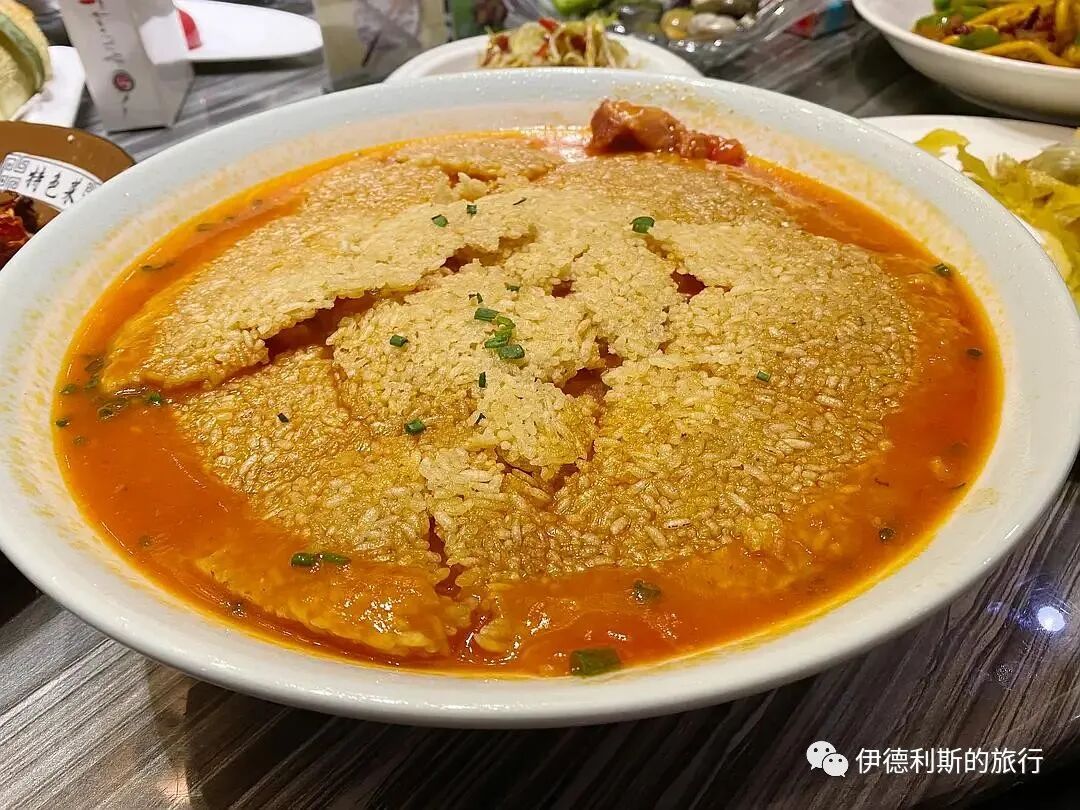
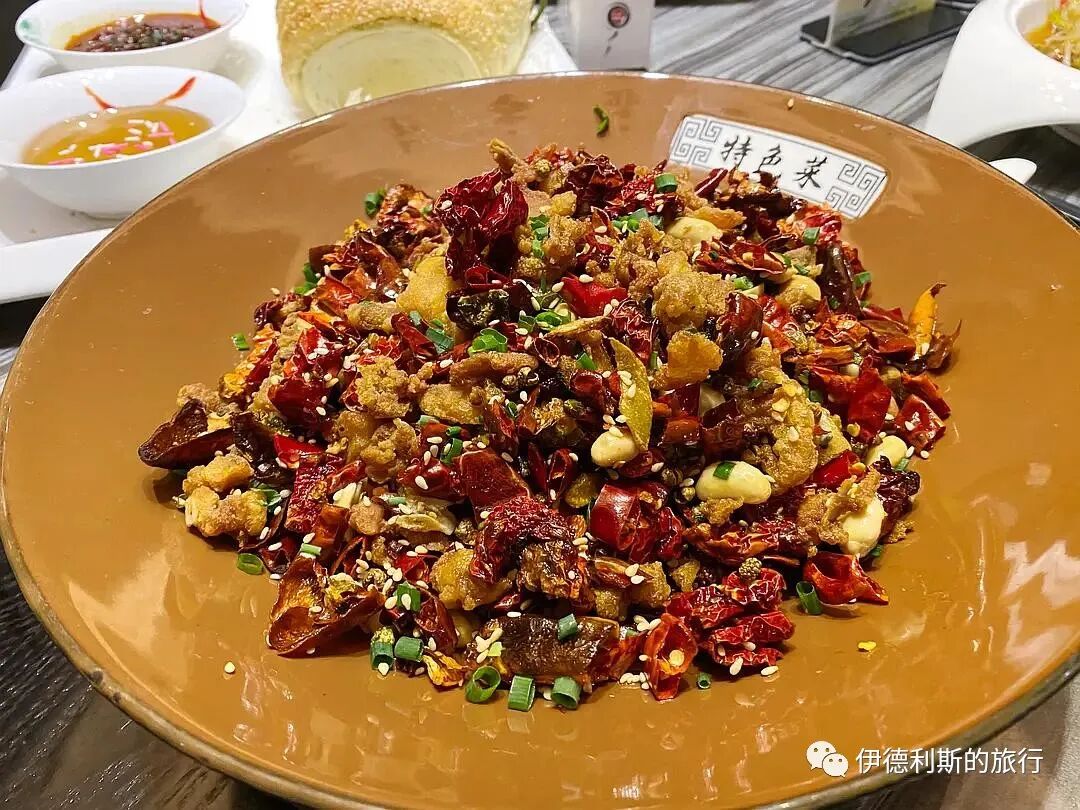
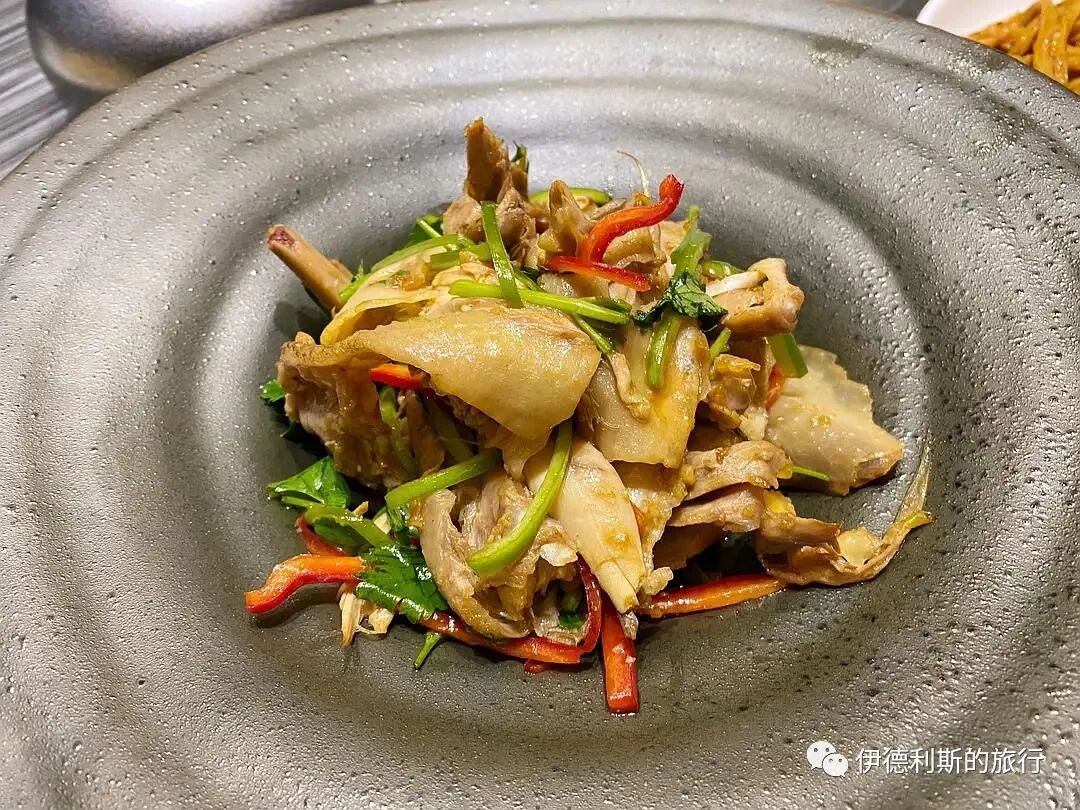
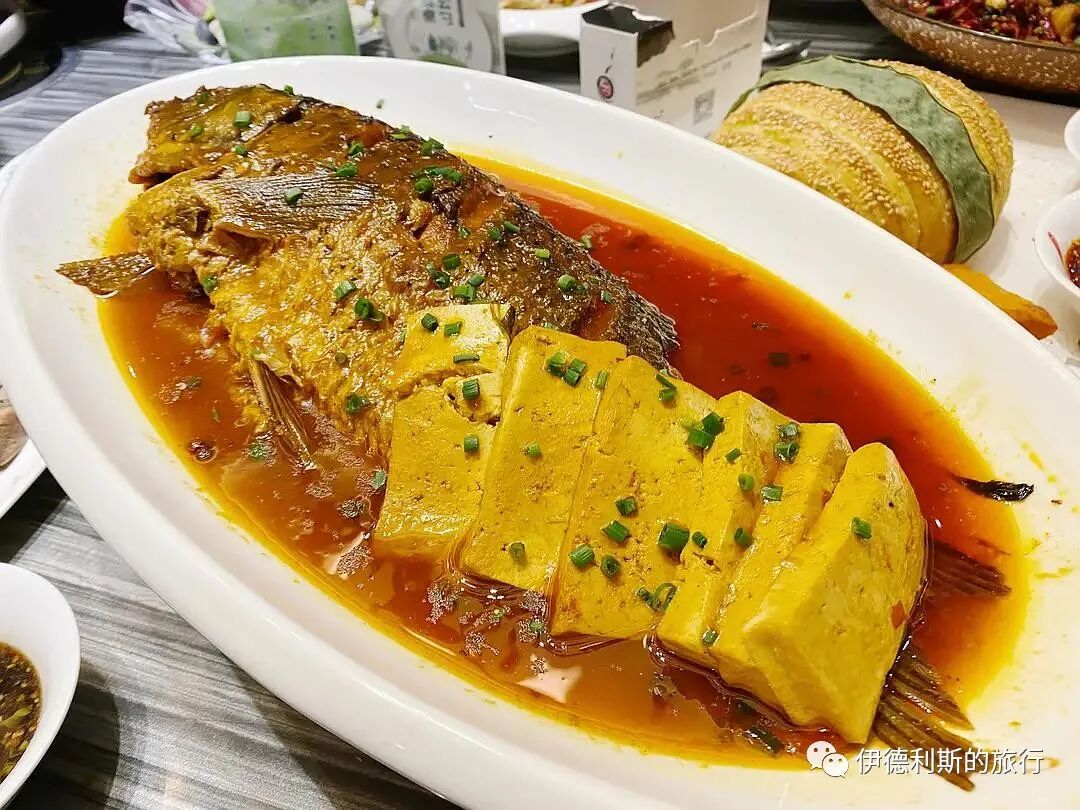
In the evening, we had our second welcome meal at a halal Chongqing fusion restaurant called Jialing Jiangpan. This time I discovered that people in Yinchuan really love spicy food; there are halal Chongqing-style hot pots and malatang (spicy hot pot) everywhere. However, besides Sichuan and Chongqing dishes, Jialing Jiangpan also has various fusion cuisines. I think their shouzhua rou is quite tasty...
I only found out later that this was kaomo (baked bun).
September 19
On the day of the wedding, I got up early for breakfast: baozi (steamed buns) and doufunao (tofu pudding), a simple breakfast.
The wedding banquet was held at Xiangyu Hotel, a famous restaurant for wedding banquets in Yinchuan. We had four weddings taking place there at the same time that day. Their environment is quite good, and the food is also tasty.
In the afternoon, I went to Sanyixuan to have a bowl of steamed lamb. The taste is a bit like shengcuan wanzi (freshly boiled meatballs), very tender. I also ordered kuku cai (bitter greens), and it was truly bitter!
I took this photo exactly ten years ago when I ate at the old Sanyixuan restaurant, so this counts as nostalgia. The old restaurant is gone now, but several new ones have opened. The environment at the Minsheng branch is quite nice; it is very comfortable to drink tea and chat.
In the evening, I went to Fuyuan Noodle Restaurant on Zhongxin Lane. They only sell lamb neck, lianguo yangrou (lamb cooked with noodles), xiaojiupian (small hand-torn noodles), and side dishes. I ordered half a jin (250 grams) of lamb neck; the texture was great and the flavor was fragrant. The lamb xiaojiupian is made by three people tearing the dough into a large pot at the same time; seeing the dough pieces flying everywhere looked quite spectacular.
September 20
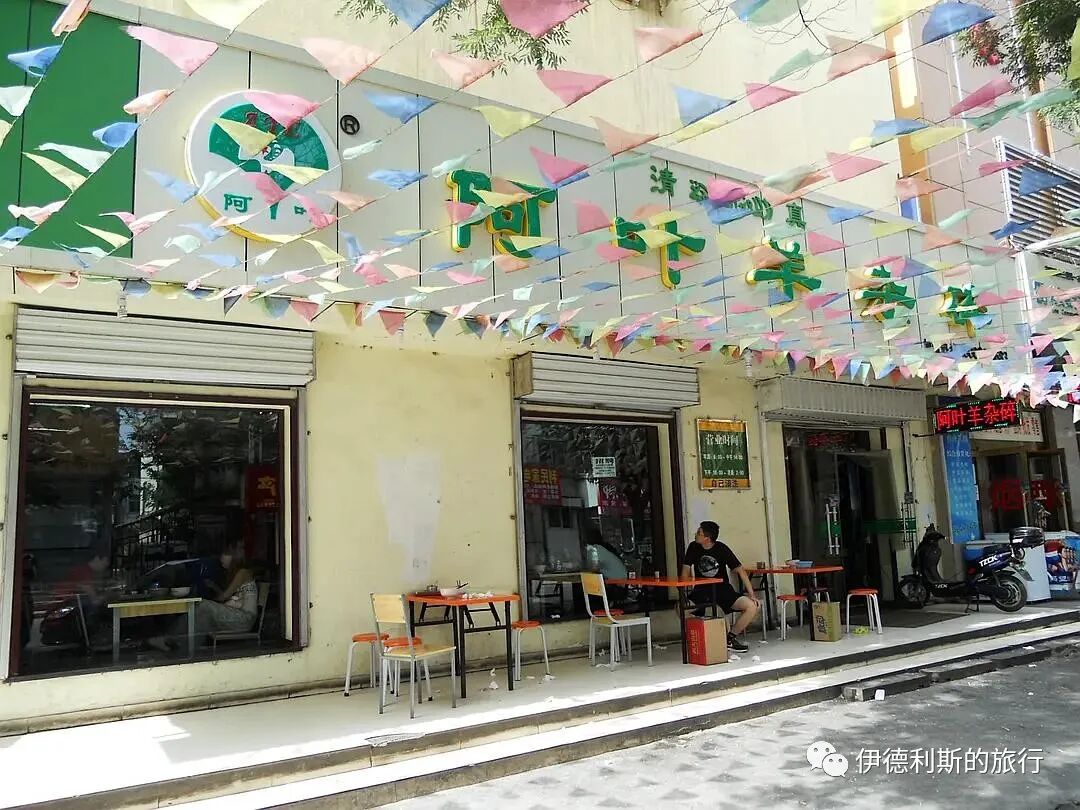
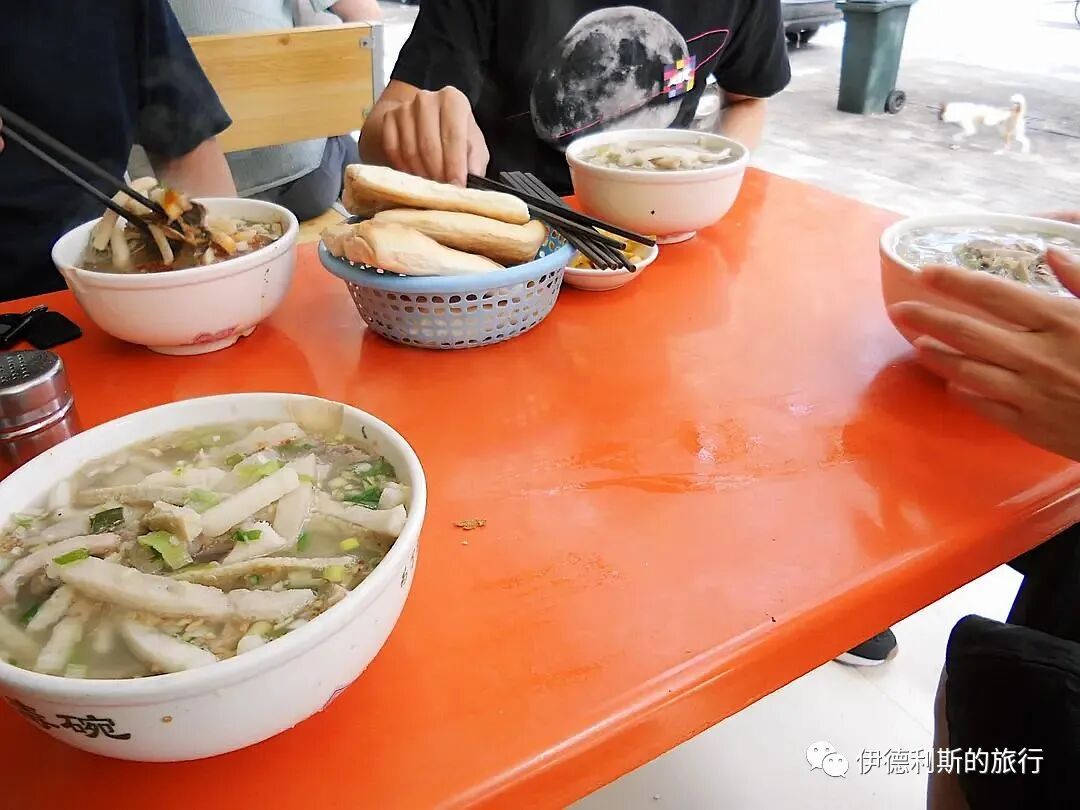
Early in the morning, I went to Qianjin Road to have Aye Yangzashui (lamb offal soup) with tangsuan (sweet garlic). Their shop has been open for nearly forty years. When my friend first took me to eat mianfeizi 10 years ago, it was here. Back then, we could sit outside to eat, but now we can only sit indoors. Local friends said it doesn't taste as good as it used to, but we mainly went for nostalgia this time.
When I ate it ten years ago.
In the morning, Zainab and I played bumper cars and the Crazy Mouse ride at Yinchuan Zhongshan Park, and bought the must-have grilled sausages from the amusement park. Zainab said she only ate them when she was a child in Urumqi, and she hadn't seen halal ones for many years. That's how we had a nostalgic moment~
At noon, my friend treated us at Najialou to braised lamb bones, chicken soup, shacong (wild onion), and liuwanzi (six small bowls of local dishes). Najialou is a classic restaurant in Yinchuan suitable for gatherings. It comes from Najiahu in Yongning County, Ningxia, which is the location of the famous Najiahu Grand Mosque.
Before leaving in the afternoon, I went to Xieji Ayishe Lamb Burger shop next to the West Pagoda to buy lamb burgers for everyone. The lamb burgers in Yinchuan use boiled lamb, and you pour garlic sauce inside to enhance the flavor when eating. This shop is also recognized by locals; my friend had specifically brought some to Beijing for me before.
When we were leaving, my friend's younger brother gave us some packed stir-fried lamb. It is from a very famous old shop in Yinchuan. He specifically bought a lot to take back to Xi'an for his friends who own Ningxia restaurants in the Muslim Quarter to taste what authentic Yinchuan stir-fried lamb is like, haha. view all
Reposted from the web
Summary: This travel note introduces Yinchuan Muslim Wedding Travel Notes: Hui Muslim Culture and Halal Food. On the third weekend of September 2020, Zainab and I went to Yinchuan to attend my childhood friend's wedding. It is useful for readers interested in Yinchuan Travel, Hui Muslims, Halal Food.
On the third weekend of September 2020, Zainab and I went to Yinchuan to attend my childhood friend's wedding. My friend's family is from Beijing and owns an ancestral home with a private courtyard in Houhai. My friend's grandparents went to Ningxia in the 1950s to support the border regions, and later lived in both Beijing and Yinchuan, so my friend has two homes. My friend took me to Yinchuan for a visit 10 years ago, and this was my second time there.
September 18
I arrived in Yinchuan the night before, and first thing in the morning, I went to eat some specialty mianfeizi (steamed lamb lung) and yangzashui (lamb offal soup) with bingzi (flatbread). I originally wanted to go to Jumu'ah (Friday prayer), but found that all the mosques in Yinchuan were closed.
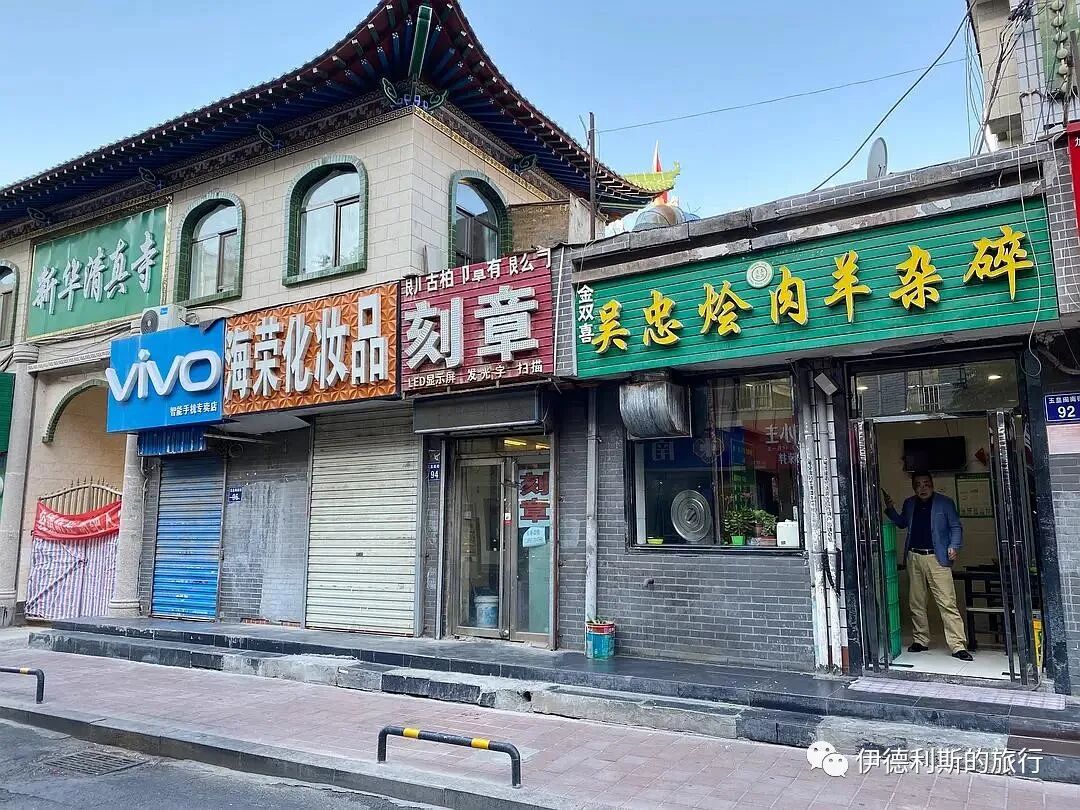
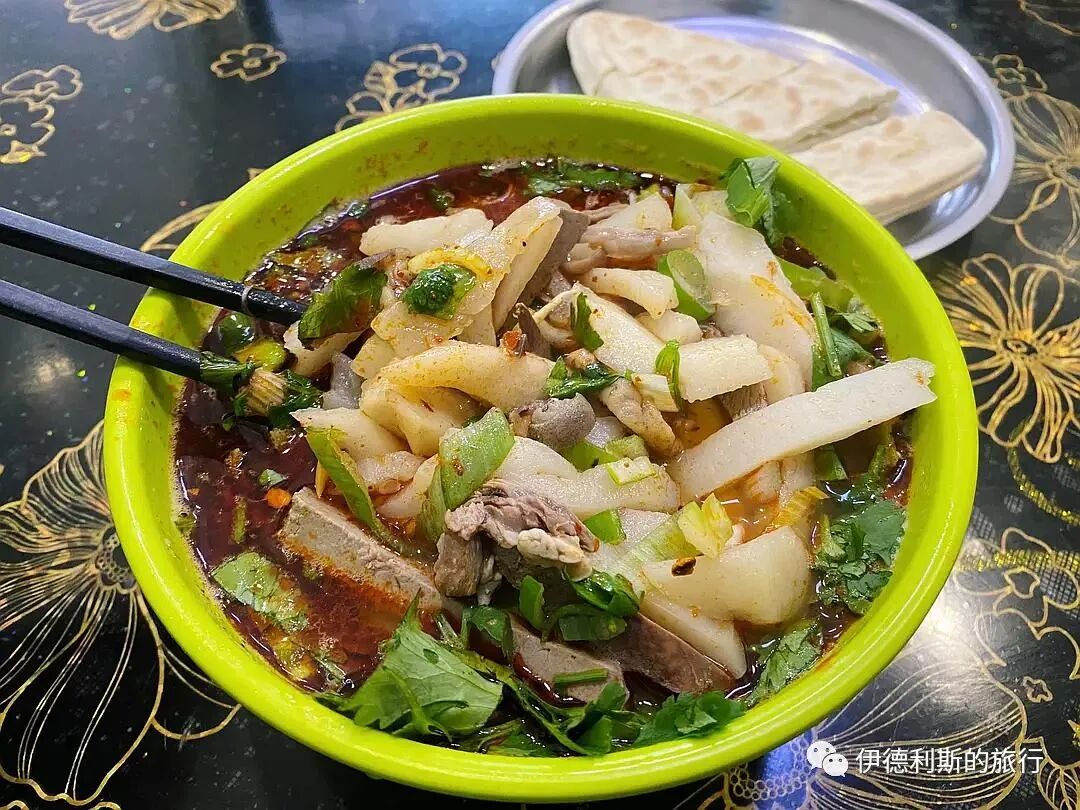
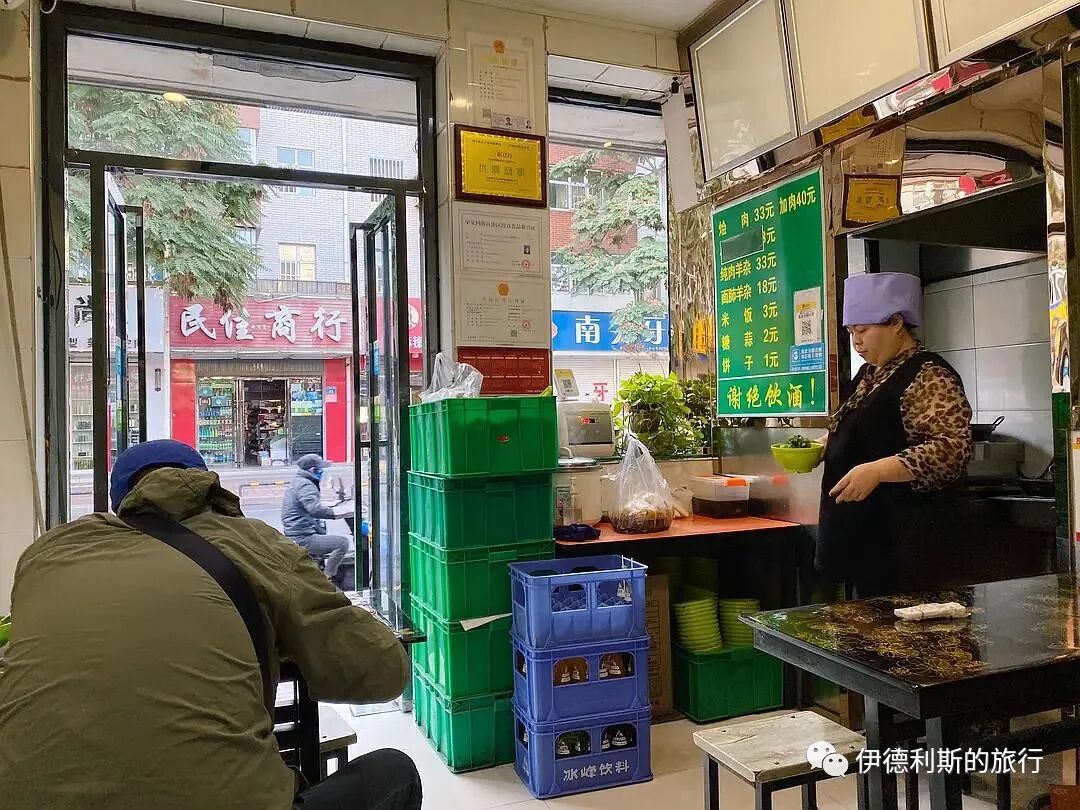
The Qingzhen Zhongsi (Central Mosque) is the only ancient mosque preserved in Yinchuan, but unfortunately, I could not enter.
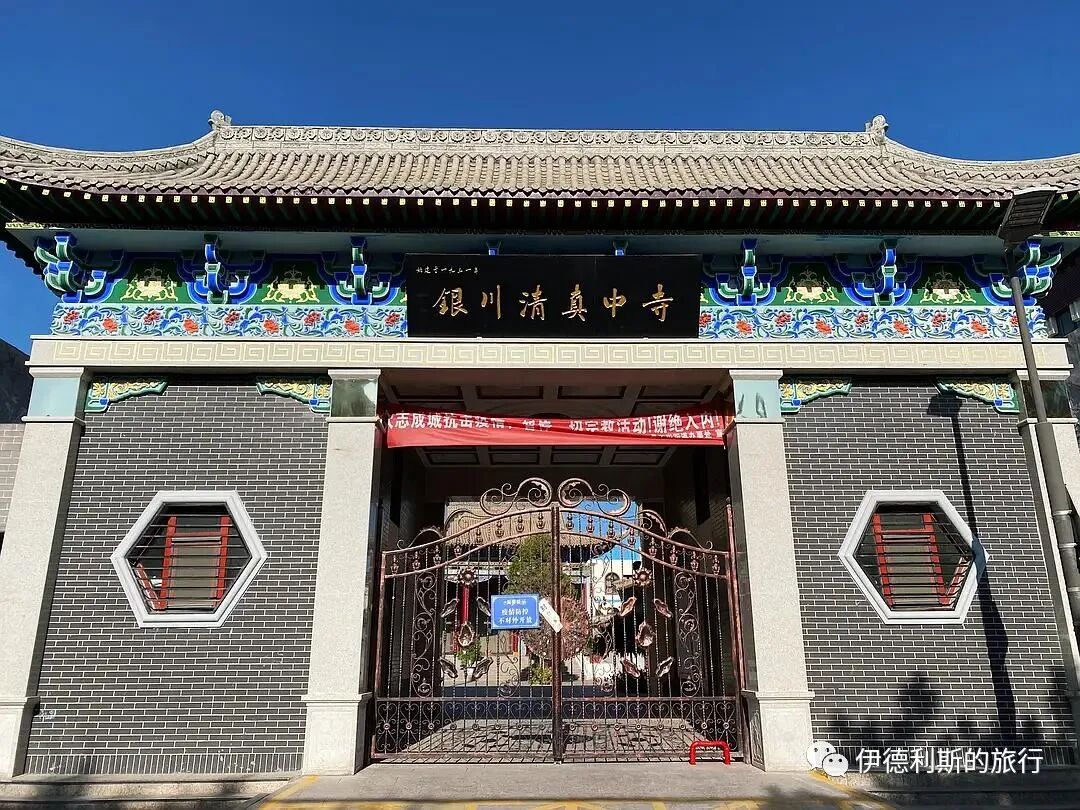
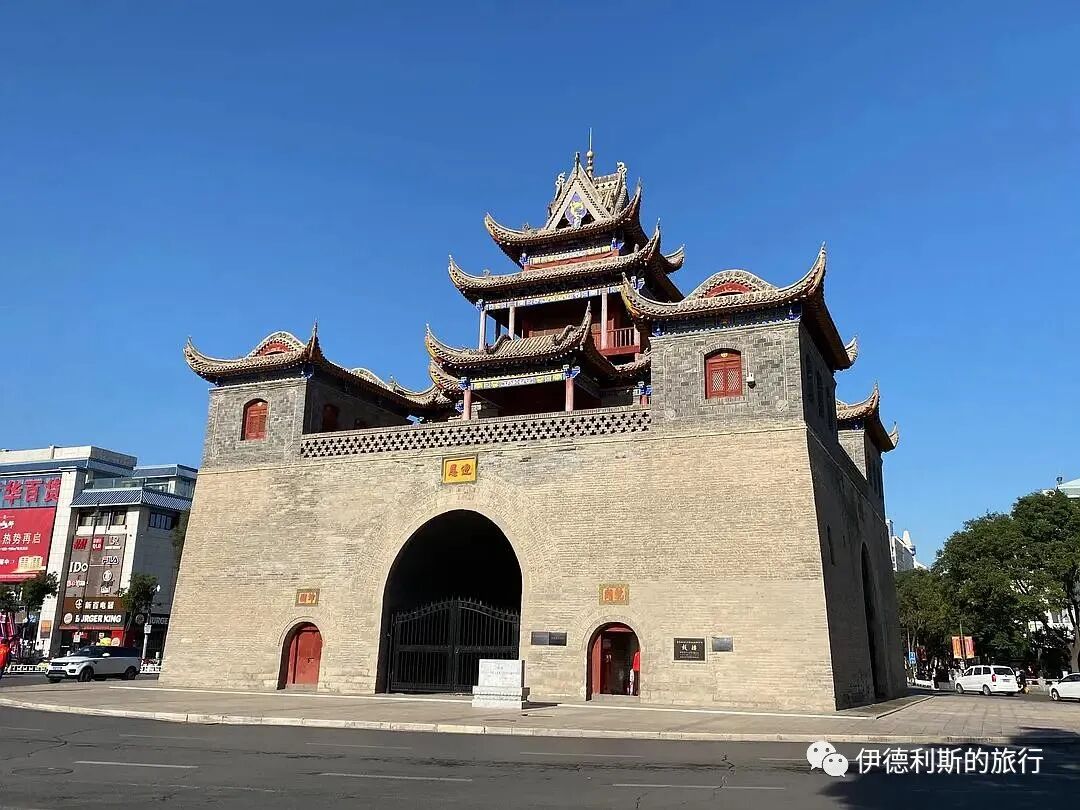
The weather was great.
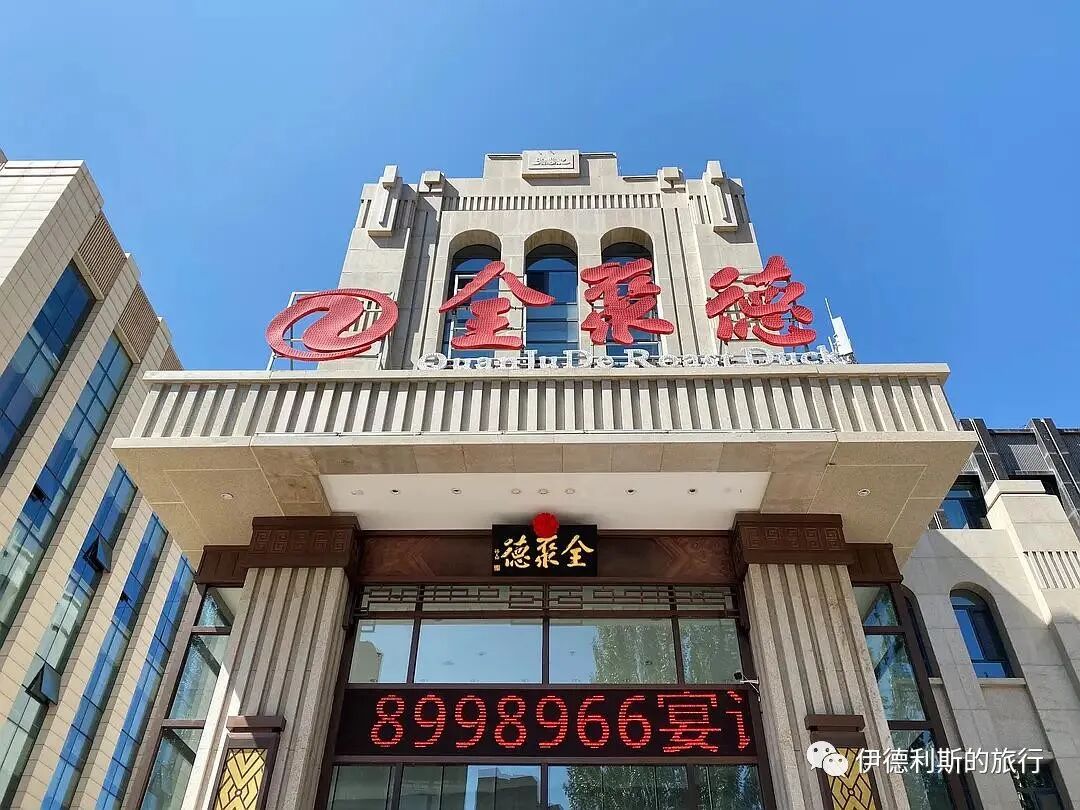
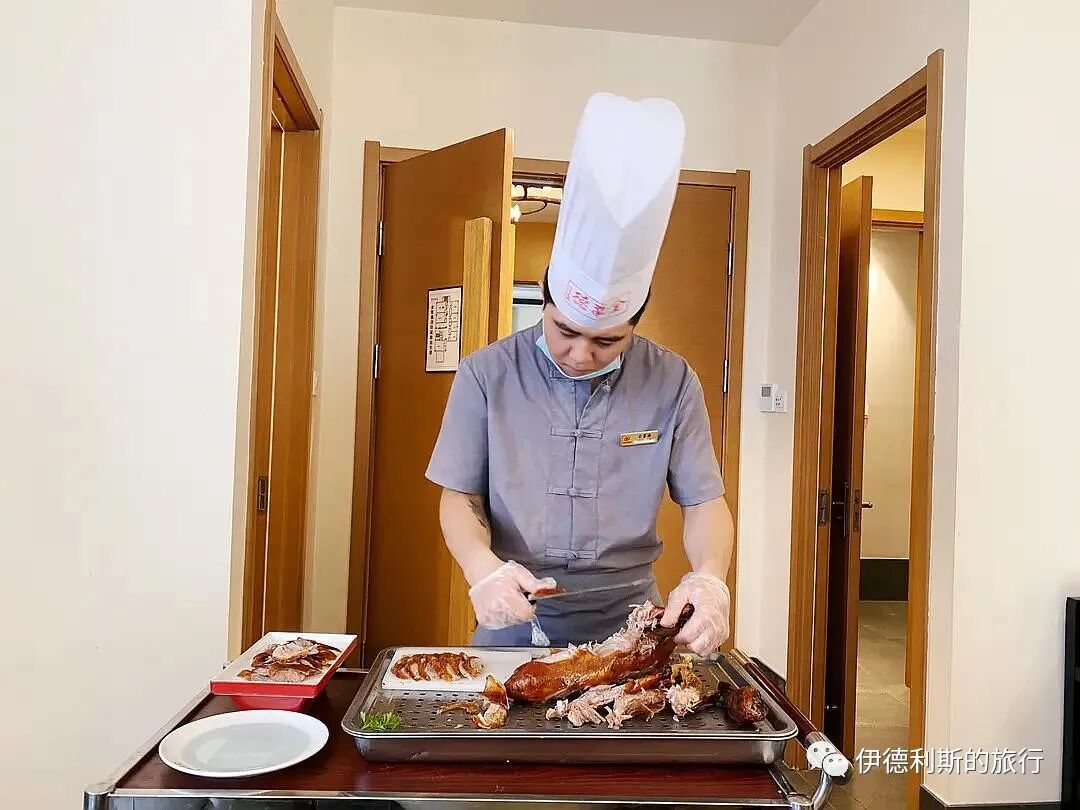
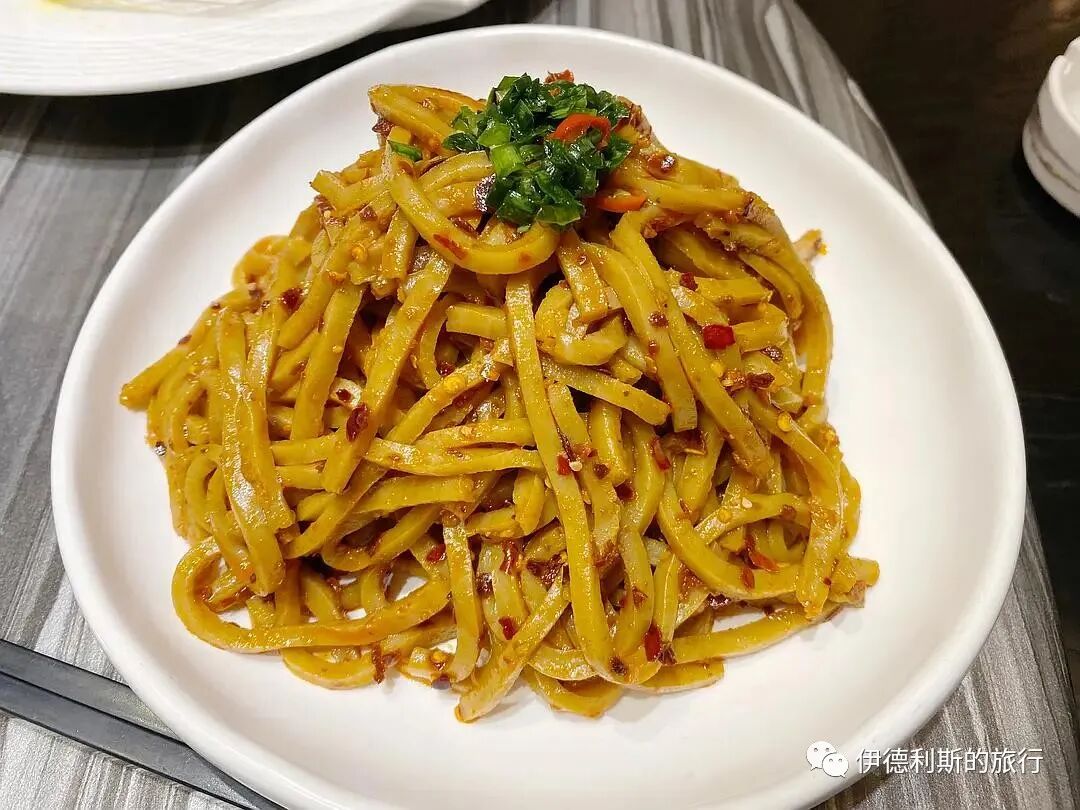
At noon, we had our first welcome meal at Quanjude. As a Beijinger, I didn't expect my first time eating at Quanjude to be in Yinchuan, because all the Quanjude restaurants in Yinchuan are halal. Besides roast duck, most of the dishes at the Yinchuan Quanjude are local or fusion dishes. We ate tangmian youxiang (deep-fried flour dough), liangpi (cold starch noodles), and also had shouzhua litiao (hand-grabbed lamb ribs). I didn't expect the shouzhua rou (hand-grabbed meat) at Quanjude to be so delicious.
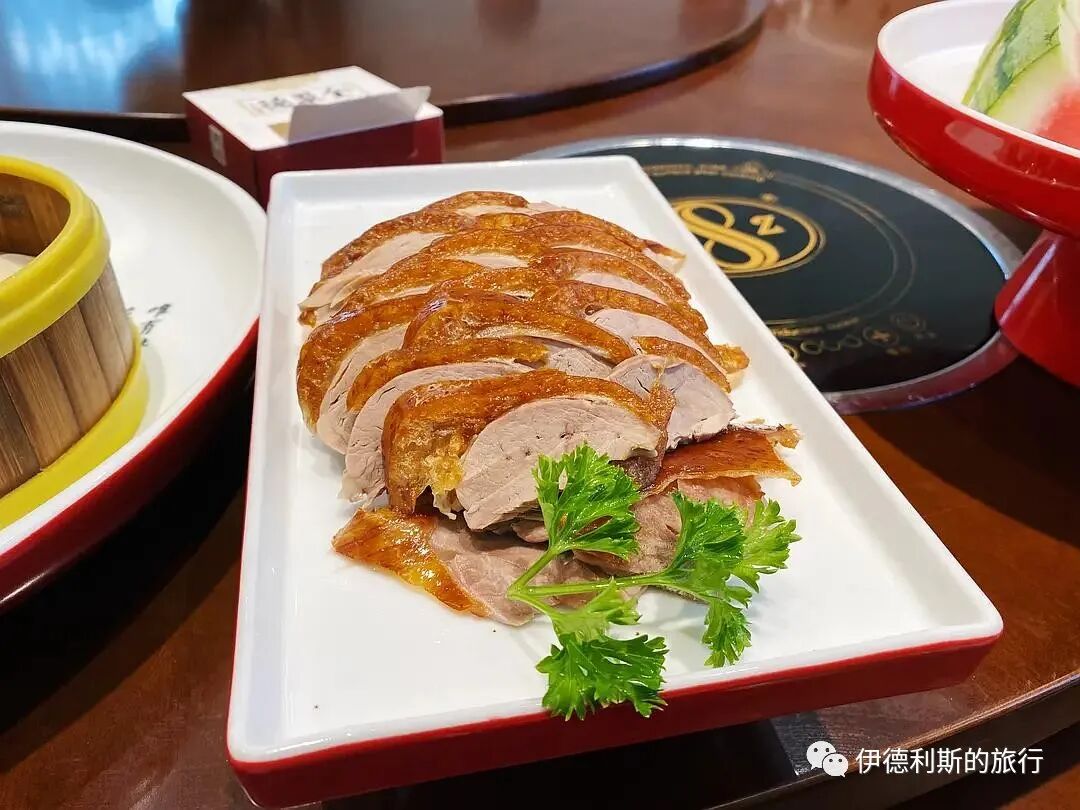
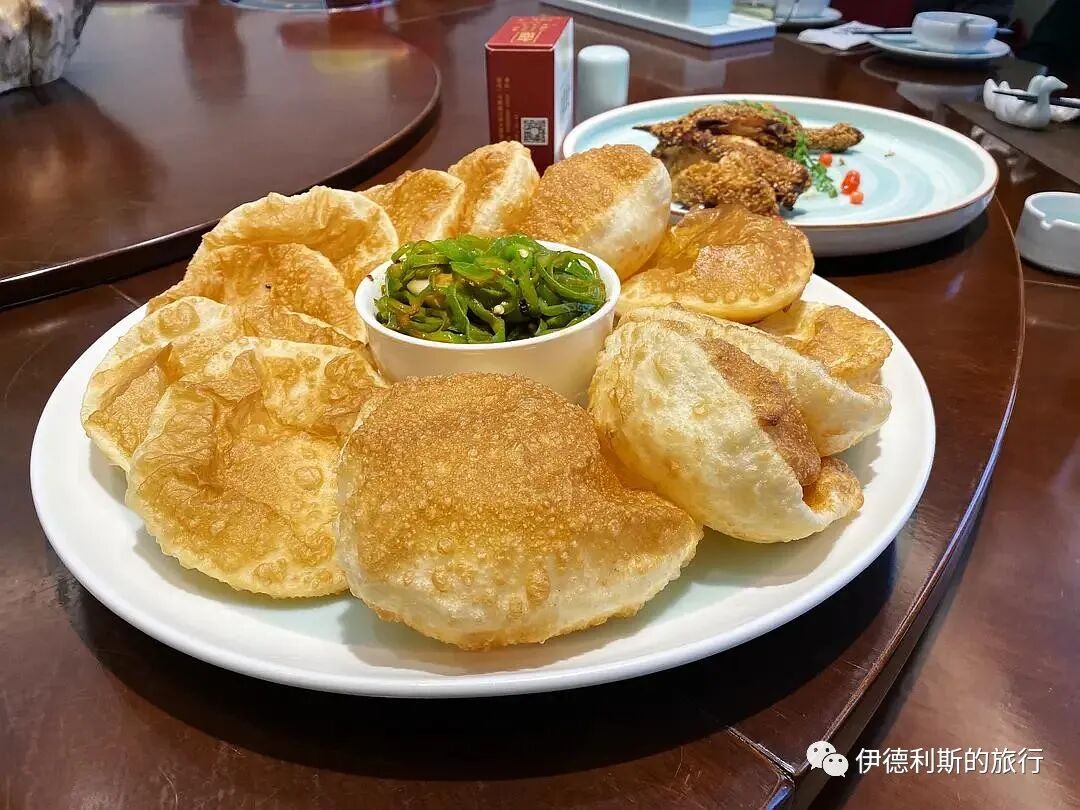
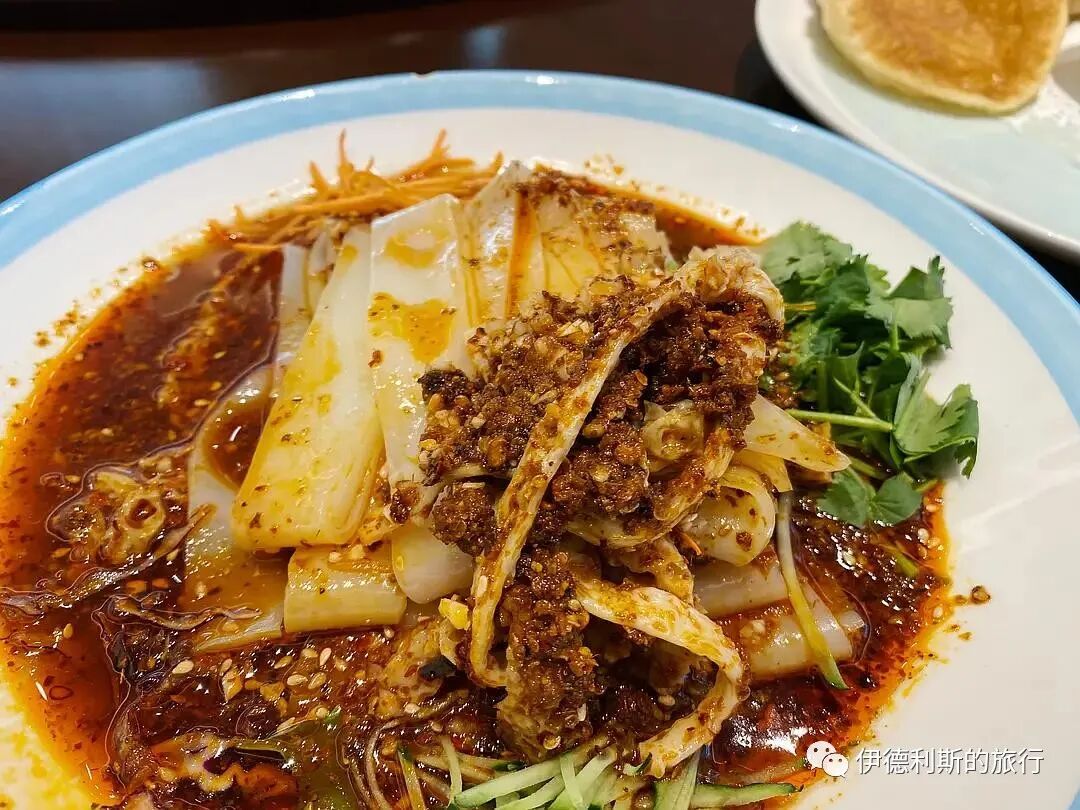
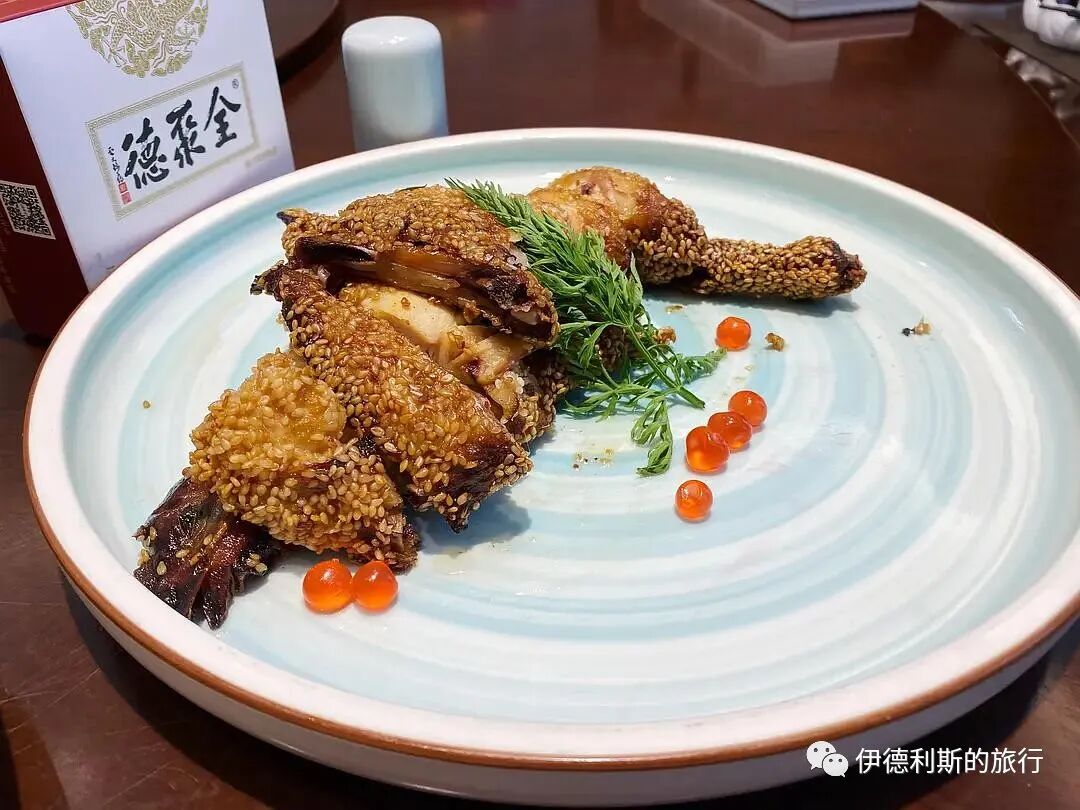
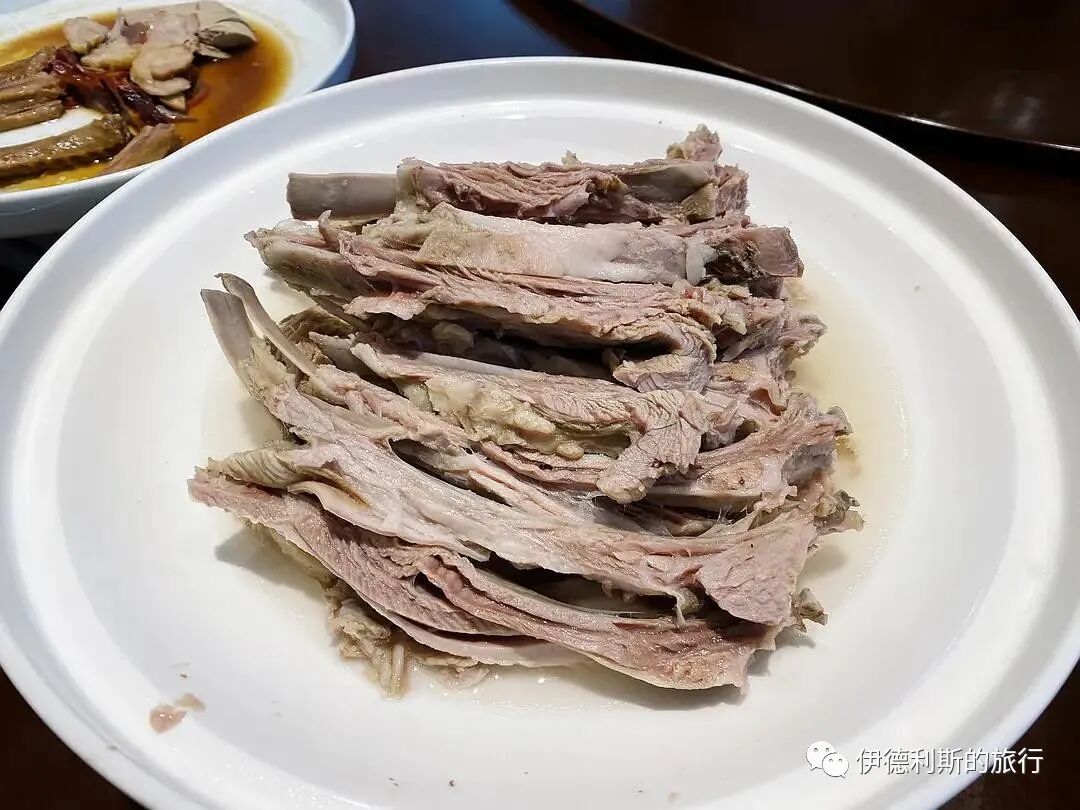
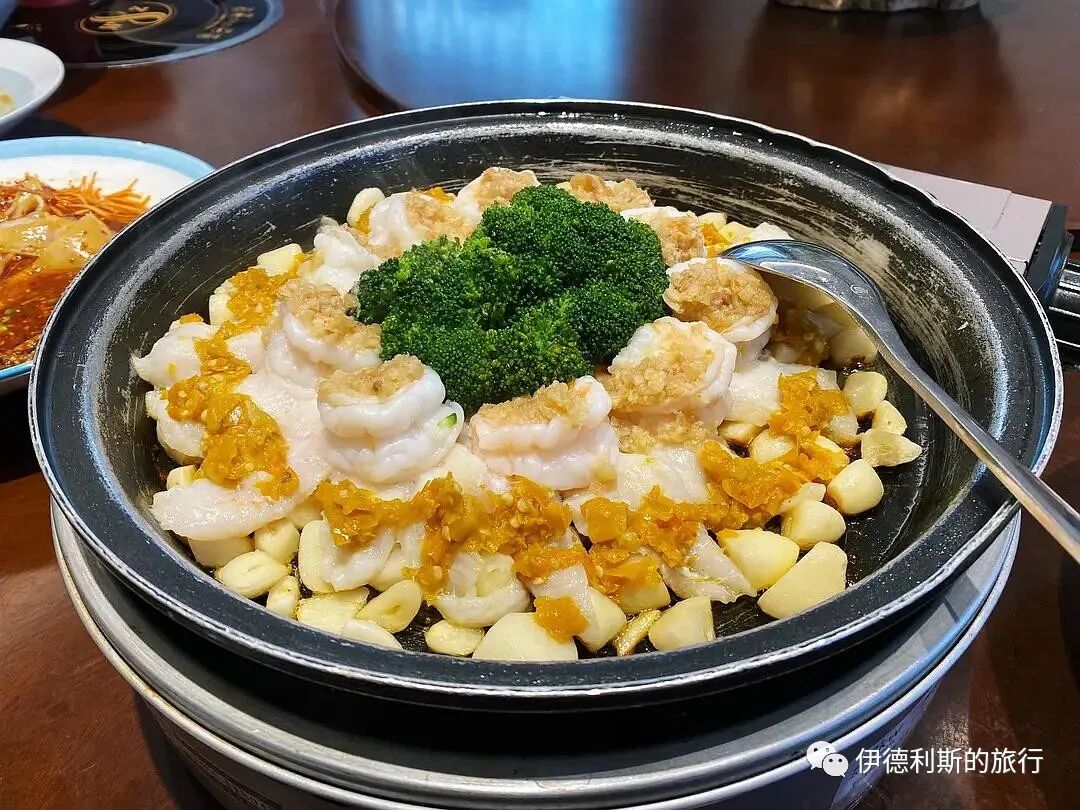
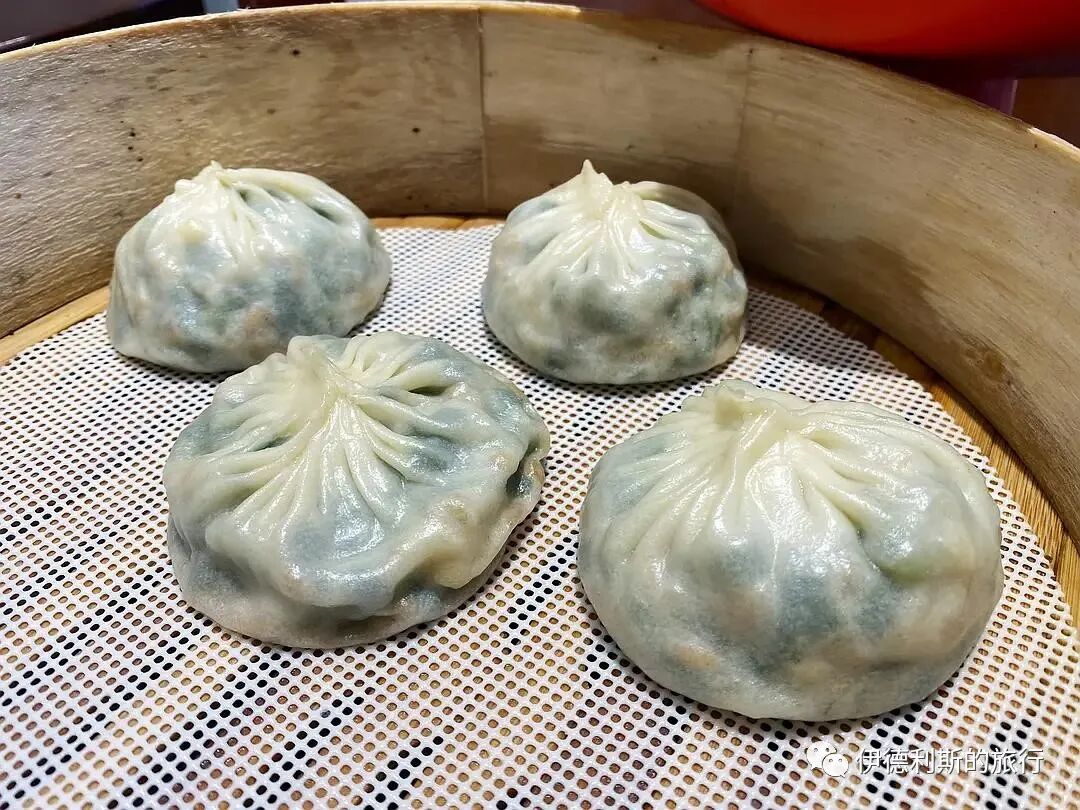
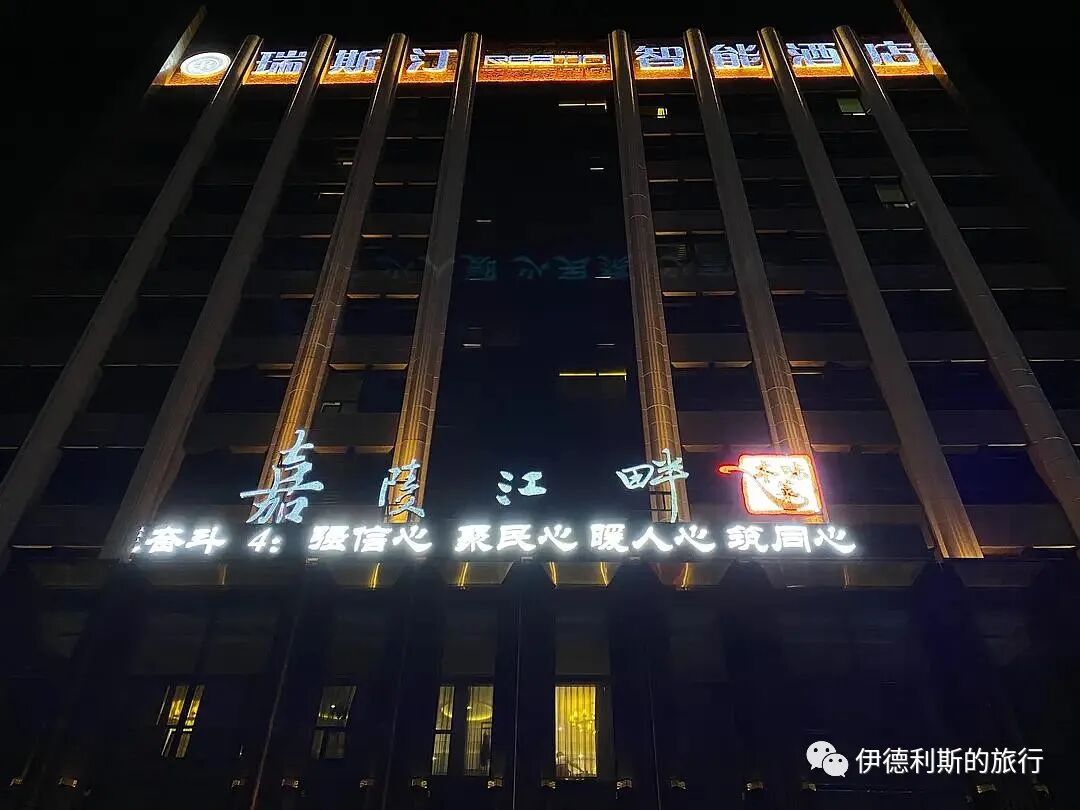
In the evening, we had our second welcome meal at a halal Chongqing fusion restaurant called Jialing Jiangpan. This time I discovered that people in Yinchuan really love spicy food; there are halal Chongqing-style hot pots and malatang (spicy hot pot) everywhere. However, besides Sichuan and Chongqing dishes, Jialing Jiangpan also has various fusion cuisines. I think their shouzhua rou is quite tasty...
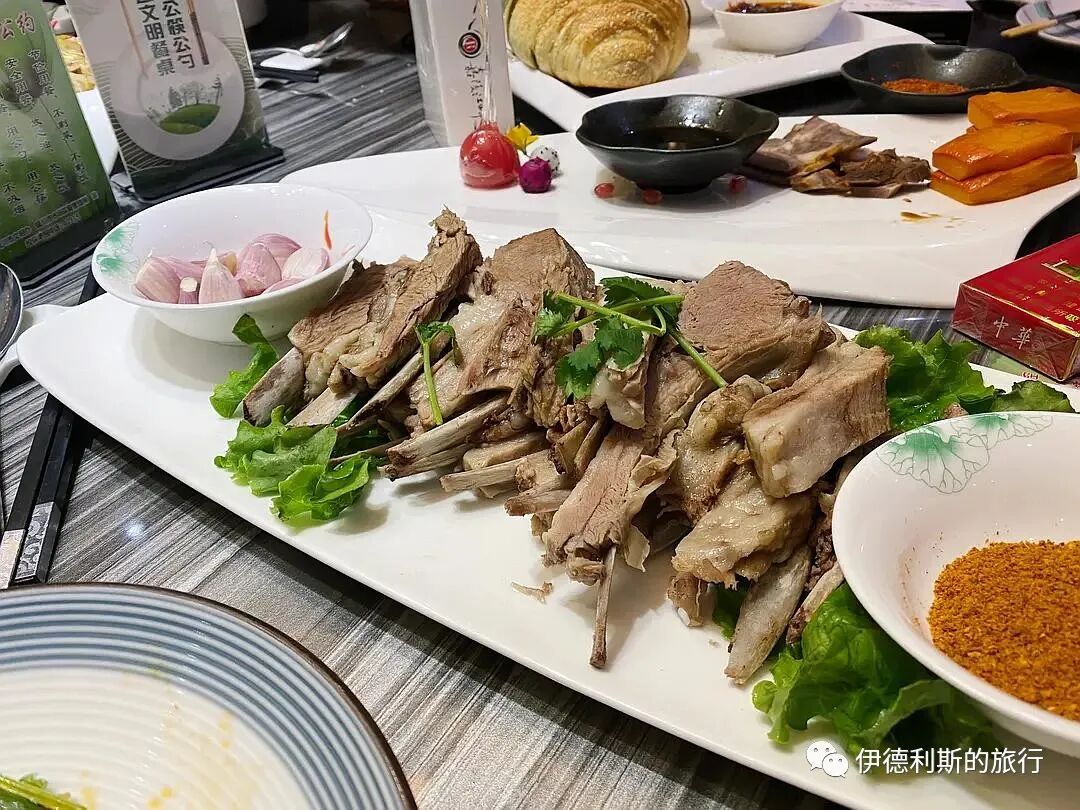
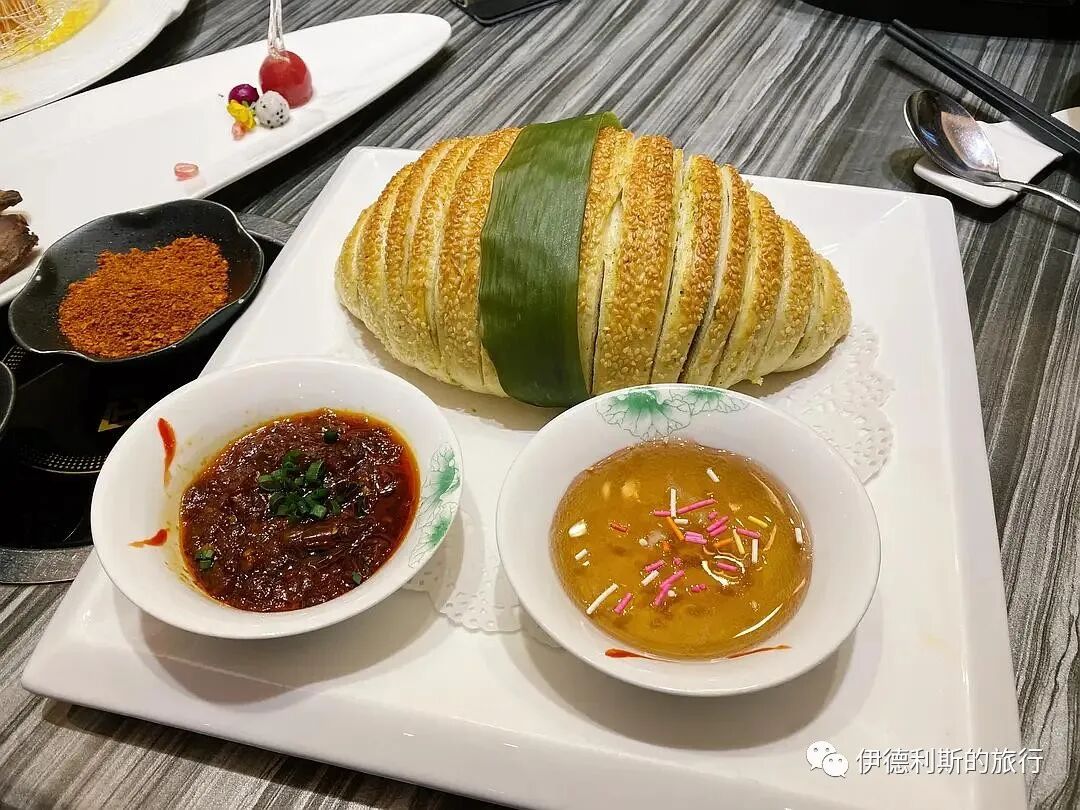
I only found out later that this was kaomo (baked bun).
September 19
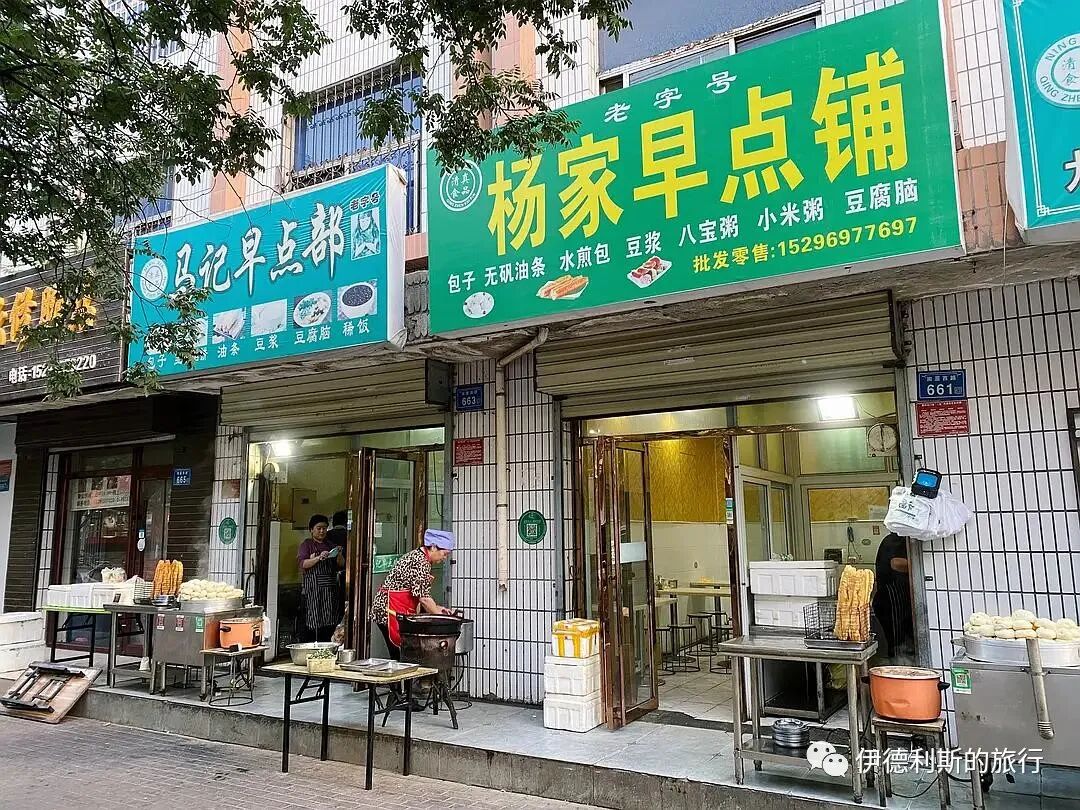
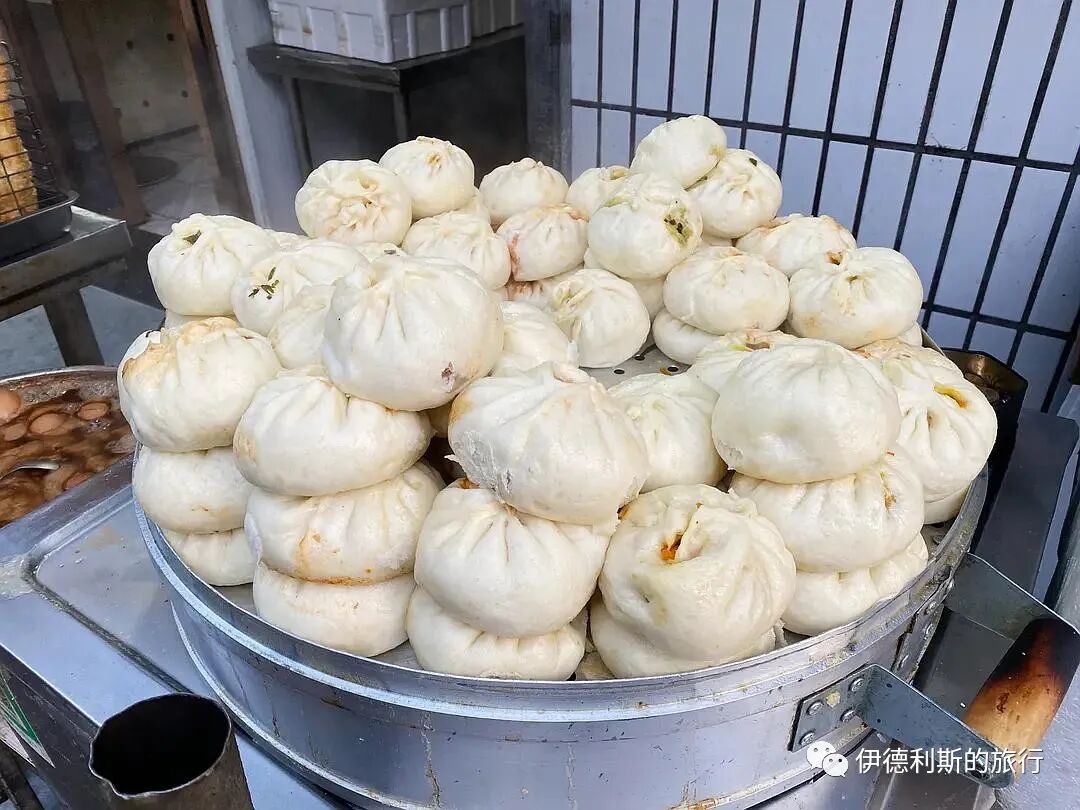
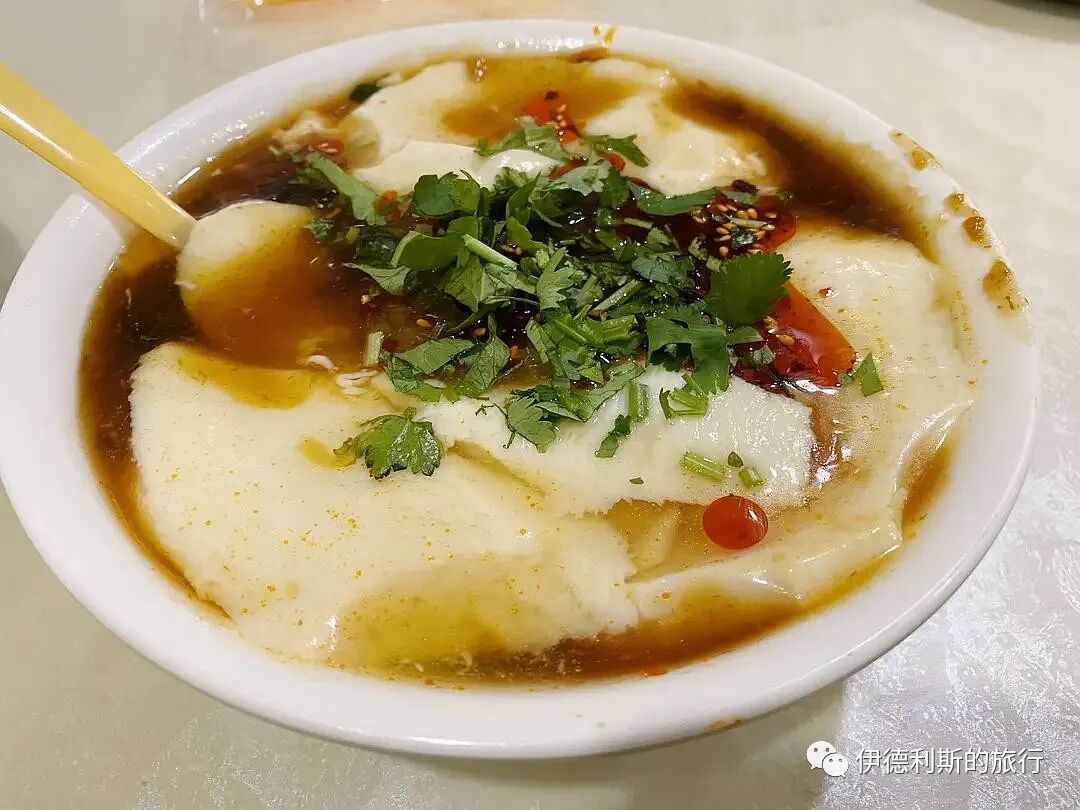
On the day of the wedding, I got up early for breakfast: baozi (steamed buns) and doufunao (tofu pudding), a simple breakfast.
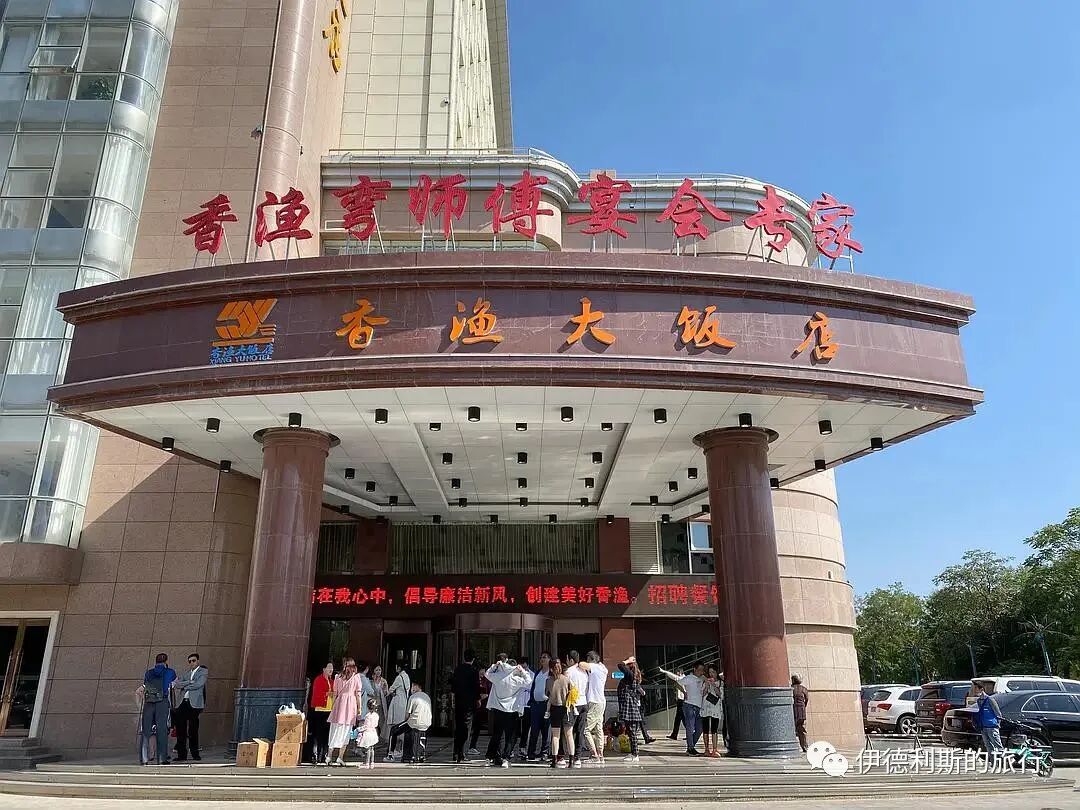
The wedding banquet was held at Xiangyu Hotel, a famous restaurant for wedding banquets in Yinchuan. We had four weddings taking place there at the same time that day. Their environment is quite good, and the food is also tasty.
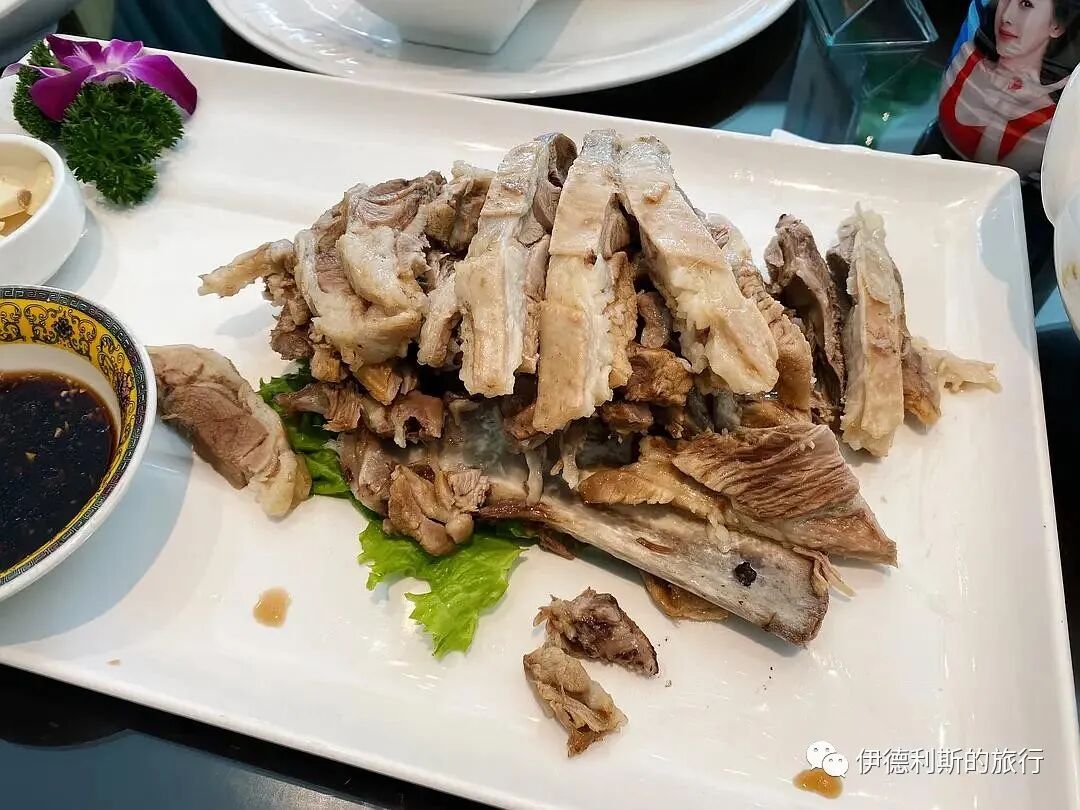
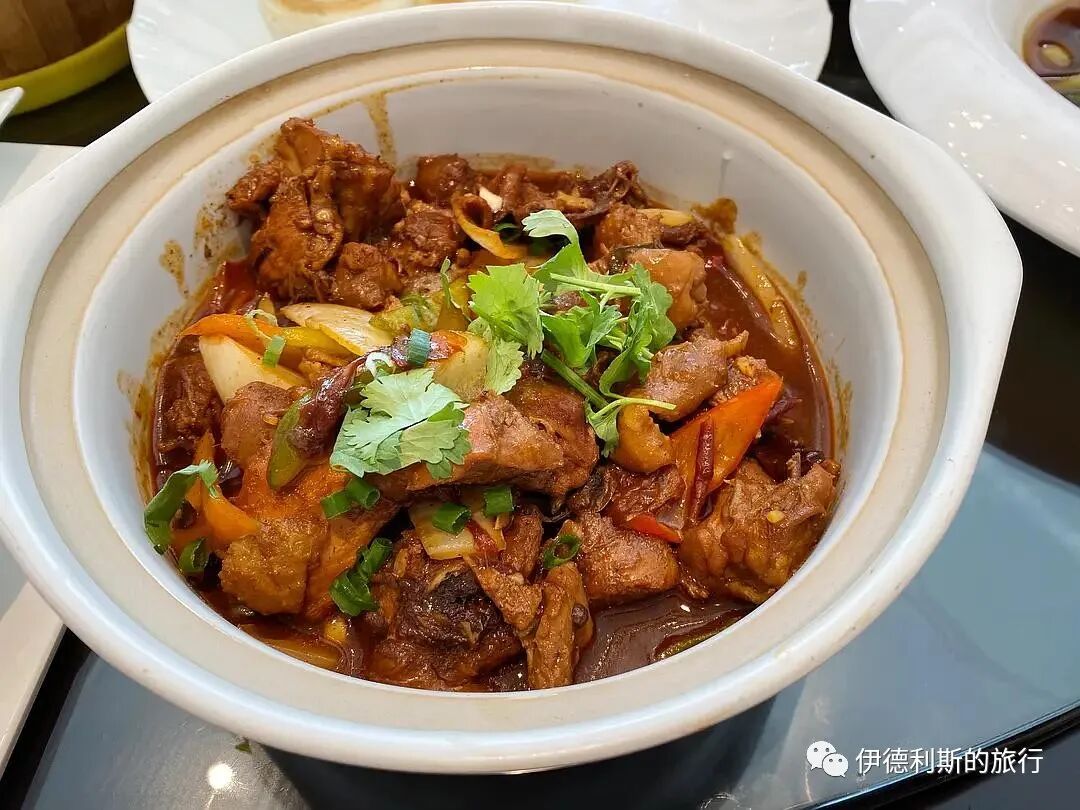
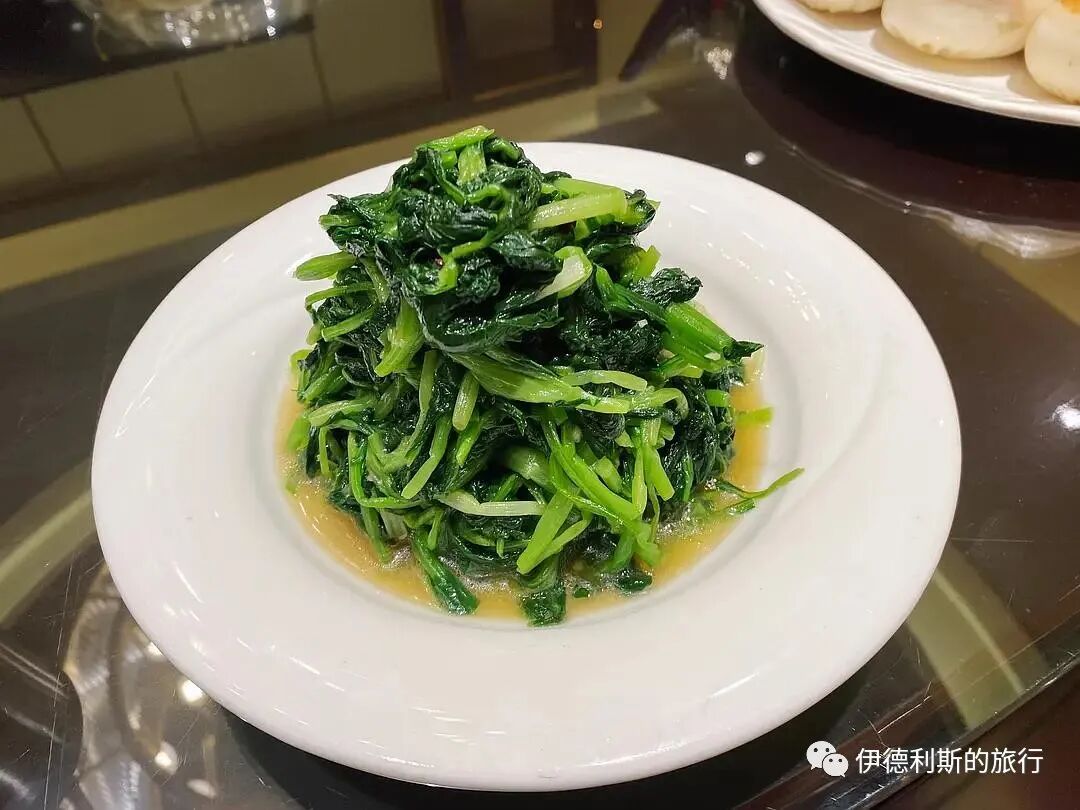
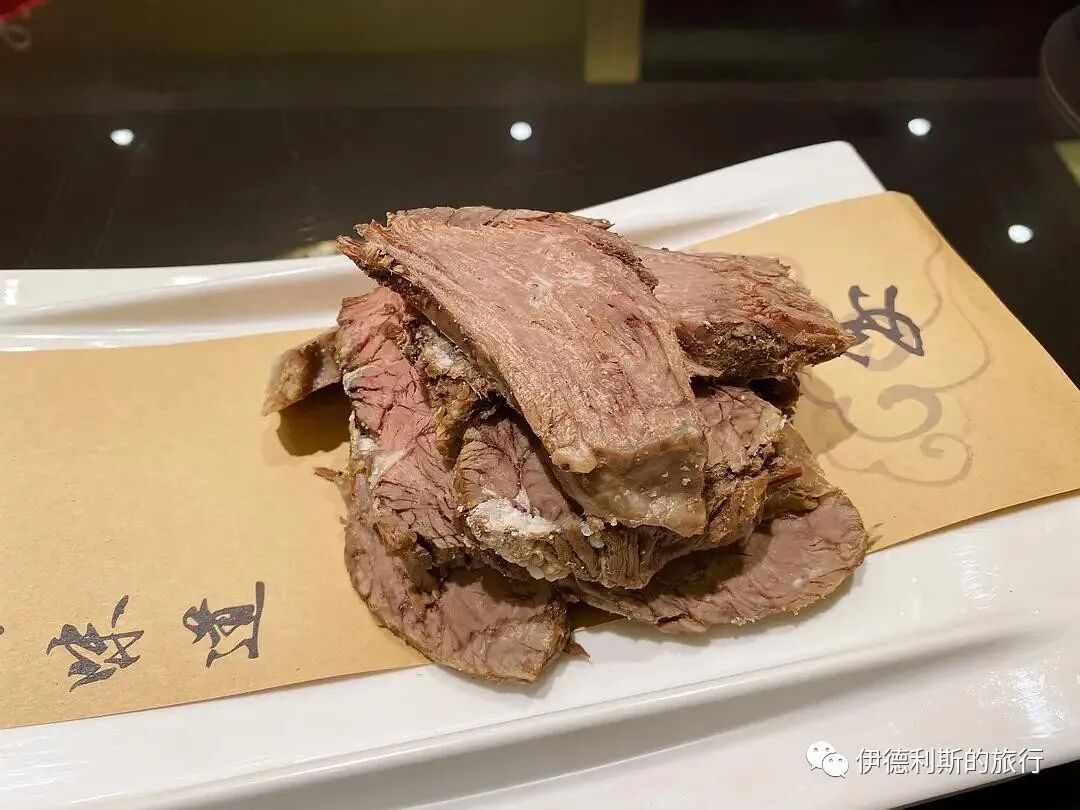
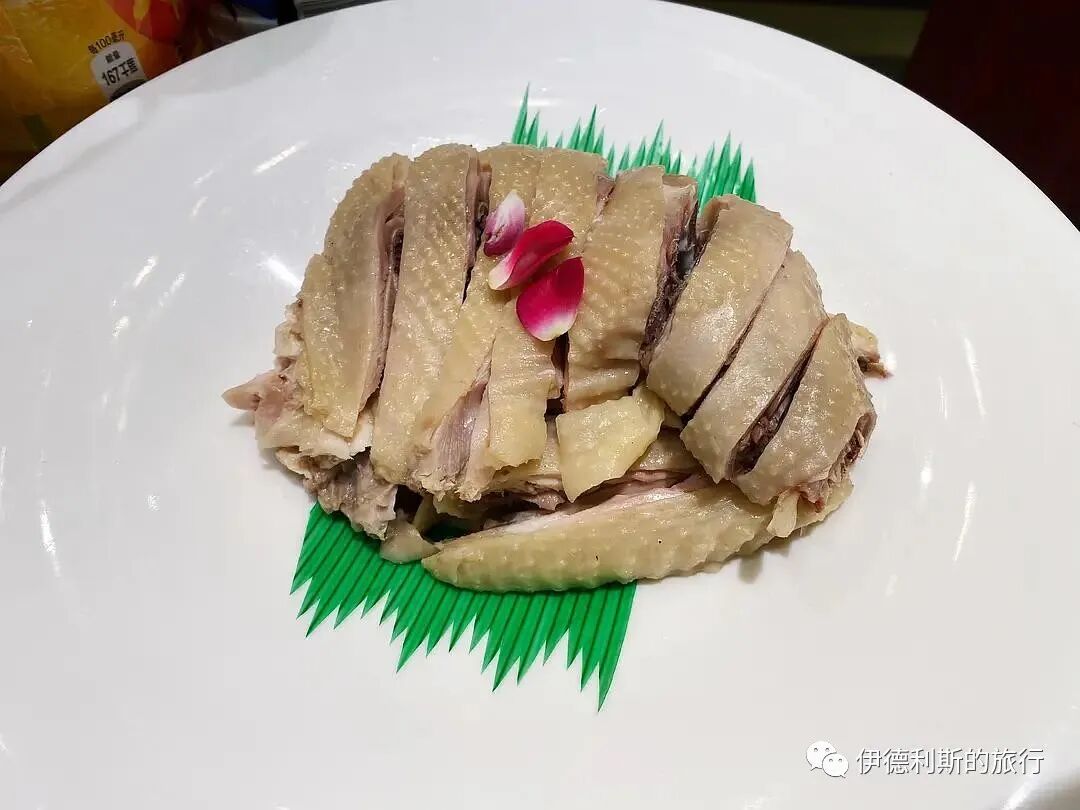
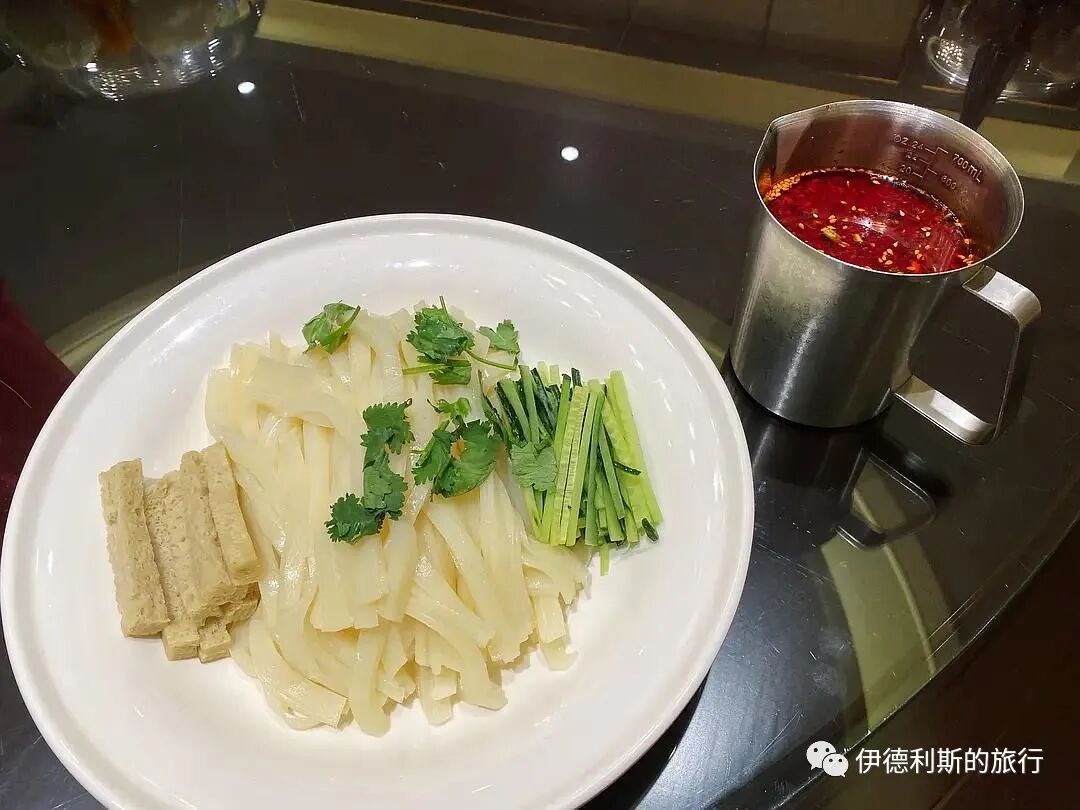
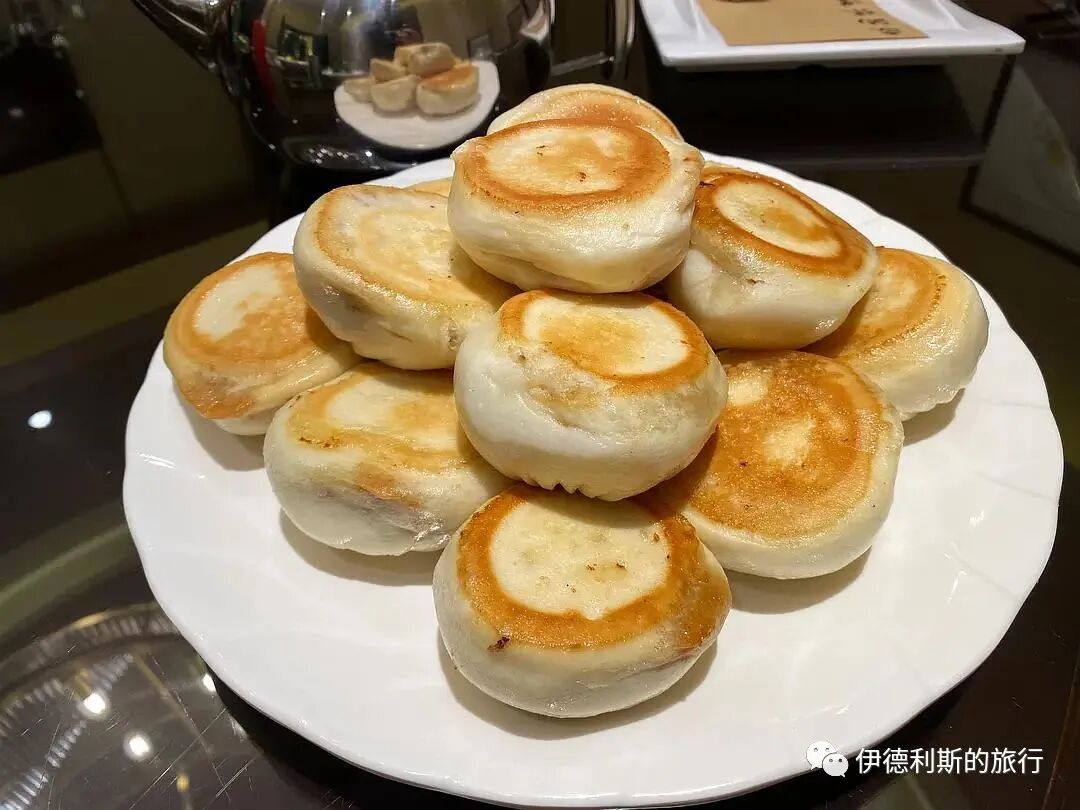
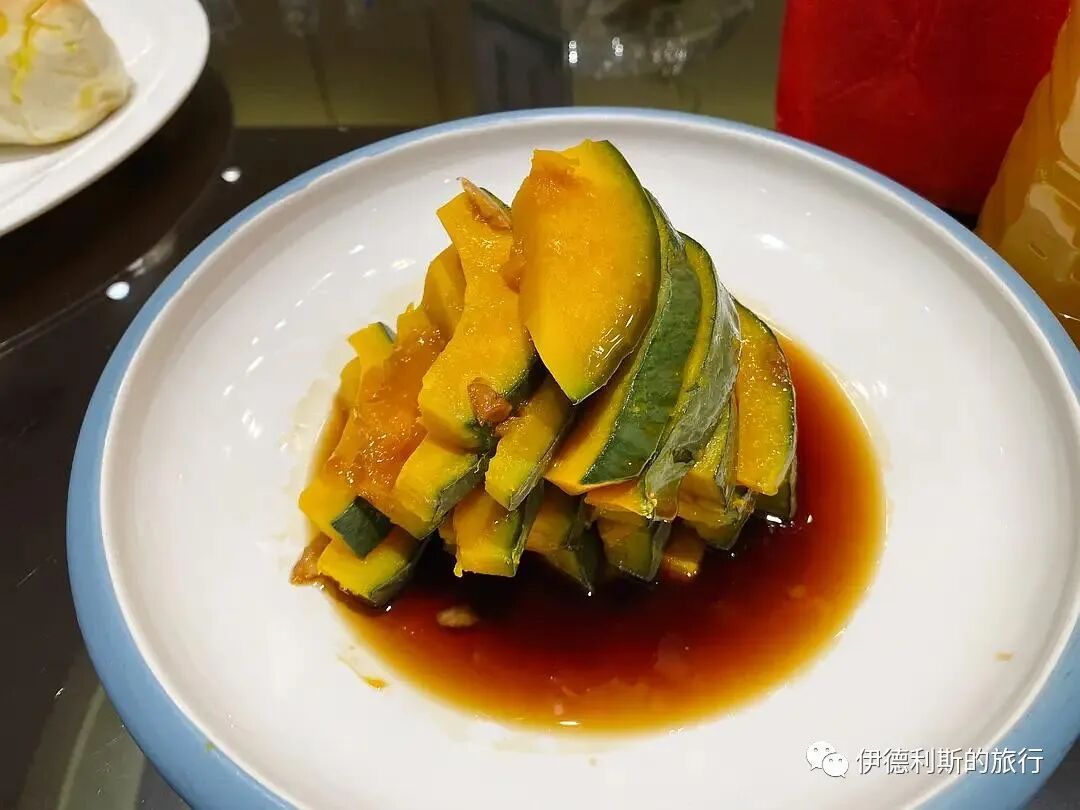
In the afternoon, I went to Sanyixuan to have a bowl of steamed lamb. The taste is a bit like shengcuan wanzi (freshly boiled meatballs), very tender. I also ordered kuku cai (bitter greens), and it was truly bitter!
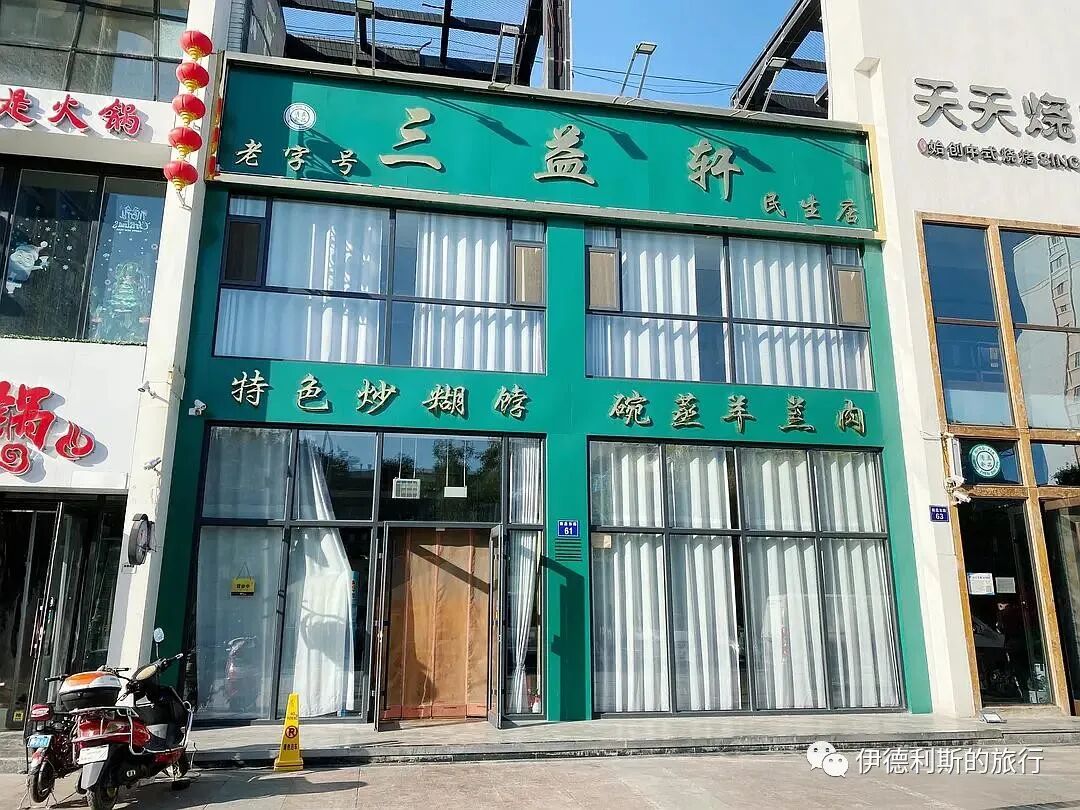
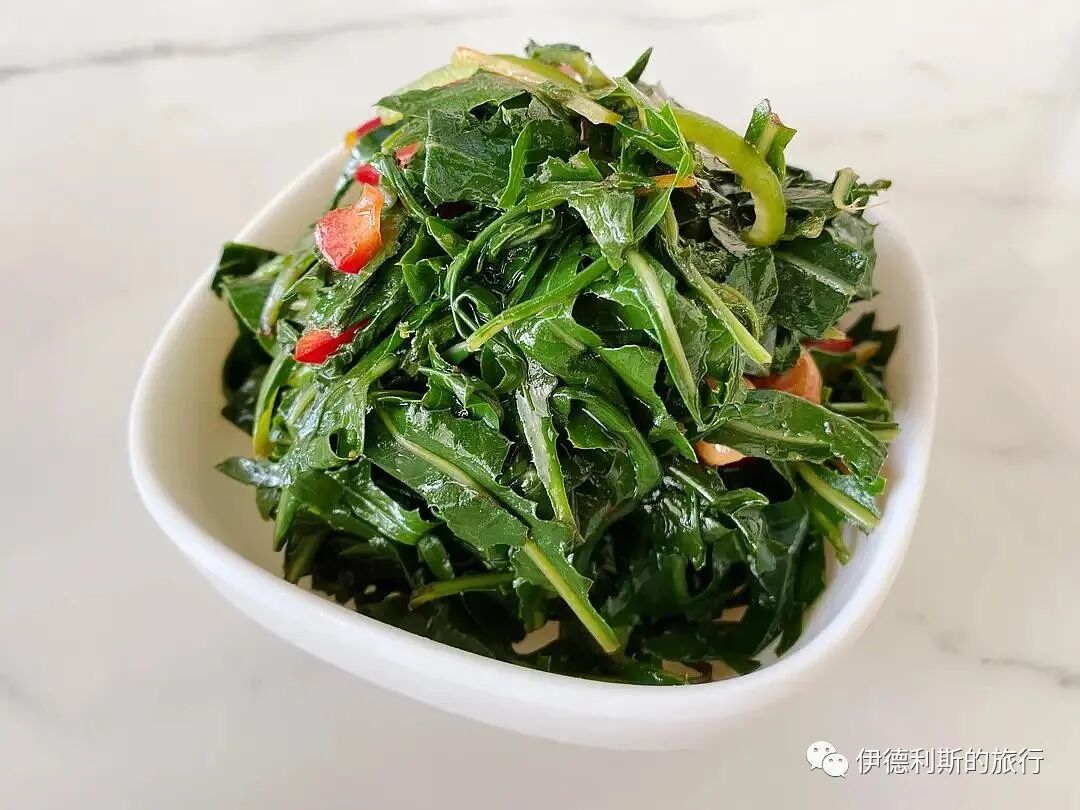
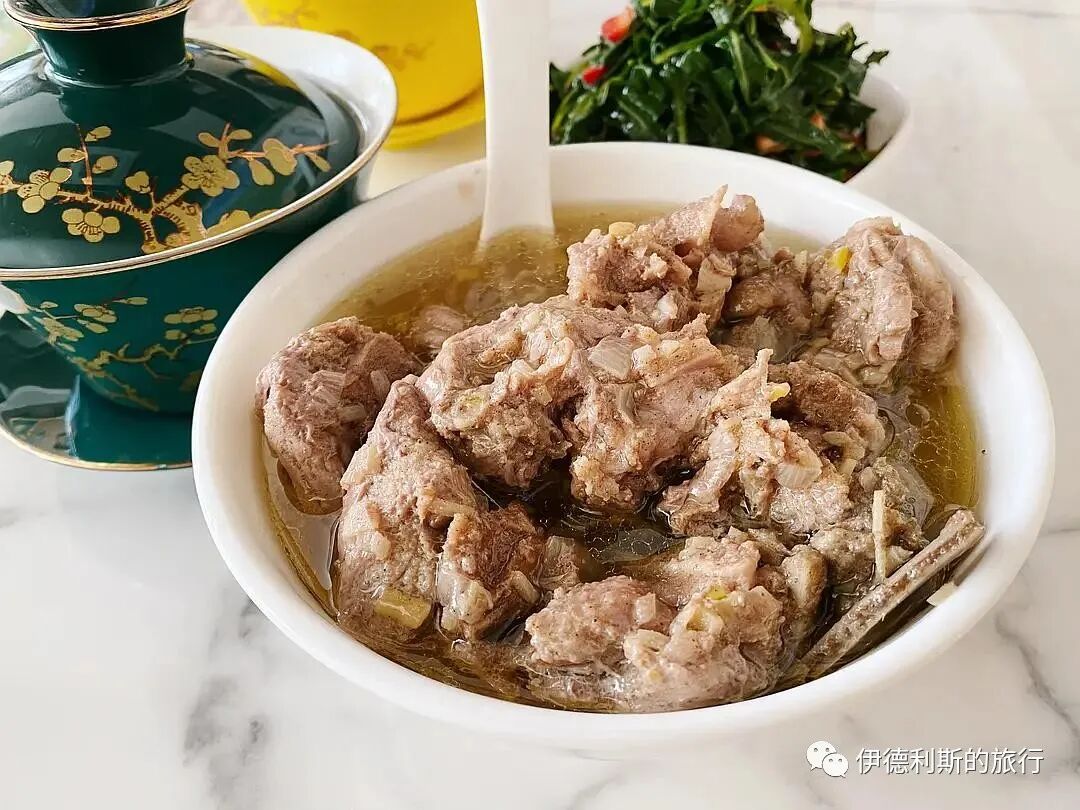
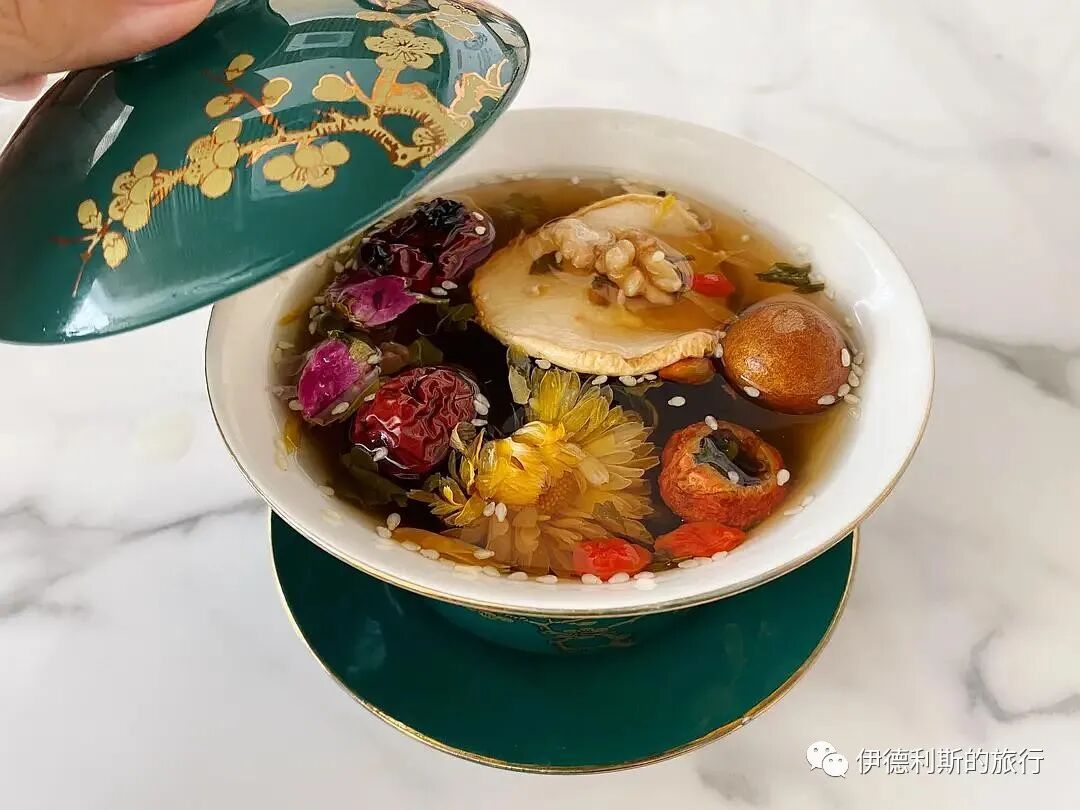
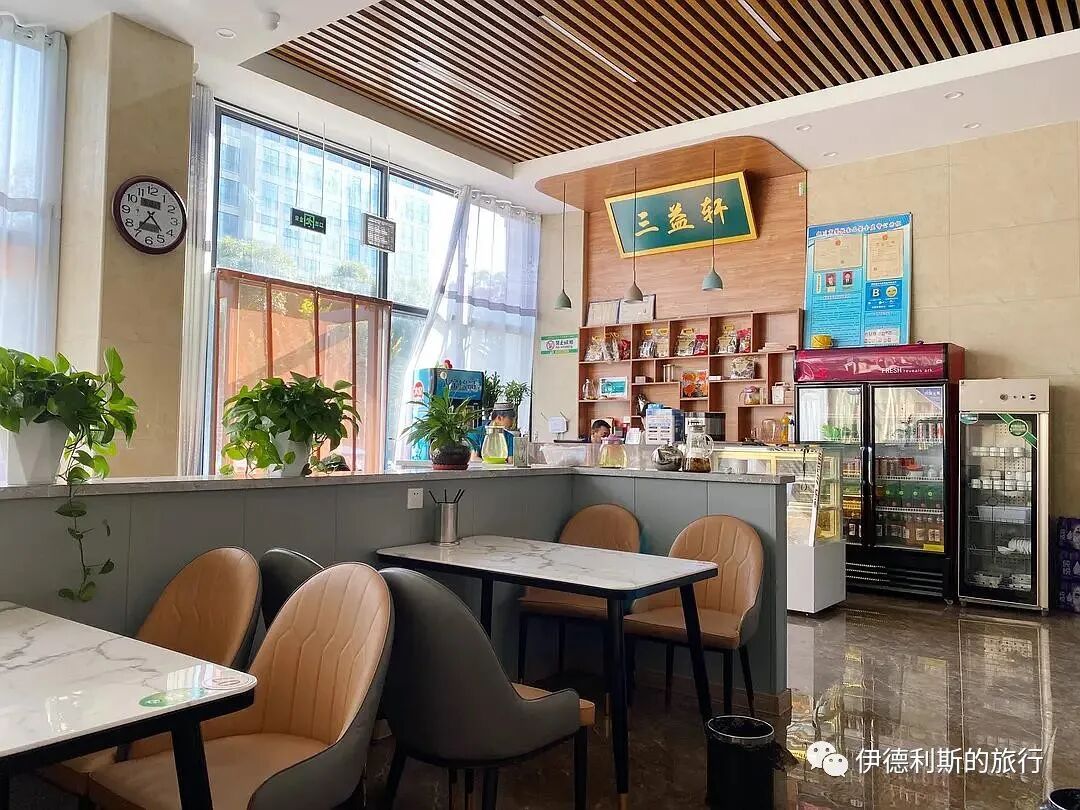
I took this photo exactly ten years ago when I ate at the old Sanyixuan restaurant, so this counts as nostalgia. The old restaurant is gone now, but several new ones have opened. The environment at the Minsheng branch is quite nice; it is very comfortable to drink tea and chat.
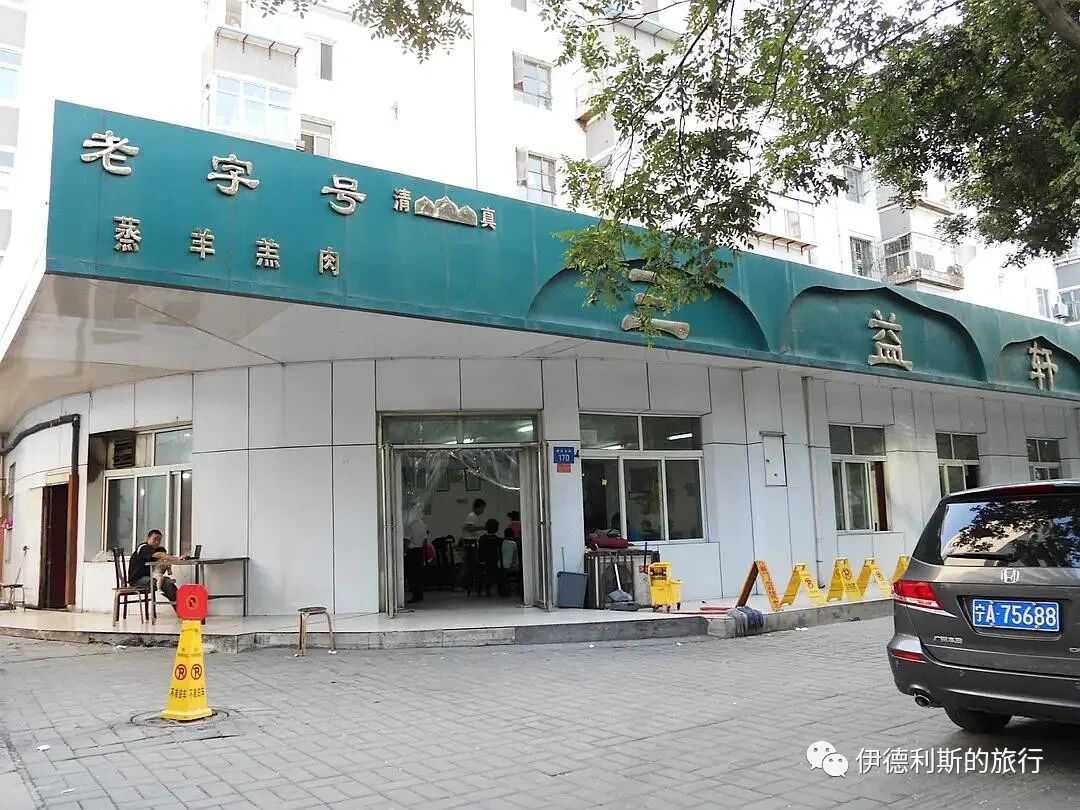
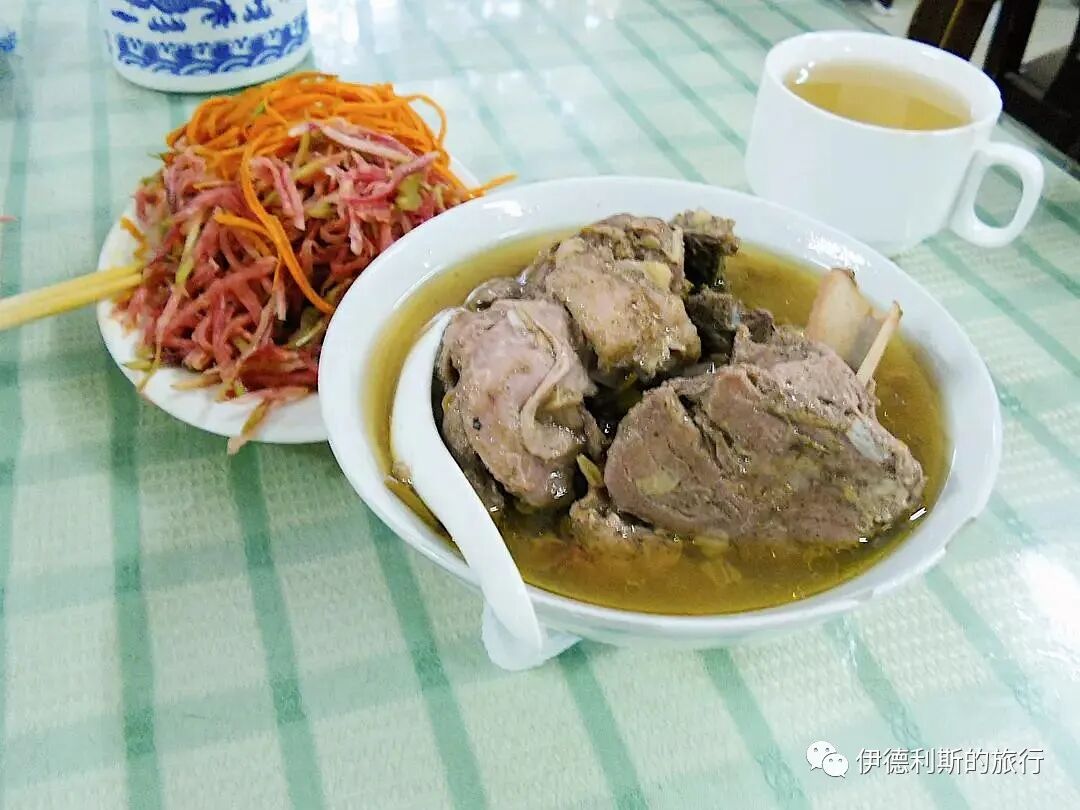
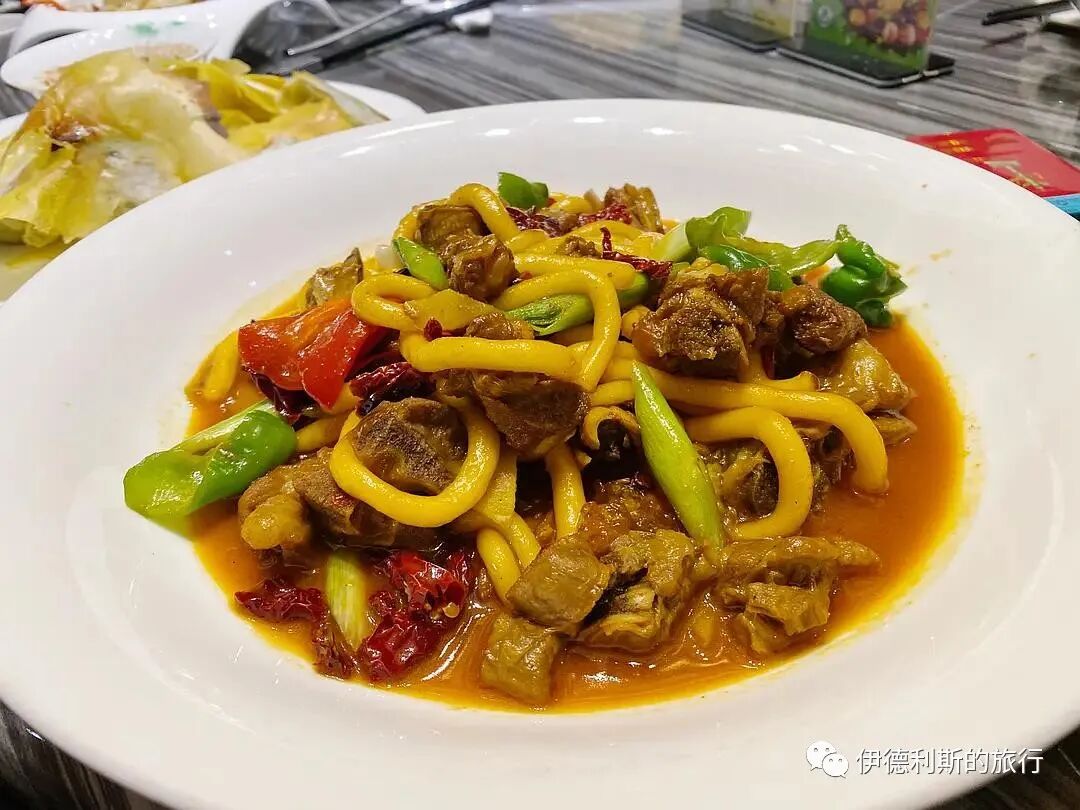
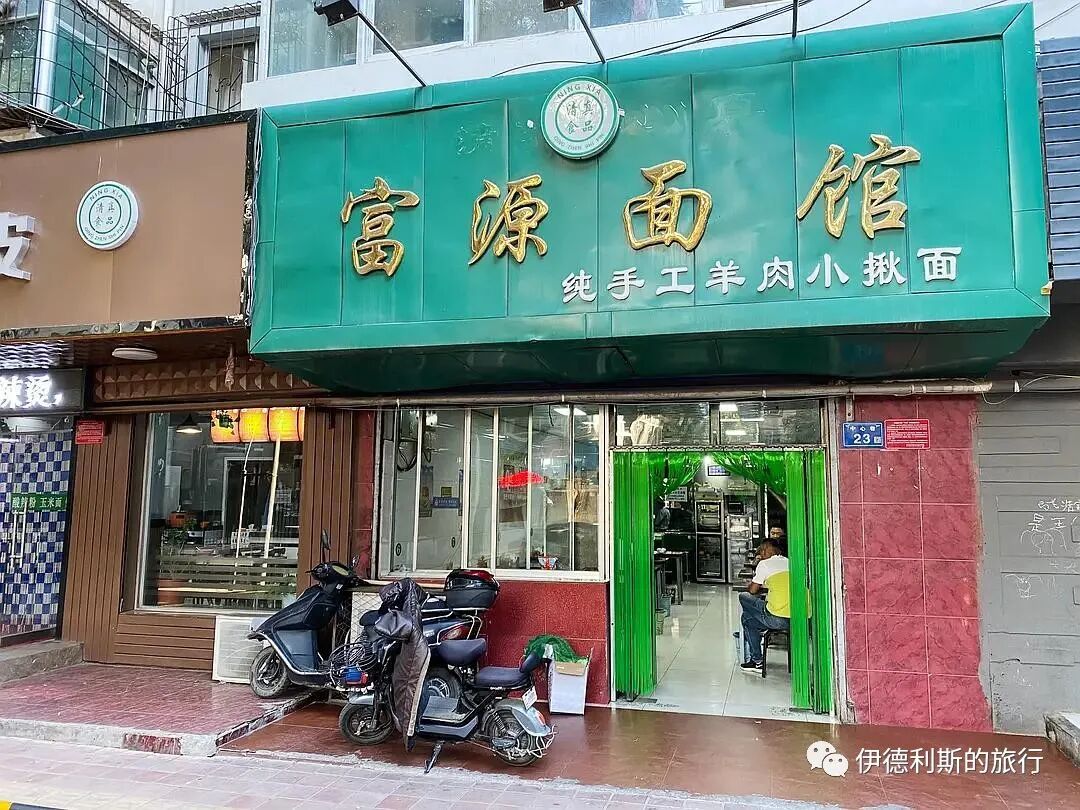
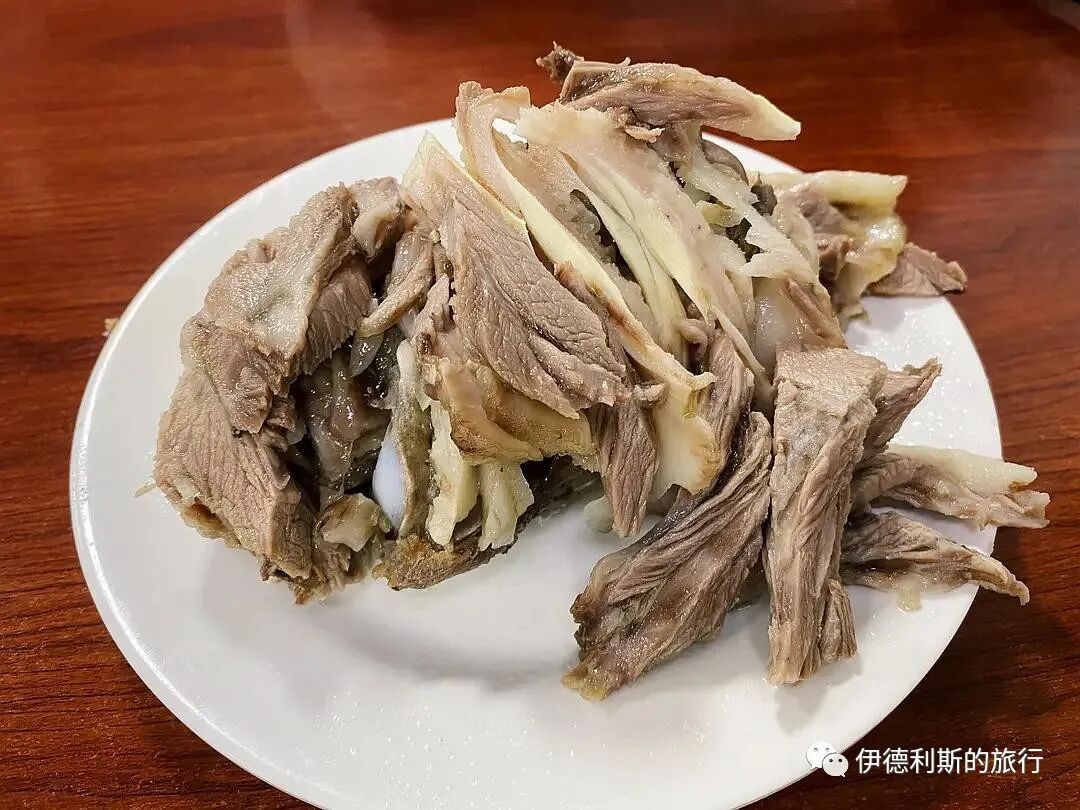
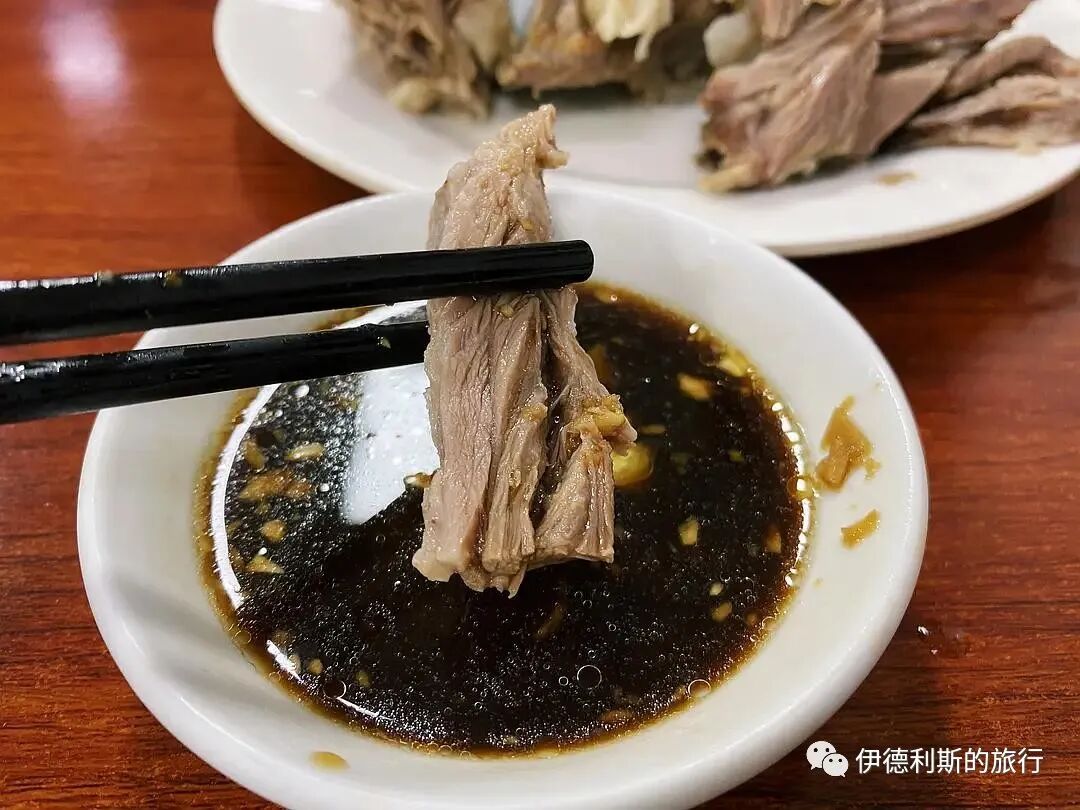
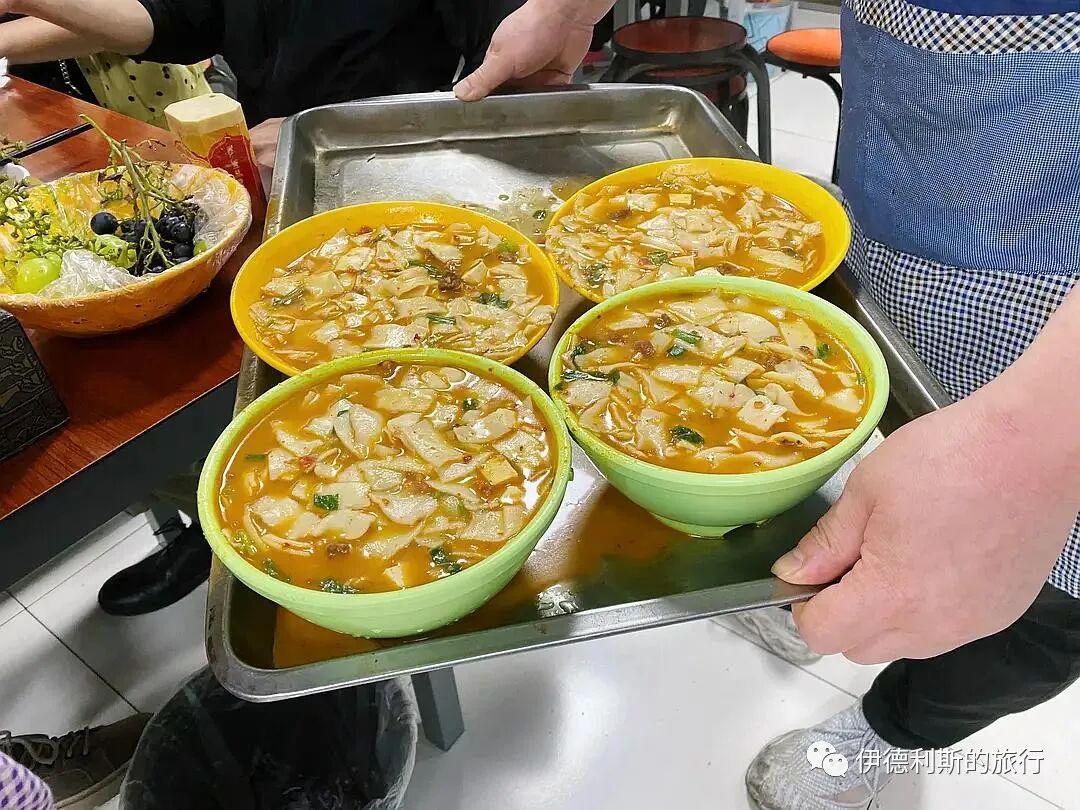
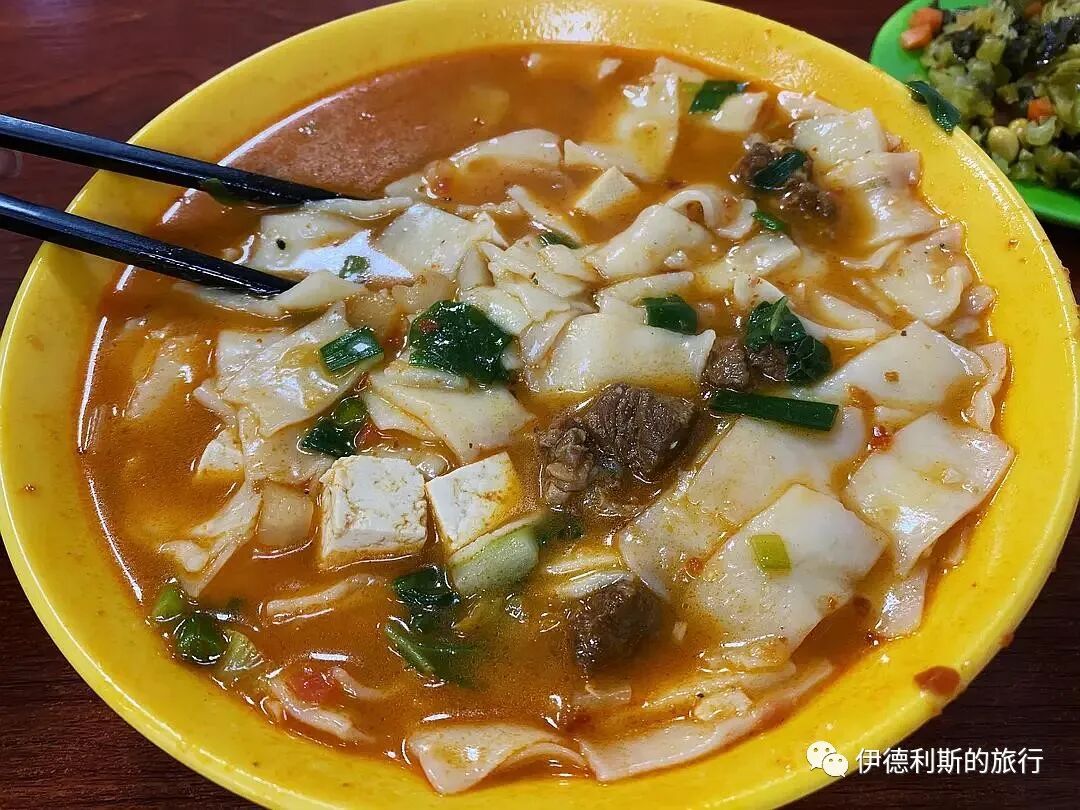
In the evening, I went to Fuyuan Noodle Restaurant on Zhongxin Lane. They only sell lamb neck, lianguo yangrou (lamb cooked with noodles), xiaojiupian (small hand-torn noodles), and side dishes. I ordered half a jin (250 grams) of lamb neck; the texture was great and the flavor was fragrant. The lamb xiaojiupian is made by three people tearing the dough into a large pot at the same time; seeing the dough pieces flying everywhere looked quite spectacular.
September 20
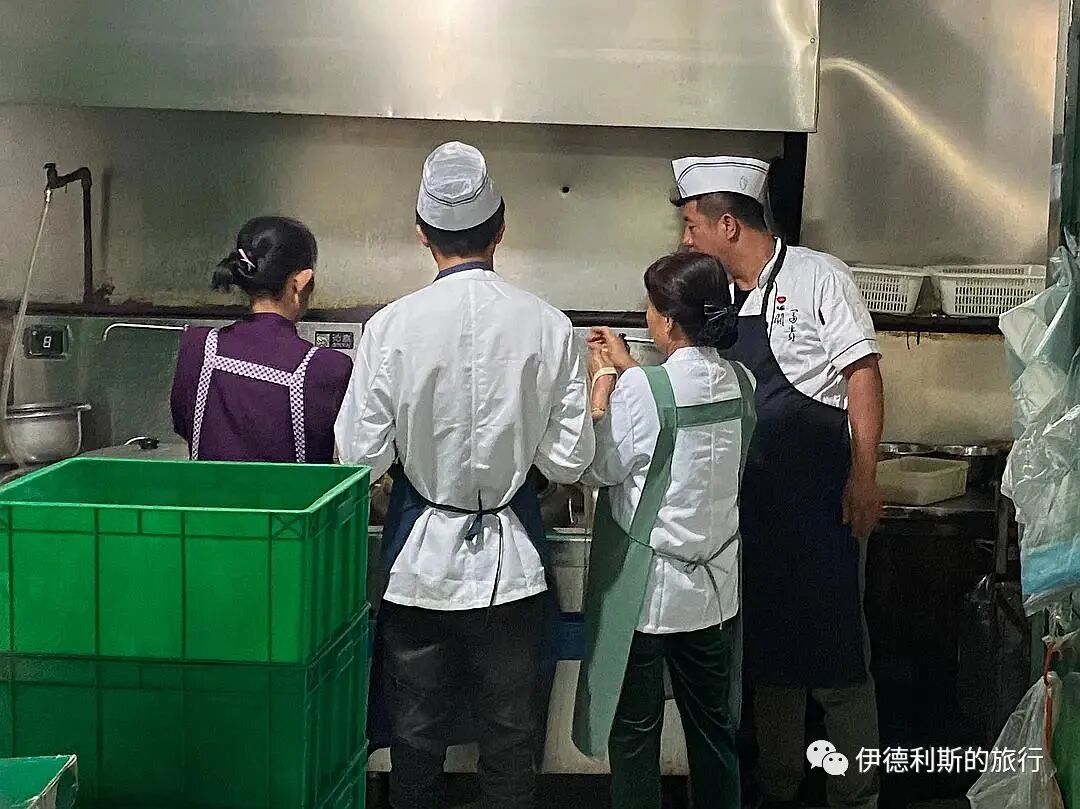
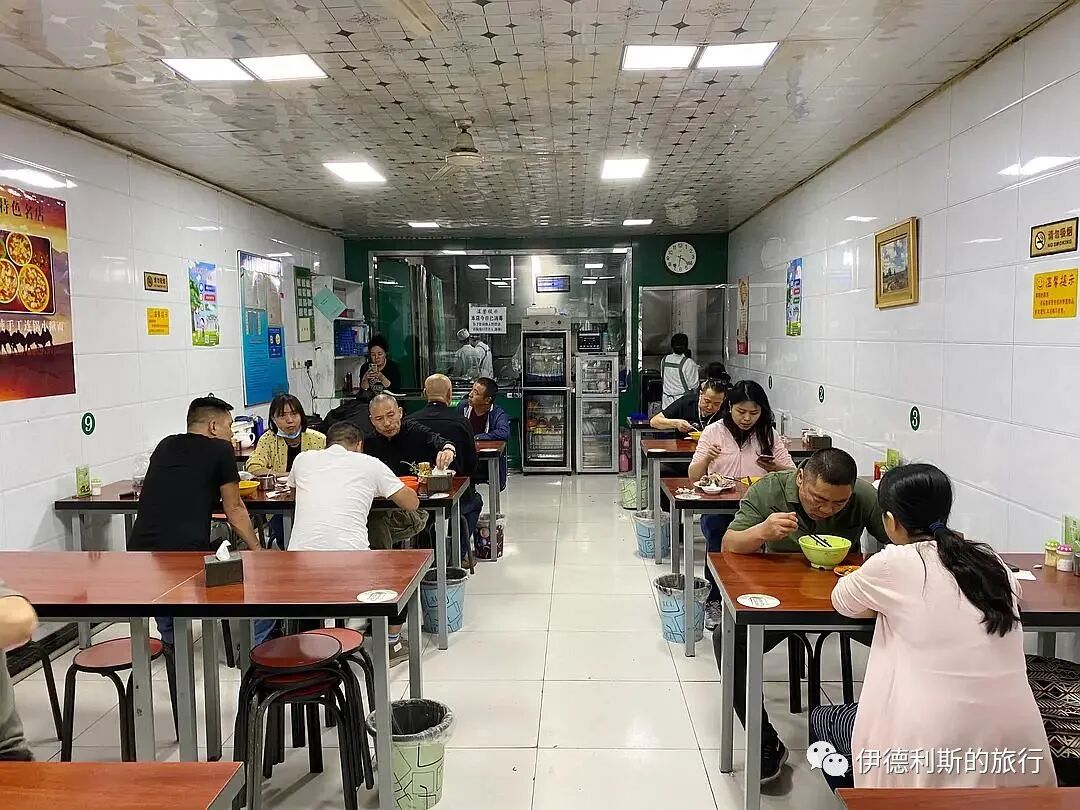
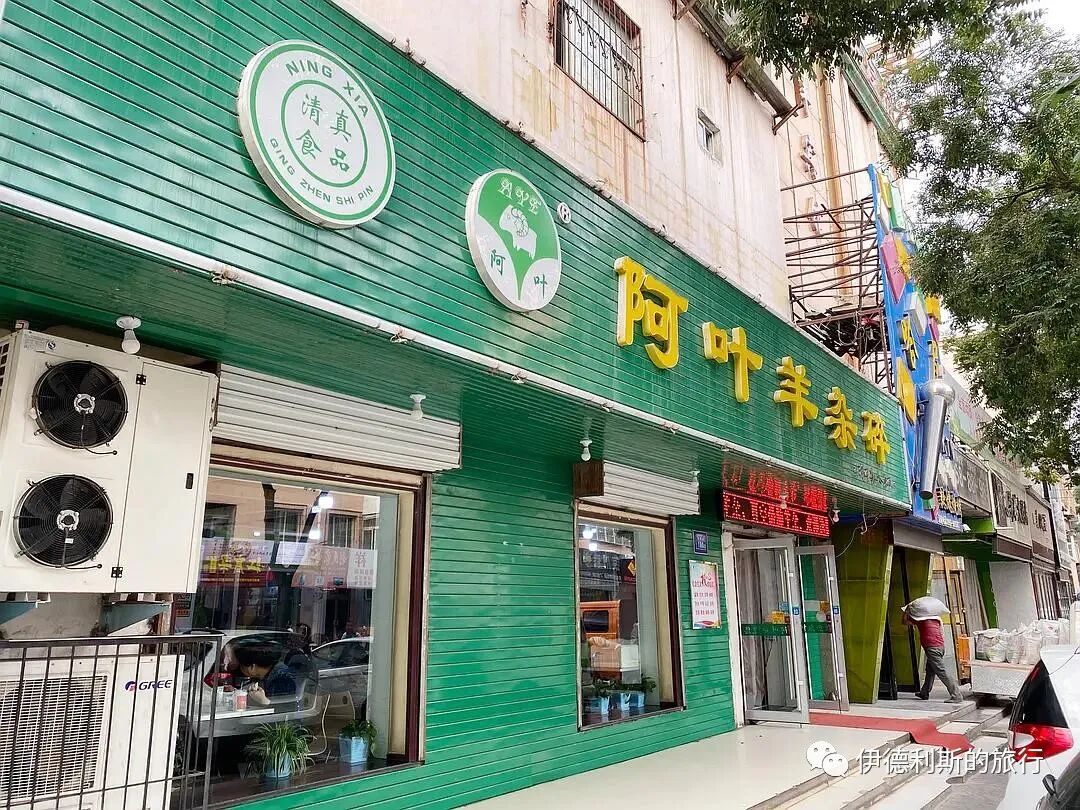
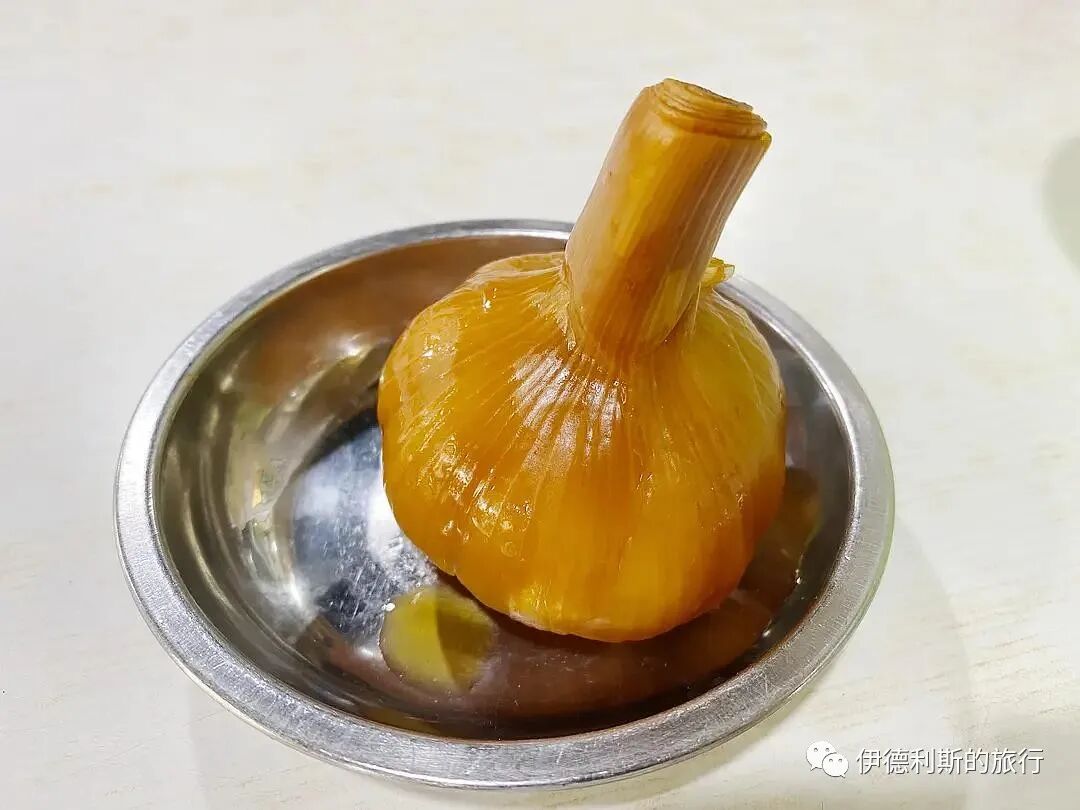
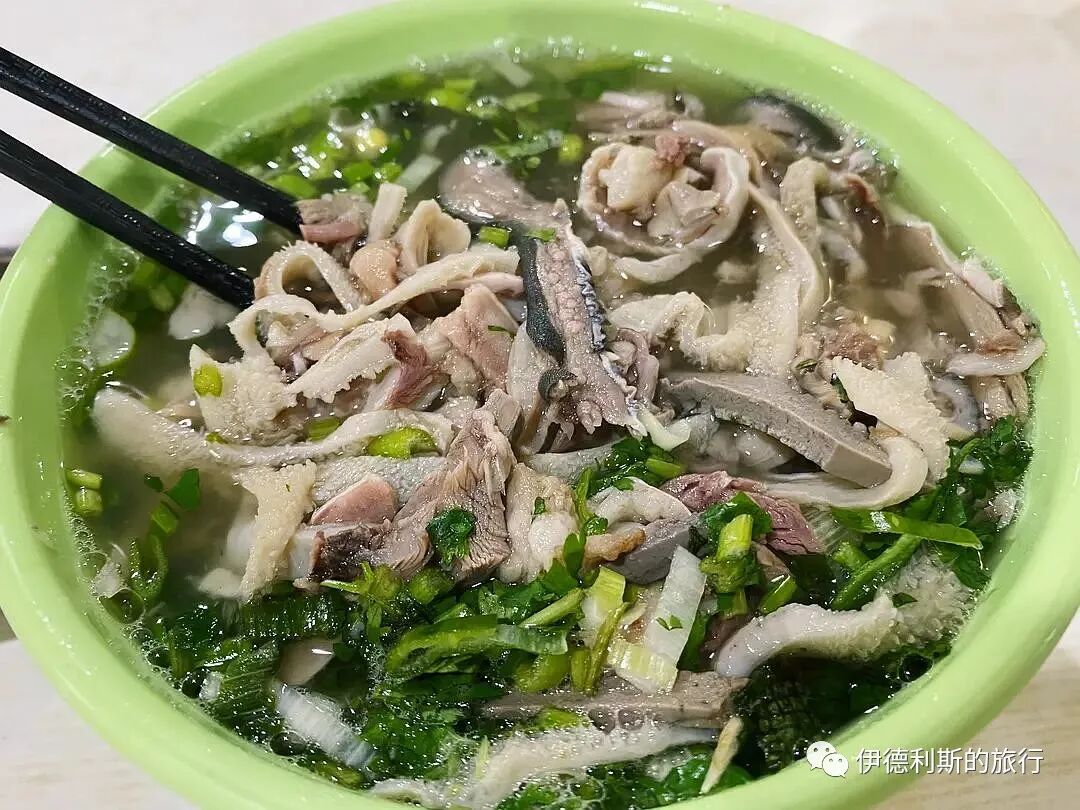
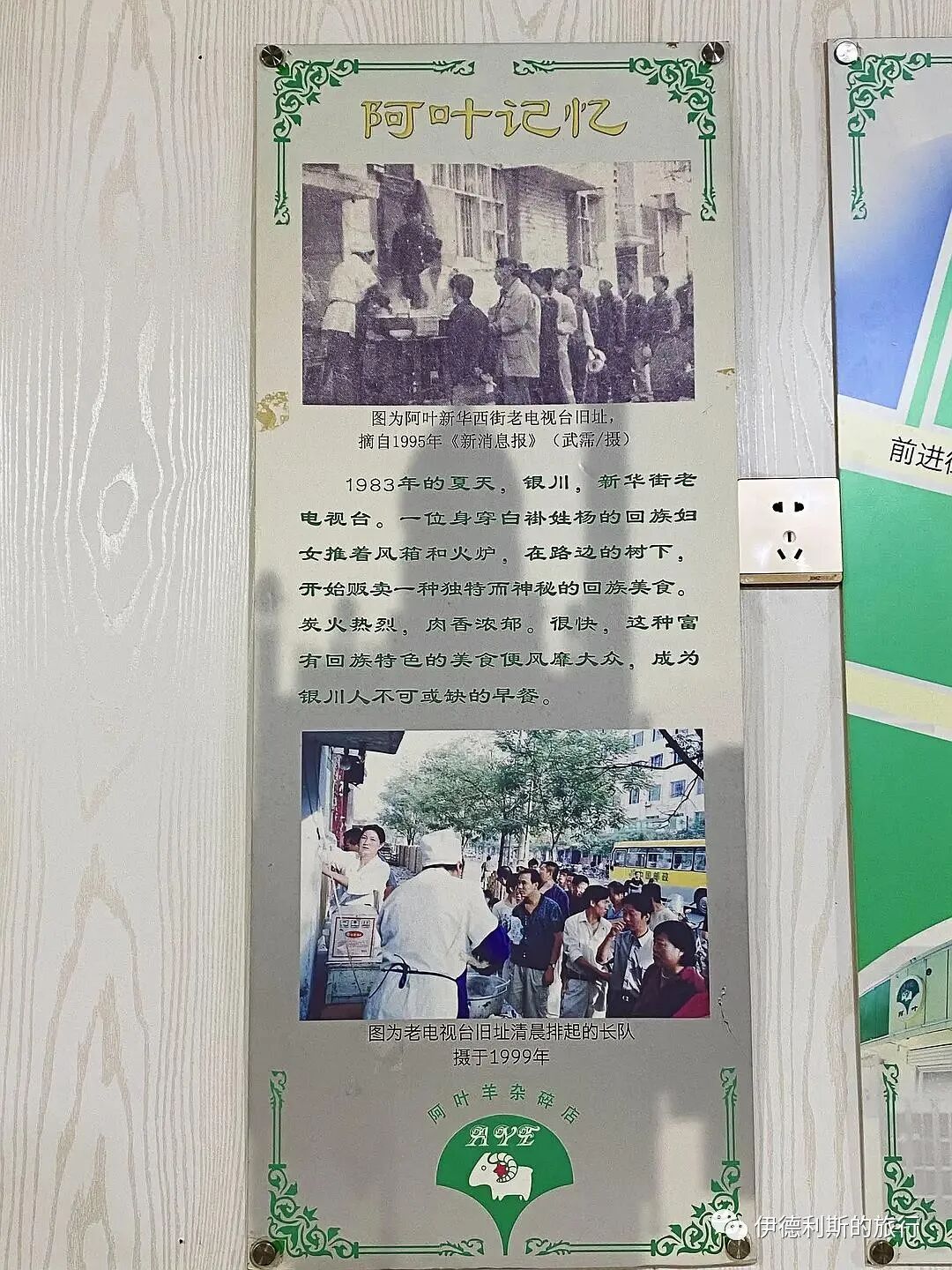
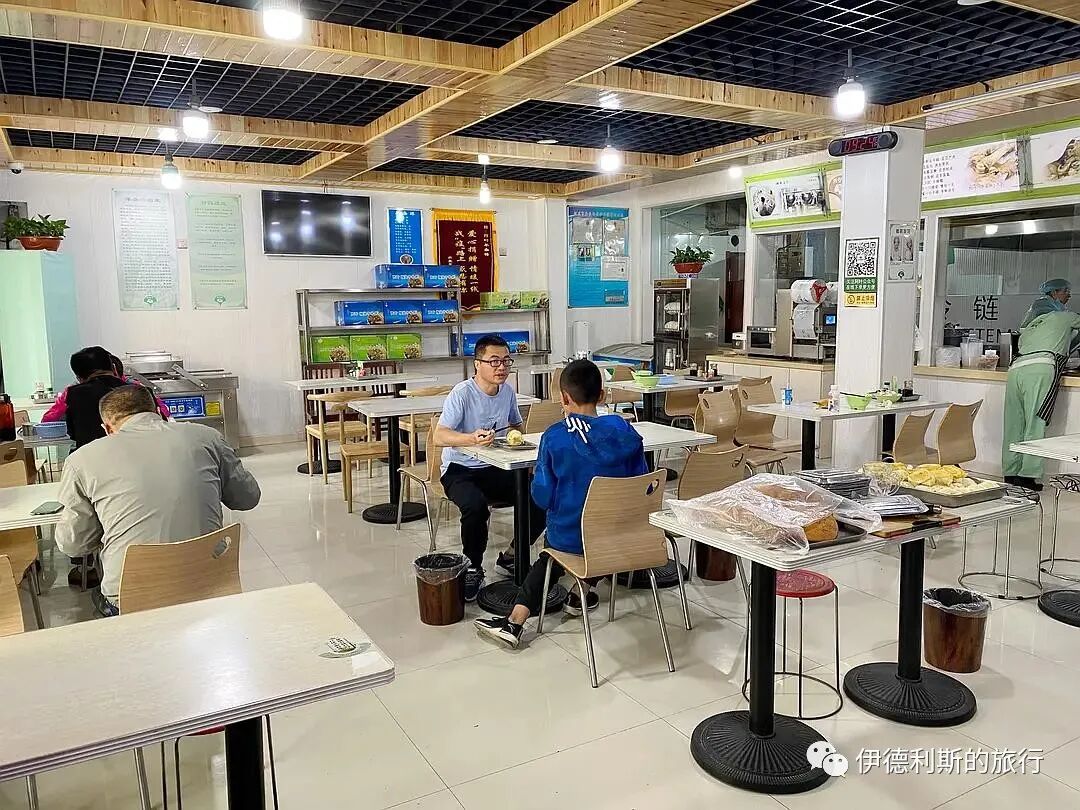
Early in the morning, I went to Qianjin Road to have Aye Yangzashui (lamb offal soup) with tangsuan (sweet garlic). Their shop has been open for nearly forty years. When my friend first took me to eat mianfeizi 10 years ago, it was here. Back then, we could sit outside to eat, but now we can only sit indoors. Local friends said it doesn't taste as good as it used to, but we mainly went for nostalgia this time.
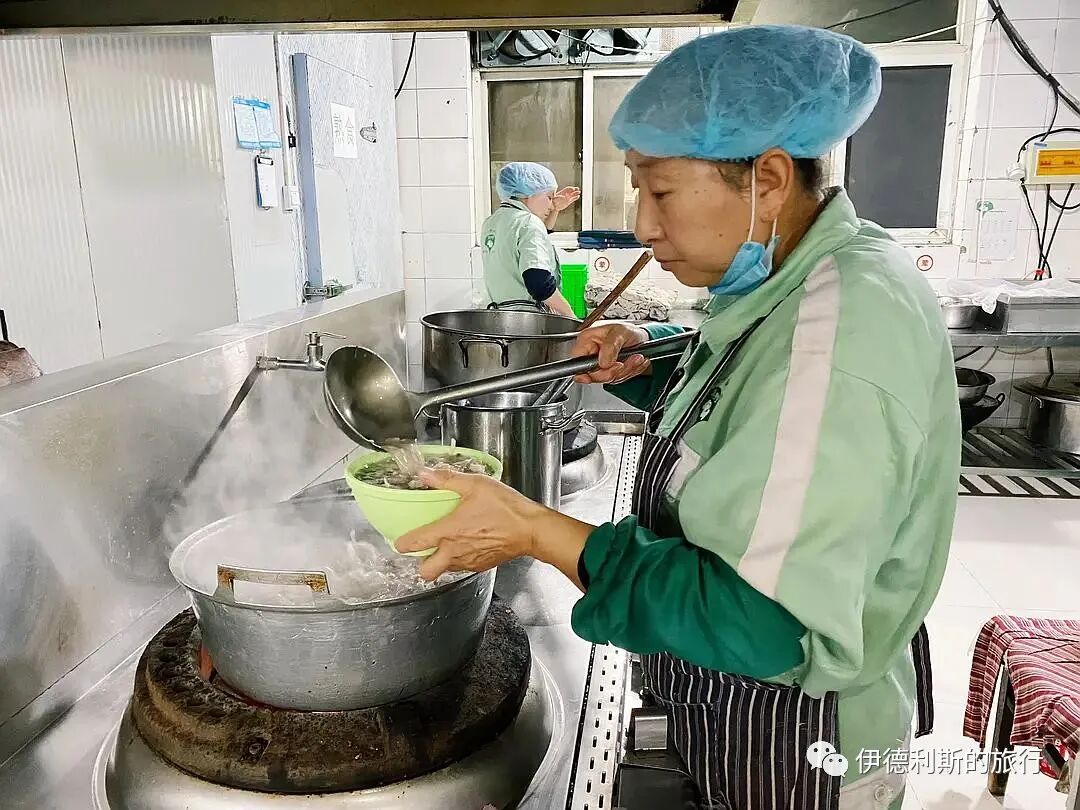
When I ate it ten years ago.
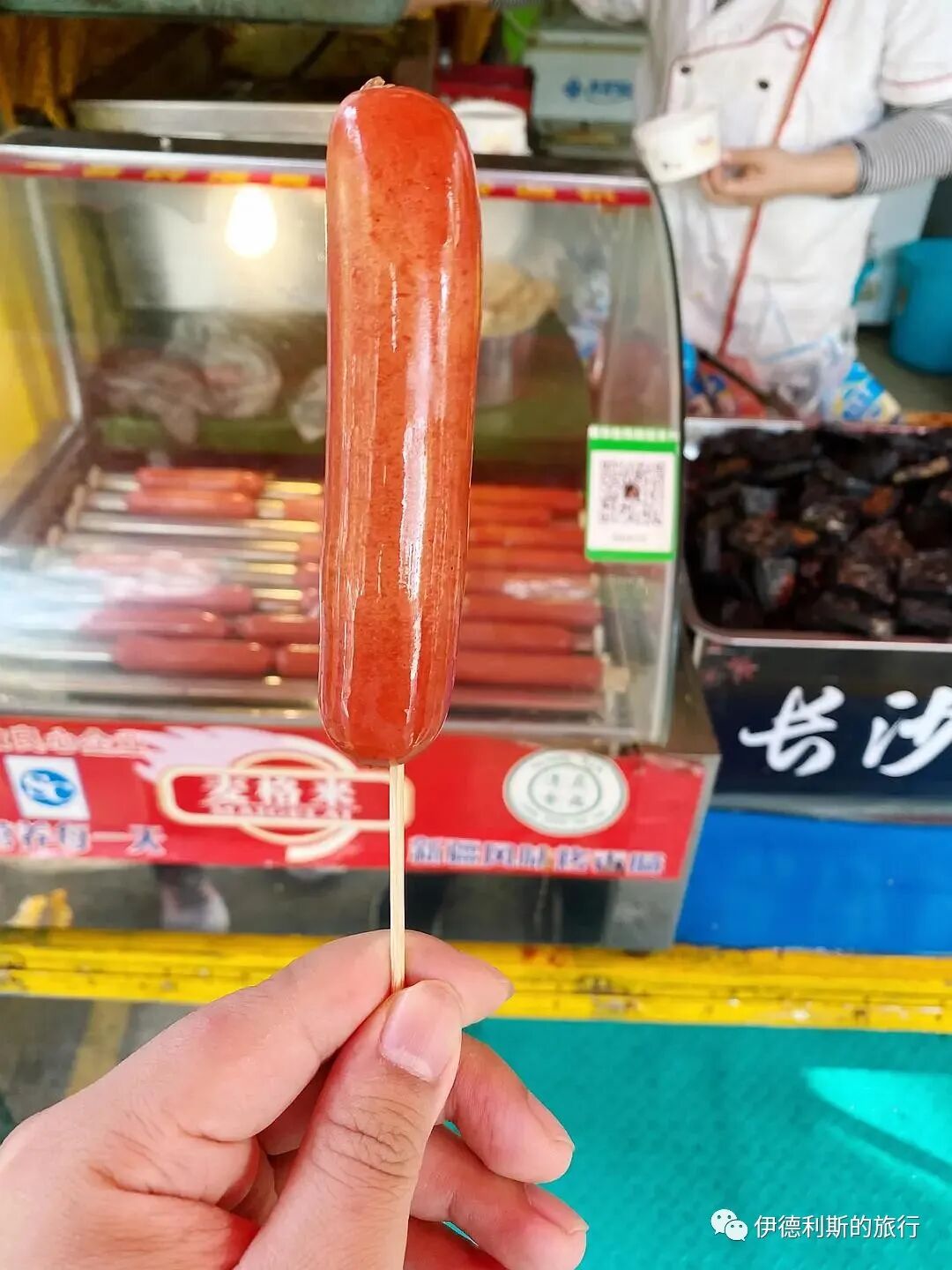
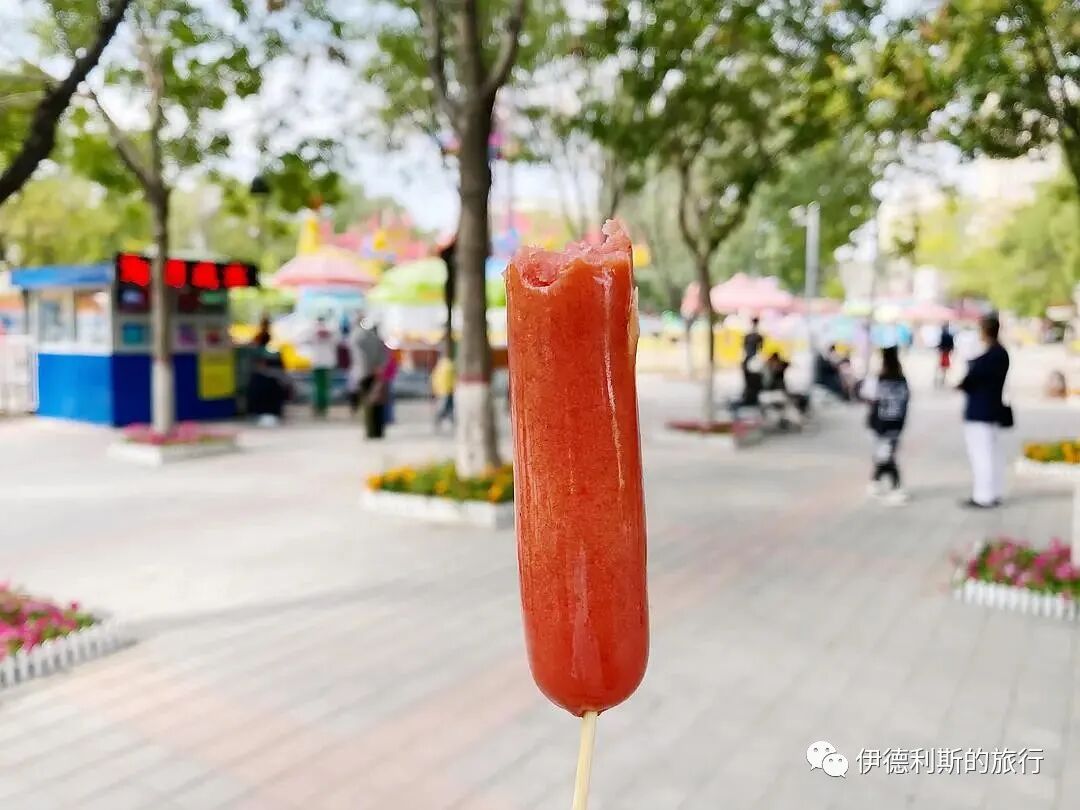
In the morning, Zainab and I played bumper cars and the Crazy Mouse ride at Yinchuan Zhongshan Park, and bought the must-have grilled sausages from the amusement park. Zainab said she only ate them when she was a child in Urumqi, and she hadn't seen halal ones for many years. That's how we had a nostalgic moment~
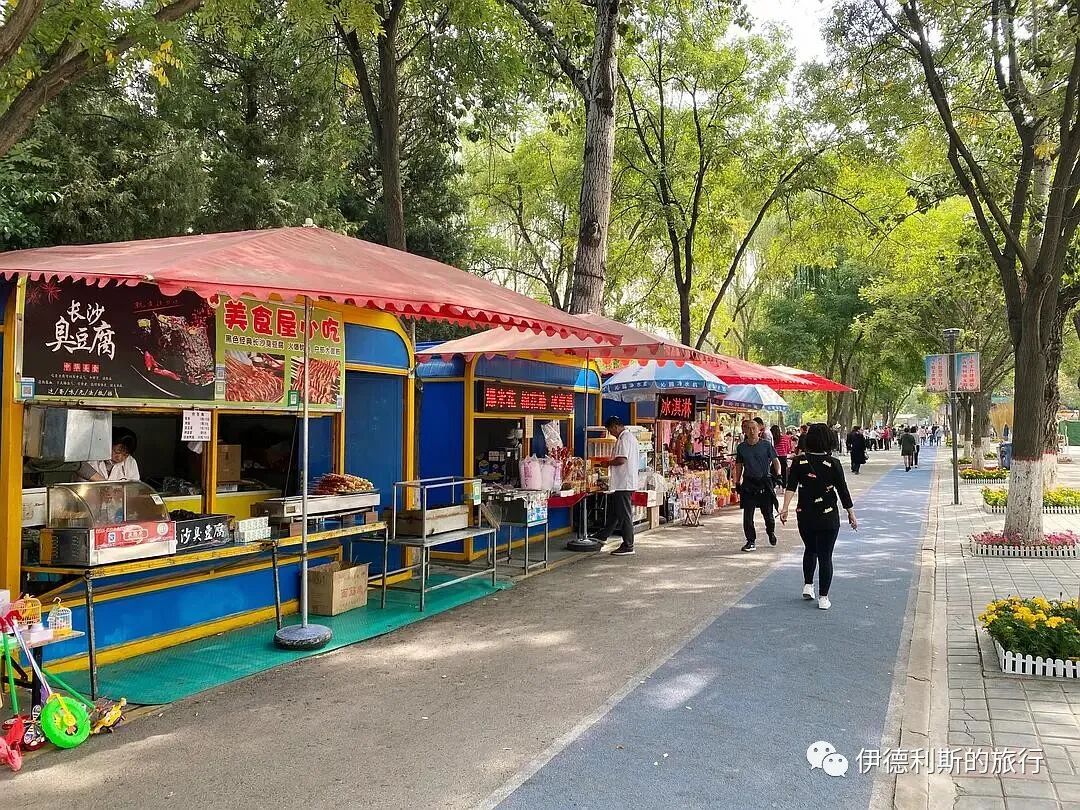
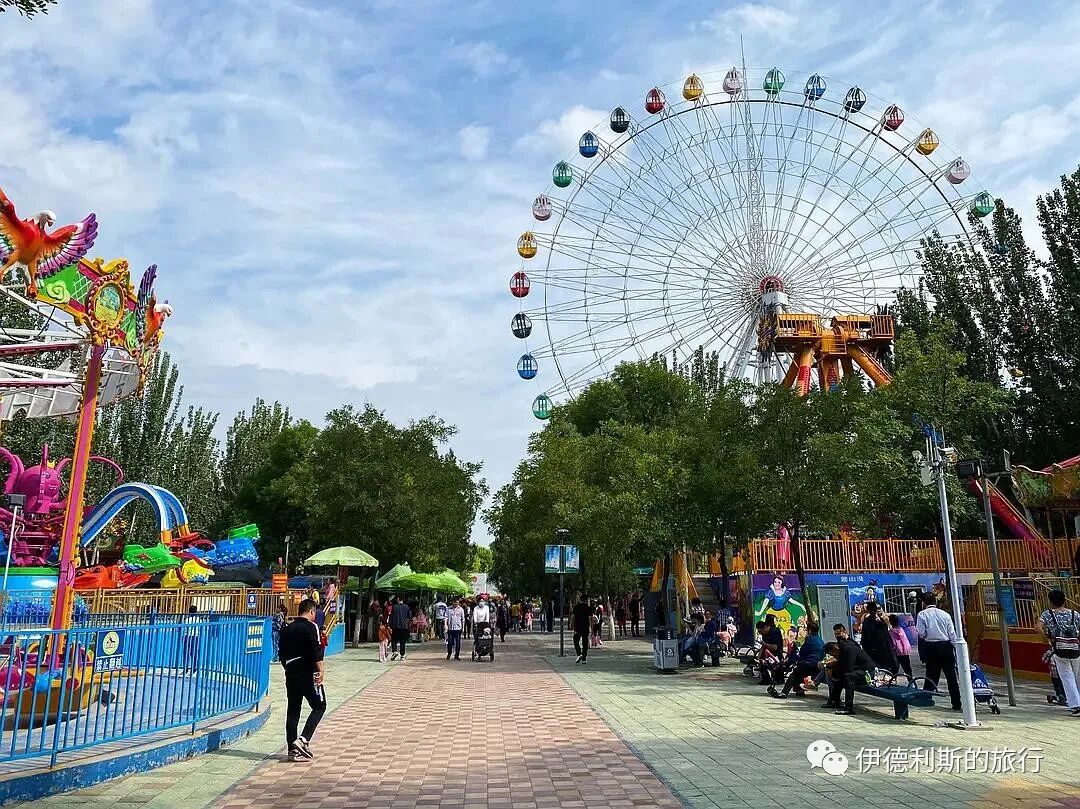
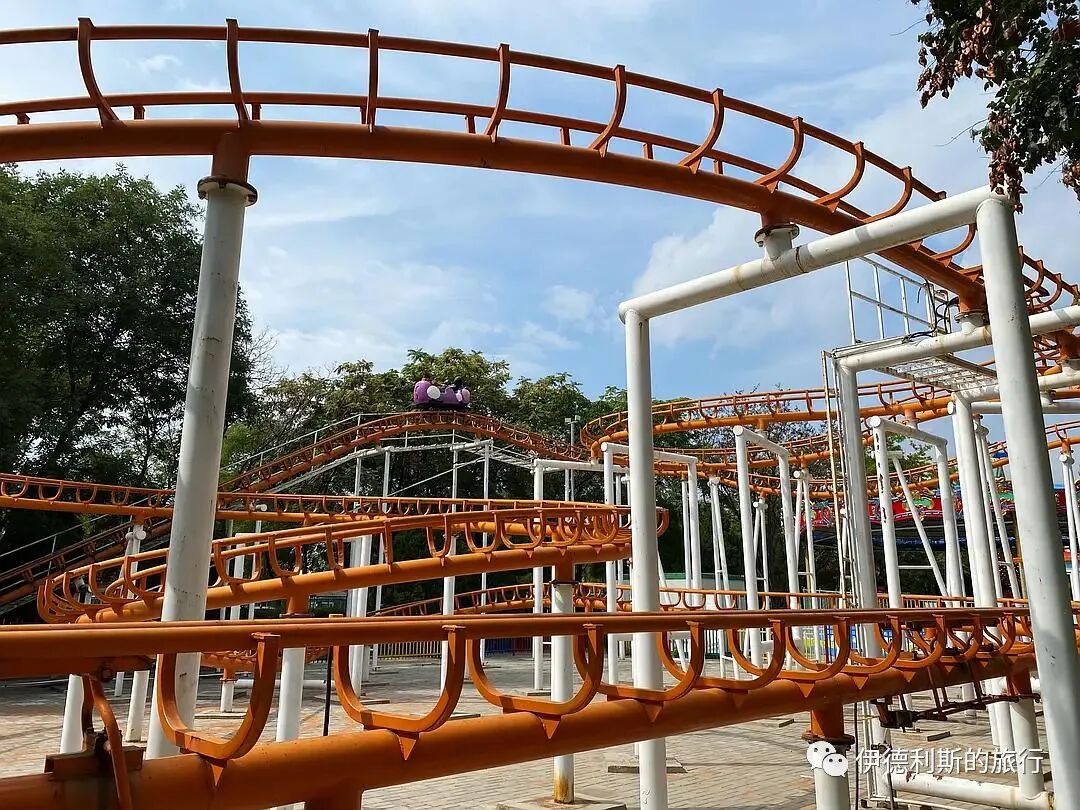
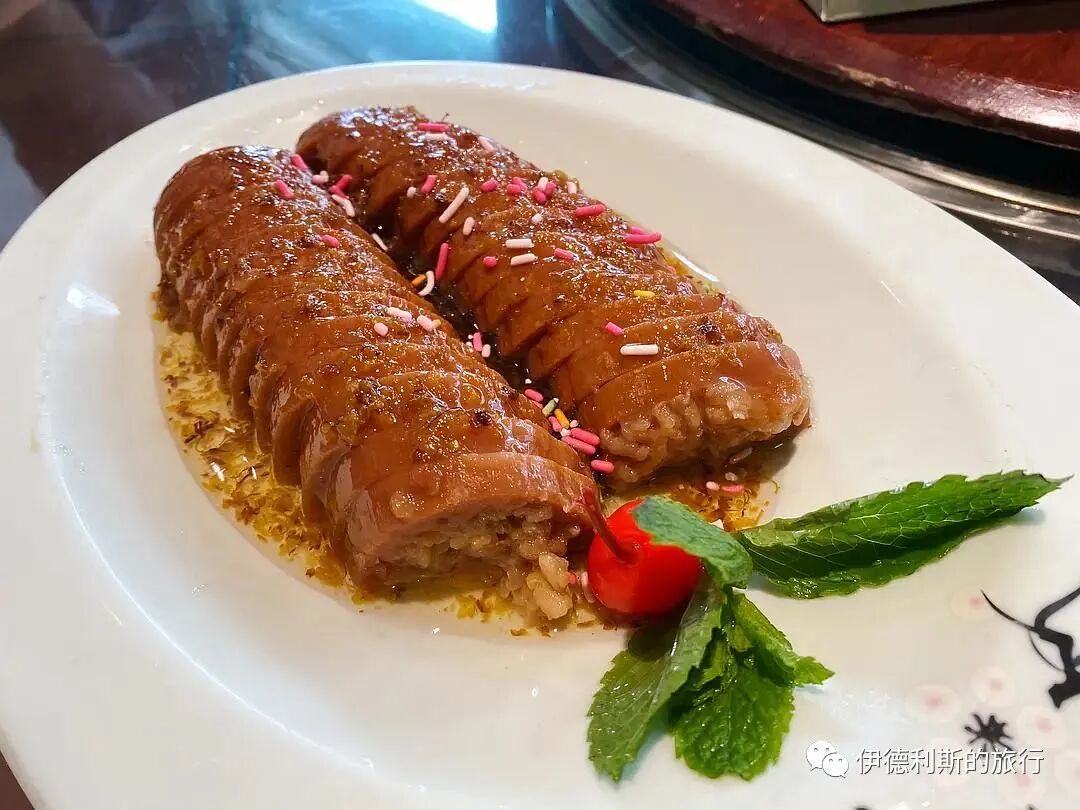
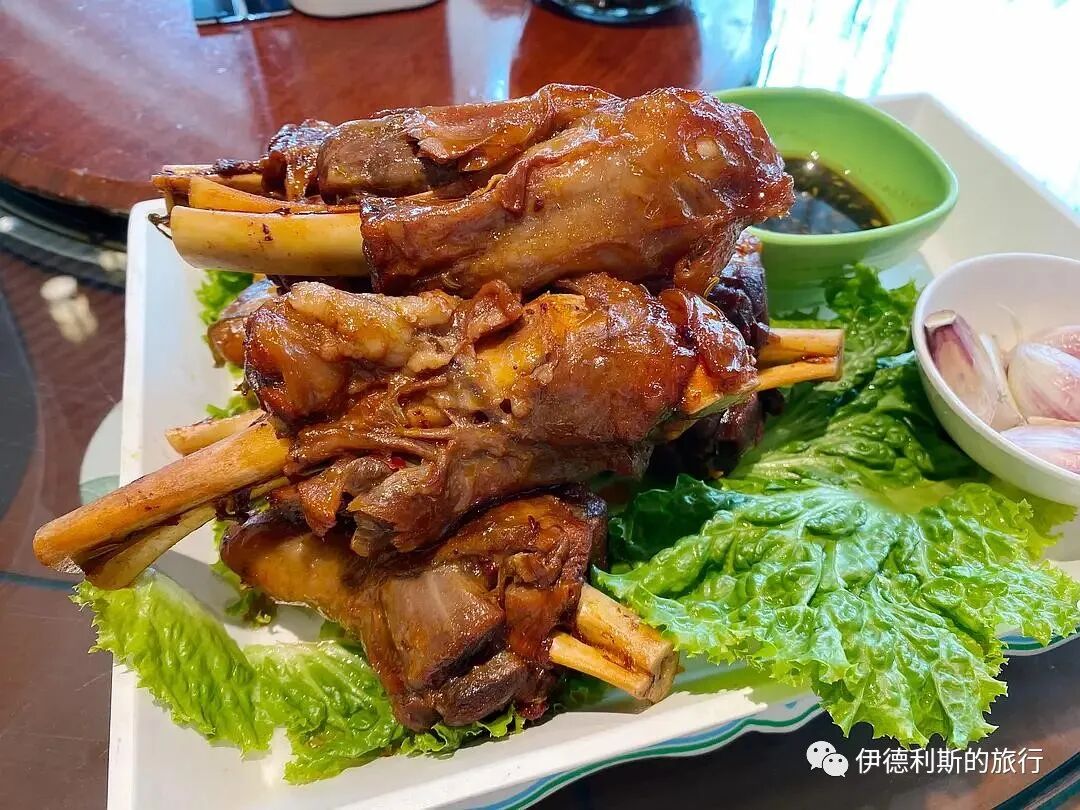
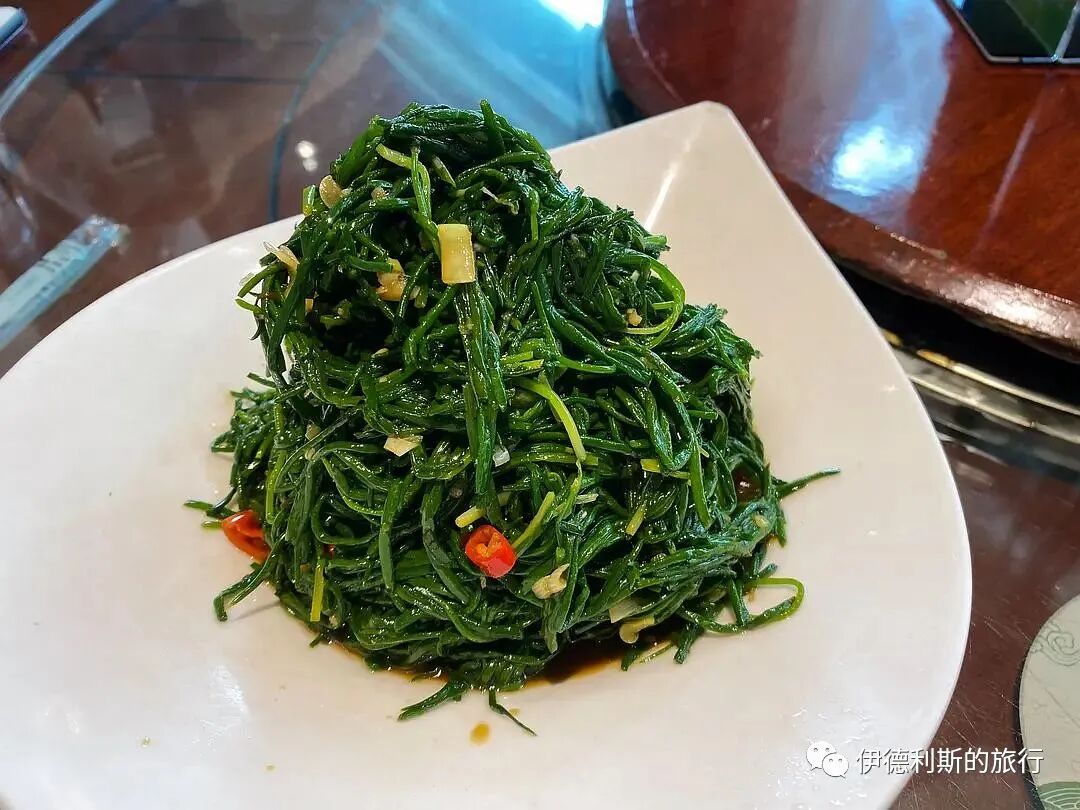
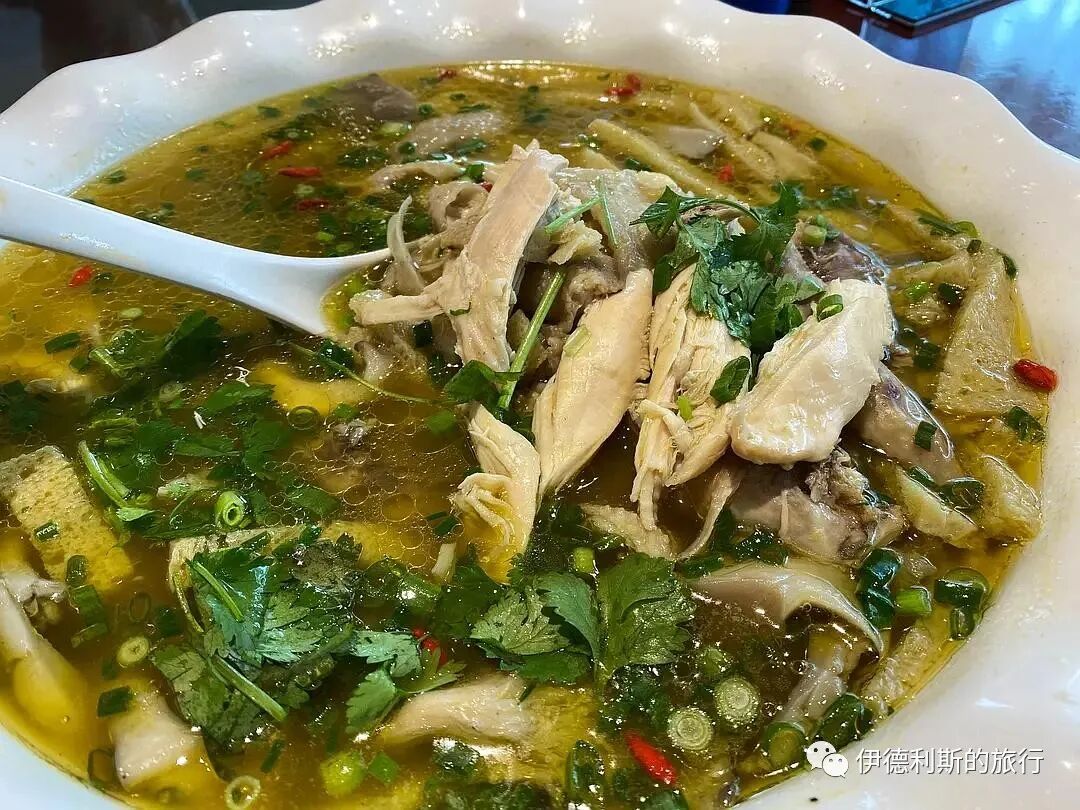
At noon, my friend treated us at Najialou to braised lamb bones, chicken soup, shacong (wild onion), and liuwanzi (six small bowls of local dishes). Najialou is a classic restaurant in Yinchuan suitable for gatherings. It comes from Najiahu in Yongning County, Ningxia, which is the location of the famous Najiahu Grand Mosque.
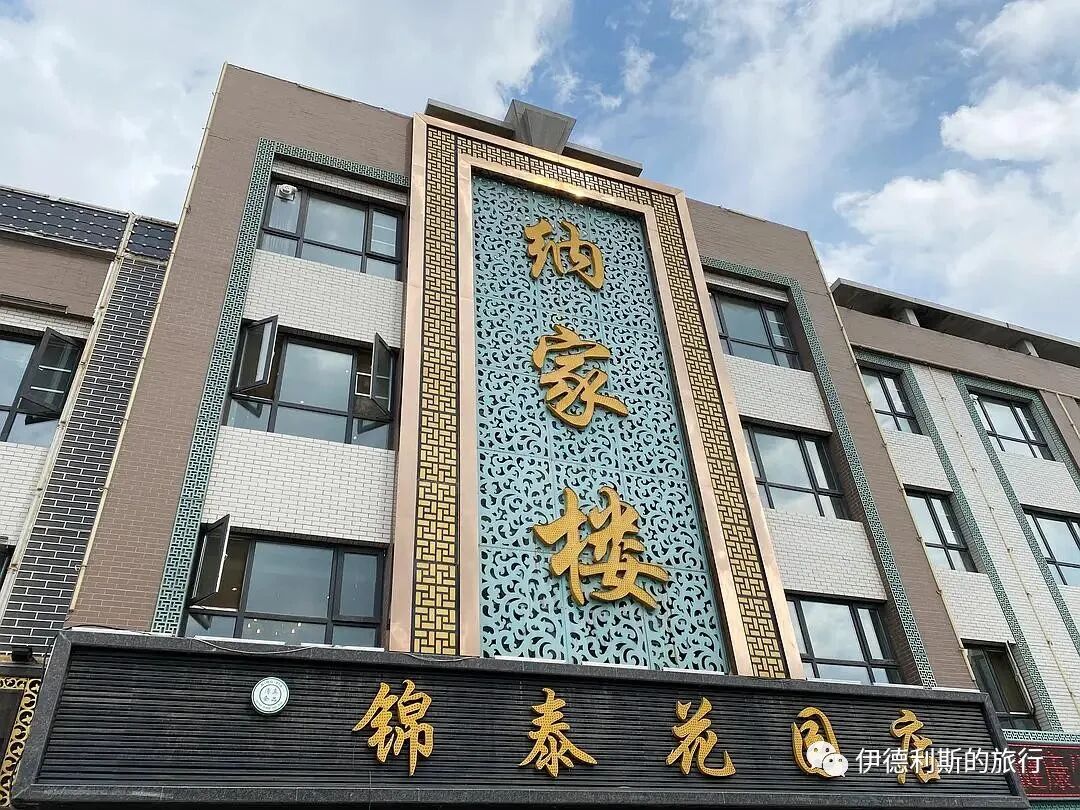
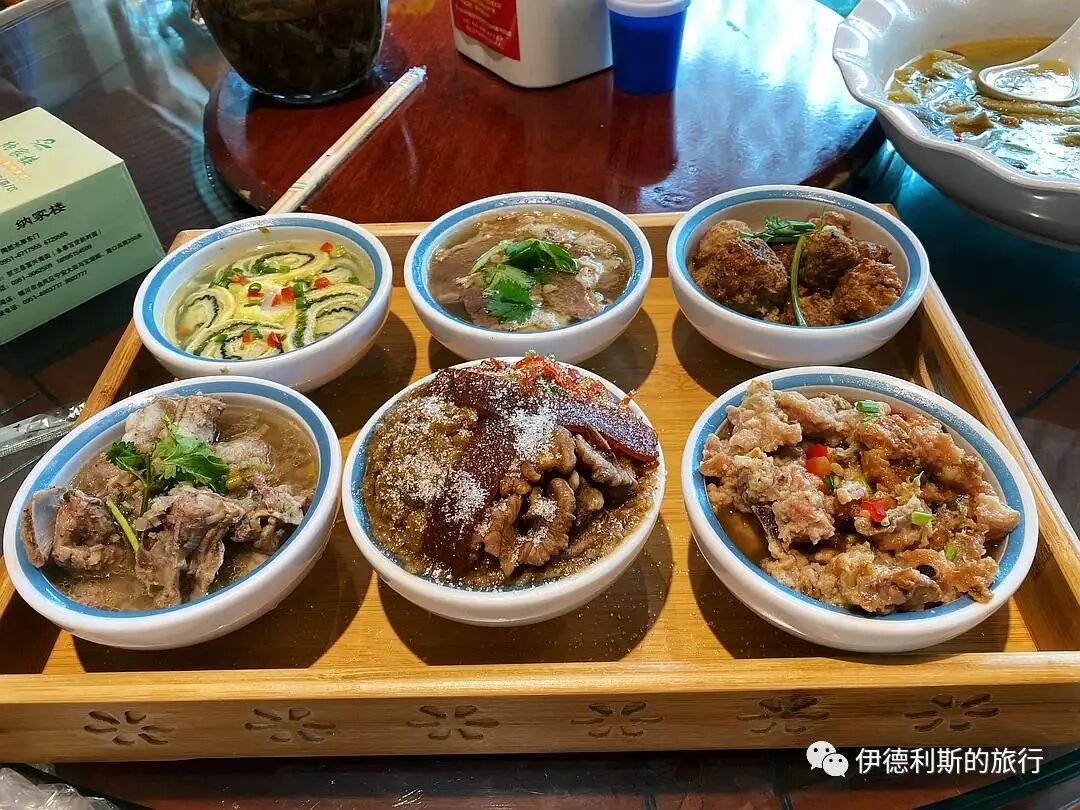
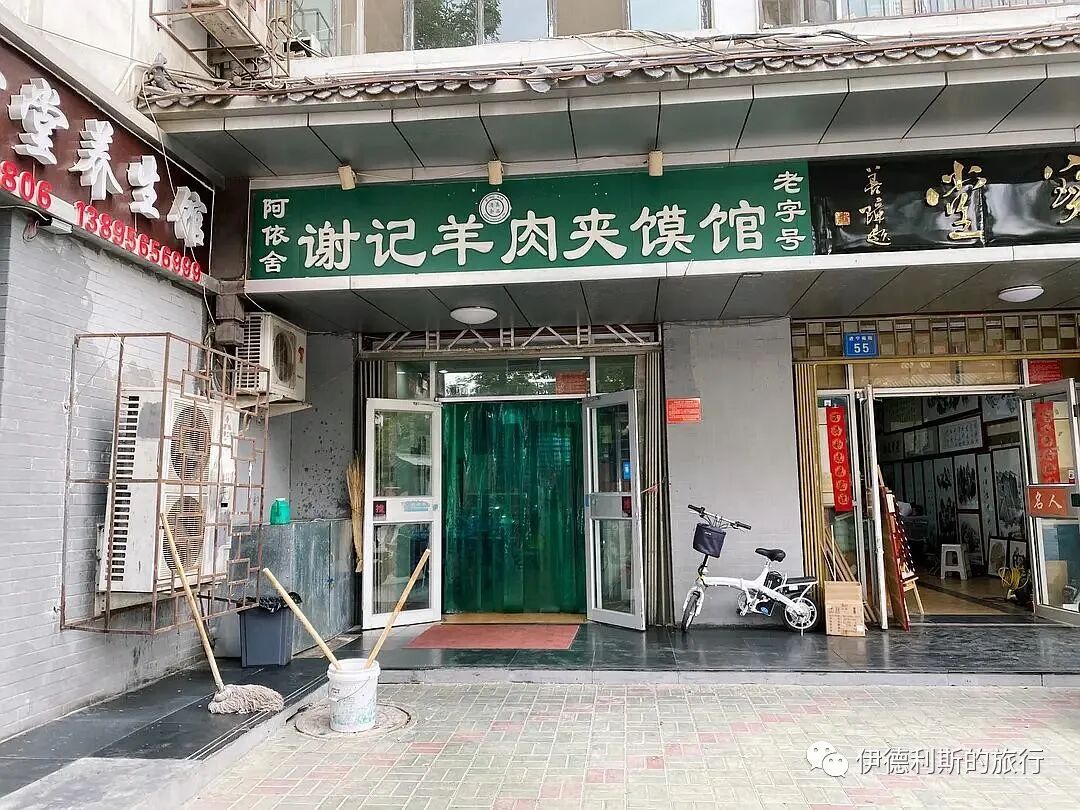
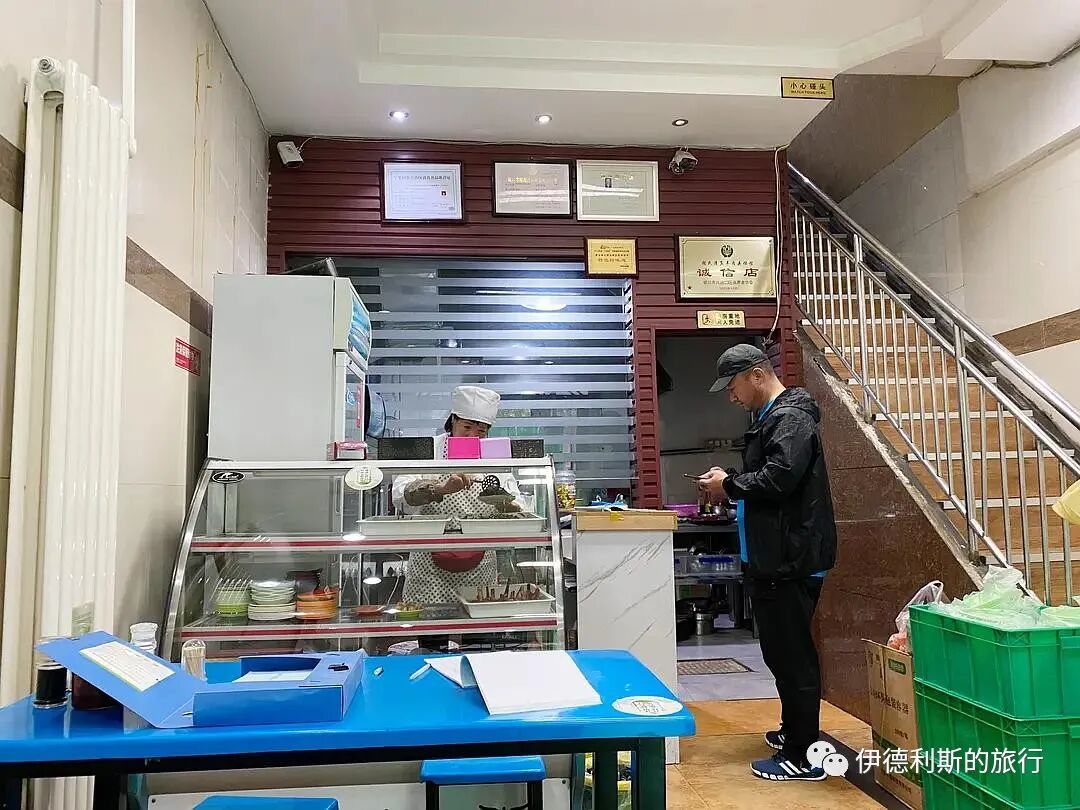
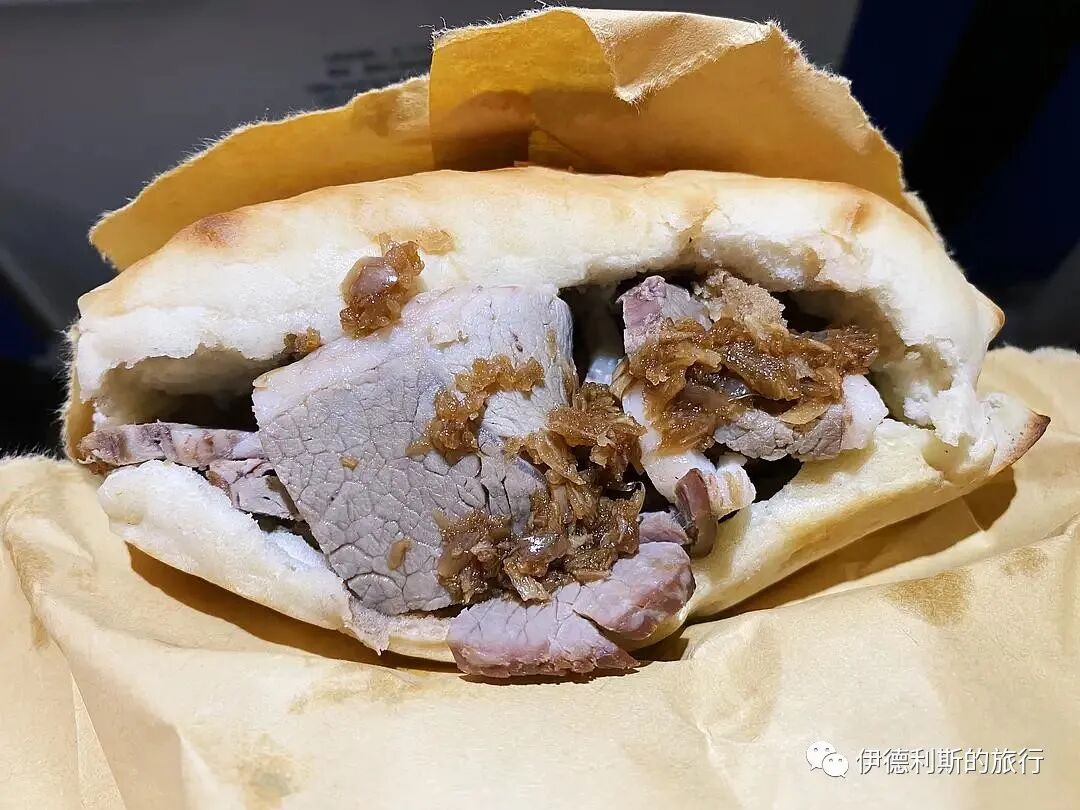
Before leaving in the afternoon, I went to Xieji Ayishe Lamb Burger shop next to the West Pagoda to buy lamb burgers for everyone. The lamb burgers in Yinchuan use boiled lamb, and you pour garlic sauce inside to enhance the flavor when eating. This shop is also recognized by locals; my friend had specifically brought some to Beijing for me before.
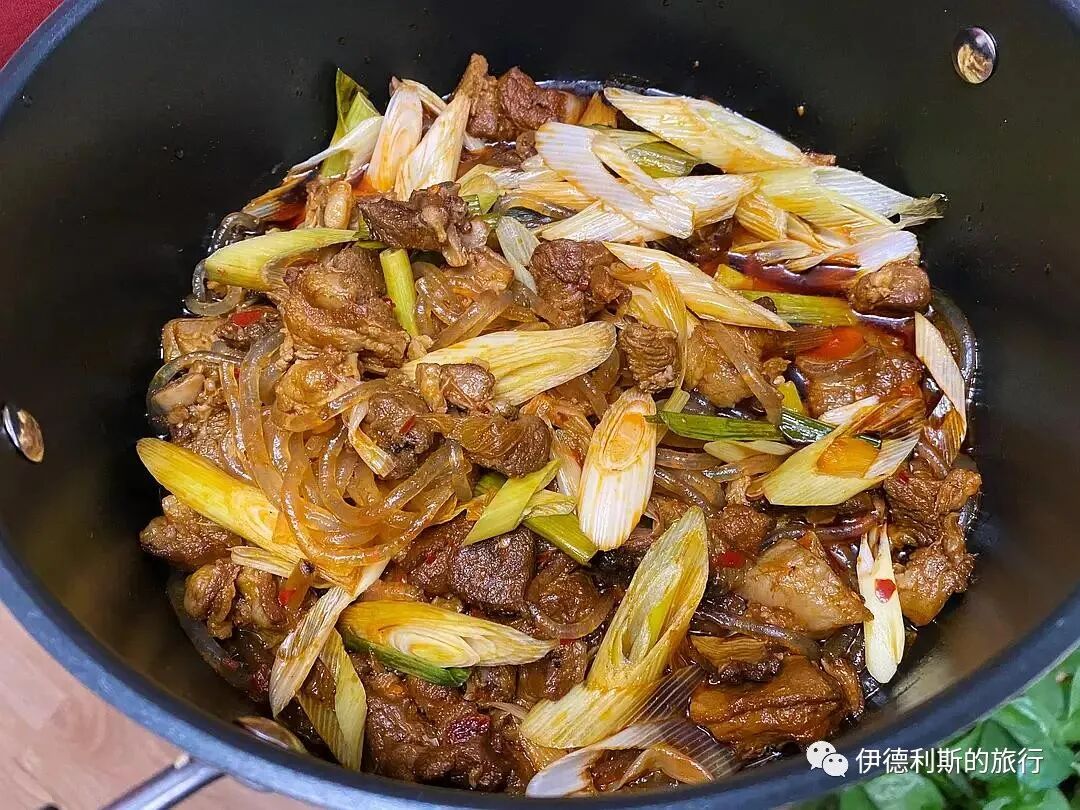
When we were leaving, my friend's younger brother gave us some packed stir-fried lamb. It is from a very famous old shop in Yinchuan. He specifically bought a lot to take back to Xi'an for his friends who own Ningxia restaurants in the Muslim Quarter to taste what authentic Yinchuan stir-fried lamb is like, haha.
Summary: This travel note introduces Yinchuan Muslim Wedding Travel Notes: Hui Muslim Culture and Halal Food. On the third weekend of September 2020, Zainab and I went to Yinchuan to attend my childhood friend's wedding. It is useful for readers interested in Yinchuan Travel, Hui Muslims, Halal Food.
On the third weekend of September 2020, Zainab and I went to Yinchuan to attend my childhood friend's wedding. My friend's family is from Beijing and owns an ancestral home with a private courtyard in Houhai. My friend's grandparents went to Ningxia in the 1950s to support the border regions, and later lived in both Beijing and Yinchuan, so my friend has two homes. My friend took me to Yinchuan for a visit 10 years ago, and this was my second time there.
September 18
I arrived in Yinchuan the night before, and first thing in the morning, I went to eat some specialty mianfeizi (steamed lamb lung) and yangzashui (lamb offal soup) with bingzi (flatbread). I originally wanted to go to Jumu'ah (Friday prayer), but found that all the mosques in Yinchuan were closed.
The Qingzhen Zhongsi (Central Mosque) is the only ancient mosque preserved in Yinchuan, but unfortunately, I could not enter.
The weather was great.
At noon, we had our first welcome meal at Quanjude. As a Beijinger, I didn't expect my first time eating at Quanjude to be in Yinchuan, because all the Quanjude restaurants in Yinchuan are halal. Besides roast duck, most of the dishes at the Yinchuan Quanjude are local or fusion dishes. We ate tangmian youxiang (deep-fried flour dough), liangpi (cold starch noodles), and also had shouzhua litiao (hand-grabbed lamb ribs). I didn't expect the shouzhua rou (hand-grabbed meat) at Quanjude to be so delicious.
In the evening, we had our second welcome meal at a halal Chongqing fusion restaurant called Jialing Jiangpan. This time I discovered that people in Yinchuan really love spicy food; there are halal Chongqing-style hot pots and malatang (spicy hot pot) everywhere. However, besides Sichuan and Chongqing dishes, Jialing Jiangpan also has various fusion cuisines. I think their shouzhua rou is quite tasty...
I only found out later that this was kaomo (baked bun).
September 19
On the day of the wedding, I got up early for breakfast: baozi (steamed buns) and doufunao (tofu pudding), a simple breakfast.
The wedding banquet was held at Xiangyu Hotel, a famous restaurant for wedding banquets in Yinchuan. We had four weddings taking place there at the same time that day. Their environment is quite good, and the food is also tasty.
In the afternoon, I went to Sanyixuan to have a bowl of steamed lamb. The taste is a bit like shengcuan wanzi (freshly boiled meatballs), very tender. I also ordered kuku cai (bitter greens), and it was truly bitter!
I took this photo exactly ten years ago when I ate at the old Sanyixuan restaurant, so this counts as nostalgia. The old restaurant is gone now, but several new ones have opened. The environment at the Minsheng branch is quite nice; it is very comfortable to drink tea and chat.
In the evening, I went to Fuyuan Noodle Restaurant on Zhongxin Lane. They only sell lamb neck, lianguo yangrou (lamb cooked with noodles), xiaojiupian (small hand-torn noodles), and side dishes. I ordered half a jin (250 grams) of lamb neck; the texture was great and the flavor was fragrant. The lamb xiaojiupian is made by three people tearing the dough into a large pot at the same time; seeing the dough pieces flying everywhere looked quite spectacular.
September 20
Early in the morning, I went to Qianjin Road to have Aye Yangzashui (lamb offal soup) with tangsuan (sweet garlic). Their shop has been open for nearly forty years. When my friend first took me to eat mianfeizi 10 years ago, it was here. Back then, we could sit outside to eat, but now we can only sit indoors. Local friends said it doesn't taste as good as it used to, but we mainly went for nostalgia this time.
When I ate it ten years ago.
In the morning, Zainab and I played bumper cars and the Crazy Mouse ride at Yinchuan Zhongshan Park, and bought the must-have grilled sausages from the amusement park. Zainab said she only ate them when she was a child in Urumqi, and she hadn't seen halal ones for many years. That's how we had a nostalgic moment~
At noon, my friend treated us at Najialou to braised lamb bones, chicken soup, shacong (wild onion), and liuwanzi (six small bowls of local dishes). Najialou is a classic restaurant in Yinchuan suitable for gatherings. It comes from Najiahu in Yongning County, Ningxia, which is the location of the famous Najiahu Grand Mosque.
Before leaving in the afternoon, I went to Xieji Ayishe Lamb Burger shop next to the West Pagoda to buy lamb burgers for everyone. The lamb burgers in Yinchuan use boiled lamb, and you pour garlic sauce inside to enhance the flavor when eating. This shop is also recognized by locals; my friend had specifically brought some to Beijing for me before.
When we were leaving, my friend's younger brother gave us some packed stir-fried lamb. It is from a very famous old shop in Yinchuan. He specifically bought a lot to take back to Xi'an for his friends who own Ningxia restaurants in the Muslim Quarter to taste what authentic Yinchuan stir-fried lamb is like, haha.
Exploring Shatan Gongbei & Diannong River: A Journey Through Yinchuan's Sufi Heritage and Yellow River Scenery
Articles • Hasan09 posted the article • 0 comments • 4 views • 6 hours ago
[Internet Repost]
Exploring Yinchuan's Shatan Gongbei and Diannong River: Ancient Waterwheels and Sufi Shrines Along Binhe Avenue
Abstract:
Exploring Shatan Gongbei, nestled along the banks of Yinchuan's Diannong River. Documenting the breathtaking wetlands and giant ancient waterwheels along the summer Yellow River Golden Bank Binhe Avenue, blending natural ecological waterscapes with solemn Sufi historical landmarks.
Waterwheels
Summer scenery of the Lingwu section of Yinchuan Binhe Avenue, featuring waterwheels. The Ningxia Yellow River Golden Bank Binhe Avenue, officially known as the Yellow River Standardized Embankment Binhe Avenue, spans a total length of 508 kilometers. Fully connected in July 2010, it links ten cities, counties, and districts within the Yellow River irrigation area. The crest road is fully constructed to Class-1 highway standards as a two-way six-lane road with a 24-meter roadbed width.
Shot on Rolleiflex 3.5F Planar 75MM F3.5, home-developed film directly scanned.
Stone Lions
Stone lions beneath the Zhenhe Pagoda in Lingwu, standing over one meter tall. They look adorable yet show some wear and tear, and are estimated to date back to the Qing Dynasty.
Linhof Technika Wollensak 162MM F4.5, home-developed film directly scanned.
Lingzhou Ancient City Wall Ruins
Located in the urban area of present-day Lingwu. Rebuilt after the devastating 1738 Ningxia earthquake (the third year of the Qianlong era), with subsequent modern repairs and reinforcements. Listed as an Autonomous Region-level Key Cultural Relic Protection Unit in December 2010.
Rolleiflex 3.5F Planar 75MM F3.5, home-developed film directly scanned.
Summer Diannong River
Yinchuan's Diannong River (an ancient Han Dynasty name) in summer, with swaying reeds and rippling waters.
On September 17, 2018, Ningxia officially renamed the 'Aiyi River' back to 'Diannong River' (originally named Aiyi River in 2004, renamed Aiyi River [with a different Chinese character] in 2008, changed back to Aiyi River in 2015, and renamed Diannong River again in 2018). The characters 'Diannong' are derived from the ancient local name Diannong City in the Yinchuan region, which was first built in the fifth year of the Yuanding era of the Western Han Dynasty (112 BCE), boasting a history of over 2,000 years.
The Diannong River stretches from the Xinqiao flood retention basin in Yongning County to the south, flowing north into the Yellow River at the Binhe Plaza in Shizuizi Park, Yuanying Town, Huinong District, Shizuishan. It spans six counties and districts—Yongning County, Xingqing District, Jinfeng District, Helan County, Pingluo County, and Huinong District—covering a total length of 180.5 kilometers.
Linhof Technika Schneider Symmar 240MM F5.6, home-developed film directly scanned.
Shatan Gongbei
Located inside the Shatan Mosque in Xingqing District, Yinchuan. It features a stone monument inscribed with the prominent characters 'Yuanweng Na Laotye' (Elder Yuanweng Na) and his religious name 'Haoke Menlaxi'. Flanking inscriptions are weathered and hard to make out, erected in the third year of the Qianlong era (1737). According to relevant cultural authorities, it was originally built during the Yuan Dynasty.
Gongbei (Sufi shrine / mausoleum complex): Originally referring to a dome-shaped building, it is translated to mean the dome over a Sufi master's mausoleum. By extension, it refers to the burial architecture of Sufi masters, menhuan (Sufi orders / brotherhoods) founders, spiritual ancestors, and revered sages. view all
Exploring Yinchuan's Shatan Gongbei and Diannong River: Ancient Waterwheels and Sufi Shrines Along Binhe Avenue
Abstract:
Exploring Shatan Gongbei, nestled along the banks of Yinchuan's Diannong River. Documenting the breathtaking wetlands and giant ancient waterwheels along the summer Yellow River Golden Bank Binhe Avenue, blending natural ecological waterscapes with solemn Sufi historical landmarks.
Waterwheels
Summer scenery of the Lingwu section of Yinchuan Binhe Avenue, featuring waterwheels. The Ningxia Yellow River Golden Bank Binhe Avenue, officially known as the Yellow River Standardized Embankment Binhe Avenue, spans a total length of 508 kilometers. Fully connected in July 2010, it links ten cities, counties, and districts within the Yellow River irrigation area. The crest road is fully constructed to Class-1 highway standards as a two-way six-lane road with a 24-meter roadbed width.
Shot on Rolleiflex 3.5F Planar 75MM F3.5, home-developed film directly scanned.
Stone Lions
Stone lions beneath the Zhenhe Pagoda in Lingwu, standing over one meter tall. They look adorable yet show some wear and tear, and are estimated to date back to the Qing Dynasty.
Linhof Technika Wollensak 162MM F4.5, home-developed film directly scanned.
Lingzhou Ancient City Wall Ruins
Located in the urban area of present-day Lingwu. Rebuilt after the devastating 1738 Ningxia earthquake (the third year of the Qianlong era), with subsequent modern repairs and reinforcements. Listed as an Autonomous Region-level Key Cultural Relic Protection Unit in December 2010.
Rolleiflex 3.5F Planar 75MM F3.5, home-developed film directly scanned.
Summer Diannong River
Yinchuan's Diannong River (an ancient Han Dynasty name) in summer, with swaying reeds and rippling waters.
On September 17, 2018, Ningxia officially renamed the 'Aiyi River' back to 'Diannong River' (originally named Aiyi River in 2004, renamed Aiyi River [with a different Chinese character] in 2008, changed back to Aiyi River in 2015, and renamed Diannong River again in 2018). The characters 'Diannong' are derived from the ancient local name Diannong City in the Yinchuan region, which was first built in the fifth year of the Yuanding era of the Western Han Dynasty (112 BCE), boasting a history of over 2,000 years.
The Diannong River stretches from the Xinqiao flood retention basin in Yongning County to the south, flowing north into the Yellow River at the Binhe Plaza in Shizuizi Park, Yuanying Town, Huinong District, Shizuishan. It spans six counties and districts—Yongning County, Xingqing District, Jinfeng District, Helan County, Pingluo County, and Huinong District—covering a total length of 180.5 kilometers.
Linhof Technika Schneider Symmar 240MM F5.6, home-developed film directly scanned.
Shatan Gongbei
Located inside the Shatan Mosque in Xingqing District, Yinchuan. It features a stone monument inscribed with the prominent characters 'Yuanweng Na Laotye' (Elder Yuanweng Na) and his religious name 'Haoke Menlaxi'. Flanking inscriptions are weathered and hard to make out, erected in the third year of the Qianlong era (1737). According to relevant cultural authorities, it was originally built during the Yuan Dynasty.
Gongbei (Sufi shrine / mausoleum complex): Originally referring to a dome-shaped building, it is translated to mean the dome over a Sufi master's mausoleum. By extension, it refers to the burial architecture of Sufi masters, menhuan (Sufi orders / brotherhoods) founders, spiritual ancestors, and revered sages. view all
[Internet Repost]
Exploring Yinchuan's Shatan Gongbei and Diannong River: Ancient Waterwheels and Sufi Shrines Along Binhe Avenue
Abstract:
Exploring Shatan Gongbei, nestled along the banks of Yinchuan's Diannong River. Documenting the breathtaking wetlands and giant ancient waterwheels along the summer Yellow River Golden Bank Binhe Avenue, blending natural ecological waterscapes with solemn Sufi historical landmarks.
Waterwheels
Summer scenery of the Lingwu section of Yinchuan Binhe Avenue, featuring waterwheels. The Ningxia Yellow River Golden Bank Binhe Avenue, officially known as the Yellow River Standardized Embankment Binhe Avenue, spans a total length of 508 kilometers. Fully connected in July 2010, it links ten cities, counties, and districts within the Yellow River irrigation area. The crest road is fully constructed to Class-1 highway standards as a two-way six-lane road with a 24-meter roadbed width.
Shot on Rolleiflex 3.5F Planar 75MM F3.5, home-developed film directly scanned.
Stone Lions
Stone lions beneath the Zhenhe Pagoda in Lingwu, standing over one meter tall. They look adorable yet show some wear and tear, and are estimated to date back to the Qing Dynasty.
Linhof Technika Wollensak 162MM F4.5, home-developed film directly scanned.
Lingzhou Ancient City Wall Ruins
Located in the urban area of present-day Lingwu. Rebuilt after the devastating 1738 Ningxia earthquake (the third year of the Qianlong era), with subsequent modern repairs and reinforcements. Listed as an Autonomous Region-level Key Cultural Relic Protection Unit in December 2010.
Rolleiflex 3.5F Planar 75MM F3.5, home-developed film directly scanned.
Summer Diannong River
Yinchuan's Diannong River (an ancient Han Dynasty name) in summer, with swaying reeds and rippling waters.
On September 17, 2018, Ningxia officially renamed the 'Aiyi River' back to 'Diannong River' (originally named Aiyi River in 2004, renamed Aiyi River [with a different Chinese character] in 2008, changed back to Aiyi River in 2015, and renamed Diannong River again in 2018). The characters 'Diannong' are derived from the ancient local name Diannong City in the Yinchuan region, which was first built in the fifth year of the Yuanding era of the Western Han Dynasty (112 BCE), boasting a history of over 2,000 years.
The Diannong River stretches from the Xinqiao flood retention basin in Yongning County to the south, flowing north into the Yellow River at the Binhe Plaza in Shizuizi Park, Yuanying Town, Huinong District, Shizuishan. It spans six counties and districts—Yongning County, Xingqing District, Jinfeng District, Helan County, Pingluo County, and Huinong District—covering a total length of 180.5 kilometers.
Linhof Technika Schneider Symmar 240MM F5.6, home-developed film directly scanned.
Shatan Gongbei
Located inside the Shatan Mosque in Xingqing District, Yinchuan. It features a stone monument inscribed with the prominent characters 'Yuanweng Na Laotye' (Elder Yuanweng Na) and his religious name 'Haoke Menlaxi'. Flanking inscriptions are weathered and hard to make out, erected in the third year of the Qianlong era (1737). According to relevant cultural authorities, it was originally built during the Yuan Dynasty.
Gongbei (Sufi shrine / mausoleum complex): Originally referring to a dome-shaped building, it is translated to mean the dome over a Sufi master's mausoleum. By extension, it refers to the burial architecture of Sufi masters, menhuan (Sufi orders / brotherhoods) founders, spiritual ancestors, and revered sages.
Exploring Yinchuan's Shatan Gongbei and Diannong River: Ancient Waterwheels and Sufi Shrines Along Binhe Avenue
Abstract:
Exploring Shatan Gongbei, nestled along the banks of Yinchuan's Diannong River. Documenting the breathtaking wetlands and giant ancient waterwheels along the summer Yellow River Golden Bank Binhe Avenue, blending natural ecological waterscapes with solemn Sufi historical landmarks.
Waterwheels
Summer scenery of the Lingwu section of Yinchuan Binhe Avenue, featuring waterwheels. The Ningxia Yellow River Golden Bank Binhe Avenue, officially known as the Yellow River Standardized Embankment Binhe Avenue, spans a total length of 508 kilometers. Fully connected in July 2010, it links ten cities, counties, and districts within the Yellow River irrigation area. The crest road is fully constructed to Class-1 highway standards as a two-way six-lane road with a 24-meter roadbed width.
Shot on Rolleiflex 3.5F Planar 75MM F3.5, home-developed film directly scanned.
Stone Lions
Stone lions beneath the Zhenhe Pagoda in Lingwu, standing over one meter tall. They look adorable yet show some wear and tear, and are estimated to date back to the Qing Dynasty.
Linhof Technika Wollensak 162MM F4.5, home-developed film directly scanned.
Lingzhou Ancient City Wall Ruins
Located in the urban area of present-day Lingwu. Rebuilt after the devastating 1738 Ningxia earthquake (the third year of the Qianlong era), with subsequent modern repairs and reinforcements. Listed as an Autonomous Region-level Key Cultural Relic Protection Unit in December 2010.
Rolleiflex 3.5F Planar 75MM F3.5, home-developed film directly scanned.
Summer Diannong River
Yinchuan's Diannong River (an ancient Han Dynasty name) in summer, with swaying reeds and rippling waters.
On September 17, 2018, Ningxia officially renamed the 'Aiyi River' back to 'Diannong River' (originally named Aiyi River in 2004, renamed Aiyi River [with a different Chinese character] in 2008, changed back to Aiyi River in 2015, and renamed Diannong River again in 2018). The characters 'Diannong' are derived from the ancient local name Diannong City in the Yinchuan region, which was first built in the fifth year of the Yuanding era of the Western Han Dynasty (112 BCE), boasting a history of over 2,000 years.
The Diannong River stretches from the Xinqiao flood retention basin in Yongning County to the south, flowing north into the Yellow River at the Binhe Plaza in Shizuizi Park, Yuanying Town, Huinong District, Shizuishan. It spans six counties and districts—Yongning County, Xingqing District, Jinfeng District, Helan County, Pingluo County, and Huinong District—covering a total length of 180.5 kilometers.
Linhof Technika Schneider Symmar 240MM F5.6, home-developed film directly scanned.
Shatan Gongbei
Located inside the Shatan Mosque in Xingqing District, Yinchuan. It features a stone monument inscribed with the prominent characters 'Yuanweng Na Laotye' (Elder Yuanweng Na) and his religious name 'Haoke Menlaxi'. Flanking inscriptions are weathered and hard to make out, erected in the third year of the Qianlong era (1737). According to relevant cultural authorities, it was originally built during the Yuan Dynasty.
Gongbei (Sufi shrine / mausoleum complex): Originally referring to a dome-shaped building, it is translated to mean the dome over a Sufi master's mausoleum. By extension, it refers to the burial architecture of Sufi masters, menhuan (Sufi orders / brotherhoods) founders, spiritual ancestors, and revered sages.
Yinchuan Muslim Wedding Travel Notes: Hui Muslim Culture and Halal Food
Articles • ali2007fr posted the article • 0 comments • 139 views • 2026-05-17 06:46
Reposted from the web
Summary: This travel note introduces Yinchuan Muslim Wedding Travel Notes: Hui Muslim Culture and Halal Food. On the third weekend of September 2020, Zainab and I went to Yinchuan to attend my childhood friend's wedding. It is useful for readers interested in Yinchuan Travel, Hui Muslims, Halal Food.
On the third weekend of September 2020, Zainab and I went to Yinchuan to attend my childhood friend's wedding. My friend's family is from Beijing and owns an ancestral home with a private courtyard in Houhai. My friend's grandparents went to Ningxia in the 1950s to support the border regions, and later lived in both Beijing and Yinchuan, so my friend has two homes. My friend took me to Yinchuan for a visit 10 years ago, and this was my second time there.
September 18
I arrived in Yinchuan the night before, and first thing in the morning, I went to eat some specialty mianfeizi (steamed lamb lung) and yangzashui (lamb offal soup) with bingzi (flatbread). I originally wanted to go to Jumu'ah (Friday prayer), but found that all the mosques in Yinchuan were closed.
The Qingzhen Zhongsi (Central Mosque) is the only ancient mosque preserved in Yinchuan, but unfortunately, I could not enter.
The weather was great.
At noon, we had our first welcome meal at Quanjude. As a Beijinger, I didn't expect my first time eating at Quanjude to be in Yinchuan, because all the Quanjude restaurants in Yinchuan are halal. Besides roast duck, most of the dishes at the Yinchuan Quanjude are local or fusion dishes. We ate tangmian youxiang (deep-fried flour dough), liangpi (cold starch noodles), and also had shouzhua litiao (hand-grabbed lamb ribs). I didn't expect the shouzhua rou (hand-grabbed meat) at Quanjude to be so delicious.
In the evening, we had our second welcome meal at a halal Chongqing fusion restaurant called Jialing Jiangpan. This time I discovered that people in Yinchuan really love spicy food; there are halal Chongqing-style hot pots and malatang (spicy hot pot) everywhere. However, besides Sichuan and Chongqing dishes, Jialing Jiangpan also has various fusion cuisines. I think their shouzhua rou is quite tasty...
I only found out later that this was kaomo (baked bun).
September 19
On the day of the wedding, I got up early for breakfast: baozi (steamed buns) and doufunao (tofu pudding), a simple breakfast.
The wedding banquet was held at Xiangyu Hotel, a famous restaurant for wedding banquets in Yinchuan. We had four weddings taking place there at the same time that day. Their environment is quite good, and the food is also tasty.
In the afternoon, I went to Sanyixuan to have a bowl of steamed lamb. The taste is a bit like shengcuan wanzi (freshly boiled meatballs), very tender. I also ordered kuku cai (bitter greens), and it was truly bitter!
I took this photo exactly ten years ago when I ate at the old Sanyixuan restaurant, so this counts as nostalgia. The old restaurant is gone now, but several new ones have opened. The environment at the Minsheng branch is quite nice; it is very comfortable to drink tea and chat.
In the evening, I went to Fuyuan Noodle Restaurant on Zhongxin Lane. They only sell lamb neck, lianguo yangrou (lamb cooked with noodles), xiaojiupian (small hand-torn noodles), and side dishes. I ordered half a jin (250 grams) of lamb neck; the texture was great and the flavor was fragrant. The lamb xiaojiupian is made by three people tearing the dough into a large pot at the same time; seeing the dough pieces flying everywhere looked quite spectacular.
September 20
Early in the morning, I went to Qianjin Road to have Aye Yangzashui (lamb offal soup) with tangsuan (sweet garlic). Their shop has been open for nearly forty years. When my friend first took me to eat mianfeizi 10 years ago, it was here. Back then, we could sit outside to eat, but now we can only sit indoors. Local friends said it doesn't taste as good as it used to, but we mainly went for nostalgia this time.
When I ate it ten years ago.
In the morning, Zainab and I played bumper cars and the Crazy Mouse ride at Yinchuan Zhongshan Park, and bought the must-have grilled sausages from the amusement park. Zainab said she only ate them when she was a child in Urumqi, and she hadn't seen halal ones for many years. That's how we had a nostalgic moment~
At noon, my friend treated us at Najialou to braised lamb bones, chicken soup, shacong (wild onion), and liuwanzi (six small bowls of local dishes). Najialou is a classic restaurant in Yinchuan suitable for gatherings. It comes from Najiahu in Yongning County, Ningxia, which is the location of the famous Najiahu Grand Mosque.
Before leaving in the afternoon, I went to Xieji Ayishe Lamb Burger shop next to the West Pagoda to buy lamb burgers for everyone. The lamb burgers in Yinchuan use boiled lamb, and you pour garlic sauce inside to enhance the flavor when eating. This shop is also recognized by locals; my friend had specifically brought some to Beijing for me before.
When we were leaving, my friend's younger brother gave us some packed stir-fried lamb. It is from a very famous old shop in Yinchuan. He specifically bought a lot to take back to Xi'an for his friends who own Ningxia restaurants in the Muslim Quarter to taste what authentic Yinchuan stir-fried lamb is like, haha. view all
Summary: This travel note introduces Yinchuan Muslim Wedding Travel Notes: Hui Muslim Culture and Halal Food. On the third weekend of September 2020, Zainab and I went to Yinchuan to attend my childhood friend's wedding. It is useful for readers interested in Yinchuan Travel, Hui Muslims, Halal Food.
On the third weekend of September 2020, Zainab and I went to Yinchuan to attend my childhood friend's wedding. My friend's family is from Beijing and owns an ancestral home with a private courtyard in Houhai. My friend's grandparents went to Ningxia in the 1950s to support the border regions, and later lived in both Beijing and Yinchuan, so my friend has two homes. My friend took me to Yinchuan for a visit 10 years ago, and this was my second time there.
September 18
I arrived in Yinchuan the night before, and first thing in the morning, I went to eat some specialty mianfeizi (steamed lamb lung) and yangzashui (lamb offal soup) with bingzi (flatbread). I originally wanted to go to Jumu'ah (Friday prayer), but found that all the mosques in Yinchuan were closed.
The Qingzhen Zhongsi (Central Mosque) is the only ancient mosque preserved in Yinchuan, but unfortunately, I could not enter.
The weather was great.
At noon, we had our first welcome meal at Quanjude. As a Beijinger, I didn't expect my first time eating at Quanjude to be in Yinchuan, because all the Quanjude restaurants in Yinchuan are halal. Besides roast duck, most of the dishes at the Yinchuan Quanjude are local or fusion dishes. We ate tangmian youxiang (deep-fried flour dough), liangpi (cold starch noodles), and also had shouzhua litiao (hand-grabbed lamb ribs). I didn't expect the shouzhua rou (hand-grabbed meat) at Quanjude to be so delicious.
In the evening, we had our second welcome meal at a halal Chongqing fusion restaurant called Jialing Jiangpan. This time I discovered that people in Yinchuan really love spicy food; there are halal Chongqing-style hot pots and malatang (spicy hot pot) everywhere. However, besides Sichuan and Chongqing dishes, Jialing Jiangpan also has various fusion cuisines. I think their shouzhua rou is quite tasty...
I only found out later that this was kaomo (baked bun).
September 19
On the day of the wedding, I got up early for breakfast: baozi (steamed buns) and doufunao (tofu pudding), a simple breakfast.
The wedding banquet was held at Xiangyu Hotel, a famous restaurant for wedding banquets in Yinchuan. We had four weddings taking place there at the same time that day. Their environment is quite good, and the food is also tasty.
In the afternoon, I went to Sanyixuan to have a bowl of steamed lamb. The taste is a bit like shengcuan wanzi (freshly boiled meatballs), very tender. I also ordered kuku cai (bitter greens), and it was truly bitter!
I took this photo exactly ten years ago when I ate at the old Sanyixuan restaurant, so this counts as nostalgia. The old restaurant is gone now, but several new ones have opened. The environment at the Minsheng branch is quite nice; it is very comfortable to drink tea and chat.
In the evening, I went to Fuyuan Noodle Restaurant on Zhongxin Lane. They only sell lamb neck, lianguo yangrou (lamb cooked with noodles), xiaojiupian (small hand-torn noodles), and side dishes. I ordered half a jin (250 grams) of lamb neck; the texture was great and the flavor was fragrant. The lamb xiaojiupian is made by three people tearing the dough into a large pot at the same time; seeing the dough pieces flying everywhere looked quite spectacular.
September 20
Early in the morning, I went to Qianjin Road to have Aye Yangzashui (lamb offal soup) with tangsuan (sweet garlic). Their shop has been open for nearly forty years. When my friend first took me to eat mianfeizi 10 years ago, it was here. Back then, we could sit outside to eat, but now we can only sit indoors. Local friends said it doesn't taste as good as it used to, but we mainly went for nostalgia this time.
When I ate it ten years ago.
In the morning, Zainab and I played bumper cars and the Crazy Mouse ride at Yinchuan Zhongshan Park, and bought the must-have grilled sausages from the amusement park. Zainab said she only ate them when she was a child in Urumqi, and she hadn't seen halal ones for many years. That's how we had a nostalgic moment~
At noon, my friend treated us at Najialou to braised lamb bones, chicken soup, shacong (wild onion), and liuwanzi (six small bowls of local dishes). Najialou is a classic restaurant in Yinchuan suitable for gatherings. It comes from Najiahu in Yongning County, Ningxia, which is the location of the famous Najiahu Grand Mosque.
Before leaving in the afternoon, I went to Xieji Ayishe Lamb Burger shop next to the West Pagoda to buy lamb burgers for everyone. The lamb burgers in Yinchuan use boiled lamb, and you pour garlic sauce inside to enhance the flavor when eating. This shop is also recognized by locals; my friend had specifically brought some to Beijing for me before.
When we were leaving, my friend's younger brother gave us some packed stir-fried lamb. It is from a very famous old shop in Yinchuan. He specifically bought a lot to take back to Xi'an for his friends who own Ningxia restaurants in the Muslim Quarter to taste what authentic Yinchuan stir-fried lamb is like, haha. view all
Reposted from the web
Summary: This travel note introduces Yinchuan Muslim Wedding Travel Notes: Hui Muslim Culture and Halal Food. On the third weekend of September 2020, Zainab and I went to Yinchuan to attend my childhood friend's wedding. It is useful for readers interested in Yinchuan Travel, Hui Muslims, Halal Food.
On the third weekend of September 2020, Zainab and I went to Yinchuan to attend my childhood friend's wedding. My friend's family is from Beijing and owns an ancestral home with a private courtyard in Houhai. My friend's grandparents went to Ningxia in the 1950s to support the border regions, and later lived in both Beijing and Yinchuan, so my friend has two homes. My friend took me to Yinchuan for a visit 10 years ago, and this was my second time there.
September 18
I arrived in Yinchuan the night before, and first thing in the morning, I went to eat some specialty mianfeizi (steamed lamb lung) and yangzashui (lamb offal soup) with bingzi (flatbread). I originally wanted to go to Jumu'ah (Friday prayer), but found that all the mosques in Yinchuan were closed.
The Qingzhen Zhongsi (Central Mosque) is the only ancient mosque preserved in Yinchuan, but unfortunately, I could not enter.
The weather was great.
At noon, we had our first welcome meal at Quanjude. As a Beijinger, I didn't expect my first time eating at Quanjude to be in Yinchuan, because all the Quanjude restaurants in Yinchuan are halal. Besides roast duck, most of the dishes at the Yinchuan Quanjude are local or fusion dishes. We ate tangmian youxiang (deep-fried flour dough), liangpi (cold starch noodles), and also had shouzhua litiao (hand-grabbed lamb ribs). I didn't expect the shouzhua rou (hand-grabbed meat) at Quanjude to be so delicious.
In the evening, we had our second welcome meal at a halal Chongqing fusion restaurant called Jialing Jiangpan. This time I discovered that people in Yinchuan really love spicy food; there are halal Chongqing-style hot pots and malatang (spicy hot pot) everywhere. However, besides Sichuan and Chongqing dishes, Jialing Jiangpan also has various fusion cuisines. I think their shouzhua rou is quite tasty...
I only found out later that this was kaomo (baked bun).
September 19
On the day of the wedding, I got up early for breakfast: baozi (steamed buns) and doufunao (tofu pudding), a simple breakfast.
The wedding banquet was held at Xiangyu Hotel, a famous restaurant for wedding banquets in Yinchuan. We had four weddings taking place there at the same time that day. Their environment is quite good, and the food is also tasty.
In the afternoon, I went to Sanyixuan to have a bowl of steamed lamb. The taste is a bit like shengcuan wanzi (freshly boiled meatballs), very tender. I also ordered kuku cai (bitter greens), and it was truly bitter!
I took this photo exactly ten years ago when I ate at the old Sanyixuan restaurant, so this counts as nostalgia. The old restaurant is gone now, but several new ones have opened. The environment at the Minsheng branch is quite nice; it is very comfortable to drink tea and chat.
In the evening, I went to Fuyuan Noodle Restaurant on Zhongxin Lane. They only sell lamb neck, lianguo yangrou (lamb cooked with noodles), xiaojiupian (small hand-torn noodles), and side dishes. I ordered half a jin (250 grams) of lamb neck; the texture was great and the flavor was fragrant. The lamb xiaojiupian is made by three people tearing the dough into a large pot at the same time; seeing the dough pieces flying everywhere looked quite spectacular.
September 20
Early in the morning, I went to Qianjin Road to have Aye Yangzashui (lamb offal soup) with tangsuan (sweet garlic). Their shop has been open for nearly forty years. When my friend first took me to eat mianfeizi 10 years ago, it was here. Back then, we could sit outside to eat, but now we can only sit indoors. Local friends said it doesn't taste as good as it used to, but we mainly went for nostalgia this time.
When I ate it ten years ago.
In the morning, Zainab and I played bumper cars and the Crazy Mouse ride at Yinchuan Zhongshan Park, and bought the must-have grilled sausages from the amusement park. Zainab said she only ate them when she was a child in Urumqi, and she hadn't seen halal ones for many years. That's how we had a nostalgic moment~
At noon, my friend treated us at Najialou to braised lamb bones, chicken soup, shacong (wild onion), and liuwanzi (six small bowls of local dishes). Najialou is a classic restaurant in Yinchuan suitable for gatherings. It comes from Najiahu in Yongning County, Ningxia, which is the location of the famous Najiahu Grand Mosque.
Before leaving in the afternoon, I went to Xieji Ayishe Lamb Burger shop next to the West Pagoda to buy lamb burgers for everyone. The lamb burgers in Yinchuan use boiled lamb, and you pour garlic sauce inside to enhance the flavor when eating. This shop is also recognized by locals; my friend had specifically brought some to Beijing for me before.
When we were leaving, my friend's younger brother gave us some packed stir-fried lamb. It is from a very famous old shop in Yinchuan. He specifically bought a lot to take back to Xi'an for his friends who own Ningxia restaurants in the Muslim Quarter to taste what authentic Yinchuan stir-fried lamb is like, haha.
Summary: This travel note introduces Yinchuan Muslim Wedding Travel Notes: Hui Muslim Culture and Halal Food. On the third weekend of September 2020, Zainab and I went to Yinchuan to attend my childhood friend's wedding. It is useful for readers interested in Yinchuan Travel, Hui Muslims, Halal Food.
On the third weekend of September 2020, Zainab and I went to Yinchuan to attend my childhood friend's wedding. My friend's family is from Beijing and owns an ancestral home with a private courtyard in Houhai. My friend's grandparents went to Ningxia in the 1950s to support the border regions, and later lived in both Beijing and Yinchuan, so my friend has two homes. My friend took me to Yinchuan for a visit 10 years ago, and this was my second time there.
September 18
I arrived in Yinchuan the night before, and first thing in the morning, I went to eat some specialty mianfeizi (steamed lamb lung) and yangzashui (lamb offal soup) with bingzi (flatbread). I originally wanted to go to Jumu'ah (Friday prayer), but found that all the mosques in Yinchuan were closed.
The Qingzhen Zhongsi (Central Mosque) is the only ancient mosque preserved in Yinchuan, but unfortunately, I could not enter.
The weather was great.
At noon, we had our first welcome meal at Quanjude. As a Beijinger, I didn't expect my first time eating at Quanjude to be in Yinchuan, because all the Quanjude restaurants in Yinchuan are halal. Besides roast duck, most of the dishes at the Yinchuan Quanjude are local or fusion dishes. We ate tangmian youxiang (deep-fried flour dough), liangpi (cold starch noodles), and also had shouzhua litiao (hand-grabbed lamb ribs). I didn't expect the shouzhua rou (hand-grabbed meat) at Quanjude to be so delicious.
In the evening, we had our second welcome meal at a halal Chongqing fusion restaurant called Jialing Jiangpan. This time I discovered that people in Yinchuan really love spicy food; there are halal Chongqing-style hot pots and malatang (spicy hot pot) everywhere. However, besides Sichuan and Chongqing dishes, Jialing Jiangpan also has various fusion cuisines. I think their shouzhua rou is quite tasty...
I only found out later that this was kaomo (baked bun).
September 19
On the day of the wedding, I got up early for breakfast: baozi (steamed buns) and doufunao (tofu pudding), a simple breakfast.
The wedding banquet was held at Xiangyu Hotel, a famous restaurant for wedding banquets in Yinchuan. We had four weddings taking place there at the same time that day. Their environment is quite good, and the food is also tasty.
In the afternoon, I went to Sanyixuan to have a bowl of steamed lamb. The taste is a bit like shengcuan wanzi (freshly boiled meatballs), very tender. I also ordered kuku cai (bitter greens), and it was truly bitter!
I took this photo exactly ten years ago when I ate at the old Sanyixuan restaurant, so this counts as nostalgia. The old restaurant is gone now, but several new ones have opened. The environment at the Minsheng branch is quite nice; it is very comfortable to drink tea and chat.
In the evening, I went to Fuyuan Noodle Restaurant on Zhongxin Lane. They only sell lamb neck, lianguo yangrou (lamb cooked with noodles), xiaojiupian (small hand-torn noodles), and side dishes. I ordered half a jin (250 grams) of lamb neck; the texture was great and the flavor was fragrant. The lamb xiaojiupian is made by three people tearing the dough into a large pot at the same time; seeing the dough pieces flying everywhere looked quite spectacular.
September 20
Early in the morning, I went to Qianjin Road to have Aye Yangzashui (lamb offal soup) with tangsuan (sweet garlic). Their shop has been open for nearly forty years. When my friend first took me to eat mianfeizi 10 years ago, it was here. Back then, we could sit outside to eat, but now we can only sit indoors. Local friends said it doesn't taste as good as it used to, but we mainly went for nostalgia this time.
When I ate it ten years ago.
In the morning, Zainab and I played bumper cars and the Crazy Mouse ride at Yinchuan Zhongshan Park, and bought the must-have grilled sausages from the amusement park. Zainab said she only ate them when she was a child in Urumqi, and she hadn't seen halal ones for many years. That's how we had a nostalgic moment~
At noon, my friend treated us at Najialou to braised lamb bones, chicken soup, shacong (wild onion), and liuwanzi (six small bowls of local dishes). Najialou is a classic restaurant in Yinchuan suitable for gatherings. It comes from Najiahu in Yongning County, Ningxia, which is the location of the famous Najiahu Grand Mosque.
Before leaving in the afternoon, I went to Xieji Ayishe Lamb Burger shop next to the West Pagoda to buy lamb burgers for everyone. The lamb burgers in Yinchuan use boiled lamb, and you pour garlic sauce inside to enhance the flavor when eating. This shop is also recognized by locals; my friend had specifically brought some to Beijing for me before.
When we were leaving, my friend's younger brother gave us some packed stir-fried lamb. It is from a very famous old shop in Yinchuan. He specifically bought a lot to take back to Xi'an for his friends who own Ningxia restaurants in the Muslim Quarter to taste what authentic Yinchuan stir-fried lamb is like, haha.