
Exploring Shatan Gongbei & Diannong River: A Journey Through Yinchuan's Sufi Heritage and Yellow River Scenery
[Internet Repost]
Exploring Yinchuan's Shatan Gongbei and Diannong River: Ancient Waterwheels and Sufi Shrines Along Binhe Avenue
Abstract:
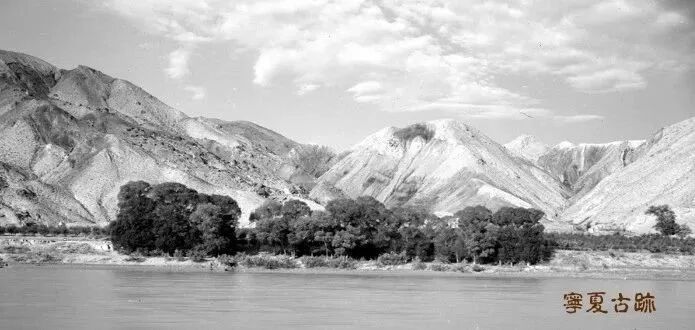
Exploring Shatan Gongbei, nestled along the banks of Yinchuan's Diannong River. Documenting the breathtaking wetlands and giant ancient waterwheels along the summer Yellow River Golden Bank Binhe Avenue, blending natural ecological waterscapes with solemn Sufi historical landmarks.
Waterwheels

Summer scenery of the Lingwu section of Yinchuan Binhe Avenue, featuring waterwheels. The Ningxia Yellow River Golden Bank Binhe Avenue, officially known as the Yellow River Standardized Embankment Binhe Avenue, spans a total length of 508 kilometers. Fully connected in July 2010, it links ten cities, counties, and districts within the Yellow River irrigation area. The crest road is fully constructed to Class-1 highway standards as a two-way six-lane road with a 24-meter roadbed width.
Shot on Rolleiflex 3.5F Planar 75MM F3.5, home-developed film directly scanned.

Stone Lions
Stone lions beneath the Zhenhe Pagoda in Lingwu, standing over one meter tall. They look adorable yet show some wear and tear, and are estimated to date back to the Qing Dynasty.

Linhof Technika Wollensak 162MM F4.5, home-developed film directly scanned.
Lingzhou Ancient City Wall Ruins

Located in the urban area of present-day Lingwu. Rebuilt after the devastating 1738 Ningxia earthquake (the third year of the Qianlong era), with subsequent modern repairs and reinforcements. Listed as an Autonomous Region-level Key Cultural Relic Protection Unit in December 2010.
Rolleiflex 3.5F Planar 75MM F3.5, home-developed film directly scanned.

Summer Diannong River
Yinchuan's Diannong River (an ancient Han Dynasty name) in summer, with swaying reeds and rippling waters.
On September 17, 2018, Ningxia officially renamed the 'Aiyi River' back to 'Diannong River' (originally named Aiyi River in 2004, renamed Aiyi River [with a different Chinese character] in 2008, changed back to Aiyi River in 2015, and renamed Diannong River again in 2018). The characters 'Diannong' are derived from the ancient local name Diannong City in the Yinchuan region, which was first built in the fifth year of the Yuanding era of the Western Han Dynasty (112 BCE), boasting a history of over 2,000 years.
The Diannong River stretches from the Xinqiao flood retention basin in Yongning County to the south, flowing north into the Yellow River at the Binhe Plaza in Shizuizi Park, Yuanying Town, Huinong District, Shizuishan. It spans six counties and districts—Yongning County, Xingqing District, Jinfeng District, Helan County, Pingluo County, and Huinong District—covering a total length of 180.5 kilometers.
Linhof Technika Schneider Symmar 240MM F5.6, home-developed film directly scanned.
Shatan Gongbei
Located inside the Shatan Mosque in Xingqing District, Yinchuan. It features a stone monument inscribed with the prominent characters 'Yuanweng Na Laotye' (Elder Yuanweng Na) and his religious name 'Haoke Menlaxi'. Flanking inscriptions are weathered and hard to make out, erected in the third year of the Qianlong era (1737). According to relevant cultural authorities, it was originally built during the Yuan Dynasty.
Gongbei (Sufi shrine / mausoleum complex): Originally referring to a dome-shaped building, it is translated to mean the dome over a Sufi master's mausoleum. By extension, it refers to the burial architecture of Sufi masters, menhuan (Sufi orders / brotherhoods) founders, spiritual ancestors, and revered sages.
Exploring Yinchuan's Shatan Gongbei and Diannong River: Ancient Waterwheels and Sufi Shrines Along Binhe Avenue
Abstract:
Exploring Shatan Gongbei, nestled along the banks of Yinchuan's Diannong River. Documenting the breathtaking wetlands and giant ancient waterwheels along the summer Yellow River Golden Bank Binhe Avenue, blending natural ecological waterscapes with solemn Sufi historical landmarks.
Waterwheels
Summer scenery of the Lingwu section of Yinchuan Binhe Avenue, featuring waterwheels. The Ningxia Yellow River Golden Bank Binhe Avenue, officially known as the Yellow River Standardized Embankment Binhe Avenue, spans a total length of 508 kilometers. Fully connected in July 2010, it links ten cities, counties, and districts within the Yellow River irrigation area. The crest road is fully constructed to Class-1 highway standards as a two-way six-lane road with a 24-meter roadbed width.
Shot on Rolleiflex 3.5F Planar 75MM F3.5, home-developed film directly scanned.
Stone Lions
Stone lions beneath the Zhenhe Pagoda in Lingwu, standing over one meter tall. They look adorable yet show some wear and tear, and are estimated to date back to the Qing Dynasty.
Linhof Technika Wollensak 162MM F4.5, home-developed film directly scanned.
Lingzhou Ancient City Wall Ruins
Located in the urban area of present-day Lingwu. Rebuilt after the devastating 1738 Ningxia earthquake (the third year of the Qianlong era), with subsequent modern repairs and reinforcements. Listed as an Autonomous Region-level Key Cultural Relic Protection Unit in December 2010.
Rolleiflex 3.5F Planar 75MM F3.5, home-developed film directly scanned.
Summer Diannong River
Yinchuan's Diannong River (an ancient Han Dynasty name) in summer, with swaying reeds and rippling waters.
On September 17, 2018, Ningxia officially renamed the 'Aiyi River' back to 'Diannong River' (originally named Aiyi River in 2004, renamed Aiyi River [with a different Chinese character] in 2008, changed back to Aiyi River in 2015, and renamed Diannong River again in 2018). The characters 'Diannong' are derived from the ancient local name Diannong City in the Yinchuan region, which was first built in the fifth year of the Yuanding era of the Western Han Dynasty (112 BCE), boasting a history of over 2,000 years.
The Diannong River stretches from the Xinqiao flood retention basin in Yongning County to the south, flowing north into the Yellow River at the Binhe Plaza in Shizuizi Park, Yuanying Town, Huinong District, Shizuishan. It spans six counties and districts—Yongning County, Xingqing District, Jinfeng District, Helan County, Pingluo County, and Huinong District—covering a total length of 180.5 kilometers.
Linhof Technika Schneider Symmar 240MM F5.6, home-developed film directly scanned.
Shatan Gongbei
Located inside the Shatan Mosque in Xingqing District, Yinchuan. It features a stone monument inscribed with the prominent characters 'Yuanweng Na Laotye' (Elder Yuanweng Na) and his religious name 'Haoke Menlaxi'. Flanking inscriptions are weathered and hard to make out, erected in the third year of the Qianlong era (1737). According to relevant cultural authorities, it was originally built during the Yuan Dynasty.
Gongbei (Sufi shrine / mausoleum complex): Originally referring to a dome-shaped building, it is translated to mean the dome over a Sufi master's mausoleum. By extension, it refers to the burial architecture of Sufi masters, menhuan (Sufi orders / brotherhoods) founders, spiritual ancestors, and revered sages.
