

Yunnan Hui Muslims
The Early 20th-Century Cultural Movement of Yunnan's Hui Muslims: Education, Print, and Modern Transformation (Part 1)
Articles • Hasan09 posted the article • 0 comments • 1 views • 1 hours ago
The Early 20th-Century Cultural Movement of Yunnan's Hui Muslims: Education, Print, and Modern Transformation
Abstract: This article compiles the key points of the original text regarding "The Cultural Movement of Yunnan's Hui Muslims in the First Half of the 20th Century: Education, Publications, and the Modern Transformation of Chinese Muslims," preserving the original paragraph and image sequence. It is suitable for readers and researchers interested in long-tail keywords such as Yunnan Hui Muslims, the New Culture Movement, and Muslim education.
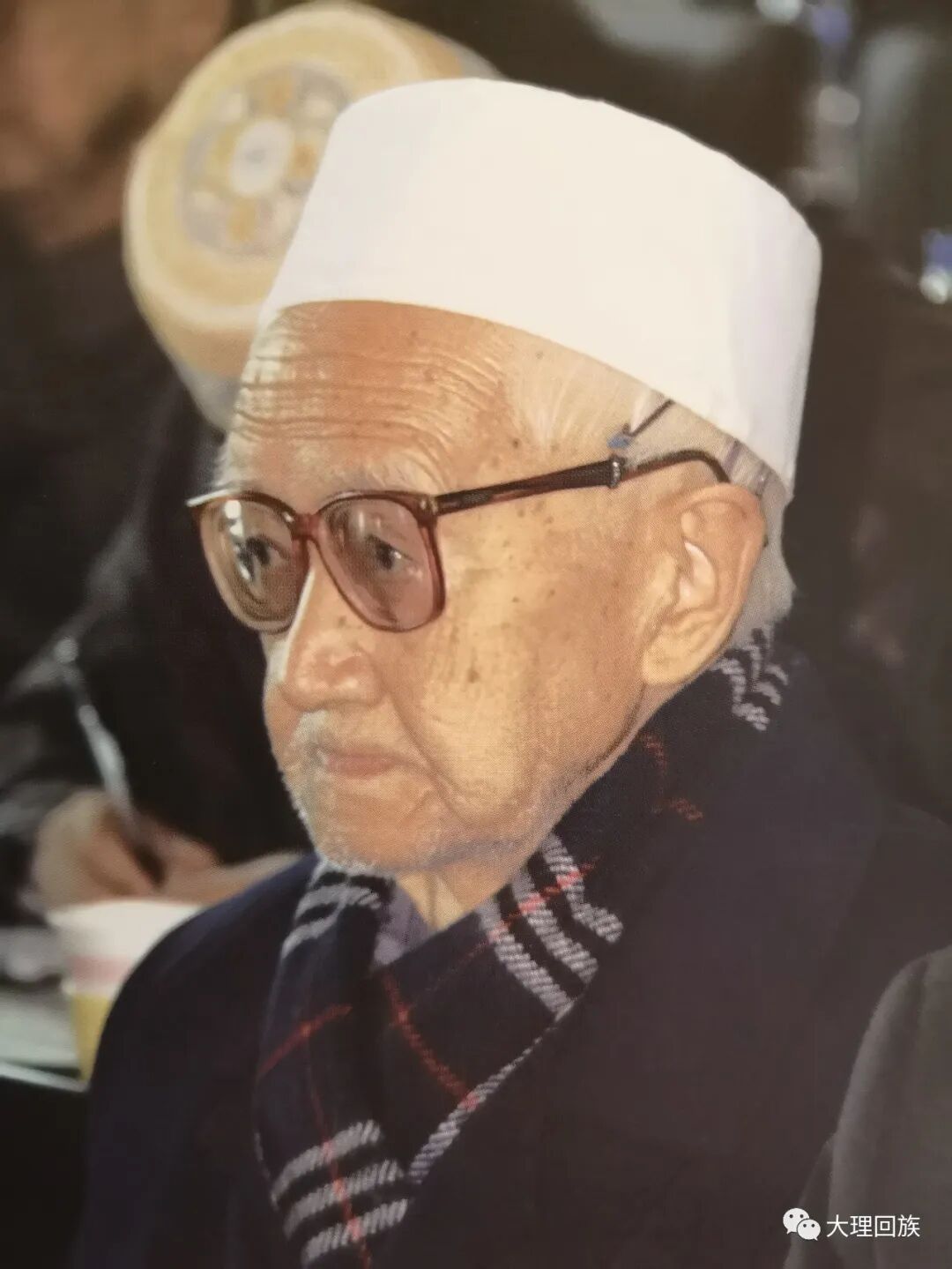
Mr. Ma Yunliang
Ma Yunliang
Abstract: In the first half of the 20th century, influenced by the May Fourth New Culture Movement, pioneering figures among Yunnan's Hui Muslims launched their own cultural movement. Championed by these leaders, the cultural self-awareness of the province's Muslim community was fully brought to light. This paper provides a preliminary review of this cultural movement and its historical role across six aspects, including the formation of associations and the reform of traditional mosque education (Jingtang Jiaoyu). Its purpose is to ground ourselves in reality while reviewing history, inspiring future generations to carry on the fine traditions of the predecessors—who loved their country and their faith, and enthusiastically supported ethnic culture and education—and to strive to make new contributions to promoting Islamic culture and advancing Hui education.
Keywords: First half of the 20th century; Yunnan Hui Muslims; New Culture Movement
In the first half of the 20th century, driven by the wave of the May Fourth Movement, a group of intellectuals and social elites among our province's Hui ancestors took up the burden of national crisis, harbored a profound sense of anxiety for the country, and went with the flow of history by tirelessly launching a new cultural movement. This movement took self-strengthening and self-salvation as its ultimate purpose, with awakening the public and invigorating the national spirit as its primary themes. Spanning half a century, it possessed a uniquely robust vitality. The movement's core activities included establishing Islamic associations, reforming traditional mosque education, founding new religious schools as well as regular primary and secondary schools, publishing religious and academic journals, organizing religious and academic cultural events, publishing and distributing scriptures, and selecting outstanding students to study abroad for advanced degrees. These initiatives laid a solid foundation for raising the overall quality of the ethnic group and promoted the development of Islamic cultural education. As Gu Jiegang noted, this was "the first cultural movement consciously initiated by Muslims in modern China" ("The Cultural Movement of Islam"). Spanning religion, culture, and education, this movement profoundly demonstrated the great spirit of keeping pace with the times shared by the vast majority of our province's Muslims. Its significance is profound, far-reaching, and its achievements will go down in history. Today, history has entered the 21st century. Rooted in the present and looking back at history, every single Hui person should seriously ponder the current circumstances and challenges facing Hui cultural education, and consider how to inherit our predecessors' precious spirit of daring to be the first in the world, actively seeking the development of our ethnic cultural and educational endeavors, and preserving the roots of our ethnic culture so as to achieve true ethnic cultural self-awareness. Bearing this consideration in mind, and despite my own limitations, I have organized this article after extensive reading of historical materials, careful verification, and meticulous selection. I intend to offer a preliminary perspective on the New Culture Movement of our province's Hui Muslims and its historical role in the first half of the 20th century, providing a modest reference for those enthusiastic about ethnic culture and education, while welcoming correction from experts in the field.
The content of the New Culture Movement among Yunnan Hui Muslims in the first half of the 20th century is as follows.
I. Establishment of Islamic Associations
In 1911, following the conclusion of the Xinhai Revolution and the dawn of the Republic of China, the principle of the Republic of Five Nationalities was established, and the Provisional Constitution was promulgated. It stipulated that people of all ethnic groups enjoyed the rights of freedom of belief, freedom of speech, and freedom of association and assembly, embedding the ideology of democratic republicanism deeply in the public consciousness. Consequently, in July 1912, championed by the pioneer of Hui new-style education, Grand Imam Wang Haoran, China's first national religious organization—the China Islamic Progress Association (Zhongguo Huijiao Jujinhui)—was established in Beijing. The headquarters of the Progress Association was located inside the Xidan Mosque (Xidan Qingzhensi). Ma Linyi was elected as the inaugural president, and Wang Haoran served as vice president. With the guiding mission of "promoting education, consolidating organizations, and fostering close harmony between Hui and Han people," the Progress Association widely connected prominent figures from all walks of Hui society, jointly committing to promoting new-style education and revitalizing various Hui community endeavors. The association's headquarters issued circular telegrams nationwide urging all provinces to establish branch chapters, with county and district chapters to follow. Yunnan's Hui Muslims responded enthusiastically, establishing the Yunnan Branch of the China Islamic Progress Association in October of the same year. The headquarters of the branch was set up at the Nancheng Mosque (Nancheng Qingzhensi) in Kunming. Ma Qixiang, general manager of the Yuxi Xinghunhe firm, was elected as the first branch president. Parts of the province where Hui communities were concentrated successively established branch chapters as well, totaling over 50 branch chapters across the province. In 1915, the Yunnan branch was reorganized, and second-term leadership was elected: Wang Tingzhi (from Kunming) was chosen as president, with Sai Fuchu (from Shiping) and Sun Guoxi (from Kunming) as vice presidents, alongside 83 other departmental staff members. In the 1917 re-election, Ma Dianxuan (from Yiling) became the third-term president, with He Tingdong (from Kunming) and Ma Xinpei serving as vice presidents. In April 1928, Ma Dianxuan passed away (guiyin). In May, Ma Cong (style name Bo'an, from Kunming) was elected as the fourth-term president, with He Tingdong and Zhao Zhongqi (style name Yuheng, from Dali) as vice presidents, alongside 42 departmental staff members. Until the outbreak of the War of Resistance Against Japanese Aggression, the Yunnan Branch of the Progress Association was renamed the Yunnan Provincial Branch of the China Islamic National Salvation Association, with Ma Cong continuing to serve as president.
The Yunnan Branch of the Progress Association was an important organization during the Republican period that enhanced internal ethnic unity and revitalized the community, playing a tremendous driving force in the political, economic, and cultural-educational endeavors of Yunnan's Hui people at that time.
In April 1915, initiated by Sha Pingan, Ma Xitang, Bai Yaoming, Zi Liangcheng, and others under the leadership of Ma Qixiang, the Zhenxue Society (Zhenxueshe)—the first cultural and educational organization in the history of Yunnan's Hui Muslims—was established at the Nancheng Mosque in Kunming. Initially, Sha Pingan served as president, followed later by Ma Guanzheng as president and Ma Shengfeng as vice president. The Zhenxue Society started as an independent organization, but was later incorporated by the Yunnan Branch of the Progress Association, becoming its specialized organ overseeing culture and education. It was tasked with "the establishment and management of schools, the popularization of education, the study of doctrines, the translation of classics, and the publication and distribution of scriptures. Due to the heavy workload, it was divided into four divisions: Education, Translation, and Publication." ("Yunnan Branch Regulations")
The establishment of the Yunnan Branch of the Progress Association and the Zhenxue Society laid massive groundwork for the rapid development of cultural education among Yunnan's Hui Muslims. Their efforts included founding publications such as the *Qingzhen Monthly* (*Qingzhen Yuebao*) and the *Qingzhen Duo Bao* (*Qingzhen Duo Bao*), publishing and distributing scriptures, running new-style religious schools—such as the Yunnan Higher Islamic Scriptural and Secular Combined School—as well as regular primary and secondary schools, and sending students to study in Egypt. These endeavors held profound significance and far-reaching influence. Mr. Bai Shouyi once commented: "The beginning of China's modern Islamic cultural movement has two prominent hallmarks: one is the publication of journals, and the other is the founding of schools. The earliest Islamic publication in our country was *Xinghuipian*, initiated by Hui students studying in Japan. Aside from Mr. Huang Zhenpan and Mr. Ma Zongsui, the contributors to the inaugural issue were Mr. Bao Tingdong, Mr. Wang Tingzhi, and Mr. Zhao Zhongqi from Yunnan. Aside from the Niujie Primary School advocated by Imam Wang Haoran in Beijing, our earliest new-style religious school was the Yunnan Higher Islamic Scriptural and Secular Combined School in Kunming. Therefore, in the modern Islamic cultural movement, Yunnan still occupies a very important position." ("The Historical Contributions of Yunnan's Muslim Compatriots") Looking back at the history of Yunnan's Hui Muslims, we can say that the brilliant achievements forged by the Yunnan Branch and the Zhenxue Society not only opened the prelude to the New Culture Movement of Yunnan's Hui Muslims, but also propelled the movement toward its climax.
II. Founding New-Style Religious Schools and Regular Primary and Secondary Schools
In 1921, our province's first new-style religious school, the Yunnan Higher Islamic Scriptural and Secular Combined School, was established at the provincial capital's Nancheng Mosque. This was a major initiative by the Yunnan Branch and the Zhenxue Society to reform traditional mosque education (Jingtang Jiaoyu). The years 1921 to 1922 marked the trial phase of the school. The renowned scriptural scholar Master Ma Jianzhi (Sanwu) was invited as the primary lecturer, with his son, Master Ma Ruitu, serving as teaching assistant. Students included Na Ruzhang, Ma Yuanqing, Xu Zibin, Ma Huiting, and Ma Lanting. In 1923, after officially enrolling students, the school invited Masters Tian Jiapei, Sha Pingan, and Na Ming'an as full-time instructors for Arabic and Persian scriptural courses, while inviting four scholars—Ma Pinan (a provincial graduate (bagong) of the late Qing Dynasty who once served as the Guangdong Circuit Intendant), Bai Yaoming (style name Liangcheng), Li Fangbo, and Yang Wenbo—to respectively teach the Four Books, classical Chinese annotations, national literature, the Three Principles of the People (Sanmin Zhuyi), and civics courses. History, geography, physics, and chemistry were taught by visiting teachers from the private Chengde Middle School. The curriculum comprised a total of 14 courses, including 5 Arabic and Persian scriptural courses and 9 Chinese courses. Scriptural classes were scheduled in the morning, while Chinese courses took place in the afternoon.
The first class enrolled five students: He Liancheng, Li Shoufu, Lin Yaoxi, Lin Xinghua, and Lin Zhongshu. These students studied for a full five years, graduating in May 1928. Rigorous examinations were held prior to graduation. All five students achieved outstanding, remarkable results. Five years of bitter winter and cold summer studies laid a profound foundation in both Chinese and Arabic literature, winning widespread praise from the Muslim community. Upon the graduation of the first cohort, the Zhenxue Society specially edited and published a *Graduation Commemorative Special Issue*, featuring the principal's address, branch congratulatory remarks, teachers' admonitions, students' graduation exam questions, answers, and evaluations. This special issue was distributed to mosques across the country. After reading the *Graduation Special Issue* published by the Higher Scriptural and Secular Combined School, Grand Imam Wang Jingzhai of Tianjin sent a letter offering high praise: "Upon reading the several translated questions in the *Graduation Special Issue* published by your esteemed school, I could not help but slam the table in admiration, deeply celebrating that Yunnan has capable, studious people. Their future attainments are truly boundless."
In 1926, the second cohort of students enrolled, admitting six individuals: Zhang Yunkui, Sai Antai, Ma Zhongming, Ma Jingbo, Ma Junyou, and Ma Pingxi. This cohort graduated in 1930. Immediately following that, a third cohort was recruited that same year. This class had an ample enrollment of 44 students, including Na Zhong, Na Xun, Ma Junwu, Ma Zhiguang, Ma Xinsan, Ma Shizhen, and Yang Tinghou. Shortly after admission, some students from this class transferred into the middle school division of the Mingde Middle School, which was publicly run by the Progress Association, becoming the inaugural class of the middle school division. The Higher Scriptural and Secular Combined School of the Yunnan Branch and Zhenxue Society operated for a total of nine years—one trial year and three officially enrolled cohorts, with two cohorts (totaling 11 individuals) graduating. It wrote a brilliant page in the history of Yunnan Hui education.
Reviewing the history of the new-style religious schools founded by the Yunnan Branch and the Zhenxue Society, the author believes there are two successful experiences worth summarizing and learning from.
First, by conforming to the needs of social development and implementing a teaching model that combined scriptural and secular studies, the schools cultivated a batch of talents proficient in both Chinese and Arabic. While traditional mosque schools had relatively singular teaching contents, the new-style religious schools emphasized both Arabic and Chinese equally, going hand in hand. The students they cultivated understood both Arabic and Chinese, possessed writing and translation skills, and made outstanding contributions to the exchange and dissemination of Sino-Arabic culture and the propagation of sacred truths.
Second, the schools pooled the human and financial resources of various mosque communities (fang) in the Kunming area, breaking away from the past pattern of decentralized operation among individual mosques. By integrating and optimizing teaching resources and reversing the old single-teacher, single-school system in favor of a multi-teacher system, students were able to learn from multiple masters and draw upon the strengths of various schools. Kunming, as the provincial capital of Yunnan, was the province's cultural center, gathering exceptional talents and enjoying unique advantages where teaching resources could be shared and local talent recruited. Figures like Ma Pinan, Bai Yaoming, Li Fangbo, and Yang Wenbo were seasoned scholars and erudite men. Scriptural masters like Ma Jianzhi, Tian Jiapei, Sha Pingan, and Na Ming'an were all renowned modern grand imams of Yunnan. Teachers from the private Chengde Middle School could also be invited to teach. All of these were vital conditions for running a successful school.
In 1929, the private Yunnan Mingde Middle School was established. The Yunnan Branch merged the Higher Scriptural and Secular Combined School into "Mingzhong," converting it into the Arabic Department of Mingde Middle School, which continued to hold classes at the Yongning Mosque. The middle school campus of Mingde Middle School was located in the back courtyard of the Nancheng Mosque, while its primary school division was set up inside the Shuncheng Street Mosque (Shuncheng Street Mosque) located in the Hui residential area. The middle school division later attached a simplified normal school class and a teacher training class. The inaugural principal of Mingde Middle School was Mr. Yang Wenbo.
In April 1940, yet another new-style religious school was born: the Shadian Yangzheng School in Shadian, a Hui-concentrated area in southern Yunnan. The full name of the Yangzheng School was the Shadian Private Yangzheng School of the Loyal and Frutiful Duke's Estate. The Loyal and Fruitful Duke's Estate was the mansion of the Shadian Hui Military General Bai. General Bai referred to Bai Jinzhu, a Qing Dynasty military commander in Yunnan who rose through the ranks to become the Military Intendant of Kaihua Town and was conferred the title of General of Mighty Vows. Having rendered distinguished military service, he was posthumously granted the title of Loyal and Fruitful Duke, and Shadian Hui residents generally referred to him as General Bai. The Yangzheng School was initiated by his third son, Bai Yaoming (style name Liangcheng). The school was set up right inside General Bai's mansion. The meaning of the two characters "Yangzheng" (Nurturing Uprightness) was "to nurture outstanding talents to revitalize the sacred path, and to properly cultivate virtuous capabilities to illuminate the divine light." To reform traditional mosque education to meet the needs of the times, Mr. Bai Liangcheng founded this new-style religious school characterized by "combined Chinese and Arabic instruction with graded progression." He personally served as principal and specially invited Professor Bai Shouyi to the school to convene a meeting with relevant personnel to jointly determine the educational goals and formulate the curriculum. The school system was provisionally set for eight years, with four years each for intermediate and advanced levels. Through eight years of study, students were required to master the Arabic language and script, be able to read Islamic classics, and possess self-study capabilities. Upon graduation, students were sponsored by the school to study abroad in Egypt. The school facilities were arranged in the side hall inside the left main gate of the Loyal and Fruitful Duke's Estate. The prayer hall, classrooms, offices, teachers' dormitories, and bathing facilities were all located within this side hall. Student dormitories were arranged in the floral parlor of the second courtyard. The cafeteria was located in the right wing room of the fifth courtyard. Once all preparations were completed, the private Kunming Mingde Middle School was asked to assist with student recruitment. Over 80 applicants registered for the entrance exams, and 7 were admitted based on qualification: Ma Enrong (Luxixi), Yan Zhonggui (Panxi), Jin Shuquan (Shadian), Ma Qin (Panxi), Ma Yuncai (Panxi), Ma Lianfang (Xinzhai), and Lin Zhengxiong (Shadian). Four years later—actually four months later—another group of 7 students was recruited: Ma Yuncong (Yuxi), Ma Chunwen (Dabaiyi), Ma Yunliang (Yuxi), Lin Song (Shadian), Ma Weiyi (Yuxi), Ma Chonghua (Yuxi), and Yang Dunhua (Xichang). These students were provided with meals and uniforms by the school. Later, more than 20 self-funded students were recruited. These students were younger and entirely local to Shadian, including both boys and girls. Their Chinese classes were taught by Ms. Ma Cunzhen, wife of teacher Ma Jian, using regular upper-primary textbooks. In addition, doctrinal readers (compiled by Mr. Ma Yuanqing) and Arabic were taught. These two courses were taught by advanced class students Ma Yuncong and Ma Chunwen respectively.
The school successively employed several full-time and part-time teachers. Because the school's founder, Principal Bai Liangcheng, was serving as the manager of the Yunnan Sipu Enterprise Bureau and could not attend to school affairs full-time, he specially appointed Teacher Zhang Ziyin as acting principal, alongside Teacher Ma Yuanqing as director of studies, Imam Na Xiangting as director of general affairs, the late-Qing provincial graduate (bagong) Mr. Gao Boli for Chinese literature, and Mr. Wu Shiqi for teaching methods. Imam Wang Chengqi, Teacher Bai Kunzhi, along with Professor Zheng Xin, Professor Cao Liwu from Southwest Associated University (Xinan Lianada) who were then teaching at Shadian's Yufeng Middle School, and three students from Associated University, were hired as part-time teachers. At the end of 1941, Mr. Ma Jian returned from Shanghai to his hometown of Shadian to continue translating the Quran. Every day after breakfast, he spent two precious hours teaching at the Yangzheng School. By the end of the following year, Grand Imam Ha Dacheng also traveled thousands of miles from Japanese-occupied Shanghai through various hardships to arrive in Shadian, staying at Principal Bai's home. Aside from discussing and reviewing Mr. Ma Jian's Quran translation manuscript daily with Teacher Ma Yuanqing, Imam Ha taught two Quranic recitation (Tajweed) classes per week to the students of Yangzheng School. For a period, the renowned historian Mr. Bai Shouyi came to Shadian for historical investigations. The school authorities seized the opportunity to invite Mr. Bai to lecture at the school. Mr. Bai's lectures were profound yet accessible, and his amiable attitude left a deep impression on the students.
The Yangzheng School gathered a constellation of renowned teachers and abundant talent back then. Nourished by so many teachers, the students felt as if they were sitting in a gentle spring breeze, studying diligently with remarkable academic achievements. The school arranged its curriculum according to a teaching plan and provided tailored instruction based on students' aptitudes. In the initial stage, Arabic courses were taught in two classes, Class A and Class B. The two Class A students, Ma Yuncong and Ma Chunwen, had studied in traditional mosque schools for several years and possessed a certain foundation in Arabic, so their Arabic classes were taught separately, while their Chinese and Quranic recitation classes were combined with Class B. Teacher Zhang Ziyin taught Class A a book titled *Islam*, authored by Hassan Mansour (vice president of Cairo University) and others. This book had been translated into Chinese by Mr. Na Zhong and published by the Beiping Chengdac Normal School. Teacher Zhang also taught Class A the literary masterpiece *Kalila wa Dimna*, translated and adapted by the 8th-century Arab literary figure Ibn al-Muqaffa. This book had been translated into Chinese by Mr. Lin Xinghua and introduced to readers in our country. For Class B, Teacher Zhang Ziyin taught the Quran and Hadith. Mr. Ma Jian taught Class A *Outlines of Dogmatics* (Al-Aqa'id), Egyptian middle school Arabic readers, and concise grammar. To cultivate students' Arabic reading comprehension and interest, Mr. Ma also assigned extracurricular reading such as youth publications published in Egypt, an Arabic edition of a French romantic novel *Maztouri*, and an Arabic edition of *The Analects of Confucius*. Mr. Ma Jian taught Class B Egyptian upper-primary Arabic readers and concise grammar. Teacher Ma Yuanqing taught Class A *Admonitions for Believers* (Mawa'iz al-Mu'minin). This text was chosen as a textbook upon the suggestion of Mr. Ma Jian. Teacher Yuanqing taught Class B *Mutual Love of Ritual Laws* (Mustaq). Imam Wang Chengqi taught Class B *Muntai Grammar*. When the two classes combined for Chinese courses, they studied *The Book of Songs* (*Shijing*), Tang poetry and Song lyrics, *Ancient Prose Anthology* (*Guwen Guanzhi*), middle school national literature, history, mathematics, and music.
Several teachers at the Yangzheng School possessed teaching methods with unique characteristics that are worth summarizing and promoting. They are briefly summarized and introduced below:
1. Emphasizing the cultivation of students' self-learning ability and interest in learning. There is an old Chinese saying: "Give a man a fish, and you feed him for a day; teach a man to fish, and you feed him for a lifetime." Applied to teaching, this means that imparting knowledge to students is inferior to teaching them the methods of self-learning. Mr. Ma Jian taught Arabic classes precisely in this manner. In the initial stage, lasting about a year or so, he personally explained the lessons. During class, he would first write Arabic vocabulary definitions on the blackboard for students to copy into their vocabulary notebooks. Then he would meticulously explain the text, striving for profound and thorough explanations of word meanings, distinctions, and grammar. Later, when the students had acquired a basic foundation, he had everyone prepare their lessons in advance before class. He distributed Wang Jingzhai's *Sino-Arabic New Dictionary* to the students; any unfamiliar words encountered while previewing the text had to be looked up in the dictionary and copied into a vocabulary notebook. During Arabic class, students took turns reading aloud line by line while everyone listened attentively. Where there were errors, Mr. Ma pointed them out on the spot, offering appropriate praise and encouragement for good performances.
2. Face-to-face grading of assignments. Mr. Ma Jian's *Concise Grammar* exercises and homework were corrected line by line. Before returning them to the students, the students were called to the teacher's desk where he provided one-on-one reviews for each question before handing them back. Such personal, direct guidance benefited the students immensely.
3. Combining theory with practice. While in Shanghai, Grand Imam Ha Dacheng served as the Imam of the Zhejiang Road Mosque. He was well-versed in Quranic phonology and phonetics (Tajweed), routinely praying alongside teachers and students in the school's small prayer hall, and attending Friday congregational prayers at the Shadian Grand Mosque together on Fridays. At the school and the mosque, he was frequently invited to serve as Imam, leading everyone in prayer. Not only were his prayer postures serious and standardized, but his melodic rhythm in reciting the Quran strictly adhered to the requirements of the scriptural text, rising and falling with inflection that fully manifested the acoustic beauty of the Quran. When he taught recitation classes to our students, his teaching method was highly distinctive. In class, he would first explain a few recitation rules, then provide a demonstration reading, and finally have students imitate the reading one by one. Everyone found this theory-combined-with-practice teaching method deeply engaging.
4. Principal Bai's affectionate exhortations. Principal Bai Liangcheng returned home once every year. During each return, he would convene teachers and students to deliver speeches. He encouraged students to study diligently and strive to become successors to the sacred path. A poem he composed, titled *Song of Joyful Learning*, played a major role in boosting students' interest in learning. The full text of the *Song of Joyful Learning* is: "Study is studying this joy, joy is enjoying this study; without joy it is not study, without study it is not joy. Joy is study, study is joy—alas, what learning in the world is like this joy, what joy in the world is like this study."
The advanced class of the Yangzheng School was later relocated to Kunming for a period of time. According to the original educational system, it should have taken eight years to graduate. Later, due to the political situation, it graduated two years early at the end of 1946. Although the advanced class students only studied for six years, they achieved tremendous results, cultivating a batch of talents for the ethnic group and the sacred path. For example, contemporary internationally renowned Quranic translator and Muslim scholar Professor Lin Song, and Grand Imam Ma Yuncong—who served as a delegate to the sixth and seventh National People's Congresses—were both elites who walked out of the Yangzheng School.
The intermediate class continued to hold classes in Shadian even after the advanced class relocated to Kunming, operating until the liberation in 1950.
In the spring of 1943, the private Xingjian Middle School Arabic Department was established in Menghua County, western Yunnan (now Weishan Yi and Hui Autonomous County). The campus was located inside the Yanqichang Mosque. As enrollment and the scale of the school grew year by year, the original site could no longer accommodate everyone, so in the autumn of 1948, it relocated to the Daiweigen Mosque. From its founding in 1943 until the liberation of Yunnan at the end of 1949—a period of about six and a half years—the Arabic Department had five classes (from Arabic Class 1 to Arabic Class 5) and over 90 students, all of whom were young Hui Muslim men from across the province and the local county.
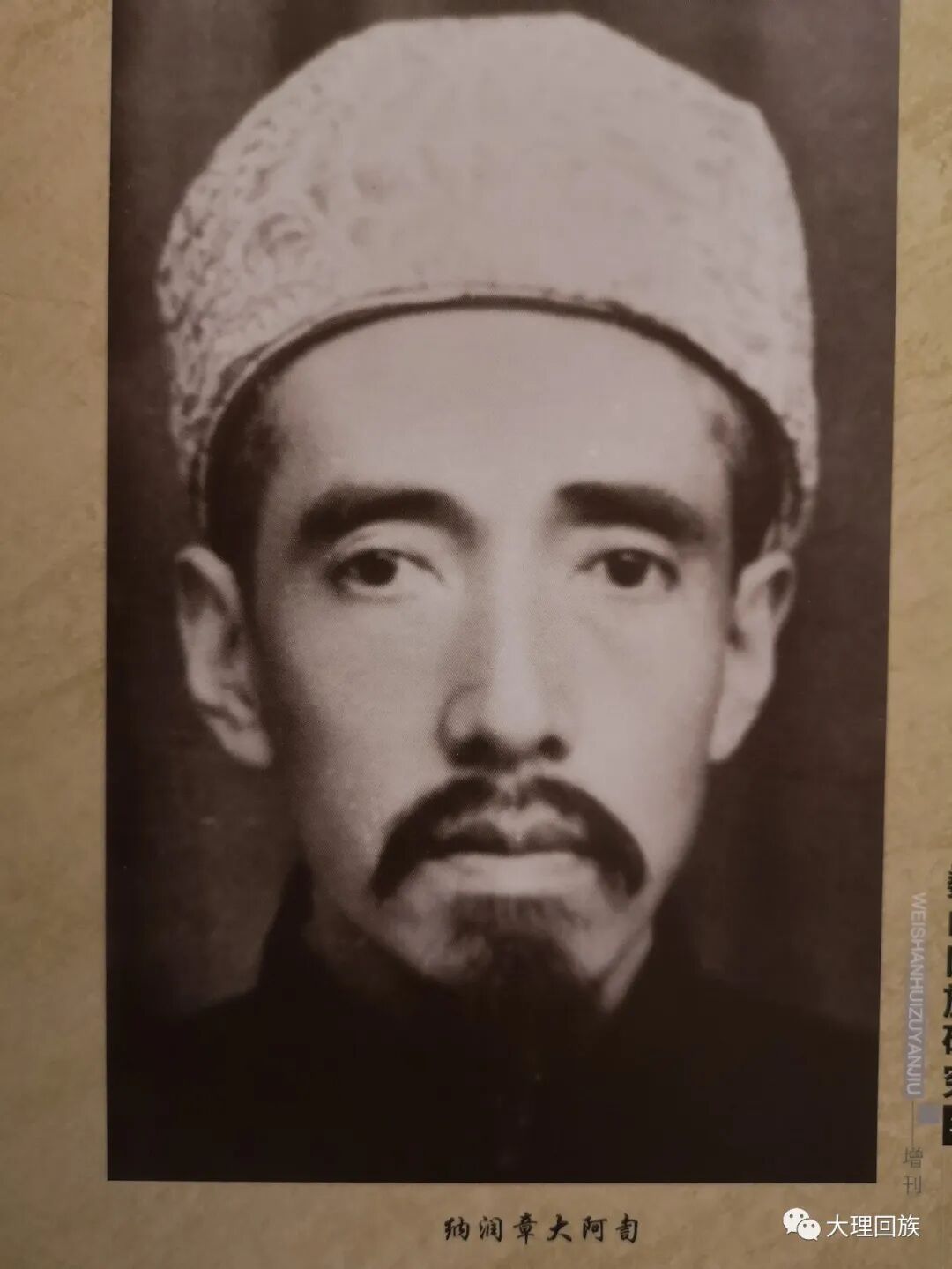
The name of Xingjian Middle School, 'Xingjian', carries the meaning of 'reviving education to build the nation.' These two words embody the school's founding mission: to cultivate Muslim talent capable of revitalizing the religion and serving national construction. Ma Yaotang, chairman of the Menghua Hui Educational Salvation Association, served as chairman of the board, and Na Runzhang, a prominent grand imam, was invited to serve as principal. With extraordinary courage and talent, Principal Na cast a wide net for talent, inviting scholars from both inside and outside the Islamic faith to teach at the school. Emphasizing reform in education, the school centered its curriculum on religious studies while also offering courses in Chinese language and literature, history, geography, music, and physical education. Principal Na personally taught advanced courses in Quranic exegesis (Tafsir), Islamic jurisprudence (Fiqh), and theology (Aqidah). Other veteran imams taught alongside him, including Ma Haocheng, Ma Shizhen, Yang Tinghou, Na Guangyun, Ma Hanqing, Ma Guoliang, and Ma Fuchen from Guangxi. The Chinese literature classes were taught by Gao Kemin, He Guangwen, and Ma Shaoxiong; music was taught by Na Wenbo; art by Na Guangheng; mathematics by Ma Shangzhou; and military physical education by Mai Zhusan and Zhang Quanli. Truly, it was a gathering of brilliant minds.
In addition to their core studies, the students at the Xingjian Middle School Arabic Department placed great importance on cultural and athletic activities. During their free time every day, they played basketball, volleyball, and table tennis, holding inter-class and inter-school competitions to build friendships. Weekend events—such as 'One Thousand and One Nights' storytelling sessions, current affairs briefings, cultural performances, speech contests, and educational activities during Ramadan—made the students' school life rich and vibrant, perfectly blending academics with extracurricular pursuits for well-rounded development. The establishment of Xingjian Middle School cultivated a batch of dual-talented individuals needed for both religious life and national development in the Weishan region and various counties across Yunnan. It won the recognition and warm welcome of the broader Muslim community, earning praise as 'a glowing beacon of Hui culture ignited in western Yunnan' (History of Yunnan Hui Muslims).
Building upon the development of mosque education (Jingtang Jiaoyu) and new-style religious schooling, Muslims across Yunnan also actively promoted regular primary and secondary education. Private Hui middle and primary schools sprang up like bamboo shoots after a spring rain. In addition to Mingde Middle School and Mingde Primary School in the provincial capital, there were Shadian Yufeng Primary and Middle School, Dazhuang Xinmin Middle School, Tonghai Yuanwu Primary School, Yuxi Yucai Primary School, Yongping Hui Minjian Normal School, Dali Kelizhuang Primary School, Menghua Chongshi and Chongde Primary Schools, as well as various branch campuses of Mingde Primary Schools across different counties and cities. The establishment of these regular primary and secondary schools nurtured a large number of talented individuals, laid a solid foundation for the economic and cultural development of the province's Hui Muslims, and made an undeniable contribution to the advancement of ethnic education in Yunnan.
3. Publishing Religious and Academic Periodicals
Press and media serve as crucial frontlines for education and outreach, and religious academic periodicals published by Hui Muslims acted as the mouthpiece of Islam. The flourishing or stagnation of Islamic culture was intimately tied to them. Media publications played a massive role in awakening the public, enlightening minds, and promoting social progress. Therefore, as early as the late Guangxu period of the Qing dynasty (1908), Chinese Hui students studying in Japan—including Zhao Zhongqi (from Yunnan), Huang Zhenpan (from Hubei), Wang Tingzhi (from Yunnan), and Bao Tingliang—founded the publication 'Xinghui Pian' (Awaken the Hui Writings) in Tokyo, Japan, setting a precedent for Chinese Muslim periodicals. Although this publication only ran for a single issue, it carried a strong enlightenment ethos and was praised by contemporaries as 'sounding the horn of modern Hui intellectual and cultural thought.' Afterward, in 1915, 1917, 1922, and 1929, Yunnan Muslims successively launched four more periodicals: 'Qingzhen Yuebao' (Islamic Monthly, edited by Sha Ping'an, Xie Jikang, and Ma Degui, running for five issues); 'Qingzhen Huibao' (Islamic Report, edited by Bao Tingliang and others, running for one issue); 'Qingzhen Xunkan' (Islamic Decadal, edited by Ma Pin-san, Ma Zhenbang, and Sha Ping'an, running for over 50 issues); and 'Qingzhen Duobao' (Islamic Bell, edited by Bai Mengyu, Ma Shiqing, Ma Muqing, Ma Jian, Na Zhong, Na Xun, and others, which ran for several issues). During and after the War of Resistance Against Japanese Aggression, our province also saw the publication of several other periodicals, such as 'Xin Mumin' (The New Muslims, edited by Southwest Associated University students Wang Pei and Wang Hao, running for three issues); 'Qingzhen Duobao Fukan' (Islamic Bell Supplement, edited by Sha Dezhen and Na Zhongming); and 'Dimeimen' (Sisters and Brothers, edited by Lin Song, running for one issue). Among these publications, 'Qingzhen Duobao' had the longest run and the deepest impact. It can be said that 'Qingzhen Duobao' stood shoulder-to-shoulder with other academically rigorous contemporary journals such as 'Yuhua', 'The Chinese Islamic Association Monthly', and 'Yiguang'.
In 1929, the Yunnan branch of the Islamic Progressive Association established a propaganda department, and Bai Mengyu and others initiated the founding of 'Qingzhen Duobao'. Ma Shiqing and Ma Muqing served as editors-in-chief, while Na Zhong took charge of actual editorial operations. After publishing about 15 or 16 issues, the publication was suspended for many years because the editors and editorial staff left Kunming for official duties or traveled overseas for their studies. It wasn't until 1940, as the staff of 'Duobao' returned one after another, that the Islamic Association decided to resume publication. Ma Jian, Na Zhong, Na Xun, Sha Dezhen, and Na Zhongming served as editors-in-chief. During the War of Resistance, the wartime safe haven of Kunming gathered numerous Hui university professors, scholars, and Muslim university students who became contributors to 'Duobao', including esteemed figures like Mr. Bai Shouyi, Mr. Yang Zhijiu, and Ma Shouxian. Thanks to an abundant supply of submissions, 'Qingzhen Duobao' thrived remarkably during this period, and its circulation surged dramatically.
Regarding the name and guiding mission of 'Qingzhen Duobao', Mr. Ma Pin-san wrote in the inaugural issue: '...Our pure religion originated with Adam, with the purpose of recognizing Allah, worshiping Him, and aiding humanity and the world. The prophets succeeded one another in an unbroken lineage until the Most Exalted Prophet Muhammad appeared, gathering the perfections of all prophets, serving as the ultimate guide for mankind, and receiving thirty divisions of heavenly scriptures. He elucidated the profound mysteries of the seen and unseen, established the moral laws governing heaven and earth, awakened the deaf and enlightened the blind, and guided people toward goodness while deterring evil—truly standing as a great warning bell [duobao] for all ages past and present.' Mr. Na Zhong summarized the publication's mission into three points: 1. Promote the religious consciousness of believers; 2. Improve Islamic education; and 3. Foster a sense of national consciousness among believers. In his 'Editorial on Resuming Publication', Mr. Ma Bo'an pointed out in accordance with the needs of the War of Resistance that 'Duobao' must hold high the banner of patriotism, calling upon Hui and Han compatriots to 'truly unite and face the national crisis together,' and 'exhaust their utmost efforts to strive for the independence, freedom, and equality of our nation and people.'
Each issue of 'Qingzhen Duobao' featured editorials, Islamic news, dispatches, academic and cultural essays, and historical materials, among other contents. A brief overview includes: 1. Islamic doctrine and ethics; 2. The truths of Islam; 3. Historical research on the Hui community; 4. Reports supporting the War of Resistance and the patriotic democratic movement; 5. Coverage of friendly Sino-Arabic relations and support for the anti-imperialist struggles of Arab peoples; 6. Biographies of prophets, virtuous predecessors, and prominent Muslim visitors; 7. News and updates on Muslims from various regions; and 8. Reports on the affairs of the Progressive Association and the Islamic Association, to name just a few.
4. Engaging in Religious, Academic, and Cultural Activities
Along with the vigorous development of Hui education and the robust growth of a specialized generation of religious scholars, Islamic academic and cultural activities in Yunnan during the Republican era presented a remarkably bright prospect, with academic research proceeding smoothly and yielding impressive results. These are summarized and briefly described below.
1. Translations of the Quran and Hadith. view all
The Early 20th-Century Cultural Movement of Yunnan's Hui Muslims: Education, Print, and Modern Transformation
Abstract: This article compiles the key points of the original text regarding "The Cultural Movement of Yunnan's Hui Muslims in the First Half of the 20th Century: Education, Publications, and the Modern Transformation of Chinese Muslims," preserving the original paragraph and image sequence. It is suitable for readers and researchers interested in long-tail keywords such as Yunnan Hui Muslims, the New Culture Movement, and Muslim education.
Mr. Ma Yunliang
Ma Yunliang
Abstract: In the first half of the 20th century, influenced by the May Fourth New Culture Movement, pioneering figures among Yunnan's Hui Muslims launched their own cultural movement. Championed by these leaders, the cultural self-awareness of the province's Muslim community was fully brought to light. This paper provides a preliminary review of this cultural movement and its historical role across six aspects, including the formation of associations and the reform of traditional mosque education (Jingtang Jiaoyu). Its purpose is to ground ourselves in reality while reviewing history, inspiring future generations to carry on the fine traditions of the predecessors—who loved their country and their faith, and enthusiastically supported ethnic culture and education—and to strive to make new contributions to promoting Islamic culture and advancing Hui education.
Keywords: First half of the 20th century; Yunnan Hui Muslims; New Culture Movement
In the first half of the 20th century, driven by the wave of the May Fourth Movement, a group of intellectuals and social elites among our province's Hui ancestors took up the burden of national crisis, harbored a profound sense of anxiety for the country, and went with the flow of history by tirelessly launching a new cultural movement. This movement took self-strengthening and self-salvation as its ultimate purpose, with awakening the public and invigorating the national spirit as its primary themes. Spanning half a century, it possessed a uniquely robust vitality. The movement's core activities included establishing Islamic associations, reforming traditional mosque education, founding new religious schools as well as regular primary and secondary schools, publishing religious and academic journals, organizing religious and academic cultural events, publishing and distributing scriptures, and selecting outstanding students to study abroad for advanced degrees. These initiatives laid a solid foundation for raising the overall quality of the ethnic group and promoted the development of Islamic cultural education. As Gu Jiegang noted, this was "the first cultural movement consciously initiated by Muslims in modern China" ("The Cultural Movement of Islam"). Spanning religion, culture, and education, this movement profoundly demonstrated the great spirit of keeping pace with the times shared by the vast majority of our province's Muslims. Its significance is profound, far-reaching, and its achievements will go down in history. Today, history has entered the 21st century. Rooted in the present and looking back at history, every single Hui person should seriously ponder the current circumstances and challenges facing Hui cultural education, and consider how to inherit our predecessors' precious spirit of daring to be the first in the world, actively seeking the development of our ethnic cultural and educational endeavors, and preserving the roots of our ethnic culture so as to achieve true ethnic cultural self-awareness. Bearing this consideration in mind, and despite my own limitations, I have organized this article after extensive reading of historical materials, careful verification, and meticulous selection. I intend to offer a preliminary perspective on the New Culture Movement of our province's Hui Muslims and its historical role in the first half of the 20th century, providing a modest reference for those enthusiastic about ethnic culture and education, while welcoming correction from experts in the field.
The content of the New Culture Movement among Yunnan Hui Muslims in the first half of the 20th century is as follows.
I. Establishment of Islamic Associations
In 1911, following the conclusion of the Xinhai Revolution and the dawn of the Republic of China, the principle of the Republic of Five Nationalities was established, and the Provisional Constitution was promulgated. It stipulated that people of all ethnic groups enjoyed the rights of freedom of belief, freedom of speech, and freedom of association and assembly, embedding the ideology of democratic republicanism deeply in the public consciousness. Consequently, in July 1912, championed by the pioneer of Hui new-style education, Grand Imam Wang Haoran, China's first national religious organization—the China Islamic Progress Association (Zhongguo Huijiao Jujinhui)—was established in Beijing. The headquarters of the Progress Association was located inside the Xidan Mosque (Xidan Qingzhensi). Ma Linyi was elected as the inaugural president, and Wang Haoran served as vice president. With the guiding mission of "promoting education, consolidating organizations, and fostering close harmony between Hui and Han people," the Progress Association widely connected prominent figures from all walks of Hui society, jointly committing to promoting new-style education and revitalizing various Hui community endeavors. The association's headquarters issued circular telegrams nationwide urging all provinces to establish branch chapters, with county and district chapters to follow. Yunnan's Hui Muslims responded enthusiastically, establishing the Yunnan Branch of the China Islamic Progress Association in October of the same year. The headquarters of the branch was set up at the Nancheng Mosque (Nancheng Qingzhensi) in Kunming. Ma Qixiang, general manager of the Yuxi Xinghunhe firm, was elected as the first branch president. Parts of the province where Hui communities were concentrated successively established branch chapters as well, totaling over 50 branch chapters across the province. In 1915, the Yunnan branch was reorganized, and second-term leadership was elected: Wang Tingzhi (from Kunming) was chosen as president, with Sai Fuchu (from Shiping) and Sun Guoxi (from Kunming) as vice presidents, alongside 83 other departmental staff members. In the 1917 re-election, Ma Dianxuan (from Yiling) became the third-term president, with He Tingdong (from Kunming) and Ma Xinpei serving as vice presidents. In April 1928, Ma Dianxuan passed away (guiyin). In May, Ma Cong (style name Bo'an, from Kunming) was elected as the fourth-term president, with He Tingdong and Zhao Zhongqi (style name Yuheng, from Dali) as vice presidents, alongside 42 departmental staff members. Until the outbreak of the War of Resistance Against Japanese Aggression, the Yunnan Branch of the Progress Association was renamed the Yunnan Provincial Branch of the China Islamic National Salvation Association, with Ma Cong continuing to serve as president.
The Yunnan Branch of the Progress Association was an important organization during the Republican period that enhanced internal ethnic unity and revitalized the community, playing a tremendous driving force in the political, economic, and cultural-educational endeavors of Yunnan's Hui people at that time.
In April 1915, initiated by Sha Pingan, Ma Xitang, Bai Yaoming, Zi Liangcheng, and others under the leadership of Ma Qixiang, the Zhenxue Society (Zhenxueshe)—the first cultural and educational organization in the history of Yunnan's Hui Muslims—was established at the Nancheng Mosque in Kunming. Initially, Sha Pingan served as president, followed later by Ma Guanzheng as president and Ma Shengfeng as vice president. The Zhenxue Society started as an independent organization, but was later incorporated by the Yunnan Branch of the Progress Association, becoming its specialized organ overseeing culture and education. It was tasked with "the establishment and management of schools, the popularization of education, the study of doctrines, the translation of classics, and the publication and distribution of scriptures. Due to the heavy workload, it was divided into four divisions: Education, Translation, and Publication." ("Yunnan Branch Regulations")
The establishment of the Yunnan Branch of the Progress Association and the Zhenxue Society laid massive groundwork for the rapid development of cultural education among Yunnan's Hui Muslims. Their efforts included founding publications such as the *Qingzhen Monthly* (*Qingzhen Yuebao*) and the *Qingzhen Duo Bao* (*Qingzhen Duo Bao*), publishing and distributing scriptures, running new-style religious schools—such as the Yunnan Higher Islamic Scriptural and Secular Combined School—as well as regular primary and secondary schools, and sending students to study in Egypt. These endeavors held profound significance and far-reaching influence. Mr. Bai Shouyi once commented: "The beginning of China's modern Islamic cultural movement has two prominent hallmarks: one is the publication of journals, and the other is the founding of schools. The earliest Islamic publication in our country was *Xinghuipian*, initiated by Hui students studying in Japan. Aside from Mr. Huang Zhenpan and Mr. Ma Zongsui, the contributors to the inaugural issue were Mr. Bao Tingdong, Mr. Wang Tingzhi, and Mr. Zhao Zhongqi from Yunnan. Aside from the Niujie Primary School advocated by Imam Wang Haoran in Beijing, our earliest new-style religious school was the Yunnan Higher Islamic Scriptural and Secular Combined School in Kunming. Therefore, in the modern Islamic cultural movement, Yunnan still occupies a very important position." ("The Historical Contributions of Yunnan's Muslim Compatriots") Looking back at the history of Yunnan's Hui Muslims, we can say that the brilliant achievements forged by the Yunnan Branch and the Zhenxue Society not only opened the prelude to the New Culture Movement of Yunnan's Hui Muslims, but also propelled the movement toward its climax.
II. Founding New-Style Religious Schools and Regular Primary and Secondary Schools
In 1921, our province's first new-style religious school, the Yunnan Higher Islamic Scriptural and Secular Combined School, was established at the provincial capital's Nancheng Mosque. This was a major initiative by the Yunnan Branch and the Zhenxue Society to reform traditional mosque education (Jingtang Jiaoyu). The years 1921 to 1922 marked the trial phase of the school. The renowned scriptural scholar Master Ma Jianzhi (Sanwu) was invited as the primary lecturer, with his son, Master Ma Ruitu, serving as teaching assistant. Students included Na Ruzhang, Ma Yuanqing, Xu Zibin, Ma Huiting, and Ma Lanting. In 1923, after officially enrolling students, the school invited Masters Tian Jiapei, Sha Pingan, and Na Ming'an as full-time instructors for Arabic and Persian scriptural courses, while inviting four scholars—Ma Pinan (a provincial graduate (bagong) of the late Qing Dynasty who once served as the Guangdong Circuit Intendant), Bai Yaoming (style name Liangcheng), Li Fangbo, and Yang Wenbo—to respectively teach the Four Books, classical Chinese annotations, national literature, the Three Principles of the People (Sanmin Zhuyi), and civics courses. History, geography, physics, and chemistry were taught by visiting teachers from the private Chengde Middle School. The curriculum comprised a total of 14 courses, including 5 Arabic and Persian scriptural courses and 9 Chinese courses. Scriptural classes were scheduled in the morning, while Chinese courses took place in the afternoon.
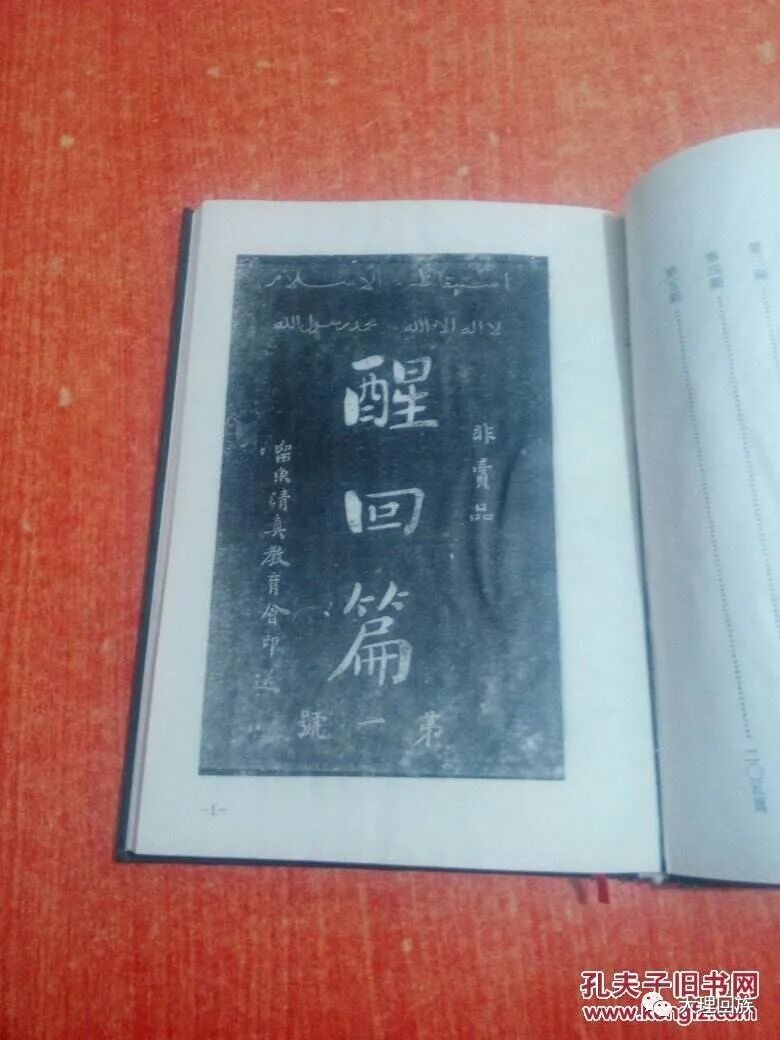
The first class enrolled five students: He Liancheng, Li Shoufu, Lin Yaoxi, Lin Xinghua, and Lin Zhongshu. These students studied for a full five years, graduating in May 1928. Rigorous examinations were held prior to graduation. All five students achieved outstanding, remarkable results. Five years of bitter winter and cold summer studies laid a profound foundation in both Chinese and Arabic literature, winning widespread praise from the Muslim community. Upon the graduation of the first cohort, the Zhenxue Society specially edited and published a *Graduation Commemorative Special Issue*, featuring the principal's address, branch congratulatory remarks, teachers' admonitions, students' graduation exam questions, answers, and evaluations. This special issue was distributed to mosques across the country. After reading the *Graduation Special Issue* published by the Higher Scriptural and Secular Combined School, Grand Imam Wang Jingzhai of Tianjin sent a letter offering high praise: "Upon reading the several translated questions in the *Graduation Special Issue* published by your esteemed school, I could not help but slam the table in admiration, deeply celebrating that Yunnan has capable, studious people. Their future attainments are truly boundless."
In 1926, the second cohort of students enrolled, admitting six individuals: Zhang Yunkui, Sai Antai, Ma Zhongming, Ma Jingbo, Ma Junyou, and Ma Pingxi. This cohort graduated in 1930. Immediately following that, a third cohort was recruited that same year. This class had an ample enrollment of 44 students, including Na Zhong, Na Xun, Ma Junwu, Ma Zhiguang, Ma Xinsan, Ma Shizhen, and Yang Tinghou. Shortly after admission, some students from this class transferred into the middle school division of the Mingde Middle School, which was publicly run by the Progress Association, becoming the inaugural class of the middle school division. The Higher Scriptural and Secular Combined School of the Yunnan Branch and Zhenxue Society operated for a total of nine years—one trial year and three officially enrolled cohorts, with two cohorts (totaling 11 individuals) graduating. It wrote a brilliant page in the history of Yunnan Hui education.
Reviewing the history of the new-style religious schools founded by the Yunnan Branch and the Zhenxue Society, the author believes there are two successful experiences worth summarizing and learning from.
First, by conforming to the needs of social development and implementing a teaching model that combined scriptural and secular studies, the schools cultivated a batch of talents proficient in both Chinese and Arabic. While traditional mosque schools had relatively singular teaching contents, the new-style religious schools emphasized both Arabic and Chinese equally, going hand in hand. The students they cultivated understood both Arabic and Chinese, possessed writing and translation skills, and made outstanding contributions to the exchange and dissemination of Sino-Arabic culture and the propagation of sacred truths.
Second, the schools pooled the human and financial resources of various mosque communities (fang) in the Kunming area, breaking away from the past pattern of decentralized operation among individual mosques. By integrating and optimizing teaching resources and reversing the old single-teacher, single-school system in favor of a multi-teacher system, students were able to learn from multiple masters and draw upon the strengths of various schools. Kunming, as the provincial capital of Yunnan, was the province's cultural center, gathering exceptional talents and enjoying unique advantages where teaching resources could be shared and local talent recruited. Figures like Ma Pinan, Bai Yaoming, Li Fangbo, and Yang Wenbo were seasoned scholars and erudite men. Scriptural masters like Ma Jianzhi, Tian Jiapei, Sha Pingan, and Na Ming'an were all renowned modern grand imams of Yunnan. Teachers from the private Chengde Middle School could also be invited to teach. All of these were vital conditions for running a successful school.
In 1929, the private Yunnan Mingde Middle School was established. The Yunnan Branch merged the Higher Scriptural and Secular Combined School into "Mingzhong," converting it into the Arabic Department of Mingde Middle School, which continued to hold classes at the Yongning Mosque. The middle school campus of Mingde Middle School was located in the back courtyard of the Nancheng Mosque, while its primary school division was set up inside the Shuncheng Street Mosque (Shuncheng Street Mosque) located in the Hui residential area. The middle school division later attached a simplified normal school class and a teacher training class. The inaugural principal of Mingde Middle School was Mr. Yang Wenbo.
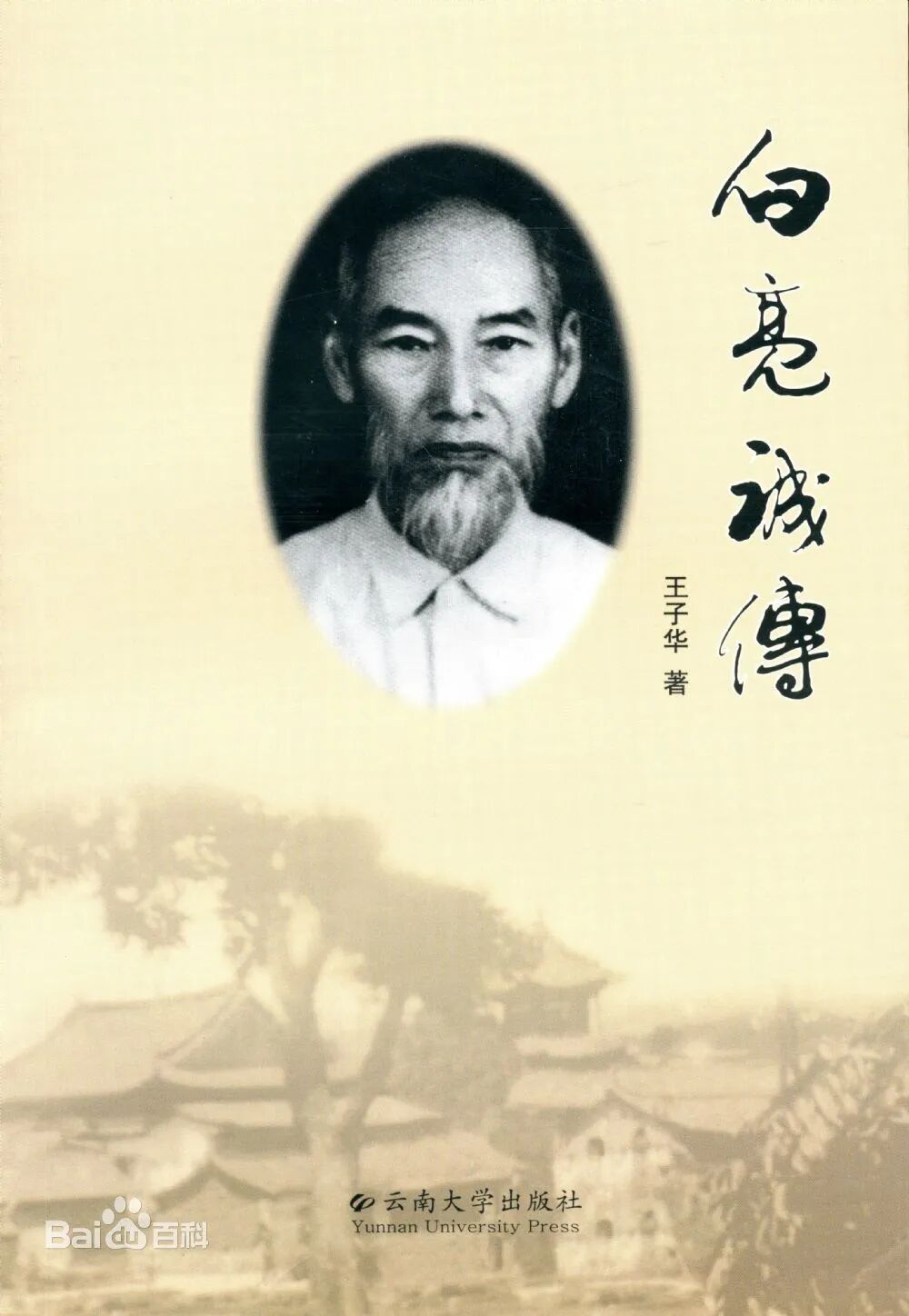
In April 1940, yet another new-style religious school was born: the Shadian Yangzheng School in Shadian, a Hui-concentrated area in southern Yunnan. The full name of the Yangzheng School was the Shadian Private Yangzheng School of the Loyal and Frutiful Duke's Estate. The Loyal and Fruitful Duke's Estate was the mansion of the Shadian Hui Military General Bai. General Bai referred to Bai Jinzhu, a Qing Dynasty military commander in Yunnan who rose through the ranks to become the Military Intendant of Kaihua Town and was conferred the title of General of Mighty Vows. Having rendered distinguished military service, he was posthumously granted the title of Loyal and Fruitful Duke, and Shadian Hui residents generally referred to him as General Bai. The Yangzheng School was initiated by his third son, Bai Yaoming (style name Liangcheng). The school was set up right inside General Bai's mansion. The meaning of the two characters "Yangzheng" (Nurturing Uprightness) was "to nurture outstanding talents to revitalize the sacred path, and to properly cultivate virtuous capabilities to illuminate the divine light." To reform traditional mosque education to meet the needs of the times, Mr. Bai Liangcheng founded this new-style religious school characterized by "combined Chinese and Arabic instruction with graded progression." He personally served as principal and specially invited Professor Bai Shouyi to the school to convene a meeting with relevant personnel to jointly determine the educational goals and formulate the curriculum. The school system was provisionally set for eight years, with four years each for intermediate and advanced levels. Through eight years of study, students were required to master the Arabic language and script, be able to read Islamic classics, and possess self-study capabilities. Upon graduation, students were sponsored by the school to study abroad in Egypt. The school facilities were arranged in the side hall inside the left main gate of the Loyal and Fruitful Duke's Estate. The prayer hall, classrooms, offices, teachers' dormitories, and bathing facilities were all located within this side hall. Student dormitories were arranged in the floral parlor of the second courtyard. The cafeteria was located in the right wing room of the fifth courtyard. Once all preparations were completed, the private Kunming Mingde Middle School was asked to assist with student recruitment. Over 80 applicants registered for the entrance exams, and 7 were admitted based on qualification: Ma Enrong (Luxixi), Yan Zhonggui (Panxi), Jin Shuquan (Shadian), Ma Qin (Panxi), Ma Yuncai (Panxi), Ma Lianfang (Xinzhai), and Lin Zhengxiong (Shadian). Four years later—actually four months later—another group of 7 students was recruited: Ma Yuncong (Yuxi), Ma Chunwen (Dabaiyi), Ma Yunliang (Yuxi), Lin Song (Shadian), Ma Weiyi (Yuxi), Ma Chonghua (Yuxi), and Yang Dunhua (Xichang). These students were provided with meals and uniforms by the school. Later, more than 20 self-funded students were recruited. These students were younger and entirely local to Shadian, including both boys and girls. Their Chinese classes were taught by Ms. Ma Cunzhen, wife of teacher Ma Jian, using regular upper-primary textbooks. In addition, doctrinal readers (compiled by Mr. Ma Yuanqing) and Arabic were taught. These two courses were taught by advanced class students Ma Yuncong and Ma Chunwen respectively.
The school successively employed several full-time and part-time teachers. Because the school's founder, Principal Bai Liangcheng, was serving as the manager of the Yunnan Sipu Enterprise Bureau and could not attend to school affairs full-time, he specially appointed Teacher Zhang Ziyin as acting principal, alongside Teacher Ma Yuanqing as director of studies, Imam Na Xiangting as director of general affairs, the late-Qing provincial graduate (bagong) Mr. Gao Boli for Chinese literature, and Mr. Wu Shiqi for teaching methods. Imam Wang Chengqi, Teacher Bai Kunzhi, along with Professor Zheng Xin, Professor Cao Liwu from Southwest Associated University (Xinan Lianada) who were then teaching at Shadian's Yufeng Middle School, and three students from Associated University, were hired as part-time teachers. At the end of 1941, Mr. Ma Jian returned from Shanghai to his hometown of Shadian to continue translating the Quran. Every day after breakfast, he spent two precious hours teaching at the Yangzheng School. By the end of the following year, Grand Imam Ha Dacheng also traveled thousands of miles from Japanese-occupied Shanghai through various hardships to arrive in Shadian, staying at Principal Bai's home. Aside from discussing and reviewing Mr. Ma Jian's Quran translation manuscript daily with Teacher Ma Yuanqing, Imam Ha taught two Quranic recitation (Tajweed) classes per week to the students of Yangzheng School. For a period, the renowned historian Mr. Bai Shouyi came to Shadian for historical investigations. The school authorities seized the opportunity to invite Mr. Bai to lecture at the school. Mr. Bai's lectures were profound yet accessible, and his amiable attitude left a deep impression on the students.
The Yangzheng School gathered a constellation of renowned teachers and abundant talent back then. Nourished by so many teachers, the students felt as if they were sitting in a gentle spring breeze, studying diligently with remarkable academic achievements. The school arranged its curriculum according to a teaching plan and provided tailored instruction based on students' aptitudes. In the initial stage, Arabic courses were taught in two classes, Class A and Class B. The two Class A students, Ma Yuncong and Ma Chunwen, had studied in traditional mosque schools for several years and possessed a certain foundation in Arabic, so their Arabic classes were taught separately, while their Chinese and Quranic recitation classes were combined with Class B. Teacher Zhang Ziyin taught Class A a book titled *Islam*, authored by Hassan Mansour (vice president of Cairo University) and others. This book had been translated into Chinese by Mr. Na Zhong and published by the Beiping Chengdac Normal School. Teacher Zhang also taught Class A the literary masterpiece *Kalila wa Dimna*, translated and adapted by the 8th-century Arab literary figure Ibn al-Muqaffa. This book had been translated into Chinese by Mr. Lin Xinghua and introduced to readers in our country. For Class B, Teacher Zhang Ziyin taught the Quran and Hadith. Mr. Ma Jian taught Class A *Outlines of Dogmatics* (Al-Aqa'id), Egyptian middle school Arabic readers, and concise grammar. To cultivate students' Arabic reading comprehension and interest, Mr. Ma also assigned extracurricular reading such as youth publications published in Egypt, an Arabic edition of a French romantic novel *Maztouri*, and an Arabic edition of *The Analects of Confucius*. Mr. Ma Jian taught Class B Egyptian upper-primary Arabic readers and concise grammar. Teacher Ma Yuanqing taught Class A *Admonitions for Believers* (Mawa'iz al-Mu'minin). This text was chosen as a textbook upon the suggestion of Mr. Ma Jian. Teacher Yuanqing taught Class B *Mutual Love of Ritual Laws* (Mustaq). Imam Wang Chengqi taught Class B *Muntai Grammar*. When the two classes combined for Chinese courses, they studied *The Book of Songs* (*Shijing*), Tang poetry and Song lyrics, *Ancient Prose Anthology* (*Guwen Guanzhi*), middle school national literature, history, mathematics, and music.
Several teachers at the Yangzheng School possessed teaching methods with unique characteristics that are worth summarizing and promoting. They are briefly summarized and introduced below:
1. Emphasizing the cultivation of students' self-learning ability and interest in learning. There is an old Chinese saying: "Give a man a fish, and you feed him for a day; teach a man to fish, and you feed him for a lifetime." Applied to teaching, this means that imparting knowledge to students is inferior to teaching them the methods of self-learning. Mr. Ma Jian taught Arabic classes precisely in this manner. In the initial stage, lasting about a year or so, he personally explained the lessons. During class, he would first write Arabic vocabulary definitions on the blackboard for students to copy into their vocabulary notebooks. Then he would meticulously explain the text, striving for profound and thorough explanations of word meanings, distinctions, and grammar. Later, when the students had acquired a basic foundation, he had everyone prepare their lessons in advance before class. He distributed Wang Jingzhai's *Sino-Arabic New Dictionary* to the students; any unfamiliar words encountered while previewing the text had to be looked up in the dictionary and copied into a vocabulary notebook. During Arabic class, students took turns reading aloud line by line while everyone listened attentively. Where there were errors, Mr. Ma pointed them out on the spot, offering appropriate praise and encouragement for good performances.
2. Face-to-face grading of assignments. Mr. Ma Jian's *Concise Grammar* exercises and homework were corrected line by line. Before returning them to the students, the students were called to the teacher's desk where he provided one-on-one reviews for each question before handing them back. Such personal, direct guidance benefited the students immensely.
3. Combining theory with practice. While in Shanghai, Grand Imam Ha Dacheng served as the Imam of the Zhejiang Road Mosque. He was well-versed in Quranic phonology and phonetics (Tajweed), routinely praying alongside teachers and students in the school's small prayer hall, and attending Friday congregational prayers at the Shadian Grand Mosque together on Fridays. At the school and the mosque, he was frequently invited to serve as Imam, leading everyone in prayer. Not only were his prayer postures serious and standardized, but his melodic rhythm in reciting the Quran strictly adhered to the requirements of the scriptural text, rising and falling with inflection that fully manifested the acoustic beauty of the Quran. When he taught recitation classes to our students, his teaching method was highly distinctive. In class, he would first explain a few recitation rules, then provide a demonstration reading, and finally have students imitate the reading one by one. Everyone found this theory-combined-with-practice teaching method deeply engaging.
4. Principal Bai's affectionate exhortations. Principal Bai Liangcheng returned home once every year. During each return, he would convene teachers and students to deliver speeches. He encouraged students to study diligently and strive to become successors to the sacred path. A poem he composed, titled *Song of Joyful Learning*, played a major role in boosting students' interest in learning. The full text of the *Song of Joyful Learning* is: "Study is studying this joy, joy is enjoying this study; without joy it is not study, without study it is not joy. Joy is study, study is joy—alas, what learning in the world is like this joy, what joy in the world is like this study."
The advanced class of the Yangzheng School was later relocated to Kunming for a period of time. According to the original educational system, it should have taken eight years to graduate. Later, due to the political situation, it graduated two years early at the end of 1946. Although the advanced class students only studied for six years, they achieved tremendous results, cultivating a batch of talents for the ethnic group and the sacred path. For example, contemporary internationally renowned Quranic translator and Muslim scholar Professor Lin Song, and Grand Imam Ma Yuncong—who served as a delegate to the sixth and seventh National People's Congresses—were both elites who walked out of the Yangzheng School.
The intermediate class continued to hold classes in Shadian even after the advanced class relocated to Kunming, operating until the liberation in 1950.
In the spring of 1943, the private Xingjian Middle School Arabic Department was established in Menghua County, western Yunnan (now Weishan Yi and Hui Autonomous County). The campus was located inside the Yanqichang Mosque. As enrollment and the scale of the school grew year by year, the original site could no longer accommodate everyone, so in the autumn of 1948, it relocated to the Daiweigen Mosque. From its founding in 1943 until the liberation of Yunnan at the end of 1949—a period of about six and a half years—the Arabic Department had five classes (from Arabic Class 1 to Arabic Class 5) and over 90 students, all of whom were young Hui Muslim men from across the province and the local county.
The name of Xingjian Middle School, 'Xingjian', carries the meaning of 'reviving education to build the nation.' These two words embody the school's founding mission: to cultivate Muslim talent capable of revitalizing the religion and serving national construction. Ma Yaotang, chairman of the Menghua Hui Educational Salvation Association, served as chairman of the board, and Na Runzhang, a prominent grand imam, was invited to serve as principal. With extraordinary courage and talent, Principal Na cast a wide net for talent, inviting scholars from both inside and outside the Islamic faith to teach at the school. Emphasizing reform in education, the school centered its curriculum on religious studies while also offering courses in Chinese language and literature, history, geography, music, and physical education. Principal Na personally taught advanced courses in Quranic exegesis (Tafsir), Islamic jurisprudence (Fiqh), and theology (Aqidah). Other veteran imams taught alongside him, including Ma Haocheng, Ma Shizhen, Yang Tinghou, Na Guangyun, Ma Hanqing, Ma Guoliang, and Ma Fuchen from Guangxi. The Chinese literature classes were taught by Gao Kemin, He Guangwen, and Ma Shaoxiong; music was taught by Na Wenbo; art by Na Guangheng; mathematics by Ma Shangzhou; and military physical education by Mai Zhusan and Zhang Quanli. Truly, it was a gathering of brilliant minds.
In addition to their core studies, the students at the Xingjian Middle School Arabic Department placed great importance on cultural and athletic activities. During their free time every day, they played basketball, volleyball, and table tennis, holding inter-class and inter-school competitions to build friendships. Weekend events—such as 'One Thousand and One Nights' storytelling sessions, current affairs briefings, cultural performances, speech contests, and educational activities during Ramadan—made the students' school life rich and vibrant, perfectly blending academics with extracurricular pursuits for well-rounded development. The establishment of Xingjian Middle School cultivated a batch of dual-talented individuals needed for both religious life and national development in the Weishan region and various counties across Yunnan. It won the recognition and warm welcome of the broader Muslim community, earning praise as 'a glowing beacon of Hui culture ignited in western Yunnan' (History of Yunnan Hui Muslims).
Building upon the development of mosque education (Jingtang Jiaoyu) and new-style religious schooling, Muslims across Yunnan also actively promoted regular primary and secondary education. Private Hui middle and primary schools sprang up like bamboo shoots after a spring rain. In addition to Mingde Middle School and Mingde Primary School in the provincial capital, there were Shadian Yufeng Primary and Middle School, Dazhuang Xinmin Middle School, Tonghai Yuanwu Primary School, Yuxi Yucai Primary School, Yongping Hui Minjian Normal School, Dali Kelizhuang Primary School, Menghua Chongshi and Chongde Primary Schools, as well as various branch campuses of Mingde Primary Schools across different counties and cities. The establishment of these regular primary and secondary schools nurtured a large number of talented individuals, laid a solid foundation for the economic and cultural development of the province's Hui Muslims, and made an undeniable contribution to the advancement of ethnic education in Yunnan.
3. Publishing Religious and Academic Periodicals
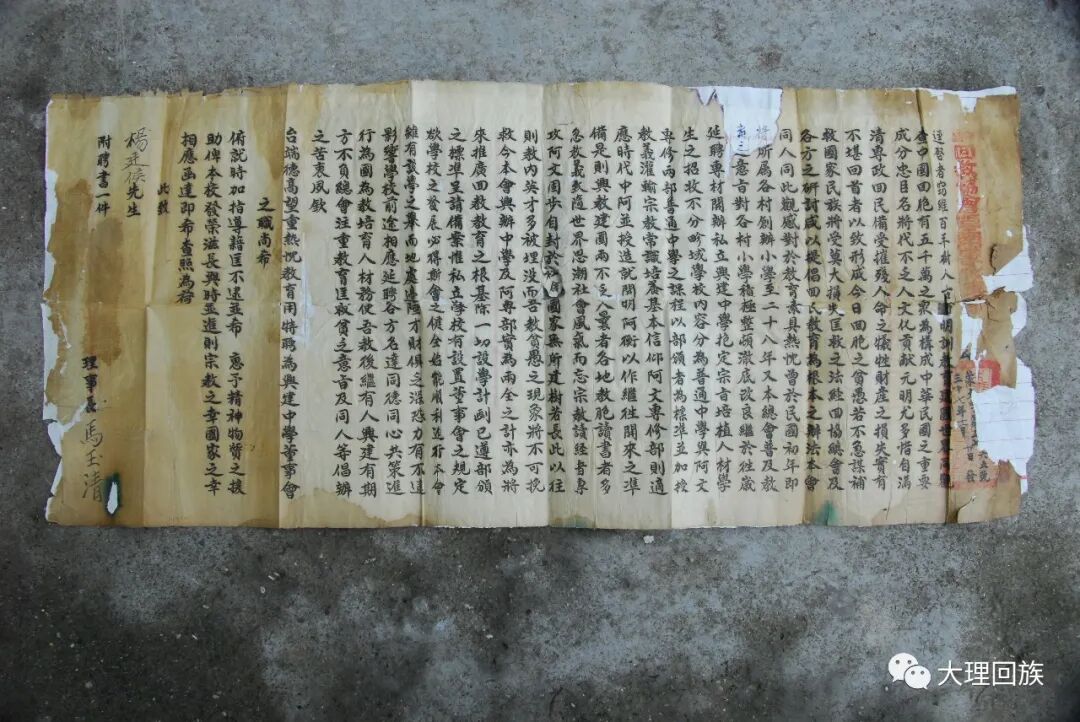
Press and media serve as crucial frontlines for education and outreach, and religious academic periodicals published by Hui Muslims acted as the mouthpiece of Islam. The flourishing or stagnation of Islamic culture was intimately tied to them. Media publications played a massive role in awakening the public, enlightening minds, and promoting social progress. Therefore, as early as the late Guangxu period of the Qing dynasty (1908), Chinese Hui students studying in Japan—including Zhao Zhongqi (from Yunnan), Huang Zhenpan (from Hubei), Wang Tingzhi (from Yunnan), and Bao Tingliang—founded the publication 'Xinghui Pian' (Awaken the Hui Writings) in Tokyo, Japan, setting a precedent for Chinese Muslim periodicals. Although this publication only ran for a single issue, it carried a strong enlightenment ethos and was praised by contemporaries as 'sounding the horn of modern Hui intellectual and cultural thought.' Afterward, in 1915, 1917, 1922, and 1929, Yunnan Muslims successively launched four more periodicals: 'Qingzhen Yuebao' (Islamic Monthly, edited by Sha Ping'an, Xie Jikang, and Ma Degui, running for five issues); 'Qingzhen Huibao' (Islamic Report, edited by Bao Tingliang and others, running for one issue); 'Qingzhen Xunkan' (Islamic Decadal, edited by Ma Pin-san, Ma Zhenbang, and Sha Ping'an, running for over 50 issues); and 'Qingzhen Duobao' (Islamic Bell, edited by Bai Mengyu, Ma Shiqing, Ma Muqing, Ma Jian, Na Zhong, Na Xun, and others, which ran for several issues). During and after the War of Resistance Against Japanese Aggression, our province also saw the publication of several other periodicals, such as 'Xin Mumin' (The New Muslims, edited by Southwest Associated University students Wang Pei and Wang Hao, running for three issues); 'Qingzhen Duobao Fukan' (Islamic Bell Supplement, edited by Sha Dezhen and Na Zhongming); and 'Dimeimen' (Sisters and Brothers, edited by Lin Song, running for one issue). Among these publications, 'Qingzhen Duobao' had the longest run and the deepest impact. It can be said that 'Qingzhen Duobao' stood shoulder-to-shoulder with other academically rigorous contemporary journals such as 'Yuhua', 'The Chinese Islamic Association Monthly', and 'Yiguang'.
In 1929, the Yunnan branch of the Islamic Progressive Association established a propaganda department, and Bai Mengyu and others initiated the founding of 'Qingzhen Duobao'. Ma Shiqing and Ma Muqing served as editors-in-chief, while Na Zhong took charge of actual editorial operations. After publishing about 15 or 16 issues, the publication was suspended for many years because the editors and editorial staff left Kunming for official duties or traveled overseas for their studies. It wasn't until 1940, as the staff of 'Duobao' returned one after another, that the Islamic Association decided to resume publication. Ma Jian, Na Zhong, Na Xun, Sha Dezhen, and Na Zhongming served as editors-in-chief. During the War of Resistance, the wartime safe haven of Kunming gathered numerous Hui university professors, scholars, and Muslim university students who became contributors to 'Duobao', including esteemed figures like Mr. Bai Shouyi, Mr. Yang Zhijiu, and Ma Shouxian. Thanks to an abundant supply of submissions, 'Qingzhen Duobao' thrived remarkably during this period, and its circulation surged dramatically.
Regarding the name and guiding mission of 'Qingzhen Duobao', Mr. Ma Pin-san wrote in the inaugural issue: '...Our pure religion originated with Adam, with the purpose of recognizing Allah, worshiping Him, and aiding humanity and the world. The prophets succeeded one another in an unbroken lineage until the Most Exalted Prophet Muhammad appeared, gathering the perfections of all prophets, serving as the ultimate guide for mankind, and receiving thirty divisions of heavenly scriptures. He elucidated the profound mysteries of the seen and unseen, established the moral laws governing heaven and earth, awakened the deaf and enlightened the blind, and guided people toward goodness while deterring evil—truly standing as a great warning bell [duobao] for all ages past and present.' Mr. Na Zhong summarized the publication's mission into three points: 1. Promote the religious consciousness of believers; 2. Improve Islamic education; and 3. Foster a sense of national consciousness among believers. In his 'Editorial on Resuming Publication', Mr. Ma Bo'an pointed out in accordance with the needs of the War of Resistance that 'Duobao' must hold high the banner of patriotism, calling upon Hui and Han compatriots to 'truly unite and face the national crisis together,' and 'exhaust their utmost efforts to strive for the independence, freedom, and equality of our nation and people.'
Each issue of 'Qingzhen Duobao' featured editorials, Islamic news, dispatches, academic and cultural essays, and historical materials, among other contents. A brief overview includes: 1. Islamic doctrine and ethics; 2. The truths of Islam; 3. Historical research on the Hui community; 4. Reports supporting the War of Resistance and the patriotic democratic movement; 5. Coverage of friendly Sino-Arabic relations and support for the anti-imperialist struggles of Arab peoples; 6. Biographies of prophets, virtuous predecessors, and prominent Muslim visitors; 7. News and updates on Muslims from various regions; and 8. Reports on the affairs of the Progressive Association and the Islamic Association, to name just a few.
4. Engaging in Religious, Academic, and Cultural Activities
Along with the vigorous development of Hui education and the robust growth of a specialized generation of religious scholars, Islamic academic and cultural activities in Yunnan during the Republican era presented a remarkably bright prospect, with academic research proceeding smoothly and yielding impressive results. These are summarized and briefly described below.
1. Translations of the Quran and Hadith.
The Early 20th-Century Cultural Movement of Yunnan's Hui Muslims: Education, Print, and Modern Transformation (Part 2)
Articles • Hasan09 posted the article • 0 comments • 1 views • 1 hours ago
As for the translation of Hadith literature, during the 1920s and 1930s, the Niujie Mosque Bookstore in Beiping published a book titled 'Shengxun Sizhang' (Forty Hadiths). The Capital Ethnic Culture Museum still preserves and exhibits this translation. The translator was Grand Imam Ma Ruitu.
2. Translations of Classical Arabic Masterworks and Religious Texts
During this period, a vast number of classic Arabic masterworks and religious scriptures were continuously translated, published, and introduced to Muslims nationwide through the diligent writing of students who studied in Egypt and prominent imams, with people eagerly competing to buy and read them. At this time, Yunnan's entire translation scene blossomed like spring, bearing abundant fruit. The works of various translators are introduced below.
Mr. Ma Jian translated: 'Huiqiao Zhexue' (Islamic Philosophy, Commercial Press, 1934), 'Huiqiao Zhenxiang' (The Truth of Islam, Commercial Press, 1937), 'Huiqiao Jiduojiao yu Xueshu Wenhua' (Islam, Christianity, and Academic Culture, Shanghai Islamic Bookstore, 1936), 'Huizu Jiaoyushi' (History of Hui Education, Commercial Press, 1941), 'Huizu Zhexueshi' (History of Hui Philosophy, Commercial Press, 1944), 'Quran', Volume 1 (Peking University Press, 1949), and 'Jiaoyixue Dagang' (Outline of Dogmatics, published in Kunming, 1945).
Mr. Na Zhong translated: 'Yisilanjiao' (Islam, Chengda Normal School Publishing Department, 1934), 'Yisilan yu Alatbo Wenming' (Islam and Arab Civilization, Commercial Press, 1937), 'Huiqiao Xueshu Sixiangshi' (History of Islamic Academic Thought, Commercial Press, 1948), 'Alabo Wenmingshi' (History of Arab Civilization, Commercial Press, 1948), and 'Huiqiao Zhuguo Wenhuashi' (Cultural History of Islamic Nations, Kunming Minyi Daily Press, 1948).
Mr. Na Xun translated: 'Tianfang Yetan' (One Thousand and One Nights, Commercial Press, 1947).
Mr. Lin Zhongming translated: 'Huiqiao Lishi Jiaoketu' (Islamic History Textbook, Shanghai China Islamic Bookstore, 1935).
Mr. Ma Junwu translated: 'Alabo Ertong Gushi' (Arab Children's Stories, Shanghai World Book Company).
Mr. Lin Xingzhi translated: 'Huiqiao Jichengfa yu Qita Jichengfa zhi Bijiao' (Comparison of Islamic Inheritance Law with Other Inheritance Laws, Commercial Press, 1946).
The 'Number One Horse of Southern Yunnan' — Grand Imam Ma Ruitu
Grand Imam Ma Ruitu translated: 'Huiqiao Renyilun' (Islamic Monotheism, Zhonghua Book Company, 1931) and 'Muhammede de Moxi' (The Revelations of Muhammad, Zhonghua Book Company, 1934).
3. Research and Publications on Chinese Hui History
During the War of Resistance, the renowned historian and specialist in Hui and Islamic history, Mr. Bai Shouyi, evacuated to Yunnan. In addition to teaching in middle schools and universities, Mr. Bai devoted all his energy to investigating and researching the history of Yunnan's Hui Muslims, achieving remarkable results. He authored 'Zhongguo Huiqiao Xiaoshi' (A Brief History of Chinese Islam, Chongqing Commercial Press, 1944) and 'Zhongguo Yisilanshi Gangyao' (Outline of Chinese Islamic History, Wentong Book Company, 1946).
Additionally, Professor Fu Tongxian from Chengjie, who studied in the United States, authored the book 'Zhongguo Huiqiao Shi' (History of Chinese Islam), published by the Commercial Press in 1940.
Grand Imam Sha Ping'an, along with elderly gentleman Ma Guanzheng and Mr. Ma Shengfeng, collected and organized source materials on the Qing-dynasty Muslim uprisings, providing foundational materials later utilized by Professor Bai Shouyi during the War of Resistance when compiling 'Xiantong Dianbian Jianwenlu' (Records of Seen and Heard Events during the Xianfeng and Tongzhi Eras in Yunnan).
4. Collecting and organizing Chinese Islamic translations and commentaries dating from the Ming and Qing dynasties onwards, such as works by Ma Zhu and Ma Fuchou, including 'Qingzhen Zhinan' (Guide to Purity), 'Sidian Yaohui' (Essential Assemblies of the Four Canons), 'Dahua Zonggui' (The Ultimate Return to the Great Transformation), and 'Zhutian Dazuang' (Grand Praises to the Heavens).
5. Publishing and Distributing Islamic Texts
One of the main missions of the Yunnan Branch of the Zhenxue Society (Islamic Progress Society) was publishing and distributing various Chinese translations and religious texts, with specific sales handled by the Lihechang Leather Shop on Shuncheng Street. Grand Imam Sha Ping'an self-funded the establishment of the Tianfang Bookstore, which published works like *Qianfeiye* (Arabic Grammar), *Mentai Xige* (Islamic jurisprudence), and *Heewayi Tubiao* (Islamic tables and charts), making massive contributions to the educational and cultural development of Hui Muslims.
6. Sending Outstanding Students Abroad to Study
In the early 1930s, an Iranian scholar named Dazhang came to Yunnan and stayed at the Nancheng Mosque in Kunming. This scholar was said to have memorized *Qianfeiye* (Arabic Grammar) and was extremely knowledgeable. After examining the state of traditional *jingtang jiaoyu* (mosque-based education) in Yunnan at the time and finding it lacking, he suggested to the Yunnan Branch of the Zhenxue Society that students be dispatched to the Arab world's highest seat of learning, Al-Azhar University, to cultivate high-level specialized talent. Dazhang also enthusiastically helped write to Al-Azhar to apply for the admission of Chinese students. The university authorities replied promptly, agreeing to admit ten students sent from Yunnan. In November 1931, the Yunnan Branch of the Zhenxue Society selected Na Zhong (style name: Zijizhi), Zhang Youcheng (style name: Ziren), and Lin Zhongming (style name: Zimin), along with Ma Jian (style name: Zishi) from the Shanghai Islamic Normal School. Led by Mr. Sha Rucheng, the disciplinary director of Kunming's Mingde Middle School, these four formed the student delegation to Egypt, traveling via Haiphong in Annam (now Vietnam) and crossing the ocean to study in Egypt. This was China's first batch of students studying in Egypt. Since the Qing Dynasty, Islamic scholars in our province had a tradition of combining the Hajj pilgrimage with studying abroad, such as the elder masters Ma Fuchu and Ma Lianyuan. Following in their footsteps, Chinese students in Egypt formed the Chinese Egyptian Student Hajj Delegation in 1938 to travel to Saudi Arabia and actively carry out anti-Japanese propaganda activities, shattering Japanese imperialist international propaganda and conspiracies. The entire group of students in Egypt thus fulfilled their dual aspirations of studying abroad and performing the Hajj.
The third batch of students sent to Egypt was organized by Yunnan and consisted of three individuals: Na Xun (style name: Heng, in 1934), Lin Xinghua (style name: Gengyu), and Ma Junwu (style name: Xingzhou). That same year, the fifth batch sent by the Shanghai Islamic Normal School included two Yunnan natives among its five members: Lin Xingzhi (Lin Xinghua's younger brother, style name: Fengwu) and Ma Youlian (style name: Jiqing).
In May 1933, the Al-Azhar Chinese Student Department was established, and Sha Rucheng was appointed as its director, taking full charge of administrative affairs concerning Chinese Hui Muslim students studying in Egypt. While in Egypt, Director Sha was admitted to the Department of Education at the American University in Cairo for advanced studies, earning his master's degree in 1938.
From 1931 to 1940, the number of Chinese Hui Muslim students studying in Egypt reached 48. Together with the two directors, Sha Rucheng and Pang Shiqian, the total reached 50. Yunnan accounted for 10 of these students, making up 20%. During their time abroad, Yunnan's students already had translation works published, and upon returning home after completing their studies, they made monumental contributions to the nation and their ethnic community. For instance, while in Egypt, Mr. Ma Jian translated the Confucian classic *The Analects* into Arabic, which was published by the Fugu Bookstore in Cairo, spreading ancient Chinese culture to the Arab world for the first time. Similarly, Mr. Na Xun introduced ancient and modern Chinese literary masterpieces such as *The Collector of Poisonous Snakes*, *The Kite*, and *Thunderstorm* to the Arab people, playing a vital role in bridging Chinese and Arab cultures.
In 1946, Mr. Ma Jian accepted an invitation from Peking University to teach in the Department of Oriental Languages, where he established the Arabic language major. Later on, Mr. Na Zhong, Mr. Lin Zhongming, and Mr. Lin Xinghua joined forces to teach at Beijing Foreign Studies University, where they founded the Arabic Department. They poured their hearts and efforts into establishing Arabic language majors in contemporary Chinese universities, blazing a trail through hardship and becoming the pioneers of new China's Arabic education.
Through the hard work and dedication of Muslims across the province, and by overcoming various challenges, the New Culture Movement among Yunnan's Hui Muslims played a positive role in cultivating talent, spreading ideas, raising cultural standards, promoting Sino-Arab cultural exchange, and enhancing the general public's understanding of Islam.
References
"History of Islam", edited by Jin Yijiu, Jiangsu People's Publishing House
"History of the Hui Muslims in Yunnan", edited by Yang Zhaojun, Yunnan Nationalities Publishing House
"History of the Hui Muslims in Dali", compiled by the Dali Prefecture Hui Muslim Association, Yunnan Nationalities Publishing House
"Islamic Duobao (Islamic Bell Newspaper)"
"Encyclopedia of Islam in China", Sichuan Lexicographical Publishing House
"Dictionary of Chinese Hui Muslims", edited by Qiu Shusen, Jiangsu Ancient Books Publishing House view all
As for the translation of Hadith literature, during the 1920s and 1930s, the Niujie Mosque Bookstore in Beiping published a book titled 'Shengxun Sizhang' (Forty Hadiths). The Capital Ethnic Culture Museum still preserves and exhibits this translation. The translator was Grand Imam Ma Ruitu.
2. Translations of Classical Arabic Masterworks and Religious Texts
During this period, a vast number of classic Arabic masterworks and religious scriptures were continuously translated, published, and introduced to Muslims nationwide through the diligent writing of students who studied in Egypt and prominent imams, with people eagerly competing to buy and read them. At this time, Yunnan's entire translation scene blossomed like spring, bearing abundant fruit. The works of various translators are introduced below.
Mr. Ma Jian translated: 'Huiqiao Zhexue' (Islamic Philosophy, Commercial Press, 1934), 'Huiqiao Zhenxiang' (The Truth of Islam, Commercial Press, 1937), 'Huiqiao Jiduojiao yu Xueshu Wenhua' (Islam, Christianity, and Academic Culture, Shanghai Islamic Bookstore, 1936), 'Huizu Jiaoyushi' (History of Hui Education, Commercial Press, 1941), 'Huizu Zhexueshi' (History of Hui Philosophy, Commercial Press, 1944), 'Quran', Volume 1 (Peking University Press, 1949), and 'Jiaoyixue Dagang' (Outline of Dogmatics, published in Kunming, 1945).
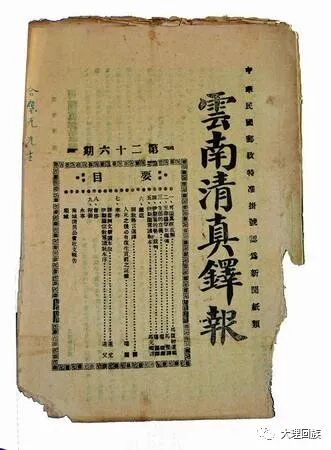
Mr. Na Zhong translated: 'Yisilanjiao' (Islam, Chengda Normal School Publishing Department, 1934), 'Yisilan yu Alatbo Wenming' (Islam and Arab Civilization, Commercial Press, 1937), 'Huiqiao Xueshu Sixiangshi' (History of Islamic Academic Thought, Commercial Press, 1948), 'Alabo Wenmingshi' (History of Arab Civilization, Commercial Press, 1948), and 'Huiqiao Zhuguo Wenhuashi' (Cultural History of Islamic Nations, Kunming Minyi Daily Press, 1948).
Mr. Na Xun translated: 'Tianfang Yetan' (One Thousand and One Nights, Commercial Press, 1947).
Mr. Lin Zhongming translated: 'Huiqiao Lishi Jiaoketu' (Islamic History Textbook, Shanghai China Islamic Bookstore, 1935).
Mr. Ma Junwu translated: 'Alabo Ertong Gushi' (Arab Children's Stories, Shanghai World Book Company).
Mr. Lin Xingzhi translated: 'Huiqiao Jichengfa yu Qita Jichengfa zhi Bijiao' (Comparison of Islamic Inheritance Law with Other Inheritance Laws, Commercial Press, 1946).
The 'Number One Horse of Southern Yunnan' — Grand Imam Ma Ruitu
Grand Imam Ma Ruitu translated: 'Huiqiao Renyilun' (Islamic Monotheism, Zhonghua Book Company, 1931) and 'Muhammede de Moxi' (The Revelations of Muhammad, Zhonghua Book Company, 1934).
3. Research and Publications on Chinese Hui History
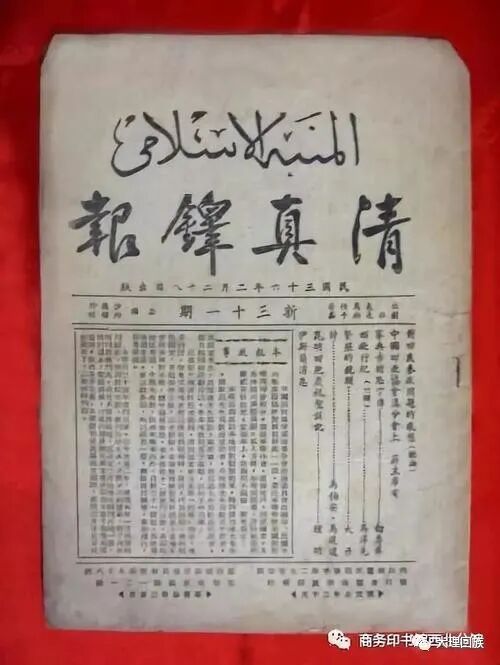
During the War of Resistance, the renowned historian and specialist in Hui and Islamic history, Mr. Bai Shouyi, evacuated to Yunnan. In addition to teaching in middle schools and universities, Mr. Bai devoted all his energy to investigating and researching the history of Yunnan's Hui Muslims, achieving remarkable results. He authored 'Zhongguo Huiqiao Xiaoshi' (A Brief History of Chinese Islam, Chongqing Commercial Press, 1944) and 'Zhongguo Yisilanshi Gangyao' (Outline of Chinese Islamic History, Wentong Book Company, 1946).
Additionally, Professor Fu Tongxian from Chengjie, who studied in the United States, authored the book 'Zhongguo Huiqiao Shi' (History of Chinese Islam), published by the Commercial Press in 1940.
Grand Imam Sha Ping'an, along with elderly gentleman Ma Guanzheng and Mr. Ma Shengfeng, collected and organized source materials on the Qing-dynasty Muslim uprisings, providing foundational materials later utilized by Professor Bai Shouyi during the War of Resistance when compiling 'Xiantong Dianbian Jianwenlu' (Records of Seen and Heard Events during the Xianfeng and Tongzhi Eras in Yunnan).
4. Collecting and organizing Chinese Islamic translations and commentaries dating from the Ming and Qing dynasties onwards, such as works by Ma Zhu and Ma Fuchou, including 'Qingzhen Zhinan' (Guide to Purity), 'Sidian Yaohui' (Essential Assemblies of the Four Canons), 'Dahua Zonggui' (The Ultimate Return to the Great Transformation), and 'Zhutian Dazuang' (Grand Praises to the Heavens).
5. Publishing and Distributing Islamic Texts
One of the main missions of the Yunnan Branch of the Zhenxue Society (Islamic Progress Society) was publishing and distributing various Chinese translations and religious texts, with specific sales handled by the Lihechang Leather Shop on Shuncheng Street. Grand Imam Sha Ping'an self-funded the establishment of the Tianfang Bookstore, which published works like *Qianfeiye* (Arabic Grammar), *Mentai Xige* (Islamic jurisprudence), and *Heewayi Tubiao* (Islamic tables and charts), making massive contributions to the educational and cultural development of Hui Muslims.
6. Sending Outstanding Students Abroad to Study
In the early 1930s, an Iranian scholar named Dazhang came to Yunnan and stayed at the Nancheng Mosque in Kunming. This scholar was said to have memorized *Qianfeiye* (Arabic Grammar) and was extremely knowledgeable. After examining the state of traditional *jingtang jiaoyu* (mosque-based education) in Yunnan at the time and finding it lacking, he suggested to the Yunnan Branch of the Zhenxue Society that students be dispatched to the Arab world's highest seat of learning, Al-Azhar University, to cultivate high-level specialized talent. Dazhang also enthusiastically helped write to Al-Azhar to apply for the admission of Chinese students. The university authorities replied promptly, agreeing to admit ten students sent from Yunnan. In November 1931, the Yunnan Branch of the Zhenxue Society selected Na Zhong (style name: Zijizhi), Zhang Youcheng (style name: Ziren), and Lin Zhongming (style name: Zimin), along with Ma Jian (style name: Zishi) from the Shanghai Islamic Normal School. Led by Mr. Sha Rucheng, the disciplinary director of Kunming's Mingde Middle School, these four formed the student delegation to Egypt, traveling via Haiphong in Annam (now Vietnam) and crossing the ocean to study in Egypt. This was China's first batch of students studying in Egypt. Since the Qing Dynasty, Islamic scholars in our province had a tradition of combining the Hajj pilgrimage with studying abroad, such as the elder masters Ma Fuchu and Ma Lianyuan. Following in their footsteps, Chinese students in Egypt formed the Chinese Egyptian Student Hajj Delegation in 1938 to travel to Saudi Arabia and actively carry out anti-Japanese propaganda activities, shattering Japanese imperialist international propaganda and conspiracies. The entire group of students in Egypt thus fulfilled their dual aspirations of studying abroad and performing the Hajj.
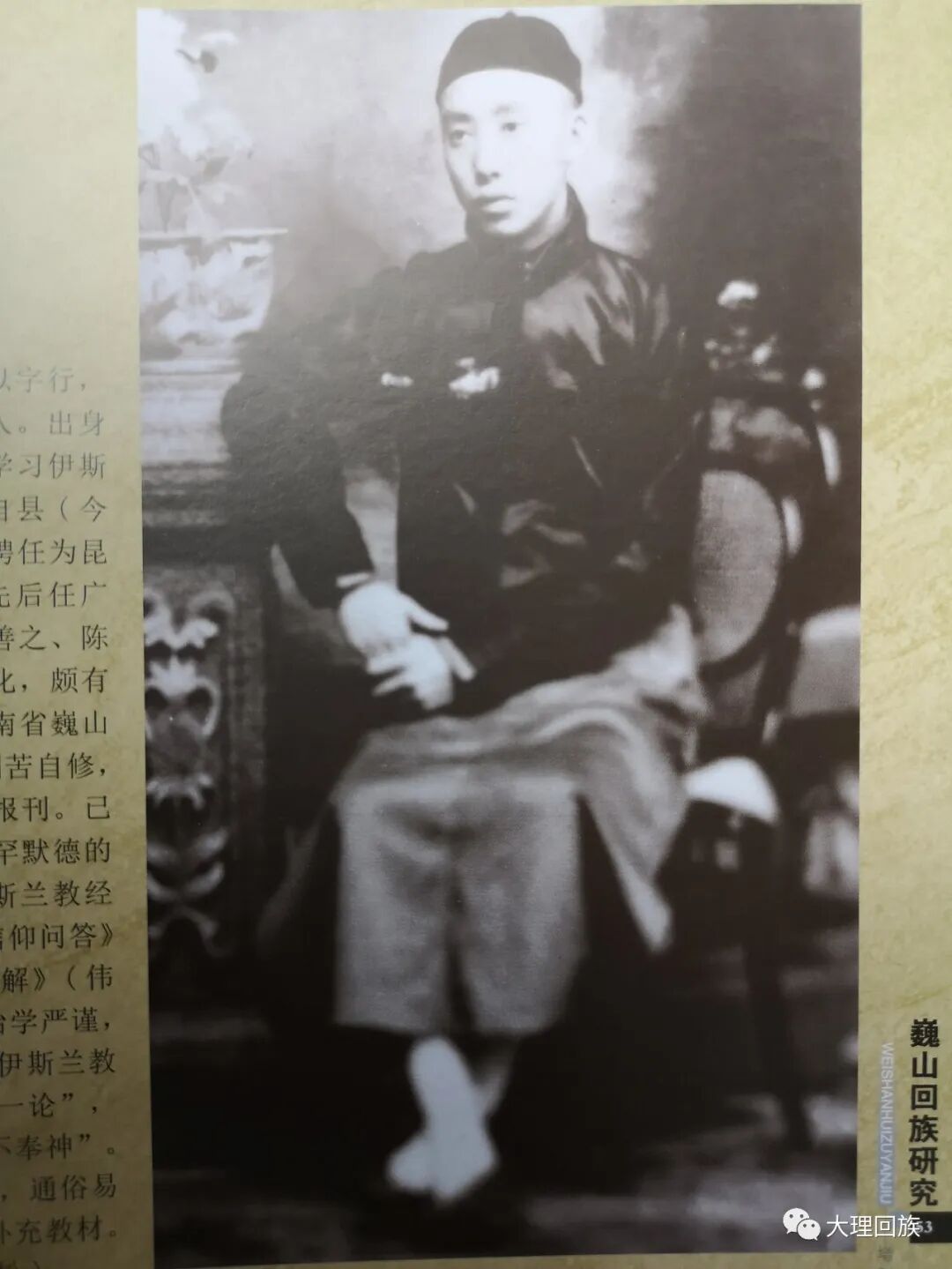
The third batch of students sent to Egypt was organized by Yunnan and consisted of three individuals: Na Xun (style name: Heng, in 1934), Lin Xinghua (style name: Gengyu), and Ma Junwu (style name: Xingzhou). That same year, the fifth batch sent by the Shanghai Islamic Normal School included two Yunnan natives among its five members: Lin Xingzhi (Lin Xinghua's younger brother, style name: Fengwu) and Ma Youlian (style name: Jiqing).
In May 1933, the Al-Azhar Chinese Student Department was established, and Sha Rucheng was appointed as its director, taking full charge of administrative affairs concerning Chinese Hui Muslim students studying in Egypt. While in Egypt, Director Sha was admitted to the Department of Education at the American University in Cairo for advanced studies, earning his master's degree in 1938.
From 1931 to 1940, the number of Chinese Hui Muslim students studying in Egypt reached 48. Together with the two directors, Sha Rucheng and Pang Shiqian, the total reached 50. Yunnan accounted for 10 of these students, making up 20%. During their time abroad, Yunnan's students already had translation works published, and upon returning home after completing their studies, they made monumental contributions to the nation and their ethnic community. For instance, while in Egypt, Mr. Ma Jian translated the Confucian classic *The Analects* into Arabic, which was published by the Fugu Bookstore in Cairo, spreading ancient Chinese culture to the Arab world for the first time. Similarly, Mr. Na Xun introduced ancient and modern Chinese literary masterpieces such as *The Collector of Poisonous Snakes*, *The Kite*, and *Thunderstorm* to the Arab people, playing a vital role in bridging Chinese and Arab cultures.
In 1946, Mr. Ma Jian accepted an invitation from Peking University to teach in the Department of Oriental Languages, where he established the Arabic language major. Later on, Mr. Na Zhong, Mr. Lin Zhongming, and Mr. Lin Xinghua joined forces to teach at Beijing Foreign Studies University, where they founded the Arabic Department. They poured their hearts and efforts into establishing Arabic language majors in contemporary Chinese universities, blazing a trail through hardship and becoming the pioneers of new China's Arabic education.
Through the hard work and dedication of Muslims across the province, and by overcoming various challenges, the New Culture Movement among Yunnan's Hui Muslims played a positive role in cultivating talent, spreading ideas, raising cultural standards, promoting Sino-Arab cultural exchange, and enhancing the general public's understanding of Islam.
References
"History of Islam", edited by Jin Yijiu, Jiangsu People's Publishing House
"History of the Hui Muslims in Yunnan", edited by Yang Zhaojun, Yunnan Nationalities Publishing House
"History of the Hui Muslims in Dali", compiled by the Dali Prefecture Hui Muslim Association, Yunnan Nationalities Publishing House
"Islamic Duobao (Islamic Bell Newspaper)"
"Encyclopedia of Islam in China", Sichuan Lexicographical Publishing House
"Dictionary of Chinese Hui Muslims", edited by Qiu Shusen, Jiangsu Ancient Books Publishing House
Uncovering Yunnan Hui Muslim Heritage: The Genealogies of Sayyid Ajjal & Descendants
Articles • Hasan09 posted the article • 0 comments • 1 views • 1 hours ago
The Distribution and Organization of the Genealogy of Prince Xianyang Sayyid Ajjal: Yunnan Hui Genealogies, Sayyid Ajjal Descendants, and Family History
Abstract: This article organizes the key points of the original text "The Distribution and Organization of the Genealogy of Prince Xianyang Sayyid Ajjal: Yunnan Hui Genealogies, Sayyid Ajjal Descendants, and Family History," maintaining the original paragraph and image order. It is suitable for readers and researchers looking for long-tail keywords related to the Sayyid Ajjal genealogy, Yunnan Hui Muslims, and Hui clan records.
Ma Yingsheng
Genealogies are records documenting a single surname's lineage and the significant deeds of its figures. Using a specific format to record the lineage, biographical deeds, living environments, and local customs of a patrilineal blood-related family, they form an essential component of local gazetteers. The genealogy of Sayyid Ajjal records his family lineage along with the important figures and major events within his family. Hui Muslims entered Yunnan as early as the Tang and Song dynasties, but they primarily arrived during the Yuan dynasty alongside Sayyid Ajjal. His descendants spread throughout various regions of Yunnan and beyond the province, mainly comprising 16 surnames: Sha, Ma, Na, Hu, Qi, Jin, Mi, Sai, Ding, Sa, Ha, Su, Shan, Hu, Hai, and Bao. Over successive dynasties, several versions of family genealogies were compiled. A rough count of known versions circulating in Yunnan (excluding those outside the province) totals 9 versions. Below, we focus on introducing 5 versions that have been observed:
1. "Xianyang Family Genealogy", also known as "Dali Ma Surname Clan Lineage" or "Dali Ma Surname Genealogy"
4 volumes; discovery location: Dali Ancient City; collection period: Republic of China era; collector: Mr. Ma Yuan (style name: Yibo), meticulously copied with a writing brush.
This genealogical record starts from the 26th descendant of the Prophet (Peace Be Upon Him), Suofeier, an Imperial Court Attendant King during the Song dynasty, extends to the 31st descendant, Sayyid Ajjal, in the Yuan dynasty, and continues through the 45th descendant, Ma Zhu, in the early Qing dynasty—compiled over eight generations. Beginning with the first ancestor, the Prophet Muhammad, it traces all the way down to the 47th Qing dynasty descendant, Ma Yingfang, spanning over 1,400 years. Its contents include the lineage from the first ancestor, the Prophet Muhammad, up to the 47th Qing descendant Ma Yingfang; the "General Preface to the Tombstone of Shams al-Din" and "Sayyid Ajjal's Achievements in Governing Yunnan" by the prominent Qing scholar Ma Zhu; eulogies by Emperor Taizong of the Tang and Emperor Taizu of the Ming; 6 imperial edicts from the first year of the Dade era of the Yuan dynasty; the prominent official posts held by Sai and his descendants; the settlement distribution of Sayyid Ajjal's 5 sons and 23 grandsons; and biographies of important figures. It serves as essential literature for studying Sayyid Ajjal, Yunnan history, Yunnan Hui history, and local gazetteers. Its origin is clear and its transmission well-documented; the Ming-dynasty Han scholar Shi Zhongbin recorded this genealogy in his authored book *Zhishen Lu*, demonstrating its authenticity and reliability.
After being organized, collated, and annotated by the author, the "Xianyang Family Genealogy" was included in the Dali Hui Culture Series by the Dali Prefecture Hui Association and officially published in July 2010.
2. "Ma Family Genealogy"
1 volume; discovery location: Dawei Geng, Weishan County; collection period: Republic of China era; collector: Mr. Ma Shangwen, handwritten manuscript with a writing brush. The cover reads: "In the 26th year of the Kangxi era of the Qing dynasty (1687, Dingmao year), the senior elder Ma Zhu of Yongchang took leave from the capital to return to Yunnan, gathering the clan to compile the genealogy." This volume was originally collected by Mr. Ma Yulin (style name: Shisheng) at the South Gate of Dali Ancient City, though it is unknown when it drifted to Weishan. The main contents of this volume include: *Tianfang Zhengxue* (Orthodox Islamic Learning), *Hui Jiao Hunyin Da Jin Tu* (Chart of Major Prohibitions in Islamic Marriage), *Tianfang Shijing Du Zan* (Readings and Praises of Islamic Classics), *Wushi Shi Guang* (Transmission Light of the Fiftieth Generation); lineage charts of the 55th–58th generations of descendants of Muhammad; charts of the ancestral origins of the lineage from Ibrahim to Isa; the Xianyang Family Lineage Record; genealogy lineages; the lineage of Ma Deling; "Sayyid Ajjal's Achievements in Governing Yunnan"; and supplementary notes. This family genealogy was discovered by faculty and students of the Chinese Department of the Yunnan Institute for Nationalities, who sent a photocopy to Mr. Lin Song at the Central University for Nationalities. Mr. Lin Song then passed it on to the Zheng He research expert Mr. Li Shihou, who included it in his edited book *Zheng He Family History Materials*, published by China Communications Press in 1985. Although both of the aforementioned genealogies originated from Dali Ancient City, their contents differ. The "Xianyang Family Genealogy" includes biographies of famous ministers such as Sayyid Ajjal, Nasrudin, Husain, Bayan, Manzilagatai, and Tuotuo, which the "Ma Family Genealogy" does not; conversely, the "Ma Family Genealogy" contains works like *Tianfang Zhengxue*, *Hui Jiao Hunyin Da Jin Tu*, *Tianfang Shijing Du Zan*, *Wushi Shi Guang*, and the origin charts of the lineage from Ibrahim to Isa, which are not included in the "Xianyang Family Genealogy."
3. "Sai Family General Clan Record", also known as "Sai Family Genealogy"
One volume; discovery location: Shiping County; compiled in the 28th year of the Qianlong era of the Qing dynasty (1763) by Sai Yu, the 14th descendant of Sayyid Ajjal, and proofread and supplemented in 1923 by Sai Hongbin; collector: Mr. Sha Rucheng (given name: Guozhen, commonly known by his style name) from Kunming. Main contents: Sayyid Ajjal Family Genealogy Treatise; an appendix on the True Sovereign of the White Emperor; the Sai Family Genealogy; appendices on historical imperial examination degrees and a collection of literary arts; imperial eulogies by Emperor Taizong of the Tang and the hundred-character holy title promulgated by Emperor Taizu of the Ming; the imperial eulogy "Sacrificial Text to Prince Xianyang Zhonghui Sai Gong" composed by Emperor Taizu of the Ming; the imperial eulogy "Sacrificial Text for the Imperial Edict Bestowing Honors on Yuan Pingzhang Political Affairs Official Sayyid Ajjal Shams al-Din" by Emperor Chengzu Wen; the "Sacrificial Text to Prince Xianyang Zhonghui Sai Gong" by the King of Annam; "Temple Inscription for Prince Xianyang" by Wang Chen; "Inscription for the Stele of the Newly Built Baogong Shrine" by Fan Chengxun; original couplets of the royal tomb; and "Record of the Expansion of the Front Pavilion and Rear Offering Hall before the Tomb of Prince Xianyang" by Jiang Yi. This was included in Mr. Li Shihou's book *Zheng He Family History Materials*, published by China Communications Press in 1985.
4. "Sayyid Ajjal Genealogy"
One volume; discovery location: Kunming; the genealogy preserved by Suofeier, the 26th descendant of the Prophet and Imperial Court Attendant King of the Song dynasty (titled *Western Origin Genealogy*), edited and compiled by the 31st descendant Sayyid Ajjal, revised by the 32nd descendant, Prince Zhongjian Husain, recompiled by the 33rd descendant, Prince Zhun Bayan, and revised and proofread four times during the Ming and Qing dynasties. During the Republic of China period, it was treasured in its original edition by Ma Dechao, the 53סט descendant and president of the Menghua (present-day Weishan) Association for Progress, and supplemented and published by the 53rd descendant Ma Yunhua. Collector: Mr. Sha Youxin, also known as Sha Rucheng (given name: Guozhen); "Youxin" is a name Mr. Sha adopted after the founding of the People's Republic of China.
Main contents: Ma Zhu's "General Preface to the Tombstone of Shams al-Din"; eulogies by Emperor Taizong of Tang, Emperor Shenzong of Song, and Emperor Taizu of Ming; Sayyid Ajjal's successive official positions and imperial bestowals; Ma Zhu's "Sayyid Ajjal's Achievements in Governing Yunnan"; supplementary examinations; the Xianyang Family Lineage Record; imperial edicts from successive dynasties; examinations of the western Yunnan branches; biographical sketches of Ma Zhu, Ma Dexin, and Ma Lianyuan; appendix: He Family Genealogy. This was included in *Zheng He Family History Materials* edited by Mr. Li Shihou, published by China Communications Press in 1985.
5. The Genealogy of Zheng He, Sixth-Generation Descendant of Sayyid Ajjal—*Zheng He Genealogy*
One volume; discovery location: Dongying, Beicheng, Yuxi; discovery date: 1936; collectors: Zheng Shaoming, Shaowen, Shaoen, and Shaoqing (four brothers).
In 1936, General Li Hongxiang of Yuxi advocated for the compilation of the county gazetteer and extensively solicited materials for it. Someone copied the *Zheng He Genealogy*—preserved by Zheng Shaoming and his brothers in Dongying Village, Yuxi—and presented it to Li Hongxiang. Recognizing its monumental significance, Li Hongxiang handed it over to the renowned scholar Yuan Jiagu. Yuan Jiagu entrusted it to his top disciple, Li Shihou, who authenticated it as an extant unique manuscript with tremendous historical value. Subsequently, Li Hongxiang, accompanied by Li Shihou, went to Dongying to borrow the original *Genealogy*. Upon authentication, the *Genealogy* was found to be backed with rice paper, printed with vermilion silk column border lines, and showed aged paper color, confirming it to be an artifact from the Ming dynasty.
Following meticulous textual research, Li Shihou authored the book *Textual Research and Commentary on the Zheng He Genealogy*, which was officially published in February 1937. After being photographed, the original *Genealogy* was stored in Wuhashan. In 1938, it was requested back to Yuxi by Zheng Shaoqing, and later borrowed by a man named Zheng Bai—who claimed to be a Zheng He descendant from Shadian—after which it went missing. Fortunately, Mr. Li Shihou retained a blueprint copy of the original *Genealogy*.
In June 2005, to commemorate the 600th anniversary of Zheng He's maritime voyages, Yunnan Chenguang Publishing House published the posthumous work of Mr. Li Shihou, *Facsimile Edition of the Original Zheng He Genealogy with Annotations*, making the blueprint originals and photographs preserved for over 60 years fully available to the public. The academic community was thrilled!
Main contents: The *Genealogy* begins recording from the first ancestor Zheng He, clarifying that Zheng He established his lineage by adopting the son of his elder brother Ma Wenming (named Zheng Ci), and continues all the way down to the 15th generation Zheng Yongsheng of the Qing dynasty, his sons the 16th generation Zheng Xingfu, Xinggui, and Xingwang, the 17th generation comprising the genealogy-preserving brothers Zheng Shaoming, and the 18th generation of contemporary brothers like Zheng Yunliang. This completely preserves the 600-year lineage of Zheng He's family, which is an extraordinary feat. At the same time, it provides a comprehensive interpretation of Zheng He's achievements and virtues, revealing two exclusive historical sources of great value. It represents yet another major discovery following the late-Qing discovery of the Mahazhi Stele in Yunnan.
Among the five Sayyid Ajjal family genealogies mentioned above, aside from Sai Yu's *Sai Family General Clan Record* and the *Zheng He Genealogy*, the *Xianyang Family Genealogy*, *Ma Family Genealogy*, and *Sayyid Ajjal Genealogy* share a common origin with divergent branches. They all stem from the *Western Origin Genealogy* preserved by Suofeier in the Song dynasty, compiled starting from Sayyid Ajjal in the Yuan dynasty, expanded and supplemented by Husain, Bayan, and Ma Zhu of the Ming and Qing dynasties, and finally revised by descendants after the Republic of China era. The difference lies in the varying focal points of their compiled contents, with each genealogy possessing its own unique characteristics. In addition, there is the Na Family Genealogy collected by Associate Professor Na Jufeng of Najaying; the He Family Genealogy of Xiaohui Village, Tonghai; the Sayyid Ajjal genealogy *Root Branches for a Hundred Generations* collected by Ma Saiheng of Dongying, Yuxi; and the *Sha Family Genealogy* of Dali. Whether due to not having seen the original manuscripts or because their contents are brief, they are not detailed here individually. Organizing and researching these genealogies holds great significance for our compilation of local gazetteers, village histories, and our ability to trace our sources and origins today.
Transcribed copy of the Ma Yunhua collection in Yongsheng view all
The Distribution and Organization of the Genealogy of Prince Xianyang Sayyid Ajjal: Yunnan Hui Genealogies, Sayyid Ajjal Descendants, and Family History
Abstract: This article organizes the key points of the original text "The Distribution and Organization of the Genealogy of Prince Xianyang Sayyid Ajjal: Yunnan Hui Genealogies, Sayyid Ajjal Descendants, and Family History," maintaining the original paragraph and image order. It is suitable for readers and researchers looking for long-tail keywords related to the Sayyid Ajjal genealogy, Yunnan Hui Muslims, and Hui clan records.
Ma Yingsheng
Genealogies are records documenting a single surname's lineage and the significant deeds of its figures. Using a specific format to record the lineage, biographical deeds, living environments, and local customs of a patrilineal blood-related family, they form an essential component of local gazetteers. The genealogy of Sayyid Ajjal records his family lineage along with the important figures and major events within his family. Hui Muslims entered Yunnan as early as the Tang and Song dynasties, but they primarily arrived during the Yuan dynasty alongside Sayyid Ajjal. His descendants spread throughout various regions of Yunnan and beyond the province, mainly comprising 16 surnames: Sha, Ma, Na, Hu, Qi, Jin, Mi, Sai, Ding, Sa, Ha, Su, Shan, Hu, Hai, and Bao. Over successive dynasties, several versions of family genealogies were compiled. A rough count of known versions circulating in Yunnan (excluding those outside the province) totals 9 versions. Below, we focus on introducing 5 versions that have been observed:
1. "Xianyang Family Genealogy", also known as "Dali Ma Surname Clan Lineage" or "Dali Ma Surname Genealogy"
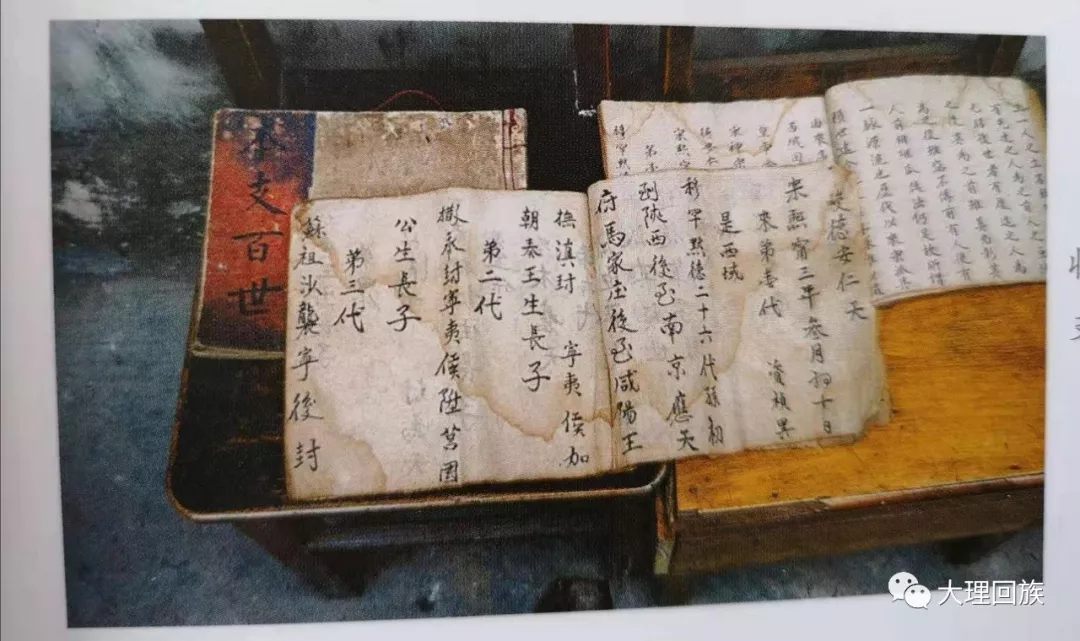
4 volumes; discovery location: Dali Ancient City; collection period: Republic of China era; collector: Mr. Ma Yuan (style name: Yibo), meticulously copied with a writing brush.
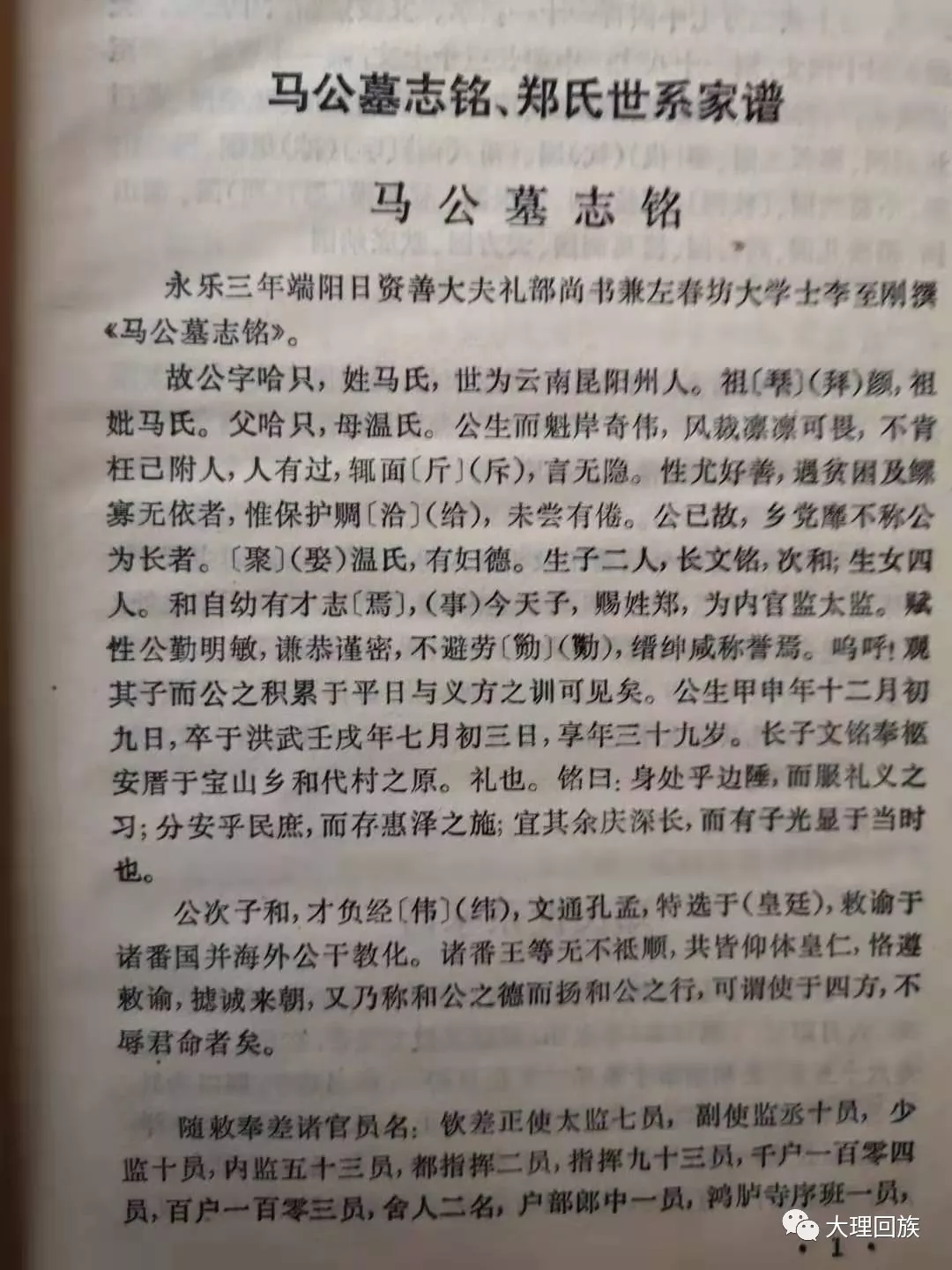
This genealogical record starts from the 26th descendant of the Prophet (Peace Be Upon Him), Suofeier, an Imperial Court Attendant King during the Song dynasty, extends to the 31st descendant, Sayyid Ajjal, in the Yuan dynasty, and continues through the 45th descendant, Ma Zhu, in the early Qing dynasty—compiled over eight generations. Beginning with the first ancestor, the Prophet Muhammad, it traces all the way down to the 47th Qing dynasty descendant, Ma Yingfang, spanning over 1,400 years. Its contents include the lineage from the first ancestor, the Prophet Muhammad, up to the 47th Qing descendant Ma Yingfang; the "General Preface to the Tombstone of Shams al-Din" and "Sayyid Ajjal's Achievements in Governing Yunnan" by the prominent Qing scholar Ma Zhu; eulogies by Emperor Taizong of the Tang and Emperor Taizu of the Ming; 6 imperial edicts from the first year of the Dade era of the Yuan dynasty; the prominent official posts held by Sai and his descendants; the settlement distribution of Sayyid Ajjal's 5 sons and 23 grandsons; and biographies of important figures. It serves as essential literature for studying Sayyid Ajjal, Yunnan history, Yunnan Hui history, and local gazetteers. Its origin is clear and its transmission well-documented; the Ming-dynasty Han scholar Shi Zhongbin recorded this genealogy in his authored book *Zhishen Lu*, demonstrating its authenticity and reliability.
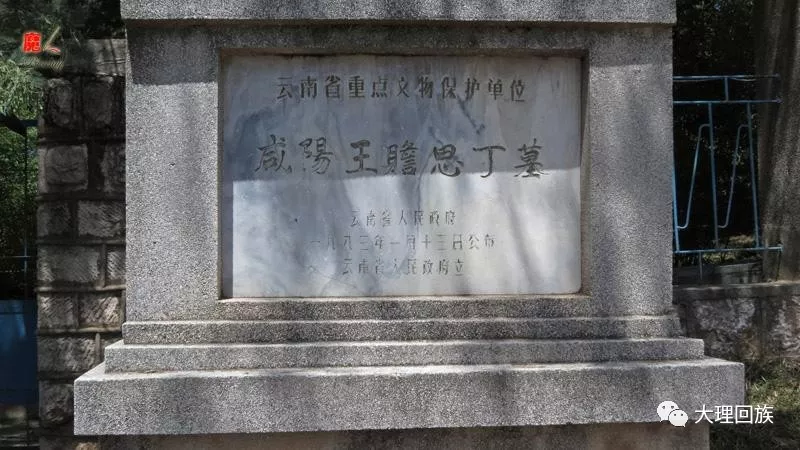
After being organized, collated, and annotated by the author, the "Xianyang Family Genealogy" was included in the Dali Hui Culture Series by the Dali Prefecture Hui Association and officially published in July 2010.
2. "Ma Family Genealogy"
1 volume; discovery location: Dawei Geng, Weishan County; collection period: Republic of China era; collector: Mr. Ma Shangwen, handwritten manuscript with a writing brush. The cover reads: "In the 26th year of the Kangxi era of the Qing dynasty (1687, Dingmao year), the senior elder Ma Zhu of Yongchang took leave from the capital to return to Yunnan, gathering the clan to compile the genealogy." This volume was originally collected by Mr. Ma Yulin (style name: Shisheng) at the South Gate of Dali Ancient City, though it is unknown when it drifted to Weishan. The main contents of this volume include: *Tianfang Zhengxue* (Orthodox Islamic Learning), *Hui Jiao Hunyin Da Jin Tu* (Chart of Major Prohibitions in Islamic Marriage), *Tianfang Shijing Du Zan* (Readings and Praises of Islamic Classics), *Wushi Shi Guang* (Transmission Light of the Fiftieth Generation); lineage charts of the 55th–58th generations of descendants of Muhammad; charts of the ancestral origins of the lineage from Ibrahim to Isa; the Xianyang Family Lineage Record; genealogy lineages; the lineage of Ma Deling; "Sayyid Ajjal's Achievements in Governing Yunnan"; and supplementary notes. This family genealogy was discovered by faculty and students of the Chinese Department of the Yunnan Institute for Nationalities, who sent a photocopy to Mr. Lin Song at the Central University for Nationalities. Mr. Lin Song then passed it on to the Zheng He research expert Mr. Li Shihou, who included it in his edited book *Zheng He Family History Materials*, published by China Communications Press in 1985. Although both of the aforementioned genealogies originated from Dali Ancient City, their contents differ. The "Xianyang Family Genealogy" includes biographies of famous ministers such as Sayyid Ajjal, Nasrudin, Husain, Bayan, Manzilagatai, and Tuotuo, which the "Ma Family Genealogy" does not; conversely, the "Ma Family Genealogy" contains works like *Tianfang Zhengxue*, *Hui Jiao Hunyin Da Jin Tu*, *Tianfang Shijing Du Zan*, *Wushi Shi Guang*, and the origin charts of the lineage from Ibrahim to Isa, which are not included in the "Xianyang Family Genealogy."
3. "Sai Family General Clan Record", also known as "Sai Family Genealogy"
One volume; discovery location: Shiping County; compiled in the 28th year of the Qianlong era of the Qing dynasty (1763) by Sai Yu, the 14th descendant of Sayyid Ajjal, and proofread and supplemented in 1923 by Sai Hongbin; collector: Mr. Sha Rucheng (given name: Guozhen, commonly known by his style name) from Kunming. Main contents: Sayyid Ajjal Family Genealogy Treatise; an appendix on the True Sovereign of the White Emperor; the Sai Family Genealogy; appendices on historical imperial examination degrees and a collection of literary arts; imperial eulogies by Emperor Taizong of the Tang and the hundred-character holy title promulgated by Emperor Taizu of the Ming; the imperial eulogy "Sacrificial Text to Prince Xianyang Zhonghui Sai Gong" composed by Emperor Taizu of the Ming; the imperial eulogy "Sacrificial Text for the Imperial Edict Bestowing Honors on Yuan Pingzhang Political Affairs Official Sayyid Ajjal Shams al-Din" by Emperor Chengzu Wen; the "Sacrificial Text to Prince Xianyang Zhonghui Sai Gong" by the King of Annam; "Temple Inscription for Prince Xianyang" by Wang Chen; "Inscription for the Stele of the Newly Built Baogong Shrine" by Fan Chengxun; original couplets of the royal tomb; and "Record of the Expansion of the Front Pavilion and Rear Offering Hall before the Tomb of Prince Xianyang" by Jiang Yi. This was included in Mr. Li Shihou's book *Zheng He Family History Materials*, published by China Communications Press in 1985.
4. "Sayyid Ajjal Genealogy"
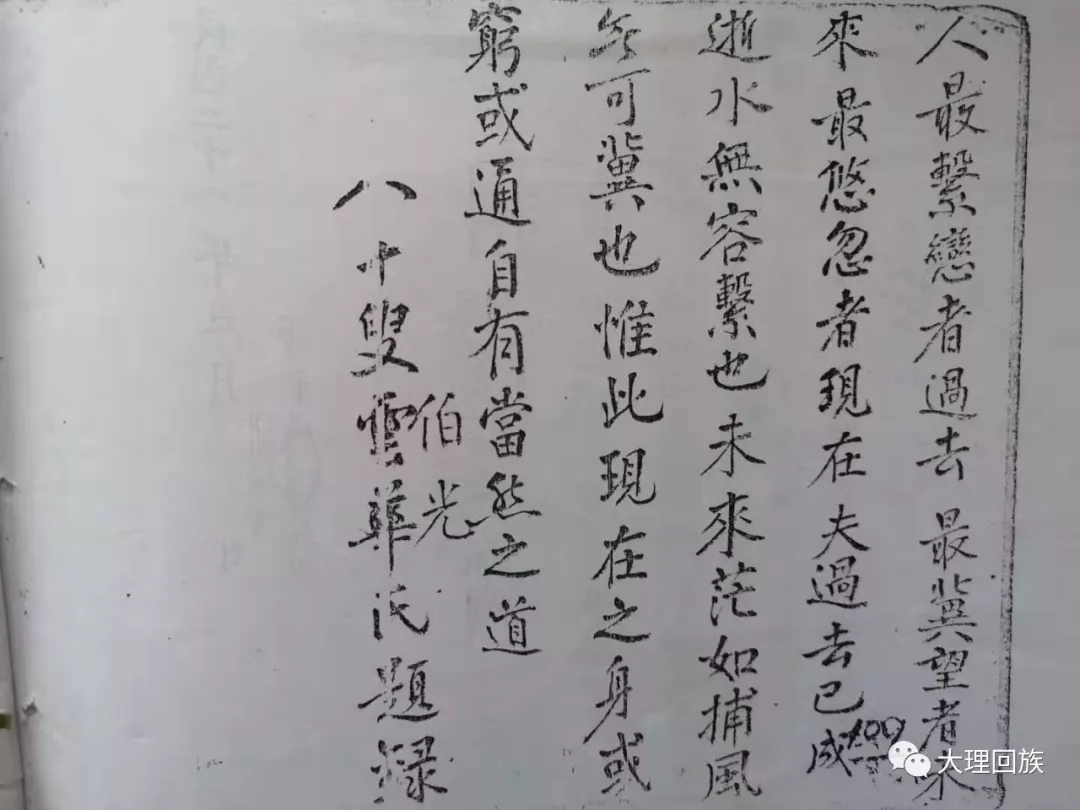
One volume; discovery location: Kunming; the genealogy preserved by Suofeier, the 26th descendant of the Prophet and Imperial Court Attendant King of the Song dynasty (titled *Western Origin Genealogy*), edited and compiled by the 31st descendant Sayyid Ajjal, revised by the 32nd descendant, Prince Zhongjian Husain, recompiled by the 33rd descendant, Prince Zhun Bayan, and revised and proofread four times during the Ming and Qing dynasties. During the Republic of China period, it was treasured in its original edition by Ma Dechao, the 53סט descendant and president of the Menghua (present-day Weishan) Association for Progress, and supplemented and published by the 53rd descendant Ma Yunhua. Collector: Mr. Sha Youxin, also known as Sha Rucheng (given name: Guozhen); "Youxin" is a name Mr. Sha adopted after the founding of the People's Republic of China.
Main contents: Ma Zhu's "General Preface to the Tombstone of Shams al-Din"; eulogies by Emperor Taizong of Tang, Emperor Shenzong of Song, and Emperor Taizu of Ming; Sayyid Ajjal's successive official positions and imperial bestowals; Ma Zhu's "Sayyid Ajjal's Achievements in Governing Yunnan"; supplementary examinations; the Xianyang Family Lineage Record; imperial edicts from successive dynasties; examinations of the western Yunnan branches; biographical sketches of Ma Zhu, Ma Dexin, and Ma Lianyuan; appendix: He Family Genealogy. This was included in *Zheng He Family History Materials* edited by Mr. Li Shihou, published by China Communications Press in 1985.
5. The Genealogy of Zheng He, Sixth-Generation Descendant of Sayyid Ajjal—*Zheng He Genealogy*
One volume; discovery location: Dongying, Beicheng, Yuxi; discovery date: 1936; collectors: Zheng Shaoming, Shaowen, Shaoen, and Shaoqing (four brothers).
In 1936, General Li Hongxiang of Yuxi advocated for the compilation of the county gazetteer and extensively solicited materials for it. Someone copied the *Zheng He Genealogy*—preserved by Zheng Shaoming and his brothers in Dongying Village, Yuxi—and presented it to Li Hongxiang. Recognizing its monumental significance, Li Hongxiang handed it over to the renowned scholar Yuan Jiagu. Yuan Jiagu entrusted it to his top disciple, Li Shihou, who authenticated it as an extant unique manuscript with tremendous historical value. Subsequently, Li Hongxiang, accompanied by Li Shihou, went to Dongying to borrow the original *Genealogy*. Upon authentication, the *Genealogy* was found to be backed with rice paper, printed with vermilion silk column border lines, and showed aged paper color, confirming it to be an artifact from the Ming dynasty.
Following meticulous textual research, Li Shihou authored the book *Textual Research and Commentary on the Zheng He Genealogy*, which was officially published in February 1937. After being photographed, the original *Genealogy* was stored in Wuhashan. In 1938, it was requested back to Yuxi by Zheng Shaoqing, and later borrowed by a man named Zheng Bai—who claimed to be a Zheng He descendant from Shadian—after which it went missing. Fortunately, Mr. Li Shihou retained a blueprint copy of the original *Genealogy*.
In June 2005, to commemorate the 600th anniversary of Zheng He's maritime voyages, Yunnan Chenguang Publishing House published the posthumous work of Mr. Li Shihou, *Facsimile Edition of the Original Zheng He Genealogy with Annotations*, making the blueprint originals and photographs preserved for over 60 years fully available to the public. The academic community was thrilled!
Main contents: The *Genealogy* begins recording from the first ancestor Zheng He, clarifying that Zheng He established his lineage by adopting the son of his elder brother Ma Wenming (named Zheng Ci), and continues all the way down to the 15th generation Zheng Yongsheng of the Qing dynasty, his sons the 16th generation Zheng Xingfu, Xinggui, and Xingwang, the 17th generation comprising the genealogy-preserving brothers Zheng Shaoming, and the 18th generation of contemporary brothers like Zheng Yunliang. This completely preserves the 600-year lineage of Zheng He's family, which is an extraordinary feat. At the same time, it provides a comprehensive interpretation of Zheng He's achievements and virtues, revealing two exclusive historical sources of great value. It represents yet another major discovery following the late-Qing discovery of the Mahazhi Stele in Yunnan.
Among the five Sayyid Ajjal family genealogies mentioned above, aside from Sai Yu's *Sai Family General Clan Record* and the *Zheng He Genealogy*, the *Xianyang Family Genealogy*, *Ma Family Genealogy*, and *Sayyid Ajjal Genealogy* share a common origin with divergent branches. They all stem from the *Western Origin Genealogy* preserved by Suofeier in the Song dynasty, compiled starting from Sayyid Ajjal in the Yuan dynasty, expanded and supplemented by Husain, Bayan, and Ma Zhu of the Ming and Qing dynasties, and finally revised by descendants after the Republic of China era. The difference lies in the varying focal points of their compiled contents, with each genealogy possessing its own unique characteristics. In addition, there is the Na Family Genealogy collected by Associate Professor Na Jufeng of Najaying; the He Family Genealogy of Xiaohui Village, Tonghai; the Sayyid Ajjal genealogy *Root Branches for a Hundred Generations* collected by Ma Saiheng of Dongying, Yuxi; and the *Sha Family Genealogy* of Dali. Whether due to not having seen the original manuscripts or because their contents are brief, they are not detailed here individually. Organizing and researching these genealogies holds great significance for our compilation of local gazetteers, village histories, and our ability to trace our sources and origins today.
Transcribed copy of the Ma Yunhua collection in Yongsheng
A Foodie & Traveler's Guide to Yunnan Hui Muslim Culture, Mosques, and Community Life in Dali
Articles • Hasan09 posted the article • 0 comments • 1 views • 1 hours ago
Heartfelt Notes from Dali's Hui Quarter: The Unseen Chain of Tradition and the Daily Faith of Elderly Muslims in the Colorful South
Abstract:
Documenting the deep emotional touchpoints experienced while living among local Hui Muslims during my time in Dali. Through the unpretentious, middle-path words and actions of Dali's Hui elders, we explore the spiritual bond passed down through generations that tightly links human hearts and faith, showcasing the genuine hospitality where 'there are no outsiders here.'
Living as a traveler in Dali for nearly a month now, Yunnan isn't unfamiliar to me. My school days as a teenager left an imprint on my soul, and several years of teaching later on forged an unbreakable bond with this land.
This land is brimming with blessings. For outsiders, life here moves at a slow pace with clear blue skies, white clouds, fresh air, a pleasant climate, and down-to-earth folkways, making it a dream destination.
For me, looking past the environment, what has always drawn me in is the intrinsic spirit of this land—an invisible chain of tradition tying human hearts tightly to Islam, especially in some of the elders. Perhaps they aren't highly educated, and they never graduated from a madrasa (Islamic school), but their adherence radiates sincere devotion.
(Two elders holding hands and supporting each other on the way home after prayer)
An uncle from Henan who traveled with us said, 'Back home in my village, going to the mosque for namaz (formal daily prayers) is a struggle; my heart is full of reluctance, and I fear the judgment of worldly eyes.' But here, there's so much momentum driving you to the mosque, and every prayer brings immense joy to the soul. Even though his legs and feet aren't great, he always arrives half an hour early just to sit and wait—even that feels like a treat.
This is the most direct takeaway: whether a community's religious life is thriving or not, outsiders are the best judges because the spiritual experience it delivers is real. If a place is no good, people develop a craving to 'escape this place' and can't bear to stay a single second.
(The mosque where I am staying)
Most mosques in Yunnan practice the Gedimu (traditional Hanafi) tradition, and the village where I live is no exception. After the sunnat (recommended) and fard (obligatory) prayers, they recite Surah Ya-Sin, the Guoquan Zhang, Tawbah (repentance), and Salawat (praising the Prophet) in the local dialect, which sounds remarkably distinct and special.
Every single prayer, the moment the adhan (call to prayer) sounds, people rise to their feet, listen with solemn reverence, and eagerly line up in ranks. From my observation, the worshippers here are intensely dignified. When the prayer ends, almost everyone stays to make dua before leaving the hall. Inside the main prayer hall, virtually no one scrolls through their phones; they either sit quietly or recite the Quran, and you hear zero loud chatter—achieving a true sanctuary of prayer.
Even when chatting casually, they avoid the sacred space of the main hall, choosing instead to sit in a circle outside the mosque gates, laughing and bantering. Their manners exude the very etiquette of the deen (religion).
After every prayer, on the walk back to my lodging, elderly folks always greet me with palpable warmth. When spirits are high, they'll enthusiastically invite you to their homes for tea and treat you to a casual meal. The deen dissolves regional differences; even in a strange land, you never feel like an outsider...
According to locals, if someone passes away, out of empathy for the grieving family, relatives all pitch in to help prepare meals for the guests and host them on behalf of the bereaved. At that moment, the grieving family is emotionally vulnerable, and extending care to their hearts is precisely what Islam encourages:
As the Prophet said: 'You are only given victory and provision because of your weak ones.'
Unlike the Central Plains region, if there is a janazah (funeral prayer), people actively participate to seek forgiveness for the deceased. The grieving family gives a small gift of hadiydh (charity/donation) to everyone attending the funeral as an act of charity, dedicating the spiritual reward (thawab) to the deceased to ease their condition in the grave. This form of mutual aid binds people's hearts together in the most meaningful way, making believers feel much more like a unified community rather than isolated individuals who have nothing to do with one another.
Just as the Prophet said: 'The believers in their mutual kindness, compassion, and sympathy are just like one body. When any limb aches, the whole body responds to it with sleeplessness and fever.' — Sahih Muslim
Of course, just like the struggles elsewhere, those practicing the deen here are mostly older folks. The youth have gone out for work or are running small businesses nearby, making it tough for them to balance religious life. Due to special factors, children cannot step foot inside the mosque for formal religious education. Yet, decades of religious foundation in Yunnan owe a huge debt of gratitude to the early emphasis on foundational faith education for children. Moreover, this educational system is remarkably mature—early childhood upbringing combined with two to three years of mosque scripture study after middle or high school allows iman (faith) to take deep root in the soul. This is a unique hallmark of Yunnan's jingtang jiaoyu (traditional mosque-based education), where classical Islamic scholars laid a profound foundation for widespread education.
The transmission of the deen has completed its relay race in the older generation. In their simple way, they have earnestly lived out the spirit of the deen and fulfilled the mission of their era. But today, the shocks of the modern era are dismantling tradition and tearing apart this lineage, leaving an obvious generational fault line standing right in the middle of our times.
What happens next? That is the test of this era. What kind of report card we will submit is not for us to judge, but one day in the future, someone will look back and evaluate people of our era just as I am evaluating the elders of this one. view all
Heartfelt Notes from Dali's Hui Quarter: The Unseen Chain of Tradition and the Daily Faith of Elderly Muslims in the Colorful South
Abstract:
Documenting the deep emotional touchpoints experienced while living among local Hui Muslims during my time in Dali. Through the unpretentious, middle-path words and actions of Dali's Hui elders, we explore the spiritual bond passed down through generations that tightly links human hearts and faith, showcasing the genuine hospitality where 'there are no outsiders here.'
Living as a traveler in Dali for nearly a month now, Yunnan isn't unfamiliar to me. My school days as a teenager left an imprint on my soul, and several years of teaching later on forged an unbreakable bond with this land.
This land is brimming with blessings. For outsiders, life here moves at a slow pace with clear blue skies, white clouds, fresh air, a pleasant climate, and down-to-earth folkways, making it a dream destination.
For me, looking past the environment, what has always drawn me in is the intrinsic spirit of this land—an invisible chain of tradition tying human hearts tightly to Islam, especially in some of the elders. Perhaps they aren't highly educated, and they never graduated from a madrasa (Islamic school), but their adherence radiates sincere devotion.
(Two elders holding hands and supporting each other on the way home after prayer)

An uncle from Henan who traveled with us said, 'Back home in my village, going to the mosque for namaz (formal daily prayers) is a struggle; my heart is full of reluctance, and I fear the judgment of worldly eyes.' But here, there's so much momentum driving you to the mosque, and every prayer brings immense joy to the soul. Even though his legs and feet aren't great, he always arrives half an hour early just to sit and wait—even that feels like a treat.
This is the most direct takeaway: whether a community's religious life is thriving or not, outsiders are the best judges because the spiritual experience it delivers is real. If a place is no good, people develop a craving to 'escape this place' and can't bear to stay a single second.
(The mosque where I am staying)
Most mosques in Yunnan practice the Gedimu (traditional Hanafi) tradition, and the village where I live is no exception. After the sunnat (recommended) and fard (obligatory) prayers, they recite Surah Ya-Sin, the Guoquan Zhang, Tawbah (repentance), and Salawat (praising the Prophet) in the local dialect, which sounds remarkably distinct and special.
Every single prayer, the moment the adhan (call to prayer) sounds, people rise to their feet, listen with solemn reverence, and eagerly line up in ranks. From my observation, the worshippers here are intensely dignified. When the prayer ends, almost everyone stays to make dua before leaving the hall. Inside the main prayer hall, virtually no one scrolls through their phones; they either sit quietly or recite the Quran, and you hear zero loud chatter—achieving a true sanctuary of prayer.
Even when chatting casually, they avoid the sacred space of the main hall, choosing instead to sit in a circle outside the mosque gates, laughing and bantering. Their manners exude the very etiquette of the deen (religion).
After every prayer, on the walk back to my lodging, elderly folks always greet me with palpable warmth. When spirits are high, they'll enthusiastically invite you to their homes for tea and treat you to a casual meal. The deen dissolves regional differences; even in a strange land, you never feel like an outsider...

According to locals, if someone passes away, out of empathy for the grieving family, relatives all pitch in to help prepare meals for the guests and host them on behalf of the bereaved. At that moment, the grieving family is emotionally vulnerable, and extending care to their hearts is precisely what Islam encourages:
As the Prophet said: 'You are only given victory and provision because of your weak ones.'
Unlike the Central Plains region, if there is a janazah (funeral prayer), people actively participate to seek forgiveness for the deceased. The grieving family gives a small gift of hadiydh (charity/donation) to everyone attending the funeral as an act of charity, dedicating the spiritual reward (thawab) to the deceased to ease their condition in the grave. This form of mutual aid binds people's hearts together in the most meaningful way, making believers feel much more like a unified community rather than isolated individuals who have nothing to do with one another.
Just as the Prophet said: 'The believers in their mutual kindness, compassion, and sympathy are just like one body. When any limb aches, the whole body responds to it with sleeplessness and fever.' — Sahih Muslim
Of course, just like the struggles elsewhere, those practicing the deen here are mostly older folks. The youth have gone out for work or are running small businesses nearby, making it tough for them to balance religious life. Due to special factors, children cannot step foot inside the mosque for formal religious education. Yet, decades of religious foundation in Yunnan owe a huge debt of gratitude to the early emphasis on foundational faith education for children. Moreover, this educational system is remarkably mature—early childhood upbringing combined with two to three years of mosque scripture study after middle or high school allows iman (faith) to take deep root in the soul. This is a unique hallmark of Yunnan's jingtang jiaoyu (traditional mosque-based education), where classical Islamic scholars laid a profound foundation for widespread education.
The transmission of the deen has completed its relay race in the older generation. In their simple way, they have earnestly lived out the spirit of the deen and fulfilled the mission of their era. But today, the shocks of the modern era are dismantling tradition and tearing apart this lineage, leaving an obvious generational fault line standing right in the middle of our times.
What happens next? That is the test of this era. What kind of report card we will submit is not for us to judge, but one day in the future, someone will look back and evaluate people of our era just as I am evaluating the elders of this one.
Rare 1930s Photos of Yunnan Hui Muslims, Historic Mosques & Islamic Education
Articles • Hasan09 posted the article • 0 comments • 10 views • 23 hours ago
Rare Historical Imagery: A Study of 1930s Mosques, Modern Education, and Hui Muslim Communities in the Menghua Plain, Weishan, Yunnan
Abstract:
A deep dive into rare historical photos taken in the 1930s in Yunnan's Menghua Plain (now Weishan County, Dali). Look back at the journey of educational pioneers like Grand Imam Na Runzhang in building modern middle schools, and witness the historical imprints of traditional Chinese-style mosques, schools, and communities in southwest Muslim villages nearly a century ago.
The Menghua Plain in Yunnan, home to eighteen local Muslim villages.
Muslim teachers and students from Xingjian Middle School in Yongjian Township, Menghua County (now Weishan County), posing for a group photo at the school gate, 1934–1935. In the front row is the renowned Yunnan Grand Imam, scholar, and educator Mr. Na Runzhang.
The original photo is labeled 'Na Hsiao-chang,' which refers to Principal Na, namely Na Runzhang.
Na Runzhang (1900–1971), given name Rongbin, courtesy name Runzhang, was from Najiaying, Tonghai, and came from a distinguished scholarly family of Islamic studies. In 1928, responding to an invitation from Hui Muslims in Baoshan, he founded the Baoshan Chinese-Arabic School, which taught both Chinese and Arabic. In 1942, after Baoshan was heavily bombed by invading Japanese aircraft, he took his family to take refuge in Xiaguan, Dali. Accepting an invitation from the Weishan County Muslim Association, he founded Xingjian Middle School and served as its first principal.
Local Hui Muslims in Menghua, Yunnan.
The tomb of Ma Zhu near Xiaoweigeng in Menghua, Yunnan.
Ma Zhu (1640–1711) is one of the four great classical Islamic scholars in Chinese history and one of the pioneers of translating Islamic texts into Chinese. Born in Baoshan, Yunnan, his Islamic name was Yusuf. According to the 'Genealogy of Sayyid Ajjal Shams al-Din of the Xianyang King Family,' Ma Zhu was of prophetic descent, claiming to be a 45th-generation descendant of the Prophet Muhammad. He was the 15th-generation descendant of Sayyid Ajjal Shams al-Din, the Governor of Yunnan during the Yuan dynasty and a holy descendant from Bukhara. He passed the imperial county-level examination at age 16, served as a Hanlin scholar under the Southern Ming Yongli Emperor at 18, and later served as an imperial bodyguard. After the Qing army overthrew the Southern Ming regime, he 'lived in seclusion to teach, supporting himself through his writing,' while diving deep into Confucianism and Buddhism. At age 30, he traveled to Beijing to study Arabic, Persian, and Islamic classics. Returning to Yunnan, he continued teaching within Muslim communities. Throughout his lifetime, he authored monumental works such as 'Qingzhen Zhinan' (Guide to Islam), the essay collection 'Jingquan Ji,' and 'Chuqiao Lu.'
The 1st and 2nd preaching and propagation teams of Xingjian Middle School posing with Dali Hui Muslims after receiving a commemorative banner from them following a mission to Xizhou Village, Dali. The second person from the left and second from the right in the front row are both imams.
On the minaret of the Wuliqiao Mosque in Dali, a person on the left strikes a wooden clapper to announce the time for the five daily prayers, 1934–1935.
Haji Hu of the Huihuideng Mosque in Menghua County, Yunnan, holding a framed picture of the Kaaba in Mecca, 1934–1935.
The mihrab (prayer niche), minbar (pulpit), and prayer rugs inside the oldest mosque in Kunming.
A prayer scene inside a mosque, exact location unknown. Based on the floral patterns painted in the mihrab, it is suspected to be a mosque in the Yunnan region, likely one of the eighteen mosques in the Menghua area.
Several men and boys praying in a mosque, with one boy turning his head to look at the camera; exact location unknown. Based on the style of the mihrab, it is guessed to be a mosque and Hui Muslims from the Menghua area in Yunnan.
Photos from the Claude L. Pickens collection.
Claude L. Pickens, whose Chinese name was Bi Jingshi. In 1926, Pickens and his wife were sent to China as missionaries by domestic and international mission boards. They first studied Chinese at the Nanjing Language School, then moved to Shanghai where Pickens joined the Society of Friends of the Moslems in China, serving as secretary, while his wife edited the society's newsletter.
He preached in Hankou from 1927 until 1937. In 1933, Pickens accompanied his father-in-law on a survey of Muslim areas in Northwest China. In 1936, Pickens once again led an expedition team deep into Muslim-inhabited areas of Northwest China to research and preach. During his surveys, he used photography to document famous mosques, imams, Islamic prayer services, and Muslim customs across China, truthfully reflecting the living conditions of Chinese Muslims at the time, while also extensively recording local customs and cultures along the way.
These photos were not taken by Pickens himself, but were instead taken by William J. Drew, a missionary in Yunnan, and mailed to Pickens. view all
Rare Historical Imagery: A Study of 1930s Mosques, Modern Education, and Hui Muslim Communities in the Menghua Plain, Weishan, Yunnan

Abstract:

A deep dive into rare historical photos taken in the 1930s in Yunnan's Menghua Plain (now Weishan County, Dali). Look back at the journey of educational pioneers like Grand Imam Na Runzhang in building modern middle schools, and witness the historical imprints of traditional Chinese-style mosques, schools, and communities in southwest Muslim villages nearly a century ago.

The Menghua Plain in Yunnan, home to eighteen local Muslim villages.

Muslim teachers and students from Xingjian Middle School in Yongjian Township, Menghua County (now Weishan County), posing for a group photo at the school gate, 1934–1935. In the front row is the renowned Yunnan Grand Imam, scholar, and educator Mr. Na Runzhang.

The original photo is labeled 'Na Hsiao-chang,' which refers to Principal Na, namely Na Runzhang.

Na Runzhang (1900–1971), given name Rongbin, courtesy name Runzhang, was from Najiaying, Tonghai, and came from a distinguished scholarly family of Islamic studies. In 1928, responding to an invitation from Hui Muslims in Baoshan, he founded the Baoshan Chinese-Arabic School, which taught both Chinese and Arabic. In 1942, after Baoshan was heavily bombed by invading Japanese aircraft, he took his family to take refuge in Xiaguan, Dali. Accepting an invitation from the Weishan County Muslim Association, he founded Xingjian Middle School and served as its first principal.

Local Hui Muslims in Menghua, Yunnan.

The tomb of Ma Zhu near Xiaoweigeng in Menghua, Yunnan.

Ma Zhu (1640–1711) is one of the four great classical Islamic scholars in Chinese history and one of the pioneers of translating Islamic texts into Chinese. Born in Baoshan, Yunnan, his Islamic name was Yusuf. According to the 'Genealogy of Sayyid Ajjal Shams al-Din of the Xianyang King Family,' Ma Zhu was of prophetic descent, claiming to be a 45th-generation descendant of the Prophet Muhammad. He was the 15th-generation descendant of Sayyid Ajjal Shams al-Din, the Governor of Yunnan during the Yuan dynasty and a holy descendant from Bukhara. He passed the imperial county-level examination at age 16, served as a Hanlin scholar under the Southern Ming Yongli Emperor at 18, and later served as an imperial bodyguard. After the Qing army overthrew the Southern Ming regime, he 'lived in seclusion to teach, supporting himself through his writing,' while diving deep into Confucianism and Buddhism. At age 30, he traveled to Beijing to study Arabic, Persian, and Islamic classics. Returning to Yunnan, he continued teaching within Muslim communities. Throughout his lifetime, he authored monumental works such as 'Qingzhen Zhinan' (Guide to Islam), the essay collection 'Jingquan Ji,' and 'Chuqiao Lu.'

The 1st and 2nd preaching and propagation teams of Xingjian Middle School posing with Dali Hui Muslims after receiving a commemorative banner from them following a mission to Xizhou Village, Dali. The second person from the left and second from the right in the front row are both imams.

On the minaret of the Wuliqiao Mosque in Dali, a person on the left strikes a wooden clapper to announce the time for the five daily prayers, 1934–1935.

Haji Hu of the Huihuideng Mosque in Menghua County, Yunnan, holding a framed picture of the Kaaba in Mecca, 1934–1935.
The mihrab (prayer niche), minbar (pulpit), and prayer rugs inside the oldest mosque in Kunming.
A prayer scene inside a mosque, exact location unknown. Based on the floral patterns painted in the mihrab, it is suspected to be a mosque in the Yunnan region, likely one of the eighteen mosques in the Menghua area.
Several men and boys praying in a mosque, with one boy turning his head to look at the camera; exact location unknown. Based on the style of the mihrab, it is guessed to be a mosque and Hui Muslims from the Menghua area in Yunnan.
Photos from the Claude L. Pickens collection.
Claude L. Pickens, whose Chinese name was Bi Jingshi. In 1926, Pickens and his wife were sent to China as missionaries by domestic and international mission boards. They first studied Chinese at the Nanjing Language School, then moved to Shanghai where Pickens joined the Society of Friends of the Moslems in China, serving as secretary, while his wife edited the society's newsletter.
He preached in Hankou from 1927 until 1937. In 1933, Pickens accompanied his father-in-law on a survey of Muslim areas in Northwest China. In 1936, Pickens once again led an expedition team deep into Muslim-inhabited areas of Northwest China to research and preach. During his surveys, he used photography to document famous mosques, imams, Islamic prayer services, and Muslim customs across China, truthfully reflecting the living conditions of Chinese Muslims at the time, while also extensively recording local customs and cultures along the way.
These photos were not taken by Pickens himself, but were instead taken by William J. Drew, a missionary in Yunnan, and mailed to Pickens.
The Early 20th-Century Cultural Movement of Yunnan's Hui Muslims: Education, Print, and Modern Transformation (Part 1)
Articles • Hasan09 posted the article • 0 comments • 1 views • 1 hours ago
The Early 20th-Century Cultural Movement of Yunnan's Hui Muslims: Education, Print, and Modern Transformation
Abstract: This article compiles the key points of the original text regarding "The Cultural Movement of Yunnan's Hui Muslims in the First Half of the 20th Century: Education, Publications, and the Modern Transformation of Chinese Muslims," preserving the original paragraph and image sequence. It is suitable for readers and researchers interested in long-tail keywords such as Yunnan Hui Muslims, the New Culture Movement, and Muslim education.
Mr. Ma Yunliang
Ma Yunliang
Abstract: In the first half of the 20th century, influenced by the May Fourth New Culture Movement, pioneering figures among Yunnan's Hui Muslims launched their own cultural movement. Championed by these leaders, the cultural self-awareness of the province's Muslim community was fully brought to light. This paper provides a preliminary review of this cultural movement and its historical role across six aspects, including the formation of associations and the reform of traditional mosque education (Jingtang Jiaoyu). Its purpose is to ground ourselves in reality while reviewing history, inspiring future generations to carry on the fine traditions of the predecessors—who loved their country and their faith, and enthusiastically supported ethnic culture and education—and to strive to make new contributions to promoting Islamic culture and advancing Hui education.
Keywords: First half of the 20th century; Yunnan Hui Muslims; New Culture Movement
In the first half of the 20th century, driven by the wave of the May Fourth Movement, a group of intellectuals and social elites among our province's Hui ancestors took up the burden of national crisis, harbored a profound sense of anxiety for the country, and went with the flow of history by tirelessly launching a new cultural movement. This movement took self-strengthening and self-salvation as its ultimate purpose, with awakening the public and invigorating the national spirit as its primary themes. Spanning half a century, it possessed a uniquely robust vitality. The movement's core activities included establishing Islamic associations, reforming traditional mosque education, founding new religious schools as well as regular primary and secondary schools, publishing religious and academic journals, organizing religious and academic cultural events, publishing and distributing scriptures, and selecting outstanding students to study abroad for advanced degrees. These initiatives laid a solid foundation for raising the overall quality of the ethnic group and promoted the development of Islamic cultural education. As Gu Jiegang noted, this was "the first cultural movement consciously initiated by Muslims in modern China" ("The Cultural Movement of Islam"). Spanning religion, culture, and education, this movement profoundly demonstrated the great spirit of keeping pace with the times shared by the vast majority of our province's Muslims. Its significance is profound, far-reaching, and its achievements will go down in history. Today, history has entered the 21st century. Rooted in the present and looking back at history, every single Hui person should seriously ponder the current circumstances and challenges facing Hui cultural education, and consider how to inherit our predecessors' precious spirit of daring to be the first in the world, actively seeking the development of our ethnic cultural and educational endeavors, and preserving the roots of our ethnic culture so as to achieve true ethnic cultural self-awareness. Bearing this consideration in mind, and despite my own limitations, I have organized this article after extensive reading of historical materials, careful verification, and meticulous selection. I intend to offer a preliminary perspective on the New Culture Movement of our province's Hui Muslims and its historical role in the first half of the 20th century, providing a modest reference for those enthusiastic about ethnic culture and education, while welcoming correction from experts in the field.
The content of the New Culture Movement among Yunnan Hui Muslims in the first half of the 20th century is as follows.
I. Establishment of Islamic Associations
In 1911, following the conclusion of the Xinhai Revolution and the dawn of the Republic of China, the principle of the Republic of Five Nationalities was established, and the Provisional Constitution was promulgated. It stipulated that people of all ethnic groups enjoyed the rights of freedom of belief, freedom of speech, and freedom of association and assembly, embedding the ideology of democratic republicanism deeply in the public consciousness. Consequently, in July 1912, championed by the pioneer of Hui new-style education, Grand Imam Wang Haoran, China's first national religious organization—the China Islamic Progress Association (Zhongguo Huijiao Jujinhui)—was established in Beijing. The headquarters of the Progress Association was located inside the Xidan Mosque (Xidan Qingzhensi). Ma Linyi was elected as the inaugural president, and Wang Haoran served as vice president. With the guiding mission of "promoting education, consolidating organizations, and fostering close harmony between Hui and Han people," the Progress Association widely connected prominent figures from all walks of Hui society, jointly committing to promoting new-style education and revitalizing various Hui community endeavors. The association's headquarters issued circular telegrams nationwide urging all provinces to establish branch chapters, with county and district chapters to follow. Yunnan's Hui Muslims responded enthusiastically, establishing the Yunnan Branch of the China Islamic Progress Association in October of the same year. The headquarters of the branch was set up at the Nancheng Mosque (Nancheng Qingzhensi) in Kunming. Ma Qixiang, general manager of the Yuxi Xinghunhe firm, was elected as the first branch president. Parts of the province where Hui communities were concentrated successively established branch chapters as well, totaling over 50 branch chapters across the province. In 1915, the Yunnan branch was reorganized, and second-term leadership was elected: Wang Tingzhi (from Kunming) was chosen as president, with Sai Fuchu (from Shiping) and Sun Guoxi (from Kunming) as vice presidents, alongside 83 other departmental staff members. In the 1917 re-election, Ma Dianxuan (from Yiling) became the third-term president, with He Tingdong (from Kunming) and Ma Xinpei serving as vice presidents. In April 1928, Ma Dianxuan passed away (guiyin). In May, Ma Cong (style name Bo'an, from Kunming) was elected as the fourth-term president, with He Tingdong and Zhao Zhongqi (style name Yuheng, from Dali) as vice presidents, alongside 42 departmental staff members. Until the outbreak of the War of Resistance Against Japanese Aggression, the Yunnan Branch of the Progress Association was renamed the Yunnan Provincial Branch of the China Islamic National Salvation Association, with Ma Cong continuing to serve as president.
The Yunnan Branch of the Progress Association was an important organization during the Republican period that enhanced internal ethnic unity and revitalized the community, playing a tremendous driving force in the political, economic, and cultural-educational endeavors of Yunnan's Hui people at that time.
In April 1915, initiated by Sha Pingan, Ma Xitang, Bai Yaoming, Zi Liangcheng, and others under the leadership of Ma Qixiang, the Zhenxue Society (Zhenxueshe)—the first cultural and educational organization in the history of Yunnan's Hui Muslims—was established at the Nancheng Mosque in Kunming. Initially, Sha Pingan served as president, followed later by Ma Guanzheng as president and Ma Shengfeng as vice president. The Zhenxue Society started as an independent organization, but was later incorporated by the Yunnan Branch of the Progress Association, becoming its specialized organ overseeing culture and education. It was tasked with "the establishment and management of schools, the popularization of education, the study of doctrines, the translation of classics, and the publication and distribution of scriptures. Due to the heavy workload, it was divided into four divisions: Education, Translation, and Publication." ("Yunnan Branch Regulations")
The establishment of the Yunnan Branch of the Progress Association and the Zhenxue Society laid massive groundwork for the rapid development of cultural education among Yunnan's Hui Muslims. Their efforts included founding publications such as the *Qingzhen Monthly* (*Qingzhen Yuebao*) and the *Qingzhen Duo Bao* (*Qingzhen Duo Bao*), publishing and distributing scriptures, running new-style religious schools—such as the Yunnan Higher Islamic Scriptural and Secular Combined School—as well as regular primary and secondary schools, and sending students to study in Egypt. These endeavors held profound significance and far-reaching influence. Mr. Bai Shouyi once commented: "The beginning of China's modern Islamic cultural movement has two prominent hallmarks: one is the publication of journals, and the other is the founding of schools. The earliest Islamic publication in our country was *Xinghuipian*, initiated by Hui students studying in Japan. Aside from Mr. Huang Zhenpan and Mr. Ma Zongsui, the contributors to the inaugural issue were Mr. Bao Tingdong, Mr. Wang Tingzhi, and Mr. Zhao Zhongqi from Yunnan. Aside from the Niujie Primary School advocated by Imam Wang Haoran in Beijing, our earliest new-style religious school was the Yunnan Higher Islamic Scriptural and Secular Combined School in Kunming. Therefore, in the modern Islamic cultural movement, Yunnan still occupies a very important position." ("The Historical Contributions of Yunnan's Muslim Compatriots") Looking back at the history of Yunnan's Hui Muslims, we can say that the brilliant achievements forged by the Yunnan Branch and the Zhenxue Society not only opened the prelude to the New Culture Movement of Yunnan's Hui Muslims, but also propelled the movement toward its climax.
II. Founding New-Style Religious Schools and Regular Primary and Secondary Schools
In 1921, our province's first new-style religious school, the Yunnan Higher Islamic Scriptural and Secular Combined School, was established at the provincial capital's Nancheng Mosque. This was a major initiative by the Yunnan Branch and the Zhenxue Society to reform traditional mosque education (Jingtang Jiaoyu). The years 1921 to 1922 marked the trial phase of the school. The renowned scriptural scholar Master Ma Jianzhi (Sanwu) was invited as the primary lecturer, with his son, Master Ma Ruitu, serving as teaching assistant. Students included Na Ruzhang, Ma Yuanqing, Xu Zibin, Ma Huiting, and Ma Lanting. In 1923, after officially enrolling students, the school invited Masters Tian Jiapei, Sha Pingan, and Na Ming'an as full-time instructors for Arabic and Persian scriptural courses, while inviting four scholars—Ma Pinan (a provincial graduate (bagong) of the late Qing Dynasty who once served as the Guangdong Circuit Intendant), Bai Yaoming (style name Liangcheng), Li Fangbo, and Yang Wenbo—to respectively teach the Four Books, classical Chinese annotations, national literature, the Three Principles of the People (Sanmin Zhuyi), and civics courses. History, geography, physics, and chemistry were taught by visiting teachers from the private Chengde Middle School. The curriculum comprised a total of 14 courses, including 5 Arabic and Persian scriptural courses and 9 Chinese courses. Scriptural classes were scheduled in the morning, while Chinese courses took place in the afternoon.
The first class enrolled five students: He Liancheng, Li Shoufu, Lin Yaoxi, Lin Xinghua, and Lin Zhongshu. These students studied for a full five years, graduating in May 1928. Rigorous examinations were held prior to graduation. All five students achieved outstanding, remarkable results. Five years of bitter winter and cold summer studies laid a profound foundation in both Chinese and Arabic literature, winning widespread praise from the Muslim community. Upon the graduation of the first cohort, the Zhenxue Society specially edited and published a *Graduation Commemorative Special Issue*, featuring the principal's address, branch congratulatory remarks, teachers' admonitions, students' graduation exam questions, answers, and evaluations. This special issue was distributed to mosques across the country. After reading the *Graduation Special Issue* published by the Higher Scriptural and Secular Combined School, Grand Imam Wang Jingzhai of Tianjin sent a letter offering high praise: "Upon reading the several translated questions in the *Graduation Special Issue* published by your esteemed school, I could not help but slam the table in admiration, deeply celebrating that Yunnan has capable, studious people. Their future attainments are truly boundless."
In 1926, the second cohort of students enrolled, admitting six individuals: Zhang Yunkui, Sai Antai, Ma Zhongming, Ma Jingbo, Ma Junyou, and Ma Pingxi. This cohort graduated in 1930. Immediately following that, a third cohort was recruited that same year. This class had an ample enrollment of 44 students, including Na Zhong, Na Xun, Ma Junwu, Ma Zhiguang, Ma Xinsan, Ma Shizhen, and Yang Tinghou. Shortly after admission, some students from this class transferred into the middle school division of the Mingde Middle School, which was publicly run by the Progress Association, becoming the inaugural class of the middle school division. The Higher Scriptural and Secular Combined School of the Yunnan Branch and Zhenxue Society operated for a total of nine years—one trial year and three officially enrolled cohorts, with two cohorts (totaling 11 individuals) graduating. It wrote a brilliant page in the history of Yunnan Hui education.
Reviewing the history of the new-style religious schools founded by the Yunnan Branch and the Zhenxue Society, the author believes there are two successful experiences worth summarizing and learning from.
First, by conforming to the needs of social development and implementing a teaching model that combined scriptural and secular studies, the schools cultivated a batch of talents proficient in both Chinese and Arabic. While traditional mosque schools had relatively singular teaching contents, the new-style religious schools emphasized both Arabic and Chinese equally, going hand in hand. The students they cultivated understood both Arabic and Chinese, possessed writing and translation skills, and made outstanding contributions to the exchange and dissemination of Sino-Arabic culture and the propagation of sacred truths.
Second, the schools pooled the human and financial resources of various mosque communities (fang) in the Kunming area, breaking away from the past pattern of decentralized operation among individual mosques. By integrating and optimizing teaching resources and reversing the old single-teacher, single-school system in favor of a multi-teacher system, students were able to learn from multiple masters and draw upon the strengths of various schools. Kunming, as the provincial capital of Yunnan, was the province's cultural center, gathering exceptional talents and enjoying unique advantages where teaching resources could be shared and local talent recruited. Figures like Ma Pinan, Bai Yaoming, Li Fangbo, and Yang Wenbo were seasoned scholars and erudite men. Scriptural masters like Ma Jianzhi, Tian Jiapei, Sha Pingan, and Na Ming'an were all renowned modern grand imams of Yunnan. Teachers from the private Chengde Middle School could also be invited to teach. All of these were vital conditions for running a successful school.
In 1929, the private Yunnan Mingde Middle School was established. The Yunnan Branch merged the Higher Scriptural and Secular Combined School into "Mingzhong," converting it into the Arabic Department of Mingde Middle School, which continued to hold classes at the Yongning Mosque. The middle school campus of Mingde Middle School was located in the back courtyard of the Nancheng Mosque, while its primary school division was set up inside the Shuncheng Street Mosque (Shuncheng Street Mosque) located in the Hui residential area. The middle school division later attached a simplified normal school class and a teacher training class. The inaugural principal of Mingde Middle School was Mr. Yang Wenbo.
In April 1940, yet another new-style religious school was born: the Shadian Yangzheng School in Shadian, a Hui-concentrated area in southern Yunnan. The full name of the Yangzheng School was the Shadian Private Yangzheng School of the Loyal and Frutiful Duke's Estate. The Loyal and Fruitful Duke's Estate was the mansion of the Shadian Hui Military General Bai. General Bai referred to Bai Jinzhu, a Qing Dynasty military commander in Yunnan who rose through the ranks to become the Military Intendant of Kaihua Town and was conferred the title of General of Mighty Vows. Having rendered distinguished military service, he was posthumously granted the title of Loyal and Fruitful Duke, and Shadian Hui residents generally referred to him as General Bai. The Yangzheng School was initiated by his third son, Bai Yaoming (style name Liangcheng). The school was set up right inside General Bai's mansion. The meaning of the two characters "Yangzheng" (Nurturing Uprightness) was "to nurture outstanding talents to revitalize the sacred path, and to properly cultivate virtuous capabilities to illuminate the divine light." To reform traditional mosque education to meet the needs of the times, Mr. Bai Liangcheng founded this new-style religious school characterized by "combined Chinese and Arabic instruction with graded progression." He personally served as principal and specially invited Professor Bai Shouyi to the school to convene a meeting with relevant personnel to jointly determine the educational goals and formulate the curriculum. The school system was provisionally set for eight years, with four years each for intermediate and advanced levels. Through eight years of study, students were required to master the Arabic language and script, be able to read Islamic classics, and possess self-study capabilities. Upon graduation, students were sponsored by the school to study abroad in Egypt. The school facilities were arranged in the side hall inside the left main gate of the Loyal and Fruitful Duke's Estate. The prayer hall, classrooms, offices, teachers' dormitories, and bathing facilities were all located within this side hall. Student dormitories were arranged in the floral parlor of the second courtyard. The cafeteria was located in the right wing room of the fifth courtyard. Once all preparations were completed, the private Kunming Mingde Middle School was asked to assist with student recruitment. Over 80 applicants registered for the entrance exams, and 7 were admitted based on qualification: Ma Enrong (Luxixi), Yan Zhonggui (Panxi), Jin Shuquan (Shadian), Ma Qin (Panxi), Ma Yuncai (Panxi), Ma Lianfang (Xinzhai), and Lin Zhengxiong (Shadian). Four years later—actually four months later—another group of 7 students was recruited: Ma Yuncong (Yuxi), Ma Chunwen (Dabaiyi), Ma Yunliang (Yuxi), Lin Song (Shadian), Ma Weiyi (Yuxi), Ma Chonghua (Yuxi), and Yang Dunhua (Xichang). These students were provided with meals and uniforms by the school. Later, more than 20 self-funded students were recruited. These students were younger and entirely local to Shadian, including both boys and girls. Their Chinese classes were taught by Ms. Ma Cunzhen, wife of teacher Ma Jian, using regular upper-primary textbooks. In addition, doctrinal readers (compiled by Mr. Ma Yuanqing) and Arabic were taught. These two courses were taught by advanced class students Ma Yuncong and Ma Chunwen respectively.
The school successively employed several full-time and part-time teachers. Because the school's founder, Principal Bai Liangcheng, was serving as the manager of the Yunnan Sipu Enterprise Bureau and could not attend to school affairs full-time, he specially appointed Teacher Zhang Ziyin as acting principal, alongside Teacher Ma Yuanqing as director of studies, Imam Na Xiangting as director of general affairs, the late-Qing provincial graduate (bagong) Mr. Gao Boli for Chinese literature, and Mr. Wu Shiqi for teaching methods. Imam Wang Chengqi, Teacher Bai Kunzhi, along with Professor Zheng Xin, Professor Cao Liwu from Southwest Associated University (Xinan Lianada) who were then teaching at Shadian's Yufeng Middle School, and three students from Associated University, were hired as part-time teachers. At the end of 1941, Mr. Ma Jian returned from Shanghai to his hometown of Shadian to continue translating the Quran. Every day after breakfast, he spent two precious hours teaching at the Yangzheng School. By the end of the following year, Grand Imam Ha Dacheng also traveled thousands of miles from Japanese-occupied Shanghai through various hardships to arrive in Shadian, staying at Principal Bai's home. Aside from discussing and reviewing Mr. Ma Jian's Quran translation manuscript daily with Teacher Ma Yuanqing, Imam Ha taught two Quranic recitation (Tajweed) classes per week to the students of Yangzheng School. For a period, the renowned historian Mr. Bai Shouyi came to Shadian for historical investigations. The school authorities seized the opportunity to invite Mr. Bai to lecture at the school. Mr. Bai's lectures were profound yet accessible, and his amiable attitude left a deep impression on the students.
The Yangzheng School gathered a constellation of renowned teachers and abundant talent back then. Nourished by so many teachers, the students felt as if they were sitting in a gentle spring breeze, studying diligently with remarkable academic achievements. The school arranged its curriculum according to a teaching plan and provided tailored instruction based on students' aptitudes. In the initial stage, Arabic courses were taught in two classes, Class A and Class B. The two Class A students, Ma Yuncong and Ma Chunwen, had studied in traditional mosque schools for several years and possessed a certain foundation in Arabic, so their Arabic classes were taught separately, while their Chinese and Quranic recitation classes were combined with Class B. Teacher Zhang Ziyin taught Class A a book titled *Islam*, authored by Hassan Mansour (vice president of Cairo University) and others. This book had been translated into Chinese by Mr. Na Zhong and published by the Beiping Chengdac Normal School. Teacher Zhang also taught Class A the literary masterpiece *Kalila wa Dimna*, translated and adapted by the 8th-century Arab literary figure Ibn al-Muqaffa. This book had been translated into Chinese by Mr. Lin Xinghua and introduced to readers in our country. For Class B, Teacher Zhang Ziyin taught the Quran and Hadith. Mr. Ma Jian taught Class A *Outlines of Dogmatics* (Al-Aqa'id), Egyptian middle school Arabic readers, and concise grammar. To cultivate students' Arabic reading comprehension and interest, Mr. Ma also assigned extracurricular reading such as youth publications published in Egypt, an Arabic edition of a French romantic novel *Maztouri*, and an Arabic edition of *The Analects of Confucius*. Mr. Ma Jian taught Class B Egyptian upper-primary Arabic readers and concise grammar. Teacher Ma Yuanqing taught Class A *Admonitions for Believers* (Mawa'iz al-Mu'minin). This text was chosen as a textbook upon the suggestion of Mr. Ma Jian. Teacher Yuanqing taught Class B *Mutual Love of Ritual Laws* (Mustaq). Imam Wang Chengqi taught Class B *Muntai Grammar*. When the two classes combined for Chinese courses, they studied *The Book of Songs* (*Shijing*), Tang poetry and Song lyrics, *Ancient Prose Anthology* (*Guwen Guanzhi*), middle school national literature, history, mathematics, and music.
Several teachers at the Yangzheng School possessed teaching methods with unique characteristics that are worth summarizing and promoting. They are briefly summarized and introduced below:
1. Emphasizing the cultivation of students' self-learning ability and interest in learning. There is an old Chinese saying: "Give a man a fish, and you feed him for a day; teach a man to fish, and you feed him for a lifetime." Applied to teaching, this means that imparting knowledge to students is inferior to teaching them the methods of self-learning. Mr. Ma Jian taught Arabic classes precisely in this manner. In the initial stage, lasting about a year or so, he personally explained the lessons. During class, he would first write Arabic vocabulary definitions on the blackboard for students to copy into their vocabulary notebooks. Then he would meticulously explain the text, striving for profound and thorough explanations of word meanings, distinctions, and grammar. Later, when the students had acquired a basic foundation, he had everyone prepare their lessons in advance before class. He distributed Wang Jingzhai's *Sino-Arabic New Dictionary* to the students; any unfamiliar words encountered while previewing the text had to be looked up in the dictionary and copied into a vocabulary notebook. During Arabic class, students took turns reading aloud line by line while everyone listened attentively. Where there were errors, Mr. Ma pointed them out on the spot, offering appropriate praise and encouragement for good performances.
2. Face-to-face grading of assignments. Mr. Ma Jian's *Concise Grammar* exercises and homework were corrected line by line. Before returning them to the students, the students were called to the teacher's desk where he provided one-on-one reviews for each question before handing them back. Such personal, direct guidance benefited the students immensely.
3. Combining theory with practice. While in Shanghai, Grand Imam Ha Dacheng served as the Imam of the Zhejiang Road Mosque. He was well-versed in Quranic phonology and phonetics (Tajweed), routinely praying alongside teachers and students in the school's small prayer hall, and attending Friday congregational prayers at the Shadian Grand Mosque together on Fridays. At the school and the mosque, he was frequently invited to serve as Imam, leading everyone in prayer. Not only were his prayer postures serious and standardized, but his melodic rhythm in reciting the Quran strictly adhered to the requirements of the scriptural text, rising and falling with inflection that fully manifested the acoustic beauty of the Quran. When he taught recitation classes to our students, his teaching method was highly distinctive. In class, he would first explain a few recitation rules, then provide a demonstration reading, and finally have students imitate the reading one by one. Everyone found this theory-combined-with-practice teaching method deeply engaging.
4. Principal Bai's affectionate exhortations. Principal Bai Liangcheng returned home once every year. During each return, he would convene teachers and students to deliver speeches. He encouraged students to study diligently and strive to become successors to the sacred path. A poem he composed, titled *Song of Joyful Learning*, played a major role in boosting students' interest in learning. The full text of the *Song of Joyful Learning* is: "Study is studying this joy, joy is enjoying this study; without joy it is not study, without study it is not joy. Joy is study, study is joy—alas, what learning in the world is like this joy, what joy in the world is like this study."
The advanced class of the Yangzheng School was later relocated to Kunming for a period of time. According to the original educational system, it should have taken eight years to graduate. Later, due to the political situation, it graduated two years early at the end of 1946. Although the advanced class students only studied for six years, they achieved tremendous results, cultivating a batch of talents for the ethnic group and the sacred path. For example, contemporary internationally renowned Quranic translator and Muslim scholar Professor Lin Song, and Grand Imam Ma Yuncong—who served as a delegate to the sixth and seventh National People's Congresses—were both elites who walked out of the Yangzheng School.
The intermediate class continued to hold classes in Shadian even after the advanced class relocated to Kunming, operating until the liberation in 1950.
In the spring of 1943, the private Xingjian Middle School Arabic Department was established in Menghua County, western Yunnan (now Weishan Yi and Hui Autonomous County). The campus was located inside the Yanqichang Mosque. As enrollment and the scale of the school grew year by year, the original site could no longer accommodate everyone, so in the autumn of 1948, it relocated to the Daiweigen Mosque. From its founding in 1943 until the liberation of Yunnan at the end of 1949—a period of about six and a half years—the Arabic Department had five classes (from Arabic Class 1 to Arabic Class 5) and over 90 students, all of whom were young Hui Muslim men from across the province and the local county.
The name of Xingjian Middle School, 'Xingjian', carries the meaning of 'reviving education to build the nation.' These two words embody the school's founding mission: to cultivate Muslim talent capable of revitalizing the religion and serving national construction. Ma Yaotang, chairman of the Menghua Hui Educational Salvation Association, served as chairman of the board, and Na Runzhang, a prominent grand imam, was invited to serve as principal. With extraordinary courage and talent, Principal Na cast a wide net for talent, inviting scholars from both inside and outside the Islamic faith to teach at the school. Emphasizing reform in education, the school centered its curriculum on religious studies while also offering courses in Chinese language and literature, history, geography, music, and physical education. Principal Na personally taught advanced courses in Quranic exegesis (Tafsir), Islamic jurisprudence (Fiqh), and theology (Aqidah). Other veteran imams taught alongside him, including Ma Haocheng, Ma Shizhen, Yang Tinghou, Na Guangyun, Ma Hanqing, Ma Guoliang, and Ma Fuchen from Guangxi. The Chinese literature classes were taught by Gao Kemin, He Guangwen, and Ma Shaoxiong; music was taught by Na Wenbo; art by Na Guangheng; mathematics by Ma Shangzhou; and military physical education by Mai Zhusan and Zhang Quanli. Truly, it was a gathering of brilliant minds.
In addition to their core studies, the students at the Xingjian Middle School Arabic Department placed great importance on cultural and athletic activities. During their free time every day, they played basketball, volleyball, and table tennis, holding inter-class and inter-school competitions to build friendships. Weekend events—such as 'One Thousand and One Nights' storytelling sessions, current affairs briefings, cultural performances, speech contests, and educational activities during Ramadan—made the students' school life rich and vibrant, perfectly blending academics with extracurricular pursuits for well-rounded development. The establishment of Xingjian Middle School cultivated a batch of dual-talented individuals needed for both religious life and national development in the Weishan region and various counties across Yunnan. It won the recognition and warm welcome of the broader Muslim community, earning praise as 'a glowing beacon of Hui culture ignited in western Yunnan' (History of Yunnan Hui Muslims).
Building upon the development of mosque education (Jingtang Jiaoyu) and new-style religious schooling, Muslims across Yunnan also actively promoted regular primary and secondary education. Private Hui middle and primary schools sprang up like bamboo shoots after a spring rain. In addition to Mingde Middle School and Mingde Primary School in the provincial capital, there were Shadian Yufeng Primary and Middle School, Dazhuang Xinmin Middle School, Tonghai Yuanwu Primary School, Yuxi Yucai Primary School, Yongping Hui Minjian Normal School, Dali Kelizhuang Primary School, Menghua Chongshi and Chongde Primary Schools, as well as various branch campuses of Mingde Primary Schools across different counties and cities. The establishment of these regular primary and secondary schools nurtured a large number of talented individuals, laid a solid foundation for the economic and cultural development of the province's Hui Muslims, and made an undeniable contribution to the advancement of ethnic education in Yunnan.
3. Publishing Religious and Academic Periodicals
Press and media serve as crucial frontlines for education and outreach, and religious academic periodicals published by Hui Muslims acted as the mouthpiece of Islam. The flourishing or stagnation of Islamic culture was intimately tied to them. Media publications played a massive role in awakening the public, enlightening minds, and promoting social progress. Therefore, as early as the late Guangxu period of the Qing dynasty (1908), Chinese Hui students studying in Japan—including Zhao Zhongqi (from Yunnan), Huang Zhenpan (from Hubei), Wang Tingzhi (from Yunnan), and Bao Tingliang—founded the publication 'Xinghui Pian' (Awaken the Hui Writings) in Tokyo, Japan, setting a precedent for Chinese Muslim periodicals. Although this publication only ran for a single issue, it carried a strong enlightenment ethos and was praised by contemporaries as 'sounding the horn of modern Hui intellectual and cultural thought.' Afterward, in 1915, 1917, 1922, and 1929, Yunnan Muslims successively launched four more periodicals: 'Qingzhen Yuebao' (Islamic Monthly, edited by Sha Ping'an, Xie Jikang, and Ma Degui, running for five issues); 'Qingzhen Huibao' (Islamic Report, edited by Bao Tingliang and others, running for one issue); 'Qingzhen Xunkan' (Islamic Decadal, edited by Ma Pin-san, Ma Zhenbang, and Sha Ping'an, running for over 50 issues); and 'Qingzhen Duobao' (Islamic Bell, edited by Bai Mengyu, Ma Shiqing, Ma Muqing, Ma Jian, Na Zhong, Na Xun, and others, which ran for several issues). During and after the War of Resistance Against Japanese Aggression, our province also saw the publication of several other periodicals, such as 'Xin Mumin' (The New Muslims, edited by Southwest Associated University students Wang Pei and Wang Hao, running for three issues); 'Qingzhen Duobao Fukan' (Islamic Bell Supplement, edited by Sha Dezhen and Na Zhongming); and 'Dimeimen' (Sisters and Brothers, edited by Lin Song, running for one issue). Among these publications, 'Qingzhen Duobao' had the longest run and the deepest impact. It can be said that 'Qingzhen Duobao' stood shoulder-to-shoulder with other academically rigorous contemporary journals such as 'Yuhua', 'The Chinese Islamic Association Monthly', and 'Yiguang'.
In 1929, the Yunnan branch of the Islamic Progressive Association established a propaganda department, and Bai Mengyu and others initiated the founding of 'Qingzhen Duobao'. Ma Shiqing and Ma Muqing served as editors-in-chief, while Na Zhong took charge of actual editorial operations. After publishing about 15 or 16 issues, the publication was suspended for many years because the editors and editorial staff left Kunming for official duties or traveled overseas for their studies. It wasn't until 1940, as the staff of 'Duobao' returned one after another, that the Islamic Association decided to resume publication. Ma Jian, Na Zhong, Na Xun, Sha Dezhen, and Na Zhongming served as editors-in-chief. During the War of Resistance, the wartime safe haven of Kunming gathered numerous Hui university professors, scholars, and Muslim university students who became contributors to 'Duobao', including esteemed figures like Mr. Bai Shouyi, Mr. Yang Zhijiu, and Ma Shouxian. Thanks to an abundant supply of submissions, 'Qingzhen Duobao' thrived remarkably during this period, and its circulation surged dramatically.
Regarding the name and guiding mission of 'Qingzhen Duobao', Mr. Ma Pin-san wrote in the inaugural issue: '...Our pure religion originated with Adam, with the purpose of recognizing Allah, worshiping Him, and aiding humanity and the world. The prophets succeeded one another in an unbroken lineage until the Most Exalted Prophet Muhammad appeared, gathering the perfections of all prophets, serving as the ultimate guide for mankind, and receiving thirty divisions of heavenly scriptures. He elucidated the profound mysteries of the seen and unseen, established the moral laws governing heaven and earth, awakened the deaf and enlightened the blind, and guided people toward goodness while deterring evil—truly standing as a great warning bell [duobao] for all ages past and present.' Mr. Na Zhong summarized the publication's mission into three points: 1. Promote the religious consciousness of believers; 2. Improve Islamic education; and 3. Foster a sense of national consciousness among believers. In his 'Editorial on Resuming Publication', Mr. Ma Bo'an pointed out in accordance with the needs of the War of Resistance that 'Duobao' must hold high the banner of patriotism, calling upon Hui and Han compatriots to 'truly unite and face the national crisis together,' and 'exhaust their utmost efforts to strive for the independence, freedom, and equality of our nation and people.'
Each issue of 'Qingzhen Duobao' featured editorials, Islamic news, dispatches, academic and cultural essays, and historical materials, among other contents. A brief overview includes: 1. Islamic doctrine and ethics; 2. The truths of Islam; 3. Historical research on the Hui community; 4. Reports supporting the War of Resistance and the patriotic democratic movement; 5. Coverage of friendly Sino-Arabic relations and support for the anti-imperialist struggles of Arab peoples; 6. Biographies of prophets, virtuous predecessors, and prominent Muslim visitors; 7. News and updates on Muslims from various regions; and 8. Reports on the affairs of the Progressive Association and the Islamic Association, to name just a few.
4. Engaging in Religious, Academic, and Cultural Activities
Along with the vigorous development of Hui education and the robust growth of a specialized generation of religious scholars, Islamic academic and cultural activities in Yunnan during the Republican era presented a remarkably bright prospect, with academic research proceeding smoothly and yielding impressive results. These are summarized and briefly described below.
1. Translations of the Quran and Hadith. view all
The Early 20th-Century Cultural Movement of Yunnan's Hui Muslims: Education, Print, and Modern Transformation
Abstract: This article compiles the key points of the original text regarding "The Cultural Movement of Yunnan's Hui Muslims in the First Half of the 20th Century: Education, Publications, and the Modern Transformation of Chinese Muslims," preserving the original paragraph and image sequence. It is suitable for readers and researchers interested in long-tail keywords such as Yunnan Hui Muslims, the New Culture Movement, and Muslim education.
Mr. Ma Yunliang
Ma Yunliang
Abstract: In the first half of the 20th century, influenced by the May Fourth New Culture Movement, pioneering figures among Yunnan's Hui Muslims launched their own cultural movement. Championed by these leaders, the cultural self-awareness of the province's Muslim community was fully brought to light. This paper provides a preliminary review of this cultural movement and its historical role across six aspects, including the formation of associations and the reform of traditional mosque education (Jingtang Jiaoyu). Its purpose is to ground ourselves in reality while reviewing history, inspiring future generations to carry on the fine traditions of the predecessors—who loved their country and their faith, and enthusiastically supported ethnic culture and education—and to strive to make new contributions to promoting Islamic culture and advancing Hui education.
Keywords: First half of the 20th century; Yunnan Hui Muslims; New Culture Movement
In the first half of the 20th century, driven by the wave of the May Fourth Movement, a group of intellectuals and social elites among our province's Hui ancestors took up the burden of national crisis, harbored a profound sense of anxiety for the country, and went with the flow of history by tirelessly launching a new cultural movement. This movement took self-strengthening and self-salvation as its ultimate purpose, with awakening the public and invigorating the national spirit as its primary themes. Spanning half a century, it possessed a uniquely robust vitality. The movement's core activities included establishing Islamic associations, reforming traditional mosque education, founding new religious schools as well as regular primary and secondary schools, publishing religious and academic journals, organizing religious and academic cultural events, publishing and distributing scriptures, and selecting outstanding students to study abroad for advanced degrees. These initiatives laid a solid foundation for raising the overall quality of the ethnic group and promoted the development of Islamic cultural education. As Gu Jiegang noted, this was "the first cultural movement consciously initiated by Muslims in modern China" ("The Cultural Movement of Islam"). Spanning religion, culture, and education, this movement profoundly demonstrated the great spirit of keeping pace with the times shared by the vast majority of our province's Muslims. Its significance is profound, far-reaching, and its achievements will go down in history. Today, history has entered the 21st century. Rooted in the present and looking back at history, every single Hui person should seriously ponder the current circumstances and challenges facing Hui cultural education, and consider how to inherit our predecessors' precious spirit of daring to be the first in the world, actively seeking the development of our ethnic cultural and educational endeavors, and preserving the roots of our ethnic culture so as to achieve true ethnic cultural self-awareness. Bearing this consideration in mind, and despite my own limitations, I have organized this article after extensive reading of historical materials, careful verification, and meticulous selection. I intend to offer a preliminary perspective on the New Culture Movement of our province's Hui Muslims and its historical role in the first half of the 20th century, providing a modest reference for those enthusiastic about ethnic culture and education, while welcoming correction from experts in the field.
The content of the New Culture Movement among Yunnan Hui Muslims in the first half of the 20th century is as follows.
I. Establishment of Islamic Associations
In 1911, following the conclusion of the Xinhai Revolution and the dawn of the Republic of China, the principle of the Republic of Five Nationalities was established, and the Provisional Constitution was promulgated. It stipulated that people of all ethnic groups enjoyed the rights of freedom of belief, freedom of speech, and freedom of association and assembly, embedding the ideology of democratic republicanism deeply in the public consciousness. Consequently, in July 1912, championed by the pioneer of Hui new-style education, Grand Imam Wang Haoran, China's first national religious organization—the China Islamic Progress Association (Zhongguo Huijiao Jujinhui)—was established in Beijing. The headquarters of the Progress Association was located inside the Xidan Mosque (Xidan Qingzhensi). Ma Linyi was elected as the inaugural president, and Wang Haoran served as vice president. With the guiding mission of "promoting education, consolidating organizations, and fostering close harmony between Hui and Han people," the Progress Association widely connected prominent figures from all walks of Hui society, jointly committing to promoting new-style education and revitalizing various Hui community endeavors. The association's headquarters issued circular telegrams nationwide urging all provinces to establish branch chapters, with county and district chapters to follow. Yunnan's Hui Muslims responded enthusiastically, establishing the Yunnan Branch of the China Islamic Progress Association in October of the same year. The headquarters of the branch was set up at the Nancheng Mosque (Nancheng Qingzhensi) in Kunming. Ma Qixiang, general manager of the Yuxi Xinghunhe firm, was elected as the first branch president. Parts of the province where Hui communities were concentrated successively established branch chapters as well, totaling over 50 branch chapters across the province. In 1915, the Yunnan branch was reorganized, and second-term leadership was elected: Wang Tingzhi (from Kunming) was chosen as president, with Sai Fuchu (from Shiping) and Sun Guoxi (from Kunming) as vice presidents, alongside 83 other departmental staff members. In the 1917 re-election, Ma Dianxuan (from Yiling) became the third-term president, with He Tingdong (from Kunming) and Ma Xinpei serving as vice presidents. In April 1928, Ma Dianxuan passed away (guiyin). In May, Ma Cong (style name Bo'an, from Kunming) was elected as the fourth-term president, with He Tingdong and Zhao Zhongqi (style name Yuheng, from Dali) as vice presidents, alongside 42 departmental staff members. Until the outbreak of the War of Resistance Against Japanese Aggression, the Yunnan Branch of the Progress Association was renamed the Yunnan Provincial Branch of the China Islamic National Salvation Association, with Ma Cong continuing to serve as president.
The Yunnan Branch of the Progress Association was an important organization during the Republican period that enhanced internal ethnic unity and revitalized the community, playing a tremendous driving force in the political, economic, and cultural-educational endeavors of Yunnan's Hui people at that time.
In April 1915, initiated by Sha Pingan, Ma Xitang, Bai Yaoming, Zi Liangcheng, and others under the leadership of Ma Qixiang, the Zhenxue Society (Zhenxueshe)—the first cultural and educational organization in the history of Yunnan's Hui Muslims—was established at the Nancheng Mosque in Kunming. Initially, Sha Pingan served as president, followed later by Ma Guanzheng as president and Ma Shengfeng as vice president. The Zhenxue Society started as an independent organization, but was later incorporated by the Yunnan Branch of the Progress Association, becoming its specialized organ overseeing culture and education. It was tasked with "the establishment and management of schools, the popularization of education, the study of doctrines, the translation of classics, and the publication and distribution of scriptures. Due to the heavy workload, it was divided into four divisions: Education, Translation, and Publication." ("Yunnan Branch Regulations")
The establishment of the Yunnan Branch of the Progress Association and the Zhenxue Society laid massive groundwork for the rapid development of cultural education among Yunnan's Hui Muslims. Their efforts included founding publications such as the *Qingzhen Monthly* (*Qingzhen Yuebao*) and the *Qingzhen Duo Bao* (*Qingzhen Duo Bao*), publishing and distributing scriptures, running new-style religious schools—such as the Yunnan Higher Islamic Scriptural and Secular Combined School—as well as regular primary and secondary schools, and sending students to study in Egypt. These endeavors held profound significance and far-reaching influence. Mr. Bai Shouyi once commented: "The beginning of China's modern Islamic cultural movement has two prominent hallmarks: one is the publication of journals, and the other is the founding of schools. The earliest Islamic publication in our country was *Xinghuipian*, initiated by Hui students studying in Japan. Aside from Mr. Huang Zhenpan and Mr. Ma Zongsui, the contributors to the inaugural issue were Mr. Bao Tingdong, Mr. Wang Tingzhi, and Mr. Zhao Zhongqi from Yunnan. Aside from the Niujie Primary School advocated by Imam Wang Haoran in Beijing, our earliest new-style religious school was the Yunnan Higher Islamic Scriptural and Secular Combined School in Kunming. Therefore, in the modern Islamic cultural movement, Yunnan still occupies a very important position." ("The Historical Contributions of Yunnan's Muslim Compatriots") Looking back at the history of Yunnan's Hui Muslims, we can say that the brilliant achievements forged by the Yunnan Branch and the Zhenxue Society not only opened the prelude to the New Culture Movement of Yunnan's Hui Muslims, but also propelled the movement toward its climax.
II. Founding New-Style Religious Schools and Regular Primary and Secondary Schools
In 1921, our province's first new-style religious school, the Yunnan Higher Islamic Scriptural and Secular Combined School, was established at the provincial capital's Nancheng Mosque. This was a major initiative by the Yunnan Branch and the Zhenxue Society to reform traditional mosque education (Jingtang Jiaoyu). The years 1921 to 1922 marked the trial phase of the school. The renowned scriptural scholar Master Ma Jianzhi (Sanwu) was invited as the primary lecturer, with his son, Master Ma Ruitu, serving as teaching assistant. Students included Na Ruzhang, Ma Yuanqing, Xu Zibin, Ma Huiting, and Ma Lanting. In 1923, after officially enrolling students, the school invited Masters Tian Jiapei, Sha Pingan, and Na Ming'an as full-time instructors for Arabic and Persian scriptural courses, while inviting four scholars—Ma Pinan (a provincial graduate (bagong) of the late Qing Dynasty who once served as the Guangdong Circuit Intendant), Bai Yaoming (style name Liangcheng), Li Fangbo, and Yang Wenbo—to respectively teach the Four Books, classical Chinese annotations, national literature, the Three Principles of the People (Sanmin Zhuyi), and civics courses. History, geography, physics, and chemistry were taught by visiting teachers from the private Chengde Middle School. The curriculum comprised a total of 14 courses, including 5 Arabic and Persian scriptural courses and 9 Chinese courses. Scriptural classes were scheduled in the morning, while Chinese courses took place in the afternoon.
The first class enrolled five students: He Liancheng, Li Shoufu, Lin Yaoxi, Lin Xinghua, and Lin Zhongshu. These students studied for a full five years, graduating in May 1928. Rigorous examinations were held prior to graduation. All five students achieved outstanding, remarkable results. Five years of bitter winter and cold summer studies laid a profound foundation in both Chinese and Arabic literature, winning widespread praise from the Muslim community. Upon the graduation of the first cohort, the Zhenxue Society specially edited and published a *Graduation Commemorative Special Issue*, featuring the principal's address, branch congratulatory remarks, teachers' admonitions, students' graduation exam questions, answers, and evaluations. This special issue was distributed to mosques across the country. After reading the *Graduation Special Issue* published by the Higher Scriptural and Secular Combined School, Grand Imam Wang Jingzhai of Tianjin sent a letter offering high praise: "Upon reading the several translated questions in the *Graduation Special Issue* published by your esteemed school, I could not help but slam the table in admiration, deeply celebrating that Yunnan has capable, studious people. Their future attainments are truly boundless."
In 1926, the second cohort of students enrolled, admitting six individuals: Zhang Yunkui, Sai Antai, Ma Zhongming, Ma Jingbo, Ma Junyou, and Ma Pingxi. This cohort graduated in 1930. Immediately following that, a third cohort was recruited that same year. This class had an ample enrollment of 44 students, including Na Zhong, Na Xun, Ma Junwu, Ma Zhiguang, Ma Xinsan, Ma Shizhen, and Yang Tinghou. Shortly after admission, some students from this class transferred into the middle school division of the Mingde Middle School, which was publicly run by the Progress Association, becoming the inaugural class of the middle school division. The Higher Scriptural and Secular Combined School of the Yunnan Branch and Zhenxue Society operated for a total of nine years—one trial year and three officially enrolled cohorts, with two cohorts (totaling 11 individuals) graduating. It wrote a brilliant page in the history of Yunnan Hui education.
Reviewing the history of the new-style religious schools founded by the Yunnan Branch and the Zhenxue Society, the author believes there are two successful experiences worth summarizing and learning from.
First, by conforming to the needs of social development and implementing a teaching model that combined scriptural and secular studies, the schools cultivated a batch of talents proficient in both Chinese and Arabic. While traditional mosque schools had relatively singular teaching contents, the new-style religious schools emphasized both Arabic and Chinese equally, going hand in hand. The students they cultivated understood both Arabic and Chinese, possessed writing and translation skills, and made outstanding contributions to the exchange and dissemination of Sino-Arabic culture and the propagation of sacred truths.
Second, the schools pooled the human and financial resources of various mosque communities (fang) in the Kunming area, breaking away from the past pattern of decentralized operation among individual mosques. By integrating and optimizing teaching resources and reversing the old single-teacher, single-school system in favor of a multi-teacher system, students were able to learn from multiple masters and draw upon the strengths of various schools. Kunming, as the provincial capital of Yunnan, was the province's cultural center, gathering exceptional talents and enjoying unique advantages where teaching resources could be shared and local talent recruited. Figures like Ma Pinan, Bai Yaoming, Li Fangbo, and Yang Wenbo were seasoned scholars and erudite men. Scriptural masters like Ma Jianzhi, Tian Jiapei, Sha Pingan, and Na Ming'an were all renowned modern grand imams of Yunnan. Teachers from the private Chengde Middle School could also be invited to teach. All of these were vital conditions for running a successful school.
In 1929, the private Yunnan Mingde Middle School was established. The Yunnan Branch merged the Higher Scriptural and Secular Combined School into "Mingzhong," converting it into the Arabic Department of Mingde Middle School, which continued to hold classes at the Yongning Mosque. The middle school campus of Mingde Middle School was located in the back courtyard of the Nancheng Mosque, while its primary school division was set up inside the Shuncheng Street Mosque (Shuncheng Street Mosque) located in the Hui residential area. The middle school division later attached a simplified normal school class and a teacher training class. The inaugural principal of Mingde Middle School was Mr. Yang Wenbo.
In April 1940, yet another new-style religious school was born: the Shadian Yangzheng School in Shadian, a Hui-concentrated area in southern Yunnan. The full name of the Yangzheng School was the Shadian Private Yangzheng School of the Loyal and Frutiful Duke's Estate. The Loyal and Fruitful Duke's Estate was the mansion of the Shadian Hui Military General Bai. General Bai referred to Bai Jinzhu, a Qing Dynasty military commander in Yunnan who rose through the ranks to become the Military Intendant of Kaihua Town and was conferred the title of General of Mighty Vows. Having rendered distinguished military service, he was posthumously granted the title of Loyal and Fruitful Duke, and Shadian Hui residents generally referred to him as General Bai. The Yangzheng School was initiated by his third son, Bai Yaoming (style name Liangcheng). The school was set up right inside General Bai's mansion. The meaning of the two characters "Yangzheng" (Nurturing Uprightness) was "to nurture outstanding talents to revitalize the sacred path, and to properly cultivate virtuous capabilities to illuminate the divine light." To reform traditional mosque education to meet the needs of the times, Mr. Bai Liangcheng founded this new-style religious school characterized by "combined Chinese and Arabic instruction with graded progression." He personally served as principal and specially invited Professor Bai Shouyi to the school to convene a meeting with relevant personnel to jointly determine the educational goals and formulate the curriculum. The school system was provisionally set for eight years, with four years each for intermediate and advanced levels. Through eight years of study, students were required to master the Arabic language and script, be able to read Islamic classics, and possess self-study capabilities. Upon graduation, students were sponsored by the school to study abroad in Egypt. The school facilities were arranged in the side hall inside the left main gate of the Loyal and Fruitful Duke's Estate. The prayer hall, classrooms, offices, teachers' dormitories, and bathing facilities were all located within this side hall. Student dormitories were arranged in the floral parlor of the second courtyard. The cafeteria was located in the right wing room of the fifth courtyard. Once all preparations were completed, the private Kunming Mingde Middle School was asked to assist with student recruitment. Over 80 applicants registered for the entrance exams, and 7 were admitted based on qualification: Ma Enrong (Luxixi), Yan Zhonggui (Panxi), Jin Shuquan (Shadian), Ma Qin (Panxi), Ma Yuncai (Panxi), Ma Lianfang (Xinzhai), and Lin Zhengxiong (Shadian). Four years later—actually four months later—another group of 7 students was recruited: Ma Yuncong (Yuxi), Ma Chunwen (Dabaiyi), Ma Yunliang (Yuxi), Lin Song (Shadian), Ma Weiyi (Yuxi), Ma Chonghua (Yuxi), and Yang Dunhua (Xichang). These students were provided with meals and uniforms by the school. Later, more than 20 self-funded students were recruited. These students were younger and entirely local to Shadian, including both boys and girls. Their Chinese classes were taught by Ms. Ma Cunzhen, wife of teacher Ma Jian, using regular upper-primary textbooks. In addition, doctrinal readers (compiled by Mr. Ma Yuanqing) and Arabic were taught. These two courses were taught by advanced class students Ma Yuncong and Ma Chunwen respectively.
The school successively employed several full-time and part-time teachers. Because the school's founder, Principal Bai Liangcheng, was serving as the manager of the Yunnan Sipu Enterprise Bureau and could not attend to school affairs full-time, he specially appointed Teacher Zhang Ziyin as acting principal, alongside Teacher Ma Yuanqing as director of studies, Imam Na Xiangting as director of general affairs, the late-Qing provincial graduate (bagong) Mr. Gao Boli for Chinese literature, and Mr. Wu Shiqi for teaching methods. Imam Wang Chengqi, Teacher Bai Kunzhi, along with Professor Zheng Xin, Professor Cao Liwu from Southwest Associated University (Xinan Lianada) who were then teaching at Shadian's Yufeng Middle School, and three students from Associated University, were hired as part-time teachers. At the end of 1941, Mr. Ma Jian returned from Shanghai to his hometown of Shadian to continue translating the Quran. Every day after breakfast, he spent two precious hours teaching at the Yangzheng School. By the end of the following year, Grand Imam Ha Dacheng also traveled thousands of miles from Japanese-occupied Shanghai through various hardships to arrive in Shadian, staying at Principal Bai's home. Aside from discussing and reviewing Mr. Ma Jian's Quran translation manuscript daily with Teacher Ma Yuanqing, Imam Ha taught two Quranic recitation (Tajweed) classes per week to the students of Yangzheng School. For a period, the renowned historian Mr. Bai Shouyi came to Shadian for historical investigations. The school authorities seized the opportunity to invite Mr. Bai to lecture at the school. Mr. Bai's lectures were profound yet accessible, and his amiable attitude left a deep impression on the students.
The Yangzheng School gathered a constellation of renowned teachers and abundant talent back then. Nourished by so many teachers, the students felt as if they were sitting in a gentle spring breeze, studying diligently with remarkable academic achievements. The school arranged its curriculum according to a teaching plan and provided tailored instruction based on students' aptitudes. In the initial stage, Arabic courses were taught in two classes, Class A and Class B. The two Class A students, Ma Yuncong and Ma Chunwen, had studied in traditional mosque schools for several years and possessed a certain foundation in Arabic, so their Arabic classes were taught separately, while their Chinese and Quranic recitation classes were combined with Class B. Teacher Zhang Ziyin taught Class A a book titled *Islam*, authored by Hassan Mansour (vice president of Cairo University) and others. This book had been translated into Chinese by Mr. Na Zhong and published by the Beiping Chengdac Normal School. Teacher Zhang also taught Class A the literary masterpiece *Kalila wa Dimna*, translated and adapted by the 8th-century Arab literary figure Ibn al-Muqaffa. This book had been translated into Chinese by Mr. Lin Xinghua and introduced to readers in our country. For Class B, Teacher Zhang Ziyin taught the Quran and Hadith. Mr. Ma Jian taught Class A *Outlines of Dogmatics* (Al-Aqa'id), Egyptian middle school Arabic readers, and concise grammar. To cultivate students' Arabic reading comprehension and interest, Mr. Ma also assigned extracurricular reading such as youth publications published in Egypt, an Arabic edition of a French romantic novel *Maztouri*, and an Arabic edition of *The Analects of Confucius*. Mr. Ma Jian taught Class B Egyptian upper-primary Arabic readers and concise grammar. Teacher Ma Yuanqing taught Class A *Admonitions for Believers* (Mawa'iz al-Mu'minin). This text was chosen as a textbook upon the suggestion of Mr. Ma Jian. Teacher Yuanqing taught Class B *Mutual Love of Ritual Laws* (Mustaq). Imam Wang Chengqi taught Class B *Muntai Grammar*. When the two classes combined for Chinese courses, they studied *The Book of Songs* (*Shijing*), Tang poetry and Song lyrics, *Ancient Prose Anthology* (*Guwen Guanzhi*), middle school national literature, history, mathematics, and music.
Several teachers at the Yangzheng School possessed teaching methods with unique characteristics that are worth summarizing and promoting. They are briefly summarized and introduced below:
1. Emphasizing the cultivation of students' self-learning ability and interest in learning. There is an old Chinese saying: "Give a man a fish, and you feed him for a day; teach a man to fish, and you feed him for a lifetime." Applied to teaching, this means that imparting knowledge to students is inferior to teaching them the methods of self-learning. Mr. Ma Jian taught Arabic classes precisely in this manner. In the initial stage, lasting about a year or so, he personally explained the lessons. During class, he would first write Arabic vocabulary definitions on the blackboard for students to copy into their vocabulary notebooks. Then he would meticulously explain the text, striving for profound and thorough explanations of word meanings, distinctions, and grammar. Later, when the students had acquired a basic foundation, he had everyone prepare their lessons in advance before class. He distributed Wang Jingzhai's *Sino-Arabic New Dictionary* to the students; any unfamiliar words encountered while previewing the text had to be looked up in the dictionary and copied into a vocabulary notebook. During Arabic class, students took turns reading aloud line by line while everyone listened attentively. Where there were errors, Mr. Ma pointed them out on the spot, offering appropriate praise and encouragement for good performances.
2. Face-to-face grading of assignments. Mr. Ma Jian's *Concise Grammar* exercises and homework were corrected line by line. Before returning them to the students, the students were called to the teacher's desk where he provided one-on-one reviews for each question before handing them back. Such personal, direct guidance benefited the students immensely.
3. Combining theory with practice. While in Shanghai, Grand Imam Ha Dacheng served as the Imam of the Zhejiang Road Mosque. He was well-versed in Quranic phonology and phonetics (Tajweed), routinely praying alongside teachers and students in the school's small prayer hall, and attending Friday congregational prayers at the Shadian Grand Mosque together on Fridays. At the school and the mosque, he was frequently invited to serve as Imam, leading everyone in prayer. Not only were his prayer postures serious and standardized, but his melodic rhythm in reciting the Quran strictly adhered to the requirements of the scriptural text, rising and falling with inflection that fully manifested the acoustic beauty of the Quran. When he taught recitation classes to our students, his teaching method was highly distinctive. In class, he would first explain a few recitation rules, then provide a demonstration reading, and finally have students imitate the reading one by one. Everyone found this theory-combined-with-practice teaching method deeply engaging.
4. Principal Bai's affectionate exhortations. Principal Bai Liangcheng returned home once every year. During each return, he would convene teachers and students to deliver speeches. He encouraged students to study diligently and strive to become successors to the sacred path. A poem he composed, titled *Song of Joyful Learning*, played a major role in boosting students' interest in learning. The full text of the *Song of Joyful Learning* is: "Study is studying this joy, joy is enjoying this study; without joy it is not study, without study it is not joy. Joy is study, study is joy—alas, what learning in the world is like this joy, what joy in the world is like this study."
The advanced class of the Yangzheng School was later relocated to Kunming for a period of time. According to the original educational system, it should have taken eight years to graduate. Later, due to the political situation, it graduated two years early at the end of 1946. Although the advanced class students only studied for six years, they achieved tremendous results, cultivating a batch of talents for the ethnic group and the sacred path. For example, contemporary internationally renowned Quranic translator and Muslim scholar Professor Lin Song, and Grand Imam Ma Yuncong—who served as a delegate to the sixth and seventh National People's Congresses—were both elites who walked out of the Yangzheng School.
The intermediate class continued to hold classes in Shadian even after the advanced class relocated to Kunming, operating until the liberation in 1950.
In the spring of 1943, the private Xingjian Middle School Arabic Department was established in Menghua County, western Yunnan (now Weishan Yi and Hui Autonomous County). The campus was located inside the Yanqichang Mosque. As enrollment and the scale of the school grew year by year, the original site could no longer accommodate everyone, so in the autumn of 1948, it relocated to the Daiweigen Mosque. From its founding in 1943 until the liberation of Yunnan at the end of 1949—a period of about six and a half years—the Arabic Department had five classes (from Arabic Class 1 to Arabic Class 5) and over 90 students, all of whom were young Hui Muslim men from across the province and the local county.
The name of Xingjian Middle School, 'Xingjian', carries the meaning of 'reviving education to build the nation.' These two words embody the school's founding mission: to cultivate Muslim talent capable of revitalizing the religion and serving national construction. Ma Yaotang, chairman of the Menghua Hui Educational Salvation Association, served as chairman of the board, and Na Runzhang, a prominent grand imam, was invited to serve as principal. With extraordinary courage and talent, Principal Na cast a wide net for talent, inviting scholars from both inside and outside the Islamic faith to teach at the school. Emphasizing reform in education, the school centered its curriculum on religious studies while also offering courses in Chinese language and literature, history, geography, music, and physical education. Principal Na personally taught advanced courses in Quranic exegesis (Tafsir), Islamic jurisprudence (Fiqh), and theology (Aqidah). Other veteran imams taught alongside him, including Ma Haocheng, Ma Shizhen, Yang Tinghou, Na Guangyun, Ma Hanqing, Ma Guoliang, and Ma Fuchen from Guangxi. The Chinese literature classes were taught by Gao Kemin, He Guangwen, and Ma Shaoxiong; music was taught by Na Wenbo; art by Na Guangheng; mathematics by Ma Shangzhou; and military physical education by Mai Zhusan and Zhang Quanli. Truly, it was a gathering of brilliant minds.
In addition to their core studies, the students at the Xingjian Middle School Arabic Department placed great importance on cultural and athletic activities. During their free time every day, they played basketball, volleyball, and table tennis, holding inter-class and inter-school competitions to build friendships. Weekend events—such as 'One Thousand and One Nights' storytelling sessions, current affairs briefings, cultural performances, speech contests, and educational activities during Ramadan—made the students' school life rich and vibrant, perfectly blending academics with extracurricular pursuits for well-rounded development. The establishment of Xingjian Middle School cultivated a batch of dual-talented individuals needed for both religious life and national development in the Weishan region and various counties across Yunnan. It won the recognition and warm welcome of the broader Muslim community, earning praise as 'a glowing beacon of Hui culture ignited in western Yunnan' (History of Yunnan Hui Muslims).
Building upon the development of mosque education (Jingtang Jiaoyu) and new-style religious schooling, Muslims across Yunnan also actively promoted regular primary and secondary education. Private Hui middle and primary schools sprang up like bamboo shoots after a spring rain. In addition to Mingde Middle School and Mingde Primary School in the provincial capital, there were Shadian Yufeng Primary and Middle School, Dazhuang Xinmin Middle School, Tonghai Yuanwu Primary School, Yuxi Yucai Primary School, Yongping Hui Minjian Normal School, Dali Kelizhuang Primary School, Menghua Chongshi and Chongde Primary Schools, as well as various branch campuses of Mingde Primary Schools across different counties and cities. The establishment of these regular primary and secondary schools nurtured a large number of talented individuals, laid a solid foundation for the economic and cultural development of the province's Hui Muslims, and made an undeniable contribution to the advancement of ethnic education in Yunnan.
3. Publishing Religious and Academic Periodicals
Press and media serve as crucial frontlines for education and outreach, and religious academic periodicals published by Hui Muslims acted as the mouthpiece of Islam. The flourishing or stagnation of Islamic culture was intimately tied to them. Media publications played a massive role in awakening the public, enlightening minds, and promoting social progress. Therefore, as early as the late Guangxu period of the Qing dynasty (1908), Chinese Hui students studying in Japan—including Zhao Zhongqi (from Yunnan), Huang Zhenpan (from Hubei), Wang Tingzhi (from Yunnan), and Bao Tingliang—founded the publication 'Xinghui Pian' (Awaken the Hui Writings) in Tokyo, Japan, setting a precedent for Chinese Muslim periodicals. Although this publication only ran for a single issue, it carried a strong enlightenment ethos and was praised by contemporaries as 'sounding the horn of modern Hui intellectual and cultural thought.' Afterward, in 1915, 1917, 1922, and 1929, Yunnan Muslims successively launched four more periodicals: 'Qingzhen Yuebao' (Islamic Monthly, edited by Sha Ping'an, Xie Jikang, and Ma Degui, running for five issues); 'Qingzhen Huibao' (Islamic Report, edited by Bao Tingliang and others, running for one issue); 'Qingzhen Xunkan' (Islamic Decadal, edited by Ma Pin-san, Ma Zhenbang, and Sha Ping'an, running for over 50 issues); and 'Qingzhen Duobao' (Islamic Bell, edited by Bai Mengyu, Ma Shiqing, Ma Muqing, Ma Jian, Na Zhong, Na Xun, and others, which ran for several issues). During and after the War of Resistance Against Japanese Aggression, our province also saw the publication of several other periodicals, such as 'Xin Mumin' (The New Muslims, edited by Southwest Associated University students Wang Pei and Wang Hao, running for three issues); 'Qingzhen Duobao Fukan' (Islamic Bell Supplement, edited by Sha Dezhen and Na Zhongming); and 'Dimeimen' (Sisters and Brothers, edited by Lin Song, running for one issue). Among these publications, 'Qingzhen Duobao' had the longest run and the deepest impact. It can be said that 'Qingzhen Duobao' stood shoulder-to-shoulder with other academically rigorous contemporary journals such as 'Yuhua', 'The Chinese Islamic Association Monthly', and 'Yiguang'.
In 1929, the Yunnan branch of the Islamic Progressive Association established a propaganda department, and Bai Mengyu and others initiated the founding of 'Qingzhen Duobao'. Ma Shiqing and Ma Muqing served as editors-in-chief, while Na Zhong took charge of actual editorial operations. After publishing about 15 or 16 issues, the publication was suspended for many years because the editors and editorial staff left Kunming for official duties or traveled overseas for their studies. It wasn't until 1940, as the staff of 'Duobao' returned one after another, that the Islamic Association decided to resume publication. Ma Jian, Na Zhong, Na Xun, Sha Dezhen, and Na Zhongming served as editors-in-chief. During the War of Resistance, the wartime safe haven of Kunming gathered numerous Hui university professors, scholars, and Muslim university students who became contributors to 'Duobao', including esteemed figures like Mr. Bai Shouyi, Mr. Yang Zhijiu, and Ma Shouxian. Thanks to an abundant supply of submissions, 'Qingzhen Duobao' thrived remarkably during this period, and its circulation surged dramatically.
Regarding the name and guiding mission of 'Qingzhen Duobao', Mr. Ma Pin-san wrote in the inaugural issue: '...Our pure religion originated with Adam, with the purpose of recognizing Allah, worshiping Him, and aiding humanity and the world. The prophets succeeded one another in an unbroken lineage until the Most Exalted Prophet Muhammad appeared, gathering the perfections of all prophets, serving as the ultimate guide for mankind, and receiving thirty divisions of heavenly scriptures. He elucidated the profound mysteries of the seen and unseen, established the moral laws governing heaven and earth, awakened the deaf and enlightened the blind, and guided people toward goodness while deterring evil—truly standing as a great warning bell [duobao] for all ages past and present.' Mr. Na Zhong summarized the publication's mission into three points: 1. Promote the religious consciousness of believers; 2. Improve Islamic education; and 3. Foster a sense of national consciousness among believers. In his 'Editorial on Resuming Publication', Mr. Ma Bo'an pointed out in accordance with the needs of the War of Resistance that 'Duobao' must hold high the banner of patriotism, calling upon Hui and Han compatriots to 'truly unite and face the national crisis together,' and 'exhaust their utmost efforts to strive for the independence, freedom, and equality of our nation and people.'
Each issue of 'Qingzhen Duobao' featured editorials, Islamic news, dispatches, academic and cultural essays, and historical materials, among other contents. A brief overview includes: 1. Islamic doctrine and ethics; 2. The truths of Islam; 3. Historical research on the Hui community; 4. Reports supporting the War of Resistance and the patriotic democratic movement; 5. Coverage of friendly Sino-Arabic relations and support for the anti-imperialist struggles of Arab peoples; 6. Biographies of prophets, virtuous predecessors, and prominent Muslim visitors; 7. News and updates on Muslims from various regions; and 8. Reports on the affairs of the Progressive Association and the Islamic Association, to name just a few.
4. Engaging in Religious, Academic, and Cultural Activities
Along with the vigorous development of Hui education and the robust growth of a specialized generation of religious scholars, Islamic academic and cultural activities in Yunnan during the Republican era presented a remarkably bright prospect, with academic research proceeding smoothly and yielding impressive results. These are summarized and briefly described below.
1. Translations of the Quran and Hadith.
The Early 20th-Century Cultural Movement of Yunnan's Hui Muslims: Education, Print, and Modern Transformation (Part 2)
Articles • Hasan09 posted the article • 0 comments • 1 views • 1 hours ago
As for the translation of Hadith literature, during the 1920s and 1930s, the Niujie Mosque Bookstore in Beiping published a book titled 'Shengxun Sizhang' (Forty Hadiths). The Capital Ethnic Culture Museum still preserves and exhibits this translation. The translator was Grand Imam Ma Ruitu.
2. Translations of Classical Arabic Masterworks and Religious Texts
During this period, a vast number of classic Arabic masterworks and religious scriptures were continuously translated, published, and introduced to Muslims nationwide through the diligent writing of students who studied in Egypt and prominent imams, with people eagerly competing to buy and read them. At this time, Yunnan's entire translation scene blossomed like spring, bearing abundant fruit. The works of various translators are introduced below.
Mr. Ma Jian translated: 'Huiqiao Zhexue' (Islamic Philosophy, Commercial Press, 1934), 'Huiqiao Zhenxiang' (The Truth of Islam, Commercial Press, 1937), 'Huiqiao Jiduojiao yu Xueshu Wenhua' (Islam, Christianity, and Academic Culture, Shanghai Islamic Bookstore, 1936), 'Huizu Jiaoyushi' (History of Hui Education, Commercial Press, 1941), 'Huizu Zhexueshi' (History of Hui Philosophy, Commercial Press, 1944), 'Quran', Volume 1 (Peking University Press, 1949), and 'Jiaoyixue Dagang' (Outline of Dogmatics, published in Kunming, 1945).
Mr. Na Zhong translated: 'Yisilanjiao' (Islam, Chengda Normal School Publishing Department, 1934), 'Yisilan yu Alatbo Wenming' (Islam and Arab Civilization, Commercial Press, 1937), 'Huiqiao Xueshu Sixiangshi' (History of Islamic Academic Thought, Commercial Press, 1948), 'Alabo Wenmingshi' (History of Arab Civilization, Commercial Press, 1948), and 'Huiqiao Zhuguo Wenhuashi' (Cultural History of Islamic Nations, Kunming Minyi Daily Press, 1948).
Mr. Na Xun translated: 'Tianfang Yetan' (One Thousand and One Nights, Commercial Press, 1947).
Mr. Lin Zhongming translated: 'Huiqiao Lishi Jiaoketu' (Islamic History Textbook, Shanghai China Islamic Bookstore, 1935).
Mr. Ma Junwu translated: 'Alabo Ertong Gushi' (Arab Children's Stories, Shanghai World Book Company).
Mr. Lin Xingzhi translated: 'Huiqiao Jichengfa yu Qita Jichengfa zhi Bijiao' (Comparison of Islamic Inheritance Law with Other Inheritance Laws, Commercial Press, 1946).
The 'Number One Horse of Southern Yunnan' — Grand Imam Ma Ruitu
Grand Imam Ma Ruitu translated: 'Huiqiao Renyilun' (Islamic Monotheism, Zhonghua Book Company, 1931) and 'Muhammede de Moxi' (The Revelations of Muhammad, Zhonghua Book Company, 1934).
3. Research and Publications on Chinese Hui History
During the War of Resistance, the renowned historian and specialist in Hui and Islamic history, Mr. Bai Shouyi, evacuated to Yunnan. In addition to teaching in middle schools and universities, Mr. Bai devoted all his energy to investigating and researching the history of Yunnan's Hui Muslims, achieving remarkable results. He authored 'Zhongguo Huiqiao Xiaoshi' (A Brief History of Chinese Islam, Chongqing Commercial Press, 1944) and 'Zhongguo Yisilanshi Gangyao' (Outline of Chinese Islamic History, Wentong Book Company, 1946).
Additionally, Professor Fu Tongxian from Chengjie, who studied in the United States, authored the book 'Zhongguo Huiqiao Shi' (History of Chinese Islam), published by the Commercial Press in 1940.
Grand Imam Sha Ping'an, along with elderly gentleman Ma Guanzheng and Mr. Ma Shengfeng, collected and organized source materials on the Qing-dynasty Muslim uprisings, providing foundational materials later utilized by Professor Bai Shouyi during the War of Resistance when compiling 'Xiantong Dianbian Jianwenlu' (Records of Seen and Heard Events during the Xianfeng and Tongzhi Eras in Yunnan).
4. Collecting and organizing Chinese Islamic translations and commentaries dating from the Ming and Qing dynasties onwards, such as works by Ma Zhu and Ma Fuchou, including 'Qingzhen Zhinan' (Guide to Purity), 'Sidian Yaohui' (Essential Assemblies of the Four Canons), 'Dahua Zonggui' (The Ultimate Return to the Great Transformation), and 'Zhutian Dazuang' (Grand Praises to the Heavens).
5. Publishing and Distributing Islamic Texts
One of the main missions of the Yunnan Branch of the Zhenxue Society (Islamic Progress Society) was publishing and distributing various Chinese translations and religious texts, with specific sales handled by the Lihechang Leather Shop on Shuncheng Street. Grand Imam Sha Ping'an self-funded the establishment of the Tianfang Bookstore, which published works like *Qianfeiye* (Arabic Grammar), *Mentai Xige* (Islamic jurisprudence), and *Heewayi Tubiao* (Islamic tables and charts), making massive contributions to the educational and cultural development of Hui Muslims.
6. Sending Outstanding Students Abroad to Study
In the early 1930s, an Iranian scholar named Dazhang came to Yunnan and stayed at the Nancheng Mosque in Kunming. This scholar was said to have memorized *Qianfeiye* (Arabic Grammar) and was extremely knowledgeable. After examining the state of traditional *jingtang jiaoyu* (mosque-based education) in Yunnan at the time and finding it lacking, he suggested to the Yunnan Branch of the Zhenxue Society that students be dispatched to the Arab world's highest seat of learning, Al-Azhar University, to cultivate high-level specialized talent. Dazhang also enthusiastically helped write to Al-Azhar to apply for the admission of Chinese students. The university authorities replied promptly, agreeing to admit ten students sent from Yunnan. In November 1931, the Yunnan Branch of the Zhenxue Society selected Na Zhong (style name: Zijizhi), Zhang Youcheng (style name: Ziren), and Lin Zhongming (style name: Zimin), along with Ma Jian (style name: Zishi) from the Shanghai Islamic Normal School. Led by Mr. Sha Rucheng, the disciplinary director of Kunming's Mingde Middle School, these four formed the student delegation to Egypt, traveling via Haiphong in Annam (now Vietnam) and crossing the ocean to study in Egypt. This was China's first batch of students studying in Egypt. Since the Qing Dynasty, Islamic scholars in our province had a tradition of combining the Hajj pilgrimage with studying abroad, such as the elder masters Ma Fuchu and Ma Lianyuan. Following in their footsteps, Chinese students in Egypt formed the Chinese Egyptian Student Hajj Delegation in 1938 to travel to Saudi Arabia and actively carry out anti-Japanese propaganda activities, shattering Japanese imperialist international propaganda and conspiracies. The entire group of students in Egypt thus fulfilled their dual aspirations of studying abroad and performing the Hajj.
The third batch of students sent to Egypt was organized by Yunnan and consisted of three individuals: Na Xun (style name: Heng, in 1934), Lin Xinghua (style name: Gengyu), and Ma Junwu (style name: Xingzhou). That same year, the fifth batch sent by the Shanghai Islamic Normal School included two Yunnan natives among its five members: Lin Xingzhi (Lin Xinghua's younger brother, style name: Fengwu) and Ma Youlian (style name: Jiqing).
In May 1933, the Al-Azhar Chinese Student Department was established, and Sha Rucheng was appointed as its director, taking full charge of administrative affairs concerning Chinese Hui Muslim students studying in Egypt. While in Egypt, Director Sha was admitted to the Department of Education at the American University in Cairo for advanced studies, earning his master's degree in 1938.
From 1931 to 1940, the number of Chinese Hui Muslim students studying in Egypt reached 48. Together with the two directors, Sha Rucheng and Pang Shiqian, the total reached 50. Yunnan accounted for 10 of these students, making up 20%. During their time abroad, Yunnan's students already had translation works published, and upon returning home after completing their studies, they made monumental contributions to the nation and their ethnic community. For instance, while in Egypt, Mr. Ma Jian translated the Confucian classic *The Analects* into Arabic, which was published by the Fugu Bookstore in Cairo, spreading ancient Chinese culture to the Arab world for the first time. Similarly, Mr. Na Xun introduced ancient and modern Chinese literary masterpieces such as *The Collector of Poisonous Snakes*, *The Kite*, and *Thunderstorm* to the Arab people, playing a vital role in bridging Chinese and Arab cultures.
In 1946, Mr. Ma Jian accepted an invitation from Peking University to teach in the Department of Oriental Languages, where he established the Arabic language major. Later on, Mr. Na Zhong, Mr. Lin Zhongming, and Mr. Lin Xinghua joined forces to teach at Beijing Foreign Studies University, where they founded the Arabic Department. They poured their hearts and efforts into establishing Arabic language majors in contemporary Chinese universities, blazing a trail through hardship and becoming the pioneers of new China's Arabic education.
Through the hard work and dedication of Muslims across the province, and by overcoming various challenges, the New Culture Movement among Yunnan's Hui Muslims played a positive role in cultivating talent, spreading ideas, raising cultural standards, promoting Sino-Arab cultural exchange, and enhancing the general public's understanding of Islam.
References
"History of Islam", edited by Jin Yijiu, Jiangsu People's Publishing House
"History of the Hui Muslims in Yunnan", edited by Yang Zhaojun, Yunnan Nationalities Publishing House
"History of the Hui Muslims in Dali", compiled by the Dali Prefecture Hui Muslim Association, Yunnan Nationalities Publishing House
"Islamic Duobao (Islamic Bell Newspaper)"
"Encyclopedia of Islam in China", Sichuan Lexicographical Publishing House
"Dictionary of Chinese Hui Muslims", edited by Qiu Shusen, Jiangsu Ancient Books Publishing House view all
As for the translation of Hadith literature, during the 1920s and 1930s, the Niujie Mosque Bookstore in Beiping published a book titled 'Shengxun Sizhang' (Forty Hadiths). The Capital Ethnic Culture Museum still preserves and exhibits this translation. The translator was Grand Imam Ma Ruitu.
2. Translations of Classical Arabic Masterworks and Religious Texts
During this period, a vast number of classic Arabic masterworks and religious scriptures were continuously translated, published, and introduced to Muslims nationwide through the diligent writing of students who studied in Egypt and prominent imams, with people eagerly competing to buy and read them. At this time, Yunnan's entire translation scene blossomed like spring, bearing abundant fruit. The works of various translators are introduced below.
Mr. Ma Jian translated: 'Huiqiao Zhexue' (Islamic Philosophy, Commercial Press, 1934), 'Huiqiao Zhenxiang' (The Truth of Islam, Commercial Press, 1937), 'Huiqiao Jiduojiao yu Xueshu Wenhua' (Islam, Christianity, and Academic Culture, Shanghai Islamic Bookstore, 1936), 'Huizu Jiaoyushi' (History of Hui Education, Commercial Press, 1941), 'Huizu Zhexueshi' (History of Hui Philosophy, Commercial Press, 1944), 'Quran', Volume 1 (Peking University Press, 1949), and 'Jiaoyixue Dagang' (Outline of Dogmatics, published in Kunming, 1945).
Mr. Na Zhong translated: 'Yisilanjiao' (Islam, Chengda Normal School Publishing Department, 1934), 'Yisilan yu Alatbo Wenming' (Islam and Arab Civilization, Commercial Press, 1937), 'Huiqiao Xueshu Sixiangshi' (History of Islamic Academic Thought, Commercial Press, 1948), 'Alabo Wenmingshi' (History of Arab Civilization, Commercial Press, 1948), and 'Huiqiao Zhuguo Wenhuashi' (Cultural History of Islamic Nations, Kunming Minyi Daily Press, 1948).
Mr. Na Xun translated: 'Tianfang Yetan' (One Thousand and One Nights, Commercial Press, 1947).
Mr. Lin Zhongming translated: 'Huiqiao Lishi Jiaoketu' (Islamic History Textbook, Shanghai China Islamic Bookstore, 1935).
Mr. Ma Junwu translated: 'Alabo Ertong Gushi' (Arab Children's Stories, Shanghai World Book Company).
Mr. Lin Xingzhi translated: 'Huiqiao Jichengfa yu Qita Jichengfa zhi Bijiao' (Comparison of Islamic Inheritance Law with Other Inheritance Laws, Commercial Press, 1946).
The 'Number One Horse of Southern Yunnan' — Grand Imam Ma Ruitu
Grand Imam Ma Ruitu translated: 'Huiqiao Renyilun' (Islamic Monotheism, Zhonghua Book Company, 1931) and 'Muhammede de Moxi' (The Revelations of Muhammad, Zhonghua Book Company, 1934).
3. Research and Publications on Chinese Hui History
During the War of Resistance, the renowned historian and specialist in Hui and Islamic history, Mr. Bai Shouyi, evacuated to Yunnan. In addition to teaching in middle schools and universities, Mr. Bai devoted all his energy to investigating and researching the history of Yunnan's Hui Muslims, achieving remarkable results. He authored 'Zhongguo Huiqiao Xiaoshi' (A Brief History of Chinese Islam, Chongqing Commercial Press, 1944) and 'Zhongguo Yisilanshi Gangyao' (Outline of Chinese Islamic History, Wentong Book Company, 1946).
Additionally, Professor Fu Tongxian from Chengjie, who studied in the United States, authored the book 'Zhongguo Huiqiao Shi' (History of Chinese Islam), published by the Commercial Press in 1940.
Grand Imam Sha Ping'an, along with elderly gentleman Ma Guanzheng and Mr. Ma Shengfeng, collected and organized source materials on the Qing-dynasty Muslim uprisings, providing foundational materials later utilized by Professor Bai Shouyi during the War of Resistance when compiling 'Xiantong Dianbian Jianwenlu' (Records of Seen and Heard Events during the Xianfeng and Tongzhi Eras in Yunnan).
4. Collecting and organizing Chinese Islamic translations and commentaries dating from the Ming and Qing dynasties onwards, such as works by Ma Zhu and Ma Fuchou, including 'Qingzhen Zhinan' (Guide to Purity), 'Sidian Yaohui' (Essential Assemblies of the Four Canons), 'Dahua Zonggui' (The Ultimate Return to the Great Transformation), and 'Zhutian Dazuang' (Grand Praises to the Heavens).
5. Publishing and Distributing Islamic Texts
One of the main missions of the Yunnan Branch of the Zhenxue Society (Islamic Progress Society) was publishing and distributing various Chinese translations and religious texts, with specific sales handled by the Lihechang Leather Shop on Shuncheng Street. Grand Imam Sha Ping'an self-funded the establishment of the Tianfang Bookstore, which published works like *Qianfeiye* (Arabic Grammar), *Mentai Xige* (Islamic jurisprudence), and *Heewayi Tubiao* (Islamic tables and charts), making massive contributions to the educational and cultural development of Hui Muslims.
6. Sending Outstanding Students Abroad to Study
In the early 1930s, an Iranian scholar named Dazhang came to Yunnan and stayed at the Nancheng Mosque in Kunming. This scholar was said to have memorized *Qianfeiye* (Arabic Grammar) and was extremely knowledgeable. After examining the state of traditional *jingtang jiaoyu* (mosque-based education) in Yunnan at the time and finding it lacking, he suggested to the Yunnan Branch of the Zhenxue Society that students be dispatched to the Arab world's highest seat of learning, Al-Azhar University, to cultivate high-level specialized talent. Dazhang also enthusiastically helped write to Al-Azhar to apply for the admission of Chinese students. The university authorities replied promptly, agreeing to admit ten students sent from Yunnan. In November 1931, the Yunnan Branch of the Zhenxue Society selected Na Zhong (style name: Zijizhi), Zhang Youcheng (style name: Ziren), and Lin Zhongming (style name: Zimin), along with Ma Jian (style name: Zishi) from the Shanghai Islamic Normal School. Led by Mr. Sha Rucheng, the disciplinary director of Kunming's Mingde Middle School, these four formed the student delegation to Egypt, traveling via Haiphong in Annam (now Vietnam) and crossing the ocean to study in Egypt. This was China's first batch of students studying in Egypt. Since the Qing Dynasty, Islamic scholars in our province had a tradition of combining the Hajj pilgrimage with studying abroad, such as the elder masters Ma Fuchu and Ma Lianyuan. Following in their footsteps, Chinese students in Egypt formed the Chinese Egyptian Student Hajj Delegation in 1938 to travel to Saudi Arabia and actively carry out anti-Japanese propaganda activities, shattering Japanese imperialist international propaganda and conspiracies. The entire group of students in Egypt thus fulfilled their dual aspirations of studying abroad and performing the Hajj.
The third batch of students sent to Egypt was organized by Yunnan and consisted of three individuals: Na Xun (style name: Heng, in 1934), Lin Xinghua (style name: Gengyu), and Ma Junwu (style name: Xingzhou). That same year, the fifth batch sent by the Shanghai Islamic Normal School included two Yunnan natives among its five members: Lin Xingzhi (Lin Xinghua's younger brother, style name: Fengwu) and Ma Youlian (style name: Jiqing).
In May 1933, the Al-Azhar Chinese Student Department was established, and Sha Rucheng was appointed as its director, taking full charge of administrative affairs concerning Chinese Hui Muslim students studying in Egypt. While in Egypt, Director Sha was admitted to the Department of Education at the American University in Cairo for advanced studies, earning his master's degree in 1938.
From 1931 to 1940, the number of Chinese Hui Muslim students studying in Egypt reached 48. Together with the two directors, Sha Rucheng and Pang Shiqian, the total reached 50. Yunnan accounted for 10 of these students, making up 20%. During their time abroad, Yunnan's students already had translation works published, and upon returning home after completing their studies, they made monumental contributions to the nation and their ethnic community. For instance, while in Egypt, Mr. Ma Jian translated the Confucian classic *The Analects* into Arabic, which was published by the Fugu Bookstore in Cairo, spreading ancient Chinese culture to the Arab world for the first time. Similarly, Mr. Na Xun introduced ancient and modern Chinese literary masterpieces such as *The Collector of Poisonous Snakes*, *The Kite*, and *Thunderstorm* to the Arab people, playing a vital role in bridging Chinese and Arab cultures.
In 1946, Mr. Ma Jian accepted an invitation from Peking University to teach in the Department of Oriental Languages, where he established the Arabic language major. Later on, Mr. Na Zhong, Mr. Lin Zhongming, and Mr. Lin Xinghua joined forces to teach at Beijing Foreign Studies University, where they founded the Arabic Department. They poured their hearts and efforts into establishing Arabic language majors in contemporary Chinese universities, blazing a trail through hardship and becoming the pioneers of new China's Arabic education.
Through the hard work and dedication of Muslims across the province, and by overcoming various challenges, the New Culture Movement among Yunnan's Hui Muslims played a positive role in cultivating talent, spreading ideas, raising cultural standards, promoting Sino-Arab cultural exchange, and enhancing the general public's understanding of Islam.
References
"History of Islam", edited by Jin Yijiu, Jiangsu People's Publishing House
"History of the Hui Muslims in Yunnan", edited by Yang Zhaojun, Yunnan Nationalities Publishing House
"History of the Hui Muslims in Dali", compiled by the Dali Prefecture Hui Muslim Association, Yunnan Nationalities Publishing House
"Islamic Duobao (Islamic Bell Newspaper)"
"Encyclopedia of Islam in China", Sichuan Lexicographical Publishing House
"Dictionary of Chinese Hui Muslims", edited by Qiu Shusen, Jiangsu Ancient Books Publishing House
Uncovering Yunnan Hui Muslim Heritage: The Genealogies of Sayyid Ajjal & Descendants
Articles • Hasan09 posted the article • 0 comments • 1 views • 1 hours ago
The Distribution and Organization of the Genealogy of Prince Xianyang Sayyid Ajjal: Yunnan Hui Genealogies, Sayyid Ajjal Descendants, and Family History
Abstract: This article organizes the key points of the original text "The Distribution and Organization of the Genealogy of Prince Xianyang Sayyid Ajjal: Yunnan Hui Genealogies, Sayyid Ajjal Descendants, and Family History," maintaining the original paragraph and image order. It is suitable for readers and researchers looking for long-tail keywords related to the Sayyid Ajjal genealogy, Yunnan Hui Muslims, and Hui clan records.
Ma Yingsheng
Genealogies are records documenting a single surname's lineage and the significant deeds of its figures. Using a specific format to record the lineage, biographical deeds, living environments, and local customs of a patrilineal blood-related family, they form an essential component of local gazetteers. The genealogy of Sayyid Ajjal records his family lineage along with the important figures and major events within his family. Hui Muslims entered Yunnan as early as the Tang and Song dynasties, but they primarily arrived during the Yuan dynasty alongside Sayyid Ajjal. His descendants spread throughout various regions of Yunnan and beyond the province, mainly comprising 16 surnames: Sha, Ma, Na, Hu, Qi, Jin, Mi, Sai, Ding, Sa, Ha, Su, Shan, Hu, Hai, and Bao. Over successive dynasties, several versions of family genealogies were compiled. A rough count of known versions circulating in Yunnan (excluding those outside the province) totals 9 versions. Below, we focus on introducing 5 versions that have been observed:
1. "Xianyang Family Genealogy", also known as "Dali Ma Surname Clan Lineage" or "Dali Ma Surname Genealogy"
4 volumes; discovery location: Dali Ancient City; collection period: Republic of China era; collector: Mr. Ma Yuan (style name: Yibo), meticulously copied with a writing brush.
This genealogical record starts from the 26th descendant of the Prophet (Peace Be Upon Him), Suofeier, an Imperial Court Attendant King during the Song dynasty, extends to the 31st descendant, Sayyid Ajjal, in the Yuan dynasty, and continues through the 45th descendant, Ma Zhu, in the early Qing dynasty—compiled over eight generations. Beginning with the first ancestor, the Prophet Muhammad, it traces all the way down to the 47th Qing dynasty descendant, Ma Yingfang, spanning over 1,400 years. Its contents include the lineage from the first ancestor, the Prophet Muhammad, up to the 47th Qing descendant Ma Yingfang; the "General Preface to the Tombstone of Shams al-Din" and "Sayyid Ajjal's Achievements in Governing Yunnan" by the prominent Qing scholar Ma Zhu; eulogies by Emperor Taizong of the Tang and Emperor Taizu of the Ming; 6 imperial edicts from the first year of the Dade era of the Yuan dynasty; the prominent official posts held by Sai and his descendants; the settlement distribution of Sayyid Ajjal's 5 sons and 23 grandsons; and biographies of important figures. It serves as essential literature for studying Sayyid Ajjal, Yunnan history, Yunnan Hui history, and local gazetteers. Its origin is clear and its transmission well-documented; the Ming-dynasty Han scholar Shi Zhongbin recorded this genealogy in his authored book *Zhishen Lu*, demonstrating its authenticity and reliability.
After being organized, collated, and annotated by the author, the "Xianyang Family Genealogy" was included in the Dali Hui Culture Series by the Dali Prefecture Hui Association and officially published in July 2010.
2. "Ma Family Genealogy"
1 volume; discovery location: Dawei Geng, Weishan County; collection period: Republic of China era; collector: Mr. Ma Shangwen, handwritten manuscript with a writing brush. The cover reads: "In the 26th year of the Kangxi era of the Qing dynasty (1687, Dingmao year), the senior elder Ma Zhu of Yongchang took leave from the capital to return to Yunnan, gathering the clan to compile the genealogy." This volume was originally collected by Mr. Ma Yulin (style name: Shisheng) at the South Gate of Dali Ancient City, though it is unknown when it drifted to Weishan. The main contents of this volume include: *Tianfang Zhengxue* (Orthodox Islamic Learning), *Hui Jiao Hunyin Da Jin Tu* (Chart of Major Prohibitions in Islamic Marriage), *Tianfang Shijing Du Zan* (Readings and Praises of Islamic Classics), *Wushi Shi Guang* (Transmission Light of the Fiftieth Generation); lineage charts of the 55th–58th generations of descendants of Muhammad; charts of the ancestral origins of the lineage from Ibrahim to Isa; the Xianyang Family Lineage Record; genealogy lineages; the lineage of Ma Deling; "Sayyid Ajjal's Achievements in Governing Yunnan"; and supplementary notes. This family genealogy was discovered by faculty and students of the Chinese Department of the Yunnan Institute for Nationalities, who sent a photocopy to Mr. Lin Song at the Central University for Nationalities. Mr. Lin Song then passed it on to the Zheng He research expert Mr. Li Shihou, who included it in his edited book *Zheng He Family History Materials*, published by China Communications Press in 1985. Although both of the aforementioned genealogies originated from Dali Ancient City, their contents differ. The "Xianyang Family Genealogy" includes biographies of famous ministers such as Sayyid Ajjal, Nasrudin, Husain, Bayan, Manzilagatai, and Tuotuo, which the "Ma Family Genealogy" does not; conversely, the "Ma Family Genealogy" contains works like *Tianfang Zhengxue*, *Hui Jiao Hunyin Da Jin Tu*, *Tianfang Shijing Du Zan*, *Wushi Shi Guang*, and the origin charts of the lineage from Ibrahim to Isa, which are not included in the "Xianyang Family Genealogy."
3. "Sai Family General Clan Record", also known as "Sai Family Genealogy"
One volume; discovery location: Shiping County; compiled in the 28th year of the Qianlong era of the Qing dynasty (1763) by Sai Yu, the 14th descendant of Sayyid Ajjal, and proofread and supplemented in 1923 by Sai Hongbin; collector: Mr. Sha Rucheng (given name: Guozhen, commonly known by his style name) from Kunming. Main contents: Sayyid Ajjal Family Genealogy Treatise; an appendix on the True Sovereign of the White Emperor; the Sai Family Genealogy; appendices on historical imperial examination degrees and a collection of literary arts; imperial eulogies by Emperor Taizong of the Tang and the hundred-character holy title promulgated by Emperor Taizu of the Ming; the imperial eulogy "Sacrificial Text to Prince Xianyang Zhonghui Sai Gong" composed by Emperor Taizu of the Ming; the imperial eulogy "Sacrificial Text for the Imperial Edict Bestowing Honors on Yuan Pingzhang Political Affairs Official Sayyid Ajjal Shams al-Din" by Emperor Chengzu Wen; the "Sacrificial Text to Prince Xianyang Zhonghui Sai Gong" by the King of Annam; "Temple Inscription for Prince Xianyang" by Wang Chen; "Inscription for the Stele of the Newly Built Baogong Shrine" by Fan Chengxun; original couplets of the royal tomb; and "Record of the Expansion of the Front Pavilion and Rear Offering Hall before the Tomb of Prince Xianyang" by Jiang Yi. This was included in Mr. Li Shihou's book *Zheng He Family History Materials*, published by China Communications Press in 1985.
4. "Sayyid Ajjal Genealogy"
One volume; discovery location: Kunming; the genealogy preserved by Suofeier, the 26th descendant of the Prophet and Imperial Court Attendant King of the Song dynasty (titled *Western Origin Genealogy*), edited and compiled by the 31st descendant Sayyid Ajjal, revised by the 32nd descendant, Prince Zhongjian Husain, recompiled by the 33rd descendant, Prince Zhun Bayan, and revised and proofread four times during the Ming and Qing dynasties. During the Republic of China period, it was treasured in its original edition by Ma Dechao, the 53סט descendant and president of the Menghua (present-day Weishan) Association for Progress, and supplemented and published by the 53rd descendant Ma Yunhua. Collector: Mr. Sha Youxin, also known as Sha Rucheng (given name: Guozhen); "Youxin" is a name Mr. Sha adopted after the founding of the People's Republic of China.
Main contents: Ma Zhu's "General Preface to the Tombstone of Shams al-Din"; eulogies by Emperor Taizong of Tang, Emperor Shenzong of Song, and Emperor Taizu of Ming; Sayyid Ajjal's successive official positions and imperial bestowals; Ma Zhu's "Sayyid Ajjal's Achievements in Governing Yunnan"; supplementary examinations; the Xianyang Family Lineage Record; imperial edicts from successive dynasties; examinations of the western Yunnan branches; biographical sketches of Ma Zhu, Ma Dexin, and Ma Lianyuan; appendix: He Family Genealogy. This was included in *Zheng He Family History Materials* edited by Mr. Li Shihou, published by China Communications Press in 1985.
5. The Genealogy of Zheng He, Sixth-Generation Descendant of Sayyid Ajjal—*Zheng He Genealogy*
One volume; discovery location: Dongying, Beicheng, Yuxi; discovery date: 1936; collectors: Zheng Shaoming, Shaowen, Shaoen, and Shaoqing (four brothers).
In 1936, General Li Hongxiang of Yuxi advocated for the compilation of the county gazetteer and extensively solicited materials for it. Someone copied the *Zheng He Genealogy*—preserved by Zheng Shaoming and his brothers in Dongying Village, Yuxi—and presented it to Li Hongxiang. Recognizing its monumental significance, Li Hongxiang handed it over to the renowned scholar Yuan Jiagu. Yuan Jiagu entrusted it to his top disciple, Li Shihou, who authenticated it as an extant unique manuscript with tremendous historical value. Subsequently, Li Hongxiang, accompanied by Li Shihou, went to Dongying to borrow the original *Genealogy*. Upon authentication, the *Genealogy* was found to be backed with rice paper, printed with vermilion silk column border lines, and showed aged paper color, confirming it to be an artifact from the Ming dynasty.
Following meticulous textual research, Li Shihou authored the book *Textual Research and Commentary on the Zheng He Genealogy*, which was officially published in February 1937. After being photographed, the original *Genealogy* was stored in Wuhashan. In 1938, it was requested back to Yuxi by Zheng Shaoqing, and later borrowed by a man named Zheng Bai—who claimed to be a Zheng He descendant from Shadian—after which it went missing. Fortunately, Mr. Li Shihou retained a blueprint copy of the original *Genealogy*.
In June 2005, to commemorate the 600th anniversary of Zheng He's maritime voyages, Yunnan Chenguang Publishing House published the posthumous work of Mr. Li Shihou, *Facsimile Edition of the Original Zheng He Genealogy with Annotations*, making the blueprint originals and photographs preserved for over 60 years fully available to the public. The academic community was thrilled!
Main contents: The *Genealogy* begins recording from the first ancestor Zheng He, clarifying that Zheng He established his lineage by adopting the son of his elder brother Ma Wenming (named Zheng Ci), and continues all the way down to the 15th generation Zheng Yongsheng of the Qing dynasty, his sons the 16th generation Zheng Xingfu, Xinggui, and Xingwang, the 17th generation comprising the genealogy-preserving brothers Zheng Shaoming, and the 18th generation of contemporary brothers like Zheng Yunliang. This completely preserves the 600-year lineage of Zheng He's family, which is an extraordinary feat. At the same time, it provides a comprehensive interpretation of Zheng He's achievements and virtues, revealing two exclusive historical sources of great value. It represents yet another major discovery following the late-Qing discovery of the Mahazhi Stele in Yunnan.
Among the five Sayyid Ajjal family genealogies mentioned above, aside from Sai Yu's *Sai Family General Clan Record* and the *Zheng He Genealogy*, the *Xianyang Family Genealogy*, *Ma Family Genealogy*, and *Sayyid Ajjal Genealogy* share a common origin with divergent branches. They all stem from the *Western Origin Genealogy* preserved by Suofeier in the Song dynasty, compiled starting from Sayyid Ajjal in the Yuan dynasty, expanded and supplemented by Husain, Bayan, and Ma Zhu of the Ming and Qing dynasties, and finally revised by descendants after the Republic of China era. The difference lies in the varying focal points of their compiled contents, with each genealogy possessing its own unique characteristics. In addition, there is the Na Family Genealogy collected by Associate Professor Na Jufeng of Najaying; the He Family Genealogy of Xiaohui Village, Tonghai; the Sayyid Ajjal genealogy *Root Branches for a Hundred Generations* collected by Ma Saiheng of Dongying, Yuxi; and the *Sha Family Genealogy* of Dali. Whether due to not having seen the original manuscripts or because their contents are brief, they are not detailed here individually. Organizing and researching these genealogies holds great significance for our compilation of local gazetteers, village histories, and our ability to trace our sources and origins today.
Transcribed copy of the Ma Yunhua collection in Yongsheng view all
The Distribution and Organization of the Genealogy of Prince Xianyang Sayyid Ajjal: Yunnan Hui Genealogies, Sayyid Ajjal Descendants, and Family History
Abstract: This article organizes the key points of the original text "The Distribution and Organization of the Genealogy of Prince Xianyang Sayyid Ajjal: Yunnan Hui Genealogies, Sayyid Ajjal Descendants, and Family History," maintaining the original paragraph and image order. It is suitable for readers and researchers looking for long-tail keywords related to the Sayyid Ajjal genealogy, Yunnan Hui Muslims, and Hui clan records.
Ma Yingsheng
Genealogies are records documenting a single surname's lineage and the significant deeds of its figures. Using a specific format to record the lineage, biographical deeds, living environments, and local customs of a patrilineal blood-related family, they form an essential component of local gazetteers. The genealogy of Sayyid Ajjal records his family lineage along with the important figures and major events within his family. Hui Muslims entered Yunnan as early as the Tang and Song dynasties, but they primarily arrived during the Yuan dynasty alongside Sayyid Ajjal. His descendants spread throughout various regions of Yunnan and beyond the province, mainly comprising 16 surnames: Sha, Ma, Na, Hu, Qi, Jin, Mi, Sai, Ding, Sa, Ha, Su, Shan, Hu, Hai, and Bao. Over successive dynasties, several versions of family genealogies were compiled. A rough count of known versions circulating in Yunnan (excluding those outside the province) totals 9 versions. Below, we focus on introducing 5 versions that have been observed:
1. "Xianyang Family Genealogy", also known as "Dali Ma Surname Clan Lineage" or "Dali Ma Surname Genealogy"
4 volumes; discovery location: Dali Ancient City; collection period: Republic of China era; collector: Mr. Ma Yuan (style name: Yibo), meticulously copied with a writing brush.
This genealogical record starts from the 26th descendant of the Prophet (Peace Be Upon Him), Suofeier, an Imperial Court Attendant King during the Song dynasty, extends to the 31st descendant, Sayyid Ajjal, in the Yuan dynasty, and continues through the 45th descendant, Ma Zhu, in the early Qing dynasty—compiled over eight generations. Beginning with the first ancestor, the Prophet Muhammad, it traces all the way down to the 47th Qing dynasty descendant, Ma Yingfang, spanning over 1,400 years. Its contents include the lineage from the first ancestor, the Prophet Muhammad, up to the 47th Qing descendant Ma Yingfang; the "General Preface to the Tombstone of Shams al-Din" and "Sayyid Ajjal's Achievements in Governing Yunnan" by the prominent Qing scholar Ma Zhu; eulogies by Emperor Taizong of the Tang and Emperor Taizu of the Ming; 6 imperial edicts from the first year of the Dade era of the Yuan dynasty; the prominent official posts held by Sai and his descendants; the settlement distribution of Sayyid Ajjal's 5 sons and 23 grandsons; and biographies of important figures. It serves as essential literature for studying Sayyid Ajjal, Yunnan history, Yunnan Hui history, and local gazetteers. Its origin is clear and its transmission well-documented; the Ming-dynasty Han scholar Shi Zhongbin recorded this genealogy in his authored book *Zhishen Lu*, demonstrating its authenticity and reliability.
After being organized, collated, and annotated by the author, the "Xianyang Family Genealogy" was included in the Dali Hui Culture Series by the Dali Prefecture Hui Association and officially published in July 2010.
2. "Ma Family Genealogy"
1 volume; discovery location: Dawei Geng, Weishan County; collection period: Republic of China era; collector: Mr. Ma Shangwen, handwritten manuscript with a writing brush. The cover reads: "In the 26th year of the Kangxi era of the Qing dynasty (1687, Dingmao year), the senior elder Ma Zhu of Yongchang took leave from the capital to return to Yunnan, gathering the clan to compile the genealogy." This volume was originally collected by Mr. Ma Yulin (style name: Shisheng) at the South Gate of Dali Ancient City, though it is unknown when it drifted to Weishan. The main contents of this volume include: *Tianfang Zhengxue* (Orthodox Islamic Learning), *Hui Jiao Hunyin Da Jin Tu* (Chart of Major Prohibitions in Islamic Marriage), *Tianfang Shijing Du Zan* (Readings and Praises of Islamic Classics), *Wushi Shi Guang* (Transmission Light of the Fiftieth Generation); lineage charts of the 55th–58th generations of descendants of Muhammad; charts of the ancestral origins of the lineage from Ibrahim to Isa; the Xianyang Family Lineage Record; genealogy lineages; the lineage of Ma Deling; "Sayyid Ajjal's Achievements in Governing Yunnan"; and supplementary notes. This family genealogy was discovered by faculty and students of the Chinese Department of the Yunnan Institute for Nationalities, who sent a photocopy to Mr. Lin Song at the Central University for Nationalities. Mr. Lin Song then passed it on to the Zheng He research expert Mr. Li Shihou, who included it in his edited book *Zheng He Family History Materials*, published by China Communications Press in 1985. Although both of the aforementioned genealogies originated from Dali Ancient City, their contents differ. The "Xianyang Family Genealogy" includes biographies of famous ministers such as Sayyid Ajjal, Nasrudin, Husain, Bayan, Manzilagatai, and Tuotuo, which the "Ma Family Genealogy" does not; conversely, the "Ma Family Genealogy" contains works like *Tianfang Zhengxue*, *Hui Jiao Hunyin Da Jin Tu*, *Tianfang Shijing Du Zan*, *Wushi Shi Guang*, and the origin charts of the lineage from Ibrahim to Isa, which are not included in the "Xianyang Family Genealogy."
3. "Sai Family General Clan Record", also known as "Sai Family Genealogy"
One volume; discovery location: Shiping County; compiled in the 28th year of the Qianlong era of the Qing dynasty (1763) by Sai Yu, the 14th descendant of Sayyid Ajjal, and proofread and supplemented in 1923 by Sai Hongbin; collector: Mr. Sha Rucheng (given name: Guozhen, commonly known by his style name) from Kunming. Main contents: Sayyid Ajjal Family Genealogy Treatise; an appendix on the True Sovereign of the White Emperor; the Sai Family Genealogy; appendices on historical imperial examination degrees and a collection of literary arts; imperial eulogies by Emperor Taizong of the Tang and the hundred-character holy title promulgated by Emperor Taizu of the Ming; the imperial eulogy "Sacrificial Text to Prince Xianyang Zhonghui Sai Gong" composed by Emperor Taizu of the Ming; the imperial eulogy "Sacrificial Text for the Imperial Edict Bestowing Honors on Yuan Pingzhang Political Affairs Official Sayyid Ajjal Shams al-Din" by Emperor Chengzu Wen; the "Sacrificial Text to Prince Xianyang Zhonghui Sai Gong" by the King of Annam; "Temple Inscription for Prince Xianyang" by Wang Chen; "Inscription for the Stele of the Newly Built Baogong Shrine" by Fan Chengxun; original couplets of the royal tomb; and "Record of the Expansion of the Front Pavilion and Rear Offering Hall before the Tomb of Prince Xianyang" by Jiang Yi. This was included in Mr. Li Shihou's book *Zheng He Family History Materials*, published by China Communications Press in 1985.
4. "Sayyid Ajjal Genealogy"
One volume; discovery location: Kunming; the genealogy preserved by Suofeier, the 26th descendant of the Prophet and Imperial Court Attendant King of the Song dynasty (titled *Western Origin Genealogy*), edited and compiled by the 31st descendant Sayyid Ajjal, revised by the 32nd descendant, Prince Zhongjian Husain, recompiled by the 33rd descendant, Prince Zhun Bayan, and revised and proofread four times during the Ming and Qing dynasties. During the Republic of China period, it was treasured in its original edition by Ma Dechao, the 53סט descendant and president of the Menghua (present-day Weishan) Association for Progress, and supplemented and published by the 53rd descendant Ma Yunhua. Collector: Mr. Sha Youxin, also known as Sha Rucheng (given name: Guozhen); "Youxin" is a name Mr. Sha adopted after the founding of the People's Republic of China.
Main contents: Ma Zhu's "General Preface to the Tombstone of Shams al-Din"; eulogies by Emperor Taizong of Tang, Emperor Shenzong of Song, and Emperor Taizu of Ming; Sayyid Ajjal's successive official positions and imperial bestowals; Ma Zhu's "Sayyid Ajjal's Achievements in Governing Yunnan"; supplementary examinations; the Xianyang Family Lineage Record; imperial edicts from successive dynasties; examinations of the western Yunnan branches; biographical sketches of Ma Zhu, Ma Dexin, and Ma Lianyuan; appendix: He Family Genealogy. This was included in *Zheng He Family History Materials* edited by Mr. Li Shihou, published by China Communications Press in 1985.
5. The Genealogy of Zheng He, Sixth-Generation Descendant of Sayyid Ajjal—*Zheng He Genealogy*
One volume; discovery location: Dongying, Beicheng, Yuxi; discovery date: 1936; collectors: Zheng Shaoming, Shaowen, Shaoen, and Shaoqing (four brothers).
In 1936, General Li Hongxiang of Yuxi advocated for the compilation of the county gazetteer and extensively solicited materials for it. Someone copied the *Zheng He Genealogy*—preserved by Zheng Shaoming and his brothers in Dongying Village, Yuxi—and presented it to Li Hongxiang. Recognizing its monumental significance, Li Hongxiang handed it over to the renowned scholar Yuan Jiagu. Yuan Jiagu entrusted it to his top disciple, Li Shihou, who authenticated it as an extant unique manuscript with tremendous historical value. Subsequently, Li Hongxiang, accompanied by Li Shihou, went to Dongying to borrow the original *Genealogy*. Upon authentication, the *Genealogy* was found to be backed with rice paper, printed with vermilion silk column border lines, and showed aged paper color, confirming it to be an artifact from the Ming dynasty.
Following meticulous textual research, Li Shihou authored the book *Textual Research and Commentary on the Zheng He Genealogy*, which was officially published in February 1937. After being photographed, the original *Genealogy* was stored in Wuhashan. In 1938, it was requested back to Yuxi by Zheng Shaoqing, and later borrowed by a man named Zheng Bai—who claimed to be a Zheng He descendant from Shadian—after which it went missing. Fortunately, Mr. Li Shihou retained a blueprint copy of the original *Genealogy*.
In June 2005, to commemorate the 600th anniversary of Zheng He's maritime voyages, Yunnan Chenguang Publishing House published the posthumous work of Mr. Li Shihou, *Facsimile Edition of the Original Zheng He Genealogy with Annotations*, making the blueprint originals and photographs preserved for over 60 years fully available to the public. The academic community was thrilled!
Main contents: The *Genealogy* begins recording from the first ancestor Zheng He, clarifying that Zheng He established his lineage by adopting the son of his elder brother Ma Wenming (named Zheng Ci), and continues all the way down to the 15th generation Zheng Yongsheng of the Qing dynasty, his sons the 16th generation Zheng Xingfu, Xinggui, and Xingwang, the 17th generation comprising the genealogy-preserving brothers Zheng Shaoming, and the 18th generation of contemporary brothers like Zheng Yunliang. This completely preserves the 600-year lineage of Zheng He's family, which is an extraordinary feat. At the same time, it provides a comprehensive interpretation of Zheng He's achievements and virtues, revealing two exclusive historical sources of great value. It represents yet another major discovery following the late-Qing discovery of the Mahazhi Stele in Yunnan.
Among the five Sayyid Ajjal family genealogies mentioned above, aside from Sai Yu's *Sai Family General Clan Record* and the *Zheng He Genealogy*, the *Xianyang Family Genealogy*, *Ma Family Genealogy*, and *Sayyid Ajjal Genealogy* share a common origin with divergent branches. They all stem from the *Western Origin Genealogy* preserved by Suofeier in the Song dynasty, compiled starting from Sayyid Ajjal in the Yuan dynasty, expanded and supplemented by Husain, Bayan, and Ma Zhu of the Ming and Qing dynasties, and finally revised by descendants after the Republic of China era. The difference lies in the varying focal points of their compiled contents, with each genealogy possessing its own unique characteristics. In addition, there is the Na Family Genealogy collected by Associate Professor Na Jufeng of Najaying; the He Family Genealogy of Xiaohui Village, Tonghai; the Sayyid Ajjal genealogy *Root Branches for a Hundred Generations* collected by Ma Saiheng of Dongying, Yuxi; and the *Sha Family Genealogy* of Dali. Whether due to not having seen the original manuscripts or because their contents are brief, they are not detailed here individually. Organizing and researching these genealogies holds great significance for our compilation of local gazetteers, village histories, and our ability to trace our sources and origins today.
Transcribed copy of the Ma Yunhua collection in Yongsheng
A Foodie & Traveler's Guide to Yunnan Hui Muslim Culture, Mosques, and Community Life in Dali
Articles • Hasan09 posted the article • 0 comments • 1 views • 1 hours ago
Heartfelt Notes from Dali's Hui Quarter: The Unseen Chain of Tradition and the Daily Faith of Elderly Muslims in the Colorful South
Abstract:
Documenting the deep emotional touchpoints experienced while living among local Hui Muslims during my time in Dali. Through the unpretentious, middle-path words and actions of Dali's Hui elders, we explore the spiritual bond passed down through generations that tightly links human hearts and faith, showcasing the genuine hospitality where 'there are no outsiders here.'
Living as a traveler in Dali for nearly a month now, Yunnan isn't unfamiliar to me. My school days as a teenager left an imprint on my soul, and several years of teaching later on forged an unbreakable bond with this land.
This land is brimming with blessings. For outsiders, life here moves at a slow pace with clear blue skies, white clouds, fresh air, a pleasant climate, and down-to-earth folkways, making it a dream destination.
For me, looking past the environment, what has always drawn me in is the intrinsic spirit of this land—an invisible chain of tradition tying human hearts tightly to Islam, especially in some of the elders. Perhaps they aren't highly educated, and they never graduated from a madrasa (Islamic school), but their adherence radiates sincere devotion.
(Two elders holding hands and supporting each other on the way home after prayer)
An uncle from Henan who traveled with us said, 'Back home in my village, going to the mosque for namaz (formal daily prayers) is a struggle; my heart is full of reluctance, and I fear the judgment of worldly eyes.' But here, there's so much momentum driving you to the mosque, and every prayer brings immense joy to the soul. Even though his legs and feet aren't great, he always arrives half an hour early just to sit and wait—even that feels like a treat.
This is the most direct takeaway: whether a community's religious life is thriving or not, outsiders are the best judges because the spiritual experience it delivers is real. If a place is no good, people develop a craving to 'escape this place' and can't bear to stay a single second.
(The mosque where I am staying)
Most mosques in Yunnan practice the Gedimu (traditional Hanafi) tradition, and the village where I live is no exception. After the sunnat (recommended) and fard (obligatory) prayers, they recite Surah Ya-Sin, the Guoquan Zhang, Tawbah (repentance), and Salawat (praising the Prophet) in the local dialect, which sounds remarkably distinct and special.
Every single prayer, the moment the adhan (call to prayer) sounds, people rise to their feet, listen with solemn reverence, and eagerly line up in ranks. From my observation, the worshippers here are intensely dignified. When the prayer ends, almost everyone stays to make dua before leaving the hall. Inside the main prayer hall, virtually no one scrolls through their phones; they either sit quietly or recite the Quran, and you hear zero loud chatter—achieving a true sanctuary of prayer.
Even when chatting casually, they avoid the sacred space of the main hall, choosing instead to sit in a circle outside the mosque gates, laughing and bantering. Their manners exude the very etiquette of the deen (religion).
After every prayer, on the walk back to my lodging, elderly folks always greet me with palpable warmth. When spirits are high, they'll enthusiastically invite you to their homes for tea and treat you to a casual meal. The deen dissolves regional differences; even in a strange land, you never feel like an outsider...
According to locals, if someone passes away, out of empathy for the grieving family, relatives all pitch in to help prepare meals for the guests and host them on behalf of the bereaved. At that moment, the grieving family is emotionally vulnerable, and extending care to their hearts is precisely what Islam encourages:
As the Prophet said: 'You are only given victory and provision because of your weak ones.'
Unlike the Central Plains region, if there is a janazah (funeral prayer), people actively participate to seek forgiveness for the deceased. The grieving family gives a small gift of hadiydh (charity/donation) to everyone attending the funeral as an act of charity, dedicating the spiritual reward (thawab) to the deceased to ease their condition in the grave. This form of mutual aid binds people's hearts together in the most meaningful way, making believers feel much more like a unified community rather than isolated individuals who have nothing to do with one another.
Just as the Prophet said: 'The believers in their mutual kindness, compassion, and sympathy are just like one body. When any limb aches, the whole body responds to it with sleeplessness and fever.' — Sahih Muslim
Of course, just like the struggles elsewhere, those practicing the deen here are mostly older folks. The youth have gone out for work or are running small businesses nearby, making it tough for them to balance religious life. Due to special factors, children cannot step foot inside the mosque for formal religious education. Yet, decades of religious foundation in Yunnan owe a huge debt of gratitude to the early emphasis on foundational faith education for children. Moreover, this educational system is remarkably mature—early childhood upbringing combined with two to three years of mosque scripture study after middle or high school allows iman (faith) to take deep root in the soul. This is a unique hallmark of Yunnan's jingtang jiaoyu (traditional mosque-based education), where classical Islamic scholars laid a profound foundation for widespread education.
The transmission of the deen has completed its relay race in the older generation. In their simple way, they have earnestly lived out the spirit of the deen and fulfilled the mission of their era. But today, the shocks of the modern era are dismantling tradition and tearing apart this lineage, leaving an obvious generational fault line standing right in the middle of our times.
What happens next? That is the test of this era. What kind of report card we will submit is not for us to judge, but one day in the future, someone will look back and evaluate people of our era just as I am evaluating the elders of this one. view all
Heartfelt Notes from Dali's Hui Quarter: The Unseen Chain of Tradition and the Daily Faith of Elderly Muslims in the Colorful South
Abstract:
Documenting the deep emotional touchpoints experienced while living among local Hui Muslims during my time in Dali. Through the unpretentious, middle-path words and actions of Dali's Hui elders, we explore the spiritual bond passed down through generations that tightly links human hearts and faith, showcasing the genuine hospitality where 'there are no outsiders here.'
Living as a traveler in Dali for nearly a month now, Yunnan isn't unfamiliar to me. My school days as a teenager left an imprint on my soul, and several years of teaching later on forged an unbreakable bond with this land.
This land is brimming with blessings. For outsiders, life here moves at a slow pace with clear blue skies, white clouds, fresh air, a pleasant climate, and down-to-earth folkways, making it a dream destination.
For me, looking past the environment, what has always drawn me in is the intrinsic spirit of this land—an invisible chain of tradition tying human hearts tightly to Islam, especially in some of the elders. Perhaps they aren't highly educated, and they never graduated from a madrasa (Islamic school), but their adherence radiates sincere devotion.
(Two elders holding hands and supporting each other on the way home after prayer)
An uncle from Henan who traveled with us said, 'Back home in my village, going to the mosque for namaz (formal daily prayers) is a struggle; my heart is full of reluctance, and I fear the judgment of worldly eyes.' But here, there's so much momentum driving you to the mosque, and every prayer brings immense joy to the soul. Even though his legs and feet aren't great, he always arrives half an hour early just to sit and wait—even that feels like a treat.
This is the most direct takeaway: whether a community's religious life is thriving or not, outsiders are the best judges because the spiritual experience it delivers is real. If a place is no good, people develop a craving to 'escape this place' and can't bear to stay a single second.
(The mosque where I am staying)
Most mosques in Yunnan practice the Gedimu (traditional Hanafi) tradition, and the village where I live is no exception. After the sunnat (recommended) and fard (obligatory) prayers, they recite Surah Ya-Sin, the Guoquan Zhang, Tawbah (repentance), and Salawat (praising the Prophet) in the local dialect, which sounds remarkably distinct and special.
Every single prayer, the moment the adhan (call to prayer) sounds, people rise to their feet, listen with solemn reverence, and eagerly line up in ranks. From my observation, the worshippers here are intensely dignified. When the prayer ends, almost everyone stays to make dua before leaving the hall. Inside the main prayer hall, virtually no one scrolls through their phones; they either sit quietly or recite the Quran, and you hear zero loud chatter—achieving a true sanctuary of prayer.
Even when chatting casually, they avoid the sacred space of the main hall, choosing instead to sit in a circle outside the mosque gates, laughing and bantering. Their manners exude the very etiquette of the deen (religion).
After every prayer, on the walk back to my lodging, elderly folks always greet me with palpable warmth. When spirits are high, they'll enthusiastically invite you to their homes for tea and treat you to a casual meal. The deen dissolves regional differences; even in a strange land, you never feel like an outsider...
According to locals, if someone passes away, out of empathy for the grieving family, relatives all pitch in to help prepare meals for the guests and host them on behalf of the bereaved. At that moment, the grieving family is emotionally vulnerable, and extending care to their hearts is precisely what Islam encourages:
As the Prophet said: 'You are only given victory and provision because of your weak ones.'
Unlike the Central Plains region, if there is a janazah (funeral prayer), people actively participate to seek forgiveness for the deceased. The grieving family gives a small gift of hadiydh (charity/donation) to everyone attending the funeral as an act of charity, dedicating the spiritual reward (thawab) to the deceased to ease their condition in the grave. This form of mutual aid binds people's hearts together in the most meaningful way, making believers feel much more like a unified community rather than isolated individuals who have nothing to do with one another.
Just as the Prophet said: 'The believers in their mutual kindness, compassion, and sympathy are just like one body. When any limb aches, the whole body responds to it with sleeplessness and fever.' — Sahih Muslim
Of course, just like the struggles elsewhere, those practicing the deen here are mostly older folks. The youth have gone out for work or are running small businesses nearby, making it tough for them to balance religious life. Due to special factors, children cannot step foot inside the mosque for formal religious education. Yet, decades of religious foundation in Yunnan owe a huge debt of gratitude to the early emphasis on foundational faith education for children. Moreover, this educational system is remarkably mature—early childhood upbringing combined with two to three years of mosque scripture study after middle or high school allows iman (faith) to take deep root in the soul. This is a unique hallmark of Yunnan's jingtang jiaoyu (traditional mosque-based education), where classical Islamic scholars laid a profound foundation for widespread education.
The transmission of the deen has completed its relay race in the older generation. In their simple way, they have earnestly lived out the spirit of the deen and fulfilled the mission of their era. But today, the shocks of the modern era are dismantling tradition and tearing apart this lineage, leaving an obvious generational fault line standing right in the middle of our times.
What happens next? That is the test of this era. What kind of report card we will submit is not for us to judge, but one day in the future, someone will look back and evaluate people of our era just as I am evaluating the elders of this one.
Rare 1930s Photos of Yunnan Hui Muslims, Historic Mosques & Islamic Education
Articles • Hasan09 posted the article • 0 comments • 10 views • 23 hours ago
Rare Historical Imagery: A Study of 1930s Mosques, Modern Education, and Hui Muslim Communities in the Menghua Plain, Weishan, Yunnan
Abstract:
A deep dive into rare historical photos taken in the 1930s in Yunnan's Menghua Plain (now Weishan County, Dali). Look back at the journey of educational pioneers like Grand Imam Na Runzhang in building modern middle schools, and witness the historical imprints of traditional Chinese-style mosques, schools, and communities in southwest Muslim villages nearly a century ago.
The Menghua Plain in Yunnan, home to eighteen local Muslim villages.
Muslim teachers and students from Xingjian Middle School in Yongjian Township, Menghua County (now Weishan County), posing for a group photo at the school gate, 1934–1935. In the front row is the renowned Yunnan Grand Imam, scholar, and educator Mr. Na Runzhang.
The original photo is labeled 'Na Hsiao-chang,' which refers to Principal Na, namely Na Runzhang.
Na Runzhang (1900–1971), given name Rongbin, courtesy name Runzhang, was from Najiaying, Tonghai, and came from a distinguished scholarly family of Islamic studies. In 1928, responding to an invitation from Hui Muslims in Baoshan, he founded the Baoshan Chinese-Arabic School, which taught both Chinese and Arabic. In 1942, after Baoshan was heavily bombed by invading Japanese aircraft, he took his family to take refuge in Xiaguan, Dali. Accepting an invitation from the Weishan County Muslim Association, he founded Xingjian Middle School and served as its first principal.
Local Hui Muslims in Menghua, Yunnan.
The tomb of Ma Zhu near Xiaoweigeng in Menghua, Yunnan.
Ma Zhu (1640–1711) is one of the four great classical Islamic scholars in Chinese history and one of the pioneers of translating Islamic texts into Chinese. Born in Baoshan, Yunnan, his Islamic name was Yusuf. According to the 'Genealogy of Sayyid Ajjal Shams al-Din of the Xianyang King Family,' Ma Zhu was of prophetic descent, claiming to be a 45th-generation descendant of the Prophet Muhammad. He was the 15th-generation descendant of Sayyid Ajjal Shams al-Din, the Governor of Yunnan during the Yuan dynasty and a holy descendant from Bukhara. He passed the imperial county-level examination at age 16, served as a Hanlin scholar under the Southern Ming Yongli Emperor at 18, and later served as an imperial bodyguard. After the Qing army overthrew the Southern Ming regime, he 'lived in seclusion to teach, supporting himself through his writing,' while diving deep into Confucianism and Buddhism. At age 30, he traveled to Beijing to study Arabic, Persian, and Islamic classics. Returning to Yunnan, he continued teaching within Muslim communities. Throughout his lifetime, he authored monumental works such as 'Qingzhen Zhinan' (Guide to Islam), the essay collection 'Jingquan Ji,' and 'Chuqiao Lu.'
The 1st and 2nd preaching and propagation teams of Xingjian Middle School posing with Dali Hui Muslims after receiving a commemorative banner from them following a mission to Xizhou Village, Dali. The second person from the left and second from the right in the front row are both imams.
On the minaret of the Wuliqiao Mosque in Dali, a person on the left strikes a wooden clapper to announce the time for the five daily prayers, 1934–1935.
Haji Hu of the Huihuideng Mosque in Menghua County, Yunnan, holding a framed picture of the Kaaba in Mecca, 1934–1935.
The mihrab (prayer niche), minbar (pulpit), and prayer rugs inside the oldest mosque in Kunming.
A prayer scene inside a mosque, exact location unknown. Based on the floral patterns painted in the mihrab, it is suspected to be a mosque in the Yunnan region, likely one of the eighteen mosques in the Menghua area.
Several men and boys praying in a mosque, with one boy turning his head to look at the camera; exact location unknown. Based on the style of the mihrab, it is guessed to be a mosque and Hui Muslims from the Menghua area in Yunnan.
Photos from the Claude L. Pickens collection.
Claude L. Pickens, whose Chinese name was Bi Jingshi. In 1926, Pickens and his wife were sent to China as missionaries by domestic and international mission boards. They first studied Chinese at the Nanjing Language School, then moved to Shanghai where Pickens joined the Society of Friends of the Moslems in China, serving as secretary, while his wife edited the society's newsletter.
He preached in Hankou from 1927 until 1937. In 1933, Pickens accompanied his father-in-law on a survey of Muslim areas in Northwest China. In 1936, Pickens once again led an expedition team deep into Muslim-inhabited areas of Northwest China to research and preach. During his surveys, he used photography to document famous mosques, imams, Islamic prayer services, and Muslim customs across China, truthfully reflecting the living conditions of Chinese Muslims at the time, while also extensively recording local customs and cultures along the way.
These photos were not taken by Pickens himself, but were instead taken by William J. Drew, a missionary in Yunnan, and mailed to Pickens. view all
Rare Historical Imagery: A Study of 1930s Mosques, Modern Education, and Hui Muslim Communities in the Menghua Plain, Weishan, Yunnan
Abstract:
A deep dive into rare historical photos taken in the 1930s in Yunnan's Menghua Plain (now Weishan County, Dali). Look back at the journey of educational pioneers like Grand Imam Na Runzhang in building modern middle schools, and witness the historical imprints of traditional Chinese-style mosques, schools, and communities in southwest Muslim villages nearly a century ago.
The Menghua Plain in Yunnan, home to eighteen local Muslim villages.
Muslim teachers and students from Xingjian Middle School in Yongjian Township, Menghua County (now Weishan County), posing for a group photo at the school gate, 1934–1935. In the front row is the renowned Yunnan Grand Imam, scholar, and educator Mr. Na Runzhang.
The original photo is labeled 'Na Hsiao-chang,' which refers to Principal Na, namely Na Runzhang.
Na Runzhang (1900–1971), given name Rongbin, courtesy name Runzhang, was from Najiaying, Tonghai, and came from a distinguished scholarly family of Islamic studies. In 1928, responding to an invitation from Hui Muslims in Baoshan, he founded the Baoshan Chinese-Arabic School, which taught both Chinese and Arabic. In 1942, after Baoshan was heavily bombed by invading Japanese aircraft, he took his family to take refuge in Xiaguan, Dali. Accepting an invitation from the Weishan County Muslim Association, he founded Xingjian Middle School and served as its first principal.
Local Hui Muslims in Menghua, Yunnan.
The tomb of Ma Zhu near Xiaoweigeng in Menghua, Yunnan.
Ma Zhu (1640–1711) is one of the four great classical Islamic scholars in Chinese history and one of the pioneers of translating Islamic texts into Chinese. Born in Baoshan, Yunnan, his Islamic name was Yusuf. According to the 'Genealogy of Sayyid Ajjal Shams al-Din of the Xianyang King Family,' Ma Zhu was of prophetic descent, claiming to be a 45th-generation descendant of the Prophet Muhammad. He was the 15th-generation descendant of Sayyid Ajjal Shams al-Din, the Governor of Yunnan during the Yuan dynasty and a holy descendant from Bukhara. He passed the imperial county-level examination at age 16, served as a Hanlin scholar under the Southern Ming Yongli Emperor at 18, and later served as an imperial bodyguard. After the Qing army overthrew the Southern Ming regime, he 'lived in seclusion to teach, supporting himself through his writing,' while diving deep into Confucianism and Buddhism. At age 30, he traveled to Beijing to study Arabic, Persian, and Islamic classics. Returning to Yunnan, he continued teaching within Muslim communities. Throughout his lifetime, he authored monumental works such as 'Qingzhen Zhinan' (Guide to Islam), the essay collection 'Jingquan Ji,' and 'Chuqiao Lu.'
The 1st and 2nd preaching and propagation teams of Xingjian Middle School posing with Dali Hui Muslims after receiving a commemorative banner from them following a mission to Xizhou Village, Dali. The second person from the left and second from the right in the front row are both imams.
On the minaret of the Wuliqiao Mosque in Dali, a person on the left strikes a wooden clapper to announce the time for the five daily prayers, 1934–1935.
Haji Hu of the Huihuideng Mosque in Menghua County, Yunnan, holding a framed picture of the Kaaba in Mecca, 1934–1935.
The mihrab (prayer niche), minbar (pulpit), and prayer rugs inside the oldest mosque in Kunming.
A prayer scene inside a mosque, exact location unknown. Based on the floral patterns painted in the mihrab, it is suspected to be a mosque in the Yunnan region, likely one of the eighteen mosques in the Menghua area.
Several men and boys praying in a mosque, with one boy turning his head to look at the camera; exact location unknown. Based on the style of the mihrab, it is guessed to be a mosque and Hui Muslims from the Menghua area in Yunnan.
Photos from the Claude L. Pickens collection.
Claude L. Pickens, whose Chinese name was Bi Jingshi. In 1926, Pickens and his wife were sent to China as missionaries by domestic and international mission boards. They first studied Chinese at the Nanjing Language School, then moved to Shanghai where Pickens joined the Society of Friends of the Moslems in China, serving as secretary, while his wife edited the society's newsletter.
He preached in Hankou from 1927 until 1937. In 1933, Pickens accompanied his father-in-law on a survey of Muslim areas in Northwest China. In 1936, Pickens once again led an expedition team deep into Muslim-inhabited areas of Northwest China to research and preach. During his surveys, he used photography to document famous mosques, imams, Islamic prayer services, and Muslim customs across China, truthfully reflecting the living conditions of Chinese Muslims at the time, while also extensively recording local customs and cultures along the way.
These photos were not taken by Pickens himself, but were instead taken by William J. Drew, a missionary in Yunnan, and mailed to Pickens.