
The Early 20th-Century Cultural Movement of Yunnan's Hui Muslims: Education, Print, and Modern Transformation (Part 2)
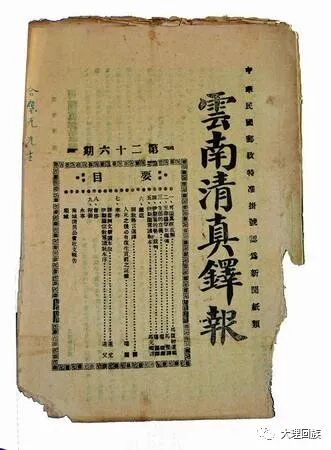
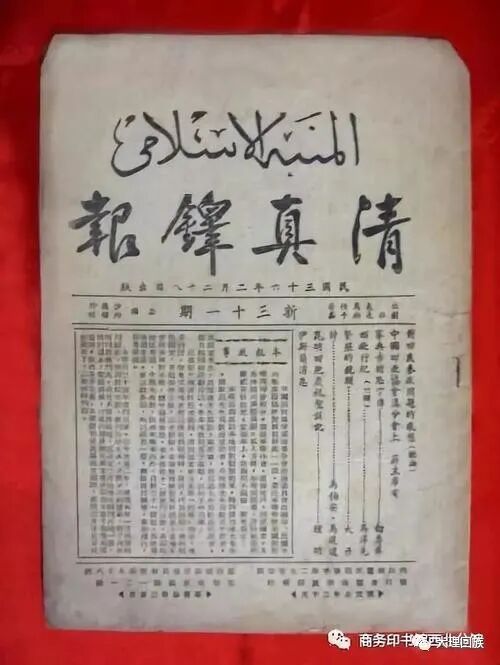
The translation of the Quran in Yunnan can be traced back as early as the mid-19th century. The famous Qing-dynasty Hui scholar Ma Fuchou and his student Ma Anli jointly translated 'Baoming Zhenjing Zhijie' (Direct Explanation of the Precious Decree Quran). Tradition has it that 20 volumes were translated, but only 5 volumes of the manuscript have survived. These five installments were serialized in 'Qingzhen Duobao' and also published as standalone volumes. In the late 19th century, the renowned Islamic scholar Ma Lianyuan translated a selection of Quranic verses titled 'Haiting Yijie' (Exegesis of Quranic Selections), which was published in Kunming. Entering the 1930s, Mr. Ma Jian, then studying in Shanghai, began experimenting with translating the Quran. The inaugural issue of Shanghai's 'Islamic Student Magazine' published his translation of the first volume, titled 'Guoyu Quran' (Mandarin Quran). After studying in Egypt for eight years and completing his education, Mr. Ma Jian was specially welcomed from Hong Kong to Shanghai by his revered teacher, Grand Imam Ha Decheng, to begin the monumental project of translating the entire Quran. Working in modern Chinese, he translated nine volumes over the course of 14 months. Just then, the Pacific War broke out, and the isolated territory (the Shanghai Foreign Concessions) fell. Mr. Ma Jian was forced to flee Shanghai and return to his hometown of Shadian, where he continued his translation work while teaching. Before long, Grand Imam Ha Decheng also traveled thousands of miles to Shadian specifically for the translation project. During his stay in Shadian, Imam Ha worked alongside teacher Ma Yuanqing every day, with the three of them discussing, deliberating, and refining the Quranic manuscript together. The meticulous scene of their repeated pondering and strict attention to detail remained vivid in the memories of Yangzheng students, becoming a cherished piece of history. By the time Imam Ha passed away (returned to Allah), Mr. Ma Jian had translated 20 volumes. However, the formal publication of Ma's Quran translation by the China Social Sciences Press did not take place until the 1980s. During those intervening years, Mr. Ma Jian poured his heart and soul into the work, expending an immeasurable amount of energy. 'Ten years of arduous and extraordinary labor'—it can be said that among Chinese translations of the Quran, Ma's translation is the one that took the longest to complete, achieved the highest circulation, and exerted the widest influence.
As for the translation of Hadith literature, during the 1920s and 1930s, the Niujie Mosque Bookstore in Beiping published a book titled 'Shengxun Sizhang' (Forty Hadiths). The Capital Ethnic Culture Museum still preserves and exhibits this translation. The translator was Grand Imam Ma Ruitu.
2. Translations of Classical Arabic Masterworks and Religious Texts
During this period, a vast number of classic Arabic masterworks and religious scriptures were continuously translated, published, and introduced to Muslims nationwide through the diligent writing of students who studied in Egypt and prominent imams, with people eagerly competing to buy and read them. At this time, Yunnan's entire translation scene blossomed like spring, bearing abundant fruit. The works of various translators are introduced below.
Mr. Ma Jian translated: 'Huiqiao Zhexue' (Islamic Philosophy, Commercial Press, 1934), 'Huiqiao Zhenxiang' (The Truth of Islam, Commercial Press, 1937), 'Huiqiao Jiduojiao yu Xueshu Wenhua' (Islam, Christianity, and Academic Culture, Shanghai Islamic Bookstore, 1936), 'Huizu Jiaoyushi' (History of Hui Education, Commercial Press, 1941), 'Huizu Zhexueshi' (History of Hui Philosophy, Commercial Press, 1944), 'Quran', Volume 1 (Peking University Press, 1949), and 'Jiaoyixue Dagang' (Outline of Dogmatics, published in Kunming, 1945).
Mr. Na Zhong translated: 'Yisilanjiao' (Islam, Chengda Normal School Publishing Department, 1934), 'Yisilan yu Alatbo Wenming' (Islam and Arab Civilization, Commercial Press, 1937), 'Huiqiao Xueshu Sixiangshi' (History of Islamic Academic Thought, Commercial Press, 1948), 'Alabo Wenmingshi' (History of Arab Civilization, Commercial Press, 1948), and 'Huiqiao Zhuguo Wenhuashi' (Cultural History of Islamic Nations, Kunming Minyi Daily Press, 1948).
Mr. Na Xun translated: 'Tianfang Yetan' (One Thousand and One Nights, Commercial Press, 1947).
Mr. Lin Zhongming translated: 'Huiqiao Lishi Jiaoketu' (Islamic History Textbook, Shanghai China Islamic Bookstore, 1935).
Mr. Ma Junwu translated: 'Alabo Ertong Gushi' (Arab Children's Stories, Shanghai World Book Company).
Mr. Lin Xingzhi translated: 'Huiqiao Jichengfa yu Qita Jichengfa zhi Bijiao' (Comparison of Islamic Inheritance Law with Other Inheritance Laws, Commercial Press, 1946).
The 'Number One Horse of Southern Yunnan' — Grand Imam Ma Ruitu
Grand Imam Ma Ruitu translated: 'Huiqiao Renyilun' (Islamic Monotheism, Zhonghua Book Company, 1931) and 'Muhammede de Moxi' (The Revelations of Muhammad, Zhonghua Book Company, 1934).
3. Research and Publications on Chinese Hui History
During the War of Resistance, the renowned historian and specialist in Hui and Islamic history, Mr. Bai Shouyi, evacuated to Yunnan. In addition to teaching in middle schools and universities, Mr. Bai devoted all his energy to investigating and researching the history of Yunnan's Hui Muslims, achieving remarkable results. He authored 'Zhongguo Huiqiao Xiaoshi' (A Brief History of Chinese Islam, Chongqing Commercial Press, 1944) and 'Zhongguo Yisilanshi Gangyao' (Outline of Chinese Islamic History, Wentong Book Company, 1946).
Additionally, Professor Fu Tongxian from Chengjie, who studied in the United States, authored the book 'Zhongguo Huiqiao Shi' (History of Chinese Islam), published by the Commercial Press in 1940.
Grand Imam Sha Ping'an, along with elderly gentleman Ma Guanzheng and Mr. Ma Shengfeng, collected and organized source materials on the Qing-dynasty Muslim uprisings, providing foundational materials later utilized by Professor Bai Shouyi during the War of Resistance when compiling 'Xiantong Dianbian Jianwenlu' (Records of Seen and Heard Events during the Xianfeng and Tongzhi Eras in Yunnan).
4. Collecting and organizing Chinese Islamic translations and commentaries dating from the Ming and Qing dynasties onwards, such as works by Ma Zhu and Ma Fuchou, including 'Qingzhen Zhinan' (Guide to Purity), 'Sidian Yaohui' (Essential Assemblies of the Four Canons), 'Dahua Zonggui' (The Ultimate Return to the Great Transformation), and 'Zhutian Dazuang' (Grand Praises to the Heavens).
5. Publishing and Distributing Islamic Texts
One of the main missions of the Yunnan Branch of the Zhenxue Society (Islamic Progress Society) was publishing and distributing various Chinese translations and religious texts, with specific sales handled by the Lihechang Leather Shop on Shuncheng Street. Grand Imam Sha Ping'an self-funded the establishment of the Tianfang Bookstore, which published works like *Qianfeiye* (Arabic Grammar), *Mentai Xige* (Islamic jurisprudence), and *Heewayi Tubiao* (Islamic tables and charts), making massive contributions to the educational and cultural development of Hui Muslims.
6. Sending Outstanding Students Abroad to Study
In the early 1930s, an Iranian scholar named Dazhang came to Yunnan and stayed at the Nancheng Mosque in Kunming. This scholar was said to have memorized *Qianfeiye* (Arabic Grammar) and was extremely knowledgeable. After examining the state of traditional *jingtang jiaoyu* (mosque-based education) in Yunnan at the time and finding it lacking, he suggested to the Yunnan Branch of the Zhenxue Society that students be dispatched to the Arab world's highest seat of learning, Al-Azhar University, to cultivate high-level specialized talent. Dazhang also enthusiastically helped write to Al-Azhar to apply for the admission of Chinese students. The university authorities replied promptly, agreeing to admit ten students sent from Yunnan. In November 1931, the Yunnan Branch of the Zhenxue Society selected Na Zhong (style name: Zijizhi), Zhang Youcheng (style name: Ziren), and Lin Zhongming (style name: Zimin), along with Ma Jian (style name: Zishi) from the Shanghai Islamic Normal School. Led by Mr. Sha Rucheng, the disciplinary director of Kunming's Mingde Middle School, these four formed the student delegation to Egypt, traveling via Haiphong in Annam (now Vietnam) and crossing the ocean to study in Egypt. This was China's first batch of students studying in Egypt. Since the Qing Dynasty, Islamic scholars in our province had a tradition of combining the Hajj pilgrimage with studying abroad, such as the elder masters Ma Fuchu and Ma Lianyuan. Following in their footsteps, Chinese students in Egypt formed the Chinese Egyptian Student Hajj Delegation in 1938 to travel to Saudi Arabia and actively carry out anti-Japanese propaganda activities, shattering Japanese imperialist international propaganda and conspiracies. The entire group of students in Egypt thus fulfilled their dual aspirations of studying abroad and performing the Hajj.
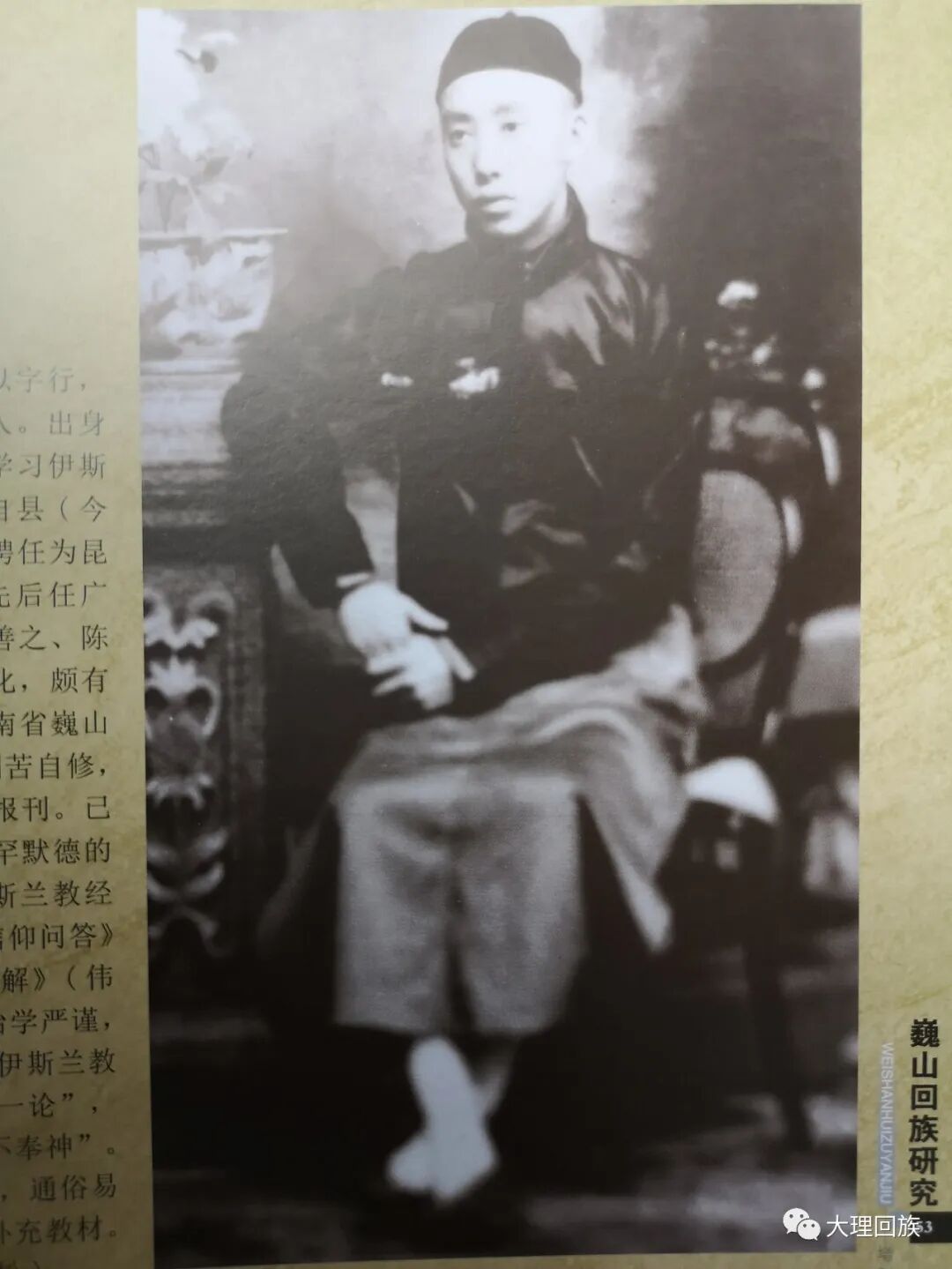
The third batch of students sent to Egypt was organized by Yunnan and consisted of three individuals: Na Xun (style name: Heng, in 1934), Lin Xinghua (style name: Gengyu), and Ma Junwu (style name: Xingzhou). That same year, the fifth batch sent by the Shanghai Islamic Normal School included two Yunnan natives among its five members: Lin Xingzhi (Lin Xinghua's younger brother, style name: Fengwu) and Ma Youlian (style name: Jiqing).
In May 1933, the Al-Azhar Chinese Student Department was established, and Sha Rucheng was appointed as its director, taking full charge of administrative affairs concerning Chinese Hui Muslim students studying in Egypt. While in Egypt, Director Sha was admitted to the Department of Education at the American University in Cairo for advanced studies, earning his master's degree in 1938.
From 1931 to 1940, the number of Chinese Hui Muslim students studying in Egypt reached 48. Together with the two directors, Sha Rucheng and Pang Shiqian, the total reached 50. Yunnan accounted for 10 of these students, making up 20%. During their time abroad, Yunnan's students already had translation works published, and upon returning home after completing their studies, they made monumental contributions to the nation and their ethnic community. For instance, while in Egypt, Mr. Ma Jian translated the Confucian classic *The Analects* into Arabic, which was published by the Fugu Bookstore in Cairo, spreading ancient Chinese culture to the Arab world for the first time. Similarly, Mr. Na Xun introduced ancient and modern Chinese literary masterpieces such as *The Collector of Poisonous Snakes*, *The Kite*, and *Thunderstorm* to the Arab people, playing a vital role in bridging Chinese and Arab cultures.
In 1946, Mr. Ma Jian accepted an invitation from Peking University to teach in the Department of Oriental Languages, where he established the Arabic language major. Later on, Mr. Na Zhong, Mr. Lin Zhongming, and Mr. Lin Xinghua joined forces to teach at Beijing Foreign Studies University, where they founded the Arabic Department. They poured their hearts and efforts into establishing Arabic language majors in contemporary Chinese universities, blazing a trail through hardship and becoming the pioneers of new China's Arabic education.
Through the hard work and dedication of Muslims across the province, and by overcoming various challenges, the New Culture Movement among Yunnan's Hui Muslims played a positive role in cultivating talent, spreading ideas, raising cultural standards, promoting Sino-Arab cultural exchange, and enhancing the general public's understanding of Islam.
References
"History of Islam", edited by Jin Yijiu, Jiangsu People's Publishing House
"History of the Hui Muslims in Yunnan", edited by Yang Zhaojun, Yunnan Nationalities Publishing House
"History of the Hui Muslims in Dali", compiled by the Dali Prefecture Hui Muslim Association, Yunnan Nationalities Publishing House
"Islamic Duobao (Islamic Bell Newspaper)"
"Encyclopedia of Islam in China", Sichuan Lexicographical Publishing House
"Dictionary of Chinese Hui Muslims", edited by Qiu Shusen, Jiangsu Ancient Books Publishing House
As for the translation of Hadith literature, during the 1920s and 1930s, the Niujie Mosque Bookstore in Beiping published a book titled 'Shengxun Sizhang' (Forty Hadiths). The Capital Ethnic Culture Museum still preserves and exhibits this translation. The translator was Grand Imam Ma Ruitu.
2. Translations of Classical Arabic Masterworks and Religious Texts
During this period, a vast number of classic Arabic masterworks and religious scriptures were continuously translated, published, and introduced to Muslims nationwide through the diligent writing of students who studied in Egypt and prominent imams, with people eagerly competing to buy and read them. At this time, Yunnan's entire translation scene blossomed like spring, bearing abundant fruit. The works of various translators are introduced below.
Mr. Ma Jian translated: 'Huiqiao Zhexue' (Islamic Philosophy, Commercial Press, 1934), 'Huiqiao Zhenxiang' (The Truth of Islam, Commercial Press, 1937), 'Huiqiao Jiduojiao yu Xueshu Wenhua' (Islam, Christianity, and Academic Culture, Shanghai Islamic Bookstore, 1936), 'Huizu Jiaoyushi' (History of Hui Education, Commercial Press, 1941), 'Huizu Zhexueshi' (History of Hui Philosophy, Commercial Press, 1944), 'Quran', Volume 1 (Peking University Press, 1949), and 'Jiaoyixue Dagang' (Outline of Dogmatics, published in Kunming, 1945).
Mr. Na Zhong translated: 'Yisilanjiao' (Islam, Chengda Normal School Publishing Department, 1934), 'Yisilan yu Alatbo Wenming' (Islam and Arab Civilization, Commercial Press, 1937), 'Huiqiao Xueshu Sixiangshi' (History of Islamic Academic Thought, Commercial Press, 1948), 'Alabo Wenmingshi' (History of Arab Civilization, Commercial Press, 1948), and 'Huiqiao Zhuguo Wenhuashi' (Cultural History of Islamic Nations, Kunming Minyi Daily Press, 1948).
Mr. Na Xun translated: 'Tianfang Yetan' (One Thousand and One Nights, Commercial Press, 1947).
Mr. Lin Zhongming translated: 'Huiqiao Lishi Jiaoketu' (Islamic History Textbook, Shanghai China Islamic Bookstore, 1935).
Mr. Ma Junwu translated: 'Alabo Ertong Gushi' (Arab Children's Stories, Shanghai World Book Company).
Mr. Lin Xingzhi translated: 'Huiqiao Jichengfa yu Qita Jichengfa zhi Bijiao' (Comparison of Islamic Inheritance Law with Other Inheritance Laws, Commercial Press, 1946).
The 'Number One Horse of Southern Yunnan' — Grand Imam Ma Ruitu
Grand Imam Ma Ruitu translated: 'Huiqiao Renyilun' (Islamic Monotheism, Zhonghua Book Company, 1931) and 'Muhammede de Moxi' (The Revelations of Muhammad, Zhonghua Book Company, 1934).
3. Research and Publications on Chinese Hui History
During the War of Resistance, the renowned historian and specialist in Hui and Islamic history, Mr. Bai Shouyi, evacuated to Yunnan. In addition to teaching in middle schools and universities, Mr. Bai devoted all his energy to investigating and researching the history of Yunnan's Hui Muslims, achieving remarkable results. He authored 'Zhongguo Huiqiao Xiaoshi' (A Brief History of Chinese Islam, Chongqing Commercial Press, 1944) and 'Zhongguo Yisilanshi Gangyao' (Outline of Chinese Islamic History, Wentong Book Company, 1946).
Additionally, Professor Fu Tongxian from Chengjie, who studied in the United States, authored the book 'Zhongguo Huiqiao Shi' (History of Chinese Islam), published by the Commercial Press in 1940.
Grand Imam Sha Ping'an, along with elderly gentleman Ma Guanzheng and Mr. Ma Shengfeng, collected and organized source materials on the Qing-dynasty Muslim uprisings, providing foundational materials later utilized by Professor Bai Shouyi during the War of Resistance when compiling 'Xiantong Dianbian Jianwenlu' (Records of Seen and Heard Events during the Xianfeng and Tongzhi Eras in Yunnan).
4. Collecting and organizing Chinese Islamic translations and commentaries dating from the Ming and Qing dynasties onwards, such as works by Ma Zhu and Ma Fuchou, including 'Qingzhen Zhinan' (Guide to Purity), 'Sidian Yaohui' (Essential Assemblies of the Four Canons), 'Dahua Zonggui' (The Ultimate Return to the Great Transformation), and 'Zhutian Dazuang' (Grand Praises to the Heavens).
5. Publishing and Distributing Islamic Texts
One of the main missions of the Yunnan Branch of the Zhenxue Society (Islamic Progress Society) was publishing and distributing various Chinese translations and religious texts, with specific sales handled by the Lihechang Leather Shop on Shuncheng Street. Grand Imam Sha Ping'an self-funded the establishment of the Tianfang Bookstore, which published works like *Qianfeiye* (Arabic Grammar), *Mentai Xige* (Islamic jurisprudence), and *Heewayi Tubiao* (Islamic tables and charts), making massive contributions to the educational and cultural development of Hui Muslims.
6. Sending Outstanding Students Abroad to Study
In the early 1930s, an Iranian scholar named Dazhang came to Yunnan and stayed at the Nancheng Mosque in Kunming. This scholar was said to have memorized *Qianfeiye* (Arabic Grammar) and was extremely knowledgeable. After examining the state of traditional *jingtang jiaoyu* (mosque-based education) in Yunnan at the time and finding it lacking, he suggested to the Yunnan Branch of the Zhenxue Society that students be dispatched to the Arab world's highest seat of learning, Al-Azhar University, to cultivate high-level specialized talent. Dazhang also enthusiastically helped write to Al-Azhar to apply for the admission of Chinese students. The university authorities replied promptly, agreeing to admit ten students sent from Yunnan. In November 1931, the Yunnan Branch of the Zhenxue Society selected Na Zhong (style name: Zijizhi), Zhang Youcheng (style name: Ziren), and Lin Zhongming (style name: Zimin), along with Ma Jian (style name: Zishi) from the Shanghai Islamic Normal School. Led by Mr. Sha Rucheng, the disciplinary director of Kunming's Mingde Middle School, these four formed the student delegation to Egypt, traveling via Haiphong in Annam (now Vietnam) and crossing the ocean to study in Egypt. This was China's first batch of students studying in Egypt. Since the Qing Dynasty, Islamic scholars in our province had a tradition of combining the Hajj pilgrimage with studying abroad, such as the elder masters Ma Fuchu and Ma Lianyuan. Following in their footsteps, Chinese students in Egypt formed the Chinese Egyptian Student Hajj Delegation in 1938 to travel to Saudi Arabia and actively carry out anti-Japanese propaganda activities, shattering Japanese imperialist international propaganda and conspiracies. The entire group of students in Egypt thus fulfilled their dual aspirations of studying abroad and performing the Hajj.
The third batch of students sent to Egypt was organized by Yunnan and consisted of three individuals: Na Xun (style name: Heng, in 1934), Lin Xinghua (style name: Gengyu), and Ma Junwu (style name: Xingzhou). That same year, the fifth batch sent by the Shanghai Islamic Normal School included two Yunnan natives among its five members: Lin Xingzhi (Lin Xinghua's younger brother, style name: Fengwu) and Ma Youlian (style name: Jiqing).
In May 1933, the Al-Azhar Chinese Student Department was established, and Sha Rucheng was appointed as its director, taking full charge of administrative affairs concerning Chinese Hui Muslim students studying in Egypt. While in Egypt, Director Sha was admitted to the Department of Education at the American University in Cairo for advanced studies, earning his master's degree in 1938.
From 1931 to 1940, the number of Chinese Hui Muslim students studying in Egypt reached 48. Together with the two directors, Sha Rucheng and Pang Shiqian, the total reached 50. Yunnan accounted for 10 of these students, making up 20%. During their time abroad, Yunnan's students already had translation works published, and upon returning home after completing their studies, they made monumental contributions to the nation and their ethnic community. For instance, while in Egypt, Mr. Ma Jian translated the Confucian classic *The Analects* into Arabic, which was published by the Fugu Bookstore in Cairo, spreading ancient Chinese culture to the Arab world for the first time. Similarly, Mr. Na Xun introduced ancient and modern Chinese literary masterpieces such as *The Collector of Poisonous Snakes*, *The Kite*, and *Thunderstorm* to the Arab people, playing a vital role in bridging Chinese and Arab cultures.
In 1946, Mr. Ma Jian accepted an invitation from Peking University to teach in the Department of Oriental Languages, where he established the Arabic language major. Later on, Mr. Na Zhong, Mr. Lin Zhongming, and Mr. Lin Xinghua joined forces to teach at Beijing Foreign Studies University, where they founded the Arabic Department. They poured their hearts and efforts into establishing Arabic language majors in contemporary Chinese universities, blazing a trail through hardship and becoming the pioneers of new China's Arabic education.
Through the hard work and dedication of Muslims across the province, and by overcoming various challenges, the New Culture Movement among Yunnan's Hui Muslims played a positive role in cultivating talent, spreading ideas, raising cultural standards, promoting Sino-Arab cultural exchange, and enhancing the general public's understanding of Islam.
References
"History of Islam", edited by Jin Yijiu, Jiangsu People's Publishing House
"History of the Hui Muslims in Yunnan", edited by Yang Zhaojun, Yunnan Nationalities Publishing House
"History of the Hui Muslims in Dali", compiled by the Dali Prefecture Hui Muslim Association, Yunnan Nationalities Publishing House
"Islamic Duobao (Islamic Bell Newspaper)"
"Encyclopedia of Islam in China", Sichuan Lexicographical Publishing House
"Dictionary of Chinese Hui Muslims", edited by Qiu Shusen, Jiangsu Ancient Books Publishing House
