
Halal Travel Guide: 25 Beijing Mosques — History, Architecture and Hui Muslim Heritage
Reposted from the web
Summary: 25 Beijing Mosques — History, Architecture and Hui Muslim Heritage is presented here as a firsthand travel account in clear English, beginning with this scene: I could not leave Beijing in 2022, so I started visiting mosques I had rarely or never been to before. I visited twenty-five of them in total, and I would like to share them with you. The account keeps its focus on Beijing Mosques, Hui Muslims, Muslim Heritage while preserving the names, places, food, and historical details from the Chinese source.
I could not leave Beijing in 2022, so I started visiting mosques I had rarely or never been to before. I visited twenty-five of them in total, and I would like to share them with you.
These twenty-five mosques are:
In Xicheng District: Mishi Hutong Mosque, Huihuiying Mosque, Pushou Mosque, Dewai Fayuan Mosque, Zhengyuan Mosque, and Deshengqiao Mosque.
In Dongcheng District: Dongzhimenwai Mosque.
In Haidian District: Fangwai Guan at the Old Summer Palace (Yuanmingyuan), Landianchang Mosque, Siwangfu Mosque, and Shucun Mosque.
In Chaoyang District: Guanzhuang Mosque, Xihui Mosque, Yangzha Mosque, and Wanziying Mosque.
In Changping District: Heying Mosque, Shahe Mosque, Changping Mosque, Nankou Mosque, and Xiguanshi Mosque.
In Yanqing District: Chadaocheng Mosque.
Majuqiao Mosque in Tongzhou.
Gubeikou Mosque, Miyun Mosque, and Mujiaoyu Mosque in Miyun.
In April: Mishi Hutong Mosque, Heying Mosque, Shahe Mosque, Changping Mosque, Majuqiao Mosque, Nankou Mosque, and Chadaocheng Mosque.
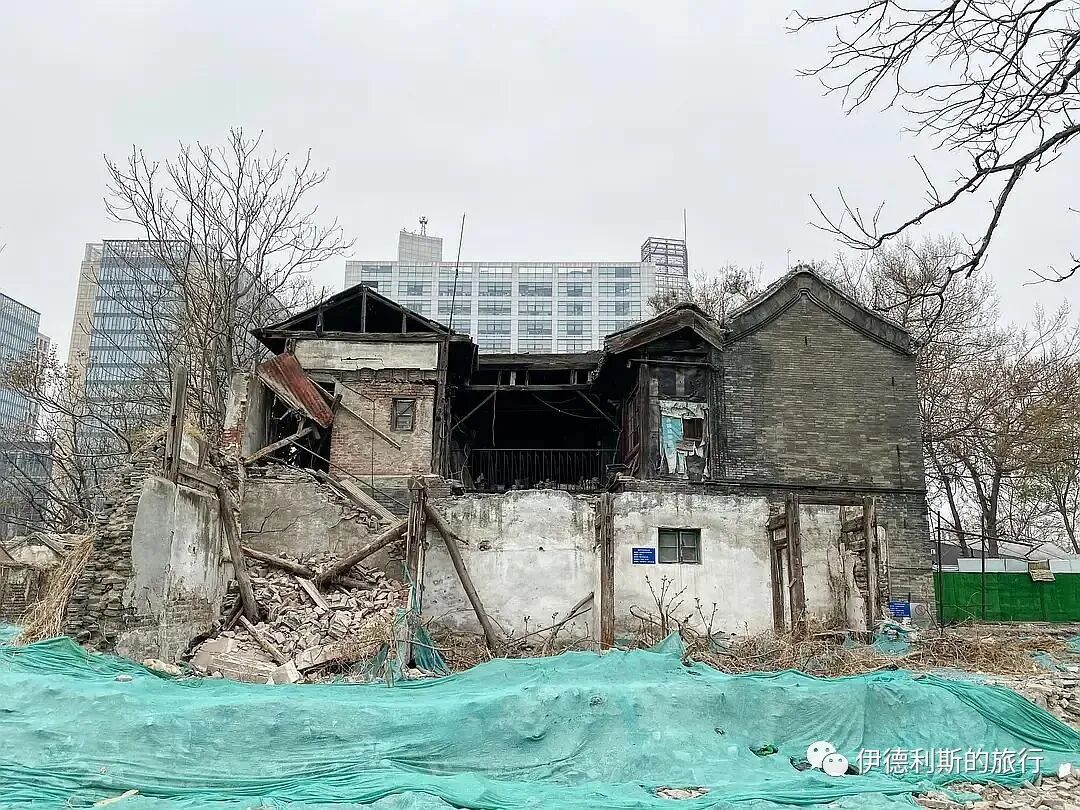
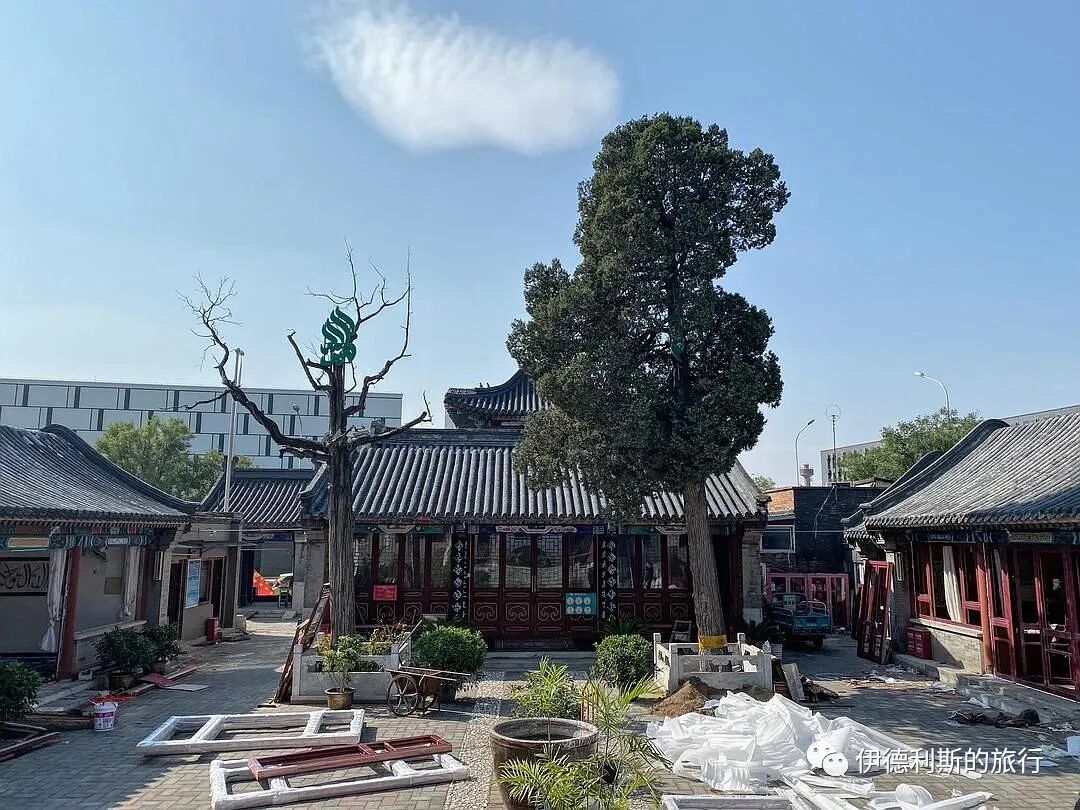
Today, near the Caishikou subway station in Beijing, the two-story building of Mishi Hutong Mosque still stands inside a large construction site. It is the only part of the mosque that survived the Daji area demolition ten years ago. The small building was originally the old Bianyifang Restaurant. During the Republic of China era, many Hui Muslims from the five northwestern provinces moved near Caishikou. Since it was inconvenient for them to travel to Tianqiao Mosque or Jiaozihu Hutong Mosque for namaz, they raised over 10,000 yuan to buy the building. After renovations, it officially became Mishi Hutong Mosque on January 1, 1940. For more details, see the diary entry 'The Only Southern-Style Mosque Architecture in Beijing—Mishi Hutong Mosque'.
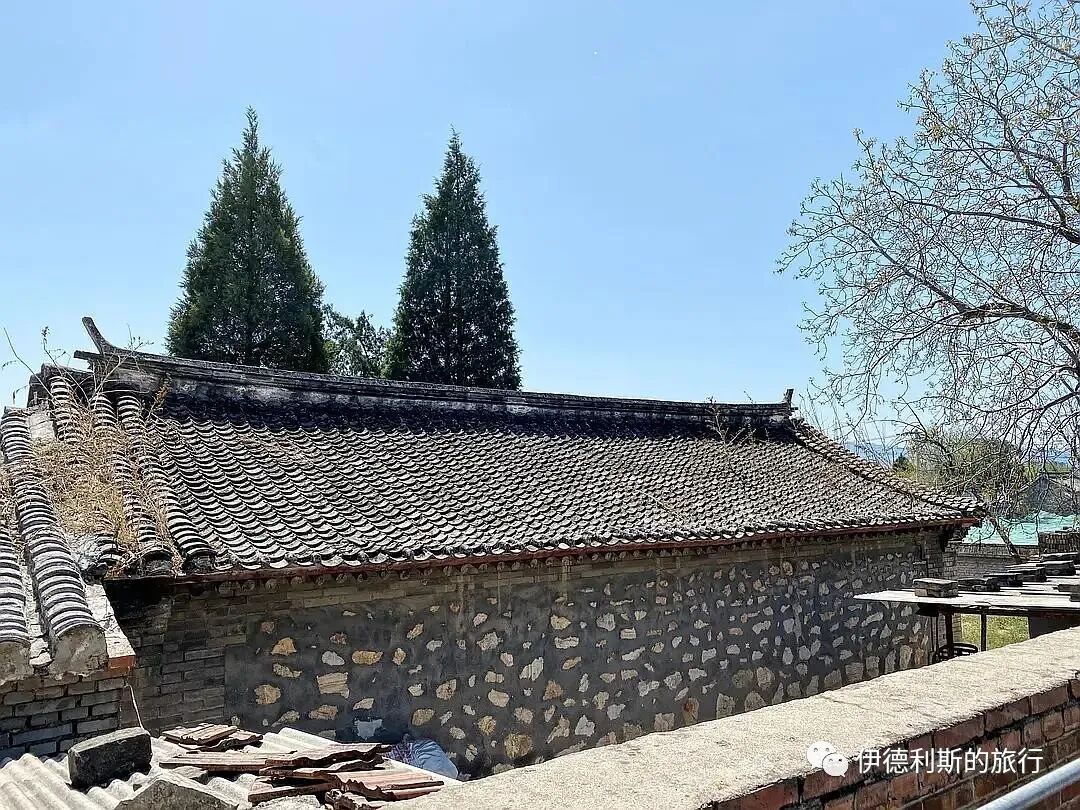
In Heying, Changping, Beijing, there is the tomb of the Western Regions sage Bo Hazhi, which locals also call the Sheikh Baba tomb. A Hui Muslim family surnamed Zhang has guarded the tomb for generations. From the Ming Dynasty until now, local and nearby Hui Muslims have gathered here every year on the 24th day of the third lunar month to visit the Sheikh Baba tomb, a tradition that has never stopped. On the south side of the Bo Hazhi tomb garden stands Heying Mosque, which was built by Uncle Zhang's family in the 1930s. Only the north house remains of the old building. You can see the middle of the walls are built with stones that Uncle Zhang hauled back from the mountains years ago. See the diary entry 'Visiting the Tomb of the Western Regions Sage Bo Hazhi' for details.
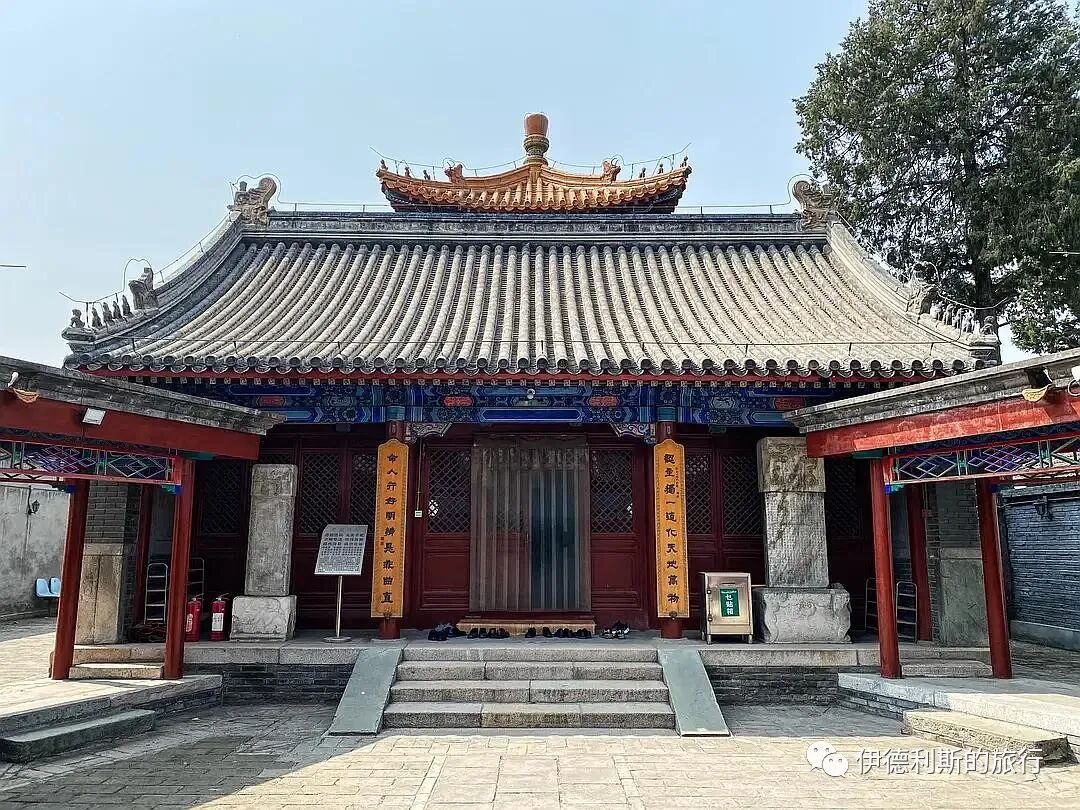
For the first Jumu'ah of Ramadan, I felt very grateful. Some mosques in Beijing's Changping, Fangshan, and Tongzhou districts opened, so I went to Shahe Mosque, which is relatively convenient from my home, to pray Jumu'ah. During the Wanli reign of the Ming Dynasty, the northern Beijing road to Zhangjiakou shifted to Shahe, and Hui Muslims who traded cattle and sheep began to settle there. Shahe Mosque was first built in the Ming Dynasty and renovated twice during the Guangxu reign of the Qing Dynasty and the Republican period. It is a typical traditional North China mosque courtyard. See the diary entry 'Visiting Seven Ancient Mosques During Ramadan' for details.
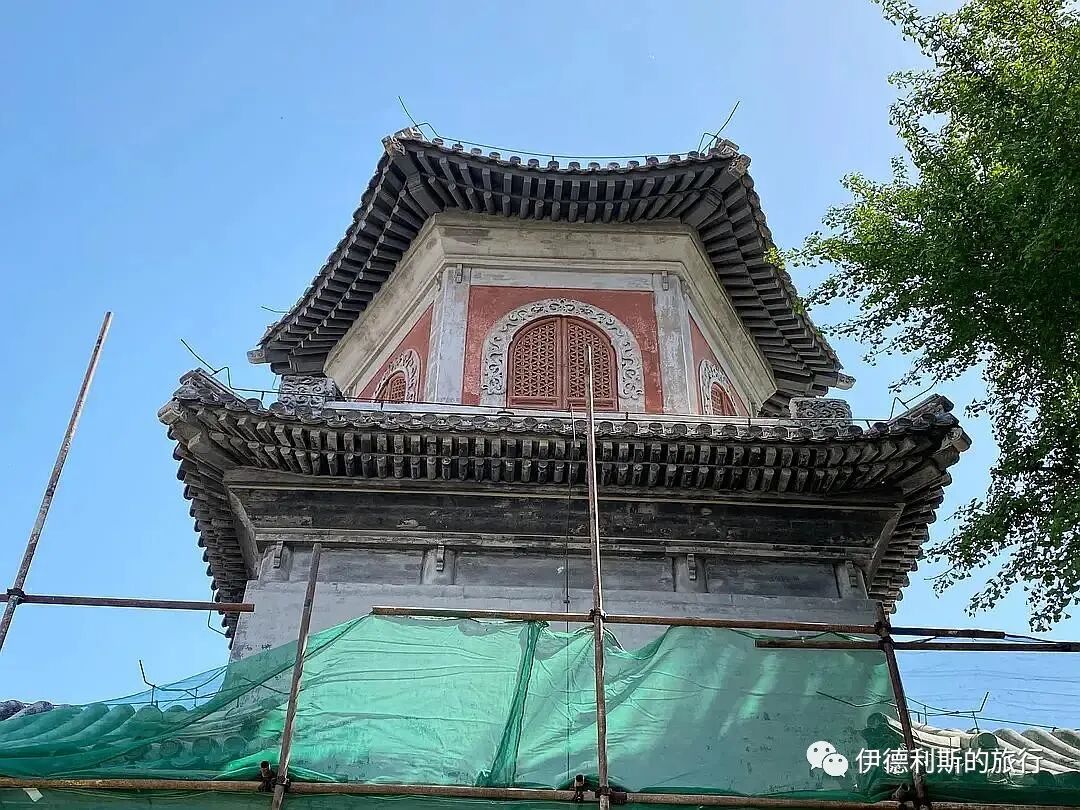
Changping Wujie Mosque under renovation. Wujie Mosque is also called Changping City Mosque. Legend says it was built by Chang Yuchun during his northern expedition. It was rebuilt during the Wanli reign using stone and wood left over from building the Ming Tombs. The golden silk nanmu beams and pillars in the main hall have been preserved to this day. See the diary entry 'Visiting Seven Ancient Mosques During Ramadan' for details.
I went to Majuqiao Mosque in Tongzhou for Jumu'ah prayers. Majuqiao sits on the south bank of the Liangshui River. After the Yongle Emperor moved the capital, he built the Nanhaizi Royal Hunting Park here. In 1463, during the seventh year of the Tianshun reign, a stone arch bridge was built across the Liangshui River. From then on, Majuqiao became a key route near the capital. Merchants gathered here, and Hui Muslims kept moving in to do business. Majuqiao Mosque was built during the Ming Dynasty, renovated during the Qianlong reign, and expanded again in 1937. In 1999, all the wood, bricks, and tiles from the demolished Niujie Women's Mosque were used to renovate Majuqiao Mosque, and the towering Moon-Sighting Tower (wangyuelou) was added behind the main hall. See the diary entry 'Visiting Seven Ancient Mosques During Ramadan' for details.
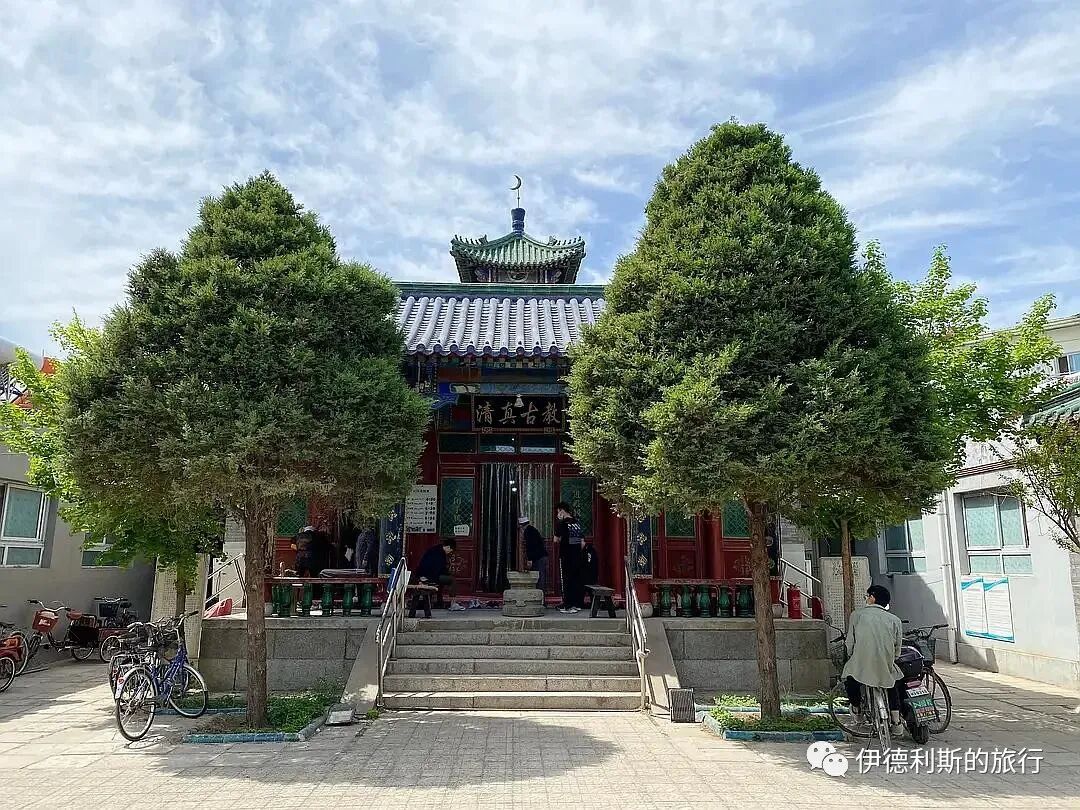
To defend against Mongol invasions, the Ming Dynasty built Nankou City in 1404, the second year of the Yongle reign, and it was rebuilt many times later. After the Qing Dynasty, as trade on the grasslands flourished, Nankou City became filled with shops and a constant stream of traveling merchants. Nankou Mosque sits outside the south gate of Nankou City. Its exact founding date is unknown, but it is believed to have been built during the Ming Dynasty. The mosque houses a stone tablet from the 20th year of the Guangxu reign (1894) titled 'Record of the Reconstruction of Nankou Mosque in Yanqing Prefecture.' It notes that Imam Yang Xiaoshan from Shixia City in Miyun was hired by the mosque in 1876. He traveled everywhere to raise donations (nietie), then built the south lecture hall in 1879, the north quiet room in 1880, and a water well in 1881. In 1887, Imam Yang moved to Shacheng Mosque in Huailai County. Nankou Mosque then hired Imam Shan Hong'en, who continued work by building a washroom (shuifang) next to the well and a main gate in the northeast corner. The current Nankou Mosque largely keeps the layout it had after the renovations during the Guangxu reign. See the diary entry 'Visiting Seven Ancient Mosques During Ramadan' for details.
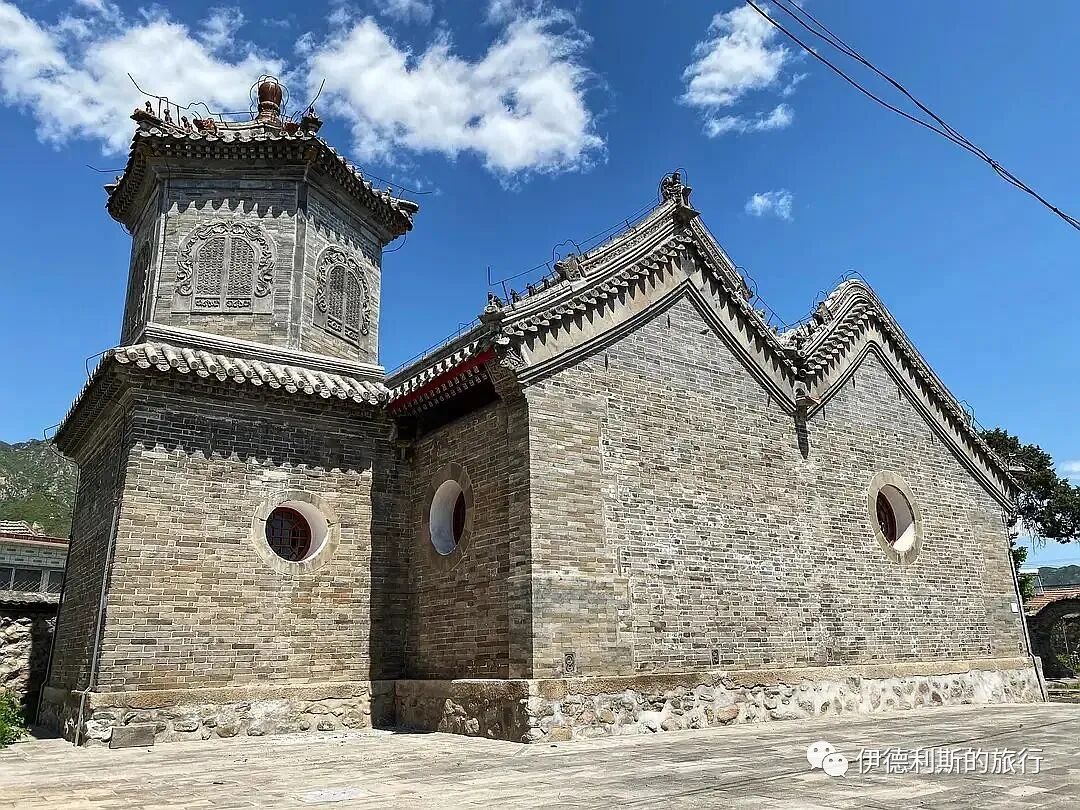
Chadao City is the first fortress gate when entering Beijing from outside the Great Wall via the Jundu Path, one of the eight paths of the Taihang Mountains. It served as an outpost for Juyong Pass. From here, you can head west through Huailai to reach Xuanhua and Zhangjiakou, or head north to reach Yanqing and Yongning. This is why it is called 'Chadao,' or 'Forked Road.' Chadao City was built in the 9th year of the Chenghua reign (1473) of the Ming Dynasty. It was rebuilt with brick reinforcements twice during the Jiajing and Longqing reigns and served as an important pass to defend against Mongol invasions. After the Qing Dynasty, Chadao City became a key route for merchants traveling to the capital from the northwest. Trade was frequent, the city grew more prosperous, and many shops and inns opened. To serve the needs of traveling Hui Muslims, a mosque was built inside the city. See the diary entry 'Visiting Seven Ancient Mosques During Ramadan' for details.
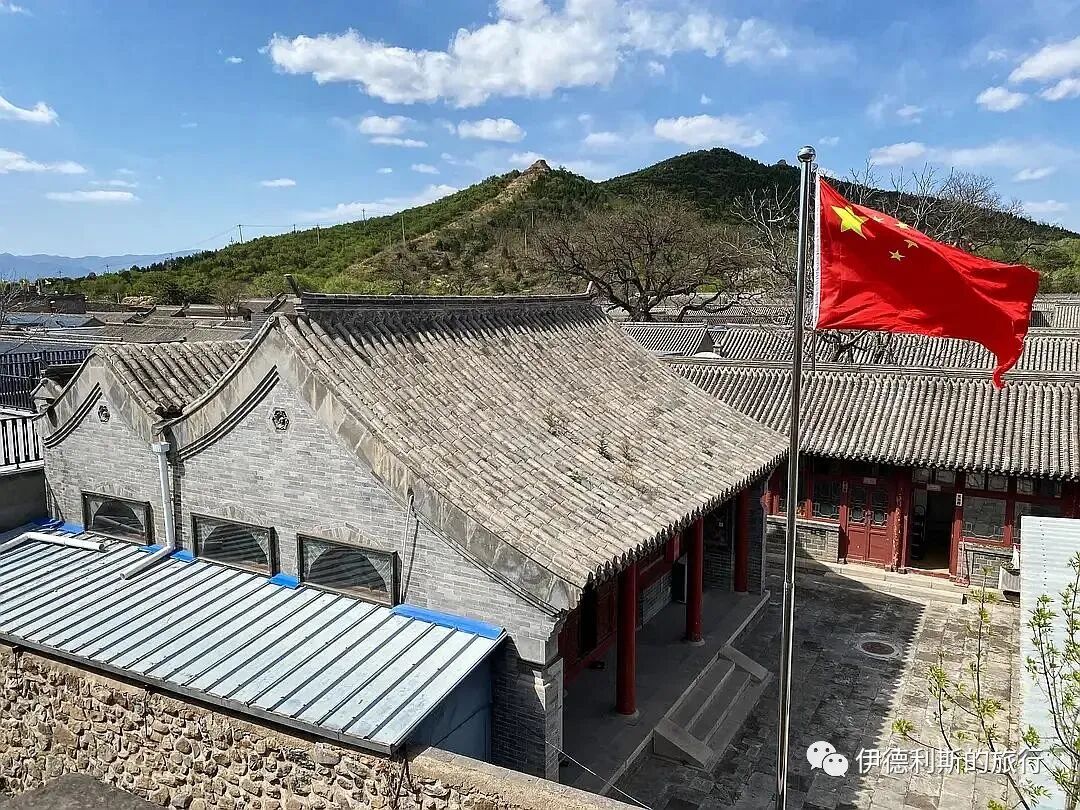
May: Gubeikou Mosque, Fangwai Guan at the Old Summer Palace, Huiying Mosque, and Pushou Mosque.
On the first day after Eid al-Fitr, I decided to visit the old mosque in Gubeikou, Miyun. The original construction date of Gubeikou Mosque is unknown. According to a stone tablet inside from the Ming Dynasty, it was renovated in the second year of the Chongzhen reign (1629). In the 34th year of the Kangxi reign (1695), a Hui Muslim officer named Ma Jinliang was transferred to Gubeikou as a regional commander due to his military achievements. In the 42nd year of the Kangxi reign (1703), he was promoted to commander-in-chief of Zhili. People called him General Ma the Hui Muslim, and he was stationed in Hexi Village, Gubeikou. While in Gubeikou, Ma Jinliang oversaw the renovation of Gubeikou Mosque. The current structure of the old mosque is mostly from that renovation during the Kangxi reign. See the diary entry "Visiting the Old Mosque at Gubeikou" for details.
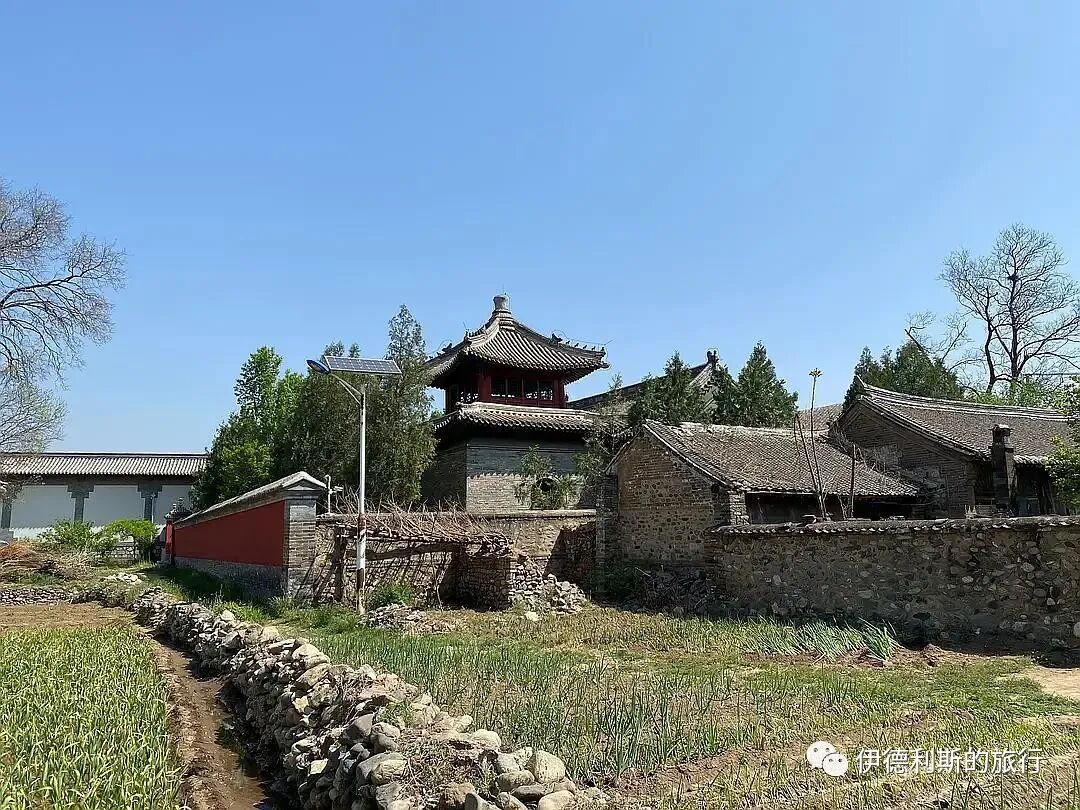
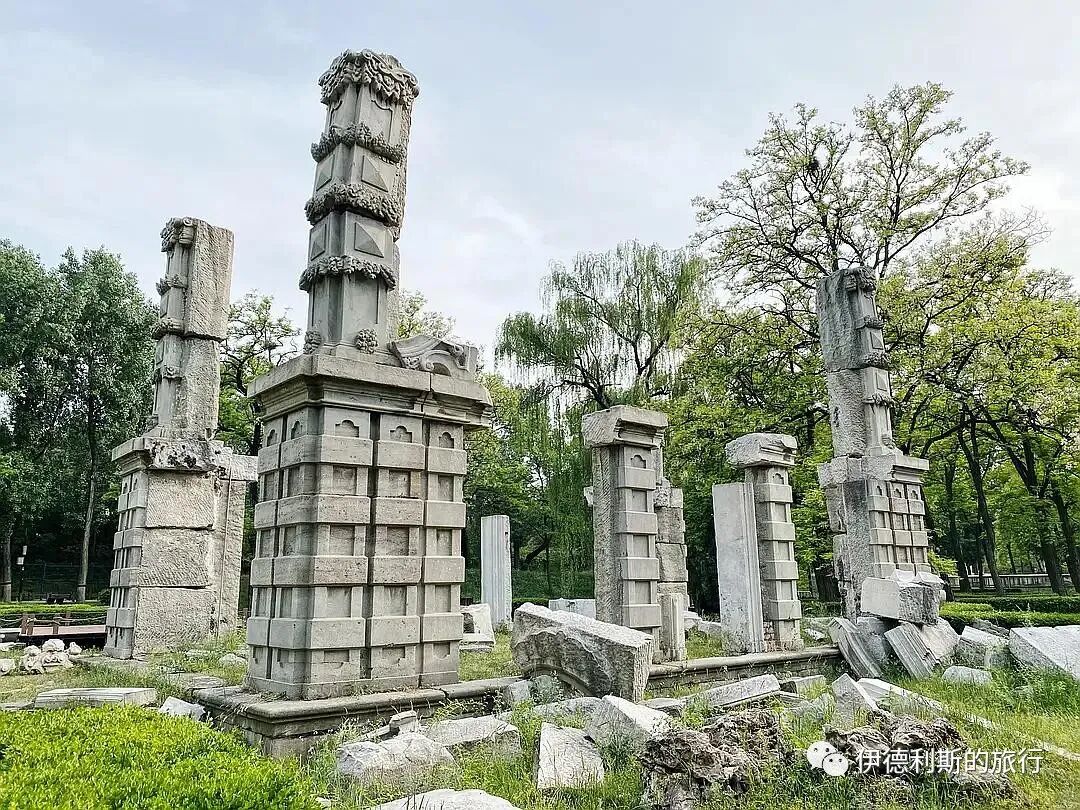
The View from Afar (Fangwaiguan) is part of the Western-style building complex at the Old Summer Palace. It was built between 1756 and 1759 during the 21st to 24th years of the Qianlong Emperor's reign. It was primarily designed by the Italian court painter Giuseppe Castiglione and built by Chinese craftsmen in the late Renaissance Italian Baroque style. In 1760, the Qianlong Emperor summoned the Hui Muslim leaders who helped suppress the White Mountain sect rebellion to the capital. He named the hero Turdu Khoja a first-rank taiji and gave his sister the title of Noble Lady He (He Guiren). In 1761, the Khoja woman was promoted to Concubine Rong (Rong Pin) and later to Consort Rong (Rong Fei). The Qianlong Emperor then converted the View from Afar into a prayer hall specifically for her to perform namaz. After that, the Khoja woman lived in the palace for 28 years until she returned to Allah at the Old Summer Palace in 1788. See the diary entry "The Mosque in the Old Summer Palace" for details.
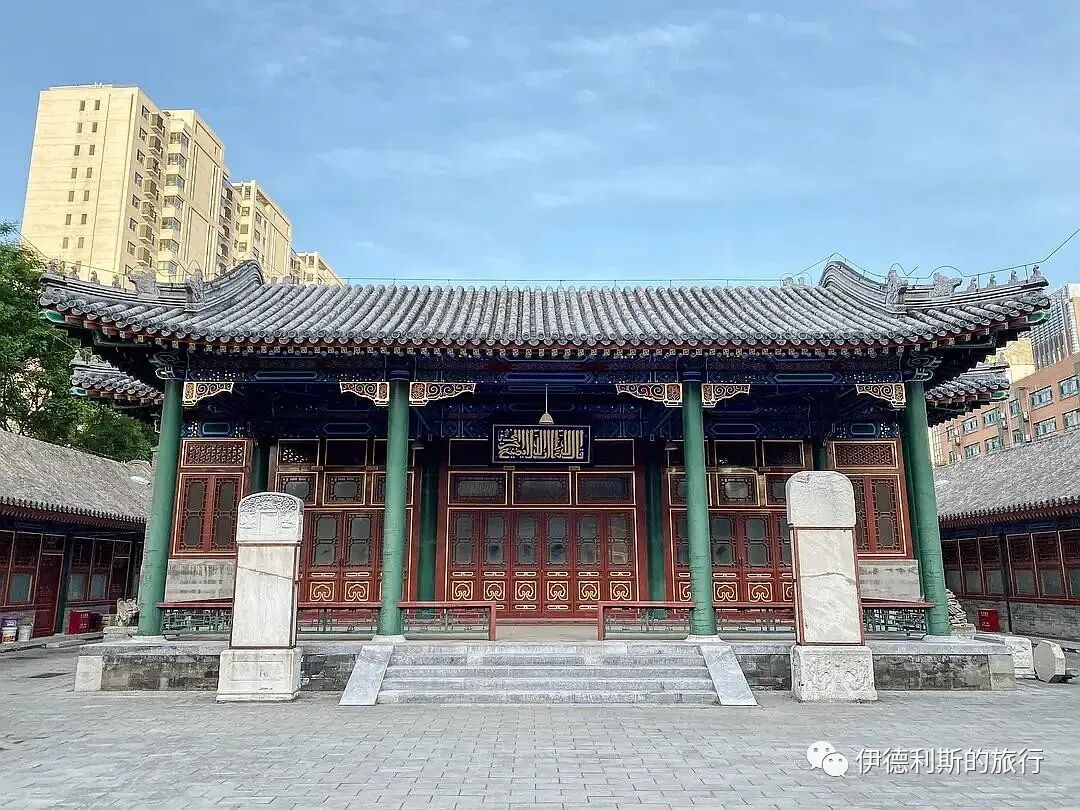
During the Qing Dynasty, Beijing had a mosque built by imperial decree: the Hui Muslim Camp Mosque (Huihuiying Qingzhensi) on West Chang'an Street. It was the only mosque built by the Qing government. Unfortunately, the main hall of the Hui Muslim Camp Mosque collapsed due to disrepair in the 1900s, and it was completely demolished by Yuan Shikai in the early years of the Republic of China. After the main hall was torn down, the community had nowhere to pray, so they rebuilt a small hall on the original site, which was also torn down in 2010. In 2011, the Xicheng District Cultural Committee rebuilt the mosque 200 meters west of the original site, and the stone tablet titled "Imperial Decree for the Hui People's Mosque" inscribed by Emperor Qianlong was placed back in the courtyard. See the diary entry "Visiting the Huiying Mosque at Beihai Park" for details.
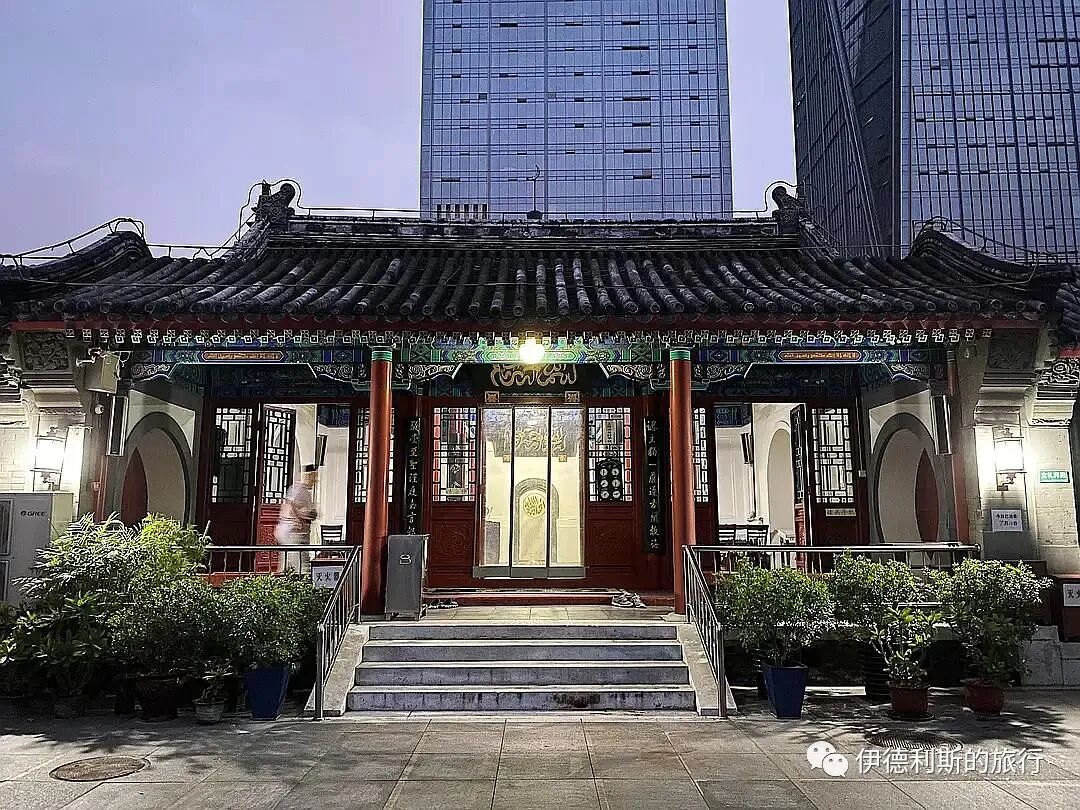
Pushou Mosque is located on Jinshifang Street in Beijing's Xicheng District, which was called Jinchengfang Street during the Yuan Dynasty. Although precious Yuan Dynasty tombstones are preserved there, no records have been found so far confirming that Pushou Mosque was built during the Yuan Dynasty. Because a plaque stamped with "Built in the Fourth Year of Xuande of the Great Ming" once hung above the hanging flower gate (chuihuamen) of the mosque, it is generally believed that Pushou Mosque was founded in 1429 (the fourth year of the Xuande reign of the Ming Dynasty) and was renovated many times during the Zhengtong, Wanli, Tianqi, and Chongzhen years of the Ming Dynasty. During the Ming Dynasty, Pushou Mosque was known as one of the four major official mosques in Beijing, alongside Niujie Mosque, Dongsi Mosque, and Faming Mosque inside Andingmen, and it held a very high status. According to the 1521 (the 16th year of the Zhengde reign) "Record of the Renovation of the Mosque" tablet at Dingzhou Mosque, Chen Xun, the Earl of Wuping, sought help from the congregation at Pushou Mosque to renovate Dingzhou Mosque during the Hongzhi reign of the Ming Dynasty and received great support, as the mosque was then filled with "gentry and scholar-officials." The mosque was torn down after the Jinshifang Street demolition in 2008, then rebuilt into its current form between 2010 and 2014. See the diary entry, "Sufi Practitioners Who Came from the Ilkhanate to the Yuan Dynasty Capital."
July: Dongzhimenwai Mosque, Xiguanshi Mosque, Dewai Fayuan Mosque, and Zhengyuan Mosque.
A great day starts with breakfast (bangda), then I went to the Dongzhimenwai Mosque near my home. Dongzhimenwai Mosque was originally called Erlizhuang Mosque. It was first built during the Yuan Dynasty and renovated during the Kangxi reign of the Qing Dynasty. In the late 1980s, Shougang and a Danish company built international apartments in Erlizhuang, so the mosque was moved one kilometer to the northwest. It was finished in 1991 and reopened in 1993. See the diary entry, "Islamic New Year, Visiting Old Mosques in Beijing."
Xiguanshi Mosque was originally called Guanshicun Mosque. It was first built in 1494 (the seventh year of the Hongzhi reign of the Ming Dynasty). The main hall was rebuilt in 1709 (the 48th year of Kangxi), the main gate in 1723 (the first year of Yongzheng), the hall rooms in 1732 (the tenth year of Yongzheng), and the prayer niche hall (yaodian) in 1761 (the 26th year of Qianlong). It continued to be renovated during the Guangxu reign and the Republic of China period. See the diary entry, "Islamic New Year, Visiting Old Mosques in Beijing."
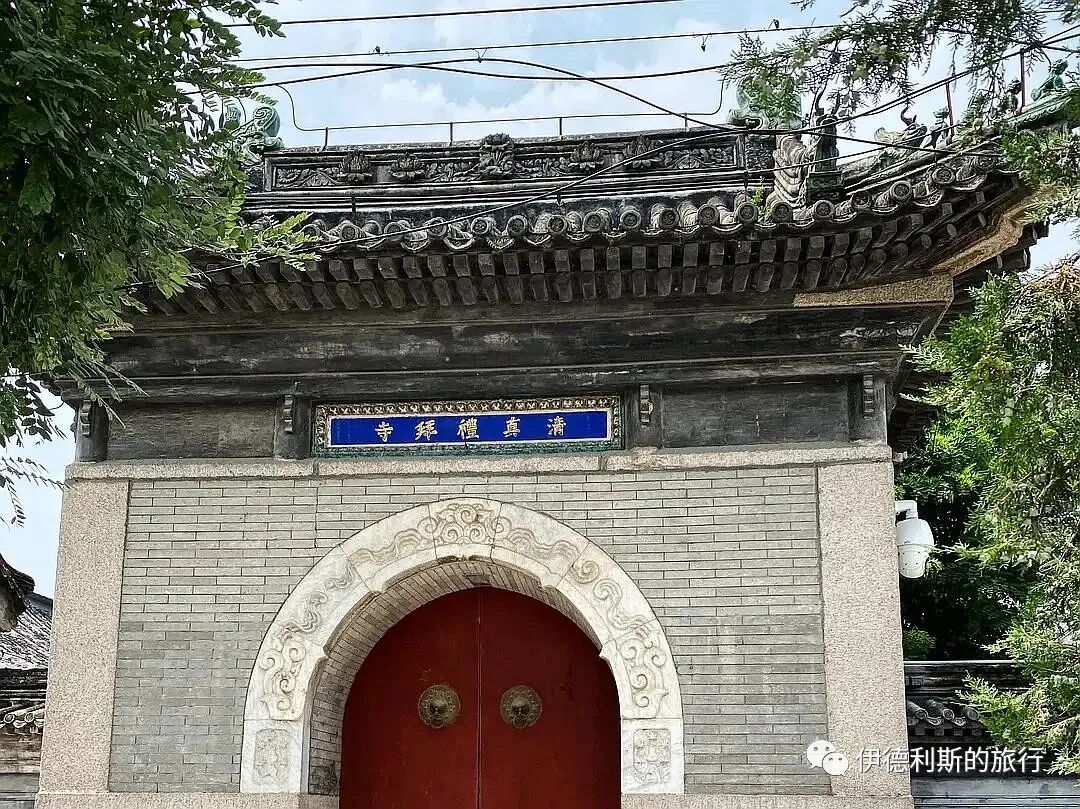
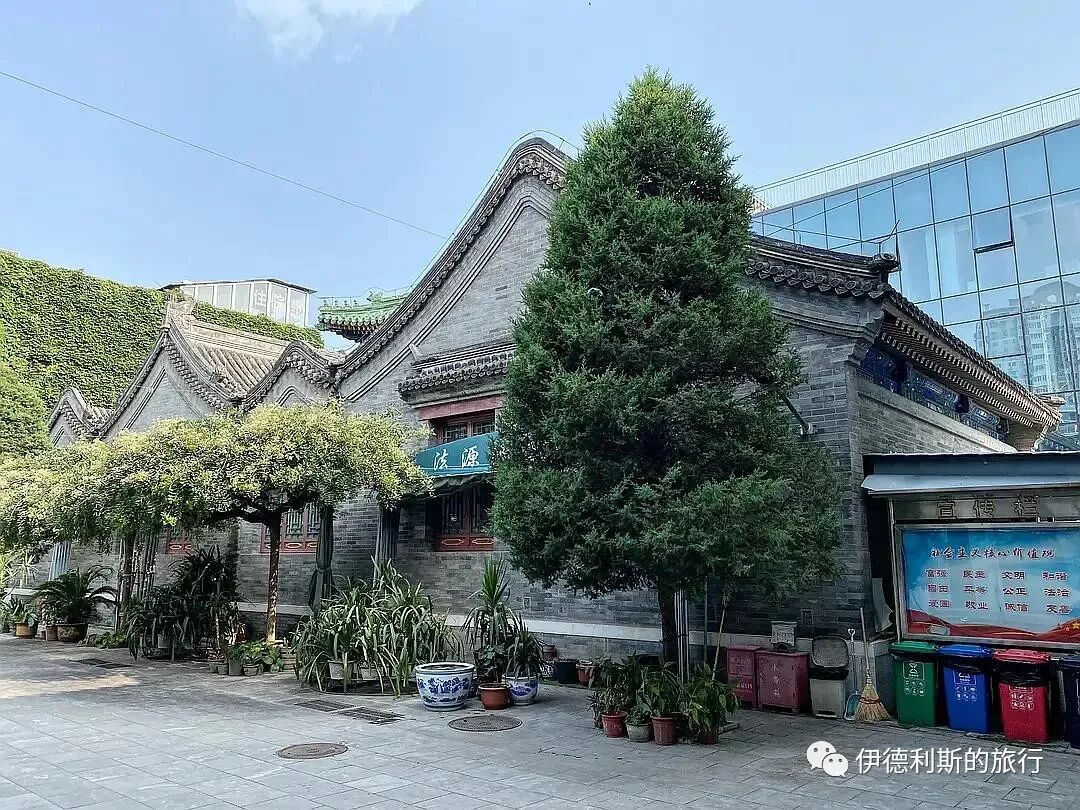
The founding date of Fayuan Mosque is unknown. It was originally located on a slope north of Jiaochangkou outside Deshengmen. It moved and expanded during the Kangxi reign, and the main hall was expanded again during the Republic of China period. It consists of four connected roofs and a four-cornered pointed pavilion. A plaque reading "All things return to the truth" hangs at the entrance of the main hall. It was inscribed by Army General Ma Fuxiang in 1928. See the diary entry, "Islamic New Year, Visiting Old Mosques in Beijing."
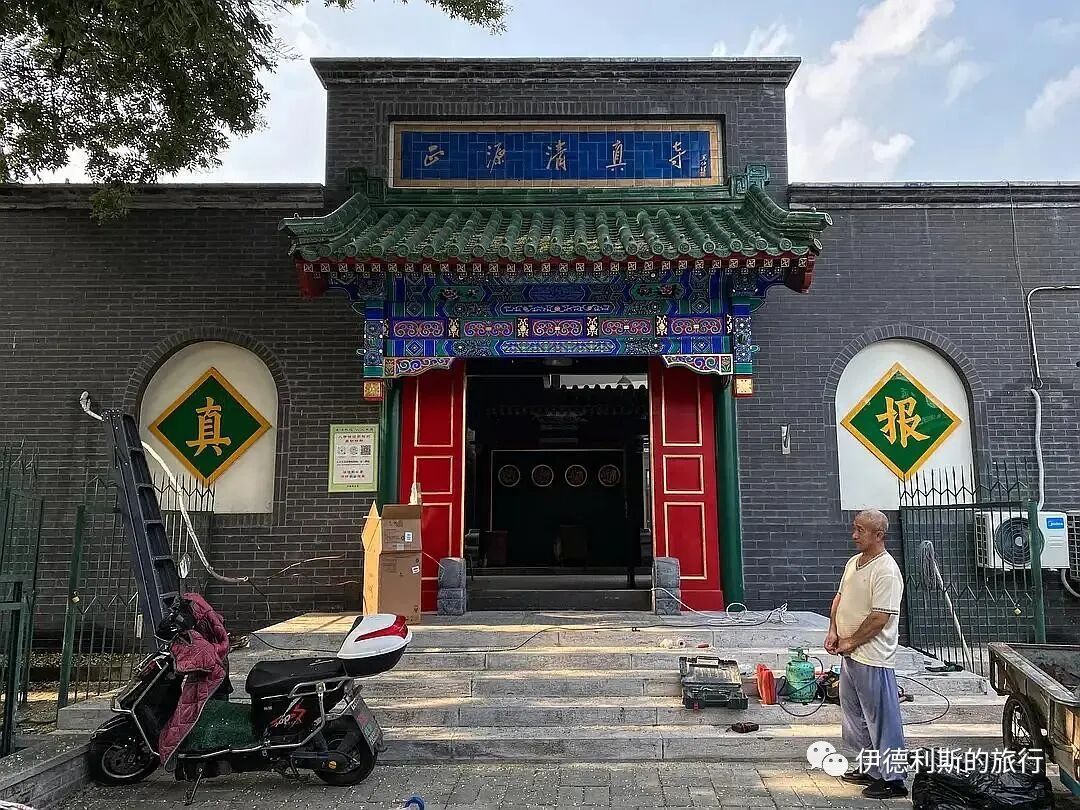
Zhengyuan Mosque was formerly the Beigouyan Mosque, which was built inside Xizhimen during the Daoguang reign. After 1946, Beigouyan was renamed Zhaodengyu Road, so it was also called Zhaodengyu Road Mosque. In 1997, it was relocated and rebuilt due to demolition, and it was renamed Zhengyuan Mosque. See the diary entry, "Islamic New Year, Visiting Old Mosques in Beijing."
August: Miyun Mosque and Mujia Yu Mosque.
Miyun Chengguan Mosque was first built during the Qing Dynasty and moved to its current site for reconstruction in 2006. See the diary 'A Halal Journey Around Miyun Reservoir' for details.
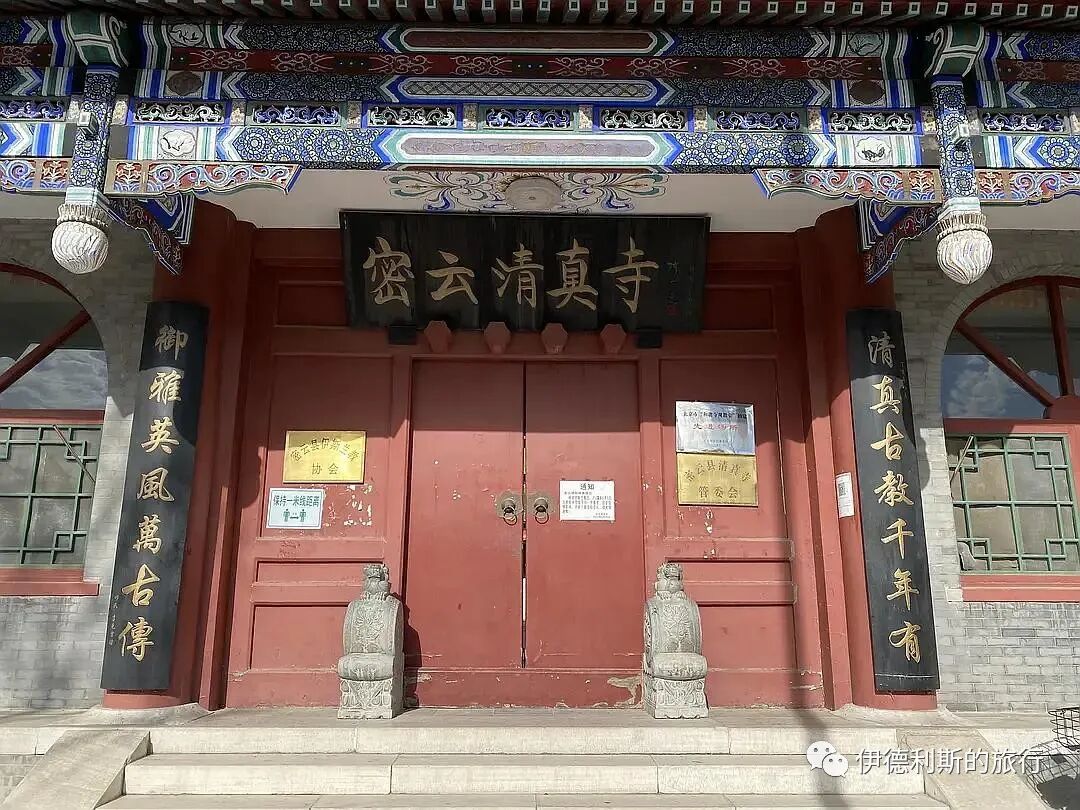
Mujia Yu Village is now called North Mujia Yu Hui Muslim Village. It sits northeast of Miyun's urban area and south of Miyun Reservoir. Historically, it was on the trade route from Gubeikou and Shixia Ancient City to Miyun's urban center. The Hui Muslims with the surname Mu came from Mujiazhuang in Tianjin (today's Mumu Village). They moved to Miyun during the Qianlong reign, over two hundred years ago. Mu Chaoyu, the son of the first ancestor to move to Mujia Yu, Mu Guobao, built the Mujia Yu Mosque on a small hill by the river east of the village in his later years. See the diary 'A Halal Journey Around Miyun Reservoir' for details.
September: Desheng Bridge Mosque, Guanzhuang Mosque, Xihui Mosque, and Yangzha Mosque.
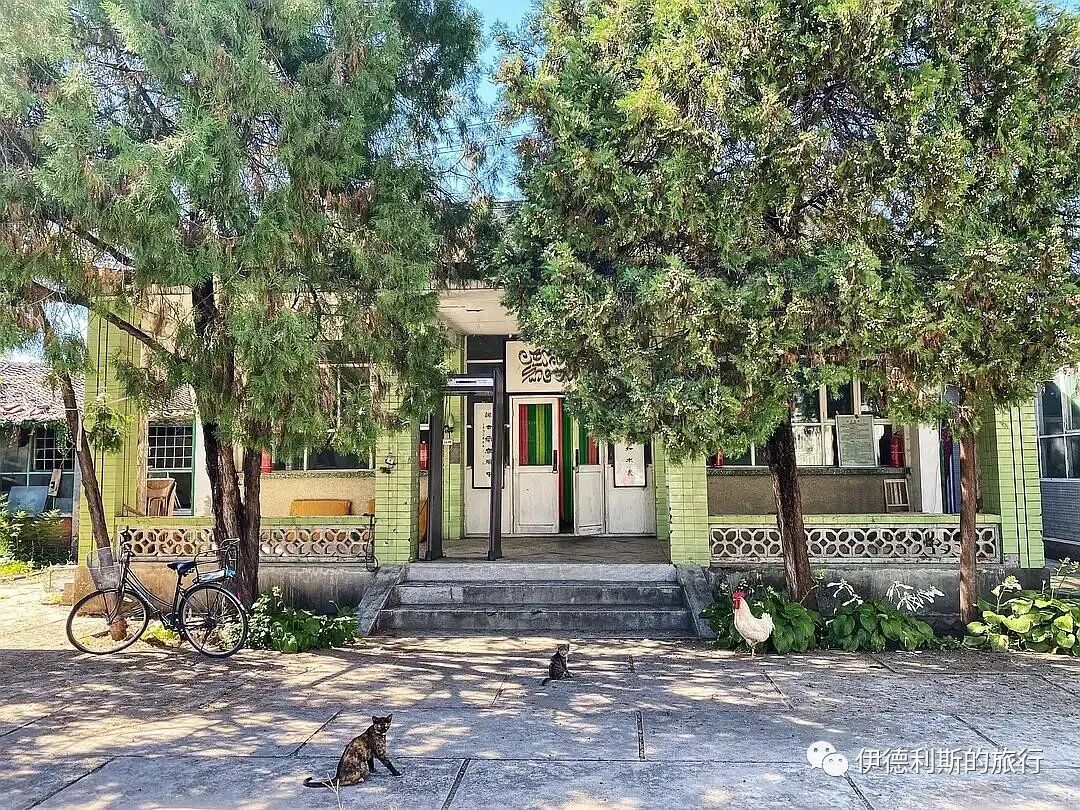
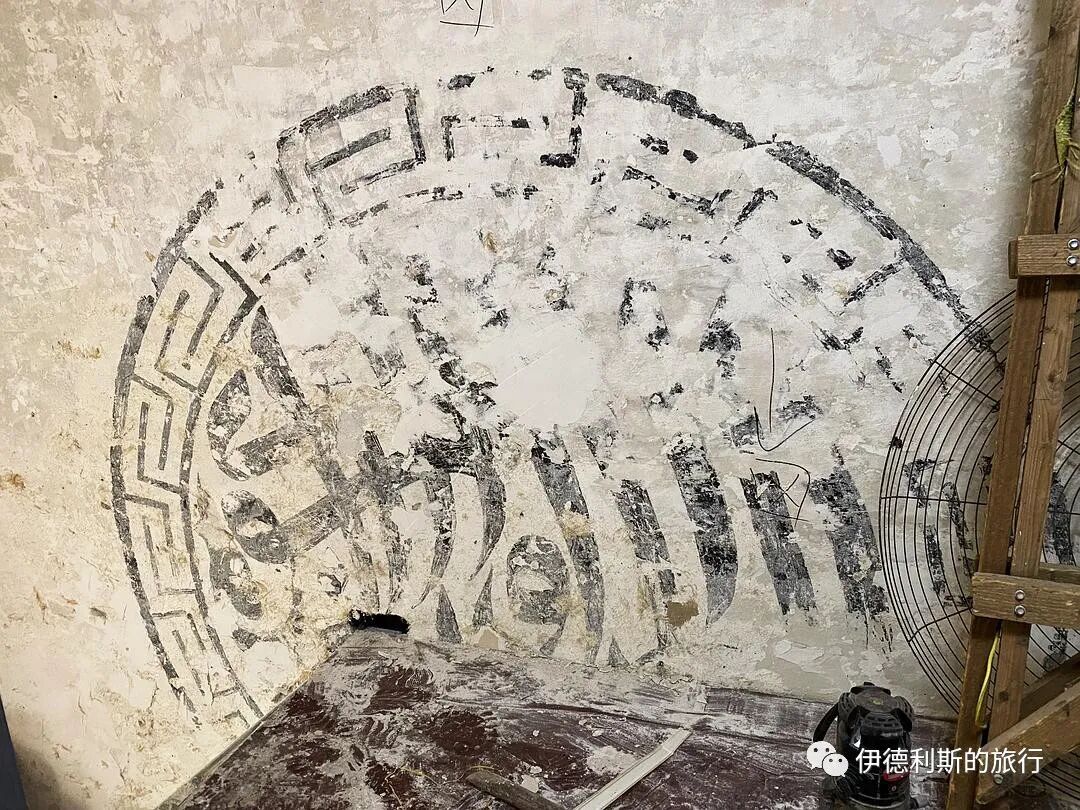
Houhai Mosque is located on the north bank of the river connecting Houhai and Xihai, on the east side of Desheng Bridge, so it is also called Desheng Bridge Mosque. The mosque is said to have been built during the Qing Dynasty. The current building was rebuilt in 1946 and features a typical Western-style architecture from the Republic of China era. Due to history, it has now become a crowded residential compound. When I visited, the owner of the room on the southernmost side of the main prayer hall was renovating, which allowed me to see the inside of the hall. The biggest surprise was that the renovation work peeled off the outer layer of the wall, revealing traditional calligraphy of scriptures on the wall facing the direction of prayer. As the renovation continues, the calligraphy will likely be hidden from view again soon. See my diary entry, "Searching for the Republic of China Era Building at Houhai Mosque," for more details.
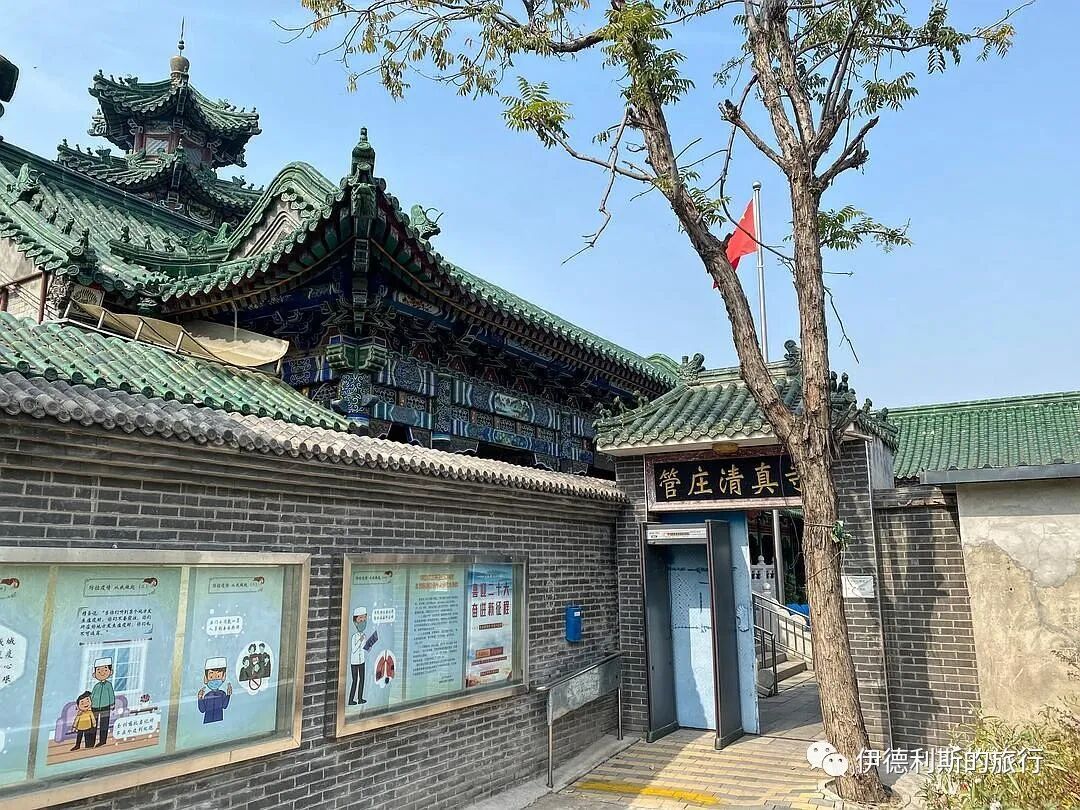
The founding date of Guanzhuang Mosque is unknown. The main hall was renovated in 1946. From 1958 to the 1980s, it was occupied by a large canteen, a rope-making factory, and a production team. It was renovated and rebuilt again from 2003 to 2004. The finial on the moon-viewing tower (wangyuelou) was cast by craftsmen from Hexiwu, Tianjin, following the design of the original one. See my diary entry, "Visiting Ancient Mosques in Beijing in Autumn," for more details.
Xihui Mosque is located by the Tonghui River, on the north bank of the former Puji Sluice Bridge. It was built in 1821 (the first year of the Daoguang reign). A plaque inscribed with the words "Qingzhen Wu'er" (The Truth of Islam is Unique) by Cao Zhenyong, a Grand Secretary of the Tiren Pavilion, still hangs above the main hall. See my diary entry, "Visiting Ancient Mosques in Beijing in Autumn," for more details.
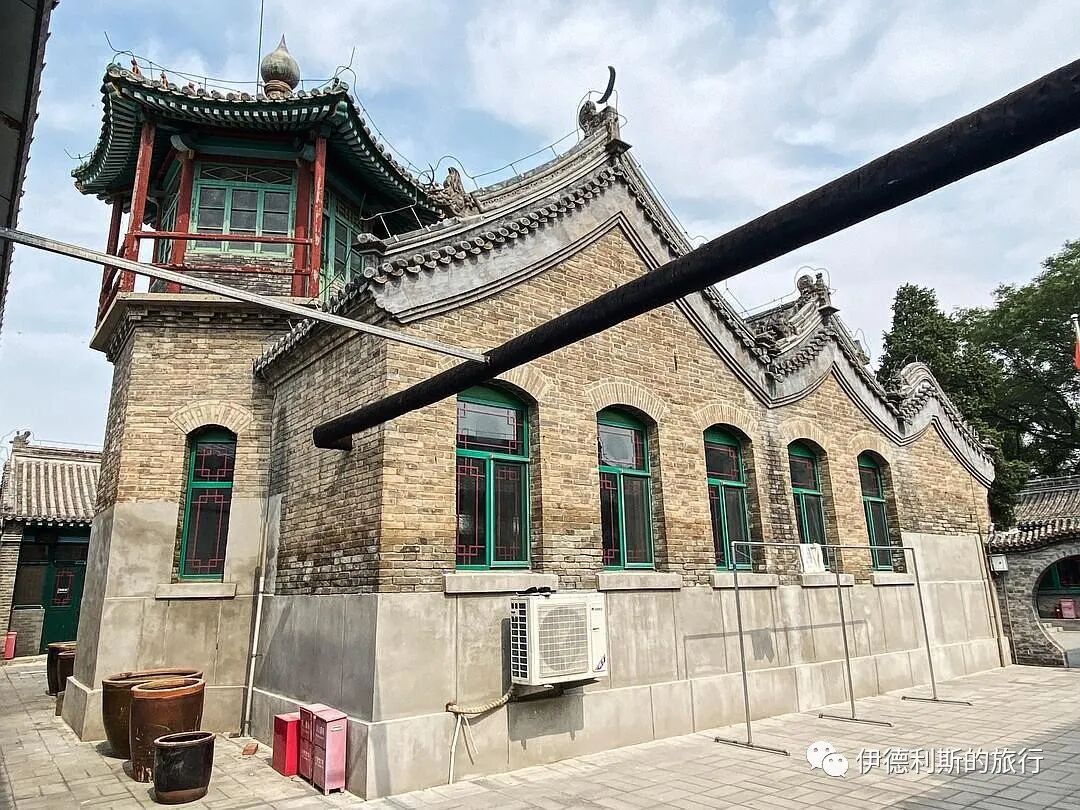
Yangzha Mosque was once right next to the main road from Chaoyangmen in Beijing to Tongzhou. It was reportedly built during the Wanli era of the Ming Dynasty. The current building was rebuilt in 1994 and renovated again in 2006. The mosque has covered walkways and pavilions, plus pine and cypress trees moved here from Jixian, Tianjin, in 1998. It is a very pleasant place. See my diary entry, "Visiting Ancient Mosques in Beijing in Autumn," for more details.
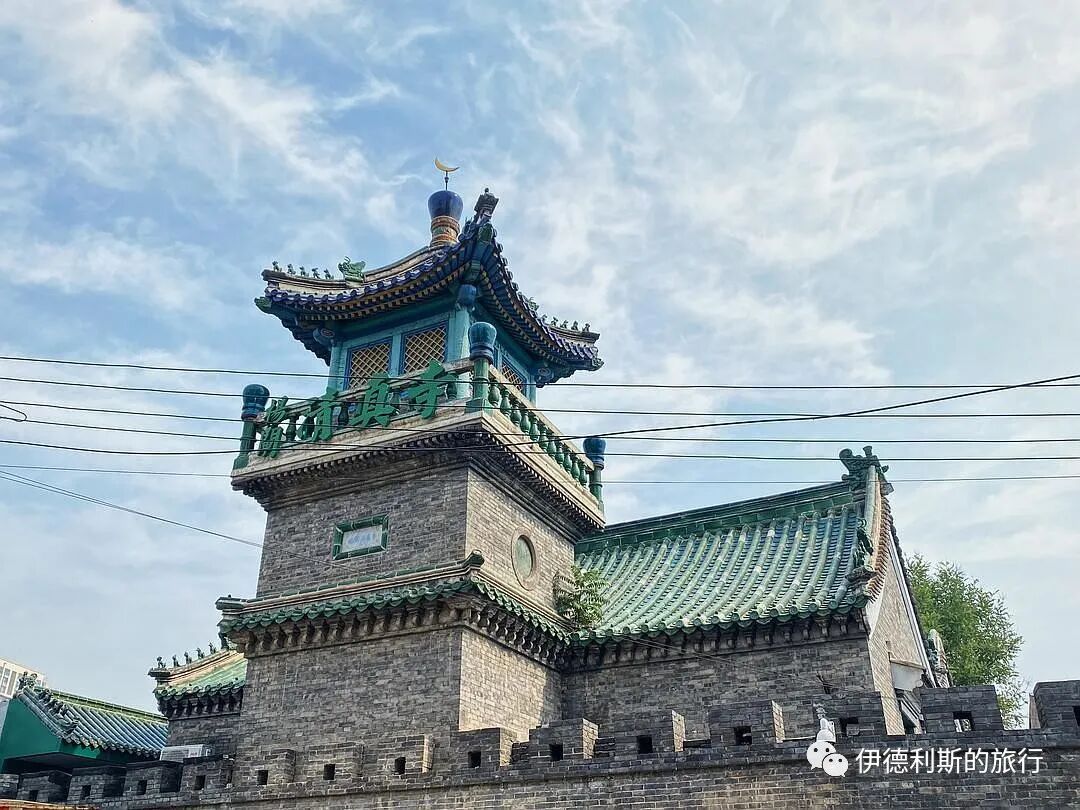
October: Wanziying Mosque, Landianchang Mosque, Siwangfu Mosque, and Shucun Mosque.
The founding date of Wanziying Mosque is unknown. When it was rebuilt in the late 1980s, a 90-year-old village elder named Li Shiqing provided a hand-drawn picture of the mosque. The repairs were then based on the style shown in his drawing. The mosque is small but has a great environment. It is quiet, pleasant, and far from the noise of the city. See my diary entry, "Visiting Ancient Mosques in Beijing in Autumn," for more details.
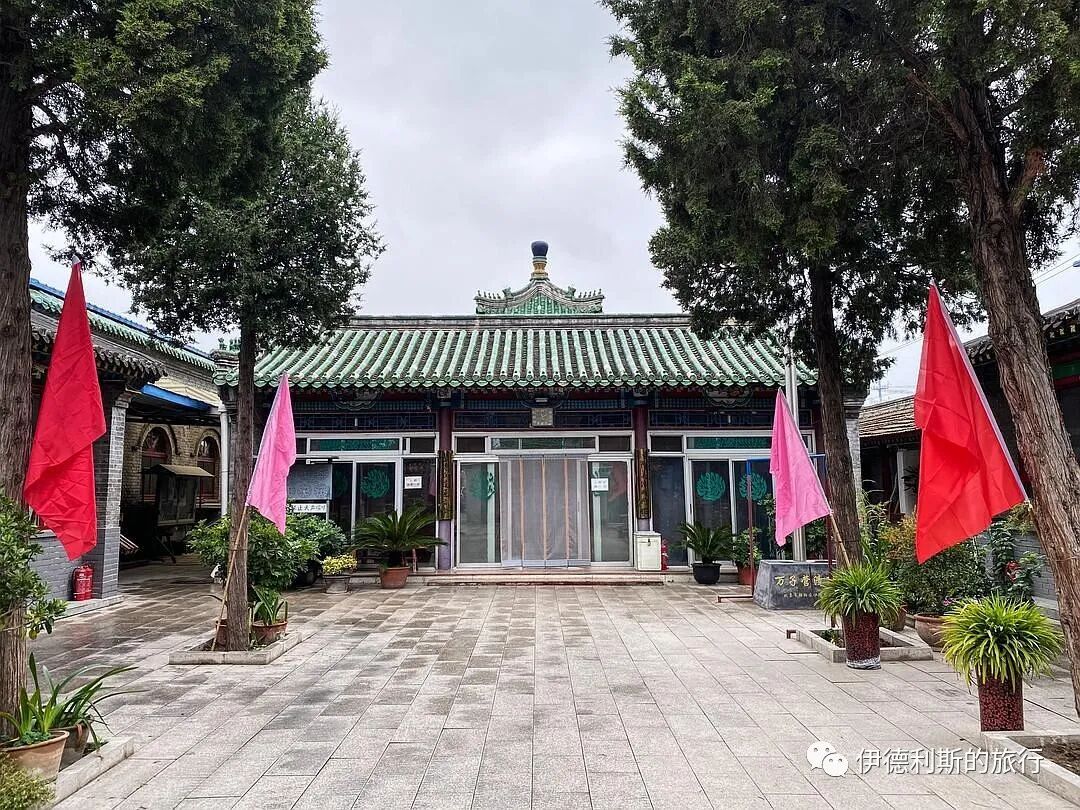
The Landianchang Mosque was first built during the Ming Dynasty. It was renovated several times during the Jiaqing and Daoguang periods of the Qing Dynasty and the Republican era. It stayed open during the 1960s, though some of its buildings were occupied. The property was returned in 1979 and renovated in 1987. After the Landianchang area was demolished in 2004, the mosque began reconstruction in 2007 and was finished in 2009. See my diary entry, "Visiting Ancient Mosques in Beijing in Autumn," for more details.
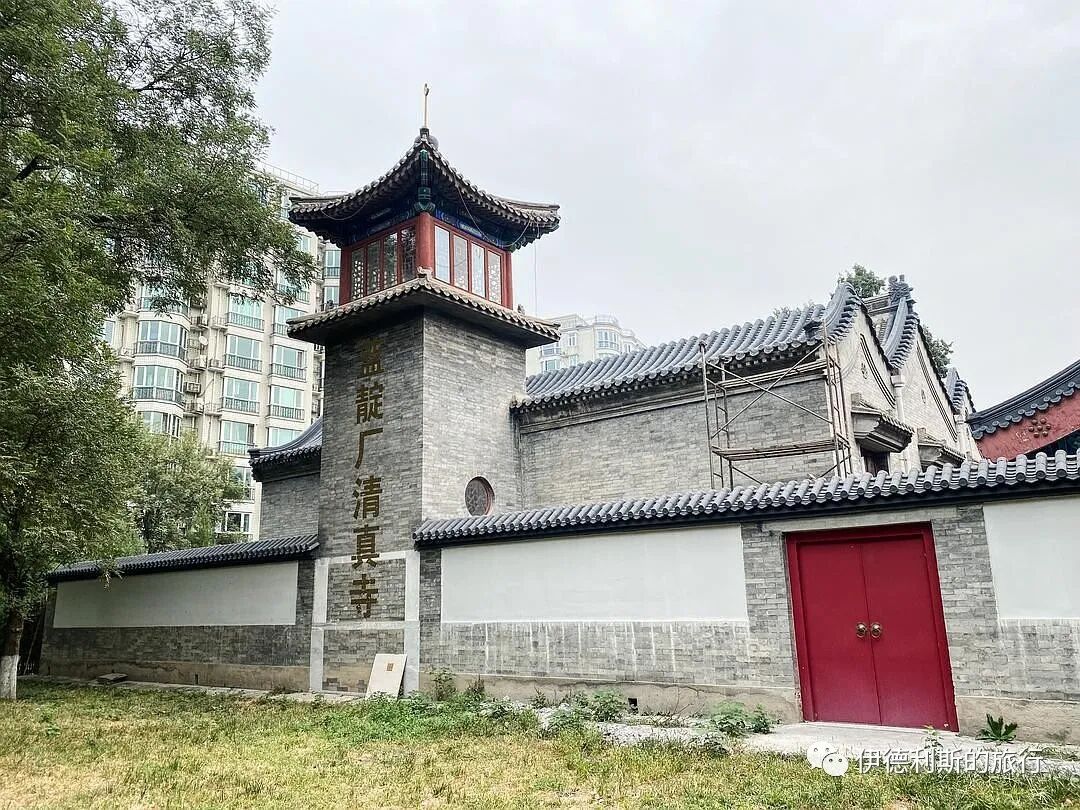
The Siwangfu Mosque is located just east of the Botanical Garden. It is shared by Hui Muslims from five nearby communities: Xiangshan, Siwangfu, Mentou, Nanhetan, and Xiaotun. Legend says the mosque was founded during the Qianlong period by elders from Houmenqiao and the local community. It was renovated during the Republican era but closed between the 1960s and 1980s. The main prayer hall fell into disrepair and was near collapse, so it was torn down and the wood and bricks were sold. The community then rebuilt the north wing and a surrounding wall, moving their namaz to the north wing. Thanks to efforts from many sides, the main prayer hall was rebuilt in 1990. However, due to construction errors, the hall was eventually moved to the east side of the original site, which created the layout seen today. See my diary entry, "Visiting Ancient Mosques in Beijing in Autumn," for more details.
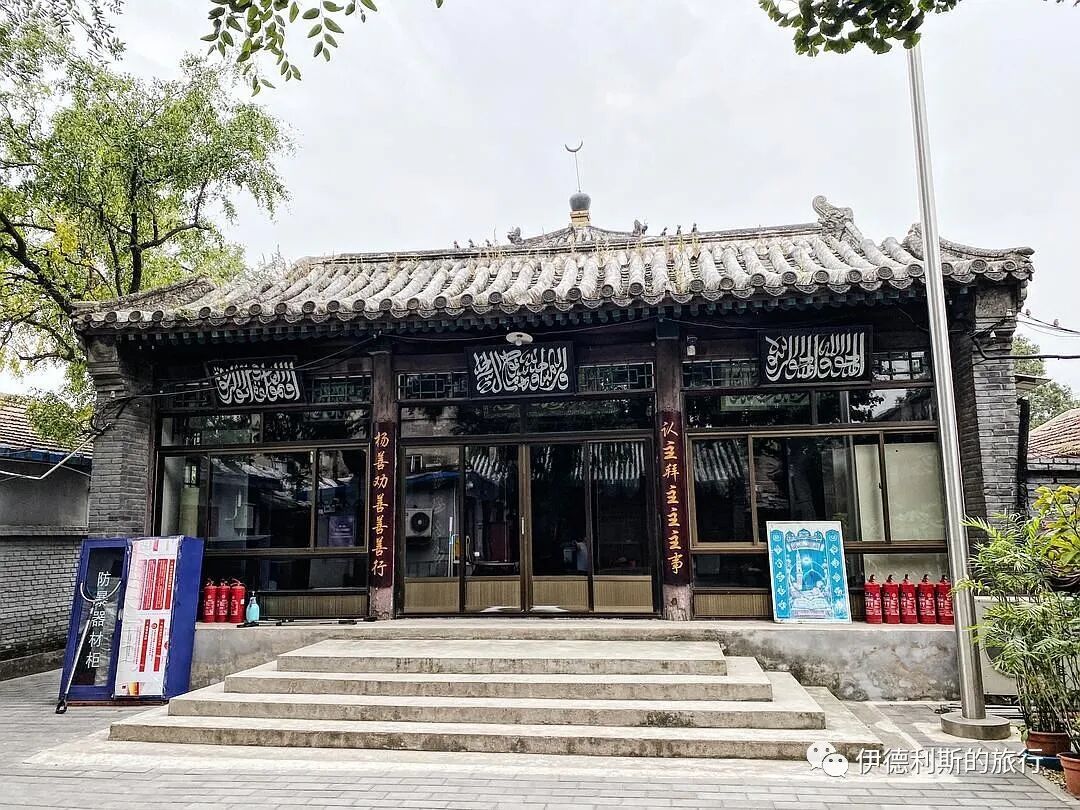
Shucun Mosque (Shucun Si) is located outside the north gate of the Old Summer Palace. It was first built during the Kangxi reign and was renovated many times during the Yongzheng, Tongzhi, and Xuantong periods, as well as during the Republic of China era. The mosque was occupied in the 1950s and damaged in the 1960s. It resumed religious activities in 1983 and has since been renovated several more times. Shucun village has now been demolished, and the villagers have moved into apartment buildings. See my diary entry, "Visiting Ancient Mosques in Beijing in Autumn," for more details.
Summary: 25 Beijing Mosques — History, Architecture and Hui Muslim Heritage is presented here as a firsthand travel account in clear English, beginning with this scene: I could not leave Beijing in 2022, so I started visiting mosques I had rarely or never been to before. I visited twenty-five of them in total, and I would like to share them with you. The account keeps its focus on Beijing Mosques, Hui Muslims, Muslim Heritage while preserving the names, places, food, and historical details from the Chinese source.
I could not leave Beijing in 2022, so I started visiting mosques I had rarely or never been to before. I visited twenty-five of them in total, and I would like to share them with you.
These twenty-five mosques are:
In Xicheng District: Mishi Hutong Mosque, Huihuiying Mosque, Pushou Mosque, Dewai Fayuan Mosque, Zhengyuan Mosque, and Deshengqiao Mosque.
In Dongcheng District: Dongzhimenwai Mosque.
In Haidian District: Fangwai Guan at the Old Summer Palace (Yuanmingyuan), Landianchang Mosque, Siwangfu Mosque, and Shucun Mosque.
In Chaoyang District: Guanzhuang Mosque, Xihui Mosque, Yangzha Mosque, and Wanziying Mosque.
In Changping District: Heying Mosque, Shahe Mosque, Changping Mosque, Nankou Mosque, and Xiguanshi Mosque.
In Yanqing District: Chadaocheng Mosque.
Majuqiao Mosque in Tongzhou.
Gubeikou Mosque, Miyun Mosque, and Mujiaoyu Mosque in Miyun.
In April: Mishi Hutong Mosque, Heying Mosque, Shahe Mosque, Changping Mosque, Majuqiao Mosque, Nankou Mosque, and Chadaocheng Mosque.
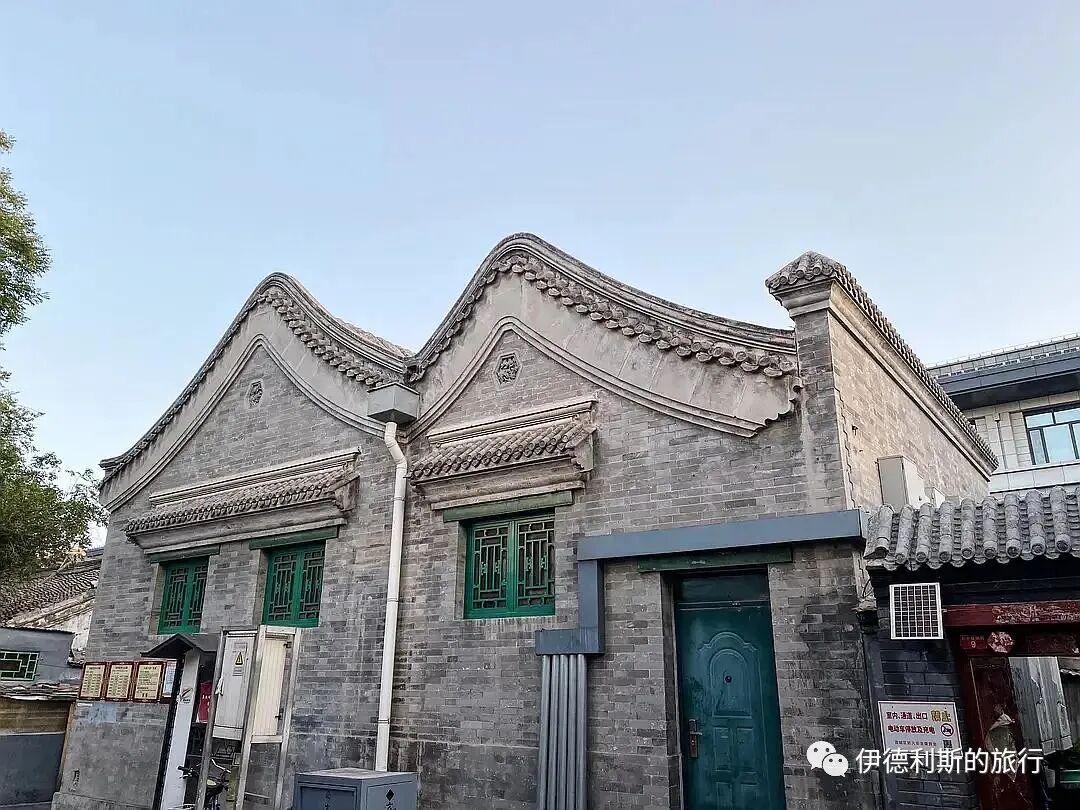
Today, near the Caishikou subway station in Beijing, the two-story building of Mishi Hutong Mosque still stands inside a large construction site. It is the only part of the mosque that survived the Daji area demolition ten years ago. The small building was originally the old Bianyifang Restaurant. During the Republic of China era, many Hui Muslims from the five northwestern provinces moved near Caishikou. Since it was inconvenient for them to travel to Tianqiao Mosque or Jiaozihu Hutong Mosque for namaz, they raised over 10,000 yuan to buy the building. After renovations, it officially became Mishi Hutong Mosque on January 1, 1940. For more details, see the diary entry 'The Only Southern-Style Mosque Architecture in Beijing—Mishi Hutong Mosque'.
In Heying, Changping, Beijing, there is the tomb of the Western Regions sage Bo Hazhi, which locals also call the Sheikh Baba tomb. A Hui Muslim family surnamed Zhang has guarded the tomb for generations. From the Ming Dynasty until now, local and nearby Hui Muslims have gathered here every year on the 24th day of the third lunar month to visit the Sheikh Baba tomb, a tradition that has never stopped. On the south side of the Bo Hazhi tomb garden stands Heying Mosque, which was built by Uncle Zhang's family in the 1930s. Only the north house remains of the old building. You can see the middle of the walls are built with stones that Uncle Zhang hauled back from the mountains years ago. See the diary entry 'Visiting the Tomb of the Western Regions Sage Bo Hazhi' for details.
For the first Jumu'ah of Ramadan, I felt very grateful. Some mosques in Beijing's Changping, Fangshan, and Tongzhou districts opened, so I went to Shahe Mosque, which is relatively convenient from my home, to pray Jumu'ah. During the Wanli reign of the Ming Dynasty, the northern Beijing road to Zhangjiakou shifted to Shahe, and Hui Muslims who traded cattle and sheep began to settle there. Shahe Mosque was first built in the Ming Dynasty and renovated twice during the Guangxu reign of the Qing Dynasty and the Republican period. It is a typical traditional North China mosque courtyard. See the diary entry 'Visiting Seven Ancient Mosques During Ramadan' for details.
Changping Wujie Mosque under renovation. Wujie Mosque is also called Changping City Mosque. Legend says it was built by Chang Yuchun during his northern expedition. It was rebuilt during the Wanli reign using stone and wood left over from building the Ming Tombs. The golden silk nanmu beams and pillars in the main hall have been preserved to this day. See the diary entry 'Visiting Seven Ancient Mosques During Ramadan' for details.
I went to Majuqiao Mosque in Tongzhou for Jumu'ah prayers. Majuqiao sits on the south bank of the Liangshui River. After the Yongle Emperor moved the capital, he built the Nanhaizi Royal Hunting Park here. In 1463, during the seventh year of the Tianshun reign, a stone arch bridge was built across the Liangshui River. From then on, Majuqiao became a key route near the capital. Merchants gathered here, and Hui Muslims kept moving in to do business. Majuqiao Mosque was built during the Ming Dynasty, renovated during the Qianlong reign, and expanded again in 1937. In 1999, all the wood, bricks, and tiles from the demolished Niujie Women's Mosque were used to renovate Majuqiao Mosque, and the towering Moon-Sighting Tower (wangyuelou) was added behind the main hall. See the diary entry 'Visiting Seven Ancient Mosques During Ramadan' for details.
To defend against Mongol invasions, the Ming Dynasty built Nankou City in 1404, the second year of the Yongle reign, and it was rebuilt many times later. After the Qing Dynasty, as trade on the grasslands flourished, Nankou City became filled with shops and a constant stream of traveling merchants. Nankou Mosque sits outside the south gate of Nankou City. Its exact founding date is unknown, but it is believed to have been built during the Ming Dynasty. The mosque houses a stone tablet from the 20th year of the Guangxu reign (1894) titled 'Record of the Reconstruction of Nankou Mosque in Yanqing Prefecture.' It notes that Imam Yang Xiaoshan from Shixia City in Miyun was hired by the mosque in 1876. He traveled everywhere to raise donations (nietie), then built the south lecture hall in 1879, the north quiet room in 1880, and a water well in 1881. In 1887, Imam Yang moved to Shacheng Mosque in Huailai County. Nankou Mosque then hired Imam Shan Hong'en, who continued work by building a washroom (shuifang) next to the well and a main gate in the northeast corner. The current Nankou Mosque largely keeps the layout it had after the renovations during the Guangxu reign. See the diary entry 'Visiting Seven Ancient Mosques During Ramadan' for details.
Chadao City is the first fortress gate when entering Beijing from outside the Great Wall via the Jundu Path, one of the eight paths of the Taihang Mountains. It served as an outpost for Juyong Pass. From here, you can head west through Huailai to reach Xuanhua and Zhangjiakou, or head north to reach Yanqing and Yongning. This is why it is called 'Chadao,' or 'Forked Road.' Chadao City was built in the 9th year of the Chenghua reign (1473) of the Ming Dynasty. It was rebuilt with brick reinforcements twice during the Jiajing and Longqing reigns and served as an important pass to defend against Mongol invasions. After the Qing Dynasty, Chadao City became a key route for merchants traveling to the capital from the northwest. Trade was frequent, the city grew more prosperous, and many shops and inns opened. To serve the needs of traveling Hui Muslims, a mosque was built inside the city. See the diary entry 'Visiting Seven Ancient Mosques During Ramadan' for details.
May: Gubeikou Mosque, Fangwai Guan at the Old Summer Palace, Huiying Mosque, and Pushou Mosque.
On the first day after Eid al-Fitr, I decided to visit the old mosque in Gubeikou, Miyun. The original construction date of Gubeikou Mosque is unknown. According to a stone tablet inside from the Ming Dynasty, it was renovated in the second year of the Chongzhen reign (1629). In the 34th year of the Kangxi reign (1695), a Hui Muslim officer named Ma Jinliang was transferred to Gubeikou as a regional commander due to his military achievements. In the 42nd year of the Kangxi reign (1703), he was promoted to commander-in-chief of Zhili. People called him General Ma the Hui Muslim, and he was stationed in Hexi Village, Gubeikou. While in Gubeikou, Ma Jinliang oversaw the renovation of Gubeikou Mosque. The current structure of the old mosque is mostly from that renovation during the Kangxi reign. See the diary entry "Visiting the Old Mosque at Gubeikou" for details.
The View from Afar (Fangwaiguan) is part of the Western-style building complex at the Old Summer Palace. It was built between 1756 and 1759 during the 21st to 24th years of the Qianlong Emperor's reign. It was primarily designed by the Italian court painter Giuseppe Castiglione and built by Chinese craftsmen in the late Renaissance Italian Baroque style. In 1760, the Qianlong Emperor summoned the Hui Muslim leaders who helped suppress the White Mountain sect rebellion to the capital. He named the hero Turdu Khoja a first-rank taiji and gave his sister the title of Noble Lady He (He Guiren). In 1761, the Khoja woman was promoted to Concubine Rong (Rong Pin) and later to Consort Rong (Rong Fei). The Qianlong Emperor then converted the View from Afar into a prayer hall specifically for her to perform namaz. After that, the Khoja woman lived in the palace for 28 years until she returned to Allah at the Old Summer Palace in 1788. See the diary entry "The Mosque in the Old Summer Palace" for details.
During the Qing Dynasty, Beijing had a mosque built by imperial decree: the Hui Muslim Camp Mosque (Huihuiying Qingzhensi) on West Chang'an Street. It was the only mosque built by the Qing government. Unfortunately, the main hall of the Hui Muslim Camp Mosque collapsed due to disrepair in the 1900s, and it was completely demolished by Yuan Shikai in the early years of the Republic of China. After the main hall was torn down, the community had nowhere to pray, so they rebuilt a small hall on the original site, which was also torn down in 2010. In 2011, the Xicheng District Cultural Committee rebuilt the mosque 200 meters west of the original site, and the stone tablet titled "Imperial Decree for the Hui People's Mosque" inscribed by Emperor Qianlong was placed back in the courtyard. See the diary entry "Visiting the Huiying Mosque at Beihai Park" for details.
Pushou Mosque is located on Jinshifang Street in Beijing's Xicheng District, which was called Jinchengfang Street during the Yuan Dynasty. Although precious Yuan Dynasty tombstones are preserved there, no records have been found so far confirming that Pushou Mosque was built during the Yuan Dynasty. Because a plaque stamped with "Built in the Fourth Year of Xuande of the Great Ming" once hung above the hanging flower gate (chuihuamen) of the mosque, it is generally believed that Pushou Mosque was founded in 1429 (the fourth year of the Xuande reign of the Ming Dynasty) and was renovated many times during the Zhengtong, Wanli, Tianqi, and Chongzhen years of the Ming Dynasty. During the Ming Dynasty, Pushou Mosque was known as one of the four major official mosques in Beijing, alongside Niujie Mosque, Dongsi Mosque, and Faming Mosque inside Andingmen, and it held a very high status. According to the 1521 (the 16th year of the Zhengde reign) "Record of the Renovation of the Mosque" tablet at Dingzhou Mosque, Chen Xun, the Earl of Wuping, sought help from the congregation at Pushou Mosque to renovate Dingzhou Mosque during the Hongzhi reign of the Ming Dynasty and received great support, as the mosque was then filled with "gentry and scholar-officials." The mosque was torn down after the Jinshifang Street demolition in 2008, then rebuilt into its current form between 2010 and 2014. See the diary entry, "Sufi Practitioners Who Came from the Ilkhanate to the Yuan Dynasty Capital."
July: Dongzhimenwai Mosque, Xiguanshi Mosque, Dewai Fayuan Mosque, and Zhengyuan Mosque.
A great day starts with breakfast (bangda), then I went to the Dongzhimenwai Mosque near my home. Dongzhimenwai Mosque was originally called Erlizhuang Mosque. It was first built during the Yuan Dynasty and renovated during the Kangxi reign of the Qing Dynasty. In the late 1980s, Shougang and a Danish company built international apartments in Erlizhuang, so the mosque was moved one kilometer to the northwest. It was finished in 1991 and reopened in 1993. See the diary entry, "Islamic New Year, Visiting Old Mosques in Beijing."
Xiguanshi Mosque was originally called Guanshicun Mosque. It was first built in 1494 (the seventh year of the Hongzhi reign of the Ming Dynasty). The main hall was rebuilt in 1709 (the 48th year of Kangxi), the main gate in 1723 (the first year of Yongzheng), the hall rooms in 1732 (the tenth year of Yongzheng), and the prayer niche hall (yaodian) in 1761 (the 26th year of Qianlong). It continued to be renovated during the Guangxu reign and the Republic of China period. See the diary entry, "Islamic New Year, Visiting Old Mosques in Beijing."
The founding date of Fayuan Mosque is unknown. It was originally located on a slope north of Jiaochangkou outside Deshengmen. It moved and expanded during the Kangxi reign, and the main hall was expanded again during the Republic of China period. It consists of four connected roofs and a four-cornered pointed pavilion. A plaque reading "All things return to the truth" hangs at the entrance of the main hall. It was inscribed by Army General Ma Fuxiang in 1928. See the diary entry, "Islamic New Year, Visiting Old Mosques in Beijing."
Zhengyuan Mosque was formerly the Beigouyan Mosque, which was built inside Xizhimen during the Daoguang reign. After 1946, Beigouyan was renamed Zhaodengyu Road, so it was also called Zhaodengyu Road Mosque. In 1997, it was relocated and rebuilt due to demolition, and it was renamed Zhengyuan Mosque. See the diary entry, "Islamic New Year, Visiting Old Mosques in Beijing."
August: Miyun Mosque and Mujia Yu Mosque.
Miyun Chengguan Mosque was first built during the Qing Dynasty and moved to its current site for reconstruction in 2006. See the diary 'A Halal Journey Around Miyun Reservoir' for details.
Mujia Yu Village is now called North Mujia Yu Hui Muslim Village. It sits northeast of Miyun's urban area and south of Miyun Reservoir. Historically, it was on the trade route from Gubeikou and Shixia Ancient City to Miyun's urban center. The Hui Muslims with the surname Mu came from Mujiazhuang in Tianjin (today's Mumu Village). They moved to Miyun during the Qianlong reign, over two hundred years ago. Mu Chaoyu, the son of the first ancestor to move to Mujia Yu, Mu Guobao, built the Mujia Yu Mosque on a small hill by the river east of the village in his later years. See the diary 'A Halal Journey Around Miyun Reservoir' for details.
September: Desheng Bridge Mosque, Guanzhuang Mosque, Xihui Mosque, and Yangzha Mosque.
Houhai Mosque is located on the north bank of the river connecting Houhai and Xihai, on the east side of Desheng Bridge, so it is also called Desheng Bridge Mosque. The mosque is said to have been built during the Qing Dynasty. The current building was rebuilt in 1946 and features a typical Western-style architecture from the Republic of China era. Due to history, it has now become a crowded residential compound. When I visited, the owner of the room on the southernmost side of the main prayer hall was renovating, which allowed me to see the inside of the hall. The biggest surprise was that the renovation work peeled off the outer layer of the wall, revealing traditional calligraphy of scriptures on the wall facing the direction of prayer. As the renovation continues, the calligraphy will likely be hidden from view again soon. See my diary entry, "Searching for the Republic of China Era Building at Houhai Mosque," for more details.
The founding date of Guanzhuang Mosque is unknown. The main hall was renovated in 1946. From 1958 to the 1980s, it was occupied by a large canteen, a rope-making factory, and a production team. It was renovated and rebuilt again from 2003 to 2004. The finial on the moon-viewing tower (wangyuelou) was cast by craftsmen from Hexiwu, Tianjin, following the design of the original one. See my diary entry, "Visiting Ancient Mosques in Beijing in Autumn," for more details.
Xihui Mosque is located by the Tonghui River, on the north bank of the former Puji Sluice Bridge. It was built in 1821 (the first year of the Daoguang reign). A plaque inscribed with the words "Qingzhen Wu'er" (The Truth of Islam is Unique) by Cao Zhenyong, a Grand Secretary of the Tiren Pavilion, still hangs above the main hall. See my diary entry, "Visiting Ancient Mosques in Beijing in Autumn," for more details.
Yangzha Mosque was once right next to the main road from Chaoyangmen in Beijing to Tongzhou. It was reportedly built during the Wanli era of the Ming Dynasty. The current building was rebuilt in 1994 and renovated again in 2006. The mosque has covered walkways and pavilions, plus pine and cypress trees moved here from Jixian, Tianjin, in 1998. It is a very pleasant place. See my diary entry, "Visiting Ancient Mosques in Beijing in Autumn," for more details.
October: Wanziying Mosque, Landianchang Mosque, Siwangfu Mosque, and Shucun Mosque.
The founding date of Wanziying Mosque is unknown. When it was rebuilt in the late 1980s, a 90-year-old village elder named Li Shiqing provided a hand-drawn picture of the mosque. The repairs were then based on the style shown in his drawing. The mosque is small but has a great environment. It is quiet, pleasant, and far from the noise of the city. See my diary entry, "Visiting Ancient Mosques in Beijing in Autumn," for more details.
The Landianchang Mosque was first built during the Ming Dynasty. It was renovated several times during the Jiaqing and Daoguang periods of the Qing Dynasty and the Republican era. It stayed open during the 1960s, though some of its buildings were occupied. The property was returned in 1979 and renovated in 1987. After the Landianchang area was demolished in 2004, the mosque began reconstruction in 2007 and was finished in 2009. See my diary entry, "Visiting Ancient Mosques in Beijing in Autumn," for more details.
The Siwangfu Mosque is located just east of the Botanical Garden. It is shared by Hui Muslims from five nearby communities: Xiangshan, Siwangfu, Mentou, Nanhetan, and Xiaotun. Legend says the mosque was founded during the Qianlong period by elders from Houmenqiao and the local community. It was renovated during the Republican era but closed between the 1960s and 1980s. The main prayer hall fell into disrepair and was near collapse, so it was torn down and the wood and bricks were sold. The community then rebuilt the north wing and a surrounding wall, moving their namaz to the north wing. Thanks to efforts from many sides, the main prayer hall was rebuilt in 1990. However, due to construction errors, the hall was eventually moved to the east side of the original site, which created the layout seen today. See my diary entry, "Visiting Ancient Mosques in Beijing in Autumn," for more details.
Shucun Mosque (Shucun Si) is located outside the north gate of the Old Summer Palace. It was first built during the Kangxi reign and was renovated many times during the Yongzheng, Tongzhi, and Xuantong periods, as well as during the Republic of China era. The mosque was occupied in the 1950s and damaged in the 1960s. It resumed religious activities in 1983 and has since been renovated several more times. Shucun village has now been demolished, and the villagers have moved into apartment buildings. See my diary entry, "Visiting Ancient Mosques in Beijing in Autumn," for more details.
