
Halal Travel Guide: Urumqi — Hui Muslim Street, Halal Food & Xinjiang Markets
Reposted from the web
Summary: Urumqi’s Hui Muslim streets bring together halal food, markets, daily commerce, and neighborhood life in Xinjiang. This 2025 travel account keeps the original street scenes, shop details, photos, and food notes in a clear English version.
After the Qing dynasty defeated the Dzungar tribe, they built an earthen city in Urumqi in 1758 (the 23rd year of the Qianlong reign) to station troops and guard the border. In 1763 (the 28th year of the Qianlong reign), they expanded it and named it Dihua City. After that, Qing troops stationed in Urumqi to farm the land, and many Hui Muslim officers and soldiers brought their families to settle there. During the Jiaqing, Daoguang, and Xianfeng reigns, the Qing dynasty kept moving people to Xinjiang, and more and more Hui Muslims came to settle in Urumqi. After the Tongzhi reign, many Hui Muslims from the northwest moved to Urumqi for various reasons, including failed anti-Qing uprisings, religious disputes, and natural disasters.
In 1876 (the second year of the Guangxu reign), the Qing army recaptured Urumqi and ordered all Hui Muslims inside the city to move outside. Since then, most Hui Muslims in Urumqi have settled in the Nanguan and Xiguan areas, making a living by slaughtering cattle and sheep and running halal food businesses.
Urumqi's Xiaonanmen gate faces Xiaodongliang. During the late Qing dynasty and the Republic of China era, half of the twenty-three Hui Muslim neighborhoods in Urumqi were here. Today, it is still the place where Hui Muslim snacks are most concentrated.
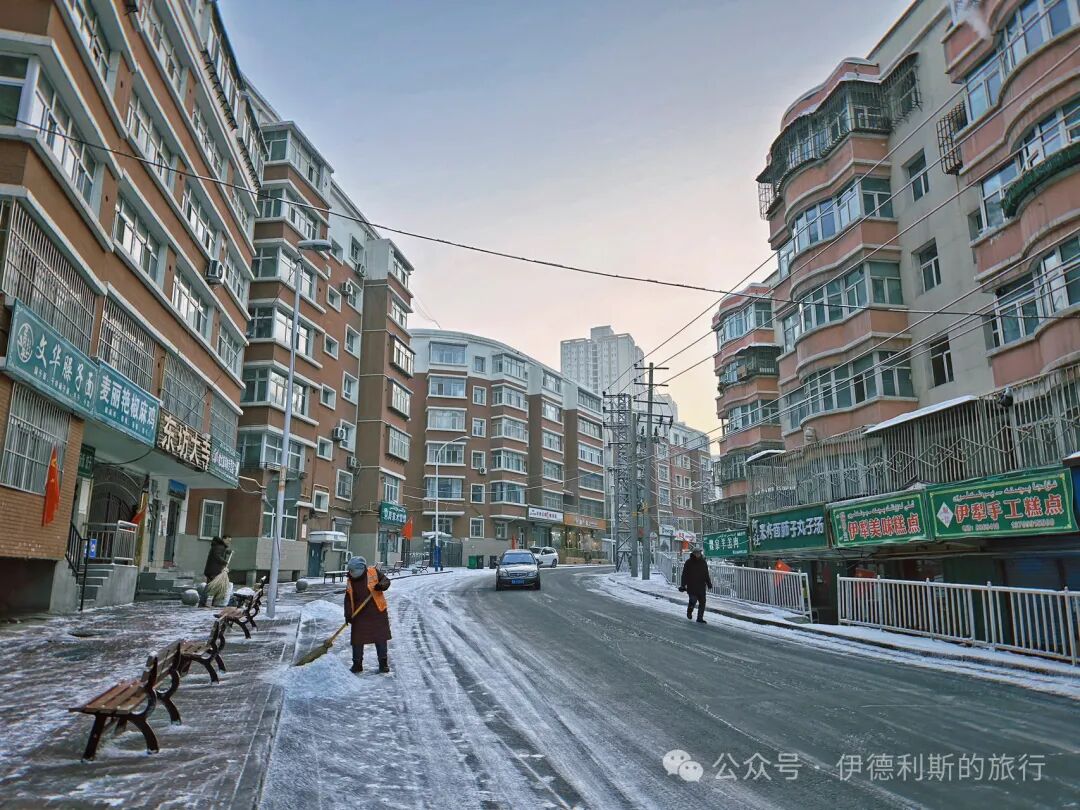
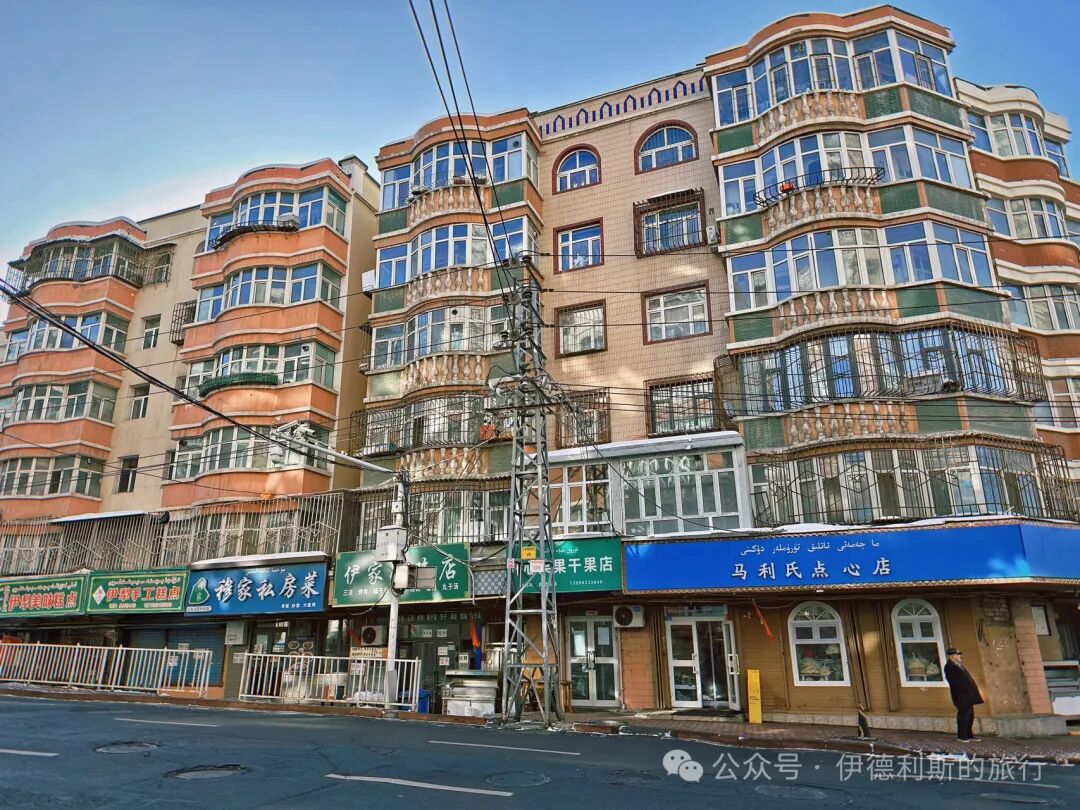
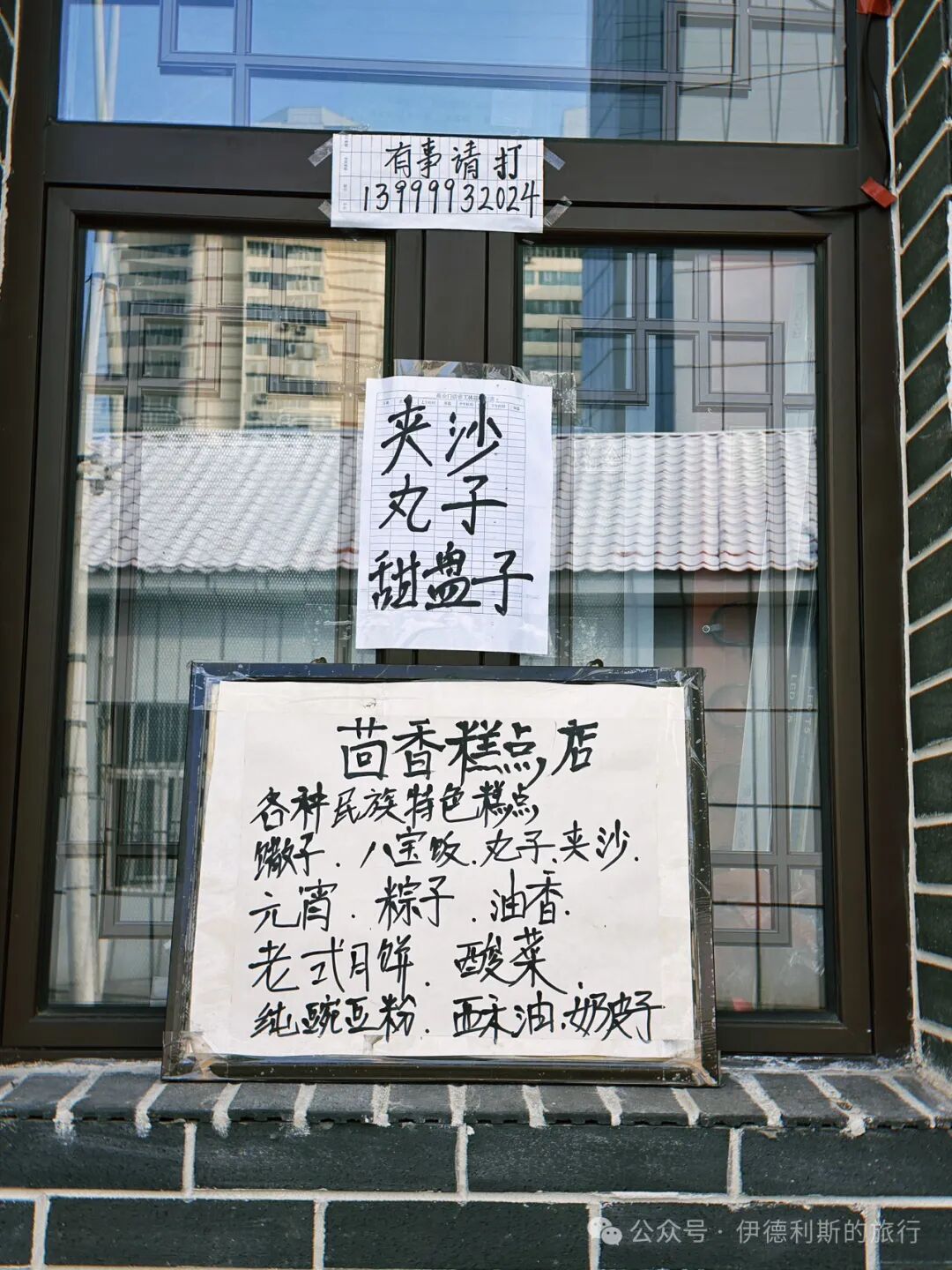
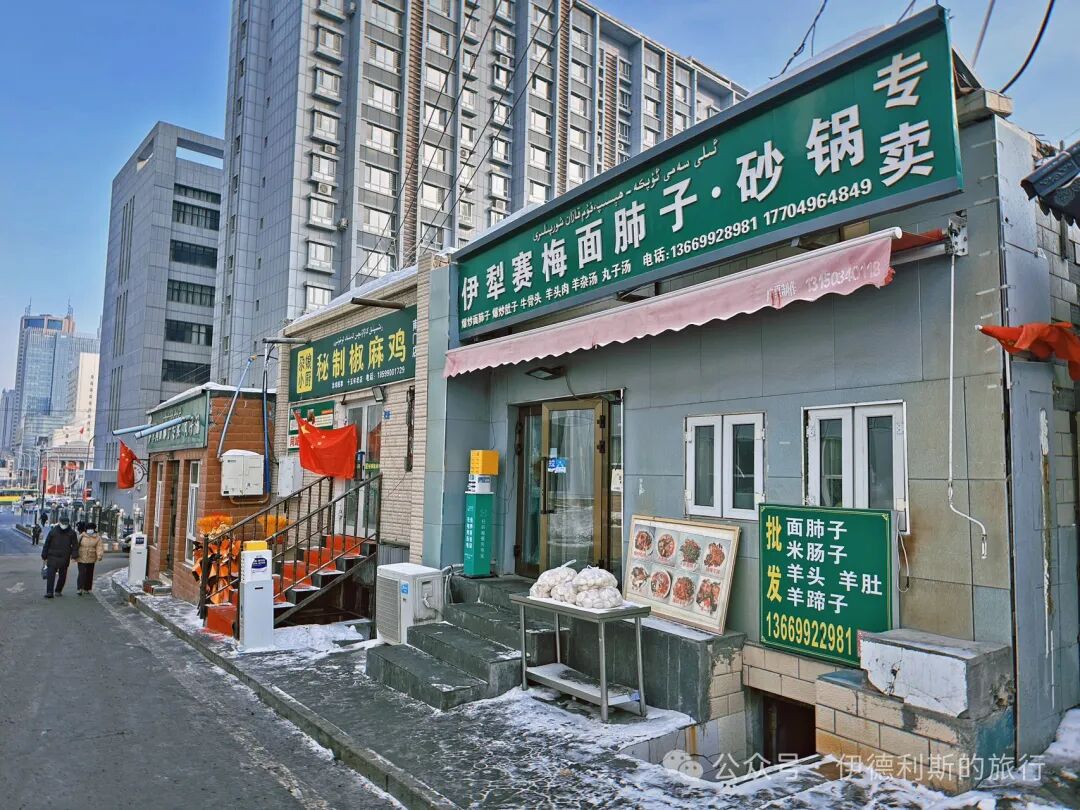
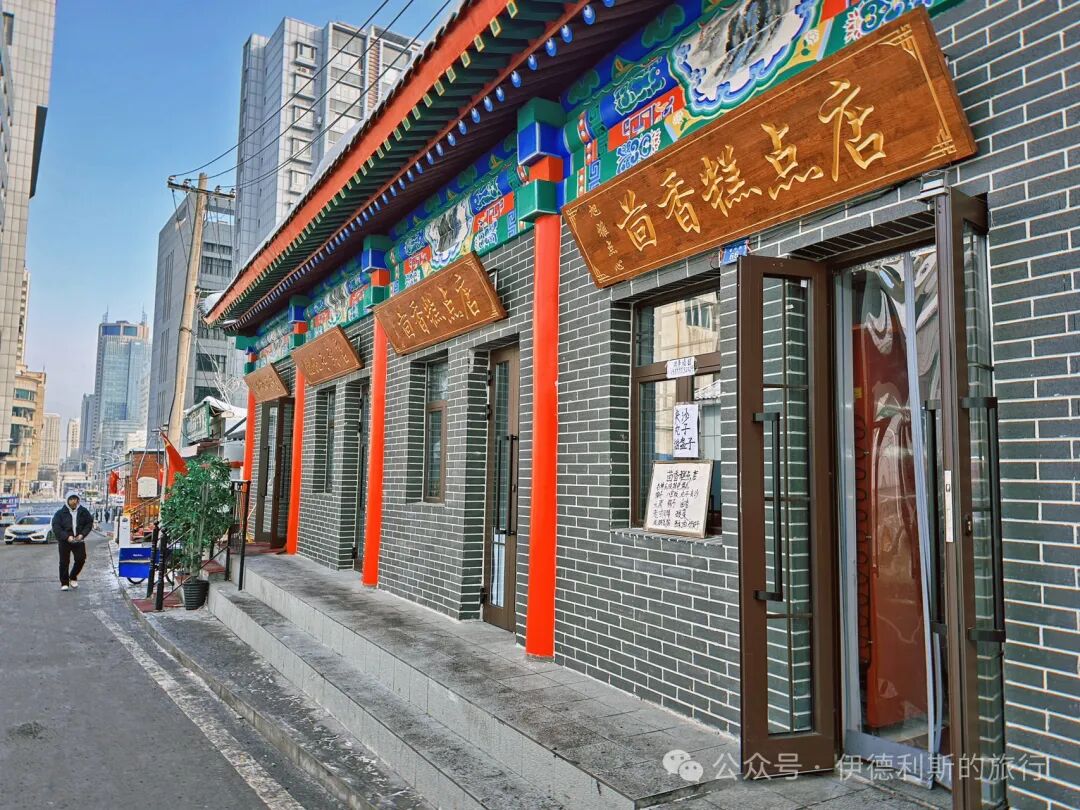
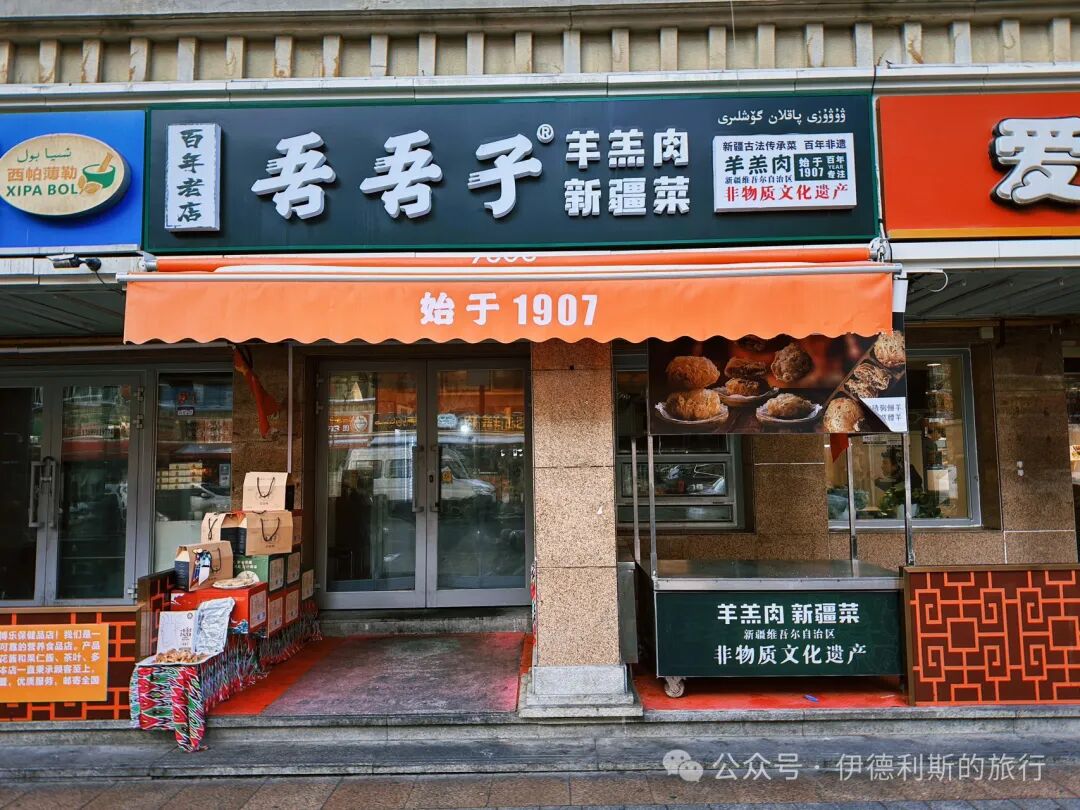
Wuwuzi is the oldest Hui Muslim brand in Nanguan. In 1907, Li Shenghua (Li Liushizi) started carrying a shoulder pole to sell lamb (yanggaorou) at the south gate of Dihua. Later, his fifth son, Li Zhanshou (Wuwuzi), took over, and the name Wuwuzi Lamb gradually became well-known. After the 1980s, Wuwuzi rented a storefront in Shanxi Alley. It has been passed down for four generations and is now an autonomous region-level intangible cultural heritage.
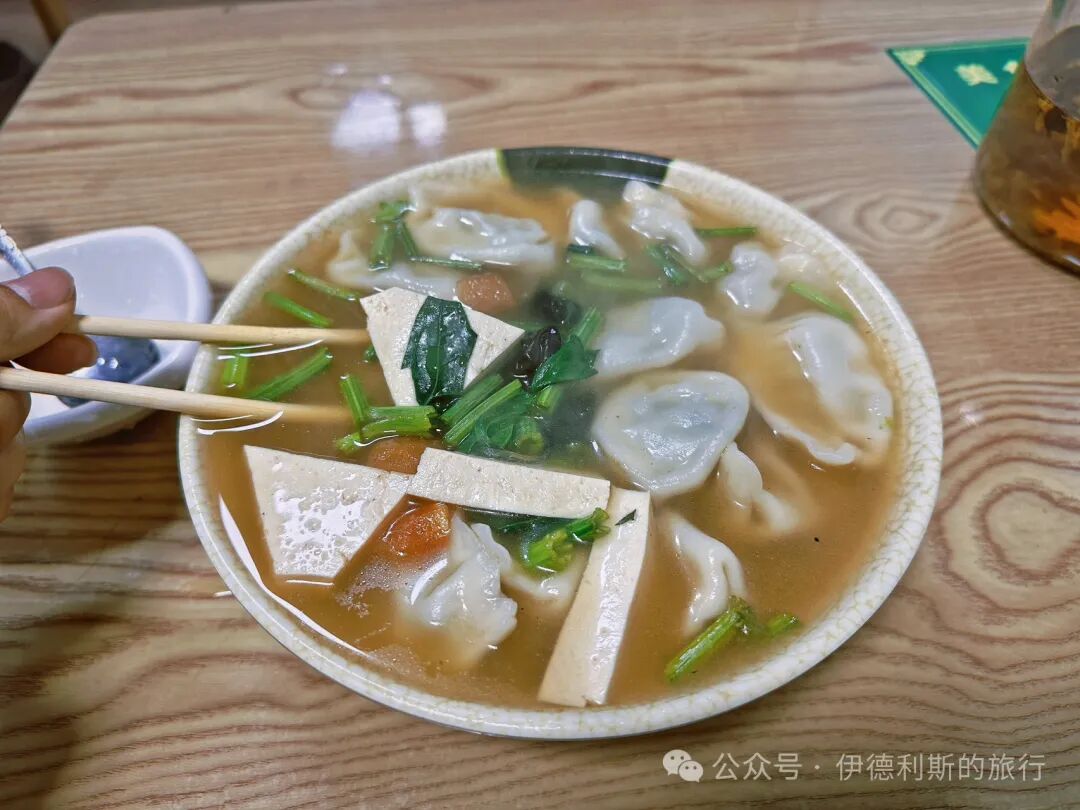
Across from the East Mosque (Dongfang Dasi), I had sour soup dumplings (suantang shuijiao) with celery and meat. They contained glass noodles (fentiao), tomatoes, wood ear mushrooms, and tofu.
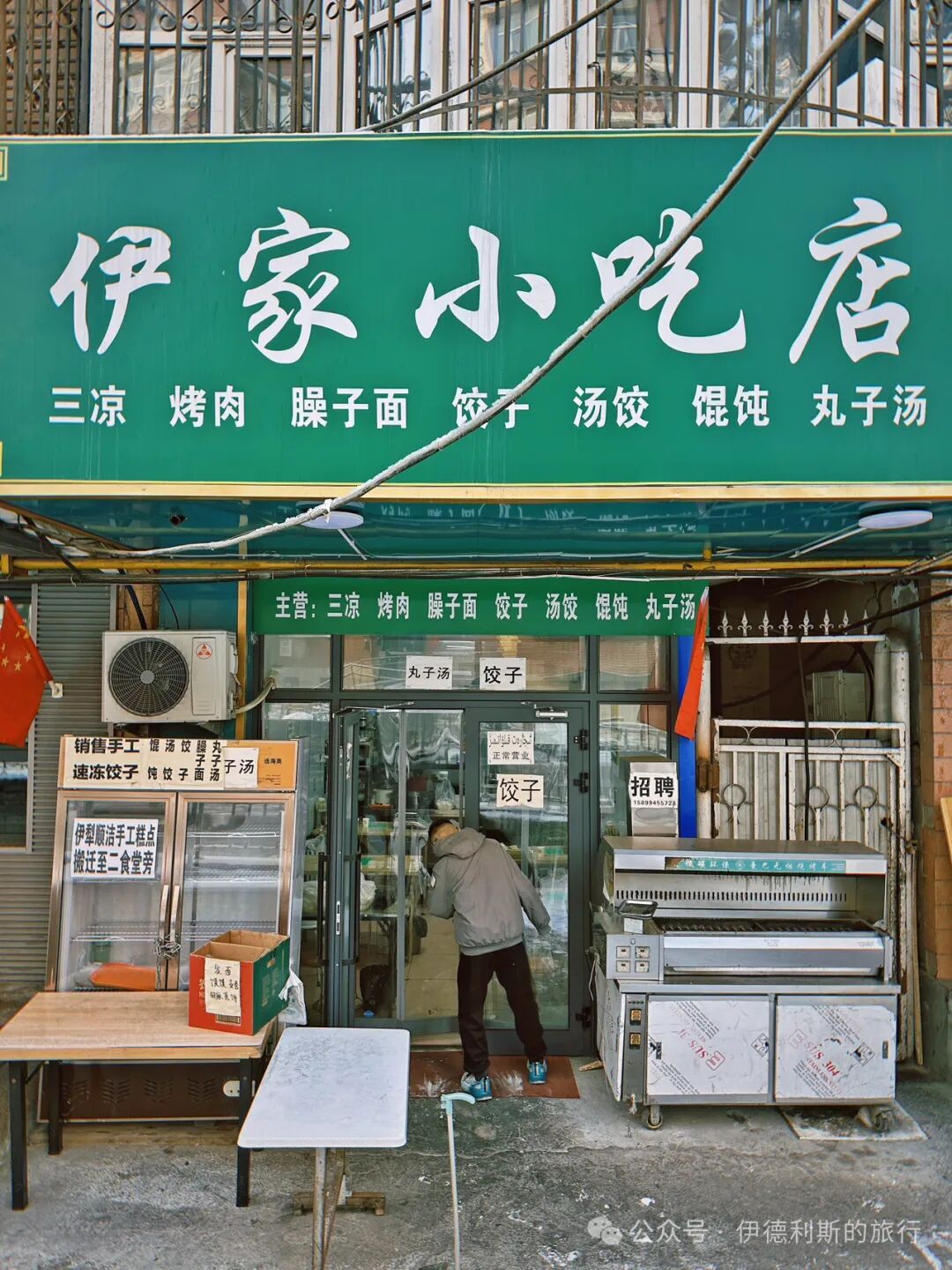
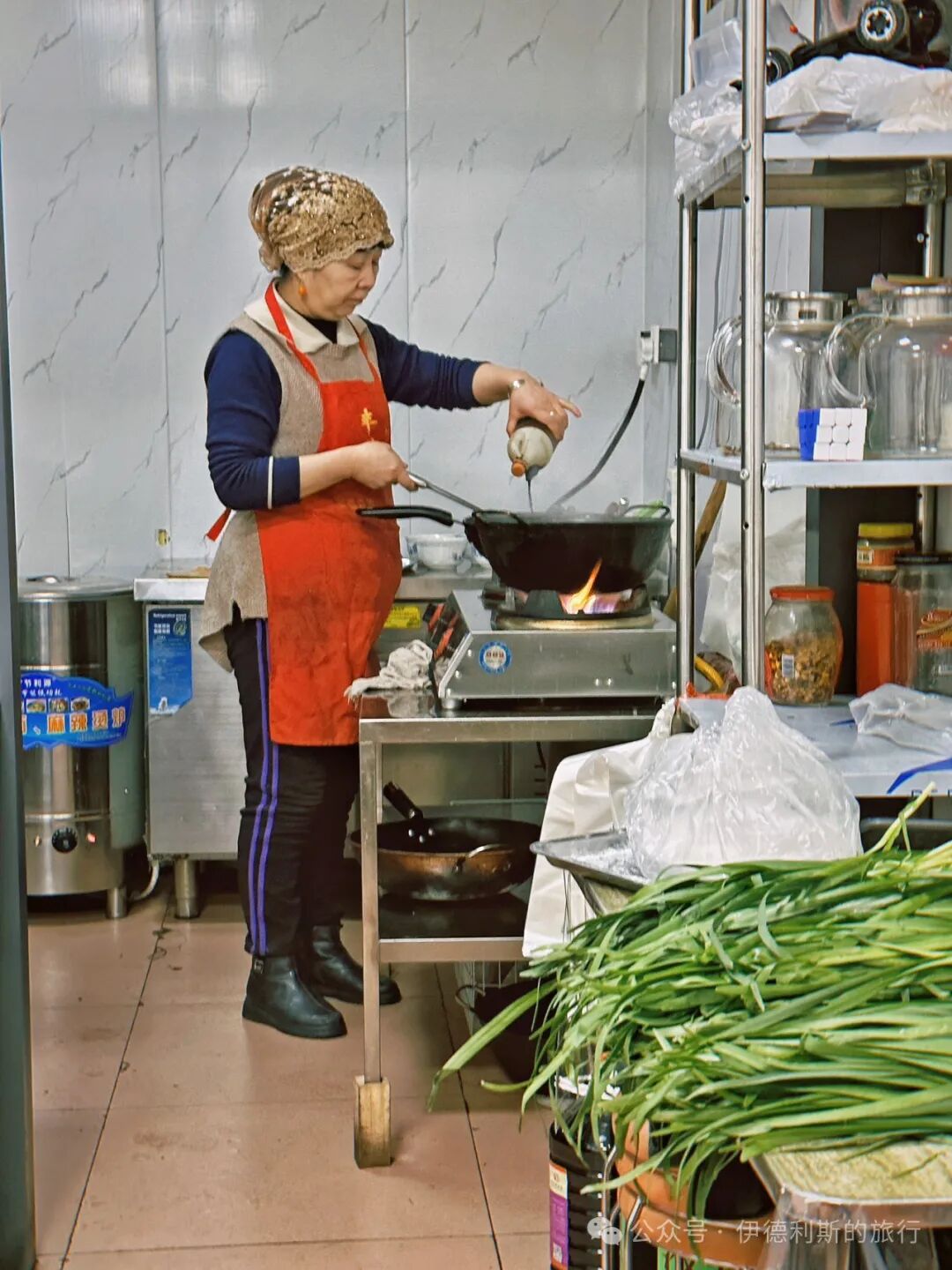
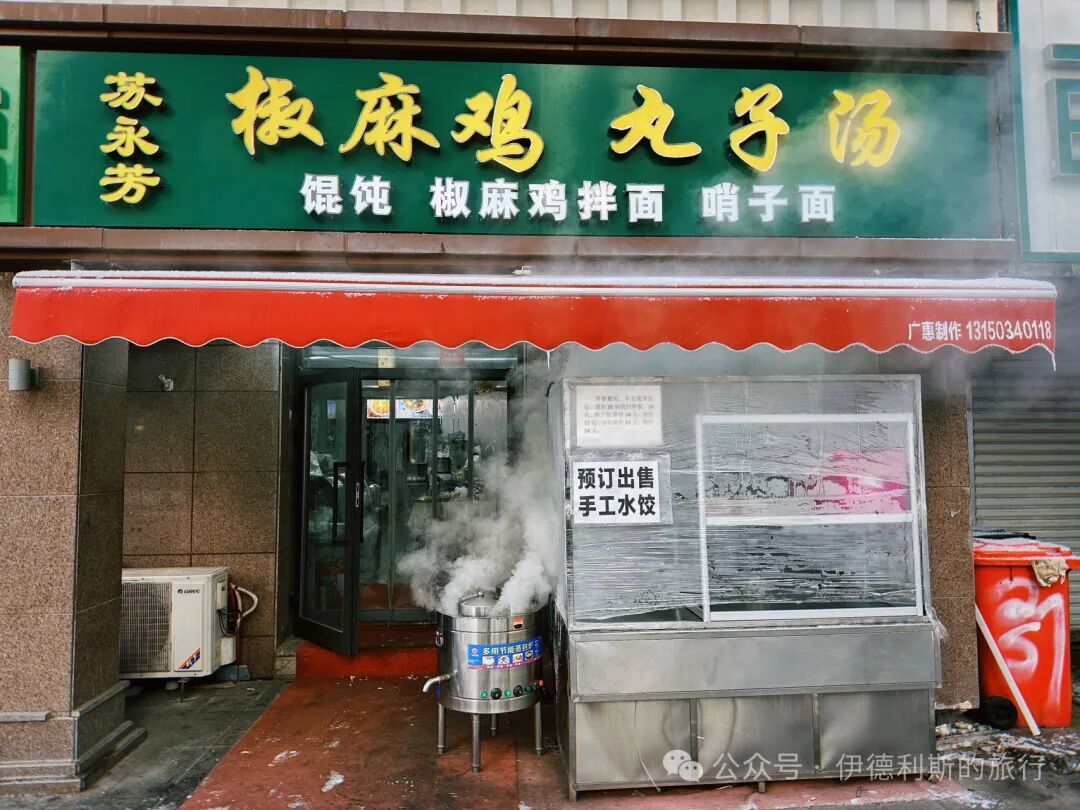
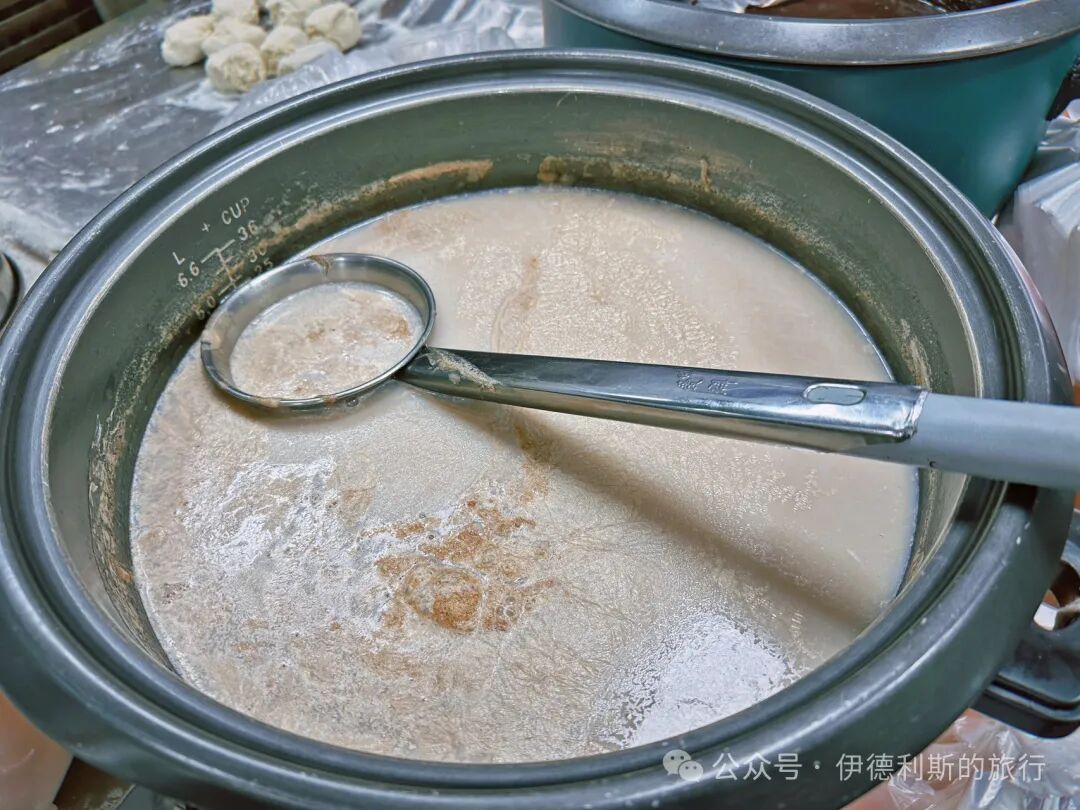
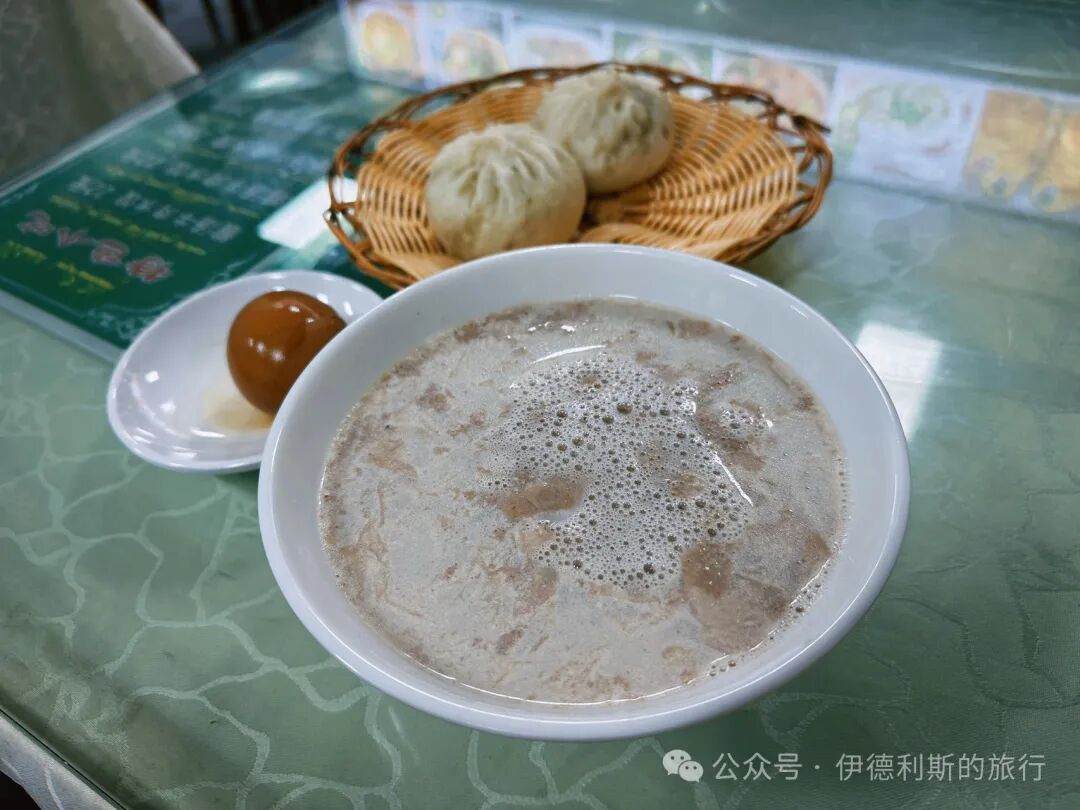
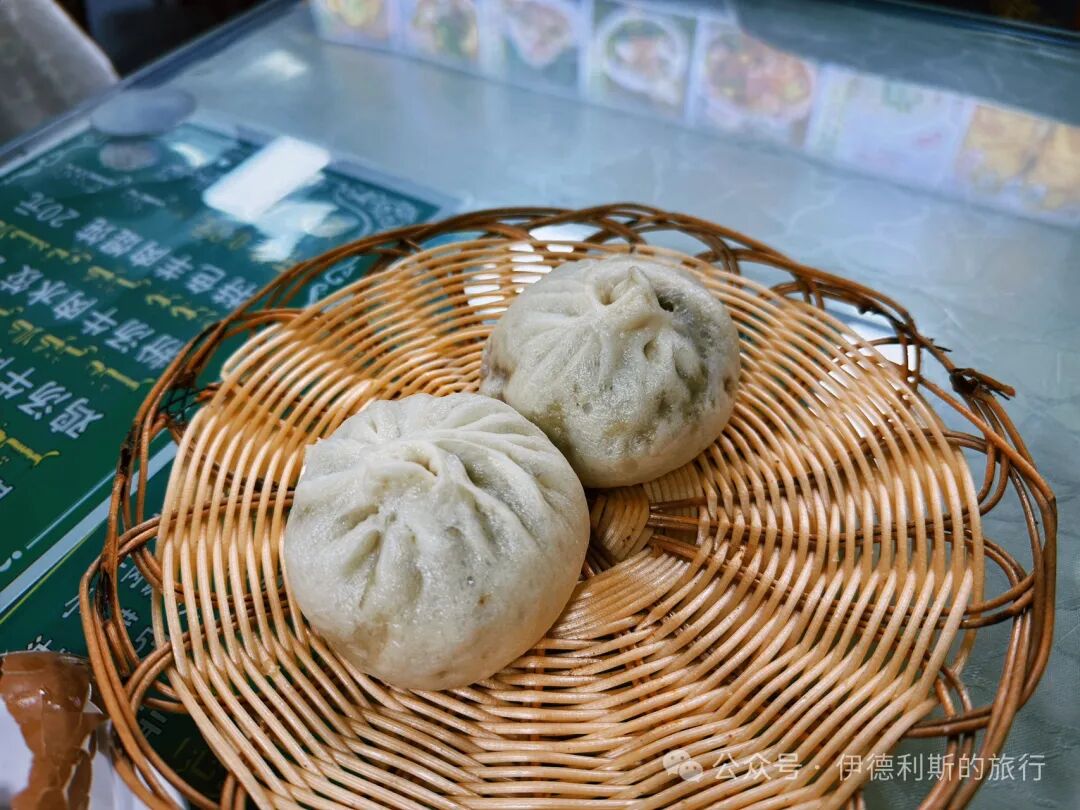
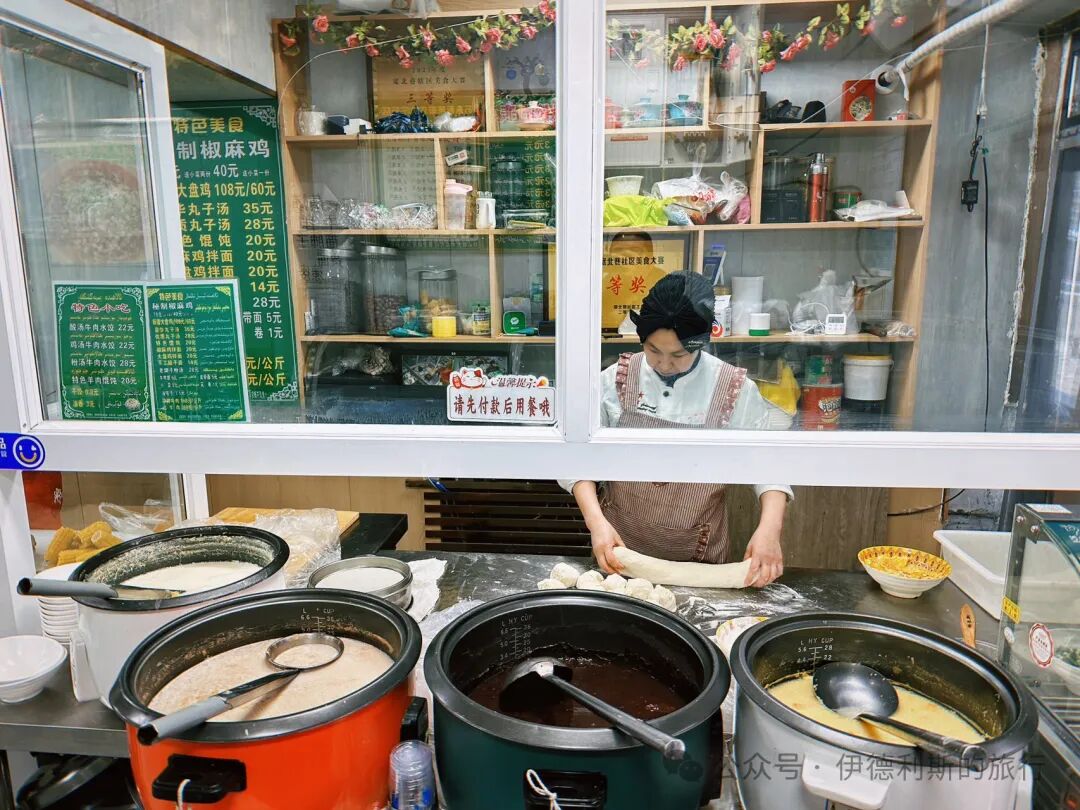
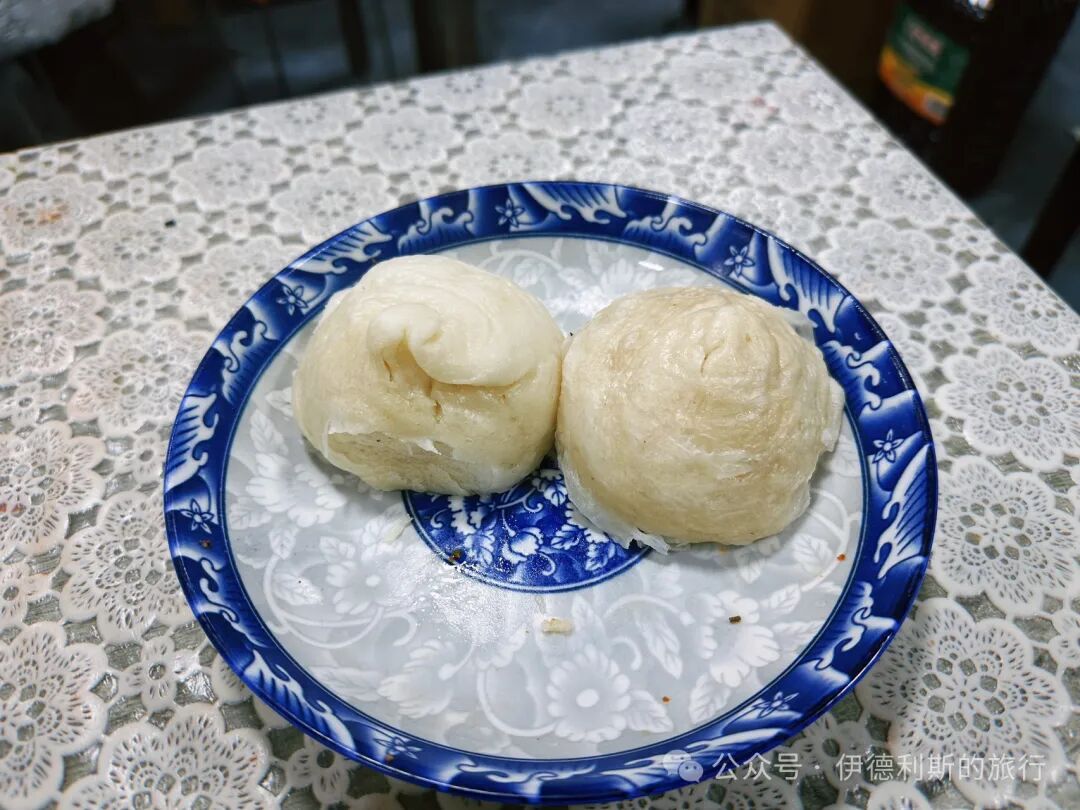
Across from the Qinghai Mosque (Qinghai Dasi), I had milk tea and cabbage meat buns (baozi) at Su Yongfang's shop. The milk tea had a strong milk and tea flavor and was topped with a milk skin (naipizi). The buns are made in the Xinjiang Hui Muslim style, with loose filling and Sichuan peppercorns.
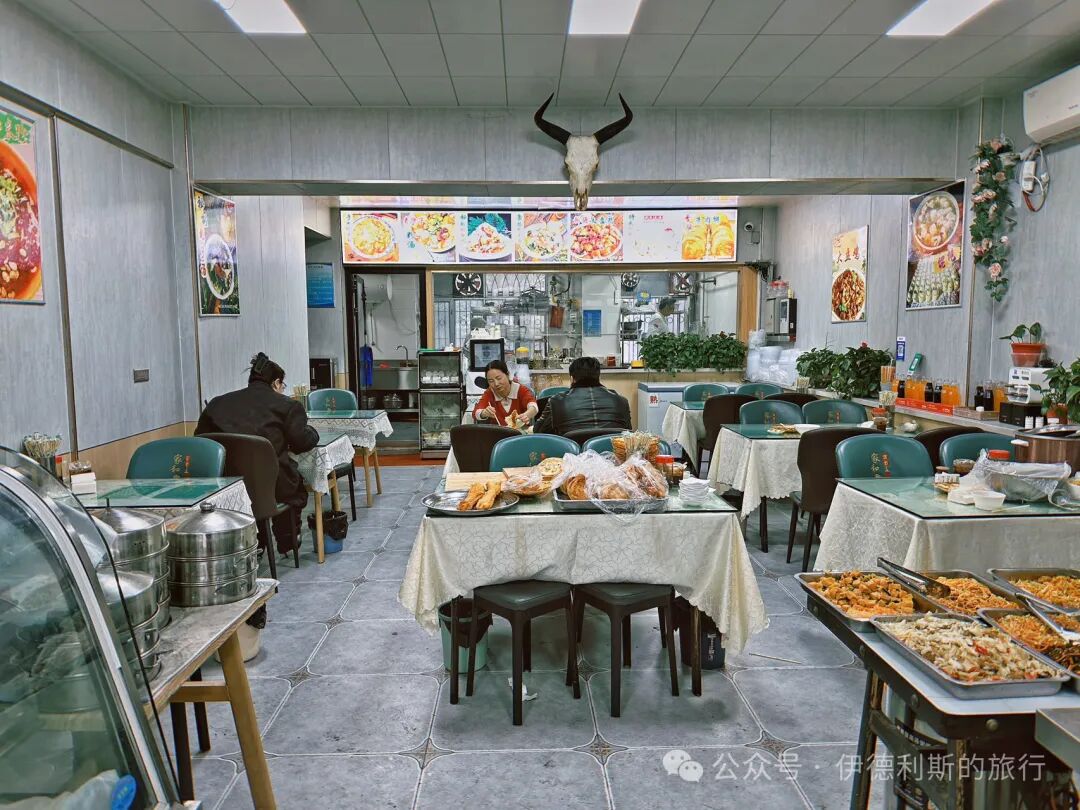
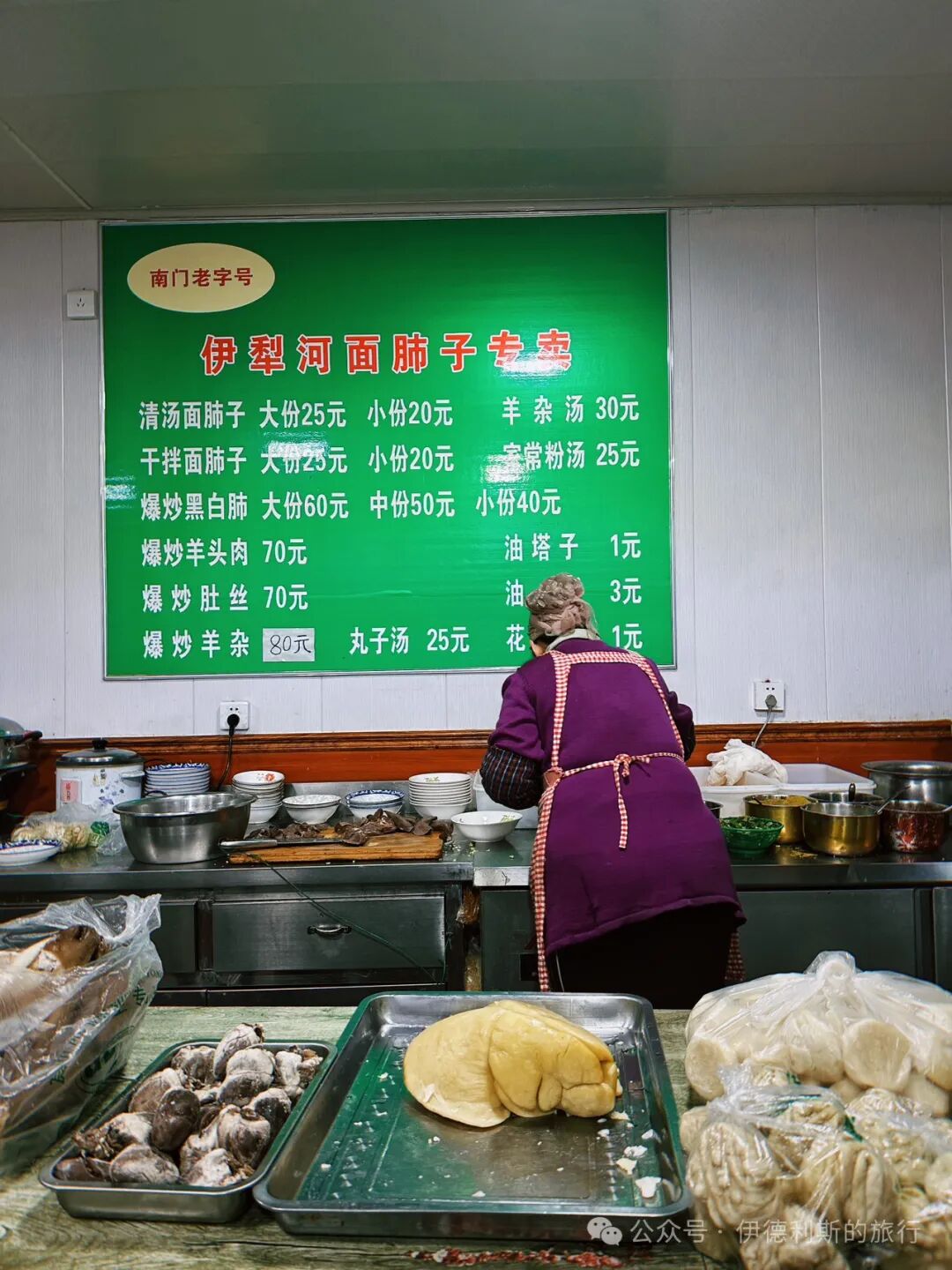
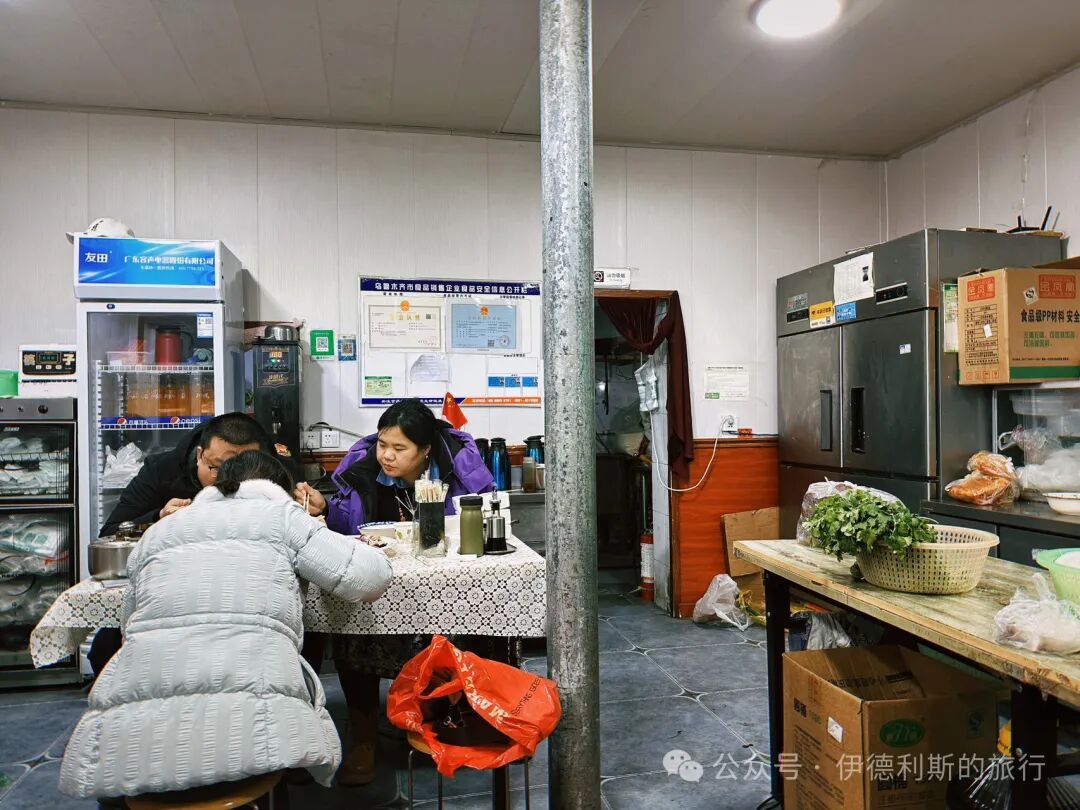
Behind the Shaanxi Mosque (Shaanxi Dasi) is the long-standing Yilihe Mianfeizi shop. The owner started selling at the South Gate night market over twenty years ago. After the night market closed, he opened this small shop behind the Shaanxi Mosque. This small shop run by a husband and wife is not big, but you can eat authentic Xinjiang lung and tripe noodles (mianfeizi). They serve it in clear soup, dry-mixed, or stir-fried. They have large and small portions, as well as stir-fried sheep head meat, tripe strips, sheep offal, meatball soup, and glass noodle soup (fentang).
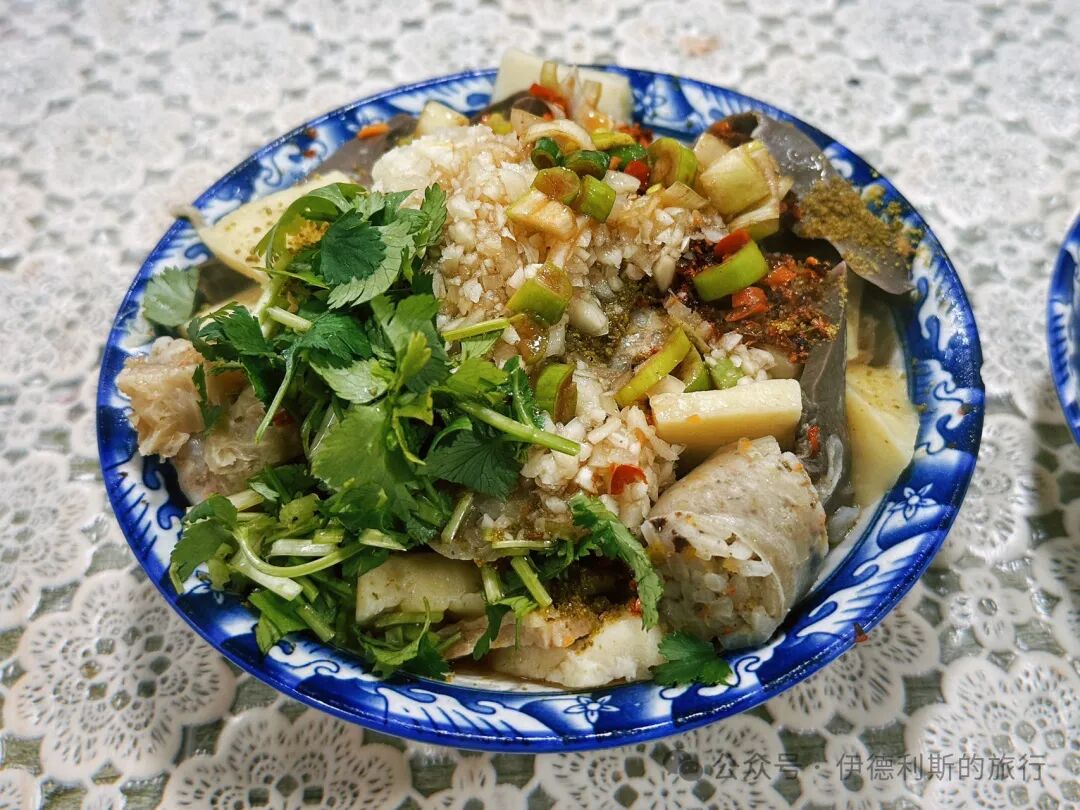
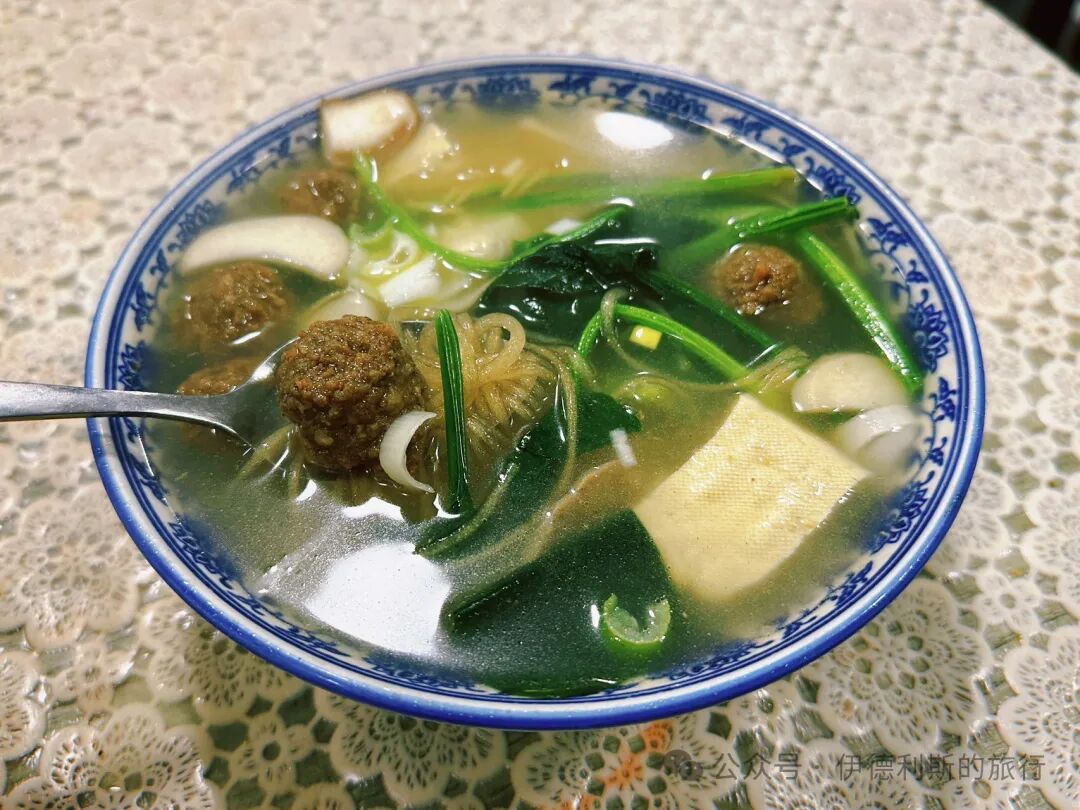
I ordered a portion of dry-mixed lung and tripe noodles, a bowl of meatball soup, and two oil towers (youtazi). Oil towers are my favorite staple food. They are made with sheep fat and are very appetizing. The lung and tripe noodles come with plenty of ingredients. The rice sausages (michangzi) contain minced meat and carrots, and they taste great. The meatball soup contains meat slices, tofu, spinach, glass noodles, and other things. It is especially warm to drink in winter.
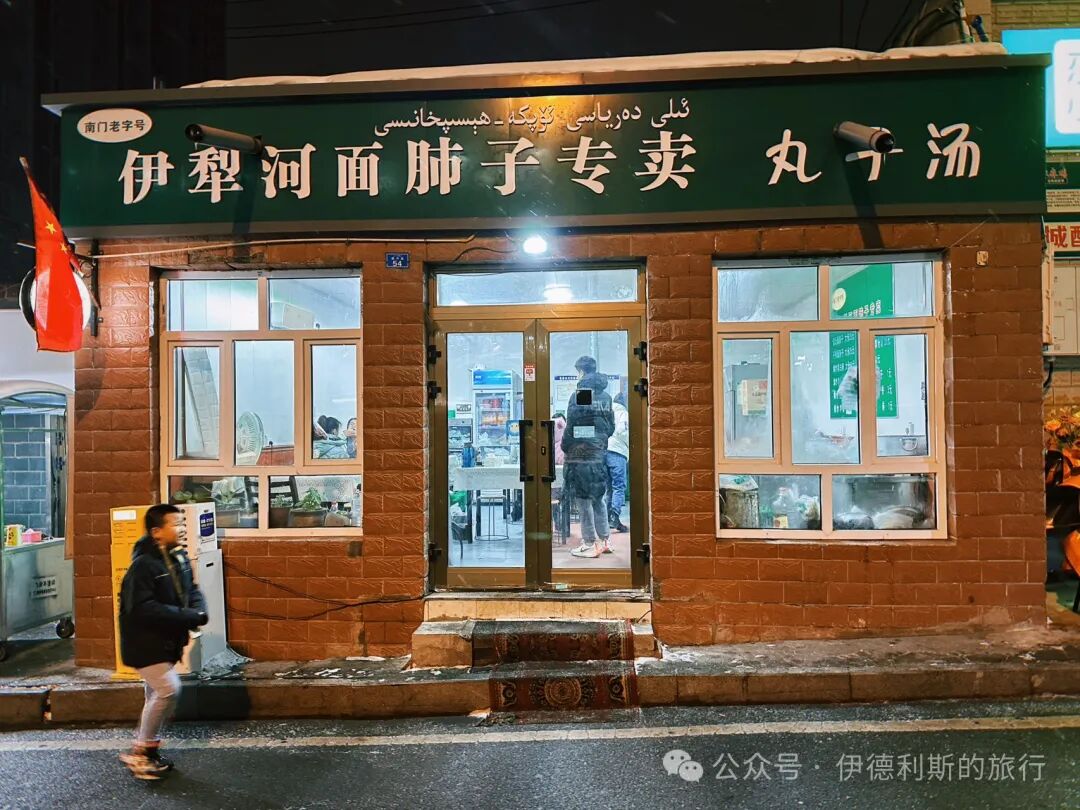
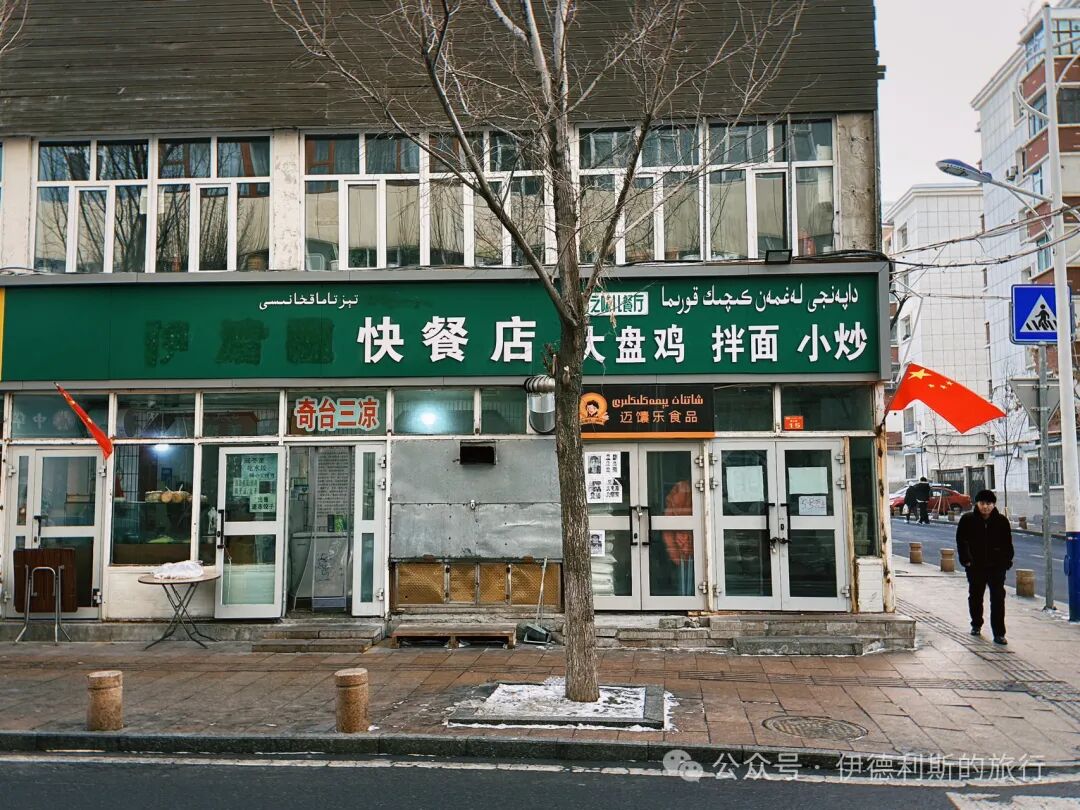
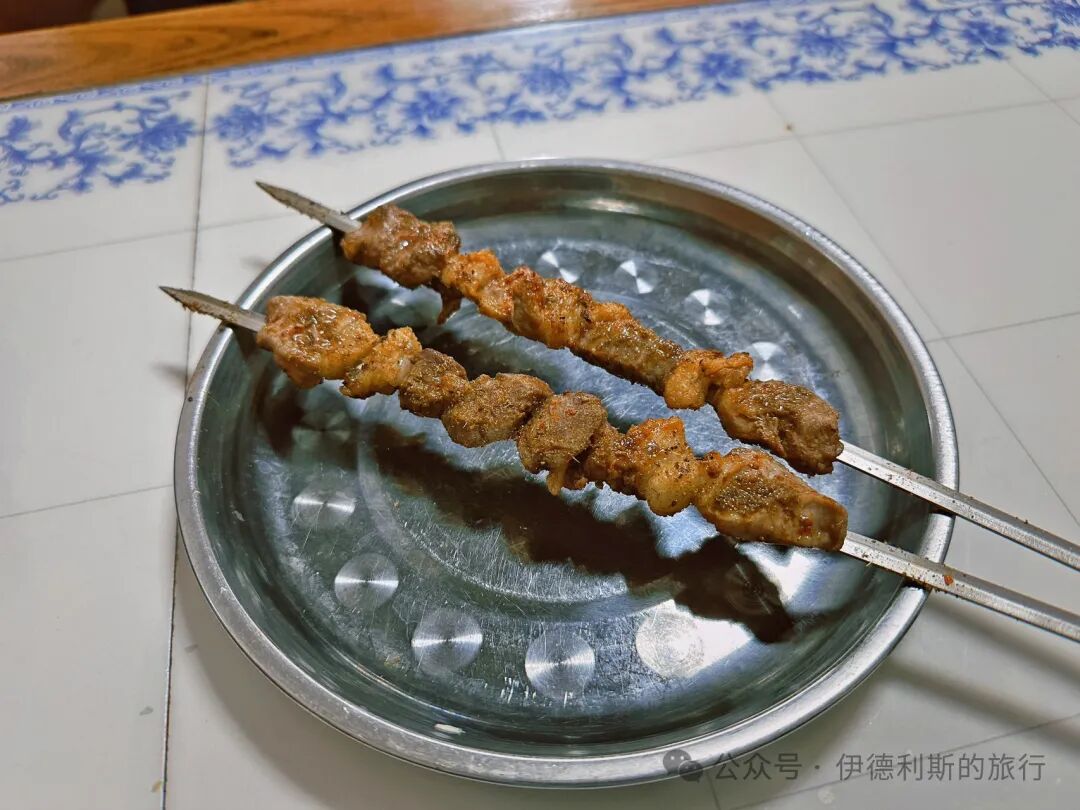
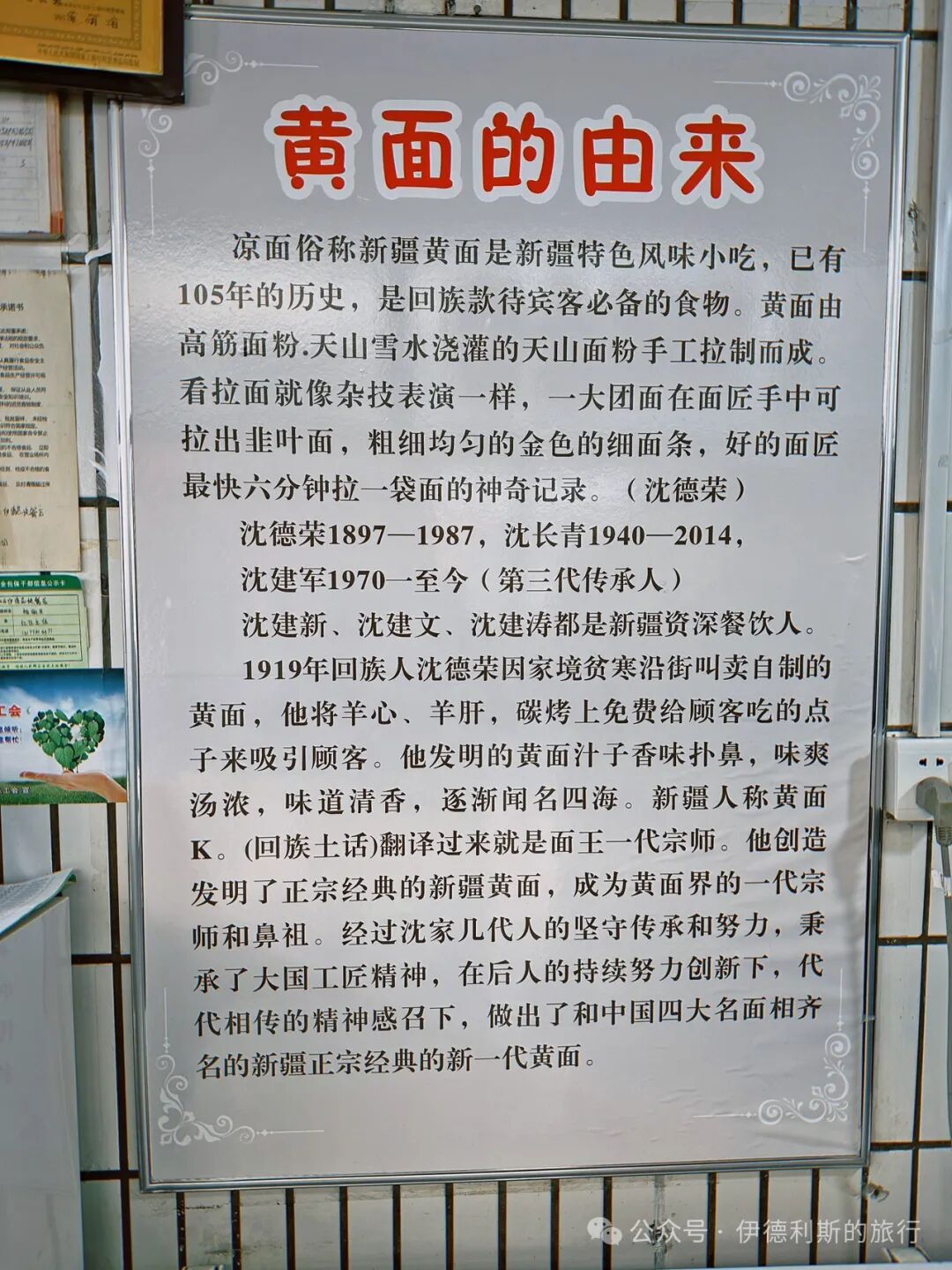
At the entrance of the West Mosque (Xidasi) is the Qitai Three Cold Dishes shop. The founder, Shen Derong (1897-1987), started selling yellow noodles (huangmian) on the street in 1919. At that time, he used free charcoal-grilled sheep hearts and sheep livers to attract customers, gradually spreading the way of eating yellow noodles with grilled meat. It has been passed down through three generations: Shen Changqing (1940-2014) and Shen Jianjun (1970-).
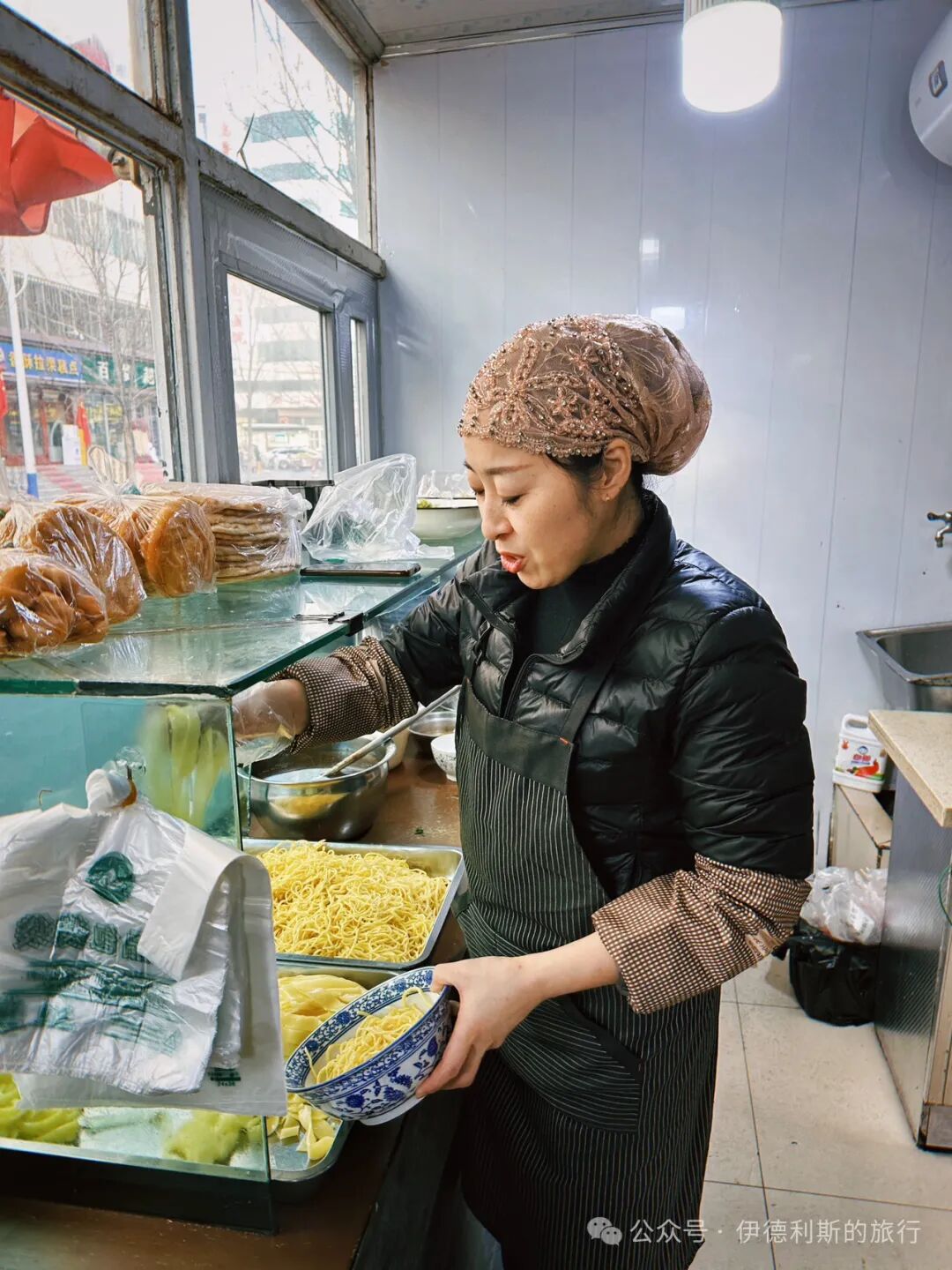
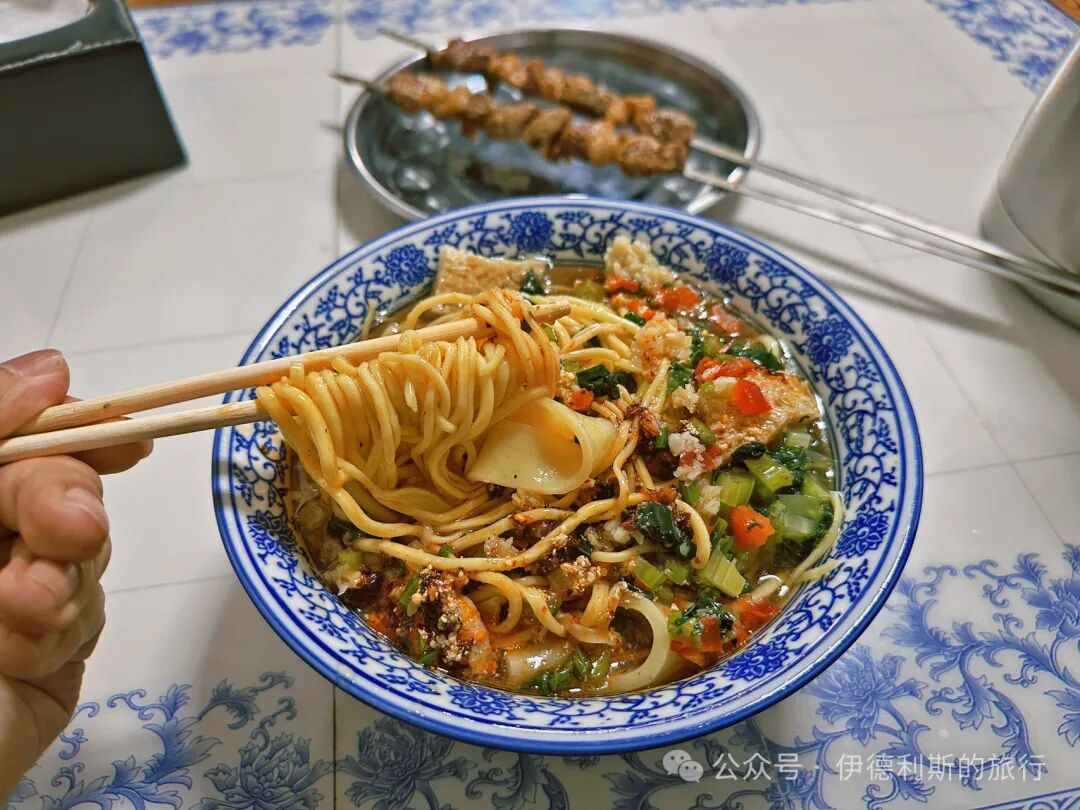
Yellow noodles (huangmian) in Xinjiang are made like Gansu pulled noodles (lamian). Both use alkaline ash (penghui) in the dough. You can stretch the dough by hand into flat leek-leaf noodles or thin noodles. The difference is that Xinjiang yellow noodles are served with a thick sauce that clings to the noodles when you lift them. The dish includes ingredients like wild celery, wheat gluten (mianjin), green onion, ginger, garlic, and chili oil (youpo lazi). It has a rich, sour, sweet, and spicy flavor that is very satisfying.
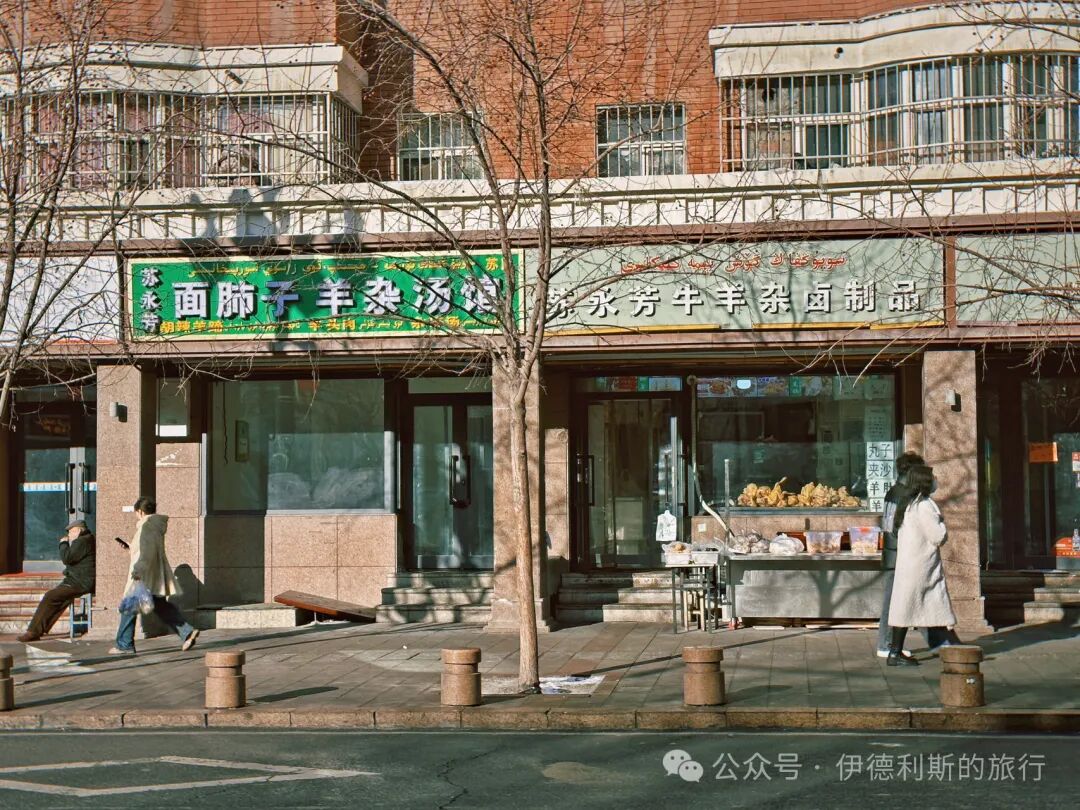
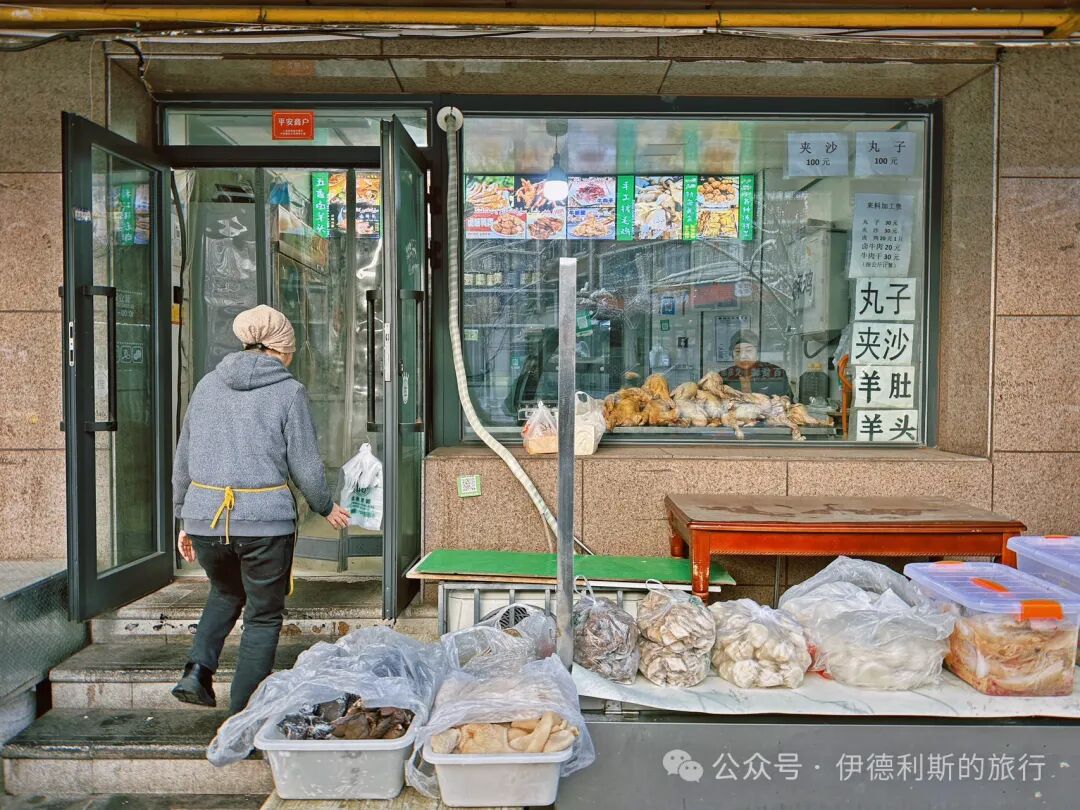
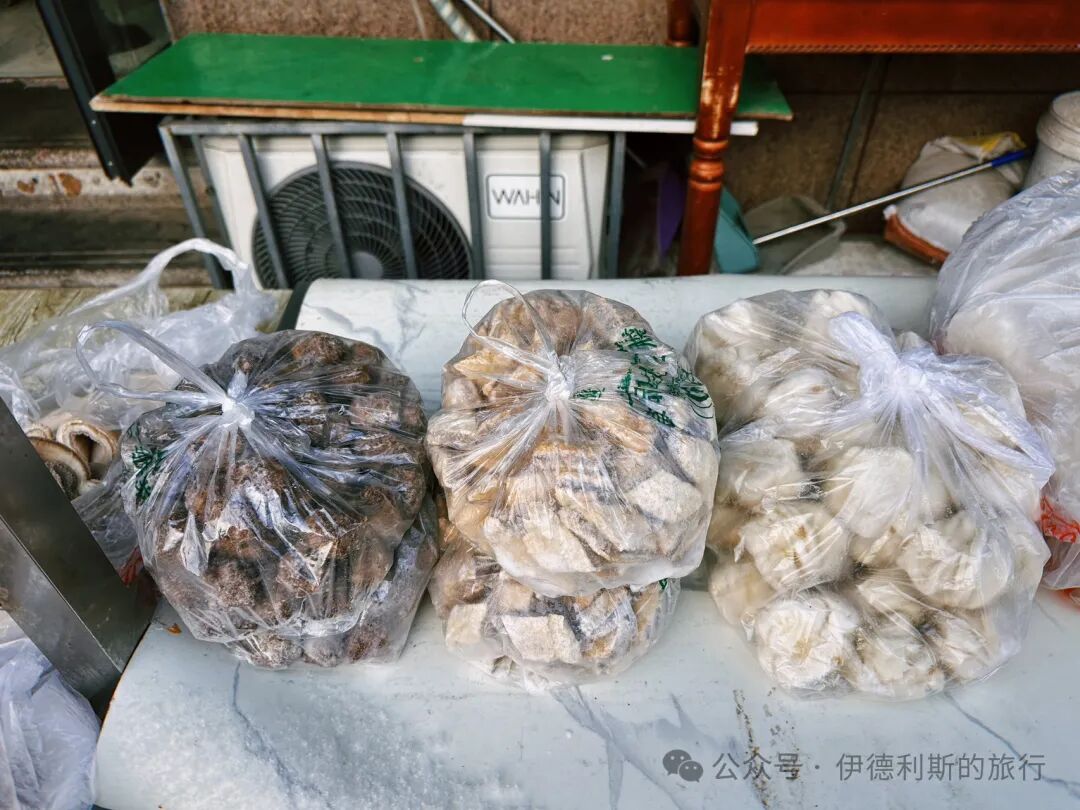
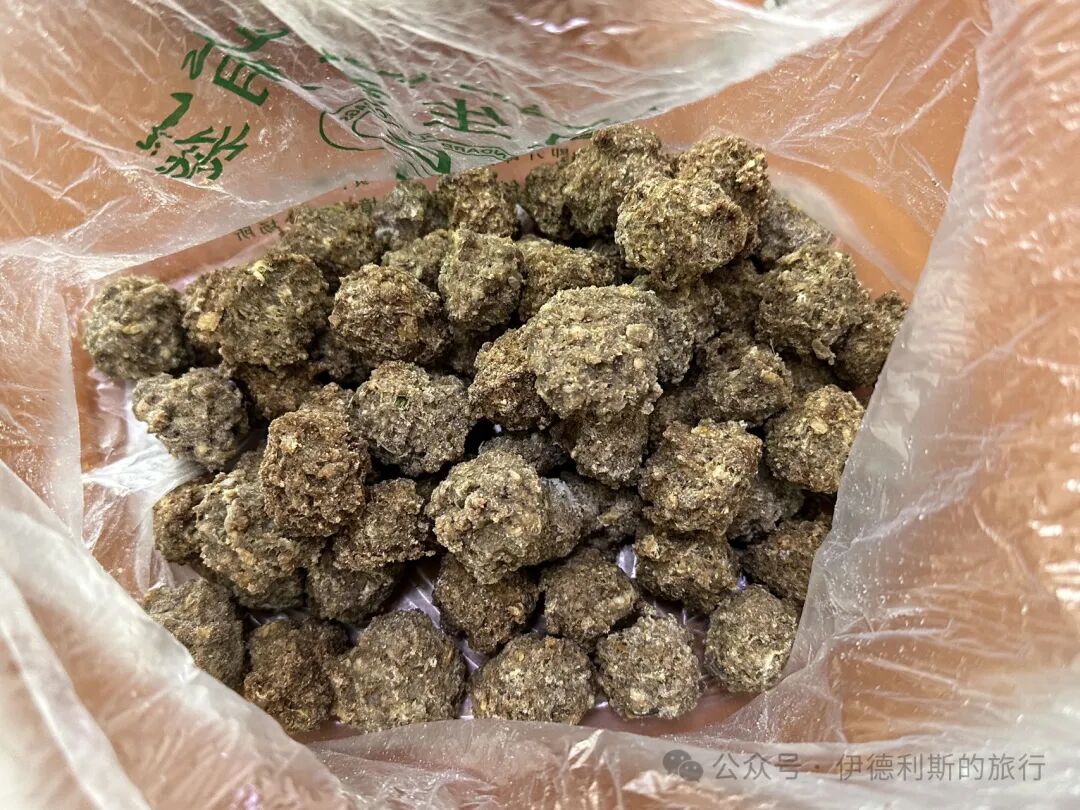
Suyongfang Grocery Store, across from the Qinghai Great Mosque, sells ready-made Hui Muslim fried meatballs (zha wanzi) and meat-stuffed tofu (jiasha). You can buy a bag, freeze it at home, and use it for stews or meatball soup.
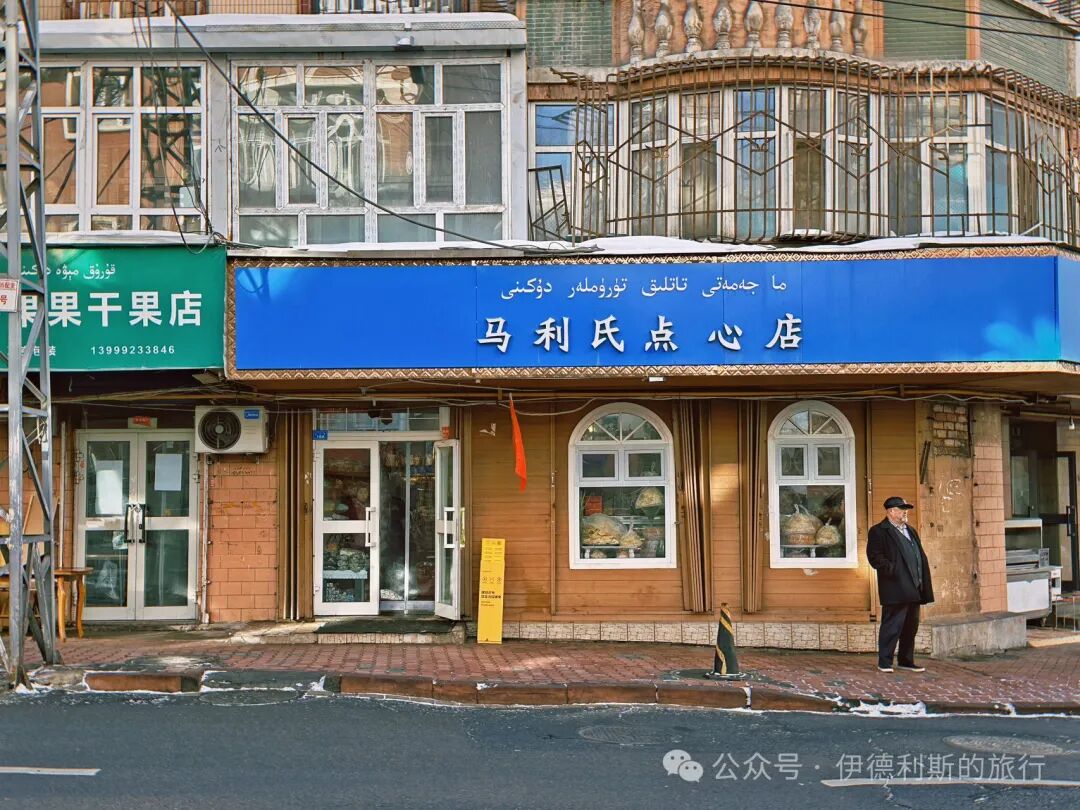
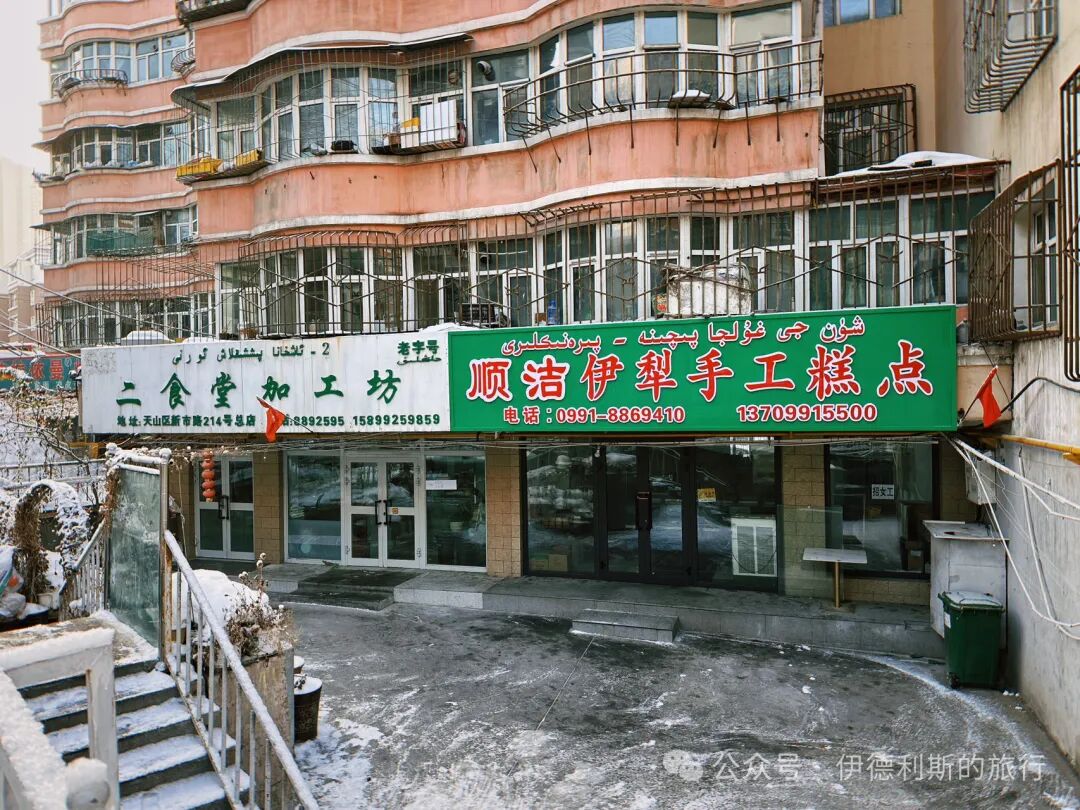
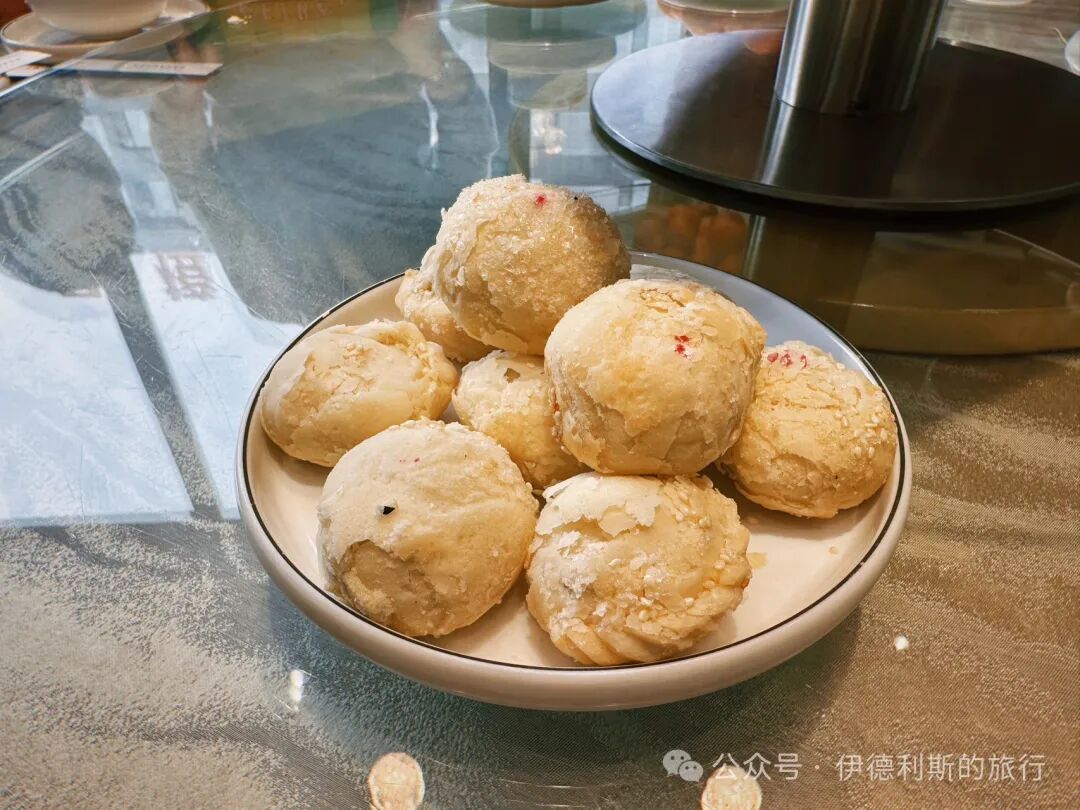
Mashi and Yili Pastry Shop, across from the East Mosque, sell traditional Hui Muslim pastries. Their flaky pastries (supi dianxin) are a must-have for wedding banquets among Hui Muslims in Urumqi. Actually, the method for making these flaky pastries was brought to Urumqi by people from Tianjin. In the 1930s, Urumqi Hui Muslim pastry chef She Wenbing became close friends with Liu Wenjiang, a chef at the Yongsheng Western Pastry Shop in Tianjin. He learned how to make the flaky Beijing-style eight-piece pastry set (jing bajian), and the recipe spread among Hui Muslims in Urumqi.
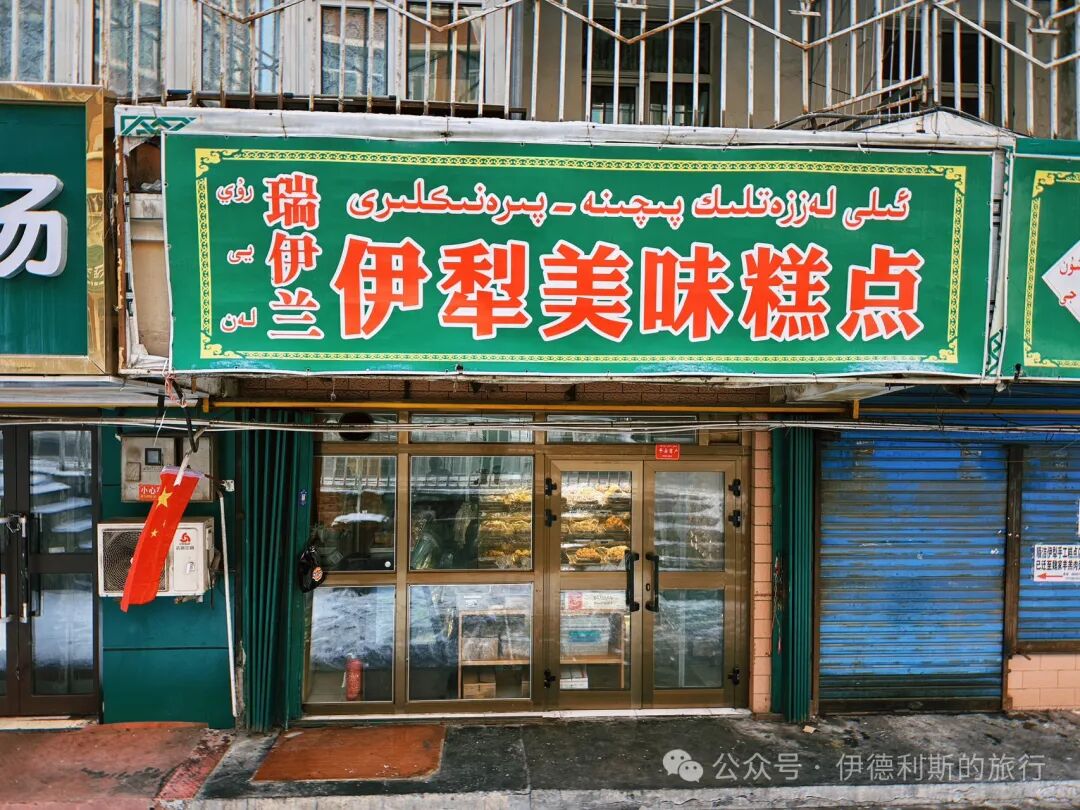
Beyond Hui Muslim food, there is plenty of Uyghur and Kazakh cuisine in the Nanguan area.
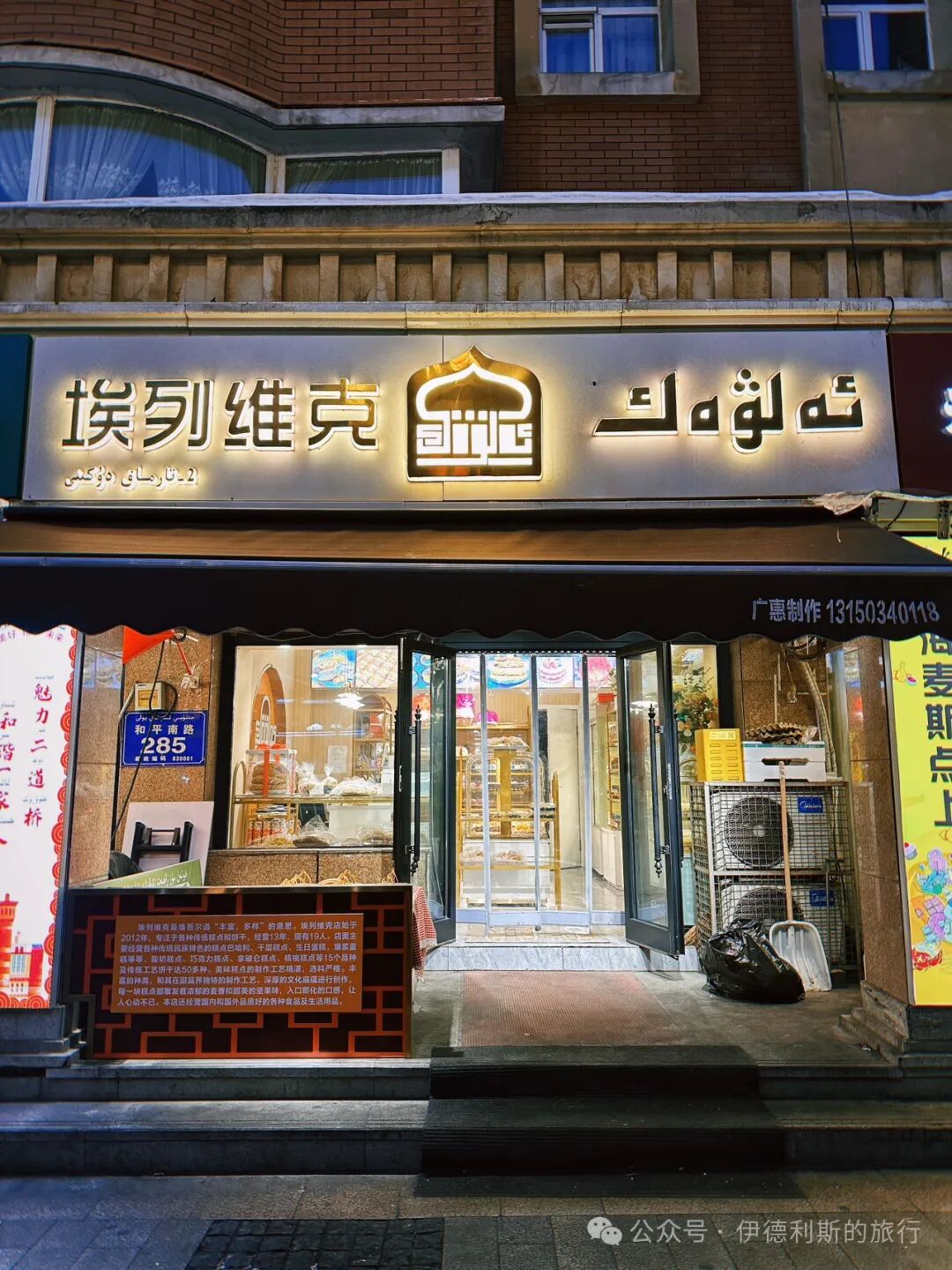
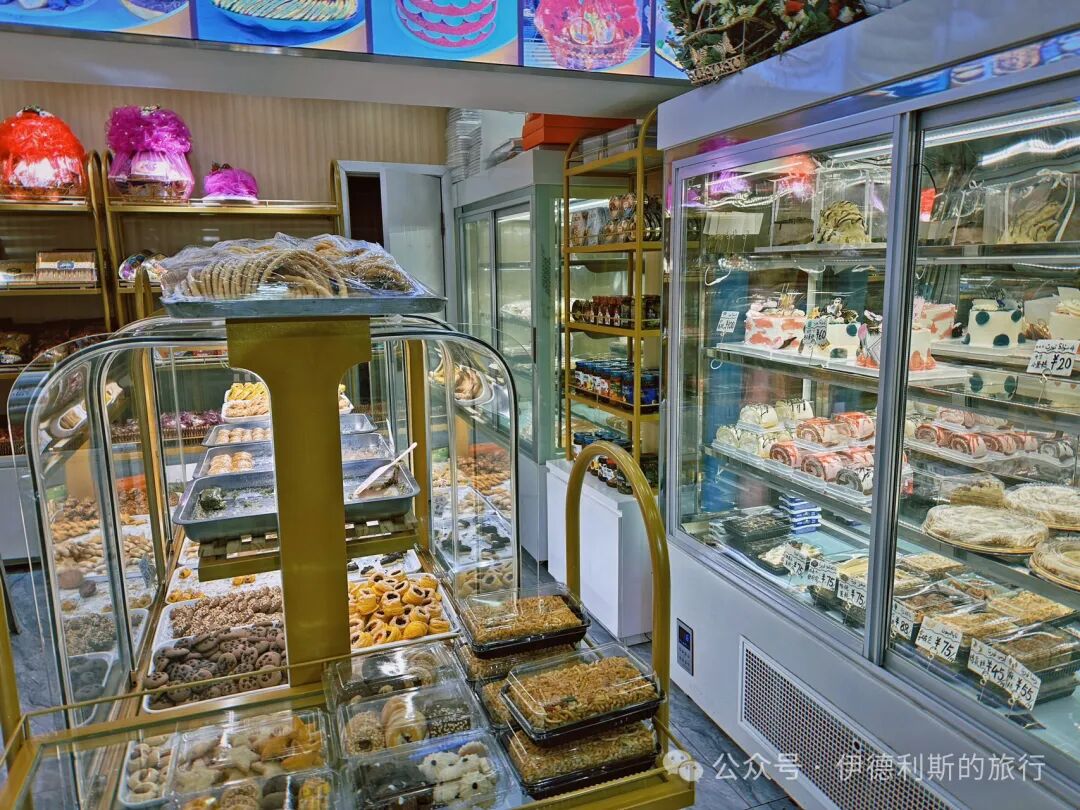
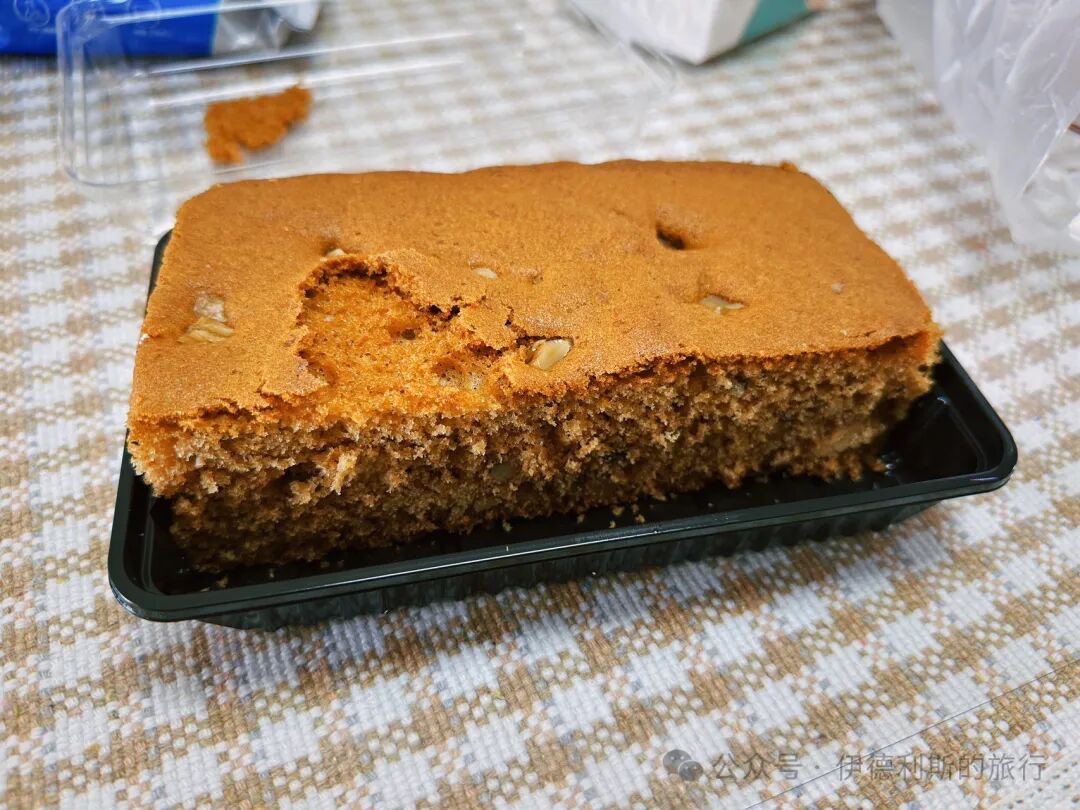
I bought a box of honey cake (bahali) at Ailieweike next to the Qinghai Great Mosque. It is baked with lamb fat, cocoa powder, eggs, honey, milk, walnuts, and raisins. It tastes very fragrant.
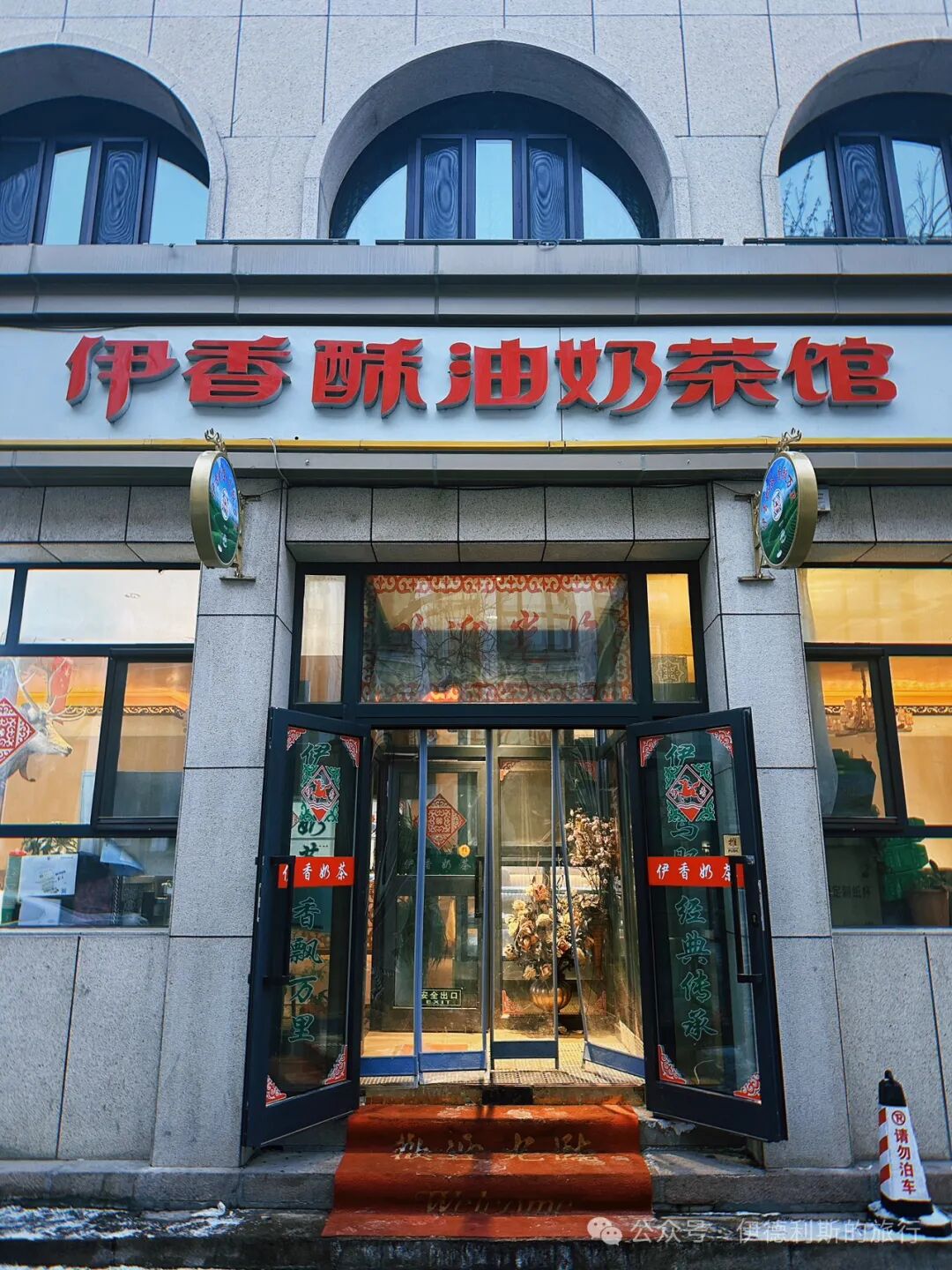
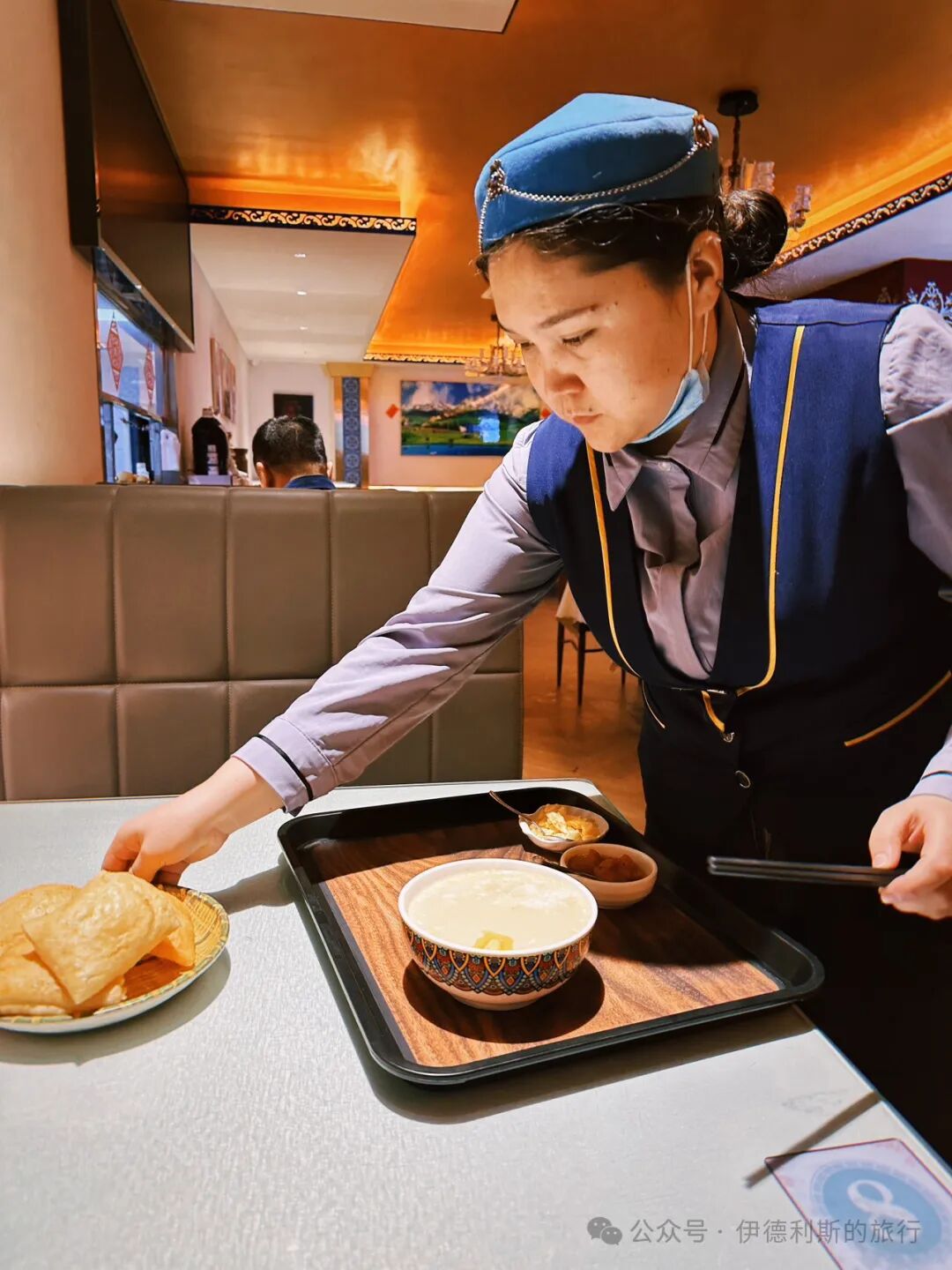
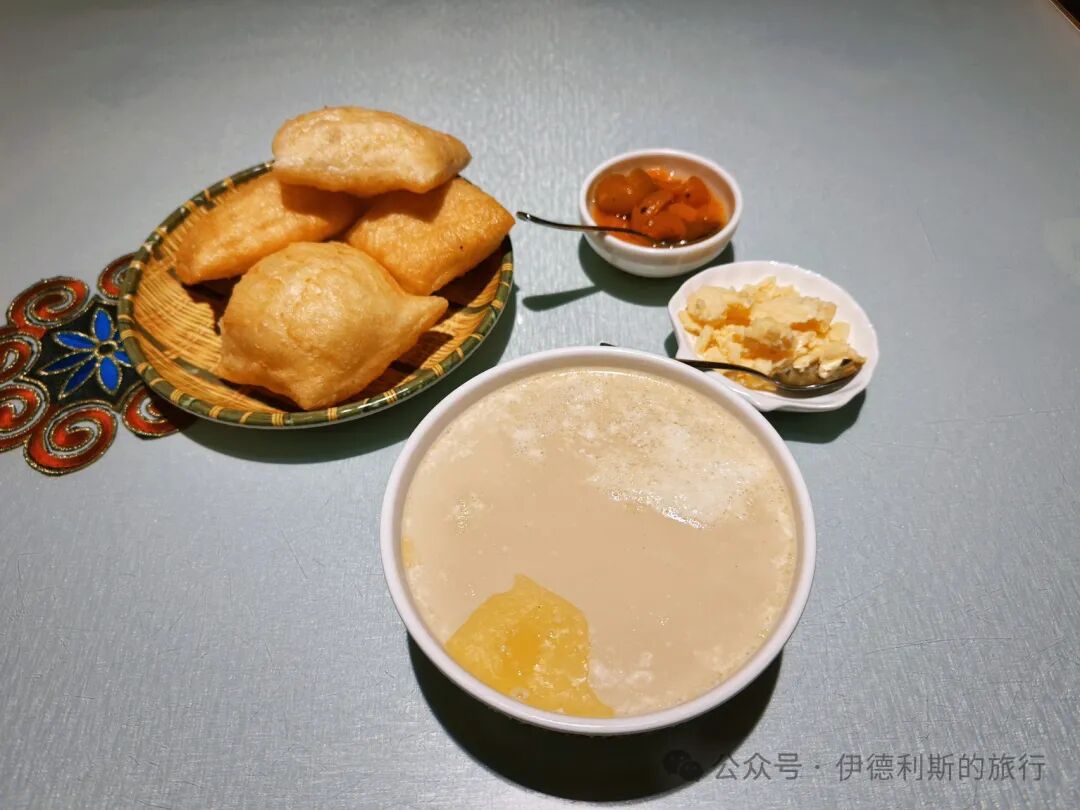
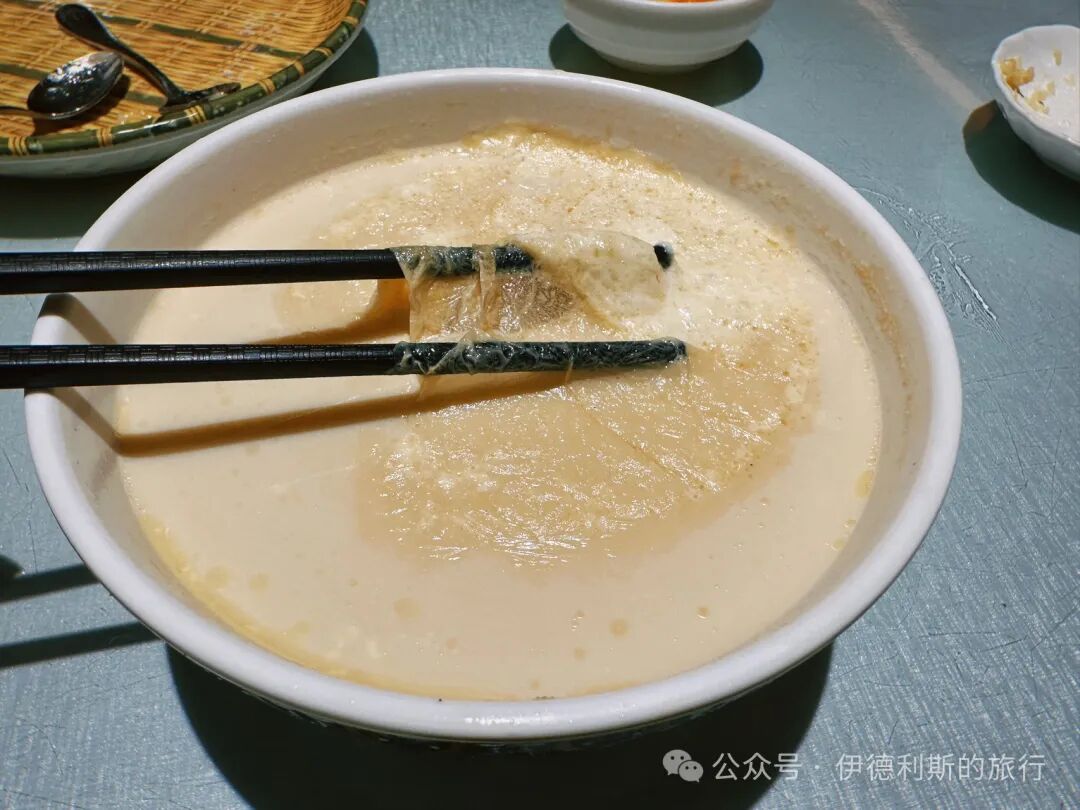
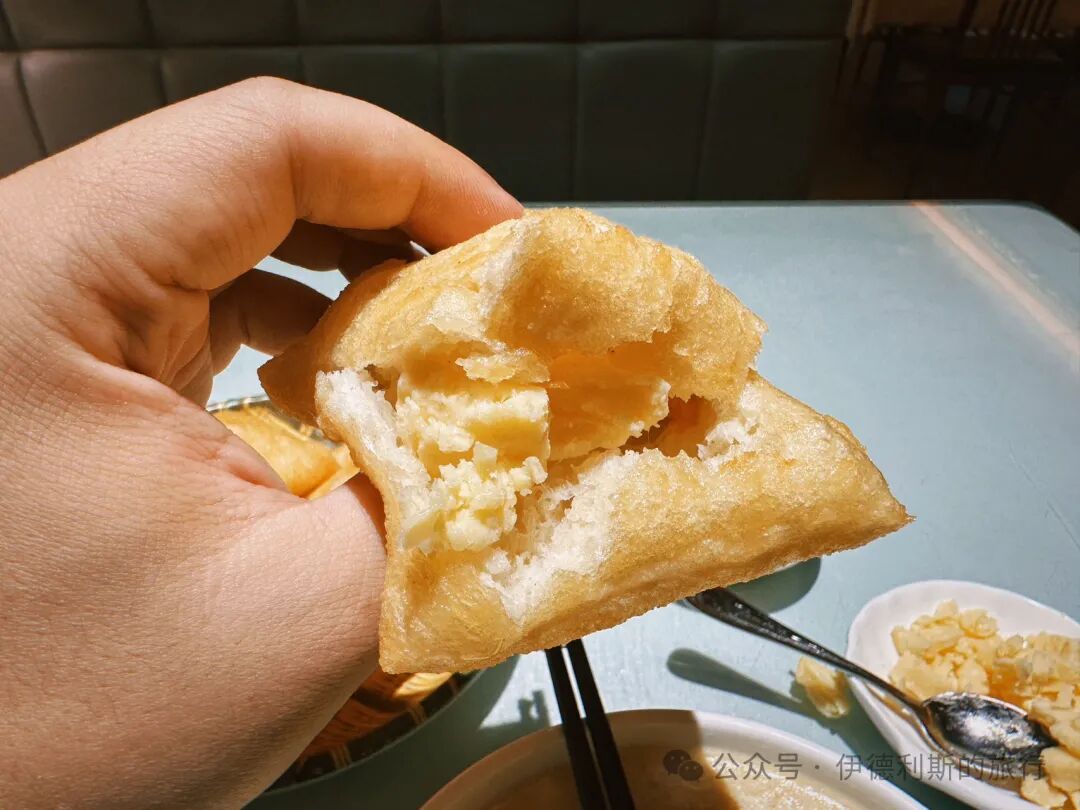
In the morning, I prayed at the Shaanxi Great Mosque in Urumqi. Afterward, I went to the Kazakh milk tea shop in front of the People's Theater for butter milk tea (suyou naicha) with fried dough (baersake), apricot jam, and butter. The milk skin tea (naipizi naicha) was excellent, and the freshly fried dough was so fragrant that my hands were oily after eating.
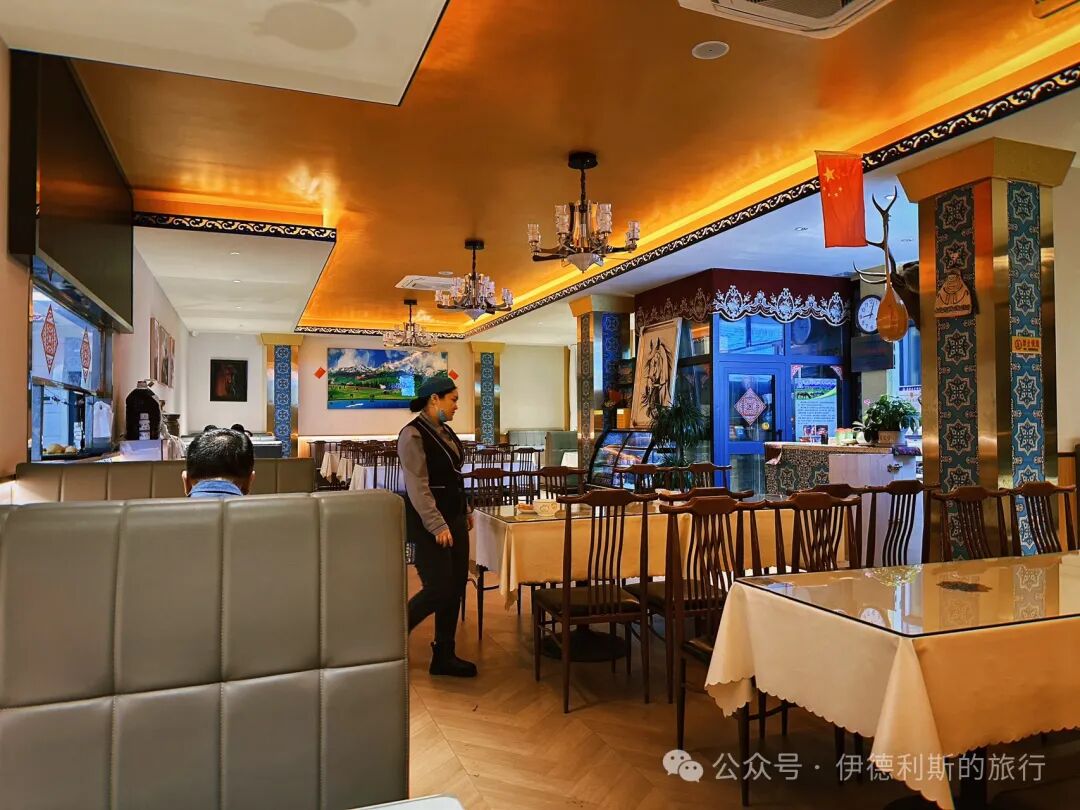
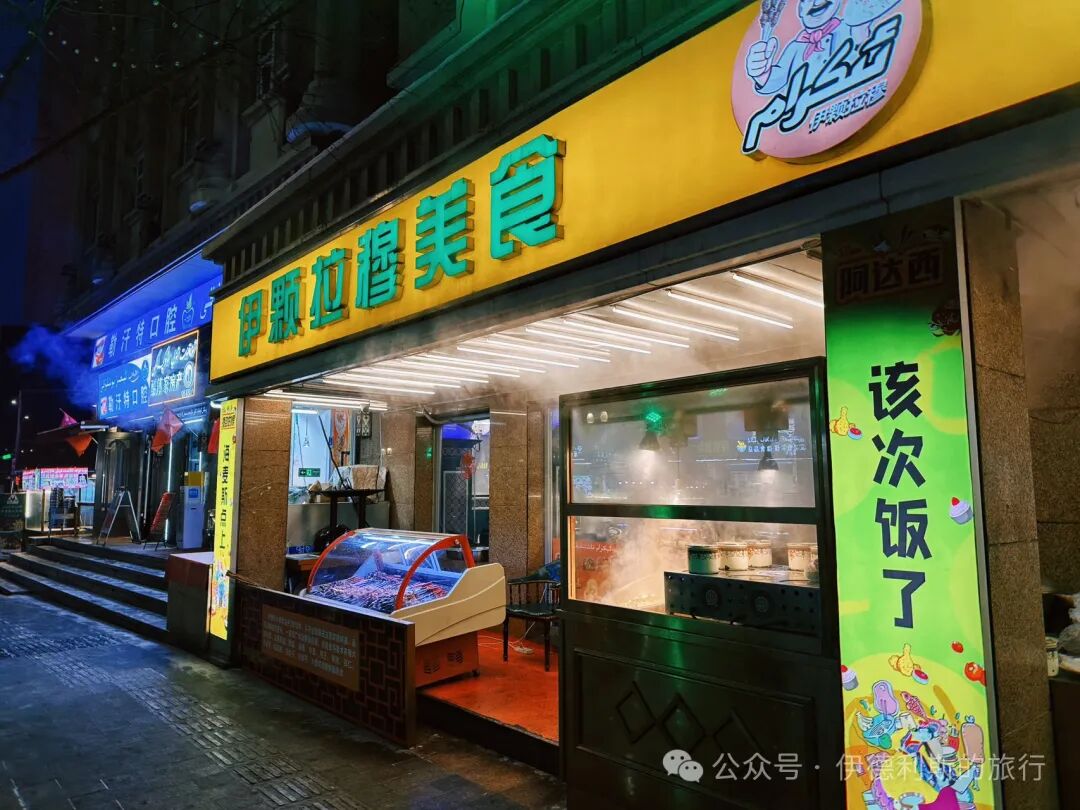
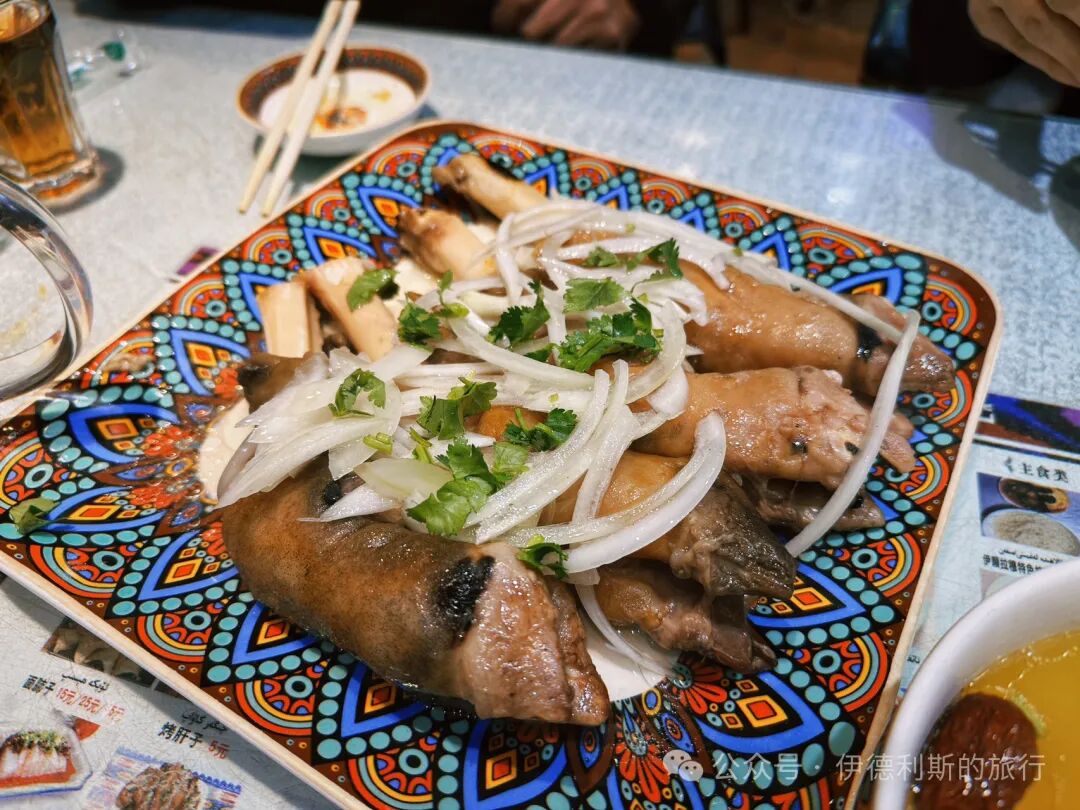
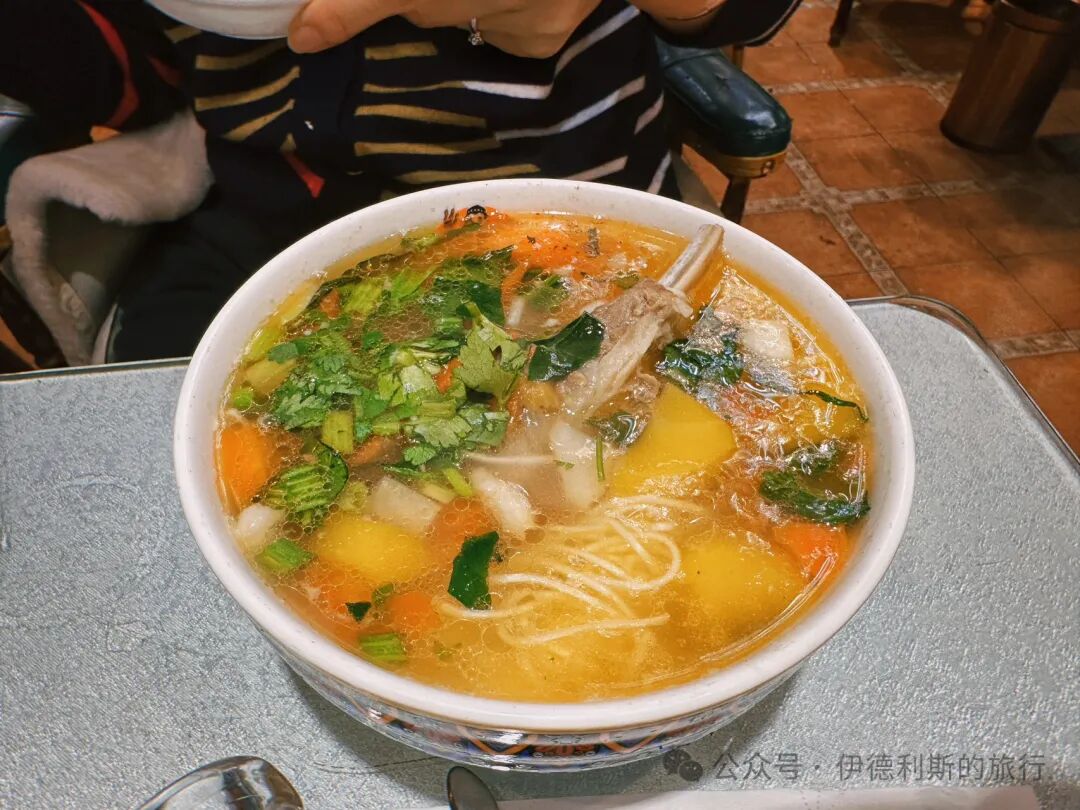
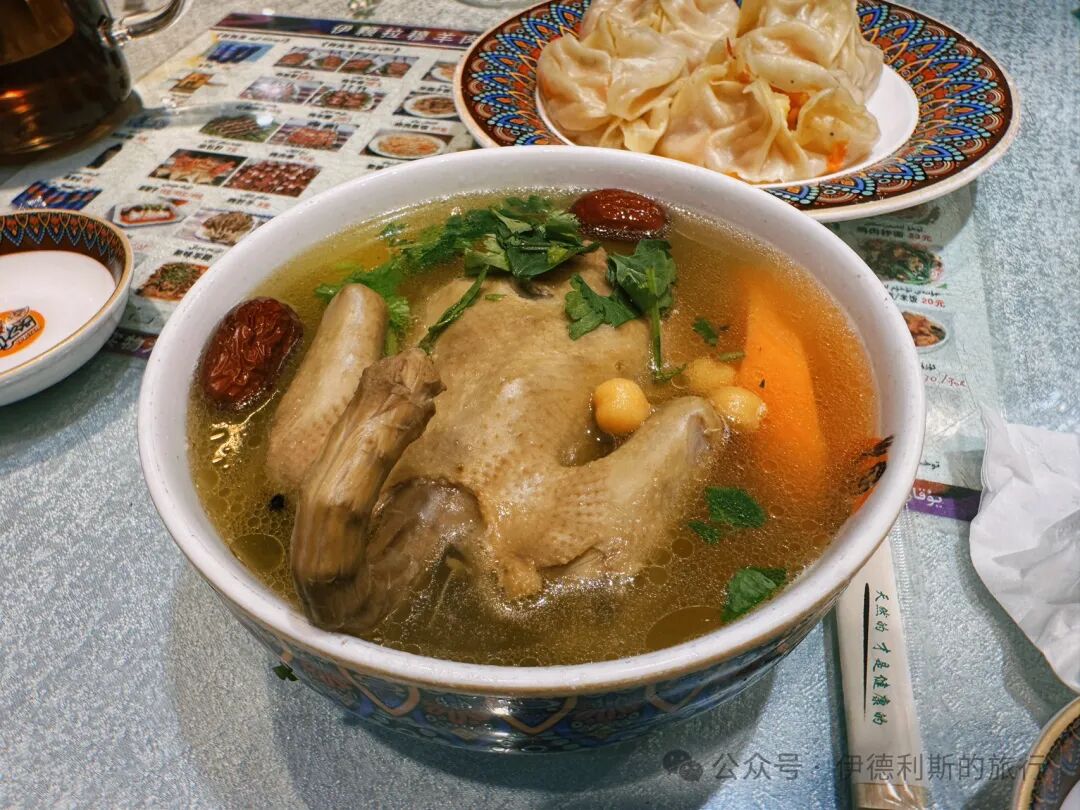
In the evening, my sister and brother-in-law treated us to dinner at Yikelamu in Shanxi Alley. It is a very popular spot with locals. We ordered small dumplings (ququ), home-style mixed noodles (banmian), egg noodles, pigeon soup, clear-stewed lamb trotters, pumpkin steamed buns (baozi), and kebabs. Their mixed noodles are pulled very thin and taste great. The egg noodles come in a meat broth with lamb ribs, yellow carrots, and tomatoes. The pigeon soup is quite light. Clear-stewed lamb trotters have a different flavor compared to spicy lamb trotters (hula yangti), allowing you to taste the natural flavor of the lamb. The lamb skewers were seasoned only with salt, not chili. Only places with high-quality meat dare to do this. Their steamed buns are also good, and the sweet pumpkin filling is very appetizing.
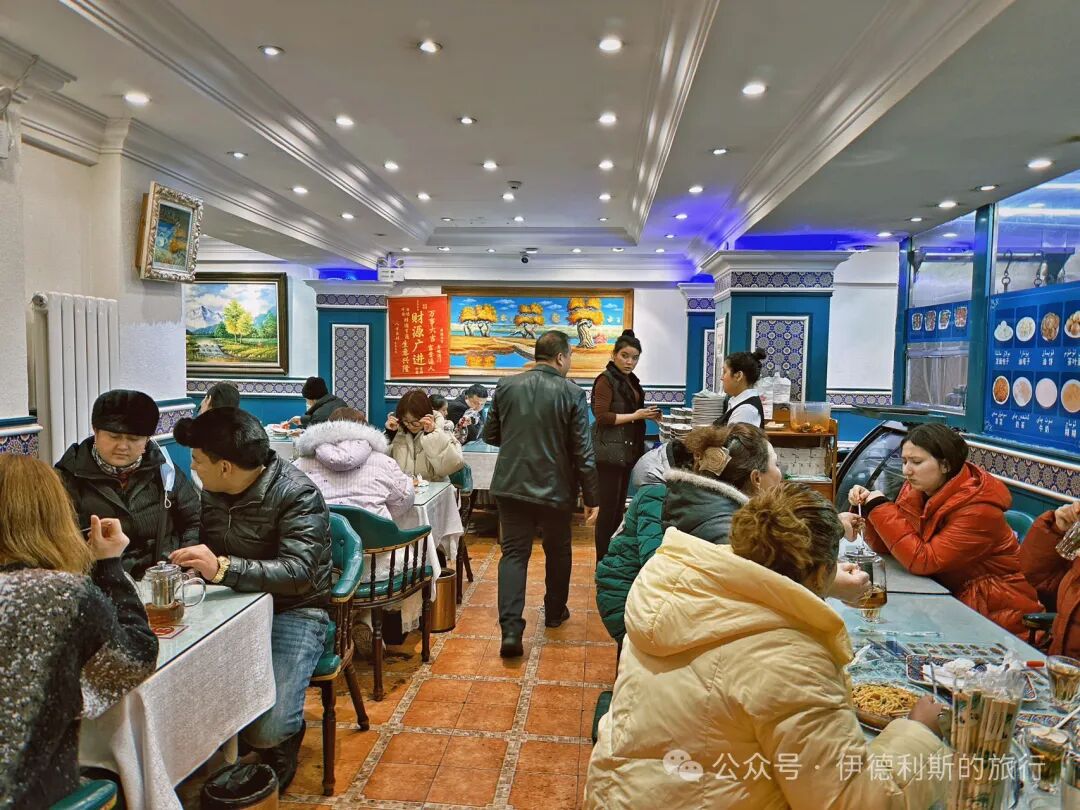
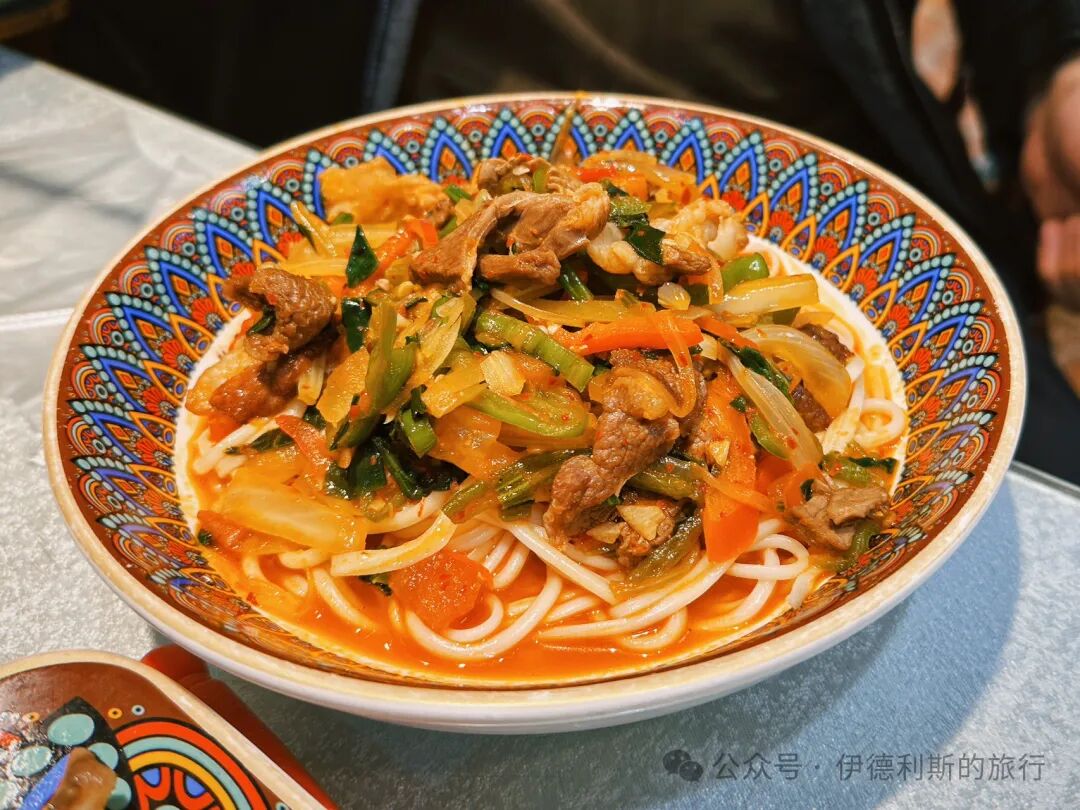
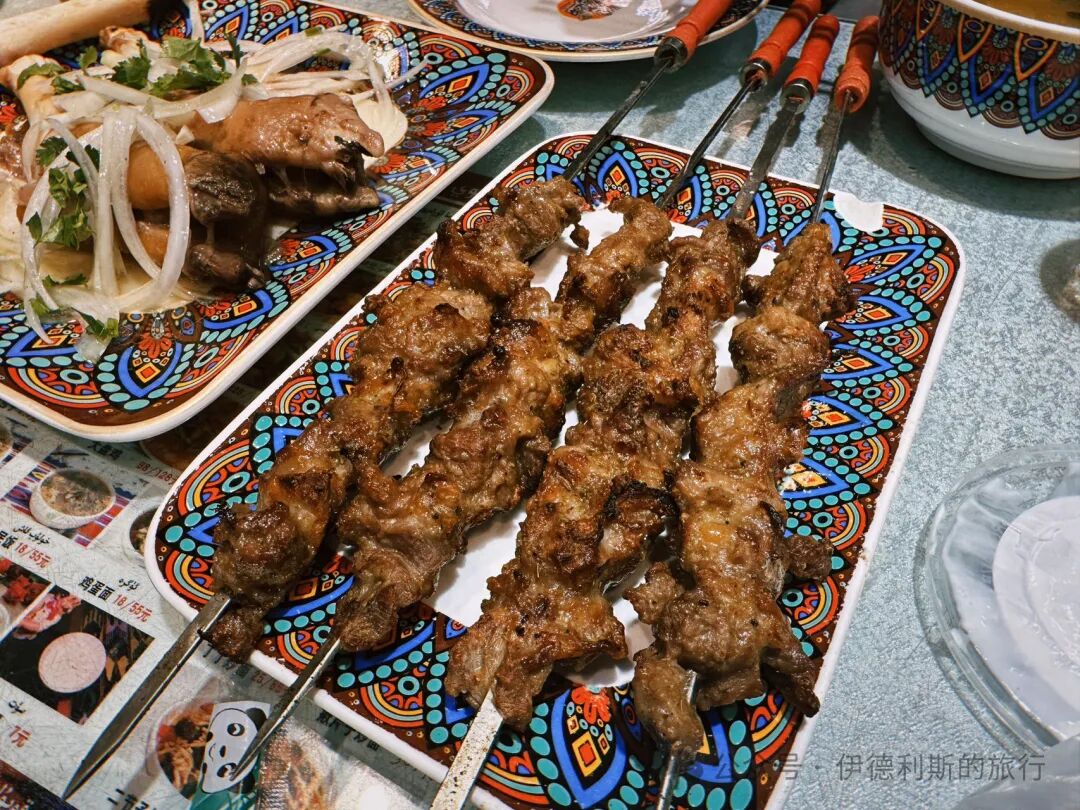
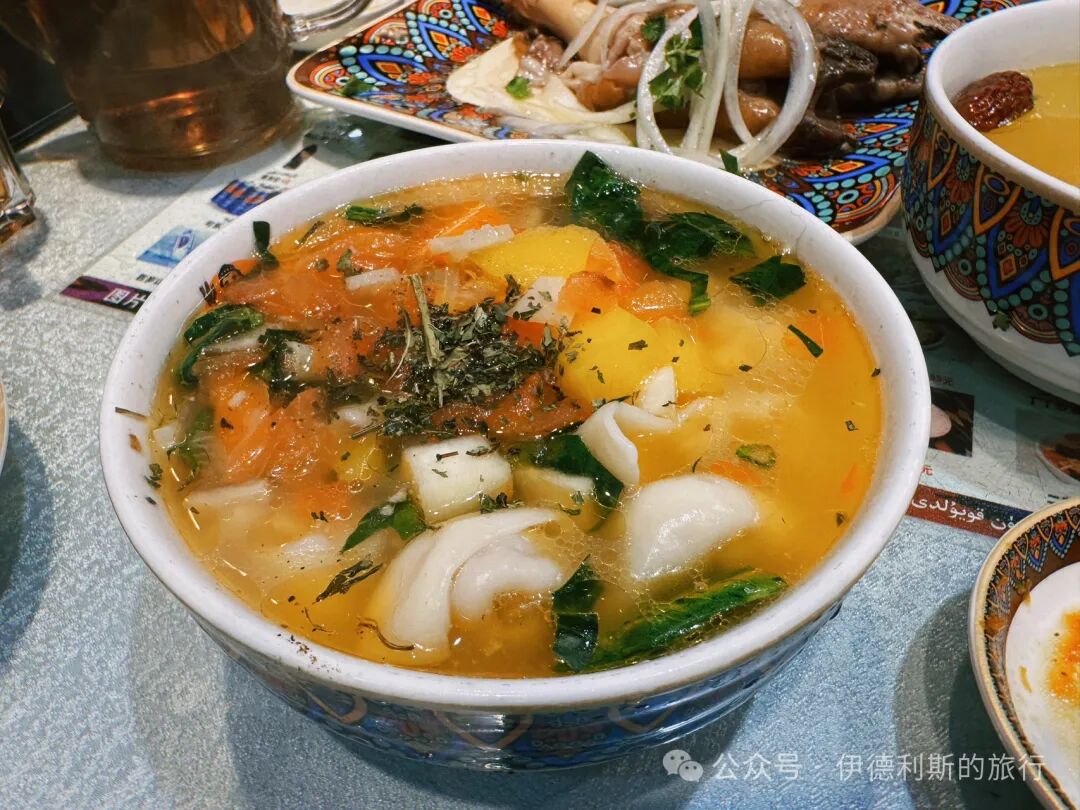
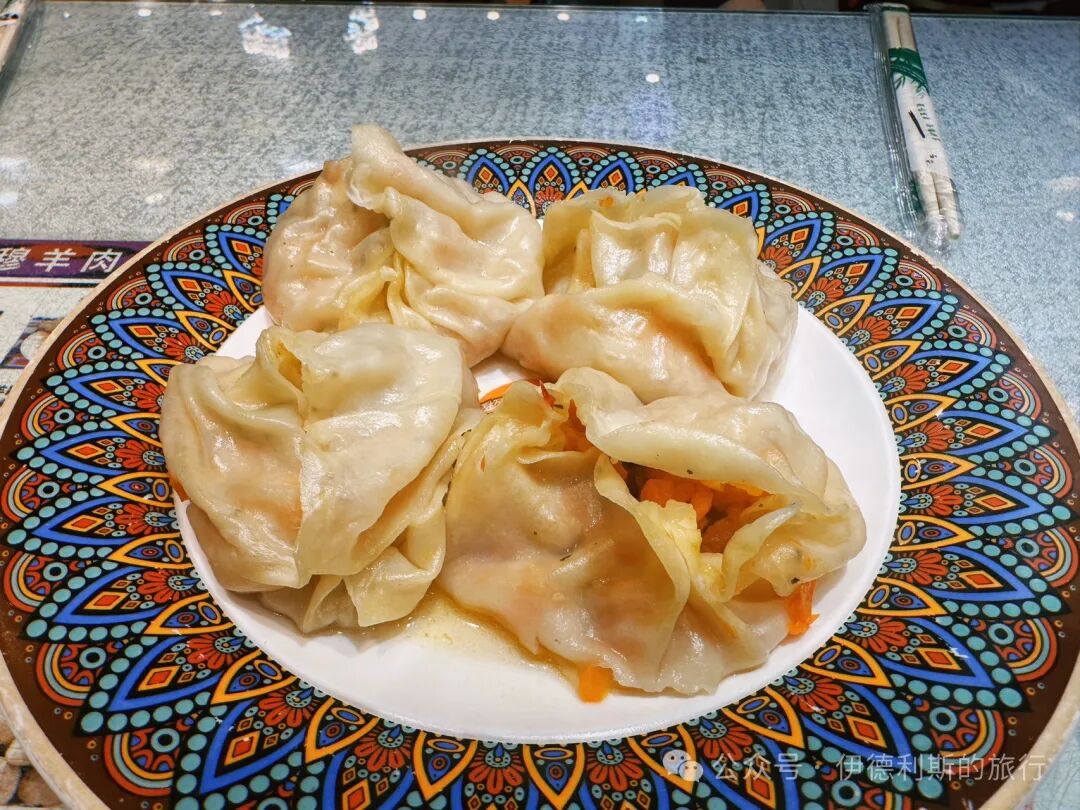
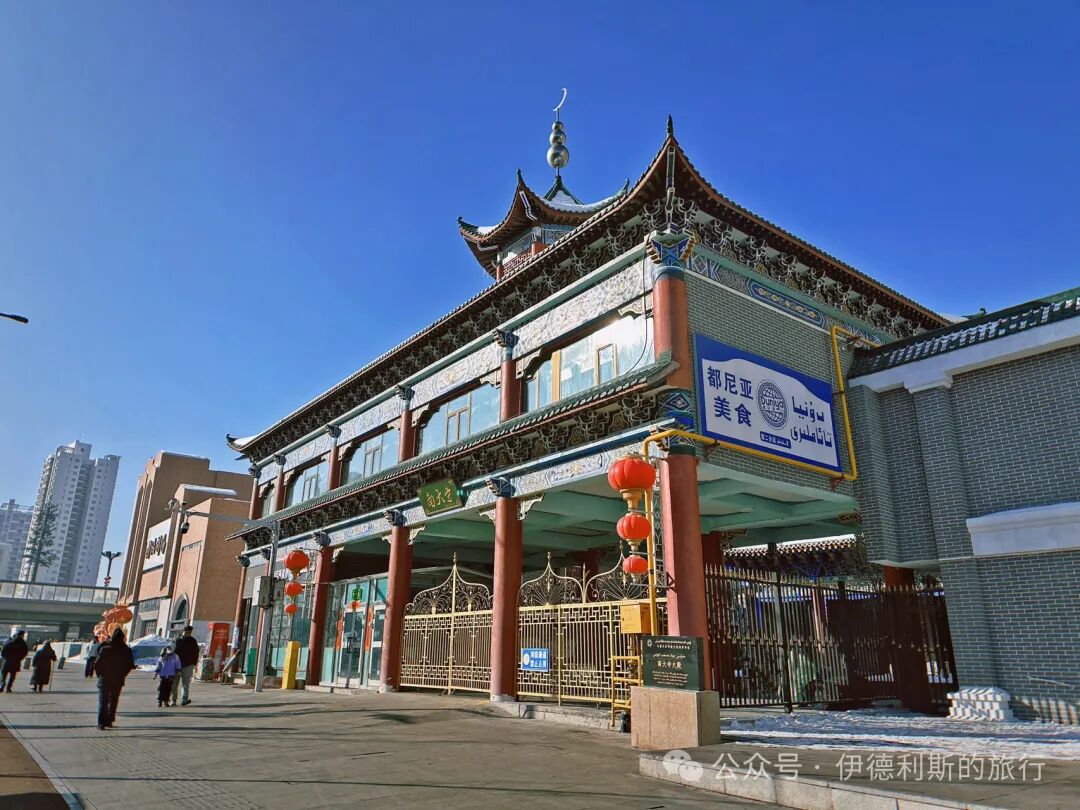
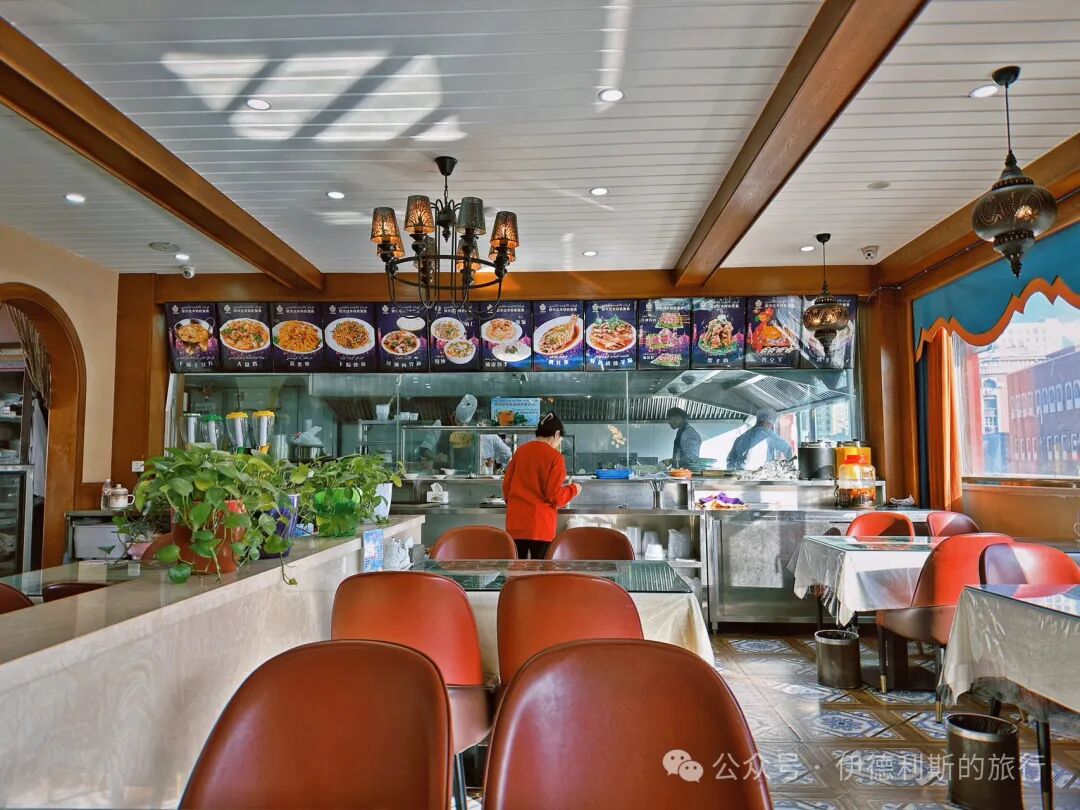
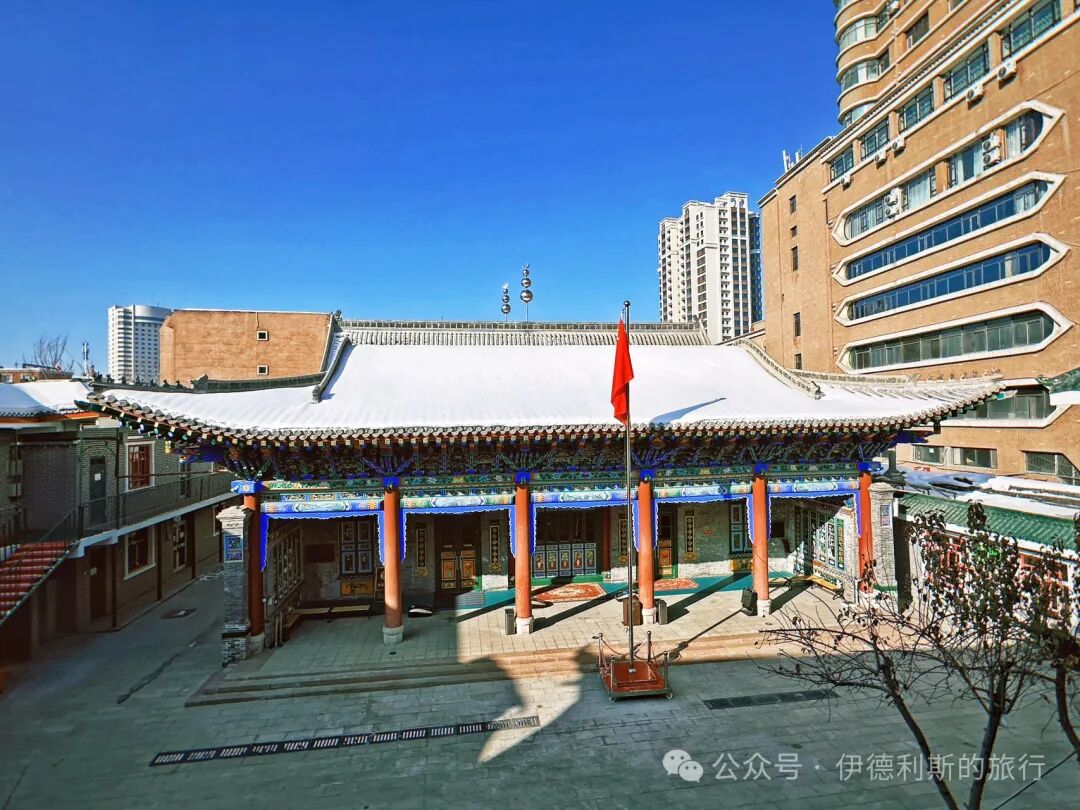
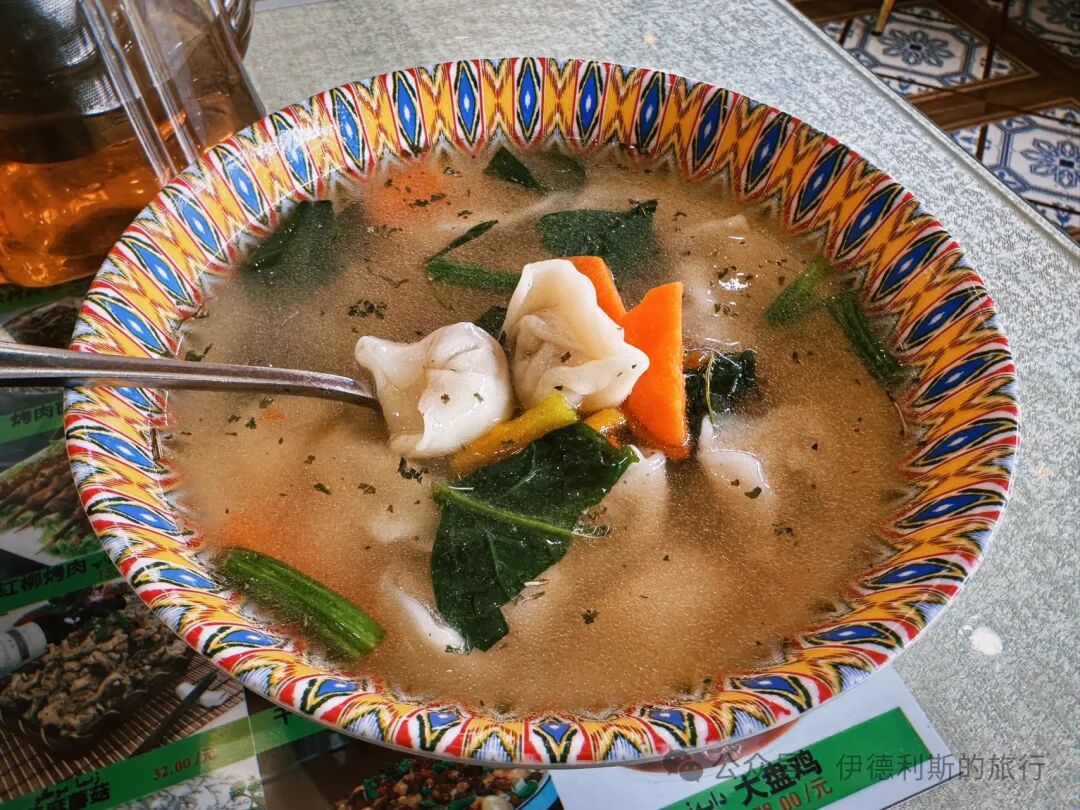
On the second floor of the Erdaoqiao South Mosque gate is a Uyghur restaurant called Dunya Food. It is very warm inside, and you can drink hot tea while looking out at the main hall of the Urumqi Jahriyya First Mosque. I had a bowl of small dumplings (ququ) in the restaurant, which is perfect for winter in Urumqi.
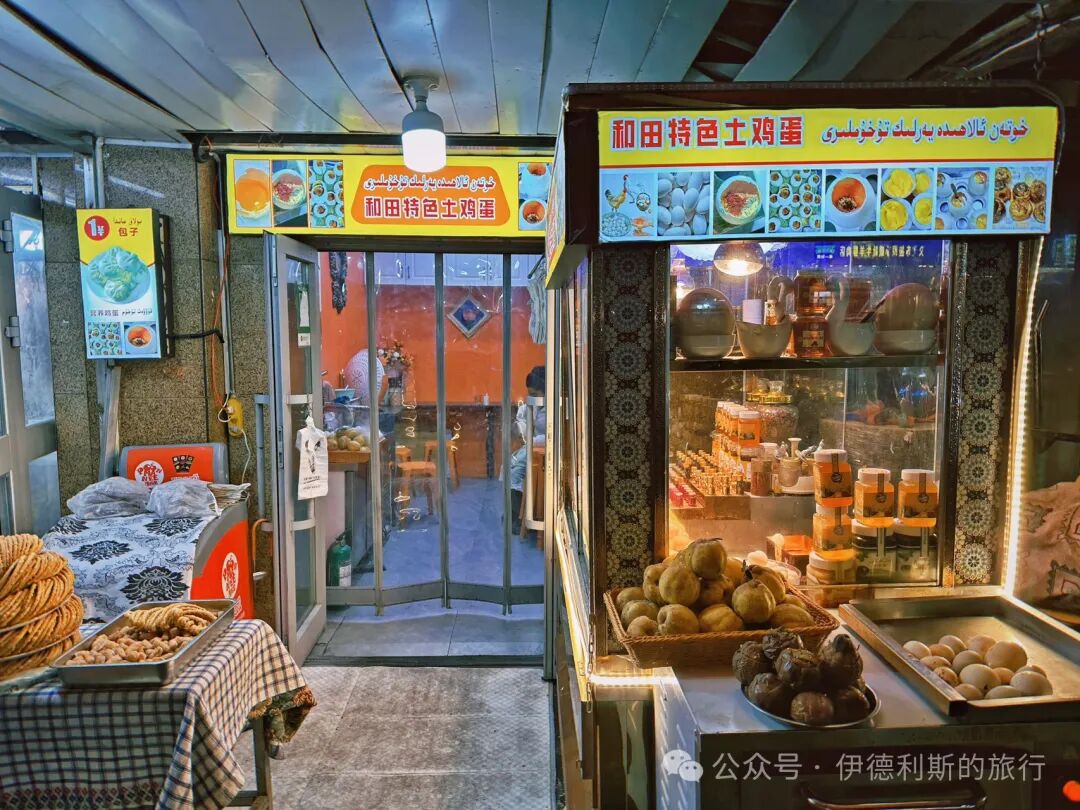
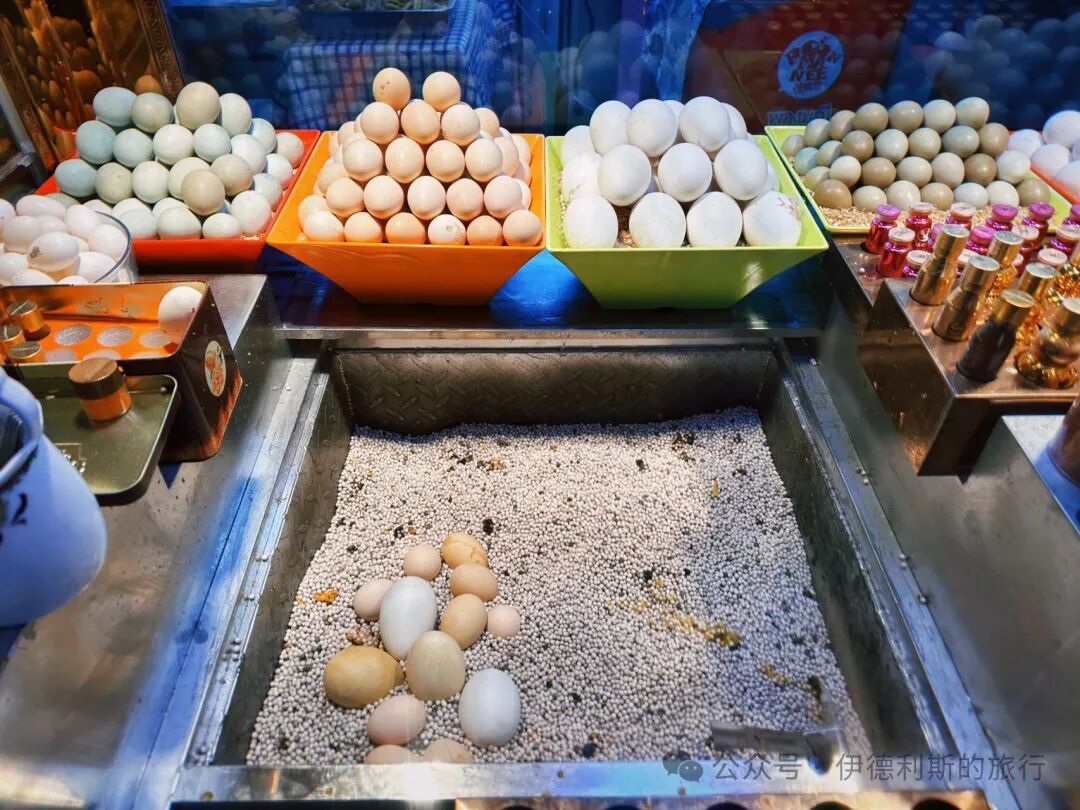
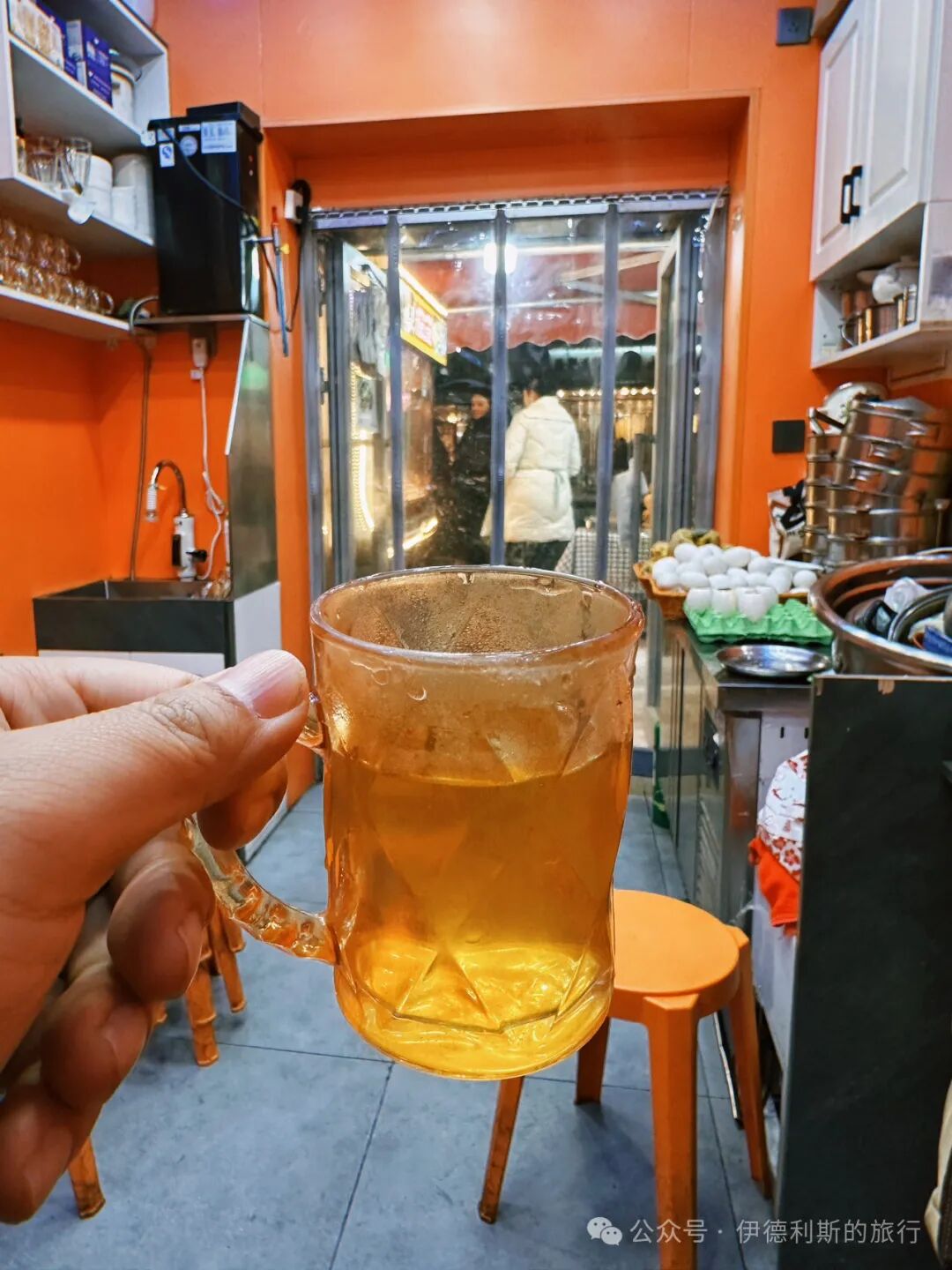
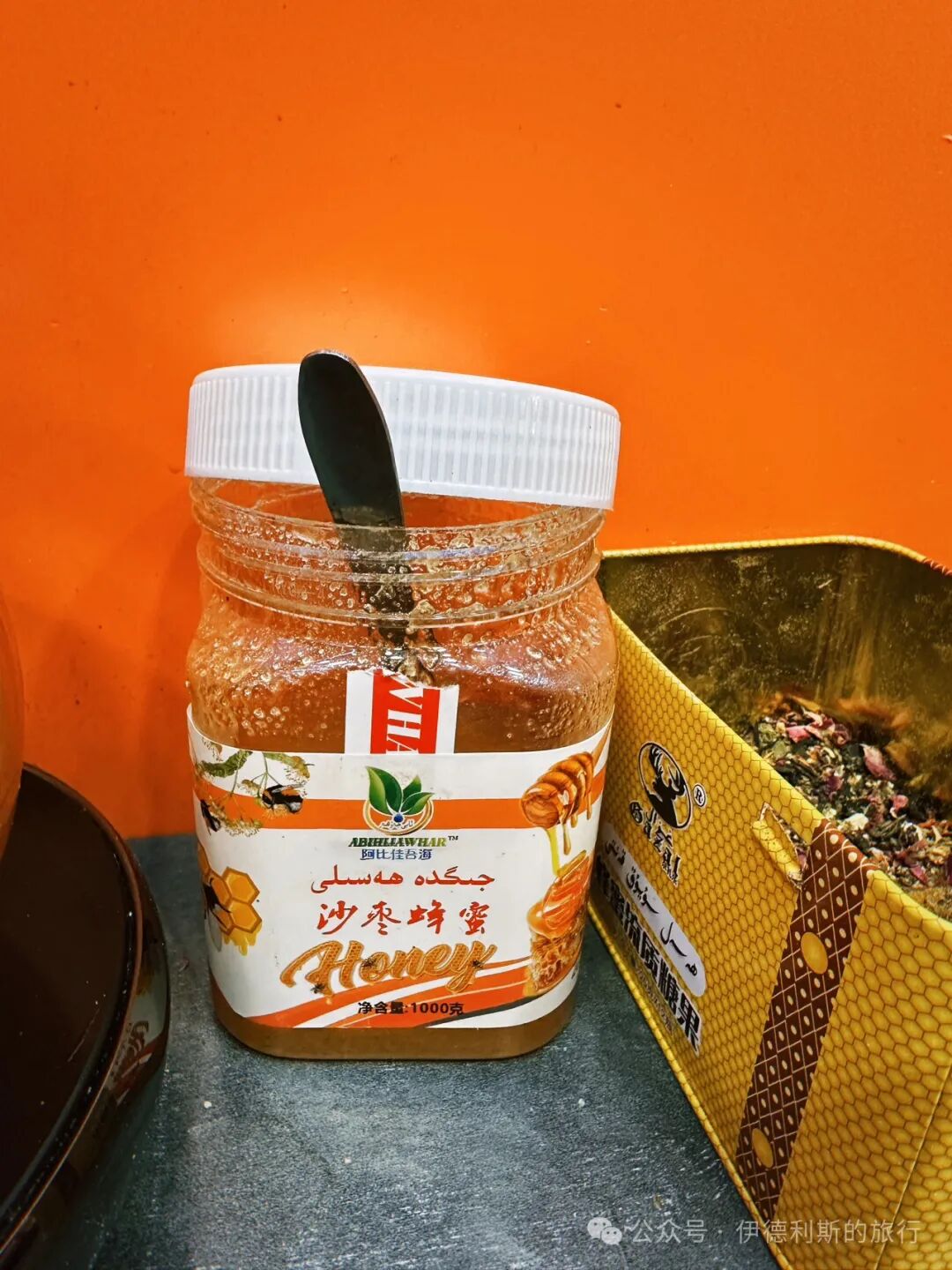
Across from Suiyuan Mosque is a Hotan specialty egg shop. You can eat roasted goose eggs and chicken eggs. They also have a deluxe version where chicken, pigeon, and goose eggs are all cracked into a goose egg shell, then mixed with honey and saffron. They also serve rose tea with silverberry honey. It is a good place to sit and rest after walking around Shanxi Alley.
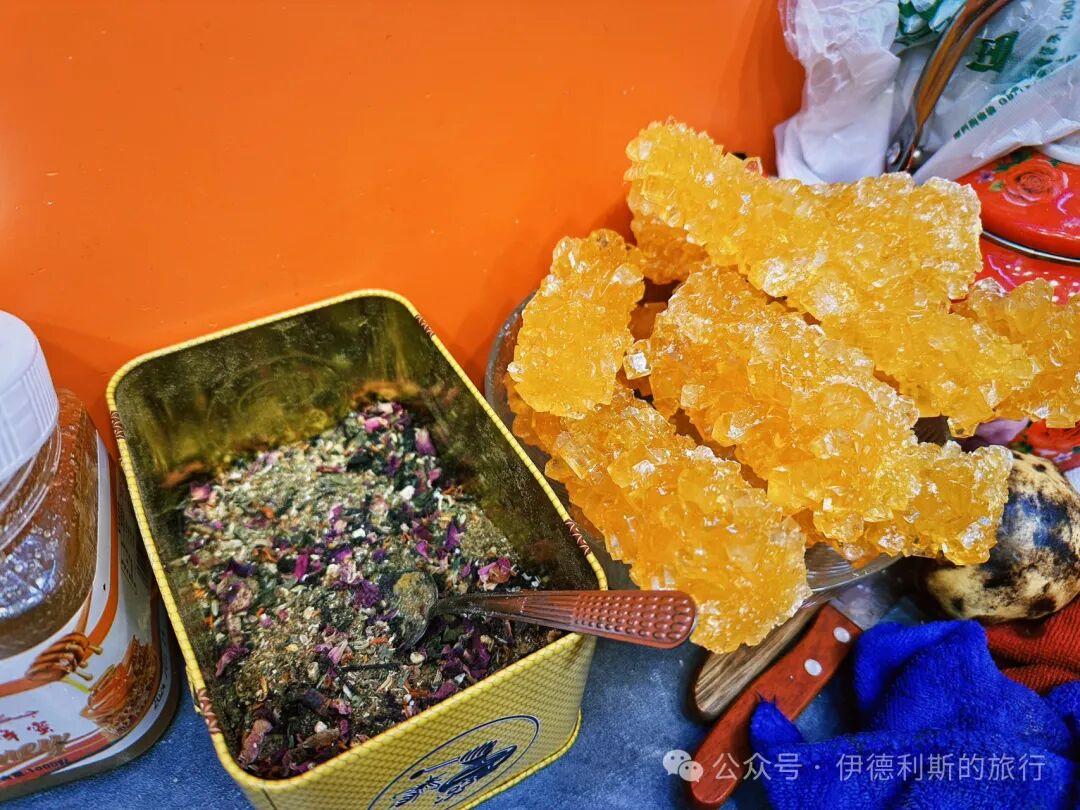
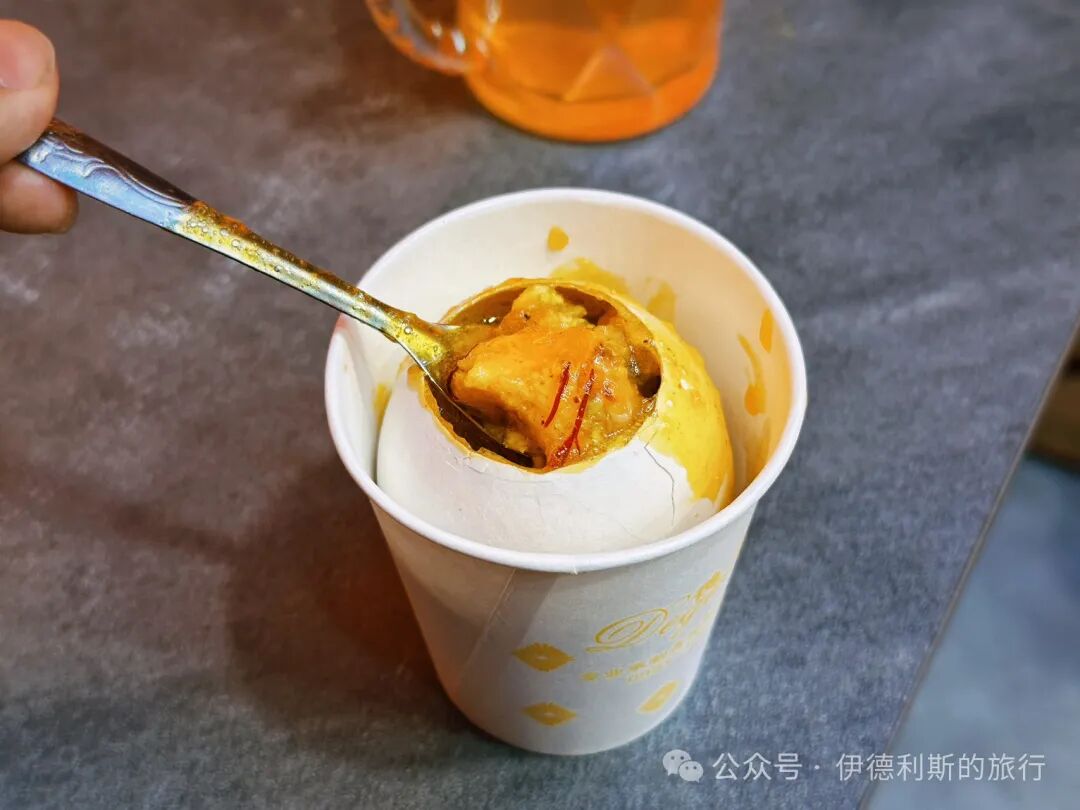
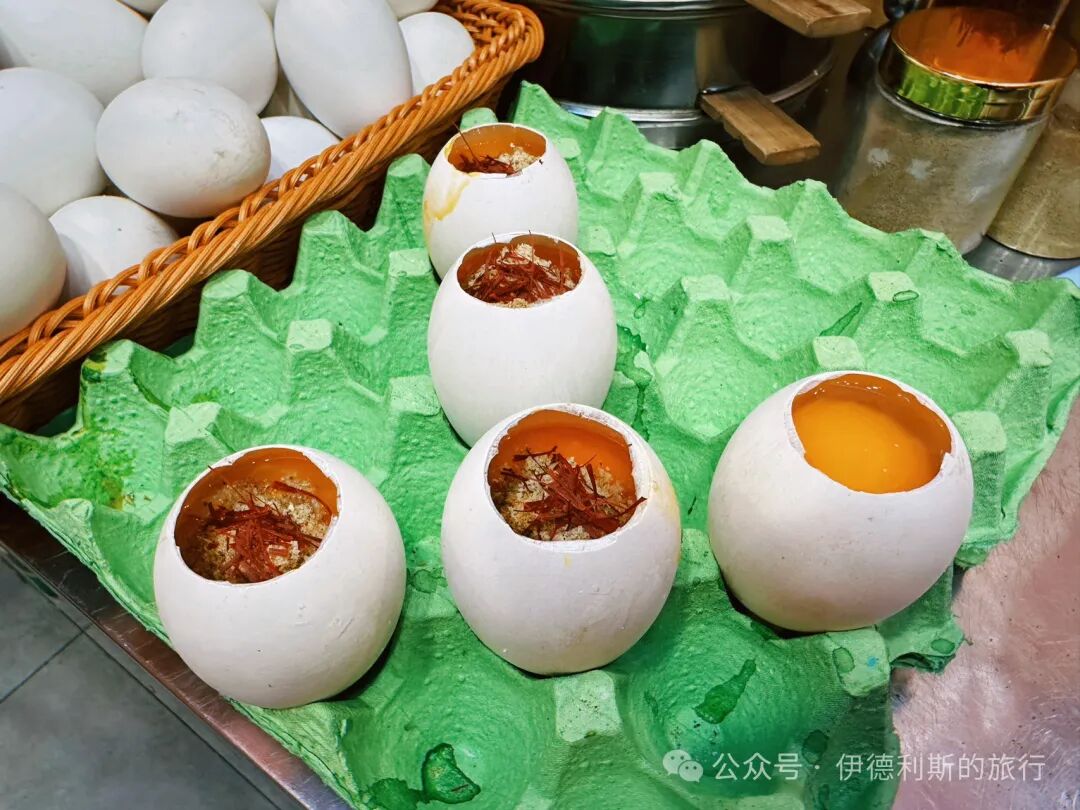
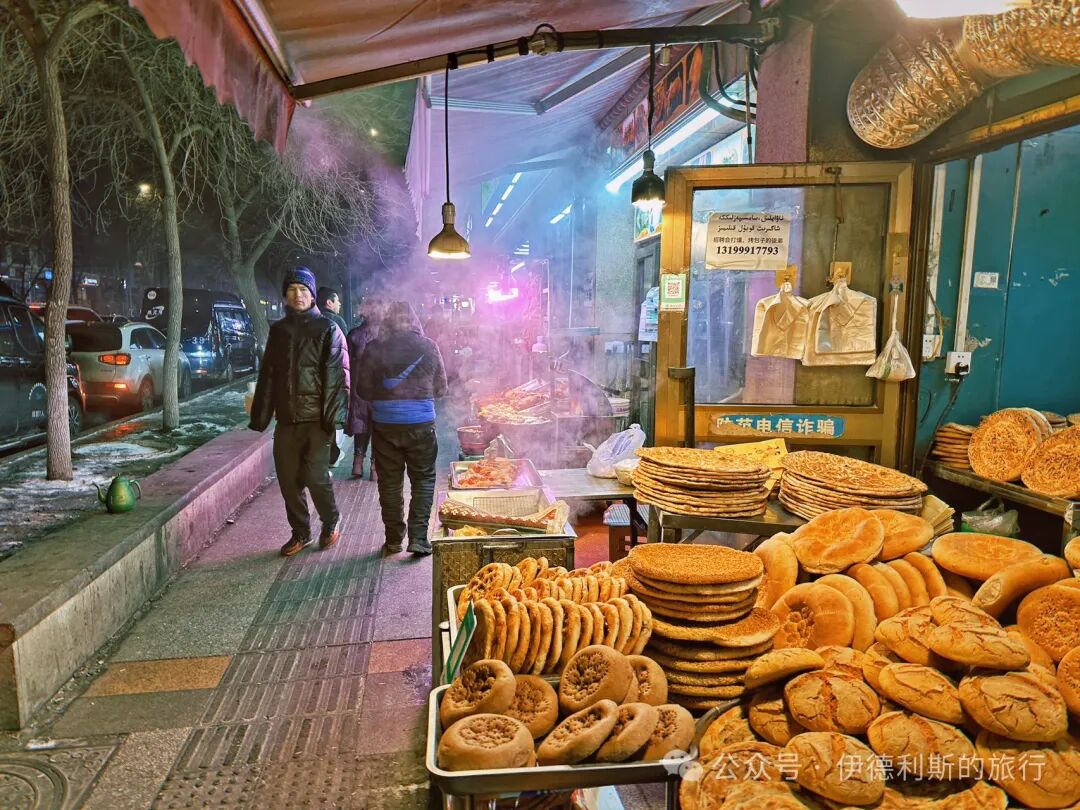
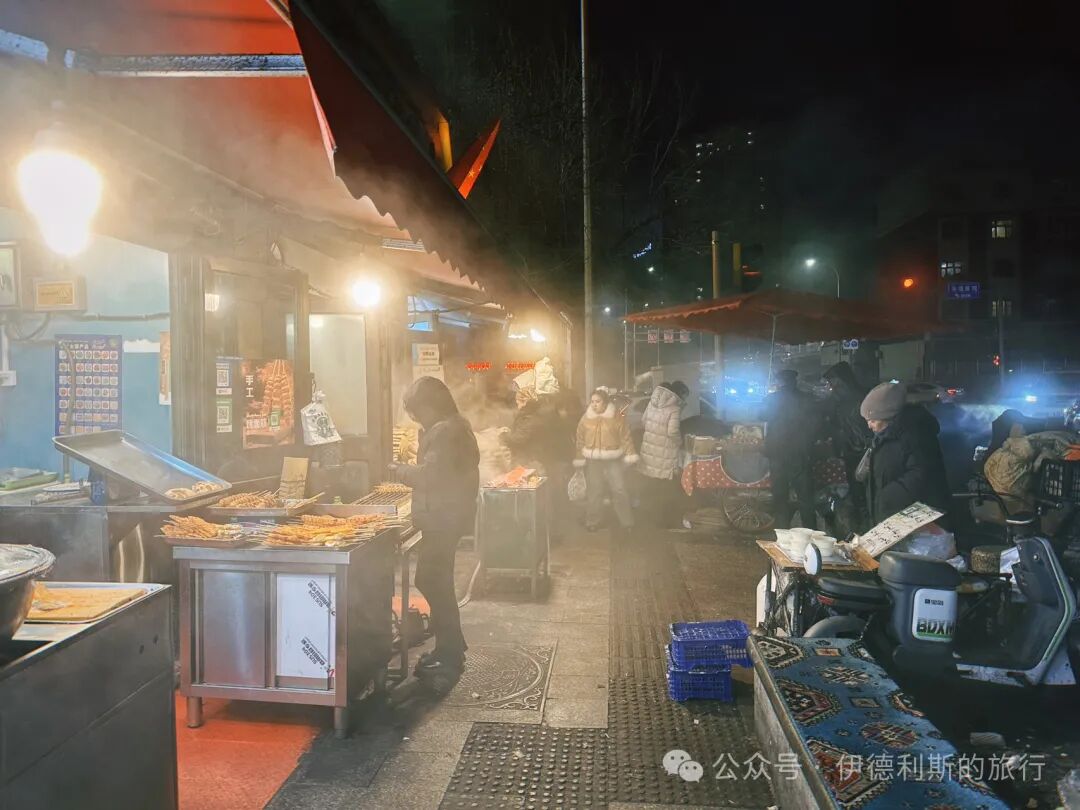
On the street in Shanxi Alley.
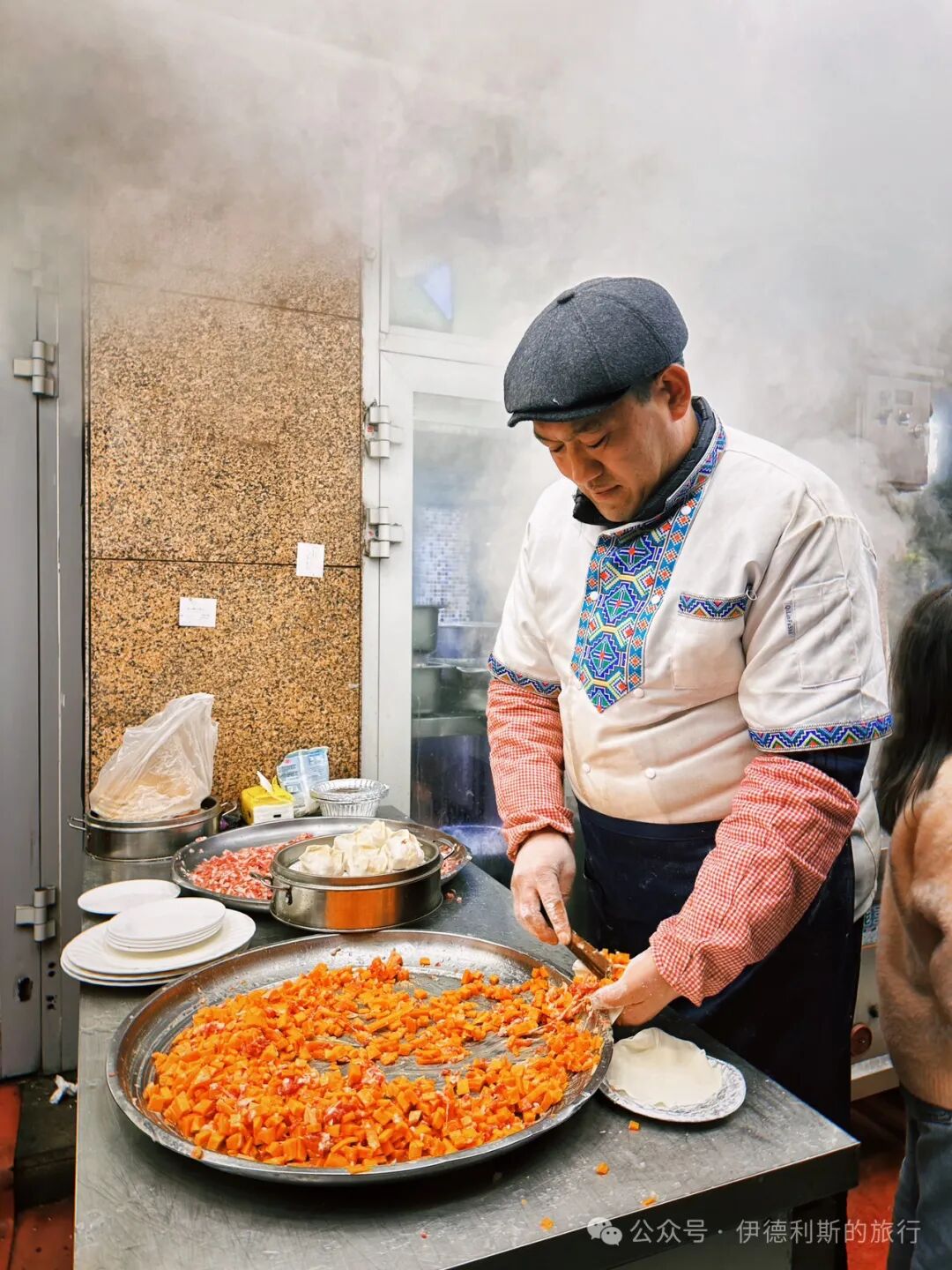
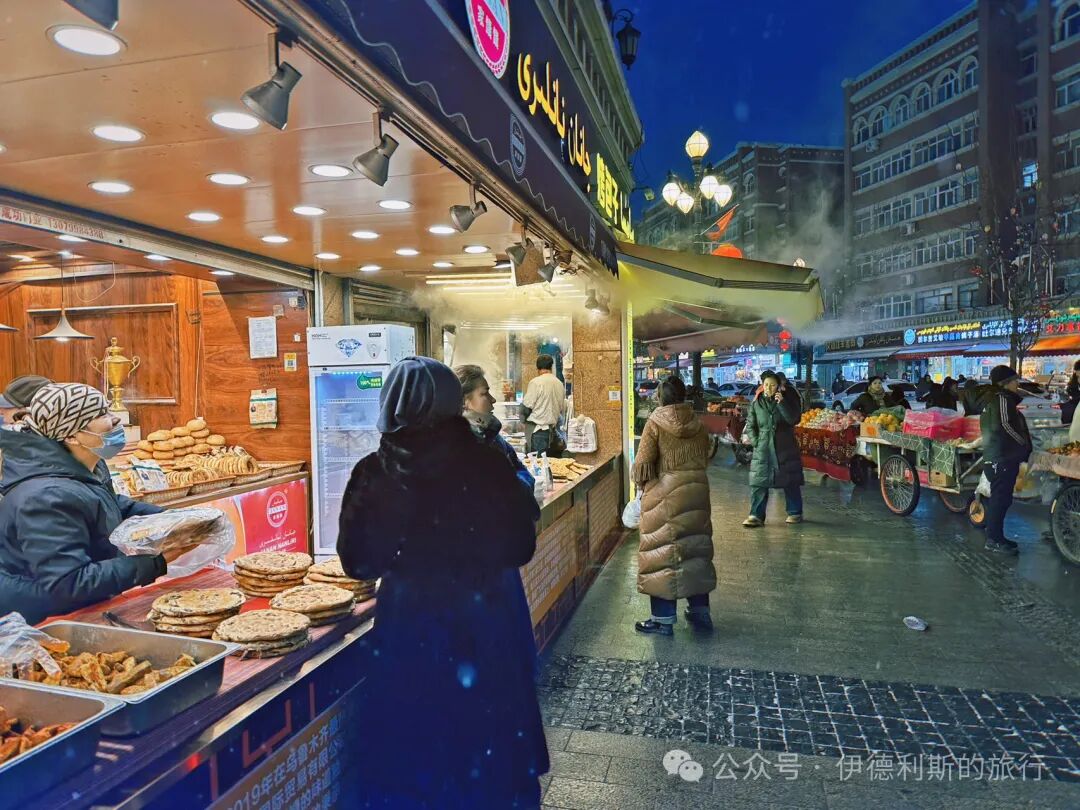
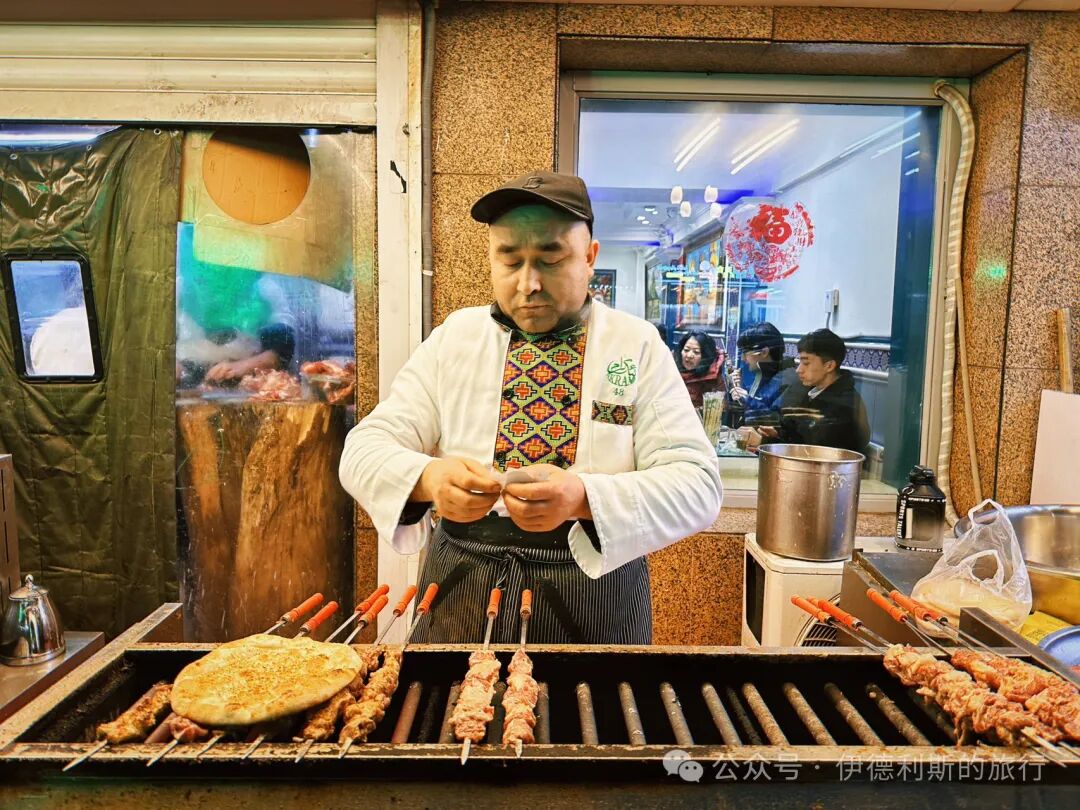
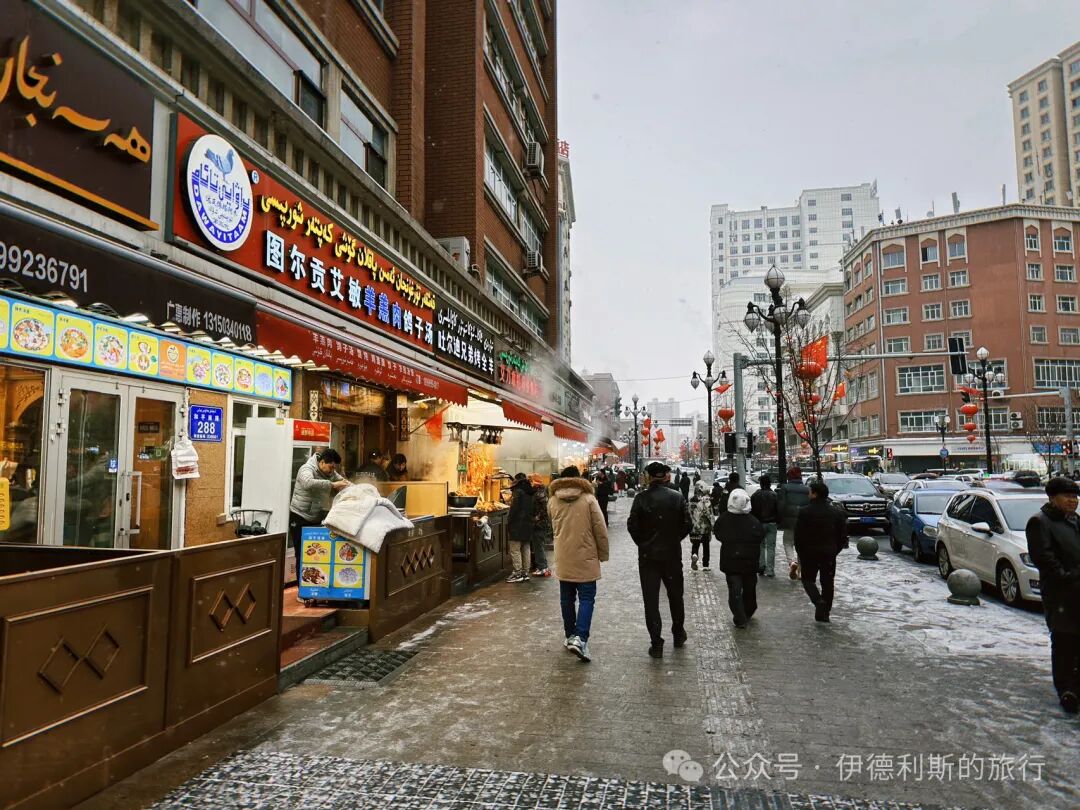
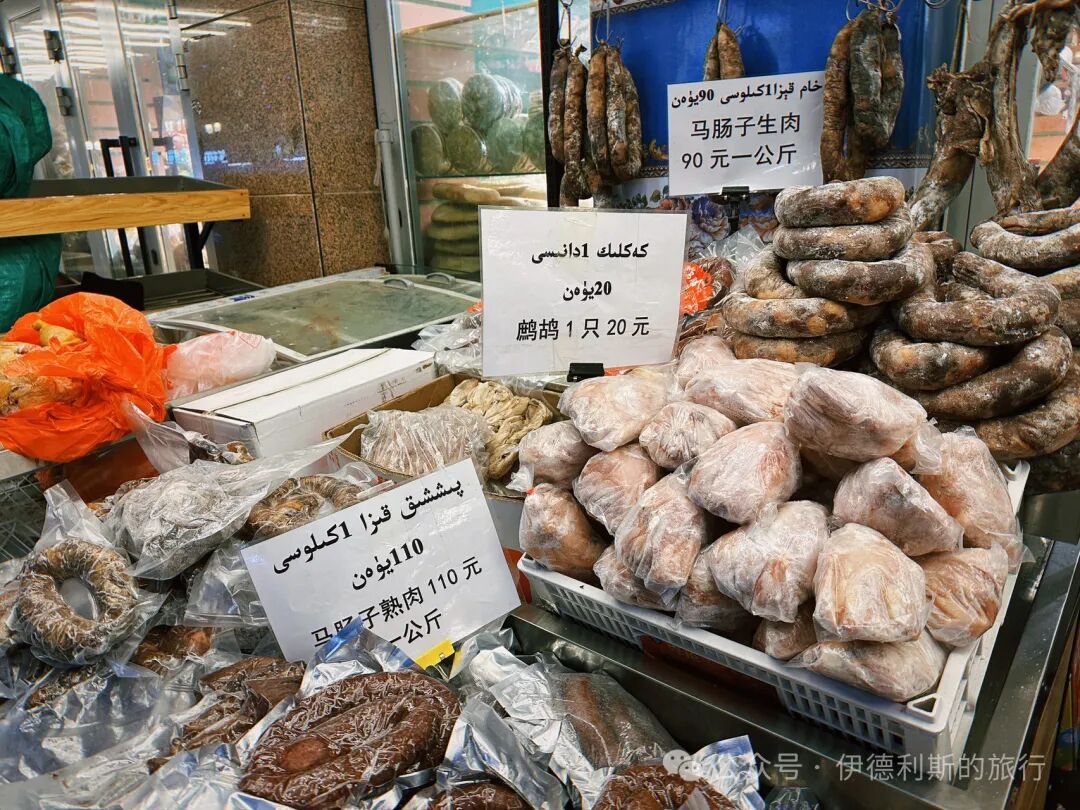
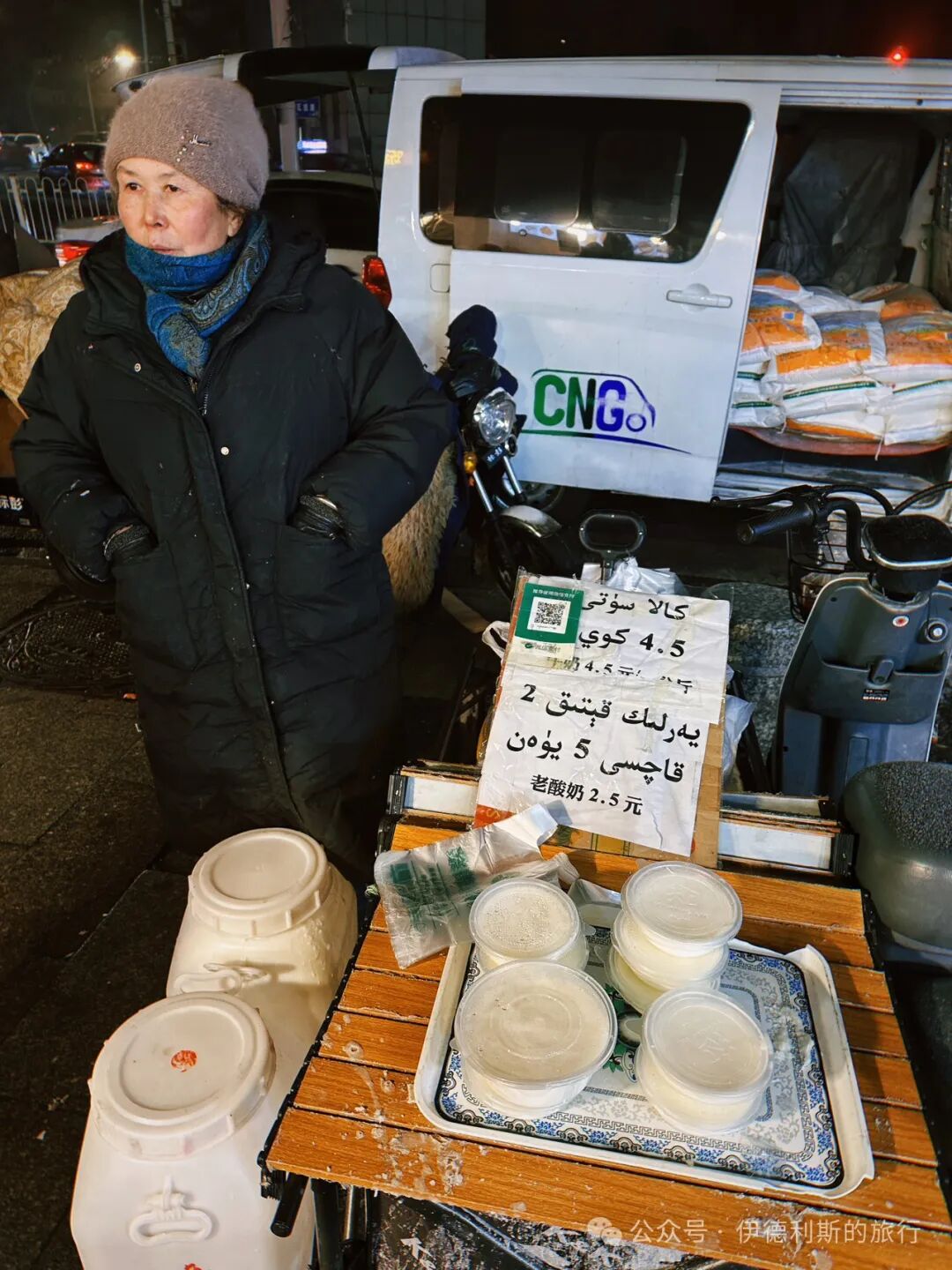
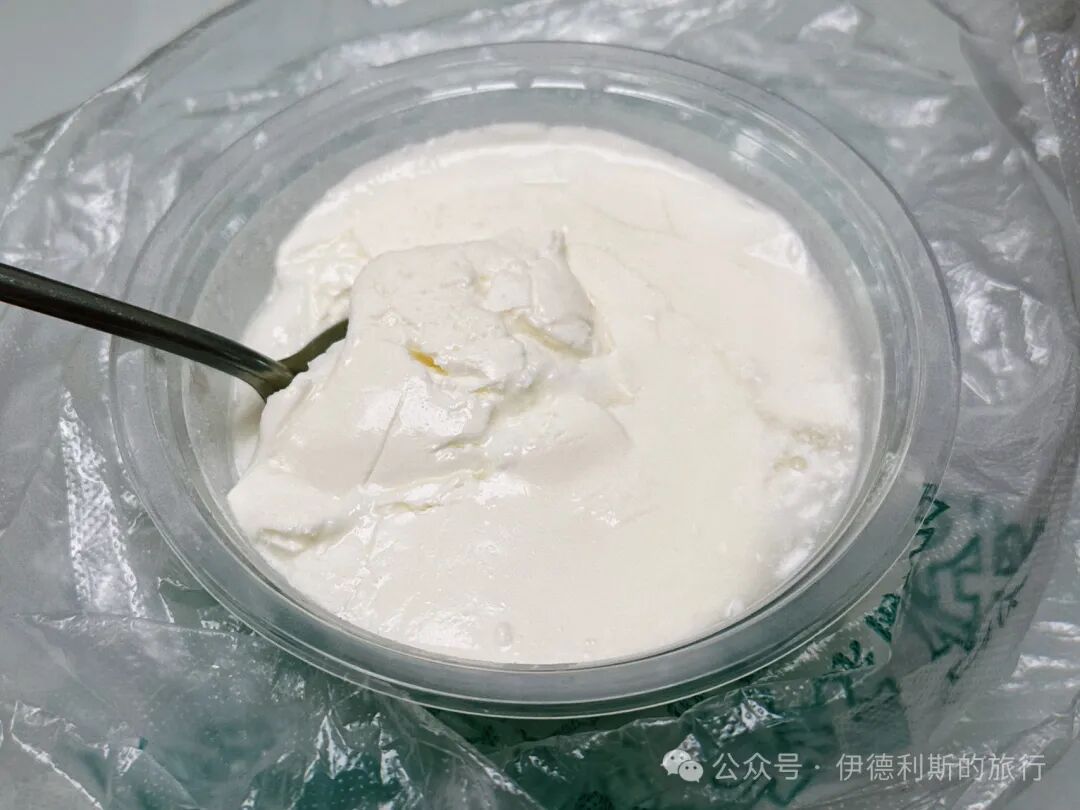
On the street in Awati Road, the yogurt sold by the auntie without a brand name is the best! Since Erdaoqiao, Lingguan Alley, and Shanxi Alley became popular, Yingawati Road further south remains a place only for locals.
Summary: Urumqi’s Hui Muslim streets bring together halal food, markets, daily commerce, and neighborhood life in Xinjiang. This 2025 travel account keeps the original street scenes, shop details, photos, and food notes in a clear English version.
After the Qing dynasty defeated the Dzungar tribe, they built an earthen city in Urumqi in 1758 (the 23rd year of the Qianlong reign) to station troops and guard the border. In 1763 (the 28th year of the Qianlong reign), they expanded it and named it Dihua City. After that, Qing troops stationed in Urumqi to farm the land, and many Hui Muslim officers and soldiers brought their families to settle there. During the Jiaqing, Daoguang, and Xianfeng reigns, the Qing dynasty kept moving people to Xinjiang, and more and more Hui Muslims came to settle in Urumqi. After the Tongzhi reign, many Hui Muslims from the northwest moved to Urumqi for various reasons, including failed anti-Qing uprisings, religious disputes, and natural disasters.
In 1876 (the second year of the Guangxu reign), the Qing army recaptured Urumqi and ordered all Hui Muslims inside the city to move outside. Since then, most Hui Muslims in Urumqi have settled in the Nanguan and Xiguan areas, making a living by slaughtering cattle and sheep and running halal food businesses.
Urumqi's Xiaonanmen gate faces Xiaodongliang. During the late Qing dynasty and the Republic of China era, half of the twenty-three Hui Muslim neighborhoods in Urumqi were here. Today, it is still the place where Hui Muslim snacks are most concentrated.
Wuwuzi is the oldest Hui Muslim brand in Nanguan. In 1907, Li Shenghua (Li Liushizi) started carrying a shoulder pole to sell lamb (yanggaorou) at the south gate of Dihua. Later, his fifth son, Li Zhanshou (Wuwuzi), took over, and the name Wuwuzi Lamb gradually became well-known. After the 1980s, Wuwuzi rented a storefront in Shanxi Alley. It has been passed down for four generations and is now an autonomous region-level intangible cultural heritage.
Across from the East Mosque (Dongfang Dasi), I had sour soup dumplings (suantang shuijiao) with celery and meat. They contained glass noodles (fentiao), tomatoes, wood ear mushrooms, and tofu.
Across from the Qinghai Mosque (Qinghai Dasi), I had milk tea and cabbage meat buns (baozi) at Su Yongfang's shop. The milk tea had a strong milk and tea flavor and was topped with a milk skin (naipizi). The buns are made in the Xinjiang Hui Muslim style, with loose filling and Sichuan peppercorns.
Behind the Shaanxi Mosque (Shaanxi Dasi) is the long-standing Yilihe Mianfeizi shop. The owner started selling at the South Gate night market over twenty years ago. After the night market closed, he opened this small shop behind the Shaanxi Mosque. This small shop run by a husband and wife is not big, but you can eat authentic Xinjiang lung and tripe noodles (mianfeizi). They serve it in clear soup, dry-mixed, or stir-fried. They have large and small portions, as well as stir-fried sheep head meat, tripe strips, sheep offal, meatball soup, and glass noodle soup (fentang).
I ordered a portion of dry-mixed lung and tripe noodles, a bowl of meatball soup, and two oil towers (youtazi). Oil towers are my favorite staple food. They are made with sheep fat and are very appetizing. The lung and tripe noodles come with plenty of ingredients. The rice sausages (michangzi) contain minced meat and carrots, and they taste great. The meatball soup contains meat slices, tofu, spinach, glass noodles, and other things. It is especially warm to drink in winter.
At the entrance of the West Mosque (Xidasi) is the Qitai Three Cold Dishes shop. The founder, Shen Derong (1897-1987), started selling yellow noodles (huangmian) on the street in 1919. At that time, he used free charcoal-grilled sheep hearts and sheep livers to attract customers, gradually spreading the way of eating yellow noodles with grilled meat. It has been passed down through three generations: Shen Changqing (1940-2014) and Shen Jianjun (1970-).
Yellow noodles (huangmian) in Xinjiang are made like Gansu pulled noodles (lamian). Both use alkaline ash (penghui) in the dough. You can stretch the dough by hand into flat leek-leaf noodles or thin noodles. The difference is that Xinjiang yellow noodles are served with a thick sauce that clings to the noodles when you lift them. The dish includes ingredients like wild celery, wheat gluten (mianjin), green onion, ginger, garlic, and chili oil (youpo lazi). It has a rich, sour, sweet, and spicy flavor that is very satisfying.
Suyongfang Grocery Store, across from the Qinghai Great Mosque, sells ready-made Hui Muslim fried meatballs (zha wanzi) and meat-stuffed tofu (jiasha). You can buy a bag, freeze it at home, and use it for stews or meatball soup.
Mashi and Yili Pastry Shop, across from the East Mosque, sell traditional Hui Muslim pastries. Their flaky pastries (supi dianxin) are a must-have for wedding banquets among Hui Muslims in Urumqi. Actually, the method for making these flaky pastries was brought to Urumqi by people from Tianjin. In the 1930s, Urumqi Hui Muslim pastry chef She Wenbing became close friends with Liu Wenjiang, a chef at the Yongsheng Western Pastry Shop in Tianjin. He learned how to make the flaky Beijing-style eight-piece pastry set (jing bajian), and the recipe spread among Hui Muslims in Urumqi.
Beyond Hui Muslim food, there is plenty of Uyghur and Kazakh cuisine in the Nanguan area.
I bought a box of honey cake (bahali) at Ailieweike next to the Qinghai Great Mosque. It is baked with lamb fat, cocoa powder, eggs, honey, milk, walnuts, and raisins. It tastes very fragrant.
In the morning, I prayed at the Shaanxi Great Mosque in Urumqi. Afterward, I went to the Kazakh milk tea shop in front of the People's Theater for butter milk tea (suyou naicha) with fried dough (baersake), apricot jam, and butter. The milk skin tea (naipizi naicha) was excellent, and the freshly fried dough was so fragrant that my hands were oily after eating.
In the evening, my sister and brother-in-law treated us to dinner at Yikelamu in Shanxi Alley. It is a very popular spot with locals. We ordered small dumplings (ququ), home-style mixed noodles (banmian), egg noodles, pigeon soup, clear-stewed lamb trotters, pumpkin steamed buns (baozi), and kebabs. Their mixed noodles are pulled very thin and taste great. The egg noodles come in a meat broth with lamb ribs, yellow carrots, and tomatoes. The pigeon soup is quite light. Clear-stewed lamb trotters have a different flavor compared to spicy lamb trotters (hula yangti), allowing you to taste the natural flavor of the lamb. The lamb skewers were seasoned only with salt, not chili. Only places with high-quality meat dare to do this. Their steamed buns are also good, and the sweet pumpkin filling is very appetizing.
On the second floor of the Erdaoqiao South Mosque gate is a Uyghur restaurant called Dunya Food. It is very warm inside, and you can drink hot tea while looking out at the main hall of the Urumqi Jahriyya First Mosque. I had a bowl of small dumplings (ququ) in the restaurant, which is perfect for winter in Urumqi.
Across from Suiyuan Mosque is a Hotan specialty egg shop. You can eat roasted goose eggs and chicken eggs. They also have a deluxe version where chicken, pigeon, and goose eggs are all cracked into a goose egg shell, then mixed with honey and saffron. They also serve rose tea with silverberry honey. It is a good place to sit and rest after walking around Shanxi Alley.
On the street in Shanxi Alley.
On the street in Awati Road, the yogurt sold by the auntie without a brand name is the best! Since Erdaoqiao, Lingguan Alley, and Shanxi Alley became popular, Yingawati Road further south remains a place only for locals.
