

Urumqi
Urumqi During Sha'ban, Part Two: Hui Muslim Food and Community Photo Notes
Articles • ali2007fr posted the article • 0 comments • 198 views • 2026-05-21 06:21
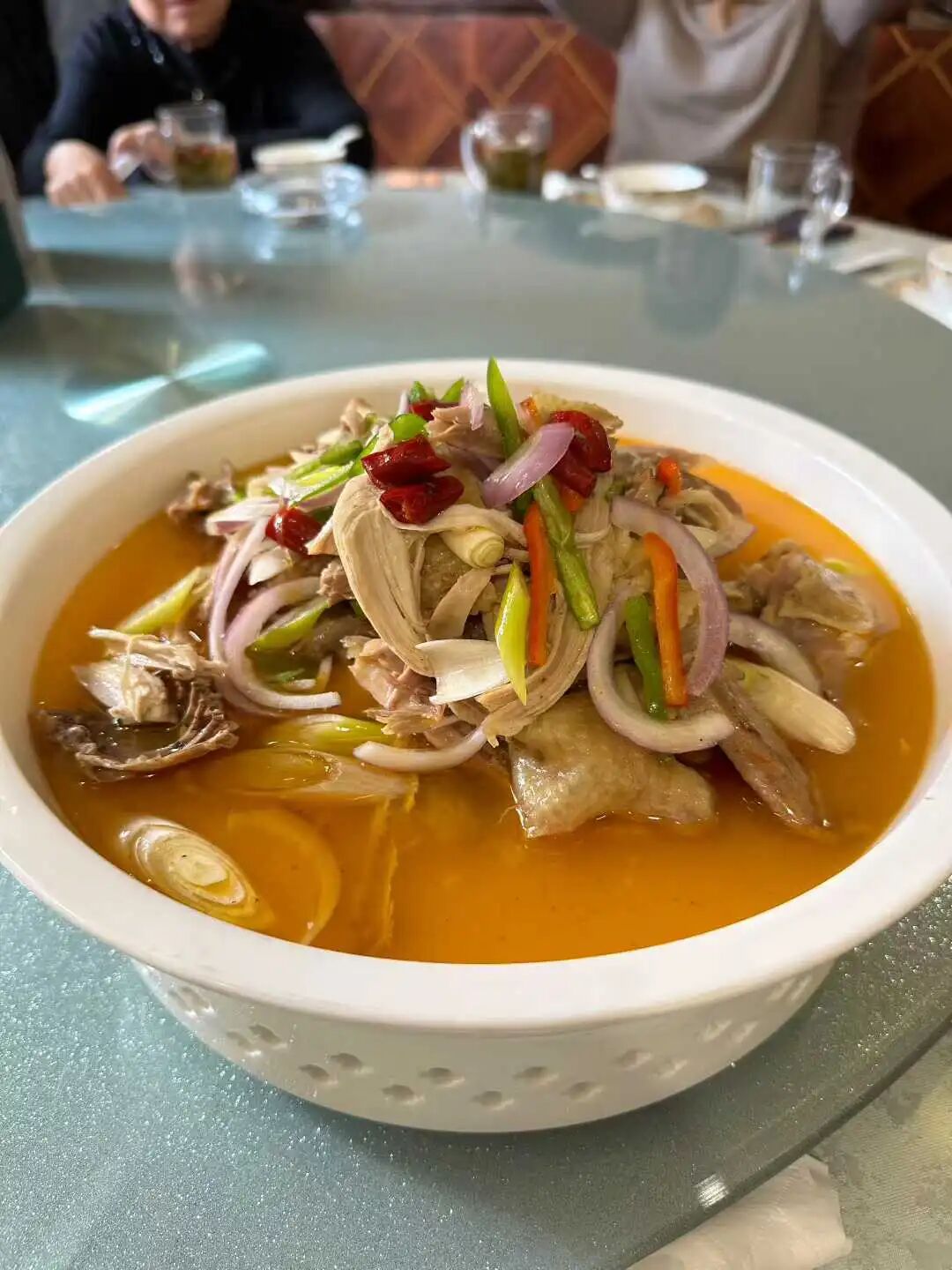
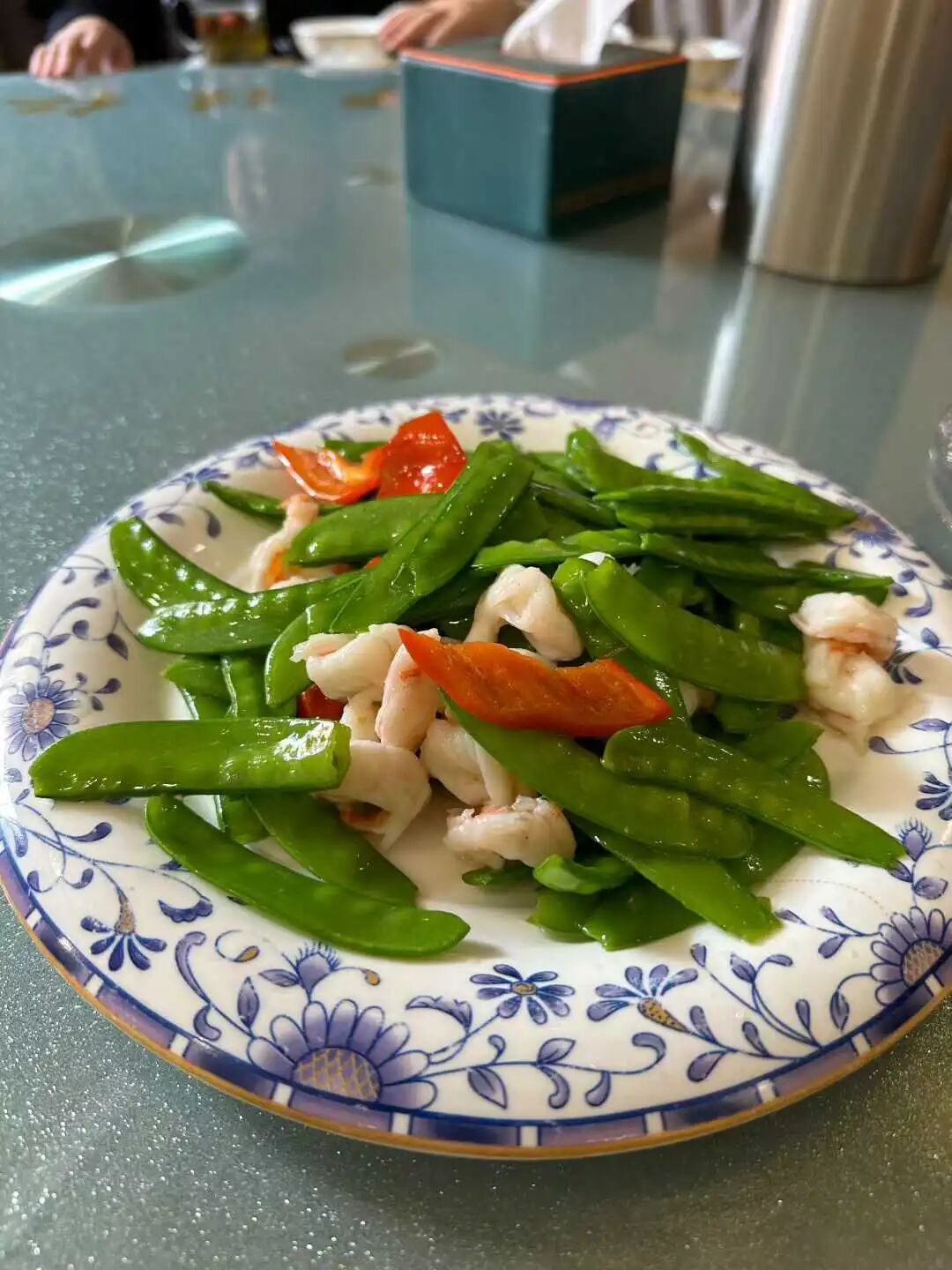
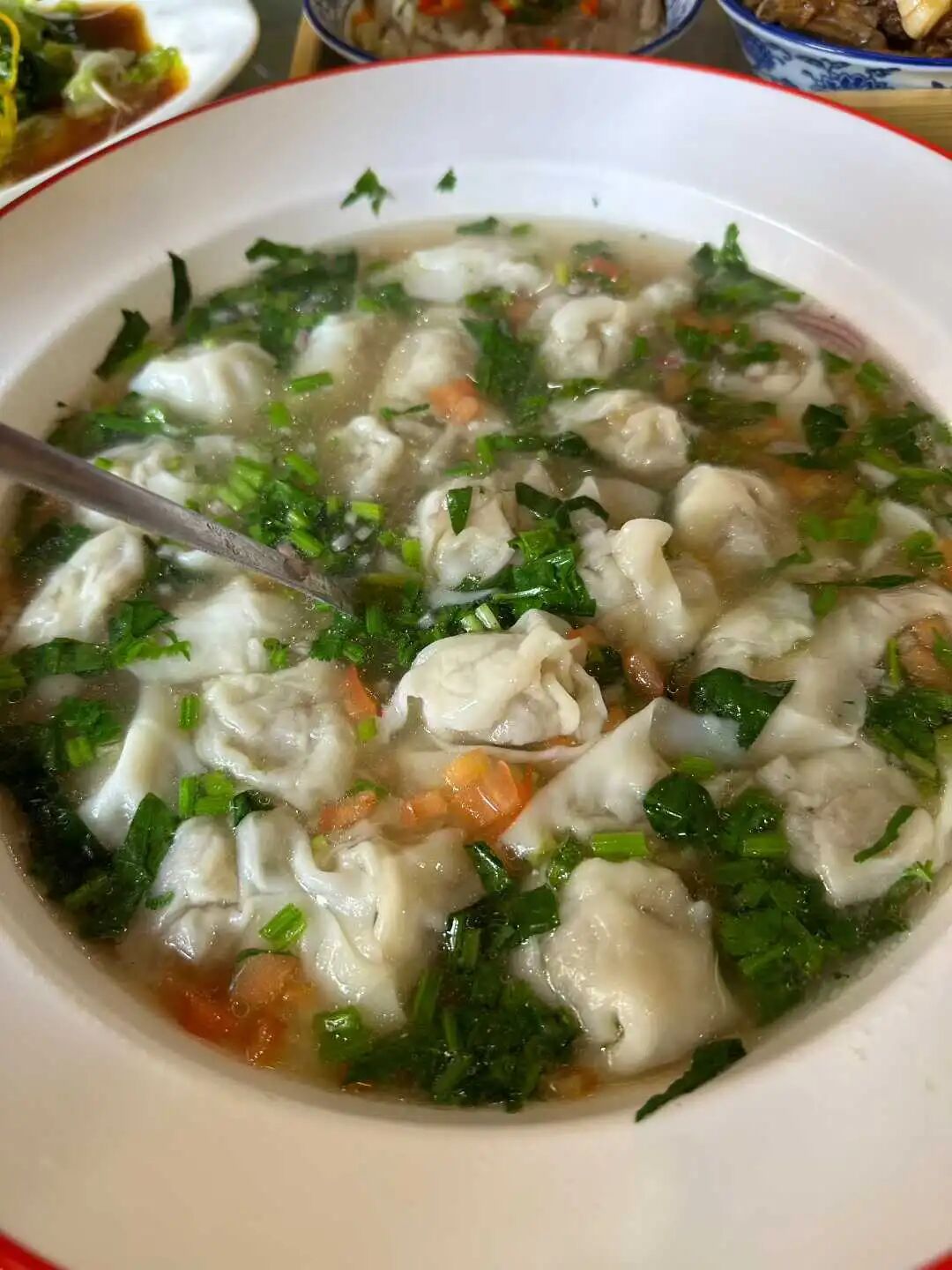
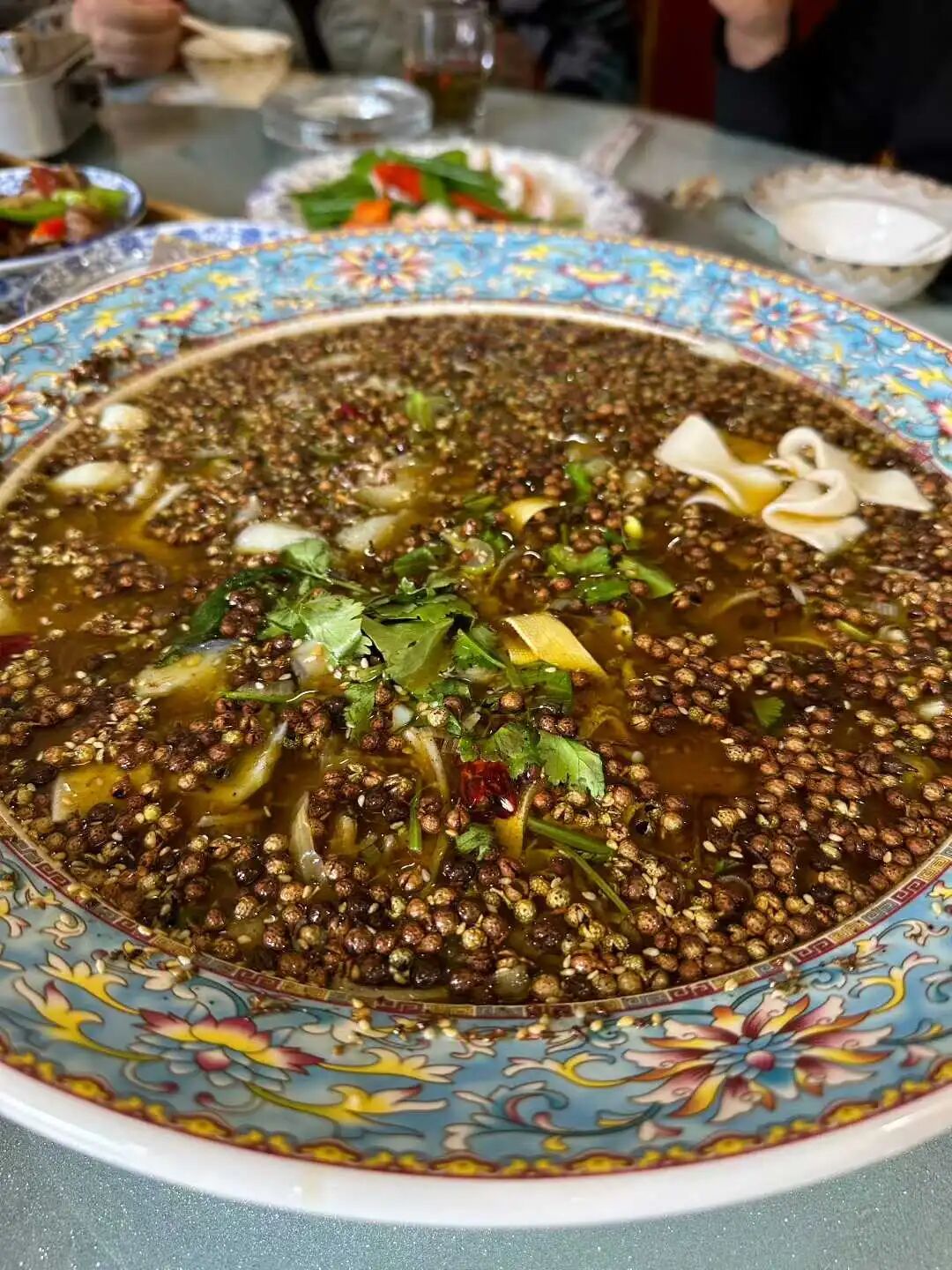
Summary: This short second part of the Urumqi Sha'ban travel note is primarily a photo continuation from the local Hui Muslim food and community visit. It preserves the source's image sequence and article structure without adding details that were not present in the Chinese source. view all
Summary: This short second part of the Urumqi Sha'ban travel note is primarily a photo continuation from the local Hui Muslim food and community visit. It preserves the source's image sequence and article structure without adding details that were not present in the Chinese source.
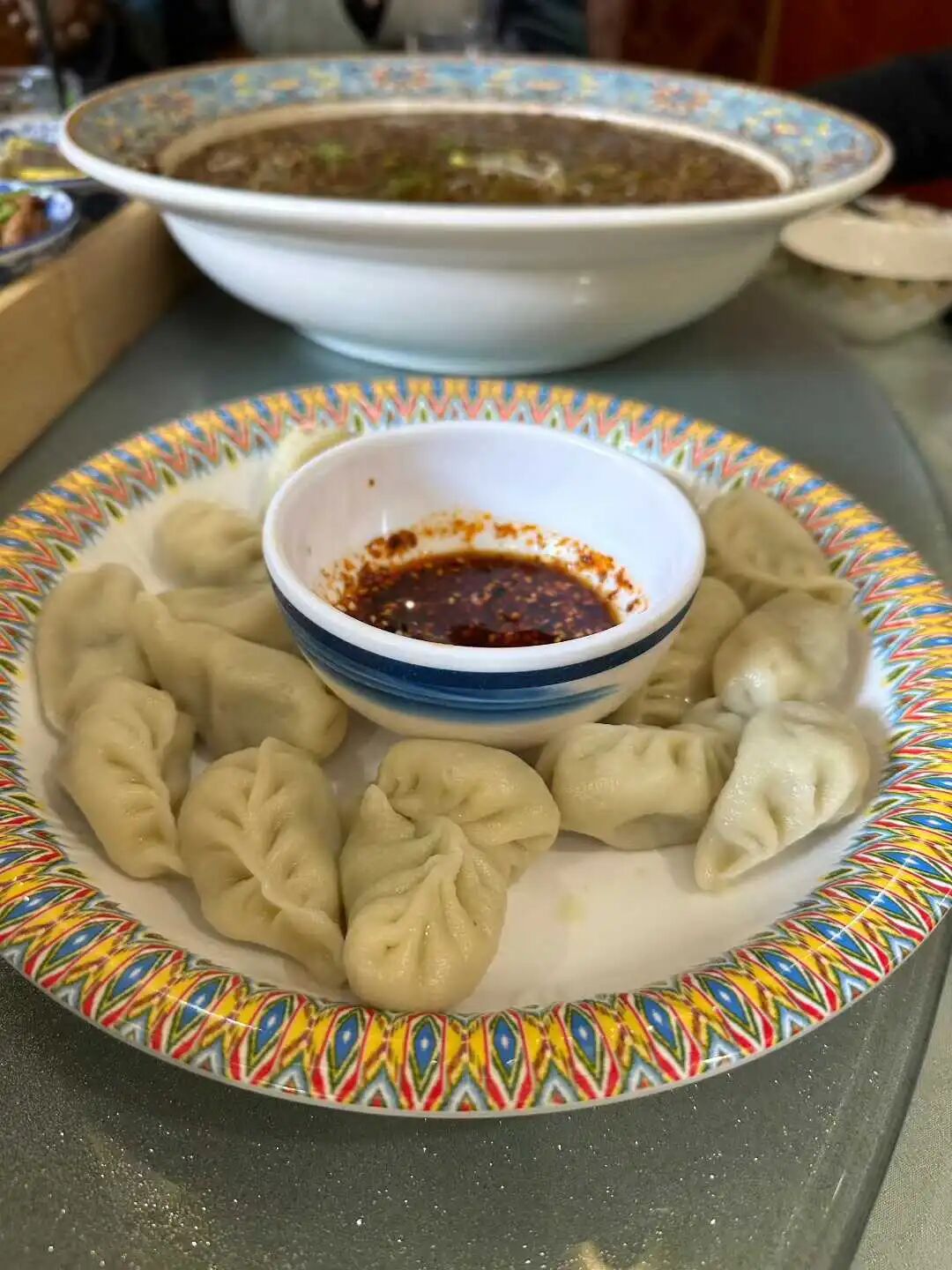
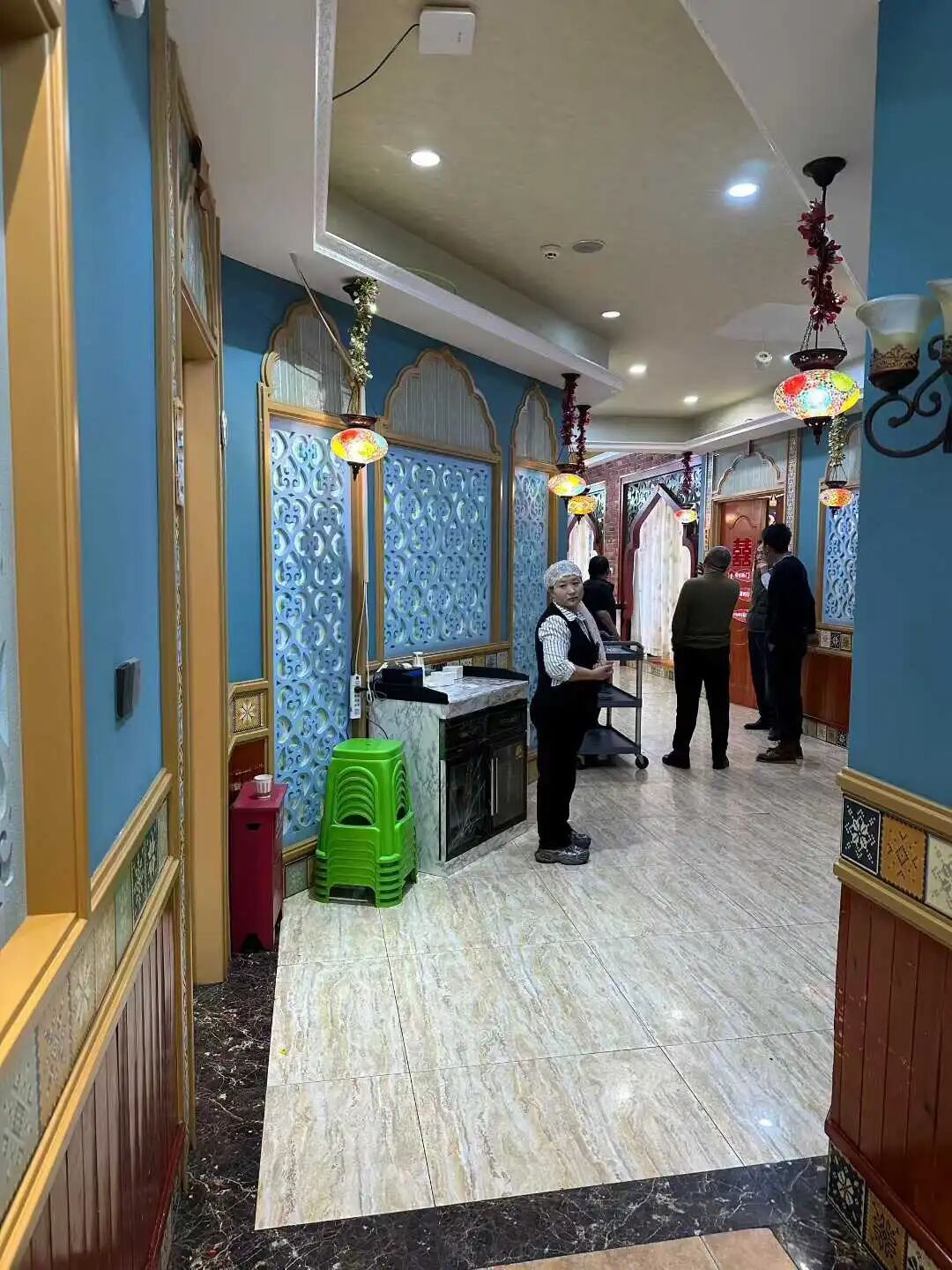
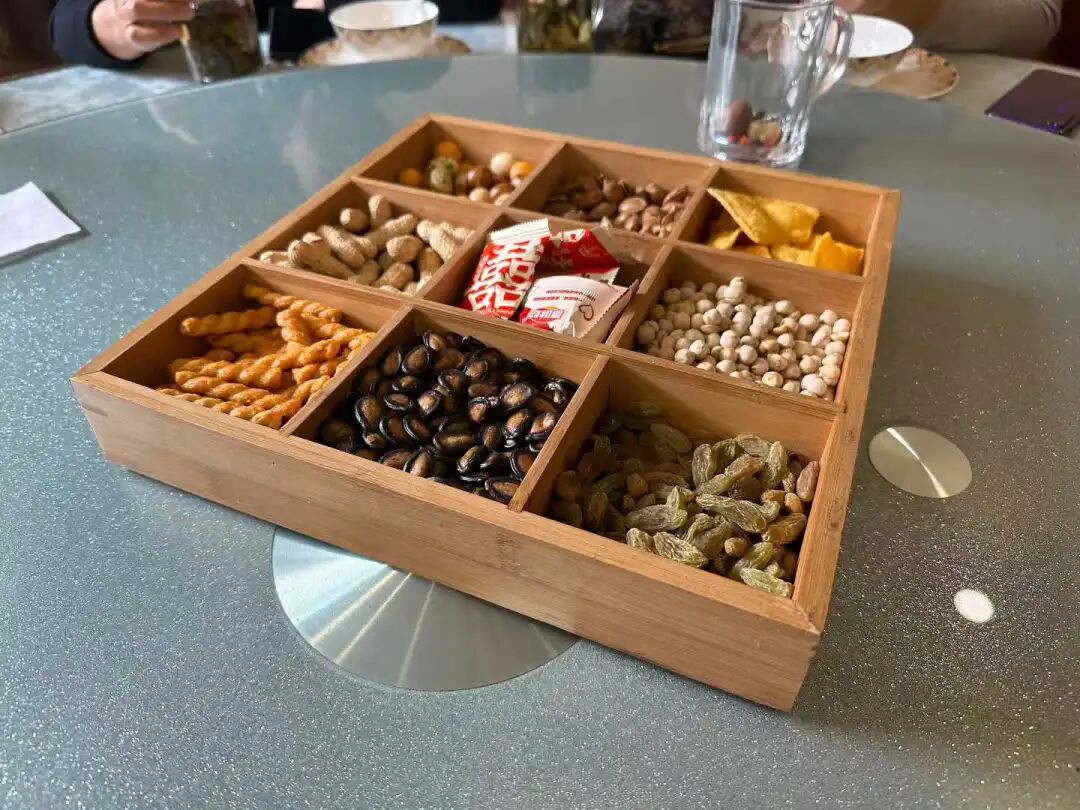
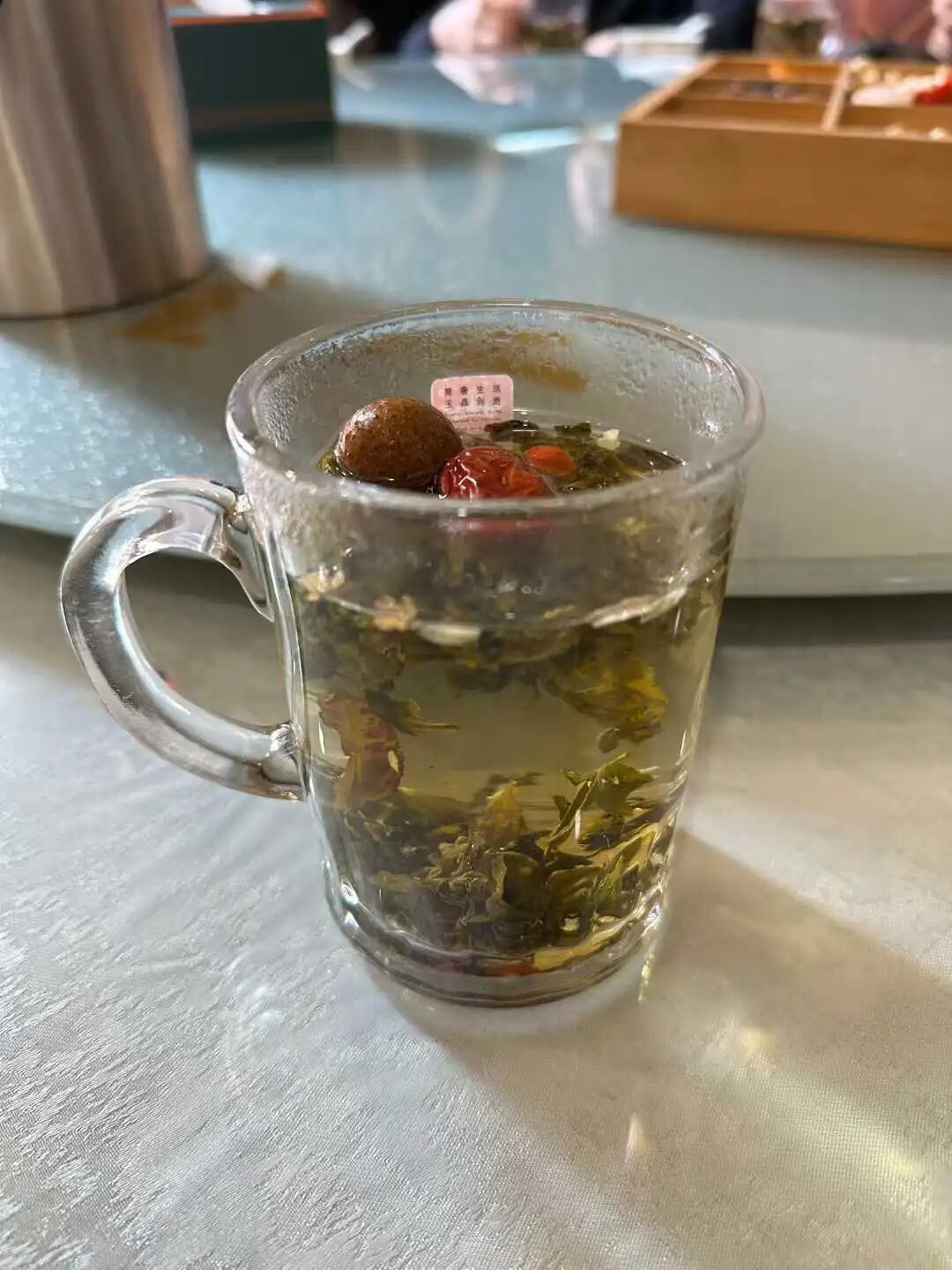
Halal Travel Guide: Urumqi — Twenty-Three Hui Muslim Neighborhoods & Local History
Articles • ali2007fr posted the article • 0 comments • 256 views • 2026-05-19 23:57
Summary: The Twenty-Three Hui Muslim Neighborhoods in Urumqi are tied to local Muslim settlement, street life, and Xinjiang urban history. This travel account preserves the original neighborhood names, routes, photos, and historical details in a long English article.
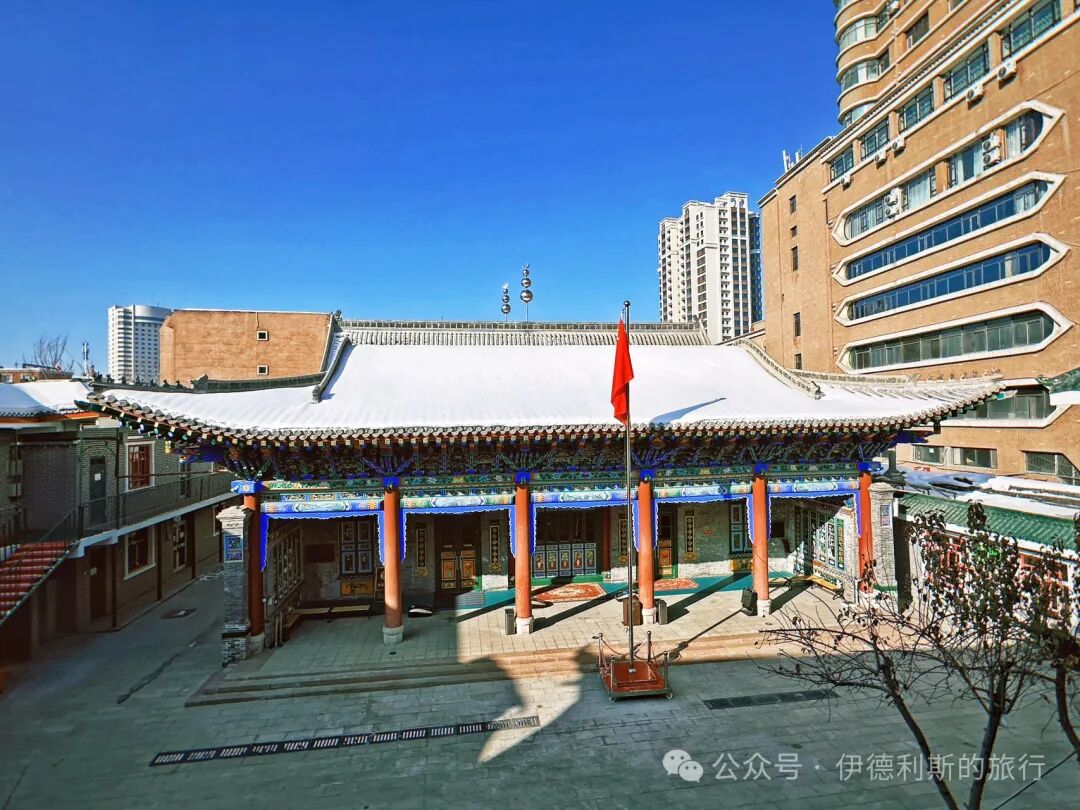
During the Qing Dynasty and the Republic of China era, Urumqi had twenty-two Hui Muslim mosques and one Salar mosque, collectively known as the twenty-three mosques of Dihua. In 1945, the twenty-three mosques unanimously elected the Grand Imam Ma Liangjun as the chief leader. He taught at the Shaanxi Grand Mosque (Shaanxi Dasi), where the imams from all twenty-three mosques came to listen to his lectures every day. Today, the Shaanxi Grand Mosque, Old Quarter Mosque (Laofang Si), South Grand Mosque (Nanda Si), and Kuanxiang Mosque (Kuanxiang Si) remain as historical buildings. Others, like the Toudaoxiang Mosque and the Inner City Mosque, have been demolished, while most others have been rebuilt as modern structures. I visited several of these during my Spring Festival trip back to Urumqi.
Old Quarter Mosque (Laofang Si)
After the Qing Dynasty built Dihua City in 1758, they promoted policies to station troops and encourage migration for border defense. Since then, Hui Muslims from Shaanxi have continuously moved to Urumqi to settle. In 1808 (the 12th year of the Jiaqing reign), Shaanxi Hui Muslims built the Shaanxi Mosque in the southern pass of Dihua. This was the second Hui mosque in Urumqi, following the North Beam Mosque (Beiliang Si).
After the Qing Dynasty recovered Urumqi in 1876 (the 2nd year of the Guangxu reign), they moved all Hui Muslims outside the city walls. The population at the Shaanxi Mosque grew significantly, so they rebuilt the main hall in 1877 (the 3rd year of the Guangxu reign). Later, other mosques for the Shaanxi community were formed, including the Fengxiang Mosque, West Grand Mosque (Xida Si), Binzhou Mosque, and Zhongying Palace Mosque. After the Toudaoxiang Shaanxi Grand Mosque finished its reconstruction in 1906, the original Shaanxi Mosque was renamed the Shaanxi Old Quarter Mosque, or Laofang Si for short. In 2003, the main hall of Laofang Si was listed as a municipal-level cultural relic protection site in Urumqi.
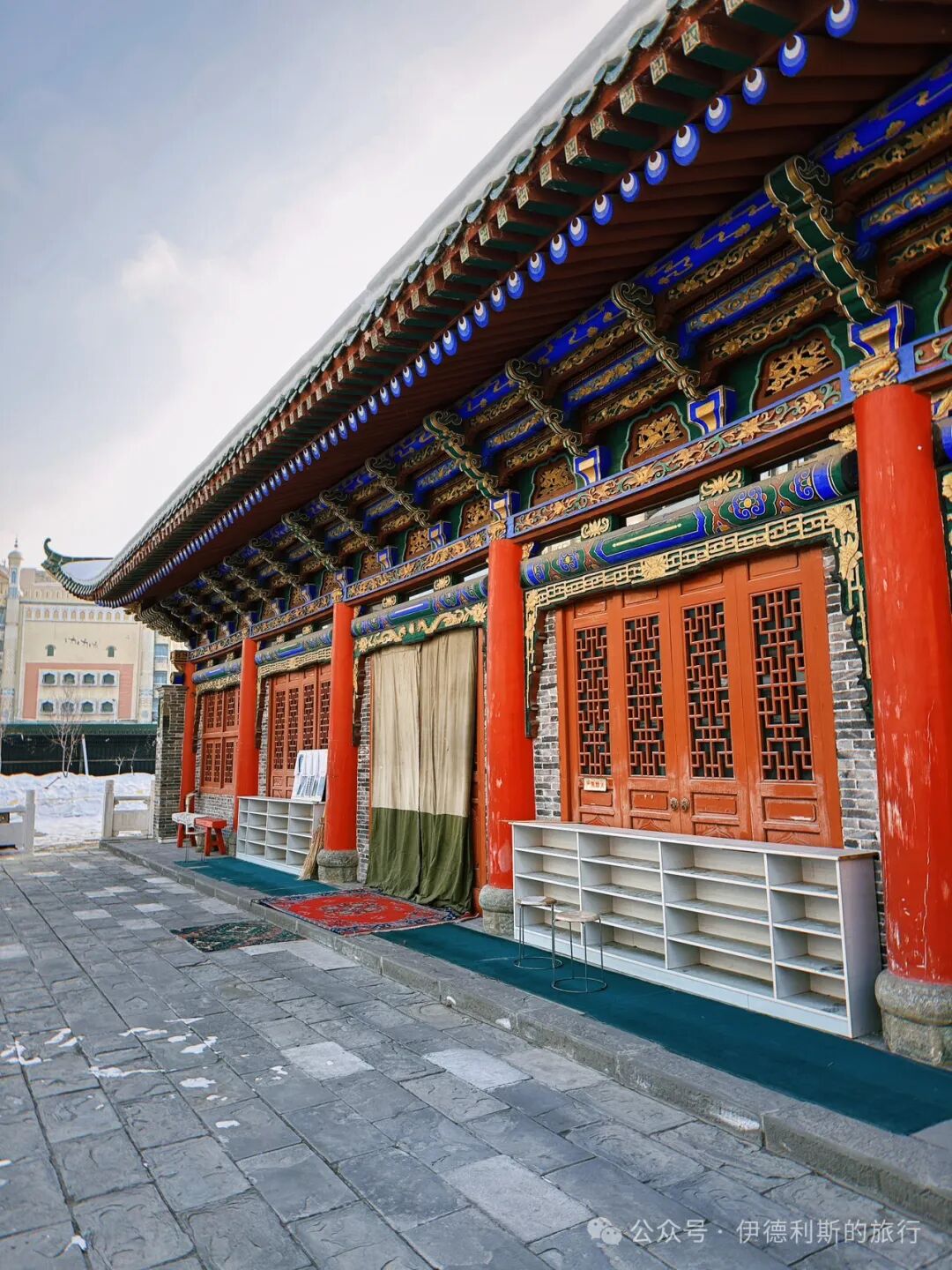
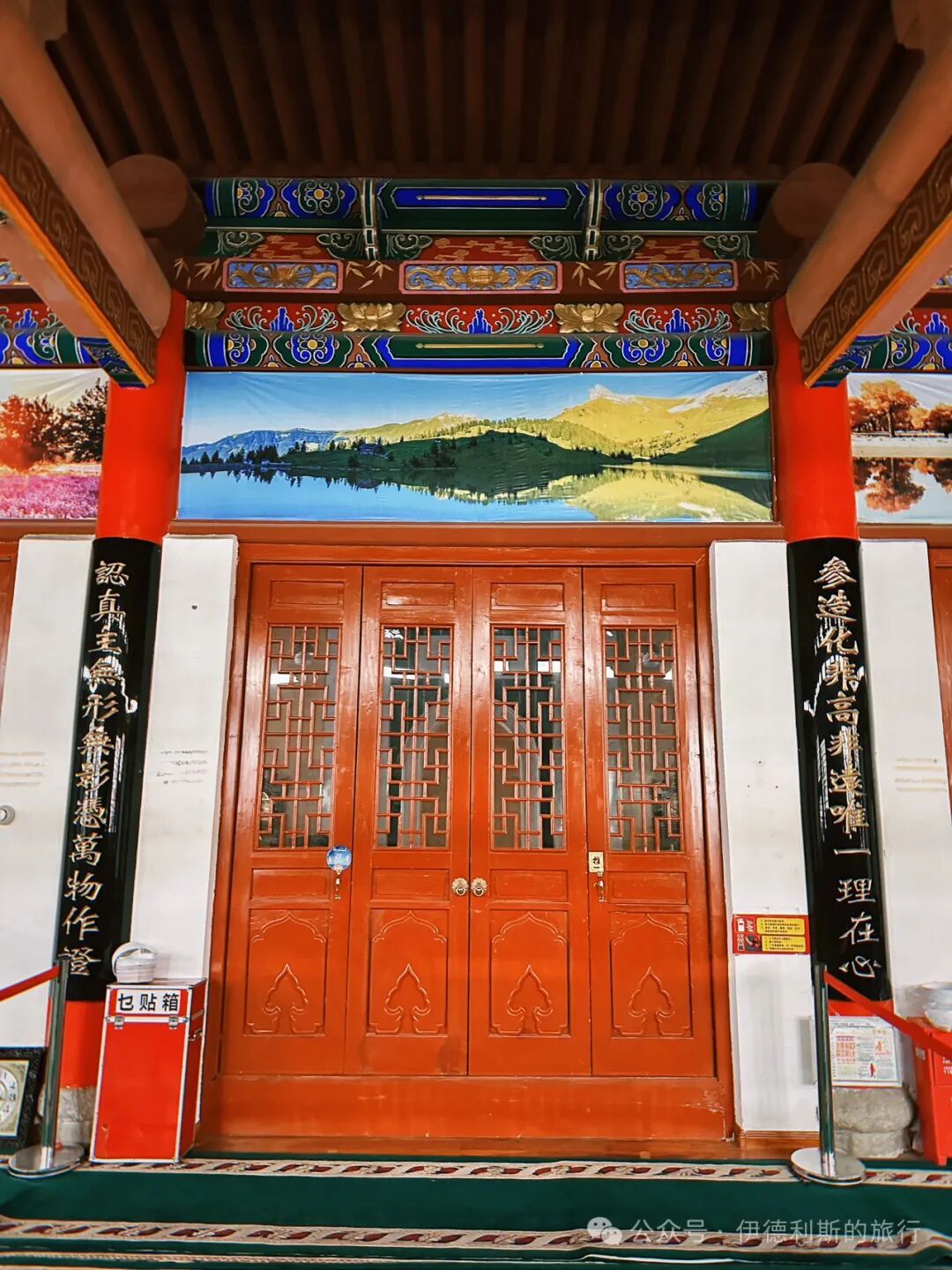
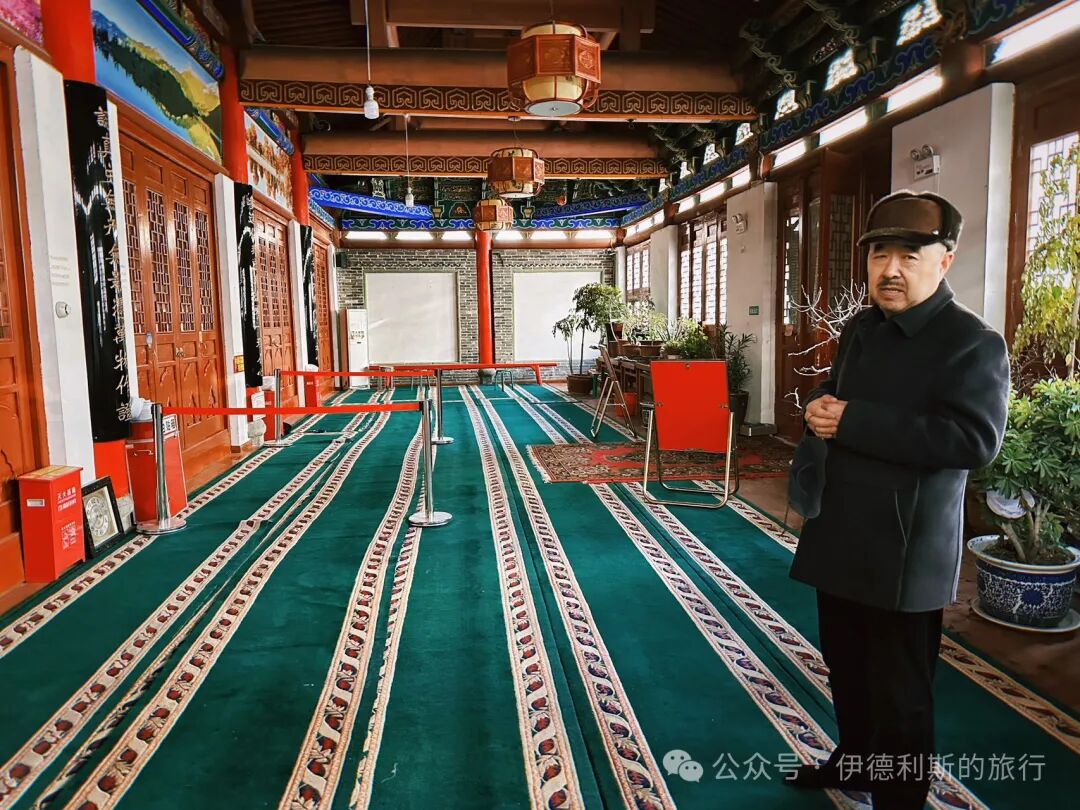
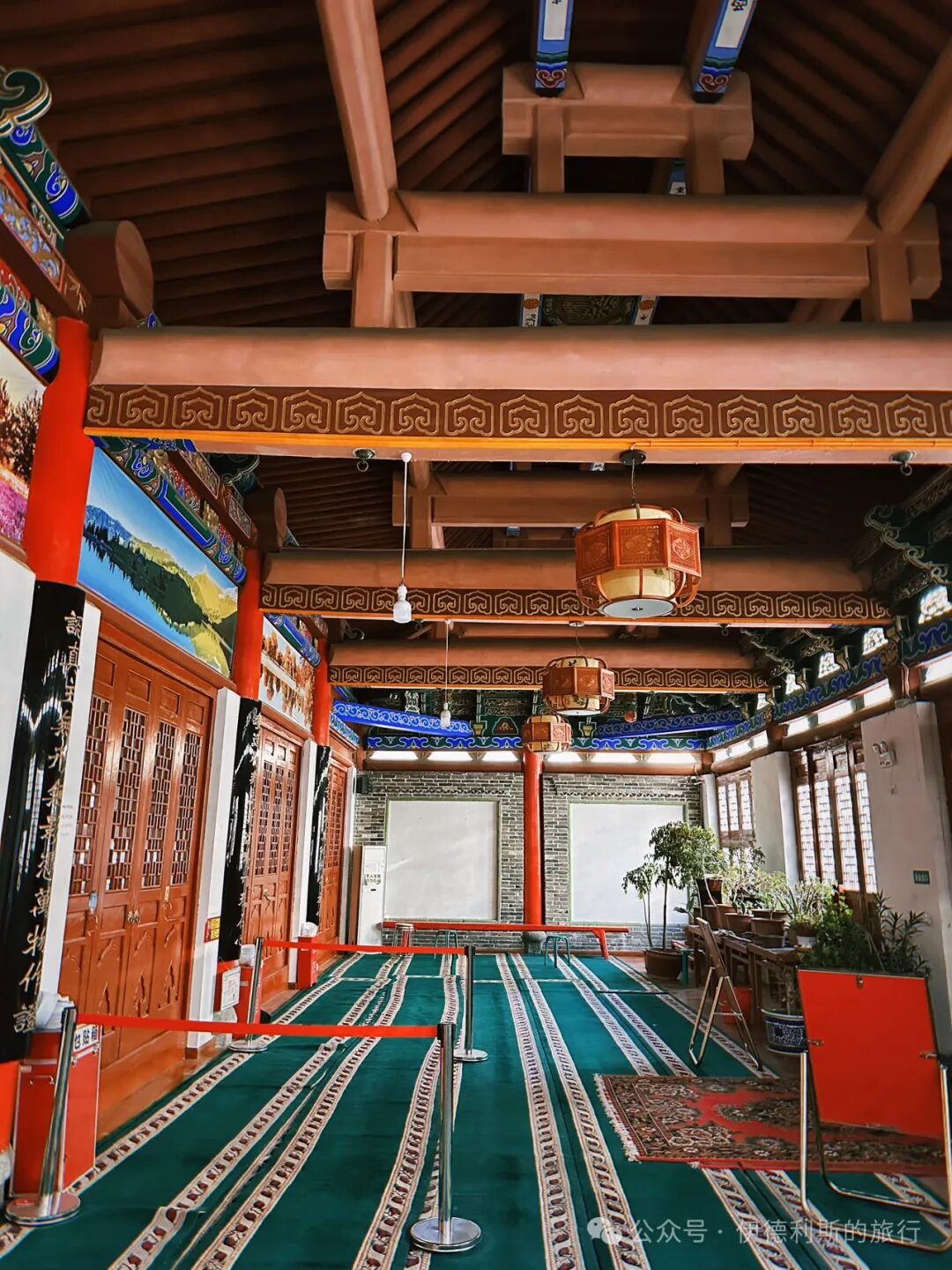
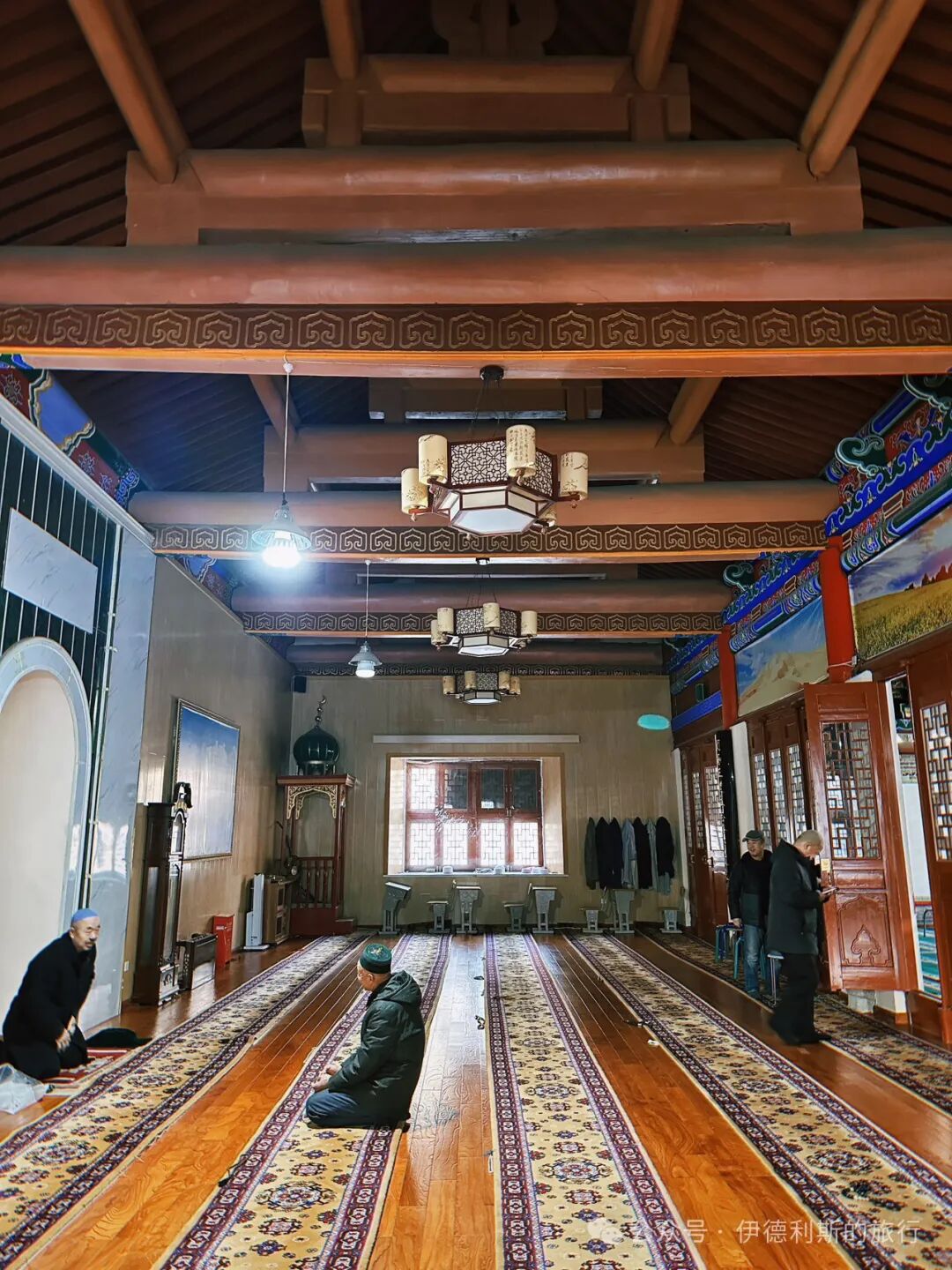
The front hall of Laofang Si has a hip-and-gable roof with a rolled shed, while the rear hall has a hard-gable roof. It underwent a major structural overhaul in 2014.
The rear hall of Laofang Si contains very precious Persian praise verses to Allah, but they are now completely covered by landscape paintings.
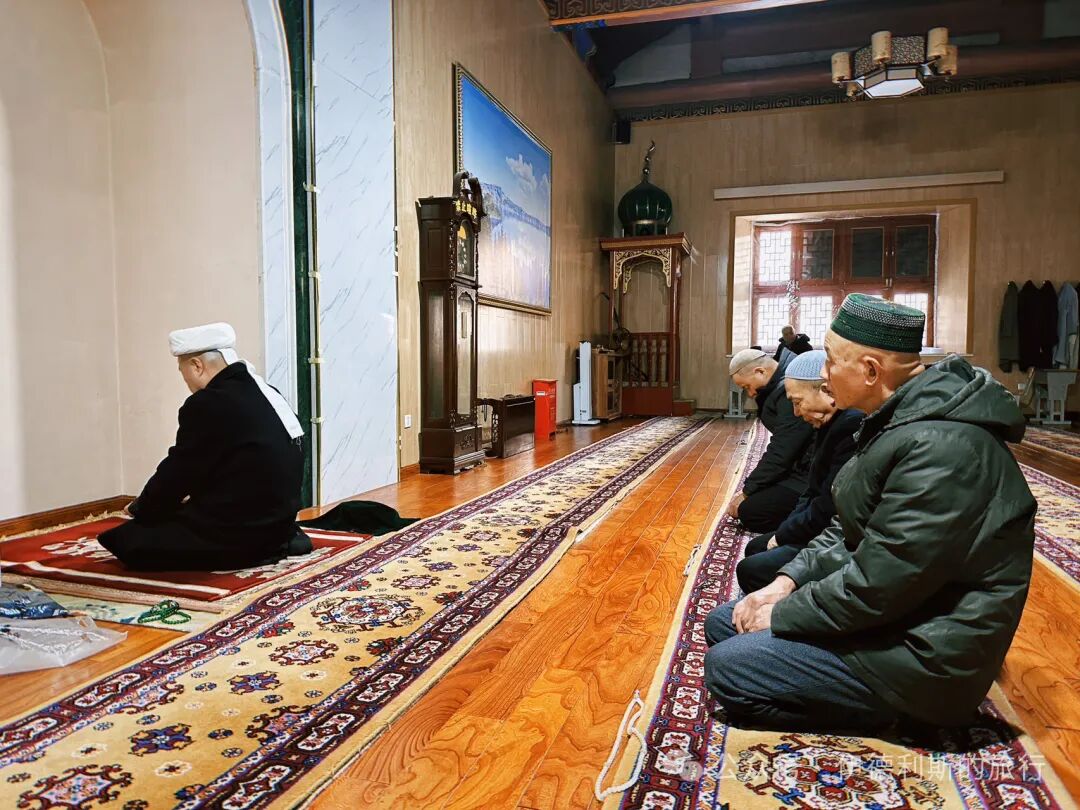
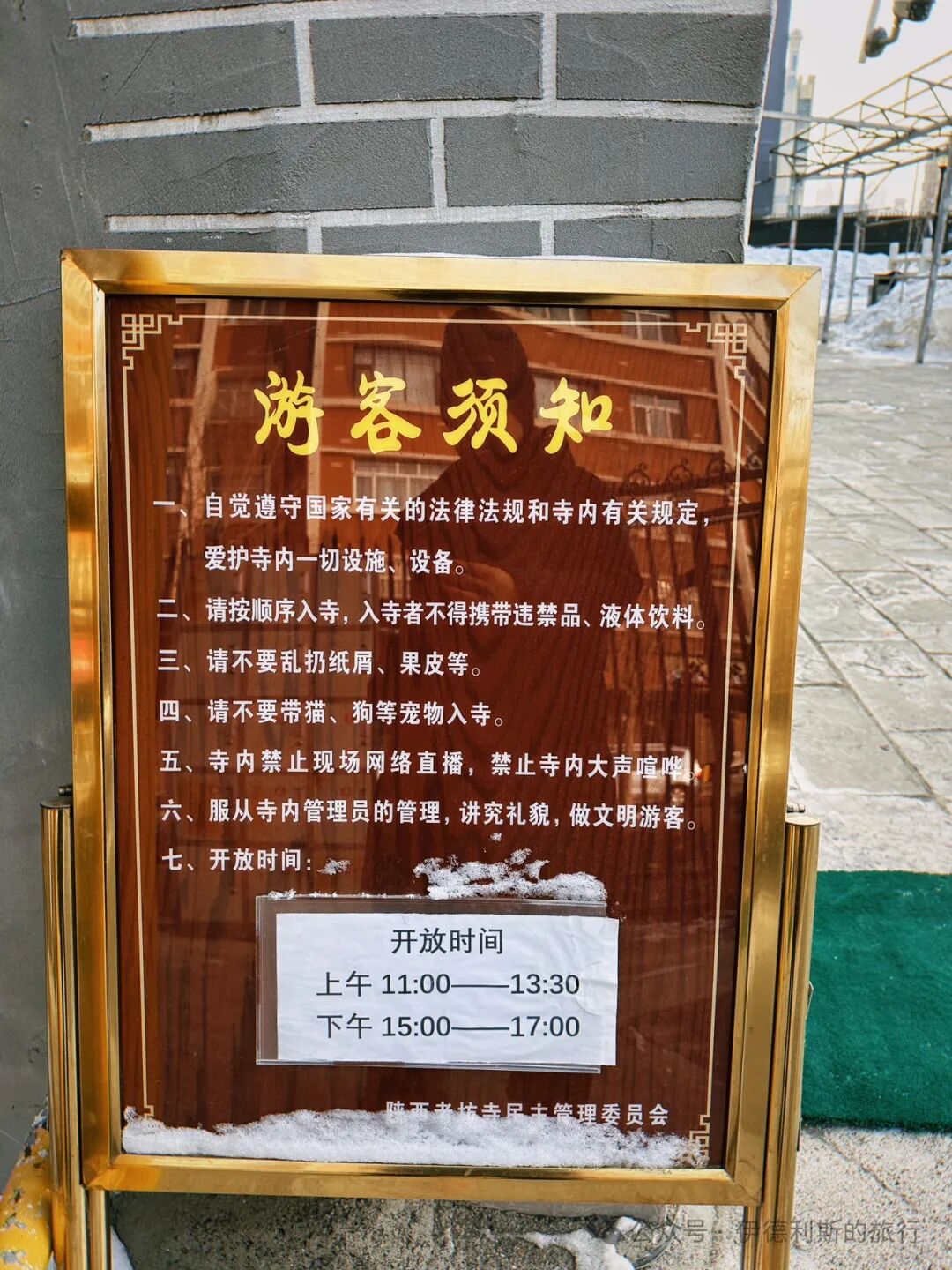
Laofang Si is open to tourists from 11:00 to 13:30 and 15:00 to 17:00. You can enter the front hall, but the rear hall is only open to the congregation for the five daily namaz prayers. Imam Ma at the mosque was very welcoming and explained the history of Laofang Si to me.
Shaanxi Grand Mosque (Shaanxi Dasi)
Shaanxi Grand Mosque was first built in 1883 (the 9th year of the Guangxu reign) with funds from Hui Muslims who came from the Wei River valley in Shaanxi's Guanzhong region. It is located on a slope south of Toudaoxiang, outside the south gate of Urumqi. As the number of Shaanxi Hui Muslims moving to Urumqi increased, the Shaanxi Mosque was rebuilt in 1902 (the 28th year of the Guangxu reign). The project took five years and was completed in 1906 (the 32nd year of the Guangxu reign). It was officially named the Shaanxi Grand Mosque and became the largest Hui mosque in Urumqi. It was listed as a major historical and cultural site protected at the national level in 2013.
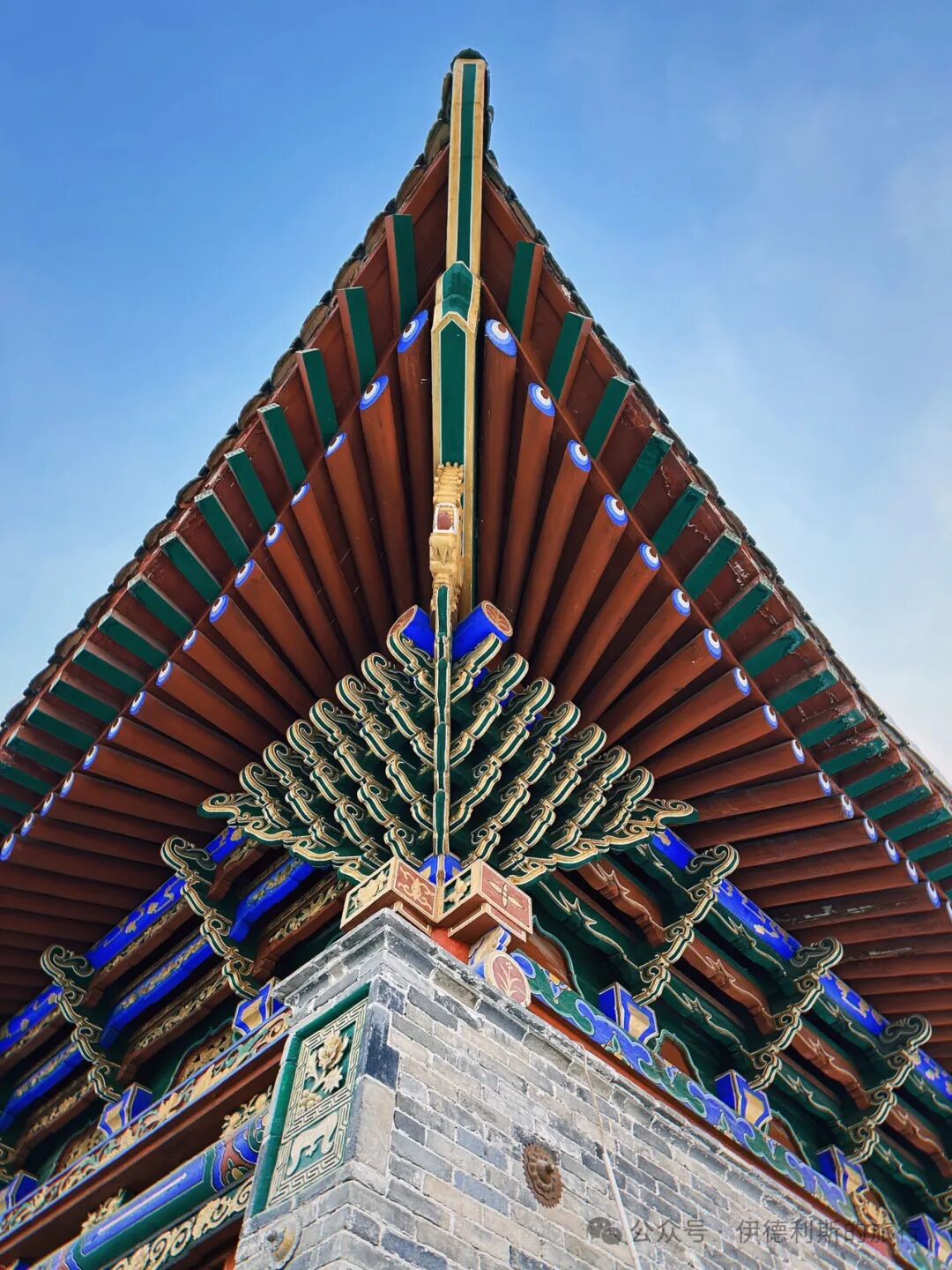
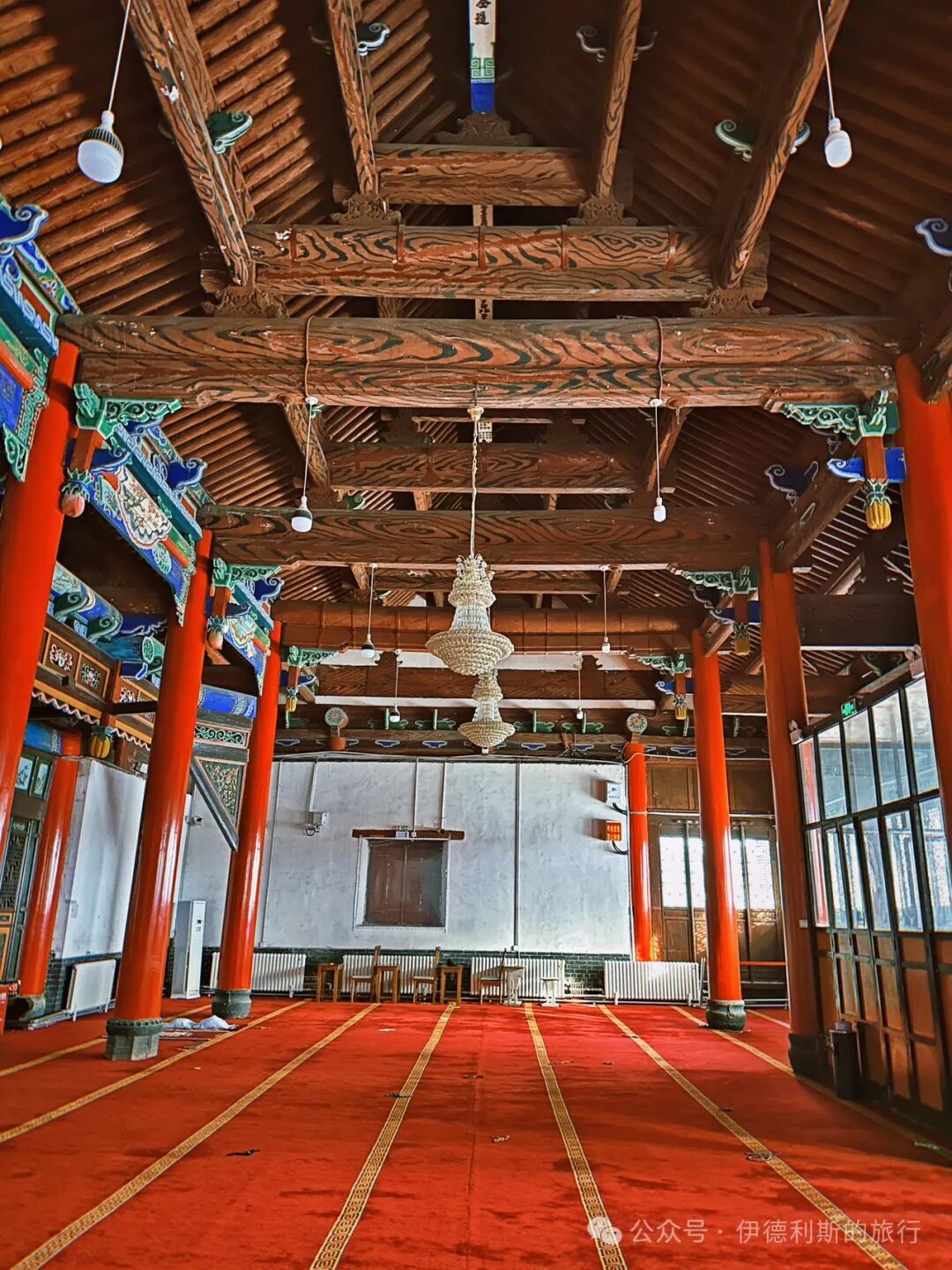
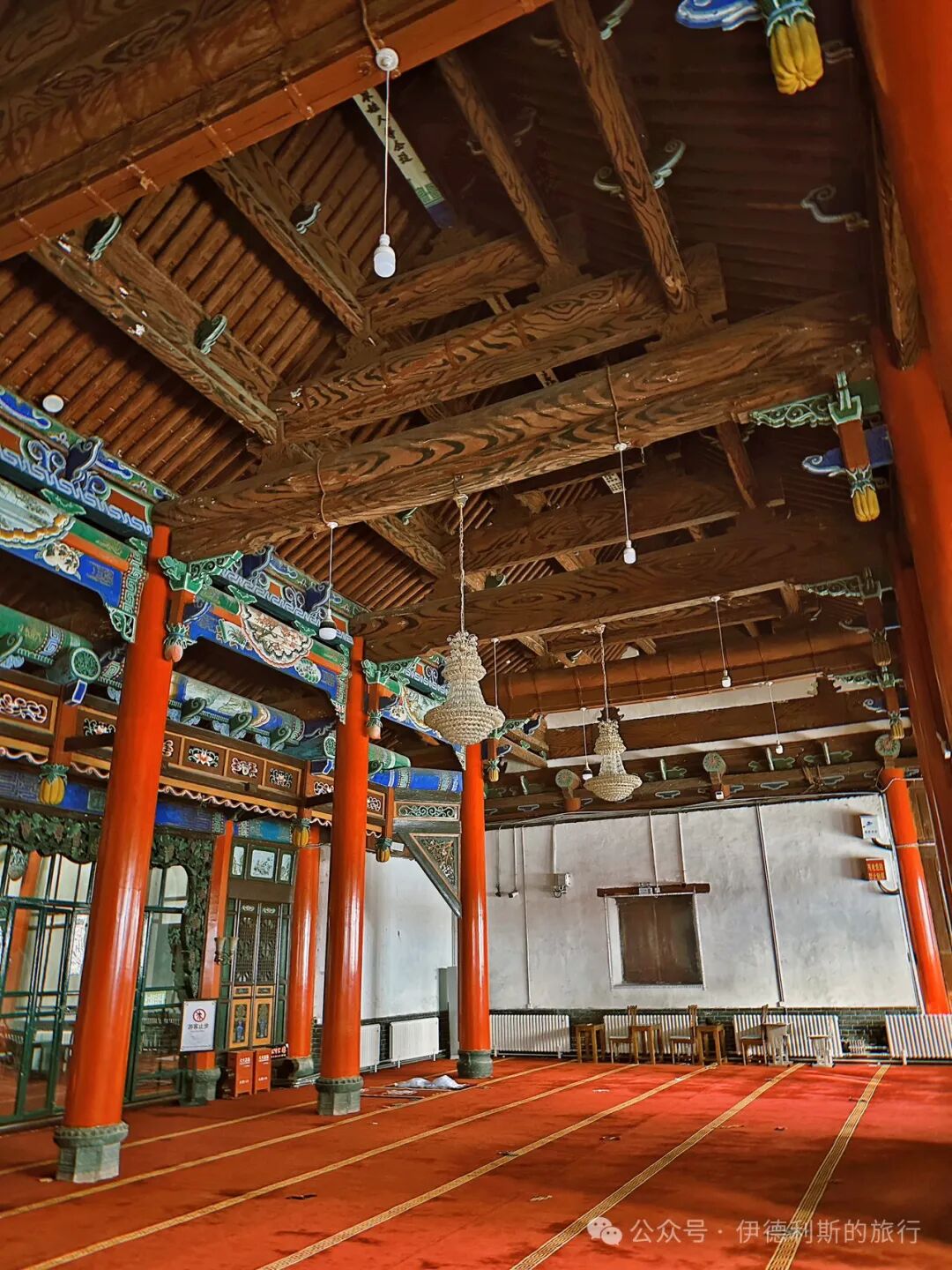
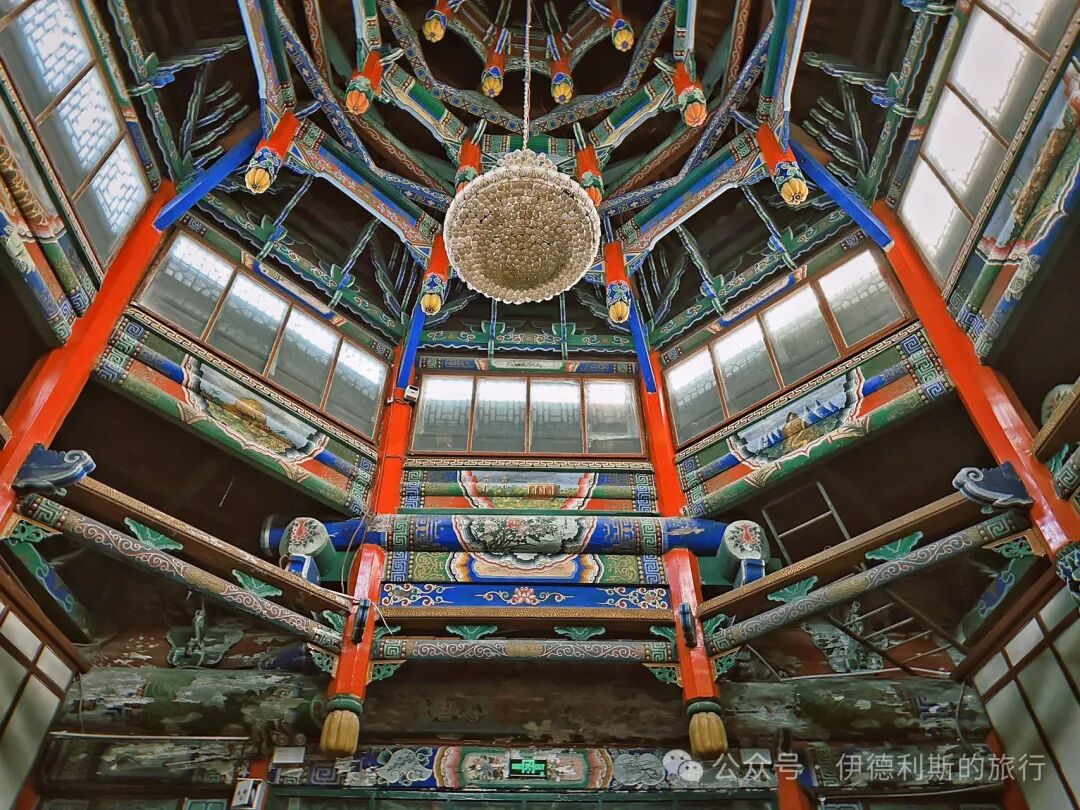
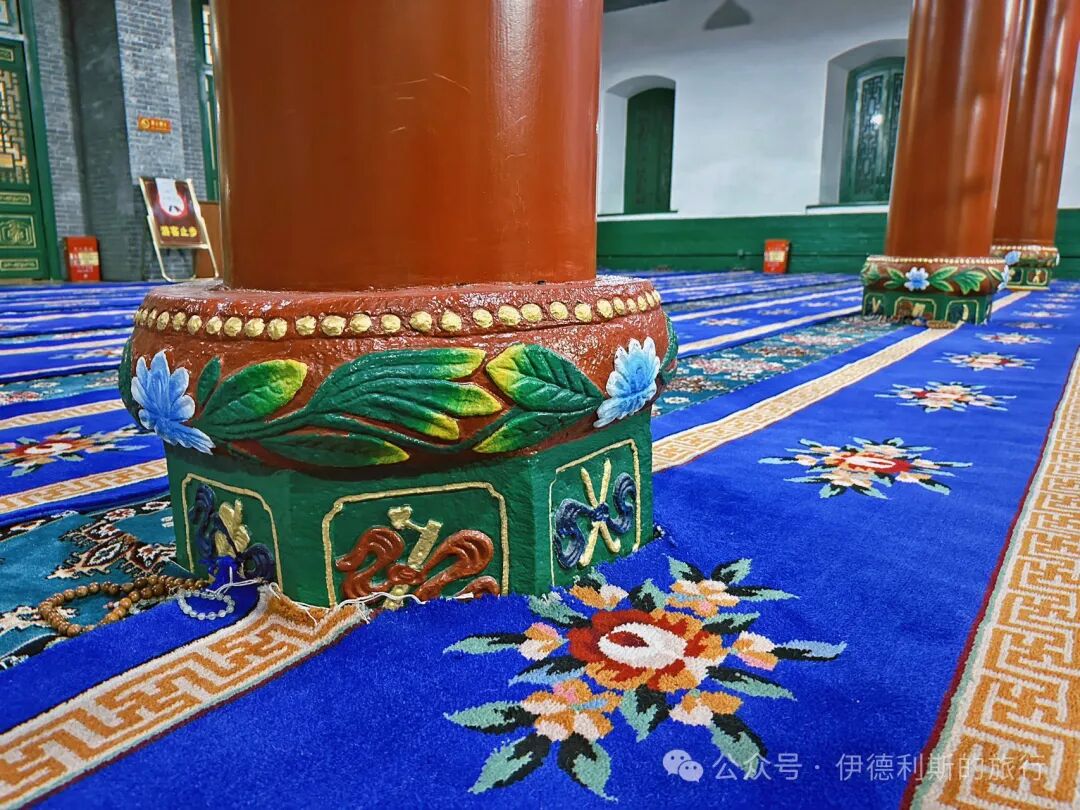
The Shaanxi Grand Mosque features traditional Guanzhong architectural style. The main hall has a single-eave hip-and-gable roof, and the rear kiln hall has a hip roof. The top features a very ornate moon-watching tower with an octagonal pointed roof. The main hall is surrounded by thirty-six pillars forming a corridor, with column bases carved with traditional patterns like the Eight Immortals. The walls, doors, windows, hanging pillars, and brackets feature exquisite brick and wood carvings, along with various flower and fruit patterns.
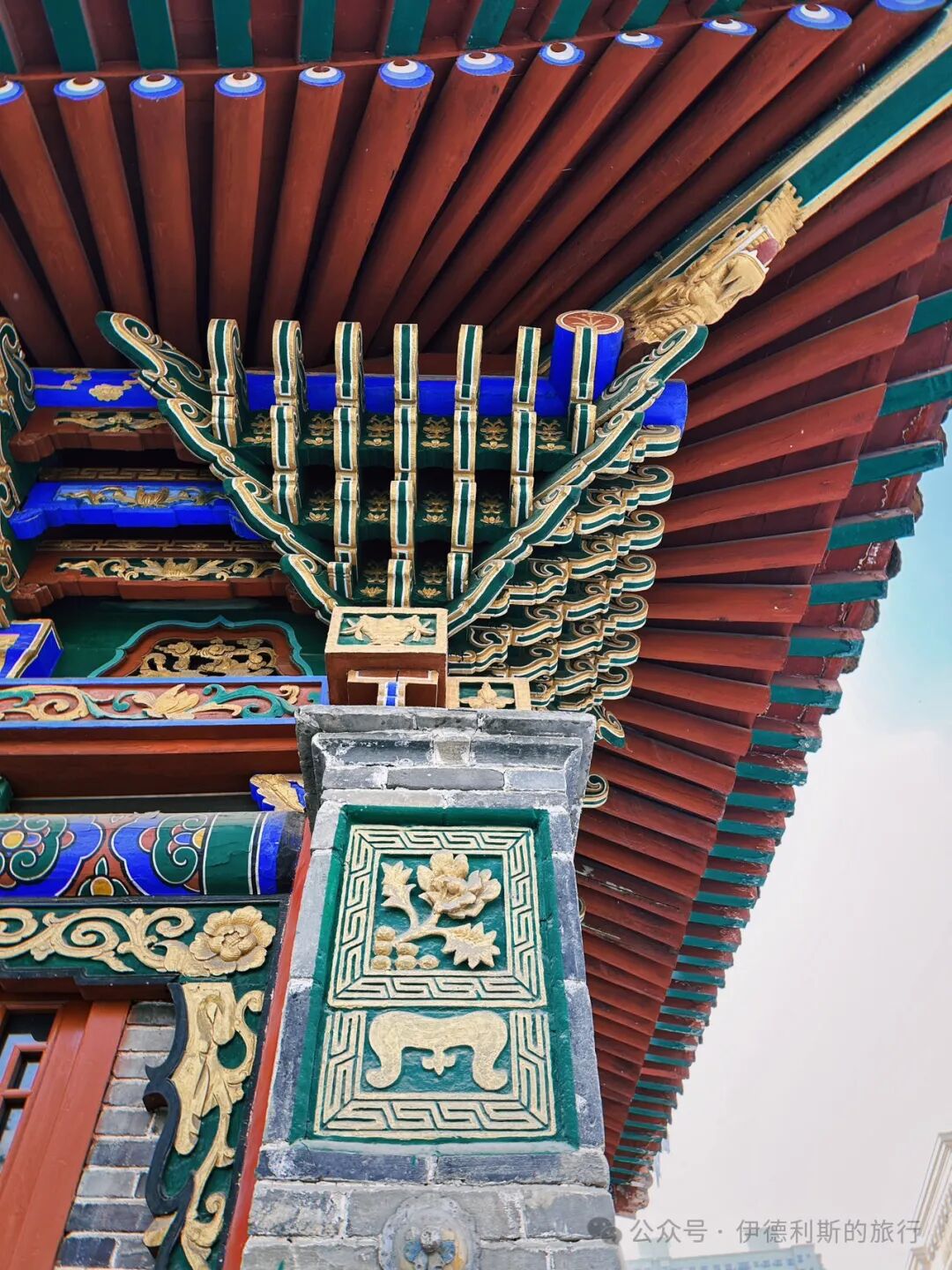
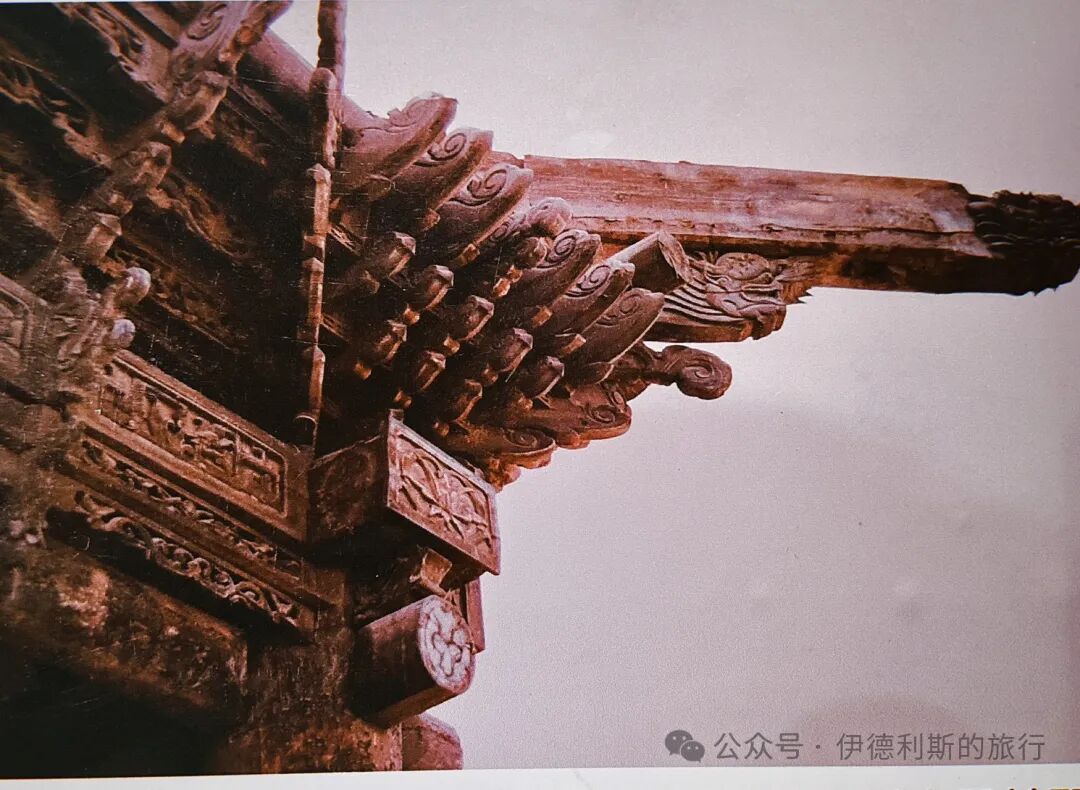
Under the eaves of the main hall, there is a decorative technique unique to Xinjiang called flower board stepping (huaban cai). This replaces traditional brackets with wooden boards carved with various patterns, such as dove heads, elephant heads, clouds, and peach designs, which are highly decorative.
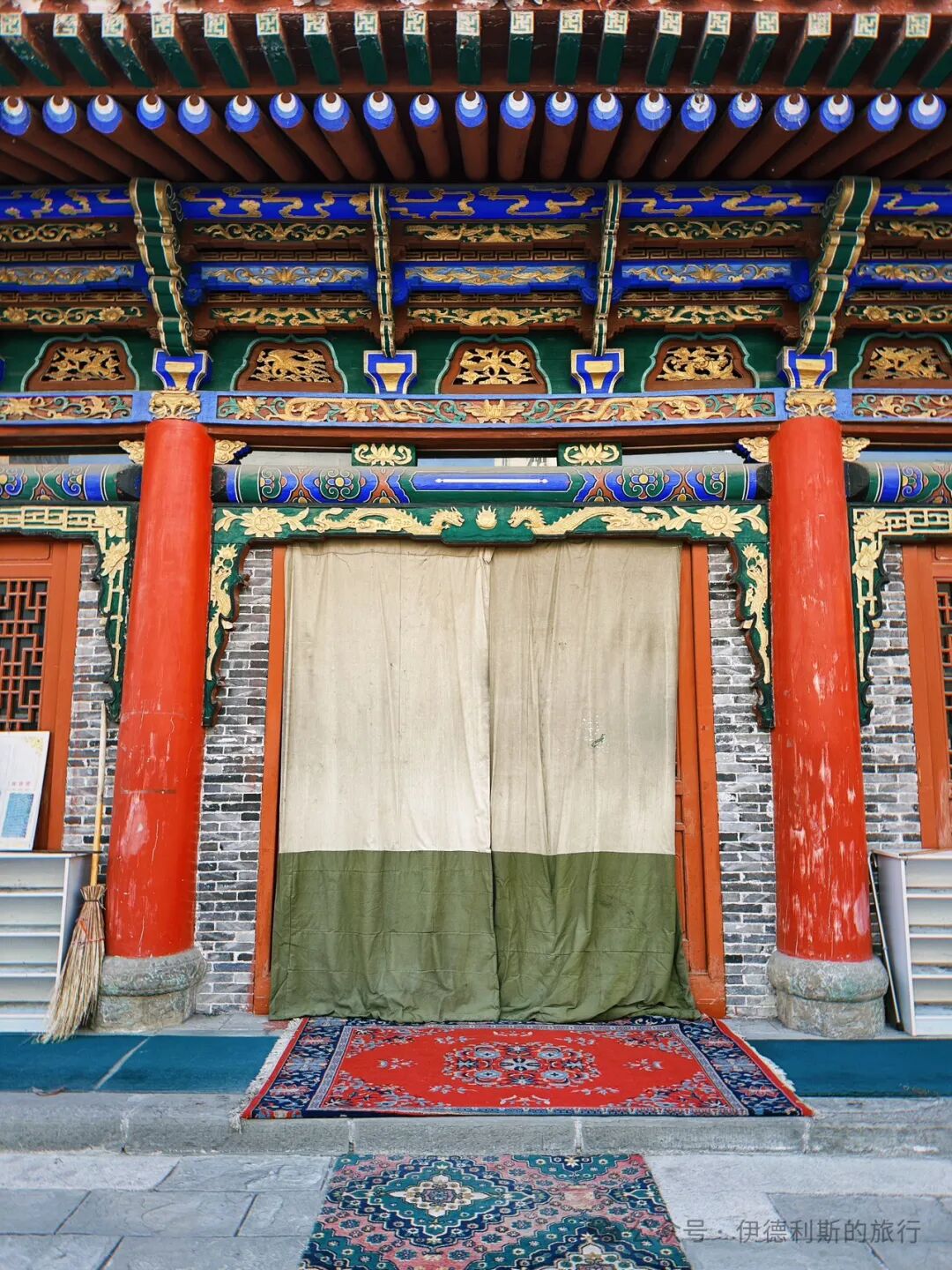
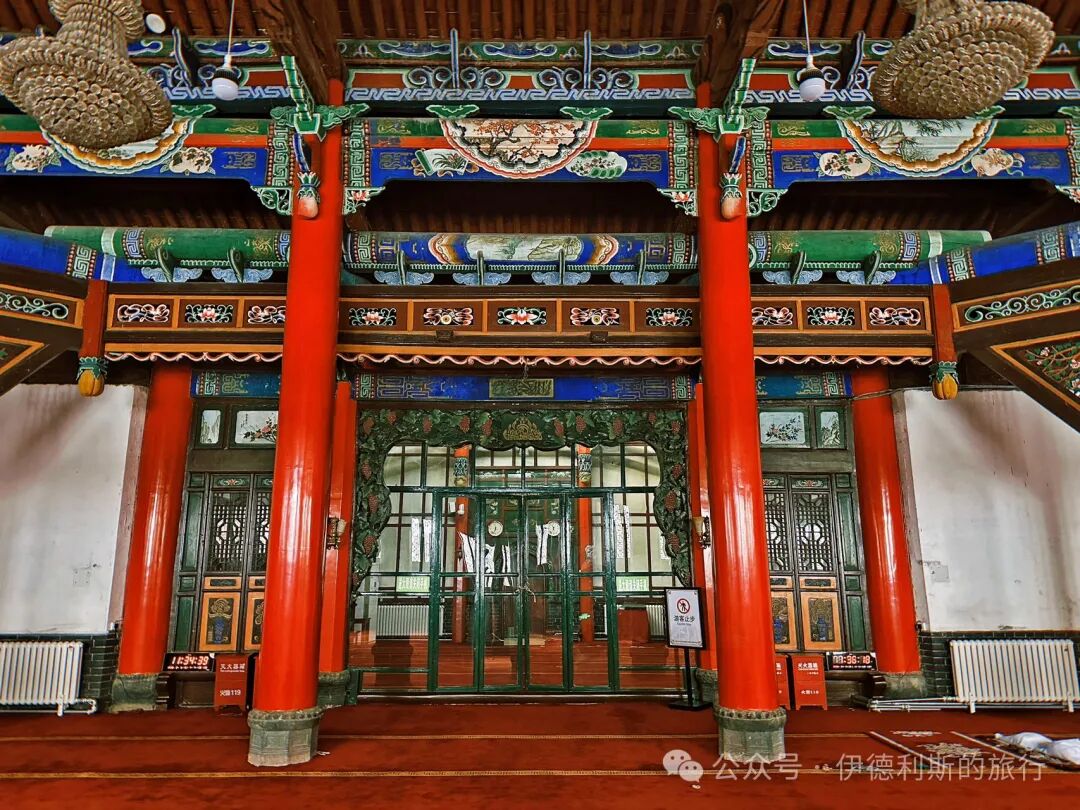
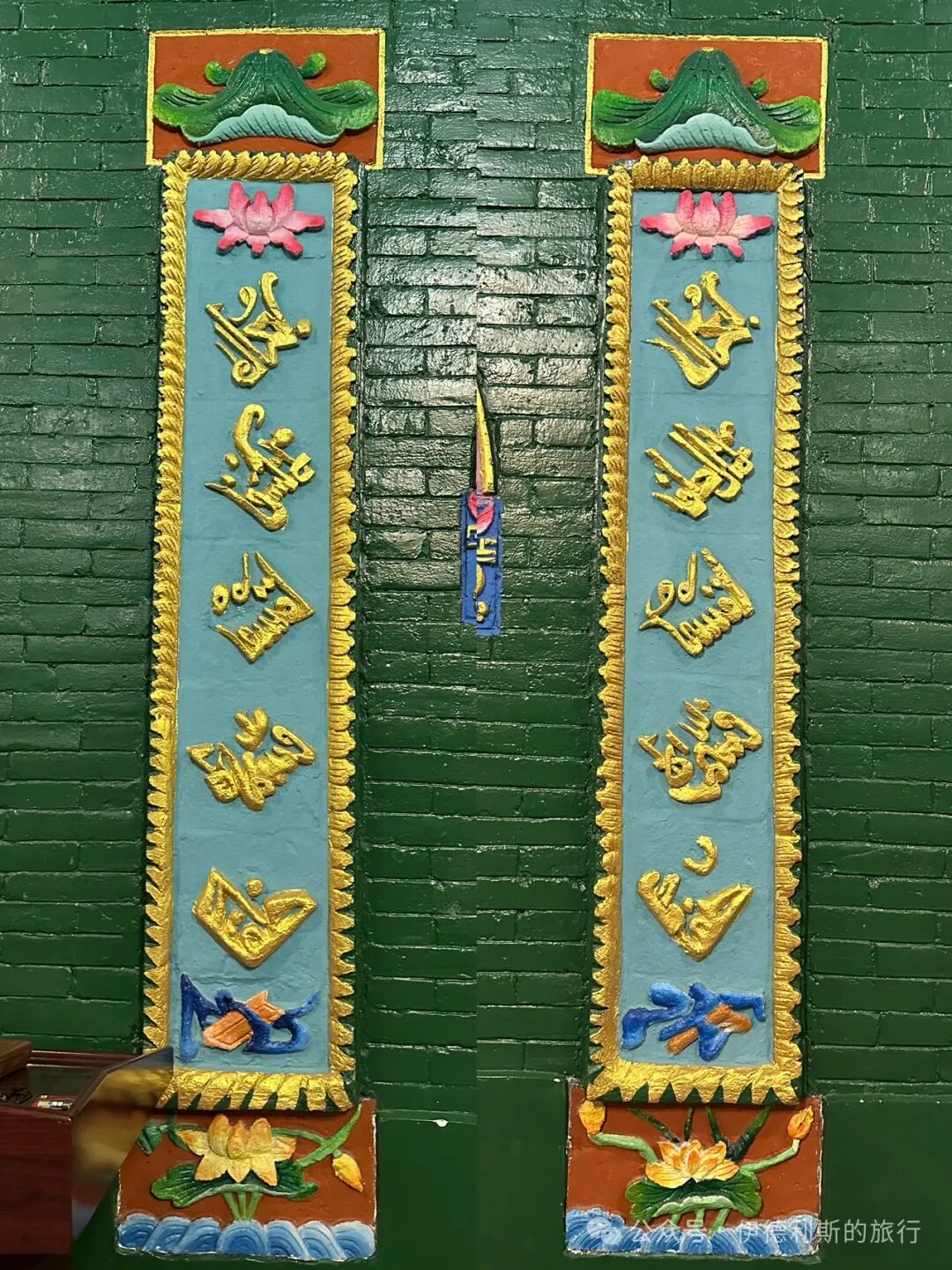
The facade of the main hall features beautiful Shaanxi-style Arabic calligraphy in stone and wood carvings. The stone calligraphy carvings are located on the gates on both sides of the rear kiln hall. Because they were covered with thick carpets to block the wind during winter, it was difficult to photograph the full view.
The main hall uses a traditional beam-lifting wooden frame. Between the main hall and the prayer niche (yaodian) stands a wooden screen carved with intertwined grape vines. It features traditional Arabic calligraphy in the center, and the Shahada is cleverly written above it in the shape of tree roots.
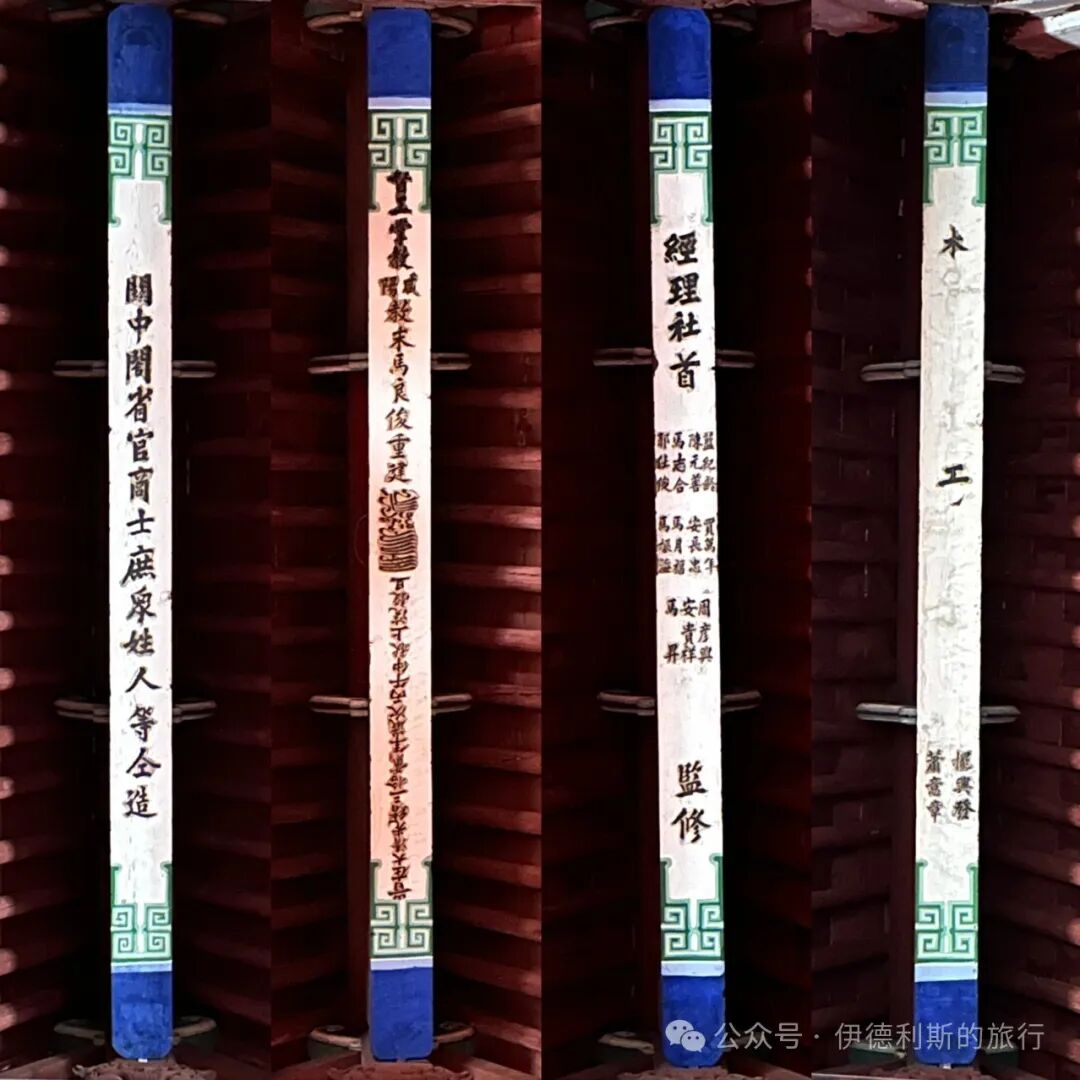
An inscription on the main hall roof reads: Built by the collective efforts of officials, merchants, scholars, and commoners from all provinces in Guanzhong. Rebuilt under the supervision of Imam Ma Liangjun, the head of the mosque in Xianyang. Completed on an auspicious day in the middle of the seventh lunar month in the 32nd year of the Guangxu reign of the Qing Dynasty. Managed by community leaders Lan Jiling, Chen Yuanshan, Ma Zhihe, Guo Shijun, Mai Wannian, An Changzhong, Ma Yuefu, Ma Zhenhai, Zhou Yanxing, An Guixiang, and Ma Sheng, with carpenters Bai Xingfa and Xiao Yizhang.
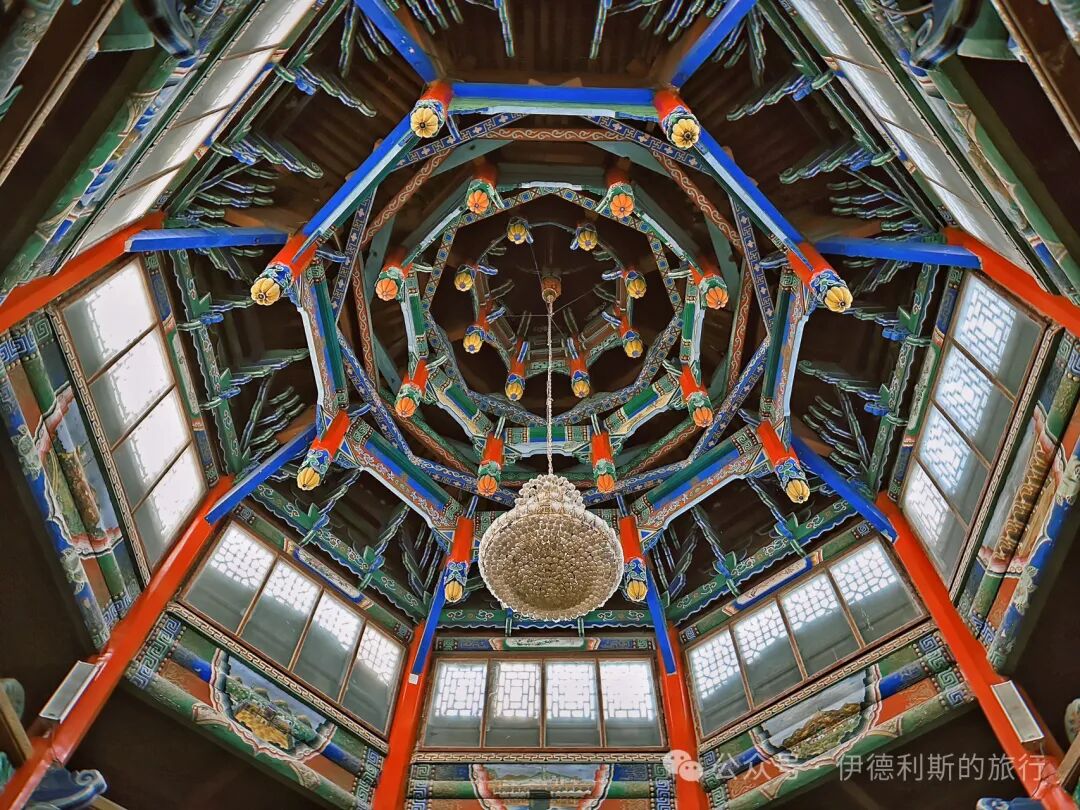
The prayer niche ceiling features an exquisite caisson (zaojing) made of three layers of hanging lotus-style wooden components.
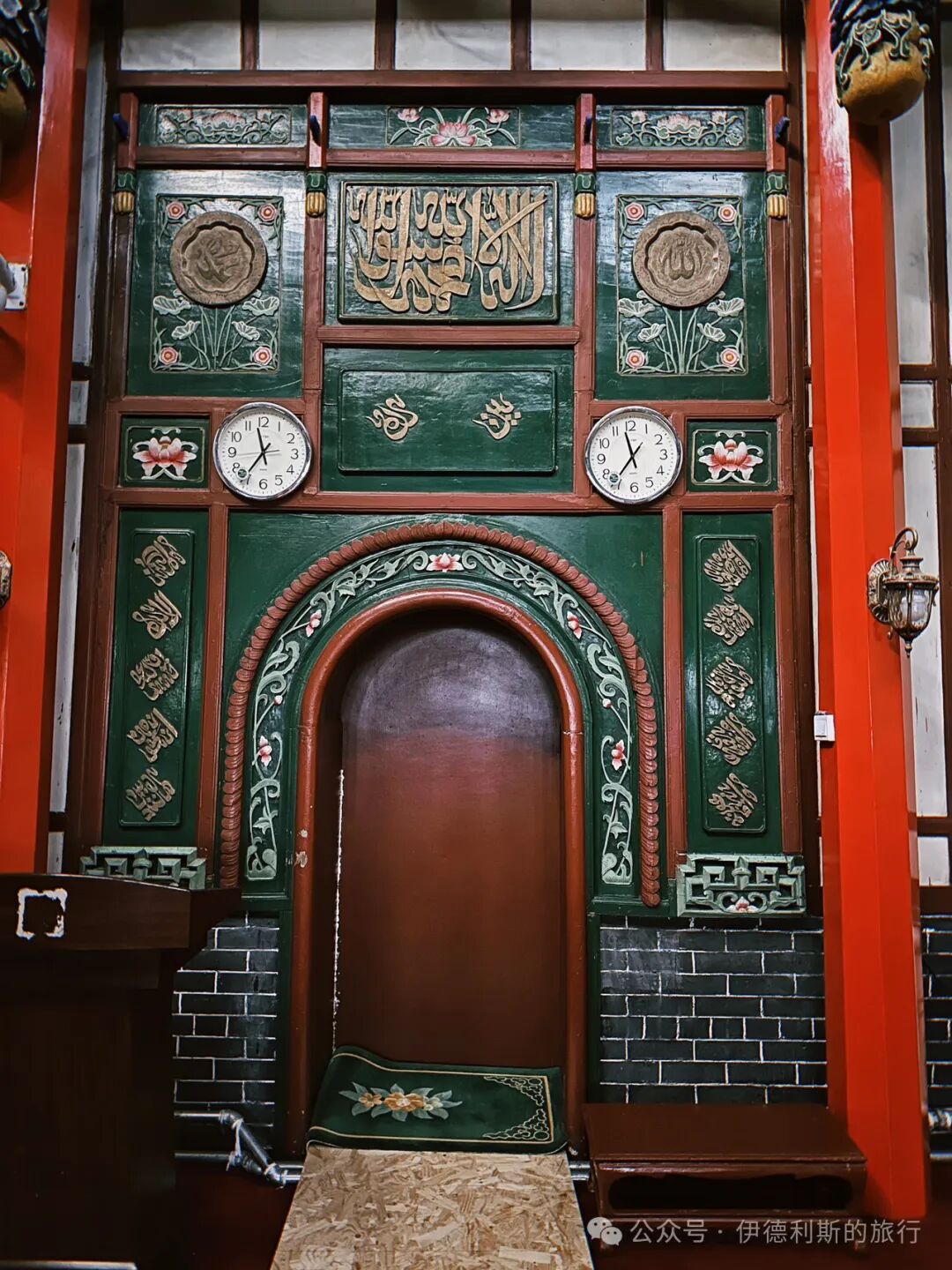
The prayer niche contains Arabic calligraphy, and both the mihrab and the two side doors feature traditional Shaanxi-style wood-carved calligraphy.
Shaanxi Grand Mosque is now open to visitors daily from 11:00-13:00 and 15:00-17:00. The main hall is unlocked, and there are two exhibition halls to explore.
The exhibition halls display architectural parts from the Shaanxi Grand Mosque, antique porcelain, and a century-old carpet decorated with various antique patterns and floral designs.
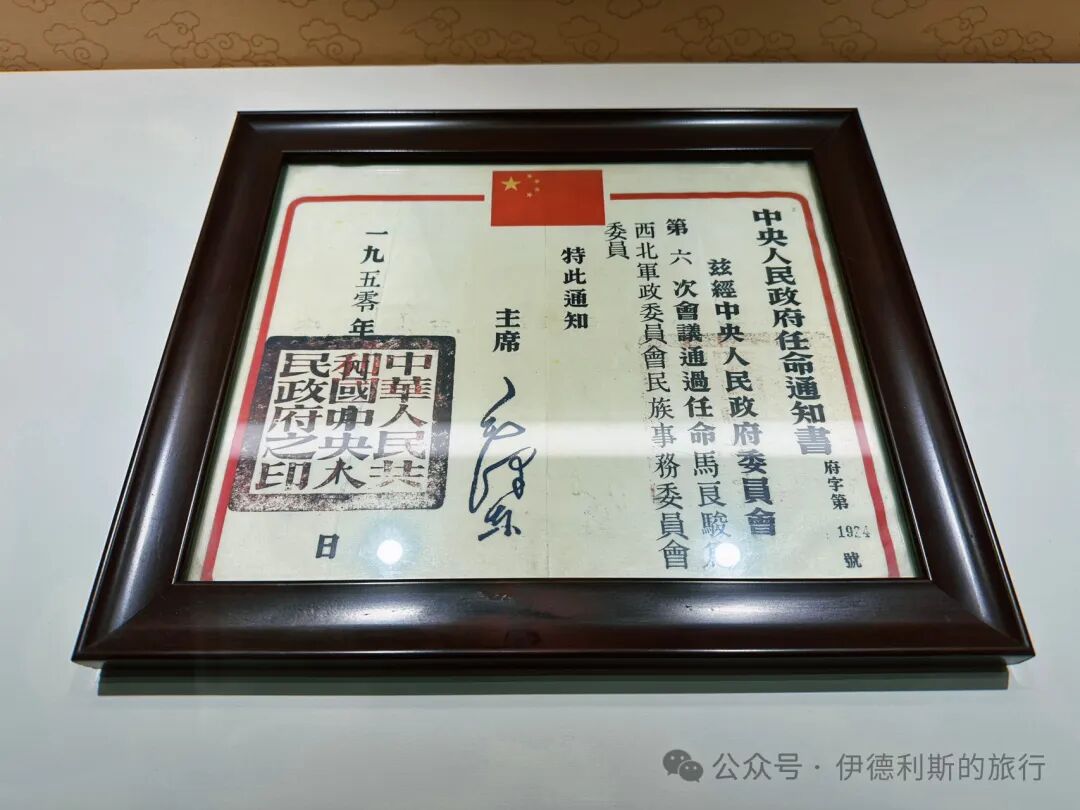
Exhibits include ox and sheep bone tablets used by students (mulla) for learning, works by the great Imam Ma Liangjun, and a 1950 notice appointing him as a member of the Northwest Military and Political Commission's Ethnic Affairs Committee.
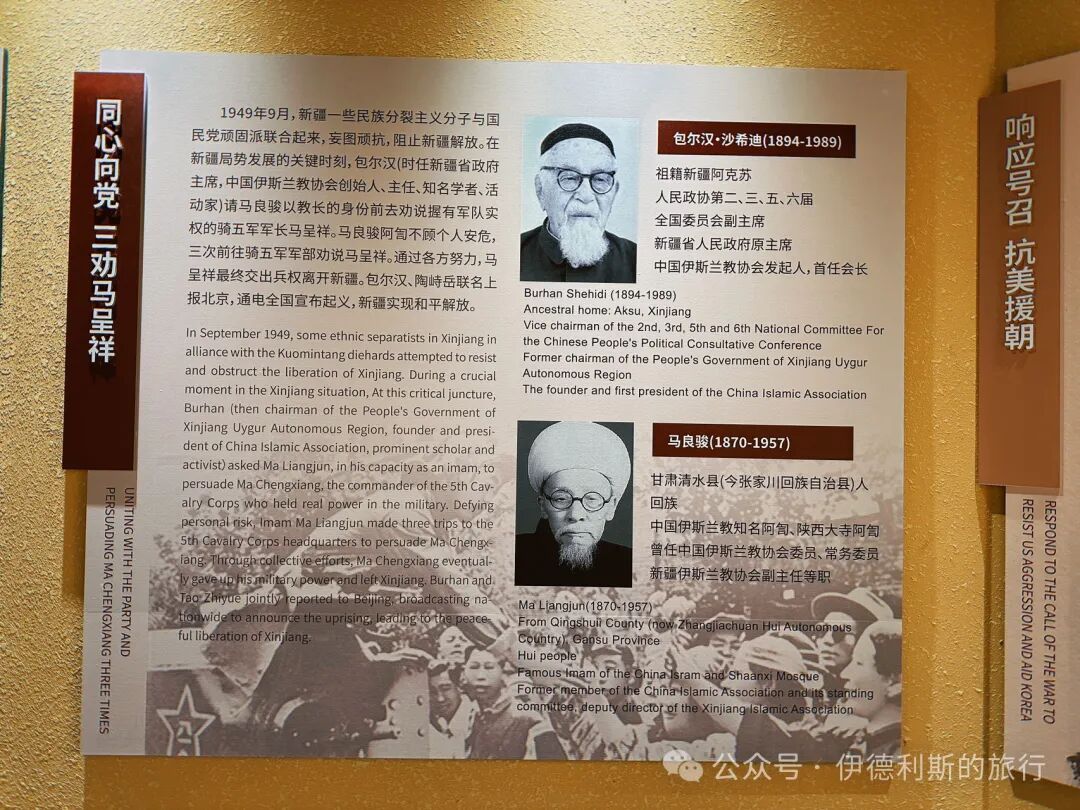
Great Imam Ma Liangjun was born in Zhangjiachuan, Gansu. As a young man, he traveled to Yunnan and received authentic teachings from Imam Ma Renshan (Pu'er Ma). He later went to Pingliang, Gansu, to teach and became a famous scholar of the Shaanxi school of mosque education. In 1913, Great Imam Ma Liangjun was hired to lead the Shaanxi Grand Mosque. Later, he served at several mosques in Xinjiang and trained many students. As Xinjiang approached peaceful liberation in 1949, Great Imam Ma Liangjun traveled three times to persuade Ma Chengxiang, the commander of the 5th Cavalry Division who held military power, eventually convincing him to surrender his command and leave Xinjiang.
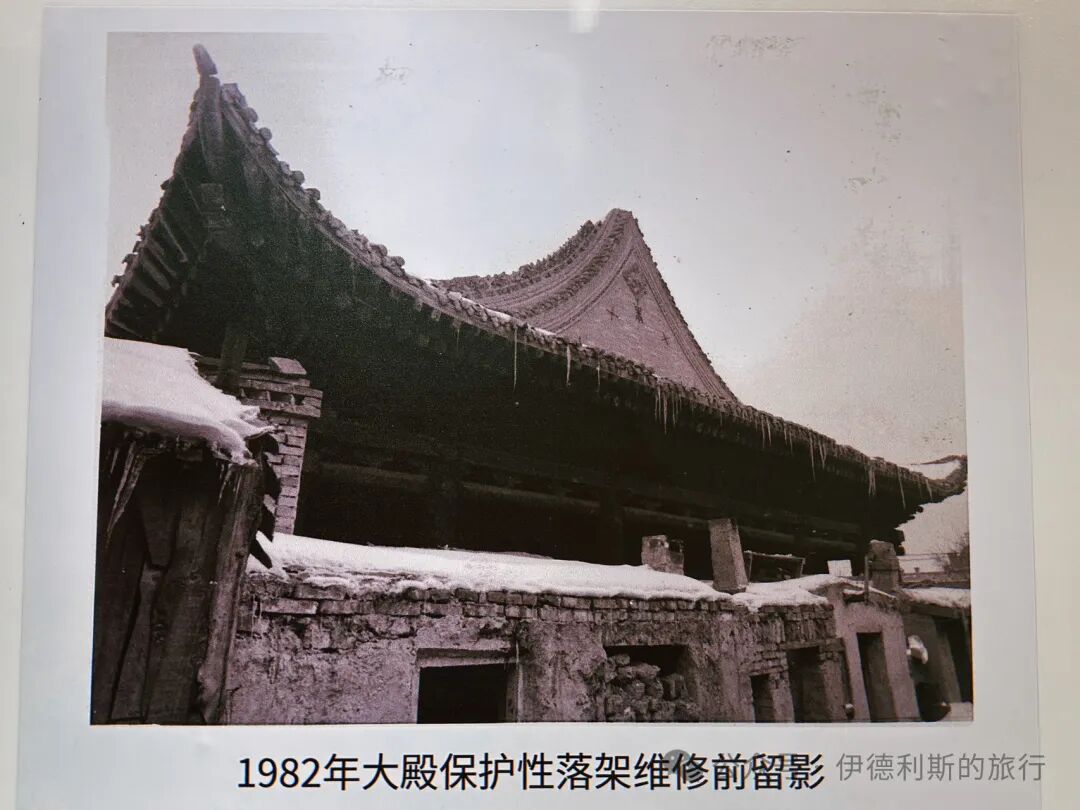
An old photo of the Shaanxi Grand Mosque before its 1984 renovation.
South Grand Mosque (Nan Dasi).
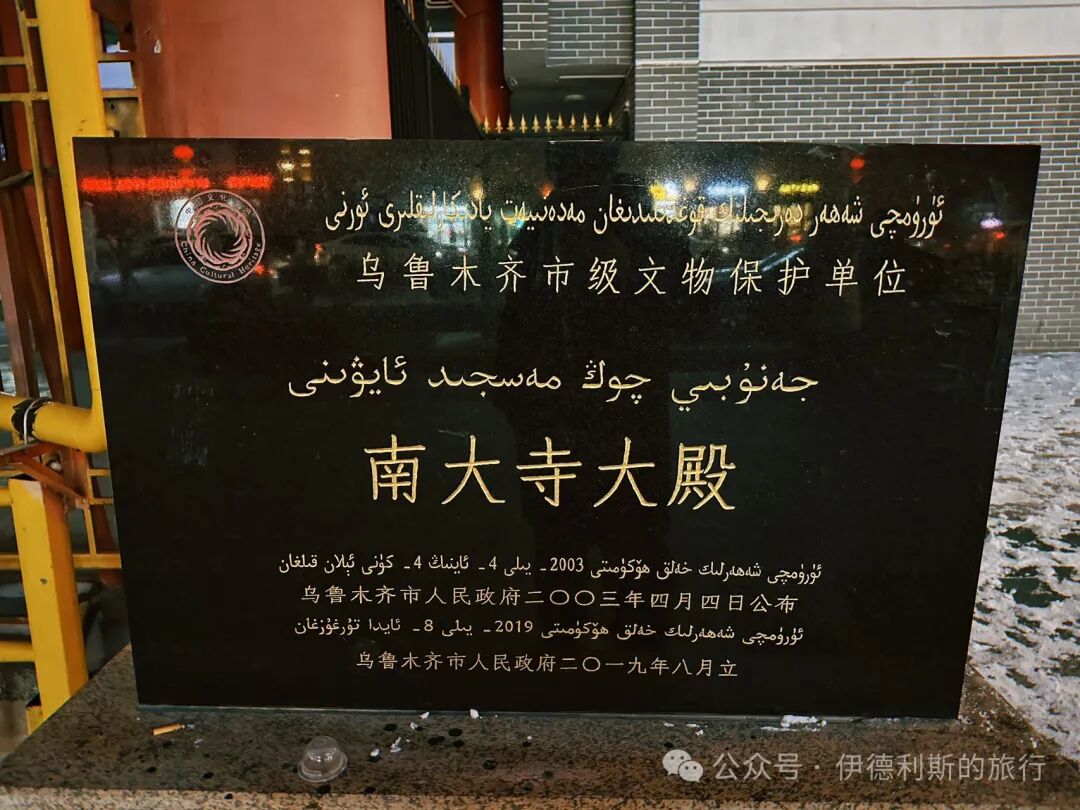
The South Grand Mosque is known as the 'First Mosque of the Jahriyya Order in Urumqi.' It was founded in 1874 (the 13th year of the Tongzhi reign) on Nansi Lane and was originally called Nantaizi Mosque. In 1917, Li Jiliang, the 'Rais' (leader) of the Jahriyya order in Xinjiang, selected the current site west of Erdaoqiao Road. Reconstruction was completed in 1919 with strong support from Ma Shaowu, the fifth-generation descendant of the Jahriyya founder, and Ma Guangtai, an agricultural official from Nanshan, who donated most of the timber for construction. In 2003, the main hall of the South Grand Mosque was listed as a cultural relic protection site in Urumqi.
In 1914, Yang Zengxin appointed Ma Shaowu as the garrison commander of Kuqa, giving him military authority. He served in the Xinjiang government for over 20 years and worked hard to maintain national unity and ethnic harmony. During this period, the Jahriyya order grew in Xinjiang, and the South Grand Mosque became the largest Jahriyya mosque in the region at that time.
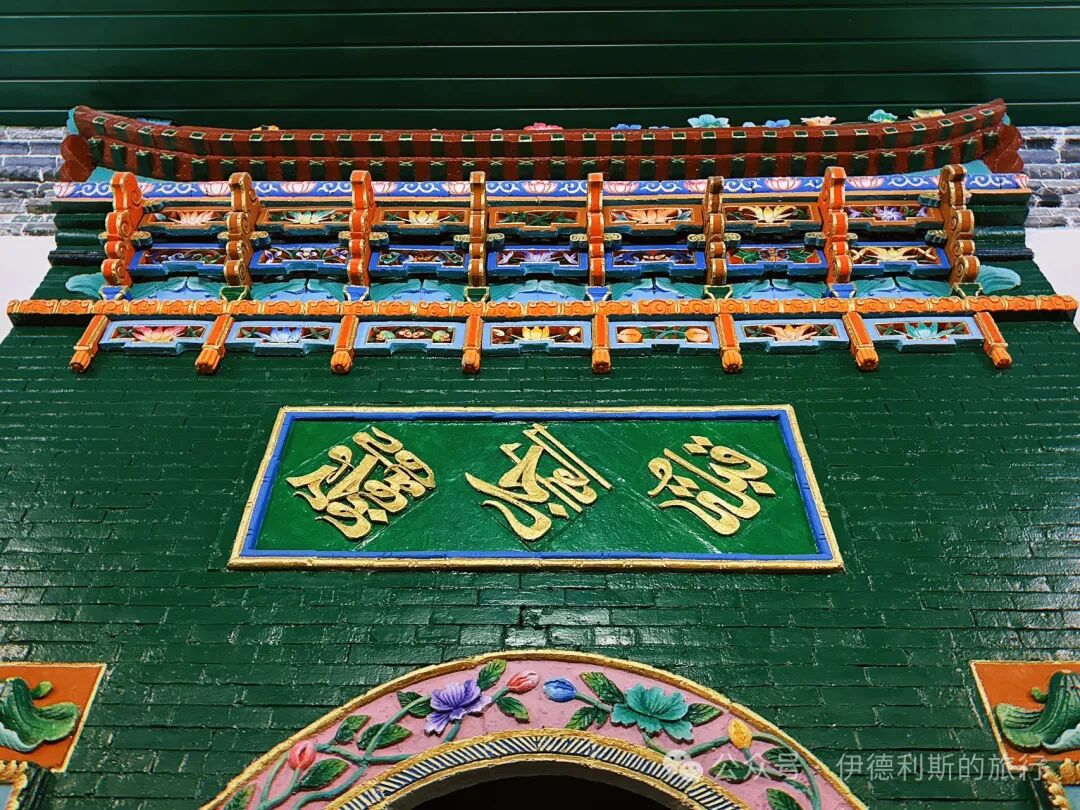
The main hall of the South Grand Mosque has a gabled and hipped roof. Under the eaves, it uses a Xinjiang-style 'flower board' technique, replacing traditional brackets with wooden boards carved with various patterns.
Arabic and Chinese calligraphy on the facade of the South Grand Mosque's main hall.
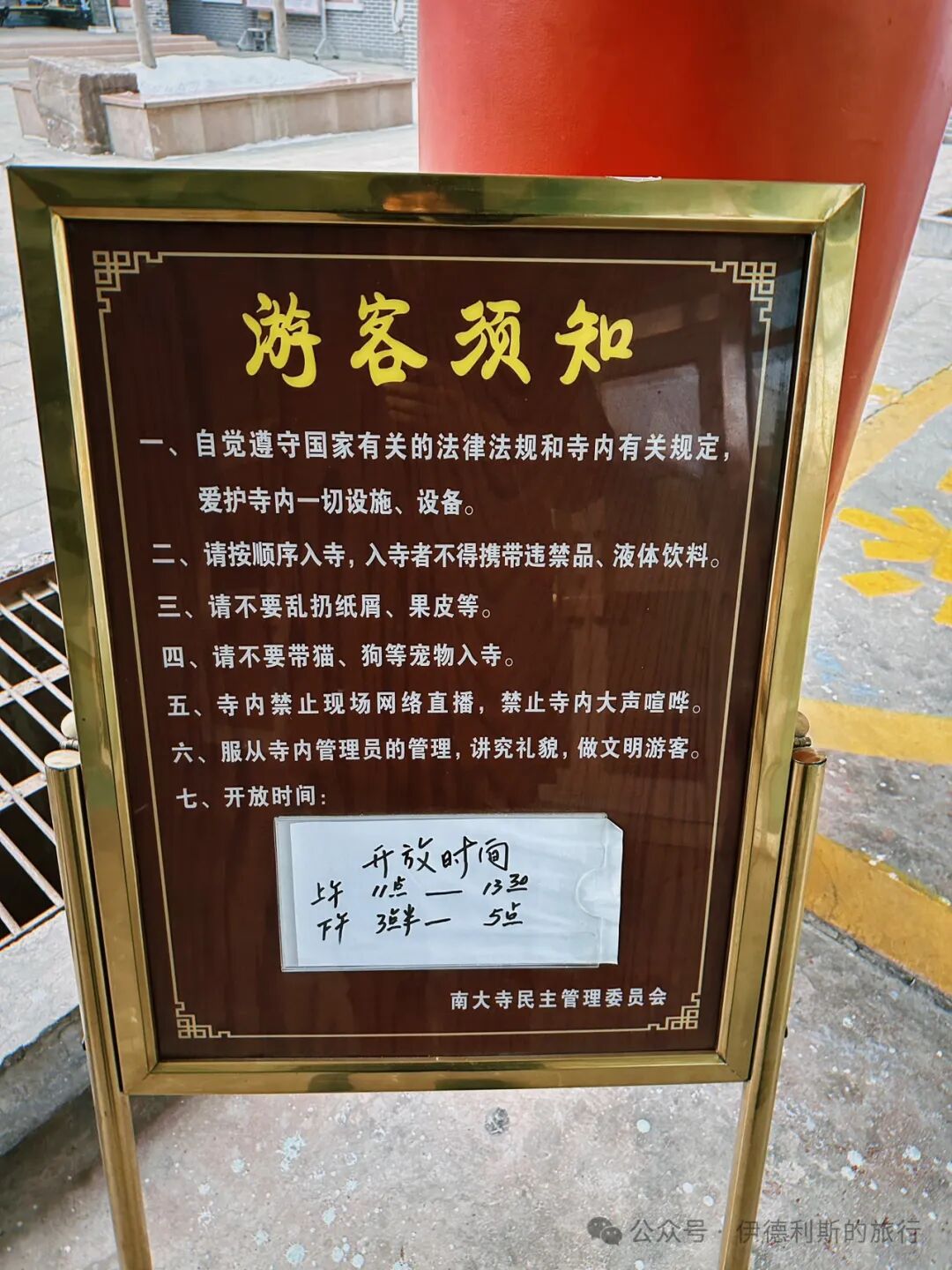
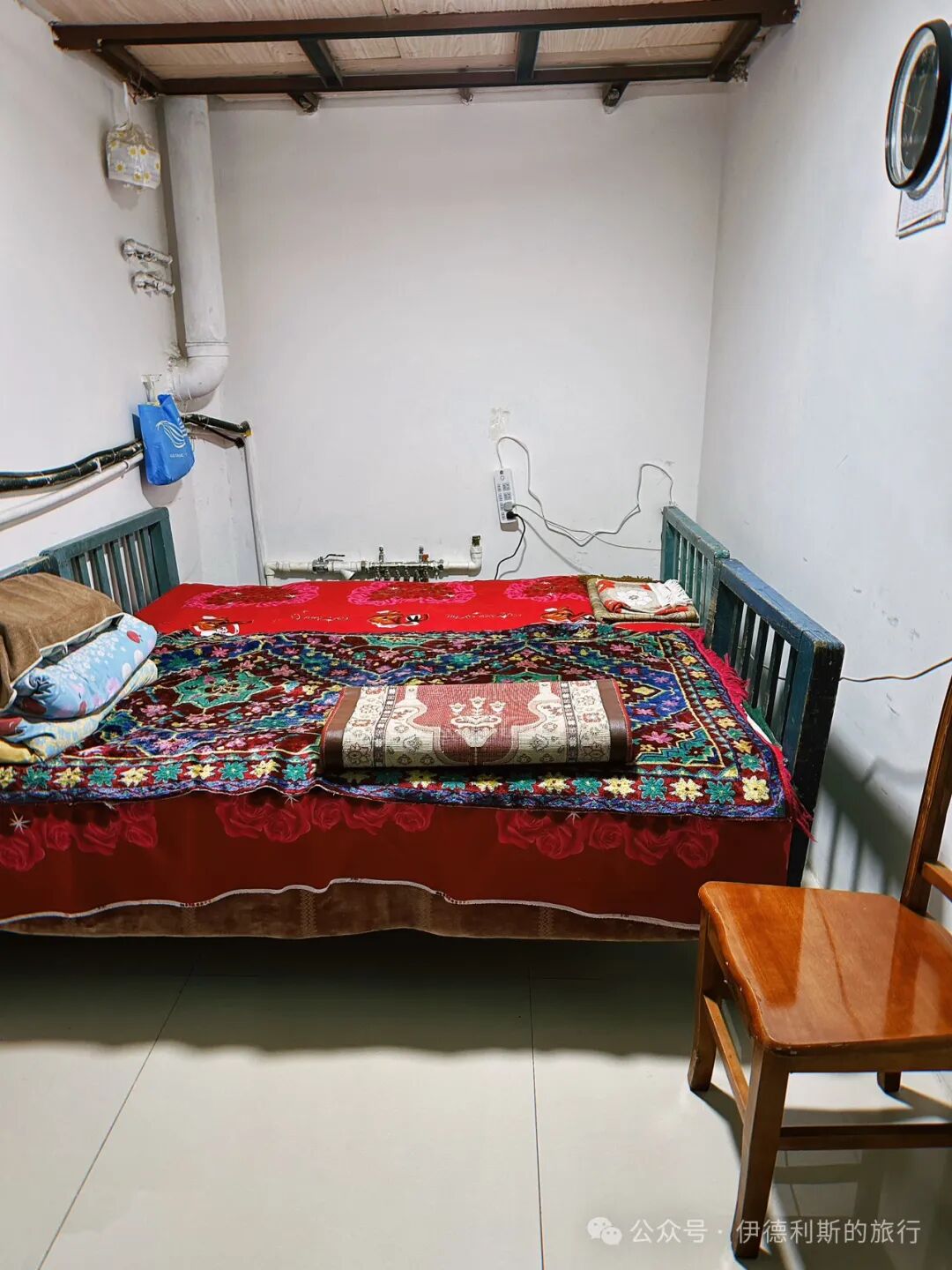
The South Grand Mosque is open to visitors from 11:00-13:30 and 15:30-17:00. There is a machine at the entrance of the main hall that provides shoe covers for entering the front hall. The rear hall is open for namaz five times a day and is inaccessible at other times. However, the elders at the mosque are very welcoming. Because I arrived after hours, they specifically let me pray in the duty room. The Jahriyya order is known for its beautiful melodies during dhikr, and another major feature is wearing a six-sided cap.
Kuanxiang Mosque
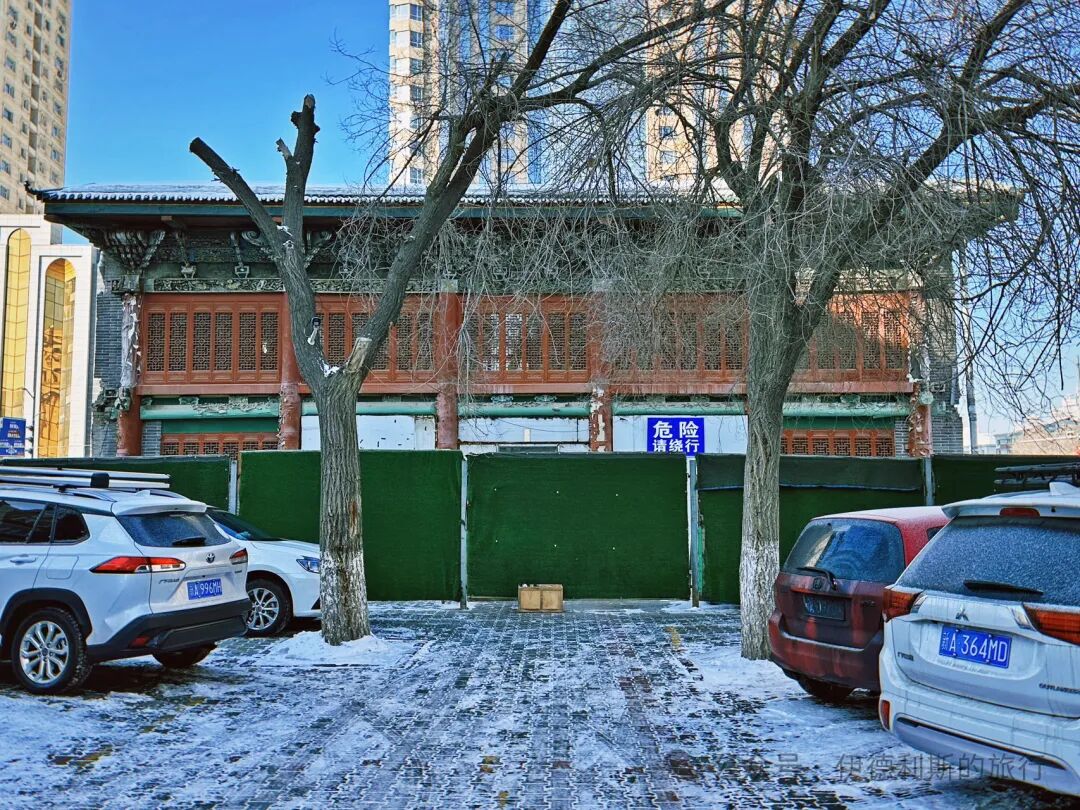
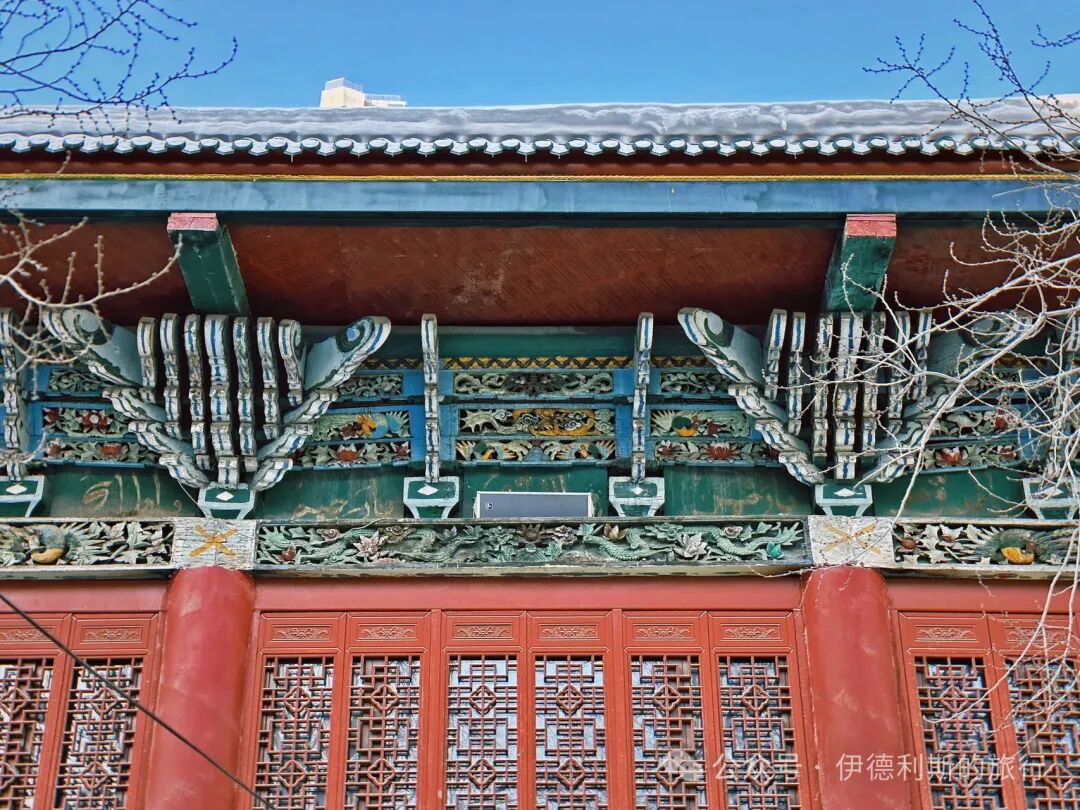
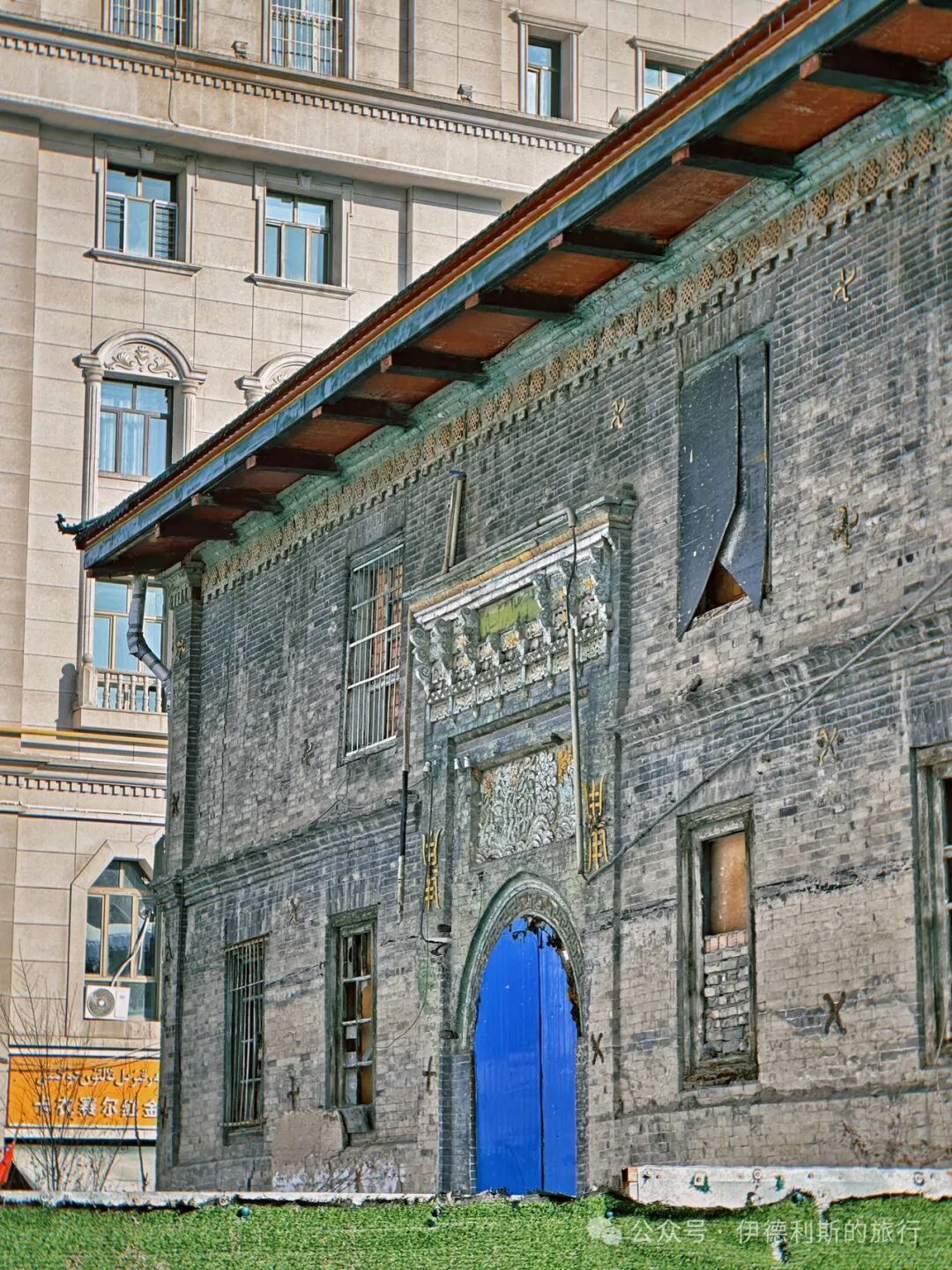
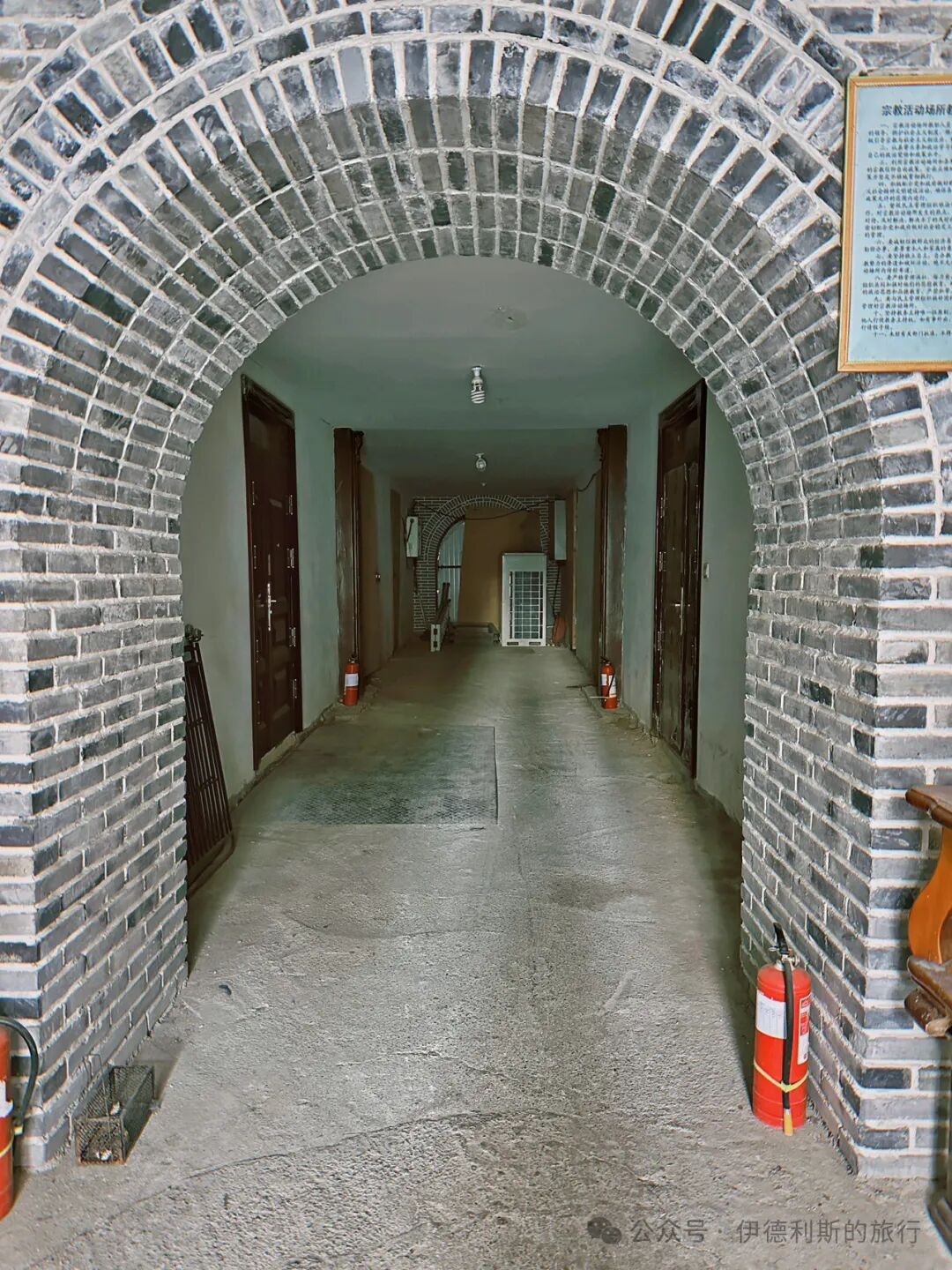
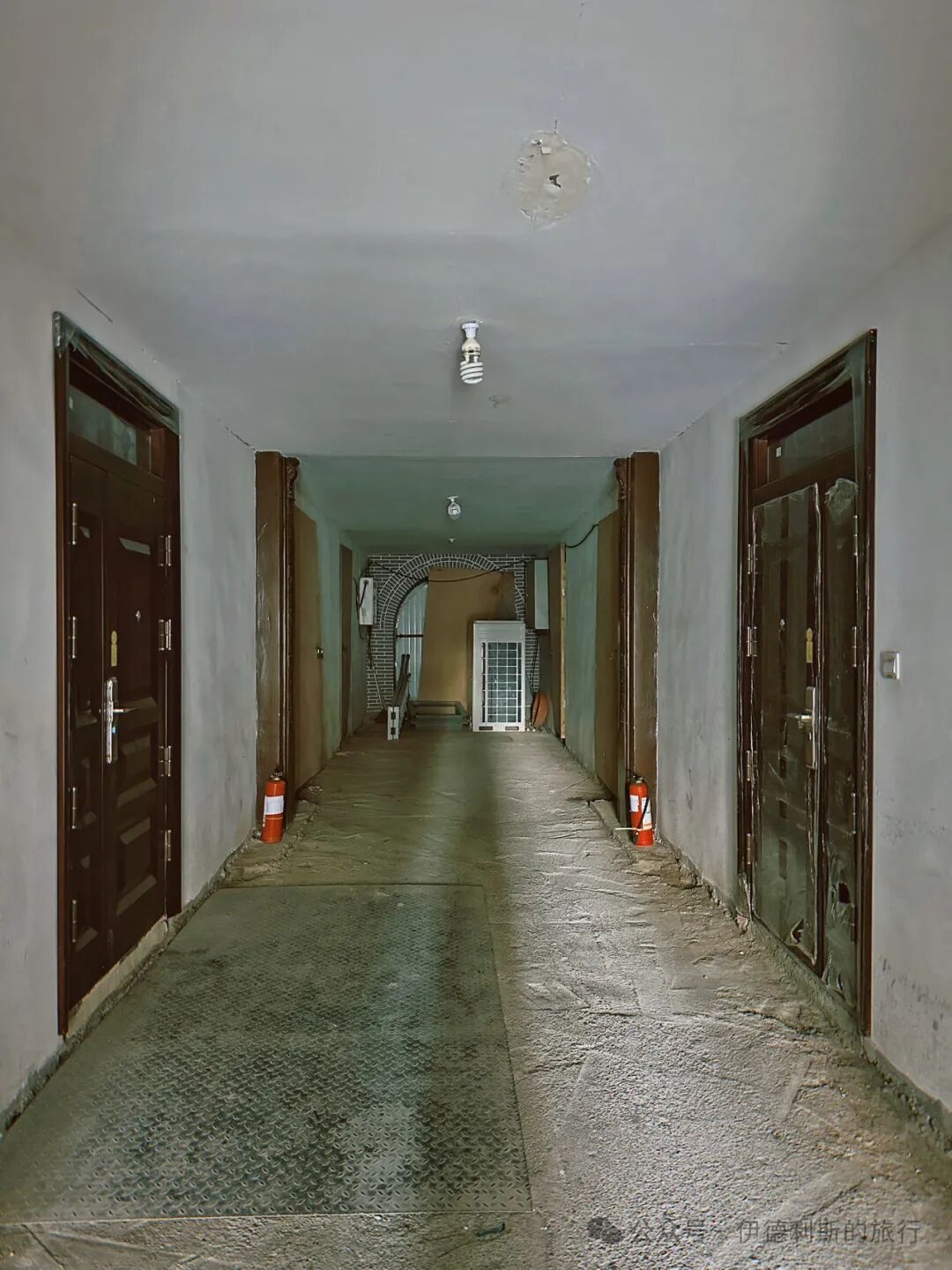
Kuanxiang Mosque was first built during the Jiaqing reign of the Qing Dynasty. It was rebuilt in 1934 into the current two-story brick building, with offices on the first floor and the main prayer hall on the second. Under the eaves of the main hall, there are beautiful wood carvings featuring various flowers, birds, and animal patterns. Kuanxiang Mosque is currently under construction, and all other buildings outside the main hall have been demolished.
Other Mosques
Qinghai Grand Mosque: Built in 1868 (the seventh year of the Tongzhi reign) by Hui Muslims from Qinghai, it was originally named Xining Mosque. In 1945, after Ma Chengxiang of the Qinghai Ma Family Army marched into Xinjiang, it was renamed Qinghai Mosque. Qinghai Mosque has some congregants from the Ikhwan and Huasi menhuan sects, and it maintains the tradition of observing the memorial day for the Huasi master.
Sala Mosque: Built in 1865 (the fourth year of the Tongzhi reign) by the Salar people from Qinghai. In 1945, many Salar officers and soldiers served under Ma Chengxiang of the Qinghai Ma Family Army when they entered Xinjiang, so the mosque was renovated in 1948. In 2002, Sala Mosque was rebuilt into its current structure. Like Qinghai Mosque, Sala Mosque has some congregants from the Ikhwan and Huasi menhuan sects, and it maintains the tradition of observing the memorial day for the Huasi master.
Hezhou Grand Mosque: Built in 1915 by Hui Muslims from Linxia, Gansu. It was acquired and demolished by the Urumqi Waste Recycling Station in 1977, then rebuilt in 1988.
Beifang Mosque: First built in 1886 (the twelfth year of the Guangxu reign). It was once occupied by the Urumqi No. 2 Rubber Factory, but was later restored and rebuilt.
Dongfang Grand Mosque: First built in 1877 (the third year of the Guangxu reign).
Xidasi Mosque: Built in 1890 (the sixteenth year of the Guangxu reign) by Hui Muslims from Shaanxi. Originally named Xifang Mosque, it started as a small prayer spot on the south side of Shanxi Alley before moving to its current location to be rebuilt.
Balikun Mosque: Built in 1877 (the third year of the Guangxu reign) by Hui Muslims from Balikun.
Fengxiang Mosque: Built in 1884 (the tenth year of the Guangxu reign) by Hui Muslims from Fengxiang, Shaanxi.
Binzhou Mosque (Baiji Mosque): During the Tongzhi reign, many Hui Muslims from Binzhou Prefecture (now Binzhou City) in Shaanxi fled to Urumqi's Xiguan area to settle down. During the Guangxu reign, Imam Ma Xuehai (known as Hongchengzi) led the community to build the first Binzhou Mosque at the entrance of Baojiaju Alley outside Urumqi's Great West Gate. It was moved to its current location on Mashi Alley (Yucai Alley) and rebuilt in 1909 (the first year of the Xuantong reign). Because most of the congregants came from Baiji Town in Binzhou Prefecture, it is also called Baiji Mosque. In 1990, due to the redevelopment of the Mashi residential area, Binzhou Mosque was moved more than 100 meters south and rebuilt.
Imam Ma Xuehai was an eighth-generation descendant of Hu Dengzhou, the founder of the scripture hall education system. During the Guangxu reign, he was known alongside Ma Liangjun and Zhou Erye (Zhou Zhendong) as one of the three great imams. He led Binzhou Mosque three times and passed away (returned to Allah) at the mosque in 1924. Among his students, the most prestigious was Imam Ma Zhaolin (known as Huazhezi). Imam Ma Zhaolin was also from Binzhou. He studied the scriptures under Imam Ma Xuehai from a young age and became his adopted son. Imam Ma Zhaolin led the Binzhou mosque four times. In 1943, he was delayed in Xi'an while on his way to Hajj and was hired to lead the Xiaopiyuan mosque. He passed away in 1955 while serving as the imam at the Shaanxi mosque in Changji.
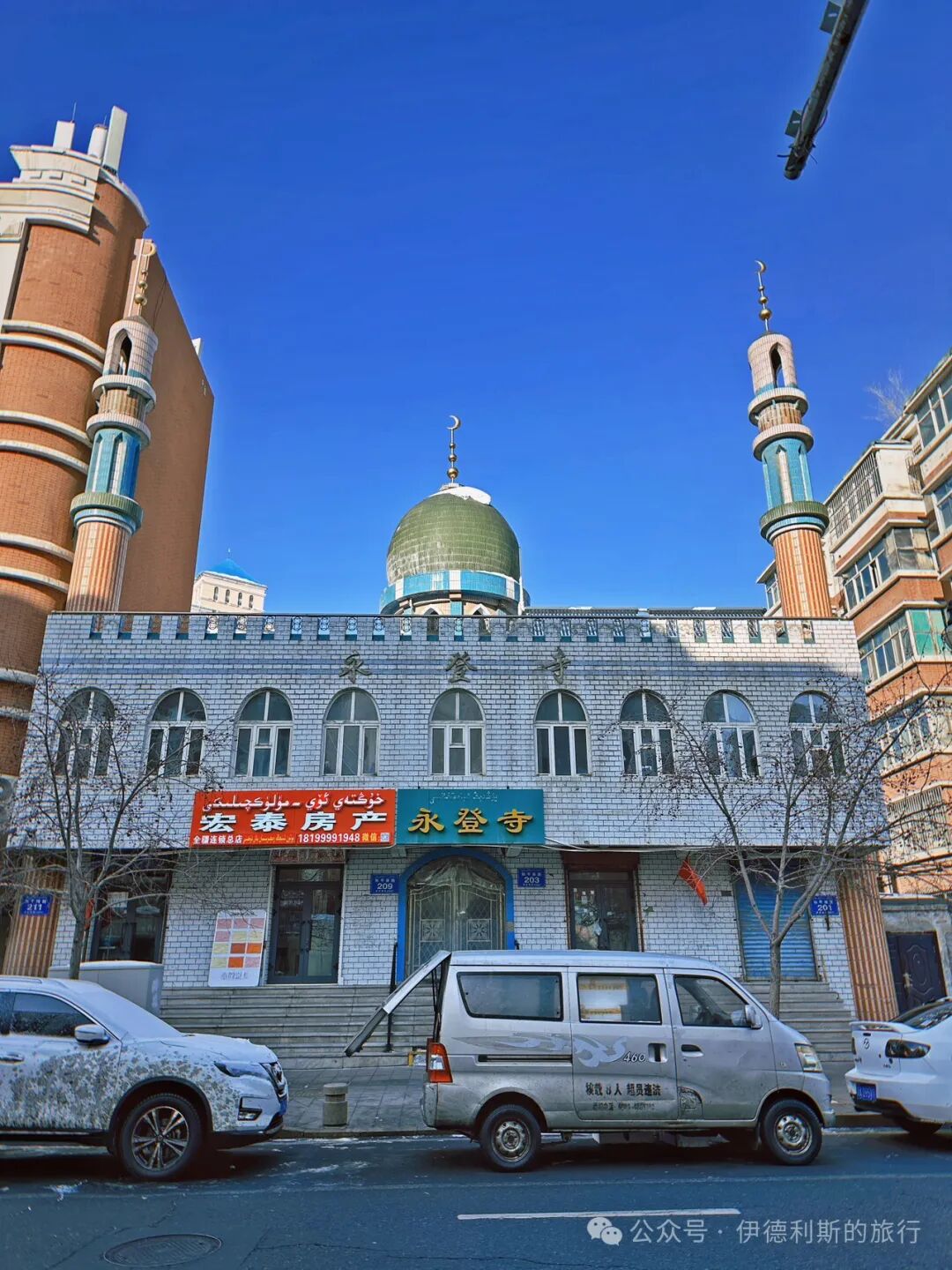
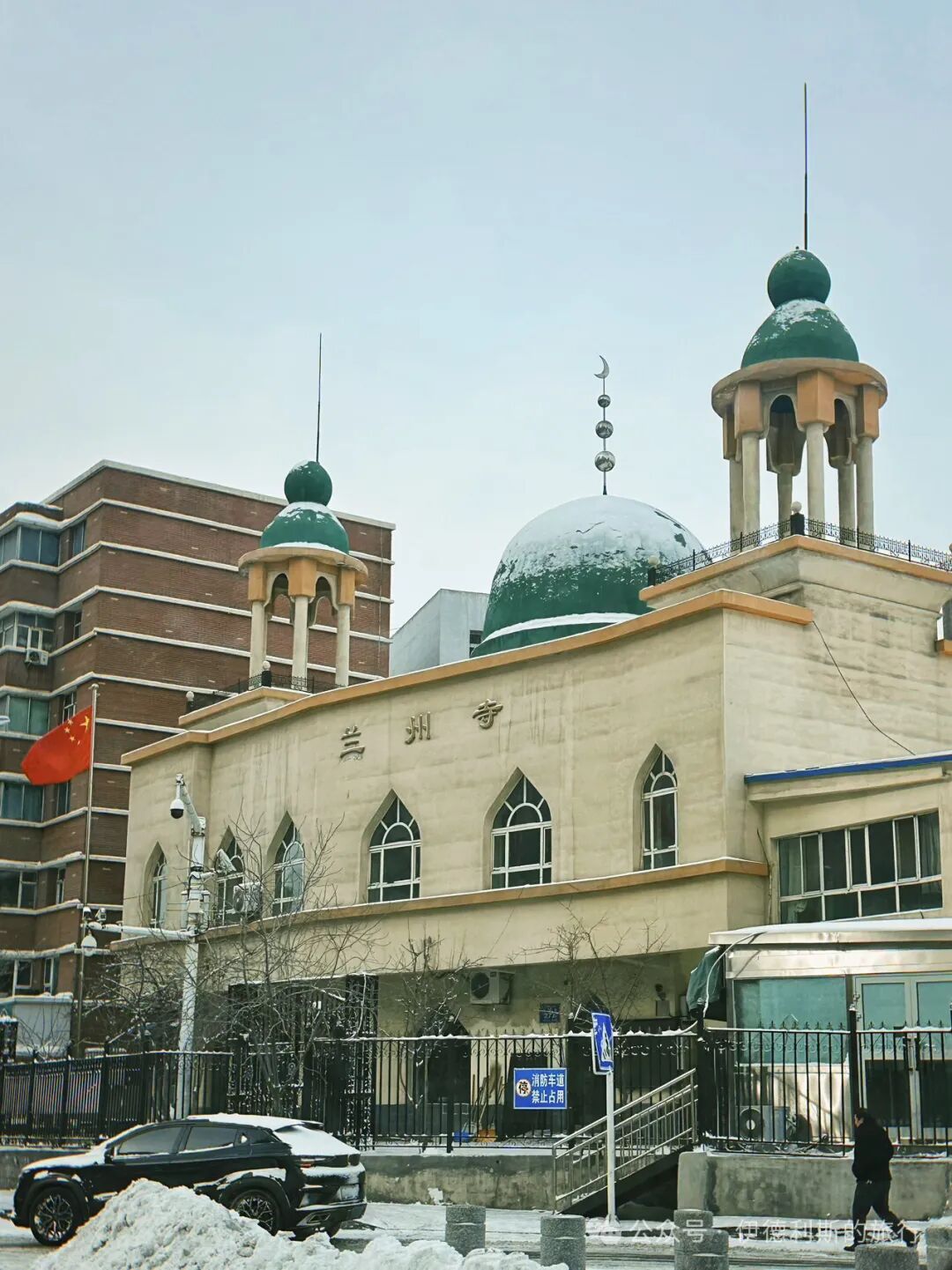
The original site of Lanpingfang was in Yonghe Zhengxiang. It was built together by Hui Muslims from Lanzhou and Pingfan (now Yongdeng County) in Gansu. In 1946, Yongdeng Hui Muslims built the separate Yongdeng mosque, and Lanpingfang was renamed the Lanzhou mosque. It moved to its current location on Yuejin Street in 1984. The community members of the Lanzhou mosque mainly belong to the Khufiyya (hufuye) menhuan. view all
Summary: The Twenty-Three Hui Muslim Neighborhoods in Urumqi are tied to local Muslim settlement, street life, and Xinjiang urban history. This travel account preserves the original neighborhood names, routes, photos, and historical details in a long English article.
During the Qing Dynasty and the Republic of China era, Urumqi had twenty-two Hui Muslim mosques and one Salar mosque, collectively known as the twenty-three mosques of Dihua. In 1945, the twenty-three mosques unanimously elected the Grand Imam Ma Liangjun as the chief leader. He taught at the Shaanxi Grand Mosque (Shaanxi Dasi), where the imams from all twenty-three mosques came to listen to his lectures every day. Today, the Shaanxi Grand Mosque, Old Quarter Mosque (Laofang Si), South Grand Mosque (Nanda Si), and Kuanxiang Mosque (Kuanxiang Si) remain as historical buildings. Others, like the Toudaoxiang Mosque and the Inner City Mosque, have been demolished, while most others have been rebuilt as modern structures. I visited several of these during my Spring Festival trip back to Urumqi.
Old Quarter Mosque (Laofang Si)
After the Qing Dynasty built Dihua City in 1758, they promoted policies to station troops and encourage migration for border defense. Since then, Hui Muslims from Shaanxi have continuously moved to Urumqi to settle. In 1808 (the 12th year of the Jiaqing reign), Shaanxi Hui Muslims built the Shaanxi Mosque in the southern pass of Dihua. This was the second Hui mosque in Urumqi, following the North Beam Mosque (Beiliang Si).
After the Qing Dynasty recovered Urumqi in 1876 (the 2nd year of the Guangxu reign), they moved all Hui Muslims outside the city walls. The population at the Shaanxi Mosque grew significantly, so they rebuilt the main hall in 1877 (the 3rd year of the Guangxu reign). Later, other mosques for the Shaanxi community were formed, including the Fengxiang Mosque, West Grand Mosque (Xida Si), Binzhou Mosque, and Zhongying Palace Mosque. After the Toudaoxiang Shaanxi Grand Mosque finished its reconstruction in 1906, the original Shaanxi Mosque was renamed the Shaanxi Old Quarter Mosque, or Laofang Si for short. In 2003, the main hall of Laofang Si was listed as a municipal-level cultural relic protection site in Urumqi.
The front hall of Laofang Si has a hip-and-gable roof with a rolled shed, while the rear hall has a hard-gable roof. It underwent a major structural overhaul in 2014.
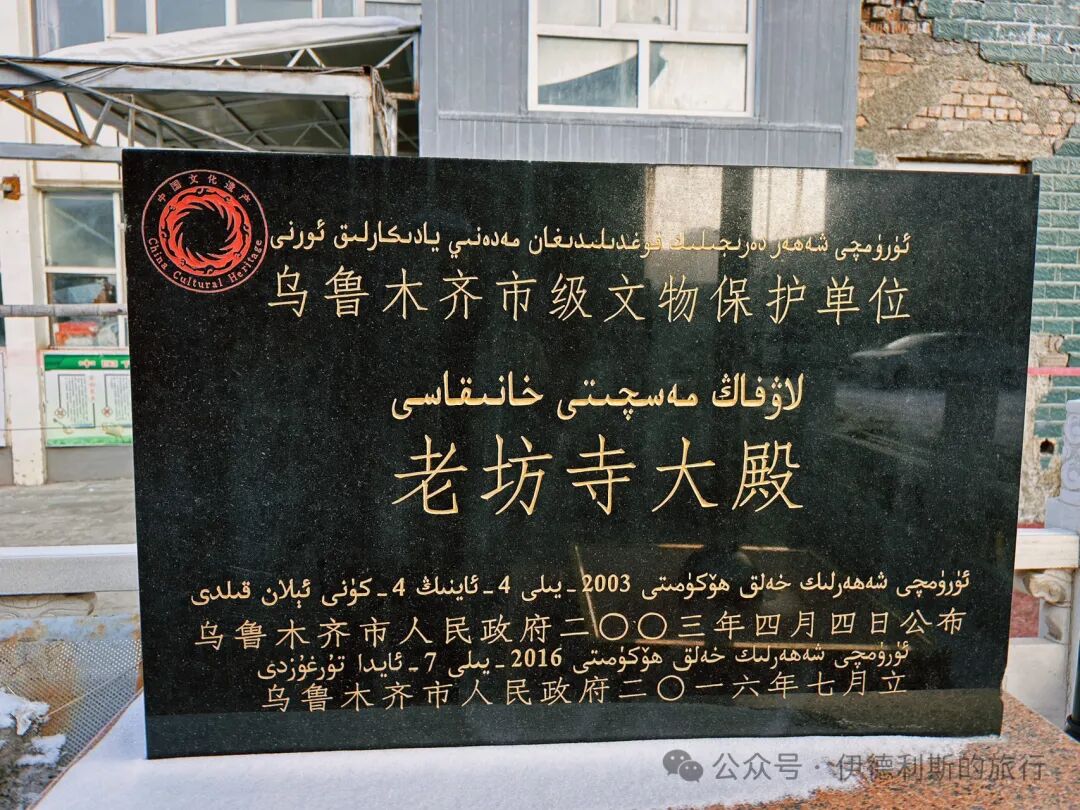
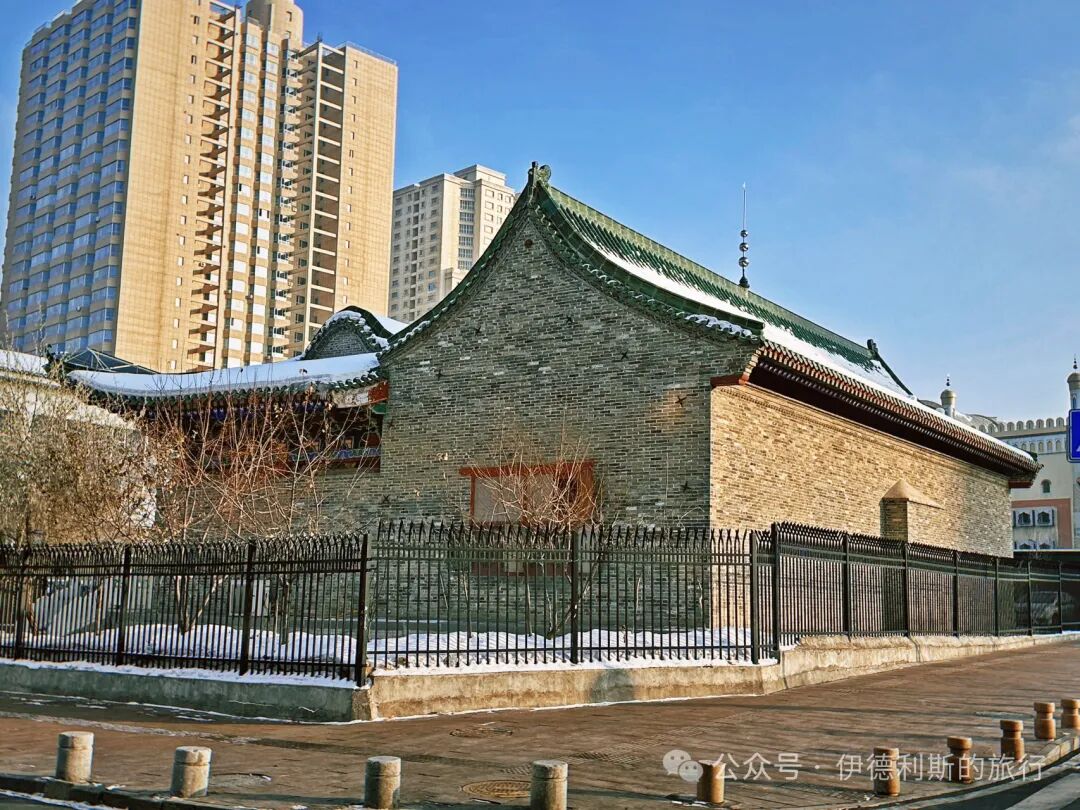
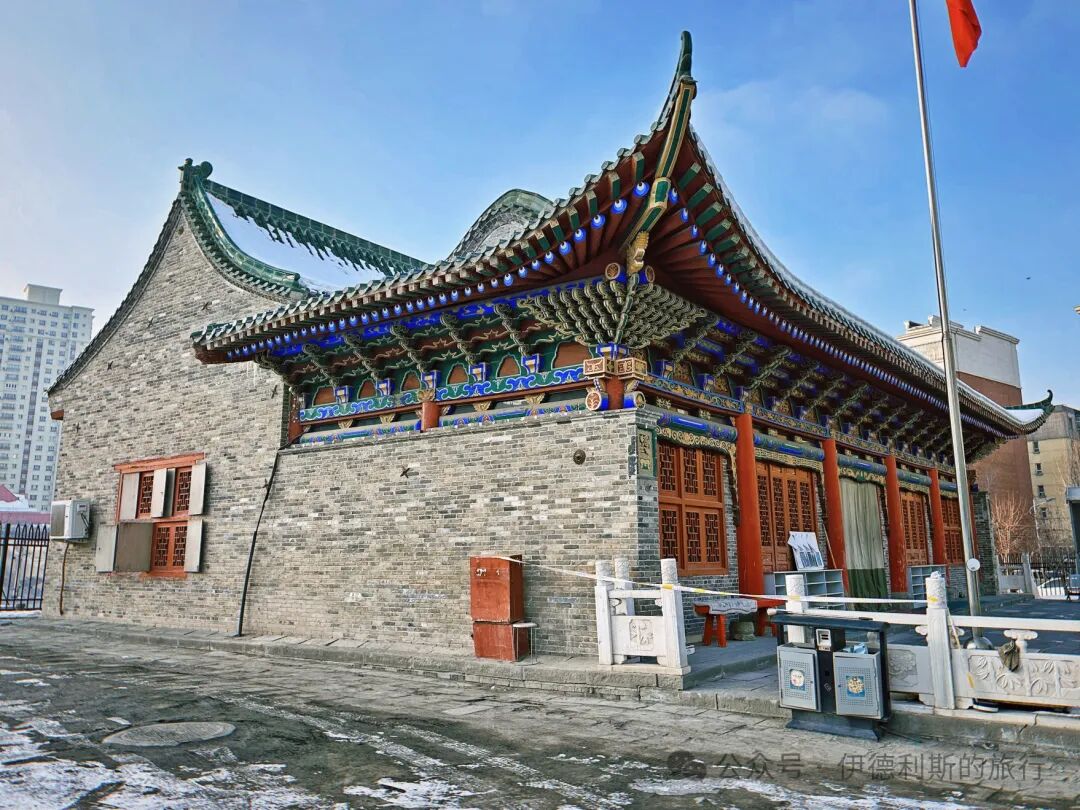
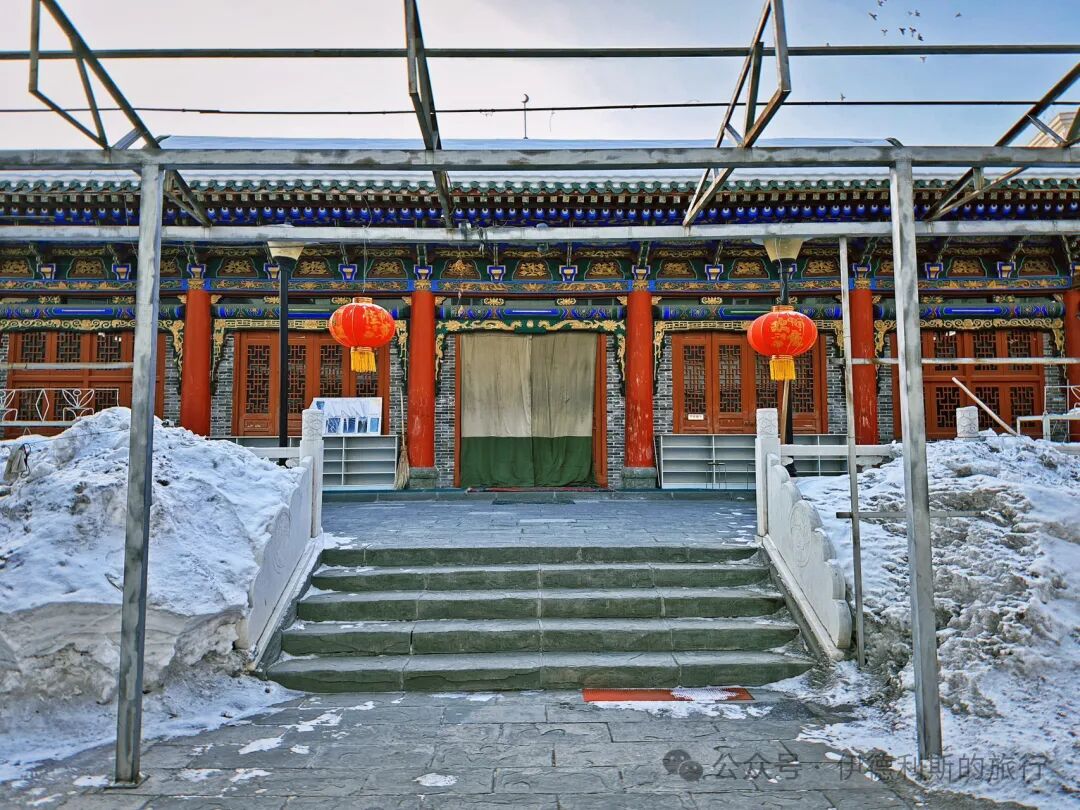
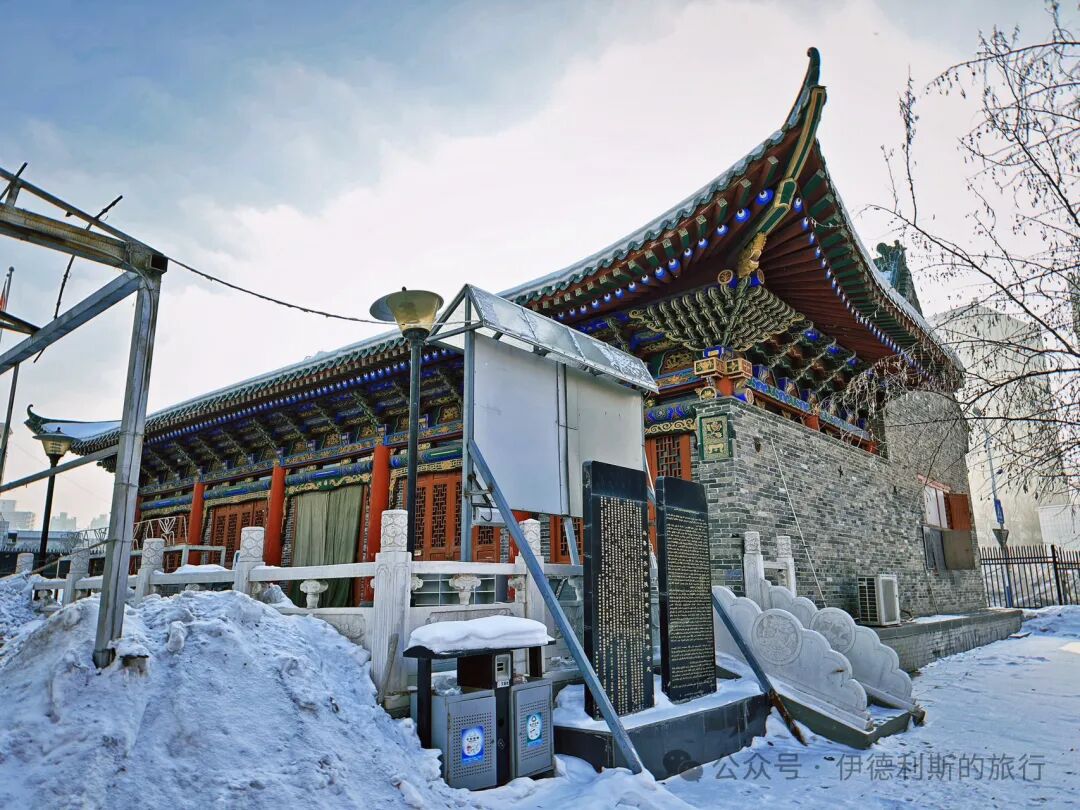
The rear hall of Laofang Si contains very precious Persian praise verses to Allah, but they are now completely covered by landscape paintings.
Laofang Si is open to tourists from 11:00 to 13:30 and 15:00 to 17:00. You can enter the front hall, but the rear hall is only open to the congregation for the five daily namaz prayers. Imam Ma at the mosque was very welcoming and explained the history of Laofang Si to me.
Shaanxi Grand Mosque (Shaanxi Dasi)
Shaanxi Grand Mosque was first built in 1883 (the 9th year of the Guangxu reign) with funds from Hui Muslims who came from the Wei River valley in Shaanxi's Guanzhong region. It is located on a slope south of Toudaoxiang, outside the south gate of Urumqi. As the number of Shaanxi Hui Muslims moving to Urumqi increased, the Shaanxi Mosque was rebuilt in 1902 (the 28th year of the Guangxu reign). The project took five years and was completed in 1906 (the 32nd year of the Guangxu reign). It was officially named the Shaanxi Grand Mosque and became the largest Hui mosque in Urumqi. It was listed as a major historical and cultural site protected at the national level in 2013.
The Shaanxi Grand Mosque features traditional Guanzhong architectural style. The main hall has a single-eave hip-and-gable roof, and the rear kiln hall has a hip roof. The top features a very ornate moon-watching tower with an octagonal pointed roof. The main hall is surrounded by thirty-six pillars forming a corridor, with column bases carved with traditional patterns like the Eight Immortals. The walls, doors, windows, hanging pillars, and brackets feature exquisite brick and wood carvings, along with various flower and fruit patterns.
Under the eaves of the main hall, there is a decorative technique unique to Xinjiang called flower board stepping (huaban cai). This replaces traditional brackets with wooden boards carved with various patterns, such as dove heads, elephant heads, clouds, and peach designs, which are highly decorative.
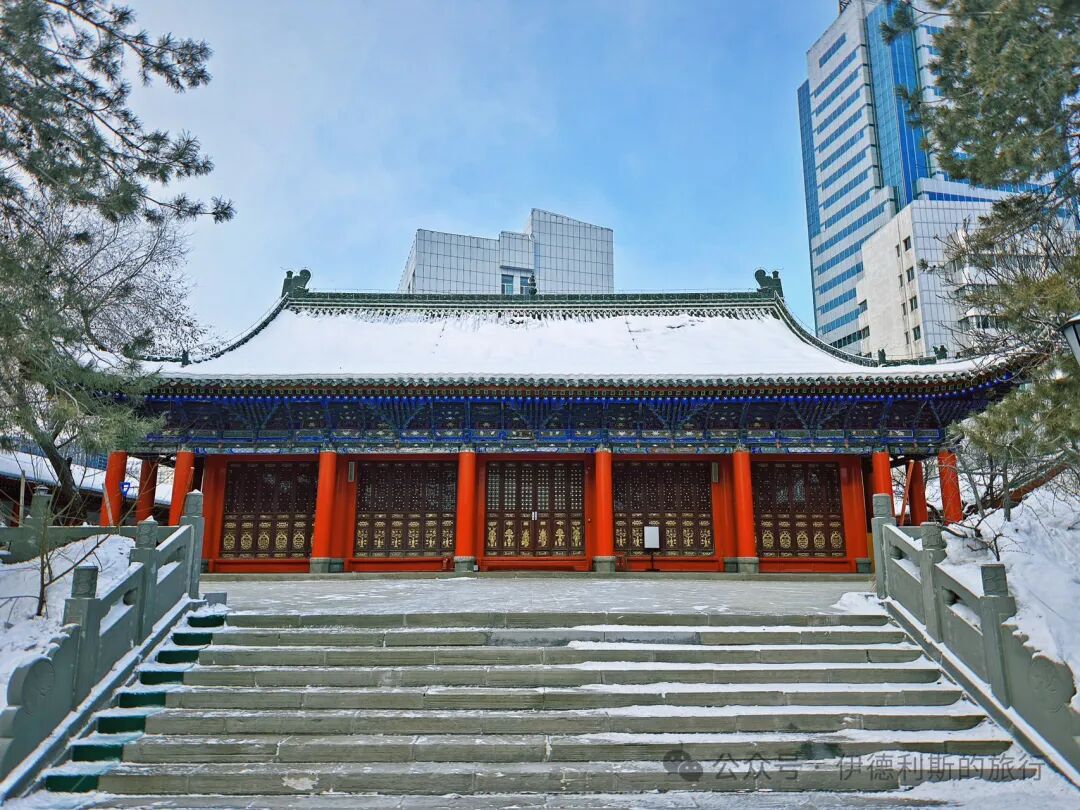
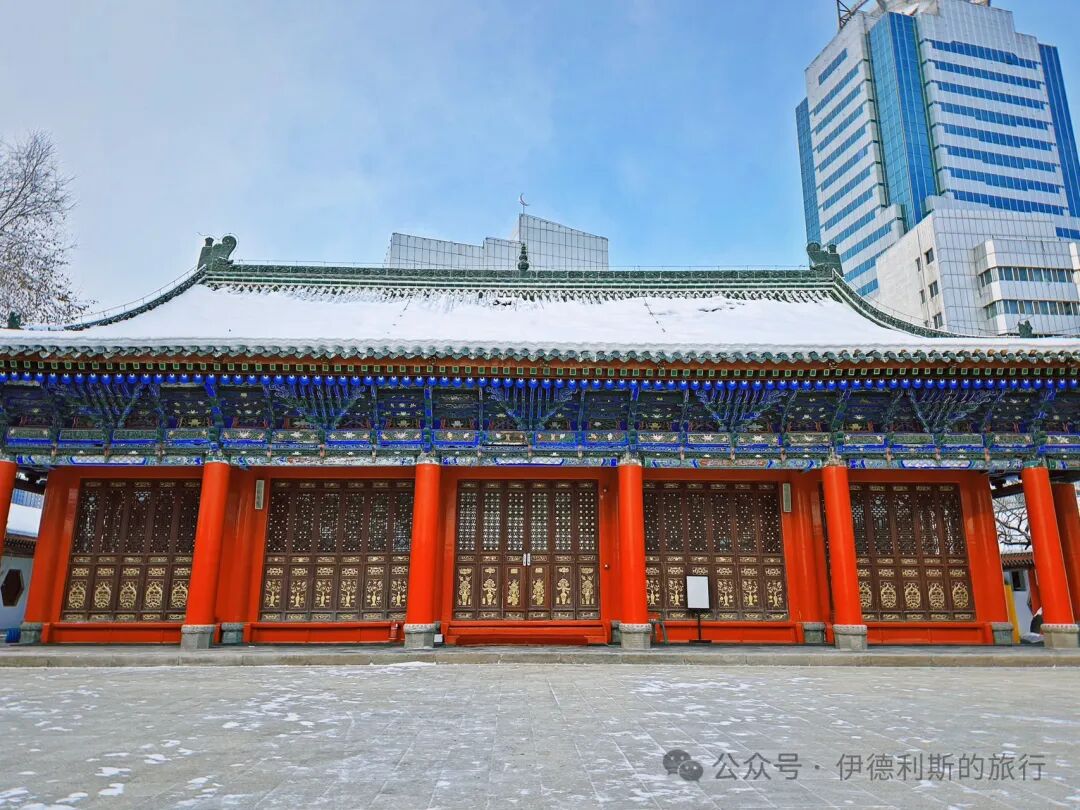
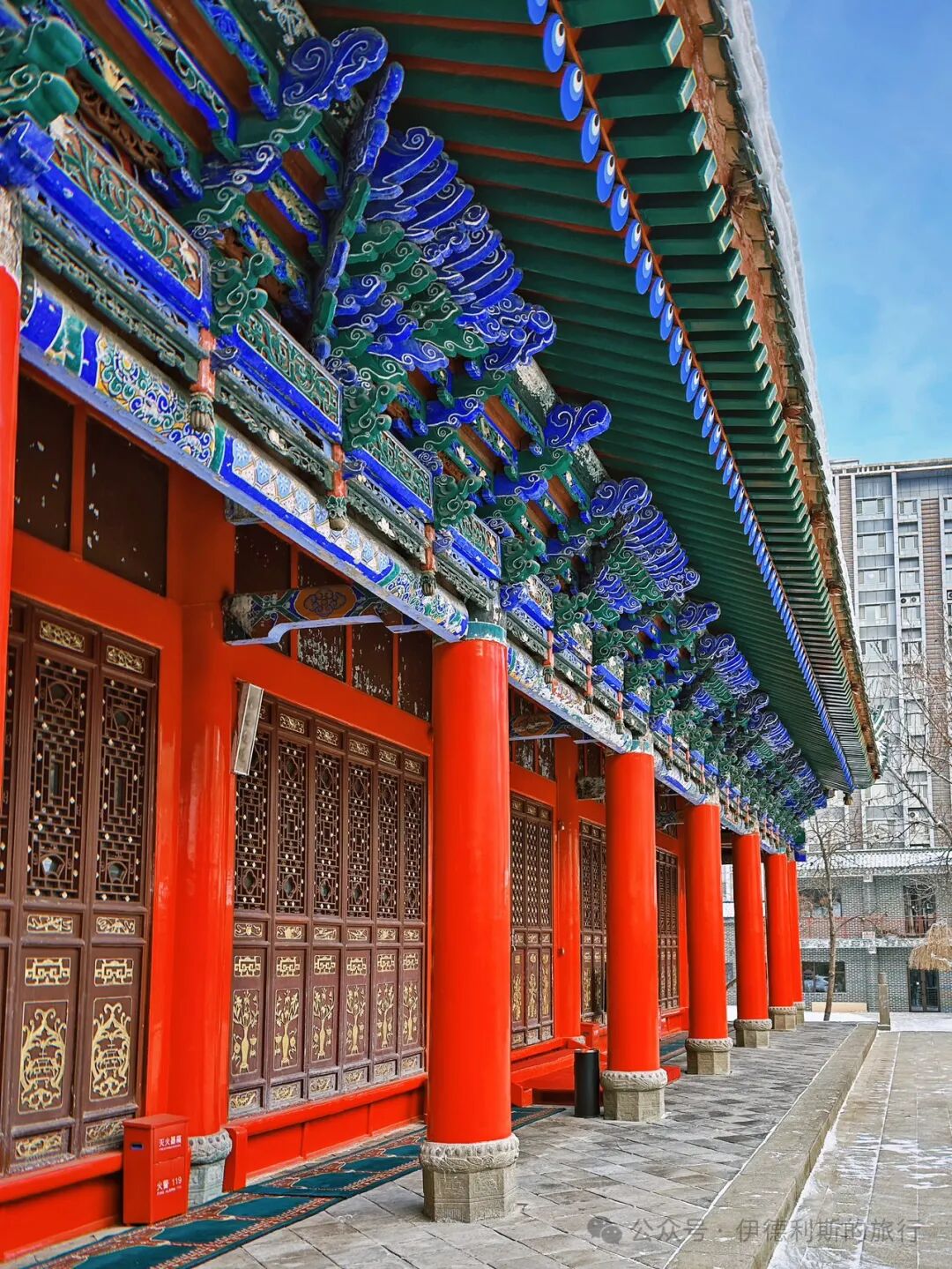
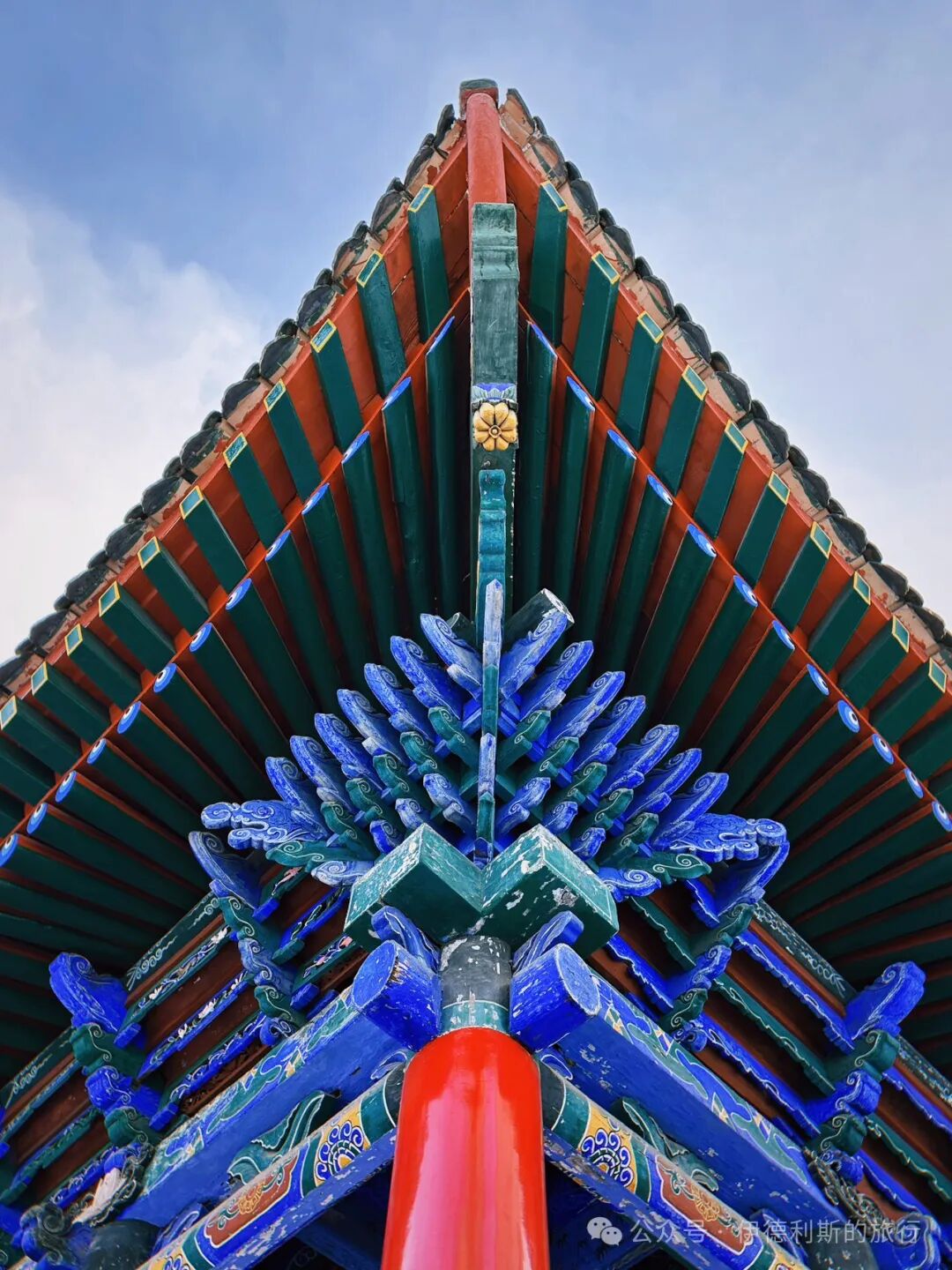
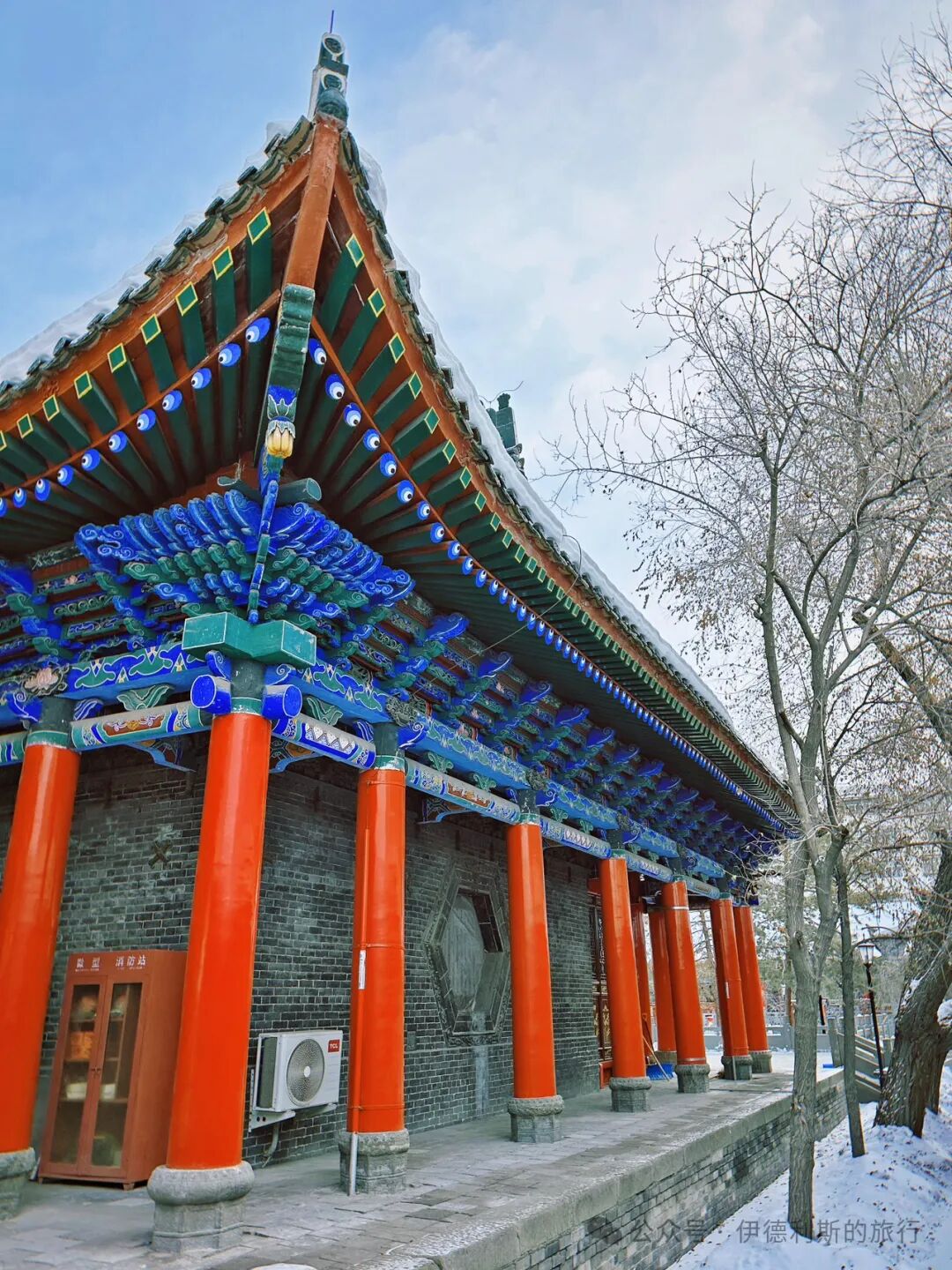
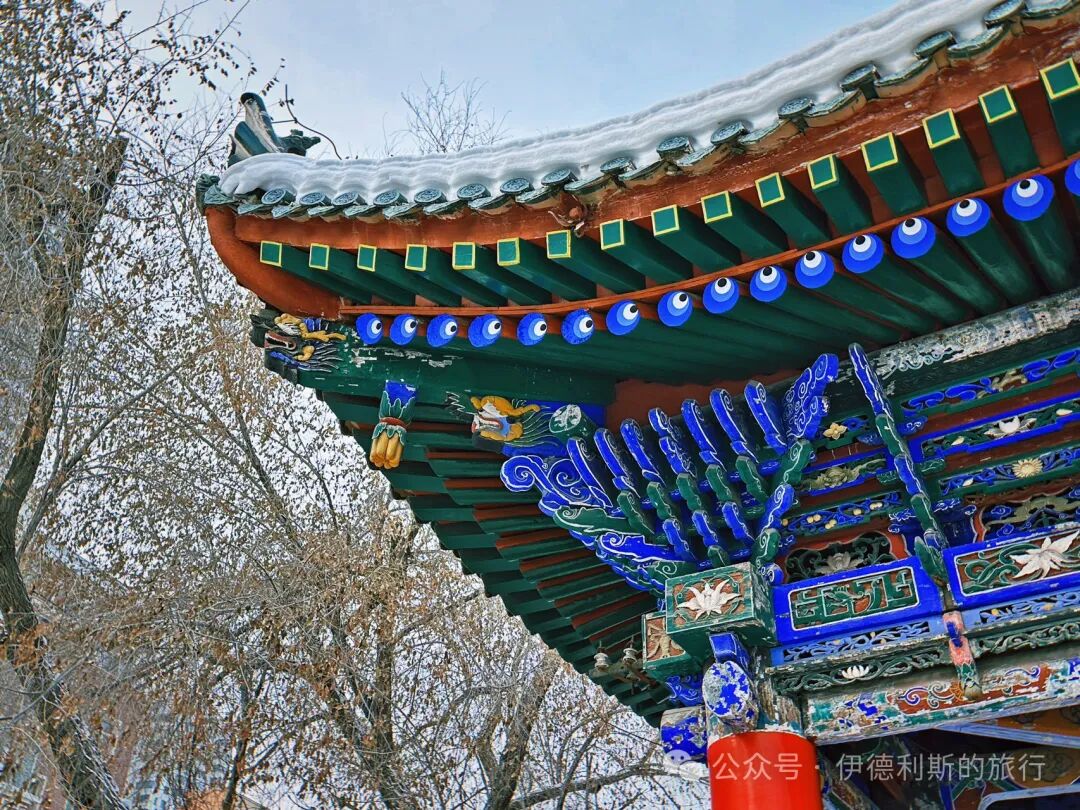
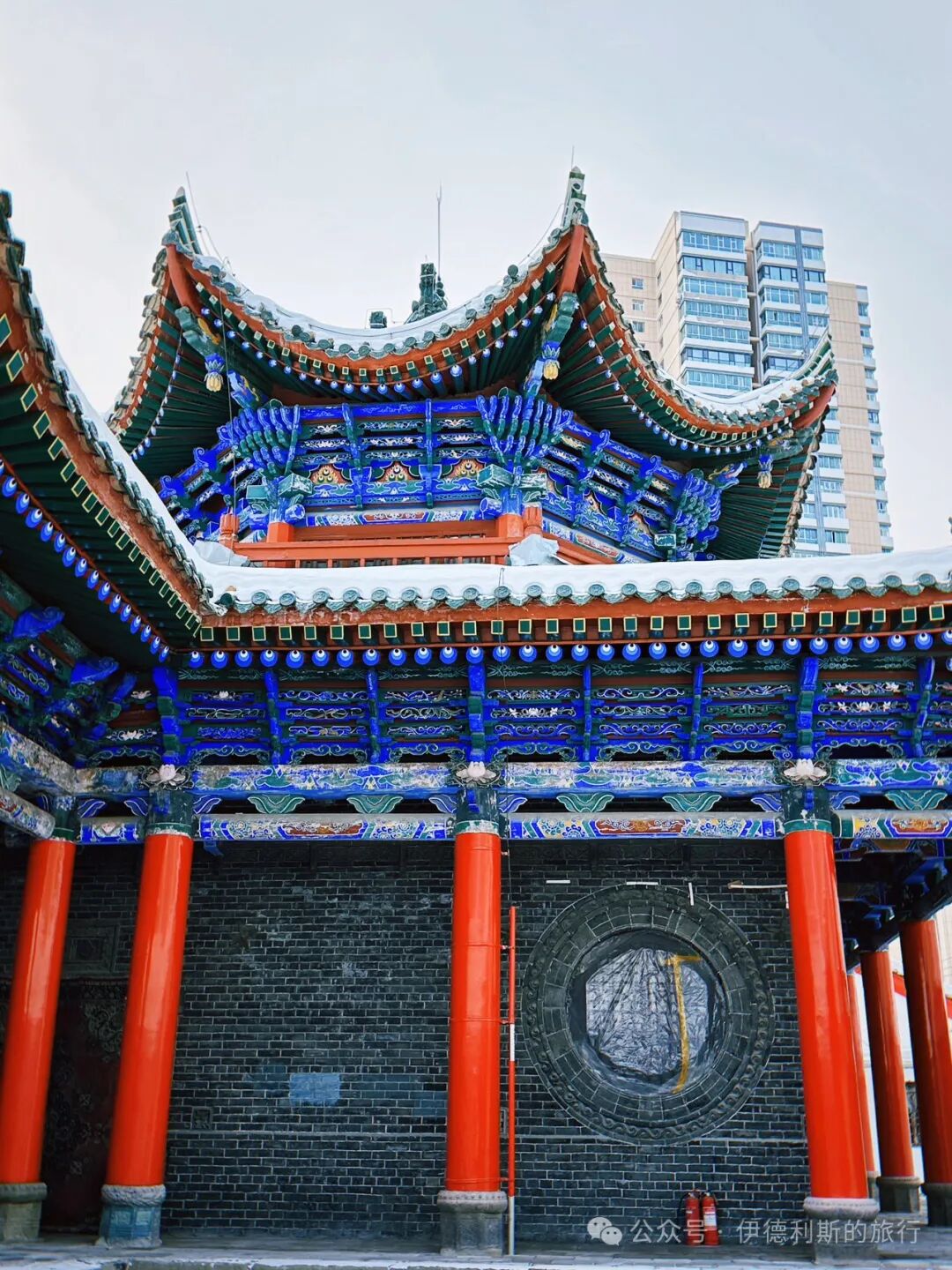
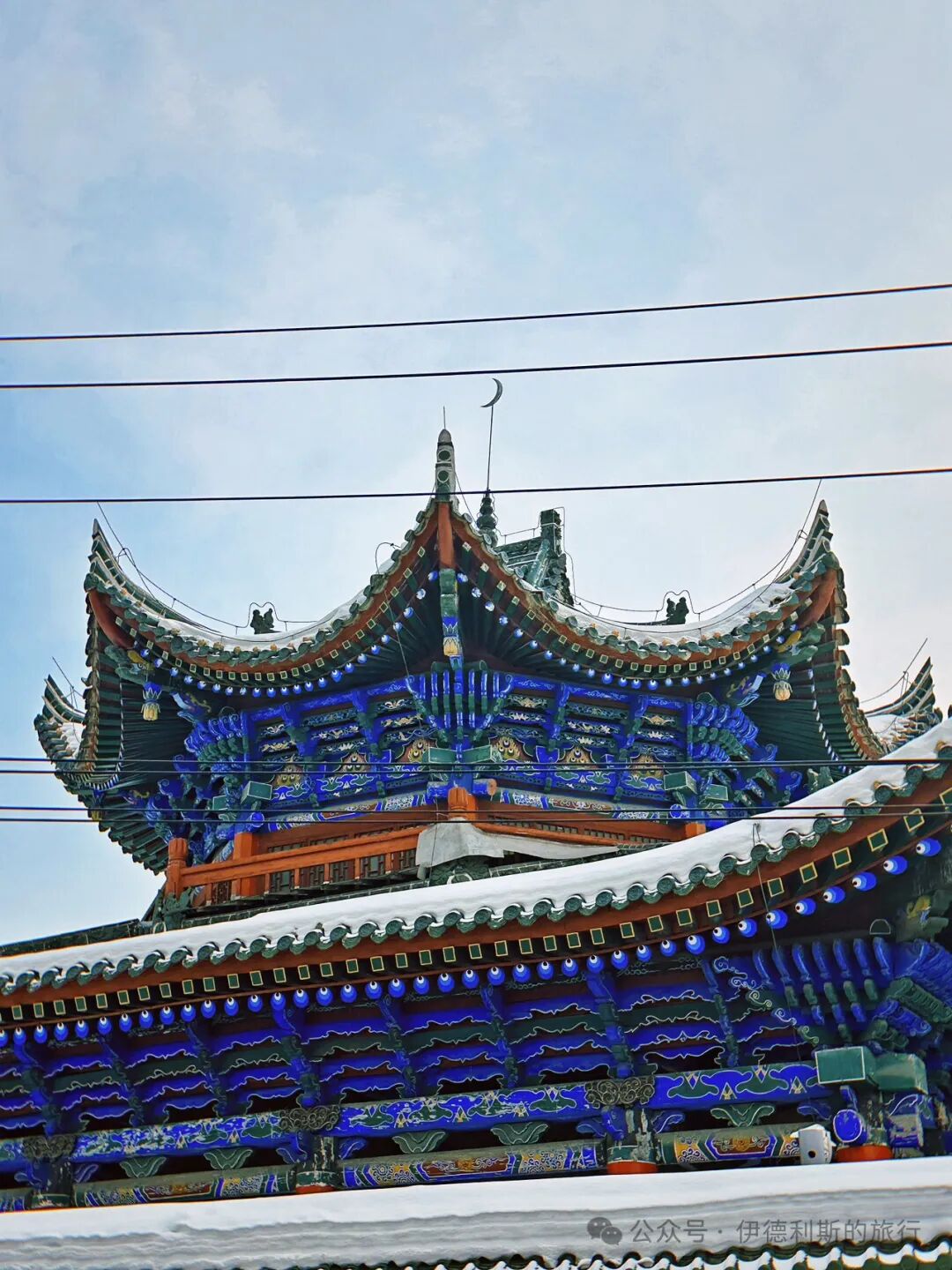
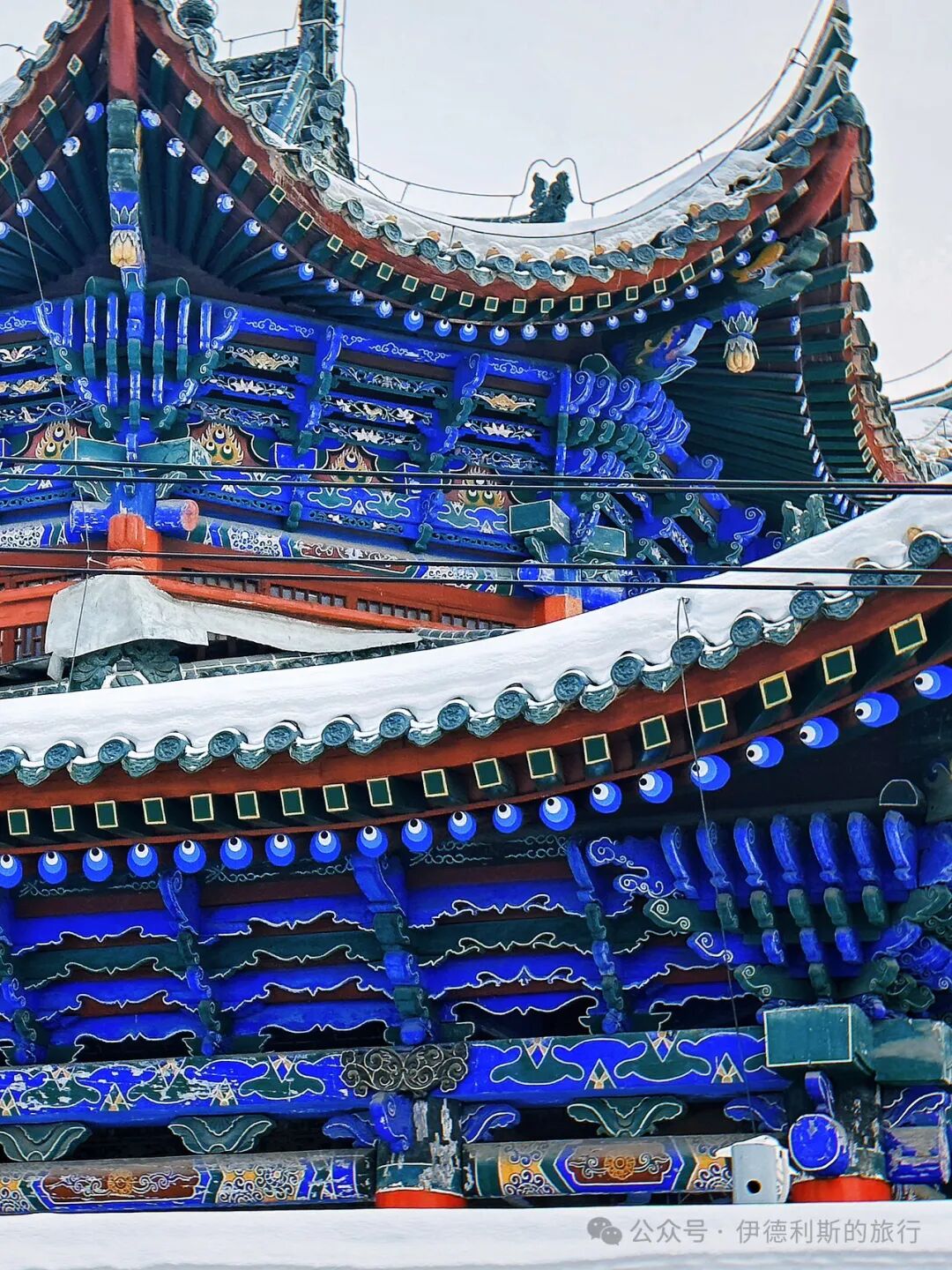
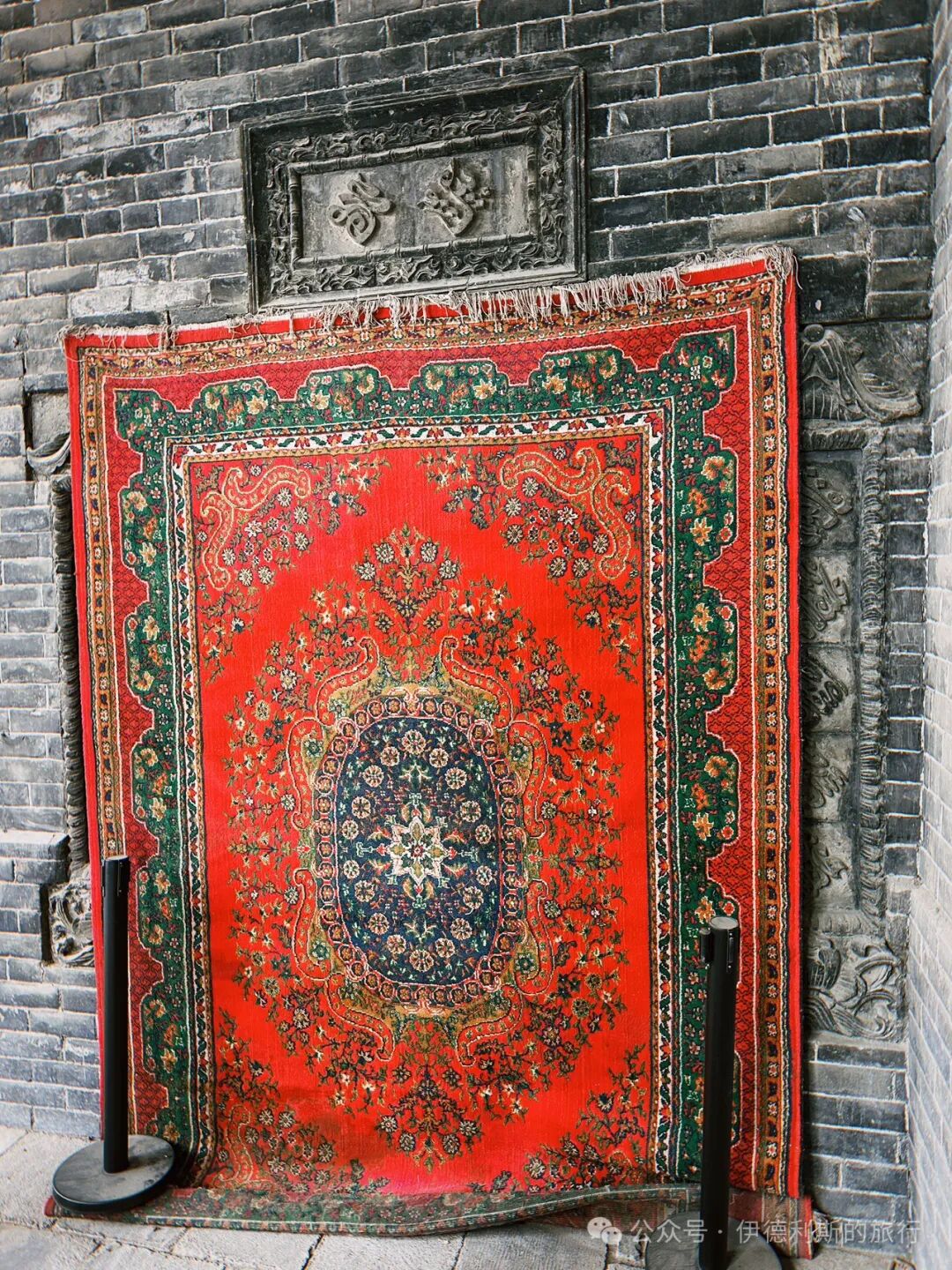
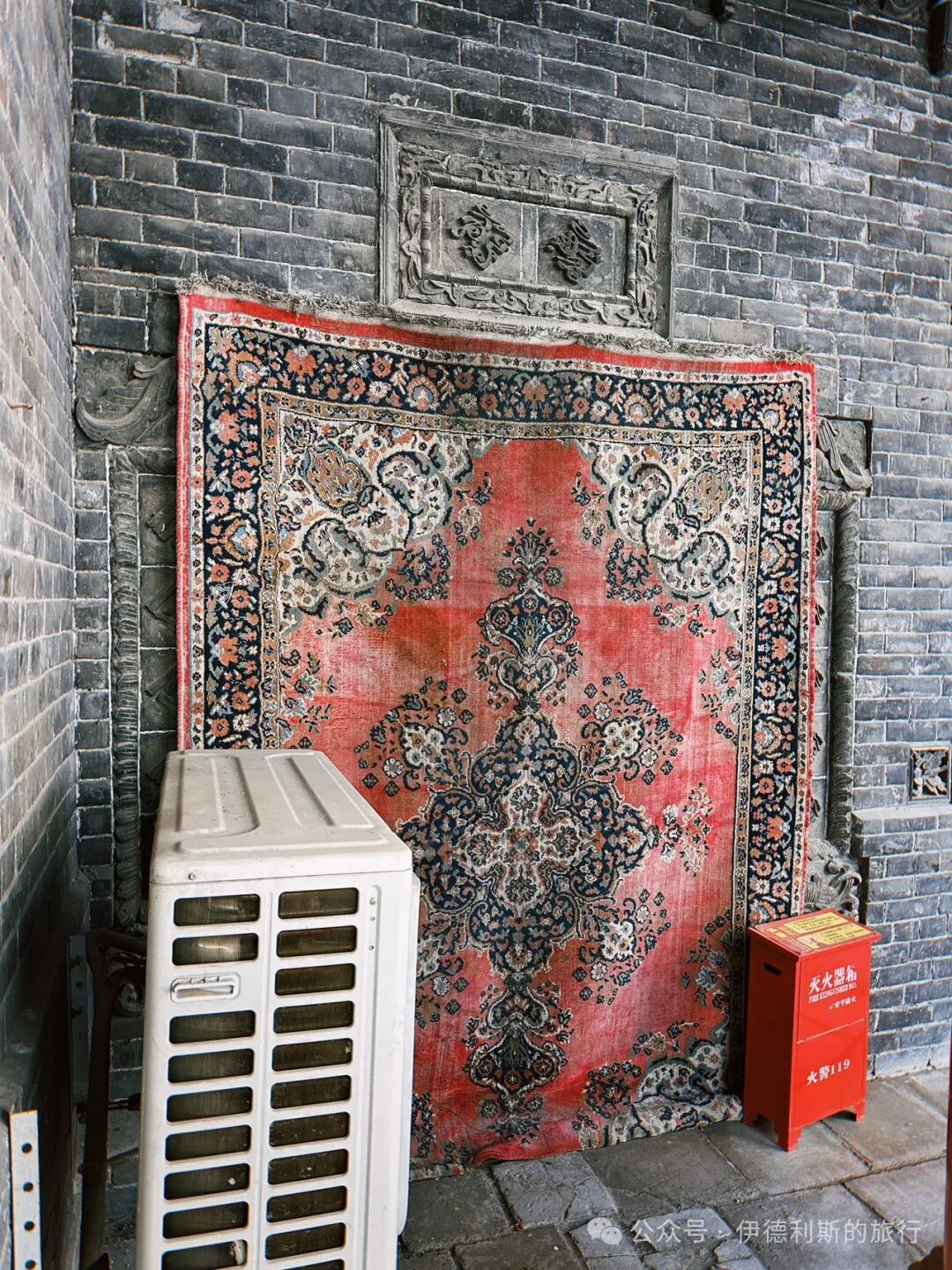
The facade of the main hall features beautiful Shaanxi-style Arabic calligraphy in stone and wood carvings. The stone calligraphy carvings are located on the gates on both sides of the rear kiln hall. Because they were covered with thick carpets to block the wind during winter, it was difficult to photograph the full view.
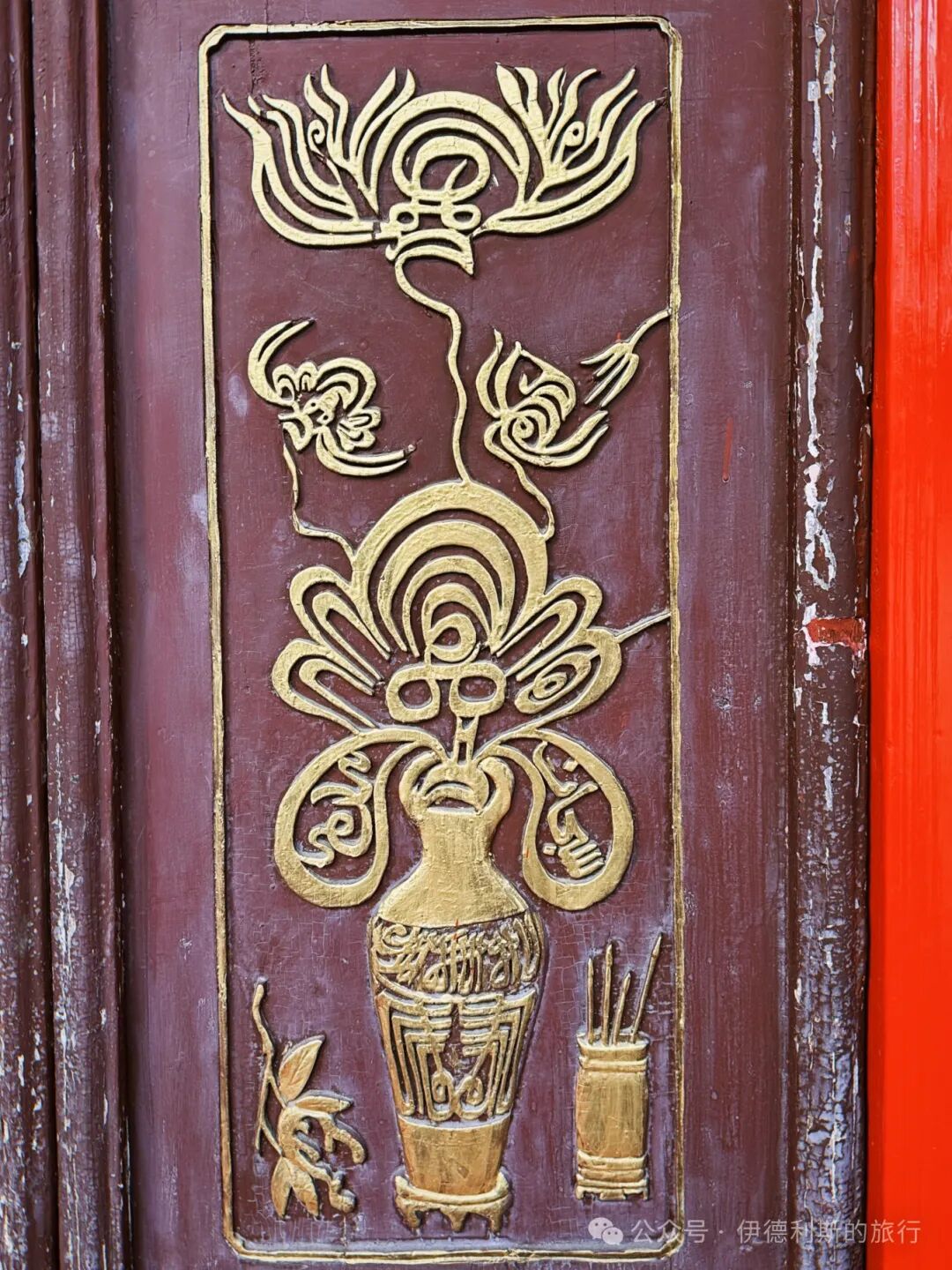
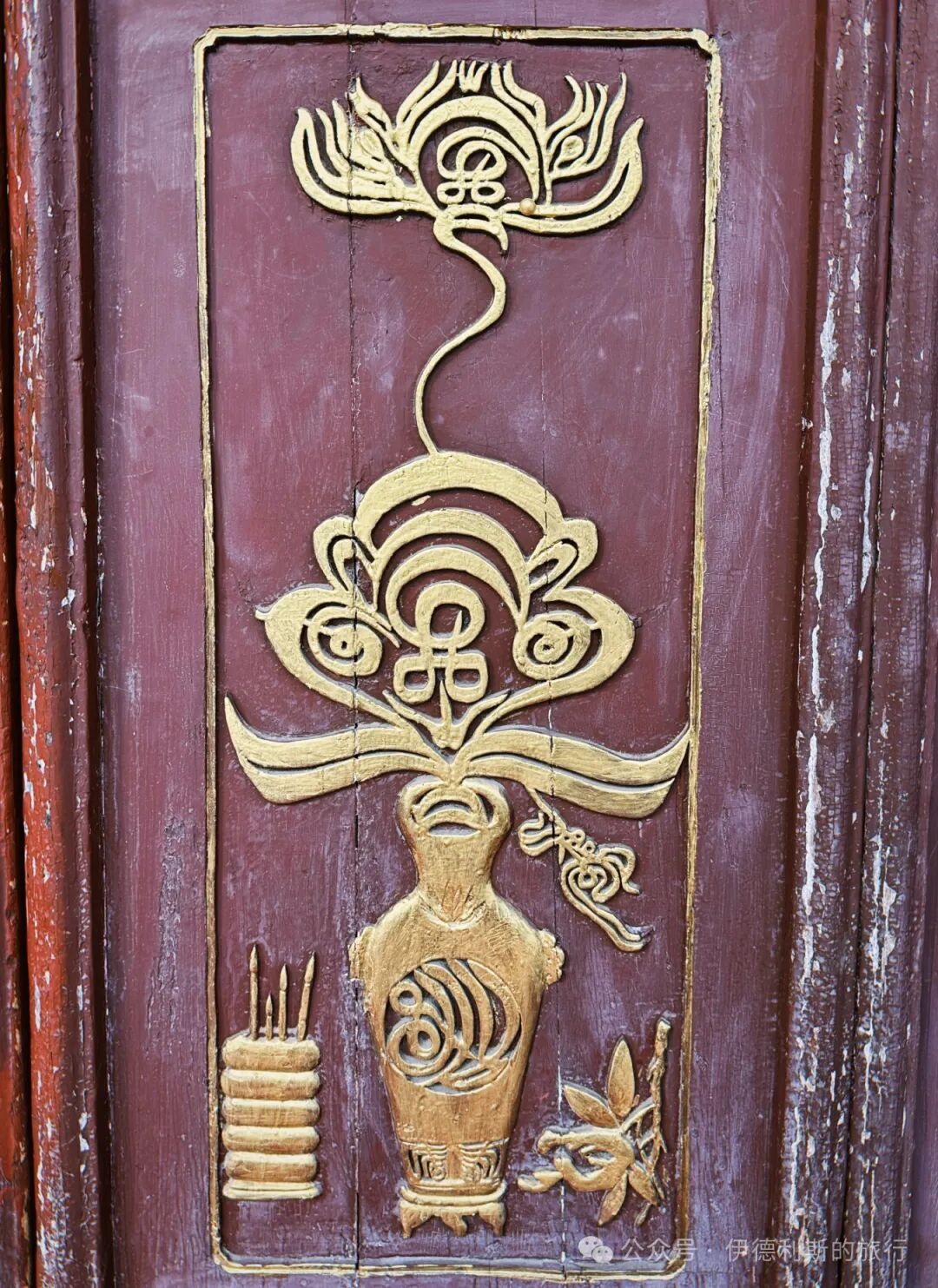
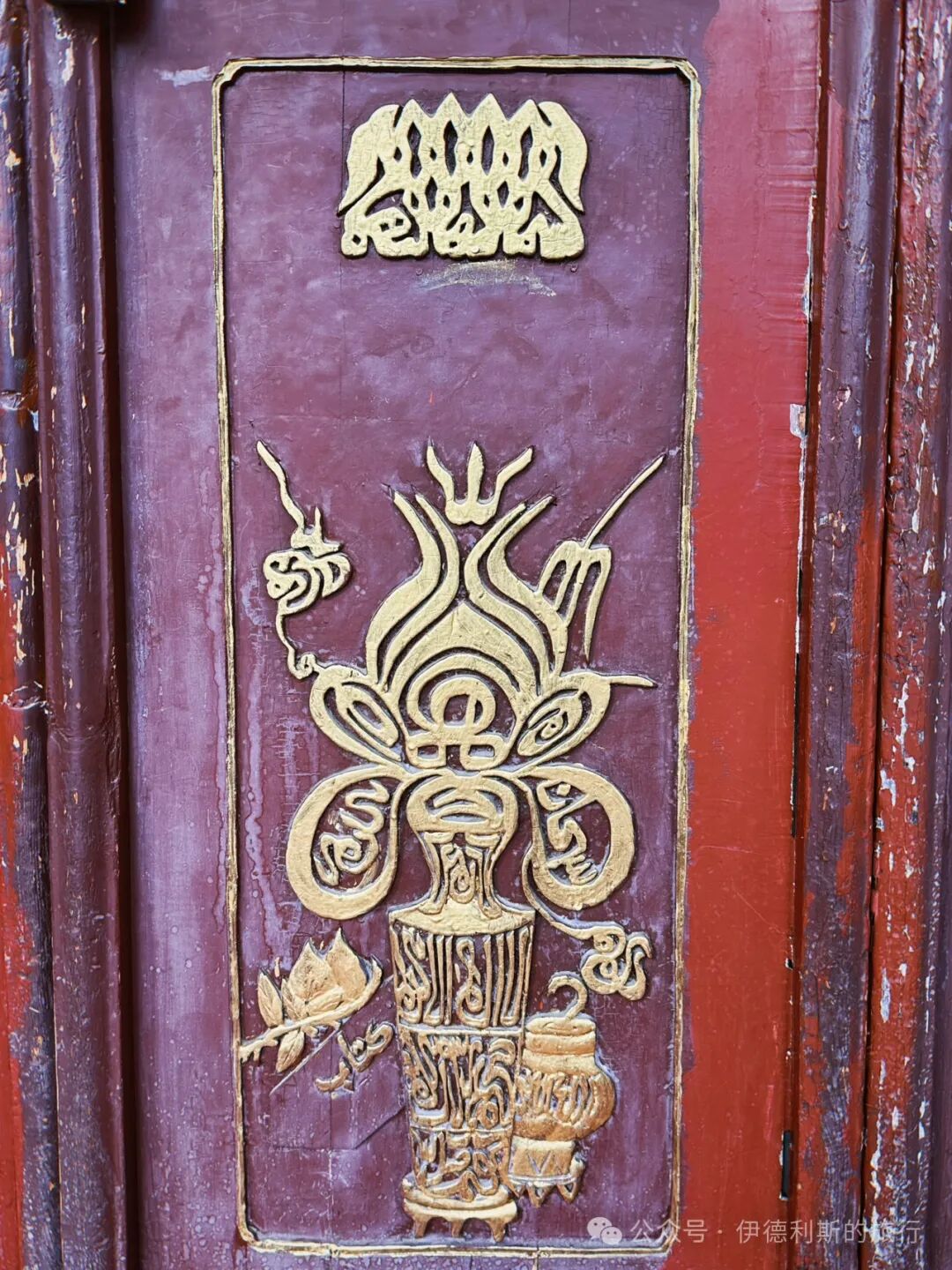
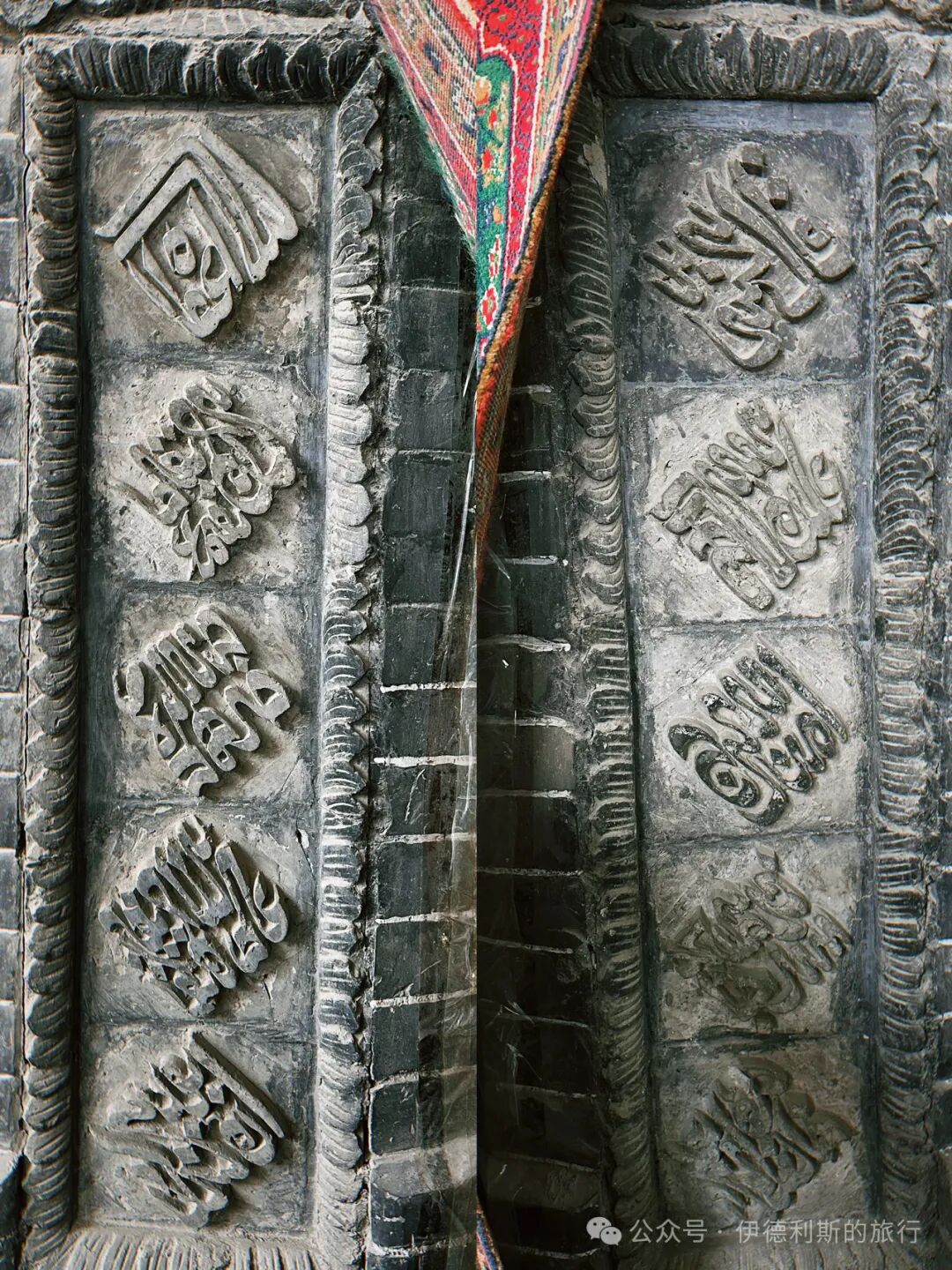
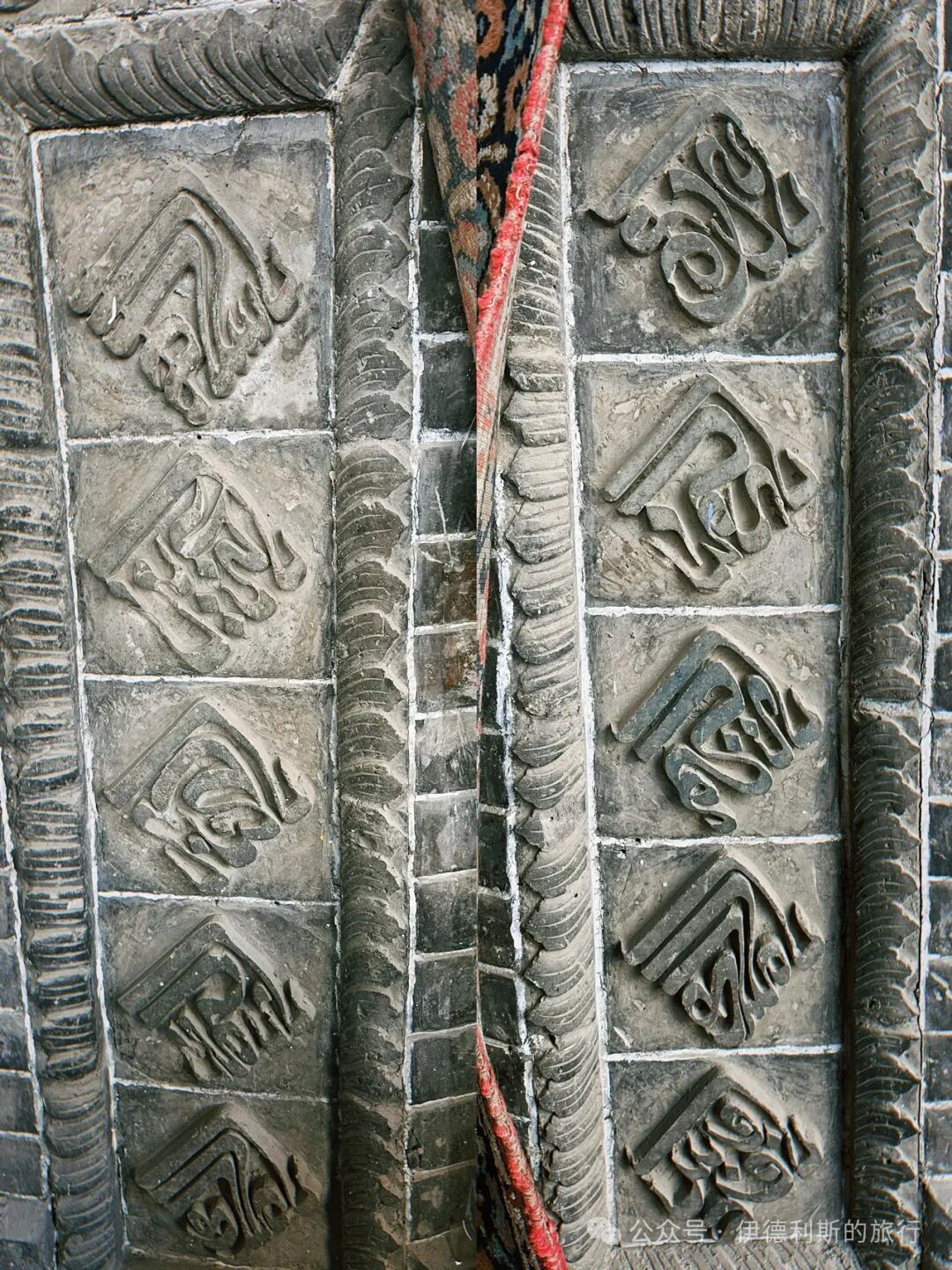
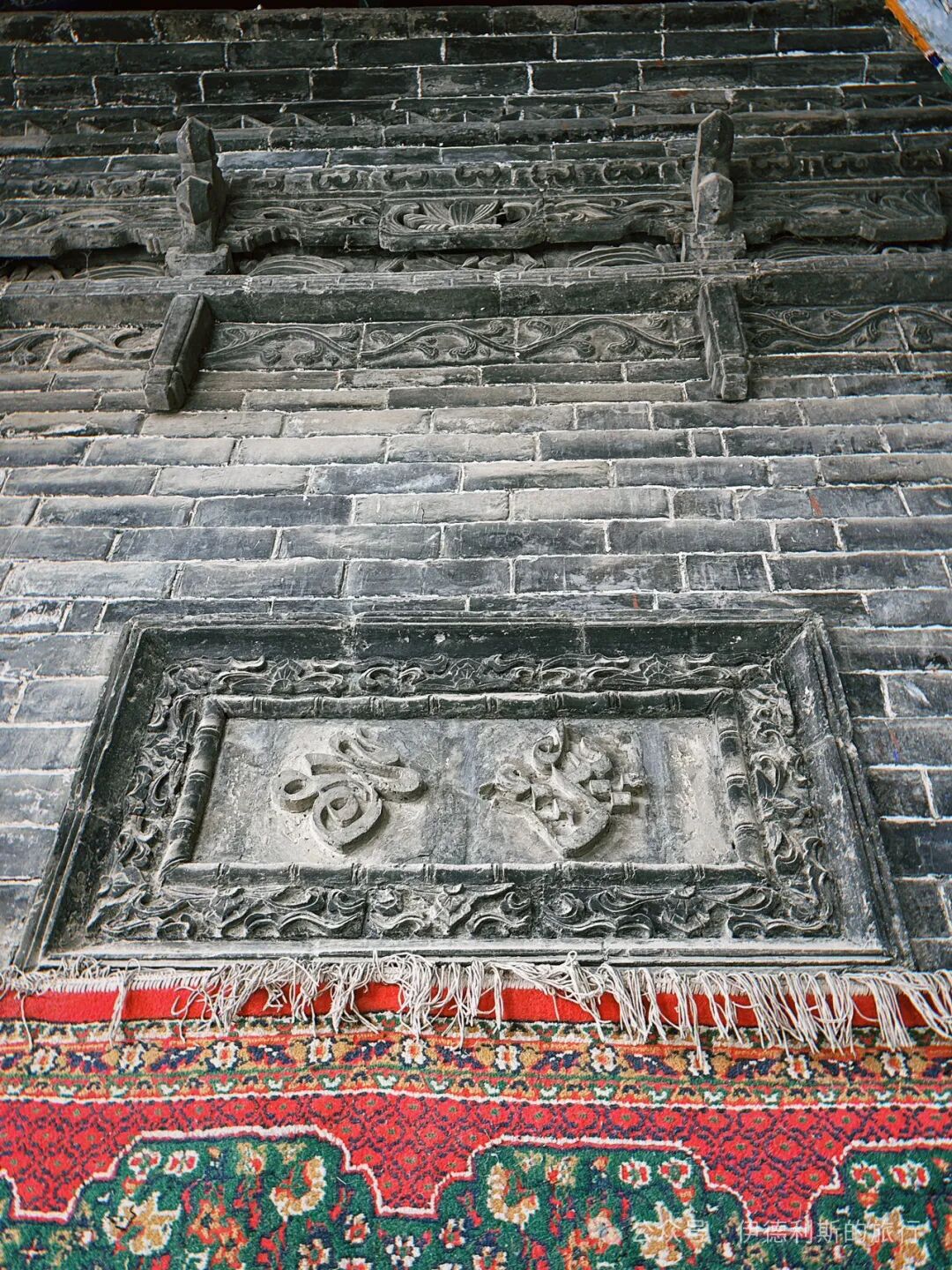
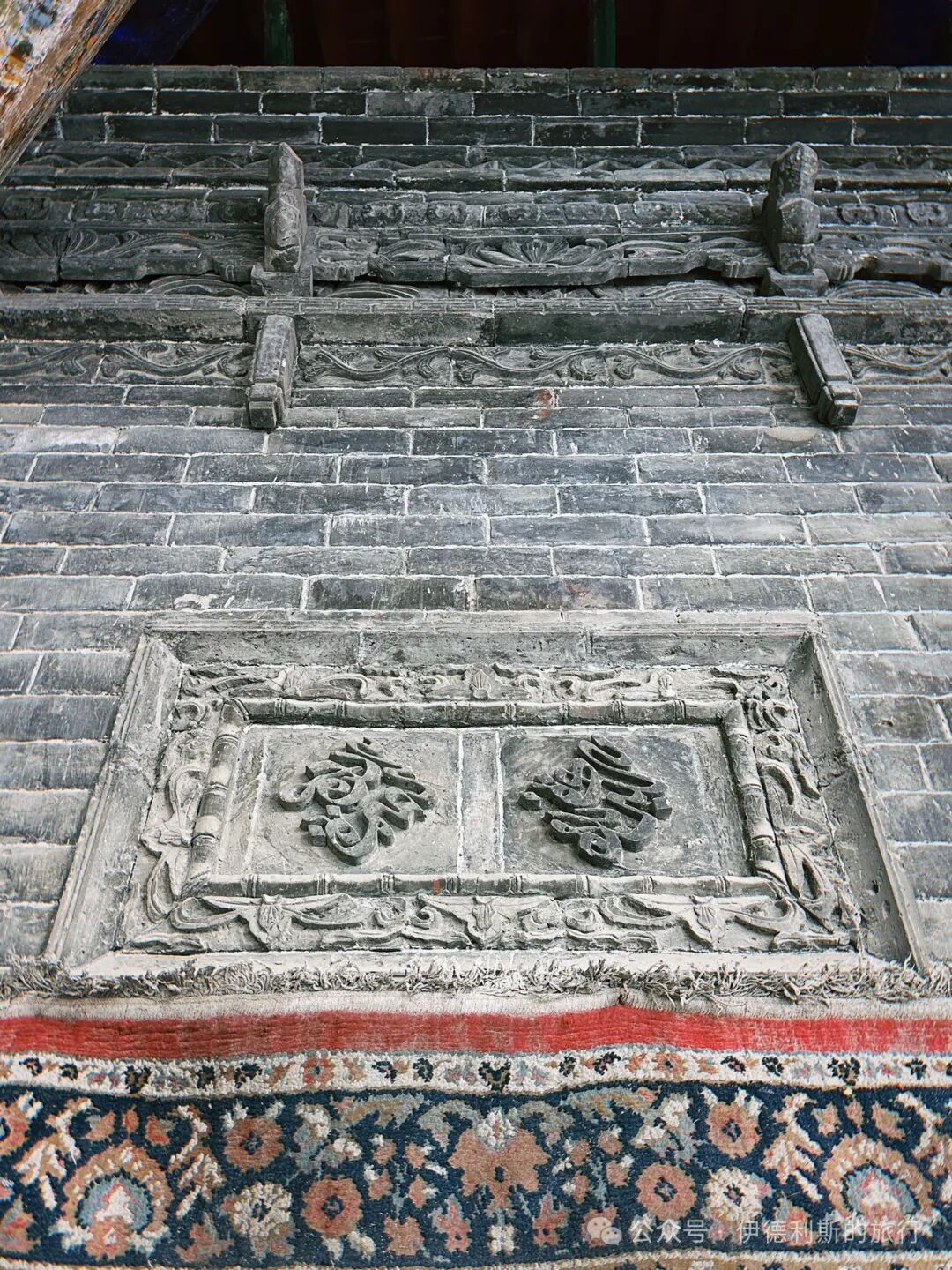
The main hall uses a traditional beam-lifting wooden frame. Between the main hall and the prayer niche (yaodian) stands a wooden screen carved with intertwined grape vines. It features traditional Arabic calligraphy in the center, and the Shahada is cleverly written above it in the shape of tree roots.
An inscription on the main hall roof reads: Built by the collective efforts of officials, merchants, scholars, and commoners from all provinces in Guanzhong. Rebuilt under the supervision of Imam Ma Liangjun, the head of the mosque in Xianyang. Completed on an auspicious day in the middle of the seventh lunar month in the 32nd year of the Guangxu reign of the Qing Dynasty. Managed by community leaders Lan Jiling, Chen Yuanshan, Ma Zhihe, Guo Shijun, Mai Wannian, An Changzhong, Ma Yuefu, Ma Zhenhai, Zhou Yanxing, An Guixiang, and Ma Sheng, with carpenters Bai Xingfa and Xiao Yizhang.
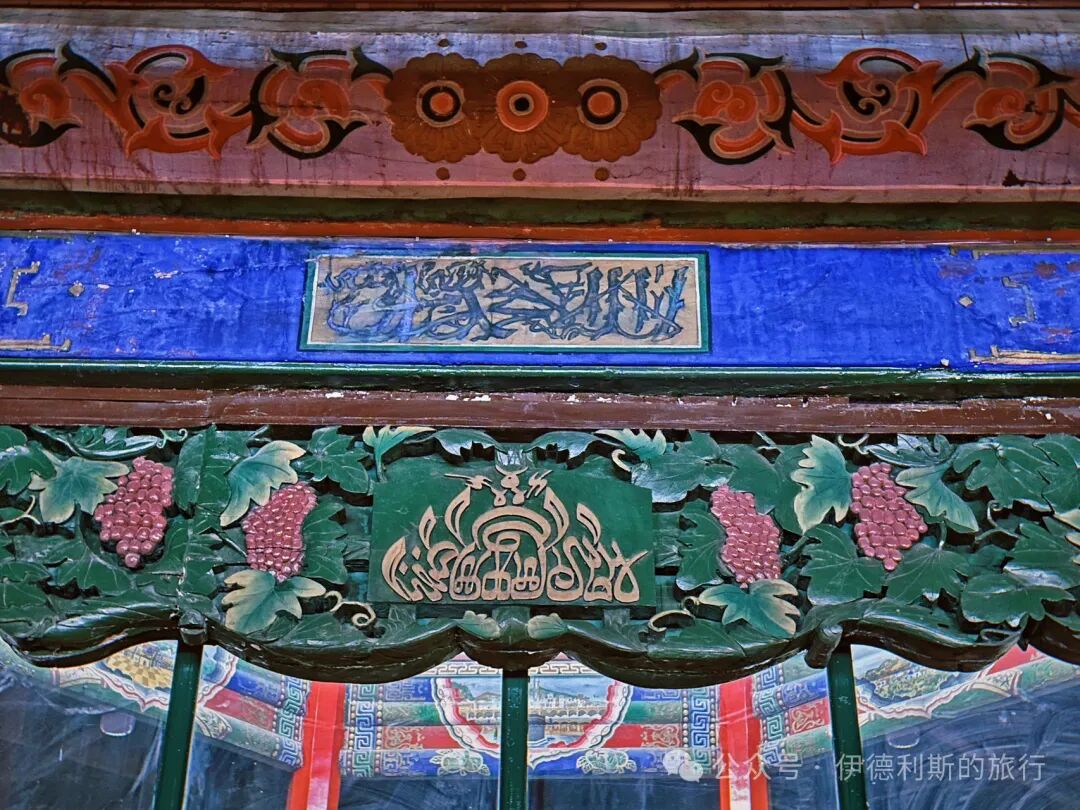
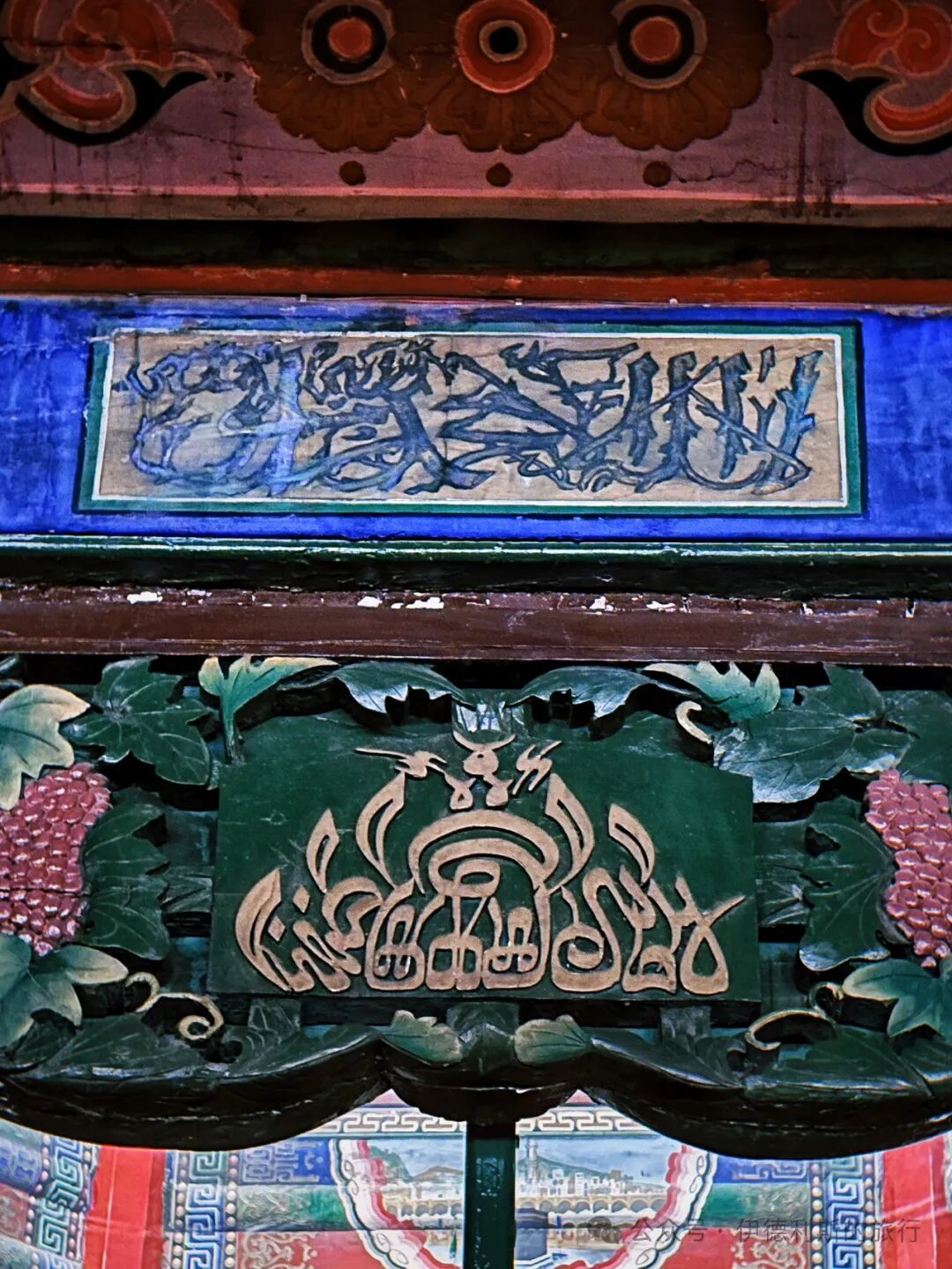
The prayer niche ceiling features an exquisite caisson (zaojing) made of three layers of hanging lotus-style wooden components.
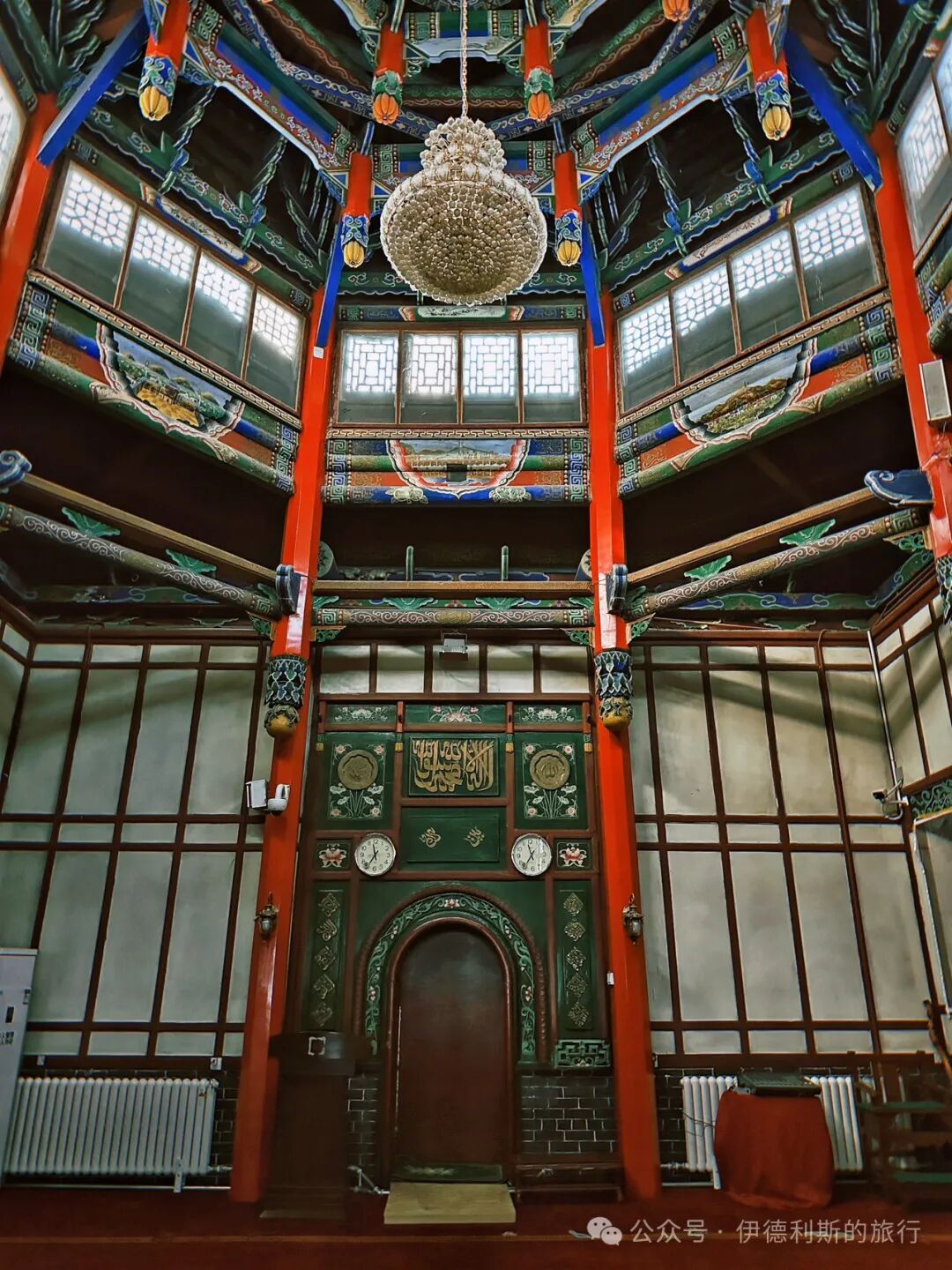
The prayer niche contains Arabic calligraphy, and both the mihrab and the two side doors feature traditional Shaanxi-style wood-carved calligraphy.
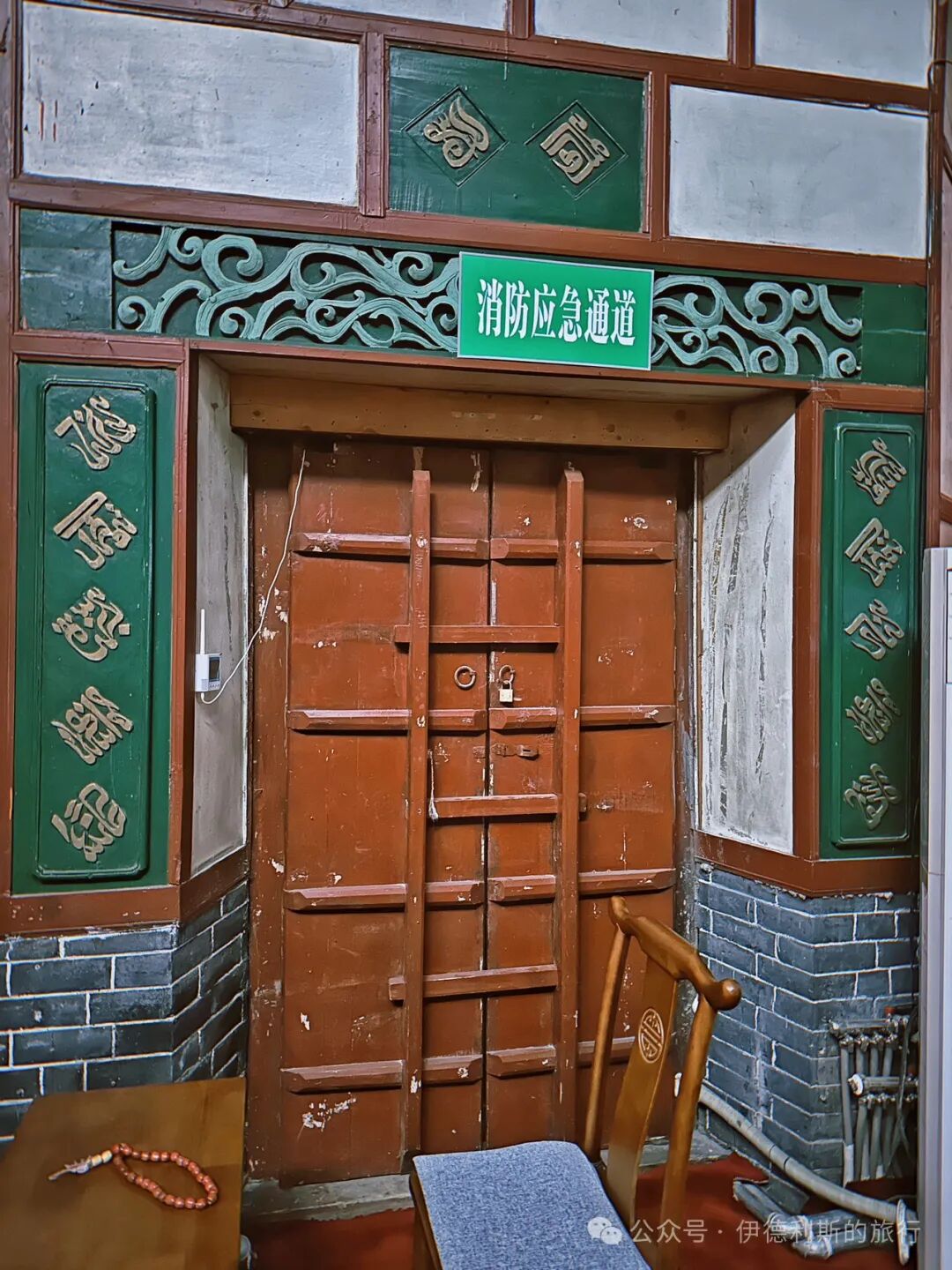
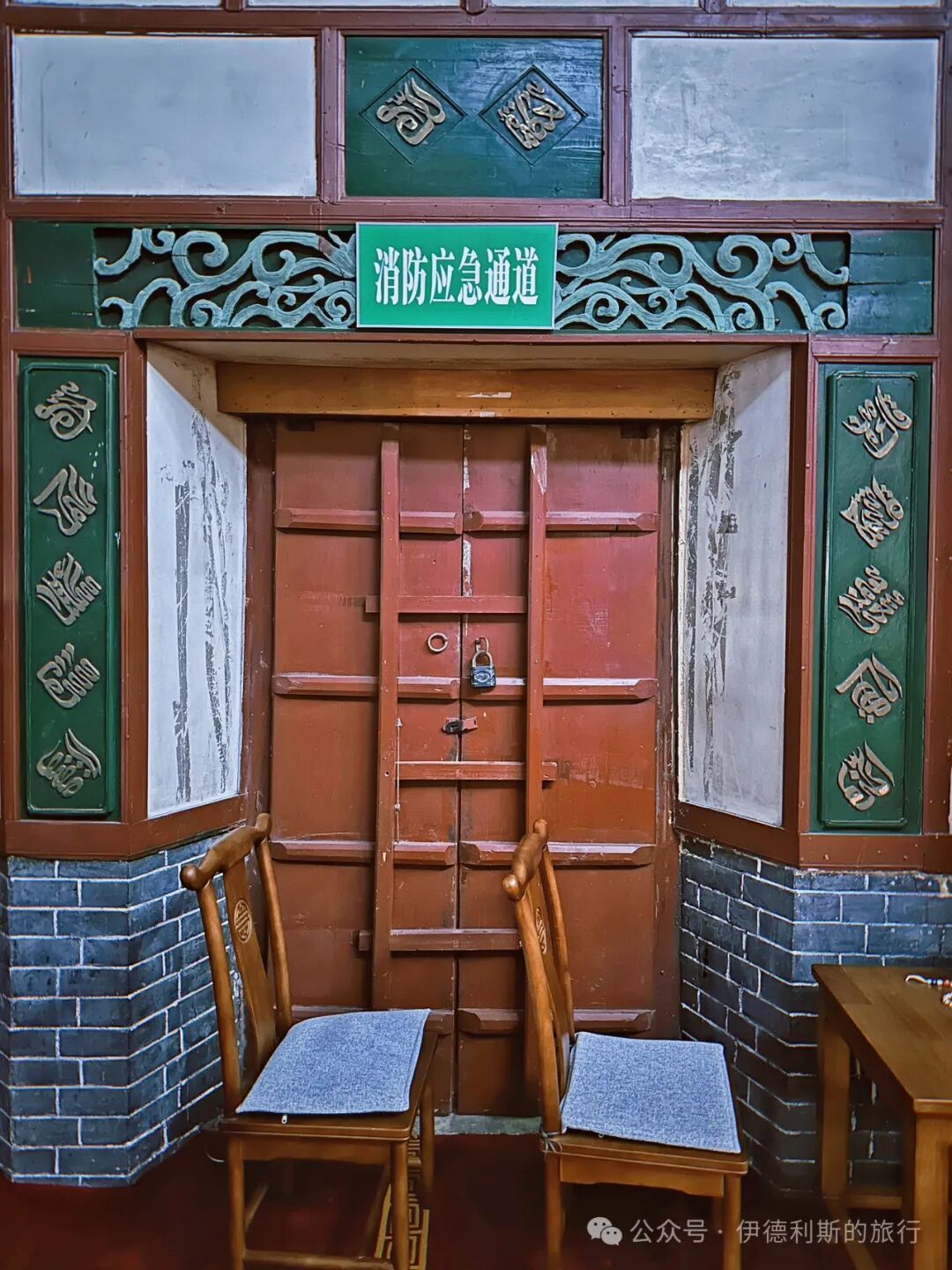
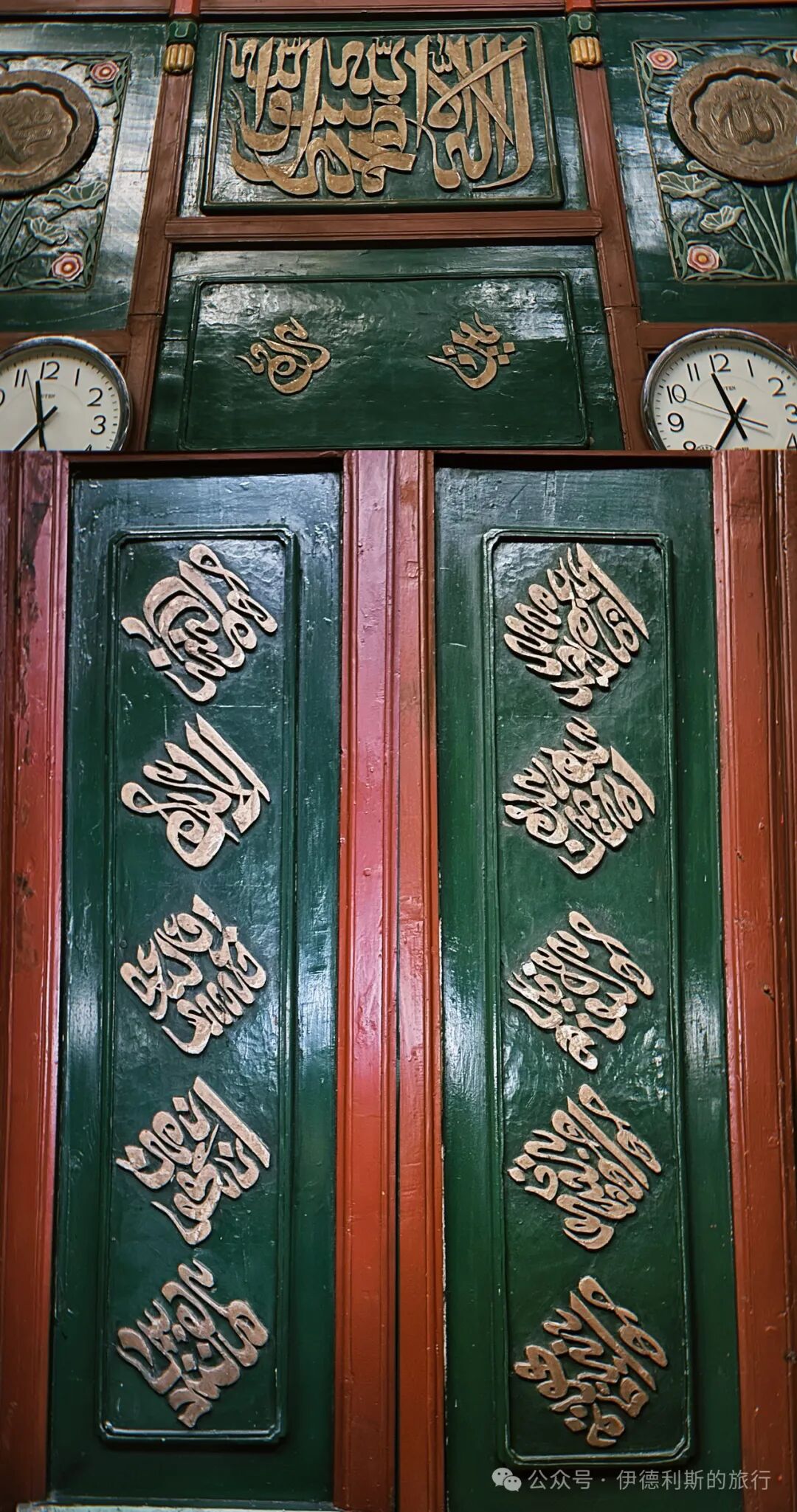
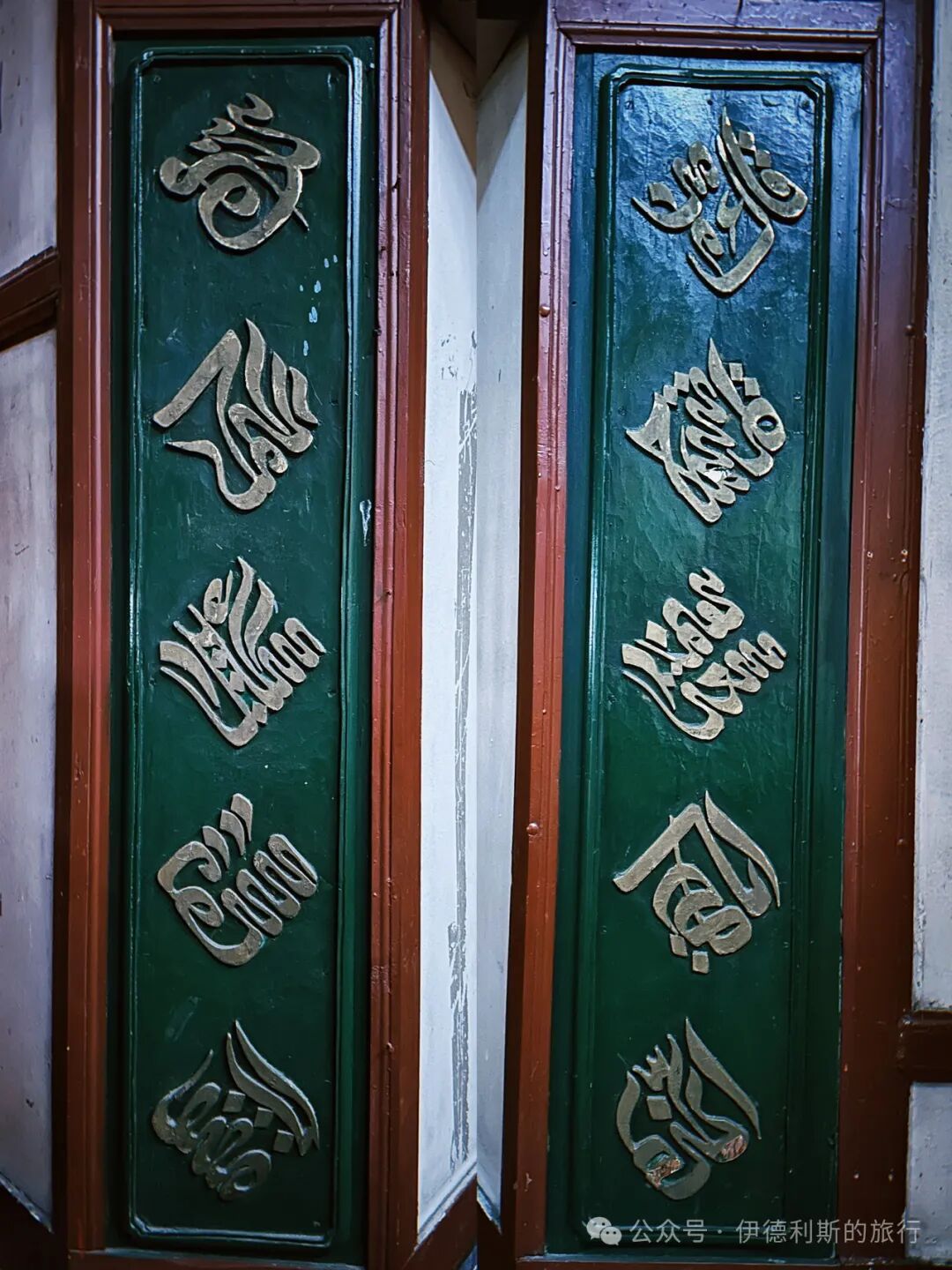
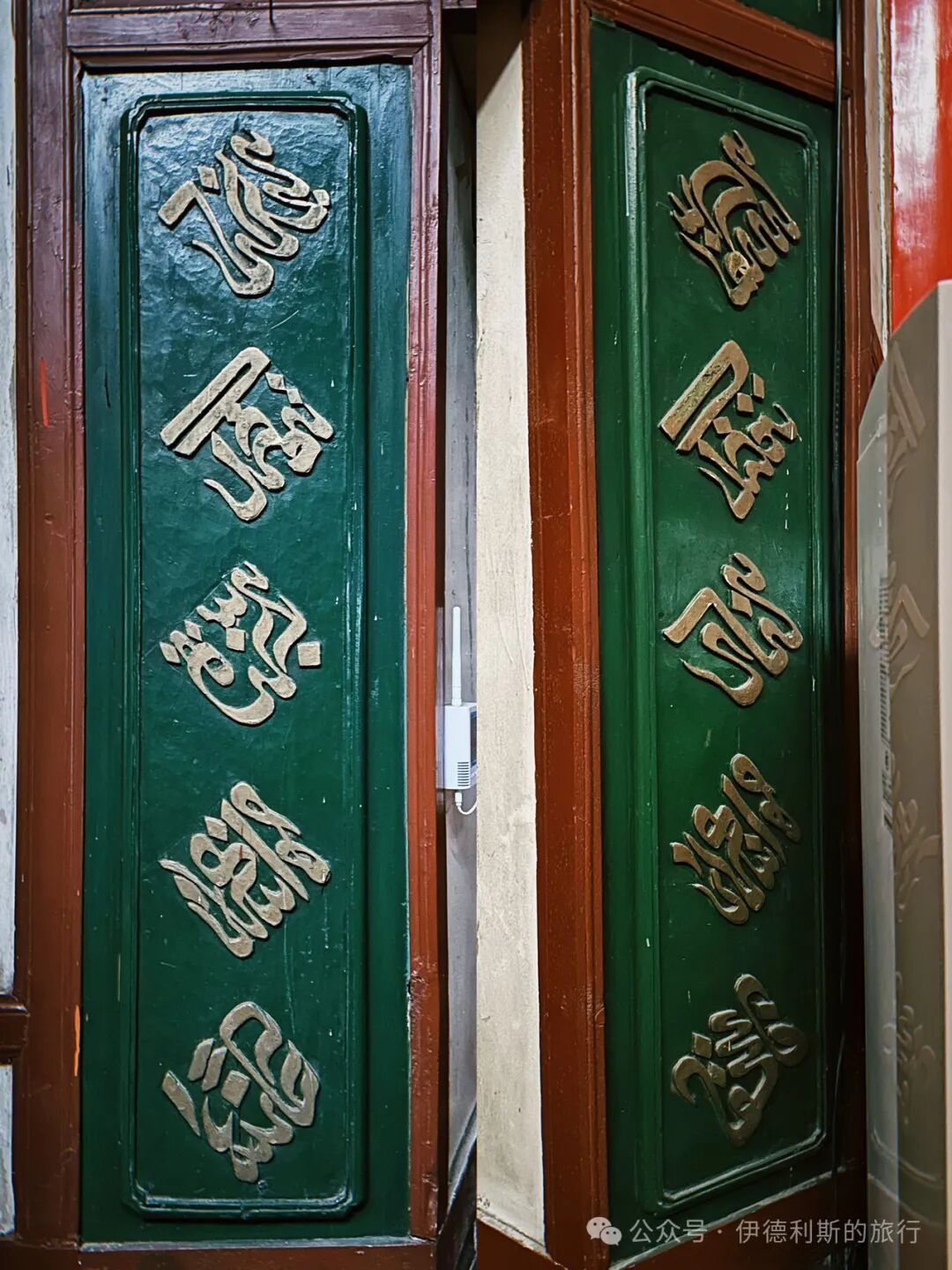
Shaanxi Grand Mosque is now open to visitors daily from 11:00-13:00 and 15:00-17:00. The main hall is unlocked, and there are two exhibition halls to explore.
The exhibition halls display architectural parts from the Shaanxi Grand Mosque, antique porcelain, and a century-old carpet decorated with various antique patterns and floral designs.
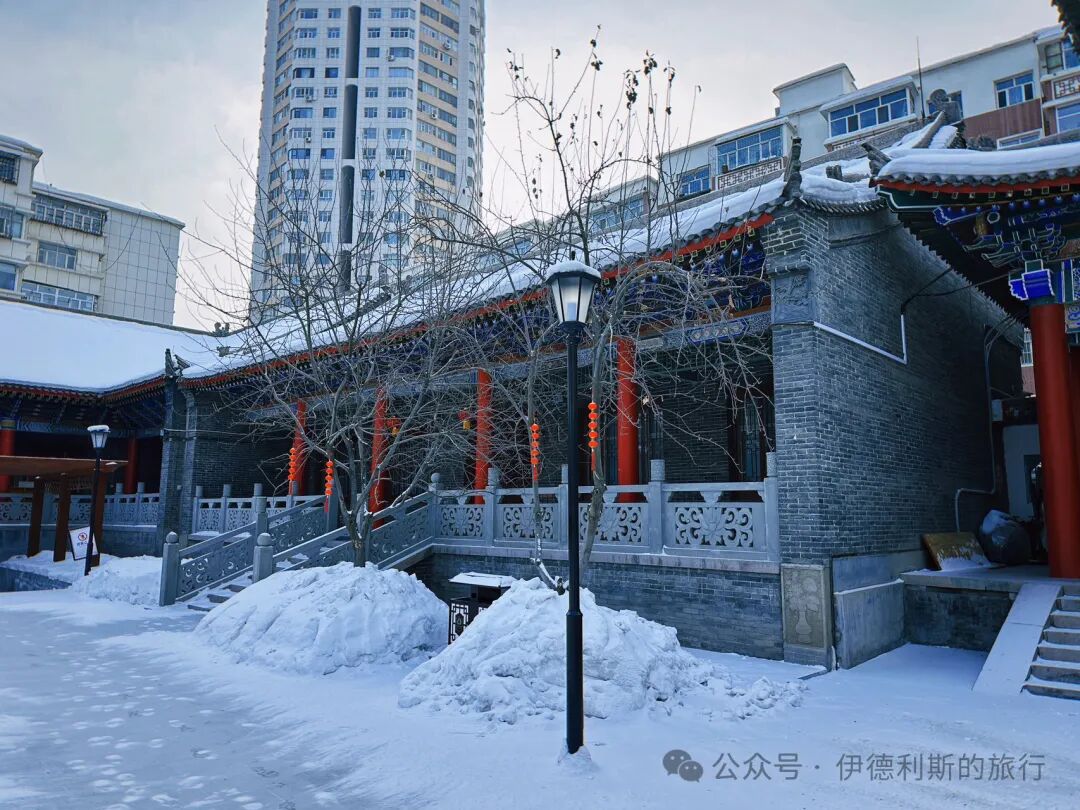
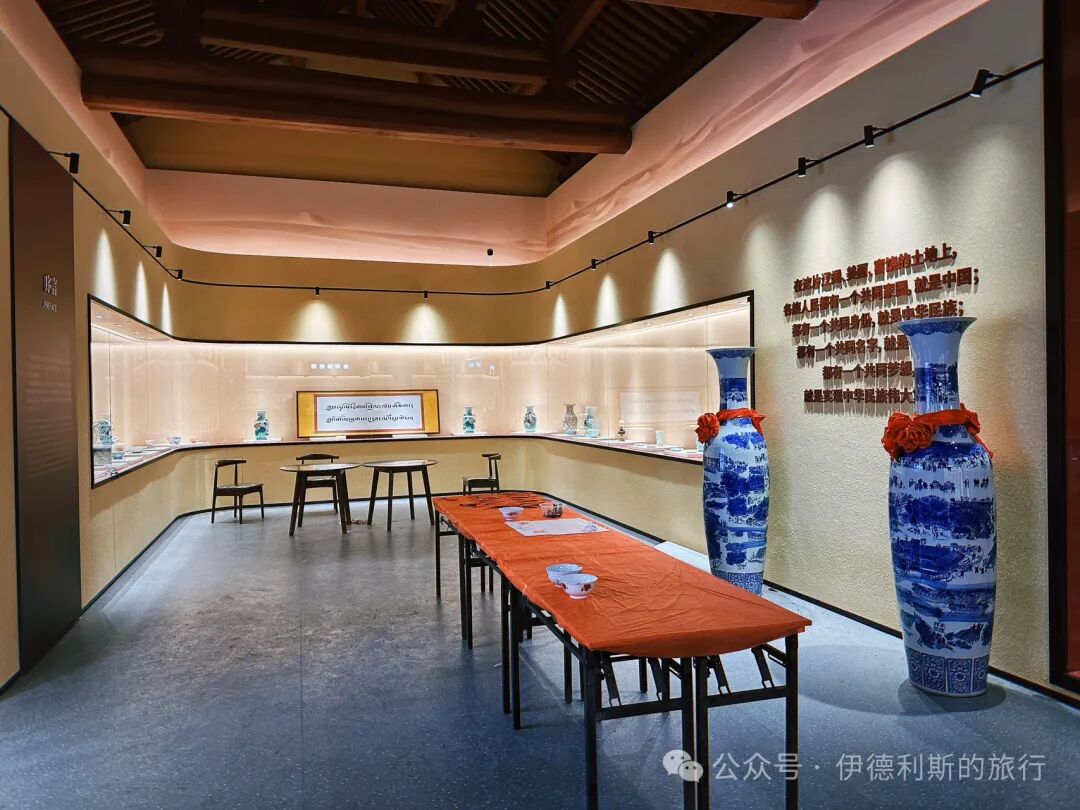
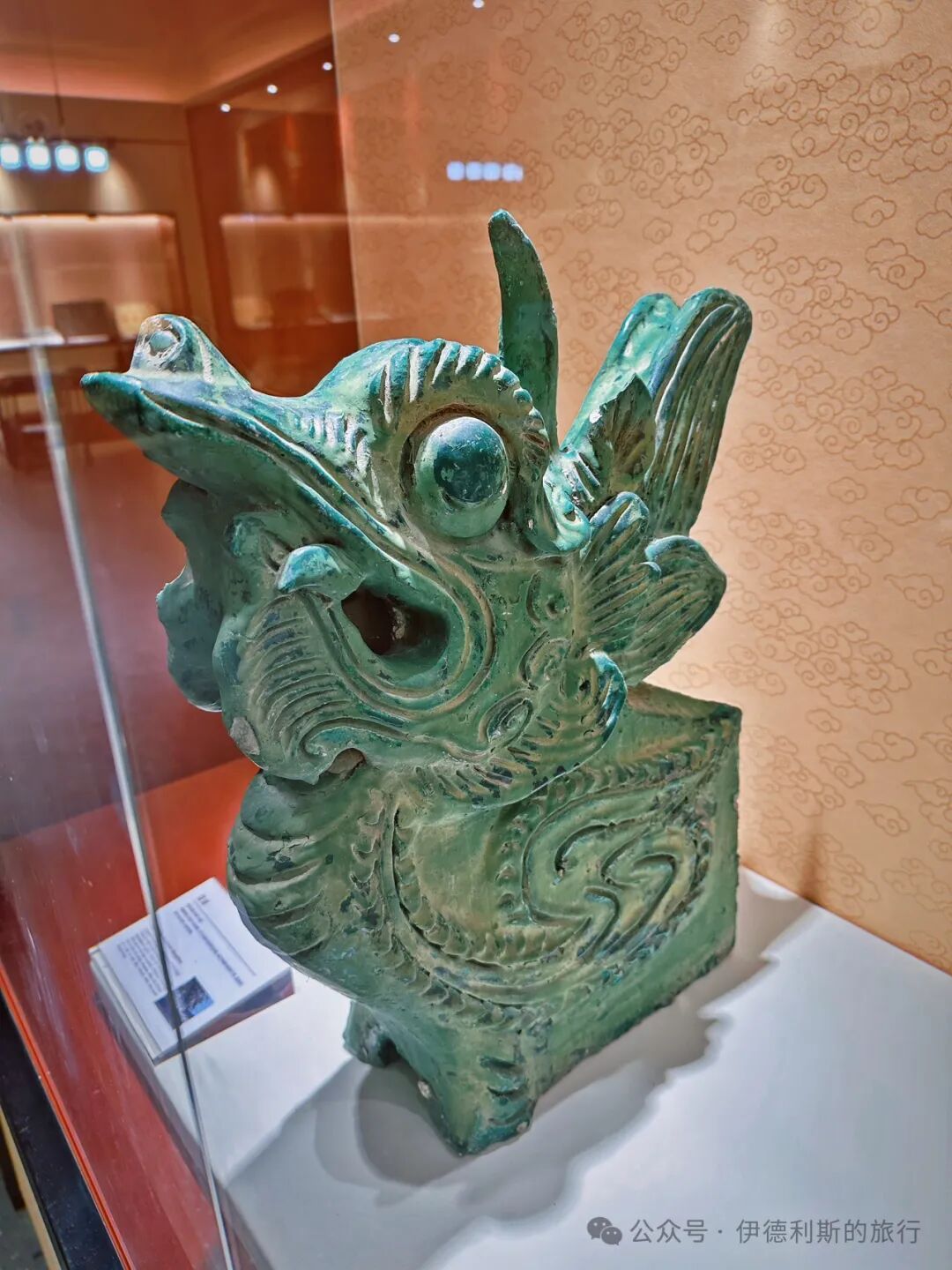
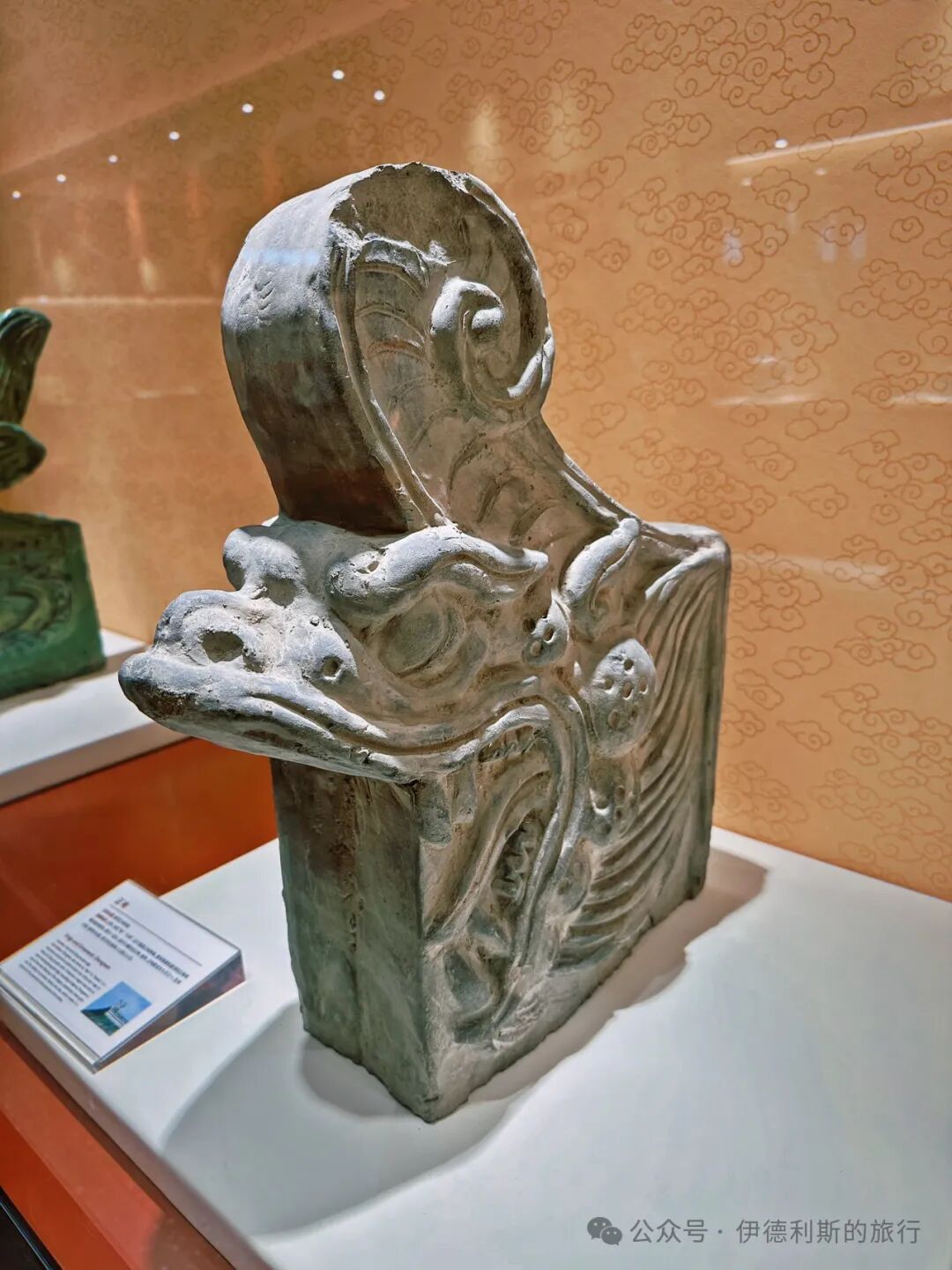
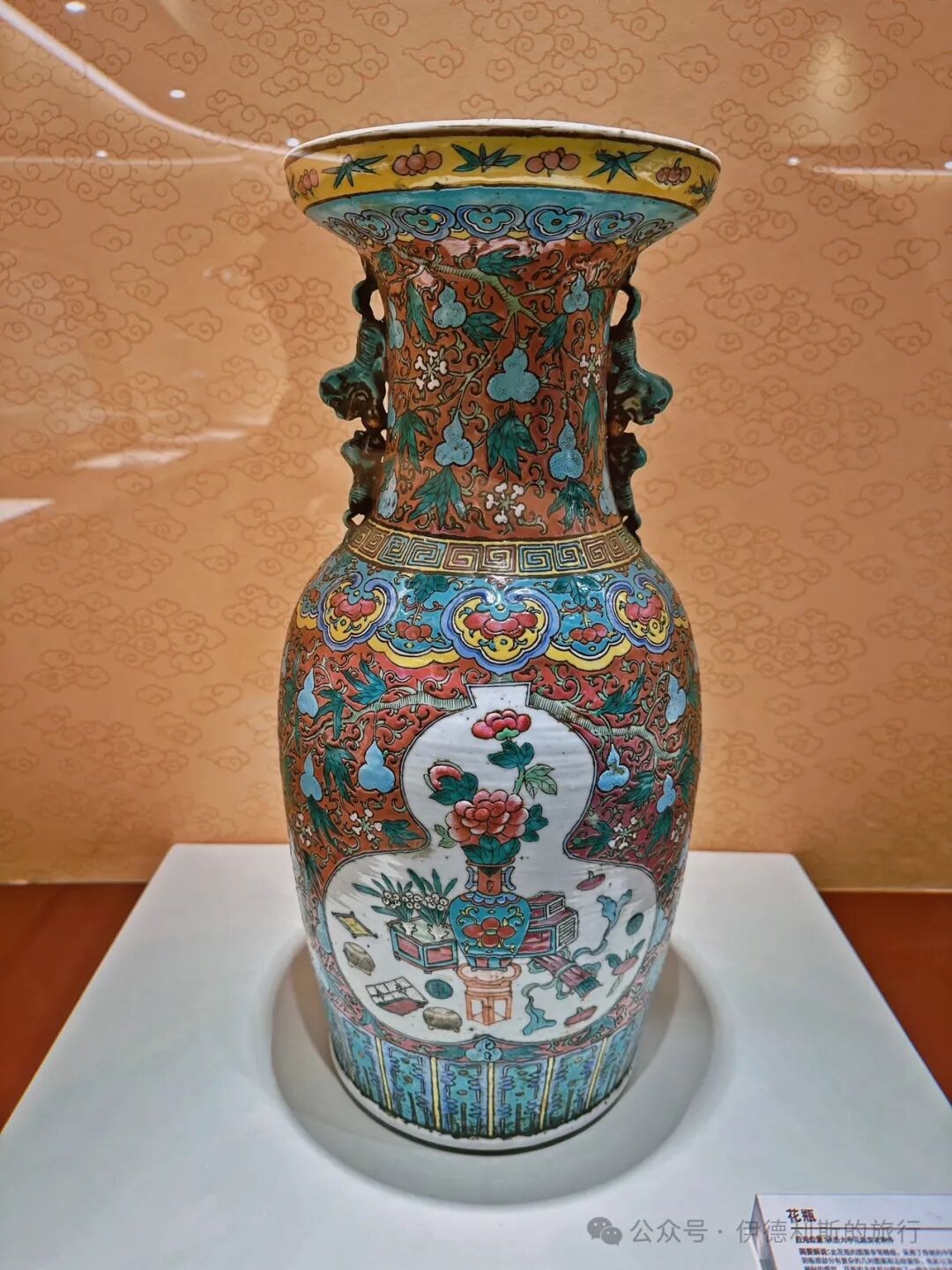
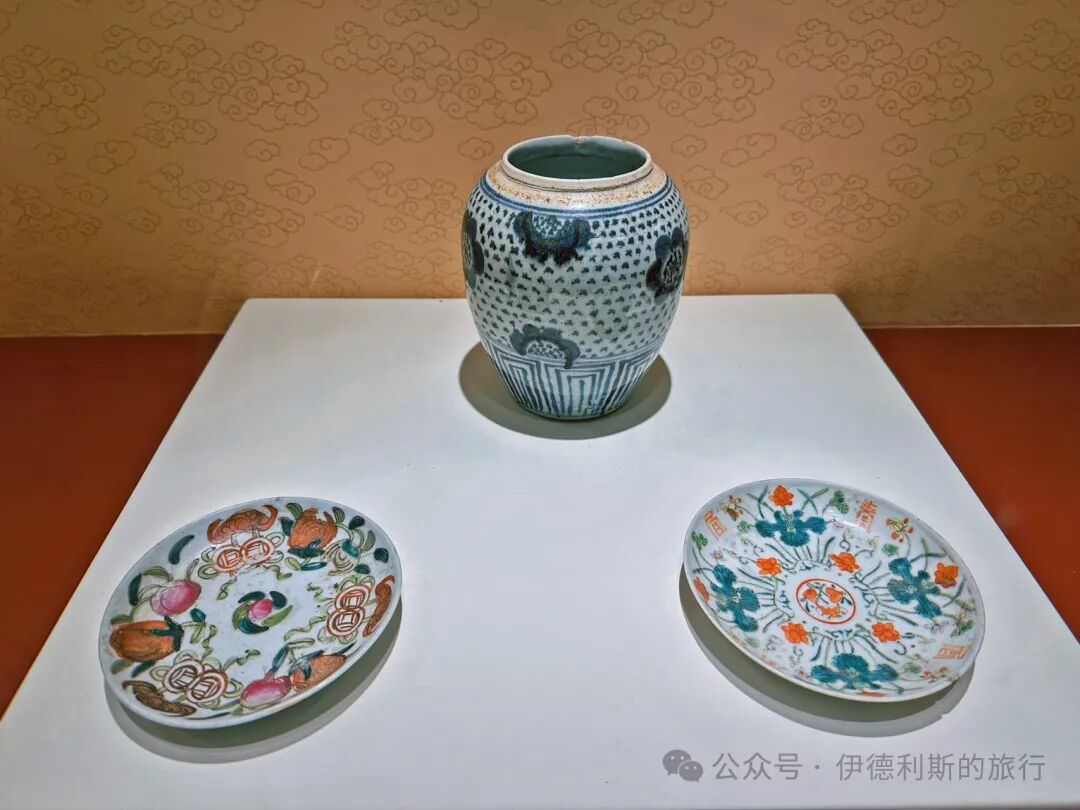
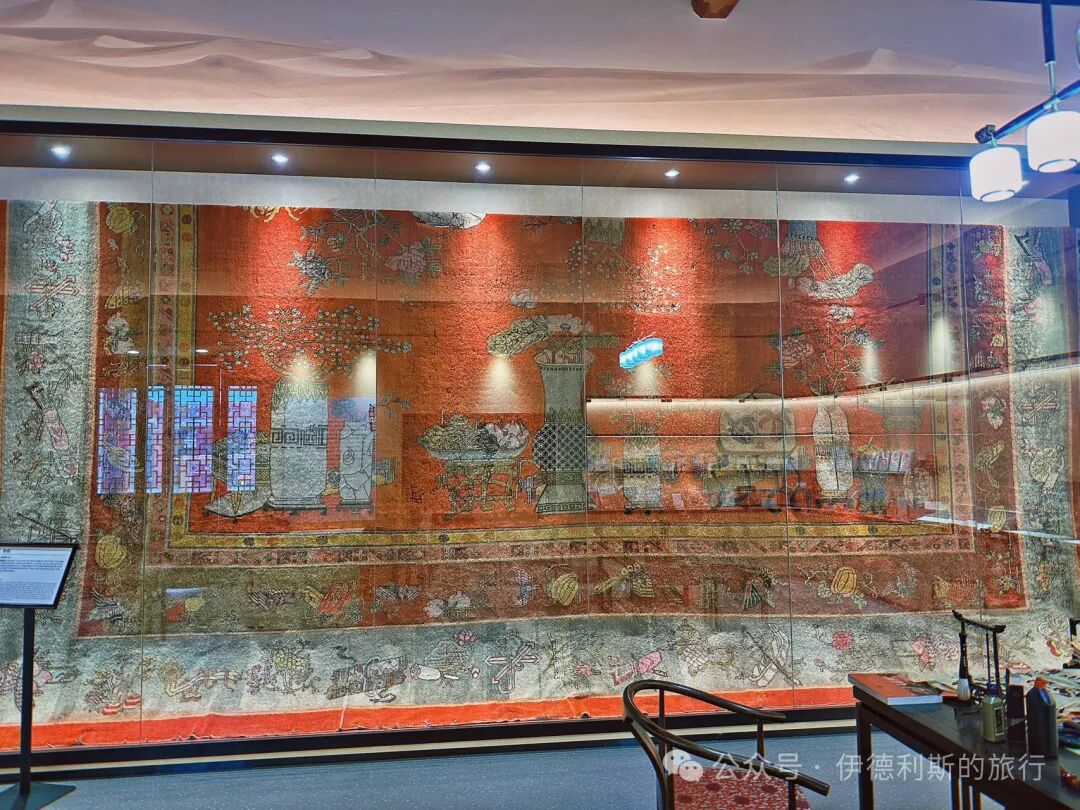
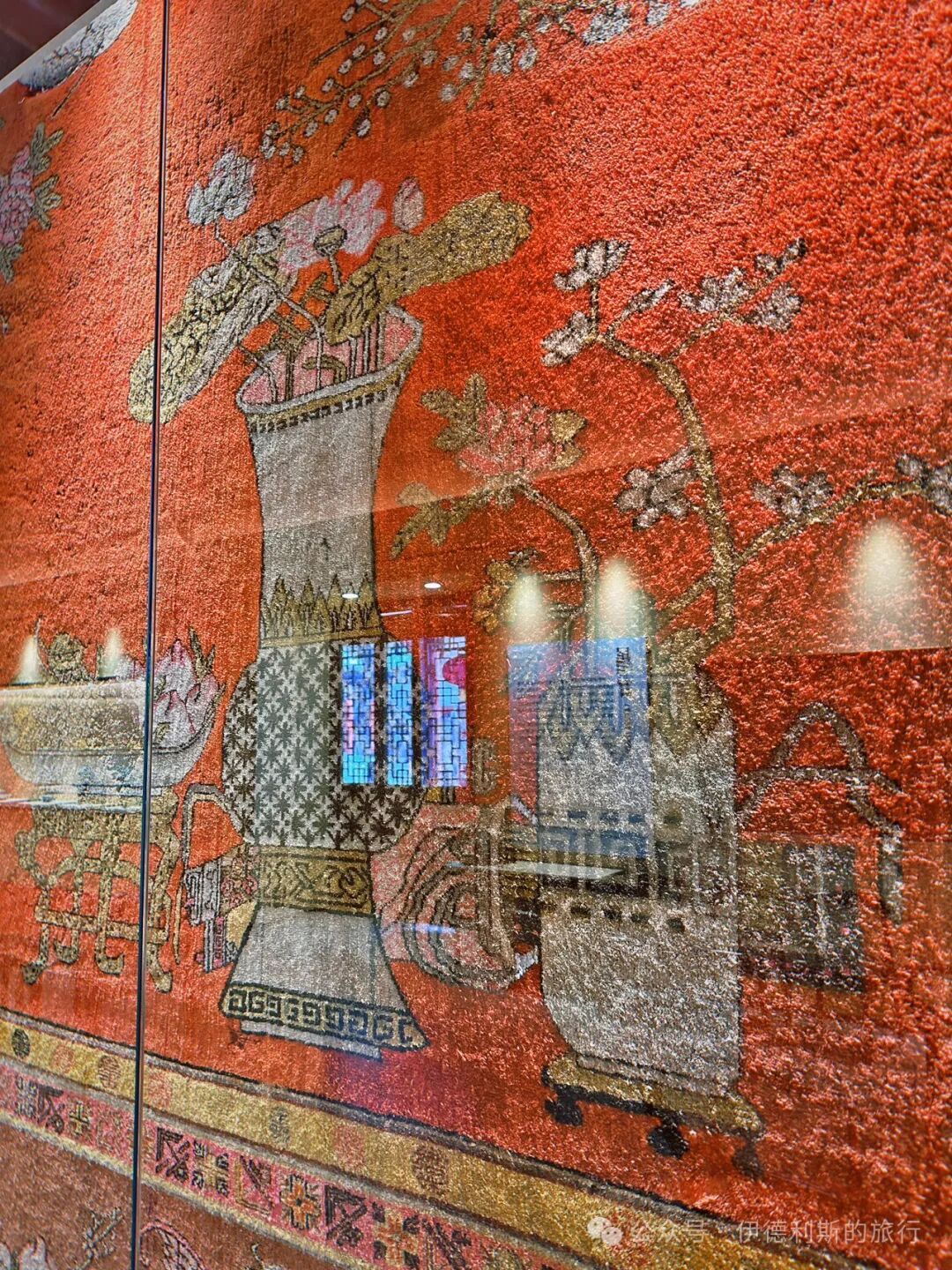
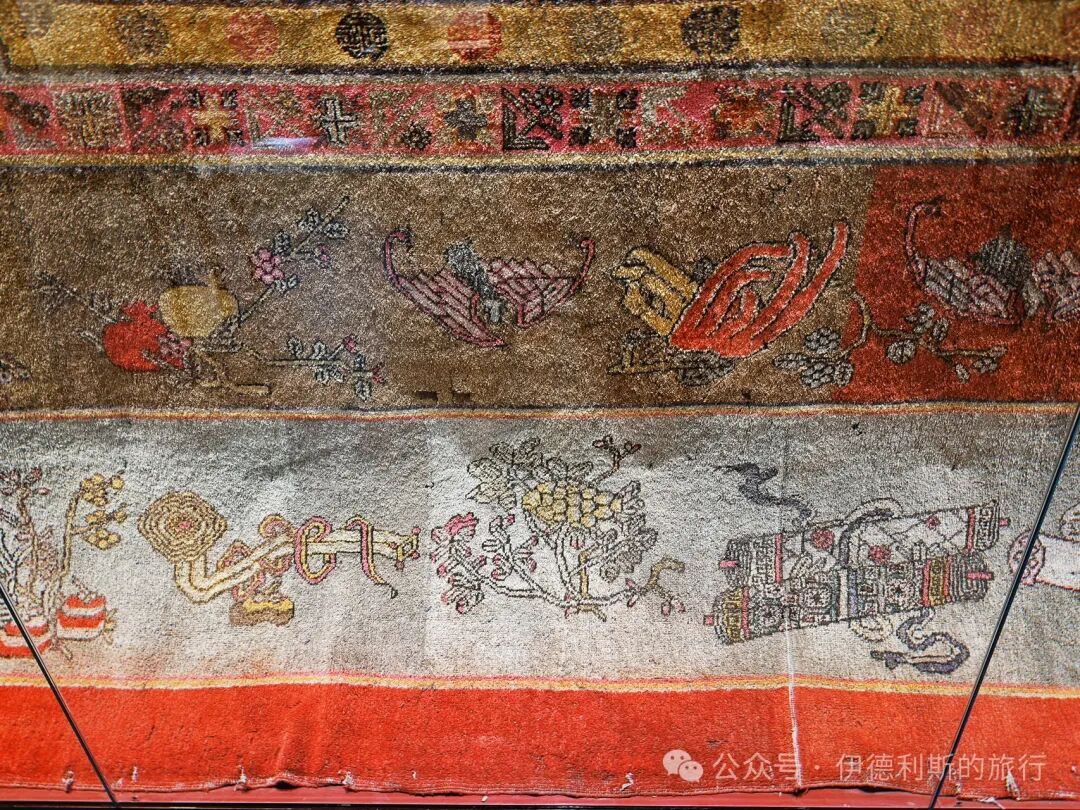
Exhibits include ox and sheep bone tablets used by students (mulla) for learning, works by the great Imam Ma Liangjun, and a 1950 notice appointing him as a member of the Northwest Military and Political Commission's Ethnic Affairs Committee.
Great Imam Ma Liangjun was born in Zhangjiachuan, Gansu. As a young man, he traveled to Yunnan and received authentic teachings from Imam Ma Renshan (Pu'er Ma). He later went to Pingliang, Gansu, to teach and became a famous scholar of the Shaanxi school of mosque education. In 1913, Great Imam Ma Liangjun was hired to lead the Shaanxi Grand Mosque. Later, he served at several mosques in Xinjiang and trained many students. As Xinjiang approached peaceful liberation in 1949, Great Imam Ma Liangjun traveled three times to persuade Ma Chengxiang, the commander of the 5th Cavalry Division who held military power, eventually convincing him to surrender his command and leave Xinjiang.
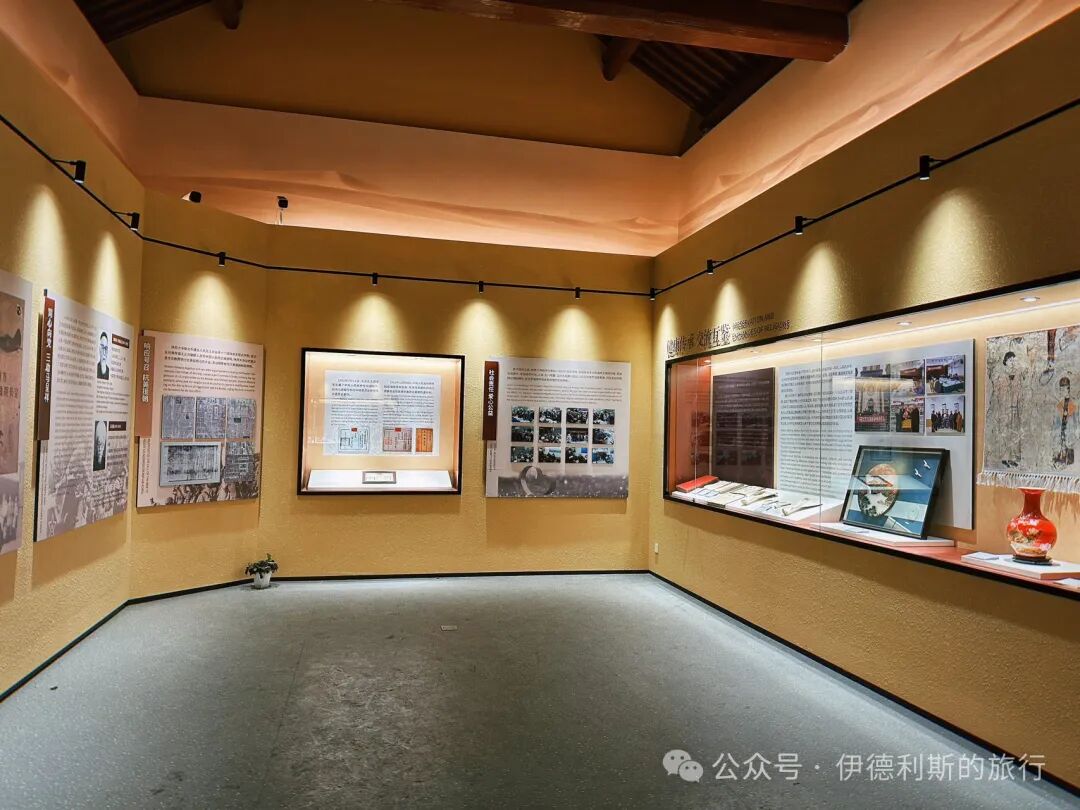
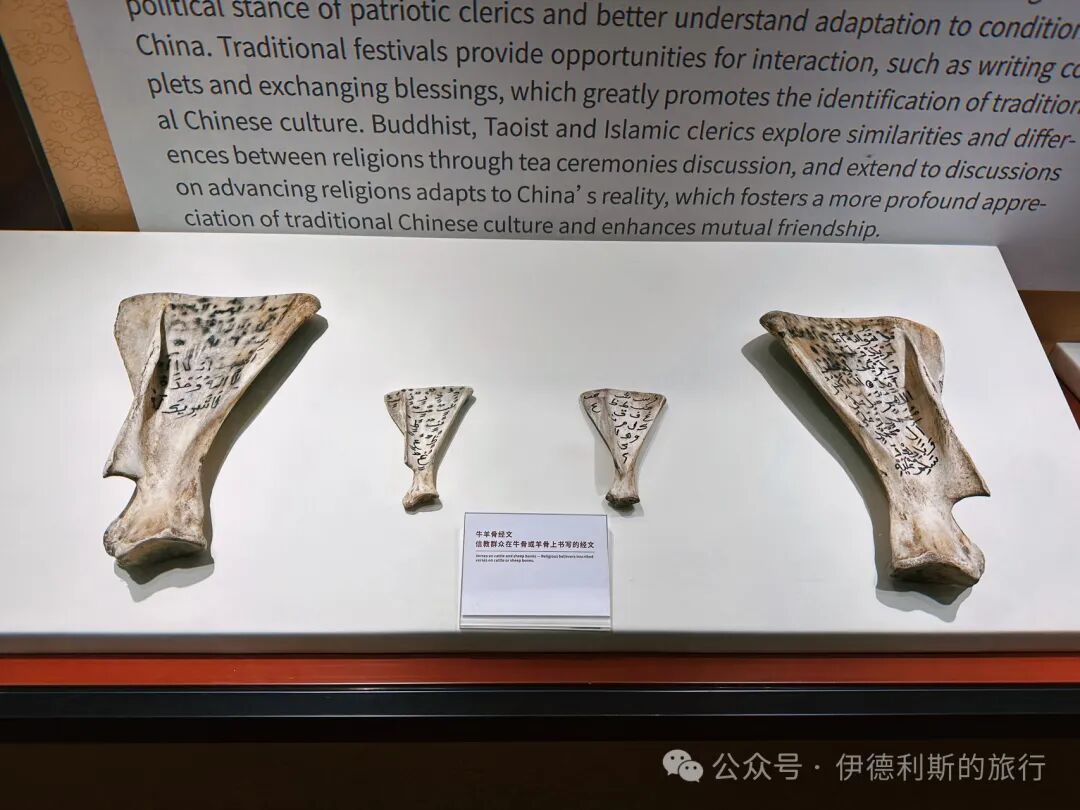
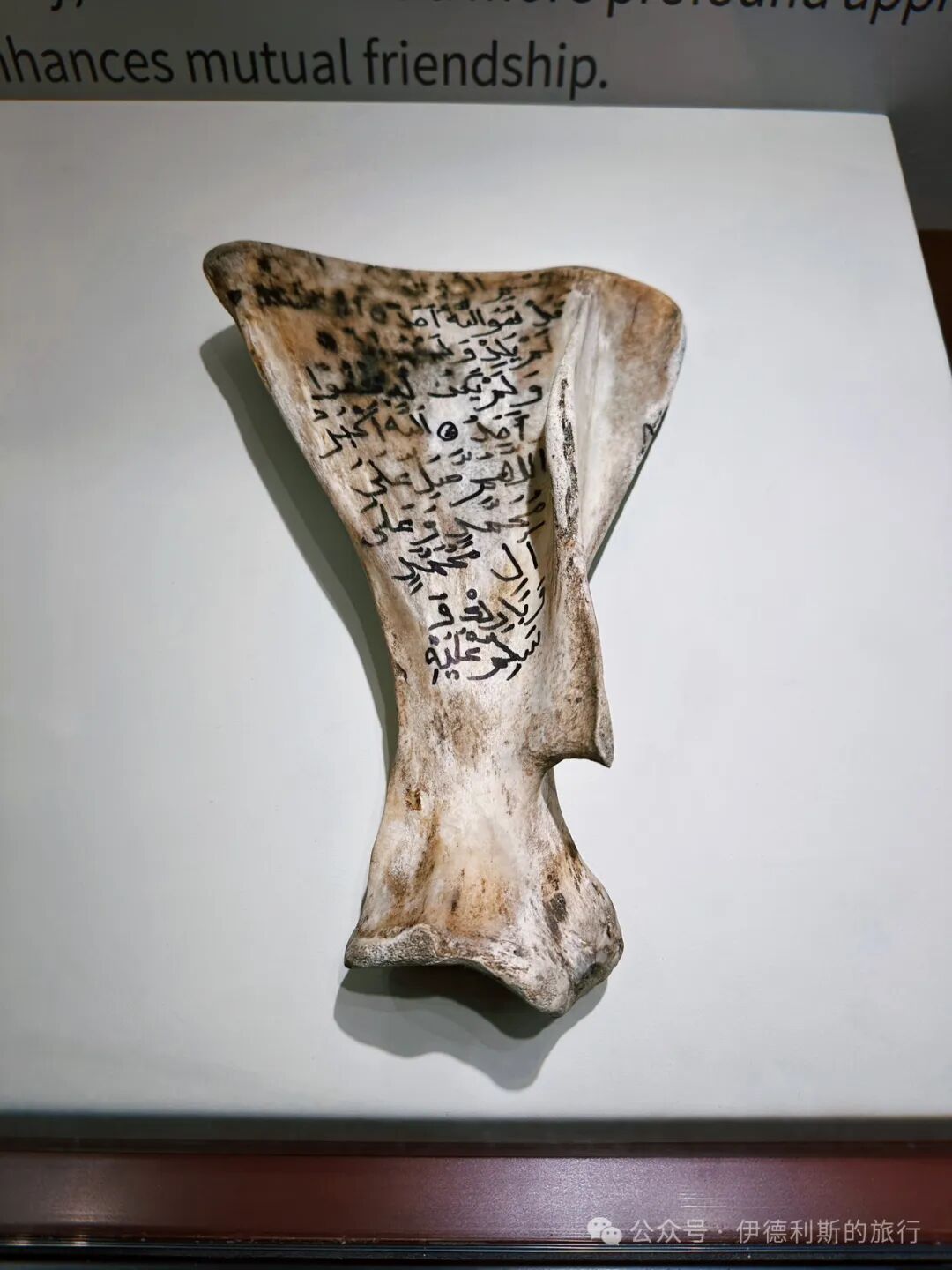
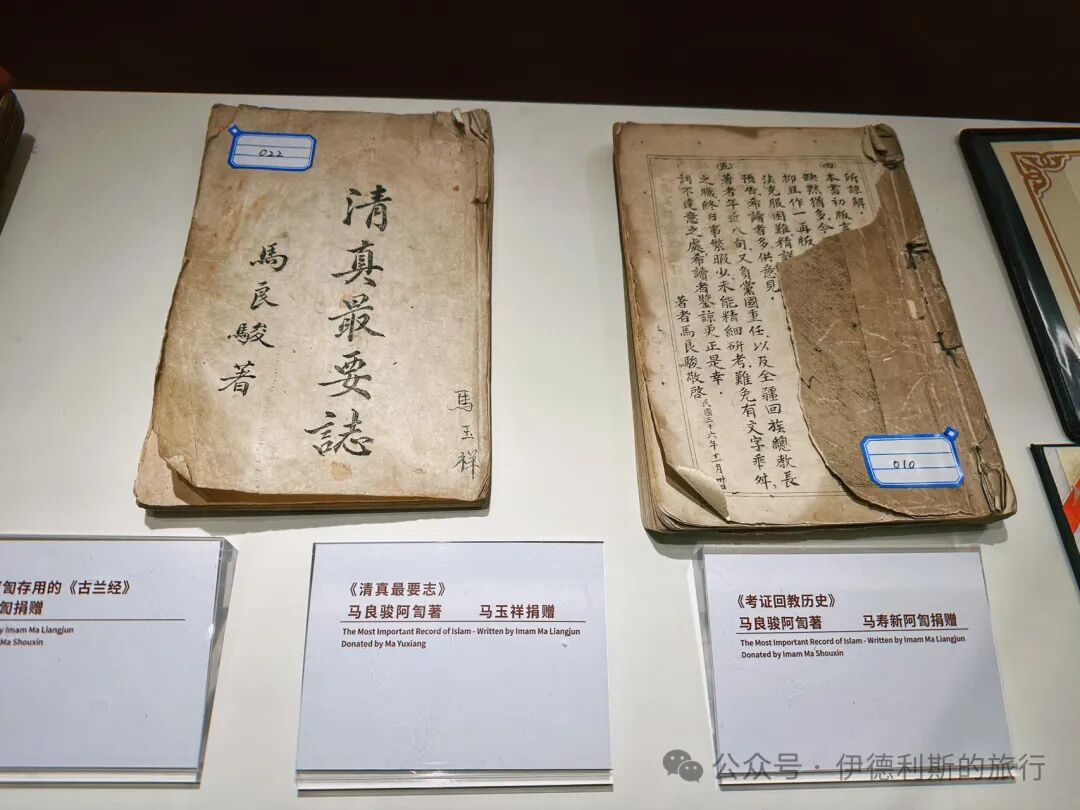
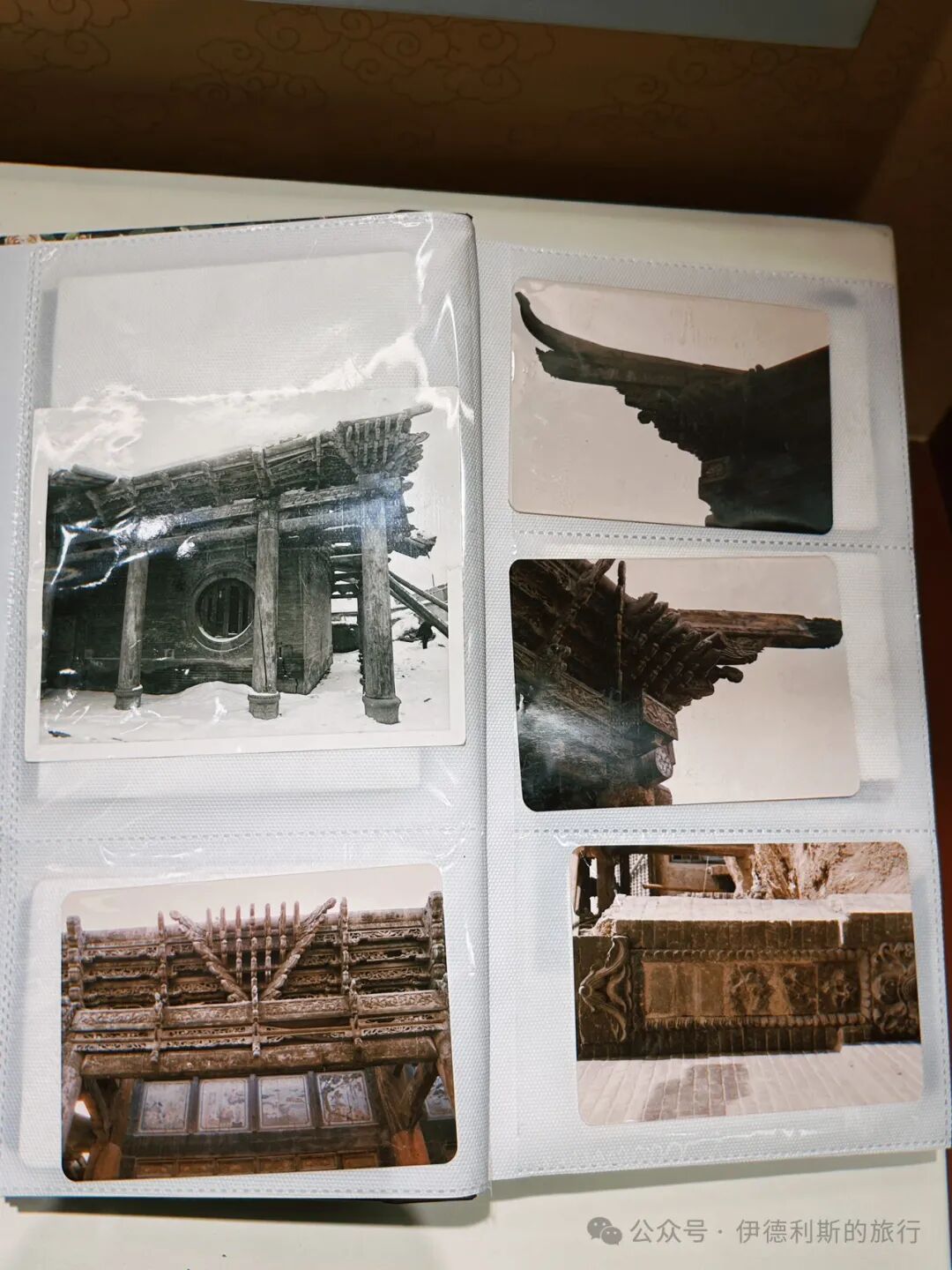
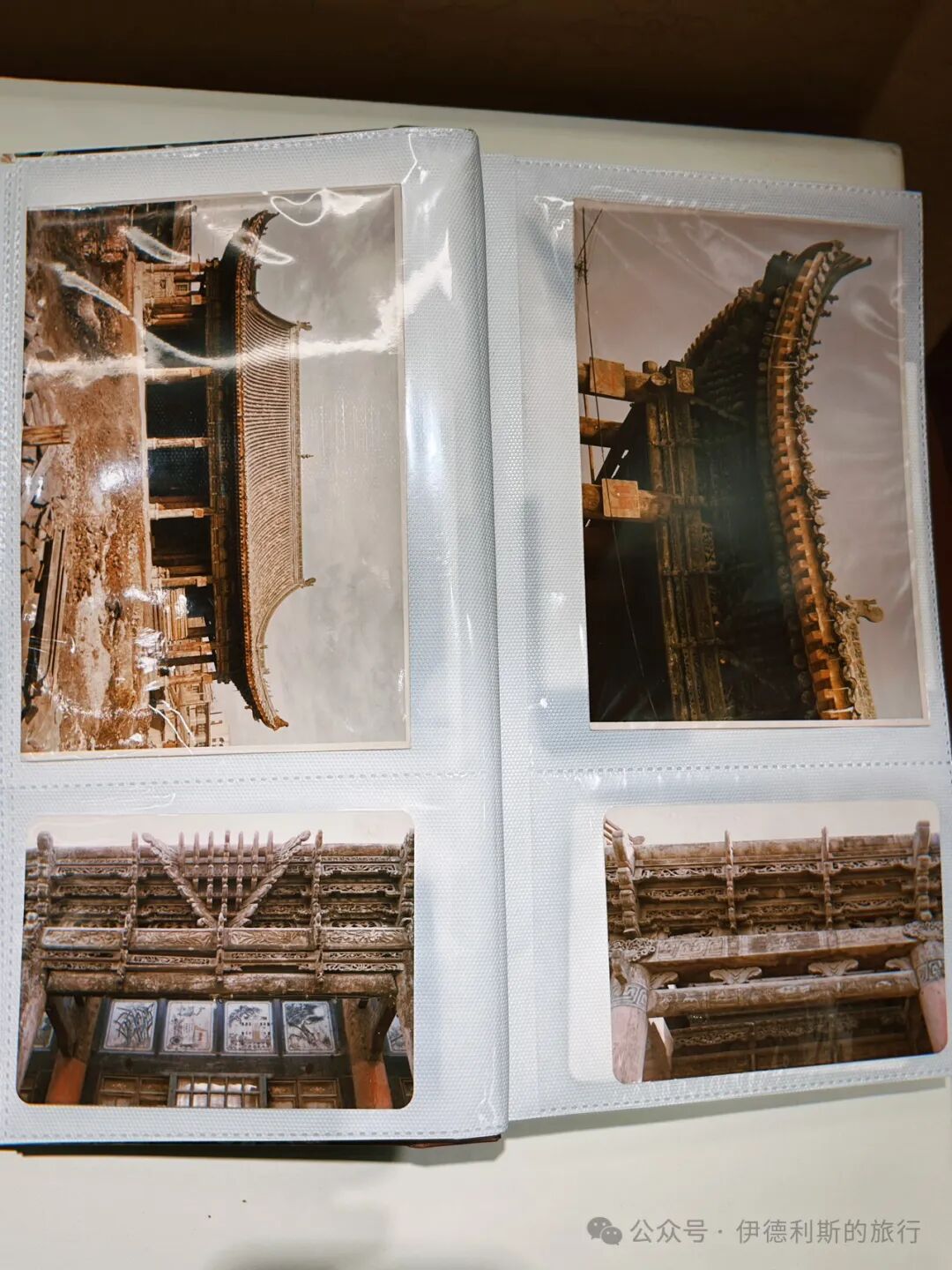
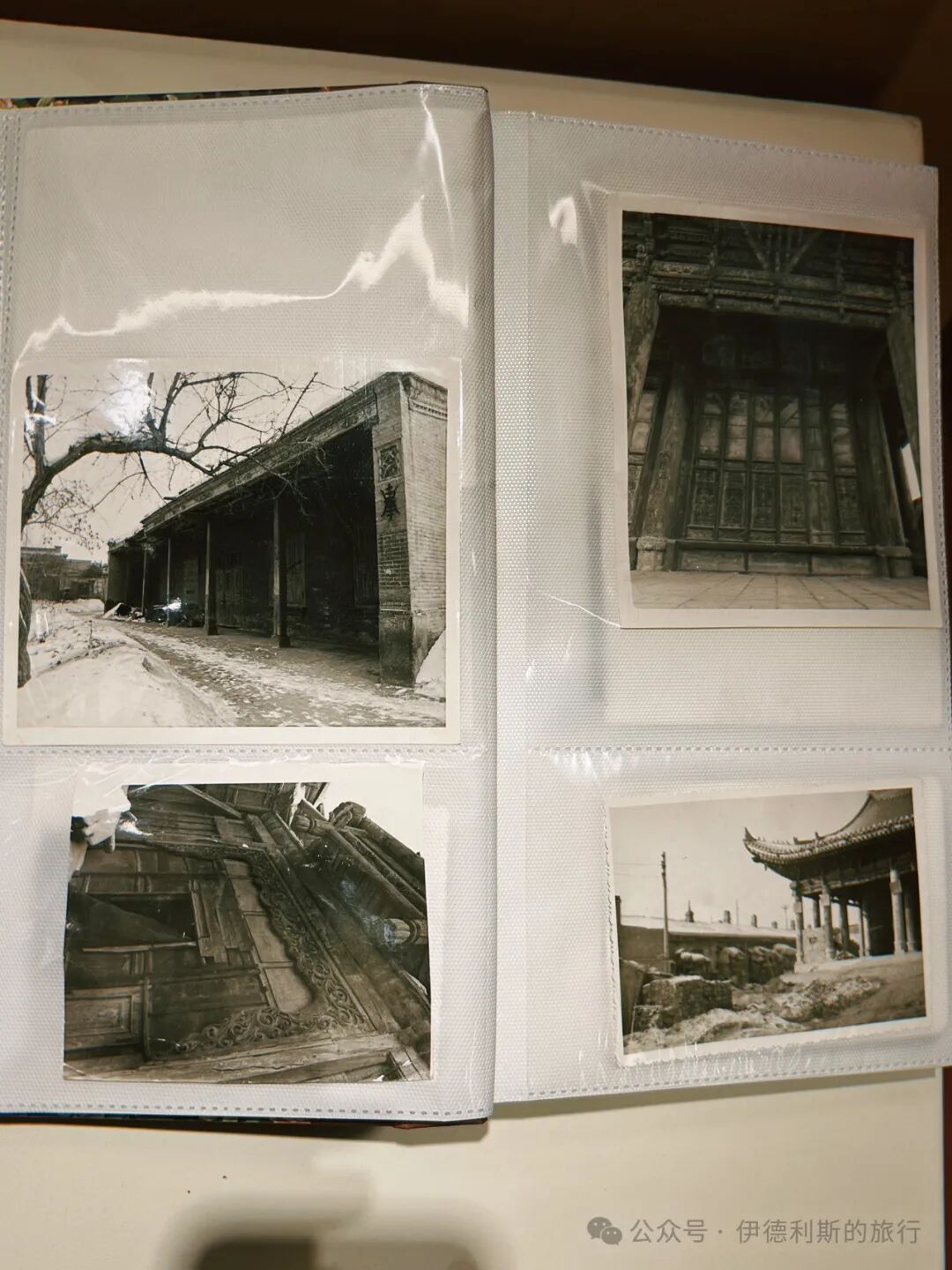
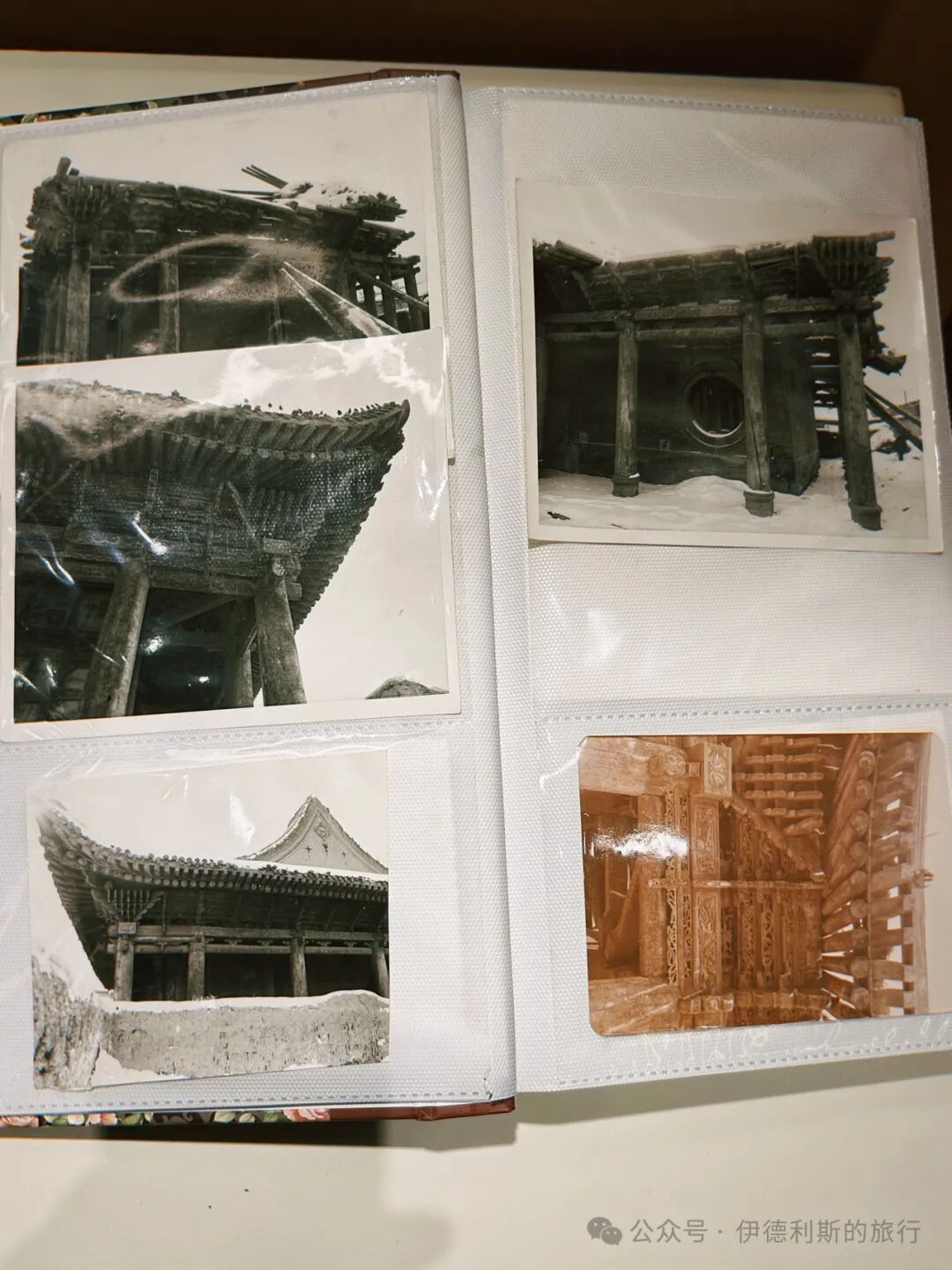
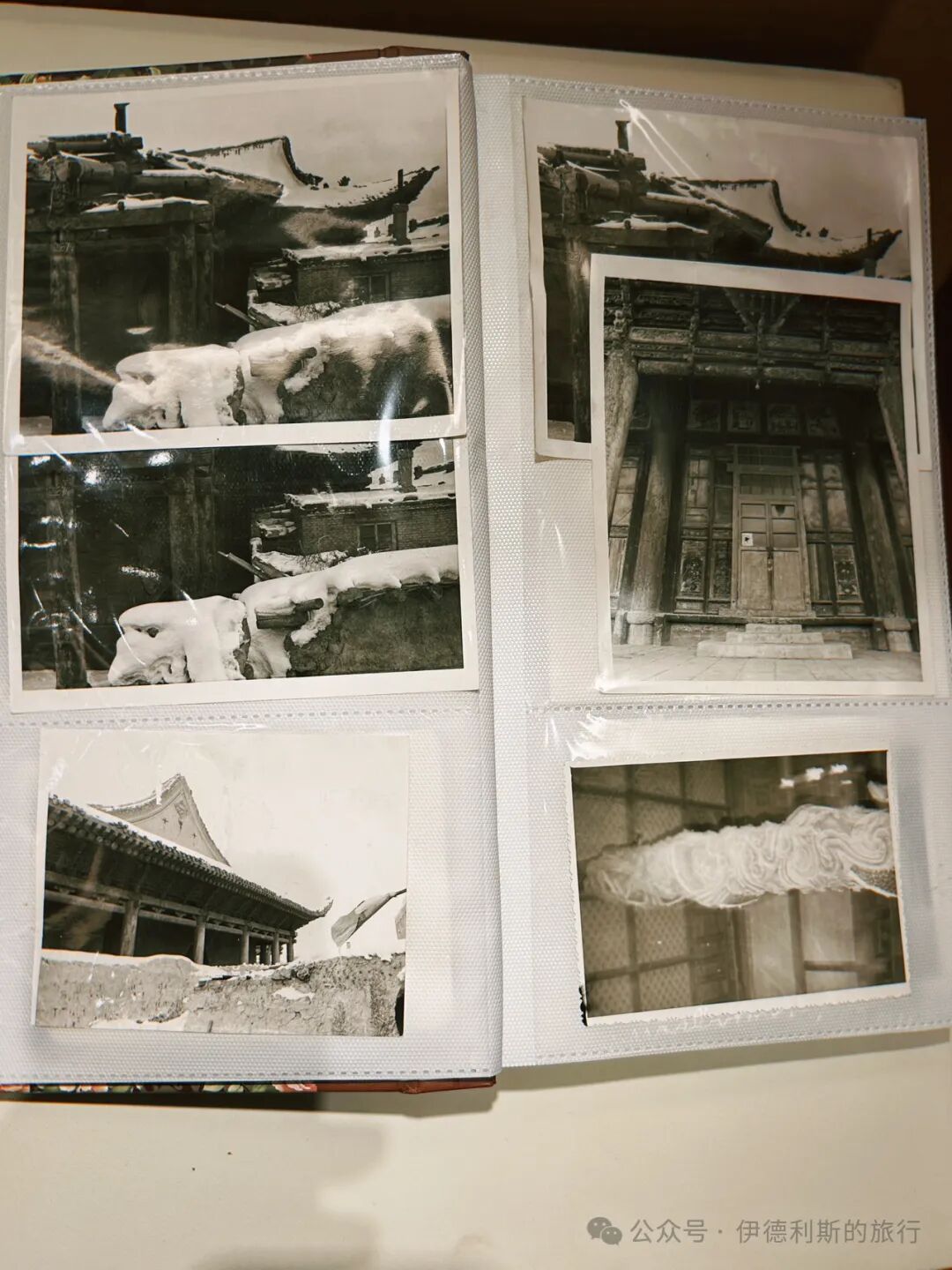
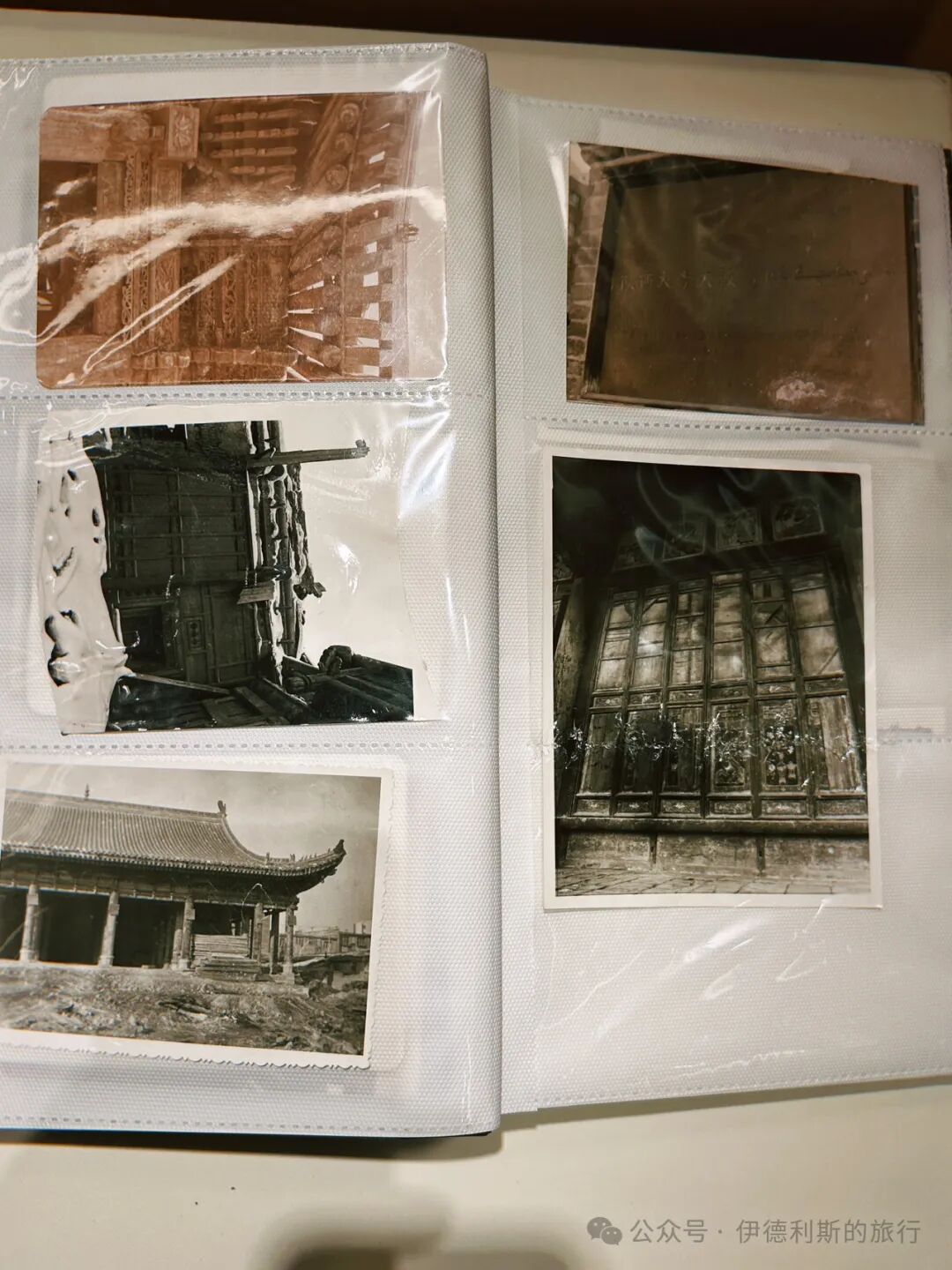
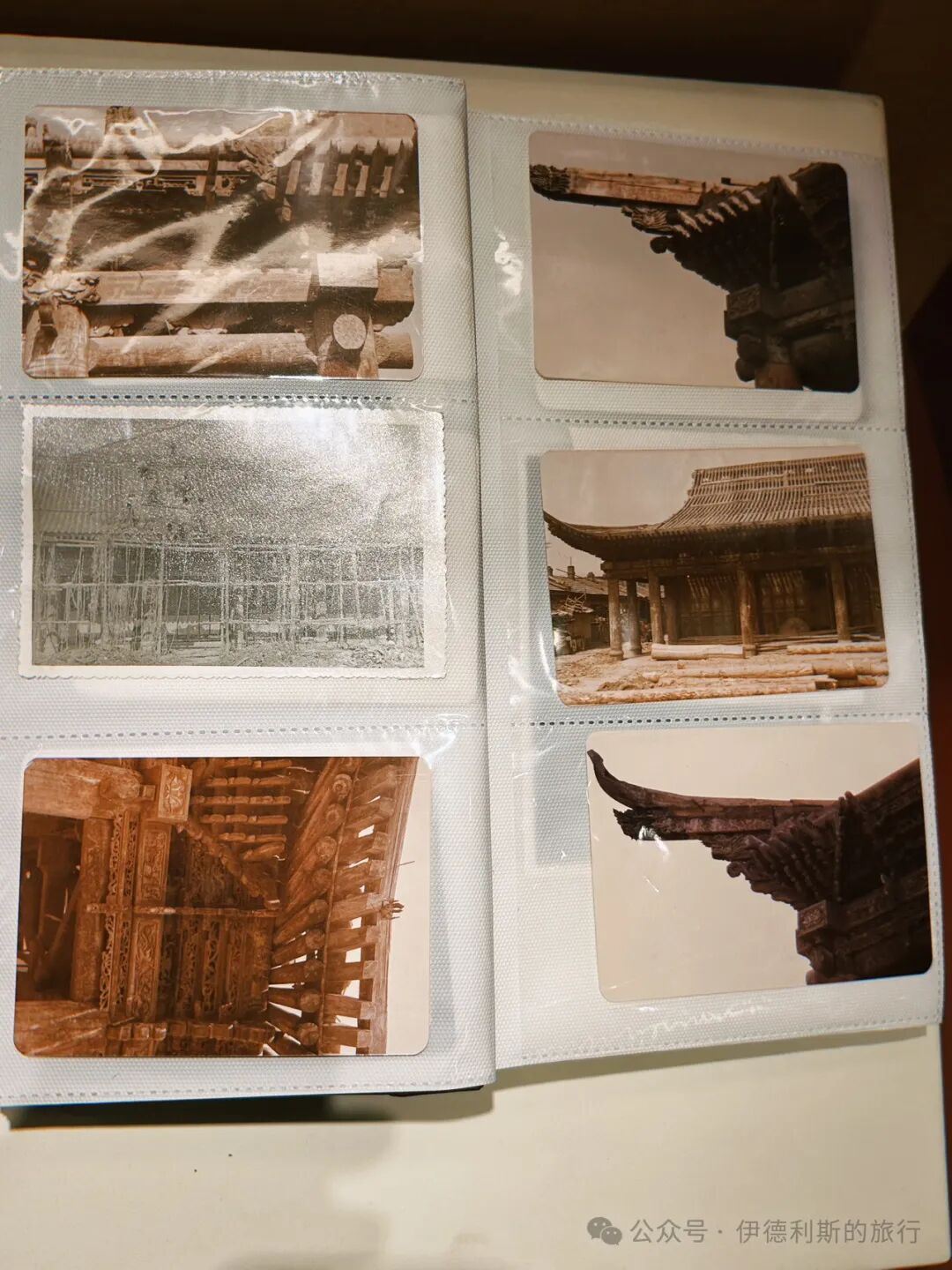
An old photo of the Shaanxi Grand Mosque before its 1984 renovation.
South Grand Mosque (Nan Dasi).
The South Grand Mosque is known as the 'First Mosque of the Jahriyya Order in Urumqi.' It was founded in 1874 (the 13th year of the Tongzhi reign) on Nansi Lane and was originally called Nantaizi Mosque. In 1917, Li Jiliang, the 'Rais' (leader) of the Jahriyya order in Xinjiang, selected the current site west of Erdaoqiao Road. Reconstruction was completed in 1919 with strong support from Ma Shaowu, the fifth-generation descendant of the Jahriyya founder, and Ma Guangtai, an agricultural official from Nanshan, who donated most of the timber for construction. In 2003, the main hall of the South Grand Mosque was listed as a cultural relic protection site in Urumqi.
In 1914, Yang Zengxin appointed Ma Shaowu as the garrison commander of Kuqa, giving him military authority. He served in the Xinjiang government for over 20 years and worked hard to maintain national unity and ethnic harmony. During this period, the Jahriyya order grew in Xinjiang, and the South Grand Mosque became the largest Jahriyya mosque in the region at that time.
The main hall of the South Grand Mosque has a gabled and hipped roof. Under the eaves, it uses a Xinjiang-style 'flower board' technique, replacing traditional brackets with wooden boards carved with various patterns.
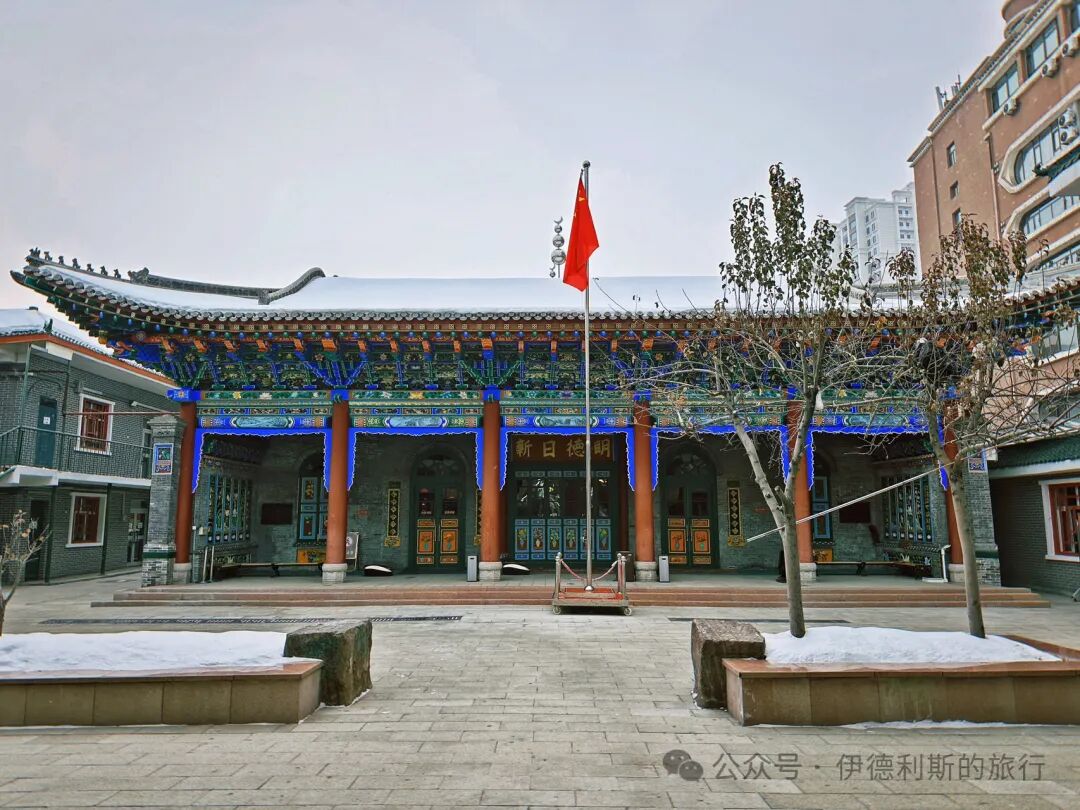
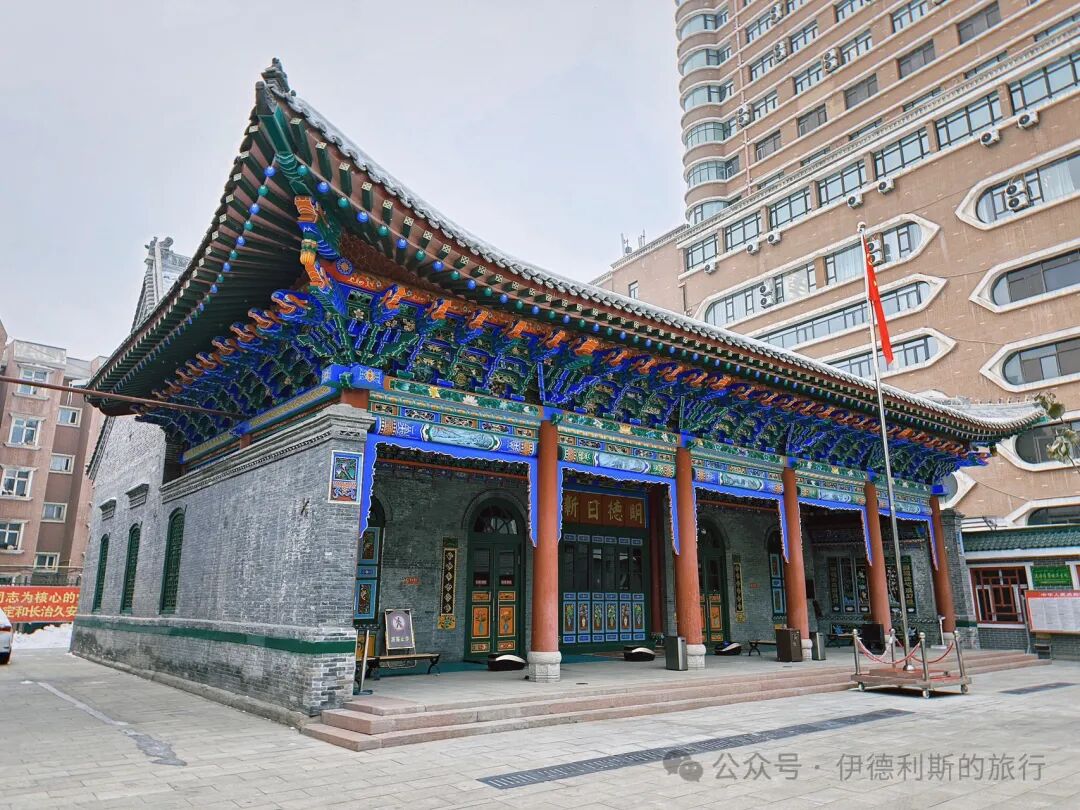
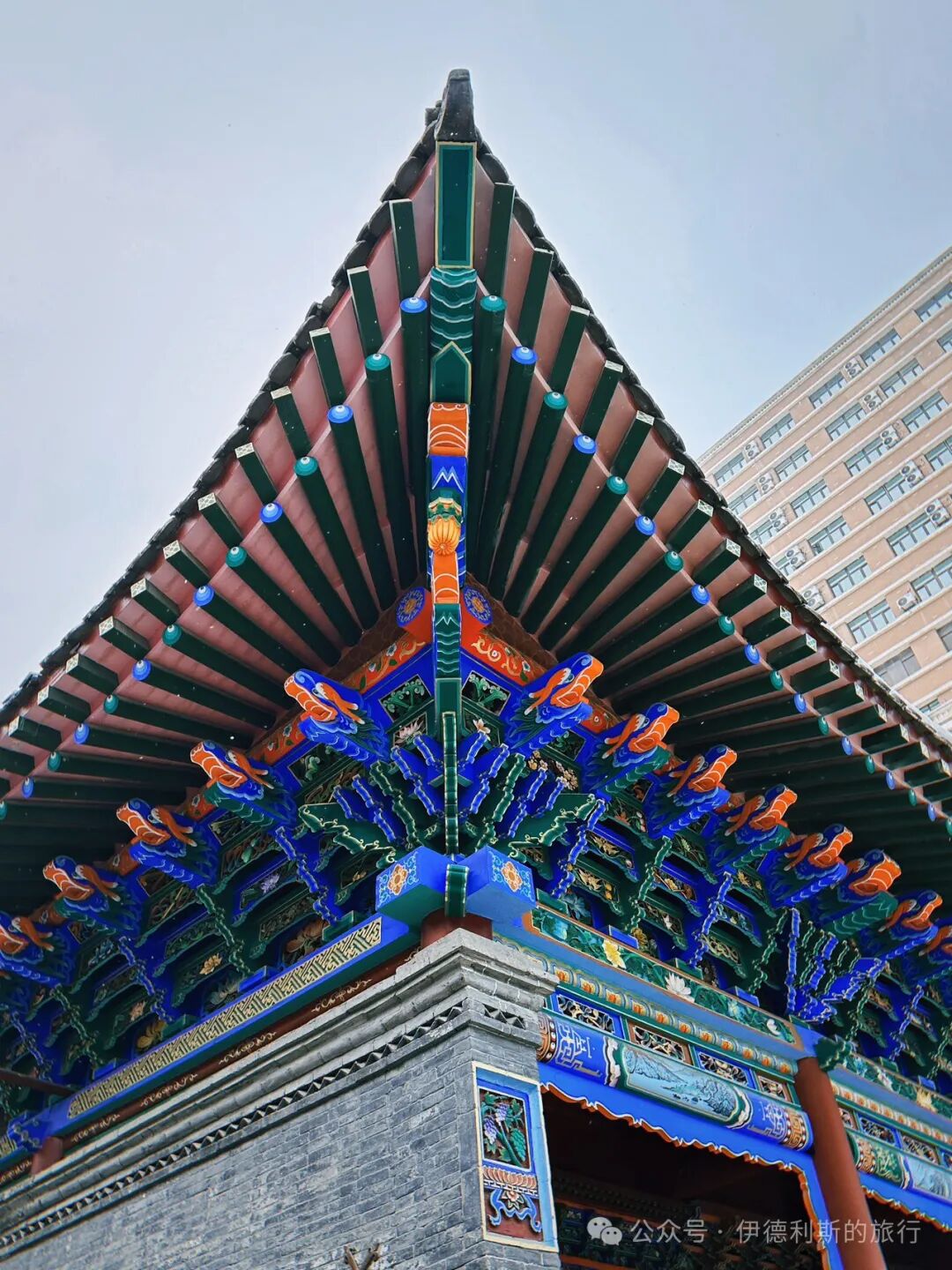
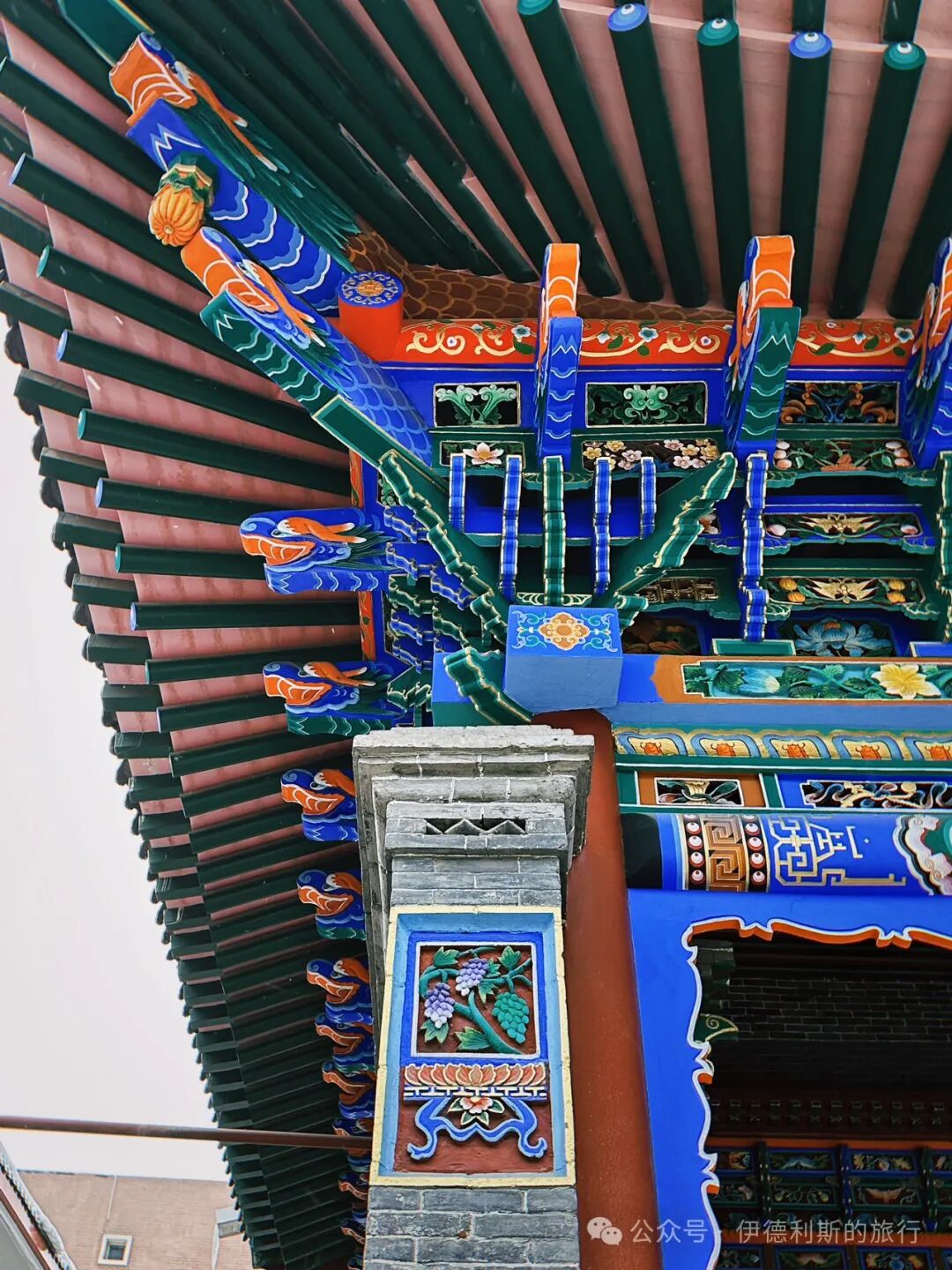
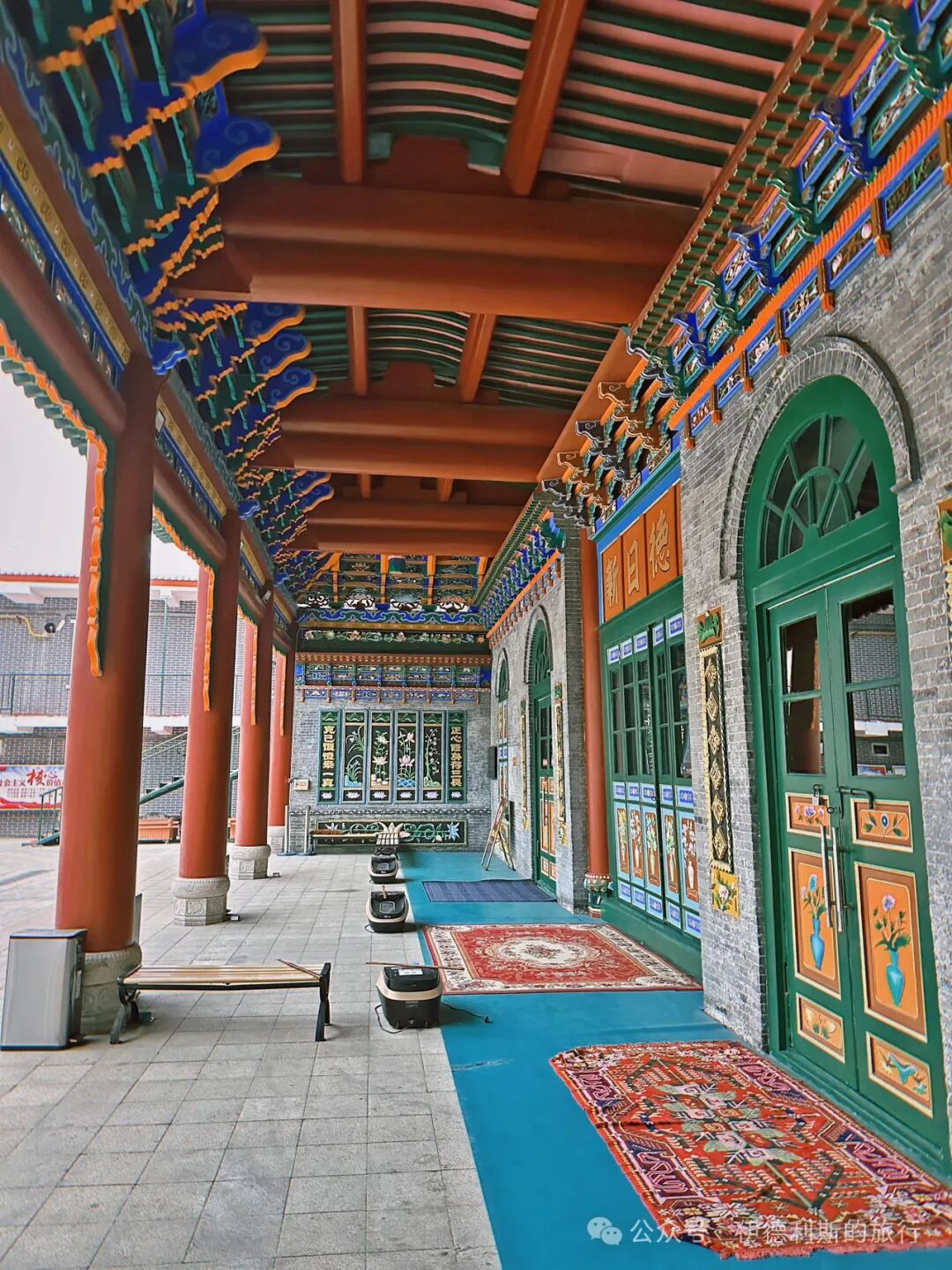
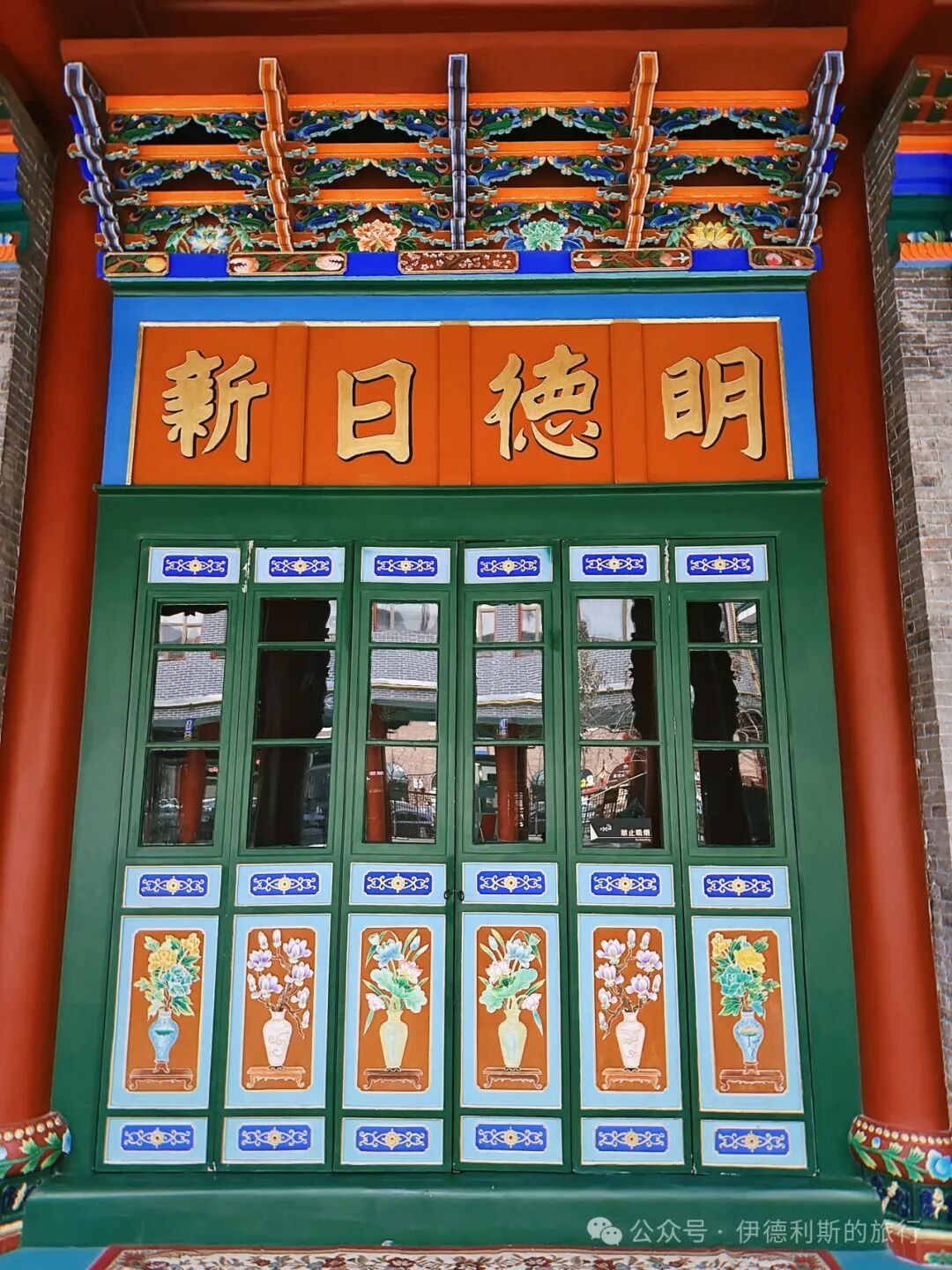
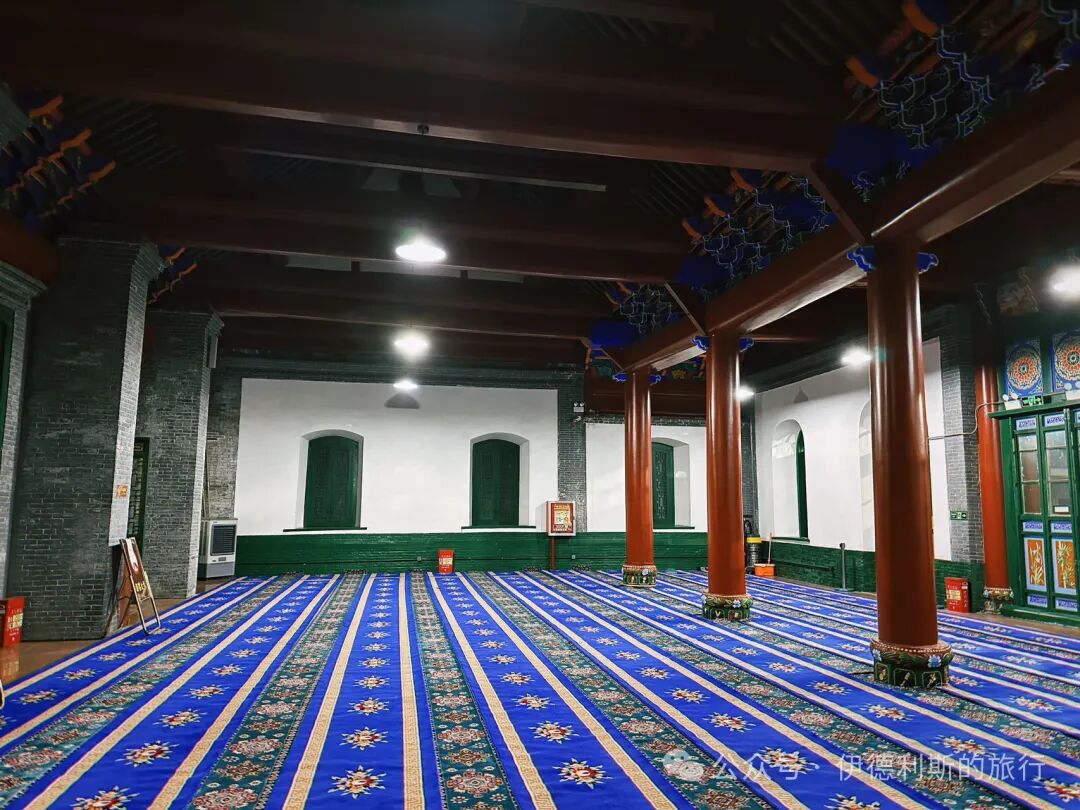
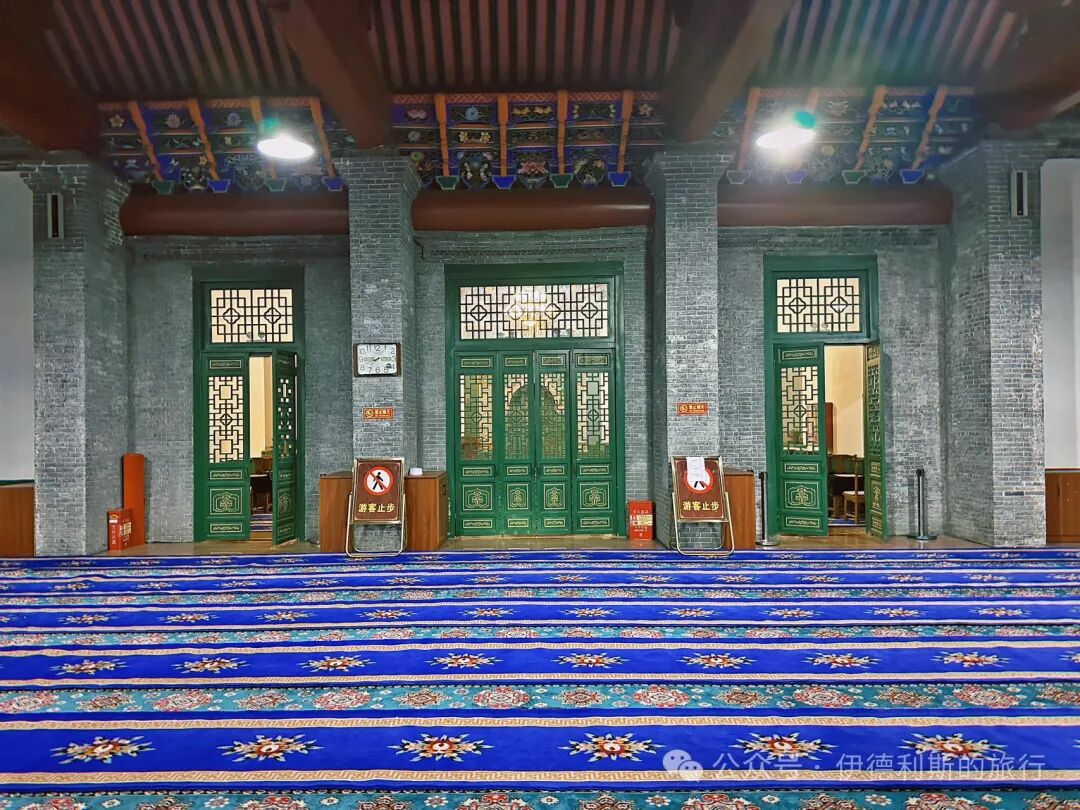
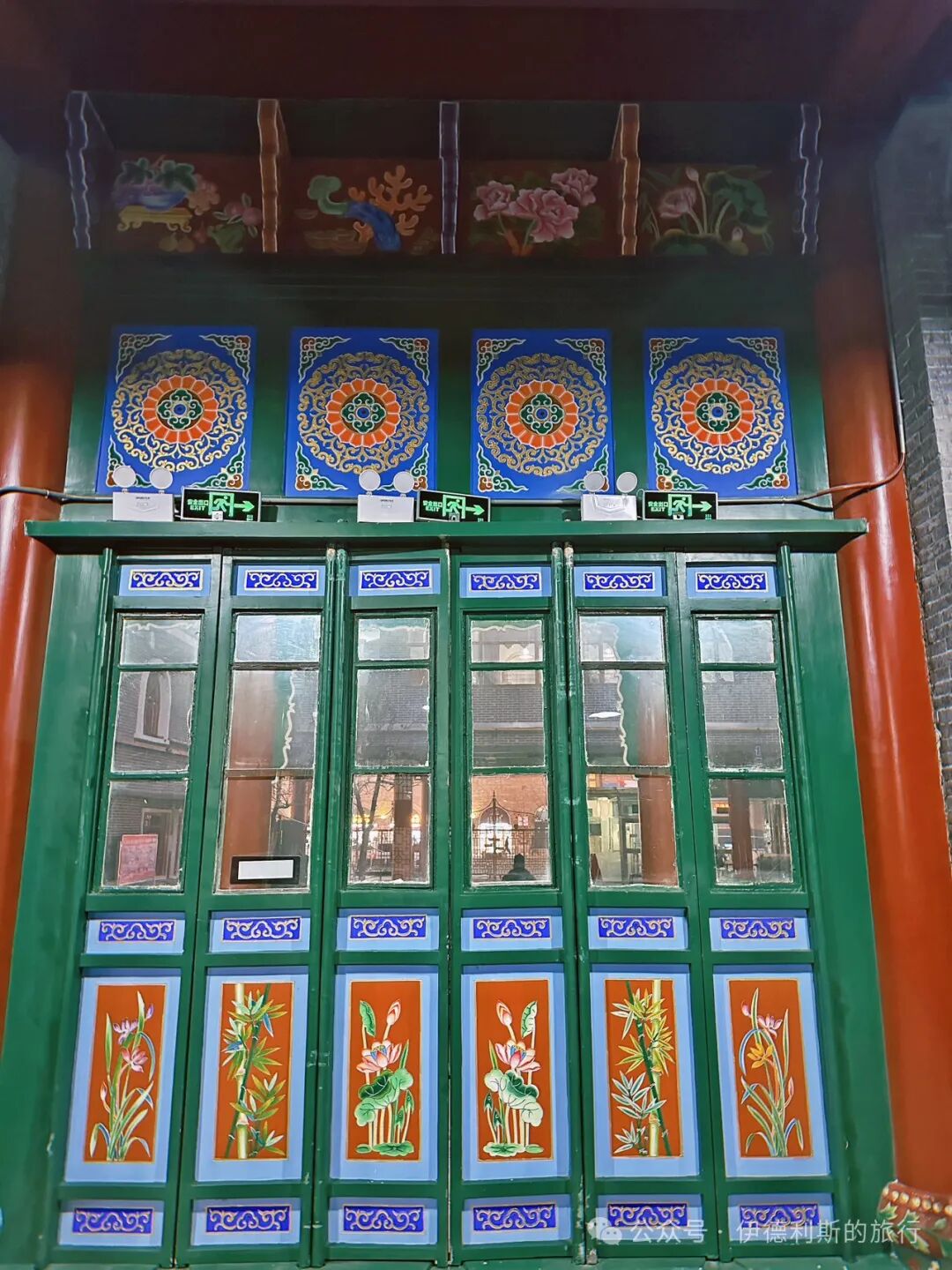
Arabic and Chinese calligraphy on the facade of the South Grand Mosque's main hall.
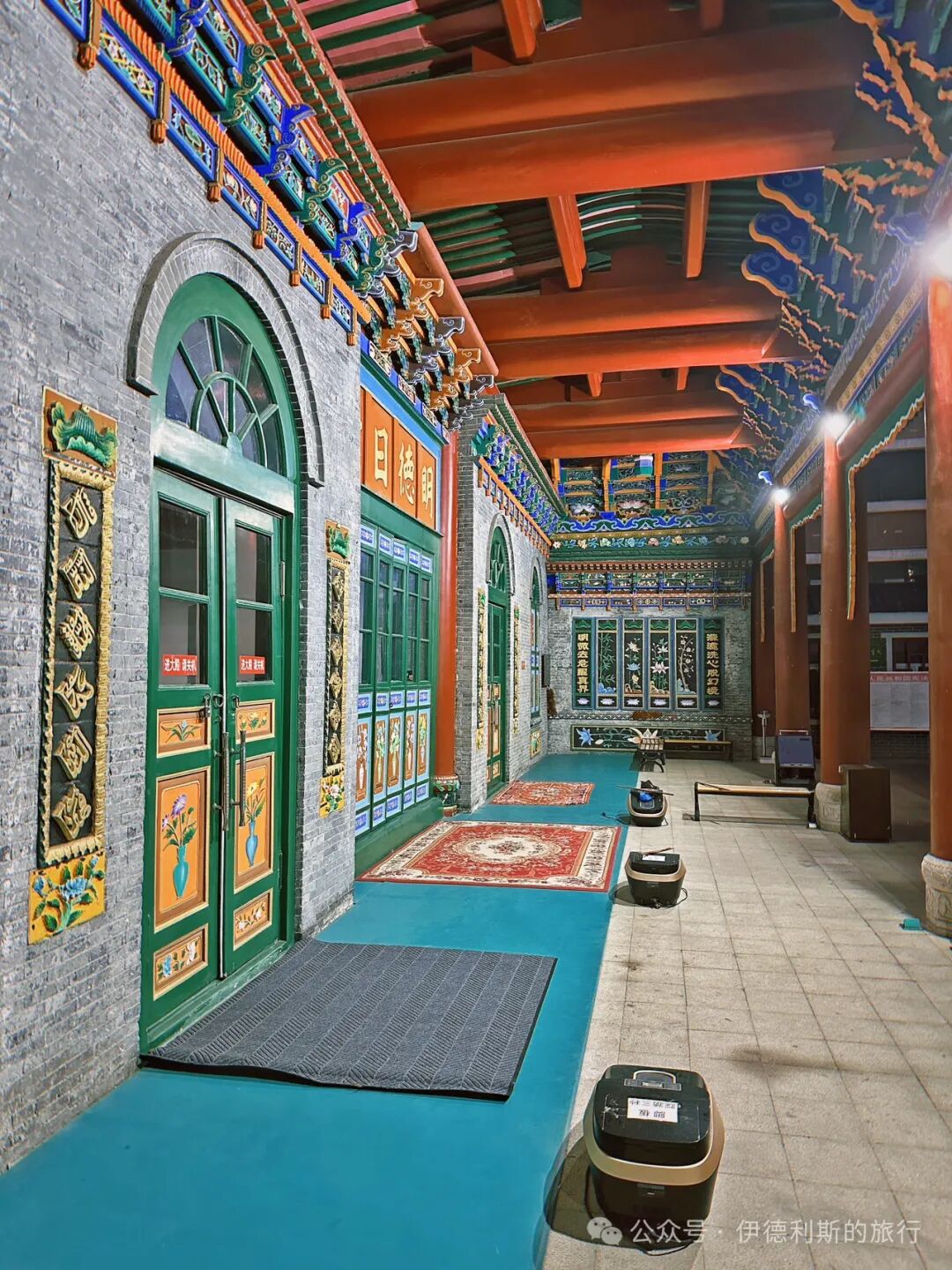
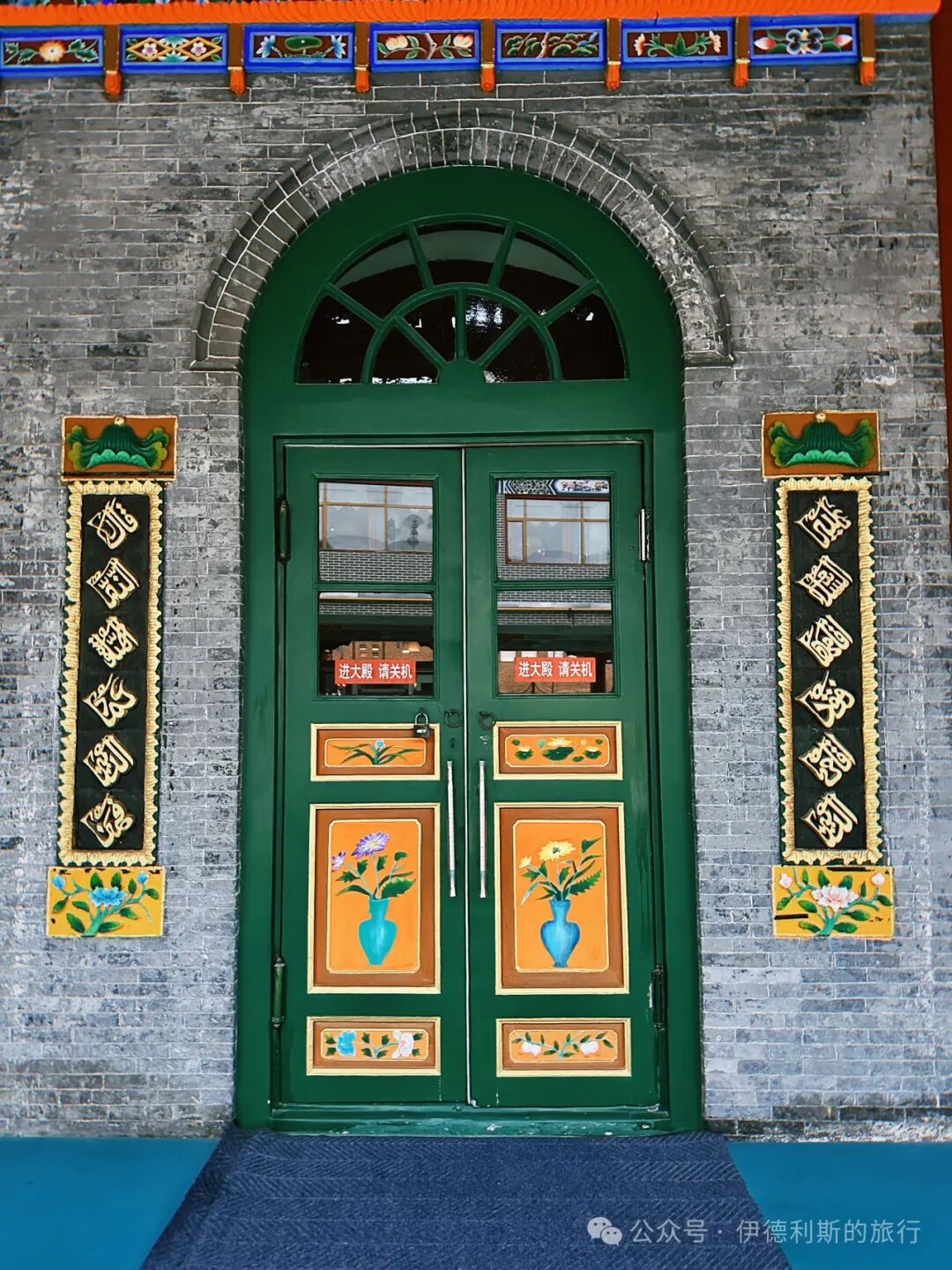
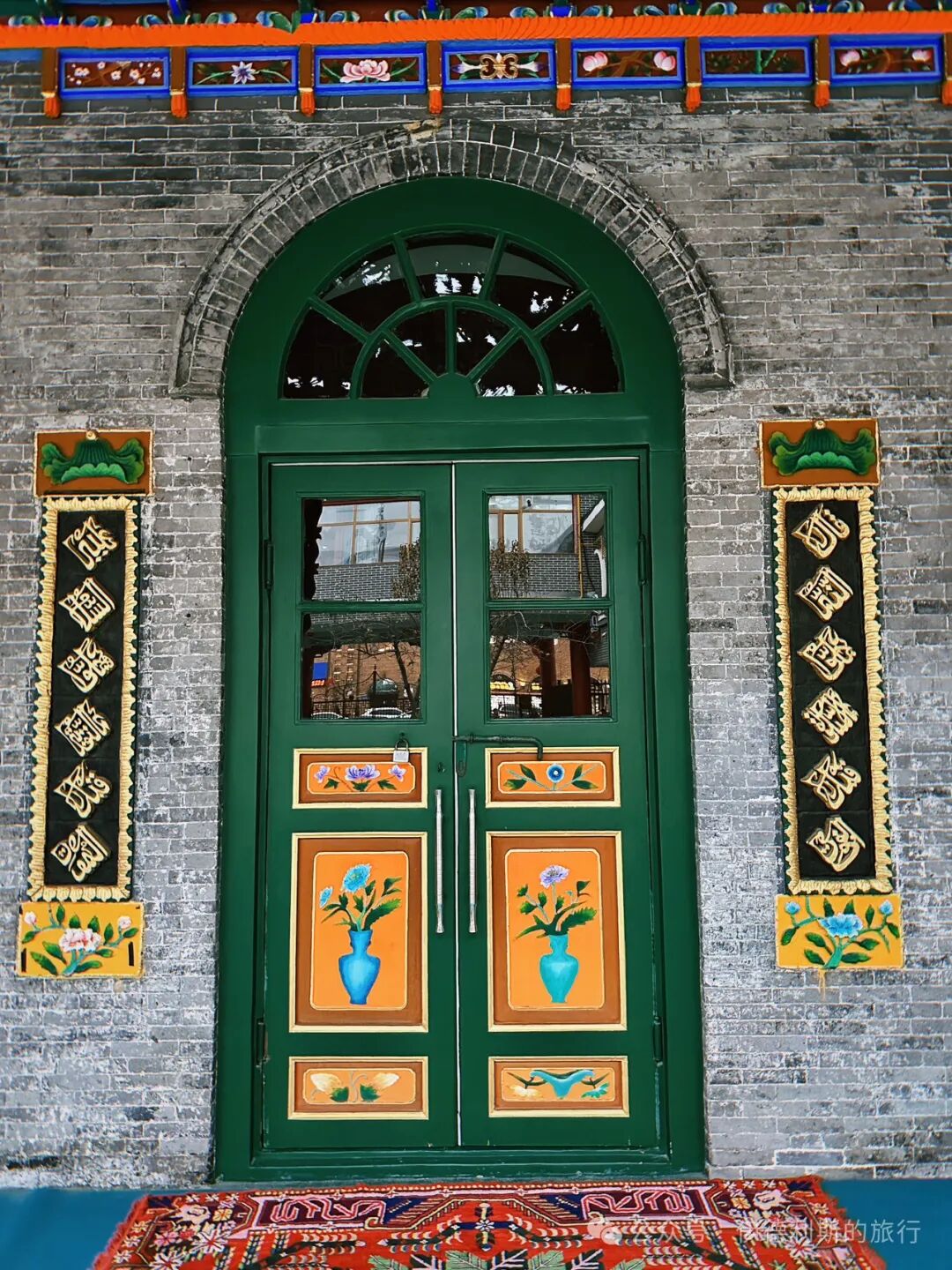
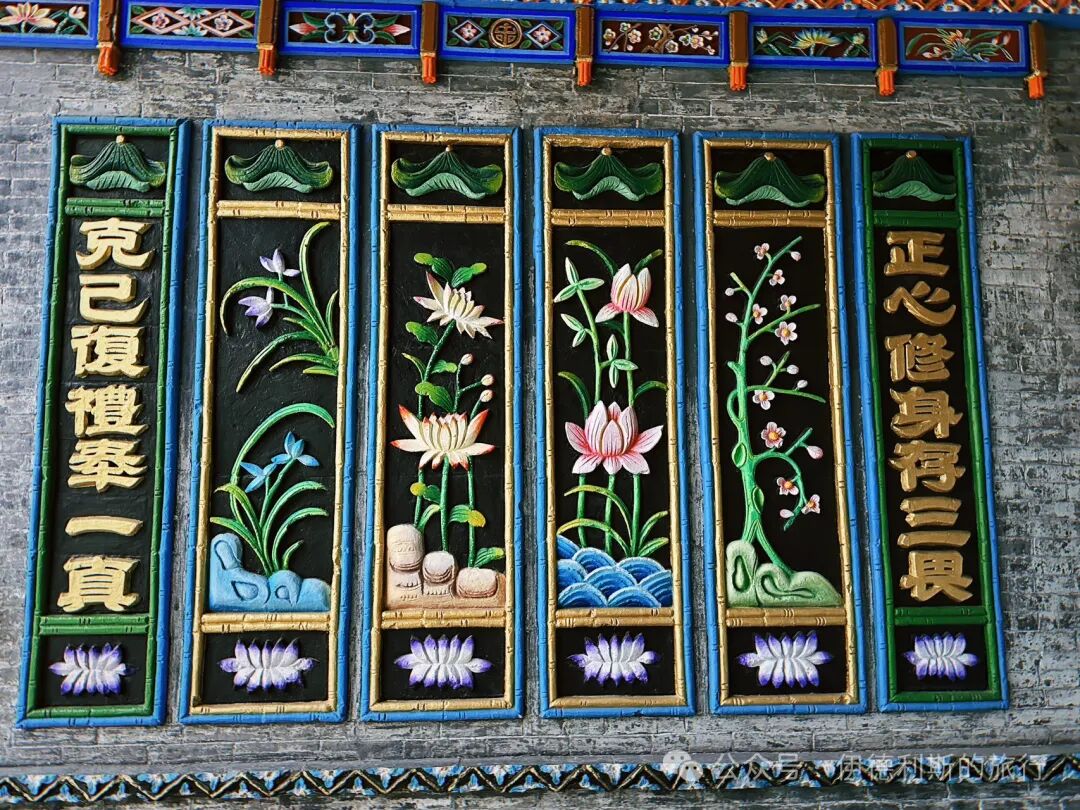
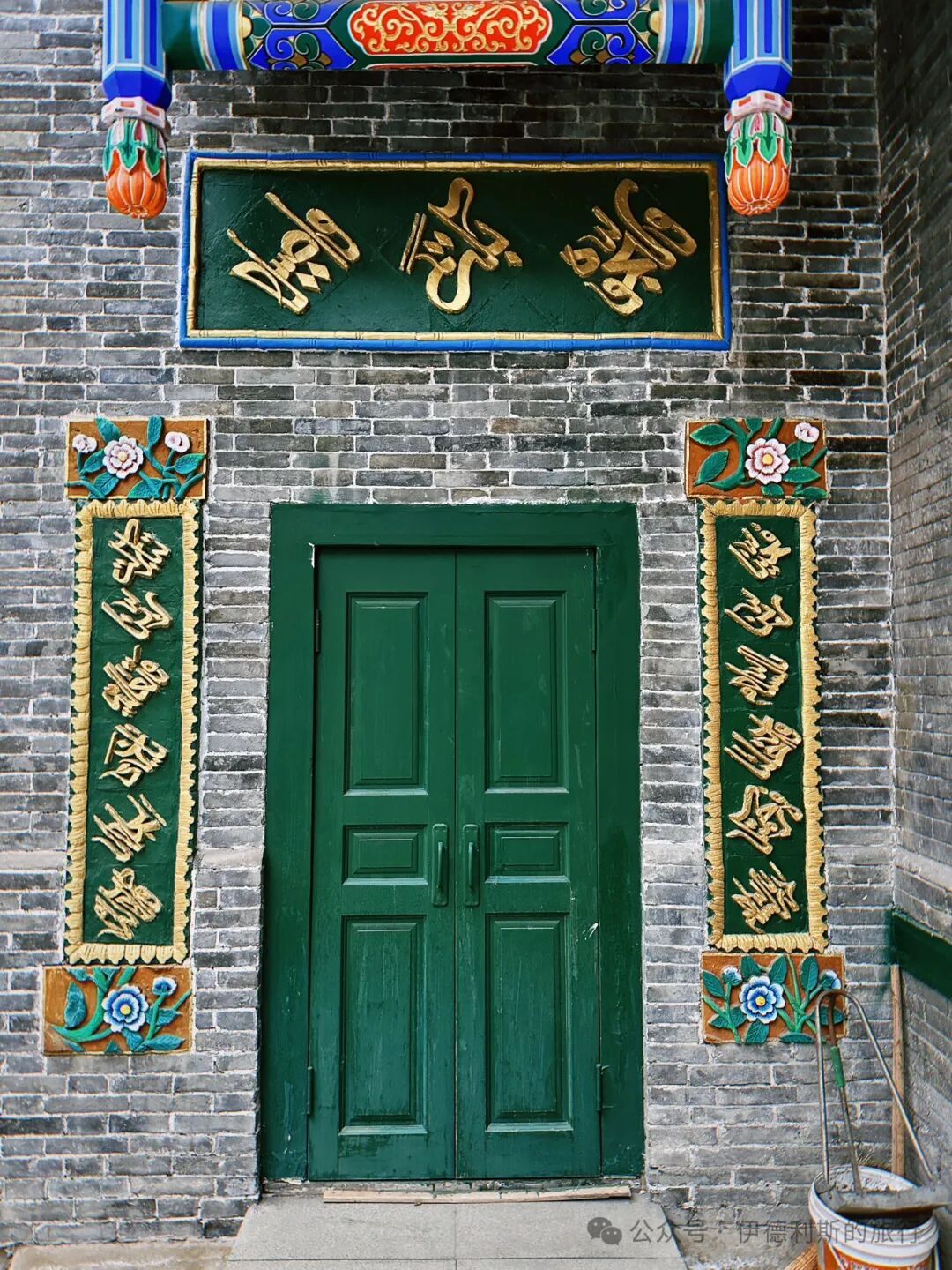
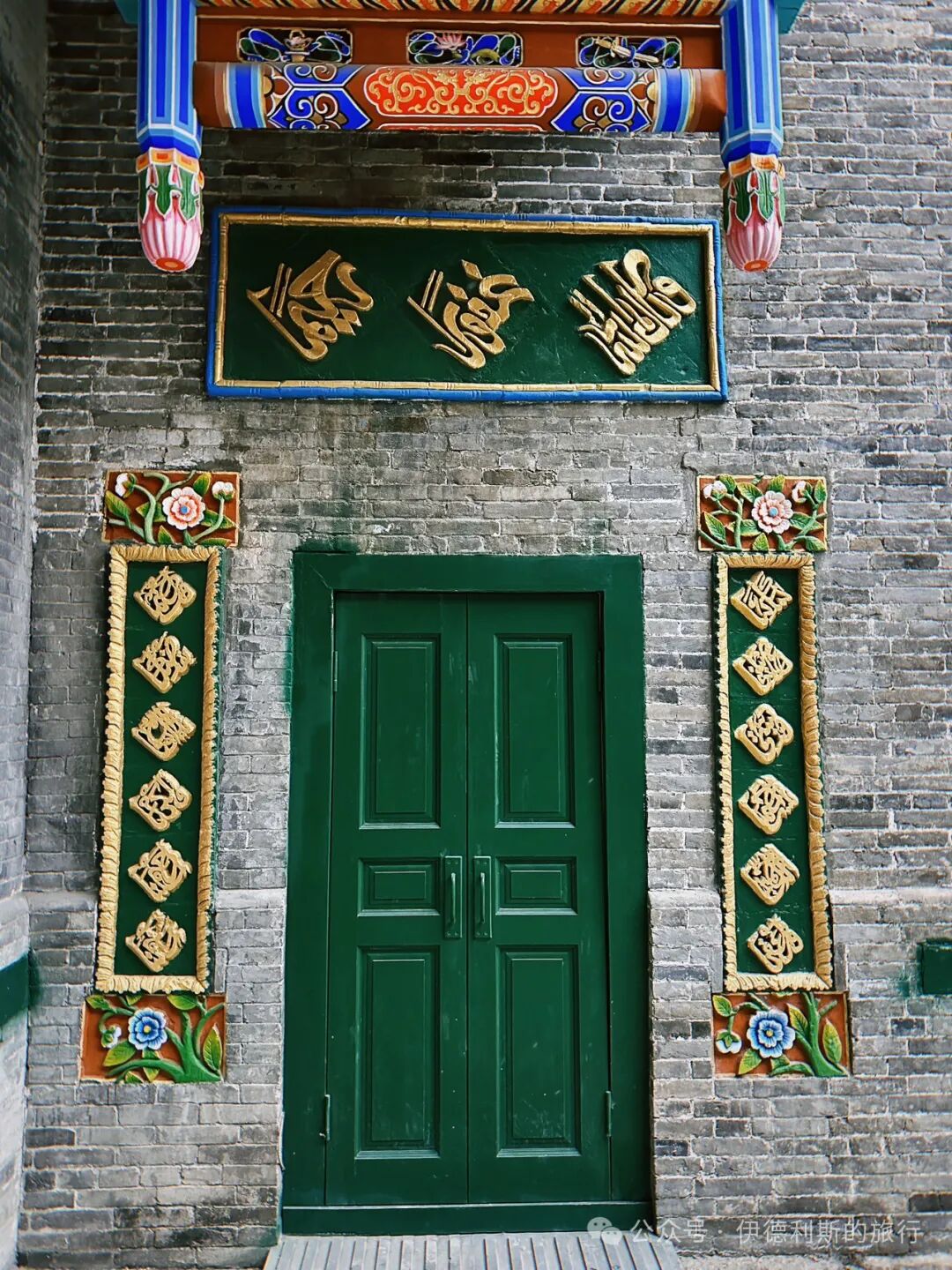
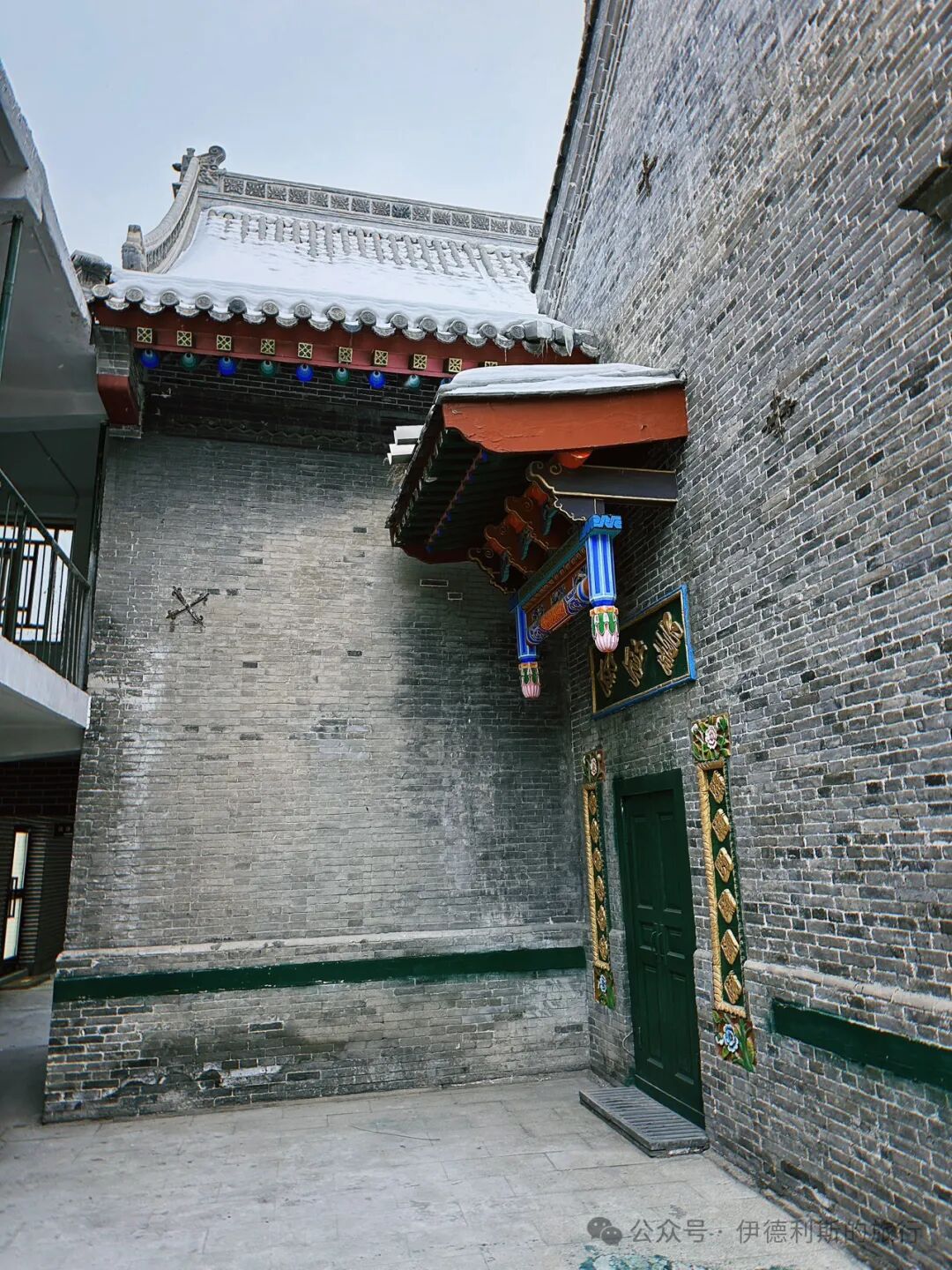
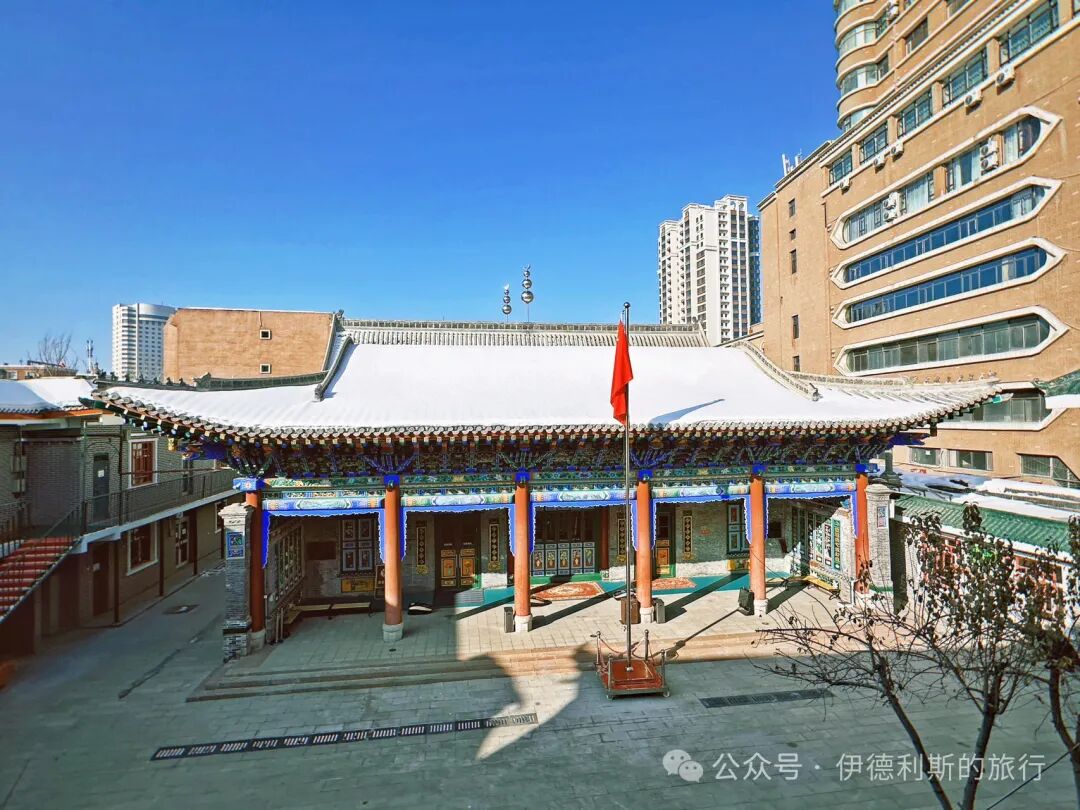
The South Grand Mosque is open to visitors from 11:00-13:30 and 15:30-17:00. There is a machine at the entrance of the main hall that provides shoe covers for entering the front hall. The rear hall is open for namaz five times a day and is inaccessible at other times. However, the elders at the mosque are very welcoming. Because I arrived after hours, they specifically let me pray in the duty room. The Jahriyya order is known for its beautiful melodies during dhikr, and another major feature is wearing a six-sided cap.
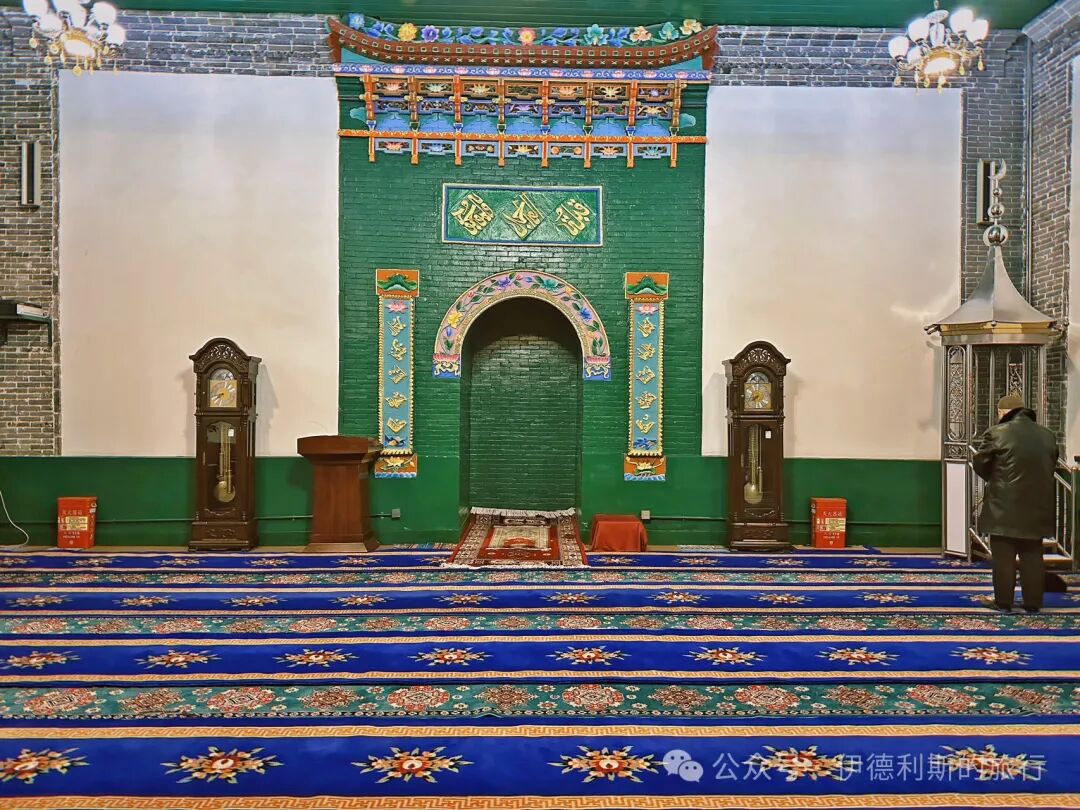
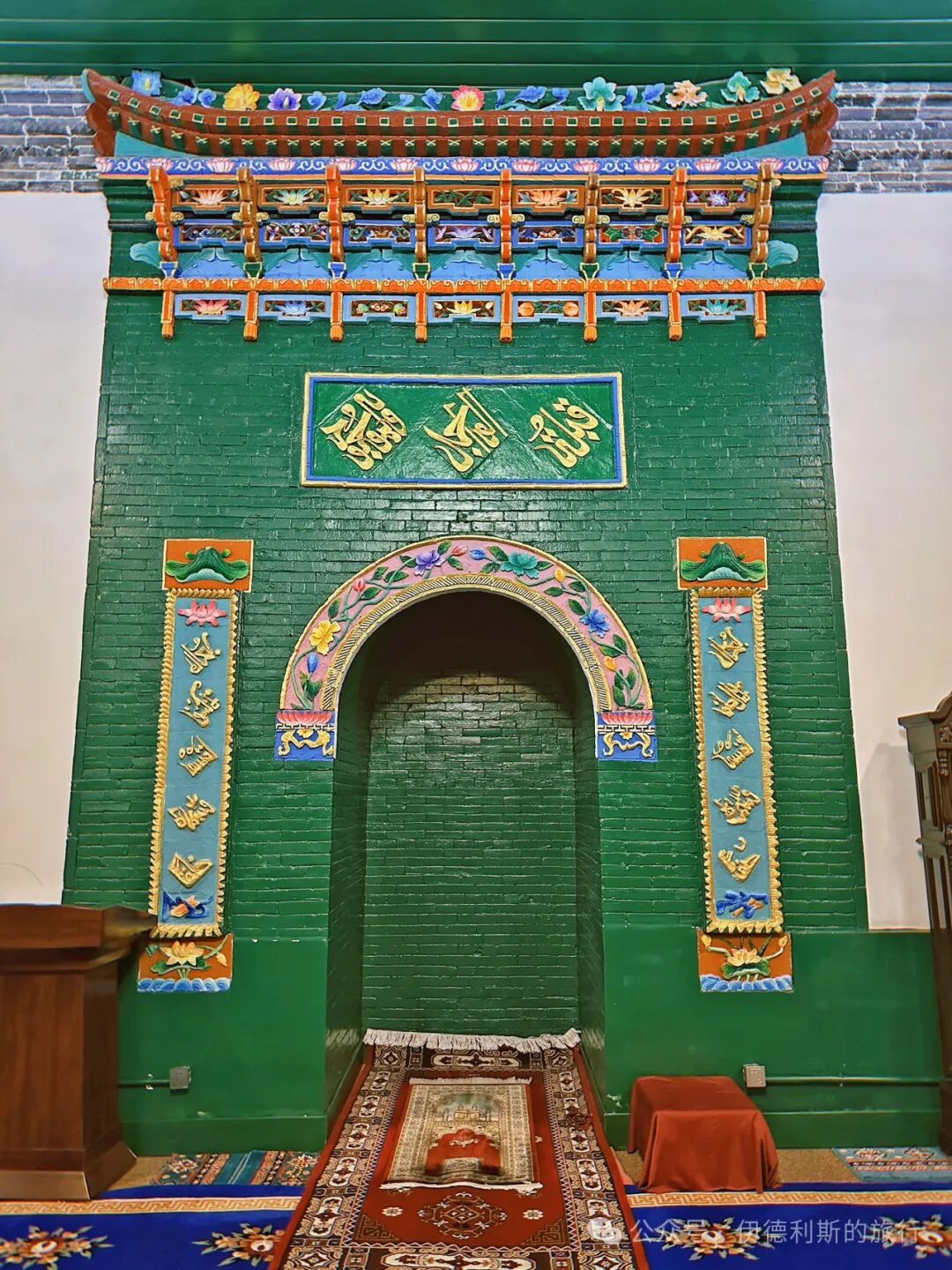
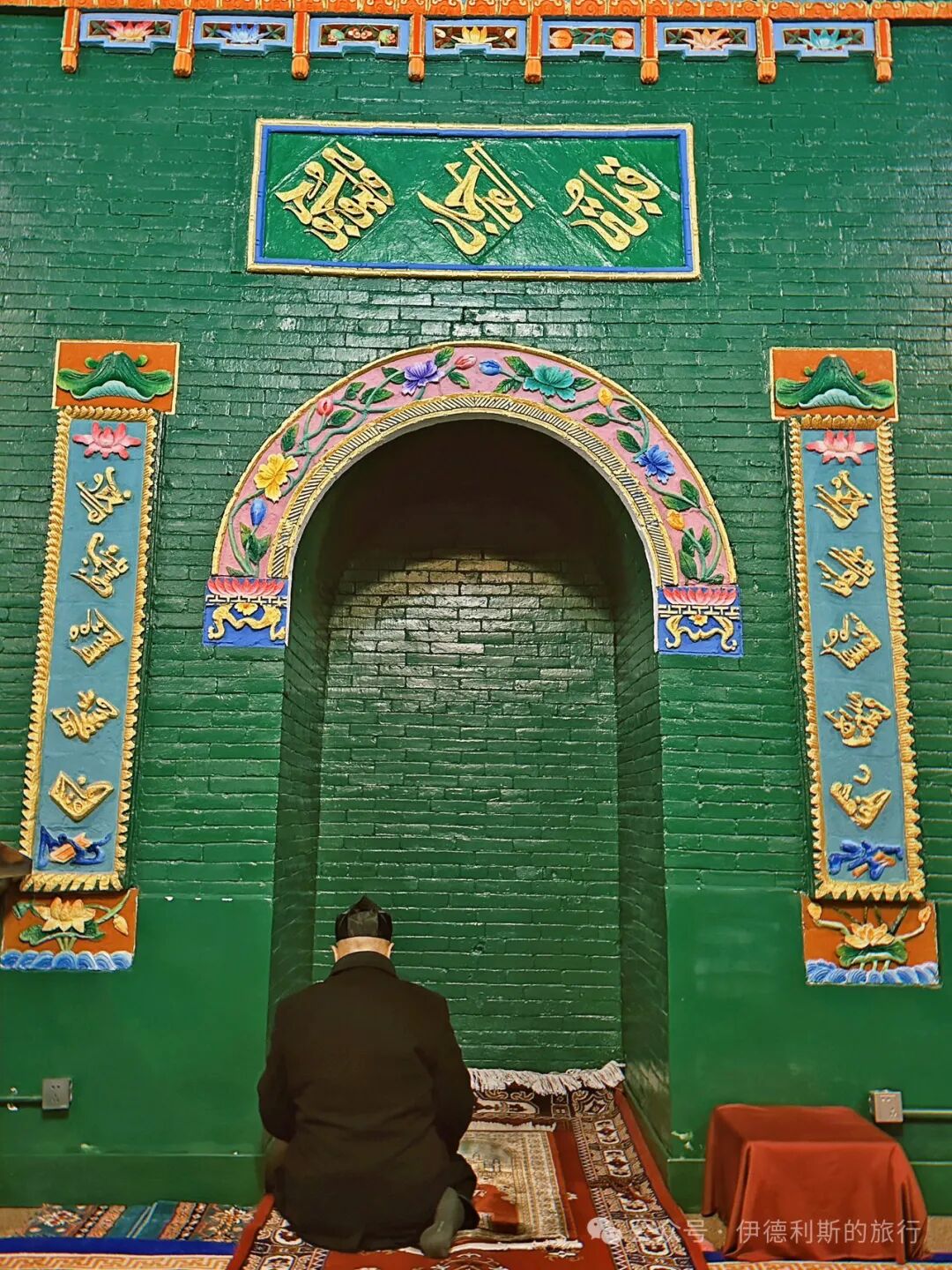
Kuanxiang Mosque
Kuanxiang Mosque was first built during the Jiaqing reign of the Qing Dynasty. It was rebuilt in 1934 into the current two-story brick building, with offices on the first floor and the main prayer hall on the second. Under the eaves of the main hall, there are beautiful wood carvings featuring various flowers, birds, and animal patterns. Kuanxiang Mosque is currently under construction, and all other buildings outside the main hall have been demolished.
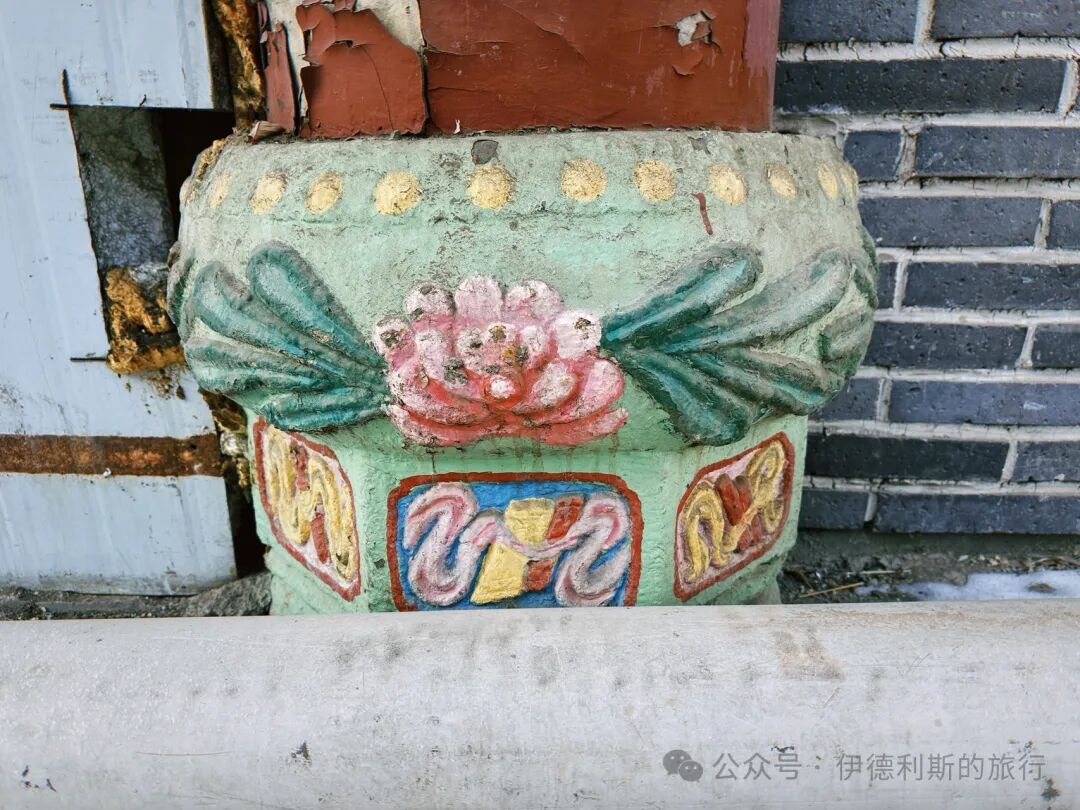
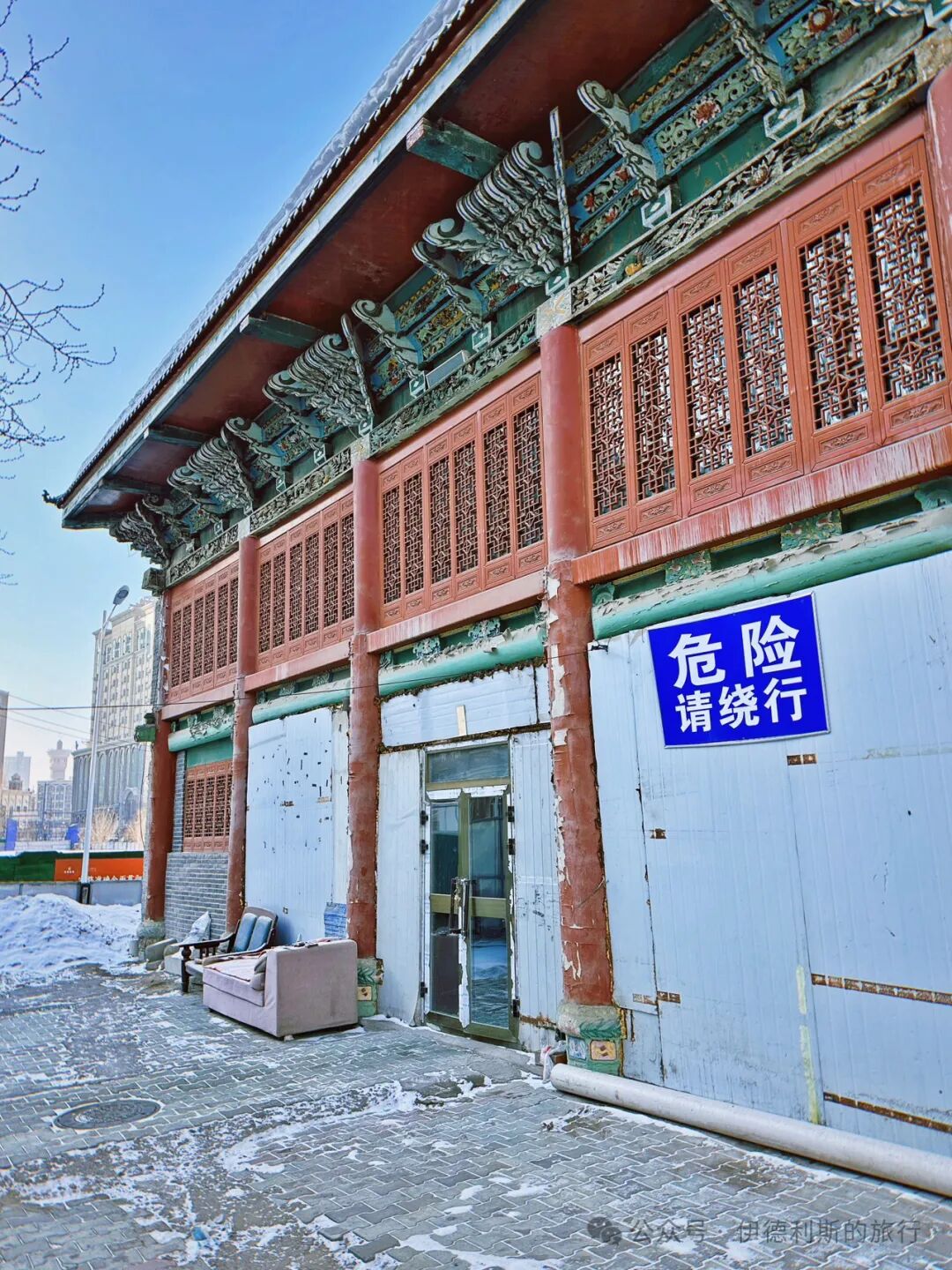
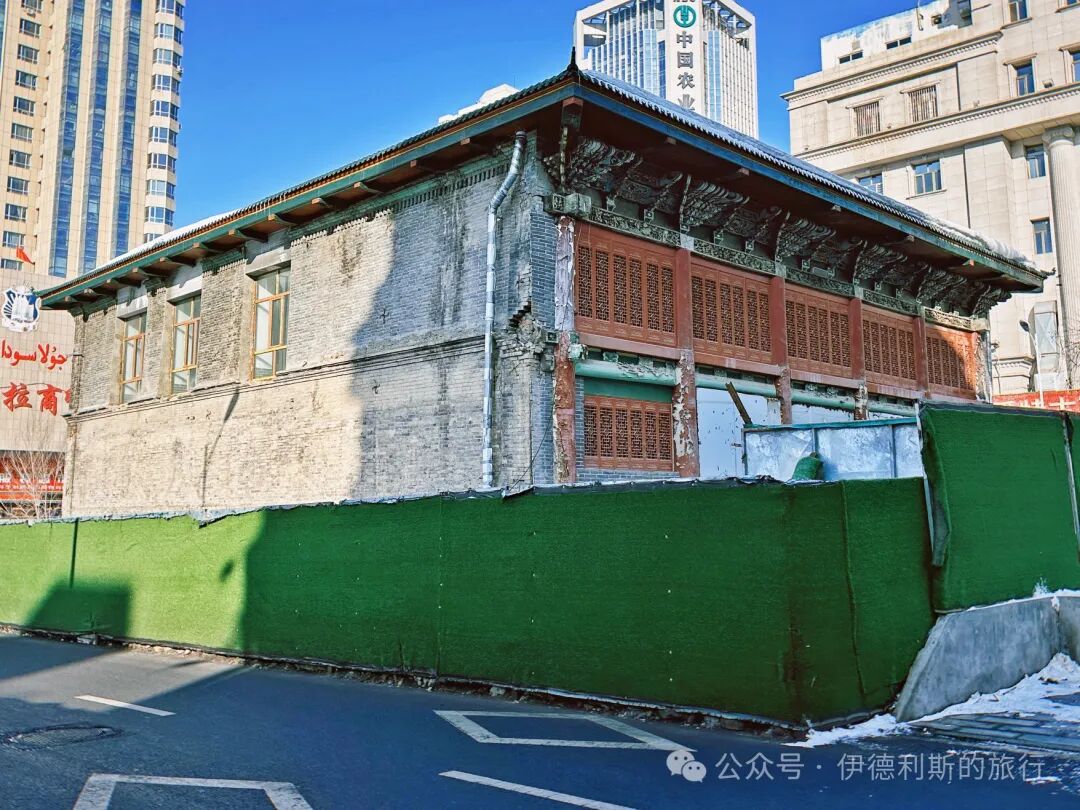
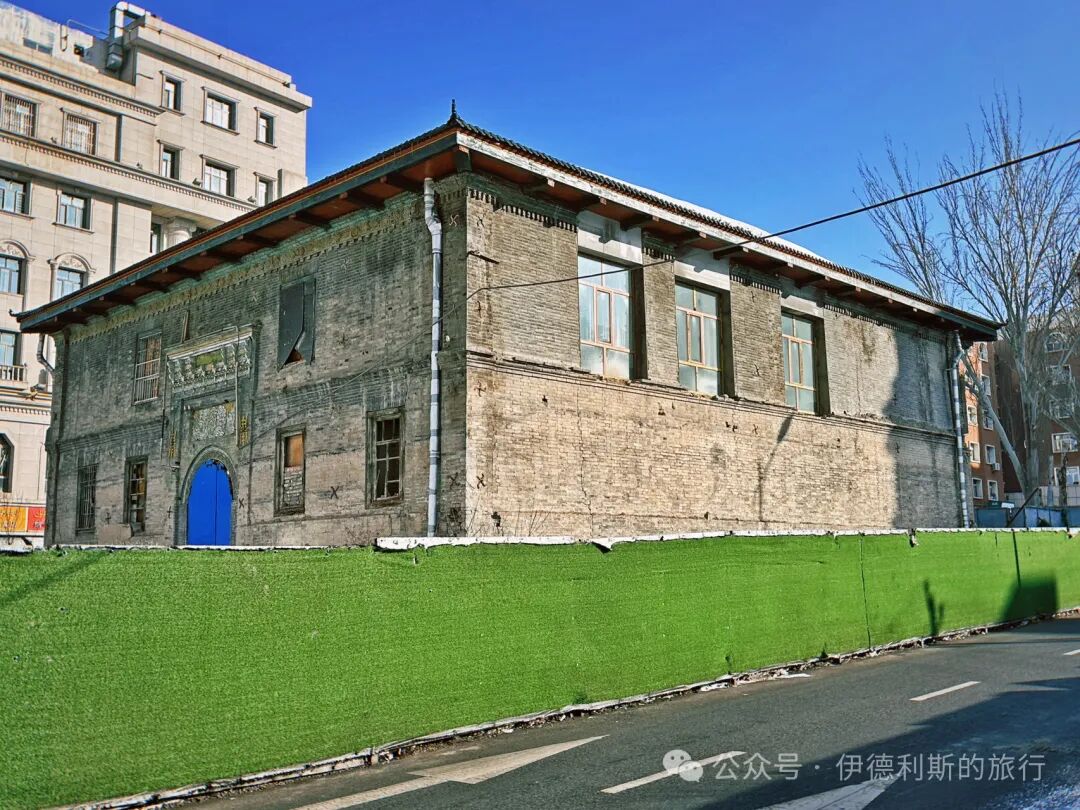
Other Mosques
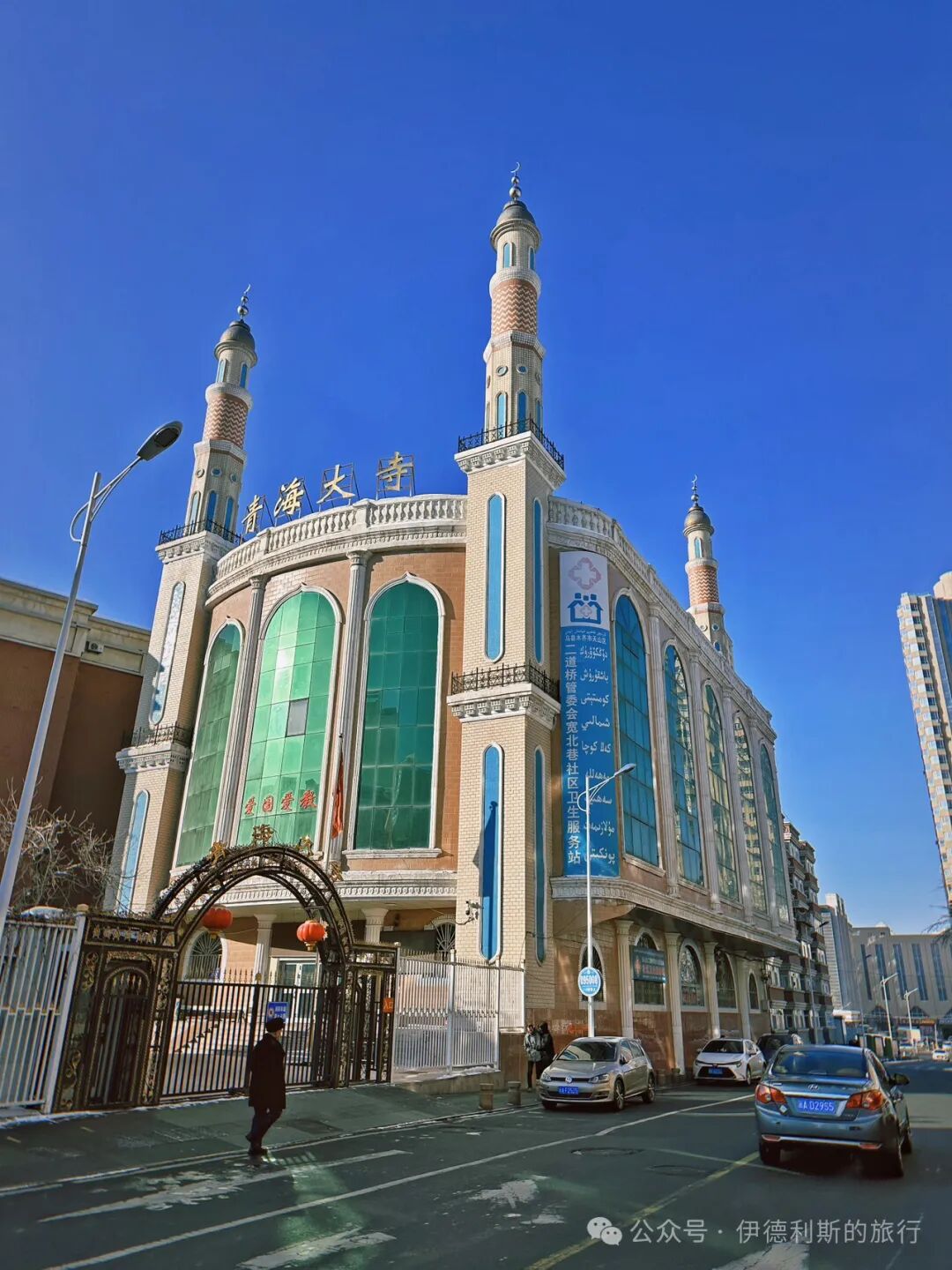
Qinghai Grand Mosque: Built in 1868 (the seventh year of the Tongzhi reign) by Hui Muslims from Qinghai, it was originally named Xining Mosque. In 1945, after Ma Chengxiang of the Qinghai Ma Family Army marched into Xinjiang, it was renamed Qinghai Mosque. Qinghai Mosque has some congregants from the Ikhwan and Huasi menhuan sects, and it maintains the tradition of observing the memorial day for the Huasi master.
Sala Mosque: Built in 1865 (the fourth year of the Tongzhi reign) by the Salar people from Qinghai. In 1945, many Salar officers and soldiers served under Ma Chengxiang of the Qinghai Ma Family Army when they entered Xinjiang, so the mosque was renovated in 1948. In 2002, Sala Mosque was rebuilt into its current structure. Like Qinghai Mosque, Sala Mosque has some congregants from the Ikhwan and Huasi menhuan sects, and it maintains the tradition of observing the memorial day for the Huasi master.
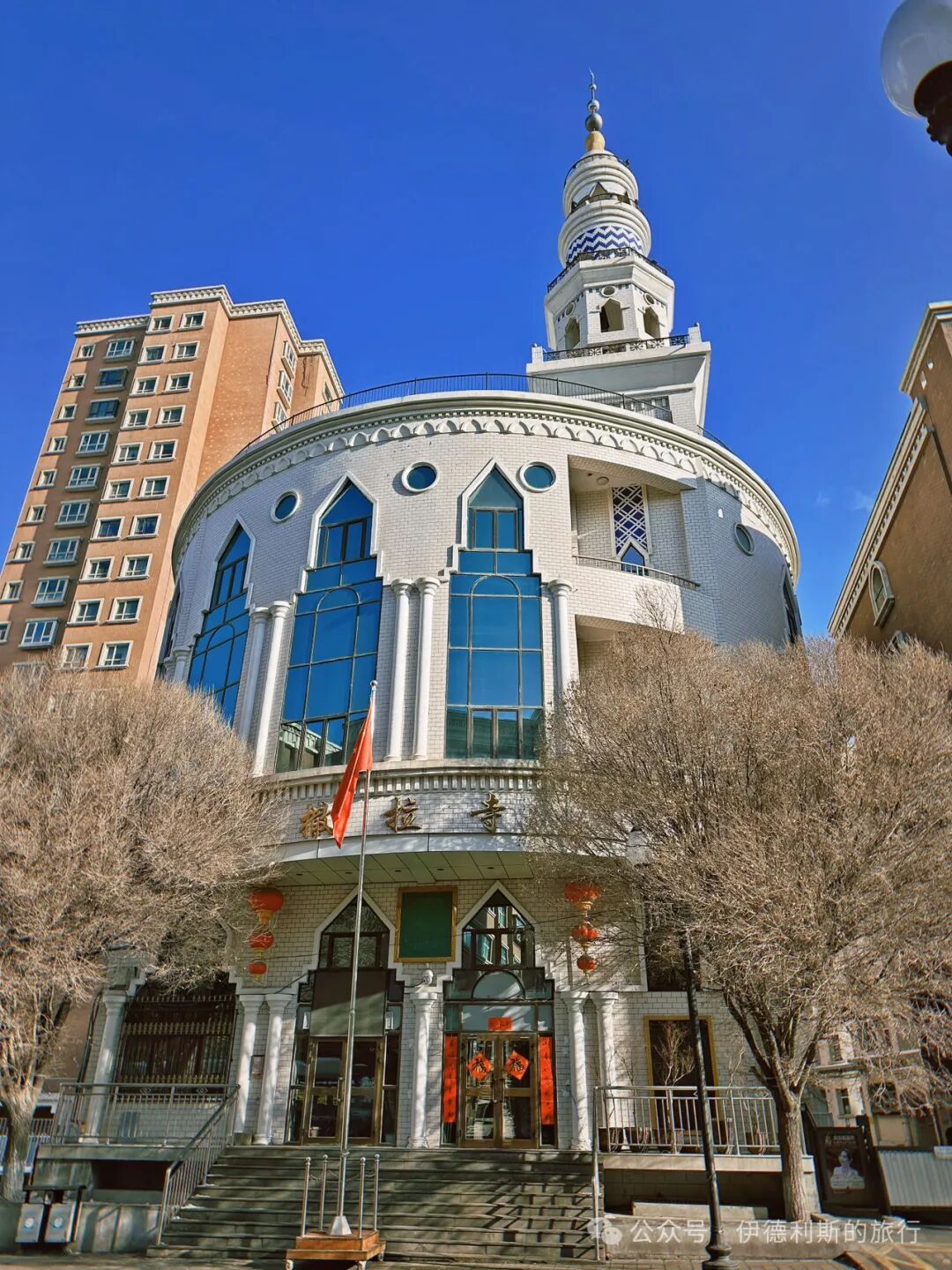
Hezhou Grand Mosque: Built in 1915 by Hui Muslims from Linxia, Gansu. It was acquired and demolished by the Urumqi Waste Recycling Station in 1977, then rebuilt in 1988.
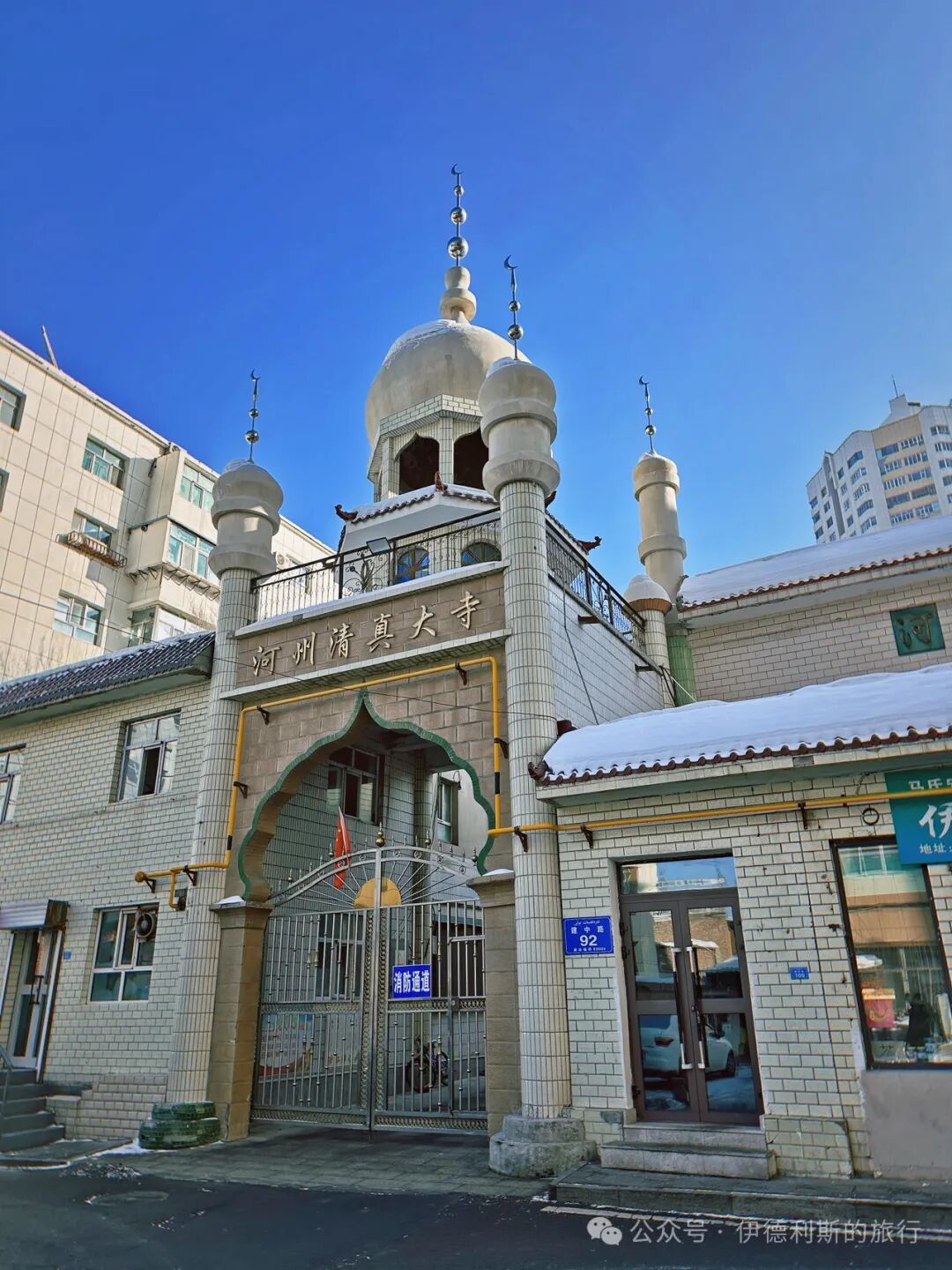
Beifang Mosque: First built in 1886 (the twelfth year of the Guangxu reign). It was once occupied by the Urumqi No. 2 Rubber Factory, but was later restored and rebuilt.
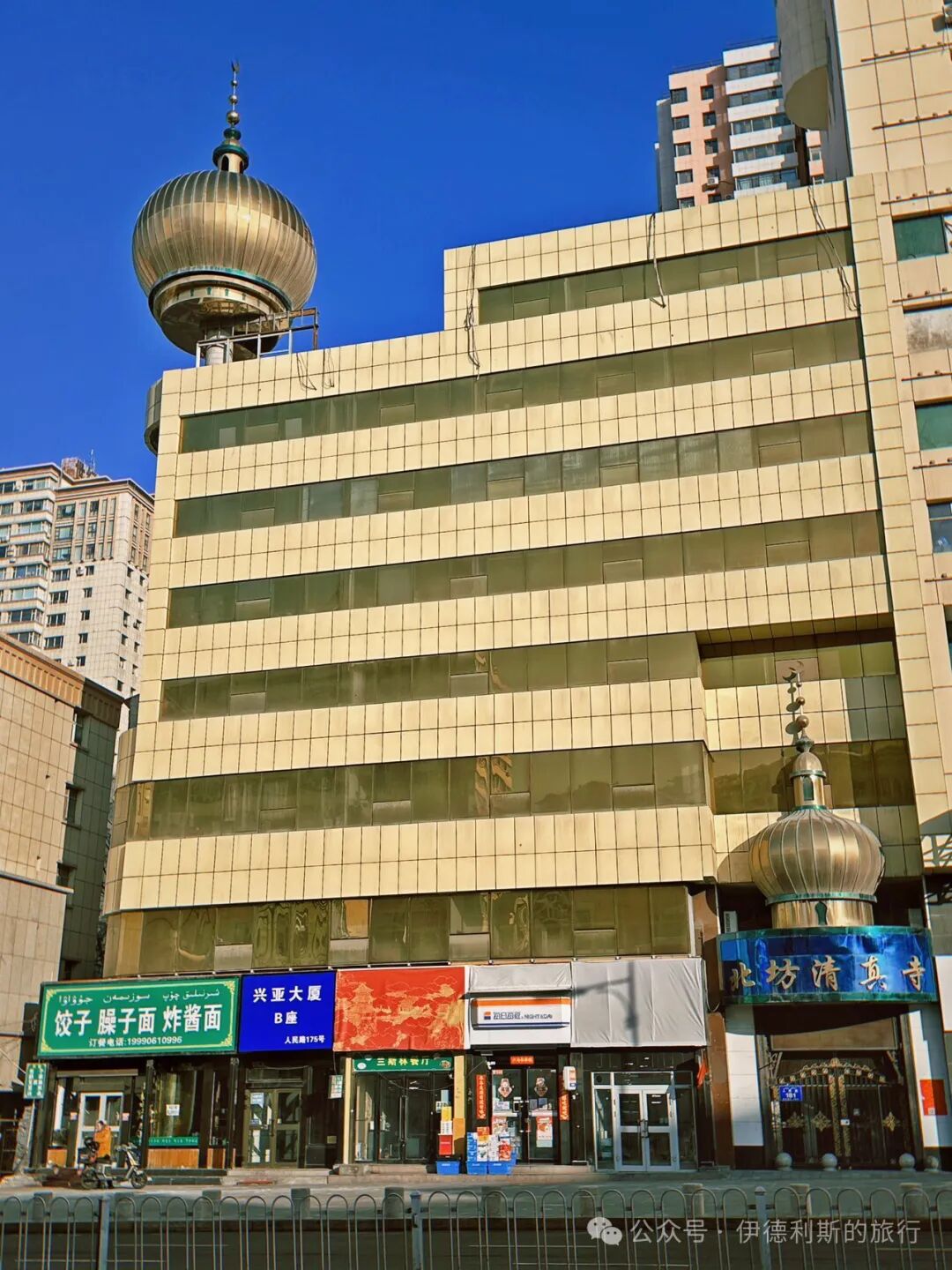
Dongfang Grand Mosque: First built in 1877 (the third year of the Guangxu reign).
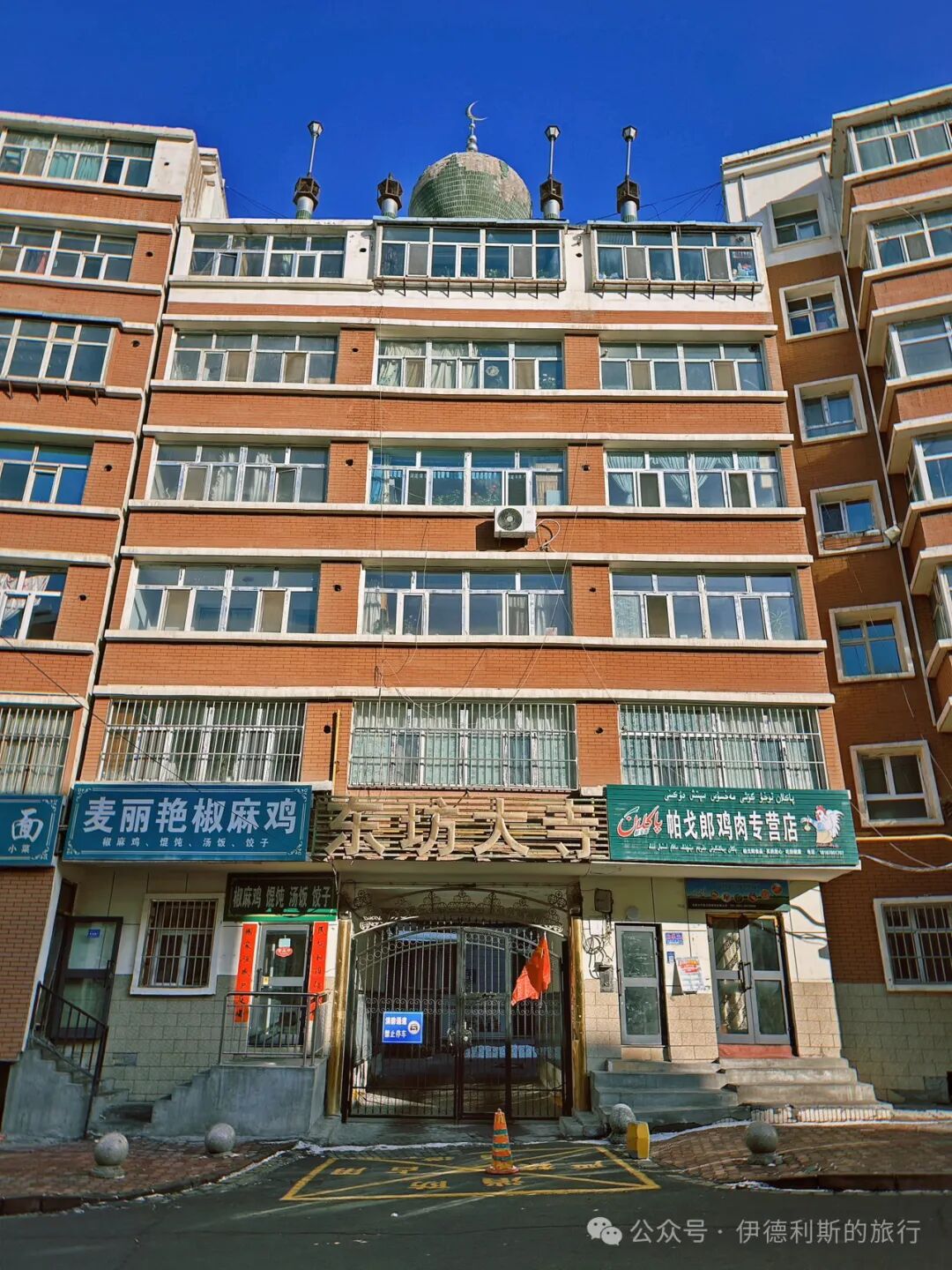
Xidasi Mosque: Built in 1890 (the sixteenth year of the Guangxu reign) by Hui Muslims from Shaanxi. Originally named Xifang Mosque, it started as a small prayer spot on the south side of Shanxi Alley before moving to its current location to be rebuilt.
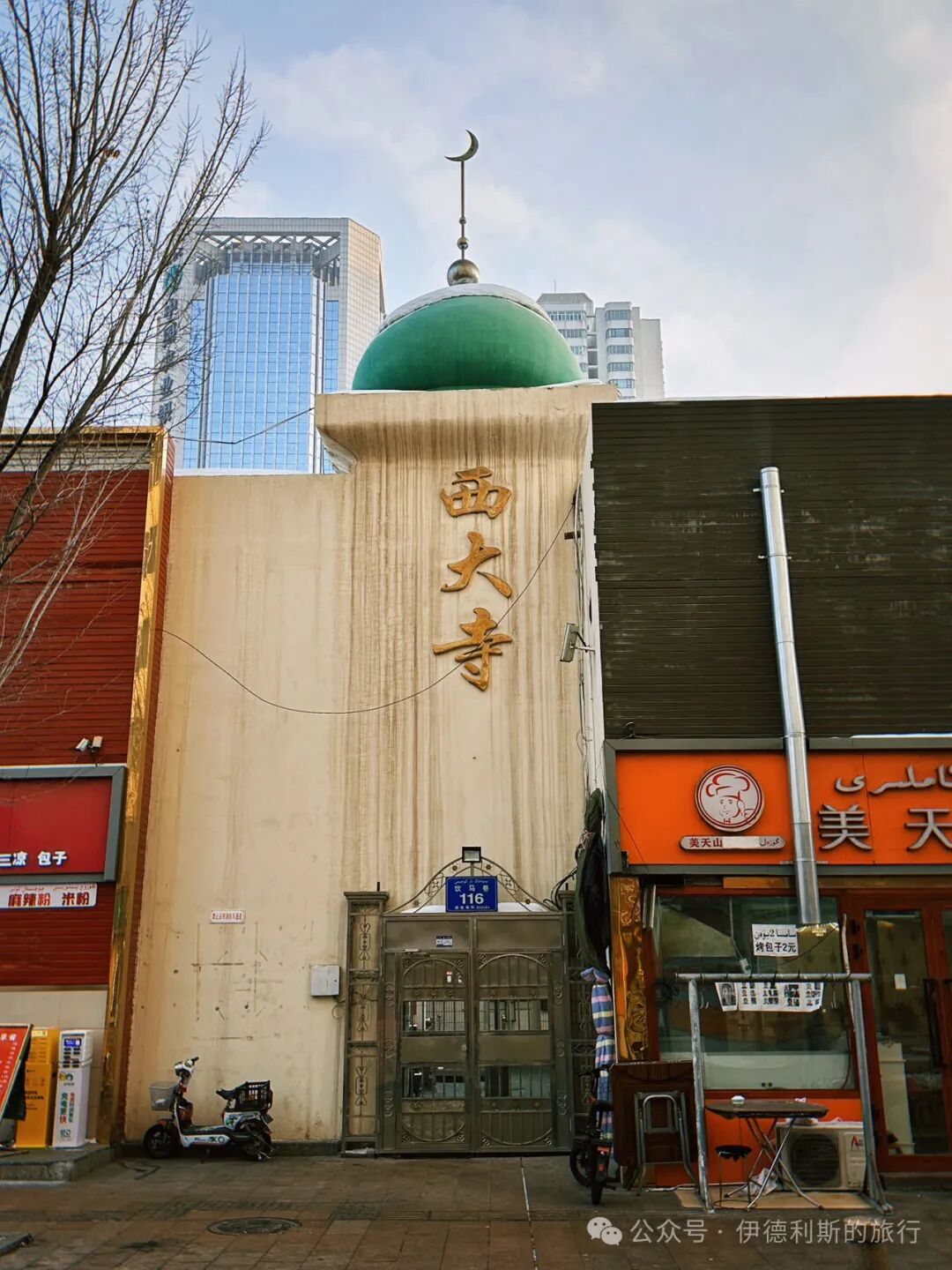
Balikun Mosque: Built in 1877 (the third year of the Guangxu reign) by Hui Muslims from Balikun.
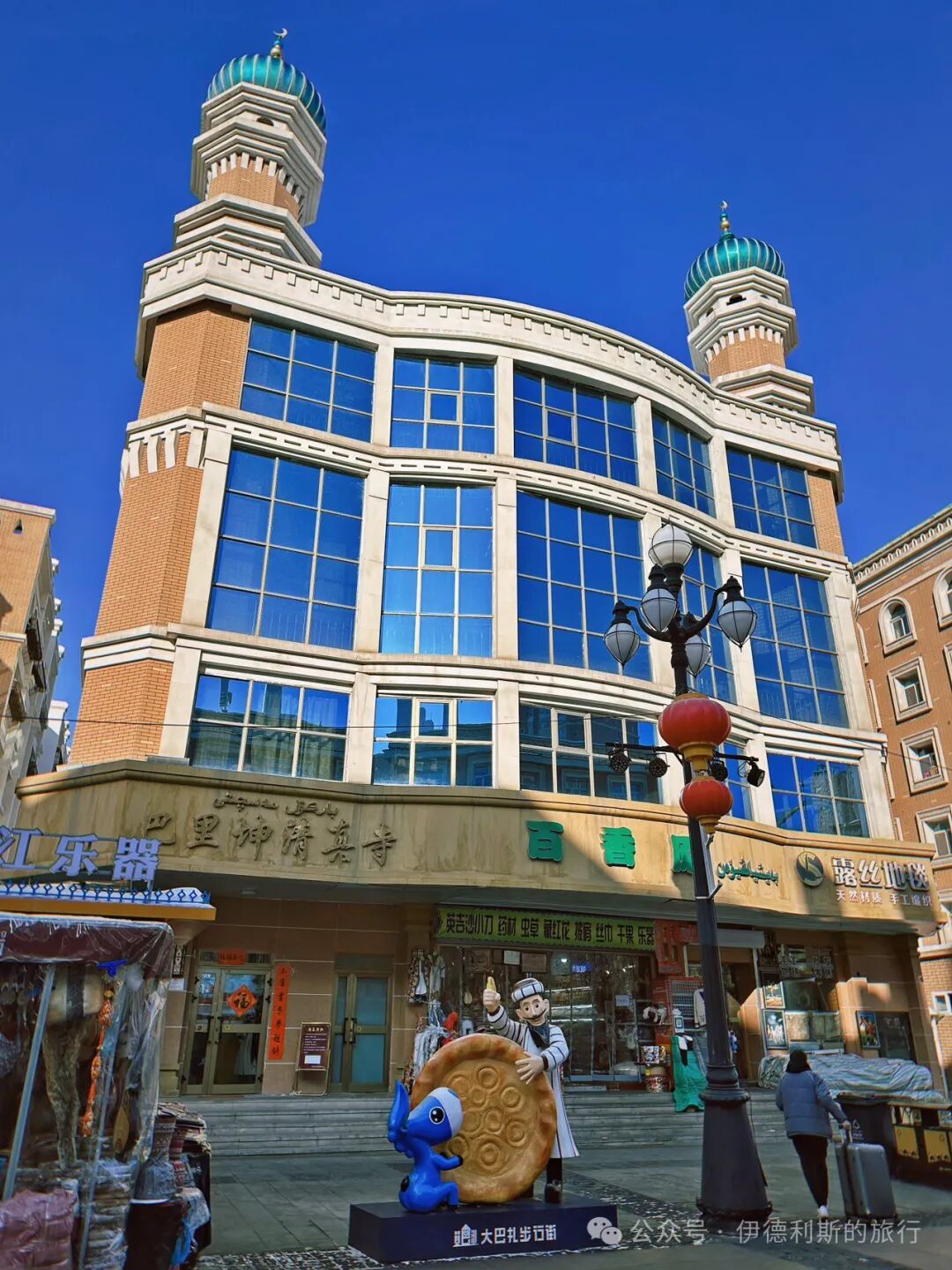
Fengxiang Mosque: Built in 1884 (the tenth year of the Guangxu reign) by Hui Muslims from Fengxiang, Shaanxi.
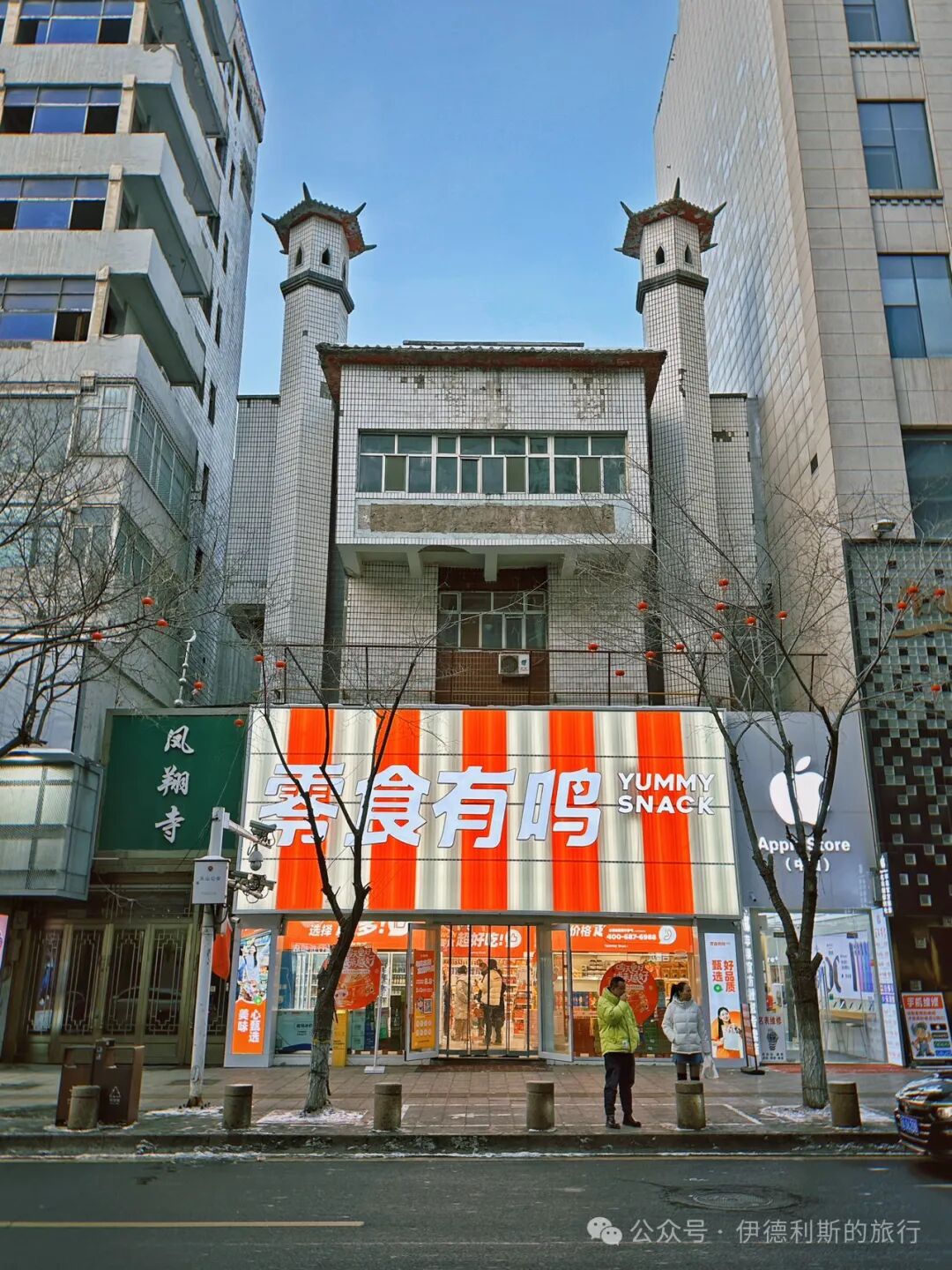
Binzhou Mosque (Baiji Mosque): During the Tongzhi reign, many Hui Muslims from Binzhou Prefecture (now Binzhou City) in Shaanxi fled to Urumqi's Xiguan area to settle down. During the Guangxu reign, Imam Ma Xuehai (known as Hongchengzi) led the community to build the first Binzhou Mosque at the entrance of Baojiaju Alley outside Urumqi's Great West Gate. It was moved to its current location on Mashi Alley (Yucai Alley) and rebuilt in 1909 (the first year of the Xuantong reign). Because most of the congregants came from Baiji Town in Binzhou Prefecture, it is also called Baiji Mosque. In 1990, due to the redevelopment of the Mashi residential area, Binzhou Mosque was moved more than 100 meters south and rebuilt.
Imam Ma Xuehai was an eighth-generation descendant of Hu Dengzhou, the founder of the scripture hall education system. During the Guangxu reign, he was known alongside Ma Liangjun and Zhou Erye (Zhou Zhendong) as one of the three great imams. He led Binzhou Mosque three times and passed away (returned to Allah) at the mosque in 1924. Among his students, the most prestigious was Imam Ma Zhaolin (known as Huazhezi). Imam Ma Zhaolin was also from Binzhou. He studied the scriptures under Imam Ma Xuehai from a young age and became his adopted son. Imam Ma Zhaolin led the Binzhou mosque four times. In 1943, he was delayed in Xi'an while on his way to Hajj and was hired to lead the Xiaopiyuan mosque. He passed away in 1955 while serving as the imam at the Shaanxi mosque in Changji.
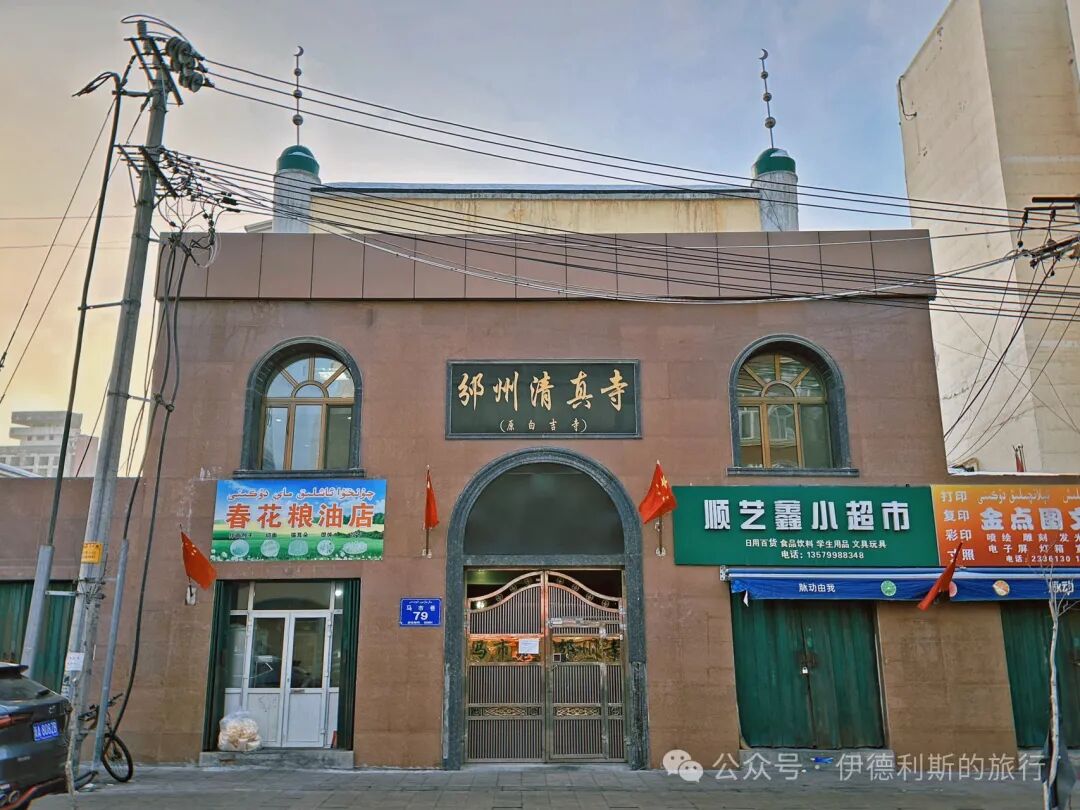
The original site of Lanpingfang was in Yonghe Zhengxiang. It was built together by Hui Muslims from Lanzhou and Pingfan (now Yongdeng County) in Gansu. In 1946, Yongdeng Hui Muslims built the separate Yongdeng mosque, and Lanpingfang was renamed the Lanzhou mosque. It moved to its current location on Yuejin Street in 1984. The community members of the Lanzhou mosque mainly belong to the Khufiyya (hufuye) menhuan.
Halal Travel Guide: Urumqi — Hui Muslim Street, Halal Food & Xinjiang Markets
Articles • ali2007fr posted the article • 0 comments • 309 views • 2026-05-19 23:57
Summary: Urumqi’s Hui Muslim streets bring together halal food, markets, daily commerce, and neighborhood life in Xinjiang. This 2025 travel account keeps the original street scenes, shop details, photos, and food notes in a clear English version.
After the Qing dynasty defeated the Dzungar tribe, they built an earthen city in Urumqi in 1758 (the 23rd year of the Qianlong reign) to station troops and guard the border. In 1763 (the 28th year of the Qianlong reign), they expanded it and named it Dihua City. After that, Qing troops stationed in Urumqi to farm the land, and many Hui Muslim officers and soldiers brought their families to settle there. During the Jiaqing, Daoguang, and Xianfeng reigns, the Qing dynasty kept moving people to Xinjiang, and more and more Hui Muslims came to settle in Urumqi. After the Tongzhi reign, many Hui Muslims from the northwest moved to Urumqi for various reasons, including failed anti-Qing uprisings, religious disputes, and natural disasters.
In 1876 (the second year of the Guangxu reign), the Qing army recaptured Urumqi and ordered all Hui Muslims inside the city to move outside. Since then, most Hui Muslims in Urumqi have settled in the Nanguan and Xiguan areas, making a living by slaughtering cattle and sheep and running halal food businesses.
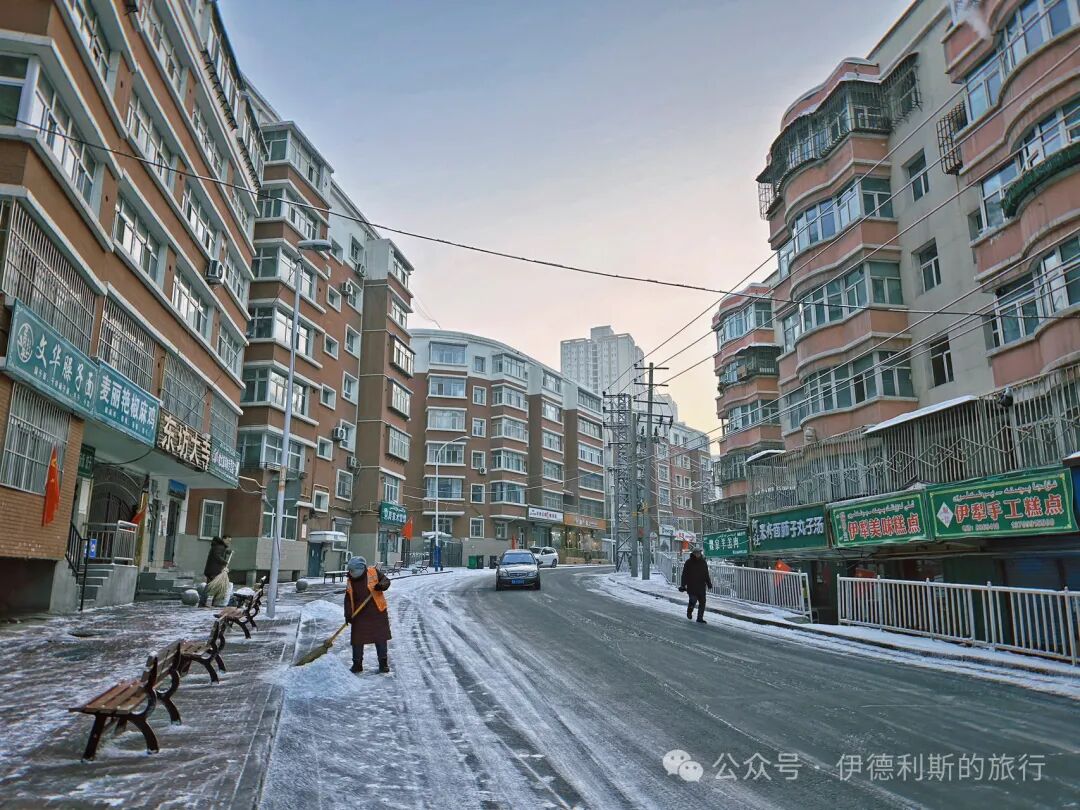
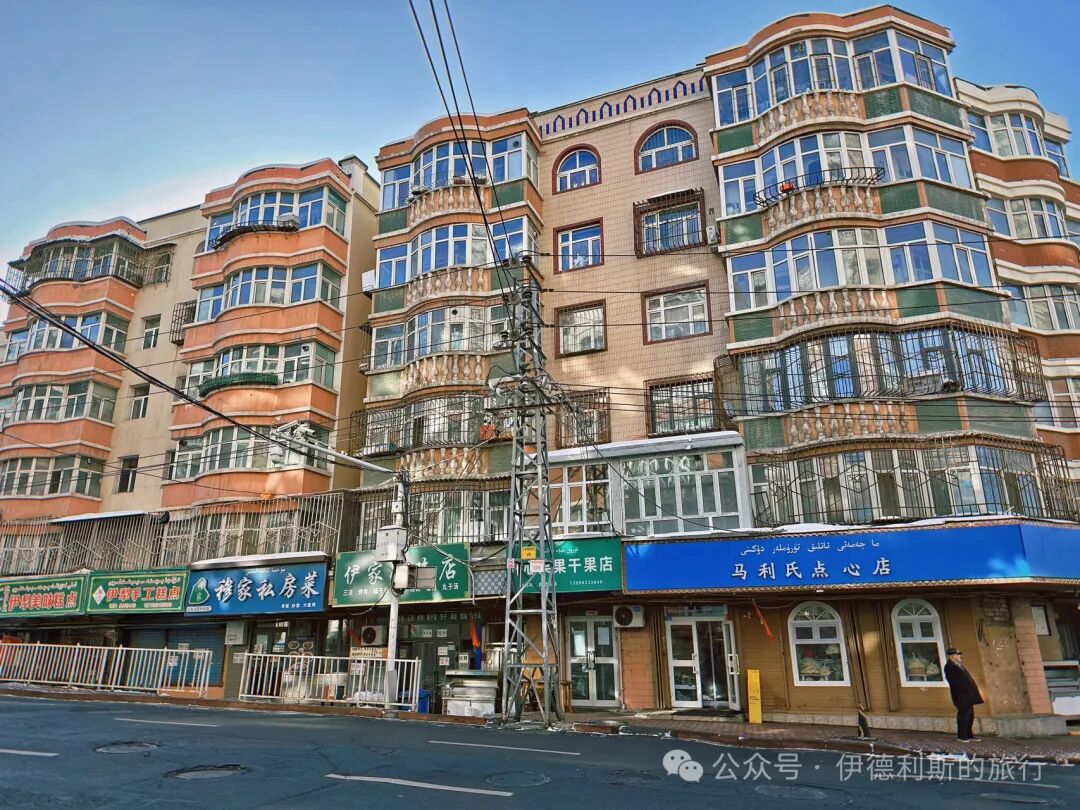
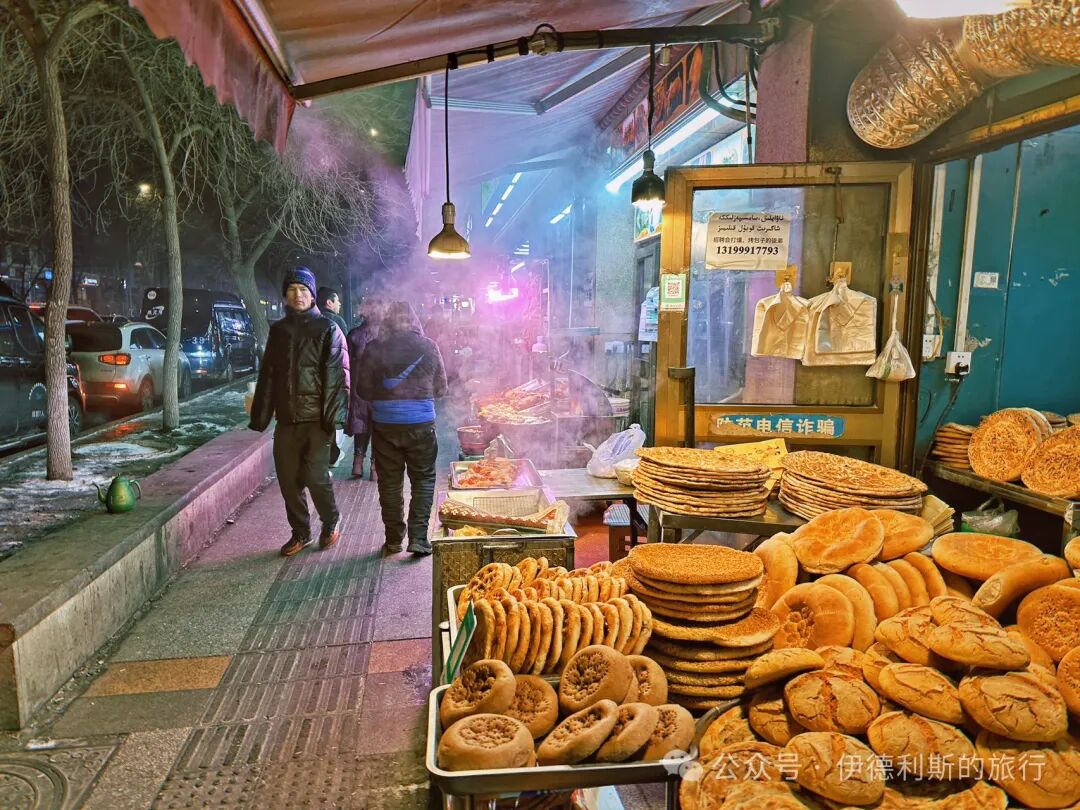
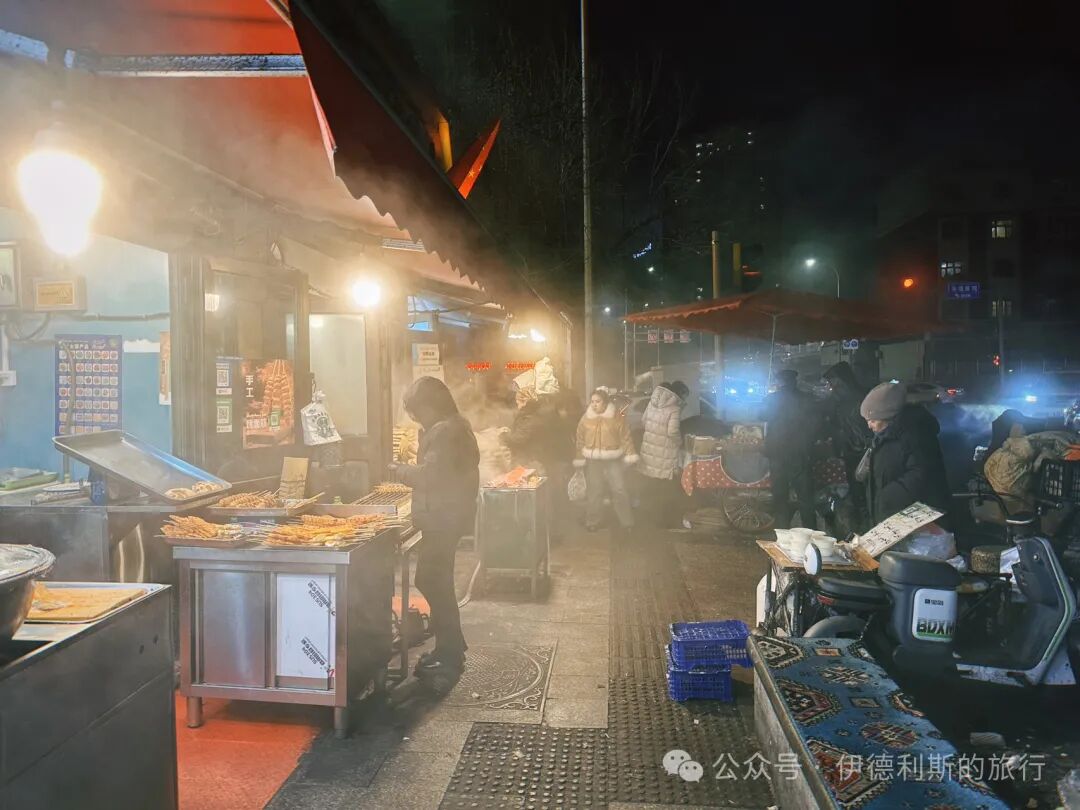
Urumqi's Xiaonanmen gate faces Xiaodongliang. During the late Qing dynasty and the Republic of China era, half of the twenty-three Hui Muslim neighborhoods in Urumqi were here. Today, it is still the place where Hui Muslim snacks are most concentrated.
Wuwuzi is the oldest Hui Muslim brand in Nanguan. In 1907, Li Shenghua (Li Liushizi) started carrying a shoulder pole to sell lamb (yanggaorou) at the south gate of Dihua. Later, his fifth son, Li Zhanshou (Wuwuzi), took over, and the name Wuwuzi Lamb gradually became well-known. After the 1980s, Wuwuzi rented a storefront in Shanxi Alley. It has been passed down for four generations and is now an autonomous region-level intangible cultural heritage.
Across from the East Mosque (Dongfang Dasi), I had sour soup dumplings (suantang shuijiao) with celery and meat. They contained glass noodles (fentiao), tomatoes, wood ear mushrooms, and tofu.
Across from the Qinghai Mosque (Qinghai Dasi), I had milk tea and cabbage meat buns (baozi) at Su Yongfang's shop. The milk tea had a strong milk and tea flavor and was topped with a milk skin (naipizi). The buns are made in the Xinjiang Hui Muslim style, with loose filling and Sichuan peppercorns.
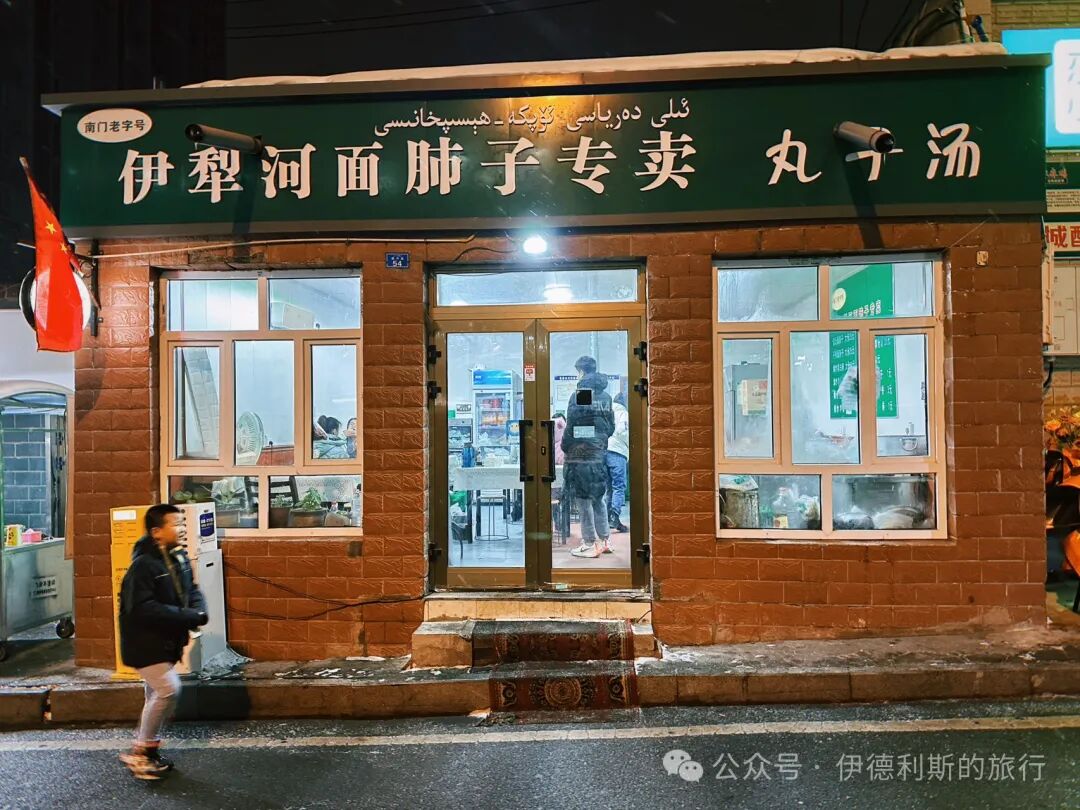
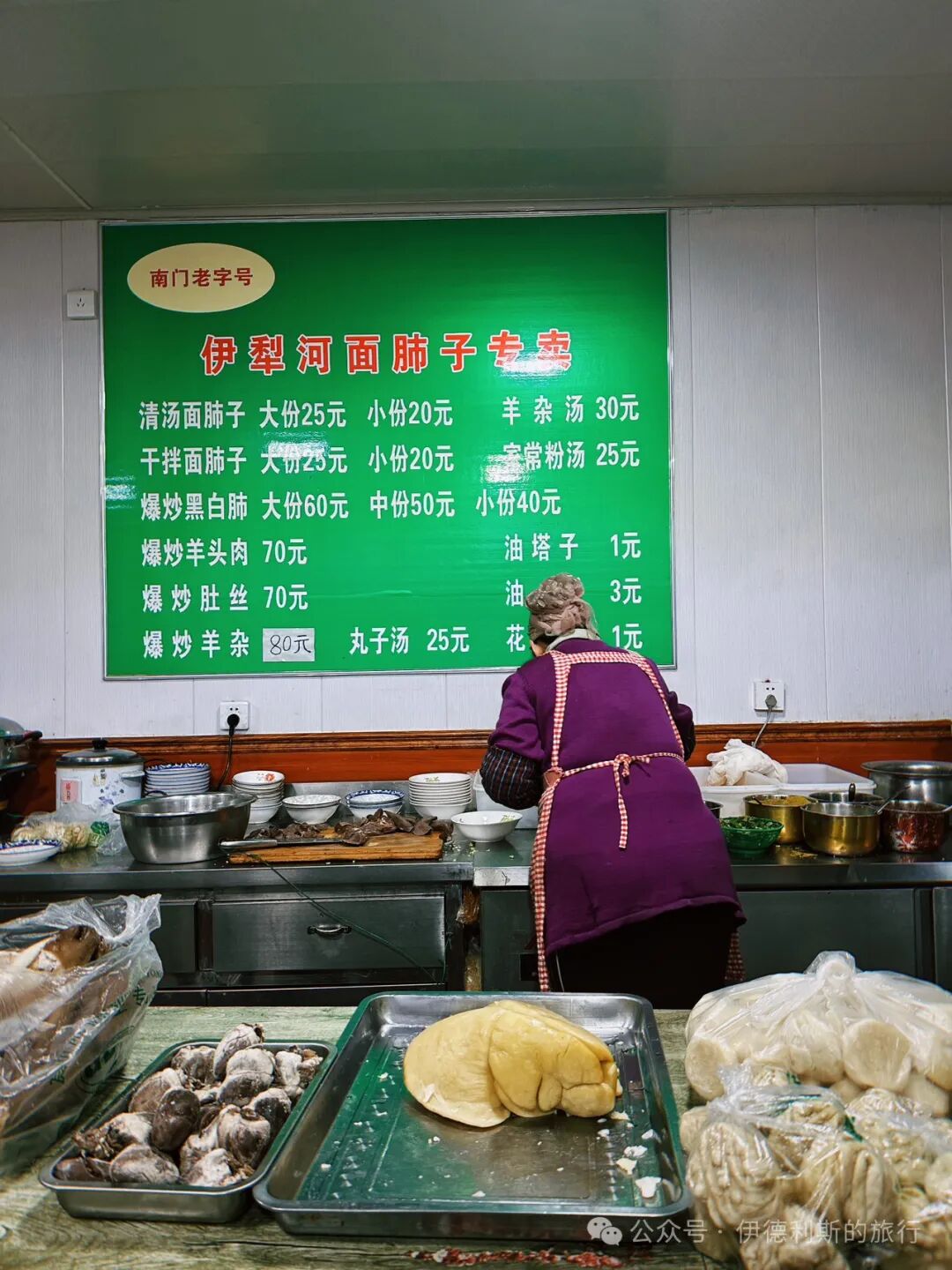
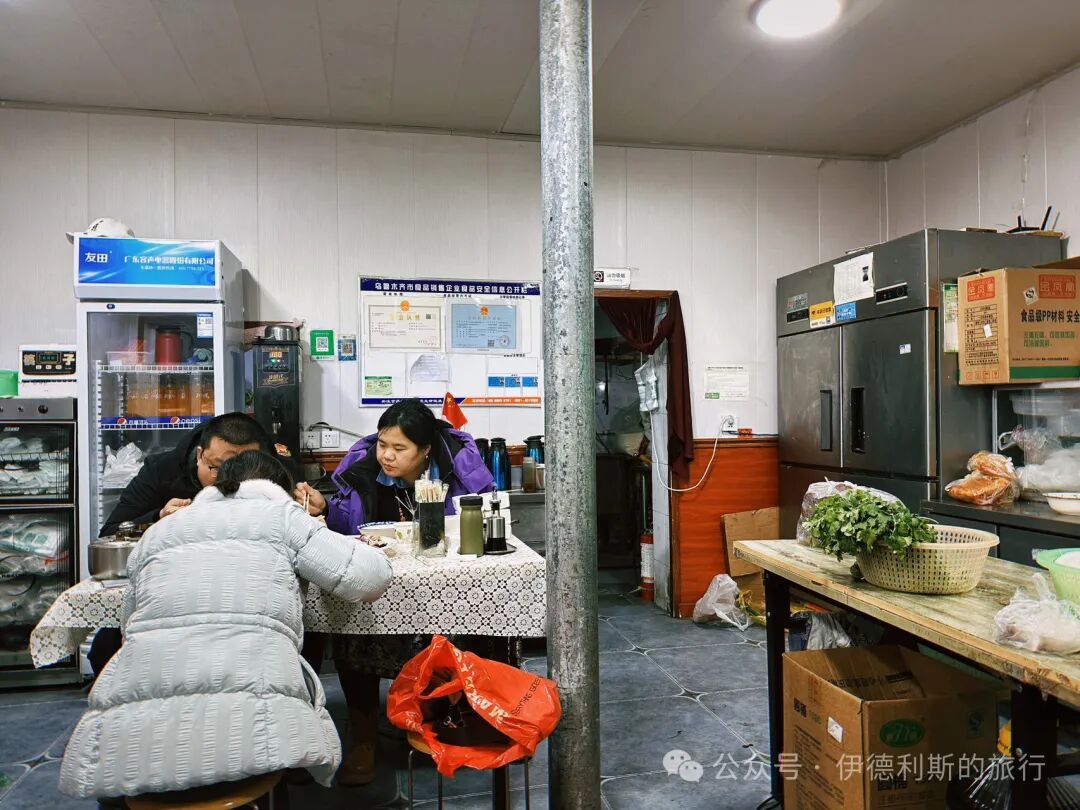
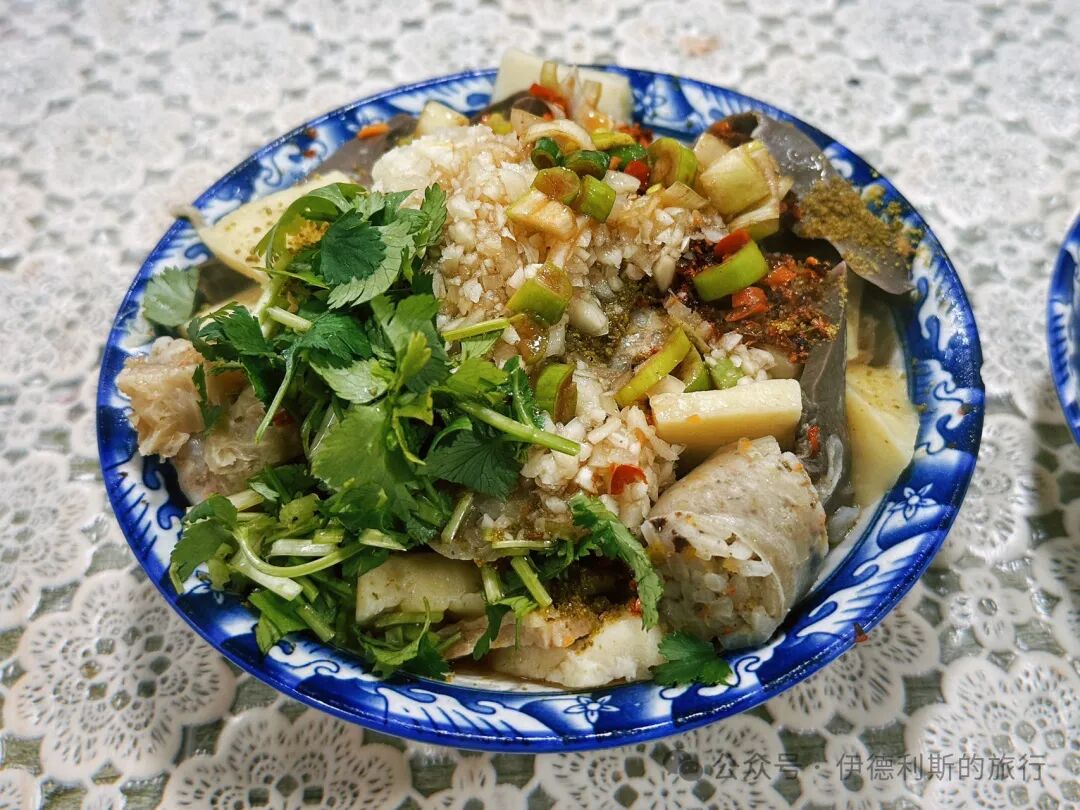
Behind the Shaanxi Mosque (Shaanxi Dasi) is the long-standing Yilihe Mianfeizi shop. The owner started selling at the South Gate night market over twenty years ago. After the night market closed, he opened this small shop behind the Shaanxi Mosque. This small shop run by a husband and wife is not big, but you can eat authentic Xinjiang lung and tripe noodles (mianfeizi). They serve it in clear soup, dry-mixed, or stir-fried. They have large and small portions, as well as stir-fried sheep head meat, tripe strips, sheep offal, meatball soup, and glass noodle soup (fentang).
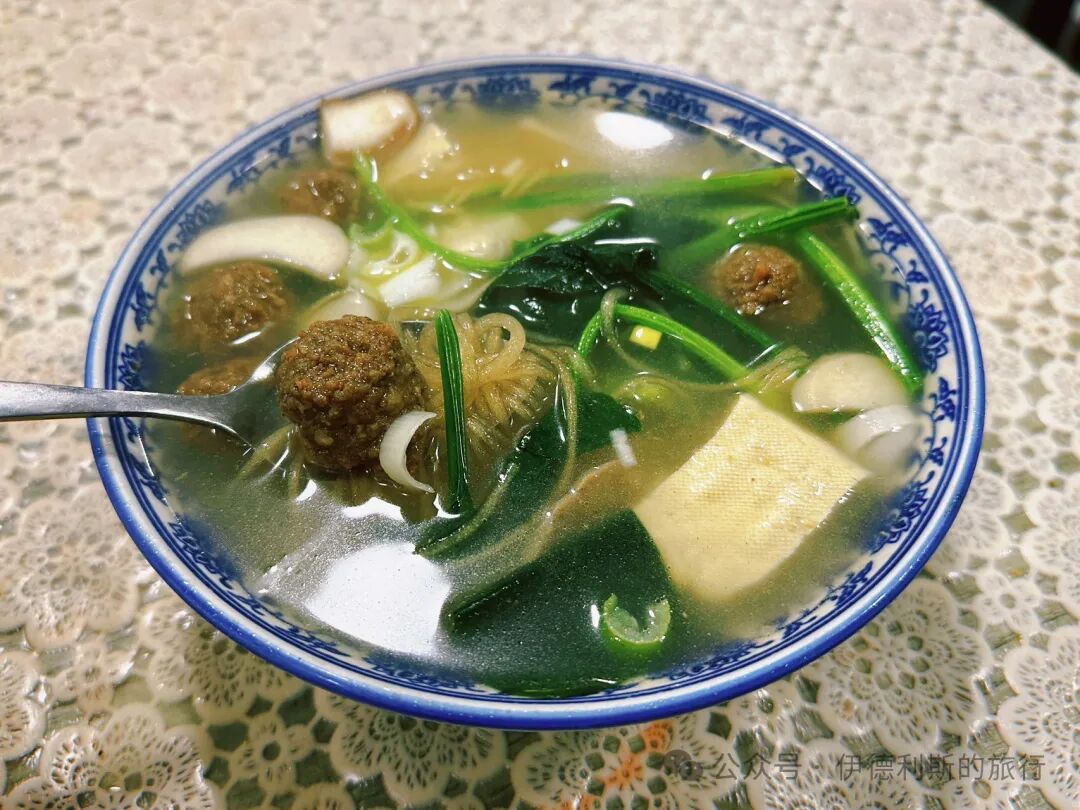
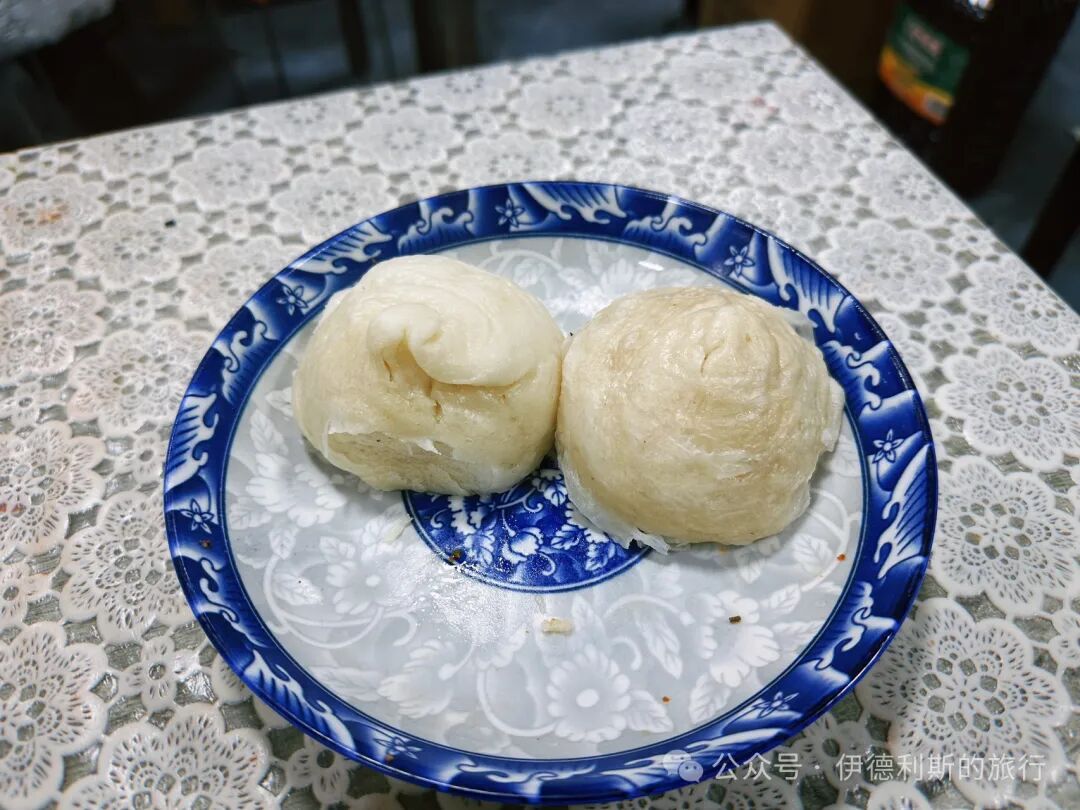
I ordered a portion of dry-mixed lung and tripe noodles, a bowl of meatball soup, and two oil towers (youtazi). Oil towers are my favorite staple food. They are made with sheep fat and are very appetizing. The lung and tripe noodles come with plenty of ingredients. The rice sausages (michangzi) contain minced meat and carrots, and they taste great. The meatball soup contains meat slices, tofu, spinach, glass noodles, and other things. It is especially warm to drink in winter.
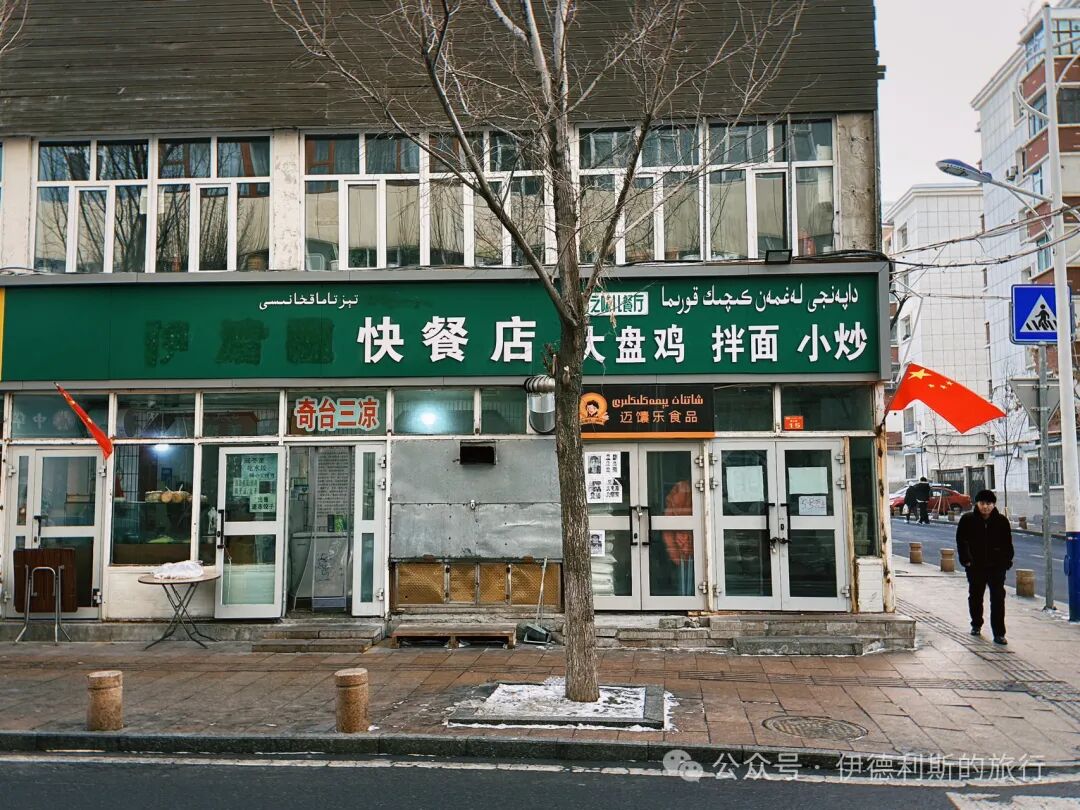
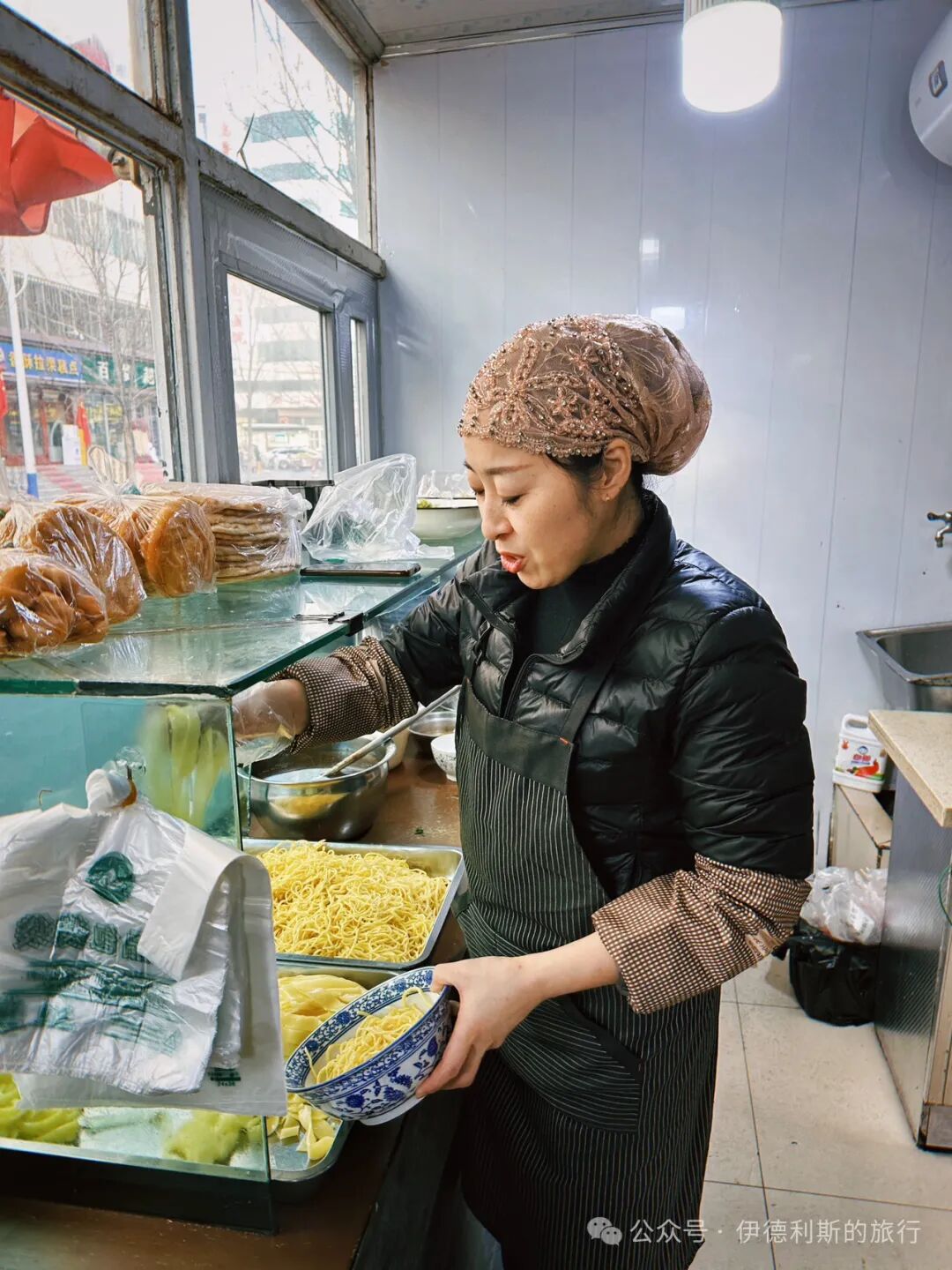
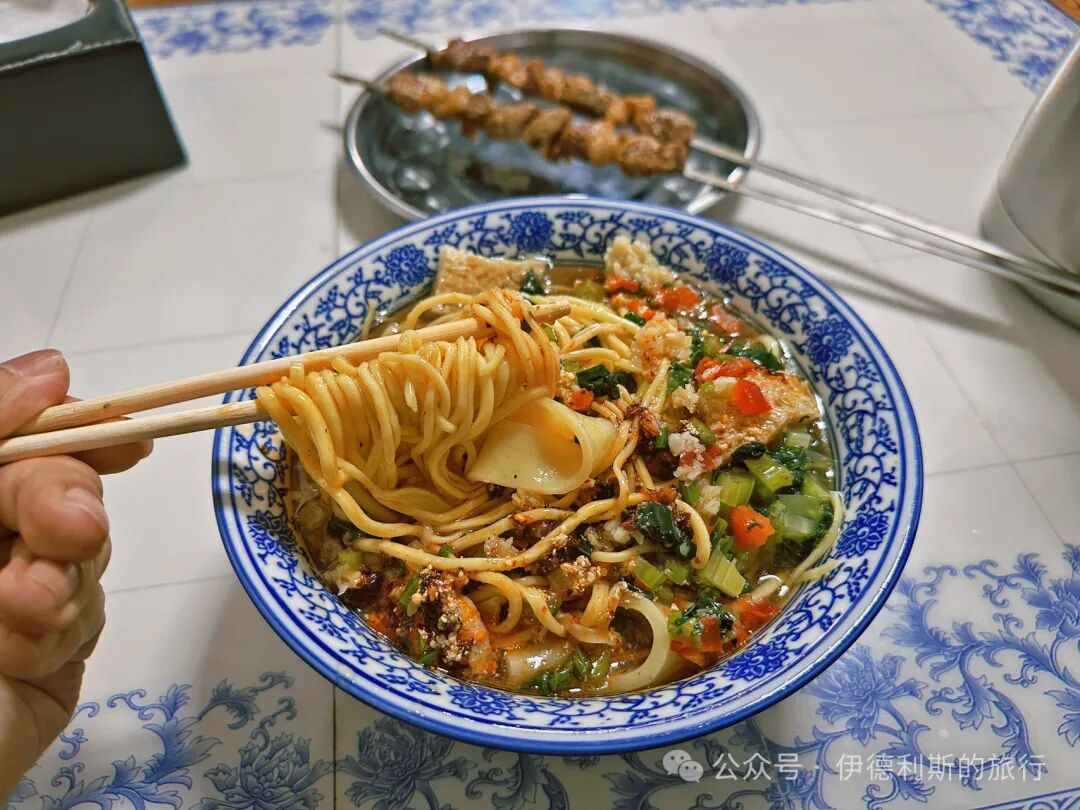
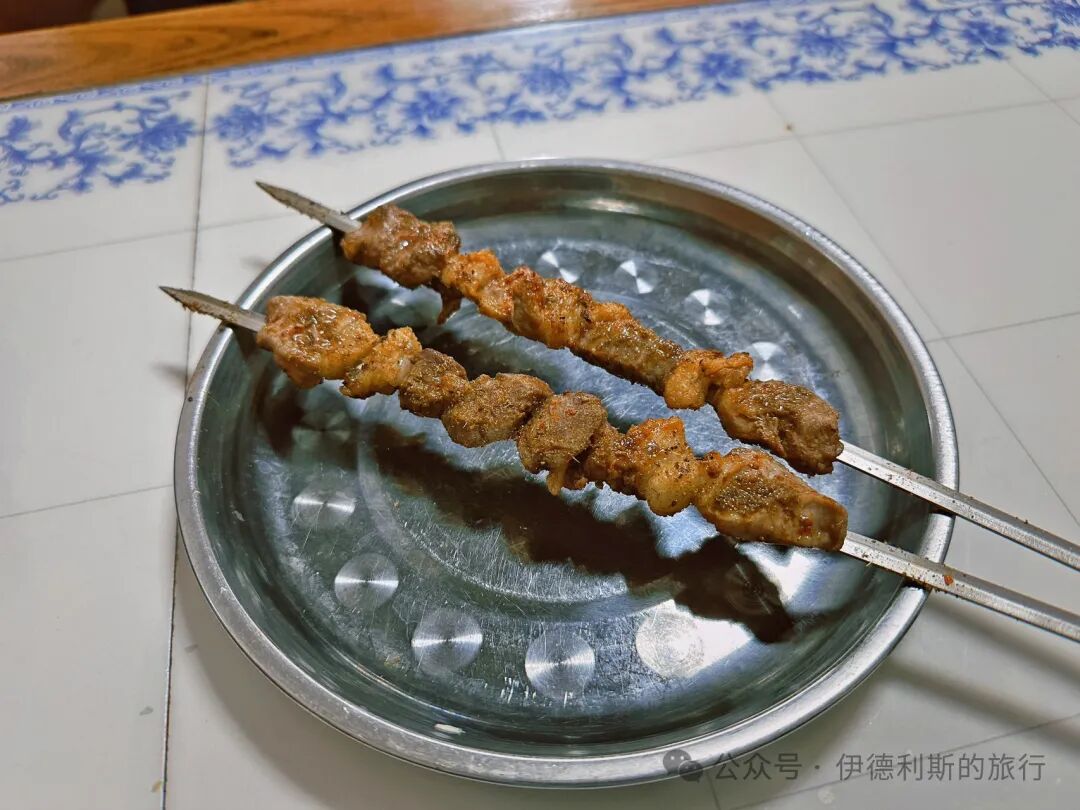
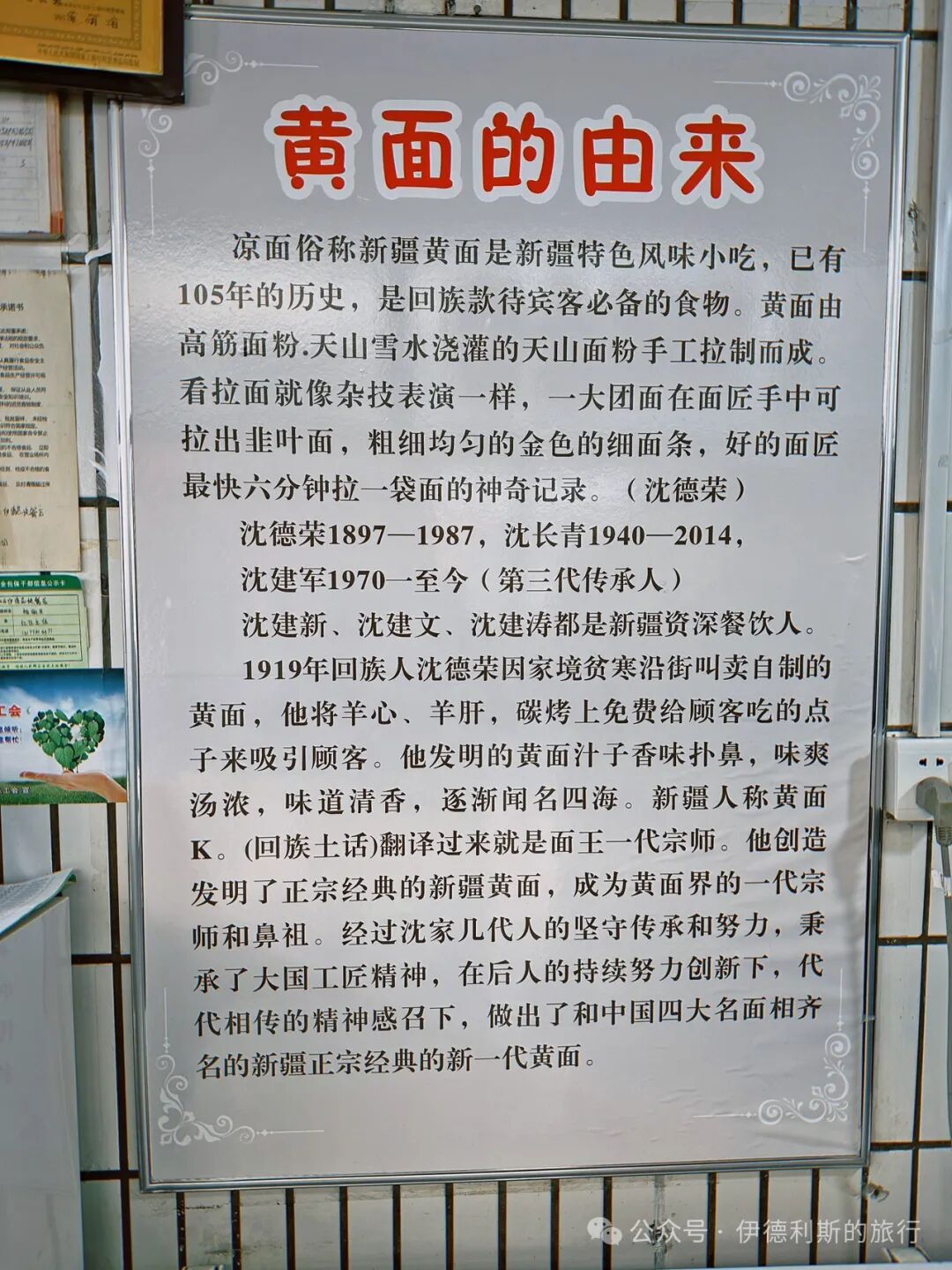
At the entrance of the West Mosque (Xidasi) is the Qitai Three Cold Dishes shop. The founder, Shen Derong (1897-1987), started selling yellow noodles (huangmian) on the street in 1919. At that time, he used free charcoal-grilled sheep hearts and sheep livers to attract customers, gradually spreading the way of eating yellow noodles with grilled meat. It has been passed down through three generations: Shen Changqing (1940-2014) and Shen Jianjun (1970-).
Yellow noodles (huangmian) in Xinjiang are made like Gansu pulled noodles (lamian). Both use alkaline ash (penghui) in the dough. You can stretch the dough by hand into flat leek-leaf noodles or thin noodles. The difference is that Xinjiang yellow noodles are served with a thick sauce that clings to the noodles when you lift them. The dish includes ingredients like wild celery, wheat gluten (mianjin), green onion, ginger, garlic, and chili oil (youpo lazi). It has a rich, sour, sweet, and spicy flavor that is very satisfying.
Suyongfang Grocery Store, across from the Qinghai Great Mosque, sells ready-made Hui Muslim fried meatballs (zha wanzi) and meat-stuffed tofu (jiasha). You can buy a bag, freeze it at home, and use it for stews or meatball soup.
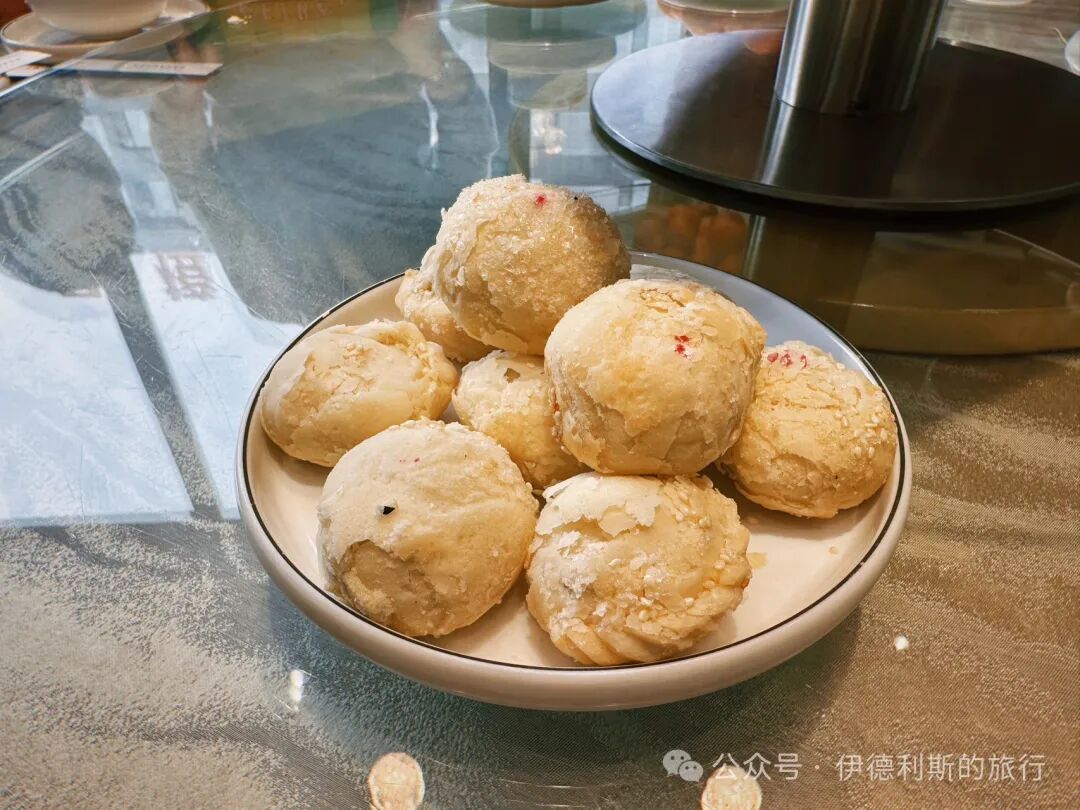
Mashi and Yili Pastry Shop, across from the East Mosque, sell traditional Hui Muslim pastries. Their flaky pastries (supi dianxin) are a must-have for wedding banquets among Hui Muslims in Urumqi. Actually, the method for making these flaky pastries was brought to Urumqi by people from Tianjin. In the 1930s, Urumqi Hui Muslim pastry chef She Wenbing became close friends with Liu Wenjiang, a chef at the Yongsheng Western Pastry Shop in Tianjin. He learned how to make the flaky Beijing-style eight-piece pastry set (jing bajian), and the recipe spread among Hui Muslims in Urumqi.
Beyond Hui Muslim food, there is plenty of Uyghur and Kazakh cuisine in the Nanguan area.
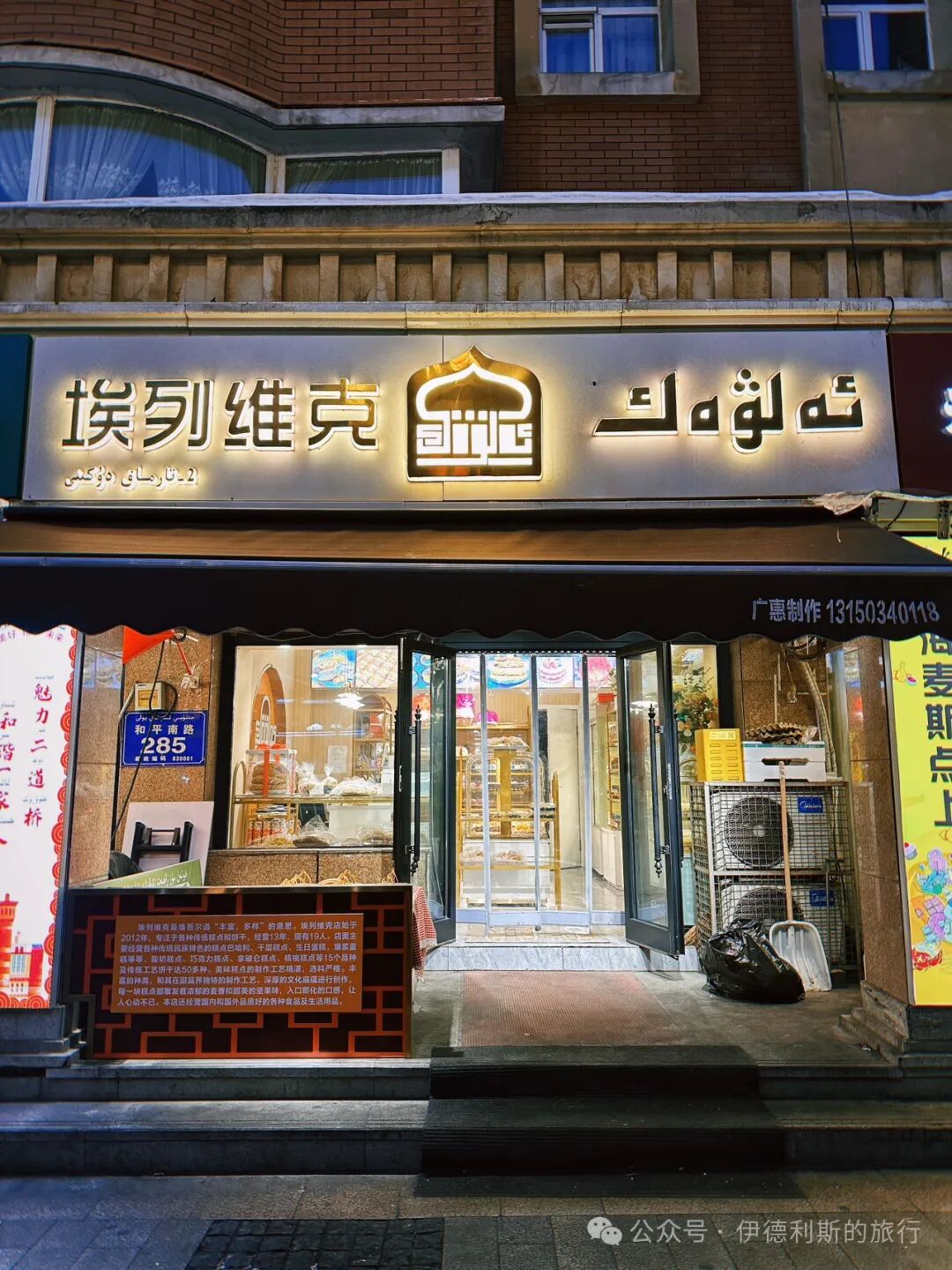
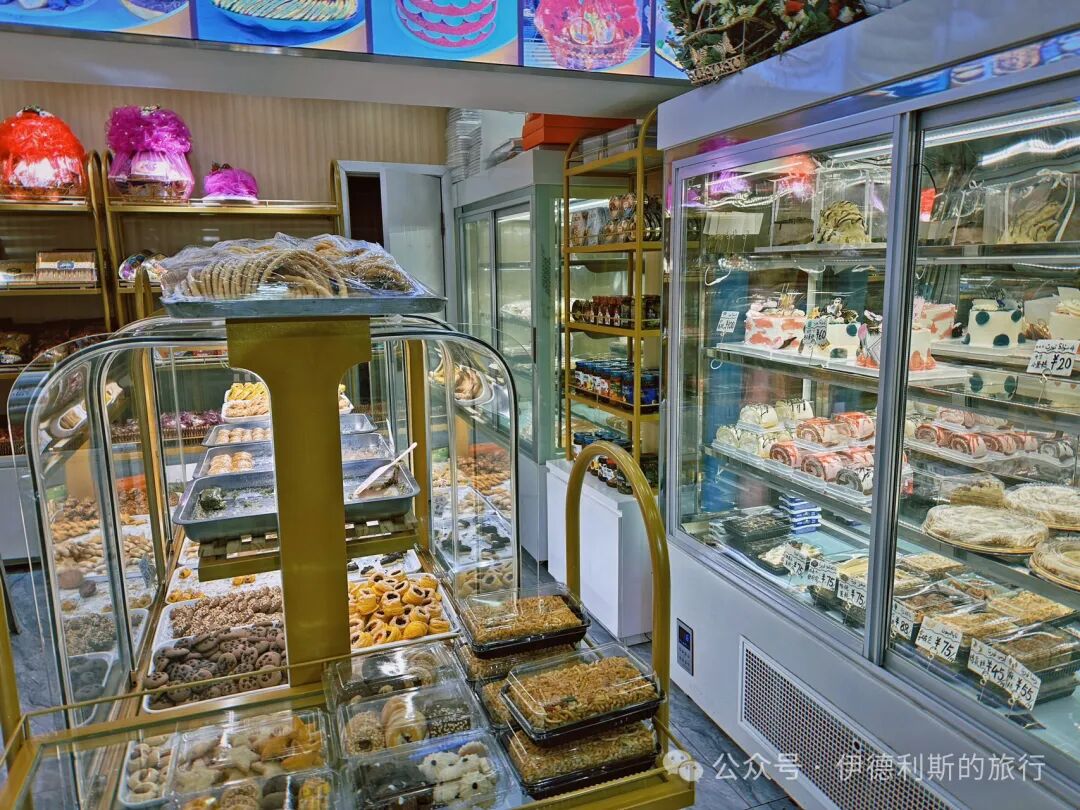
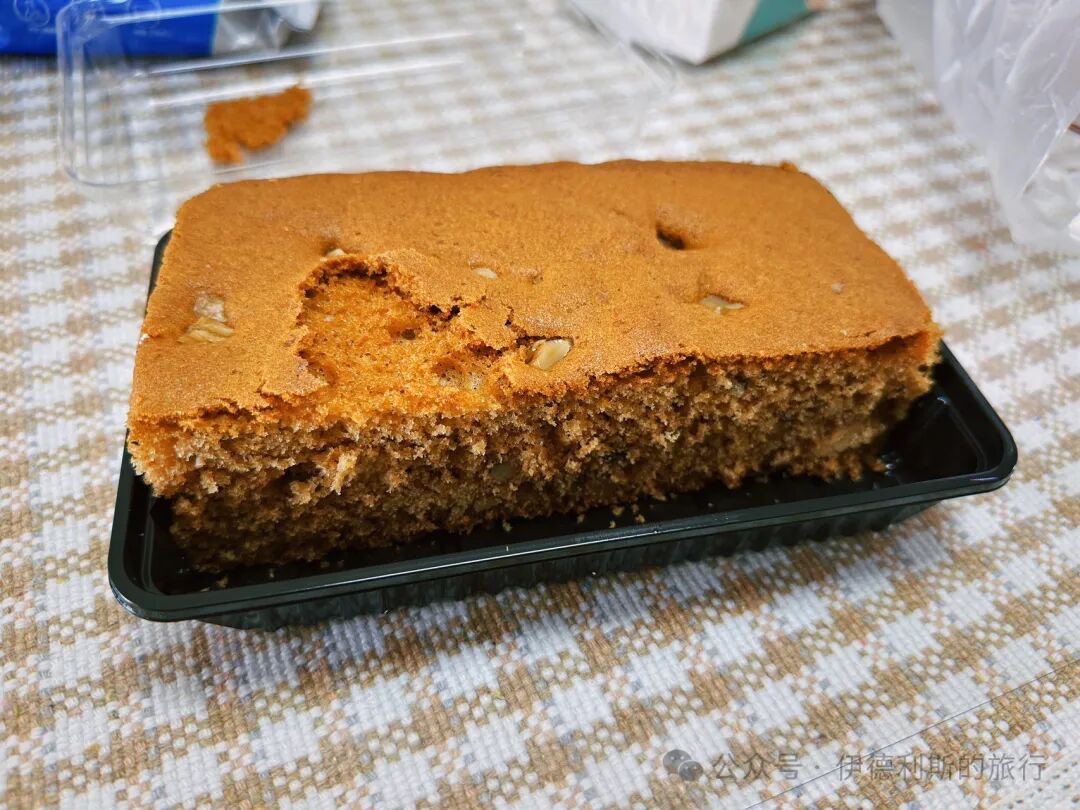
I bought a box of honey cake (bahali) at Ailieweike next to the Qinghai Great Mosque. It is baked with lamb fat, cocoa powder, eggs, honey, milk, walnuts, and raisins. It tastes very fragrant.
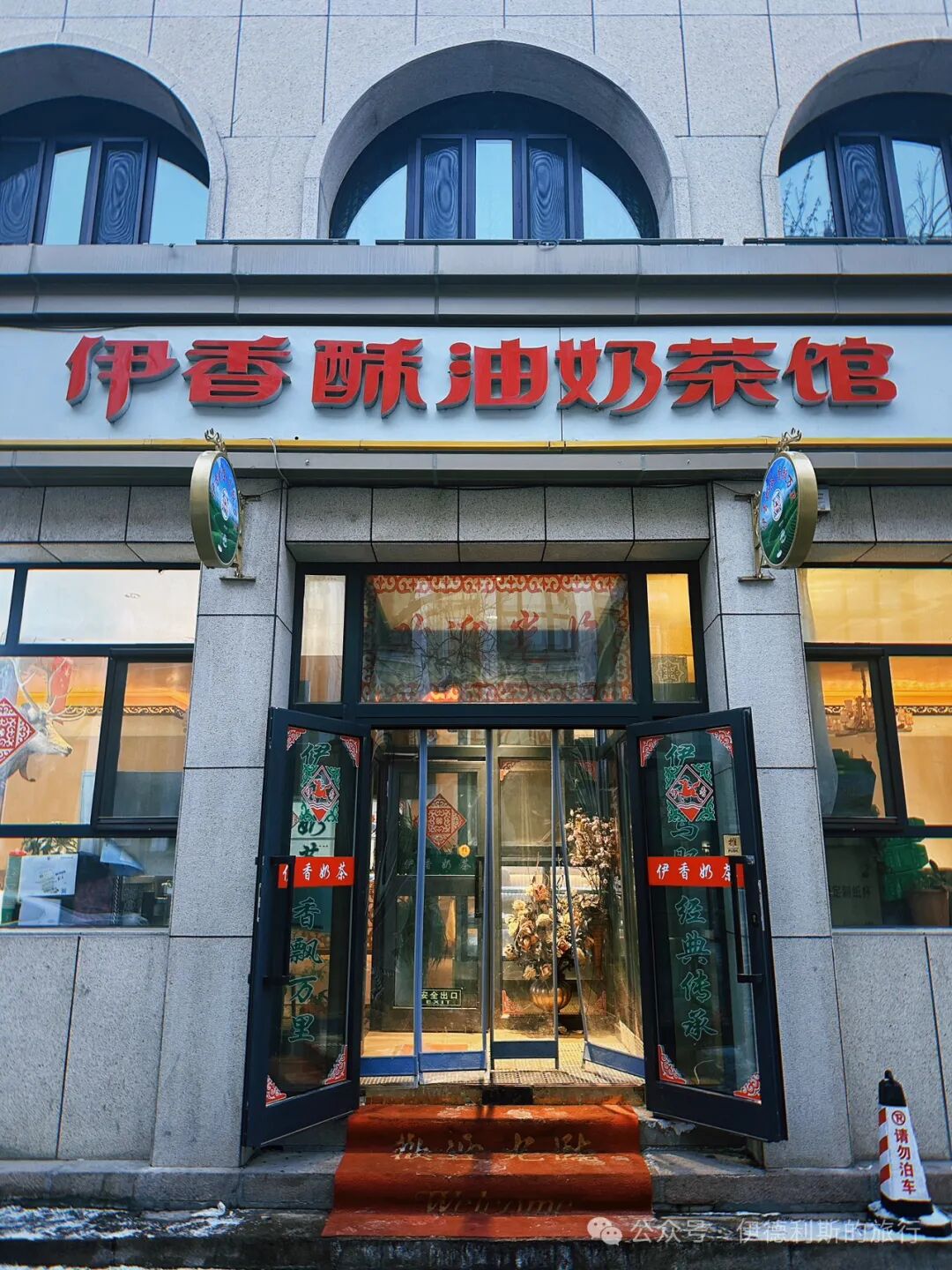
In the morning, I prayed at the Shaanxi Great Mosque in Urumqi. Afterward, I went to the Kazakh milk tea shop in front of the People's Theater for butter milk tea (suyou naicha) with fried dough (baersake), apricot jam, and butter. The milk skin tea (naipizi naicha) was excellent, and the freshly fried dough was so fragrant that my hands were oily after eating.
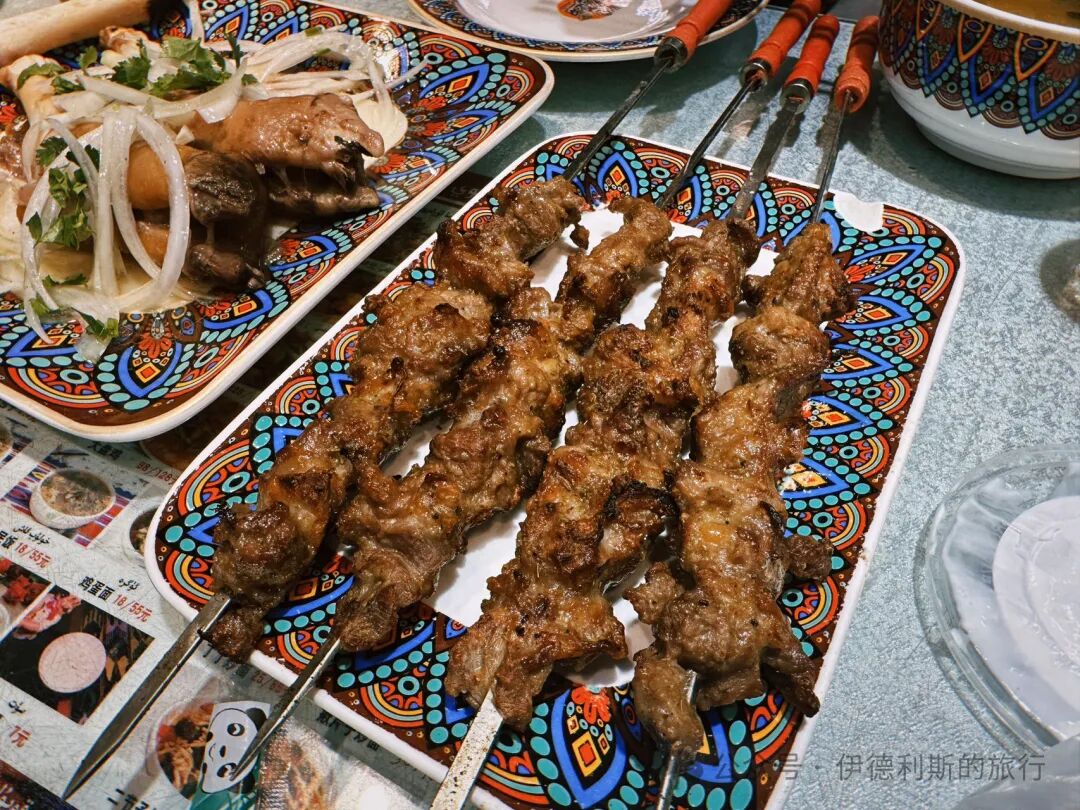
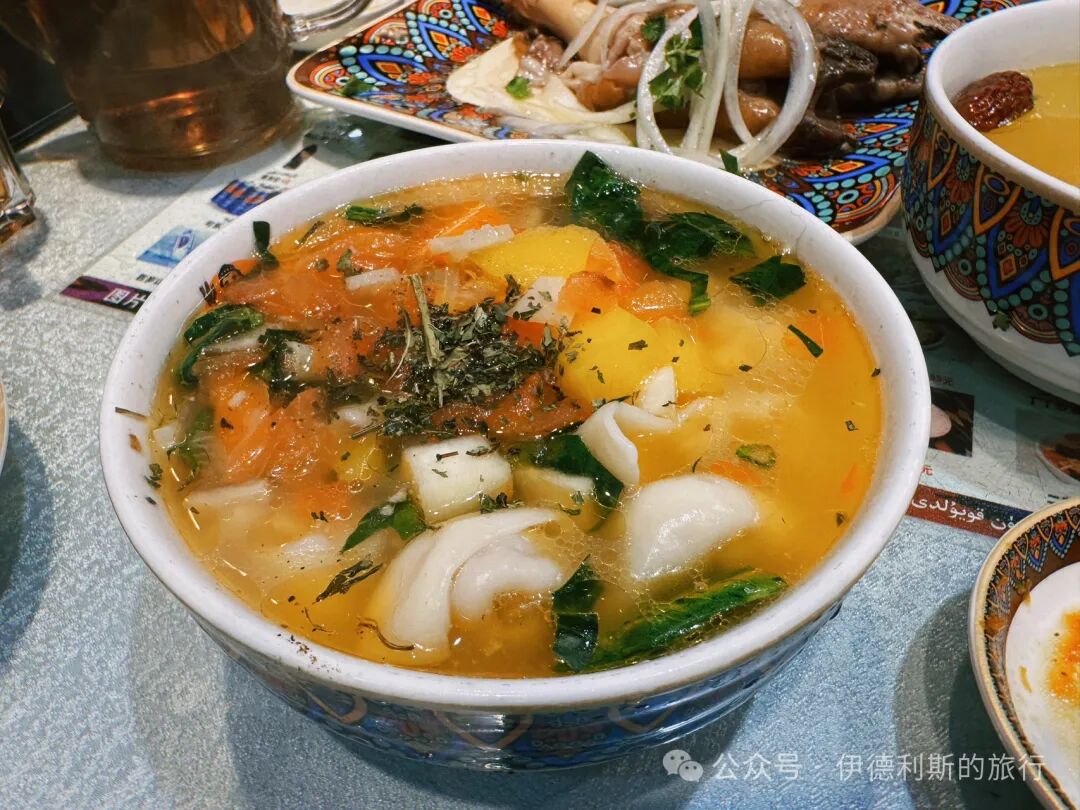
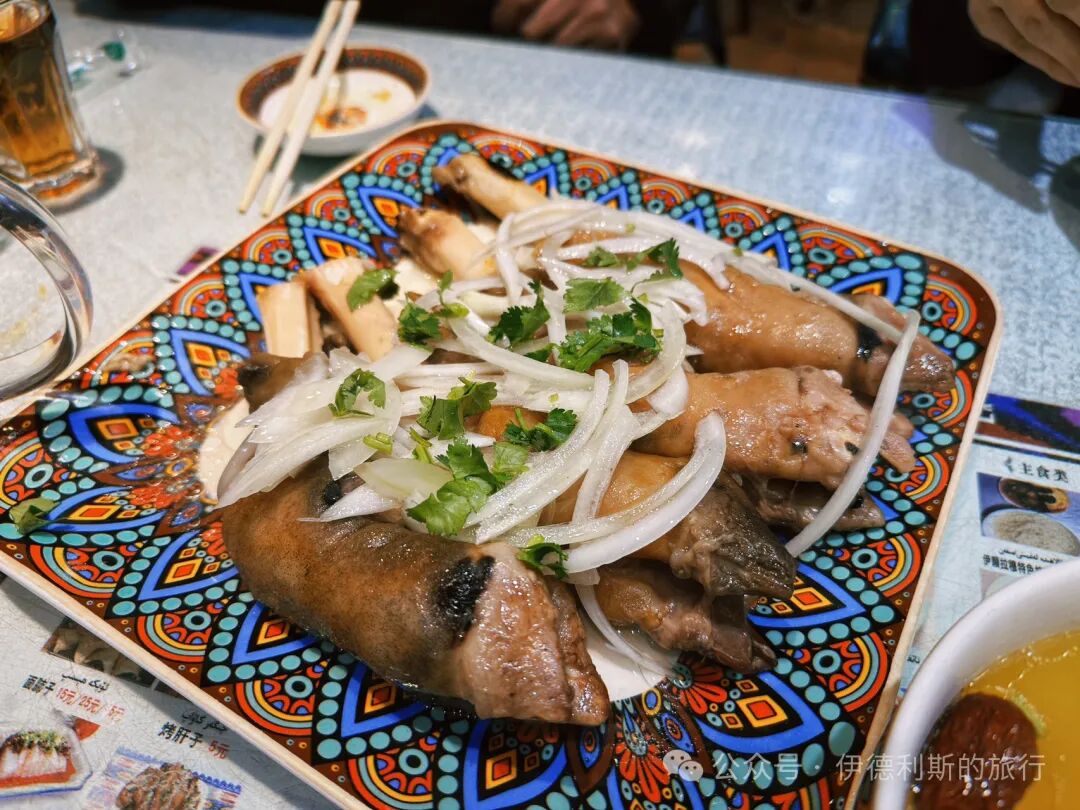
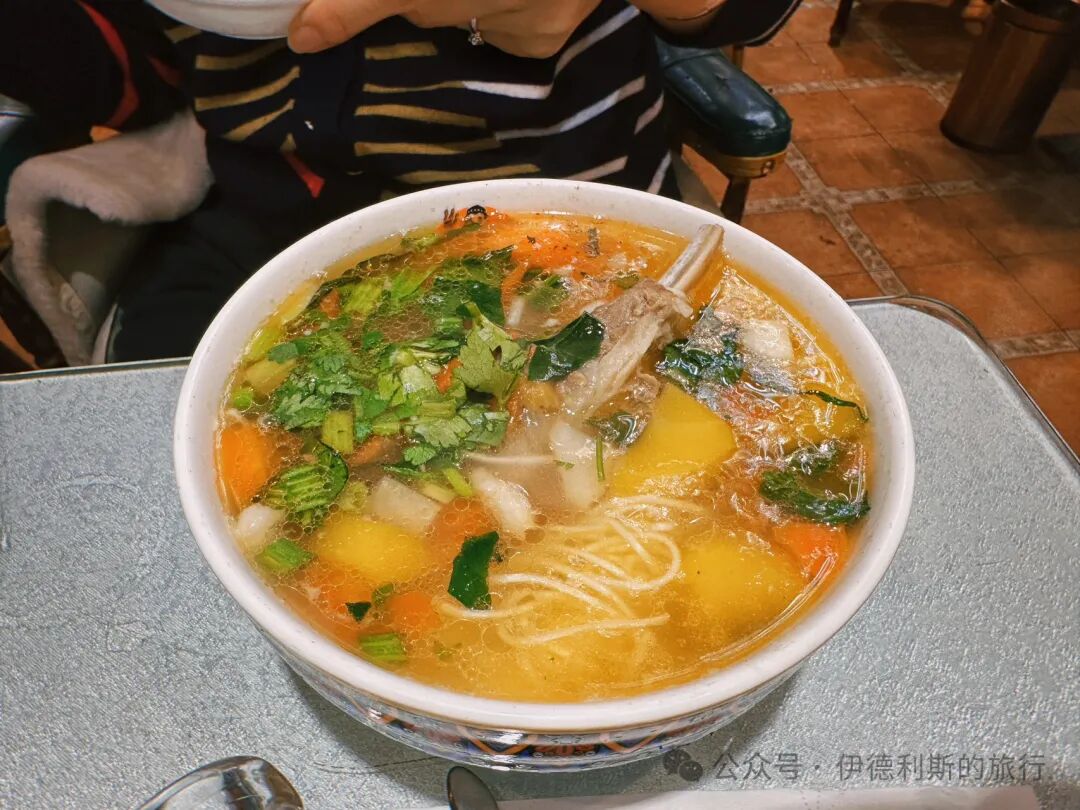
In the evening, my sister and brother-in-law treated us to dinner at Yikelamu in Shanxi Alley. It is a very popular spot with locals. We ordered small dumplings (ququ), home-style mixed noodles (banmian), egg noodles, pigeon soup, clear-stewed lamb trotters, pumpkin steamed buns (baozi), and kebabs. Their mixed noodles are pulled very thin and taste great. The egg noodles come in a meat broth with lamb ribs, yellow carrots, and tomatoes. The pigeon soup is quite light. Clear-stewed lamb trotters have a different flavor compared to spicy lamb trotters (hula yangti), allowing you to taste the natural flavor of the lamb. The lamb skewers were seasoned only with salt, not chili. Only places with high-quality meat dare to do this. Their steamed buns are also good, and the sweet pumpkin filling is very appetizing.
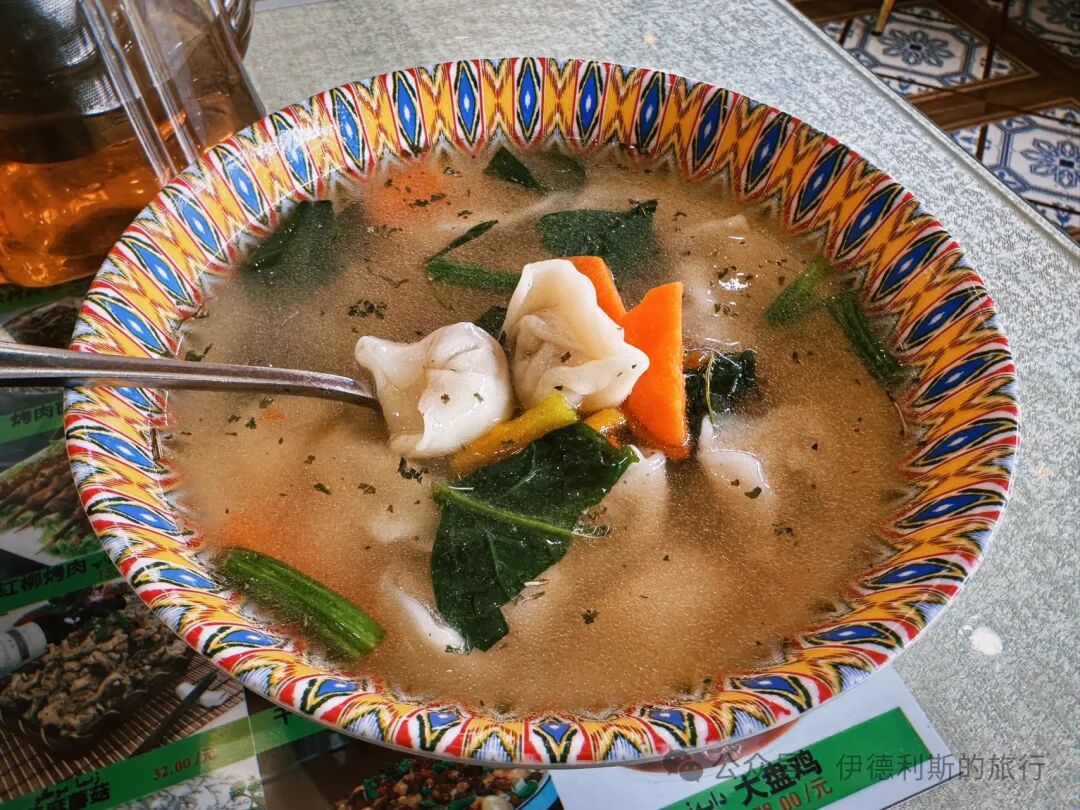
On the second floor of the Erdaoqiao South Mosque gate is a Uyghur restaurant called Dunya Food. It is very warm inside, and you can drink hot tea while looking out at the main hall of the Urumqi Jahriyya First Mosque. I had a bowl of small dumplings (ququ) in the restaurant, which is perfect for winter in Urumqi.
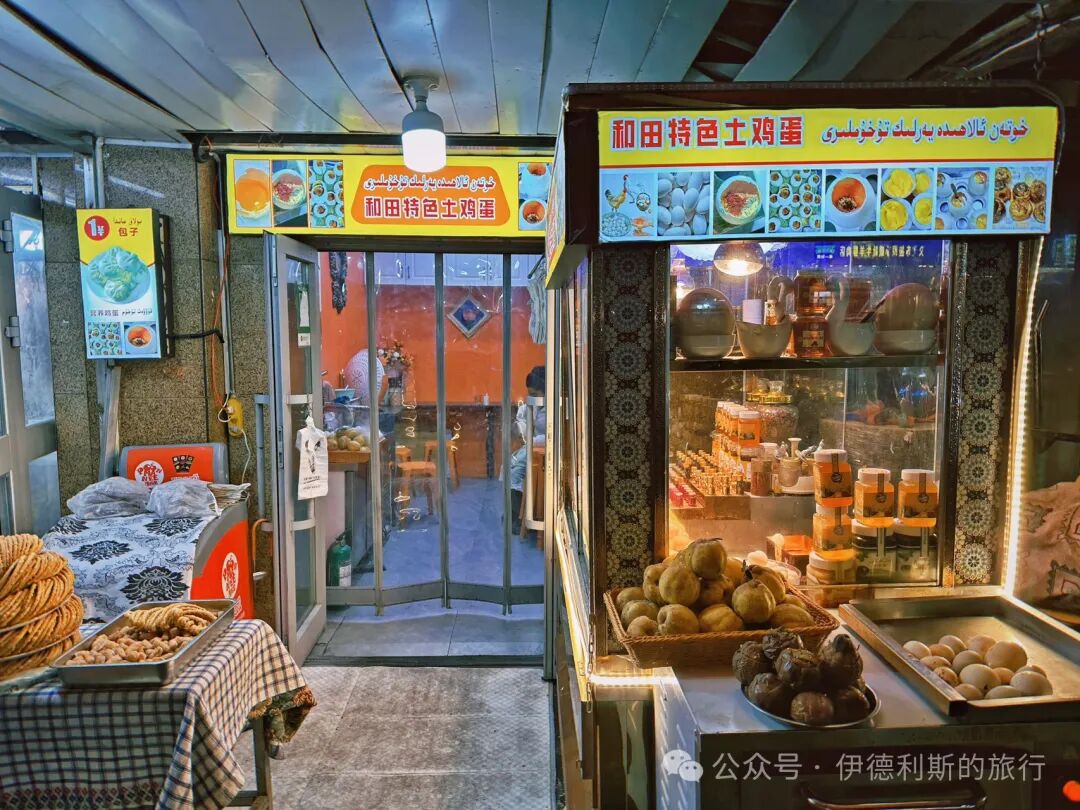
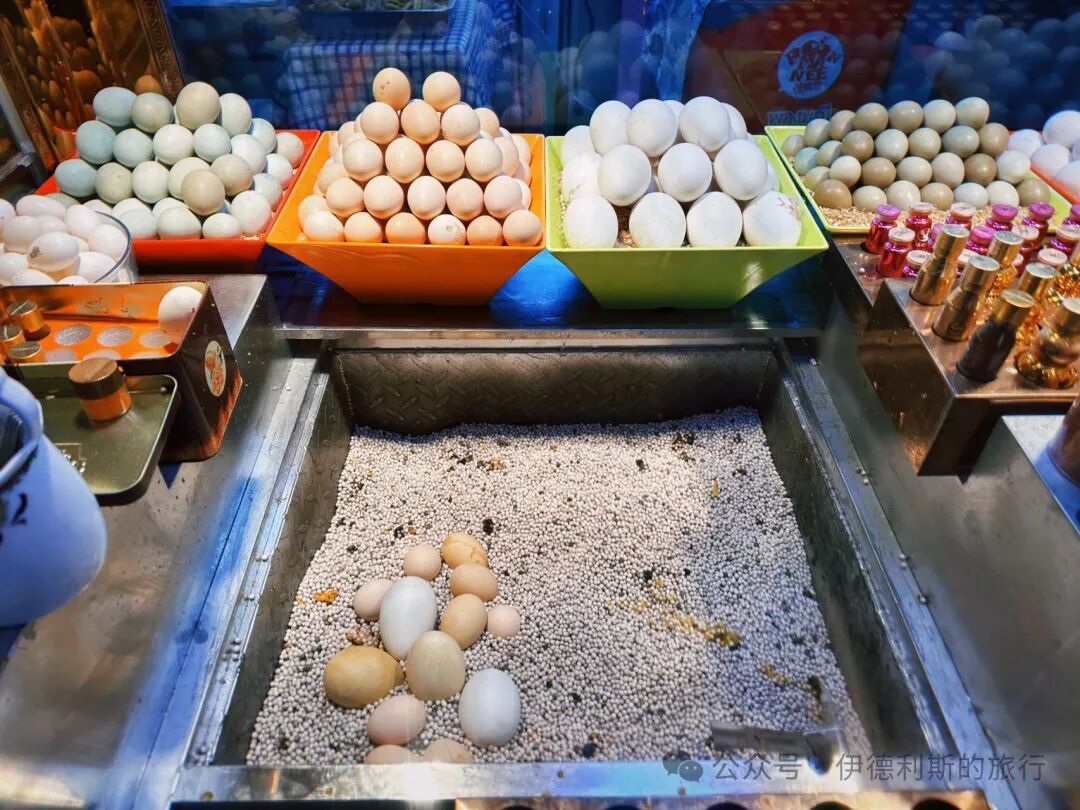
Across from Suiyuan Mosque is a Hotan specialty egg shop. You can eat roasted goose eggs and chicken eggs. They also have a deluxe version where chicken, pigeon, and goose eggs are all cracked into a goose egg shell, then mixed with honey and saffron. They also serve rose tea with silverberry honey. It is a good place to sit and rest after walking around Shanxi Alley.
On the street in Shanxi Alley.
On the street in Awati Road, the yogurt sold by the auntie without a brand name is the best! Since Erdaoqiao, Lingguan Alley, and Shanxi Alley became popular, Yingawati Road further south remains a place only for locals. view all
Summary: Urumqi’s Hui Muslim streets bring together halal food, markets, daily commerce, and neighborhood life in Xinjiang. This 2025 travel account keeps the original street scenes, shop details, photos, and food notes in a clear English version.
After the Qing dynasty defeated the Dzungar tribe, they built an earthen city in Urumqi in 1758 (the 23rd year of the Qianlong reign) to station troops and guard the border. In 1763 (the 28th year of the Qianlong reign), they expanded it and named it Dihua City. After that, Qing troops stationed in Urumqi to farm the land, and many Hui Muslim officers and soldiers brought their families to settle there. During the Jiaqing, Daoguang, and Xianfeng reigns, the Qing dynasty kept moving people to Xinjiang, and more and more Hui Muslims came to settle in Urumqi. After the Tongzhi reign, many Hui Muslims from the northwest moved to Urumqi for various reasons, including failed anti-Qing uprisings, religious disputes, and natural disasters.
In 1876 (the second year of the Guangxu reign), the Qing army recaptured Urumqi and ordered all Hui Muslims inside the city to move outside. Since then, most Hui Muslims in Urumqi have settled in the Nanguan and Xiguan areas, making a living by slaughtering cattle and sheep and running halal food businesses.
Urumqi's Xiaonanmen gate faces Xiaodongliang. During the late Qing dynasty and the Republic of China era, half of the twenty-three Hui Muslim neighborhoods in Urumqi were here. Today, it is still the place where Hui Muslim snacks are most concentrated.
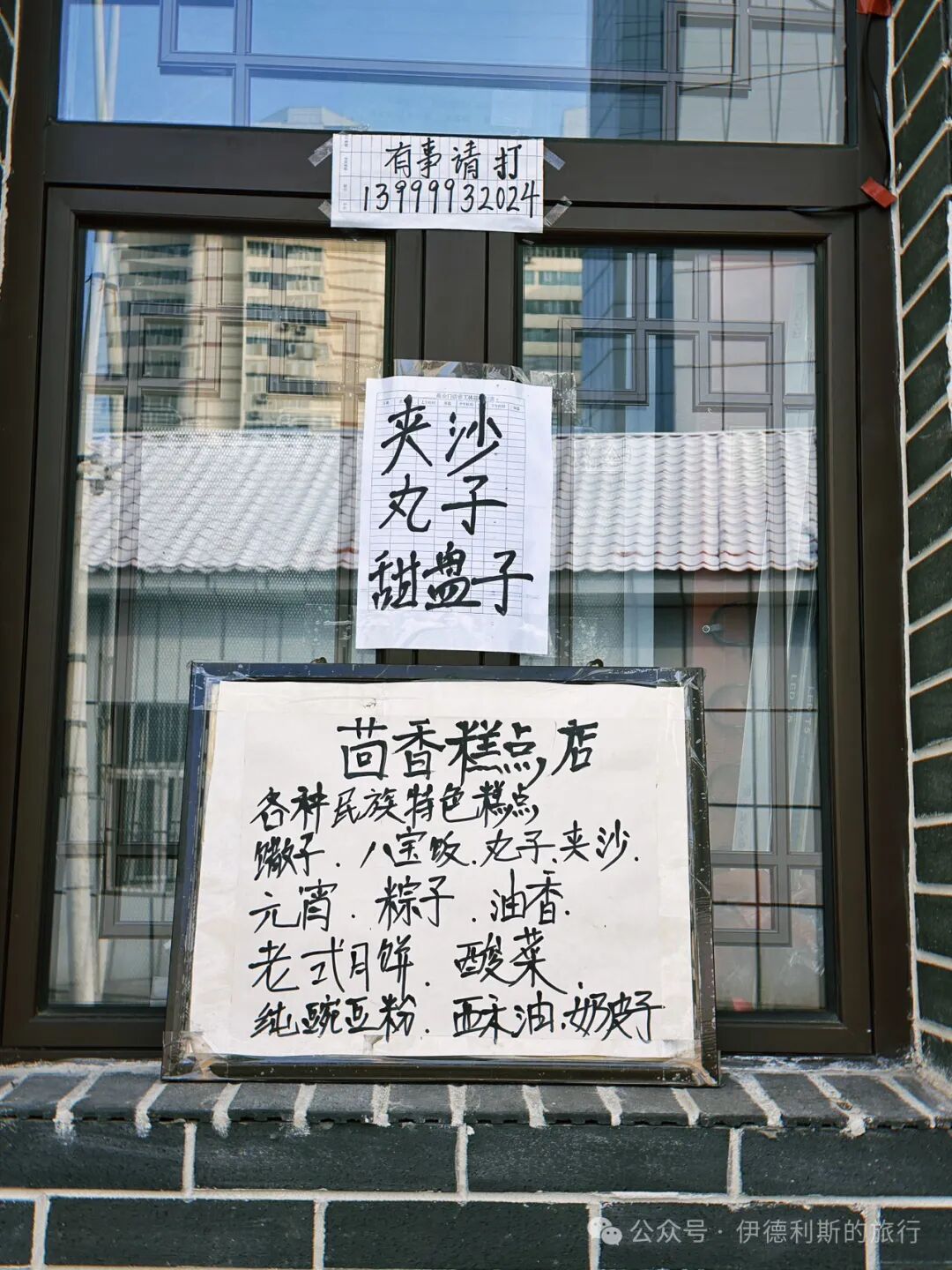
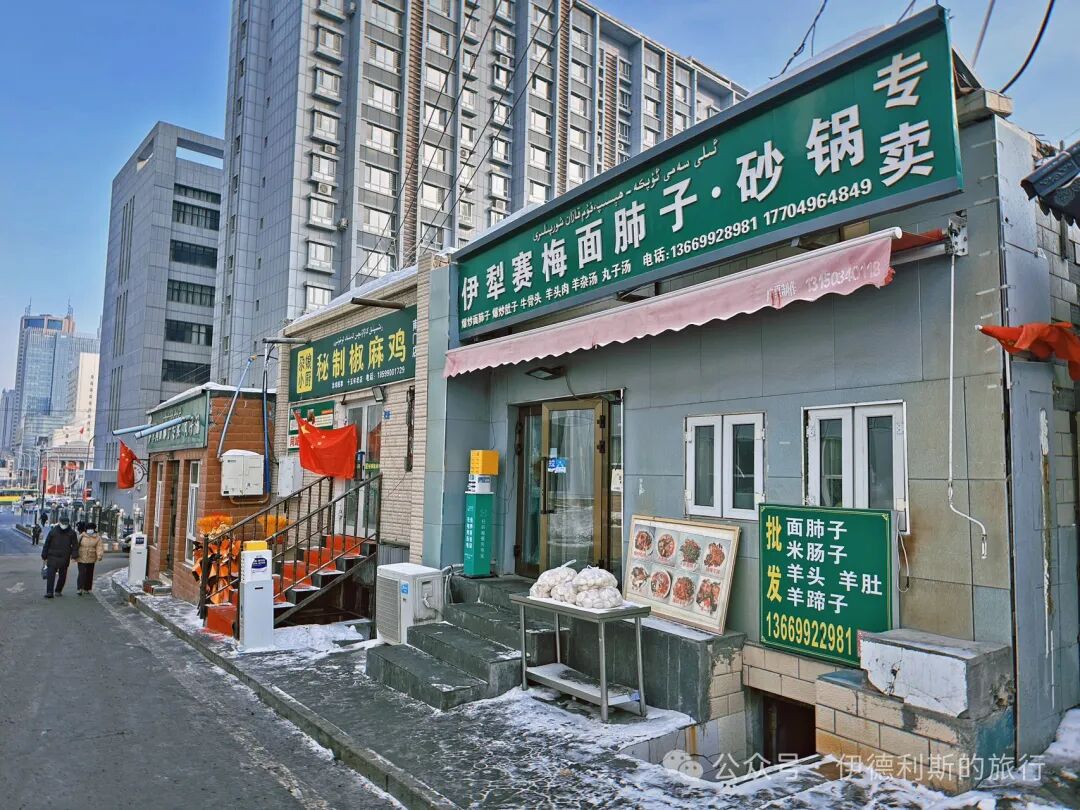
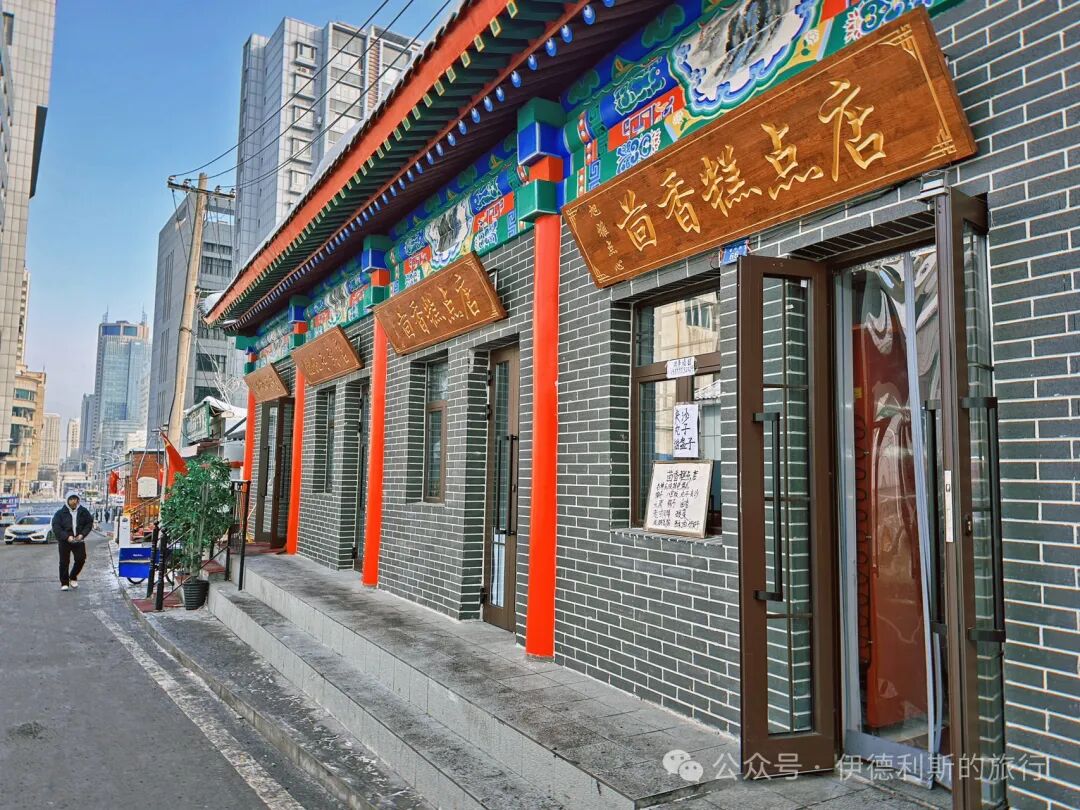
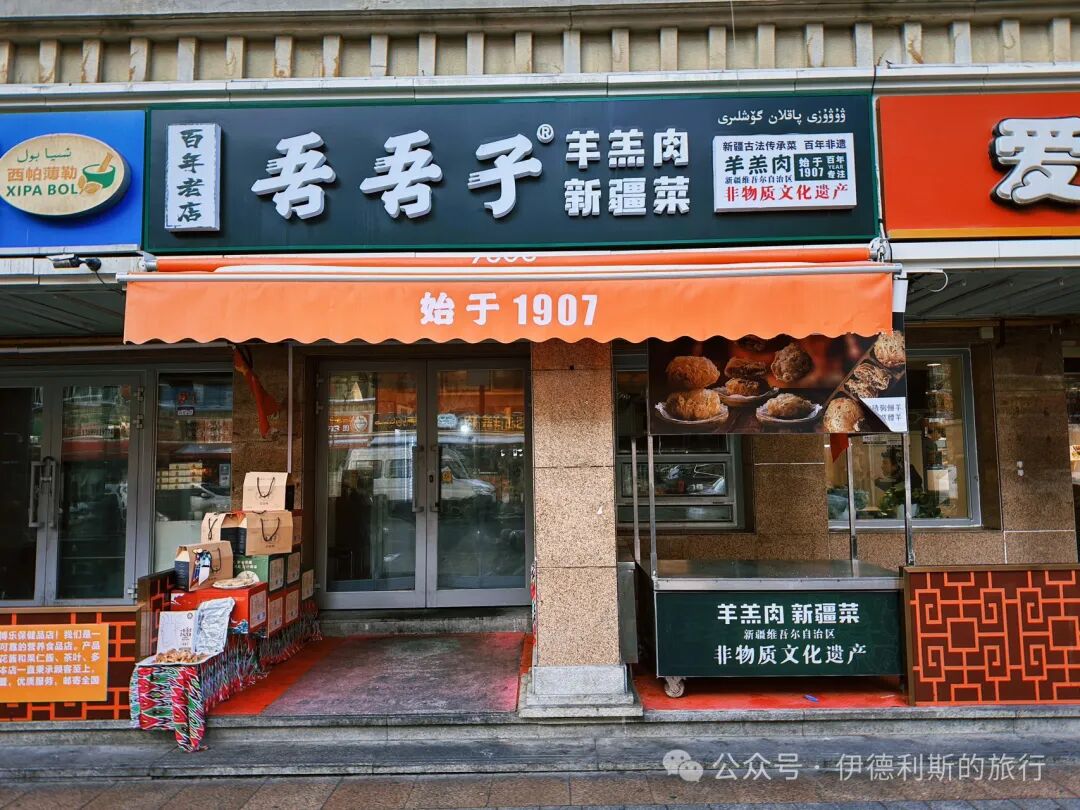
Wuwuzi is the oldest Hui Muslim brand in Nanguan. In 1907, Li Shenghua (Li Liushizi) started carrying a shoulder pole to sell lamb (yanggaorou) at the south gate of Dihua. Later, his fifth son, Li Zhanshou (Wuwuzi), took over, and the name Wuwuzi Lamb gradually became well-known. After the 1980s, Wuwuzi rented a storefront in Shanxi Alley. It has been passed down for four generations and is now an autonomous region-level intangible cultural heritage.
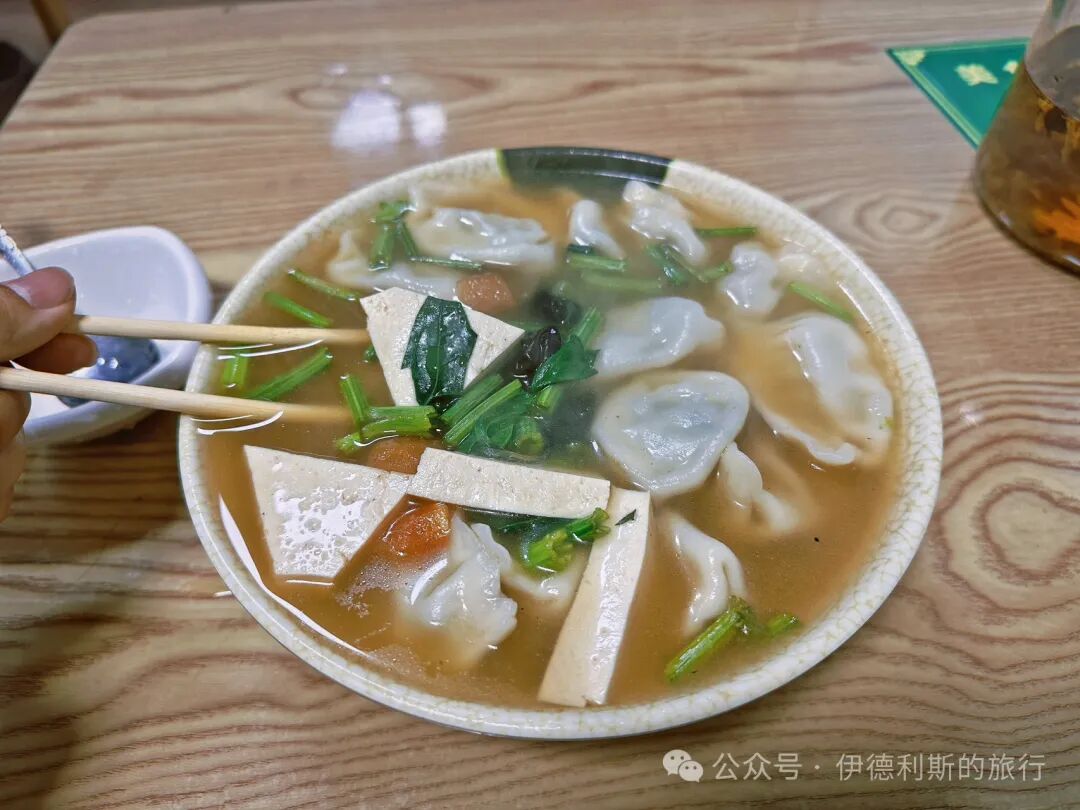
Across from the East Mosque (Dongfang Dasi), I had sour soup dumplings (suantang shuijiao) with celery and meat. They contained glass noodles (fentiao), tomatoes, wood ear mushrooms, and tofu.
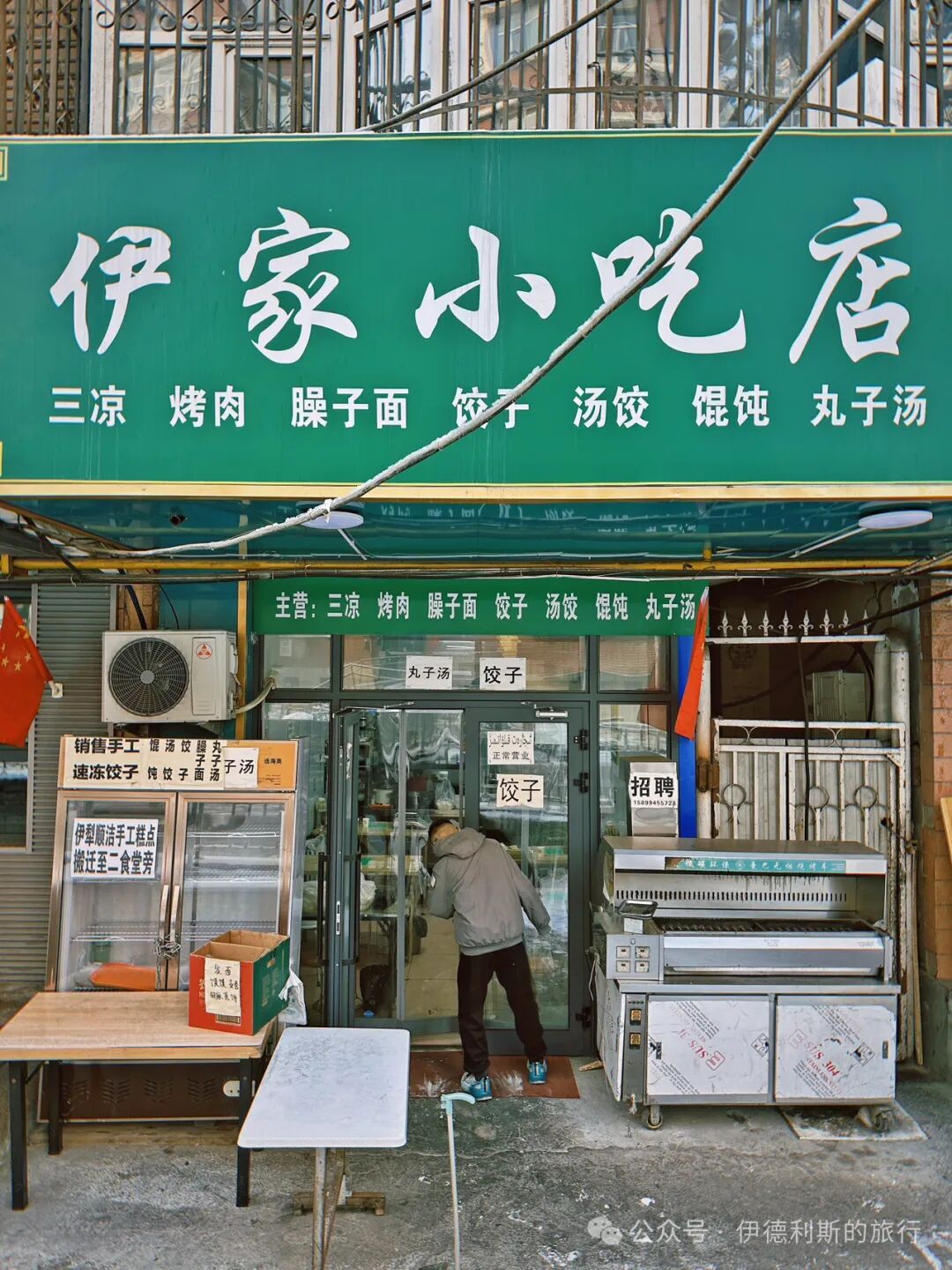
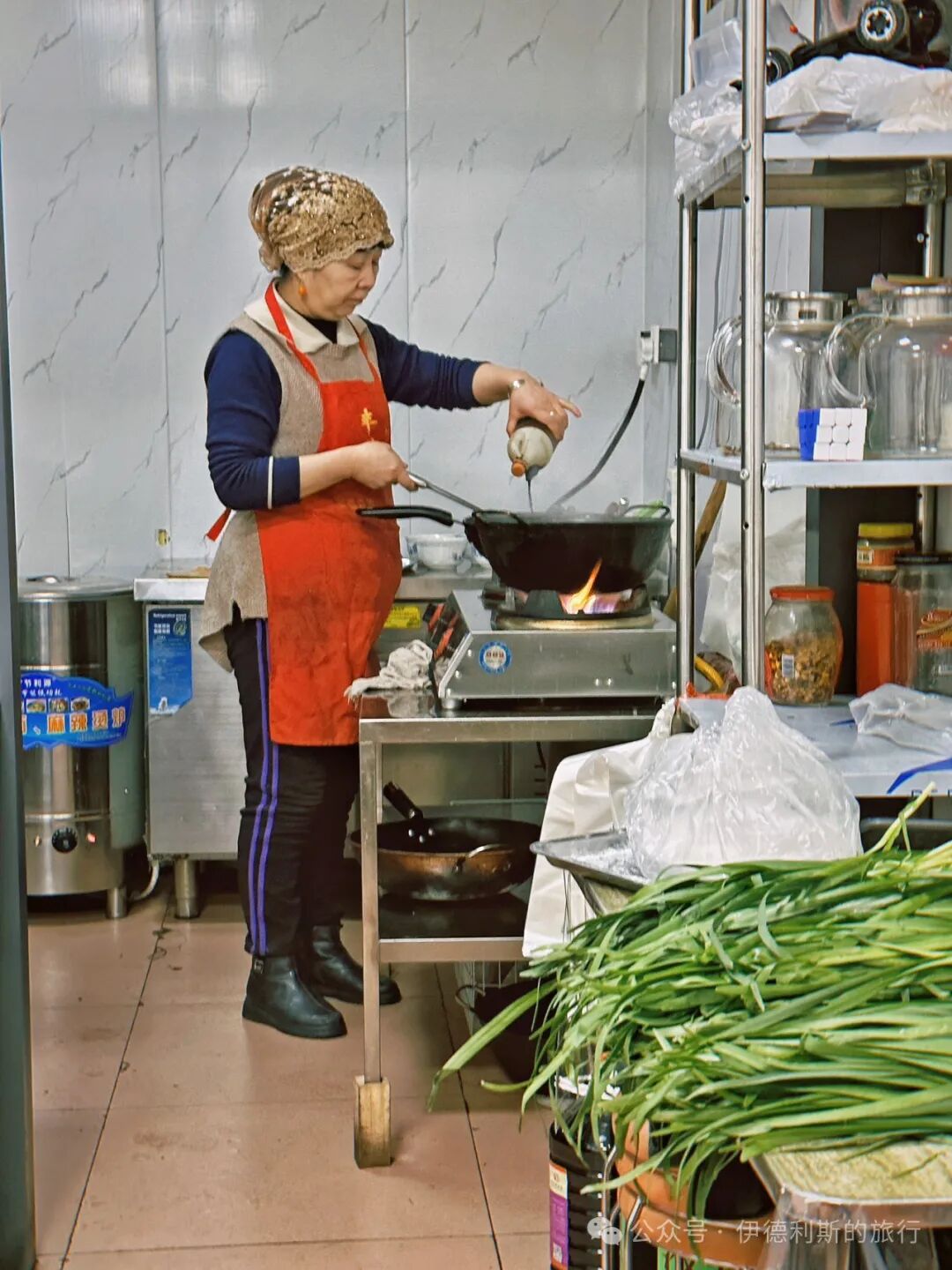
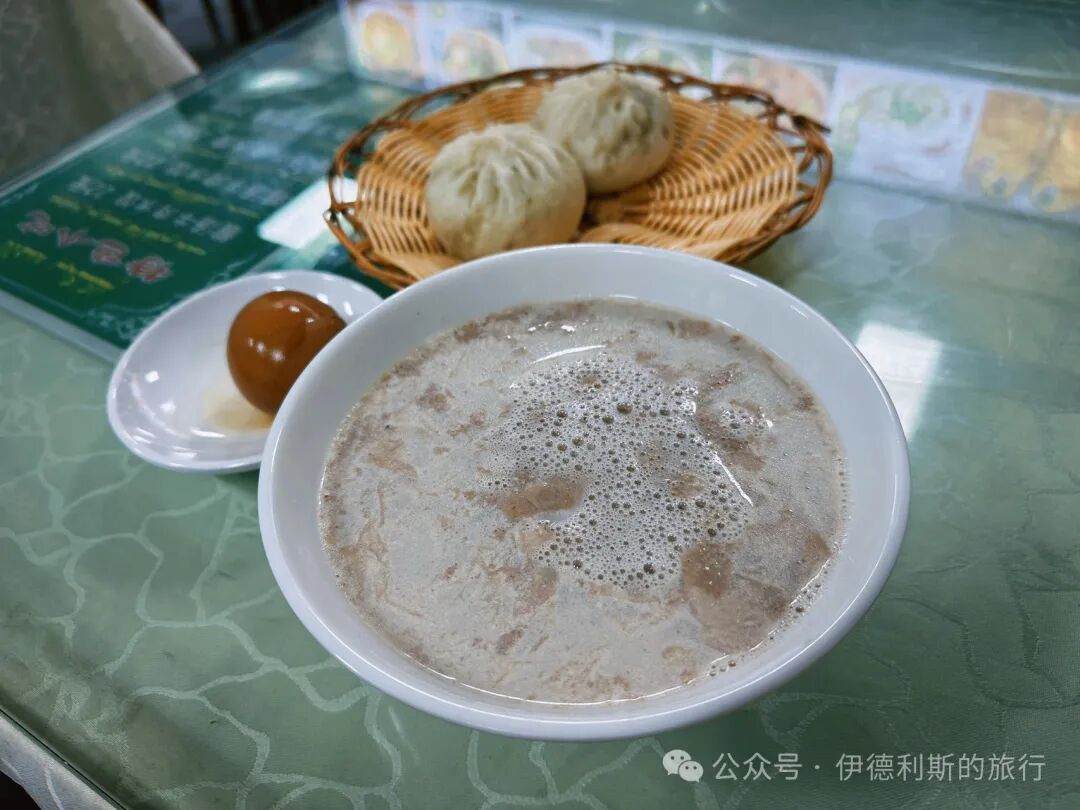
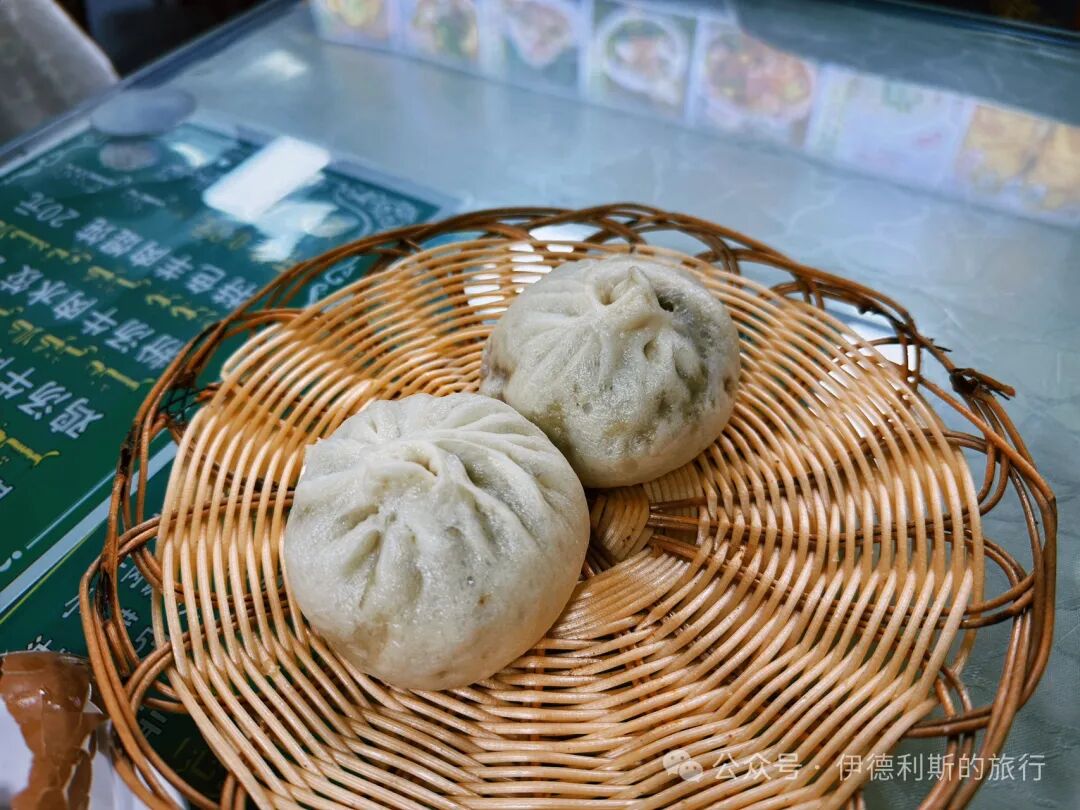
Across from the Qinghai Mosque (Qinghai Dasi), I had milk tea and cabbage meat buns (baozi) at Su Yongfang's shop. The milk tea had a strong milk and tea flavor and was topped with a milk skin (naipizi). The buns are made in the Xinjiang Hui Muslim style, with loose filling and Sichuan peppercorns.
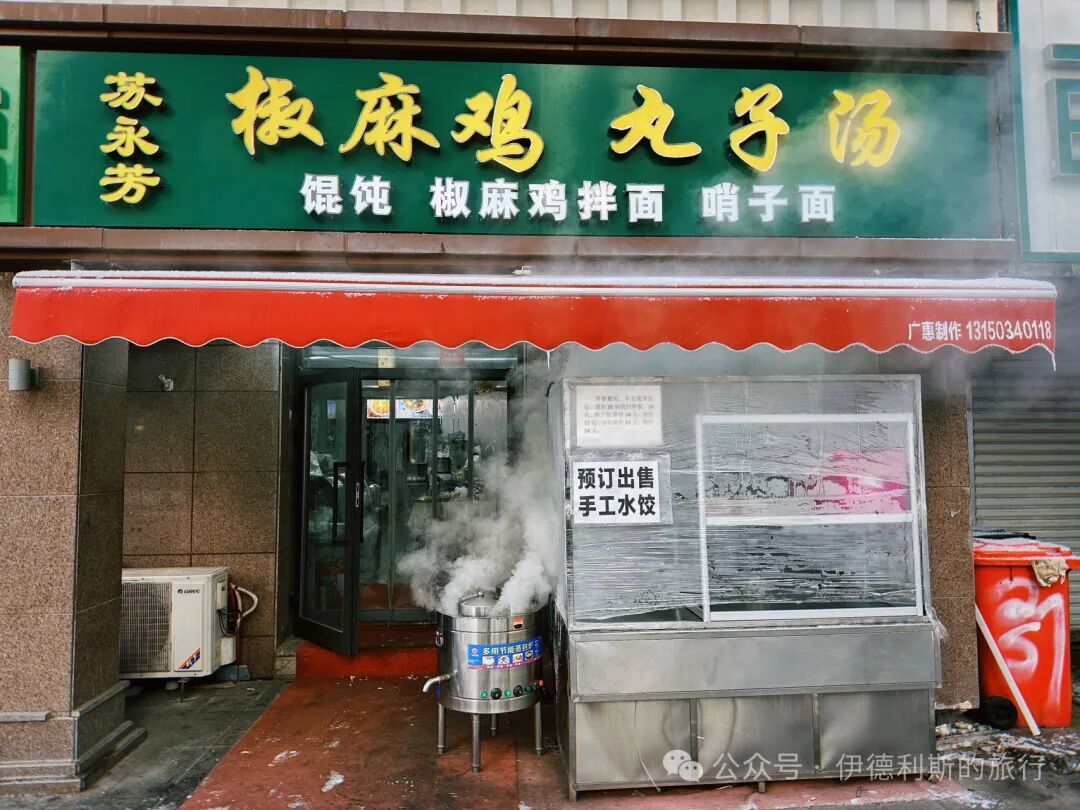
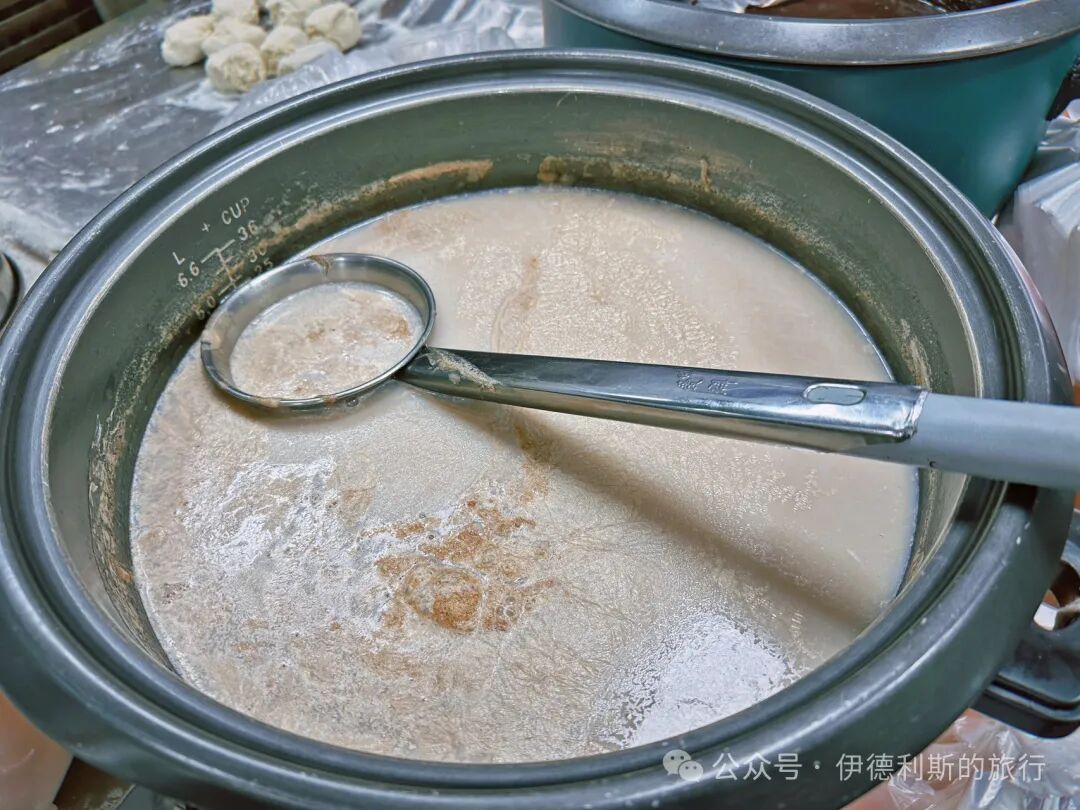
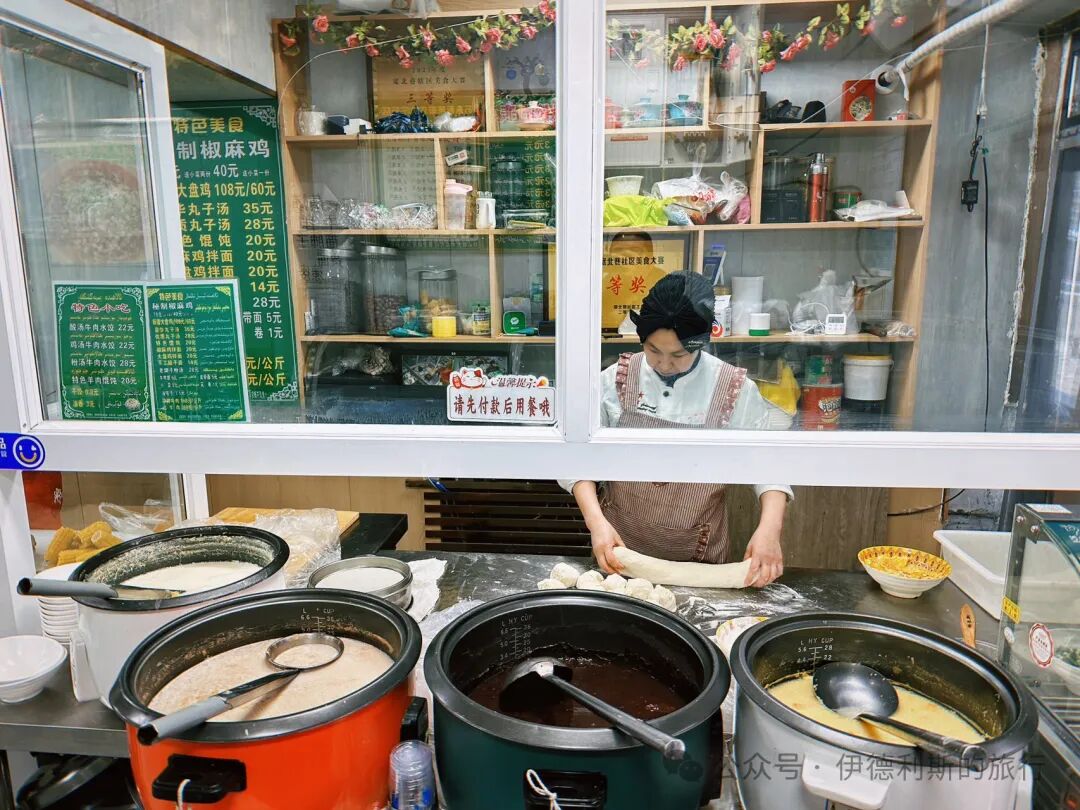
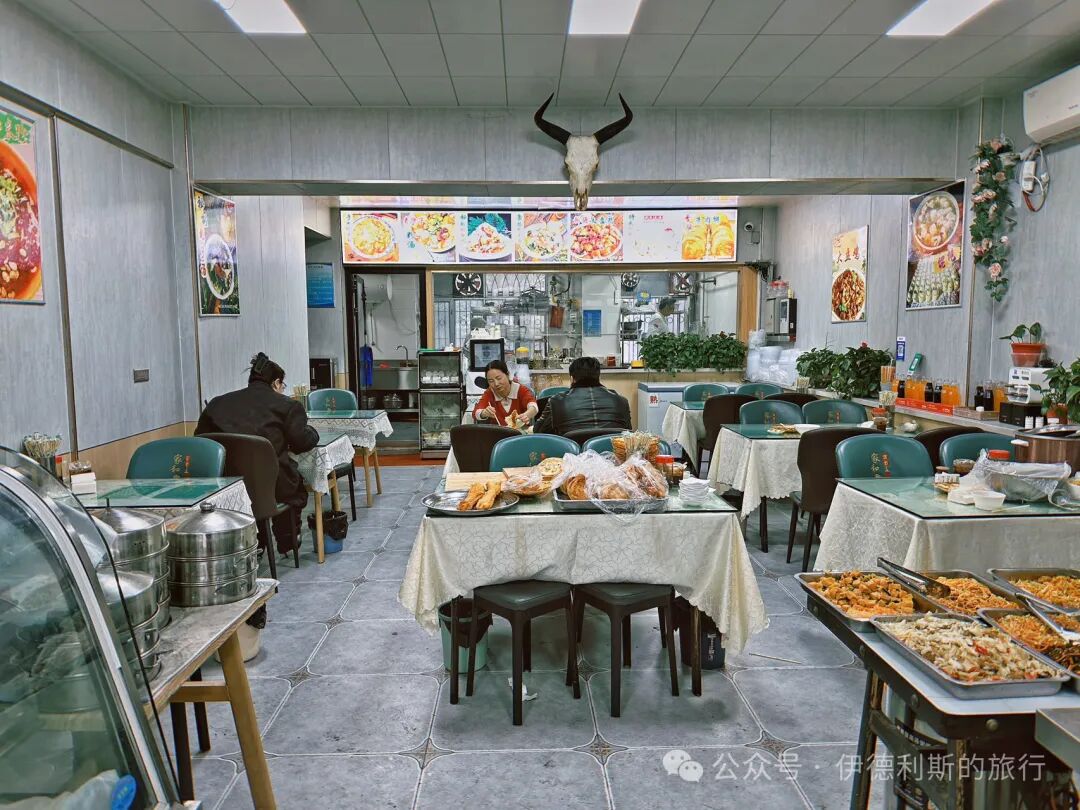
Behind the Shaanxi Mosque (Shaanxi Dasi) is the long-standing Yilihe Mianfeizi shop. The owner started selling at the South Gate night market over twenty years ago. After the night market closed, he opened this small shop behind the Shaanxi Mosque. This small shop run by a husband and wife is not big, but you can eat authentic Xinjiang lung and tripe noodles (mianfeizi). They serve it in clear soup, dry-mixed, or stir-fried. They have large and small portions, as well as stir-fried sheep head meat, tripe strips, sheep offal, meatball soup, and glass noodle soup (fentang).
I ordered a portion of dry-mixed lung and tripe noodles, a bowl of meatball soup, and two oil towers (youtazi). Oil towers are my favorite staple food. They are made with sheep fat and are very appetizing. The lung and tripe noodles come with plenty of ingredients. The rice sausages (michangzi) contain minced meat and carrots, and they taste great. The meatball soup contains meat slices, tofu, spinach, glass noodles, and other things. It is especially warm to drink in winter.
At the entrance of the West Mosque (Xidasi) is the Qitai Three Cold Dishes shop. The founder, Shen Derong (1897-1987), started selling yellow noodles (huangmian) on the street in 1919. At that time, he used free charcoal-grilled sheep hearts and sheep livers to attract customers, gradually spreading the way of eating yellow noodles with grilled meat. It has been passed down through three generations: Shen Changqing (1940-2014) and Shen Jianjun (1970-).
Yellow noodles (huangmian) in Xinjiang are made like Gansu pulled noodles (lamian). Both use alkaline ash (penghui) in the dough. You can stretch the dough by hand into flat leek-leaf noodles or thin noodles. The difference is that Xinjiang yellow noodles are served with a thick sauce that clings to the noodles when you lift them. The dish includes ingredients like wild celery, wheat gluten (mianjin), green onion, ginger, garlic, and chili oil (youpo lazi). It has a rich, sour, sweet, and spicy flavor that is very satisfying.
Suyongfang Grocery Store, across from the Qinghai Great Mosque, sells ready-made Hui Muslim fried meatballs (zha wanzi) and meat-stuffed tofu (jiasha). You can buy a bag, freeze it at home, and use it for stews or meatball soup.
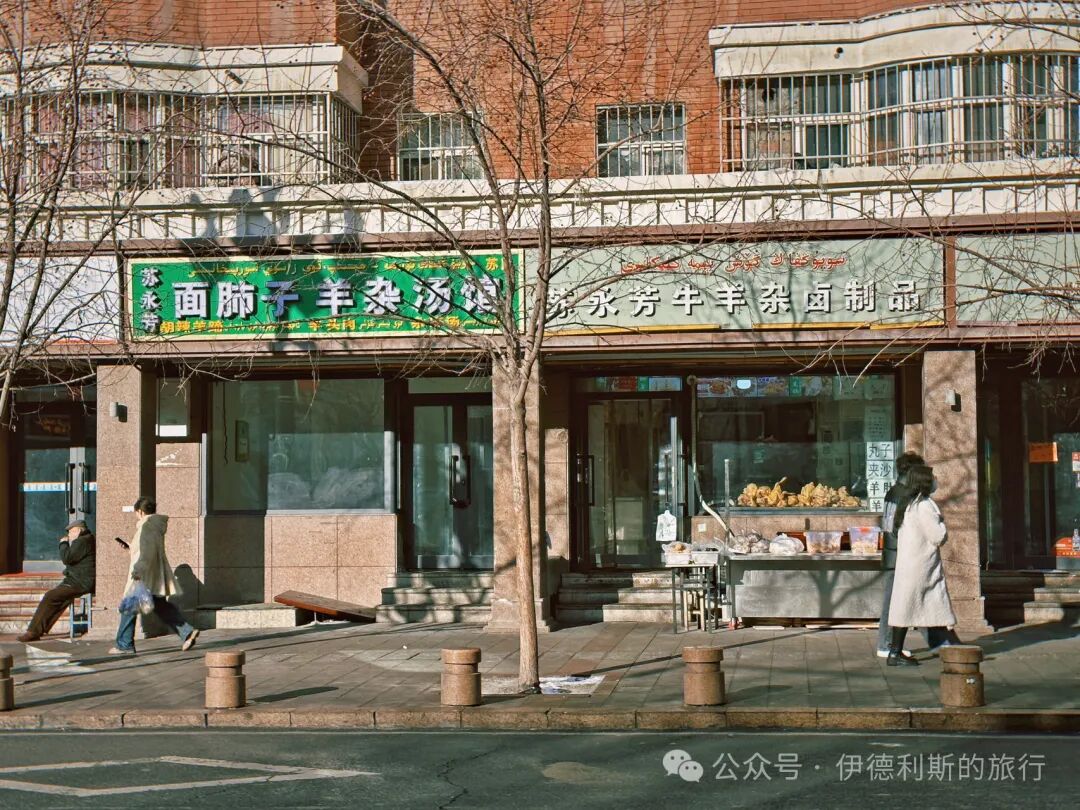
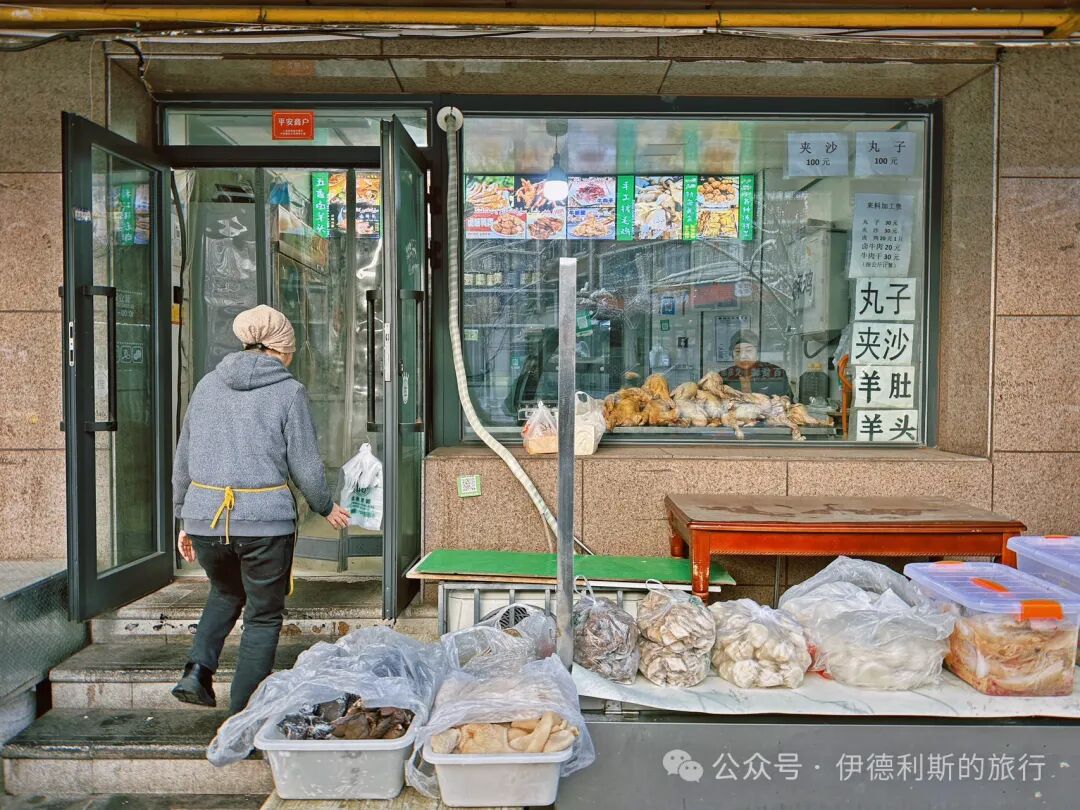
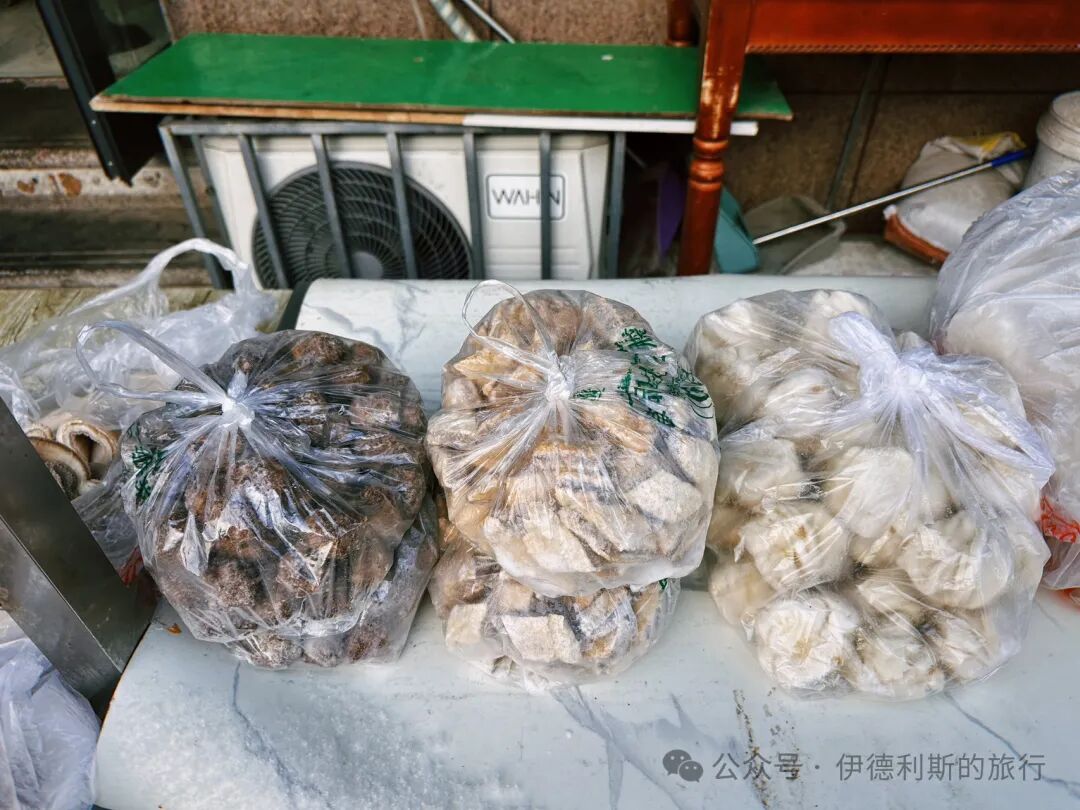
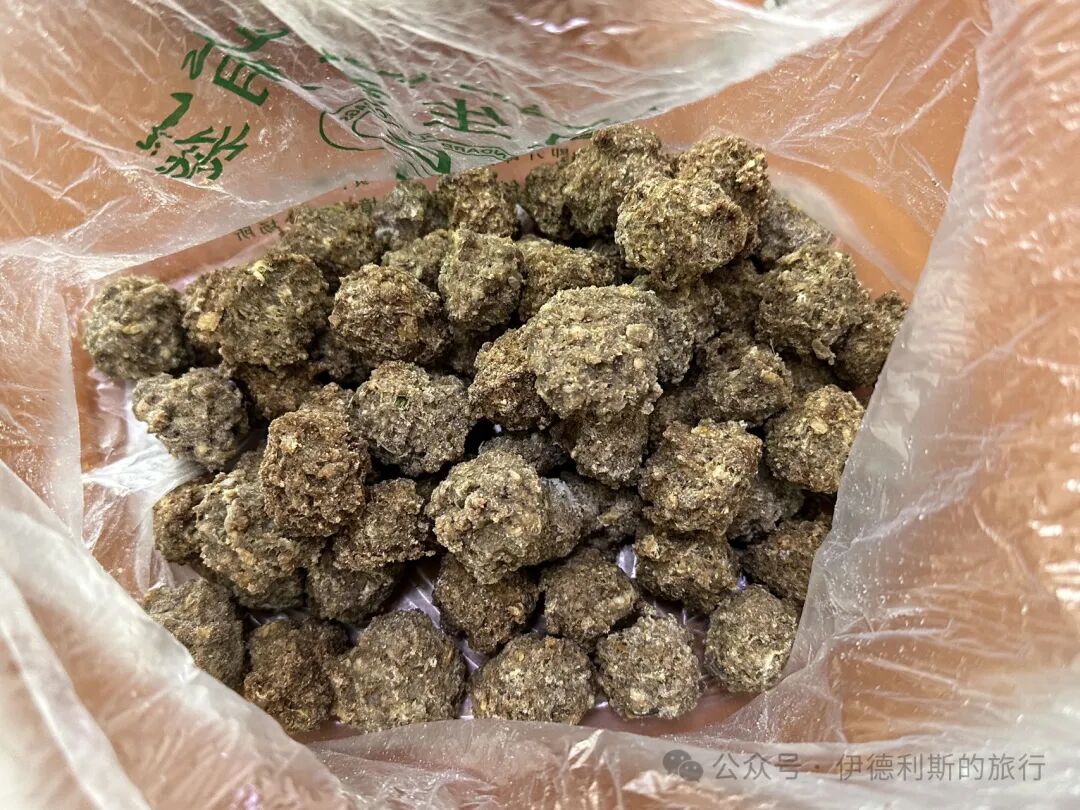
Mashi and Yili Pastry Shop, across from the East Mosque, sell traditional Hui Muslim pastries. Their flaky pastries (supi dianxin) are a must-have for wedding banquets among Hui Muslims in Urumqi. Actually, the method for making these flaky pastries was brought to Urumqi by people from Tianjin. In the 1930s, Urumqi Hui Muslim pastry chef She Wenbing became close friends with Liu Wenjiang, a chef at the Yongsheng Western Pastry Shop in Tianjin. He learned how to make the flaky Beijing-style eight-piece pastry set (jing bajian), and the recipe spread among Hui Muslims in Urumqi.
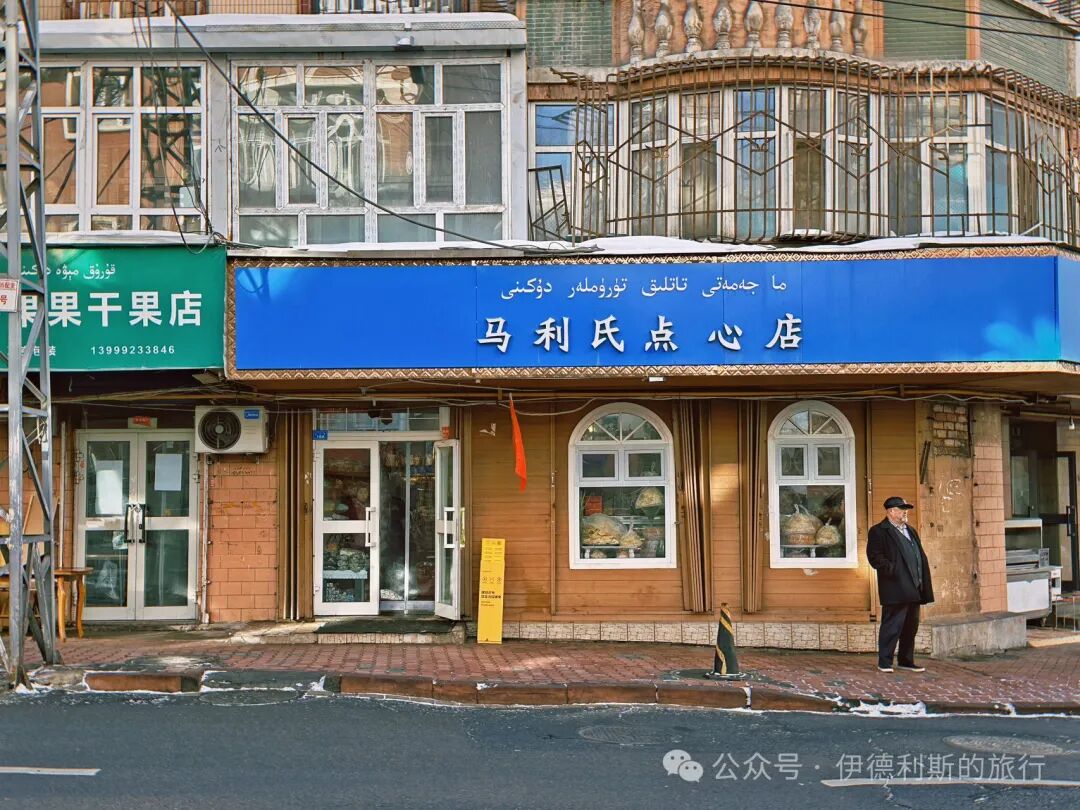
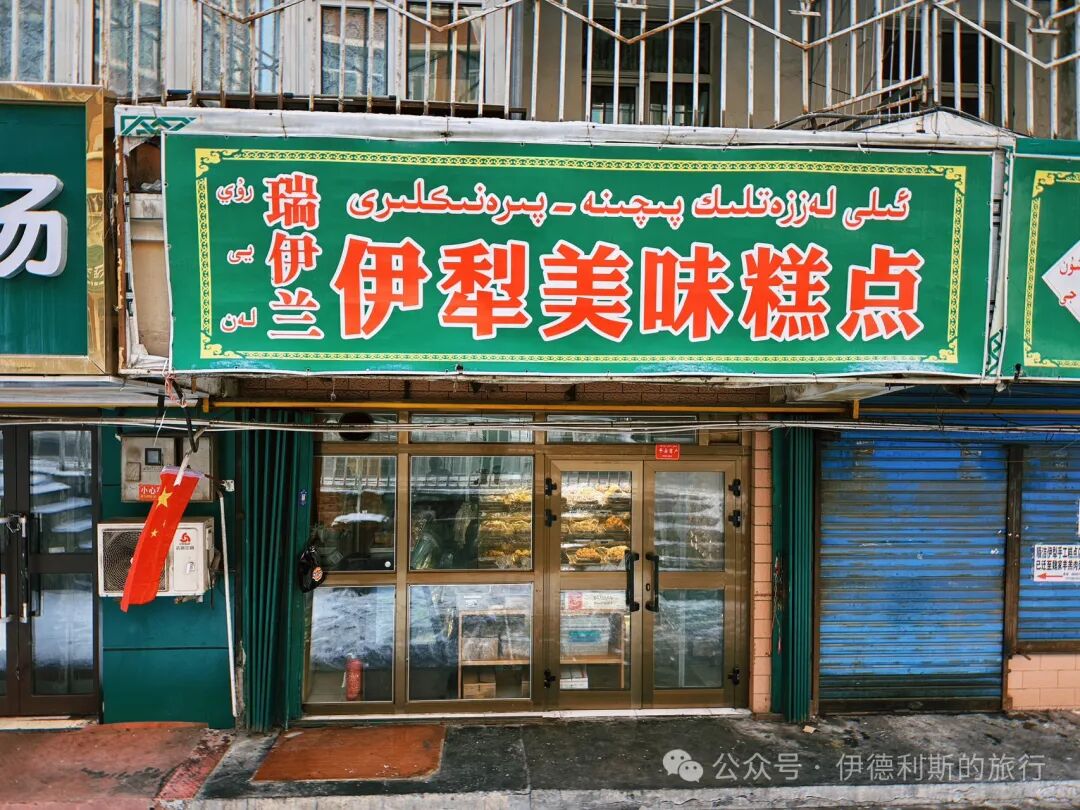
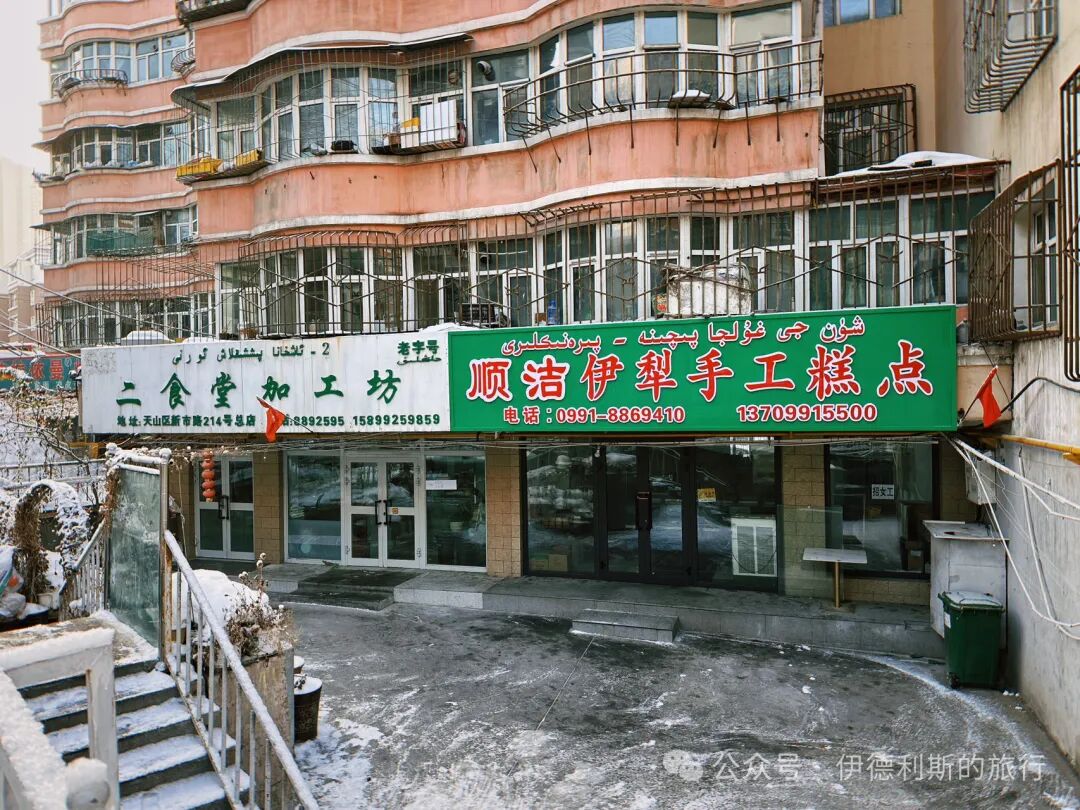
Beyond Hui Muslim food, there is plenty of Uyghur and Kazakh cuisine in the Nanguan area.
I bought a box of honey cake (bahali) at Ailieweike next to the Qinghai Great Mosque. It is baked with lamb fat, cocoa powder, eggs, honey, milk, walnuts, and raisins. It tastes very fragrant.
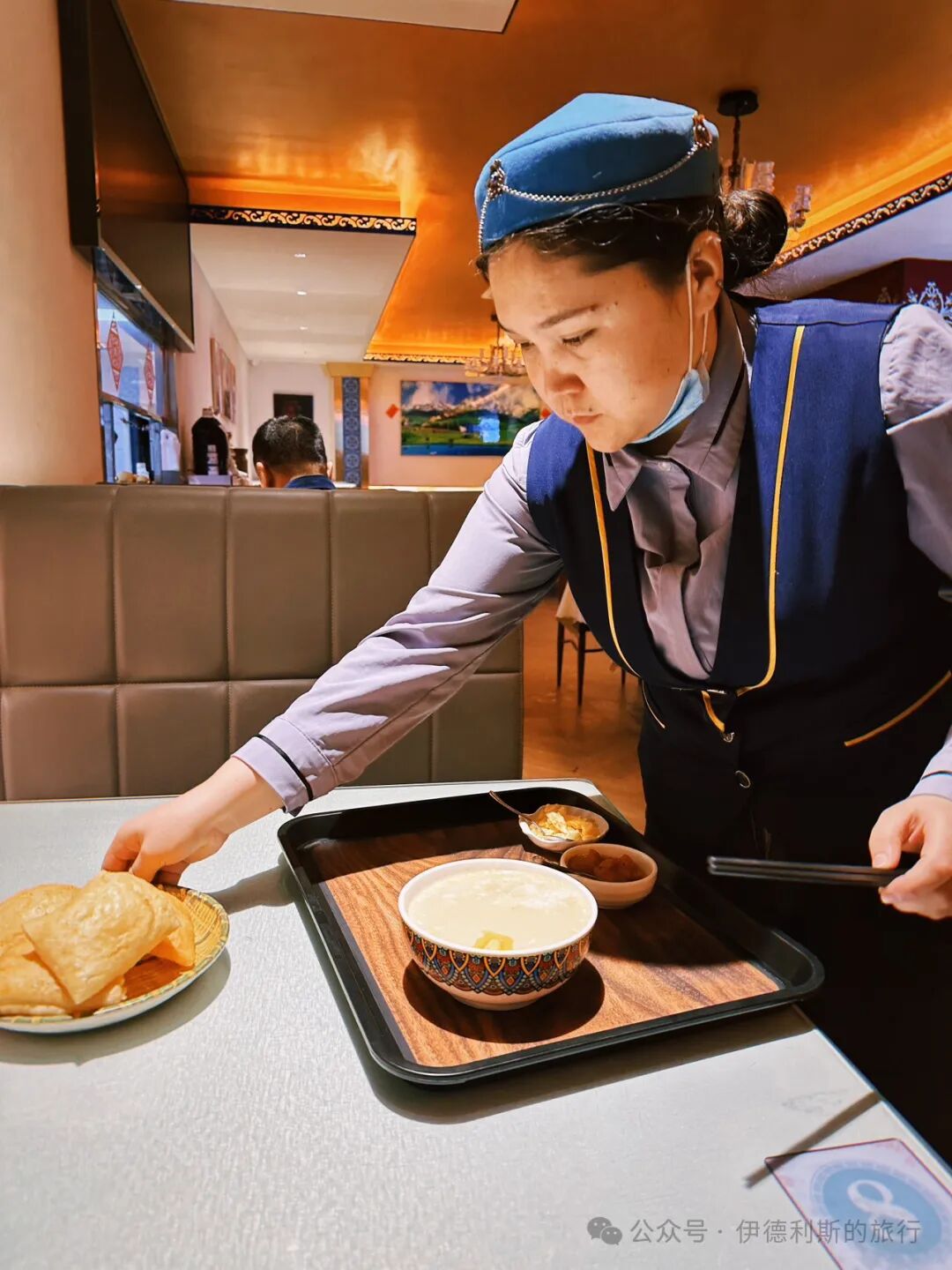
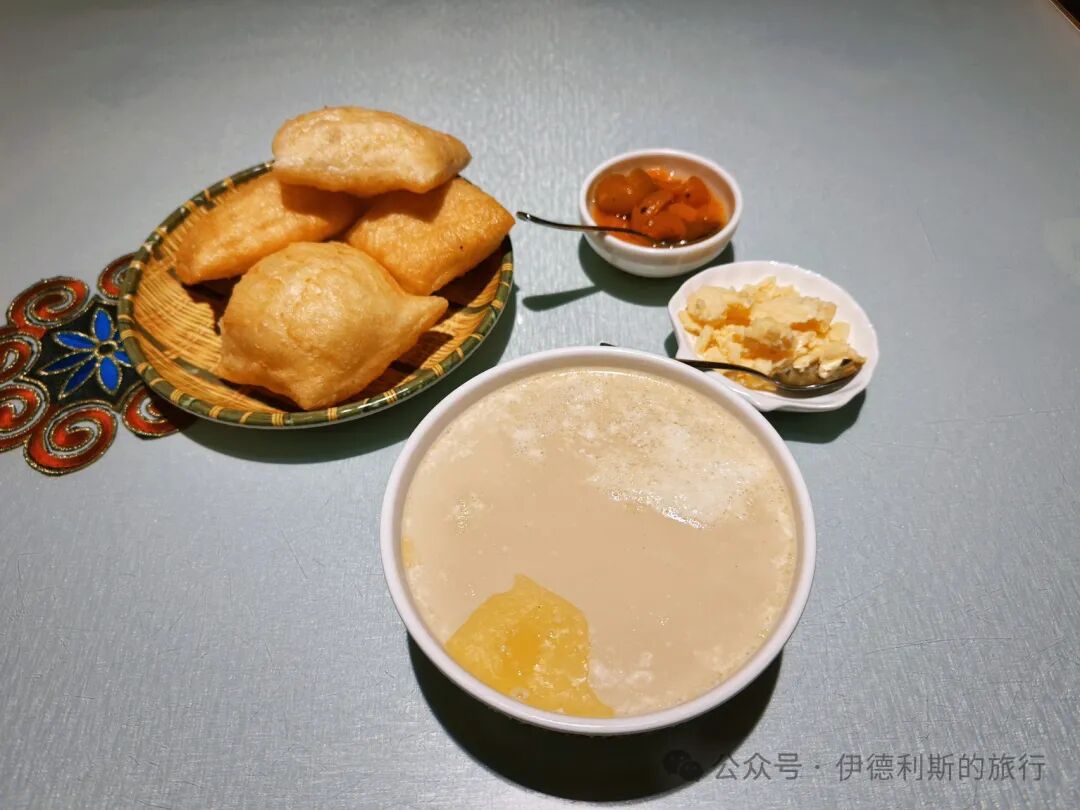
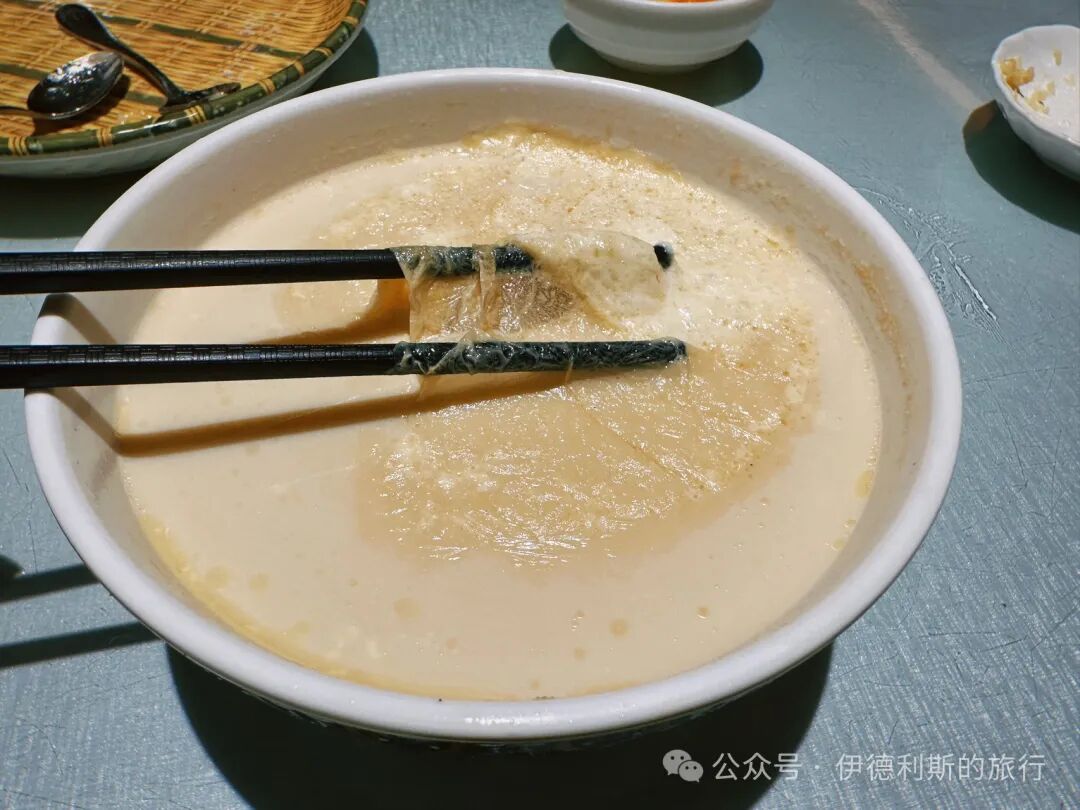
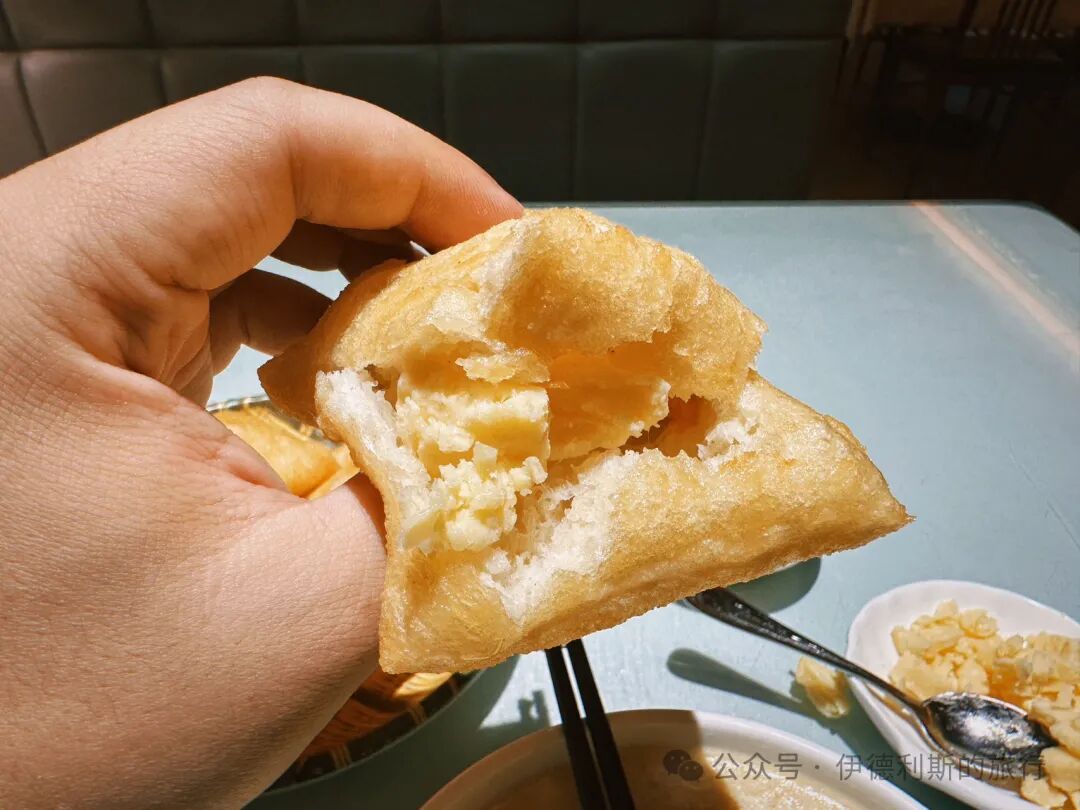
In the morning, I prayed at the Shaanxi Great Mosque in Urumqi. Afterward, I went to the Kazakh milk tea shop in front of the People's Theater for butter milk tea (suyou naicha) with fried dough (baersake), apricot jam, and butter. The milk skin tea (naipizi naicha) was excellent, and the freshly fried dough was so fragrant that my hands were oily after eating.
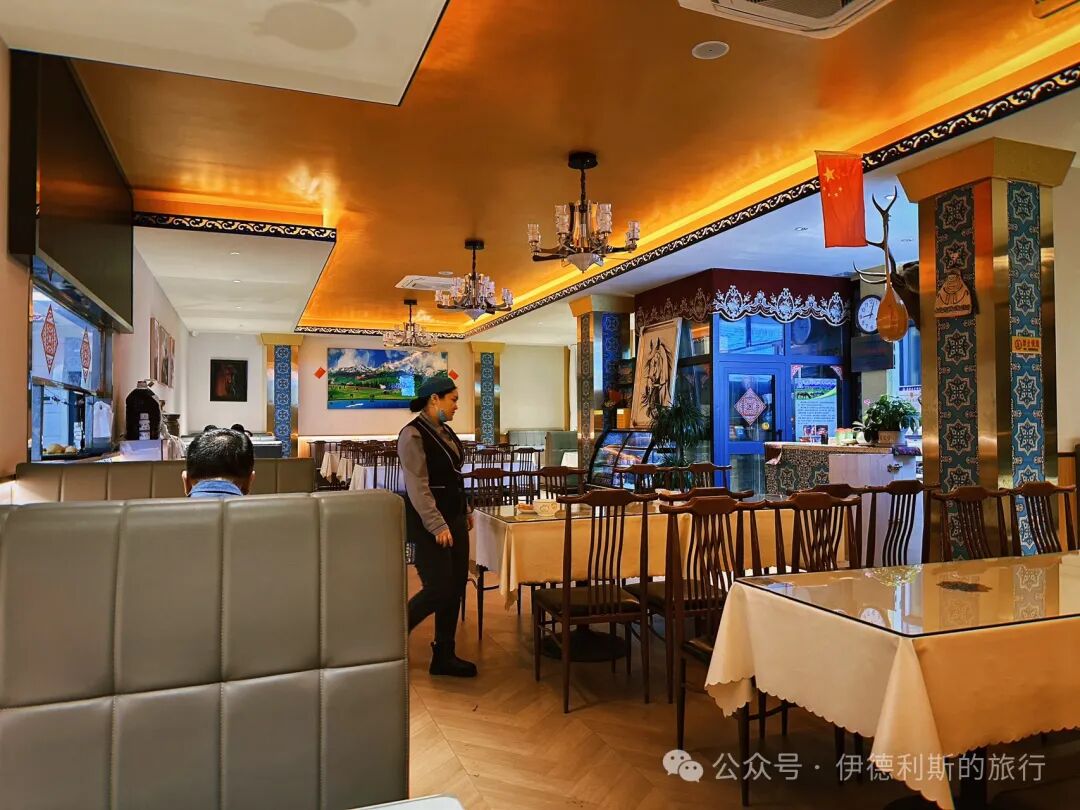
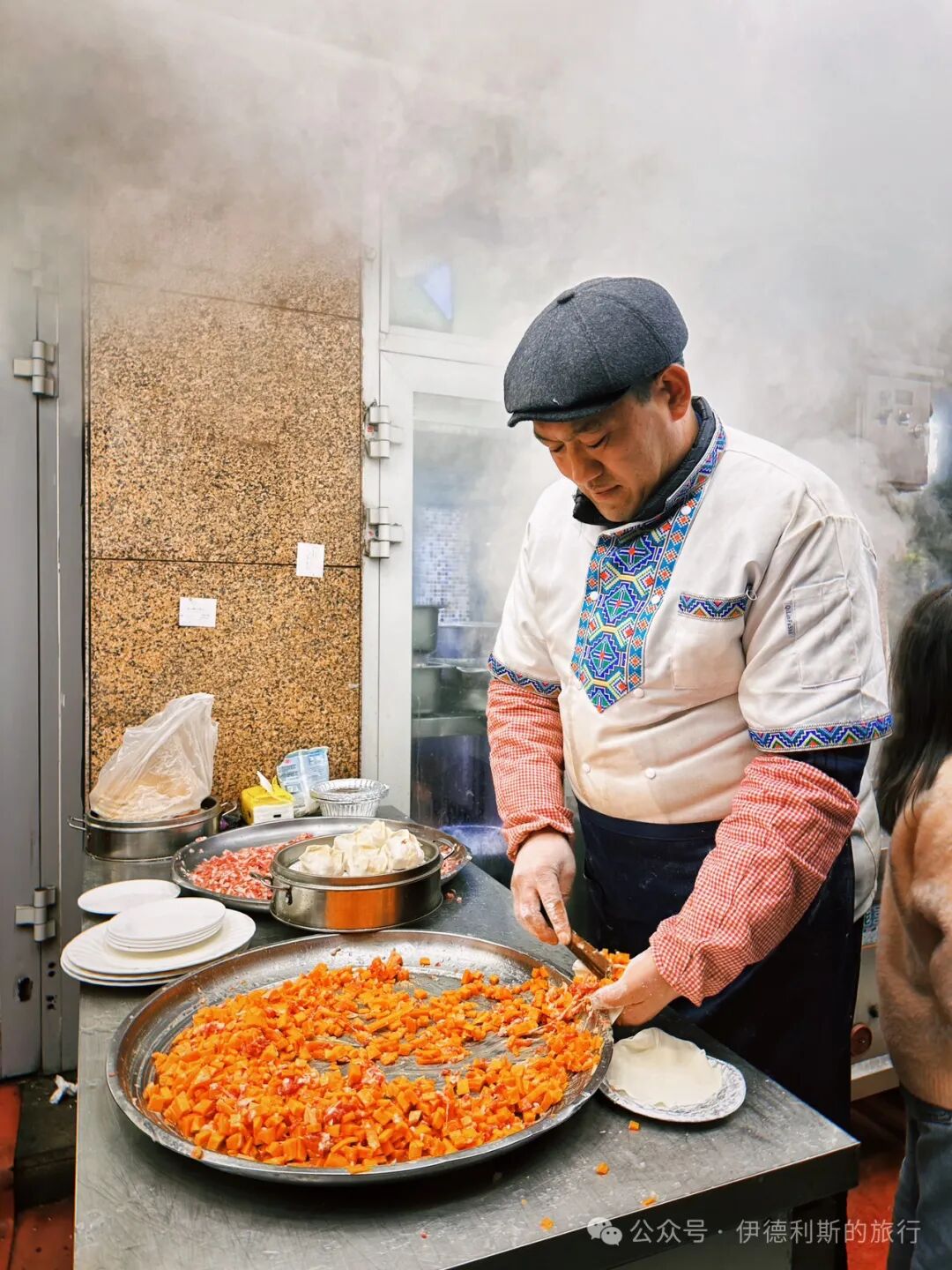
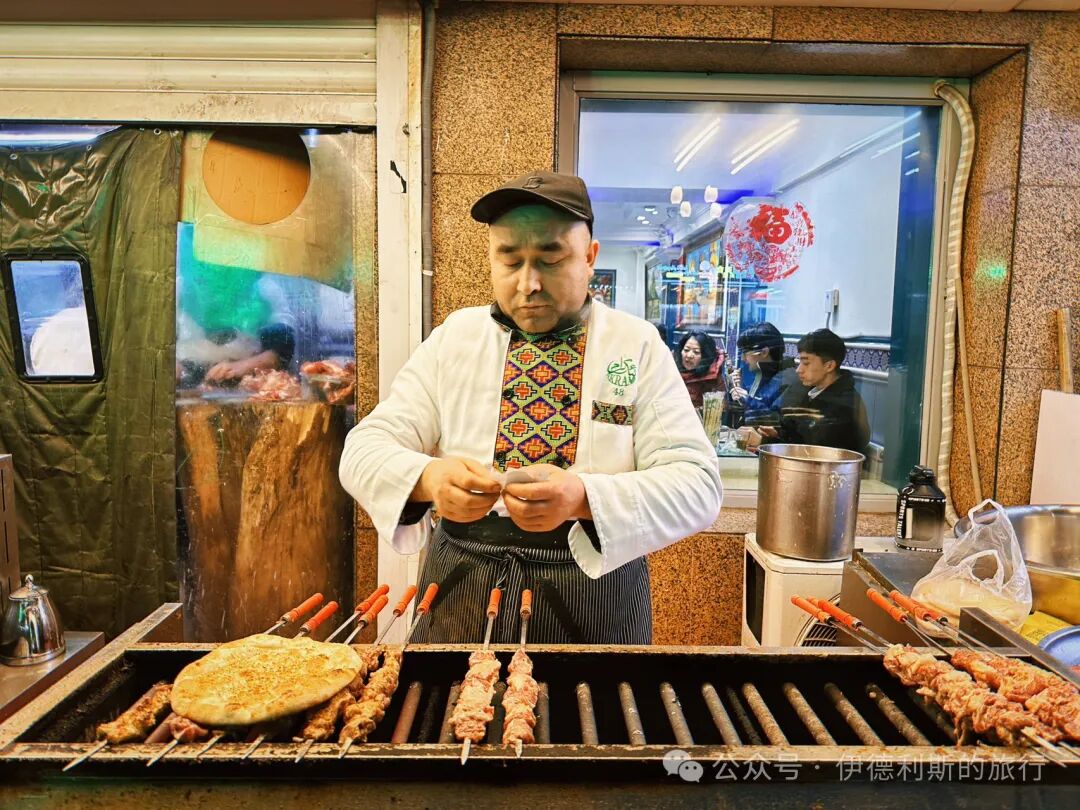
In the evening, my sister and brother-in-law treated us to dinner at Yikelamu in Shanxi Alley. It is a very popular spot with locals. We ordered small dumplings (ququ), home-style mixed noodles (banmian), egg noodles, pigeon soup, clear-stewed lamb trotters, pumpkin steamed buns (baozi), and kebabs. Their mixed noodles are pulled very thin and taste great. The egg noodles come in a meat broth with lamb ribs, yellow carrots, and tomatoes. The pigeon soup is quite light. Clear-stewed lamb trotters have a different flavor compared to spicy lamb trotters (hula yangti), allowing you to taste the natural flavor of the lamb. The lamb skewers were seasoned only with salt, not chili. Only places with high-quality meat dare to do this. Their steamed buns are also good, and the sweet pumpkin filling is very appetizing.
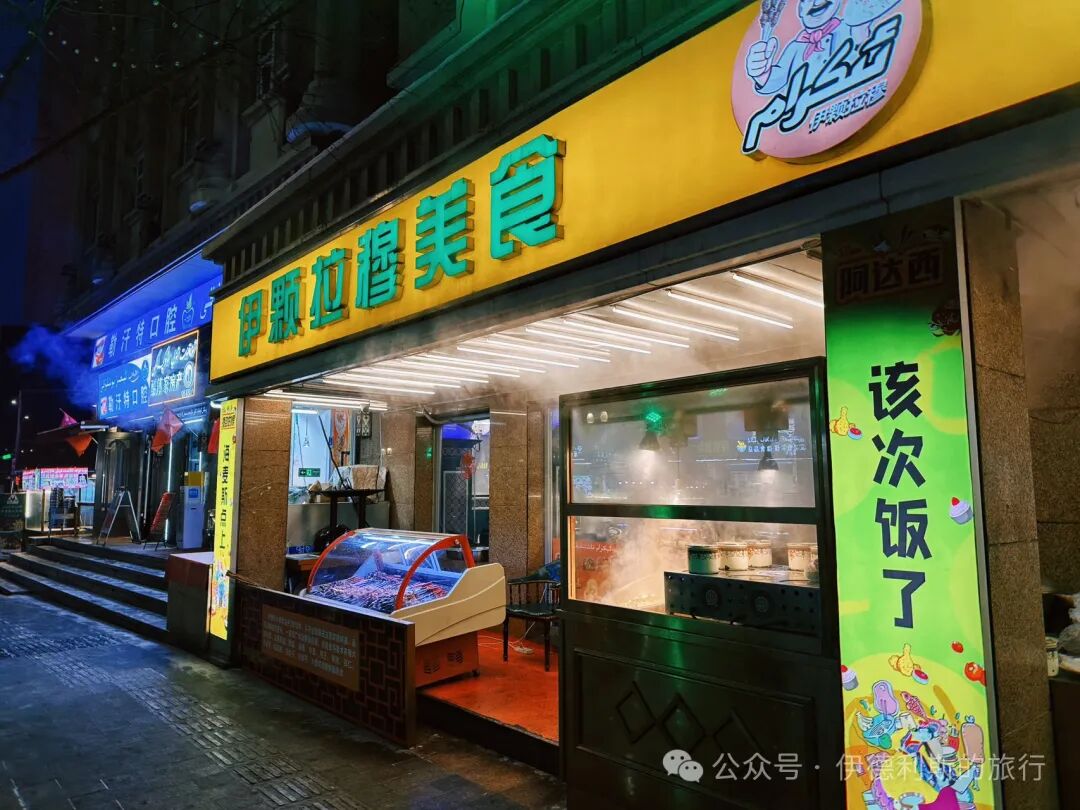
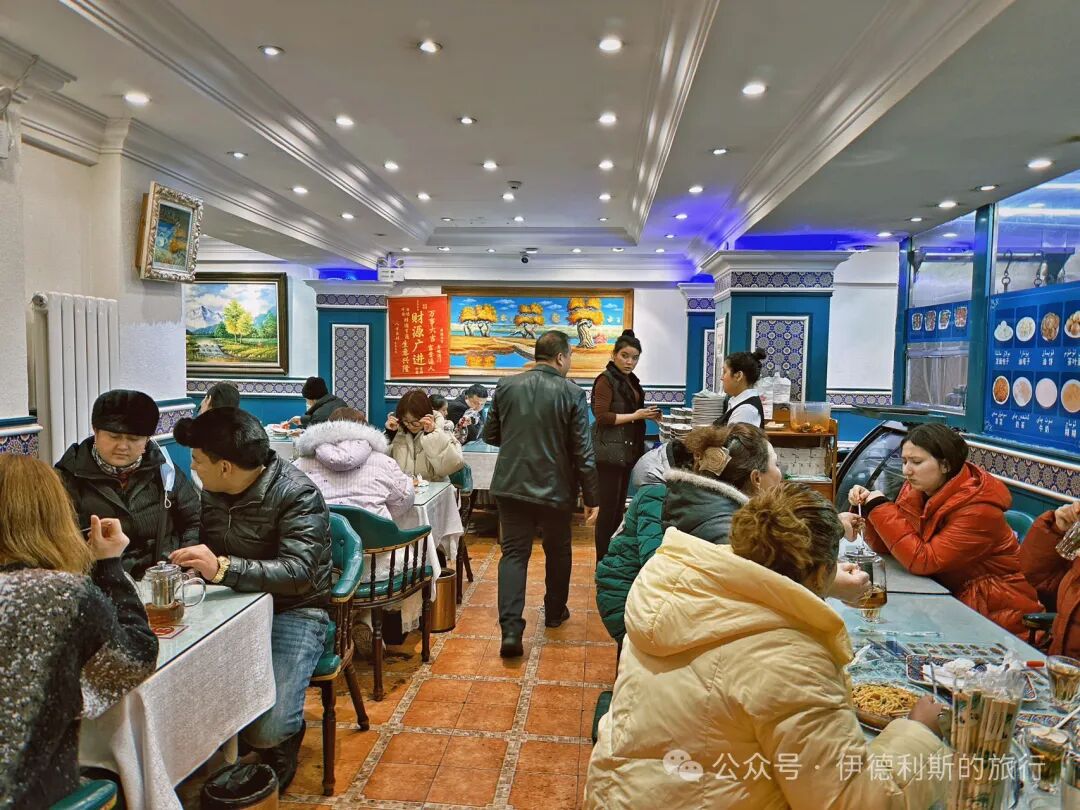
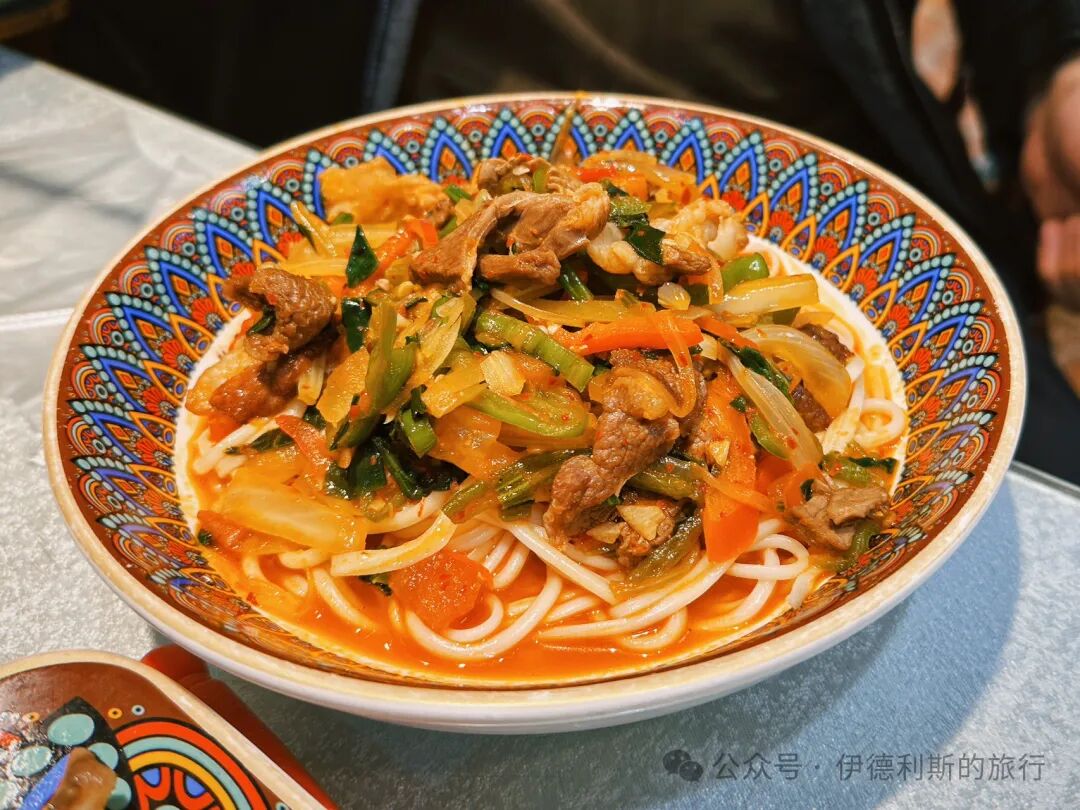
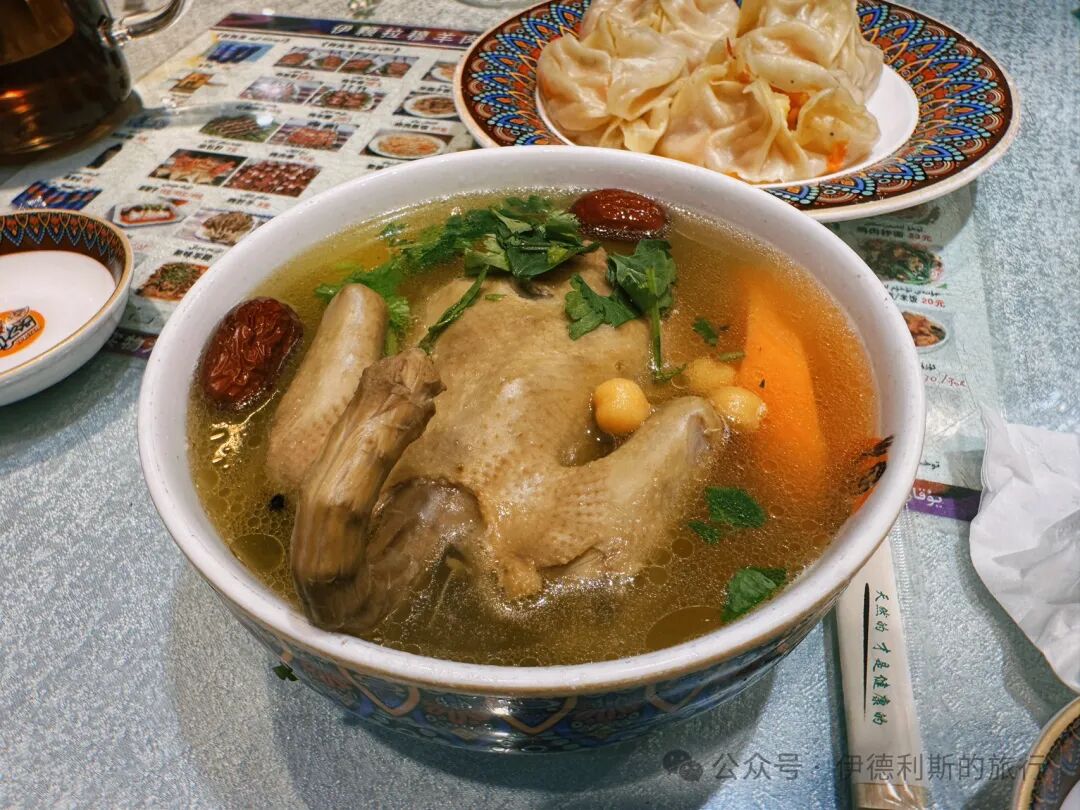
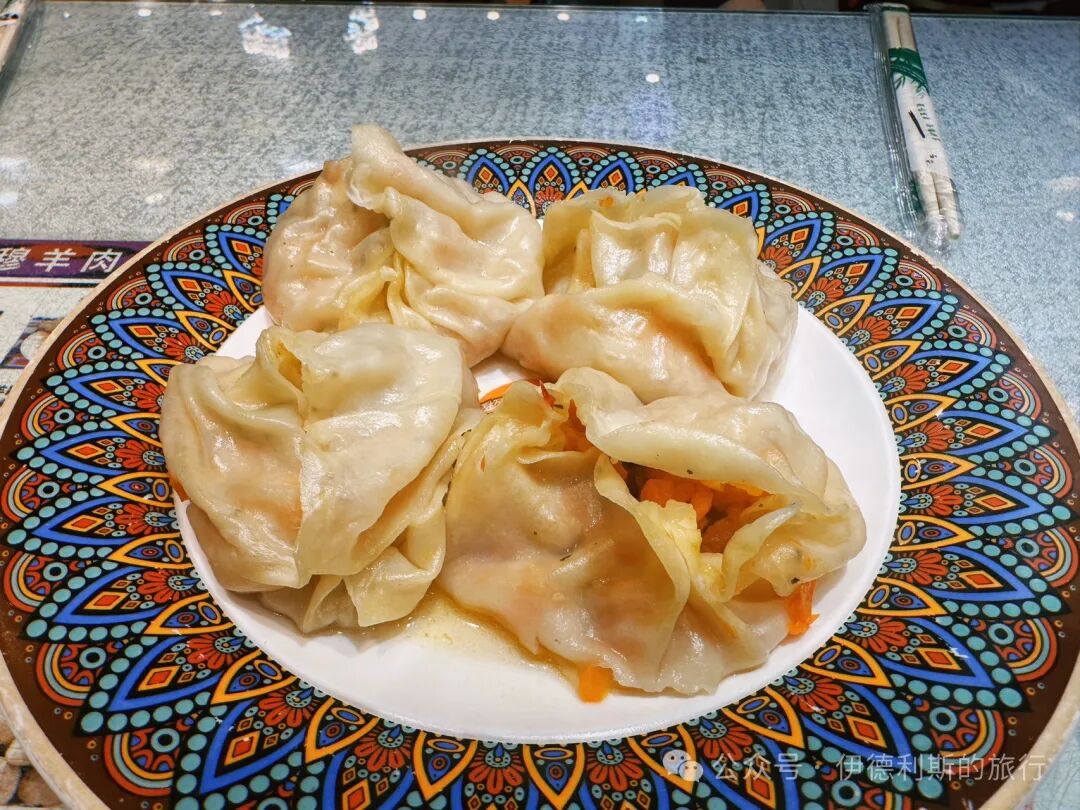
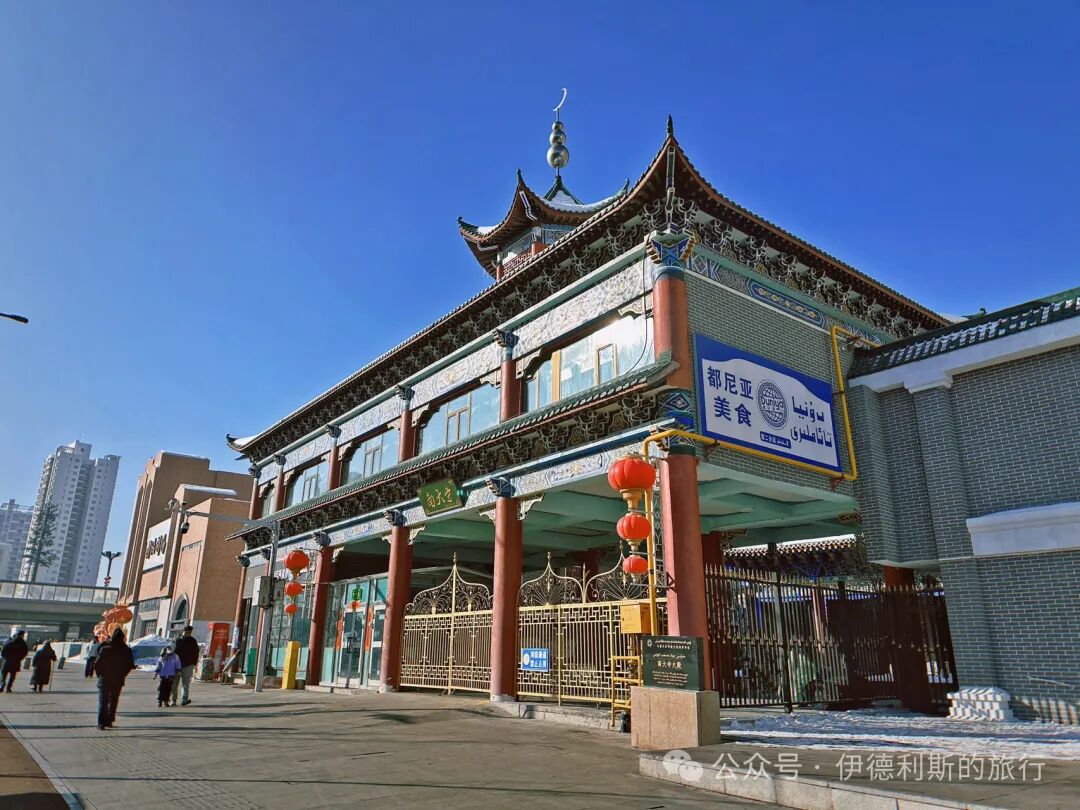
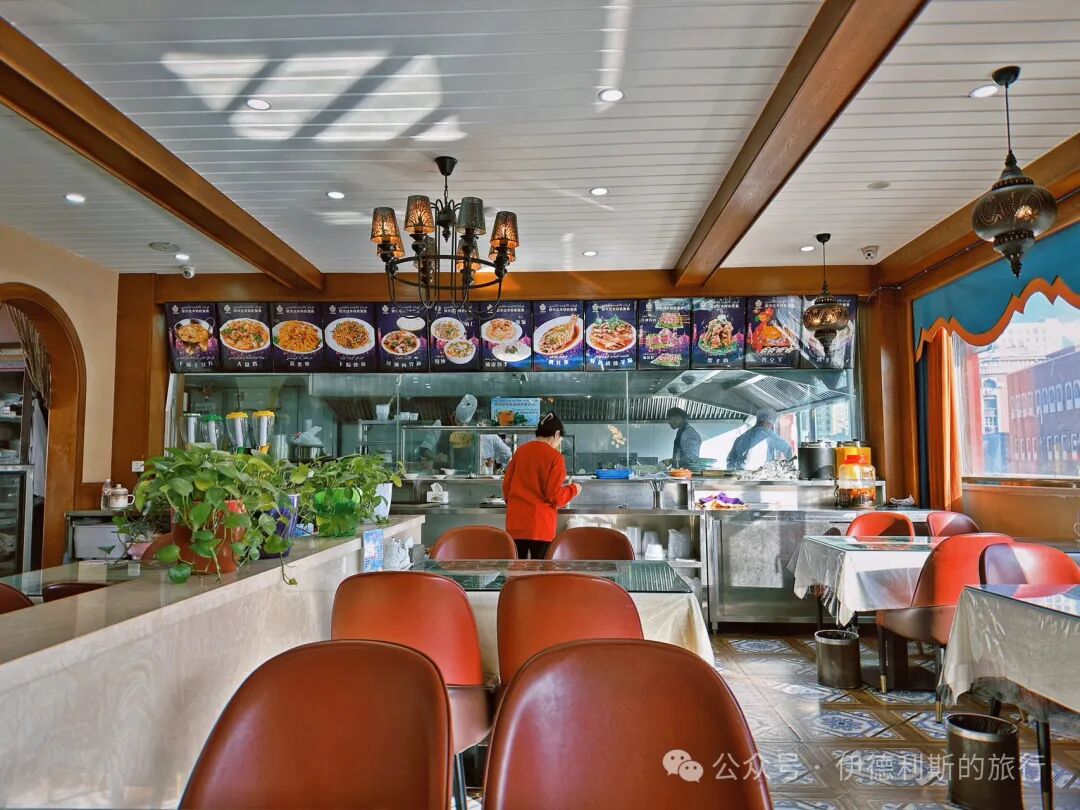
On the second floor of the Erdaoqiao South Mosque gate is a Uyghur restaurant called Dunya Food. It is very warm inside, and you can drink hot tea while looking out at the main hall of the Urumqi Jahriyya First Mosque. I had a bowl of small dumplings (ququ) in the restaurant, which is perfect for winter in Urumqi.
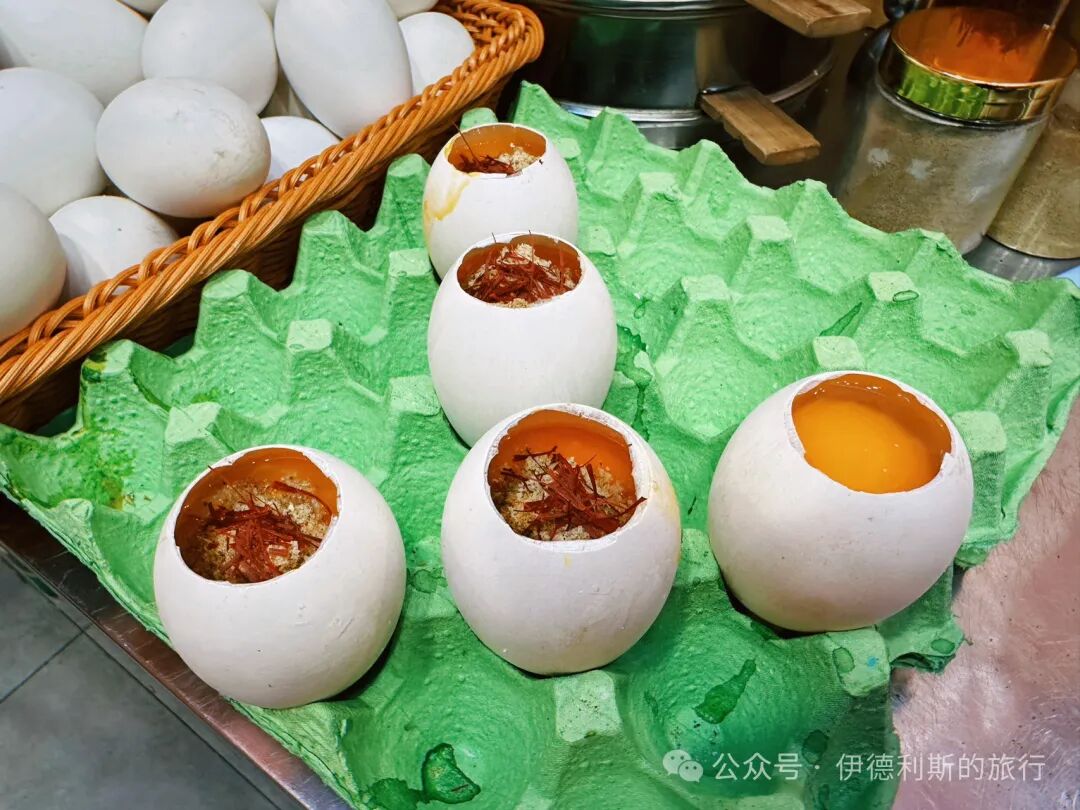
Across from Suiyuan Mosque is a Hotan specialty egg shop. You can eat roasted goose eggs and chicken eggs. They also have a deluxe version where chicken, pigeon, and goose eggs are all cracked into a goose egg shell, then mixed with honey and saffron. They also serve rose tea with silverberry honey. It is a good place to sit and rest after walking around Shanxi Alley.
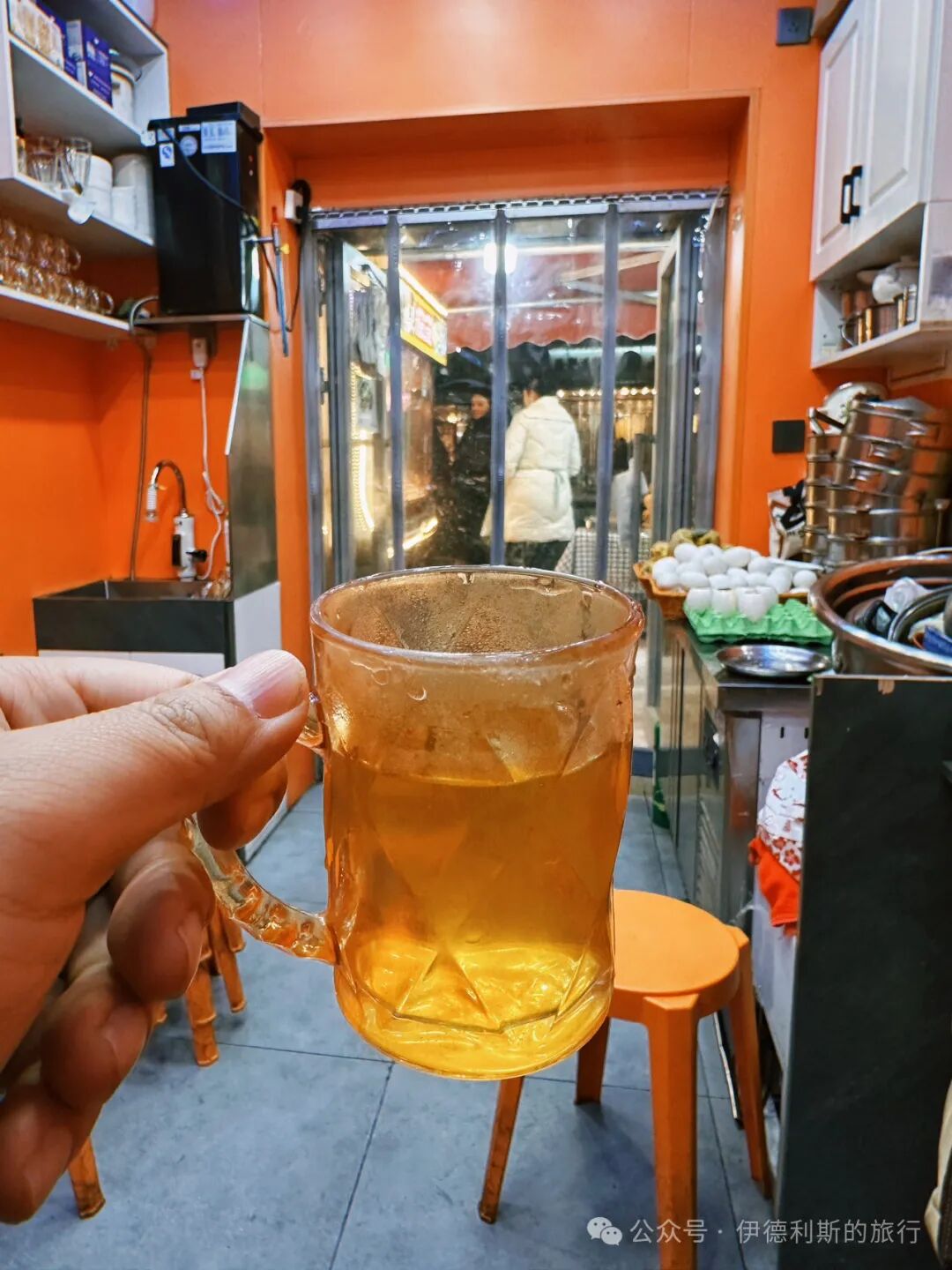
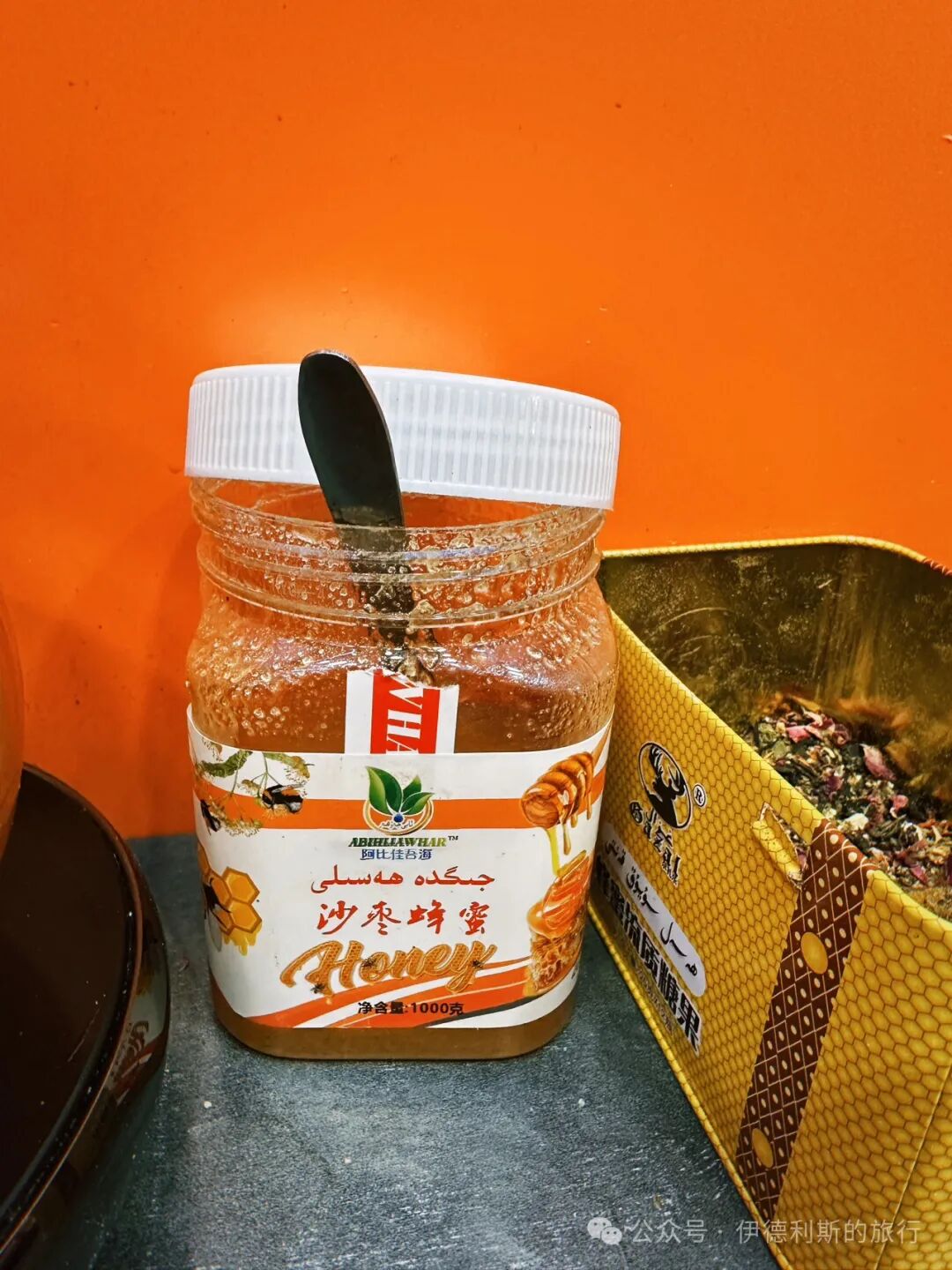
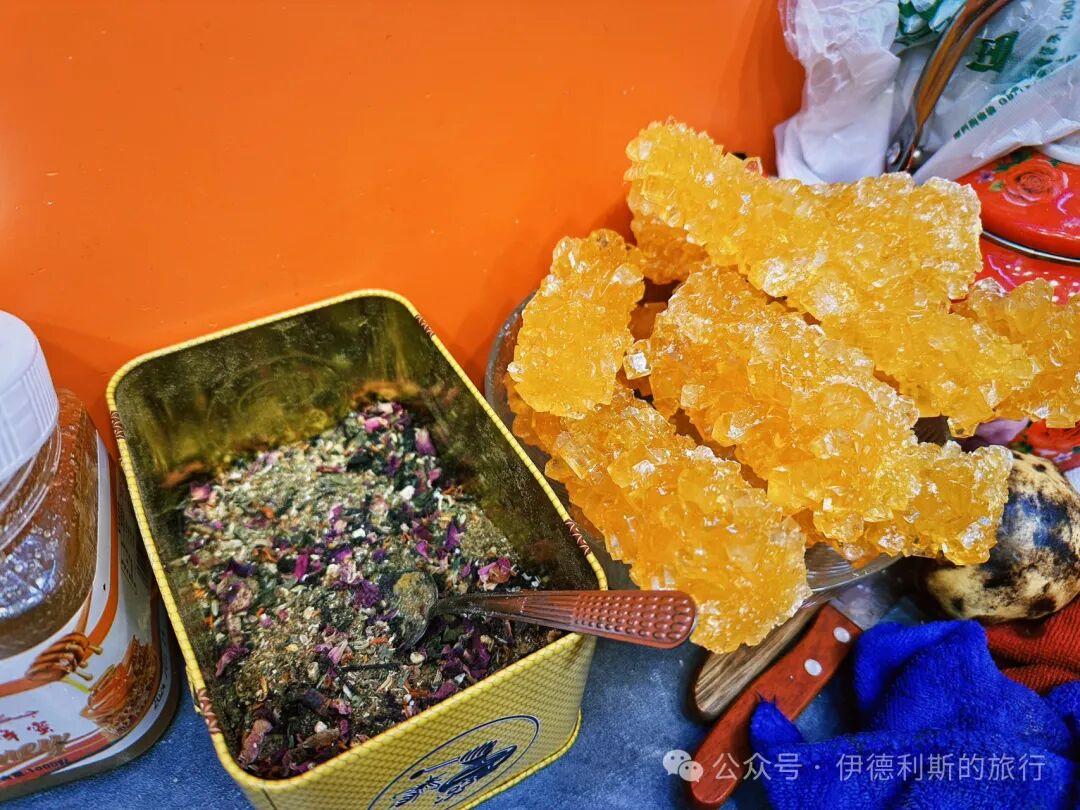
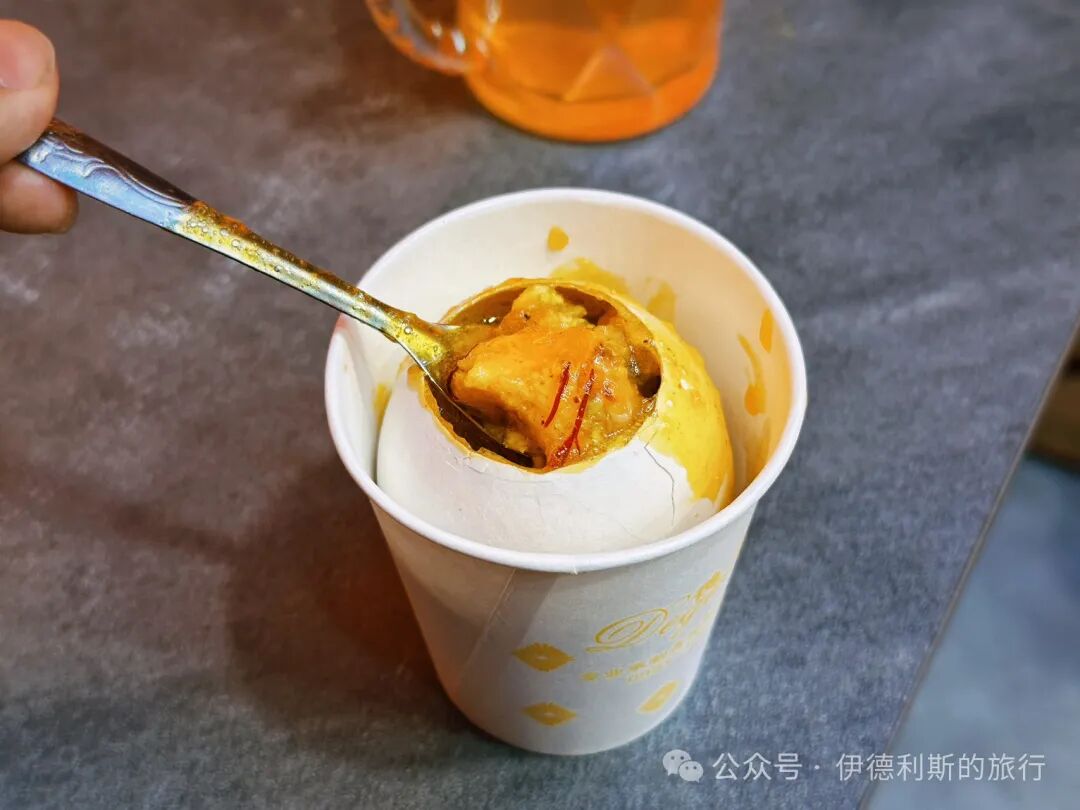
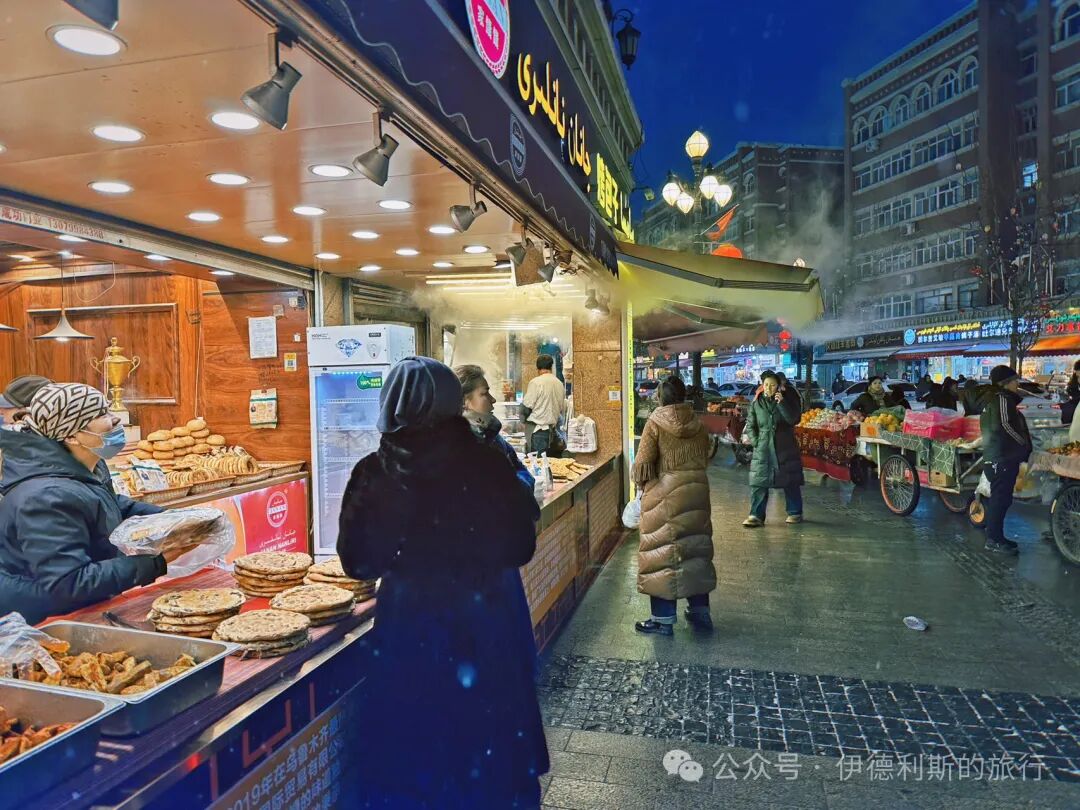
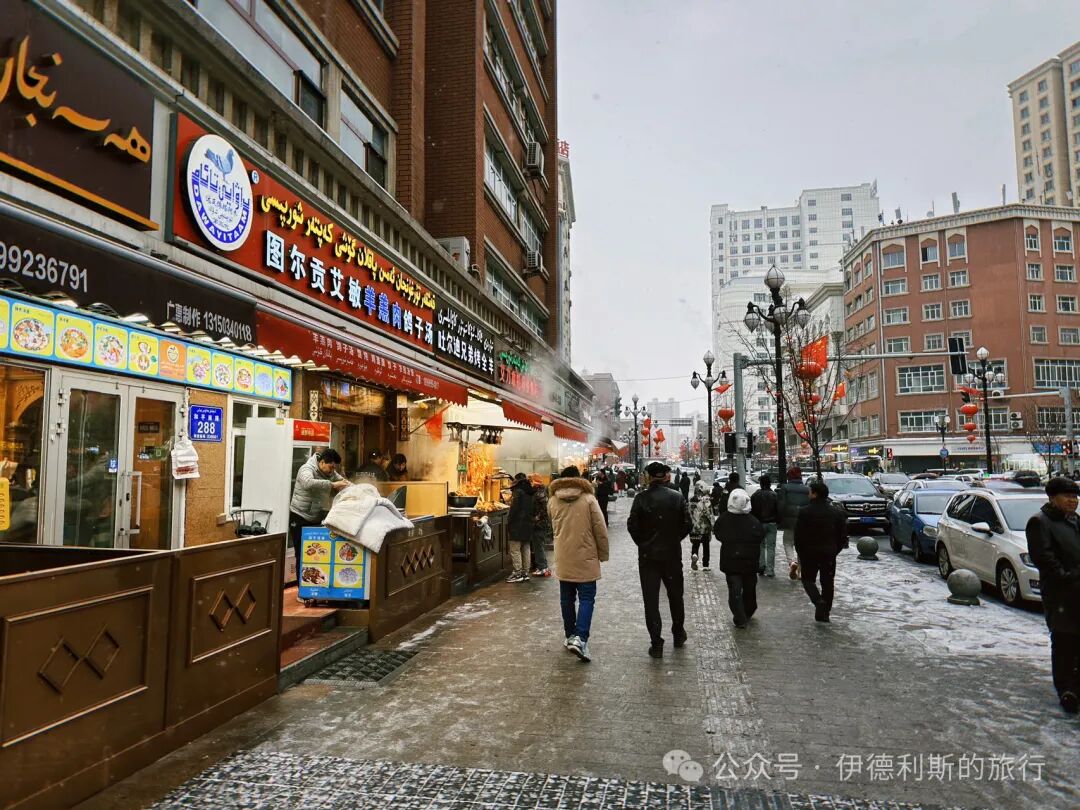
On the street in Shanxi Alley.
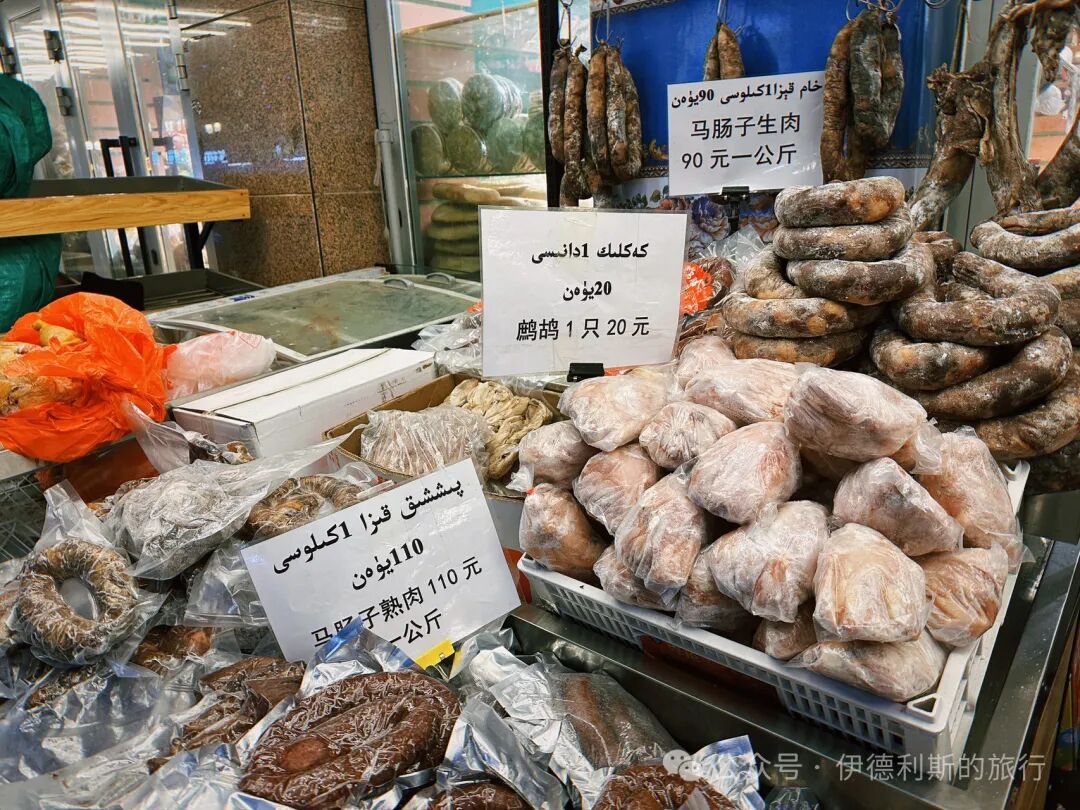
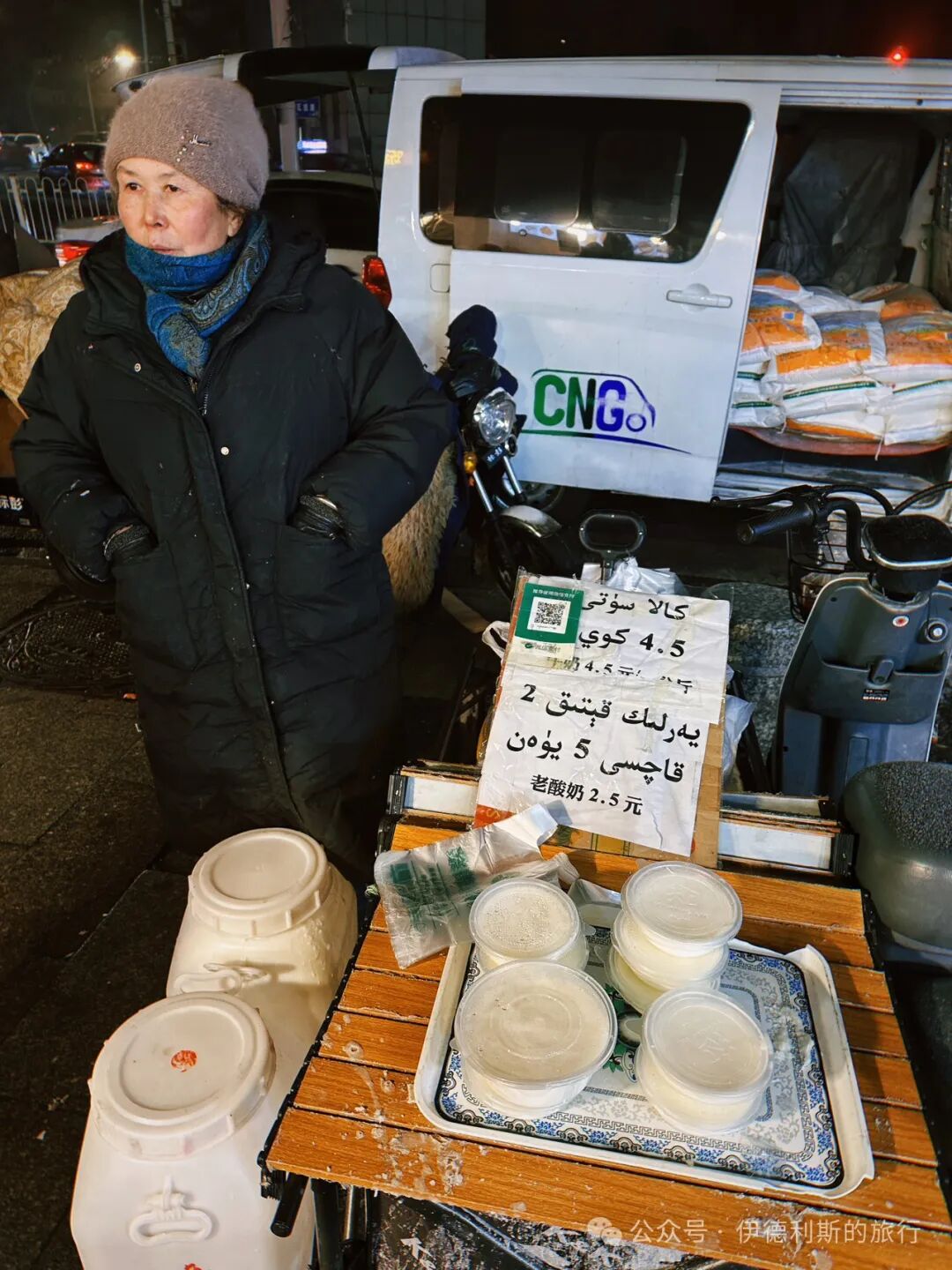
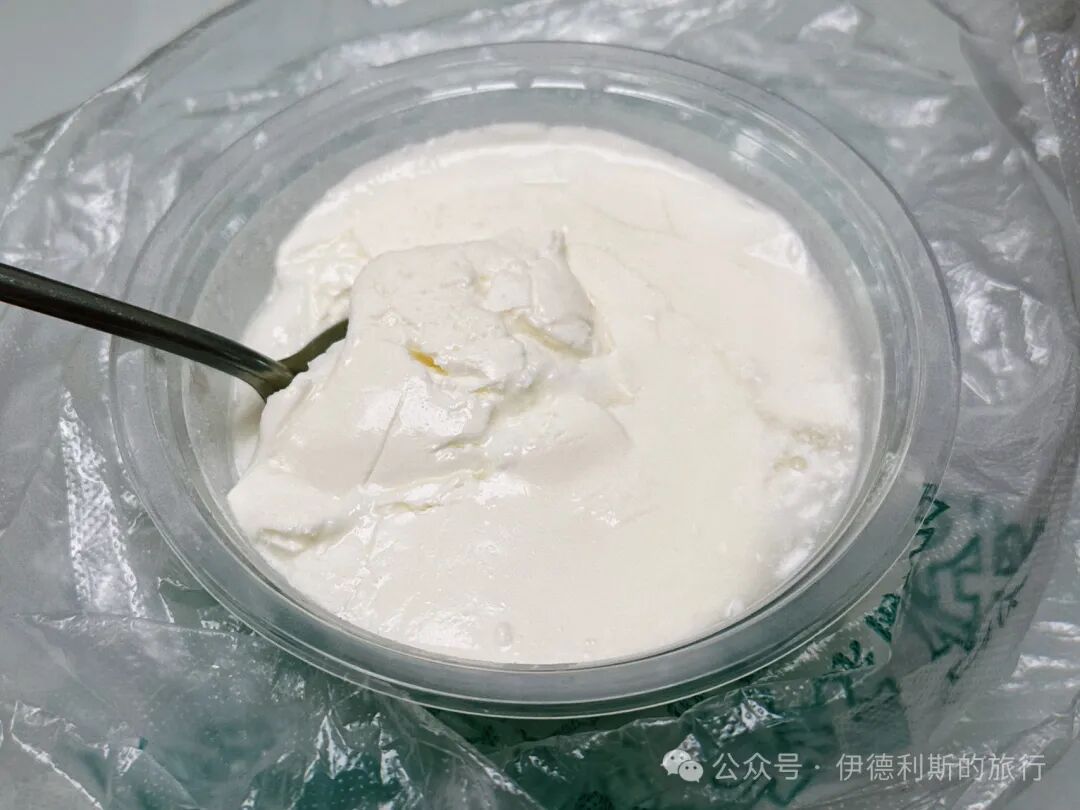
On the street in Awati Road, the yogurt sold by the auntie without a brand name is the best! Since Erdaoqiao, Lingguan Alley, and Shanxi Alley became popular, Yingawati Road further south remains a place only for locals.
Halal Travel Guide: Urumqi - Hetian Street, Erdaoqiao and Tianshan Vanke
Articles • ali2007fr posted the article • 0 comments • 155 views • 2026-05-19 08:52
Summary: Halal Travel Guide: Urumqi - Hetian Street, Erdaoqiao and Tianshan Vanke is presented here as a firsthand travel account in clear, natural English. The account focuses on Urumqi, Xinjiang Travel, Halal Food while preserving the names, places, food, photos, and historical details from the Chinese source.
Uyghur food on Hetian Street.
Every time I returned to Urumqi before, besides eating Hui Muslim food, I usually went to the Erdaoqiao and Dawan areas to eat Uyghur and Kazakh food. This Spring Festival, we went to another famous food street in Urumqi: Hetian Street.
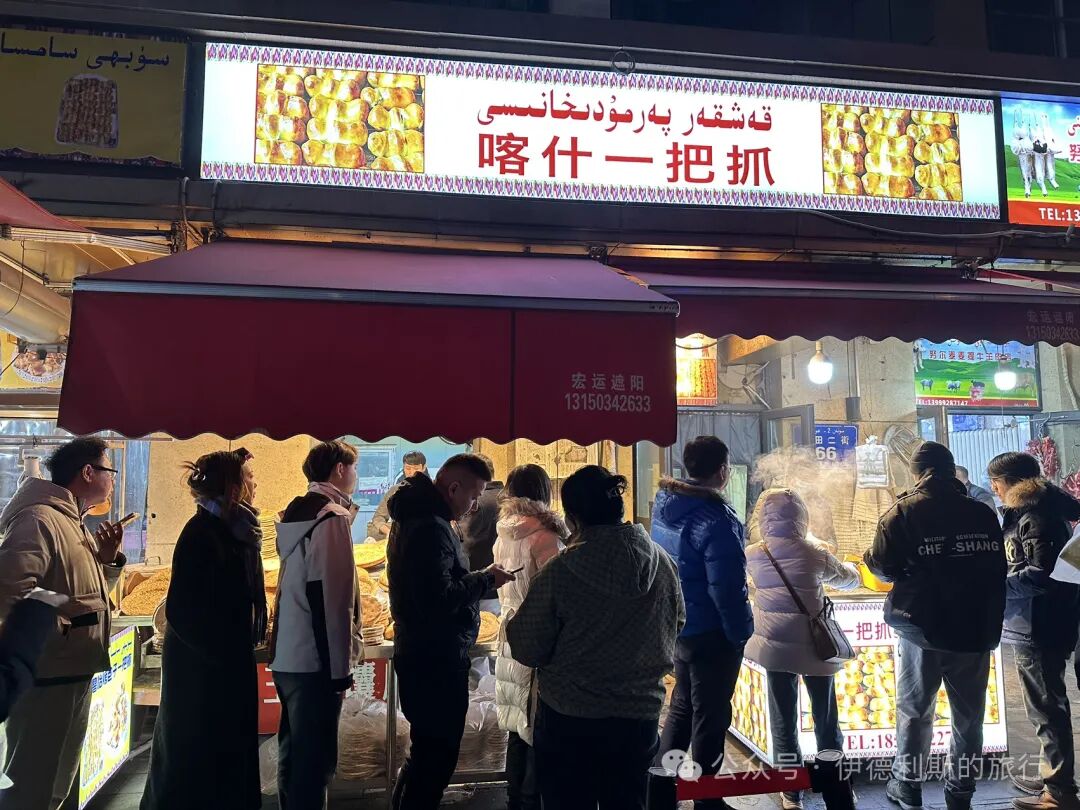
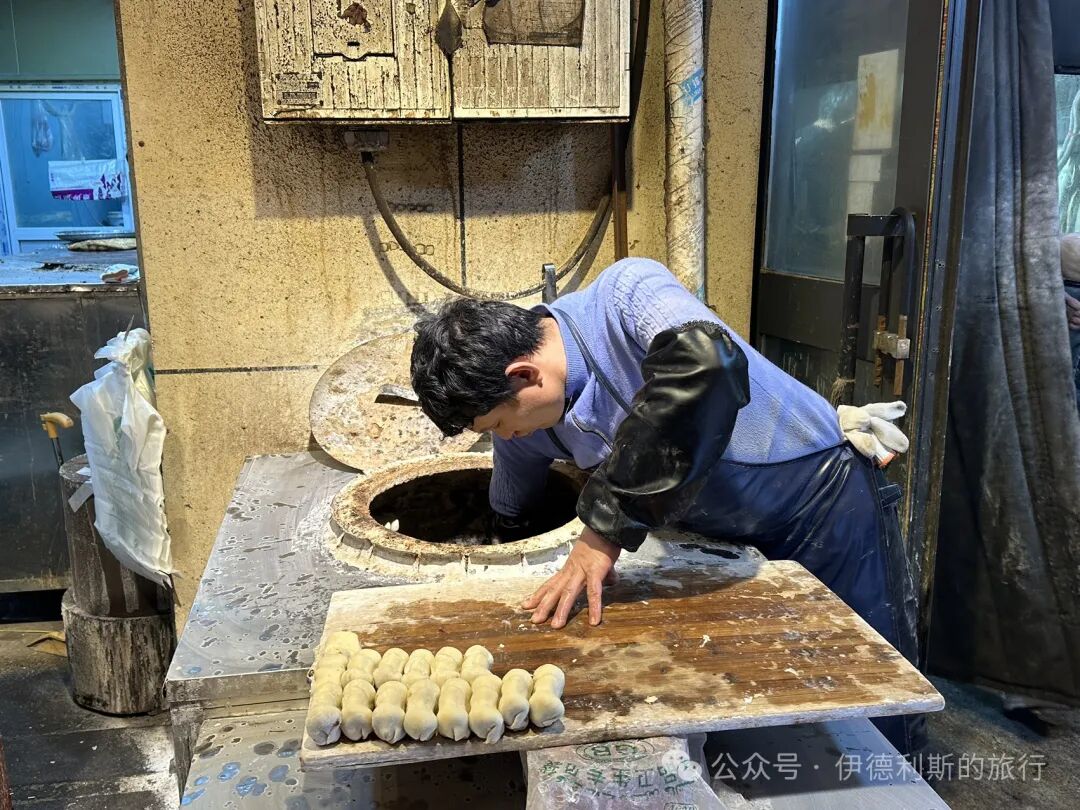
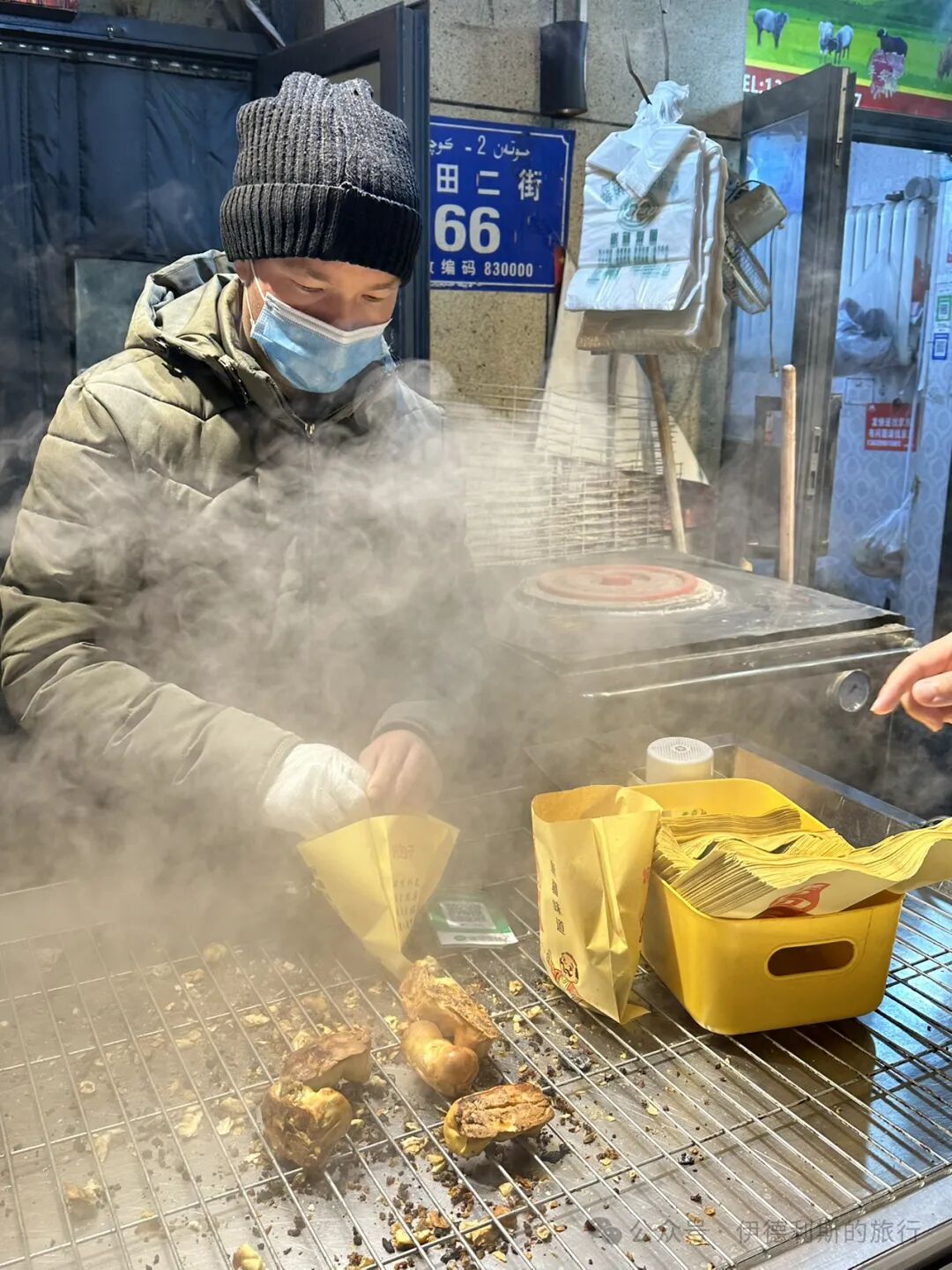
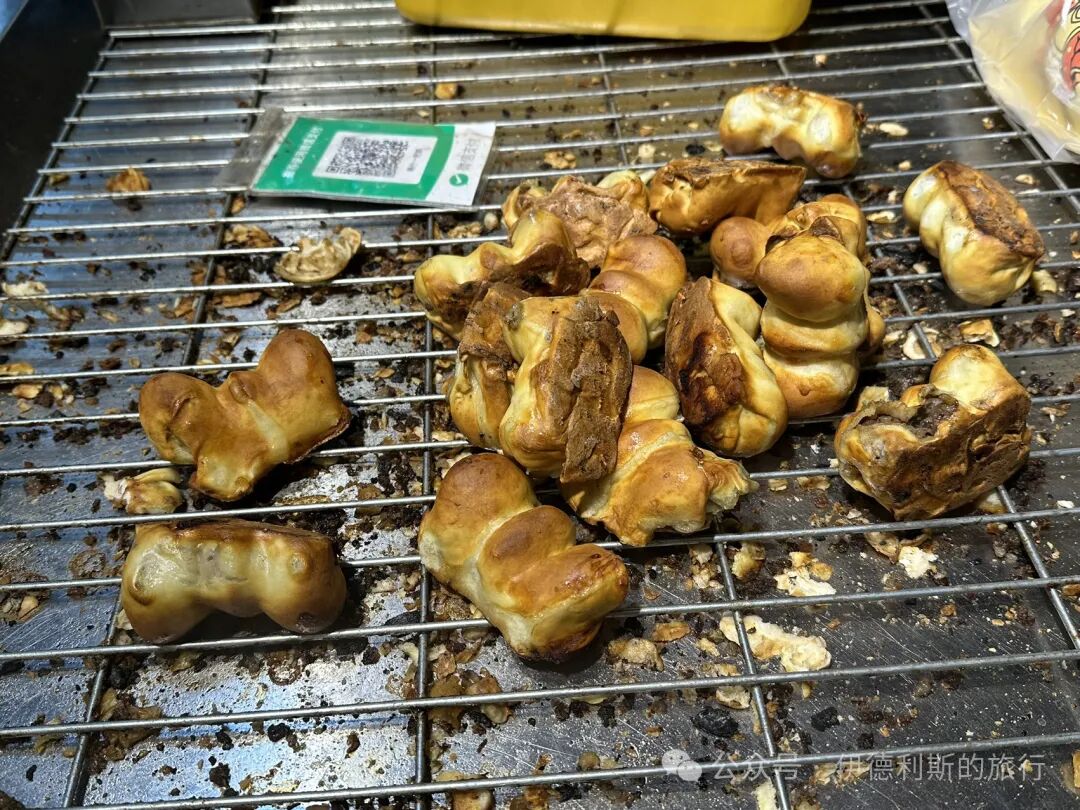
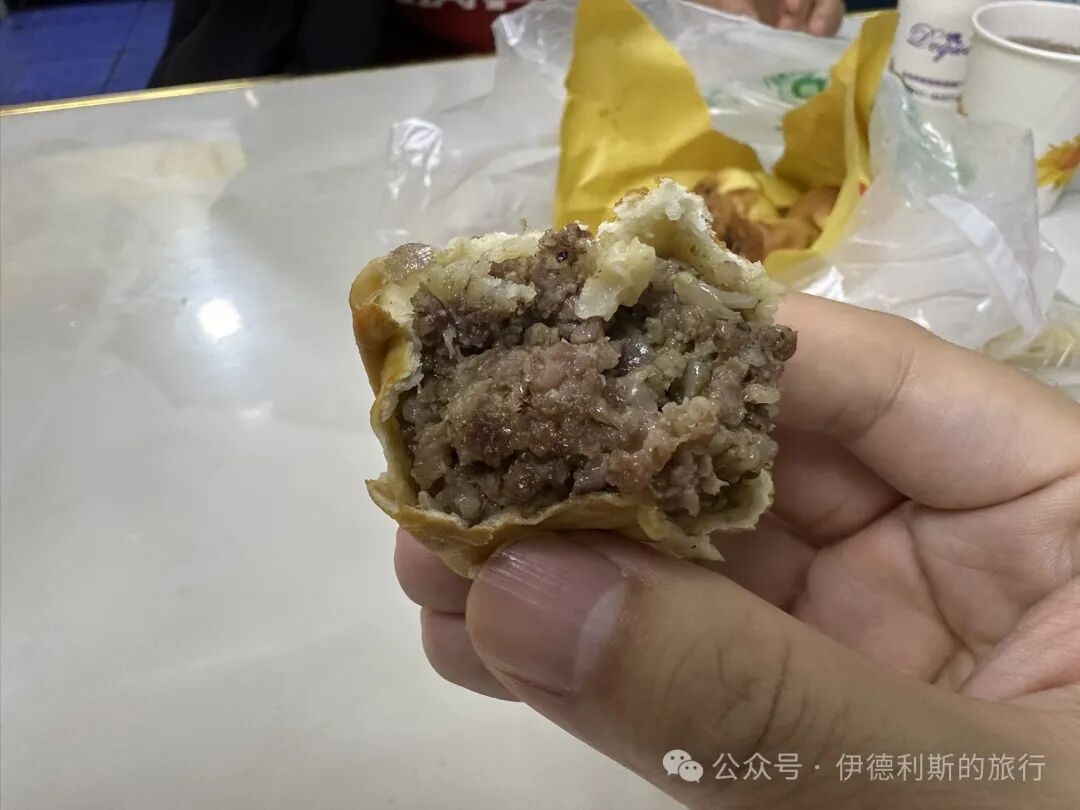
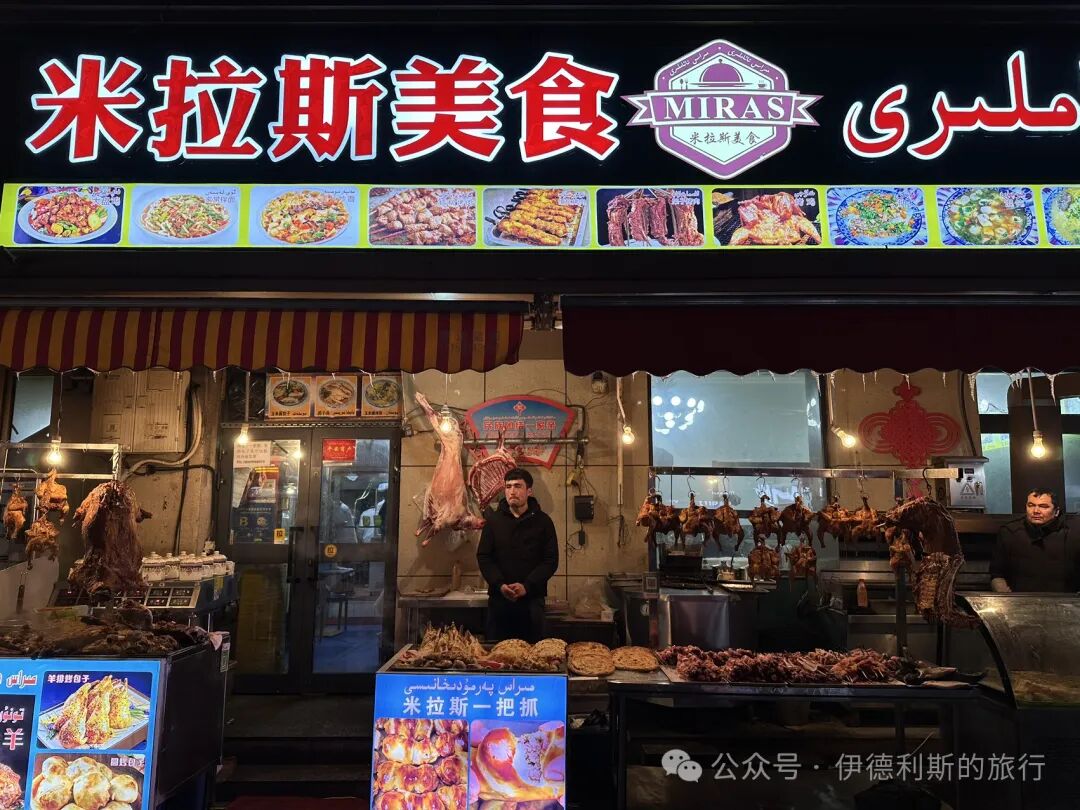
Hetian Second Street is the busiest part of the area, and the place with the longest line is Kashgar Yibazhua. Yibazhua is a small-sized baked bun (kaobaotzi) with thin skin and a large filling. It is quite delicious. It used to be more common in southern Xinjiang, but now shops have opened in Urumqi too.
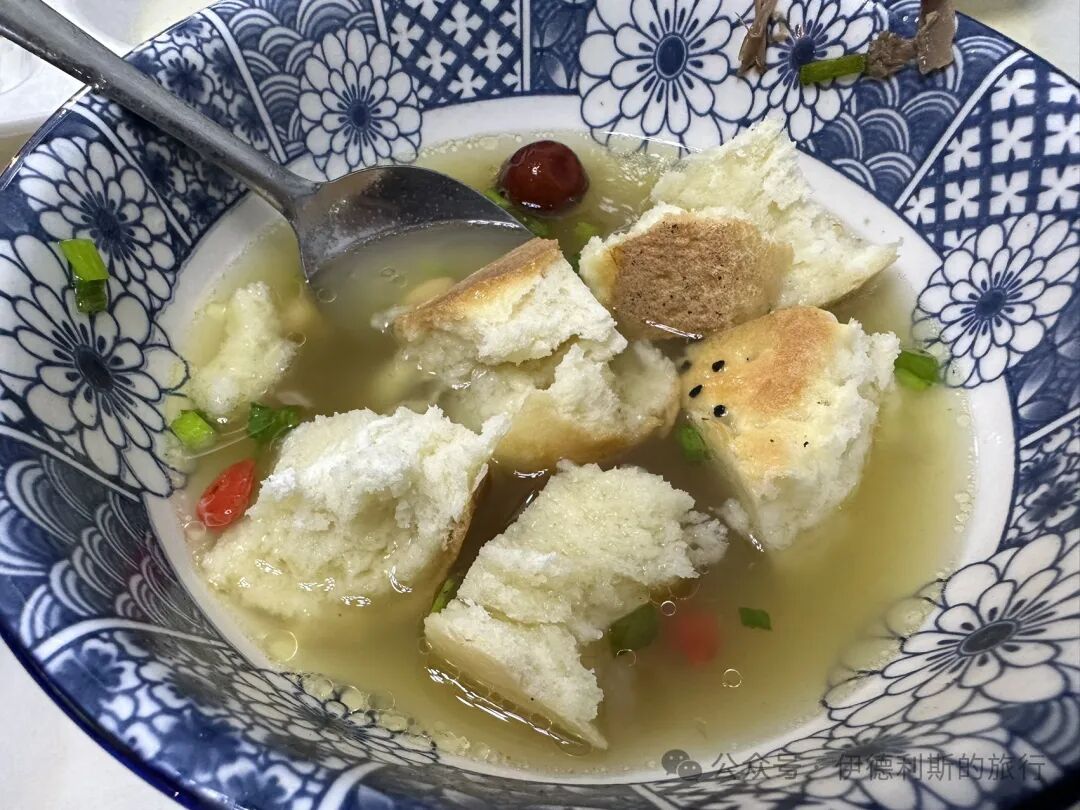
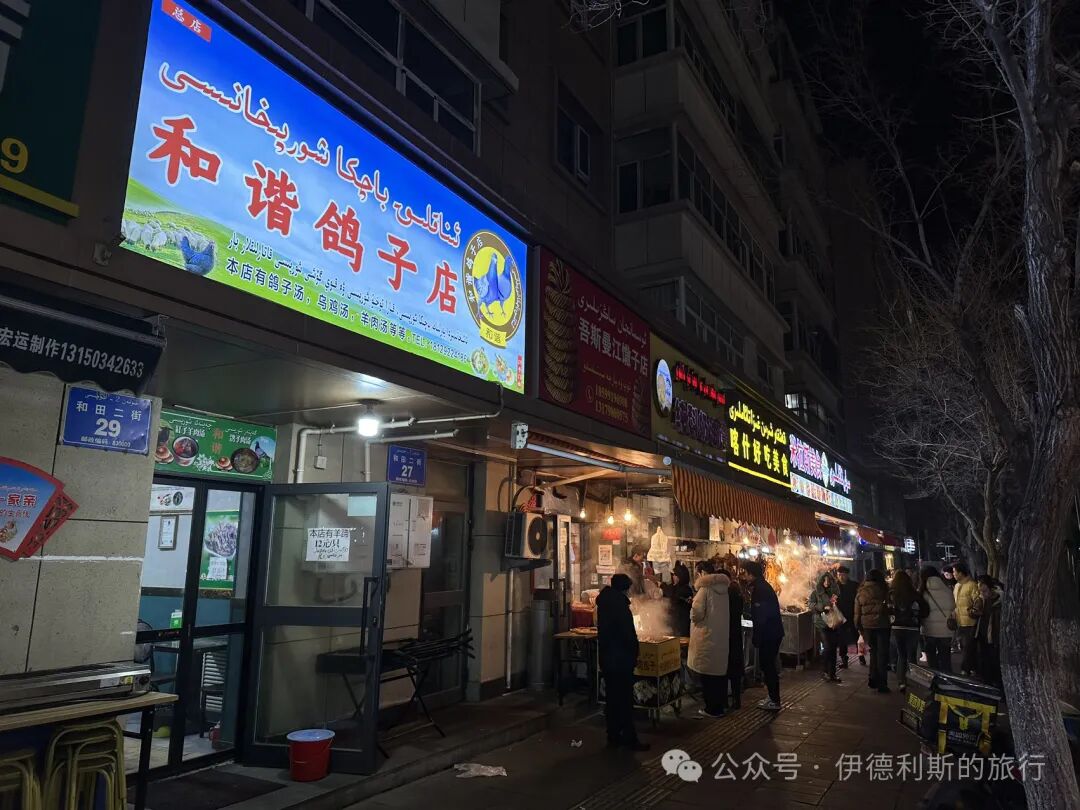
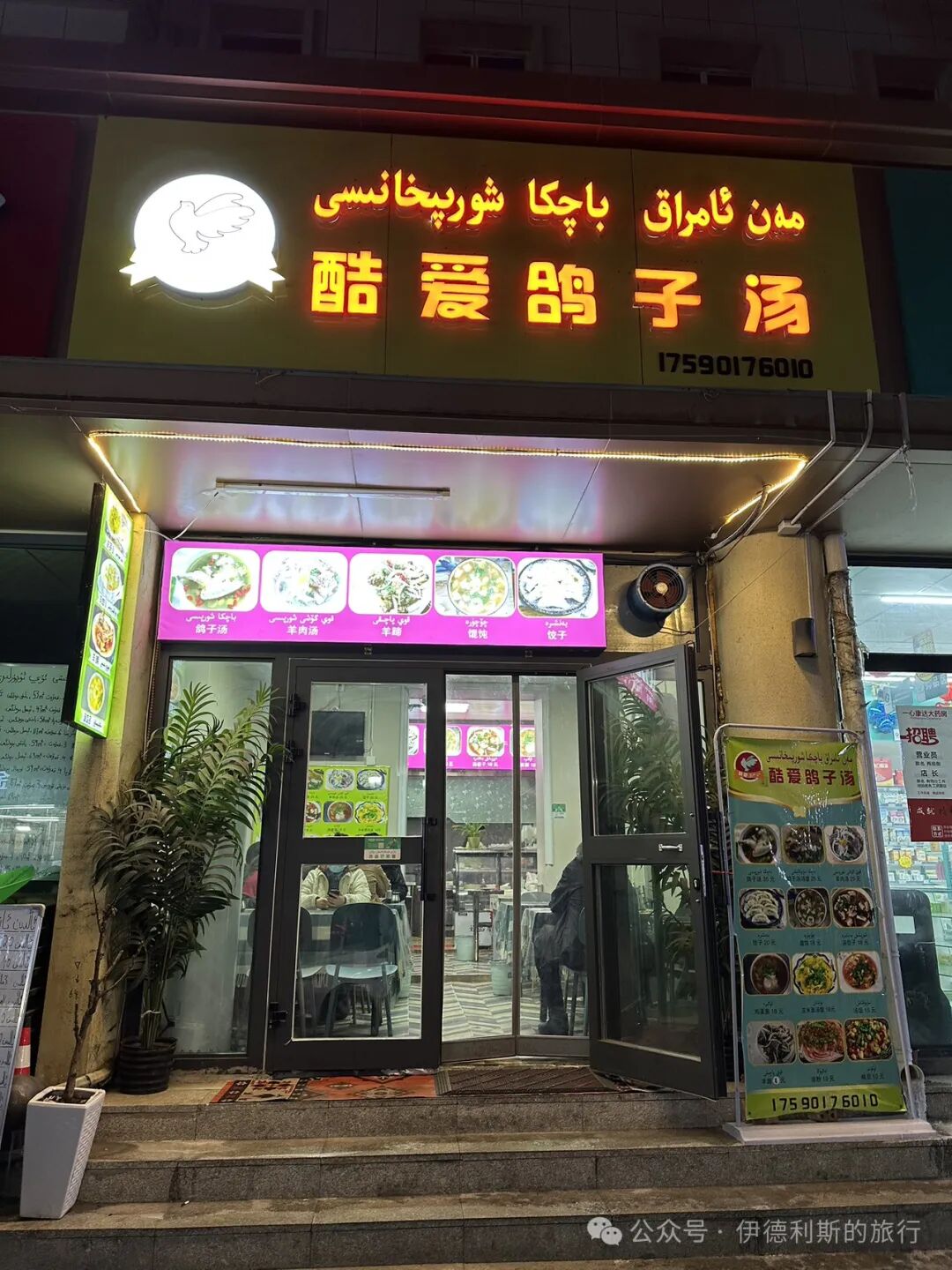
After finishing the Yibazhua, we had some pigeon soup. There are several pigeon soup shops on Hetian Second Street. The one we visited focused on an authentic taste with very few seasonings, which really highlighted the natural freshness of the pigeon soup.
We bought some sour plums from a truck on the street that sells dried fruits and candied snacks.
The Uyghur pastry shops on the street are also very popular. We bought baklava and nut tarts at Xiahedana Pastry, and they were both delicious. The baklava was packed with walnuts and was not as sweet as the kind in Turkey.
The roasted goose eggs were hot; you peel them, take a bite, and then sprinkle on the seasoning.
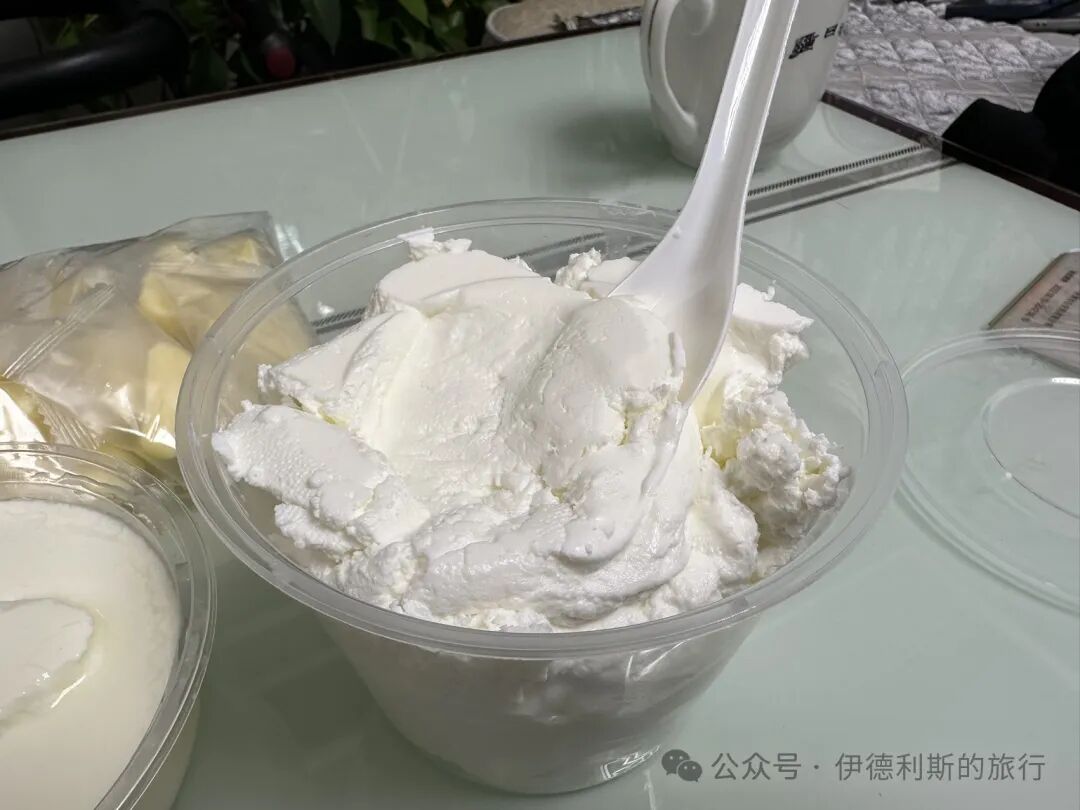
The handmade yogurt was thick and came with its own layer of milk skin; you cannot find this in Beijing at all.
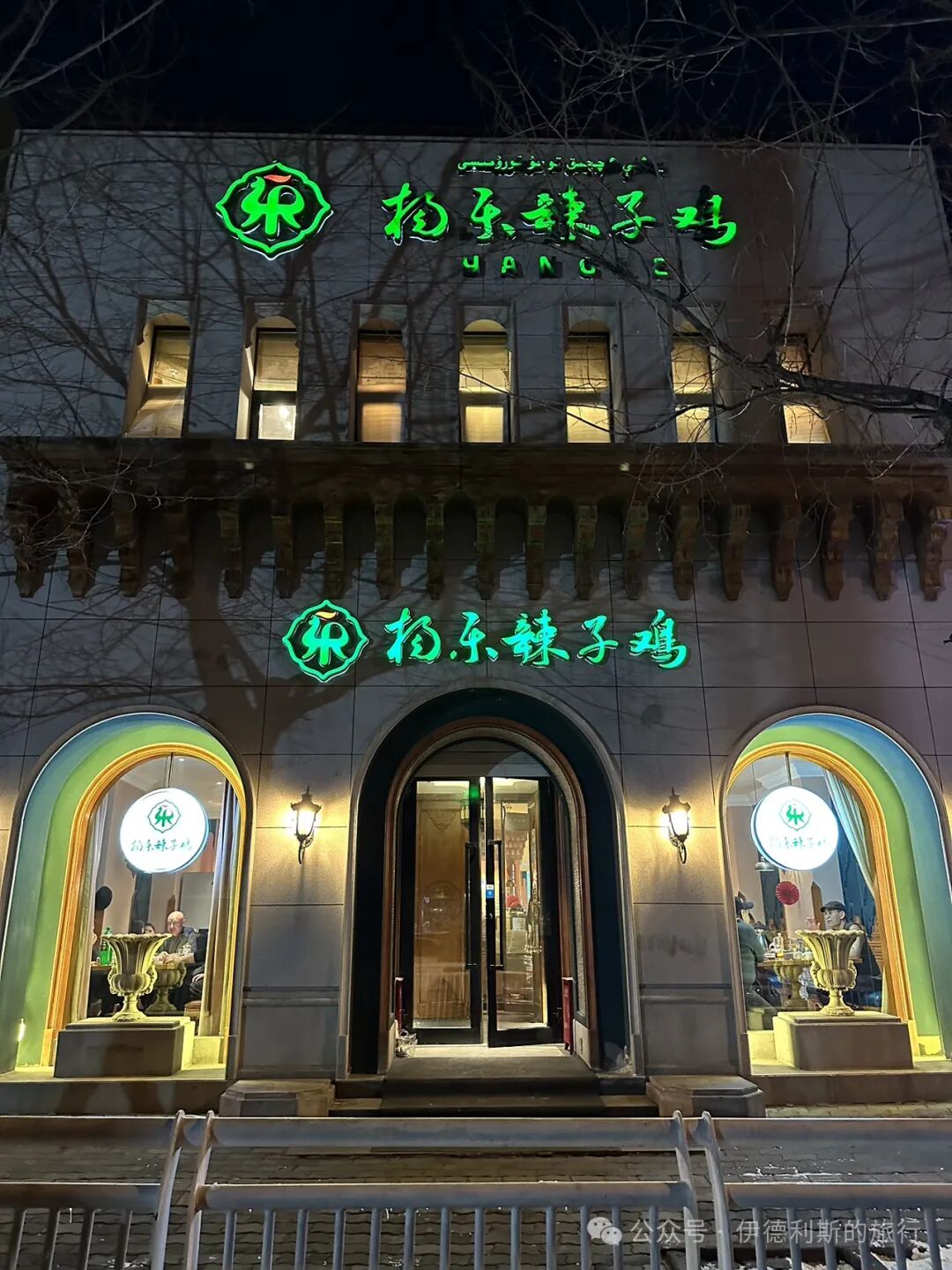
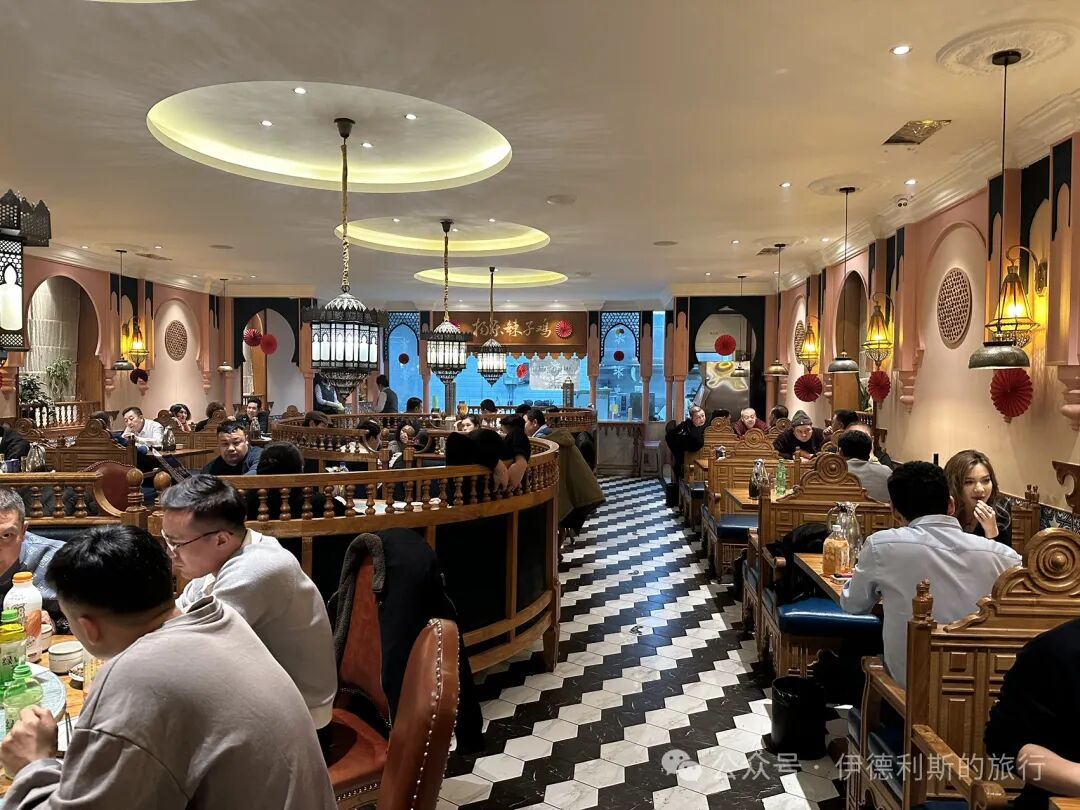
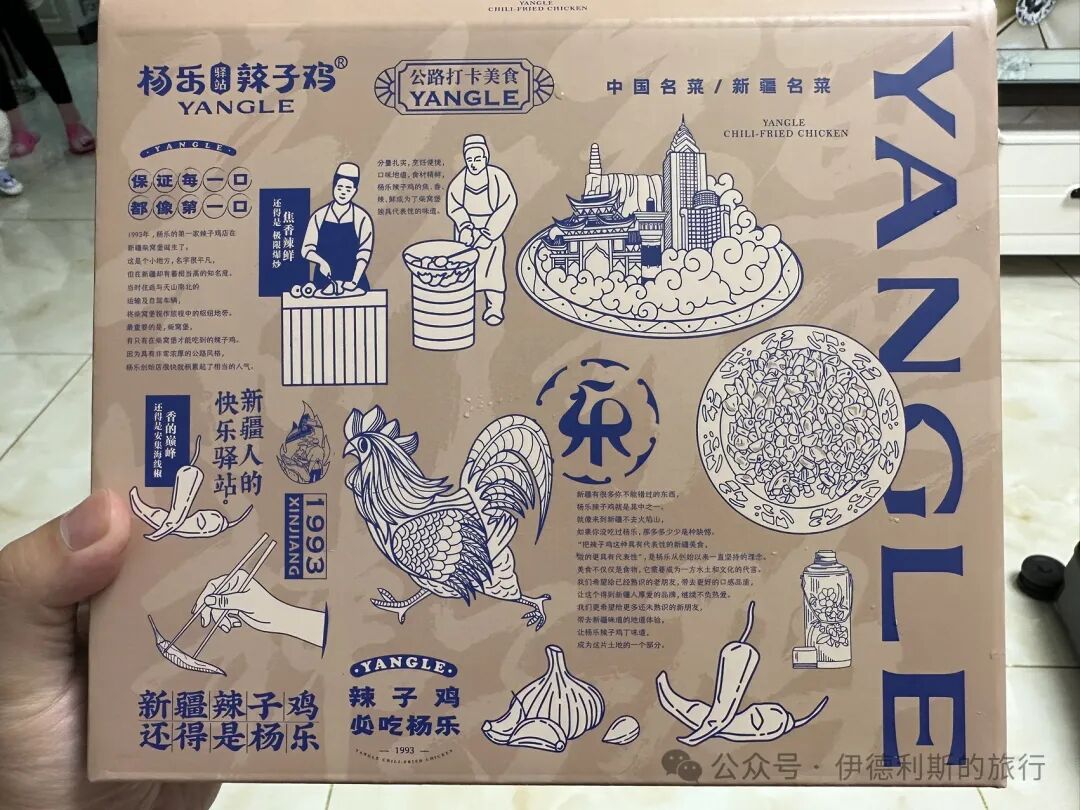
Yangle Spicy Chicken on Hetian First Street was packed. Over the years, all the bags of Yangle Spicy Chicken I bought online were shipped from here.
Taking photos on the street, I found the main store of Azhen Rice Noodles here. Zainabu loved eating at their place when she was in middle school.
Kazakh milk tea on Hetian Street.
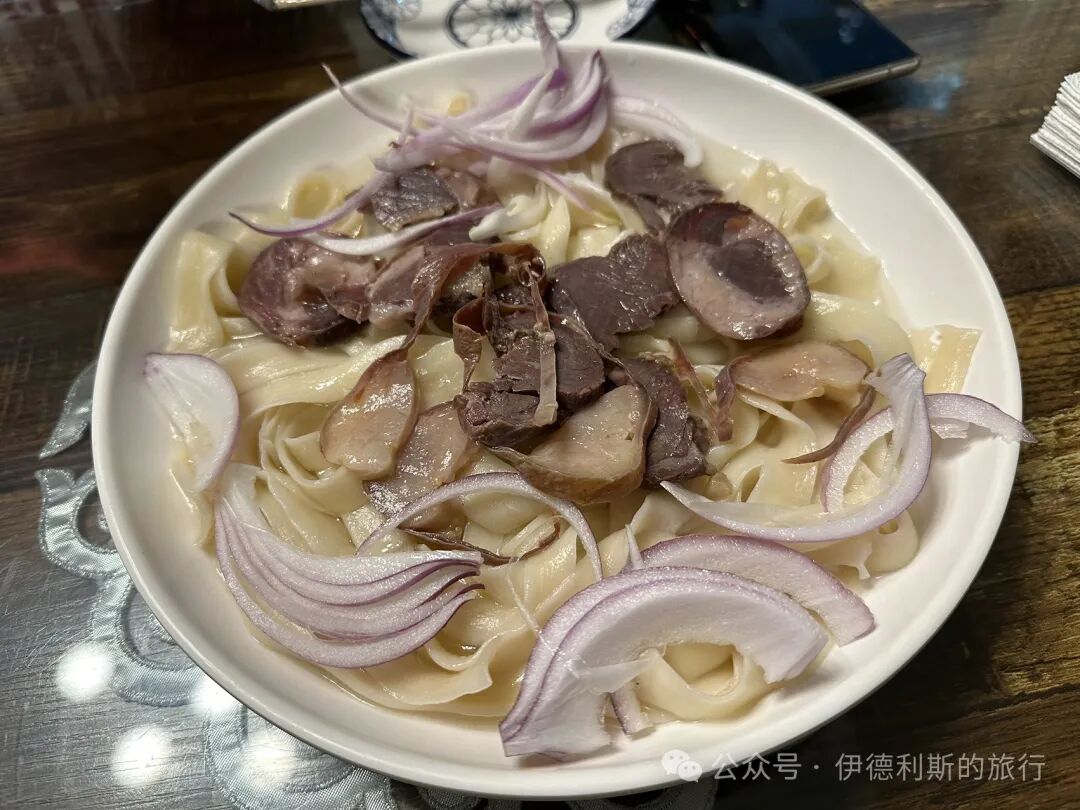
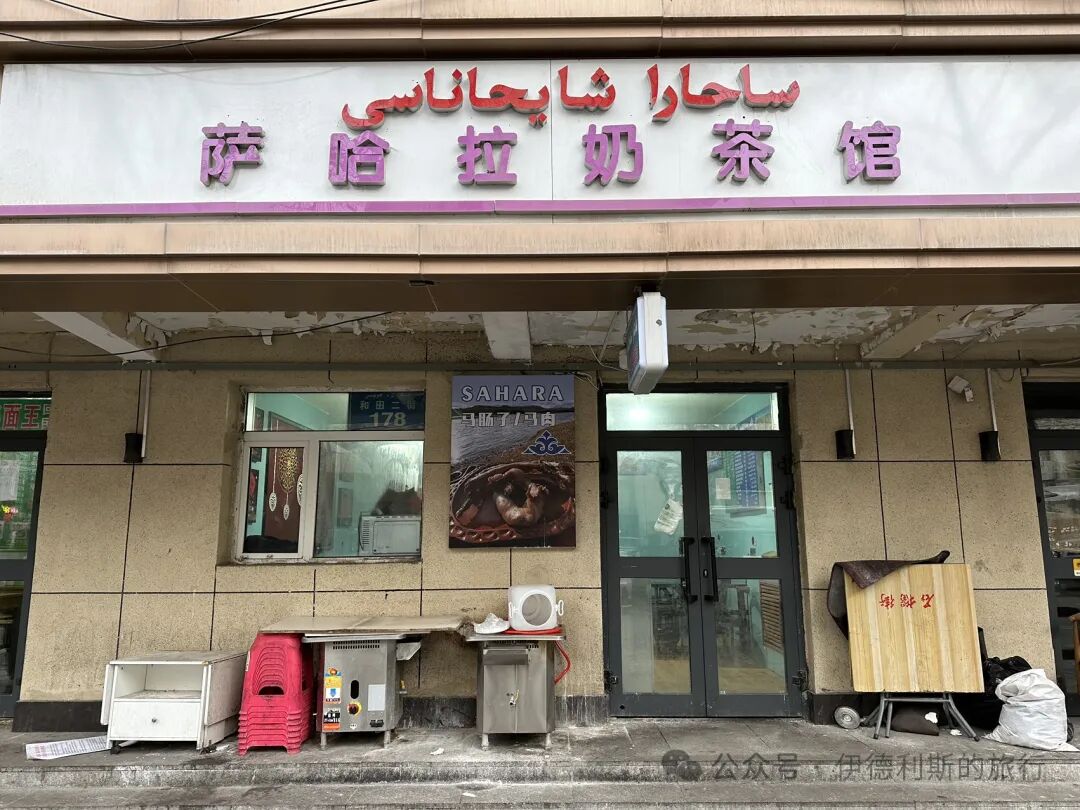
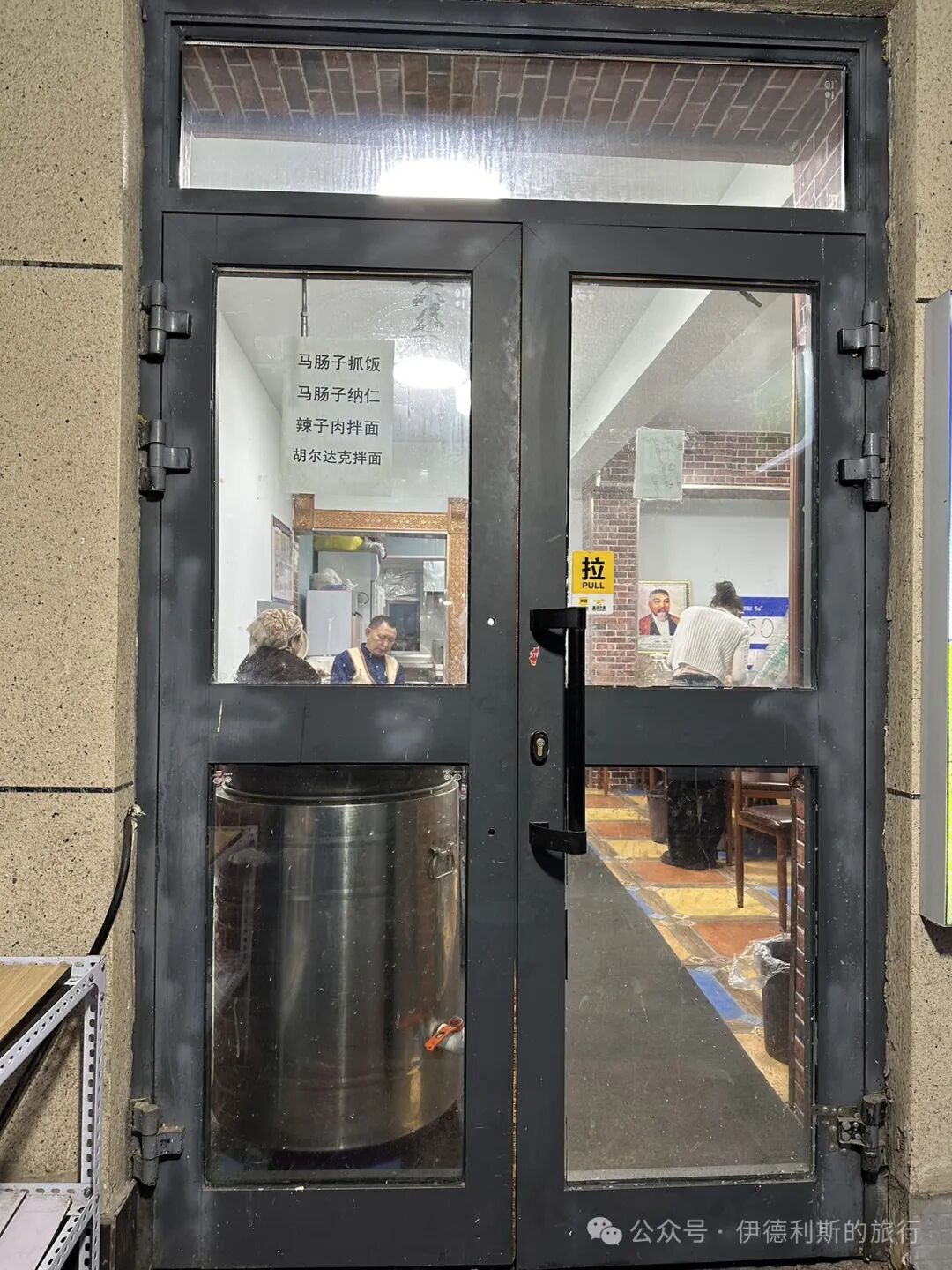
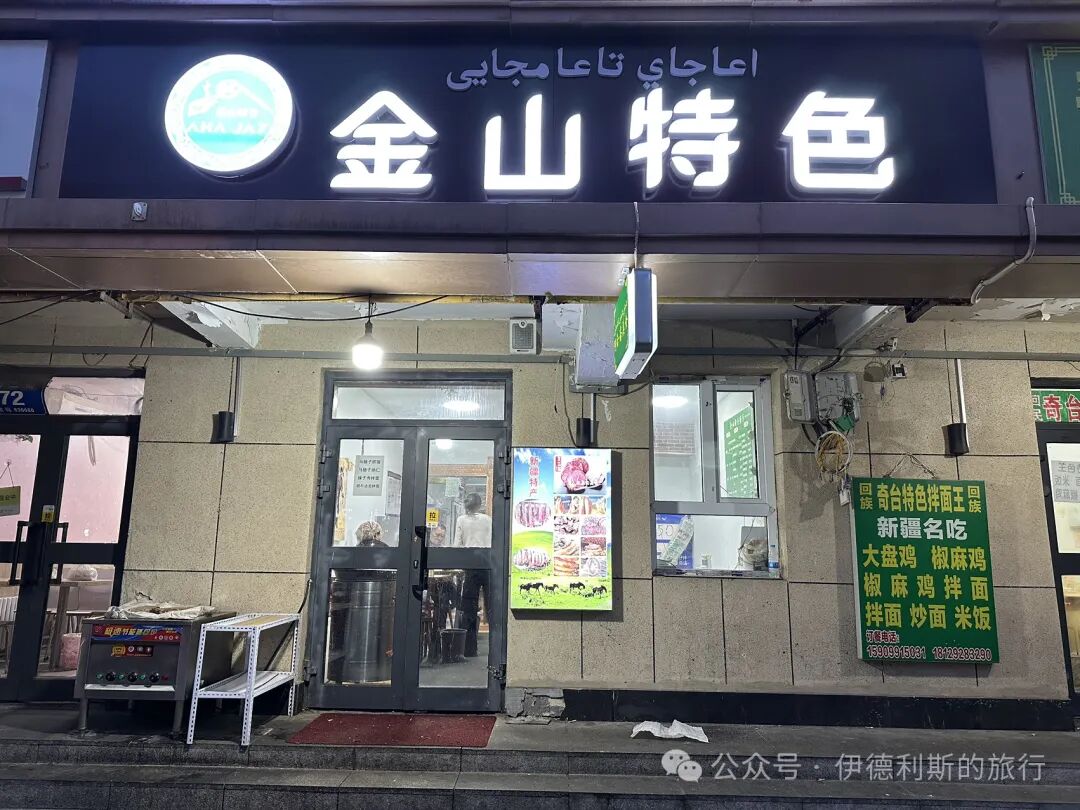
I always knew Dawan in Urumqi was a Kazakh neighborhood, but this time I found several Kazakh restaurants on Hetian Street. Just on the southern section of Hetian Second Street, there are four: Sahara Milk Tea House, Saiguluke Restaurant, Bashibai Restaurant, and Jinshan Specialty Restaurant. We ate horse sausage narin and milk tea at Saiguluke Restaurant. Next time, I want to try the khurdak and horse sausage pilaf.
In the morning, we went to Baorsak on Hetian First Street for a Kazakh breakfast. Baorsak now has three locations. I have already eaten at the first two, the Dawan branch and the Heba Lane branch, so this time I came to try the Hetian First Street branch. We ordered a set meal for two, which included milk tea, fried dough (baorsak), jam, yogurt, cold dishes, and flatbread (nang). Even though it was the Spring Festival holiday, their business was very good. A line started forming right after we ordered. I noticed that most of the customers were local Uyghurs. It seems Kazakh breakfast is quite popular with the Uyghur community.
Musical instrument shops in Erdaoqiao.
After drinking Kazakh milk tea, I went for a stroll in the Erdaoqiao Grand Bazaar. I really wanted to visit the instrument shop run by Erkin, an inheritor of the intangible cultural heritage of Uyghur instrument making, but I found it was gone. Plus, the Kazakh girl I used to take photos with in the felt tent got married and moved away. Now, the Grand Bazaar is mostly just souvenir shops.
As I left through the north gate of the Grand Bazaar, I found the sabayi I had wanted to buy for a long time at Duoluzhe Ethnic Musical Instrument Shop, a place I had not paid much attention to before. They had two types: mulberry wood and desert poplar wood. The desert poplar ones were more expensive, heavier, and were made in the past. I bought two, which fulfilled a wish of mine. Before I left, the owner specifically told me to take good care of them because it will be very hard to find this kind of old-fashioned sabayi in the future.
I first learned about the sabayi in the 2010 documentary 'Ashik: The Last Troubadour' filmed by Liu Xiangchen. The sabayi is the most common accompaniment instrument when Uyghur Ashiks perform Dhikr. Accompanied by the sabayi, Sufi practitioners enter a state of ecstasy (Wajd) through Dhikr to draw closer to Allah.
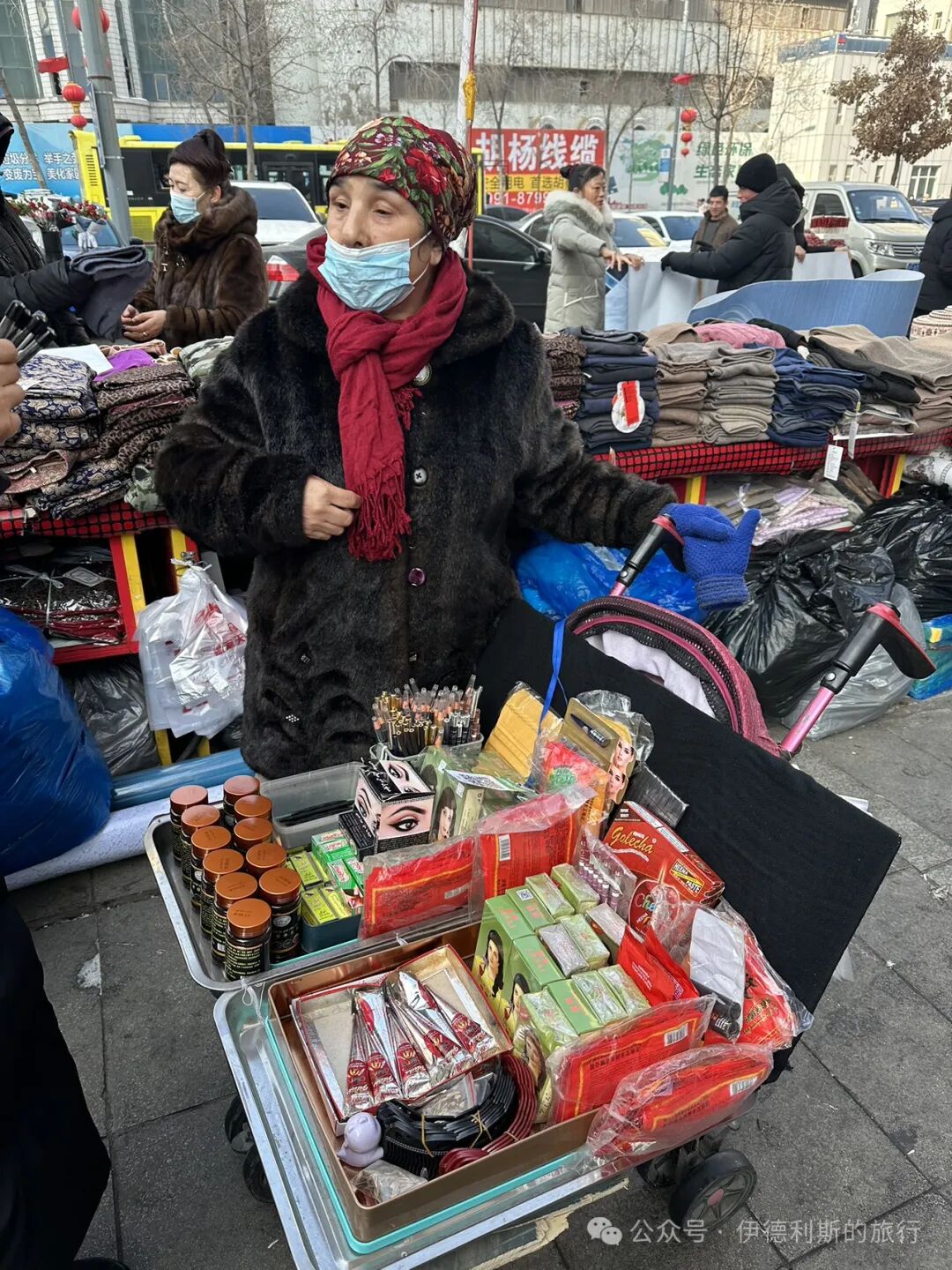
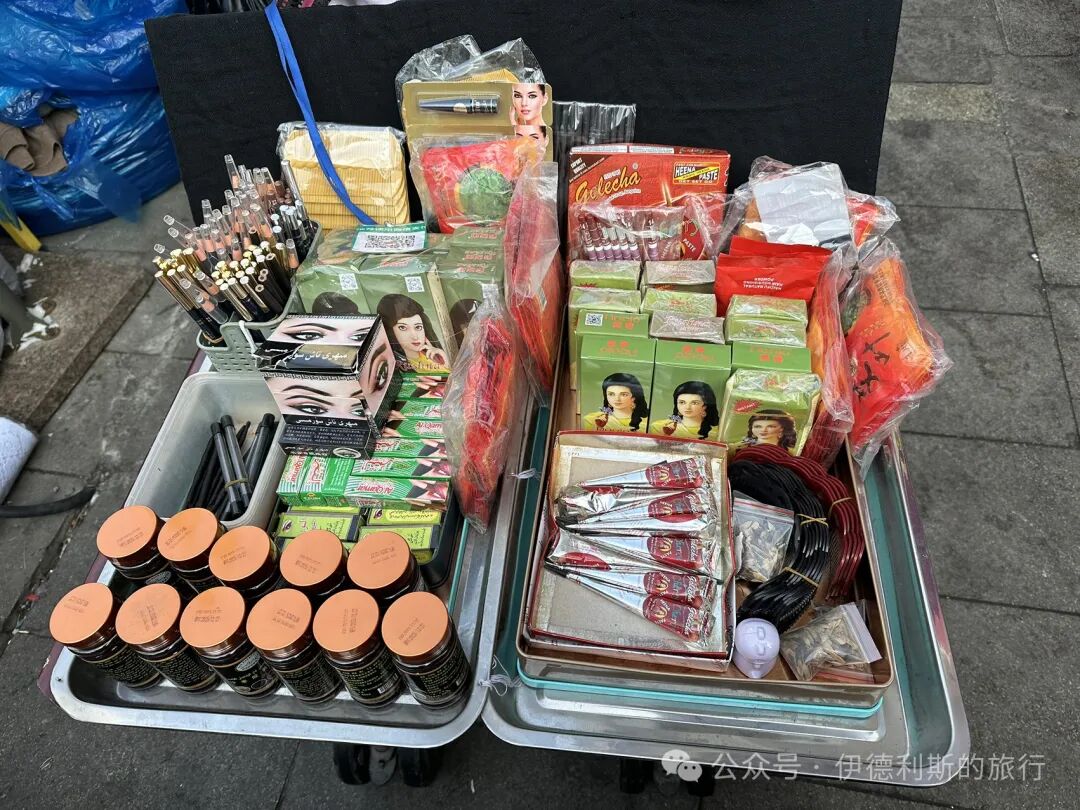
I continued walking around Erdaoqiao and bought an osma eyebrow pencil for Suleiman to use on his eyebrows when I get back. Osman grass is actually the leaf of the woad plant (banlangen), scientifically known as Isatis indigotica, which has been an important blue dye since ancient times. In Xinjiang, if a child has thin eyebrows, many parents use an Osman eyebrow pencil to paint them.
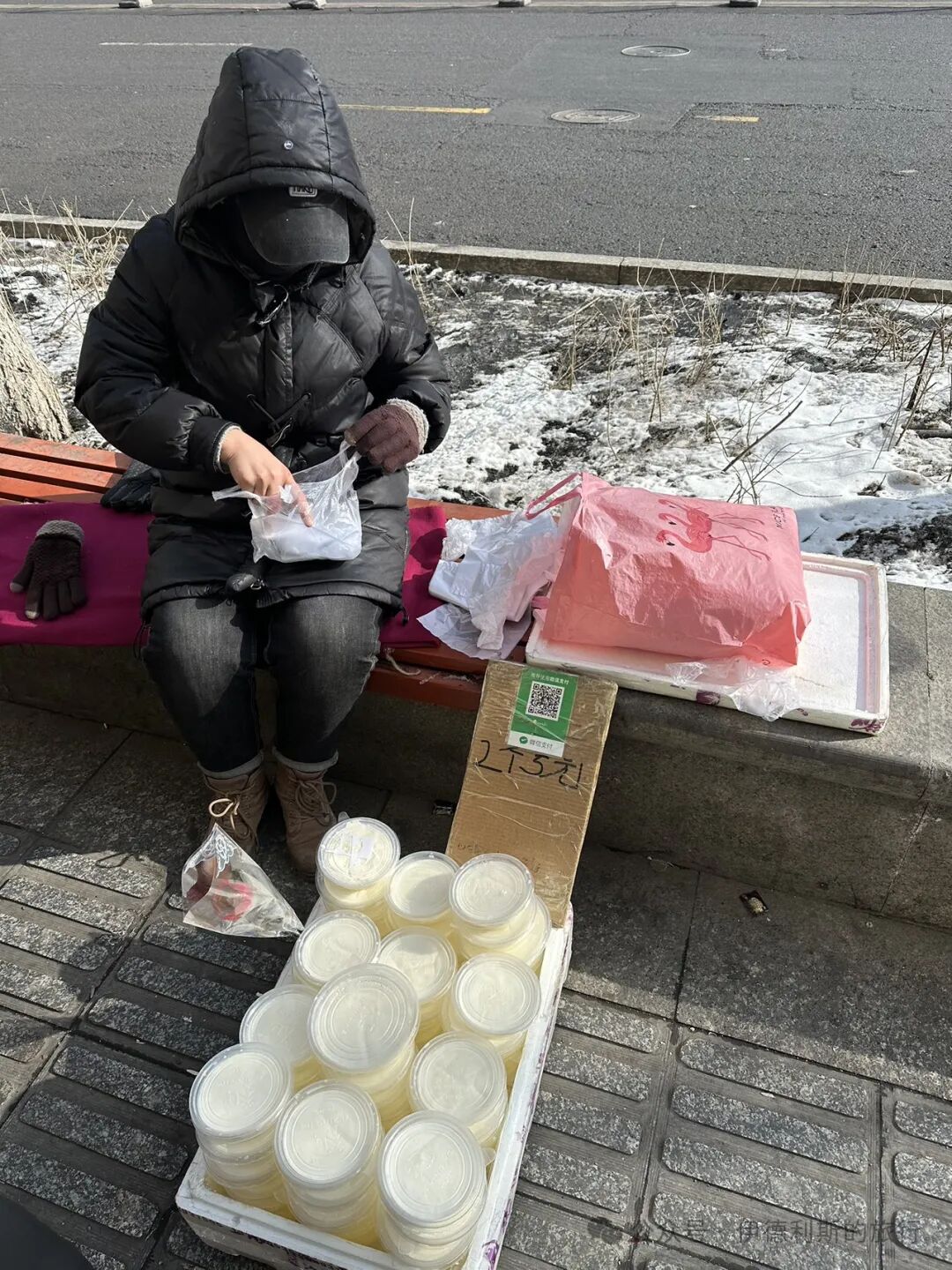
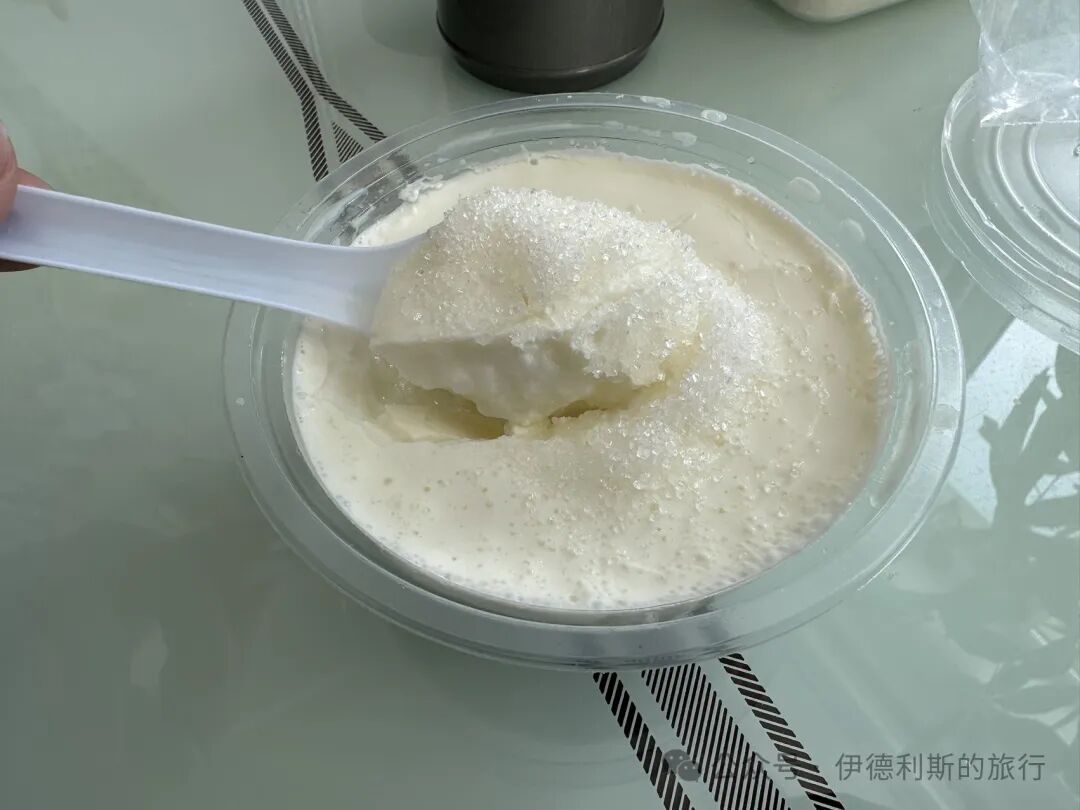
Then I bought some homemade yogurt on the street. After traveling to so many places, the best yogurt I have ever had is this kind sold on the streets of Xinjiang, with no labels, made at home and brought out to sell. It beats any packaged yogurt in the supermarket.
Tianshan Vanke
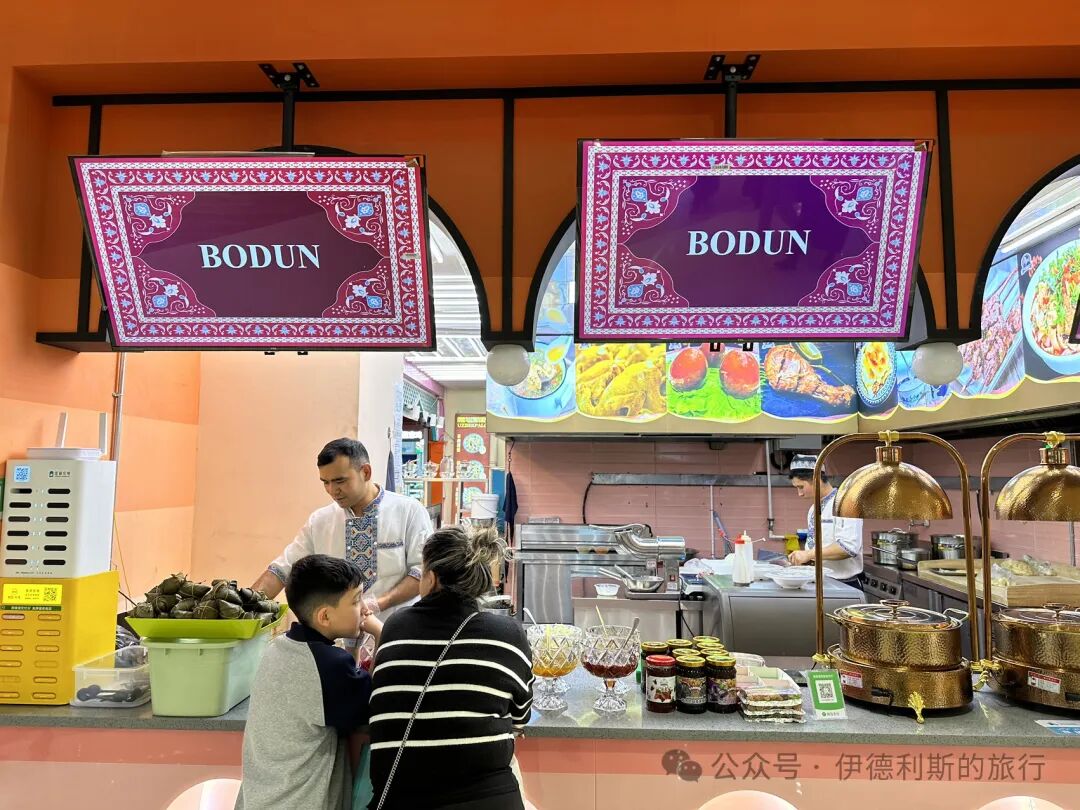
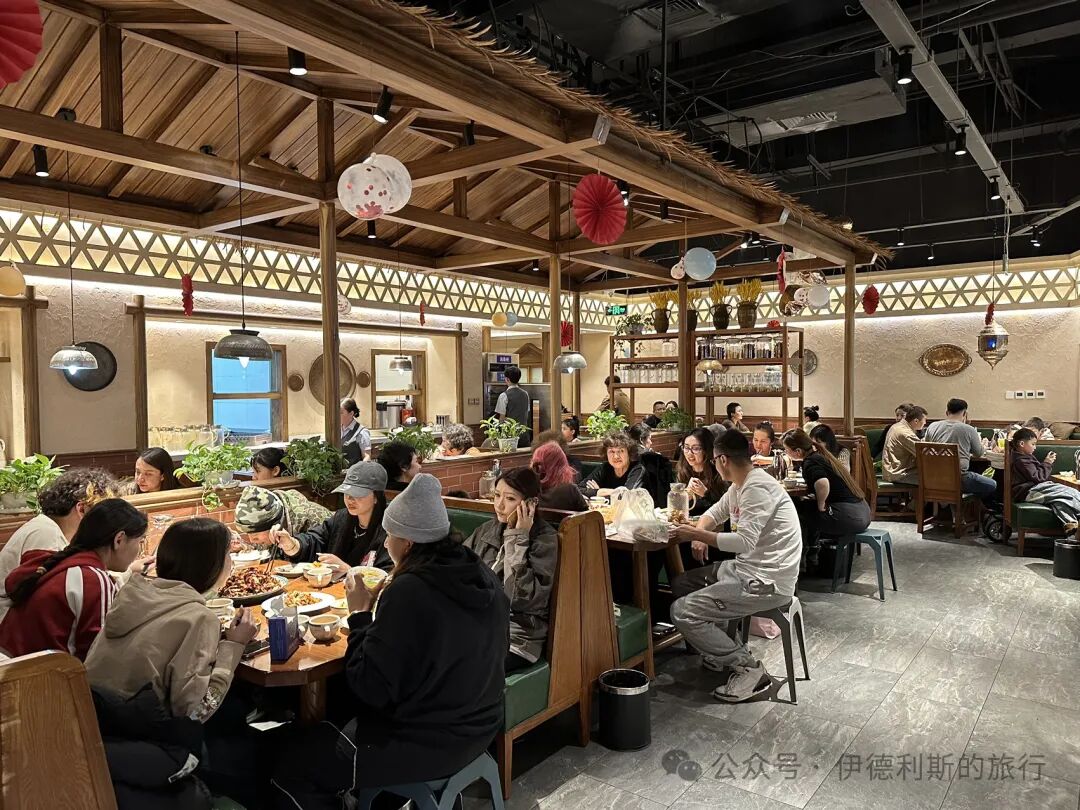
Urumqi Tianshan Vanke is near Dawan and is known as the Wangfujing for Uyghur and Kazakh people. It has Japanese, Thai, and Western food, as well as traditional Hui, Uyghur, and Kazakh restaurants. There is also spicy fish hotpot, fried chicken, burgers, and plenty of places for children to play. When we went, it was snowing, and there were so many friends (dosti) shopping at the mall.
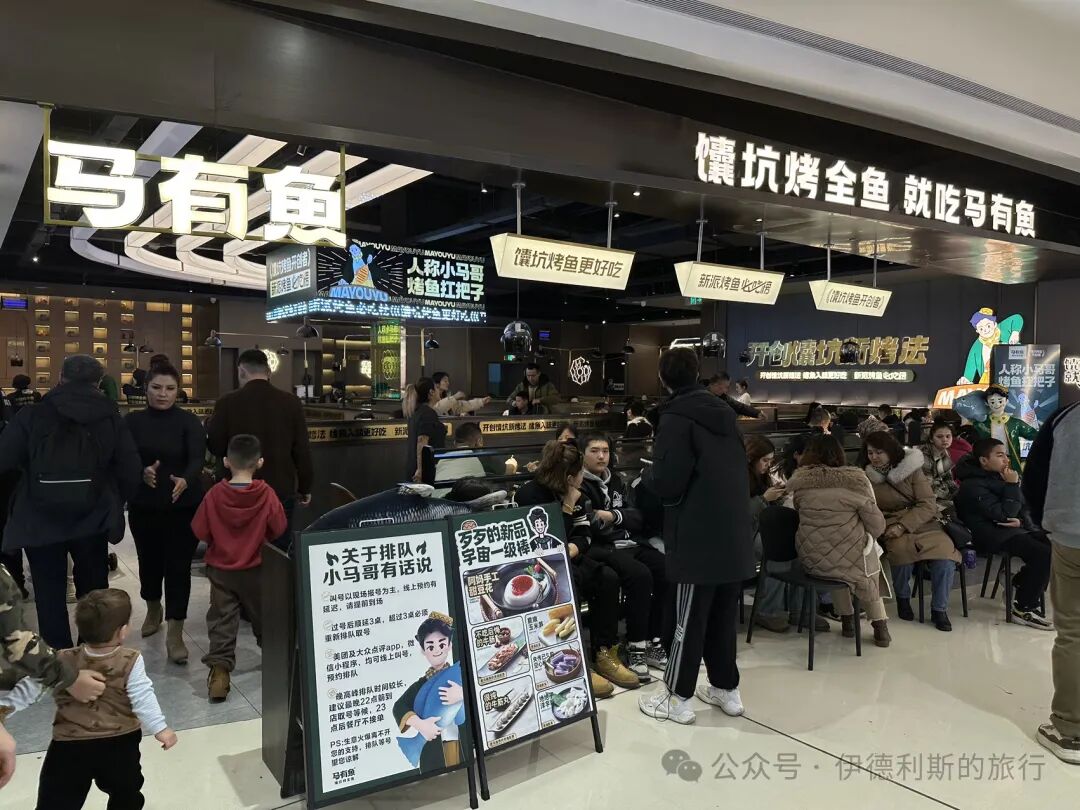
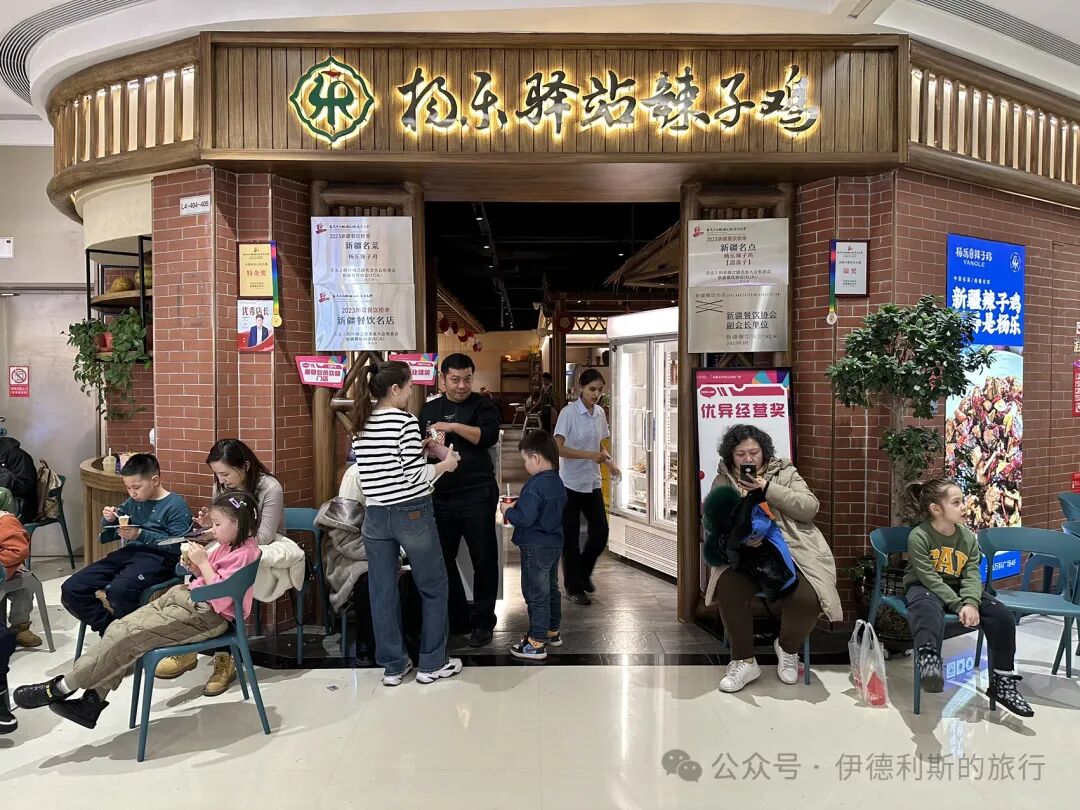
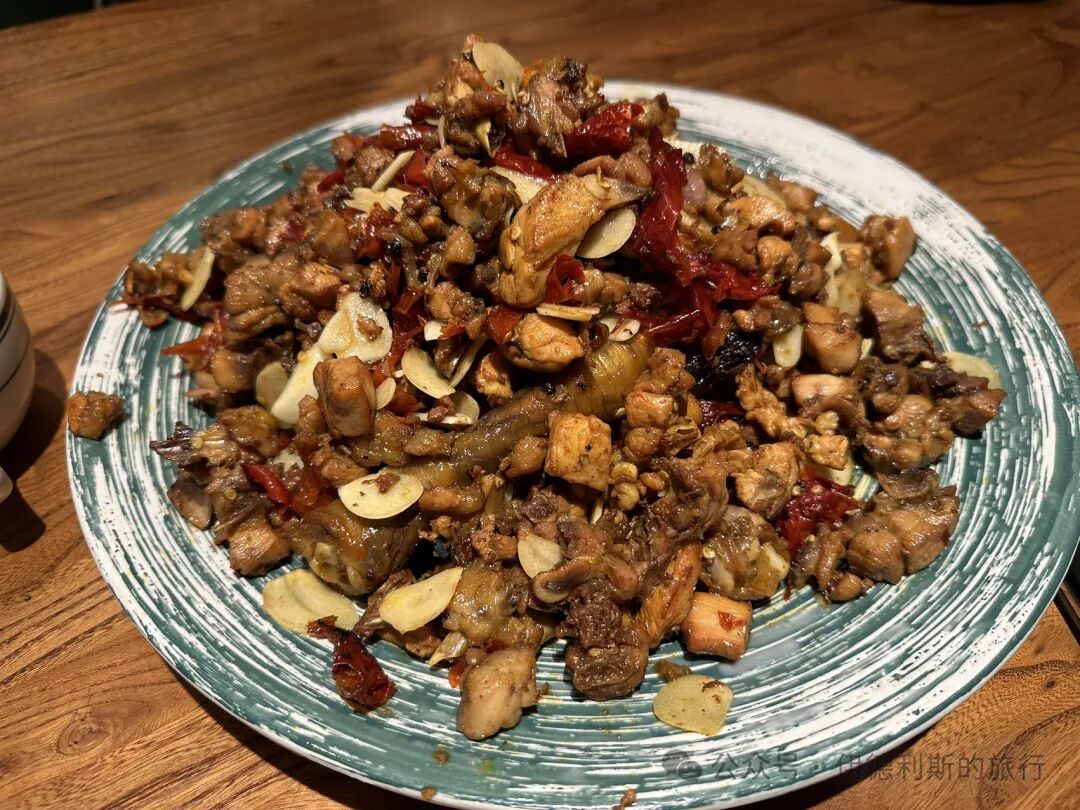
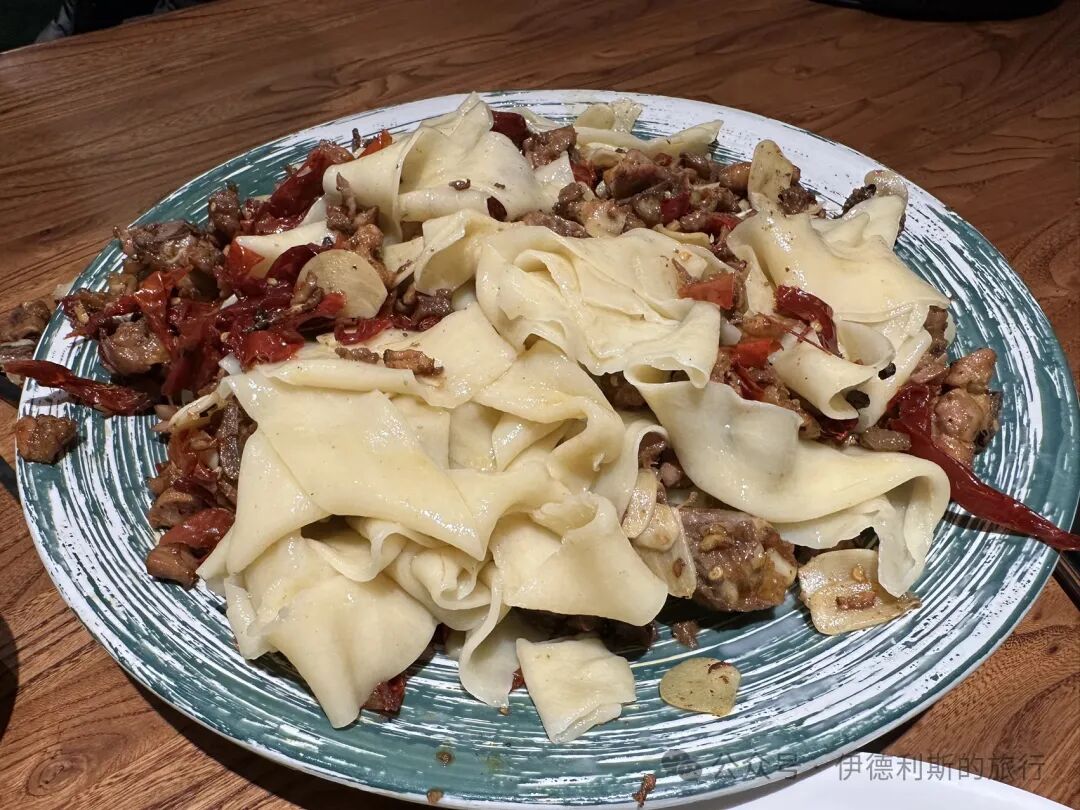
The most popular spots at Tianshan Vanke are probably Mayouyu Naan-pit Roasted Whole Fish and Yangle Spicy Chicken. We ate a spicy chicken. At first, it felt a little fishy, but it was spicy, fragrant, and very satisfying to eat.
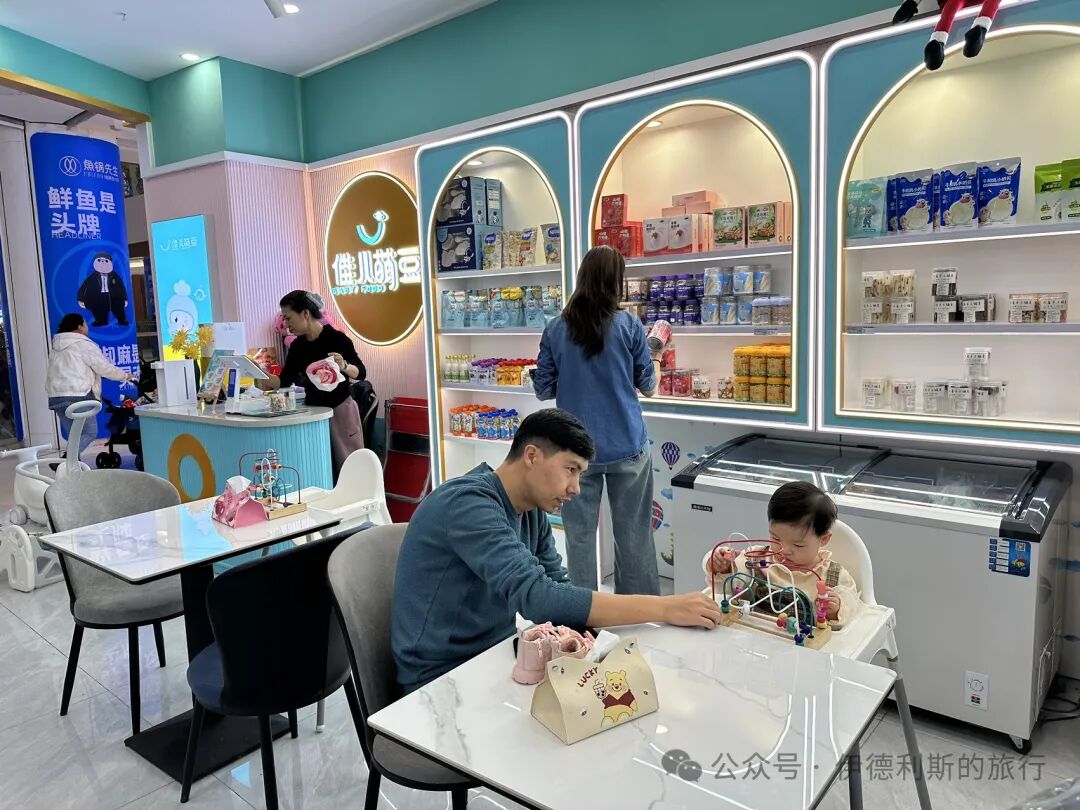
Also, the mall has a rare children's food restaurant called Jia'er Mengdou, opened by a Uyghur female boss, which is very popular with Uyghur parents. We took Suleiman to eat chicken and mushroom risotto, which came with a bowl of soup. This was Suleiman's first time eating at a restaurant in his life. They gave us a bib and a small cooling fan, which was quite thoughtful.
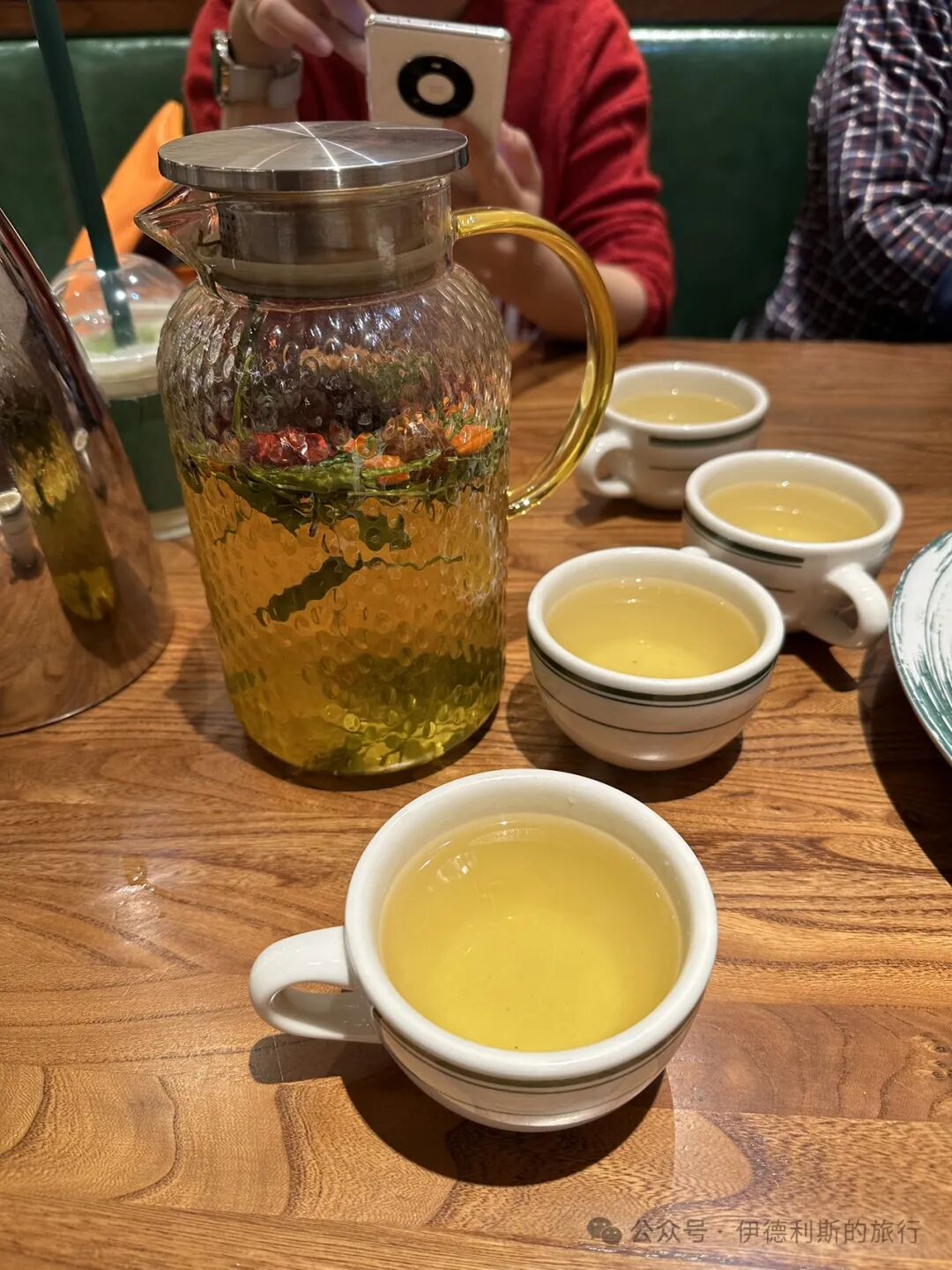
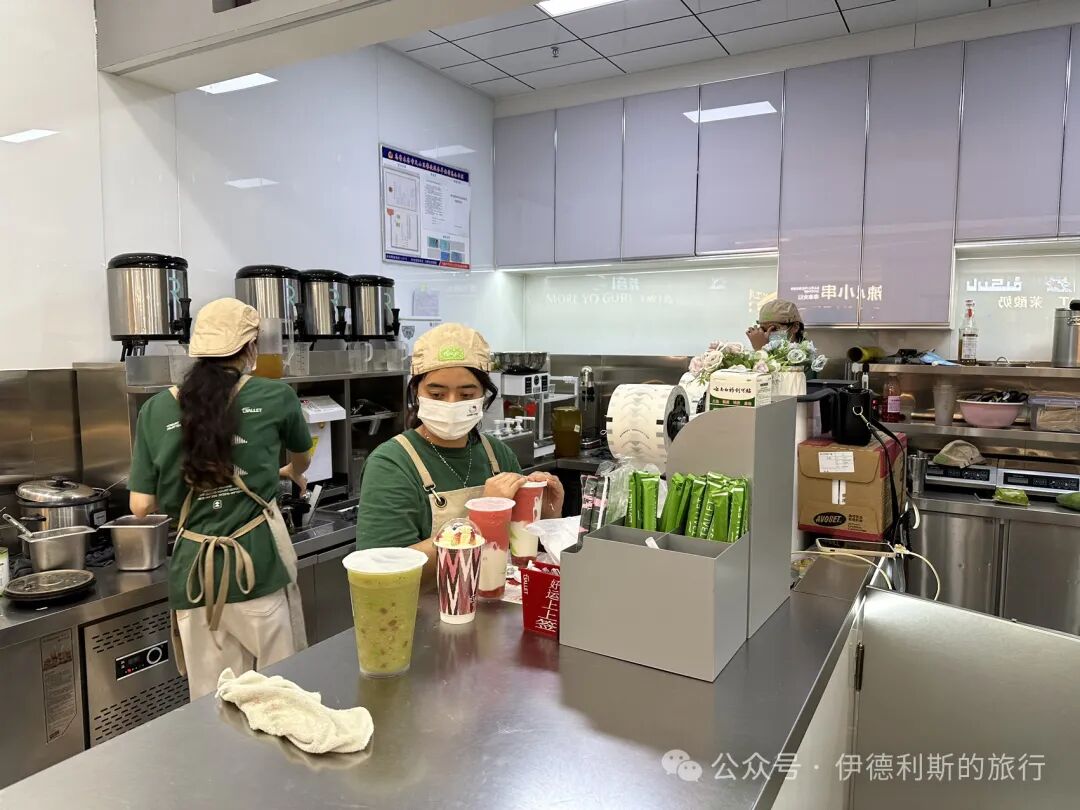
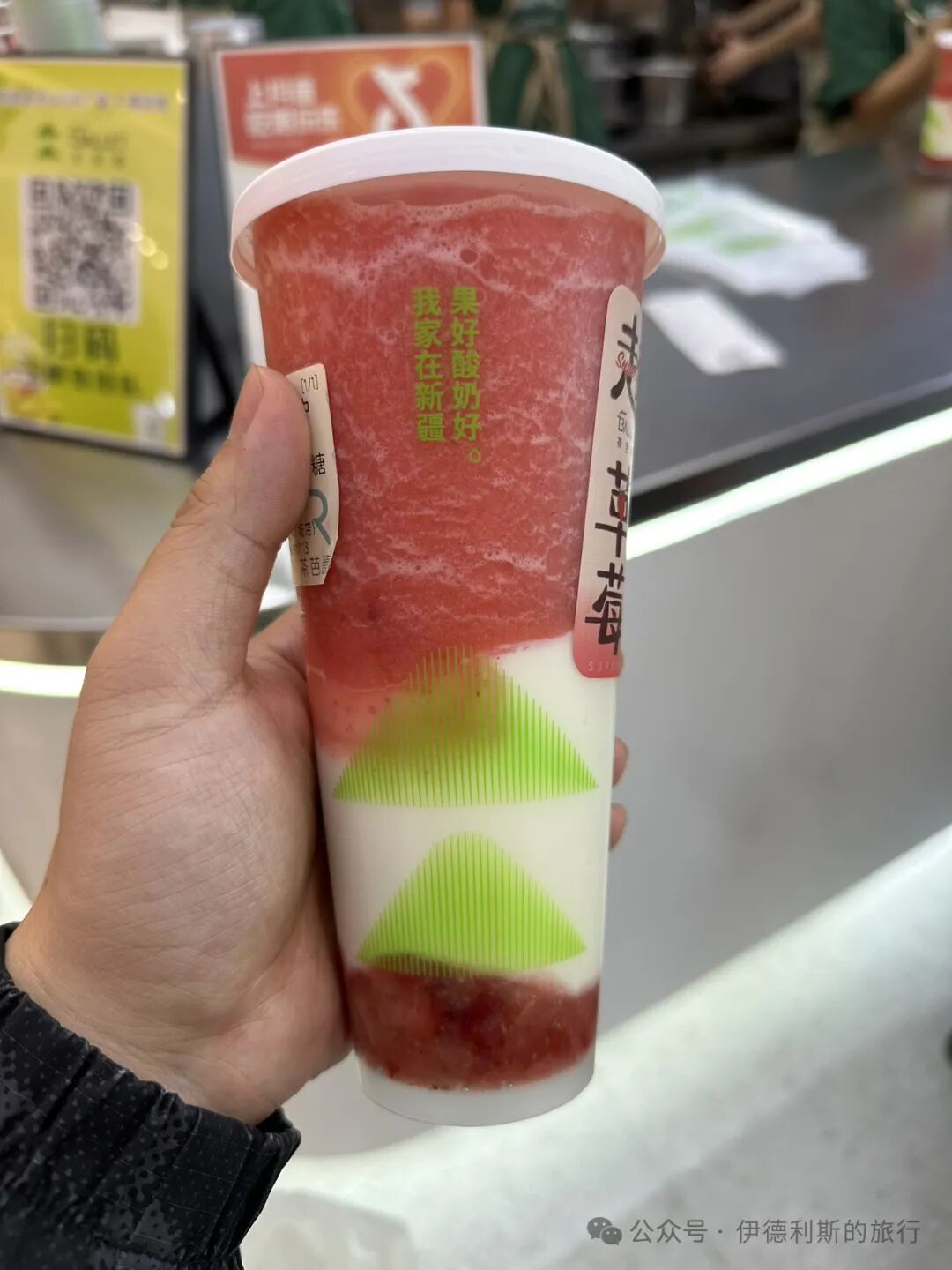
Then we checked out the local Xinjiang milk tea brand Tea Ballet, which has been very popular for the past two years. They specialize in various fruit yogurts, and the founder, Ma Xue'er, is a post-90s Urumqi native. I feel their style really suits young people, but I still prefer the handmade yogurt sold on the street.
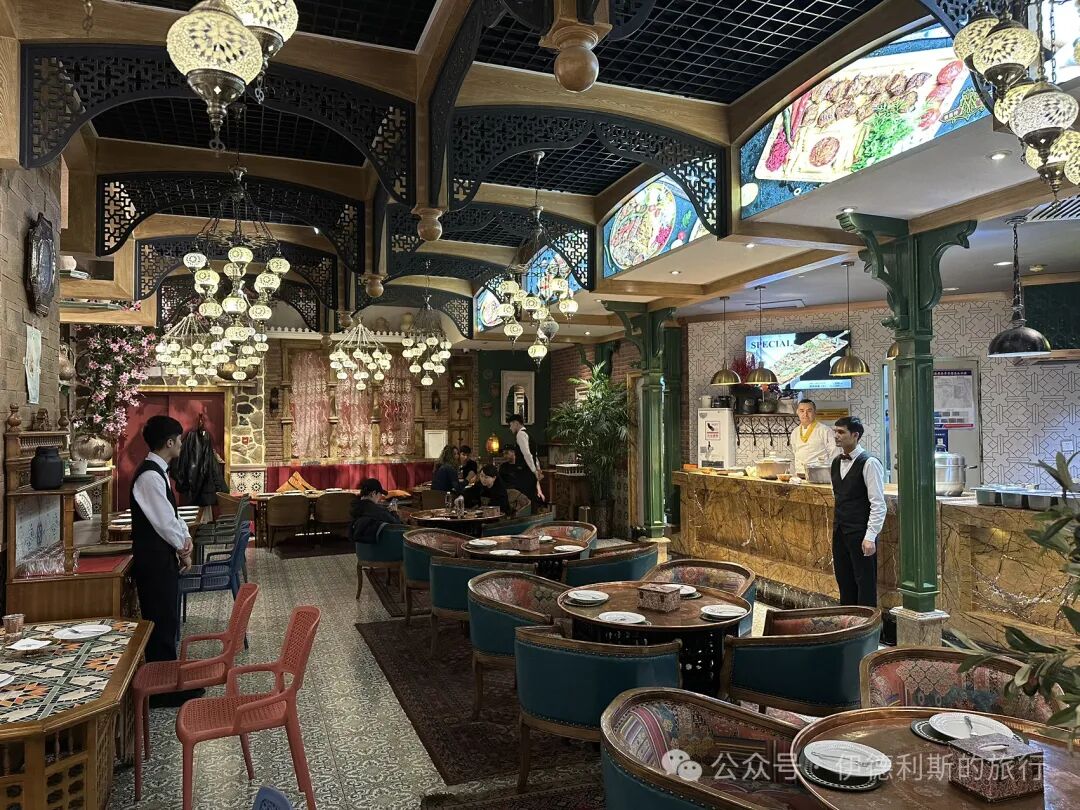
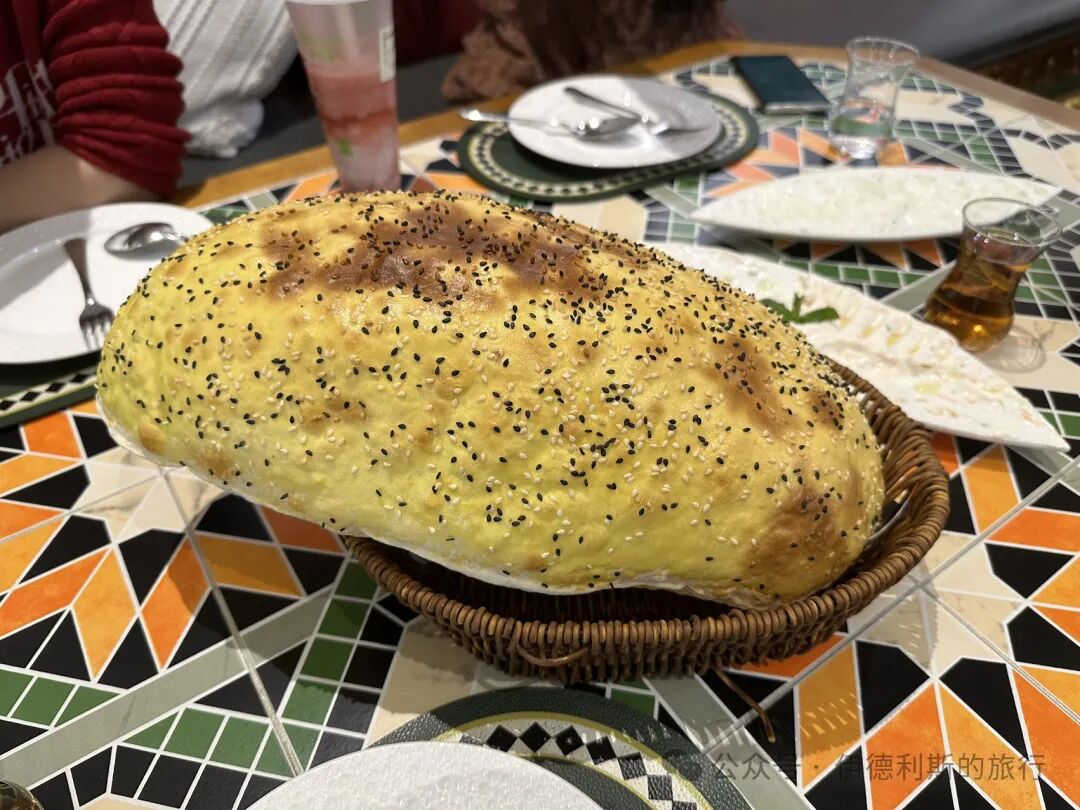
At the Turkish restaurant in the mall, we ordered hollow bread, grilled lamb chops, and mint yogurt. The prices are a bit high, and they focus on a nice atmosphere, so it feels like a good place for a date. The hollow bread (nang) is quite tasty, but the lamb chops feel a bit overcooked.
Further reading:
[Halal Travel Review] Urumqi in 2018, the beautiful Dawan area.
The night markets in Urumqi are so much fun to explore!
Getting married in Urumqi view all
Summary: Halal Travel Guide: Urumqi - Hetian Street, Erdaoqiao and Tianshan Vanke is presented here as a firsthand travel account in clear, natural English. The account focuses on Urumqi, Xinjiang Travel, Halal Food while preserving the names, places, food, photos, and historical details from the Chinese source.
Uyghur food on Hetian Street.
Every time I returned to Urumqi before, besides eating Hui Muslim food, I usually went to the Erdaoqiao and Dawan areas to eat Uyghur and Kazakh food. This Spring Festival, we went to another famous food street in Urumqi: Hetian Street.
Hetian Second Street is the busiest part of the area, and the place with the longest line is Kashgar Yibazhua. Yibazhua is a small-sized baked bun (kaobaotzi) with thin skin and a large filling. It is quite delicious. It used to be more common in southern Xinjiang, but now shops have opened in Urumqi too.
After finishing the Yibazhua, we had some pigeon soup. There are several pigeon soup shops on Hetian Second Street. The one we visited focused on an authentic taste with very few seasonings, which really highlighted the natural freshness of the pigeon soup.
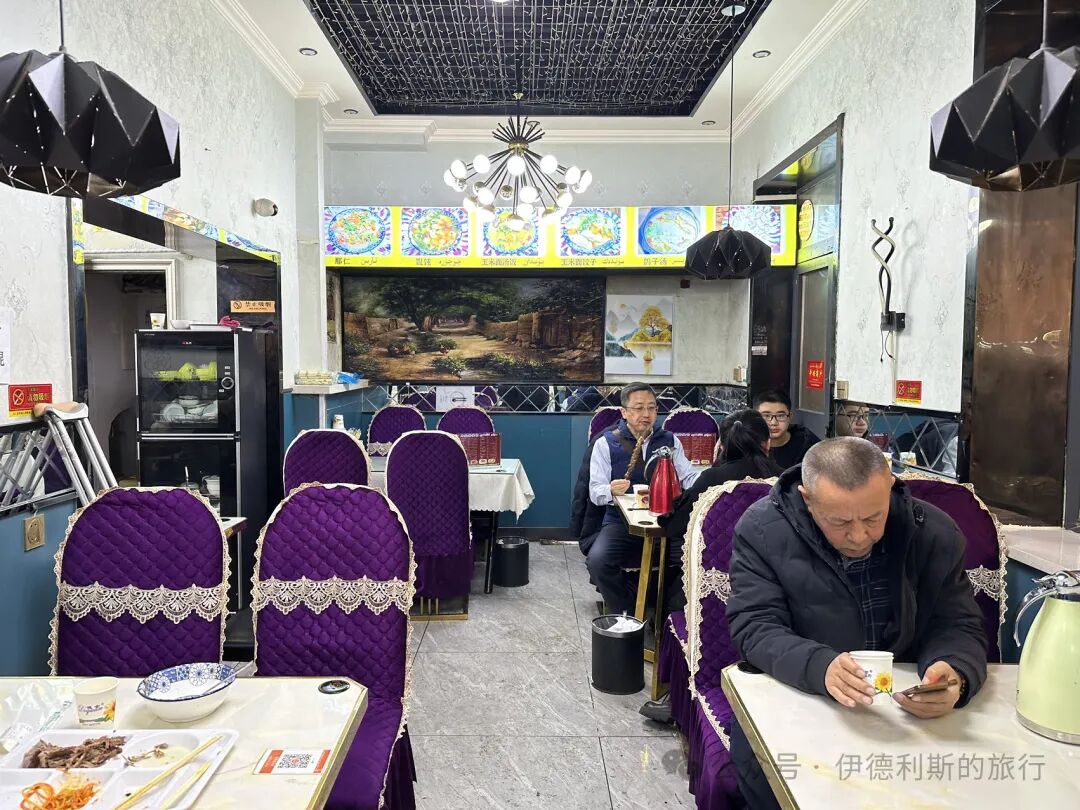
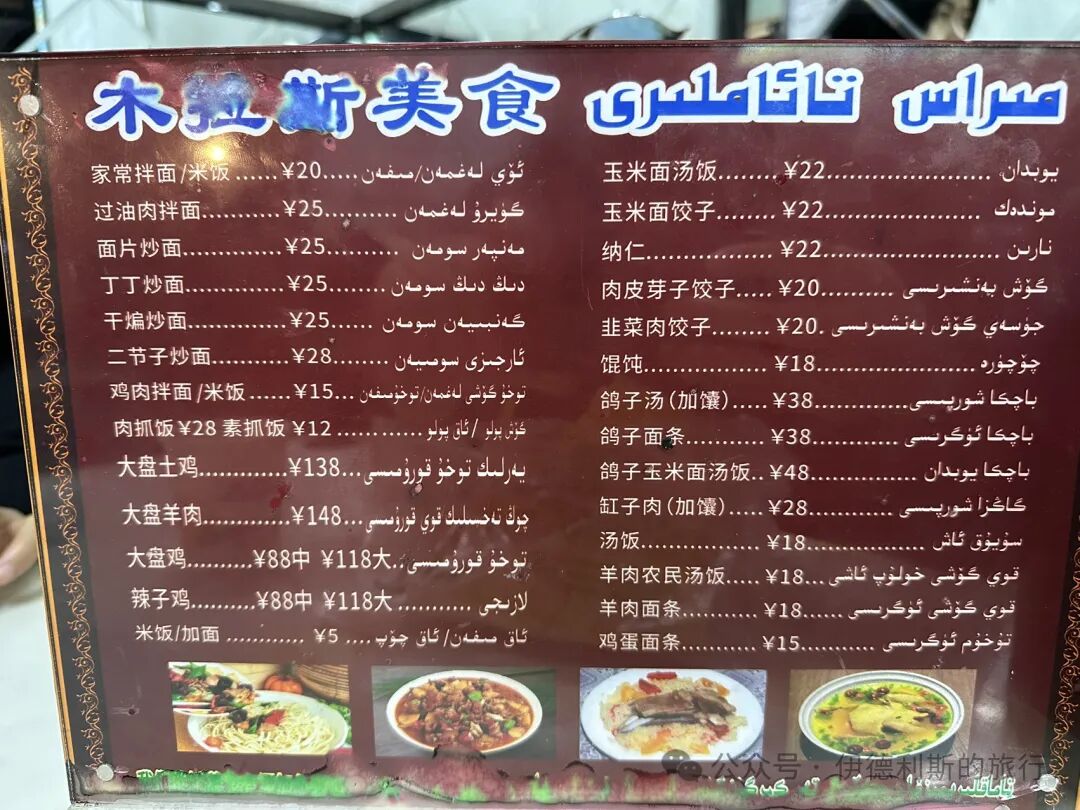
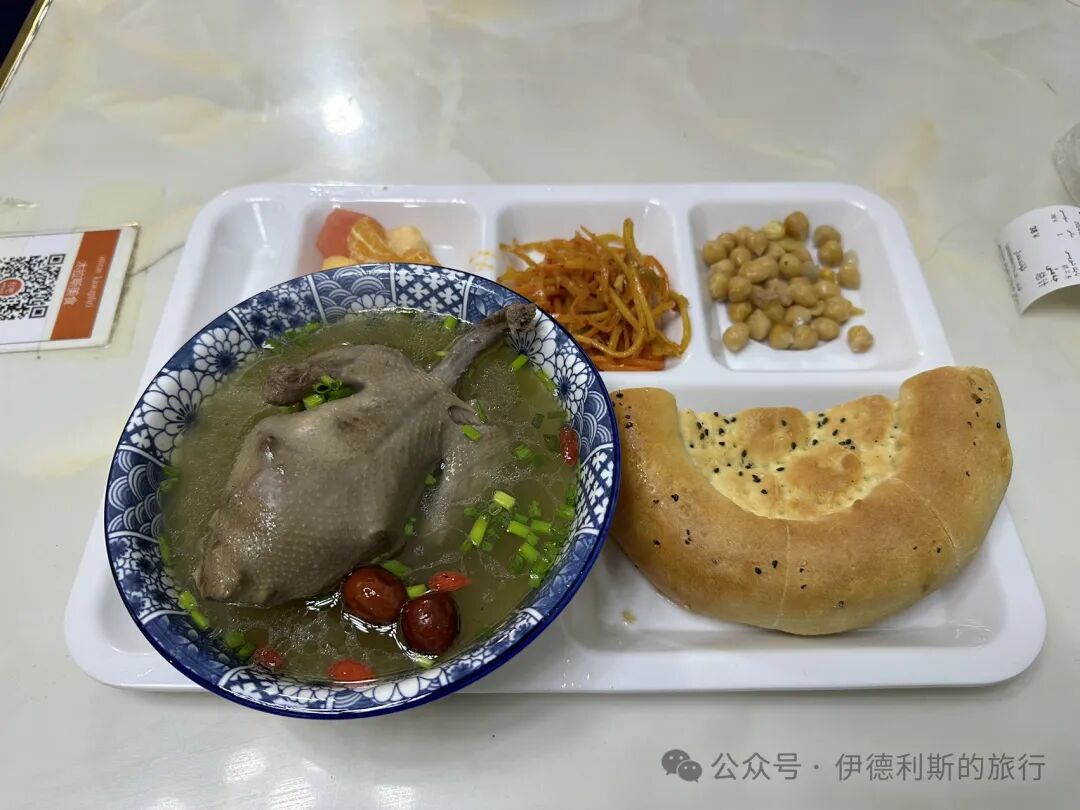
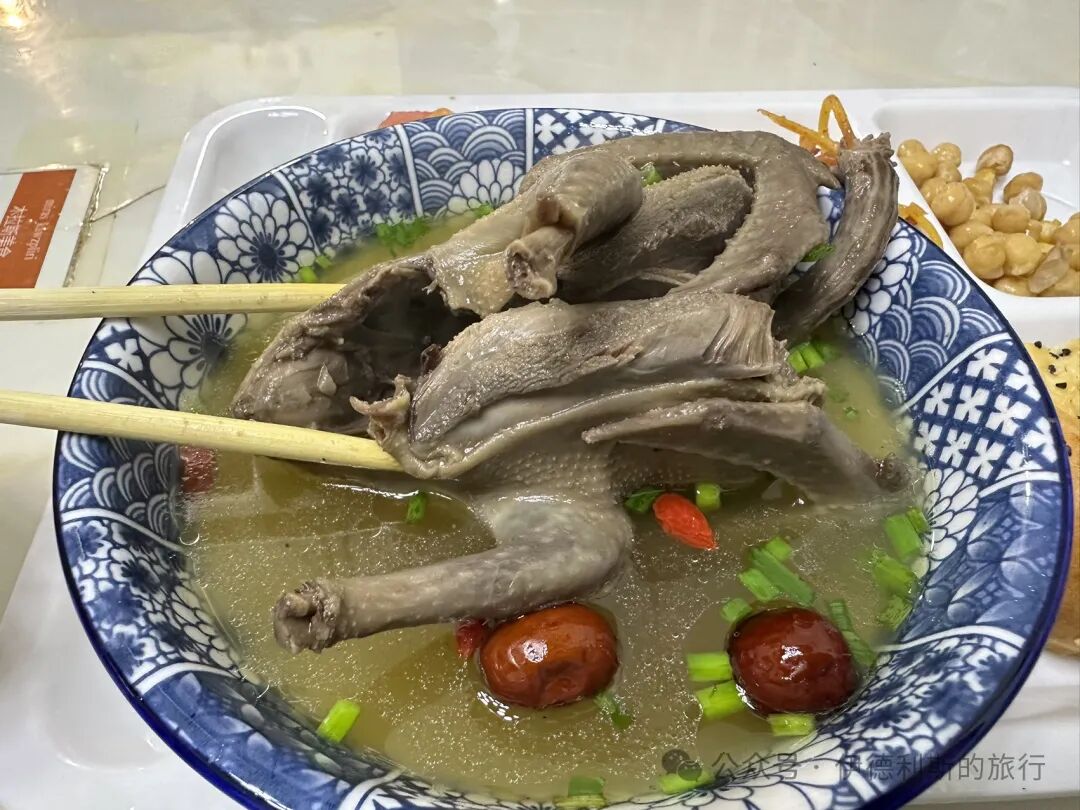
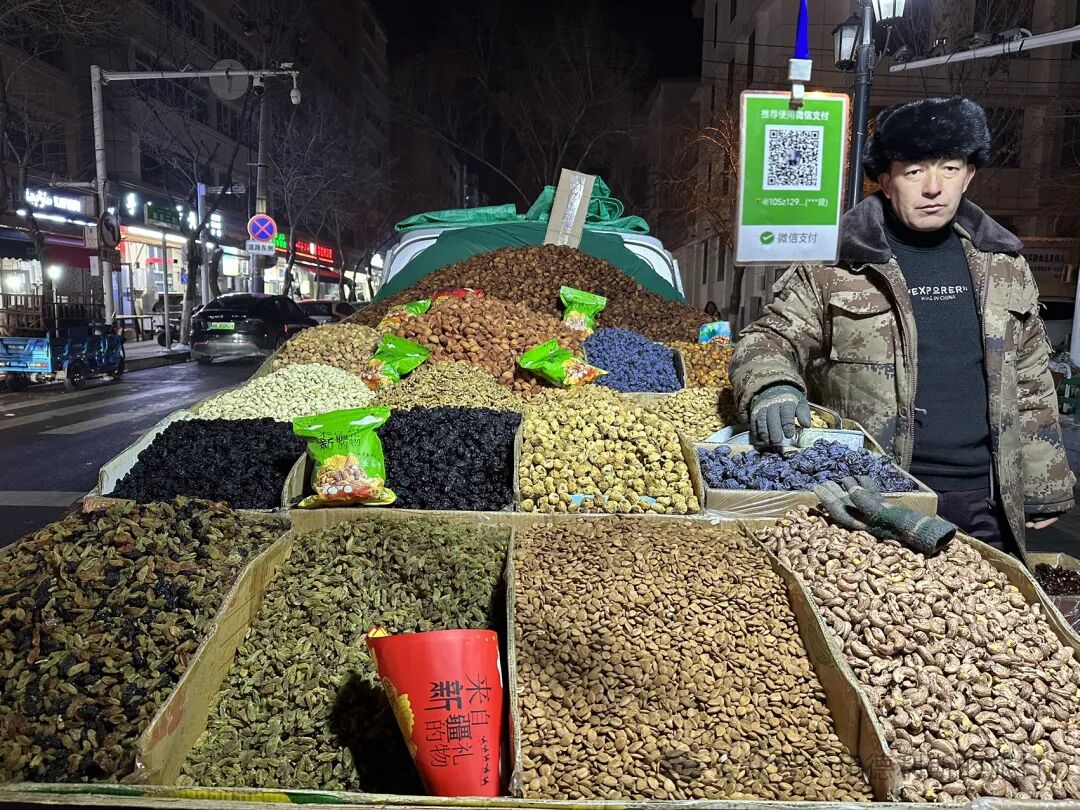
We bought some sour plums from a truck on the street that sells dried fruits and candied snacks.
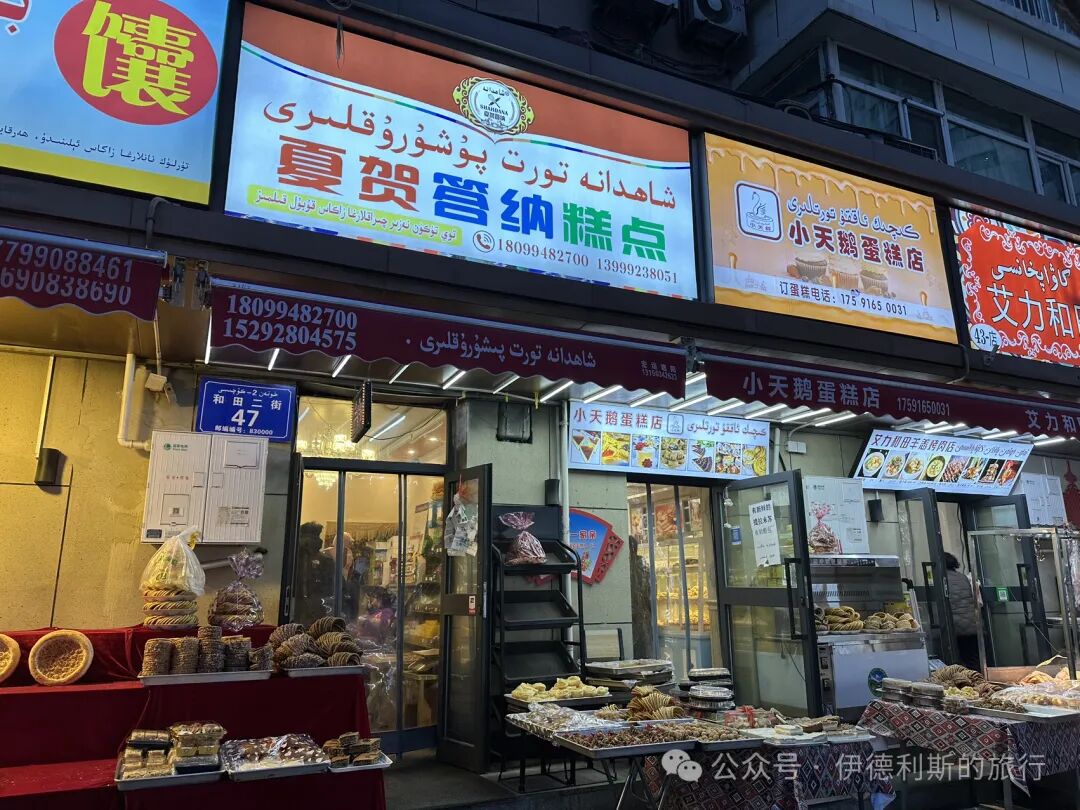
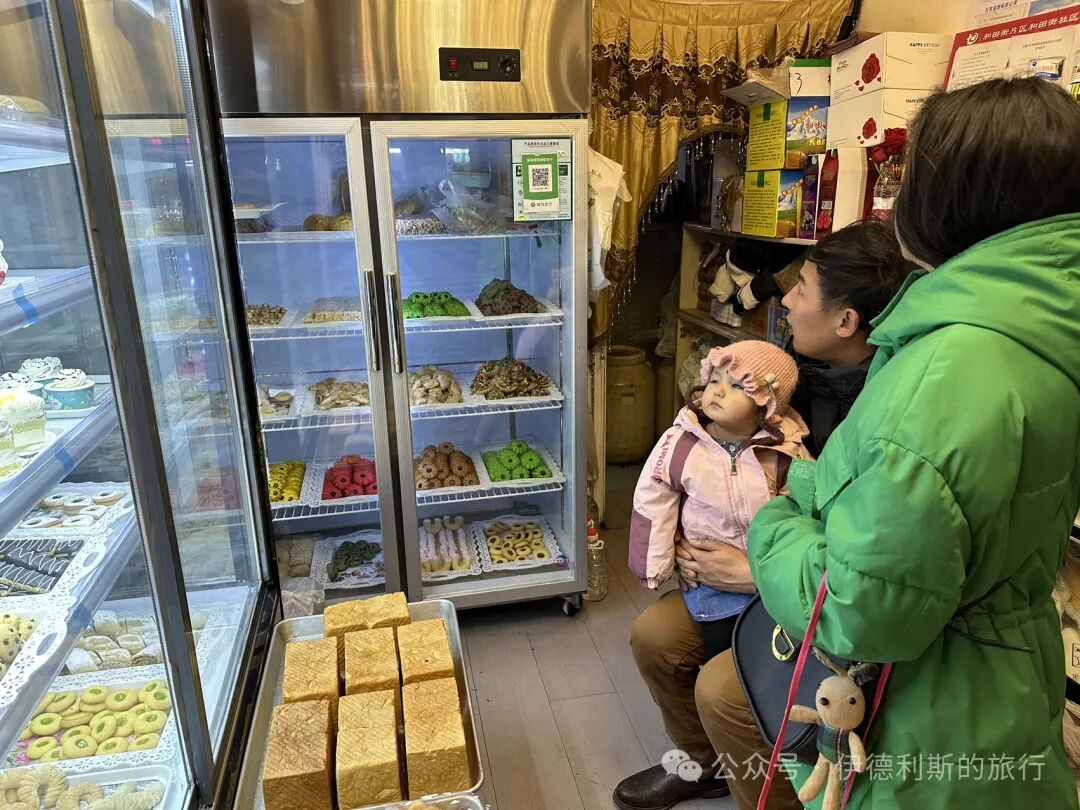
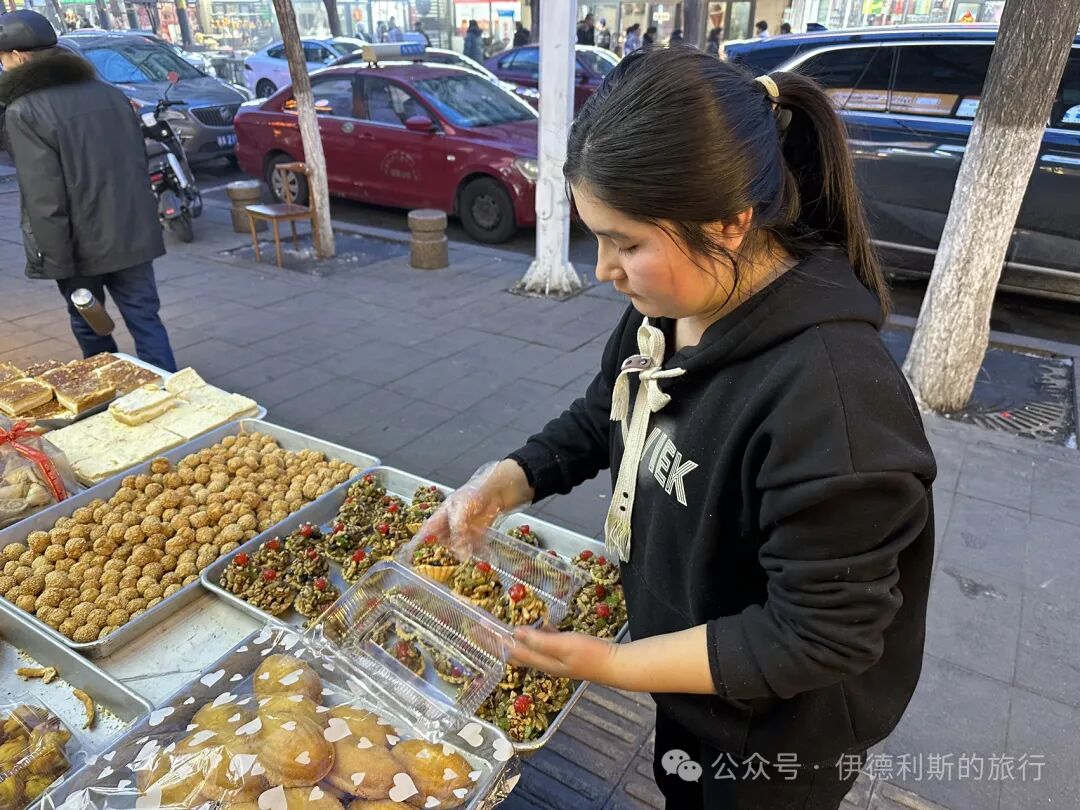
The Uyghur pastry shops on the street are also very popular. We bought baklava and nut tarts at Xiahedana Pastry, and they were both delicious. The baklava was packed with walnuts and was not as sweet as the kind in Turkey.
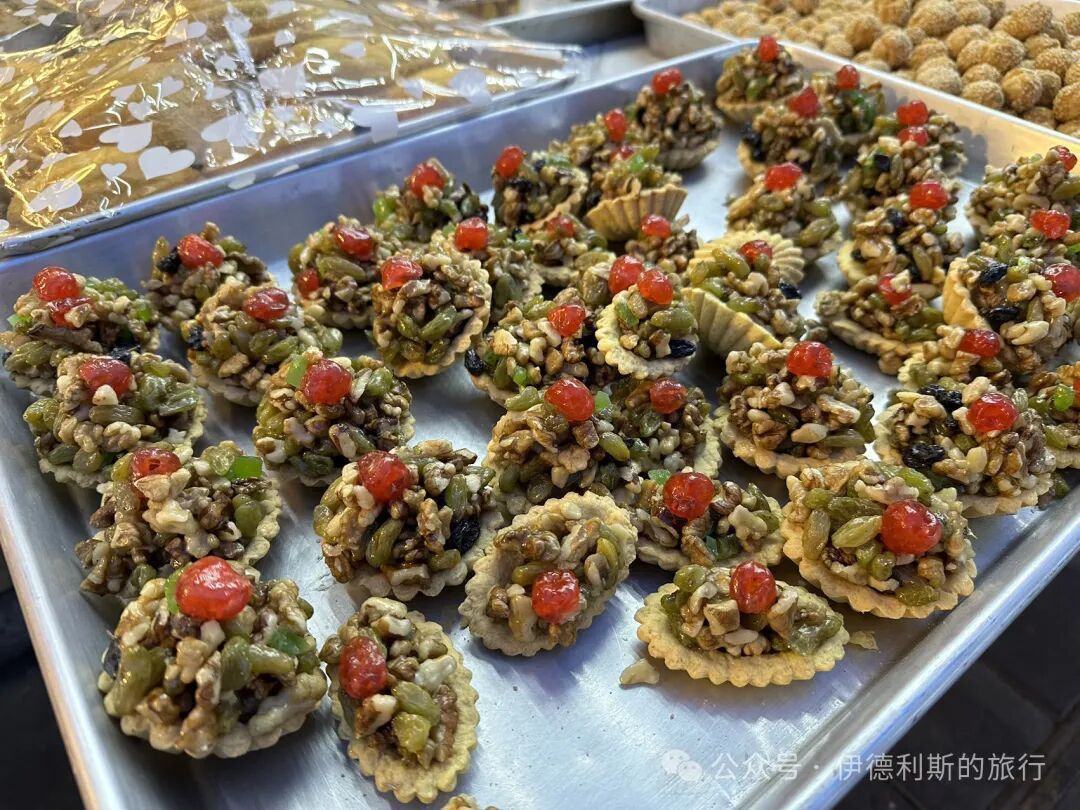
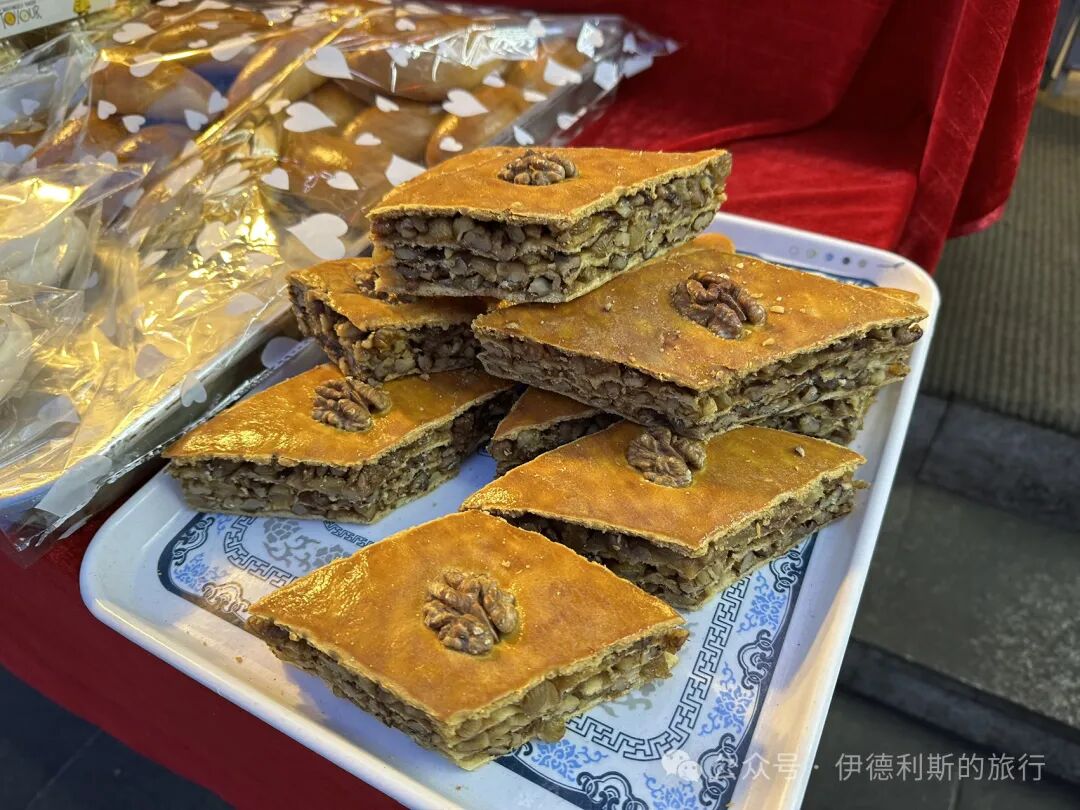
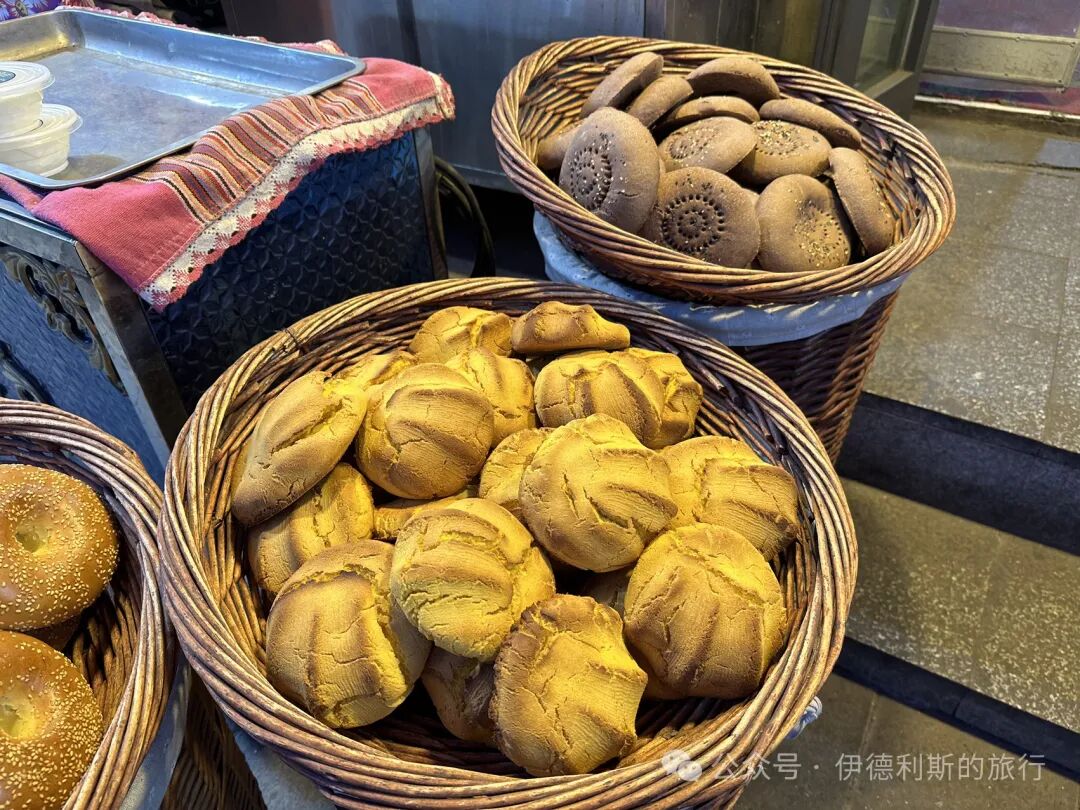
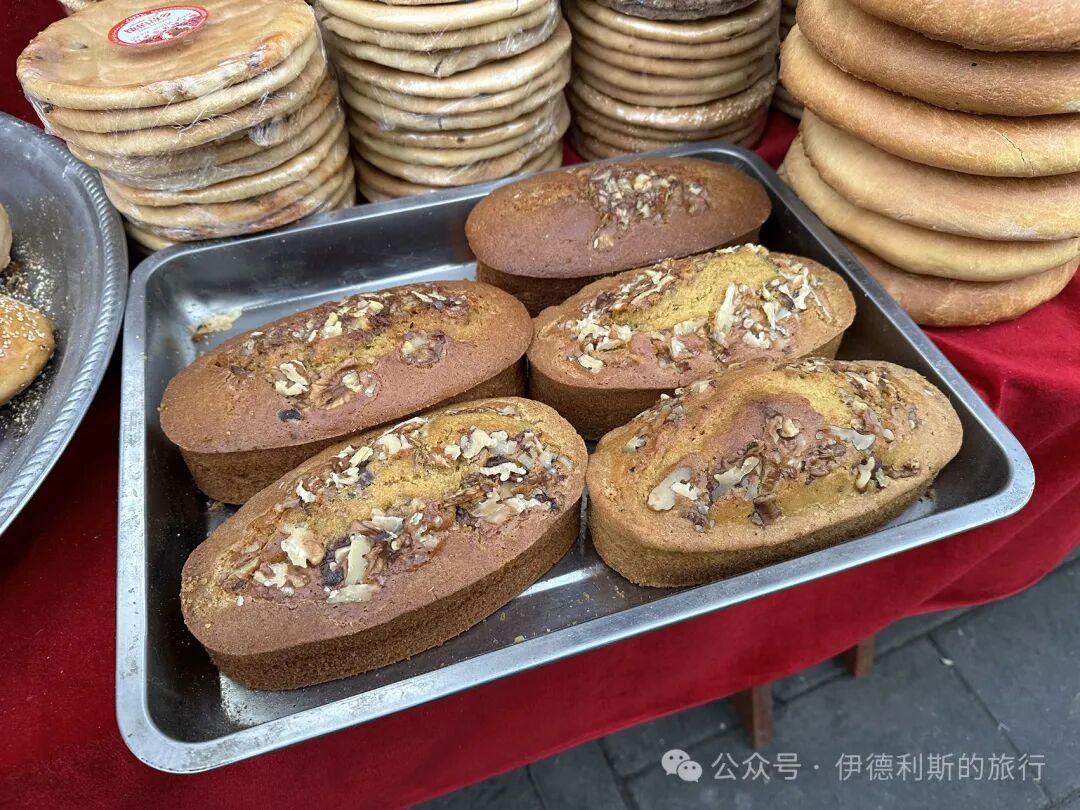
The roasted goose eggs were hot; you peel them, take a bite, and then sprinkle on the seasoning.
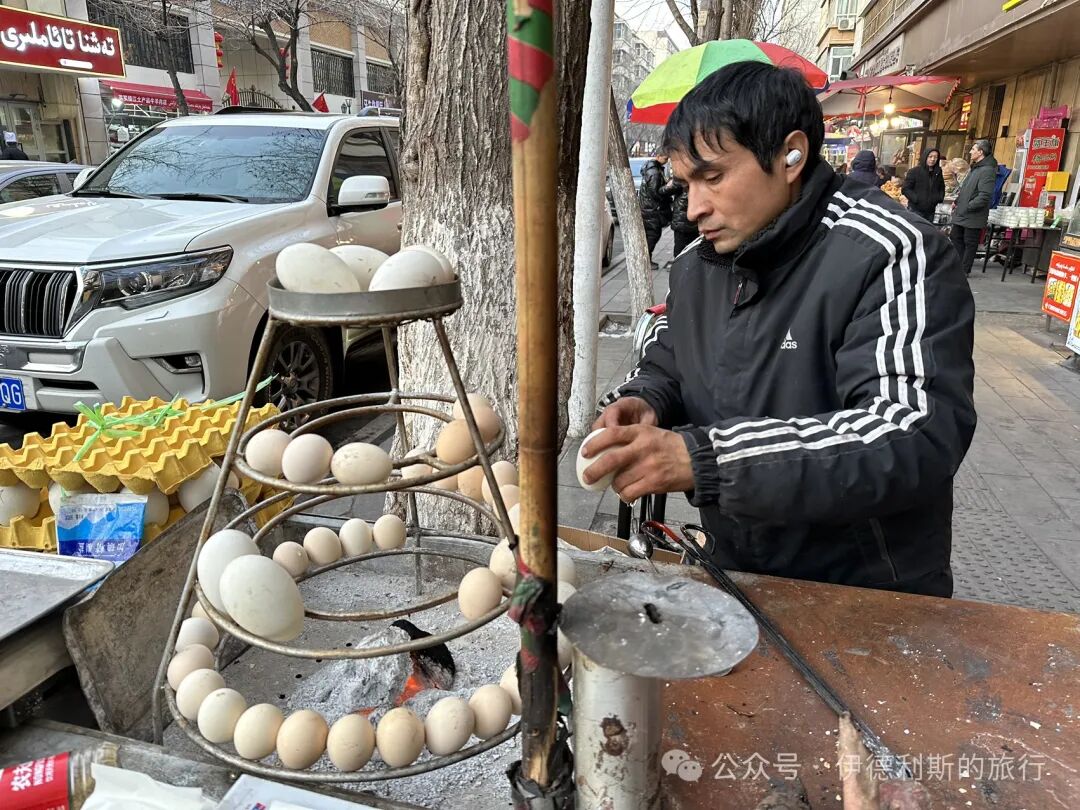
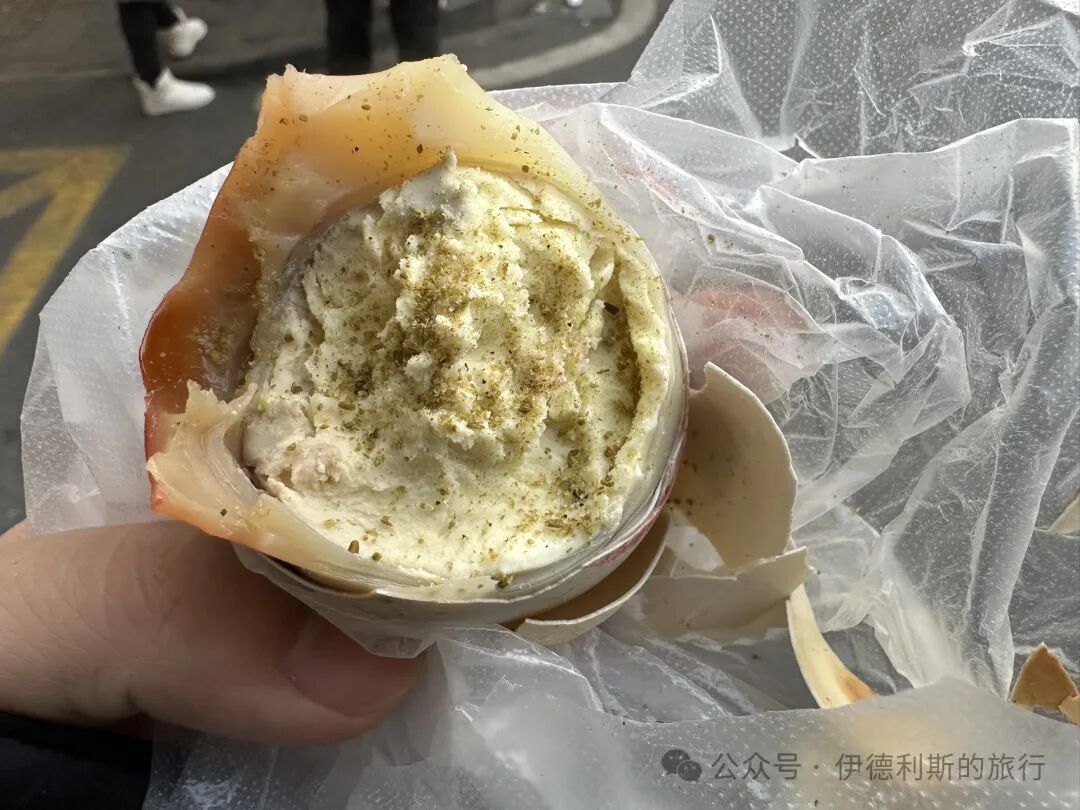
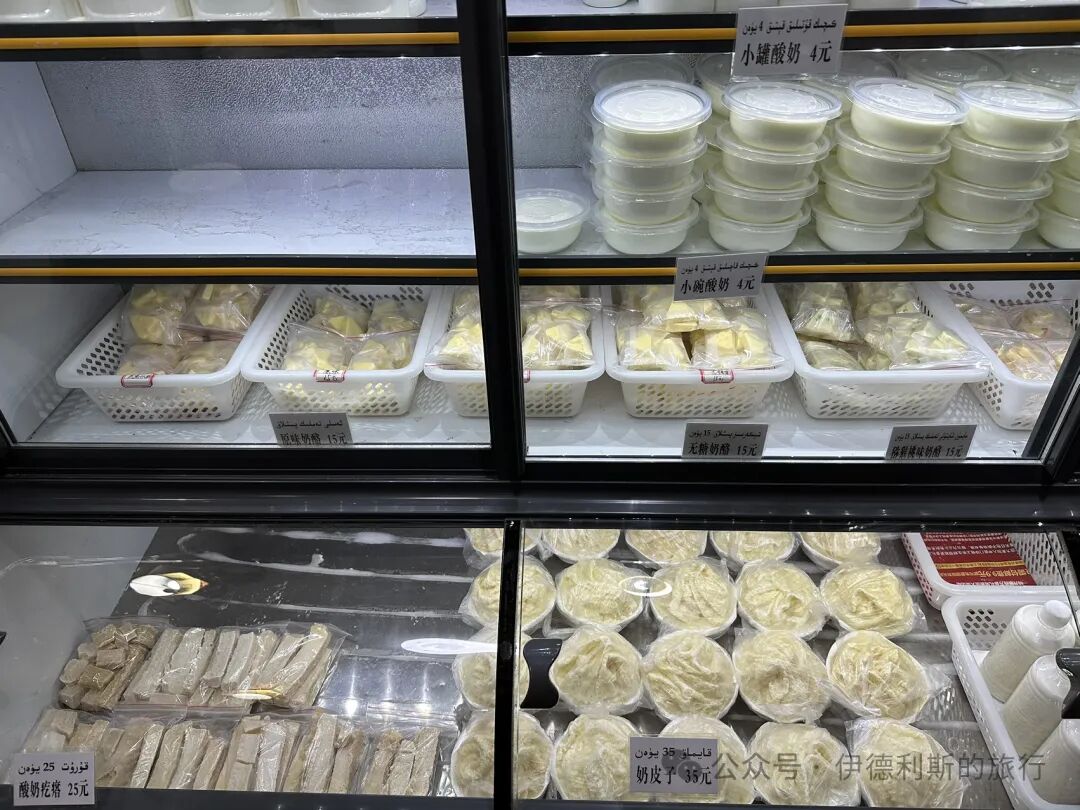
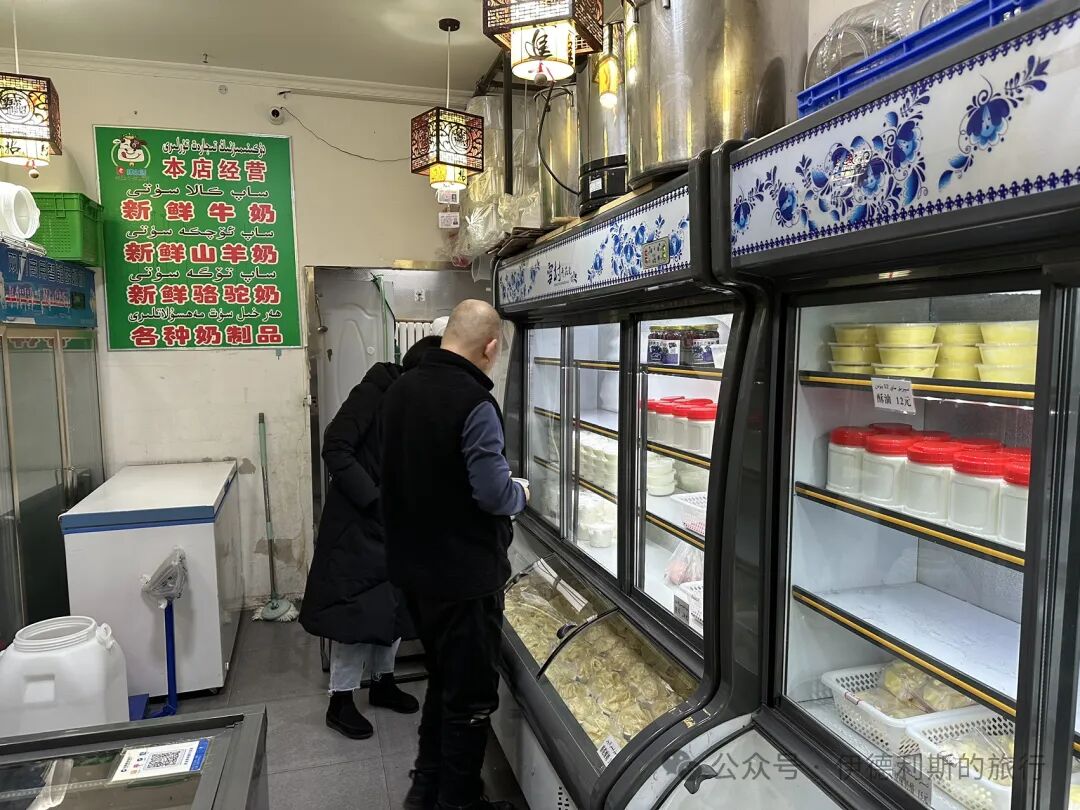
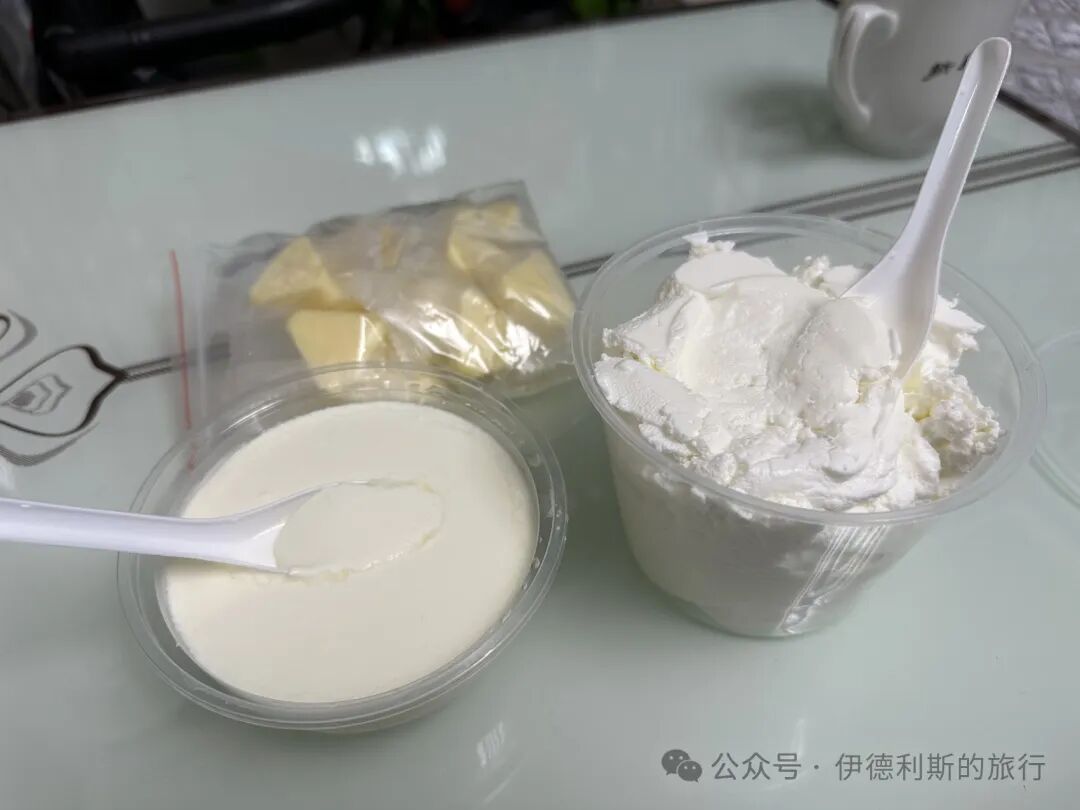
The handmade yogurt was thick and came with its own layer of milk skin; you cannot find this in Beijing at all.
Yangle Spicy Chicken on Hetian First Street was packed. Over the years, all the bags of Yangle Spicy Chicken I bought online were shipped from here.
Taking photos on the street, I found the main store of Azhen Rice Noodles here. Zainabu loved eating at their place when she was in middle school.
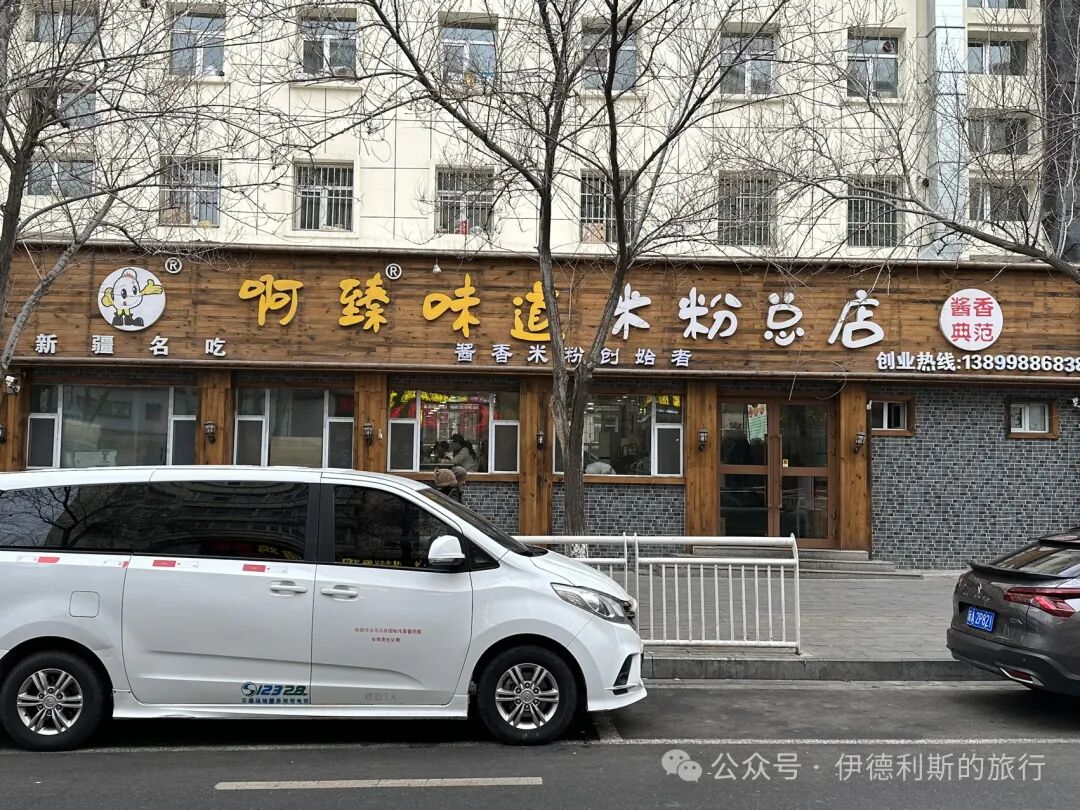
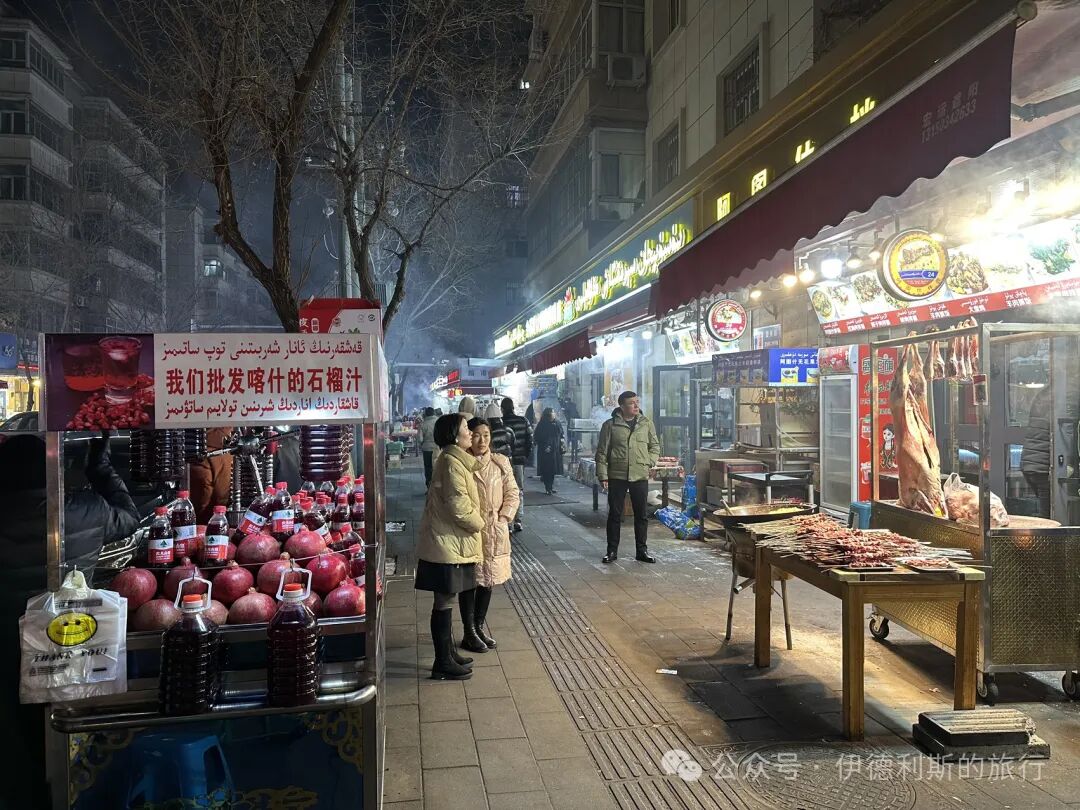
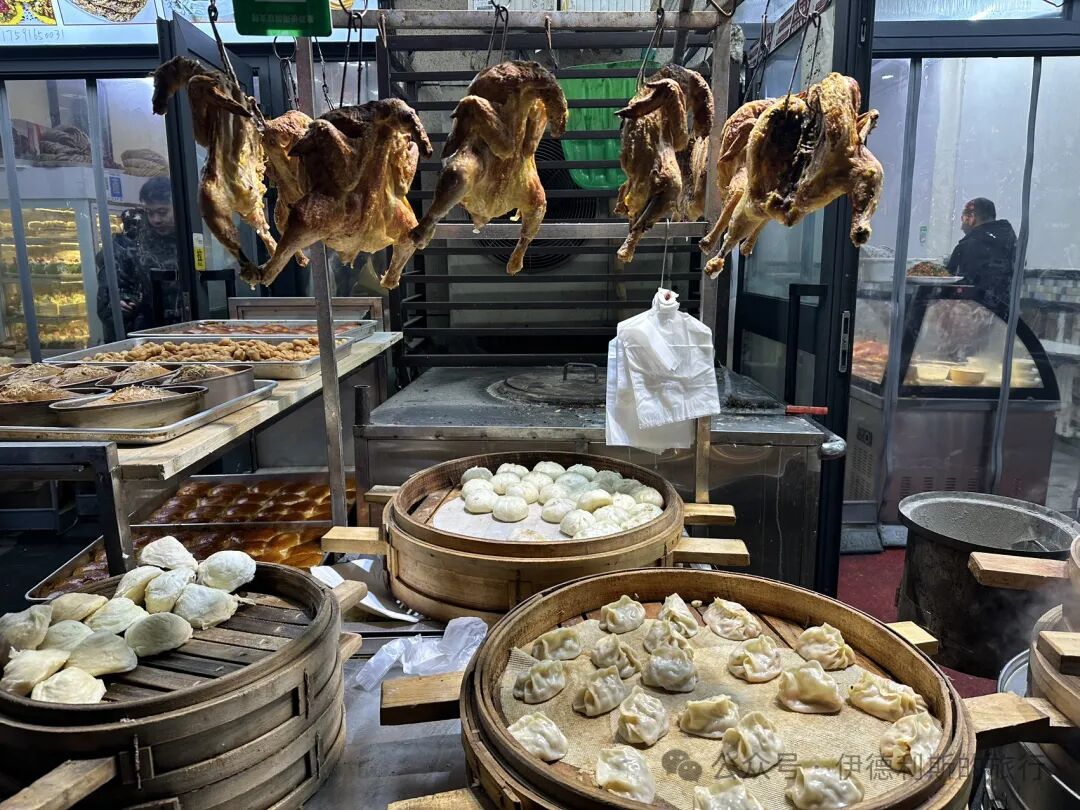
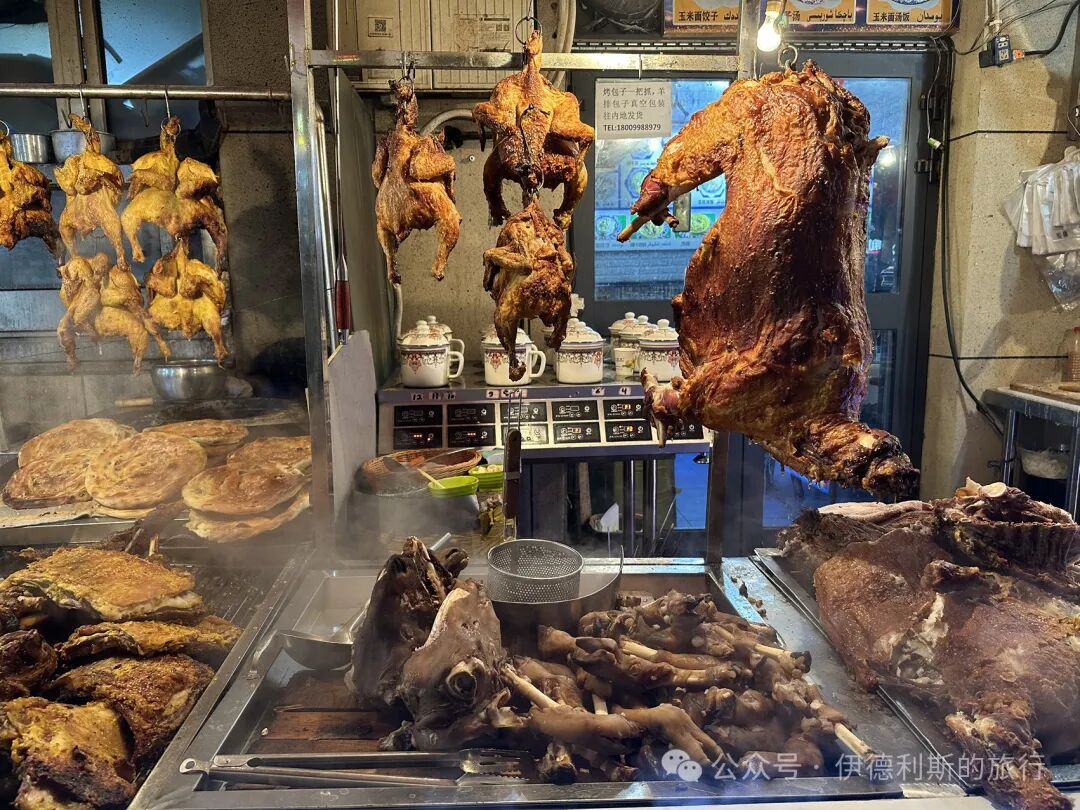
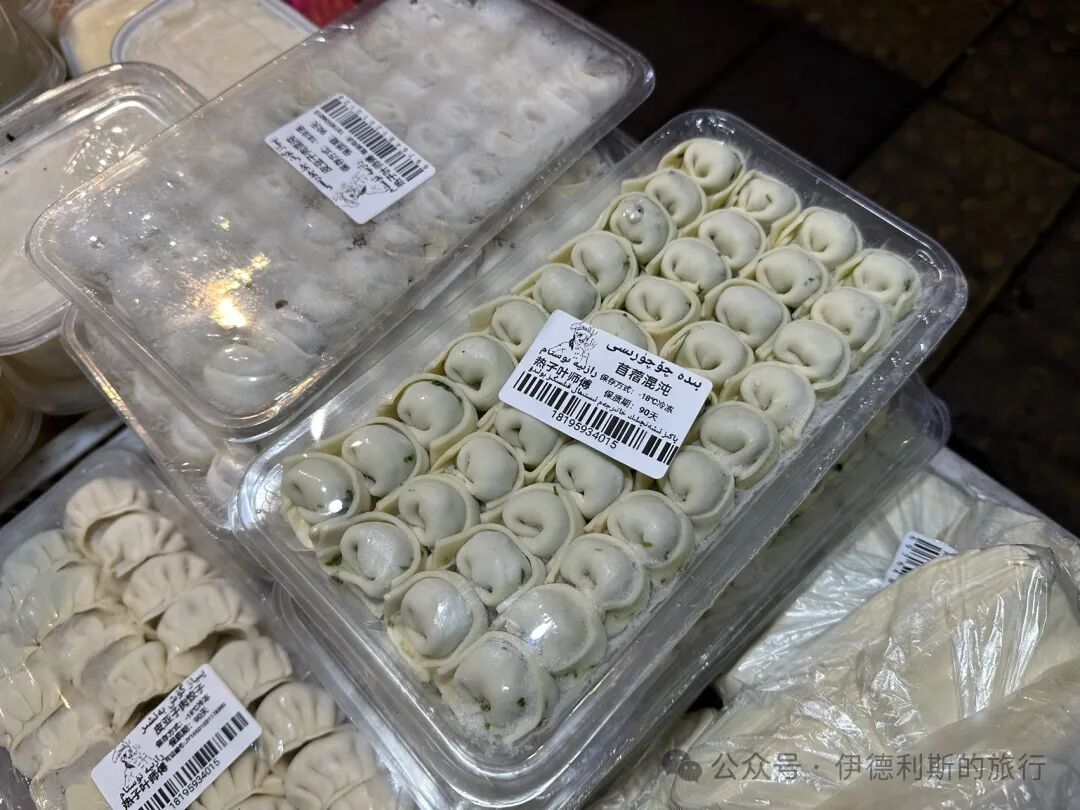
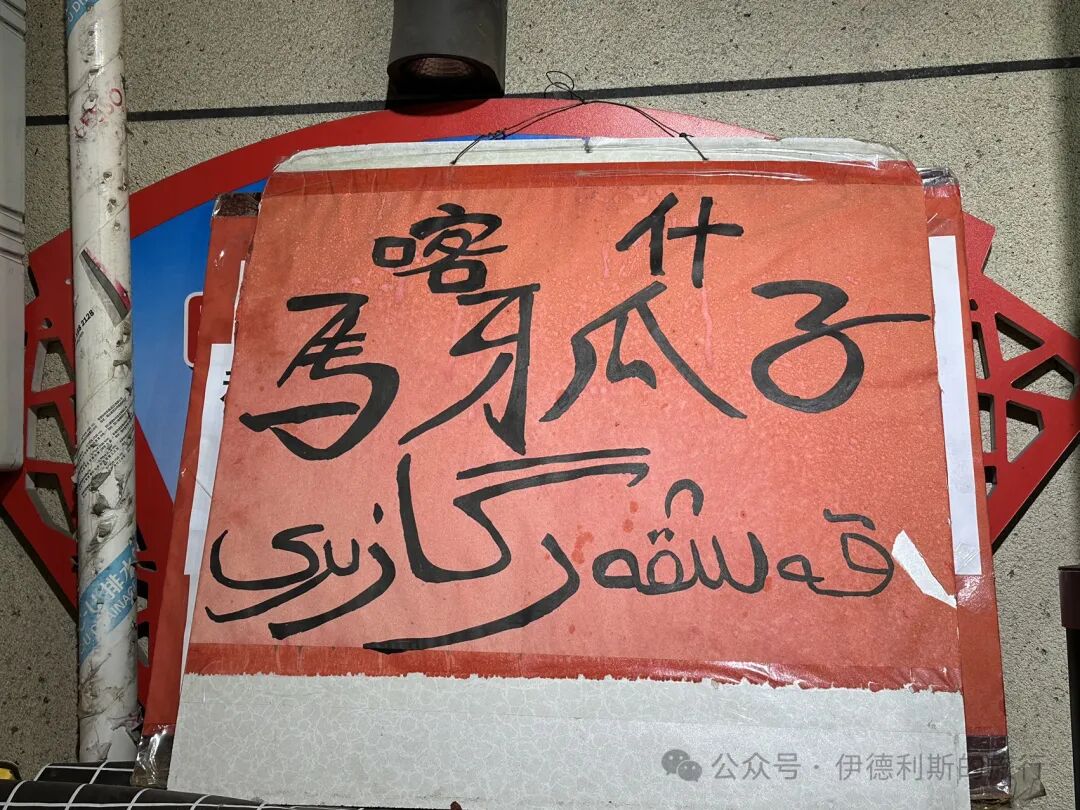
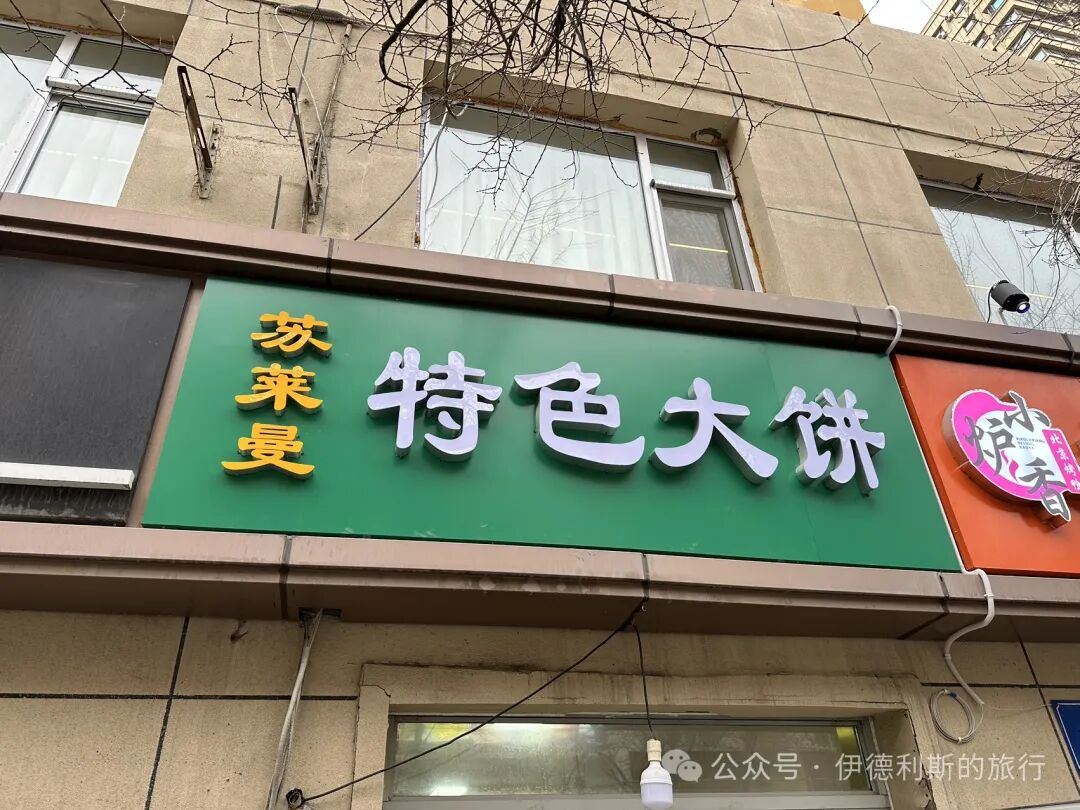
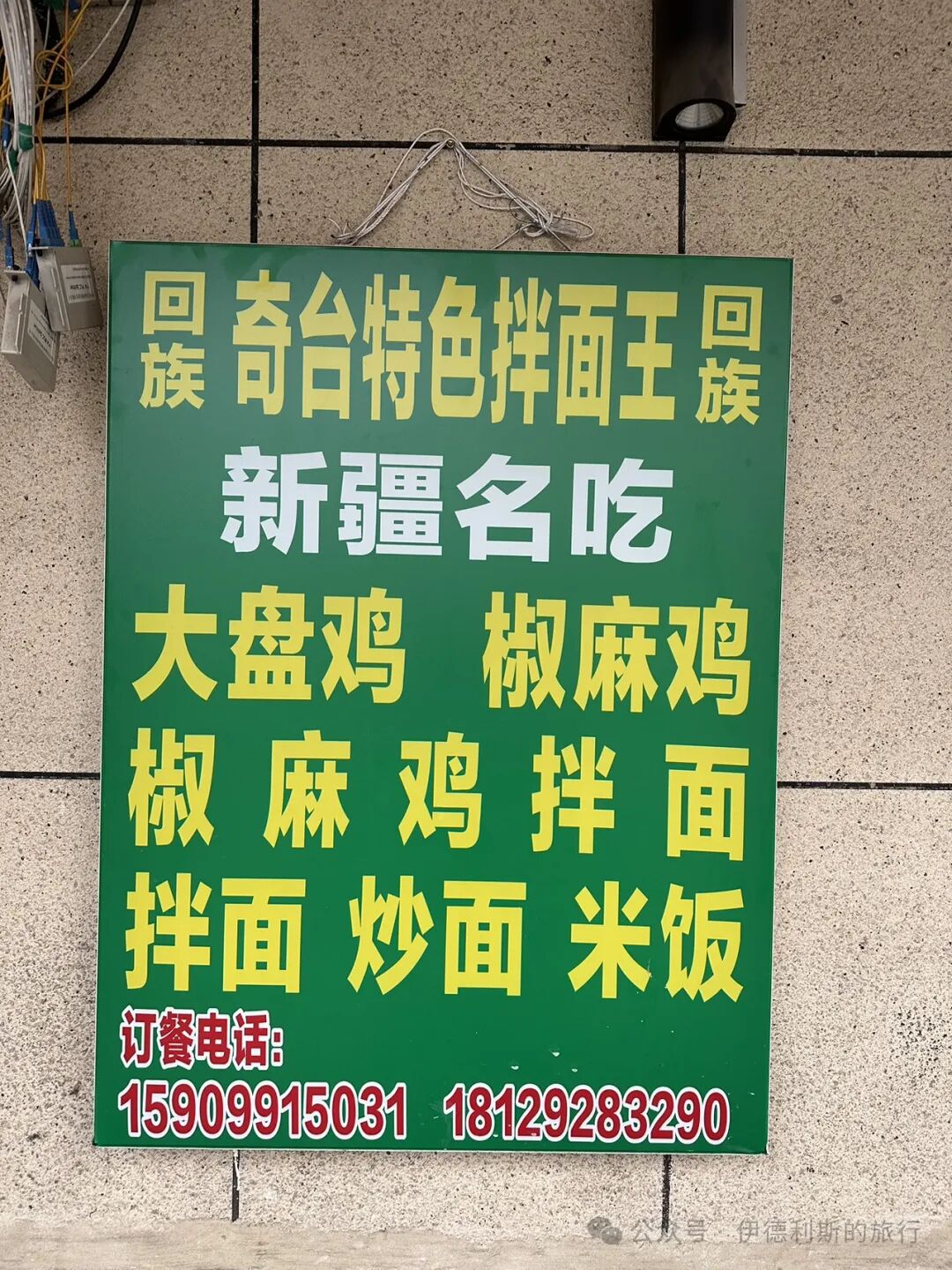
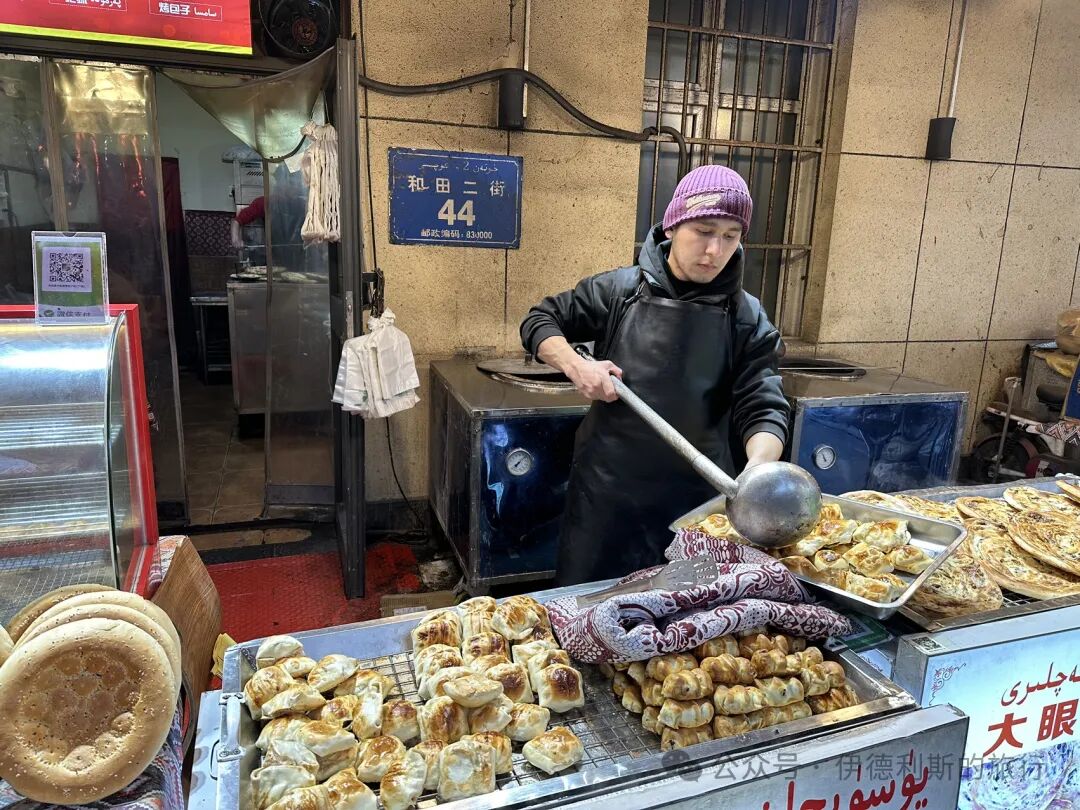
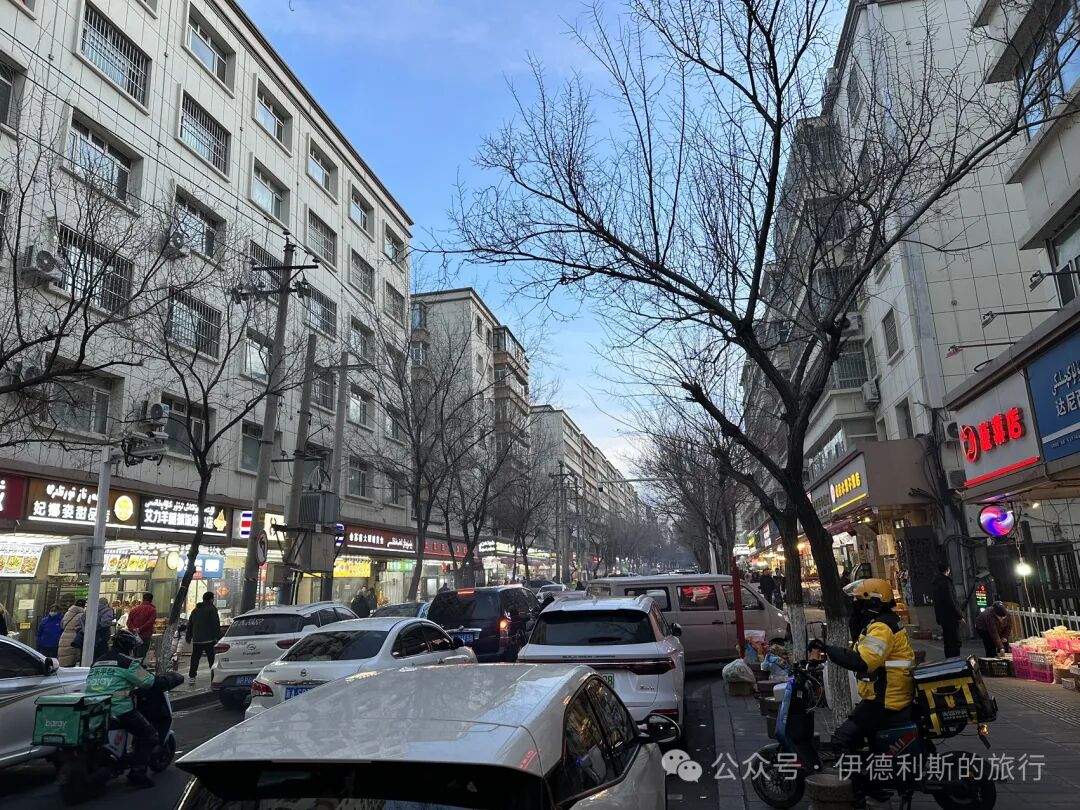
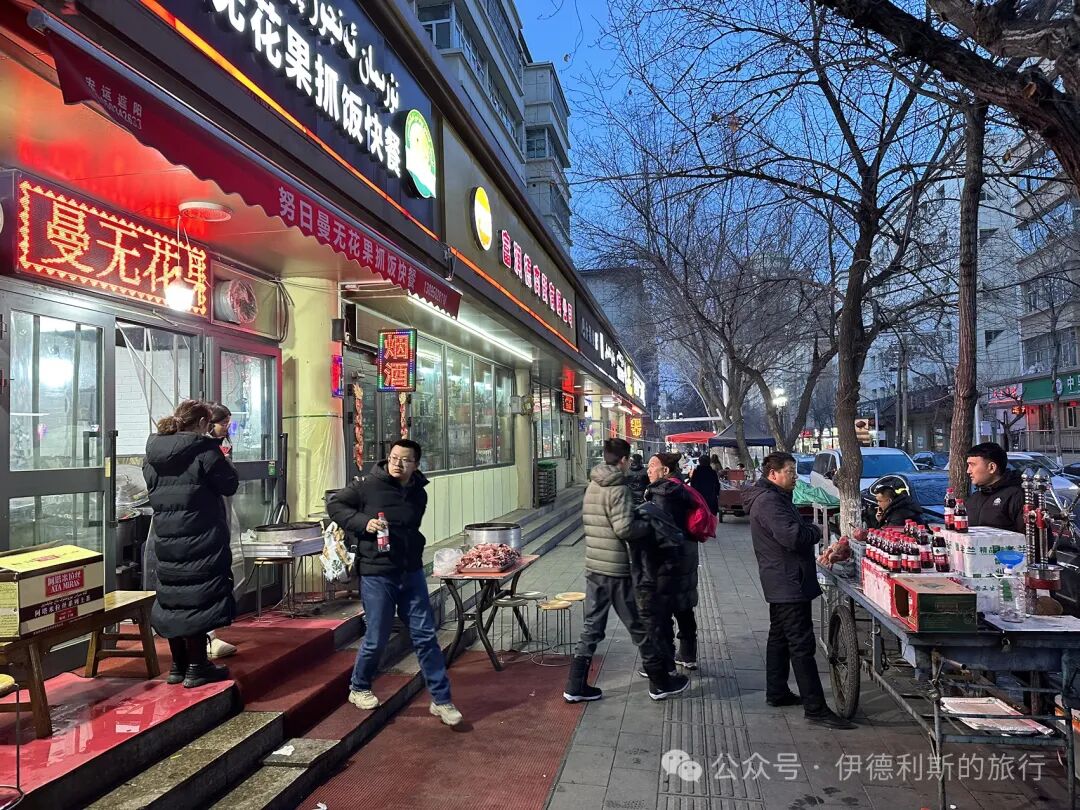
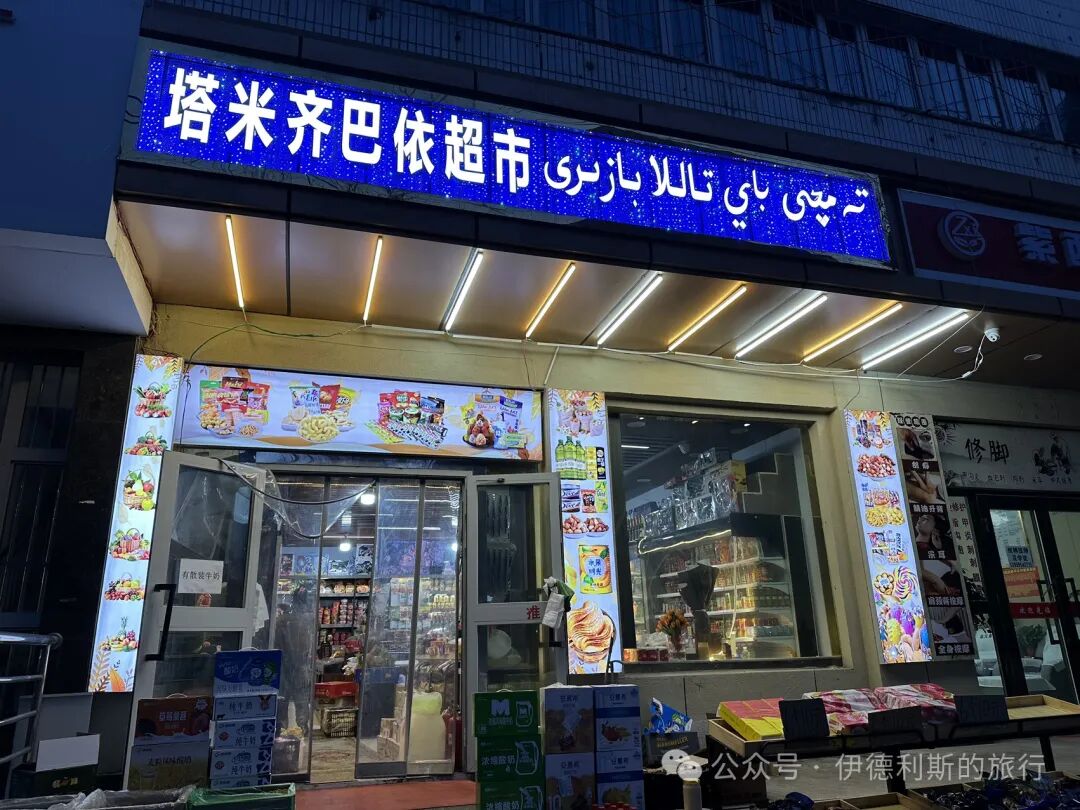
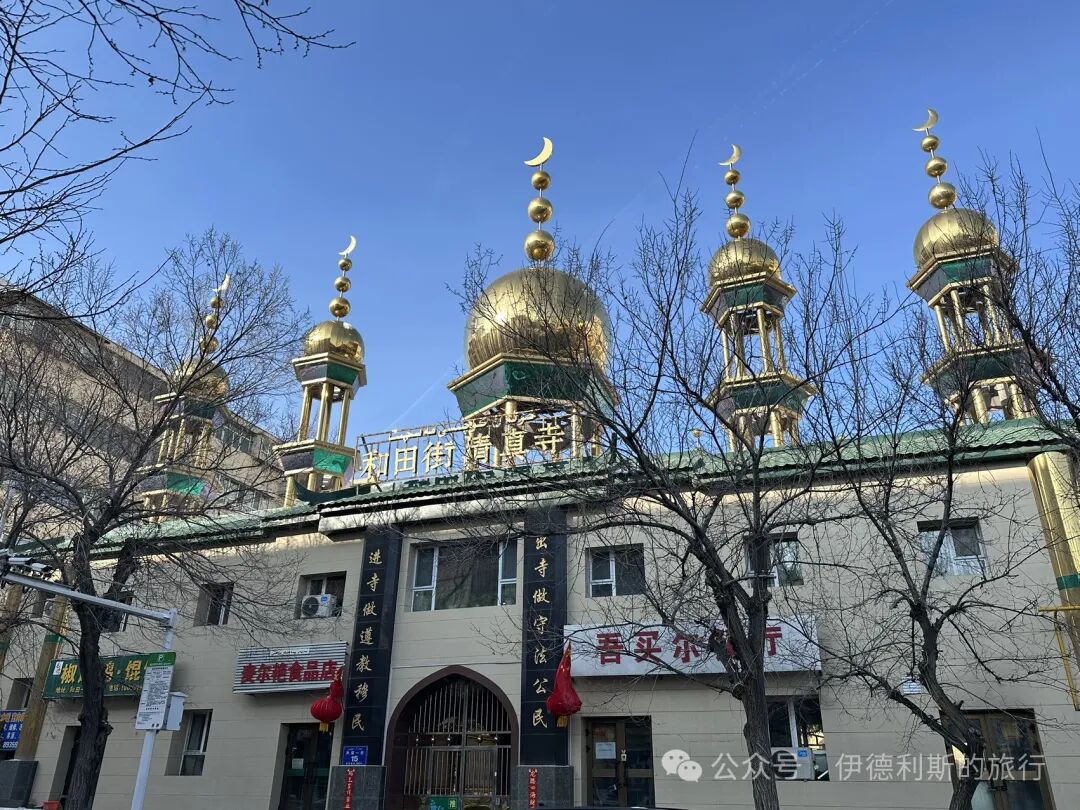
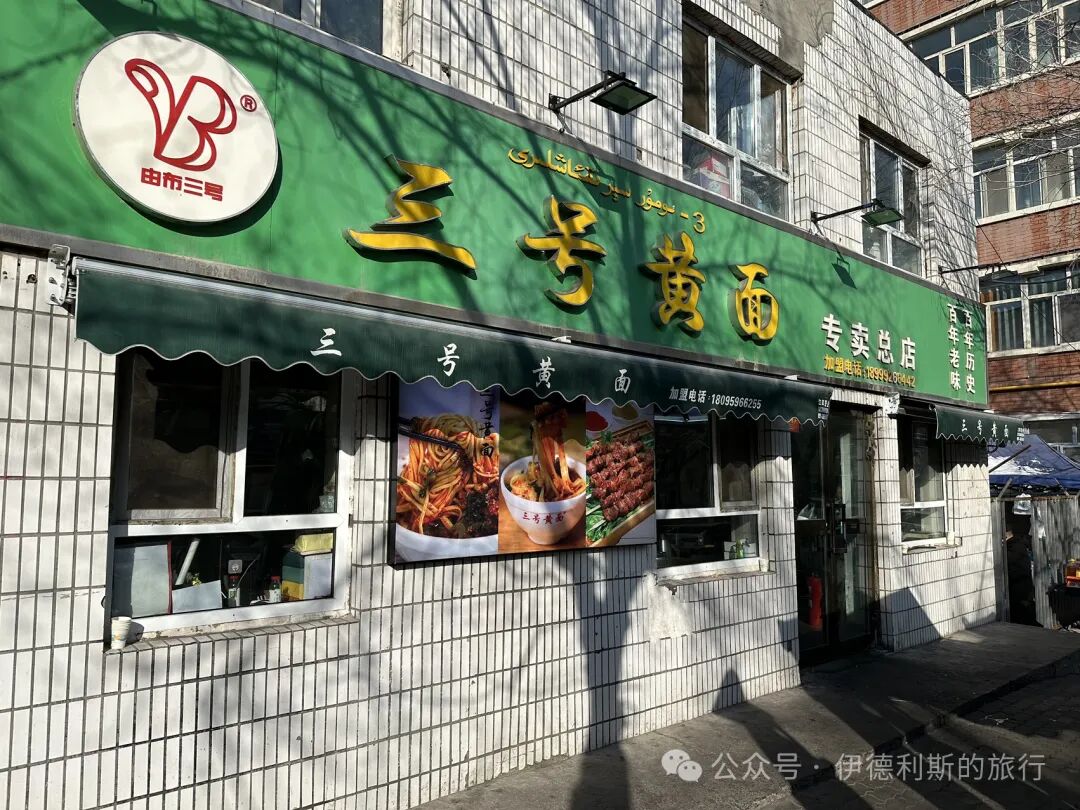
Kazakh milk tea on Hetian Street.
I always knew Dawan in Urumqi was a Kazakh neighborhood, but this time I found several Kazakh restaurants on Hetian Street. Just on the southern section of Hetian Second Street, there are four: Sahara Milk Tea House, Saiguluke Restaurant, Bashibai Restaurant, and Jinshan Specialty Restaurant. We ate horse sausage narin and milk tea at Saiguluke Restaurant. Next time, I want to try the khurdak and horse sausage pilaf.
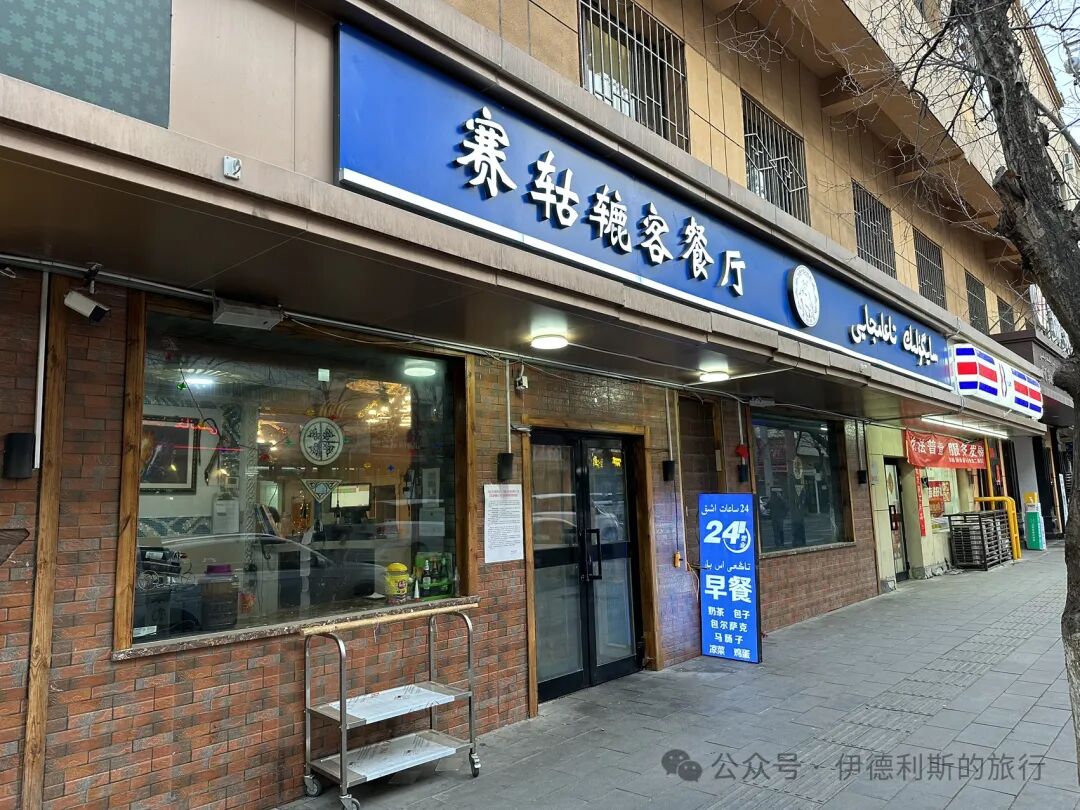
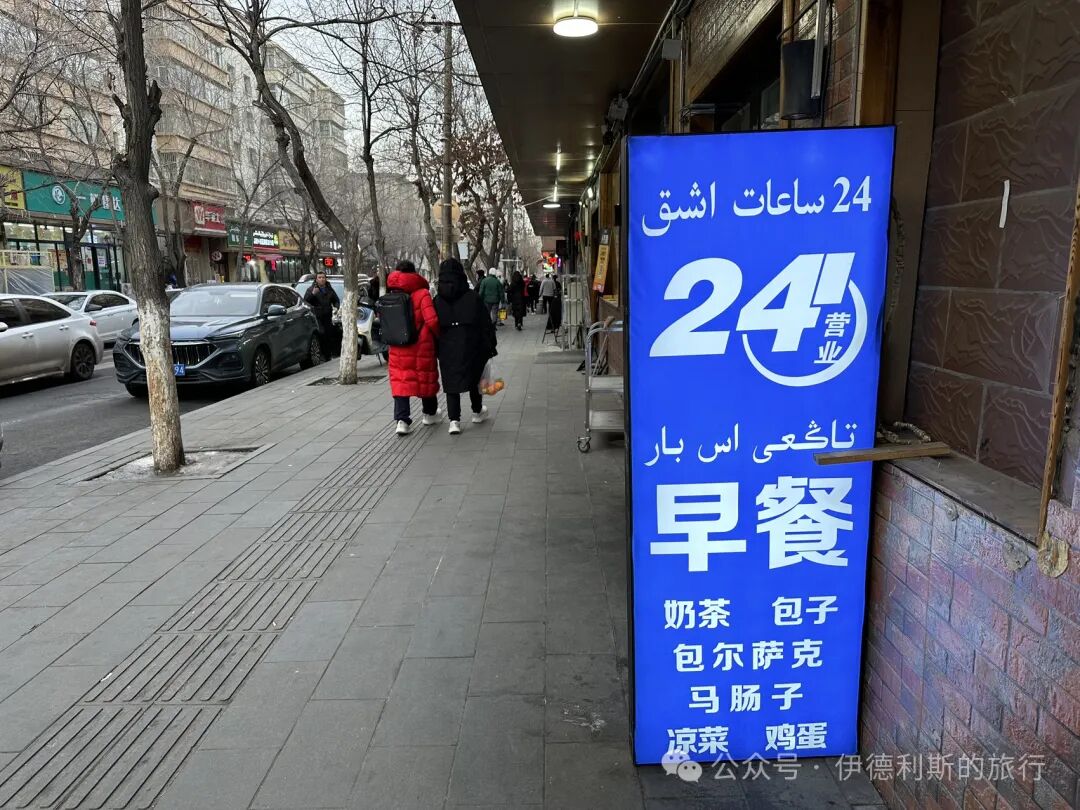
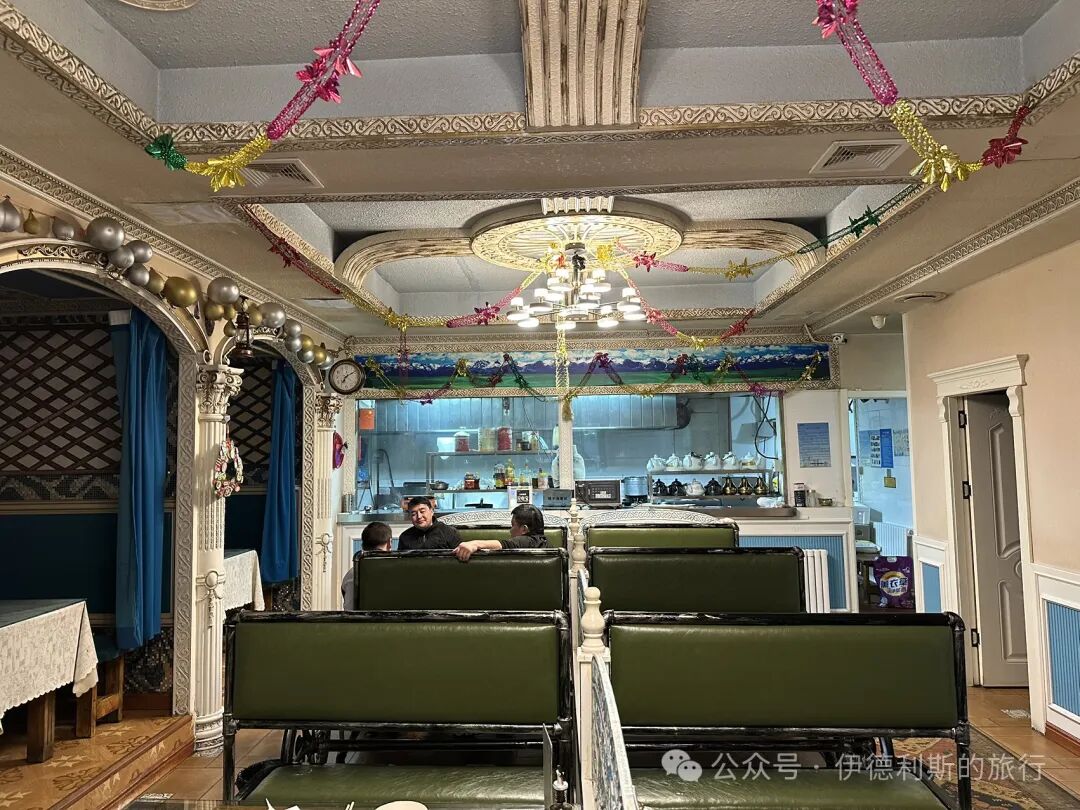
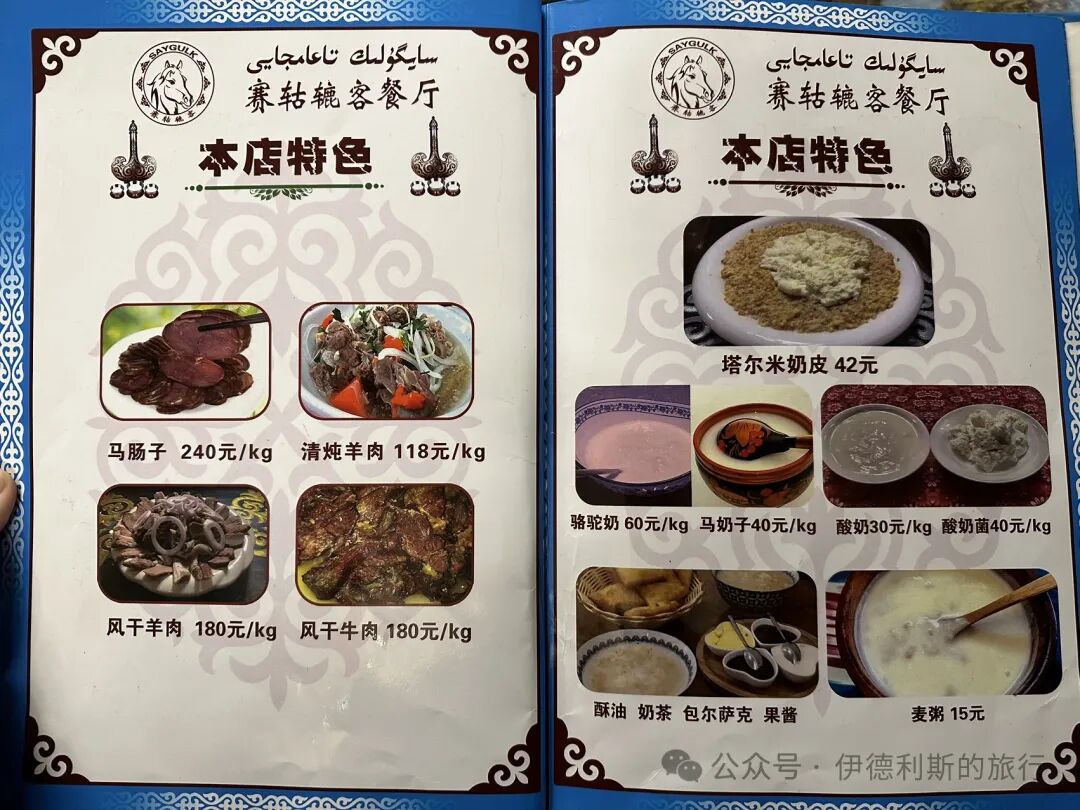
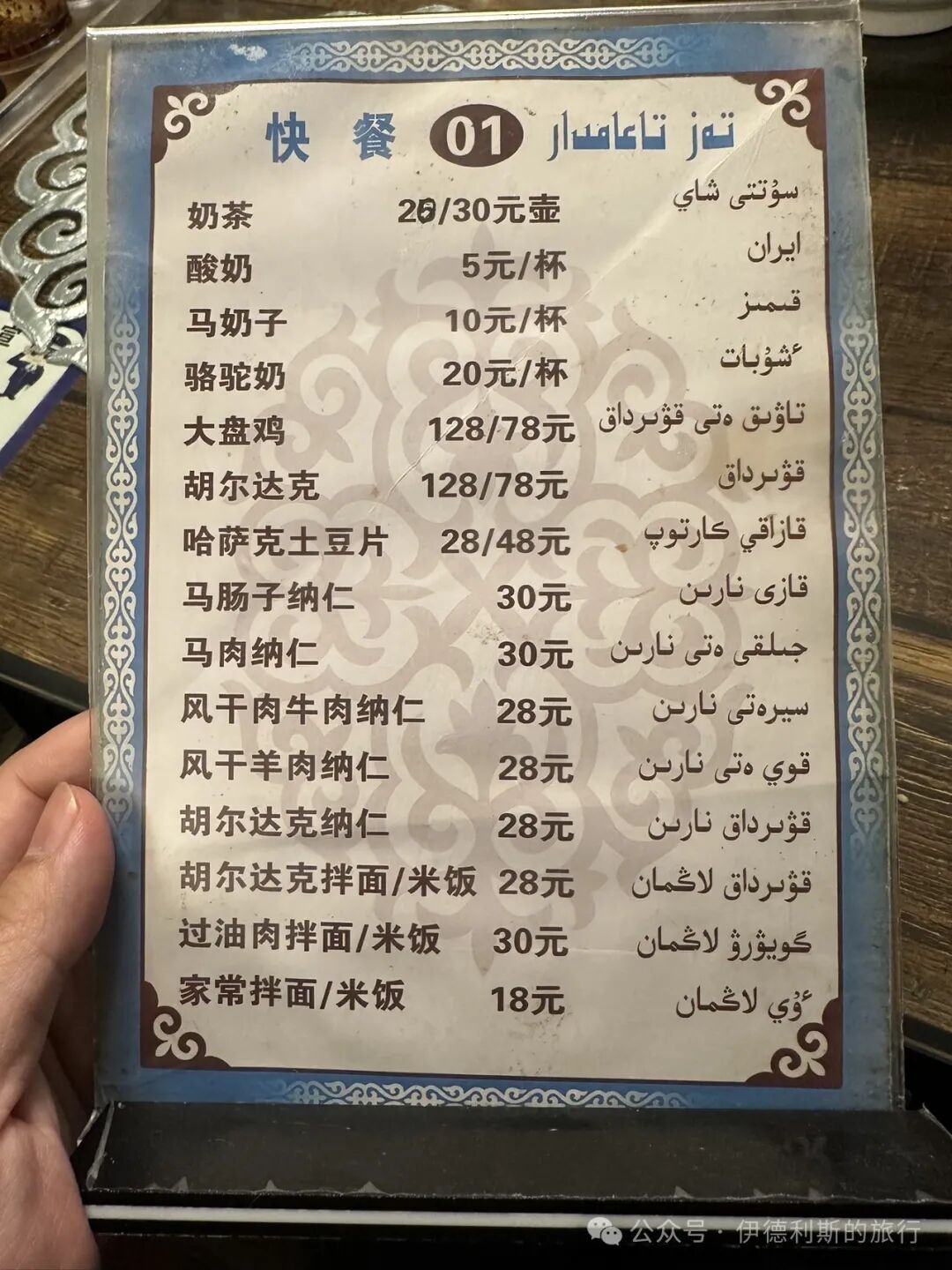
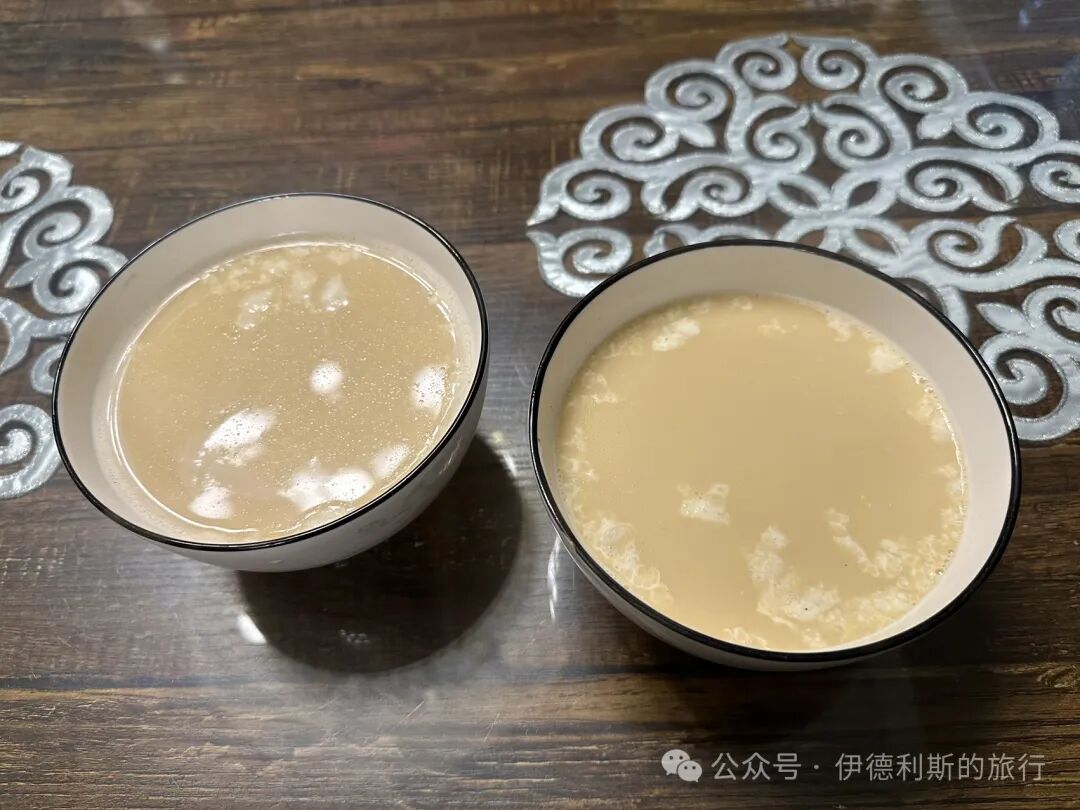
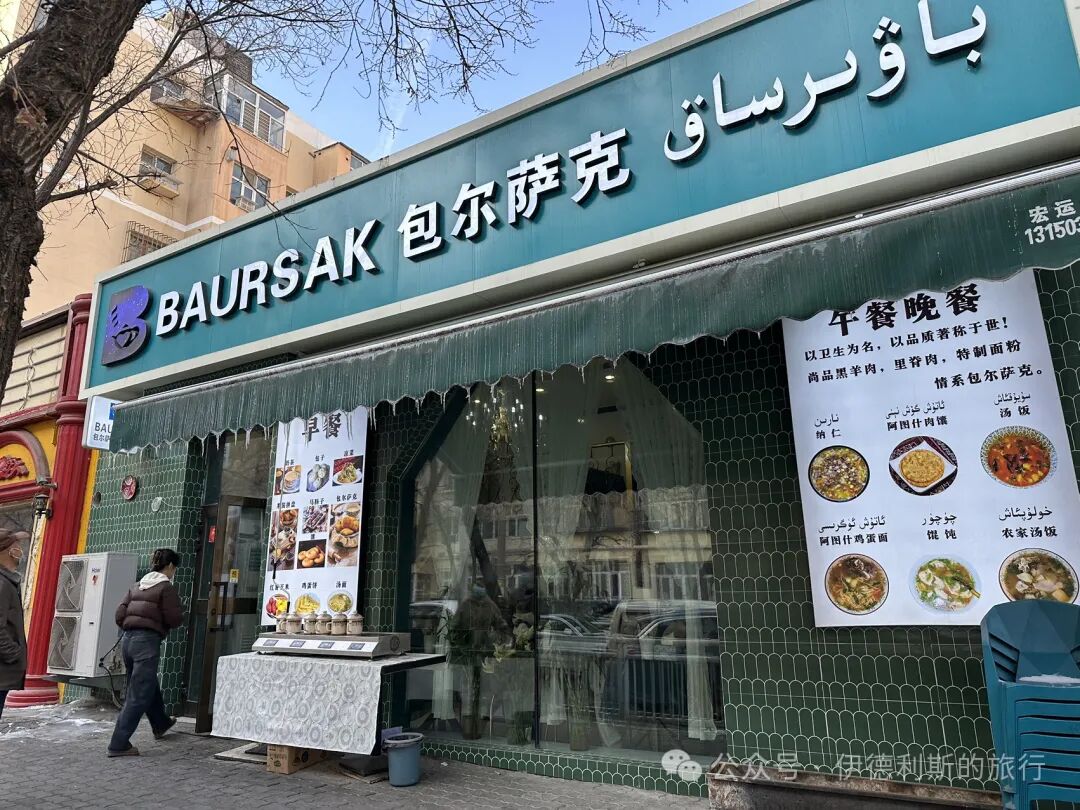
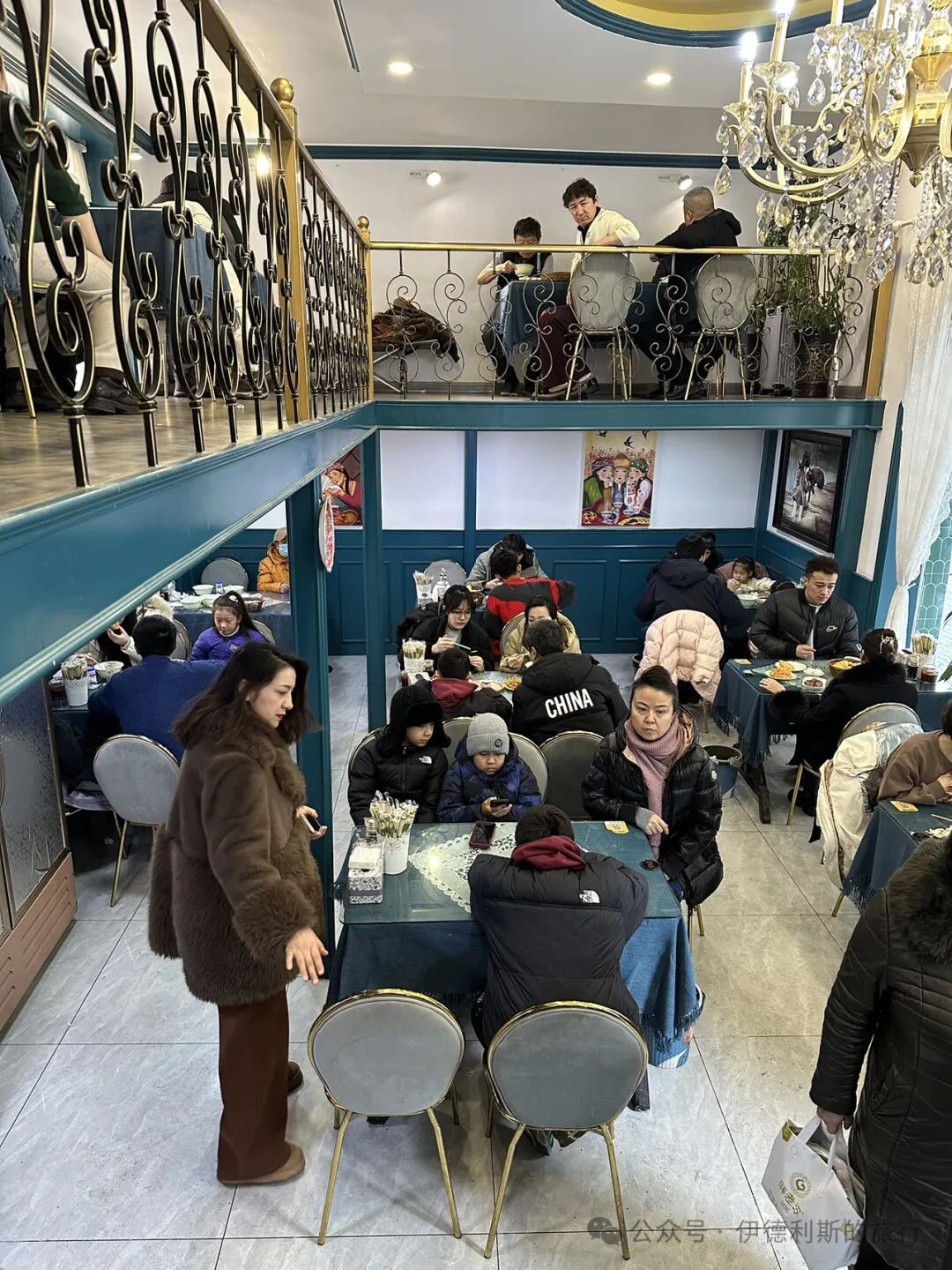
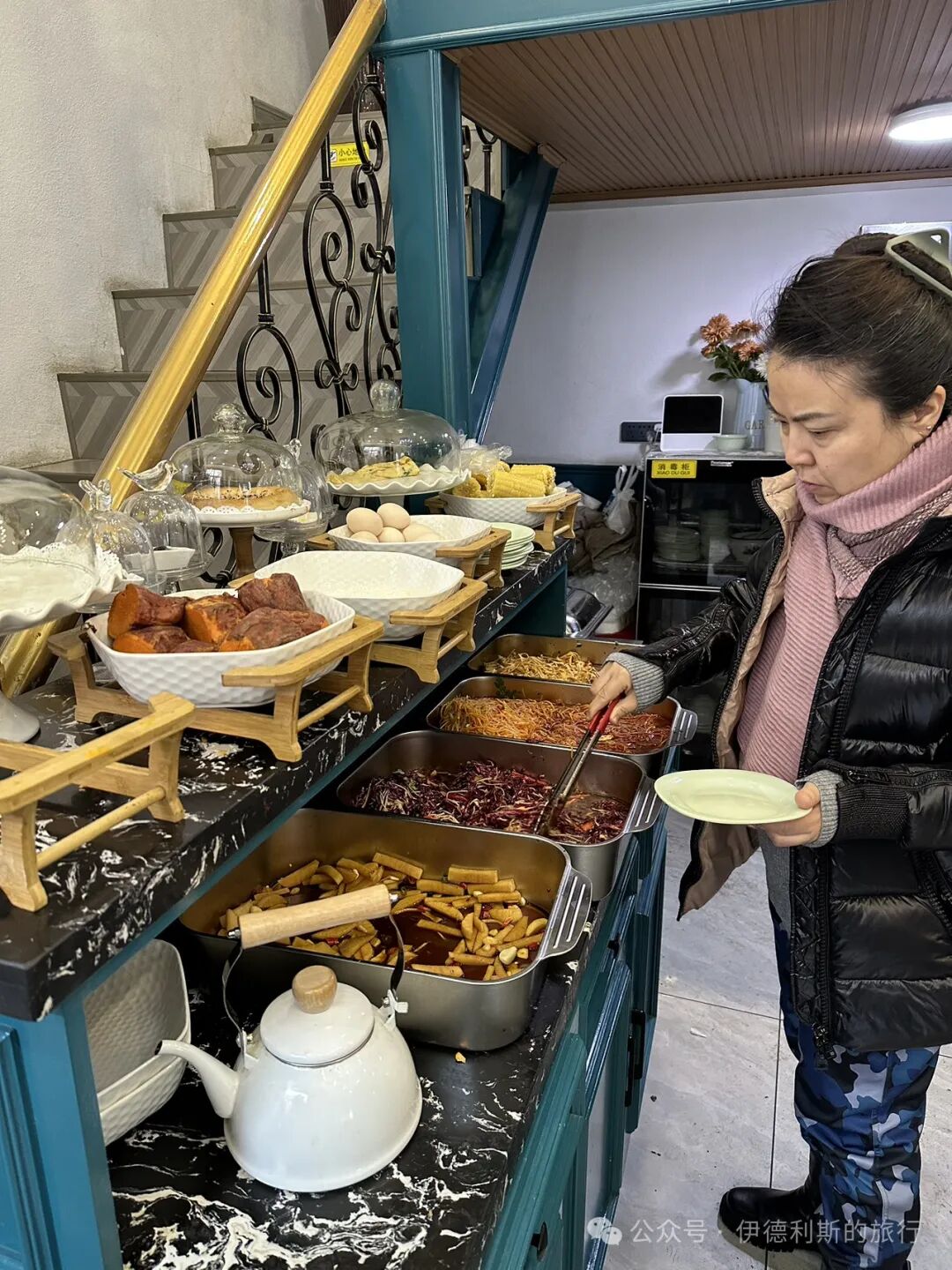
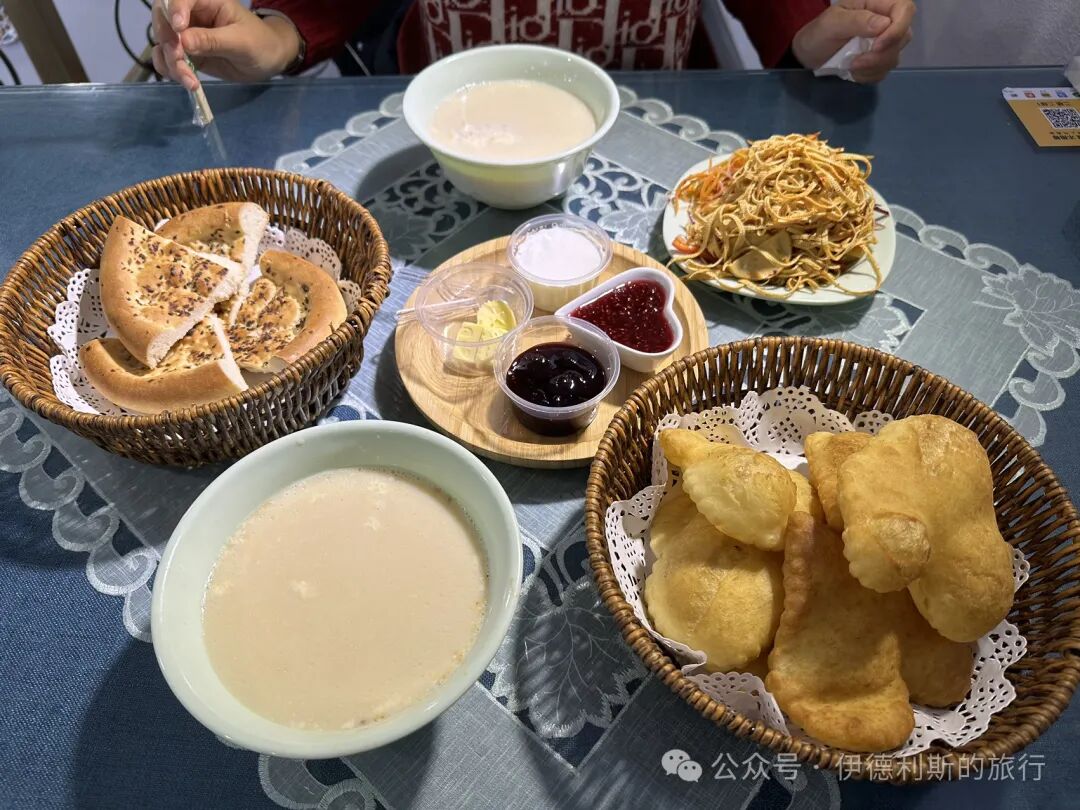
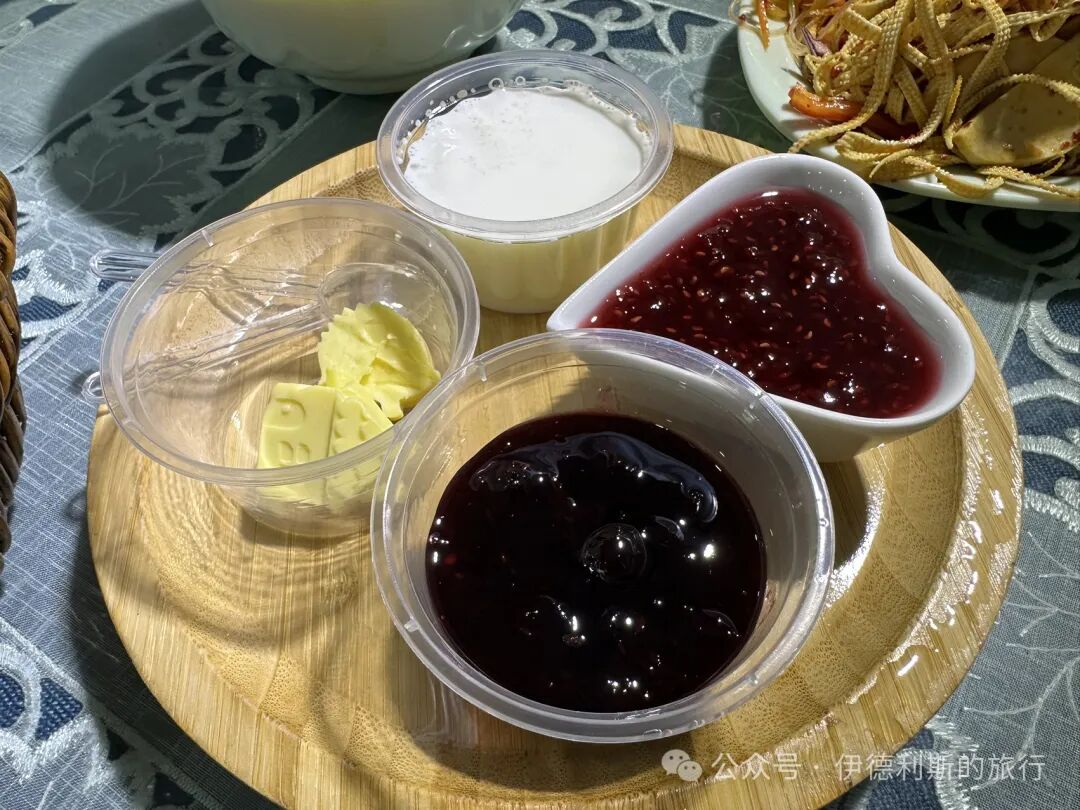
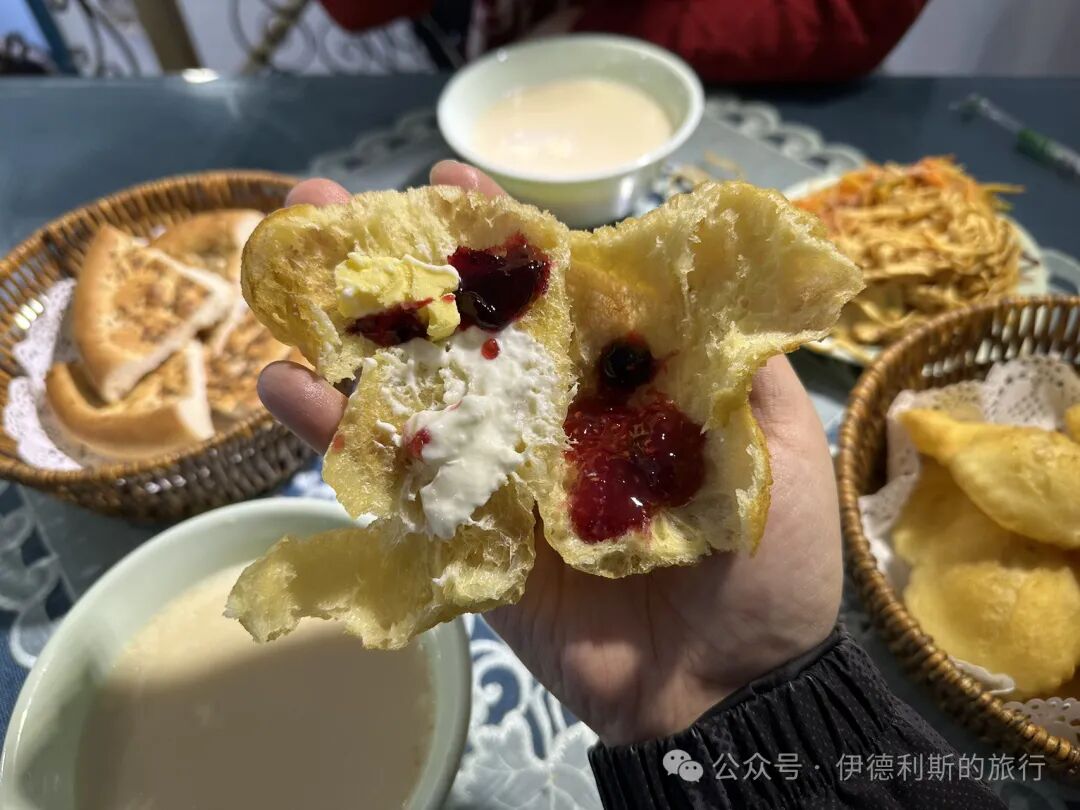
In the morning, we went to Baorsak on Hetian First Street for a Kazakh breakfast. Baorsak now has three locations. I have already eaten at the first two, the Dawan branch and the Heba Lane branch, so this time I came to try the Hetian First Street branch. We ordered a set meal for two, which included milk tea, fried dough (baorsak), jam, yogurt, cold dishes, and flatbread (nang). Even though it was the Spring Festival holiday, their business was very good. A line started forming right after we ordered. I noticed that most of the customers were local Uyghurs. It seems Kazakh breakfast is quite popular with the Uyghur community.
Musical instrument shops in Erdaoqiao.
After drinking Kazakh milk tea, I went for a stroll in the Erdaoqiao Grand Bazaar. I really wanted to visit the instrument shop run by Erkin, an inheritor of the intangible cultural heritage of Uyghur instrument making, but I found it was gone. Plus, the Kazakh girl I used to take photos with in the felt tent got married and moved away. Now, the Grand Bazaar is mostly just souvenir shops.
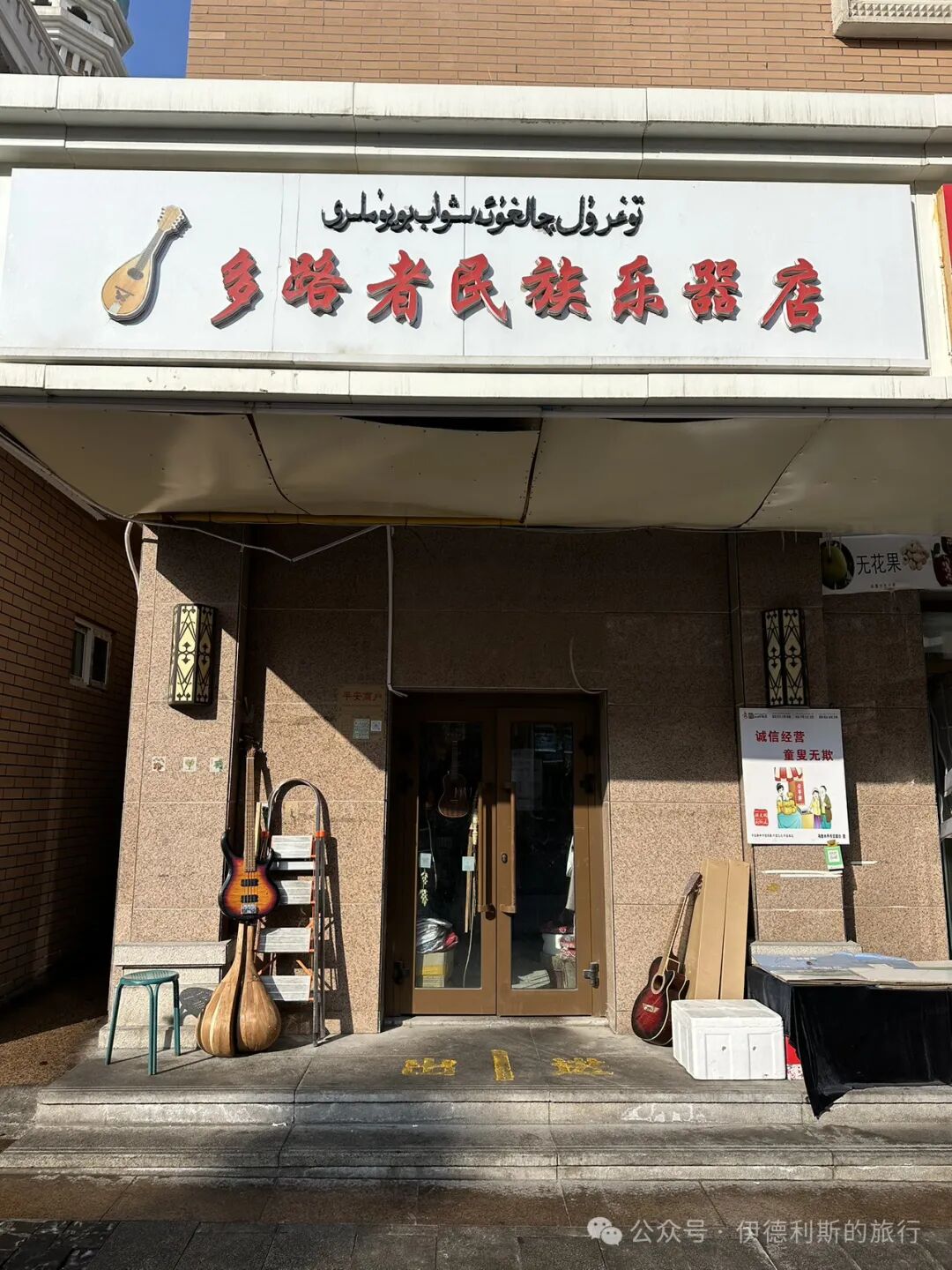
As I left through the north gate of the Grand Bazaar, I found the sabayi I had wanted to buy for a long time at Duoluzhe Ethnic Musical Instrument Shop, a place I had not paid much attention to before. They had two types: mulberry wood and desert poplar wood. The desert poplar ones were more expensive, heavier, and were made in the past. I bought two, which fulfilled a wish of mine. Before I left, the owner specifically told me to take good care of them because it will be very hard to find this kind of old-fashioned sabayi in the future.
I first learned about the sabayi in the 2010 documentary 'Ashik: The Last Troubadour' filmed by Liu Xiangchen. The sabayi is the most common accompaniment instrument when Uyghur Ashiks perform Dhikr. Accompanied by the sabayi, Sufi practitioners enter a state of ecstasy (Wajd) through Dhikr to draw closer to Allah.
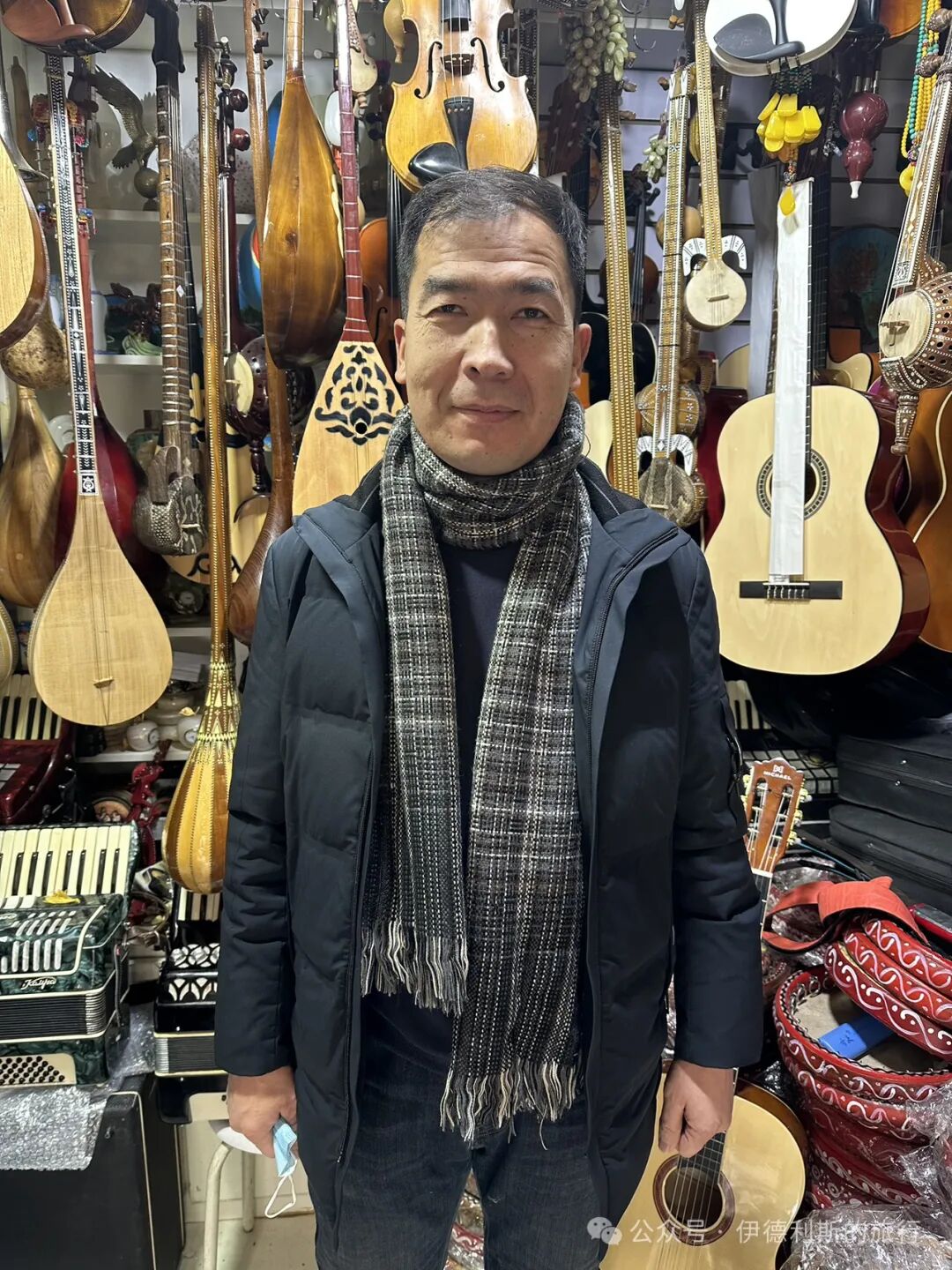
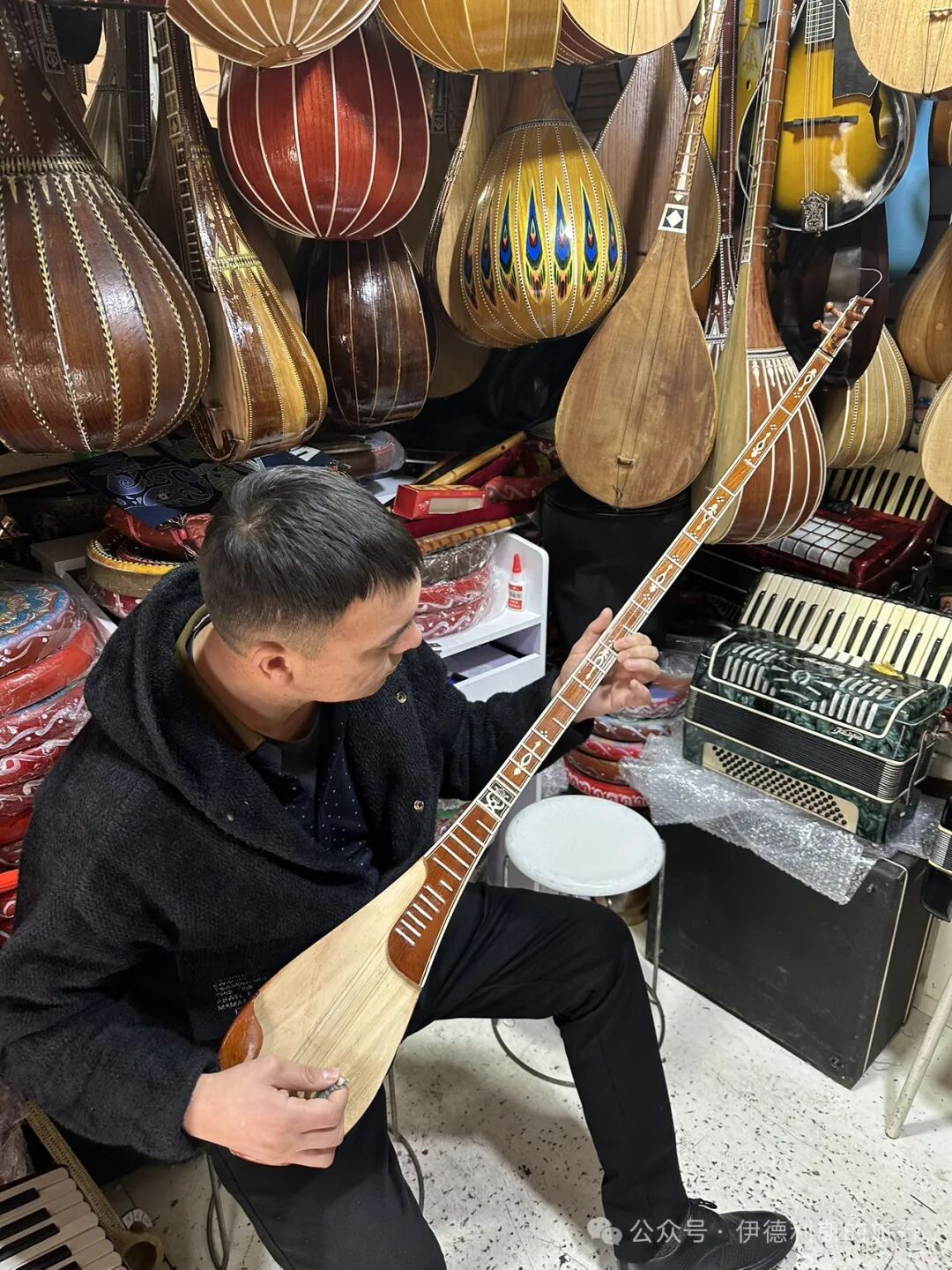
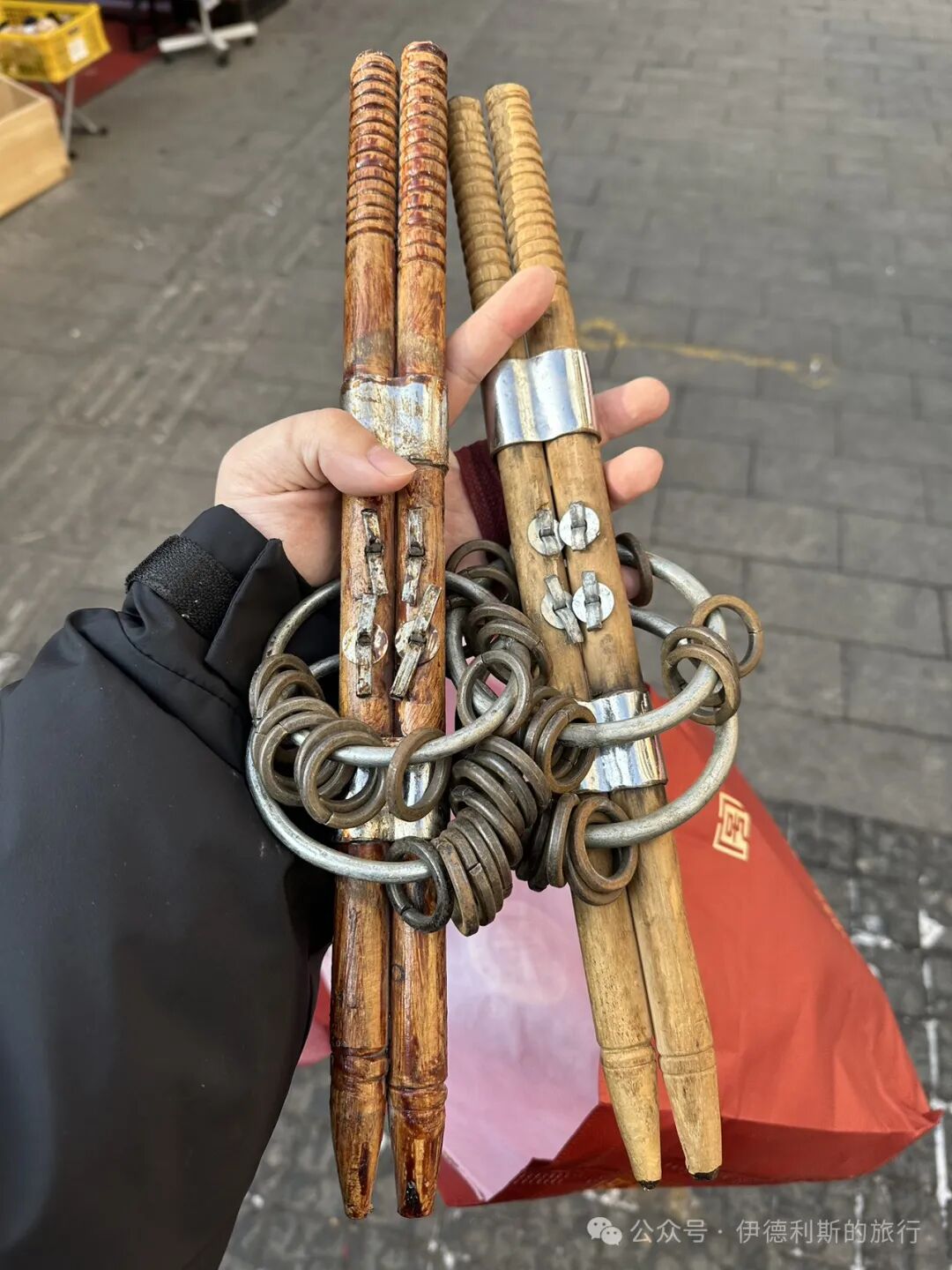
I continued walking around Erdaoqiao and bought an osma eyebrow pencil for Suleiman to use on his eyebrows when I get back. Osman grass is actually the leaf of the woad plant (banlangen), scientifically known as Isatis indigotica, which has been an important blue dye since ancient times. In Xinjiang, if a child has thin eyebrows, many parents use an Osman eyebrow pencil to paint them.
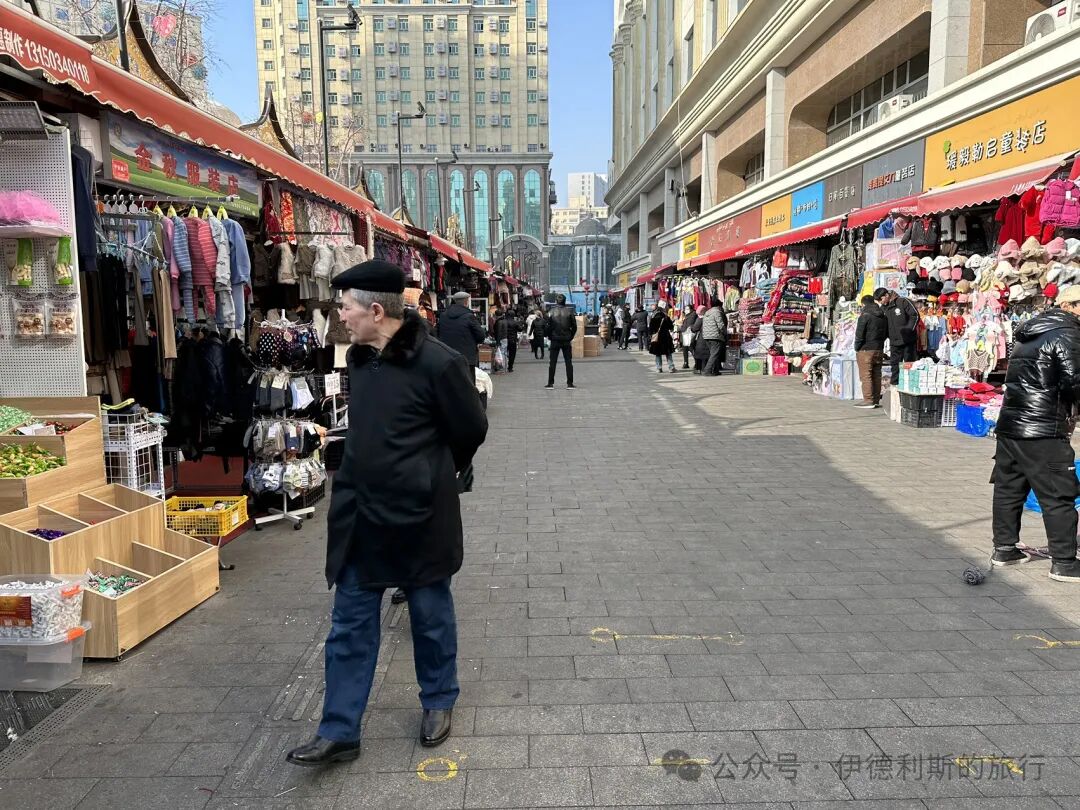
Then I bought some homemade yogurt on the street. After traveling to so many places, the best yogurt I have ever had is this kind sold on the streets of Xinjiang, with no labels, made at home and brought out to sell. It beats any packaged yogurt in the supermarket.
Tianshan Vanke
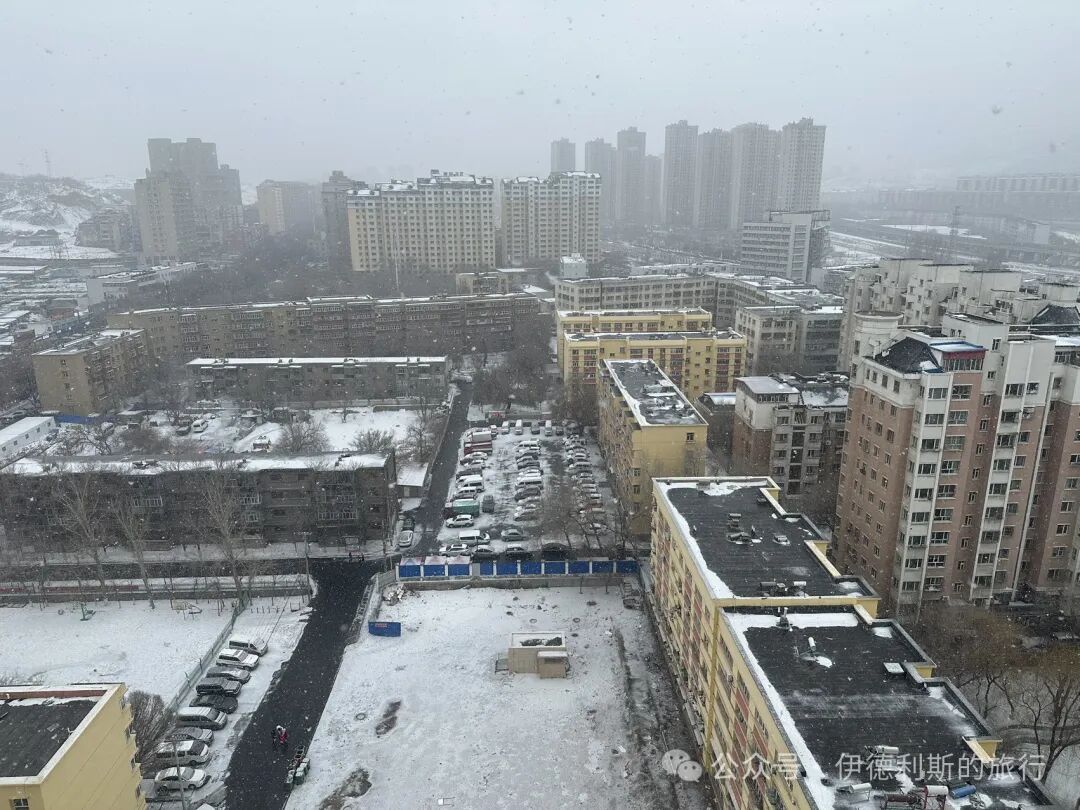
Urumqi Tianshan Vanke is near Dawan and is known as the Wangfujing for Uyghur and Kazakh people. It has Japanese, Thai, and Western food, as well as traditional Hui, Uyghur, and Kazakh restaurants. There is also spicy fish hotpot, fried chicken, burgers, and plenty of places for children to play. When we went, it was snowing, and there were so many friends (dosti) shopping at the mall.
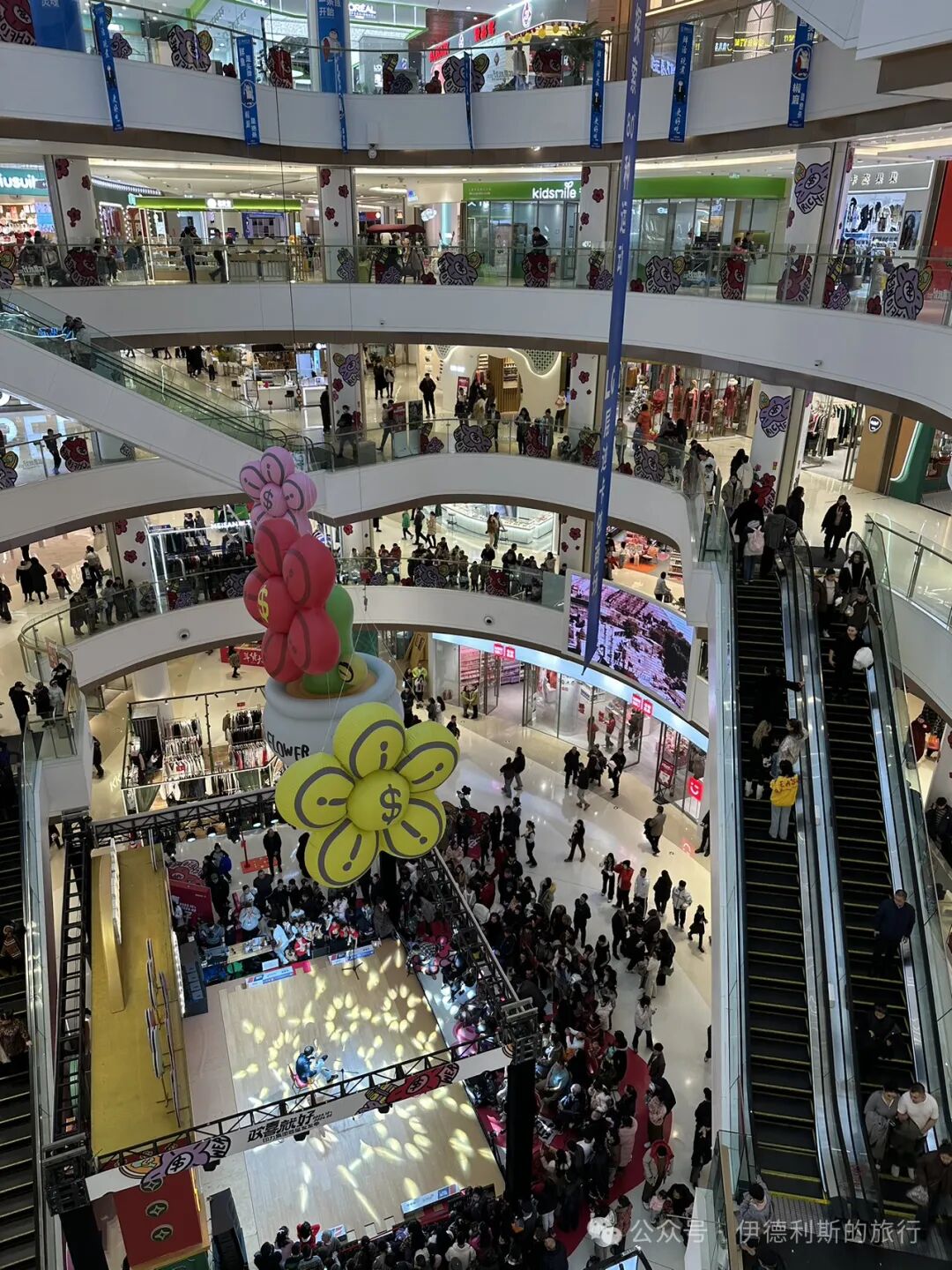
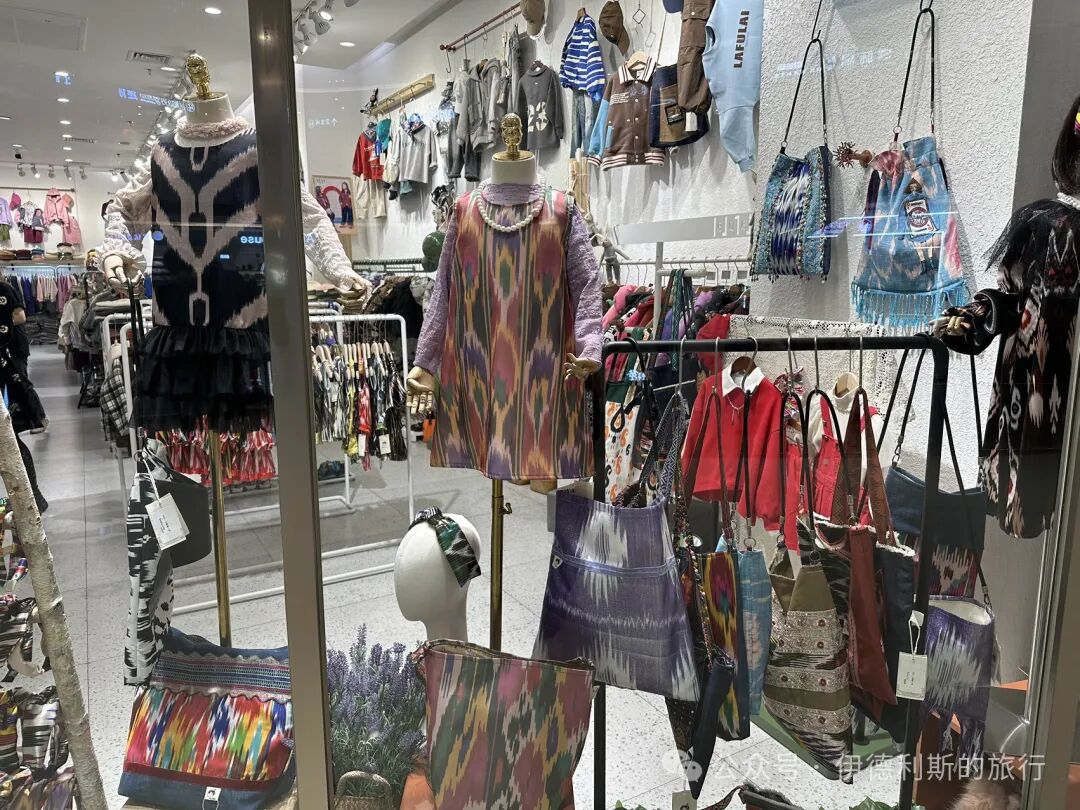
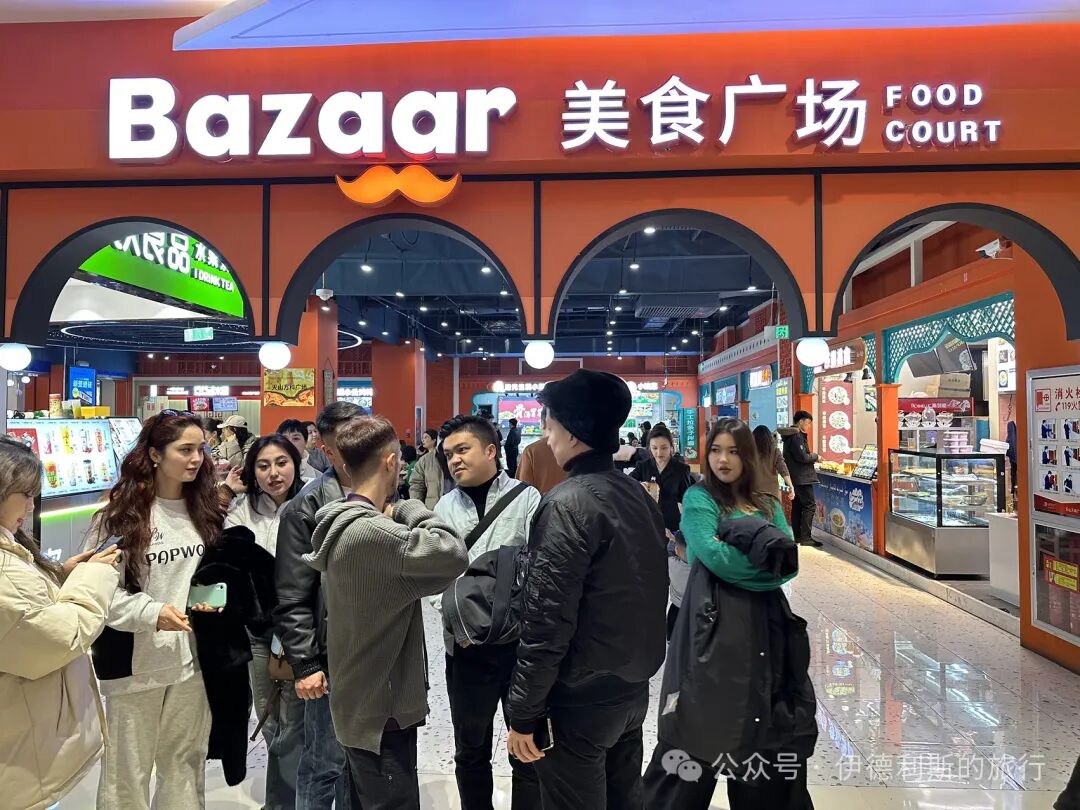
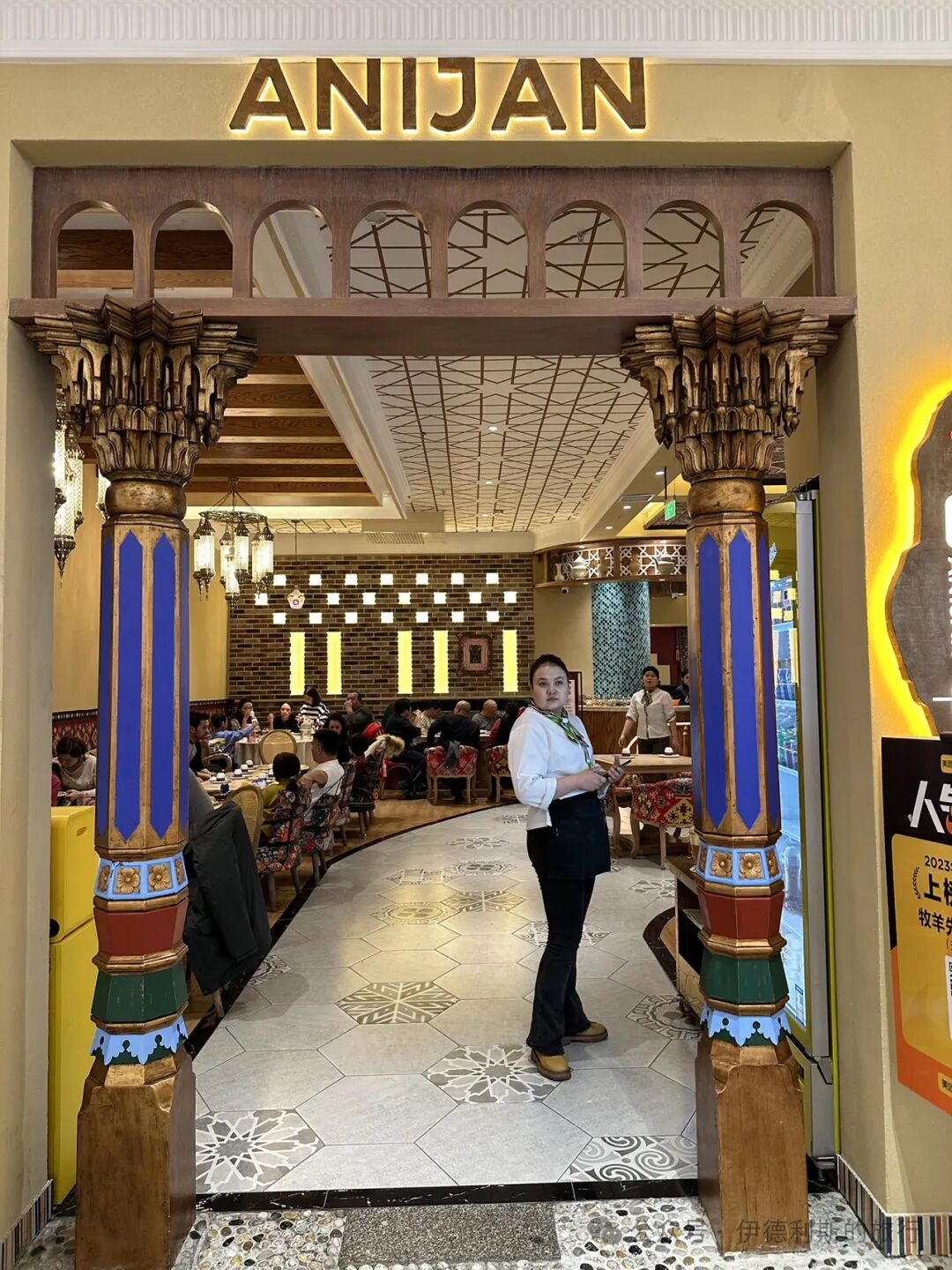
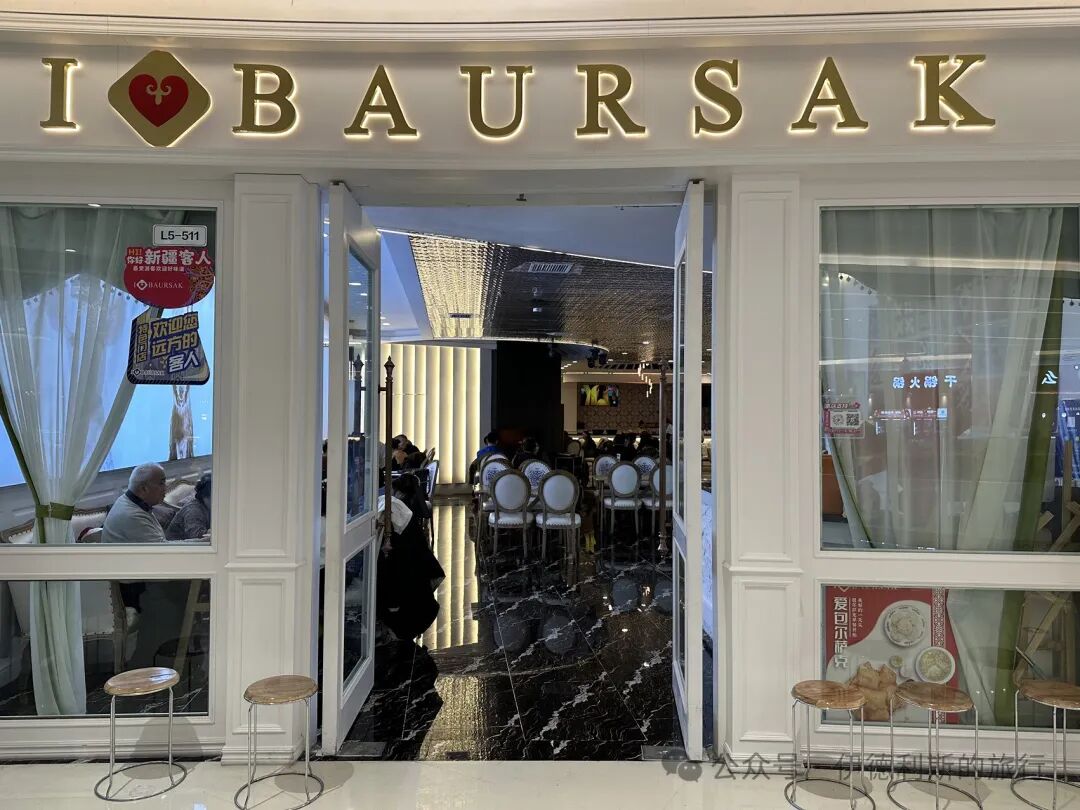
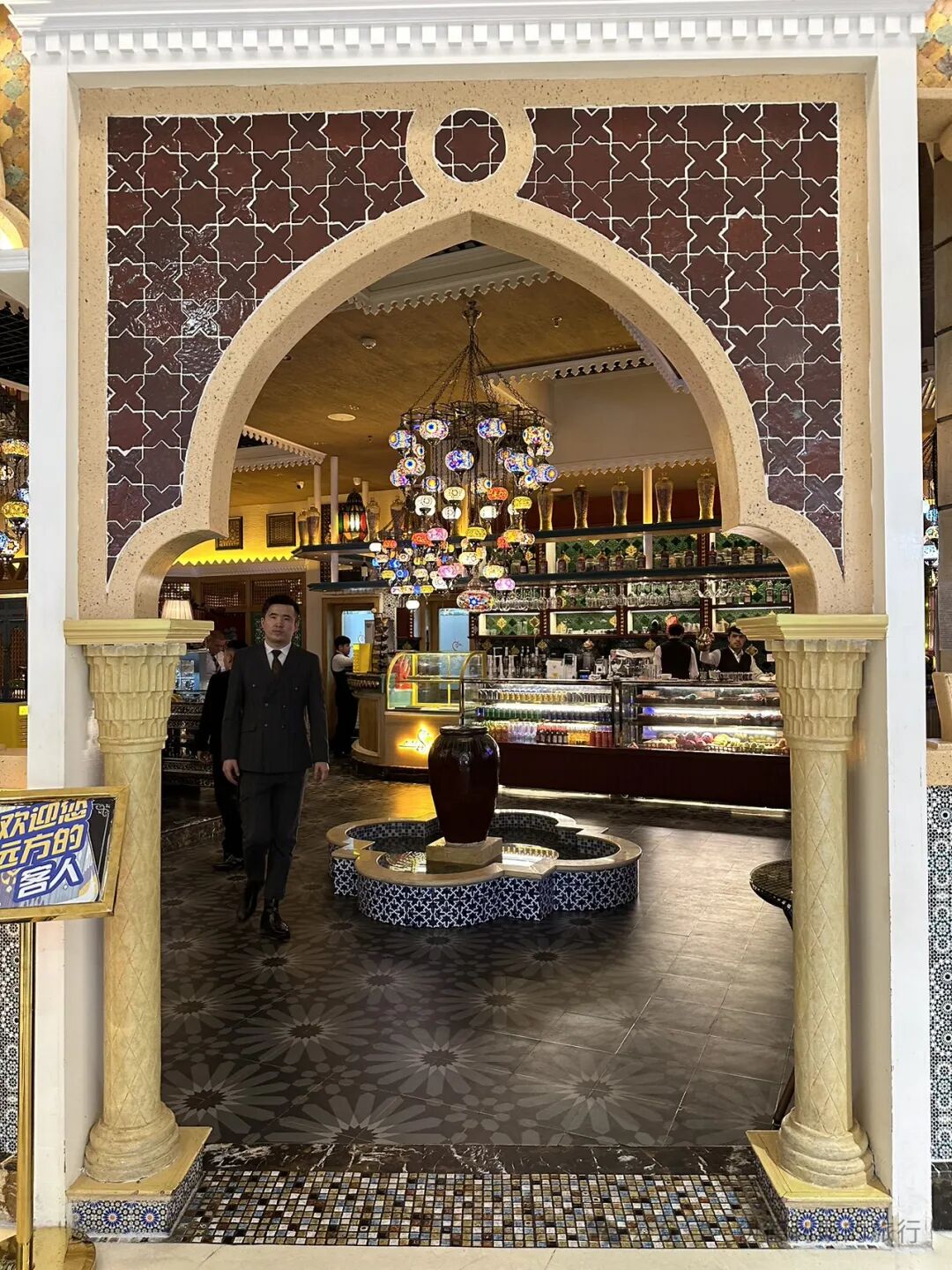
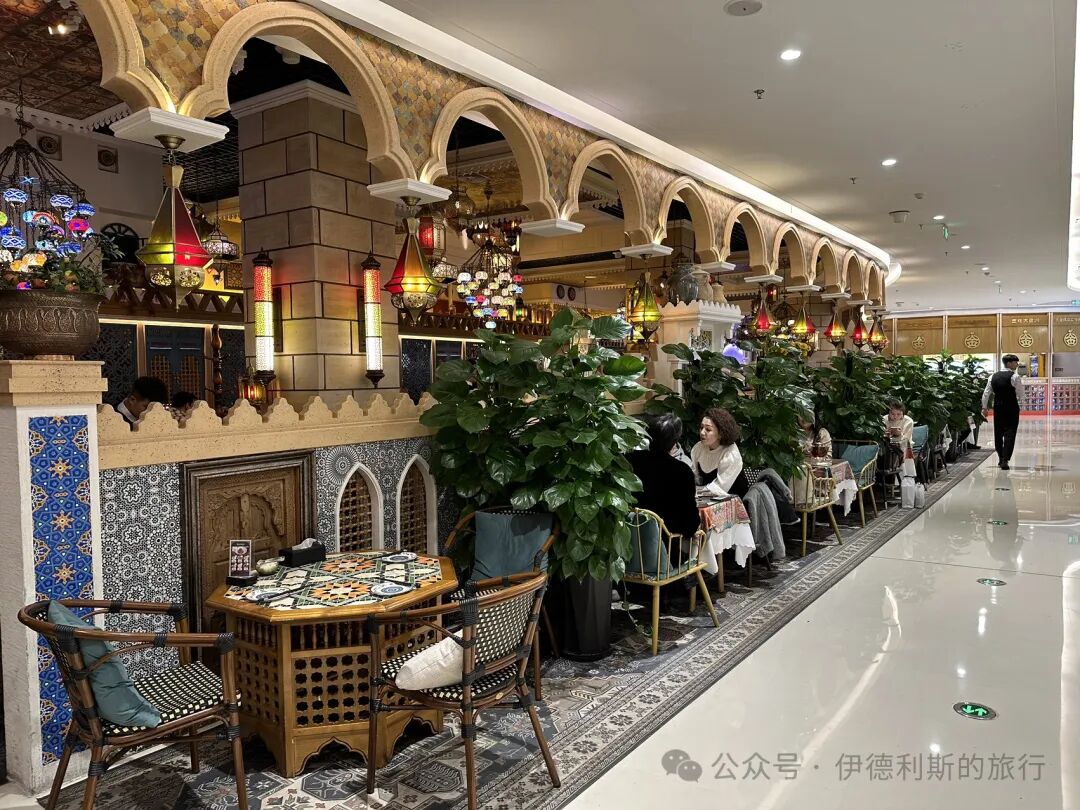
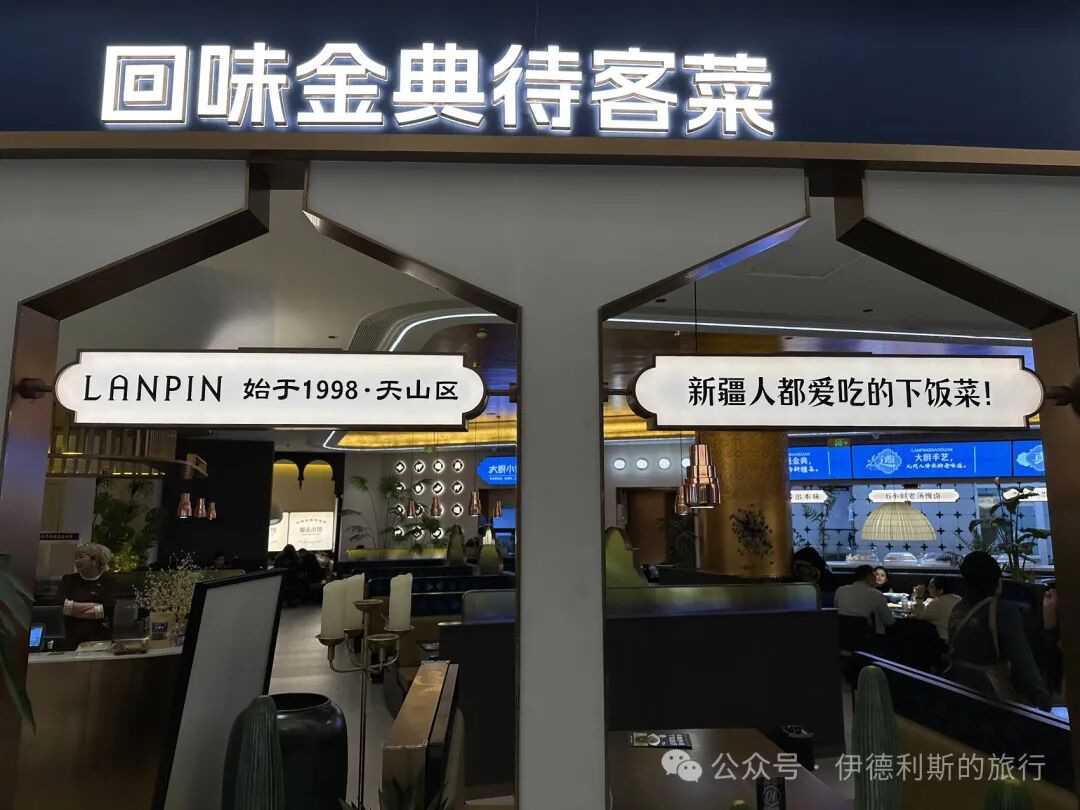
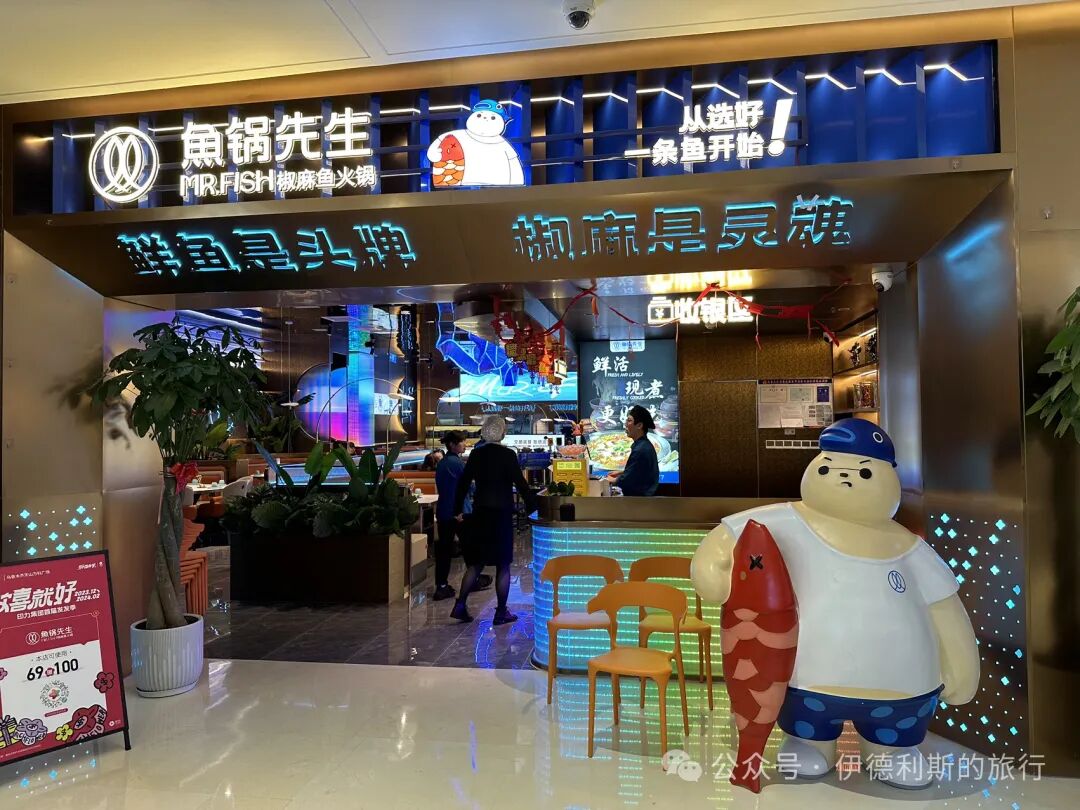
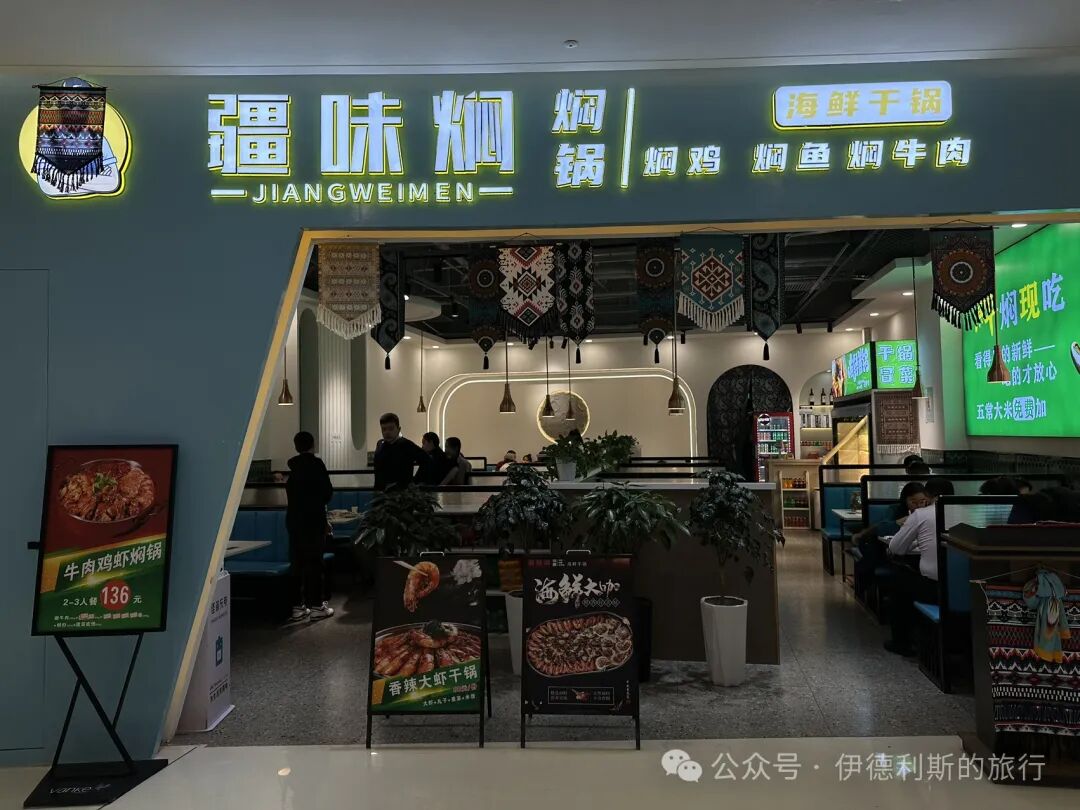
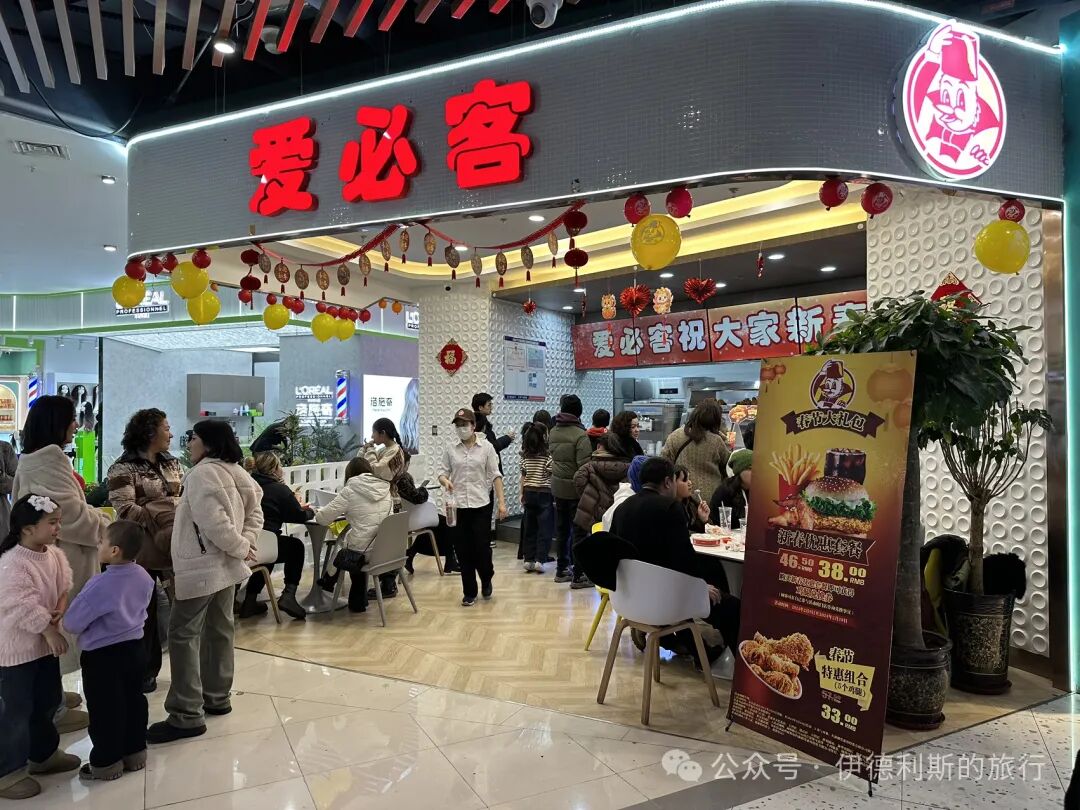
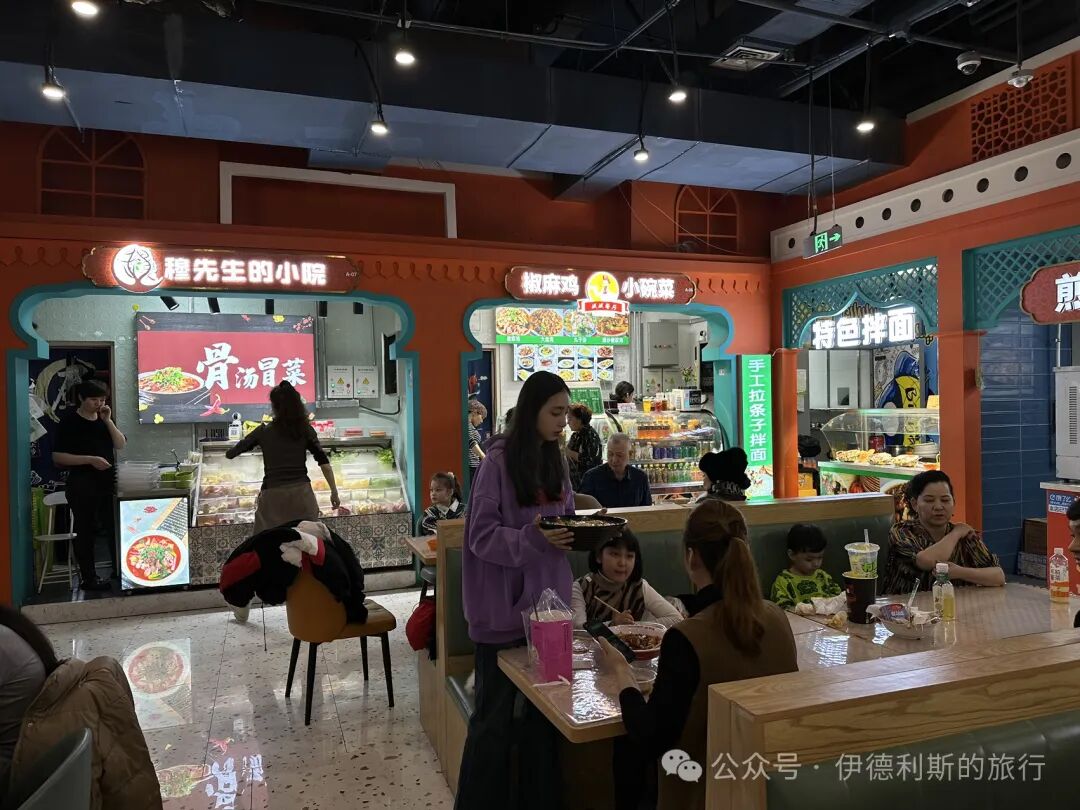
The most popular spots at Tianshan Vanke are probably Mayouyu Naan-pit Roasted Whole Fish and Yangle Spicy Chicken. We ate a spicy chicken. At first, it felt a little fishy, but it was spicy, fragrant, and very satisfying to eat.
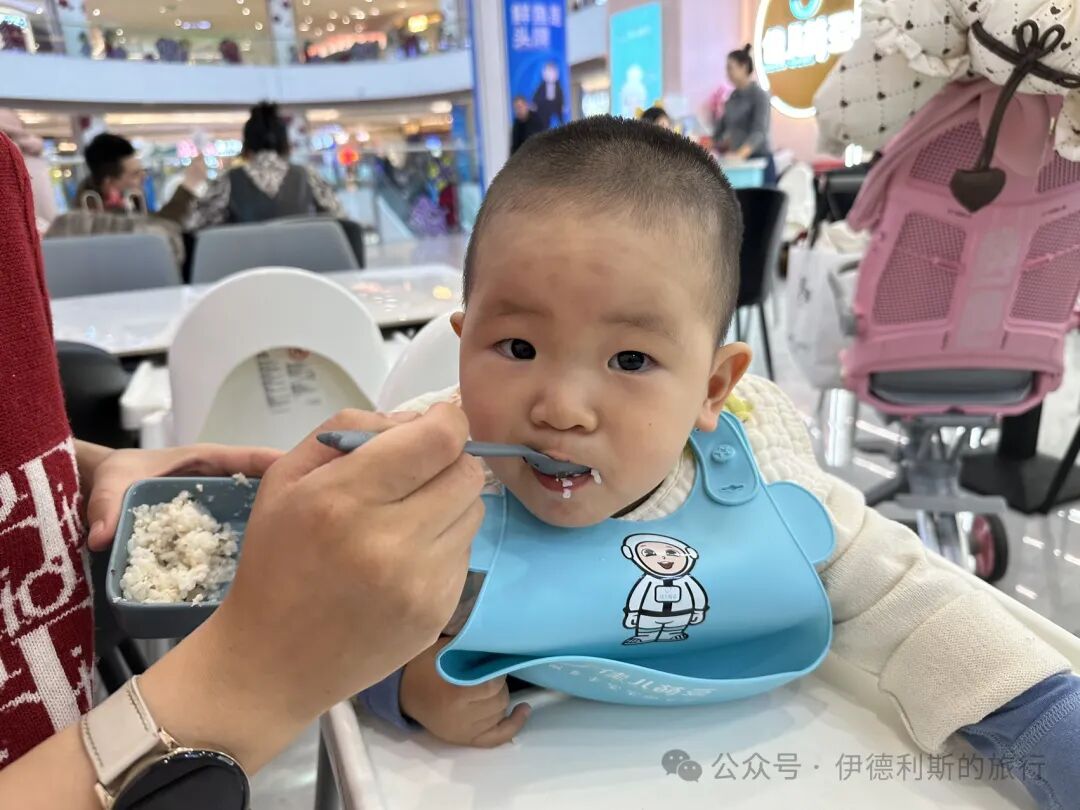
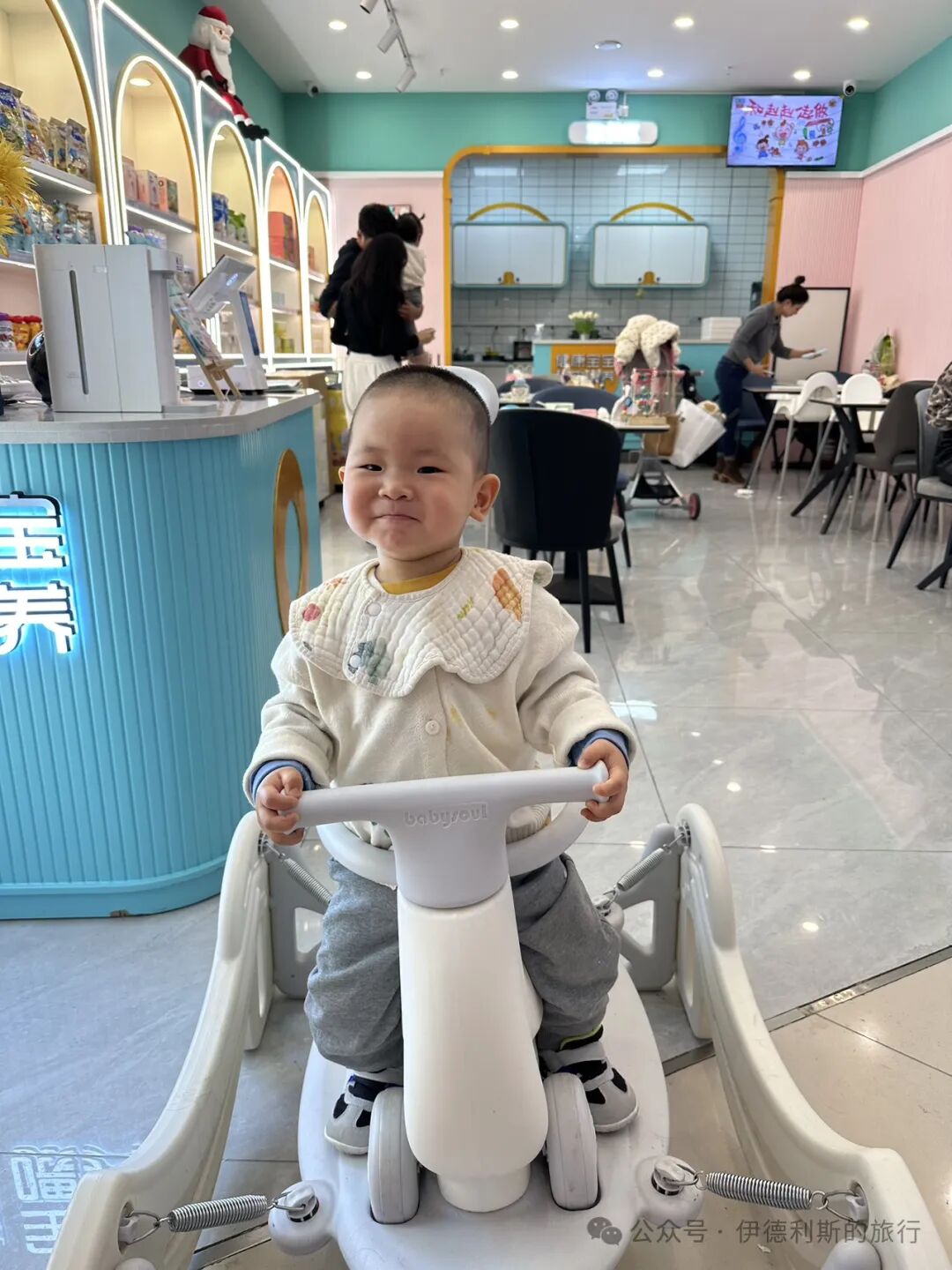
Also, the mall has a rare children's food restaurant called Jia'er Mengdou, opened by a Uyghur female boss, which is very popular with Uyghur parents. We took Suleiman to eat chicken and mushroom risotto, which came with a bowl of soup. This was Suleiman's first time eating at a restaurant in his life. They gave us a bib and a small cooling fan, which was quite thoughtful.
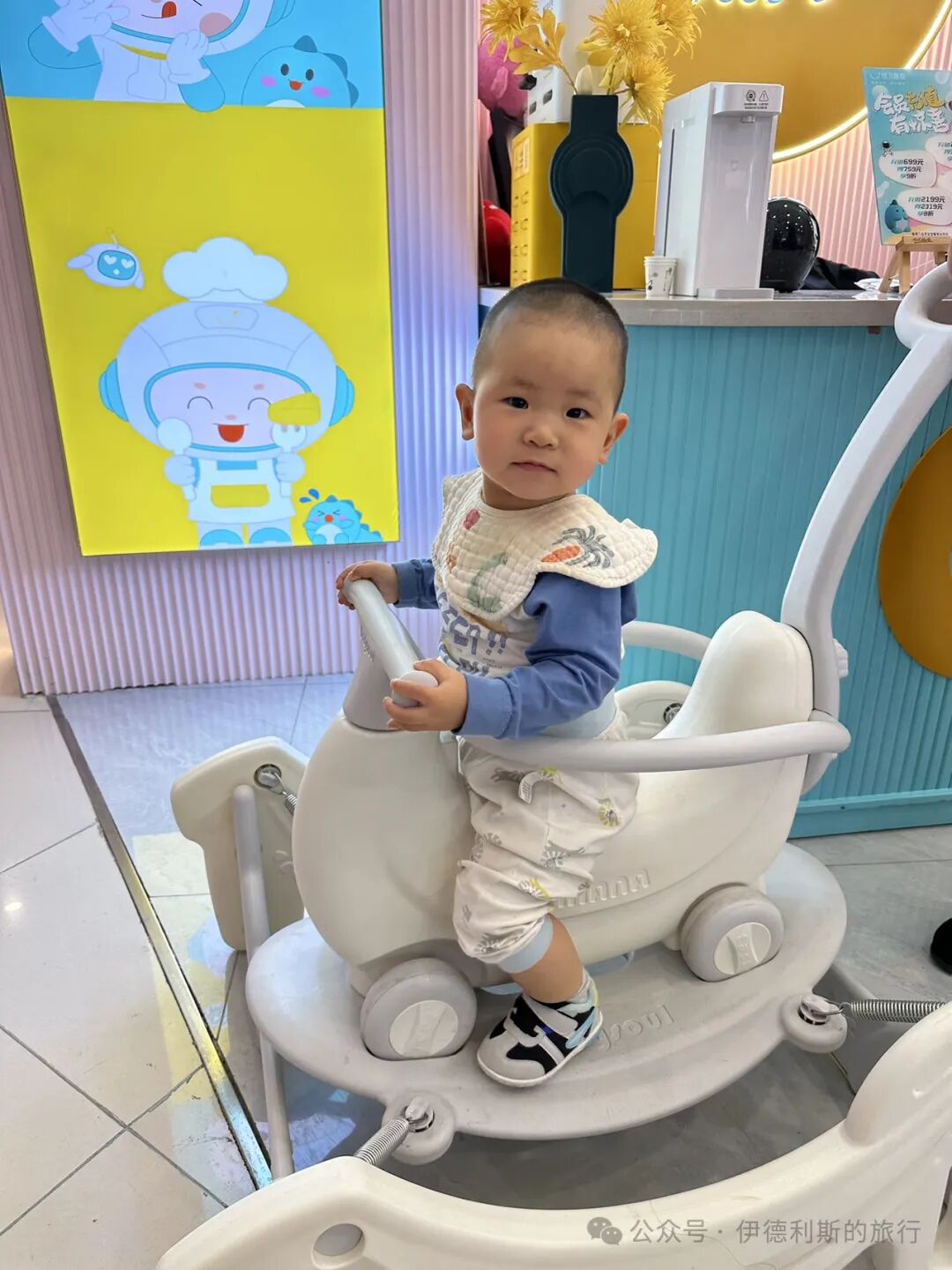
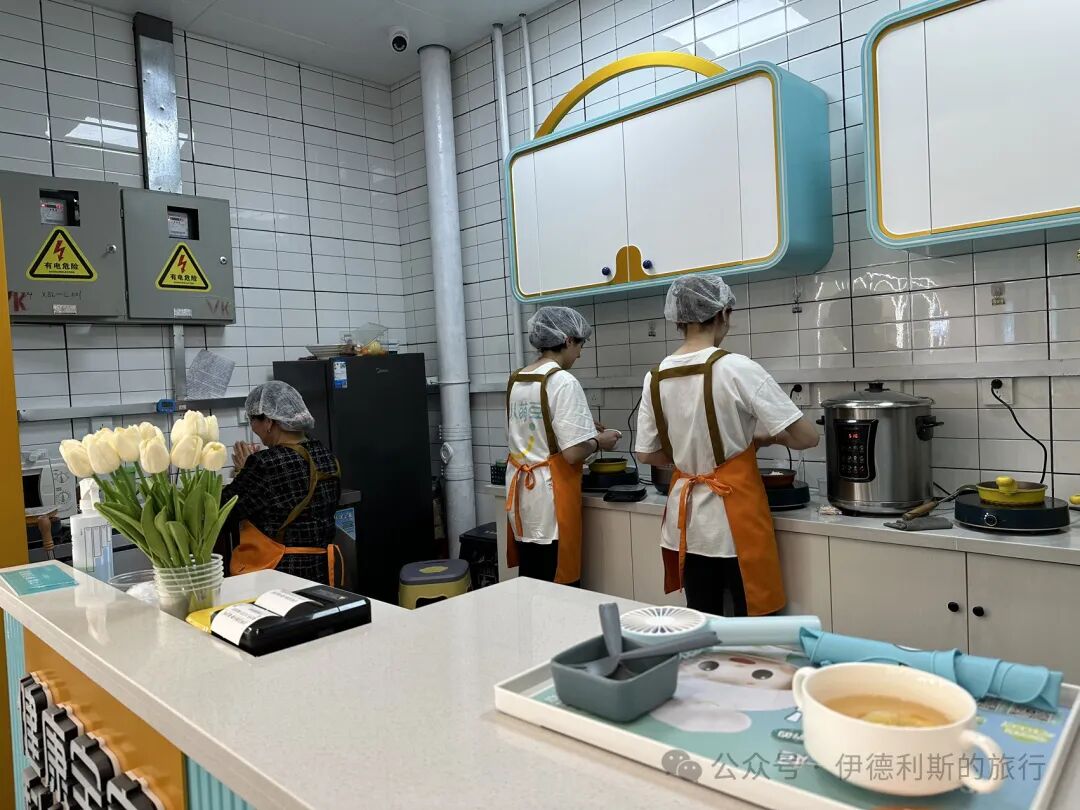
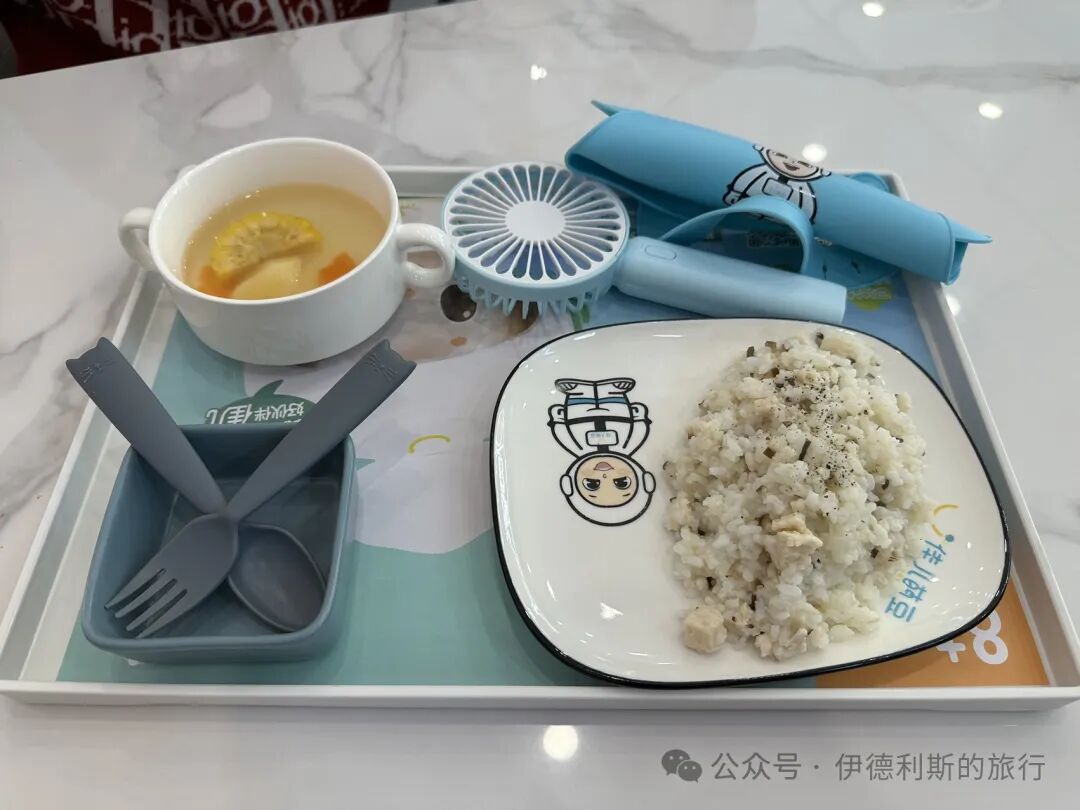
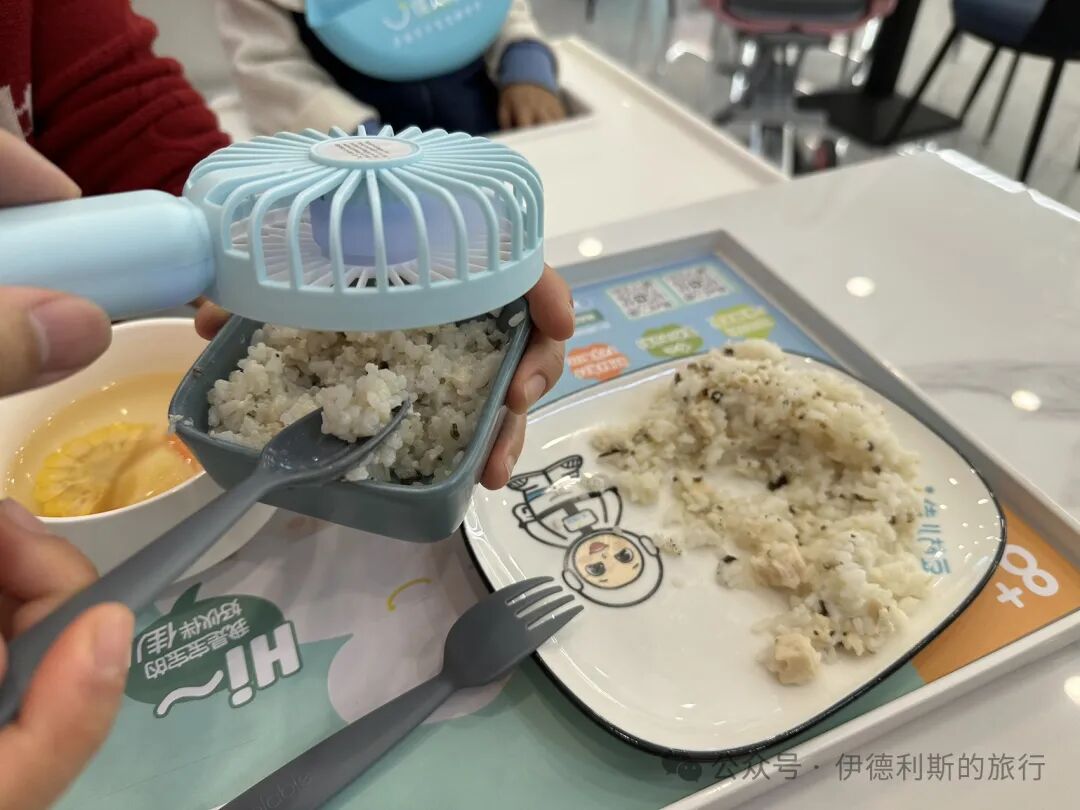
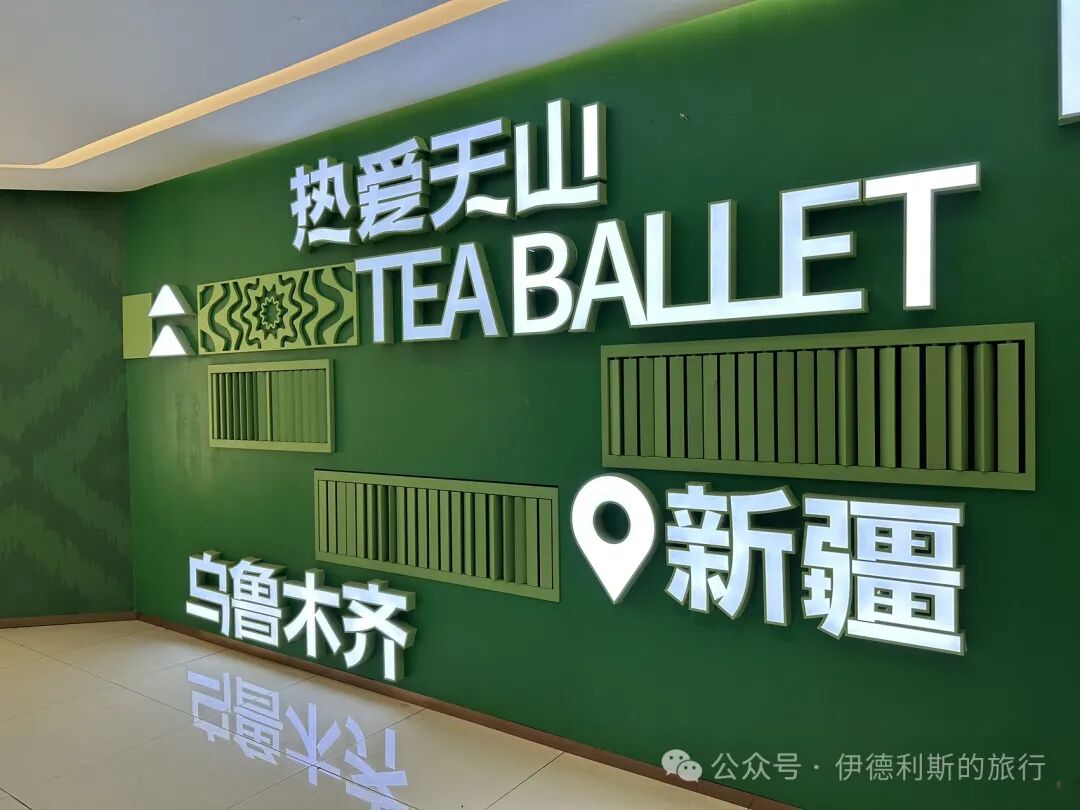
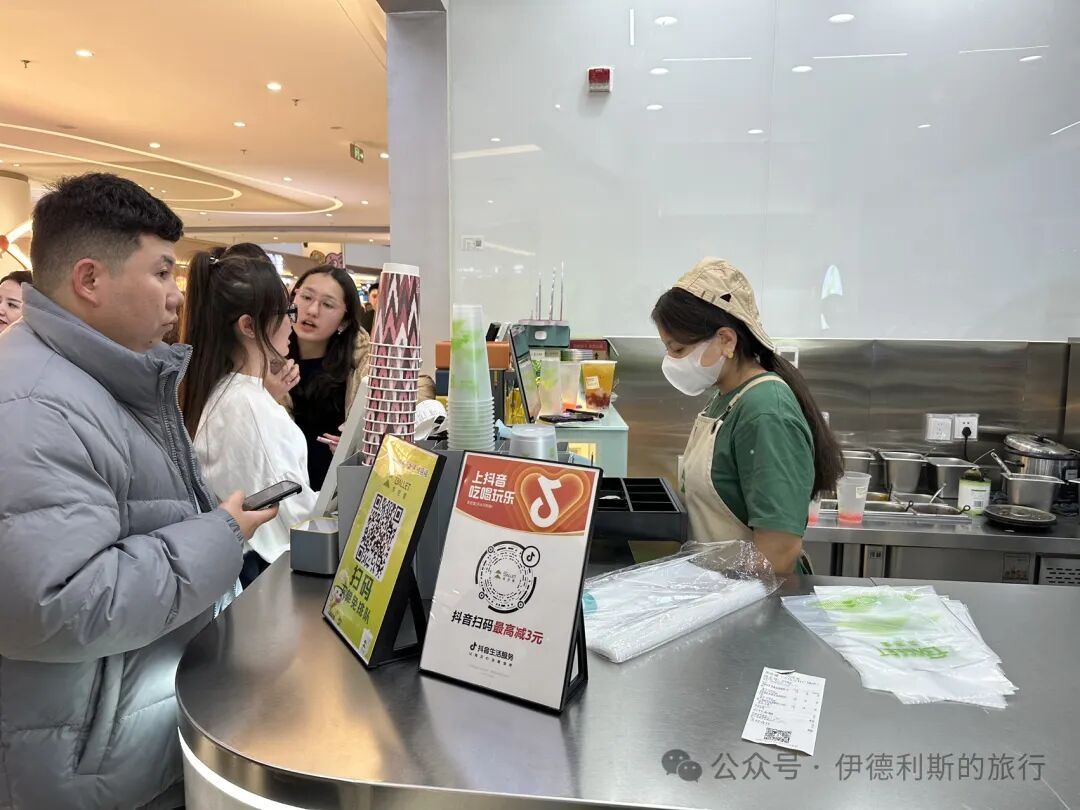
Then we checked out the local Xinjiang milk tea brand Tea Ballet, which has been very popular for the past two years. They specialize in various fruit yogurts, and the founder, Ma Xue'er, is a post-90s Urumqi native. I feel their style really suits young people, but I still prefer the handmade yogurt sold on the street.
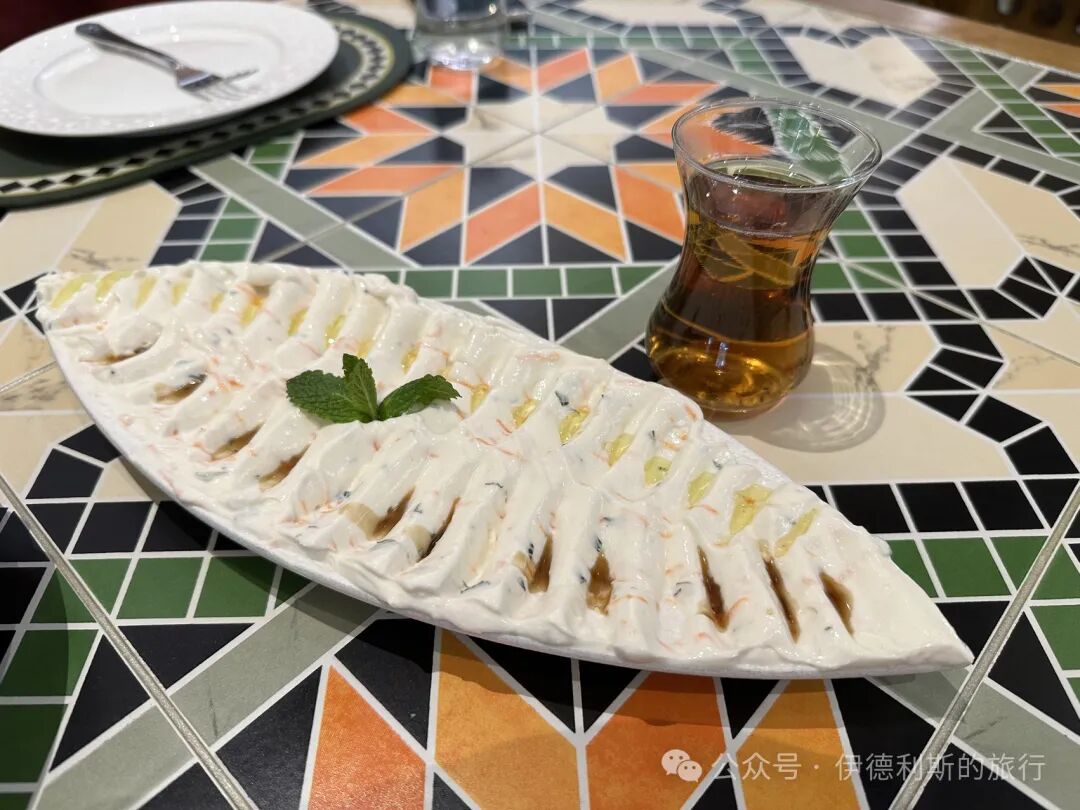
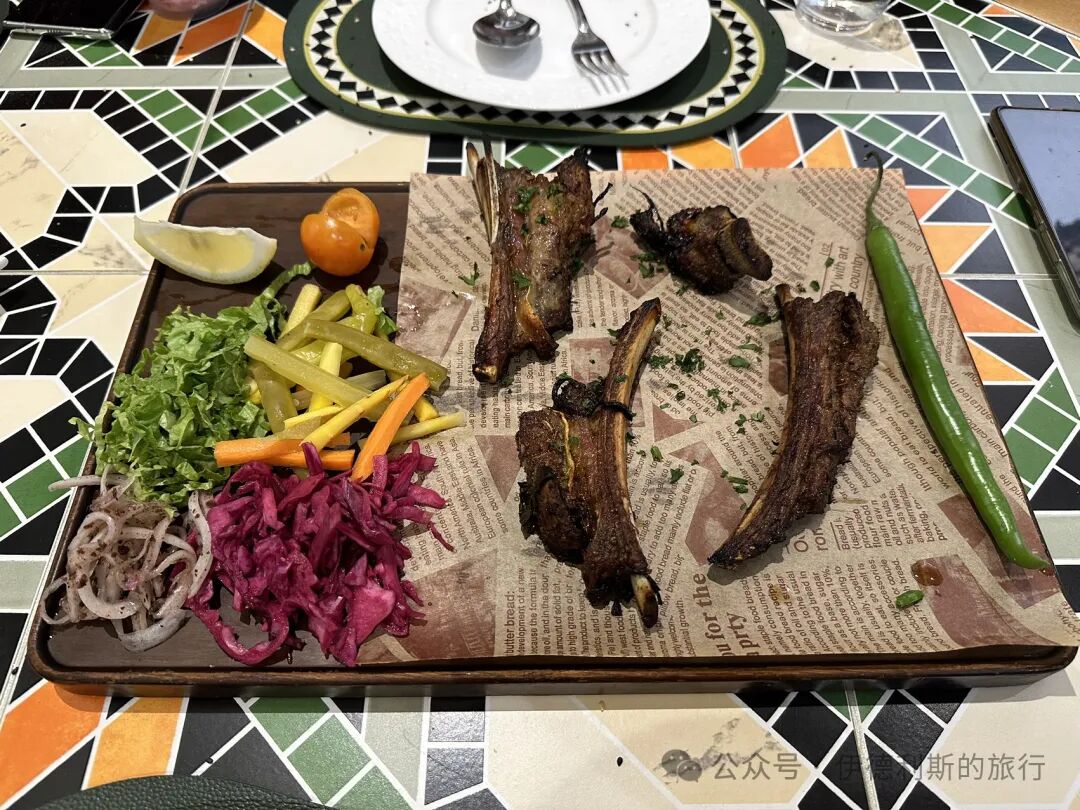
At the Turkish restaurant in the mall, we ordered hollow bread, grilled lamb chops, and mint yogurt. The prices are a bit high, and they focus on a nice atmosphere, so it feels like a good place for a date. The hollow bread (nang) is quite tasty, but the lamb chops feel a bit overcooked.
Further reading:
[Halal Travel Review] Urumqi in 2018, the beautiful Dawan area.
The night markets in Urumqi are so much fun to explore!
Getting married in Urumqi
Halal Travel Guide: Urumqi - Spring Festival, Hui Muslims and Jumuah
Articles • ali2007fr posted the article • 0 comments • 144 views • 2026-05-19 07:27
Summary: This Urumqi article records Hui Muslim life during the Spring Festival, including nianye, luohuali, Jumuah prayer, and visiting relatives and friends. It preserves the original religious customs, family scenes, food details, and community observations in natural English.
Night of Prayer (nianye).
During the 2024 Spring Festival holiday, I took Suleiman to visit his grandparents (anai aye) in Urumqi, just in time for the noble month of Sha'ban (the eighth month of the Islamic calendar). The evening of the 15th day of the eighth month is the Night of Bara'at, which means the Night of Atonement. On this night, the two angels on our shoulders replace the scrolls that record our good and bad deeds for the year. They seal the old scrolls and open new ones, which serve as evidence for questioning when we enter the afterlife, so it is also called the Night of Exchanging Scrolls. In the traditions of Hui Muslims in some regions, when the month of Sha'ban arrives, everyone takes turns inviting the imam and friends and family to their homes for a Night of Prayer. The main process includes reciting scriptures, praising the Prophet, performing repentance (tawbah), and asking for forgiveness for family members and the deceased. Afterward, everyone eats a rich meal to strengthen bonds, boost faith, and prepare for the noble month of Ramadan.
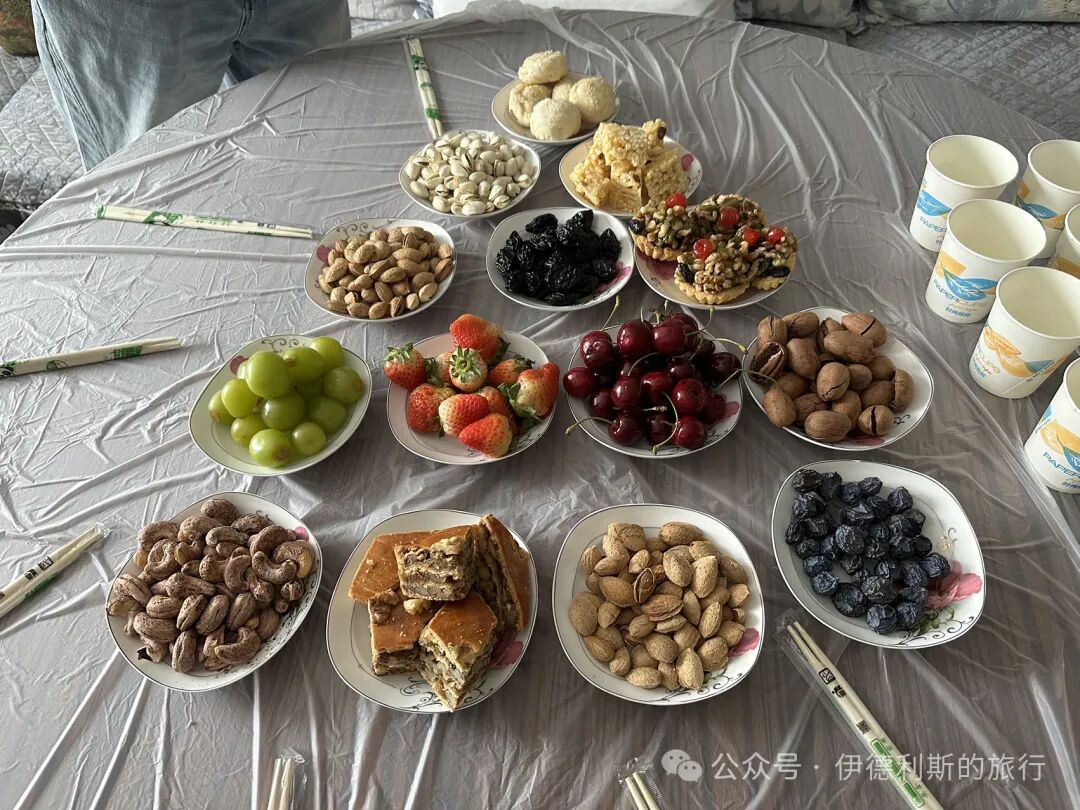
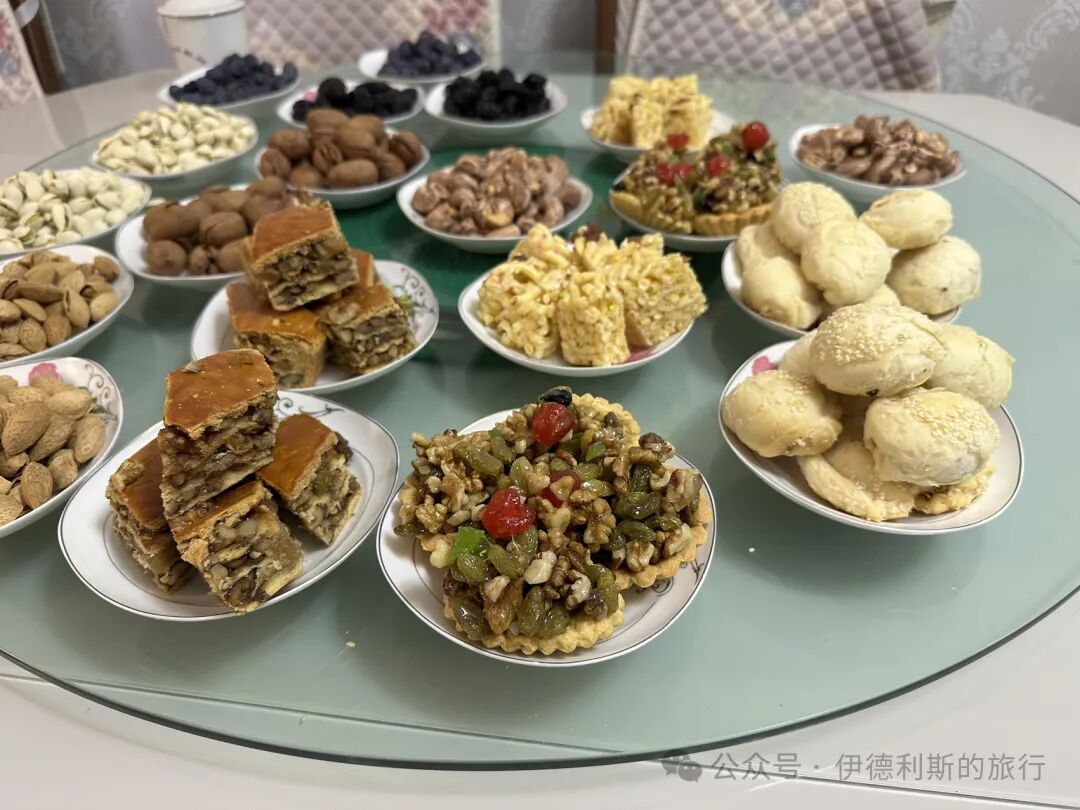
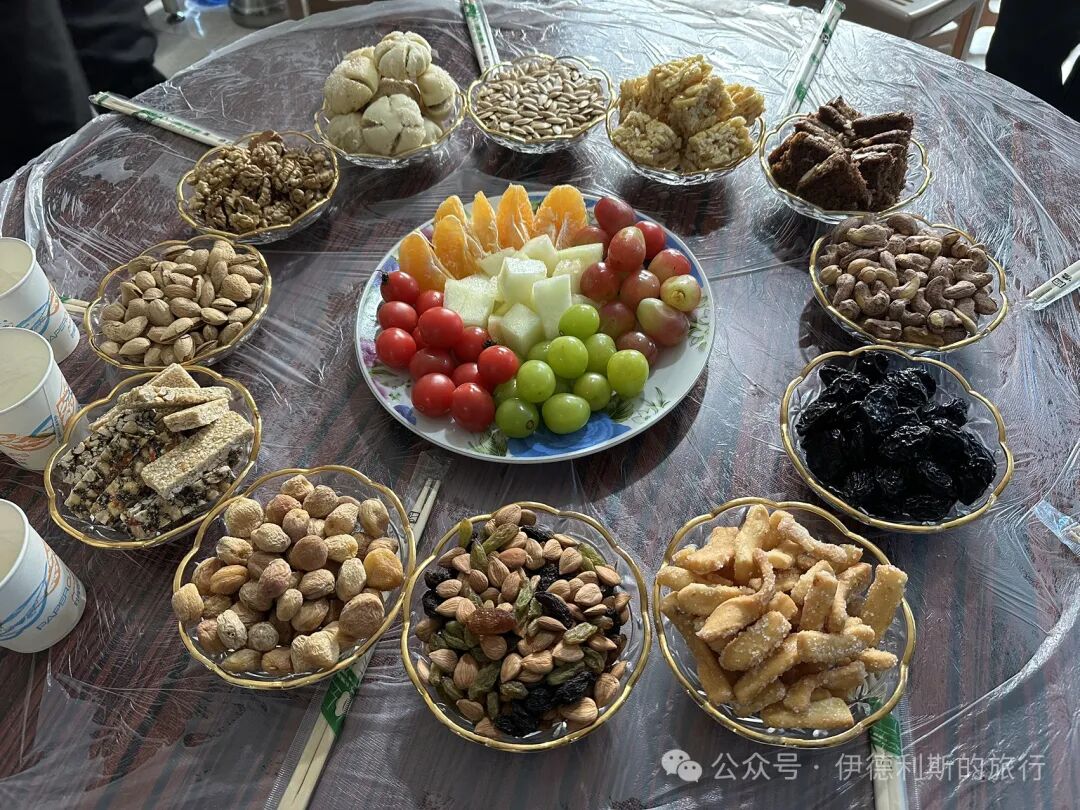
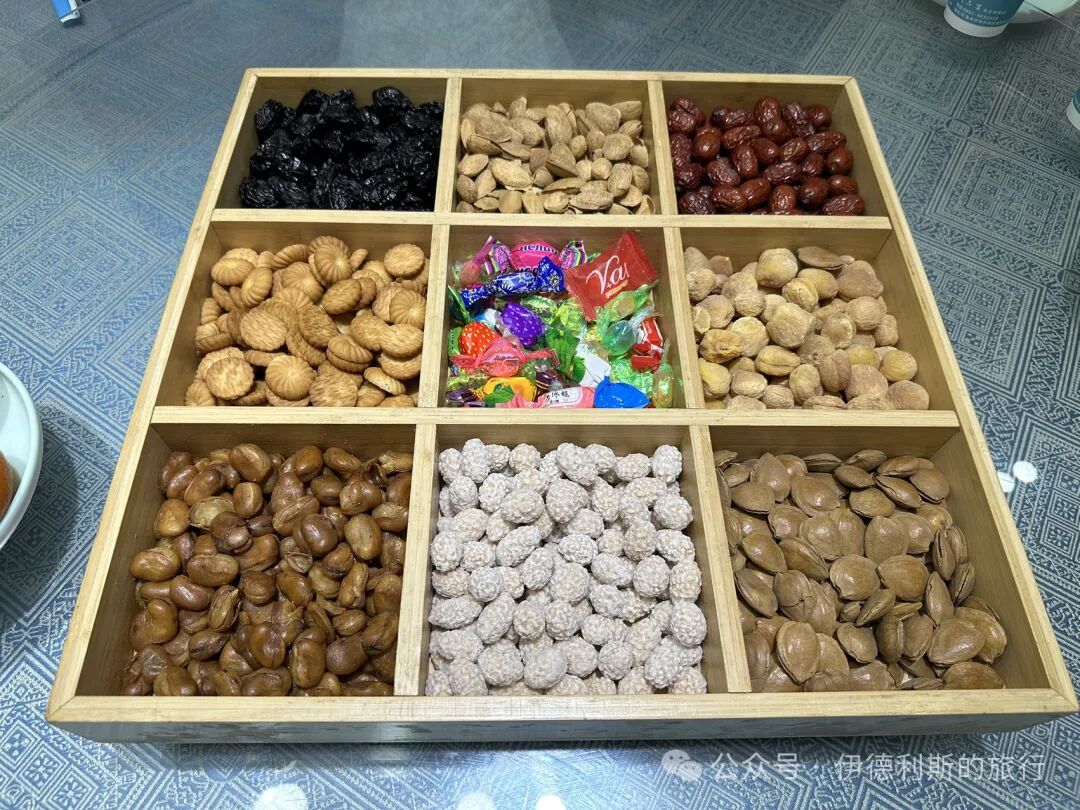
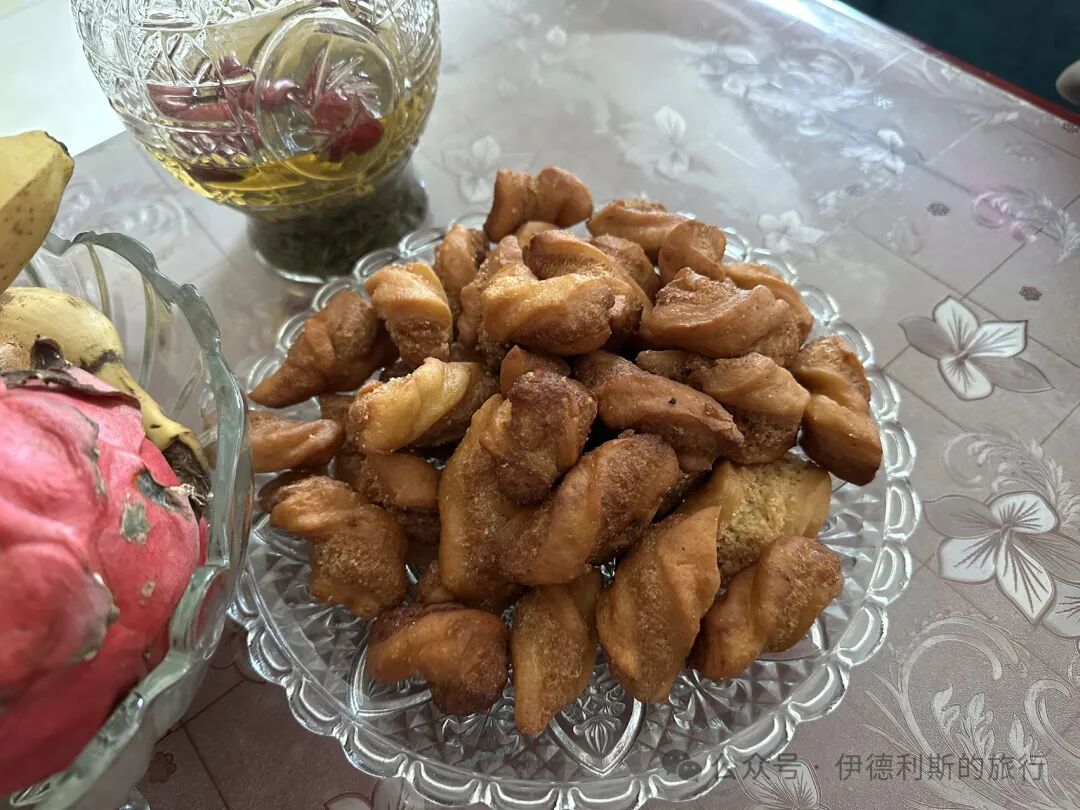
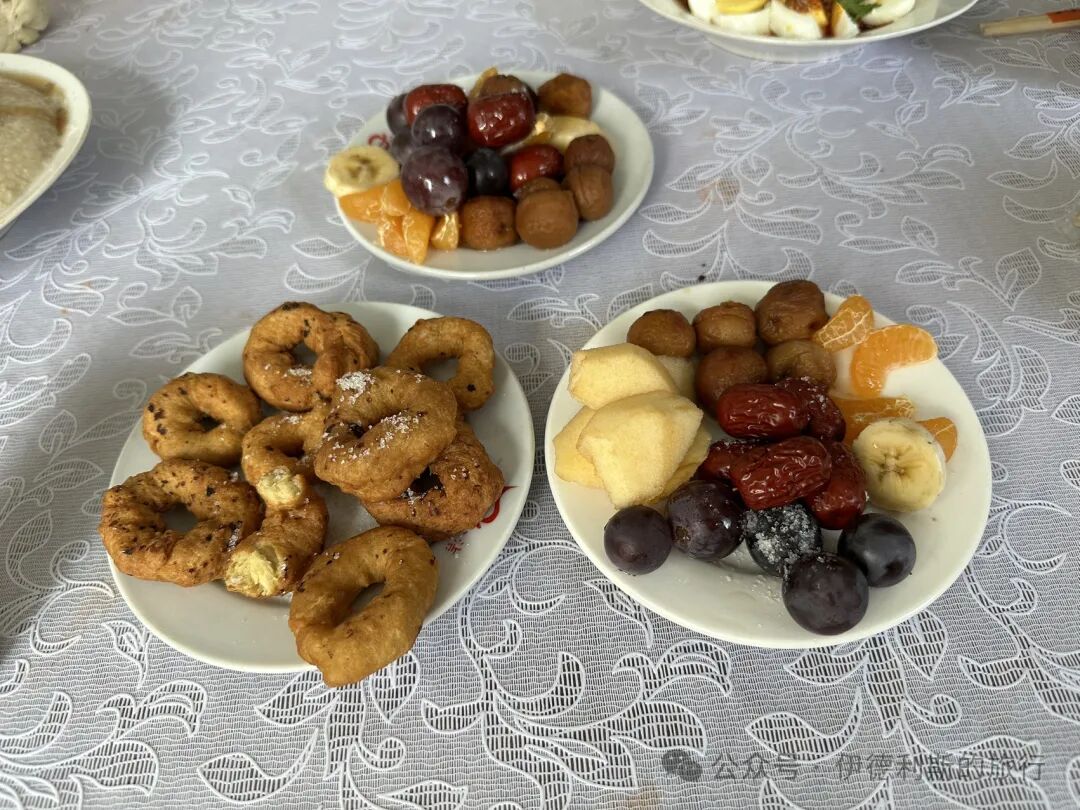
February 17 was our family's Night of Prayer, and we also celebrated Suleiman's first birthday (suisuizi). We invited four imams and a large group of relatives to recite surahs, recite the Bara'at praise, perform repentance, and receive dua, followed by a meal. First, we served appetizers (diediezi) and tea. The appetizers included nut tarts and baklava we bought at a Uyghur pastry shop on Hetian Street, as well as traditional flaky pastries and fried flour cakes (saqima) made by my aunt. After everyone chatted for a while, we cleared the appetizers and brought out the main dishes to officially start the feast.
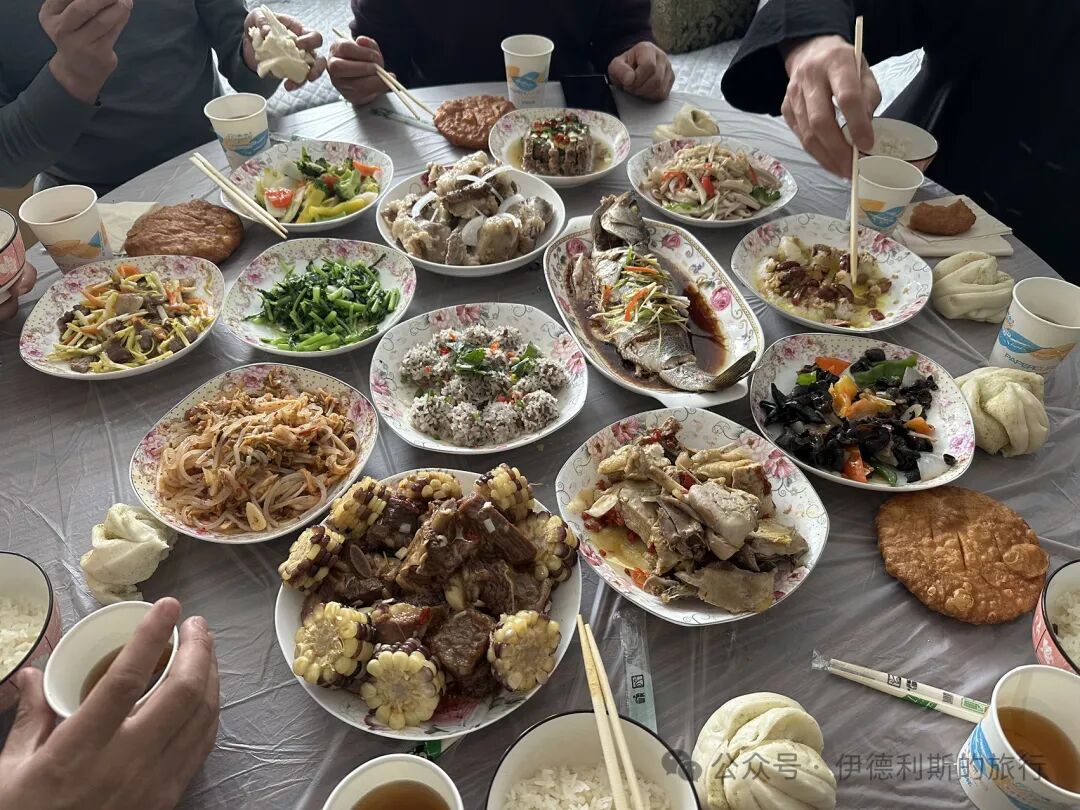
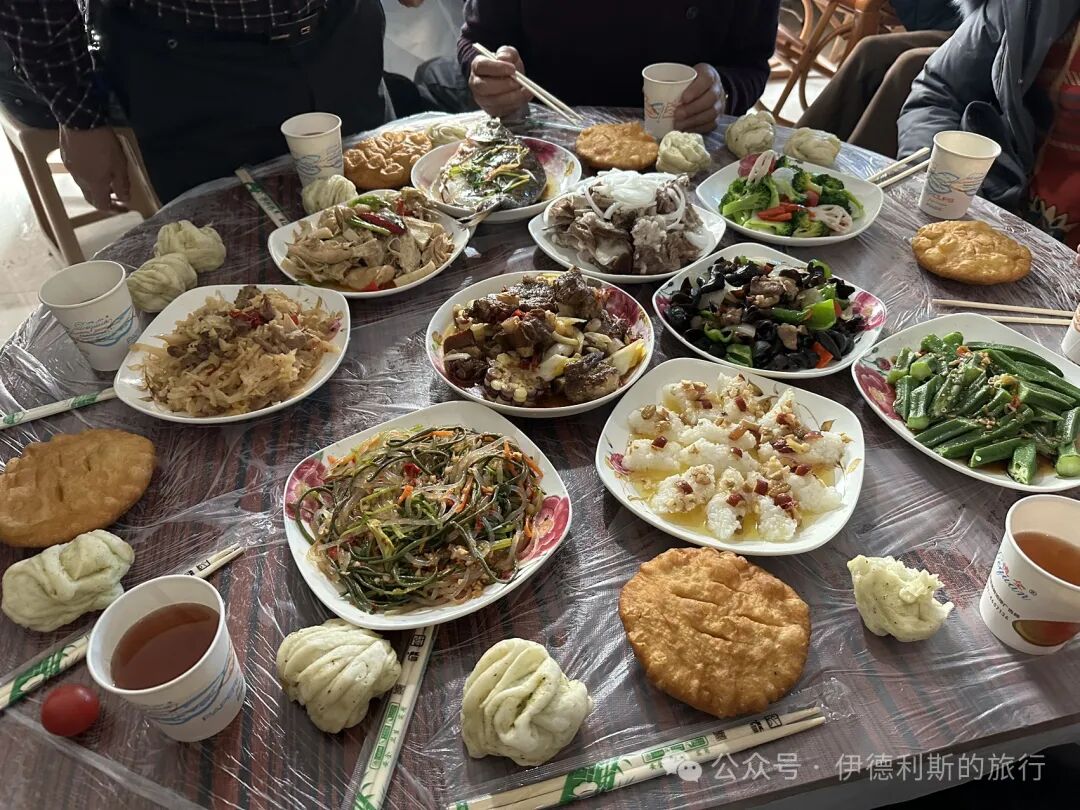
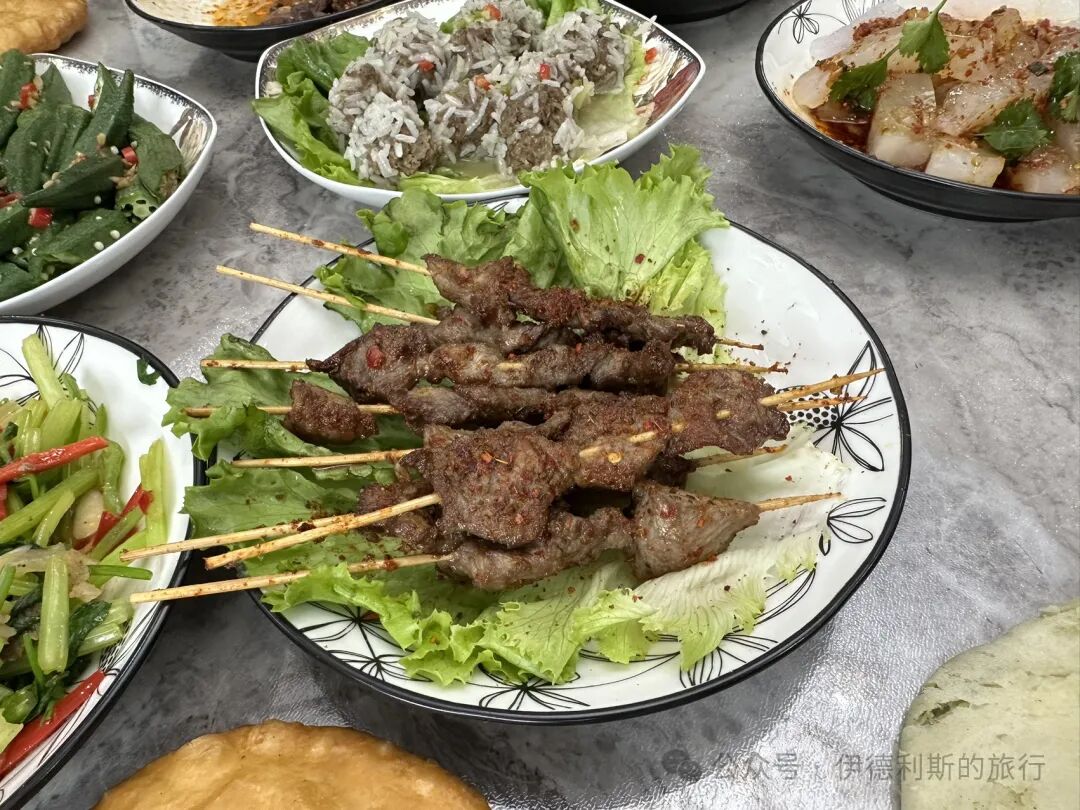
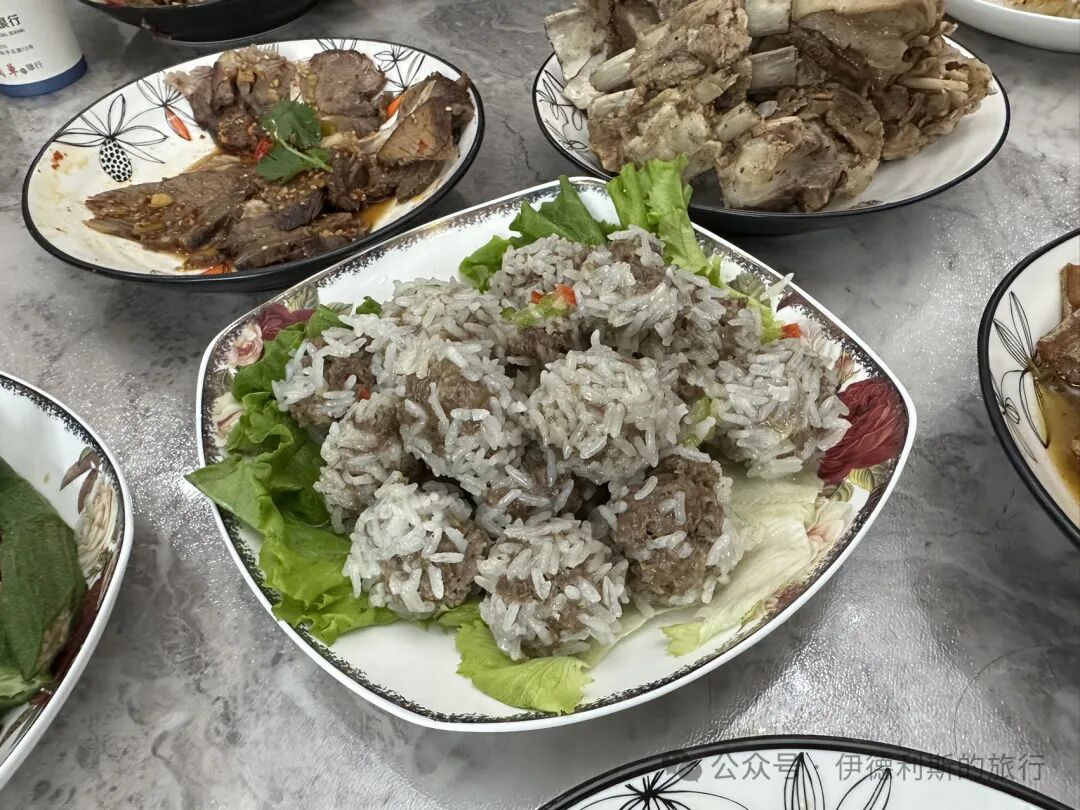
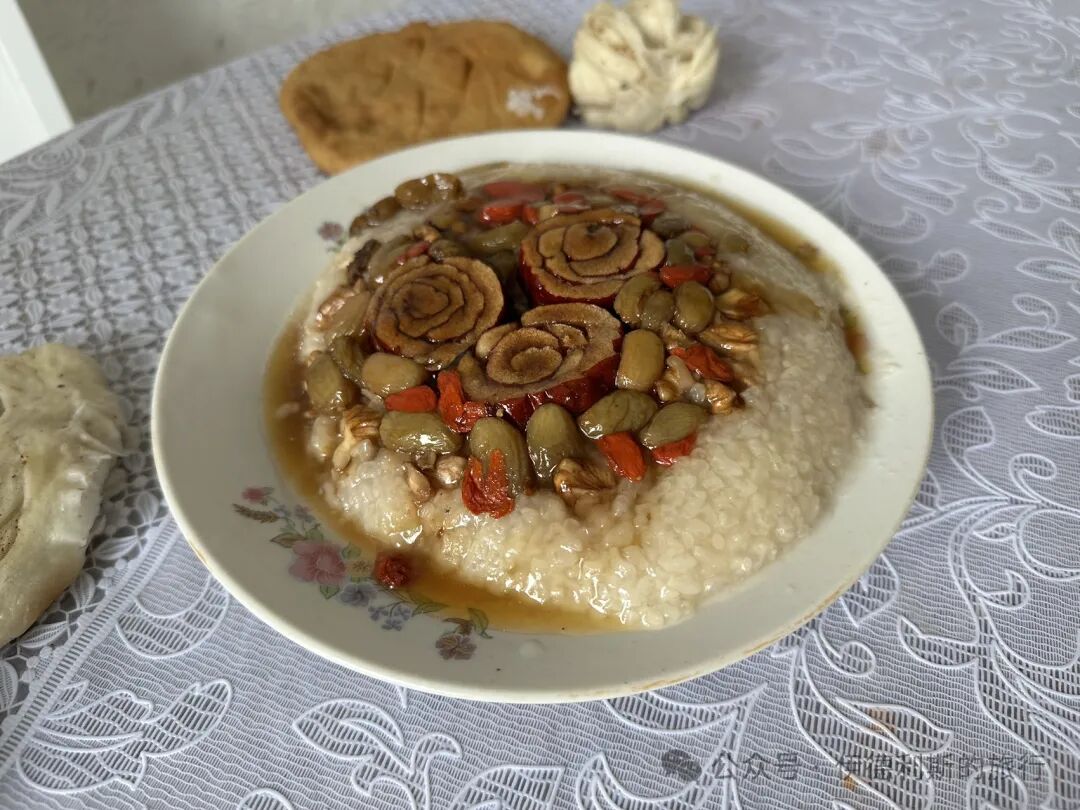
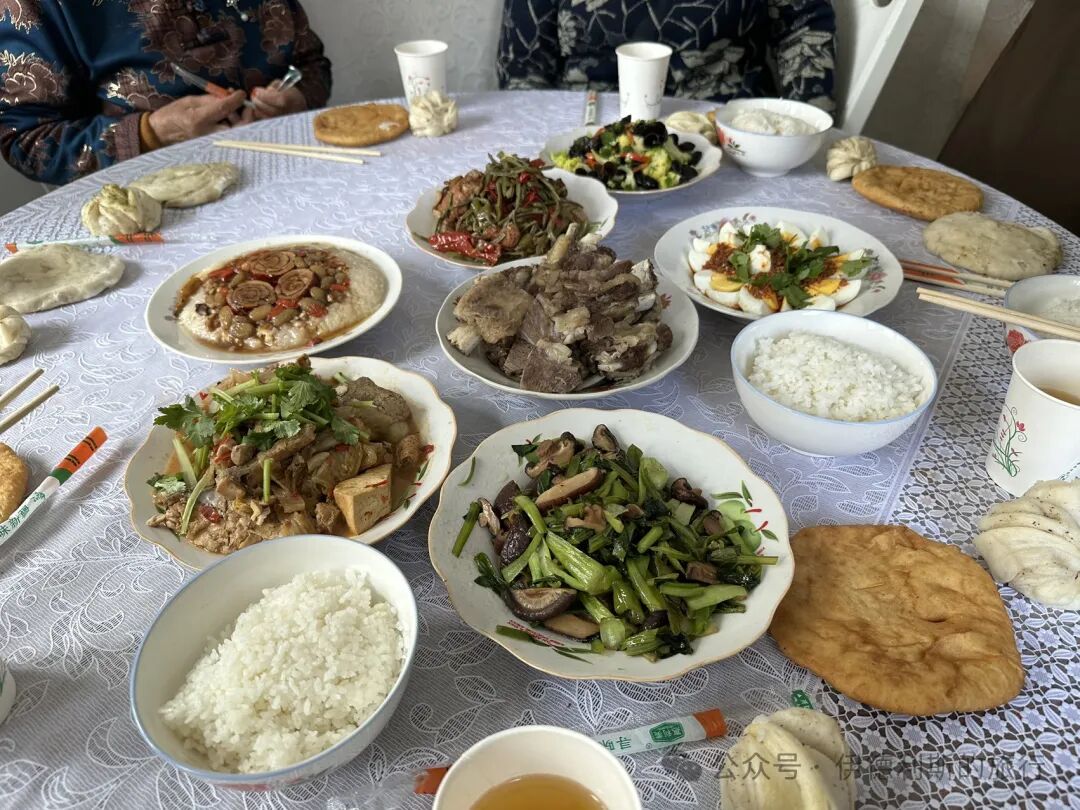
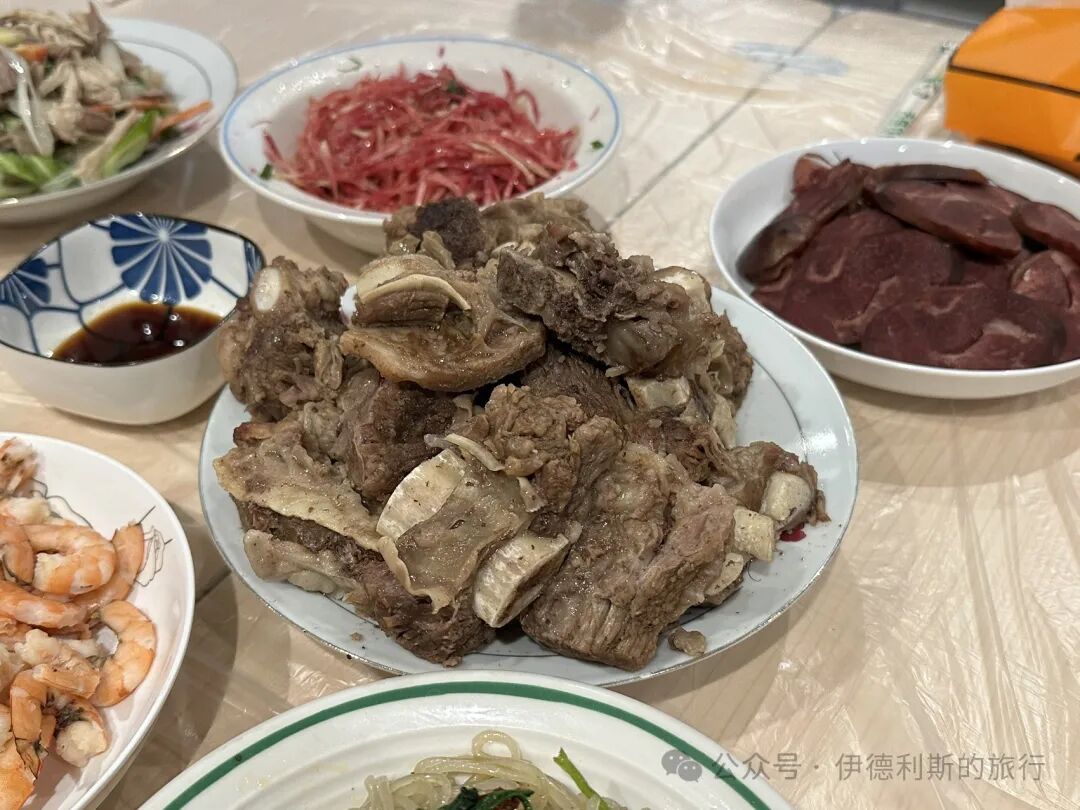
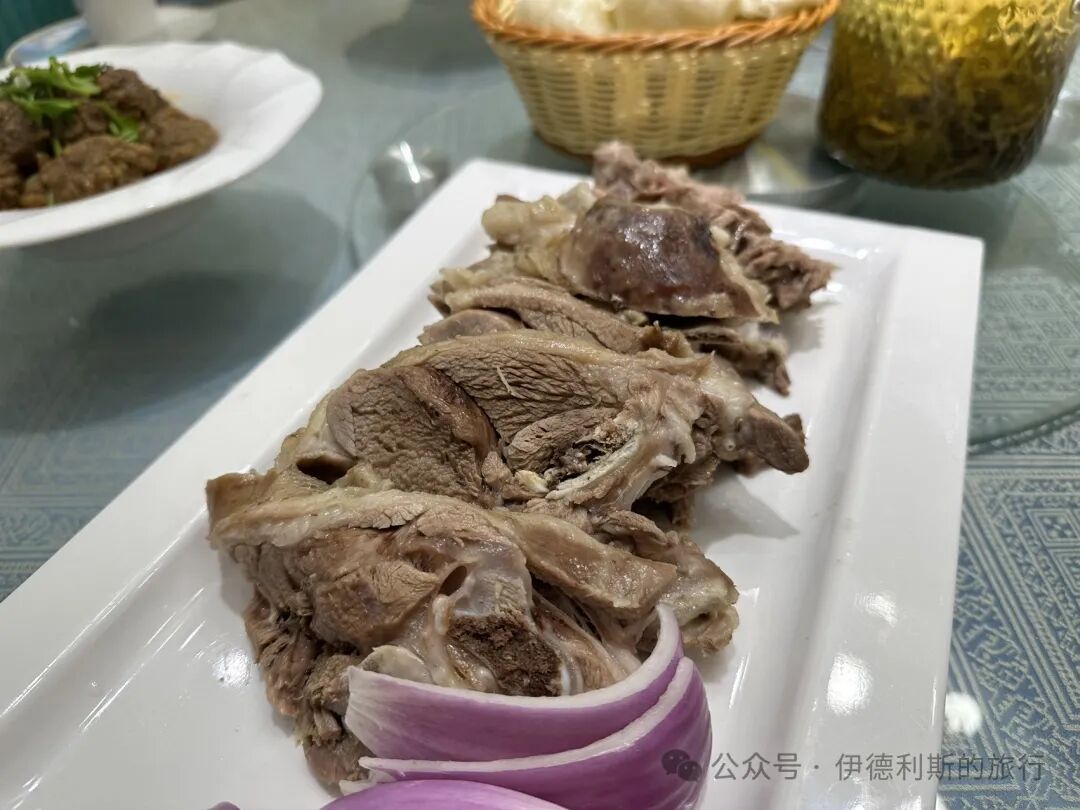
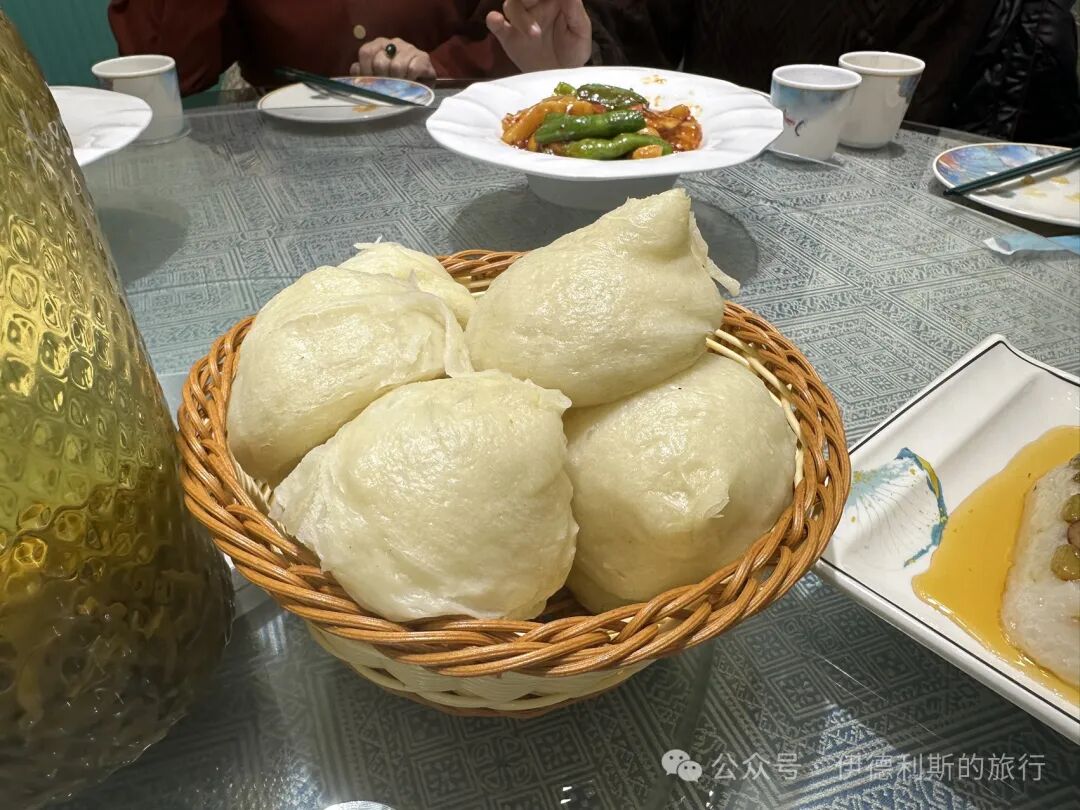
With the help of my aunts, we prepared a rich feast. The main dishes were clear-stewed lamb, braised beef steak, followed by steamed starch jelly (mengzi), pearl meatballs, peppercorn chicken, steamed fish, sweet rice platter (tianpanzi), and various stir-fried dishes. The staples were fried dough (youxiang), steamed buns (momo), and rice.
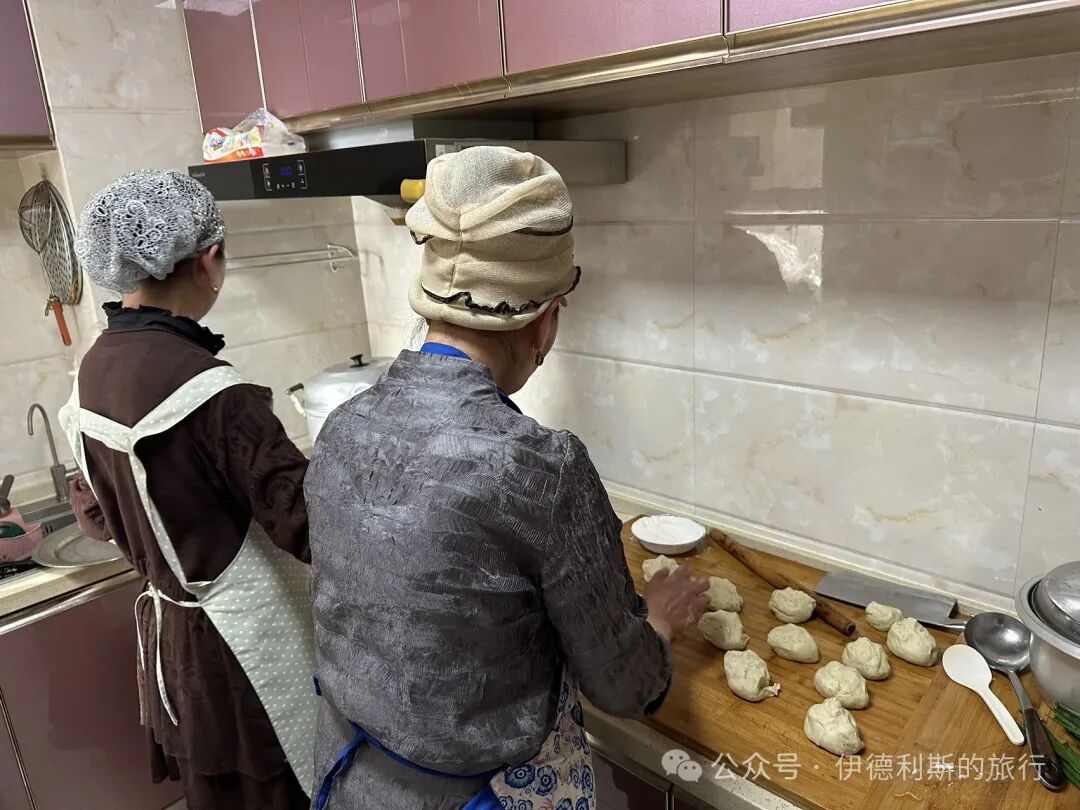
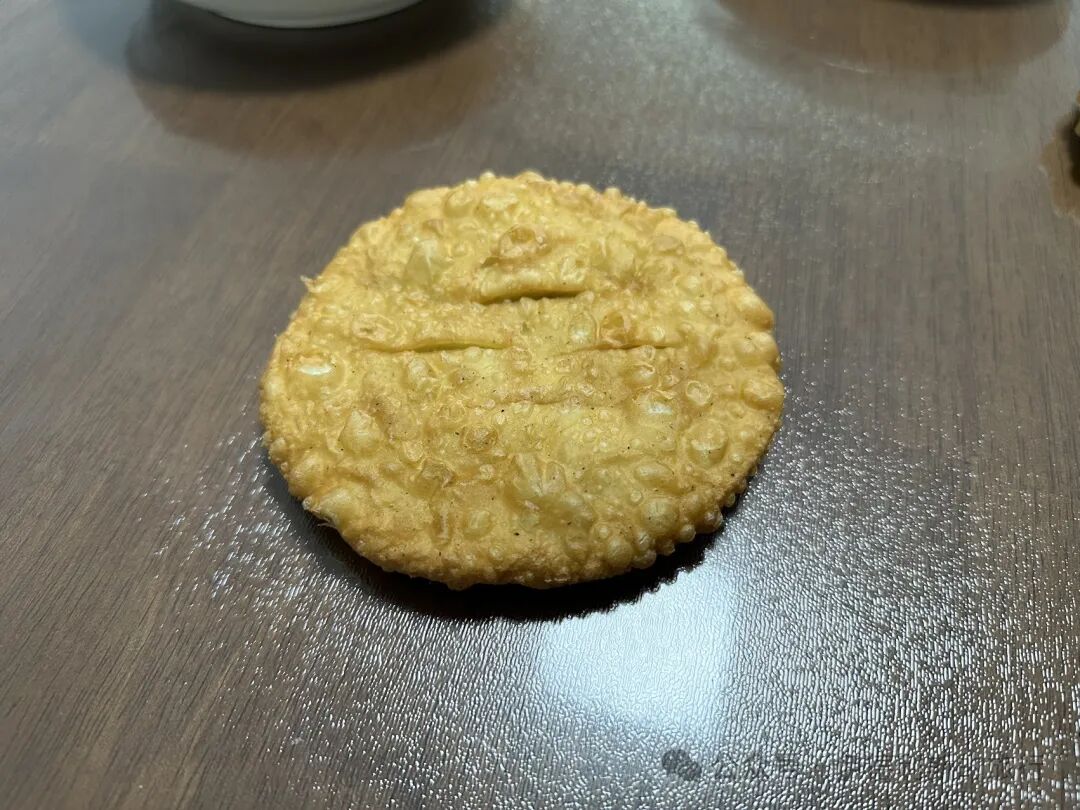
The fried dough was deep-fried a day in advance. Before frying, we first performed ablution (wudu), then leavened the dough. After it rose, we scalded a small portion with hot oil and mixed in a little baking soda and fenugreek powder. We kneaded the scalded dough into the leavened dough, covered the basin, and let it rest for 15 minutes. After resting, we rolled it into a long shape, pinched off pieces, rolled them into flat cakes, cut four small slits with a knife, and it was ready to be fried. When putting them into the pot, we recited the Tasmiyah. We fried them for a while, flipped them, and tapped the edges with chopsticks; once they were firm, they were done.
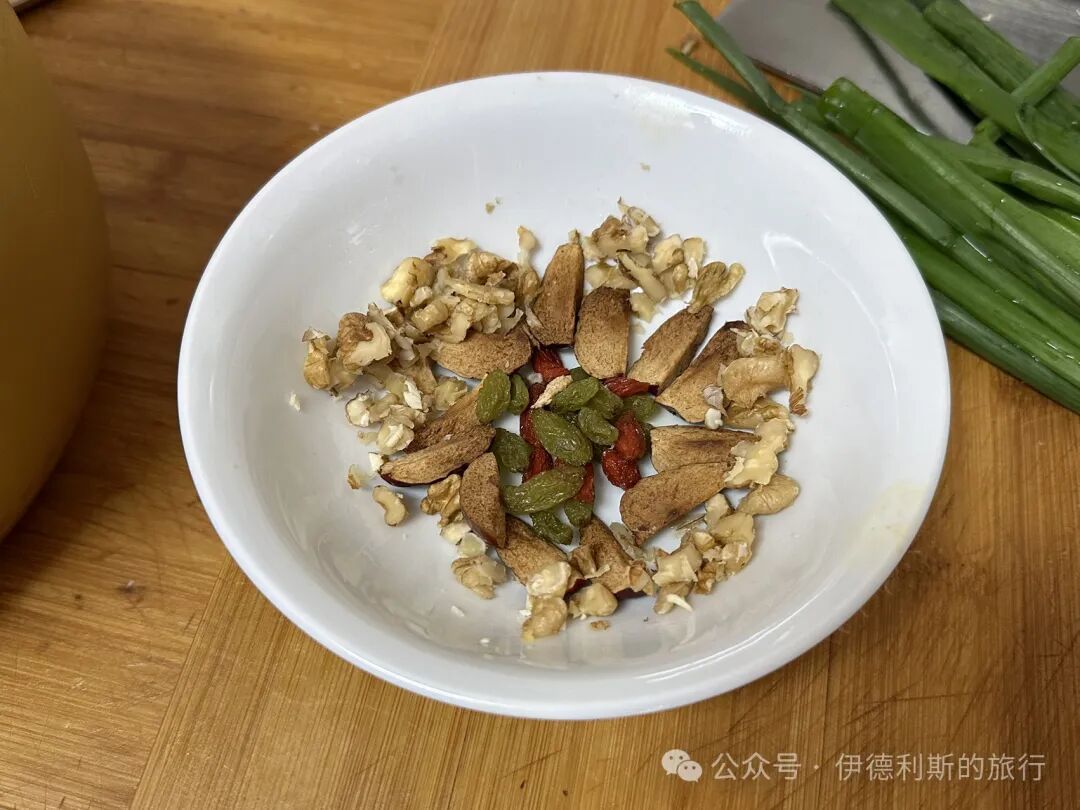
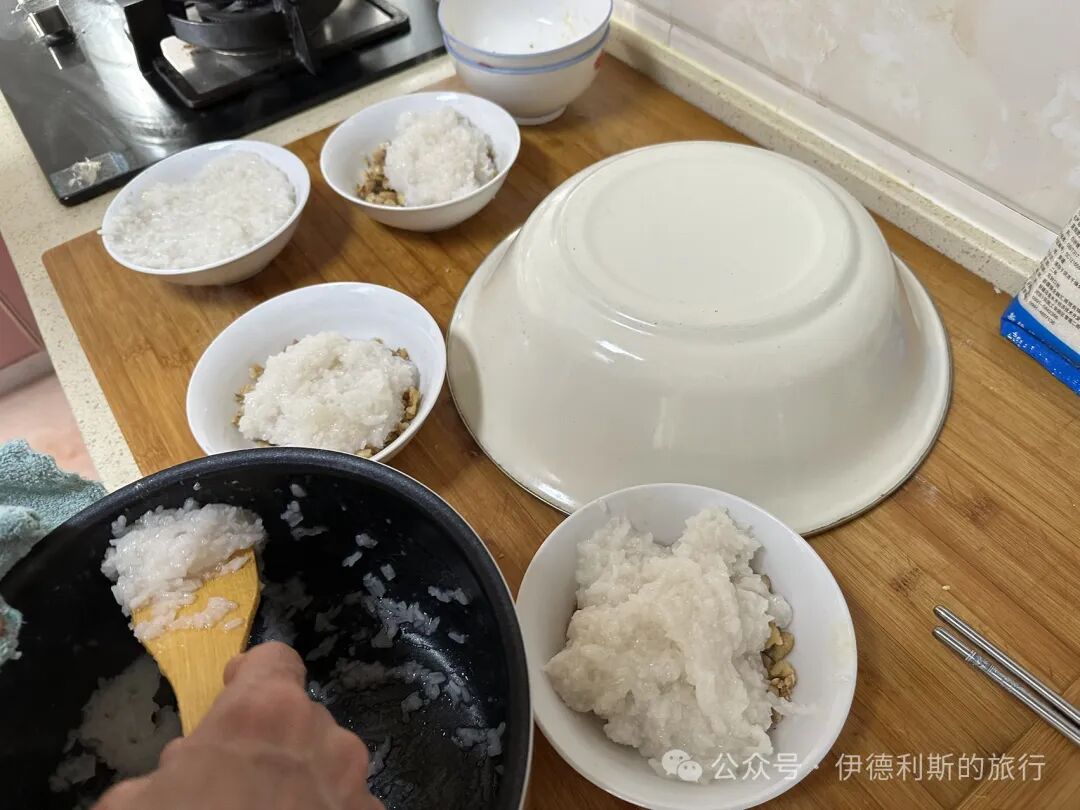
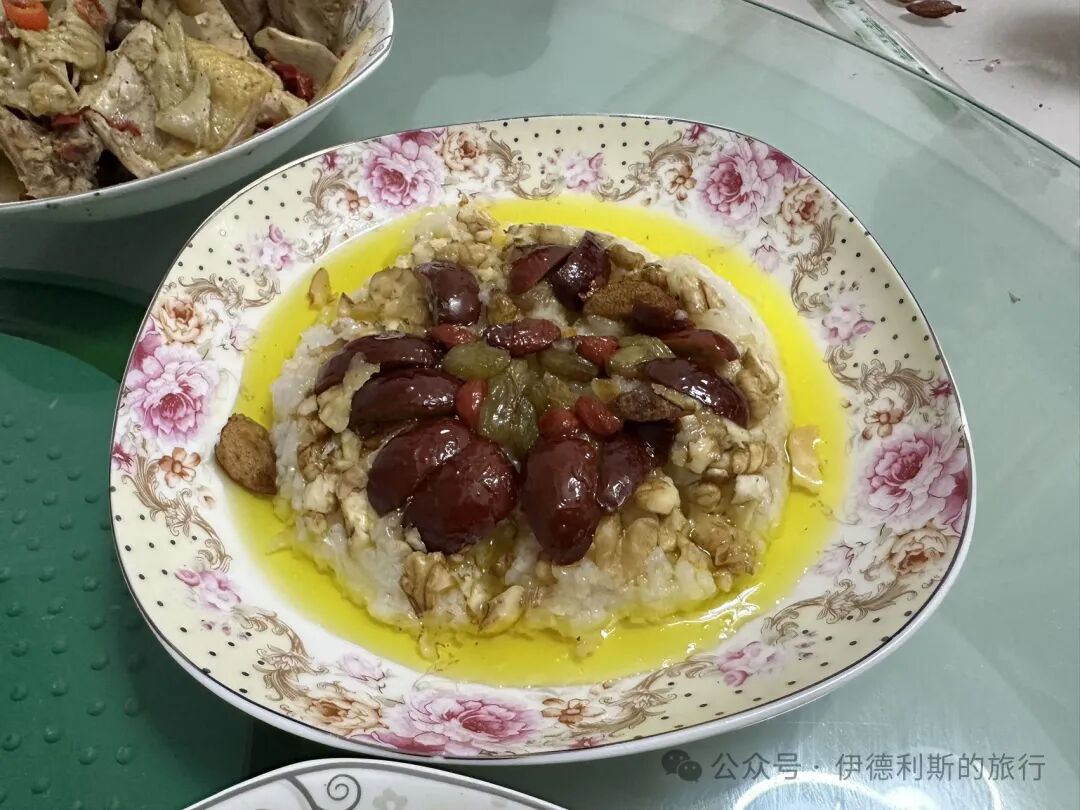
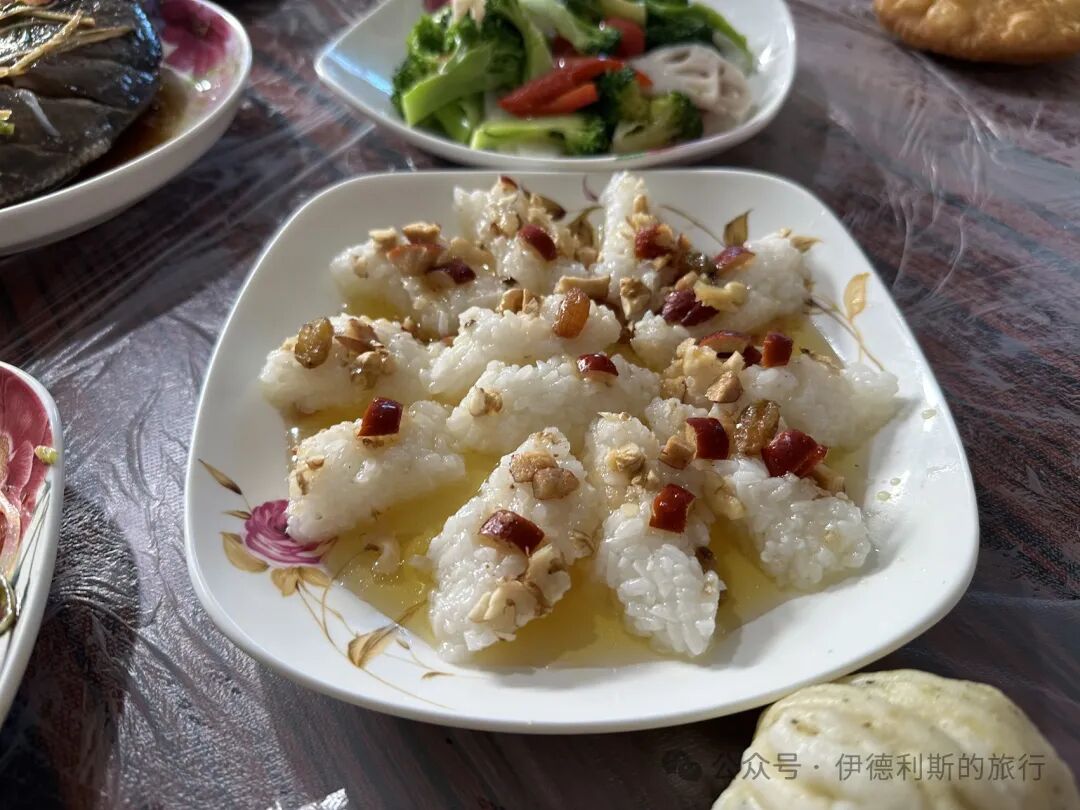
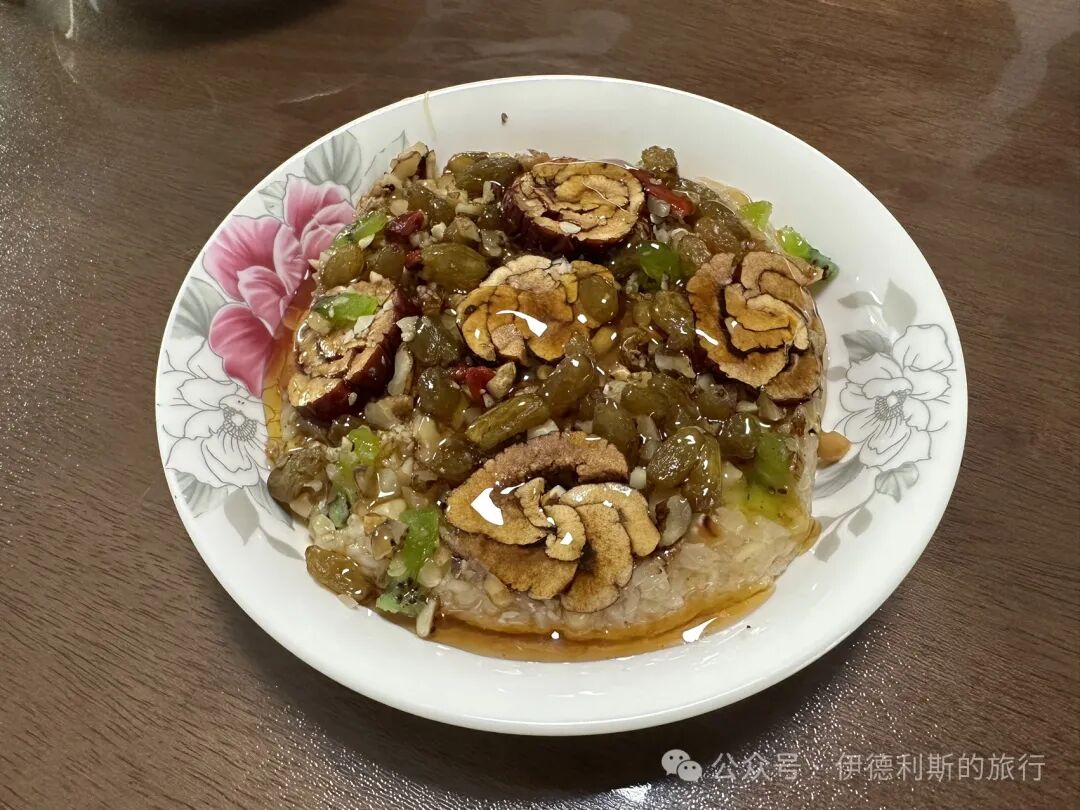
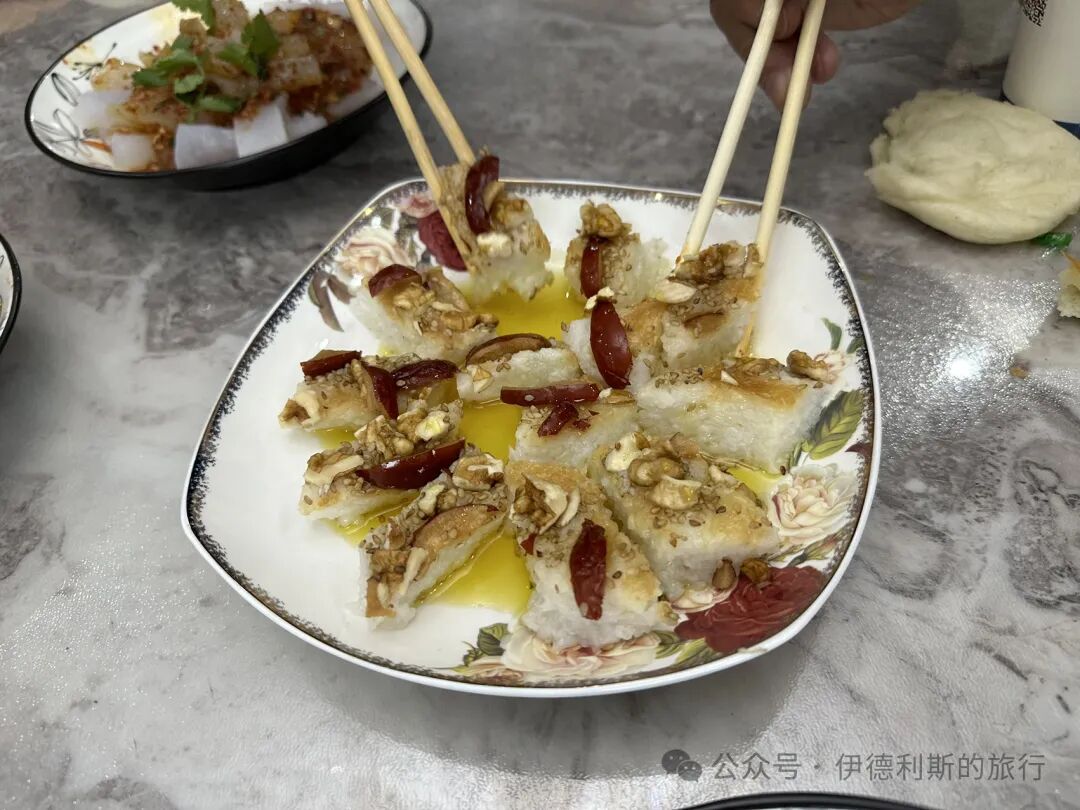
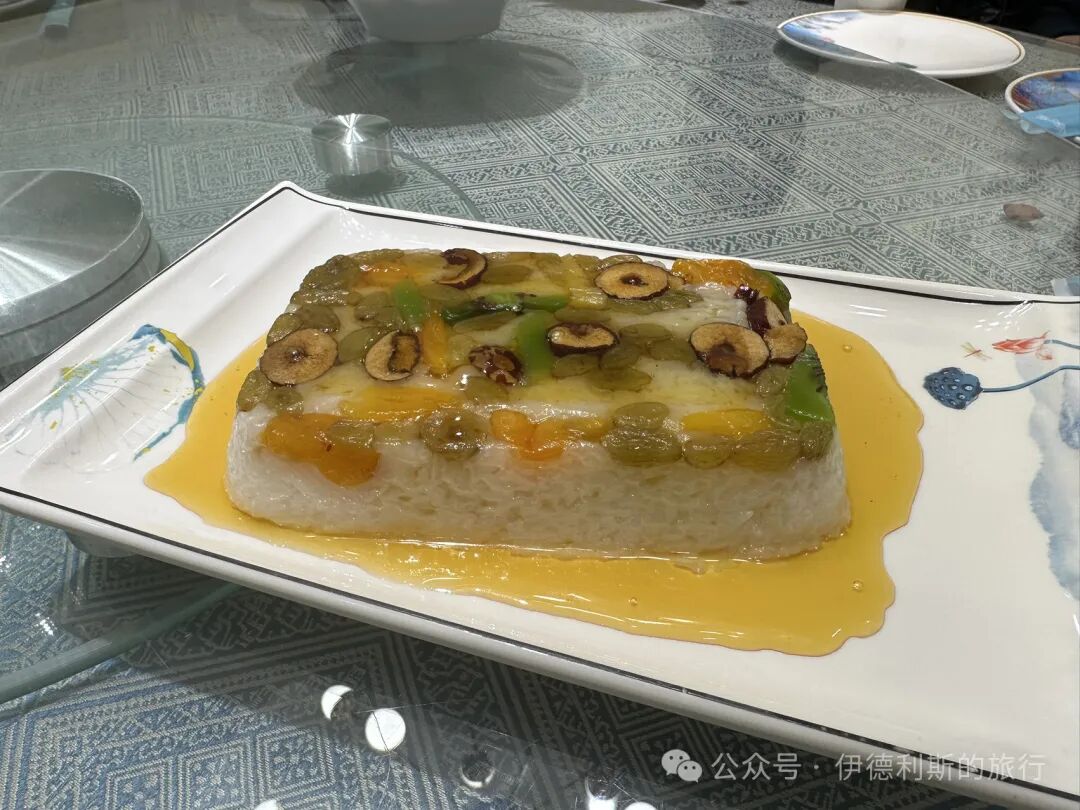
To make sweet rice platter (tianpanzi), first wash the glutinous rice and soak it for three days. Then, add a little brown sugar (shazitang) and steam it, using more water than you would for regular rice. Next, wash red dates, walnut kernels, and raisins, and spread them at the bottom of a bowl. Cover them with the steamed glutinous rice and let it cool. After that, boil rock sugar to make a syrup. Finally, flip the bowl of rice onto a plate and pour the syrup over it.
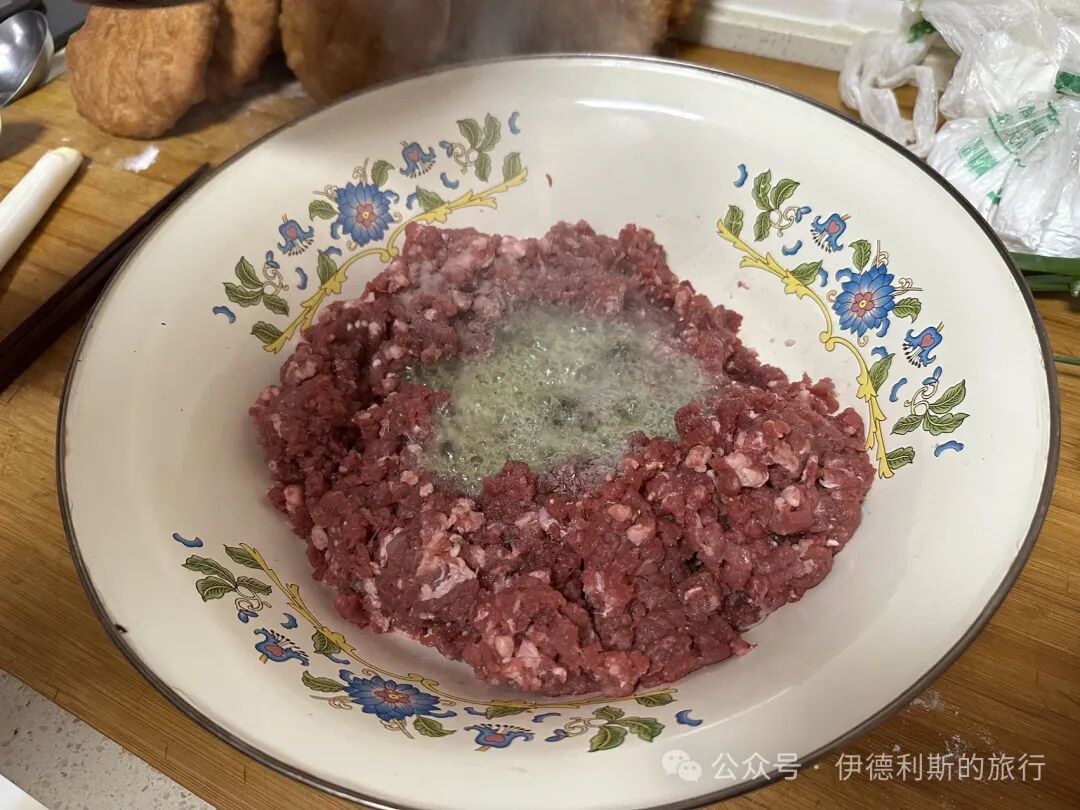
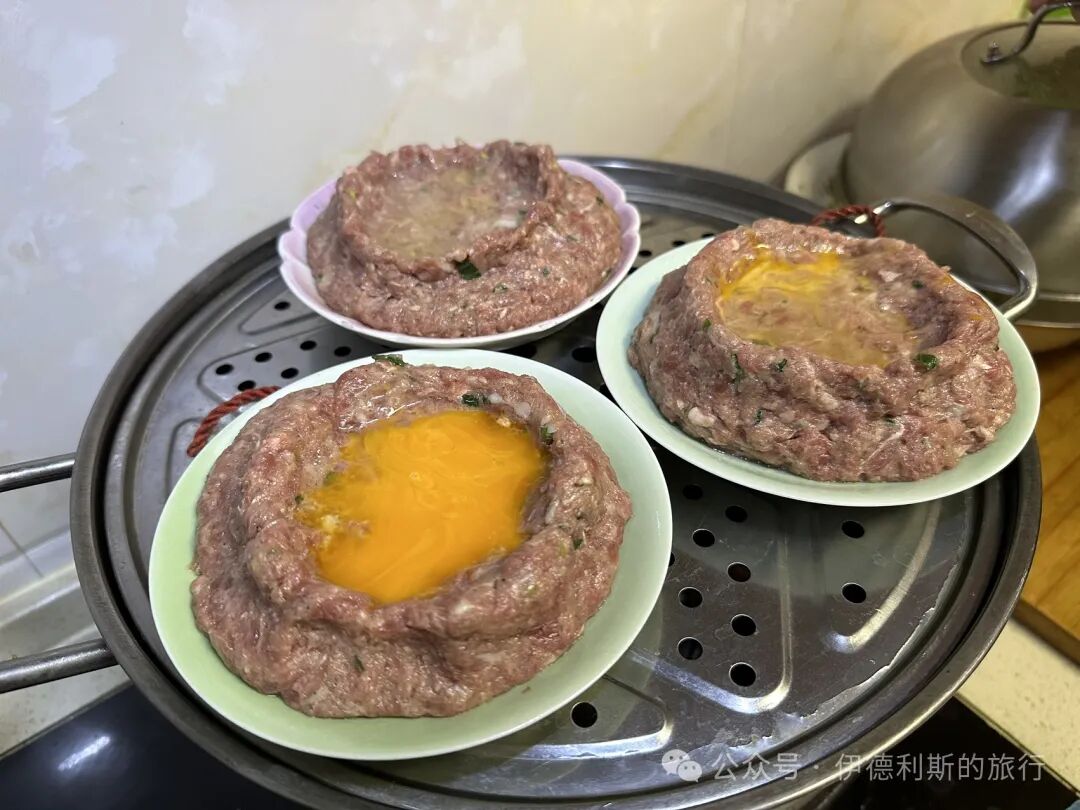
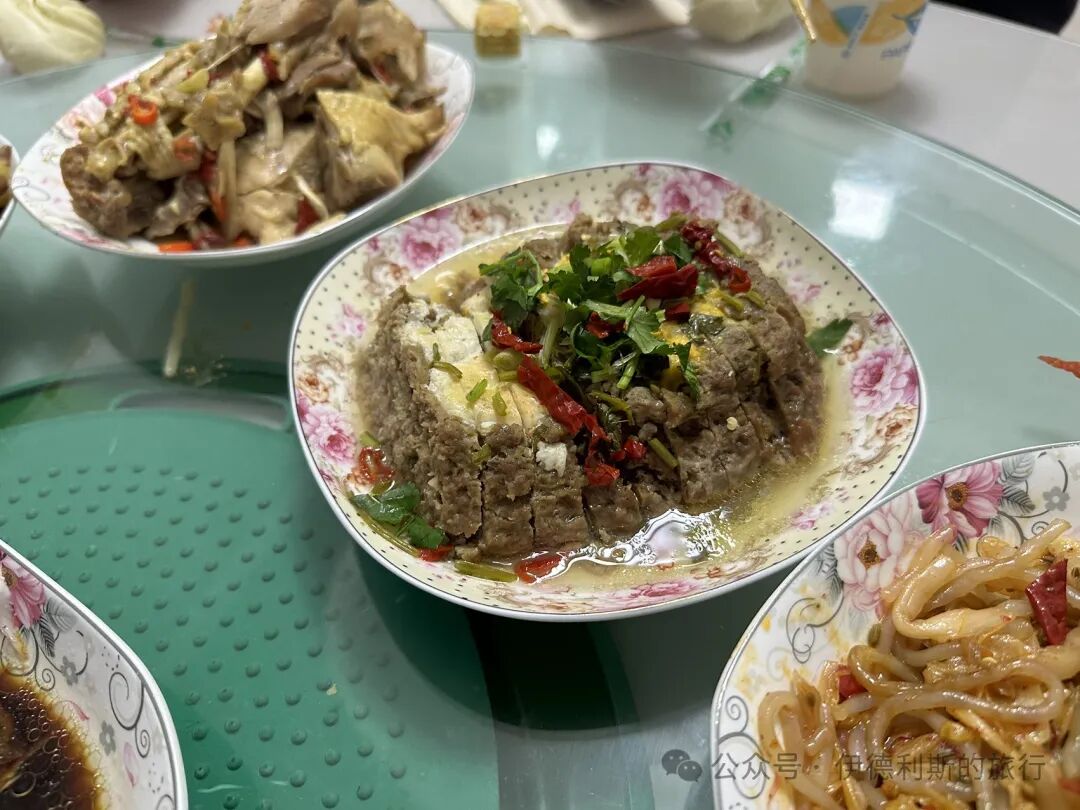
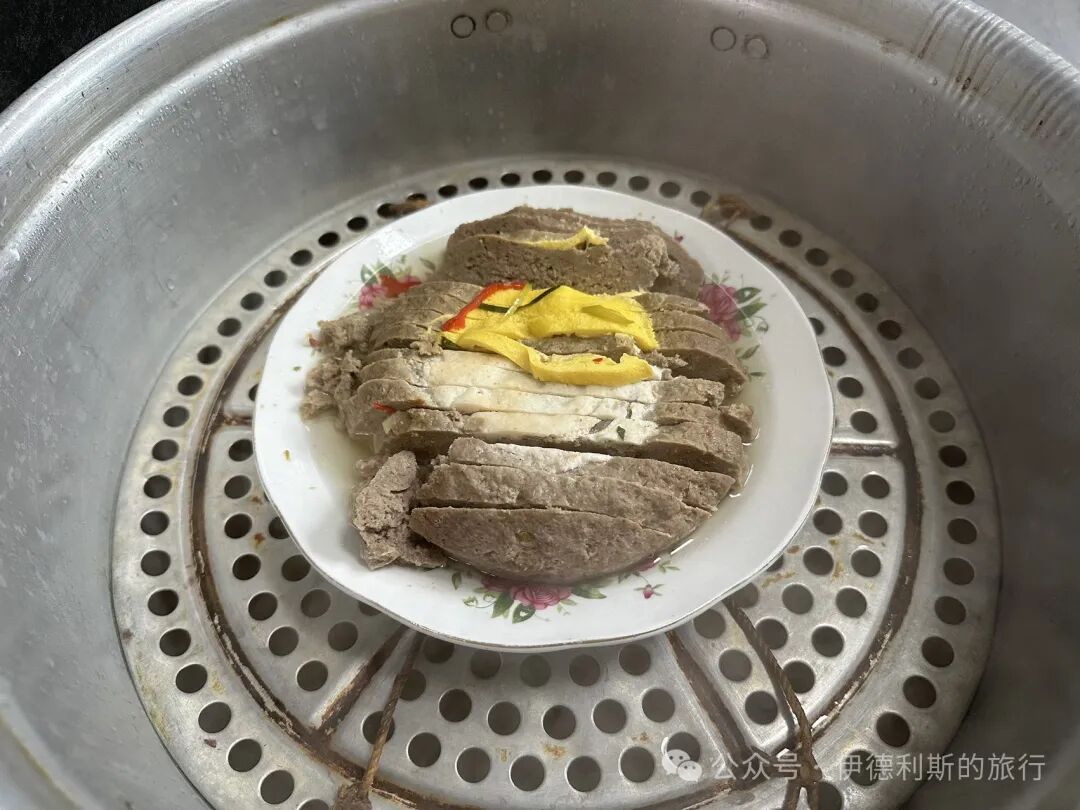
Meatloaf (munzi) is made with ground beef. When mixing the filling, beat it repeatedly, then shape it into a cylinder. Pinch the top to look like a railing, pour an egg into the center, and steam it.
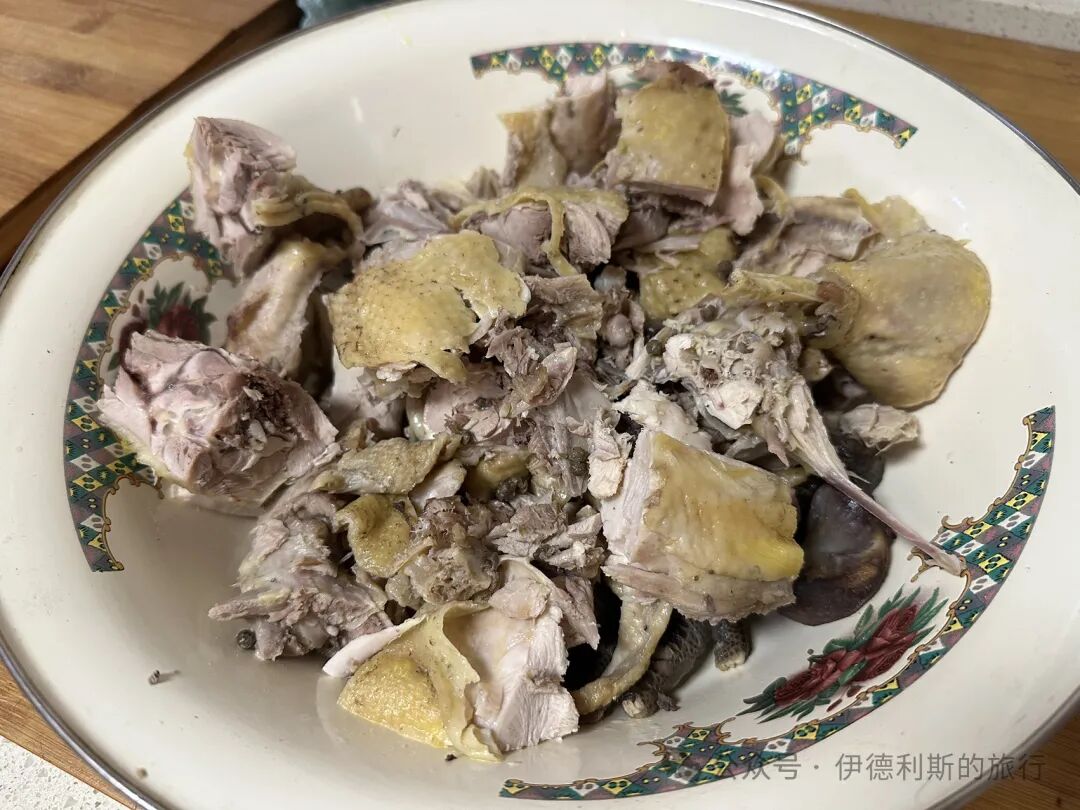
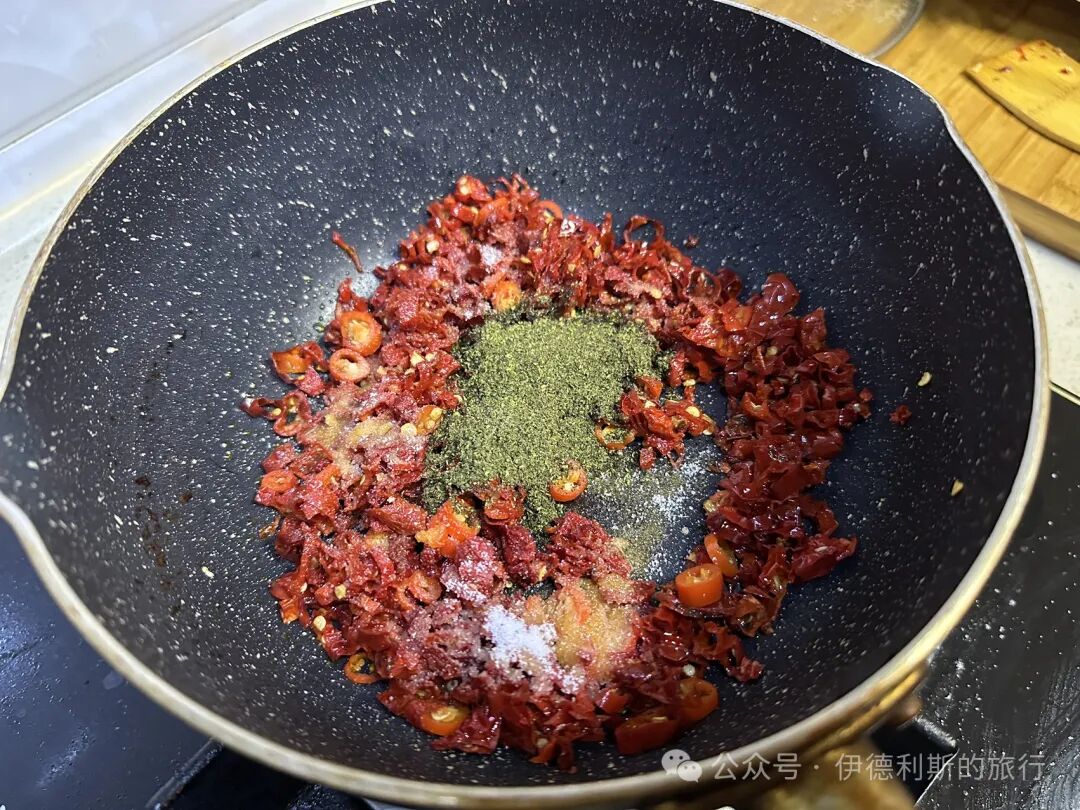
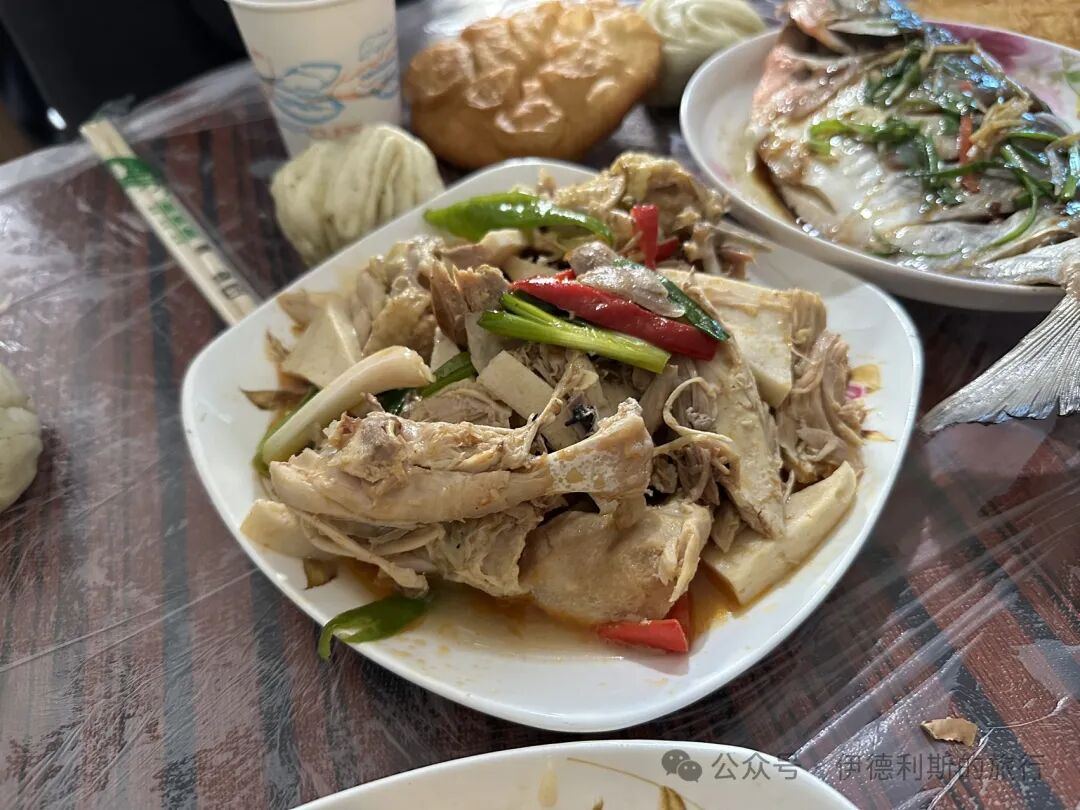
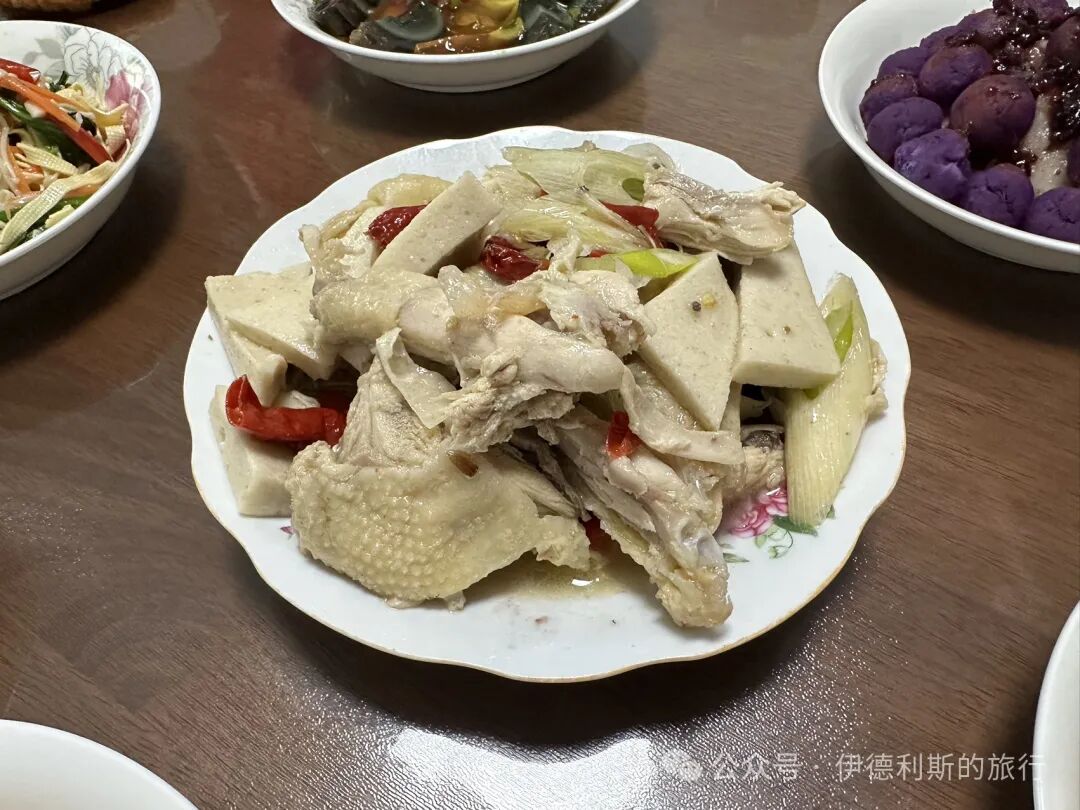
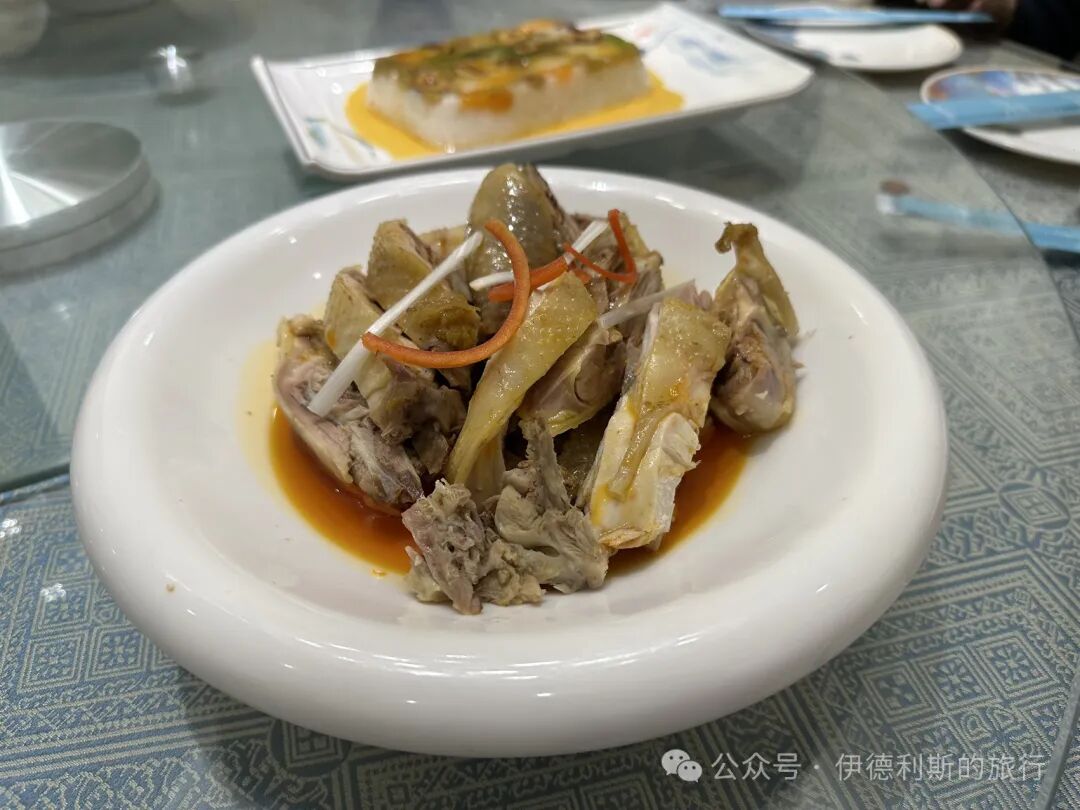
For spicy peppercorn chicken (jiaomaji), first wash a free-range chicken, cut it in half, and put it in a pressure cooker. Add water to cover it, along with red chili, Sichuan peppercorns, salt, bay leaves, cinnamon, and ginger slices. Once cooked, take it out, let it cool in a basin, tear the meat into strips, and top with green onions. Heat oil in a pan. Once hot, turn off the heat and add dried chili skins (lapizi), Sichuan peppercorns, salt, and white pepper. Stir well, pour in some chicken broth, and then pour everything over the chicken in the basin and mix well.
We spent the night at my aunt's house near the cement factory. My uncle is an imam at a small mosque in Shanxi, and we are very grateful (zhigan) for that.
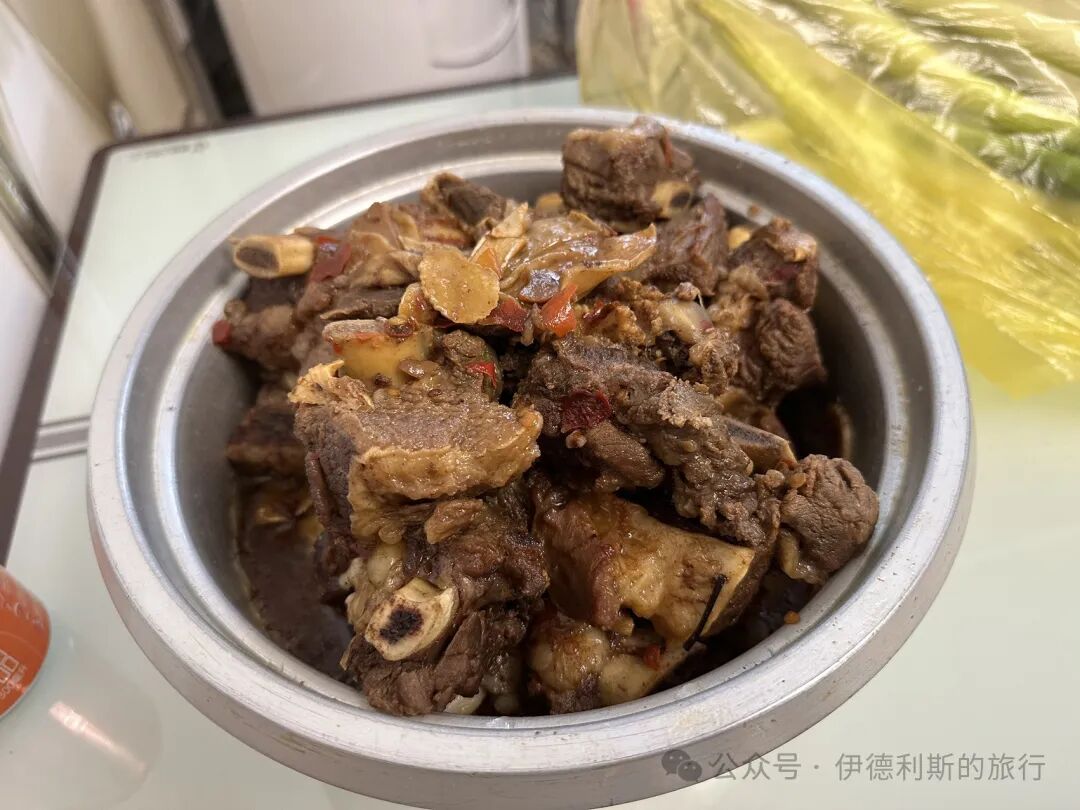
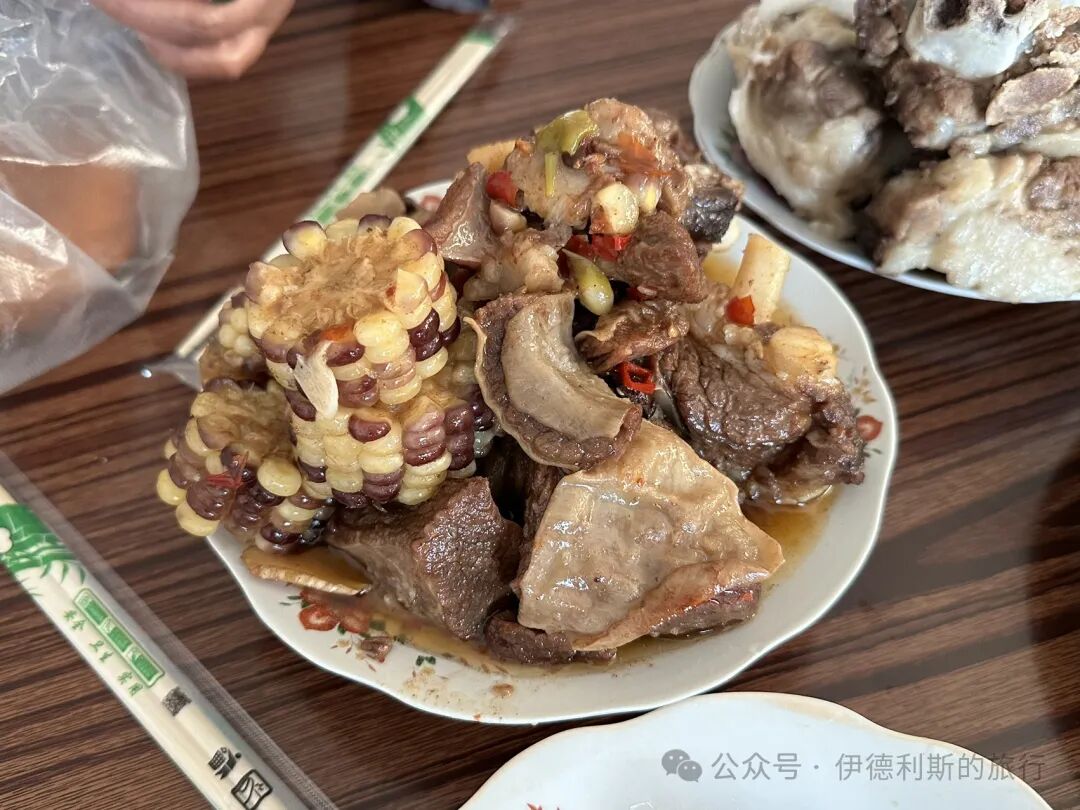
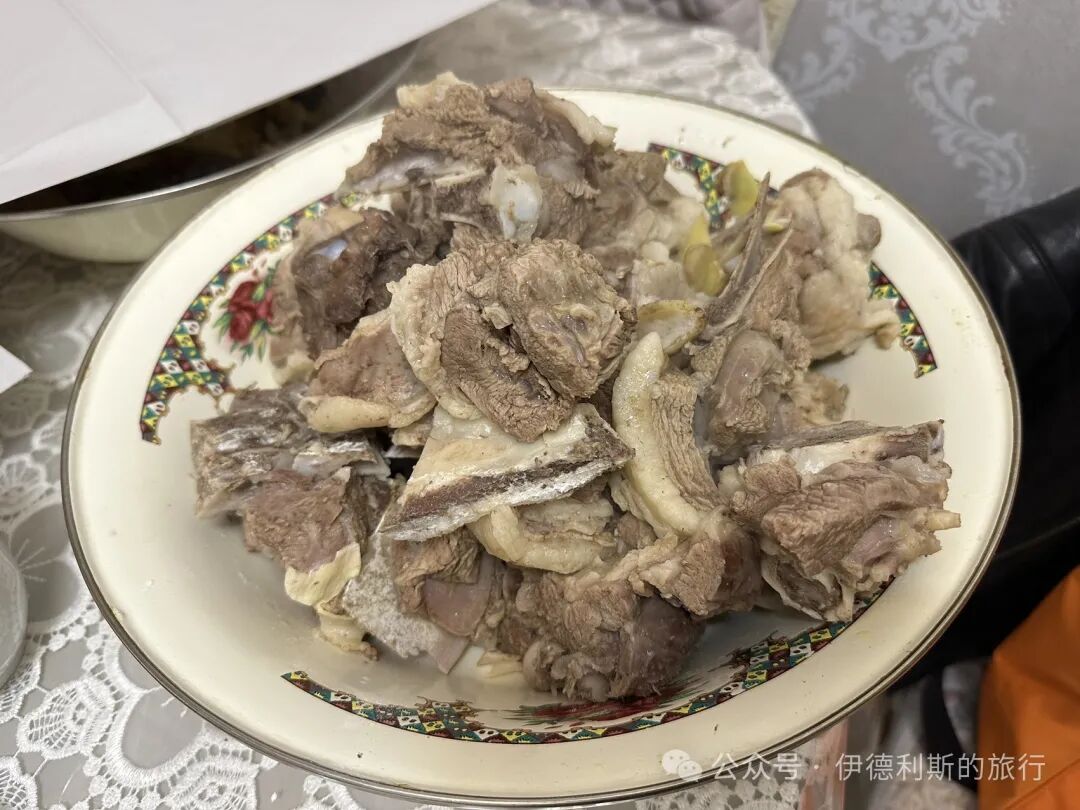
The main dishes were definitely braised beef steak and clear-stewed lamb. The chicken was raised by my uncle himself, and the lamb was from the southern mountains of Urumqi.
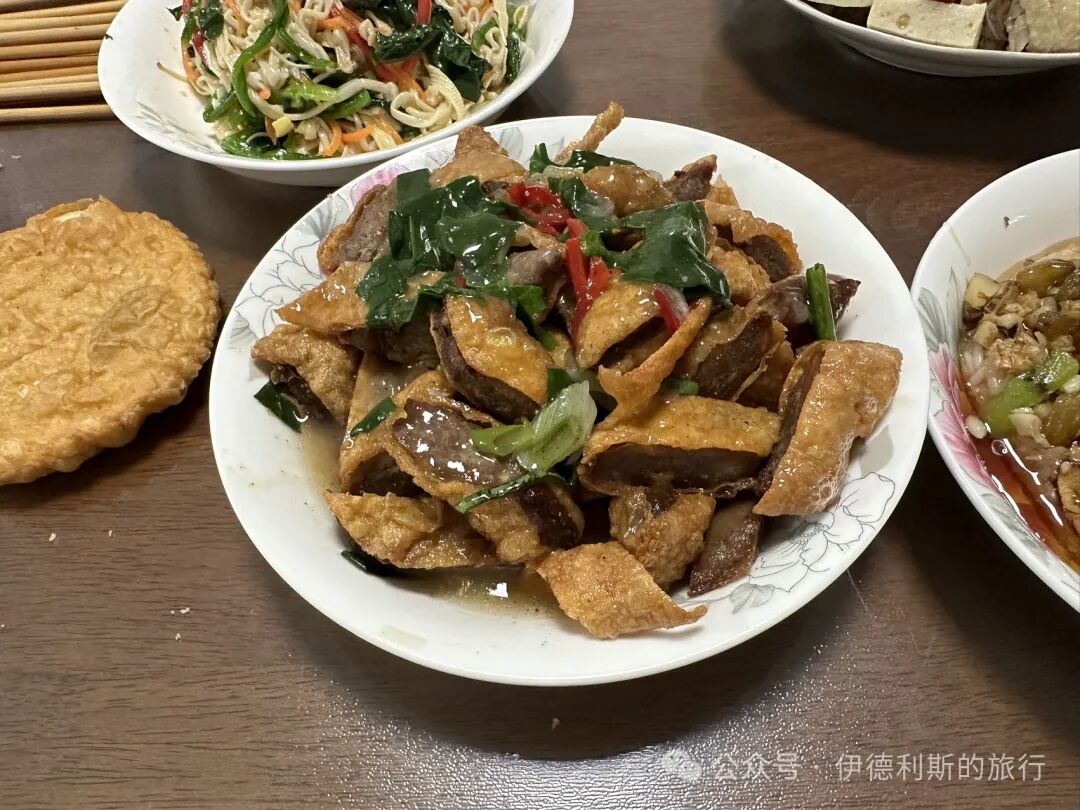
We spent the night at my second aunt's house in the New City District. My aunt is the recognized master chef of our family. She makes authentic home-style stir-fries, meatloaf (munzi), stuffed meat slices (jiasha), and tripe.
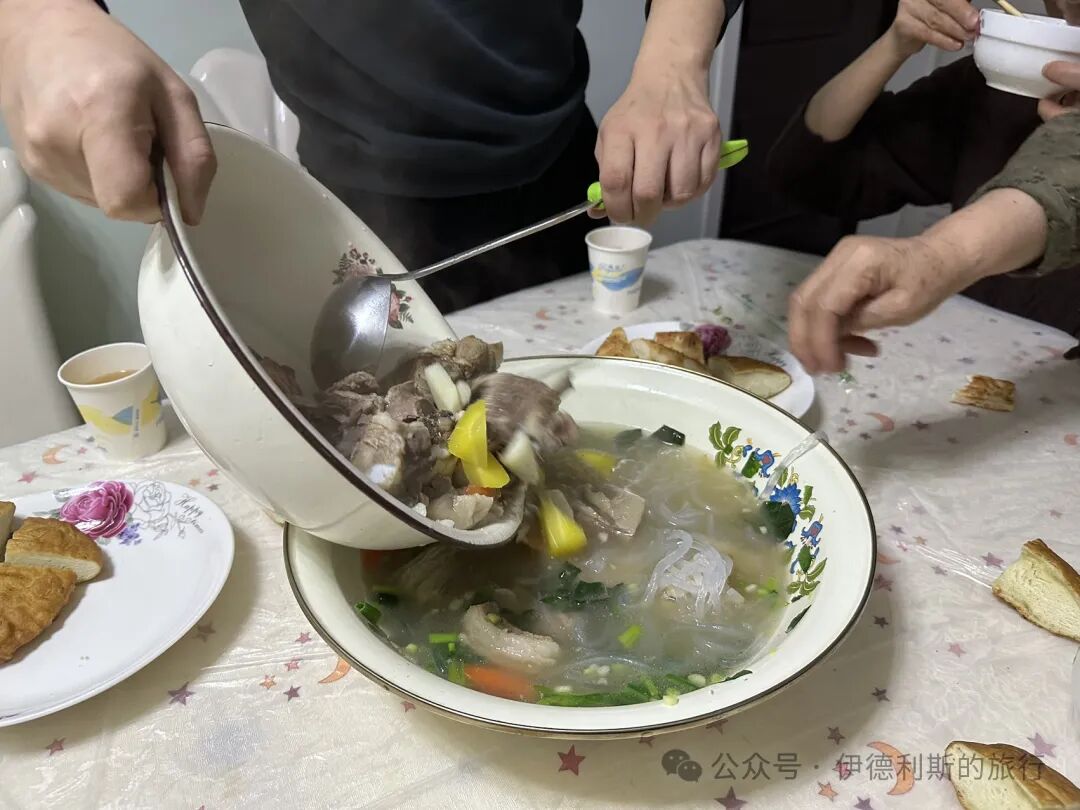
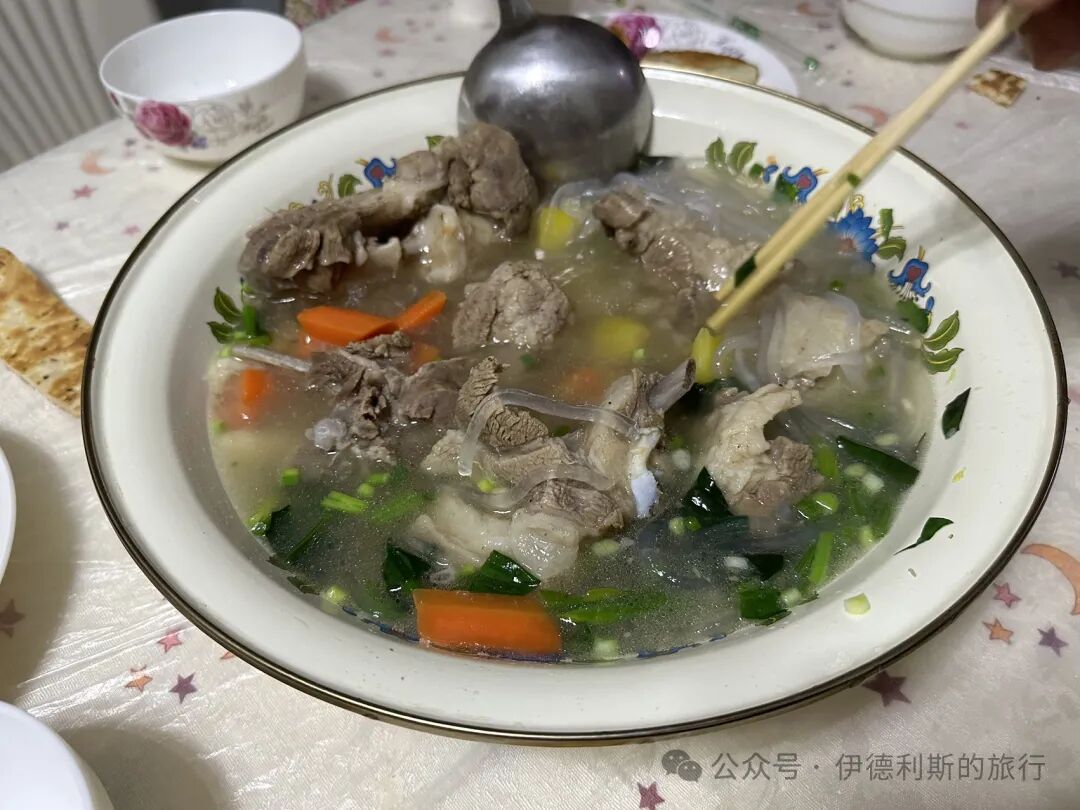
We spent the night at my aunt's house near the flour mill and had basin meat (penpenrou) with fried dough (youxiang) for breakfast.
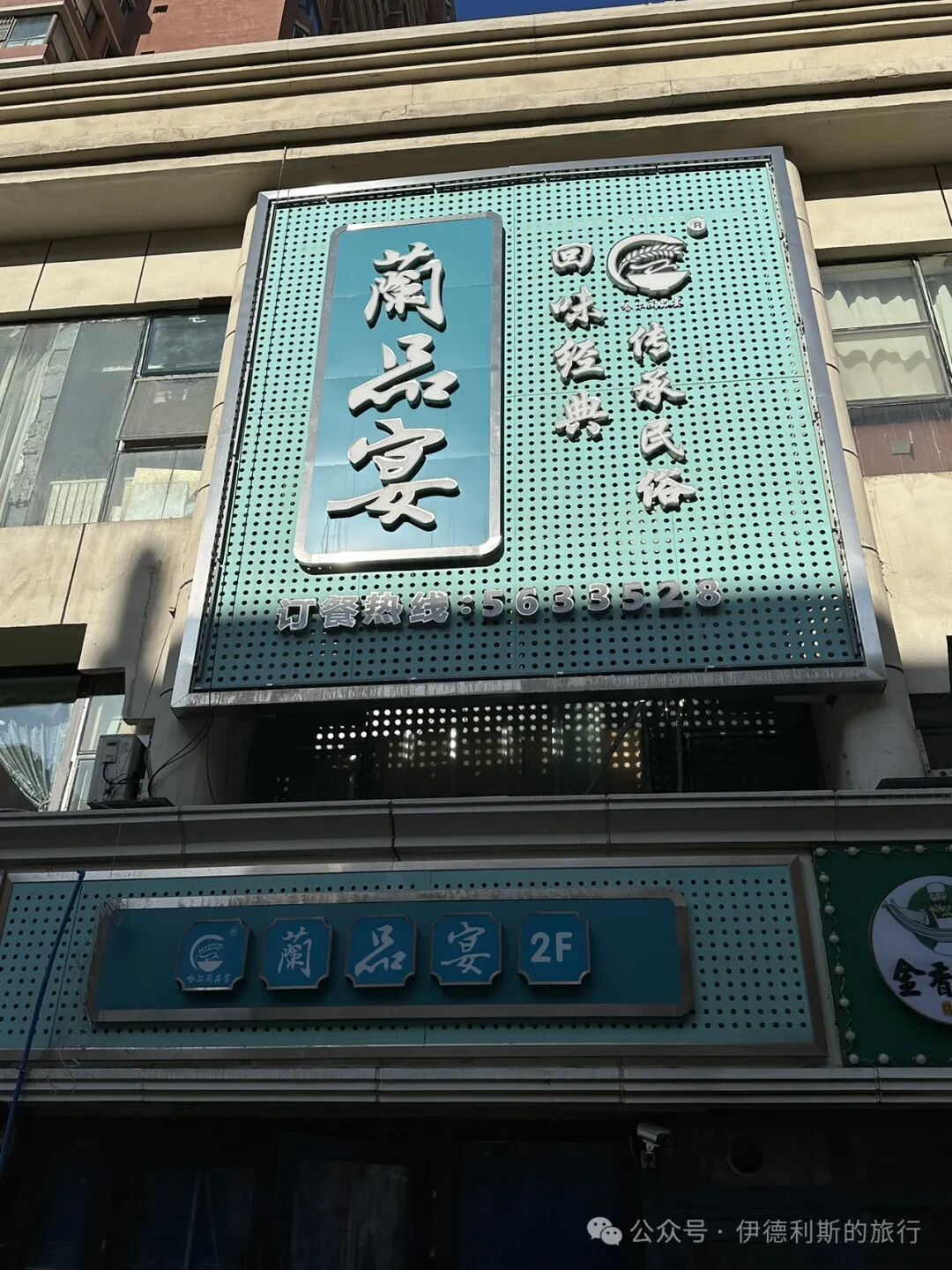
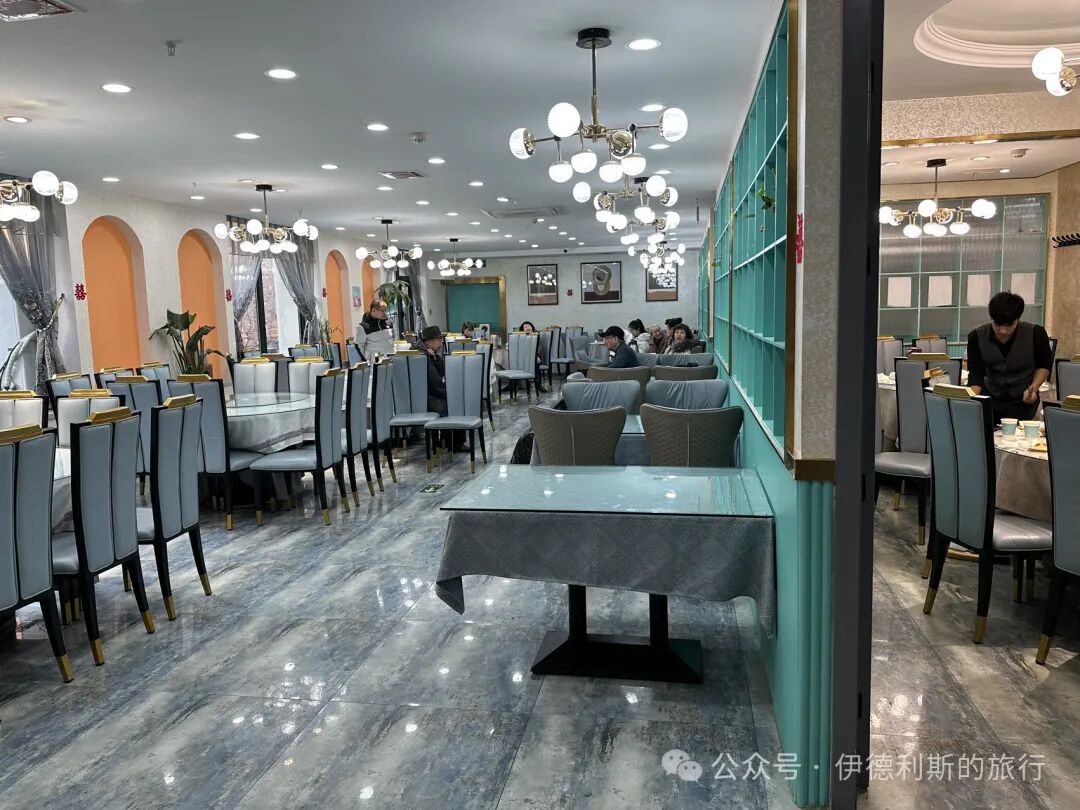
We hosted our guests at Lanpin Banquet. It is currently the most popular restaurant in Urumqi for Hui Muslims to hold religious gatherings (niansuoer). They don't sell alcohol, the food is refined, and the owner is warm and attentive. It is usually packed on weekends and holidays, so you must book in advance. On the day we went, they hosted 30 tables for a circumcision ceremony and 15 tables for a special occasion.
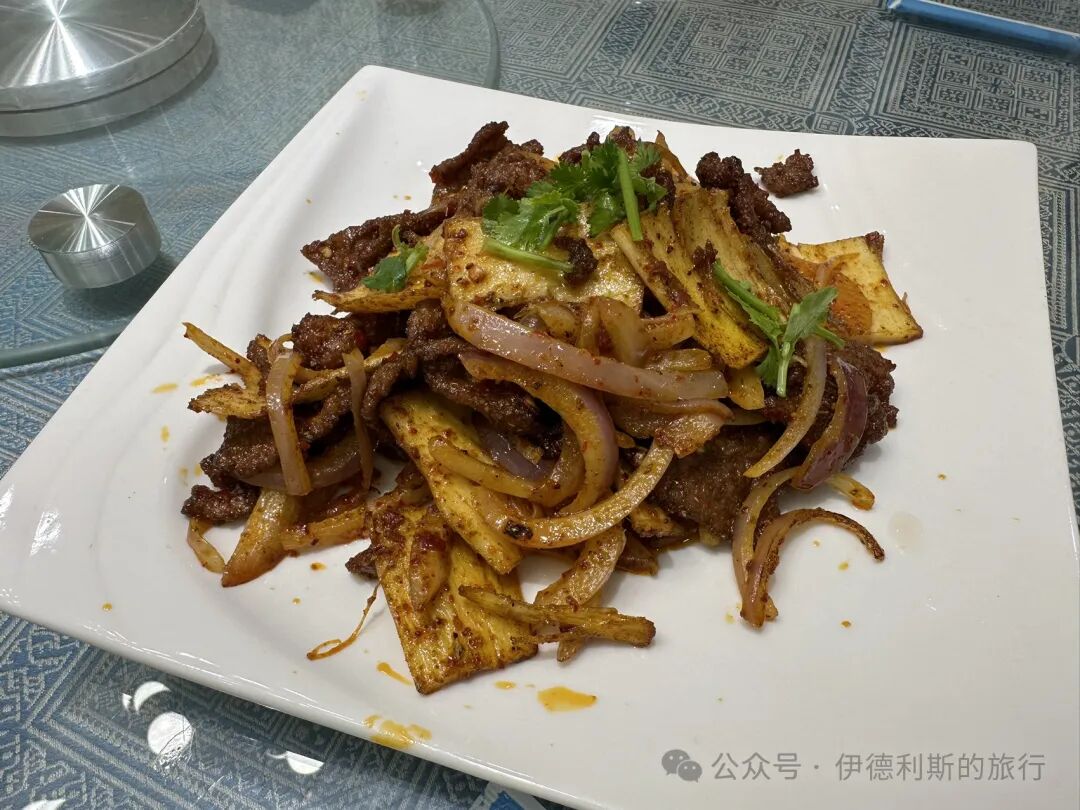
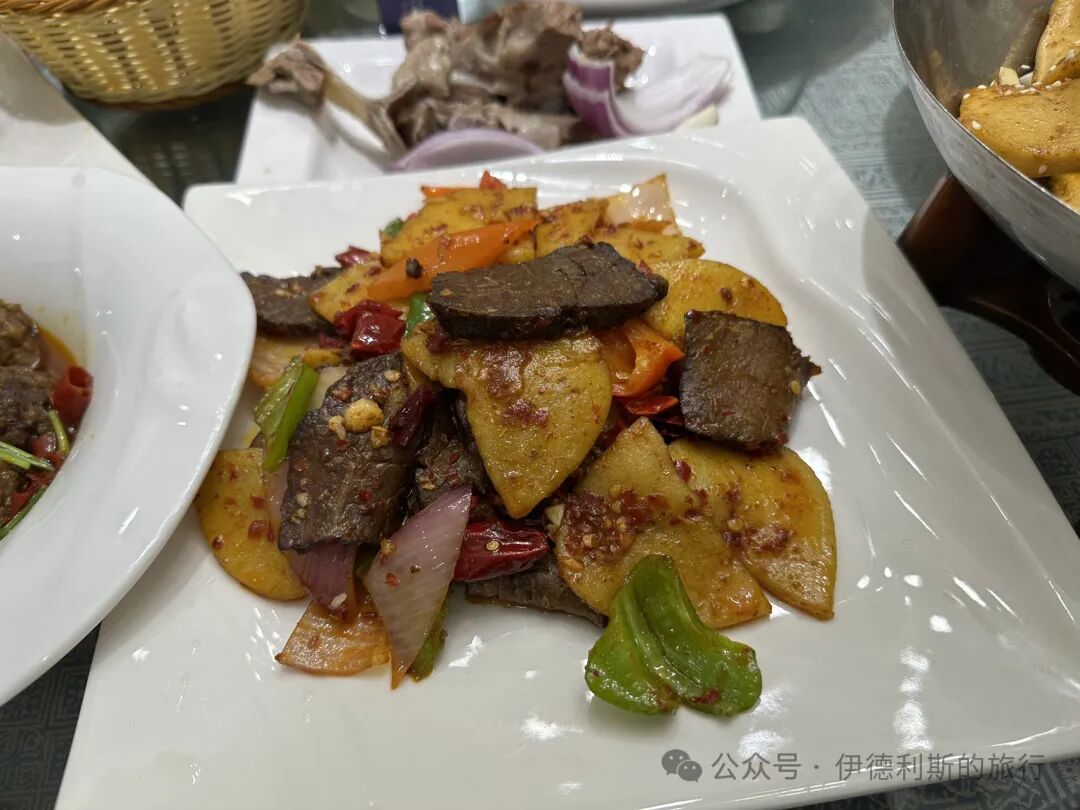
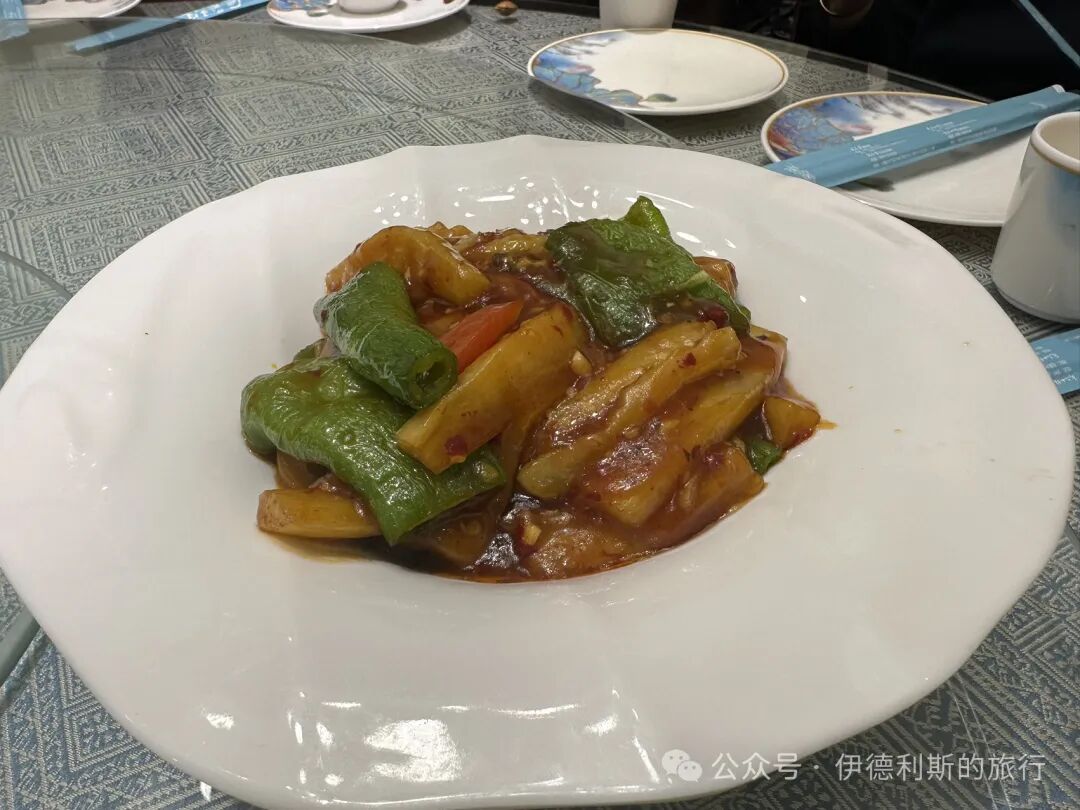
We ate stir-fried beef tendon, spicy peppercorn chicken (jiaomaji), cold-dressed beef, hand-grabbed lamb (shoubarou), sauced stuffed meat slices (jiasha), pearl meatballs, and flatfish, along with complimentary side dishes. These are the most popular dishes for Hui Muslim gatherings in Urumqi right now. Their hand-grabbed lamb (shoubarou) is excellent; the meat is tender and fragrant, making it perfect for elderly people to eat.
I spent the night at Uncle Saisai's house in the Changsheng Brigade in the southern suburbs of Urumqi. The hospitality was generous, with dishes like sweet platter (tianpanzi), fried dough snacks (youguozi), pearl meatballs (zhenzhu wanzi), braised ribbonfish, clear-stewed meat, and braised lamb. I also met many relatives.
Engagement acceptance ceremony (luohuali)
This time, I arrived just in time for my brother-in-law's engagement acceptance ceremony (luohuali). We had a feast at a small community (xiaofang) of the Jahriyya order (Zhepai) in Anningqu, in the northern suburbs of Urumqi, where I ate some homemade fried twisted sugar dough (tangningningzi). The feast started with small appetizer plates, which were then cleared to make room for the main dishes, including clear-stewed meat, braised meatballs, braised fish, and beef head meat.
The traditional wedding customs of Hui Muslims in Xinjiang are very specific. Before a formal marriage proposal, there is a 'preliminary inquiry' where the man's family learns about the woman's family. Then, they send a matchmaker with four types of gifts—tea leaves, sugar cubes, red dates, and walnuts (or pastries)—wrapped in four colors, known as the 'four-color gift' (sese li). The first time a matchmaker brings the four-color gift to propose, it is called the 'opening gift' (kaikouli). The matchmaker gives the red-cloth-wrapped gifts to the woman's family, but they do not give an answer right away. After careful consideration, the woman's family sends a message through the matchmaker. The man's family then sends the four-color gift again, which is called the 'engagement acceptance ceremony' (luohuali), and after that, they enter the engagement stage.
Friday prayer (Jumu'ah)
At noon, I attended the Friday prayer (Jumu'ah) at the Changsheng Grand Mosque. The Changsheng Grand Mosque is located in the Changsheng Brigade at the foot of Yaomo Mountain (Yamalike Mountain) in the southern suburbs of Urumqi. It has the highest number of congregants among the Hui Muslim mosques in the Saybagh District, with over a hundred people attending the Friday prayer (Jumu'ah). The Changsheng Brigade used to be a series of large courtyards where everyone farmed. Now, everyone has moved collectively to the Fumin Anju residential area, and the houses are very spacious.
Imam Fanta of the Changsheng Grand Mosque is my wife's uncle. Uncle Fanta is the one who performed our marriage contract (nikah). Uncle Fanta's surname is Su. The Su family is a large clan in Changsheng. Over three hundred years ago, they left Ankang, Shaanxi, and traveled through Ningxia and Jimsar to Urumqi to do business. Later, their business failed, and they eventually moved to Changsheng to farm, where they have lived ever since.
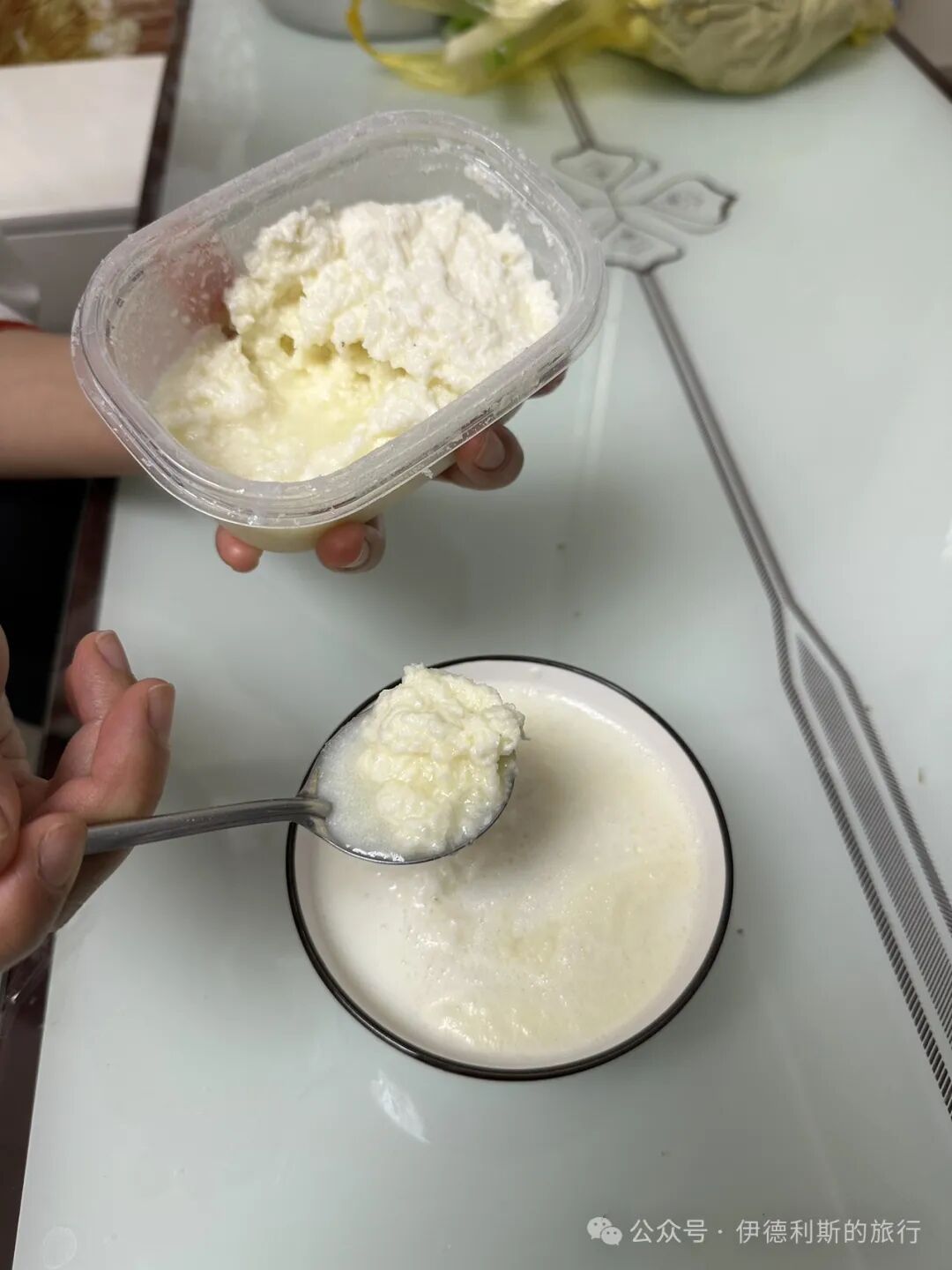
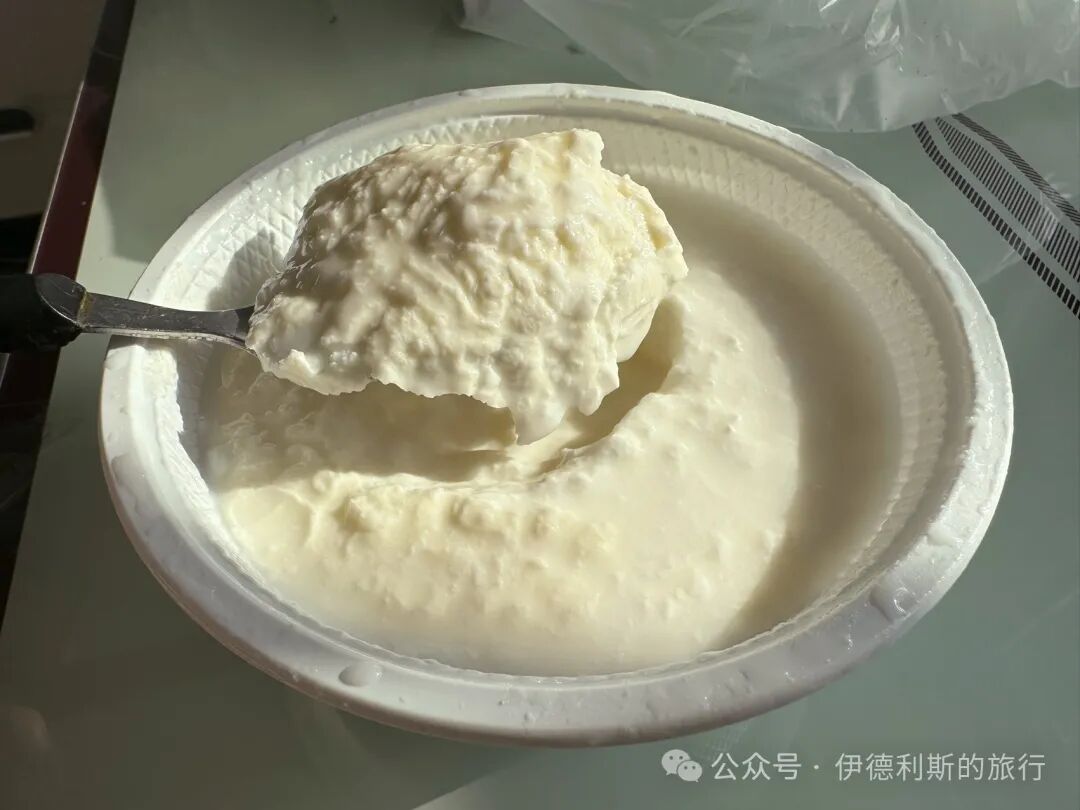
I bought fresh milk and handmade yogurt at the entrance of the Changsheng residential area. A large bucket of fresh milk only cost 20 yuan. After boiling it and adding two spoonfuls of milk skin (naipizi) I bought earlier on Hetian Street, it tasted amazing. The handmade yogurt comes with its own layer of milk skin (naipizi) and has a very rich milky flavor.
Visiting relatives and friends.
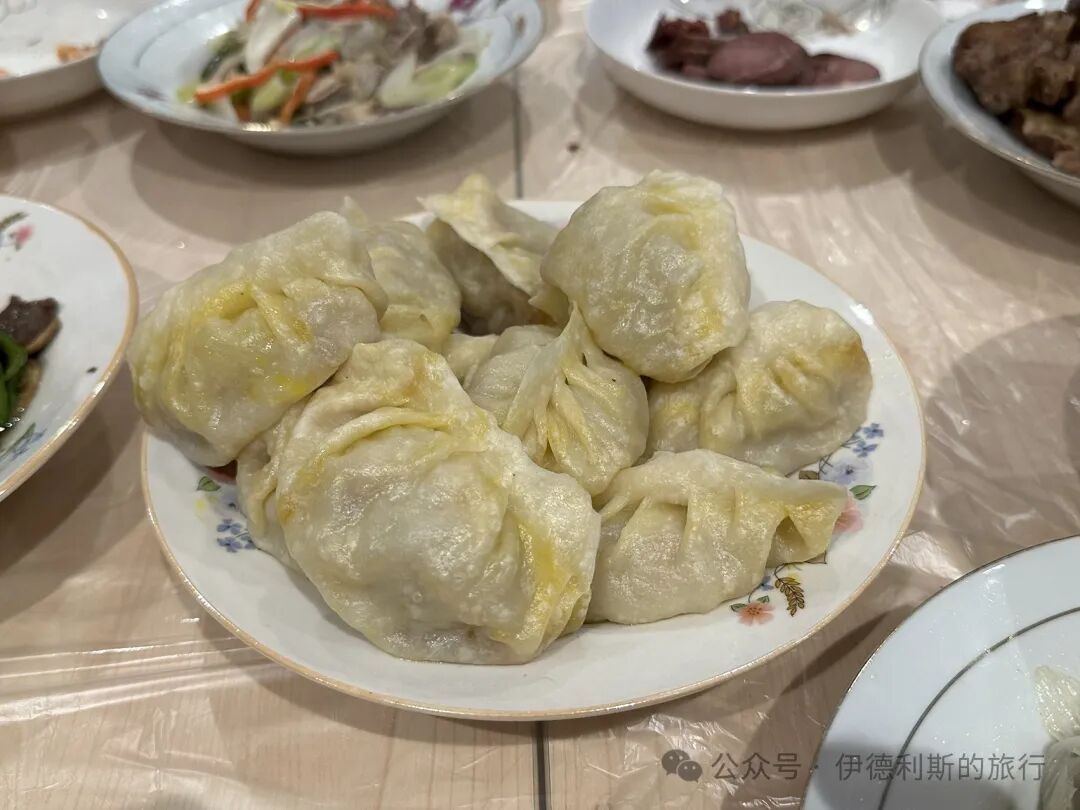
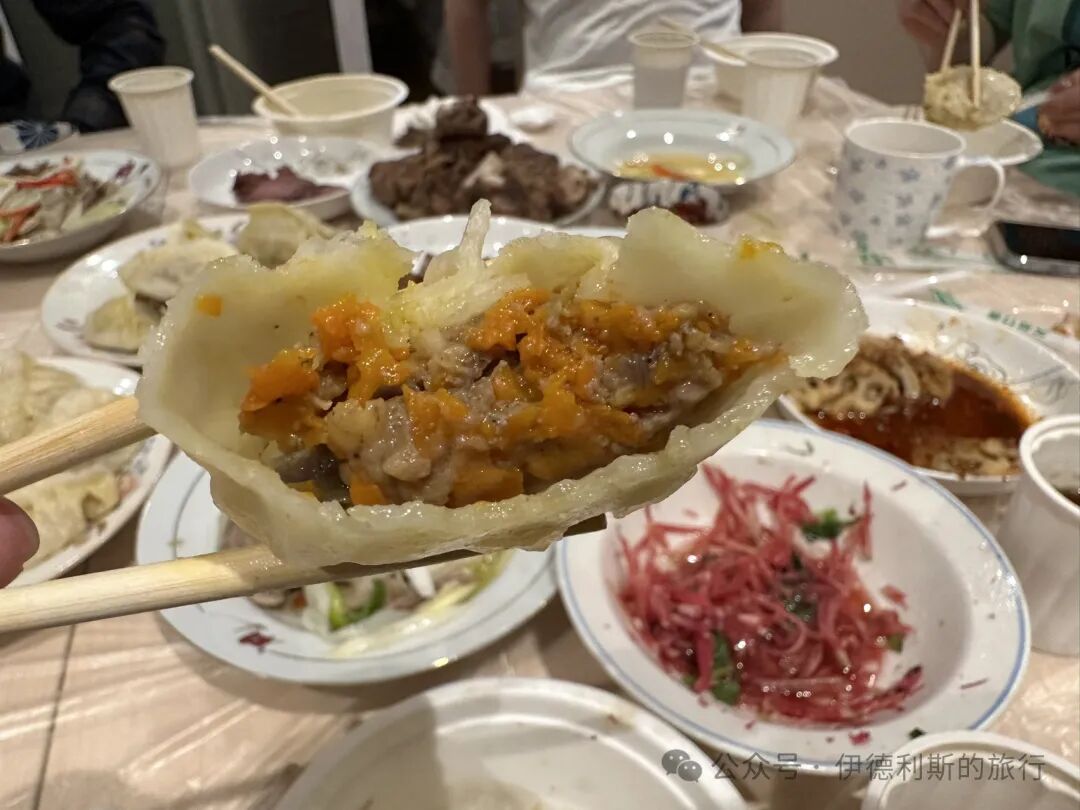
I visited my second aunt's house and had a lunch of Hui Muslim-style lamb dumpling soup (fentang yangrou jiaozi). The soup is the version Hui Muslims in Xinjiang make for Eid, and the dumplings are filled with lamb, onions (piyanzi), and pickled cabbage. They were small and delicate, and everyone loved them.
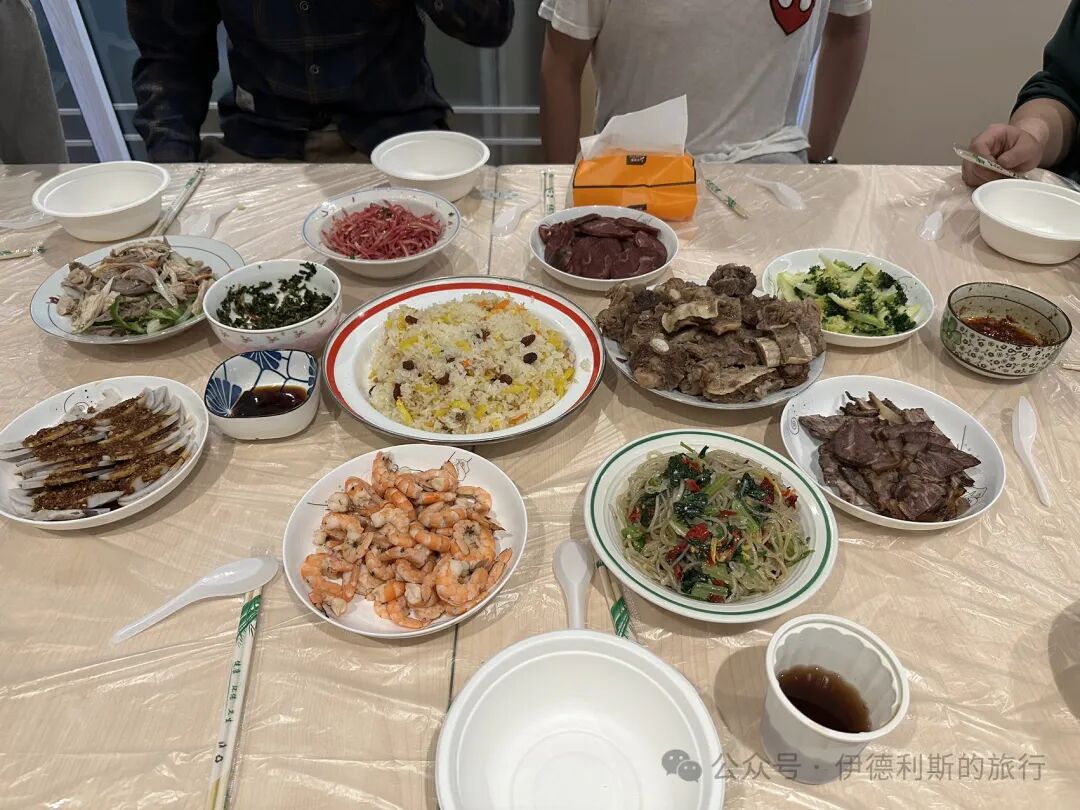
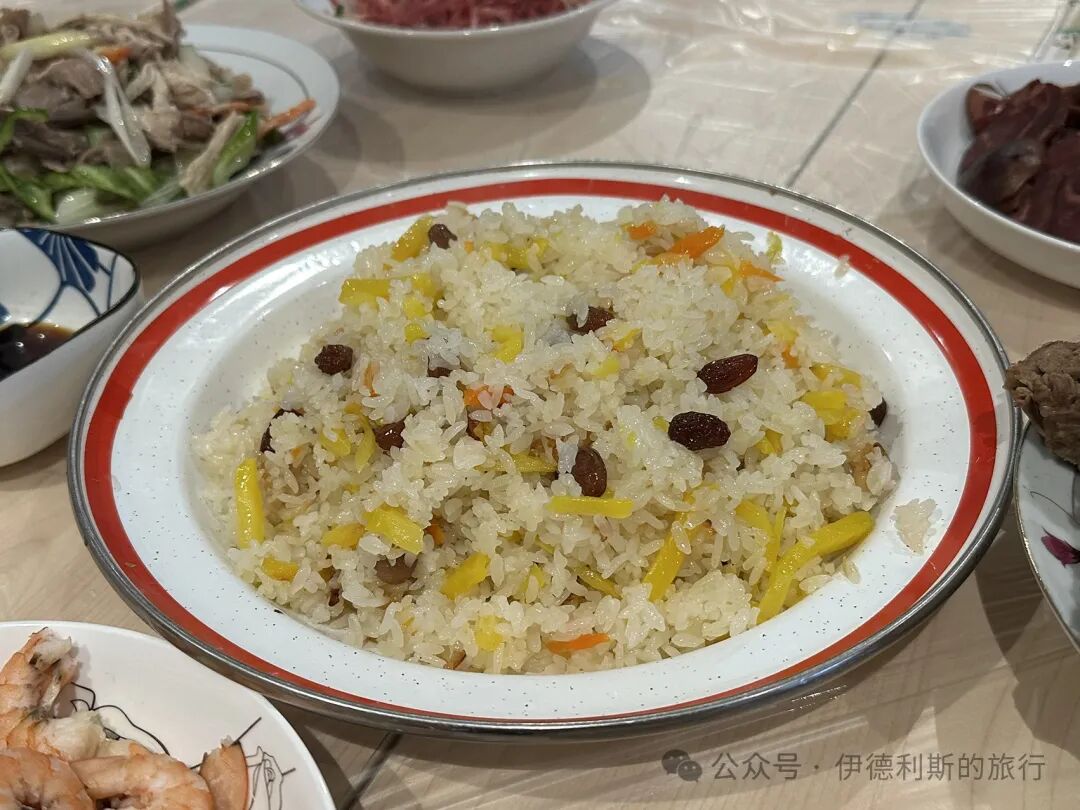
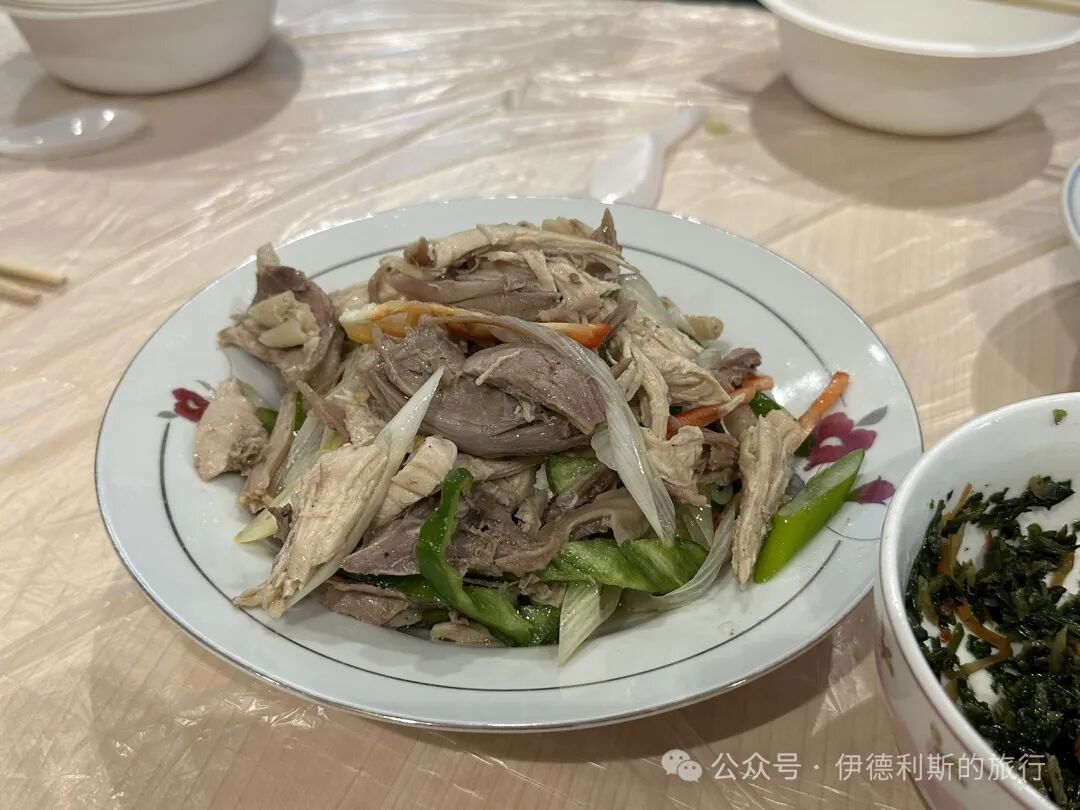
I attended a family dinner at my older sister's place. My brother-in-law is a great cook and made beef steak stew, spicy numbing chicken (jiaoma ji), pumpkin buns (kawa baozi), and smoked horse sausage. My brother-in-law makes amazing rice pilaf (zhuafan), so I made sure to ask him for his tips during the meal. Don't stir-fry the yellow carrots for the rice pilaf all the way through. Stewing them in water brings out their sweetness, so you don't need to add extra sugar. You must use plenty of oil for the rice pilaf. If you use too much, just tilt the pot and scoop the excess out. The extra oil from the rice pilaf is great for making cabbage and meat mixed noodles (banmian) because it adds so much flavor.
My great-aunt in Wusu invited us out to eat at Lanpin Banquet on Zhujiang Road. It shows how popular this place is among the older generation of Hui Muslims in Urumqi. As soon as we walked in, a young waiter greeted us with a salaam and showed us to our table. We have only been here twice, but the service is always excellent.
This time we had stir-fried black and white lung, yellow noodles with grilled meat (huangmian kaorou), sweet platter (tianpanzi), layered steamed bread (youtazi), spicy numbing chicken, and clear-stewed meat. Everyone loved these traditional dishes. view all
Summary: This Urumqi article records Hui Muslim life during the Spring Festival, including nianye, luohuali, Jumuah prayer, and visiting relatives and friends. It preserves the original religious customs, family scenes, food details, and community observations in natural English.
Night of Prayer (nianye).
During the 2024 Spring Festival holiday, I took Suleiman to visit his grandparents (anai aye) in Urumqi, just in time for the noble month of Sha'ban (the eighth month of the Islamic calendar). The evening of the 15th day of the eighth month is the Night of Bara'at, which means the Night of Atonement. On this night, the two angels on our shoulders replace the scrolls that record our good and bad deeds for the year. They seal the old scrolls and open new ones, which serve as evidence for questioning when we enter the afterlife, so it is also called the Night of Exchanging Scrolls. In the traditions of Hui Muslims in some regions, when the month of Sha'ban arrives, everyone takes turns inviting the imam and friends and family to their homes for a Night of Prayer. The main process includes reciting scriptures, praising the Prophet, performing repentance (tawbah), and asking for forgiveness for family members and the deceased. Afterward, everyone eats a rich meal to strengthen bonds, boost faith, and prepare for the noble month of Ramadan.
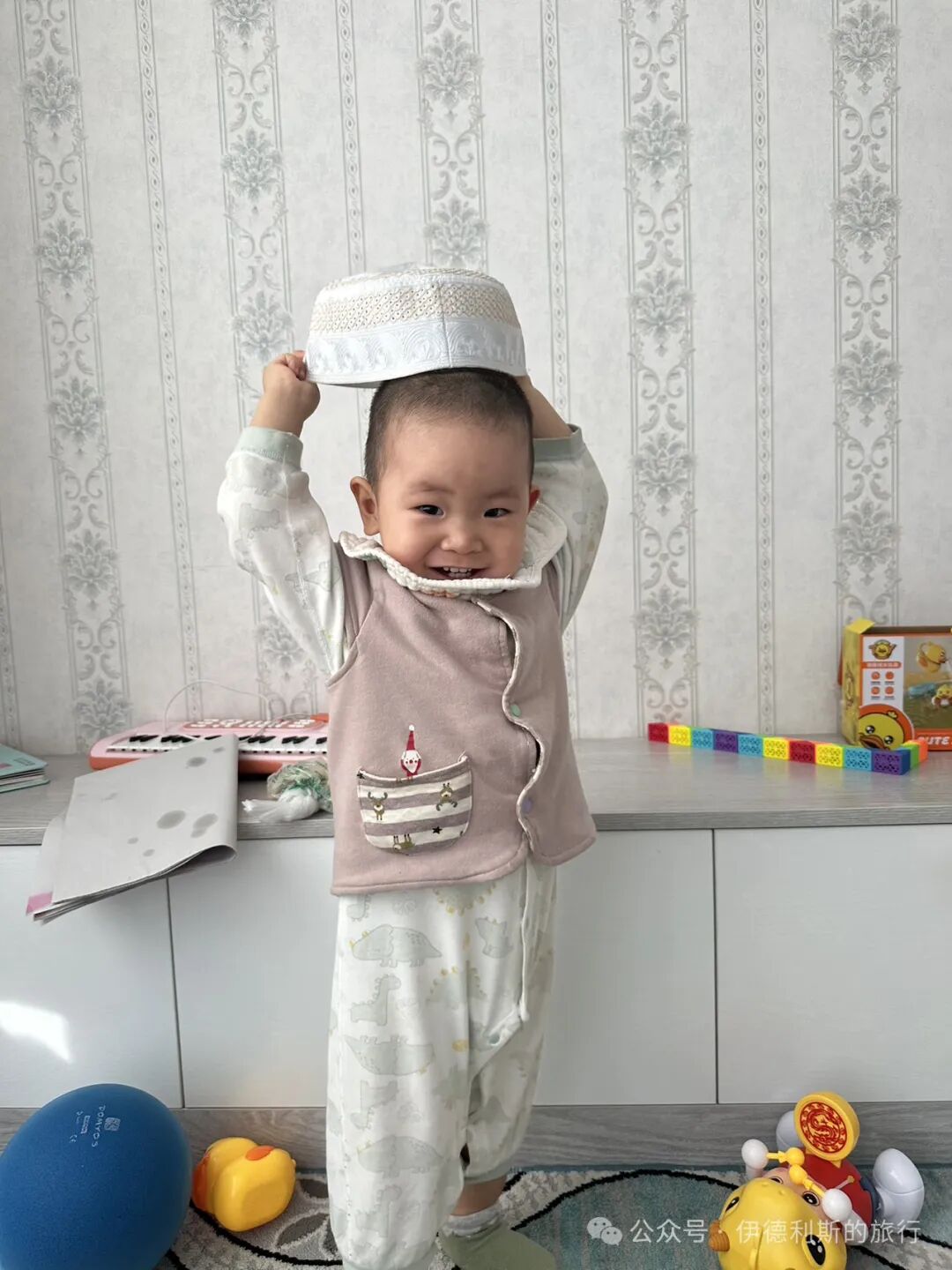
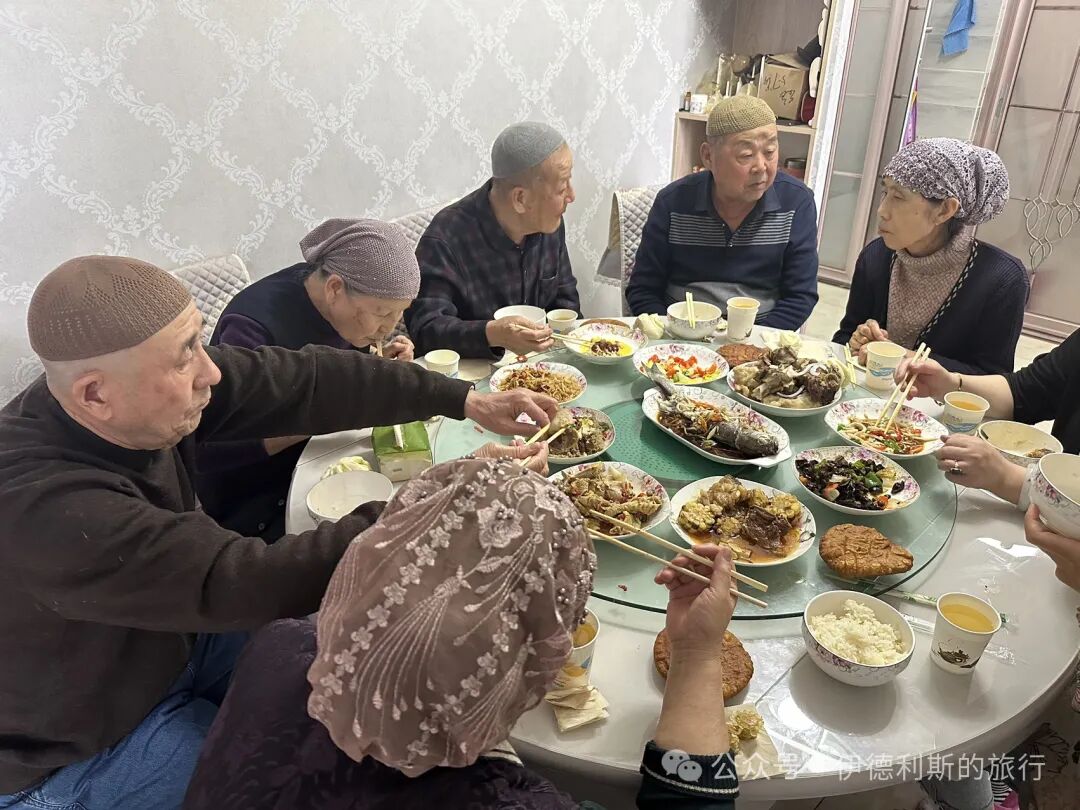
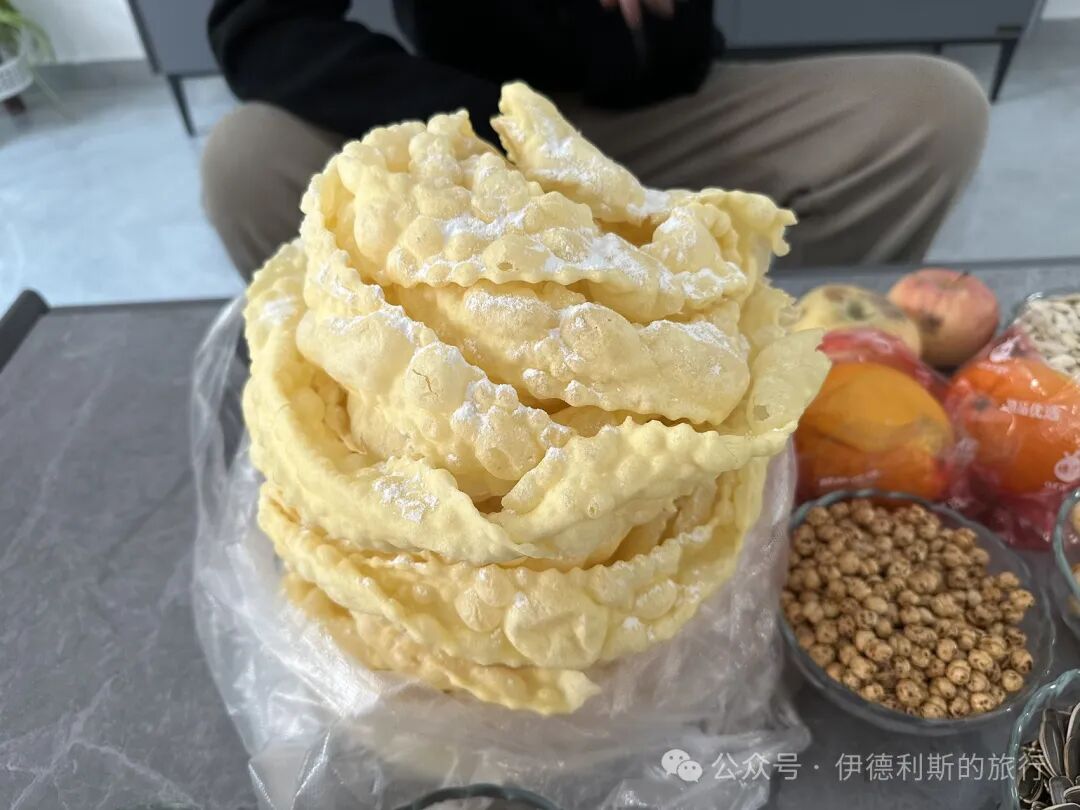
February 17 was our family's Night of Prayer, and we also celebrated Suleiman's first birthday (suisuizi). We invited four imams and a large group of relatives to recite surahs, recite the Bara'at praise, perform repentance, and receive dua, followed by a meal. First, we served appetizers (diediezi) and tea. The appetizers included nut tarts and baklava we bought at a Uyghur pastry shop on Hetian Street, as well as traditional flaky pastries and fried flour cakes (saqima) made by my aunt. After everyone chatted for a while, we cleared the appetizers and brought out the main dishes to officially start the feast.
With the help of my aunts, we prepared a rich feast. The main dishes were clear-stewed lamb, braised beef steak, followed by steamed starch jelly (mengzi), pearl meatballs, peppercorn chicken, steamed fish, sweet rice platter (tianpanzi), and various stir-fried dishes. The staples were fried dough (youxiang), steamed buns (momo), and rice.
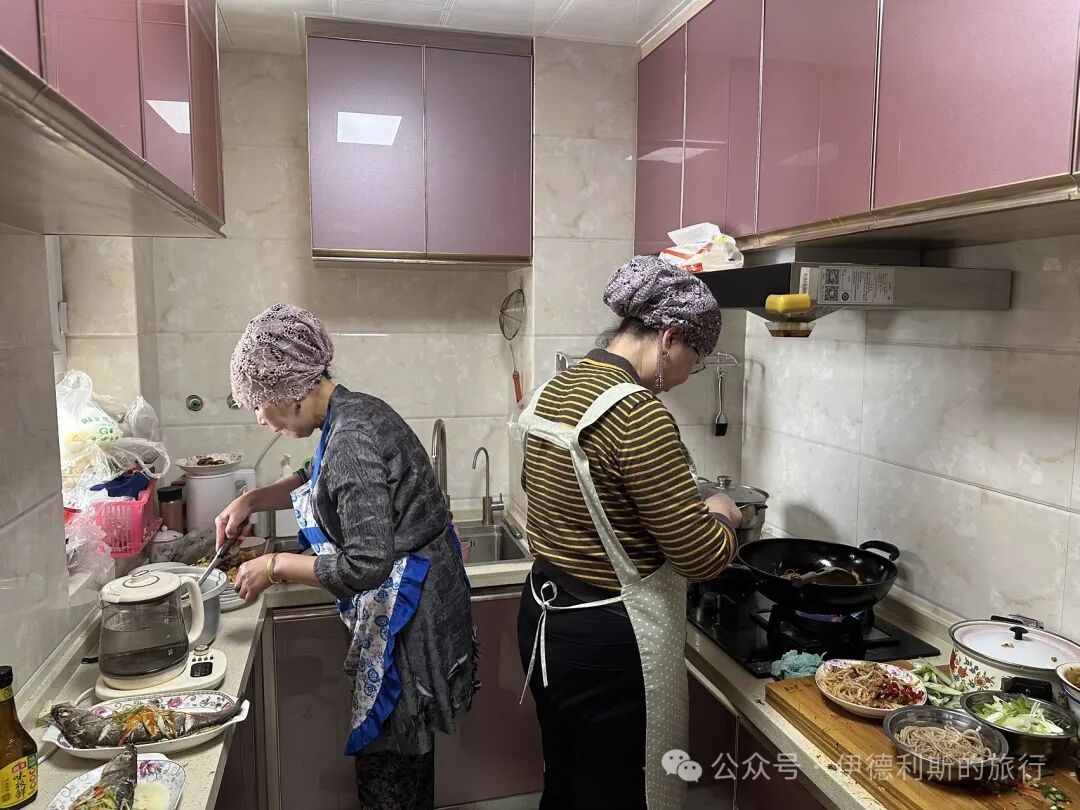
The fried dough was deep-fried a day in advance. Before frying, we first performed ablution (wudu), then leavened the dough. After it rose, we scalded a small portion with hot oil and mixed in a little baking soda and fenugreek powder. We kneaded the scalded dough into the leavened dough, covered the basin, and let it rest for 15 minutes. After resting, we rolled it into a long shape, pinched off pieces, rolled them into flat cakes, cut four small slits with a knife, and it was ready to be fried. When putting them into the pot, we recited the Tasmiyah. We fried them for a while, flipped them, and tapped the edges with chopsticks; once they were firm, they were done.
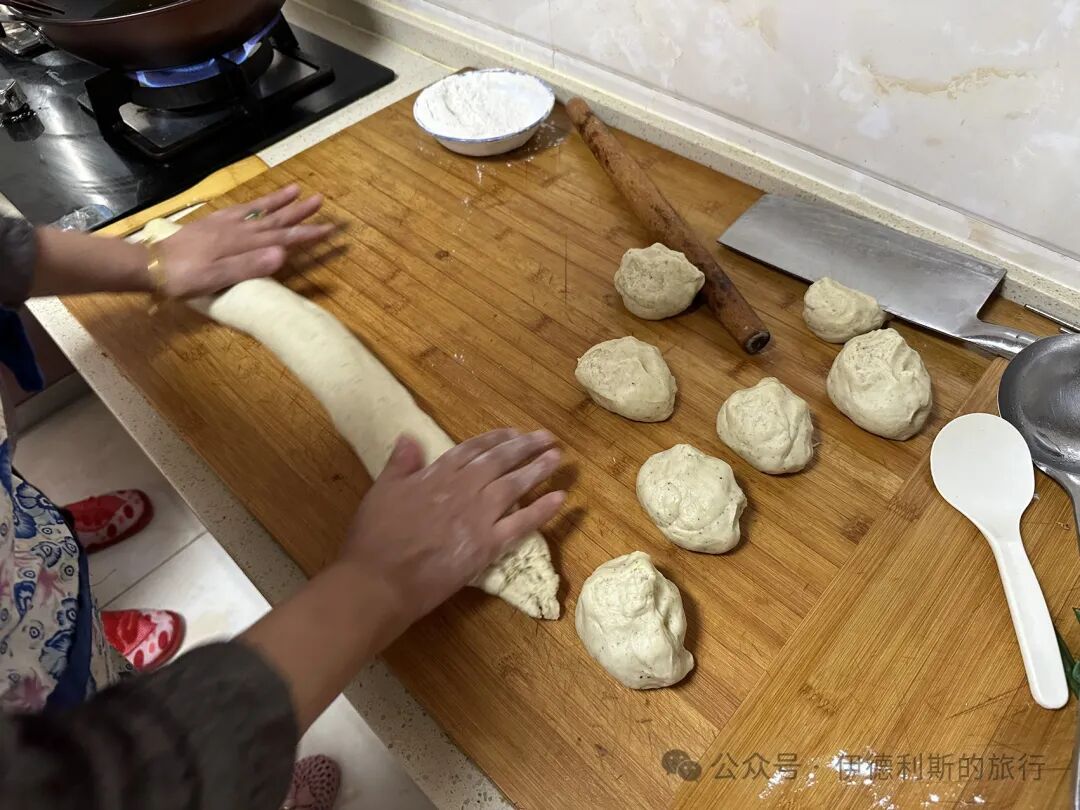
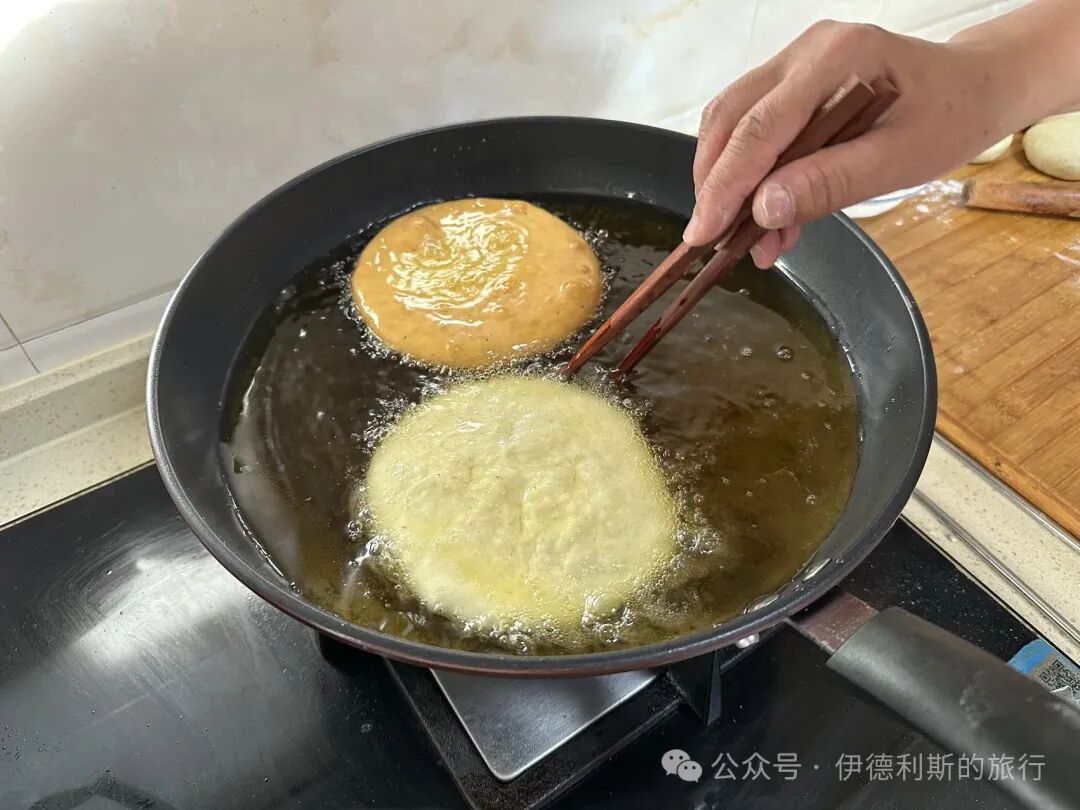
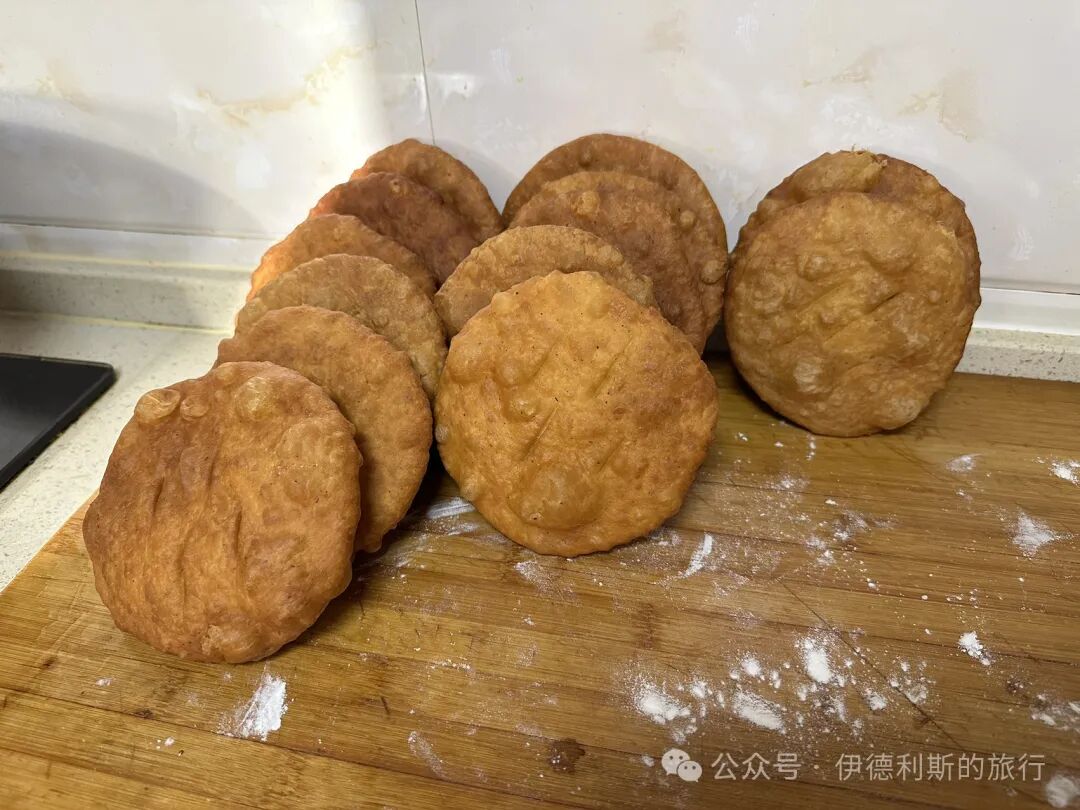
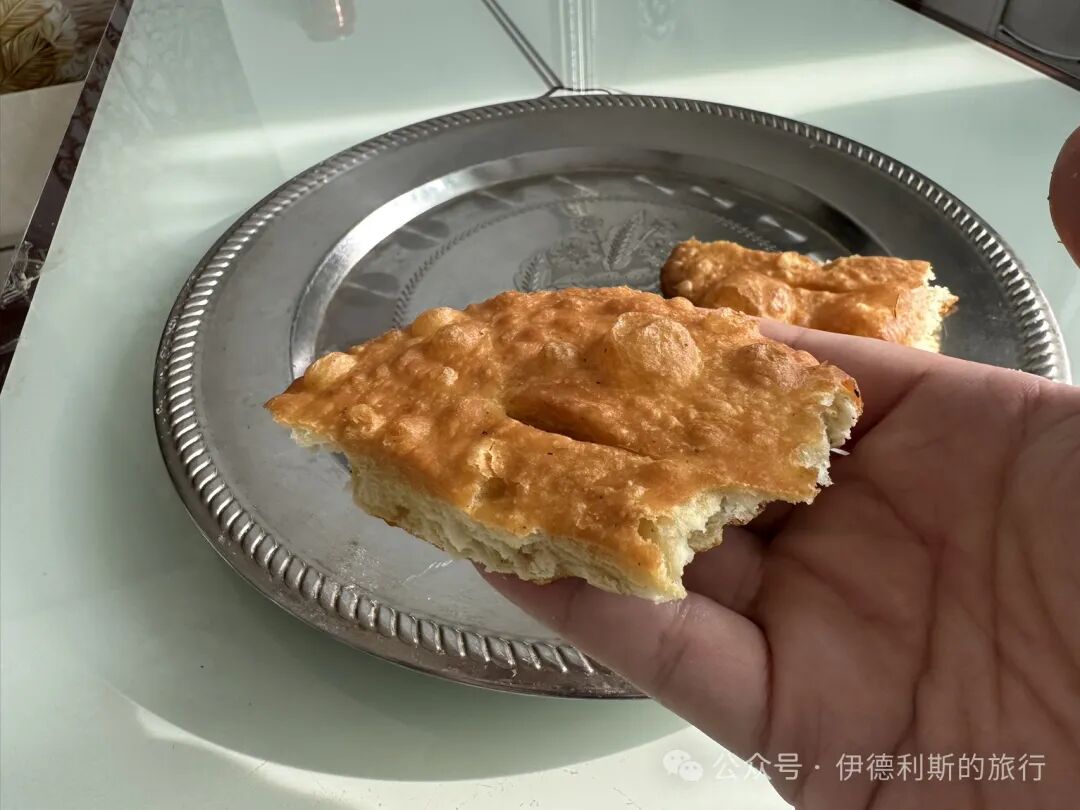
To make sweet rice platter (tianpanzi), first wash the glutinous rice and soak it for three days. Then, add a little brown sugar (shazitang) and steam it, using more water than you would for regular rice. Next, wash red dates, walnut kernels, and raisins, and spread them at the bottom of a bowl. Cover them with the steamed glutinous rice and let it cool. After that, boil rock sugar to make a syrup. Finally, flip the bowl of rice onto a plate and pour the syrup over it.
Meatloaf (munzi) is made with ground beef. When mixing the filling, beat it repeatedly, then shape it into a cylinder. Pinch the top to look like a railing, pour an egg into the center, and steam it.
For spicy peppercorn chicken (jiaomaji), first wash a free-range chicken, cut it in half, and put it in a pressure cooker. Add water to cover it, along with red chili, Sichuan peppercorns, salt, bay leaves, cinnamon, and ginger slices. Once cooked, take it out, let it cool in a basin, tear the meat into strips, and top with green onions. Heat oil in a pan. Once hot, turn off the heat and add dried chili skins (lapizi), Sichuan peppercorns, salt, and white pepper. Stir well, pour in some chicken broth, and then pour everything over the chicken in the basin and mix well.
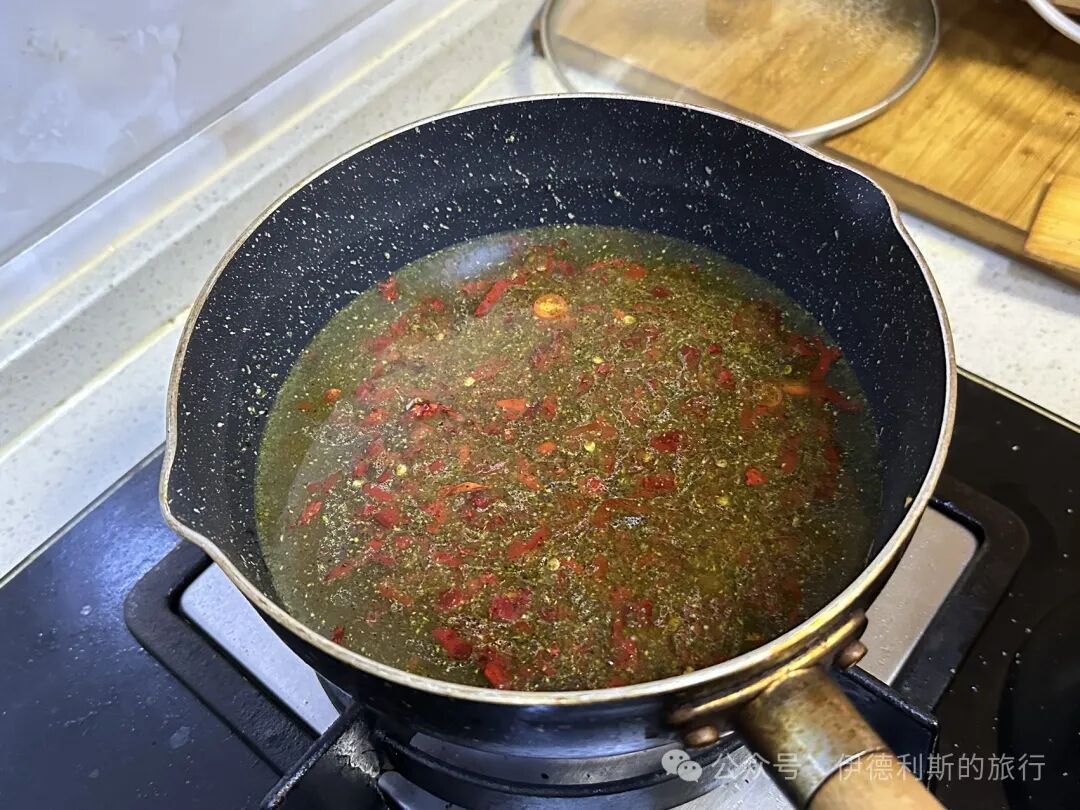
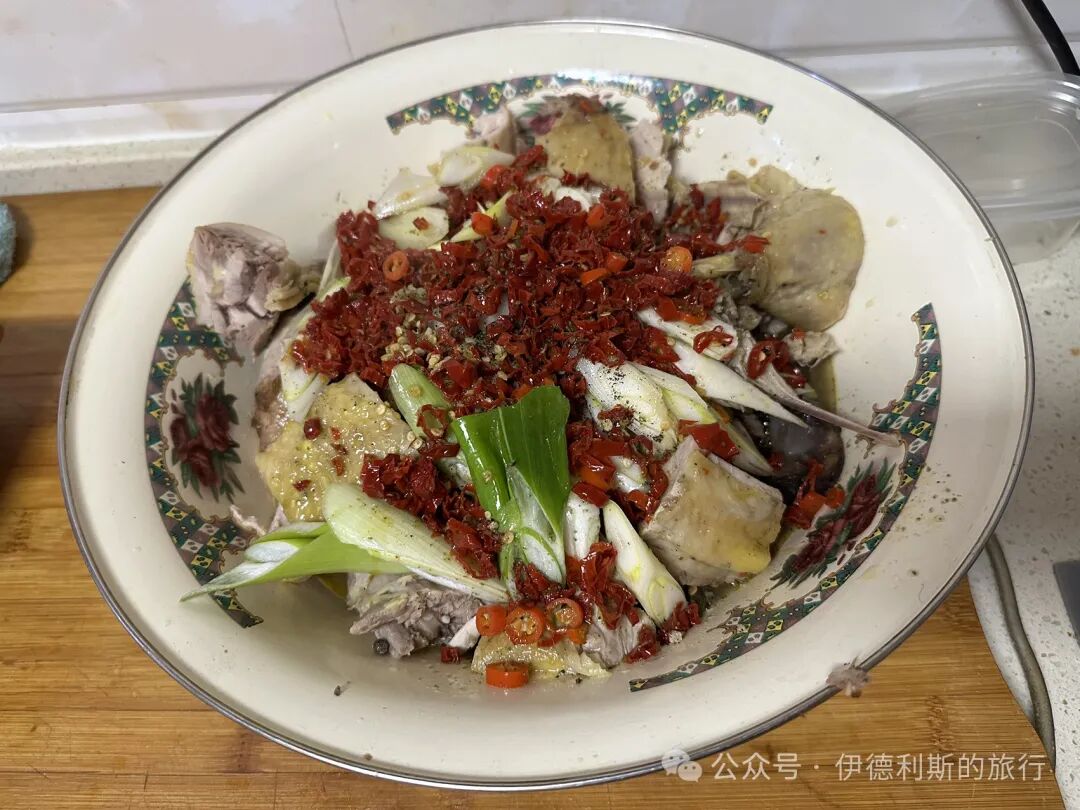
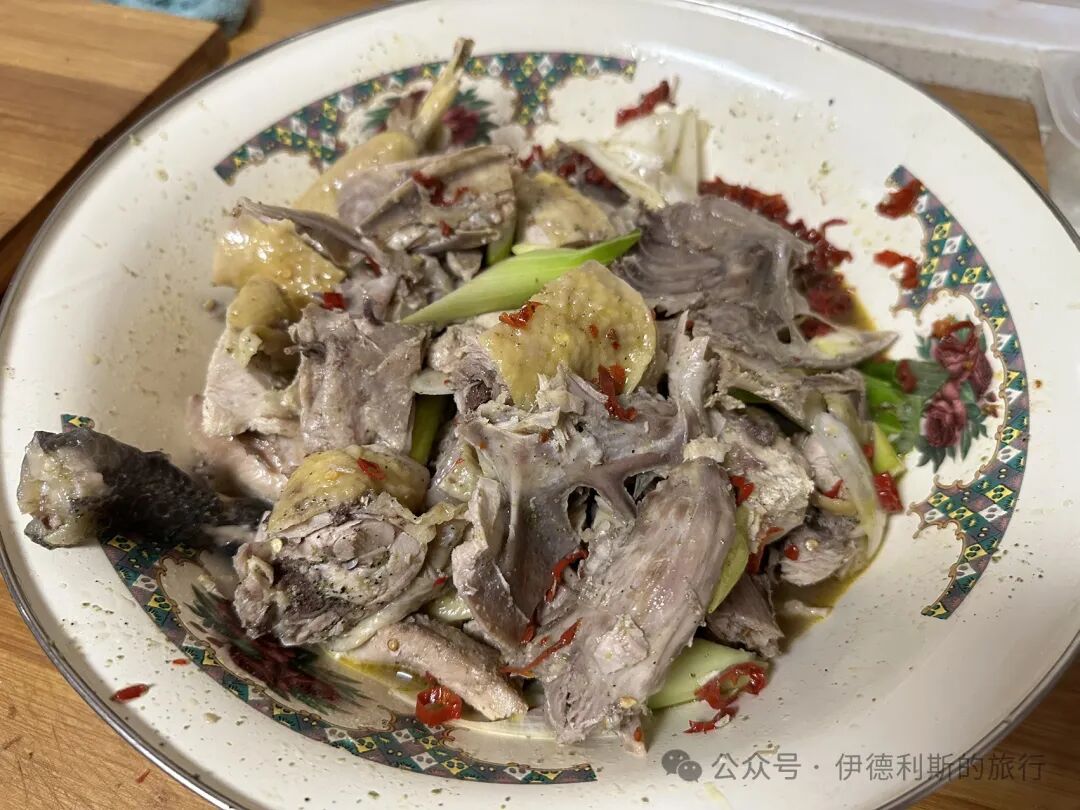
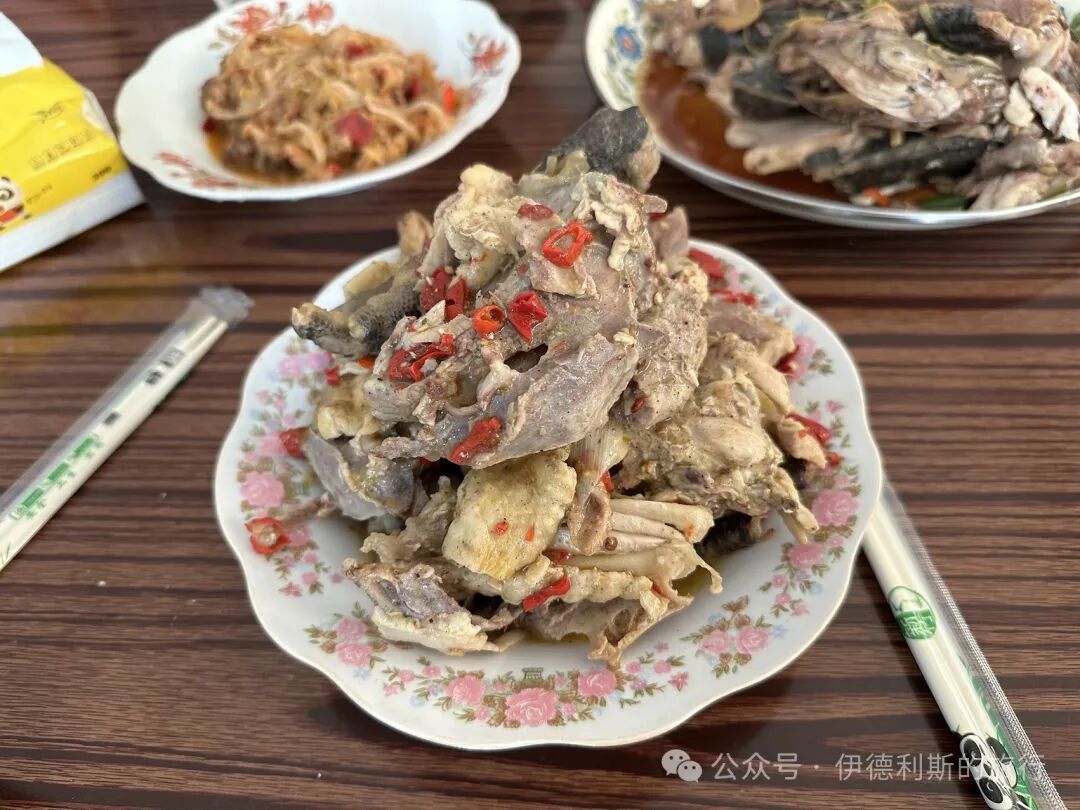
We spent the night at my aunt's house near the cement factory. My uncle is an imam at a small mosque in Shanxi, and we are very grateful (zhigan) for that.
The main dishes were definitely braised beef steak and clear-stewed lamb. The chicken was raised by my uncle himself, and the lamb was from the southern mountains of Urumqi.
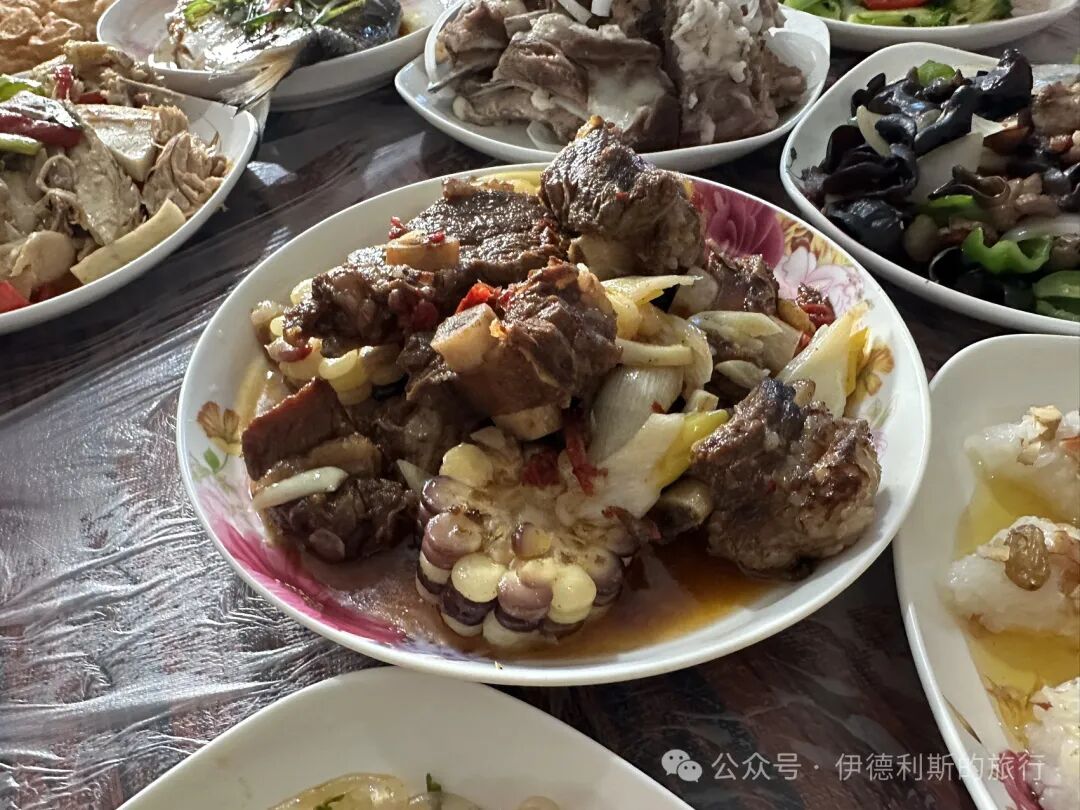
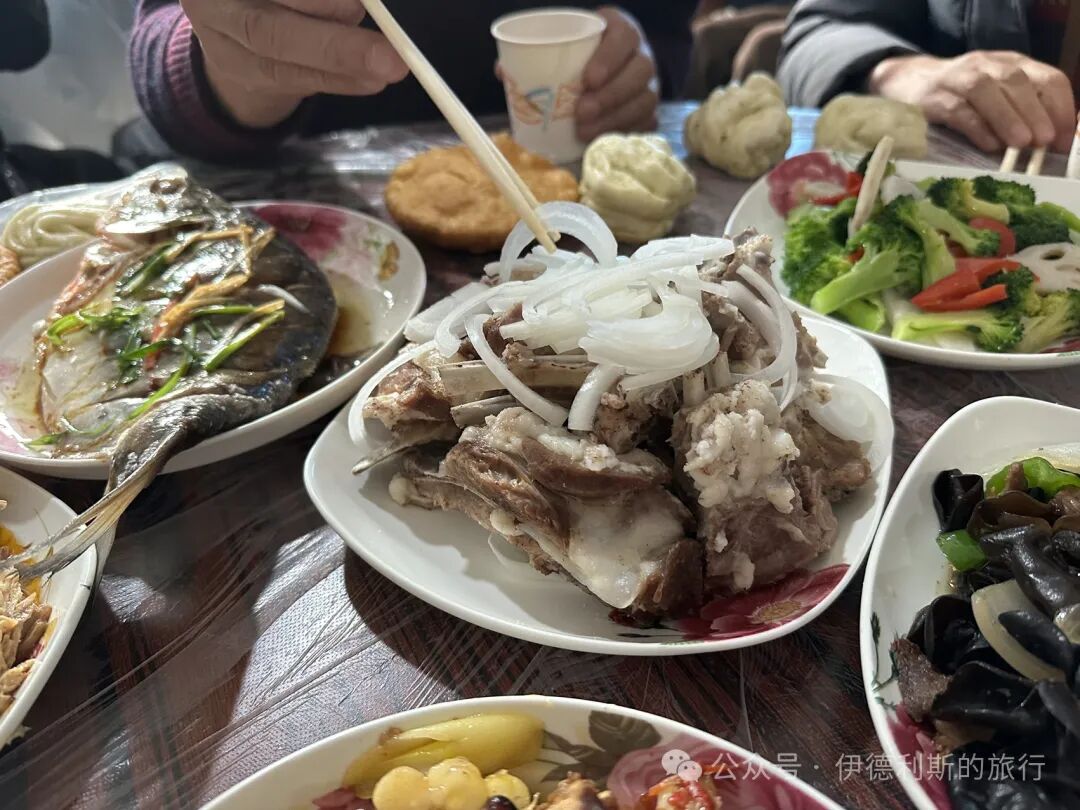
We spent the night at my second aunt's house in the New City District. My aunt is the recognized master chef of our family. She makes authentic home-style stir-fries, meatloaf (munzi), stuffed meat slices (jiasha), and tripe.
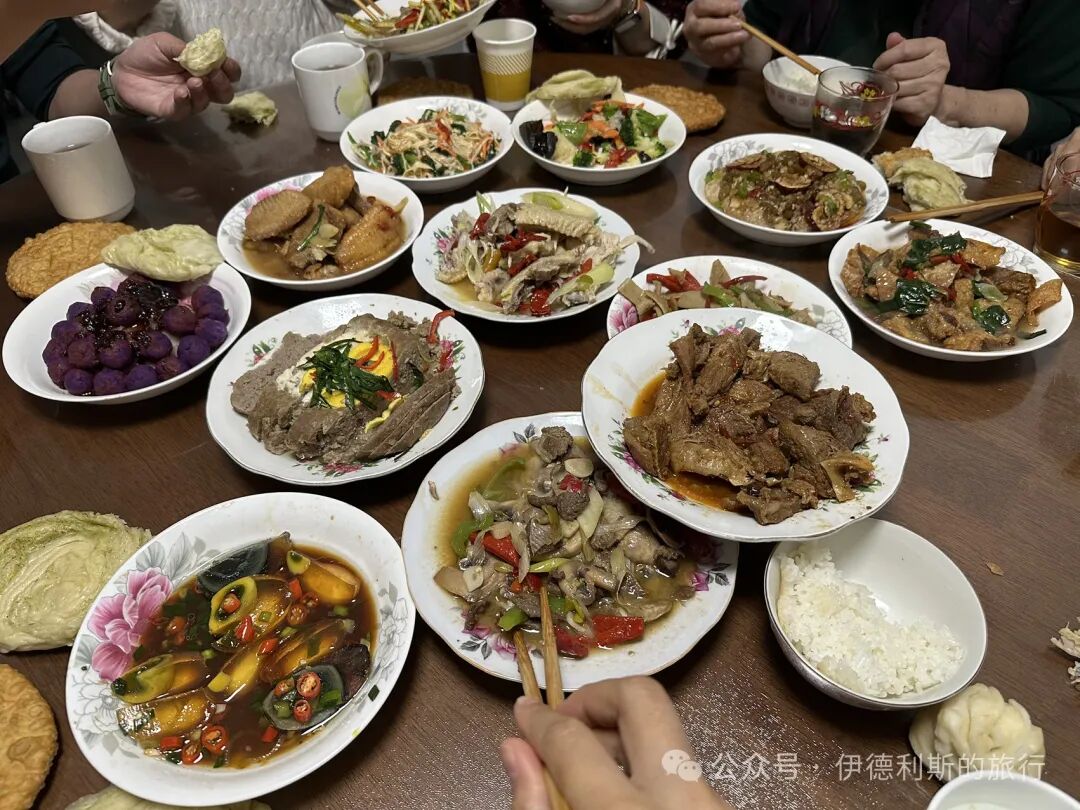
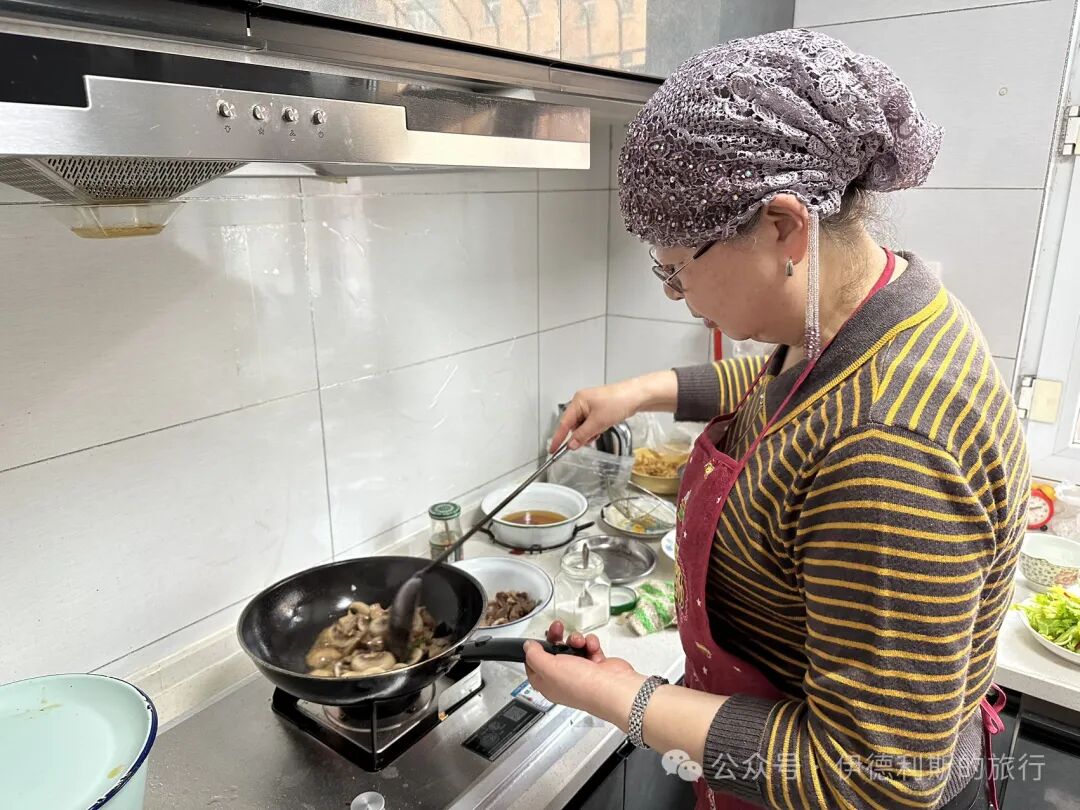
We spent the night at my aunt's house near the flour mill and had basin meat (penpenrou) with fried dough (youxiang) for breakfast.
We hosted our guests at Lanpin Banquet. It is currently the most popular restaurant in Urumqi for Hui Muslims to hold religious gatherings (niansuoer). They don't sell alcohol, the food is refined, and the owner is warm and attentive. It is usually packed on weekends and holidays, so you must book in advance. On the day we went, they hosted 30 tables for a circumcision ceremony and 15 tables for a special occasion.
We ate stir-fried beef tendon, spicy peppercorn chicken (jiaomaji), cold-dressed beef, hand-grabbed lamb (shoubarou), sauced stuffed meat slices (jiasha), pearl meatballs, and flatfish, along with complimentary side dishes. These are the most popular dishes for Hui Muslim gatherings in Urumqi right now. Their hand-grabbed lamb (shoubarou) is excellent; the meat is tender and fragrant, making it perfect for elderly people to eat.
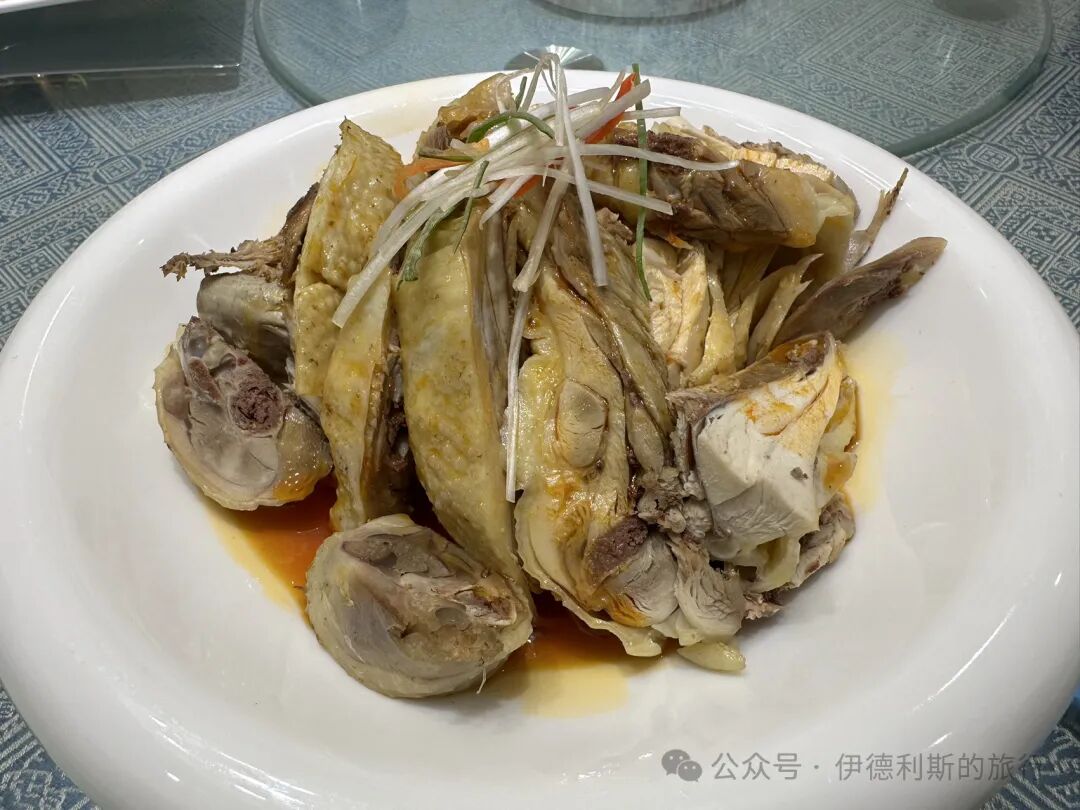
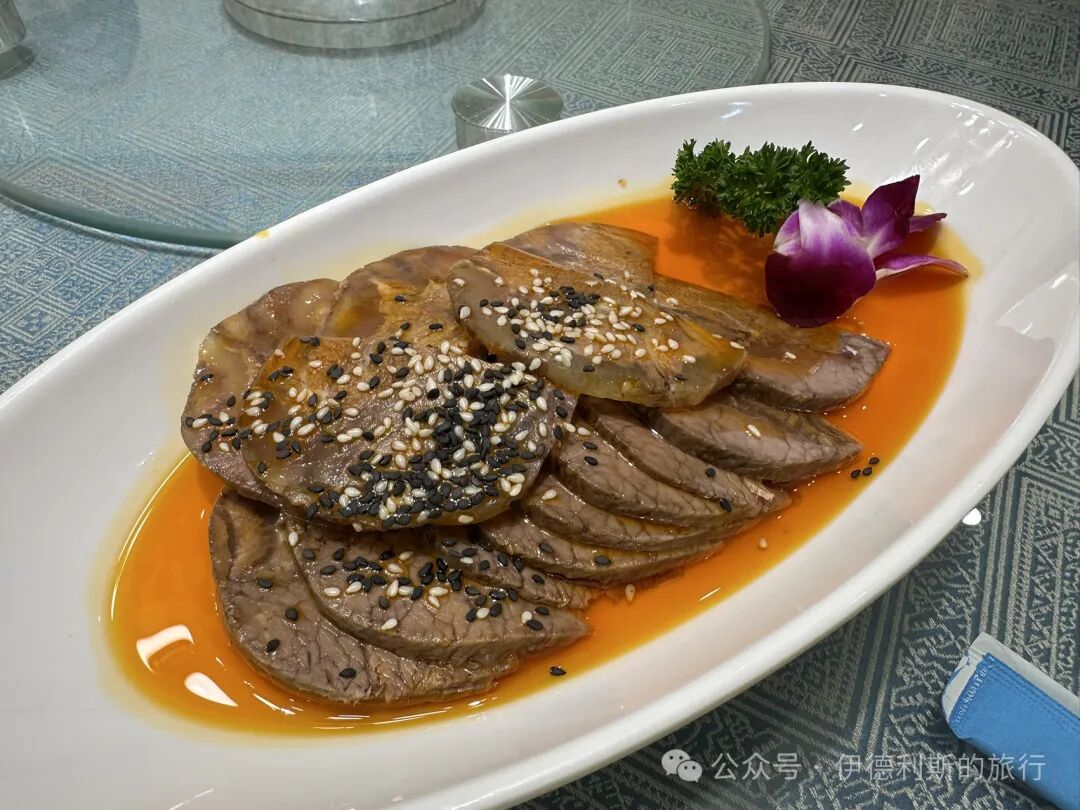
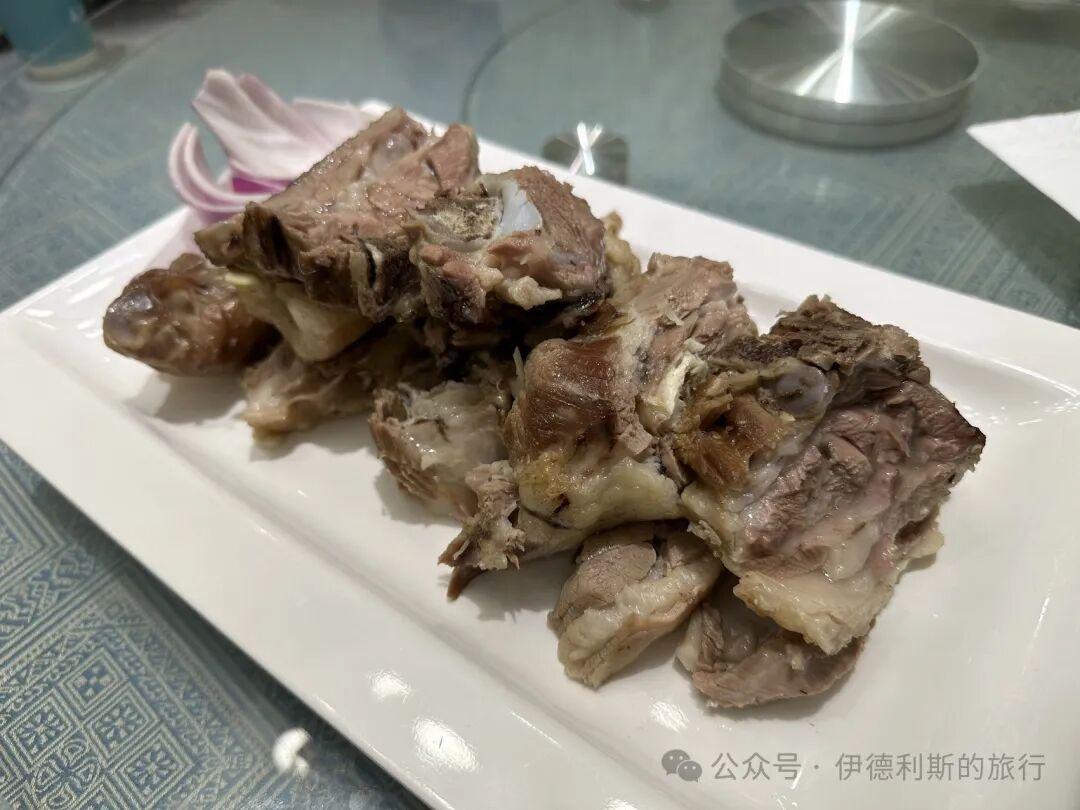
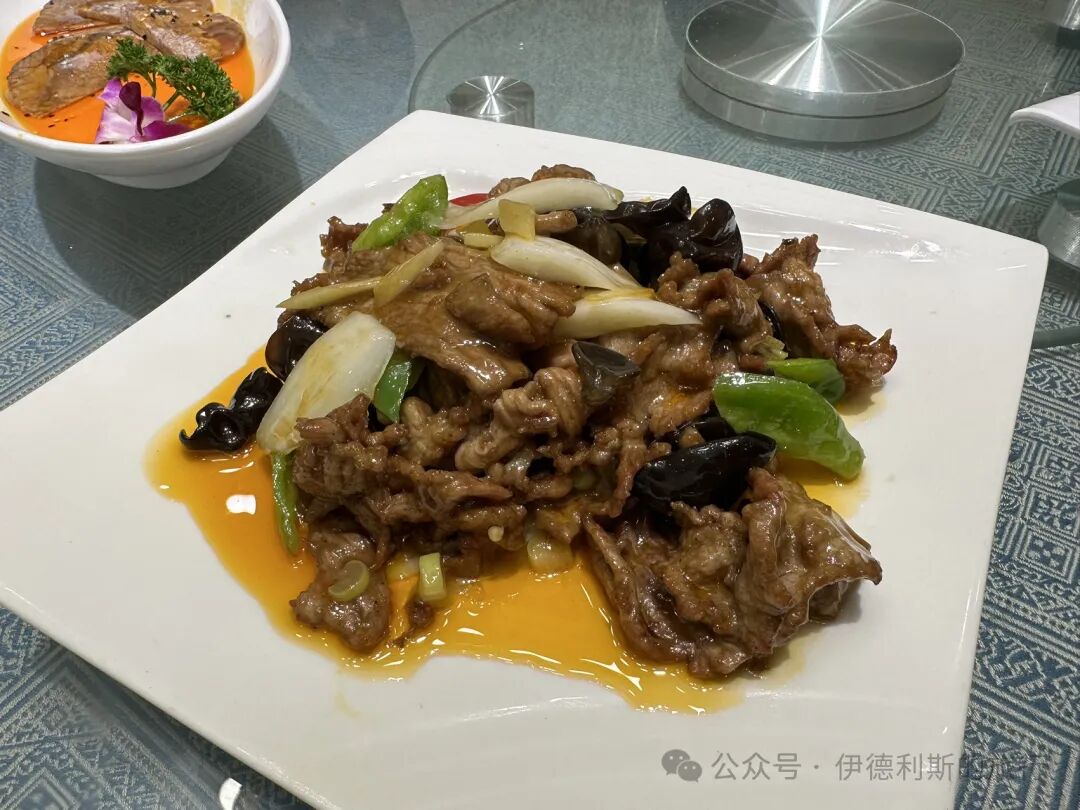
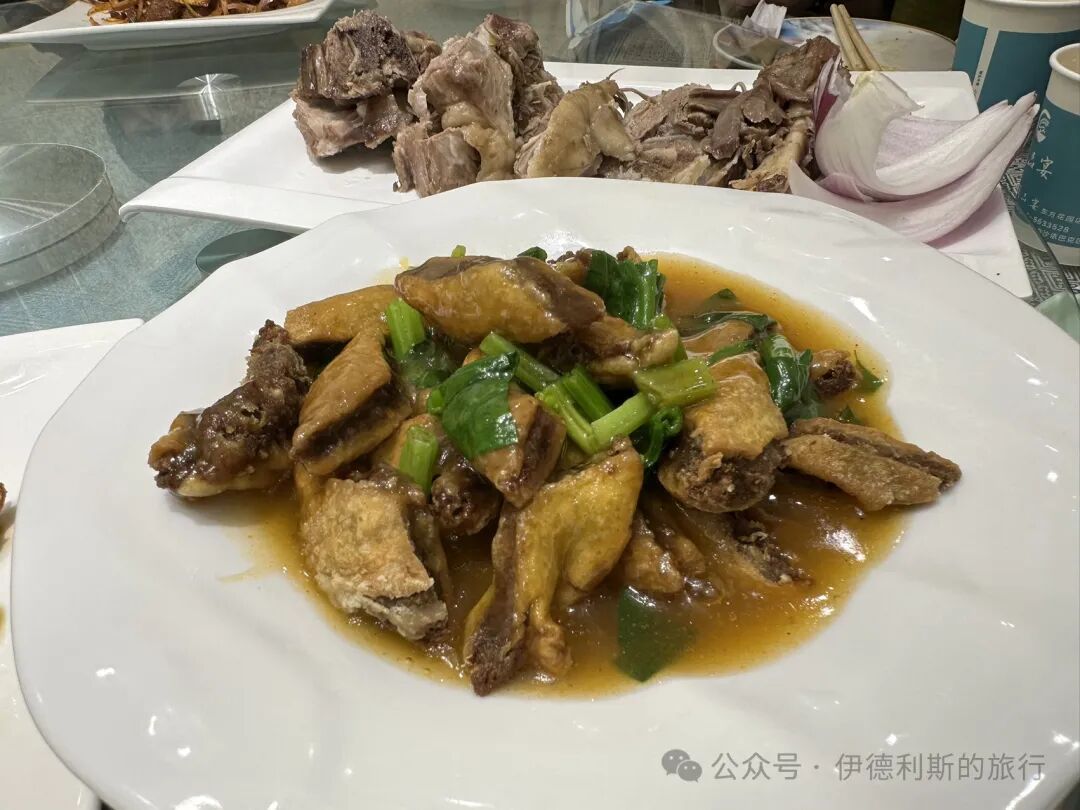
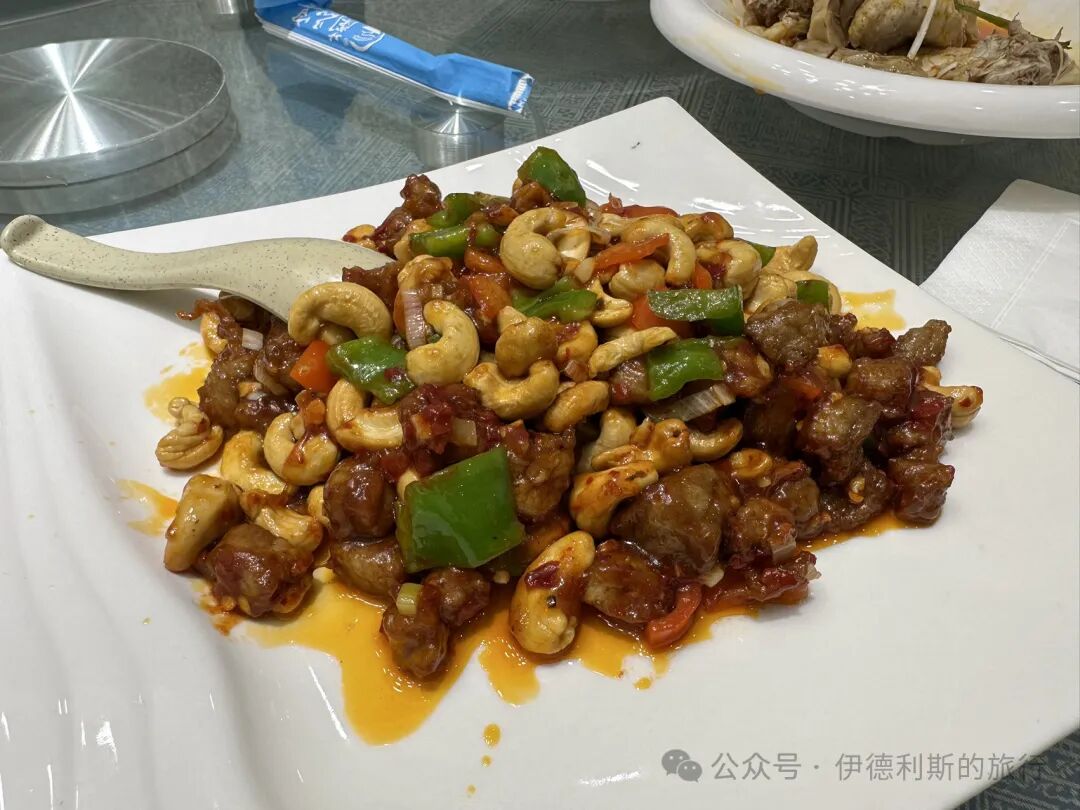
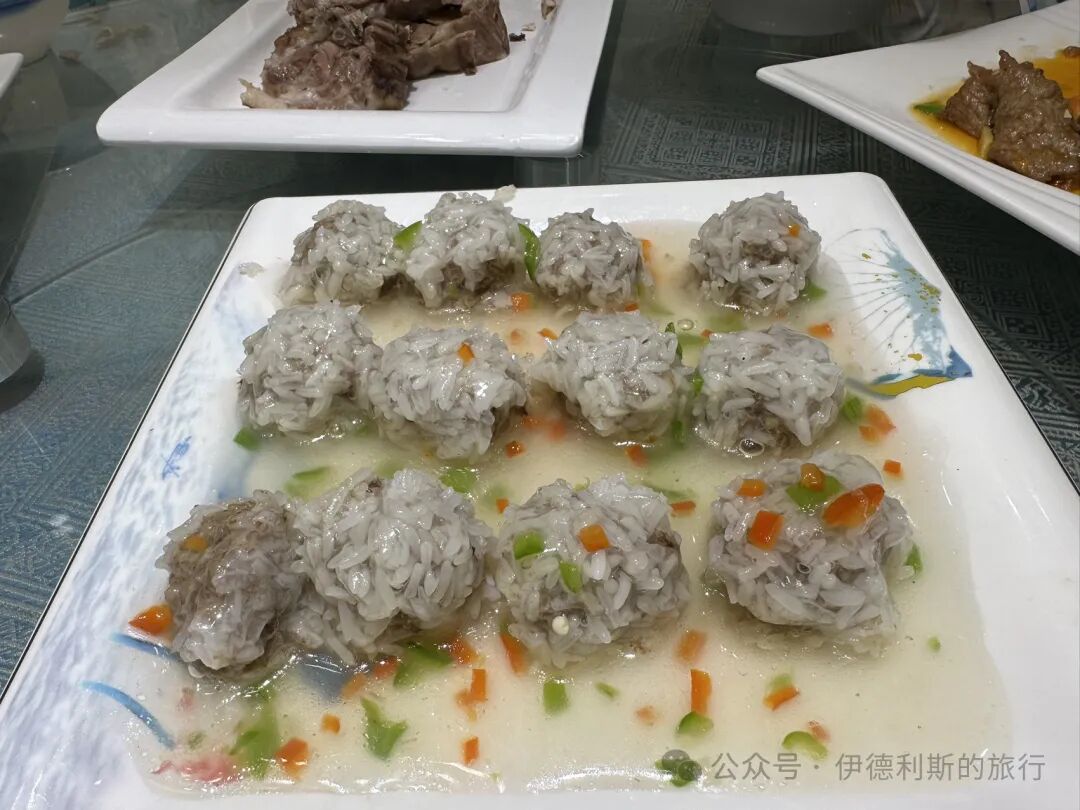
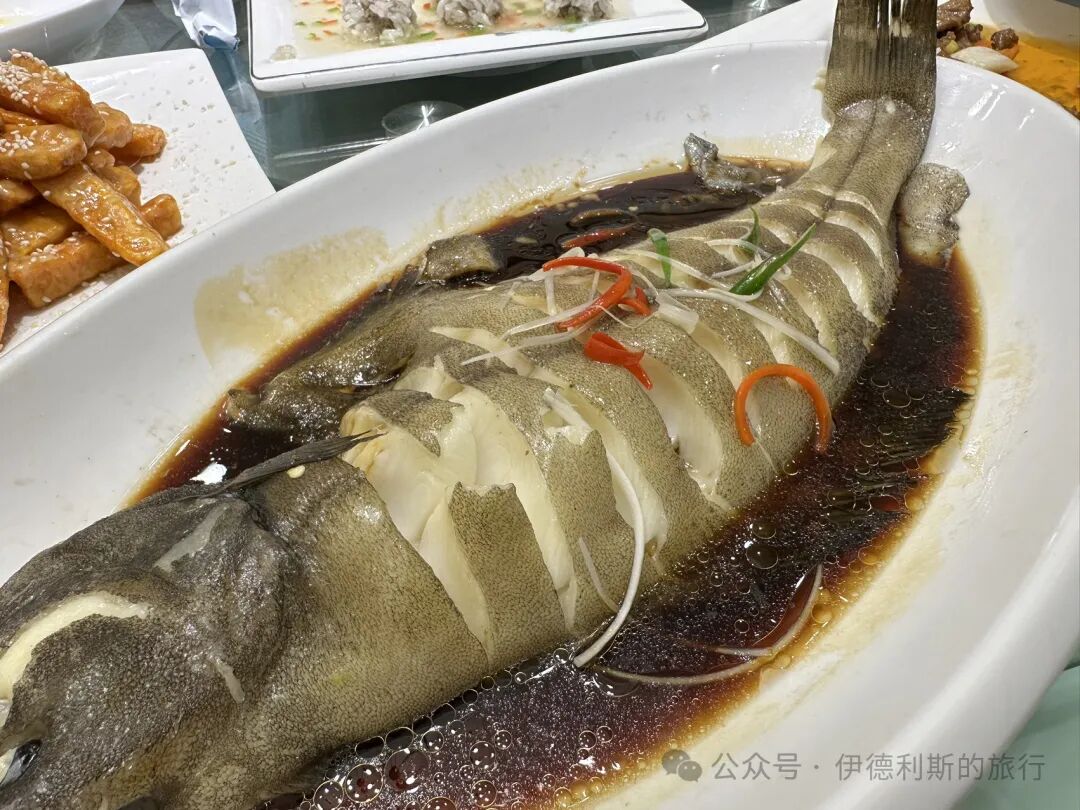
I spent the night at Uncle Saisai's house in the Changsheng Brigade in the southern suburbs of Urumqi. The hospitality was generous, with dishes like sweet platter (tianpanzi), fried dough snacks (youguozi), pearl meatballs (zhenzhu wanzi), braised ribbonfish, clear-stewed meat, and braised lamb. I also met many relatives.
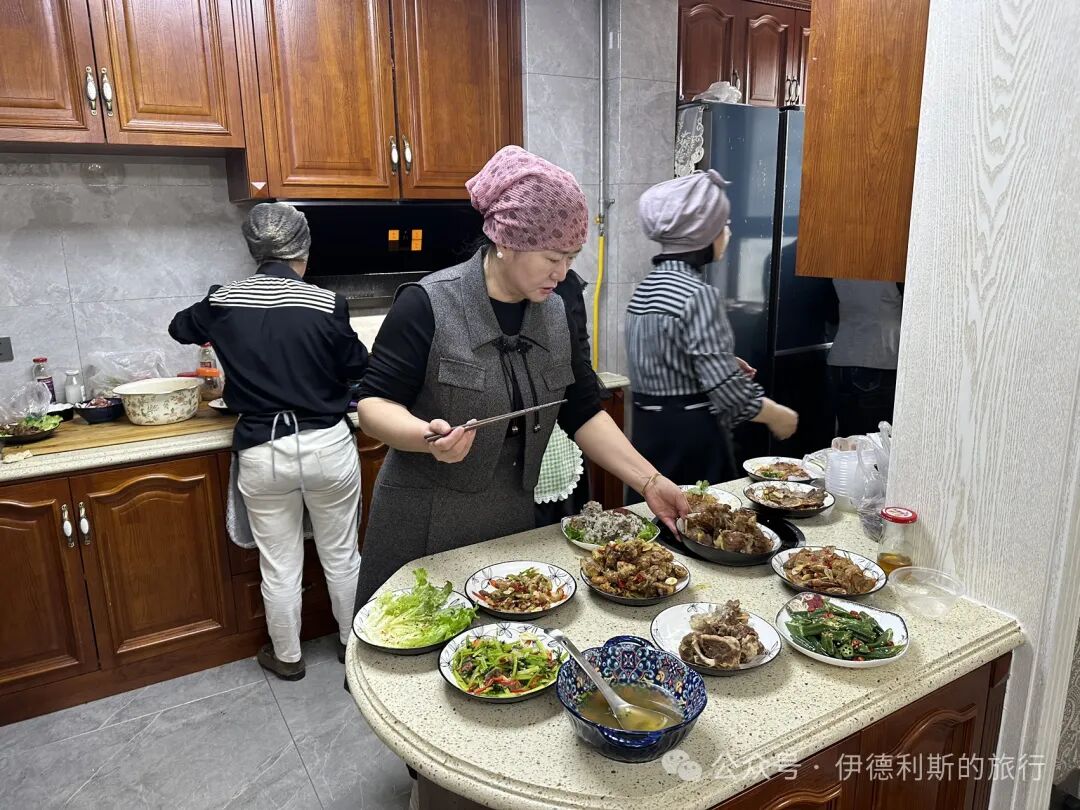
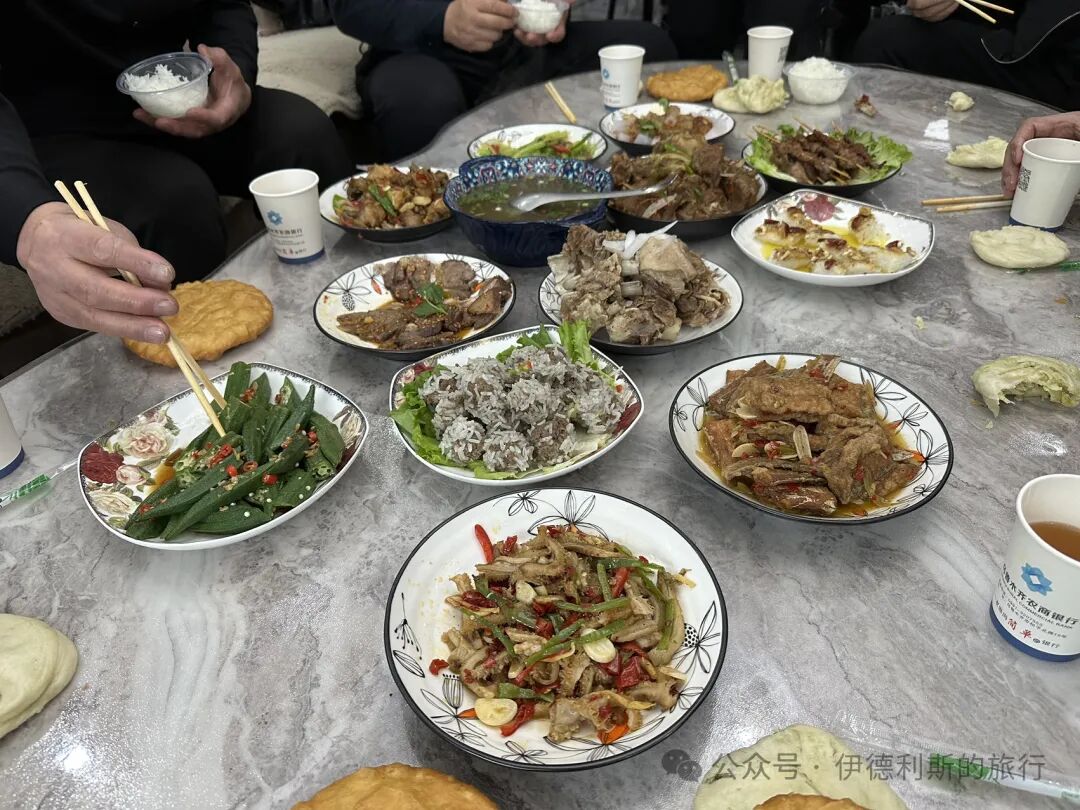
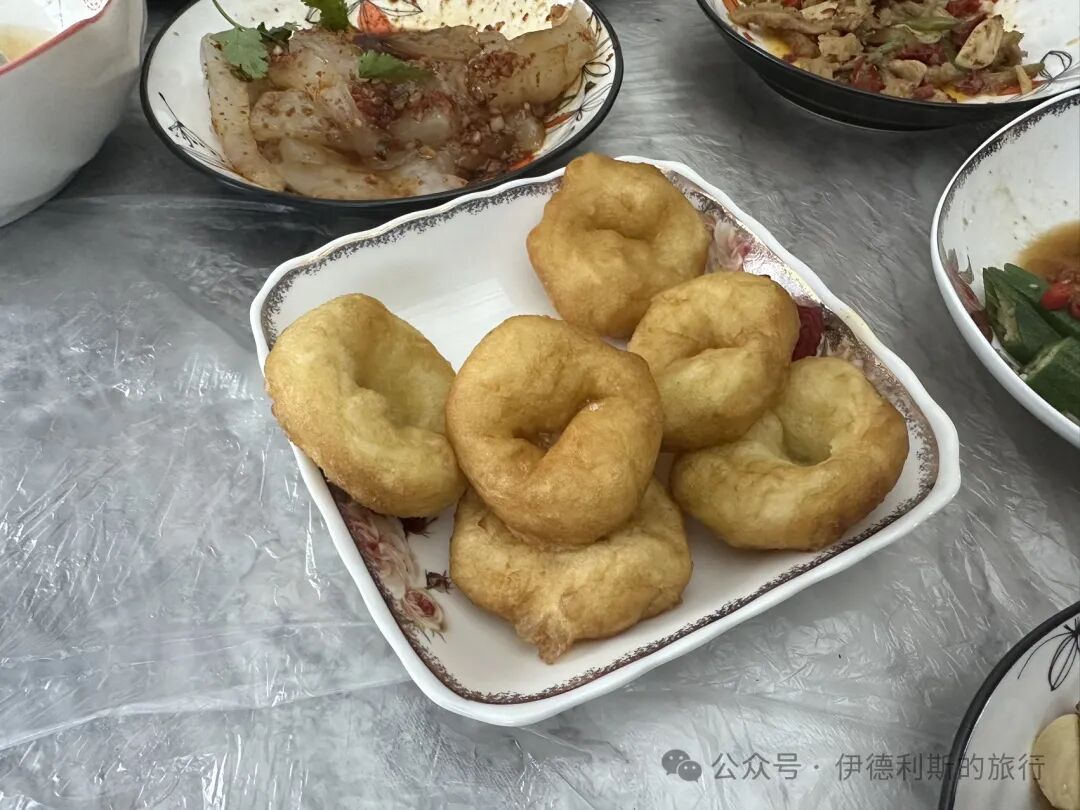
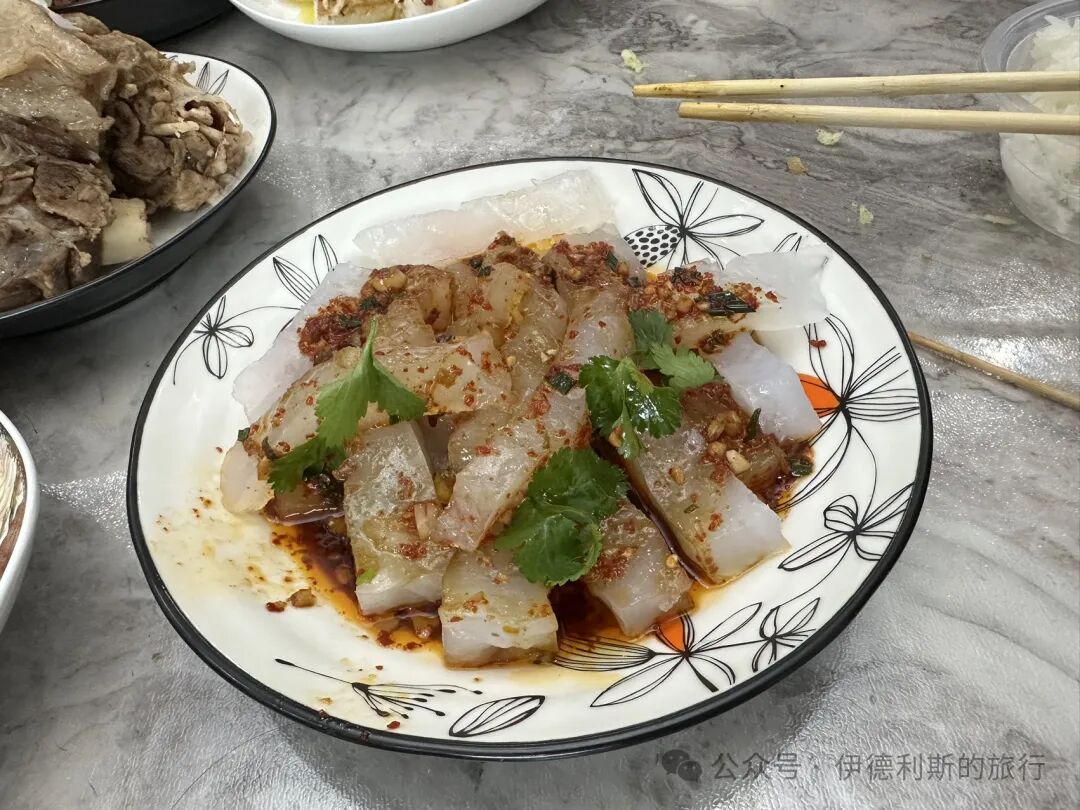
Engagement acceptance ceremony (luohuali)
This time, I arrived just in time for my brother-in-law's engagement acceptance ceremony (luohuali). We had a feast at a small community (xiaofang) of the Jahriyya order (Zhepai) in Anningqu, in the northern suburbs of Urumqi, where I ate some homemade fried twisted sugar dough (tangningningzi). The feast started with small appetizer plates, which were then cleared to make room for the main dishes, including clear-stewed meat, braised meatballs, braised fish, and beef head meat.
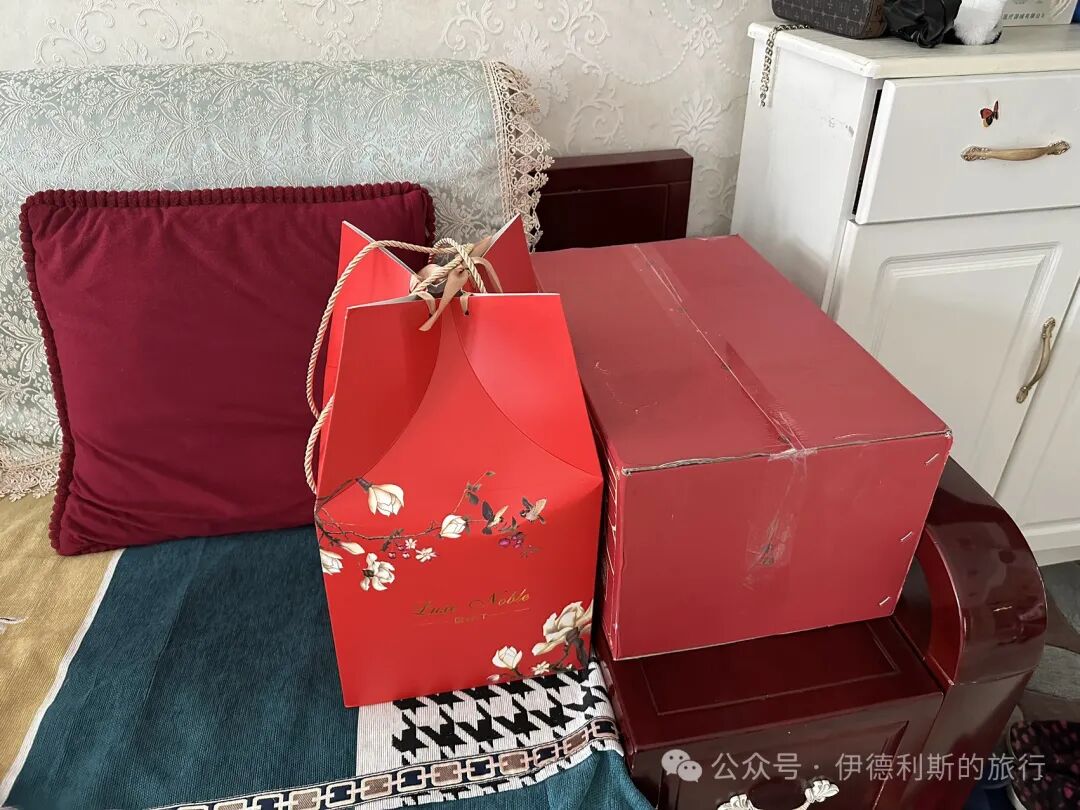
The traditional wedding customs of Hui Muslims in Xinjiang are very specific. Before a formal marriage proposal, there is a 'preliminary inquiry' where the man's family learns about the woman's family. Then, they send a matchmaker with four types of gifts—tea leaves, sugar cubes, red dates, and walnuts (or pastries)—wrapped in four colors, known as the 'four-color gift' (sese li). The first time a matchmaker brings the four-color gift to propose, it is called the 'opening gift' (kaikouli). The matchmaker gives the red-cloth-wrapped gifts to the woman's family, but they do not give an answer right away. After careful consideration, the woman's family sends a message through the matchmaker. The man's family then sends the four-color gift again, which is called the 'engagement acceptance ceremony' (luohuali), and after that, they enter the engagement stage.
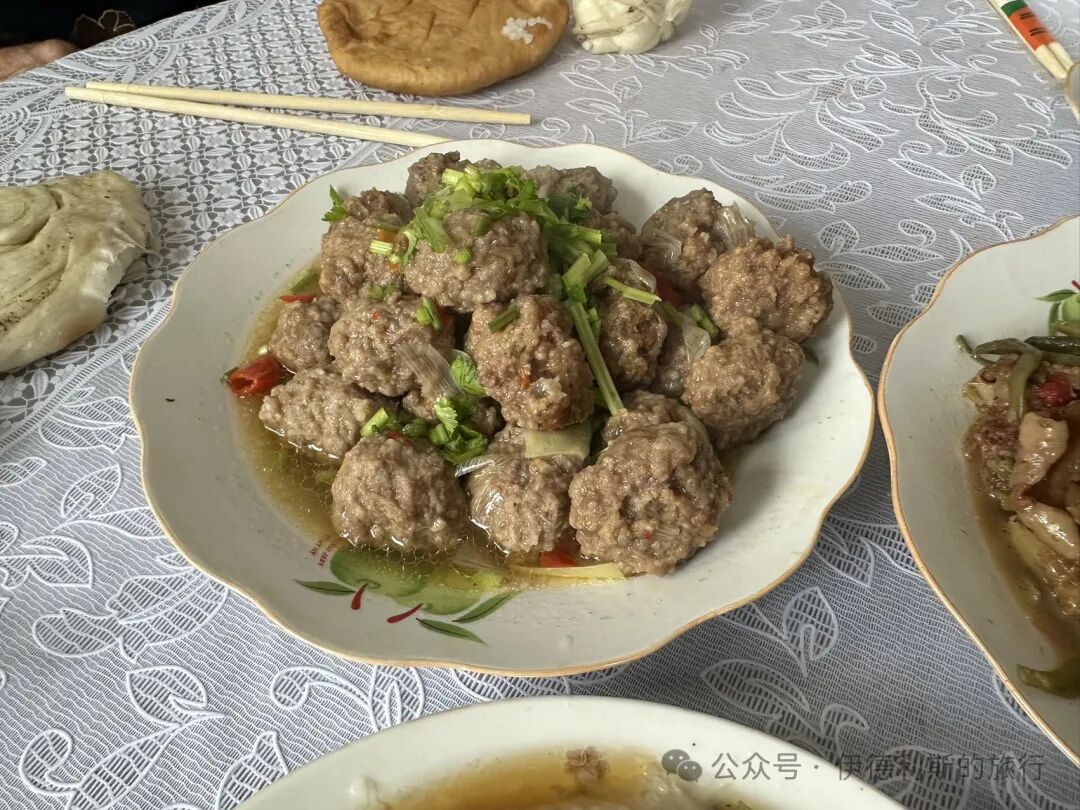
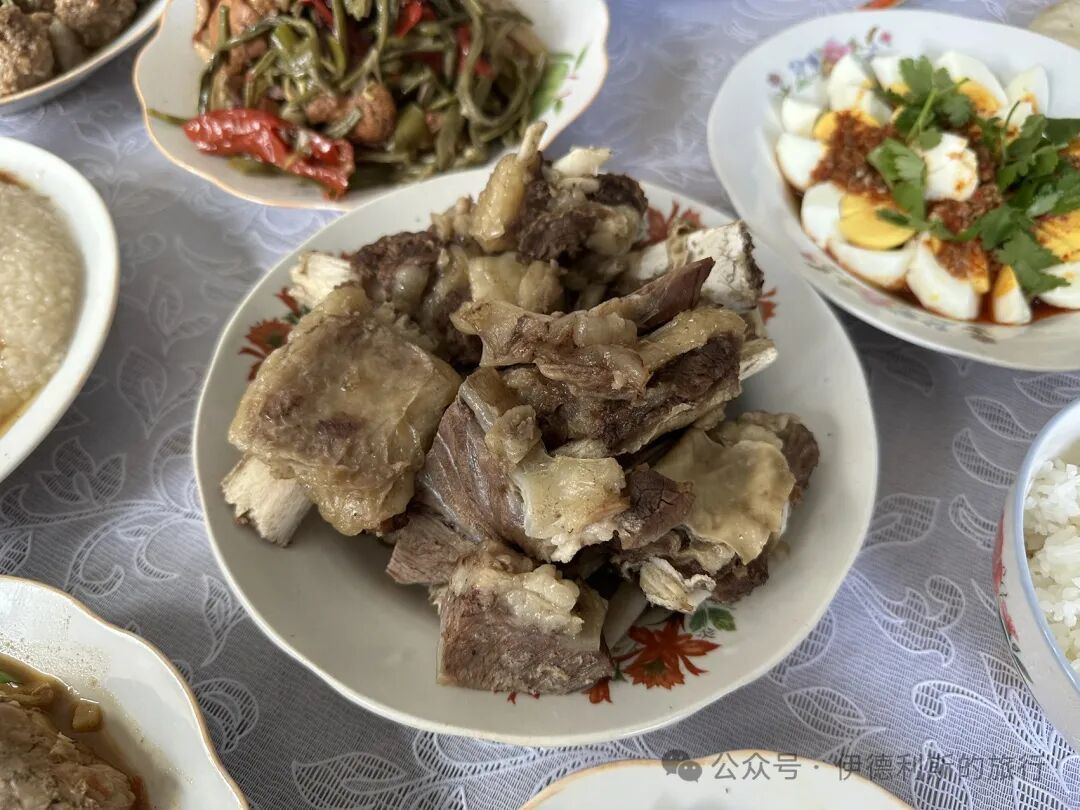
Friday prayer (Jumu'ah)
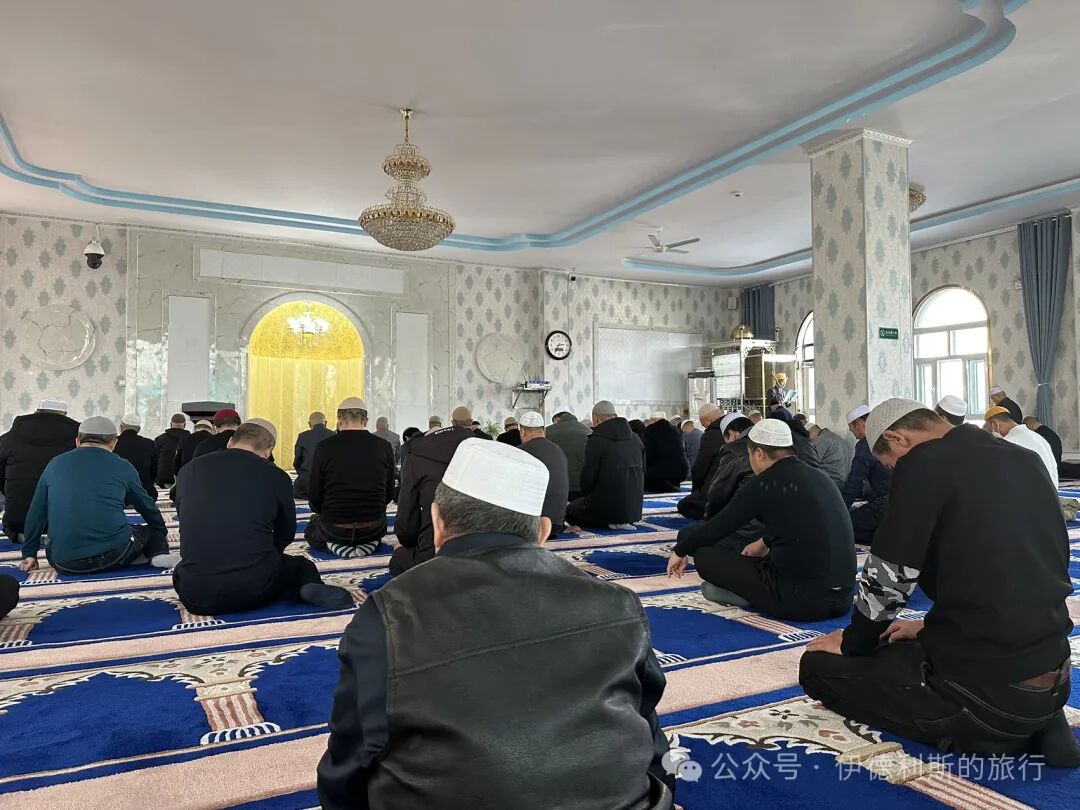
At noon, I attended the Friday prayer (Jumu'ah) at the Changsheng Grand Mosque. The Changsheng Grand Mosque is located in the Changsheng Brigade at the foot of Yaomo Mountain (Yamalike Mountain) in the southern suburbs of Urumqi. It has the highest number of congregants among the Hui Muslim mosques in the Saybagh District, with over a hundred people attending the Friday prayer (Jumu'ah). The Changsheng Brigade used to be a series of large courtyards where everyone farmed. Now, everyone has moved collectively to the Fumin Anju residential area, and the houses are very spacious.
Imam Fanta of the Changsheng Grand Mosque is my wife's uncle. Uncle Fanta is the one who performed our marriage contract (nikah). Uncle Fanta's surname is Su. The Su family is a large clan in Changsheng. Over three hundred years ago, they left Ankang, Shaanxi, and traveled through Ningxia and Jimsar to Urumqi to do business. Later, their business failed, and they eventually moved to Changsheng to farm, where they have lived ever since.
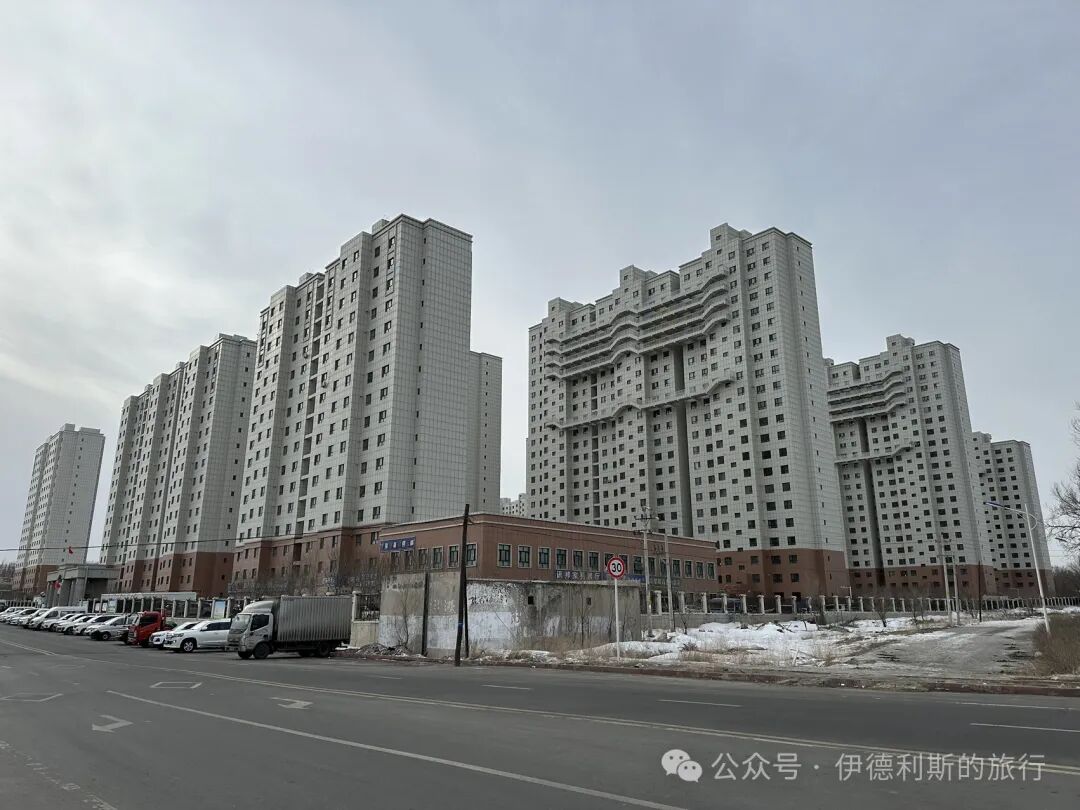
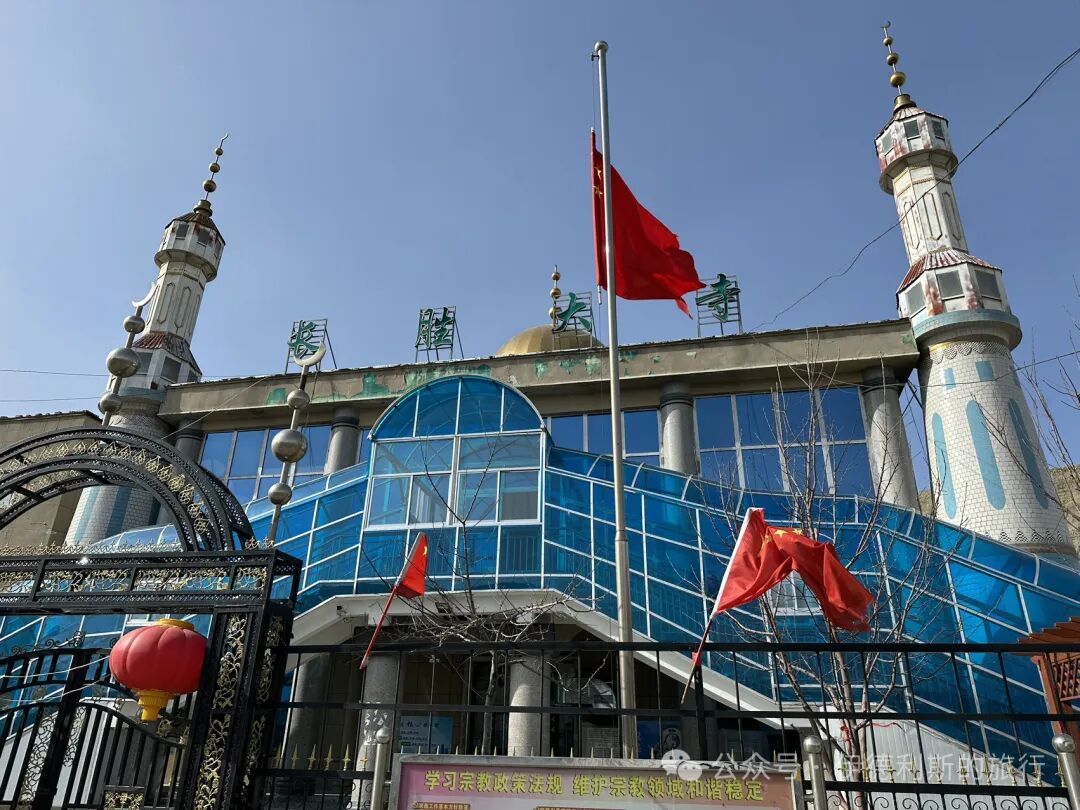
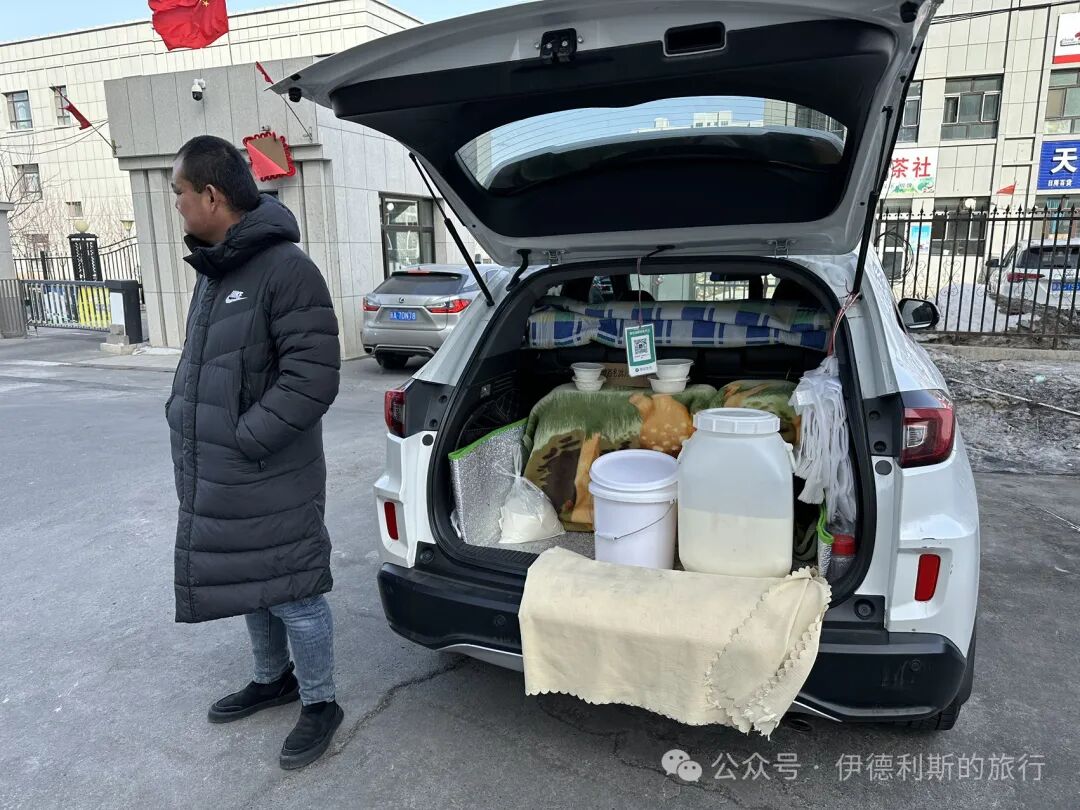
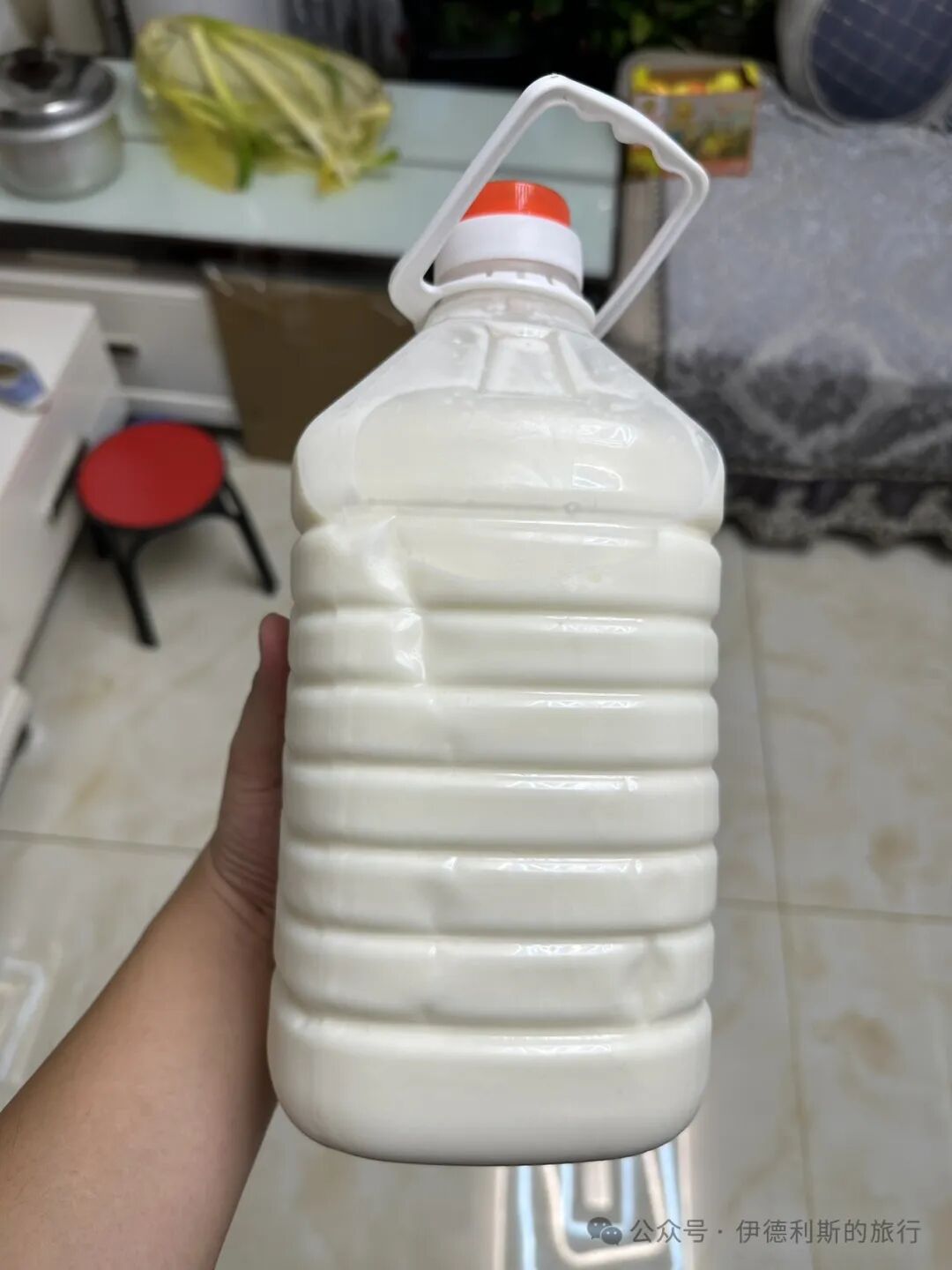
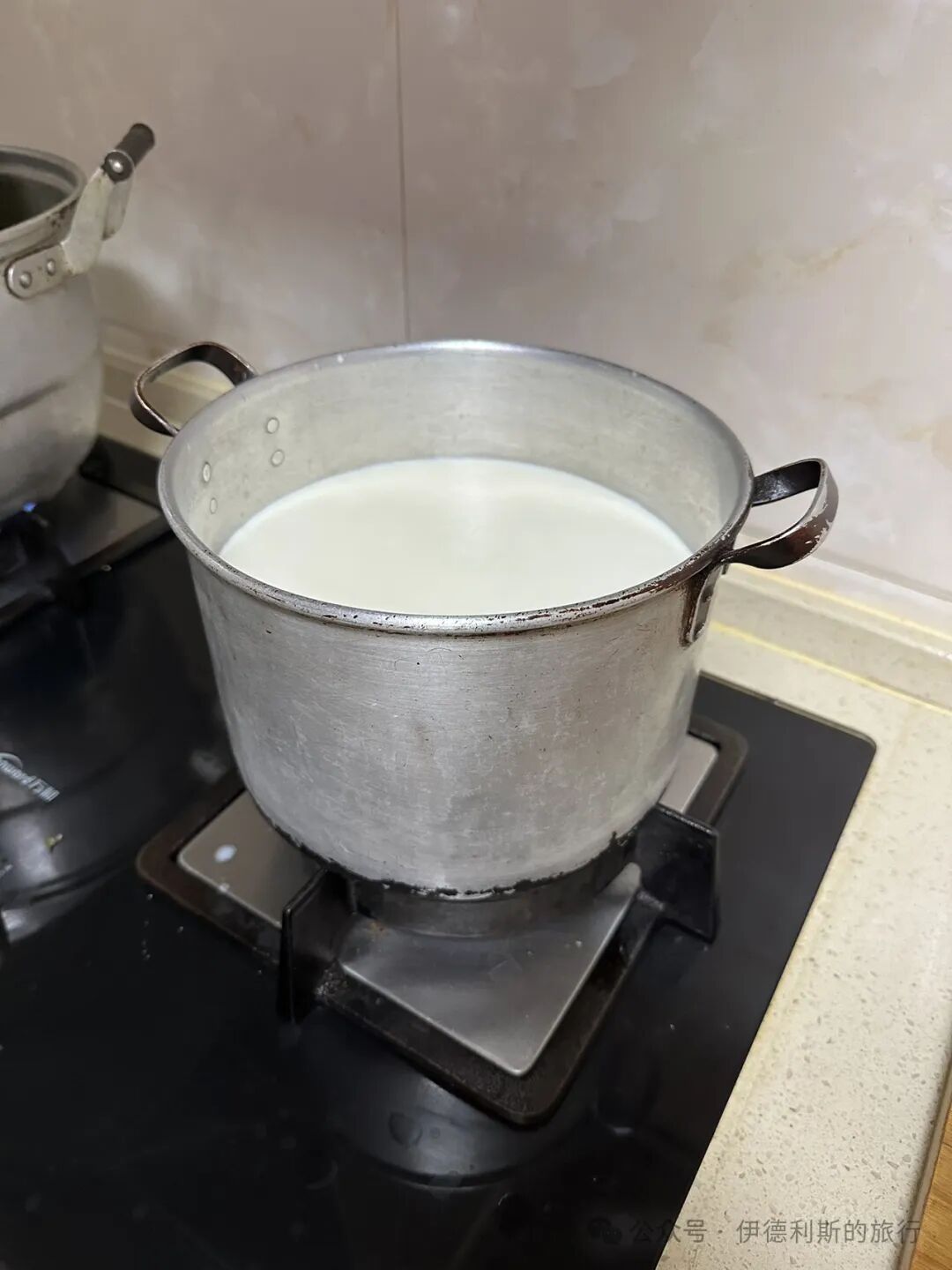
I bought fresh milk and handmade yogurt at the entrance of the Changsheng residential area. A large bucket of fresh milk only cost 20 yuan. After boiling it and adding two spoonfuls of milk skin (naipizi) I bought earlier on Hetian Street, it tasted amazing. The handmade yogurt comes with its own layer of milk skin (naipizi) and has a very rich milky flavor.
Visiting relatives and friends.
I visited my second aunt's house and had a lunch of Hui Muslim-style lamb dumpling soup (fentang yangrou jiaozi). The soup is the version Hui Muslims in Xinjiang make for Eid, and the dumplings are filled with lamb, onions (piyanzi), and pickled cabbage. They were small and delicate, and everyone loved them.
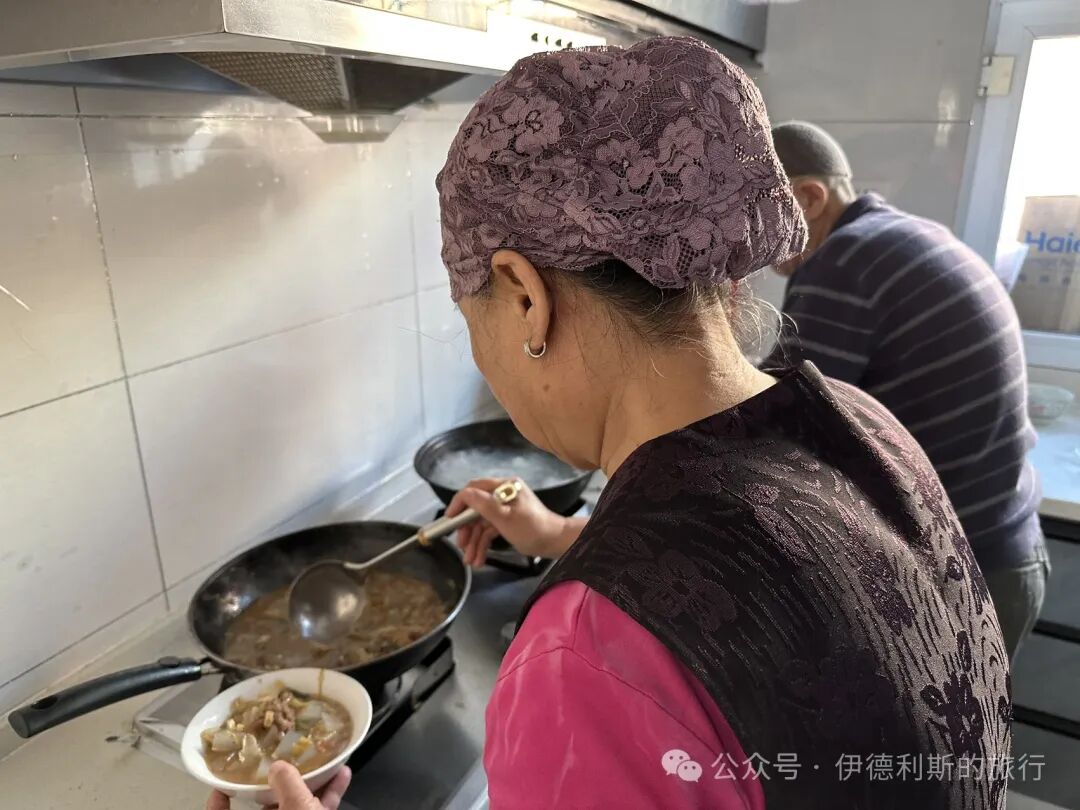
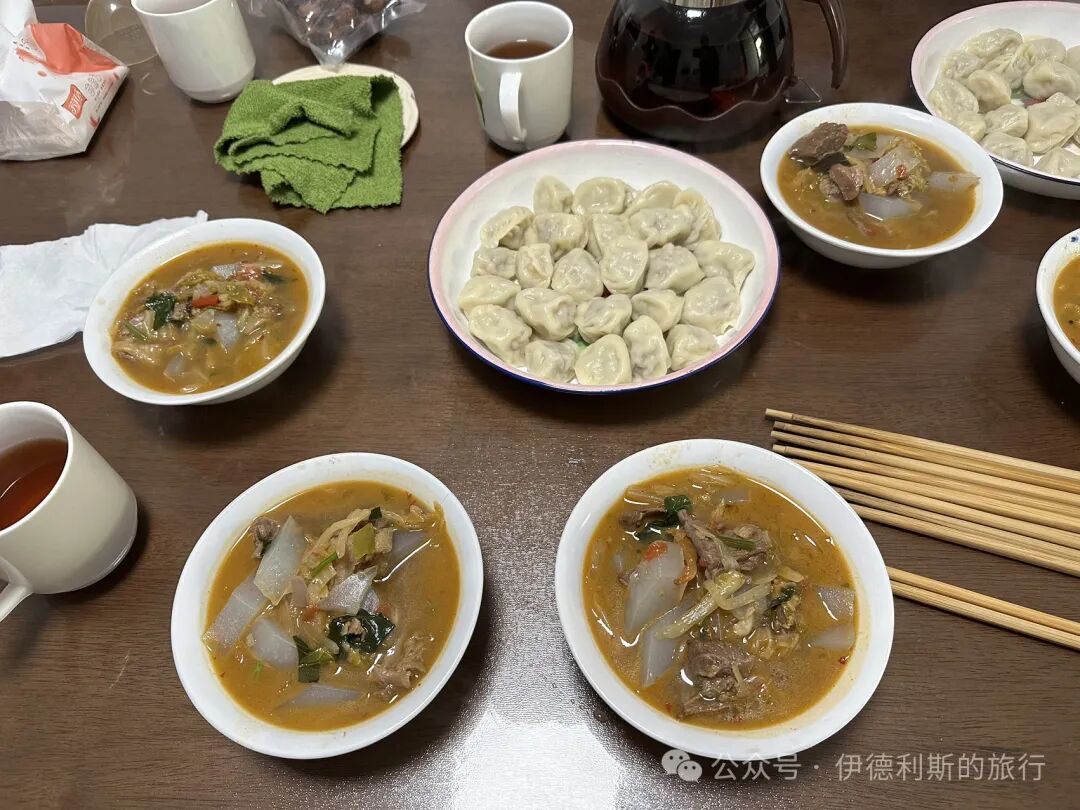
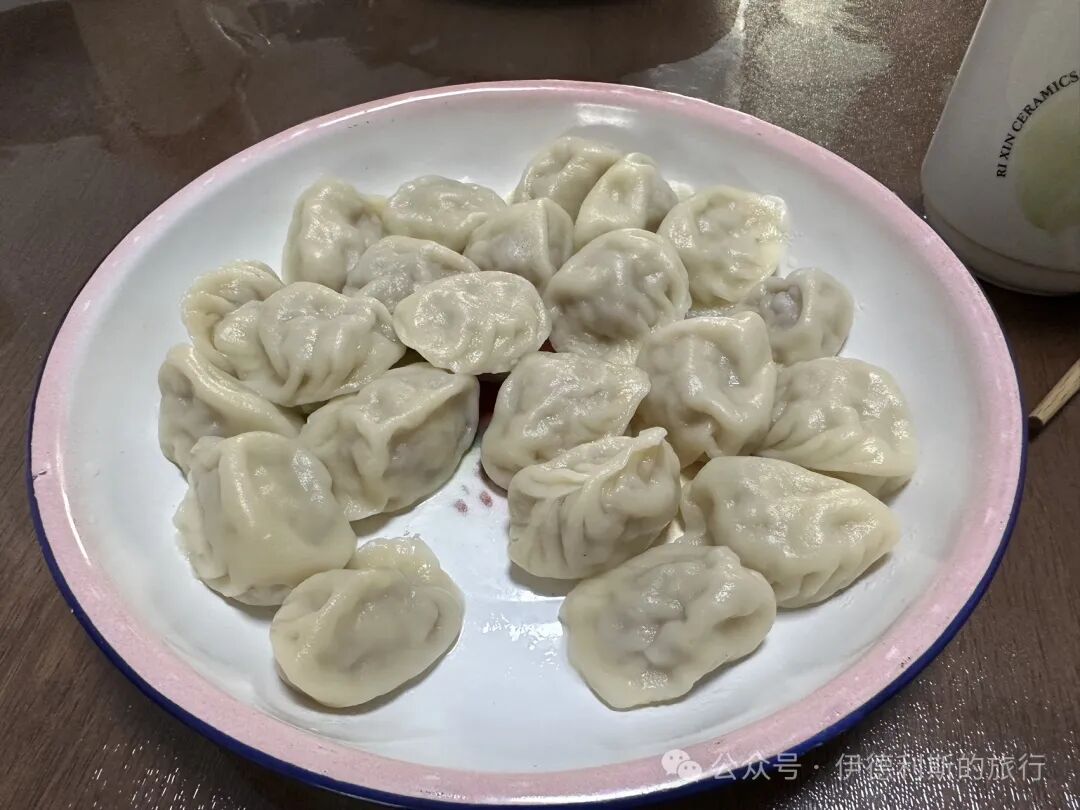
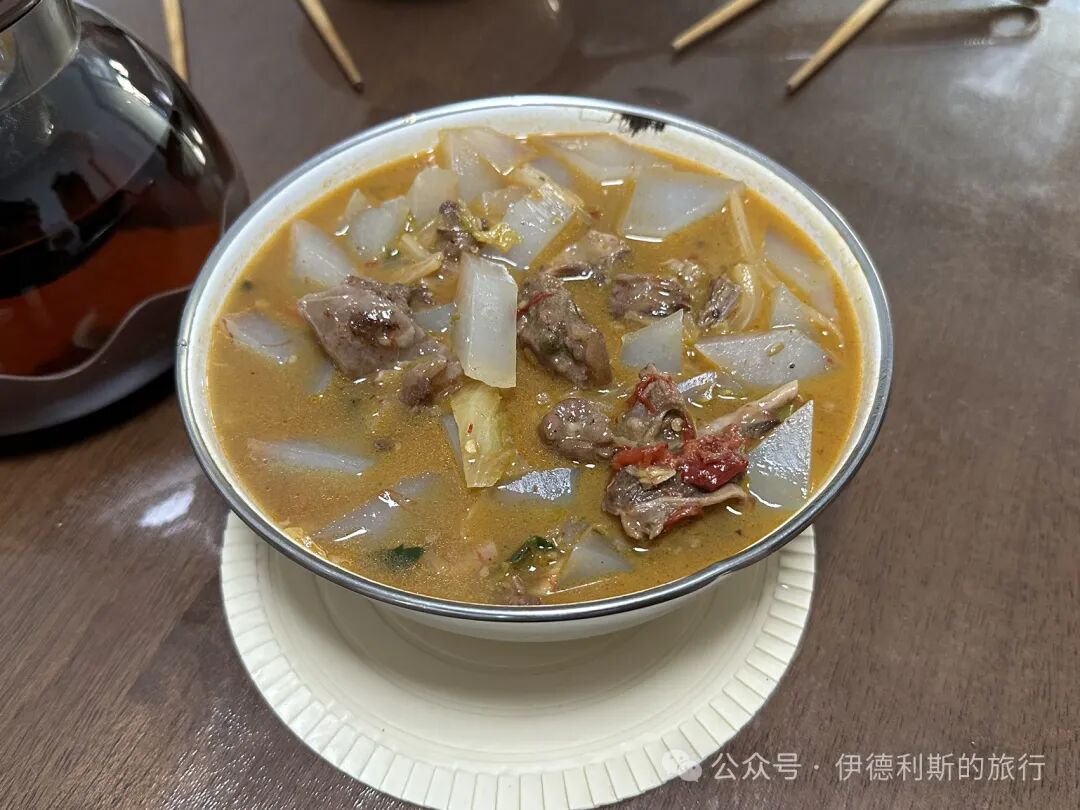
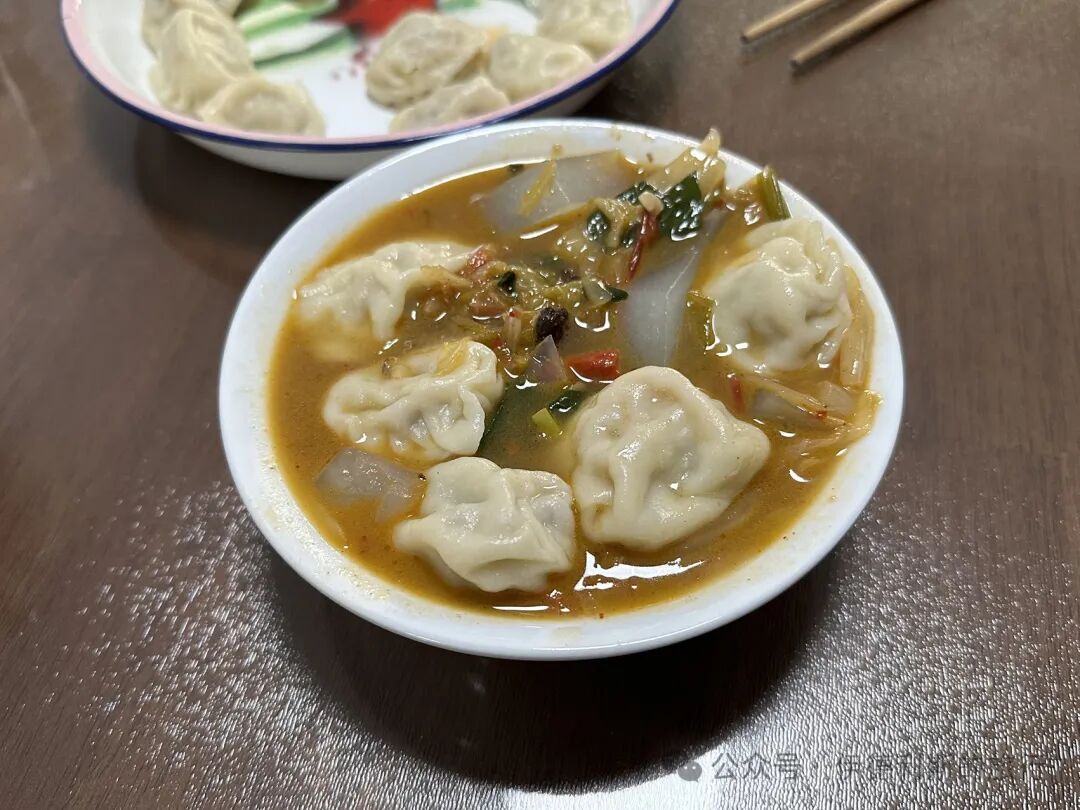
I attended a family dinner at my older sister's place. My brother-in-law is a great cook and made beef steak stew, spicy numbing chicken (jiaoma ji), pumpkin buns (kawa baozi), and smoked horse sausage. My brother-in-law makes amazing rice pilaf (zhuafan), so I made sure to ask him for his tips during the meal. Don't stir-fry the yellow carrots for the rice pilaf all the way through. Stewing them in water brings out their sweetness, so you don't need to add extra sugar. You must use plenty of oil for the rice pilaf. If you use too much, just tilt the pot and scoop the excess out. The extra oil from the rice pilaf is great for making cabbage and meat mixed noodles (banmian) because it adds so much flavor.
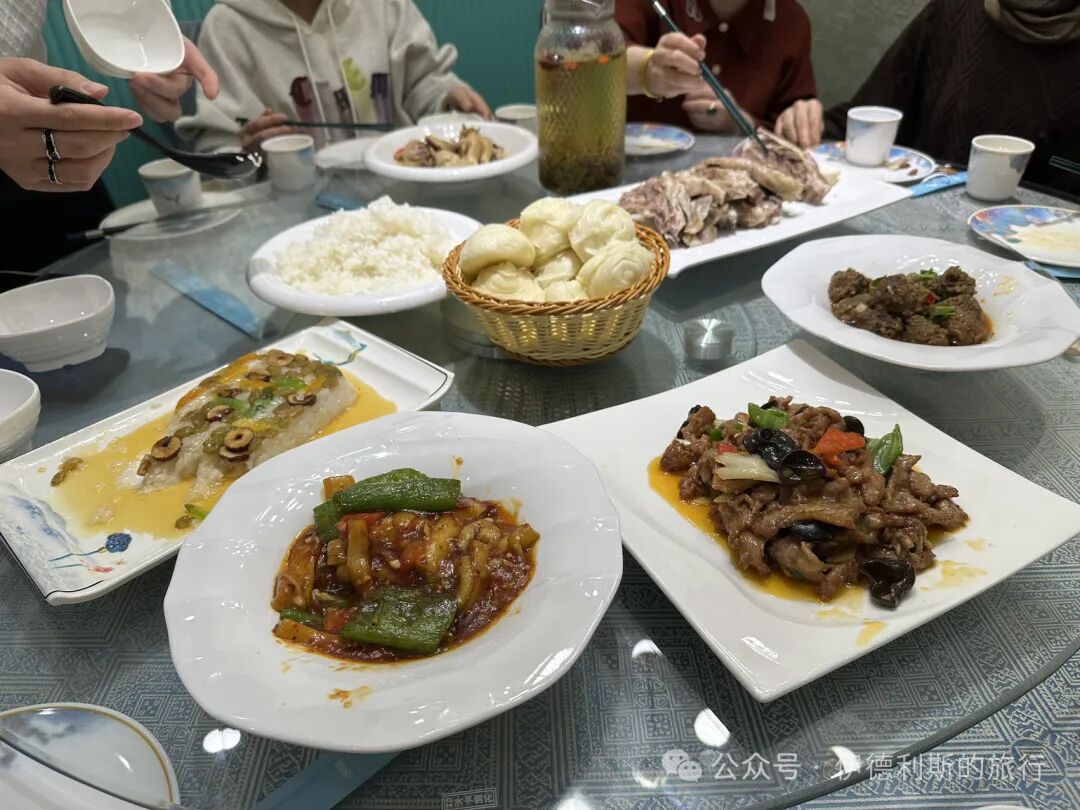
My great-aunt in Wusu invited us out to eat at Lanpin Banquet on Zhujiang Road. It shows how popular this place is among the older generation of Hui Muslims in Urumqi. As soon as we walked in, a young waiter greeted us with a salaam and showed us to our table. We have only been here twice, but the service is always excellent.
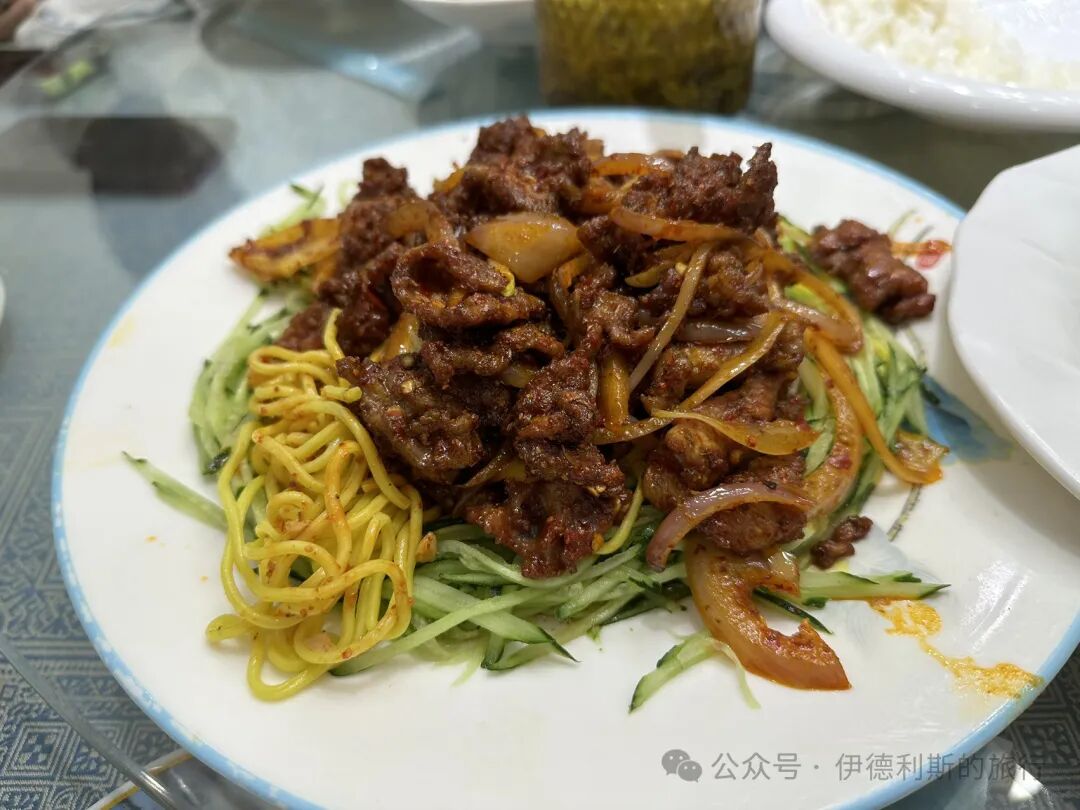
This time we had stir-fried black and white lung, yellow noodles with grilled meat (huangmian kaorou), sweet platter (tianpanzi), layered steamed bread (youtazi), spicy numbing chicken, and clear-stewed meat. Everyone loved these traditional dishes.
Halal Travel Guide: Urumqi - Dawan Gongbei, Hui Muslims and Sufi Heritage
Articles • ali2007fr posted the article • 0 comments • 151 views • 2026-05-19 07:25
Summary: This Urumqi article visits the Dawan Gongbei and records its connection with Hui Muslim religious memory and local community life. It keeps the original shrine details, route, religious terms, and travel observations without changing the facts.
Yesterday at noon, I went to the Dawan Gongbei in Urumqi to attend a funeral (janazah) for an elder from the Luyuan Street community. Hundreds of people were there. It was very moving and showed the strong unity of the local community (jamaat).
After the funeral, I visited the graves of two historical figures at the Dawan Gongbei. The first was the elder Weijiapu (1732-1812), who was the first imam to lead the mosque in Urumqi. Elder Weijiapu was originally a Salar from Xunhua. When he was young, his hard work and love for learning made him the imam of the Jiezi Gonghe La Mosque in Xunhua. In 1763, due to conflicts between Sufi orders (menhuan) in the Hehuang region, Elder Weijiapu left to seek spiritual knowledge. He traveled through Linxia, Lanzhou, and Wuwei before moving to Hami and Turpan in Xinjiang to teach. In 1780, after the first mosque was built in the Beiliang area of Dihua, the local Muslims invited Elder Weijiapu to serve as their imam.
In the mid-18th century, Yihewan Gali, a student of the Indian Sufi leader Imam Rabbani, came to Aksu to teach the Khufiyya Sufi path. Ma Fang, a Qing dynasty military officer stationed in Aksu, accepted his teachings. Later, Ma Fang resigned from his post to spread the faith across Xinjiang. He took on five students, one of whom was Ma Pei (known as the Anjihai Master). Ma Pei went to Urumqi to teach, and Elder Weijiapu became his student. Elder Weijiapu taught at the Beiliang mosque in Dihua for nearly 30 years. He taught scripture to ordinary community members and guided Khufiyya followers in their spiritual practice. He balanced the relationships between different groups well and was respected by everyone.
After Elder Weijiapu passed away (returned to Allah), he was originally buried at the Beiliang mosque. Later, following his will, he was moved to Dawan. The cemetery there became known as the Dawan Gongbei. In 1900, the three brothers of Ma Youfu, the great-grandson of Elder Weijiapu, rebuilt the Gongbei. It was renovated again in 2013 to its current appearance.
The second historical figure at the Dawan Gongbei is Imam Ma Zongfu (1806-1885), who led the Beiliang Mosque and the Beifang Mosque in Urumqi. People called him the Datong Elder.
Imam Ma Zongfu was originally from Datong, Qinghai. When he was young, he taught at various mosques in Qinghai and practiced the Khufiyya Sufi path. Later, because Imam Ma opposed the growing and selling of opium, he was persecuted by local wealthy landowners. In 1850, he led his family through many hardships to reach Xinjiang, where they settled at the Beiliang Mosque in Dihua. At that time, the imam of the Beiliang Mosque was Qitaizhou, a student of the Khufiyya leader Ma Pei. Imam Ma Zongfu became a student of Qitaizhou and became the imam of the Beiliang Mosque in 1852.
Imam Ma led the renovation of the Beiliang Mosque in 1861. Later, he established a spiritual center (daotang) on Yinma Lane in Dihua for meditation and study. The Qing government closed Beiliang Mosque because of the anti-Qing uprising and turned it into an ancestral hall, so the local community built Beifang Mosque in 1876. Because the local community loved Imam Ma so much, they elected him as their religious leader again. After Imam Ma passed away in 1885, he was buried next to the elder's grave in Weijiapu at the Dawan gongbei, just as he requested in his will. view all
Summary: This Urumqi article visits the Dawan Gongbei and records its connection with Hui Muslim religious memory and local community life. It keeps the original shrine details, route, religious terms, and travel observations without changing the facts.
Yesterday at noon, I went to the Dawan Gongbei in Urumqi to attend a funeral (janazah) for an elder from the Luyuan Street community. Hundreds of people were there. It was very moving and showed the strong unity of the local community (jamaat).
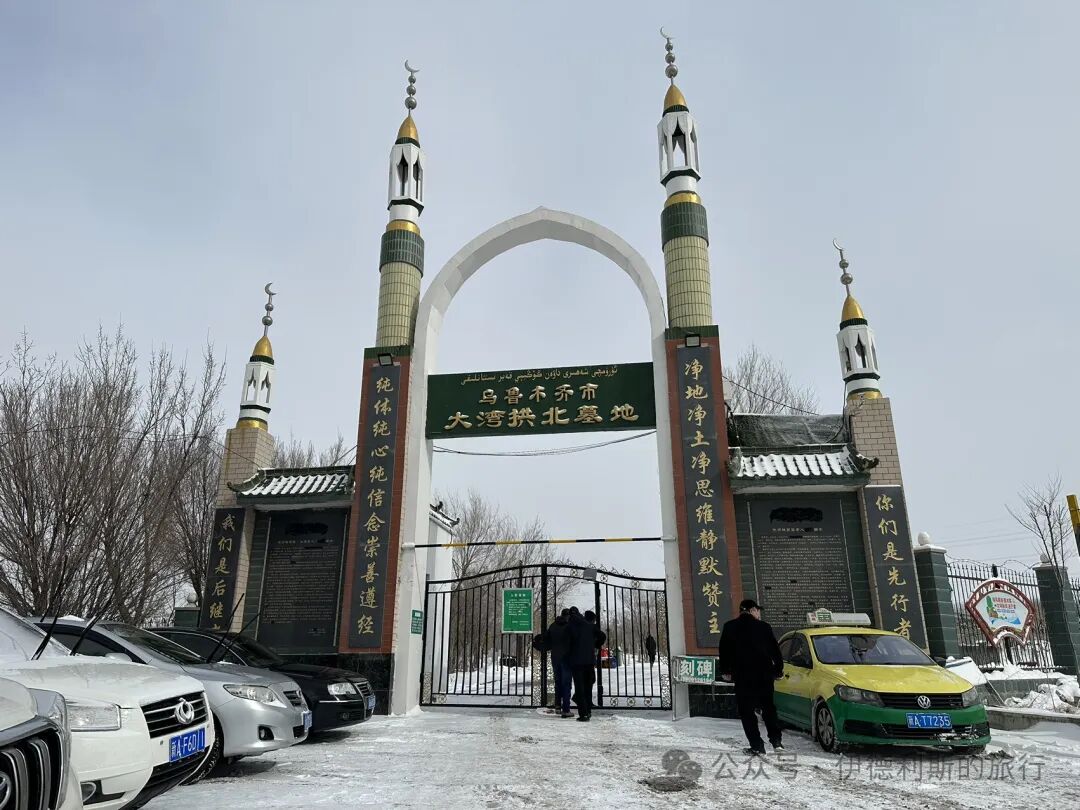
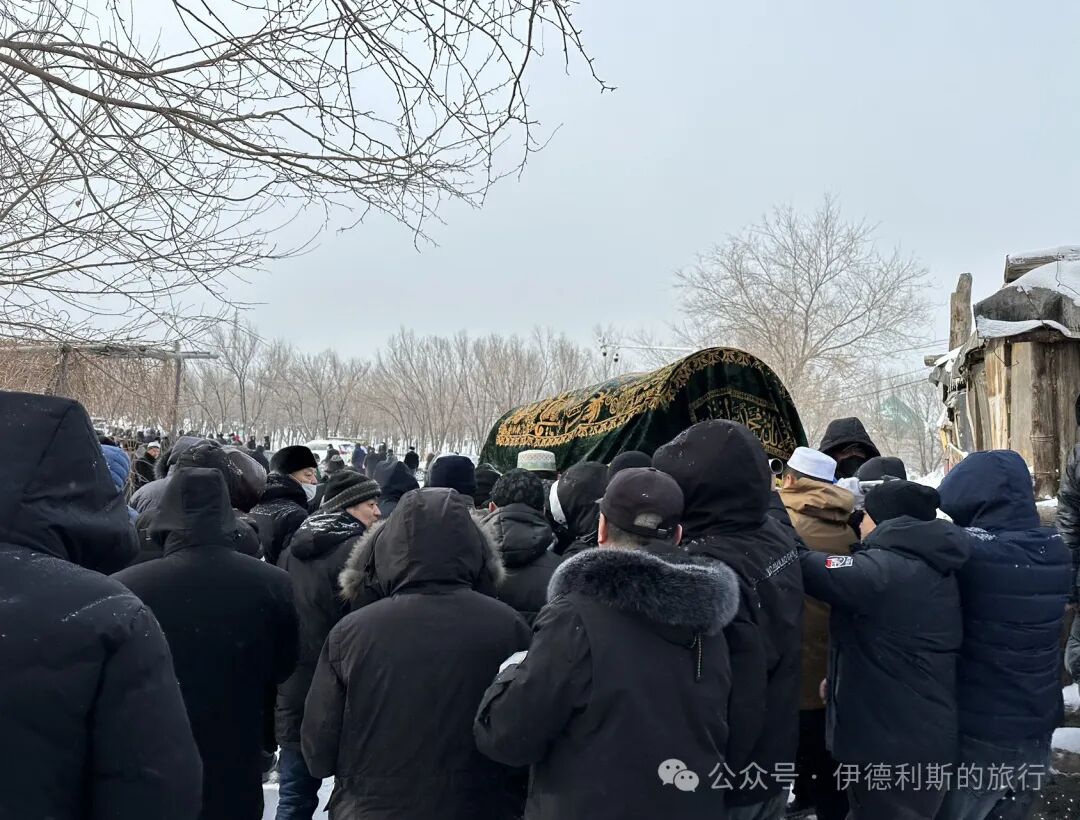
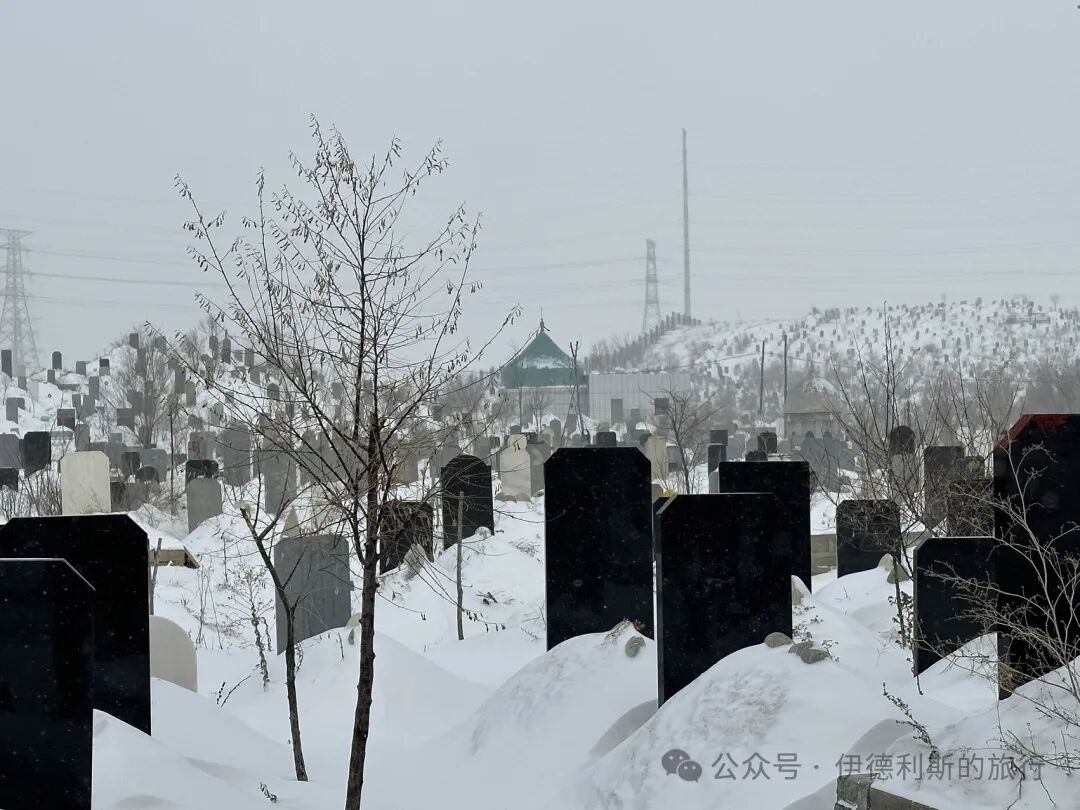
After the funeral, I visited the graves of two historical figures at the Dawan Gongbei. The first was the elder Weijiapu (1732-1812), who was the first imam to lead the mosque in Urumqi. Elder Weijiapu was originally a Salar from Xunhua. When he was young, his hard work and love for learning made him the imam of the Jiezi Gonghe La Mosque in Xunhua. In 1763, due to conflicts between Sufi orders (menhuan) in the Hehuang region, Elder Weijiapu left to seek spiritual knowledge. He traveled through Linxia, Lanzhou, and Wuwei before moving to Hami and Turpan in Xinjiang to teach. In 1780, after the first mosque was built in the Beiliang area of Dihua, the local Muslims invited Elder Weijiapu to serve as their imam.
In the mid-18th century, Yihewan Gali, a student of the Indian Sufi leader Imam Rabbani, came to Aksu to teach the Khufiyya Sufi path. Ma Fang, a Qing dynasty military officer stationed in Aksu, accepted his teachings. Later, Ma Fang resigned from his post to spread the faith across Xinjiang. He took on five students, one of whom was Ma Pei (known as the Anjihai Master). Ma Pei went to Urumqi to teach, and Elder Weijiapu became his student. Elder Weijiapu taught at the Beiliang mosque in Dihua for nearly 30 years. He taught scripture to ordinary community members and guided Khufiyya followers in their spiritual practice. He balanced the relationships between different groups well and was respected by everyone.
After Elder Weijiapu passed away (returned to Allah), he was originally buried at the Beiliang mosque. Later, following his will, he was moved to Dawan. The cemetery there became known as the Dawan Gongbei. In 1900, the three brothers of Ma Youfu, the great-grandson of Elder Weijiapu, rebuilt the Gongbei. It was renovated again in 2013 to its current appearance.
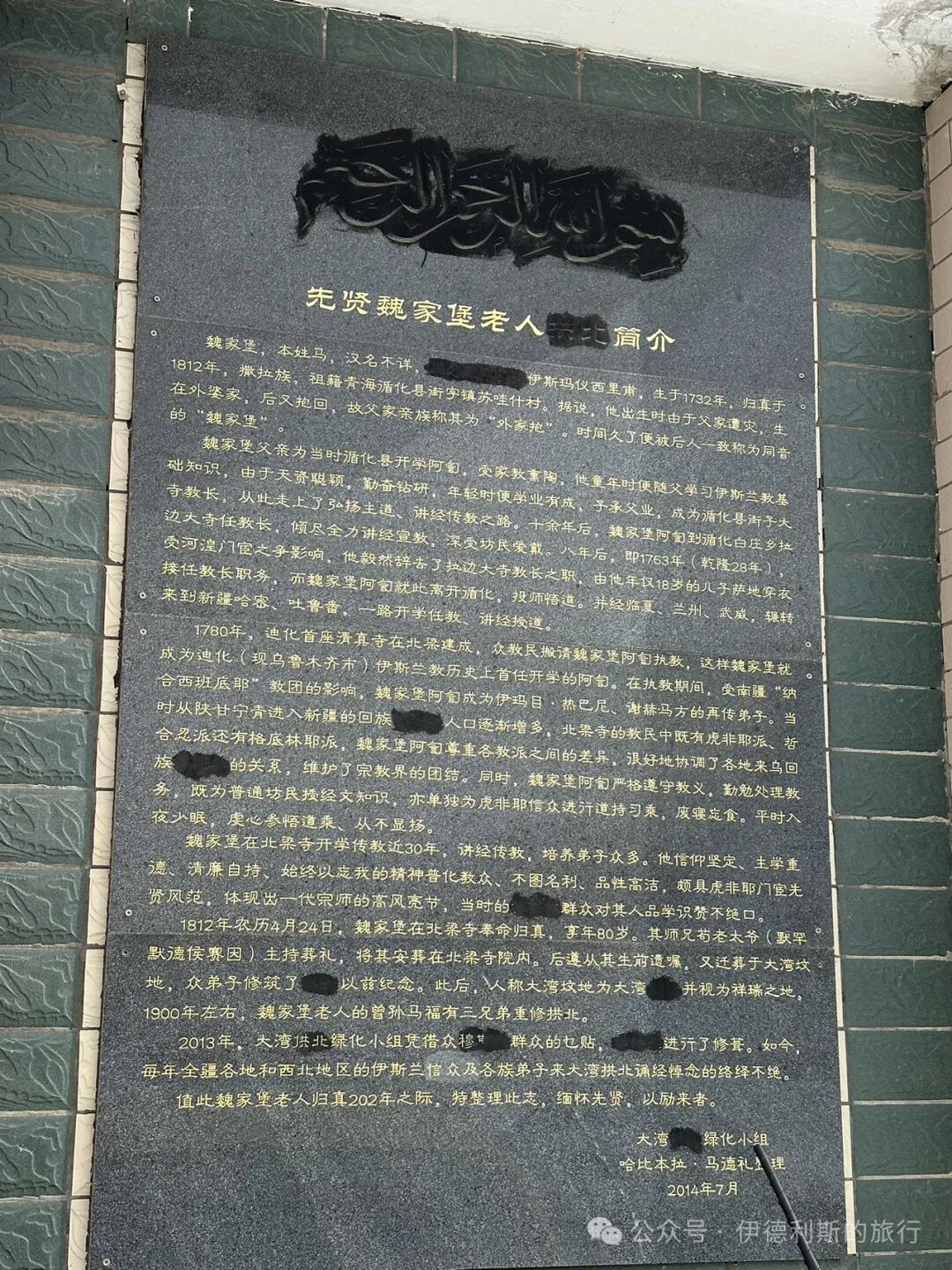
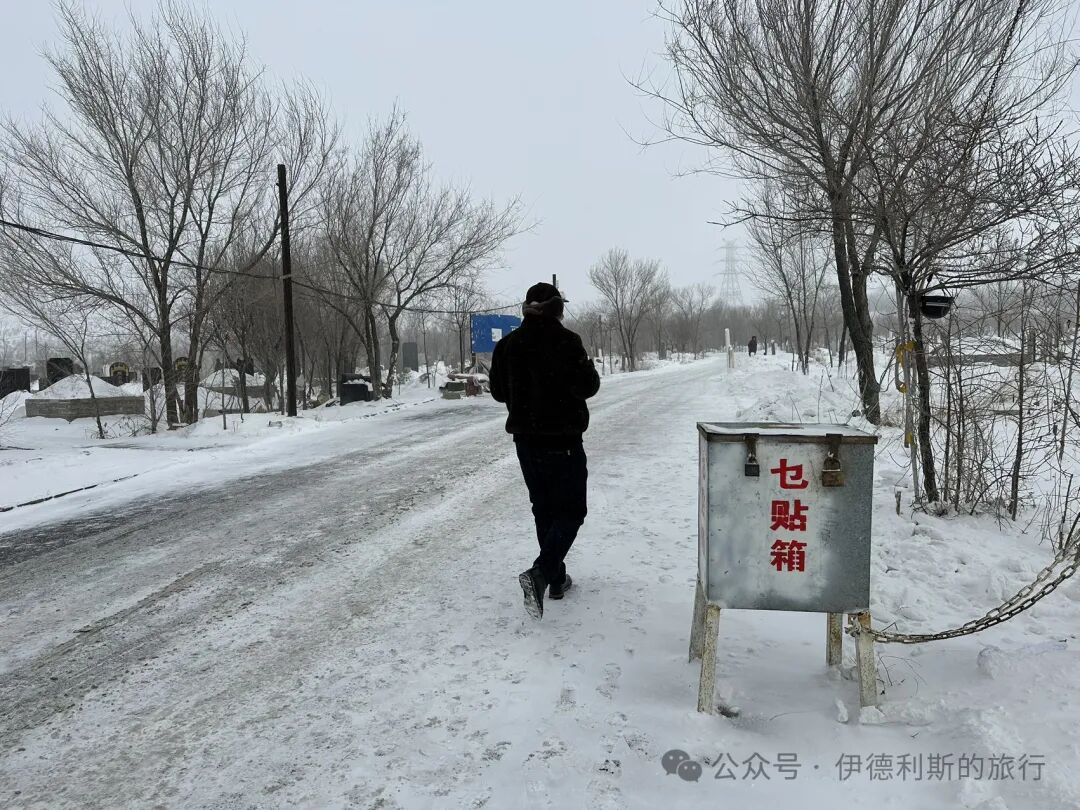
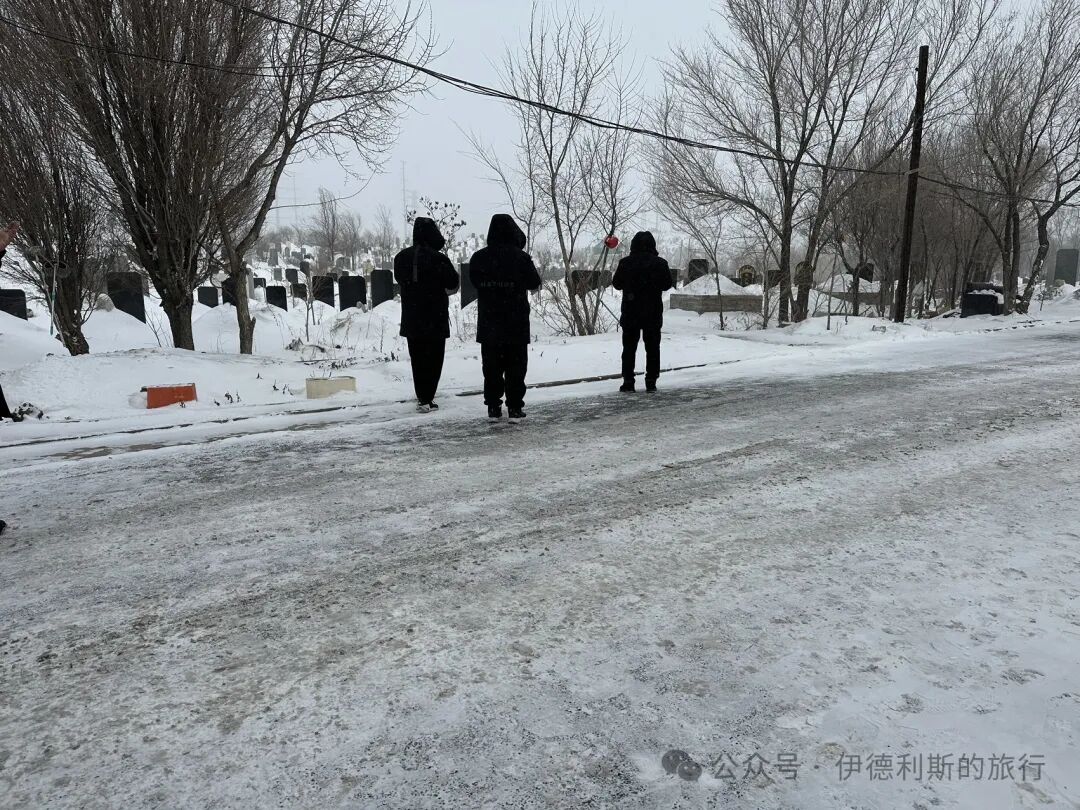
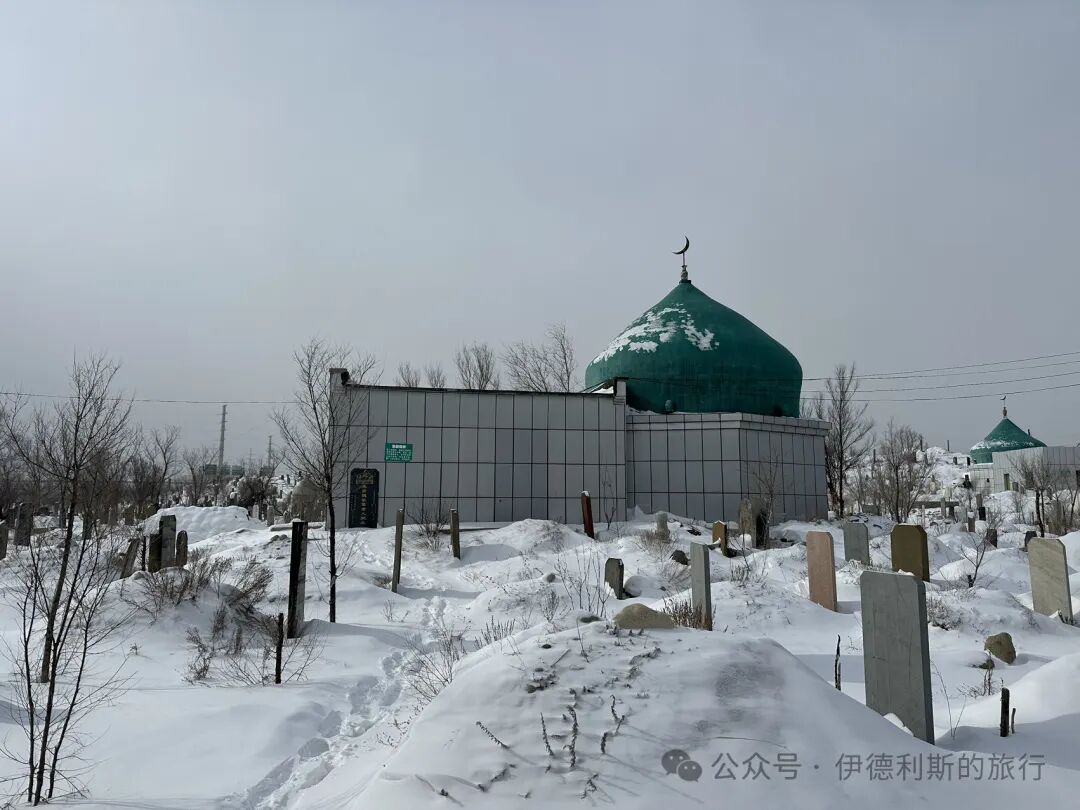
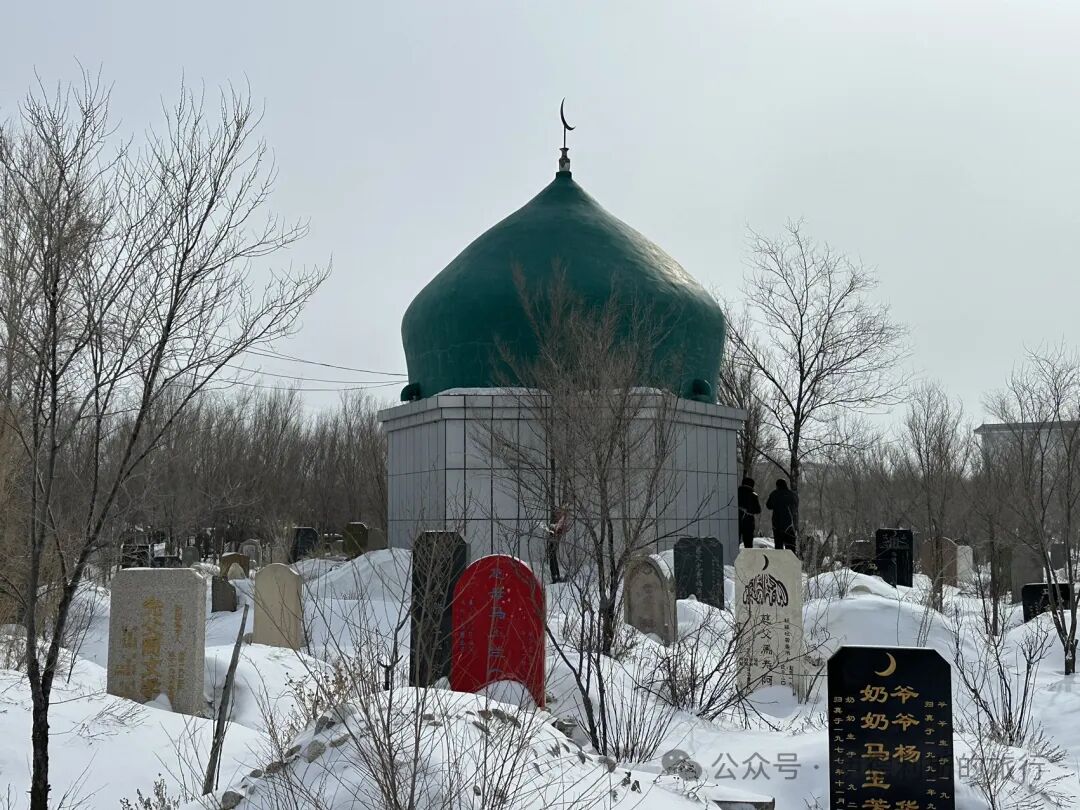
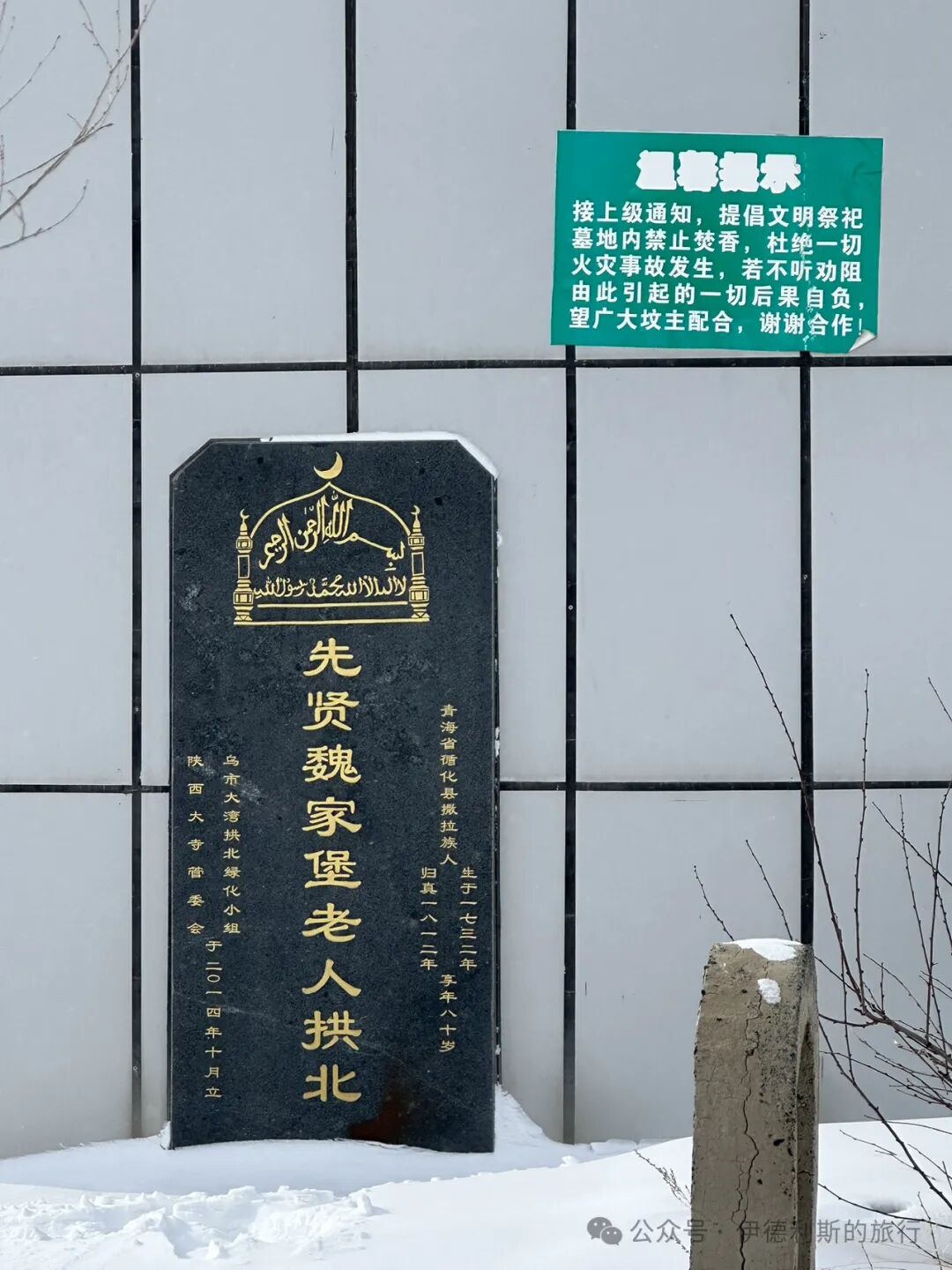
The second historical figure at the Dawan Gongbei is Imam Ma Zongfu (1806-1885), who led the Beiliang Mosque and the Beifang Mosque in Urumqi. People called him the Datong Elder.
Imam Ma Zongfu was originally from Datong, Qinghai. When he was young, he taught at various mosques in Qinghai and practiced the Khufiyya Sufi path. Later, because Imam Ma opposed the growing and selling of opium, he was persecuted by local wealthy landowners. In 1850, he led his family through many hardships to reach Xinjiang, where they settled at the Beiliang Mosque in Dihua. At that time, the imam of the Beiliang Mosque was Qitaizhou, a student of the Khufiyya leader Ma Pei. Imam Ma Zongfu became a student of Qitaizhou and became the imam of the Beiliang Mosque in 1852.
Imam Ma led the renovation of the Beiliang Mosque in 1861. Later, he established a spiritual center (daotang) on Yinma Lane in Dihua for meditation and study. The Qing government closed Beiliang Mosque because of the anti-Qing uprising and turned it into an ancestral hall, so the local community built Beifang Mosque in 1876. Because the local community loved Imam Ma so much, they elected him as their religious leader again. After Imam Ma passed away in 1885, he was buried next to the elder's grave in Weijiapu at the Dawan gongbei, just as he requested in his will.
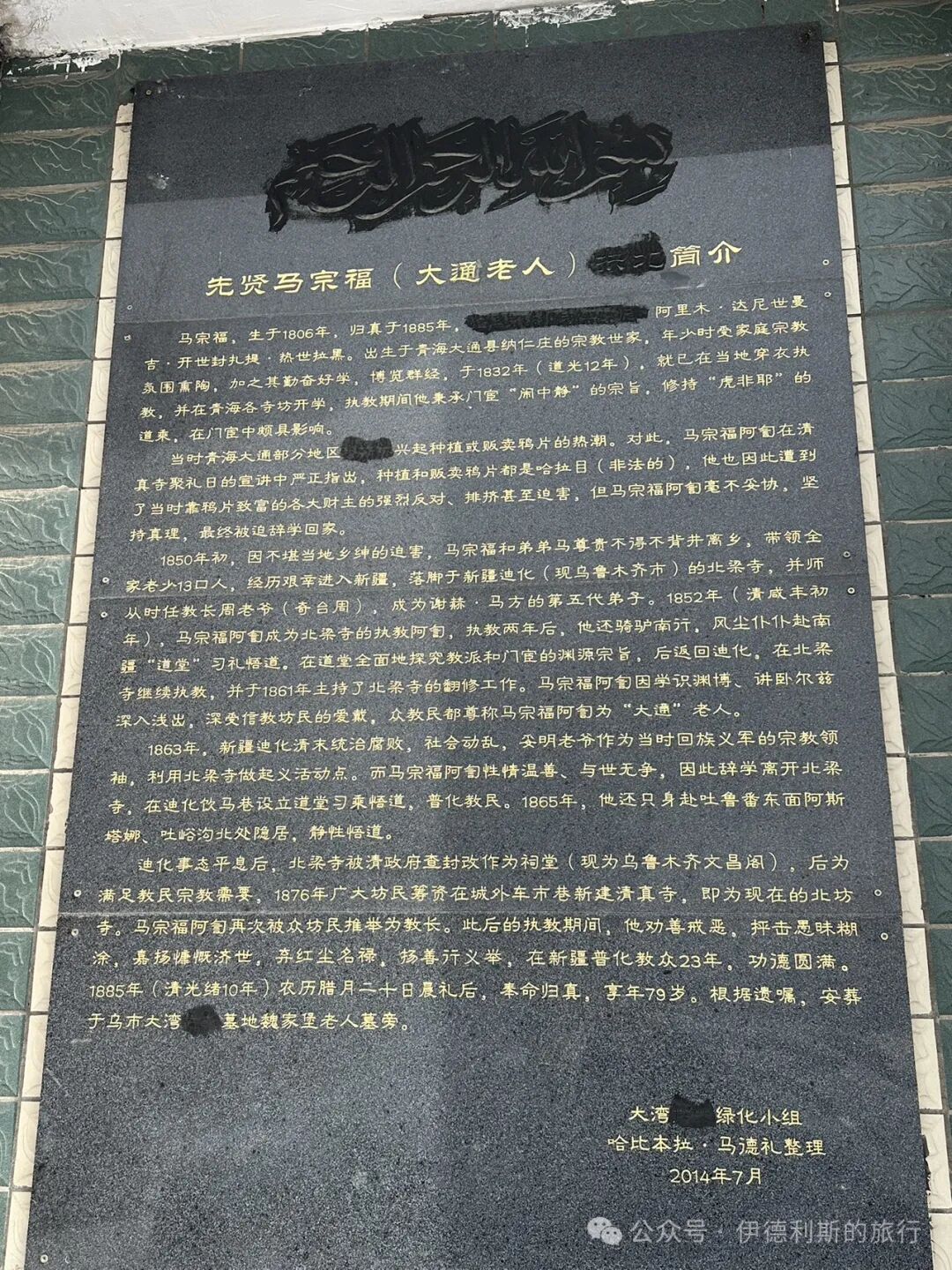
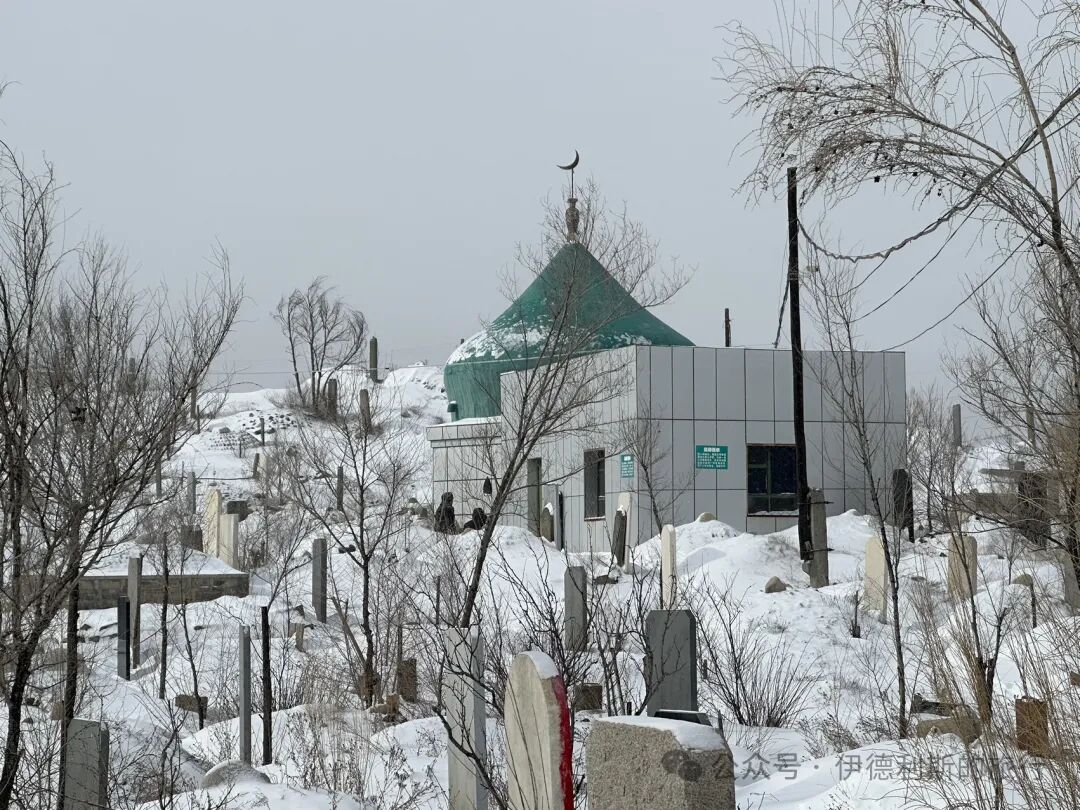
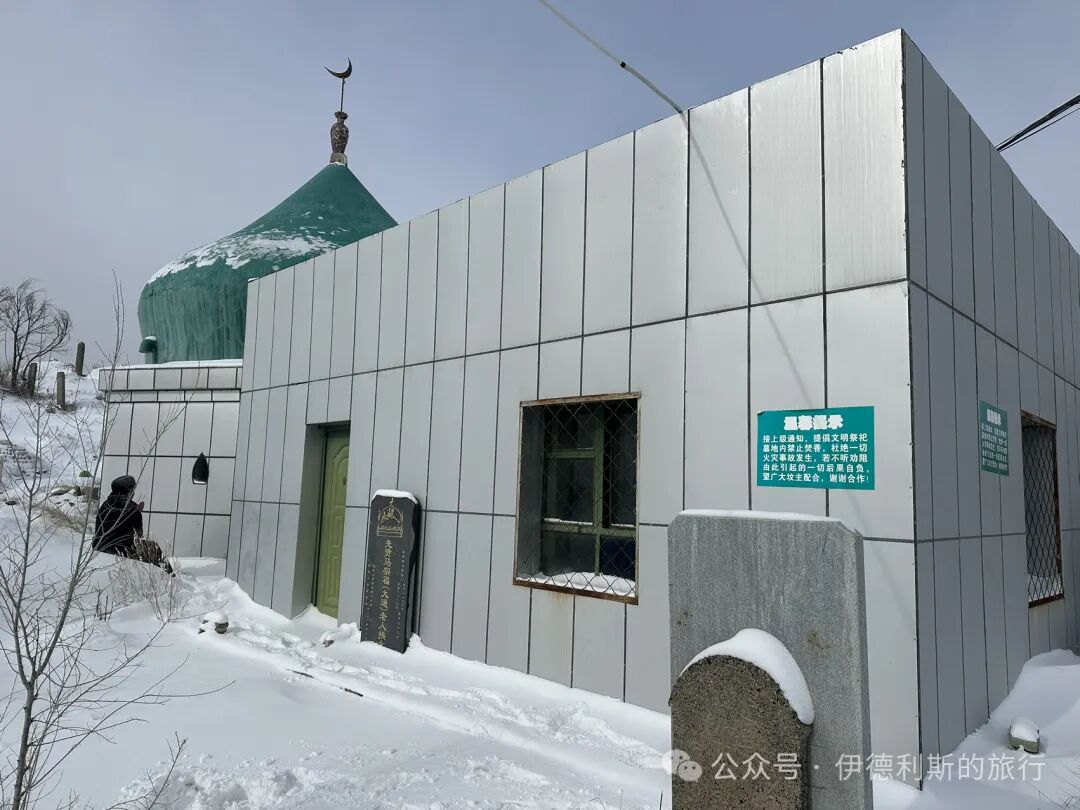
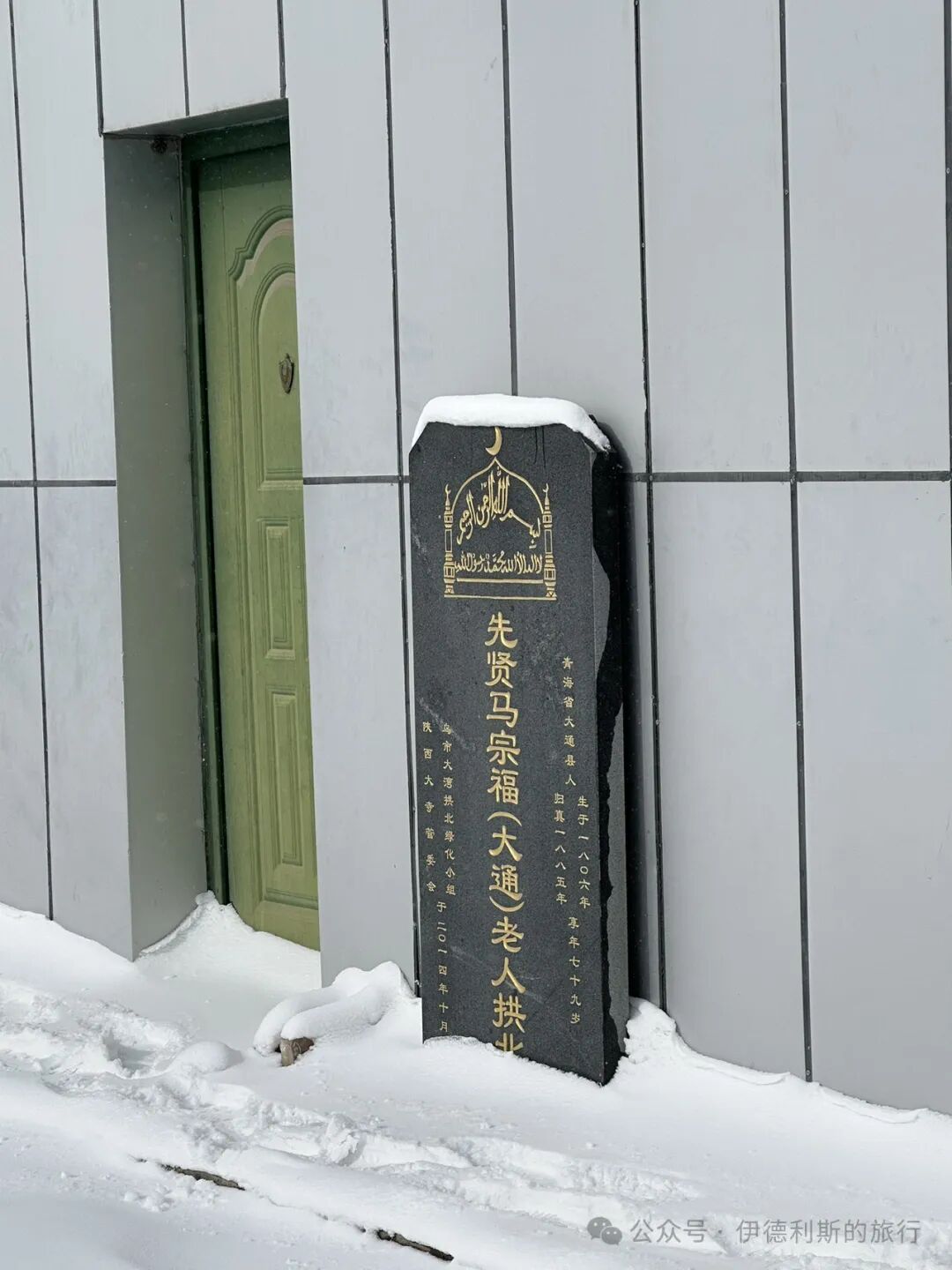
What happened Nov 24 in Urumqi, two Uyghur girls telling from the beginning of the lockdown, what difficulties they were in and how that fire burned lives in Urumqi.
Articles • leo posted the article • 0 comments • 1229 views • 2022-11-26 23:28
Click and watch their voice:
https://video.twimg.com/ext_tw ... %3D12
They couldn’t escape because their door is locked as required by the zero Covid policy of China.
view all
Click and watch their voice:
https://video.twimg.com/ext_tw ... %3D12
They couldn’t escape because their door is locked as required by the zero Covid policy of China.


Protests erupted in front of the Urumqi city government building, which has been in lockdown for 100 days, after a fire killed 10 Uyghurs
Articles • leo posted the article • 0 comments • 981 views • 2022-11-26 23:23
Click and watch the video:
Your browser does not support the video tag. view all
Click and watch the video:
Urumqi During Sha'ban, Part Two: Hui Muslim Food and Community Photo Notes
Articles • ali2007fr posted the article • 0 comments • 198 views • 2026-05-21 06:21
Summary: This short second part of the Urumqi Sha'ban travel note is primarily a photo continuation from the local Hui Muslim food and community visit. It preserves the source's image sequence and article structure without adding details that were not present in the Chinese source. view all
Summary: This short second part of the Urumqi Sha'ban travel note is primarily a photo continuation from the local Hui Muslim food and community visit. It preserves the source's image sequence and article structure without adding details that were not present in the Chinese source.
Halal Travel Guide: Urumqi — Twenty-Three Hui Muslim Neighborhoods & Local History
Articles • ali2007fr posted the article • 0 comments • 256 views • 2026-05-19 23:57
Summary: The Twenty-Three Hui Muslim Neighborhoods in Urumqi are tied to local Muslim settlement, street life, and Xinjiang urban history. This travel account preserves the original neighborhood names, routes, photos, and historical details in a long English article.
During the Qing Dynasty and the Republic of China era, Urumqi had twenty-two Hui Muslim mosques and one Salar mosque, collectively known as the twenty-three mosques of Dihua. In 1945, the twenty-three mosques unanimously elected the Grand Imam Ma Liangjun as the chief leader. He taught at the Shaanxi Grand Mosque (Shaanxi Dasi), where the imams from all twenty-three mosques came to listen to his lectures every day. Today, the Shaanxi Grand Mosque, Old Quarter Mosque (Laofang Si), South Grand Mosque (Nanda Si), and Kuanxiang Mosque (Kuanxiang Si) remain as historical buildings. Others, like the Toudaoxiang Mosque and the Inner City Mosque, have been demolished, while most others have been rebuilt as modern structures. I visited several of these during my Spring Festival trip back to Urumqi.
Old Quarter Mosque (Laofang Si)
After the Qing Dynasty built Dihua City in 1758, they promoted policies to station troops and encourage migration for border defense. Since then, Hui Muslims from Shaanxi have continuously moved to Urumqi to settle. In 1808 (the 12th year of the Jiaqing reign), Shaanxi Hui Muslims built the Shaanxi Mosque in the southern pass of Dihua. This was the second Hui mosque in Urumqi, following the North Beam Mosque (Beiliang Si).
After the Qing Dynasty recovered Urumqi in 1876 (the 2nd year of the Guangxu reign), they moved all Hui Muslims outside the city walls. The population at the Shaanxi Mosque grew significantly, so they rebuilt the main hall in 1877 (the 3rd year of the Guangxu reign). Later, other mosques for the Shaanxi community were formed, including the Fengxiang Mosque, West Grand Mosque (Xida Si), Binzhou Mosque, and Zhongying Palace Mosque. After the Toudaoxiang Shaanxi Grand Mosque finished its reconstruction in 1906, the original Shaanxi Mosque was renamed the Shaanxi Old Quarter Mosque, or Laofang Si for short. In 2003, the main hall of Laofang Si was listed as a municipal-level cultural relic protection site in Urumqi.
The front hall of Laofang Si has a hip-and-gable roof with a rolled shed, while the rear hall has a hard-gable roof. It underwent a major structural overhaul in 2014.
The rear hall of Laofang Si contains very precious Persian praise verses to Allah, but they are now completely covered by landscape paintings.
Laofang Si is open to tourists from 11:00 to 13:30 and 15:00 to 17:00. You can enter the front hall, but the rear hall is only open to the congregation for the five daily namaz prayers. Imam Ma at the mosque was very welcoming and explained the history of Laofang Si to me.
Shaanxi Grand Mosque (Shaanxi Dasi)
Shaanxi Grand Mosque was first built in 1883 (the 9th year of the Guangxu reign) with funds from Hui Muslims who came from the Wei River valley in Shaanxi's Guanzhong region. It is located on a slope south of Toudaoxiang, outside the south gate of Urumqi. As the number of Shaanxi Hui Muslims moving to Urumqi increased, the Shaanxi Mosque was rebuilt in 1902 (the 28th year of the Guangxu reign). The project took five years and was completed in 1906 (the 32nd year of the Guangxu reign). It was officially named the Shaanxi Grand Mosque and became the largest Hui mosque in Urumqi. It was listed as a major historical and cultural site protected at the national level in 2013.
The Shaanxi Grand Mosque features traditional Guanzhong architectural style. The main hall has a single-eave hip-and-gable roof, and the rear kiln hall has a hip roof. The top features a very ornate moon-watching tower with an octagonal pointed roof. The main hall is surrounded by thirty-six pillars forming a corridor, with column bases carved with traditional patterns like the Eight Immortals. The walls, doors, windows, hanging pillars, and brackets feature exquisite brick and wood carvings, along with various flower and fruit patterns.
Under the eaves of the main hall, there is a decorative technique unique to Xinjiang called flower board stepping (huaban cai). This replaces traditional brackets with wooden boards carved with various patterns, such as dove heads, elephant heads, clouds, and peach designs, which are highly decorative.
The facade of the main hall features beautiful Shaanxi-style Arabic calligraphy in stone and wood carvings. The stone calligraphy carvings are located on the gates on both sides of the rear kiln hall. Because they were covered with thick carpets to block the wind during winter, it was difficult to photograph the full view.
The main hall uses a traditional beam-lifting wooden frame. Between the main hall and the prayer niche (yaodian) stands a wooden screen carved with intertwined grape vines. It features traditional Arabic calligraphy in the center, and the Shahada is cleverly written above it in the shape of tree roots.
An inscription on the main hall roof reads: Built by the collective efforts of officials, merchants, scholars, and commoners from all provinces in Guanzhong. Rebuilt under the supervision of Imam Ma Liangjun, the head of the mosque in Xianyang. Completed on an auspicious day in the middle of the seventh lunar month in the 32nd year of the Guangxu reign of the Qing Dynasty. Managed by community leaders Lan Jiling, Chen Yuanshan, Ma Zhihe, Guo Shijun, Mai Wannian, An Changzhong, Ma Yuefu, Ma Zhenhai, Zhou Yanxing, An Guixiang, and Ma Sheng, with carpenters Bai Xingfa and Xiao Yizhang.
The prayer niche ceiling features an exquisite caisson (zaojing) made of three layers of hanging lotus-style wooden components.
The prayer niche contains Arabic calligraphy, and both the mihrab and the two side doors feature traditional Shaanxi-style wood-carved calligraphy.
Shaanxi Grand Mosque is now open to visitors daily from 11:00-13:00 and 15:00-17:00. The main hall is unlocked, and there are two exhibition halls to explore.
The exhibition halls display architectural parts from the Shaanxi Grand Mosque, antique porcelain, and a century-old carpet decorated with various antique patterns and floral designs.
Exhibits include ox and sheep bone tablets used by students (mulla) for learning, works by the great Imam Ma Liangjun, and a 1950 notice appointing him as a member of the Northwest Military and Political Commission's Ethnic Affairs Committee.
Great Imam Ma Liangjun was born in Zhangjiachuan, Gansu. As a young man, he traveled to Yunnan and received authentic teachings from Imam Ma Renshan (Pu'er Ma). He later went to Pingliang, Gansu, to teach and became a famous scholar of the Shaanxi school of mosque education. In 1913, Great Imam Ma Liangjun was hired to lead the Shaanxi Grand Mosque. Later, he served at several mosques in Xinjiang and trained many students. As Xinjiang approached peaceful liberation in 1949, Great Imam Ma Liangjun traveled three times to persuade Ma Chengxiang, the commander of the 5th Cavalry Division who held military power, eventually convincing him to surrender his command and leave Xinjiang.
An old photo of the Shaanxi Grand Mosque before its 1984 renovation.
South Grand Mosque (Nan Dasi).
The South Grand Mosque is known as the 'First Mosque of the Jahriyya Order in Urumqi.' It was founded in 1874 (the 13th year of the Tongzhi reign) on Nansi Lane and was originally called Nantaizi Mosque. In 1917, Li Jiliang, the 'Rais' (leader) of the Jahriyya order in Xinjiang, selected the current site west of Erdaoqiao Road. Reconstruction was completed in 1919 with strong support from Ma Shaowu, the fifth-generation descendant of the Jahriyya founder, and Ma Guangtai, an agricultural official from Nanshan, who donated most of the timber for construction. In 2003, the main hall of the South Grand Mosque was listed as a cultural relic protection site in Urumqi.
In 1914, Yang Zengxin appointed Ma Shaowu as the garrison commander of Kuqa, giving him military authority. He served in the Xinjiang government for over 20 years and worked hard to maintain national unity and ethnic harmony. During this period, the Jahriyya order grew in Xinjiang, and the South Grand Mosque became the largest Jahriyya mosque in the region at that time.
The main hall of the South Grand Mosque has a gabled and hipped roof. Under the eaves, it uses a Xinjiang-style 'flower board' technique, replacing traditional brackets with wooden boards carved with various patterns.
Arabic and Chinese calligraphy on the facade of the South Grand Mosque's main hall.
The South Grand Mosque is open to visitors from 11:00-13:30 and 15:30-17:00. There is a machine at the entrance of the main hall that provides shoe covers for entering the front hall. The rear hall is open for namaz five times a day and is inaccessible at other times. However, the elders at the mosque are very welcoming. Because I arrived after hours, they specifically let me pray in the duty room. The Jahriyya order is known for its beautiful melodies during dhikr, and another major feature is wearing a six-sided cap.
Kuanxiang Mosque
Kuanxiang Mosque was first built during the Jiaqing reign of the Qing Dynasty. It was rebuilt in 1934 into the current two-story brick building, with offices on the first floor and the main prayer hall on the second. Under the eaves of the main hall, there are beautiful wood carvings featuring various flowers, birds, and animal patterns. Kuanxiang Mosque is currently under construction, and all other buildings outside the main hall have been demolished.
Other Mosques
Qinghai Grand Mosque: Built in 1868 (the seventh year of the Tongzhi reign) by Hui Muslims from Qinghai, it was originally named Xining Mosque. In 1945, after Ma Chengxiang of the Qinghai Ma Family Army marched into Xinjiang, it was renamed Qinghai Mosque. Qinghai Mosque has some congregants from the Ikhwan and Huasi menhuan sects, and it maintains the tradition of observing the memorial day for the Huasi master.
Sala Mosque: Built in 1865 (the fourth year of the Tongzhi reign) by the Salar people from Qinghai. In 1945, many Salar officers and soldiers served under Ma Chengxiang of the Qinghai Ma Family Army when they entered Xinjiang, so the mosque was renovated in 1948. In 2002, Sala Mosque was rebuilt into its current structure. Like Qinghai Mosque, Sala Mosque has some congregants from the Ikhwan and Huasi menhuan sects, and it maintains the tradition of observing the memorial day for the Huasi master.
Hezhou Grand Mosque: Built in 1915 by Hui Muslims from Linxia, Gansu. It was acquired and demolished by the Urumqi Waste Recycling Station in 1977, then rebuilt in 1988.
Beifang Mosque: First built in 1886 (the twelfth year of the Guangxu reign). It was once occupied by the Urumqi No. 2 Rubber Factory, but was later restored and rebuilt.
Dongfang Grand Mosque: First built in 1877 (the third year of the Guangxu reign).
Xidasi Mosque: Built in 1890 (the sixteenth year of the Guangxu reign) by Hui Muslims from Shaanxi. Originally named Xifang Mosque, it started as a small prayer spot on the south side of Shanxi Alley before moving to its current location to be rebuilt.
Balikun Mosque: Built in 1877 (the third year of the Guangxu reign) by Hui Muslims from Balikun.
Fengxiang Mosque: Built in 1884 (the tenth year of the Guangxu reign) by Hui Muslims from Fengxiang, Shaanxi.
Binzhou Mosque (Baiji Mosque): During the Tongzhi reign, many Hui Muslims from Binzhou Prefecture (now Binzhou City) in Shaanxi fled to Urumqi's Xiguan area to settle down. During the Guangxu reign, Imam Ma Xuehai (known as Hongchengzi) led the community to build the first Binzhou Mosque at the entrance of Baojiaju Alley outside Urumqi's Great West Gate. It was moved to its current location on Mashi Alley (Yucai Alley) and rebuilt in 1909 (the first year of the Xuantong reign). Because most of the congregants came from Baiji Town in Binzhou Prefecture, it is also called Baiji Mosque. In 1990, due to the redevelopment of the Mashi residential area, Binzhou Mosque was moved more than 100 meters south and rebuilt.
Imam Ma Xuehai was an eighth-generation descendant of Hu Dengzhou, the founder of the scripture hall education system. During the Guangxu reign, he was known alongside Ma Liangjun and Zhou Erye (Zhou Zhendong) as one of the three great imams. He led Binzhou Mosque three times and passed away (returned to Allah) at the mosque in 1924. Among his students, the most prestigious was Imam Ma Zhaolin (known as Huazhezi). Imam Ma Zhaolin was also from Binzhou. He studied the scriptures under Imam Ma Xuehai from a young age and became his adopted son. Imam Ma Zhaolin led the Binzhou mosque four times. In 1943, he was delayed in Xi'an while on his way to Hajj and was hired to lead the Xiaopiyuan mosque. He passed away in 1955 while serving as the imam at the Shaanxi mosque in Changji.
The original site of Lanpingfang was in Yonghe Zhengxiang. It was built together by Hui Muslims from Lanzhou and Pingfan (now Yongdeng County) in Gansu. In 1946, Yongdeng Hui Muslims built the separate Yongdeng mosque, and Lanpingfang was renamed the Lanzhou mosque. It moved to its current location on Yuejin Street in 1984. The community members of the Lanzhou mosque mainly belong to the Khufiyya (hufuye) menhuan. view all
Summary: The Twenty-Three Hui Muslim Neighborhoods in Urumqi are tied to local Muslim settlement, street life, and Xinjiang urban history. This travel account preserves the original neighborhood names, routes, photos, and historical details in a long English article.
During the Qing Dynasty and the Republic of China era, Urumqi had twenty-two Hui Muslim mosques and one Salar mosque, collectively known as the twenty-three mosques of Dihua. In 1945, the twenty-three mosques unanimously elected the Grand Imam Ma Liangjun as the chief leader. He taught at the Shaanxi Grand Mosque (Shaanxi Dasi), where the imams from all twenty-three mosques came to listen to his lectures every day. Today, the Shaanxi Grand Mosque, Old Quarter Mosque (Laofang Si), South Grand Mosque (Nanda Si), and Kuanxiang Mosque (Kuanxiang Si) remain as historical buildings. Others, like the Toudaoxiang Mosque and the Inner City Mosque, have been demolished, while most others have been rebuilt as modern structures. I visited several of these during my Spring Festival trip back to Urumqi.
Old Quarter Mosque (Laofang Si)
After the Qing Dynasty built Dihua City in 1758, they promoted policies to station troops and encourage migration for border defense. Since then, Hui Muslims from Shaanxi have continuously moved to Urumqi to settle. In 1808 (the 12th year of the Jiaqing reign), Shaanxi Hui Muslims built the Shaanxi Mosque in the southern pass of Dihua. This was the second Hui mosque in Urumqi, following the North Beam Mosque (Beiliang Si).
After the Qing Dynasty recovered Urumqi in 1876 (the 2nd year of the Guangxu reign), they moved all Hui Muslims outside the city walls. The population at the Shaanxi Mosque grew significantly, so they rebuilt the main hall in 1877 (the 3rd year of the Guangxu reign). Later, other mosques for the Shaanxi community were formed, including the Fengxiang Mosque, West Grand Mosque (Xida Si), Binzhou Mosque, and Zhongying Palace Mosque. After the Toudaoxiang Shaanxi Grand Mosque finished its reconstruction in 1906, the original Shaanxi Mosque was renamed the Shaanxi Old Quarter Mosque, or Laofang Si for short. In 2003, the main hall of Laofang Si was listed as a municipal-level cultural relic protection site in Urumqi.
The front hall of Laofang Si has a hip-and-gable roof with a rolled shed, while the rear hall has a hard-gable roof. It underwent a major structural overhaul in 2014.
The rear hall of Laofang Si contains very precious Persian praise verses to Allah, but they are now completely covered by landscape paintings.
Laofang Si is open to tourists from 11:00 to 13:30 and 15:00 to 17:00. You can enter the front hall, but the rear hall is only open to the congregation for the five daily namaz prayers. Imam Ma at the mosque was very welcoming and explained the history of Laofang Si to me.
Shaanxi Grand Mosque (Shaanxi Dasi)
Shaanxi Grand Mosque was first built in 1883 (the 9th year of the Guangxu reign) with funds from Hui Muslims who came from the Wei River valley in Shaanxi's Guanzhong region. It is located on a slope south of Toudaoxiang, outside the south gate of Urumqi. As the number of Shaanxi Hui Muslims moving to Urumqi increased, the Shaanxi Mosque was rebuilt in 1902 (the 28th year of the Guangxu reign). The project took five years and was completed in 1906 (the 32nd year of the Guangxu reign). It was officially named the Shaanxi Grand Mosque and became the largest Hui mosque in Urumqi. It was listed as a major historical and cultural site protected at the national level in 2013.
The Shaanxi Grand Mosque features traditional Guanzhong architectural style. The main hall has a single-eave hip-and-gable roof, and the rear kiln hall has a hip roof. The top features a very ornate moon-watching tower with an octagonal pointed roof. The main hall is surrounded by thirty-six pillars forming a corridor, with column bases carved with traditional patterns like the Eight Immortals. The walls, doors, windows, hanging pillars, and brackets feature exquisite brick and wood carvings, along with various flower and fruit patterns.
Under the eaves of the main hall, there is a decorative technique unique to Xinjiang called flower board stepping (huaban cai). This replaces traditional brackets with wooden boards carved with various patterns, such as dove heads, elephant heads, clouds, and peach designs, which are highly decorative.
The facade of the main hall features beautiful Shaanxi-style Arabic calligraphy in stone and wood carvings. The stone calligraphy carvings are located on the gates on both sides of the rear kiln hall. Because they were covered with thick carpets to block the wind during winter, it was difficult to photograph the full view.
The main hall uses a traditional beam-lifting wooden frame. Between the main hall and the prayer niche (yaodian) stands a wooden screen carved with intertwined grape vines. It features traditional Arabic calligraphy in the center, and the Shahada is cleverly written above it in the shape of tree roots.
An inscription on the main hall roof reads: Built by the collective efforts of officials, merchants, scholars, and commoners from all provinces in Guanzhong. Rebuilt under the supervision of Imam Ma Liangjun, the head of the mosque in Xianyang. Completed on an auspicious day in the middle of the seventh lunar month in the 32nd year of the Guangxu reign of the Qing Dynasty. Managed by community leaders Lan Jiling, Chen Yuanshan, Ma Zhihe, Guo Shijun, Mai Wannian, An Changzhong, Ma Yuefu, Ma Zhenhai, Zhou Yanxing, An Guixiang, and Ma Sheng, with carpenters Bai Xingfa and Xiao Yizhang.
The prayer niche ceiling features an exquisite caisson (zaojing) made of three layers of hanging lotus-style wooden components.
The prayer niche contains Arabic calligraphy, and both the mihrab and the two side doors feature traditional Shaanxi-style wood-carved calligraphy.
Shaanxi Grand Mosque is now open to visitors daily from 11:00-13:00 and 15:00-17:00. The main hall is unlocked, and there are two exhibition halls to explore.
The exhibition halls display architectural parts from the Shaanxi Grand Mosque, antique porcelain, and a century-old carpet decorated with various antique patterns and floral designs.
Exhibits include ox and sheep bone tablets used by students (mulla) for learning, works by the great Imam Ma Liangjun, and a 1950 notice appointing him as a member of the Northwest Military and Political Commission's Ethnic Affairs Committee.
Great Imam Ma Liangjun was born in Zhangjiachuan, Gansu. As a young man, he traveled to Yunnan and received authentic teachings from Imam Ma Renshan (Pu'er Ma). He later went to Pingliang, Gansu, to teach and became a famous scholar of the Shaanxi school of mosque education. In 1913, Great Imam Ma Liangjun was hired to lead the Shaanxi Grand Mosque. Later, he served at several mosques in Xinjiang and trained many students. As Xinjiang approached peaceful liberation in 1949, Great Imam Ma Liangjun traveled three times to persuade Ma Chengxiang, the commander of the 5th Cavalry Division who held military power, eventually convincing him to surrender his command and leave Xinjiang.
An old photo of the Shaanxi Grand Mosque before its 1984 renovation.
South Grand Mosque (Nan Dasi).
The South Grand Mosque is known as the 'First Mosque of the Jahriyya Order in Urumqi.' It was founded in 1874 (the 13th year of the Tongzhi reign) on Nansi Lane and was originally called Nantaizi Mosque. In 1917, Li Jiliang, the 'Rais' (leader) of the Jahriyya order in Xinjiang, selected the current site west of Erdaoqiao Road. Reconstruction was completed in 1919 with strong support from Ma Shaowu, the fifth-generation descendant of the Jahriyya founder, and Ma Guangtai, an agricultural official from Nanshan, who donated most of the timber for construction. In 2003, the main hall of the South Grand Mosque was listed as a cultural relic protection site in Urumqi.
In 1914, Yang Zengxin appointed Ma Shaowu as the garrison commander of Kuqa, giving him military authority. He served in the Xinjiang government for over 20 years and worked hard to maintain national unity and ethnic harmony. During this period, the Jahriyya order grew in Xinjiang, and the South Grand Mosque became the largest Jahriyya mosque in the region at that time.
The main hall of the South Grand Mosque has a gabled and hipped roof. Under the eaves, it uses a Xinjiang-style 'flower board' technique, replacing traditional brackets with wooden boards carved with various patterns.
Arabic and Chinese calligraphy on the facade of the South Grand Mosque's main hall.
The South Grand Mosque is open to visitors from 11:00-13:30 and 15:30-17:00. There is a machine at the entrance of the main hall that provides shoe covers for entering the front hall. The rear hall is open for namaz five times a day and is inaccessible at other times. However, the elders at the mosque are very welcoming. Because I arrived after hours, they specifically let me pray in the duty room. The Jahriyya order is known for its beautiful melodies during dhikr, and another major feature is wearing a six-sided cap.
Kuanxiang Mosque
Kuanxiang Mosque was first built during the Jiaqing reign of the Qing Dynasty. It was rebuilt in 1934 into the current two-story brick building, with offices on the first floor and the main prayer hall on the second. Under the eaves of the main hall, there are beautiful wood carvings featuring various flowers, birds, and animal patterns. Kuanxiang Mosque is currently under construction, and all other buildings outside the main hall have been demolished.
Other Mosques
Qinghai Grand Mosque: Built in 1868 (the seventh year of the Tongzhi reign) by Hui Muslims from Qinghai, it was originally named Xining Mosque. In 1945, after Ma Chengxiang of the Qinghai Ma Family Army marched into Xinjiang, it was renamed Qinghai Mosque. Qinghai Mosque has some congregants from the Ikhwan and Huasi menhuan sects, and it maintains the tradition of observing the memorial day for the Huasi master.
Sala Mosque: Built in 1865 (the fourth year of the Tongzhi reign) by the Salar people from Qinghai. In 1945, many Salar officers and soldiers served under Ma Chengxiang of the Qinghai Ma Family Army when they entered Xinjiang, so the mosque was renovated in 1948. In 2002, Sala Mosque was rebuilt into its current structure. Like Qinghai Mosque, Sala Mosque has some congregants from the Ikhwan and Huasi menhuan sects, and it maintains the tradition of observing the memorial day for the Huasi master.
Hezhou Grand Mosque: Built in 1915 by Hui Muslims from Linxia, Gansu. It was acquired and demolished by the Urumqi Waste Recycling Station in 1977, then rebuilt in 1988.
Beifang Mosque: First built in 1886 (the twelfth year of the Guangxu reign). It was once occupied by the Urumqi No. 2 Rubber Factory, but was later restored and rebuilt.
Dongfang Grand Mosque: First built in 1877 (the third year of the Guangxu reign).
Xidasi Mosque: Built in 1890 (the sixteenth year of the Guangxu reign) by Hui Muslims from Shaanxi. Originally named Xifang Mosque, it started as a small prayer spot on the south side of Shanxi Alley before moving to its current location to be rebuilt.
Balikun Mosque: Built in 1877 (the third year of the Guangxu reign) by Hui Muslims from Balikun.
Fengxiang Mosque: Built in 1884 (the tenth year of the Guangxu reign) by Hui Muslims from Fengxiang, Shaanxi.
Binzhou Mosque (Baiji Mosque): During the Tongzhi reign, many Hui Muslims from Binzhou Prefecture (now Binzhou City) in Shaanxi fled to Urumqi's Xiguan area to settle down. During the Guangxu reign, Imam Ma Xuehai (known as Hongchengzi) led the community to build the first Binzhou Mosque at the entrance of Baojiaju Alley outside Urumqi's Great West Gate. It was moved to its current location on Mashi Alley (Yucai Alley) and rebuilt in 1909 (the first year of the Xuantong reign). Because most of the congregants came from Baiji Town in Binzhou Prefecture, it is also called Baiji Mosque. In 1990, due to the redevelopment of the Mashi residential area, Binzhou Mosque was moved more than 100 meters south and rebuilt.
Imam Ma Xuehai was an eighth-generation descendant of Hu Dengzhou, the founder of the scripture hall education system. During the Guangxu reign, he was known alongside Ma Liangjun and Zhou Erye (Zhou Zhendong) as one of the three great imams. He led Binzhou Mosque three times and passed away (returned to Allah) at the mosque in 1924. Among his students, the most prestigious was Imam Ma Zhaolin (known as Huazhezi). Imam Ma Zhaolin was also from Binzhou. He studied the scriptures under Imam Ma Xuehai from a young age and became his adopted son. Imam Ma Zhaolin led the Binzhou mosque four times. In 1943, he was delayed in Xi'an while on his way to Hajj and was hired to lead the Xiaopiyuan mosque. He passed away in 1955 while serving as the imam at the Shaanxi mosque in Changji.
The original site of Lanpingfang was in Yonghe Zhengxiang. It was built together by Hui Muslims from Lanzhou and Pingfan (now Yongdeng County) in Gansu. In 1946, Yongdeng Hui Muslims built the separate Yongdeng mosque, and Lanpingfang was renamed the Lanzhou mosque. It moved to its current location on Yuejin Street in 1984. The community members of the Lanzhou mosque mainly belong to the Khufiyya (hufuye) menhuan.
Halal Travel Guide: Urumqi — Hui Muslim Street, Halal Food & Xinjiang Markets
Articles • ali2007fr posted the article • 0 comments • 309 views • 2026-05-19 23:57
Summary: Urumqi’s Hui Muslim streets bring together halal food, markets, daily commerce, and neighborhood life in Xinjiang. This 2025 travel account keeps the original street scenes, shop details, photos, and food notes in a clear English version.
After the Qing dynasty defeated the Dzungar tribe, they built an earthen city in Urumqi in 1758 (the 23rd year of the Qianlong reign) to station troops and guard the border. In 1763 (the 28th year of the Qianlong reign), they expanded it and named it Dihua City. After that, Qing troops stationed in Urumqi to farm the land, and many Hui Muslim officers and soldiers brought their families to settle there. During the Jiaqing, Daoguang, and Xianfeng reigns, the Qing dynasty kept moving people to Xinjiang, and more and more Hui Muslims came to settle in Urumqi. After the Tongzhi reign, many Hui Muslims from the northwest moved to Urumqi for various reasons, including failed anti-Qing uprisings, religious disputes, and natural disasters.
In 1876 (the second year of the Guangxu reign), the Qing army recaptured Urumqi and ordered all Hui Muslims inside the city to move outside. Since then, most Hui Muslims in Urumqi have settled in the Nanguan and Xiguan areas, making a living by slaughtering cattle and sheep and running halal food businesses.
Urumqi's Xiaonanmen gate faces Xiaodongliang. During the late Qing dynasty and the Republic of China era, half of the twenty-three Hui Muslim neighborhoods in Urumqi were here. Today, it is still the place where Hui Muslim snacks are most concentrated.
Wuwuzi is the oldest Hui Muslim brand in Nanguan. In 1907, Li Shenghua (Li Liushizi) started carrying a shoulder pole to sell lamb (yanggaorou) at the south gate of Dihua. Later, his fifth son, Li Zhanshou (Wuwuzi), took over, and the name Wuwuzi Lamb gradually became well-known. After the 1980s, Wuwuzi rented a storefront in Shanxi Alley. It has been passed down for four generations and is now an autonomous region-level intangible cultural heritage.
Across from the East Mosque (Dongfang Dasi), I had sour soup dumplings (suantang shuijiao) with celery and meat. They contained glass noodles (fentiao), tomatoes, wood ear mushrooms, and tofu.
Across from the Qinghai Mosque (Qinghai Dasi), I had milk tea and cabbage meat buns (baozi) at Su Yongfang's shop. The milk tea had a strong milk and tea flavor and was topped with a milk skin (naipizi). The buns are made in the Xinjiang Hui Muslim style, with loose filling and Sichuan peppercorns.
Behind the Shaanxi Mosque (Shaanxi Dasi) is the long-standing Yilihe Mianfeizi shop. The owner started selling at the South Gate night market over twenty years ago. After the night market closed, he opened this small shop behind the Shaanxi Mosque. This small shop run by a husband and wife is not big, but you can eat authentic Xinjiang lung and tripe noodles (mianfeizi). They serve it in clear soup, dry-mixed, or stir-fried. They have large and small portions, as well as stir-fried sheep head meat, tripe strips, sheep offal, meatball soup, and glass noodle soup (fentang).
I ordered a portion of dry-mixed lung and tripe noodles, a bowl of meatball soup, and two oil towers (youtazi). Oil towers are my favorite staple food. They are made with sheep fat and are very appetizing. The lung and tripe noodles come with plenty of ingredients. The rice sausages (michangzi) contain minced meat and carrots, and they taste great. The meatball soup contains meat slices, tofu, spinach, glass noodles, and other things. It is especially warm to drink in winter.
At the entrance of the West Mosque (Xidasi) is the Qitai Three Cold Dishes shop. The founder, Shen Derong (1897-1987), started selling yellow noodles (huangmian) on the street in 1919. At that time, he used free charcoal-grilled sheep hearts and sheep livers to attract customers, gradually spreading the way of eating yellow noodles with grilled meat. It has been passed down through three generations: Shen Changqing (1940-2014) and Shen Jianjun (1970-).
Yellow noodles (huangmian) in Xinjiang are made like Gansu pulled noodles (lamian). Both use alkaline ash (penghui) in the dough. You can stretch the dough by hand into flat leek-leaf noodles or thin noodles. The difference is that Xinjiang yellow noodles are served with a thick sauce that clings to the noodles when you lift them. The dish includes ingredients like wild celery, wheat gluten (mianjin), green onion, ginger, garlic, and chili oil (youpo lazi). It has a rich, sour, sweet, and spicy flavor that is very satisfying.
Suyongfang Grocery Store, across from the Qinghai Great Mosque, sells ready-made Hui Muslim fried meatballs (zha wanzi) and meat-stuffed tofu (jiasha). You can buy a bag, freeze it at home, and use it for stews or meatball soup.
Mashi and Yili Pastry Shop, across from the East Mosque, sell traditional Hui Muslim pastries. Their flaky pastries (supi dianxin) are a must-have for wedding banquets among Hui Muslims in Urumqi. Actually, the method for making these flaky pastries was brought to Urumqi by people from Tianjin. In the 1930s, Urumqi Hui Muslim pastry chef She Wenbing became close friends with Liu Wenjiang, a chef at the Yongsheng Western Pastry Shop in Tianjin. He learned how to make the flaky Beijing-style eight-piece pastry set (jing bajian), and the recipe spread among Hui Muslims in Urumqi.
Beyond Hui Muslim food, there is plenty of Uyghur and Kazakh cuisine in the Nanguan area.
I bought a box of honey cake (bahali) at Ailieweike next to the Qinghai Great Mosque. It is baked with lamb fat, cocoa powder, eggs, honey, milk, walnuts, and raisins. It tastes very fragrant.
In the morning, I prayed at the Shaanxi Great Mosque in Urumqi. Afterward, I went to the Kazakh milk tea shop in front of the People's Theater for butter milk tea (suyou naicha) with fried dough (baersake), apricot jam, and butter. The milk skin tea (naipizi naicha) was excellent, and the freshly fried dough was so fragrant that my hands were oily after eating.
In the evening, my sister and brother-in-law treated us to dinner at Yikelamu in Shanxi Alley. It is a very popular spot with locals. We ordered small dumplings (ququ), home-style mixed noodles (banmian), egg noodles, pigeon soup, clear-stewed lamb trotters, pumpkin steamed buns (baozi), and kebabs. Their mixed noodles are pulled very thin and taste great. The egg noodles come in a meat broth with lamb ribs, yellow carrots, and tomatoes. The pigeon soup is quite light. Clear-stewed lamb trotters have a different flavor compared to spicy lamb trotters (hula yangti), allowing you to taste the natural flavor of the lamb. The lamb skewers were seasoned only with salt, not chili. Only places with high-quality meat dare to do this. Their steamed buns are also good, and the sweet pumpkin filling is very appetizing.
On the second floor of the Erdaoqiao South Mosque gate is a Uyghur restaurant called Dunya Food. It is very warm inside, and you can drink hot tea while looking out at the main hall of the Urumqi Jahriyya First Mosque. I had a bowl of small dumplings (ququ) in the restaurant, which is perfect for winter in Urumqi.
Across from Suiyuan Mosque is a Hotan specialty egg shop. You can eat roasted goose eggs and chicken eggs. They also have a deluxe version where chicken, pigeon, and goose eggs are all cracked into a goose egg shell, then mixed with honey and saffron. They also serve rose tea with silverberry honey. It is a good place to sit and rest after walking around Shanxi Alley.
On the street in Shanxi Alley.
On the street in Awati Road, the yogurt sold by the auntie without a brand name is the best! Since Erdaoqiao, Lingguan Alley, and Shanxi Alley became popular, Yingawati Road further south remains a place only for locals. view all
Summary: Urumqi’s Hui Muslim streets bring together halal food, markets, daily commerce, and neighborhood life in Xinjiang. This 2025 travel account keeps the original street scenes, shop details, photos, and food notes in a clear English version.
After the Qing dynasty defeated the Dzungar tribe, they built an earthen city in Urumqi in 1758 (the 23rd year of the Qianlong reign) to station troops and guard the border. In 1763 (the 28th year of the Qianlong reign), they expanded it and named it Dihua City. After that, Qing troops stationed in Urumqi to farm the land, and many Hui Muslim officers and soldiers brought their families to settle there. During the Jiaqing, Daoguang, and Xianfeng reigns, the Qing dynasty kept moving people to Xinjiang, and more and more Hui Muslims came to settle in Urumqi. After the Tongzhi reign, many Hui Muslims from the northwest moved to Urumqi for various reasons, including failed anti-Qing uprisings, religious disputes, and natural disasters.
In 1876 (the second year of the Guangxu reign), the Qing army recaptured Urumqi and ordered all Hui Muslims inside the city to move outside. Since then, most Hui Muslims in Urumqi have settled in the Nanguan and Xiguan areas, making a living by slaughtering cattle and sheep and running halal food businesses.
Urumqi's Xiaonanmen gate faces Xiaodongliang. During the late Qing dynasty and the Republic of China era, half of the twenty-three Hui Muslim neighborhoods in Urumqi were here. Today, it is still the place where Hui Muslim snacks are most concentrated.
Wuwuzi is the oldest Hui Muslim brand in Nanguan. In 1907, Li Shenghua (Li Liushizi) started carrying a shoulder pole to sell lamb (yanggaorou) at the south gate of Dihua. Later, his fifth son, Li Zhanshou (Wuwuzi), took over, and the name Wuwuzi Lamb gradually became well-known. After the 1980s, Wuwuzi rented a storefront in Shanxi Alley. It has been passed down for four generations and is now an autonomous region-level intangible cultural heritage.
Across from the East Mosque (Dongfang Dasi), I had sour soup dumplings (suantang shuijiao) with celery and meat. They contained glass noodles (fentiao), tomatoes, wood ear mushrooms, and tofu.
Across from the Qinghai Mosque (Qinghai Dasi), I had milk tea and cabbage meat buns (baozi) at Su Yongfang's shop. The milk tea had a strong milk and tea flavor and was topped with a milk skin (naipizi). The buns are made in the Xinjiang Hui Muslim style, with loose filling and Sichuan peppercorns.
Behind the Shaanxi Mosque (Shaanxi Dasi) is the long-standing Yilihe Mianfeizi shop. The owner started selling at the South Gate night market over twenty years ago. After the night market closed, he opened this small shop behind the Shaanxi Mosque. This small shop run by a husband and wife is not big, but you can eat authentic Xinjiang lung and tripe noodles (mianfeizi). They serve it in clear soup, dry-mixed, or stir-fried. They have large and small portions, as well as stir-fried sheep head meat, tripe strips, sheep offal, meatball soup, and glass noodle soup (fentang).
I ordered a portion of dry-mixed lung and tripe noodles, a bowl of meatball soup, and two oil towers (youtazi). Oil towers are my favorite staple food. They are made with sheep fat and are very appetizing. The lung and tripe noodles come with plenty of ingredients. The rice sausages (michangzi) contain minced meat and carrots, and they taste great. The meatball soup contains meat slices, tofu, spinach, glass noodles, and other things. It is especially warm to drink in winter.
At the entrance of the West Mosque (Xidasi) is the Qitai Three Cold Dishes shop. The founder, Shen Derong (1897-1987), started selling yellow noodles (huangmian) on the street in 1919. At that time, he used free charcoal-grilled sheep hearts and sheep livers to attract customers, gradually spreading the way of eating yellow noodles with grilled meat. It has been passed down through three generations: Shen Changqing (1940-2014) and Shen Jianjun (1970-).
Yellow noodles (huangmian) in Xinjiang are made like Gansu pulled noodles (lamian). Both use alkaline ash (penghui) in the dough. You can stretch the dough by hand into flat leek-leaf noodles or thin noodles. The difference is that Xinjiang yellow noodles are served with a thick sauce that clings to the noodles when you lift them. The dish includes ingredients like wild celery, wheat gluten (mianjin), green onion, ginger, garlic, and chili oil (youpo lazi). It has a rich, sour, sweet, and spicy flavor that is very satisfying.
Suyongfang Grocery Store, across from the Qinghai Great Mosque, sells ready-made Hui Muslim fried meatballs (zha wanzi) and meat-stuffed tofu (jiasha). You can buy a bag, freeze it at home, and use it for stews or meatball soup.
Mashi and Yili Pastry Shop, across from the East Mosque, sell traditional Hui Muslim pastries. Their flaky pastries (supi dianxin) are a must-have for wedding banquets among Hui Muslims in Urumqi. Actually, the method for making these flaky pastries was brought to Urumqi by people from Tianjin. In the 1930s, Urumqi Hui Muslim pastry chef She Wenbing became close friends with Liu Wenjiang, a chef at the Yongsheng Western Pastry Shop in Tianjin. He learned how to make the flaky Beijing-style eight-piece pastry set (jing bajian), and the recipe spread among Hui Muslims in Urumqi.
Beyond Hui Muslim food, there is plenty of Uyghur and Kazakh cuisine in the Nanguan area.
I bought a box of honey cake (bahali) at Ailieweike next to the Qinghai Great Mosque. It is baked with lamb fat, cocoa powder, eggs, honey, milk, walnuts, and raisins. It tastes very fragrant.
In the morning, I prayed at the Shaanxi Great Mosque in Urumqi. Afterward, I went to the Kazakh milk tea shop in front of the People's Theater for butter milk tea (suyou naicha) with fried dough (baersake), apricot jam, and butter. The milk skin tea (naipizi naicha) was excellent, and the freshly fried dough was so fragrant that my hands were oily after eating.
In the evening, my sister and brother-in-law treated us to dinner at Yikelamu in Shanxi Alley. It is a very popular spot with locals. We ordered small dumplings (ququ), home-style mixed noodles (banmian), egg noodles, pigeon soup, clear-stewed lamb trotters, pumpkin steamed buns (baozi), and kebabs. Their mixed noodles are pulled very thin and taste great. The egg noodles come in a meat broth with lamb ribs, yellow carrots, and tomatoes. The pigeon soup is quite light. Clear-stewed lamb trotters have a different flavor compared to spicy lamb trotters (hula yangti), allowing you to taste the natural flavor of the lamb. The lamb skewers were seasoned only with salt, not chili. Only places with high-quality meat dare to do this. Their steamed buns are also good, and the sweet pumpkin filling is very appetizing.
On the second floor of the Erdaoqiao South Mosque gate is a Uyghur restaurant called Dunya Food. It is very warm inside, and you can drink hot tea while looking out at the main hall of the Urumqi Jahriyya First Mosque. I had a bowl of small dumplings (ququ) in the restaurant, which is perfect for winter in Urumqi.
Across from Suiyuan Mosque is a Hotan specialty egg shop. You can eat roasted goose eggs and chicken eggs. They also have a deluxe version where chicken, pigeon, and goose eggs are all cracked into a goose egg shell, then mixed with honey and saffron. They also serve rose tea with silverberry honey. It is a good place to sit and rest after walking around Shanxi Alley.
On the street in Shanxi Alley.
On the street in Awati Road, the yogurt sold by the auntie without a brand name is the best! Since Erdaoqiao, Lingguan Alley, and Shanxi Alley became popular, Yingawati Road further south remains a place only for locals.
Halal Travel Guide: Urumqi - Hetian Street, Erdaoqiao and Tianshan Vanke
Articles • ali2007fr posted the article • 0 comments • 155 views • 2026-05-19 08:52
Summary: Halal Travel Guide: Urumqi - Hetian Street, Erdaoqiao and Tianshan Vanke is presented here as a firsthand travel account in clear, natural English. The account focuses on Urumqi, Xinjiang Travel, Halal Food while preserving the names, places, food, photos, and historical details from the Chinese source.
Uyghur food on Hetian Street.
Every time I returned to Urumqi before, besides eating Hui Muslim food, I usually went to the Erdaoqiao and Dawan areas to eat Uyghur and Kazakh food. This Spring Festival, we went to another famous food street in Urumqi: Hetian Street.
Hetian Second Street is the busiest part of the area, and the place with the longest line is Kashgar Yibazhua. Yibazhua is a small-sized baked bun (kaobaotzi) with thin skin and a large filling. It is quite delicious. It used to be more common in southern Xinjiang, but now shops have opened in Urumqi too.
After finishing the Yibazhua, we had some pigeon soup. There are several pigeon soup shops on Hetian Second Street. The one we visited focused on an authentic taste with very few seasonings, which really highlighted the natural freshness of the pigeon soup.
We bought some sour plums from a truck on the street that sells dried fruits and candied snacks.
The Uyghur pastry shops on the street are also very popular. We bought baklava and nut tarts at Xiahedana Pastry, and they were both delicious. The baklava was packed with walnuts and was not as sweet as the kind in Turkey.
The roasted goose eggs were hot; you peel them, take a bite, and then sprinkle on the seasoning.
The handmade yogurt was thick and came with its own layer of milk skin; you cannot find this in Beijing at all.
Yangle Spicy Chicken on Hetian First Street was packed. Over the years, all the bags of Yangle Spicy Chicken I bought online were shipped from here.
Taking photos on the street, I found the main store of Azhen Rice Noodles here. Zainabu loved eating at their place when she was in middle school.
Kazakh milk tea on Hetian Street.
I always knew Dawan in Urumqi was a Kazakh neighborhood, but this time I found several Kazakh restaurants on Hetian Street. Just on the southern section of Hetian Second Street, there are four: Sahara Milk Tea House, Saiguluke Restaurant, Bashibai Restaurant, and Jinshan Specialty Restaurant. We ate horse sausage narin and milk tea at Saiguluke Restaurant. Next time, I want to try the khurdak and horse sausage pilaf.
In the morning, we went to Baorsak on Hetian First Street for a Kazakh breakfast. Baorsak now has three locations. I have already eaten at the first two, the Dawan branch and the Heba Lane branch, so this time I came to try the Hetian First Street branch. We ordered a set meal for two, which included milk tea, fried dough (baorsak), jam, yogurt, cold dishes, and flatbread (nang). Even though it was the Spring Festival holiday, their business was very good. A line started forming right after we ordered. I noticed that most of the customers were local Uyghurs. It seems Kazakh breakfast is quite popular with the Uyghur community.
Musical instrument shops in Erdaoqiao.
After drinking Kazakh milk tea, I went for a stroll in the Erdaoqiao Grand Bazaar. I really wanted to visit the instrument shop run by Erkin, an inheritor of the intangible cultural heritage of Uyghur instrument making, but I found it was gone. Plus, the Kazakh girl I used to take photos with in the felt tent got married and moved away. Now, the Grand Bazaar is mostly just souvenir shops.
As I left through the north gate of the Grand Bazaar, I found the sabayi I had wanted to buy for a long time at Duoluzhe Ethnic Musical Instrument Shop, a place I had not paid much attention to before. They had two types: mulberry wood and desert poplar wood. The desert poplar ones were more expensive, heavier, and were made in the past. I bought two, which fulfilled a wish of mine. Before I left, the owner specifically told me to take good care of them because it will be very hard to find this kind of old-fashioned sabayi in the future.
I first learned about the sabayi in the 2010 documentary 'Ashik: The Last Troubadour' filmed by Liu Xiangchen. The sabayi is the most common accompaniment instrument when Uyghur Ashiks perform Dhikr. Accompanied by the sabayi, Sufi practitioners enter a state of ecstasy (Wajd) through Dhikr to draw closer to Allah.
I continued walking around Erdaoqiao and bought an osma eyebrow pencil for Suleiman to use on his eyebrows when I get back. Osman grass is actually the leaf of the woad plant (banlangen), scientifically known as Isatis indigotica, which has been an important blue dye since ancient times. In Xinjiang, if a child has thin eyebrows, many parents use an Osman eyebrow pencil to paint them.
Then I bought some homemade yogurt on the street. After traveling to so many places, the best yogurt I have ever had is this kind sold on the streets of Xinjiang, with no labels, made at home and brought out to sell. It beats any packaged yogurt in the supermarket.
Tianshan Vanke
Urumqi Tianshan Vanke is near Dawan and is known as the Wangfujing for Uyghur and Kazakh people. It has Japanese, Thai, and Western food, as well as traditional Hui, Uyghur, and Kazakh restaurants. There is also spicy fish hotpot, fried chicken, burgers, and plenty of places for children to play. When we went, it was snowing, and there were so many friends (dosti) shopping at the mall.
The most popular spots at Tianshan Vanke are probably Mayouyu Naan-pit Roasted Whole Fish and Yangle Spicy Chicken. We ate a spicy chicken. At first, it felt a little fishy, but it was spicy, fragrant, and very satisfying to eat.
Also, the mall has a rare children's food restaurant called Jia'er Mengdou, opened by a Uyghur female boss, which is very popular with Uyghur parents. We took Suleiman to eat chicken and mushroom risotto, which came with a bowl of soup. This was Suleiman's first time eating at a restaurant in his life. They gave us a bib and a small cooling fan, which was quite thoughtful.
Then we checked out the local Xinjiang milk tea brand Tea Ballet, which has been very popular for the past two years. They specialize in various fruit yogurts, and the founder, Ma Xue'er, is a post-90s Urumqi native. I feel their style really suits young people, but I still prefer the handmade yogurt sold on the street.
At the Turkish restaurant in the mall, we ordered hollow bread, grilled lamb chops, and mint yogurt. The prices are a bit high, and they focus on a nice atmosphere, so it feels like a good place for a date. The hollow bread (nang) is quite tasty, but the lamb chops feel a bit overcooked.
Further reading:
[Halal Travel Review] Urumqi in 2018, the beautiful Dawan area.
The night markets in Urumqi are so much fun to explore!
Getting married in Urumqi view all
Summary: Halal Travel Guide: Urumqi - Hetian Street, Erdaoqiao and Tianshan Vanke is presented here as a firsthand travel account in clear, natural English. The account focuses on Urumqi, Xinjiang Travel, Halal Food while preserving the names, places, food, photos, and historical details from the Chinese source.
Uyghur food on Hetian Street.
Every time I returned to Urumqi before, besides eating Hui Muslim food, I usually went to the Erdaoqiao and Dawan areas to eat Uyghur and Kazakh food. This Spring Festival, we went to another famous food street in Urumqi: Hetian Street.
Hetian Second Street is the busiest part of the area, and the place with the longest line is Kashgar Yibazhua. Yibazhua is a small-sized baked bun (kaobaotzi) with thin skin and a large filling. It is quite delicious. It used to be more common in southern Xinjiang, but now shops have opened in Urumqi too.
After finishing the Yibazhua, we had some pigeon soup. There are several pigeon soup shops on Hetian Second Street. The one we visited focused on an authentic taste with very few seasonings, which really highlighted the natural freshness of the pigeon soup.
We bought some sour plums from a truck on the street that sells dried fruits and candied snacks.
The Uyghur pastry shops on the street are also very popular. We bought baklava and nut tarts at Xiahedana Pastry, and they were both delicious. The baklava was packed with walnuts and was not as sweet as the kind in Turkey.
The roasted goose eggs were hot; you peel them, take a bite, and then sprinkle on the seasoning.
The handmade yogurt was thick and came with its own layer of milk skin; you cannot find this in Beijing at all.
Yangle Spicy Chicken on Hetian First Street was packed. Over the years, all the bags of Yangle Spicy Chicken I bought online were shipped from here.
Taking photos on the street, I found the main store of Azhen Rice Noodles here. Zainabu loved eating at their place when she was in middle school.
Kazakh milk tea on Hetian Street.
I always knew Dawan in Urumqi was a Kazakh neighborhood, but this time I found several Kazakh restaurants on Hetian Street. Just on the southern section of Hetian Second Street, there are four: Sahara Milk Tea House, Saiguluke Restaurant, Bashibai Restaurant, and Jinshan Specialty Restaurant. We ate horse sausage narin and milk tea at Saiguluke Restaurant. Next time, I want to try the khurdak and horse sausage pilaf.
In the morning, we went to Baorsak on Hetian First Street for a Kazakh breakfast. Baorsak now has three locations. I have already eaten at the first two, the Dawan branch and the Heba Lane branch, so this time I came to try the Hetian First Street branch. We ordered a set meal for two, which included milk tea, fried dough (baorsak), jam, yogurt, cold dishes, and flatbread (nang). Even though it was the Spring Festival holiday, their business was very good. A line started forming right after we ordered. I noticed that most of the customers were local Uyghurs. It seems Kazakh breakfast is quite popular with the Uyghur community.
Musical instrument shops in Erdaoqiao.
After drinking Kazakh milk tea, I went for a stroll in the Erdaoqiao Grand Bazaar. I really wanted to visit the instrument shop run by Erkin, an inheritor of the intangible cultural heritage of Uyghur instrument making, but I found it was gone. Plus, the Kazakh girl I used to take photos with in the felt tent got married and moved away. Now, the Grand Bazaar is mostly just souvenir shops.
As I left through the north gate of the Grand Bazaar, I found the sabayi I had wanted to buy for a long time at Duoluzhe Ethnic Musical Instrument Shop, a place I had not paid much attention to before. They had two types: mulberry wood and desert poplar wood. The desert poplar ones were more expensive, heavier, and were made in the past. I bought two, which fulfilled a wish of mine. Before I left, the owner specifically told me to take good care of them because it will be very hard to find this kind of old-fashioned sabayi in the future.
I first learned about the sabayi in the 2010 documentary 'Ashik: The Last Troubadour' filmed by Liu Xiangchen. The sabayi is the most common accompaniment instrument when Uyghur Ashiks perform Dhikr. Accompanied by the sabayi, Sufi practitioners enter a state of ecstasy (Wajd) through Dhikr to draw closer to Allah.
I continued walking around Erdaoqiao and bought an osma eyebrow pencil for Suleiman to use on his eyebrows when I get back. Osman grass is actually the leaf of the woad plant (banlangen), scientifically known as Isatis indigotica, which has been an important blue dye since ancient times. In Xinjiang, if a child has thin eyebrows, many parents use an Osman eyebrow pencil to paint them.
Then I bought some homemade yogurt on the street. After traveling to so many places, the best yogurt I have ever had is this kind sold on the streets of Xinjiang, with no labels, made at home and brought out to sell. It beats any packaged yogurt in the supermarket.
Tianshan Vanke
Urumqi Tianshan Vanke is near Dawan and is known as the Wangfujing for Uyghur and Kazakh people. It has Japanese, Thai, and Western food, as well as traditional Hui, Uyghur, and Kazakh restaurants. There is also spicy fish hotpot, fried chicken, burgers, and plenty of places for children to play. When we went, it was snowing, and there were so many friends (dosti) shopping at the mall.
The most popular spots at Tianshan Vanke are probably Mayouyu Naan-pit Roasted Whole Fish and Yangle Spicy Chicken. We ate a spicy chicken. At first, it felt a little fishy, but it was spicy, fragrant, and very satisfying to eat.
Also, the mall has a rare children's food restaurant called Jia'er Mengdou, opened by a Uyghur female boss, which is very popular with Uyghur parents. We took Suleiman to eat chicken and mushroom risotto, which came with a bowl of soup. This was Suleiman's first time eating at a restaurant in his life. They gave us a bib and a small cooling fan, which was quite thoughtful.
Then we checked out the local Xinjiang milk tea brand Tea Ballet, which has been very popular for the past two years. They specialize in various fruit yogurts, and the founder, Ma Xue'er, is a post-90s Urumqi native. I feel their style really suits young people, but I still prefer the handmade yogurt sold on the street.
At the Turkish restaurant in the mall, we ordered hollow bread, grilled lamb chops, and mint yogurt. The prices are a bit high, and they focus on a nice atmosphere, so it feels like a good place for a date. The hollow bread (nang) is quite tasty, but the lamb chops feel a bit overcooked.
Further reading:
[Halal Travel Review] Urumqi in 2018, the beautiful Dawan area.
The night markets in Urumqi are so much fun to explore!
Getting married in Urumqi
Halal Travel Guide: Urumqi - Spring Festival, Hui Muslims and Jumuah
Articles • ali2007fr posted the article • 0 comments • 144 views • 2026-05-19 07:27
Summary: This Urumqi article records Hui Muslim life during the Spring Festival, including nianye, luohuali, Jumuah prayer, and visiting relatives and friends. It preserves the original religious customs, family scenes, food details, and community observations in natural English.
Night of Prayer (nianye).
During the 2024 Spring Festival holiday, I took Suleiman to visit his grandparents (anai aye) in Urumqi, just in time for the noble month of Sha'ban (the eighth month of the Islamic calendar). The evening of the 15th day of the eighth month is the Night of Bara'at, which means the Night of Atonement. On this night, the two angels on our shoulders replace the scrolls that record our good and bad deeds for the year. They seal the old scrolls and open new ones, which serve as evidence for questioning when we enter the afterlife, so it is also called the Night of Exchanging Scrolls. In the traditions of Hui Muslims in some regions, when the month of Sha'ban arrives, everyone takes turns inviting the imam and friends and family to their homes for a Night of Prayer. The main process includes reciting scriptures, praising the Prophet, performing repentance (tawbah), and asking for forgiveness for family members and the deceased. Afterward, everyone eats a rich meal to strengthen bonds, boost faith, and prepare for the noble month of Ramadan.
February 17 was our family's Night of Prayer, and we also celebrated Suleiman's first birthday (suisuizi). We invited four imams and a large group of relatives to recite surahs, recite the Bara'at praise, perform repentance, and receive dua, followed by a meal. First, we served appetizers (diediezi) and tea. The appetizers included nut tarts and baklava we bought at a Uyghur pastry shop on Hetian Street, as well as traditional flaky pastries and fried flour cakes (saqima) made by my aunt. After everyone chatted for a while, we cleared the appetizers and brought out the main dishes to officially start the feast.
With the help of my aunts, we prepared a rich feast. The main dishes were clear-stewed lamb, braised beef steak, followed by steamed starch jelly (mengzi), pearl meatballs, peppercorn chicken, steamed fish, sweet rice platter (tianpanzi), and various stir-fried dishes. The staples were fried dough (youxiang), steamed buns (momo), and rice.
The fried dough was deep-fried a day in advance. Before frying, we first performed ablution (wudu), then leavened the dough. After it rose, we scalded a small portion with hot oil and mixed in a little baking soda and fenugreek powder. We kneaded the scalded dough into the leavened dough, covered the basin, and let it rest for 15 minutes. After resting, we rolled it into a long shape, pinched off pieces, rolled them into flat cakes, cut four small slits with a knife, and it was ready to be fried. When putting them into the pot, we recited the Tasmiyah. We fried them for a while, flipped them, and tapped the edges with chopsticks; once they were firm, they were done.
To make sweet rice platter (tianpanzi), first wash the glutinous rice and soak it for three days. Then, add a little brown sugar (shazitang) and steam it, using more water than you would for regular rice. Next, wash red dates, walnut kernels, and raisins, and spread them at the bottom of a bowl. Cover them with the steamed glutinous rice and let it cool. After that, boil rock sugar to make a syrup. Finally, flip the bowl of rice onto a plate and pour the syrup over it.
Meatloaf (munzi) is made with ground beef. When mixing the filling, beat it repeatedly, then shape it into a cylinder. Pinch the top to look like a railing, pour an egg into the center, and steam it.
For spicy peppercorn chicken (jiaomaji), first wash a free-range chicken, cut it in half, and put it in a pressure cooker. Add water to cover it, along with red chili, Sichuan peppercorns, salt, bay leaves, cinnamon, and ginger slices. Once cooked, take it out, let it cool in a basin, tear the meat into strips, and top with green onions. Heat oil in a pan. Once hot, turn off the heat and add dried chili skins (lapizi), Sichuan peppercorns, salt, and white pepper. Stir well, pour in some chicken broth, and then pour everything over the chicken in the basin and mix well.
We spent the night at my aunt's house near the cement factory. My uncle is an imam at a small mosque in Shanxi, and we are very grateful (zhigan) for that.
The main dishes were definitely braised beef steak and clear-stewed lamb. The chicken was raised by my uncle himself, and the lamb was from the southern mountains of Urumqi.
We spent the night at my second aunt's house in the New City District. My aunt is the recognized master chef of our family. She makes authentic home-style stir-fries, meatloaf (munzi), stuffed meat slices (jiasha), and tripe.
We spent the night at my aunt's house near the flour mill and had basin meat (penpenrou) with fried dough (youxiang) for breakfast.
We hosted our guests at Lanpin Banquet. It is currently the most popular restaurant in Urumqi for Hui Muslims to hold religious gatherings (niansuoer). They don't sell alcohol, the food is refined, and the owner is warm and attentive. It is usually packed on weekends and holidays, so you must book in advance. On the day we went, they hosted 30 tables for a circumcision ceremony and 15 tables for a special occasion.
We ate stir-fried beef tendon, spicy peppercorn chicken (jiaomaji), cold-dressed beef, hand-grabbed lamb (shoubarou), sauced stuffed meat slices (jiasha), pearl meatballs, and flatfish, along with complimentary side dishes. These are the most popular dishes for Hui Muslim gatherings in Urumqi right now. Their hand-grabbed lamb (shoubarou) is excellent; the meat is tender and fragrant, making it perfect for elderly people to eat.
I spent the night at Uncle Saisai's house in the Changsheng Brigade in the southern suburbs of Urumqi. The hospitality was generous, with dishes like sweet platter (tianpanzi), fried dough snacks (youguozi), pearl meatballs (zhenzhu wanzi), braised ribbonfish, clear-stewed meat, and braised lamb. I also met many relatives.
Engagement acceptance ceremony (luohuali)
This time, I arrived just in time for my brother-in-law's engagement acceptance ceremony (luohuali). We had a feast at a small community (xiaofang) of the Jahriyya order (Zhepai) in Anningqu, in the northern suburbs of Urumqi, where I ate some homemade fried twisted sugar dough (tangningningzi). The feast started with small appetizer plates, which were then cleared to make room for the main dishes, including clear-stewed meat, braised meatballs, braised fish, and beef head meat.
The traditional wedding customs of Hui Muslims in Xinjiang are very specific. Before a formal marriage proposal, there is a 'preliminary inquiry' where the man's family learns about the woman's family. Then, they send a matchmaker with four types of gifts—tea leaves, sugar cubes, red dates, and walnuts (or pastries)—wrapped in four colors, known as the 'four-color gift' (sese li). The first time a matchmaker brings the four-color gift to propose, it is called the 'opening gift' (kaikouli). The matchmaker gives the red-cloth-wrapped gifts to the woman's family, but they do not give an answer right away. After careful consideration, the woman's family sends a message through the matchmaker. The man's family then sends the four-color gift again, which is called the 'engagement acceptance ceremony' (luohuali), and after that, they enter the engagement stage.
Friday prayer (Jumu'ah)
At noon, I attended the Friday prayer (Jumu'ah) at the Changsheng Grand Mosque. The Changsheng Grand Mosque is located in the Changsheng Brigade at the foot of Yaomo Mountain (Yamalike Mountain) in the southern suburbs of Urumqi. It has the highest number of congregants among the Hui Muslim mosques in the Saybagh District, with over a hundred people attending the Friday prayer (Jumu'ah). The Changsheng Brigade used to be a series of large courtyards where everyone farmed. Now, everyone has moved collectively to the Fumin Anju residential area, and the houses are very spacious.
Imam Fanta of the Changsheng Grand Mosque is my wife's uncle. Uncle Fanta is the one who performed our marriage contract (nikah). Uncle Fanta's surname is Su. The Su family is a large clan in Changsheng. Over three hundred years ago, they left Ankang, Shaanxi, and traveled through Ningxia and Jimsar to Urumqi to do business. Later, their business failed, and they eventually moved to Changsheng to farm, where they have lived ever since.
I bought fresh milk and handmade yogurt at the entrance of the Changsheng residential area. A large bucket of fresh milk only cost 20 yuan. After boiling it and adding two spoonfuls of milk skin (naipizi) I bought earlier on Hetian Street, it tasted amazing. The handmade yogurt comes with its own layer of milk skin (naipizi) and has a very rich milky flavor.
Visiting relatives and friends.
I visited my second aunt's house and had a lunch of Hui Muslim-style lamb dumpling soup (fentang yangrou jiaozi). The soup is the version Hui Muslims in Xinjiang make for Eid, and the dumplings are filled with lamb, onions (piyanzi), and pickled cabbage. They were small and delicate, and everyone loved them.
I attended a family dinner at my older sister's place. My brother-in-law is a great cook and made beef steak stew, spicy numbing chicken (jiaoma ji), pumpkin buns (kawa baozi), and smoked horse sausage. My brother-in-law makes amazing rice pilaf (zhuafan), so I made sure to ask him for his tips during the meal. Don't stir-fry the yellow carrots for the rice pilaf all the way through. Stewing them in water brings out their sweetness, so you don't need to add extra sugar. You must use plenty of oil for the rice pilaf. If you use too much, just tilt the pot and scoop the excess out. The extra oil from the rice pilaf is great for making cabbage and meat mixed noodles (banmian) because it adds so much flavor.
My great-aunt in Wusu invited us out to eat at Lanpin Banquet on Zhujiang Road. It shows how popular this place is among the older generation of Hui Muslims in Urumqi. As soon as we walked in, a young waiter greeted us with a salaam and showed us to our table. We have only been here twice, but the service is always excellent.
This time we had stir-fried black and white lung, yellow noodles with grilled meat (huangmian kaorou), sweet platter (tianpanzi), layered steamed bread (youtazi), spicy numbing chicken, and clear-stewed meat. Everyone loved these traditional dishes. view all
Summary: This Urumqi article records Hui Muslim life during the Spring Festival, including nianye, luohuali, Jumuah prayer, and visiting relatives and friends. It preserves the original religious customs, family scenes, food details, and community observations in natural English.
Night of Prayer (nianye).
During the 2024 Spring Festival holiday, I took Suleiman to visit his grandparents (anai aye) in Urumqi, just in time for the noble month of Sha'ban (the eighth month of the Islamic calendar). The evening of the 15th day of the eighth month is the Night of Bara'at, which means the Night of Atonement. On this night, the two angels on our shoulders replace the scrolls that record our good and bad deeds for the year. They seal the old scrolls and open new ones, which serve as evidence for questioning when we enter the afterlife, so it is also called the Night of Exchanging Scrolls. In the traditions of Hui Muslims in some regions, when the month of Sha'ban arrives, everyone takes turns inviting the imam and friends and family to their homes for a Night of Prayer. The main process includes reciting scriptures, praising the Prophet, performing repentance (tawbah), and asking for forgiveness for family members and the deceased. Afterward, everyone eats a rich meal to strengthen bonds, boost faith, and prepare for the noble month of Ramadan.
February 17 was our family's Night of Prayer, and we also celebrated Suleiman's first birthday (suisuizi). We invited four imams and a large group of relatives to recite surahs, recite the Bara'at praise, perform repentance, and receive dua, followed by a meal. First, we served appetizers (diediezi) and tea. The appetizers included nut tarts and baklava we bought at a Uyghur pastry shop on Hetian Street, as well as traditional flaky pastries and fried flour cakes (saqima) made by my aunt. After everyone chatted for a while, we cleared the appetizers and brought out the main dishes to officially start the feast.
With the help of my aunts, we prepared a rich feast. The main dishes were clear-stewed lamb, braised beef steak, followed by steamed starch jelly (mengzi), pearl meatballs, peppercorn chicken, steamed fish, sweet rice platter (tianpanzi), and various stir-fried dishes. The staples were fried dough (youxiang), steamed buns (momo), and rice.
The fried dough was deep-fried a day in advance. Before frying, we first performed ablution (wudu), then leavened the dough. After it rose, we scalded a small portion with hot oil and mixed in a little baking soda and fenugreek powder. We kneaded the scalded dough into the leavened dough, covered the basin, and let it rest for 15 minutes. After resting, we rolled it into a long shape, pinched off pieces, rolled them into flat cakes, cut four small slits with a knife, and it was ready to be fried. When putting them into the pot, we recited the Tasmiyah. We fried them for a while, flipped them, and tapped the edges with chopsticks; once they were firm, they were done.
To make sweet rice platter (tianpanzi), first wash the glutinous rice and soak it for three days. Then, add a little brown sugar (shazitang) and steam it, using more water than you would for regular rice. Next, wash red dates, walnut kernels, and raisins, and spread them at the bottom of a bowl. Cover them with the steamed glutinous rice and let it cool. After that, boil rock sugar to make a syrup. Finally, flip the bowl of rice onto a plate and pour the syrup over it.
Meatloaf (munzi) is made with ground beef. When mixing the filling, beat it repeatedly, then shape it into a cylinder. Pinch the top to look like a railing, pour an egg into the center, and steam it.
For spicy peppercorn chicken (jiaomaji), first wash a free-range chicken, cut it in half, and put it in a pressure cooker. Add water to cover it, along with red chili, Sichuan peppercorns, salt, bay leaves, cinnamon, and ginger slices. Once cooked, take it out, let it cool in a basin, tear the meat into strips, and top with green onions. Heat oil in a pan. Once hot, turn off the heat and add dried chili skins (lapizi), Sichuan peppercorns, salt, and white pepper. Stir well, pour in some chicken broth, and then pour everything over the chicken in the basin and mix well.
We spent the night at my aunt's house near the cement factory. My uncle is an imam at a small mosque in Shanxi, and we are very grateful (zhigan) for that.
The main dishes were definitely braised beef steak and clear-stewed lamb. The chicken was raised by my uncle himself, and the lamb was from the southern mountains of Urumqi.
We spent the night at my second aunt's house in the New City District. My aunt is the recognized master chef of our family. She makes authentic home-style stir-fries, meatloaf (munzi), stuffed meat slices (jiasha), and tripe.
We spent the night at my aunt's house near the flour mill and had basin meat (penpenrou) with fried dough (youxiang) for breakfast.
We hosted our guests at Lanpin Banquet. It is currently the most popular restaurant in Urumqi for Hui Muslims to hold religious gatherings (niansuoer). They don't sell alcohol, the food is refined, and the owner is warm and attentive. It is usually packed on weekends and holidays, so you must book in advance. On the day we went, they hosted 30 tables for a circumcision ceremony and 15 tables for a special occasion.
We ate stir-fried beef tendon, spicy peppercorn chicken (jiaomaji), cold-dressed beef, hand-grabbed lamb (shoubarou), sauced stuffed meat slices (jiasha), pearl meatballs, and flatfish, along with complimentary side dishes. These are the most popular dishes for Hui Muslim gatherings in Urumqi right now. Their hand-grabbed lamb (shoubarou) is excellent; the meat is tender and fragrant, making it perfect for elderly people to eat.
I spent the night at Uncle Saisai's house in the Changsheng Brigade in the southern suburbs of Urumqi. The hospitality was generous, with dishes like sweet platter (tianpanzi), fried dough snacks (youguozi), pearl meatballs (zhenzhu wanzi), braised ribbonfish, clear-stewed meat, and braised lamb. I also met many relatives.
Engagement acceptance ceremony (luohuali)
This time, I arrived just in time for my brother-in-law's engagement acceptance ceremony (luohuali). We had a feast at a small community (xiaofang) of the Jahriyya order (Zhepai) in Anningqu, in the northern suburbs of Urumqi, where I ate some homemade fried twisted sugar dough (tangningningzi). The feast started with small appetizer plates, which were then cleared to make room for the main dishes, including clear-stewed meat, braised meatballs, braised fish, and beef head meat.
The traditional wedding customs of Hui Muslims in Xinjiang are very specific. Before a formal marriage proposal, there is a 'preliminary inquiry' where the man's family learns about the woman's family. Then, they send a matchmaker with four types of gifts—tea leaves, sugar cubes, red dates, and walnuts (or pastries)—wrapped in four colors, known as the 'four-color gift' (sese li). The first time a matchmaker brings the four-color gift to propose, it is called the 'opening gift' (kaikouli). The matchmaker gives the red-cloth-wrapped gifts to the woman's family, but they do not give an answer right away. After careful consideration, the woman's family sends a message through the matchmaker. The man's family then sends the four-color gift again, which is called the 'engagement acceptance ceremony' (luohuali), and after that, they enter the engagement stage.
Friday prayer (Jumu'ah)
At noon, I attended the Friday prayer (Jumu'ah) at the Changsheng Grand Mosque. The Changsheng Grand Mosque is located in the Changsheng Brigade at the foot of Yaomo Mountain (Yamalike Mountain) in the southern suburbs of Urumqi. It has the highest number of congregants among the Hui Muslim mosques in the Saybagh District, with over a hundred people attending the Friday prayer (Jumu'ah). The Changsheng Brigade used to be a series of large courtyards where everyone farmed. Now, everyone has moved collectively to the Fumin Anju residential area, and the houses are very spacious.
Imam Fanta of the Changsheng Grand Mosque is my wife's uncle. Uncle Fanta is the one who performed our marriage contract (nikah). Uncle Fanta's surname is Su. The Su family is a large clan in Changsheng. Over three hundred years ago, they left Ankang, Shaanxi, and traveled through Ningxia and Jimsar to Urumqi to do business. Later, their business failed, and they eventually moved to Changsheng to farm, where they have lived ever since.
I bought fresh milk and handmade yogurt at the entrance of the Changsheng residential area. A large bucket of fresh milk only cost 20 yuan. After boiling it and adding two spoonfuls of milk skin (naipizi) I bought earlier on Hetian Street, it tasted amazing. The handmade yogurt comes with its own layer of milk skin (naipizi) and has a very rich milky flavor.
Visiting relatives and friends.
I visited my second aunt's house and had a lunch of Hui Muslim-style lamb dumpling soup (fentang yangrou jiaozi). The soup is the version Hui Muslims in Xinjiang make for Eid, and the dumplings are filled with lamb, onions (piyanzi), and pickled cabbage. They were small and delicate, and everyone loved them.
I attended a family dinner at my older sister's place. My brother-in-law is a great cook and made beef steak stew, spicy numbing chicken (jiaoma ji), pumpkin buns (kawa baozi), and smoked horse sausage. My brother-in-law makes amazing rice pilaf (zhuafan), so I made sure to ask him for his tips during the meal. Don't stir-fry the yellow carrots for the rice pilaf all the way through. Stewing them in water brings out their sweetness, so you don't need to add extra sugar. You must use plenty of oil for the rice pilaf. If you use too much, just tilt the pot and scoop the excess out. The extra oil from the rice pilaf is great for making cabbage and meat mixed noodles (banmian) because it adds so much flavor.
My great-aunt in Wusu invited us out to eat at Lanpin Banquet on Zhujiang Road. It shows how popular this place is among the older generation of Hui Muslims in Urumqi. As soon as we walked in, a young waiter greeted us with a salaam and showed us to our table. We have only been here twice, but the service is always excellent.
This time we had stir-fried black and white lung, yellow noodles with grilled meat (huangmian kaorou), sweet platter (tianpanzi), layered steamed bread (youtazi), spicy numbing chicken, and clear-stewed meat. Everyone loved these traditional dishes.
Halal Travel Guide: Urumqi - Dawan Gongbei, Hui Muslims and Sufi Heritage
Articles • ali2007fr posted the article • 0 comments • 151 views • 2026-05-19 07:25
Summary: This Urumqi article visits the Dawan Gongbei and records its connection with Hui Muslim religious memory and local community life. It keeps the original shrine details, route, religious terms, and travel observations without changing the facts.
Yesterday at noon, I went to the Dawan Gongbei in Urumqi to attend a funeral (janazah) for an elder from the Luyuan Street community. Hundreds of people were there. It was very moving and showed the strong unity of the local community (jamaat).
After the funeral, I visited the graves of two historical figures at the Dawan Gongbei. The first was the elder Weijiapu (1732-1812), who was the first imam to lead the mosque in Urumqi. Elder Weijiapu was originally a Salar from Xunhua. When he was young, his hard work and love for learning made him the imam of the Jiezi Gonghe La Mosque in Xunhua. In 1763, due to conflicts between Sufi orders (menhuan) in the Hehuang region, Elder Weijiapu left to seek spiritual knowledge. He traveled through Linxia, Lanzhou, and Wuwei before moving to Hami and Turpan in Xinjiang to teach. In 1780, after the first mosque was built in the Beiliang area of Dihua, the local Muslims invited Elder Weijiapu to serve as their imam.
In the mid-18th century, Yihewan Gali, a student of the Indian Sufi leader Imam Rabbani, came to Aksu to teach the Khufiyya Sufi path. Ma Fang, a Qing dynasty military officer stationed in Aksu, accepted his teachings. Later, Ma Fang resigned from his post to spread the faith across Xinjiang. He took on five students, one of whom was Ma Pei (known as the Anjihai Master). Ma Pei went to Urumqi to teach, and Elder Weijiapu became his student. Elder Weijiapu taught at the Beiliang mosque in Dihua for nearly 30 years. He taught scripture to ordinary community members and guided Khufiyya followers in their spiritual practice. He balanced the relationships between different groups well and was respected by everyone.
After Elder Weijiapu passed away (returned to Allah), he was originally buried at the Beiliang mosque. Later, following his will, he was moved to Dawan. The cemetery there became known as the Dawan Gongbei. In 1900, the three brothers of Ma Youfu, the great-grandson of Elder Weijiapu, rebuilt the Gongbei. It was renovated again in 2013 to its current appearance.
The second historical figure at the Dawan Gongbei is Imam Ma Zongfu (1806-1885), who led the Beiliang Mosque and the Beifang Mosque in Urumqi. People called him the Datong Elder.
Imam Ma Zongfu was originally from Datong, Qinghai. When he was young, he taught at various mosques in Qinghai and practiced the Khufiyya Sufi path. Later, because Imam Ma opposed the growing and selling of opium, he was persecuted by local wealthy landowners. In 1850, he led his family through many hardships to reach Xinjiang, where they settled at the Beiliang Mosque in Dihua. At that time, the imam of the Beiliang Mosque was Qitaizhou, a student of the Khufiyya leader Ma Pei. Imam Ma Zongfu became a student of Qitaizhou and became the imam of the Beiliang Mosque in 1852.
Imam Ma led the renovation of the Beiliang Mosque in 1861. Later, he established a spiritual center (daotang) on Yinma Lane in Dihua for meditation and study. The Qing government closed Beiliang Mosque because of the anti-Qing uprising and turned it into an ancestral hall, so the local community built Beifang Mosque in 1876. Because the local community loved Imam Ma so much, they elected him as their religious leader again. After Imam Ma passed away in 1885, he was buried next to the elder's grave in Weijiapu at the Dawan gongbei, just as he requested in his will. view all
Summary: This Urumqi article visits the Dawan Gongbei and records its connection with Hui Muslim religious memory and local community life. It keeps the original shrine details, route, religious terms, and travel observations without changing the facts.
Yesterday at noon, I went to the Dawan Gongbei in Urumqi to attend a funeral (janazah) for an elder from the Luyuan Street community. Hundreds of people were there. It was very moving and showed the strong unity of the local community (jamaat).
After the funeral, I visited the graves of two historical figures at the Dawan Gongbei. The first was the elder Weijiapu (1732-1812), who was the first imam to lead the mosque in Urumqi. Elder Weijiapu was originally a Salar from Xunhua. When he was young, his hard work and love for learning made him the imam of the Jiezi Gonghe La Mosque in Xunhua. In 1763, due to conflicts between Sufi orders (menhuan) in the Hehuang region, Elder Weijiapu left to seek spiritual knowledge. He traveled through Linxia, Lanzhou, and Wuwei before moving to Hami and Turpan in Xinjiang to teach. In 1780, after the first mosque was built in the Beiliang area of Dihua, the local Muslims invited Elder Weijiapu to serve as their imam.
In the mid-18th century, Yihewan Gali, a student of the Indian Sufi leader Imam Rabbani, came to Aksu to teach the Khufiyya Sufi path. Ma Fang, a Qing dynasty military officer stationed in Aksu, accepted his teachings. Later, Ma Fang resigned from his post to spread the faith across Xinjiang. He took on five students, one of whom was Ma Pei (known as the Anjihai Master). Ma Pei went to Urumqi to teach, and Elder Weijiapu became his student. Elder Weijiapu taught at the Beiliang mosque in Dihua for nearly 30 years. He taught scripture to ordinary community members and guided Khufiyya followers in their spiritual practice. He balanced the relationships between different groups well and was respected by everyone.
After Elder Weijiapu passed away (returned to Allah), he was originally buried at the Beiliang mosque. Later, following his will, he was moved to Dawan. The cemetery there became known as the Dawan Gongbei. In 1900, the three brothers of Ma Youfu, the great-grandson of Elder Weijiapu, rebuilt the Gongbei. It was renovated again in 2013 to its current appearance.
The second historical figure at the Dawan Gongbei is Imam Ma Zongfu (1806-1885), who led the Beiliang Mosque and the Beifang Mosque in Urumqi. People called him the Datong Elder.
Imam Ma Zongfu was originally from Datong, Qinghai. When he was young, he taught at various mosques in Qinghai and practiced the Khufiyya Sufi path. Later, because Imam Ma opposed the growing and selling of opium, he was persecuted by local wealthy landowners. In 1850, he led his family through many hardships to reach Xinjiang, where they settled at the Beiliang Mosque in Dihua. At that time, the imam of the Beiliang Mosque was Qitaizhou, a student of the Khufiyya leader Ma Pei. Imam Ma Zongfu became a student of Qitaizhou and became the imam of the Beiliang Mosque in 1852.
Imam Ma led the renovation of the Beiliang Mosque in 1861. Later, he established a spiritual center (daotang) on Yinma Lane in Dihua for meditation and study. The Qing government closed Beiliang Mosque because of the anti-Qing uprising and turned it into an ancestral hall, so the local community built Beifang Mosque in 1876. Because the local community loved Imam Ma so much, they elected him as their religious leader again. After Imam Ma passed away in 1885, he was buried next to the elder's grave in Weijiapu at the Dawan gongbei, just as he requested in his will.
What happened Nov 24 in Urumqi, two Uyghur girls telling from the beginning of the lockdown, what difficulties they were in and how that fire burned lives in Urumqi.
Articles • leo posted the article • 0 comments • 1229 views • 2022-11-26 23:28
Click and watch their voice:
https://video.twimg.com/ext_tw ... %3D12
They couldn’t escape because their door is locked as required by the zero Covid policy of China.
view all
Click and watch their voice:
https://video.twimg.com/ext_tw ... %3D12
They couldn’t escape because their door is locked as required by the zero Covid policy of China.
Protests erupted in front of the Urumqi city government building, which has been in lockdown for 100 days, after a fire killed 10 Uyghurs
Articles • leo posted the article • 0 comments • 981 views • 2022-11-26 23:23
Click and watch the video:
Your browser does not support the video tag. view all
Click and watch the video: