
Museum Guide: Beijing - SCO Exhibition, Persian Calligraphy and Central Asian Robes
Reposted from the web
Summary: This National Museum of China exhibition visit focuses on SCO-related cultural objects, including Persian-style calligraphy, Central Asian robes, jewelry, ceramics, carpets, and manuscripts. The account records the museum displays through an Islamic art and Silk Road cultural lens.
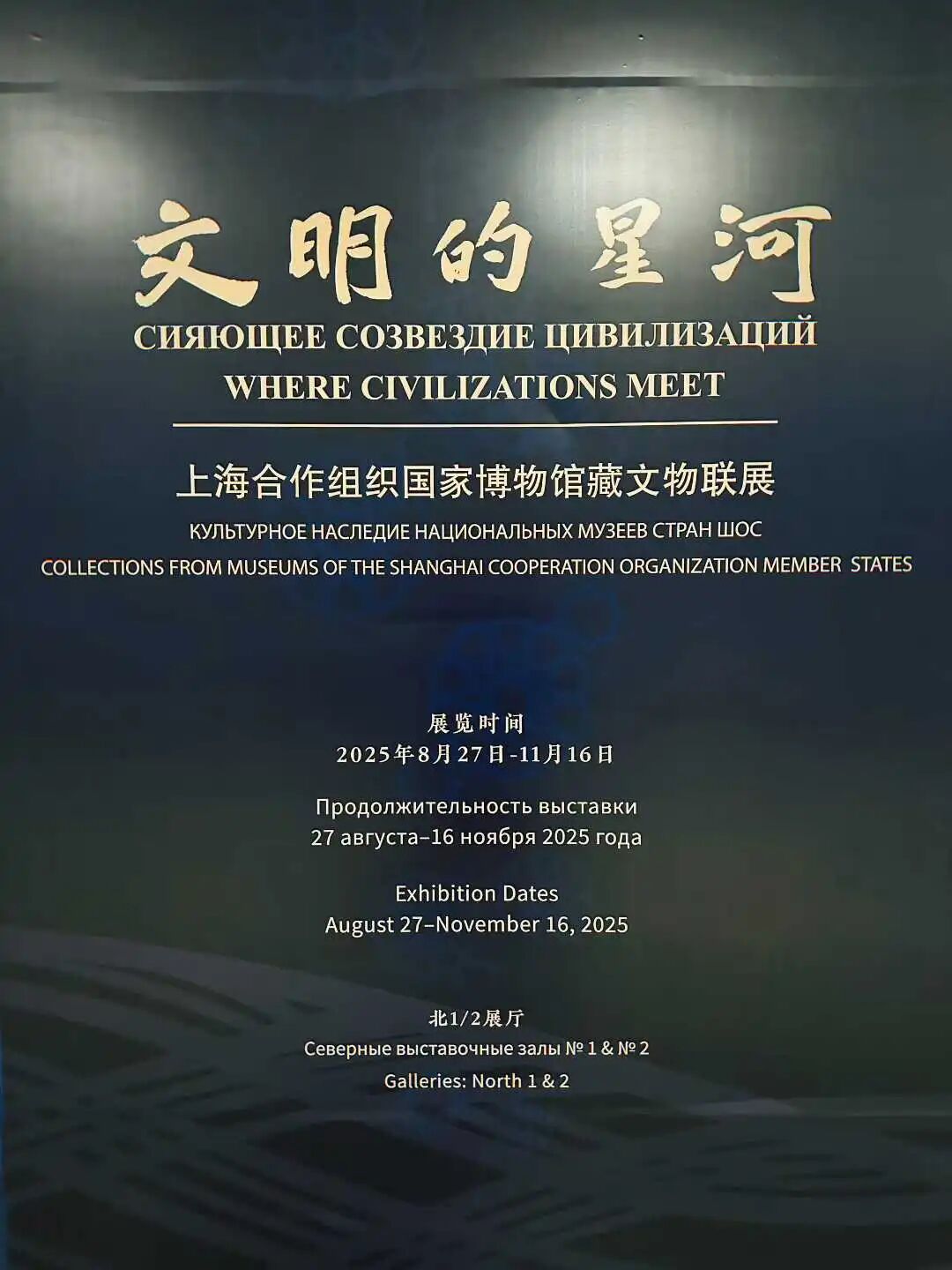
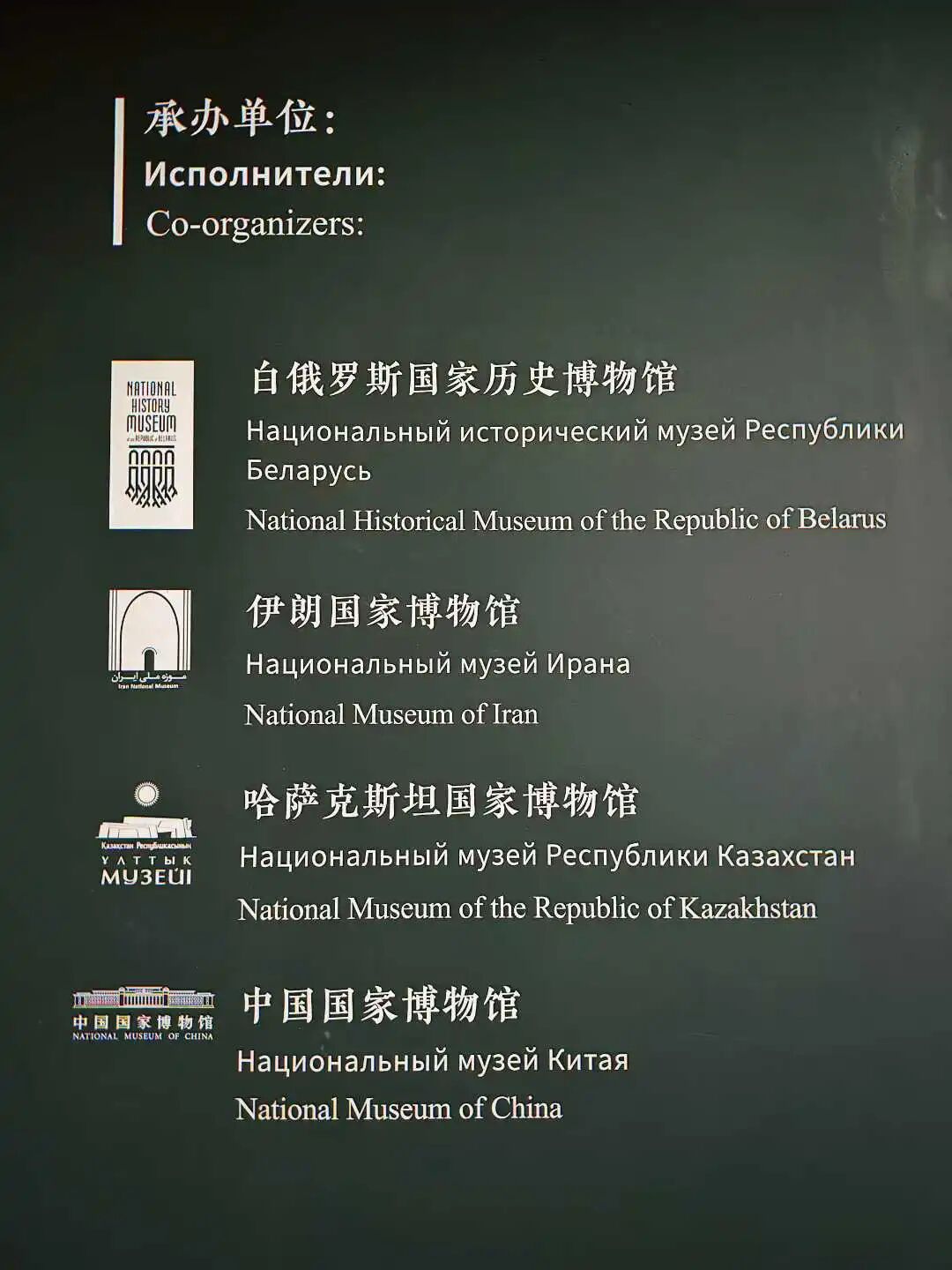
From August 27 to November 16, 2025, the National Museum of China hosts the exhibition "Galaxy of Civilizations: Joint Exhibition of Cultural Relics from National Museums of Shanghai Cooperation Organization Countries." It features items from 10 institutions, including the National Historical Museum of Belarus, the National Museum of Kazakhstan, the National Museum of Kyrgyzstan, the Department of Archaeology and Museums of the Pakistan Heritage and Culture Division, the State Historical Museum of Russia, the National Museum of Tajikistan, the State Museum of History of Uzbekistan, and the State Museum of Arts of Uzbekistan.
National Historical Museum of Belarus
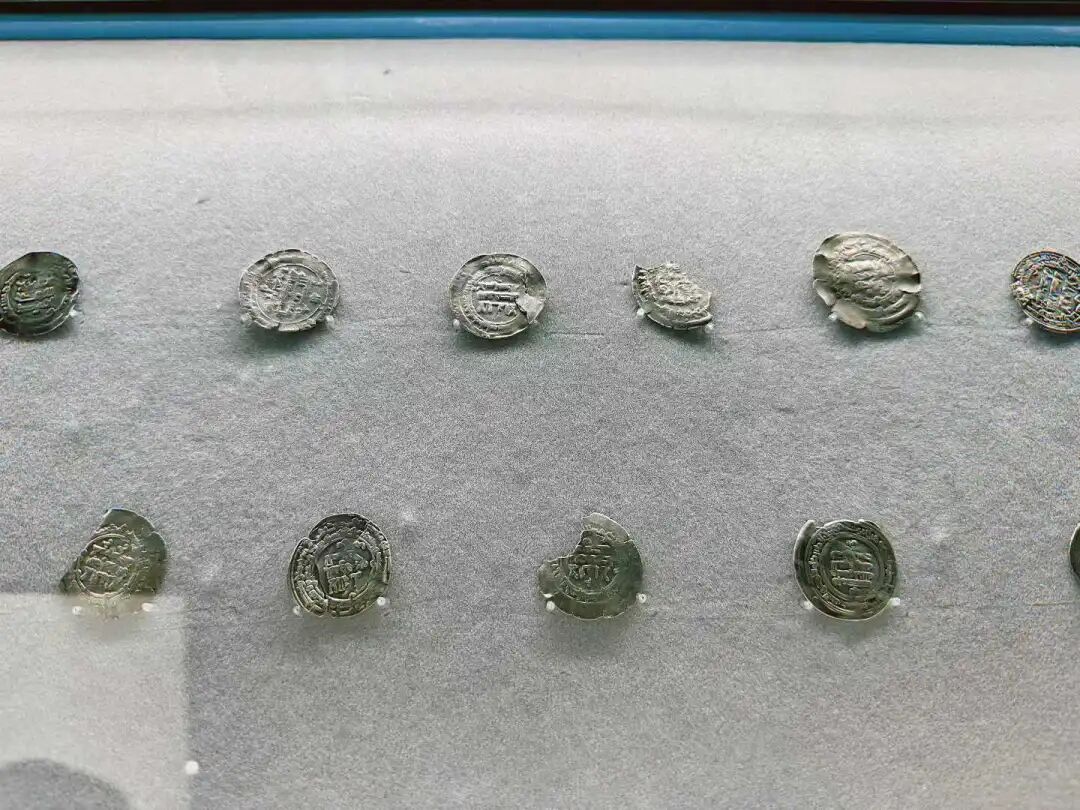
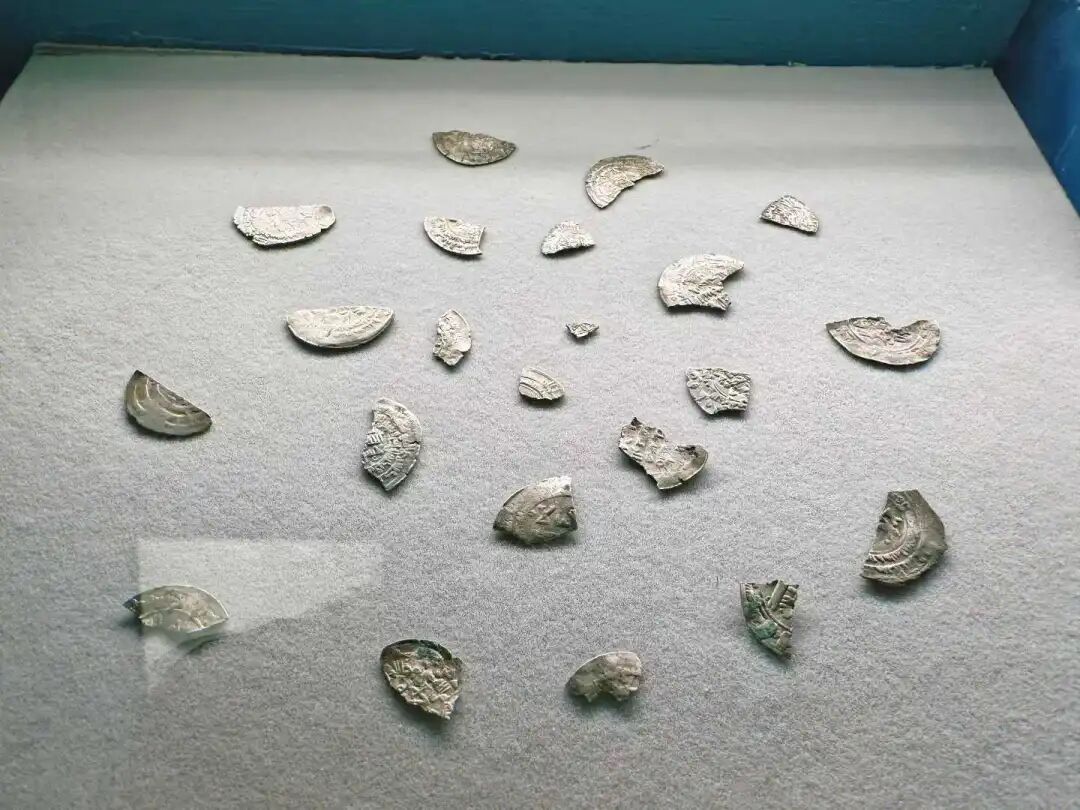
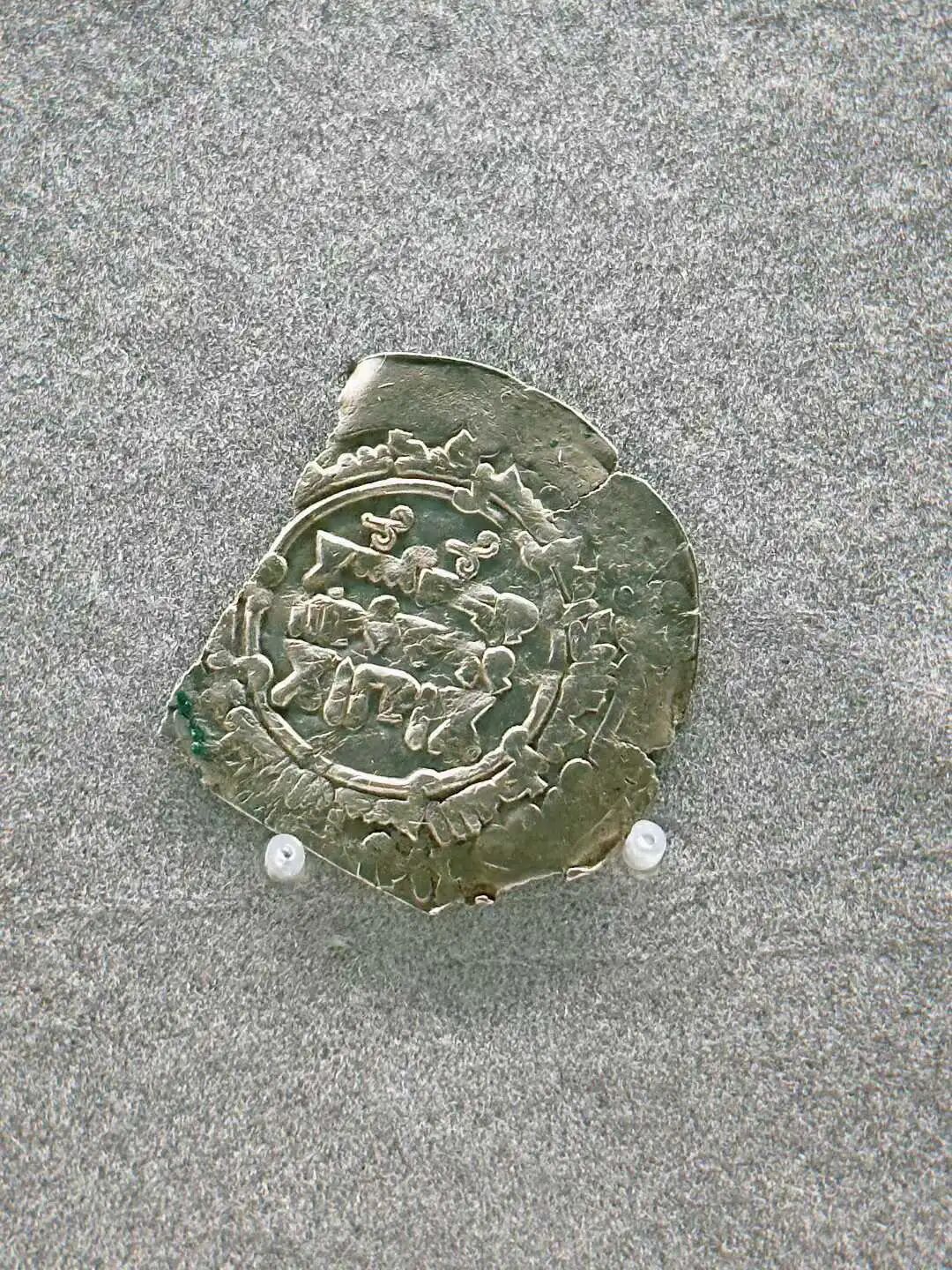
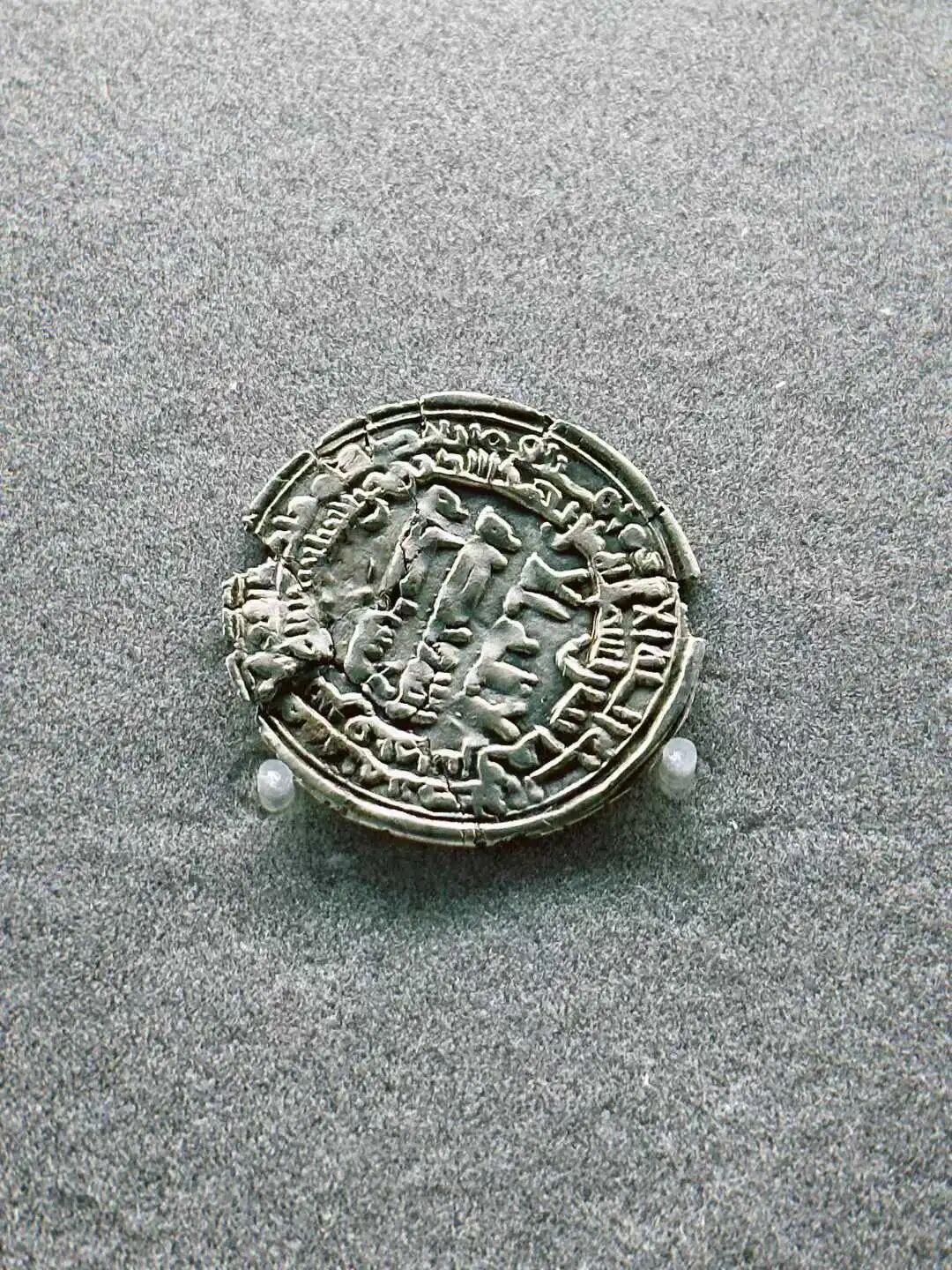
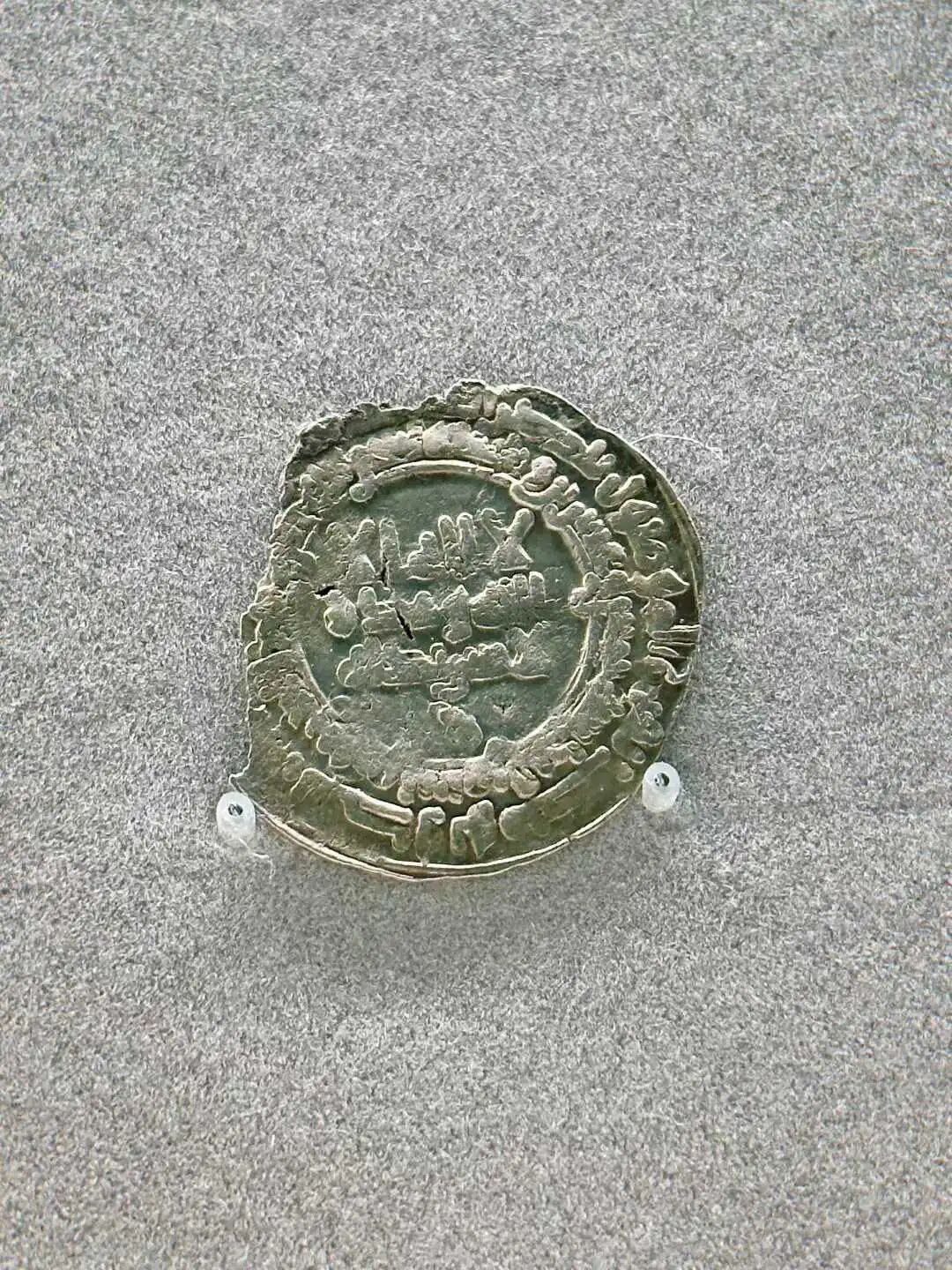
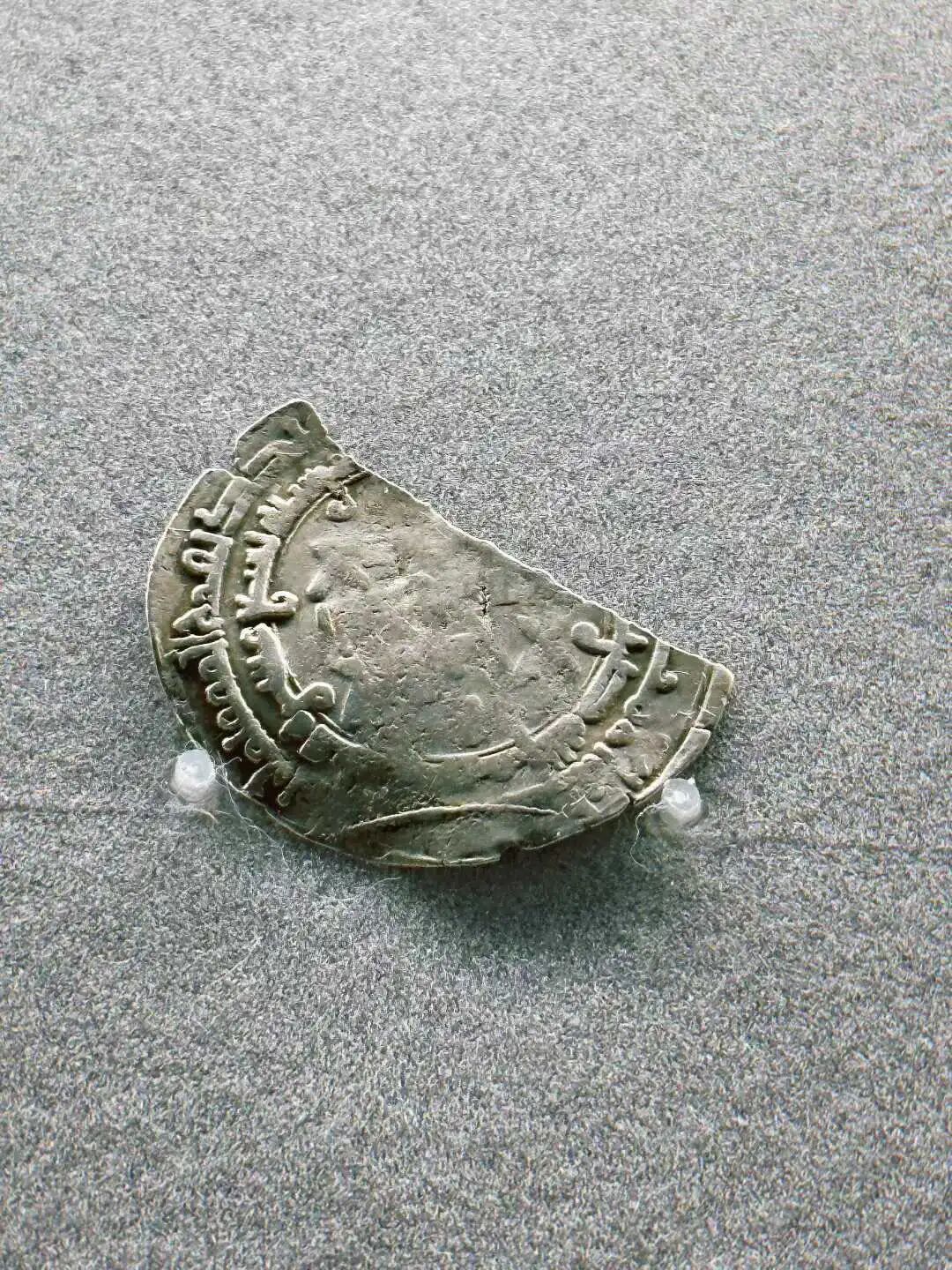
From the collection of the National Historical Museum of Belarus, this is a hoard of silver coins from the Abbasid Caliphate in the mid-10th century, found in Pinsk, Belarus, in 1991. Archaeologists have found tens of thousands of Arab silver coins in Northern Europe and the Baltic region. These coins were minted during the Abbasid Caliphate between the 8th and 11th centuries and were popular for their high purity and consistency. Between the 9th and 11th centuries, Vikings from Northern Europe used Eastern European waterways like the Volga and Dnieper rivers to trade with Arabs. They exchanged furs, slaves, and amber for large amounts of Arab silver coins. Interestingly, many of the Arab silver coins in Viking hoards were cut into pieces. This is because Vikings measured silver by weight rather than face value at the time.
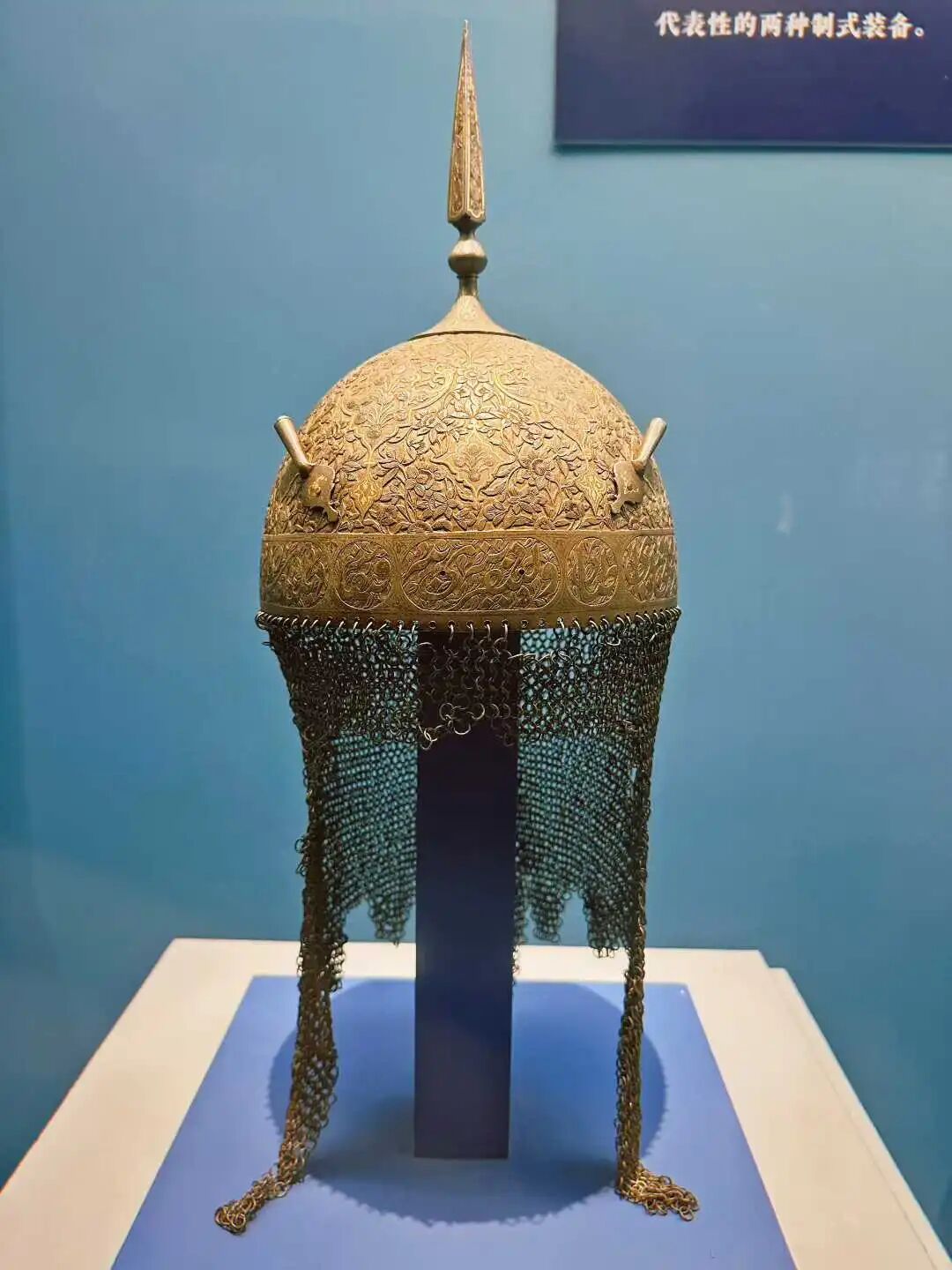
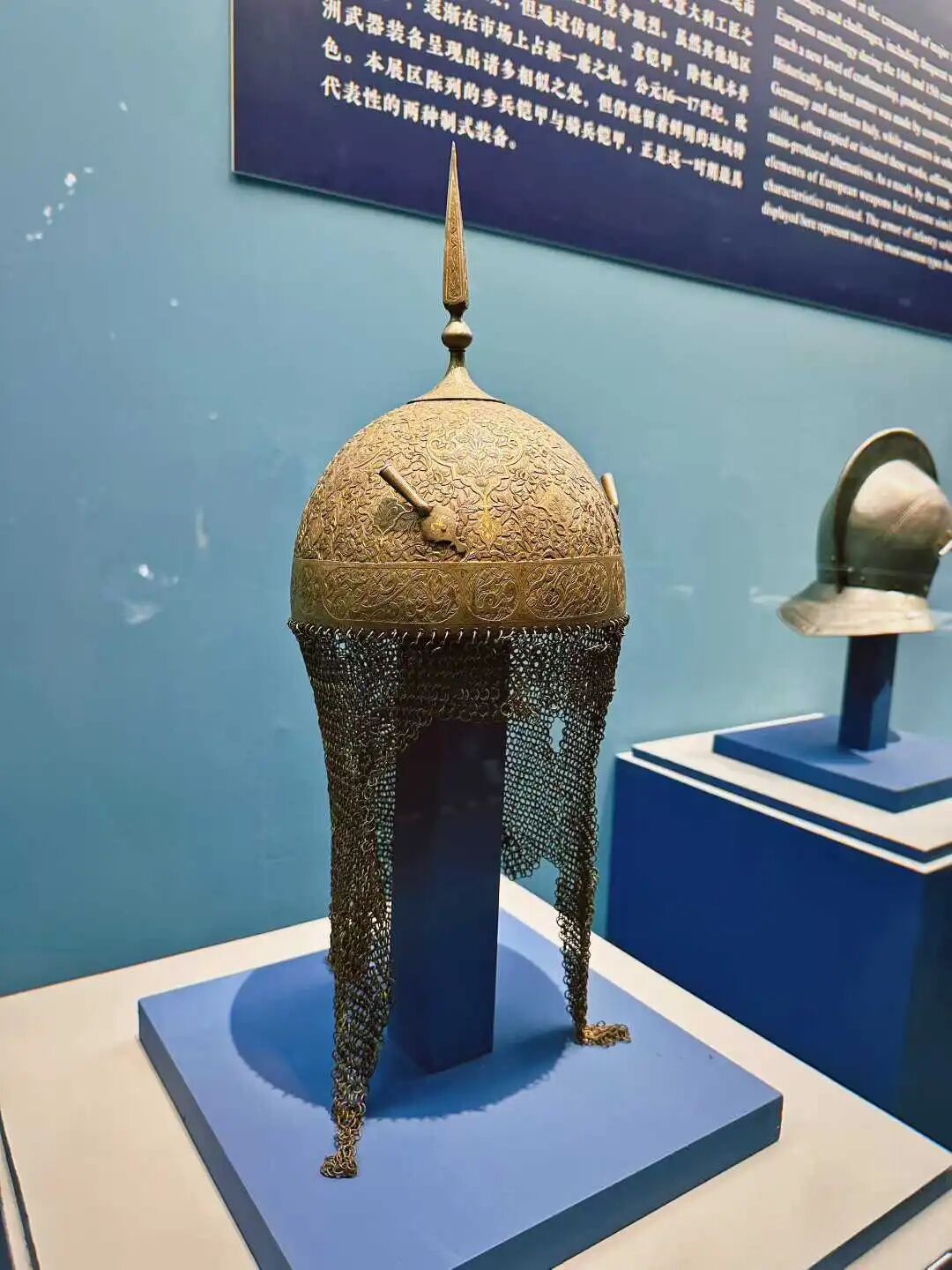
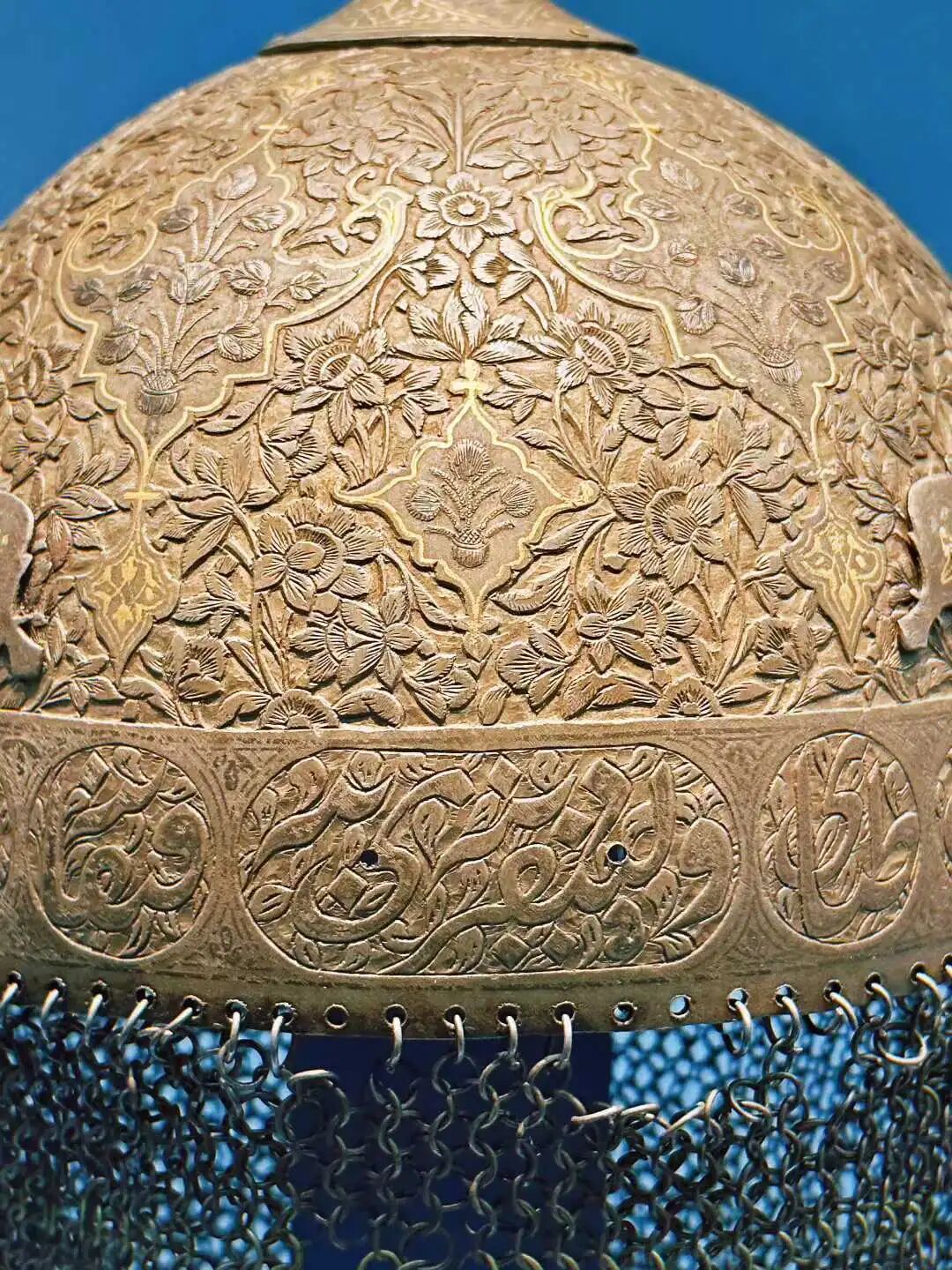
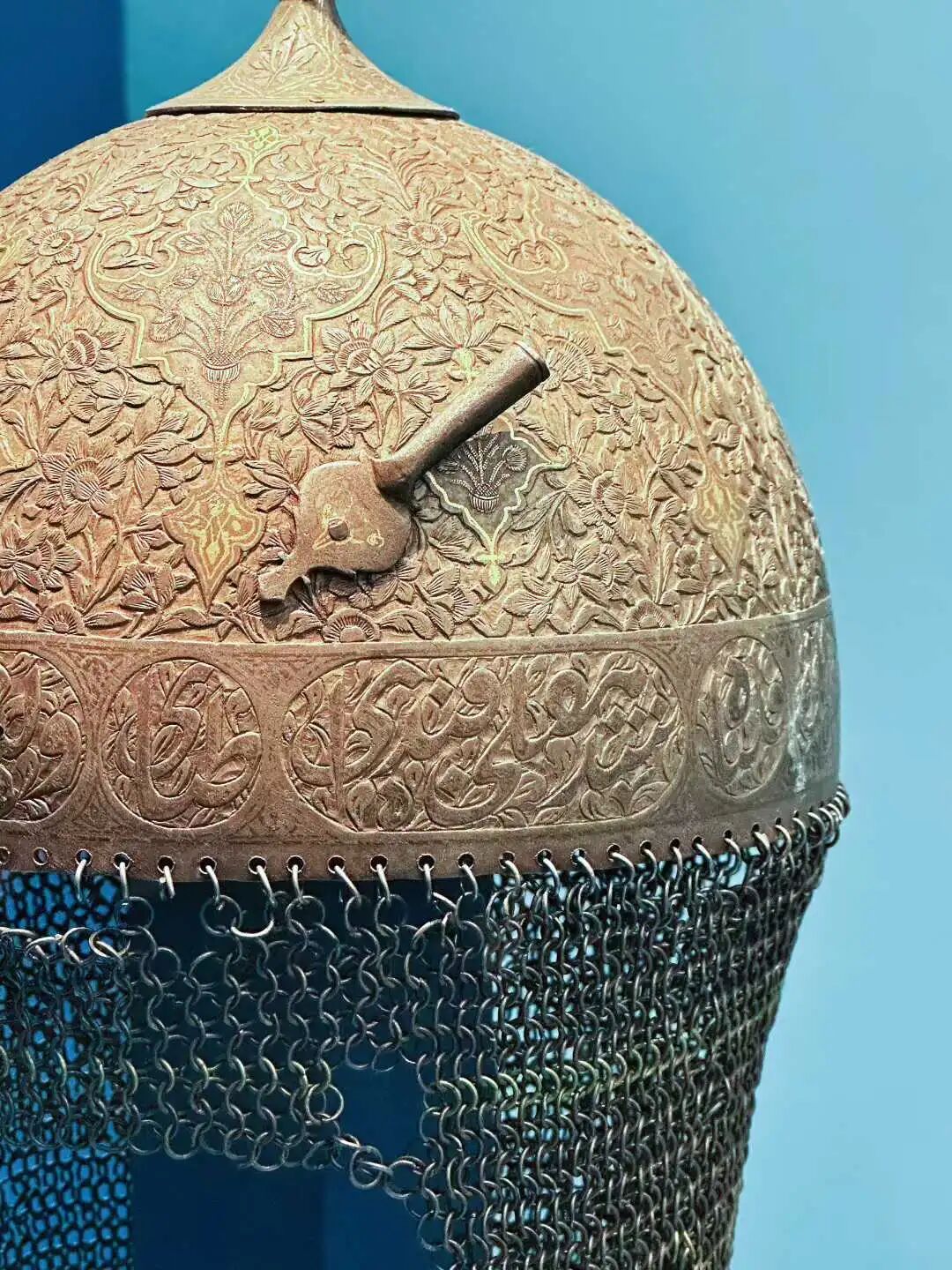
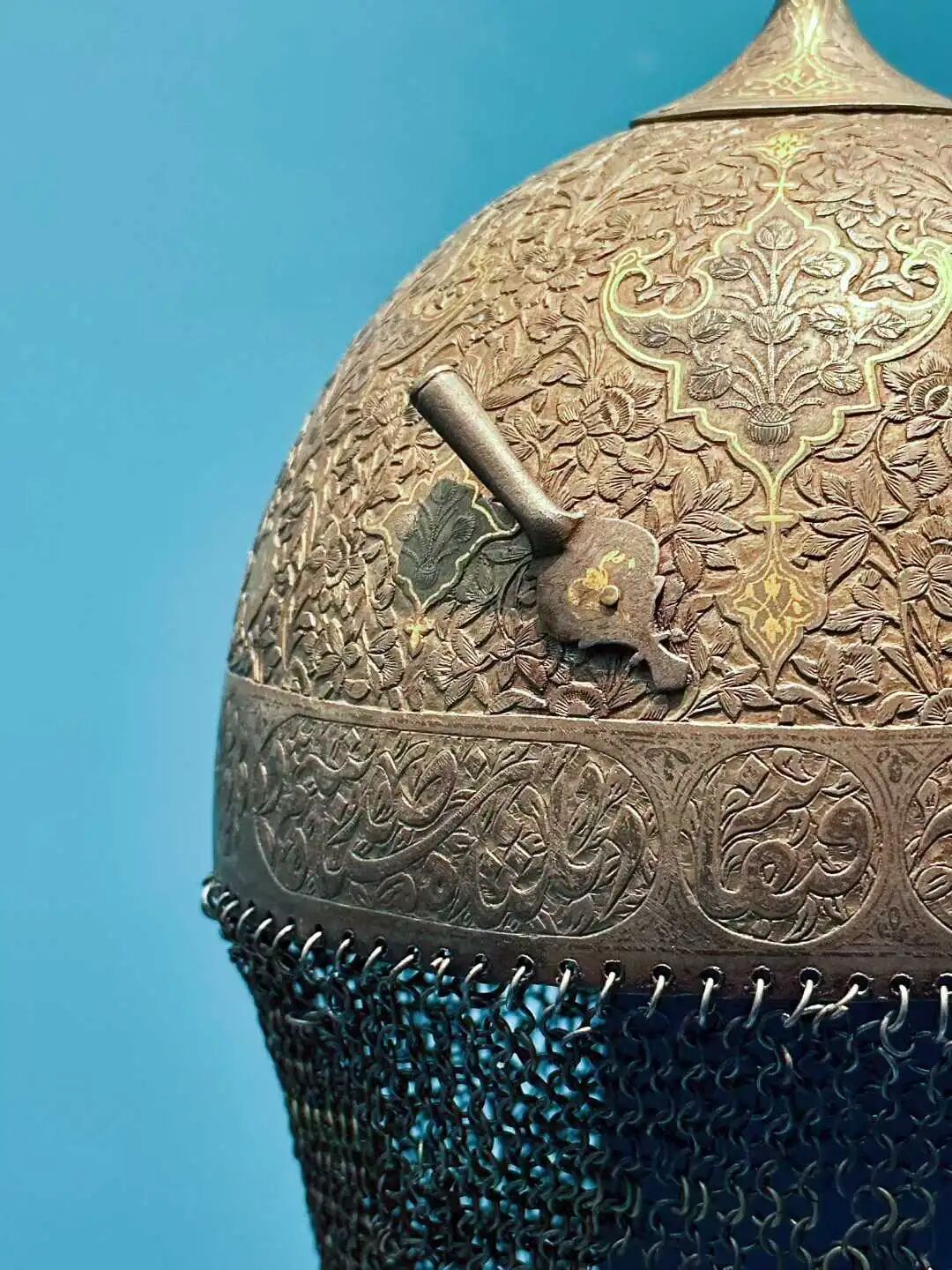
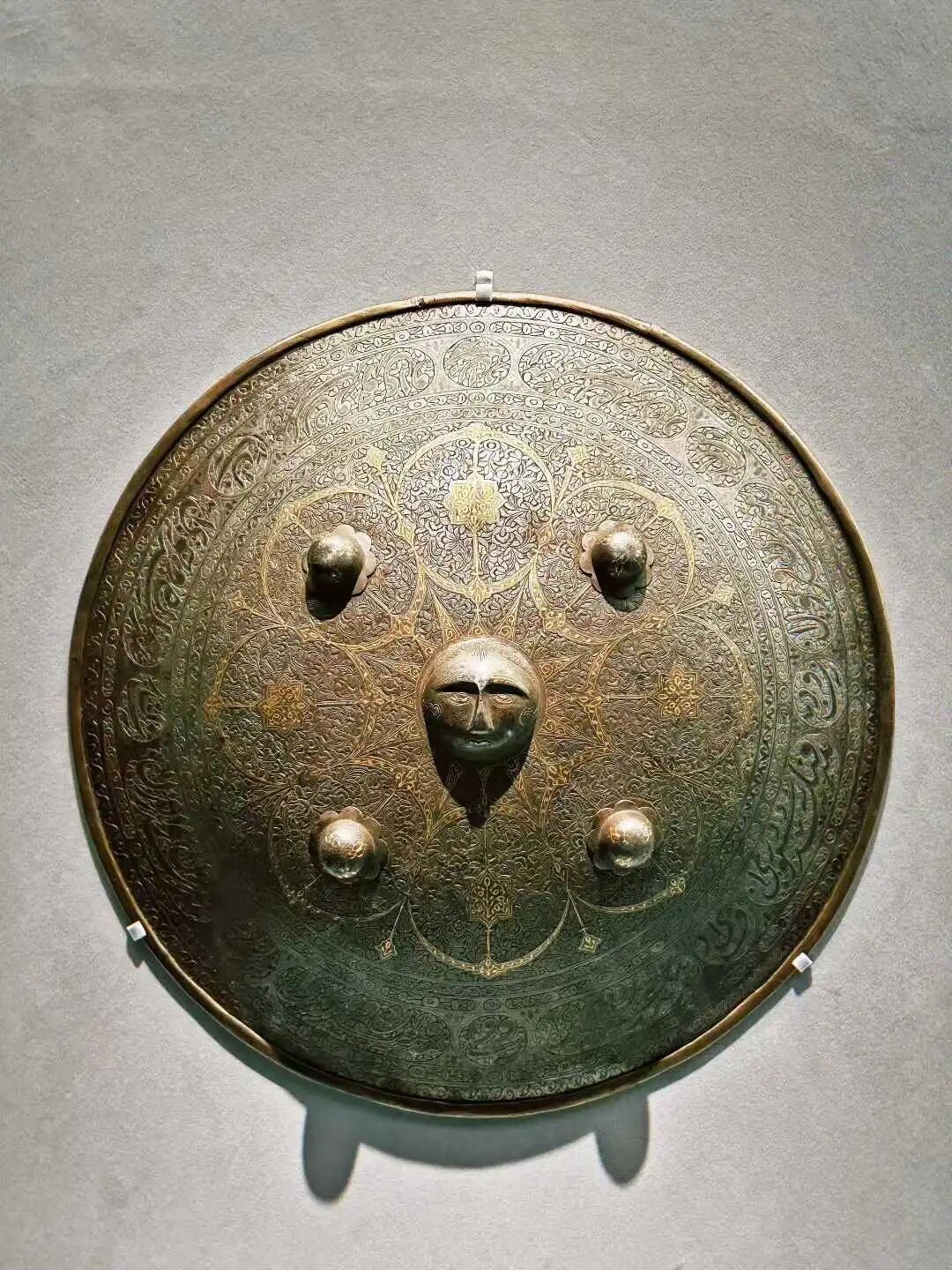
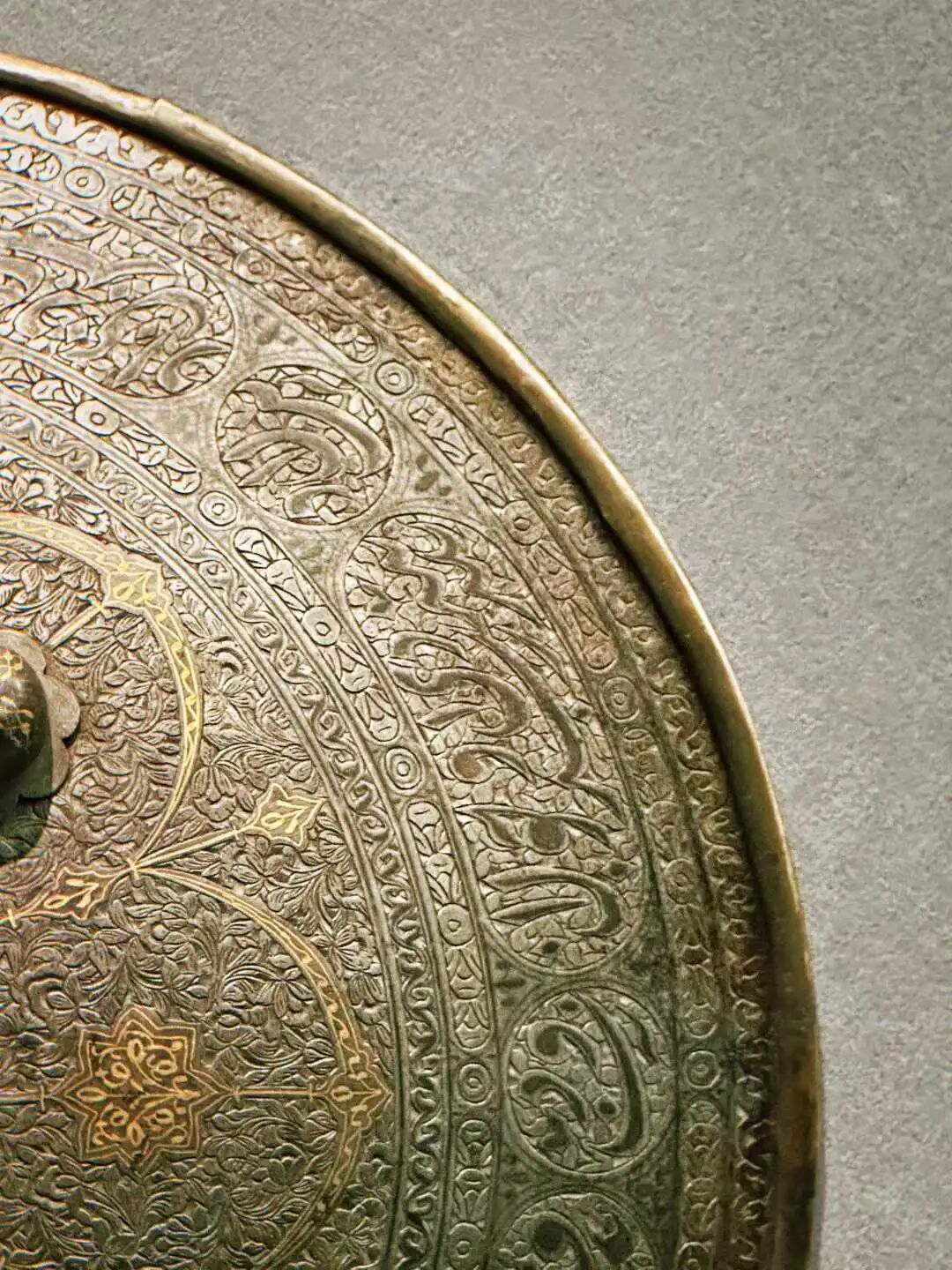
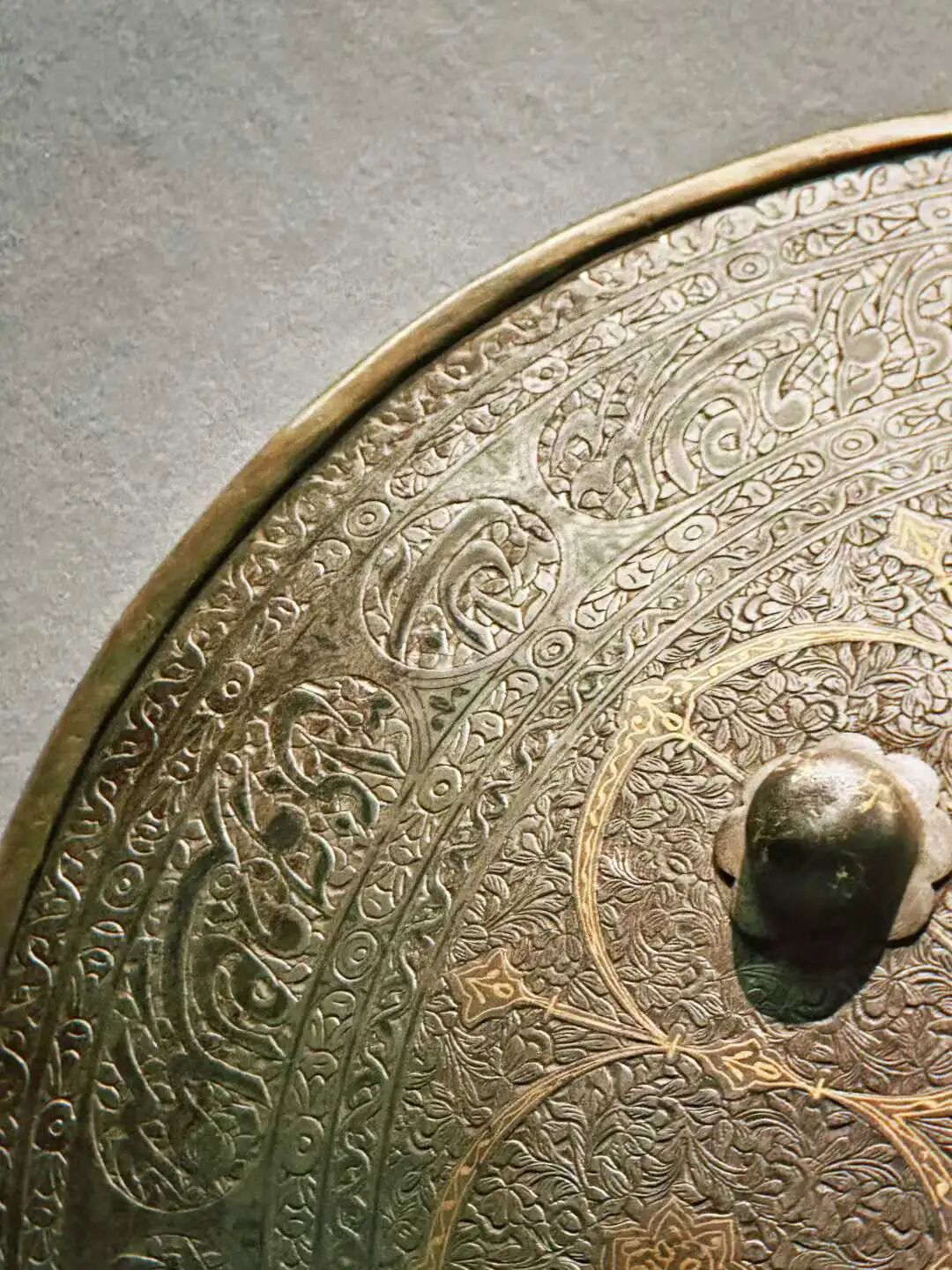
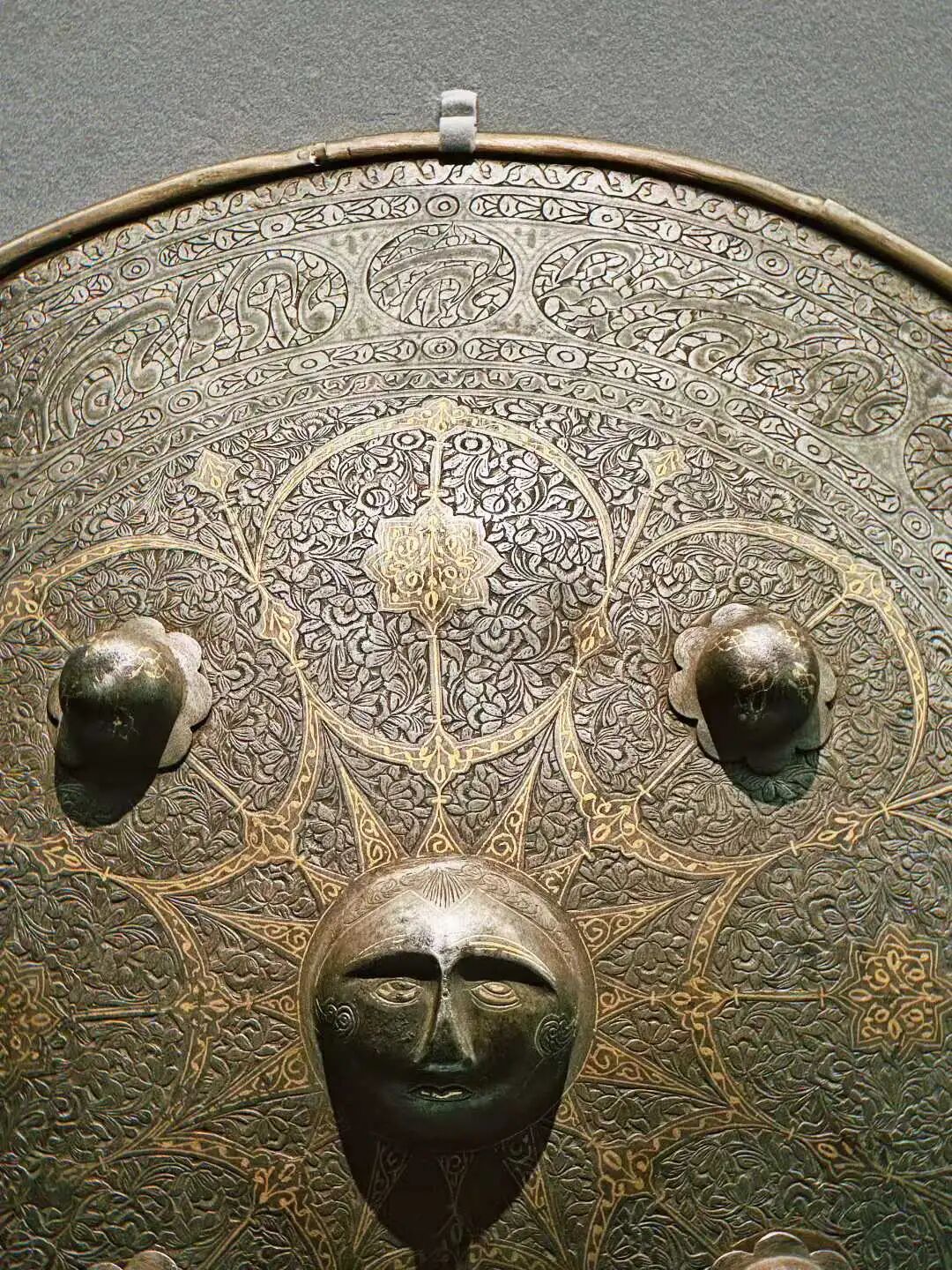
From the collection of the National Historical Museum of Belarus, this is a helmet and shield from the Qajar dynasty of Iran in the 19th century. The helmet and shield were hand-forged from single plates of Damascus steel. The helmet has a long spike on top and feather holders on both sides, while the shield features a sun motif. Both the helmet and shield are engraved with floral patterns and beautiful Persian calligraphy. Persian calligraphy developed from Naskh Arabic script. Compared to Naskh, the strokes are more elongated and tilt from the top right to the bottom left, allowing for more freedom when writing.
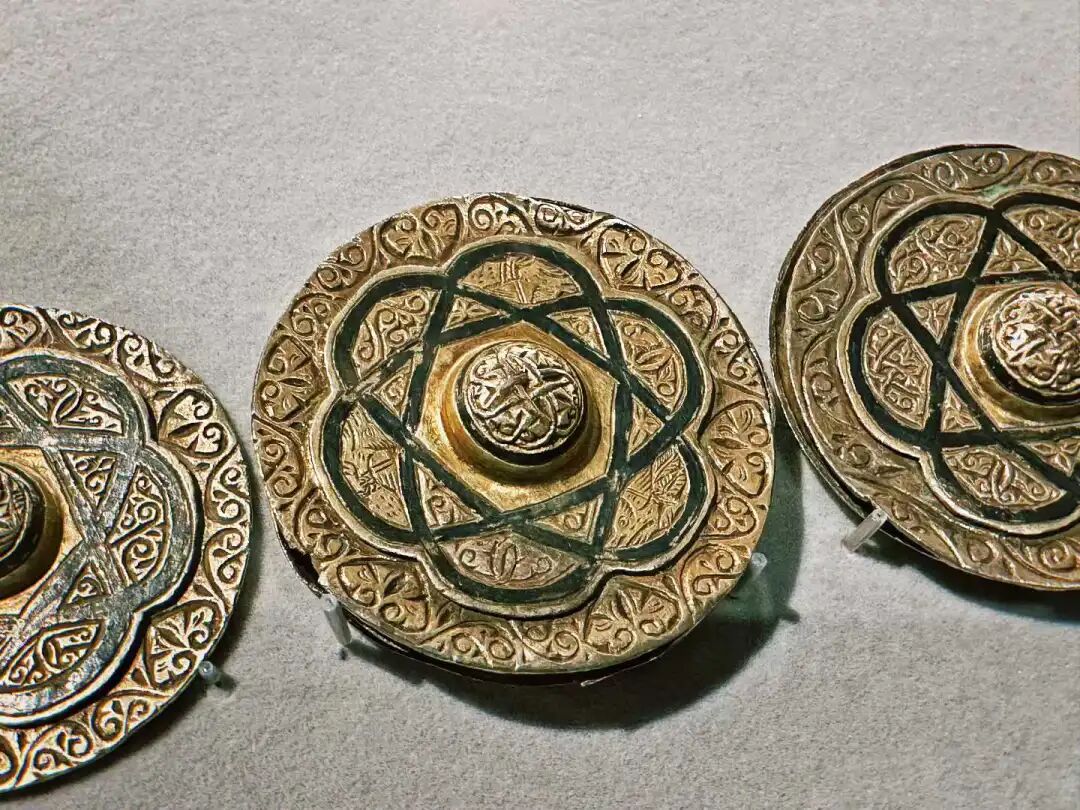
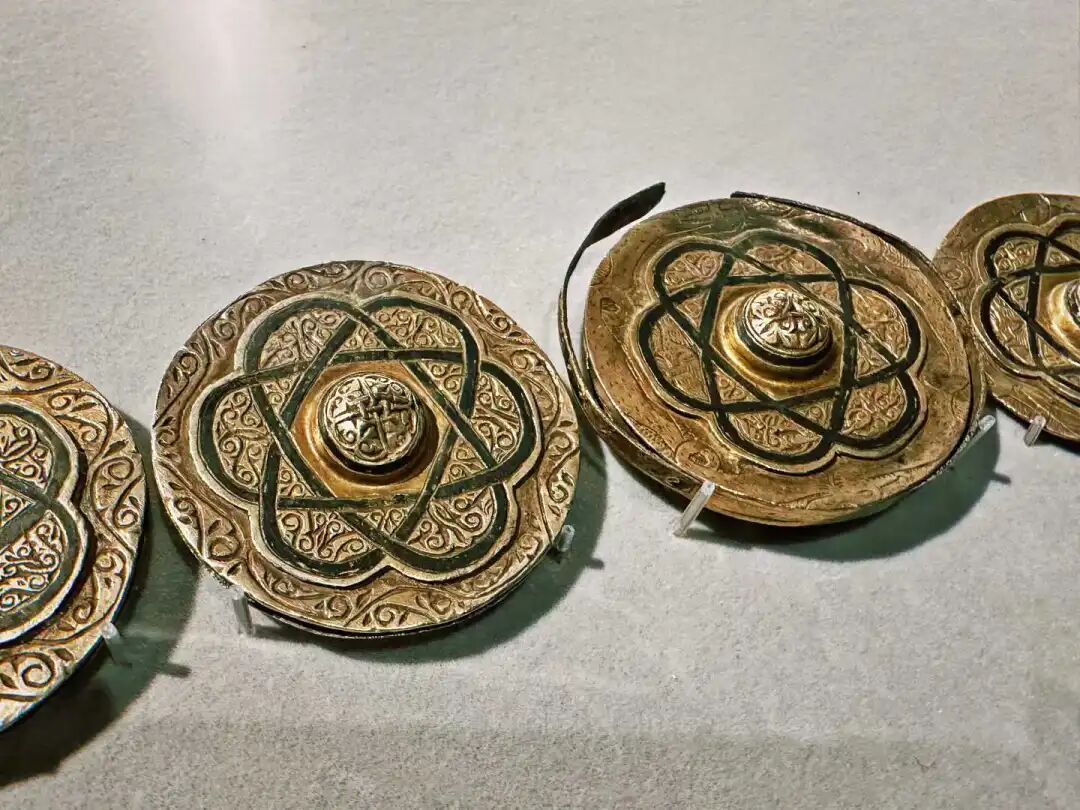
From the collection of the National Historical Museum of Belarus, this is a belt featuring traditional Crimean jewelry craftsmanship. It is believed to be a gift from Hacı I Giray, the founding Khan of the Crimean Khanate, to Grand Duke Vytautas of Lithuania.
Hacı I Giray was a descendant of Tuka-Timur, the thirteenth son of Jochi, who was the eldest son of Genghis Khan. His family began ruling the Crimean Peninsula in 1260, but they were defeated by Tamerlane in 1395 and fled to Lithuania. Hacı I Giray was born in Lithuania in 1397. In 1428, with the support of Grand Duke Vytautas of Lithuania, Hacı I Giray led an army to take over the Crimean Peninsula, but he was soon defeated by the Golden Horde. Later, with Lithuanian support, Hacı I Giray sent troops to Crimea several more times. He finally occupied the Crimean Peninsula in 1441 and established the Crimean Khanate.
This belt is made of high-purity silver. The circular discs feature Tatar decorative motifs, while the buckle has a Gothic design, reflecting the cultural exchange between East and West at the time.
National Museum of Kazakhstan
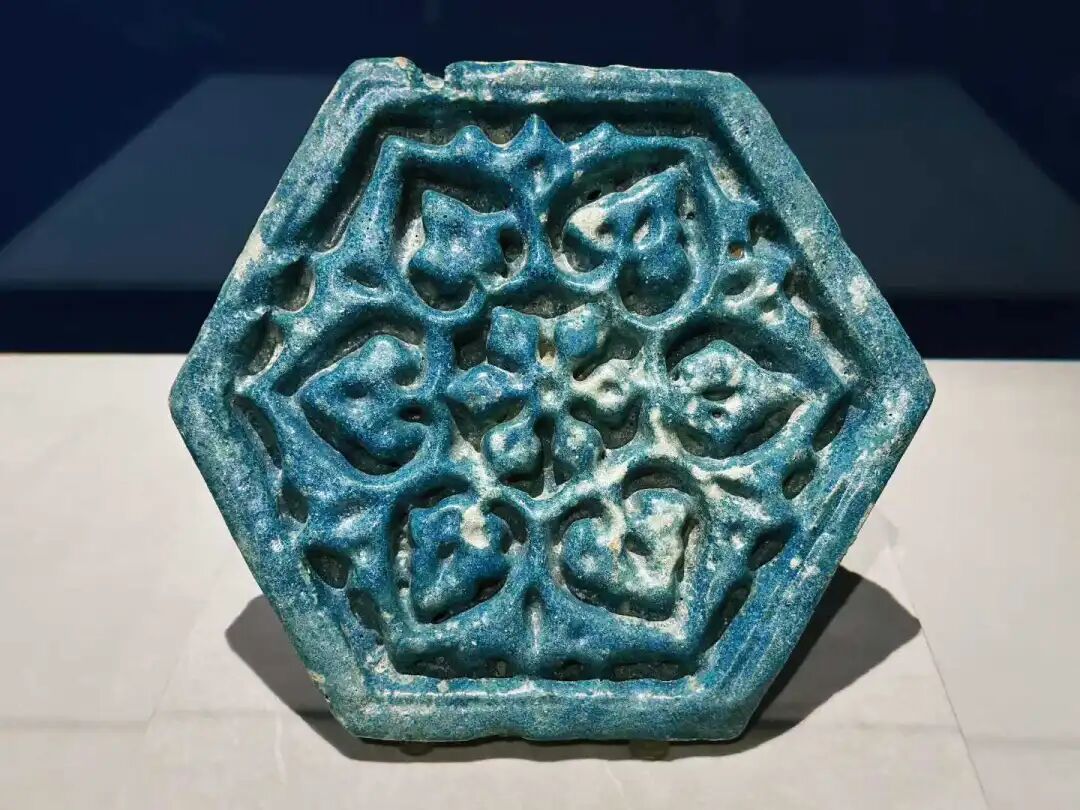
From the collection of the National Museum of Kazakhstan, these are ceramic tiles unearthed from a tomb at the ancient city site of Zhaiyk, dating back to the Golden Horde period in the 14th century. The ancient city site of Zhaiyk was discovered by an archaeological team in 2001. Subsequent excavations revealed the remains of a Turkish bath with an underfloor heating system and a domed tomb decorated with colorful glazed tiles in the cemetery west of the city.
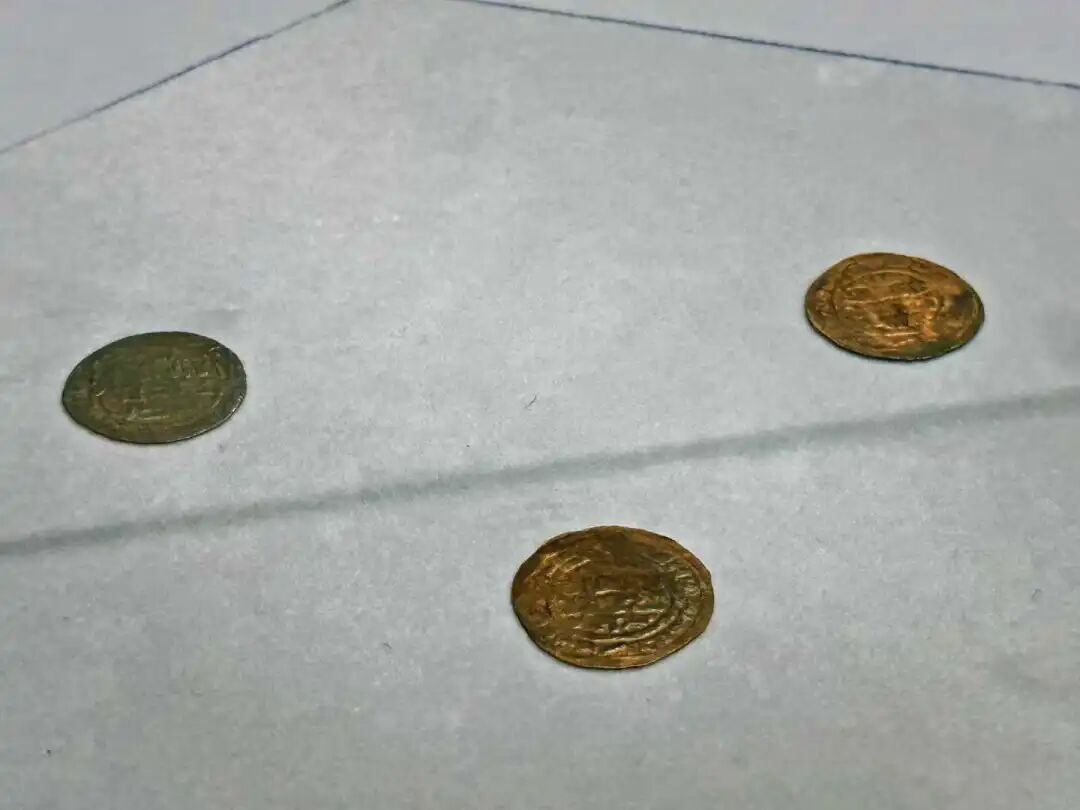
From the collection of the National Museum of Kazakhstan, this is a copper coin minted by the Samanid dynasty in 922-923, unearthed in Otrar, southern Kazakhstan. During the 9th and 10th centuries, this region was an important trade center for the Samanid dynasty.
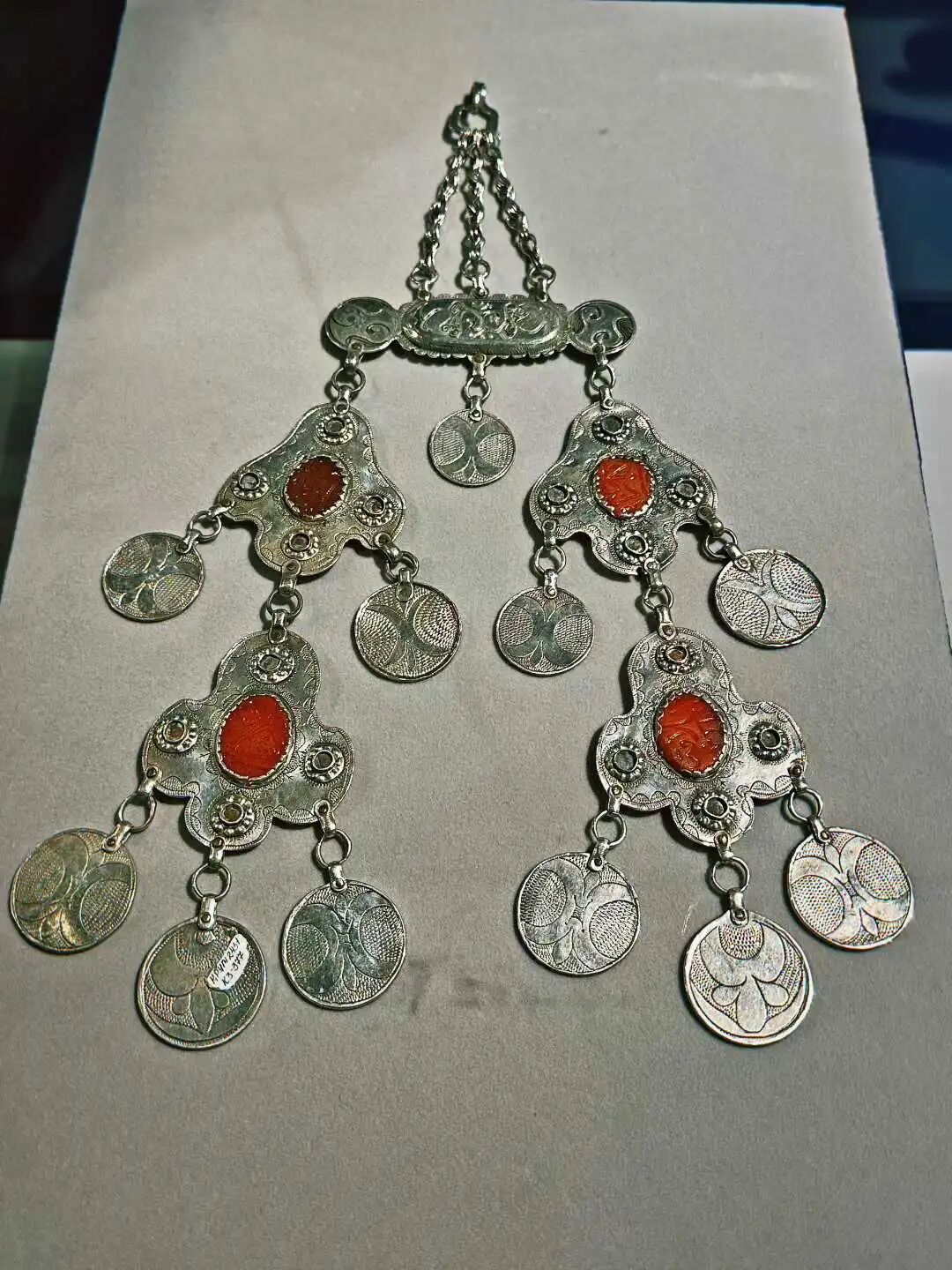
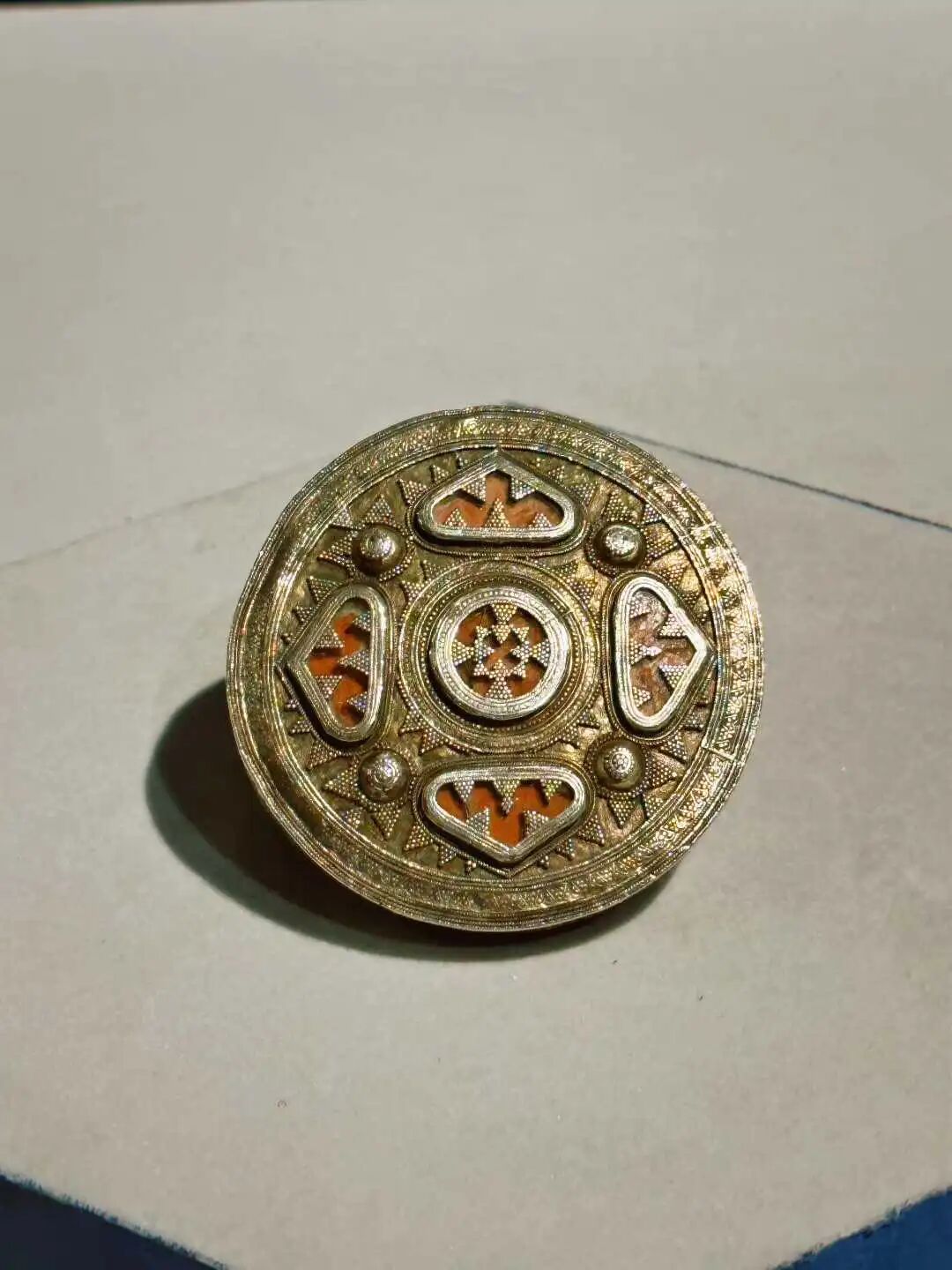
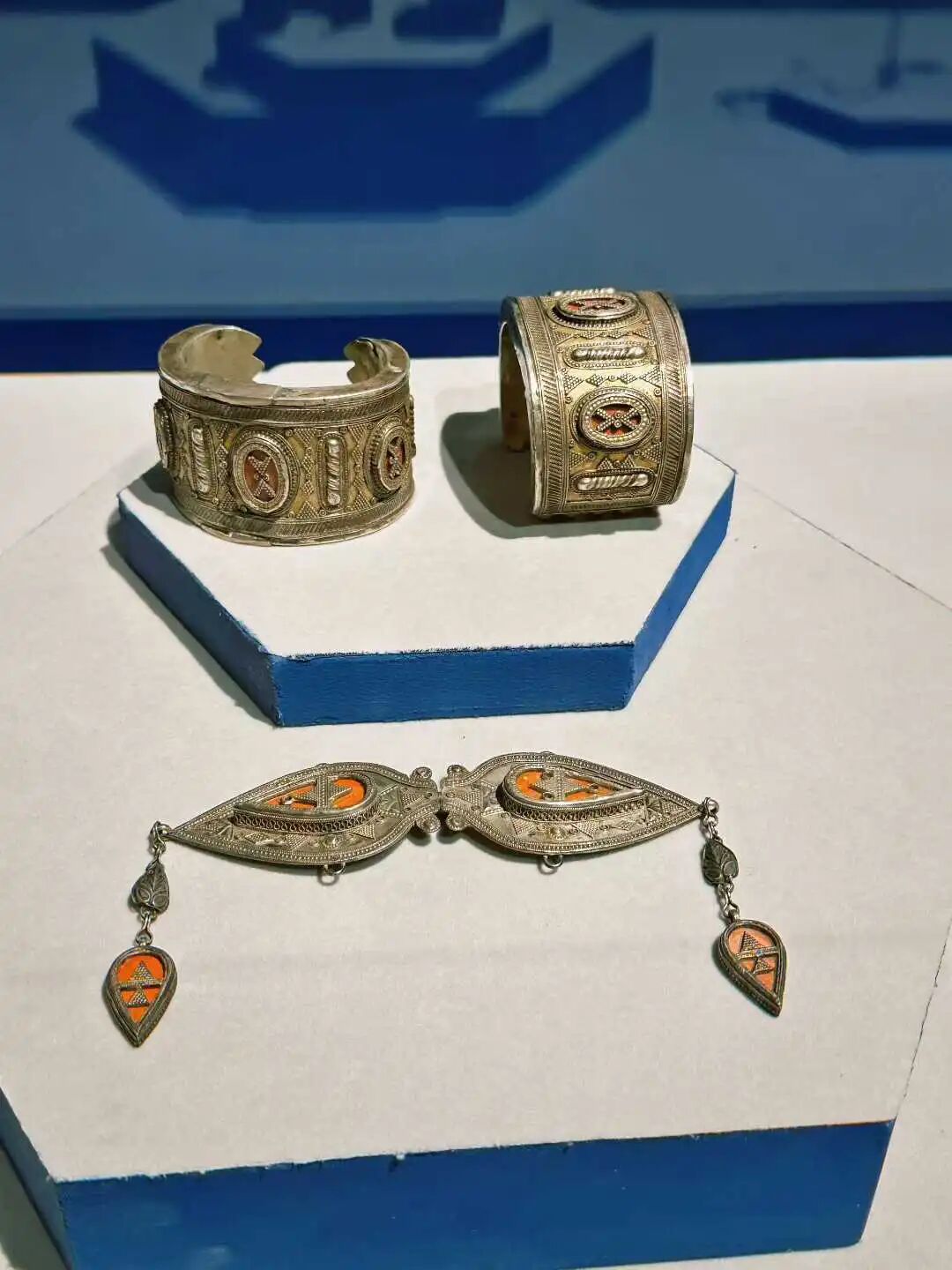
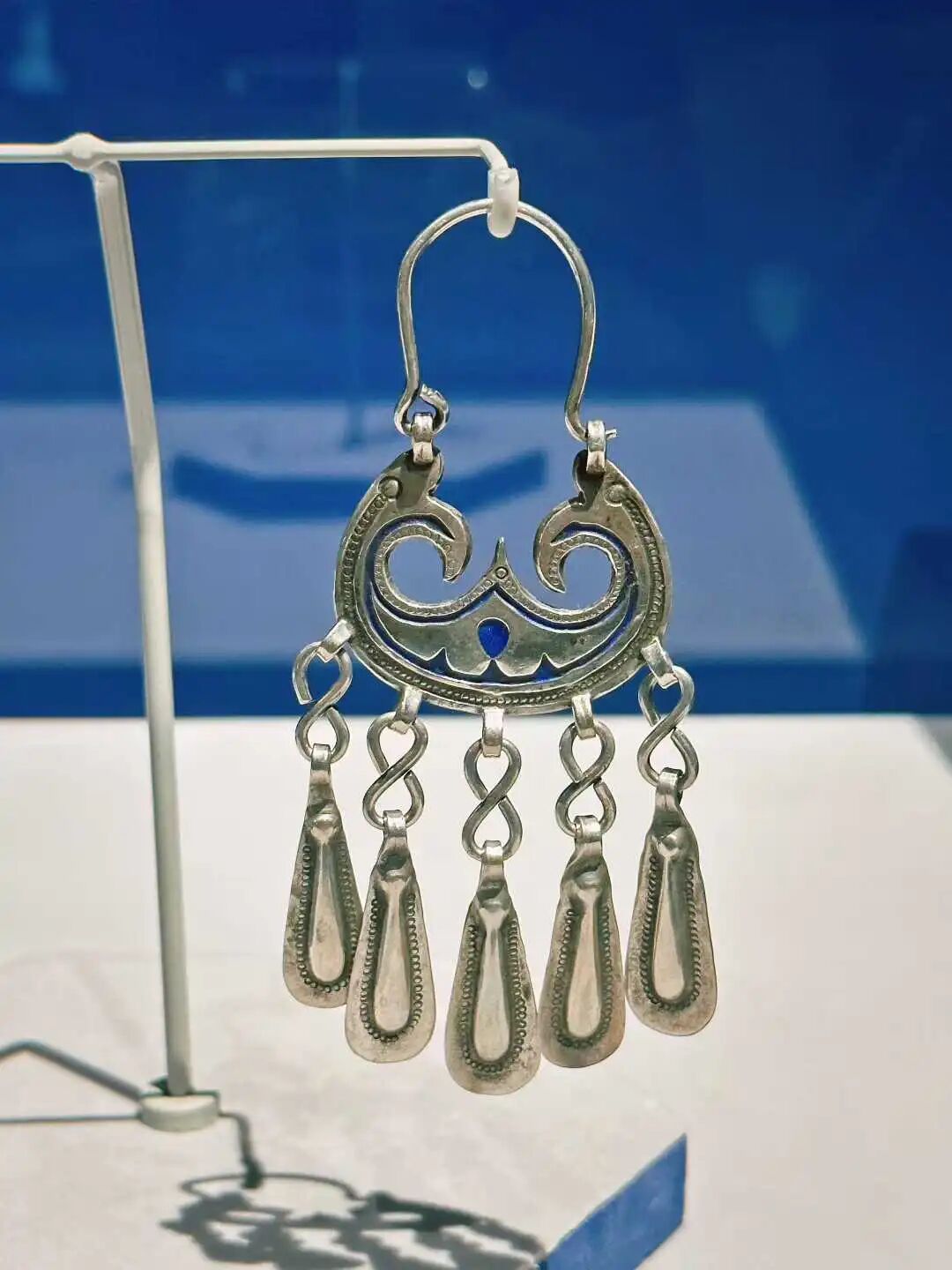
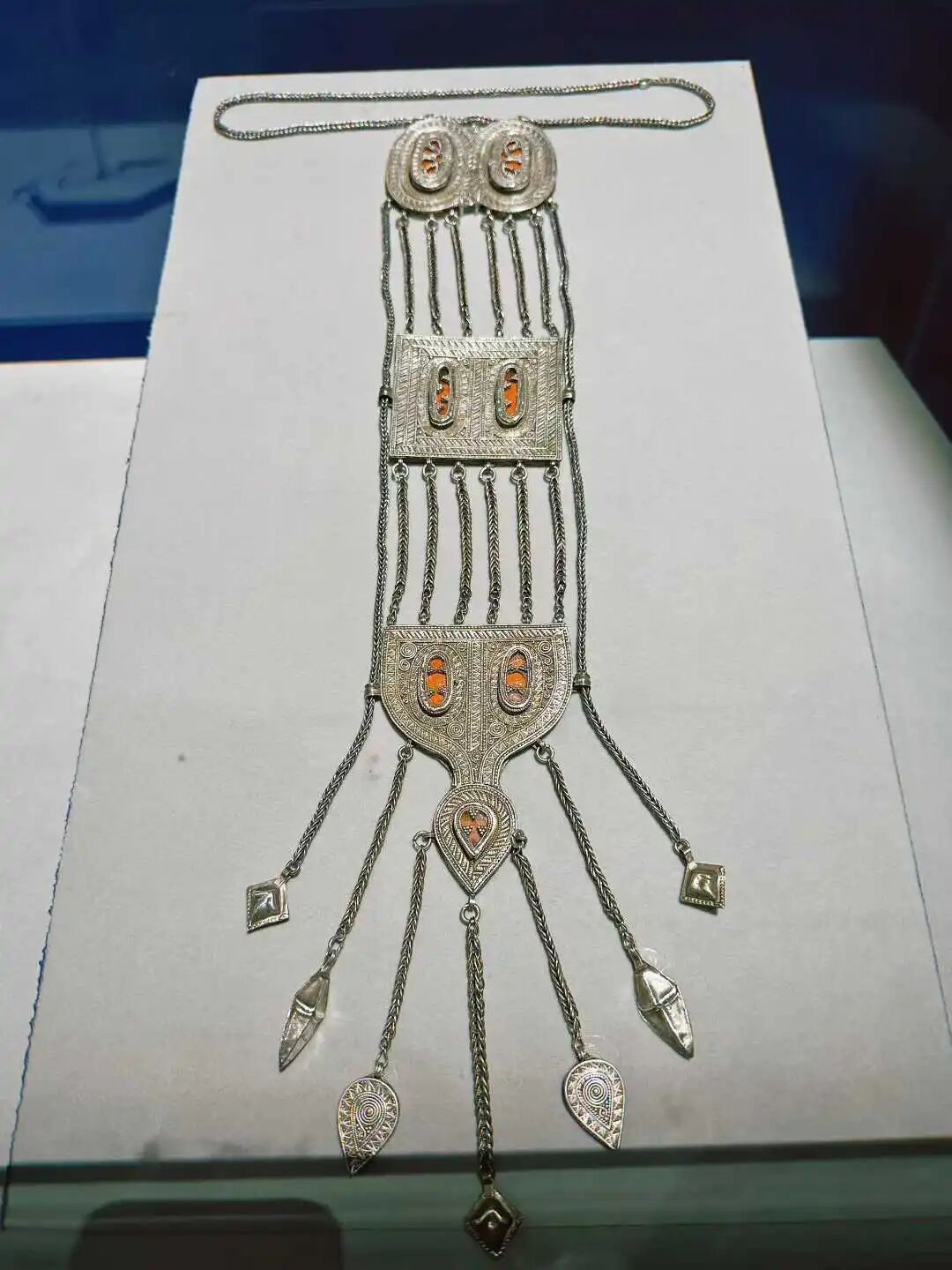
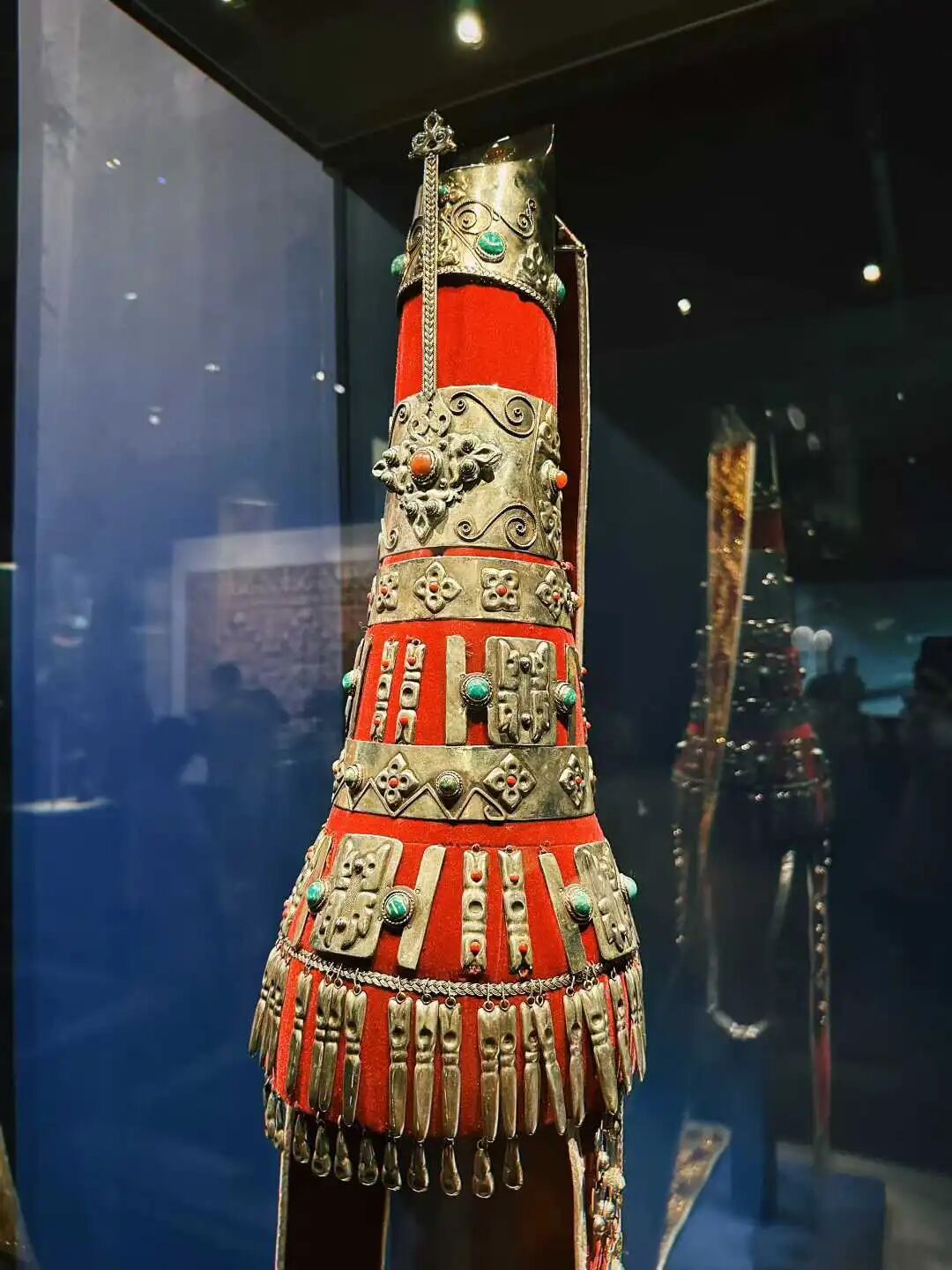
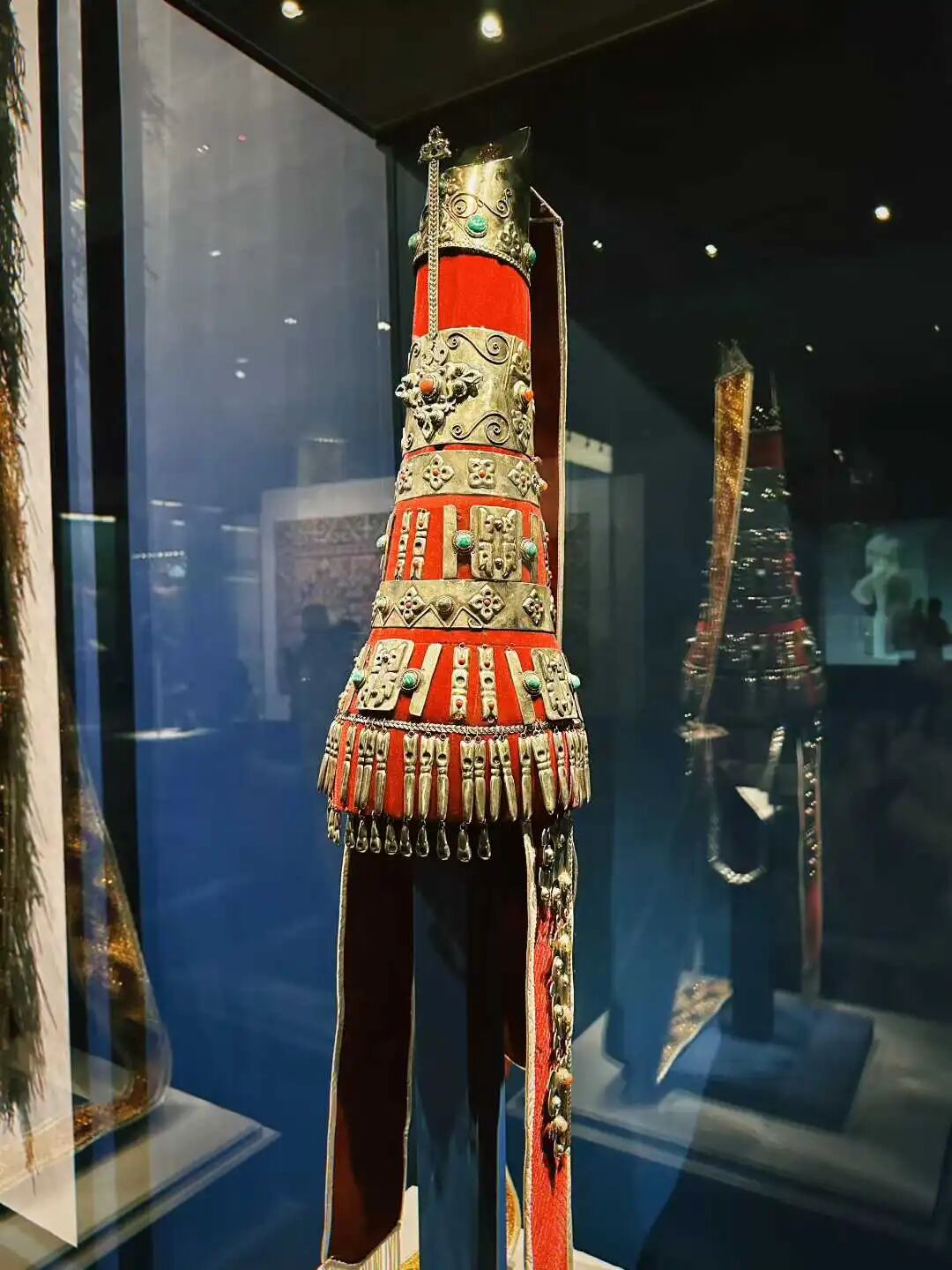
This is a modern Kazakh women's accessory.
National Museum of Pakistan, Islamabad
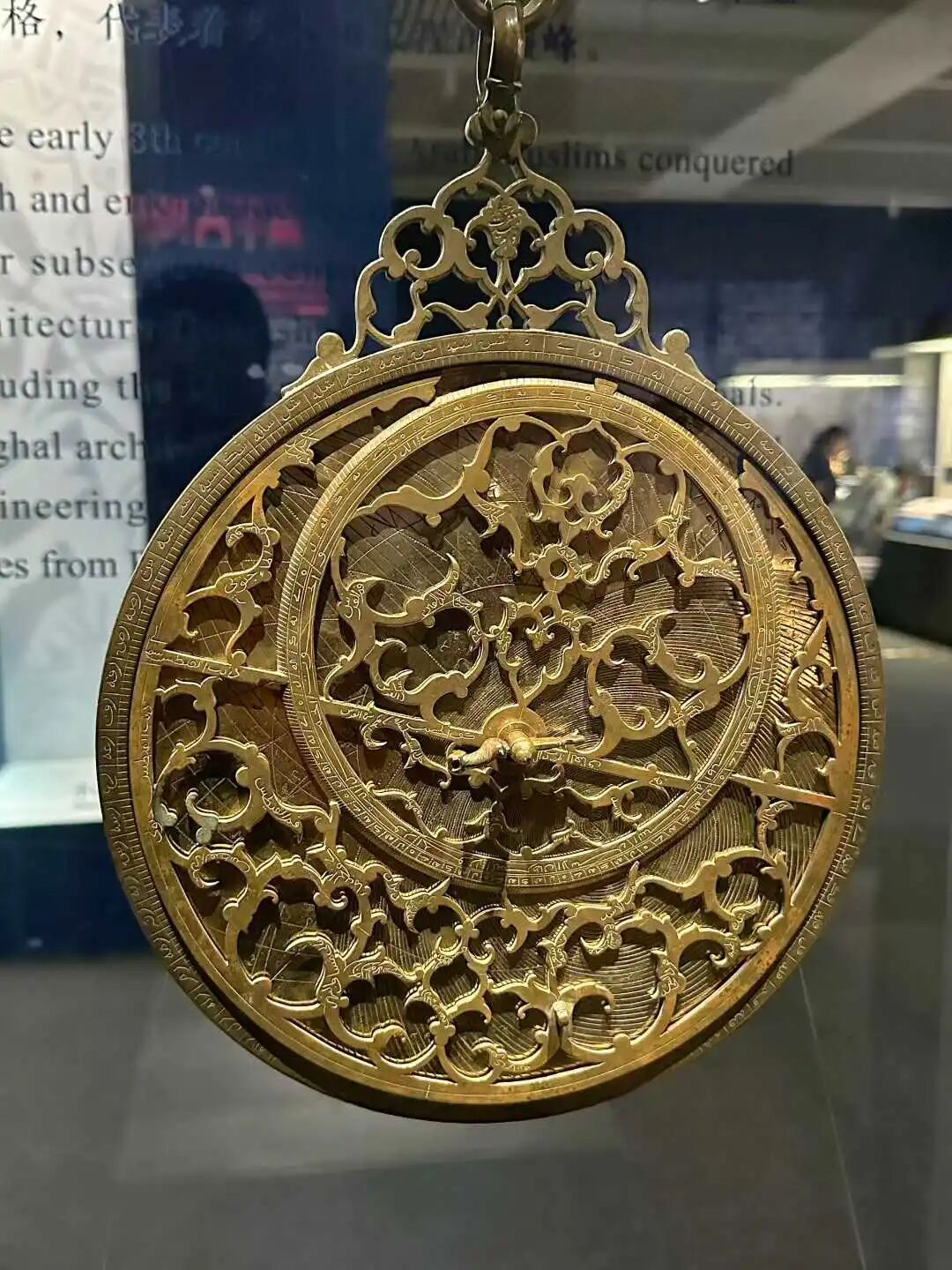
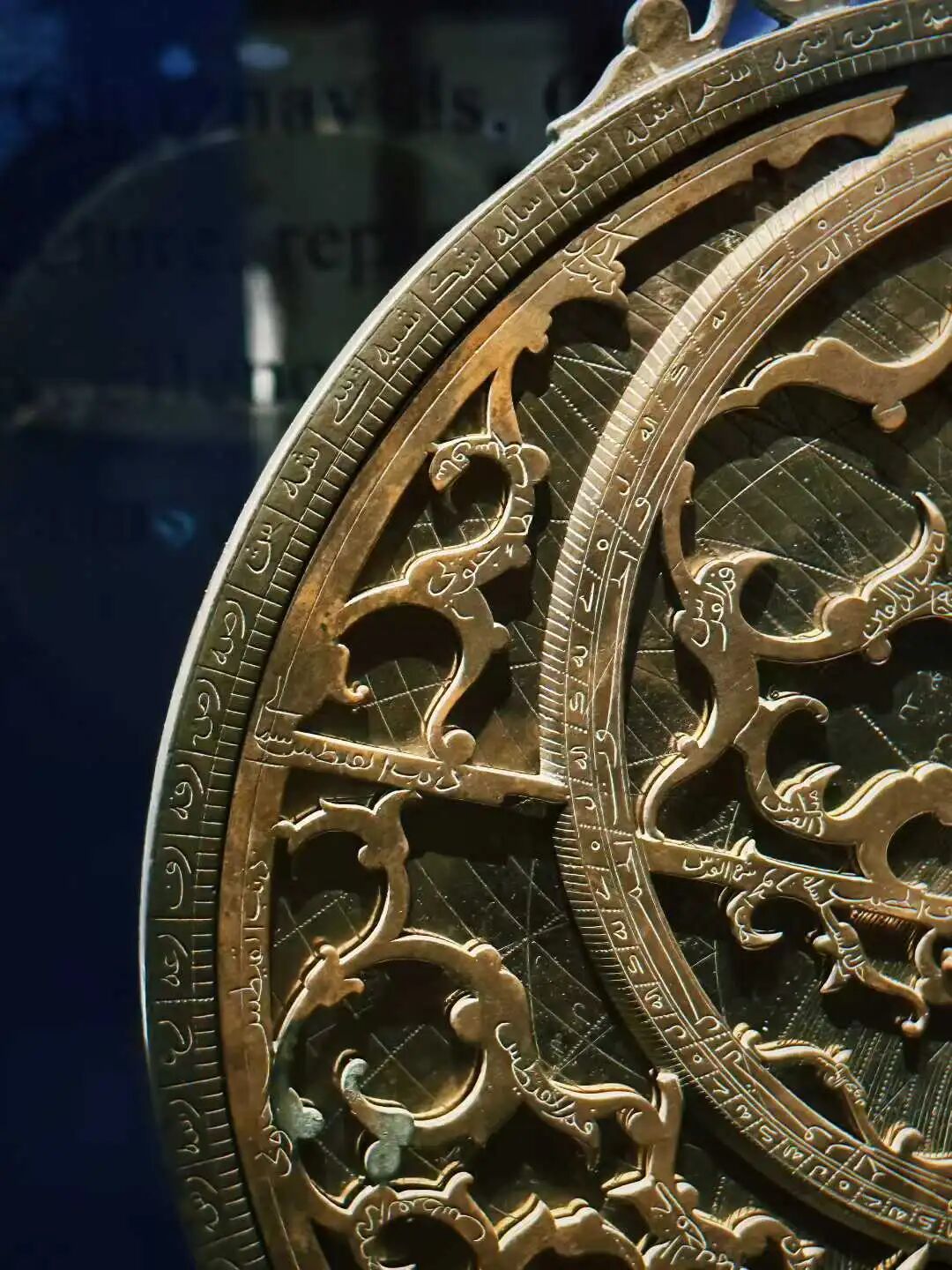
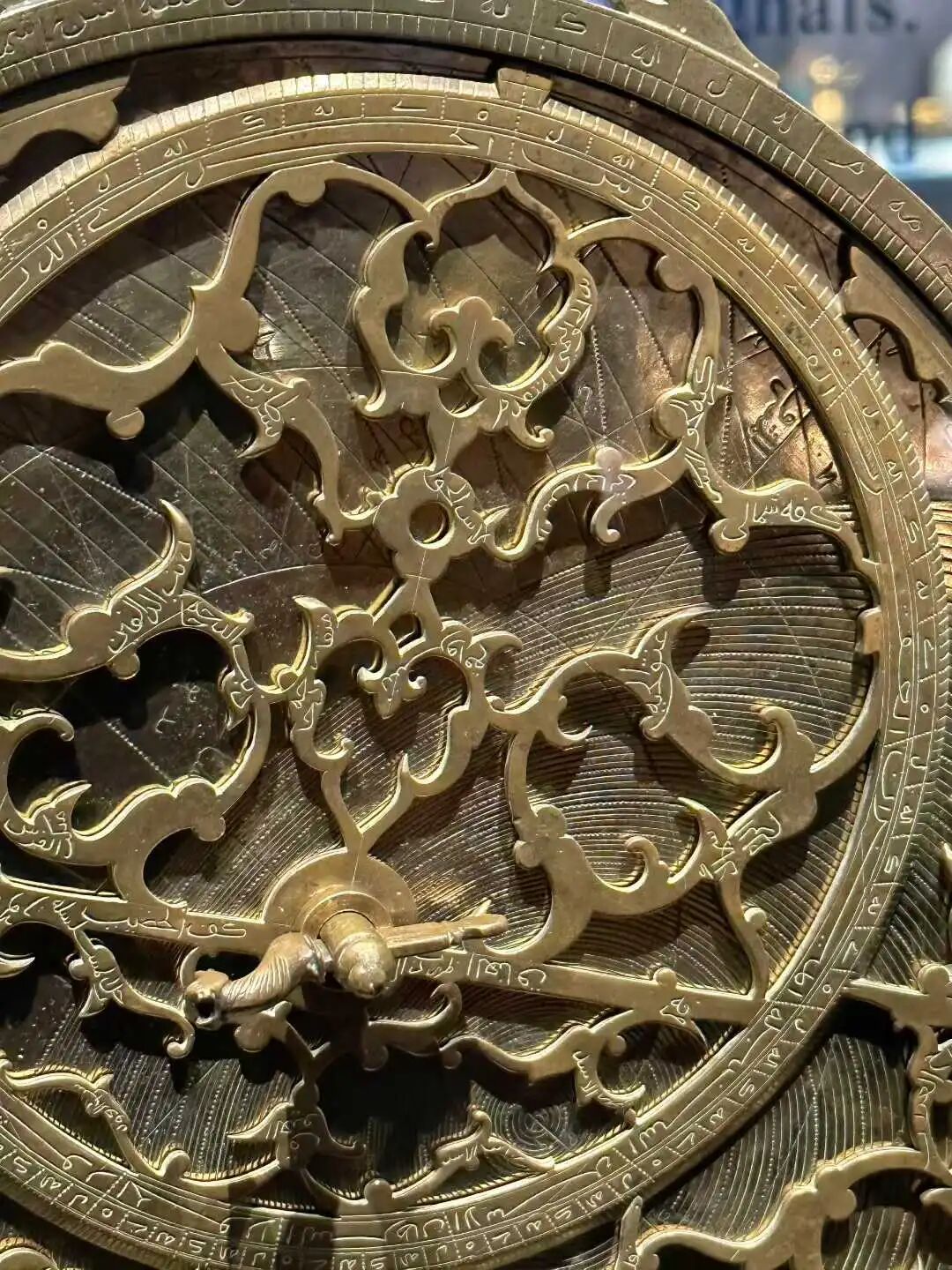
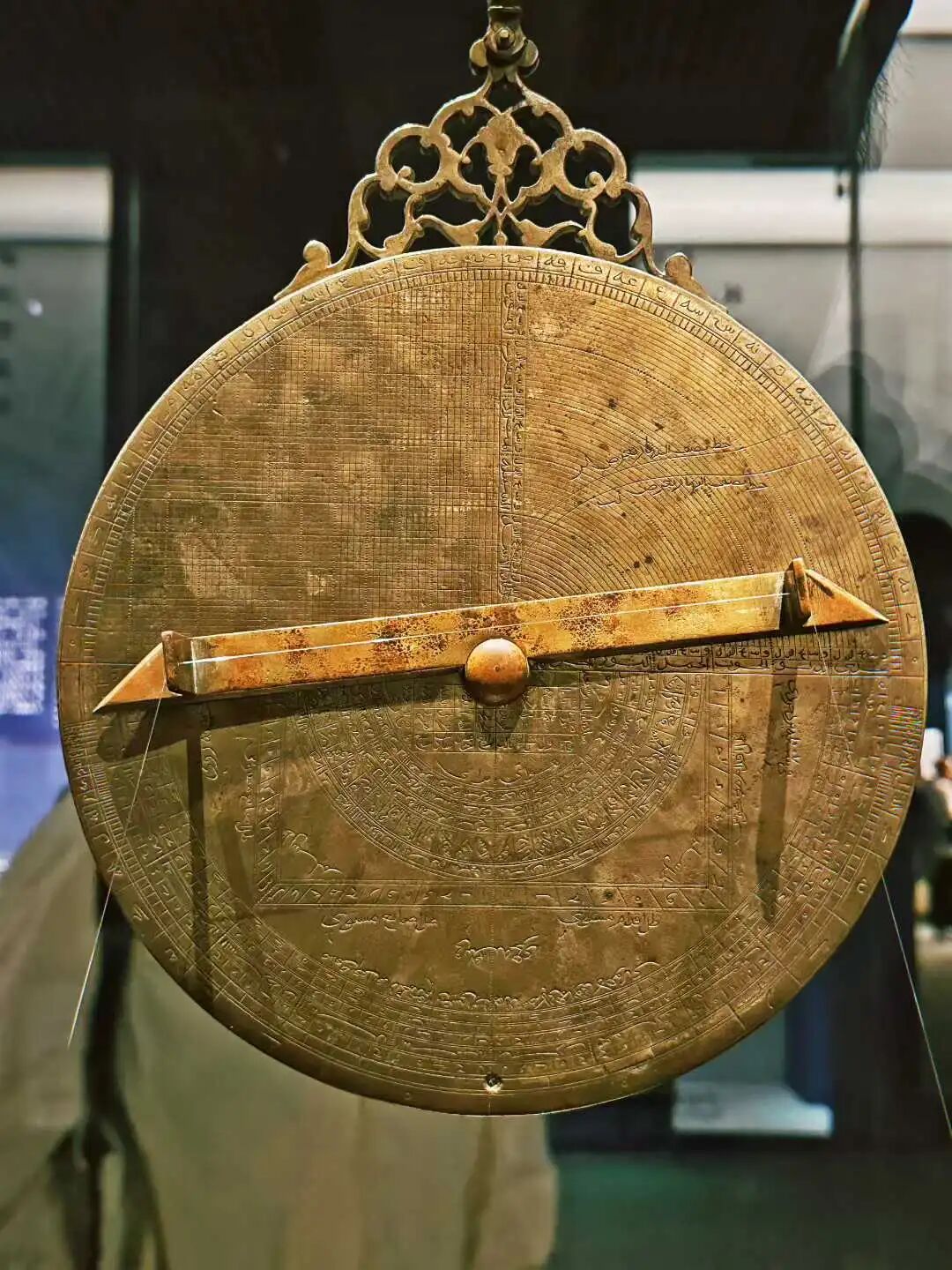
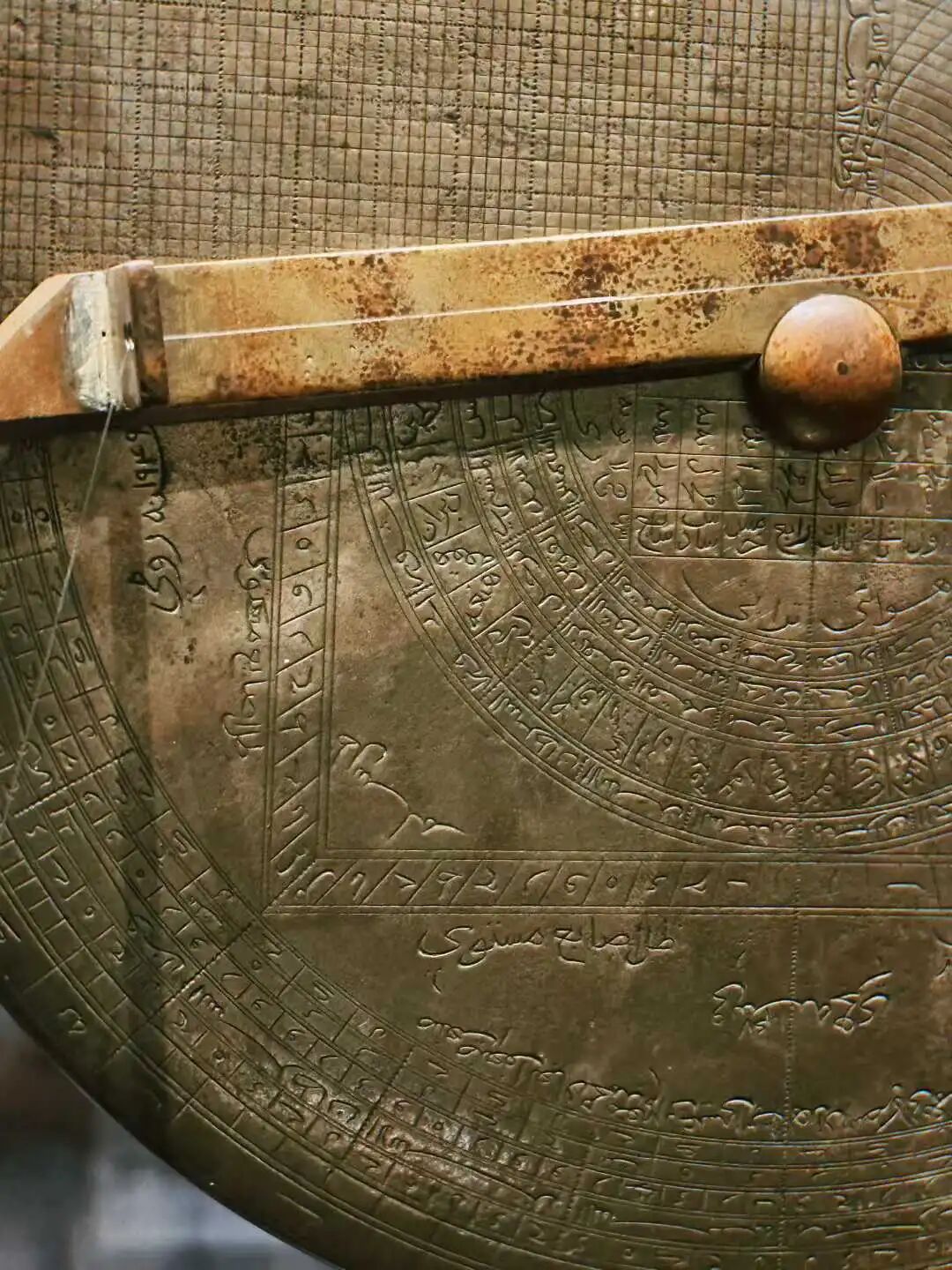
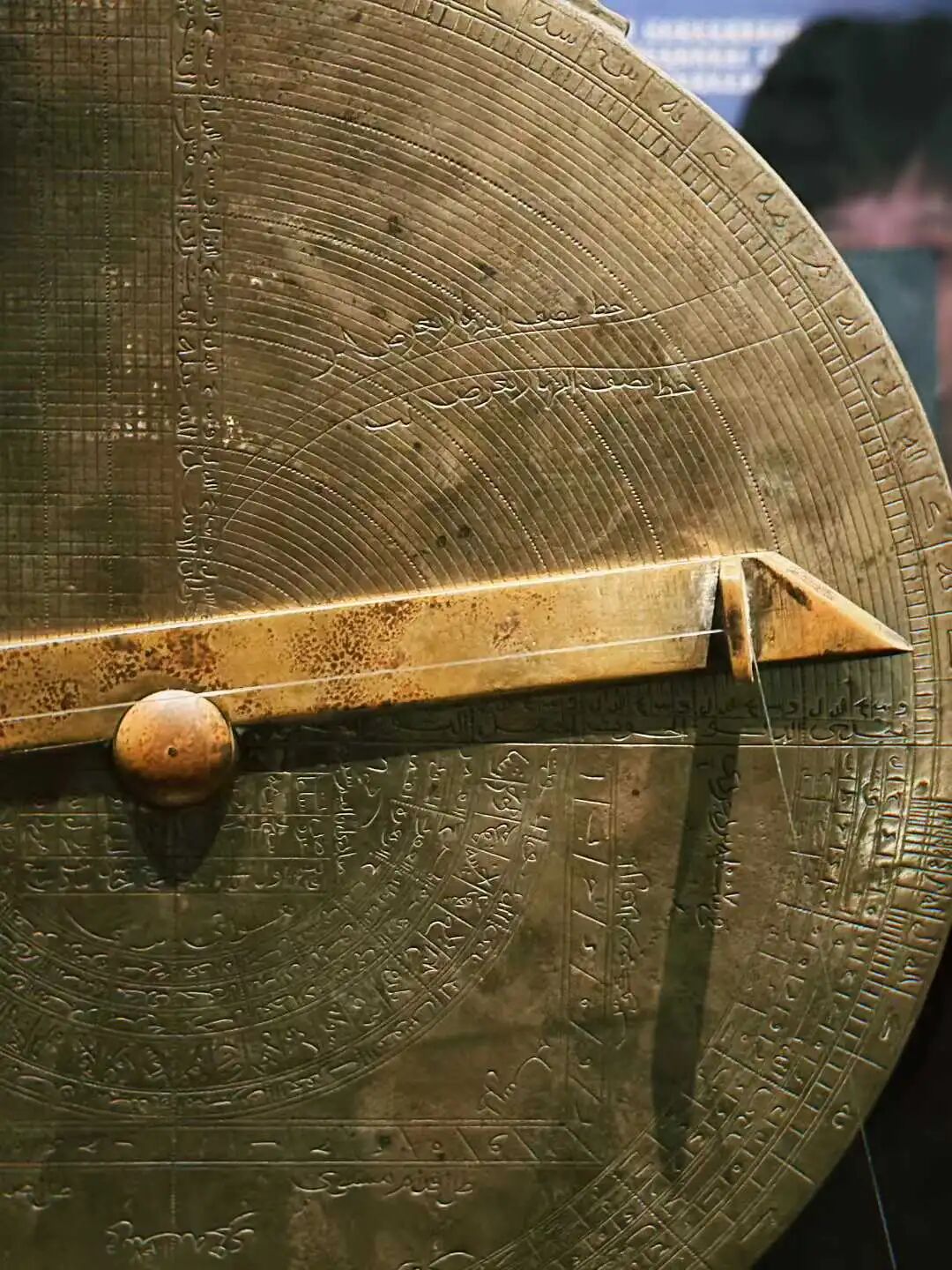
From the collection of the National Museum of Pakistan in Islamabad, this is a brass astrolabe from Lahore, dating to the Mughal Empire period under Humayun (reigned 1530-1540, 1555-1556). It is engraved with latitude and longitude, Persian and Arabic text, and decorated with arabesque and geometric patterns. Humayun himself had a strong interest in astronomy and astrology.
National Museum of Tajikistan.
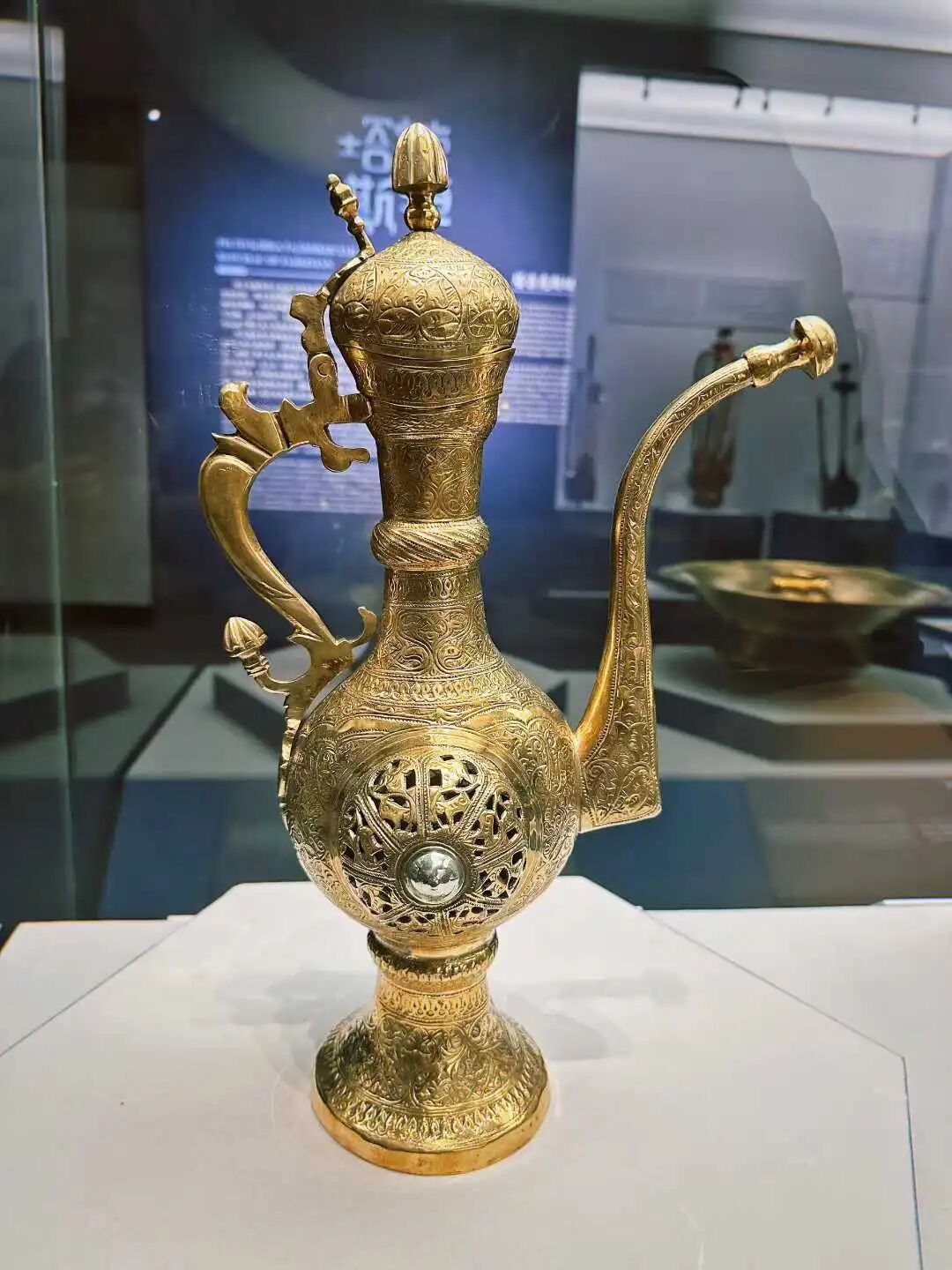
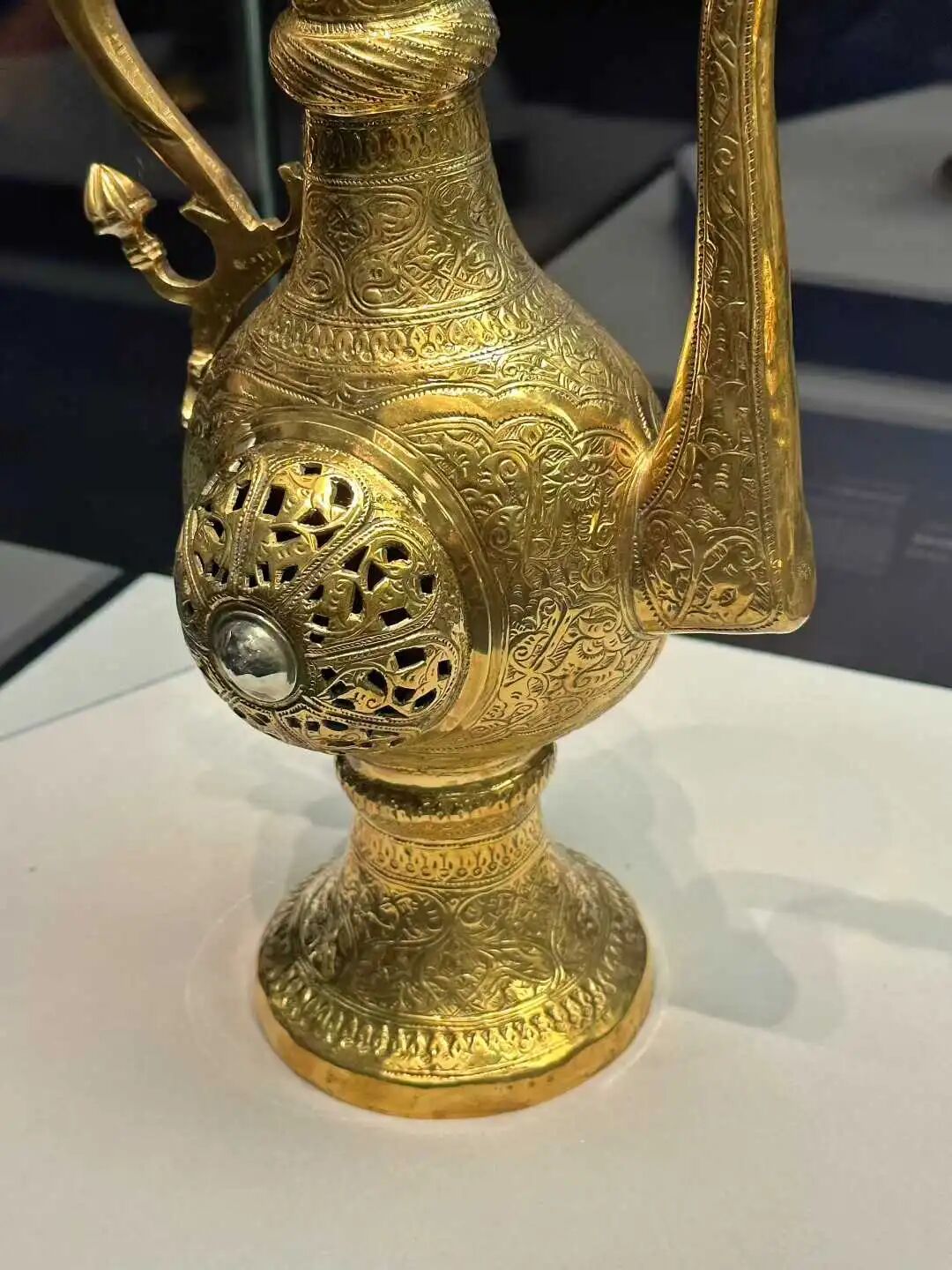
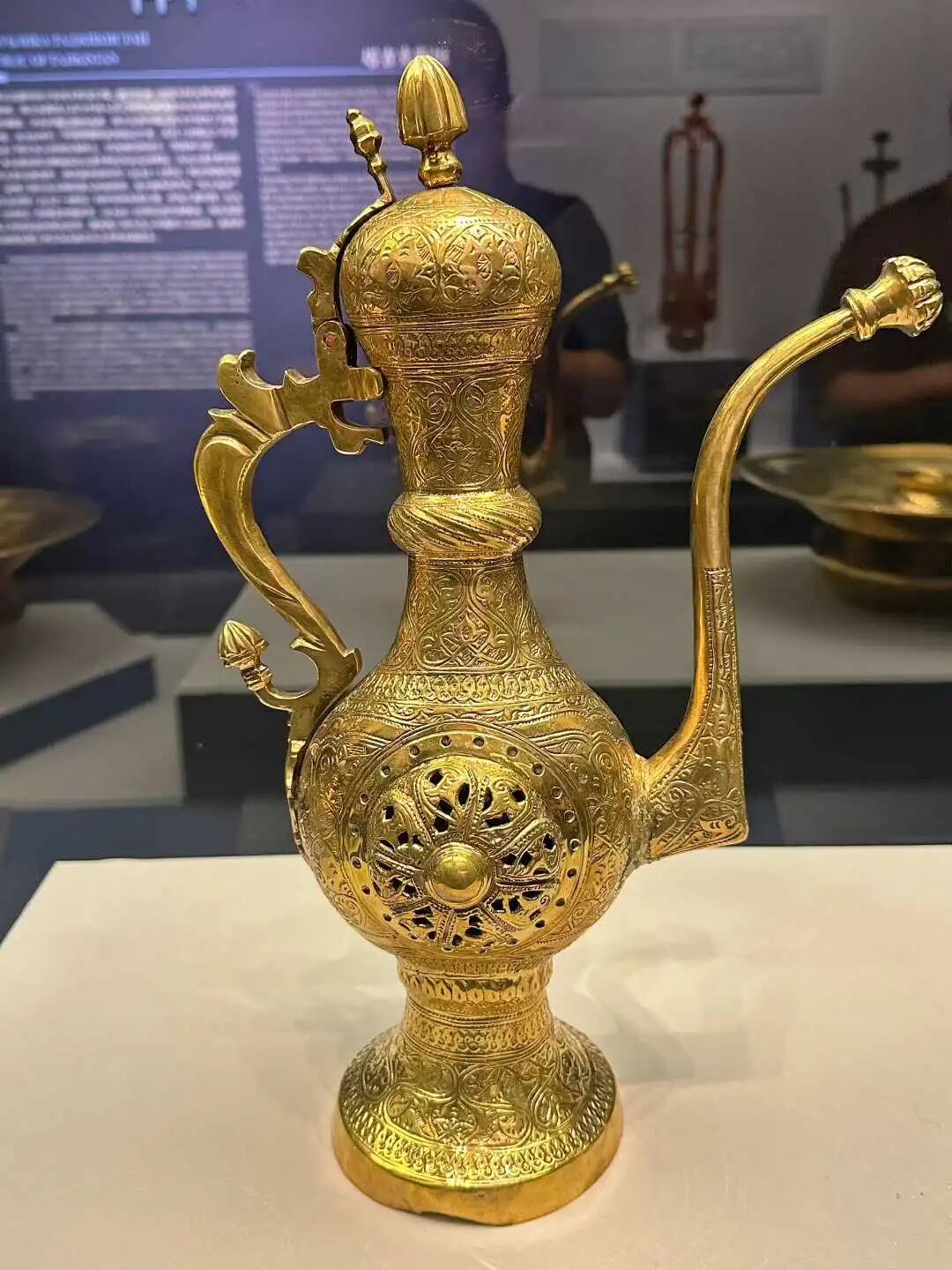
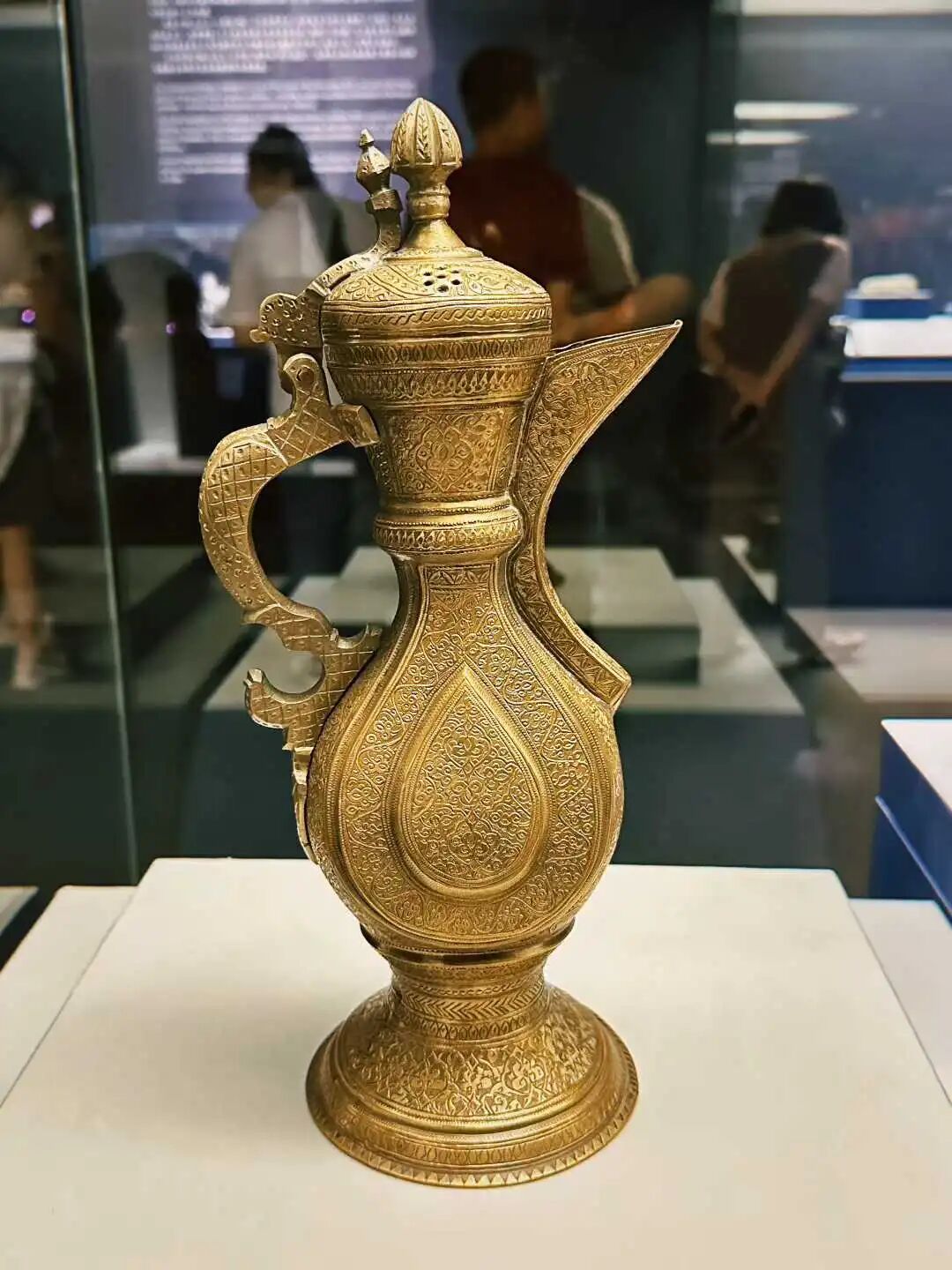
A Persian copper water pitcher (aftabeh) from the early 20th century in the National Museum of Tajikistan collection. The aftabeh, also called abdasta, is a water pitcher used for wudu (ablution) in Persian cultural regions like Iran, Afghanistan, Azerbaijan, and Central Asia. They are usually made of clay or brass.
A copper hand-washing basin (dastshui) from the early 20th century in the National Museum of Tajikistan collection, featuring an engraving of 25 deer in different poses.
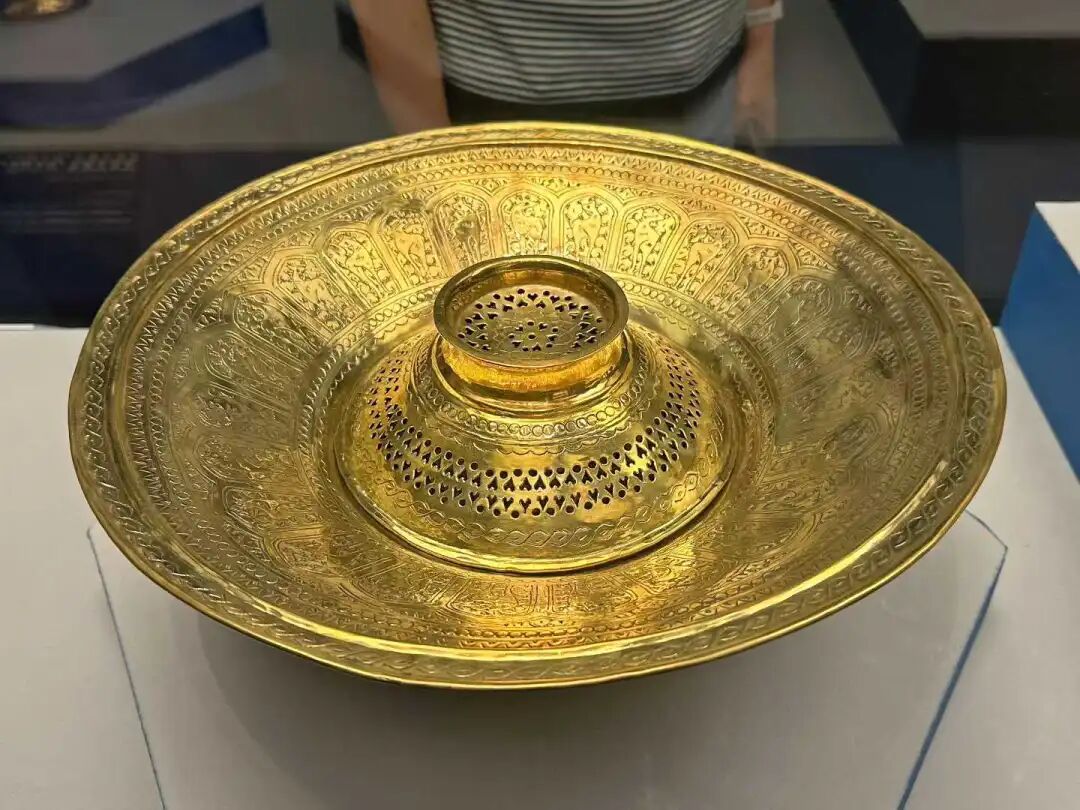
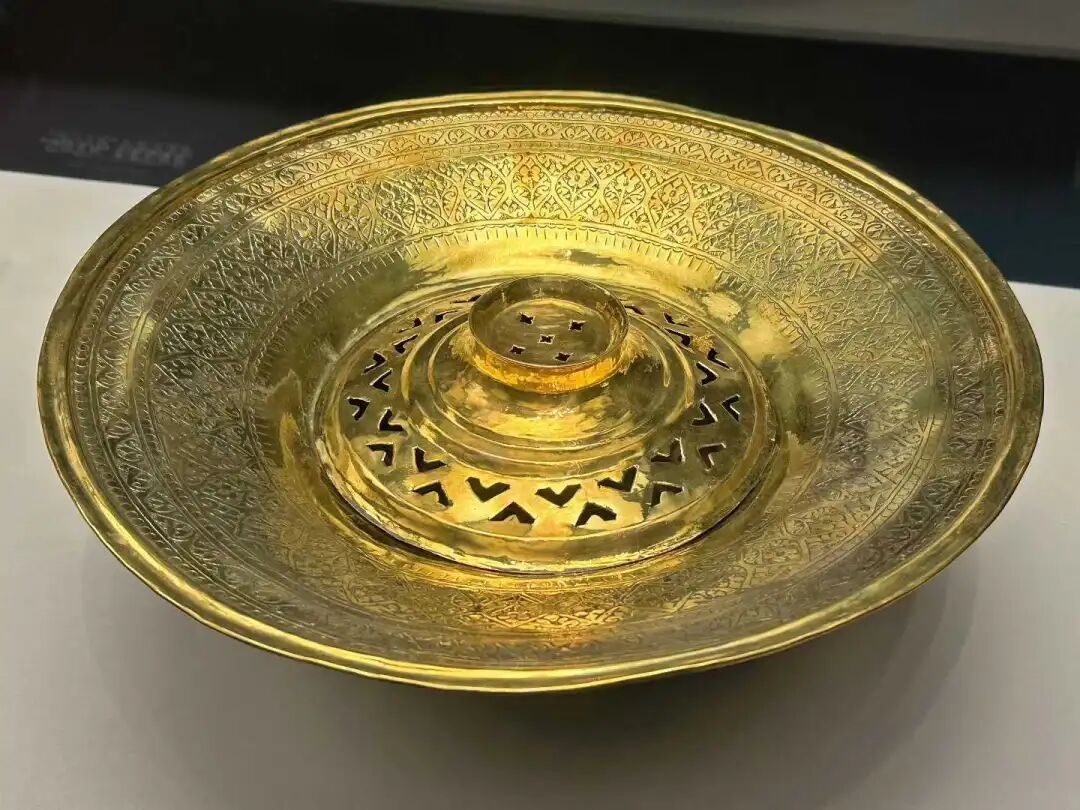
A copper water pitcher for wudu from the 19th century in the National Museum of Tajikistan collection.
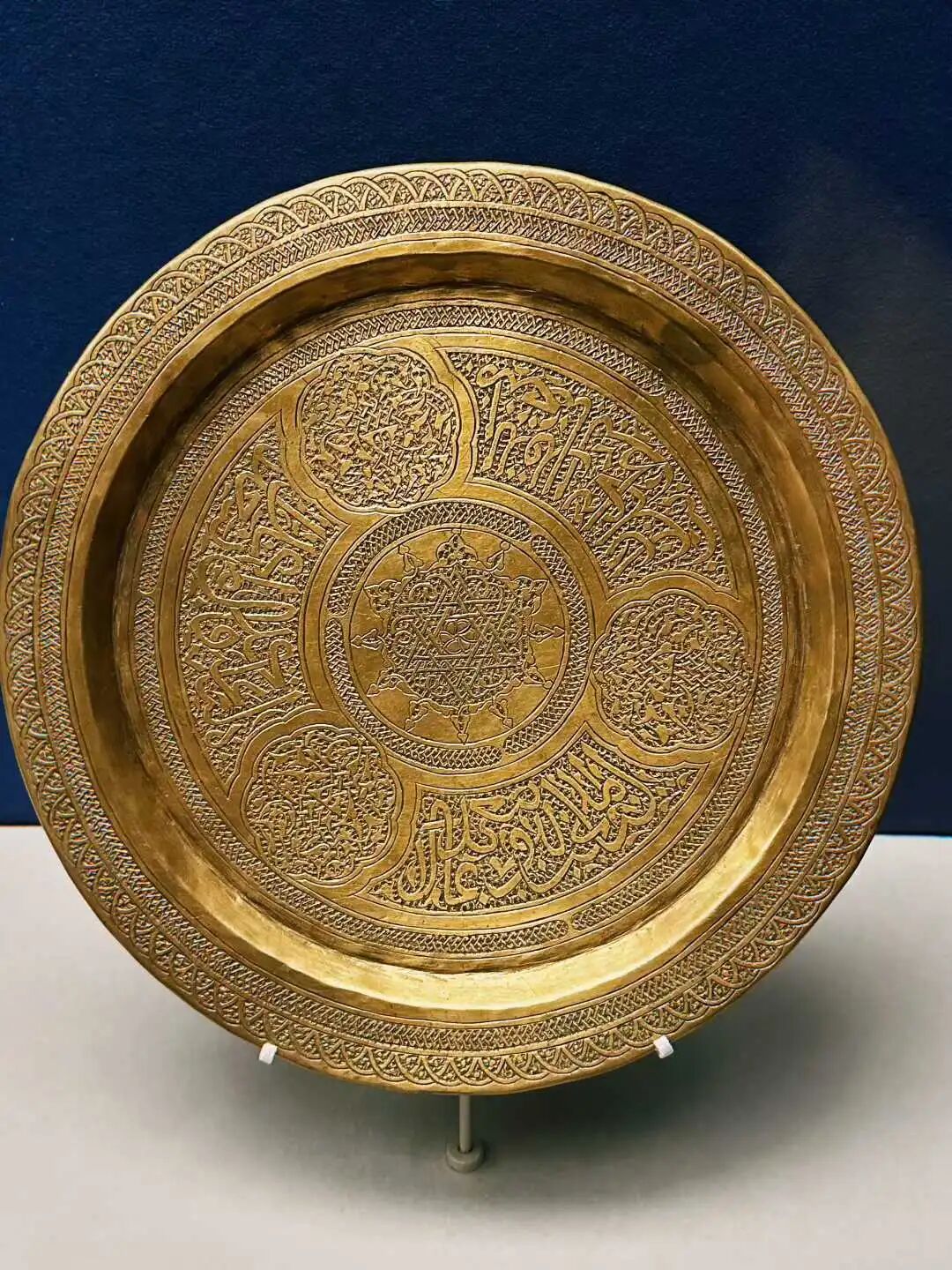
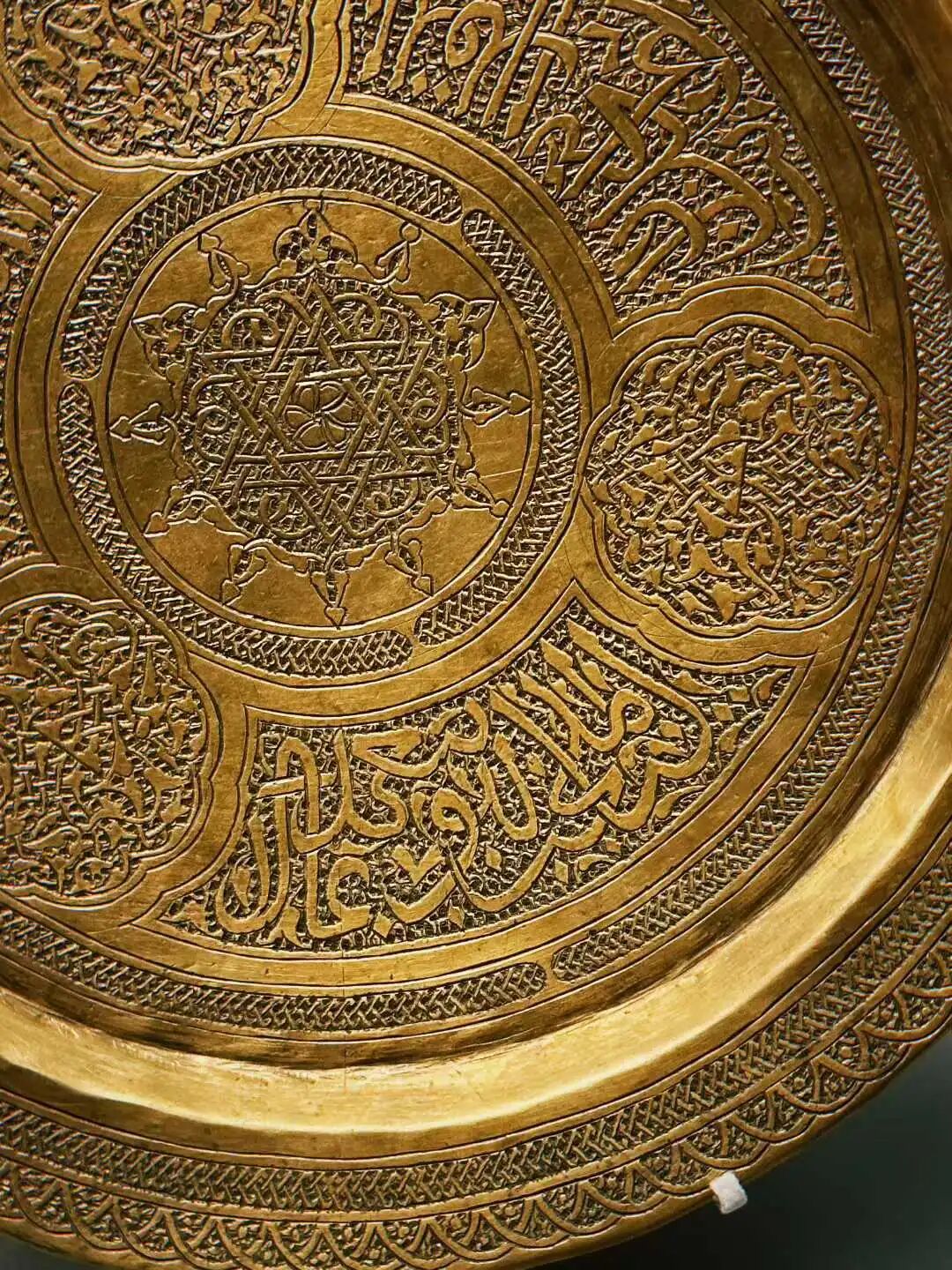
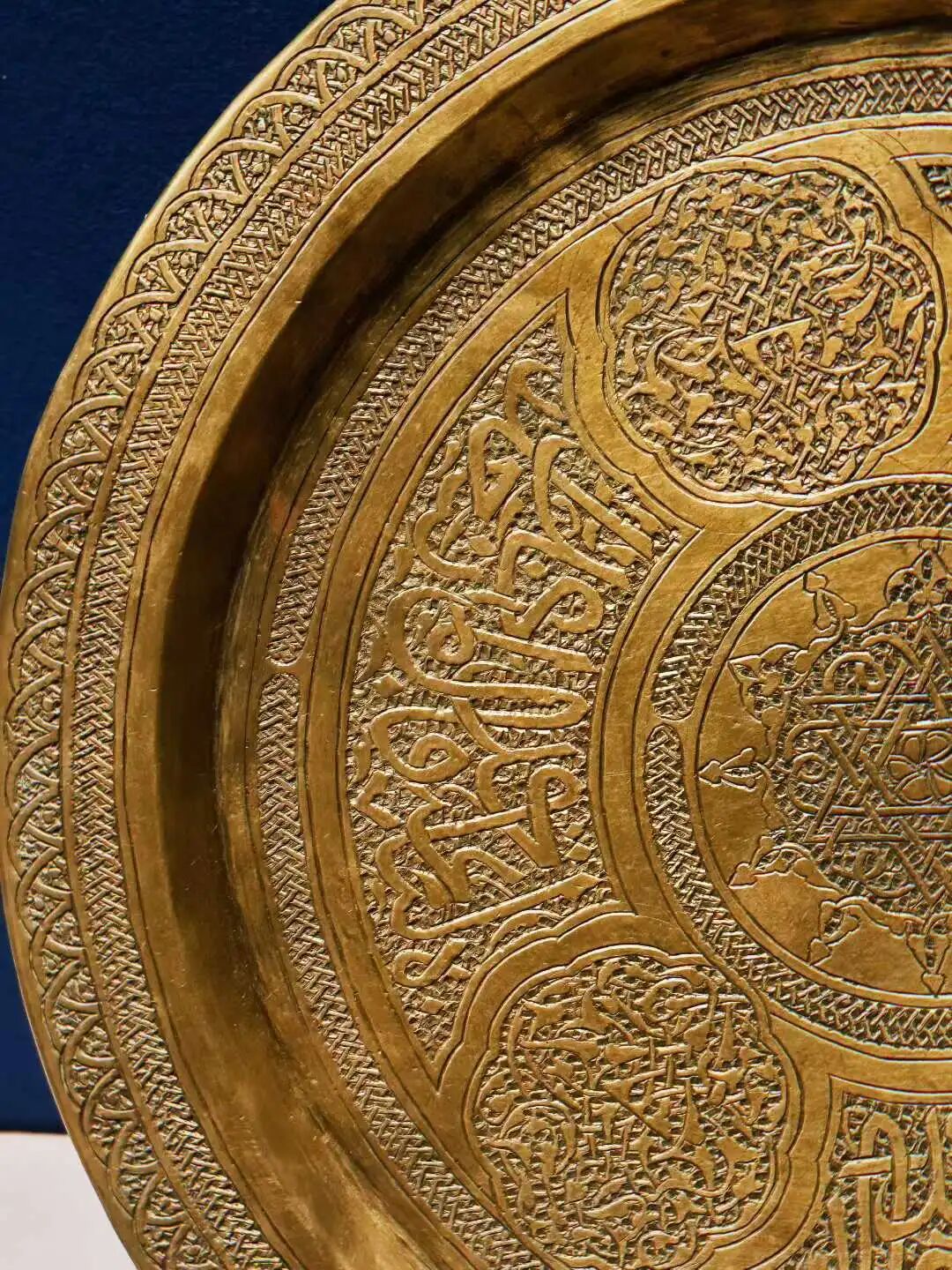
A tray with Arabic script from the 19th century in the National Museum of Tajikistan collection.
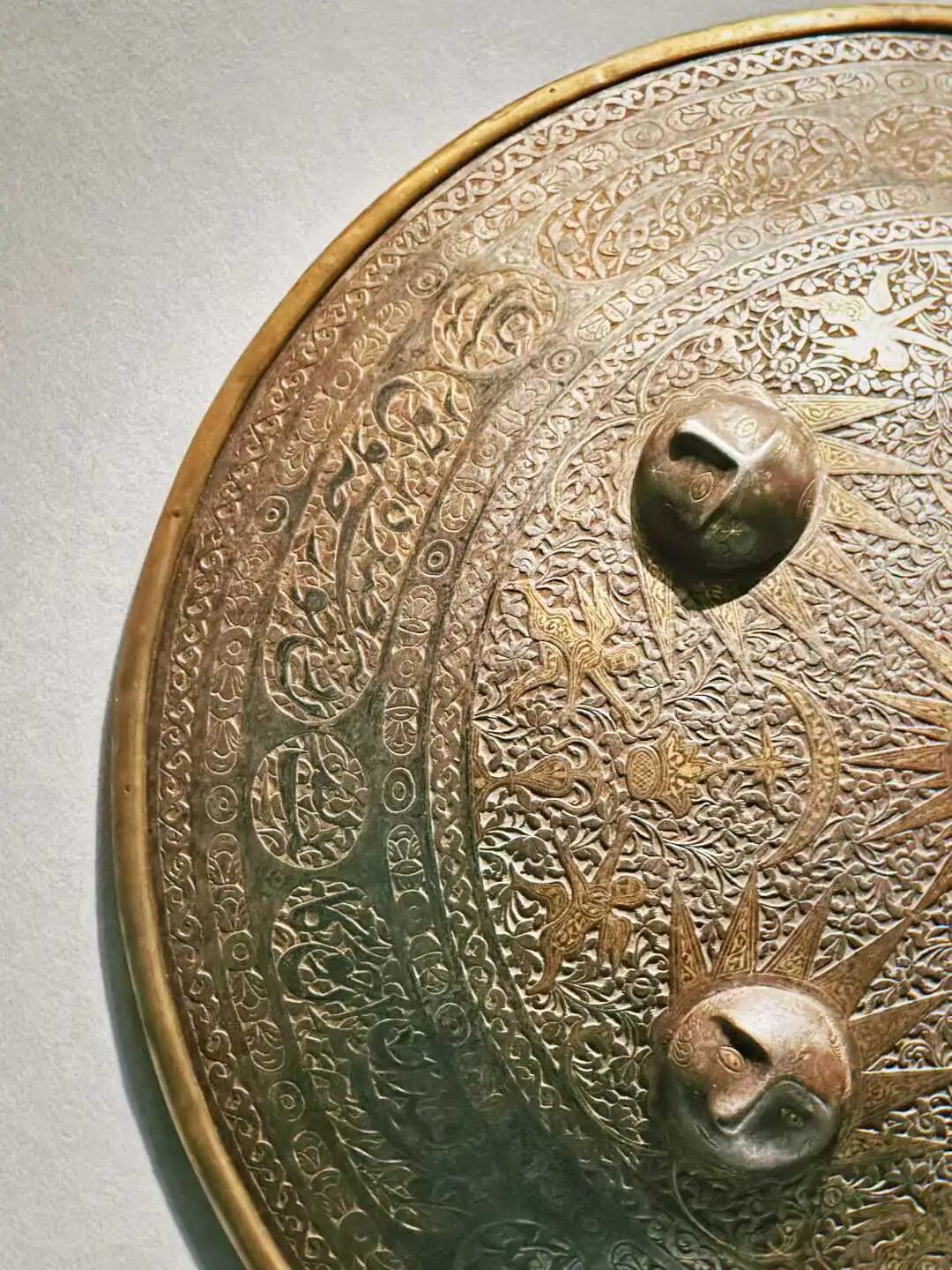
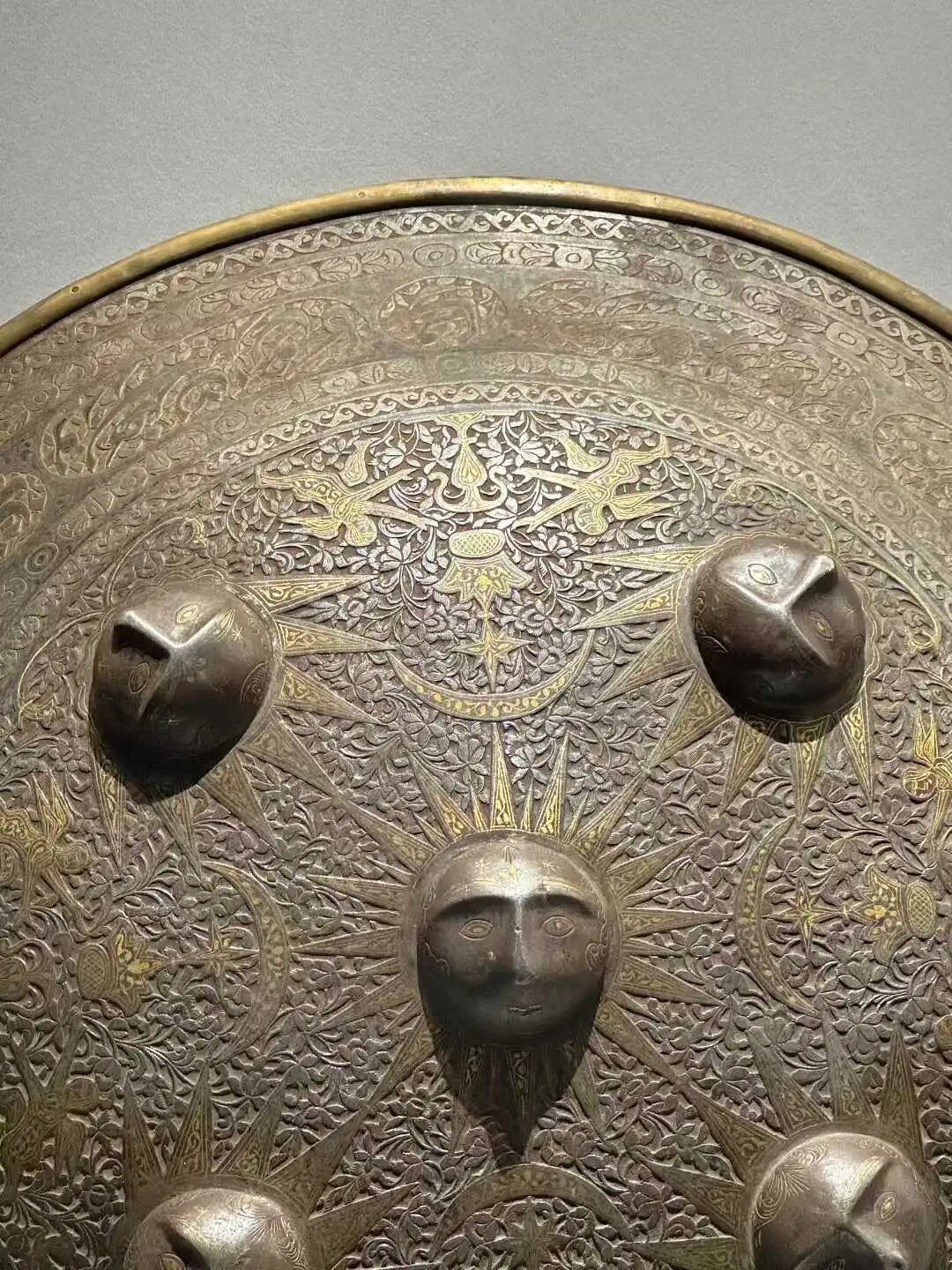
A Persian shield in the National Museum of Tajikistan collection, decorated with sun and angel patterns and engraved with beautiful Persian calligraphy.
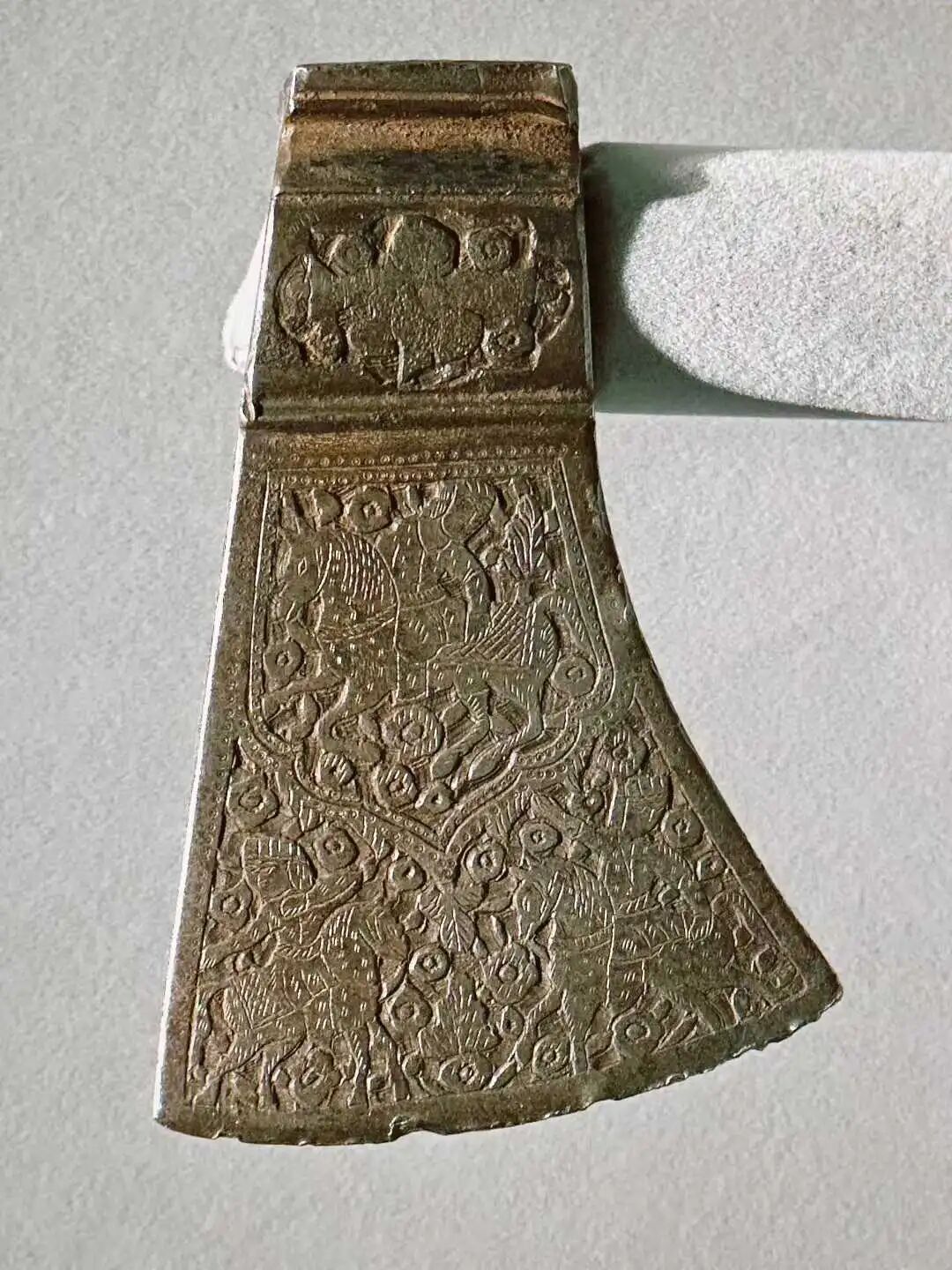
A 16th-century axe in the National Museum of Tajikistan collection, engraved with a scene of three riders hunting.
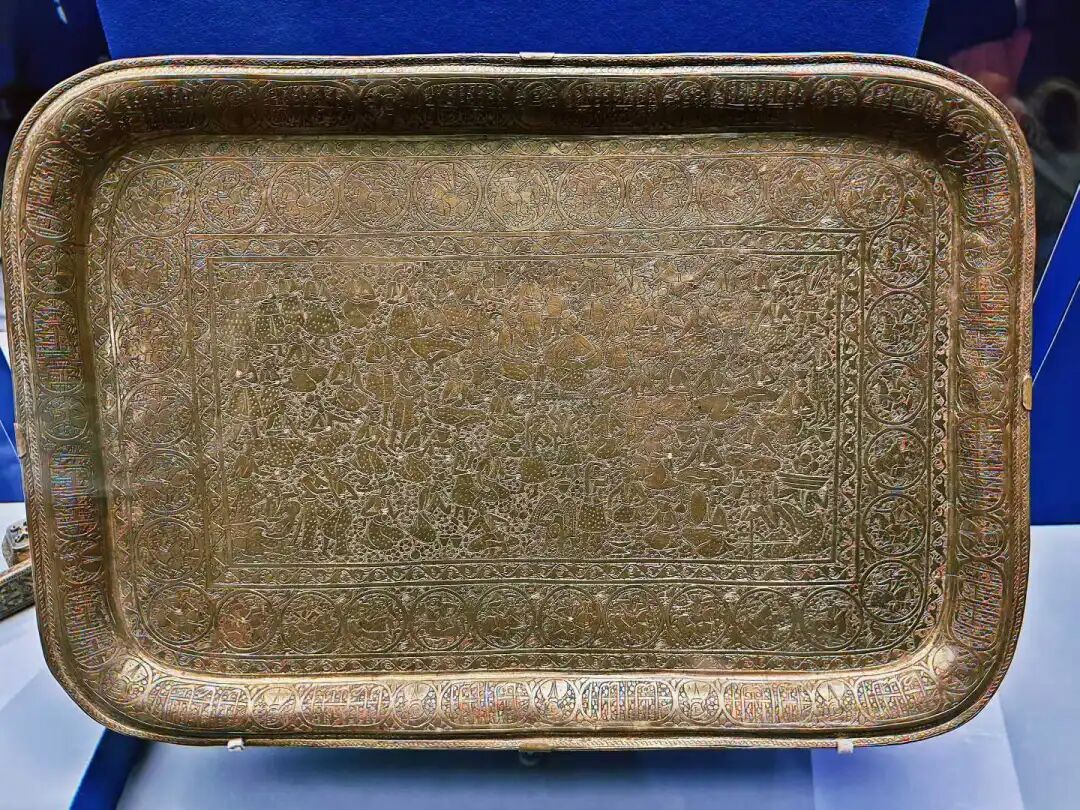
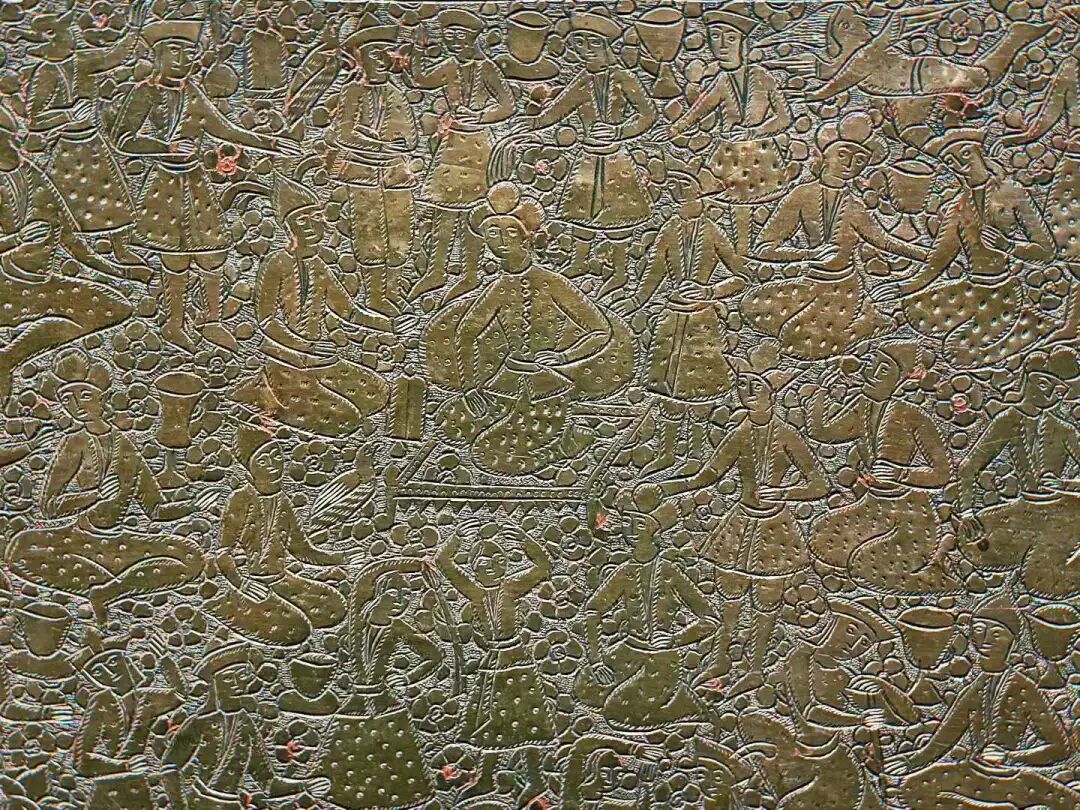
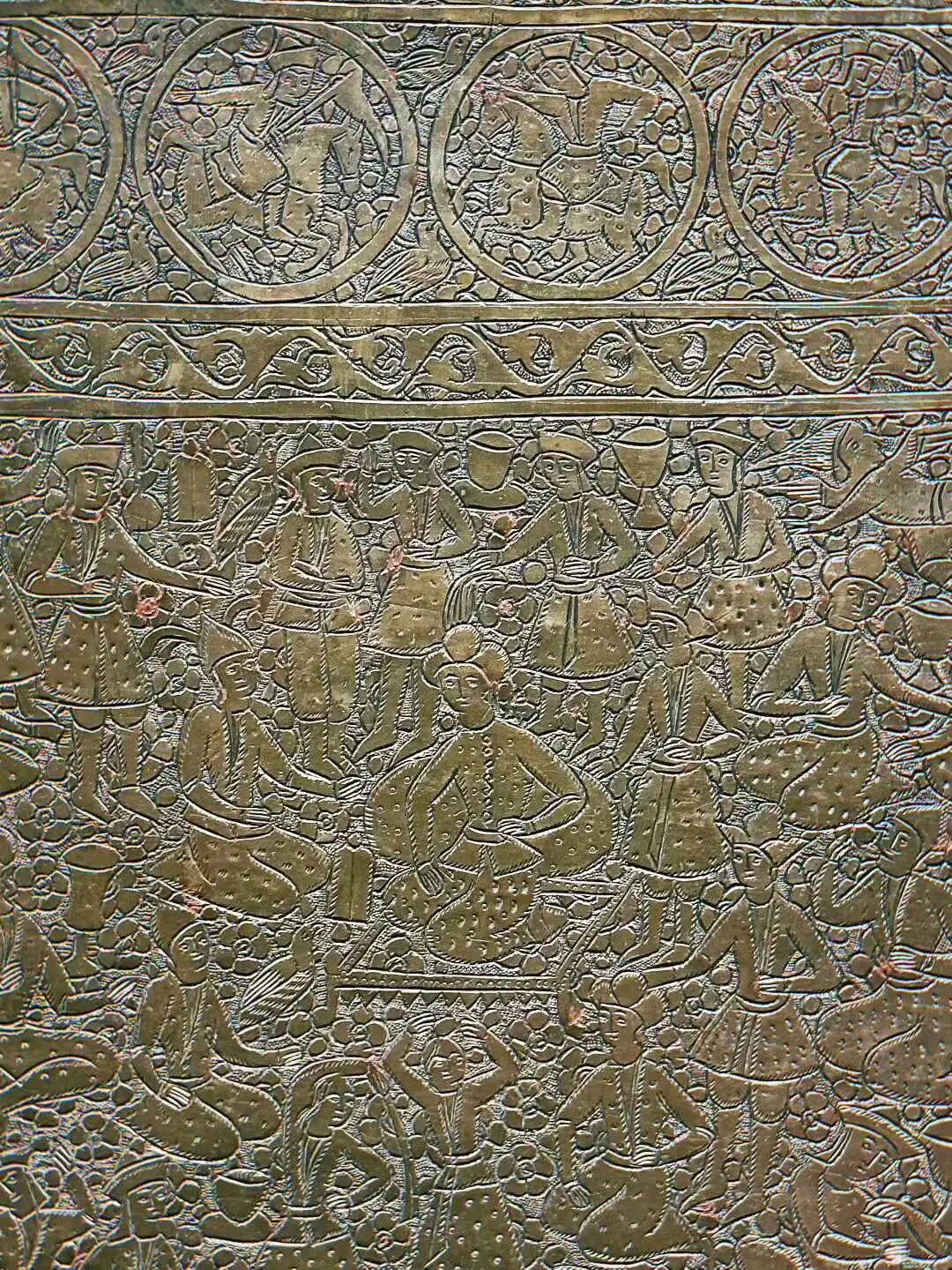
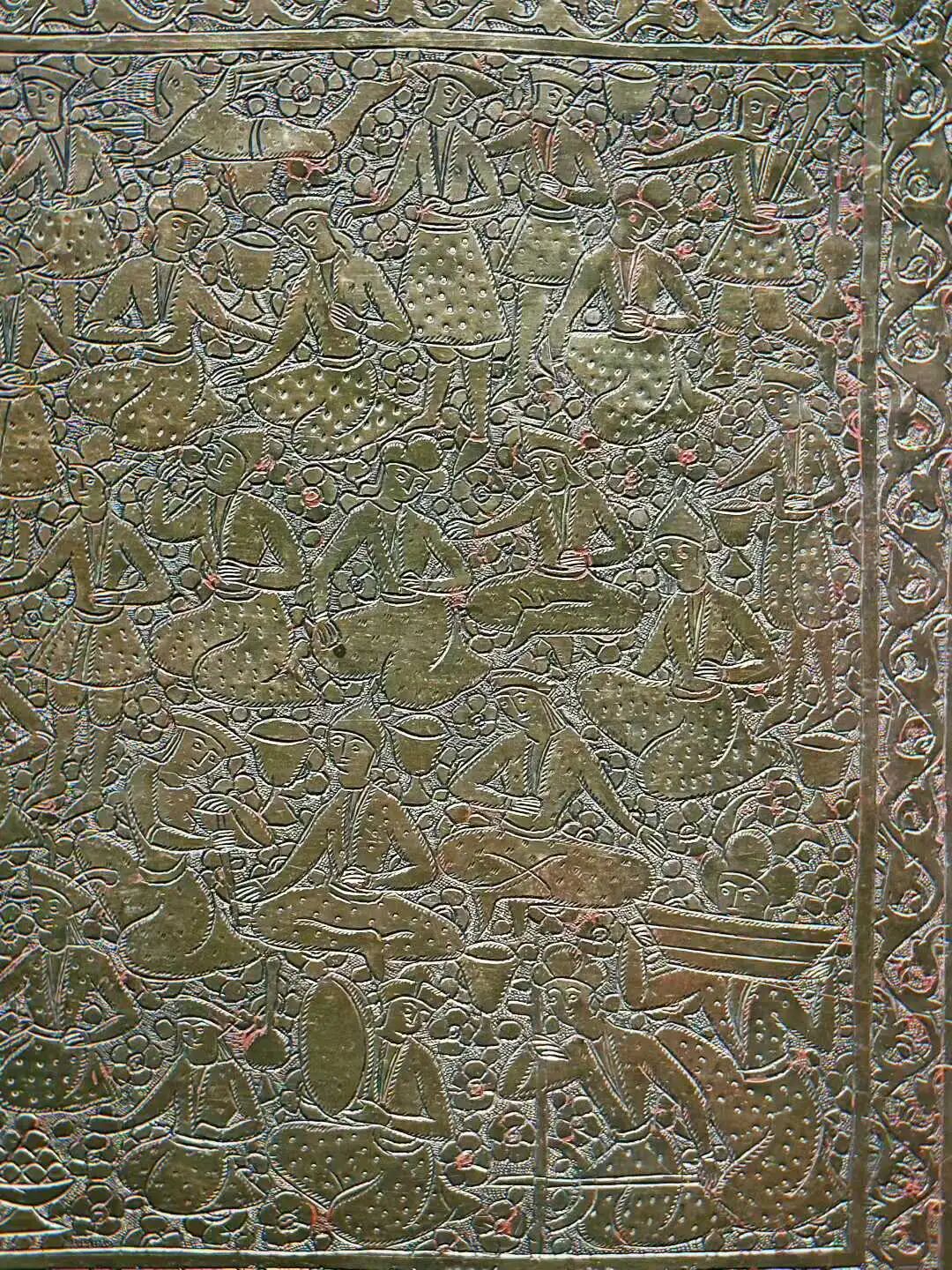
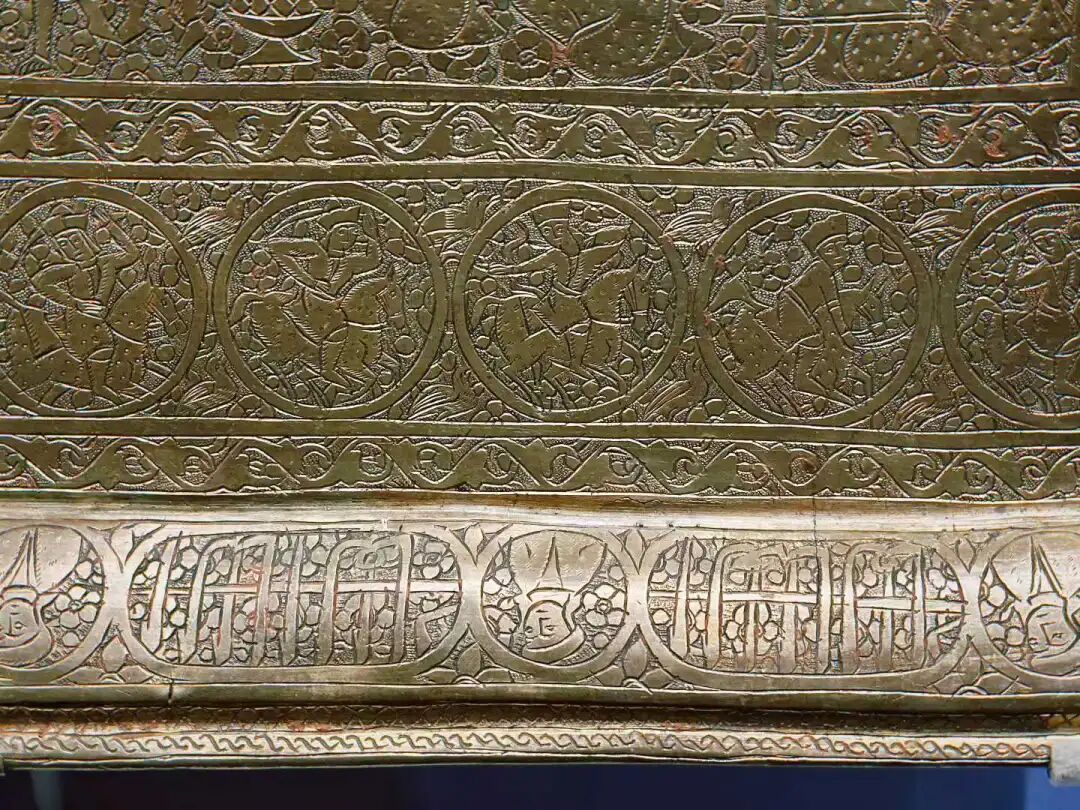
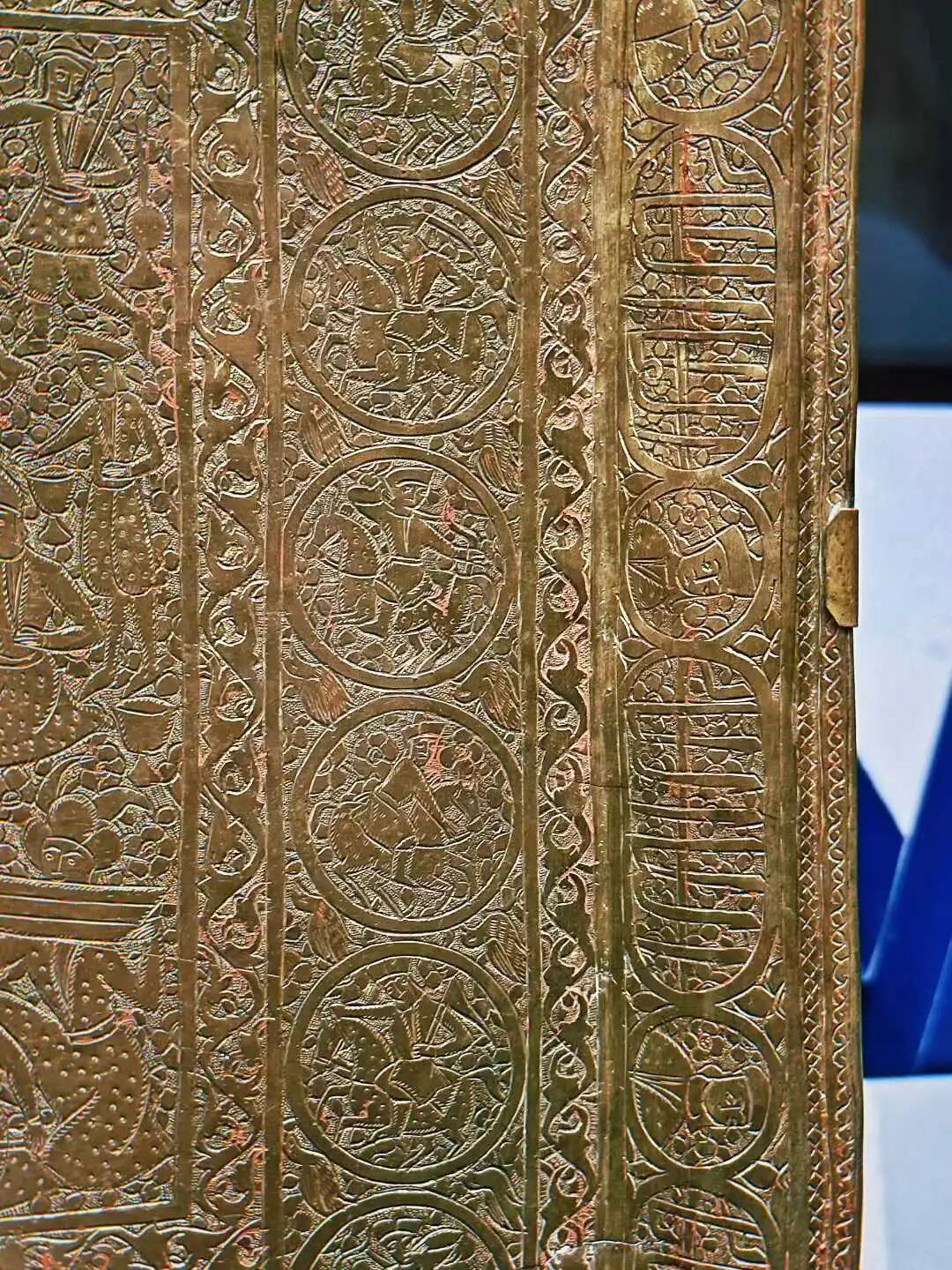
A 19th-century decorative tray in the National Museum of Tajikistan collection, engraved with a lively banquet scene. The border features 33 circular panels, each showing a rider in a different pose, with Arabic script on the outermost edge.
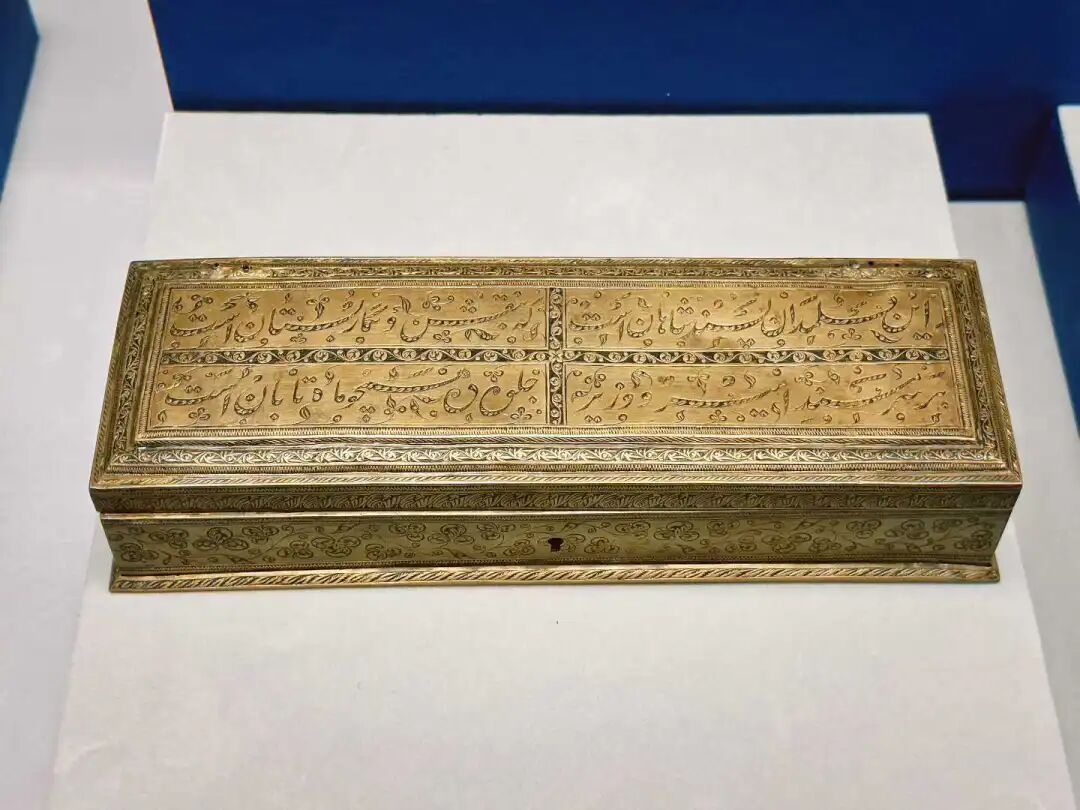
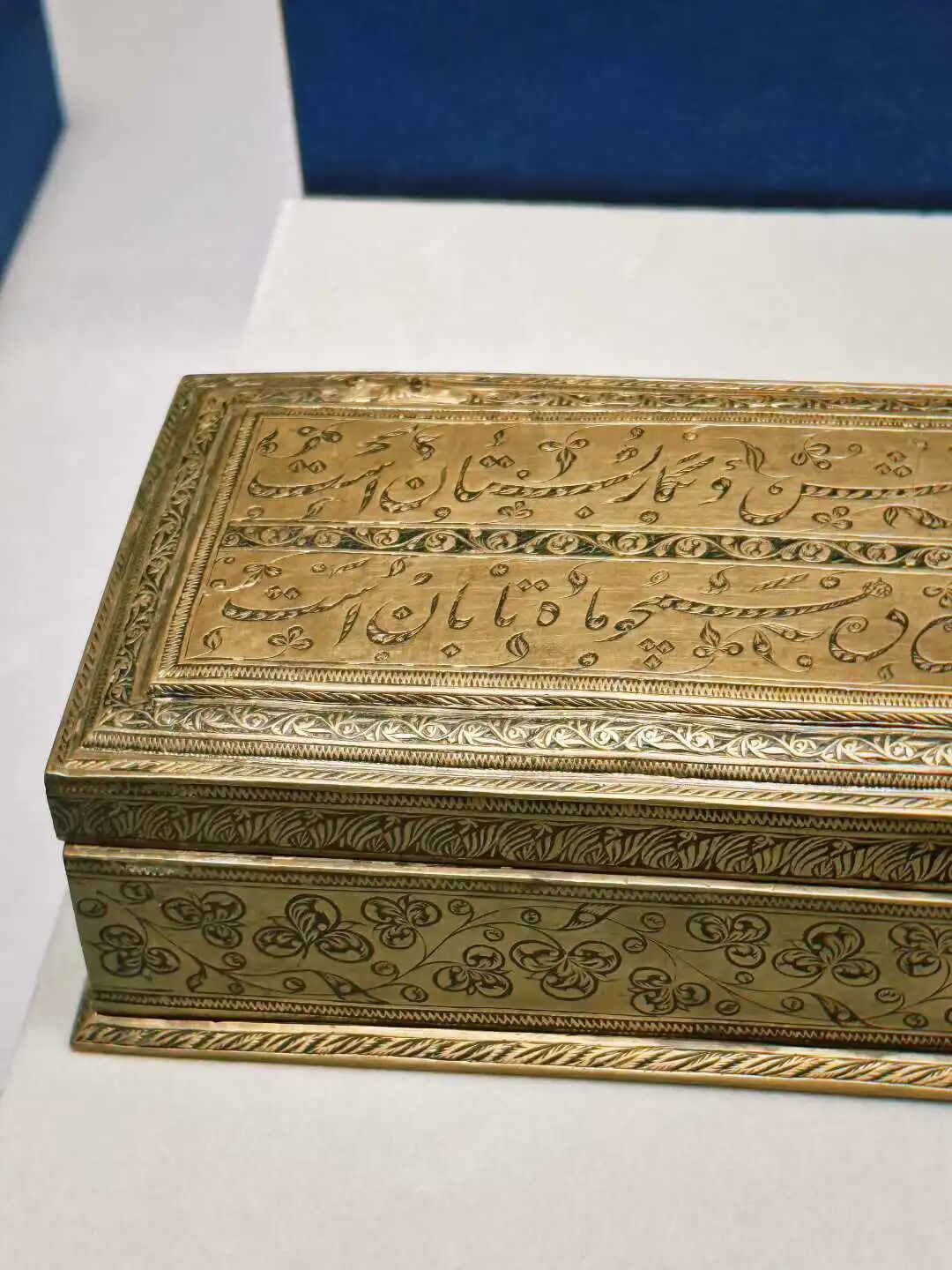
A 19th-century copper pen case in the National Museum of Tajikistan collection, featuring four lines of Persian poetry in Persian calligraphy and decorated with various leaves and plants.
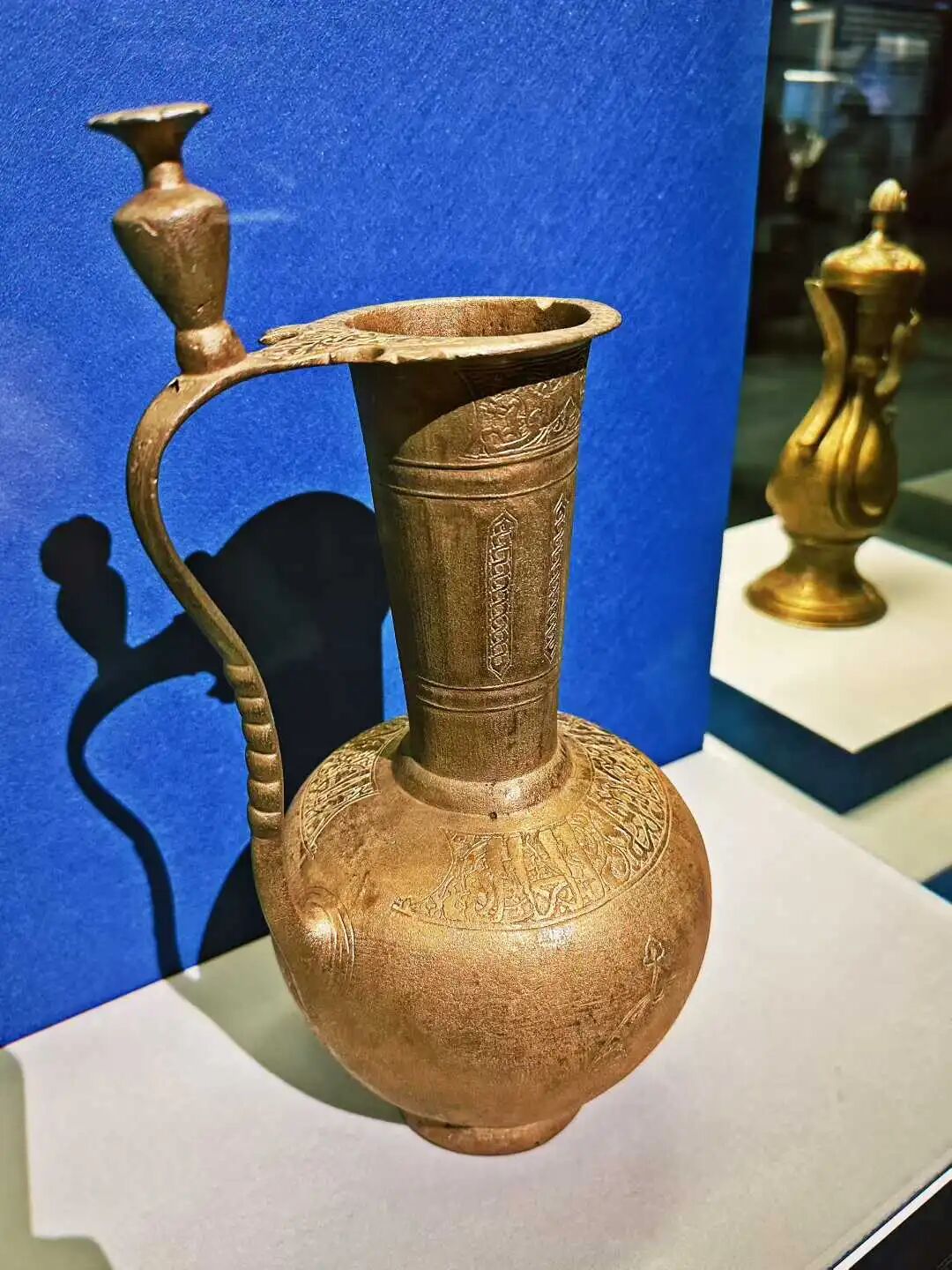
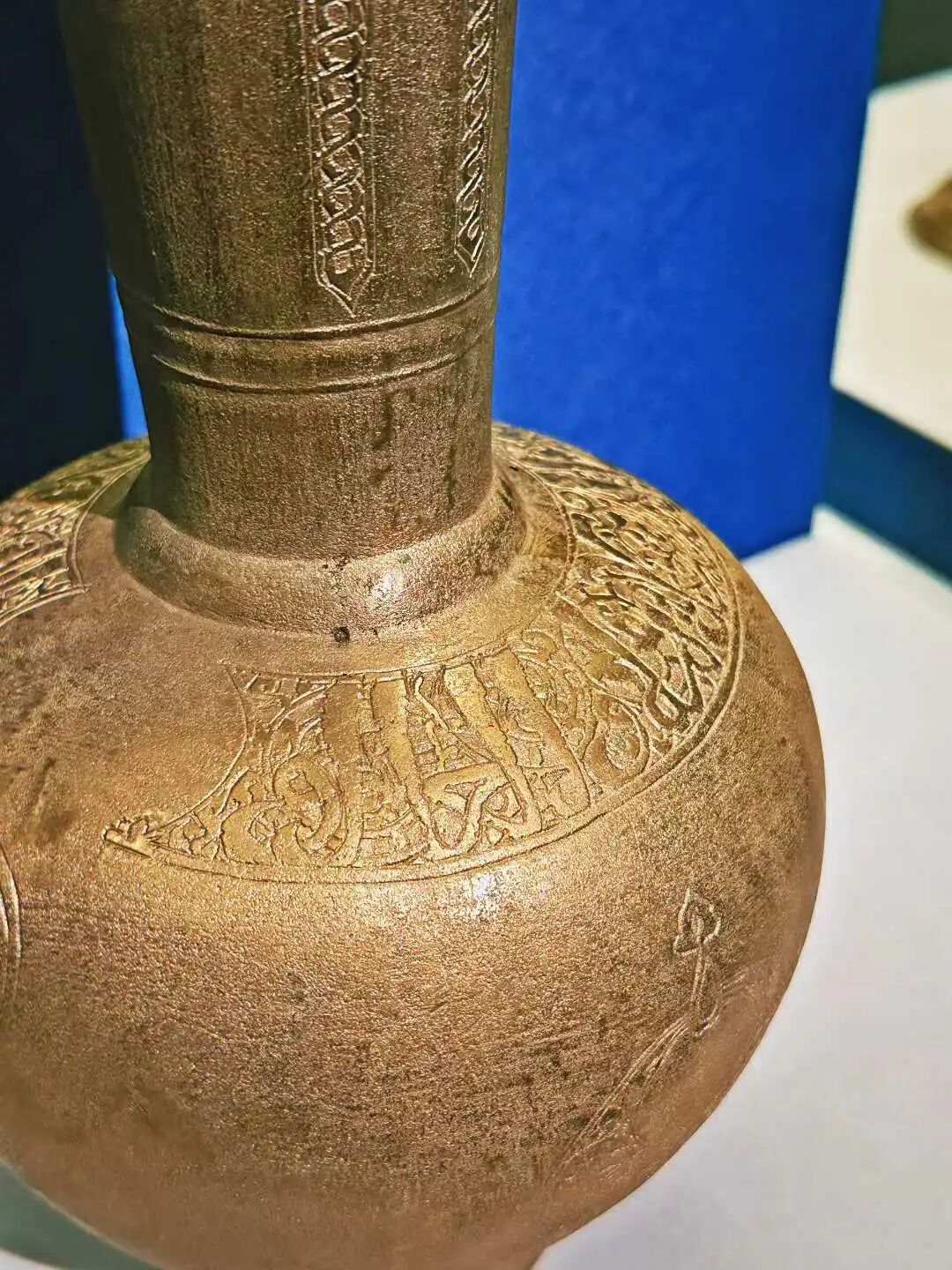
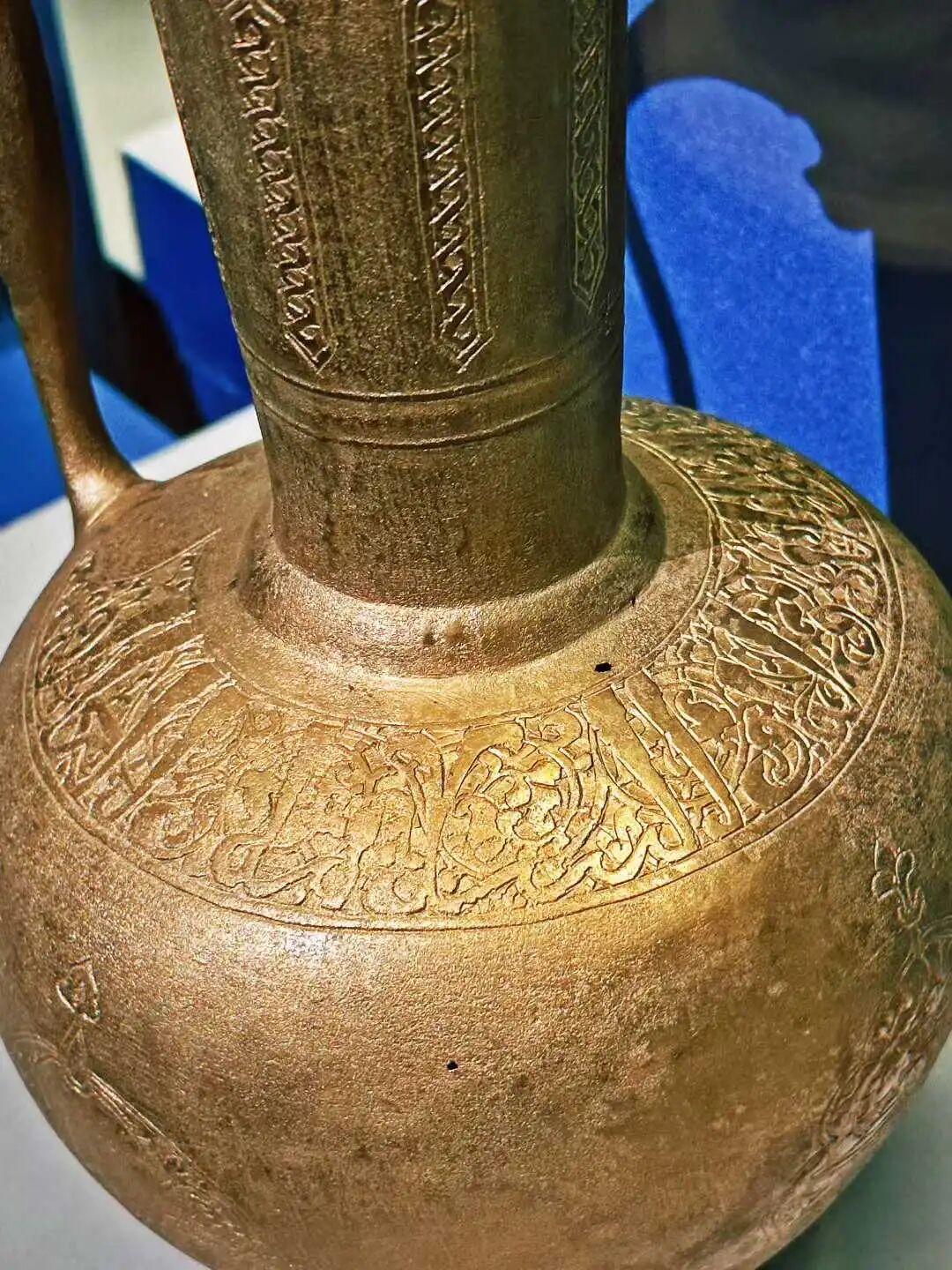
A 10th-11th century copper pitcher unearthed in Istaravshan (Dayuan City) and held in the National Museum of Tajikistan, with Arabic and Persian inscriptions on the body and neck. Istaravshan was ruled by the Samanid and Karakhanid dynasties during the 10th and 11th centuries and was a famous center for trade and handicrafts.
National Museum of Uzbekistan.
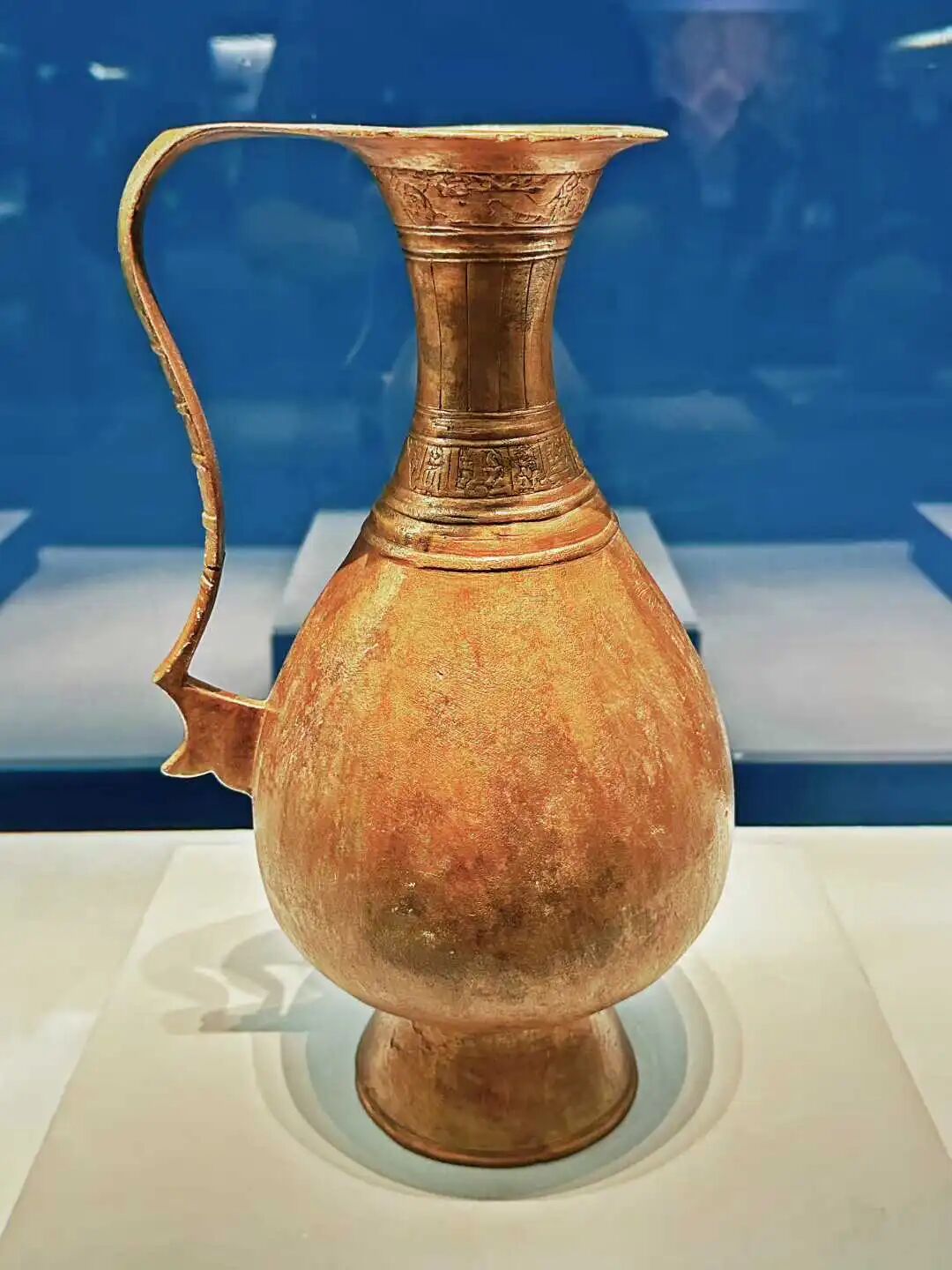
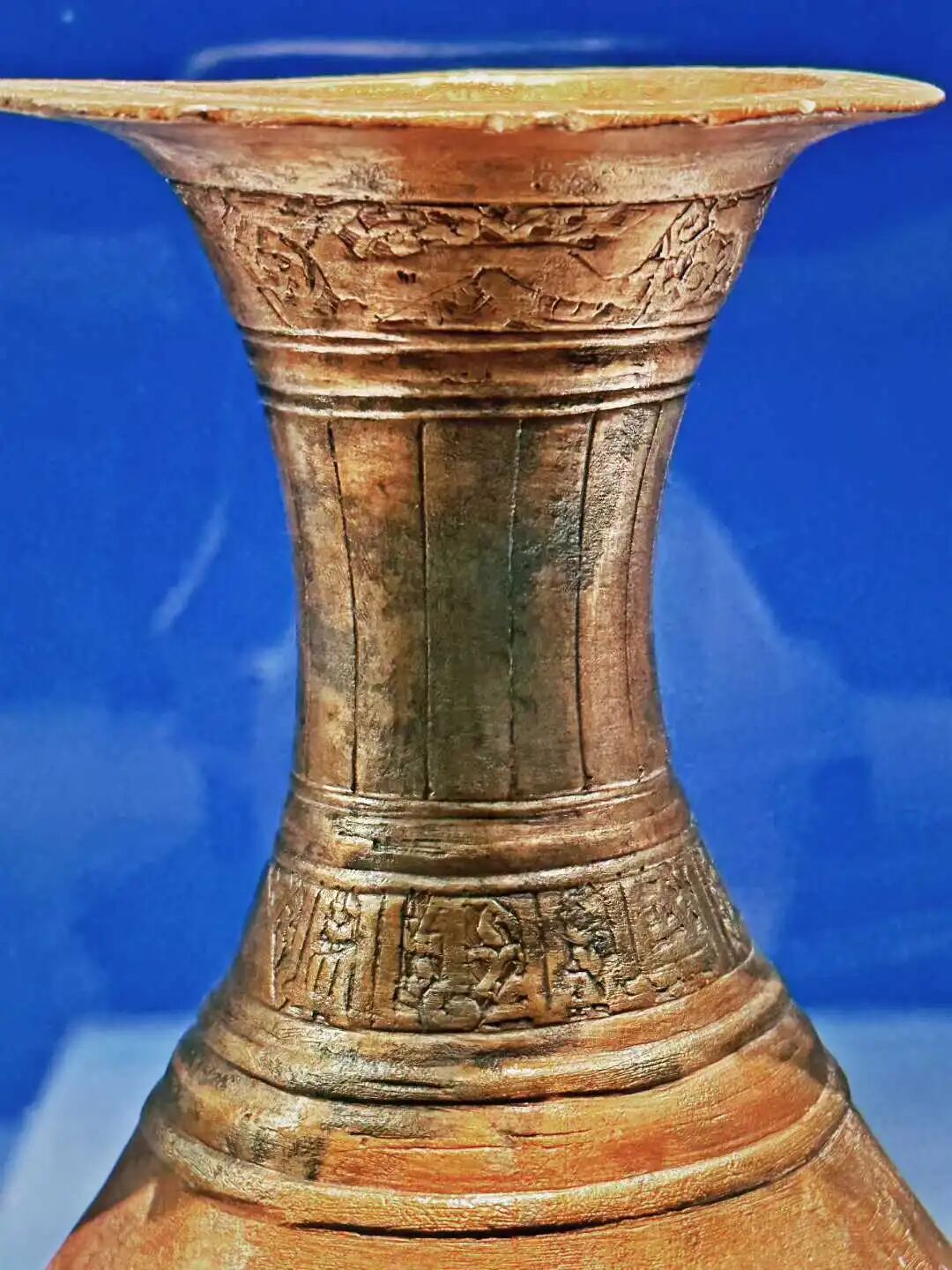
A 10th-12th century copper pitcher in the National Museum of Uzbekistan collection, dating to the Samanid and Karakhanid period. It has Arabic script on the neck and human-headed bird patterns on the rim.
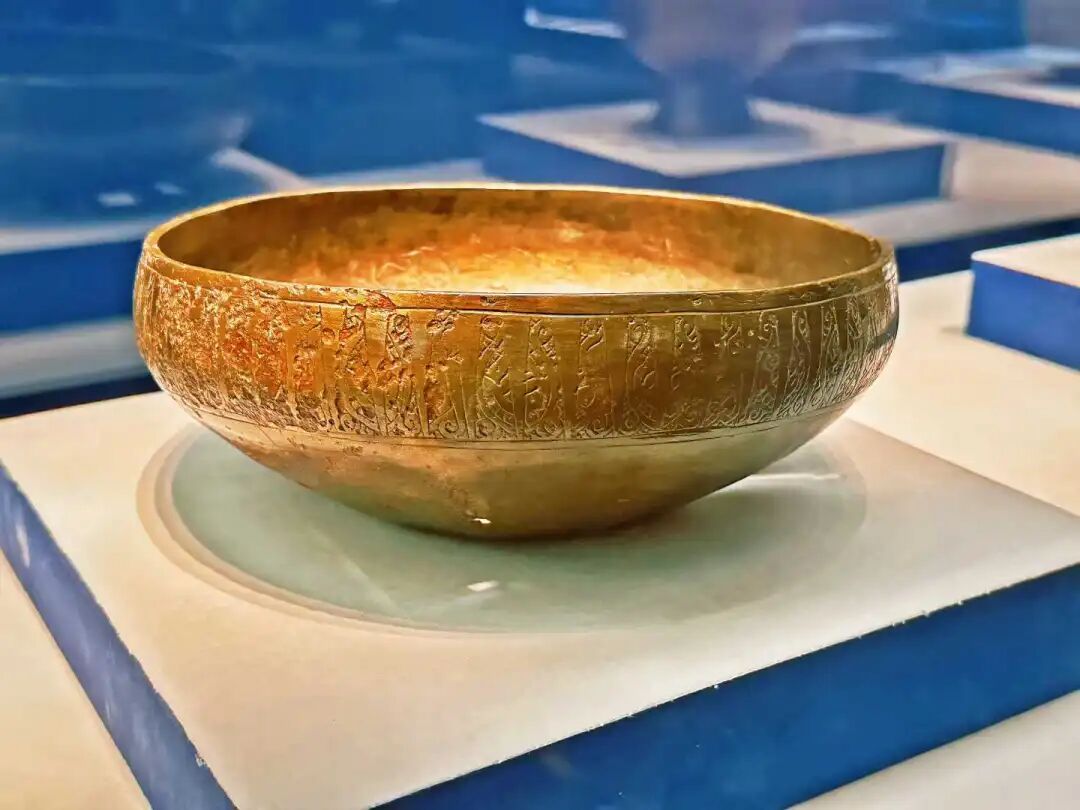
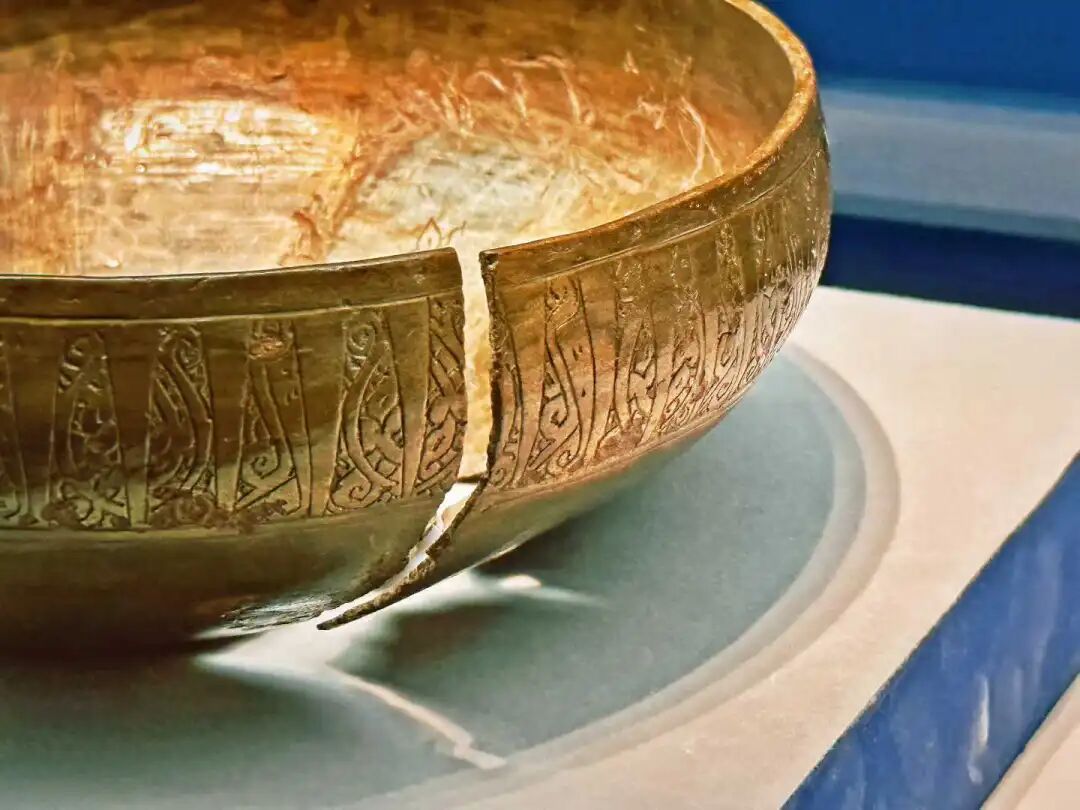
A 10th-11th century copper bowl in the National Museum of Uzbekistan collection, dating to the Samanid and Karakhanid period. The outer wall is engraved with Kufic script, and the inner wall is decorated with fish and bird patterns.
State Museum of Arts of Uzbekistan.
A men's gold-embroidered velvet robe made in Bukhara in 1905, held in the State Museum of Arts of Uzbekistan.
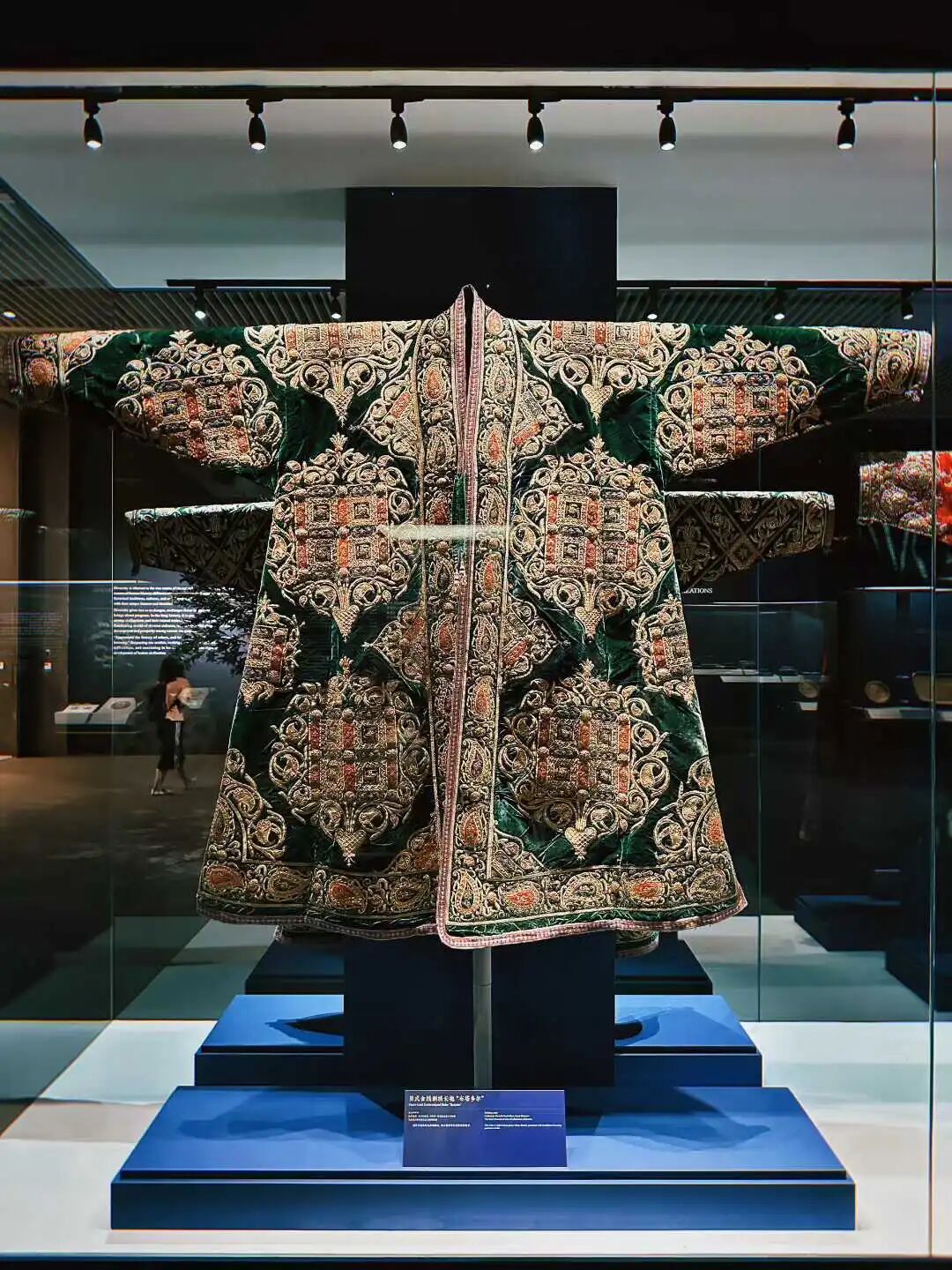
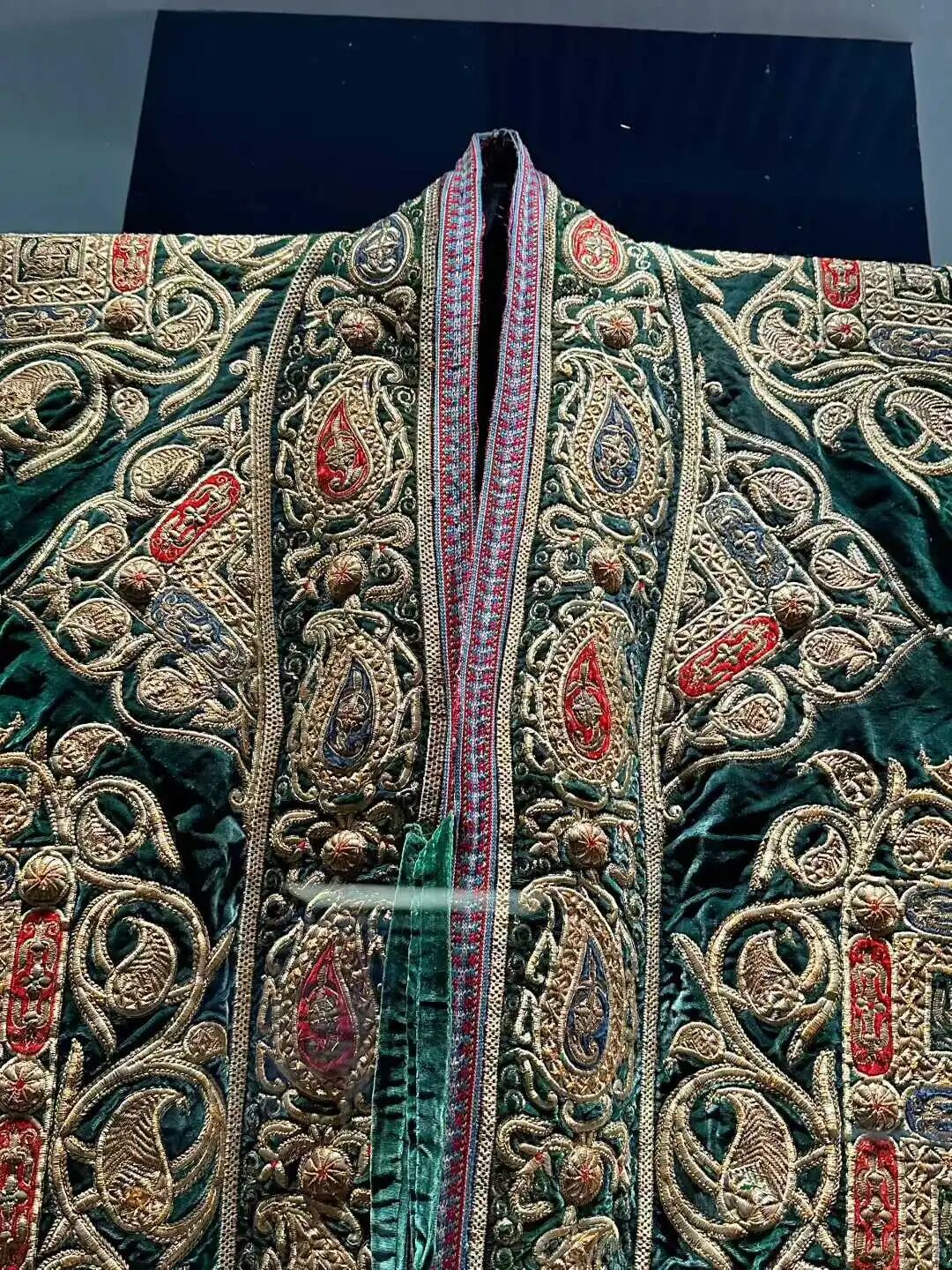
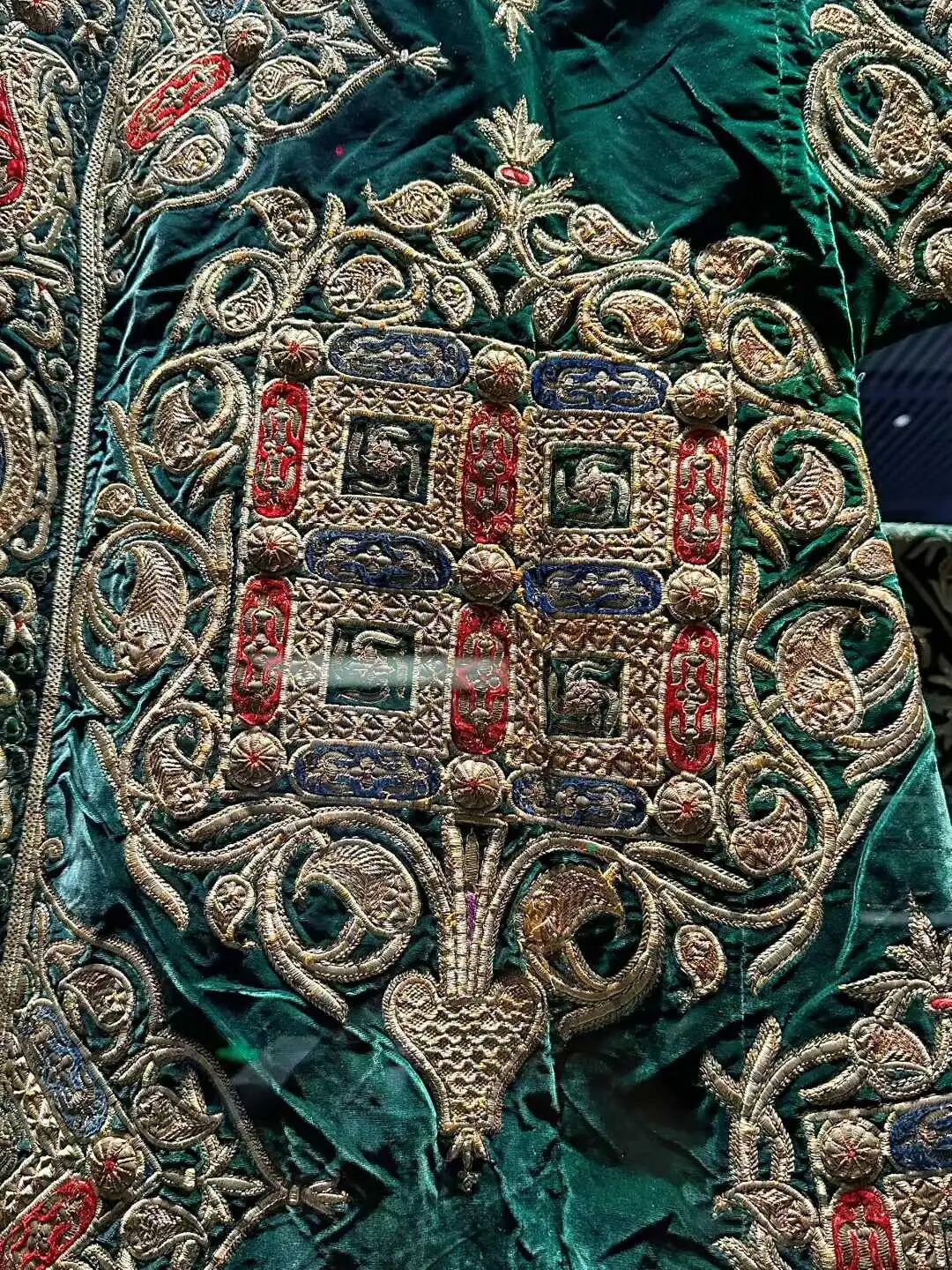
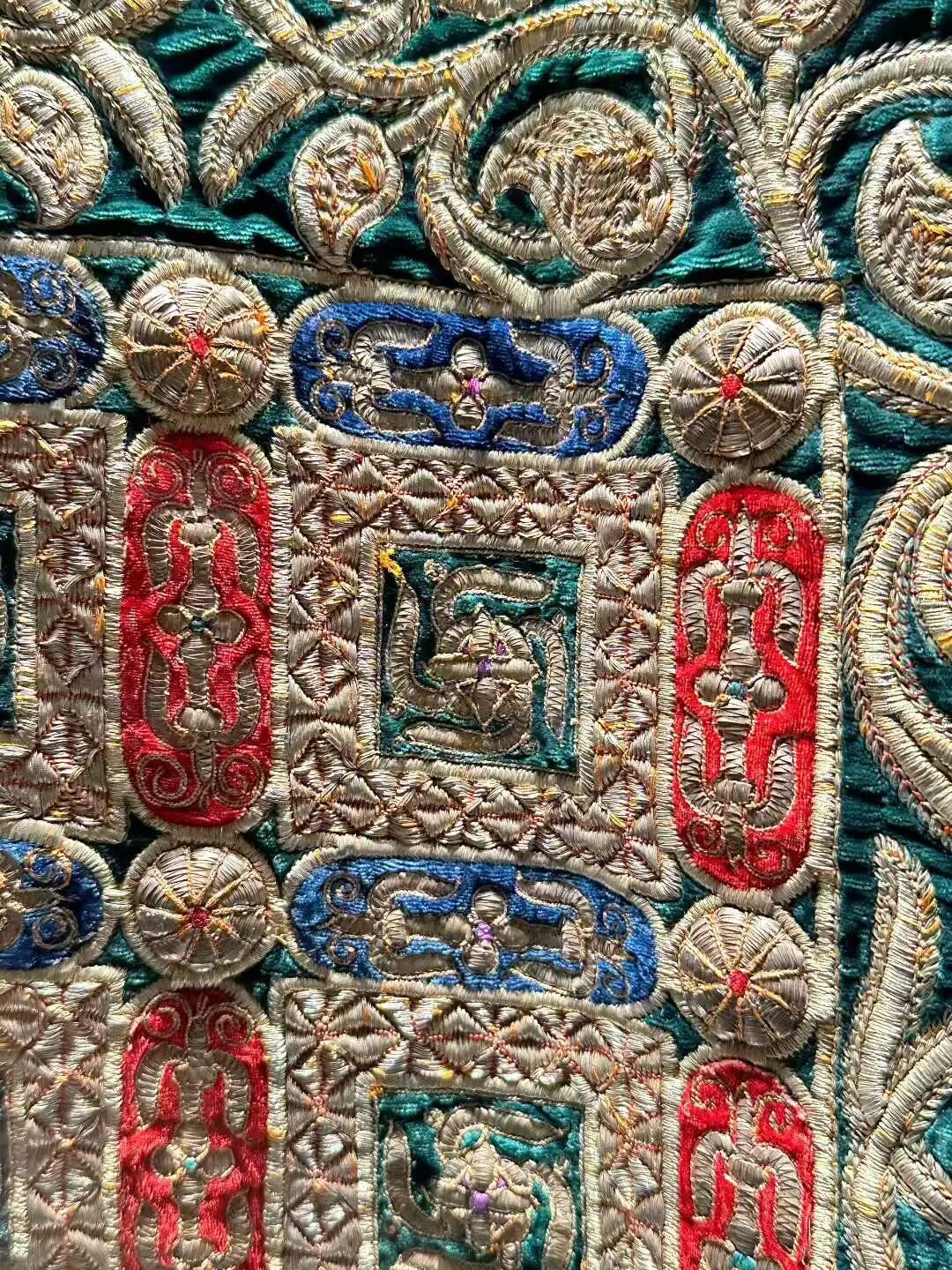
A men's gold-embroidered velvet robe made in Bukhara between 1900 and 1905, held in the State Museum of Arts of Uzbekistan.
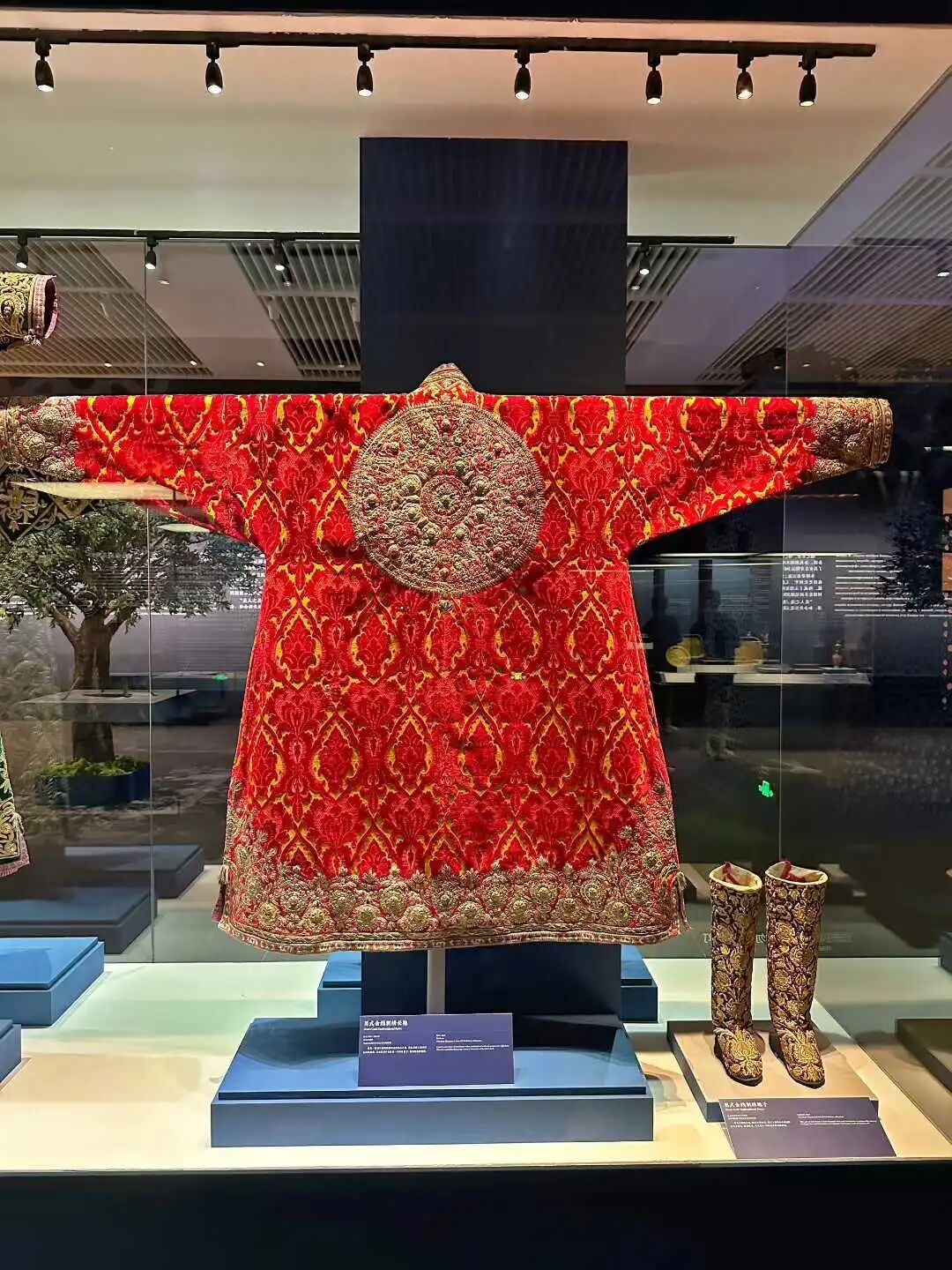
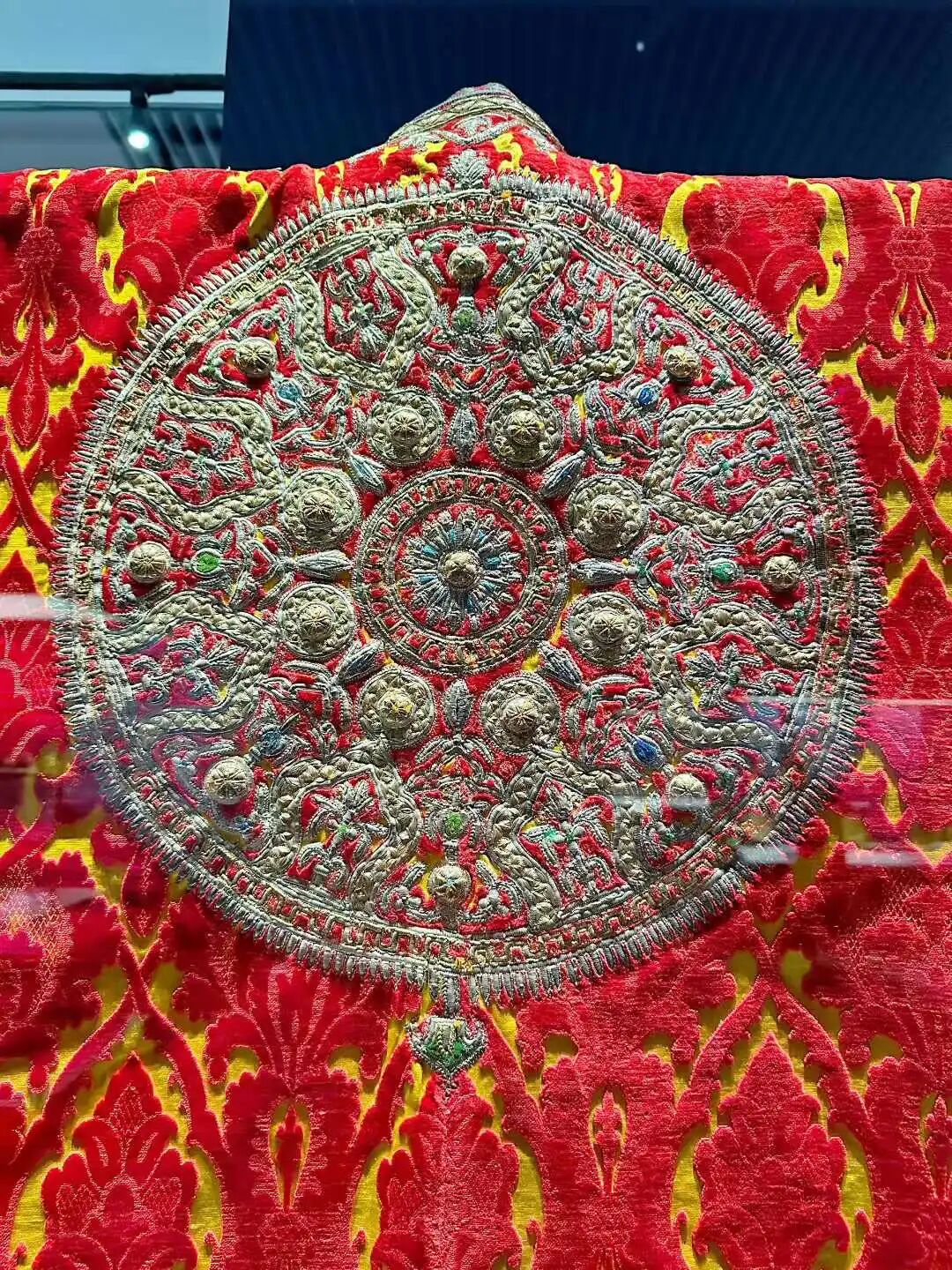
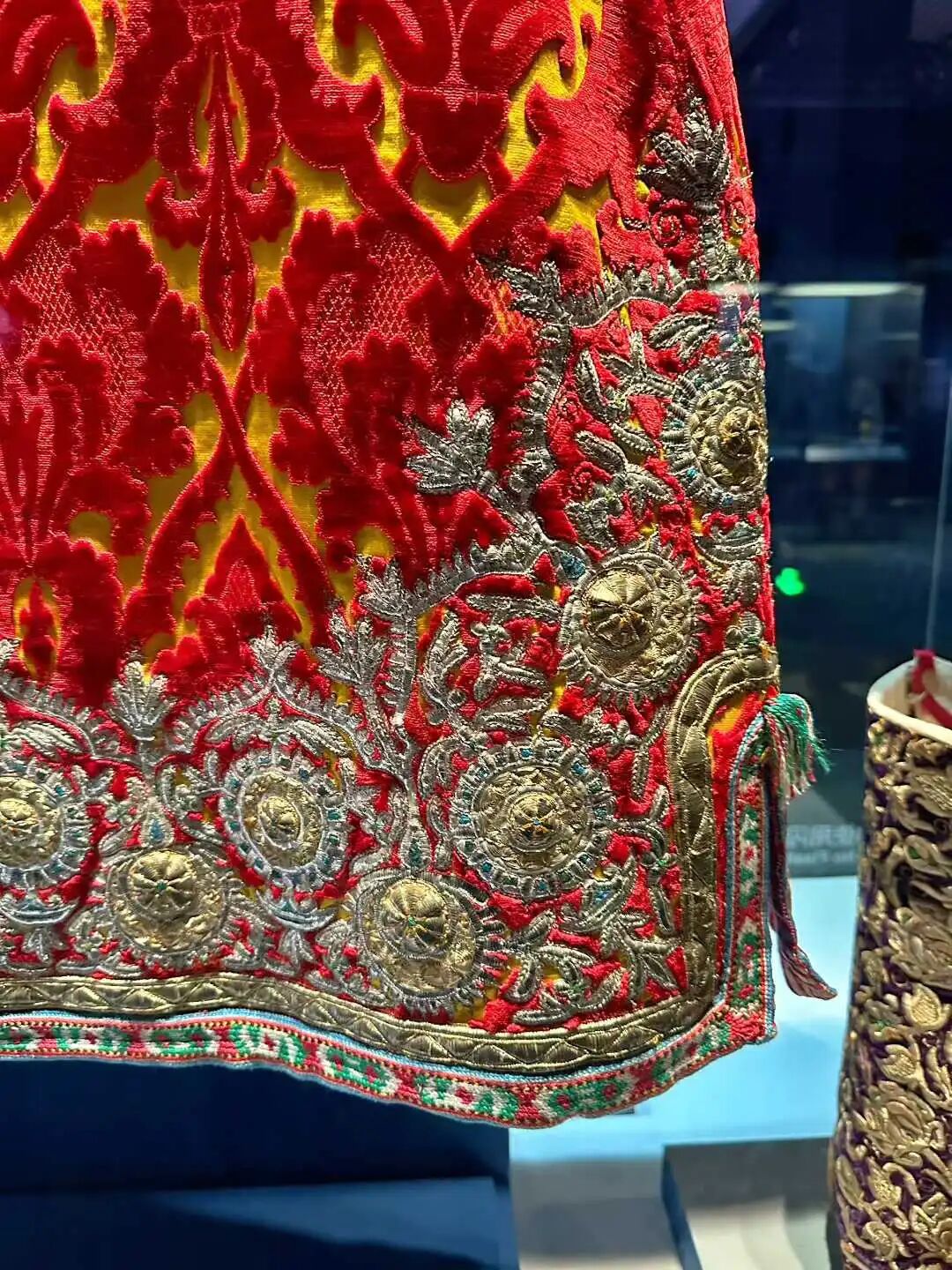
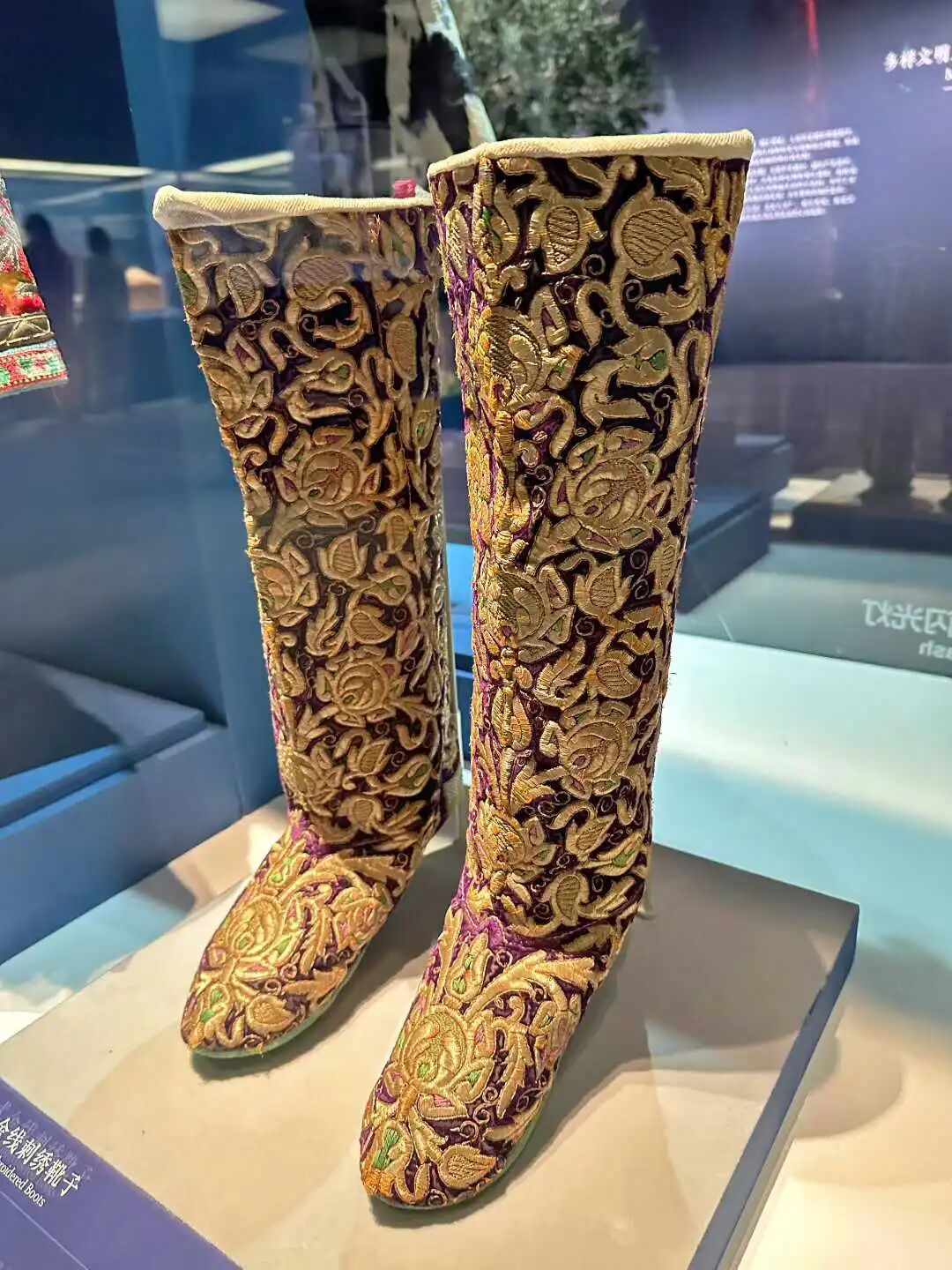
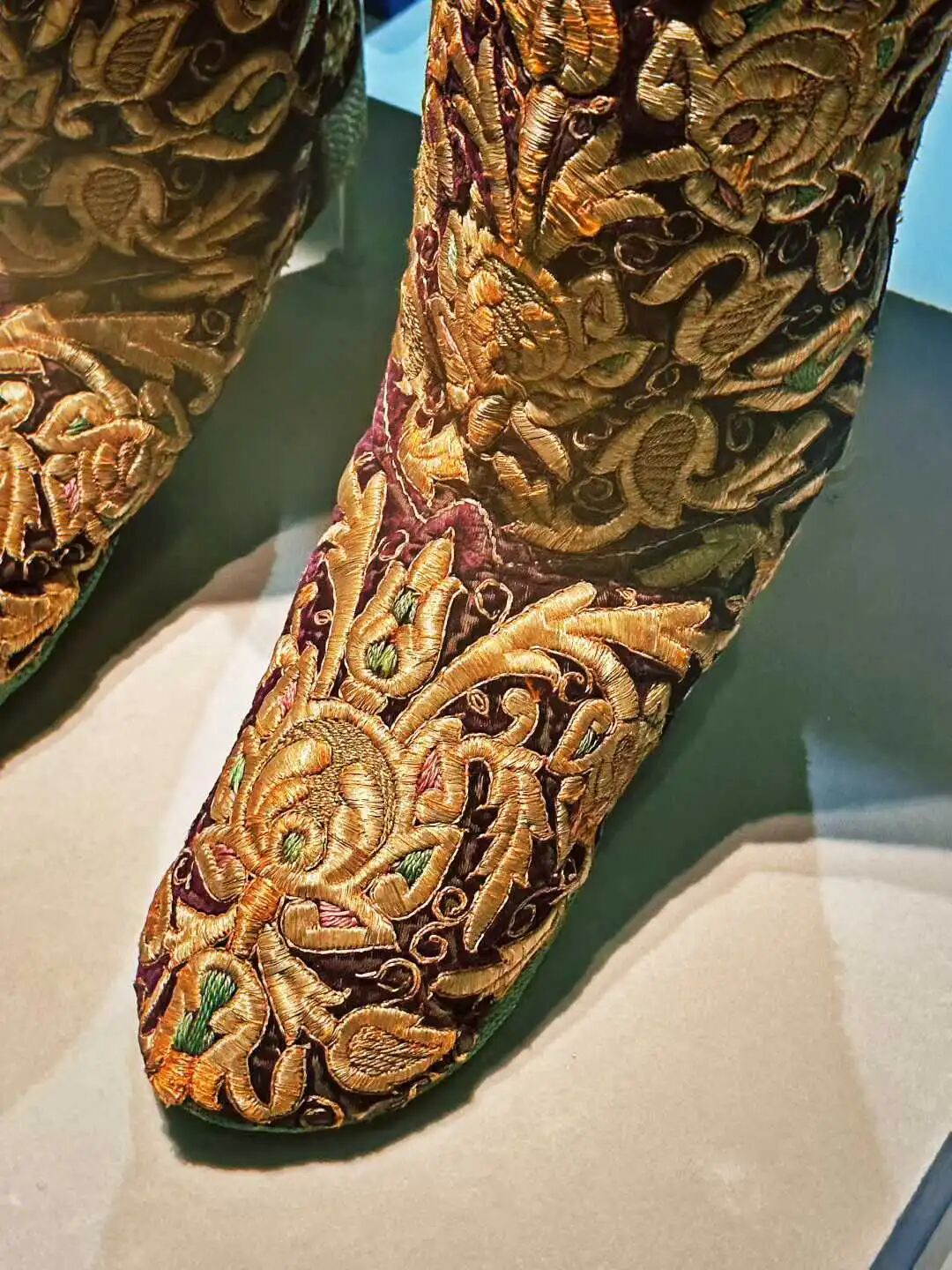
Men's gold-embroidered velvet boots made in Bukhara in 1890, held in the State Museum of Arts of Uzbekistan.
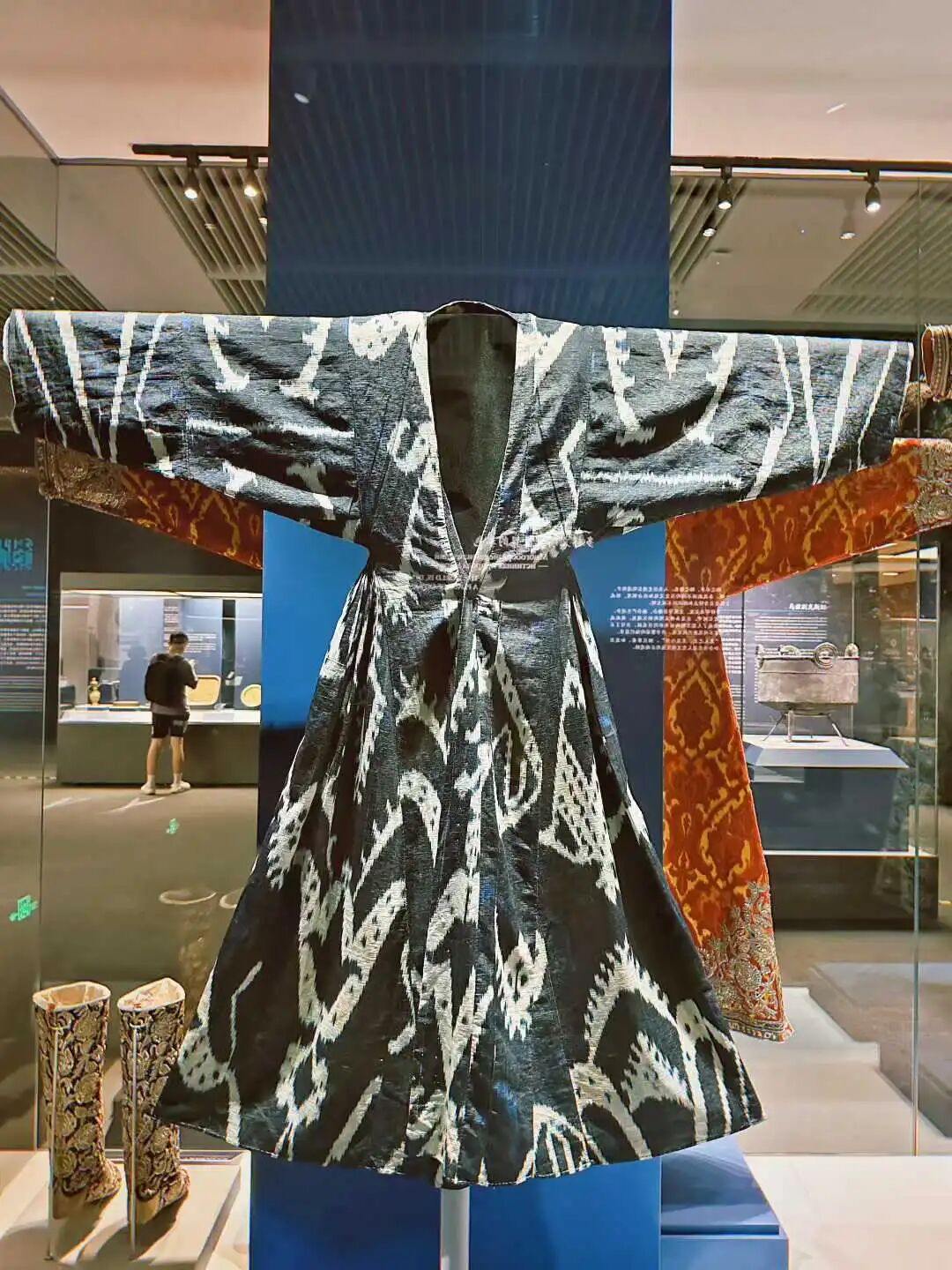
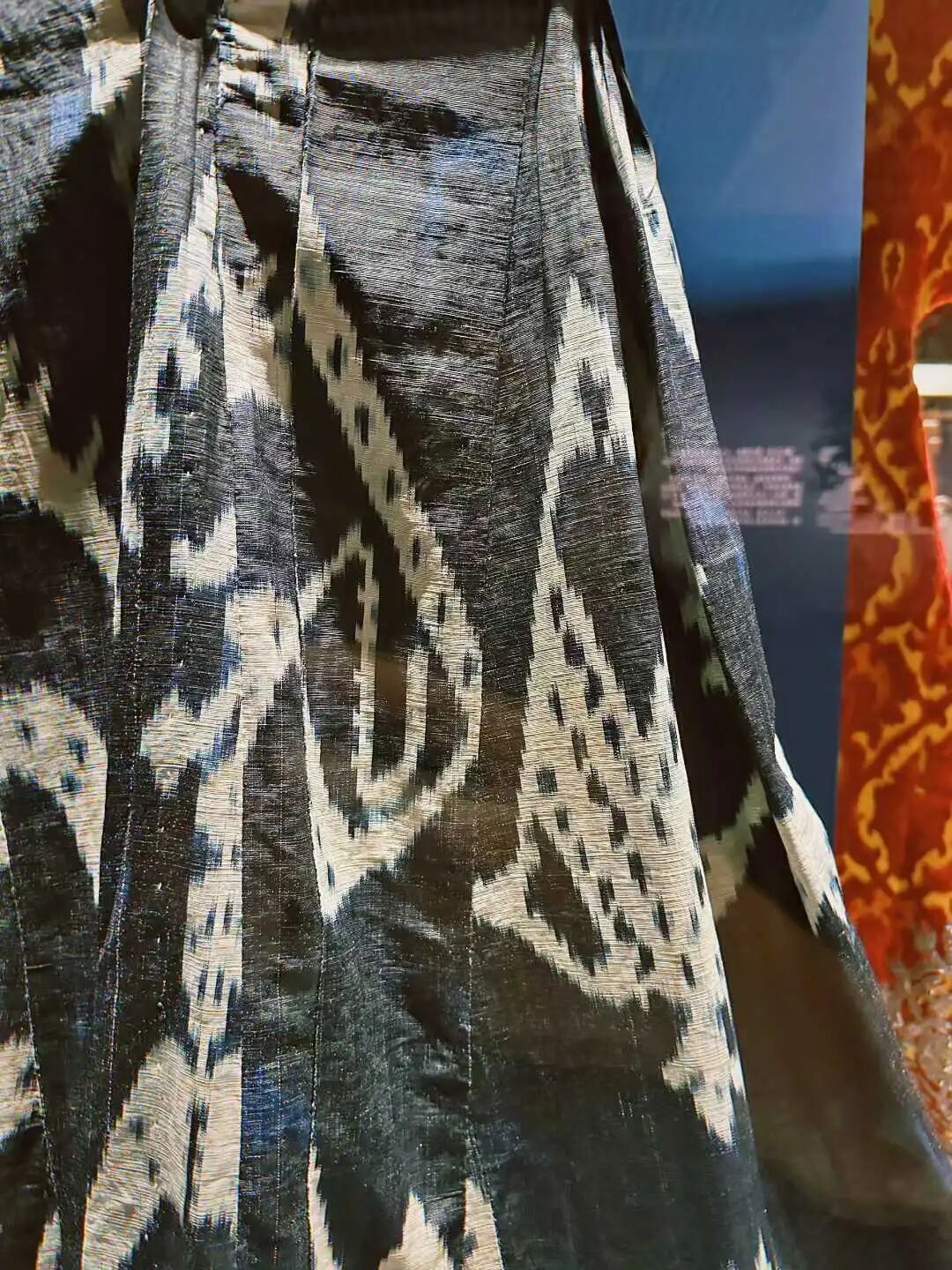
A women's ikat silk robe from the early 20th century, held in the State Museum of Arts of Uzbekistan.
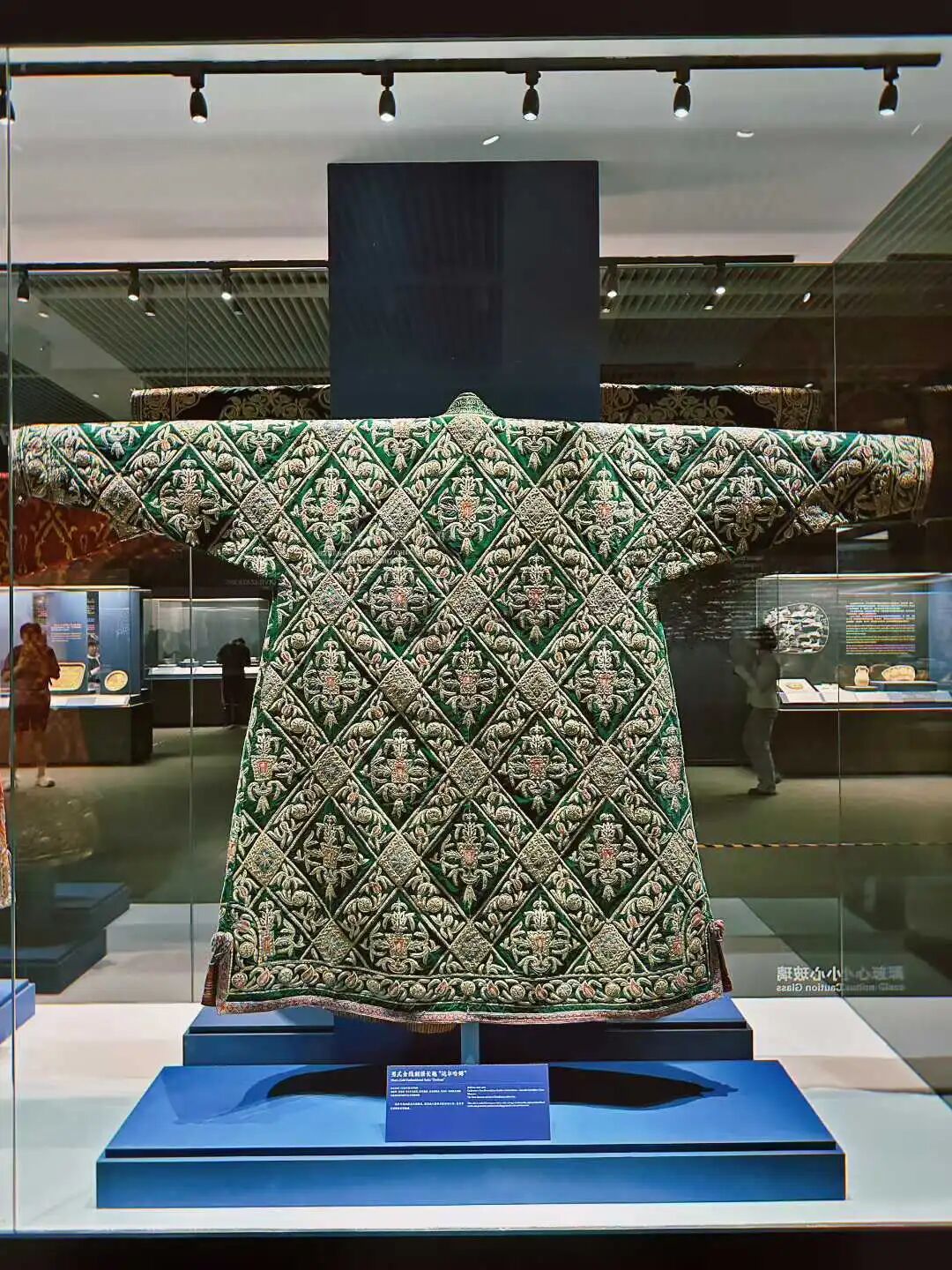
A men's gold-embroidered velvet robe made in Bukhara between 1898 and 1900, held in the State Museum of Arts of Uzbekistan.
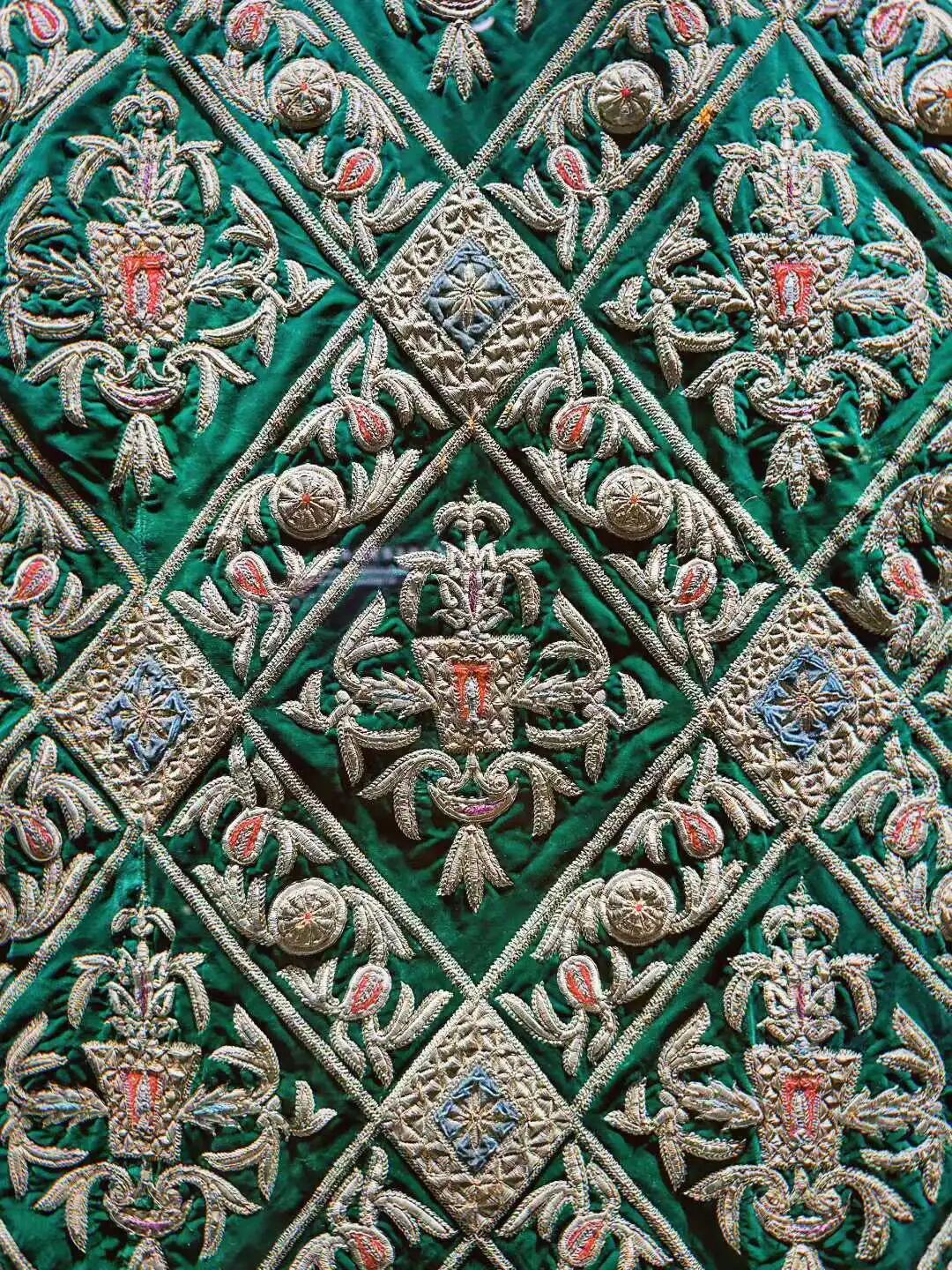
A headpiece (gajak) made in Tashkent in 1912, held in the State Museum of Arts of Uzbekistan.
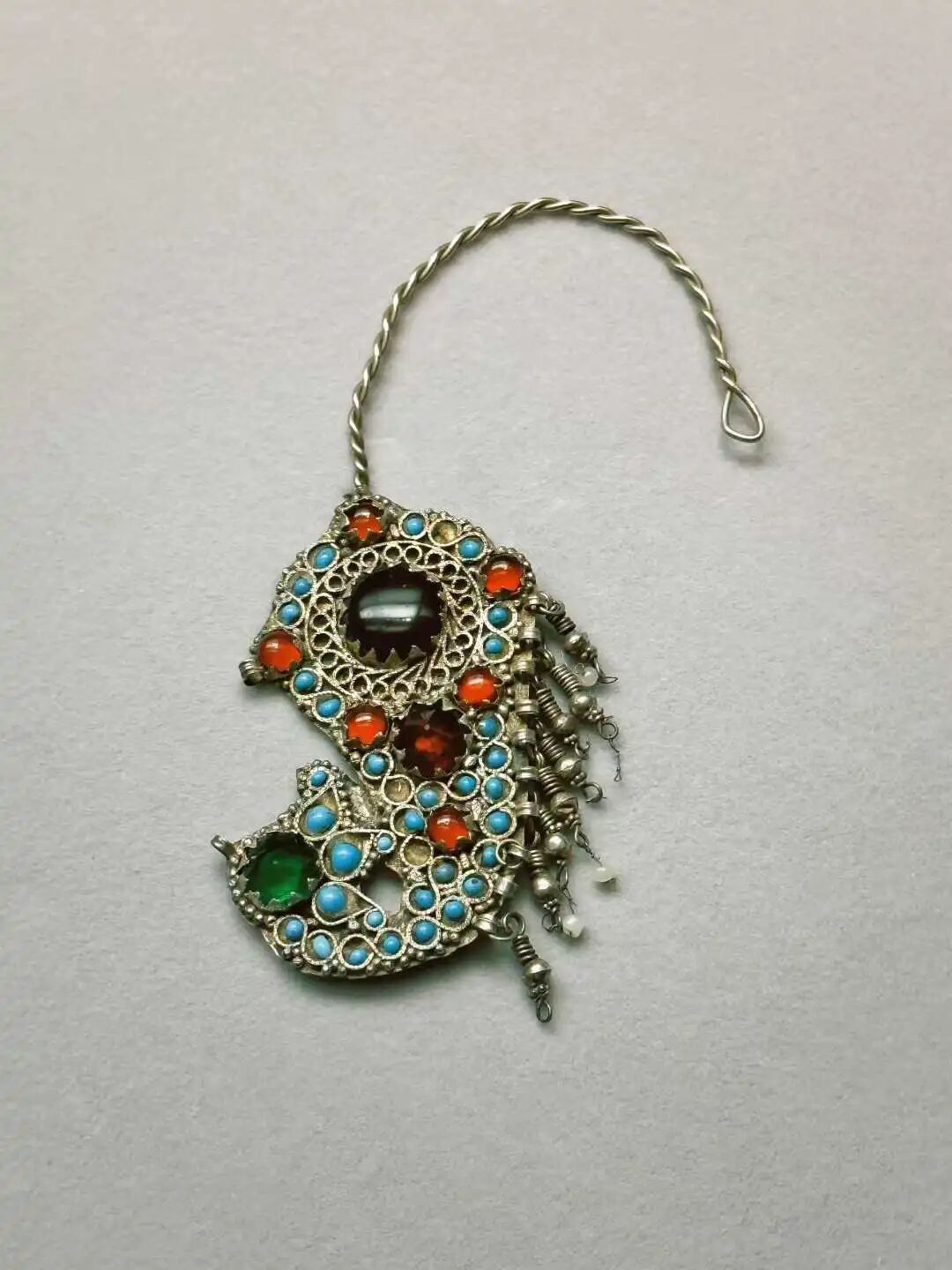
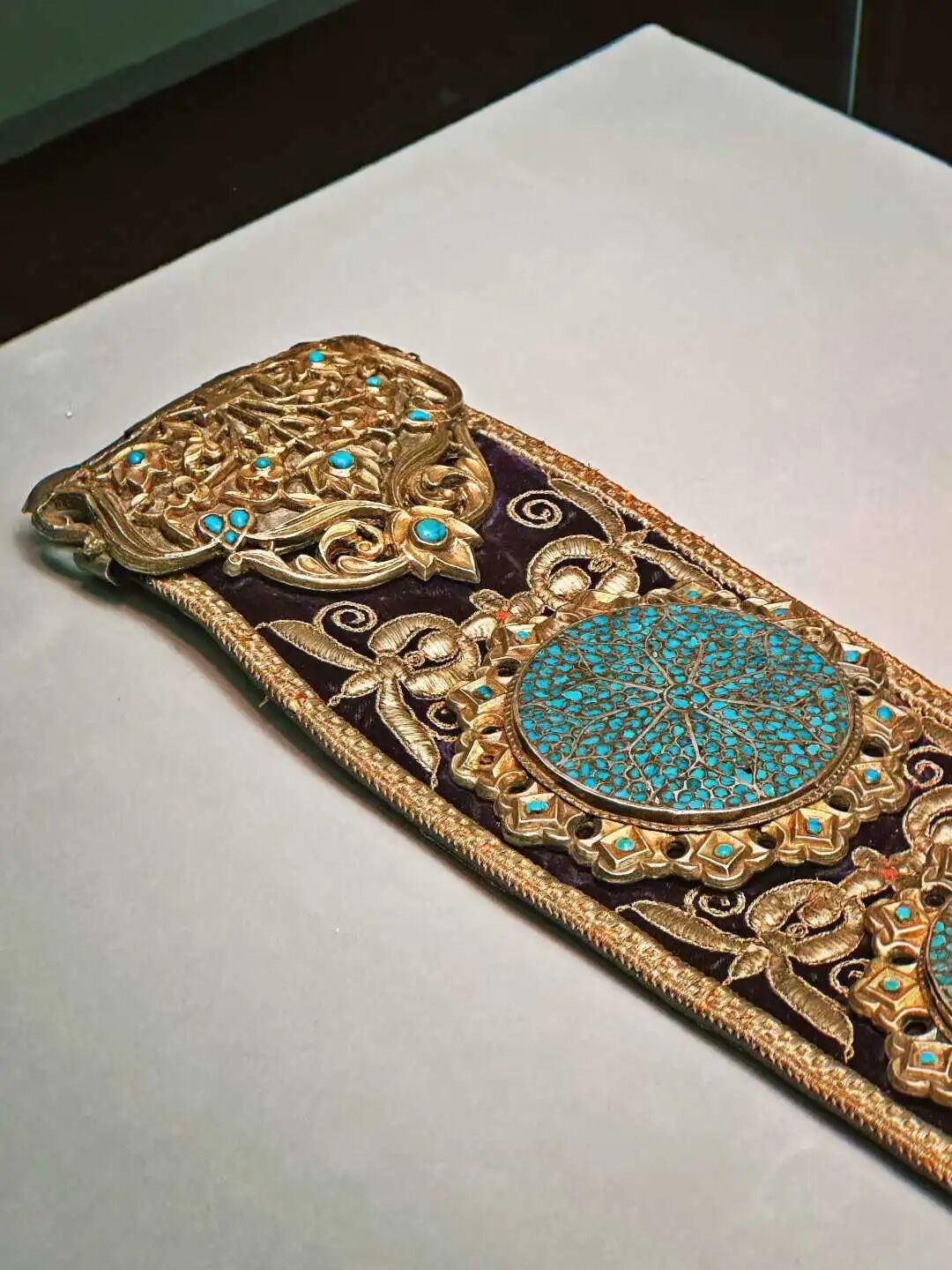
A men's gold-embroidered velvet belt made in Bukhara in 1890, decorated with turquoise and silver pieces and held in the State Museum of Arts of Uzbekistan.
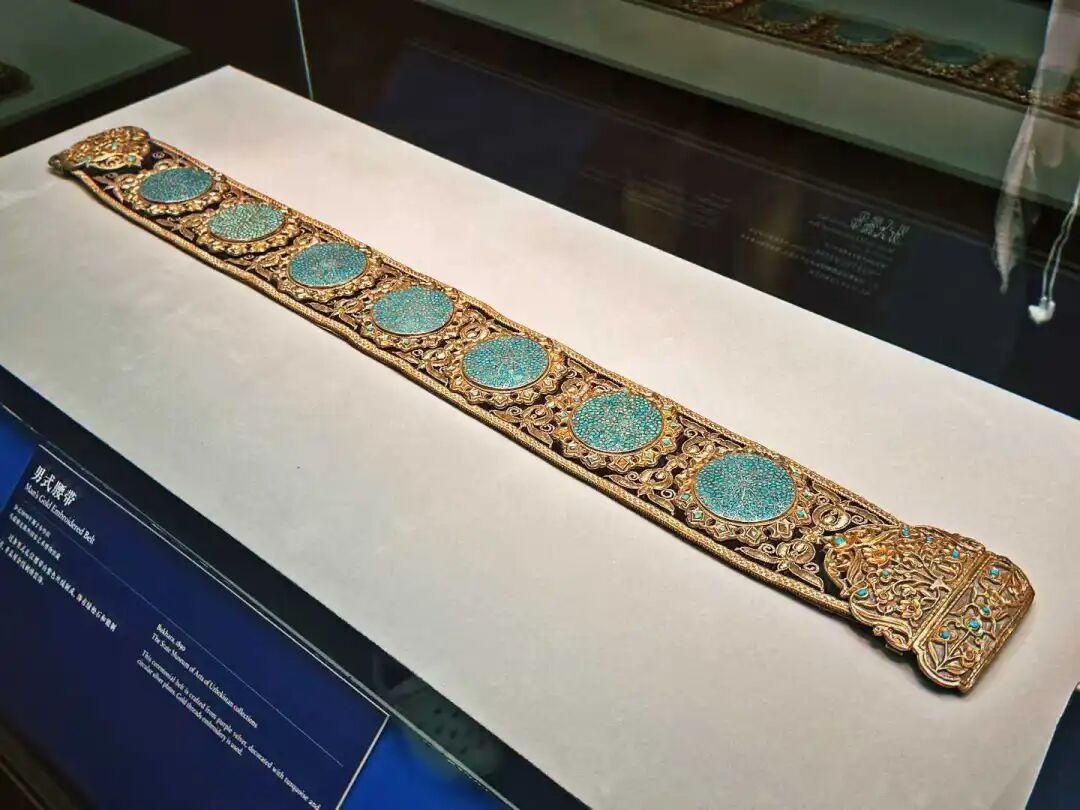
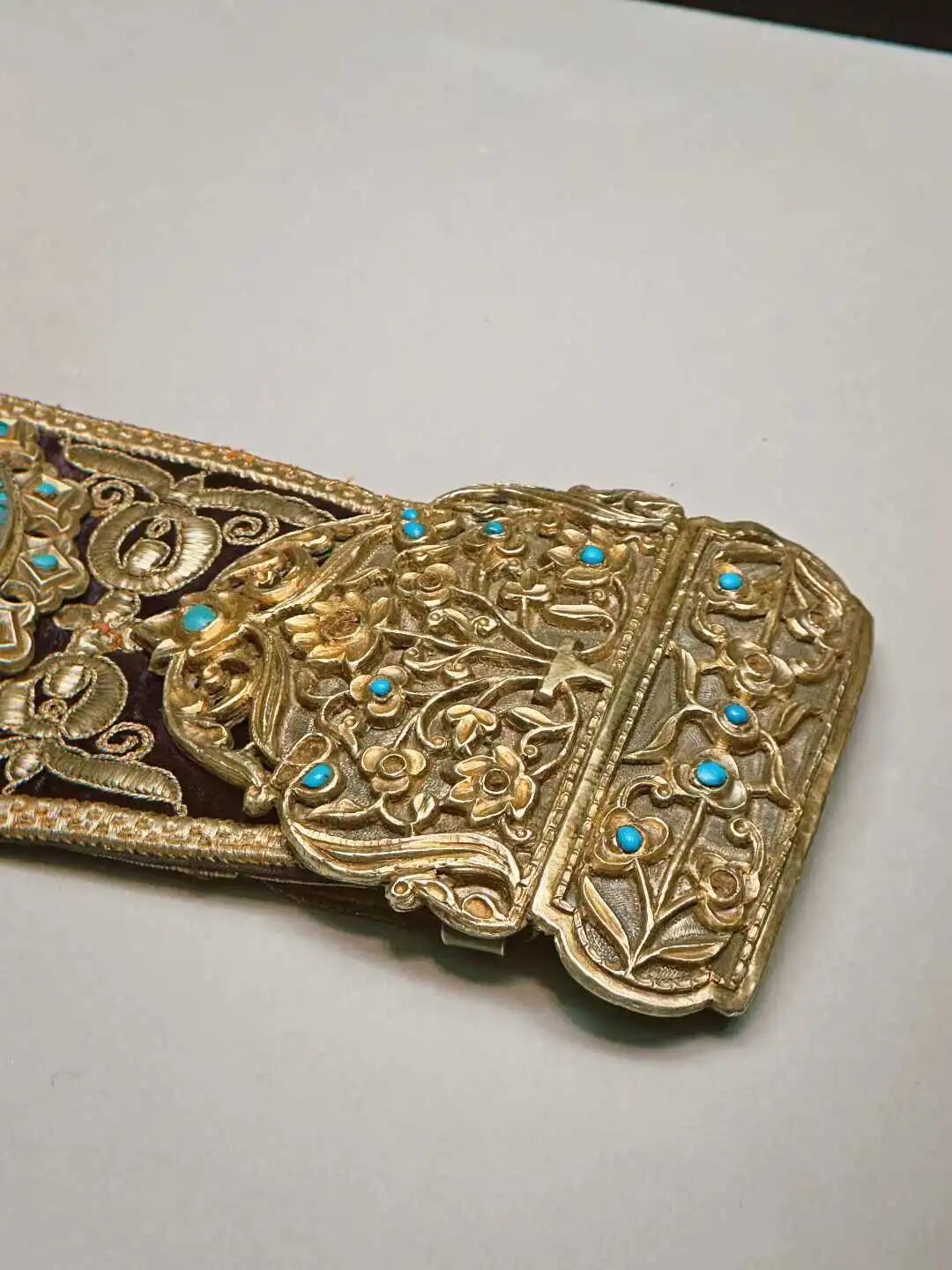
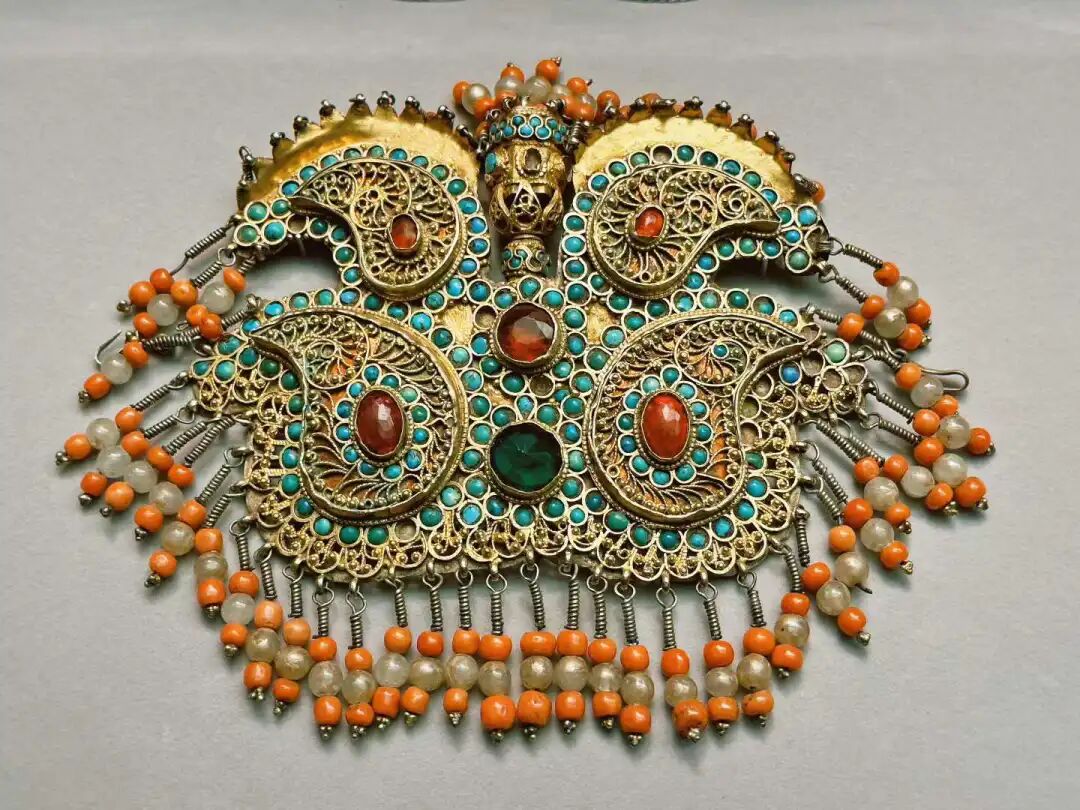
This Tojduzi headpiece from the early 20th century is kept at the State Museum of Arts of Uzbekistan.
Summary: This National Museum of China exhibition visit focuses on SCO-related cultural objects, including Persian-style calligraphy, Central Asian robes, jewelry, ceramics, carpets, and manuscripts. The account records the museum displays through an Islamic art and Silk Road cultural lens.
From August 27 to November 16, 2025, the National Museum of China hosts the exhibition "Galaxy of Civilizations: Joint Exhibition of Cultural Relics from National Museums of Shanghai Cooperation Organization Countries." It features items from 10 institutions, including the National Historical Museum of Belarus, the National Museum of Kazakhstan, the National Museum of Kyrgyzstan, the Department of Archaeology and Museums of the Pakistan Heritage and Culture Division, the State Historical Museum of Russia, the National Museum of Tajikistan, the State Museum of History of Uzbekistan, and the State Museum of Arts of Uzbekistan.
National Historical Museum of Belarus
From the collection of the National Historical Museum of Belarus, this is a hoard of silver coins from the Abbasid Caliphate in the mid-10th century, found in Pinsk, Belarus, in 1991. Archaeologists have found tens of thousands of Arab silver coins in Northern Europe and the Baltic region. These coins were minted during the Abbasid Caliphate between the 8th and 11th centuries and were popular for their high purity and consistency. Between the 9th and 11th centuries, Vikings from Northern Europe used Eastern European waterways like the Volga and Dnieper rivers to trade with Arabs. They exchanged furs, slaves, and amber for large amounts of Arab silver coins. Interestingly, many of the Arab silver coins in Viking hoards were cut into pieces. This is because Vikings measured silver by weight rather than face value at the time.
From the collection of the National Historical Museum of Belarus, this is a helmet and shield from the Qajar dynasty of Iran in the 19th century. The helmet and shield were hand-forged from single plates of Damascus steel. The helmet has a long spike on top and feather holders on both sides, while the shield features a sun motif. Both the helmet and shield are engraved with floral patterns and beautiful Persian calligraphy. Persian calligraphy developed from Naskh Arabic script. Compared to Naskh, the strokes are more elongated and tilt from the top right to the bottom left, allowing for more freedom when writing.
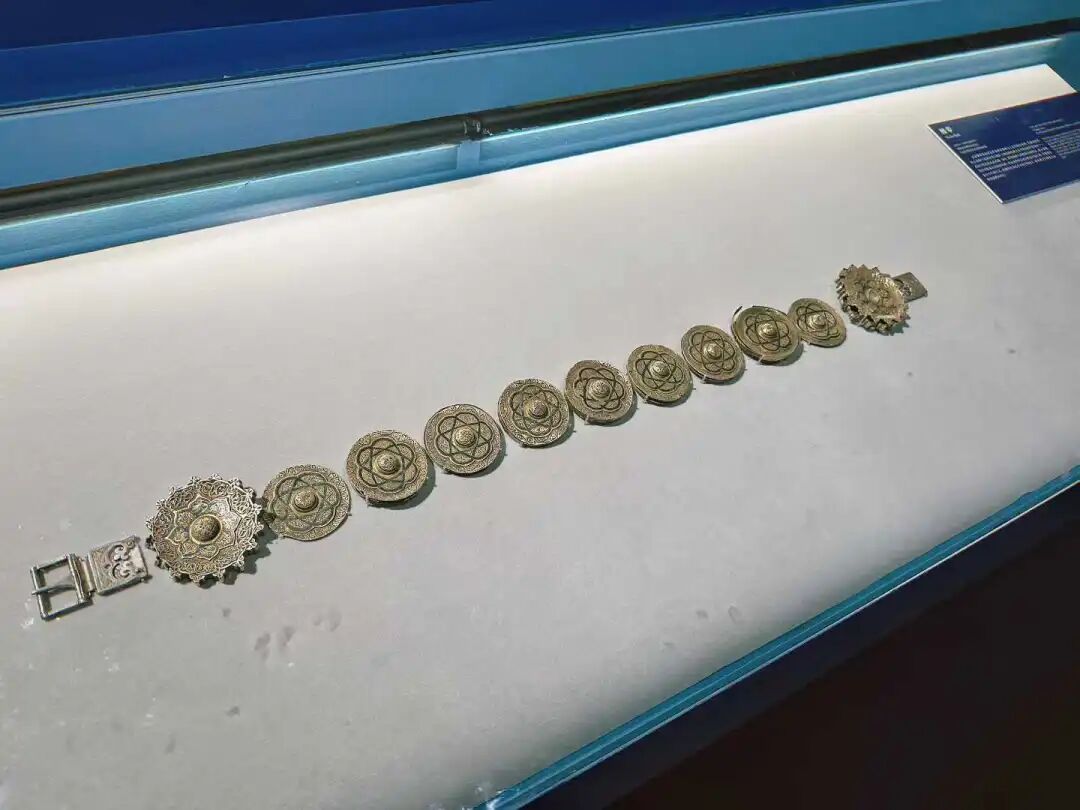
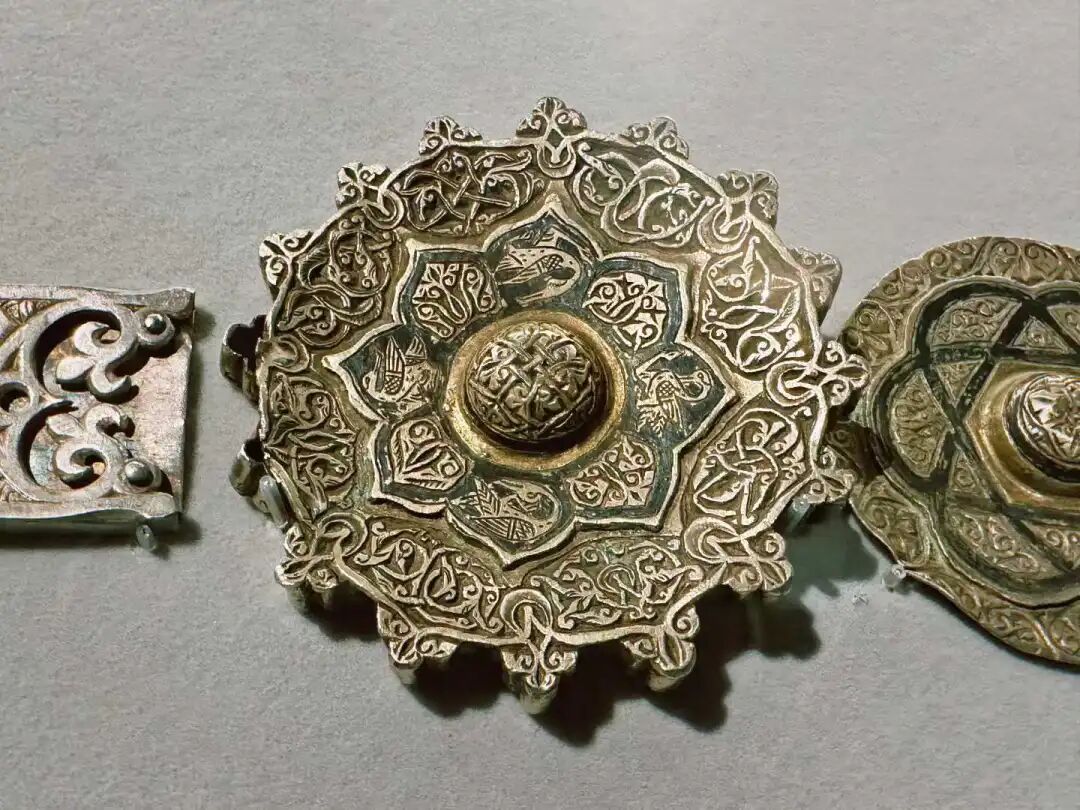
From the collection of the National Historical Museum of Belarus, this is a belt featuring traditional Crimean jewelry craftsmanship. It is believed to be a gift from Hacı I Giray, the founding Khan of the Crimean Khanate, to Grand Duke Vytautas of Lithuania.
Hacı I Giray was a descendant of Tuka-Timur, the thirteenth son of Jochi, who was the eldest son of Genghis Khan. His family began ruling the Crimean Peninsula in 1260, but they were defeated by Tamerlane in 1395 and fled to Lithuania. Hacı I Giray was born in Lithuania in 1397. In 1428, with the support of Grand Duke Vytautas of Lithuania, Hacı I Giray led an army to take over the Crimean Peninsula, but he was soon defeated by the Golden Horde. Later, with Lithuanian support, Hacı I Giray sent troops to Crimea several more times. He finally occupied the Crimean Peninsula in 1441 and established the Crimean Khanate.
This belt is made of high-purity silver. The circular discs feature Tatar decorative motifs, while the buckle has a Gothic design, reflecting the cultural exchange between East and West at the time.
National Museum of Kazakhstan
From the collection of the National Museum of Kazakhstan, these are ceramic tiles unearthed from a tomb at the ancient city site of Zhaiyk, dating back to the Golden Horde period in the 14th century. The ancient city site of Zhaiyk was discovered by an archaeological team in 2001. Subsequent excavations revealed the remains of a Turkish bath with an underfloor heating system and a domed tomb decorated with colorful glazed tiles in the cemetery west of the city.
From the collection of the National Museum of Kazakhstan, this is a copper coin minted by the Samanid dynasty in 922-923, unearthed in Otrar, southern Kazakhstan. During the 9th and 10th centuries, this region was an important trade center for the Samanid dynasty.
This is a modern Kazakh women's accessory.
National Museum of Pakistan, Islamabad
From the collection of the National Museum of Pakistan in Islamabad, this is a brass astrolabe from Lahore, dating to the Mughal Empire period under Humayun (reigned 1530-1540, 1555-1556). It is engraved with latitude and longitude, Persian and Arabic text, and decorated with arabesque and geometric patterns. Humayun himself had a strong interest in astronomy and astrology.
National Museum of Tajikistan.
A Persian copper water pitcher (aftabeh) from the early 20th century in the National Museum of Tajikistan collection. The aftabeh, also called abdasta, is a water pitcher used for wudu (ablution) in Persian cultural regions like Iran, Afghanistan, Azerbaijan, and Central Asia. They are usually made of clay or brass.
A copper hand-washing basin (dastshui) from the early 20th century in the National Museum of Tajikistan collection, featuring an engraving of 25 deer in different poses.
A copper water pitcher for wudu from the 19th century in the National Museum of Tajikistan collection.
A tray with Arabic script from the 19th century in the National Museum of Tajikistan collection.
A Persian shield in the National Museum of Tajikistan collection, decorated with sun and angel patterns and engraved with beautiful Persian calligraphy.
A 16th-century axe in the National Museum of Tajikistan collection, engraved with a scene of three riders hunting.
A 19th-century decorative tray in the National Museum of Tajikistan collection, engraved with a lively banquet scene. The border features 33 circular panels, each showing a rider in a different pose, with Arabic script on the outermost edge.
A 19th-century copper pen case in the National Museum of Tajikistan collection, featuring four lines of Persian poetry in Persian calligraphy and decorated with various leaves and plants.
A 10th-11th century copper pitcher unearthed in Istaravshan (Dayuan City) and held in the National Museum of Tajikistan, with Arabic and Persian inscriptions on the body and neck. Istaravshan was ruled by the Samanid and Karakhanid dynasties during the 10th and 11th centuries and was a famous center for trade and handicrafts.
National Museum of Uzbekistan.
A 10th-12th century copper pitcher in the National Museum of Uzbekistan collection, dating to the Samanid and Karakhanid period. It has Arabic script on the neck and human-headed bird patterns on the rim.
A 10th-11th century copper bowl in the National Museum of Uzbekistan collection, dating to the Samanid and Karakhanid period. The outer wall is engraved with Kufic script, and the inner wall is decorated with fish and bird patterns.
State Museum of Arts of Uzbekistan.
A men's gold-embroidered velvet robe made in Bukhara in 1905, held in the State Museum of Arts of Uzbekistan.
A men's gold-embroidered velvet robe made in Bukhara between 1900 and 1905, held in the State Museum of Arts of Uzbekistan.
Men's gold-embroidered velvet boots made in Bukhara in 1890, held in the State Museum of Arts of Uzbekistan.
A women's ikat silk robe from the early 20th century, held in the State Museum of Arts of Uzbekistan.
A men's gold-embroidered velvet robe made in Bukhara between 1898 and 1900, held in the State Museum of Arts of Uzbekistan.
A headpiece (gajak) made in Tashkent in 1912, held in the State Museum of Arts of Uzbekistan.
A men's gold-embroidered velvet belt made in Bukhara in 1890, decorated with turquoise and silver pieces and held in the State Museum of Arts of Uzbekistan.
This Tojduzi headpiece from the early 20th century is kept at the State Museum of Arts of Uzbekistan.
