

Central Asia
Museum Guide: Beijing - SCO Exhibition, Persian Calligraphy and Central Asian Robes
Articles • ali2007fr posted the article • 0 comments • 259 views • 2026-05-20 09:37
Summary: This National Museum of China exhibition visit focuses on SCO-related cultural objects, including Persian-style calligraphy, Central Asian robes, jewelry, ceramics, carpets, and manuscripts. The account records the museum displays through an Islamic art and Silk Road cultural lens.
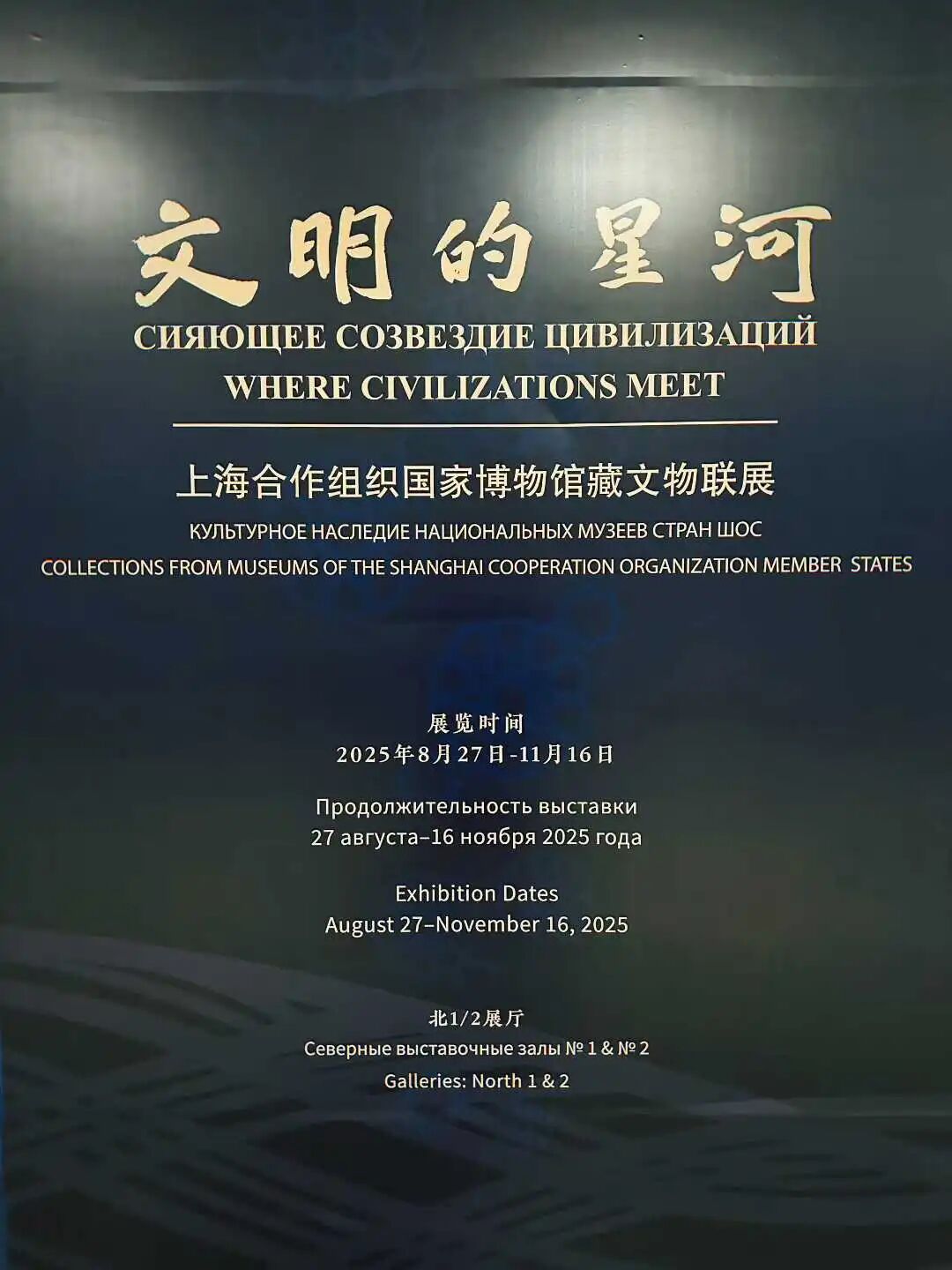
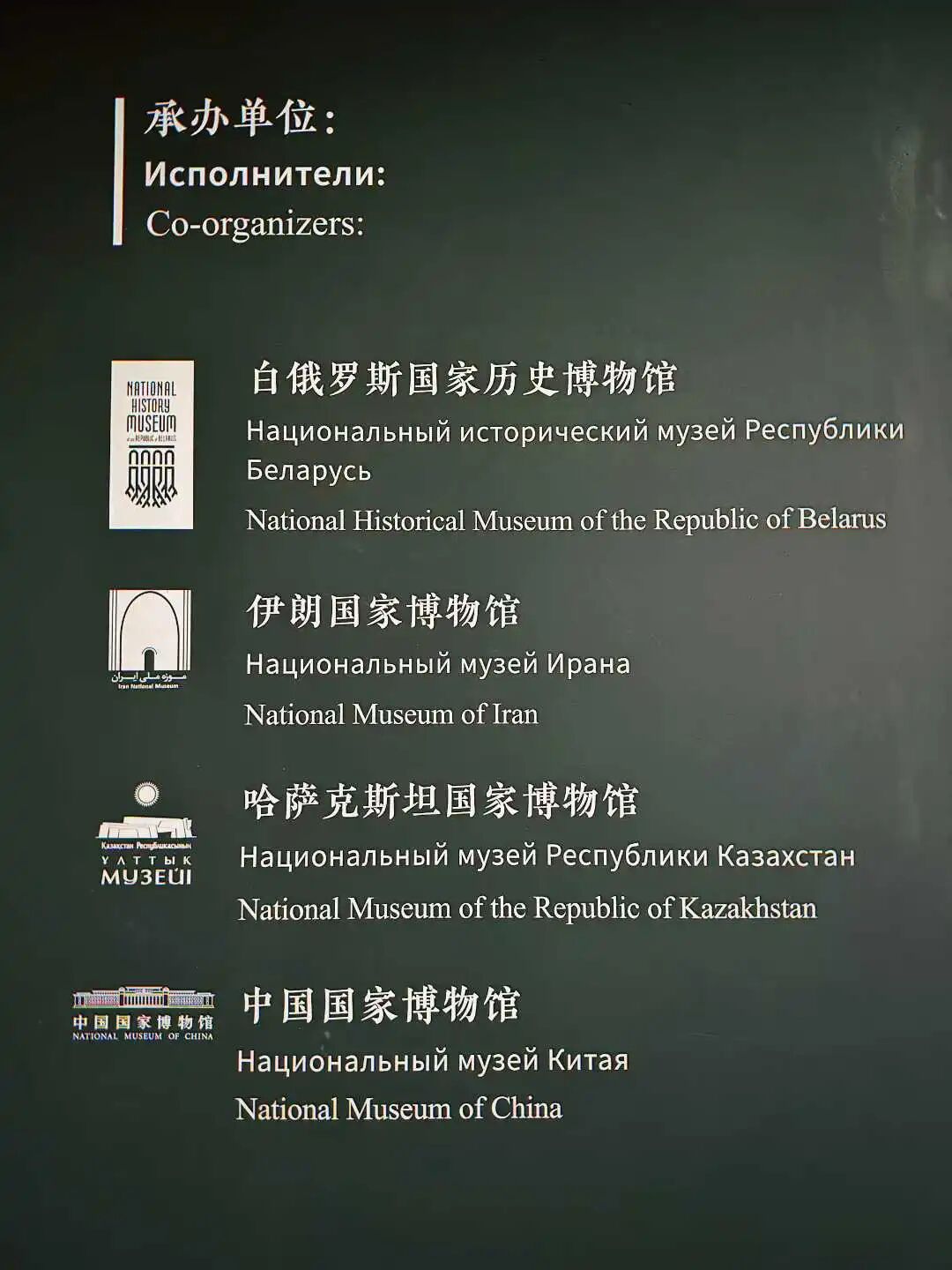
From August 27 to November 16, 2025, the National Museum of China hosts the exhibition "Galaxy of Civilizations: Joint Exhibition of Cultural Relics from National Museums of Shanghai Cooperation Organization Countries." It features items from 10 institutions, including the National Historical Museum of Belarus, the National Museum of Kazakhstan, the National Museum of Kyrgyzstan, the Department of Archaeology and Museums of the Pakistan Heritage and Culture Division, the State Historical Museum of Russia, the National Museum of Tajikistan, the State Museum of History of Uzbekistan, and the State Museum of Arts of Uzbekistan.
National Historical Museum of Belarus
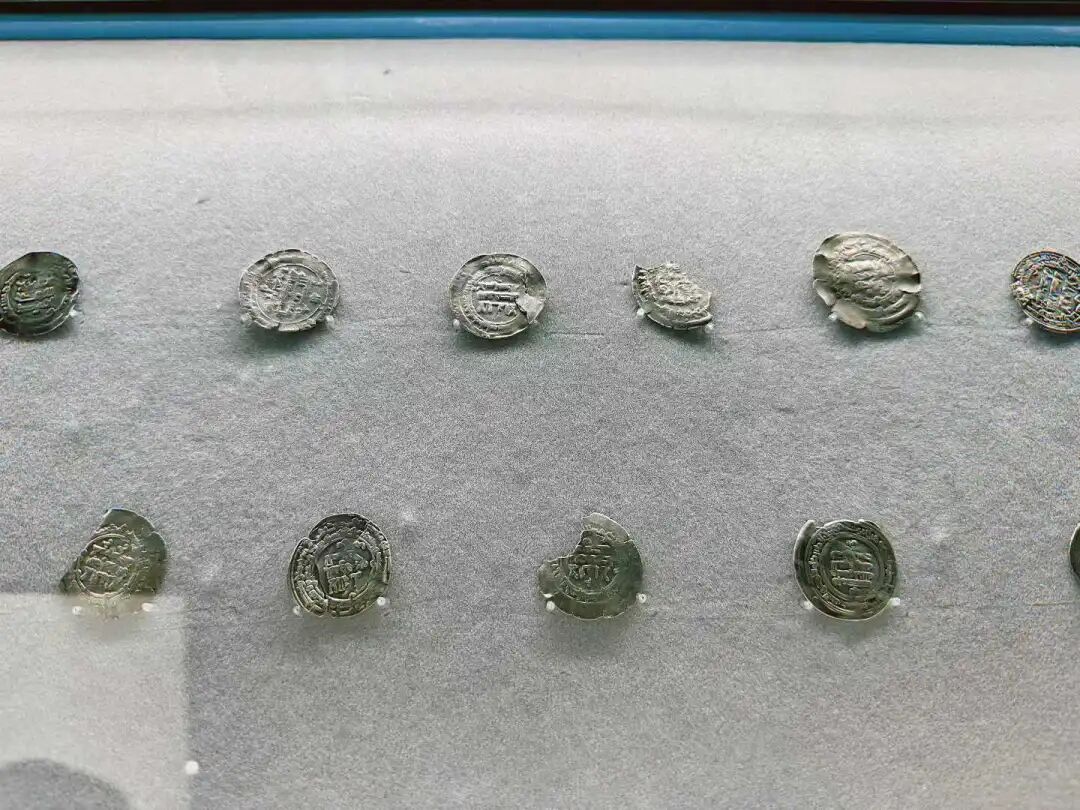
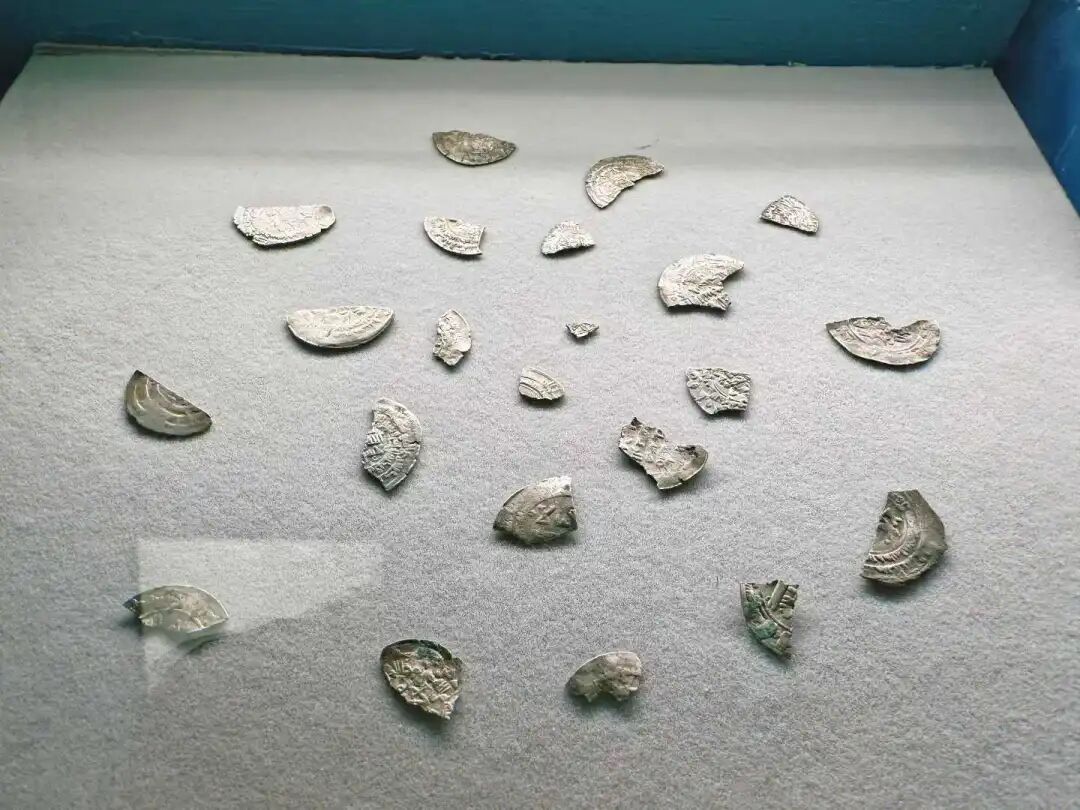
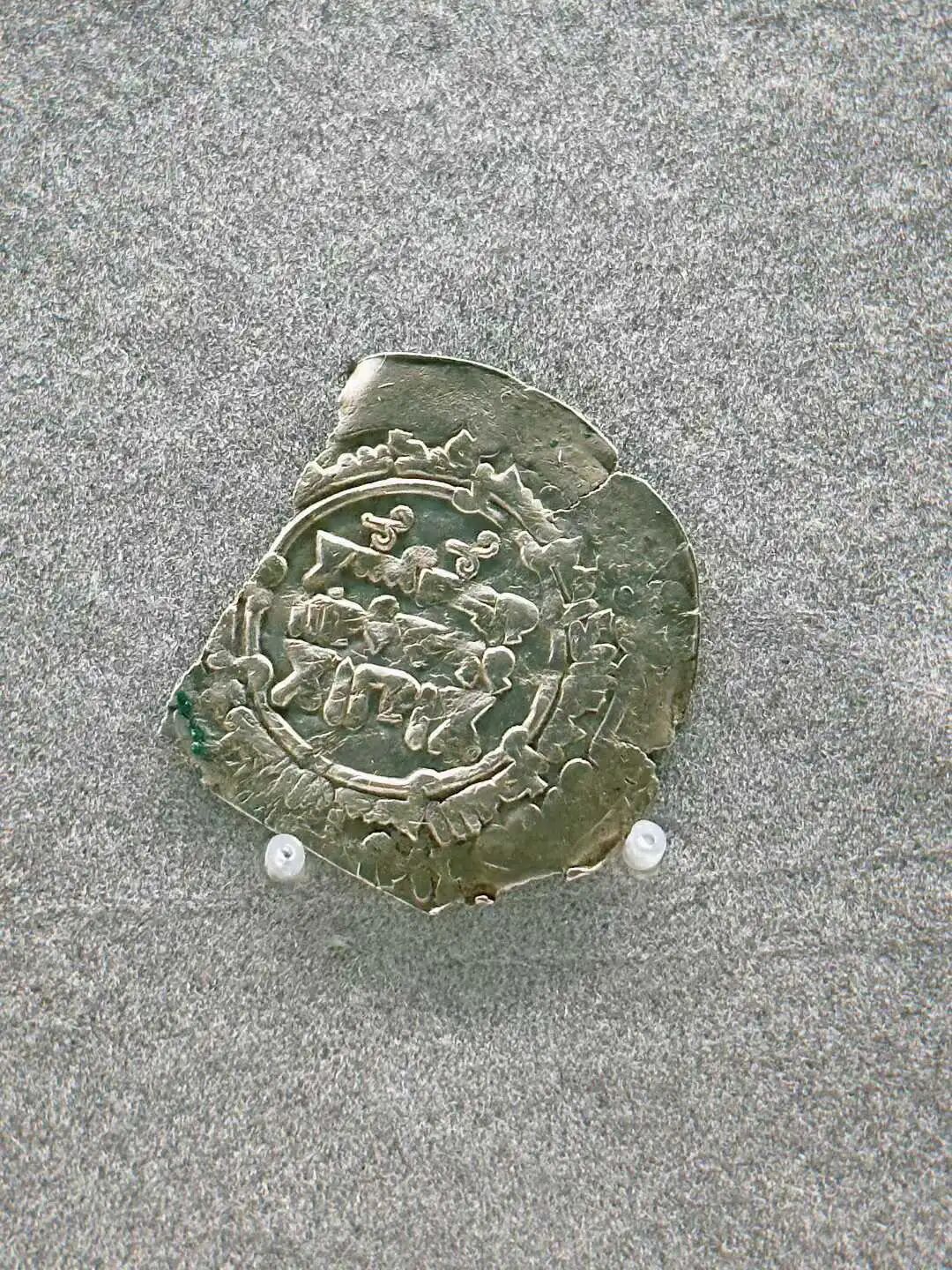
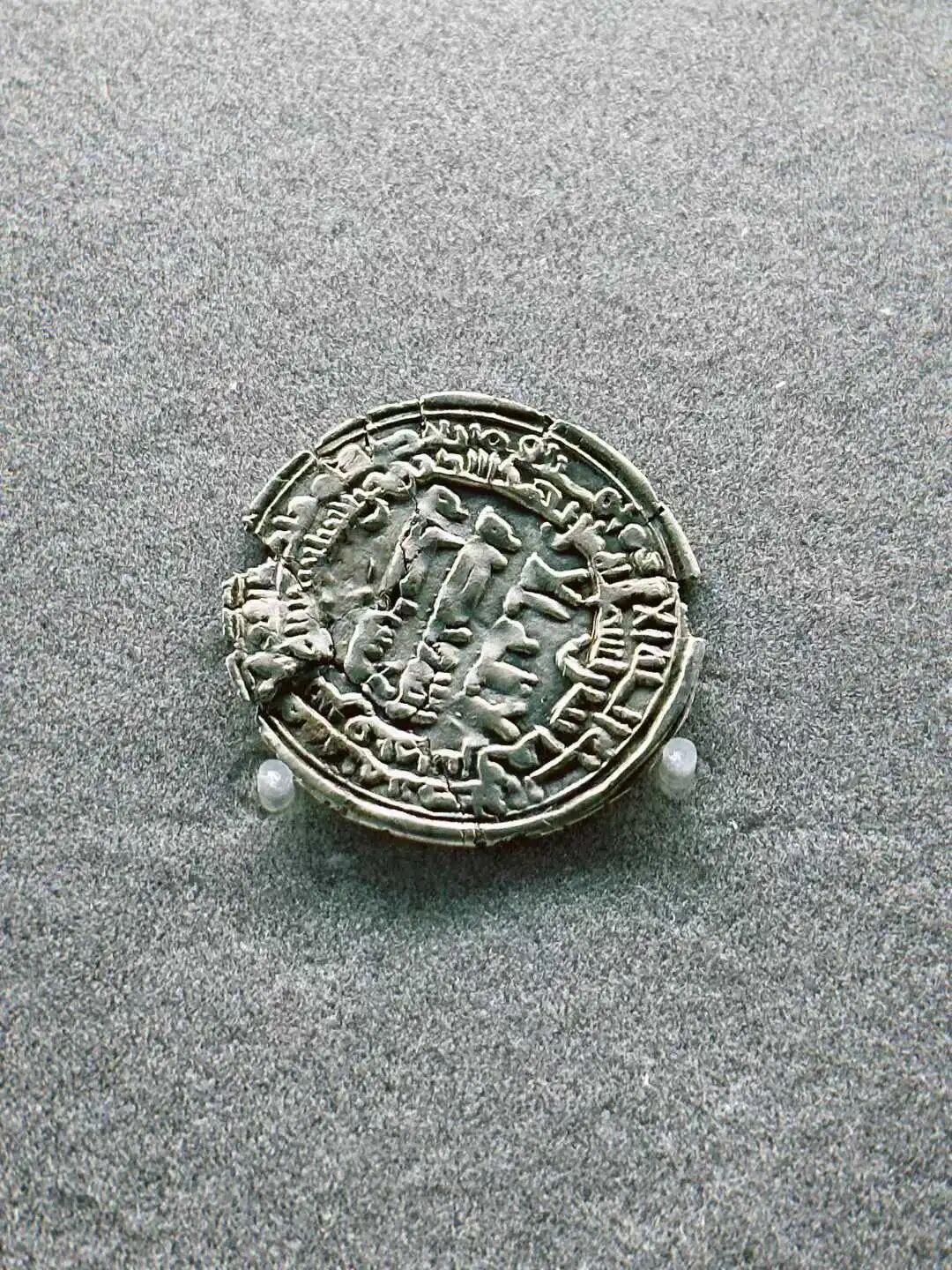
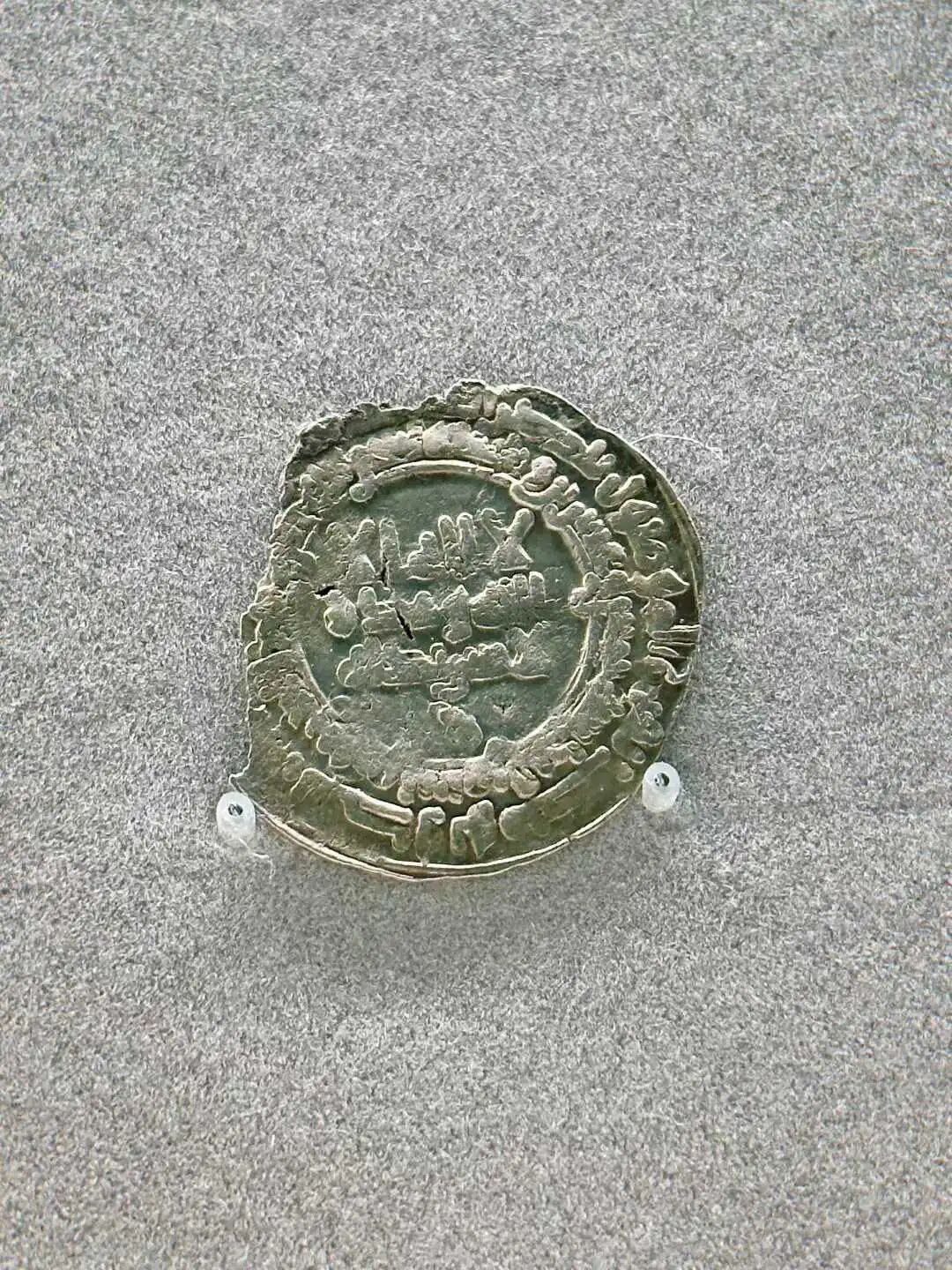
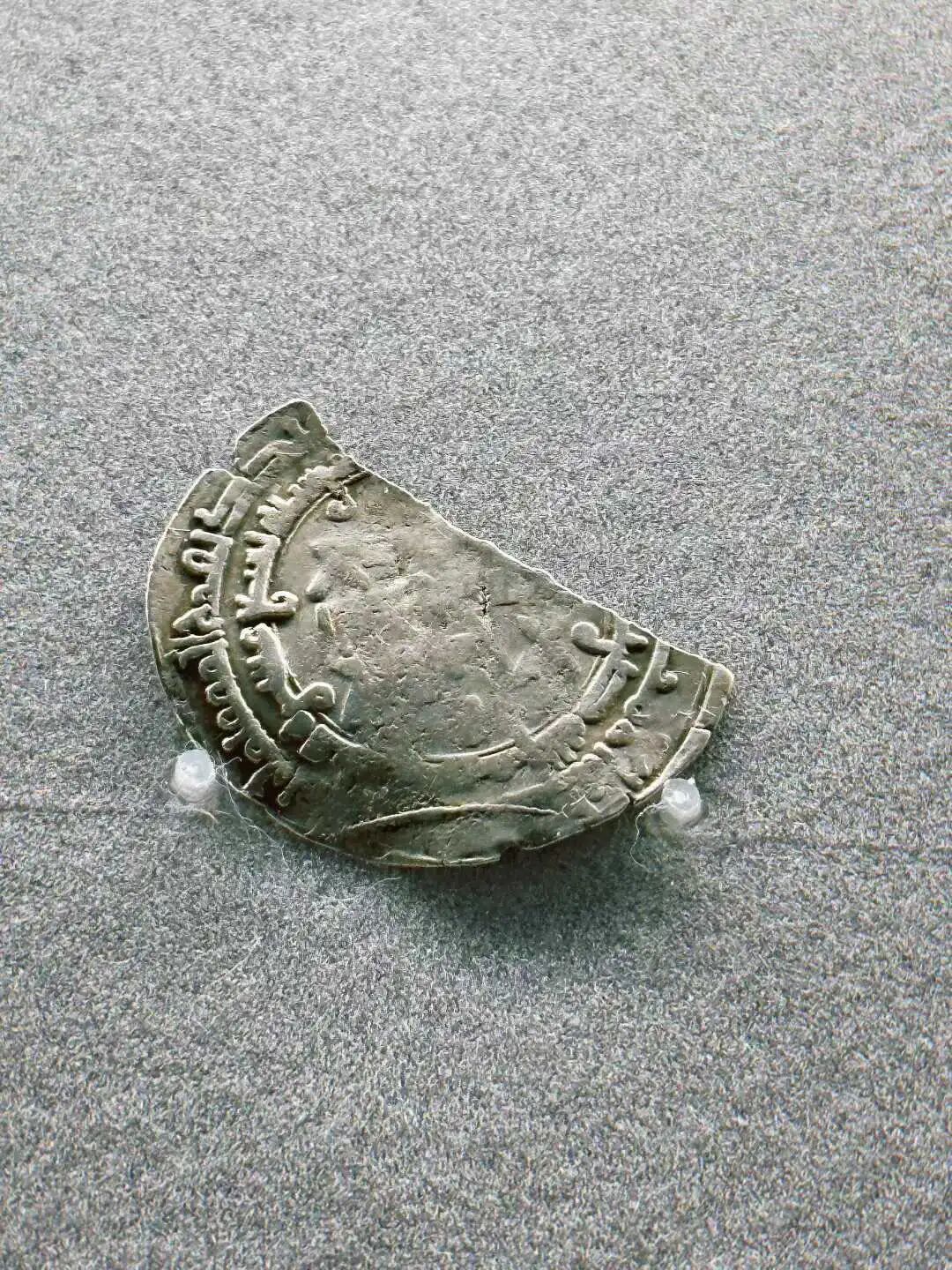
From the collection of the National Historical Museum of Belarus, this is a hoard of silver coins from the Abbasid Caliphate in the mid-10th century, found in Pinsk, Belarus, in 1991. Archaeologists have found tens of thousands of Arab silver coins in Northern Europe and the Baltic region. These coins were minted during the Abbasid Caliphate between the 8th and 11th centuries and were popular for their high purity and consistency. Between the 9th and 11th centuries, Vikings from Northern Europe used Eastern European waterways like the Volga and Dnieper rivers to trade with Arabs. They exchanged furs, slaves, and amber for large amounts of Arab silver coins. Interestingly, many of the Arab silver coins in Viking hoards were cut into pieces. This is because Vikings measured silver by weight rather than face value at the time.
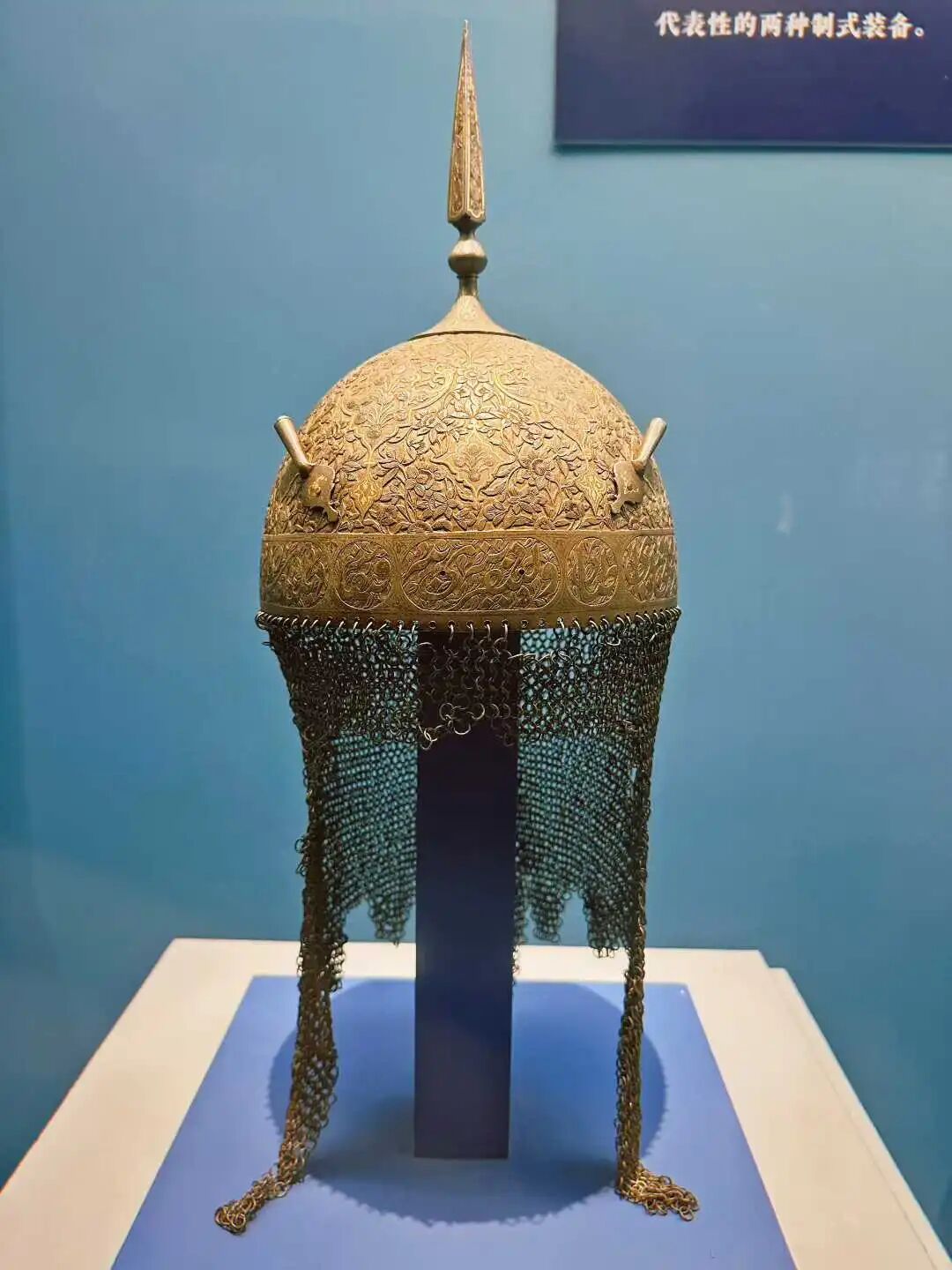
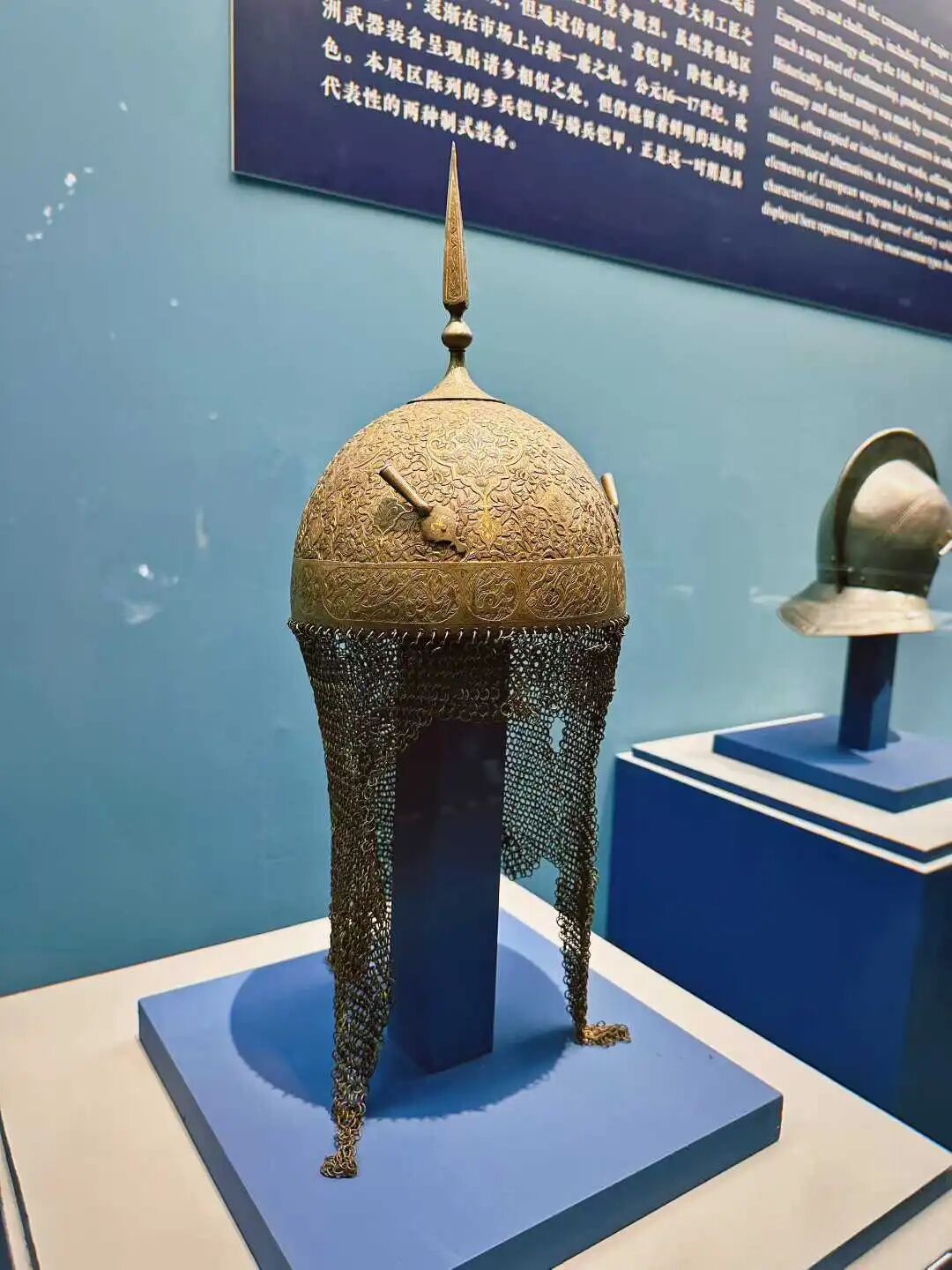
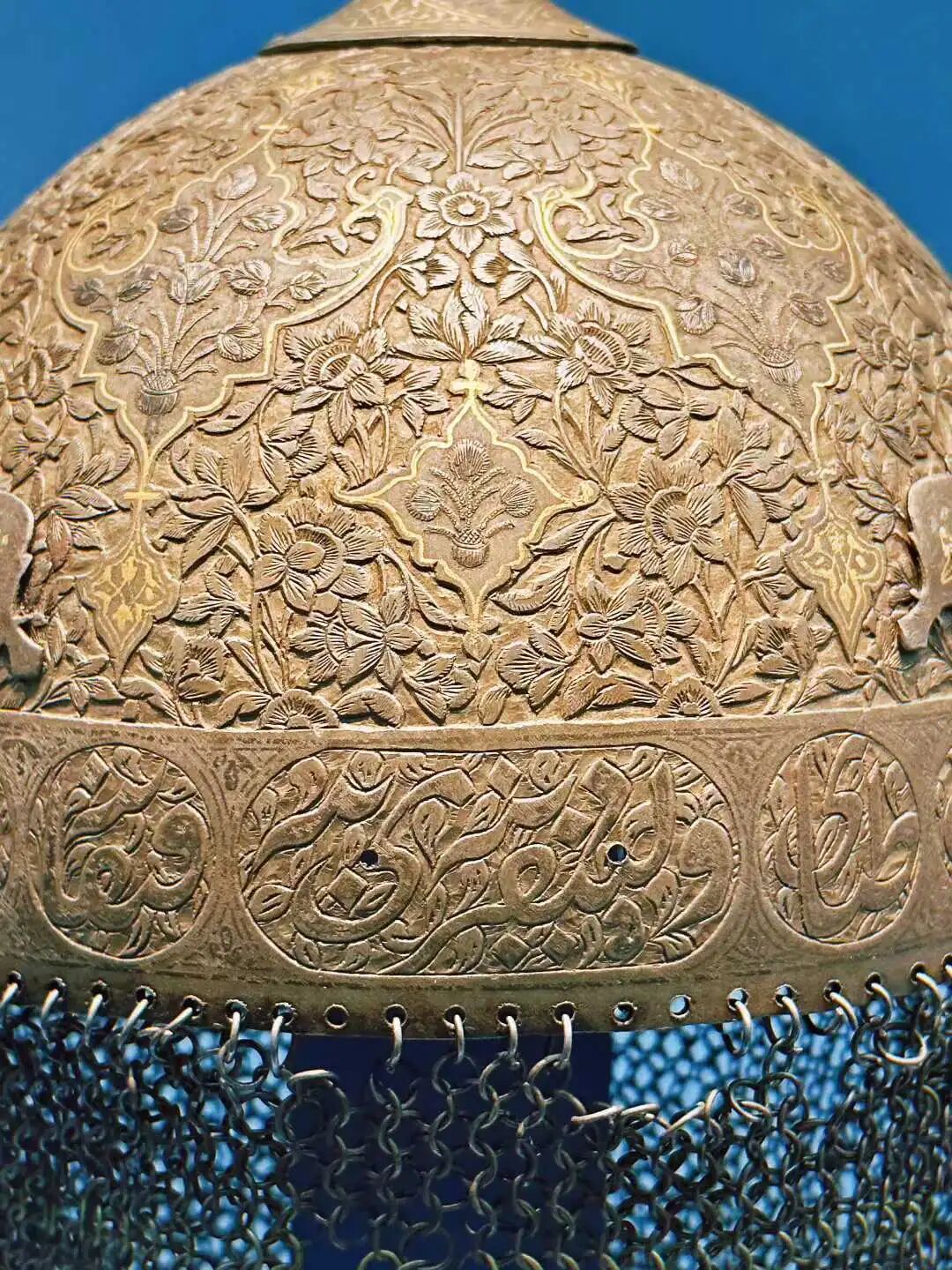
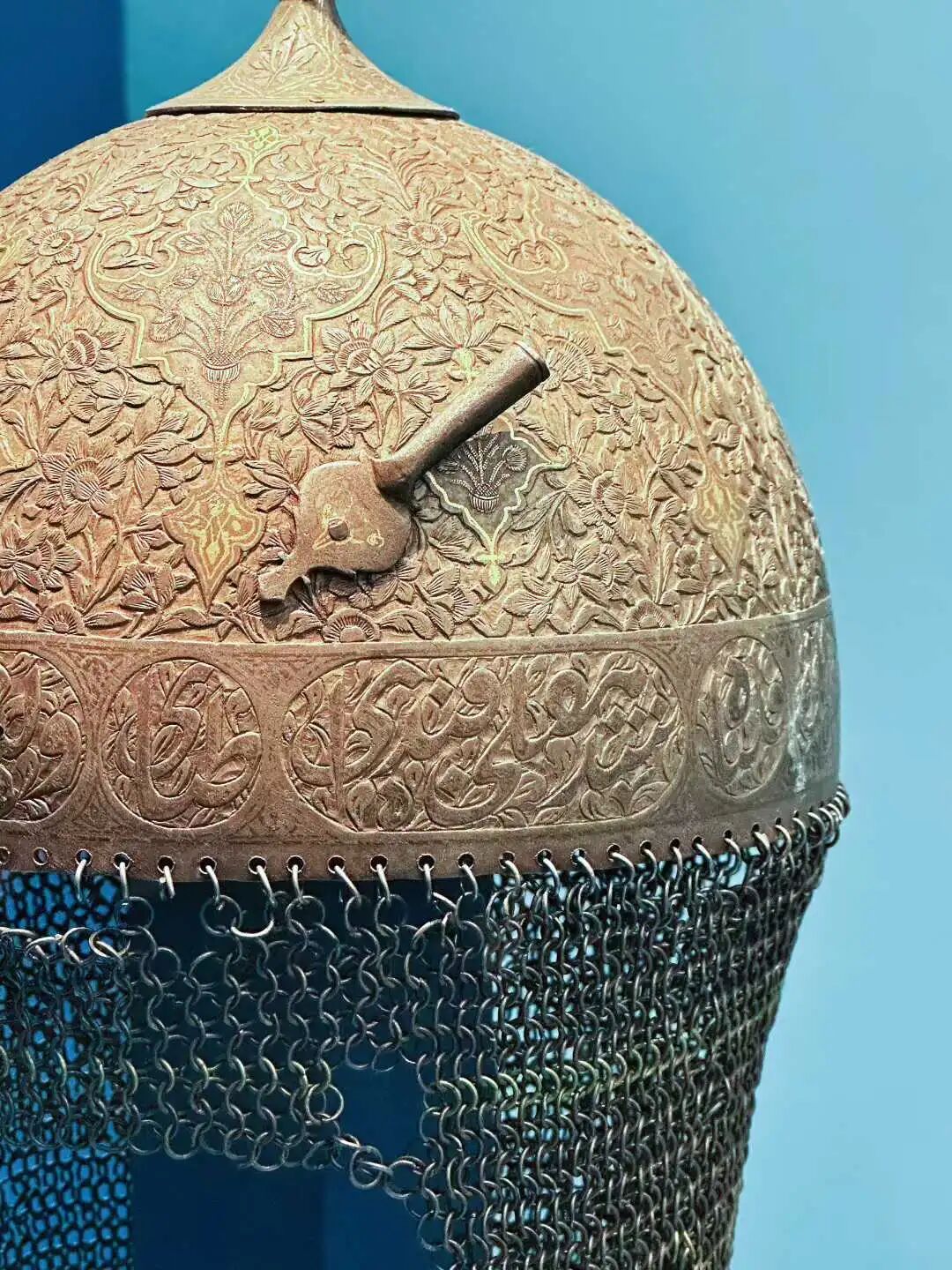
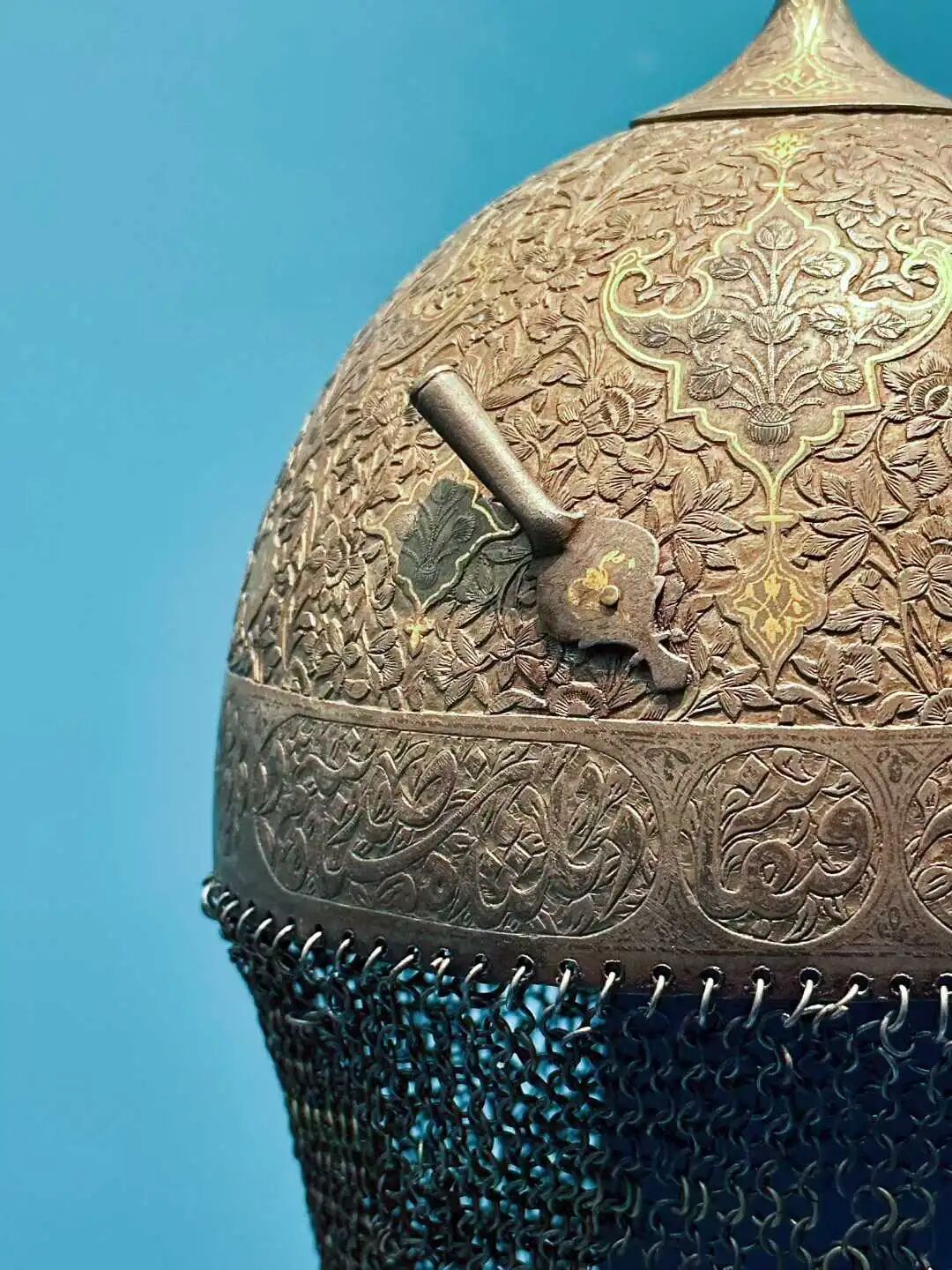
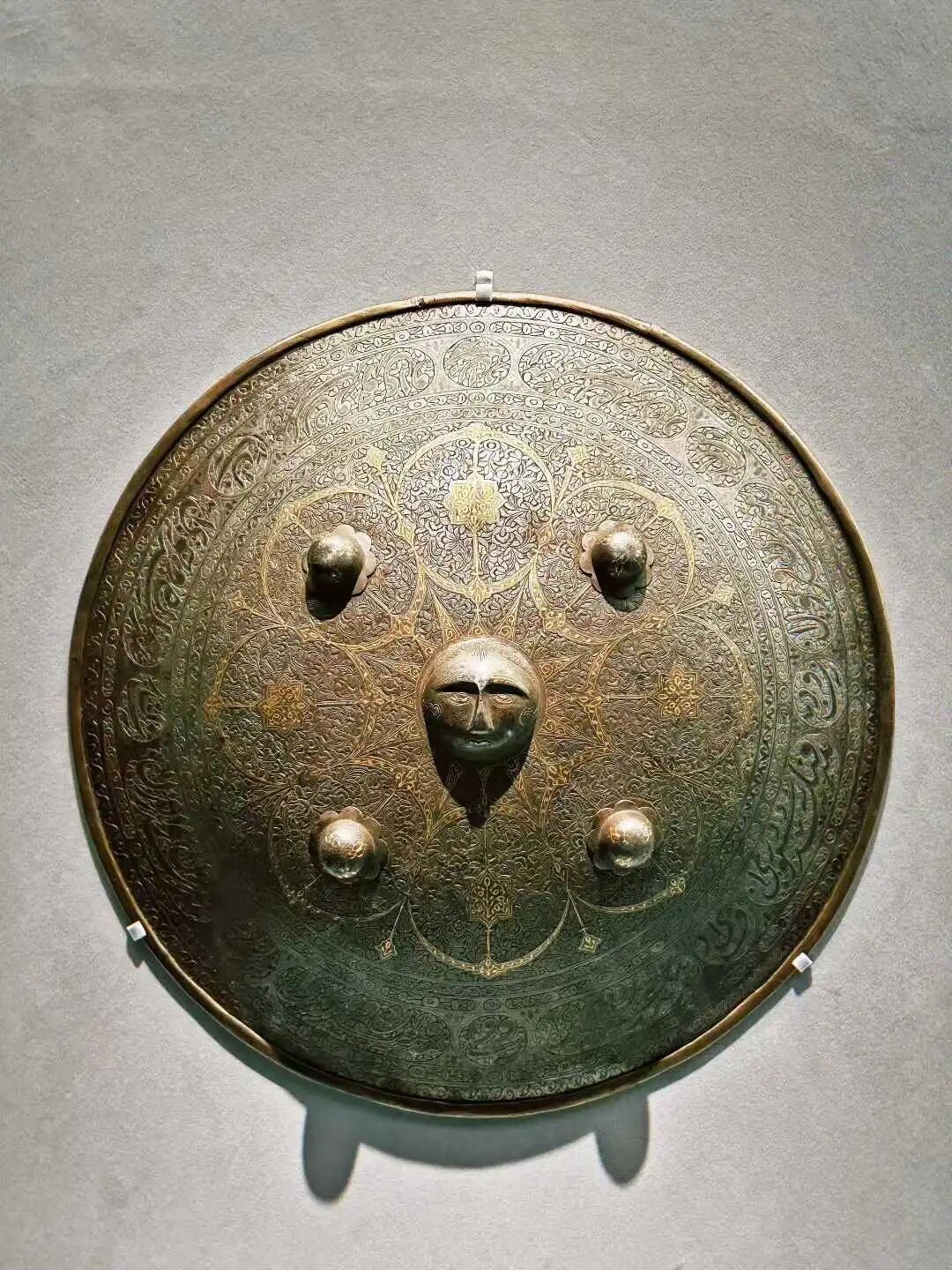
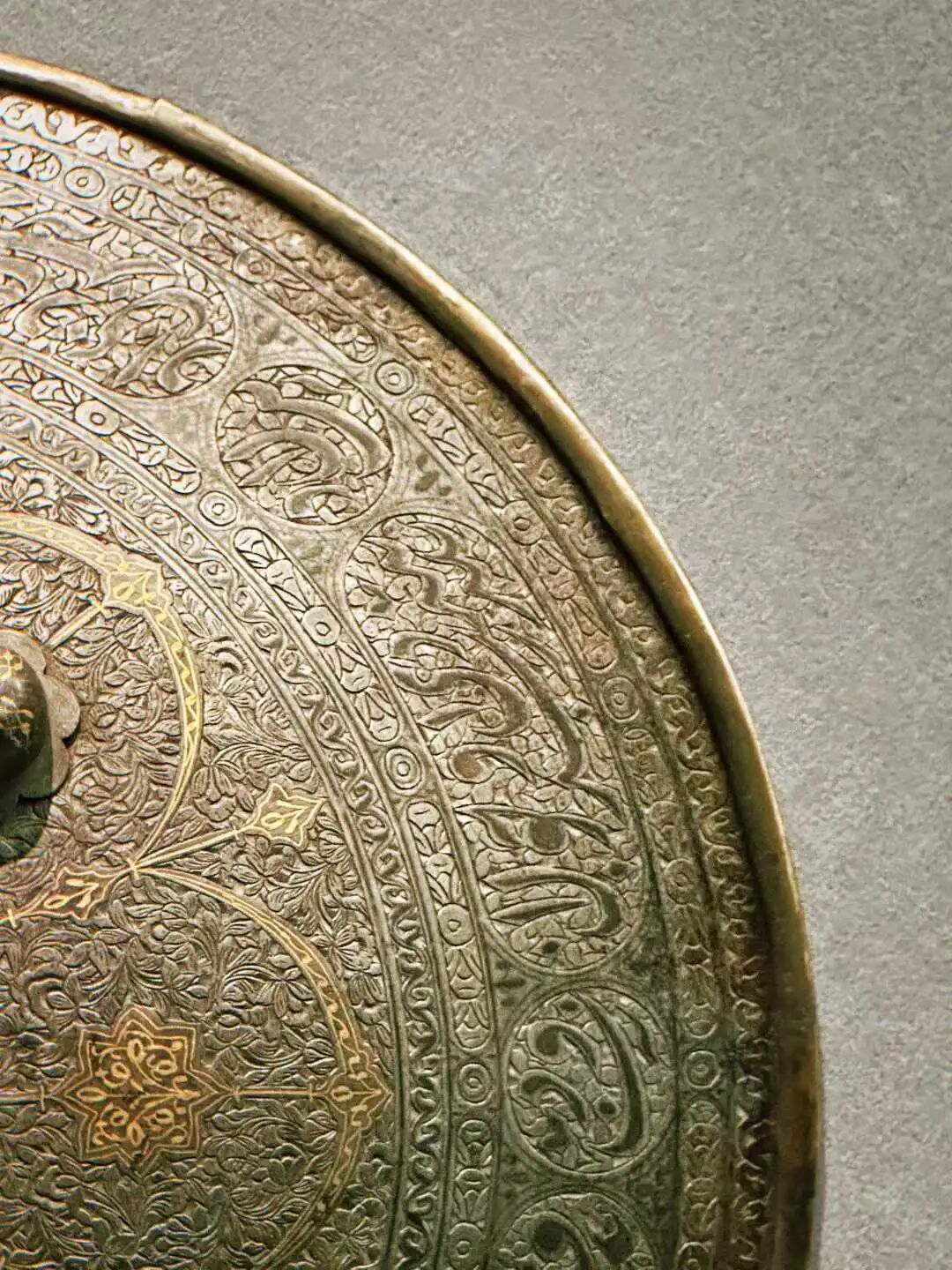
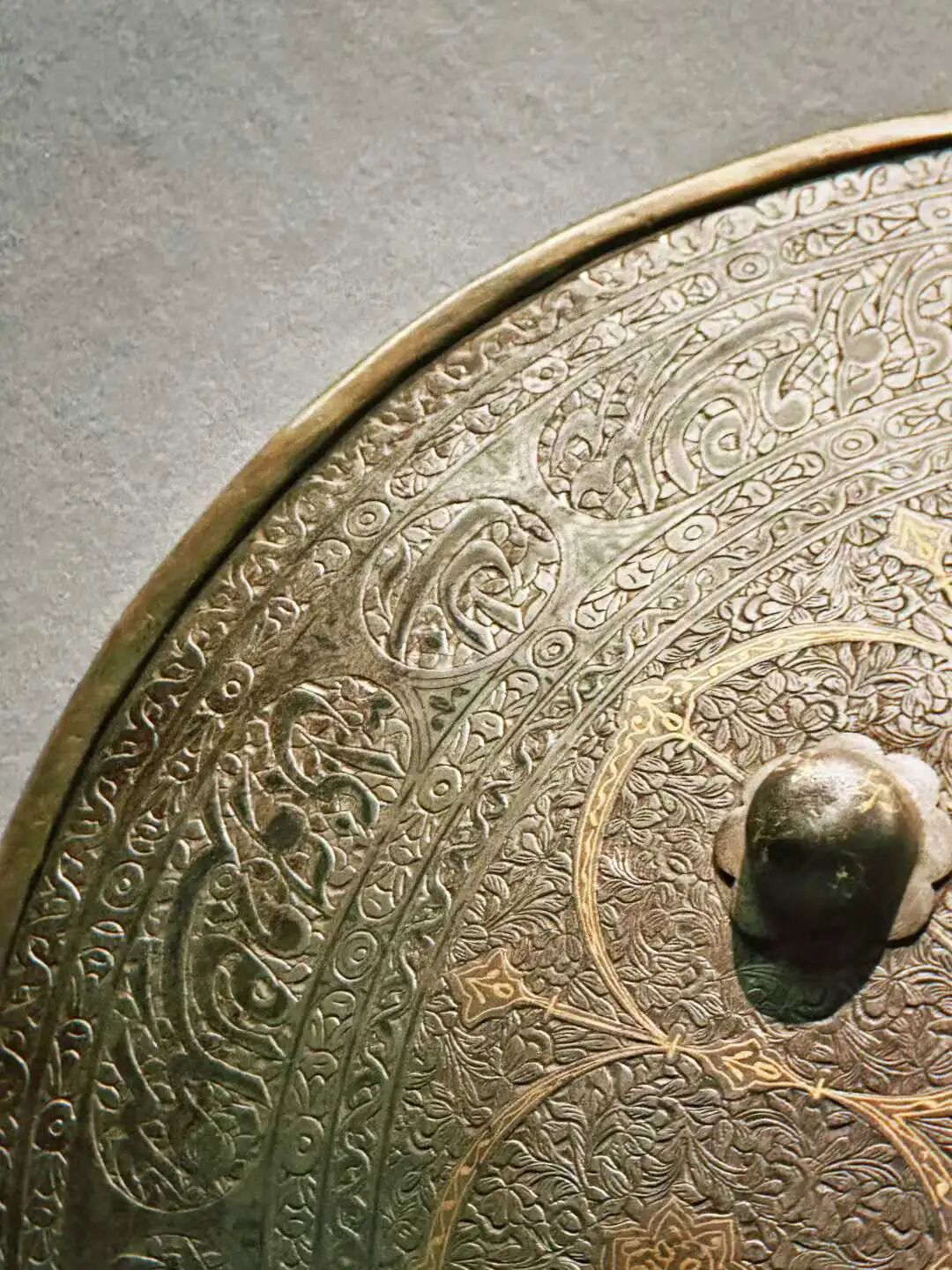
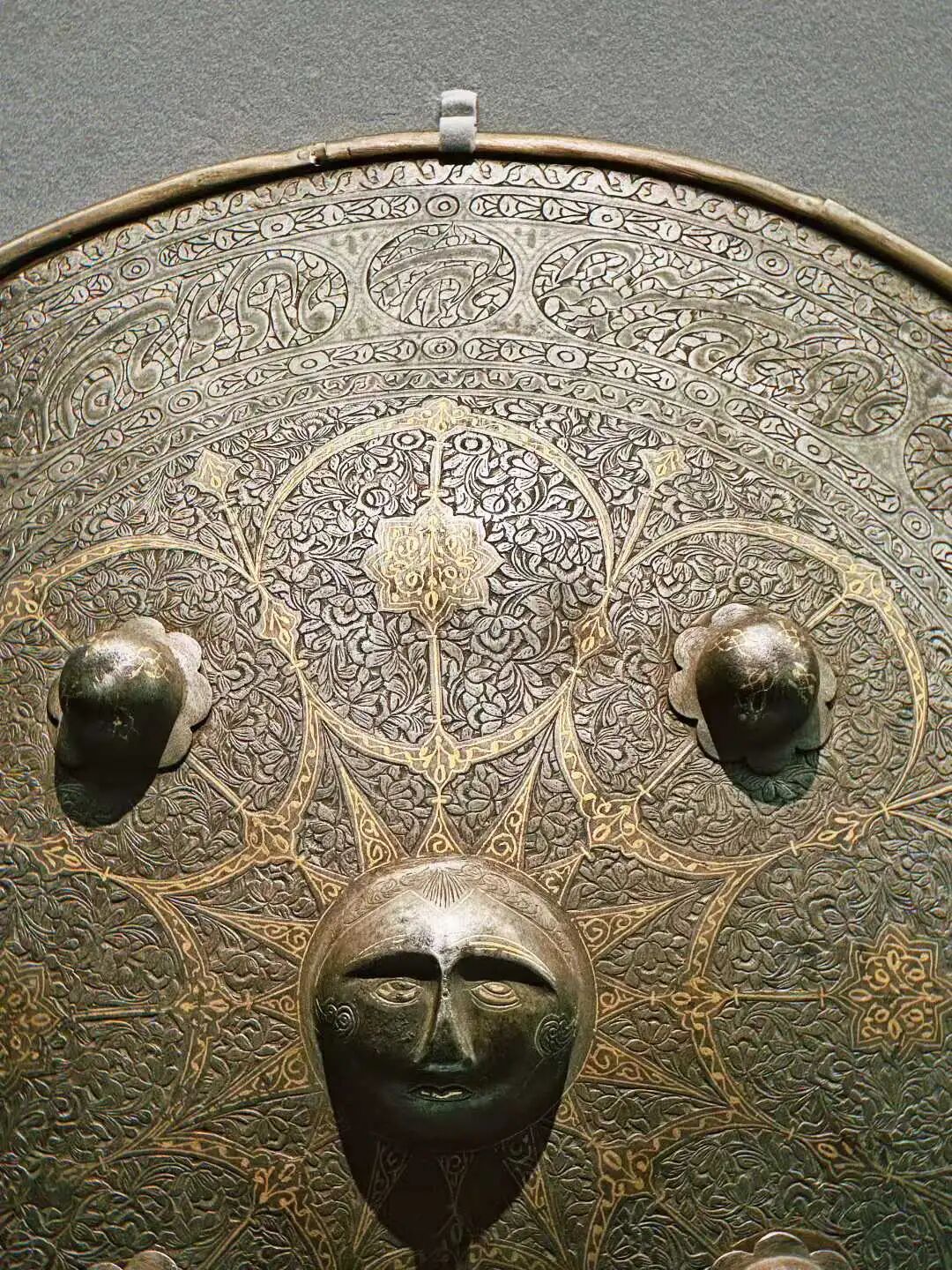
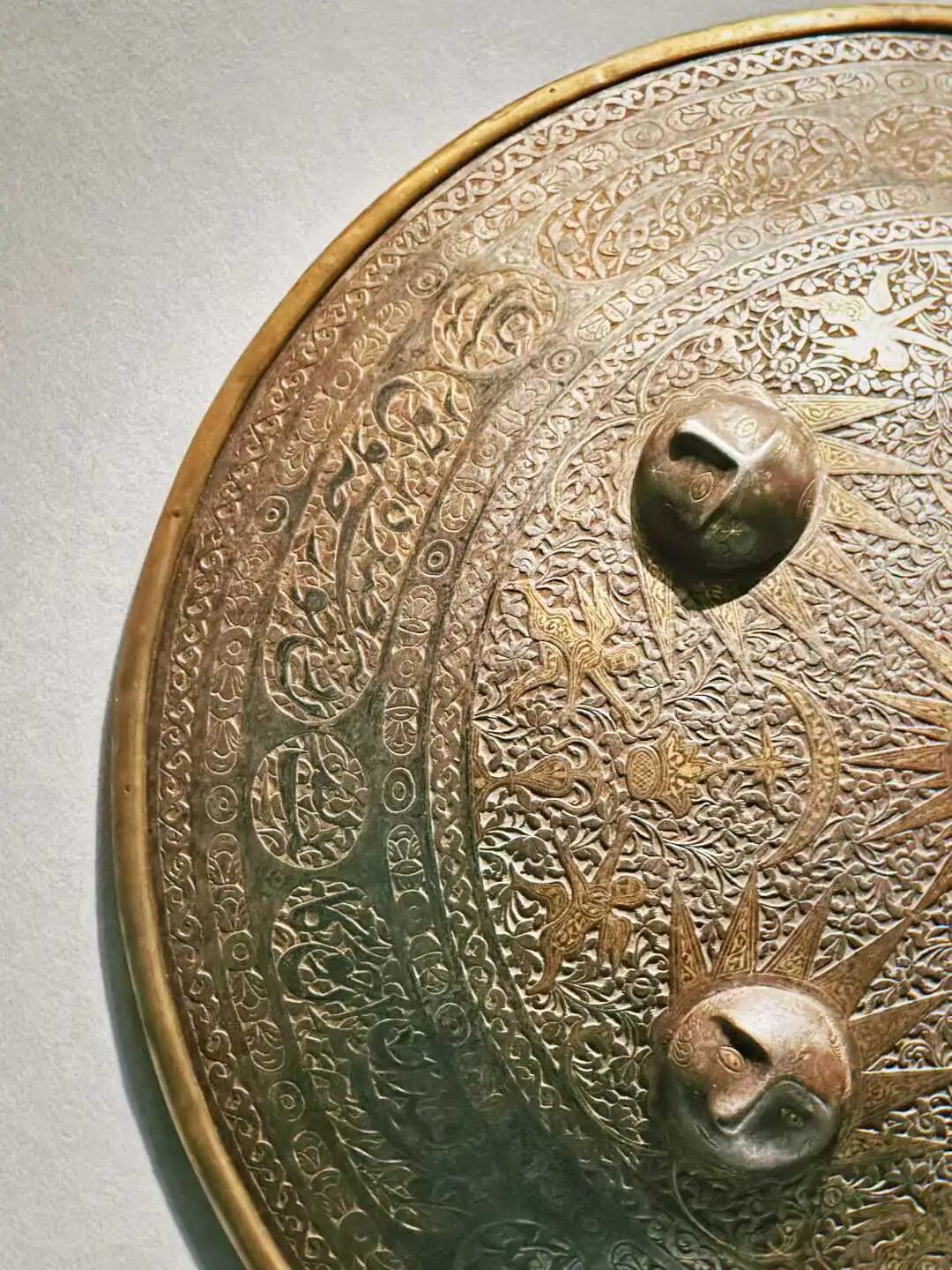
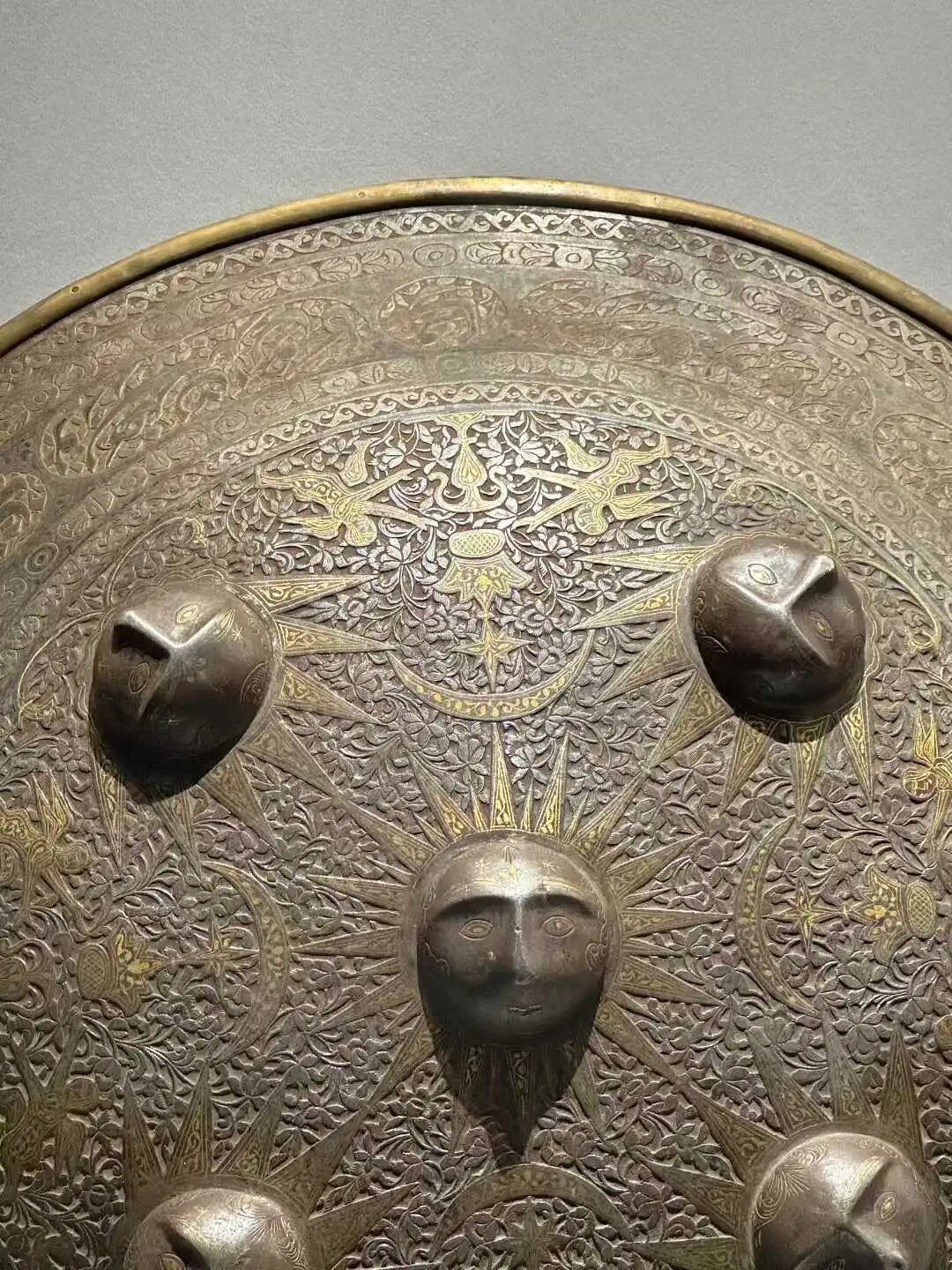
From the collection of the National Historical Museum of Belarus, this is a helmet and shield from the Qajar dynasty of Iran in the 19th century. The helmet and shield were hand-forged from single plates of Damascus steel. The helmet has a long spike on top and feather holders on both sides, while the shield features a sun motif. Both the helmet and shield are engraved with floral patterns and beautiful Persian calligraphy. Persian calligraphy developed from Naskh Arabic script. Compared to Naskh, the strokes are more elongated and tilt from the top right to the bottom left, allowing for more freedom when writing.
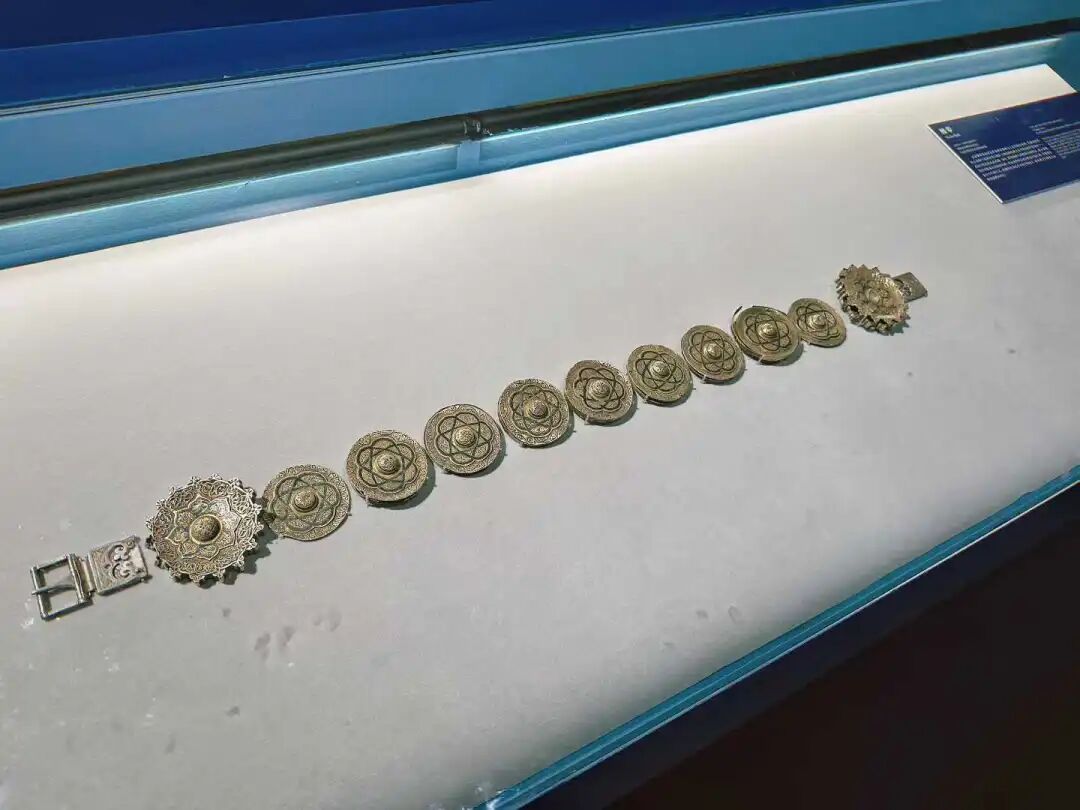
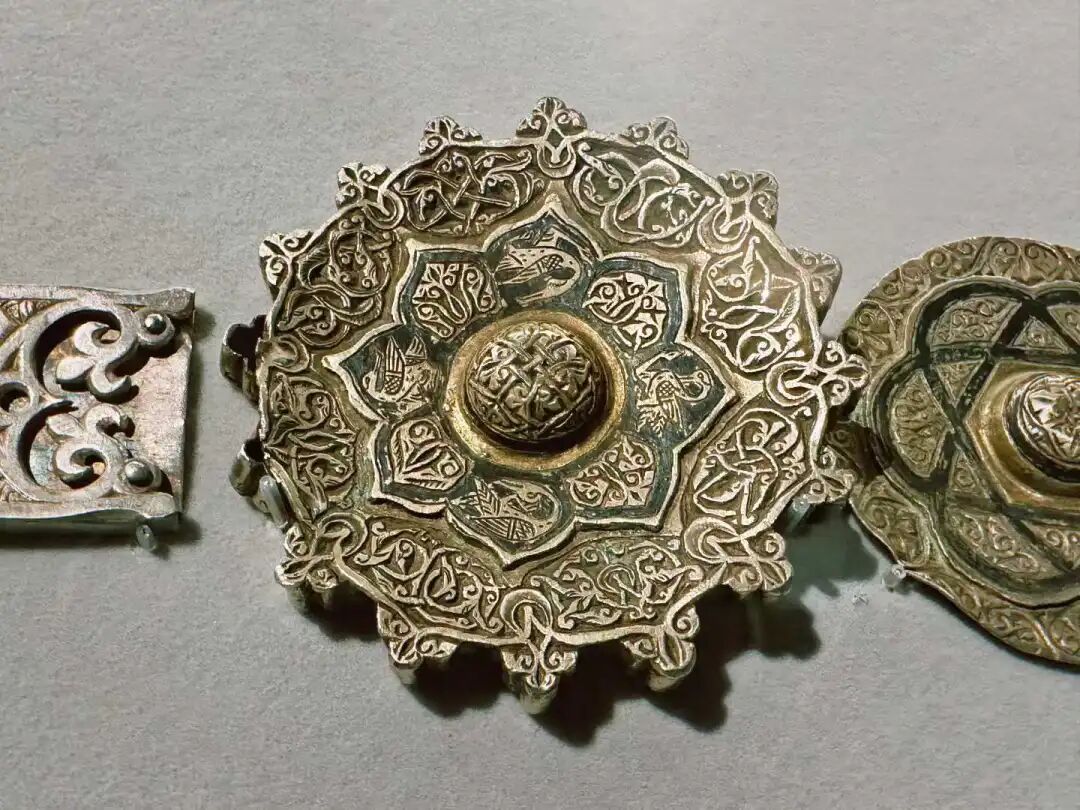
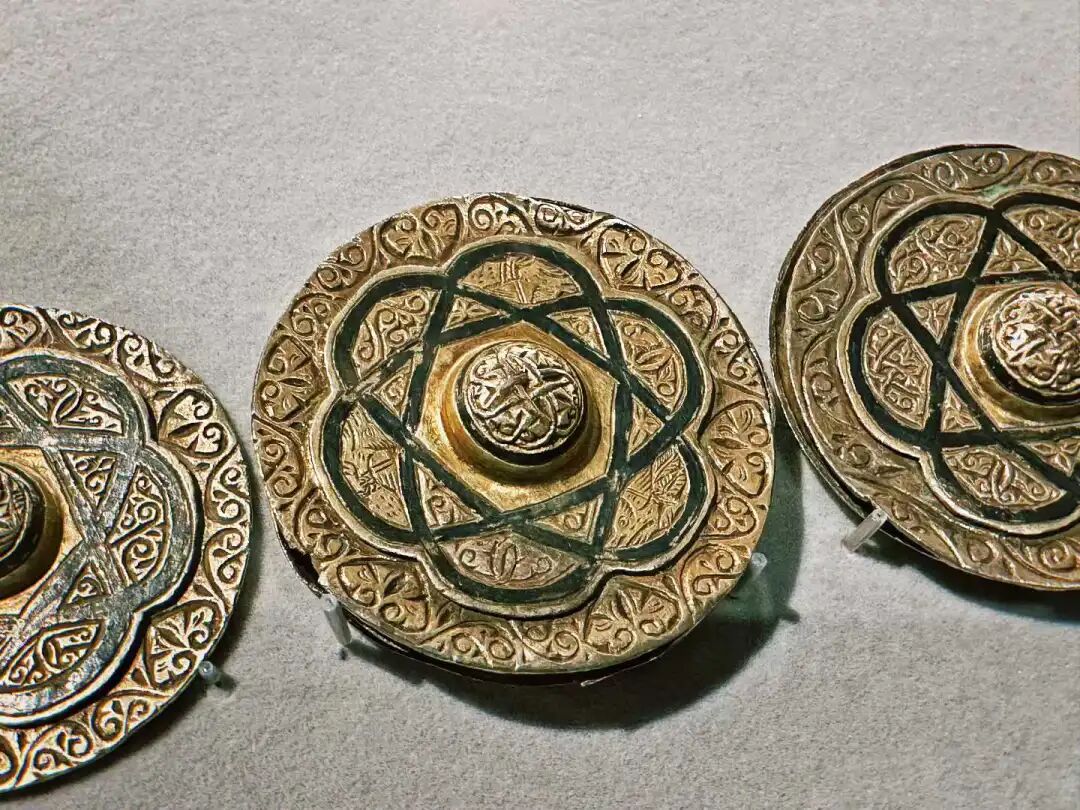
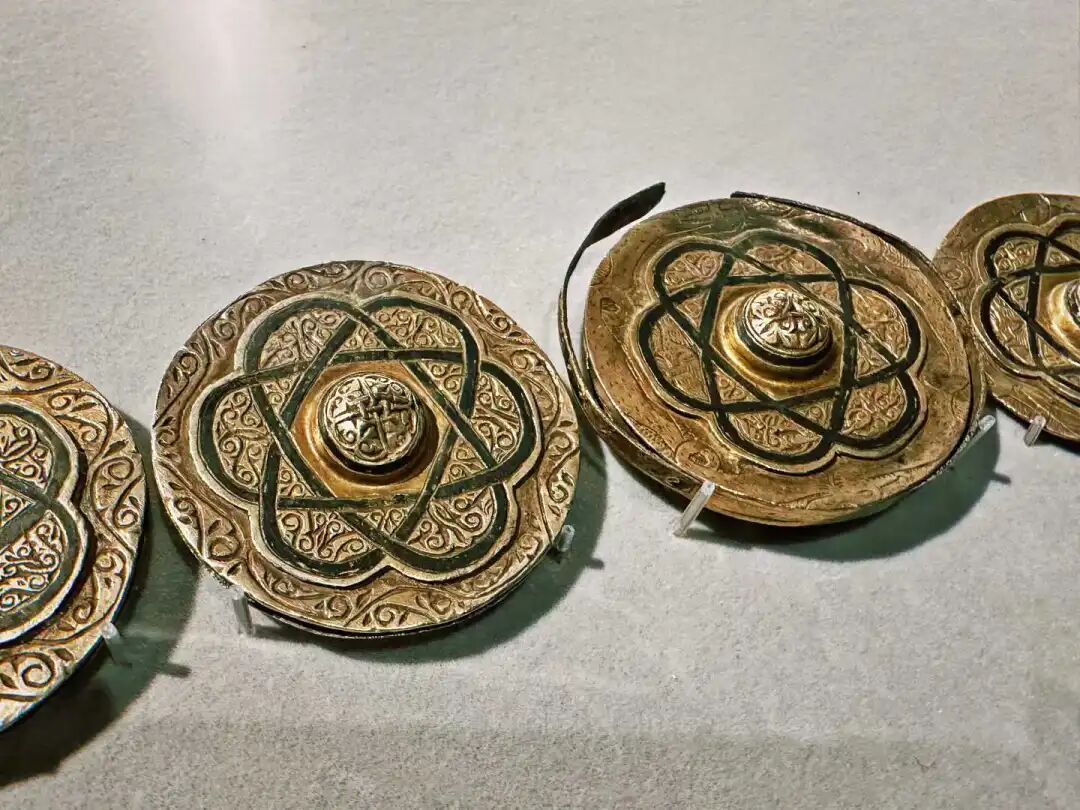
From the collection of the National Historical Museum of Belarus, this is a belt featuring traditional Crimean jewelry craftsmanship. It is believed to be a gift from Hacı I Giray, the founding Khan of the Crimean Khanate, to Grand Duke Vytautas of Lithuania.
Hacı I Giray was a descendant of Tuka-Timur, the thirteenth son of Jochi, who was the eldest son of Genghis Khan. His family began ruling the Crimean Peninsula in 1260, but they were defeated by Tamerlane in 1395 and fled to Lithuania. Hacı I Giray was born in Lithuania in 1397. In 1428, with the support of Grand Duke Vytautas of Lithuania, Hacı I Giray led an army to take over the Crimean Peninsula, but he was soon defeated by the Golden Horde. Later, with Lithuanian support, Hacı I Giray sent troops to Crimea several more times. He finally occupied the Crimean Peninsula in 1441 and established the Crimean Khanate.
This belt is made of high-purity silver. The circular discs feature Tatar decorative motifs, while the buckle has a Gothic design, reflecting the cultural exchange between East and West at the time.
National Museum of Kazakhstan
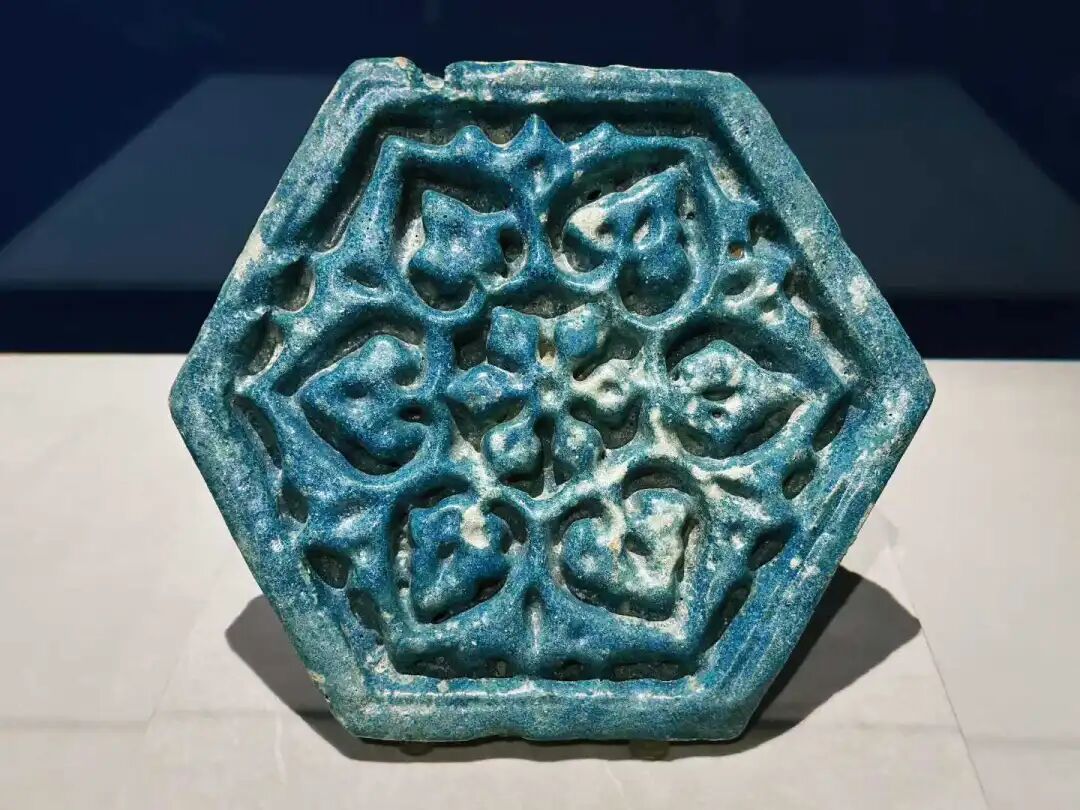
From the collection of the National Museum of Kazakhstan, these are ceramic tiles unearthed from a tomb at the ancient city site of Zhaiyk, dating back to the Golden Horde period in the 14th century. The ancient city site of Zhaiyk was discovered by an archaeological team in 2001. Subsequent excavations revealed the remains of a Turkish bath with an underfloor heating system and a domed tomb decorated with colorful glazed tiles in the cemetery west of the city.
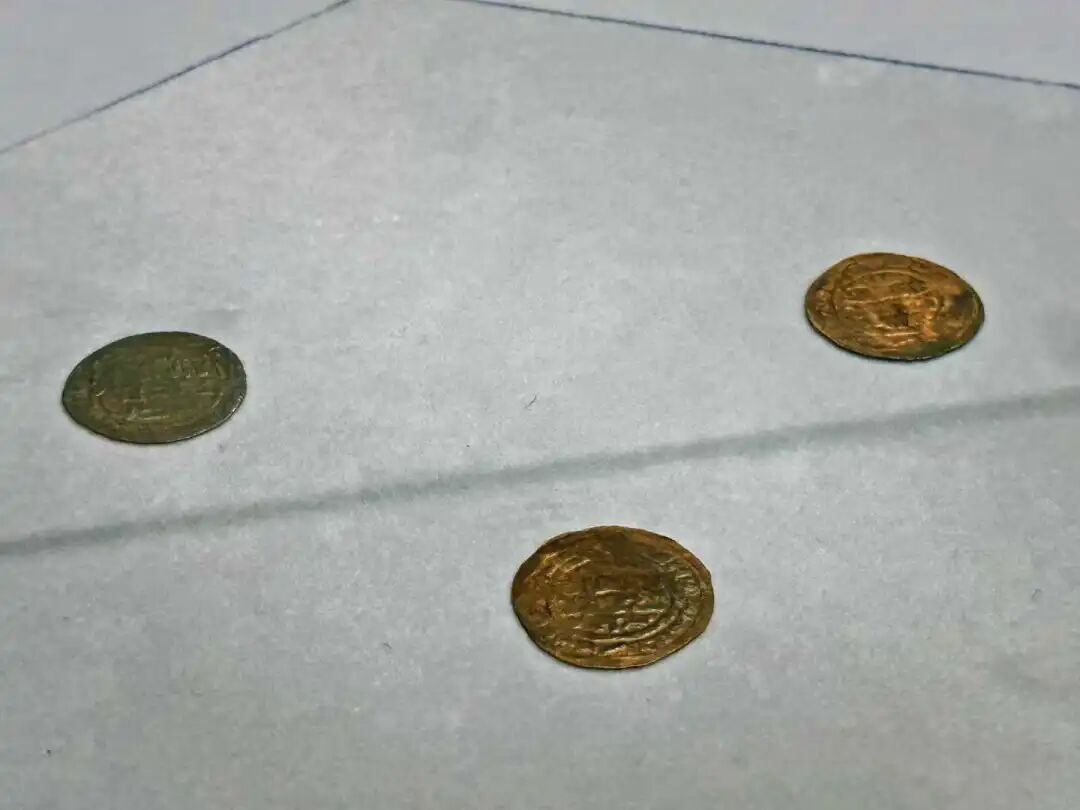
From the collection of the National Museum of Kazakhstan, this is a copper coin minted by the Samanid dynasty in 922-923, unearthed in Otrar, southern Kazakhstan. During the 9th and 10th centuries, this region was an important trade center for the Samanid dynasty.
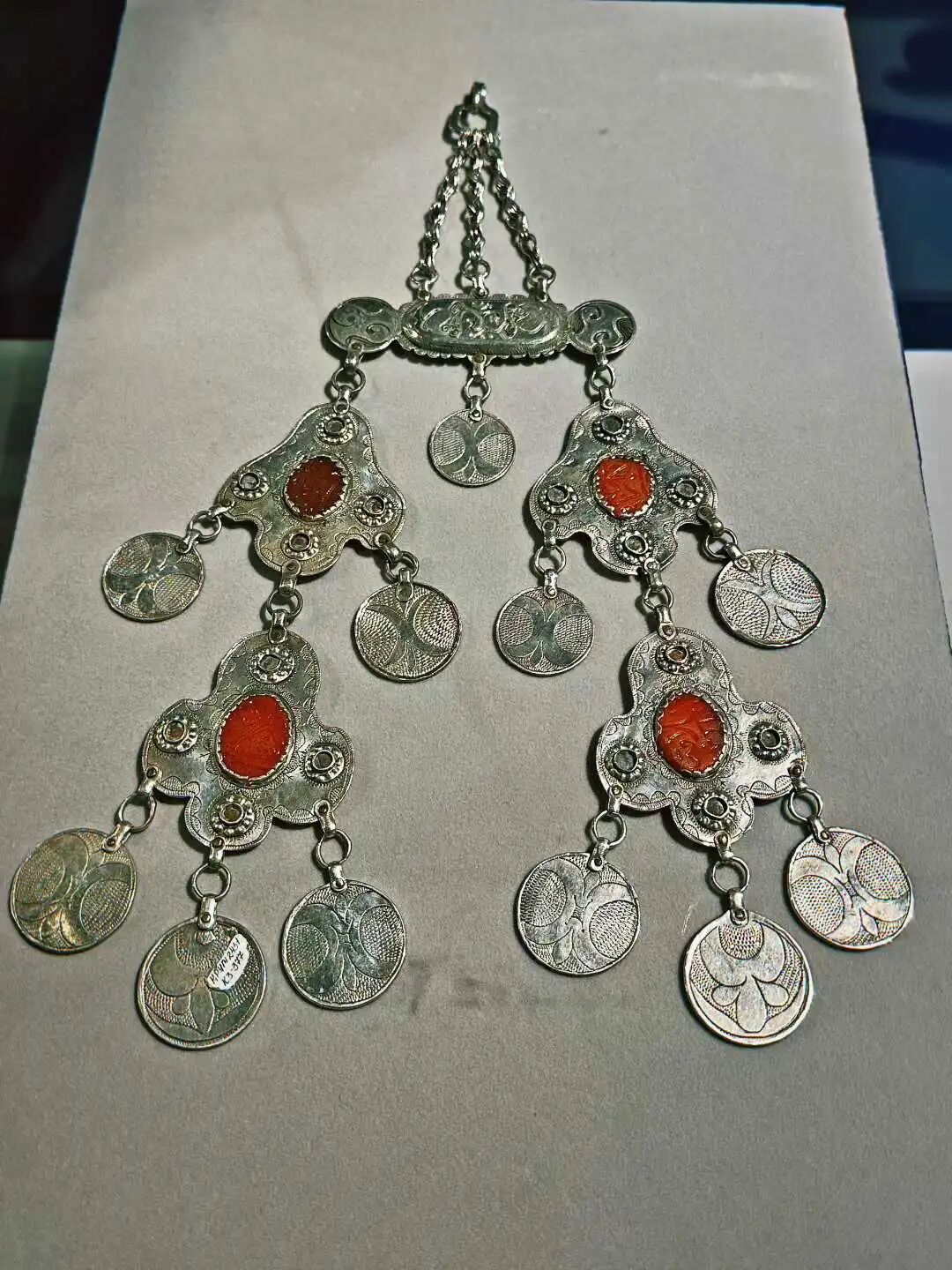
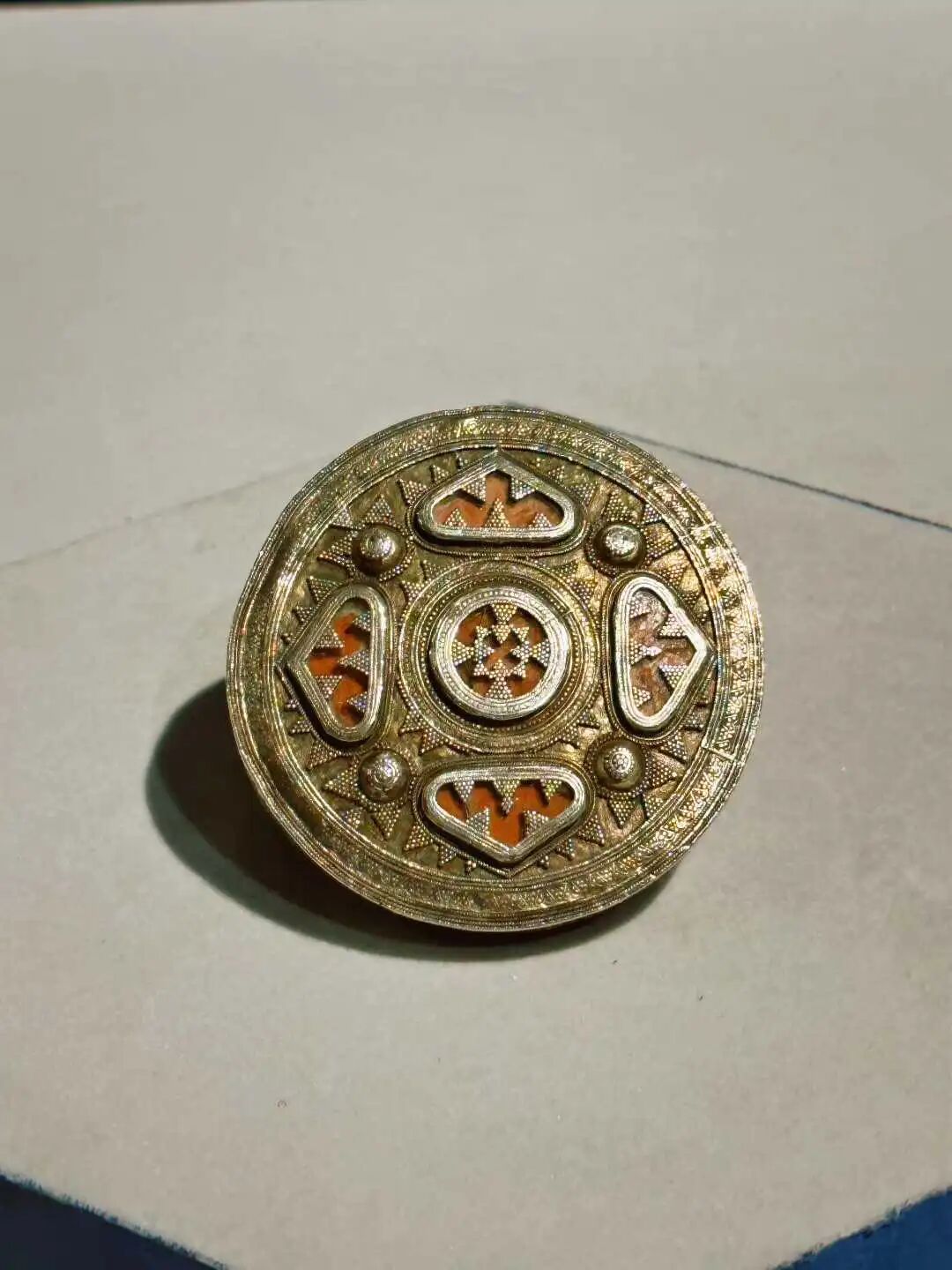
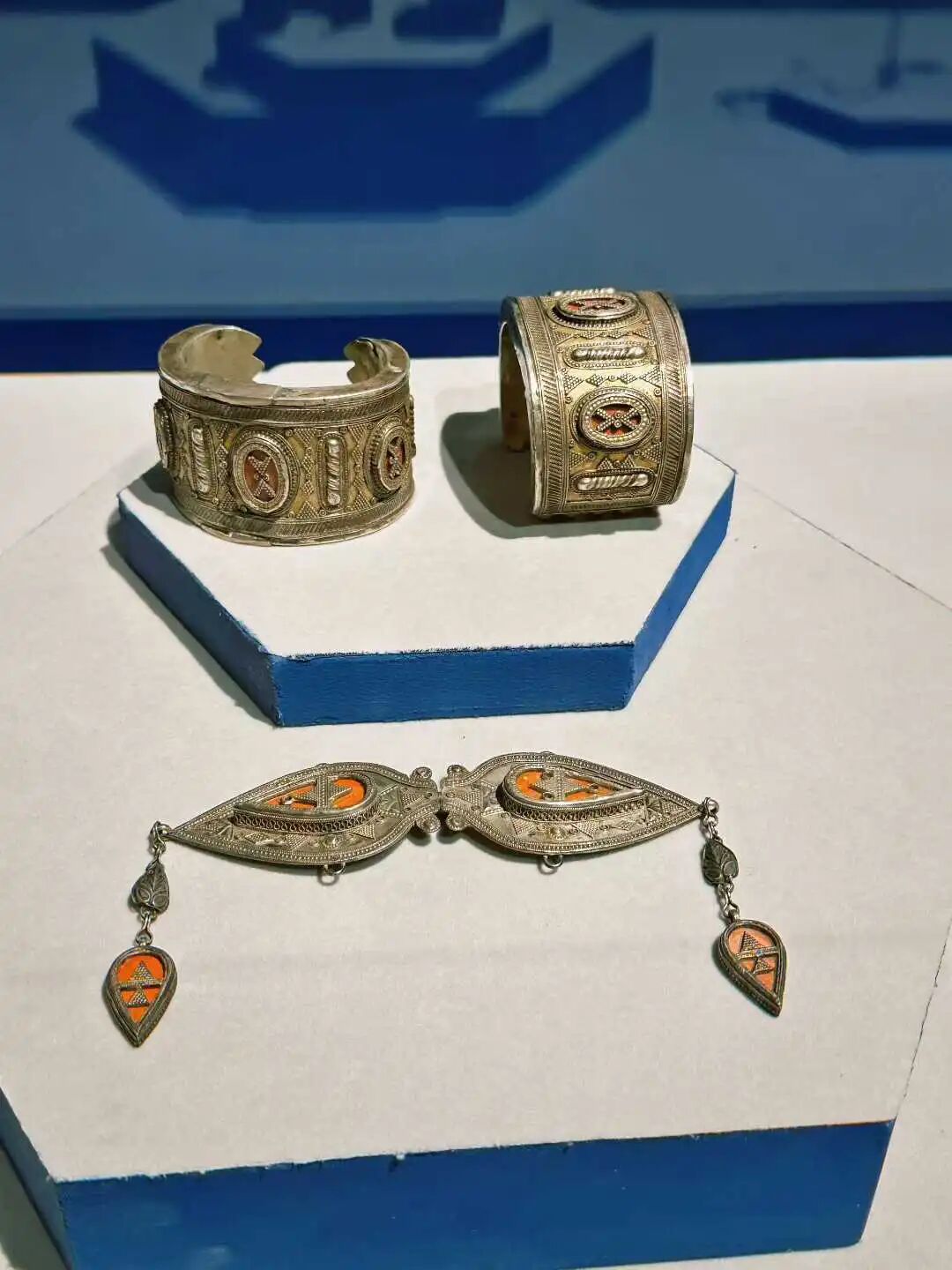
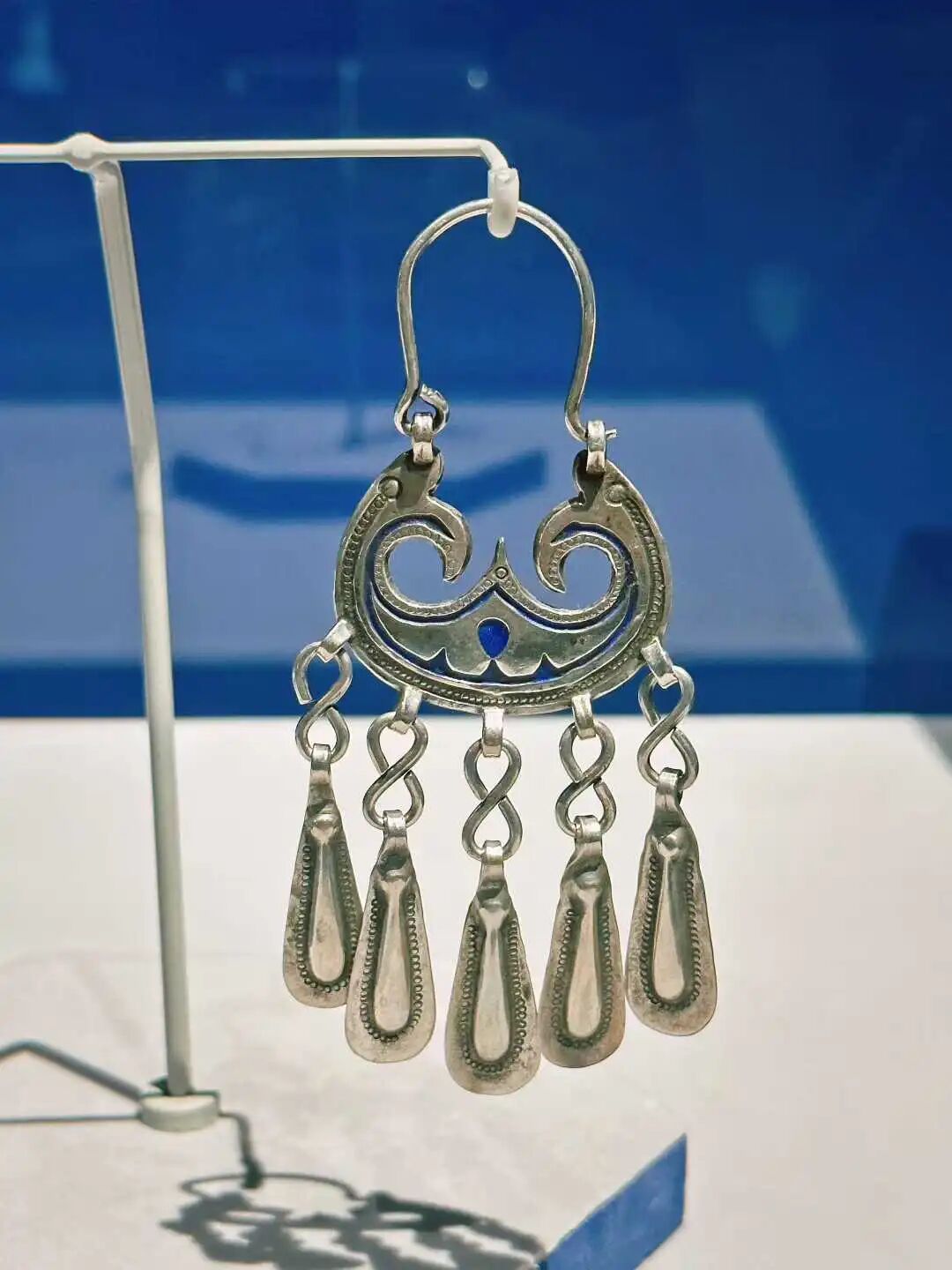
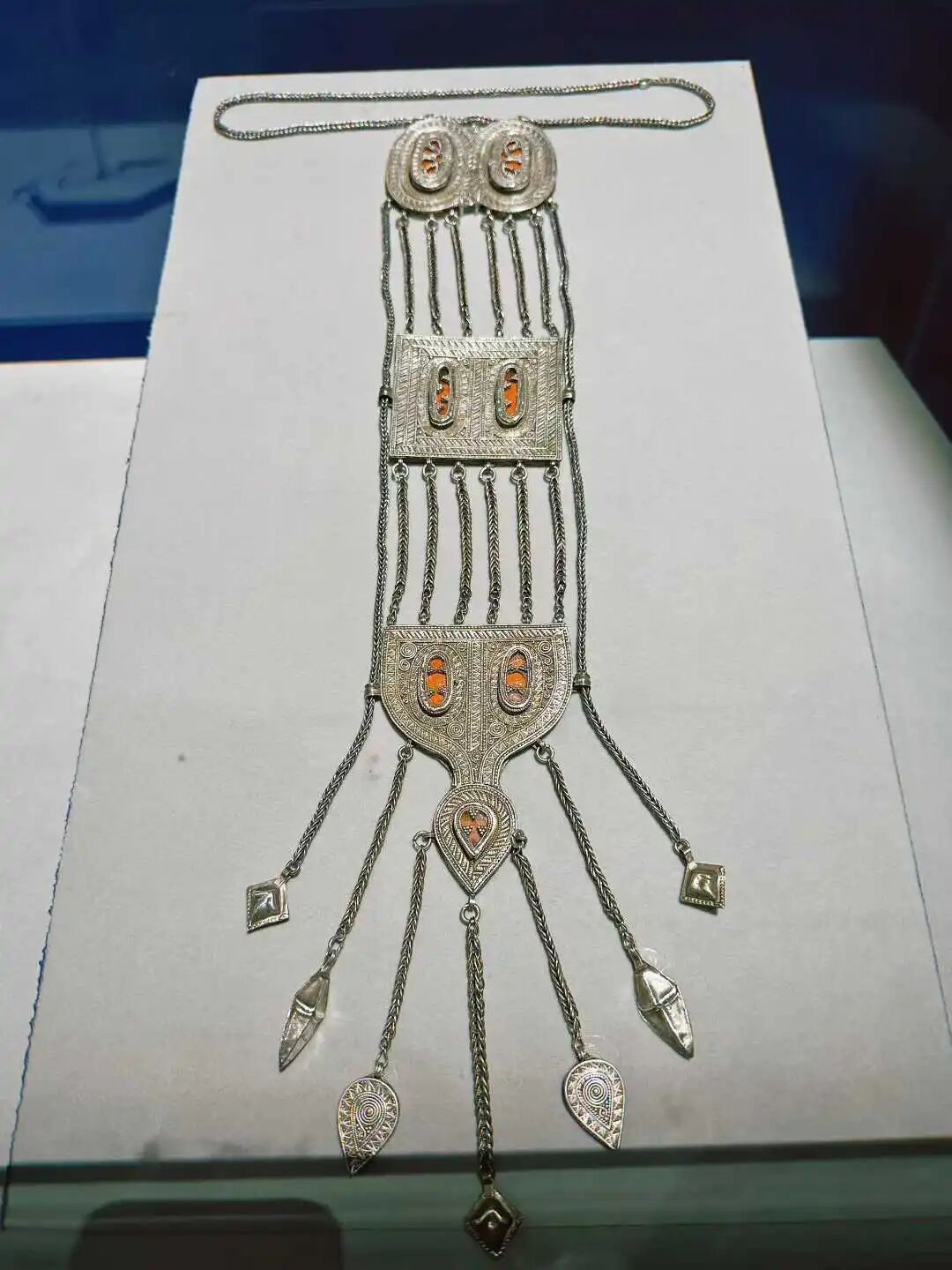
This is a modern Kazakh women's accessory.
National Museum of Pakistan, Islamabad
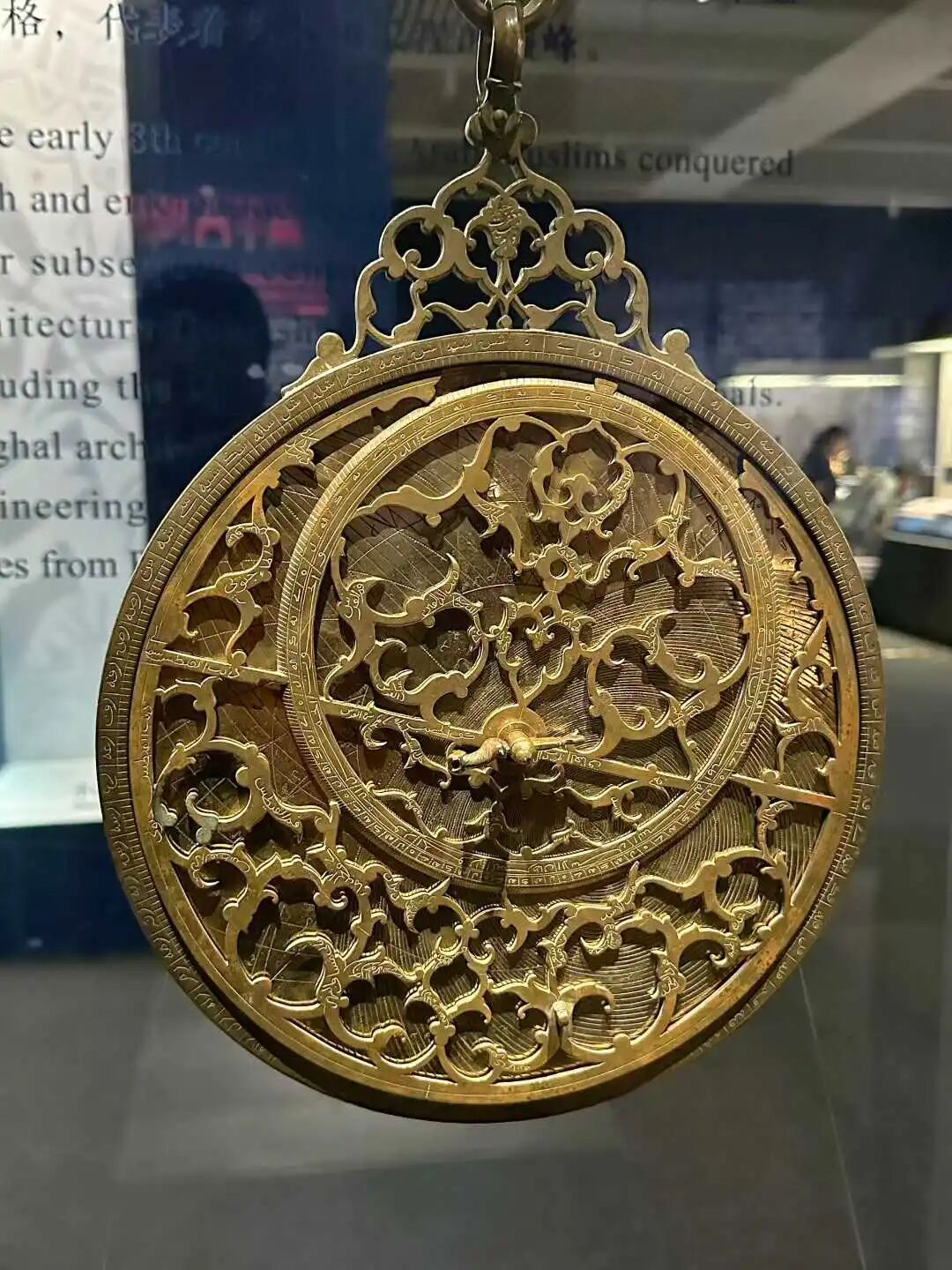
From the collection of the National Museum of Pakistan in Islamabad, this is a brass astrolabe from Lahore, dating to the Mughal Empire period under Humayun (reigned 1530-1540, 1555-1556). It is engraved with latitude and longitude, Persian and Arabic text, and decorated with arabesque and geometric patterns. Humayun himself had a strong interest in astronomy and astrology.
National Museum of Tajikistan.
A Persian copper water pitcher (aftabeh) from the early 20th century in the National Museum of Tajikistan collection. The aftabeh, also called abdasta, is a water pitcher used for wudu (ablution) in Persian cultural regions like Iran, Afghanistan, Azerbaijan, and Central Asia. They are usually made of clay or brass.
A copper hand-washing basin (dastshui) from the early 20th century in the National Museum of Tajikistan collection, featuring an engraving of 25 deer in different poses.
A copper water pitcher for wudu from the 19th century in the National Museum of Tajikistan collection.
A tray with Arabic script from the 19th century in the National Museum of Tajikistan collection.
A Persian shield in the National Museum of Tajikistan collection, decorated with sun and angel patterns and engraved with beautiful Persian calligraphy.
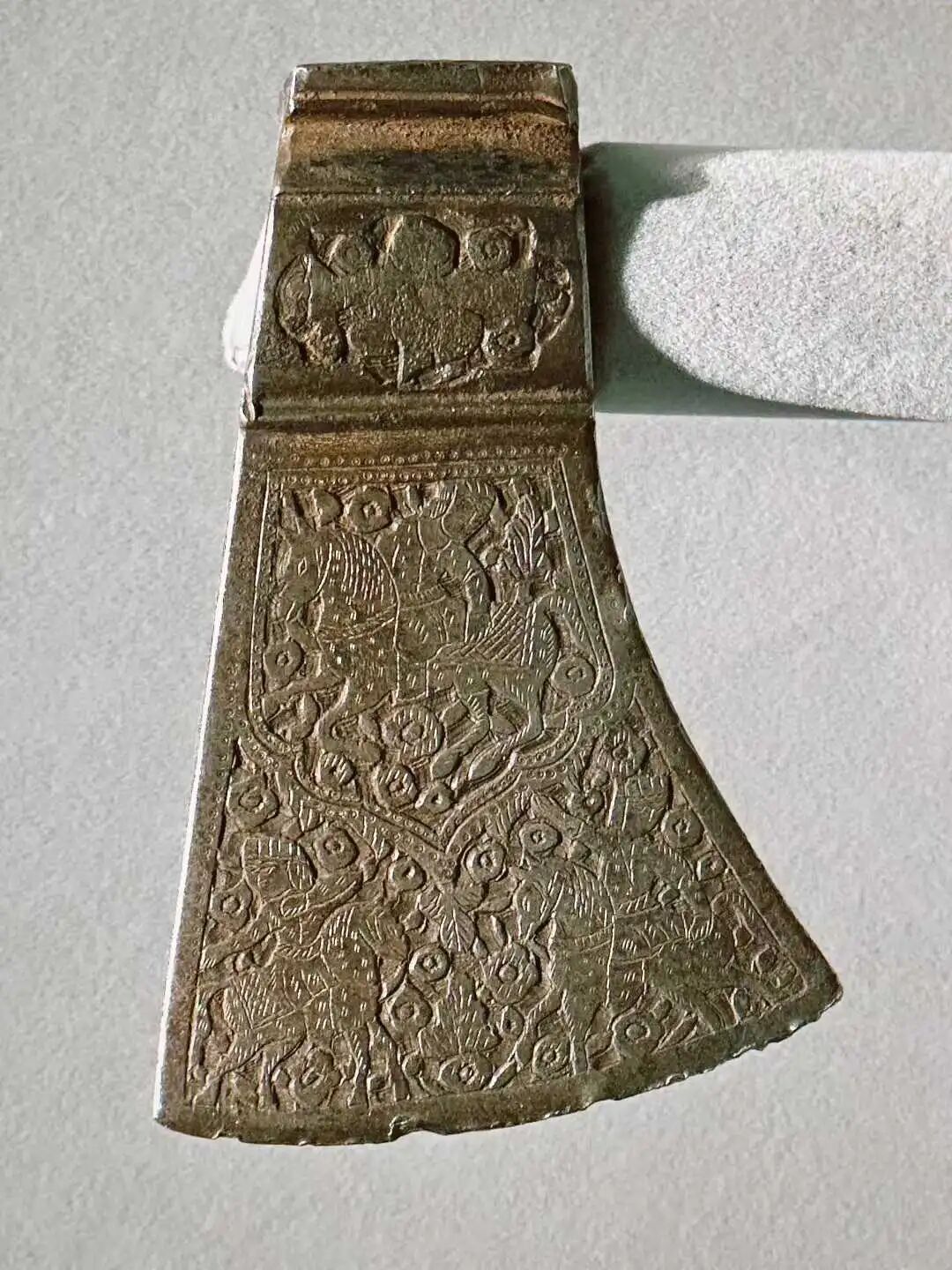
A 16th-century axe in the National Museum of Tajikistan collection, engraved with a scene of three riders hunting.
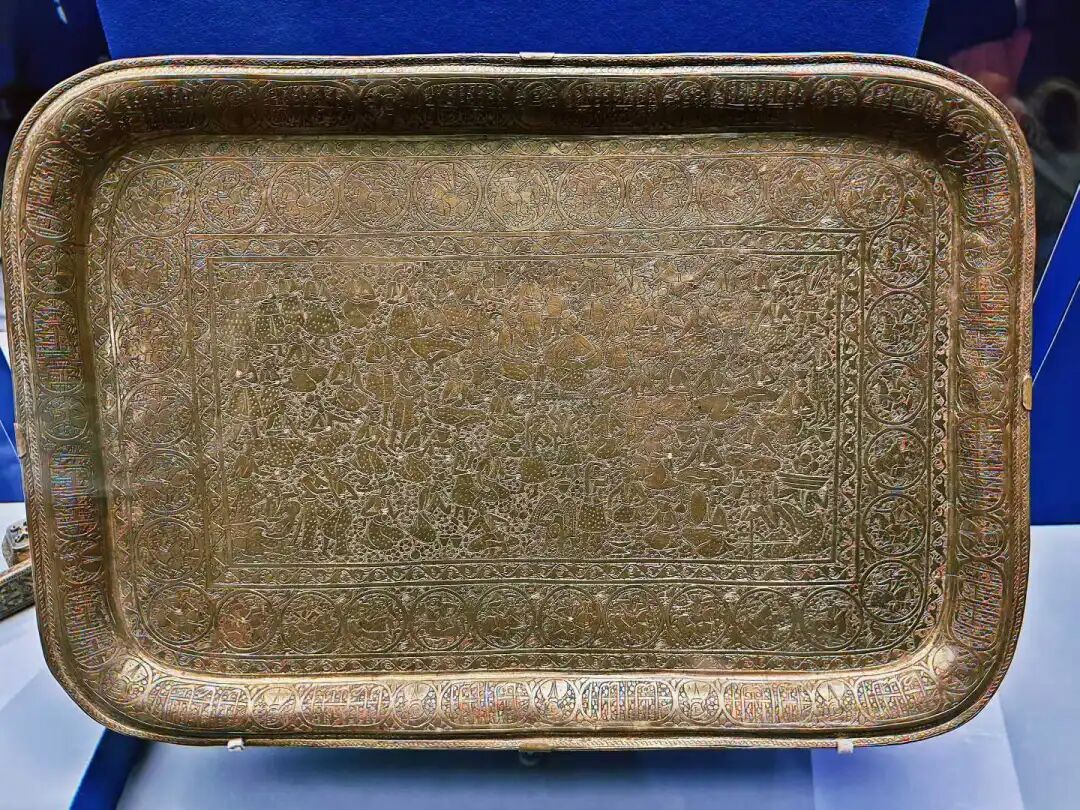
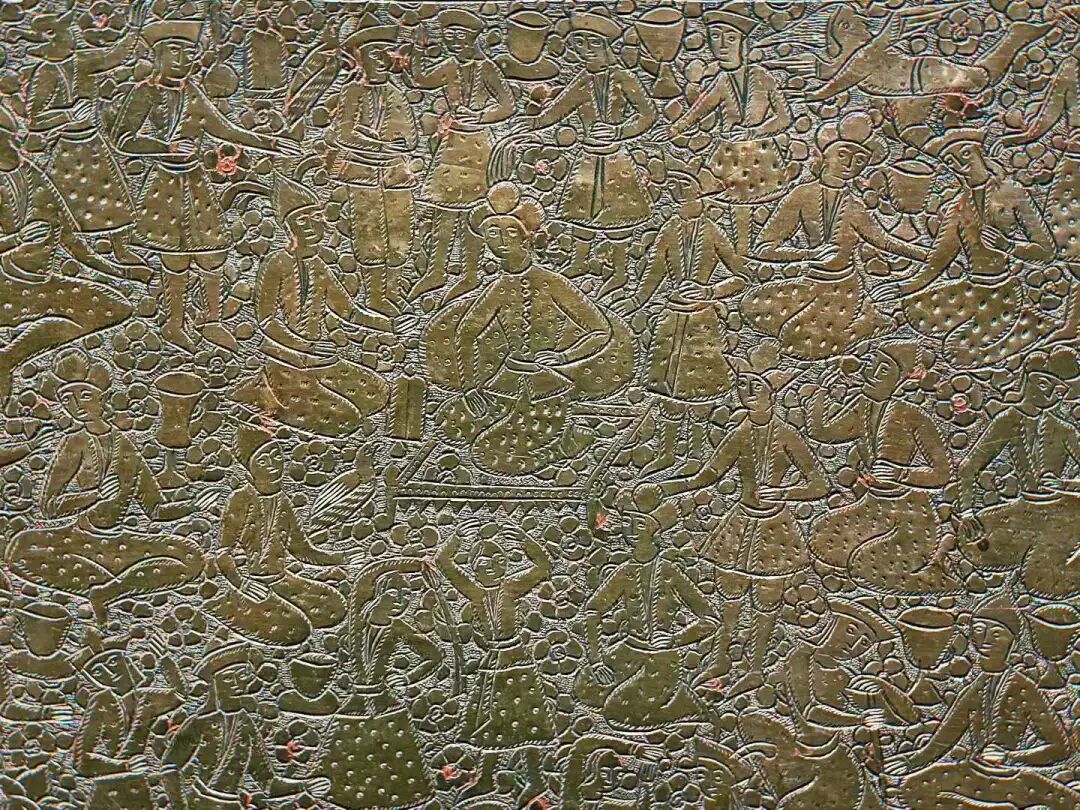
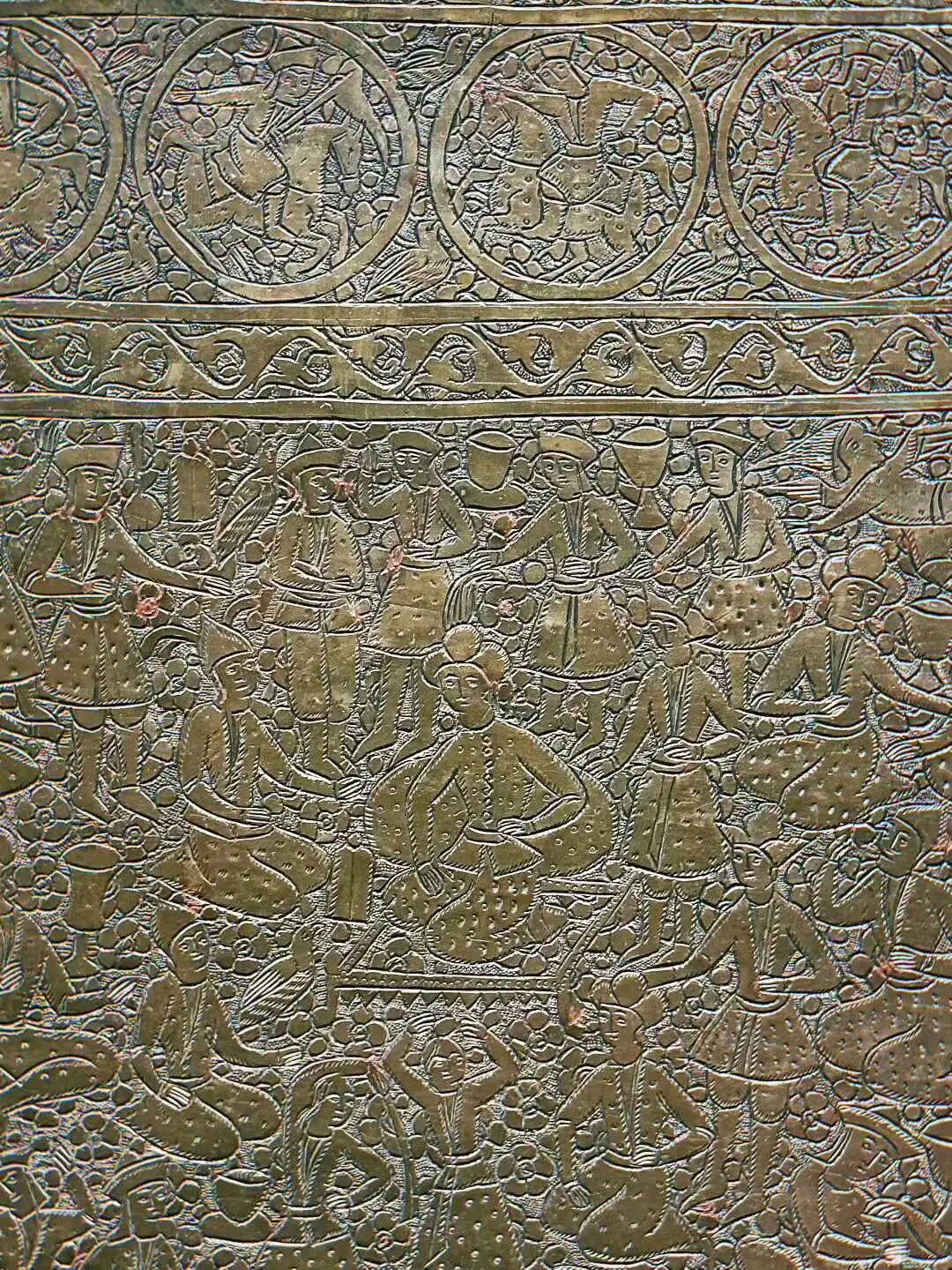
A 19th-century decorative tray in the National Museum of Tajikistan collection, engraved with a lively banquet scene. The border features 33 circular panels, each showing a rider in a different pose, with Arabic script on the outermost edge.
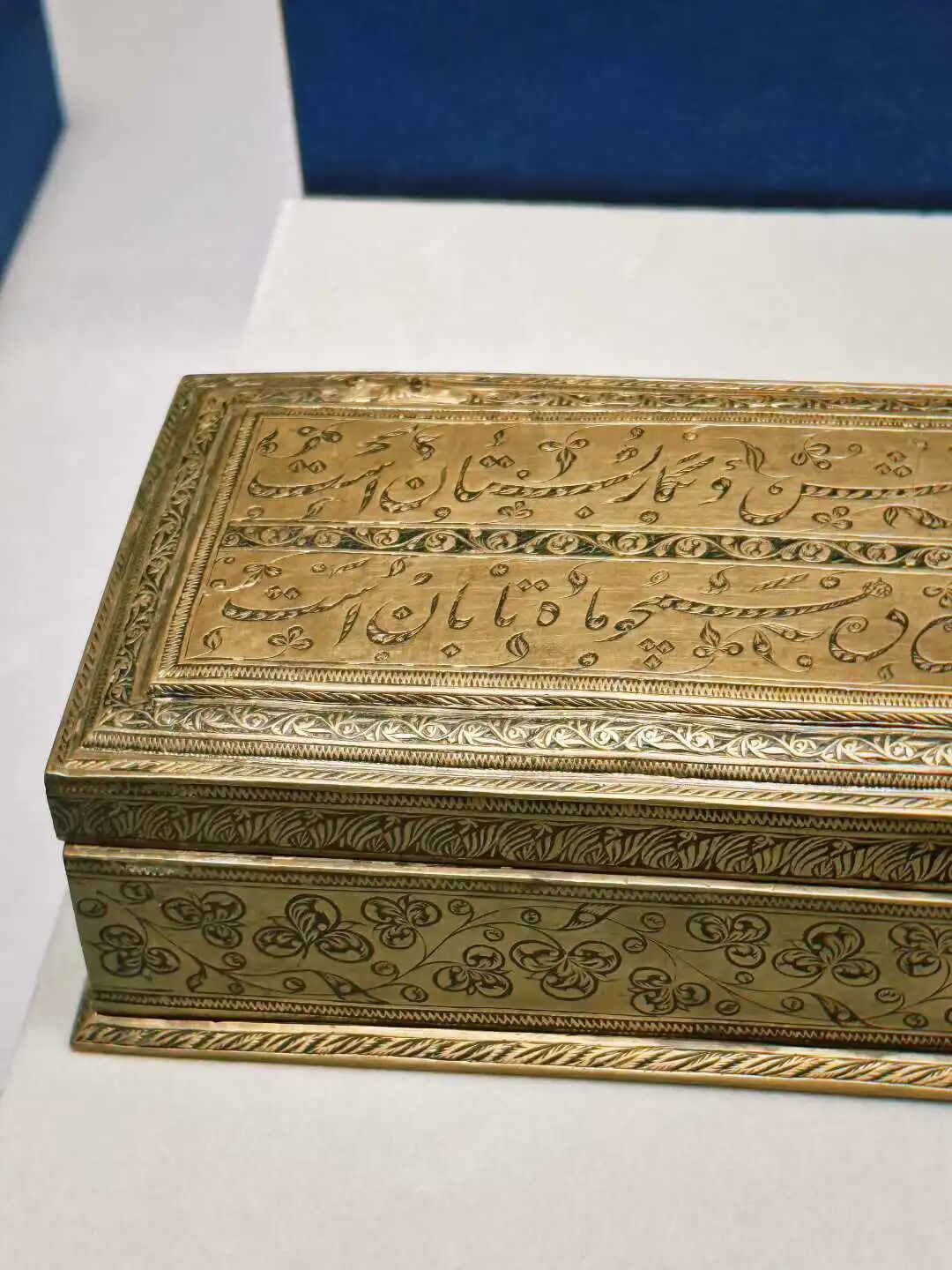
A 19th-century copper pen case in the National Museum of Tajikistan collection, featuring four lines of Persian poetry in Persian calligraphy and decorated with various leaves and plants.
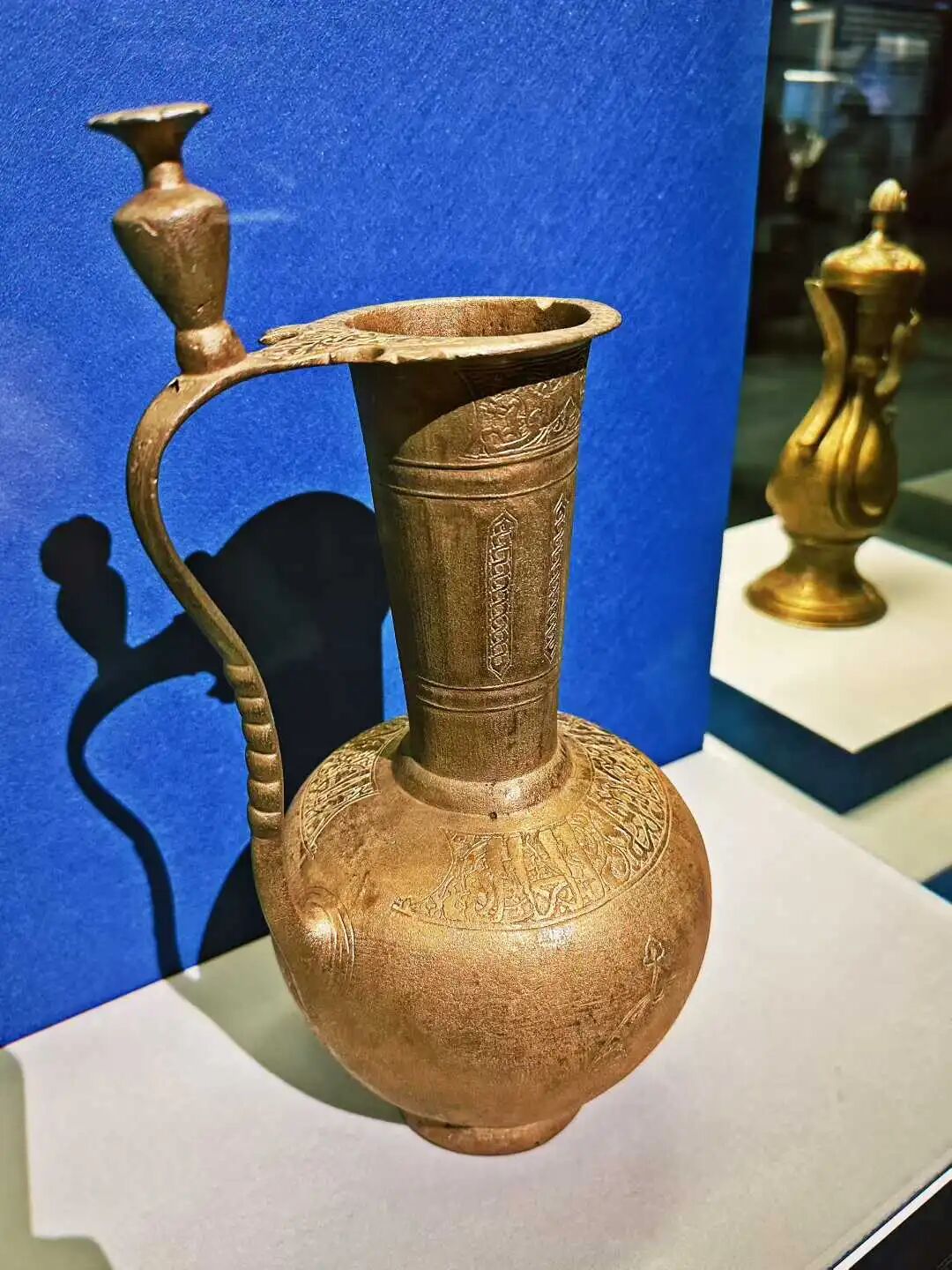
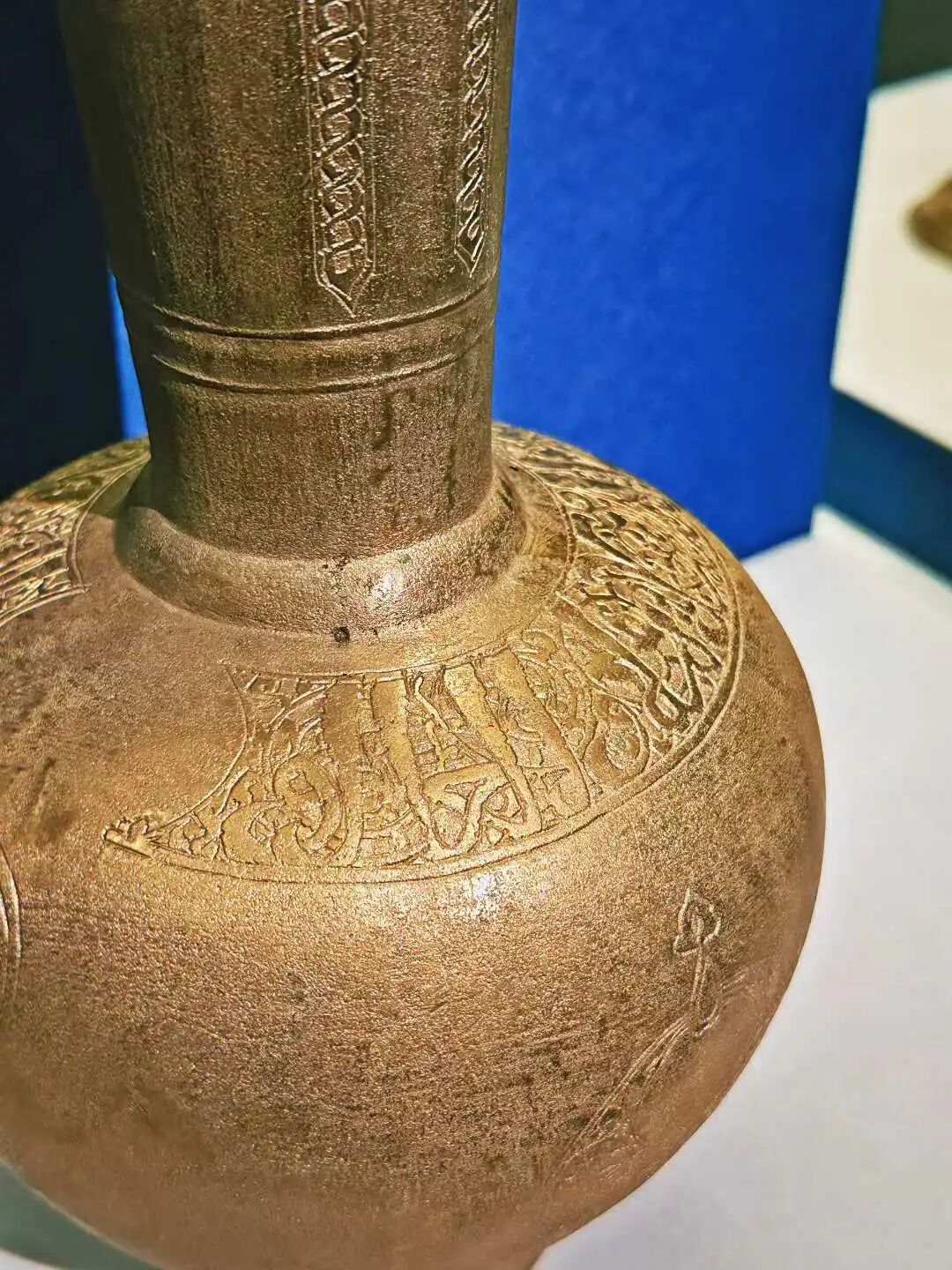
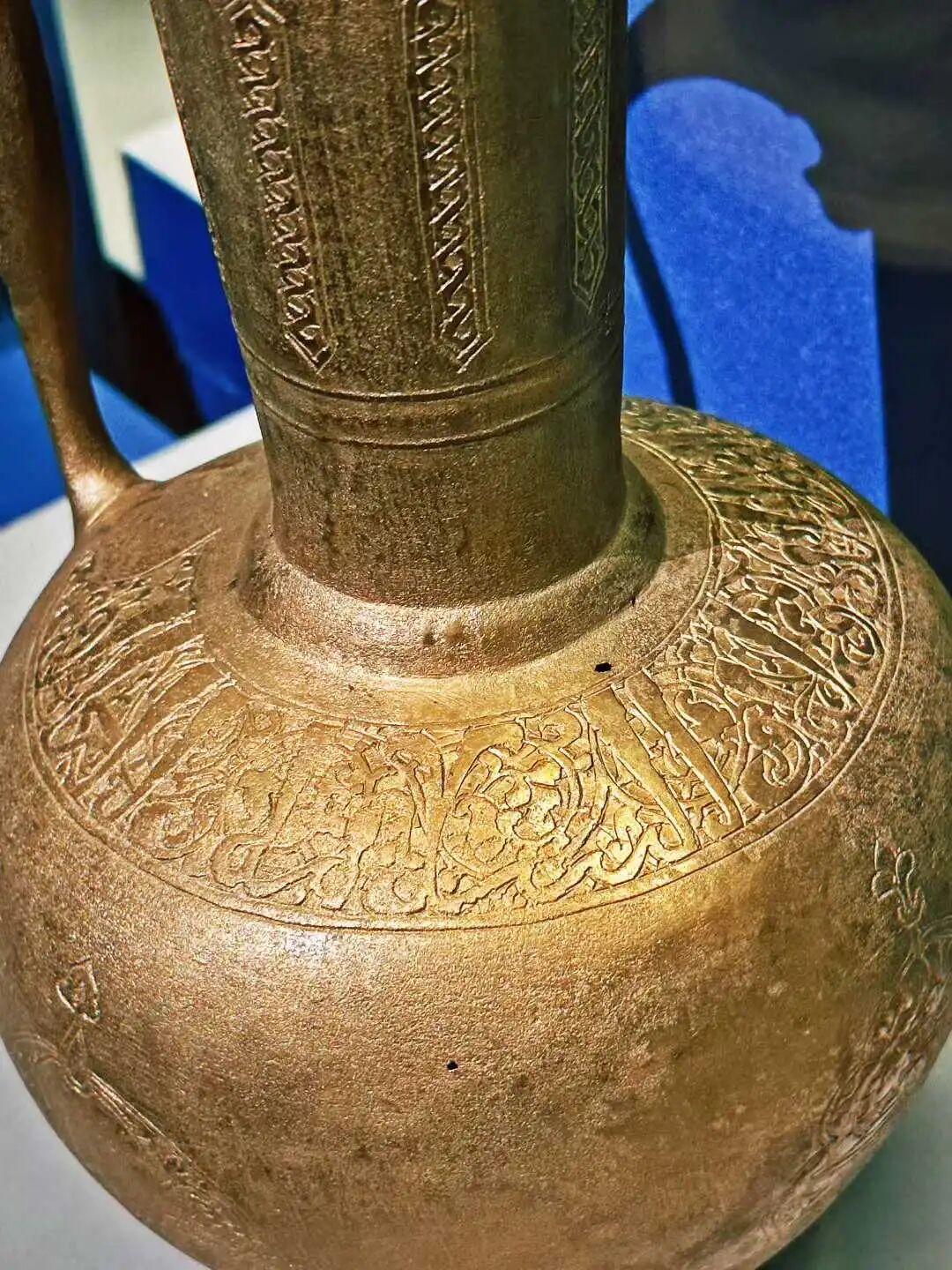
A 10th-11th century copper pitcher unearthed in Istaravshan (Dayuan City) and held in the National Museum of Tajikistan, with Arabic and Persian inscriptions on the body and neck. Istaravshan was ruled by the Samanid and Karakhanid dynasties during the 10th and 11th centuries and was a famous center for trade and handicrafts.
National Museum of Uzbekistan.
A 10th-12th century copper pitcher in the National Museum of Uzbekistan collection, dating to the Samanid and Karakhanid period. It has Arabic script on the neck and human-headed bird patterns on the rim.
A 10th-11th century copper bowl in the National Museum of Uzbekistan collection, dating to the Samanid and Karakhanid period. The outer wall is engraved with Kufic script, and the inner wall is decorated with fish and bird patterns.
State Museum of Arts of Uzbekistan.
A men's gold-embroidered velvet robe made in Bukhara in 1905, held in the State Museum of Arts of Uzbekistan.
A men's gold-embroidered velvet robe made in Bukhara between 1900 and 1905, held in the State Museum of Arts of Uzbekistan.
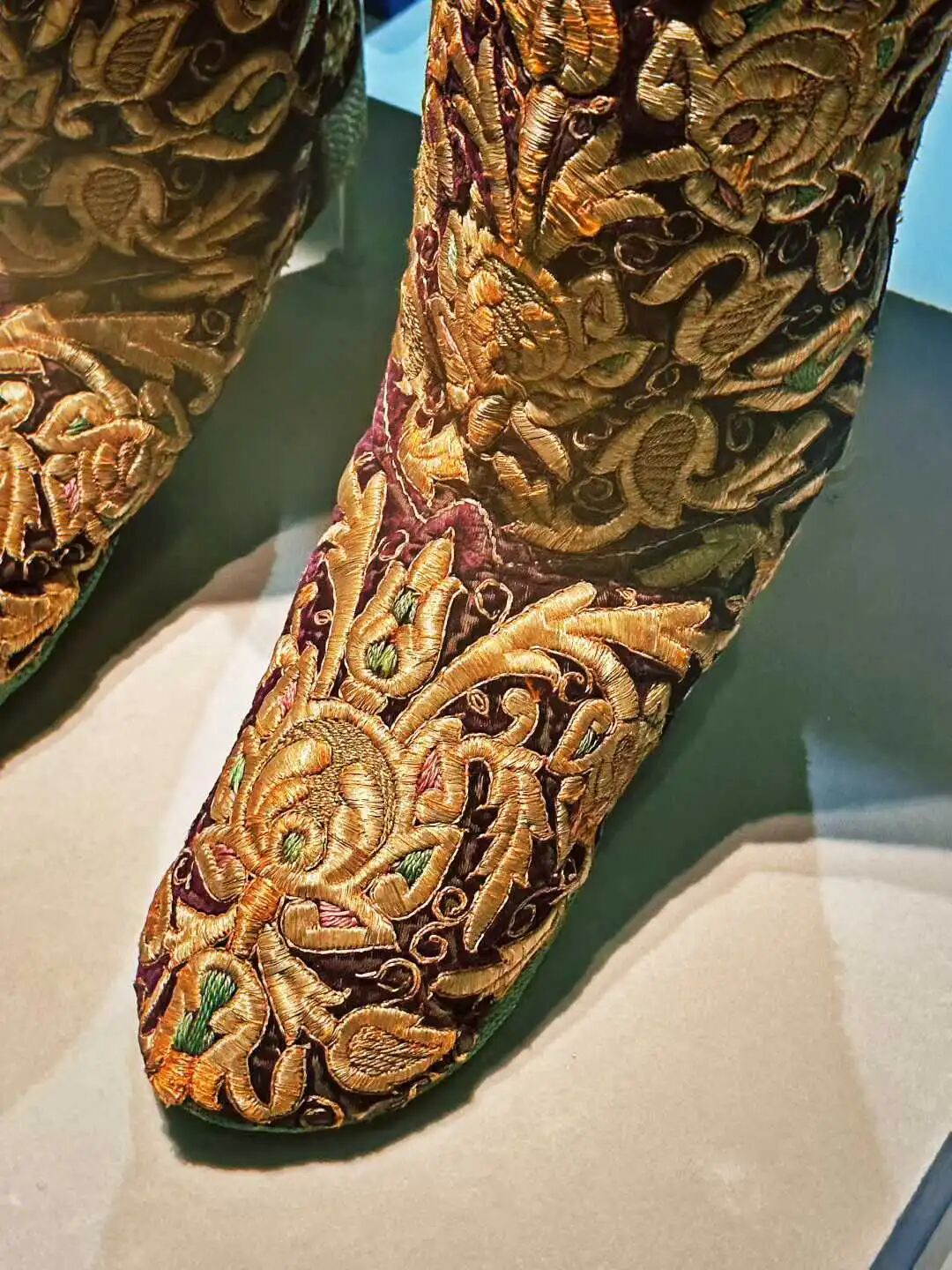
Men's gold-embroidered velvet boots made in Bukhara in 1890, held in the State Museum of Arts of Uzbekistan.
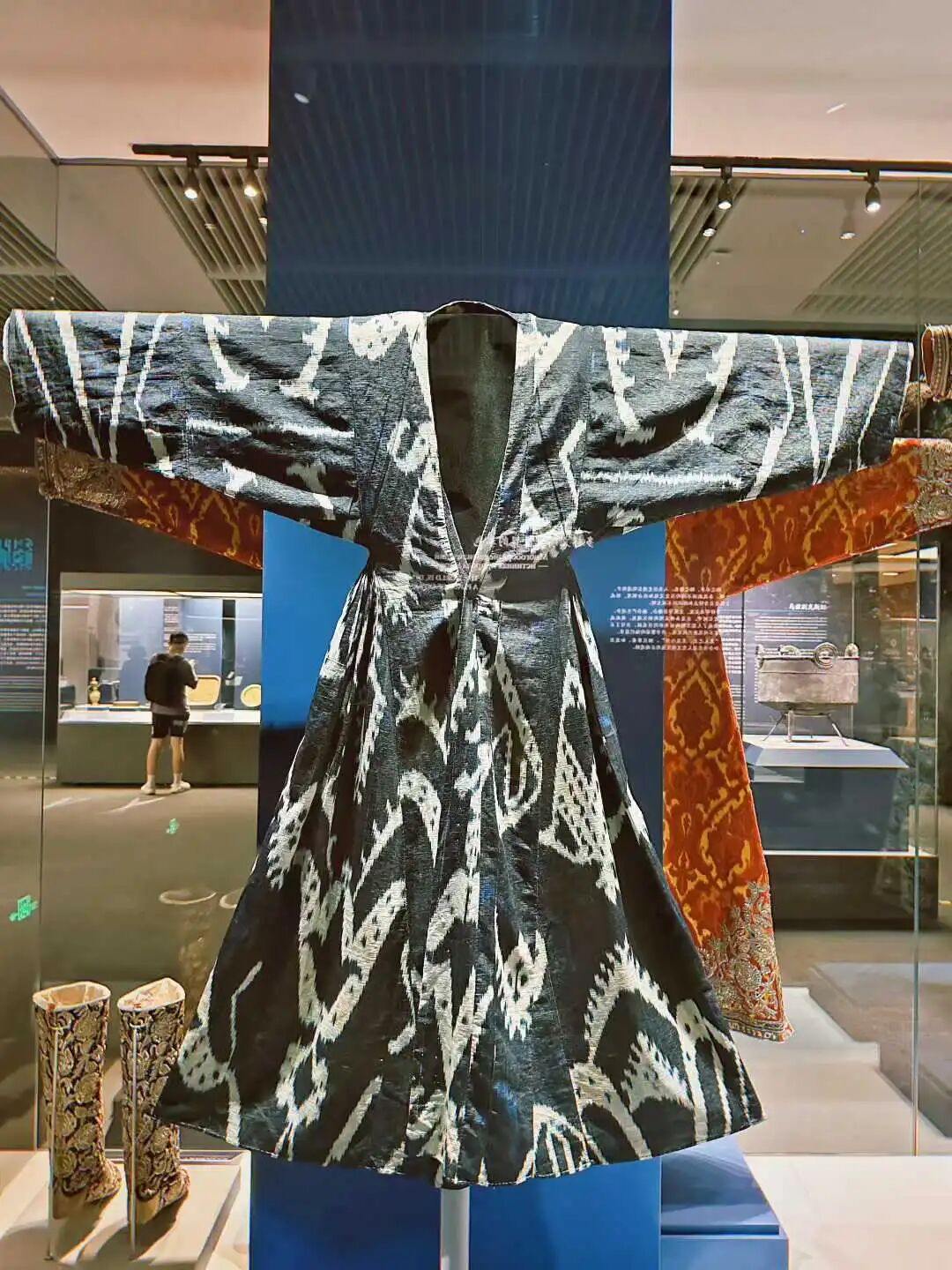
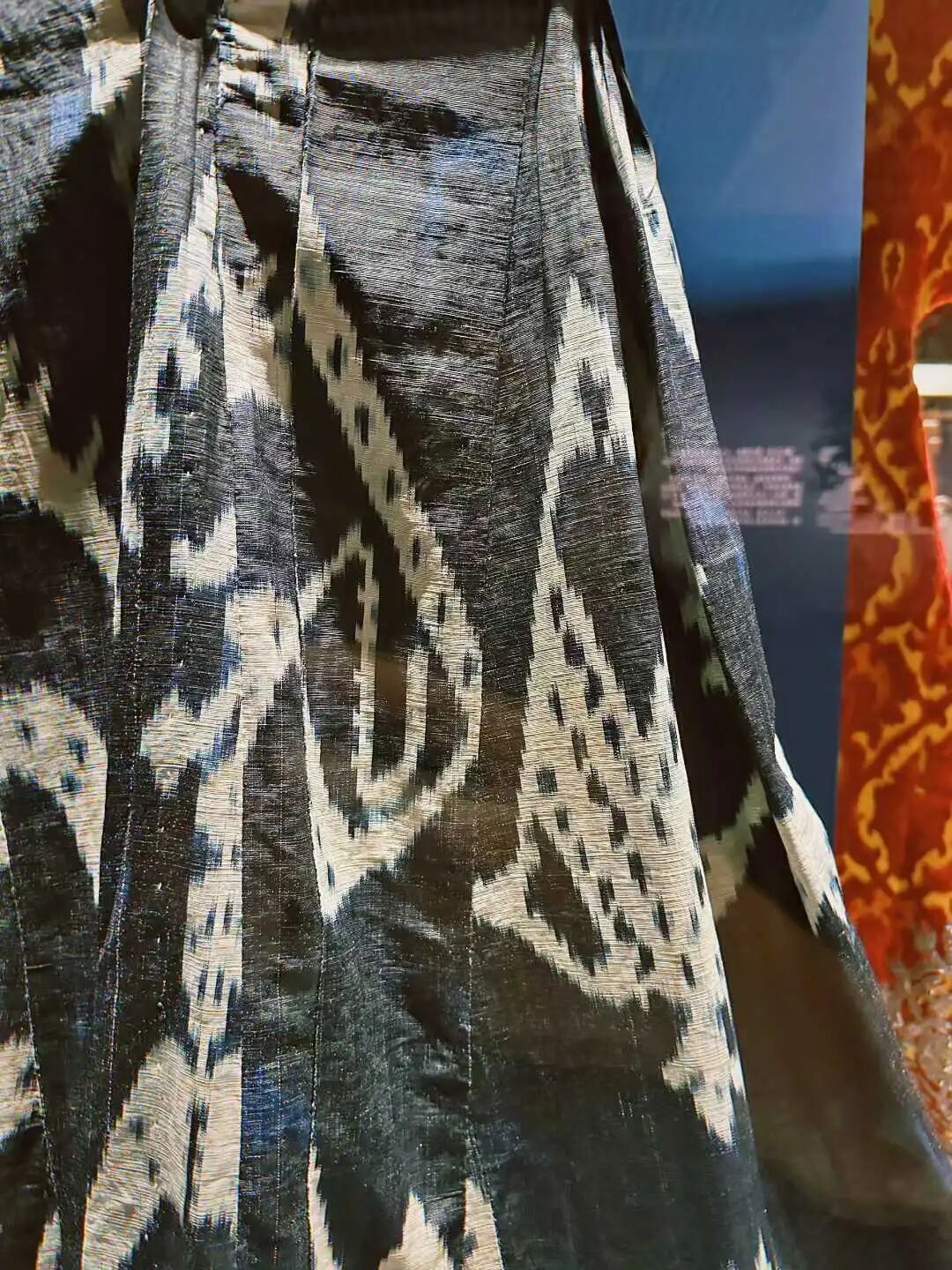
A women's ikat silk robe from the early 20th century, held in the State Museum of Arts of Uzbekistan.
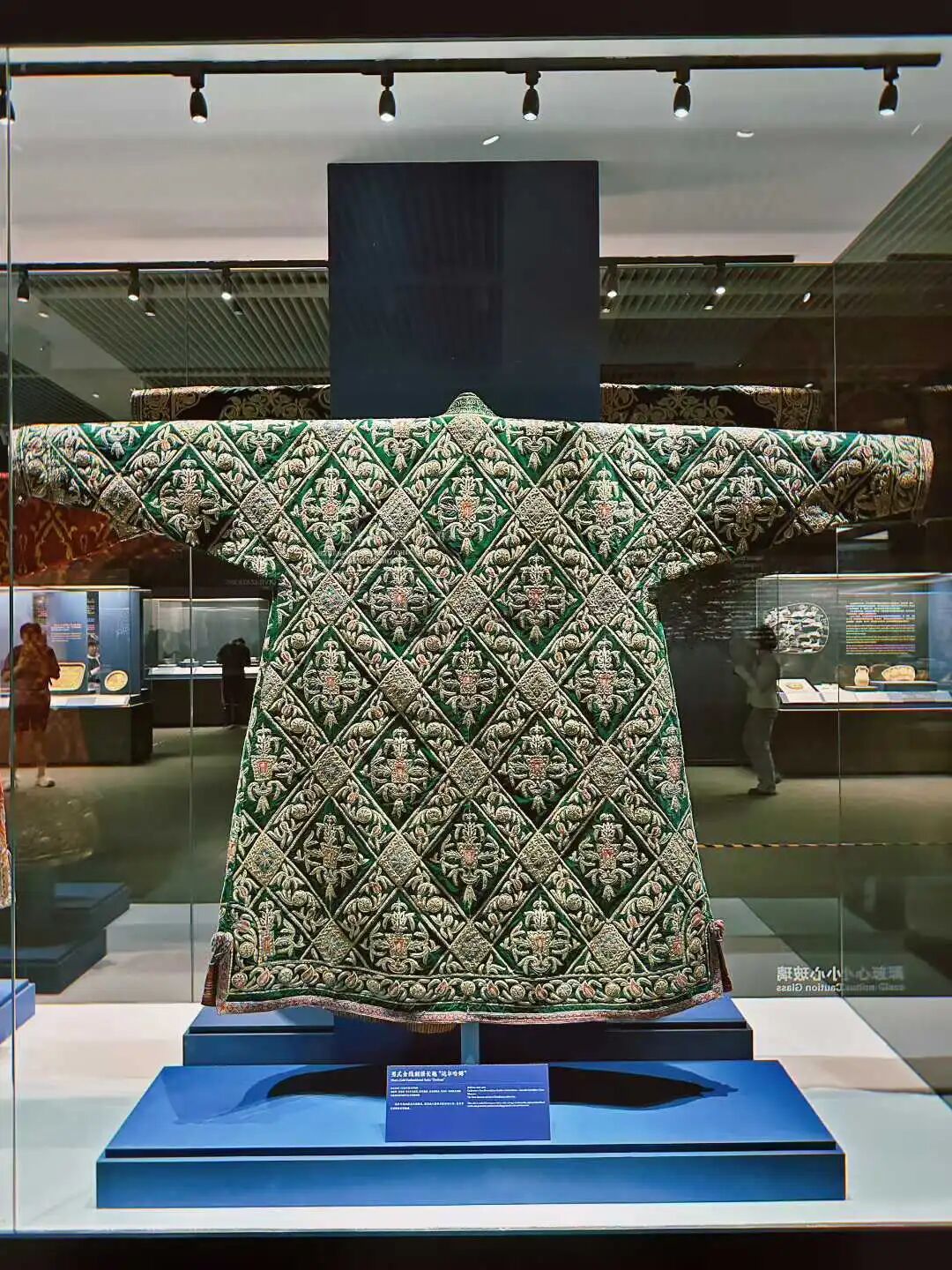
A men's gold-embroidered velvet robe made in Bukhara between 1898 and 1900, held in the State Museum of Arts of Uzbekistan.
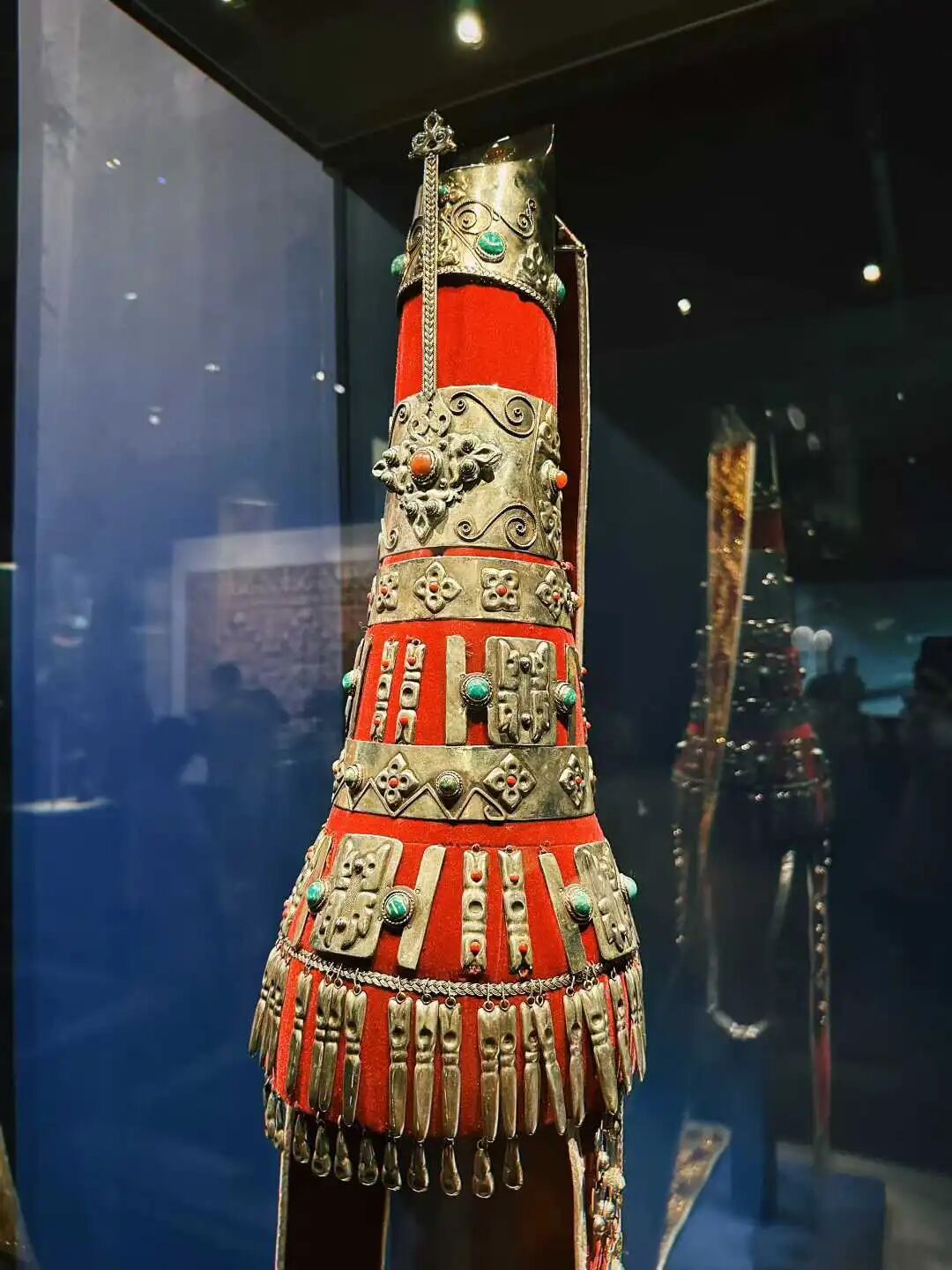
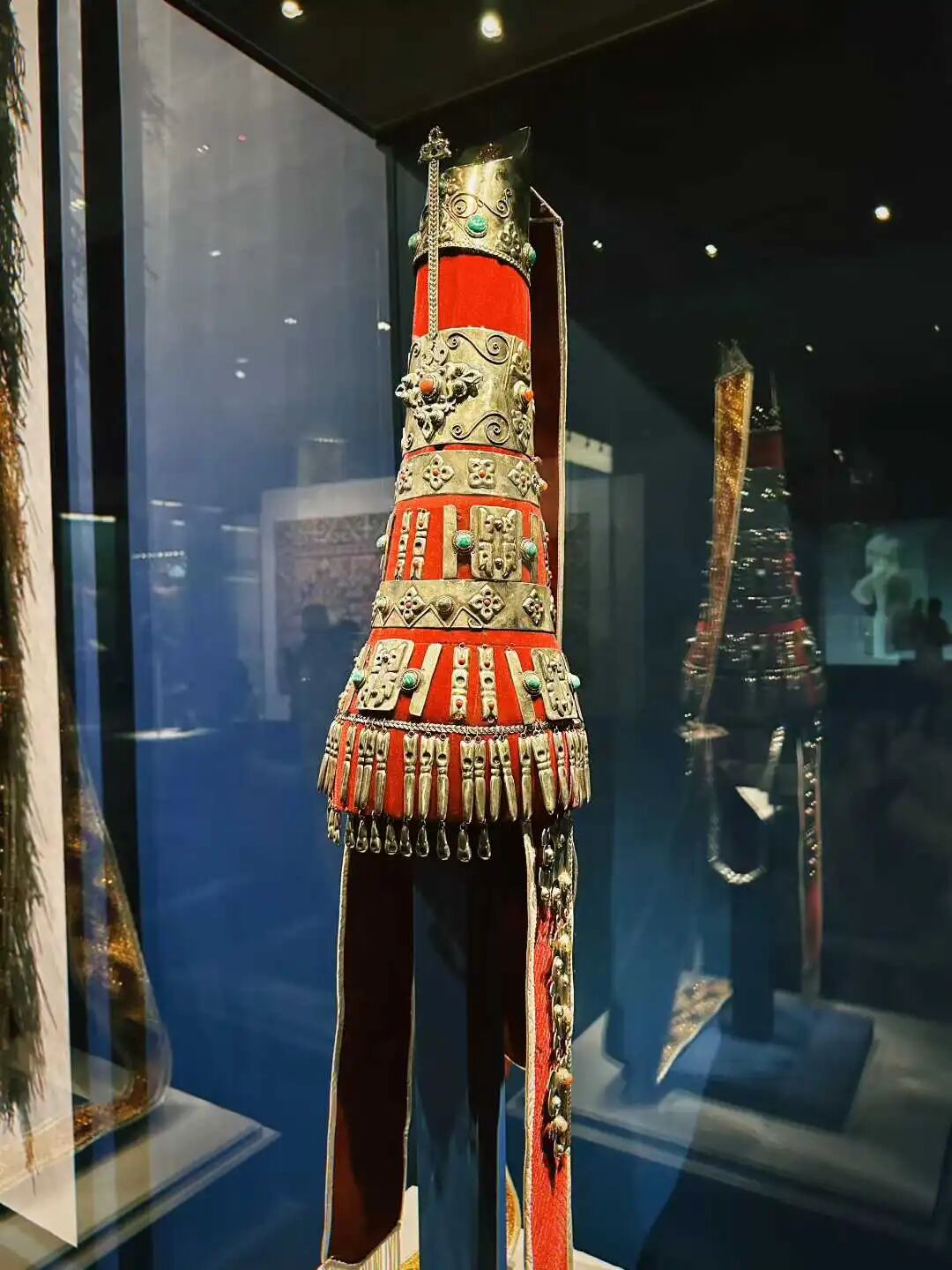
A headpiece (gajak) made in Tashkent in 1912, held in the State Museum of Arts of Uzbekistan.
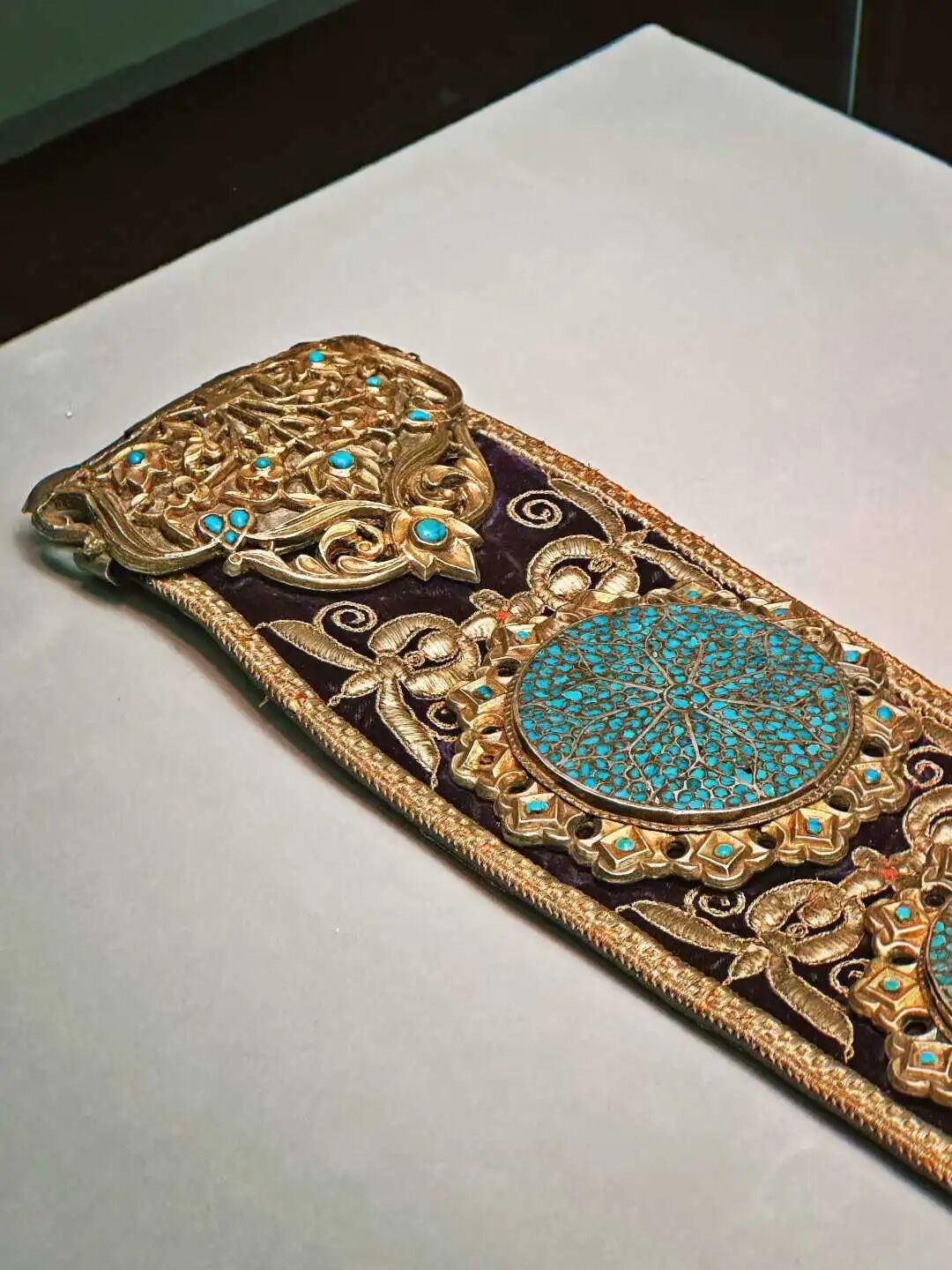
A men's gold-embroidered velvet belt made in Bukhara in 1890, decorated with turquoise and silver pieces and held in the State Museum of Arts of Uzbekistan.
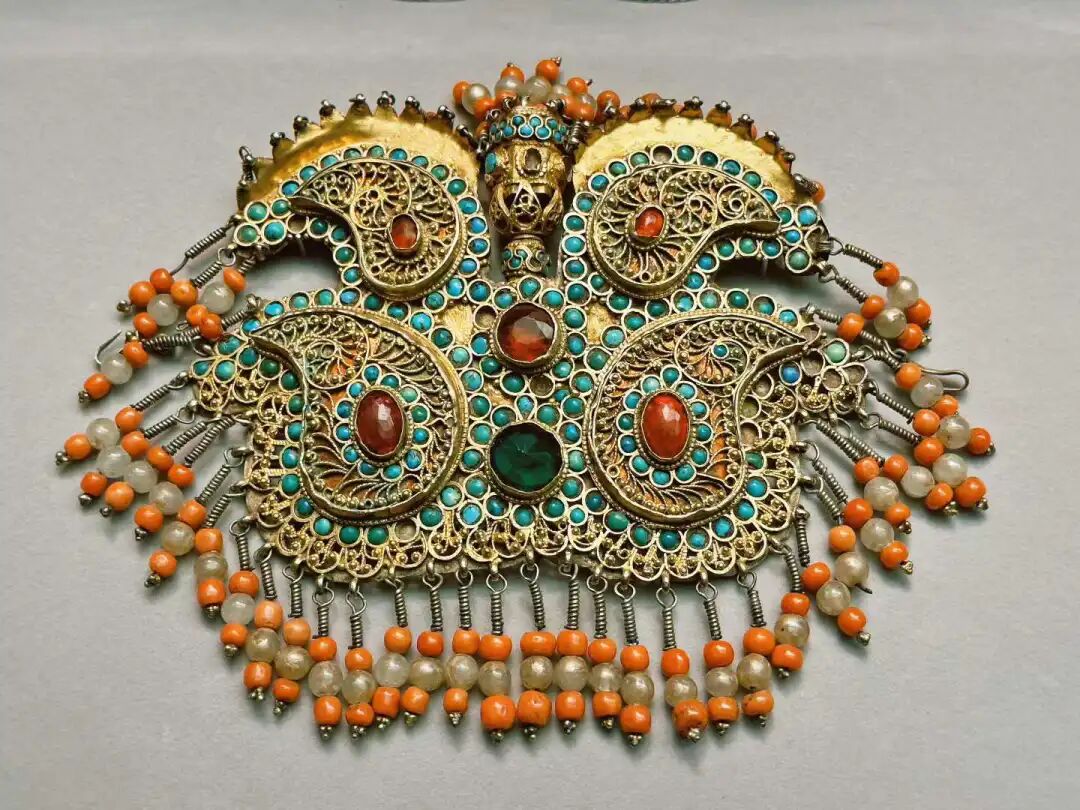
This Tojduzi headpiece from the early 20th century is kept at the State Museum of Arts of Uzbekistan. view all
Summary: This National Museum of China exhibition visit focuses on SCO-related cultural objects, including Persian-style calligraphy, Central Asian robes, jewelry, ceramics, carpets, and manuscripts. The account records the museum displays through an Islamic art and Silk Road cultural lens.
From August 27 to November 16, 2025, the National Museum of China hosts the exhibition "Galaxy of Civilizations: Joint Exhibition of Cultural Relics from National Museums of Shanghai Cooperation Organization Countries." It features items from 10 institutions, including the National Historical Museum of Belarus, the National Museum of Kazakhstan, the National Museum of Kyrgyzstan, the Department of Archaeology and Museums of the Pakistan Heritage and Culture Division, the State Historical Museum of Russia, the National Museum of Tajikistan, the State Museum of History of Uzbekistan, and the State Museum of Arts of Uzbekistan.
National Historical Museum of Belarus
From the collection of the National Historical Museum of Belarus, this is a hoard of silver coins from the Abbasid Caliphate in the mid-10th century, found in Pinsk, Belarus, in 1991. Archaeologists have found tens of thousands of Arab silver coins in Northern Europe and the Baltic region. These coins were minted during the Abbasid Caliphate between the 8th and 11th centuries and were popular for their high purity and consistency. Between the 9th and 11th centuries, Vikings from Northern Europe used Eastern European waterways like the Volga and Dnieper rivers to trade with Arabs. They exchanged furs, slaves, and amber for large amounts of Arab silver coins. Interestingly, many of the Arab silver coins in Viking hoards were cut into pieces. This is because Vikings measured silver by weight rather than face value at the time.
From the collection of the National Historical Museum of Belarus, this is a helmet and shield from the Qajar dynasty of Iran in the 19th century. The helmet and shield were hand-forged from single plates of Damascus steel. The helmet has a long spike on top and feather holders on both sides, while the shield features a sun motif. Both the helmet and shield are engraved with floral patterns and beautiful Persian calligraphy. Persian calligraphy developed from Naskh Arabic script. Compared to Naskh, the strokes are more elongated and tilt from the top right to the bottom left, allowing for more freedom when writing.
From the collection of the National Historical Museum of Belarus, this is a belt featuring traditional Crimean jewelry craftsmanship. It is believed to be a gift from Hacı I Giray, the founding Khan of the Crimean Khanate, to Grand Duke Vytautas of Lithuania.
Hacı I Giray was a descendant of Tuka-Timur, the thirteenth son of Jochi, who was the eldest son of Genghis Khan. His family began ruling the Crimean Peninsula in 1260, but they were defeated by Tamerlane in 1395 and fled to Lithuania. Hacı I Giray was born in Lithuania in 1397. In 1428, with the support of Grand Duke Vytautas of Lithuania, Hacı I Giray led an army to take over the Crimean Peninsula, but he was soon defeated by the Golden Horde. Later, with Lithuanian support, Hacı I Giray sent troops to Crimea several more times. He finally occupied the Crimean Peninsula in 1441 and established the Crimean Khanate.
This belt is made of high-purity silver. The circular discs feature Tatar decorative motifs, while the buckle has a Gothic design, reflecting the cultural exchange between East and West at the time.
National Museum of Kazakhstan
From the collection of the National Museum of Kazakhstan, these are ceramic tiles unearthed from a tomb at the ancient city site of Zhaiyk, dating back to the Golden Horde period in the 14th century. The ancient city site of Zhaiyk was discovered by an archaeological team in 2001. Subsequent excavations revealed the remains of a Turkish bath with an underfloor heating system and a domed tomb decorated with colorful glazed tiles in the cemetery west of the city.
From the collection of the National Museum of Kazakhstan, this is a copper coin minted by the Samanid dynasty in 922-923, unearthed in Otrar, southern Kazakhstan. During the 9th and 10th centuries, this region was an important trade center for the Samanid dynasty.
This is a modern Kazakh women's accessory.
National Museum of Pakistan, Islamabad
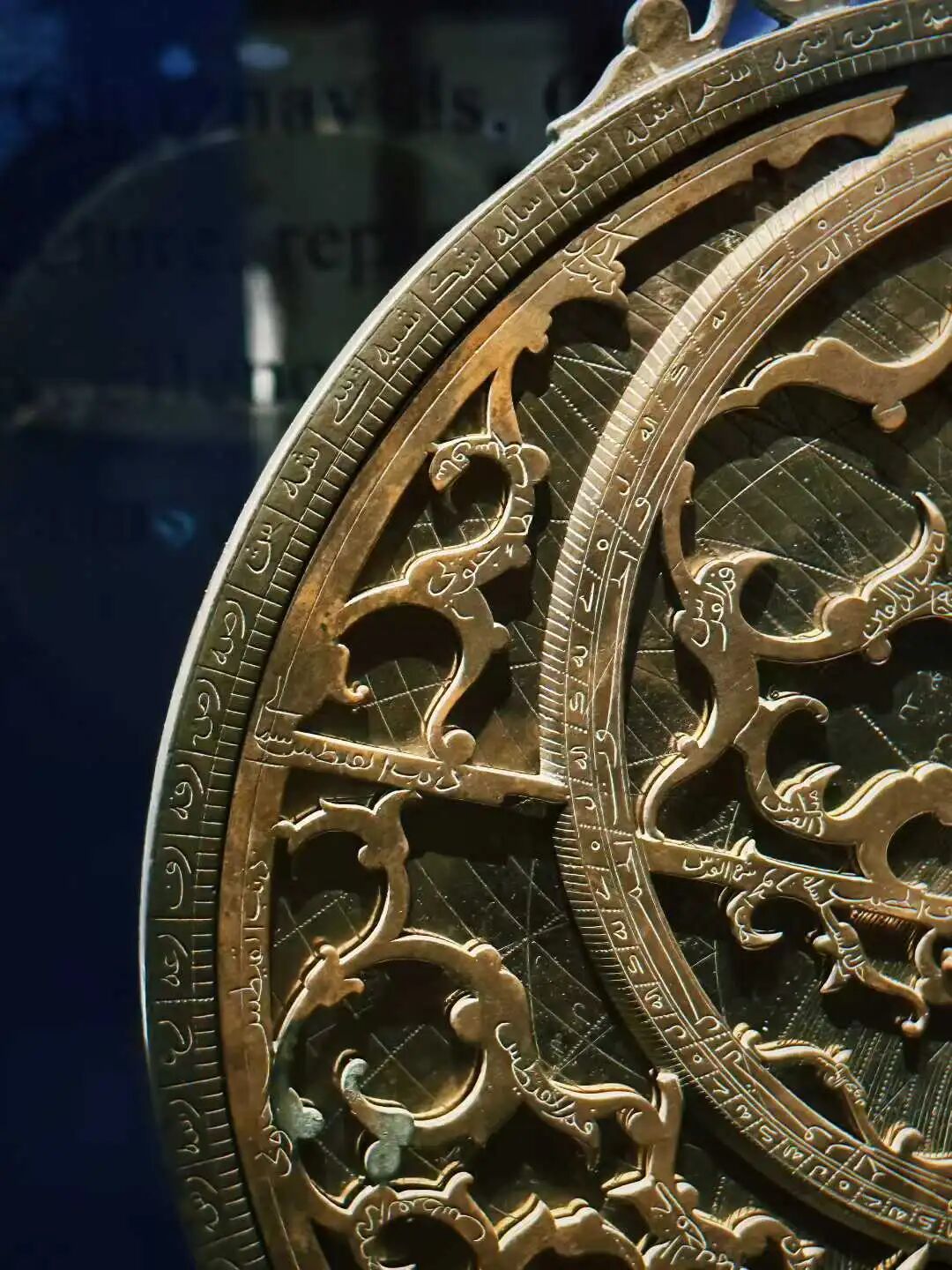
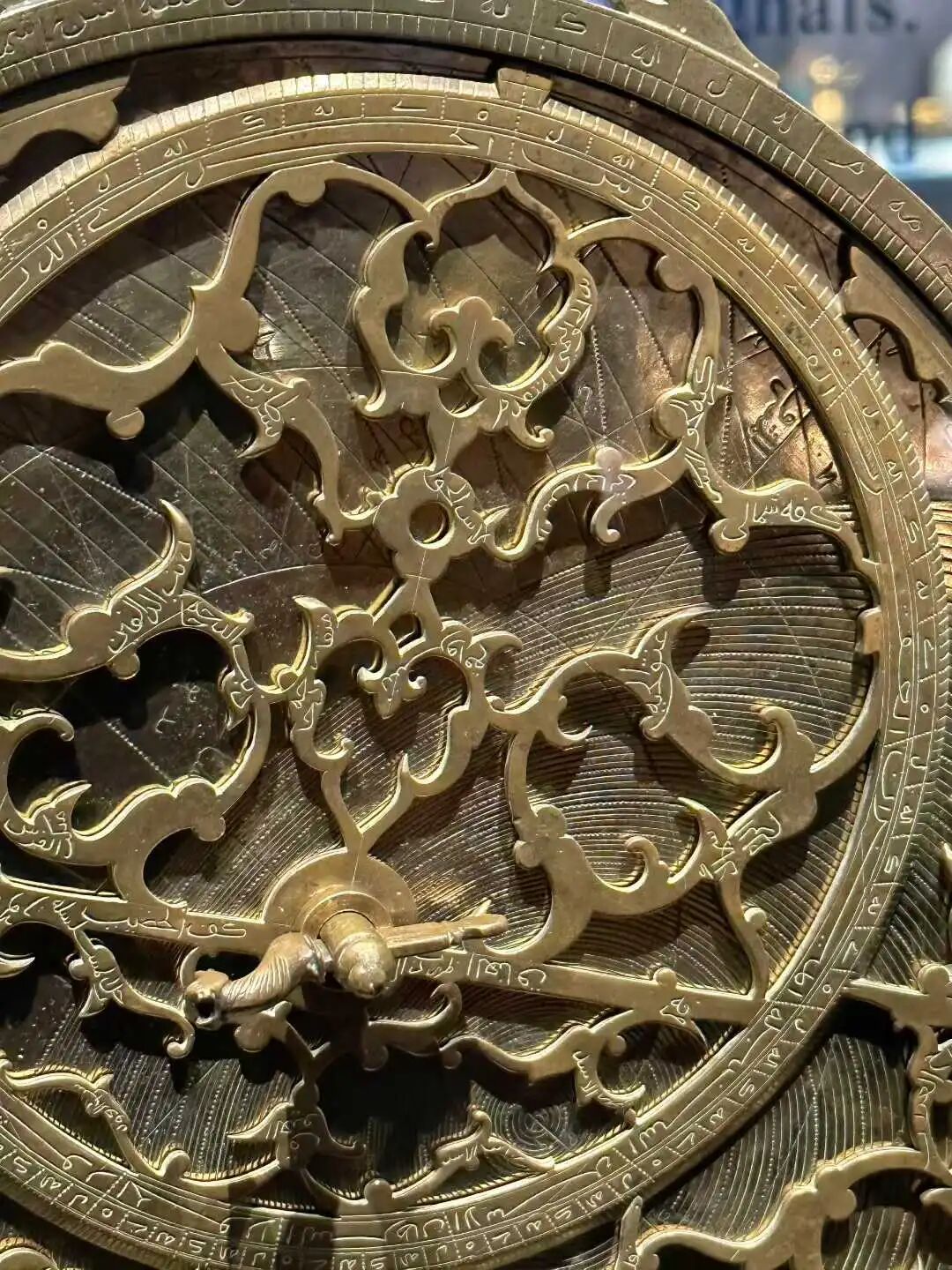
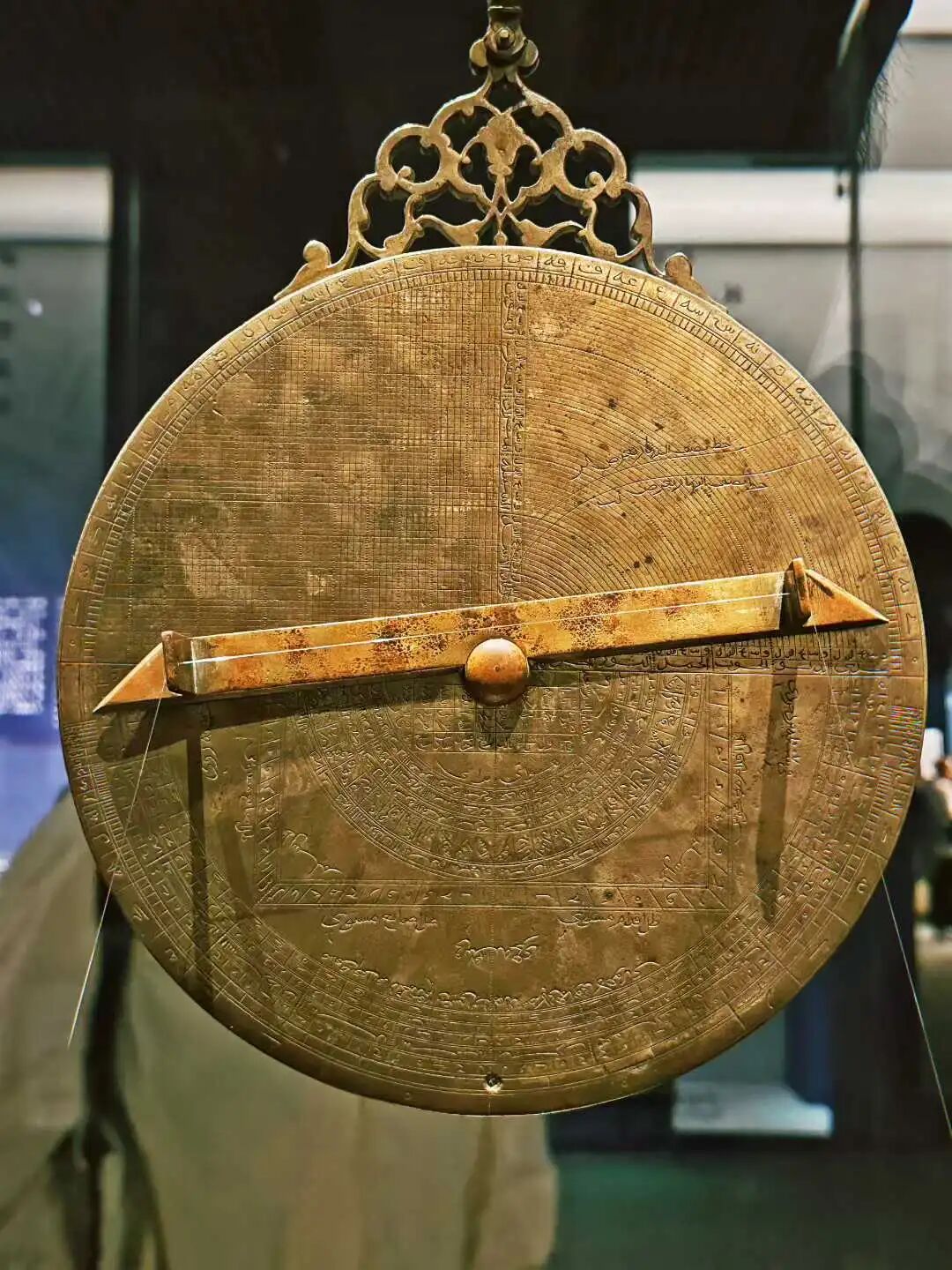
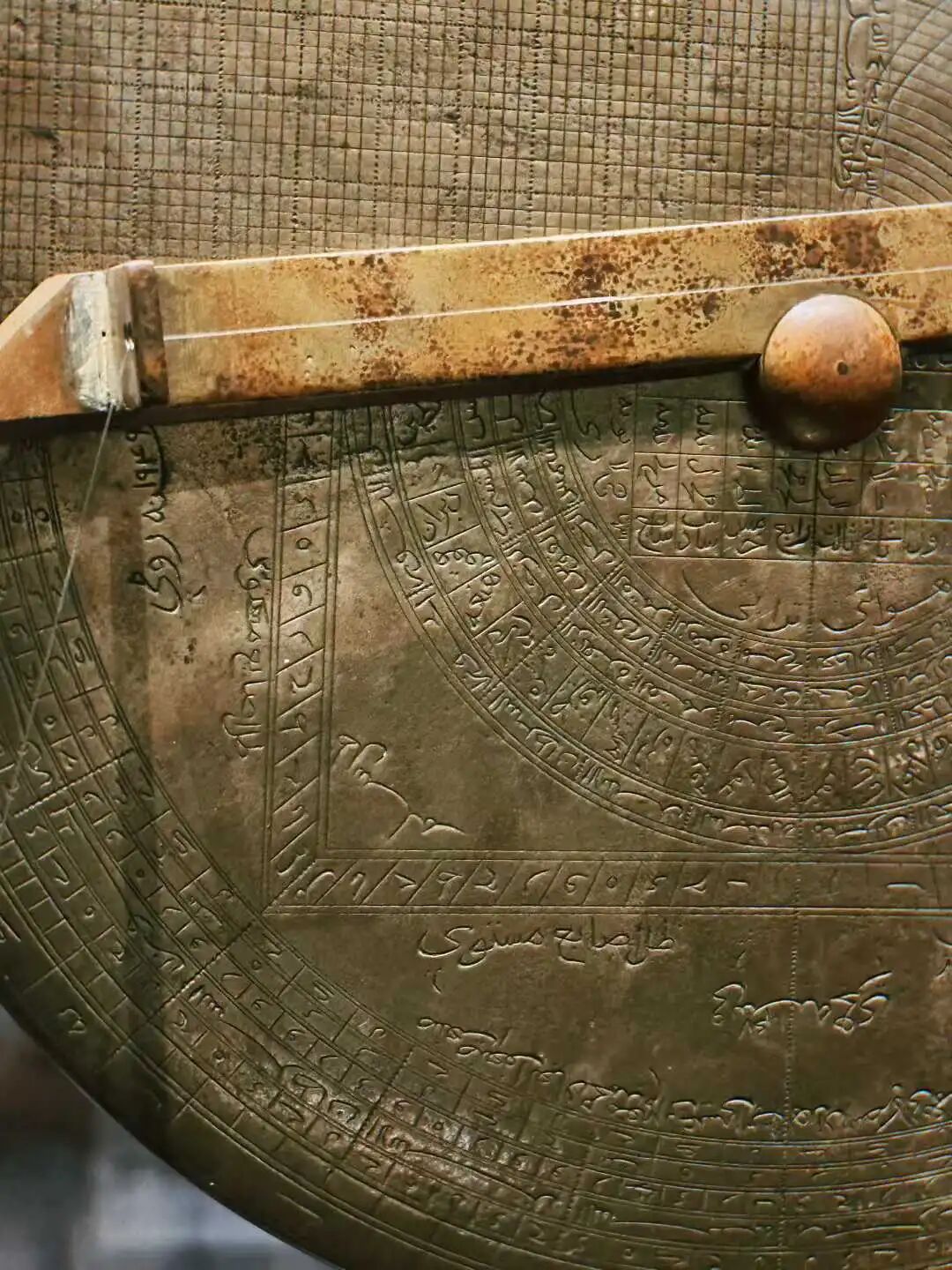
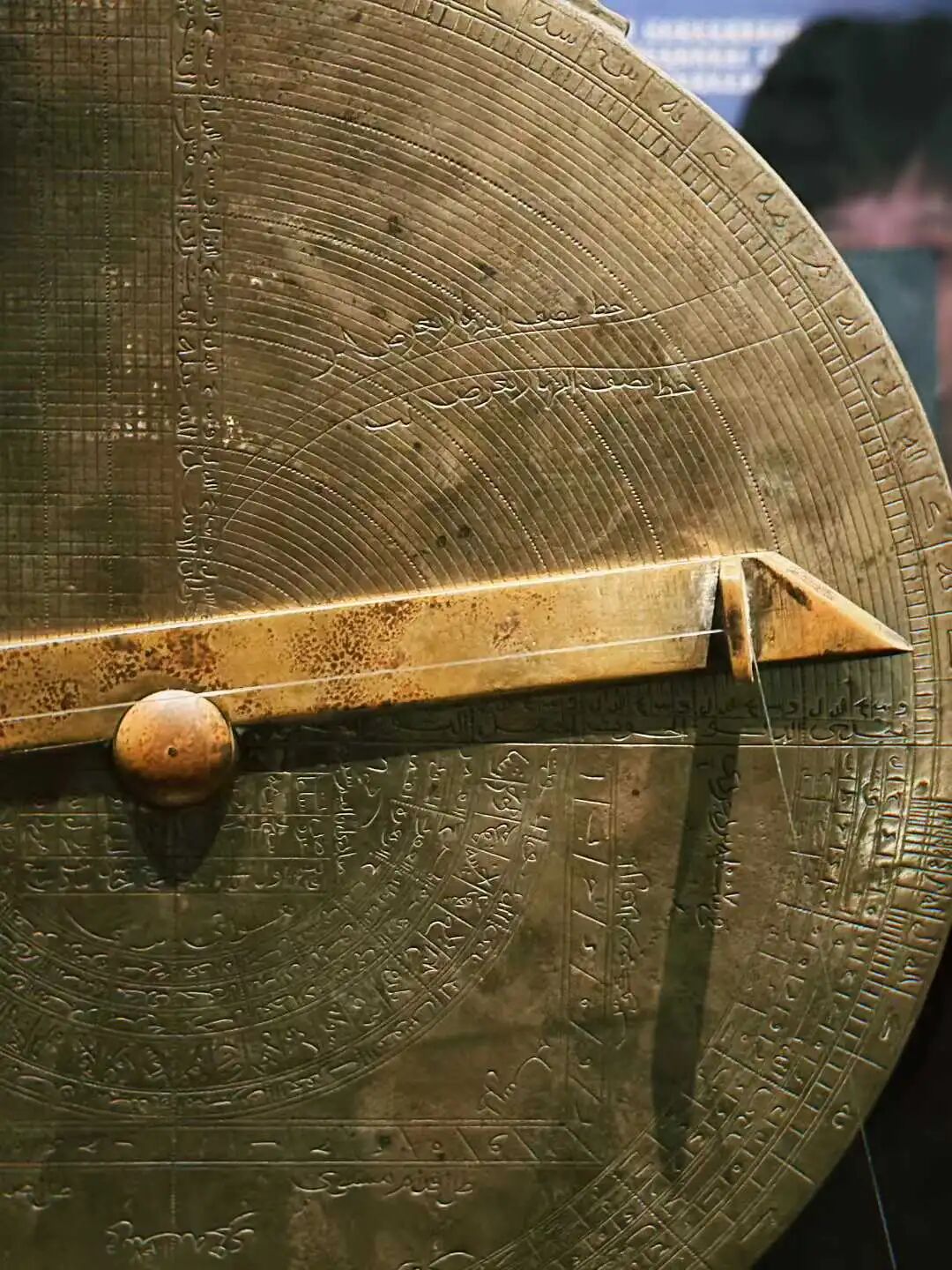
From the collection of the National Museum of Pakistan in Islamabad, this is a brass astrolabe from Lahore, dating to the Mughal Empire period under Humayun (reigned 1530-1540, 1555-1556). It is engraved with latitude and longitude, Persian and Arabic text, and decorated with arabesque and geometric patterns. Humayun himself had a strong interest in astronomy and astrology.
National Museum of Tajikistan.
A Persian copper water pitcher (aftabeh) from the early 20th century in the National Museum of Tajikistan collection. The aftabeh, also called abdasta, is a water pitcher used for wudu (ablution) in Persian cultural regions like Iran, Afghanistan, Azerbaijan, and Central Asia. They are usually made of clay or brass.
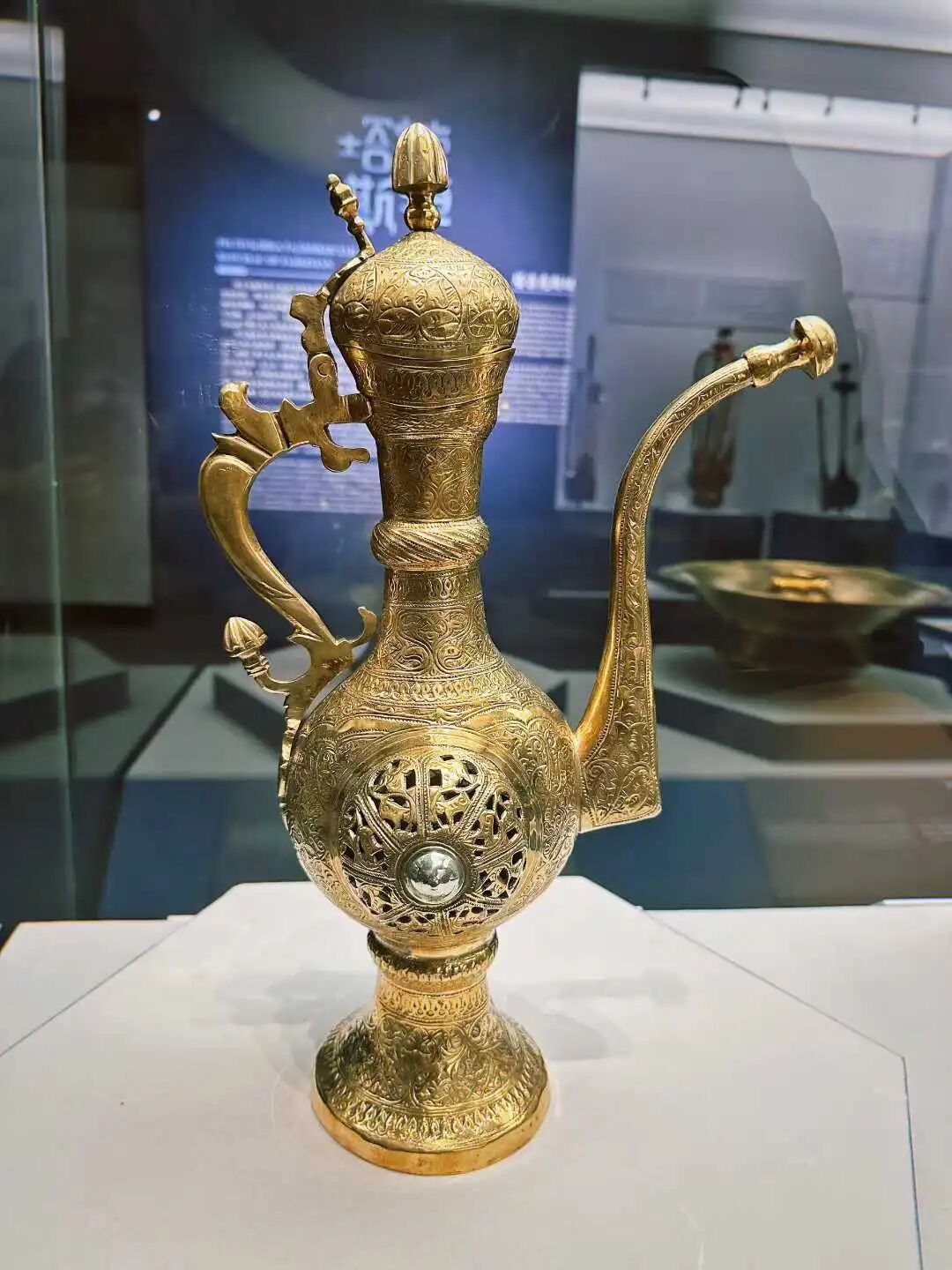
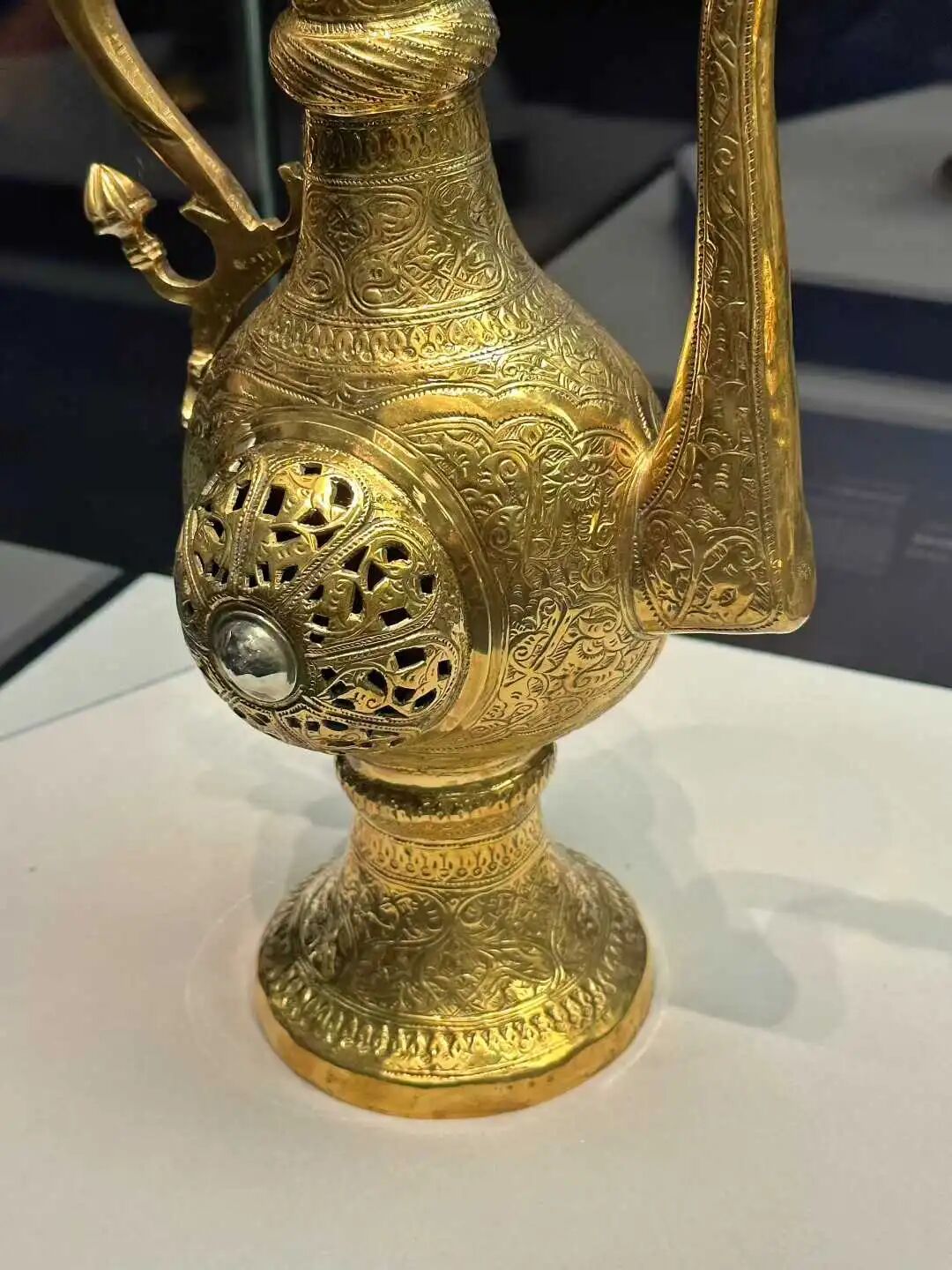
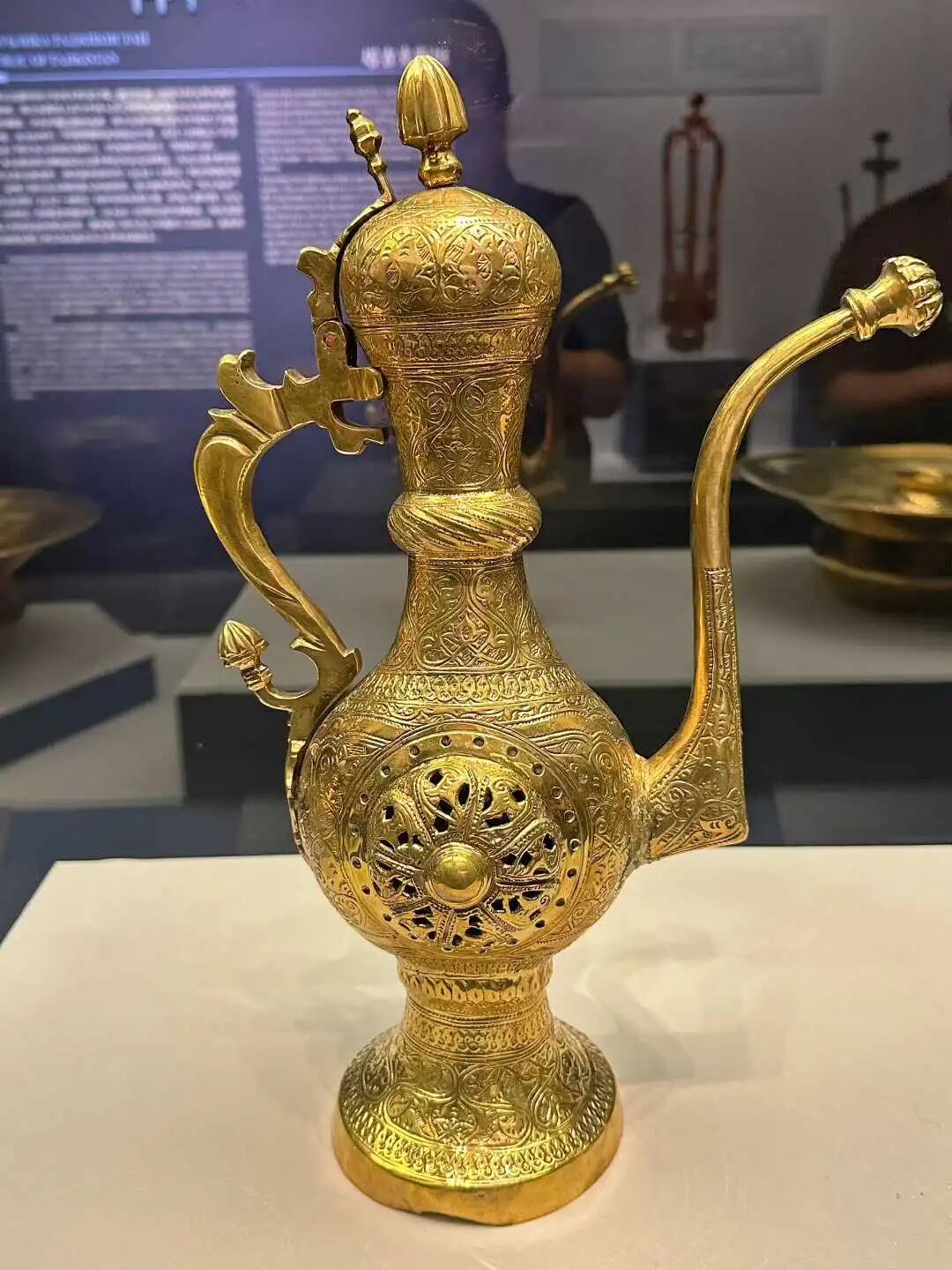
A copper hand-washing basin (dastshui) from the early 20th century in the National Museum of Tajikistan collection, featuring an engraving of 25 deer in different poses.
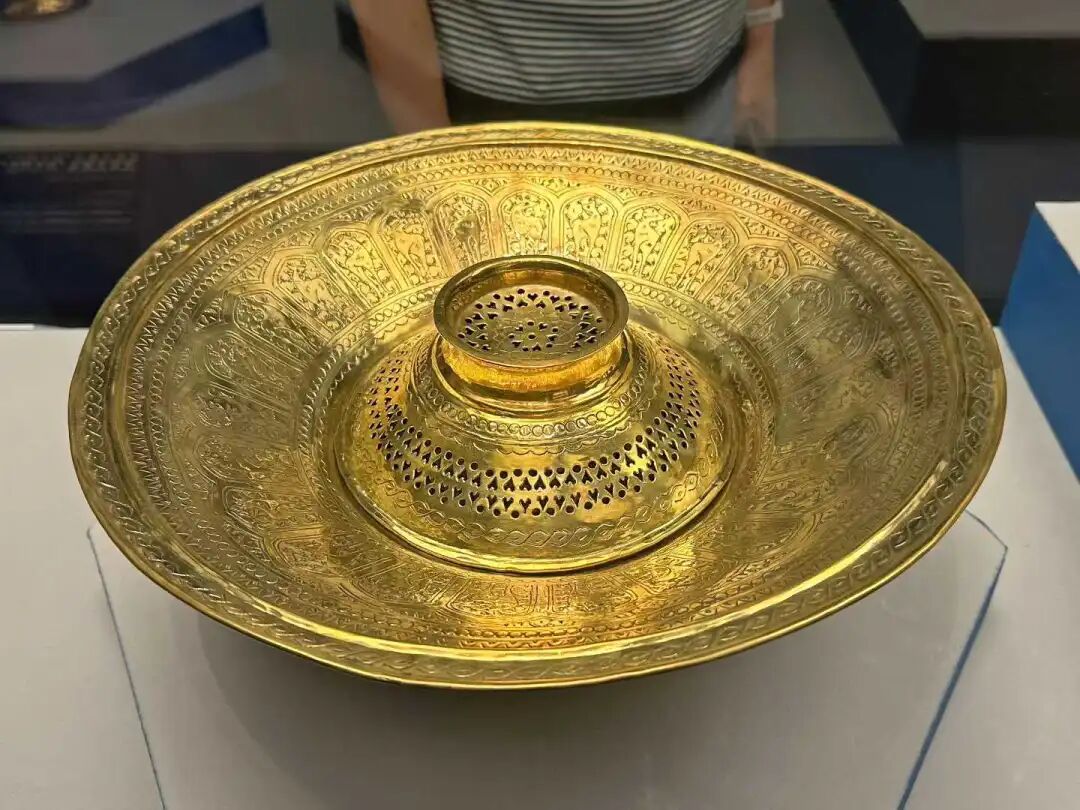
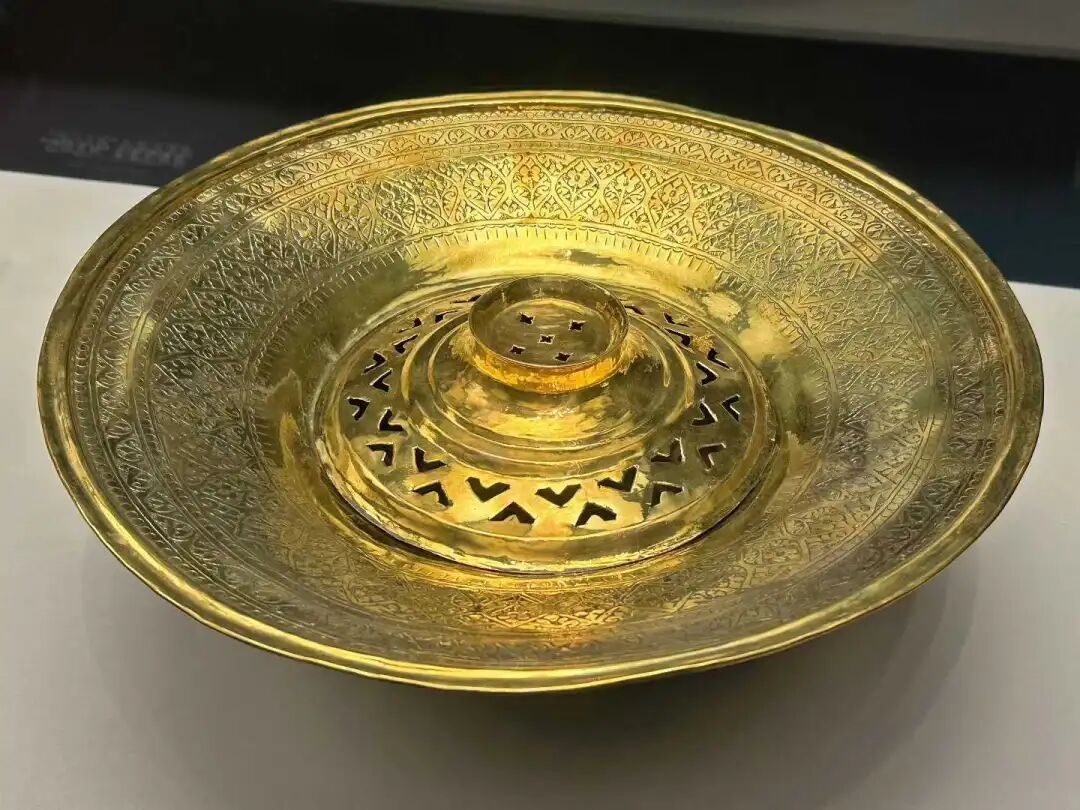
A copper water pitcher for wudu from the 19th century in the National Museum of Tajikistan collection.
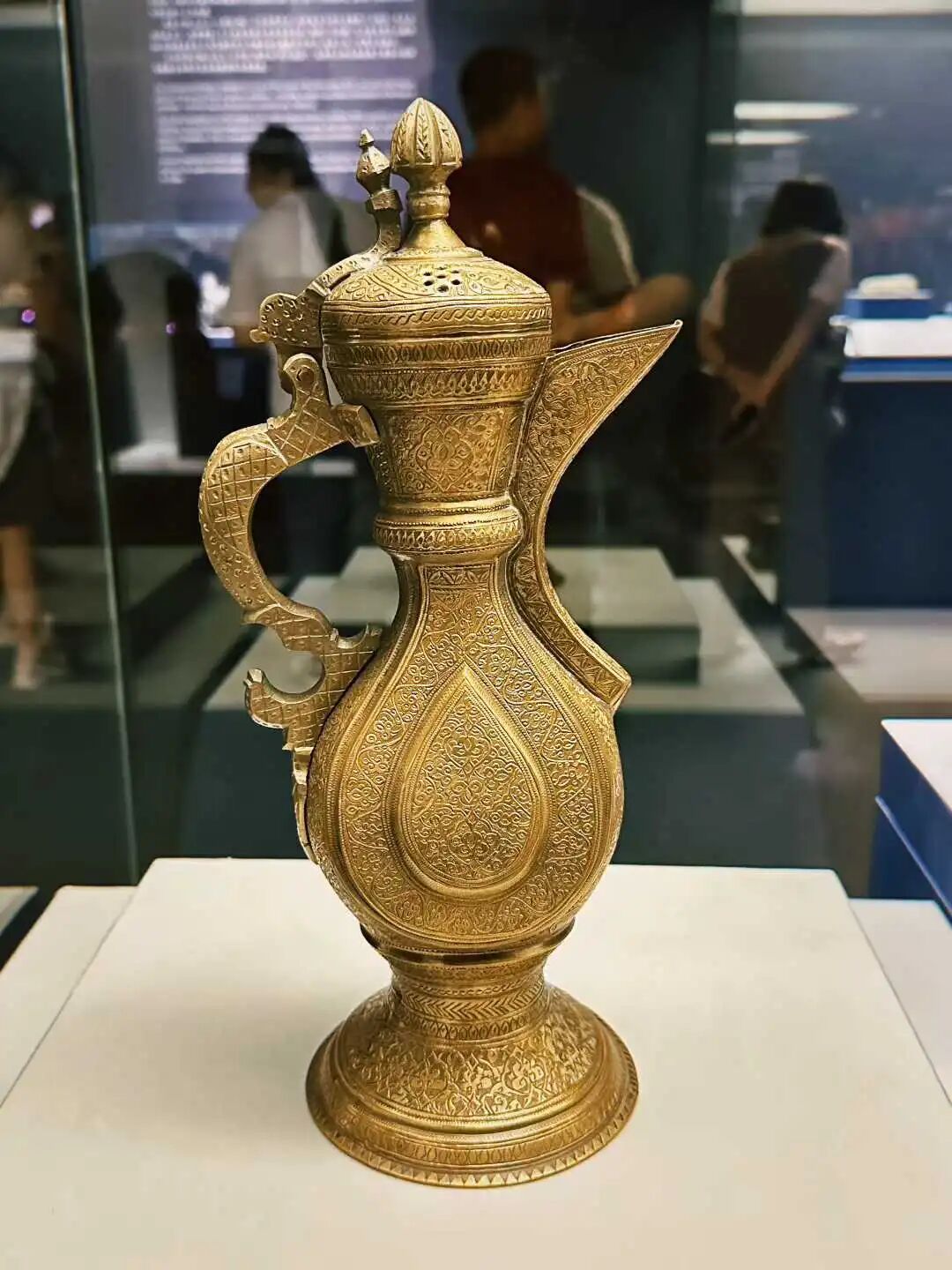
A tray with Arabic script from the 19th century in the National Museum of Tajikistan collection.
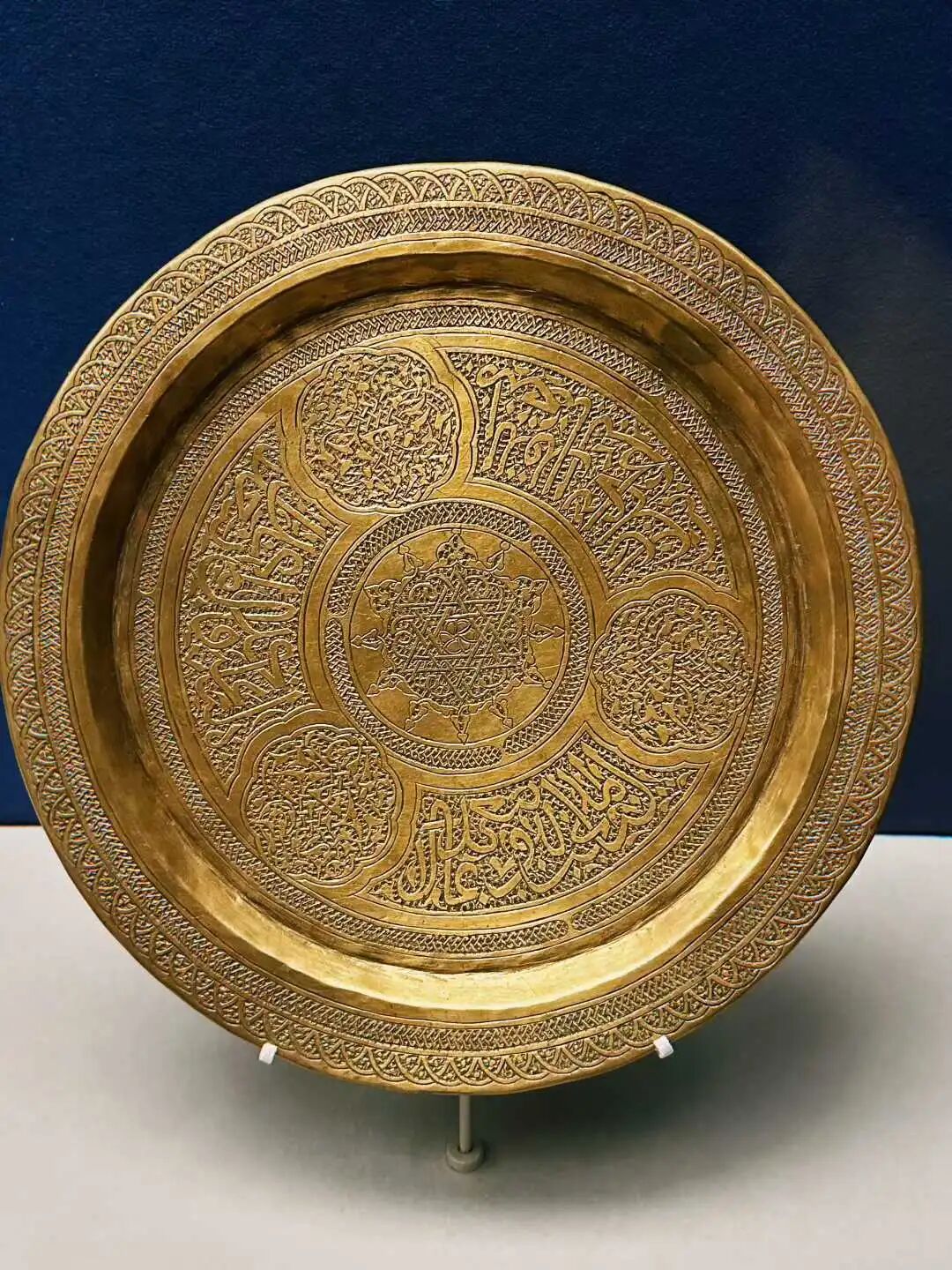
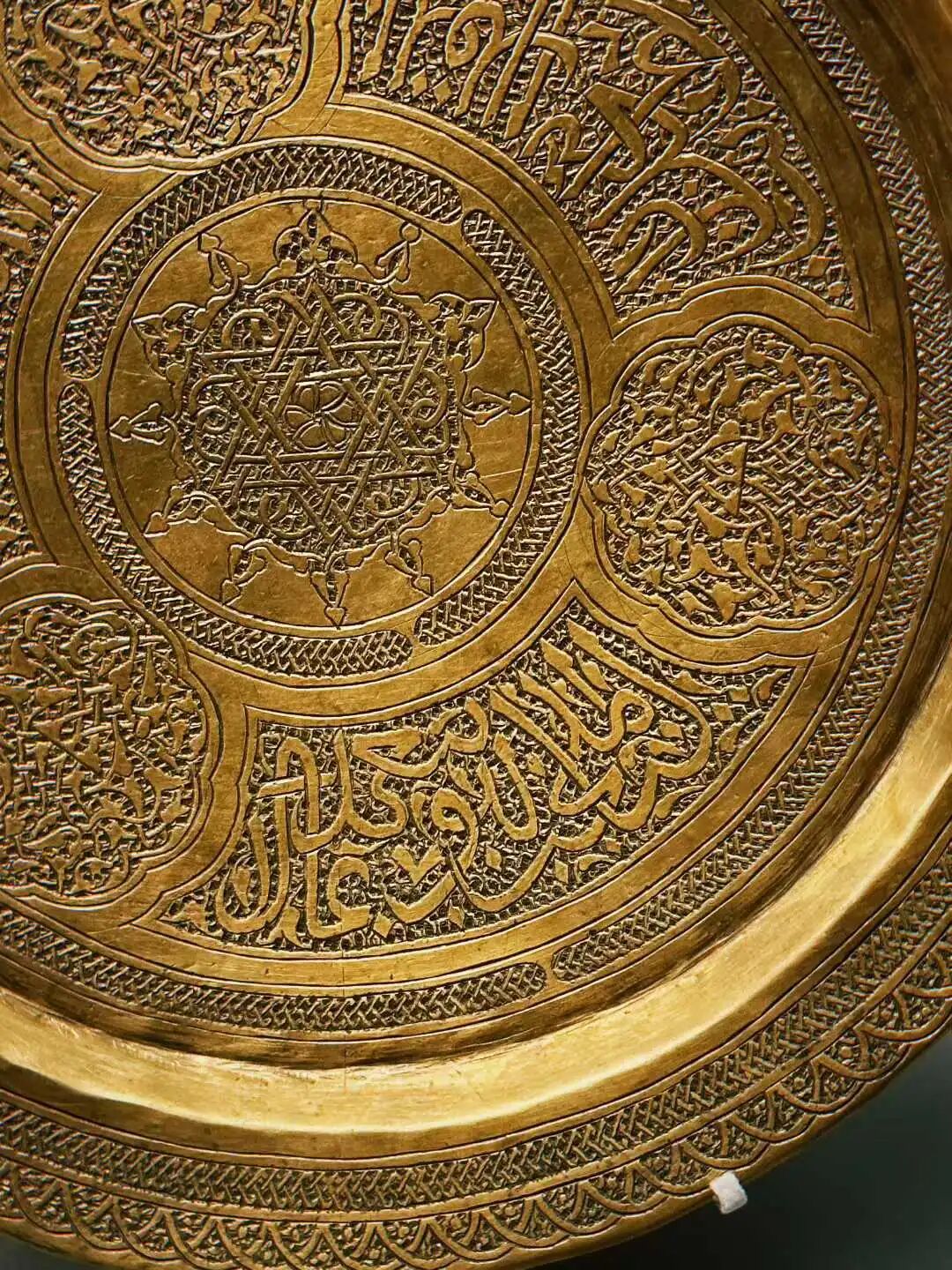
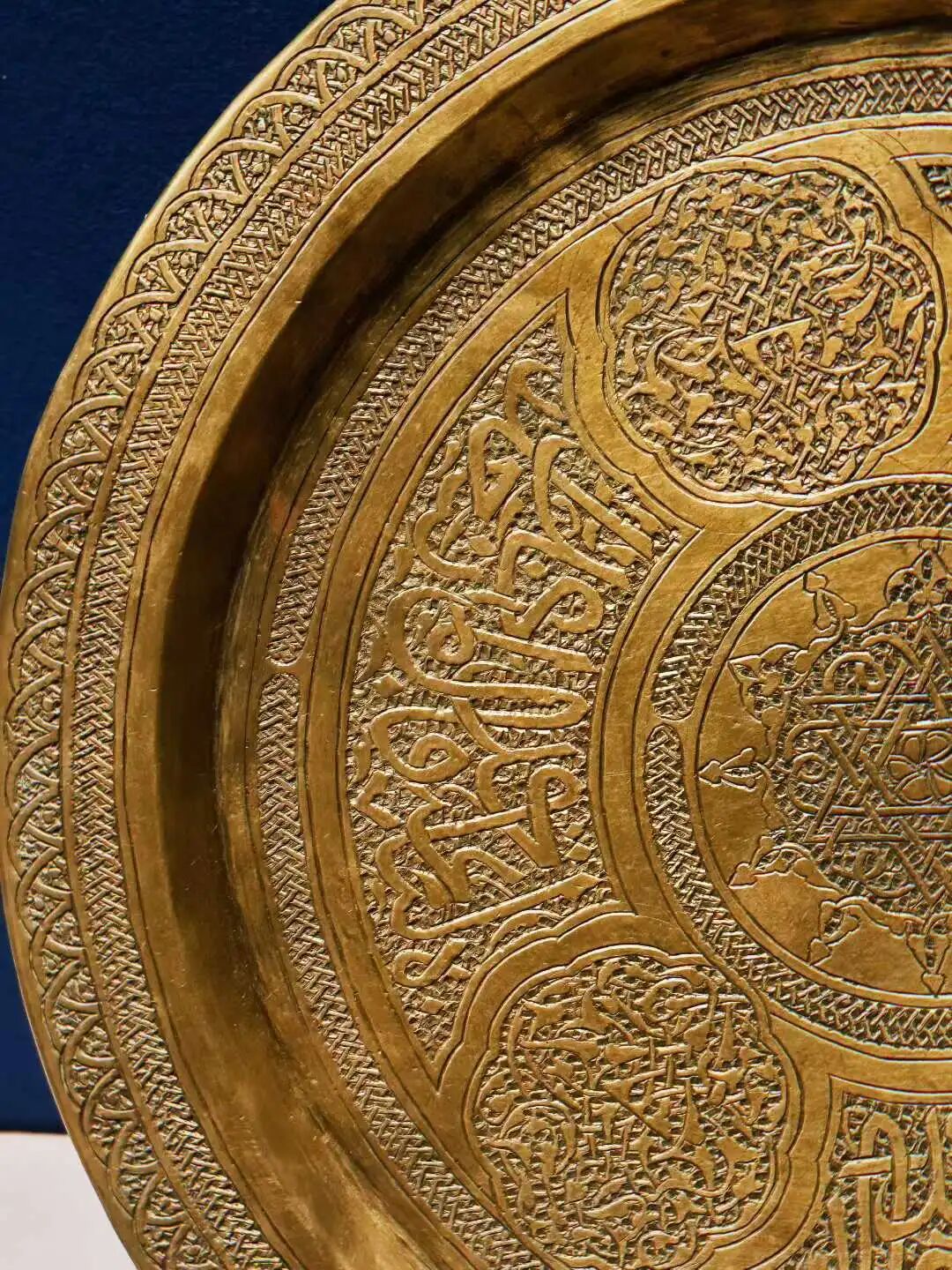
A Persian shield in the National Museum of Tajikistan collection, decorated with sun and angel patterns and engraved with beautiful Persian calligraphy.
A 16th-century axe in the National Museum of Tajikistan collection, engraved with a scene of three riders hunting.
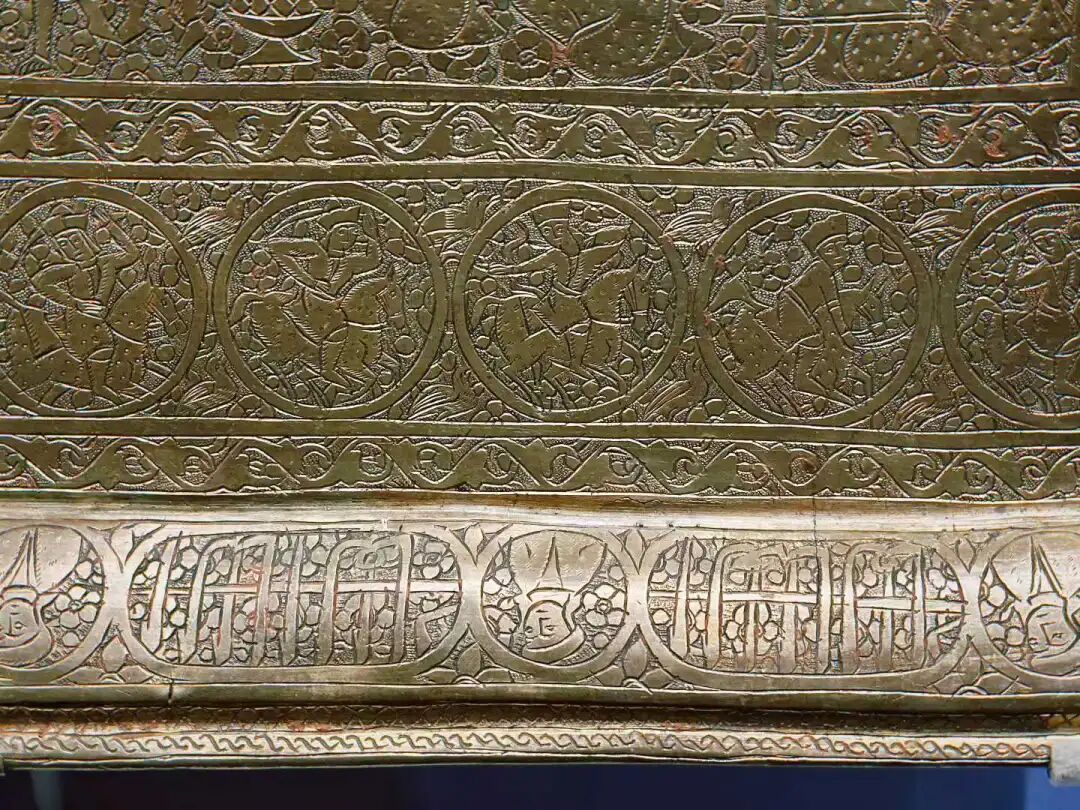
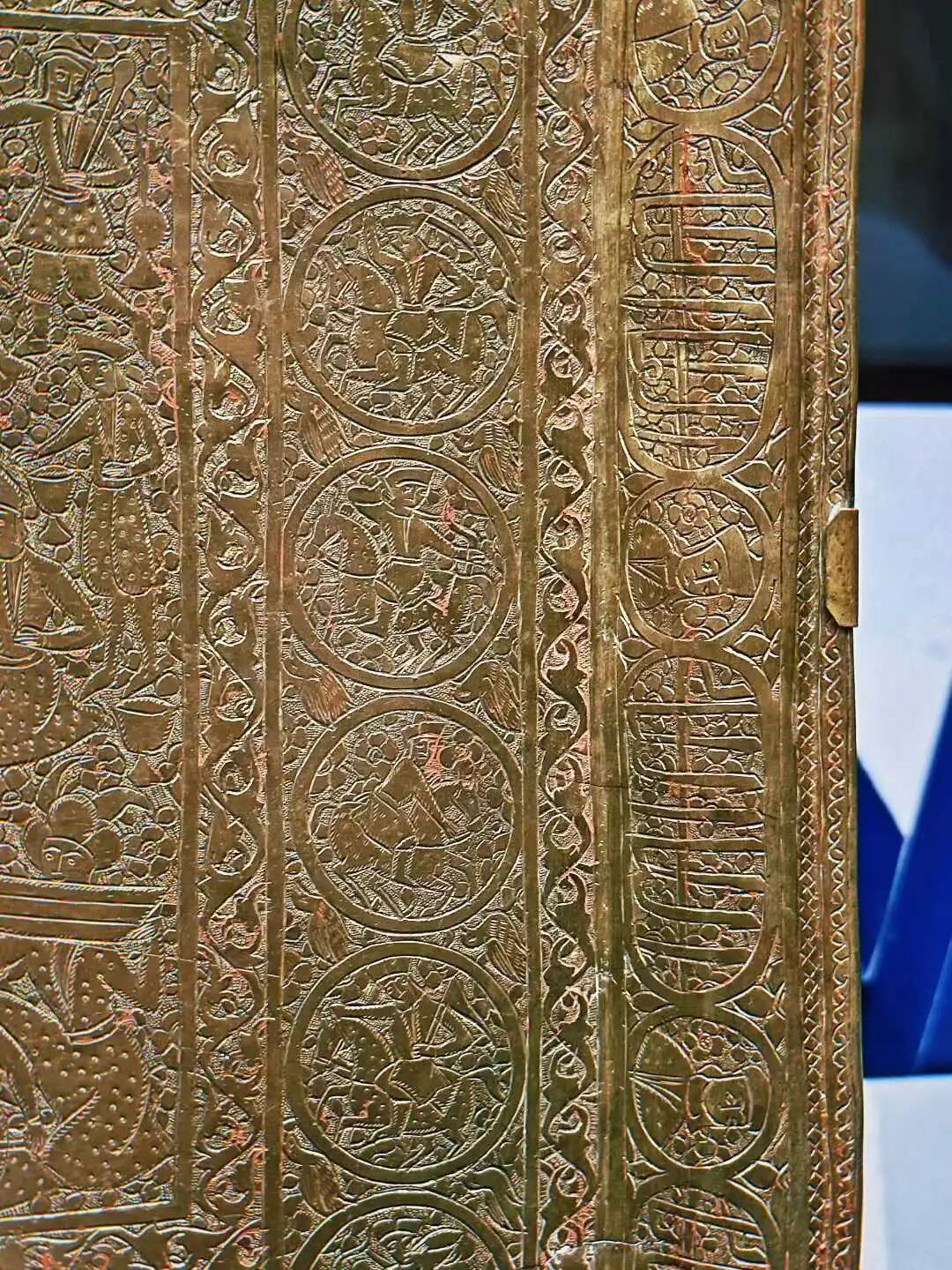
A 19th-century decorative tray in the National Museum of Tajikistan collection, engraved with a lively banquet scene. The border features 33 circular panels, each showing a rider in a different pose, with Arabic script on the outermost edge.
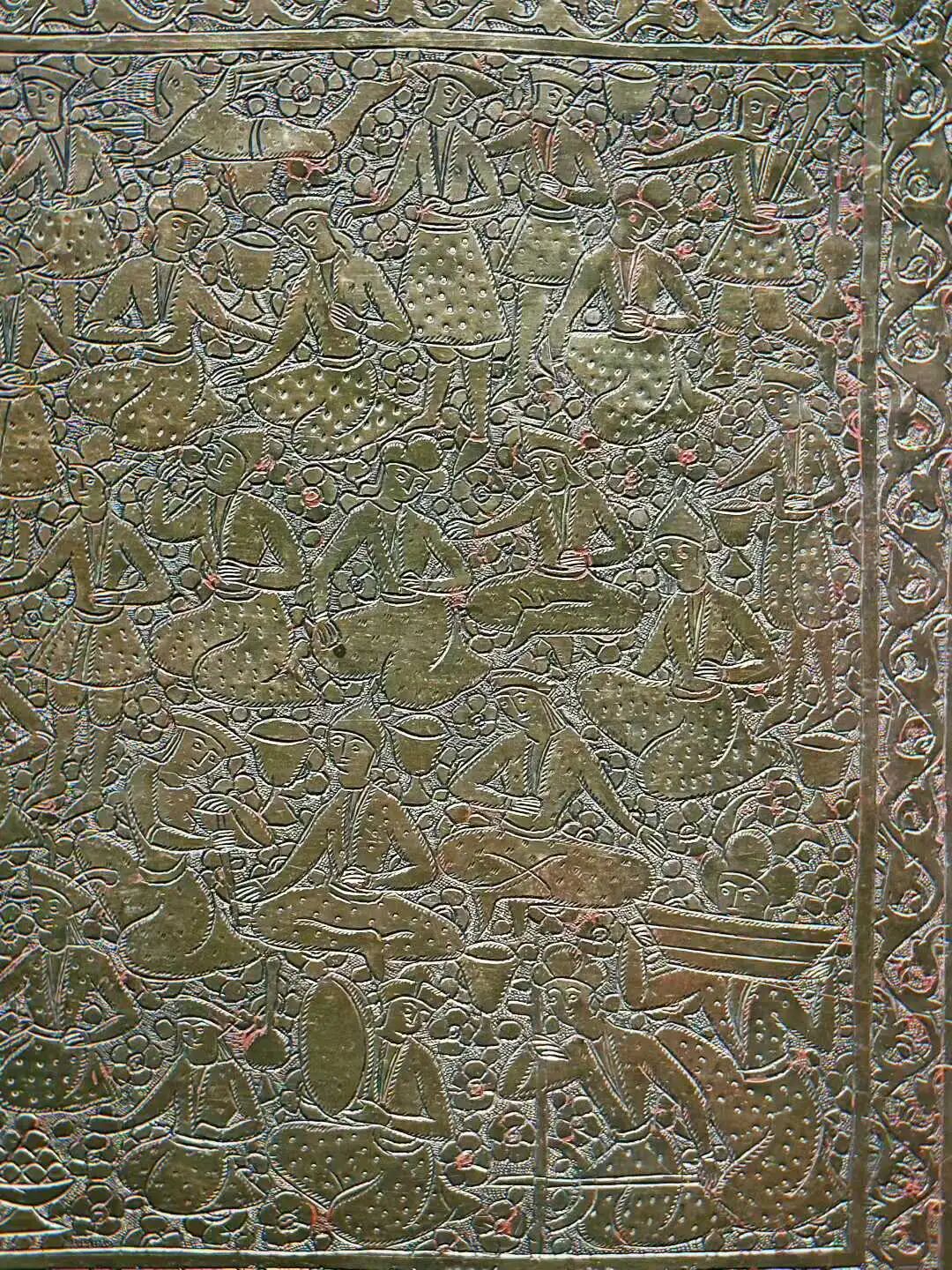
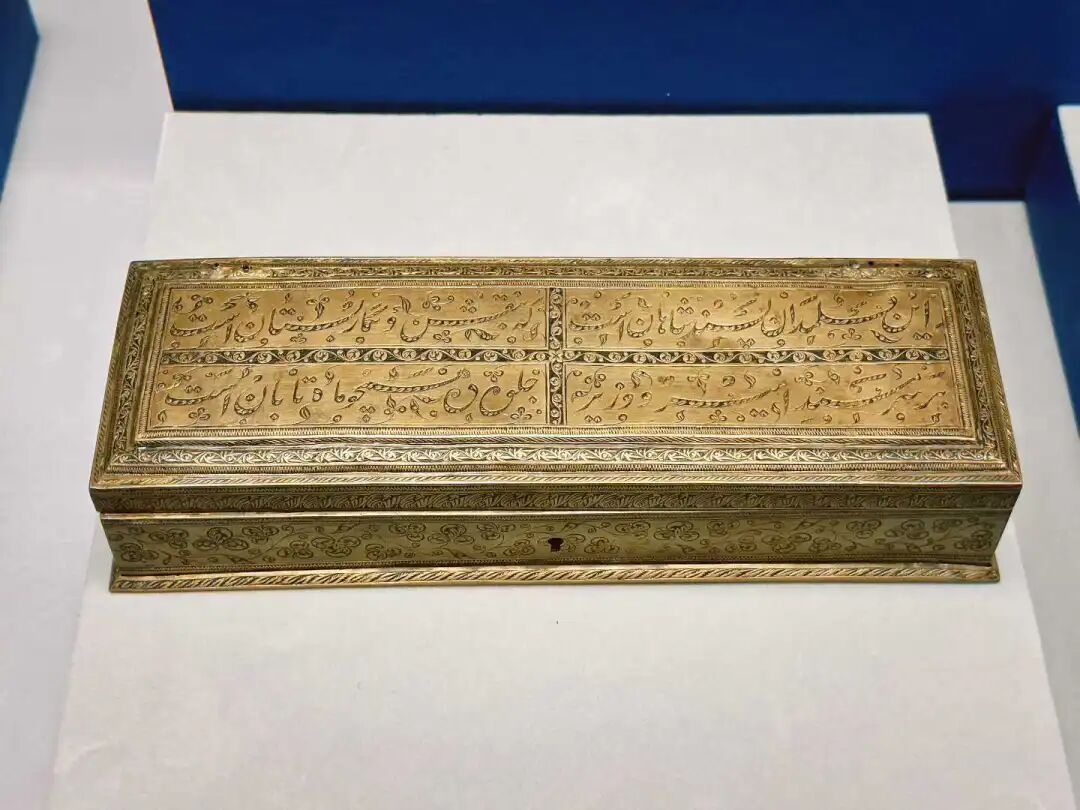
A 19th-century copper pen case in the National Museum of Tajikistan collection, featuring four lines of Persian poetry in Persian calligraphy and decorated with various leaves and plants.
A 10th-11th century copper pitcher unearthed in Istaravshan (Dayuan City) and held in the National Museum of Tajikistan, with Arabic and Persian inscriptions on the body and neck. Istaravshan was ruled by the Samanid and Karakhanid dynasties during the 10th and 11th centuries and was a famous center for trade and handicrafts.
National Museum of Uzbekistan.
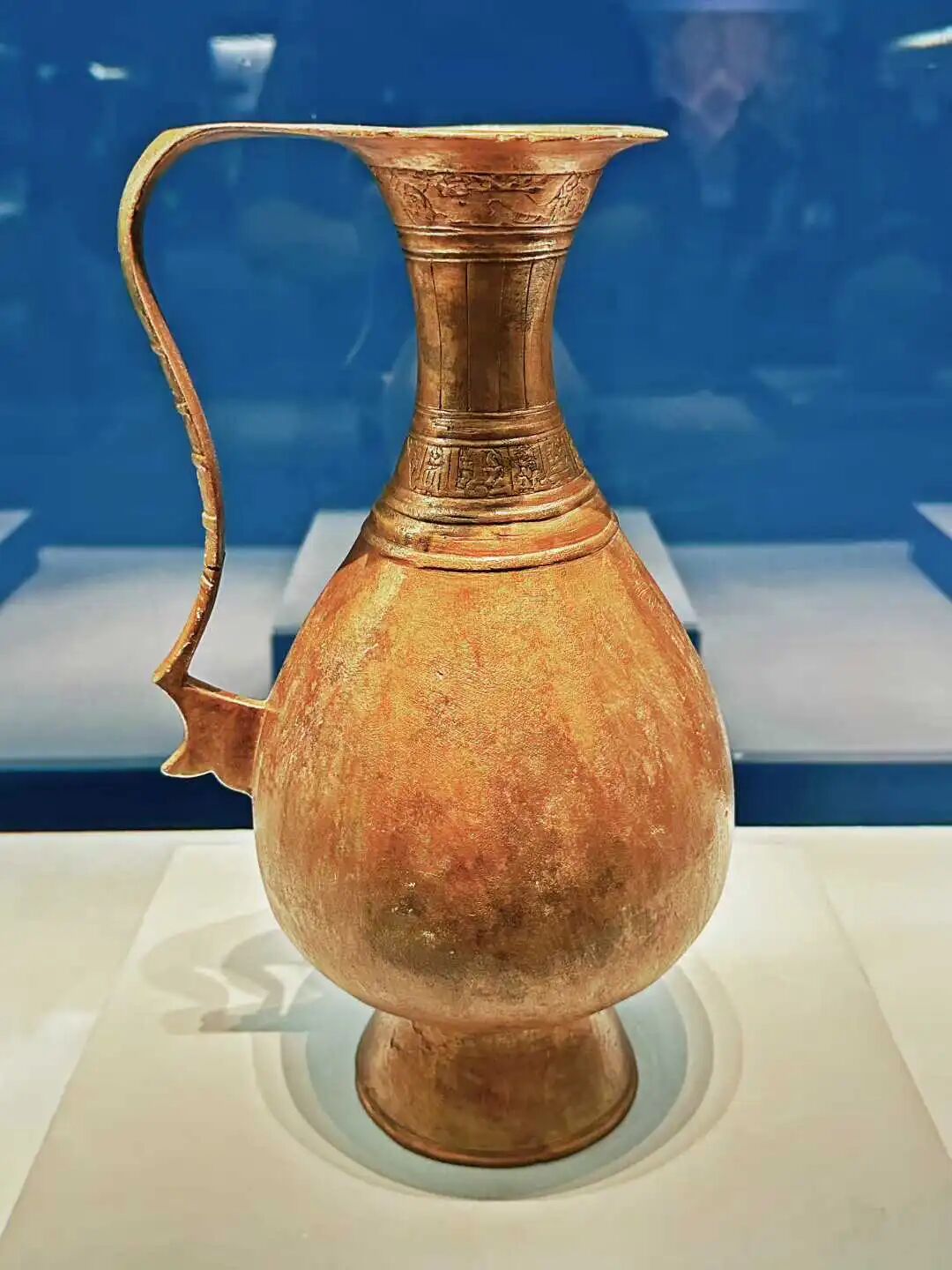
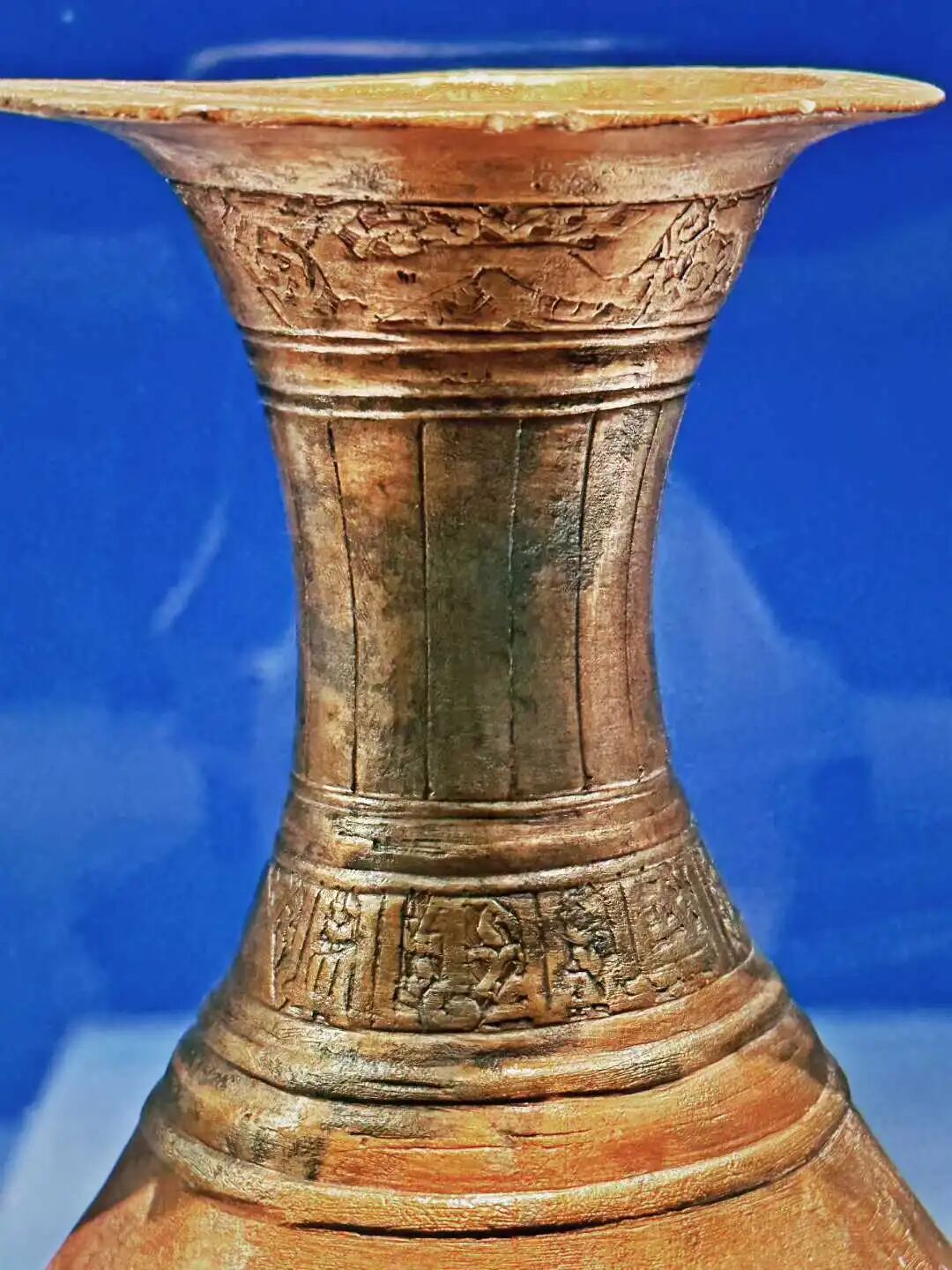
A 10th-12th century copper pitcher in the National Museum of Uzbekistan collection, dating to the Samanid and Karakhanid period. It has Arabic script on the neck and human-headed bird patterns on the rim.
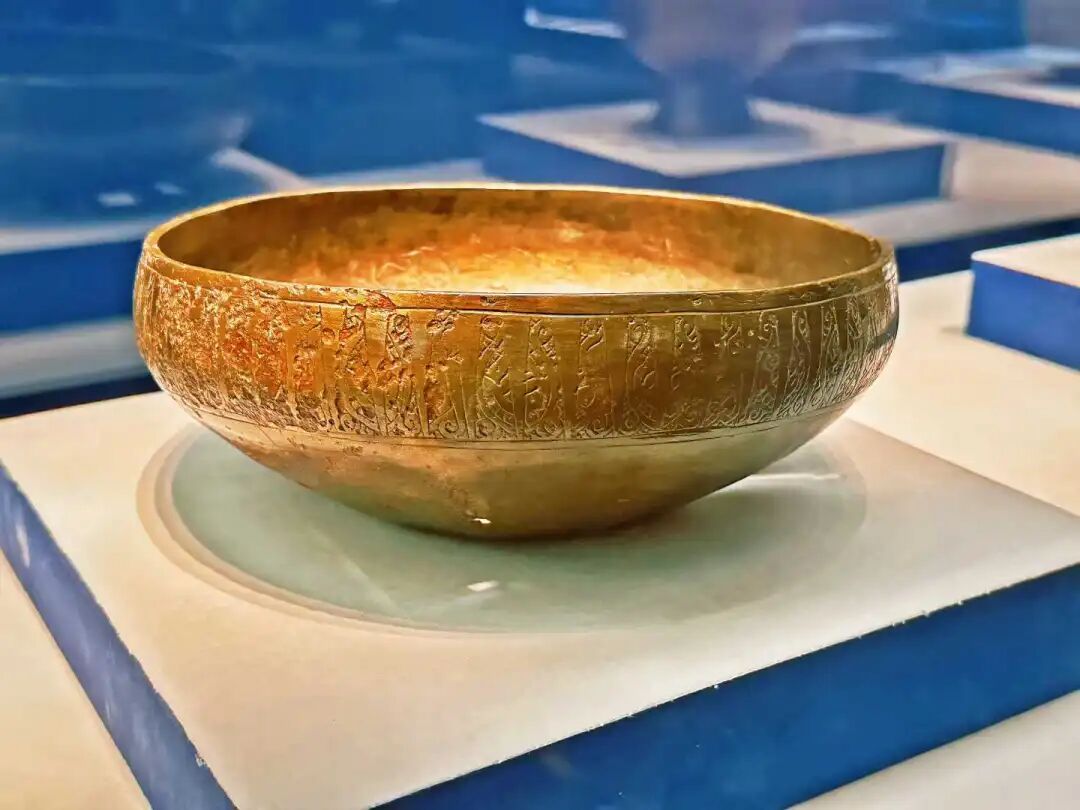
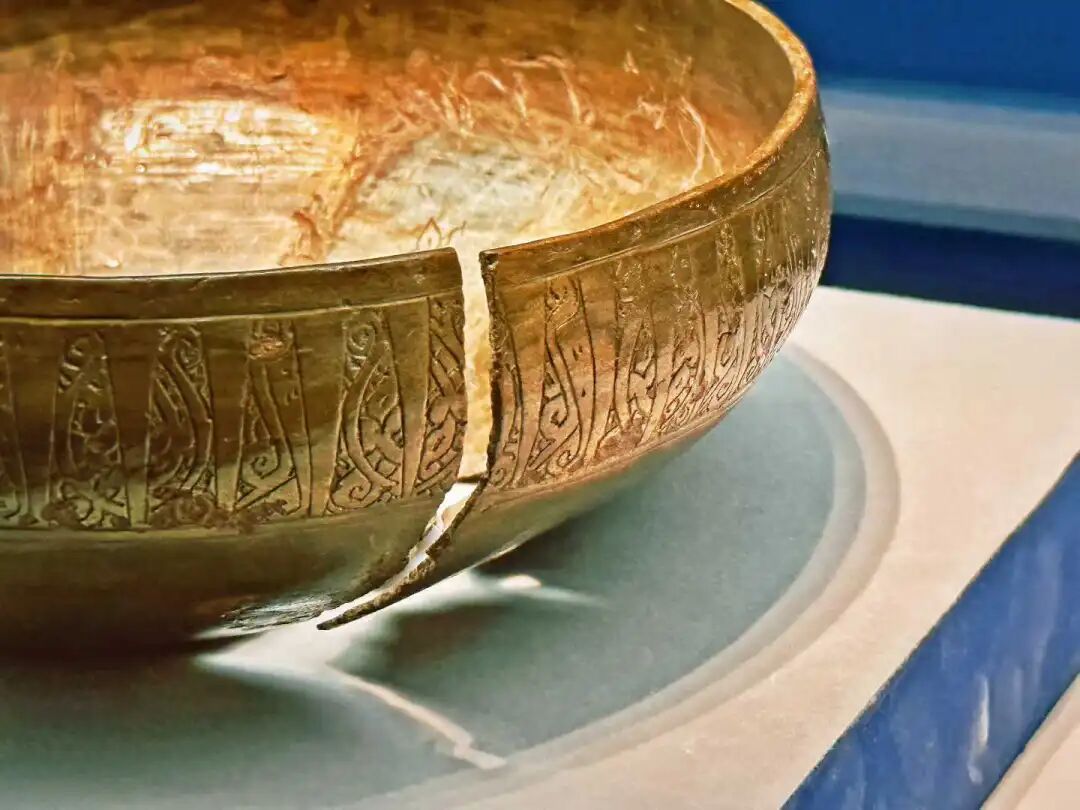
A 10th-11th century copper bowl in the National Museum of Uzbekistan collection, dating to the Samanid and Karakhanid period. The outer wall is engraved with Kufic script, and the inner wall is decorated with fish and bird patterns.
State Museum of Arts of Uzbekistan.
A men's gold-embroidered velvet robe made in Bukhara in 1905, held in the State Museum of Arts of Uzbekistan.
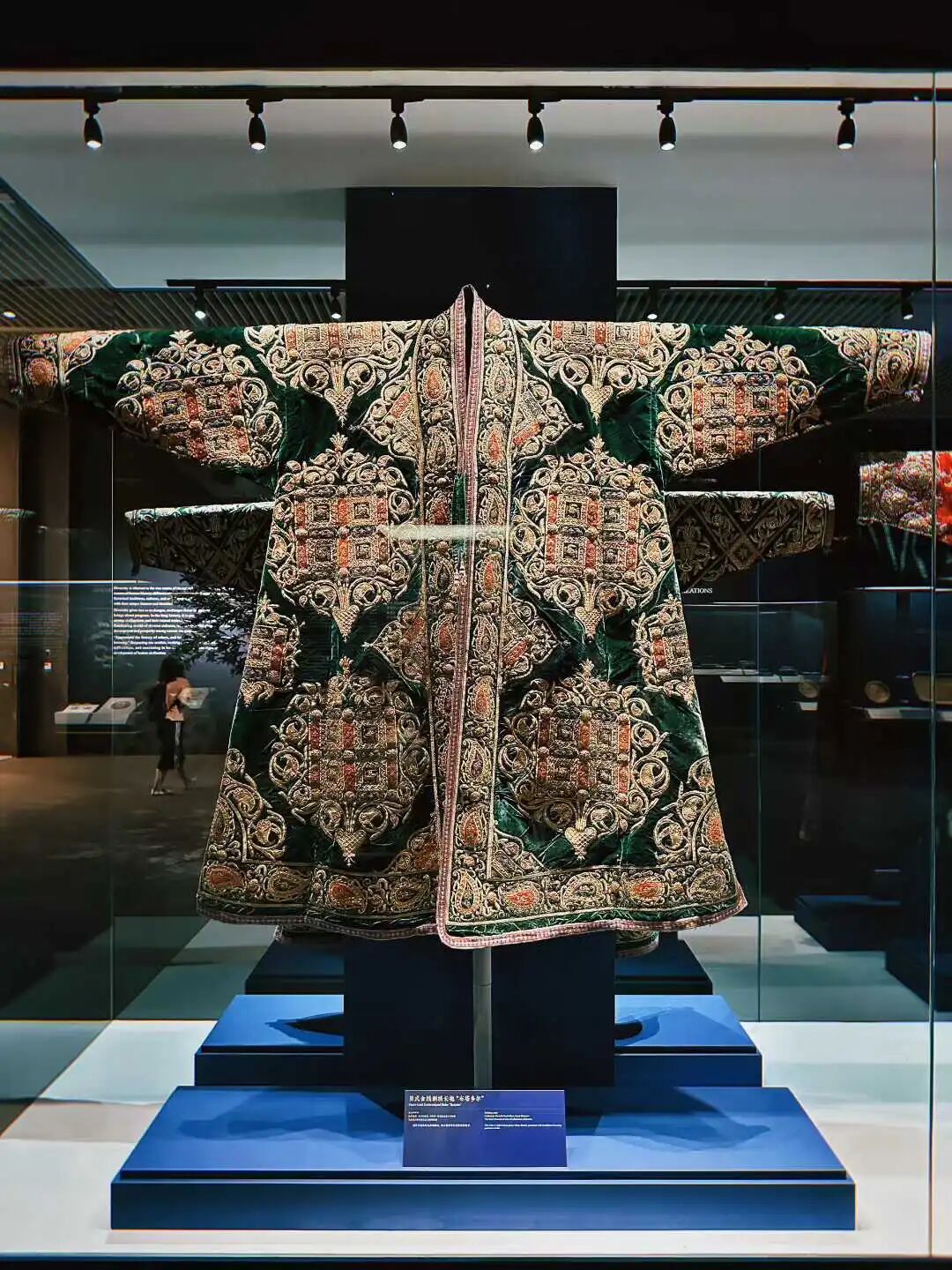
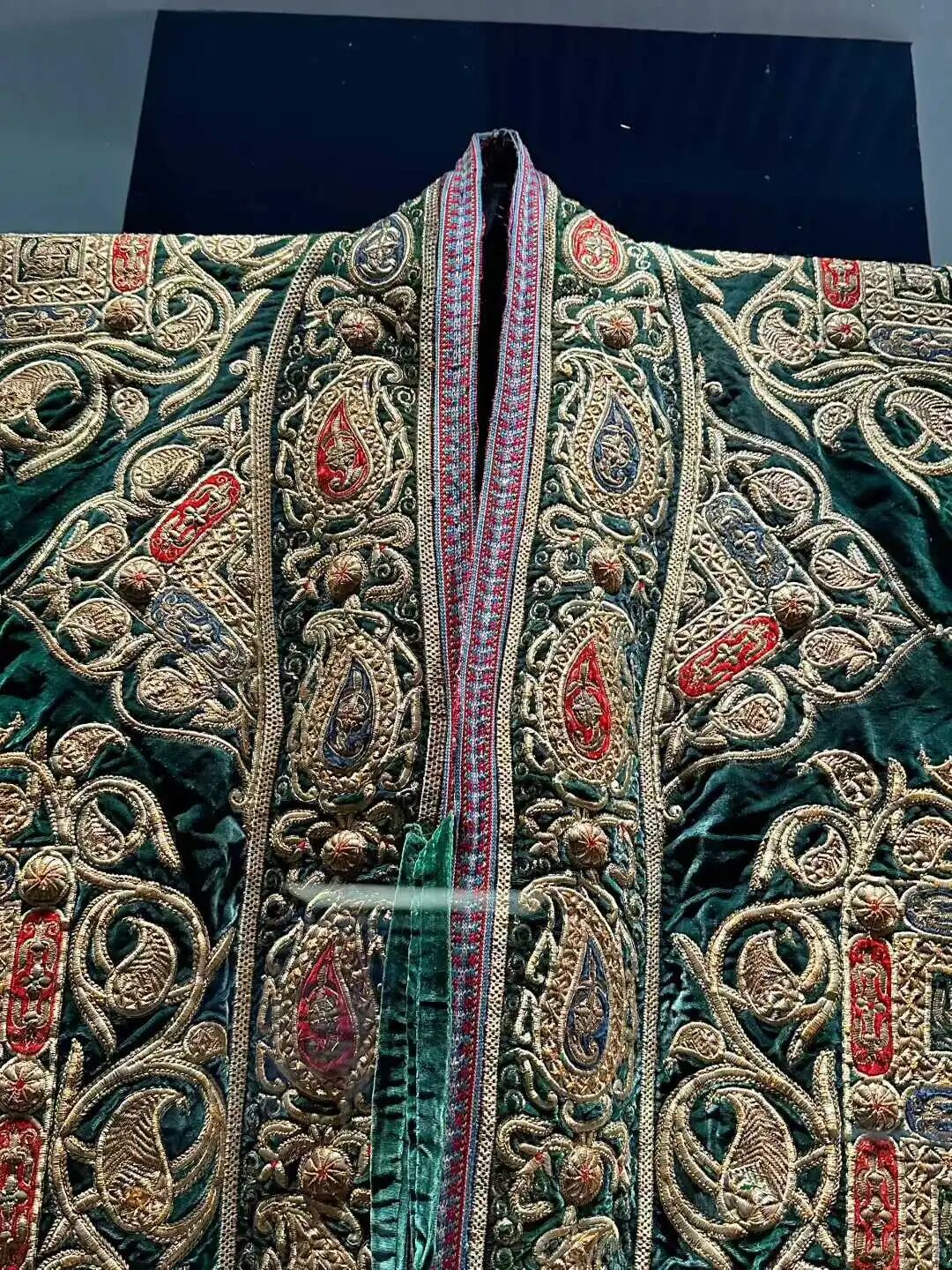
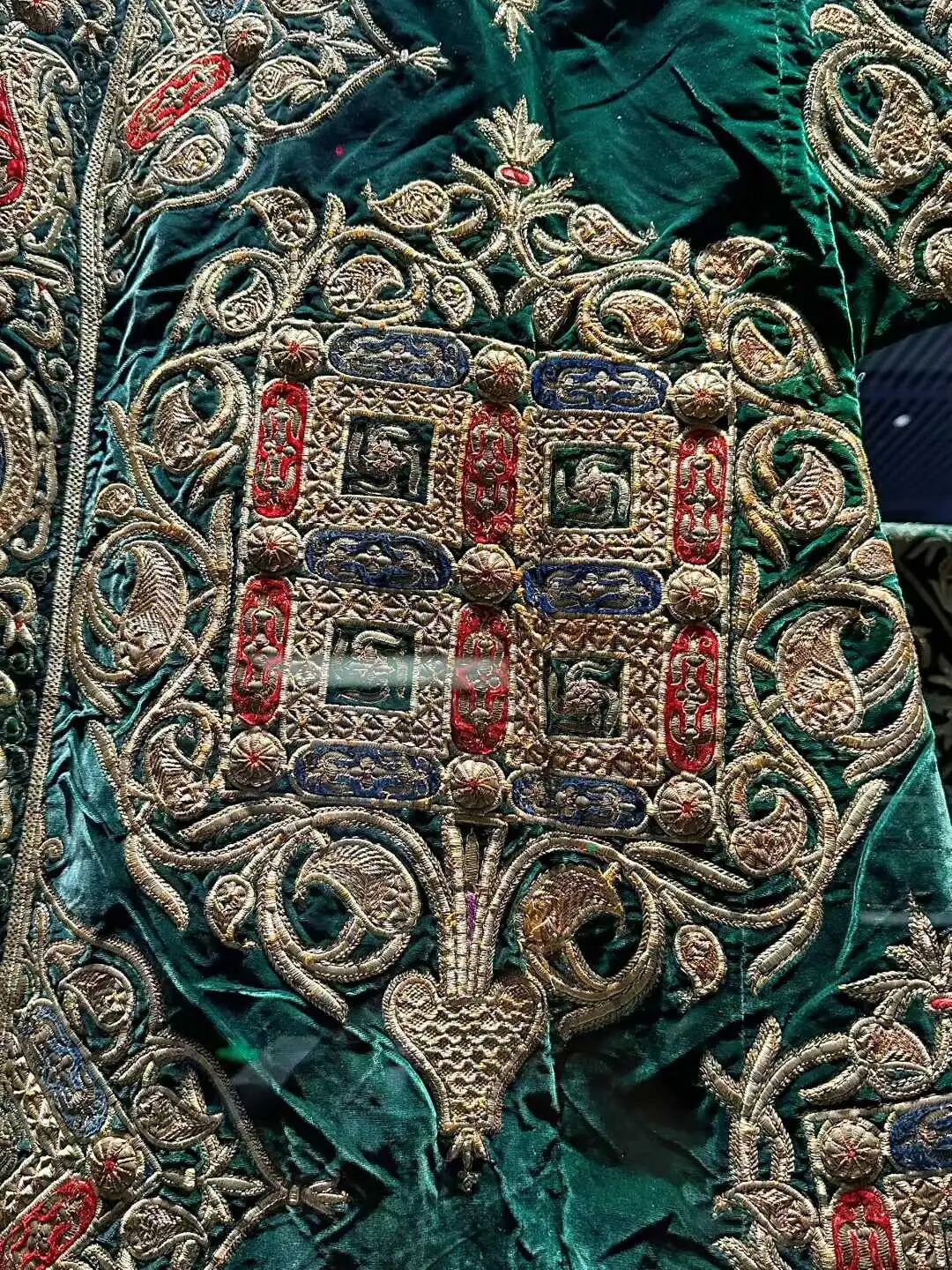
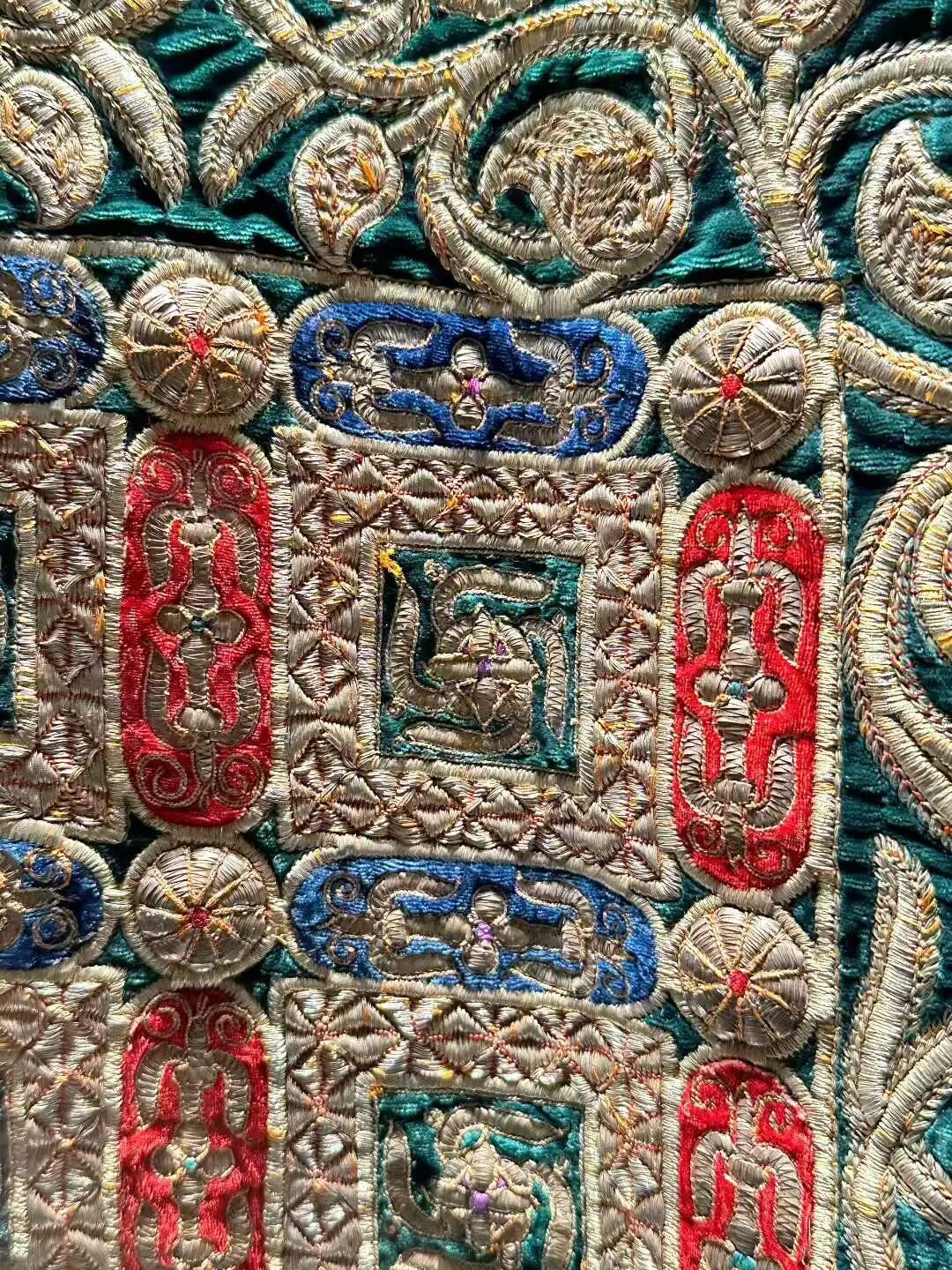
A men's gold-embroidered velvet robe made in Bukhara between 1900 and 1905, held in the State Museum of Arts of Uzbekistan.
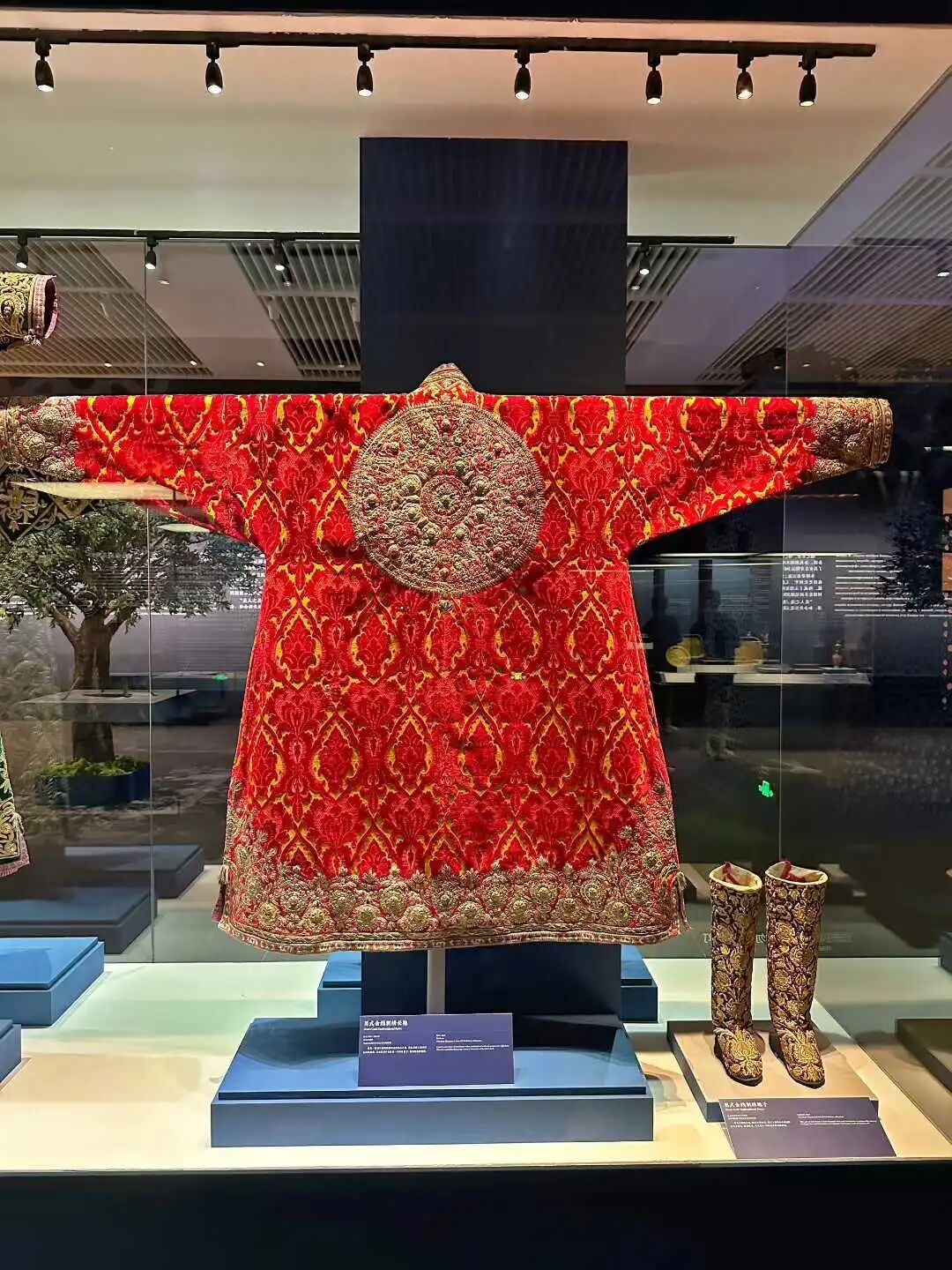
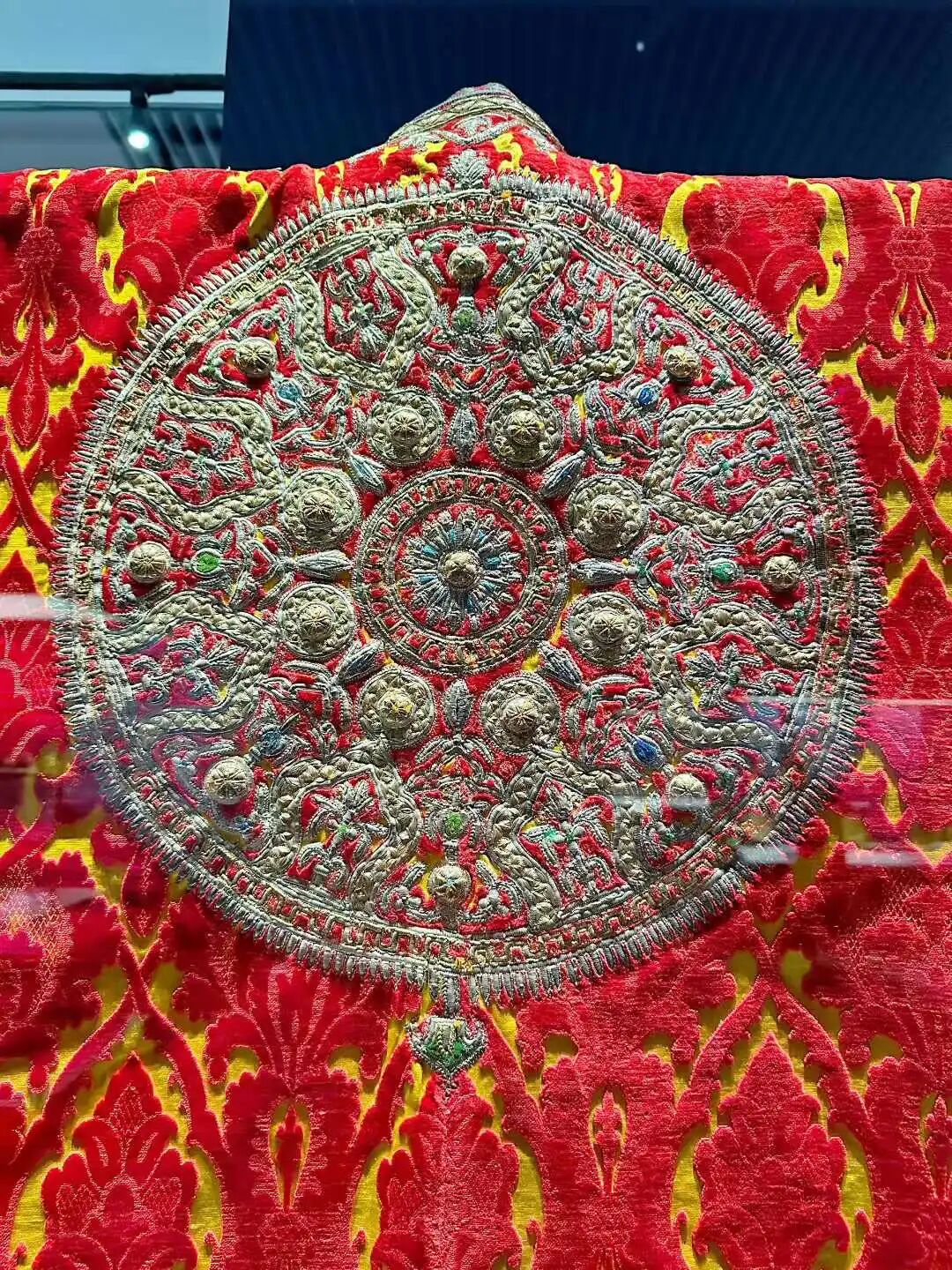
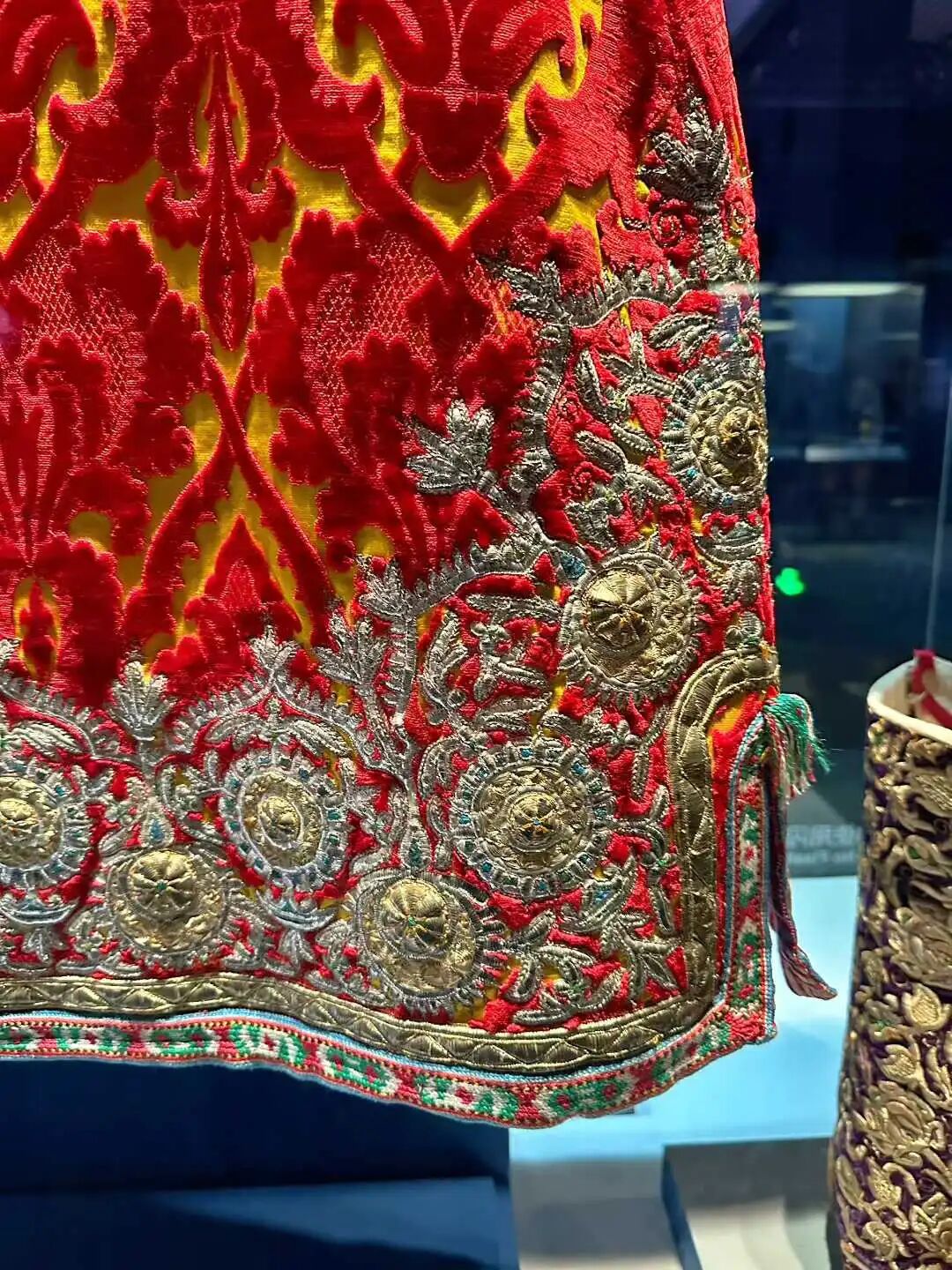
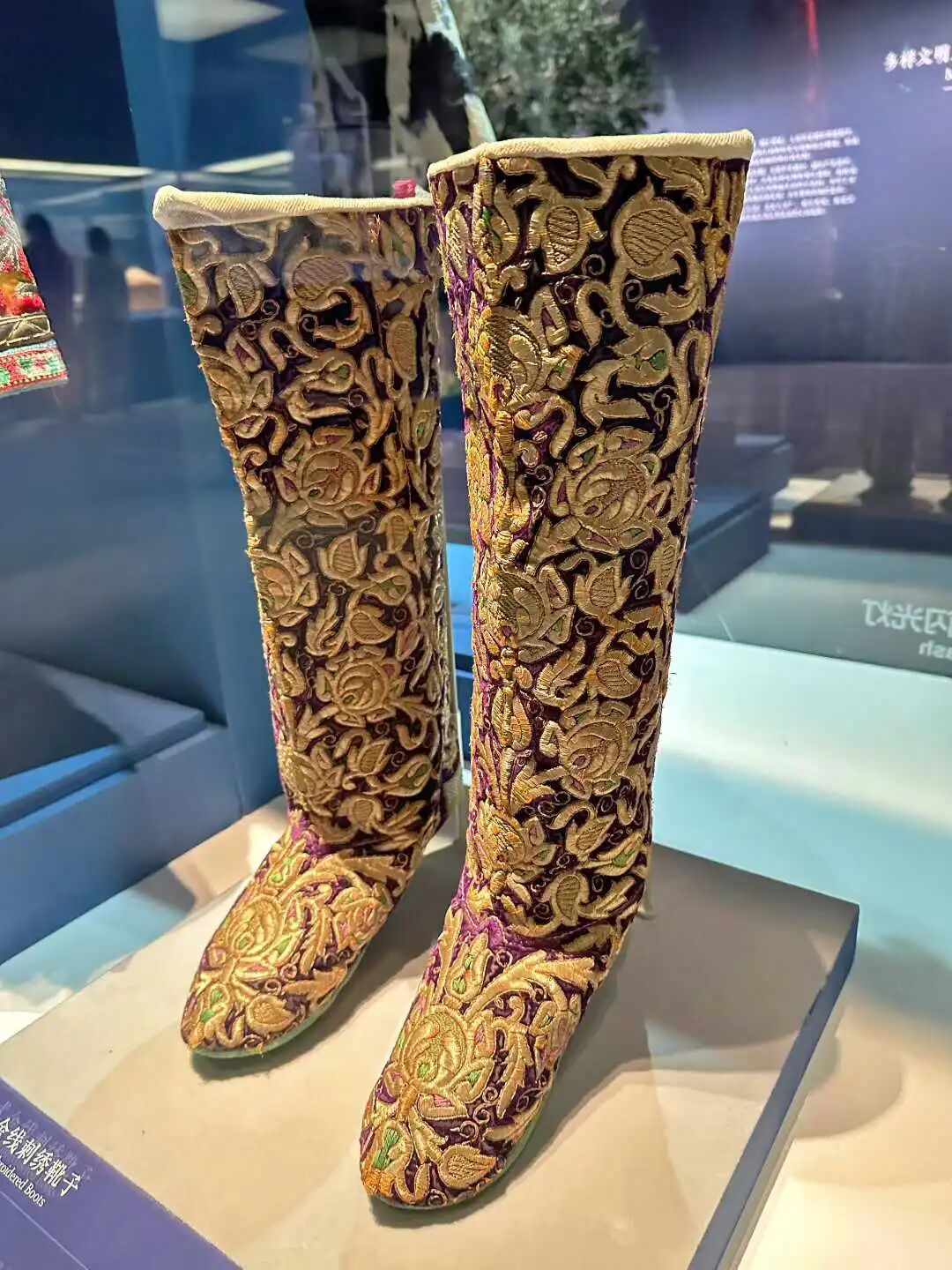
Men's gold-embroidered velvet boots made in Bukhara in 1890, held in the State Museum of Arts of Uzbekistan.
A women's ikat silk robe from the early 20th century, held in the State Museum of Arts of Uzbekistan.
A men's gold-embroidered velvet robe made in Bukhara between 1898 and 1900, held in the State Museum of Arts of Uzbekistan.
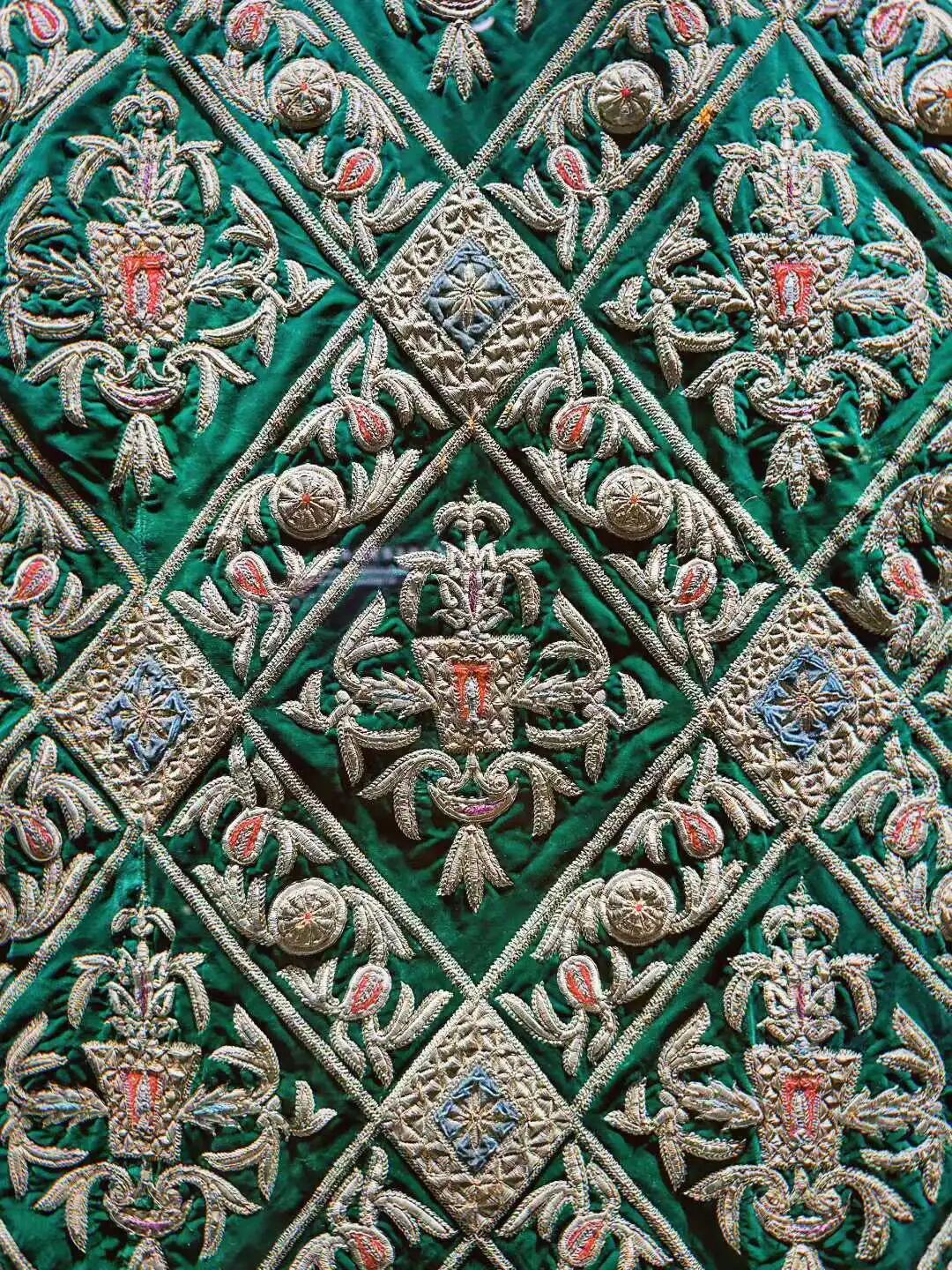
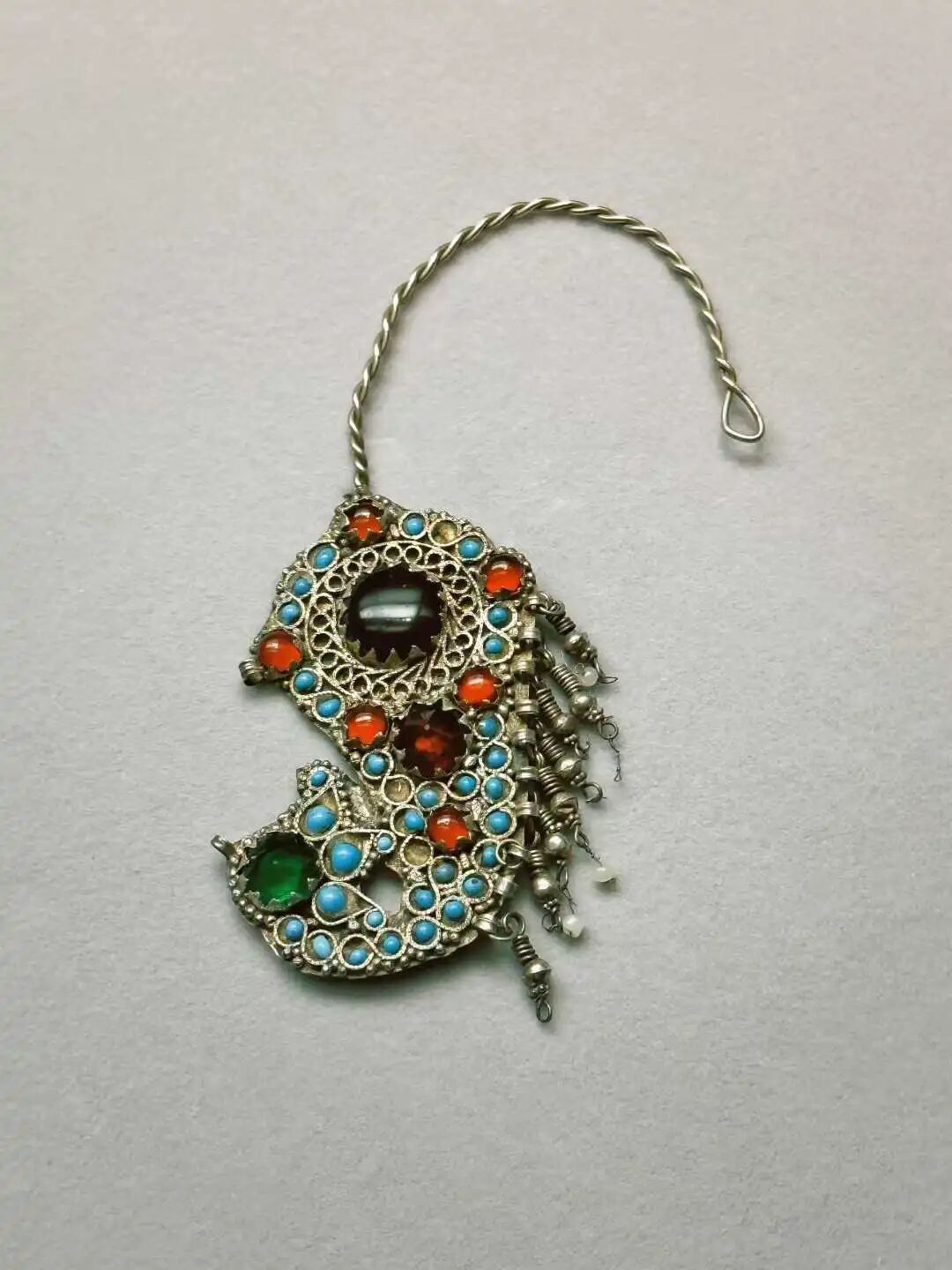
A headpiece (gajak) made in Tashkent in 1912, held in the State Museum of Arts of Uzbekistan.
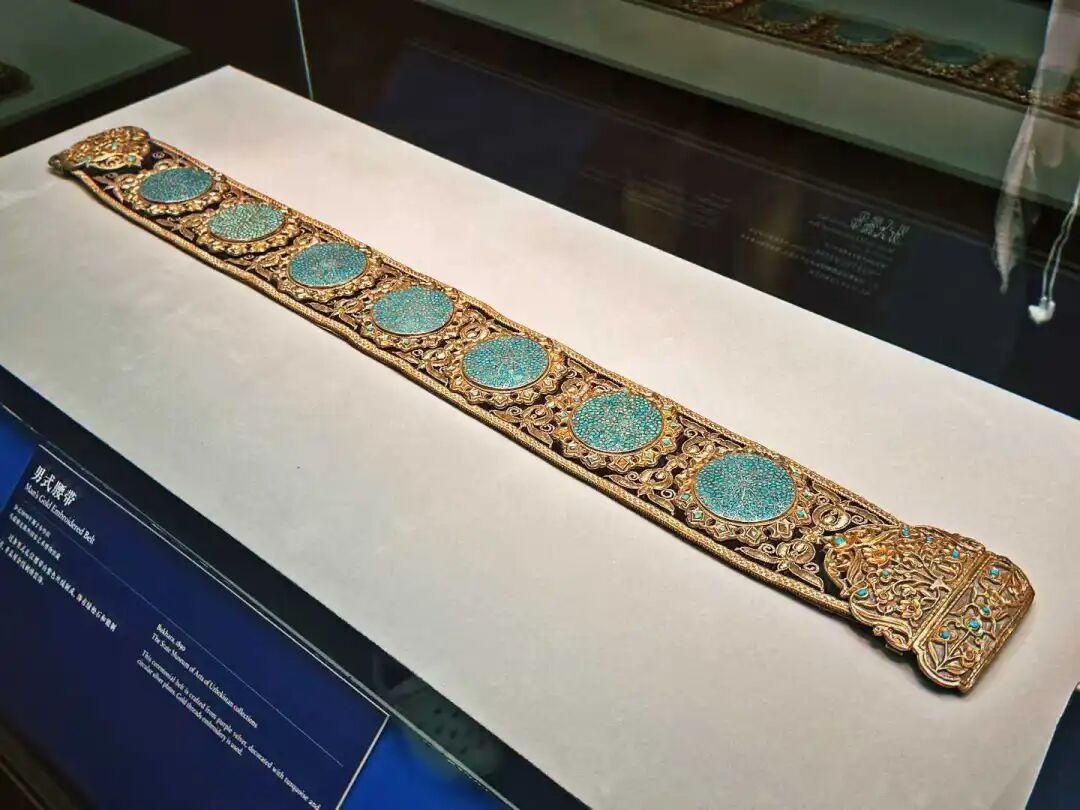
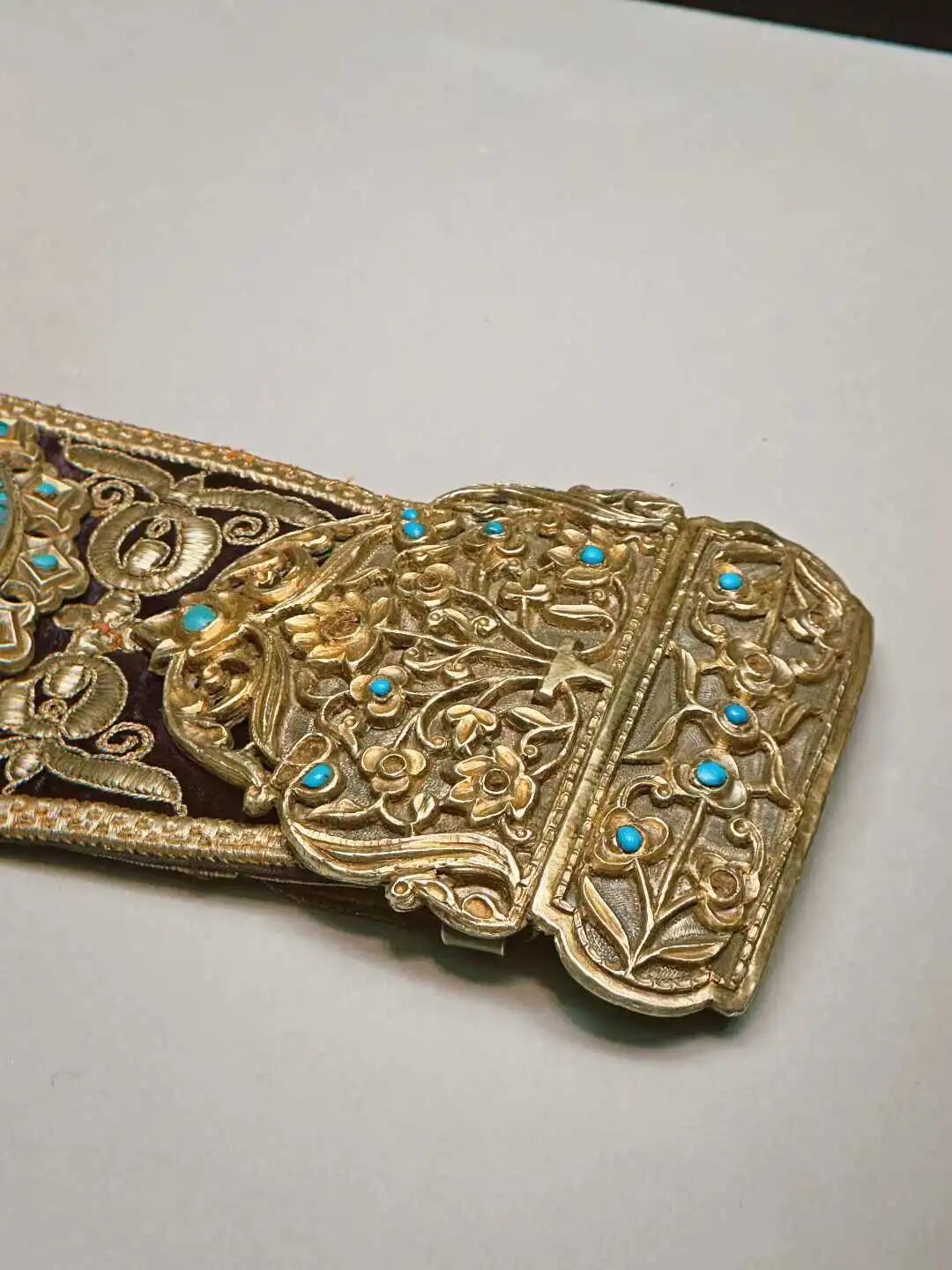
A men's gold-embroidered velvet belt made in Bukhara in 1890, decorated with turquoise and silver pieces and held in the State Museum of Arts of Uzbekistan.
This Tojduzi headpiece from the early 20th century is kept at the State Museum of Arts of Uzbekistan.
Hermitage Museum Islamic Art: Persian Miniatures, Golden Horde and Ilkhanid Artifacts
Articles • ali2007fr posted the article • 0 comments • 185 views • 2026-05-18 01:58
Summary: Hermitage Museum Islamic Art: Persian Miniatures, Golden Horde and Ilkhanid Artifacts is presented here as a firsthand travel account in clear English, beginning with this scene: The Hermitage Museum is in Saint Petersburg, Russia, and the famous Winter Palace is part of it. The account keeps its focus on Islamic Art, Hermitage Museum, Central Asia while preserving the names, places, food, and historical details from the Chinese source.
The Hermitage Museum is in Saint Petersburg, Russia, and the famous Winter Palace is part of it. The museum has 1,000 exhibition halls, and 350 are currently open. The museum's official website now has online exhibitions, so you can enjoy a virtual trip.
Museum website: https://www.hermitagemuseum.or ... ge%3F lng=zh
Here are some Persian miniatures, Golden Horde artifacts, and Ilkhanate artifacts.
1. Persian miniatures and manuscripts
Riza-yi 'Abbasi (1565-1635) was a court miniature artist of the Persian Safavid dynasty, from the miniature art center of Isfahan. He played an important role in promoting Persian painting.
A work by Riza-yi 'Abbasi painted in 1612.
A work by Riza-yi 'Abbasi from the late 16th century, transferred in 1924 from the Stieglitz Central Museum of Decorative and Applied Arts.
A work by Riza-yi 'Abbasi painted in late 1602-1603.
Another Persian miniature artist, Sharaf al-Hussaini al-Yazdi, was active in the 16th century. The image below was painted in 1594-1595 and transferred in 1924 from the Stieglitz Central Museum of Decorative and Applied Arts.
The famous Persian poet Rumi's masterpiece, the Masnavi, was painted between 1594-1596. The scribe was named Mir-Salih ibn Mir-Tahir ibn Mir-Hussein al-Husseini, and it was moved in 1925 from the Stieglitz Museum.
The Five Poems (Khamsa) by the famous Persian poet Nizami Ganjavi, painted in 1541. The scribe was named Hassan al-Husseini al-katib al-Shirazi, and it was acquired from a private source in 1945.
The famous Persian poet Ferdowsi's masterpiece, the Book of Kings (Shahnameh), was painted in the late 16th to early 17th century and acquired from a private source in 1937.
A Persian manuscript of Yusuf and Zulaikha from the first half of the 16th century, purchased in 1939 by the Purchasing Commission of the Experts of the State Hermitage Museum.
A Sufi ceremony from the second half of the 16th century, moved in 1924 from the Stieglitz Museum.
An anonymous work from the late 16th century, transferred in 1924 from the Stieglitz Central Museum of Decorative and Applied Arts.
A Persian miniature from the first half of the 16th century, purchased from a private source in 1959.
2. The Golden Horde
A stone tablet with Arabic and Chagatai script, featuring the name of the great emperor Timur, dated 1391.
This stone carving was discovered in 1935 by geologist Kanysh Satpayev at Altynshoky (Golden Mountain) near the left bank of the Sarysu River in Kazakhstan, which was the eastern border of the Golden Horde at the time. It was moved in 1937 by the Winter Palace scientist F. M. Morozov.
According to the inscription, Emperor Timur led an army of 300,000 to attack Tokhtamysh, the Khan of the Golden Horde, on April 6, 1391. He set up this stone tablet here to mark the event.
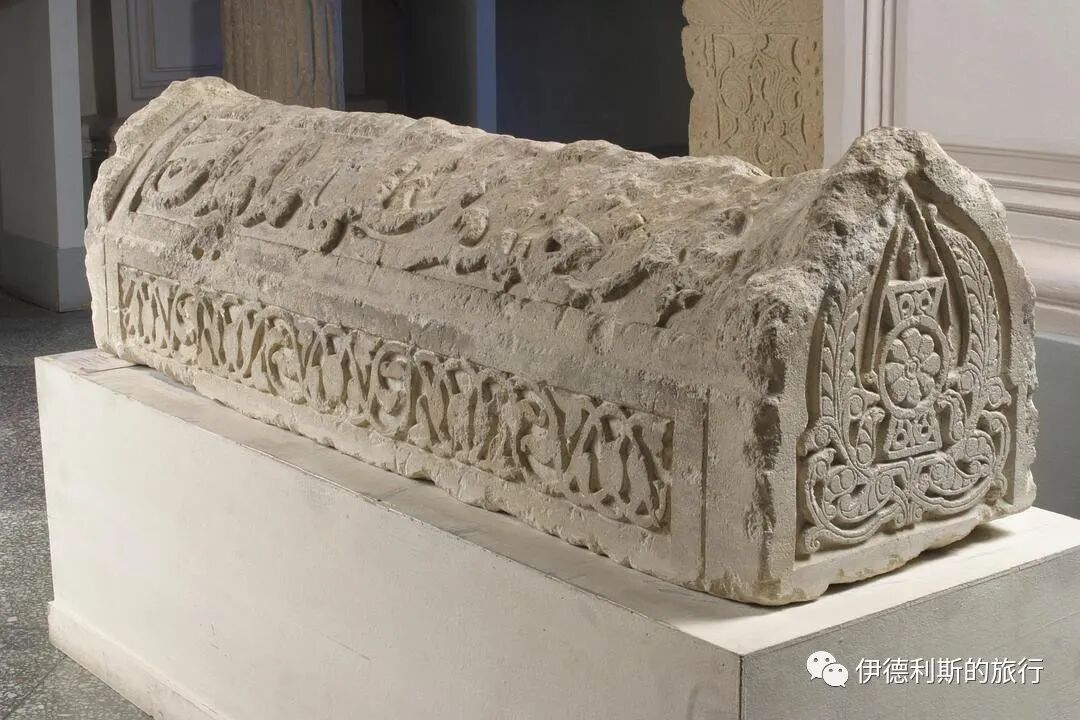
A tombstone with Turkic poetry, plant motifs, and geometric patterns from the 13th-14th century Golden Horde. It was moved here in 1979 by the Starokrymskaya archaeological expedition of the State Hermitage Museum.
A tombstone with Arabic inscriptions from the 14th-century Golden Horde, found in the city of Solkhat, Crimea.
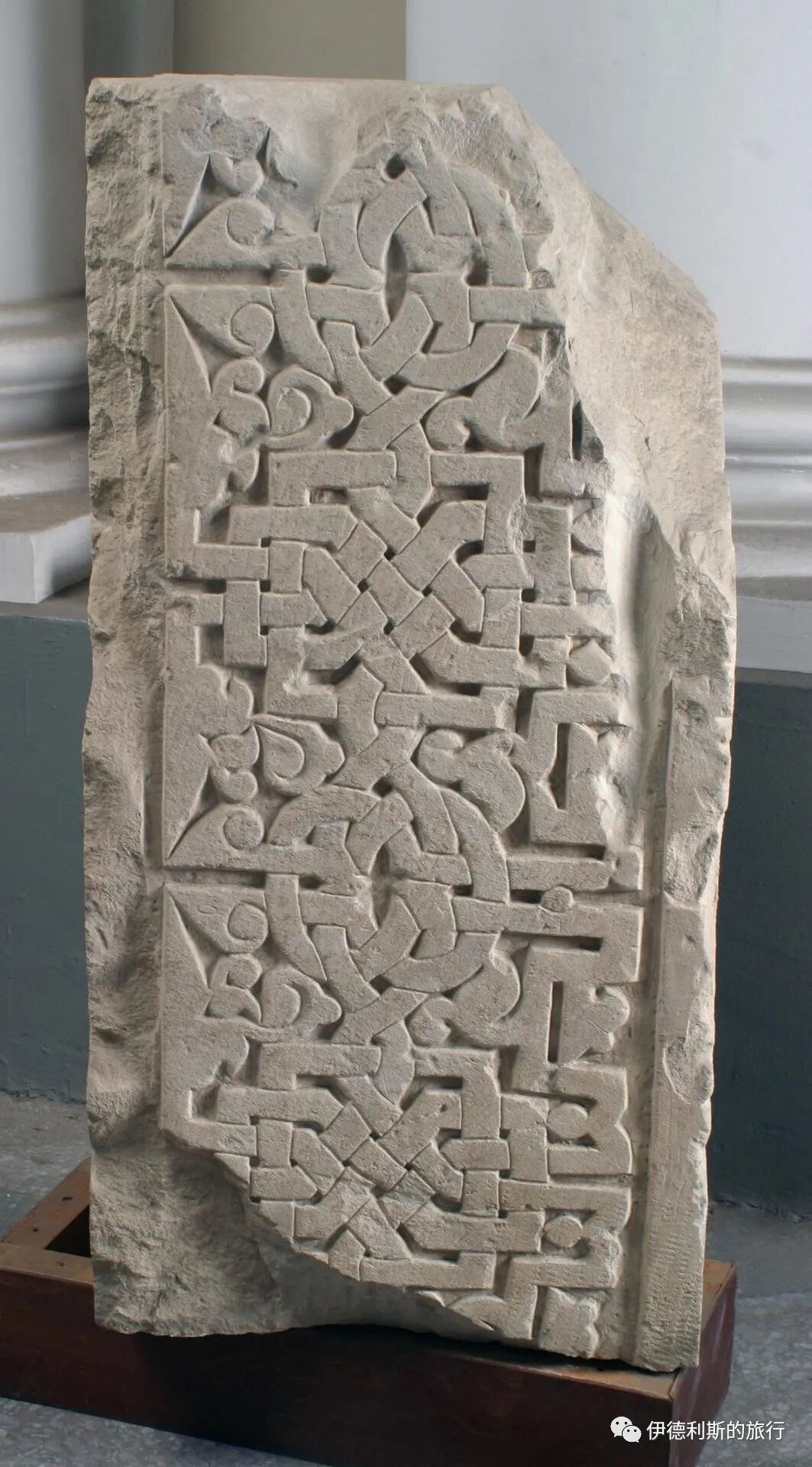
An architectural piece with geometric patterns and inscriptions from the first half of the 14th-century Golden Horde. It was found in Solkhat, Crimea, and moved here by the Starokrymskaya expedition in 1981.
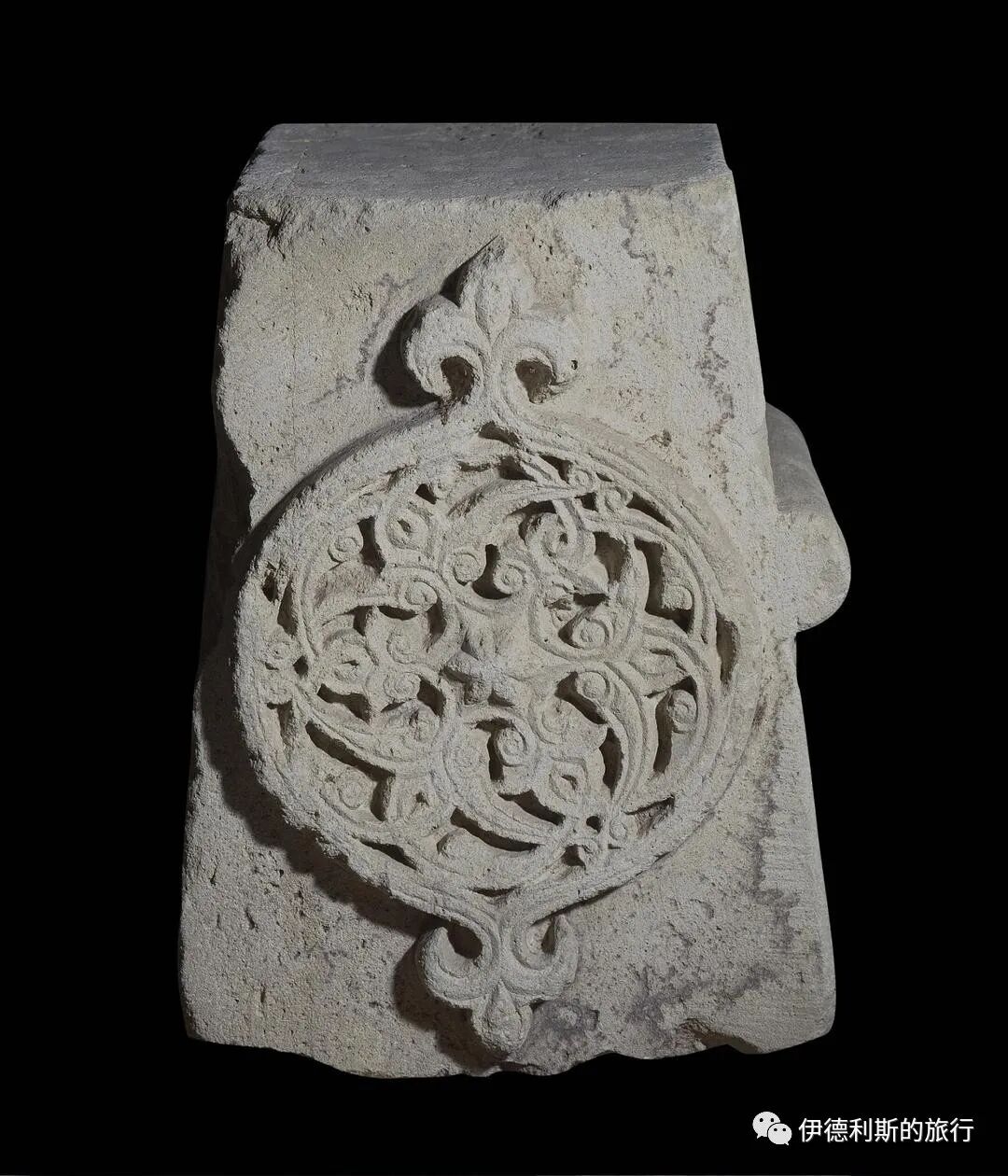
From the first half of the 14th-century Golden Horde, this was found in Solkhat, Crimea, during excavations in the 1980s and moved here in 2004.
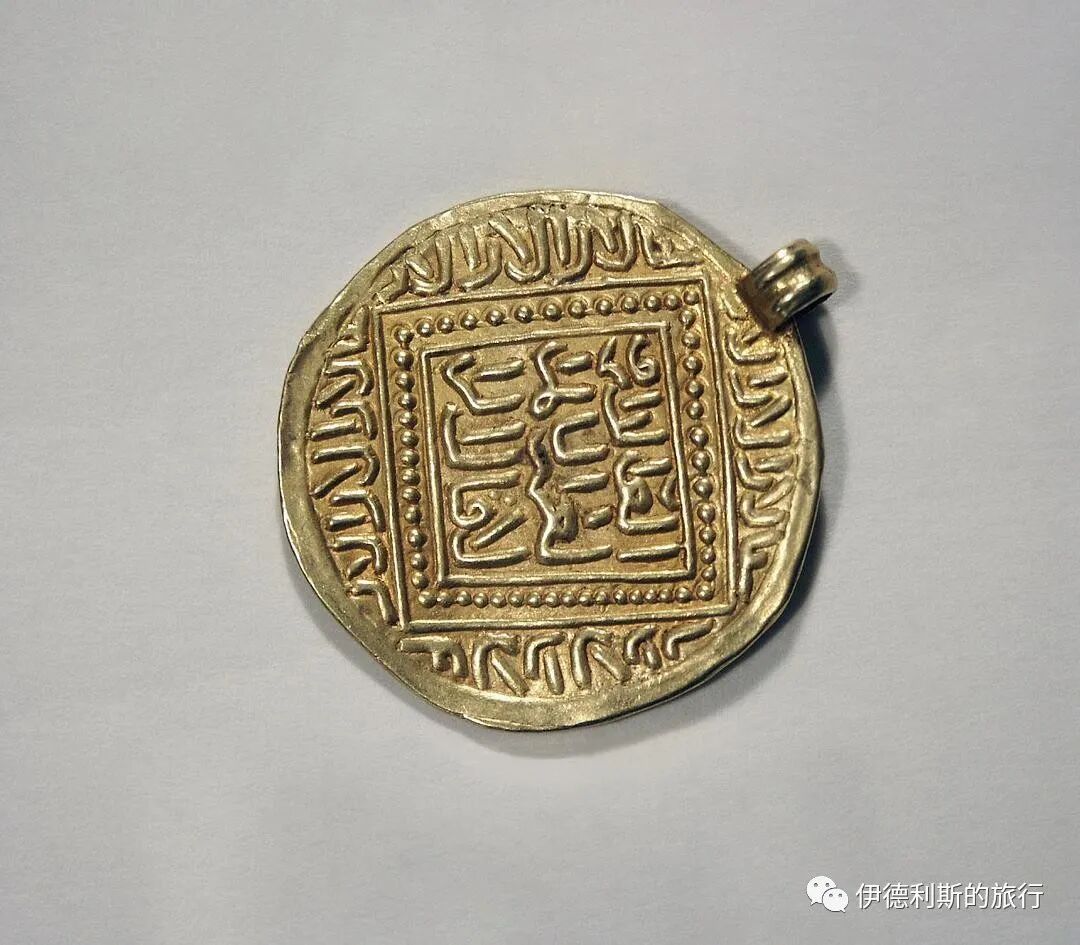
A 14th-century pendant from the Golden Horde, moved here by the Imperial Archaeological Commission in 1888.
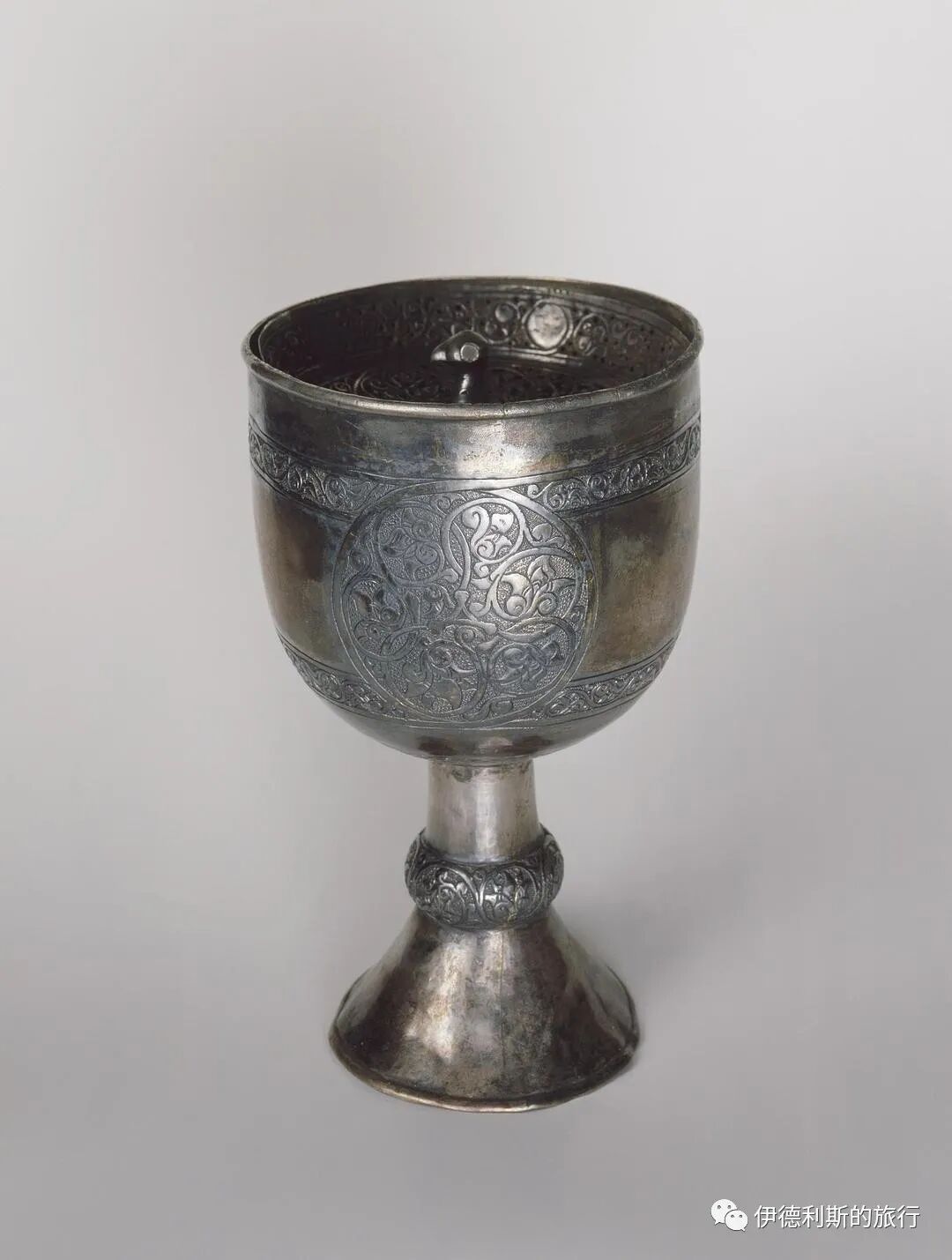
A goblet with a trumpet-shaped hollow stem and a round base from the 14th-century Golden Horde. It was found in the Kuban region of Russia and moved here by the Imperial Archaeological Commission in 1912.
3. The Ilkhanate
Tiles from the Pyr-Husain mausoleum, dated 1285-1286, purchased from a private collection in 1928.
Tiles from the Pyr-Husain mausoleum, dated 1285-1286, purchased from a private collection in 1926.
Tiles from the Pyr-Husain mausoleum, dated 1285-1286, purchased from a private collection in 1958.
Tiles from the Ilkhanate period, late 13th to early 14th century.
Late 13th to early 14th century, moved here by the State Museum Fund in 1923.
Moved here in 1925 by the Stieglitz Museum.
Quran, Chapter 2, Verse 286.
Excavated from the Mausoleum of Imam-zade Yahya in Veramin, Iran, and moved here in 1925 by the Stieglitz Museum.
13th century, moved here in 1925 by the Stieglitz Museum.
Late 13th century, purchased in 1898.
Early 14th century, moved here in 1925 by the Stieglitz Museum.
Late 13th century, moved here in 1925 by the Stieglitz Museum.
Late 13th century, moved here in 1925 by the Stieglitz Museum.
13th-14th century, moved here in 1925 by the Stieglitz Museum.
13th century, moved here in 1925 by the Stieglitz Museum.
13th to 14th century, acquired from a private source in 1931. view all
Summary: Hermitage Museum Islamic Art: Persian Miniatures, Golden Horde and Ilkhanid Artifacts is presented here as a firsthand travel account in clear English, beginning with this scene: The Hermitage Museum is in Saint Petersburg, Russia, and the famous Winter Palace is part of it. The account keeps its focus on Islamic Art, Hermitage Museum, Central Asia while preserving the names, places, food, and historical details from the Chinese source.
The Hermitage Museum is in Saint Petersburg, Russia, and the famous Winter Palace is part of it. The museum has 1,000 exhibition halls, and 350 are currently open. The museum's official website now has online exhibitions, so you can enjoy a virtual trip.
Museum website: https://www.hermitagemuseum.or ... ge%3F lng=zh
Here are some Persian miniatures, Golden Horde artifacts, and Ilkhanate artifacts.
1. Persian miniatures and manuscripts
Riza-yi 'Abbasi (1565-1635) was a court miniature artist of the Persian Safavid dynasty, from the miniature art center of Isfahan. He played an important role in promoting Persian painting.
A work by Riza-yi 'Abbasi painted in 1612.
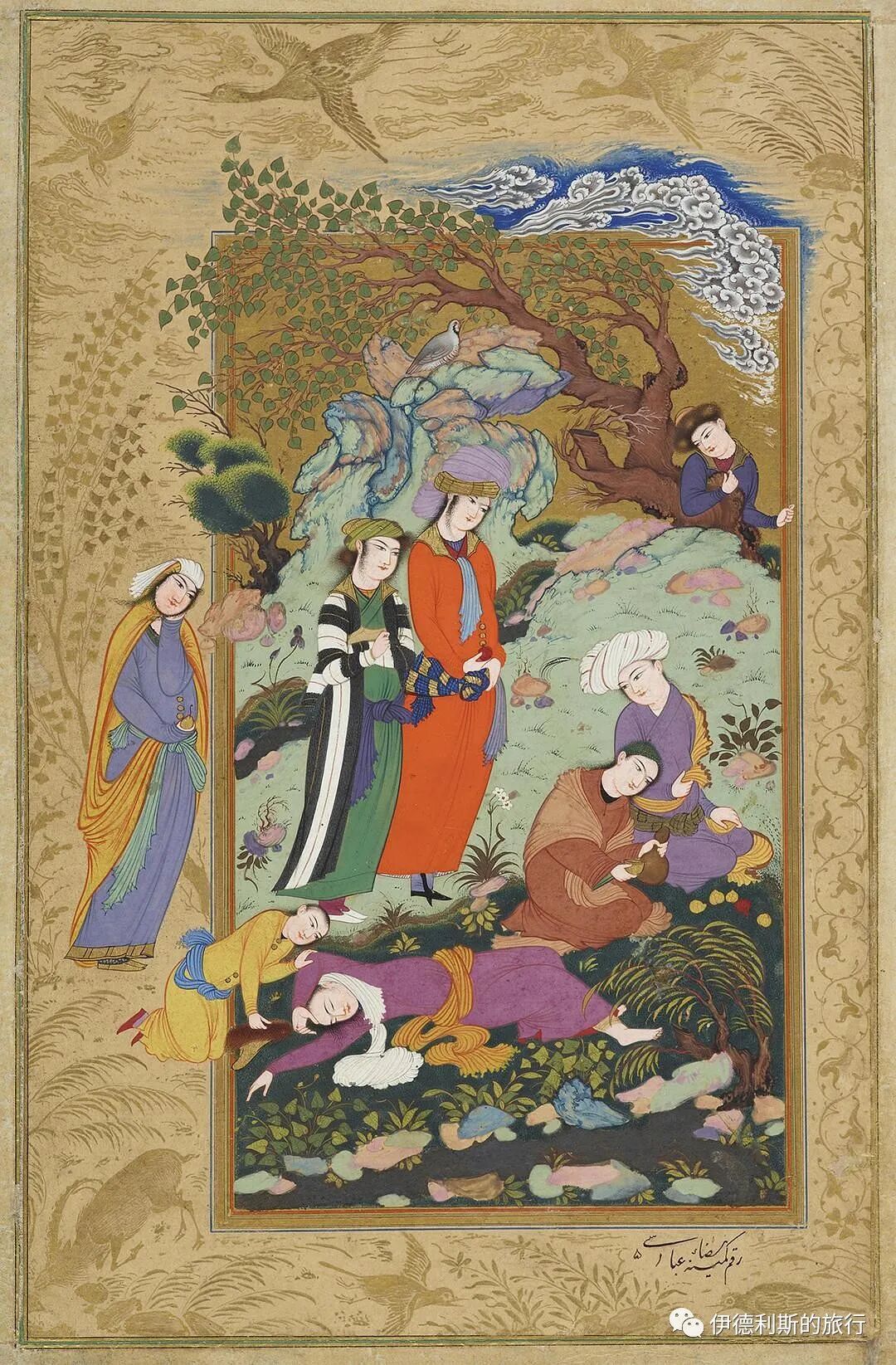
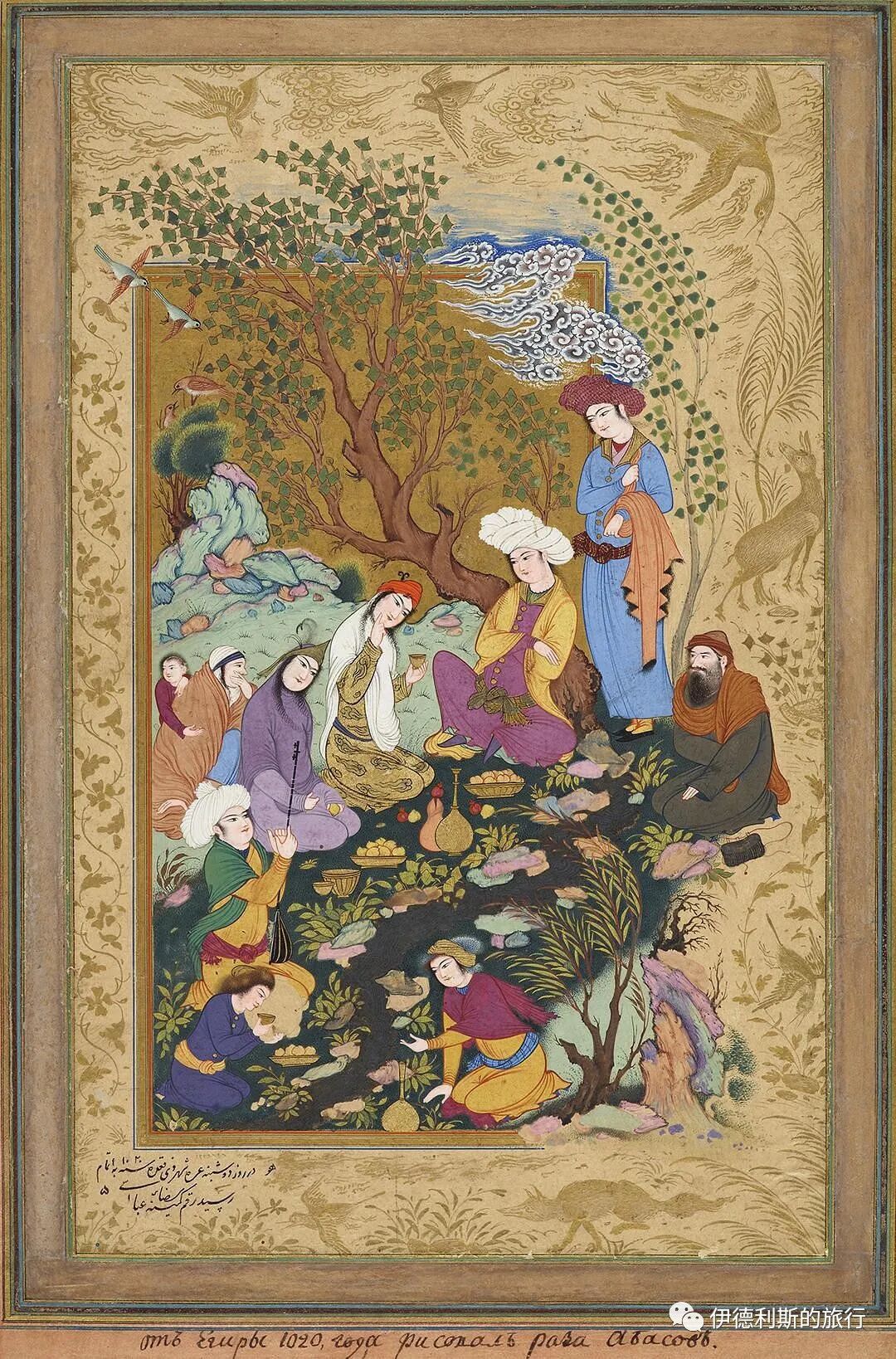
A work by Riza-yi 'Abbasi from the late 16th century, transferred in 1924 from the Stieglitz Central Museum of Decorative and Applied Arts.
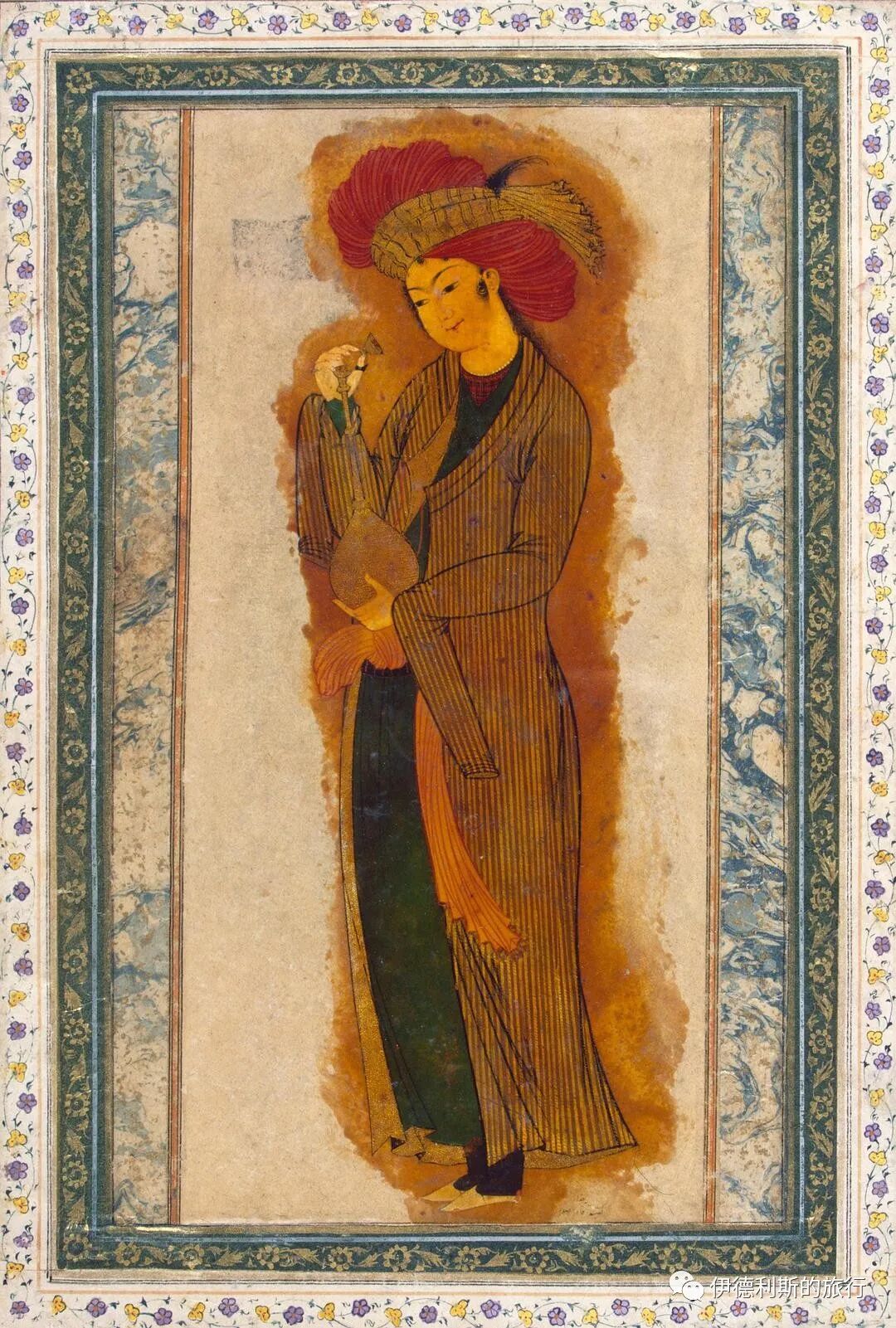
A work by Riza-yi 'Abbasi painted in late 1602-1603.
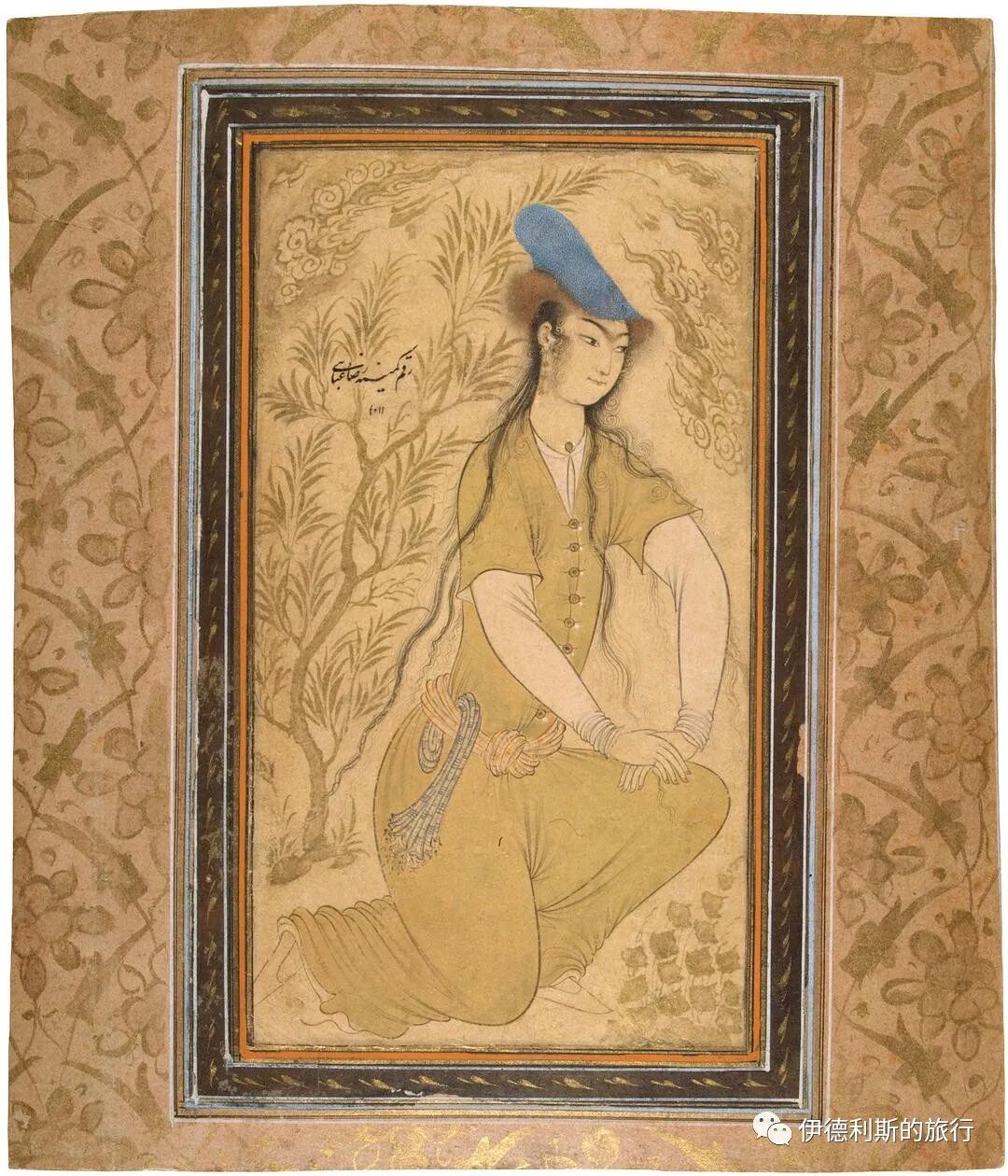
Another Persian miniature artist, Sharaf al-Hussaini al-Yazdi, was active in the 16th century. The image below was painted in 1594-1595 and transferred in 1924 from the Stieglitz Central Museum of Decorative and Applied Arts.
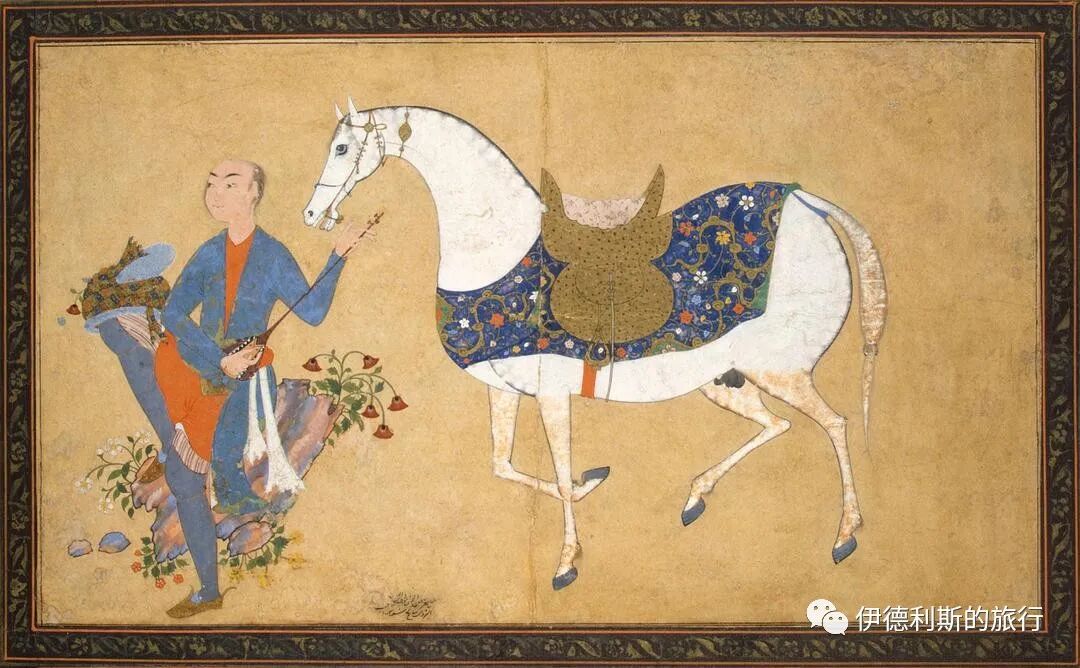
The famous Persian poet Rumi's masterpiece, the Masnavi, was painted between 1594-1596. The scribe was named Mir-Salih ibn Mir-Tahir ibn Mir-Hussein al-Husseini, and it was moved in 1925 from the Stieglitz Museum.
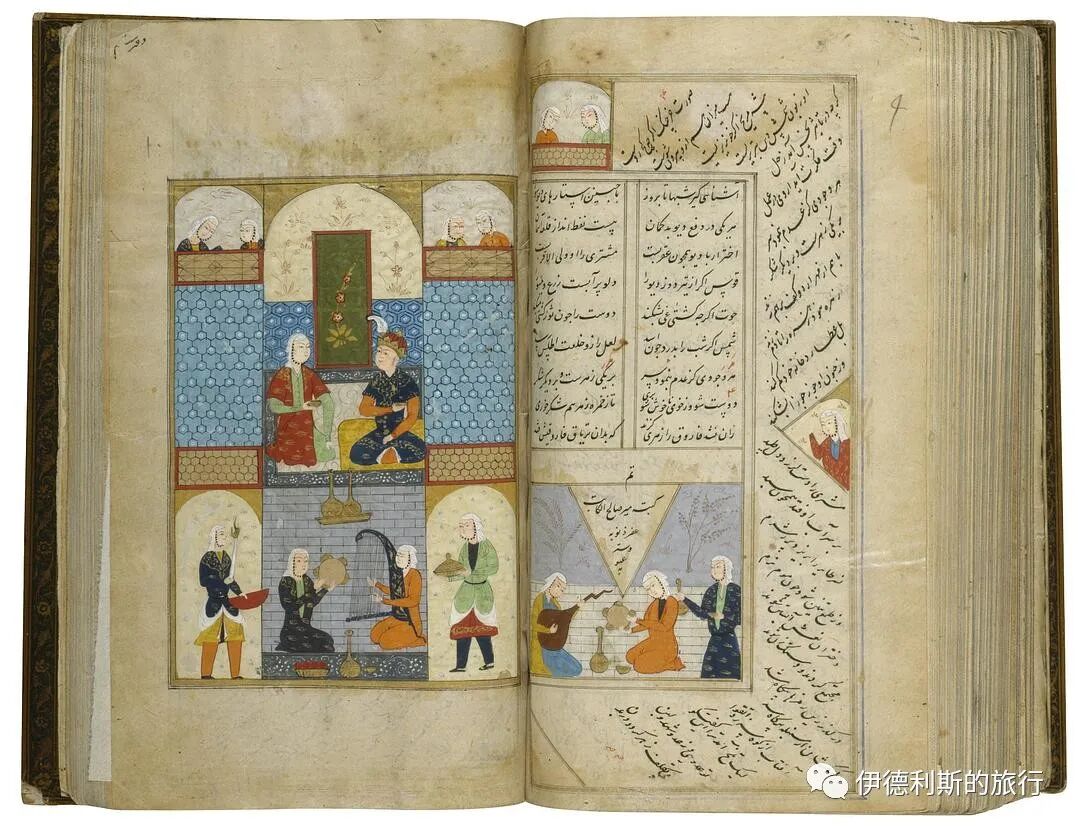
The Five Poems (Khamsa) by the famous Persian poet Nizami Ganjavi, painted in 1541. The scribe was named Hassan al-Husseini al-katib al-Shirazi, and it was acquired from a private source in 1945.
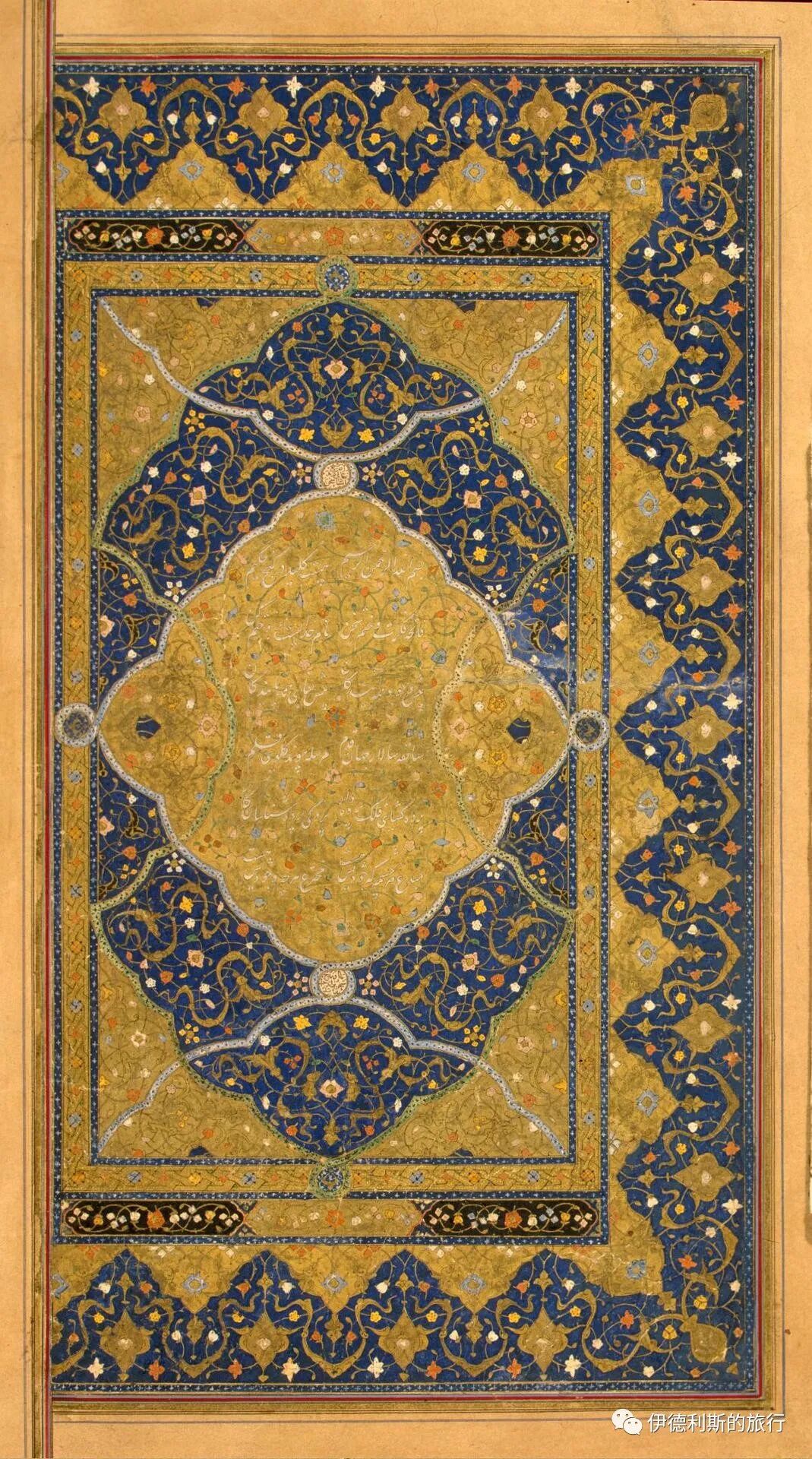
The famous Persian poet Ferdowsi's masterpiece, the Book of Kings (Shahnameh), was painted in the late 16th to early 17th century and acquired from a private source in 1937.
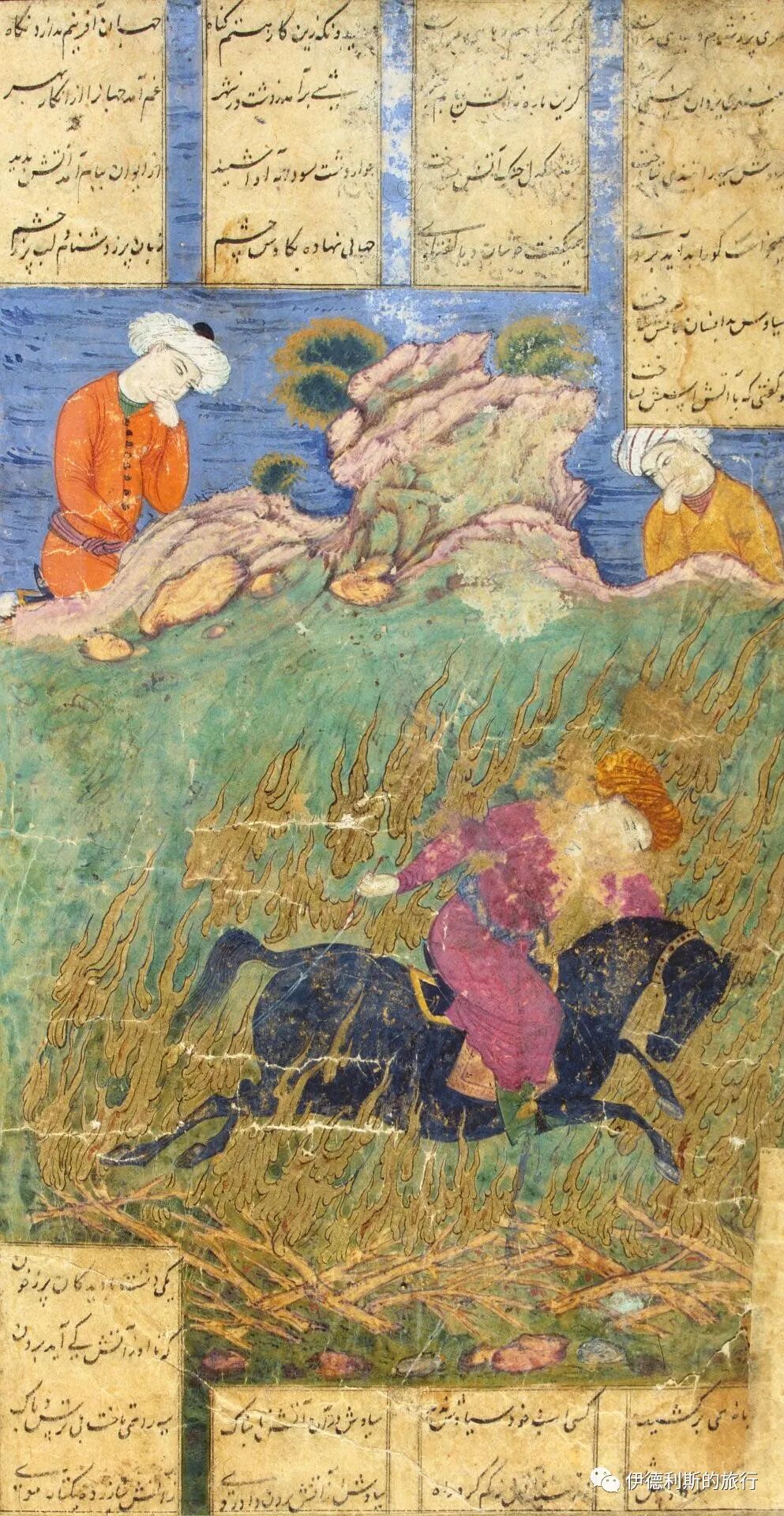
A Persian manuscript of Yusuf and Zulaikha from the first half of the 16th century, purchased in 1939 by the Purchasing Commission of the Experts of the State Hermitage Museum.
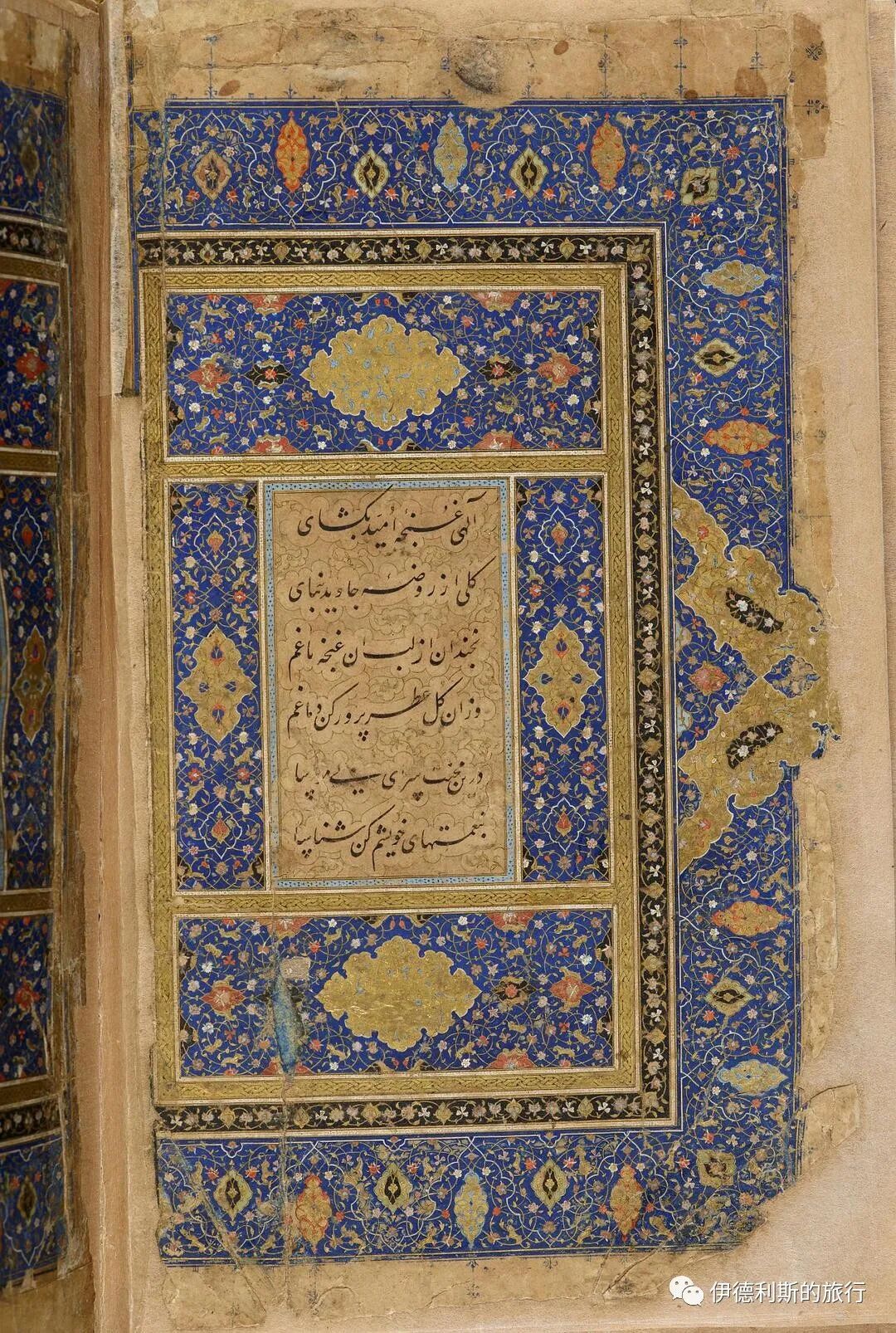
A Sufi ceremony from the second half of the 16th century, moved in 1924 from the Stieglitz Museum.
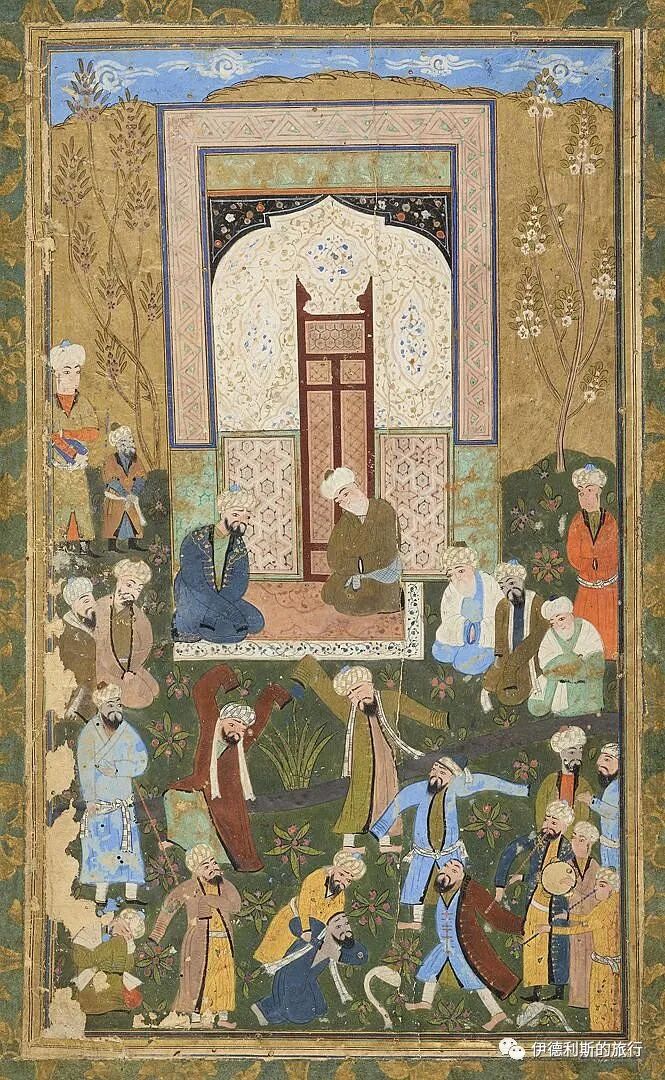
An anonymous work from the late 16th century, transferred in 1924 from the Stieglitz Central Museum of Decorative and Applied Arts.
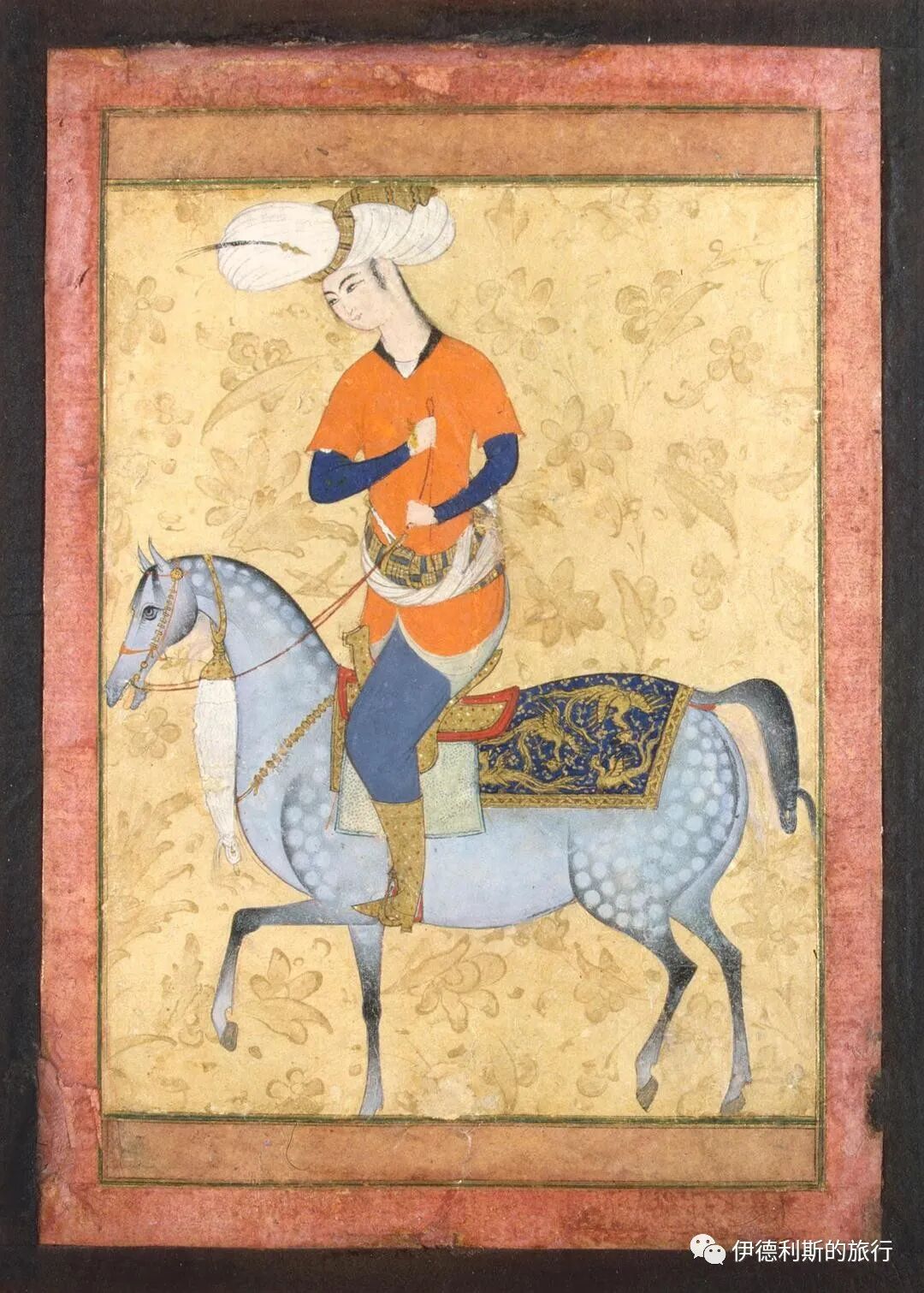
A Persian miniature from the first half of the 16th century, purchased from a private source in 1959.
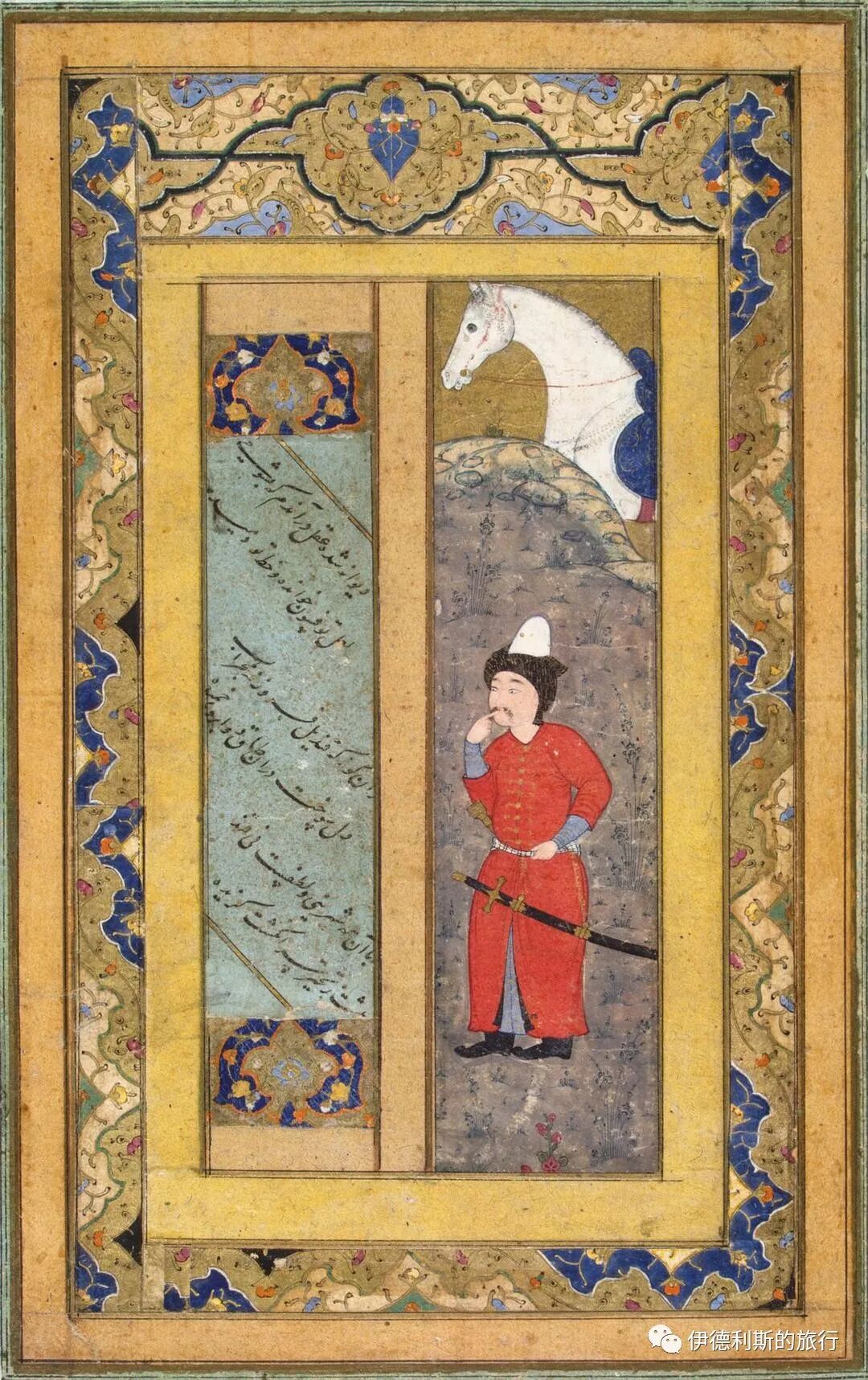
2. The Golden Horde
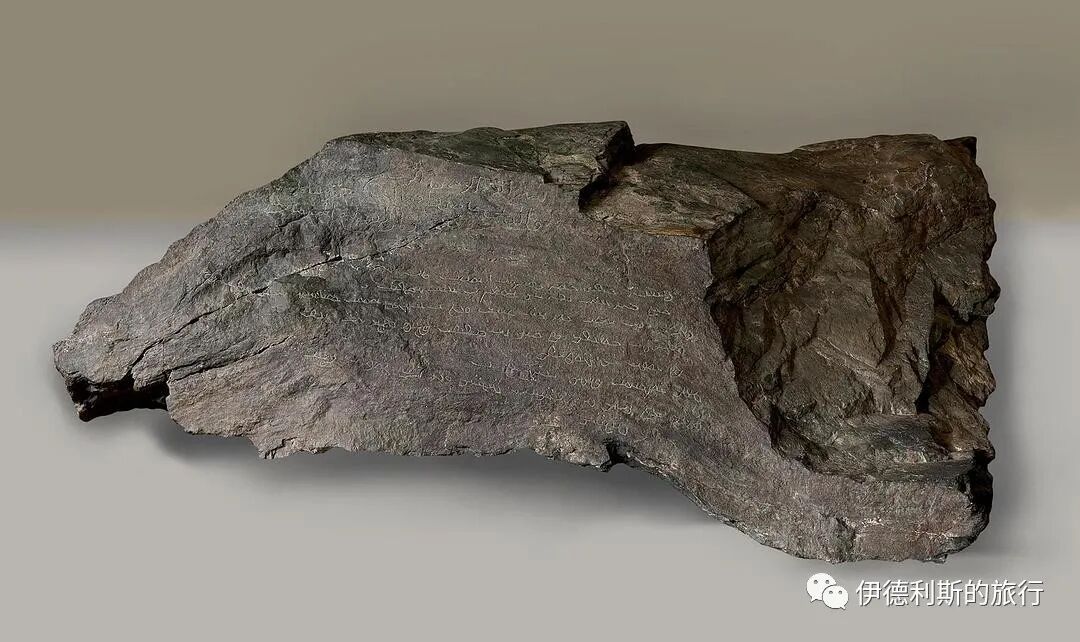
A stone tablet with Arabic and Chagatai script, featuring the name of the great emperor Timur, dated 1391.
This stone carving was discovered in 1935 by geologist Kanysh Satpayev at Altynshoky (Golden Mountain) near the left bank of the Sarysu River in Kazakhstan, which was the eastern border of the Golden Horde at the time. It was moved in 1937 by the Winter Palace scientist F. M. Morozov.
According to the inscription, Emperor Timur led an army of 300,000 to attack Tokhtamysh, the Khan of the Golden Horde, on April 6, 1391. He set up this stone tablet here to mark the event.
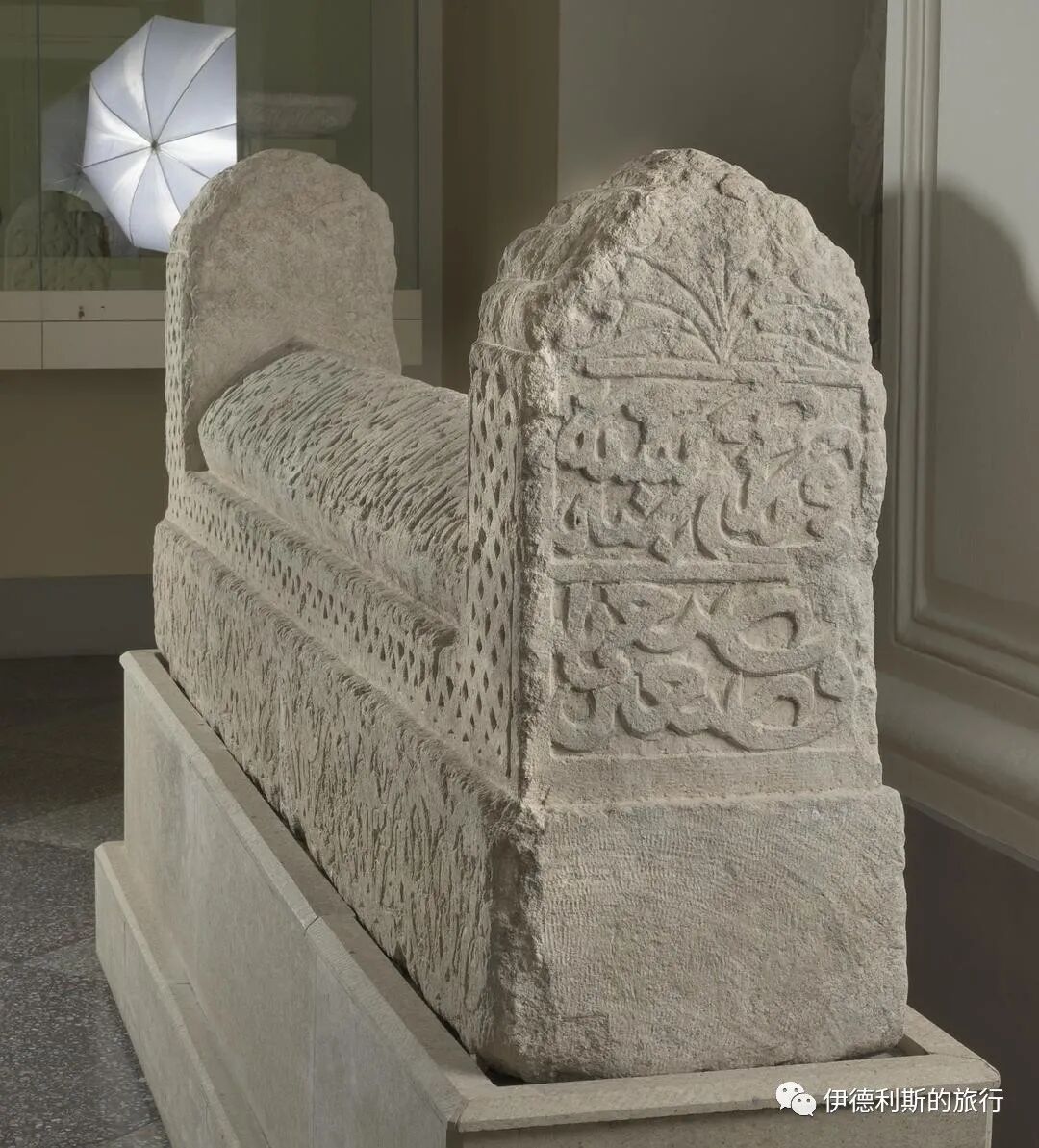
A tombstone with Turkic poetry, plant motifs, and geometric patterns from the 13th-14th century Golden Horde. It was moved here in 1979 by the Starokrymskaya archaeological expedition of the State Hermitage Museum.
A tombstone with Arabic inscriptions from the 14th-century Golden Horde, found in the city of Solkhat, Crimea.
An architectural piece with geometric patterns and inscriptions from the first half of the 14th-century Golden Horde. It was found in Solkhat, Crimea, and moved here by the Starokrymskaya expedition in 1981.
From the first half of the 14th-century Golden Horde, this was found in Solkhat, Crimea, during excavations in the 1980s and moved here in 2004.
A 14th-century pendant from the Golden Horde, moved here by the Imperial Archaeological Commission in 1888.
A goblet with a trumpet-shaped hollow stem and a round base from the 14th-century Golden Horde. It was found in the Kuban region of Russia and moved here by the Imperial Archaeological Commission in 1912.
3. The Ilkhanate
Tiles from the Pyr-Husain mausoleum, dated 1285-1286, purchased from a private collection in 1928.
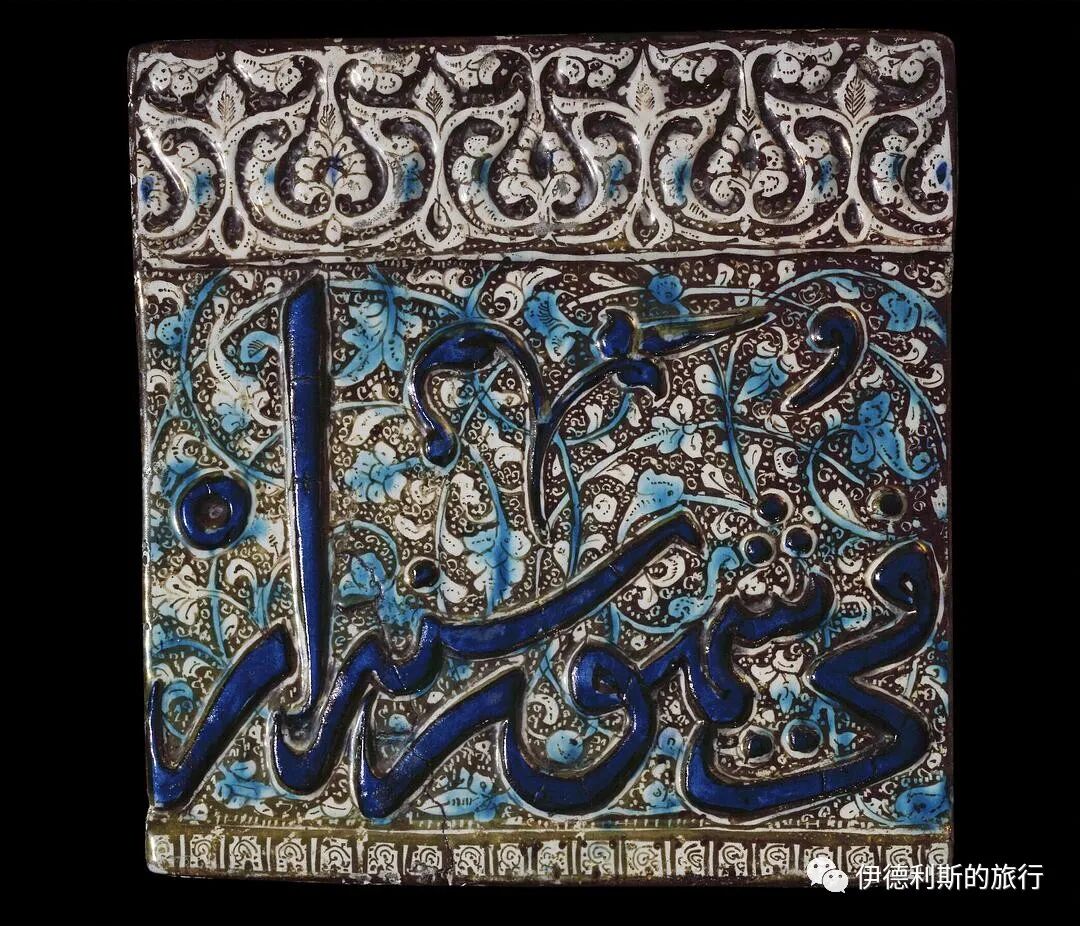
Tiles from the Pyr-Husain mausoleum, dated 1285-1286, purchased from a private collection in 1926.
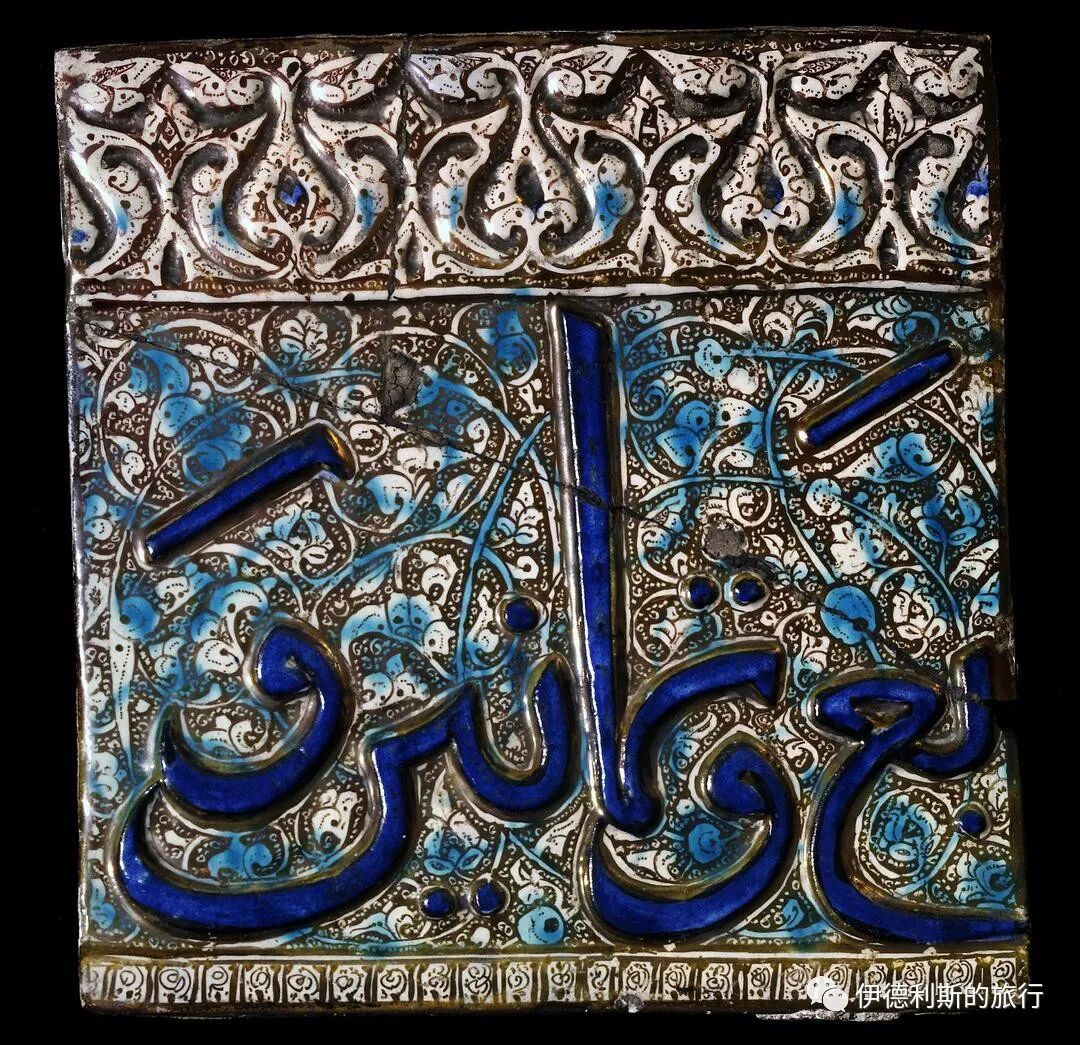
Tiles from the Pyr-Husain mausoleum, dated 1285-1286, purchased from a private collection in 1958.
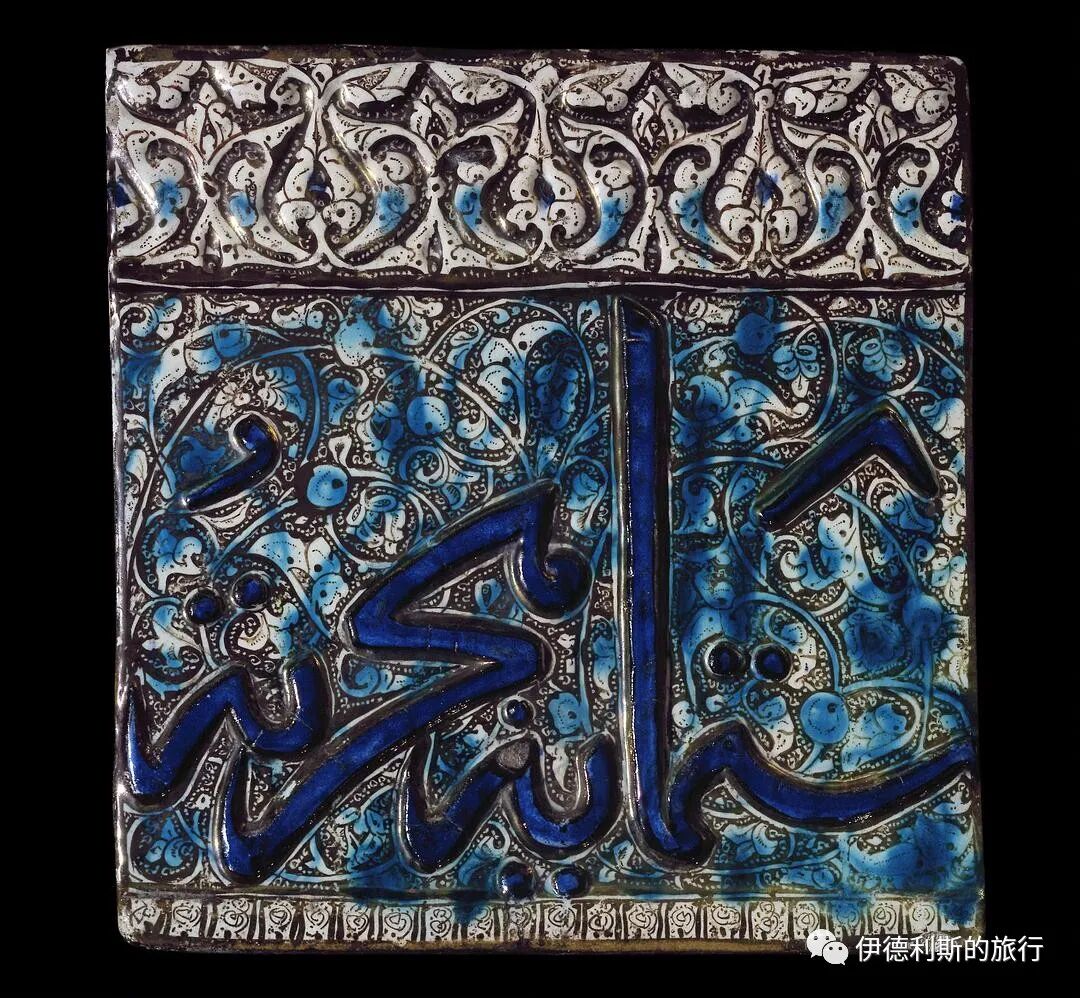
Tiles from the Ilkhanate period, late 13th to early 14th century.
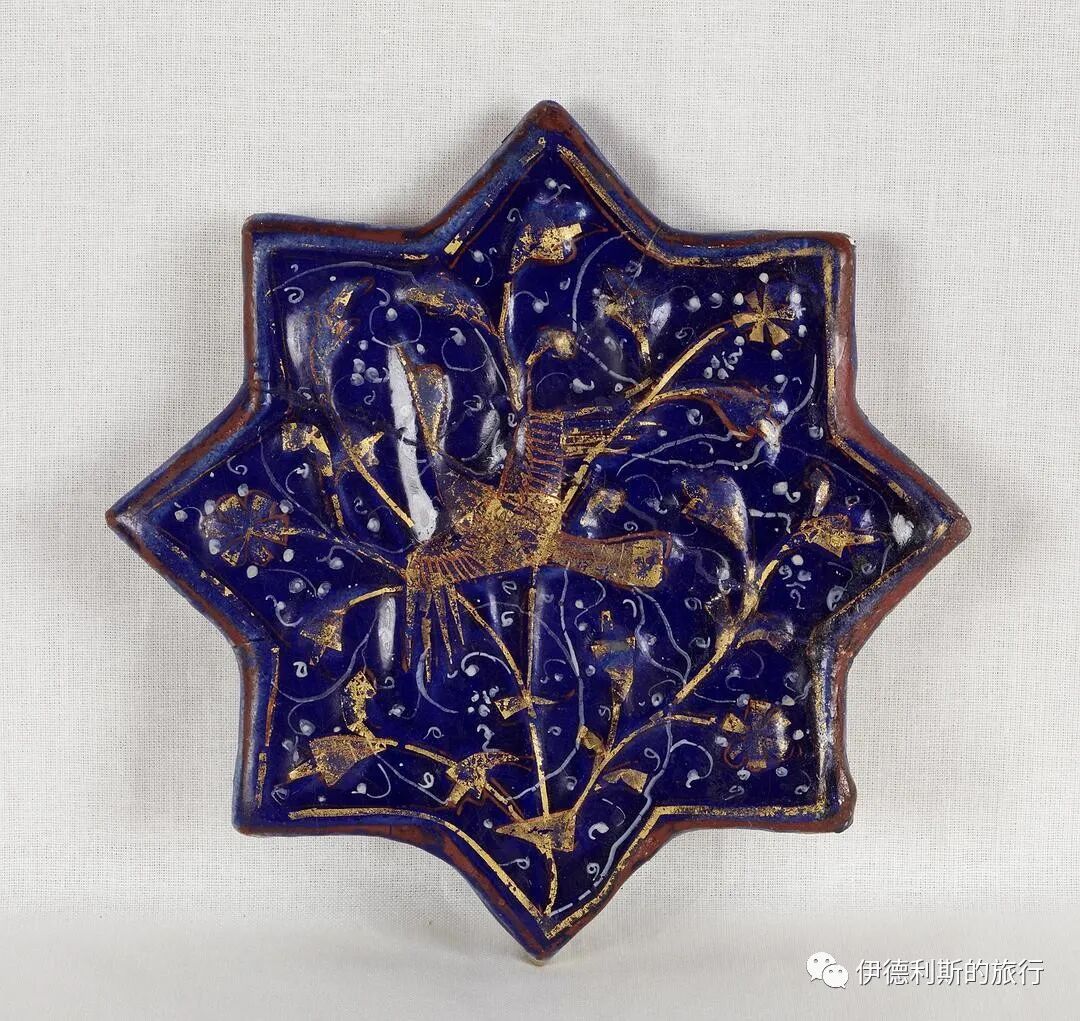
Late 13th to early 14th century, moved here by the State Museum Fund in 1923.
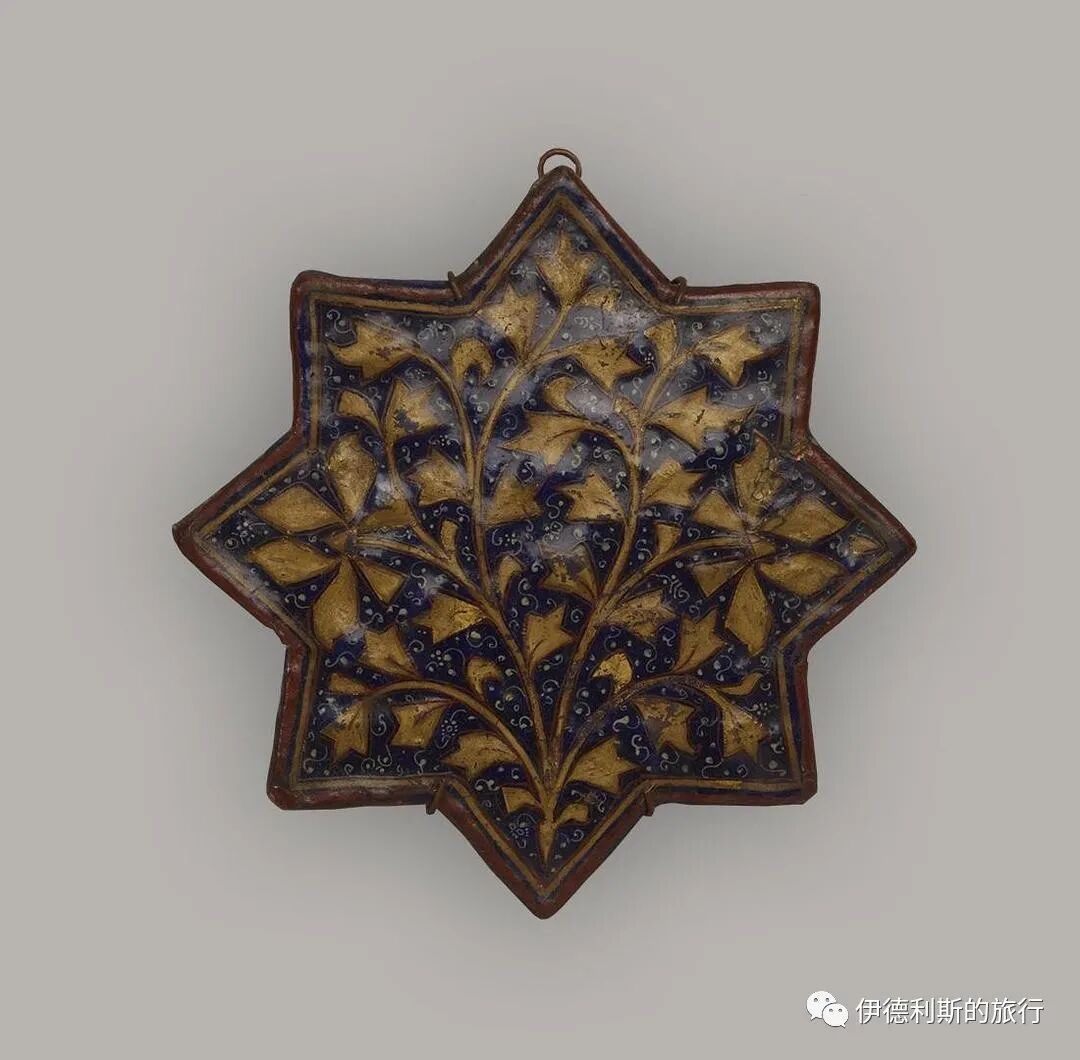
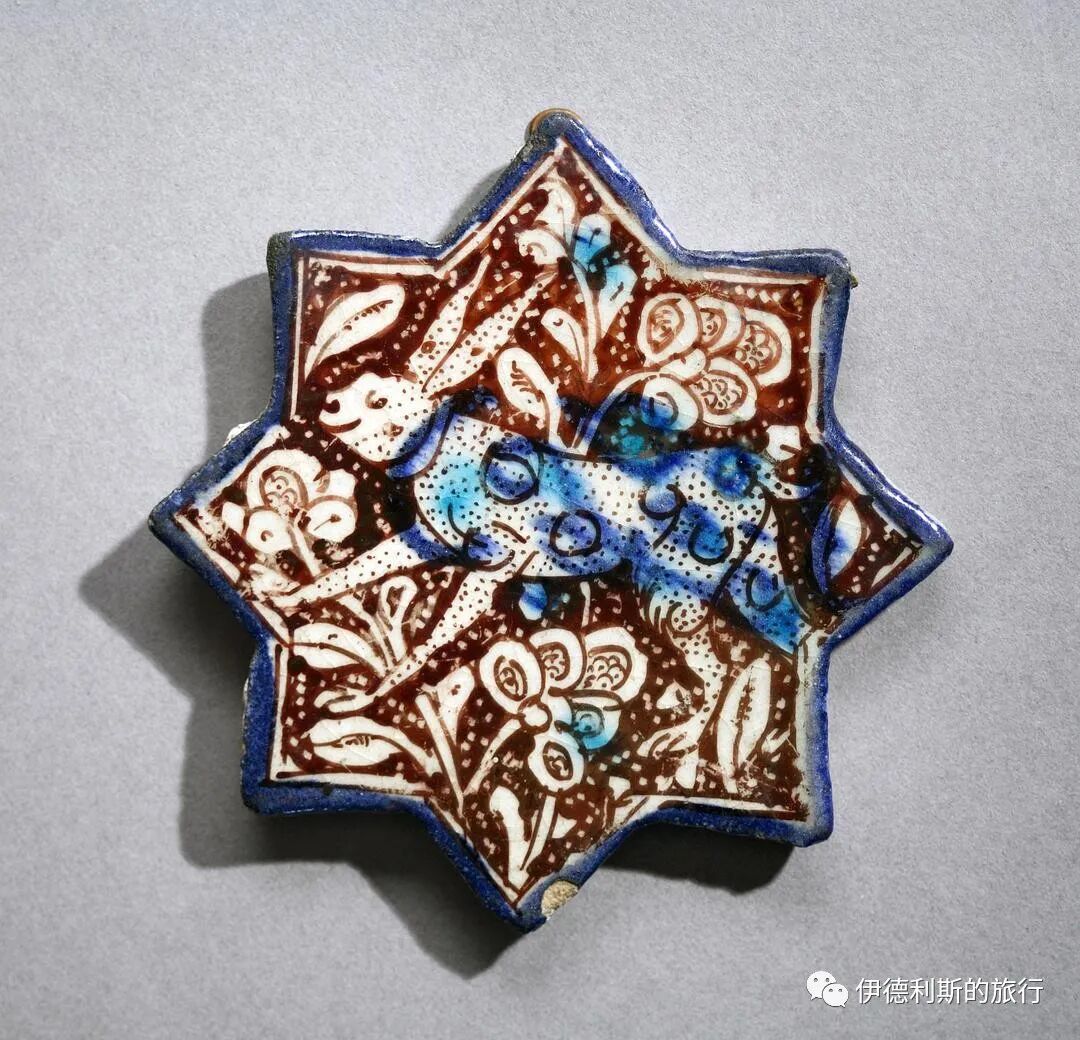
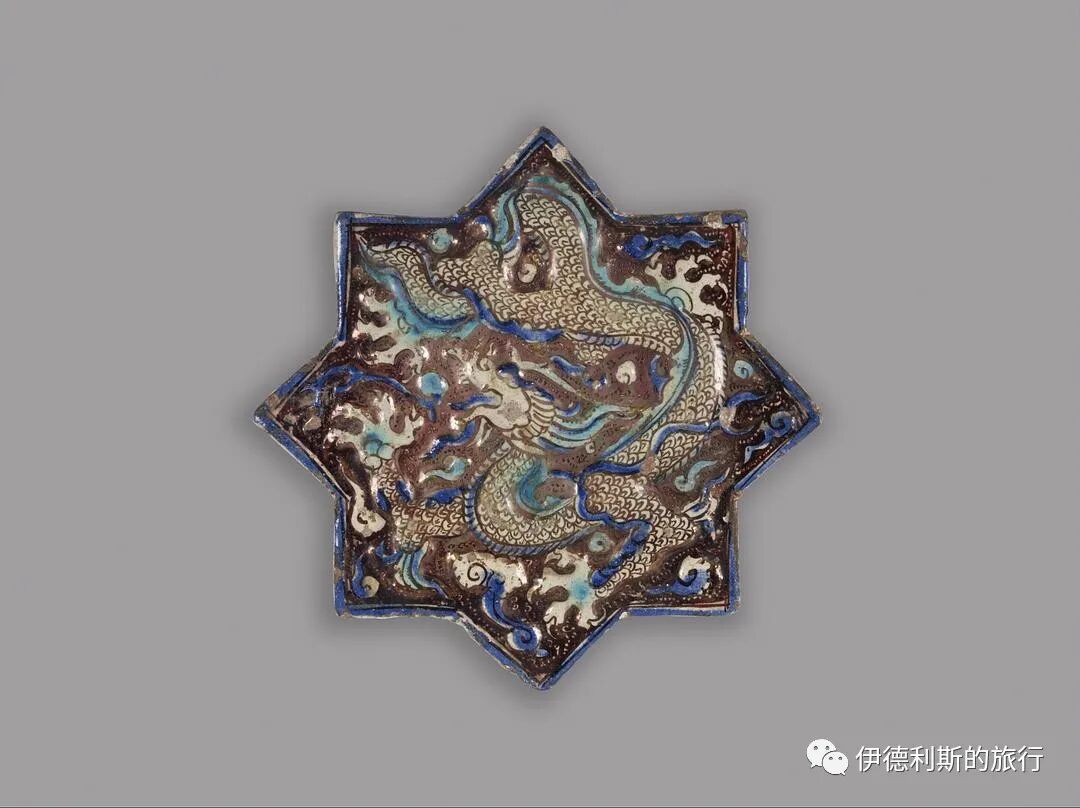
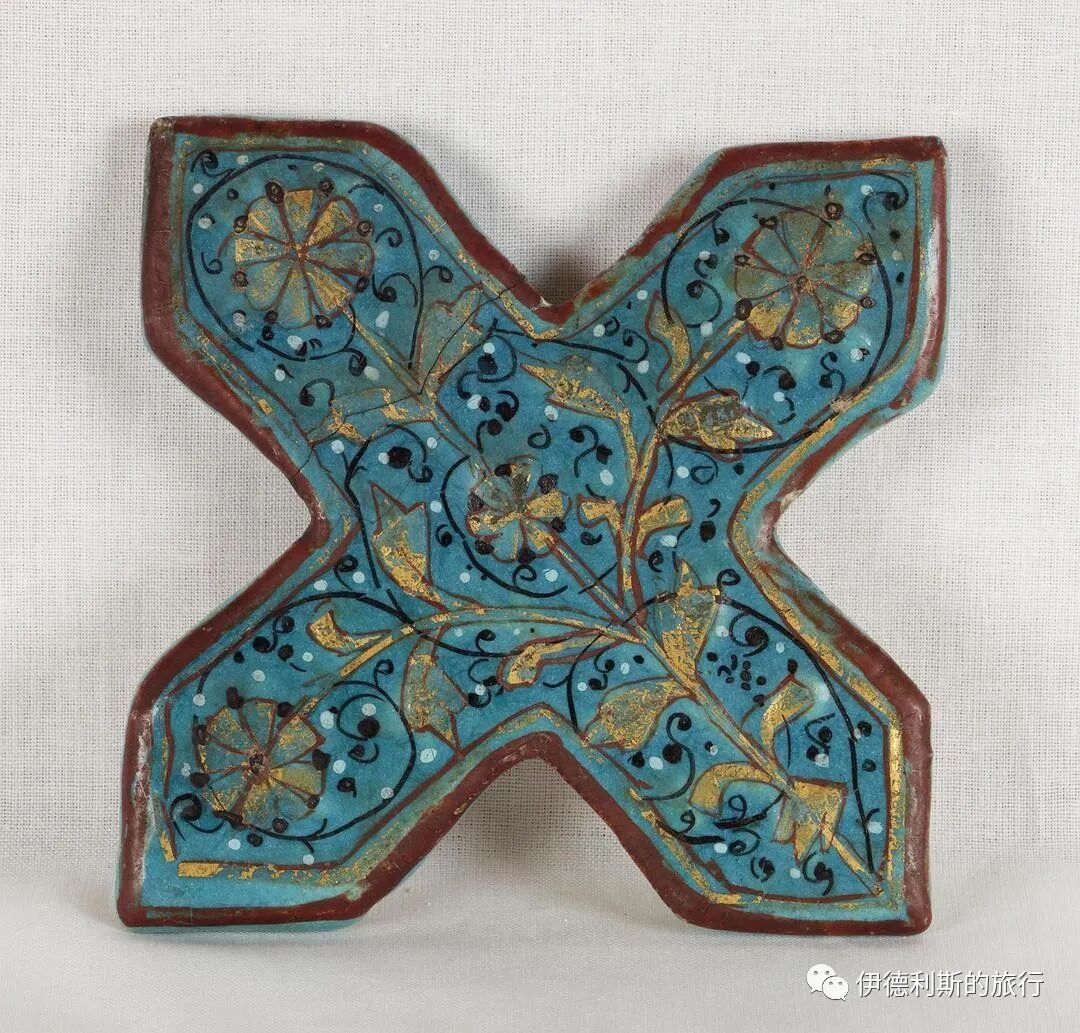
Moved here in 1925 by the Stieglitz Museum.
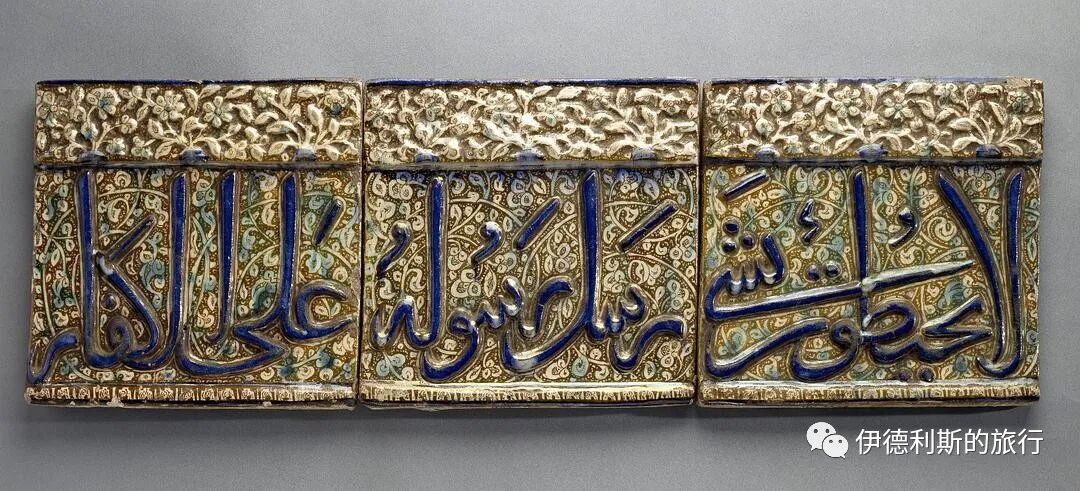
Quran, Chapter 2, Verse 286.
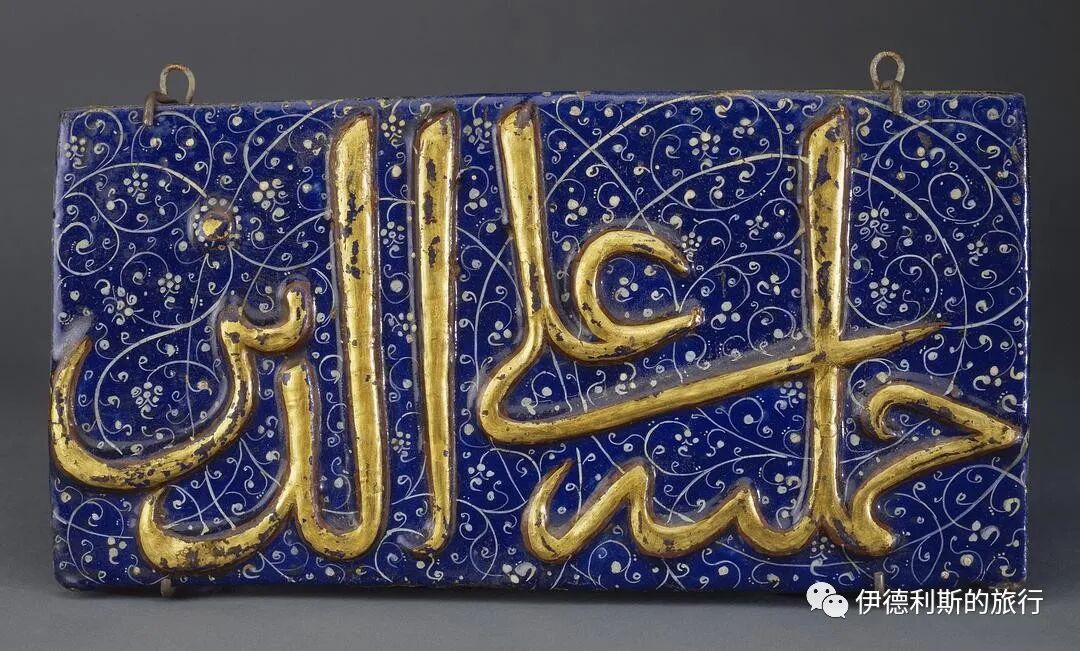
Excavated from the Mausoleum of Imam-zade Yahya in Veramin, Iran, and moved here in 1925 by the Stieglitz Museum.
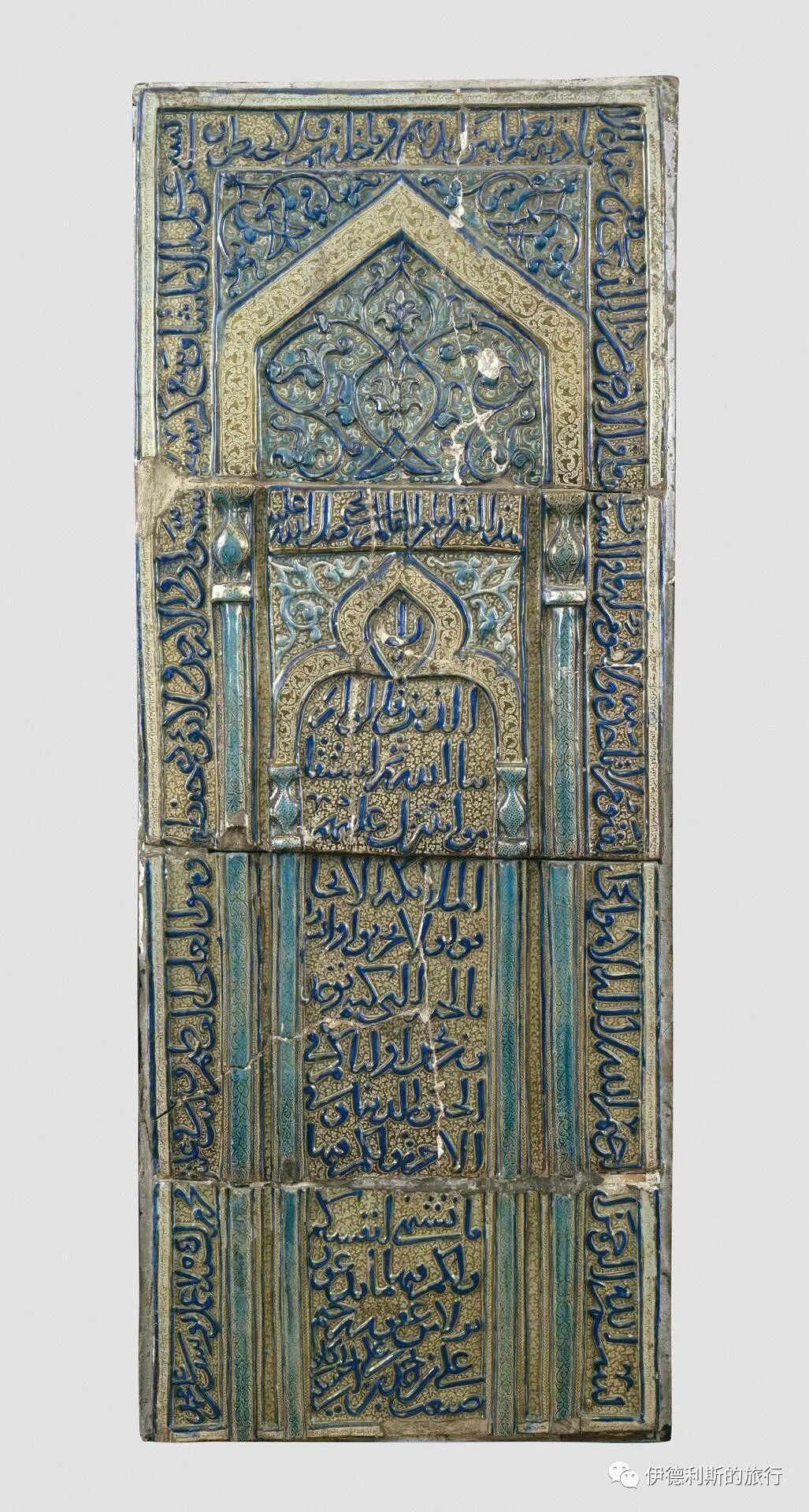
13th century, moved here in 1925 by the Stieglitz Museum.
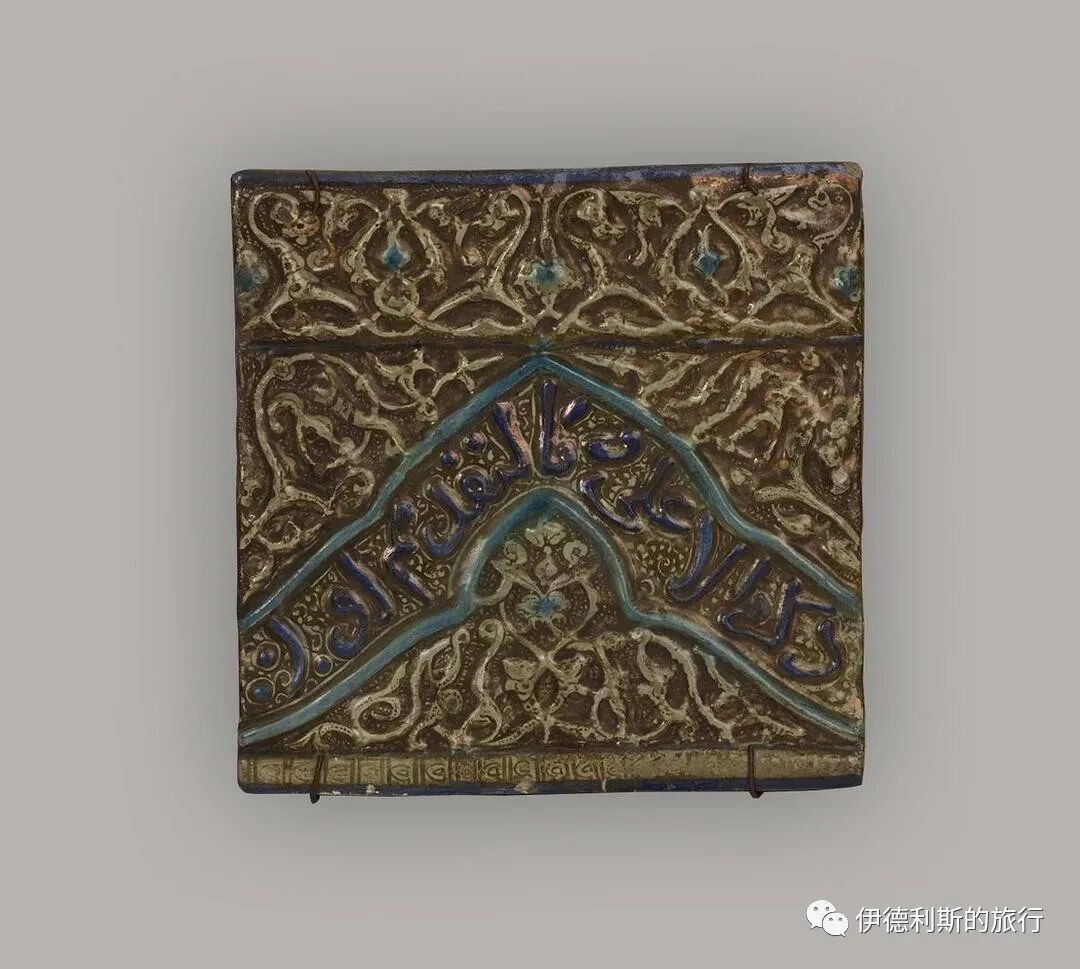
Late 13th century, purchased in 1898.
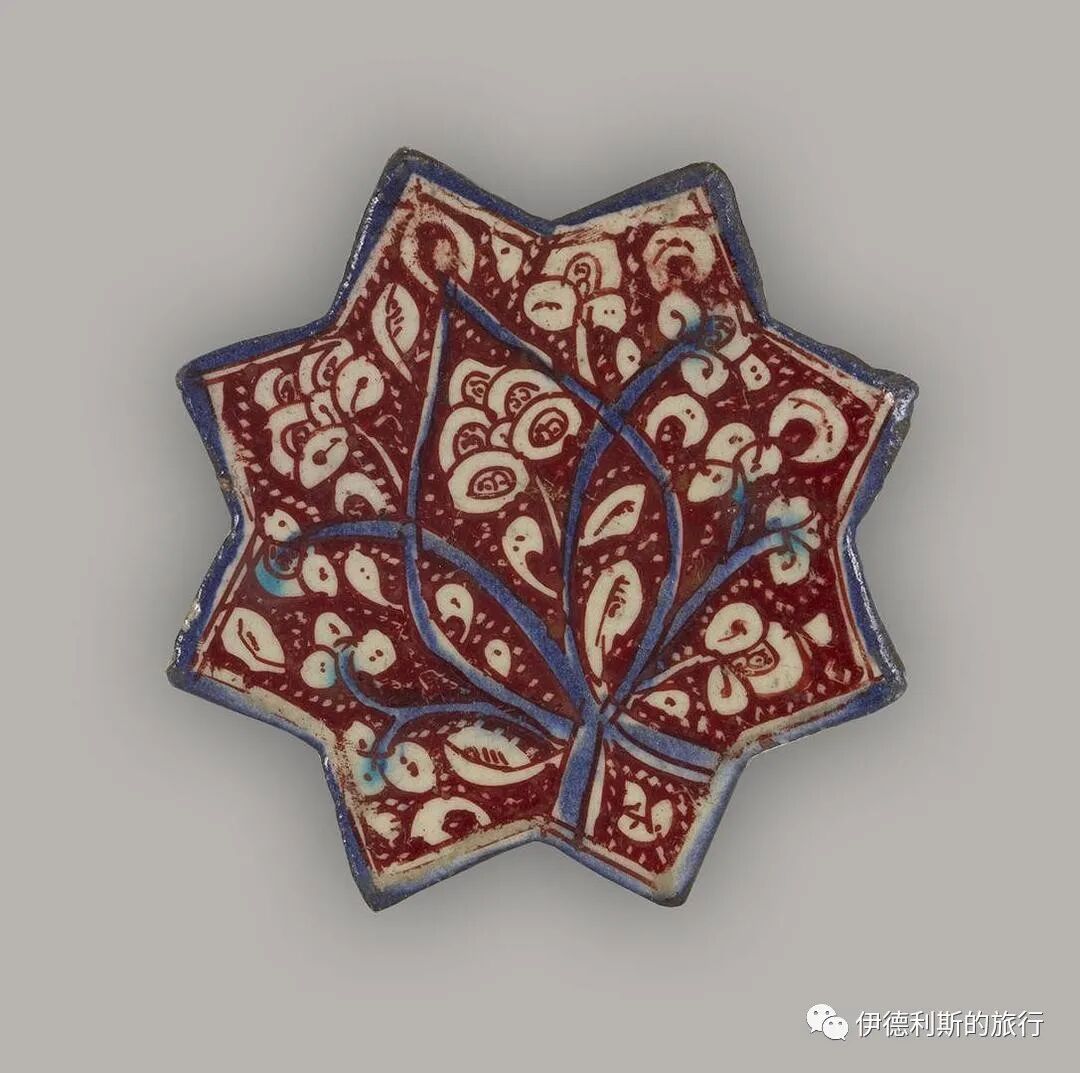
Early 14th century, moved here in 1925 by the Stieglitz Museum.
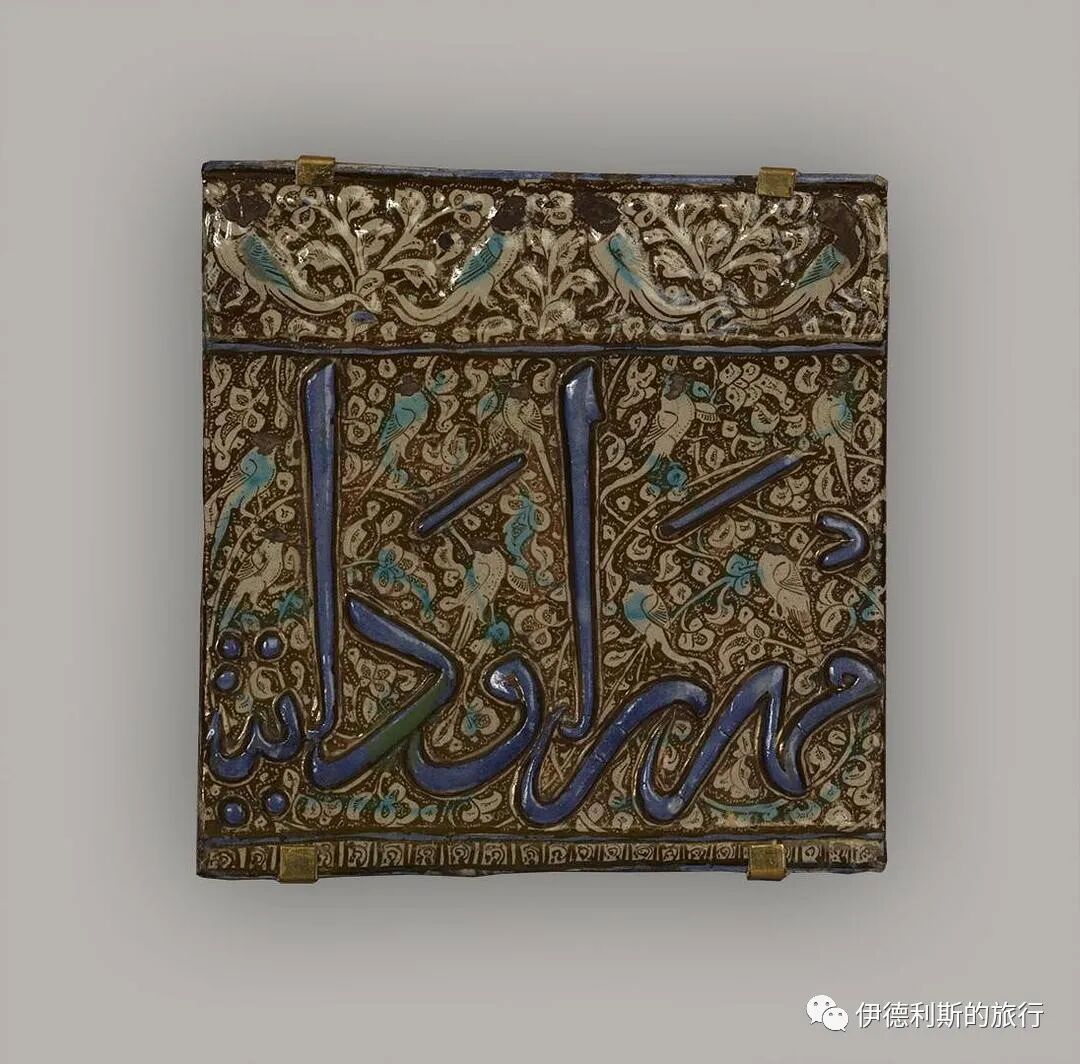
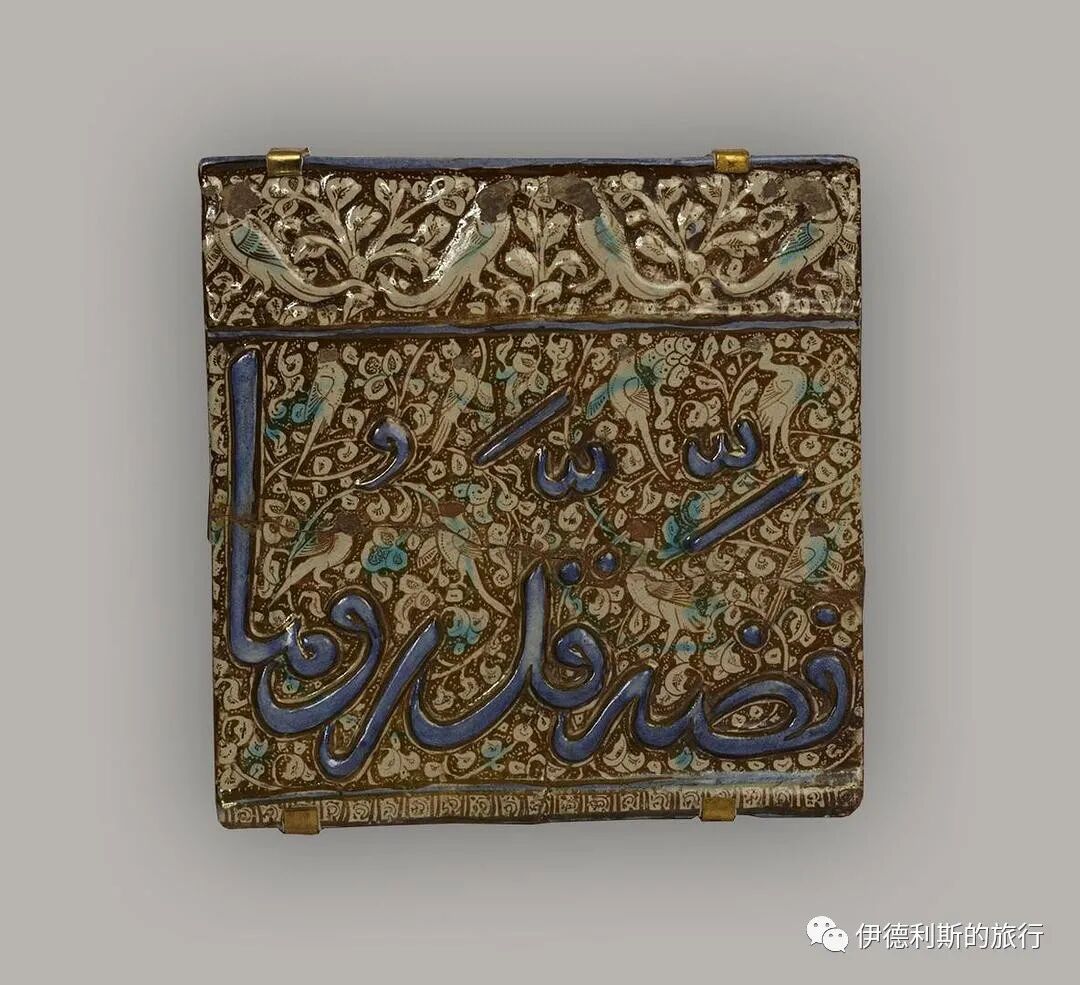
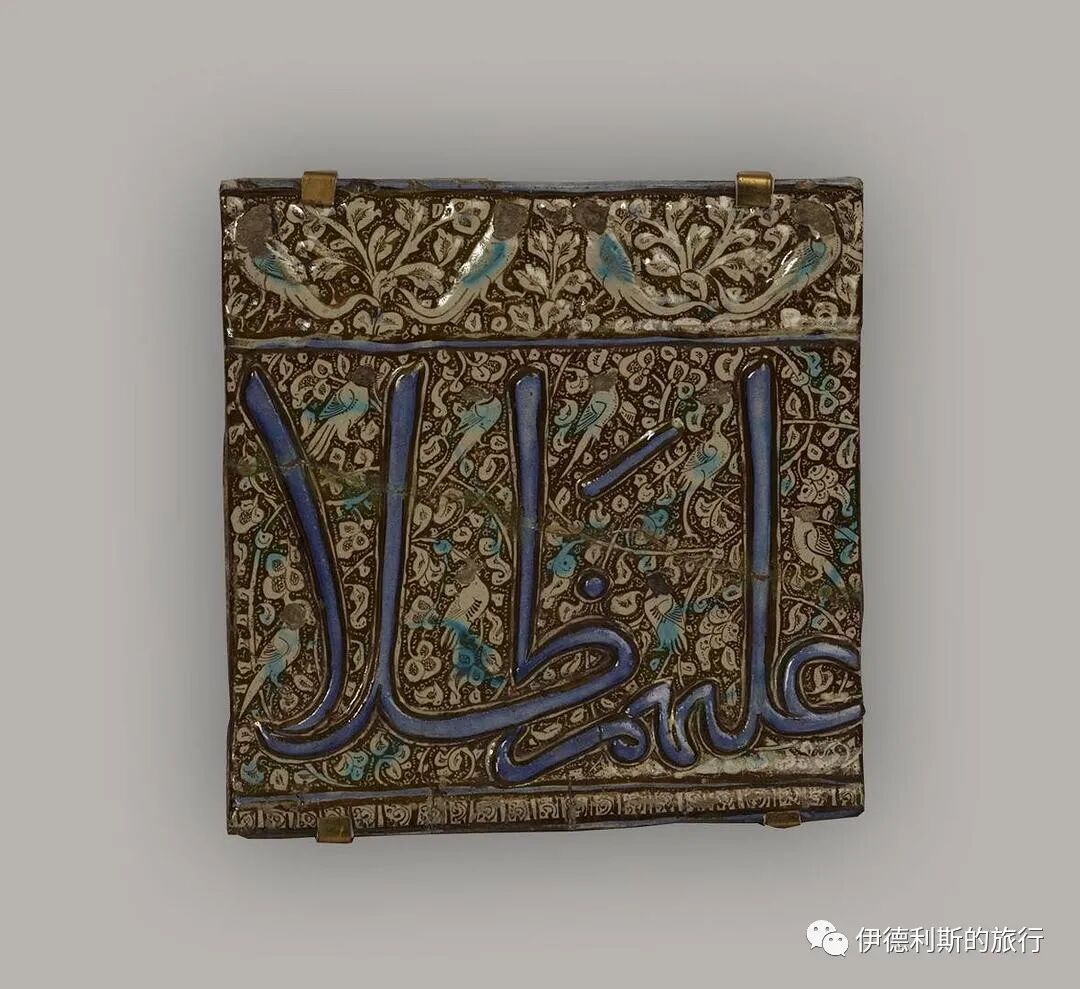
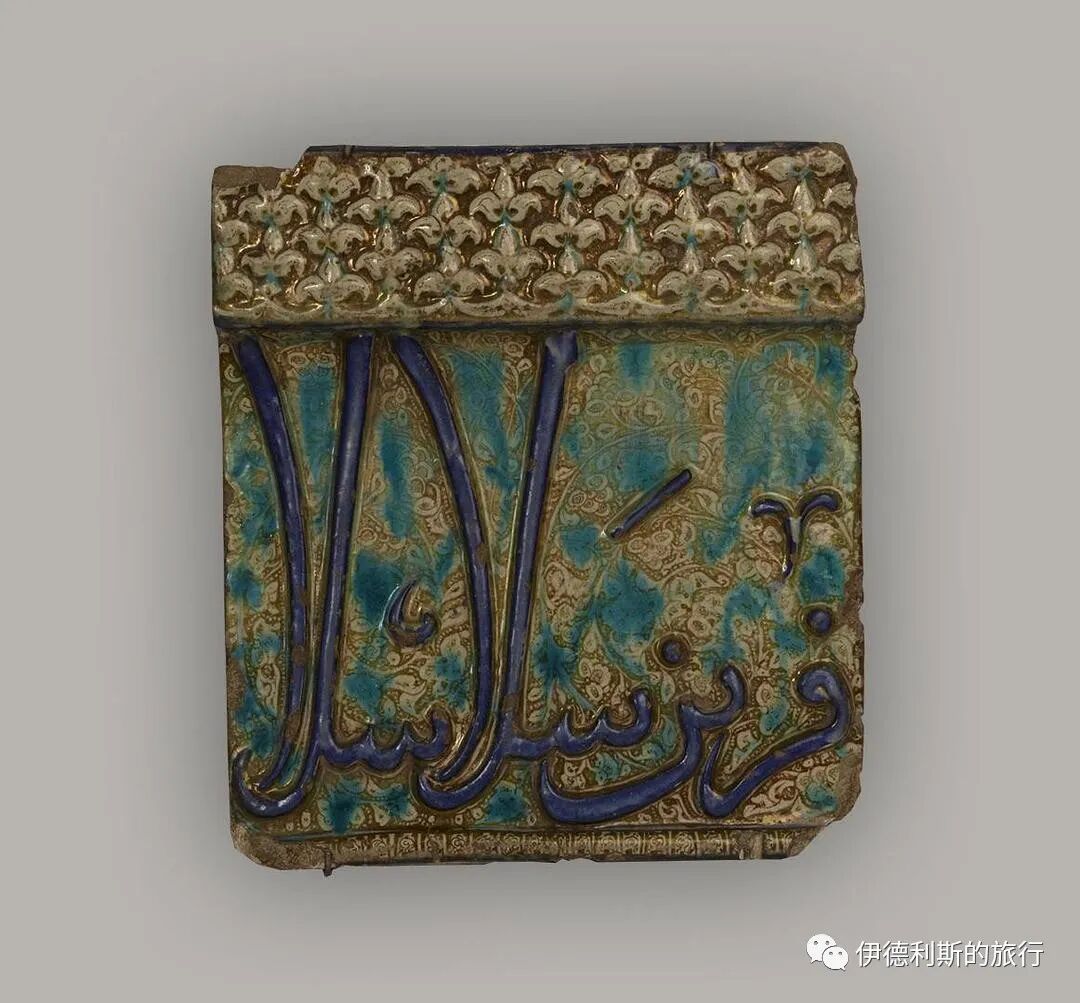
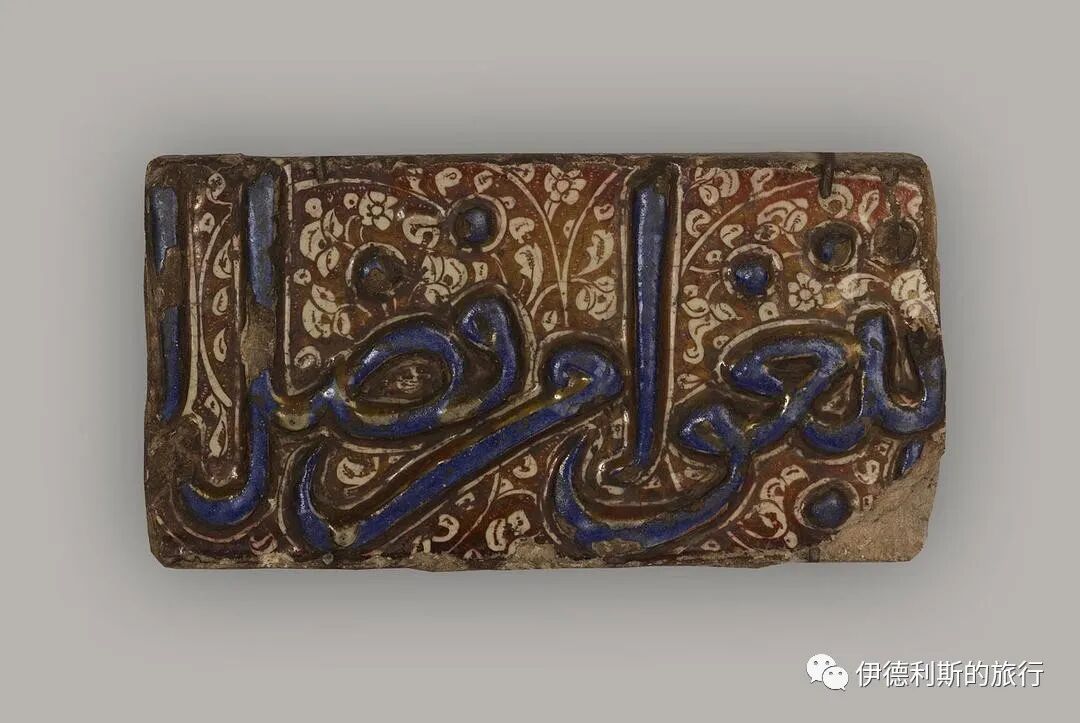
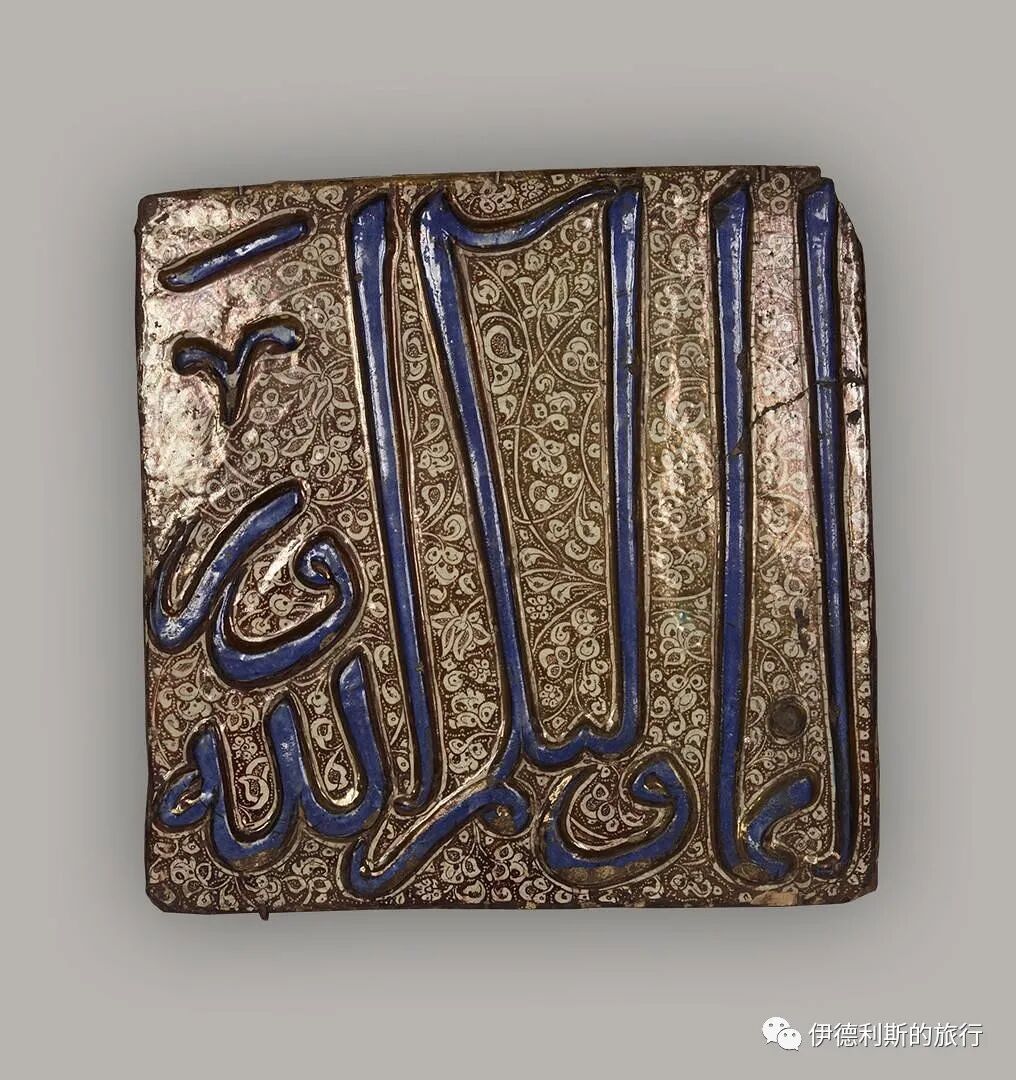
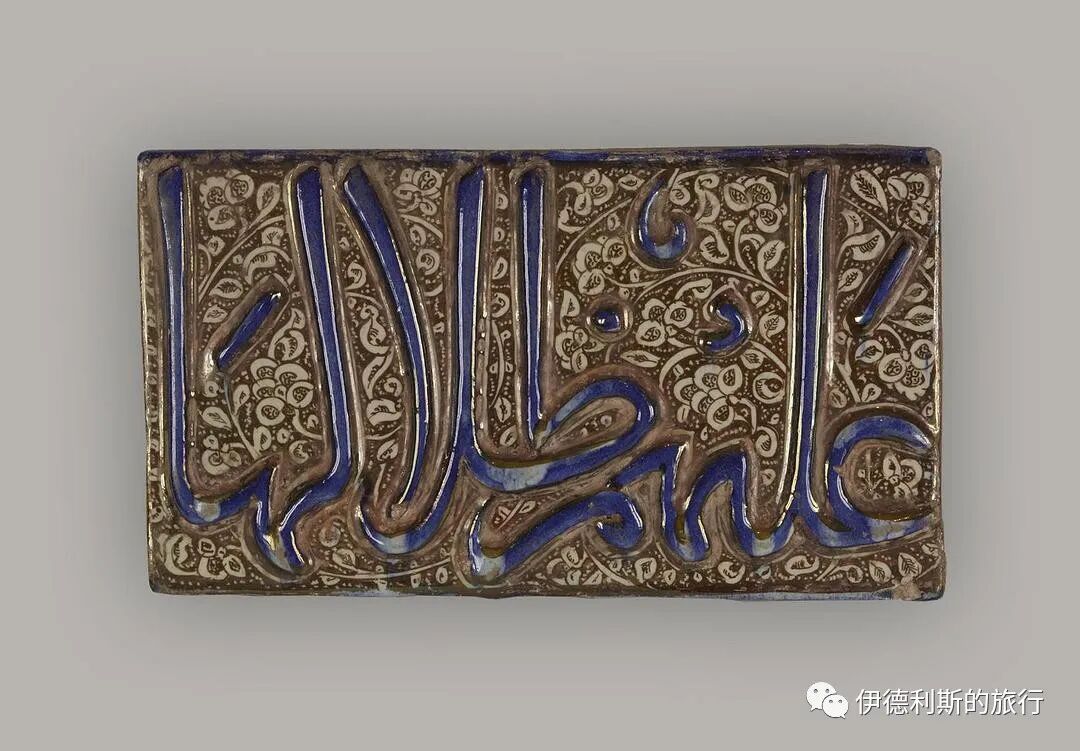
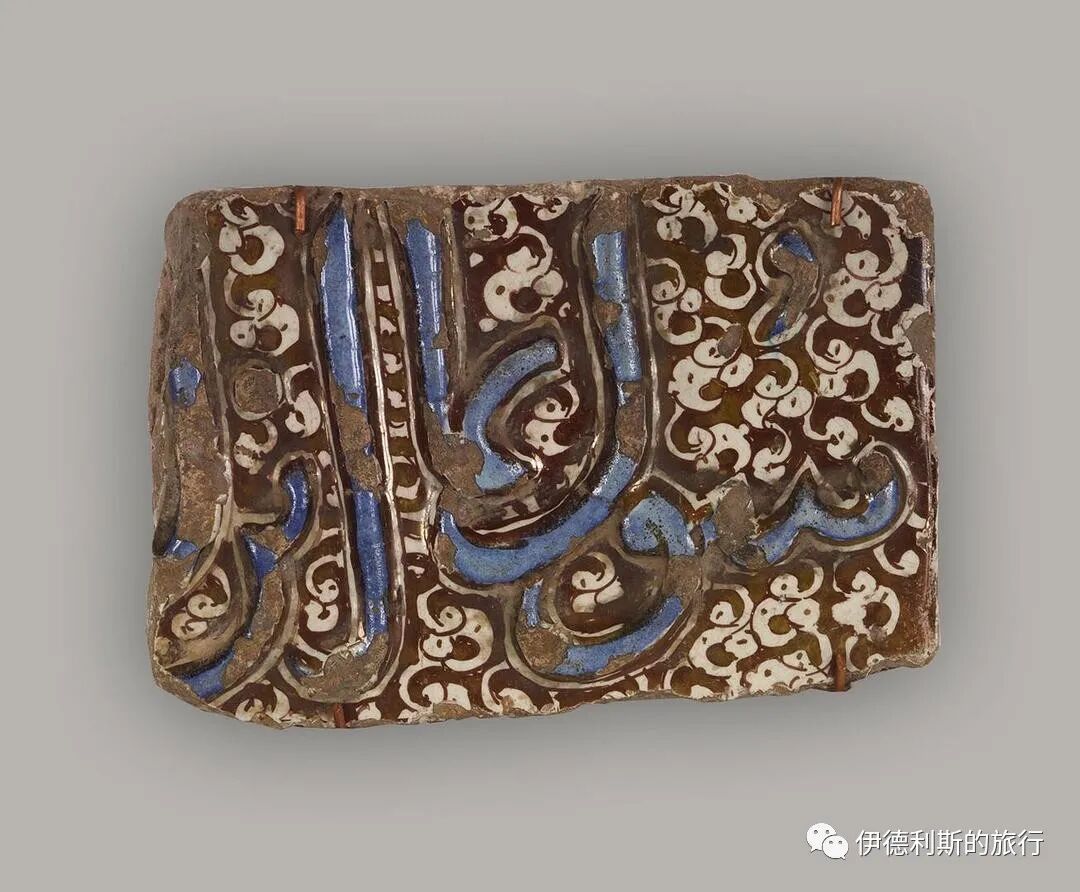
Late 13th century, moved here in 1925 by the Stieglitz Museum.
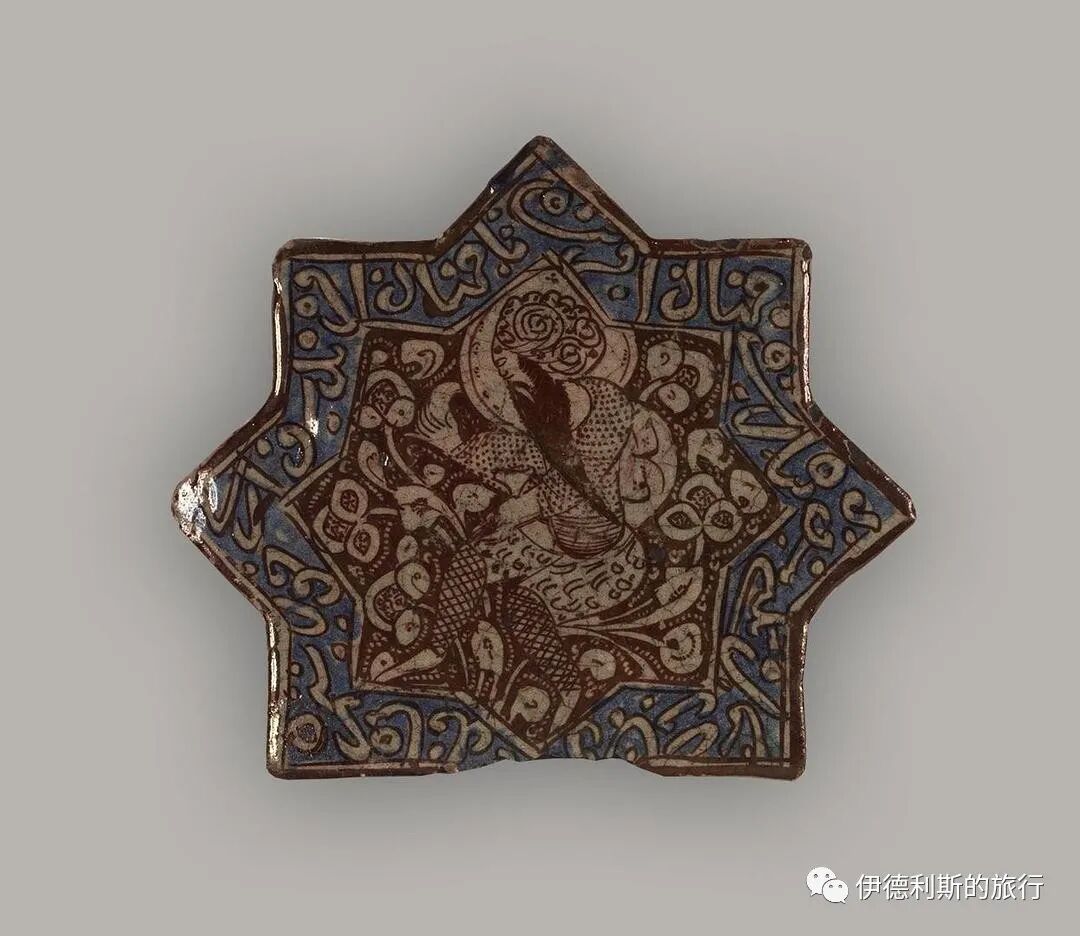
Late 13th century, moved here in 1925 by the Stieglitz Museum.
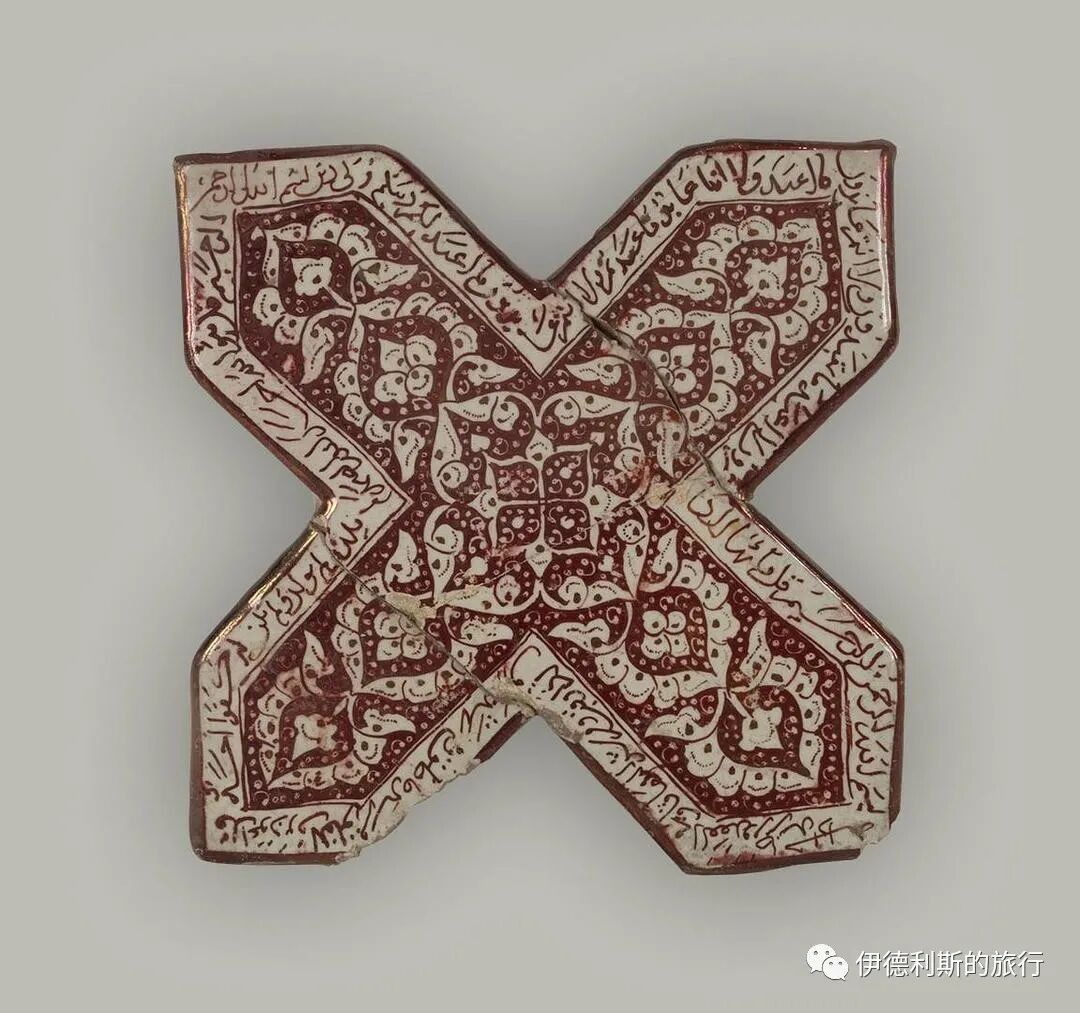
13th-14th century, moved here in 1925 by the Stieglitz Museum.
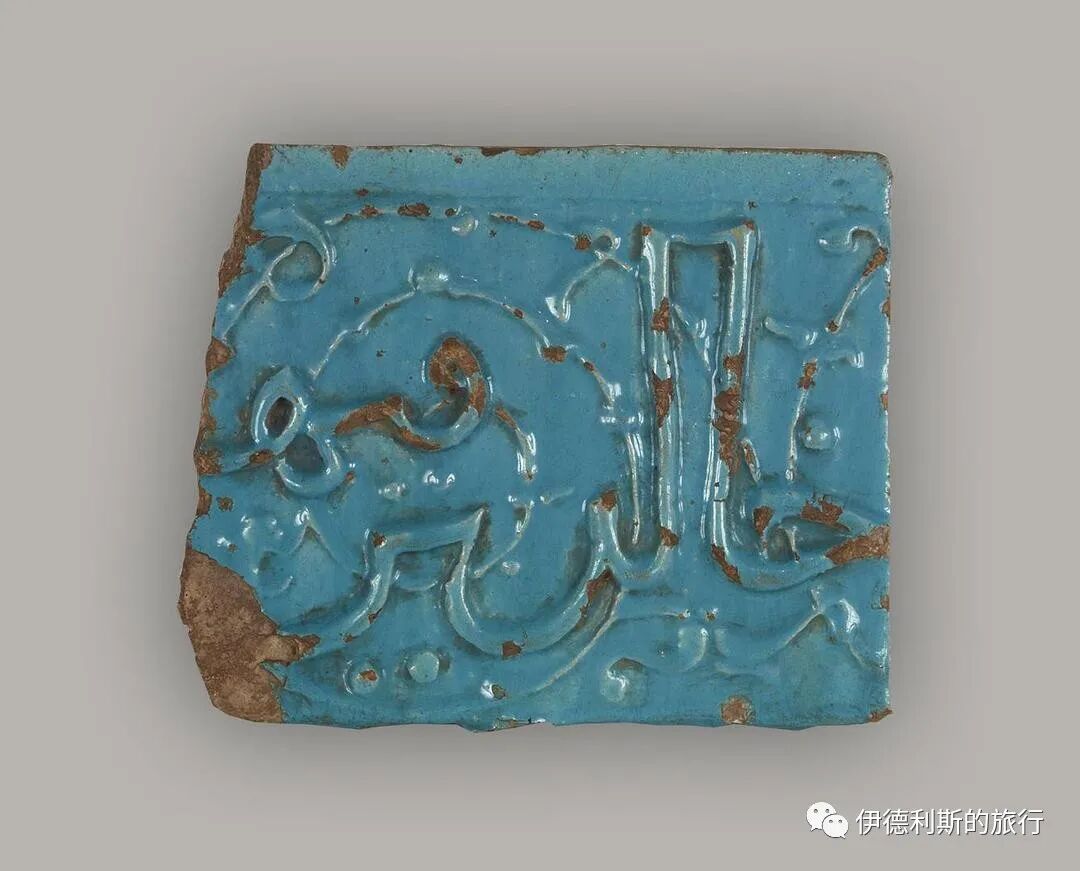
13th century, moved here in 1925 by the Stieglitz Museum.
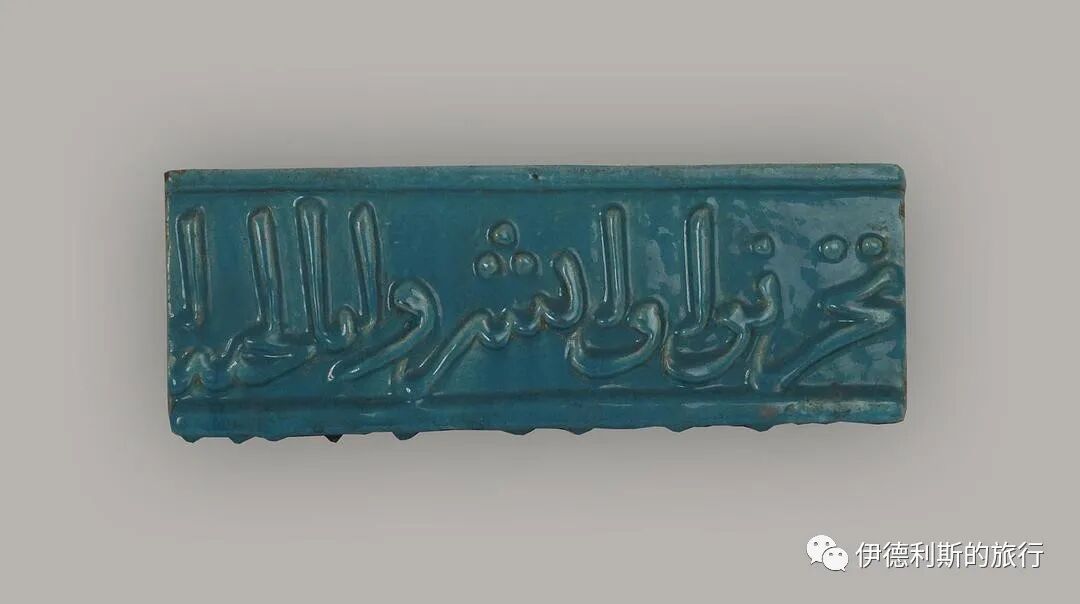
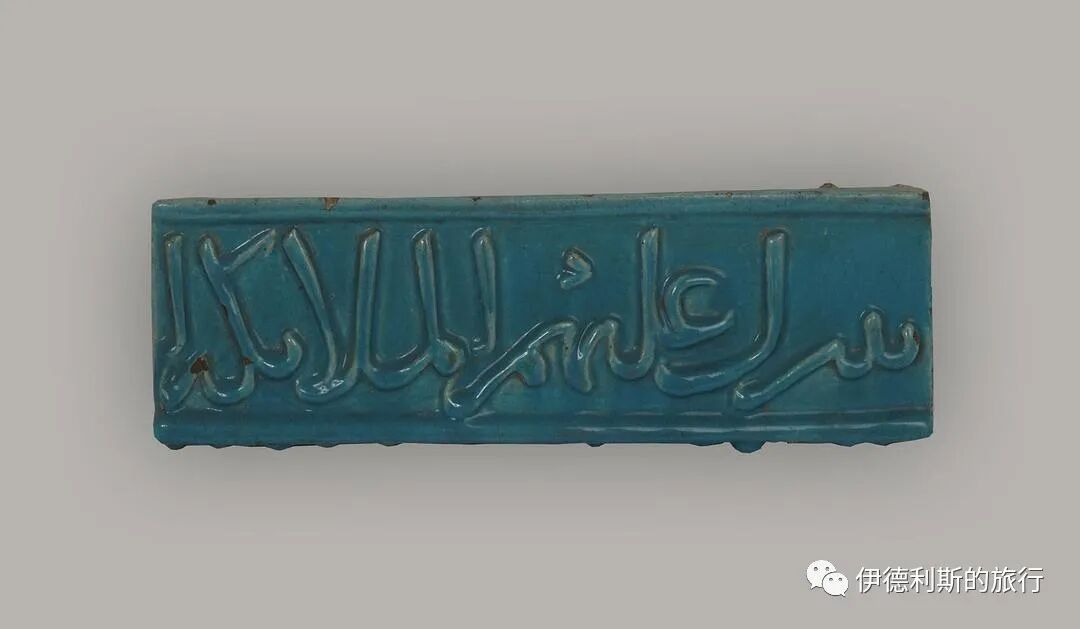
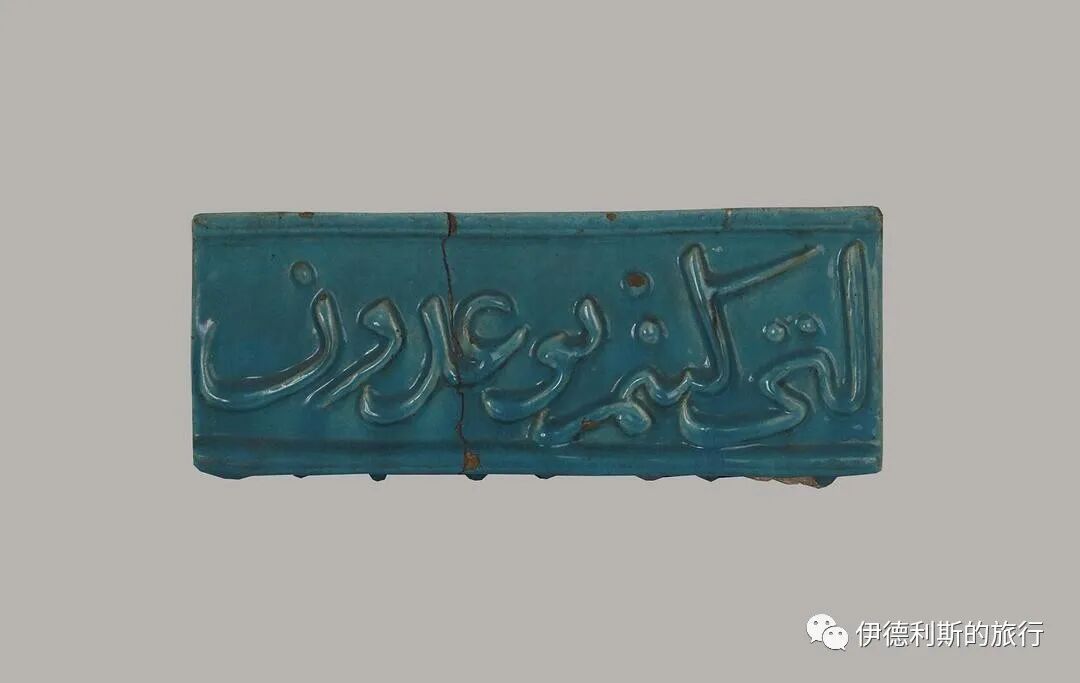
13th to 14th century, acquired from a private source in 1931.
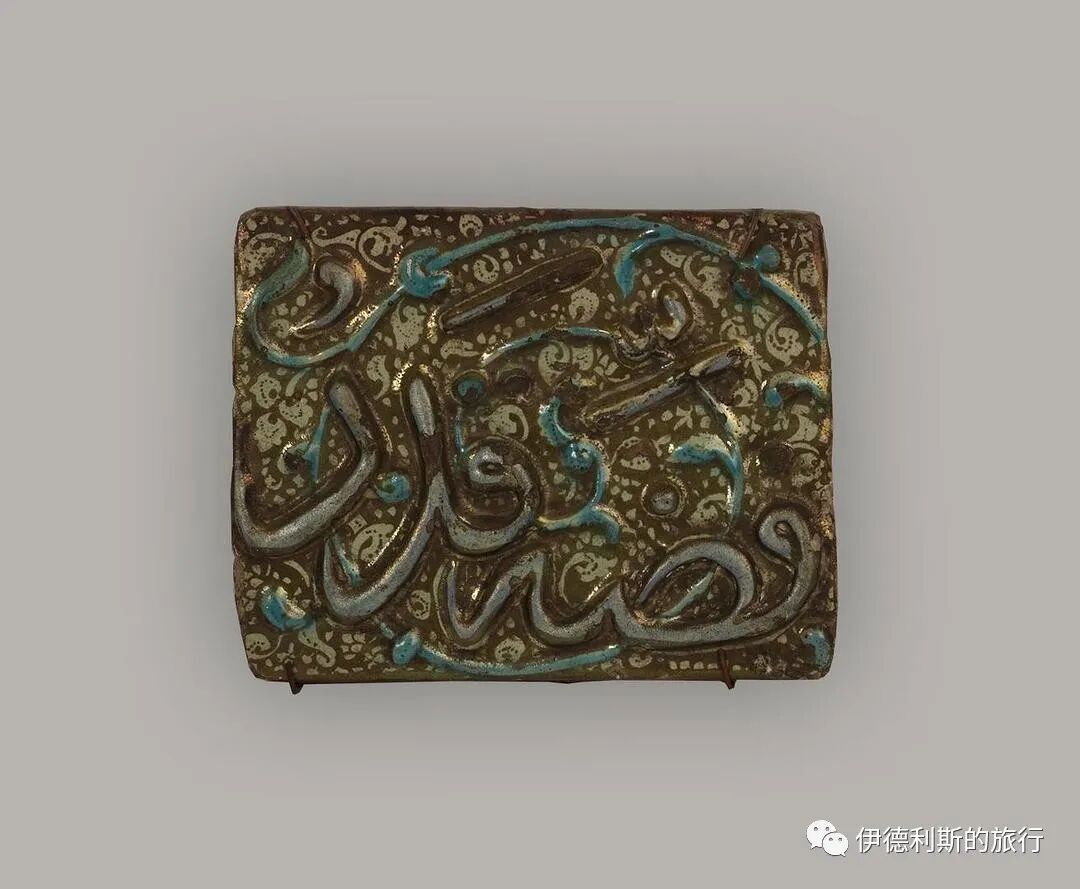
Uzbekistan Applied Arts Museum: Suzani Embroidery, Crafts and Central Asian Heritage
Articles • ali2007fr posted the article • 0 comments • 151 views • 2026-05-18 01:58
Summary: Uzbekistan Applied Arts Museum: Suzani Embroidery, Crafts and Central Asian Heritage is presented here as a firsthand travel account in clear English, beginning with this scene: The State Museum of Applied Arts of Uzbekistan is in Tashkent. It opened in 1937 and holds over 4,000 pieces of traditional crafts from across Uzbekistan, including wood carvings, ceramics, jewelry, and embroidery. The account keeps its focus on Uzbekistan Travel, Islamic Art, Central Asia while preserving the names, places, food, and historical details from the Chinese source.
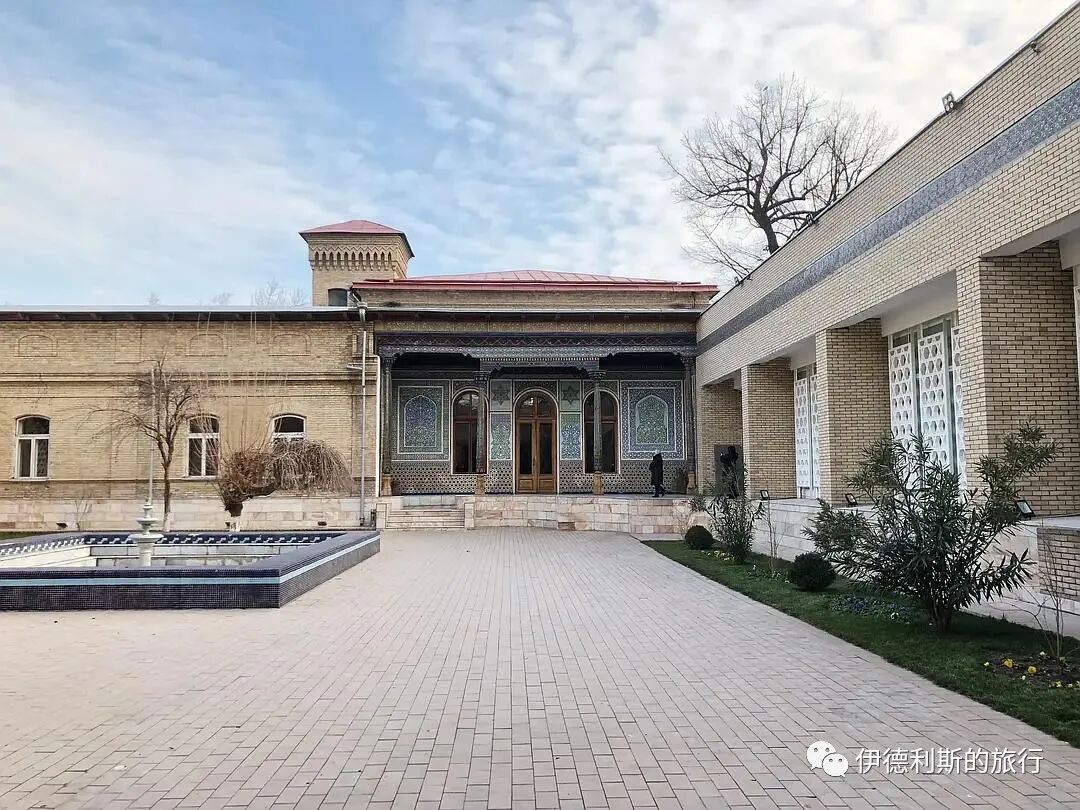
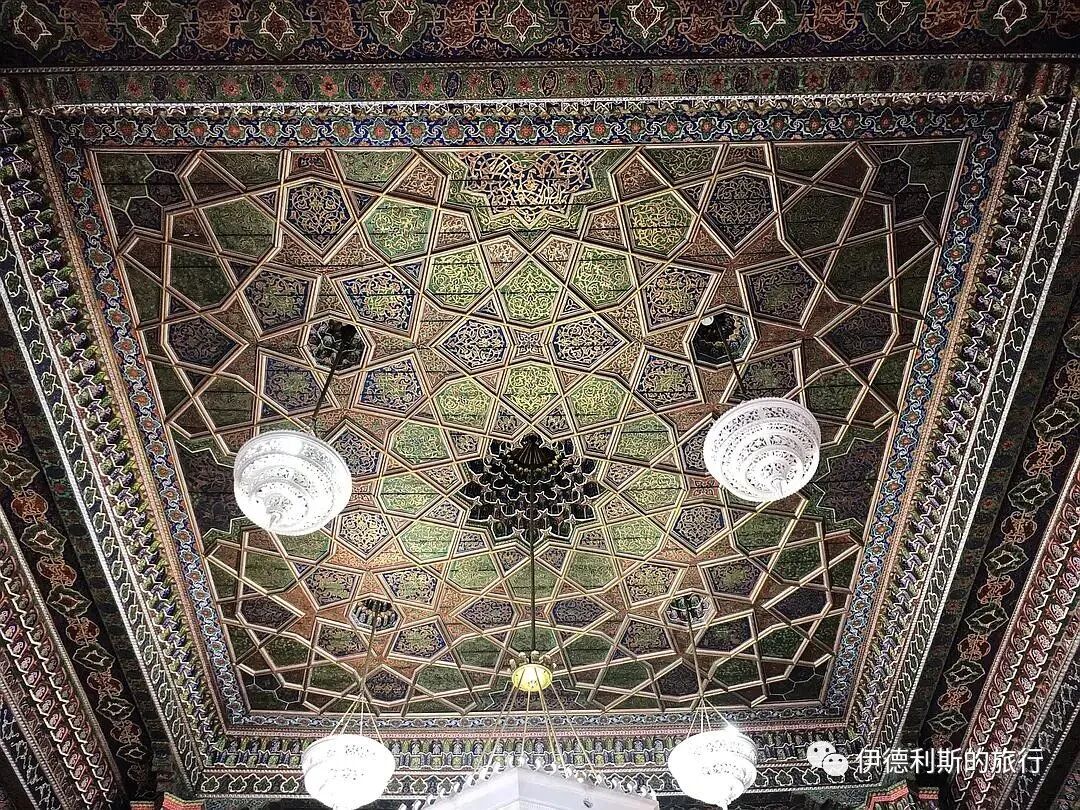
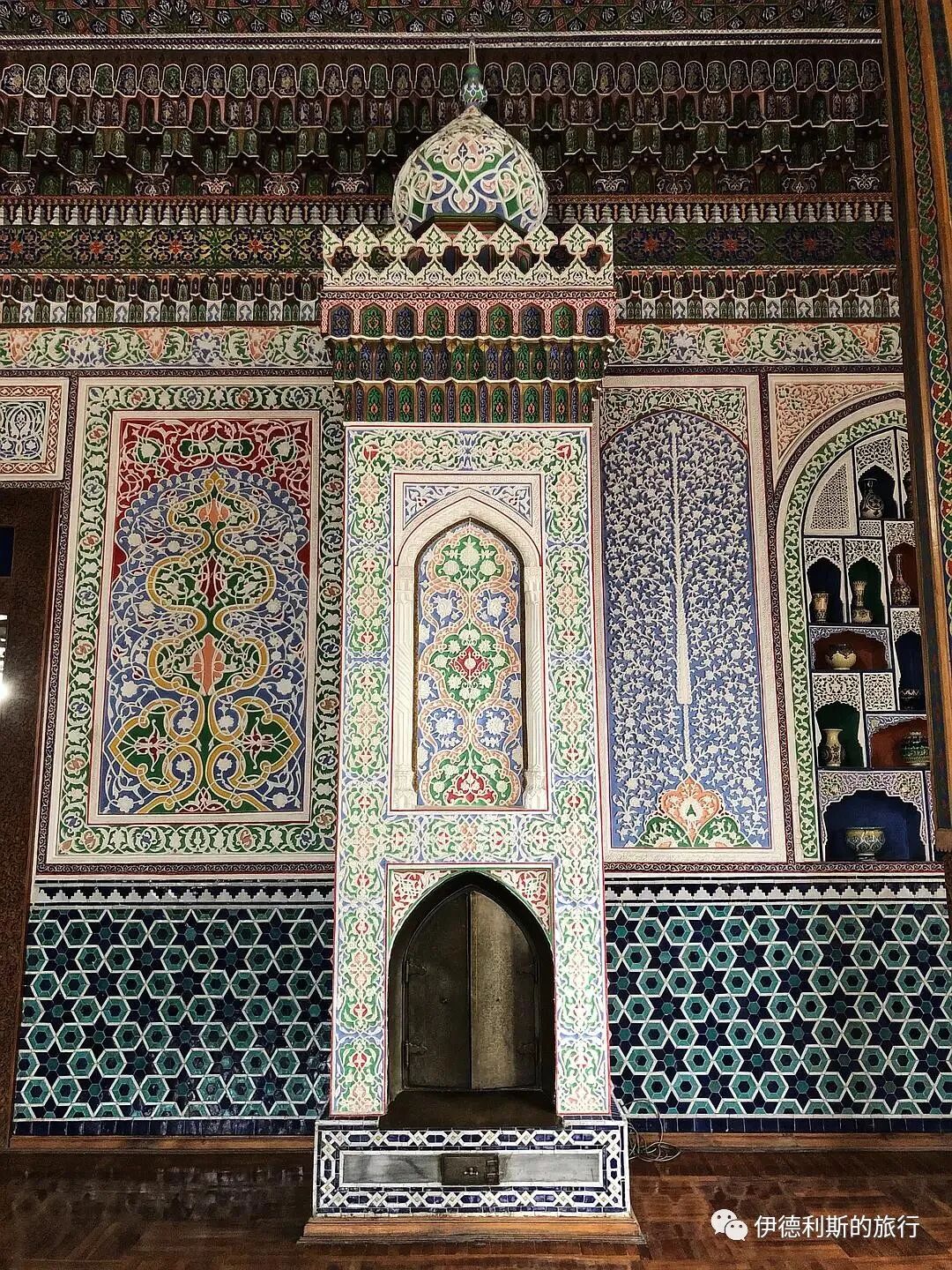
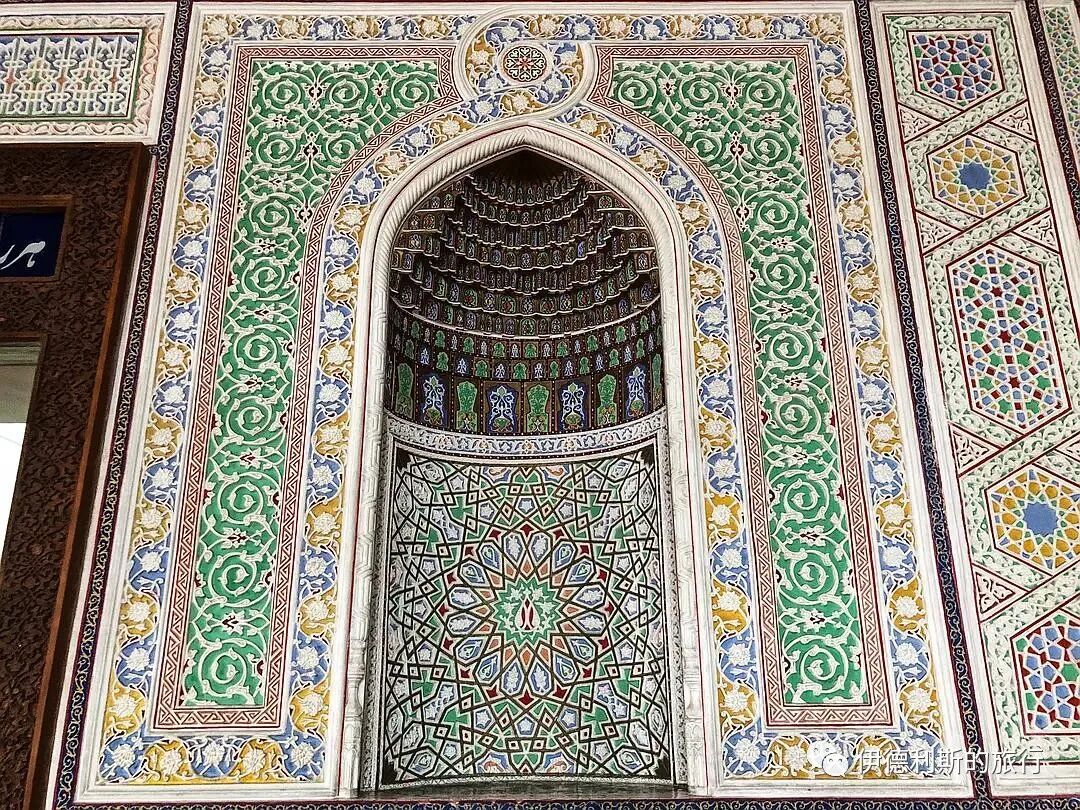
The State Museum of Applied Arts of Uzbekistan is in Tashkent. It opened in 1937 and holds over 4,000 pieces of traditional crafts from across Uzbekistan, including wood carvings, ceramics, jewelry, and embroidery.
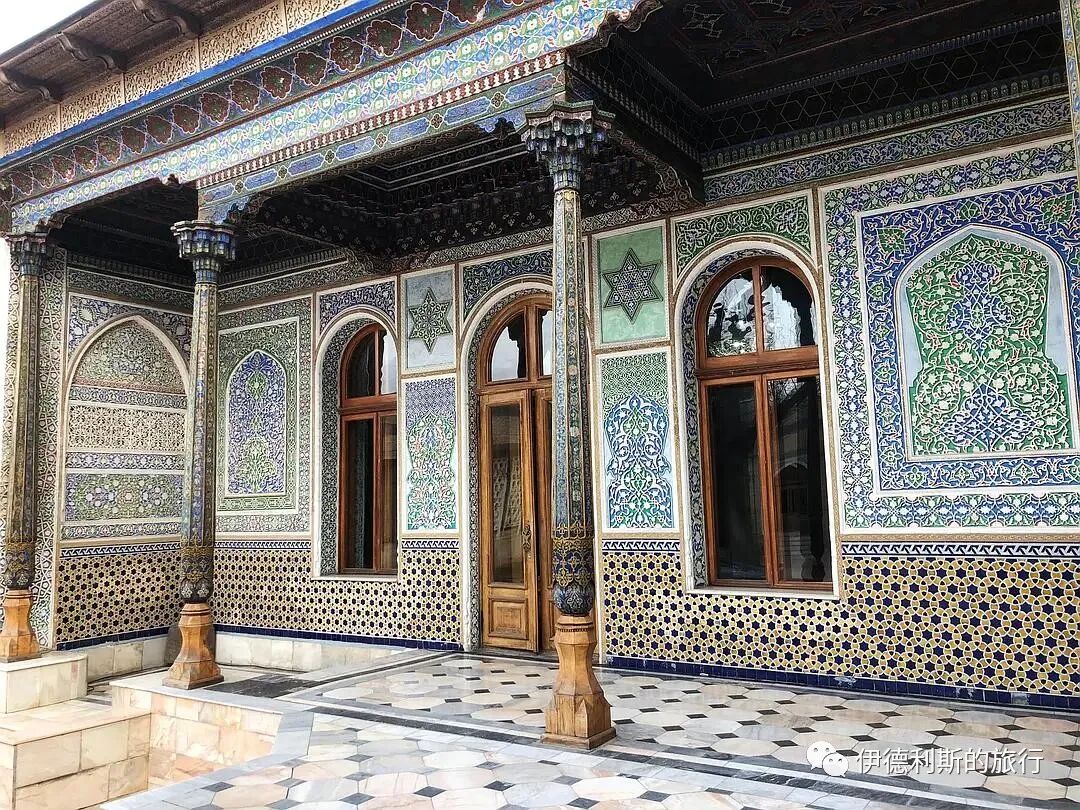
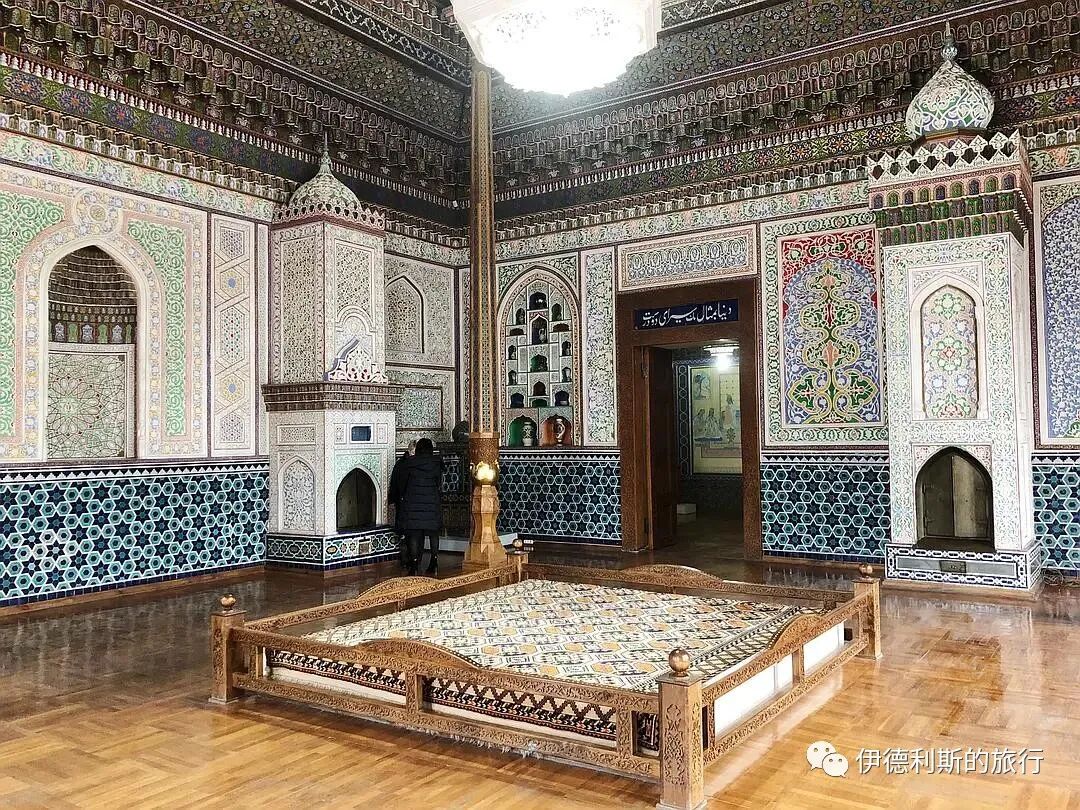
The museum building was once the home of a 19th-century Russian diplomat named Alexander Alexandrovich Polovtsev Jr. His secretary bought the house from a Tashkent merchant, and architect A. A. Burmeyster later renovated it.
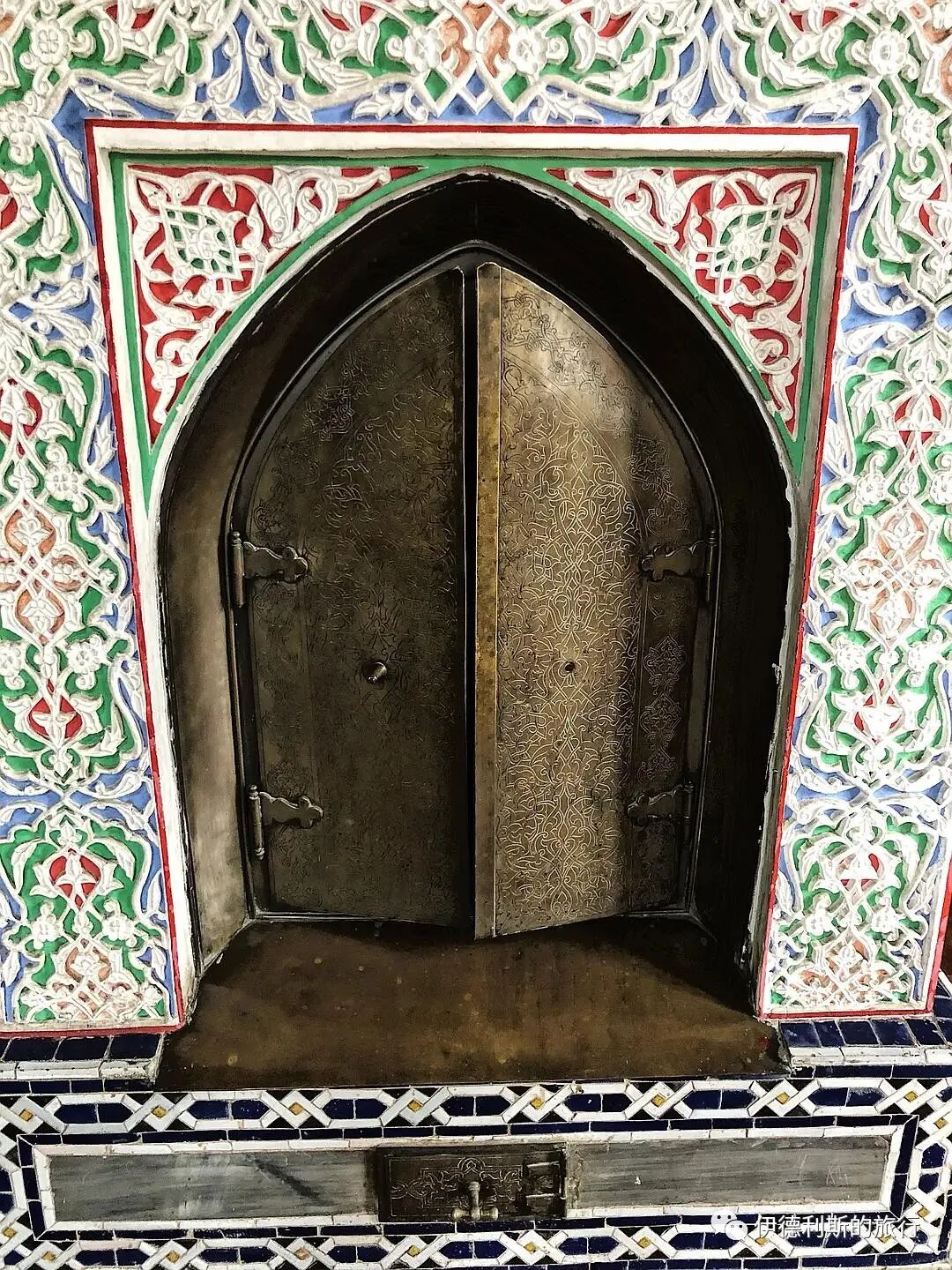
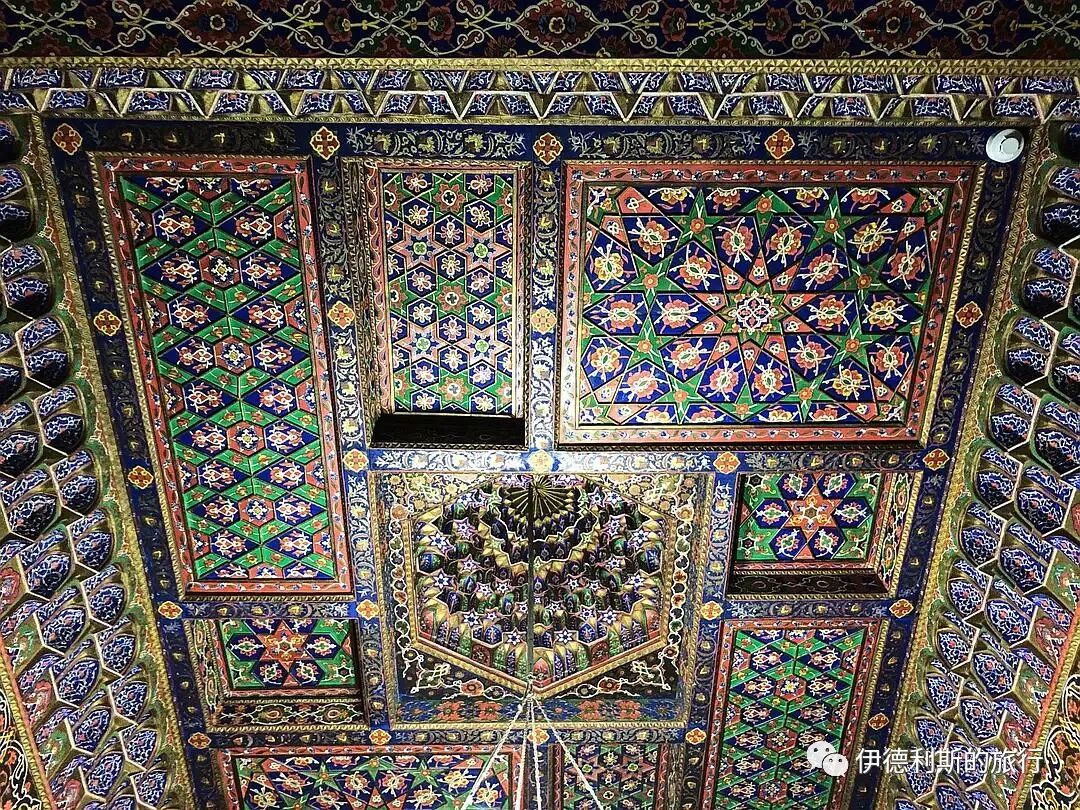
This building is a classic example of late 19th-century Uzbek oriental architecture and decorative art. Folk artists worked together on the carvings and paintings, including Usta T. Arsankulov, A. Kazymdzhanov from Tashkent, Usta Shirin Muradov from Bukhara, Usta A. Palvanov from Khiva, and Usta Abdullah from Rishtan.
During World War I, the building held Austrian officer prisoners. After the October Revolution and until the mid-1930s, it served as an orphanage. In 1937, it became a training center for carving and embossing, as well as an embroidery workshop, eventually turning into a museum for handicrafts. In 1997, the museum was transferred to the Ministry of Culture of Uzbekistan and renamed the State Museum of Applied Arts.
Oil paintings
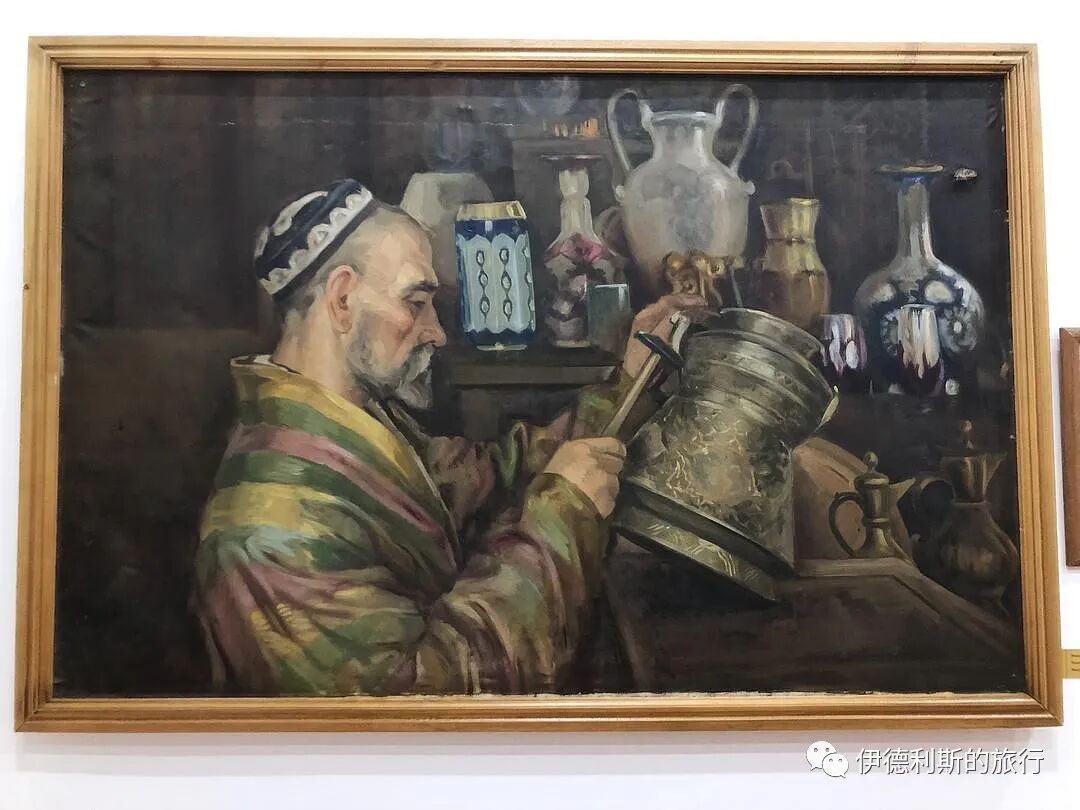
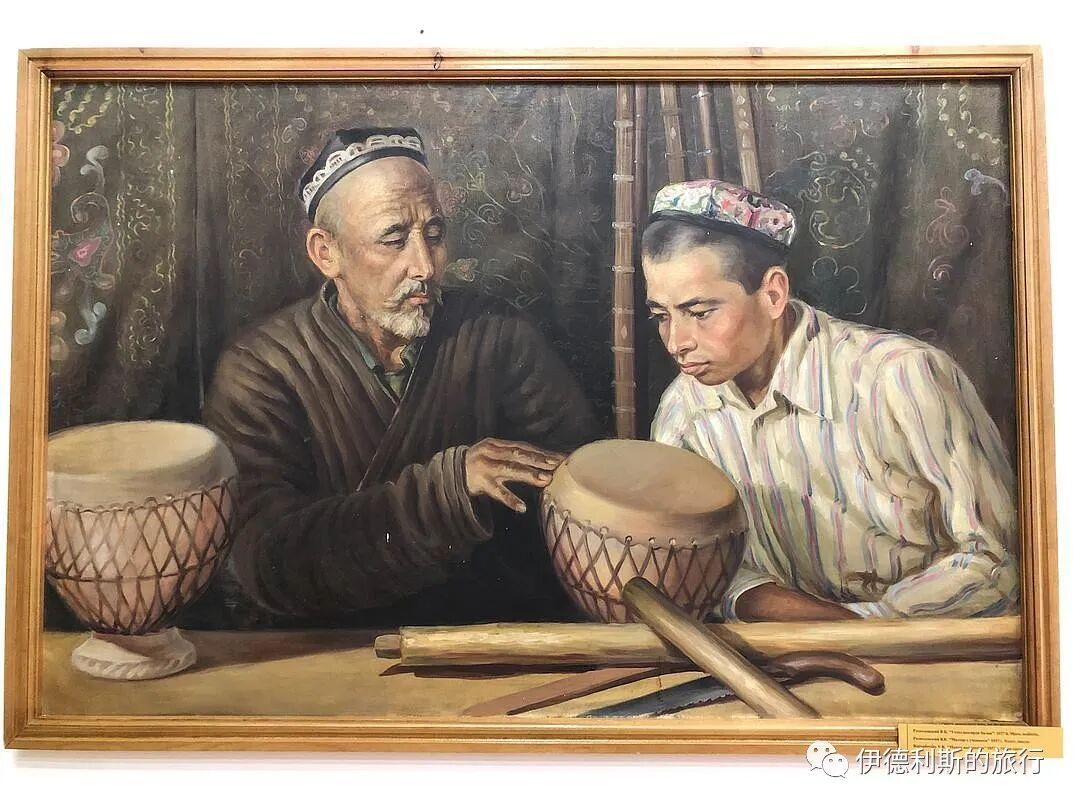
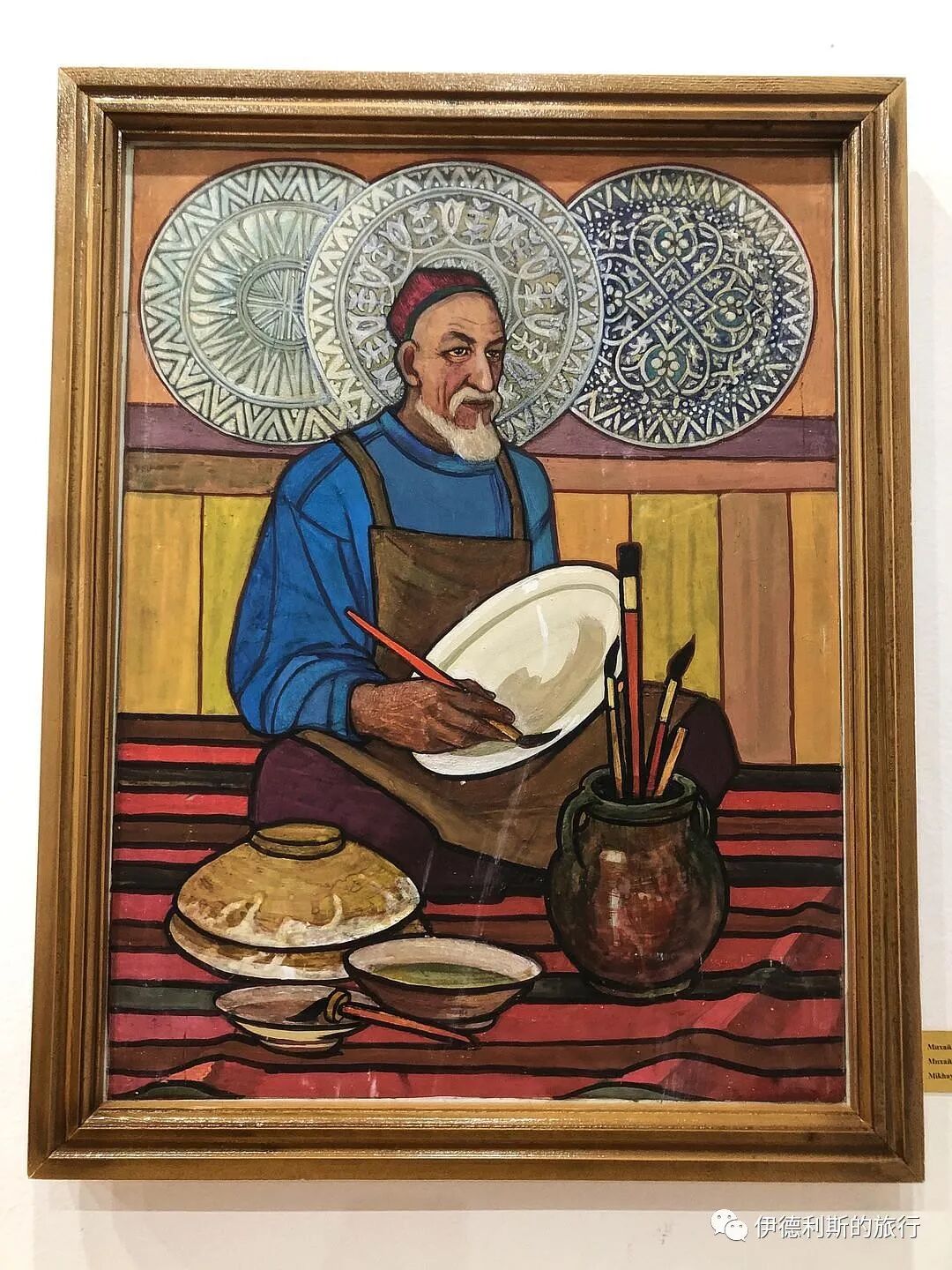
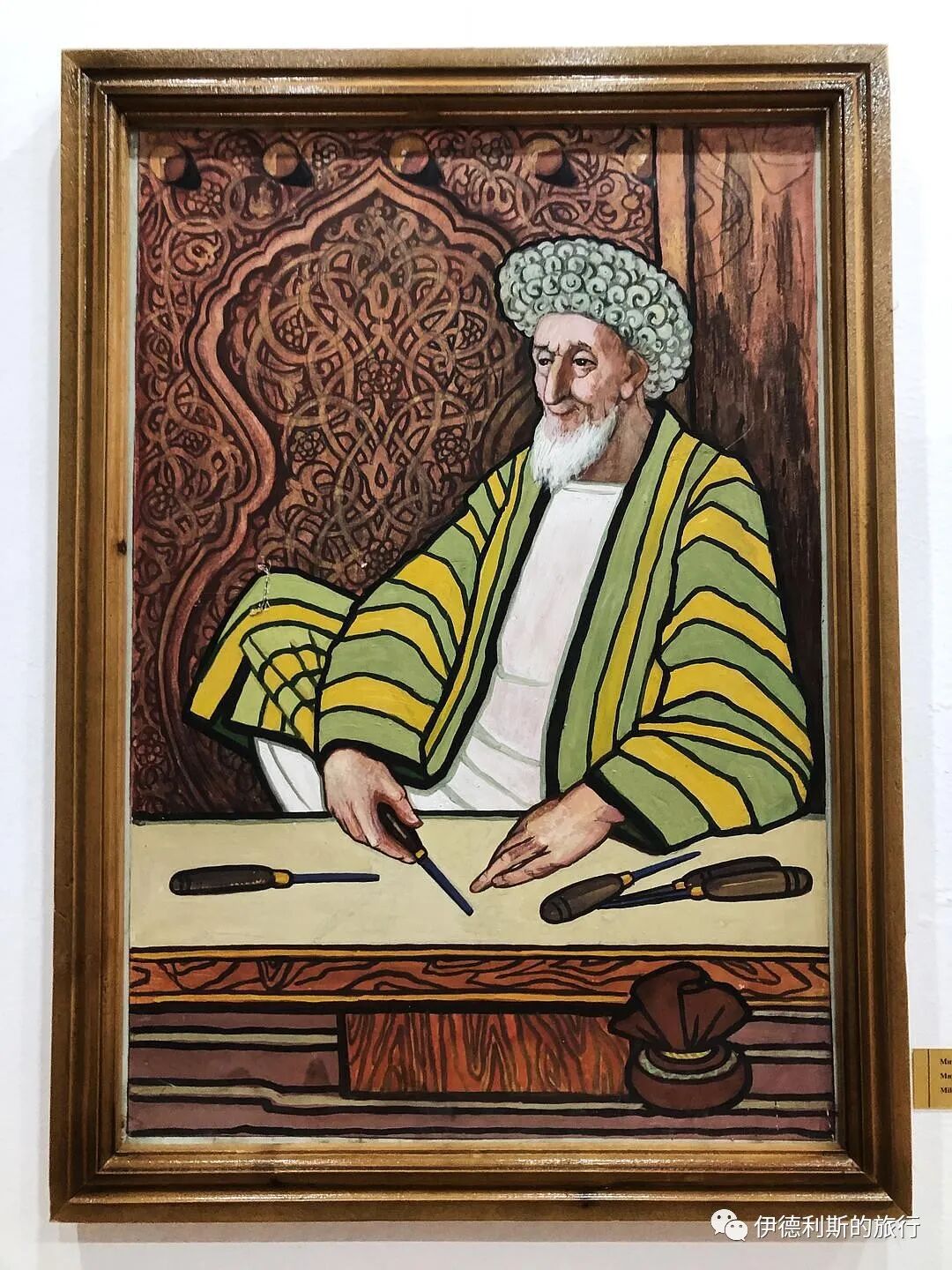
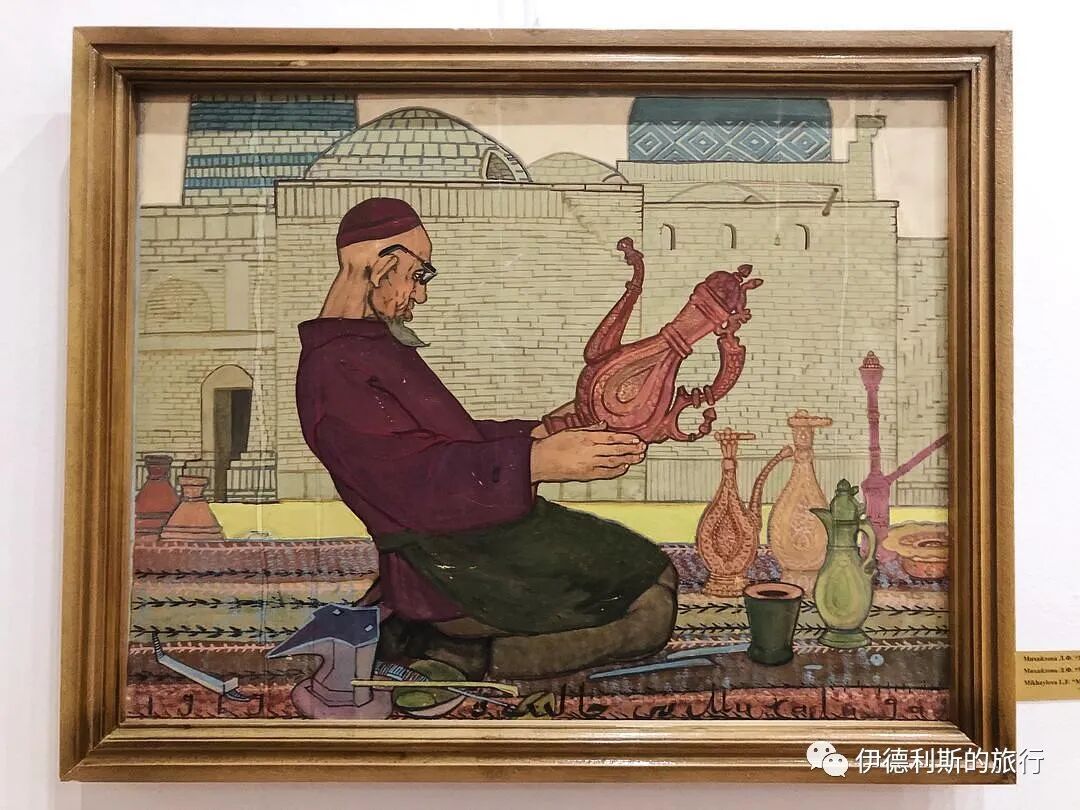
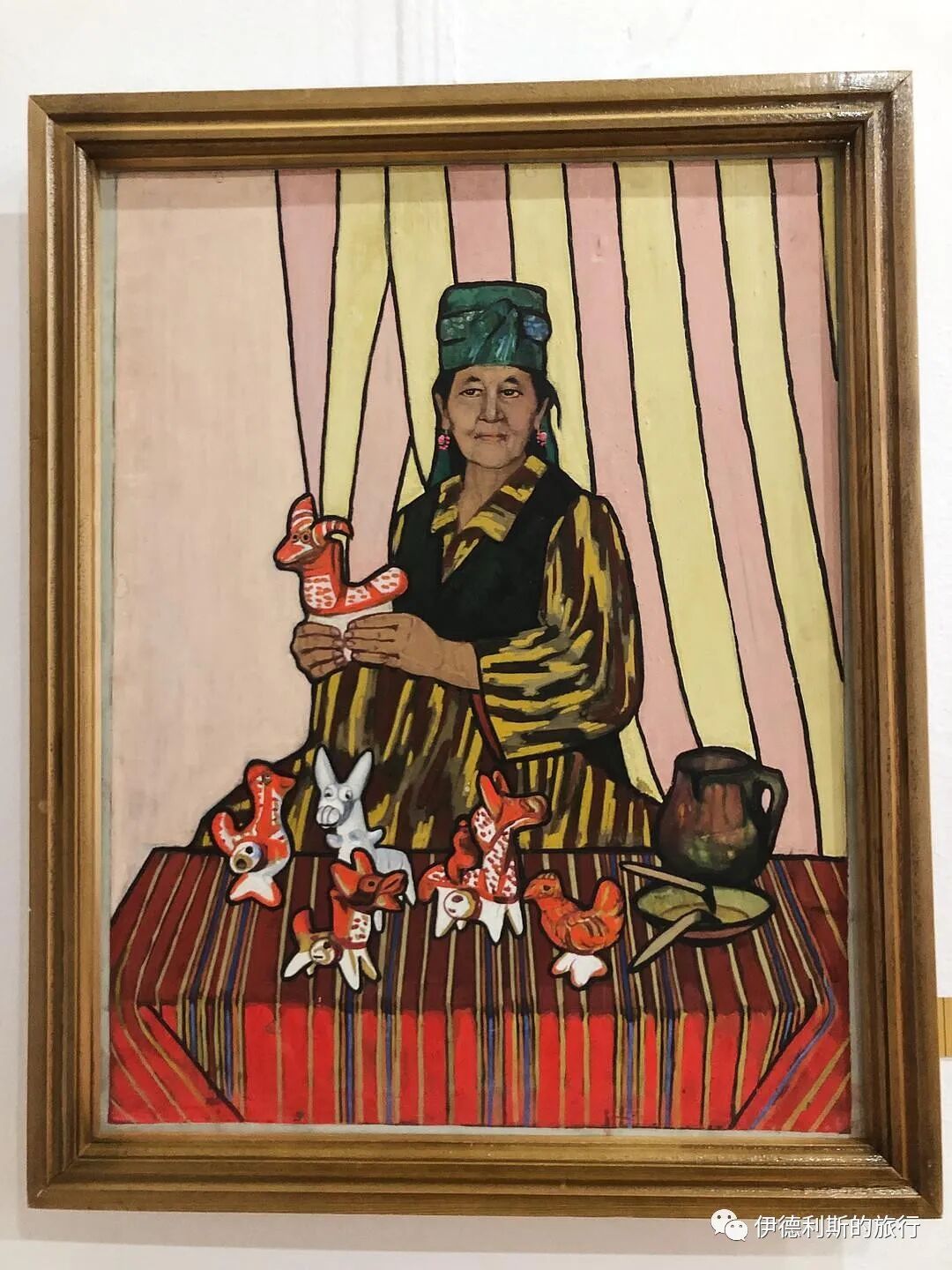
These are oil paintings by Uzbek craftspeople. The first two were painted by V. K. Razvadovsky in 1937.
Suzani embroidery
The word Suzani comes from the Persian word suzan, meaning needle. This type of embroidery is popular in the Transoxiana region of Central Asia. Girls in the Transoxiana region traditionally start learning to sew when they are very young. Before a wedding, the bride's female relatives gather to make a Suzani together. This gathering is called hashar, and they sing and dance while they work. At the wedding, the Suzani is first hung in the bride's home. When the wedding car is ready to leave, the Suzani is taken down, packed up, and brought to the new couple's home to be hung on the wall. After that, the Suzani is usually only hung up for important events and gatherings, and it is kept in a wooden chest at other times.
Suzani is usually made of cotton. Before sewing, the cotton fabric is soaked in tea or onion water to turn the background a light brown color, then colored with various natural dyes. Light yellow comes from saffron, bright yellow from onion skins, brown from nut shells, light purple from black mulberries, deep purple from cherries, gray-blue from raspberries, and orange from henna.
The artists who design the Suzani patterns are called kalamkash. They draw lines with black ink and use bowls and plates to trace circles. Once the pattern is designed, several women embroider it together.
Suzani art reached its peak during the 16th to 19th centuries under the Bukhara Khanate and the Kokand Khanate. By the 19th century, there were six major production centers: Nurota, Bukhara, Samarkand, Shahrisabz, Tashkent, and Fergana.
A 19th-century Suzani embroidery from Bukhara. Bukhara Suzani is the most exquisite of all, known for its beautiful colors and high-quality stitching.
A 19th-century Suzani embroidery from Nurota. Nurota is an ancient Central Asian city built by Alexander the Great in the 4th century BC. In the 19th century, Nurata belonged to the Khanate of Bukhara. Its embroidery (suzani) features clusters of flowers, birds, animals, and highly stylized figures on a white background.
An Andijan suzani embroidery from the 1950s. Andijan is in the southeast of the Fergana Valley. The Fergana Valley is very fertile and is an important cotton-producing region. This area is skilled at producing large decorative suzani. The embroidery is very fine and usually features circular rosettes.
A Gul'kurpa-style suzani embroidery from the Piskent region of Tashkent Province in the 19th century. This type of embroidery uses many floral patterns and is a specialty of the Tashkent region.
A 19th-century Tashkent suzani embroidery. This type of suzani is called 'oy-palak' (moon heaven). Many Tashkent suzani have themes of starry skies, the sun, and the moon.
A late 19th-century Shahrisabz suzani embroidery. Shahrisabz is the hometown of Tamerlane the Great. In the 19th century, it was a weaving center for the Khanate of Bukhara, where many artisans made suzani specifically for the royal court.
A 20th-century suzani embroidery from the Surxondaryo region in the far south of Uzbekistan, near Afghanistan.
A 20th-century Samarkand suzani embroidery. Samarkand has historically been a center for the weaving industry in Central Asia. The suzani here have larger and simpler patterns than those in Bukhara, often featuring deep red rose garlands wrapped in leaves.
Skullcap (doppa).
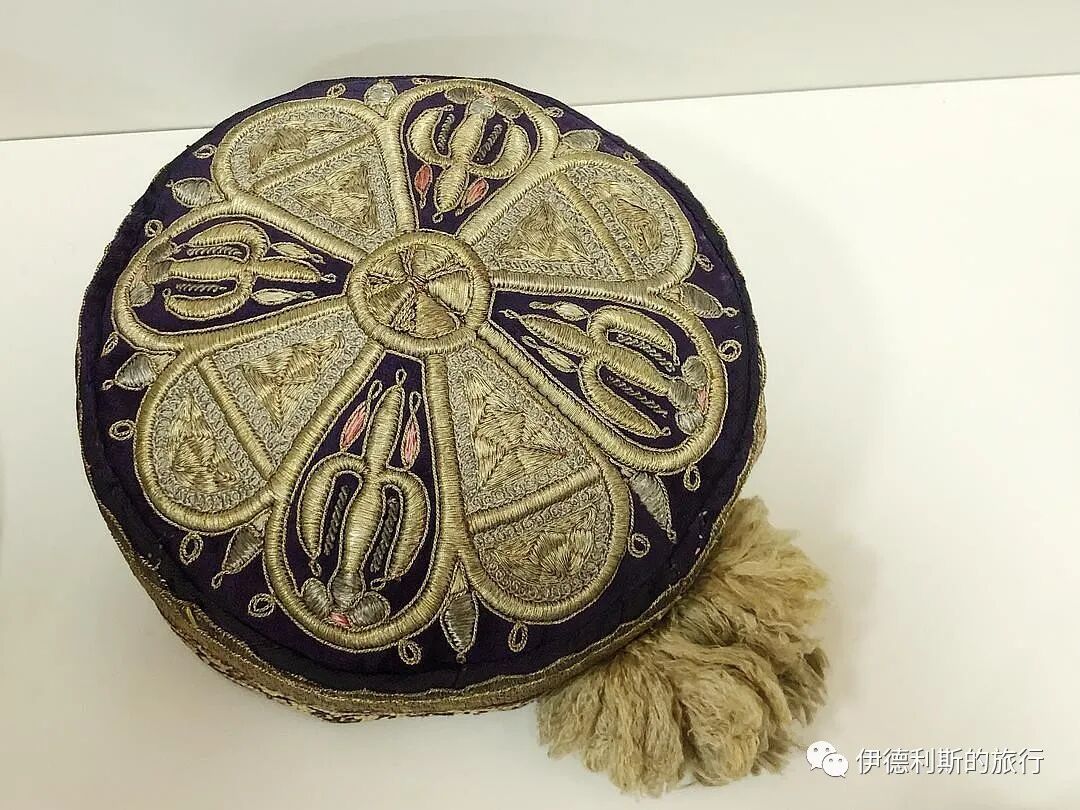
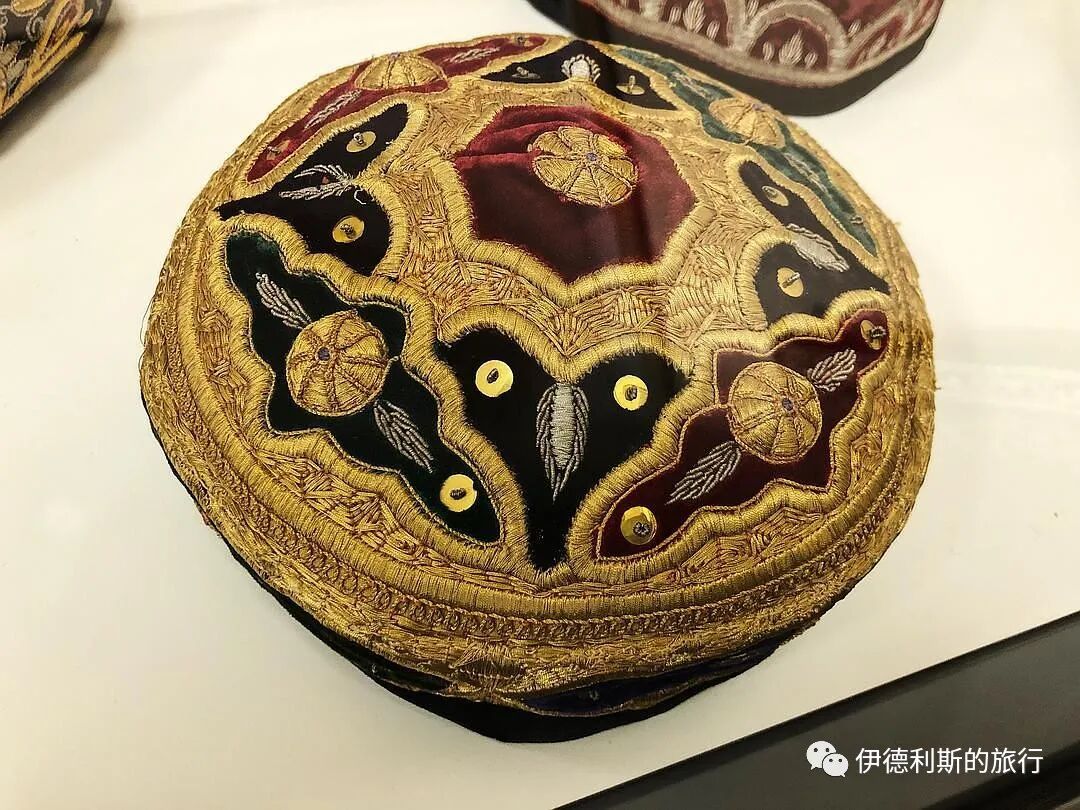
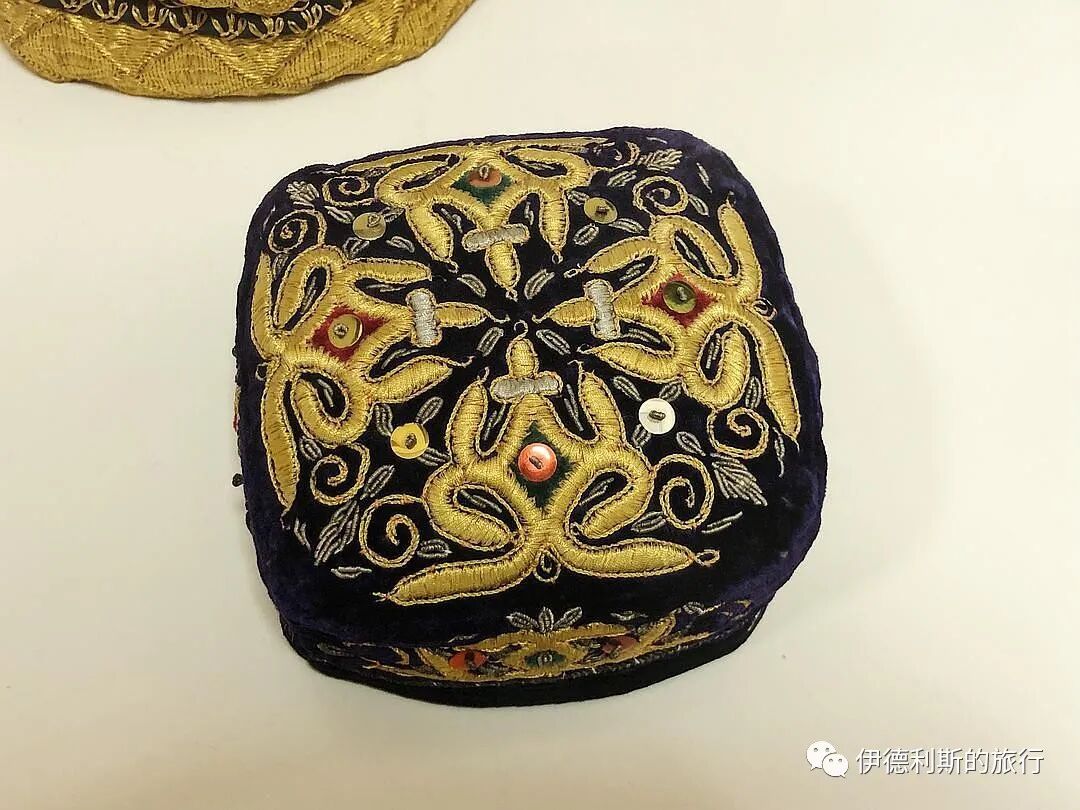
Various 19th to 20th-century Uzbek skullcaps (doppa) from Samarkand, Shahrisabz, and Andijan. The skullcaps we see on the streets of Uzbekistan today are much simpler than these.
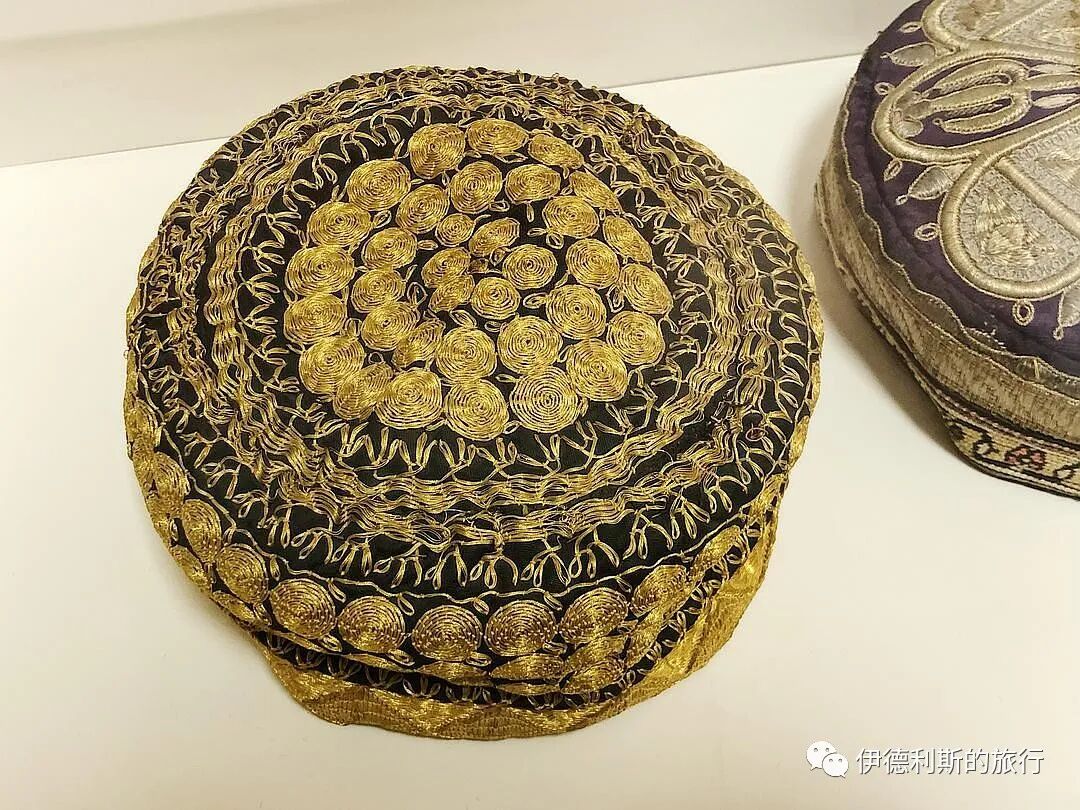
A gold-thread embroidered skullcap (doppa) made in Bukhara between 1940 and 1975.
Jewelry.
On the right is a bracelet made by Azizov K. A. in Tashkent in 1977. On the left is an amulet made by Dzyuba A. in Tashkent in 1982.
An early 20th-century amulet from Bukhara.
An early 20th-century necklace from Bukhara.
A late 19th to early 20th-century chest ornament from Bukhara.
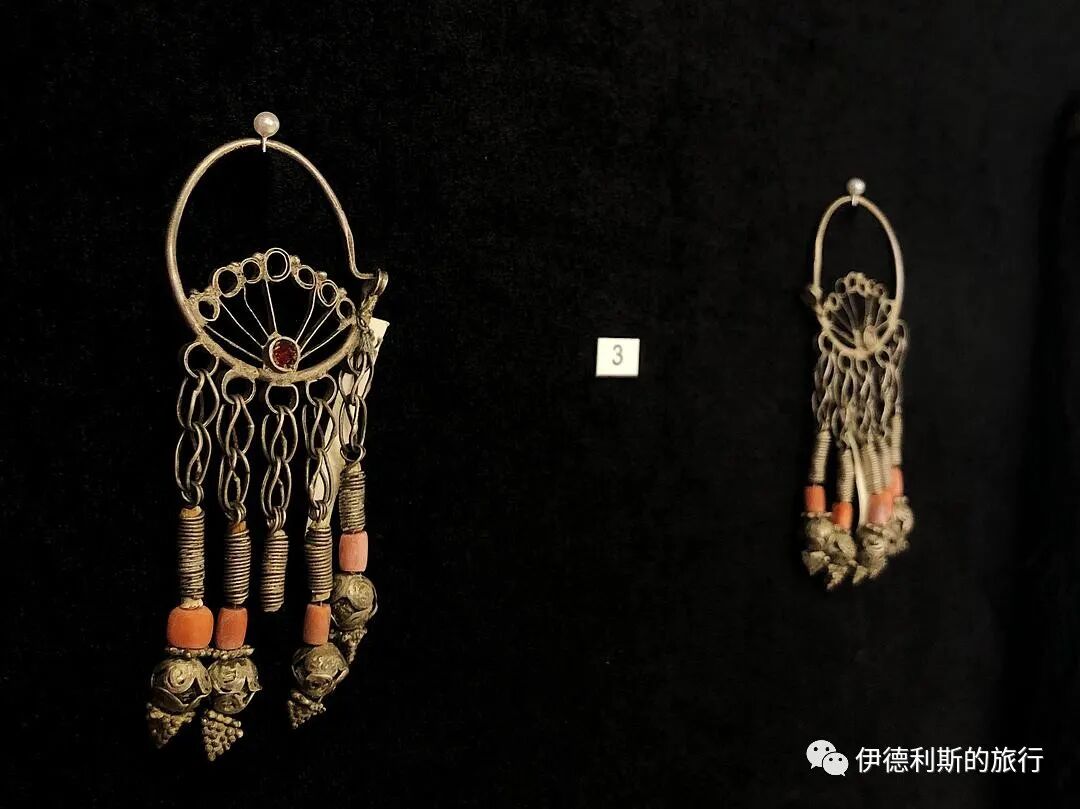
Late 19th to early 20th-century earrings from Samarkand.
Mid-20th-century earrings from Tashkent.
A late 19th to early 20th-century amulet from Tashkent.
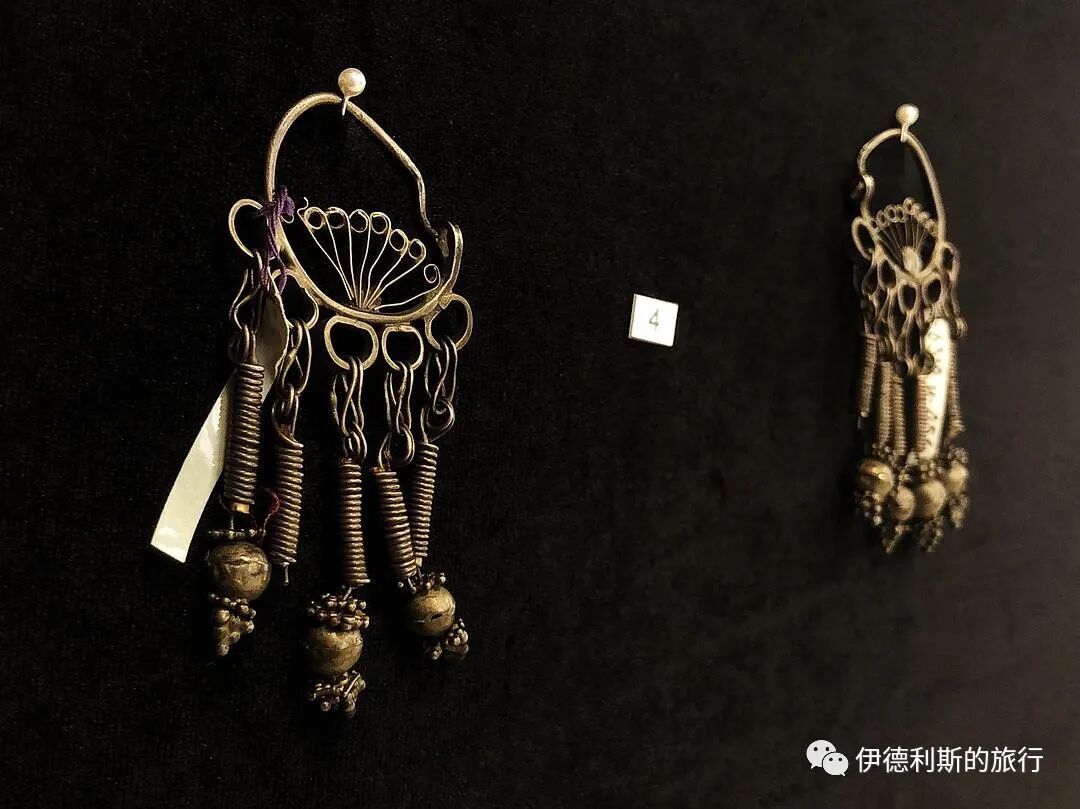
Earrings from Fergana in the early 20th century.
Earrings from Surxondaryo Region in the late 19th to early 20th century.
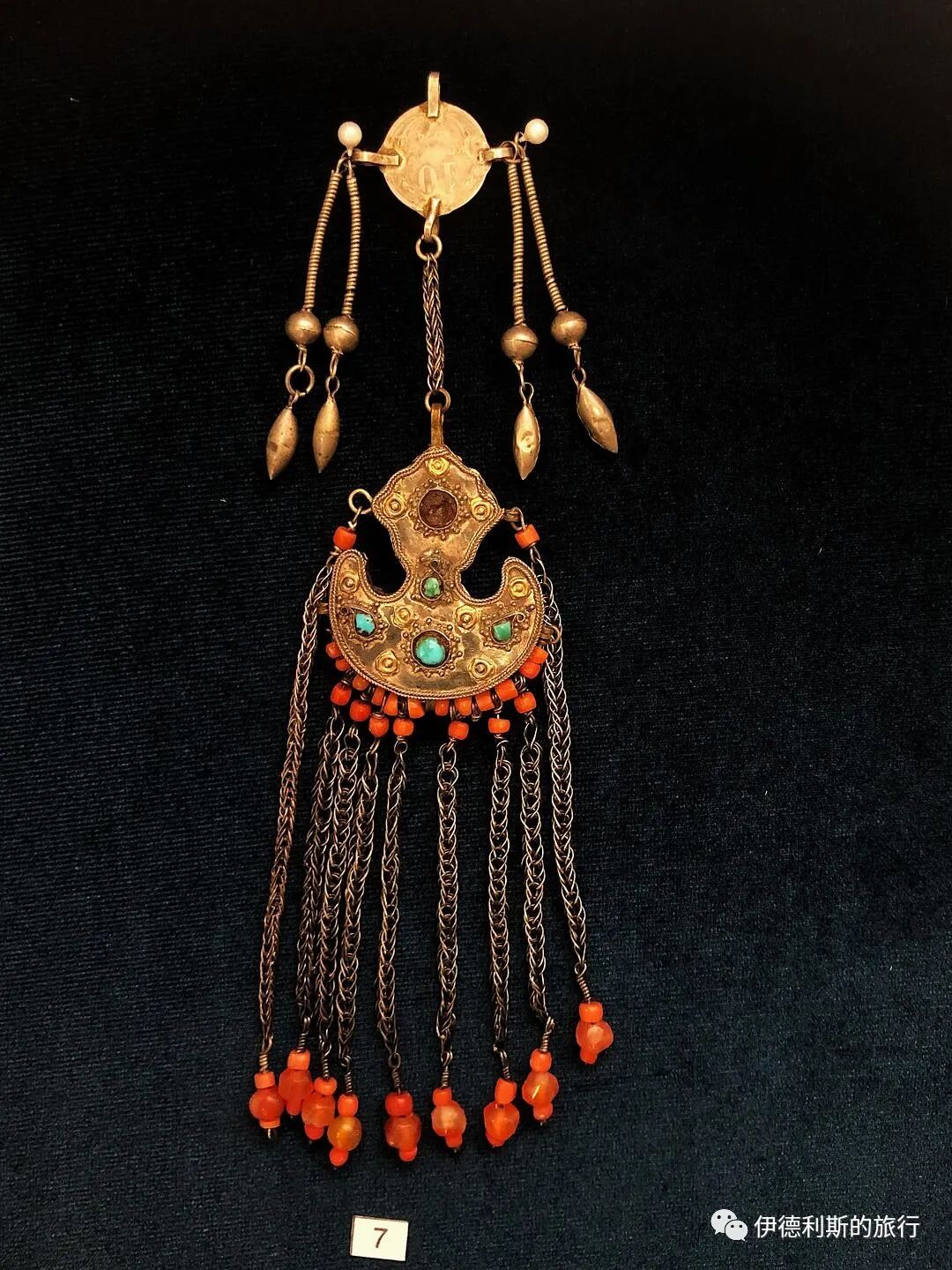
A headpiece from Fergana in the late 19th century.
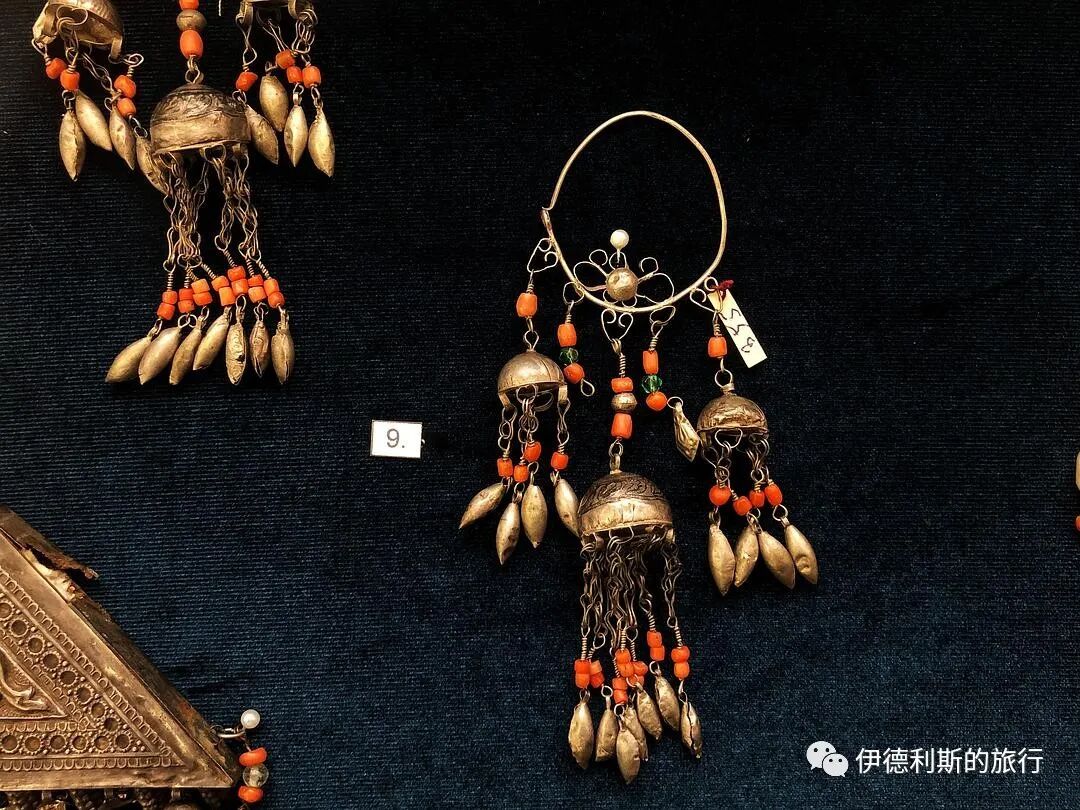
Earrings from Sirdaryo in the early 20th century.
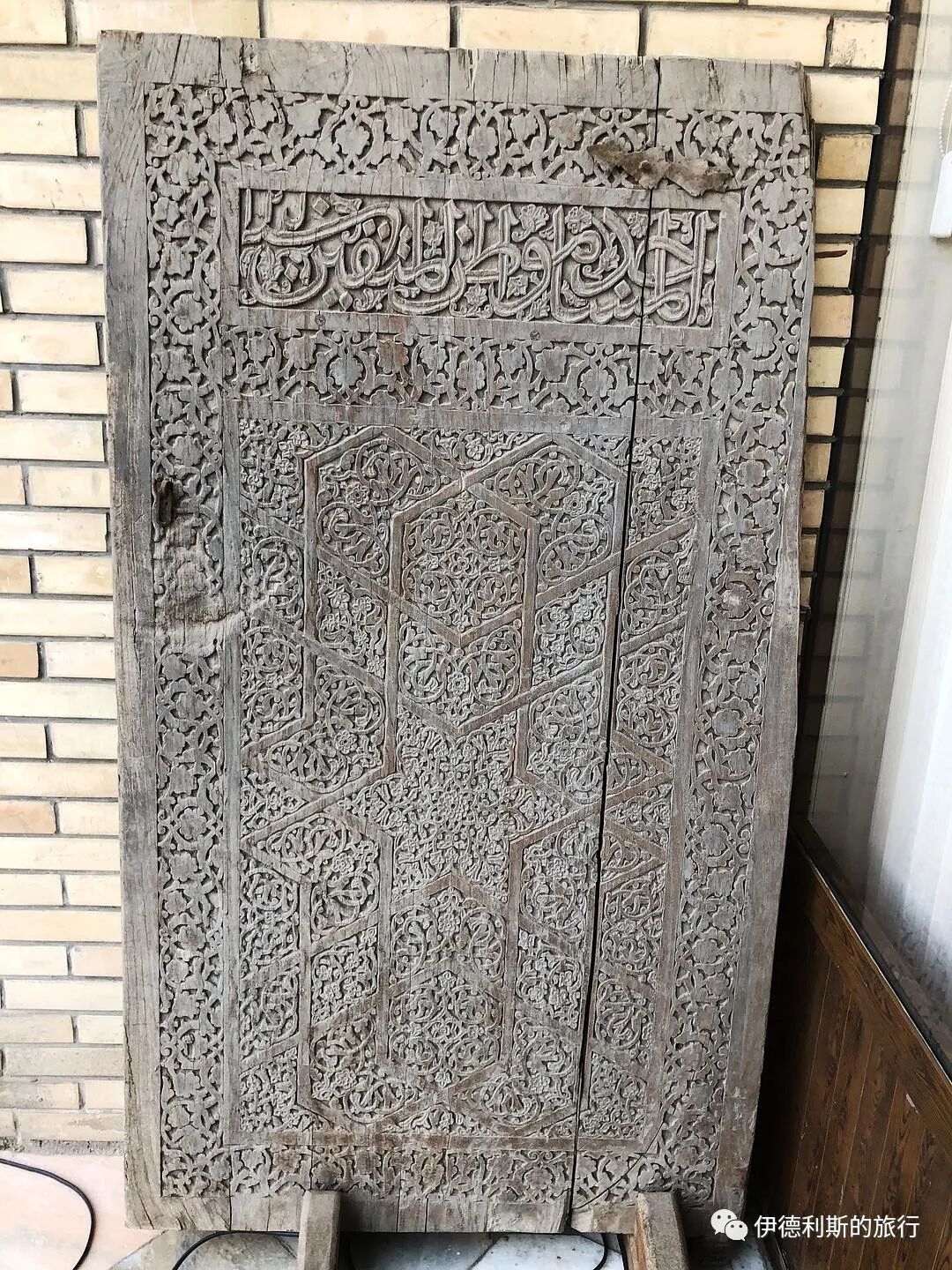
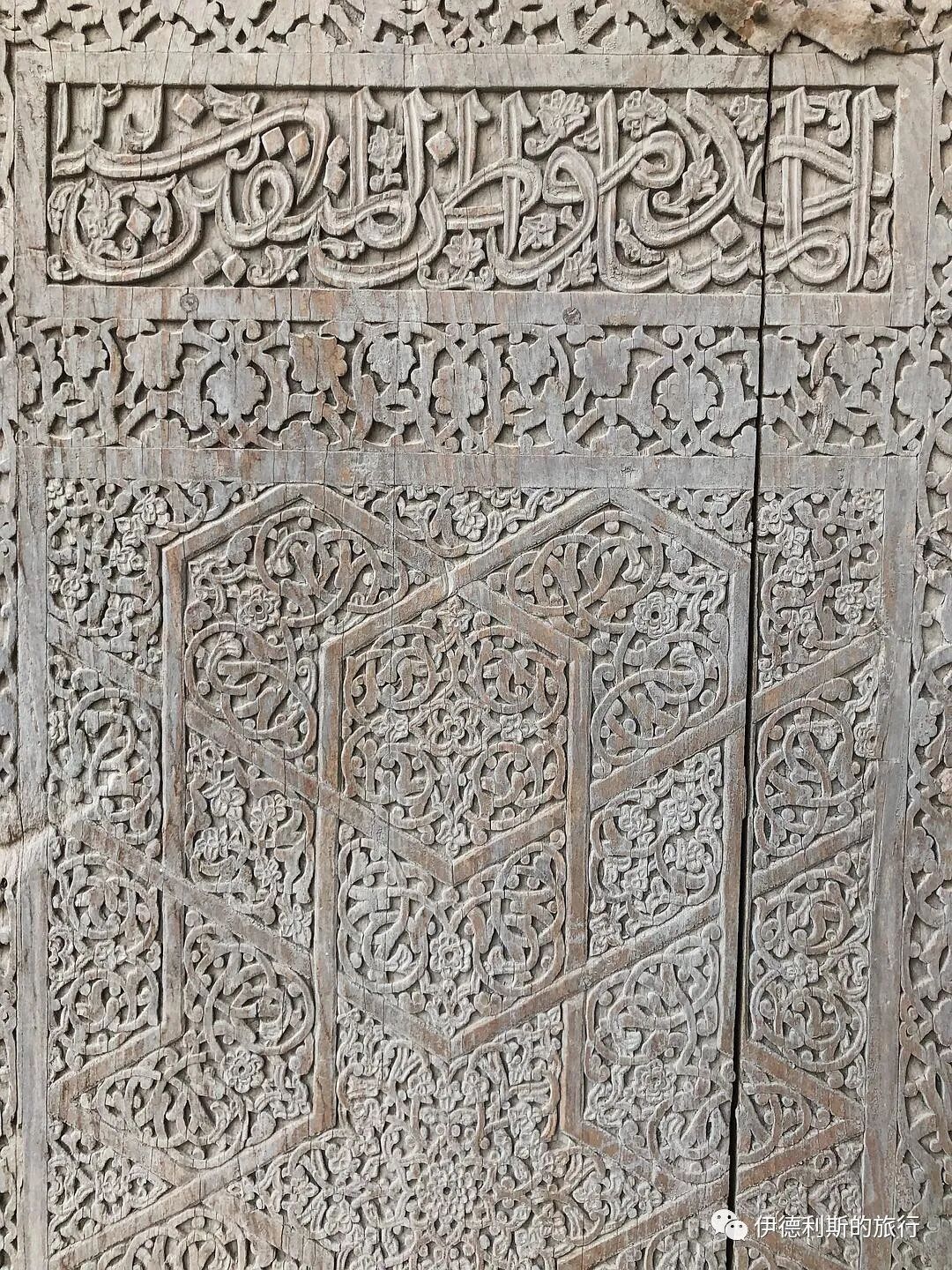
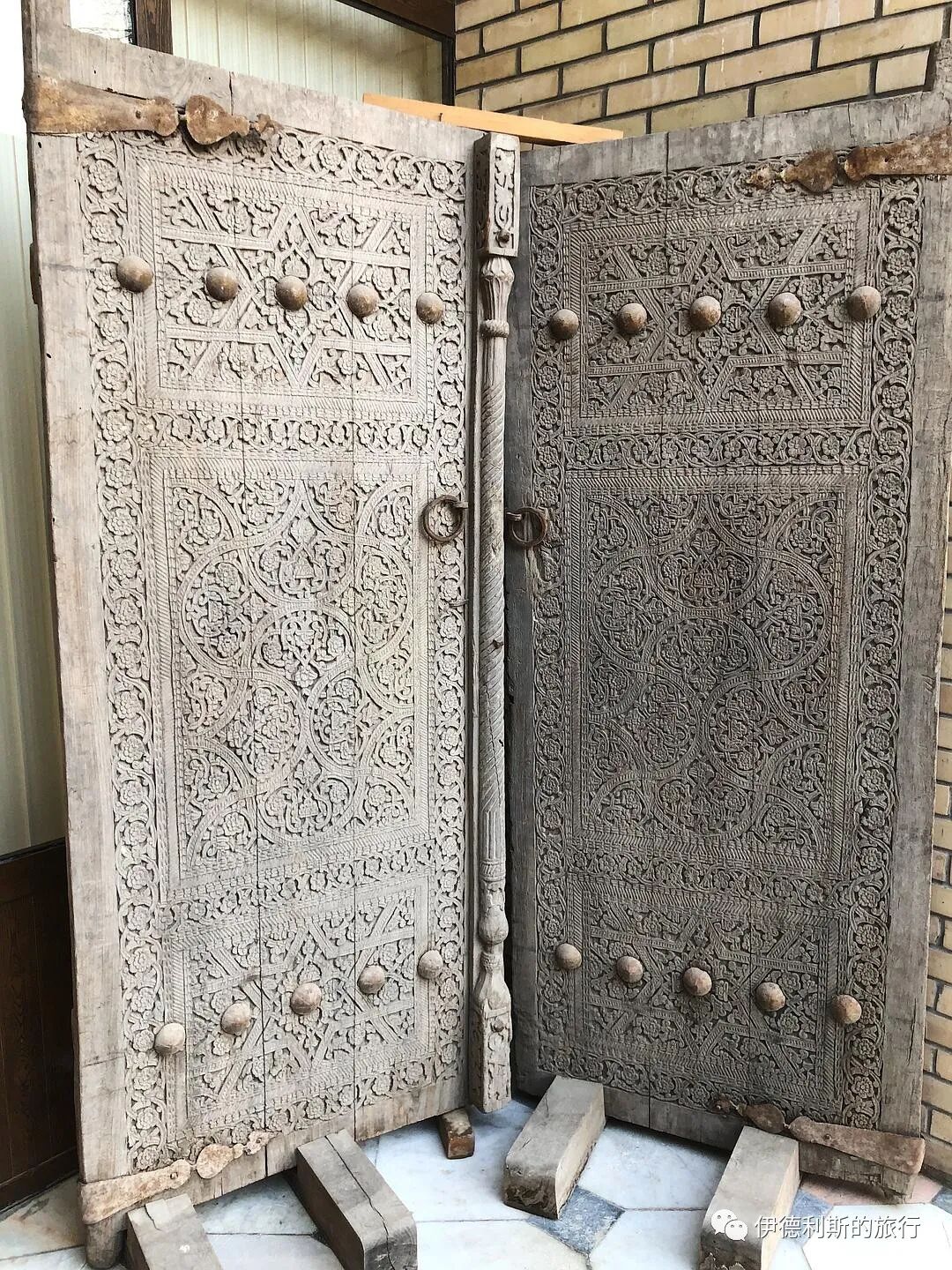
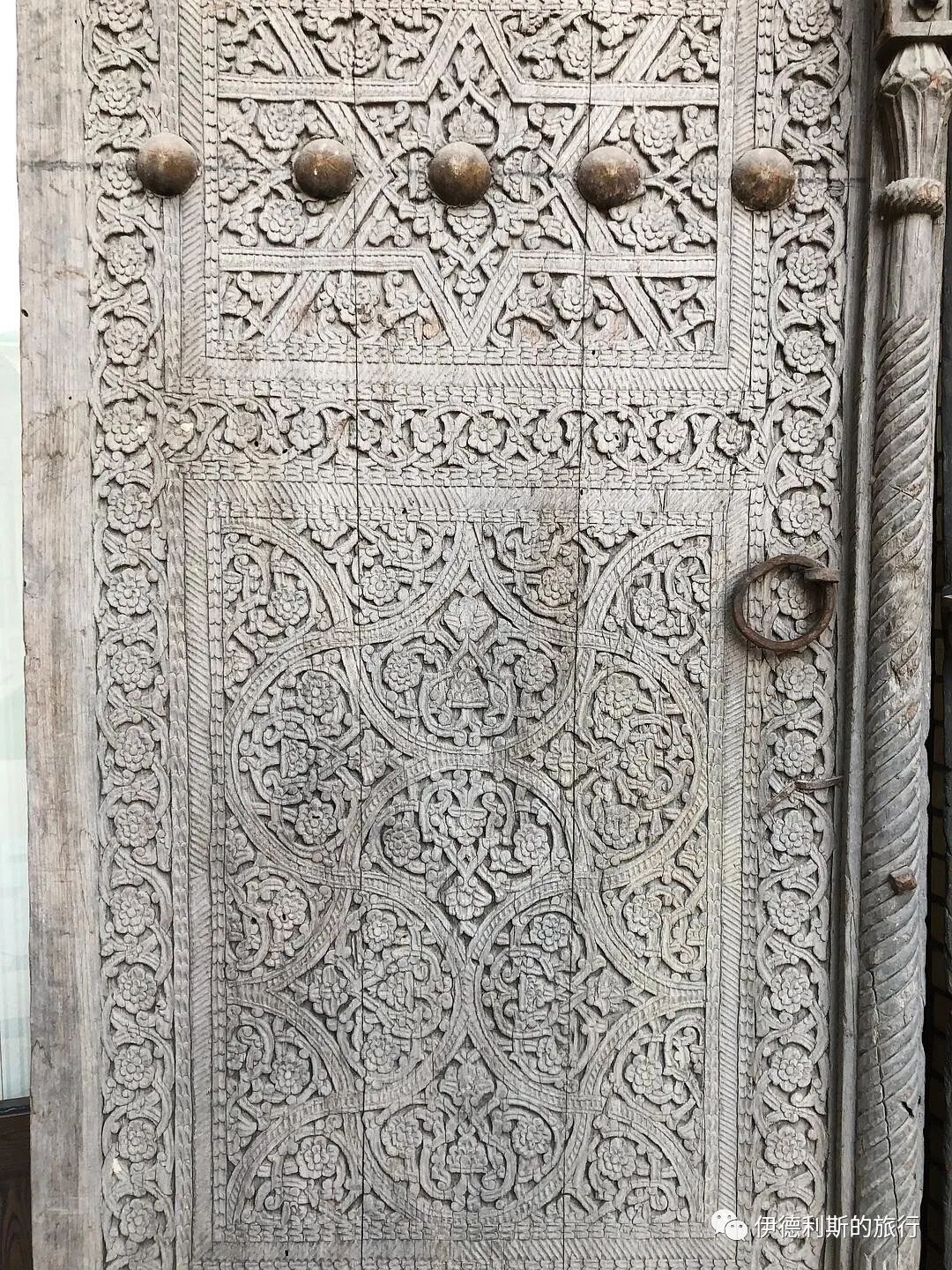
Wooden door.
A beautiful traditional Uzbek wooden door from the museum collection. view all
Summary: Uzbekistan Applied Arts Museum: Suzani Embroidery, Crafts and Central Asian Heritage is presented here as a firsthand travel account in clear English, beginning with this scene: The State Museum of Applied Arts of Uzbekistan is in Tashkent. It opened in 1937 and holds over 4,000 pieces of traditional crafts from across Uzbekistan, including wood carvings, ceramics, jewelry, and embroidery. The account keeps its focus on Uzbekistan Travel, Islamic Art, Central Asia while preserving the names, places, food, and historical details from the Chinese source.
The State Museum of Applied Arts of Uzbekistan is in Tashkent. It opened in 1937 and holds over 4,000 pieces of traditional crafts from across Uzbekistan, including wood carvings, ceramics, jewelry, and embroidery.
The museum building was once the home of a 19th-century Russian diplomat named Alexander Alexandrovich Polovtsev Jr. His secretary bought the house from a Tashkent merchant, and architect A. A. Burmeyster later renovated it.
This building is a classic example of late 19th-century Uzbek oriental architecture and decorative art. Folk artists worked together on the carvings and paintings, including Usta T. Arsankulov, A. Kazymdzhanov from Tashkent, Usta Shirin Muradov from Bukhara, Usta A. Palvanov from Khiva, and Usta Abdullah from Rishtan.
During World War I, the building held Austrian officer prisoners. After the October Revolution and until the mid-1930s, it served as an orphanage. In 1937, it became a training center for carving and embossing, as well as an embroidery workshop, eventually turning into a museum for handicrafts. In 1997, the museum was transferred to the Ministry of Culture of Uzbekistan and renamed the State Museum of Applied Arts.
Oil paintings
These are oil paintings by Uzbek craftspeople. The first two were painted by V. K. Razvadovsky in 1937.
Suzani embroidery
The word Suzani comes from the Persian word suzan, meaning needle. This type of embroidery is popular in the Transoxiana region of Central Asia. Girls in the Transoxiana region traditionally start learning to sew when they are very young. Before a wedding, the bride's female relatives gather to make a Suzani together. This gathering is called hashar, and they sing and dance while they work. At the wedding, the Suzani is first hung in the bride's home. When the wedding car is ready to leave, the Suzani is taken down, packed up, and brought to the new couple's home to be hung on the wall. After that, the Suzani is usually only hung up for important events and gatherings, and it is kept in a wooden chest at other times.
Suzani is usually made of cotton. Before sewing, the cotton fabric is soaked in tea or onion water to turn the background a light brown color, then colored with various natural dyes. Light yellow comes from saffron, bright yellow from onion skins, brown from nut shells, light purple from black mulberries, deep purple from cherries, gray-blue from raspberries, and orange from henna.
The artists who design the Suzani patterns are called kalamkash. They draw lines with black ink and use bowls and plates to trace circles. Once the pattern is designed, several women embroider it together.
Suzani art reached its peak during the 16th to 19th centuries under the Bukhara Khanate and the Kokand Khanate. By the 19th century, there were six major production centers: Nurota, Bukhara, Samarkand, Shahrisabz, Tashkent, and Fergana.
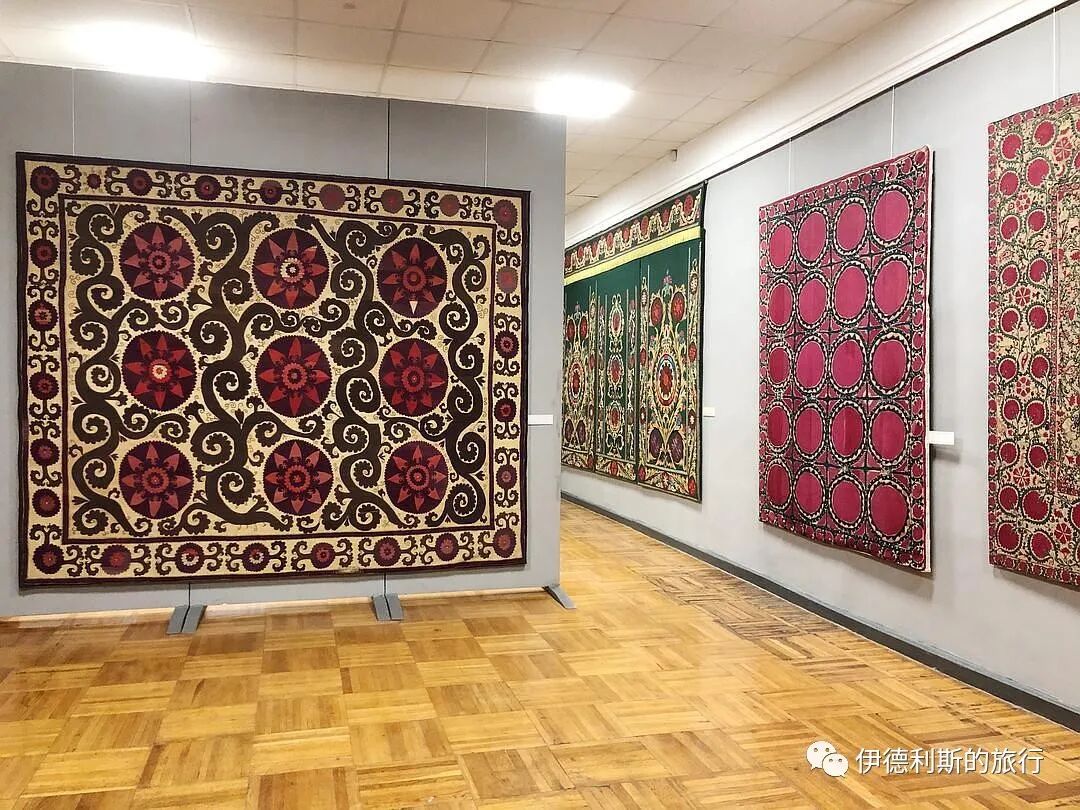
A 19th-century Suzani embroidery from Bukhara. Bukhara Suzani is the most exquisite of all, known for its beautiful colors and high-quality stitching.
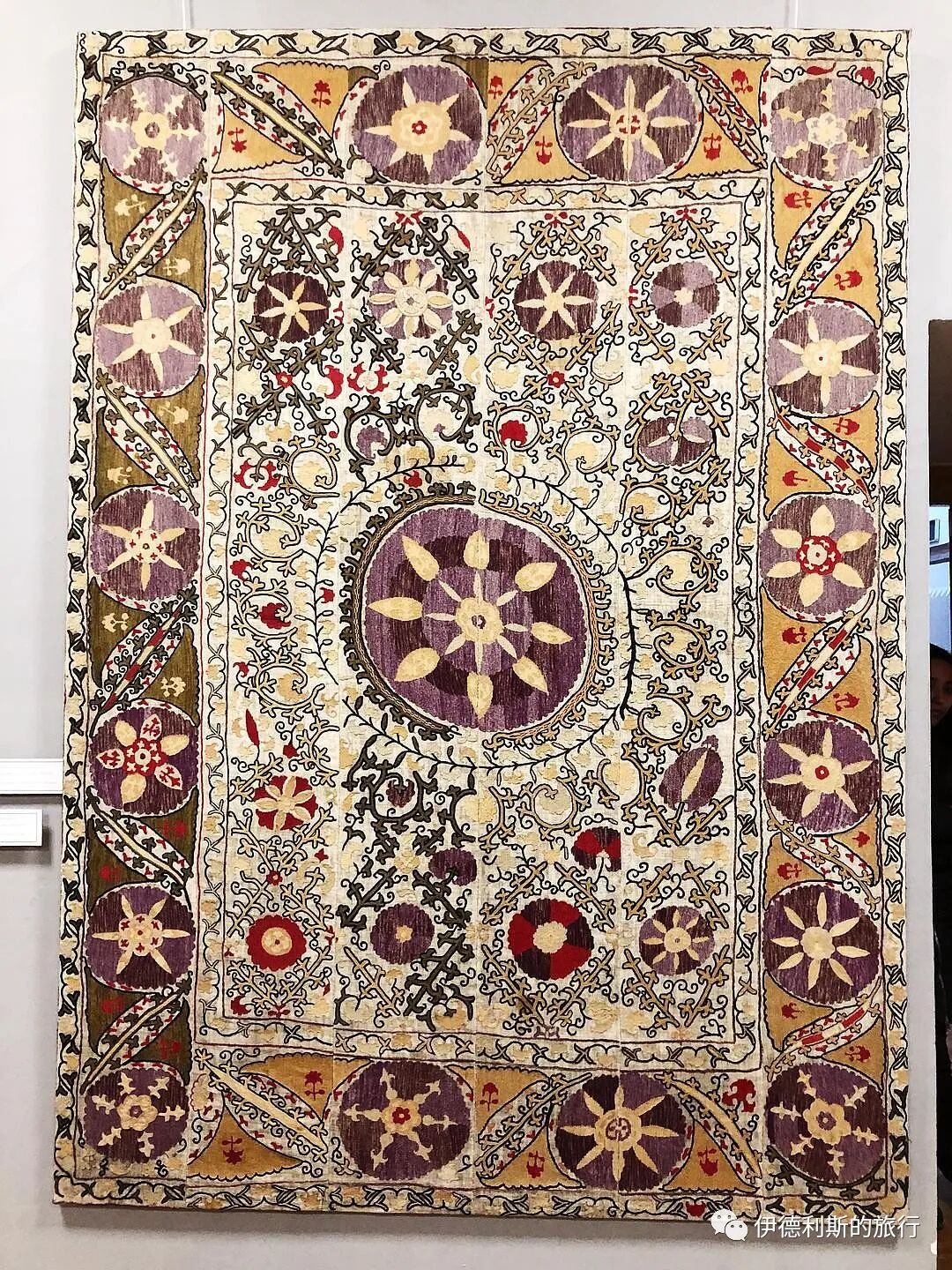
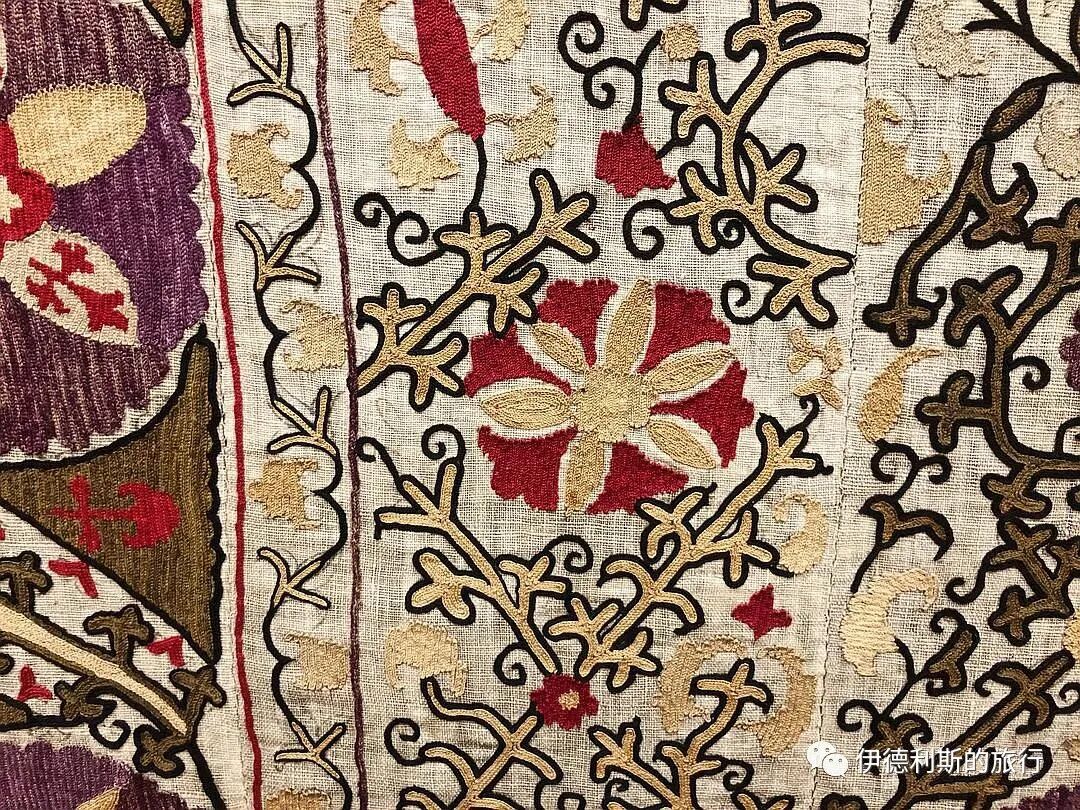
A 19th-century Suzani embroidery from Nurota. Nurota is an ancient Central Asian city built by Alexander the Great in the 4th century BC. In the 19th century, Nurata belonged to the Khanate of Bukhara. Its embroidery (suzani) features clusters of flowers, birds, animals, and highly stylized figures on a white background.
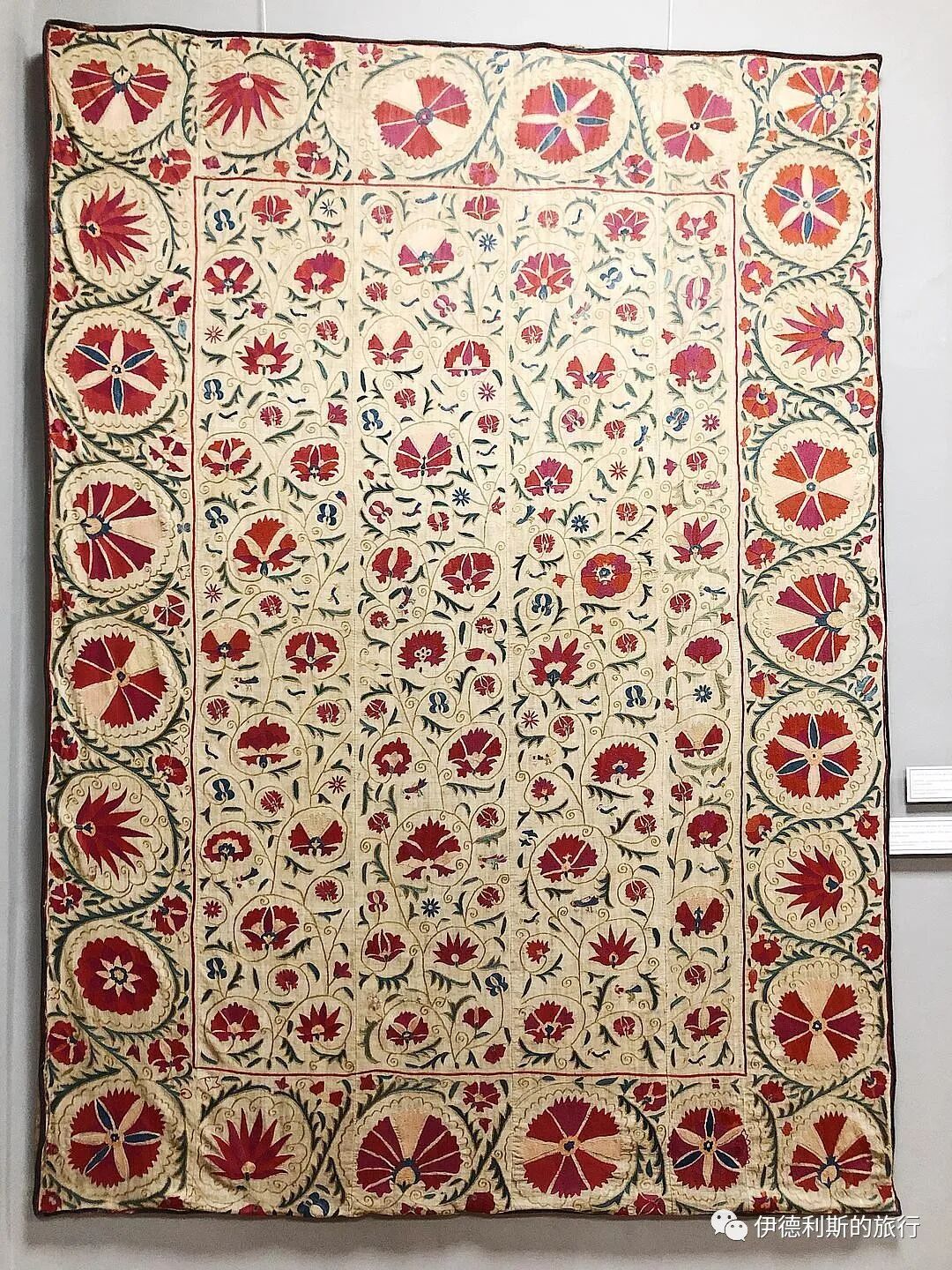
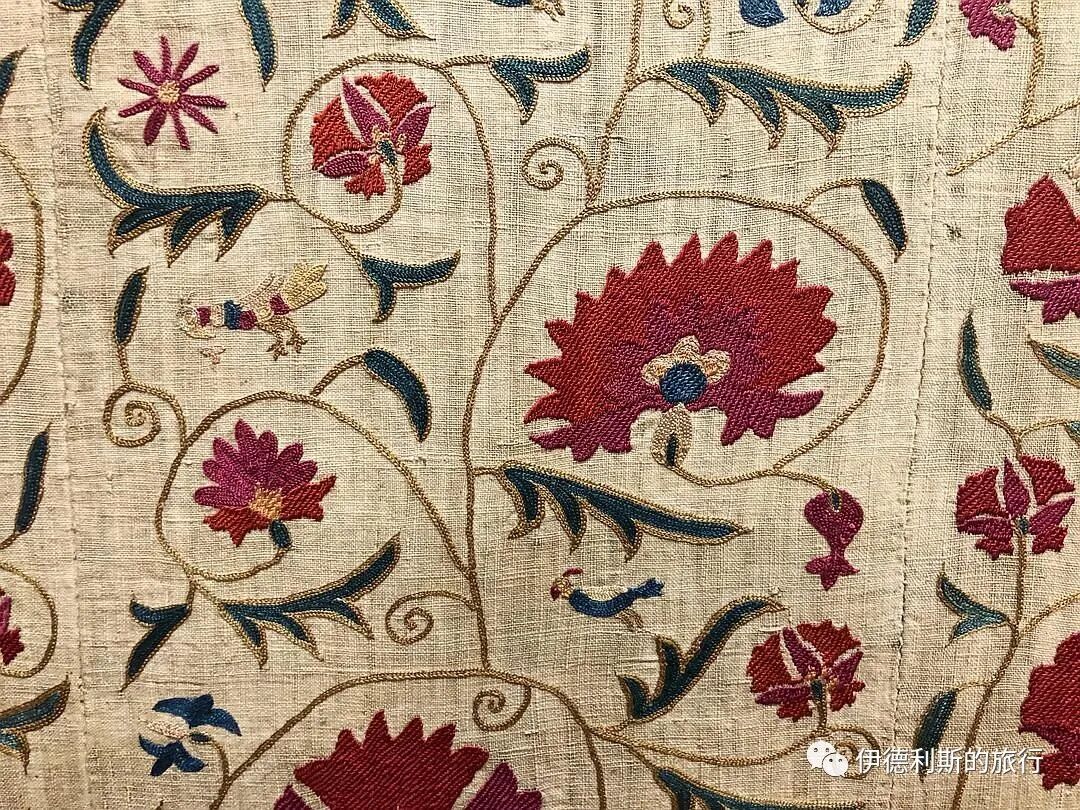
An Andijan suzani embroidery from the 1950s. Andijan is in the southeast of the Fergana Valley. The Fergana Valley is very fertile and is an important cotton-producing region. This area is skilled at producing large decorative suzani. The embroidery is very fine and usually features circular rosettes.
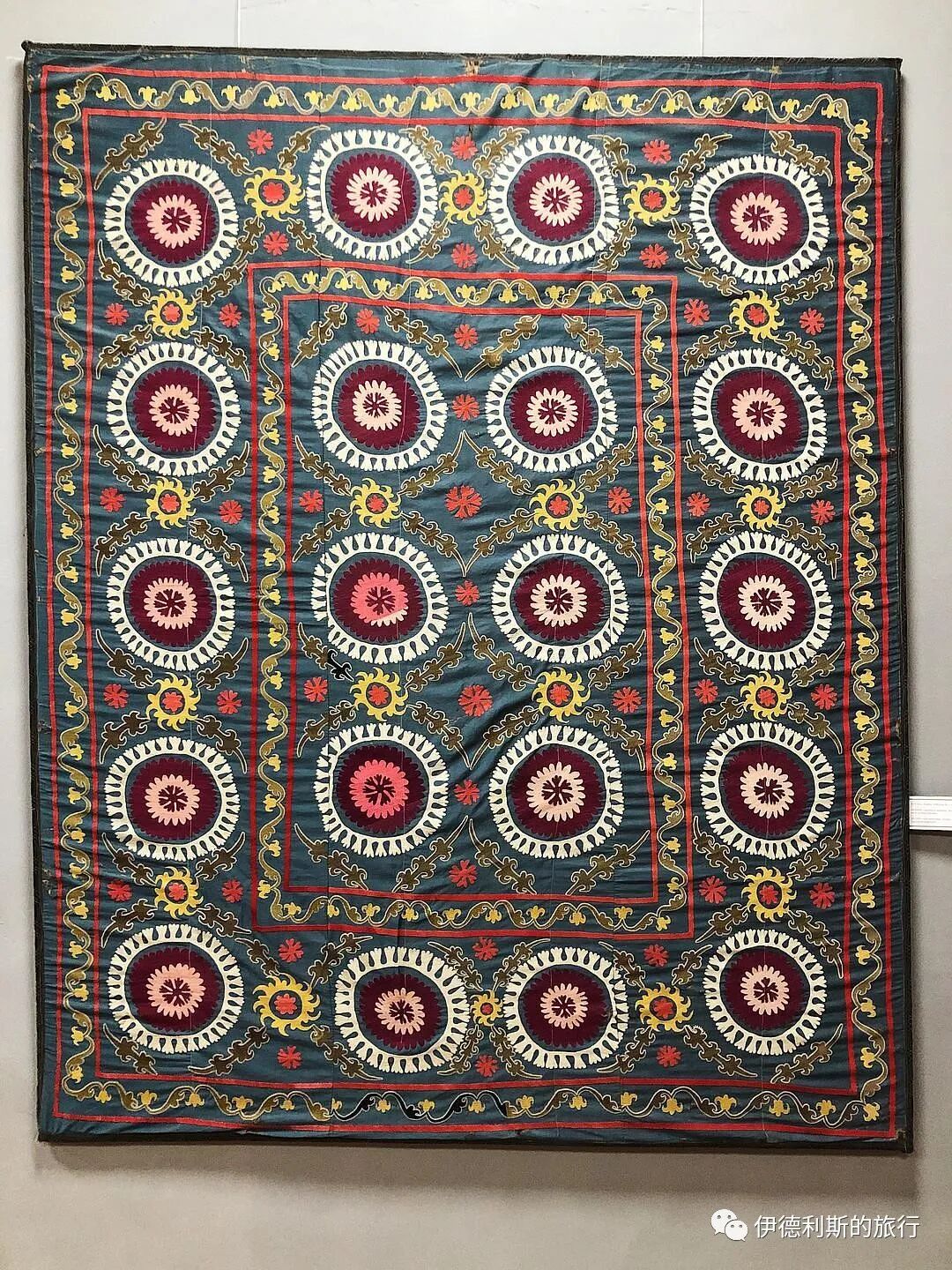
A Gul'kurpa-style suzani embroidery from the Piskent region of Tashkent Province in the 19th century. This type of embroidery uses many floral patterns and is a specialty of the Tashkent region.
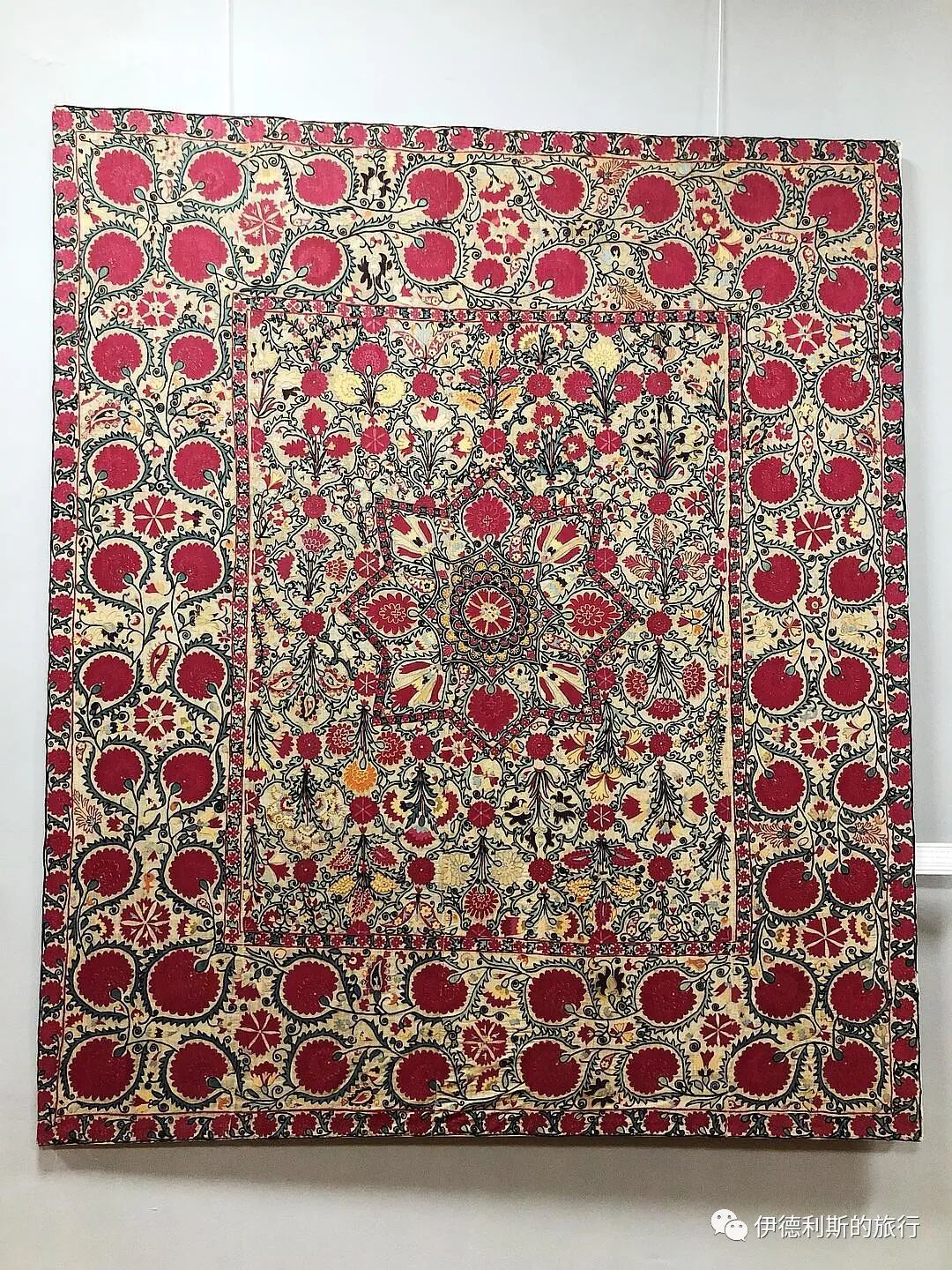
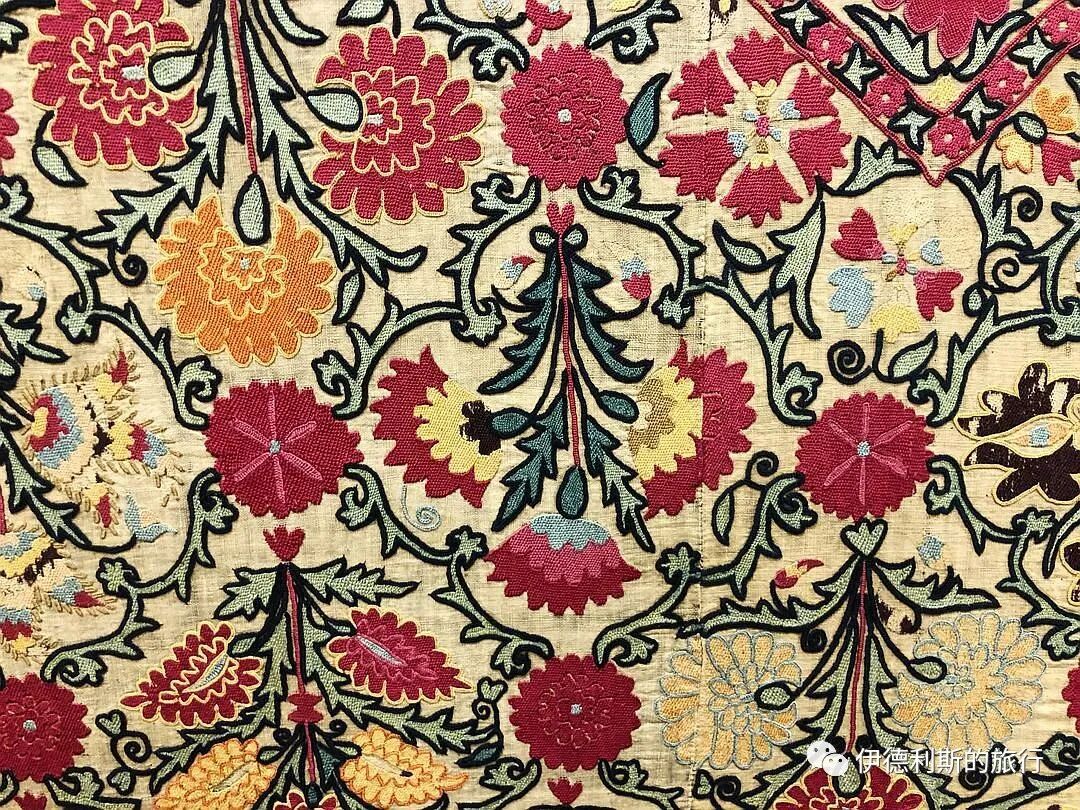
A 19th-century Tashkent suzani embroidery. This type of suzani is called 'oy-palak' (moon heaven). Many Tashkent suzani have themes of starry skies, the sun, and the moon.
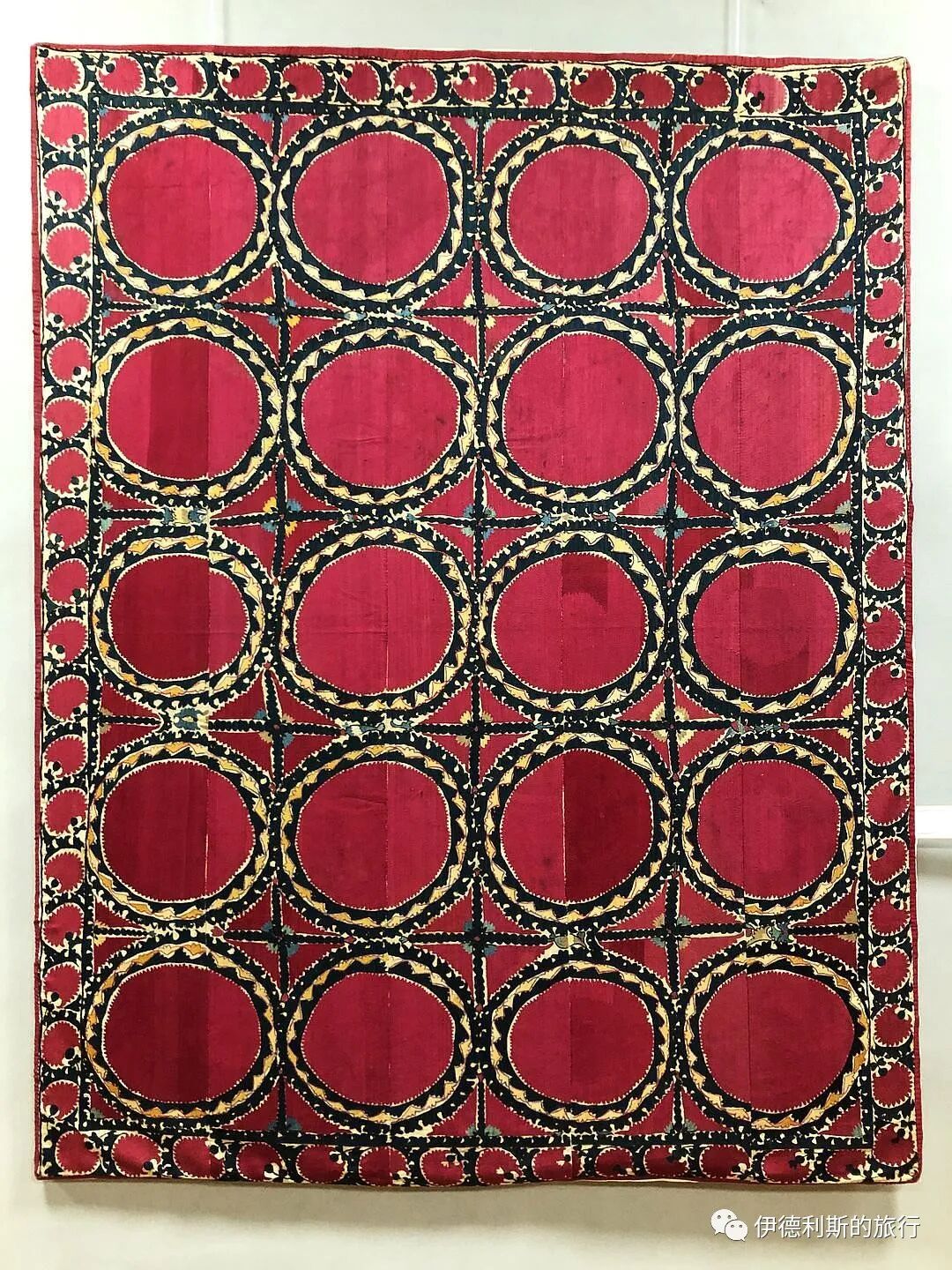
A late 19th-century Shahrisabz suzani embroidery. Shahrisabz is the hometown of Tamerlane the Great. In the 19th century, it was a weaving center for the Khanate of Bukhara, where many artisans made suzani specifically for the royal court.
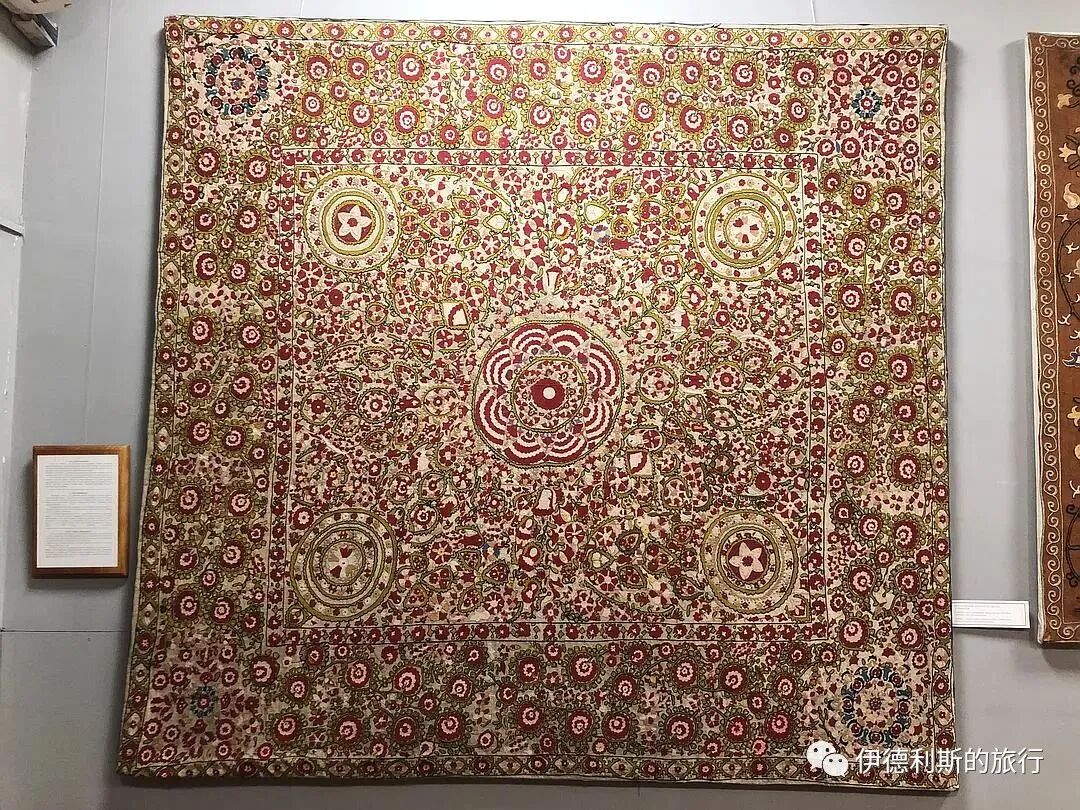
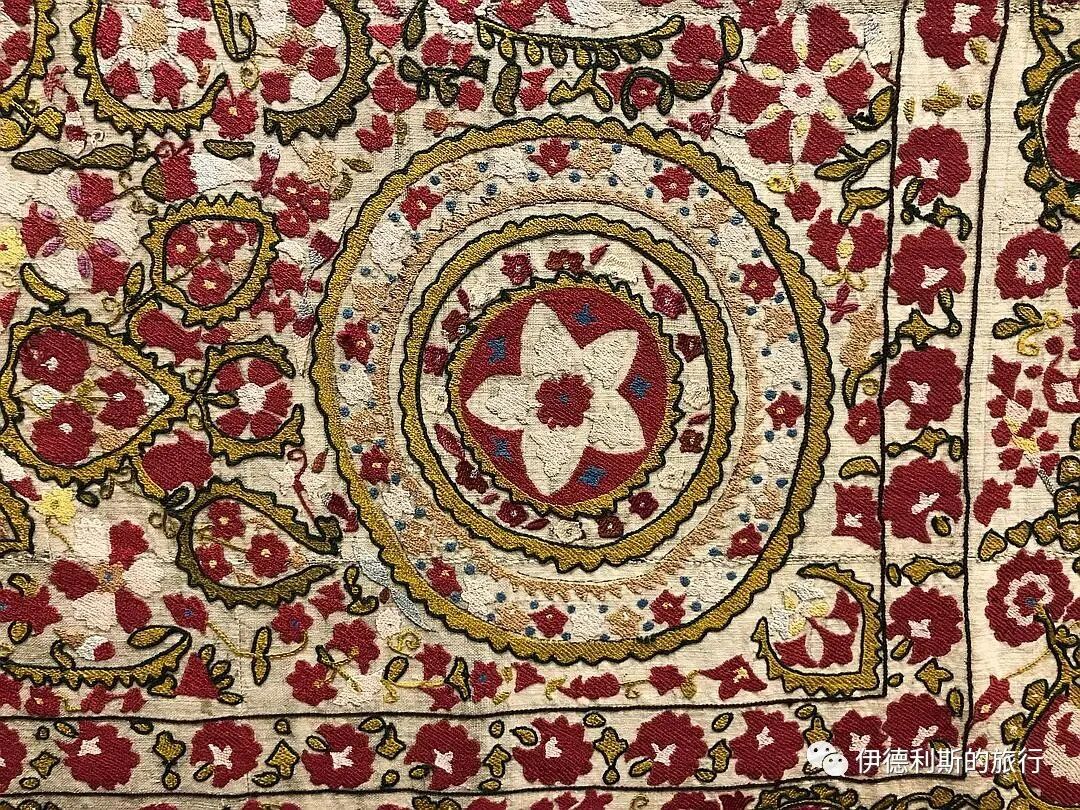
A 20th-century suzani embroidery from the Surxondaryo region in the far south of Uzbekistan, near Afghanistan.
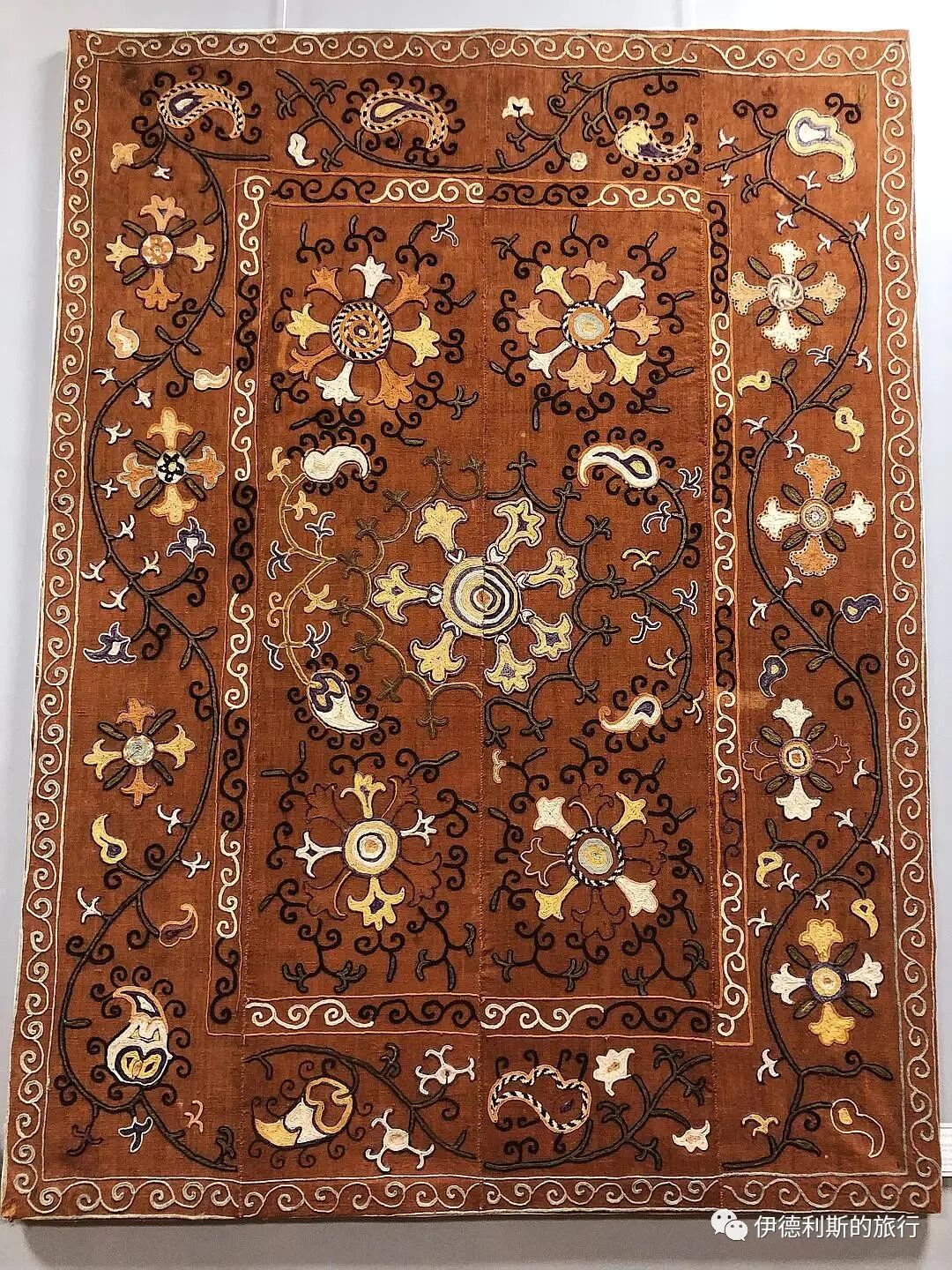
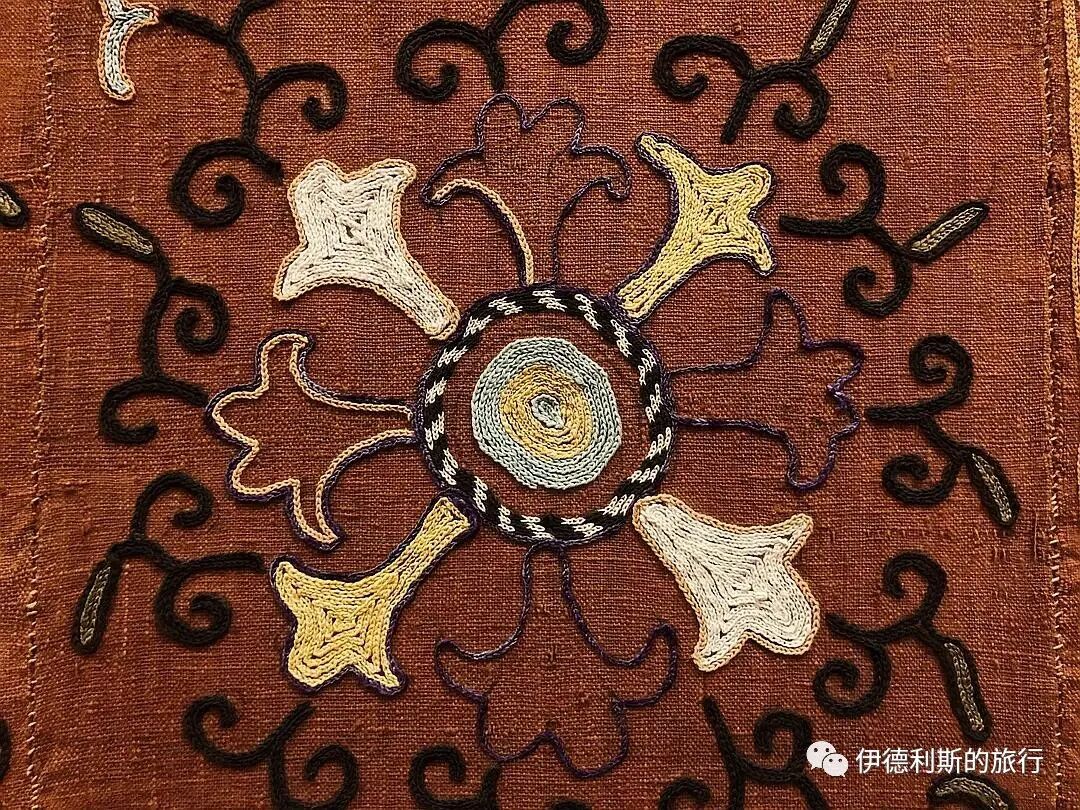
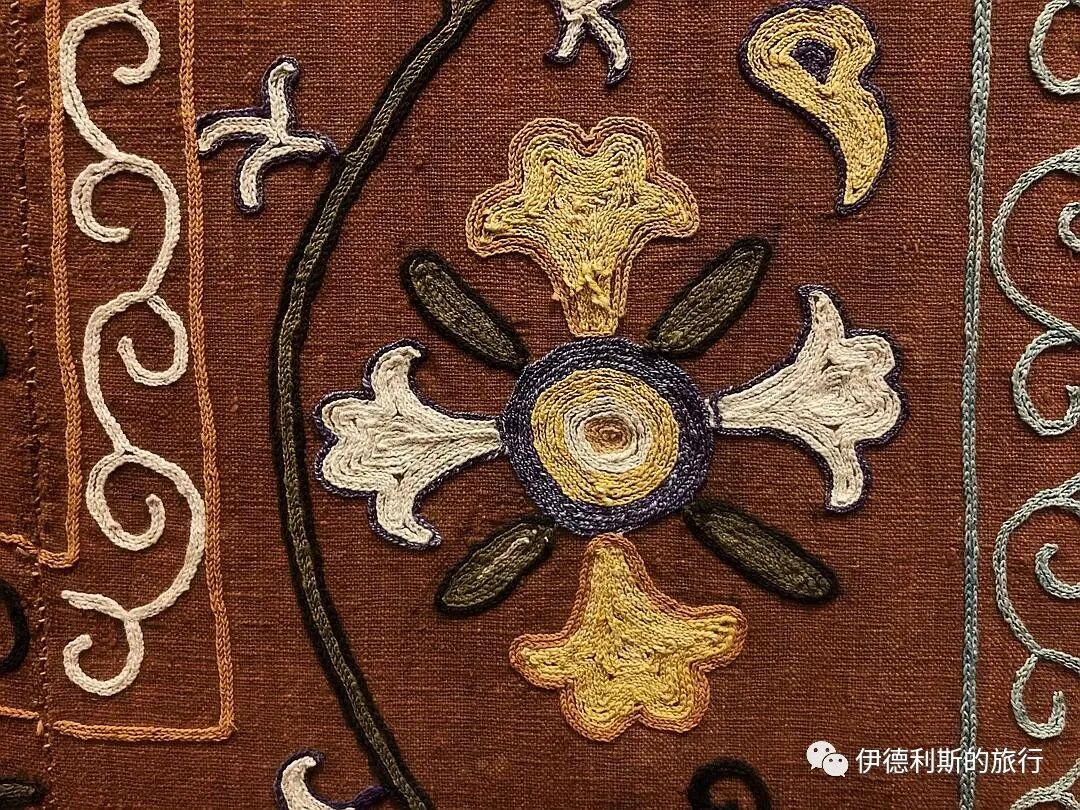
A 20th-century Samarkand suzani embroidery. Samarkand has historically been a center for the weaving industry in Central Asia. The suzani here have larger and simpler patterns than those in Bukhara, often featuring deep red rose garlands wrapped in leaves.
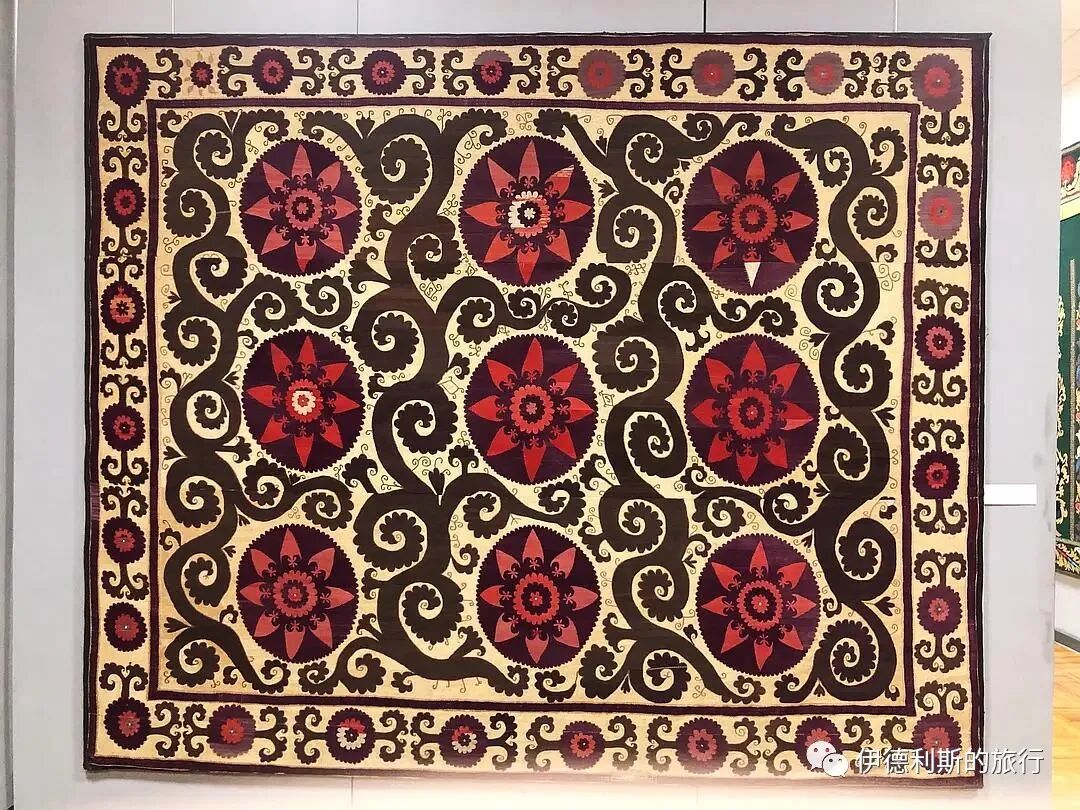
Skullcap (doppa).
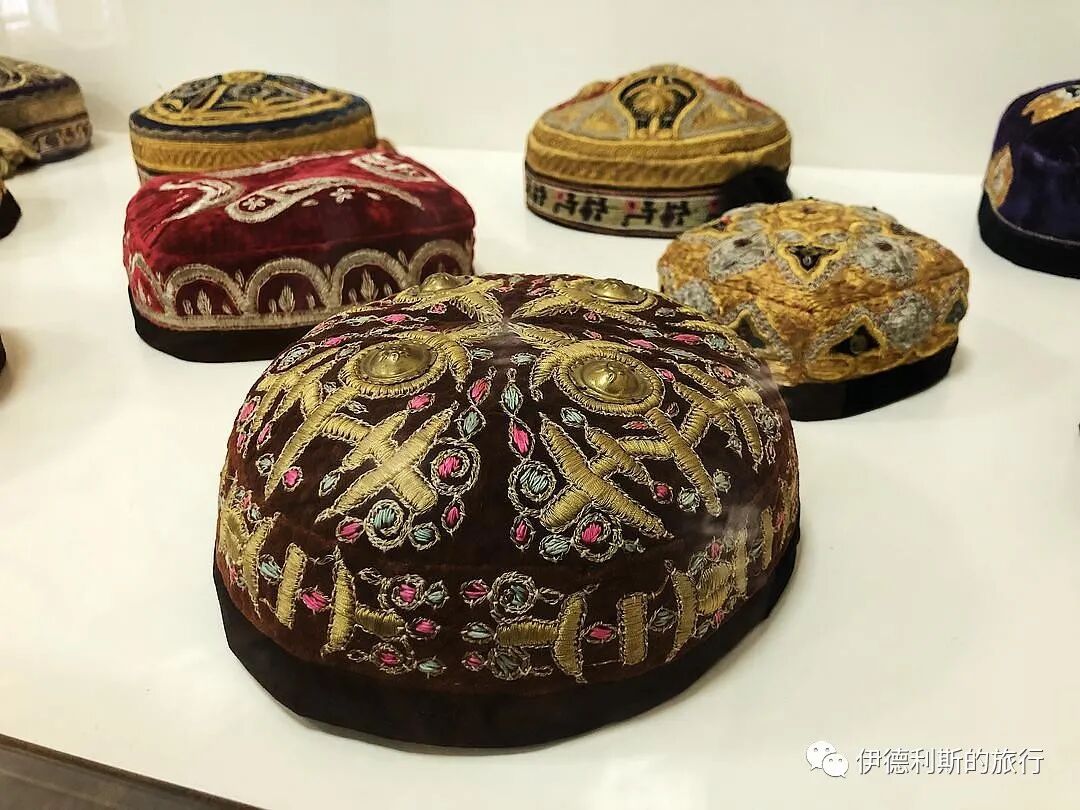
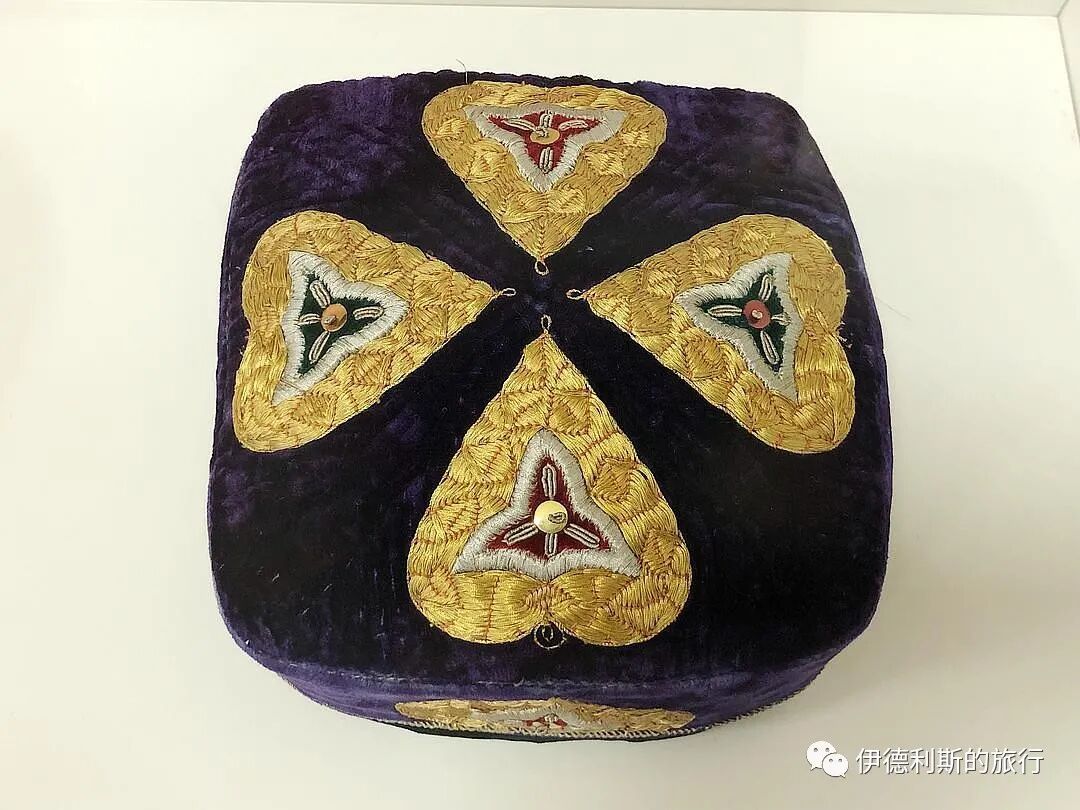
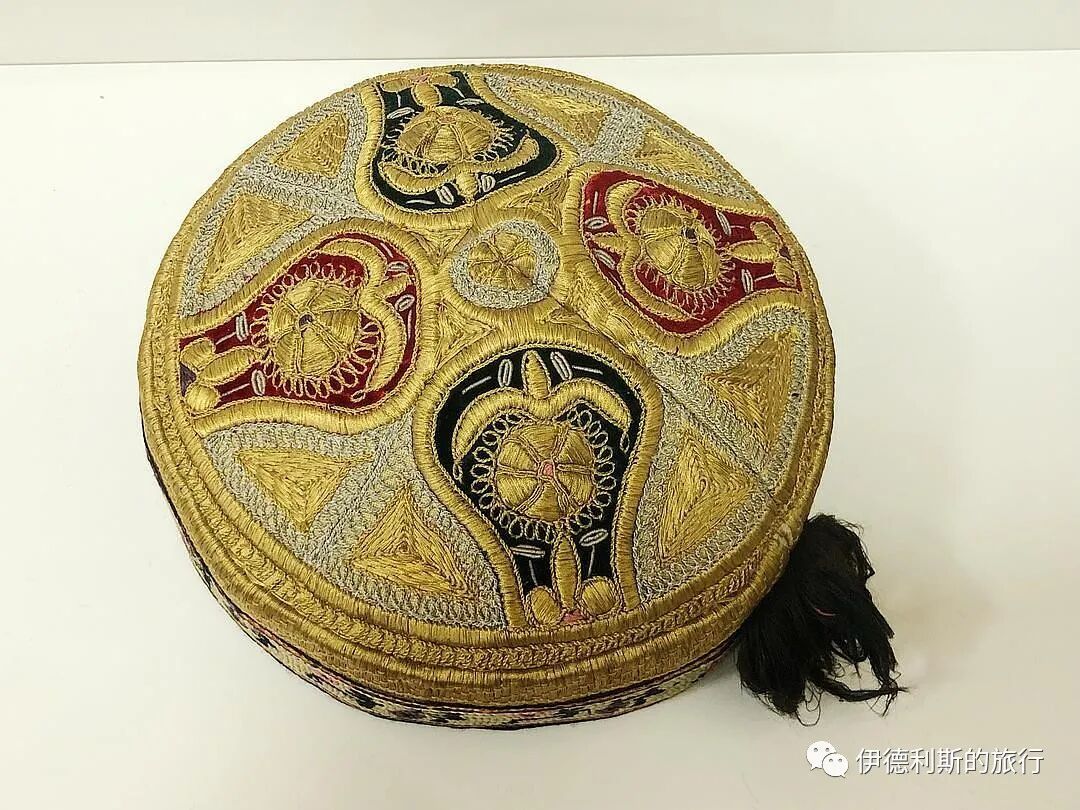
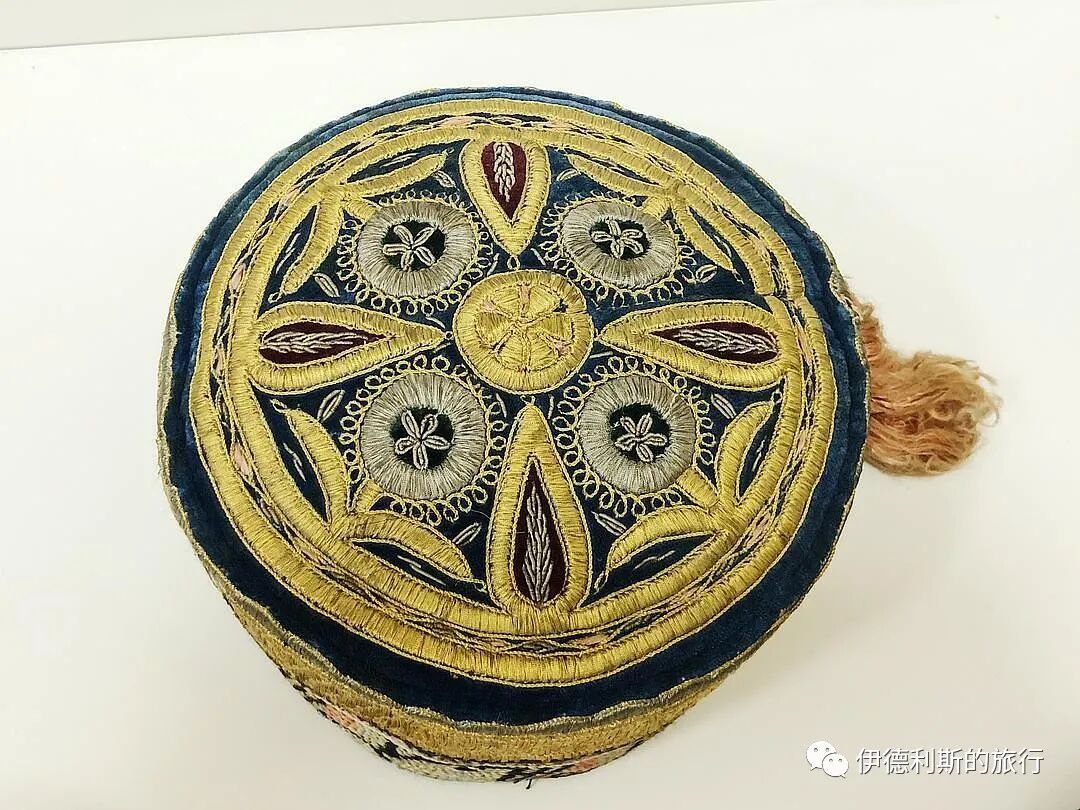
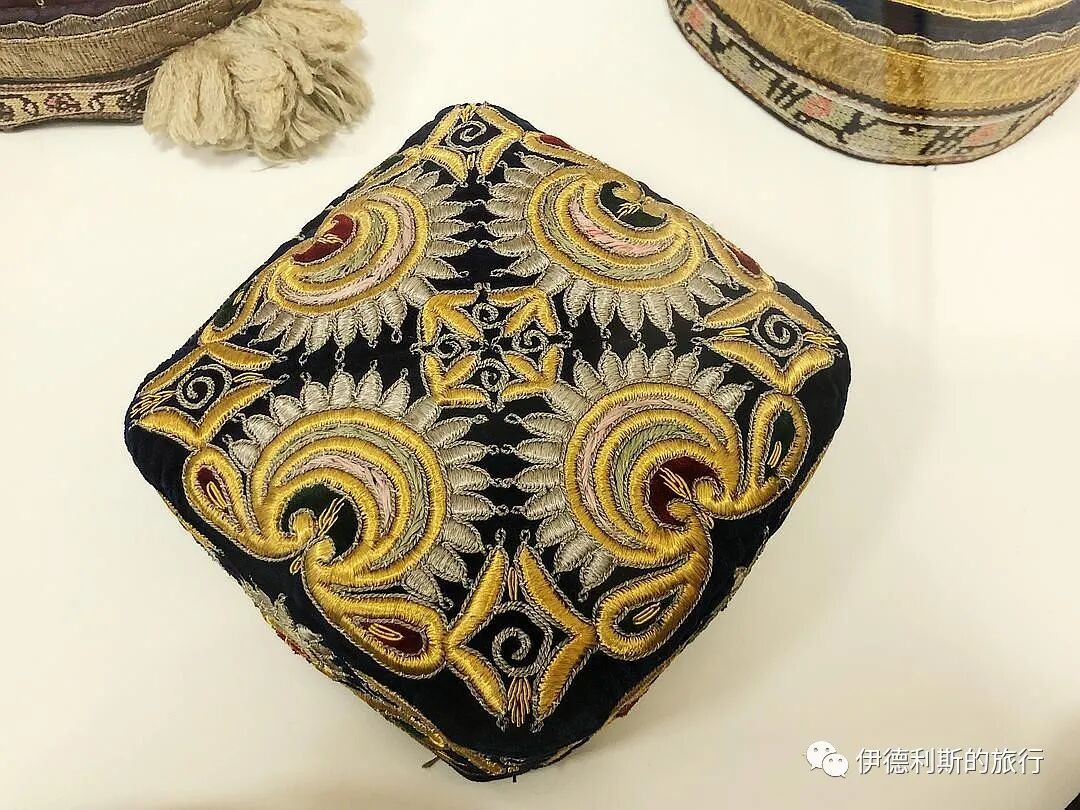
Various 19th to 20th-century Uzbek skullcaps (doppa) from Samarkand, Shahrisabz, and Andijan. The skullcaps we see on the streets of Uzbekistan today are much simpler than these.
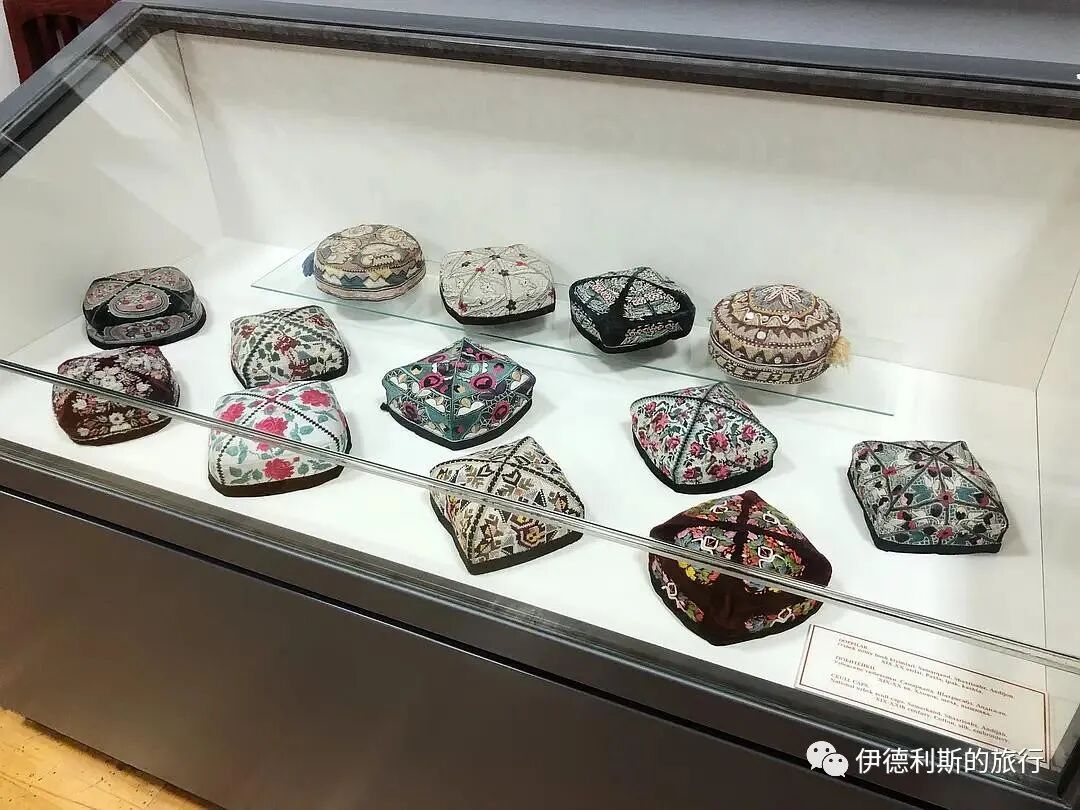
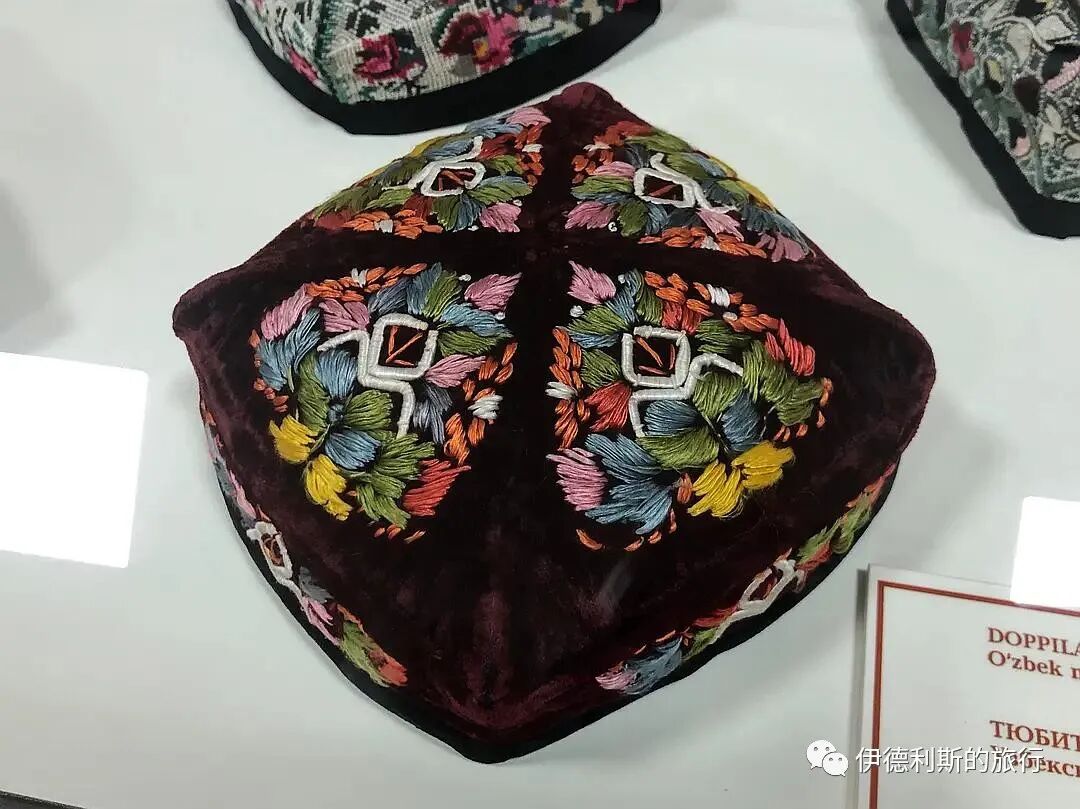
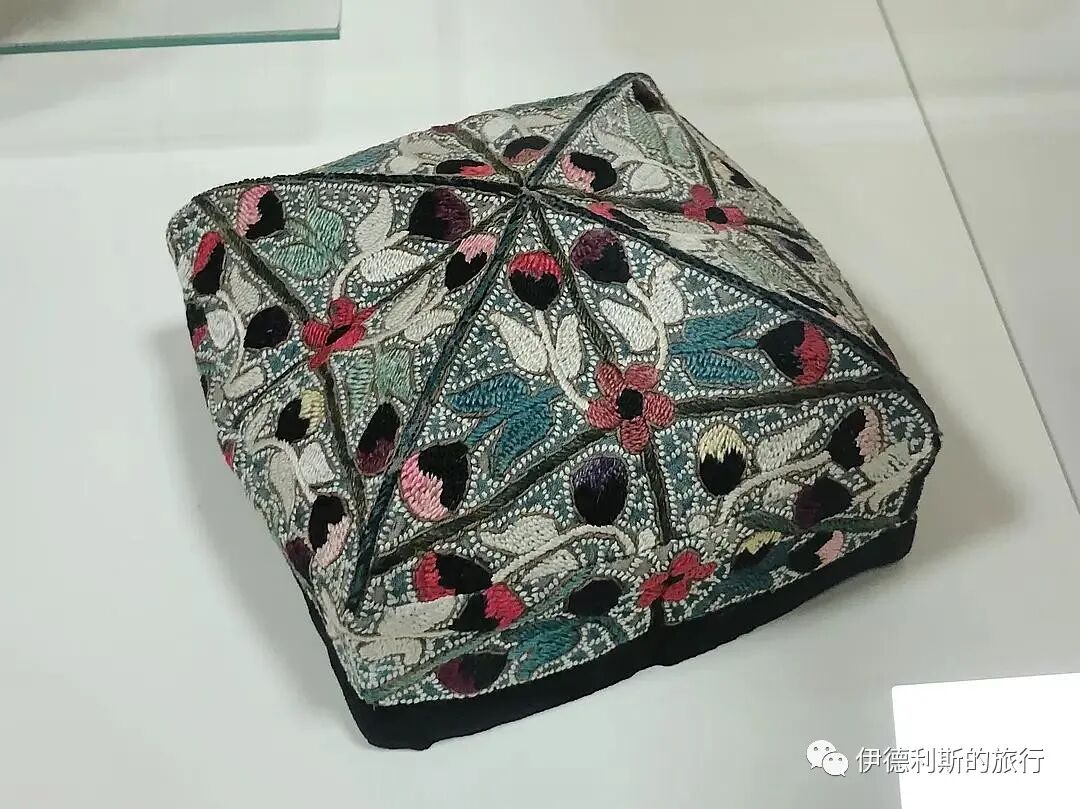
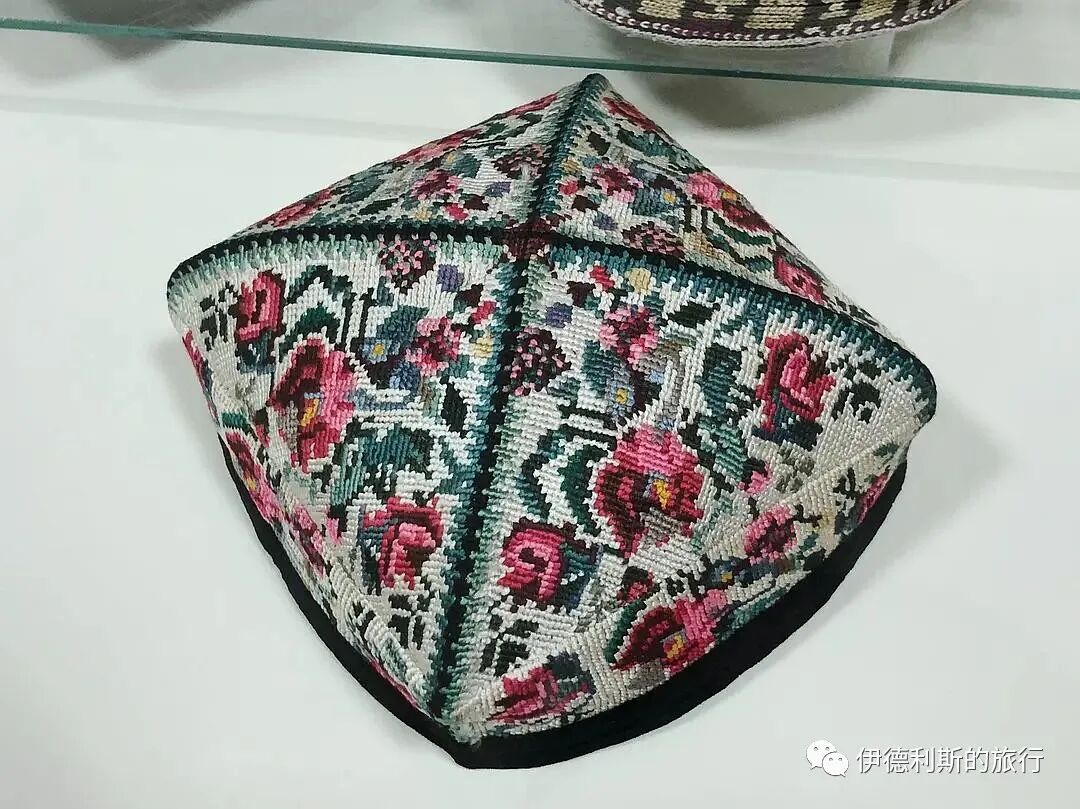
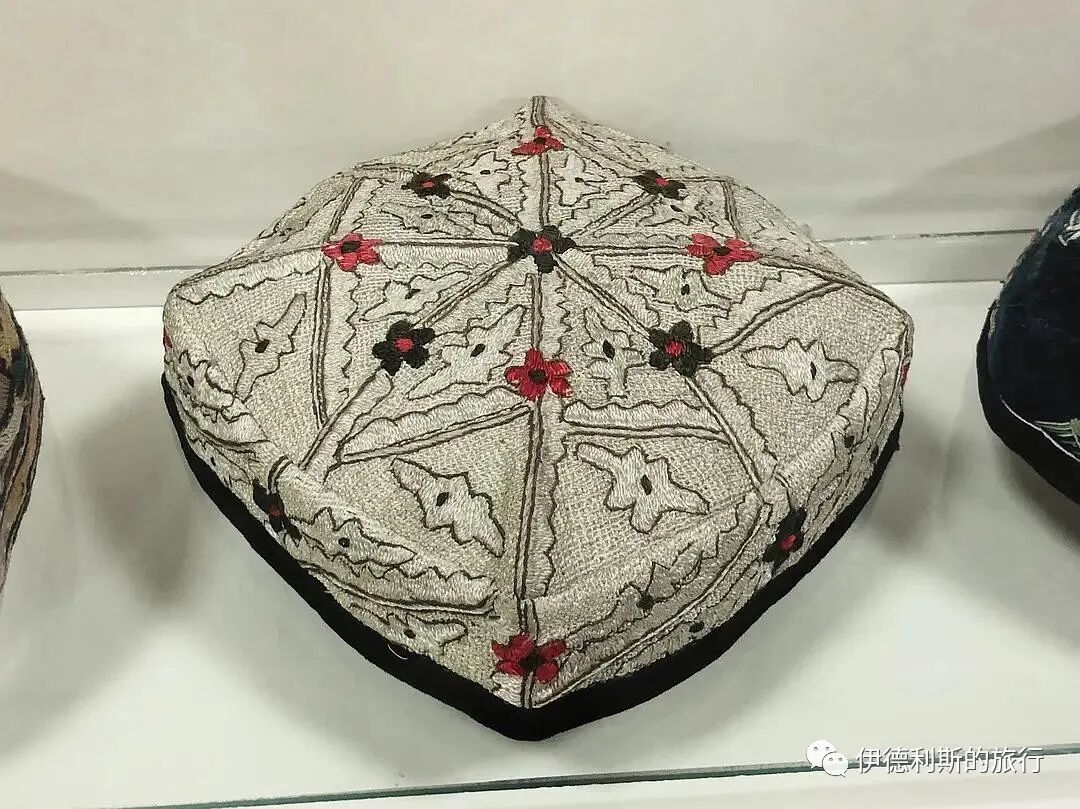
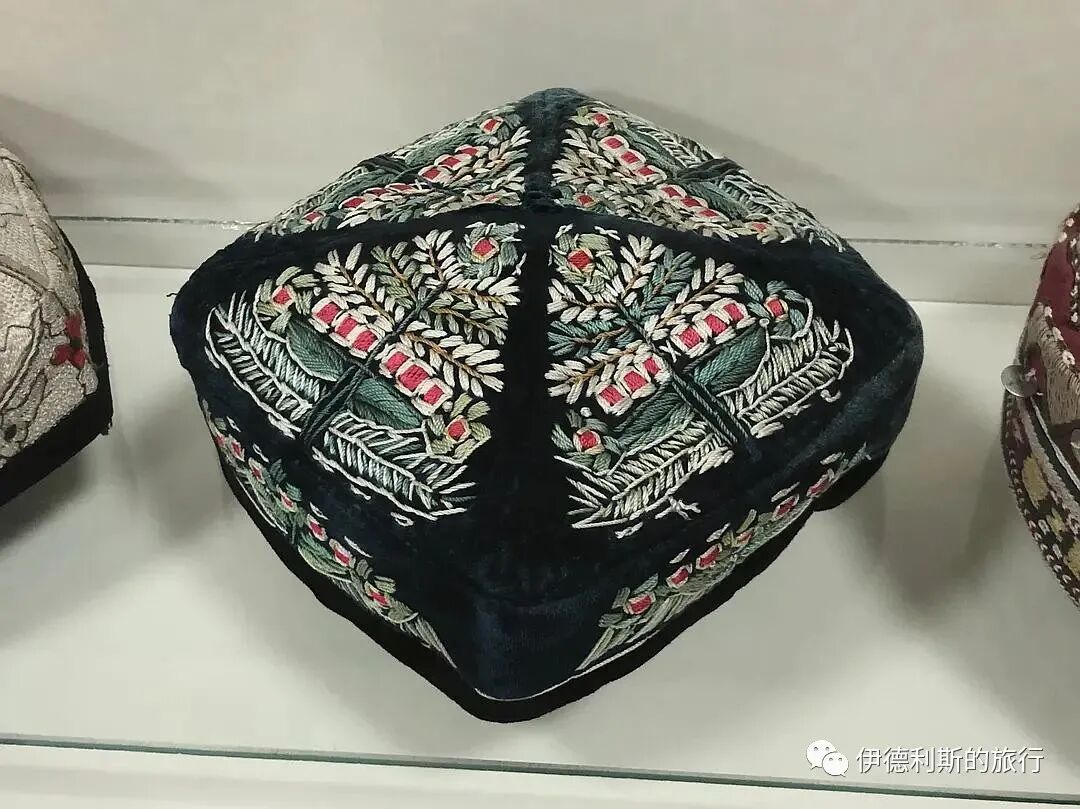
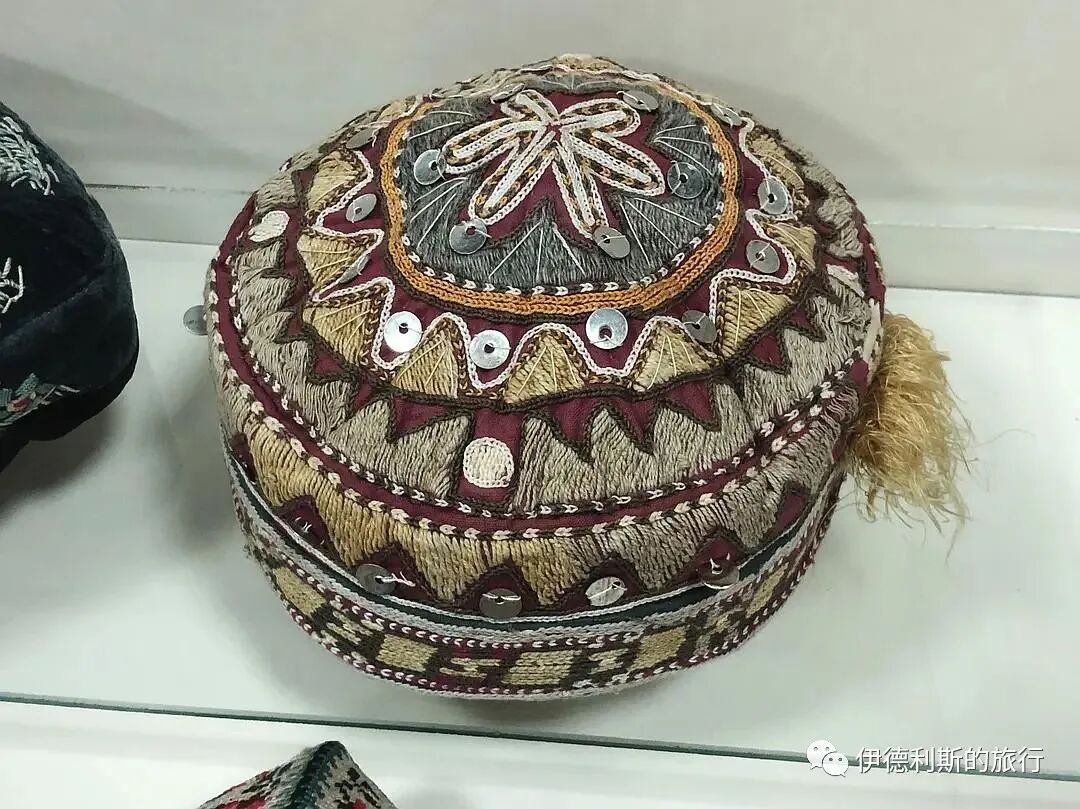
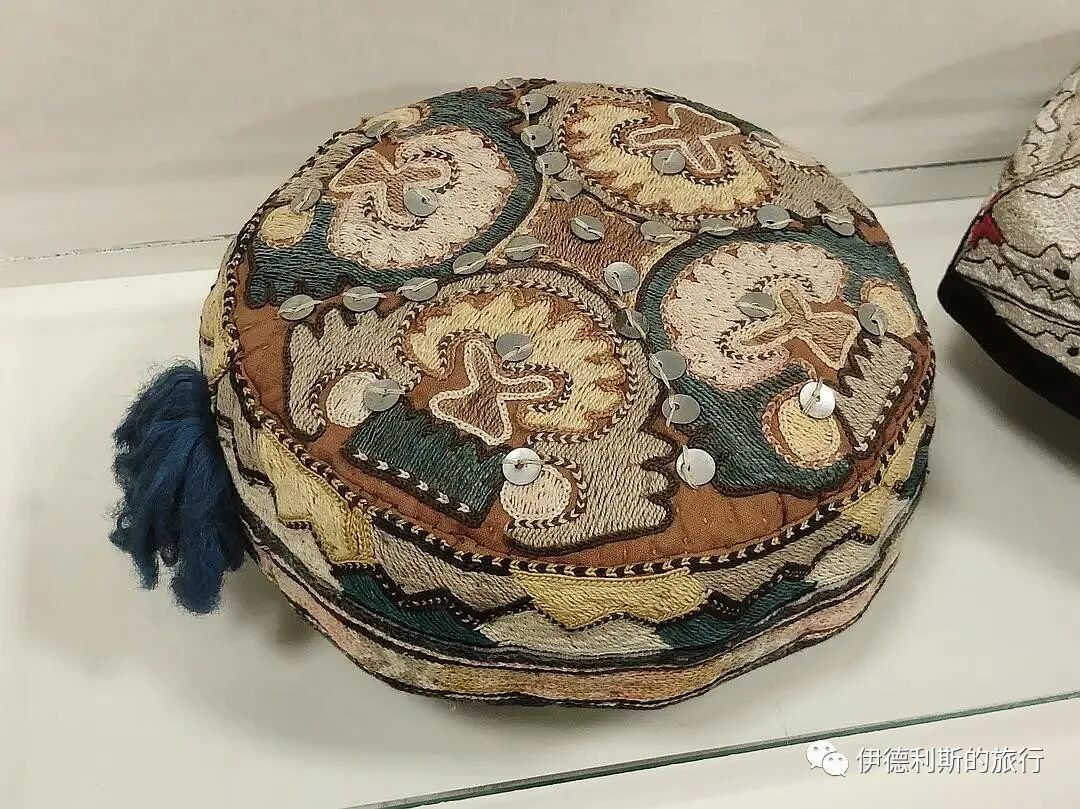
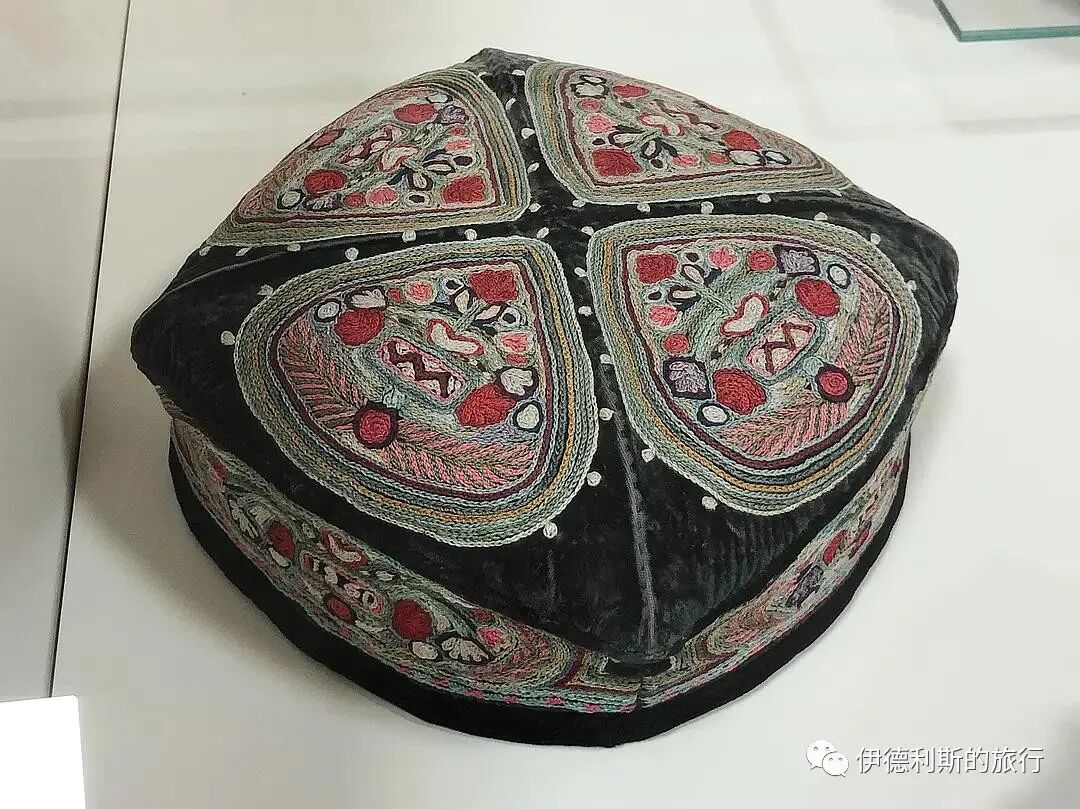
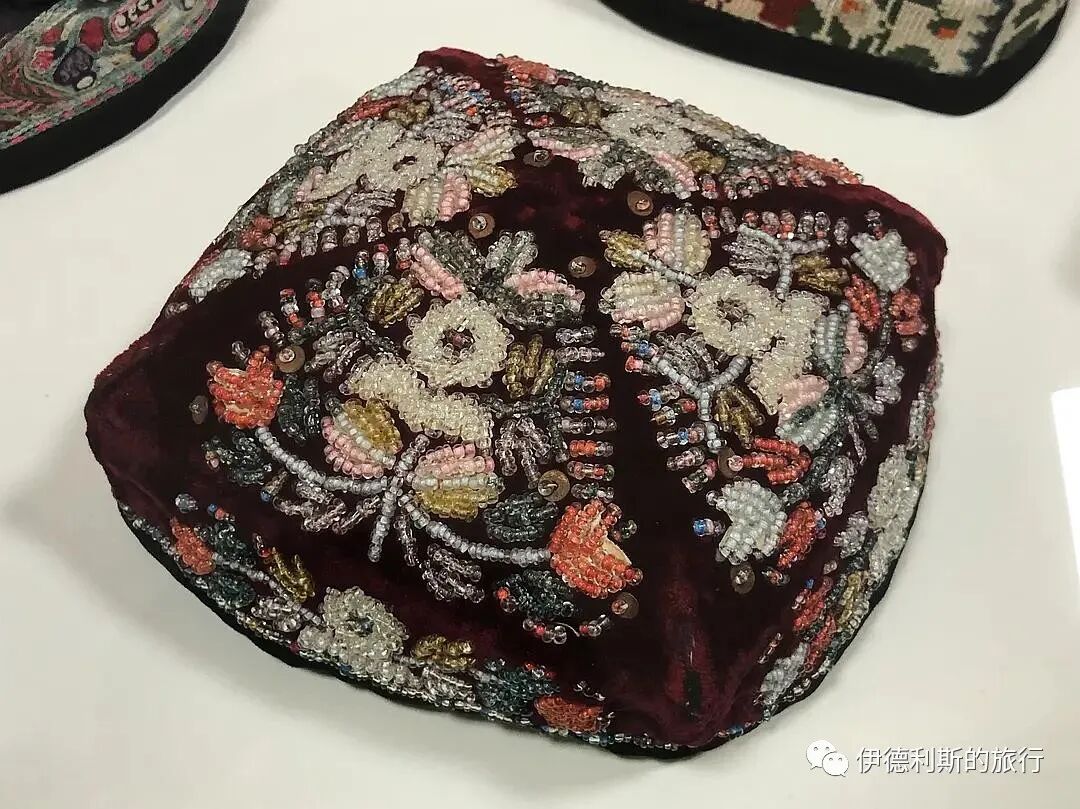
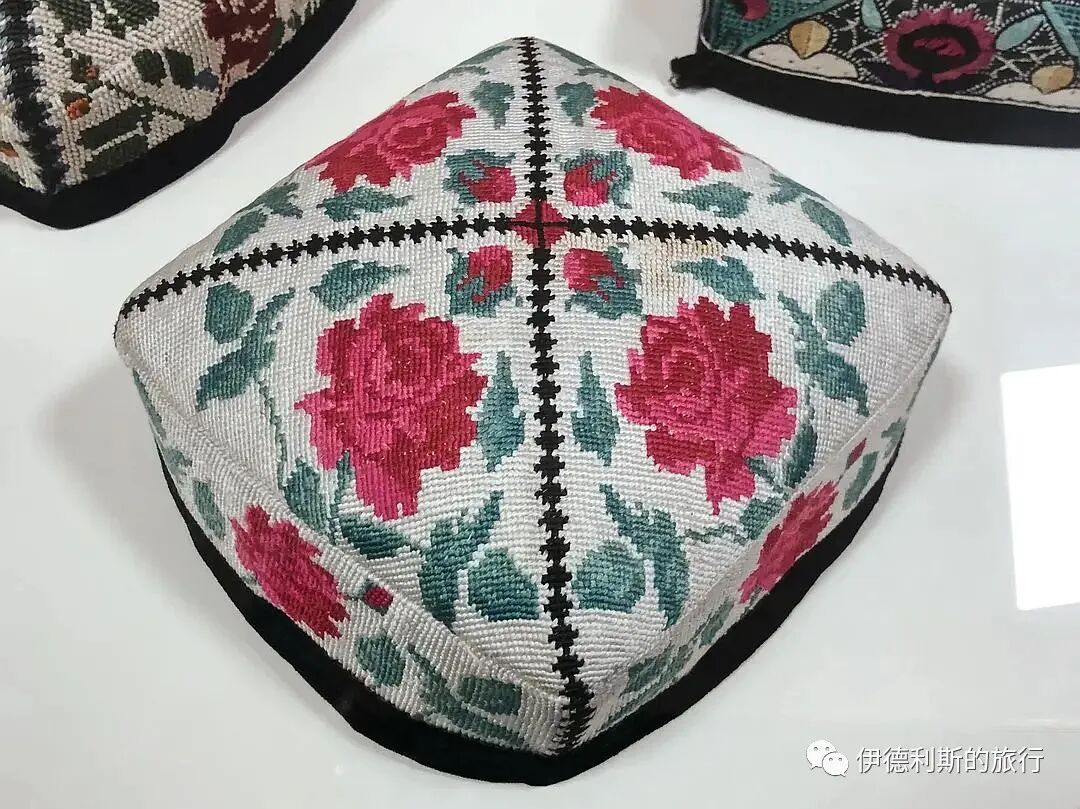
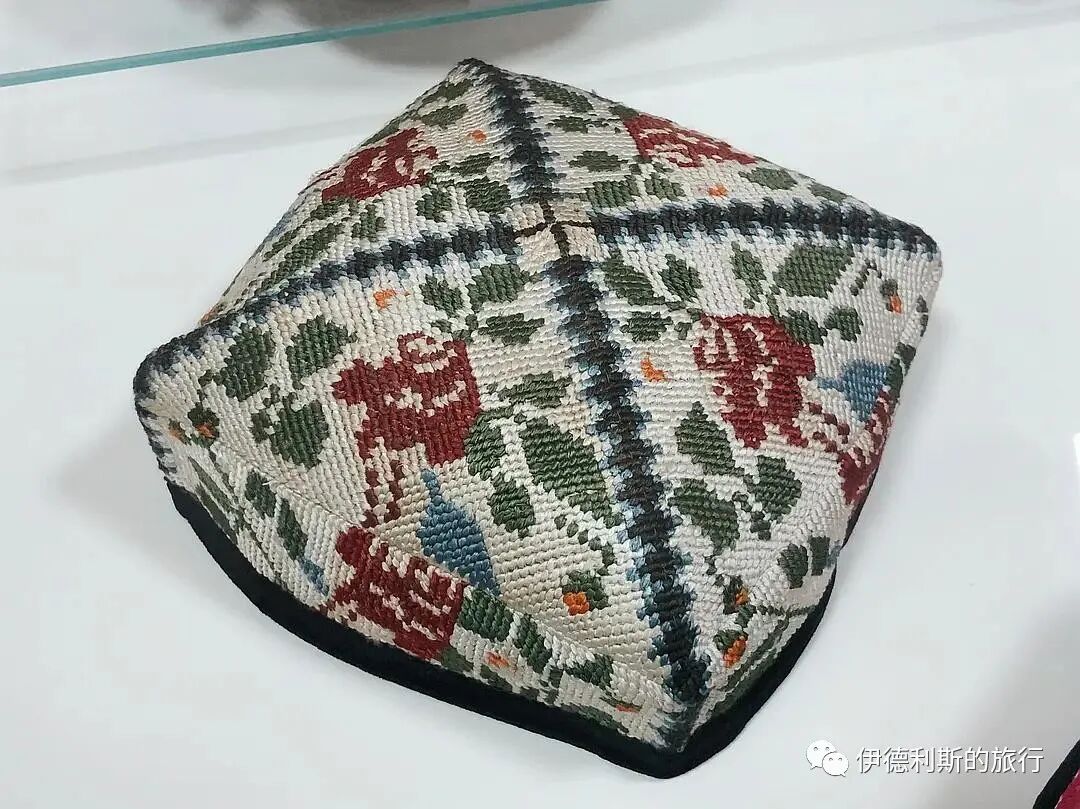
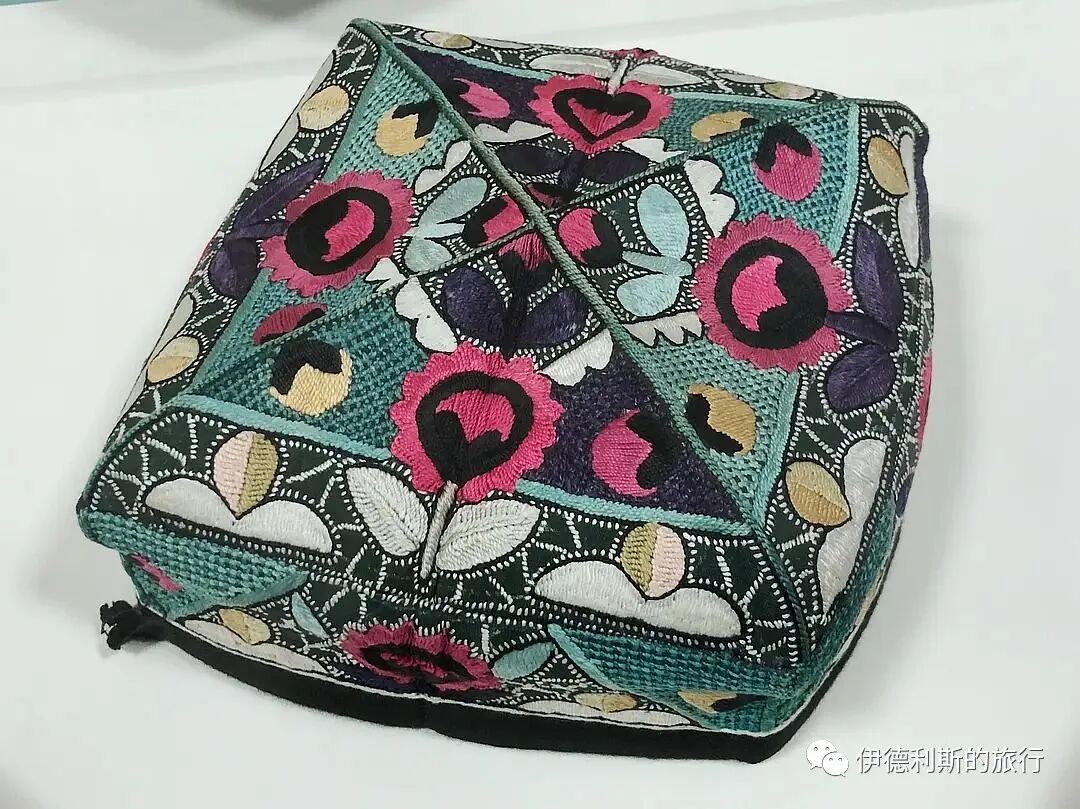
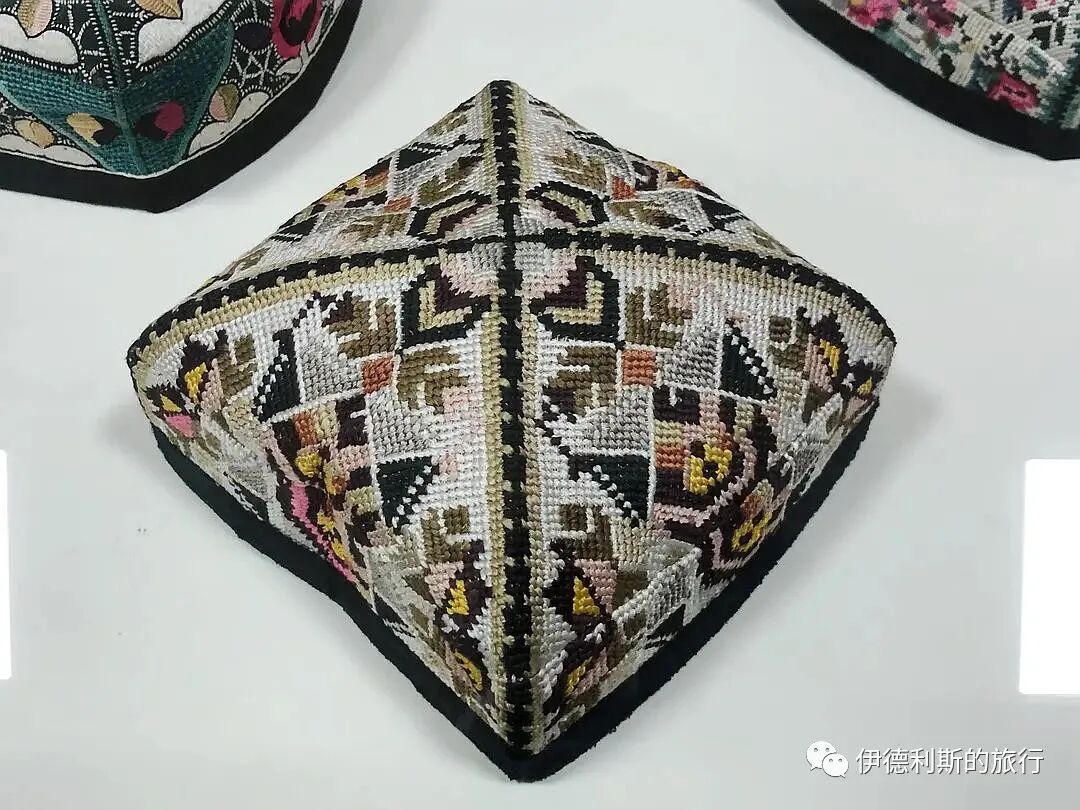
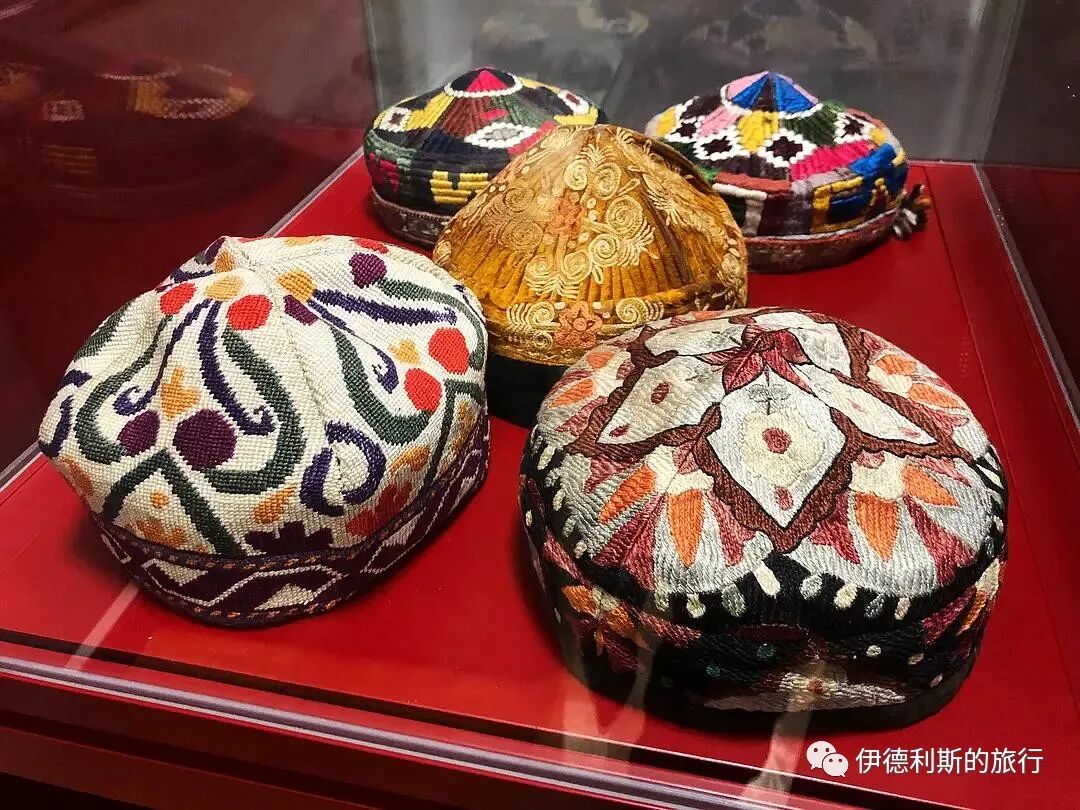
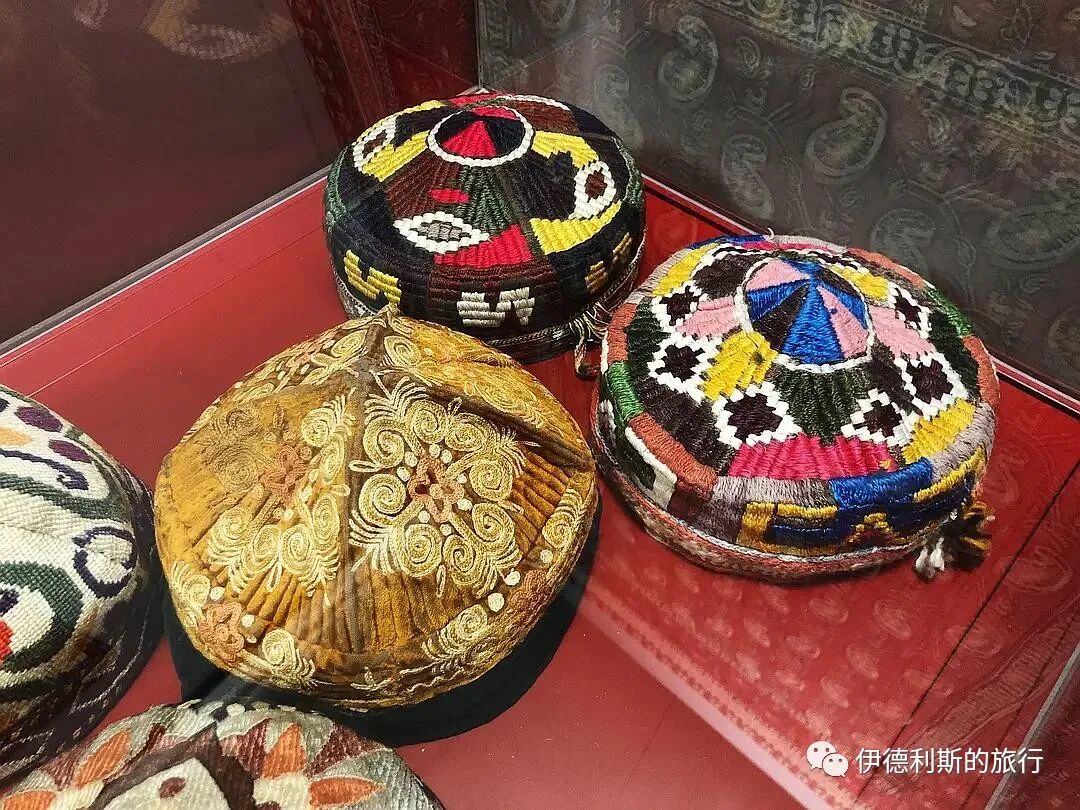
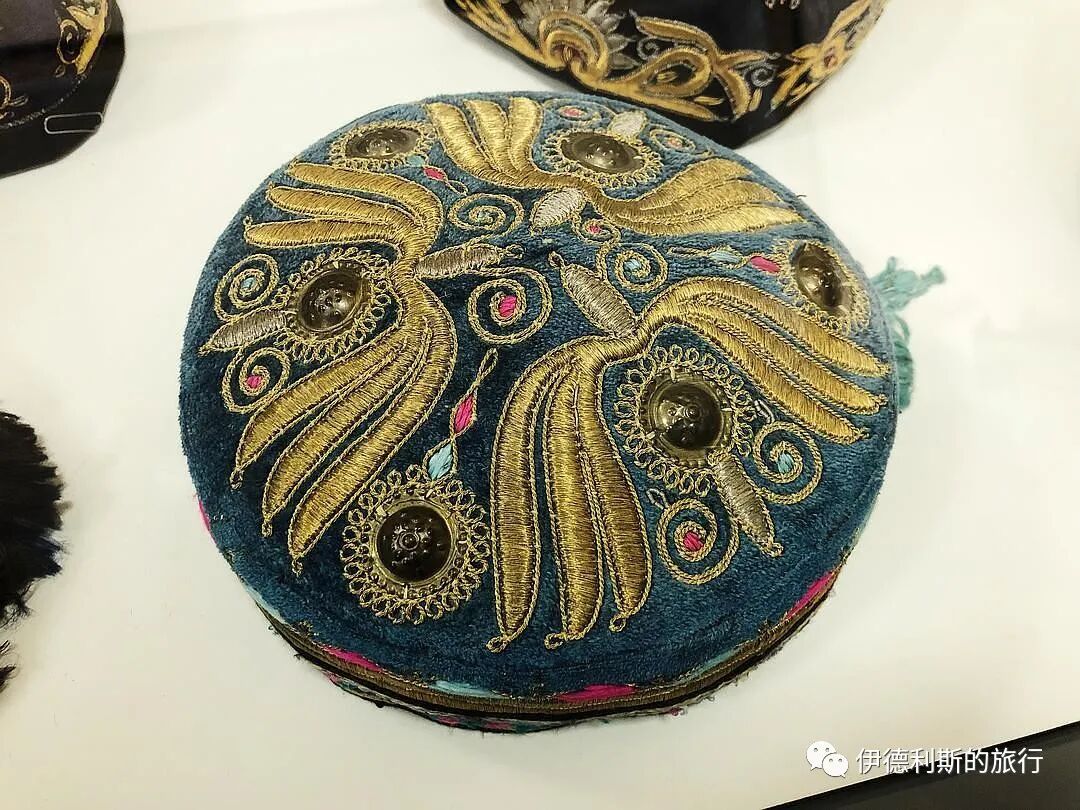
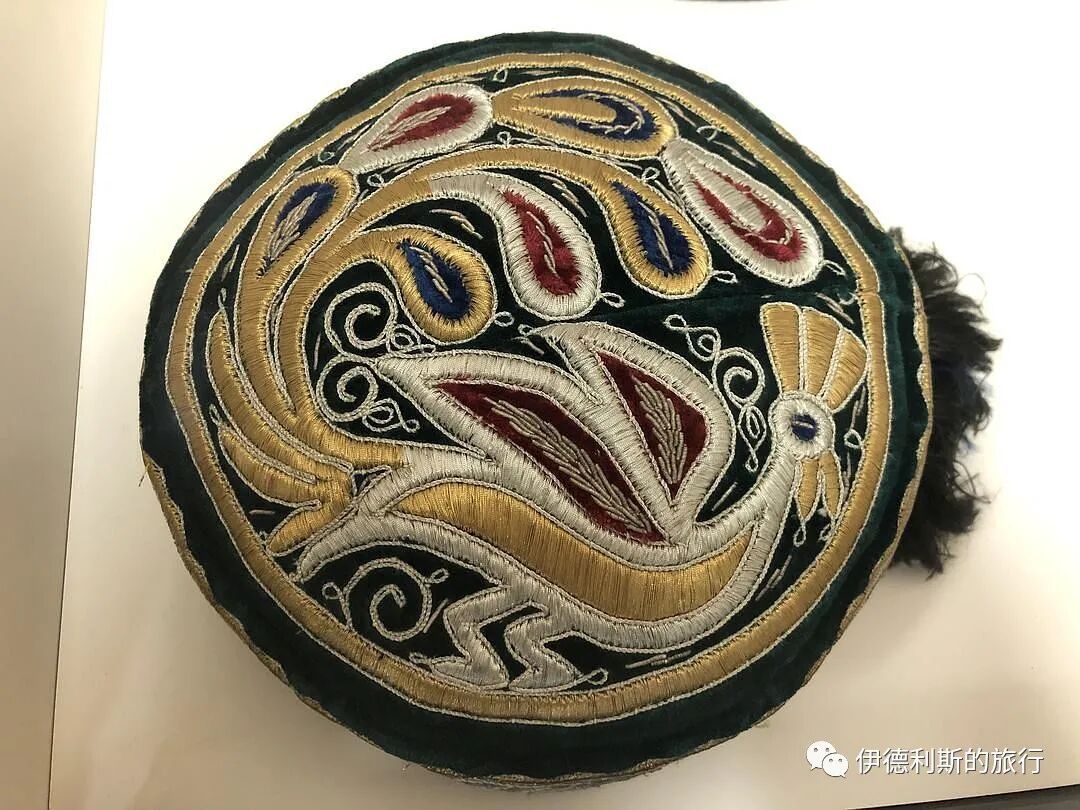
A gold-thread embroidered skullcap (doppa) made in Bukhara between 1940 and 1975.
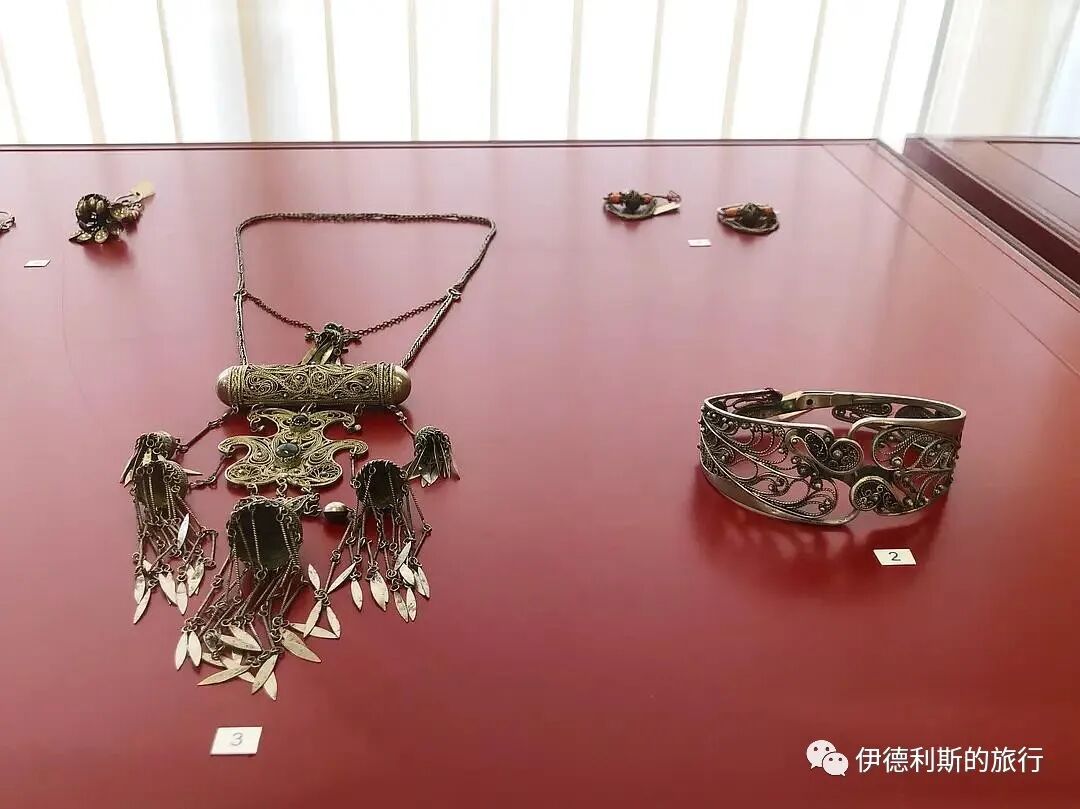
Jewelry.
On the right is a bracelet made by Azizov K. A. in Tashkent in 1977. On the left is an amulet made by Dzyuba A. in Tashkent in 1982.
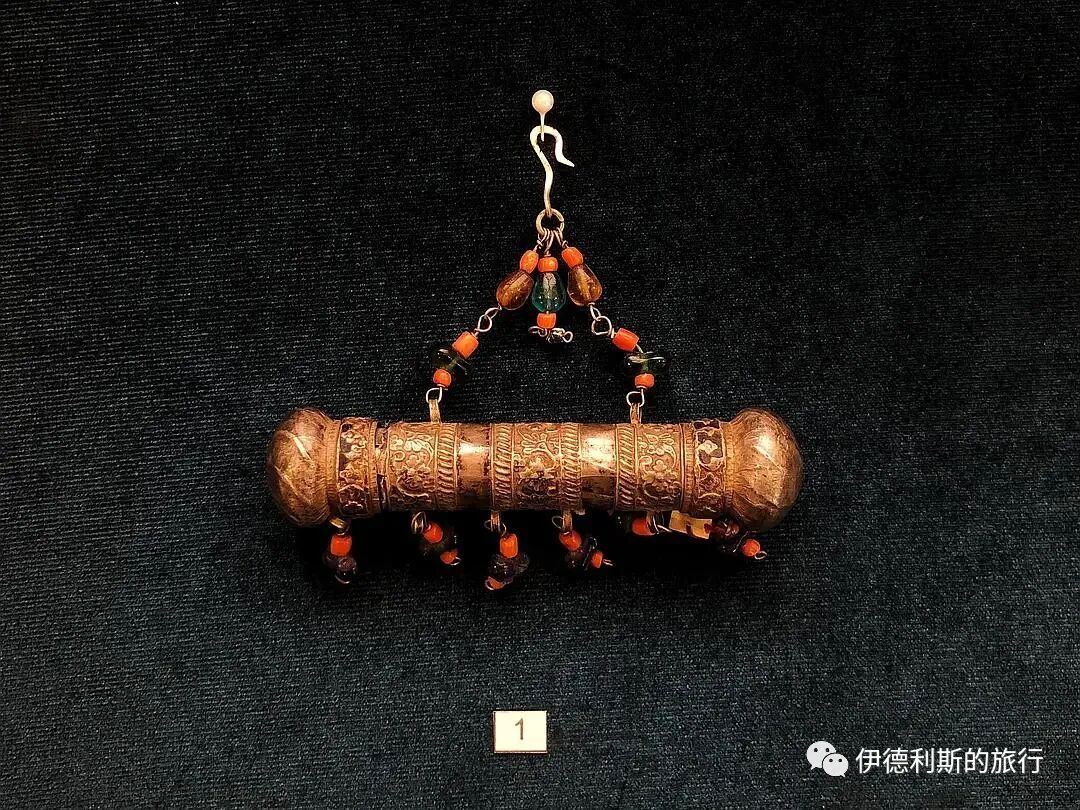
An early 20th-century amulet from Bukhara.
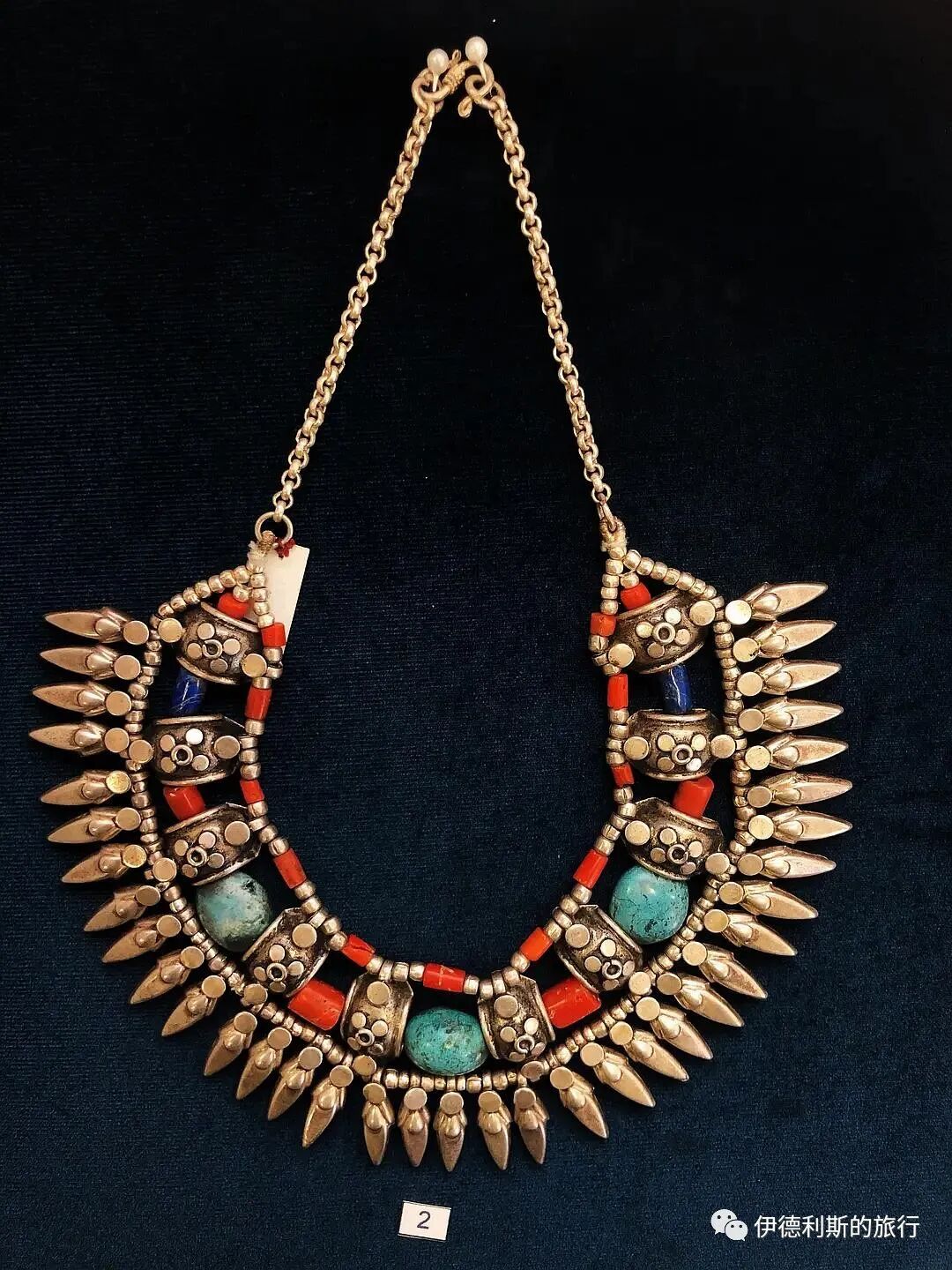
An early 20th-century necklace from Bukhara.
A late 19th to early 20th-century chest ornament from Bukhara.
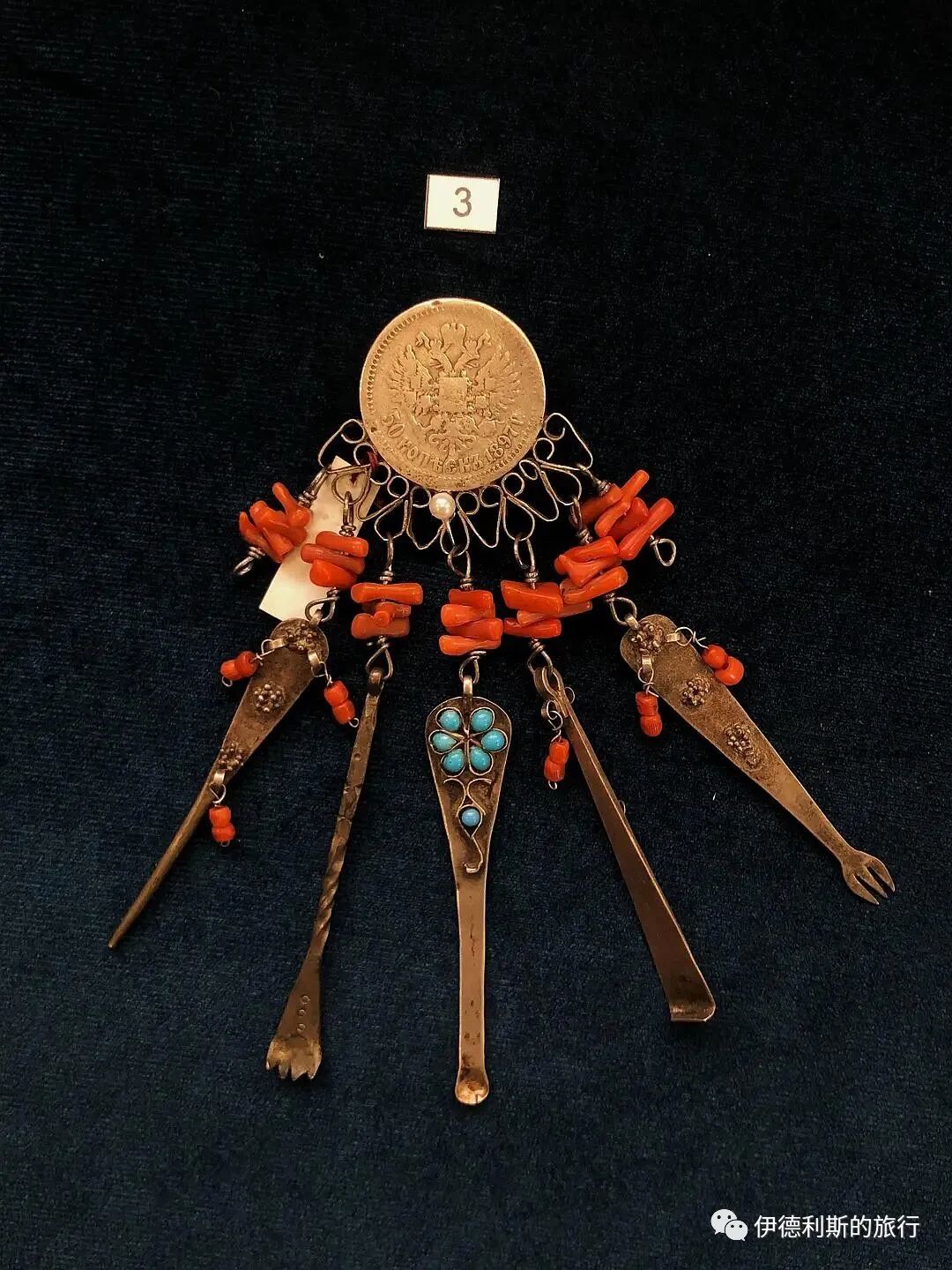
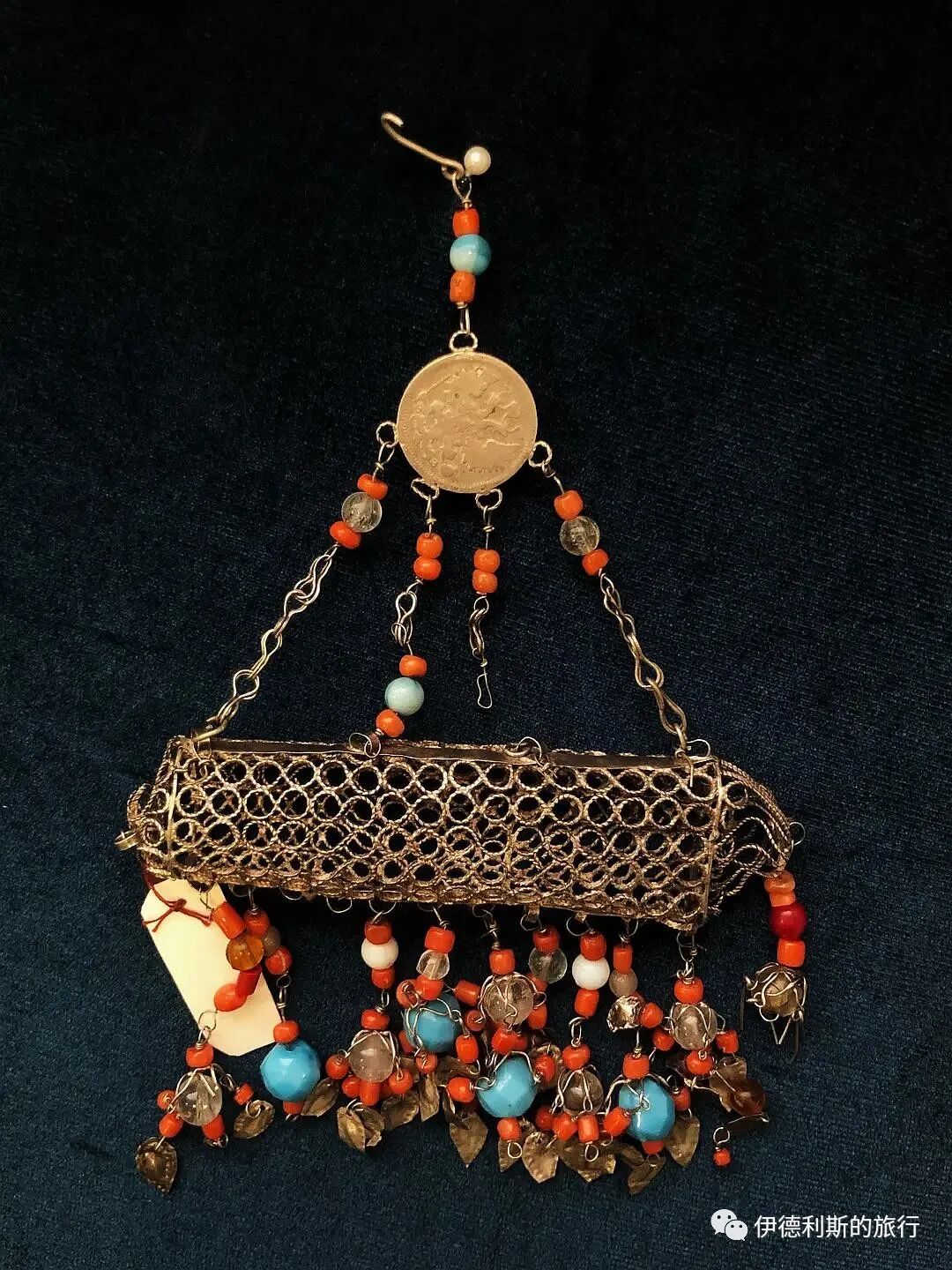
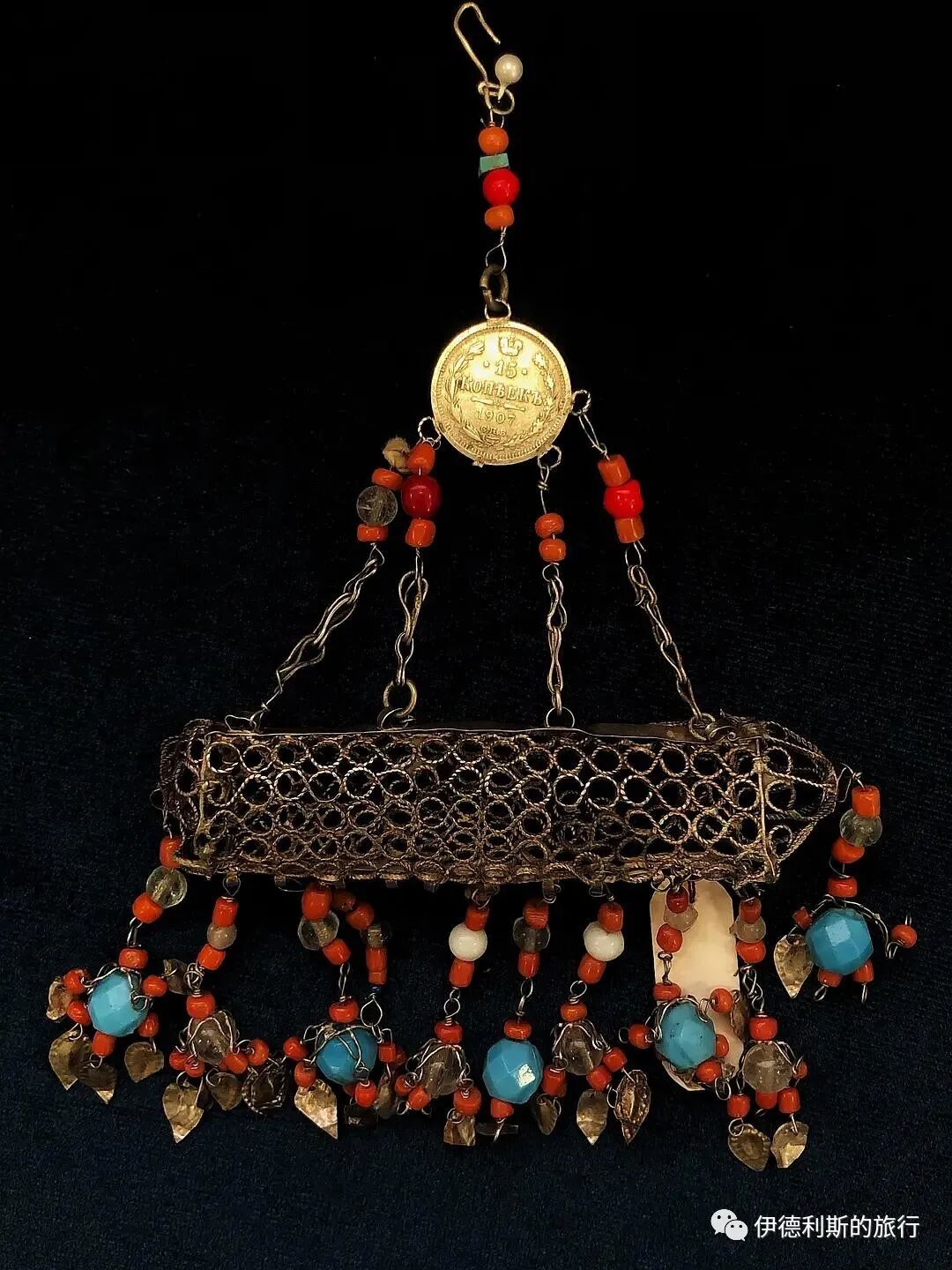
Late 19th to early 20th-century earrings from Samarkand.
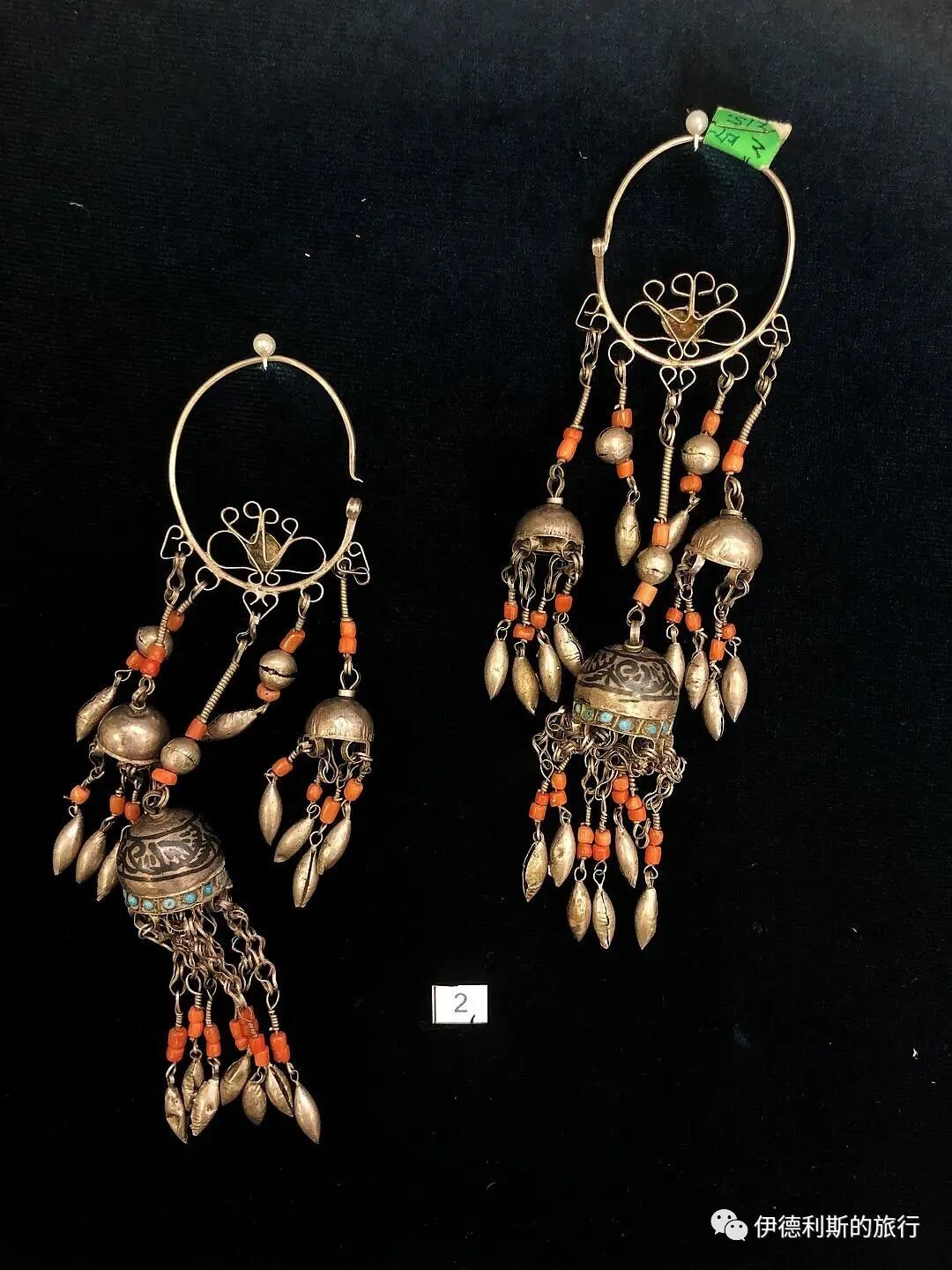
Mid-20th-century earrings from Tashkent.
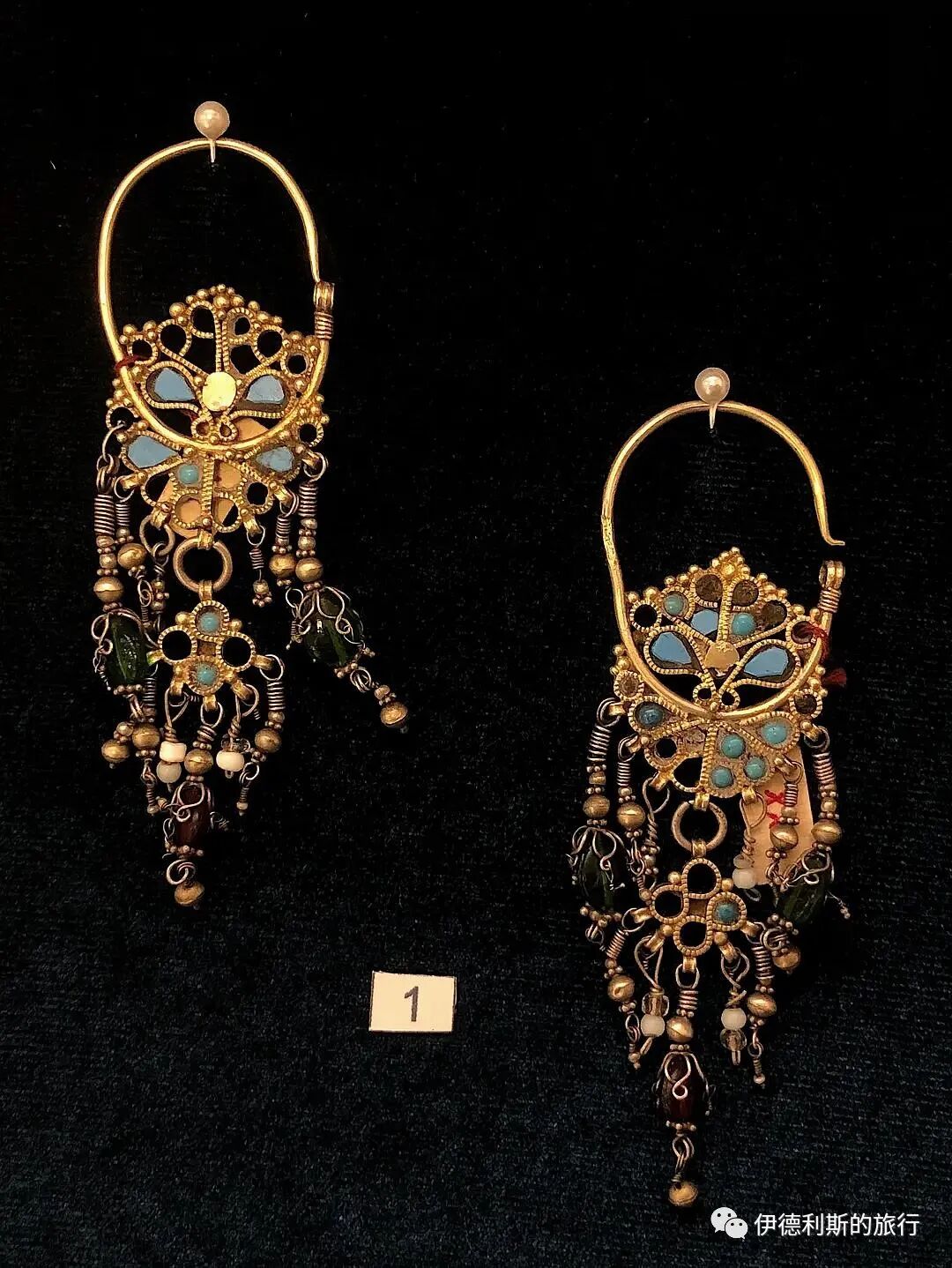
A late 19th to early 20th-century amulet from Tashkent.
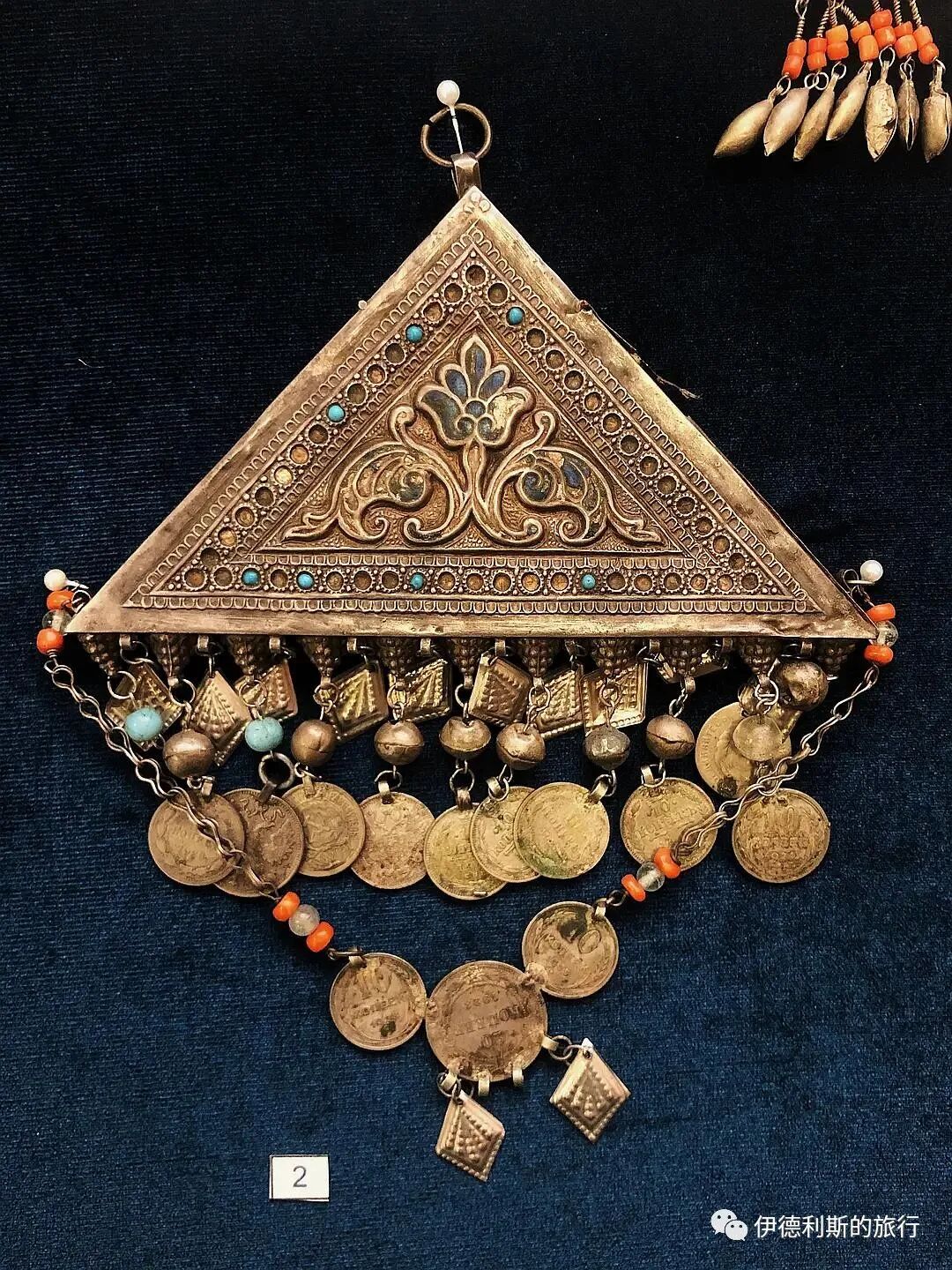
Earrings from Fergana in the early 20th century.
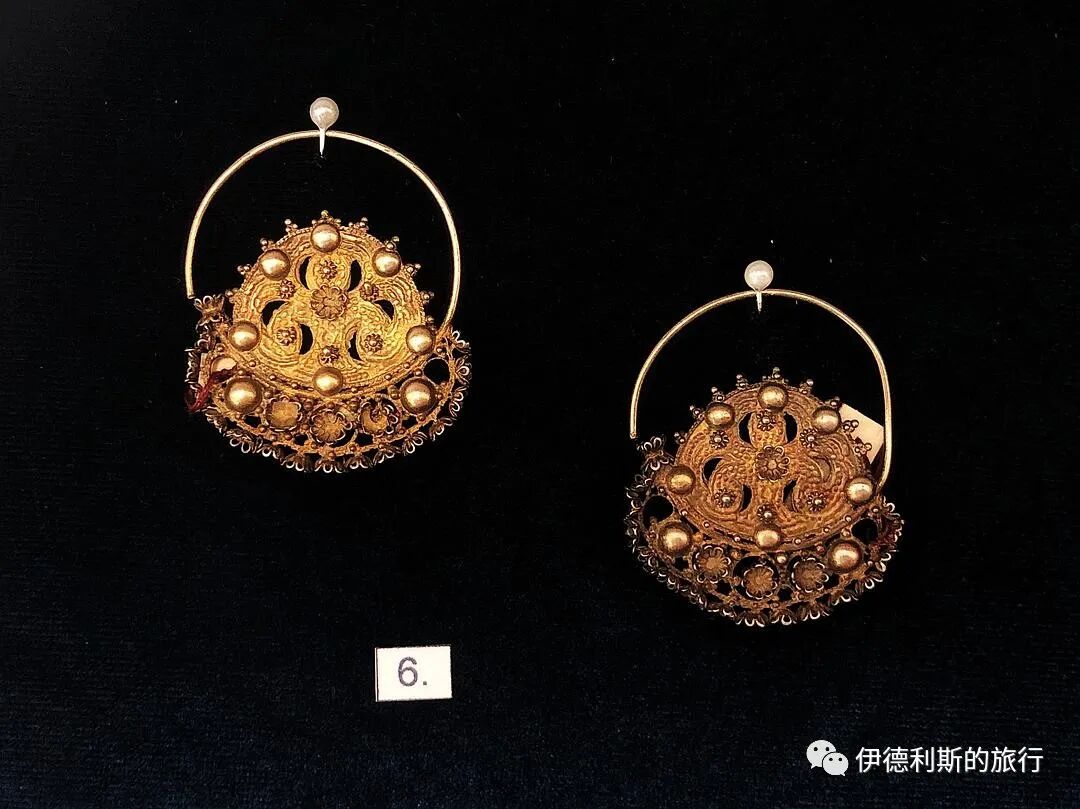
Earrings from Surxondaryo Region in the late 19th to early 20th century.
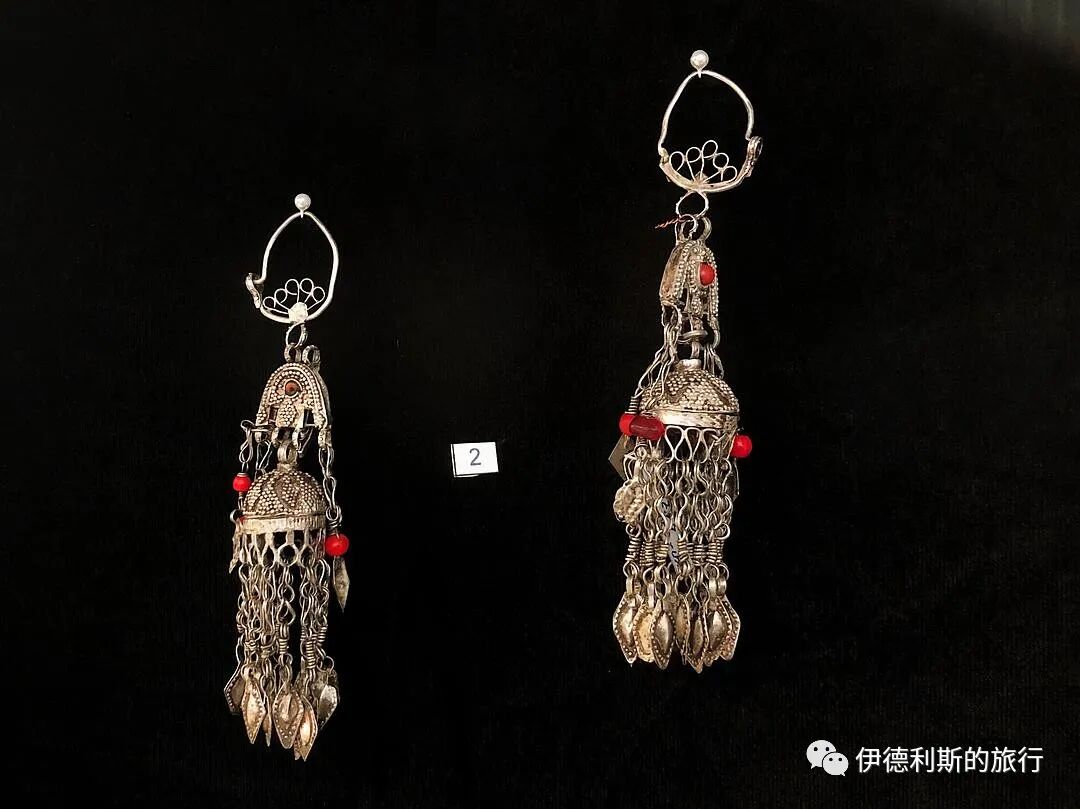
A headpiece from Fergana in the late 19th century.
Earrings from Sirdaryo in the early 20th century.
Wooden door.
A beautiful traditional Uzbek wooden door from the museum collection.
Halal Travel Guide: Tashkent — Old City, Mosques and Central Asian History
Articles • ali2007fr posted the article • 0 comments • 129 views • 2026-05-17 10:56
Summary: Tashkent — Old City, Mosques and Central Asian History is presented here as a firsthand travel account in clear English, beginning with this scene: Tashkent is the capital of Uzbekistan. From the Northern and Southern Dynasties to the Tang Dynasty, it was the capital of the state of Shi, one of the Nine Zhaowu States. The account keeps its focus on Tashkent Travel, Central Asia, Muslim Heritage while preserving the names, places, food, and historical details from the Chinese source.
Tashkent is the capital of Uzbekistan. From the Northern and Southern Dynasties to the Tang Dynasty, it was the capital of the state of Shi, one of the Nine Zhaowu States. In the early 8th century, Arabs conquered Tashkent. It later became part of the Samanid Empire and the Kara-Khanid Khanate, before being destroyed by Genghis Khan's Mongol army in 1219.
During the Timurid Empire and the Shaybanid dynasty of the Bukhara Khanate between the 14th and 16th centuries, Tashkent's population and size recovered, making it a commercial and cultural hub along the Silk Road. Most of the historical buildings still standing in Tashkent today were built during this period. During the unrest of the late Timurid period, Tashkent briefly served as the capital of the Moghulistan Khanate. The tomb of Yunus Khan is still preserved here today.
Tashkent was incorporated into the Kazakh Khanate during the 17th and 18th centuries, becoming its capital in the 18th century. The tomb of a Kazakh hero is still preserved in Tashkent today.
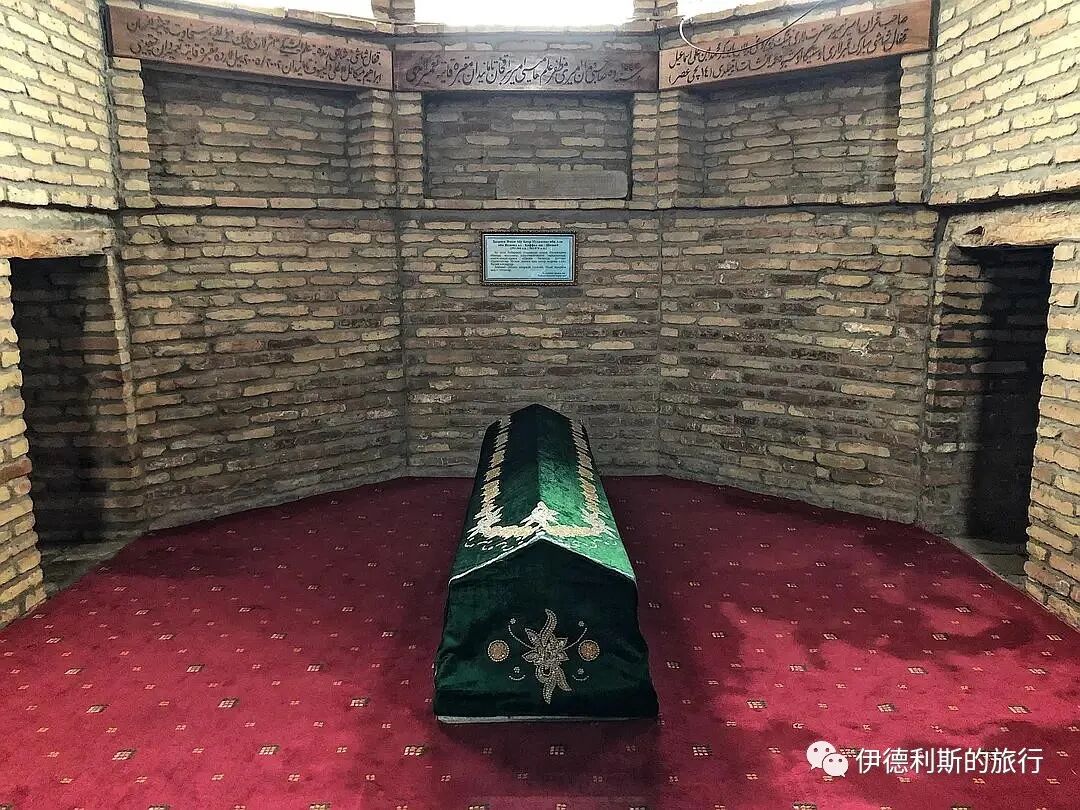
The famous Imam Kaffal Shashi Mausoleum: 1541.
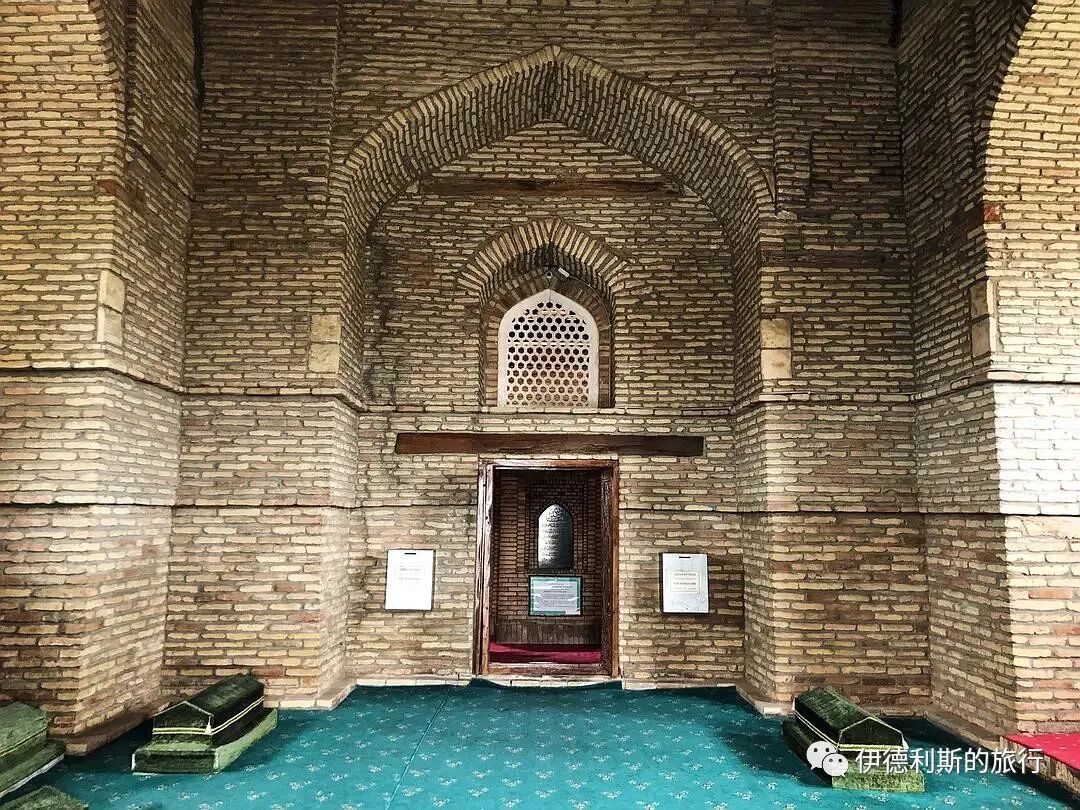
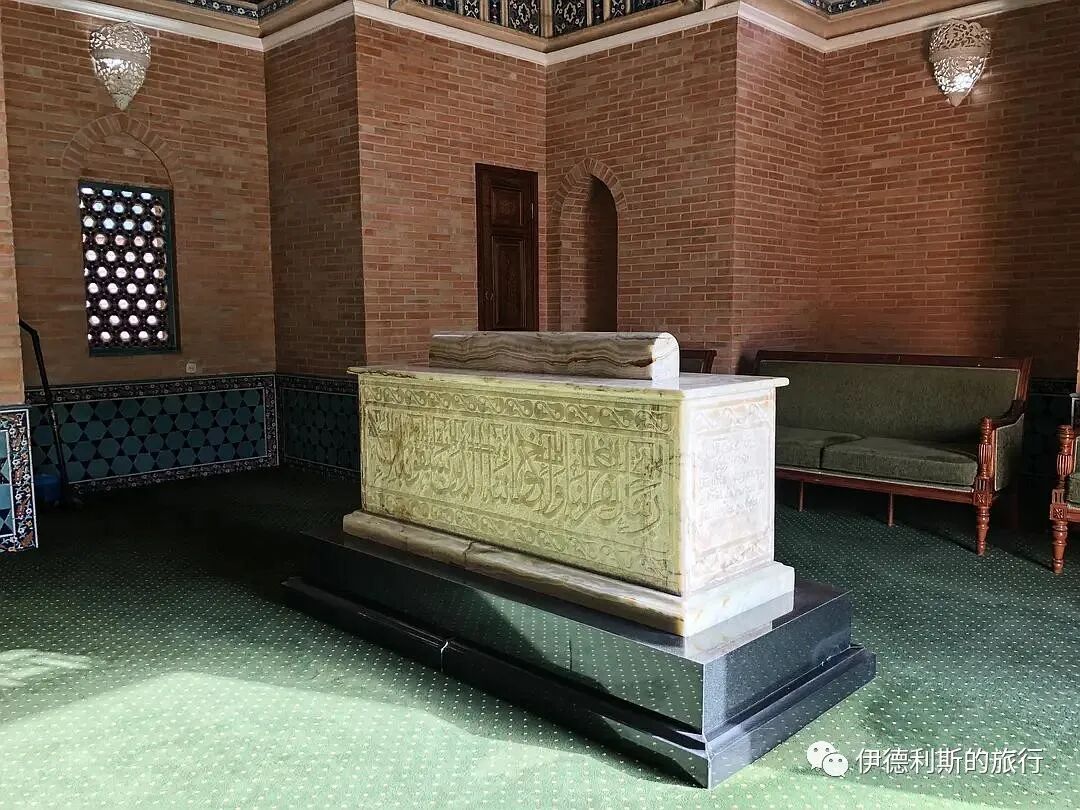
Abu Bakr Mohammed Kaffal Shashi was a famous imam and scholar during the Samanid period. He was born in 903 to a locksmith's family in Tashkent. He traveled to Khorasan for his studies when he was young, then went to Baghdad, the center of the Islamic world at the time, for further education. He became a brilliant jurist, linguist, and poet, and people honored him as the Great Imam (Hazrat Imam). After traveling the world, Kaffal Shashi returned to his hometown of Tashkent. He passed away in 976 and was buried in a garden on the outskirts of the city.
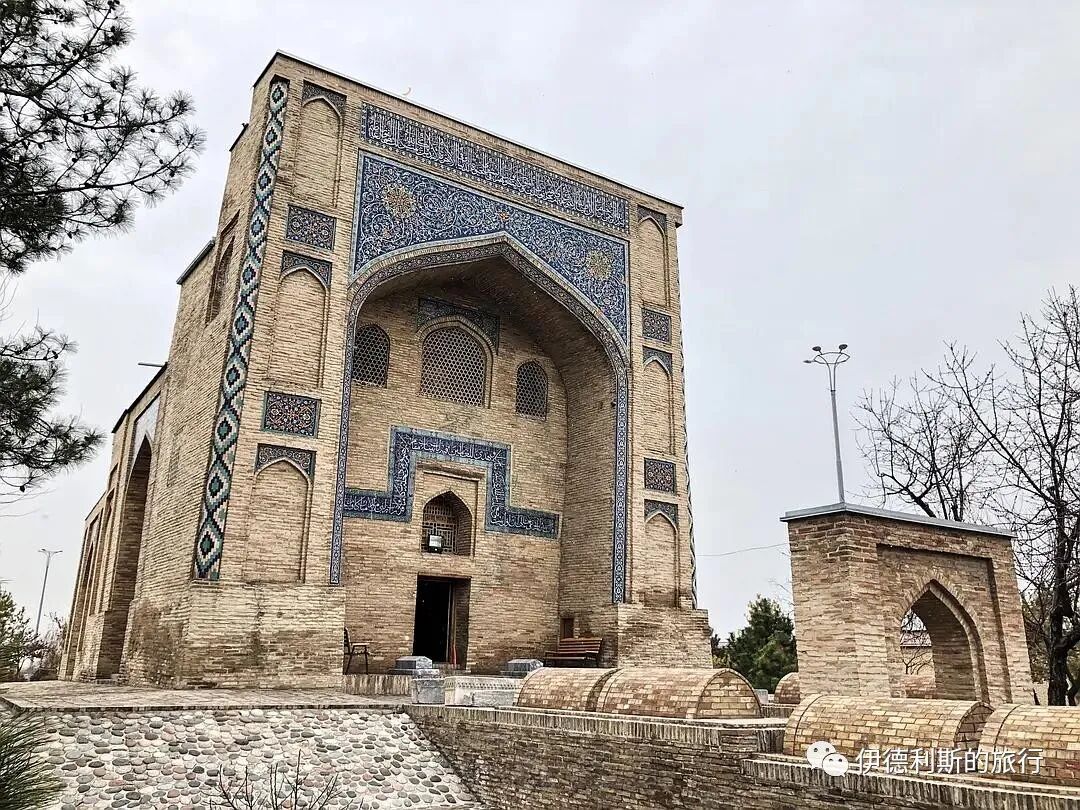
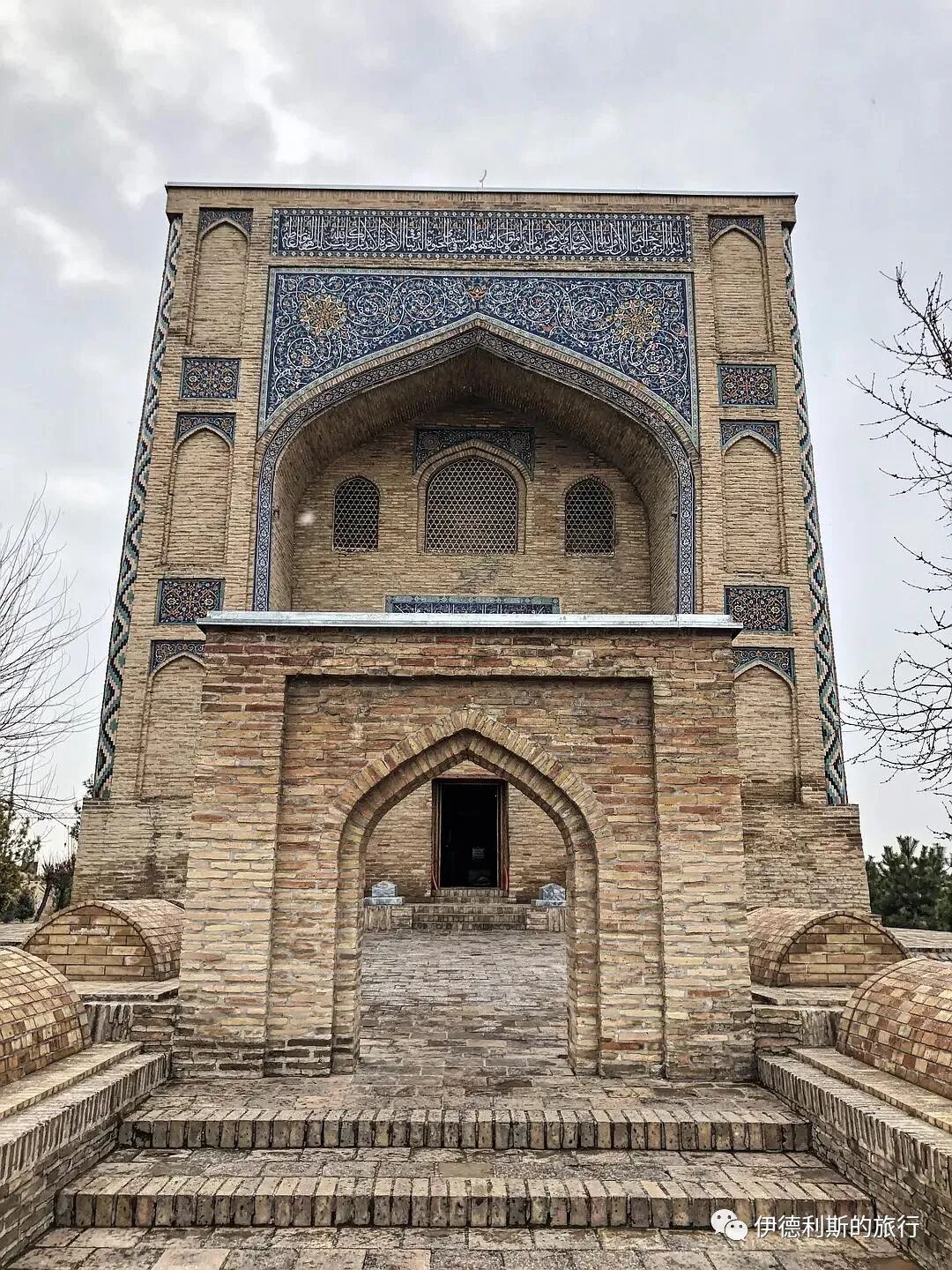
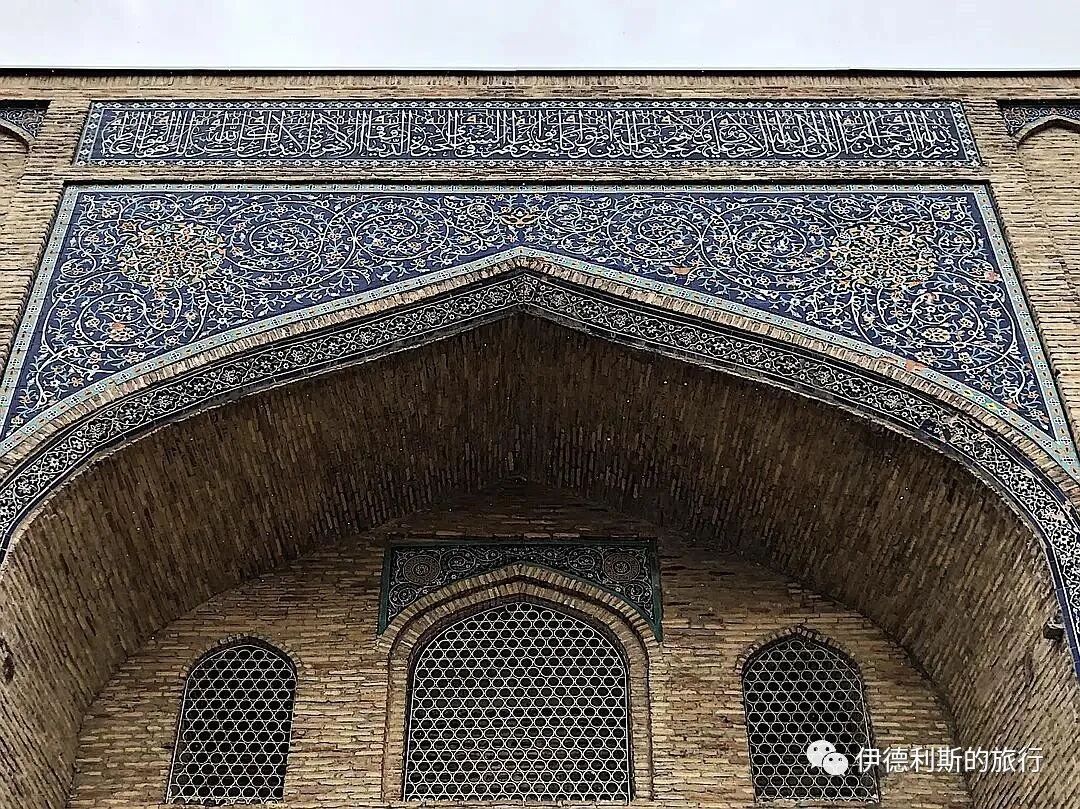
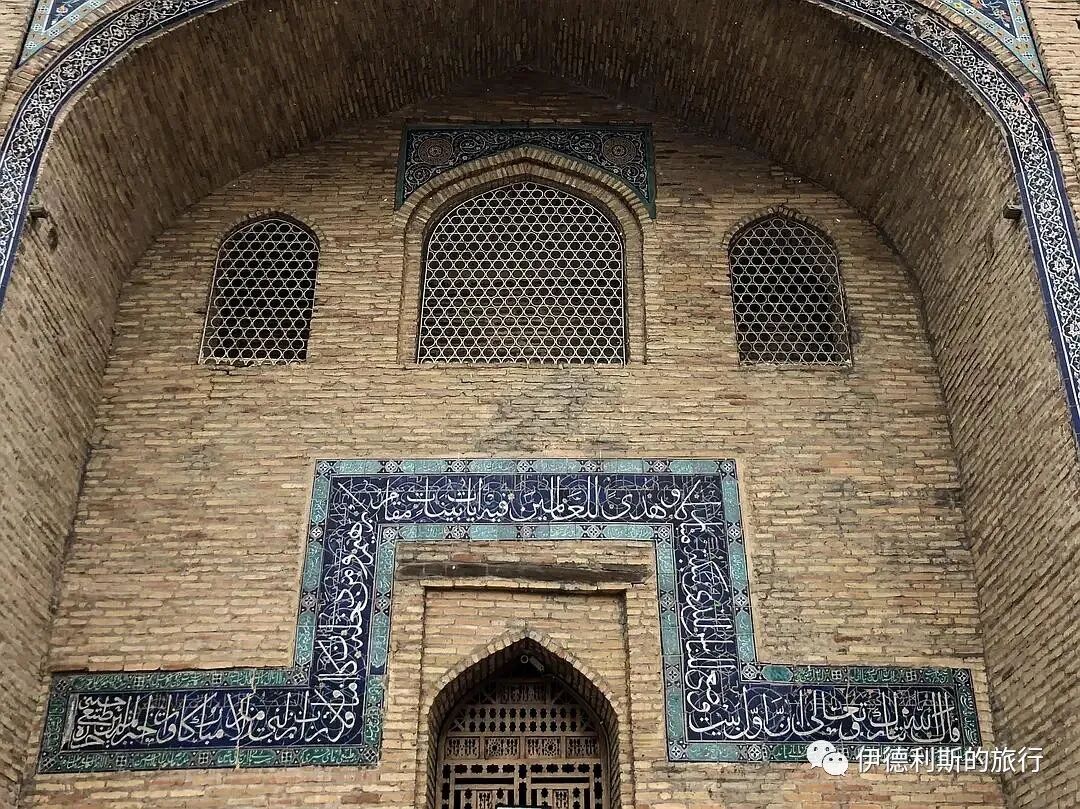
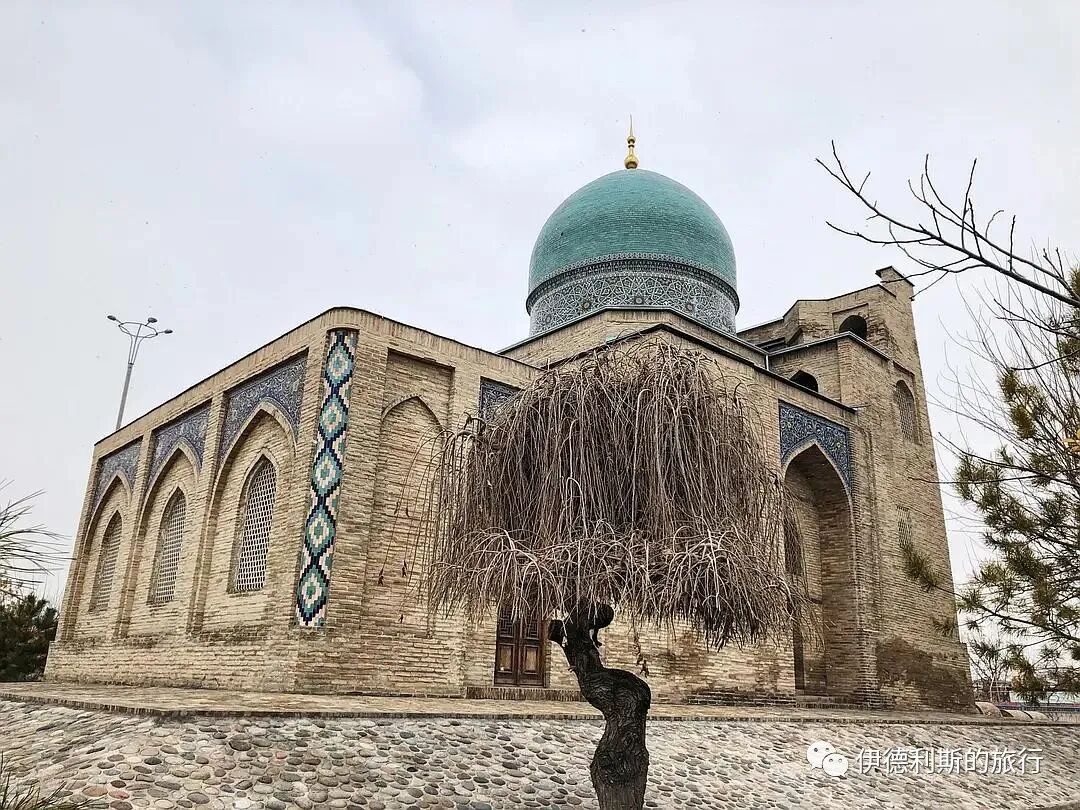
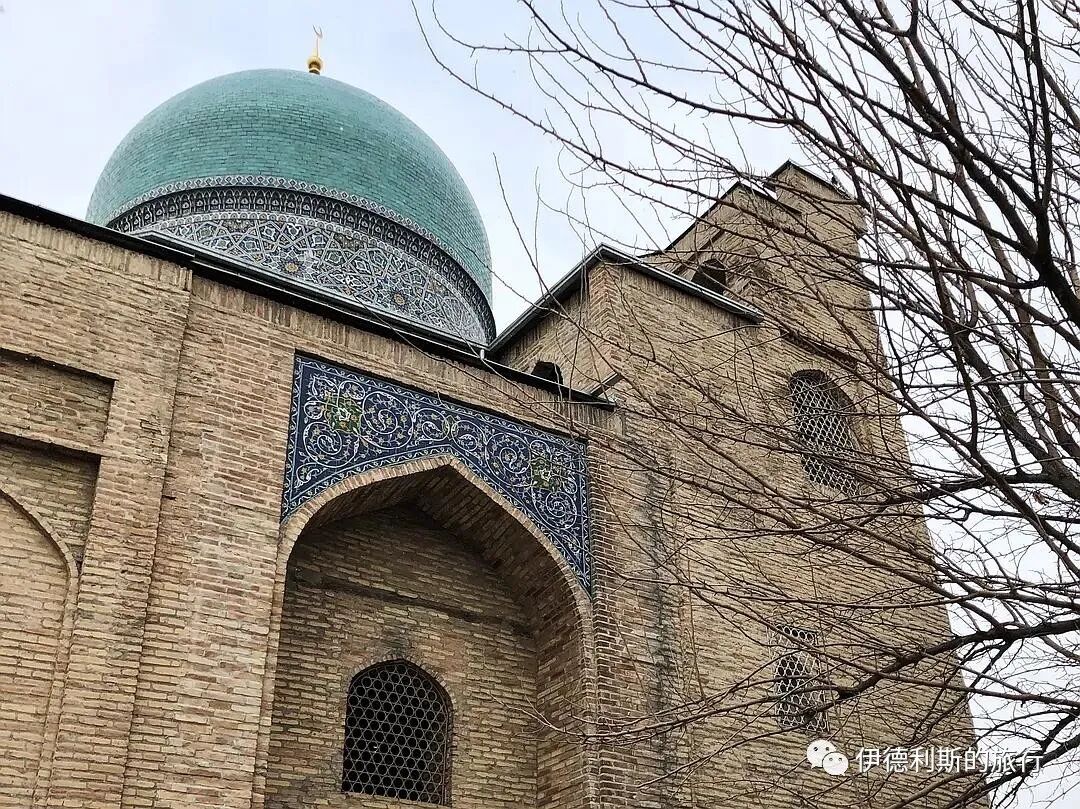
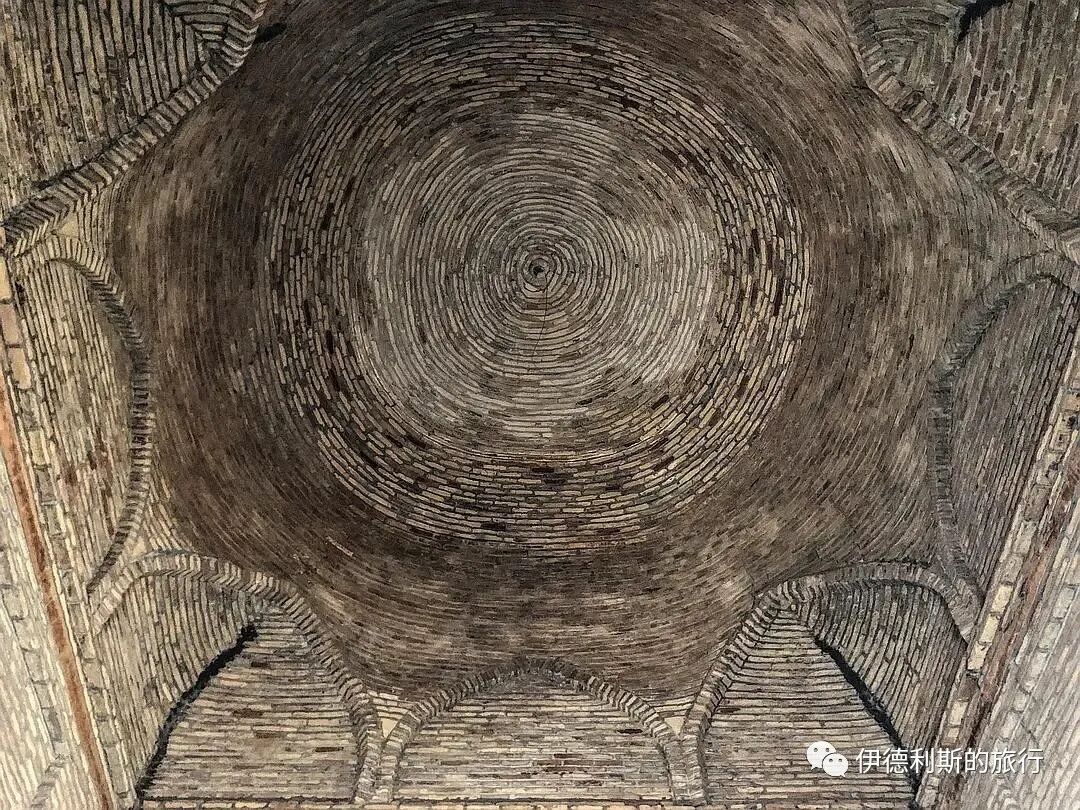
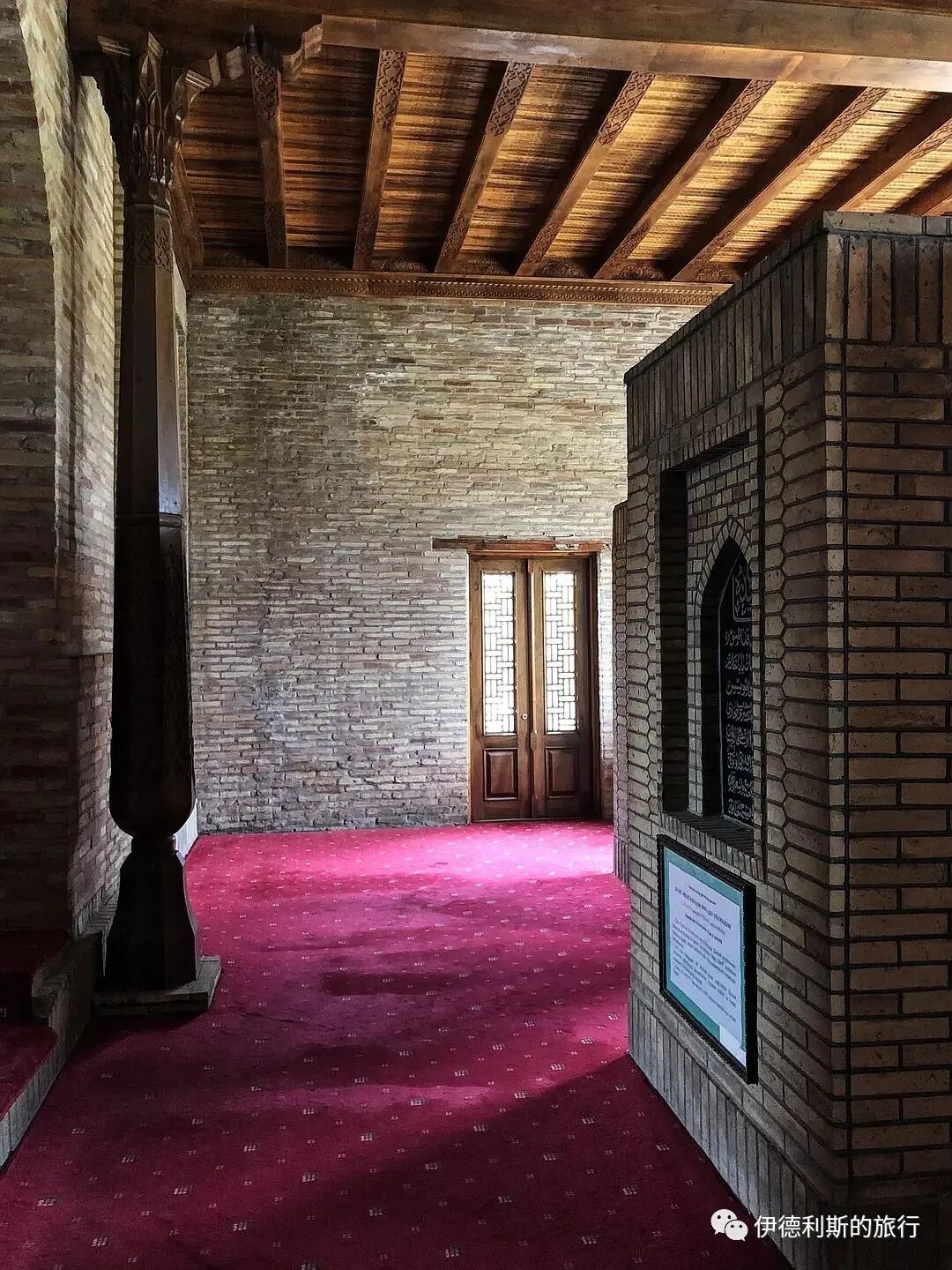
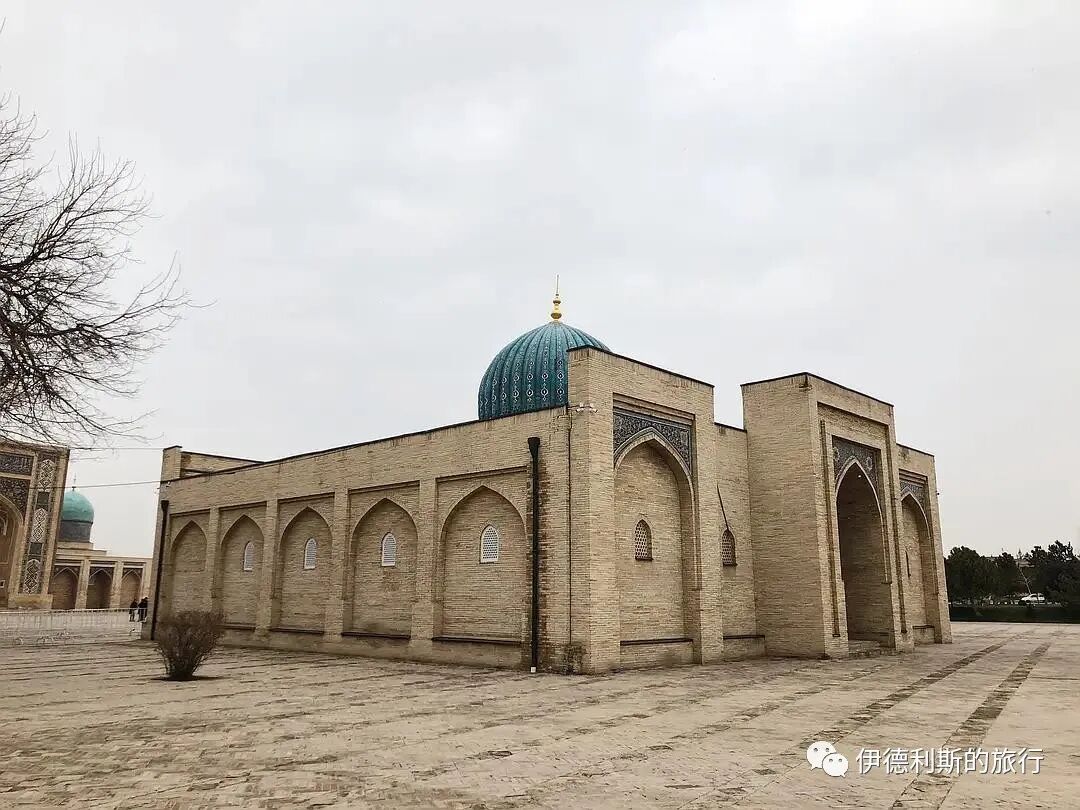
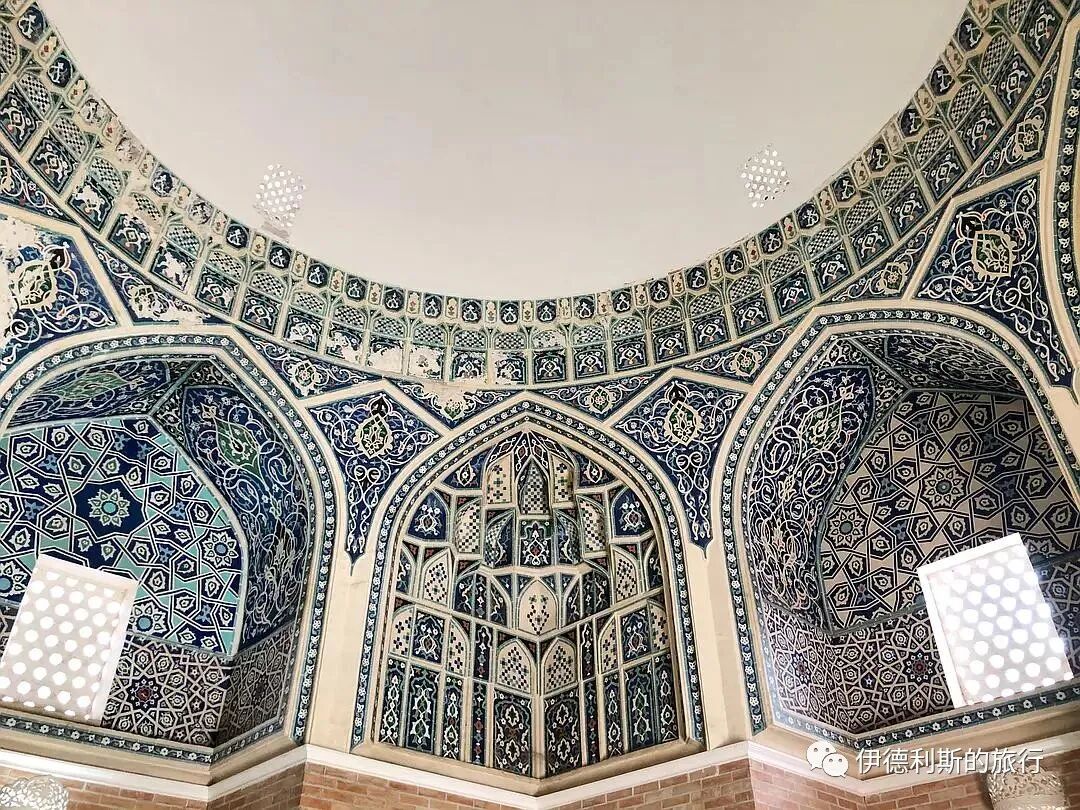
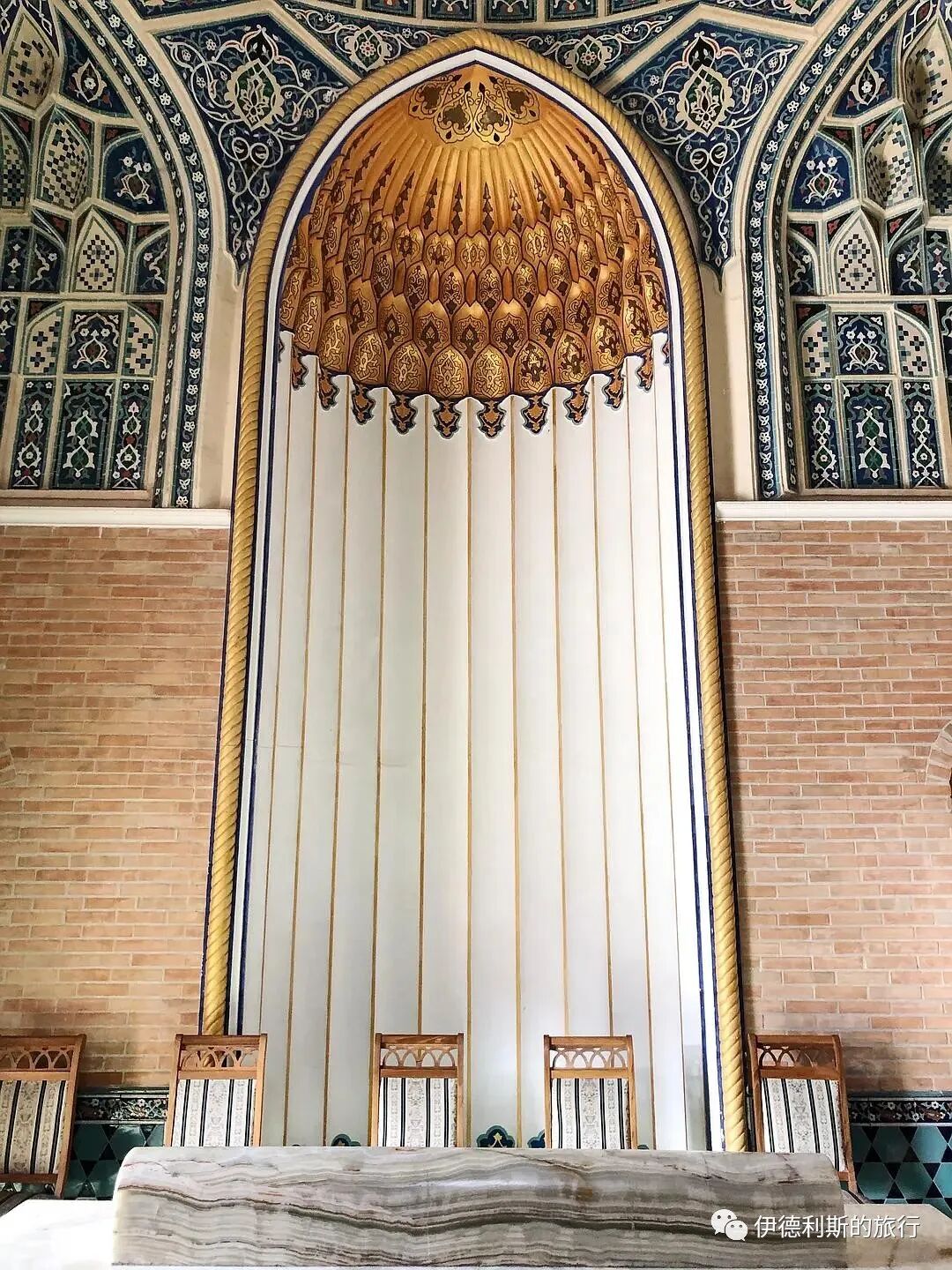
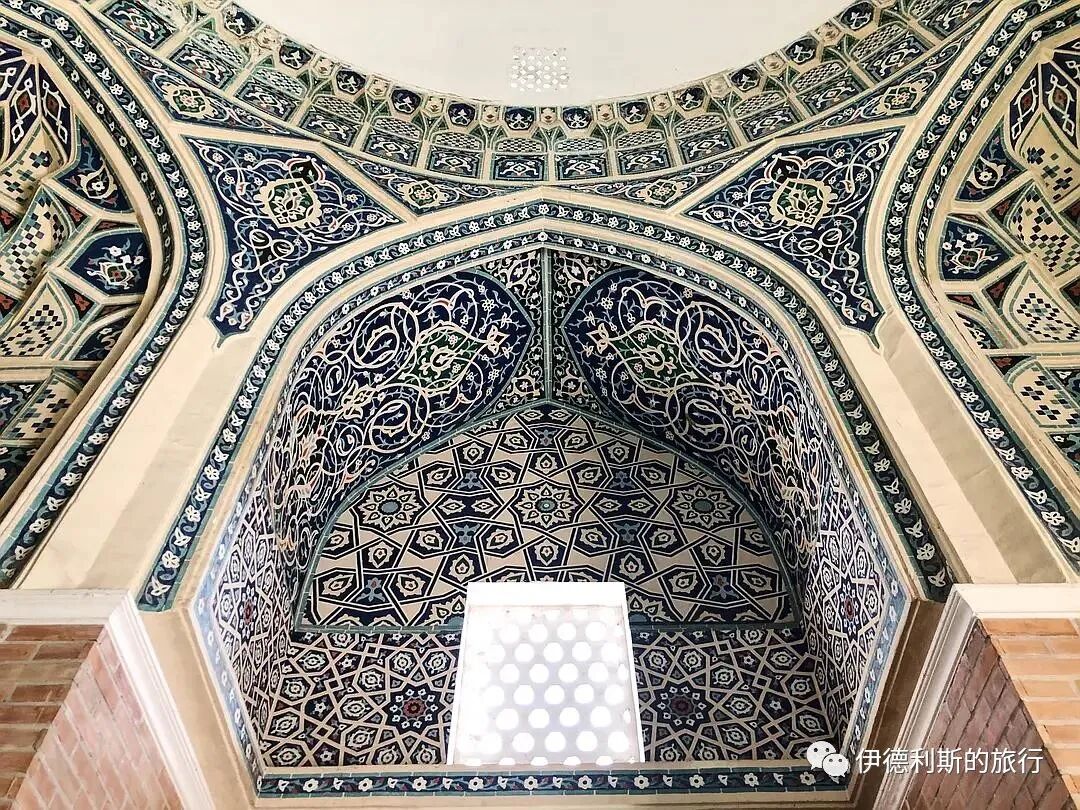
The current Kaffal Shashi Mausoleum was rebuilt in 1541 during the Shaybanid dynasty. It features the design of a Sufi lodge (khanaqah), including a tall arched gate (iwan) and a dome. Besides Kaffal Shashi, his students, including his three main disciples, are also buried inside. The mausoleum was once covered in beautiful tiles, but only parts remain today and have been restored. Additionally, the window lattices on the mausoleum gate are 500 years old.
According to Tashkent legend, rubbing dust from this tomb on one's face can help a woman conceive, which attracts many women who are struggling to get pregnant.
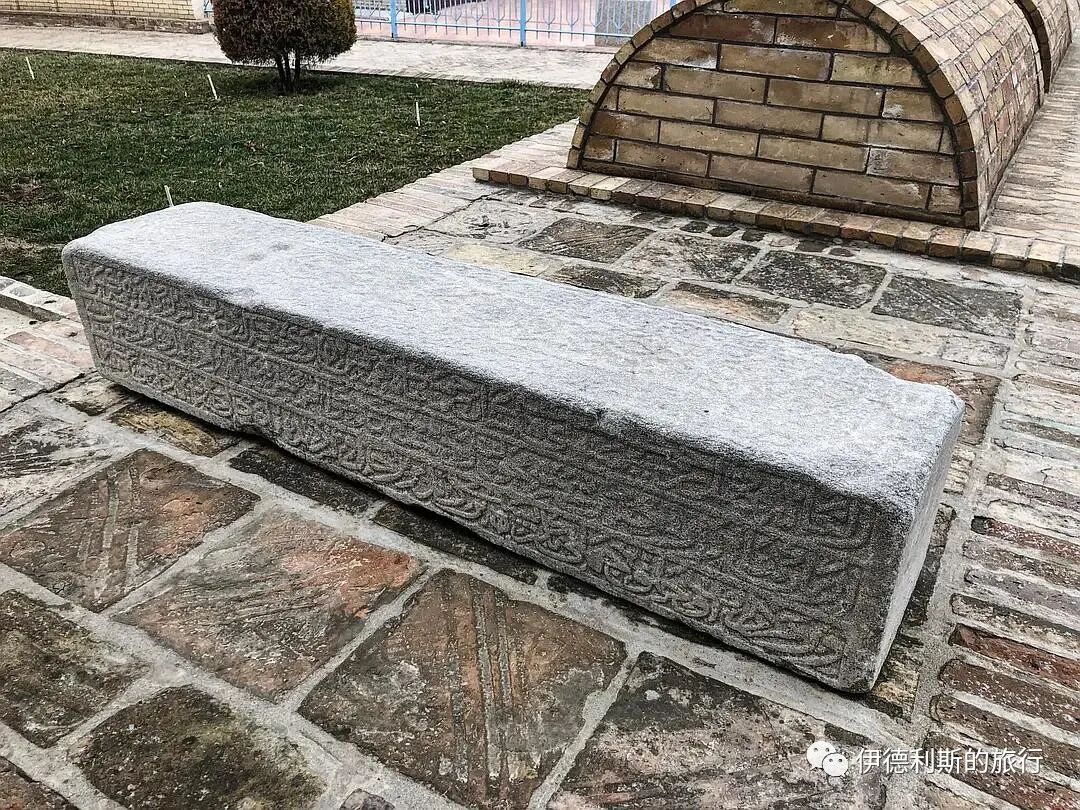
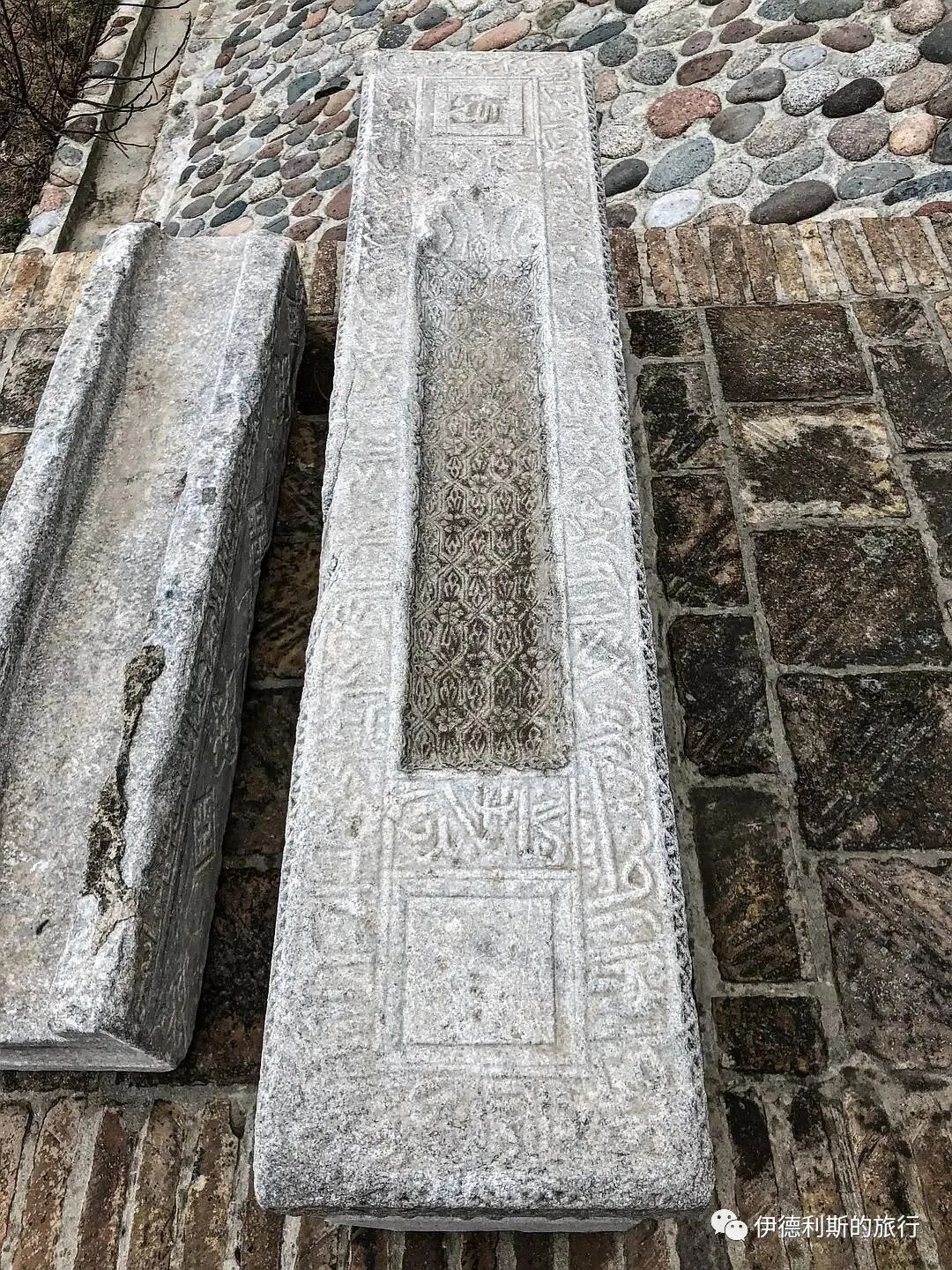
Tombstones outside the mausoleum.
Barak Khan Madrasa: 1550s.
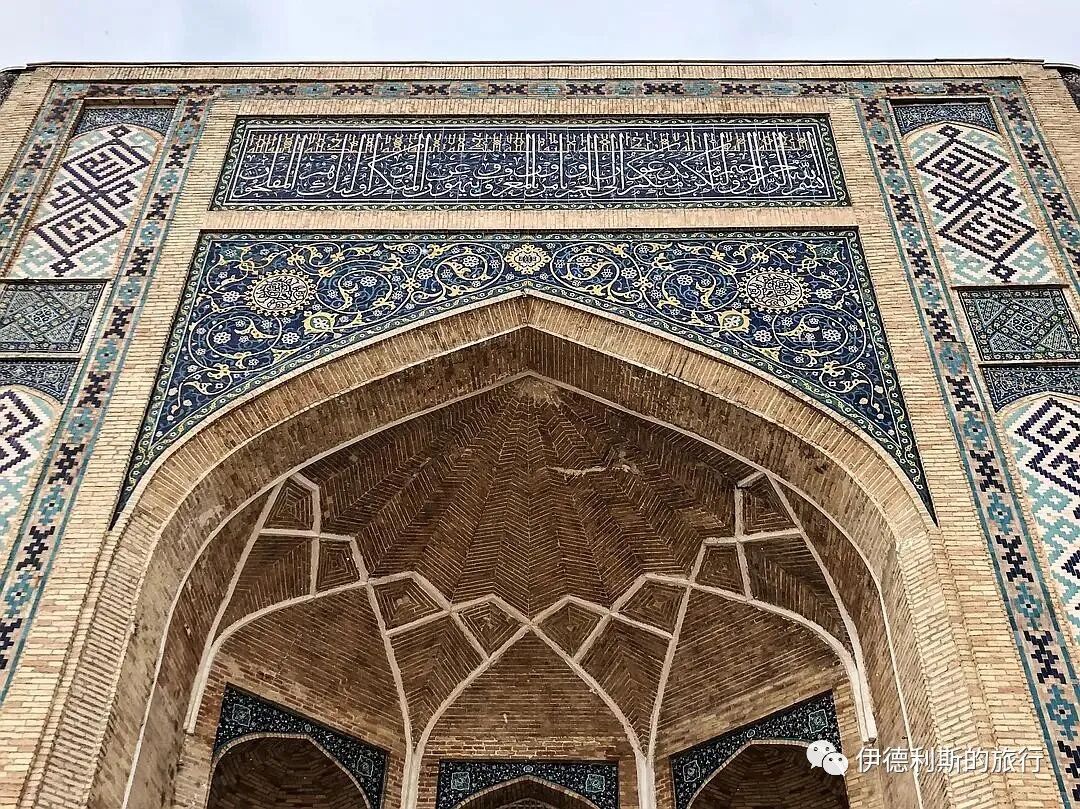
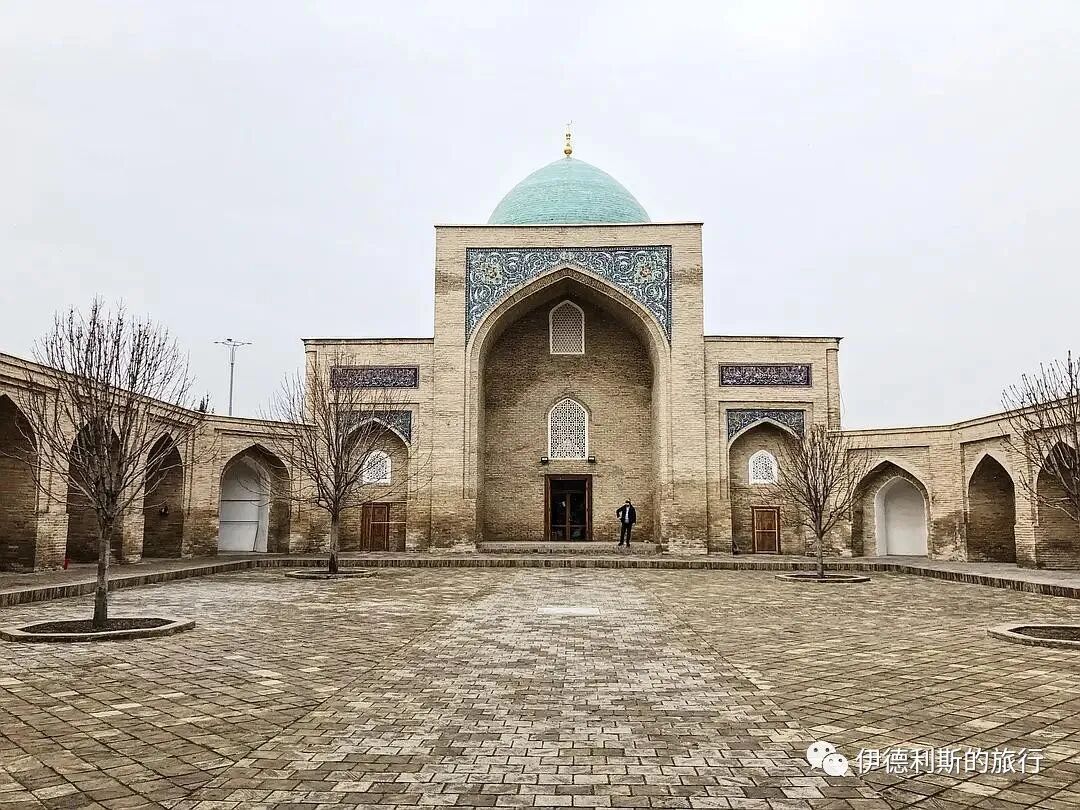
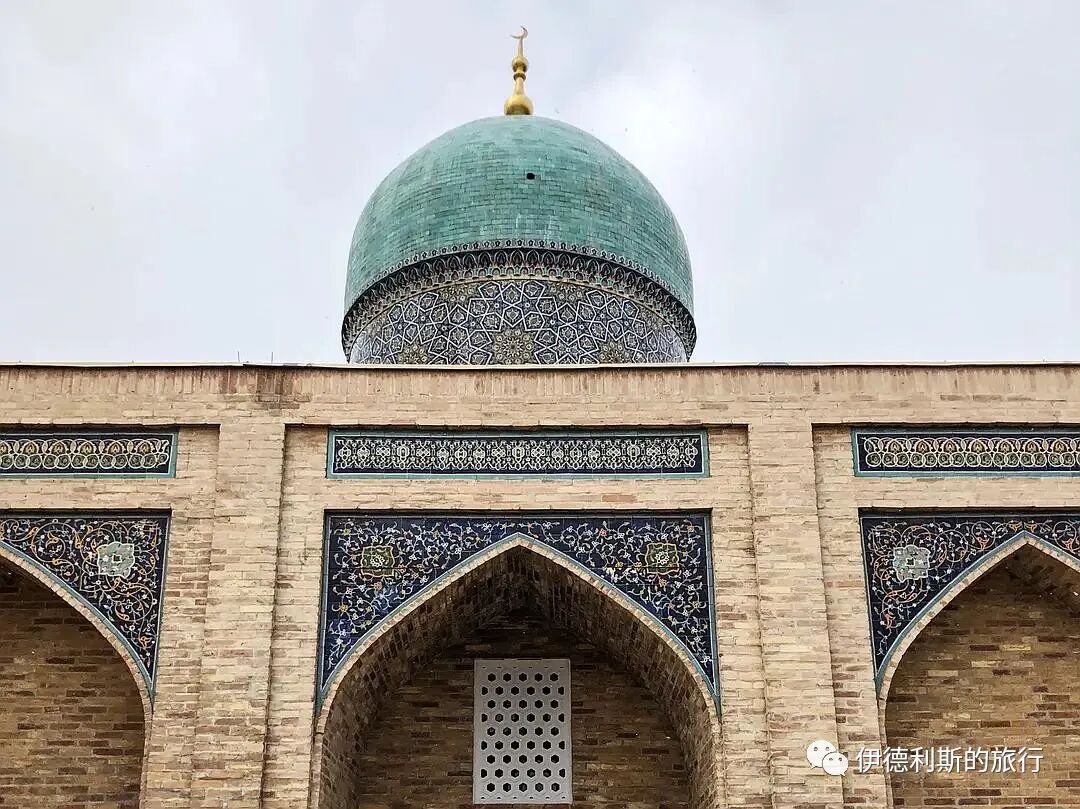
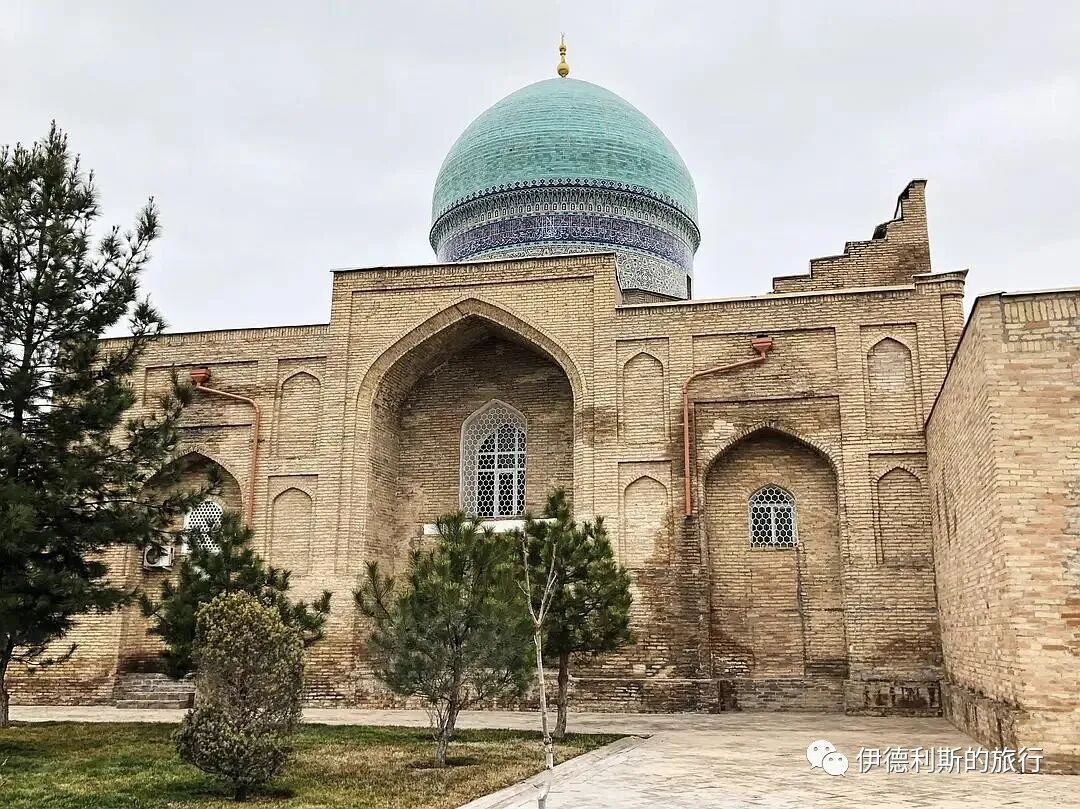
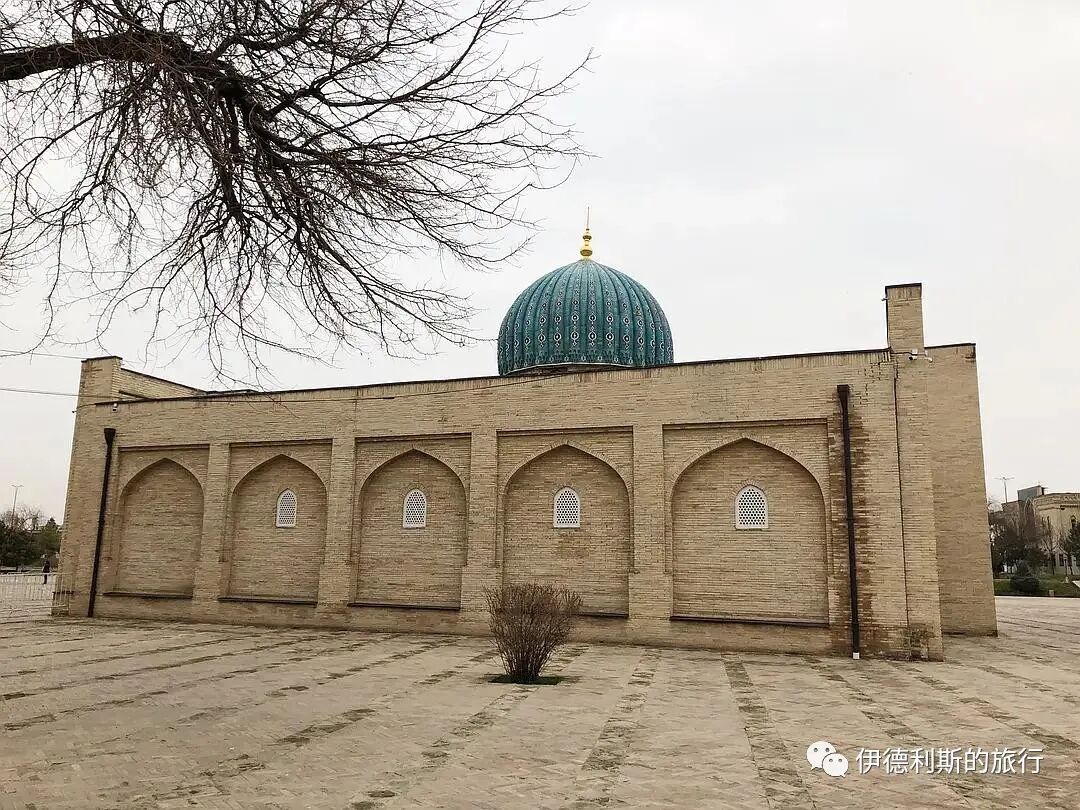
Barak Khan (reigned 1552-1556), whose real name was Nawruz Ahmad, was a khan of the Shaybanid dynasty of the Bukhara Khanate and served as the governor of the Tashkent region for a long time. The madrasa is located just south of the Kaffal Shashi Mausoleum. The original structure was a tomb and lodge (khanqah) built by Barak Khan's father, Suyunich Khan, in the 1530s. In the 1550s, Barak Khan built the current madrasa and combined it with the tomb. Because of its blue dome, it is also called the Blue Dome (Kuk Gumbaz/gongbei).
The blue dome was damaged during the 1868 Tashkent earthquake. The madrasa was forced to close during the Soviet era, but it was restored between 1955 and 1963 under the direction of Usto Shirin Muradov. The existing tiles still bear verses dedicated to Tashkent by the madrasa's first principal, the famous poet Zayn ad-Din Vasifi (1485-1556). One line reads, 'Perhaps it is better to die in Tashkent than to live a miserable life elsewhere.' ”
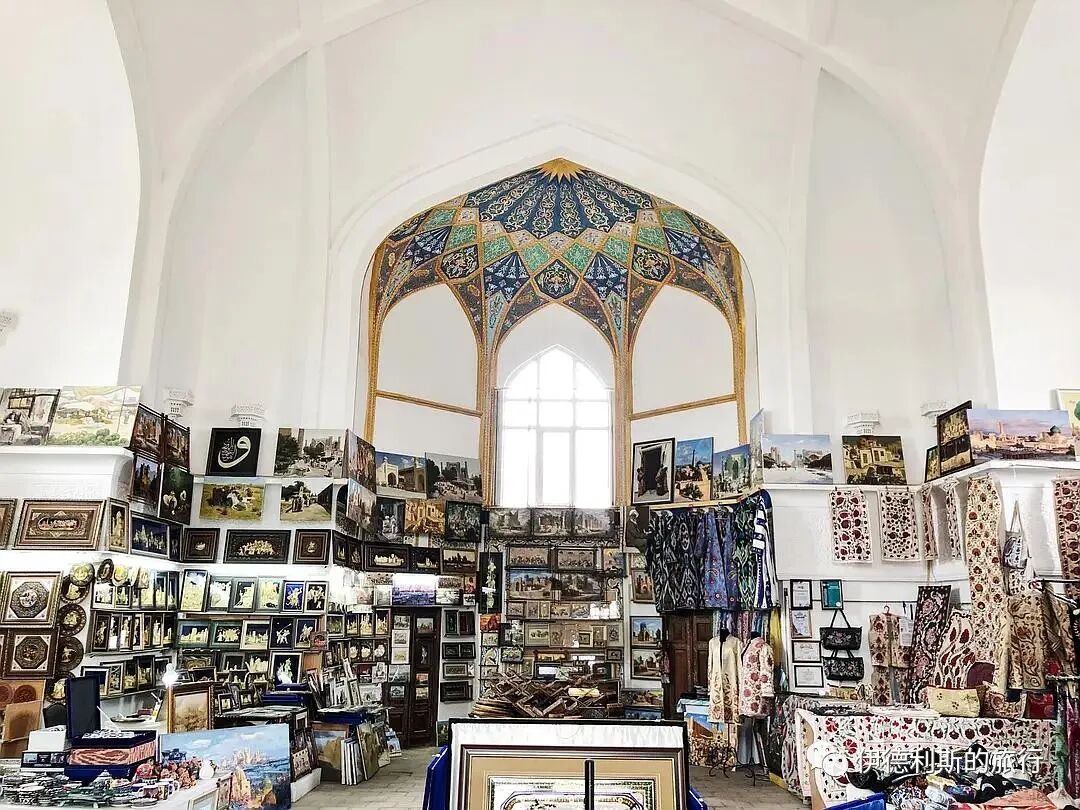
Today, this place has become a spot for selling tourist souvenirs.
Muyi Muborak Library.
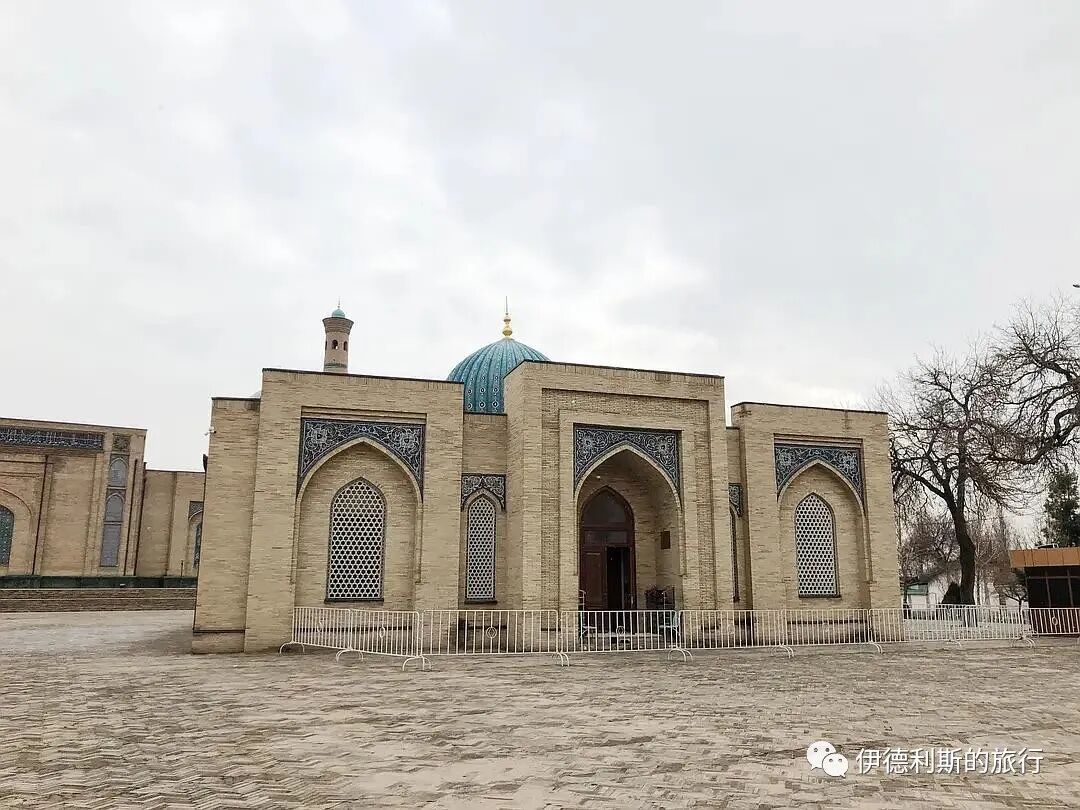
The Muyi Muborak Library was built in the 16th century and is named for housing a hair of the Prophet. The library now holds the famous Uthman Quran, also known as the Samarkand Kufic Quran, along with dozens of other medieval handwritten religious texts. It is now open to tourists as a museum, though photography is not allowed inside.
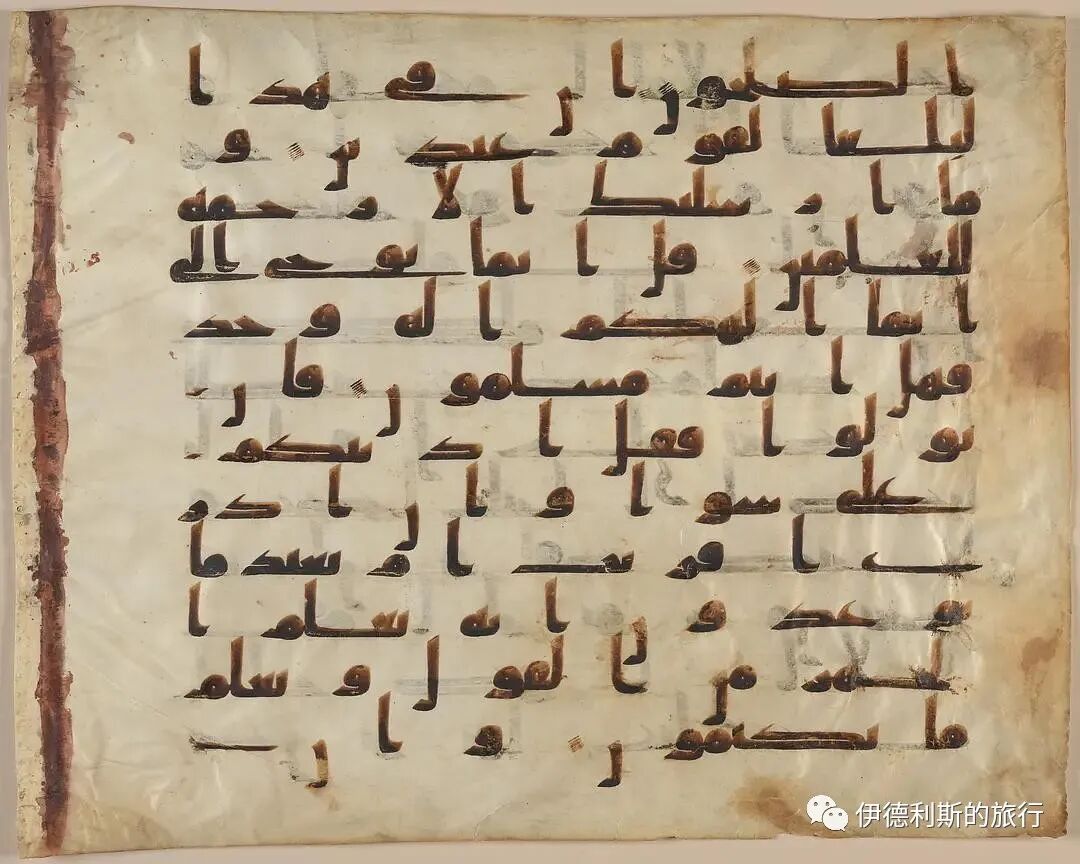
The Uthman Quran is said to have belonged to the third Caliph, Uthman. Based on the symbols used and carbon-14 dating, it likely dates back to the 8th century. One theory is that when Timur invaded the Ottoman Empire in 1402, one of his generals obtained this Quran from Basra, Iraq, and brought it to the Timurid capital of Samarkand. Another theory is that the Sufi master Khoja Ahrar of the Timurid era brought the Quran to Samarkand, as it was kept in the Khoja Ahrar Mosque in Samarkand for a long time and displayed during major holidays.
In 1868, Tsarist Russia invaded the Emirate of Bukhara and occupied Samarkand. In 1869, they took the Quran to the Imperial Library in Saint Petersburg. In December 1917, with Lenin's approval, the Uthman Quran was returned to the Muslims. In early 1918, the Quran was officially handed over to the All-Russian Muslim Council and transported to Ufa, where many Bashkir Muslims lived. In 1923, at the request of the Turkestan ASSR, the Soviet Union returned the Quran to the Khoja Ahrar Mosque in Samarkand. In 1941, it was moved to the People's History Museum in Tashkent, and it was only placed in the current Muyi Muborak Library after the 1990s.
A single page of the Uthman Quran held by the Metropolitan Museum of Art.
Sufi Master Sheihantaur Mausoleum: 1355.
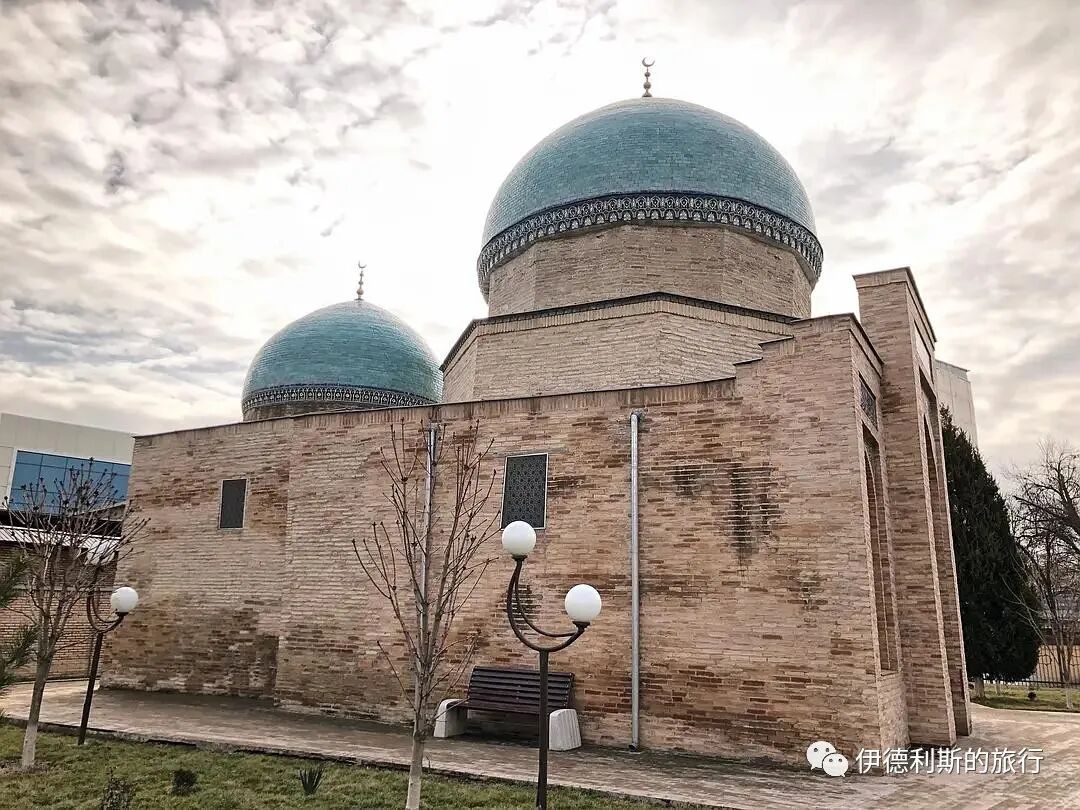
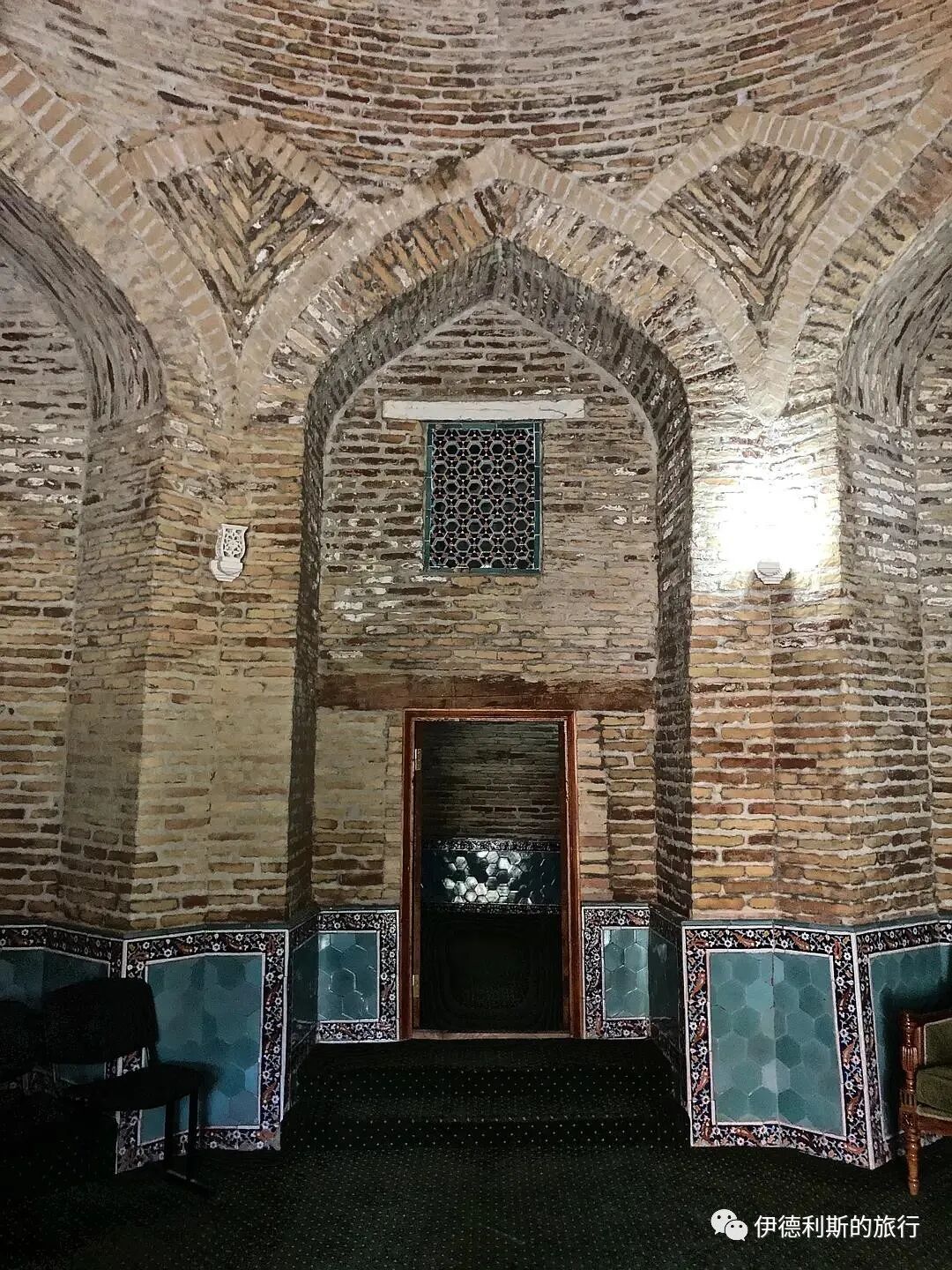
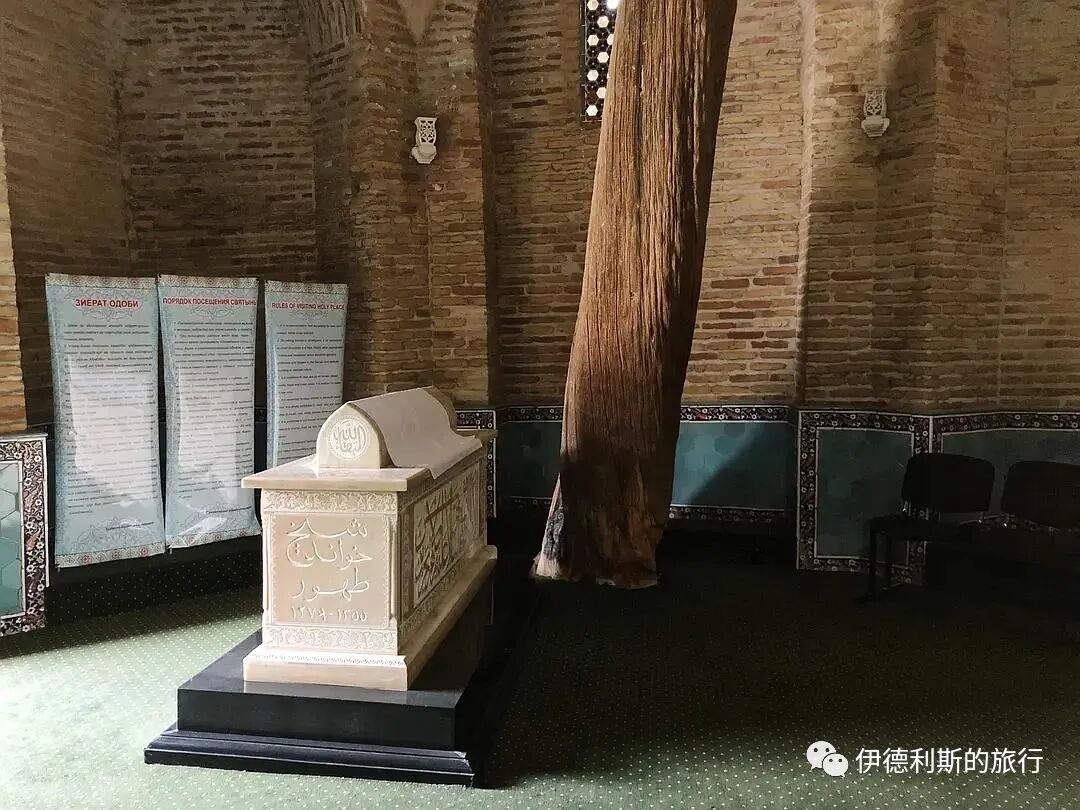
The Islamic University of Tashkent once had a Sheihantaur complex consisting of sixteen mausoleums, but most were destroyed during the Soviet era, and only three remain today. The full name of Sheikh Hovendi at-Tahur is Sheikh Hovendi at-Tahur. He was born in the late 13th century and was the 18th-generation descendant of Caliph Umar. His father traveled to the Transoxiana region of Central Asia to preach. He was born in the ancient city of Turkistan, joined the Sufi Yasaviyya order in his youth, and preached in Tashkent until he passed away there in 1355. People say his tomb was built by the personal order of Timur.
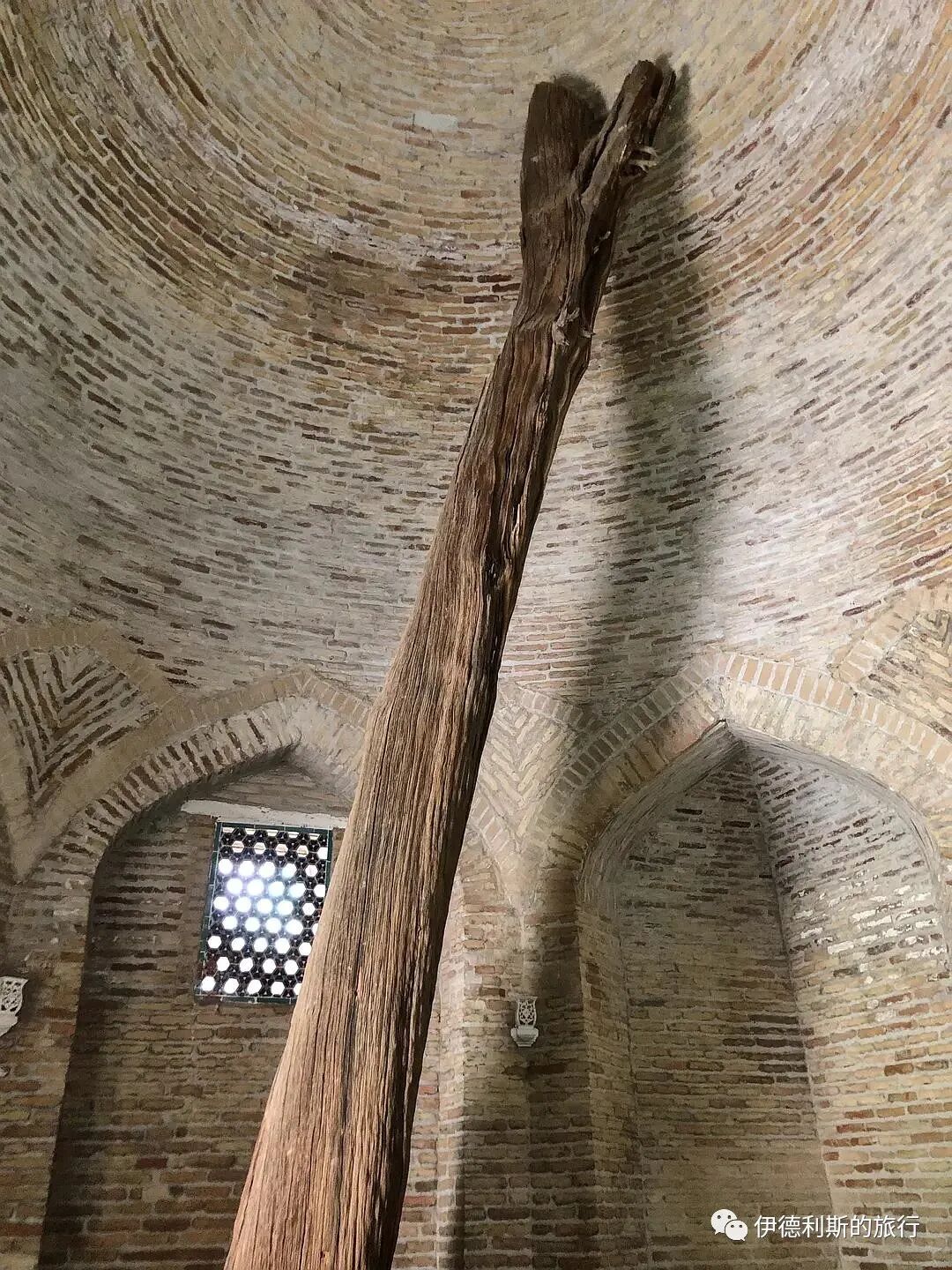
Inside the tomb of Sheikh Hovendi at-Tahur, there is a conifer tree trunk called Saur Iskander. Legend says Alexander the Great once rested under this tree. Many such trees once grew by the pond next to the tomb, but they disappeared after the 15th century. Now, only this petrified trunk remains inside the tomb.
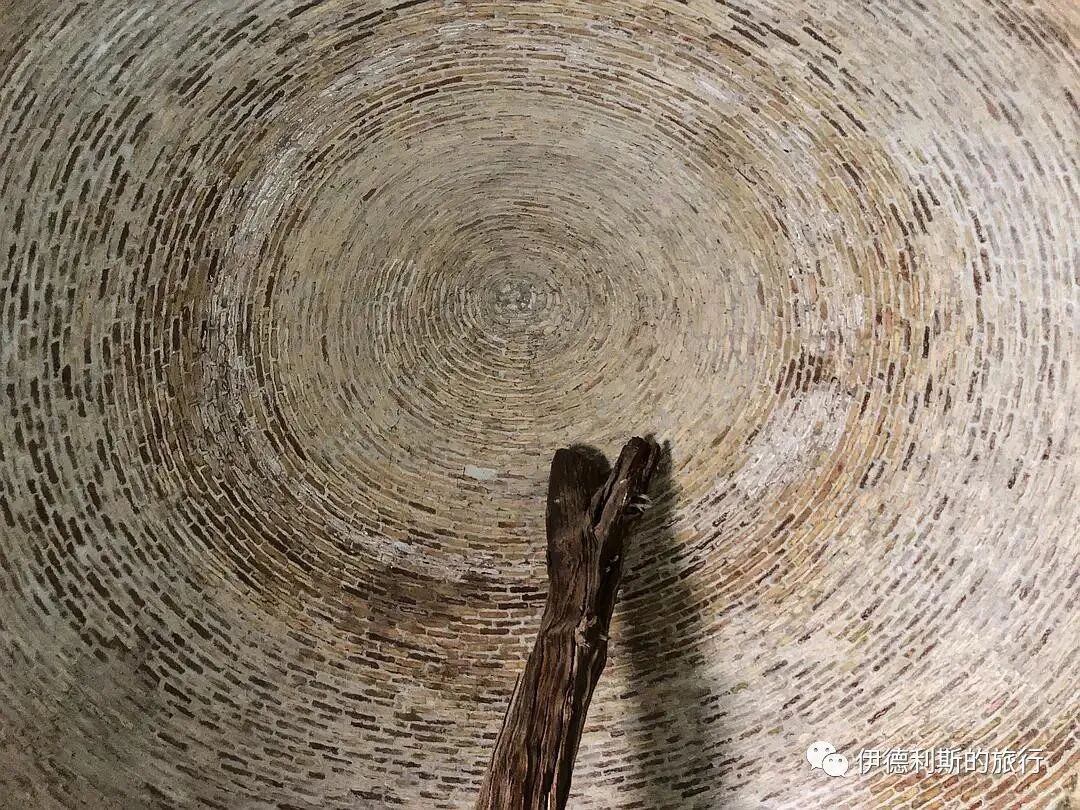
The tomb was restored between 1910 and 1920, and the dome was covered with sheet metal.
Tomb of Yunus Khan of the Moghulistan Khanate: 1487.
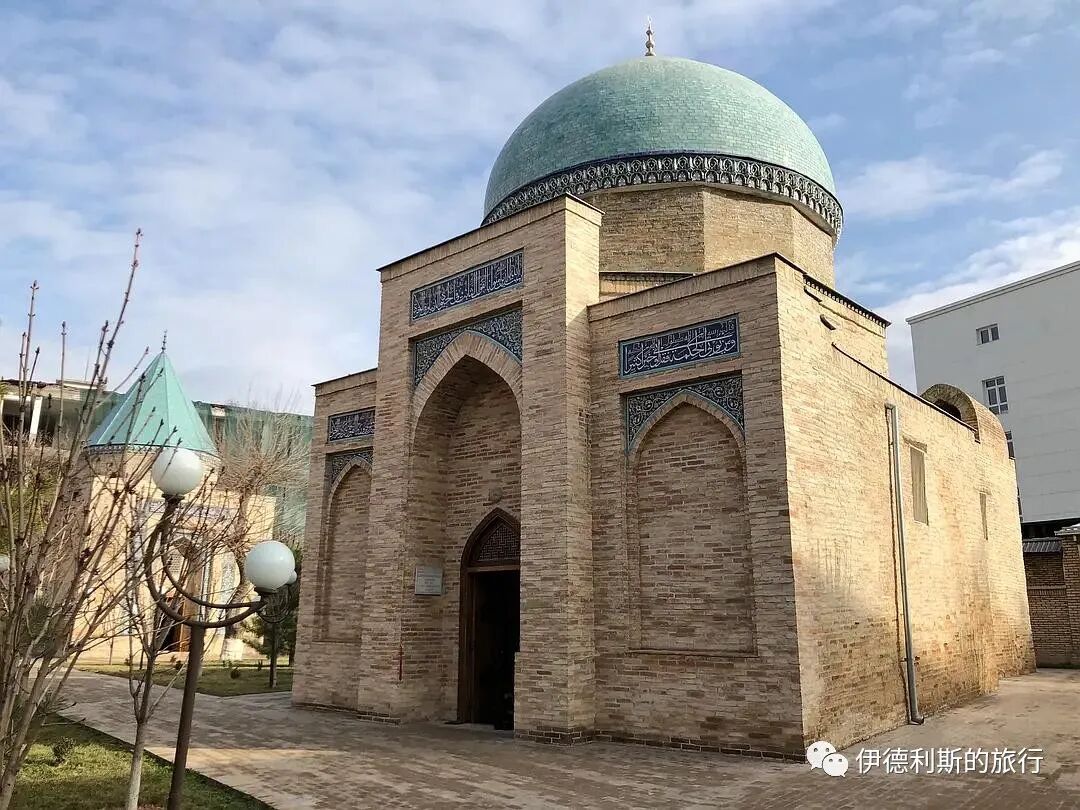
The largest structure in the Sheikh Hovendi at-Tahur complex is the tomb of Yunus Khan (reigned 1462-1487), the Great Khan of the Moghulistan Khanate.
In the History of Ming, Yunus Khan is referred to as Sultan Ali or Haji Ali. He was the maternal grandfather of Babur, the founder of the Mughal Empire, and the grandfather of Said Khan, the founder of the Yarkand Khanate. Yunus Khan was one of the few khans of the Moghulistan Khanate known for his wisdom and intelligence. The Tarikh-i-Rashidi contains a long tribute to him.
Yunus Khan grew up in the Transoxiana region of Central Asia and received a systematic education in Iran under the famous Iranian scholar Sharaf ad-Din Ali Yazdi. Later, he relied on the support of the Timurid dynasty to secure the throne of the Moghulistan Khanate. After taking the throne, Yunus Khan longed for city life and wanted to move the khan's court from the Moghul grasslands in the north to Aksu in the south. This caused dissatisfaction among the traditional Chagatai Mongol nobles and sparked civil unrest within the khanate.
In 1484, because he could not find peace on the Moghul grasslands due to his subordinates, Yunus Khan marched west into Transoxiana and occupied Tashkent. After conquering Tashkent, the nearly 70-year-old Yunus Khan was finally able to enjoy the city life he had craved for years. He lived in Tashkent until his death in 1487.
Tomb of the Kazakh hero Tole Biy: 1756.
Tole Biy (1663-1756) was a chief justice and poet of the Kazakh Khanate. Tole Biy once governed the Senior Juz, helped promote the unification of the Senior, Middle, and Junior Juz, and participated in the drafting of the important Seven Codes (Zheti Zhargy) of the Kazakh Khanate.
Legend says that when the Dzungar army invaded Central Asia, Tole Biy refused to flee and stayed in his felt tent (yurt). The Dzungar commander asked Tole Biy why he did not leave. Tole Biy said that a swallow had built a nest on his tent, and he could not bear to destroy the nest and the chicks. He said the swallow is a sacred animal and a friend to humans, and he would not destroy the swallow's nest just because the enemy had arrived. The Dzungar commander spared Tole Biy because of this. After this, the people of Tashkent called Tole Biy the Sacred Swallow (Kaldyrgach-biy).
Afterward, Tole Biy led the Kazakhs in a struggle against the Dzungar Khanate until the Dzungars finally left Tashkent in 1745, and Tole Biy became the governor of Tashkent.
After Tole Biy died in 1756, he was buried in Tashkent. His tomb has a pyramidal dome, which is very rare in Uzbekistan. One theory is that it was built to resemble a felt tent. During the Soviet era, the tomb of Tole Biy became a souvenir factory until architect V. M. Filimonov restored the tomb in 1970.
Kukeldash Madrasa: 1570.
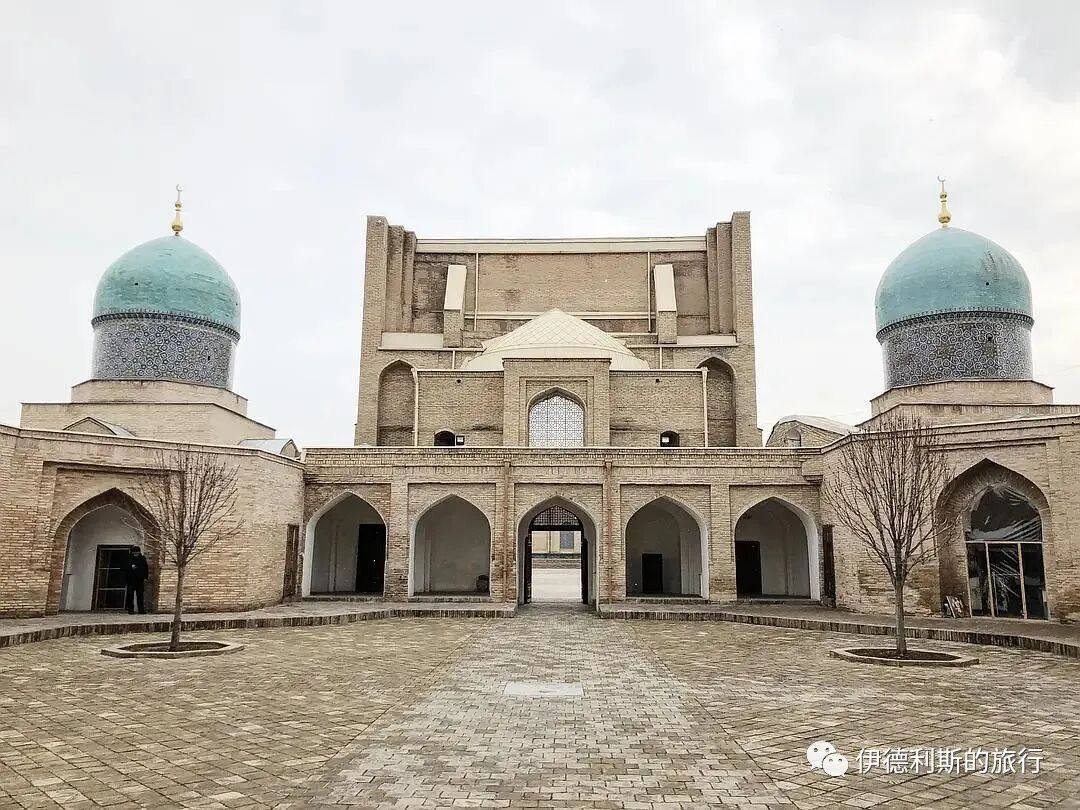
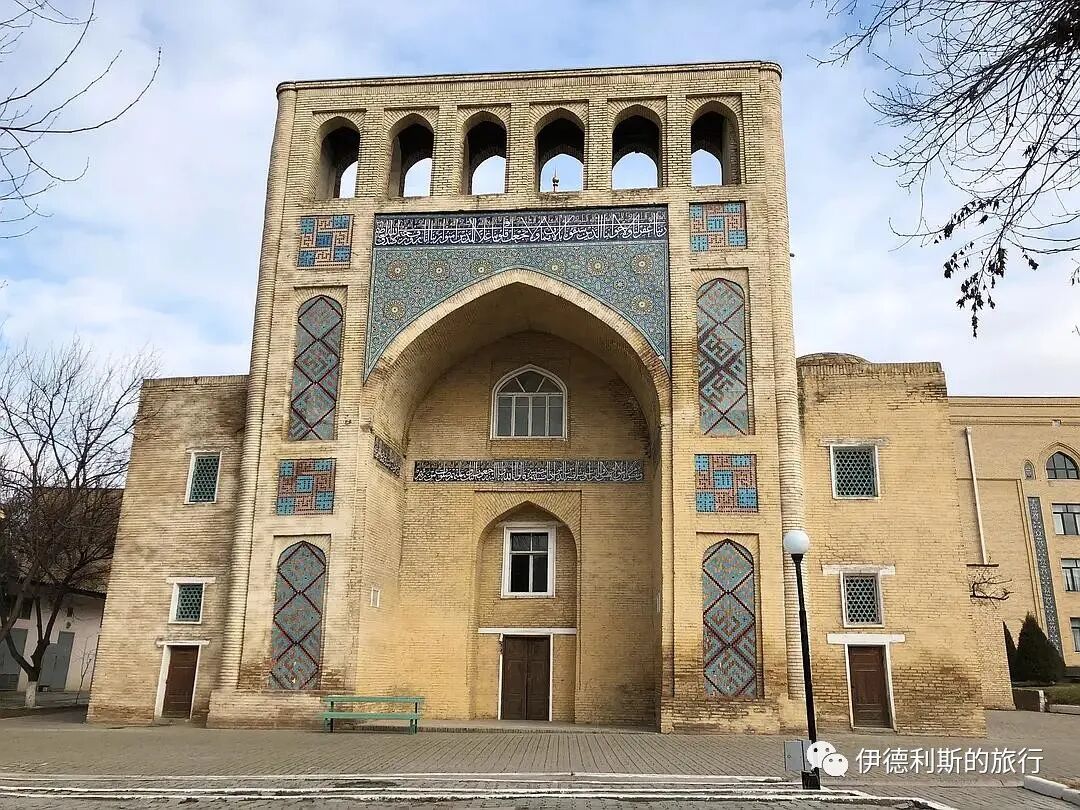
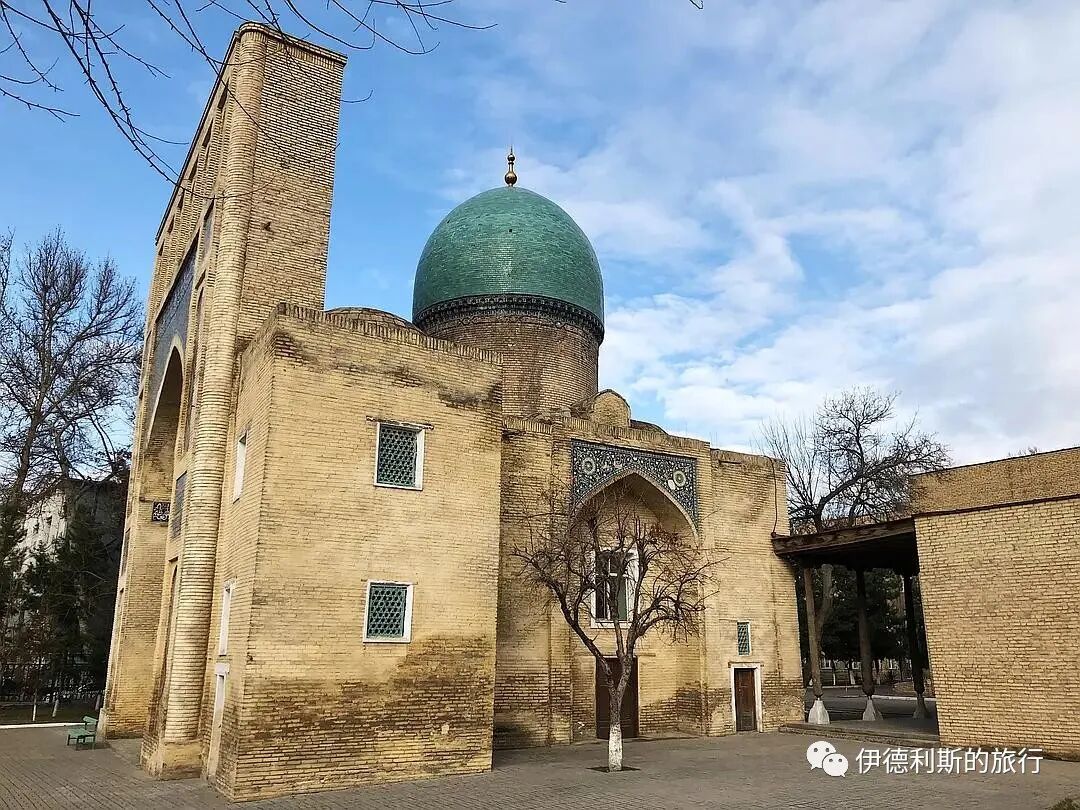
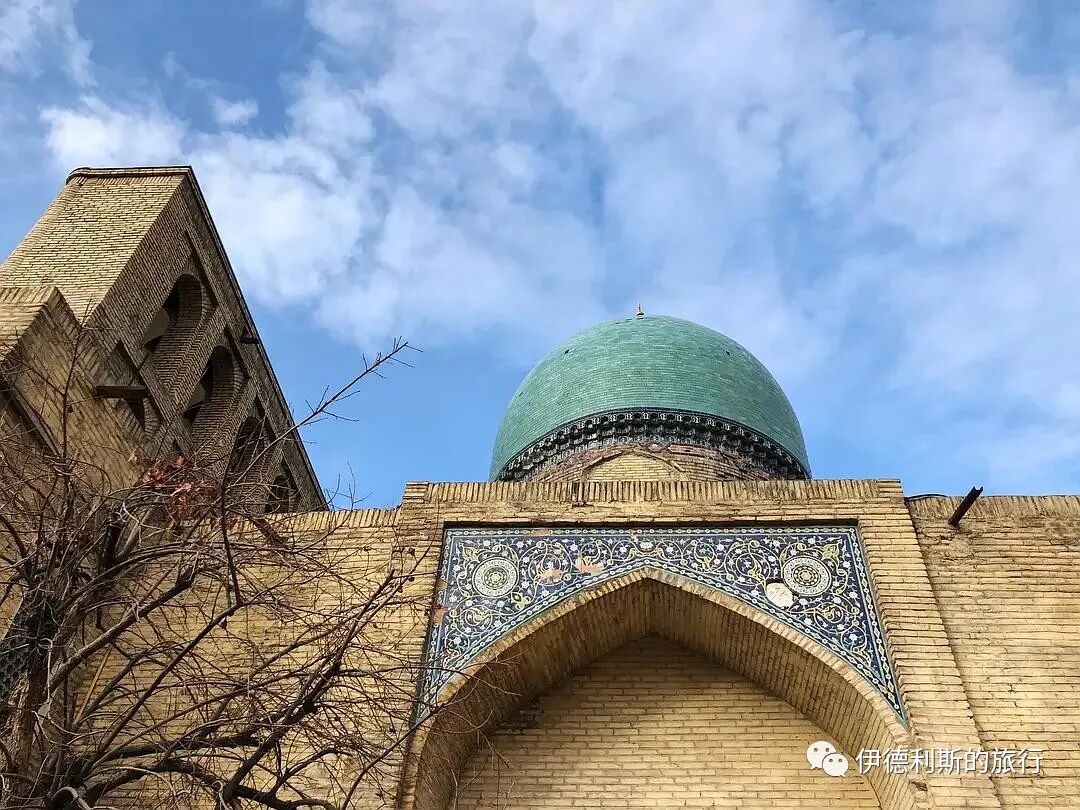
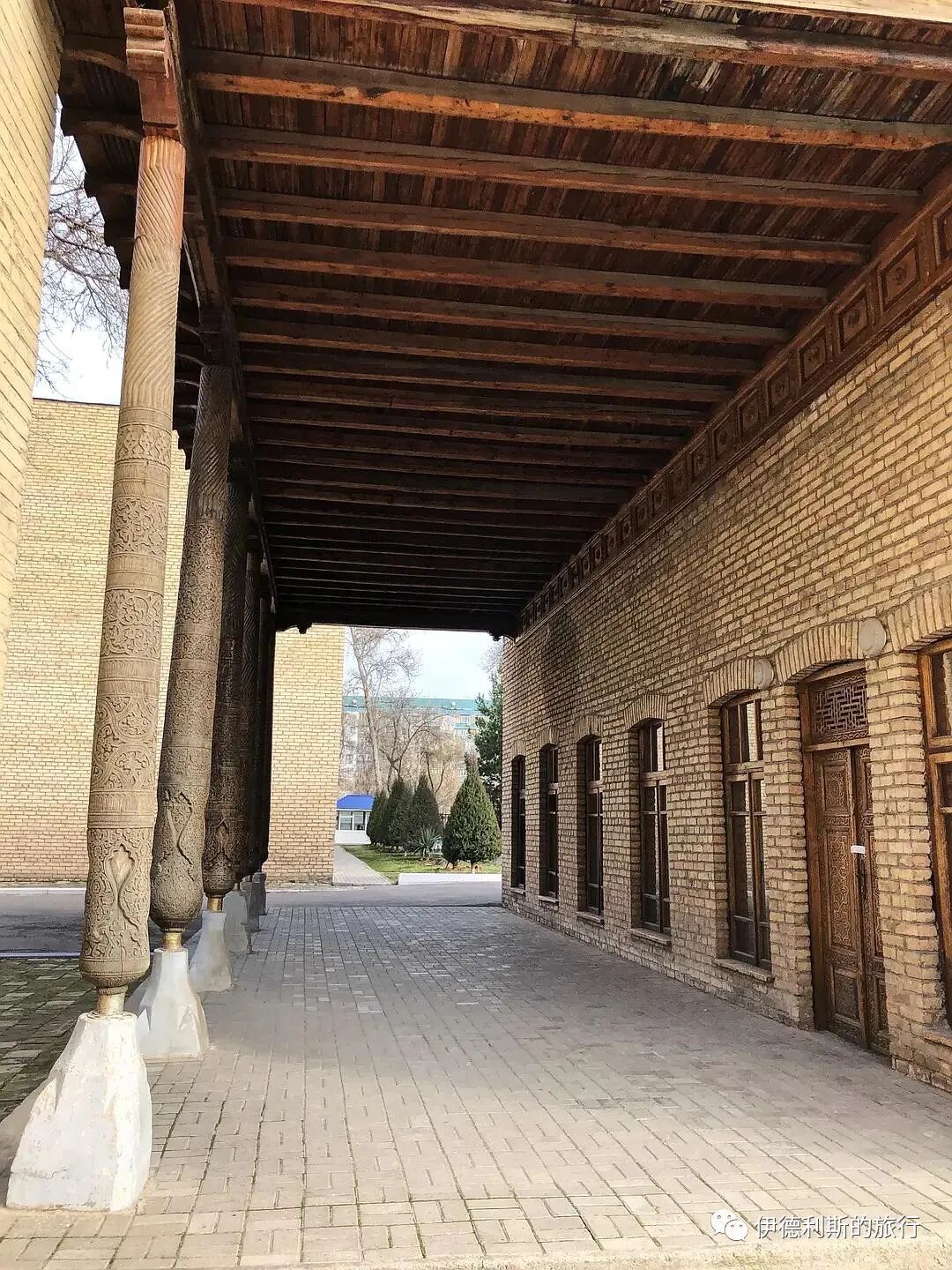
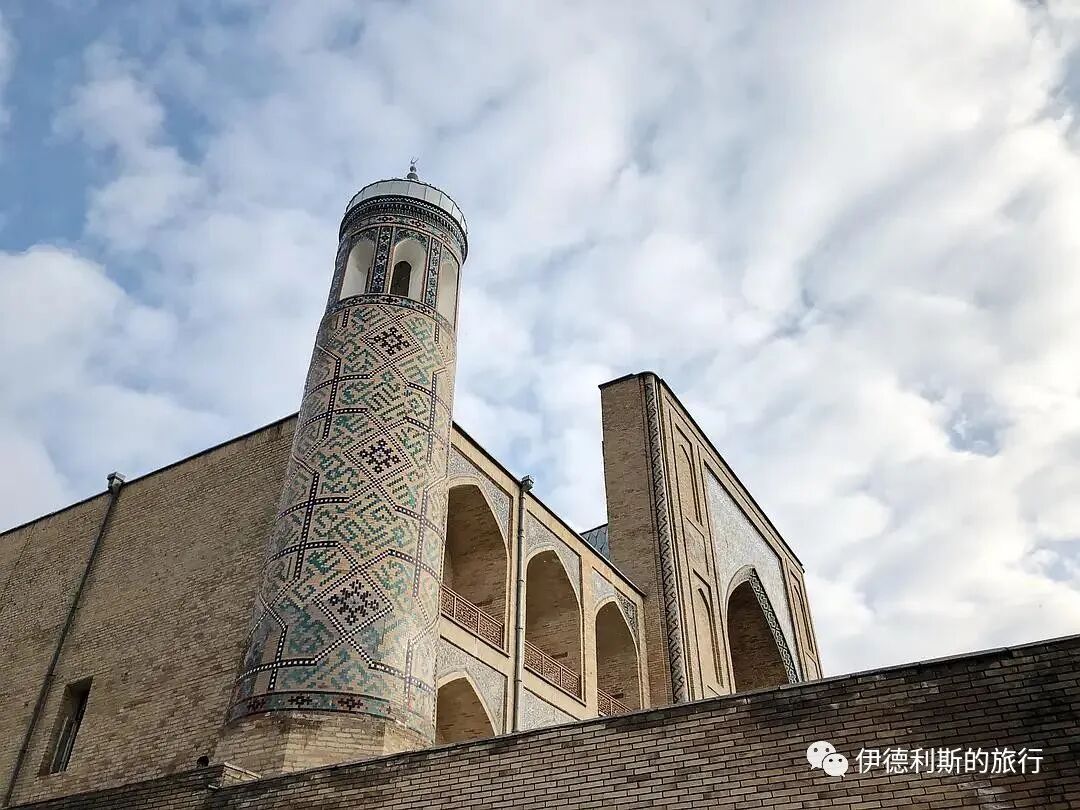
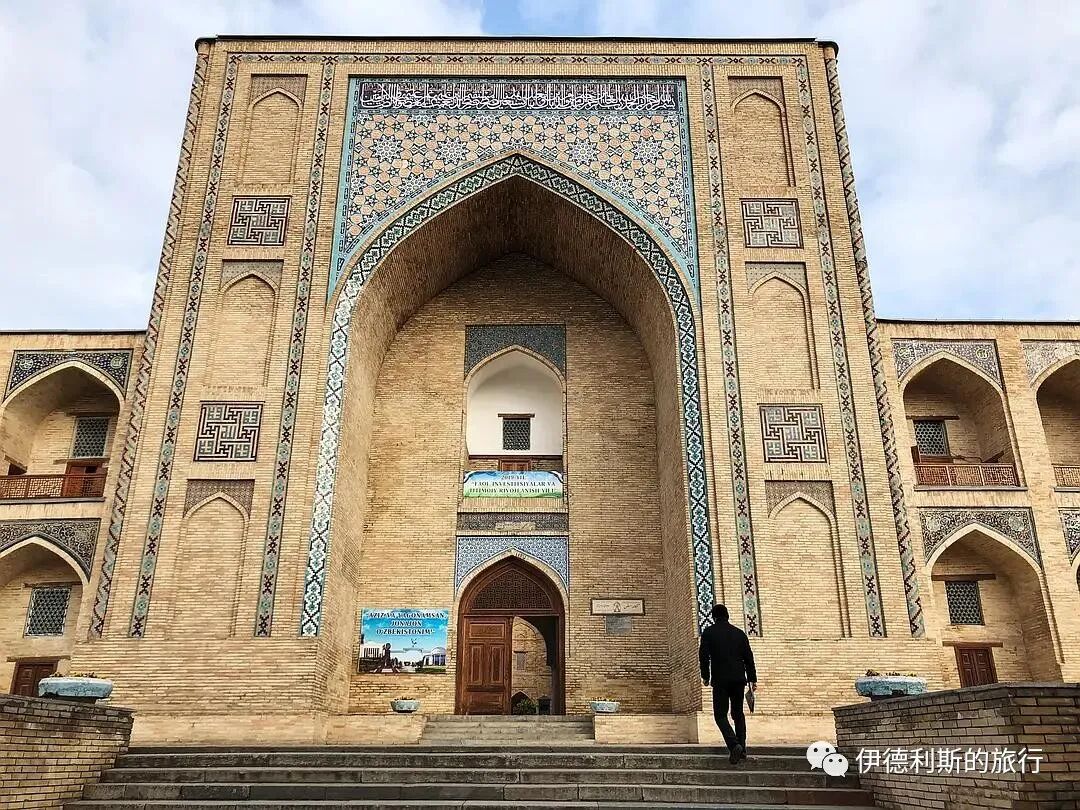
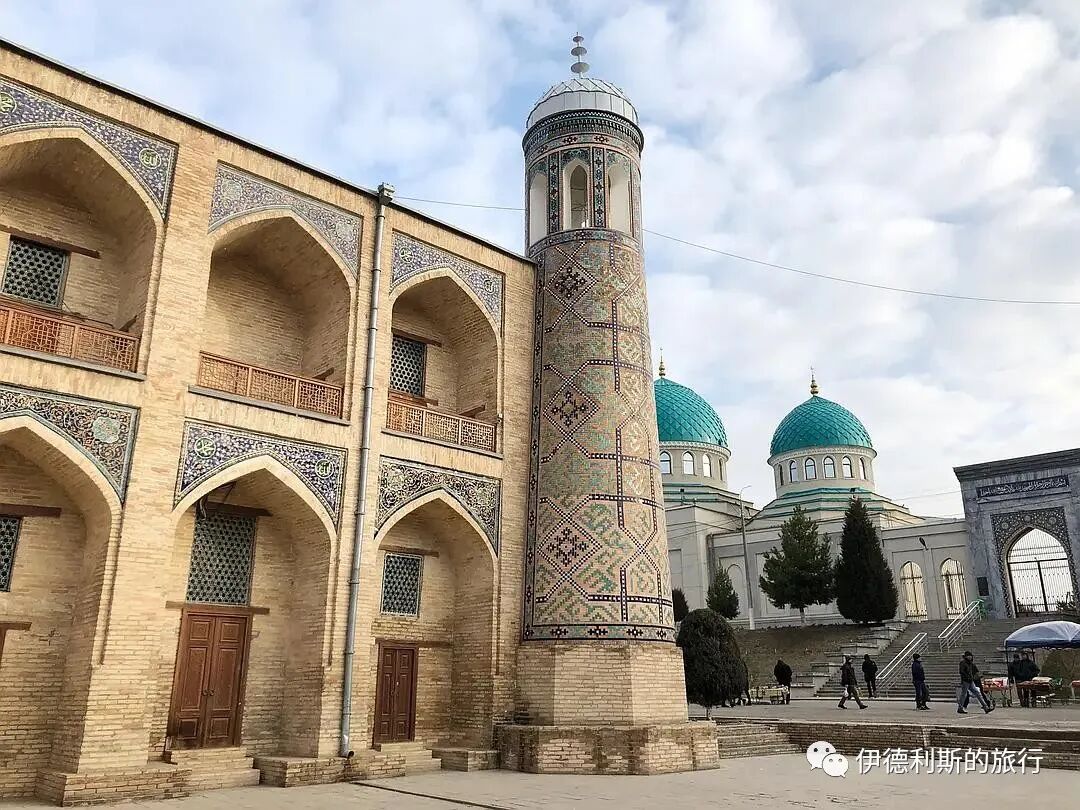
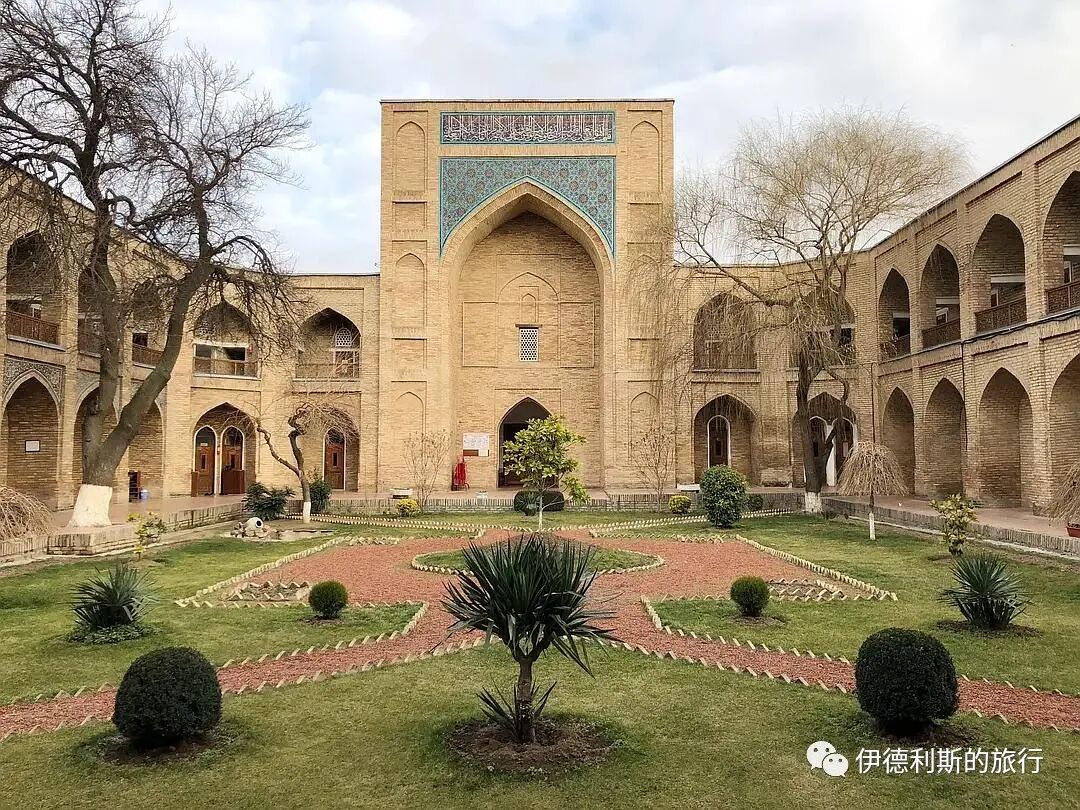
Kukeldash Madrasa is next to Chorsu Bazaar. It was built in 1570 by Dervish Khan, who ruled Tashkent for the Shaybanid dynasty of the Bukhara Khanate. The madrasa is built of yellow bricks, with a 20-meter-high gate in the center, surrounded by student rooms (hujras).
After the 18th century, the madrasa was converted into a caravan inn (caravanserai) and later into a fortress. The madrasa building was severely damaged in earthquakes in 1866 and 1886. It was rebuilt in 1902-1903, rebuilt again in the 1950s, and survived the 1966 Tashkent earthquake. During the Soviet era, it served as an atheism museum and a folk music museum, only returning to use as a madrasa after the Soviet Union collapsed in the 1990s. view all
Summary: Tashkent — Old City, Mosques and Central Asian History is presented here as a firsthand travel account in clear English, beginning with this scene: Tashkent is the capital of Uzbekistan. From the Northern and Southern Dynasties to the Tang Dynasty, it was the capital of the state of Shi, one of the Nine Zhaowu States. The account keeps its focus on Tashkent Travel, Central Asia, Muslim Heritage while preserving the names, places, food, and historical details from the Chinese source.
Tashkent is the capital of Uzbekistan. From the Northern and Southern Dynasties to the Tang Dynasty, it was the capital of the state of Shi, one of the Nine Zhaowu States. In the early 8th century, Arabs conquered Tashkent. It later became part of the Samanid Empire and the Kara-Khanid Khanate, before being destroyed by Genghis Khan's Mongol army in 1219.
During the Timurid Empire and the Shaybanid dynasty of the Bukhara Khanate between the 14th and 16th centuries, Tashkent's population and size recovered, making it a commercial and cultural hub along the Silk Road. Most of the historical buildings still standing in Tashkent today were built during this period. During the unrest of the late Timurid period, Tashkent briefly served as the capital of the Moghulistan Khanate. The tomb of Yunus Khan is still preserved here today.
Tashkent was incorporated into the Kazakh Khanate during the 17th and 18th centuries, becoming its capital in the 18th century. The tomb of a Kazakh hero is still preserved in Tashkent today.
The famous Imam Kaffal Shashi Mausoleum: 1541.
Abu Bakr Mohammed Kaffal Shashi was a famous imam and scholar during the Samanid period. He was born in 903 to a locksmith's family in Tashkent. He traveled to Khorasan for his studies when he was young, then went to Baghdad, the center of the Islamic world at the time, for further education. He became a brilliant jurist, linguist, and poet, and people honored him as the Great Imam (Hazrat Imam). After traveling the world, Kaffal Shashi returned to his hometown of Tashkent. He passed away in 976 and was buried in a garden on the outskirts of the city.
The current Kaffal Shashi Mausoleum was rebuilt in 1541 during the Shaybanid dynasty. It features the design of a Sufi lodge (khanaqah), including a tall arched gate (iwan) and a dome. Besides Kaffal Shashi, his students, including his three main disciples, are also buried inside. The mausoleum was once covered in beautiful tiles, but only parts remain today and have been restored. Additionally, the window lattices on the mausoleum gate are 500 years old.
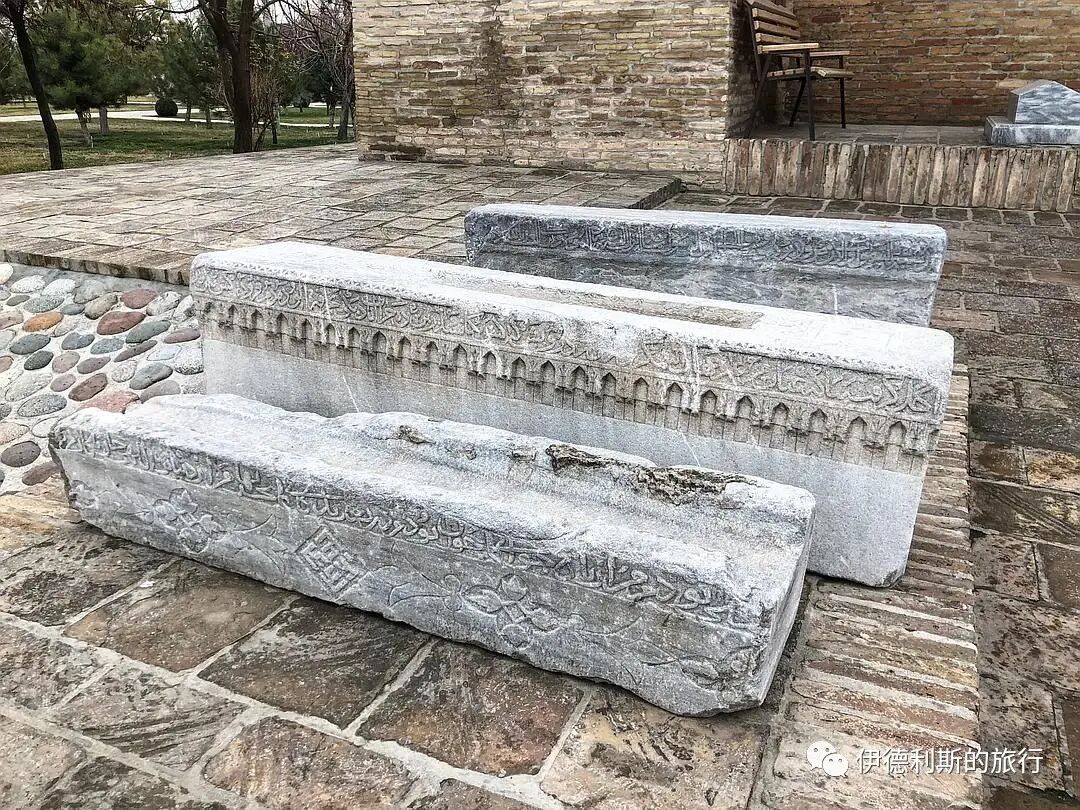
According to Tashkent legend, rubbing dust from this tomb on one's face can help a woman conceive, which attracts many women who are struggling to get pregnant.
Tombstones outside the mausoleum.
Barak Khan Madrasa: 1550s.
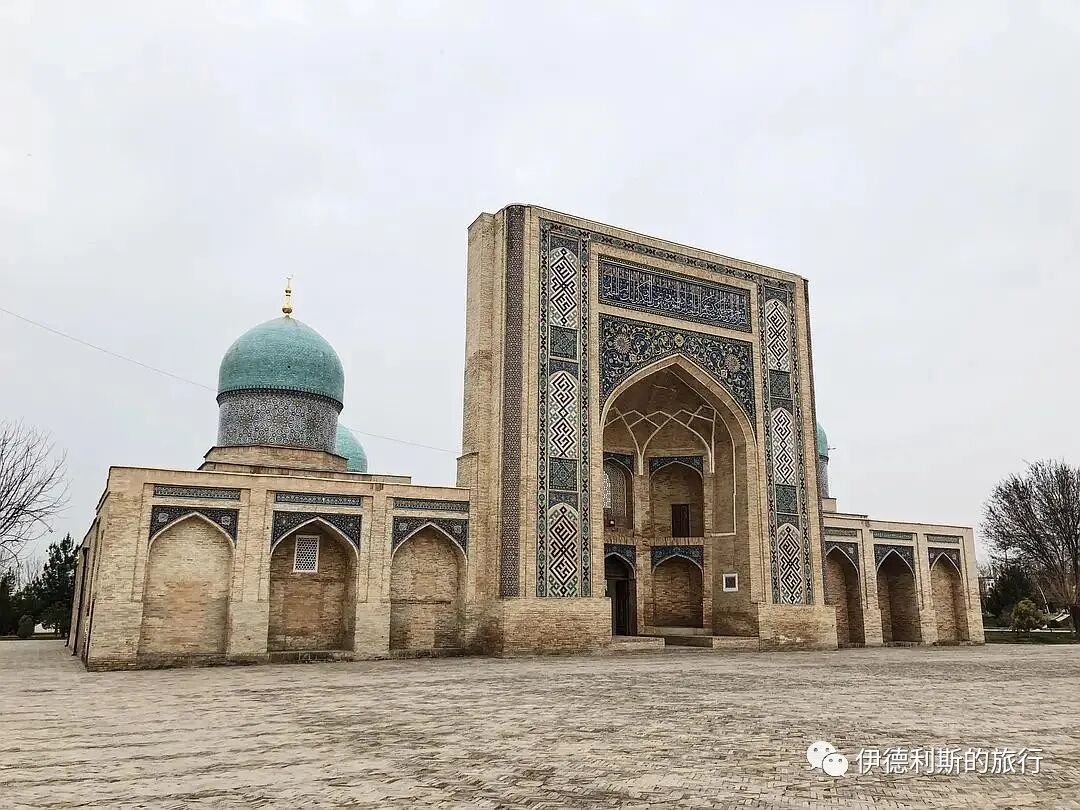
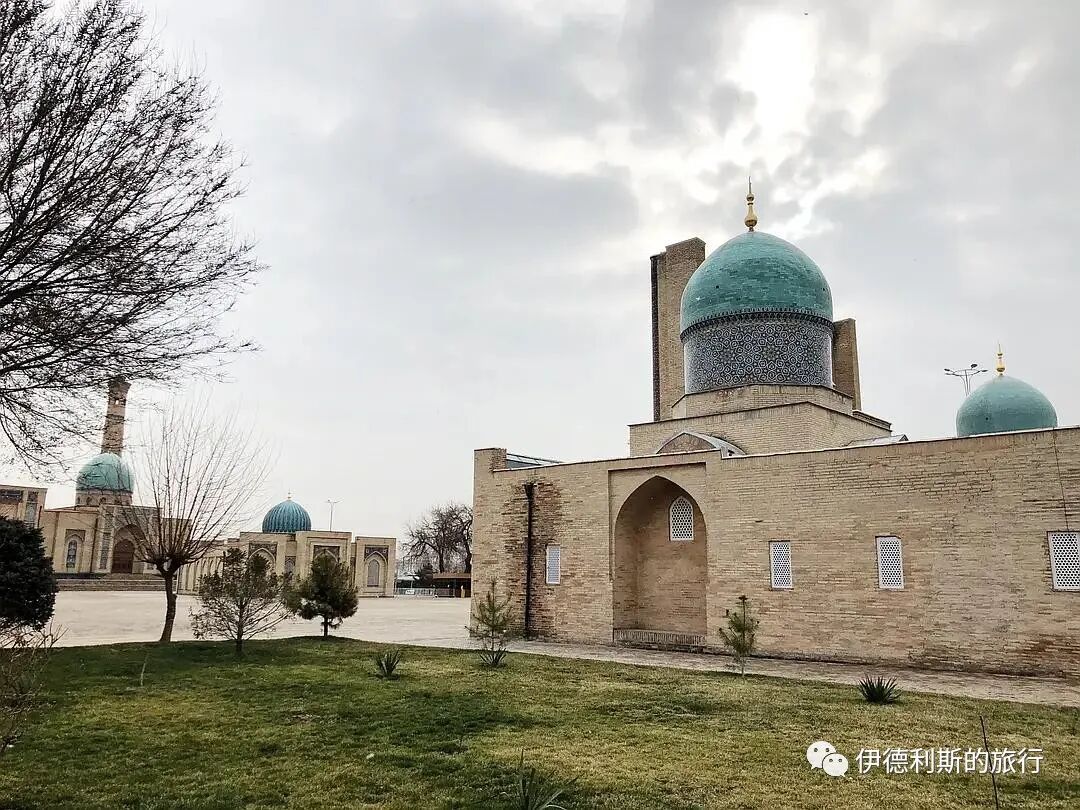
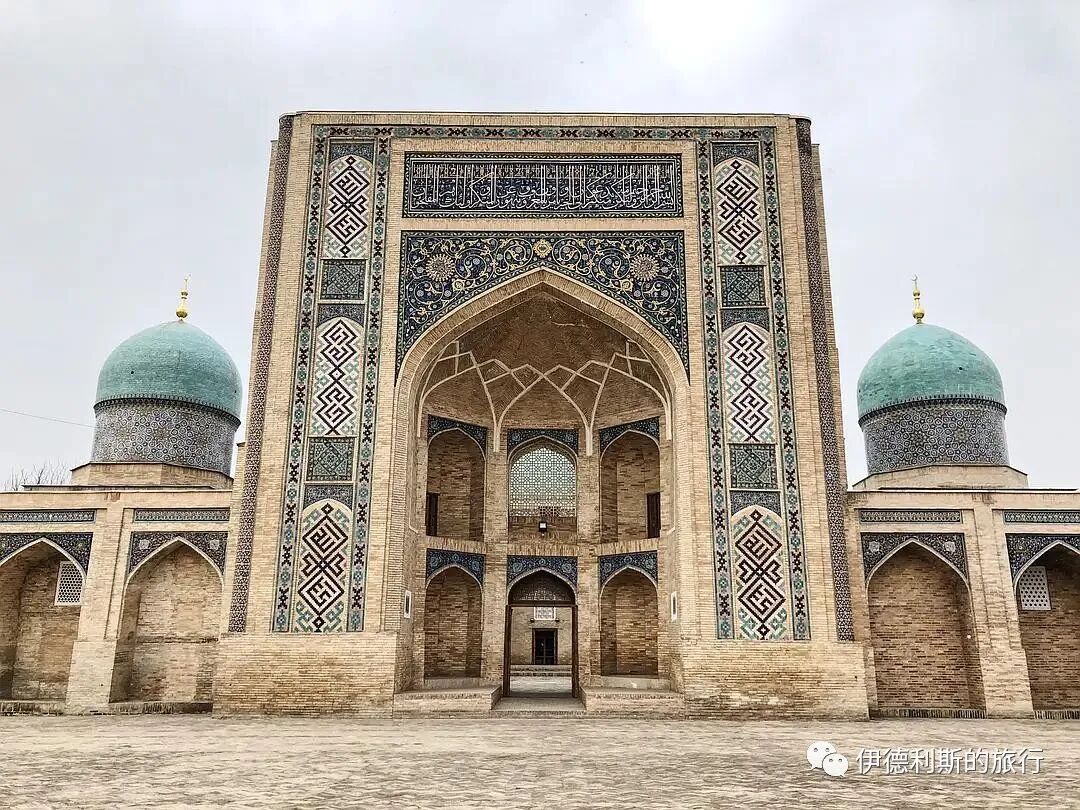
Barak Khan (reigned 1552-1556), whose real name was Nawruz Ahmad, was a khan of the Shaybanid dynasty of the Bukhara Khanate and served as the governor of the Tashkent region for a long time. The madrasa is located just south of the Kaffal Shashi Mausoleum. The original structure was a tomb and lodge (khanqah) built by Barak Khan's father, Suyunich Khan, in the 1530s. In the 1550s, Barak Khan built the current madrasa and combined it with the tomb. Because of its blue dome, it is also called the Blue Dome (Kuk Gumbaz/gongbei).
The blue dome was damaged during the 1868 Tashkent earthquake. The madrasa was forced to close during the Soviet era, but it was restored between 1955 and 1963 under the direction of Usto Shirin Muradov. The existing tiles still bear verses dedicated to Tashkent by the madrasa's first principal, the famous poet Zayn ad-Din Vasifi (1485-1556). One line reads, 'Perhaps it is better to die in Tashkent than to live a miserable life elsewhere.' ”
Today, this place has become a spot for selling tourist souvenirs.
Muyi Muborak Library.
The Muyi Muborak Library was built in the 16th century and is named for housing a hair of the Prophet. The library now holds the famous Uthman Quran, also known as the Samarkand Kufic Quran, along with dozens of other medieval handwritten religious texts. It is now open to tourists as a museum, though photography is not allowed inside.
The Uthman Quran is said to have belonged to the third Caliph, Uthman. Based on the symbols used and carbon-14 dating, it likely dates back to the 8th century. One theory is that when Timur invaded the Ottoman Empire in 1402, one of his generals obtained this Quran from Basra, Iraq, and brought it to the Timurid capital of Samarkand. Another theory is that the Sufi master Khoja Ahrar of the Timurid era brought the Quran to Samarkand, as it was kept in the Khoja Ahrar Mosque in Samarkand for a long time and displayed during major holidays.
In 1868, Tsarist Russia invaded the Emirate of Bukhara and occupied Samarkand. In 1869, they took the Quran to the Imperial Library in Saint Petersburg. In December 1917, with Lenin's approval, the Uthman Quran was returned to the Muslims. In early 1918, the Quran was officially handed over to the All-Russian Muslim Council and transported to Ufa, where many Bashkir Muslims lived. In 1923, at the request of the Turkestan ASSR, the Soviet Union returned the Quran to the Khoja Ahrar Mosque in Samarkand. In 1941, it was moved to the People's History Museum in Tashkent, and it was only placed in the current Muyi Muborak Library after the 1990s.
A single page of the Uthman Quran held by the Metropolitan Museum of Art.
Sufi Master Sheihantaur Mausoleum: 1355.
The Islamic University of Tashkent once had a Sheihantaur complex consisting of sixteen mausoleums, but most were destroyed during the Soviet era, and only three remain today. The full name of Sheikh Hovendi at-Tahur is Sheikh Hovendi at-Tahur. He was born in the late 13th century and was the 18th-generation descendant of Caliph Umar. His father traveled to the Transoxiana region of Central Asia to preach. He was born in the ancient city of Turkistan, joined the Sufi Yasaviyya order in his youth, and preached in Tashkent until he passed away there in 1355. People say his tomb was built by the personal order of Timur.
Inside the tomb of Sheikh Hovendi at-Tahur, there is a conifer tree trunk called Saur Iskander. Legend says Alexander the Great once rested under this tree. Many such trees once grew by the pond next to the tomb, but they disappeared after the 15th century. Now, only this petrified trunk remains inside the tomb.
The tomb was restored between 1910 and 1920, and the dome was covered with sheet metal.
Tomb of Yunus Khan of the Moghulistan Khanate: 1487.
The largest structure in the Sheikh Hovendi at-Tahur complex is the tomb of Yunus Khan (reigned 1462-1487), the Great Khan of the Moghulistan Khanate.
In the History of Ming, Yunus Khan is referred to as Sultan Ali or Haji Ali. He was the maternal grandfather of Babur, the founder of the Mughal Empire, and the grandfather of Said Khan, the founder of the Yarkand Khanate. Yunus Khan was one of the few khans of the Moghulistan Khanate known for his wisdom and intelligence. The Tarikh-i-Rashidi contains a long tribute to him.
Yunus Khan grew up in the Transoxiana region of Central Asia and received a systematic education in Iran under the famous Iranian scholar Sharaf ad-Din Ali Yazdi. Later, he relied on the support of the Timurid dynasty to secure the throne of the Moghulistan Khanate. After taking the throne, Yunus Khan longed for city life and wanted to move the khan's court from the Moghul grasslands in the north to Aksu in the south. This caused dissatisfaction among the traditional Chagatai Mongol nobles and sparked civil unrest within the khanate.
In 1484, because he could not find peace on the Moghul grasslands due to his subordinates, Yunus Khan marched west into Transoxiana and occupied Tashkent. After conquering Tashkent, the nearly 70-year-old Yunus Khan was finally able to enjoy the city life he had craved for years. He lived in Tashkent until his death in 1487.
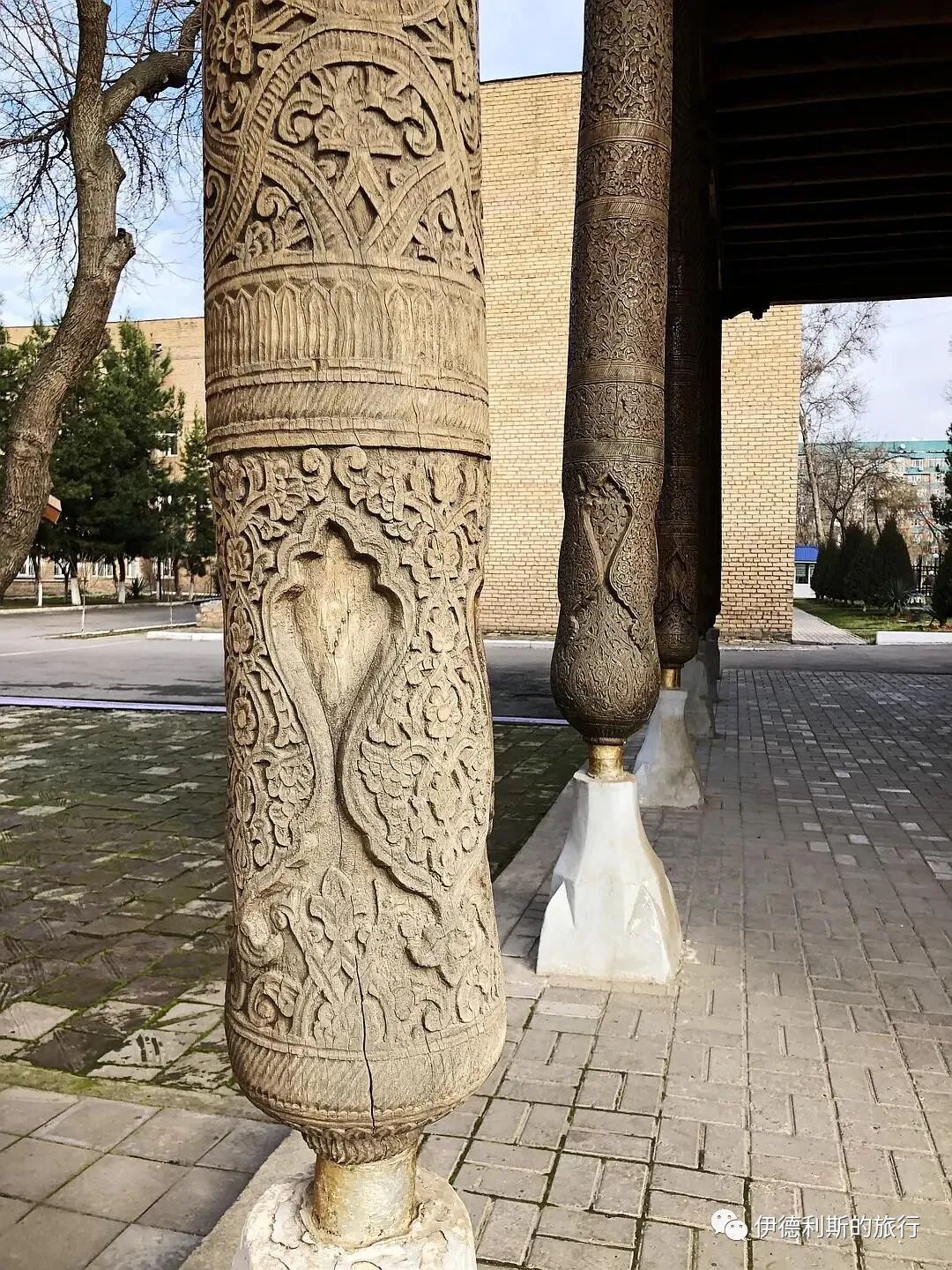
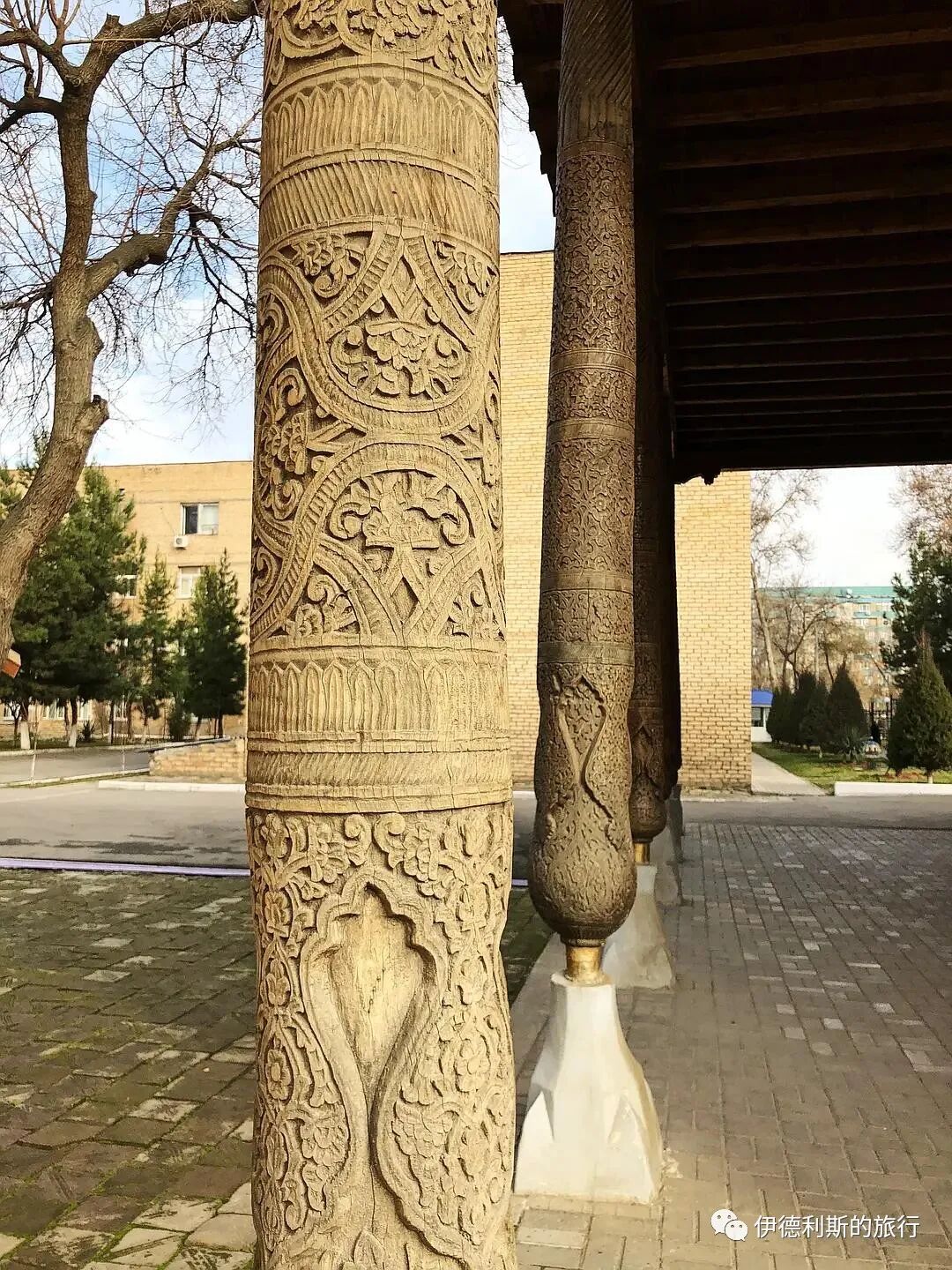
Tomb of the Kazakh hero Tole Biy: 1756.
Tole Biy (1663-1756) was a chief justice and poet of the Kazakh Khanate. Tole Biy once governed the Senior Juz, helped promote the unification of the Senior, Middle, and Junior Juz, and participated in the drafting of the important Seven Codes (Zheti Zhargy) of the Kazakh Khanate.
Legend says that when the Dzungar army invaded Central Asia, Tole Biy refused to flee and stayed in his felt tent (yurt). The Dzungar commander asked Tole Biy why he did not leave. Tole Biy said that a swallow had built a nest on his tent, and he could not bear to destroy the nest and the chicks. He said the swallow is a sacred animal and a friend to humans, and he would not destroy the swallow's nest just because the enemy had arrived. The Dzungar commander spared Tole Biy because of this. After this, the people of Tashkent called Tole Biy the Sacred Swallow (Kaldyrgach-biy).
Afterward, Tole Biy led the Kazakhs in a struggle against the Dzungar Khanate until the Dzungars finally left Tashkent in 1745, and Tole Biy became the governor of Tashkent.
After Tole Biy died in 1756, he was buried in Tashkent. His tomb has a pyramidal dome, which is very rare in Uzbekistan. One theory is that it was built to resemble a felt tent. During the Soviet era, the tomb of Tole Biy became a souvenir factory until architect V. M. Filimonov restored the tomb in 1970.
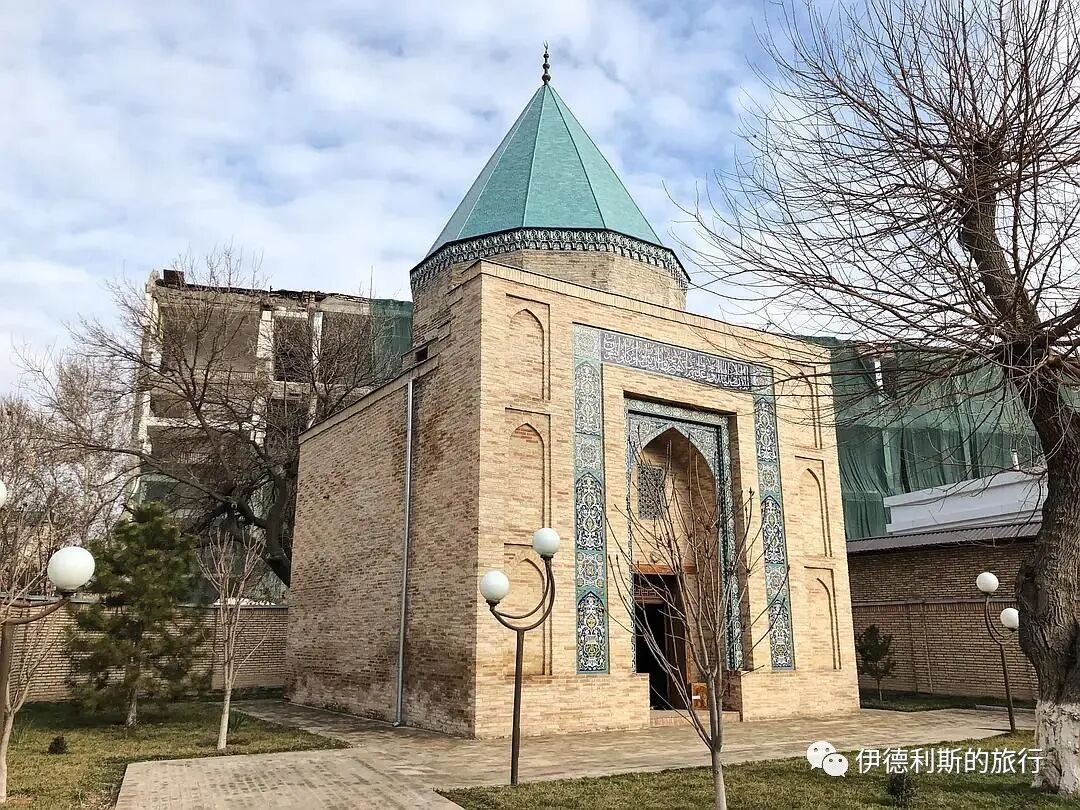
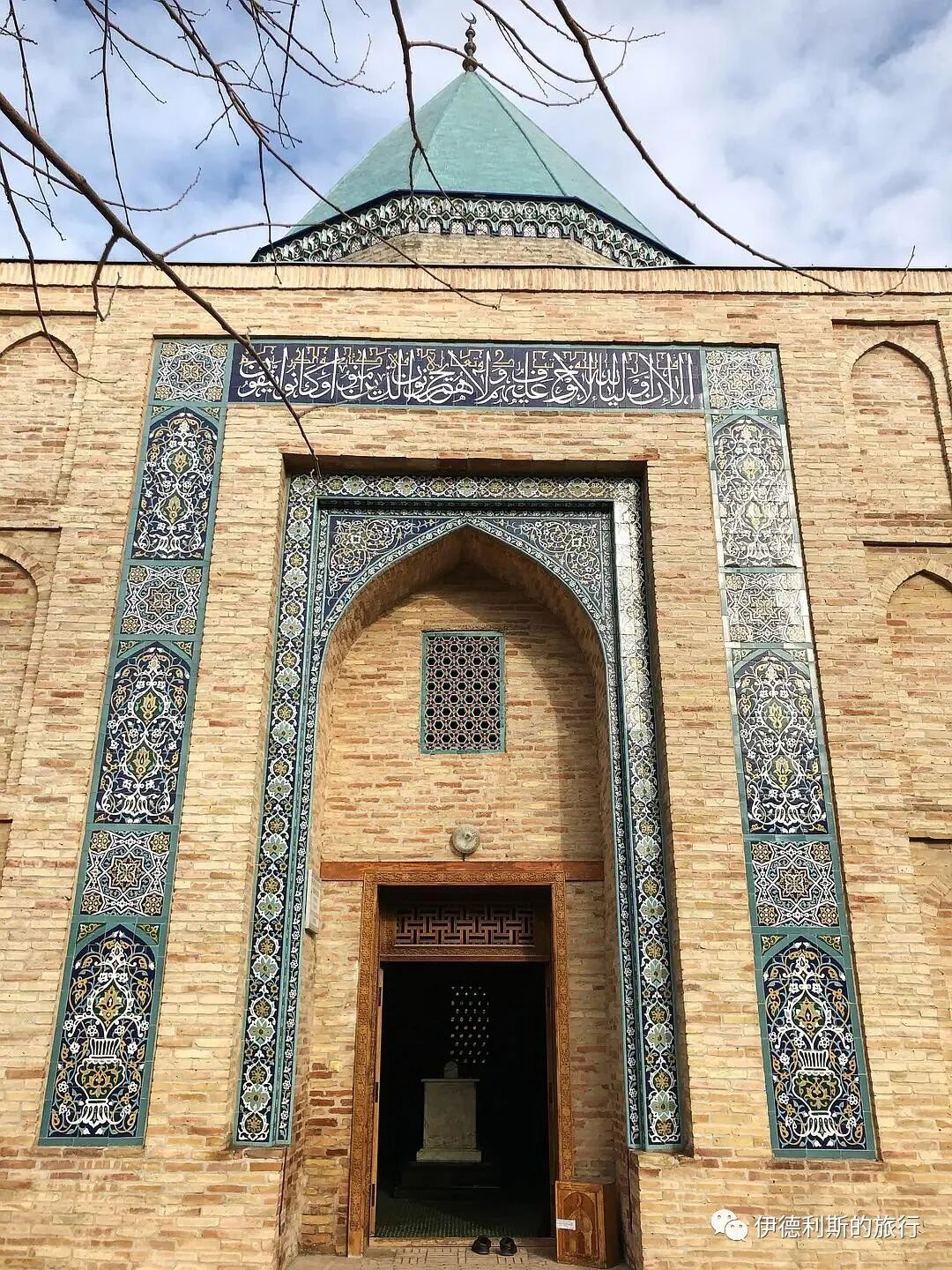
Kukeldash Madrasa: 1570.
Kukeldash Madrasa is next to Chorsu Bazaar. It was built in 1570 by Dervish Khan, who ruled Tashkent for the Shaybanid dynasty of the Bukhara Khanate. The madrasa is built of yellow bricks, with a 20-meter-high gate in the center, surrounded by student rooms (hujras).
After the 18th century, the madrasa was converted into a caravan inn (caravanserai) and later into a fortress. The madrasa building was severely damaged in earthquakes in 1866 and 1886. It was rebuilt in 1902-1903, rebuilt again in the 1950s, and survived the 1966 Tashkent earthquake. During the Soviet era, it served as an atheism museum and a folk music museum, only returning to use as a madrasa after the Soviet Union collapsed in the 1990s.
Museum Guide: Beijing - SCO Exhibition, Persian Calligraphy and Central Asian Robes
Articles • ali2007fr posted the article • 0 comments • 259 views • 2026-05-20 09:37
Summary: This National Museum of China exhibition visit focuses on SCO-related cultural objects, including Persian-style calligraphy, Central Asian robes, jewelry, ceramics, carpets, and manuscripts. The account records the museum displays through an Islamic art and Silk Road cultural lens.
From August 27 to November 16, 2025, the National Museum of China hosts the exhibition "Galaxy of Civilizations: Joint Exhibition of Cultural Relics from National Museums of Shanghai Cooperation Organization Countries." It features items from 10 institutions, including the National Historical Museum of Belarus, the National Museum of Kazakhstan, the National Museum of Kyrgyzstan, the Department of Archaeology and Museums of the Pakistan Heritage and Culture Division, the State Historical Museum of Russia, the National Museum of Tajikistan, the State Museum of History of Uzbekistan, and the State Museum of Arts of Uzbekistan.
National Historical Museum of Belarus
From the collection of the National Historical Museum of Belarus, this is a hoard of silver coins from the Abbasid Caliphate in the mid-10th century, found in Pinsk, Belarus, in 1991. Archaeologists have found tens of thousands of Arab silver coins in Northern Europe and the Baltic region. These coins were minted during the Abbasid Caliphate between the 8th and 11th centuries and were popular for their high purity and consistency. Between the 9th and 11th centuries, Vikings from Northern Europe used Eastern European waterways like the Volga and Dnieper rivers to trade with Arabs. They exchanged furs, slaves, and amber for large amounts of Arab silver coins. Interestingly, many of the Arab silver coins in Viking hoards were cut into pieces. This is because Vikings measured silver by weight rather than face value at the time.
From the collection of the National Historical Museum of Belarus, this is a helmet and shield from the Qajar dynasty of Iran in the 19th century. The helmet and shield were hand-forged from single plates of Damascus steel. The helmet has a long spike on top and feather holders on both sides, while the shield features a sun motif. Both the helmet and shield are engraved with floral patterns and beautiful Persian calligraphy. Persian calligraphy developed from Naskh Arabic script. Compared to Naskh, the strokes are more elongated and tilt from the top right to the bottom left, allowing for more freedom when writing.
From the collection of the National Historical Museum of Belarus, this is a belt featuring traditional Crimean jewelry craftsmanship. It is believed to be a gift from Hacı I Giray, the founding Khan of the Crimean Khanate, to Grand Duke Vytautas of Lithuania.
Hacı I Giray was a descendant of Tuka-Timur, the thirteenth son of Jochi, who was the eldest son of Genghis Khan. His family began ruling the Crimean Peninsula in 1260, but they were defeated by Tamerlane in 1395 and fled to Lithuania. Hacı I Giray was born in Lithuania in 1397. In 1428, with the support of Grand Duke Vytautas of Lithuania, Hacı I Giray led an army to take over the Crimean Peninsula, but he was soon defeated by the Golden Horde. Later, with Lithuanian support, Hacı I Giray sent troops to Crimea several more times. He finally occupied the Crimean Peninsula in 1441 and established the Crimean Khanate.
This belt is made of high-purity silver. The circular discs feature Tatar decorative motifs, while the buckle has a Gothic design, reflecting the cultural exchange between East and West at the time.
National Museum of Kazakhstan
From the collection of the National Museum of Kazakhstan, these are ceramic tiles unearthed from a tomb at the ancient city site of Zhaiyk, dating back to the Golden Horde period in the 14th century. The ancient city site of Zhaiyk was discovered by an archaeological team in 2001. Subsequent excavations revealed the remains of a Turkish bath with an underfloor heating system and a domed tomb decorated with colorful glazed tiles in the cemetery west of the city.
From the collection of the National Museum of Kazakhstan, this is a copper coin minted by the Samanid dynasty in 922-923, unearthed in Otrar, southern Kazakhstan. During the 9th and 10th centuries, this region was an important trade center for the Samanid dynasty.
This is a modern Kazakh women's accessory.
National Museum of Pakistan, Islamabad
From the collection of the National Museum of Pakistan in Islamabad, this is a brass astrolabe from Lahore, dating to the Mughal Empire period under Humayun (reigned 1530-1540, 1555-1556). It is engraved with latitude and longitude, Persian and Arabic text, and decorated with arabesque and geometric patterns. Humayun himself had a strong interest in astronomy and astrology.
National Museum of Tajikistan.
A Persian copper water pitcher (aftabeh) from the early 20th century in the National Museum of Tajikistan collection. The aftabeh, also called abdasta, is a water pitcher used for wudu (ablution) in Persian cultural regions like Iran, Afghanistan, Azerbaijan, and Central Asia. They are usually made of clay or brass.
A copper hand-washing basin (dastshui) from the early 20th century in the National Museum of Tajikistan collection, featuring an engraving of 25 deer in different poses.
A copper water pitcher for wudu from the 19th century in the National Museum of Tajikistan collection.
A tray with Arabic script from the 19th century in the National Museum of Tajikistan collection.
A Persian shield in the National Museum of Tajikistan collection, decorated with sun and angel patterns and engraved with beautiful Persian calligraphy.
A 16th-century axe in the National Museum of Tajikistan collection, engraved with a scene of three riders hunting.
A 19th-century decorative tray in the National Museum of Tajikistan collection, engraved with a lively banquet scene. The border features 33 circular panels, each showing a rider in a different pose, with Arabic script on the outermost edge.
A 19th-century copper pen case in the National Museum of Tajikistan collection, featuring four lines of Persian poetry in Persian calligraphy and decorated with various leaves and plants.
A 10th-11th century copper pitcher unearthed in Istaravshan (Dayuan City) and held in the National Museum of Tajikistan, with Arabic and Persian inscriptions on the body and neck. Istaravshan was ruled by the Samanid and Karakhanid dynasties during the 10th and 11th centuries and was a famous center for trade and handicrafts.
National Museum of Uzbekistan.
A 10th-12th century copper pitcher in the National Museum of Uzbekistan collection, dating to the Samanid and Karakhanid period. It has Arabic script on the neck and human-headed bird patterns on the rim.
A 10th-11th century copper bowl in the National Museum of Uzbekistan collection, dating to the Samanid and Karakhanid period. The outer wall is engraved with Kufic script, and the inner wall is decorated with fish and bird patterns.
State Museum of Arts of Uzbekistan.
A men's gold-embroidered velvet robe made in Bukhara in 1905, held in the State Museum of Arts of Uzbekistan.
A men's gold-embroidered velvet robe made in Bukhara between 1900 and 1905, held in the State Museum of Arts of Uzbekistan.
Men's gold-embroidered velvet boots made in Bukhara in 1890, held in the State Museum of Arts of Uzbekistan.
A women's ikat silk robe from the early 20th century, held in the State Museum of Arts of Uzbekistan.
A men's gold-embroidered velvet robe made in Bukhara between 1898 and 1900, held in the State Museum of Arts of Uzbekistan.
A headpiece (gajak) made in Tashkent in 1912, held in the State Museum of Arts of Uzbekistan.
A men's gold-embroidered velvet belt made in Bukhara in 1890, decorated with turquoise and silver pieces and held in the State Museum of Arts of Uzbekistan.
This Tojduzi headpiece from the early 20th century is kept at the State Museum of Arts of Uzbekistan. view all
Summary: This National Museum of China exhibition visit focuses on SCO-related cultural objects, including Persian-style calligraphy, Central Asian robes, jewelry, ceramics, carpets, and manuscripts. The account records the museum displays through an Islamic art and Silk Road cultural lens.
From August 27 to November 16, 2025, the National Museum of China hosts the exhibition "Galaxy of Civilizations: Joint Exhibition of Cultural Relics from National Museums of Shanghai Cooperation Organization Countries." It features items from 10 institutions, including the National Historical Museum of Belarus, the National Museum of Kazakhstan, the National Museum of Kyrgyzstan, the Department of Archaeology and Museums of the Pakistan Heritage and Culture Division, the State Historical Museum of Russia, the National Museum of Tajikistan, the State Museum of History of Uzbekistan, and the State Museum of Arts of Uzbekistan.
National Historical Museum of Belarus
From the collection of the National Historical Museum of Belarus, this is a hoard of silver coins from the Abbasid Caliphate in the mid-10th century, found in Pinsk, Belarus, in 1991. Archaeologists have found tens of thousands of Arab silver coins in Northern Europe and the Baltic region. These coins were minted during the Abbasid Caliphate between the 8th and 11th centuries and were popular for their high purity and consistency. Between the 9th and 11th centuries, Vikings from Northern Europe used Eastern European waterways like the Volga and Dnieper rivers to trade with Arabs. They exchanged furs, slaves, and amber for large amounts of Arab silver coins. Interestingly, many of the Arab silver coins in Viking hoards were cut into pieces. This is because Vikings measured silver by weight rather than face value at the time.
From the collection of the National Historical Museum of Belarus, this is a helmet and shield from the Qajar dynasty of Iran in the 19th century. The helmet and shield were hand-forged from single plates of Damascus steel. The helmet has a long spike on top and feather holders on both sides, while the shield features a sun motif. Both the helmet and shield are engraved with floral patterns and beautiful Persian calligraphy. Persian calligraphy developed from Naskh Arabic script. Compared to Naskh, the strokes are more elongated and tilt from the top right to the bottom left, allowing for more freedom when writing.
From the collection of the National Historical Museum of Belarus, this is a belt featuring traditional Crimean jewelry craftsmanship. It is believed to be a gift from Hacı I Giray, the founding Khan of the Crimean Khanate, to Grand Duke Vytautas of Lithuania.
Hacı I Giray was a descendant of Tuka-Timur, the thirteenth son of Jochi, who was the eldest son of Genghis Khan. His family began ruling the Crimean Peninsula in 1260, but they were defeated by Tamerlane in 1395 and fled to Lithuania. Hacı I Giray was born in Lithuania in 1397. In 1428, with the support of Grand Duke Vytautas of Lithuania, Hacı I Giray led an army to take over the Crimean Peninsula, but he was soon defeated by the Golden Horde. Later, with Lithuanian support, Hacı I Giray sent troops to Crimea several more times. He finally occupied the Crimean Peninsula in 1441 and established the Crimean Khanate.
This belt is made of high-purity silver. The circular discs feature Tatar decorative motifs, while the buckle has a Gothic design, reflecting the cultural exchange between East and West at the time.
National Museum of Kazakhstan
From the collection of the National Museum of Kazakhstan, these are ceramic tiles unearthed from a tomb at the ancient city site of Zhaiyk, dating back to the Golden Horde period in the 14th century. The ancient city site of Zhaiyk was discovered by an archaeological team in 2001. Subsequent excavations revealed the remains of a Turkish bath with an underfloor heating system and a domed tomb decorated with colorful glazed tiles in the cemetery west of the city.
From the collection of the National Museum of Kazakhstan, this is a copper coin minted by the Samanid dynasty in 922-923, unearthed in Otrar, southern Kazakhstan. During the 9th and 10th centuries, this region was an important trade center for the Samanid dynasty.
This is a modern Kazakh women's accessory.
National Museum of Pakistan, Islamabad
From the collection of the National Museum of Pakistan in Islamabad, this is a brass astrolabe from Lahore, dating to the Mughal Empire period under Humayun (reigned 1530-1540, 1555-1556). It is engraved with latitude and longitude, Persian and Arabic text, and decorated with arabesque and geometric patterns. Humayun himself had a strong interest in astronomy and astrology.
National Museum of Tajikistan.
A Persian copper water pitcher (aftabeh) from the early 20th century in the National Museum of Tajikistan collection. The aftabeh, also called abdasta, is a water pitcher used for wudu (ablution) in Persian cultural regions like Iran, Afghanistan, Azerbaijan, and Central Asia. They are usually made of clay or brass.
A copper hand-washing basin (dastshui) from the early 20th century in the National Museum of Tajikistan collection, featuring an engraving of 25 deer in different poses.
A copper water pitcher for wudu from the 19th century in the National Museum of Tajikistan collection.
A tray with Arabic script from the 19th century in the National Museum of Tajikistan collection.
A Persian shield in the National Museum of Tajikistan collection, decorated with sun and angel patterns and engraved with beautiful Persian calligraphy.
A 16th-century axe in the National Museum of Tajikistan collection, engraved with a scene of three riders hunting.
A 19th-century decorative tray in the National Museum of Tajikistan collection, engraved with a lively banquet scene. The border features 33 circular panels, each showing a rider in a different pose, with Arabic script on the outermost edge.
A 19th-century copper pen case in the National Museum of Tajikistan collection, featuring four lines of Persian poetry in Persian calligraphy and decorated with various leaves and plants.
A 10th-11th century copper pitcher unearthed in Istaravshan (Dayuan City) and held in the National Museum of Tajikistan, with Arabic and Persian inscriptions on the body and neck. Istaravshan was ruled by the Samanid and Karakhanid dynasties during the 10th and 11th centuries and was a famous center for trade and handicrafts.
National Museum of Uzbekistan.
A 10th-12th century copper pitcher in the National Museum of Uzbekistan collection, dating to the Samanid and Karakhanid period. It has Arabic script on the neck and human-headed bird patterns on the rim.
A 10th-11th century copper bowl in the National Museum of Uzbekistan collection, dating to the Samanid and Karakhanid period. The outer wall is engraved with Kufic script, and the inner wall is decorated with fish and bird patterns.
State Museum of Arts of Uzbekistan.
A men's gold-embroidered velvet robe made in Bukhara in 1905, held in the State Museum of Arts of Uzbekistan.
A men's gold-embroidered velvet robe made in Bukhara between 1900 and 1905, held in the State Museum of Arts of Uzbekistan.
Men's gold-embroidered velvet boots made in Bukhara in 1890, held in the State Museum of Arts of Uzbekistan.
A women's ikat silk robe from the early 20th century, held in the State Museum of Arts of Uzbekistan.
A men's gold-embroidered velvet robe made in Bukhara between 1898 and 1900, held in the State Museum of Arts of Uzbekistan.
A headpiece (gajak) made in Tashkent in 1912, held in the State Museum of Arts of Uzbekistan.
A men's gold-embroidered velvet belt made in Bukhara in 1890, decorated with turquoise and silver pieces and held in the State Museum of Arts of Uzbekistan.
This Tojduzi headpiece from the early 20th century is kept at the State Museum of Arts of Uzbekistan.
Hermitage Museum Islamic Art: Persian Miniatures, Golden Horde and Ilkhanid Artifacts
Articles • ali2007fr posted the article • 0 comments • 185 views • 2026-05-18 01:58
Summary: Hermitage Museum Islamic Art: Persian Miniatures, Golden Horde and Ilkhanid Artifacts is presented here as a firsthand travel account in clear English, beginning with this scene: The Hermitage Museum is in Saint Petersburg, Russia, and the famous Winter Palace is part of it. The account keeps its focus on Islamic Art, Hermitage Museum, Central Asia while preserving the names, places, food, and historical details from the Chinese source.
The Hermitage Museum is in Saint Petersburg, Russia, and the famous Winter Palace is part of it. The museum has 1,000 exhibition halls, and 350 are currently open. The museum's official website now has online exhibitions, so you can enjoy a virtual trip.
Museum website: https://www.hermitagemuseum.or ... ge%3F lng=zh
Here are some Persian miniatures, Golden Horde artifacts, and Ilkhanate artifacts.
1. Persian miniatures and manuscripts
Riza-yi 'Abbasi (1565-1635) was a court miniature artist of the Persian Safavid dynasty, from the miniature art center of Isfahan. He played an important role in promoting Persian painting.
A work by Riza-yi 'Abbasi painted in 1612.
A work by Riza-yi 'Abbasi from the late 16th century, transferred in 1924 from the Stieglitz Central Museum of Decorative and Applied Arts.
A work by Riza-yi 'Abbasi painted in late 1602-1603.
Another Persian miniature artist, Sharaf al-Hussaini al-Yazdi, was active in the 16th century. The image below was painted in 1594-1595 and transferred in 1924 from the Stieglitz Central Museum of Decorative and Applied Arts.
The famous Persian poet Rumi's masterpiece, the Masnavi, was painted between 1594-1596. The scribe was named Mir-Salih ibn Mir-Tahir ibn Mir-Hussein al-Husseini, and it was moved in 1925 from the Stieglitz Museum.
The Five Poems (Khamsa) by the famous Persian poet Nizami Ganjavi, painted in 1541. The scribe was named Hassan al-Husseini al-katib al-Shirazi, and it was acquired from a private source in 1945.
The famous Persian poet Ferdowsi's masterpiece, the Book of Kings (Shahnameh), was painted in the late 16th to early 17th century and acquired from a private source in 1937.
A Persian manuscript of Yusuf and Zulaikha from the first half of the 16th century, purchased in 1939 by the Purchasing Commission of the Experts of the State Hermitage Museum.
A Sufi ceremony from the second half of the 16th century, moved in 1924 from the Stieglitz Museum.
An anonymous work from the late 16th century, transferred in 1924 from the Stieglitz Central Museum of Decorative and Applied Arts.
A Persian miniature from the first half of the 16th century, purchased from a private source in 1959.
2. The Golden Horde
A stone tablet with Arabic and Chagatai script, featuring the name of the great emperor Timur, dated 1391.
This stone carving was discovered in 1935 by geologist Kanysh Satpayev at Altynshoky (Golden Mountain) near the left bank of the Sarysu River in Kazakhstan, which was the eastern border of the Golden Horde at the time. It was moved in 1937 by the Winter Palace scientist F. M. Morozov.
According to the inscription, Emperor Timur led an army of 300,000 to attack Tokhtamysh, the Khan of the Golden Horde, on April 6, 1391. He set up this stone tablet here to mark the event.
A tombstone with Turkic poetry, plant motifs, and geometric patterns from the 13th-14th century Golden Horde. It was moved here in 1979 by the Starokrymskaya archaeological expedition of the State Hermitage Museum.
A tombstone with Arabic inscriptions from the 14th-century Golden Horde, found in the city of Solkhat, Crimea.
An architectural piece with geometric patterns and inscriptions from the first half of the 14th-century Golden Horde. It was found in Solkhat, Crimea, and moved here by the Starokrymskaya expedition in 1981.
From the first half of the 14th-century Golden Horde, this was found in Solkhat, Crimea, during excavations in the 1980s and moved here in 2004.
A 14th-century pendant from the Golden Horde, moved here by the Imperial Archaeological Commission in 1888.
A goblet with a trumpet-shaped hollow stem and a round base from the 14th-century Golden Horde. It was found in the Kuban region of Russia and moved here by the Imperial Archaeological Commission in 1912.
3. The Ilkhanate
Tiles from the Pyr-Husain mausoleum, dated 1285-1286, purchased from a private collection in 1928.
Tiles from the Pyr-Husain mausoleum, dated 1285-1286, purchased from a private collection in 1926.
Tiles from the Pyr-Husain mausoleum, dated 1285-1286, purchased from a private collection in 1958.
Tiles from the Ilkhanate period, late 13th to early 14th century.
Late 13th to early 14th century, moved here by the State Museum Fund in 1923.
Moved here in 1925 by the Stieglitz Museum.
Quran, Chapter 2, Verse 286.
Excavated from the Mausoleum of Imam-zade Yahya in Veramin, Iran, and moved here in 1925 by the Stieglitz Museum.
13th century, moved here in 1925 by the Stieglitz Museum.
Late 13th century, purchased in 1898.
Early 14th century, moved here in 1925 by the Stieglitz Museum.
Late 13th century, moved here in 1925 by the Stieglitz Museum.
Late 13th century, moved here in 1925 by the Stieglitz Museum.
13th-14th century, moved here in 1925 by the Stieglitz Museum.
13th century, moved here in 1925 by the Stieglitz Museum.
13th to 14th century, acquired from a private source in 1931. view all
Summary: Hermitage Museum Islamic Art: Persian Miniatures, Golden Horde and Ilkhanid Artifacts is presented here as a firsthand travel account in clear English, beginning with this scene: The Hermitage Museum is in Saint Petersburg, Russia, and the famous Winter Palace is part of it. The account keeps its focus on Islamic Art, Hermitage Museum, Central Asia while preserving the names, places, food, and historical details from the Chinese source.
The Hermitage Museum is in Saint Petersburg, Russia, and the famous Winter Palace is part of it. The museum has 1,000 exhibition halls, and 350 are currently open. The museum's official website now has online exhibitions, so you can enjoy a virtual trip.
Museum website: https://www.hermitagemuseum.or ... ge%3F lng=zh
Here are some Persian miniatures, Golden Horde artifacts, and Ilkhanate artifacts.
1. Persian miniatures and manuscripts
Riza-yi 'Abbasi (1565-1635) was a court miniature artist of the Persian Safavid dynasty, from the miniature art center of Isfahan. He played an important role in promoting Persian painting.
A work by Riza-yi 'Abbasi painted in 1612.
A work by Riza-yi 'Abbasi from the late 16th century, transferred in 1924 from the Stieglitz Central Museum of Decorative and Applied Arts.
A work by Riza-yi 'Abbasi painted in late 1602-1603.
Another Persian miniature artist, Sharaf al-Hussaini al-Yazdi, was active in the 16th century. The image below was painted in 1594-1595 and transferred in 1924 from the Stieglitz Central Museum of Decorative and Applied Arts.
The famous Persian poet Rumi's masterpiece, the Masnavi, was painted between 1594-1596. The scribe was named Mir-Salih ibn Mir-Tahir ibn Mir-Hussein al-Husseini, and it was moved in 1925 from the Stieglitz Museum.
The Five Poems (Khamsa) by the famous Persian poet Nizami Ganjavi, painted in 1541. The scribe was named Hassan al-Husseini al-katib al-Shirazi, and it was acquired from a private source in 1945.
The famous Persian poet Ferdowsi's masterpiece, the Book of Kings (Shahnameh), was painted in the late 16th to early 17th century and acquired from a private source in 1937.
A Persian manuscript of Yusuf and Zulaikha from the first half of the 16th century, purchased in 1939 by the Purchasing Commission of the Experts of the State Hermitage Museum.
A Sufi ceremony from the second half of the 16th century, moved in 1924 from the Stieglitz Museum.
An anonymous work from the late 16th century, transferred in 1924 from the Stieglitz Central Museum of Decorative and Applied Arts.
A Persian miniature from the first half of the 16th century, purchased from a private source in 1959.
2. The Golden Horde
A stone tablet with Arabic and Chagatai script, featuring the name of the great emperor Timur, dated 1391.
This stone carving was discovered in 1935 by geologist Kanysh Satpayev at Altynshoky (Golden Mountain) near the left bank of the Sarysu River in Kazakhstan, which was the eastern border of the Golden Horde at the time. It was moved in 1937 by the Winter Palace scientist F. M. Morozov.
According to the inscription, Emperor Timur led an army of 300,000 to attack Tokhtamysh, the Khan of the Golden Horde, on April 6, 1391. He set up this stone tablet here to mark the event.
A tombstone with Turkic poetry, plant motifs, and geometric patterns from the 13th-14th century Golden Horde. It was moved here in 1979 by the Starokrymskaya archaeological expedition of the State Hermitage Museum.
A tombstone with Arabic inscriptions from the 14th-century Golden Horde, found in the city of Solkhat, Crimea.
An architectural piece with geometric patterns and inscriptions from the first half of the 14th-century Golden Horde. It was found in Solkhat, Crimea, and moved here by the Starokrymskaya expedition in 1981.
From the first half of the 14th-century Golden Horde, this was found in Solkhat, Crimea, during excavations in the 1980s and moved here in 2004.
A 14th-century pendant from the Golden Horde, moved here by the Imperial Archaeological Commission in 1888.
A goblet with a trumpet-shaped hollow stem and a round base from the 14th-century Golden Horde. It was found in the Kuban region of Russia and moved here by the Imperial Archaeological Commission in 1912.
3. The Ilkhanate
Tiles from the Pyr-Husain mausoleum, dated 1285-1286, purchased from a private collection in 1928.
Tiles from the Pyr-Husain mausoleum, dated 1285-1286, purchased from a private collection in 1926.
Tiles from the Pyr-Husain mausoleum, dated 1285-1286, purchased from a private collection in 1958.
Tiles from the Ilkhanate period, late 13th to early 14th century.
Late 13th to early 14th century, moved here by the State Museum Fund in 1923.
Moved here in 1925 by the Stieglitz Museum.
Quran, Chapter 2, Verse 286.
Excavated from the Mausoleum of Imam-zade Yahya in Veramin, Iran, and moved here in 1925 by the Stieglitz Museum.
13th century, moved here in 1925 by the Stieglitz Museum.
Late 13th century, purchased in 1898.
Early 14th century, moved here in 1925 by the Stieglitz Museum.
Late 13th century, moved here in 1925 by the Stieglitz Museum.
Late 13th century, moved here in 1925 by the Stieglitz Museum.
13th-14th century, moved here in 1925 by the Stieglitz Museum.
13th century, moved here in 1925 by the Stieglitz Museum.
13th to 14th century, acquired from a private source in 1931.
Uzbekistan Applied Arts Museum: Suzani Embroidery, Crafts and Central Asian Heritage
Articles • ali2007fr posted the article • 0 comments • 151 views • 2026-05-18 01:58
Summary: Uzbekistan Applied Arts Museum: Suzani Embroidery, Crafts and Central Asian Heritage is presented here as a firsthand travel account in clear English, beginning with this scene: The State Museum of Applied Arts of Uzbekistan is in Tashkent. It opened in 1937 and holds over 4,000 pieces of traditional crafts from across Uzbekistan, including wood carvings, ceramics, jewelry, and embroidery. The account keeps its focus on Uzbekistan Travel, Islamic Art, Central Asia while preserving the names, places, food, and historical details from the Chinese source.
The State Museum of Applied Arts of Uzbekistan is in Tashkent. It opened in 1937 and holds over 4,000 pieces of traditional crafts from across Uzbekistan, including wood carvings, ceramics, jewelry, and embroidery.
The museum building was once the home of a 19th-century Russian diplomat named Alexander Alexandrovich Polovtsev Jr. His secretary bought the house from a Tashkent merchant, and architect A. A. Burmeyster later renovated it.
This building is a classic example of late 19th-century Uzbek oriental architecture and decorative art. Folk artists worked together on the carvings and paintings, including Usta T. Arsankulov, A. Kazymdzhanov from Tashkent, Usta Shirin Muradov from Bukhara, Usta A. Palvanov from Khiva, and Usta Abdullah from Rishtan.
During World War I, the building held Austrian officer prisoners. After the October Revolution and until the mid-1930s, it served as an orphanage. In 1937, it became a training center for carving and embossing, as well as an embroidery workshop, eventually turning into a museum for handicrafts. In 1997, the museum was transferred to the Ministry of Culture of Uzbekistan and renamed the State Museum of Applied Arts.
Oil paintings
These are oil paintings by Uzbek craftspeople. The first two were painted by V. K. Razvadovsky in 1937.
Suzani embroidery
The word Suzani comes from the Persian word suzan, meaning needle. This type of embroidery is popular in the Transoxiana region of Central Asia. Girls in the Transoxiana region traditionally start learning to sew when they are very young. Before a wedding, the bride's female relatives gather to make a Suzani together. This gathering is called hashar, and they sing and dance while they work. At the wedding, the Suzani is first hung in the bride's home. When the wedding car is ready to leave, the Suzani is taken down, packed up, and brought to the new couple's home to be hung on the wall. After that, the Suzani is usually only hung up for important events and gatherings, and it is kept in a wooden chest at other times.
Suzani is usually made of cotton. Before sewing, the cotton fabric is soaked in tea or onion water to turn the background a light brown color, then colored with various natural dyes. Light yellow comes from saffron, bright yellow from onion skins, brown from nut shells, light purple from black mulberries, deep purple from cherries, gray-blue from raspberries, and orange from henna.
The artists who design the Suzani patterns are called kalamkash. They draw lines with black ink and use bowls and plates to trace circles. Once the pattern is designed, several women embroider it together.
Suzani art reached its peak during the 16th to 19th centuries under the Bukhara Khanate and the Kokand Khanate. By the 19th century, there were six major production centers: Nurota, Bukhara, Samarkand, Shahrisabz, Tashkent, and Fergana.
A 19th-century Suzani embroidery from Bukhara. Bukhara Suzani is the most exquisite of all, known for its beautiful colors and high-quality stitching.
A 19th-century Suzani embroidery from Nurota. Nurota is an ancient Central Asian city built by Alexander the Great in the 4th century BC. In the 19th century, Nurata belonged to the Khanate of Bukhara. Its embroidery (suzani) features clusters of flowers, birds, animals, and highly stylized figures on a white background.
An Andijan suzani embroidery from the 1950s. Andijan is in the southeast of the Fergana Valley. The Fergana Valley is very fertile and is an important cotton-producing region. This area is skilled at producing large decorative suzani. The embroidery is very fine and usually features circular rosettes.
A Gul'kurpa-style suzani embroidery from the Piskent region of Tashkent Province in the 19th century. This type of embroidery uses many floral patterns and is a specialty of the Tashkent region.
A 19th-century Tashkent suzani embroidery. This type of suzani is called 'oy-palak' (moon heaven). Many Tashkent suzani have themes of starry skies, the sun, and the moon.
A late 19th-century Shahrisabz suzani embroidery. Shahrisabz is the hometown of Tamerlane the Great. In the 19th century, it was a weaving center for the Khanate of Bukhara, where many artisans made suzani specifically for the royal court.
A 20th-century suzani embroidery from the Surxondaryo region in the far south of Uzbekistan, near Afghanistan.
A 20th-century Samarkand suzani embroidery. Samarkand has historically been a center for the weaving industry in Central Asia. The suzani here have larger and simpler patterns than those in Bukhara, often featuring deep red rose garlands wrapped in leaves.
Skullcap (doppa).
Various 19th to 20th-century Uzbek skullcaps (doppa) from Samarkand, Shahrisabz, and Andijan. The skullcaps we see on the streets of Uzbekistan today are much simpler than these.
A gold-thread embroidered skullcap (doppa) made in Bukhara between 1940 and 1975.
Jewelry.
On the right is a bracelet made by Azizov K. A. in Tashkent in 1977. On the left is an amulet made by Dzyuba A. in Tashkent in 1982.
An early 20th-century amulet from Bukhara.
An early 20th-century necklace from Bukhara.
A late 19th to early 20th-century chest ornament from Bukhara.
Late 19th to early 20th-century earrings from Samarkand.
Mid-20th-century earrings from Tashkent.
A late 19th to early 20th-century amulet from Tashkent.
Earrings from Fergana in the early 20th century.
Earrings from Surxondaryo Region in the late 19th to early 20th century.
A headpiece from Fergana in the late 19th century.
Earrings from Sirdaryo in the early 20th century.
Wooden door.
A beautiful traditional Uzbek wooden door from the museum collection. view all
Summary: Uzbekistan Applied Arts Museum: Suzani Embroidery, Crafts and Central Asian Heritage is presented here as a firsthand travel account in clear English, beginning with this scene: The State Museum of Applied Arts of Uzbekistan is in Tashkent. It opened in 1937 and holds over 4,000 pieces of traditional crafts from across Uzbekistan, including wood carvings, ceramics, jewelry, and embroidery. The account keeps its focus on Uzbekistan Travel, Islamic Art, Central Asia while preserving the names, places, food, and historical details from the Chinese source.
The State Museum of Applied Arts of Uzbekistan is in Tashkent. It opened in 1937 and holds over 4,000 pieces of traditional crafts from across Uzbekistan, including wood carvings, ceramics, jewelry, and embroidery.
The museum building was once the home of a 19th-century Russian diplomat named Alexander Alexandrovich Polovtsev Jr. His secretary bought the house from a Tashkent merchant, and architect A. A. Burmeyster later renovated it.
This building is a classic example of late 19th-century Uzbek oriental architecture and decorative art. Folk artists worked together on the carvings and paintings, including Usta T. Arsankulov, A. Kazymdzhanov from Tashkent, Usta Shirin Muradov from Bukhara, Usta A. Palvanov from Khiva, and Usta Abdullah from Rishtan.
During World War I, the building held Austrian officer prisoners. After the October Revolution and until the mid-1930s, it served as an orphanage. In 1937, it became a training center for carving and embossing, as well as an embroidery workshop, eventually turning into a museum for handicrafts. In 1997, the museum was transferred to the Ministry of Culture of Uzbekistan and renamed the State Museum of Applied Arts.
Oil paintings
These are oil paintings by Uzbek craftspeople. The first two were painted by V. K. Razvadovsky in 1937.
Suzani embroidery
The word Suzani comes from the Persian word suzan, meaning needle. This type of embroidery is popular in the Transoxiana region of Central Asia. Girls in the Transoxiana region traditionally start learning to sew when they are very young. Before a wedding, the bride's female relatives gather to make a Suzani together. This gathering is called hashar, and they sing and dance while they work. At the wedding, the Suzani is first hung in the bride's home. When the wedding car is ready to leave, the Suzani is taken down, packed up, and brought to the new couple's home to be hung on the wall. After that, the Suzani is usually only hung up for important events and gatherings, and it is kept in a wooden chest at other times.
Suzani is usually made of cotton. Before sewing, the cotton fabric is soaked in tea or onion water to turn the background a light brown color, then colored with various natural dyes. Light yellow comes from saffron, bright yellow from onion skins, brown from nut shells, light purple from black mulberries, deep purple from cherries, gray-blue from raspberries, and orange from henna.
The artists who design the Suzani patterns are called kalamkash. They draw lines with black ink and use bowls and plates to trace circles. Once the pattern is designed, several women embroider it together.
Suzani art reached its peak during the 16th to 19th centuries under the Bukhara Khanate and the Kokand Khanate. By the 19th century, there were six major production centers: Nurota, Bukhara, Samarkand, Shahrisabz, Tashkent, and Fergana.
A 19th-century Suzani embroidery from Bukhara. Bukhara Suzani is the most exquisite of all, known for its beautiful colors and high-quality stitching.
A 19th-century Suzani embroidery from Nurota. Nurota is an ancient Central Asian city built by Alexander the Great in the 4th century BC. In the 19th century, Nurata belonged to the Khanate of Bukhara. Its embroidery (suzani) features clusters of flowers, birds, animals, and highly stylized figures on a white background.
An Andijan suzani embroidery from the 1950s. Andijan is in the southeast of the Fergana Valley. The Fergana Valley is very fertile and is an important cotton-producing region. This area is skilled at producing large decorative suzani. The embroidery is very fine and usually features circular rosettes.
A Gul'kurpa-style suzani embroidery from the Piskent region of Tashkent Province in the 19th century. This type of embroidery uses many floral patterns and is a specialty of the Tashkent region.
A 19th-century Tashkent suzani embroidery. This type of suzani is called 'oy-palak' (moon heaven). Many Tashkent suzani have themes of starry skies, the sun, and the moon.
A late 19th-century Shahrisabz suzani embroidery. Shahrisabz is the hometown of Tamerlane the Great. In the 19th century, it was a weaving center for the Khanate of Bukhara, where many artisans made suzani specifically for the royal court.
A 20th-century suzani embroidery from the Surxondaryo region in the far south of Uzbekistan, near Afghanistan.
A 20th-century Samarkand suzani embroidery. Samarkand has historically been a center for the weaving industry in Central Asia. The suzani here have larger and simpler patterns than those in Bukhara, often featuring deep red rose garlands wrapped in leaves.
Skullcap (doppa).
Various 19th to 20th-century Uzbek skullcaps (doppa) from Samarkand, Shahrisabz, and Andijan. The skullcaps we see on the streets of Uzbekistan today are much simpler than these.
A gold-thread embroidered skullcap (doppa) made in Bukhara between 1940 and 1975.
Jewelry.
On the right is a bracelet made by Azizov K. A. in Tashkent in 1977. On the left is an amulet made by Dzyuba A. in Tashkent in 1982.
An early 20th-century amulet from Bukhara.
An early 20th-century necklace from Bukhara.
A late 19th to early 20th-century chest ornament from Bukhara.
Late 19th to early 20th-century earrings from Samarkand.
Mid-20th-century earrings from Tashkent.
A late 19th to early 20th-century amulet from Tashkent.
Earrings from Fergana in the early 20th century.
Earrings from Surxondaryo Region in the late 19th to early 20th century.
A headpiece from Fergana in the late 19th century.
Earrings from Sirdaryo in the early 20th century.
Wooden door.
A beautiful traditional Uzbek wooden door from the museum collection.
Halal Travel Guide: Tashkent — Old City, Mosques and Central Asian History
Articles • ali2007fr posted the article • 0 comments • 129 views • 2026-05-17 10:56
Summary: Tashkent — Old City, Mosques and Central Asian History is presented here as a firsthand travel account in clear English, beginning with this scene: Tashkent is the capital of Uzbekistan. From the Northern and Southern Dynasties to the Tang Dynasty, it was the capital of the state of Shi, one of the Nine Zhaowu States. The account keeps its focus on Tashkent Travel, Central Asia, Muslim Heritage while preserving the names, places, food, and historical details from the Chinese source.
Tashkent is the capital of Uzbekistan. From the Northern and Southern Dynasties to the Tang Dynasty, it was the capital of the state of Shi, one of the Nine Zhaowu States. In the early 8th century, Arabs conquered Tashkent. It later became part of the Samanid Empire and the Kara-Khanid Khanate, before being destroyed by Genghis Khan's Mongol army in 1219.
During the Timurid Empire and the Shaybanid dynasty of the Bukhara Khanate between the 14th and 16th centuries, Tashkent's population and size recovered, making it a commercial and cultural hub along the Silk Road. Most of the historical buildings still standing in Tashkent today were built during this period. During the unrest of the late Timurid period, Tashkent briefly served as the capital of the Moghulistan Khanate. The tomb of Yunus Khan is still preserved here today.
Tashkent was incorporated into the Kazakh Khanate during the 17th and 18th centuries, becoming its capital in the 18th century. The tomb of a Kazakh hero is still preserved in Tashkent today.
The famous Imam Kaffal Shashi Mausoleum: 1541.
Abu Bakr Mohammed Kaffal Shashi was a famous imam and scholar during the Samanid period. He was born in 903 to a locksmith's family in Tashkent. He traveled to Khorasan for his studies when he was young, then went to Baghdad, the center of the Islamic world at the time, for further education. He became a brilliant jurist, linguist, and poet, and people honored him as the Great Imam (Hazrat Imam). After traveling the world, Kaffal Shashi returned to his hometown of Tashkent. He passed away in 976 and was buried in a garden on the outskirts of the city.
The current Kaffal Shashi Mausoleum was rebuilt in 1541 during the Shaybanid dynasty. It features the design of a Sufi lodge (khanaqah), including a tall arched gate (iwan) and a dome. Besides Kaffal Shashi, his students, including his three main disciples, are also buried inside. The mausoleum was once covered in beautiful tiles, but only parts remain today and have been restored. Additionally, the window lattices on the mausoleum gate are 500 years old.
According to Tashkent legend, rubbing dust from this tomb on one's face can help a woman conceive, which attracts many women who are struggling to get pregnant.
Tombstones outside the mausoleum.
Barak Khan Madrasa: 1550s.
Barak Khan (reigned 1552-1556), whose real name was Nawruz Ahmad, was a khan of the Shaybanid dynasty of the Bukhara Khanate and served as the governor of the Tashkent region for a long time. The madrasa is located just south of the Kaffal Shashi Mausoleum. The original structure was a tomb and lodge (khanqah) built by Barak Khan's father, Suyunich Khan, in the 1530s. In the 1550s, Barak Khan built the current madrasa and combined it with the tomb. Because of its blue dome, it is also called the Blue Dome (Kuk Gumbaz/gongbei).
The blue dome was damaged during the 1868 Tashkent earthquake. The madrasa was forced to close during the Soviet era, but it was restored between 1955 and 1963 under the direction of Usto Shirin Muradov. The existing tiles still bear verses dedicated to Tashkent by the madrasa's first principal, the famous poet Zayn ad-Din Vasifi (1485-1556). One line reads, 'Perhaps it is better to die in Tashkent than to live a miserable life elsewhere.' ”
Today, this place has become a spot for selling tourist souvenirs.
Muyi Muborak Library.
The Muyi Muborak Library was built in the 16th century and is named for housing a hair of the Prophet. The library now holds the famous Uthman Quran, also known as the Samarkand Kufic Quran, along with dozens of other medieval handwritten religious texts. It is now open to tourists as a museum, though photography is not allowed inside.
The Uthman Quran is said to have belonged to the third Caliph, Uthman. Based on the symbols used and carbon-14 dating, it likely dates back to the 8th century. One theory is that when Timur invaded the Ottoman Empire in 1402, one of his generals obtained this Quran from Basra, Iraq, and brought it to the Timurid capital of Samarkand. Another theory is that the Sufi master Khoja Ahrar of the Timurid era brought the Quran to Samarkand, as it was kept in the Khoja Ahrar Mosque in Samarkand for a long time and displayed during major holidays.
In 1868, Tsarist Russia invaded the Emirate of Bukhara and occupied Samarkand. In 1869, they took the Quran to the Imperial Library in Saint Petersburg. In December 1917, with Lenin's approval, the Uthman Quran was returned to the Muslims. In early 1918, the Quran was officially handed over to the All-Russian Muslim Council and transported to Ufa, where many Bashkir Muslims lived. In 1923, at the request of the Turkestan ASSR, the Soviet Union returned the Quran to the Khoja Ahrar Mosque in Samarkand. In 1941, it was moved to the People's History Museum in Tashkent, and it was only placed in the current Muyi Muborak Library after the 1990s.
A single page of the Uthman Quran held by the Metropolitan Museum of Art.
Sufi Master Sheihantaur Mausoleum: 1355.
The Islamic University of Tashkent once had a Sheihantaur complex consisting of sixteen mausoleums, but most were destroyed during the Soviet era, and only three remain today. The full name of Sheikh Hovendi at-Tahur is Sheikh Hovendi at-Tahur. He was born in the late 13th century and was the 18th-generation descendant of Caliph Umar. His father traveled to the Transoxiana region of Central Asia to preach. He was born in the ancient city of Turkistan, joined the Sufi Yasaviyya order in his youth, and preached in Tashkent until he passed away there in 1355. People say his tomb was built by the personal order of Timur.
Inside the tomb of Sheikh Hovendi at-Tahur, there is a conifer tree trunk called Saur Iskander. Legend says Alexander the Great once rested under this tree. Many such trees once grew by the pond next to the tomb, but they disappeared after the 15th century. Now, only this petrified trunk remains inside the tomb.
The tomb was restored between 1910 and 1920, and the dome was covered with sheet metal.
Tomb of Yunus Khan of the Moghulistan Khanate: 1487.
The largest structure in the Sheikh Hovendi at-Tahur complex is the tomb of Yunus Khan (reigned 1462-1487), the Great Khan of the Moghulistan Khanate.
In the History of Ming, Yunus Khan is referred to as Sultan Ali or Haji Ali. He was the maternal grandfather of Babur, the founder of the Mughal Empire, and the grandfather of Said Khan, the founder of the Yarkand Khanate. Yunus Khan was one of the few khans of the Moghulistan Khanate known for his wisdom and intelligence. The Tarikh-i-Rashidi contains a long tribute to him.
Yunus Khan grew up in the Transoxiana region of Central Asia and received a systematic education in Iran under the famous Iranian scholar Sharaf ad-Din Ali Yazdi. Later, he relied on the support of the Timurid dynasty to secure the throne of the Moghulistan Khanate. After taking the throne, Yunus Khan longed for city life and wanted to move the khan's court from the Moghul grasslands in the north to Aksu in the south. This caused dissatisfaction among the traditional Chagatai Mongol nobles and sparked civil unrest within the khanate.
In 1484, because he could not find peace on the Moghul grasslands due to his subordinates, Yunus Khan marched west into Transoxiana and occupied Tashkent. After conquering Tashkent, the nearly 70-year-old Yunus Khan was finally able to enjoy the city life he had craved for years. He lived in Tashkent until his death in 1487.
Tomb of the Kazakh hero Tole Biy: 1756.
Tole Biy (1663-1756) was a chief justice and poet of the Kazakh Khanate. Tole Biy once governed the Senior Juz, helped promote the unification of the Senior, Middle, and Junior Juz, and participated in the drafting of the important Seven Codes (Zheti Zhargy) of the Kazakh Khanate.
Legend says that when the Dzungar army invaded Central Asia, Tole Biy refused to flee and stayed in his felt tent (yurt). The Dzungar commander asked Tole Biy why he did not leave. Tole Biy said that a swallow had built a nest on his tent, and he could not bear to destroy the nest and the chicks. He said the swallow is a sacred animal and a friend to humans, and he would not destroy the swallow's nest just because the enemy had arrived. The Dzungar commander spared Tole Biy because of this. After this, the people of Tashkent called Tole Biy the Sacred Swallow (Kaldyrgach-biy).
Afterward, Tole Biy led the Kazakhs in a struggle against the Dzungar Khanate until the Dzungars finally left Tashkent in 1745, and Tole Biy became the governor of Tashkent.
After Tole Biy died in 1756, he was buried in Tashkent. His tomb has a pyramidal dome, which is very rare in Uzbekistan. One theory is that it was built to resemble a felt tent. During the Soviet era, the tomb of Tole Biy became a souvenir factory until architect V. M. Filimonov restored the tomb in 1970.
Kukeldash Madrasa: 1570.
Kukeldash Madrasa is next to Chorsu Bazaar. It was built in 1570 by Dervish Khan, who ruled Tashkent for the Shaybanid dynasty of the Bukhara Khanate. The madrasa is built of yellow bricks, with a 20-meter-high gate in the center, surrounded by student rooms (hujras).
After the 18th century, the madrasa was converted into a caravan inn (caravanserai) and later into a fortress. The madrasa building was severely damaged in earthquakes in 1866 and 1886. It was rebuilt in 1902-1903, rebuilt again in the 1950s, and survived the 1966 Tashkent earthquake. During the Soviet era, it served as an atheism museum and a folk music museum, only returning to use as a madrasa after the Soviet Union collapsed in the 1990s. view all
Summary: Tashkent — Old City, Mosques and Central Asian History is presented here as a firsthand travel account in clear English, beginning with this scene: Tashkent is the capital of Uzbekistan. From the Northern and Southern Dynasties to the Tang Dynasty, it was the capital of the state of Shi, one of the Nine Zhaowu States. The account keeps its focus on Tashkent Travel, Central Asia, Muslim Heritage while preserving the names, places, food, and historical details from the Chinese source.
Tashkent is the capital of Uzbekistan. From the Northern and Southern Dynasties to the Tang Dynasty, it was the capital of the state of Shi, one of the Nine Zhaowu States. In the early 8th century, Arabs conquered Tashkent. It later became part of the Samanid Empire and the Kara-Khanid Khanate, before being destroyed by Genghis Khan's Mongol army in 1219.
During the Timurid Empire and the Shaybanid dynasty of the Bukhara Khanate between the 14th and 16th centuries, Tashkent's population and size recovered, making it a commercial and cultural hub along the Silk Road. Most of the historical buildings still standing in Tashkent today were built during this period. During the unrest of the late Timurid period, Tashkent briefly served as the capital of the Moghulistan Khanate. The tomb of Yunus Khan is still preserved here today.
Tashkent was incorporated into the Kazakh Khanate during the 17th and 18th centuries, becoming its capital in the 18th century. The tomb of a Kazakh hero is still preserved in Tashkent today.
The famous Imam Kaffal Shashi Mausoleum: 1541.
Abu Bakr Mohammed Kaffal Shashi was a famous imam and scholar during the Samanid period. He was born in 903 to a locksmith's family in Tashkent. He traveled to Khorasan for his studies when he was young, then went to Baghdad, the center of the Islamic world at the time, for further education. He became a brilliant jurist, linguist, and poet, and people honored him as the Great Imam (Hazrat Imam). After traveling the world, Kaffal Shashi returned to his hometown of Tashkent. He passed away in 976 and was buried in a garden on the outskirts of the city.
The current Kaffal Shashi Mausoleum was rebuilt in 1541 during the Shaybanid dynasty. It features the design of a Sufi lodge (khanaqah), including a tall arched gate (iwan) and a dome. Besides Kaffal Shashi, his students, including his three main disciples, are also buried inside. The mausoleum was once covered in beautiful tiles, but only parts remain today and have been restored. Additionally, the window lattices on the mausoleum gate are 500 years old.
According to Tashkent legend, rubbing dust from this tomb on one's face can help a woman conceive, which attracts many women who are struggling to get pregnant.
Tombstones outside the mausoleum.
Barak Khan Madrasa: 1550s.
Barak Khan (reigned 1552-1556), whose real name was Nawruz Ahmad, was a khan of the Shaybanid dynasty of the Bukhara Khanate and served as the governor of the Tashkent region for a long time. The madrasa is located just south of the Kaffal Shashi Mausoleum. The original structure was a tomb and lodge (khanqah) built by Barak Khan's father, Suyunich Khan, in the 1530s. In the 1550s, Barak Khan built the current madrasa and combined it with the tomb. Because of its blue dome, it is also called the Blue Dome (Kuk Gumbaz/gongbei).
The blue dome was damaged during the 1868 Tashkent earthquake. The madrasa was forced to close during the Soviet era, but it was restored between 1955 and 1963 under the direction of Usto Shirin Muradov. The existing tiles still bear verses dedicated to Tashkent by the madrasa's first principal, the famous poet Zayn ad-Din Vasifi (1485-1556). One line reads, 'Perhaps it is better to die in Tashkent than to live a miserable life elsewhere.' ”
Today, this place has become a spot for selling tourist souvenirs.
Muyi Muborak Library.
The Muyi Muborak Library was built in the 16th century and is named for housing a hair of the Prophet. The library now holds the famous Uthman Quran, also known as the Samarkand Kufic Quran, along with dozens of other medieval handwritten religious texts. It is now open to tourists as a museum, though photography is not allowed inside.
The Uthman Quran is said to have belonged to the third Caliph, Uthman. Based on the symbols used and carbon-14 dating, it likely dates back to the 8th century. One theory is that when Timur invaded the Ottoman Empire in 1402, one of his generals obtained this Quran from Basra, Iraq, and brought it to the Timurid capital of Samarkand. Another theory is that the Sufi master Khoja Ahrar of the Timurid era brought the Quran to Samarkand, as it was kept in the Khoja Ahrar Mosque in Samarkand for a long time and displayed during major holidays.
In 1868, Tsarist Russia invaded the Emirate of Bukhara and occupied Samarkand. In 1869, they took the Quran to the Imperial Library in Saint Petersburg. In December 1917, with Lenin's approval, the Uthman Quran was returned to the Muslims. In early 1918, the Quran was officially handed over to the All-Russian Muslim Council and transported to Ufa, where many Bashkir Muslims lived. In 1923, at the request of the Turkestan ASSR, the Soviet Union returned the Quran to the Khoja Ahrar Mosque in Samarkand. In 1941, it was moved to the People's History Museum in Tashkent, and it was only placed in the current Muyi Muborak Library after the 1990s.
A single page of the Uthman Quran held by the Metropolitan Museum of Art.
Sufi Master Sheihantaur Mausoleum: 1355.
The Islamic University of Tashkent once had a Sheihantaur complex consisting of sixteen mausoleums, but most were destroyed during the Soviet era, and only three remain today. The full name of Sheikh Hovendi at-Tahur is Sheikh Hovendi at-Tahur. He was born in the late 13th century and was the 18th-generation descendant of Caliph Umar. His father traveled to the Transoxiana region of Central Asia to preach. He was born in the ancient city of Turkistan, joined the Sufi Yasaviyya order in his youth, and preached in Tashkent until he passed away there in 1355. People say his tomb was built by the personal order of Timur.
Inside the tomb of Sheikh Hovendi at-Tahur, there is a conifer tree trunk called Saur Iskander. Legend says Alexander the Great once rested under this tree. Many such trees once grew by the pond next to the tomb, but they disappeared after the 15th century. Now, only this petrified trunk remains inside the tomb.
The tomb was restored between 1910 and 1920, and the dome was covered with sheet metal.
Tomb of Yunus Khan of the Moghulistan Khanate: 1487.
The largest structure in the Sheikh Hovendi at-Tahur complex is the tomb of Yunus Khan (reigned 1462-1487), the Great Khan of the Moghulistan Khanate.
In the History of Ming, Yunus Khan is referred to as Sultan Ali or Haji Ali. He was the maternal grandfather of Babur, the founder of the Mughal Empire, and the grandfather of Said Khan, the founder of the Yarkand Khanate. Yunus Khan was one of the few khans of the Moghulistan Khanate known for his wisdom and intelligence. The Tarikh-i-Rashidi contains a long tribute to him.
Yunus Khan grew up in the Transoxiana region of Central Asia and received a systematic education in Iran under the famous Iranian scholar Sharaf ad-Din Ali Yazdi. Later, he relied on the support of the Timurid dynasty to secure the throne of the Moghulistan Khanate. After taking the throne, Yunus Khan longed for city life and wanted to move the khan's court from the Moghul grasslands in the north to Aksu in the south. This caused dissatisfaction among the traditional Chagatai Mongol nobles and sparked civil unrest within the khanate.
In 1484, because he could not find peace on the Moghul grasslands due to his subordinates, Yunus Khan marched west into Transoxiana and occupied Tashkent. After conquering Tashkent, the nearly 70-year-old Yunus Khan was finally able to enjoy the city life he had craved for years. He lived in Tashkent until his death in 1487.
Tomb of the Kazakh hero Tole Biy: 1756.
Tole Biy (1663-1756) was a chief justice and poet of the Kazakh Khanate. Tole Biy once governed the Senior Juz, helped promote the unification of the Senior, Middle, and Junior Juz, and participated in the drafting of the important Seven Codes (Zheti Zhargy) of the Kazakh Khanate.
Legend says that when the Dzungar army invaded Central Asia, Tole Biy refused to flee and stayed in his felt tent (yurt). The Dzungar commander asked Tole Biy why he did not leave. Tole Biy said that a swallow had built a nest on his tent, and he could not bear to destroy the nest and the chicks. He said the swallow is a sacred animal and a friend to humans, and he would not destroy the swallow's nest just because the enemy had arrived. The Dzungar commander spared Tole Biy because of this. After this, the people of Tashkent called Tole Biy the Sacred Swallow (Kaldyrgach-biy).
Afterward, Tole Biy led the Kazakhs in a struggle against the Dzungar Khanate until the Dzungars finally left Tashkent in 1745, and Tole Biy became the governor of Tashkent.
After Tole Biy died in 1756, he was buried in Tashkent. His tomb has a pyramidal dome, which is very rare in Uzbekistan. One theory is that it was built to resemble a felt tent. During the Soviet era, the tomb of Tole Biy became a souvenir factory until architect V. M. Filimonov restored the tomb in 1970.
Kukeldash Madrasa: 1570.
Kukeldash Madrasa is next to Chorsu Bazaar. It was built in 1570 by Dervish Khan, who ruled Tashkent for the Shaybanid dynasty of the Bukhara Khanate. The madrasa is built of yellow bricks, with a 20-meter-high gate in the center, surrounded by student rooms (hujras).
After the 18th century, the madrasa was converted into a caravan inn (caravanserai) and later into a fortress. The madrasa building was severely damaged in earthquakes in 1866 and 1886. It was rebuilt in 1902-1903, rebuilt again in the 1950s, and survived the 1966 Tashkent earthquake. During the Soviet era, it served as an atheism museum and a folk music museum, only returning to use as a madrasa after the Soviet Union collapsed in the 1990s.