

Museum Visit
Islamic Art Guide: Hanoi - Muslim Artifacts at Vietnam Museum
Articles • ali2007fr posted the article • 0 comments • 243 views • 2026-05-20 23:51
Summary: The Vietnam Museum of Ethnology in Hanoi holds Islamic and Muslim-related objects connected to Vietnam and the wider region. This exhibition note preserves the source's artifact details, museum context, captions, and cultural observations in a clean English version.
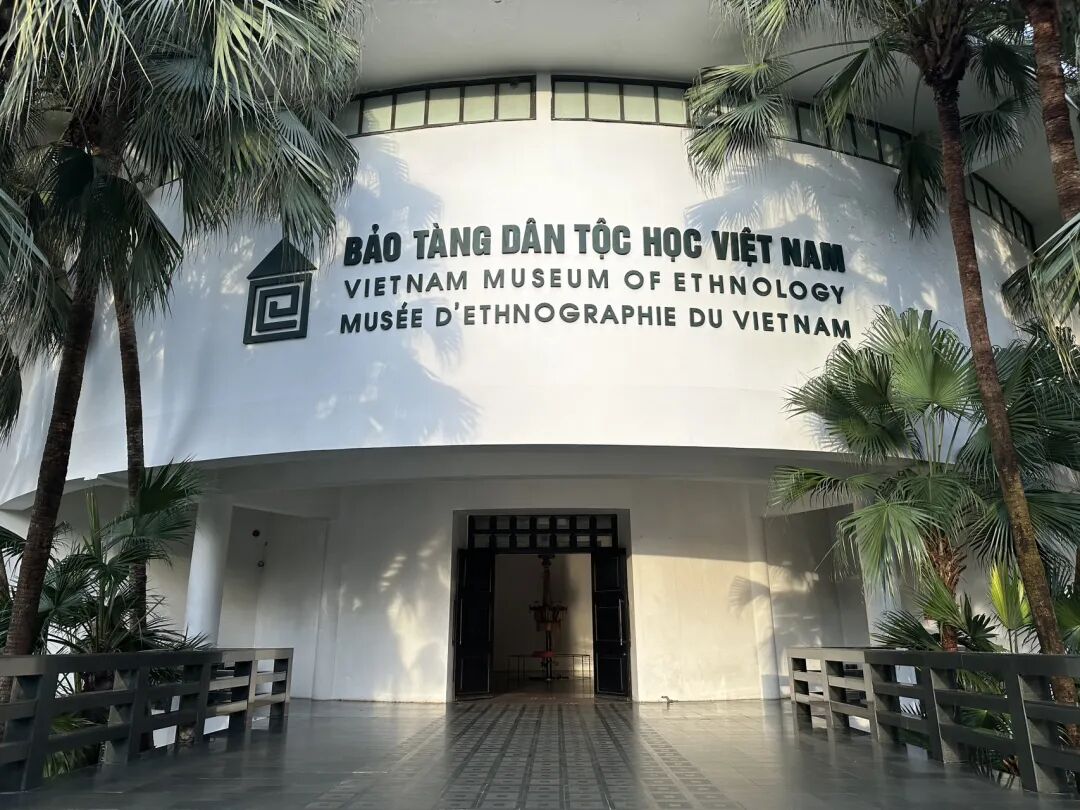
The Vietnam Museum of Ethnology is in Hanoi, the capital of Vietnam. The main building opened in 1997 and focuses on introducing Vietnam's various ethnic groups. A new exhibition hall opened in 2013, expanding the collection to include artifacts from other ethnic groups in Southeast Asia and the rest of Asia. I previously shared the museum's collection of Javanese glass paintings in my post titled 'Exhibition Notes: Javanese Glass Paintings at the Vietnam Museum of Ethnology.' This time, I am sharing other items in the collection related to the faith.
This 18th-century Damascus steel armor is from the Mughal Empire in North India. Its style is the same as Persian work and uses gold inlay techniques.
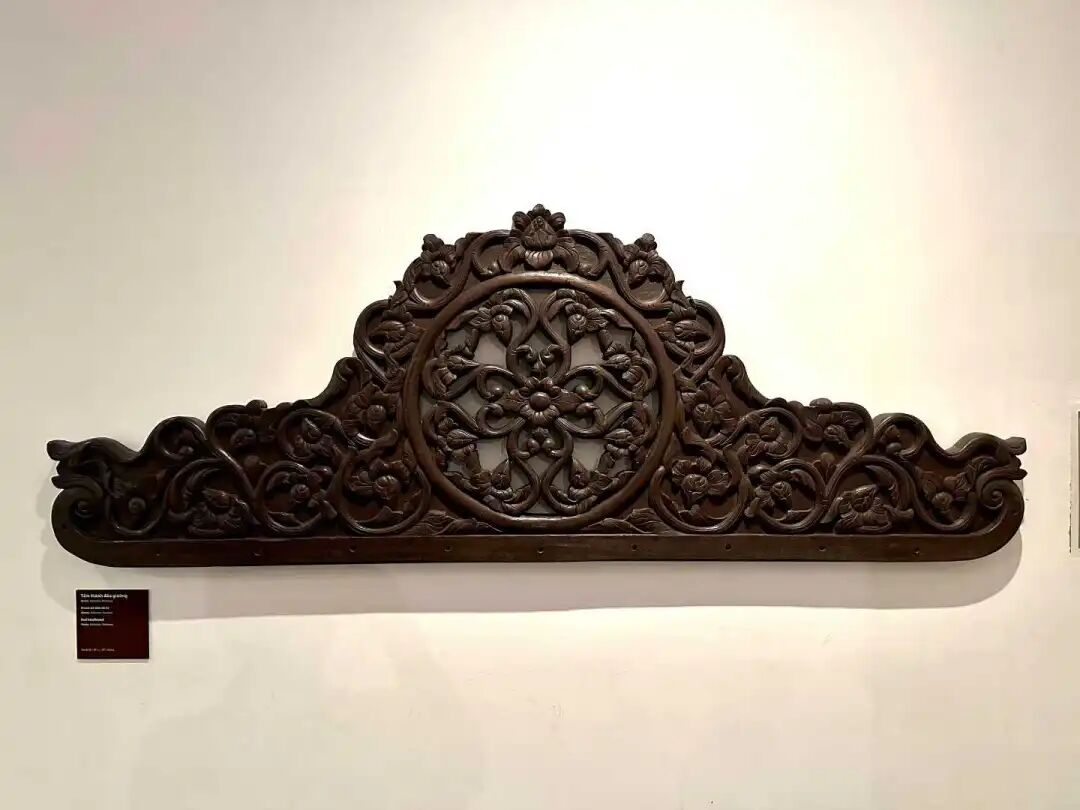
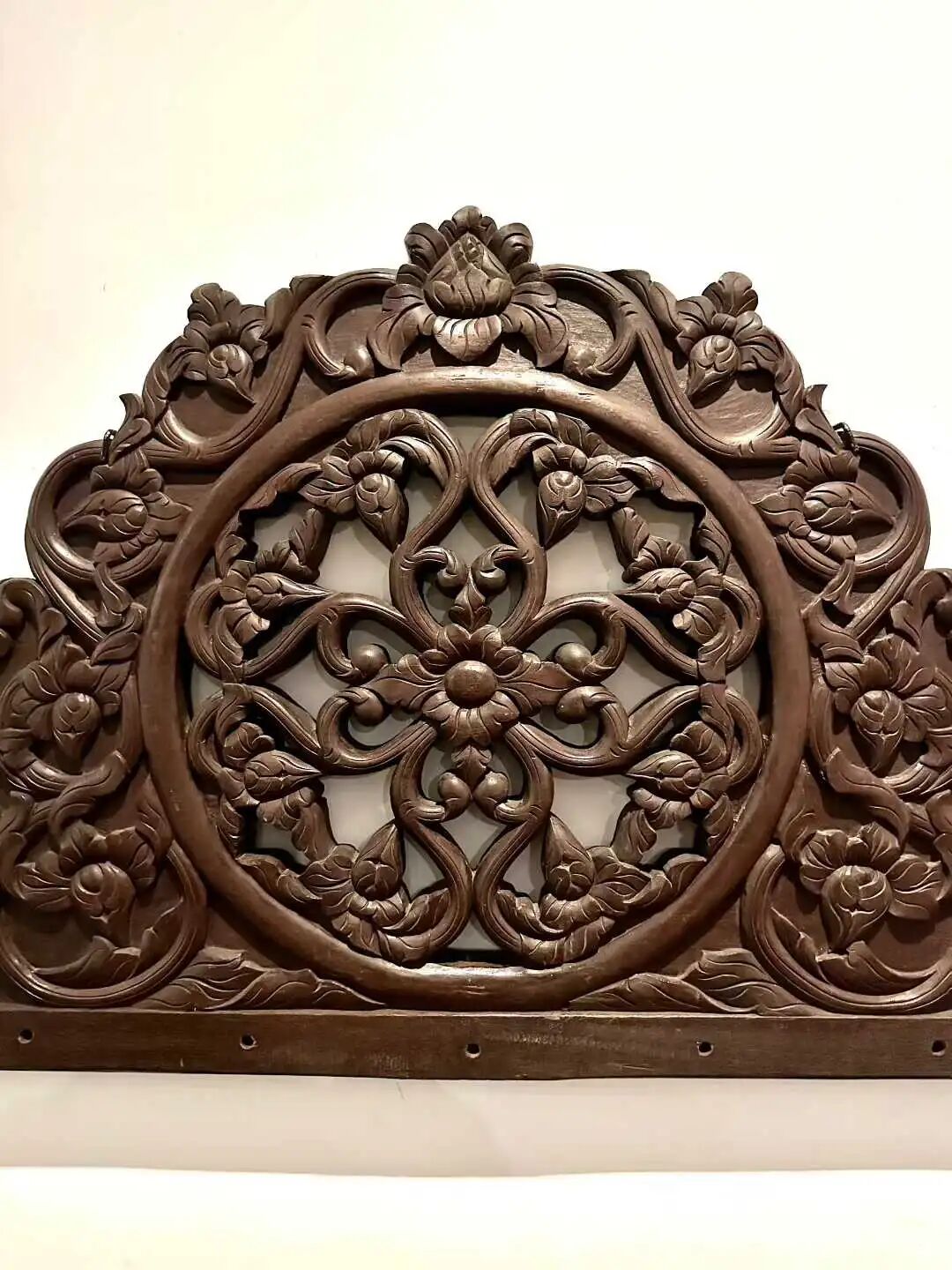
A 20th-century traditional Malay wood carving.
This copper tray is from Kelantan, Malaysia, and is engraved with the year 1261, which corresponds to 1845 AD.
A Javanese dagger known as a kris.
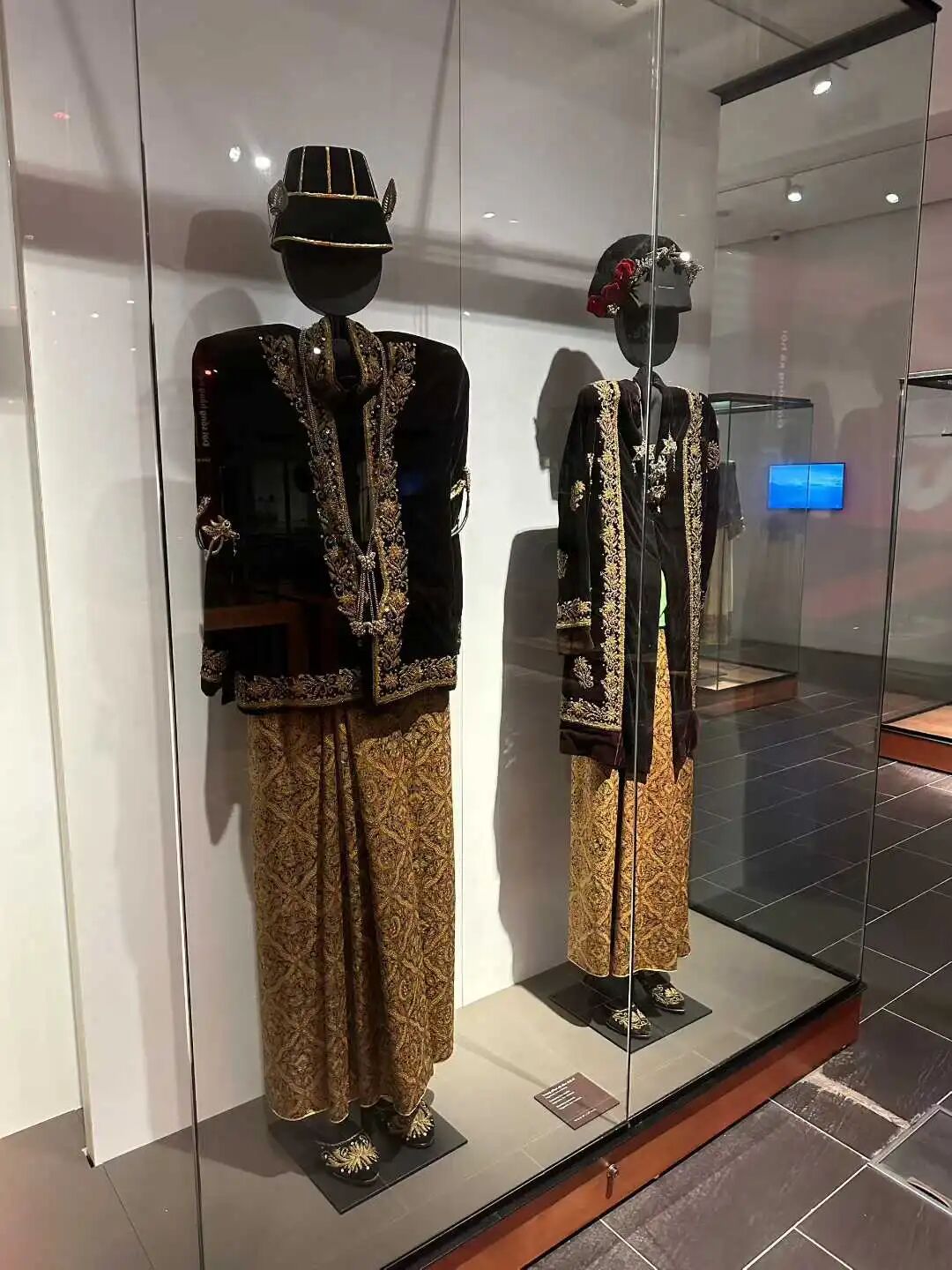
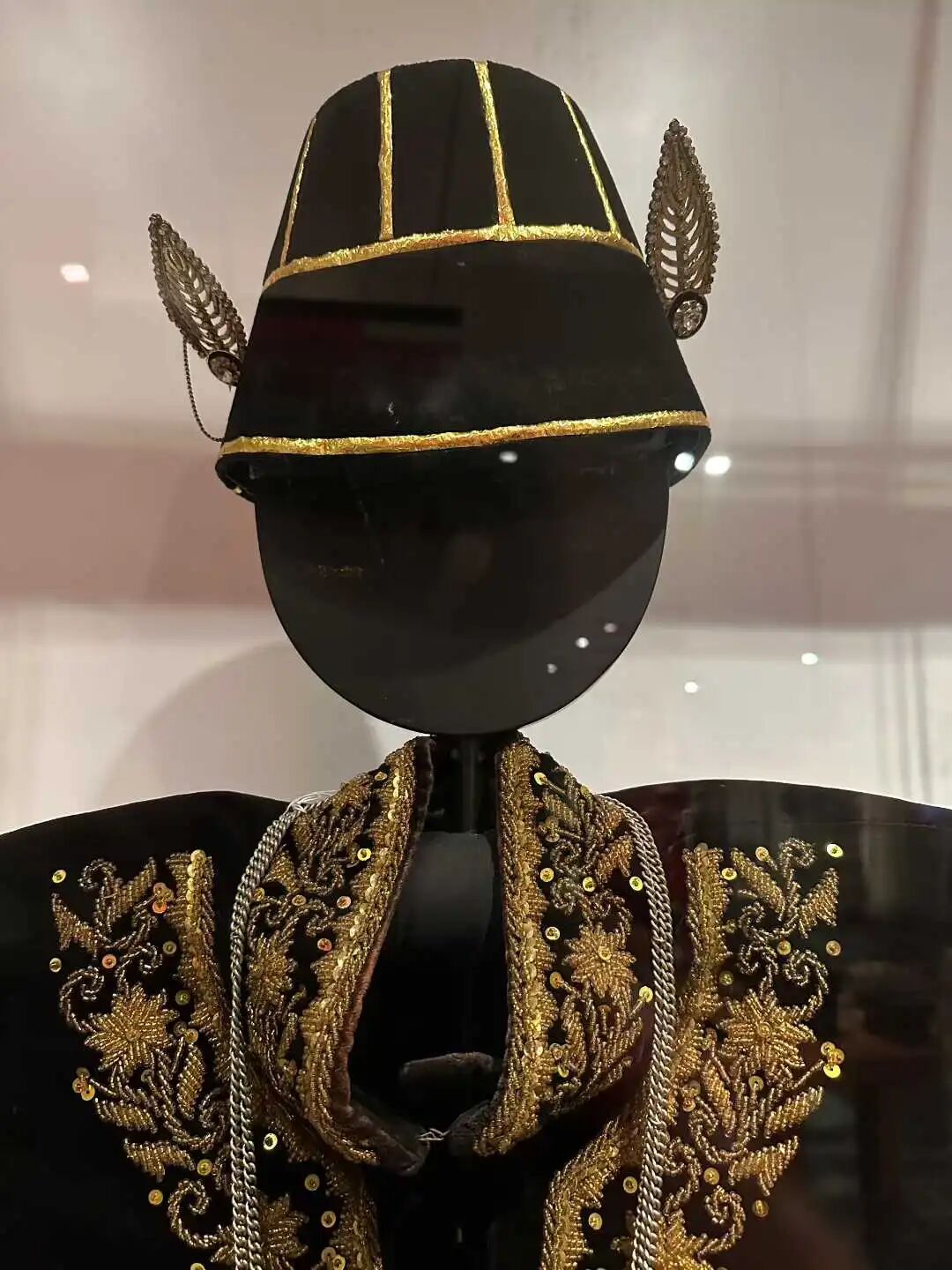
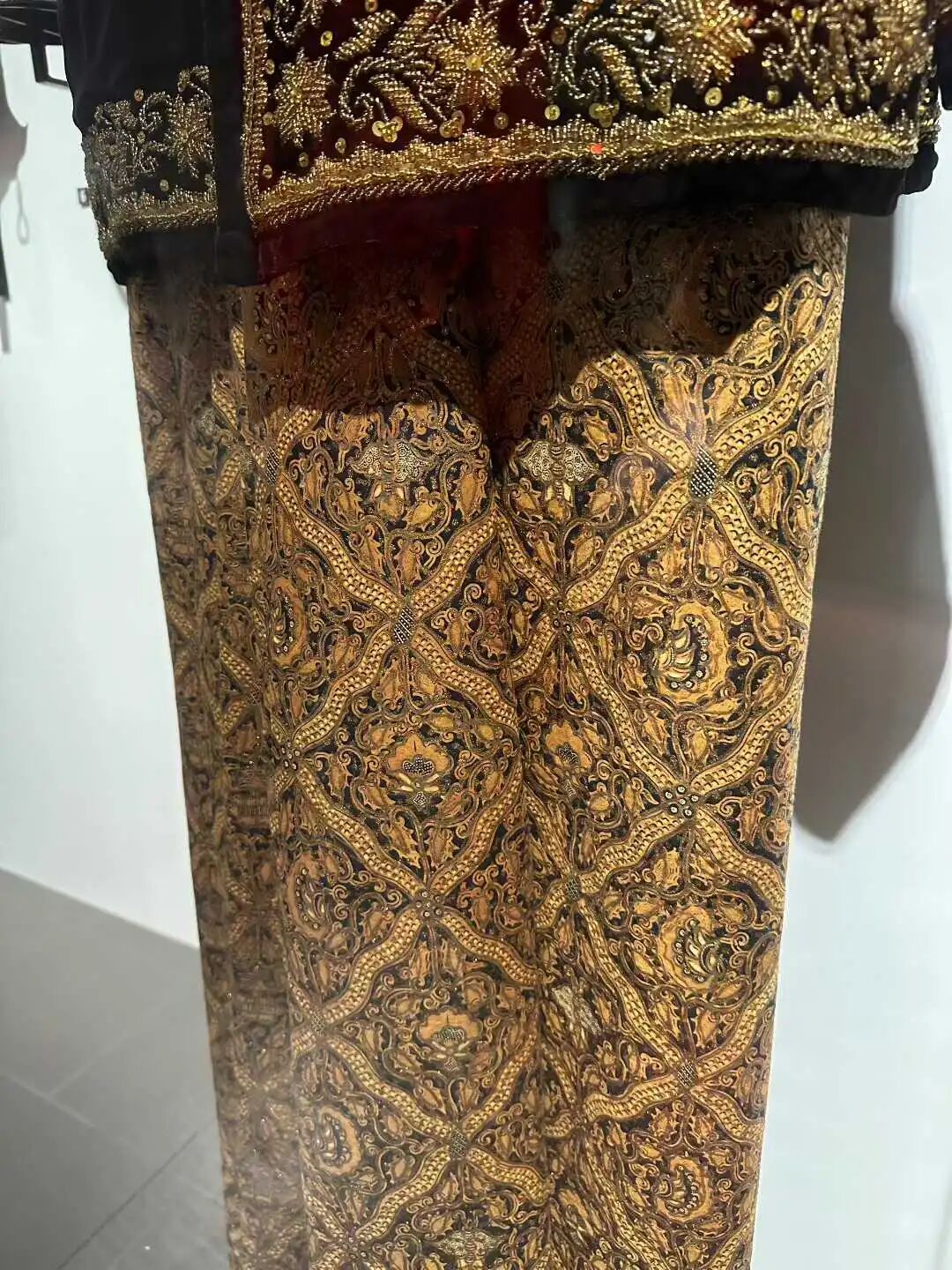
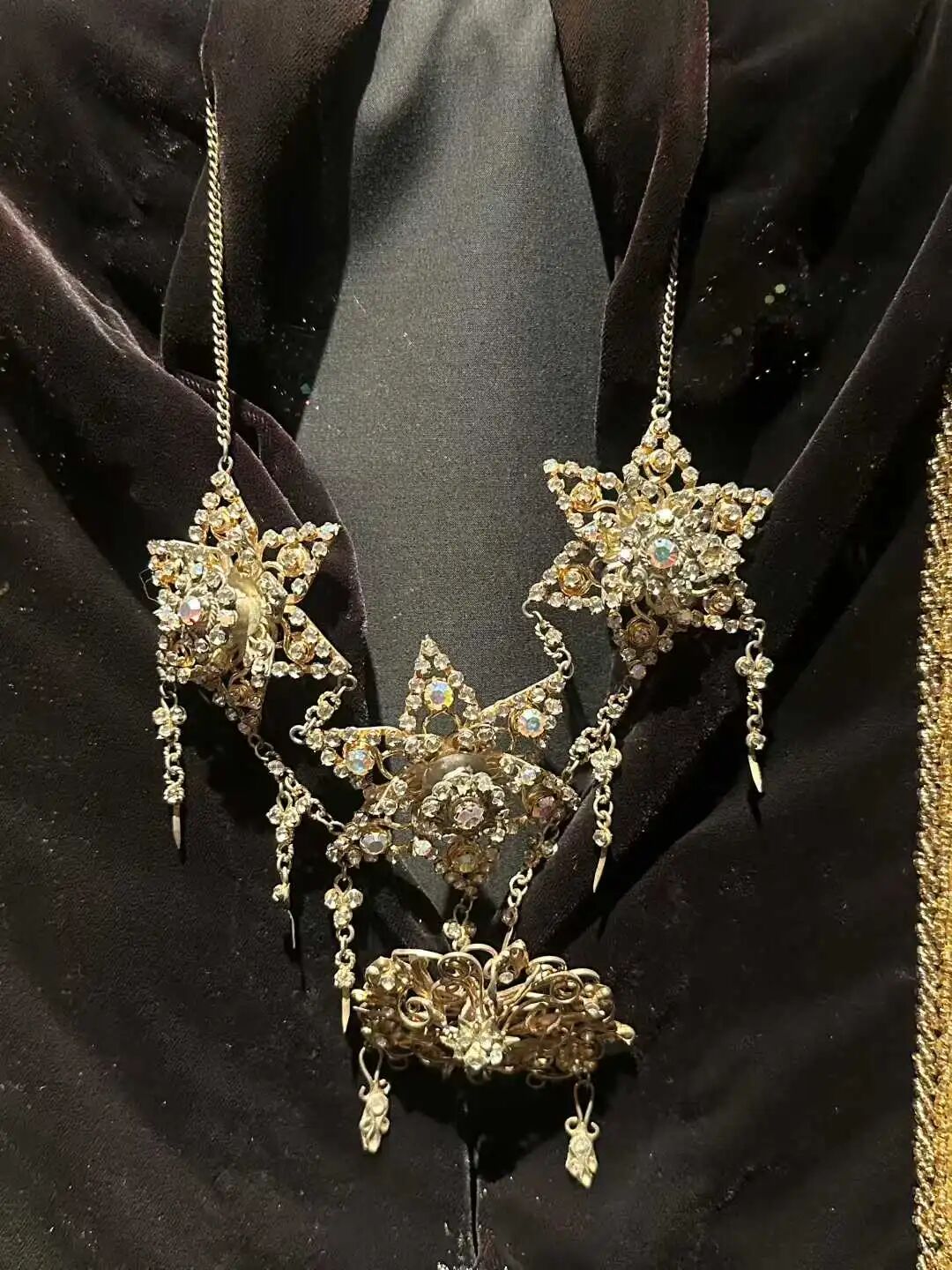
Wedding attire from Yogyakarta, Java.
Malay religious books and a cap.
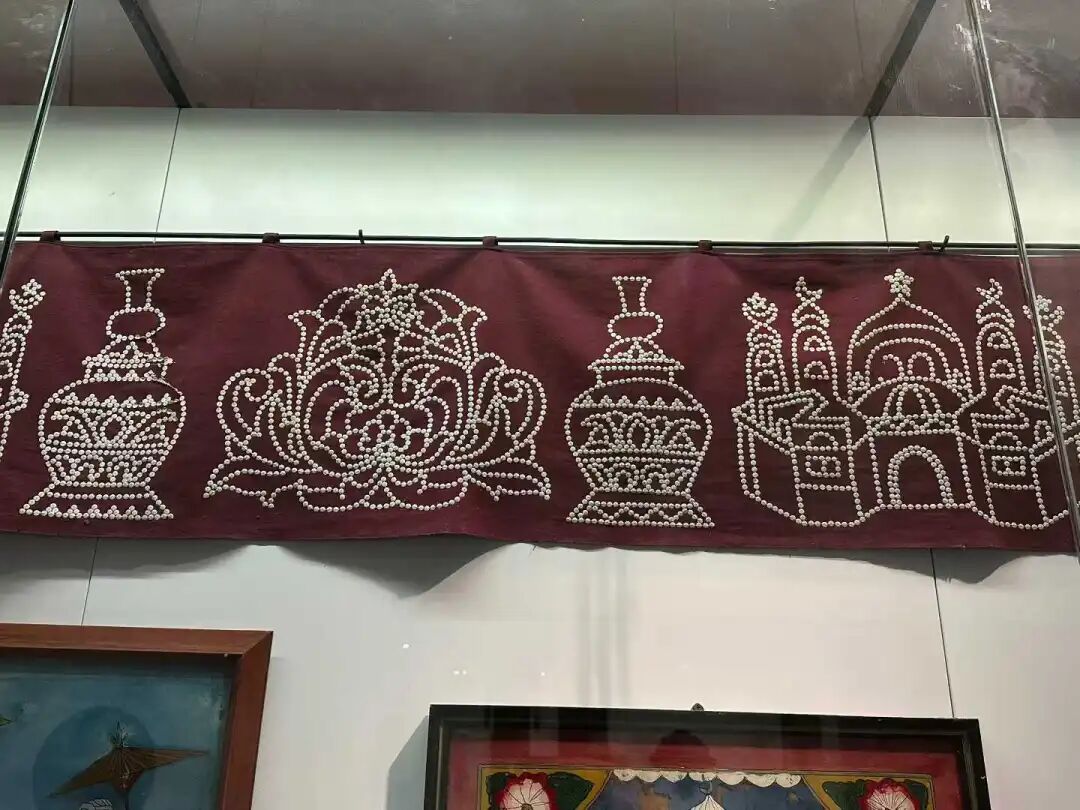
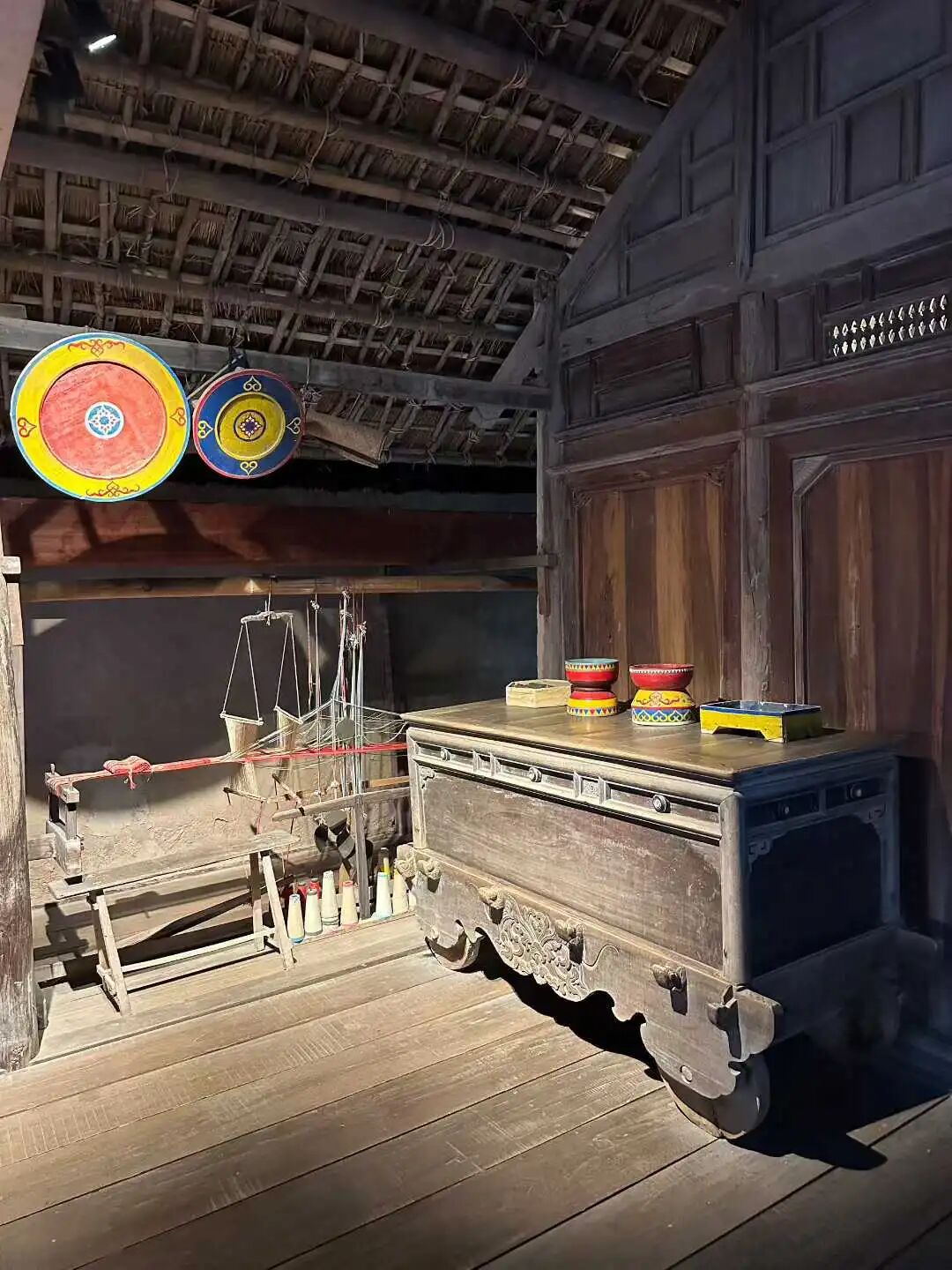
Decorations used during a funeral for the Maranao people of the Philippines. The Maranao people mainly live in the Lake Lanao region of Mindanao in the southern Philippines. They are an important Muslim ethnic group in the Philippines and hold a dominant position in the country's Islamic culture.
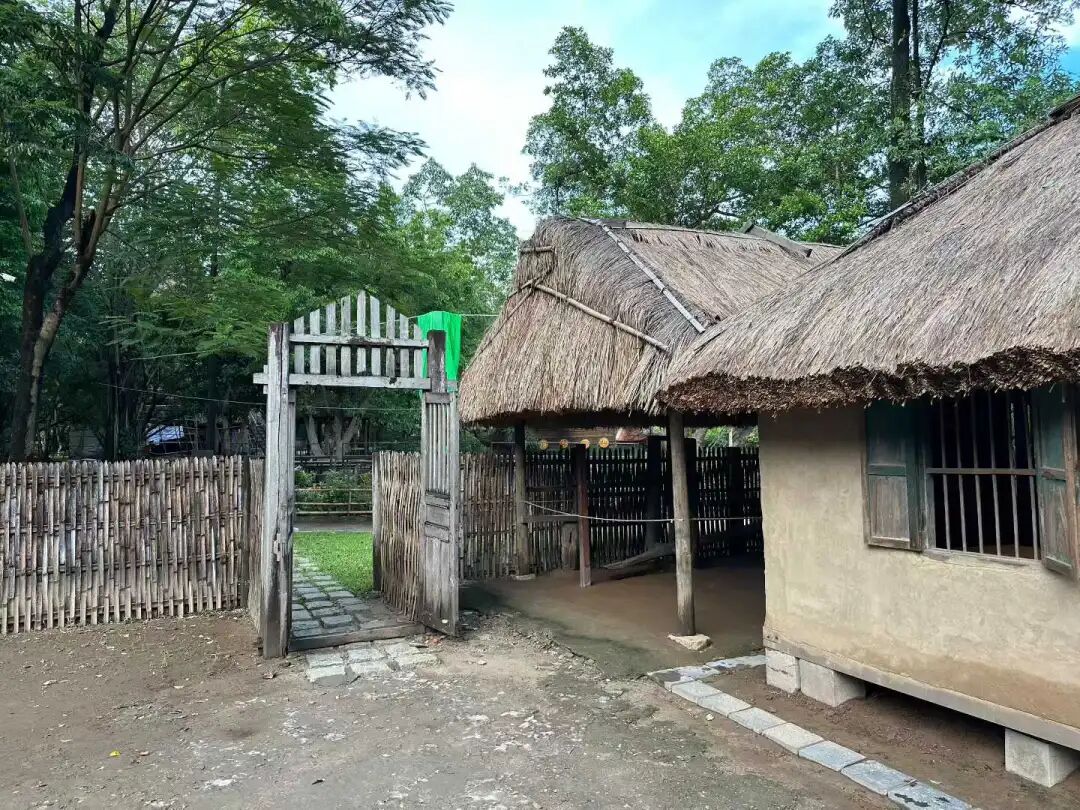
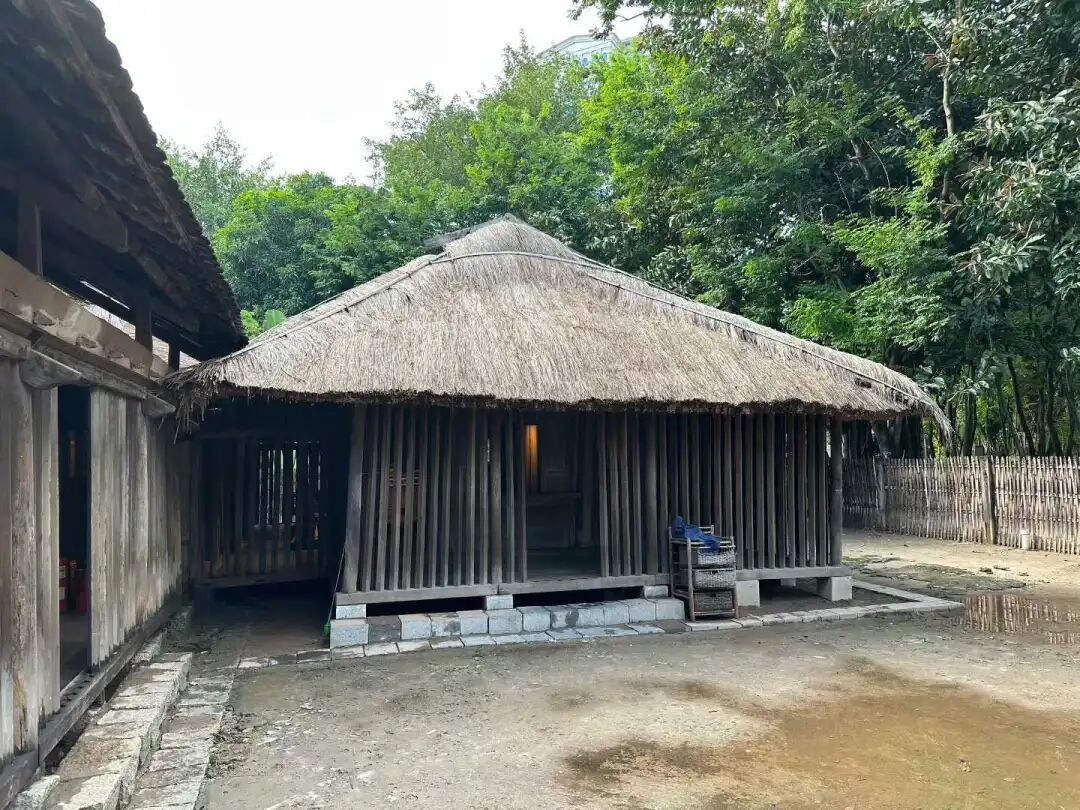
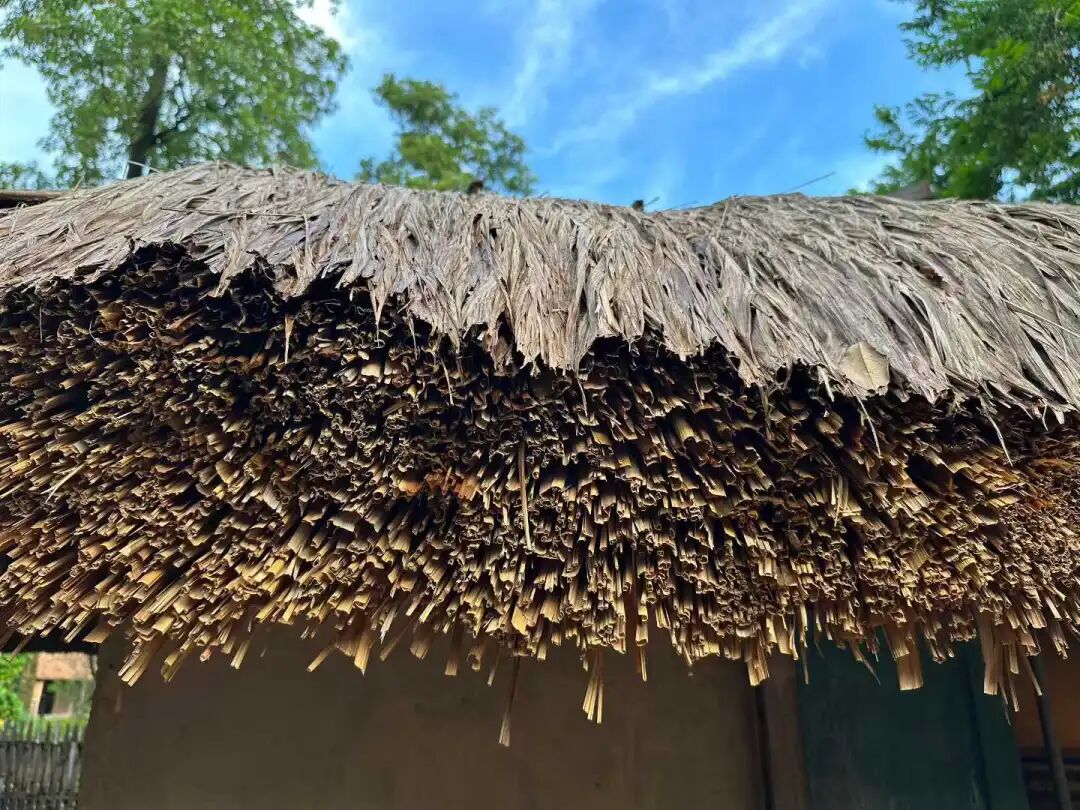
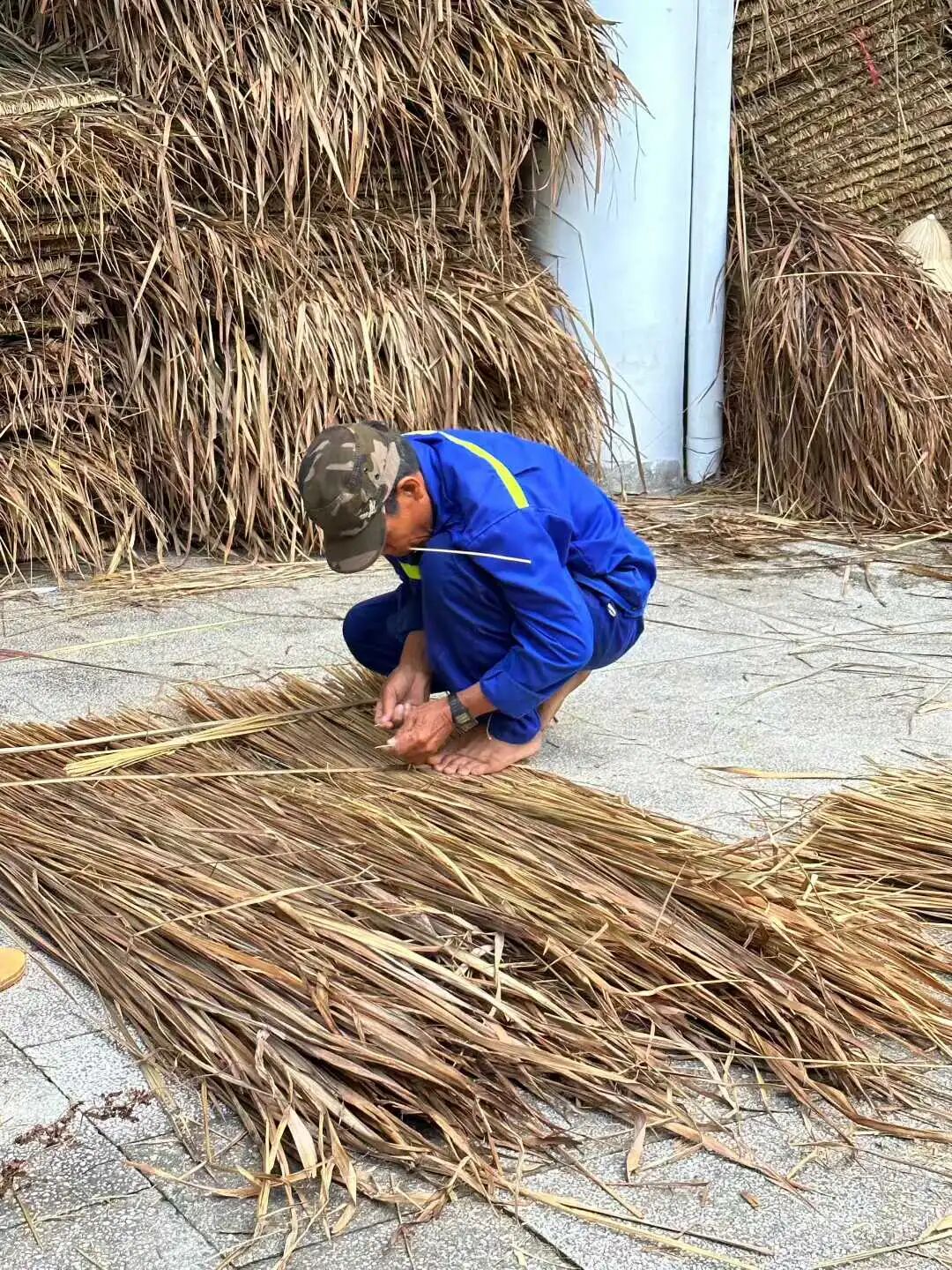
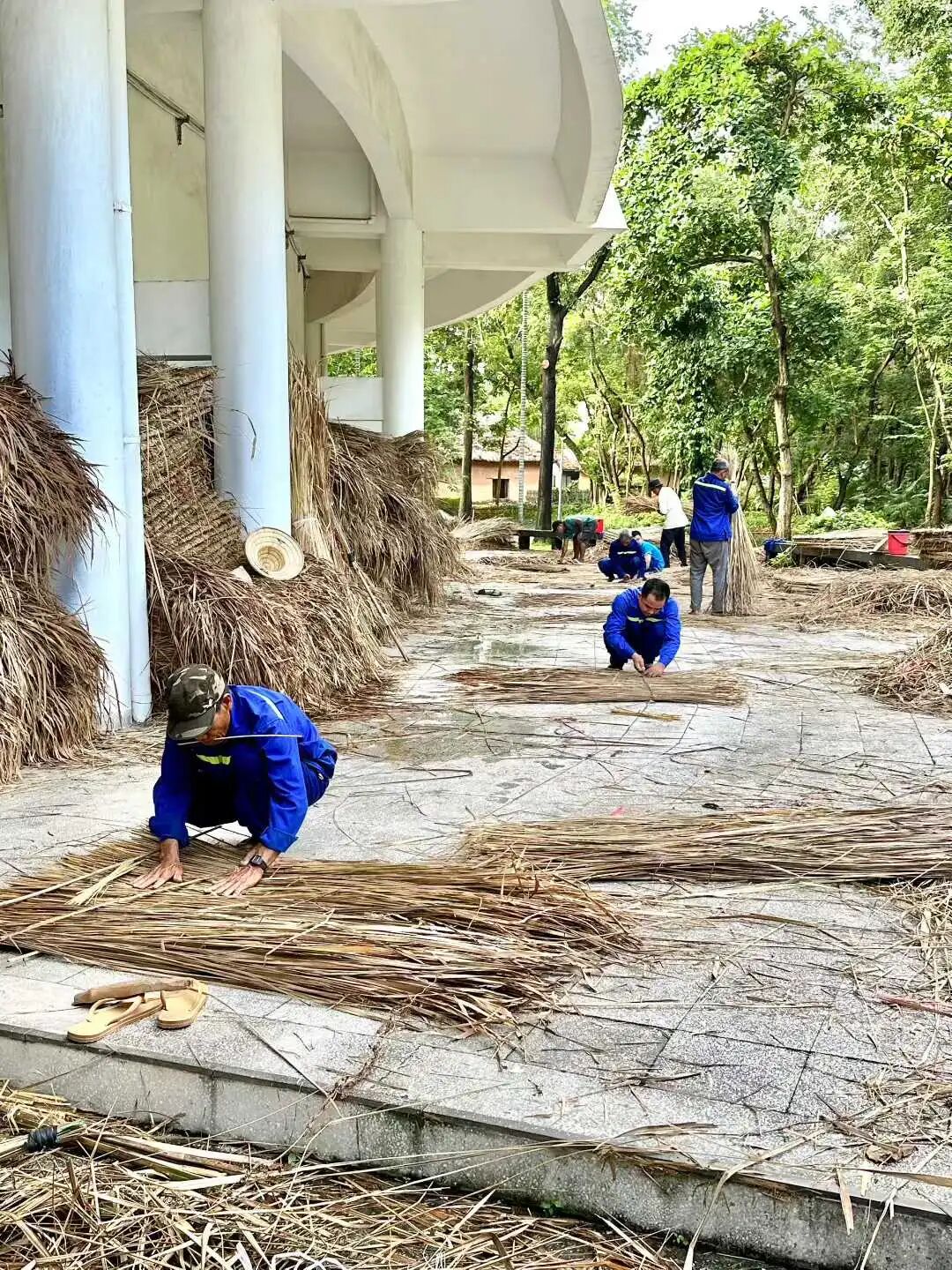
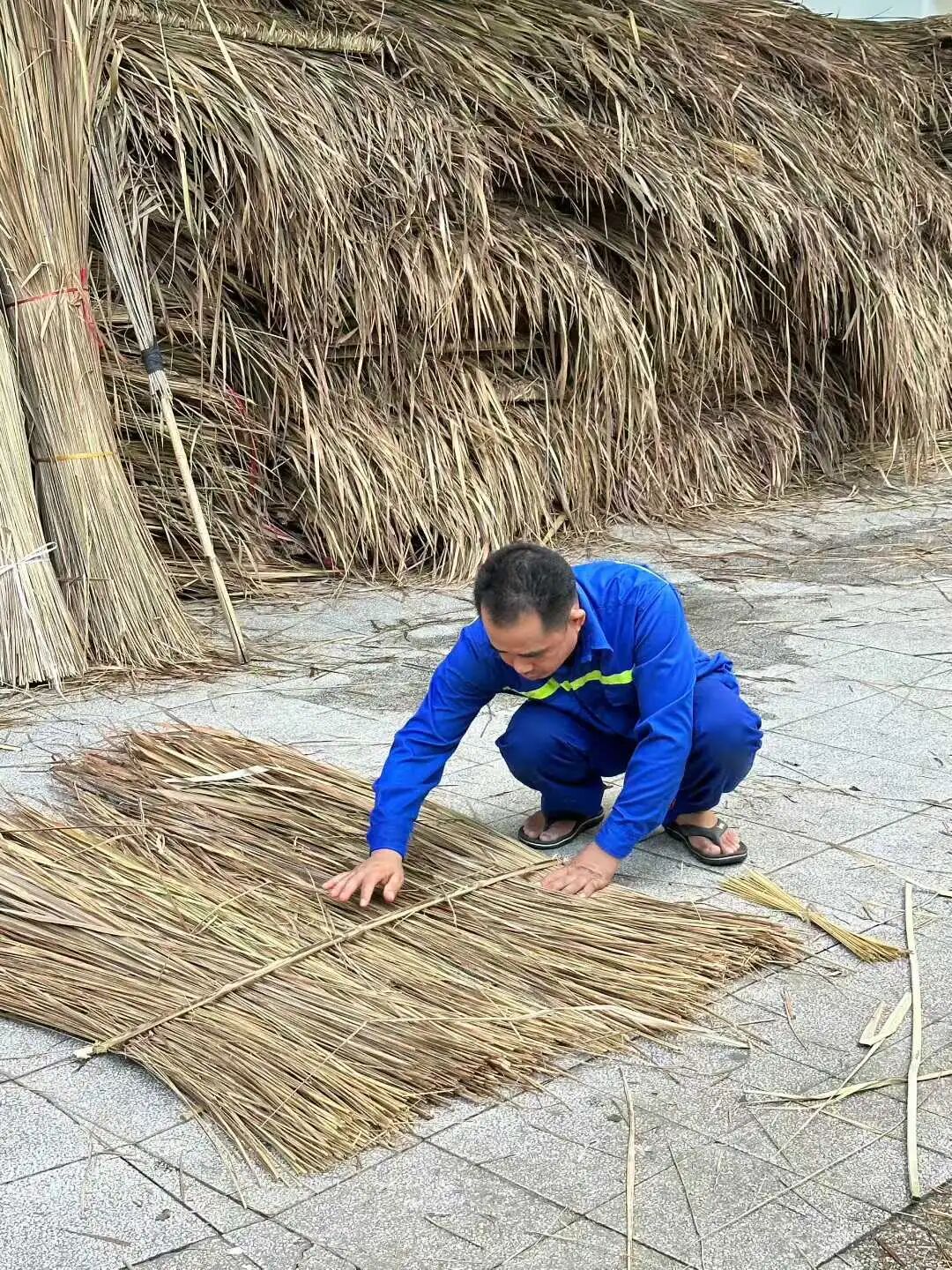
The museum courtyard displays a traditional Cham thatched-roof compound. Its design comes from the region where the ancient Champa Kingdom was located in southern Vietnam. I also happened to see the craftsmen working on the thatch.
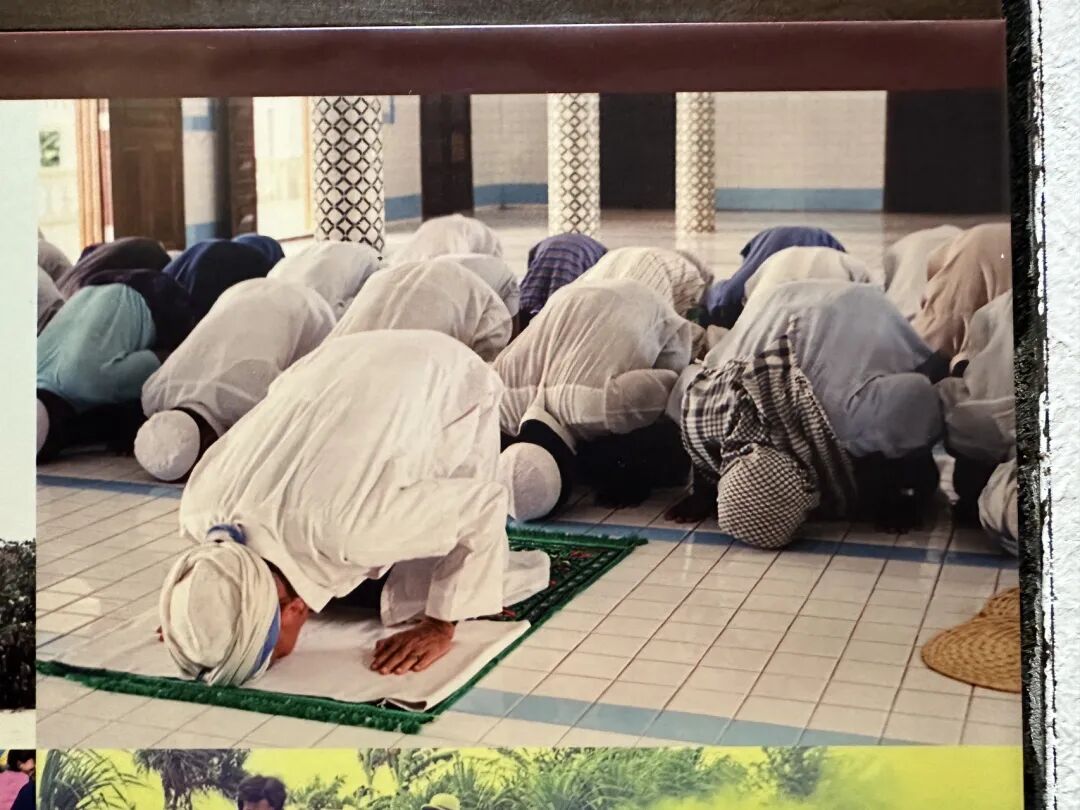
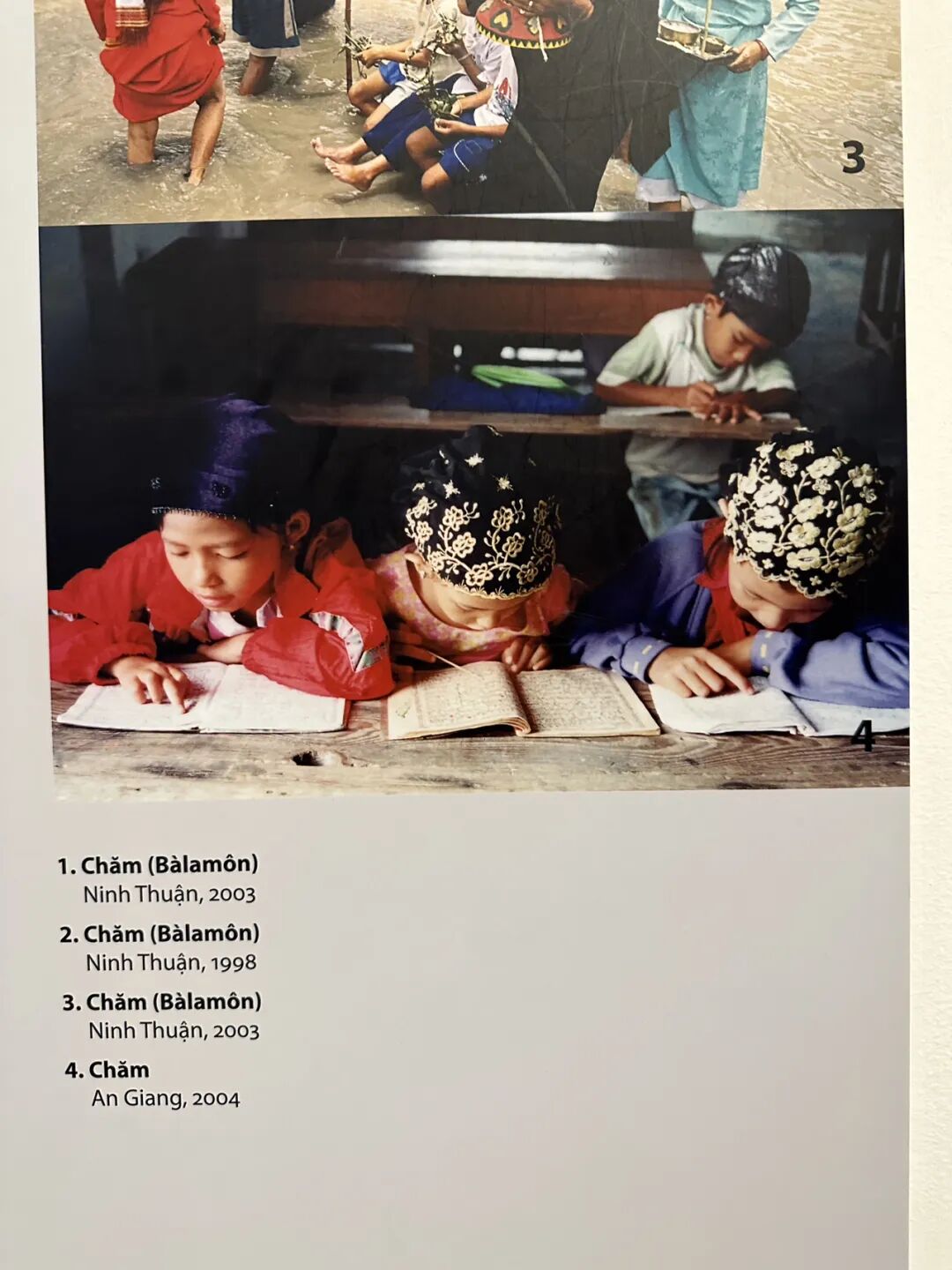
Photos of the Cham people performing acts of worship and studying. view all
Summary: The Vietnam Museum of Ethnology in Hanoi holds Islamic and Muslim-related objects connected to Vietnam and the wider region. This exhibition note preserves the source's artifact details, museum context, captions, and cultural observations in a clean English version.
The Vietnam Museum of Ethnology is in Hanoi, the capital of Vietnam. The main building opened in 1997 and focuses on introducing Vietnam's various ethnic groups. A new exhibition hall opened in 2013, expanding the collection to include artifacts from other ethnic groups in Southeast Asia and the rest of Asia. I previously shared the museum's collection of Javanese glass paintings in my post titled 'Exhibition Notes: Javanese Glass Paintings at the Vietnam Museum of Ethnology.' This time, I am sharing other items in the collection related to the faith.
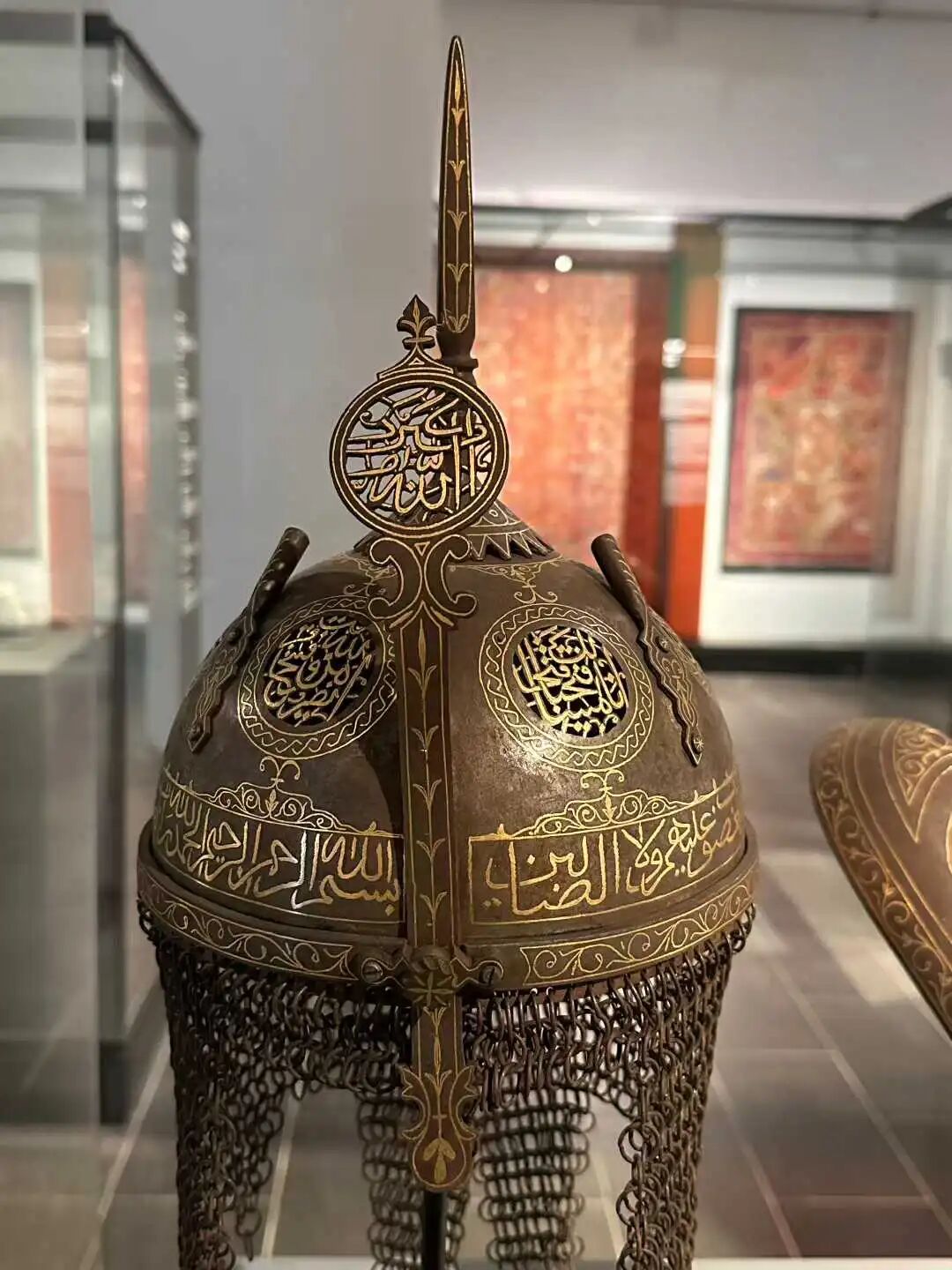
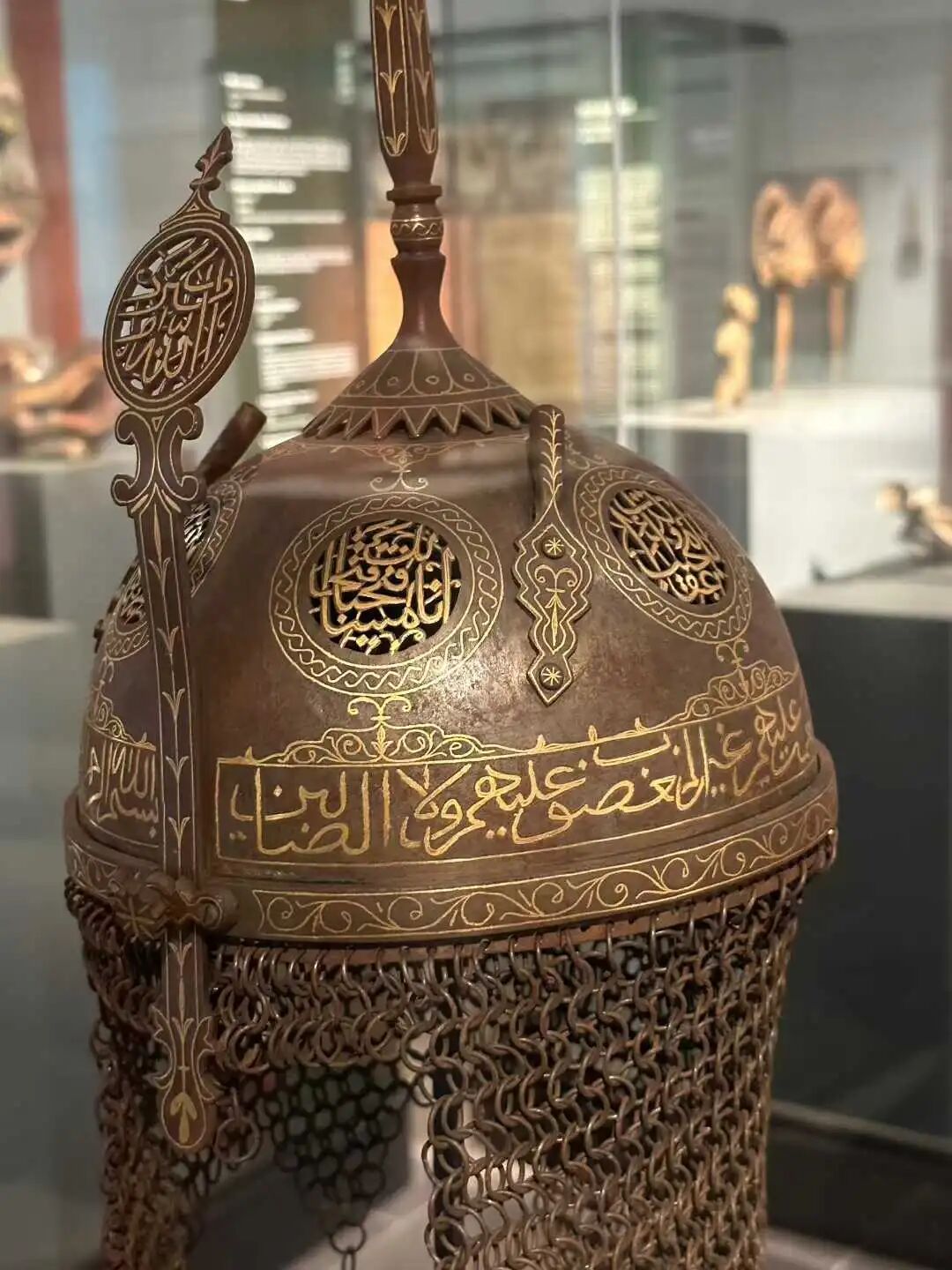
This 18th-century Damascus steel armor is from the Mughal Empire in North India. Its style is the same as Persian work and uses gold inlay techniques.
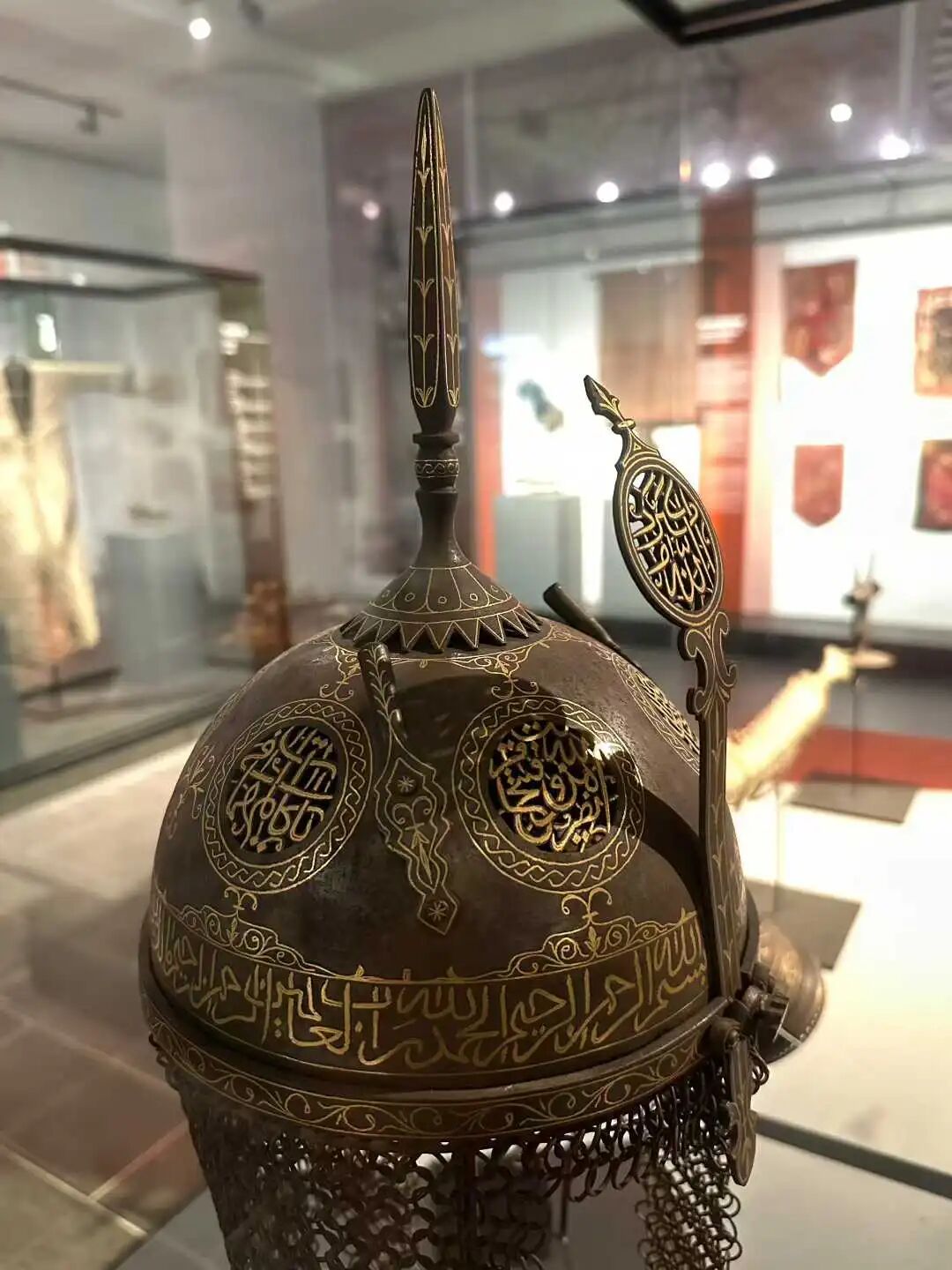
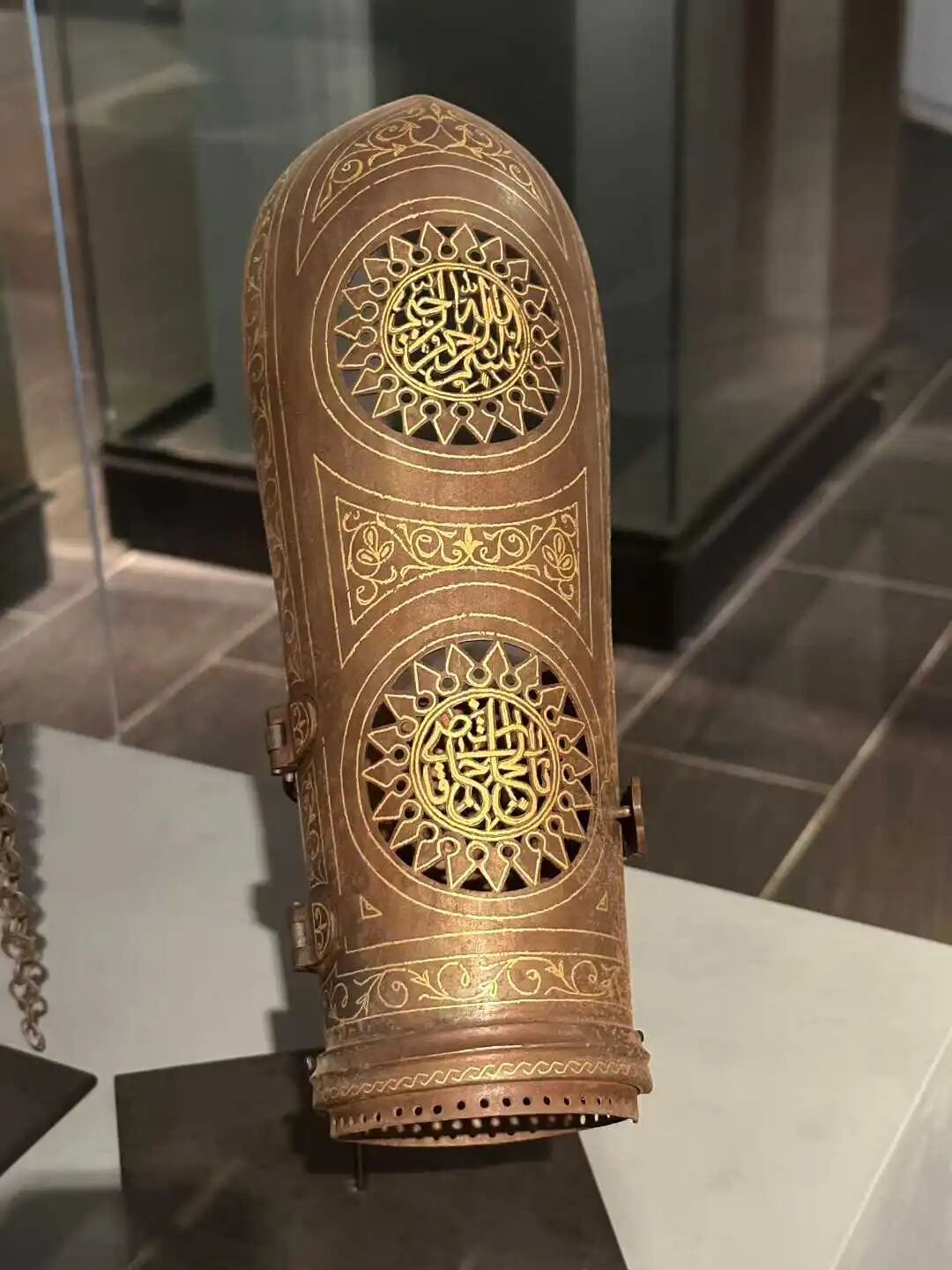
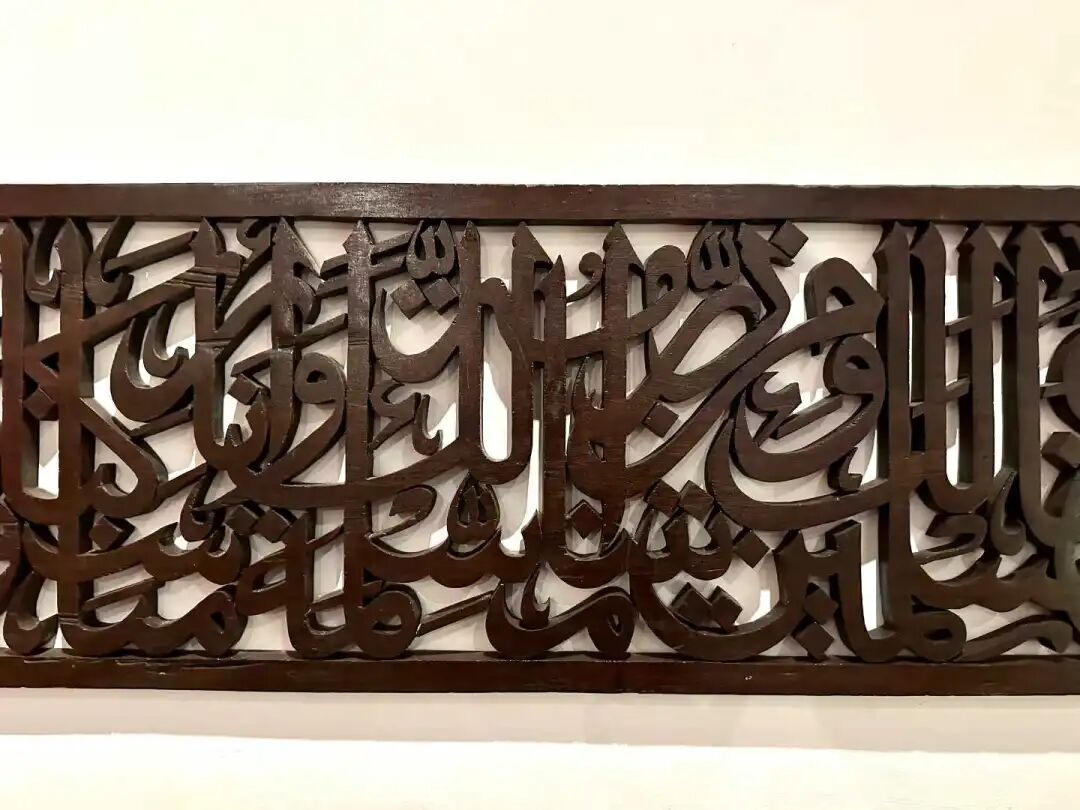
A 20th-century traditional Malay wood carving.
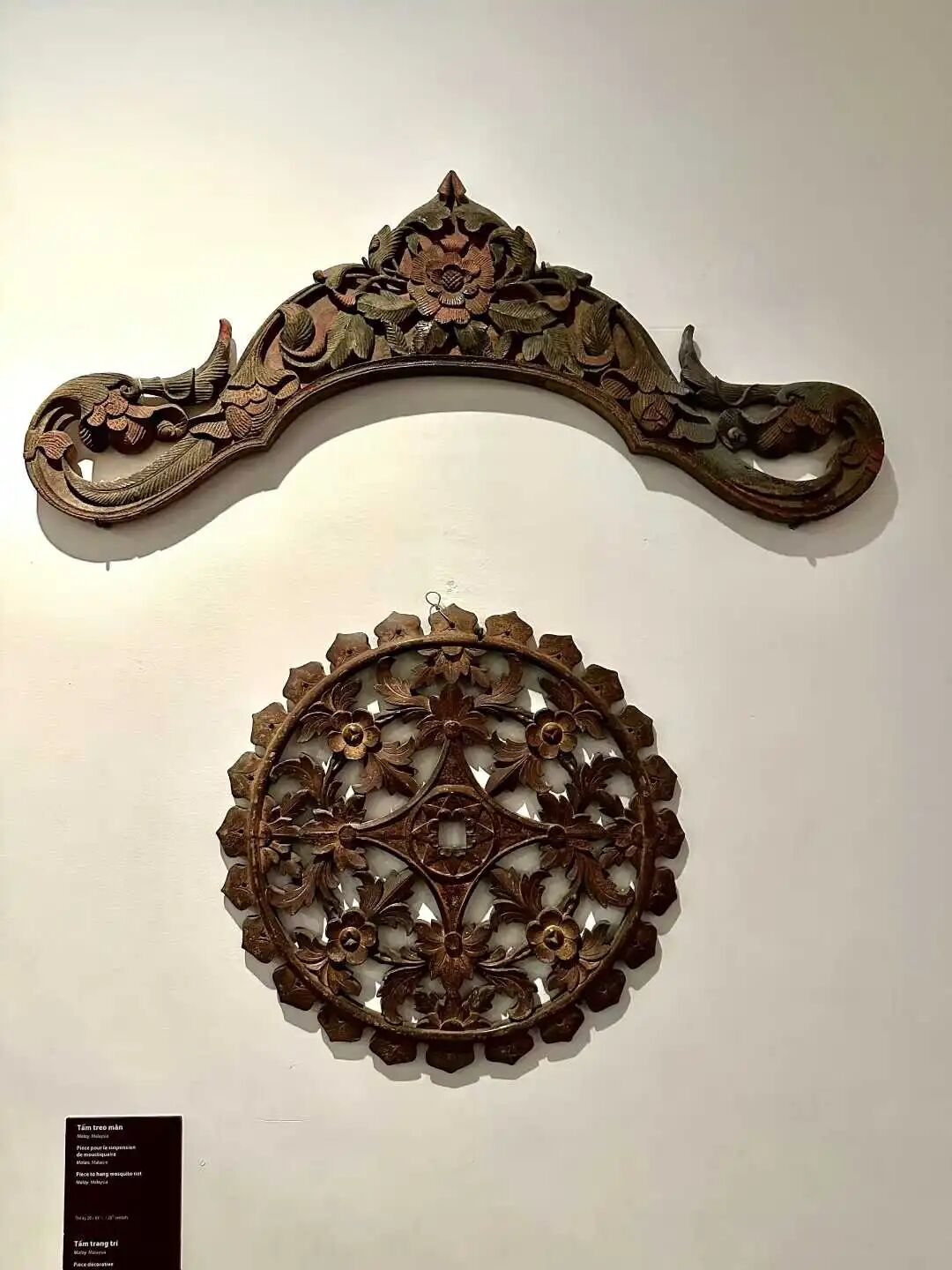
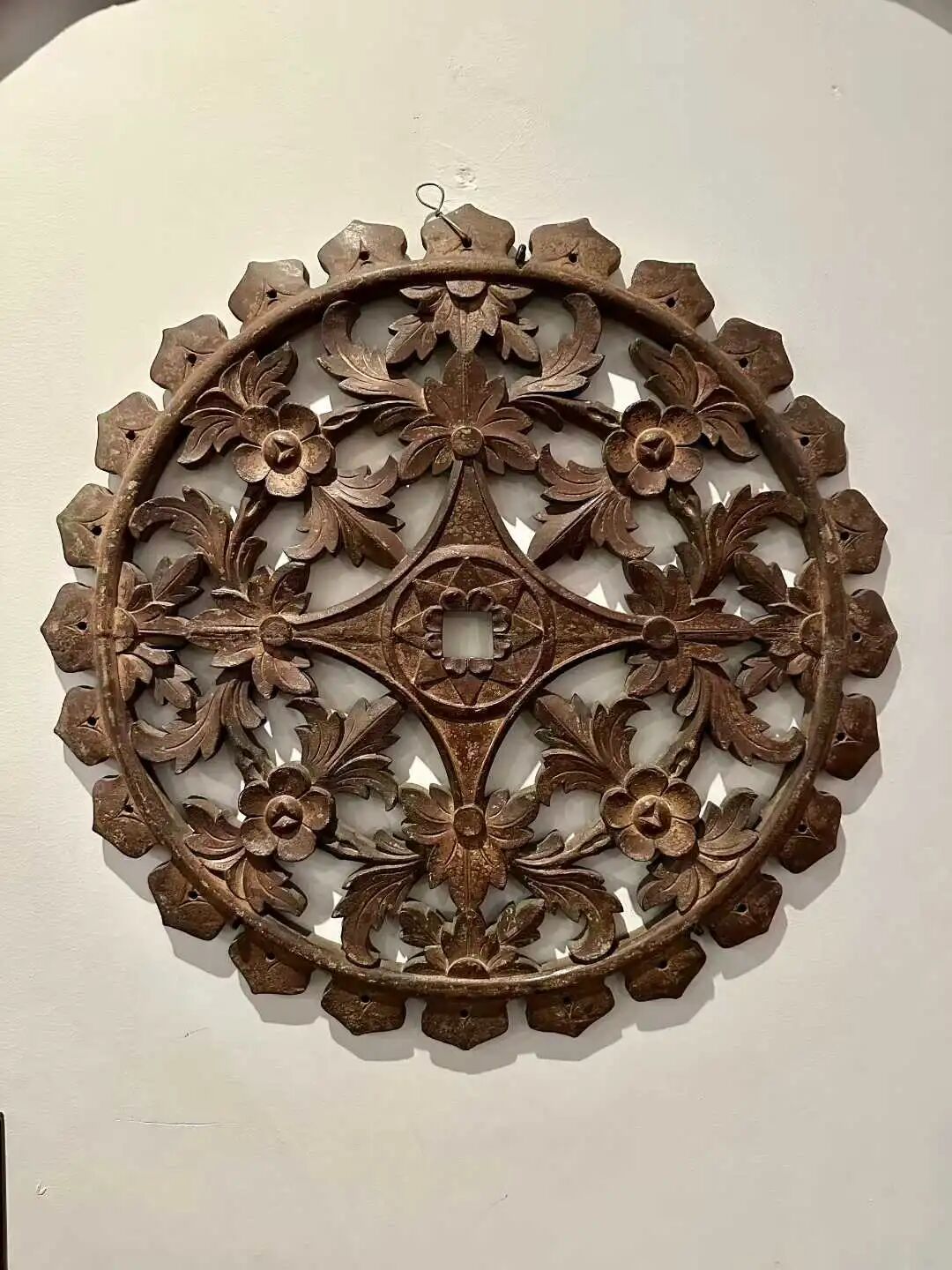
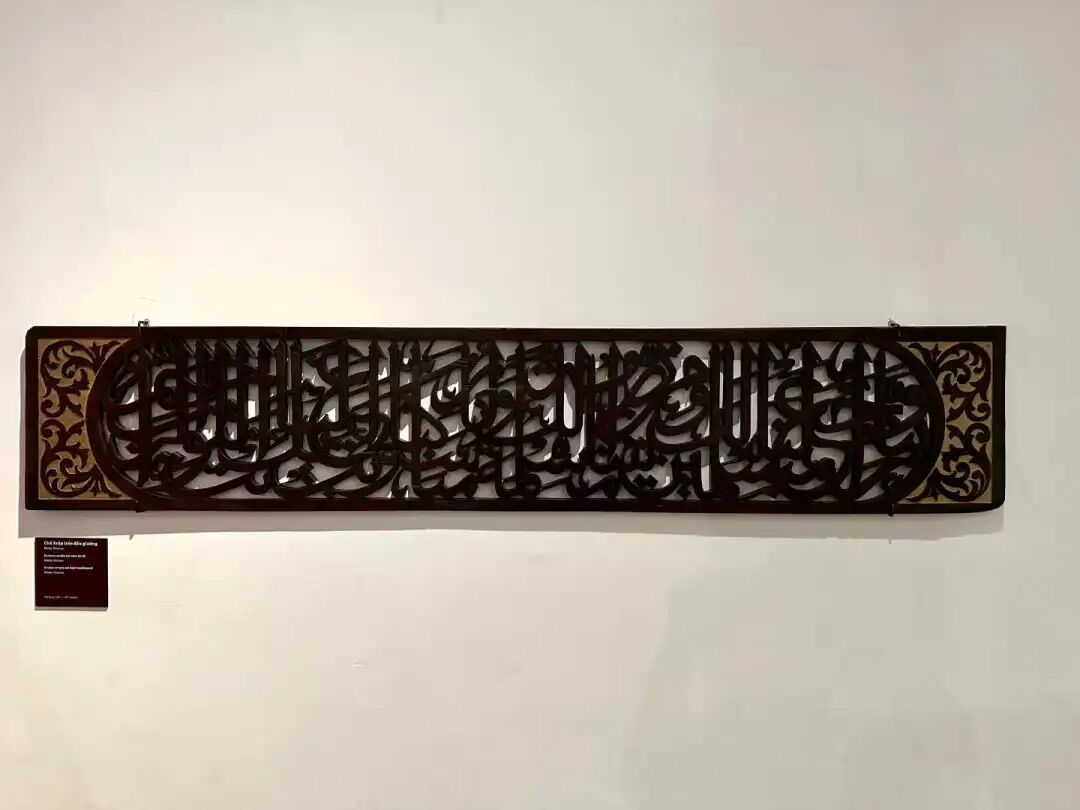
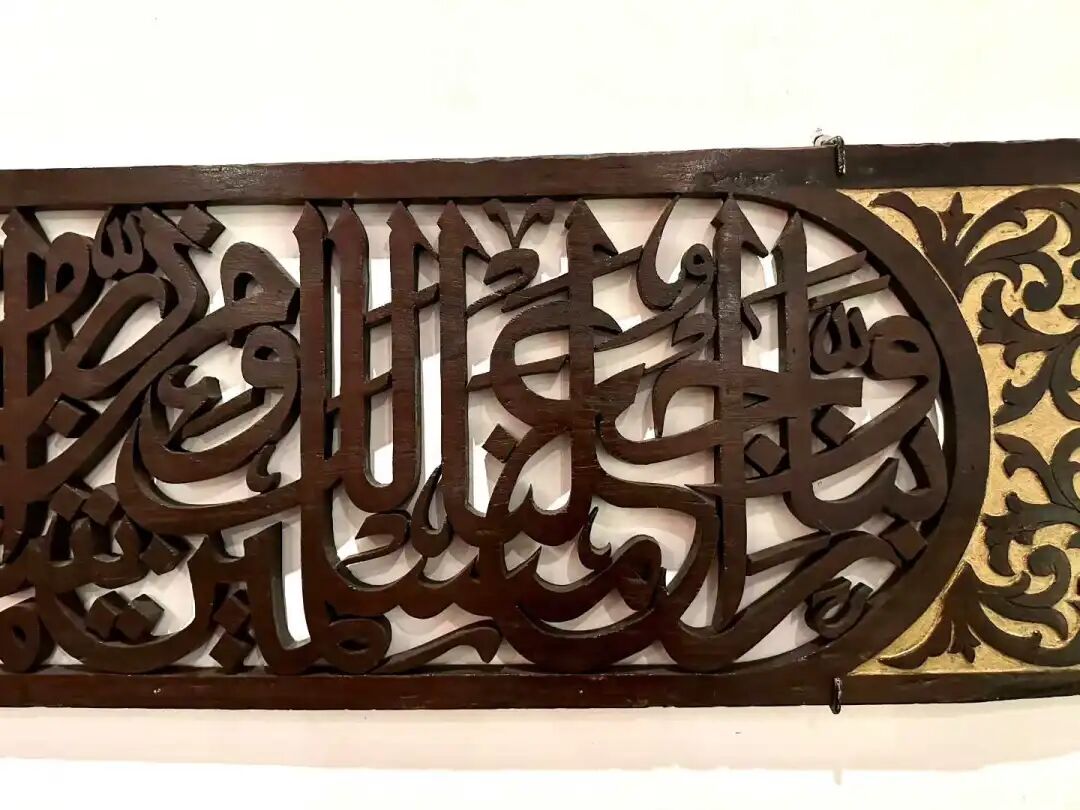
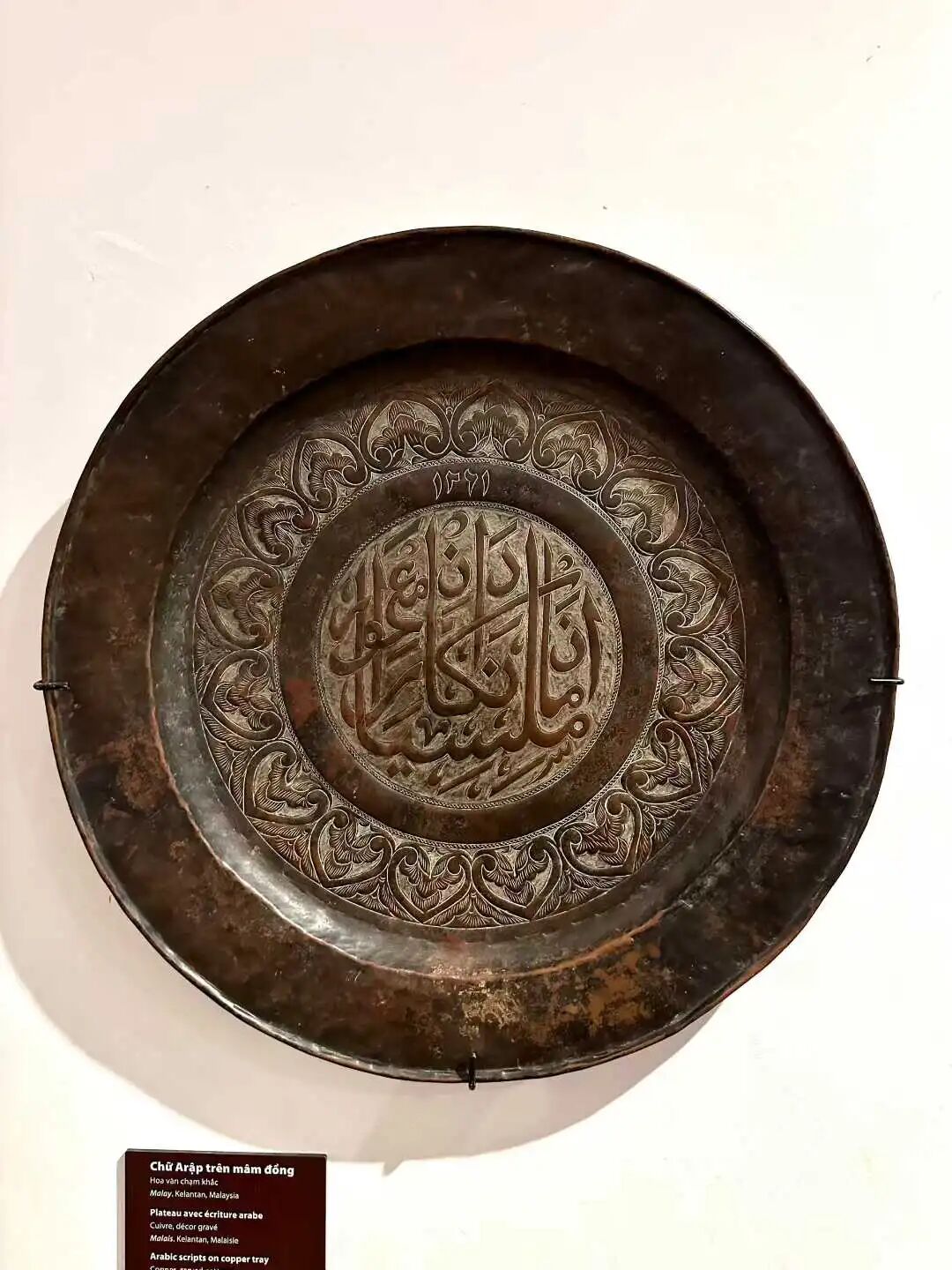
This copper tray is from Kelantan, Malaysia, and is engraved with the year 1261, which corresponds to 1845 AD.
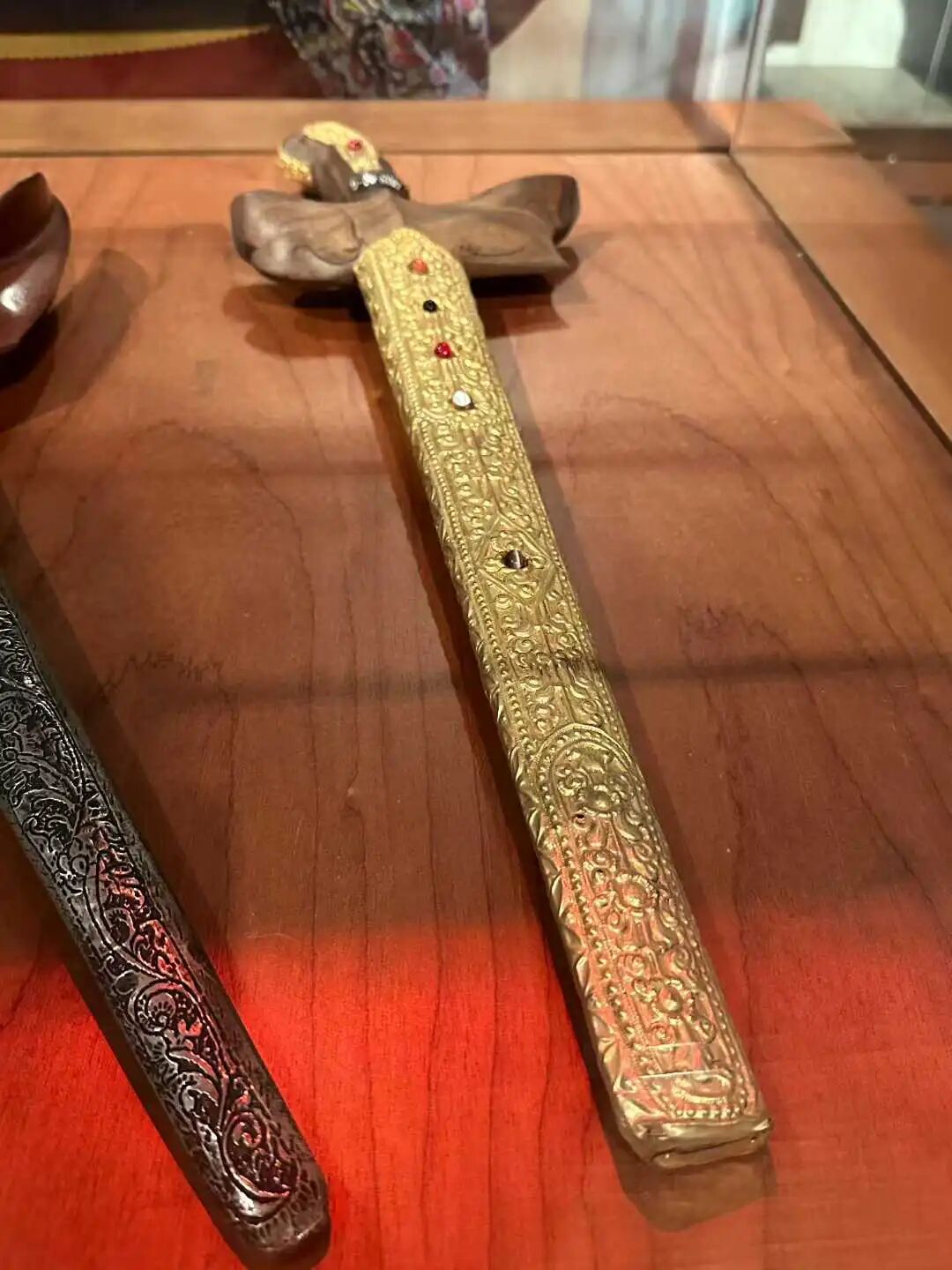
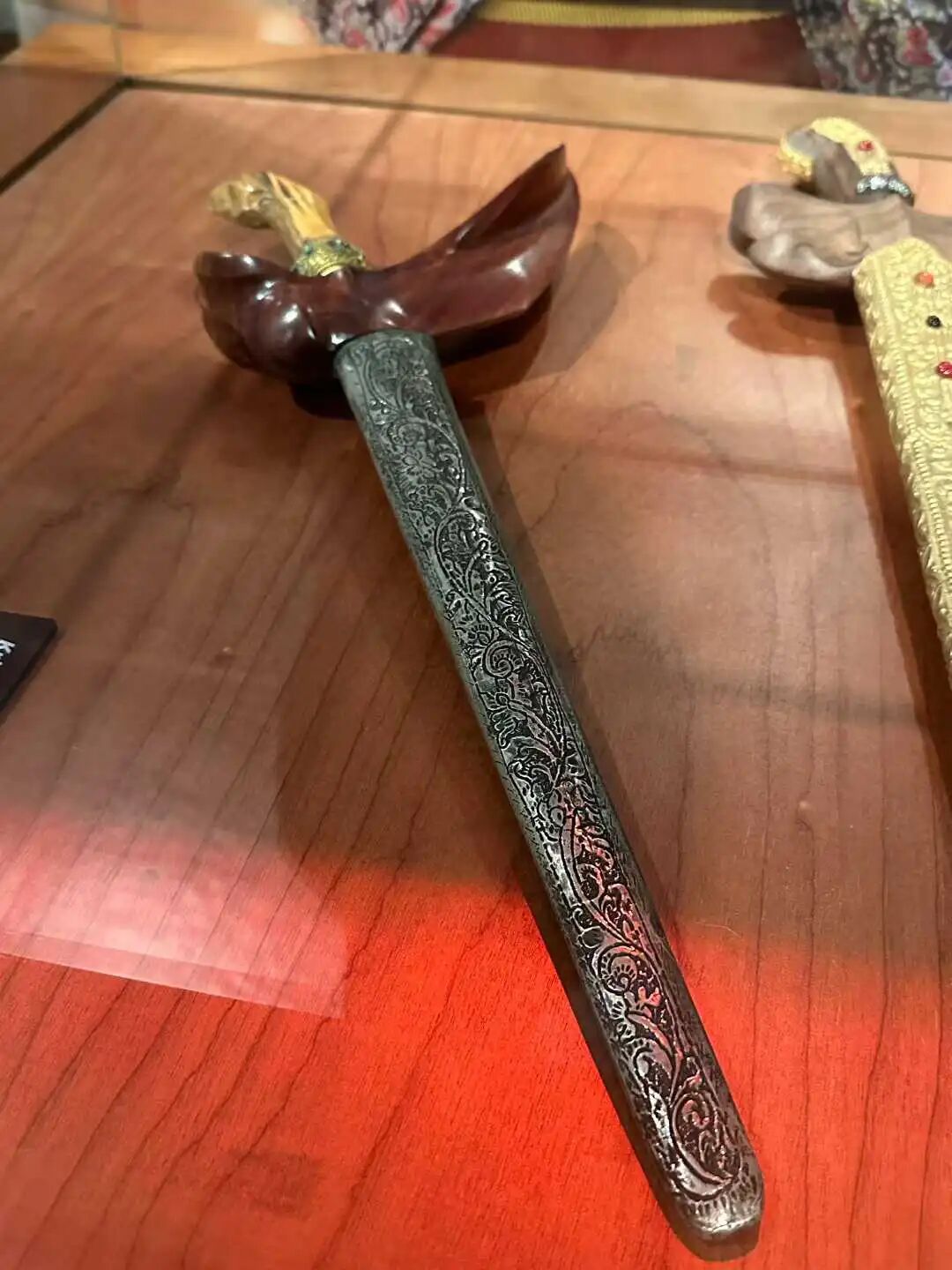
A Javanese dagger known as a kris.
Wedding attire from Yogyakarta, Java.
Malay religious books and a cap.
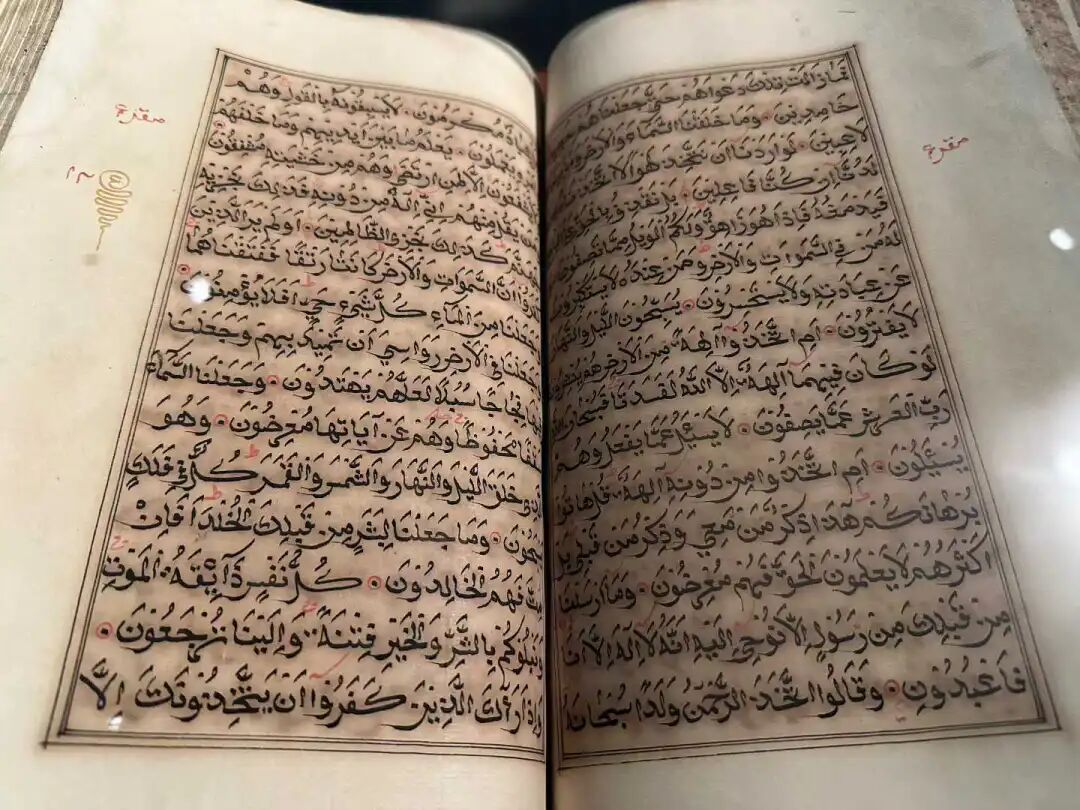
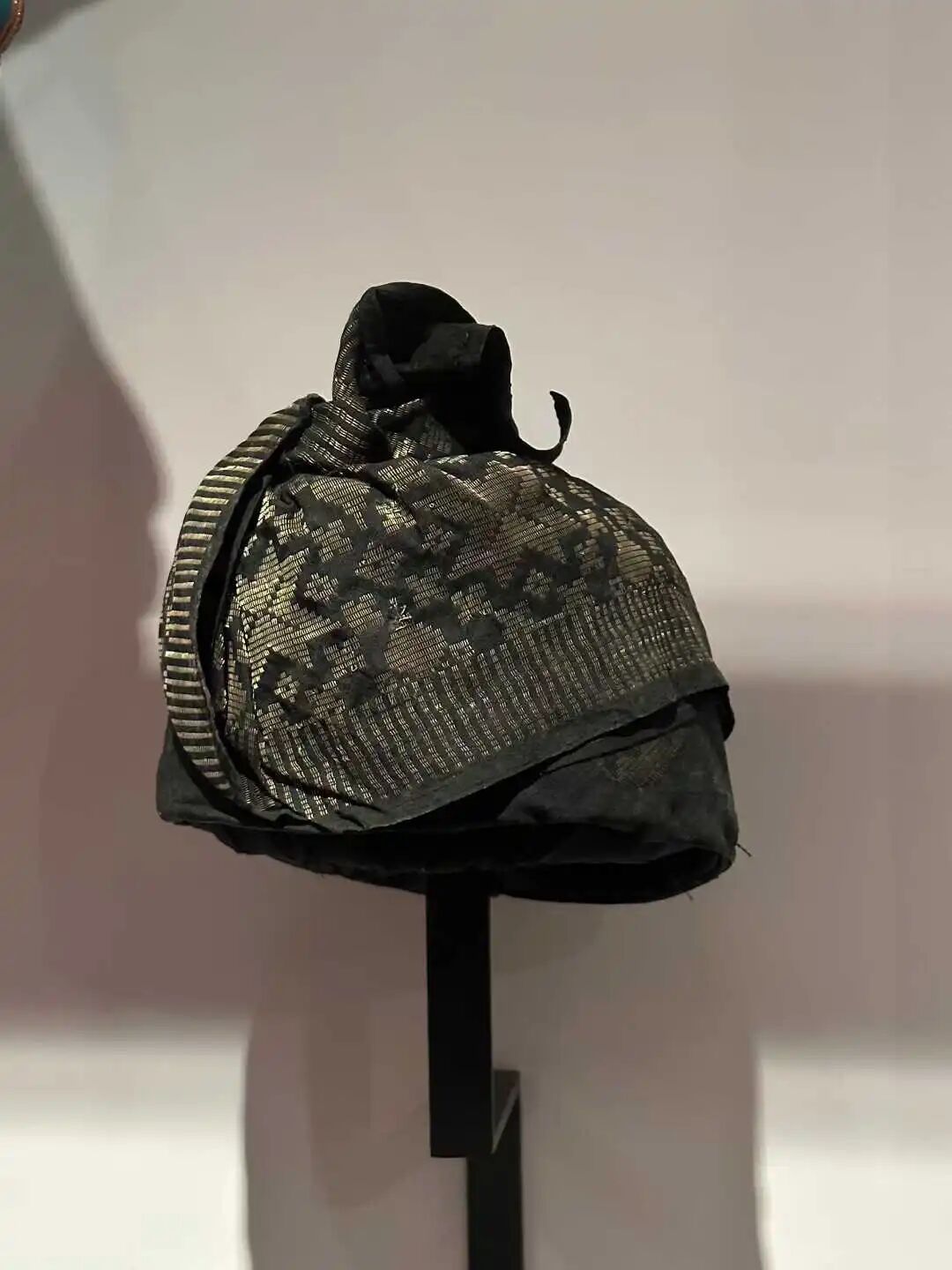
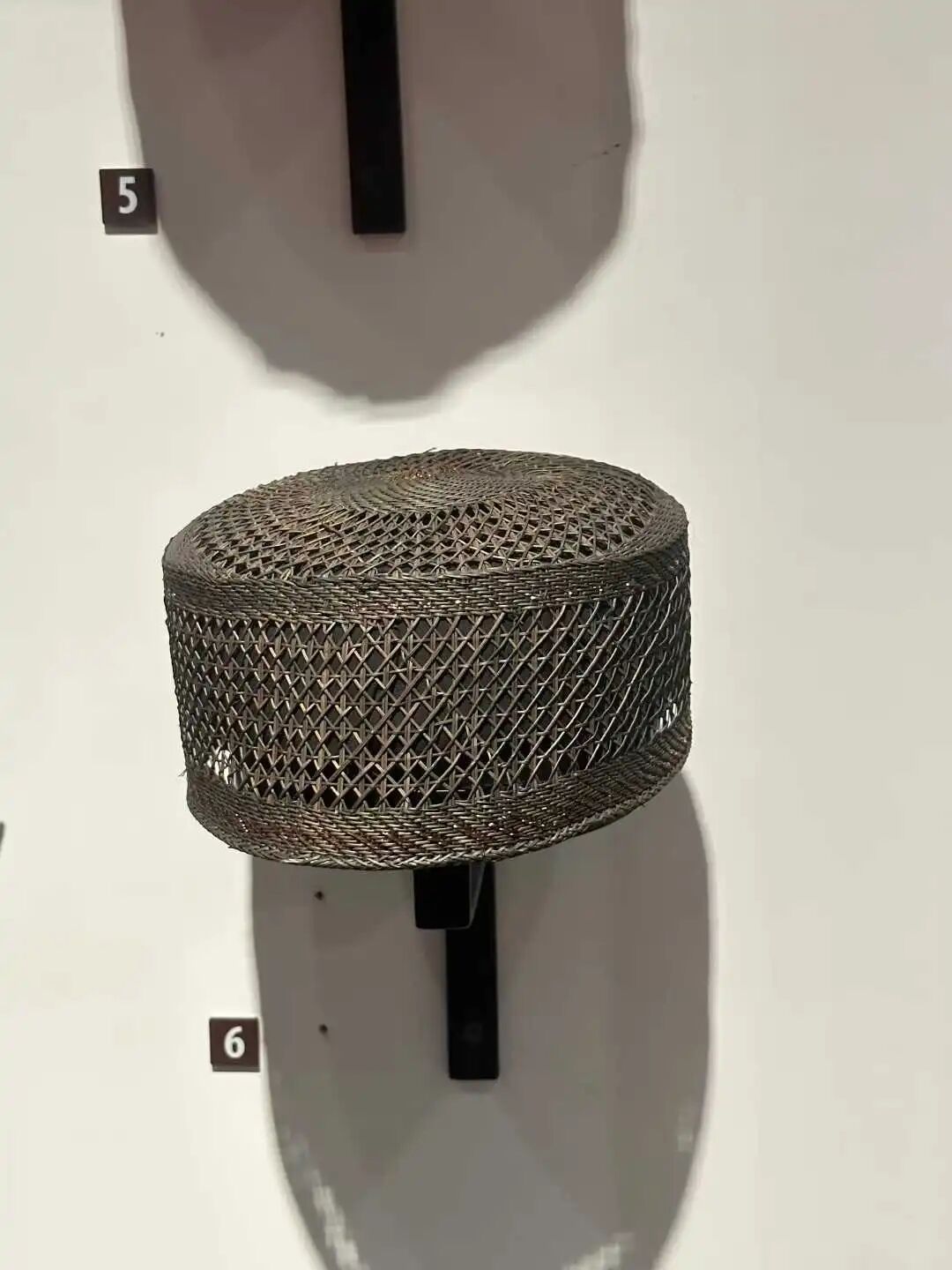
Decorations used during a funeral for the Maranao people of the Philippines. The Maranao people mainly live in the Lake Lanao region of Mindanao in the southern Philippines. They are an important Muslim ethnic group in the Philippines and hold a dominant position in the country's Islamic culture.
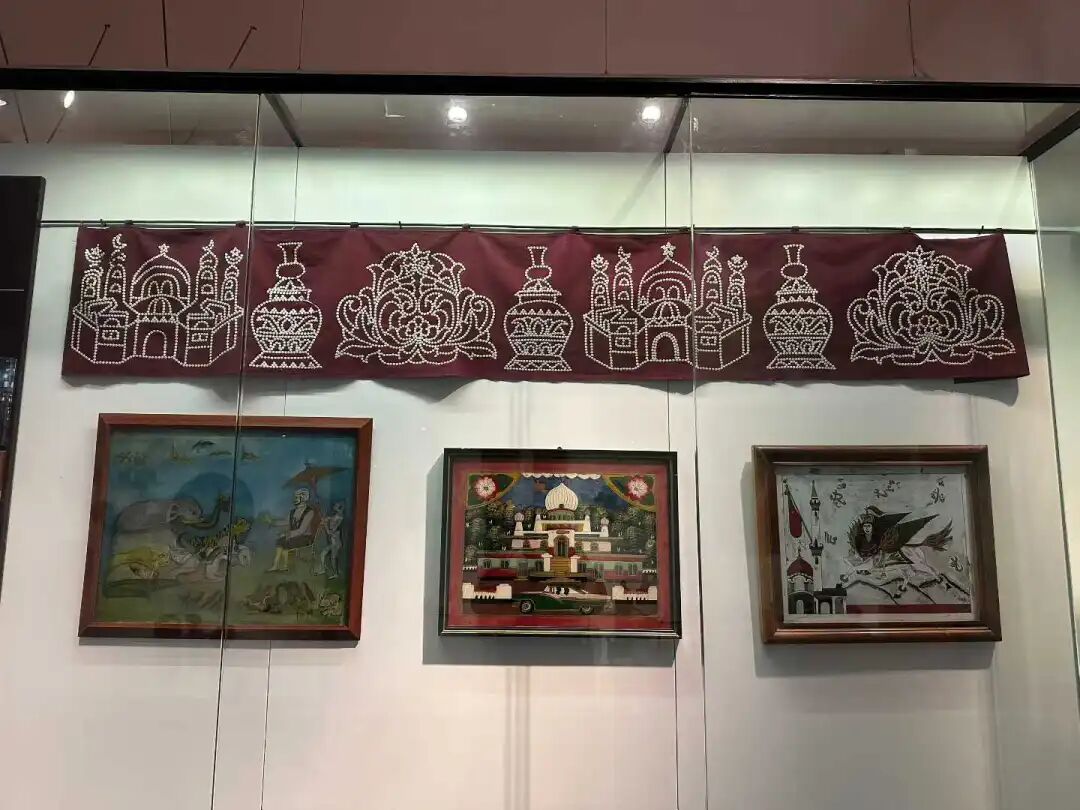
The museum courtyard displays a traditional Cham thatched-roof compound. Its design comes from the region where the ancient Champa Kingdom was located in southern Vietnam. I also happened to see the craftsmen working on the thatch.
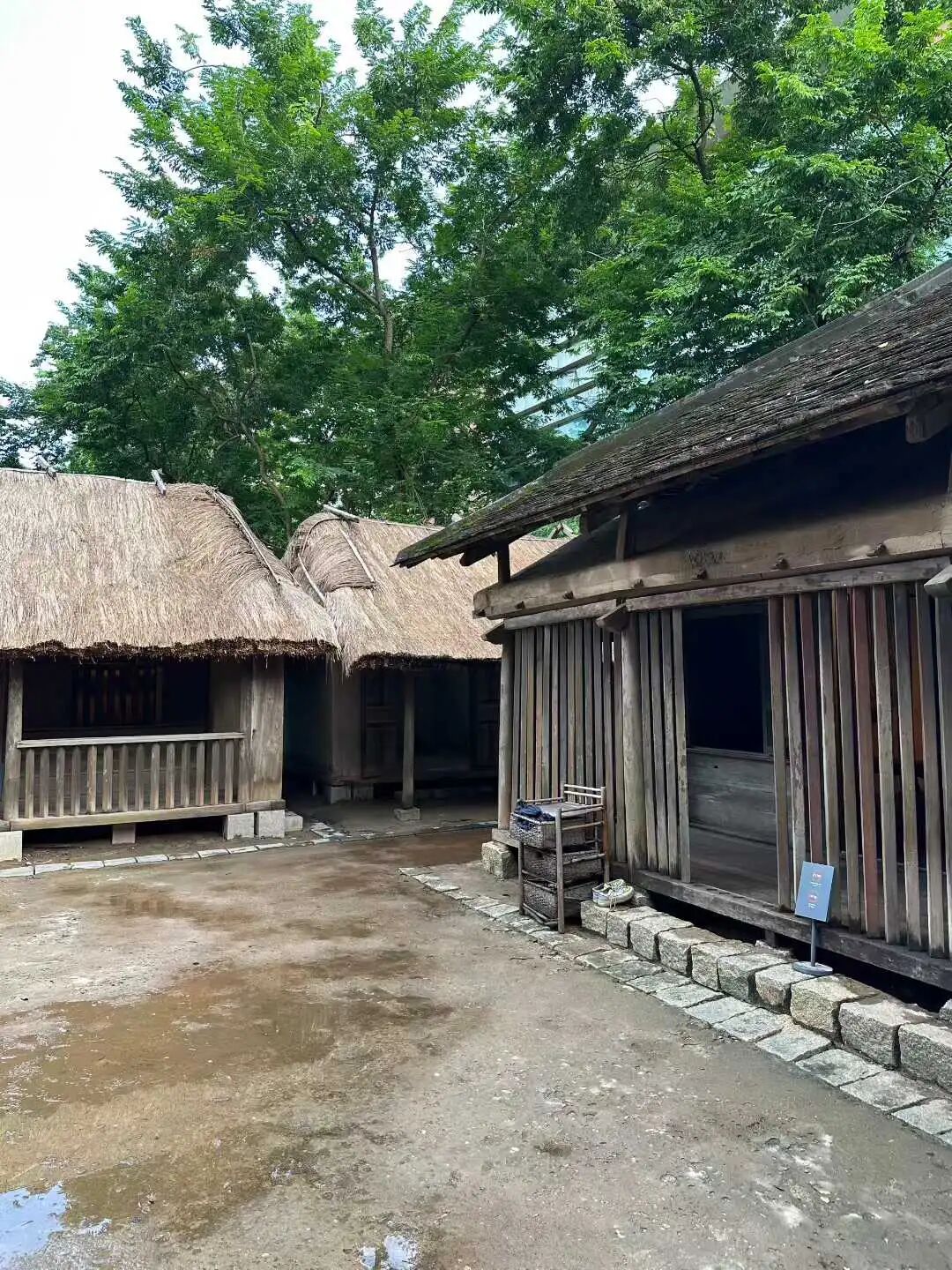
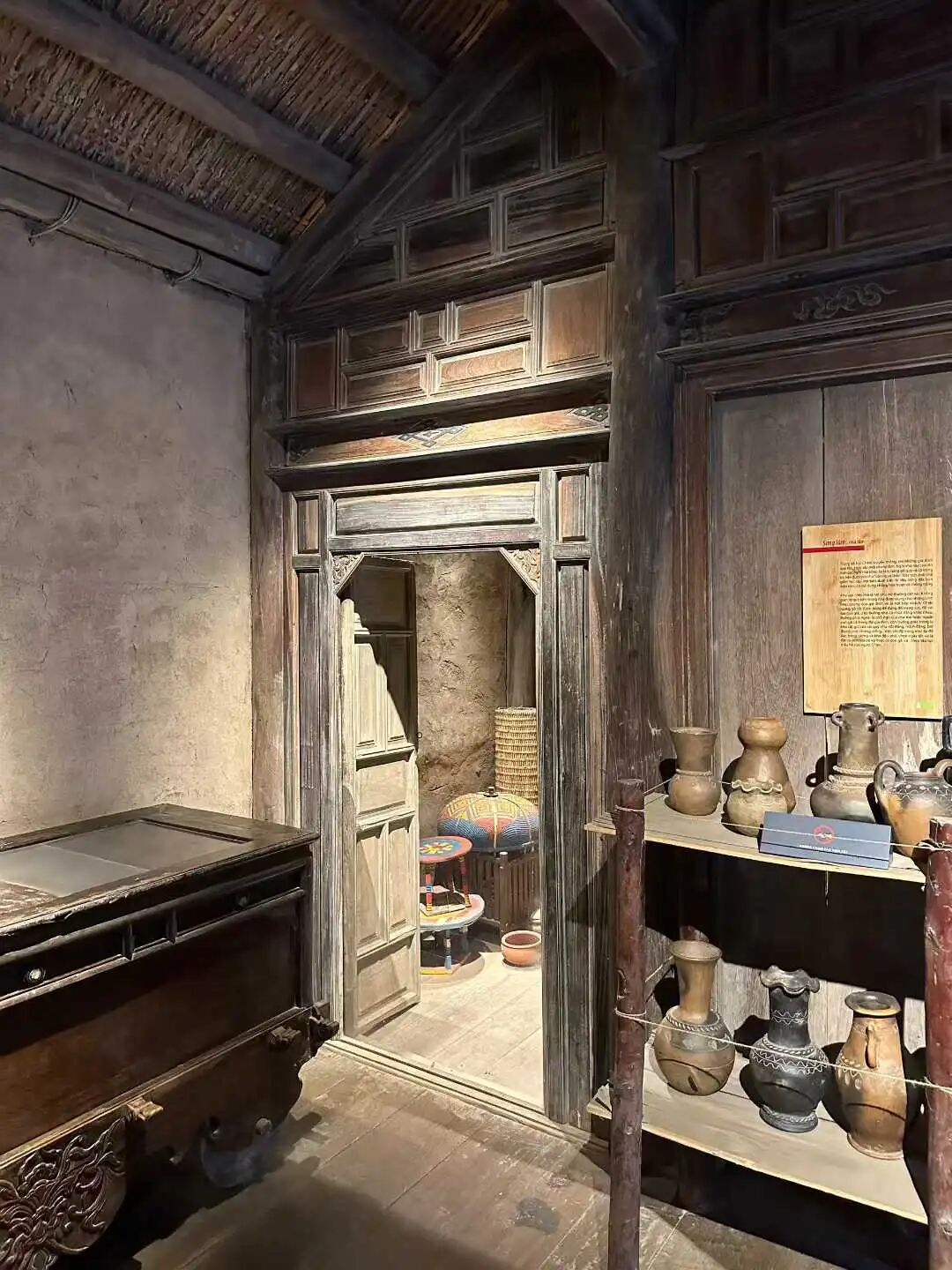
Photos of the Cham people performing acts of worship and studying.
Museum Guide: Beijing - Saudi Contemporary Art and Mosques in the Desert
Articles • ali2007fr posted the article • 0 comments • 275 views • 2026-05-20 09:37
Summary: The Saudi contemporary art exhibition at the National Museum of China ran from July 31 to October 30, 2025 and included paintings, sculpture, photography, and installation works. This account highlights desert imagery, Moath Alofi mosque photographs, Ahmad Angawi mihrab works, and Arabic-script objects in the Ancient China gallery.
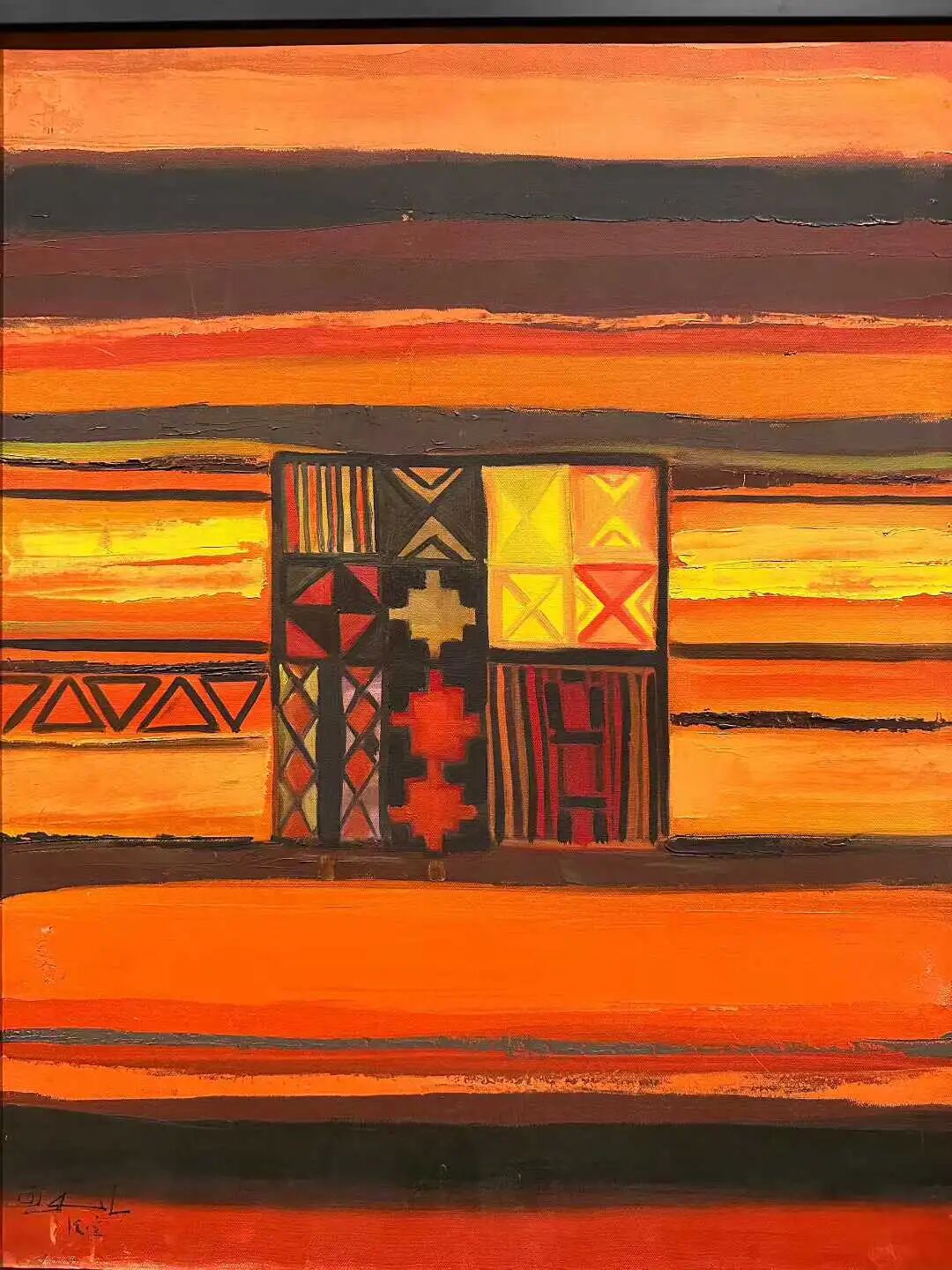
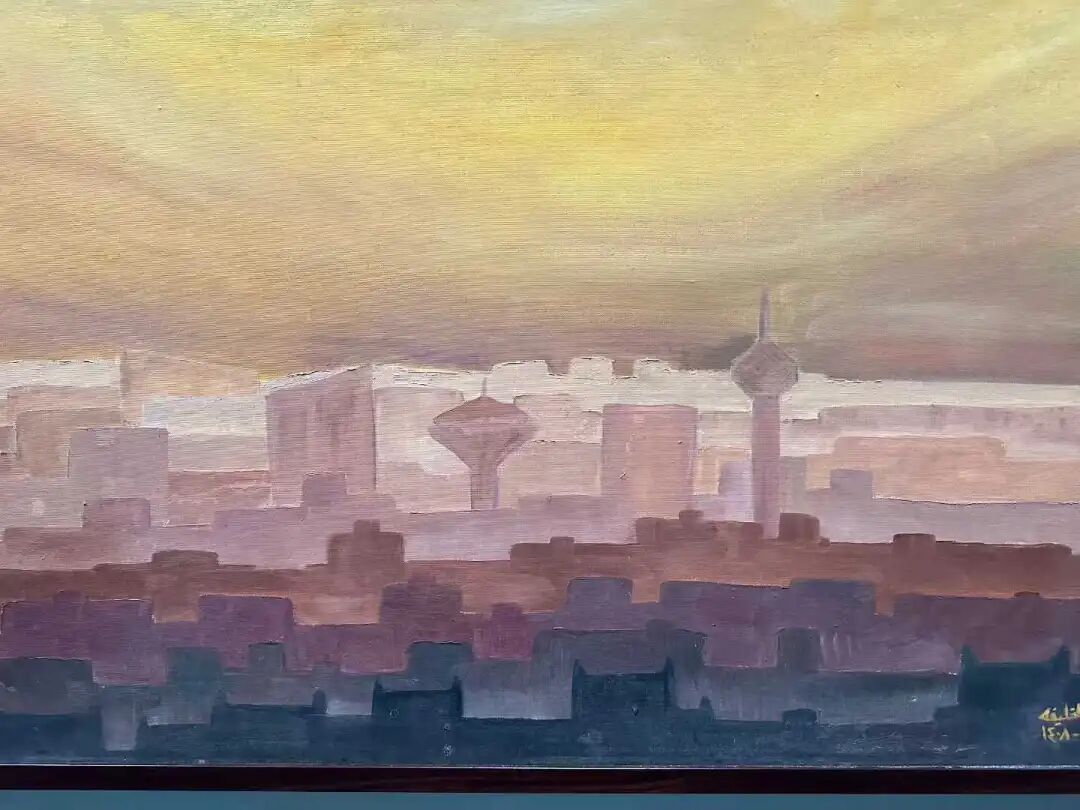
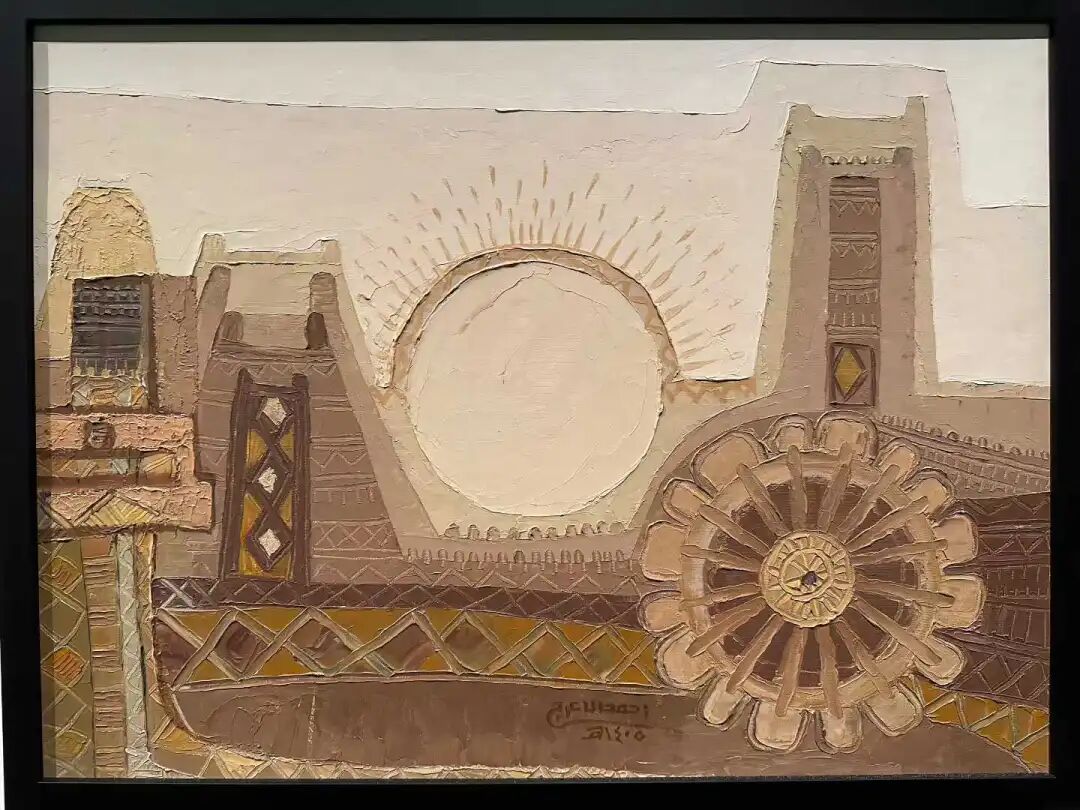
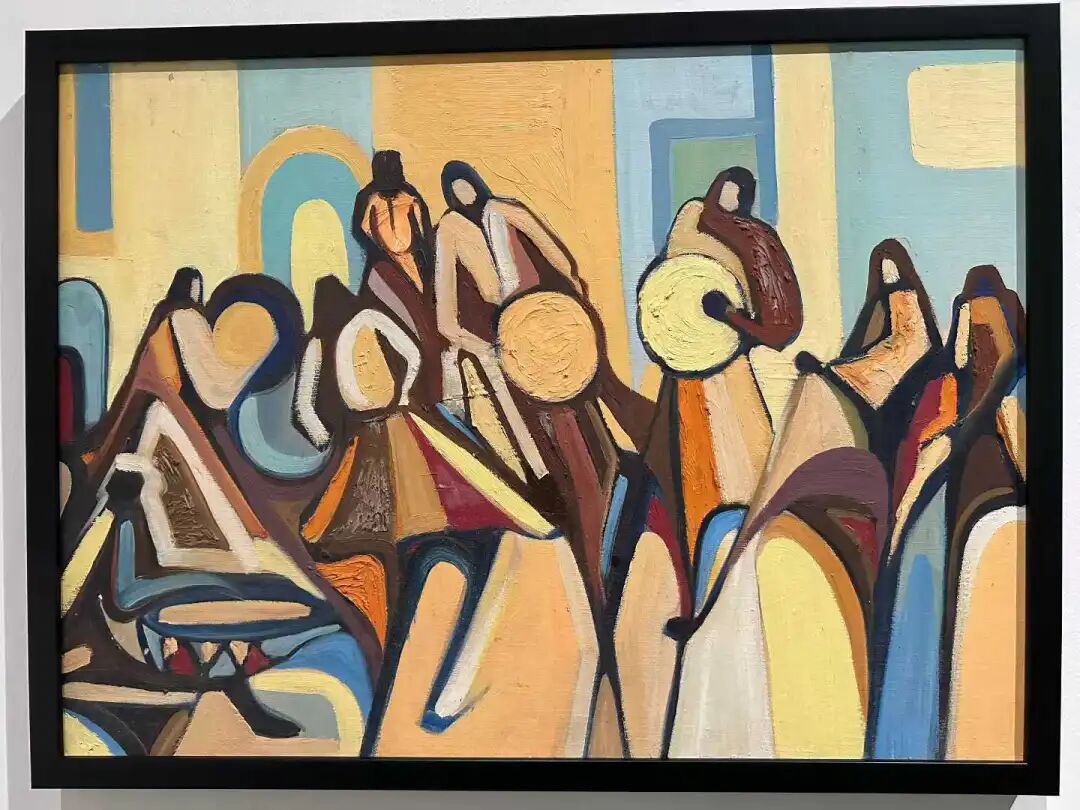
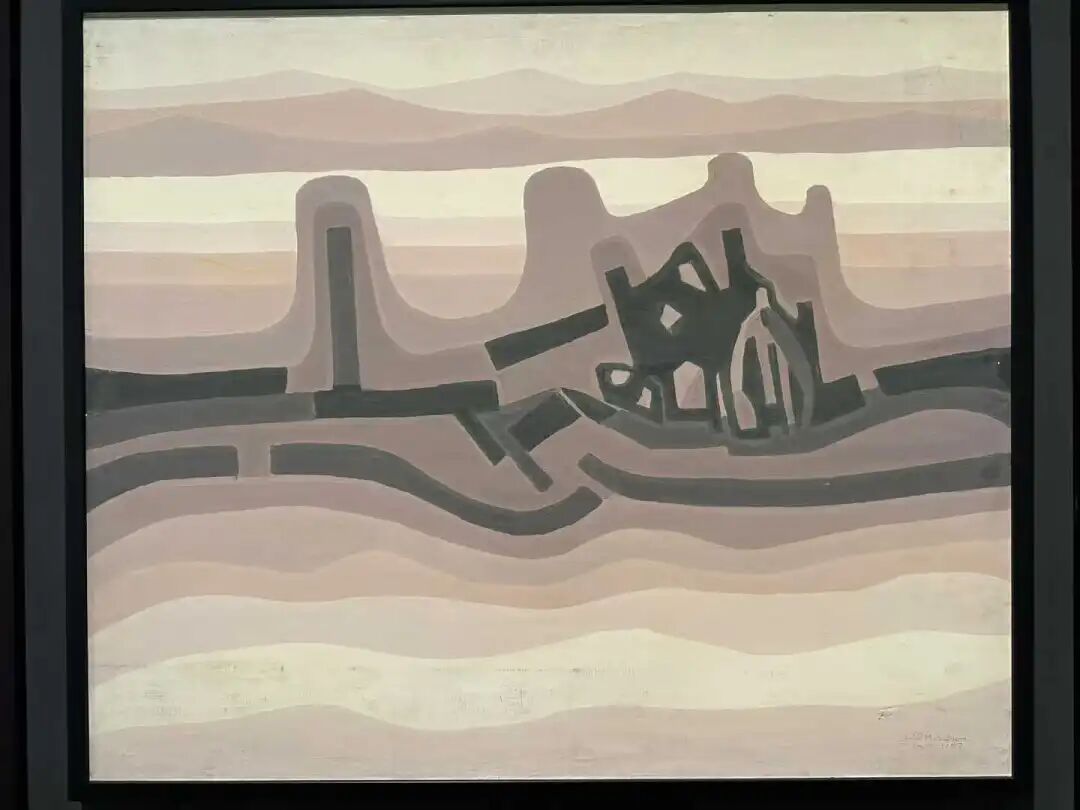
From July 31 to October 30, 2025, the National Museum of China is hosting the exhibition Art of the Kingdom: Contemporary Saudi Arabian Art, featuring works including paintings, sculptures, and installation art.
The first section displays Saudi modernist paintings from the 1960s to the 1980s. Here are a few lines from the introduction:
Fine desert sand is sealed in resin, becoming an amber of time. From vast desert imagery to the reinterpretation of cultural memory, and from deep reflection on social roles to the exploration of environment and urban life, the exhibition works present many layers of an ever-evolving society.
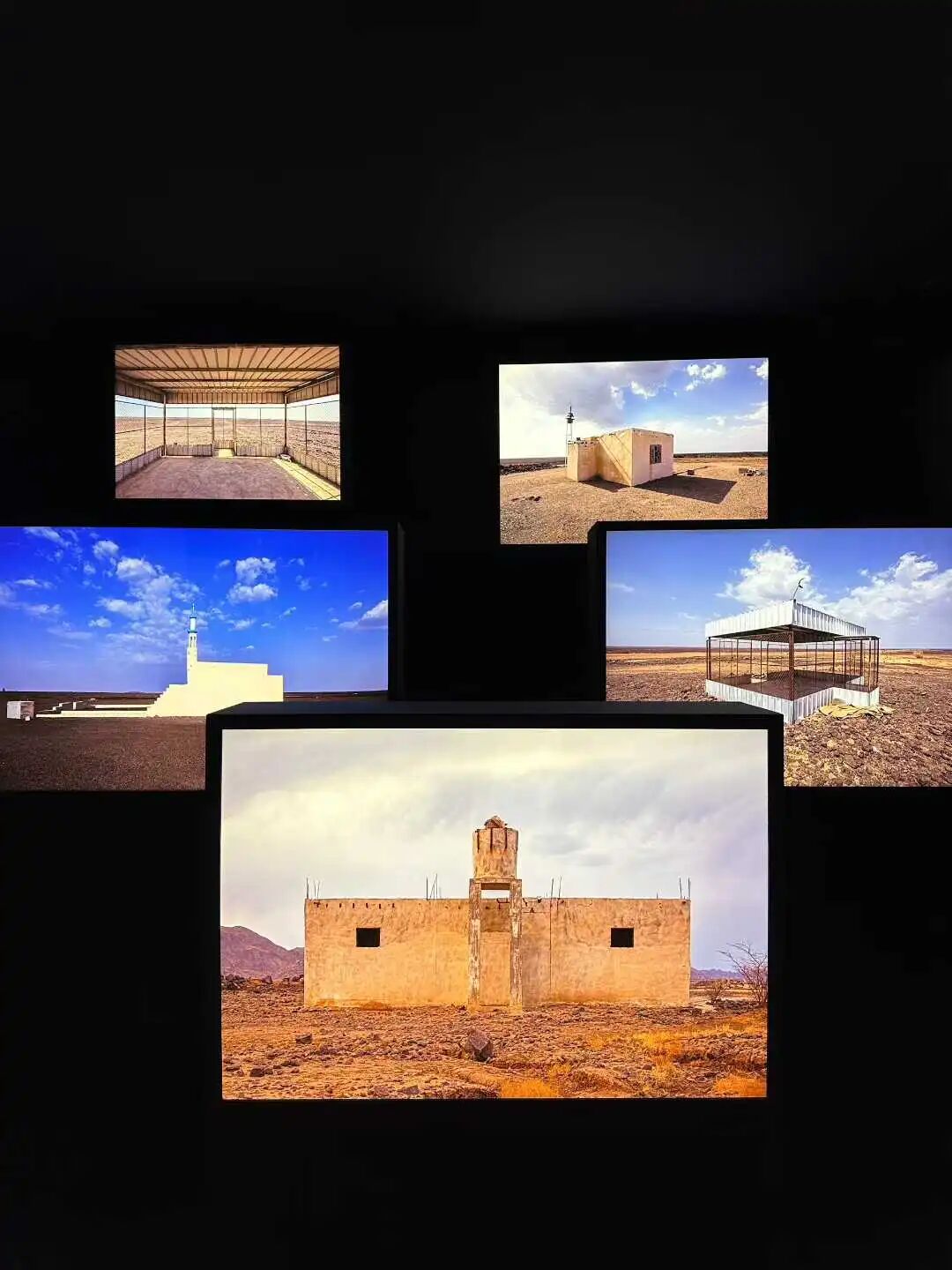
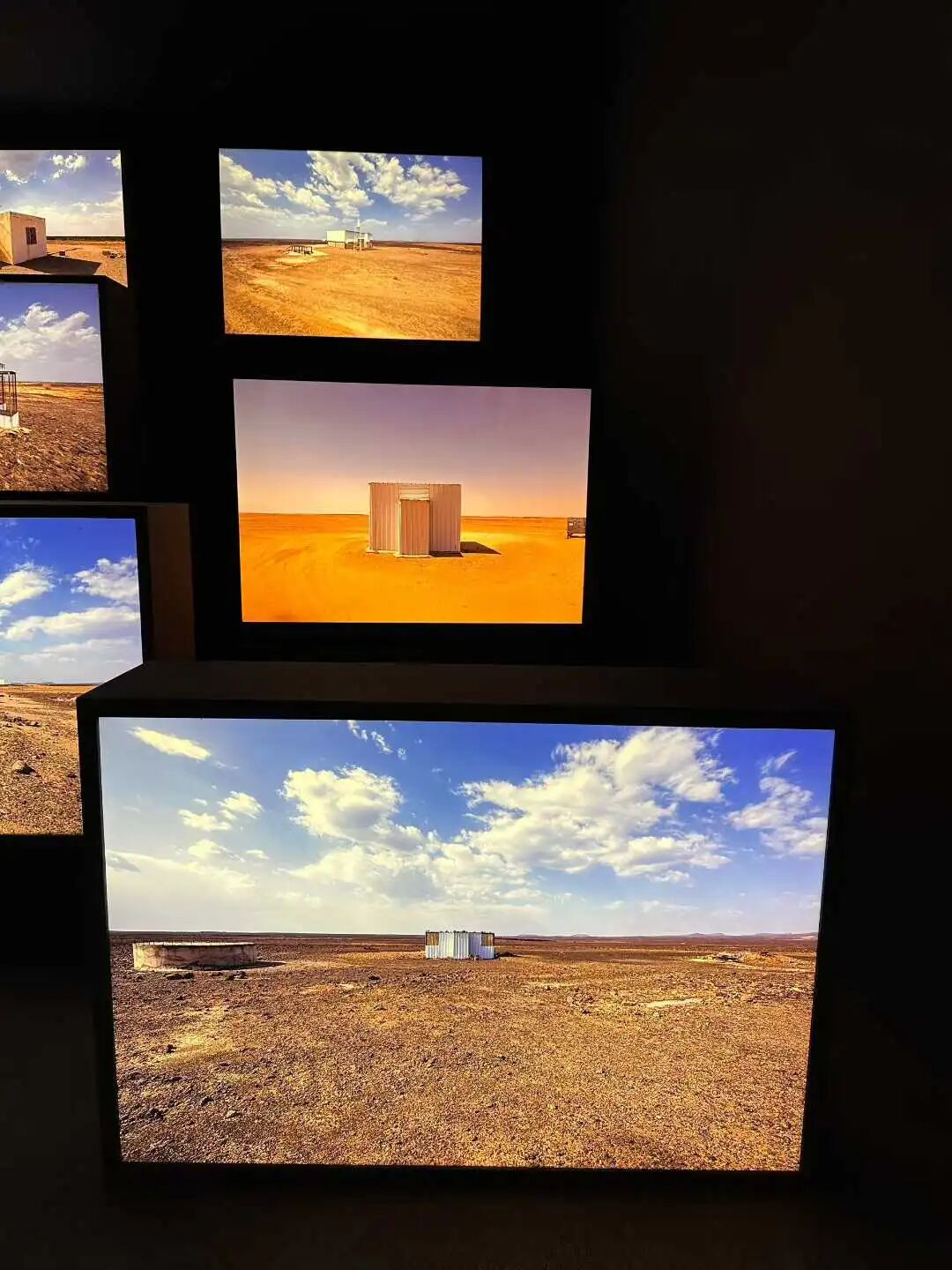
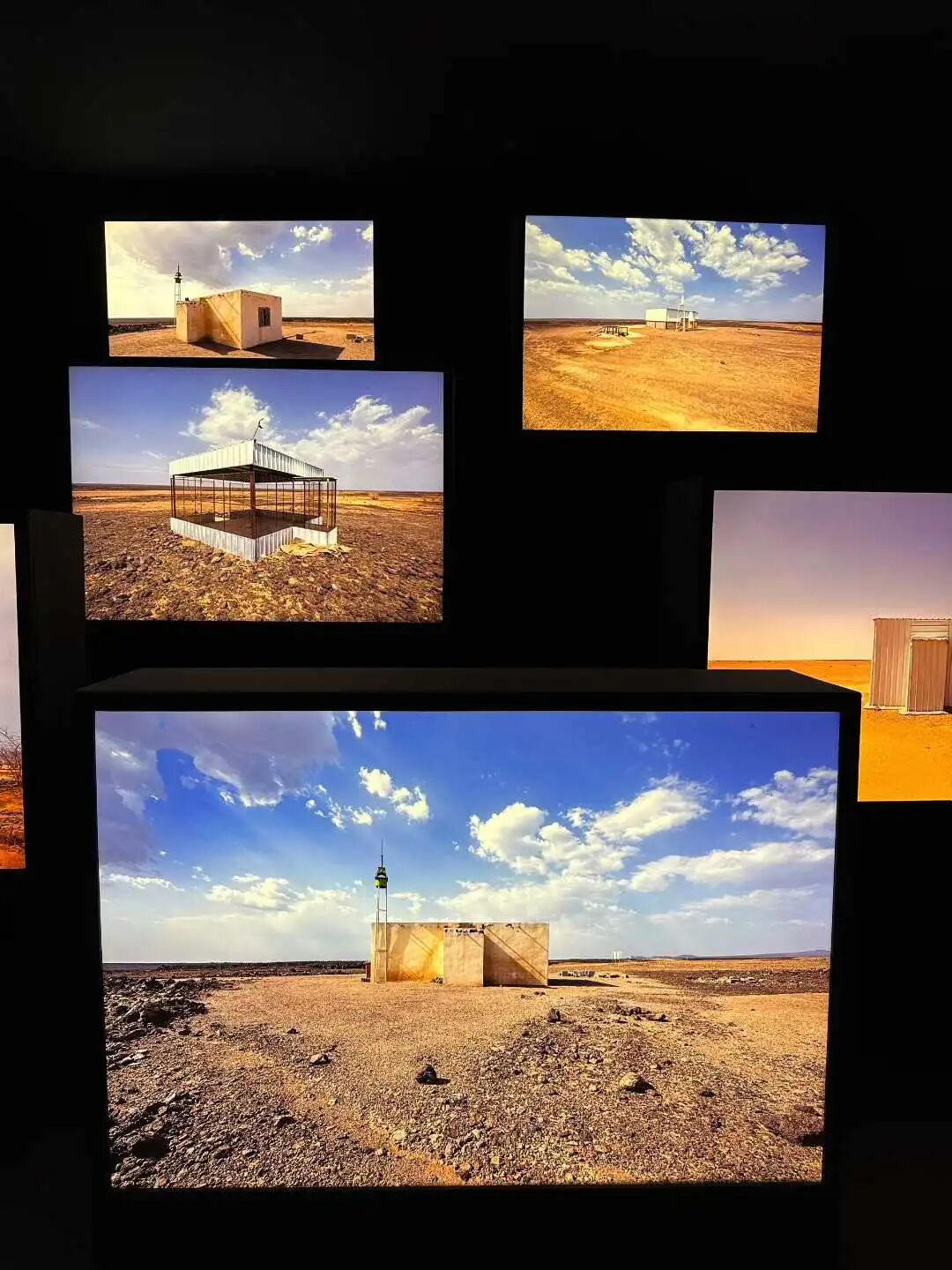
One set of works I particularly like is the 2017 light box installation The Last Witness by Moath Alofi, which features his photographs of small mosques found in the wilderness along the route to Medina.
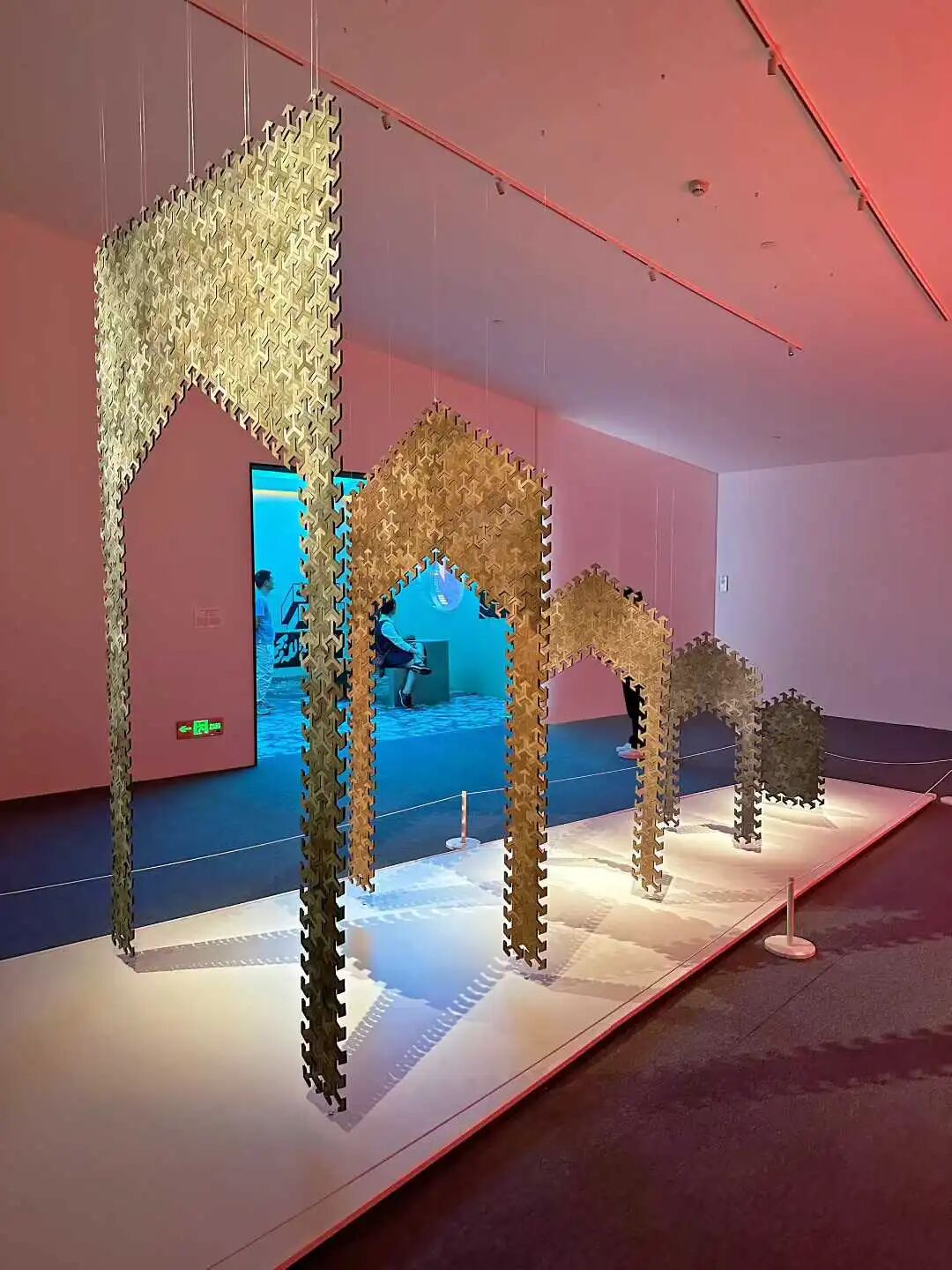
Ahmad Angawi's 2025 work, The Simplicity in Multiplicity, features five mihrab niches arranged in sequence to represent the five daily namaz, with the infinite extension of geometric patterns representing the infinity of faith (imani).
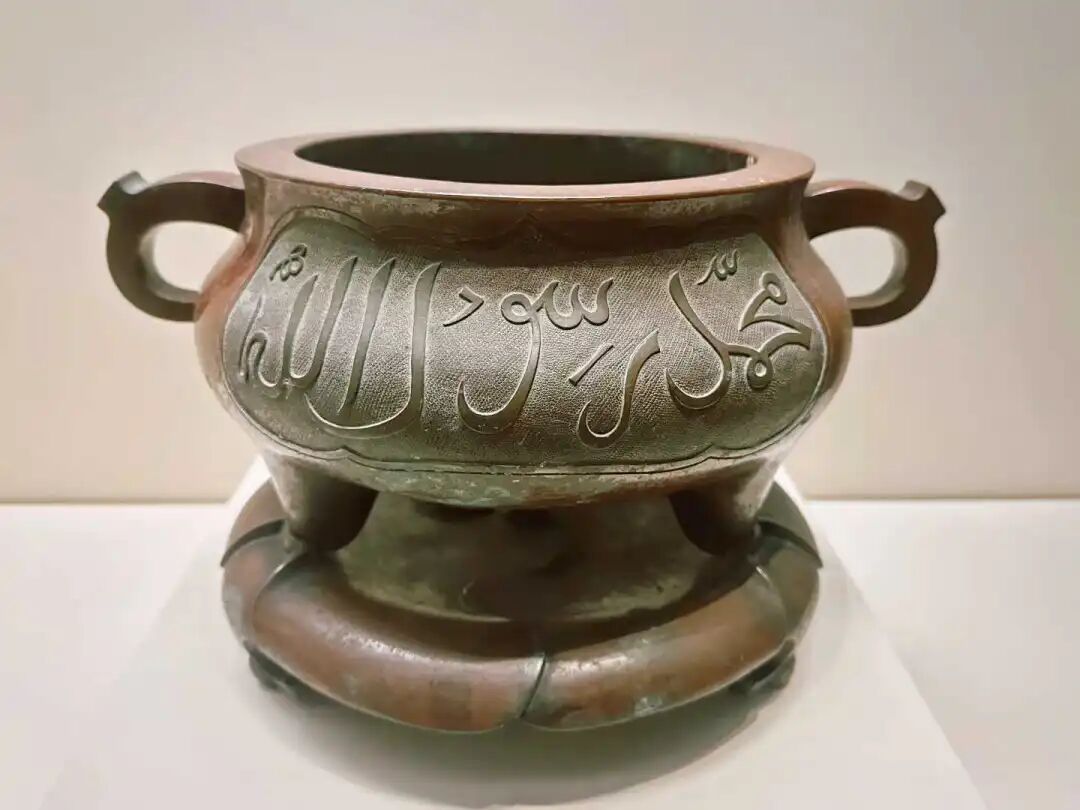
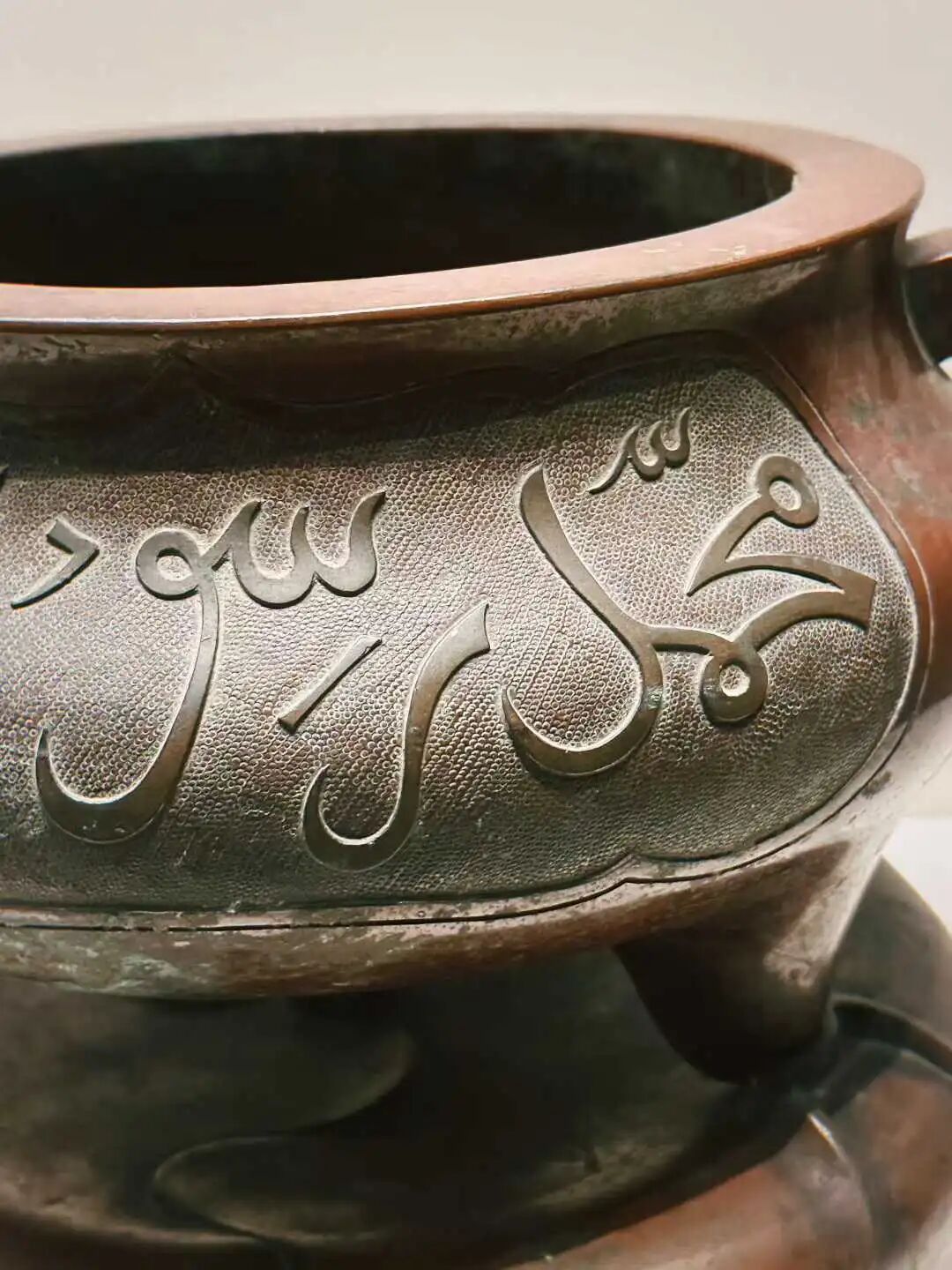
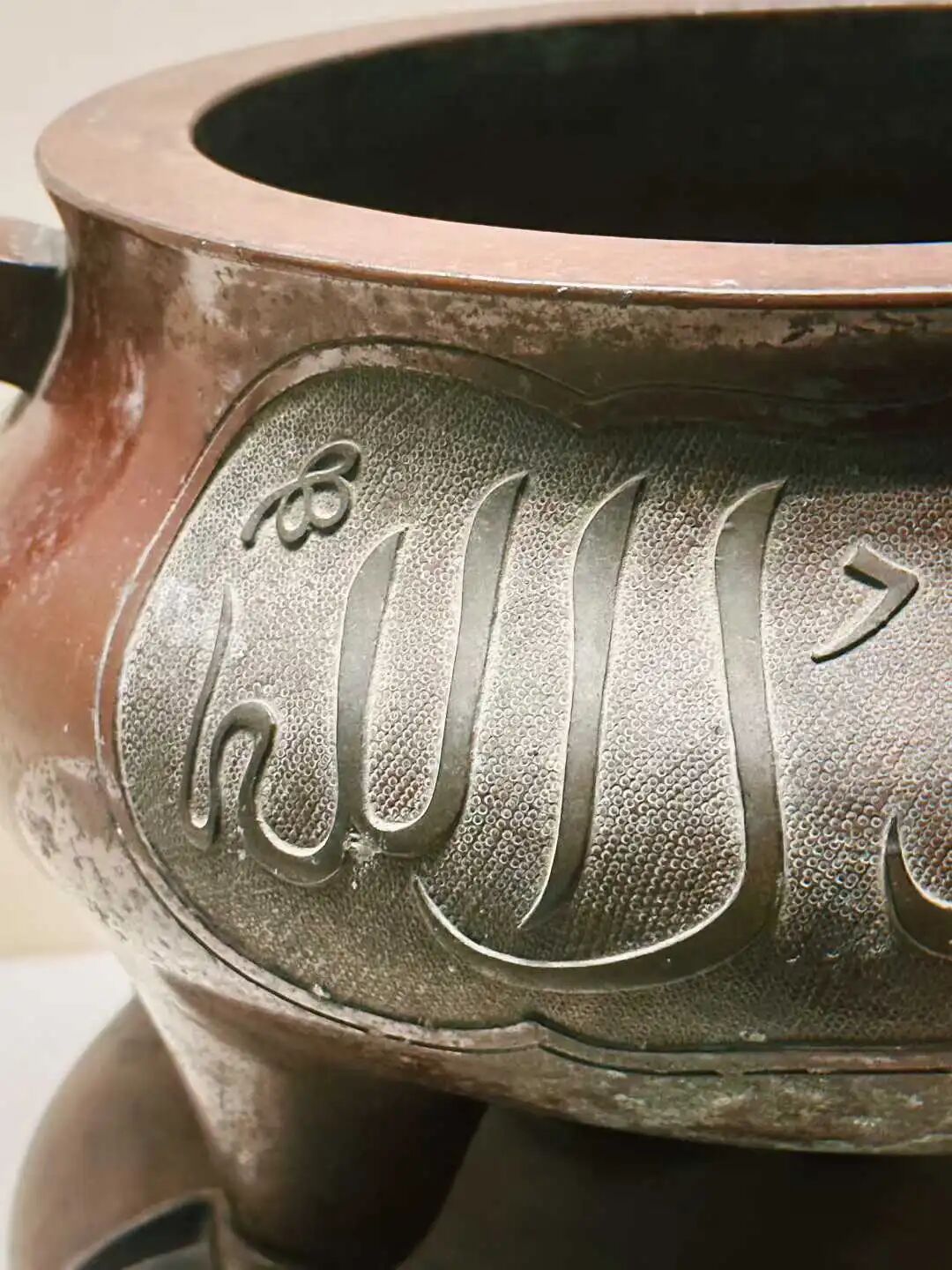
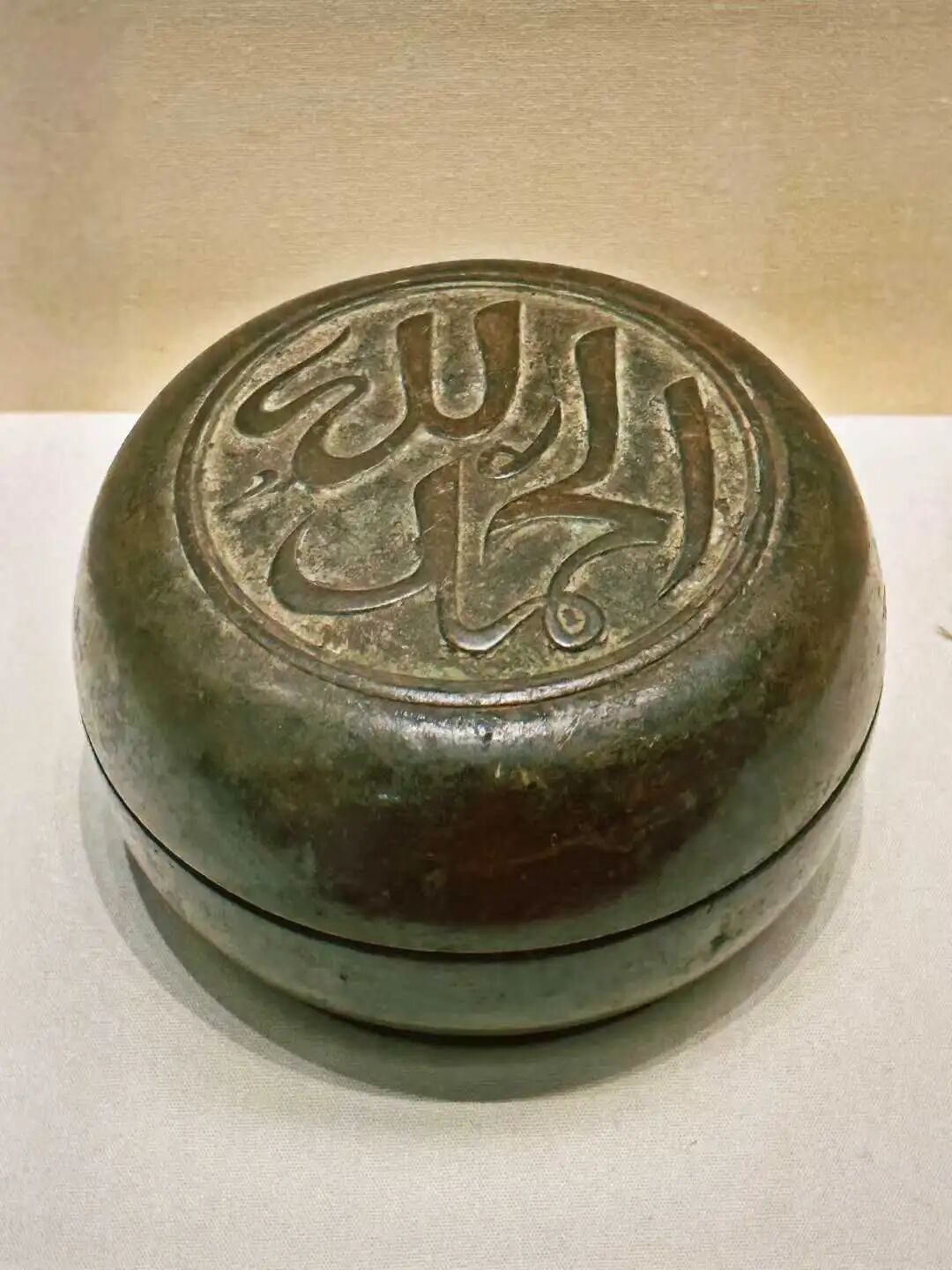
After seeing the SCO exhibition and the Saudi contemporary art exhibition on the first floor of the National Museum, you can head downstairs to the Ancient China exhibition to see a Ming dynasty incense burner with Arabic script and a Qing dynasty incense box with Arabic script, both of which show faith (imani) expressed through objects. view all
Summary: The Saudi contemporary art exhibition at the National Museum of China ran from July 31 to October 30, 2025 and included paintings, sculpture, photography, and installation works. This account highlights desert imagery, Moath Alofi mosque photographs, Ahmad Angawi mihrab works, and Arabic-script objects in the Ancient China gallery.
From July 31 to October 30, 2025, the National Museum of China is hosting the exhibition Art of the Kingdom: Contemporary Saudi Arabian Art, featuring works including paintings, sculptures, and installation art.
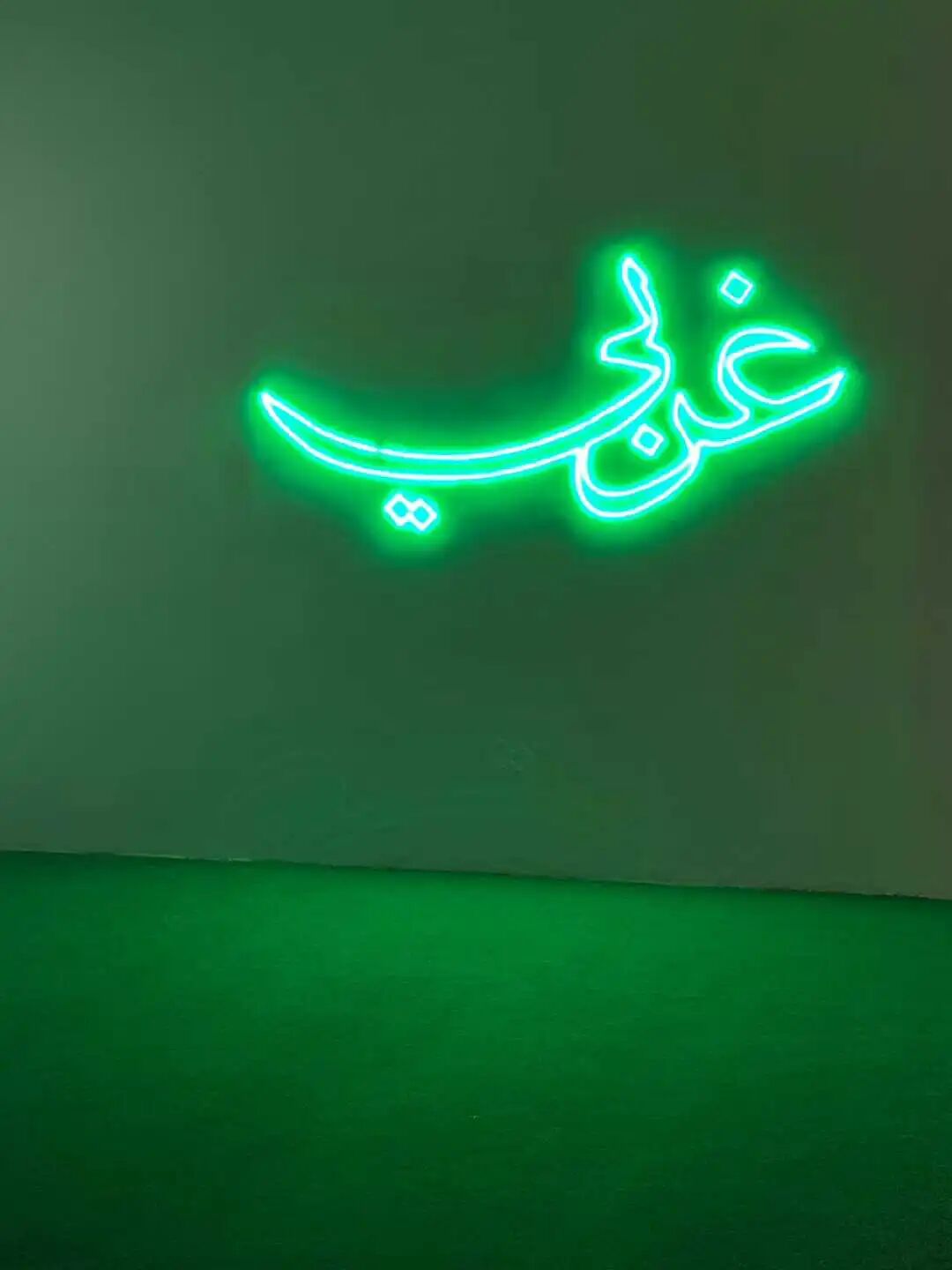
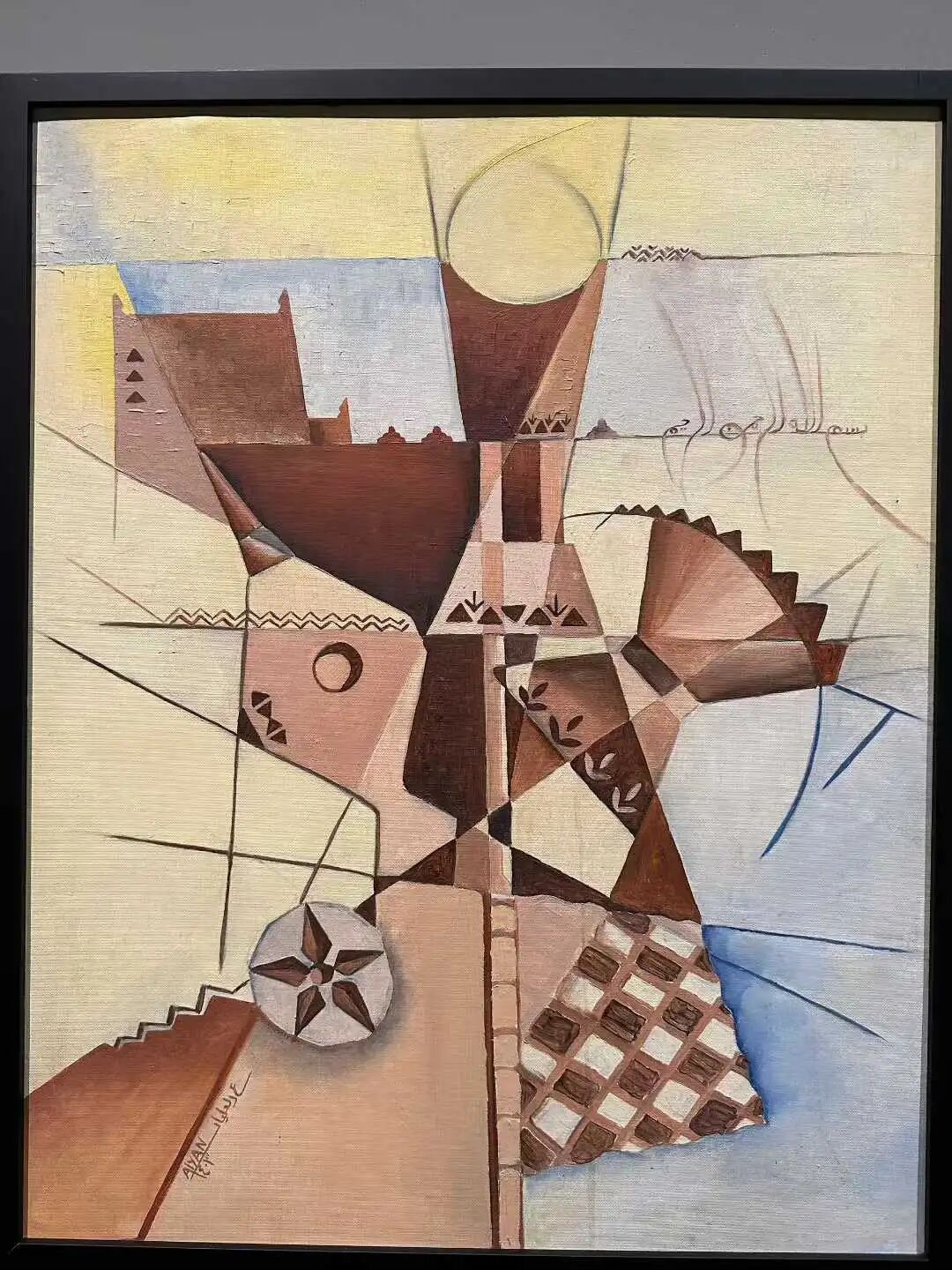
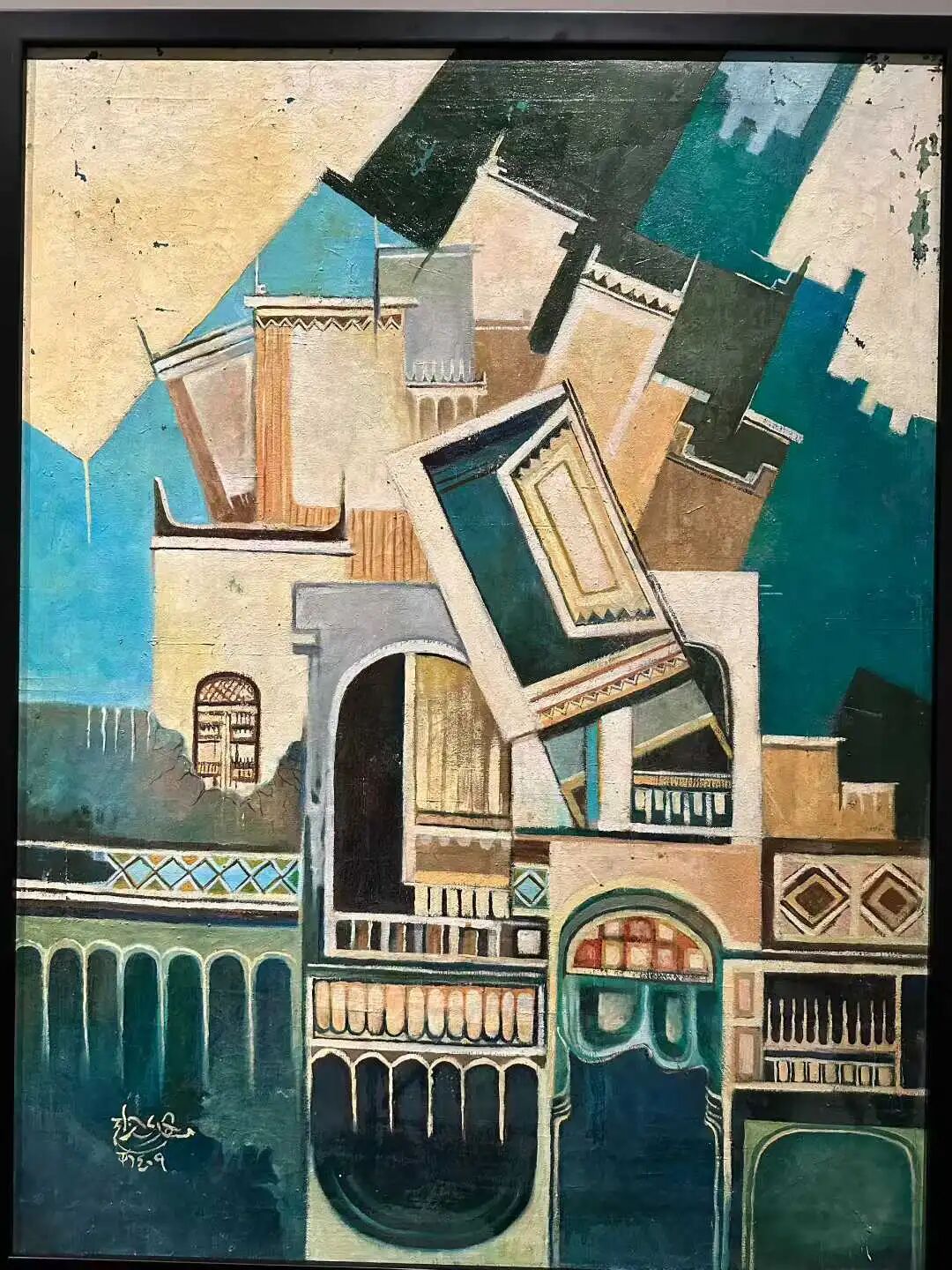
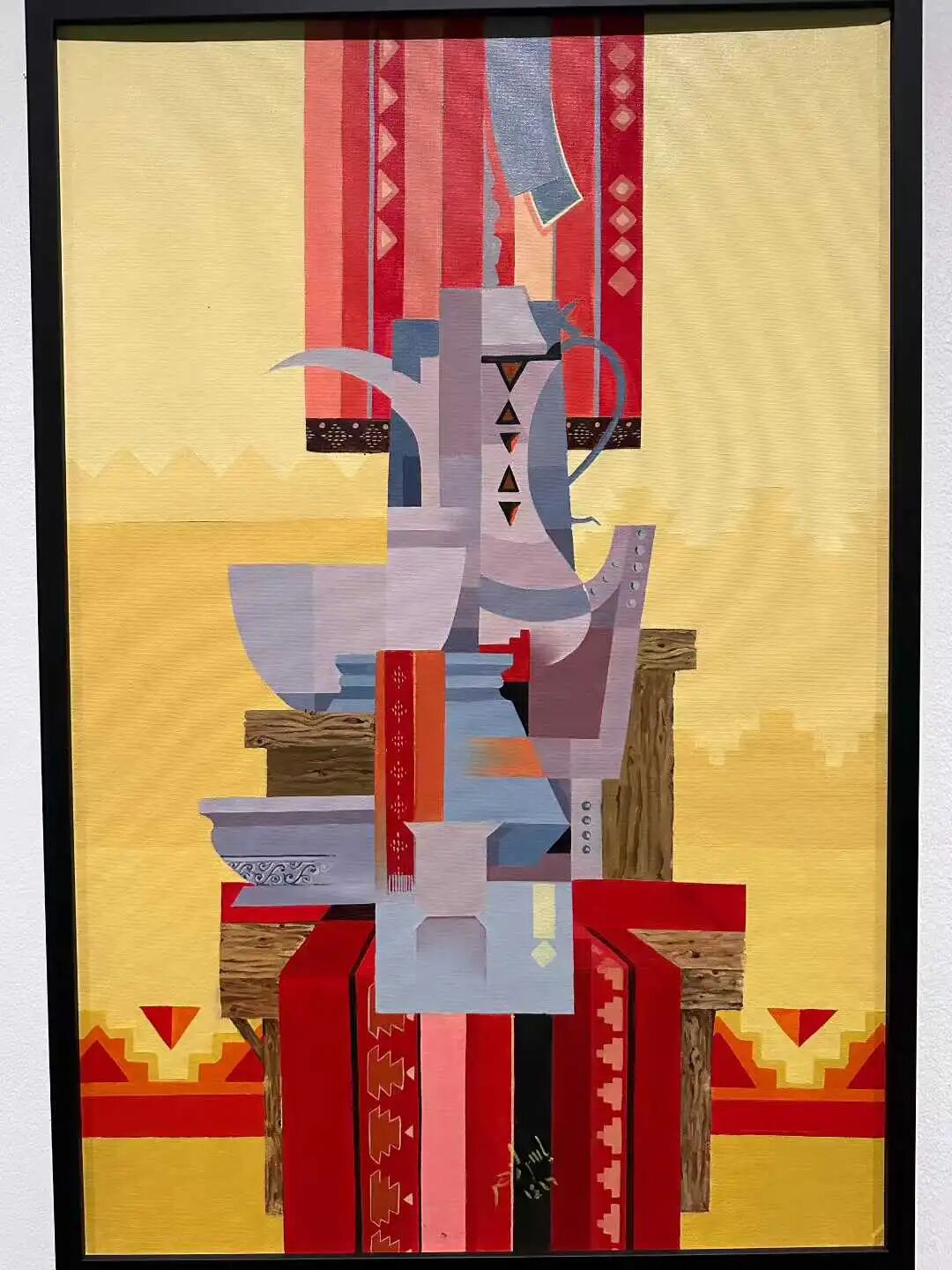
The first section displays Saudi modernist paintings from the 1960s to the 1980s. Here are a few lines from the introduction:
Fine desert sand is sealed in resin, becoming an amber of time. From vast desert imagery to the reinterpretation of cultural memory, and from deep reflection on social roles to the exploration of environment and urban life, the exhibition works present many layers of an ever-evolving society.
One set of works I particularly like is the 2017 light box installation The Last Witness by Moath Alofi, which features his photographs of small mosques found in the wilderness along the route to Medina.
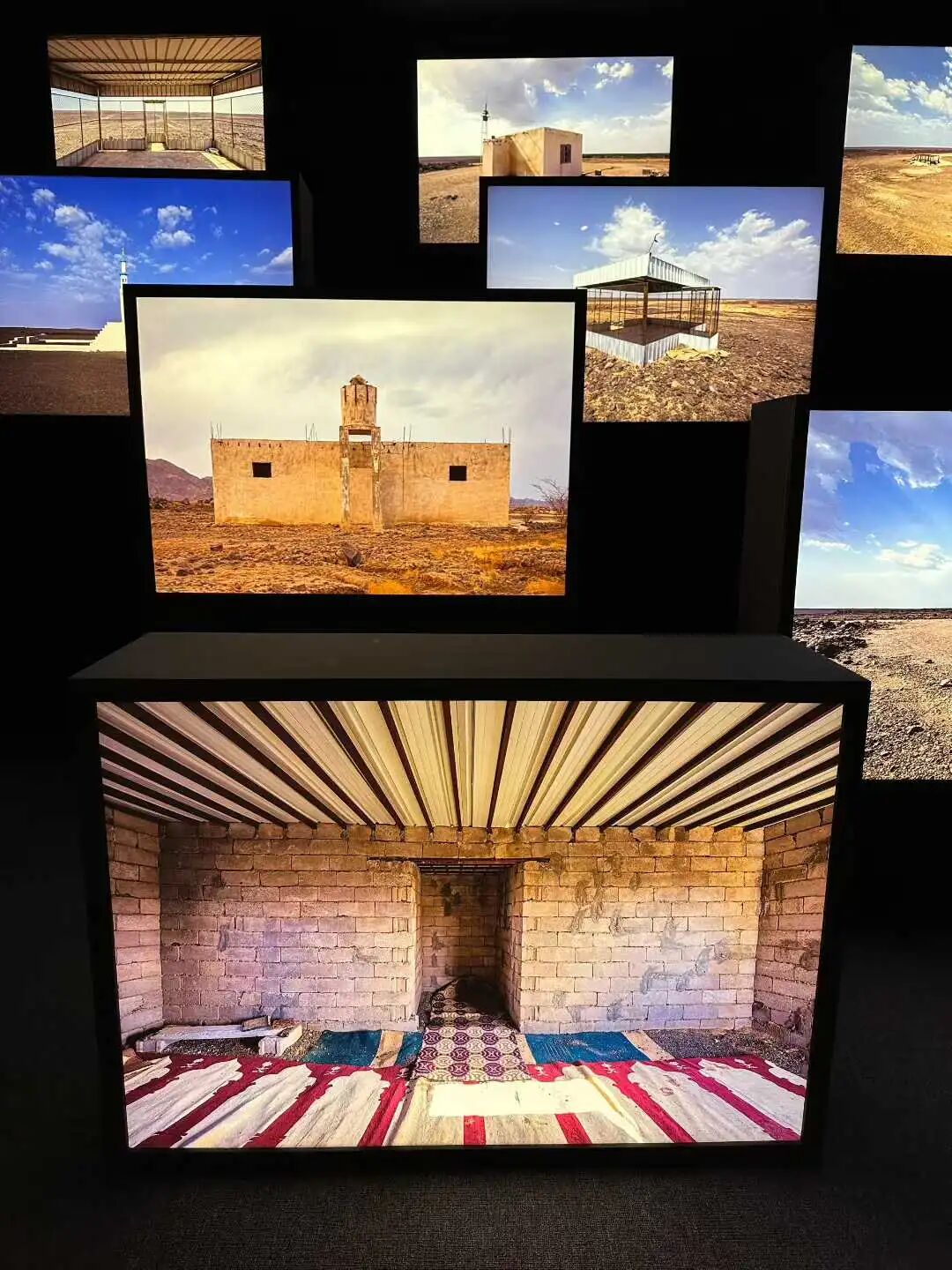
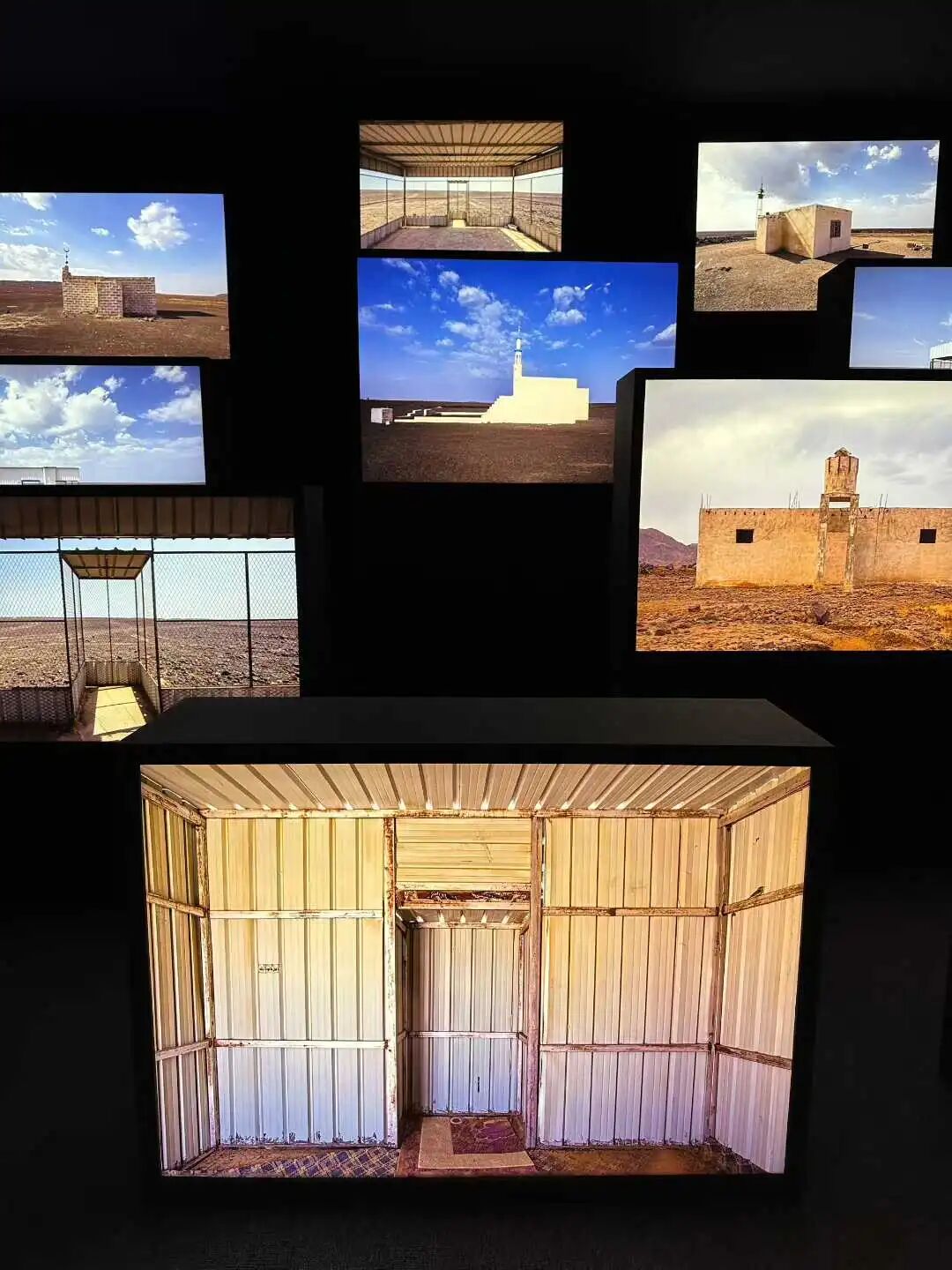
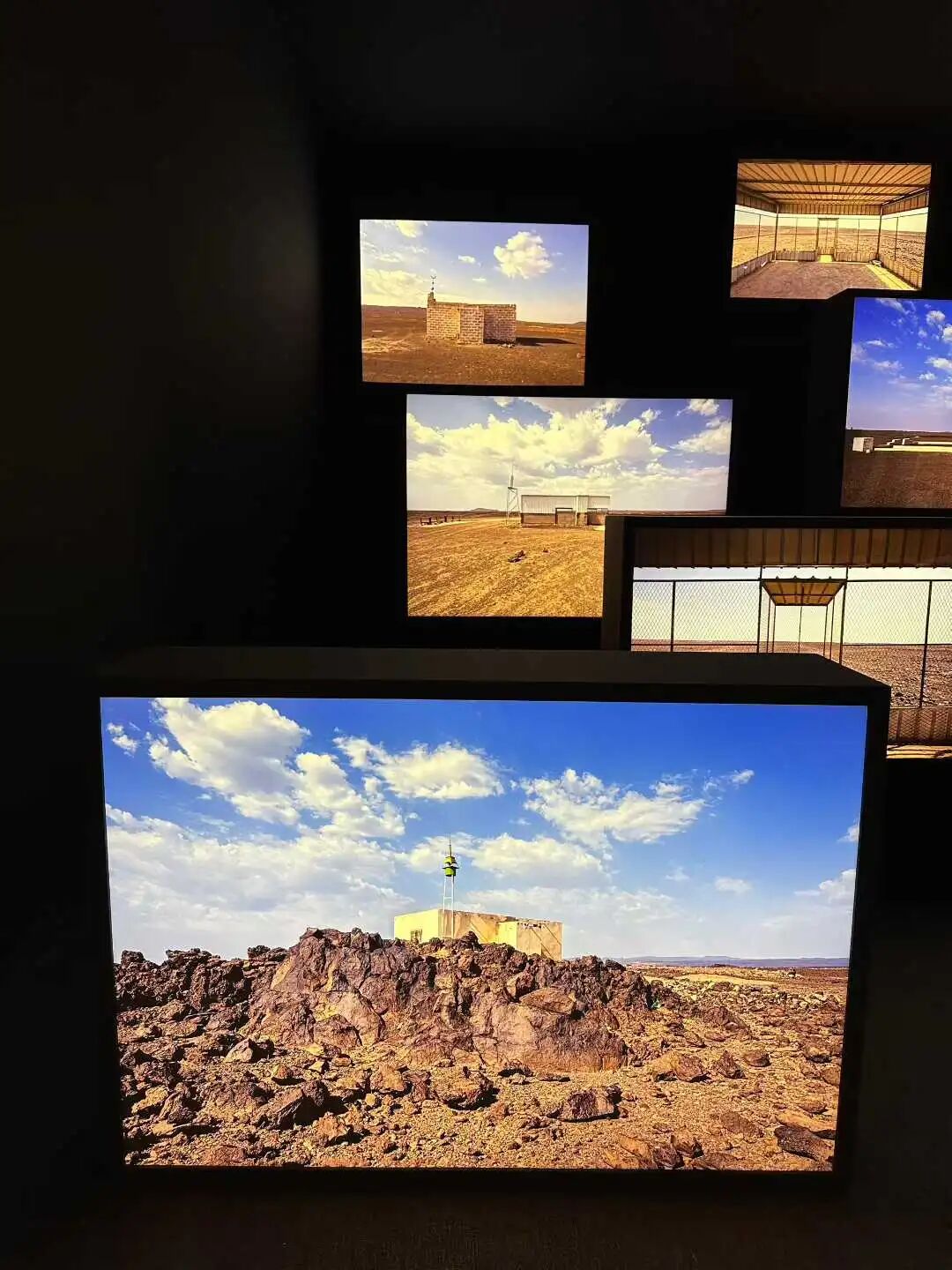
Ahmad Angawi's 2025 work, The Simplicity in Multiplicity, features five mihrab niches arranged in sequence to represent the five daily namaz, with the infinite extension of geometric patterns representing the infinity of faith (imani).
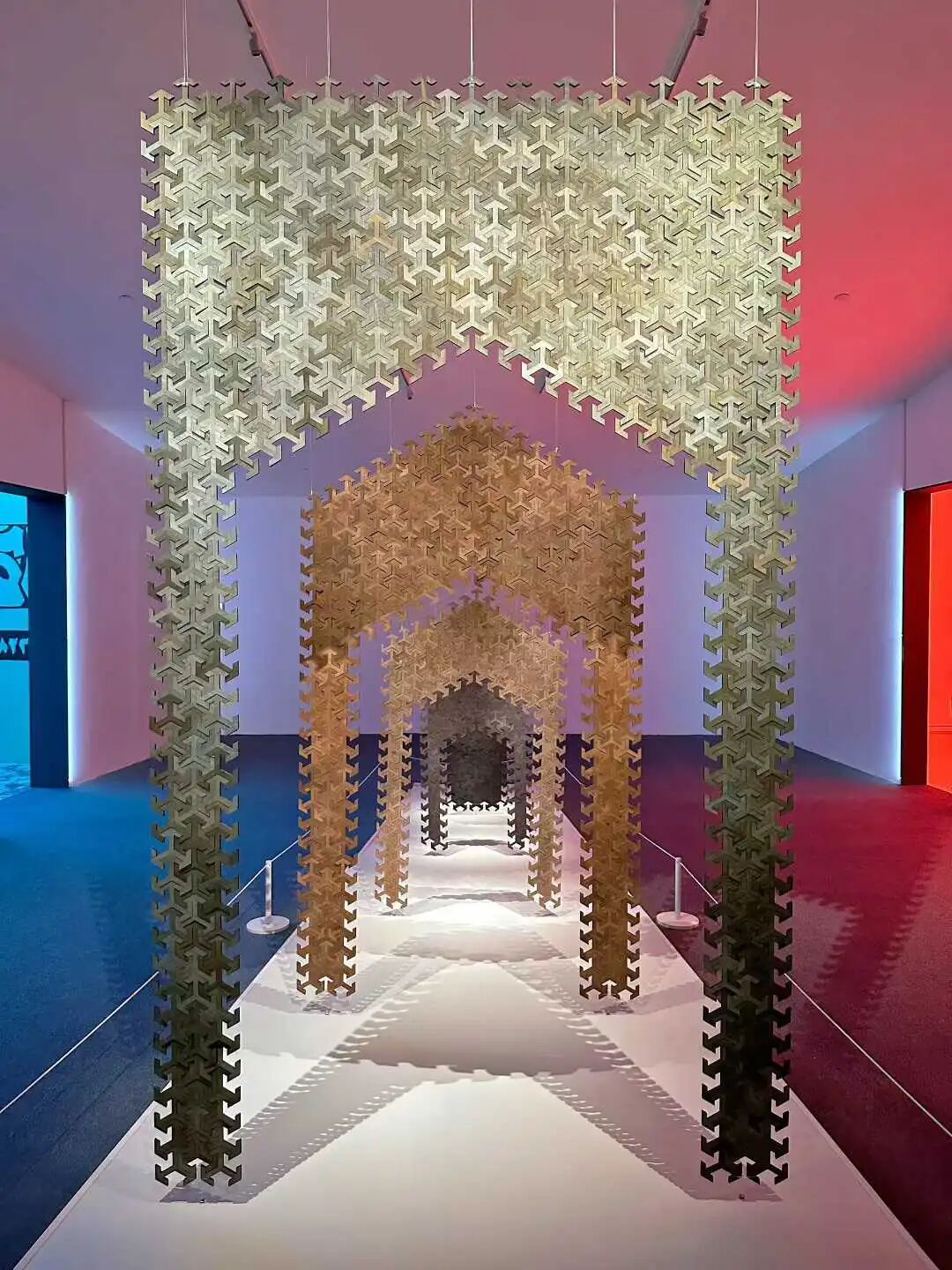
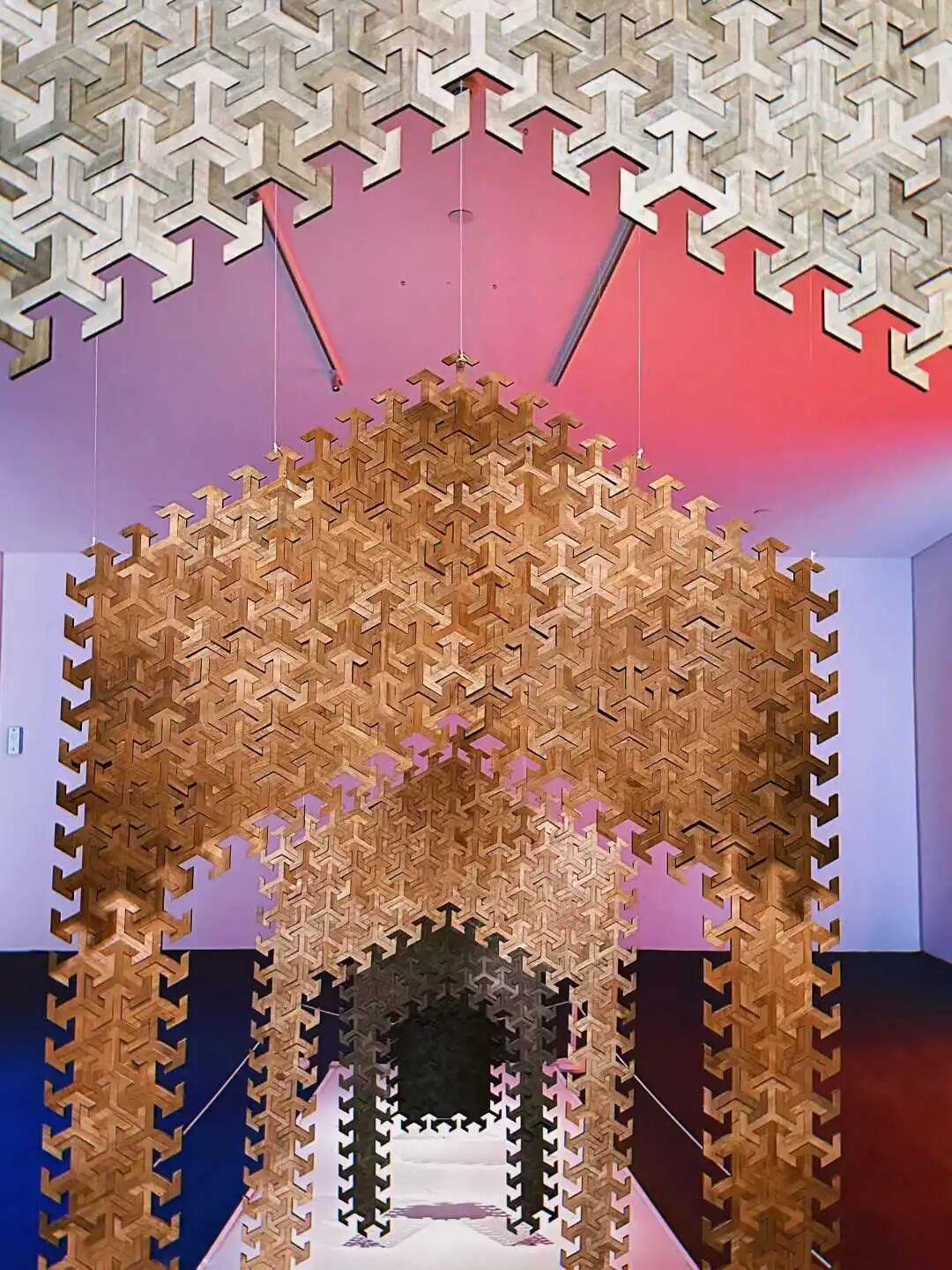
After seeing the SCO exhibition and the Saudi contemporary art exhibition on the first floor of the National Museum, you can head downstairs to the Ancient China exhibition to see a Ming dynasty incense burner with Arabic script and a Qing dynasty incense box with Arabic script, both of which show faith (imani) expressed through objects.
Museum Guide: Beijing - SCO Exhibition, Persian Calligraphy and Central Asian Robes
Articles • ali2007fr posted the article • 0 comments • 258 views • 2026-05-20 09:37
Summary: This National Museum of China exhibition visit focuses on SCO-related cultural objects, including Persian-style calligraphy, Central Asian robes, jewelry, ceramics, carpets, and manuscripts. The account records the museum displays through an Islamic art and Silk Road cultural lens.
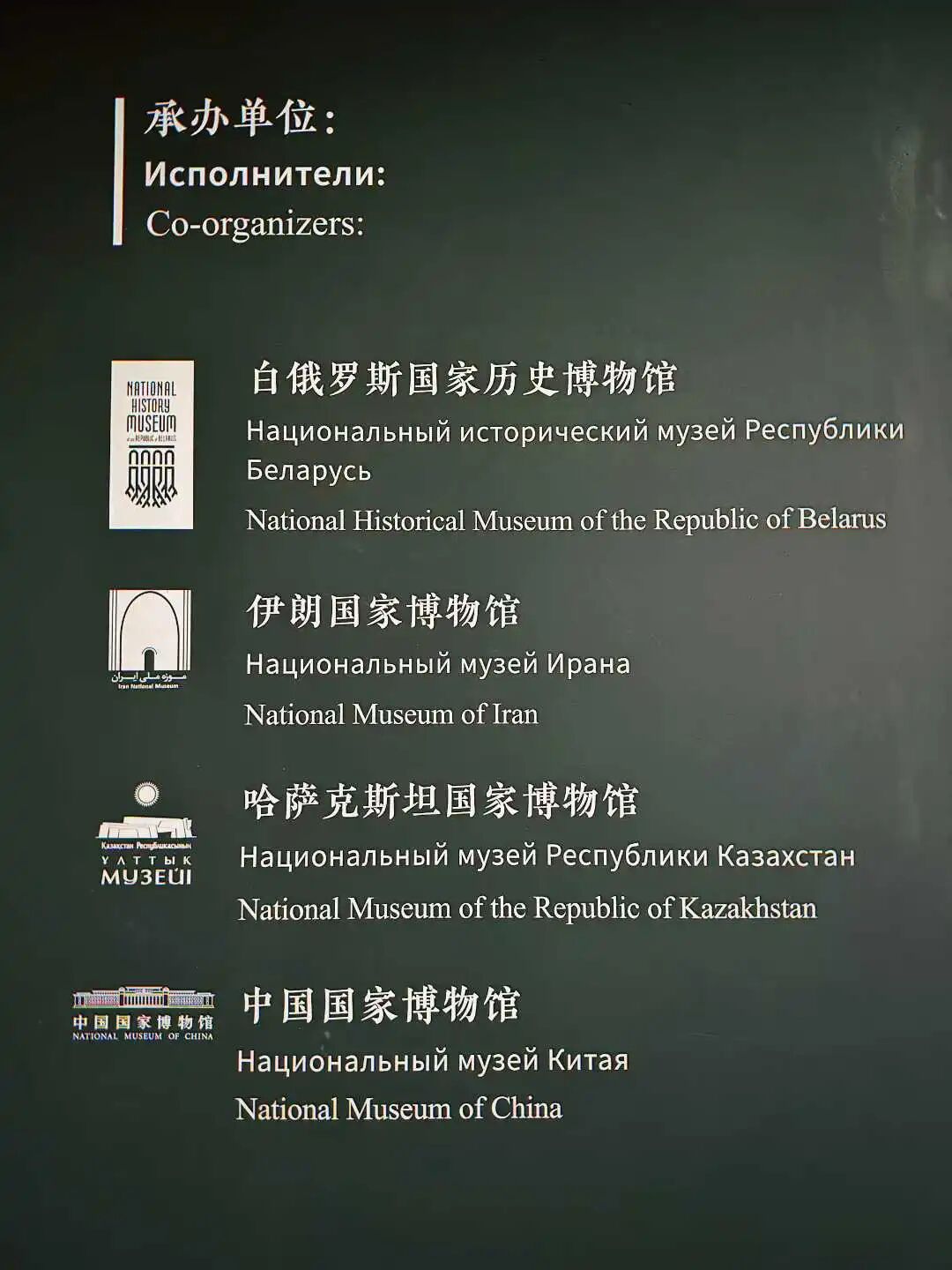
From August 27 to November 16, 2025, the National Museum of China hosts the exhibition "Galaxy of Civilizations: Joint Exhibition of Cultural Relics from National Museums of Shanghai Cooperation Organization Countries." It features items from 10 institutions, including the National Historical Museum of Belarus, the National Museum of Kazakhstan, the National Museum of Kyrgyzstan, the Department of Archaeology and Museums of the Pakistan Heritage and Culture Division, the State Historical Museum of Russia, the National Museum of Tajikistan, the State Museum of History of Uzbekistan, and the State Museum of Arts of Uzbekistan.
National Historical Museum of Belarus
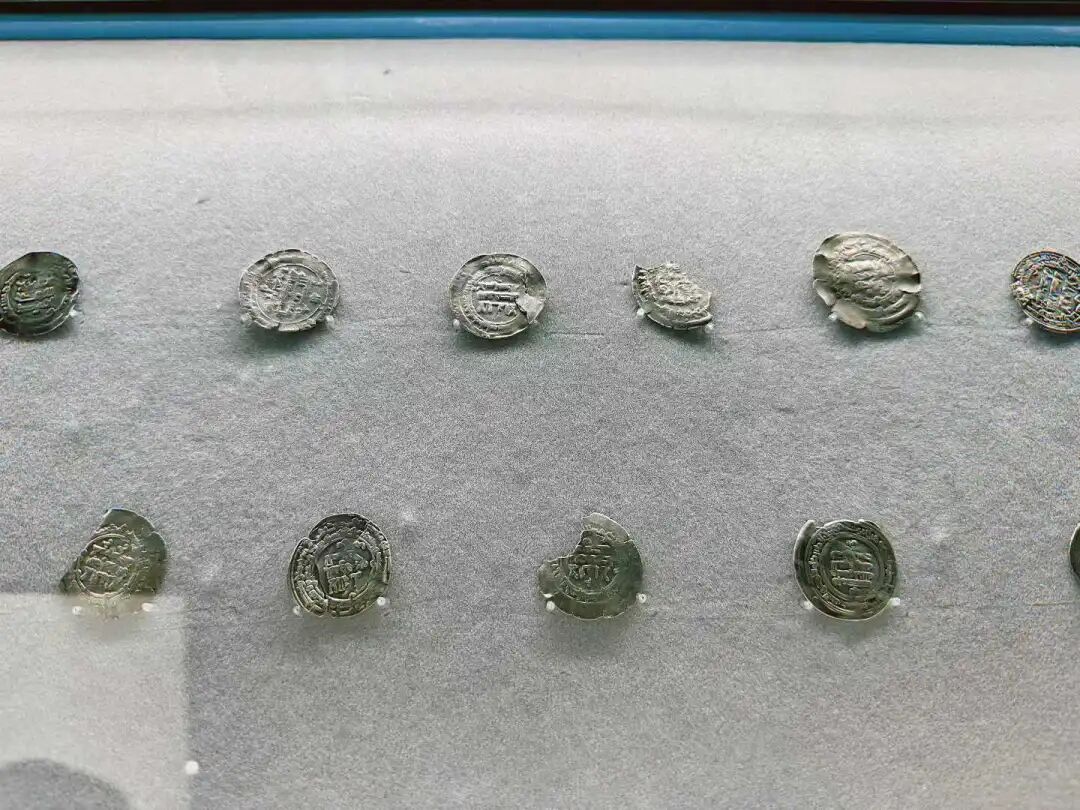
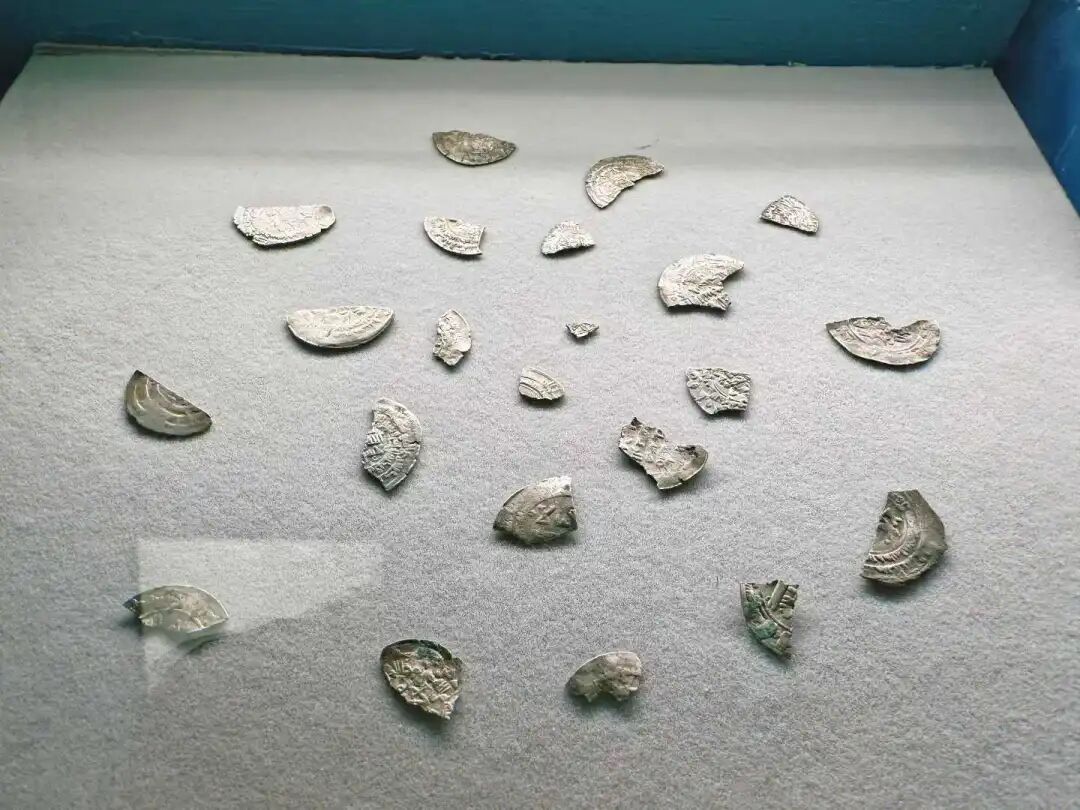
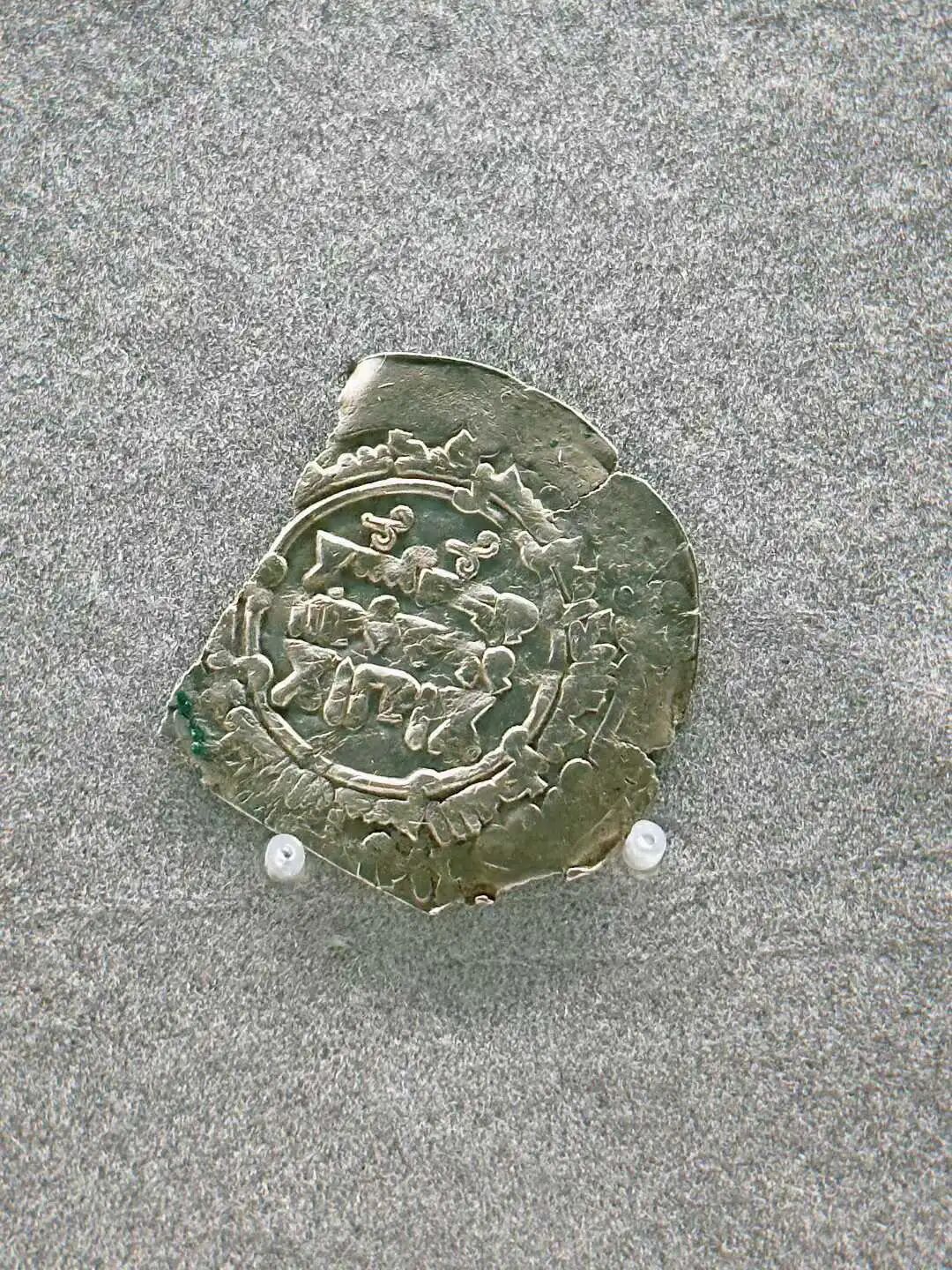
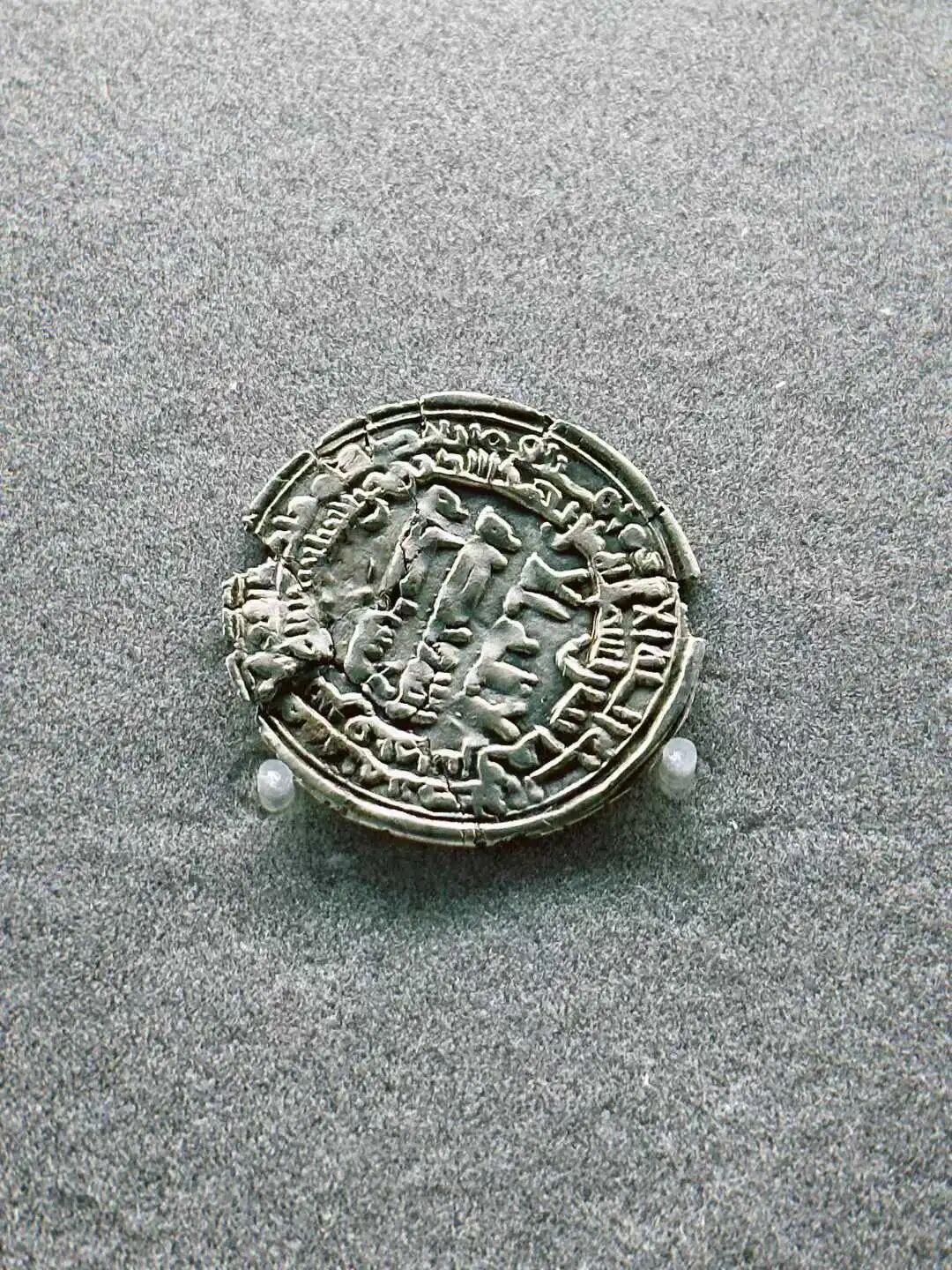
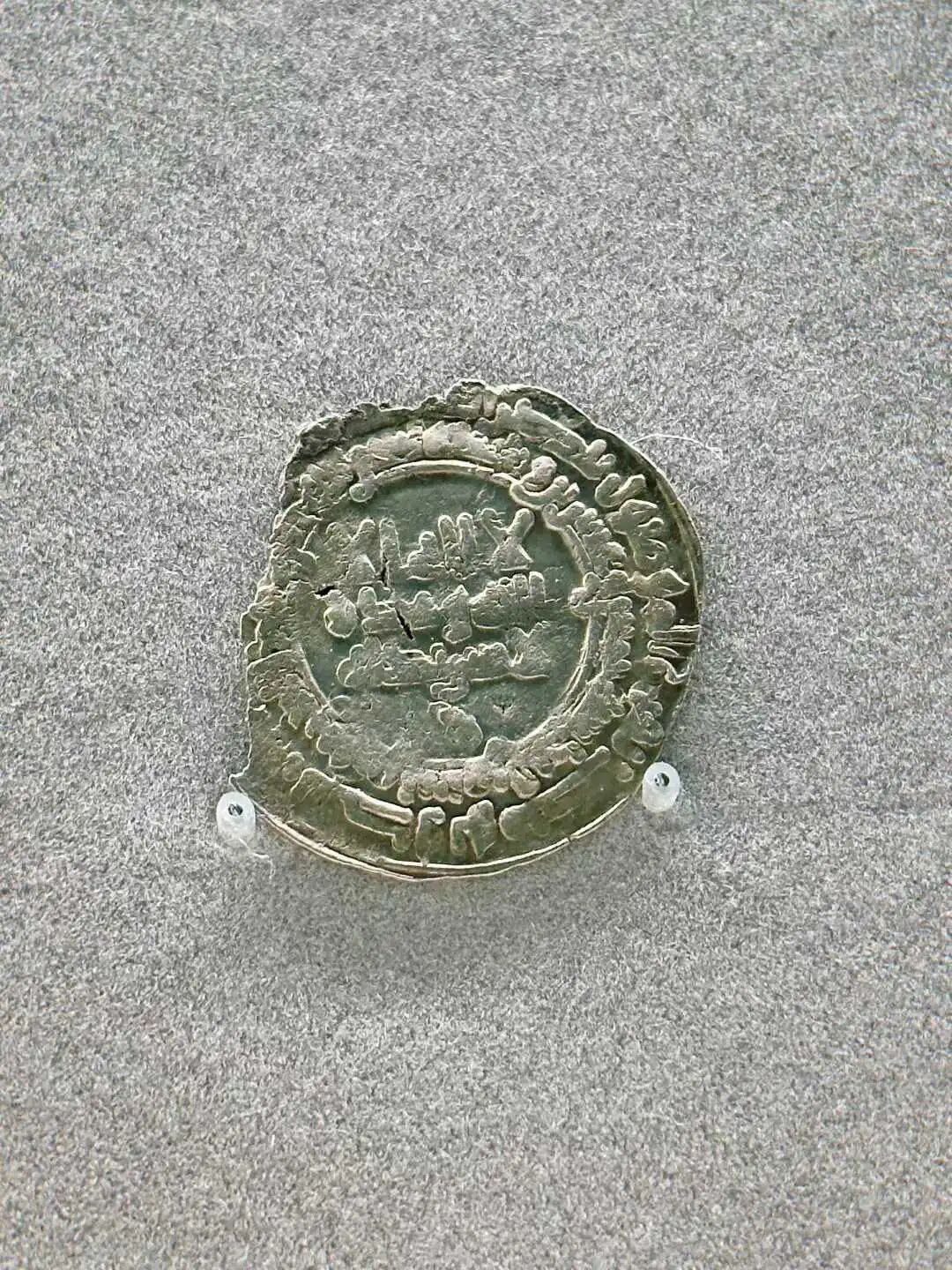
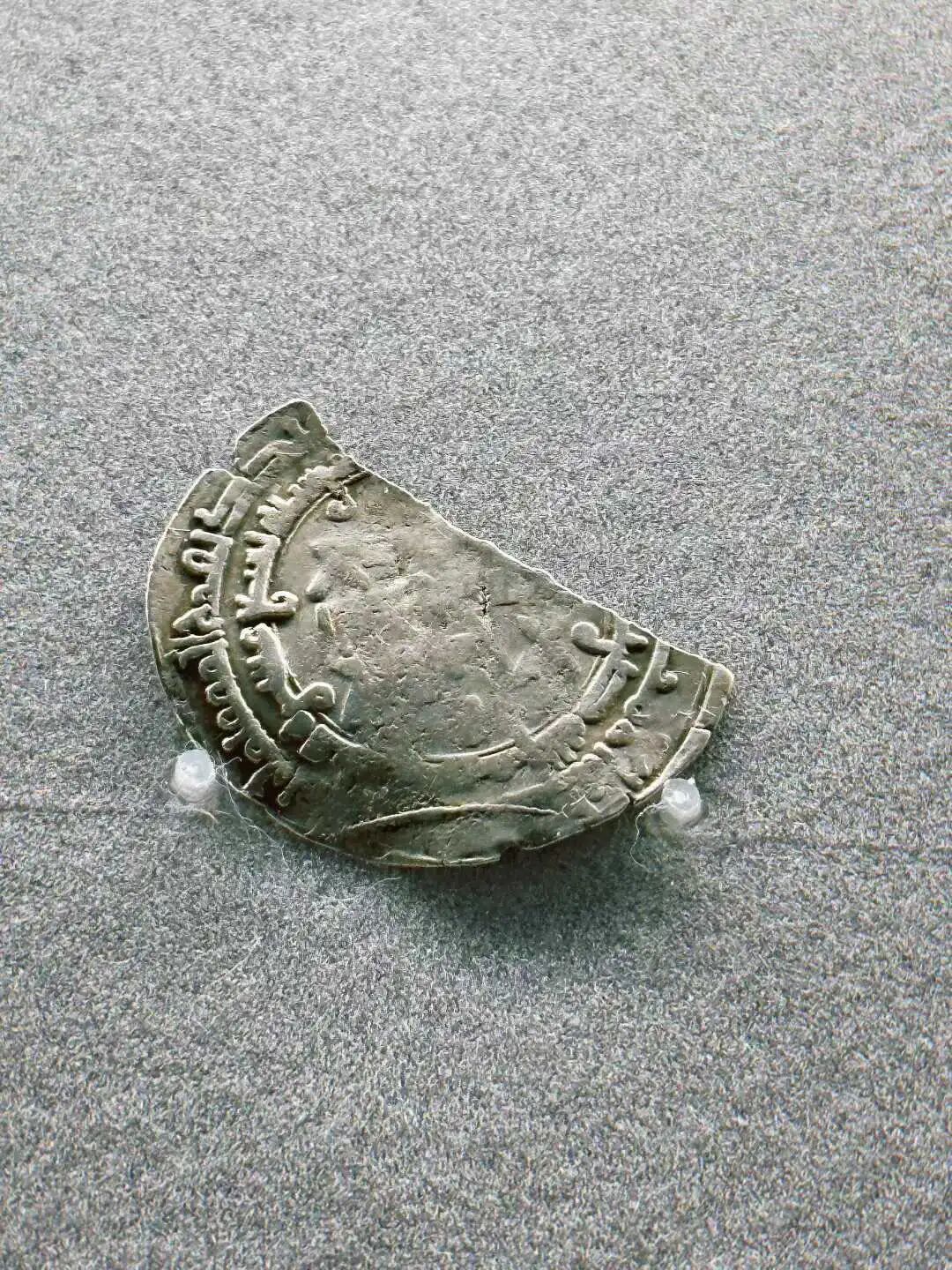
From the collection of the National Historical Museum of Belarus, this is a hoard of silver coins from the Abbasid Caliphate in the mid-10th century, found in Pinsk, Belarus, in 1991. Archaeologists have found tens of thousands of Arab silver coins in Northern Europe and the Baltic region. These coins were minted during the Abbasid Caliphate between the 8th and 11th centuries and were popular for their high purity and consistency. Between the 9th and 11th centuries, Vikings from Northern Europe used Eastern European waterways like the Volga and Dnieper rivers to trade with Arabs. They exchanged furs, slaves, and amber for large amounts of Arab silver coins. Interestingly, many of the Arab silver coins in Viking hoards were cut into pieces. This is because Vikings measured silver by weight rather than face value at the time.
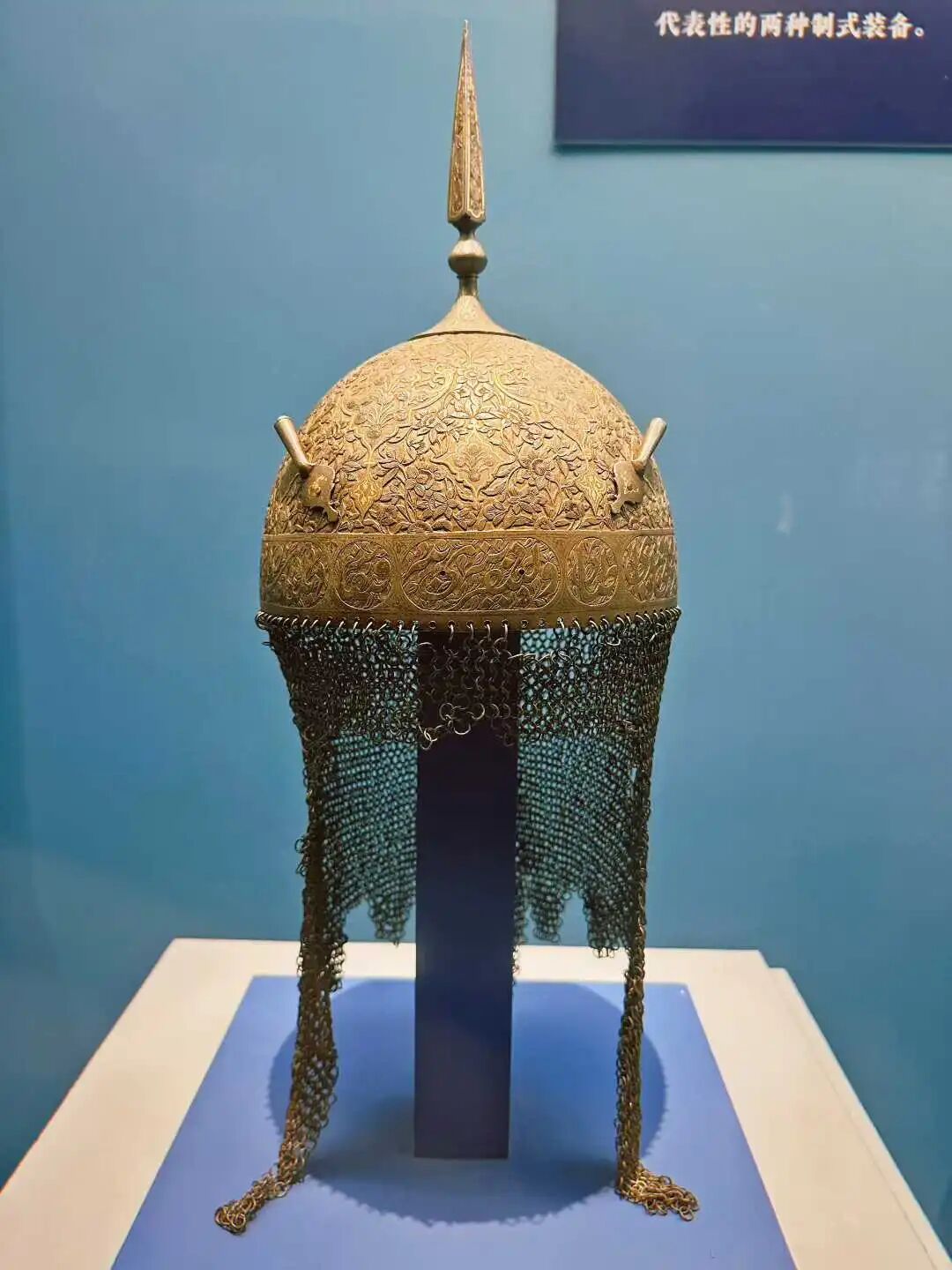
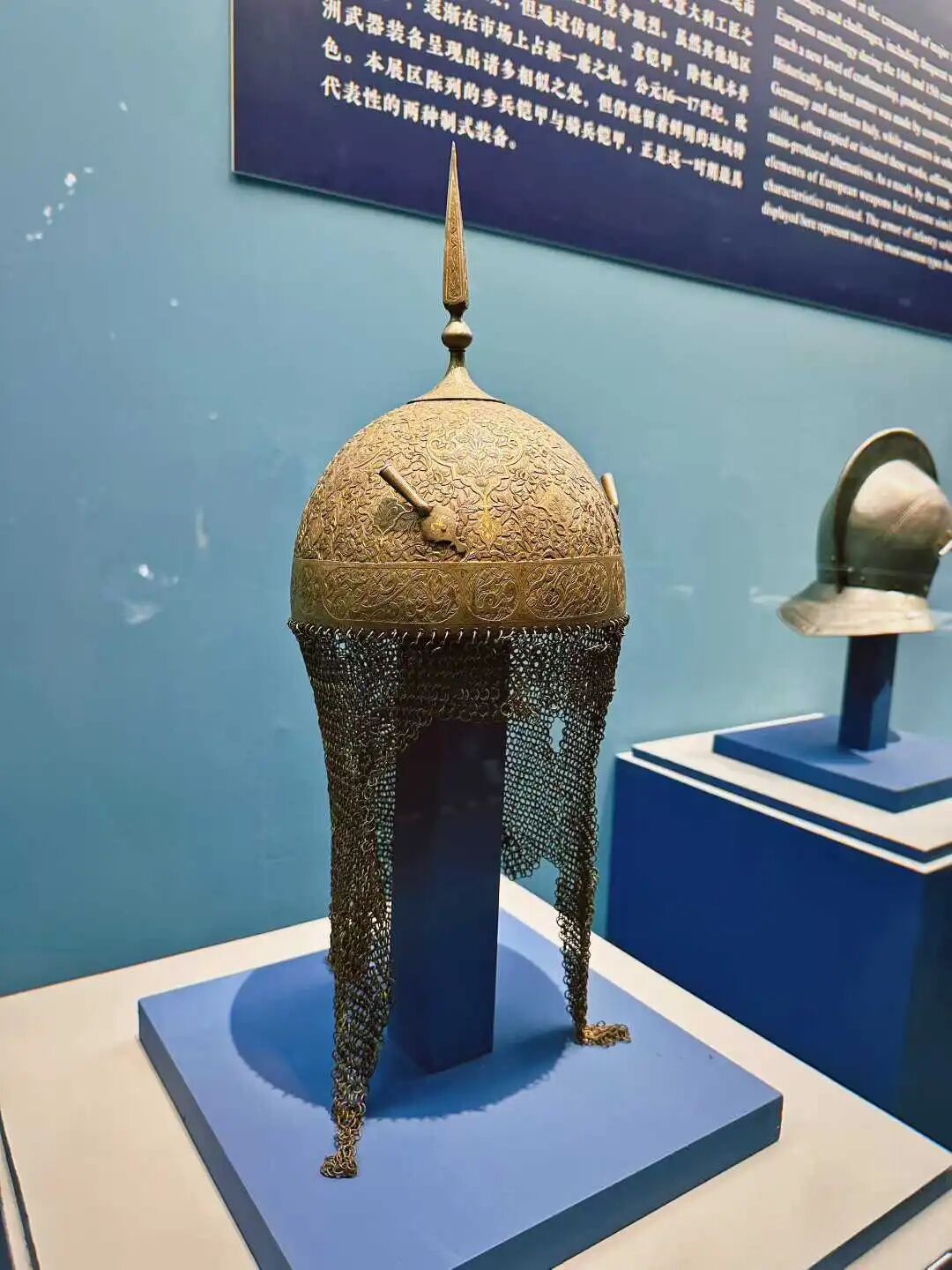
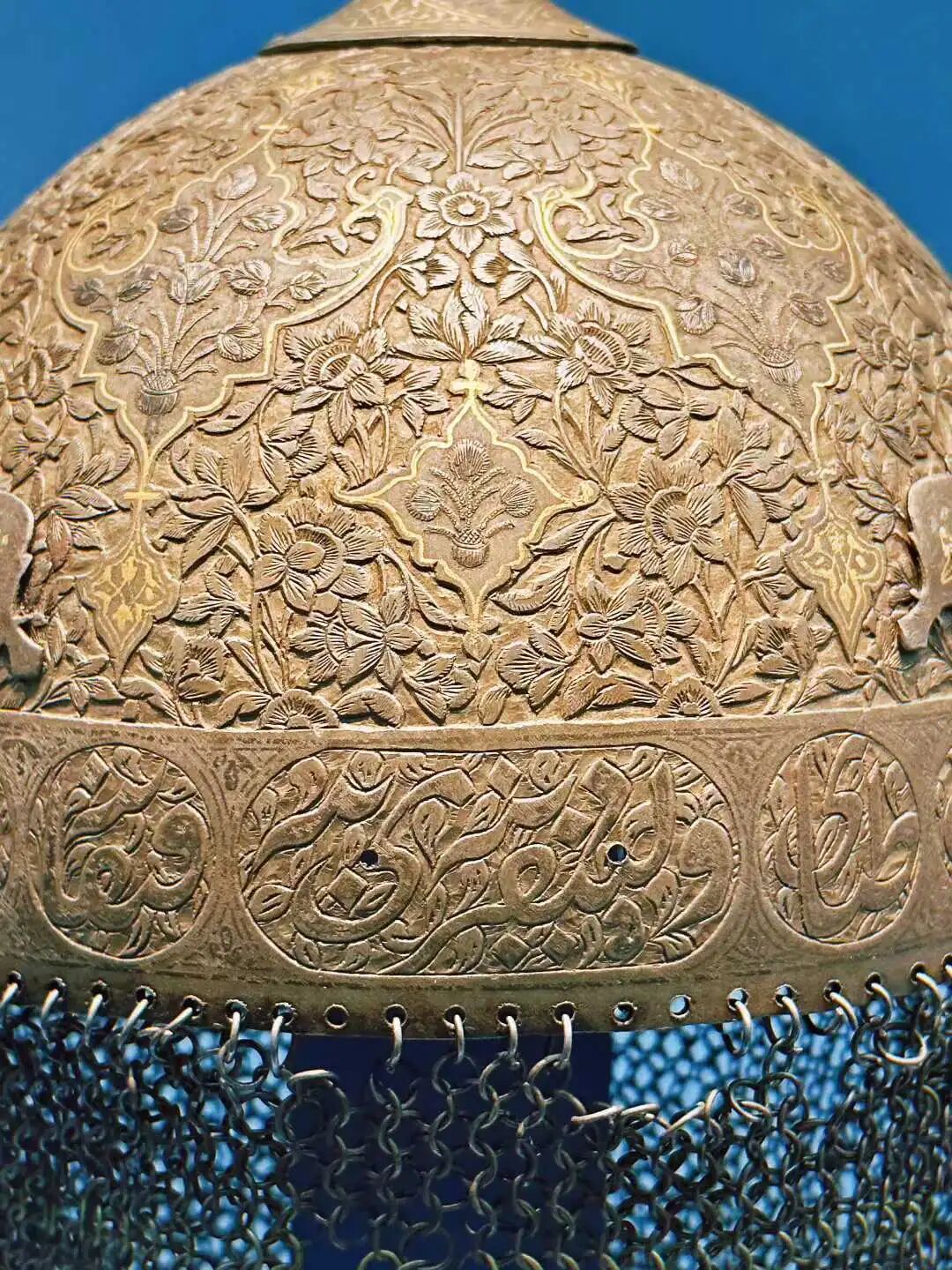
From the collection of the National Historical Museum of Belarus, this is a helmet and shield from the Qajar dynasty of Iran in the 19th century. The helmet and shield were hand-forged from single plates of Damascus steel. The helmet has a long spike on top and feather holders on both sides, while the shield features a sun motif. Both the helmet and shield are engraved with floral patterns and beautiful Persian calligraphy. Persian calligraphy developed from Naskh Arabic script. Compared to Naskh, the strokes are more elongated and tilt from the top right to the bottom left, allowing for more freedom when writing.
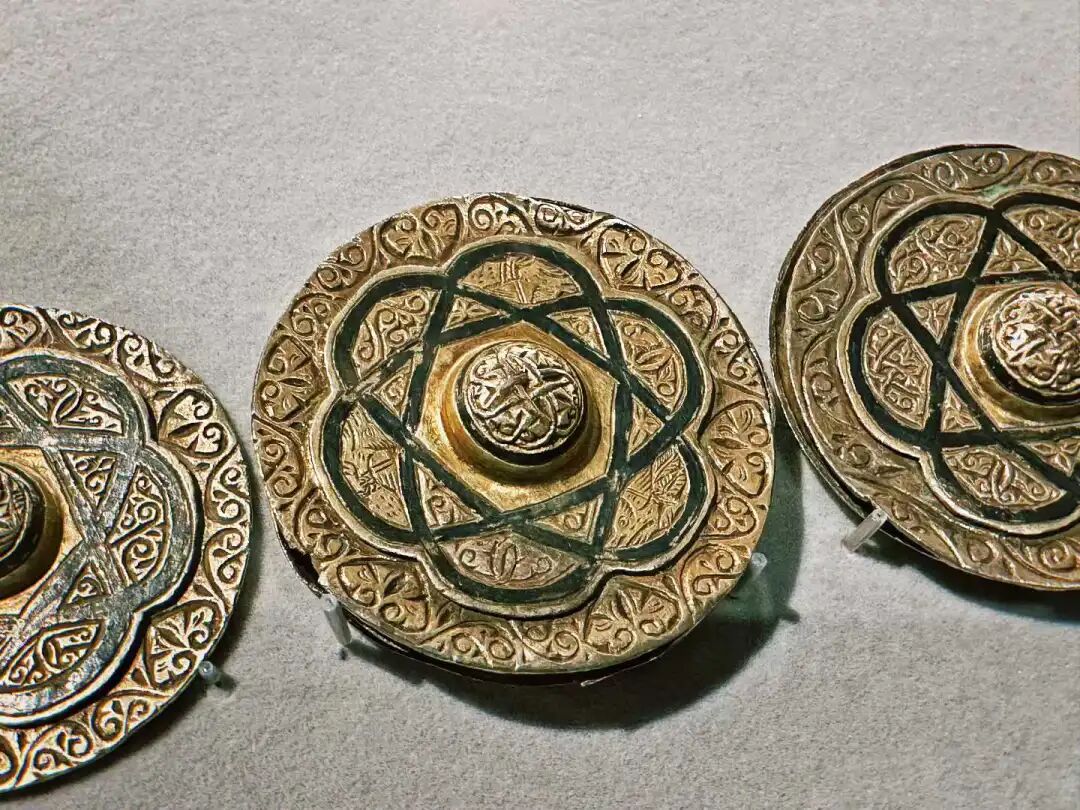
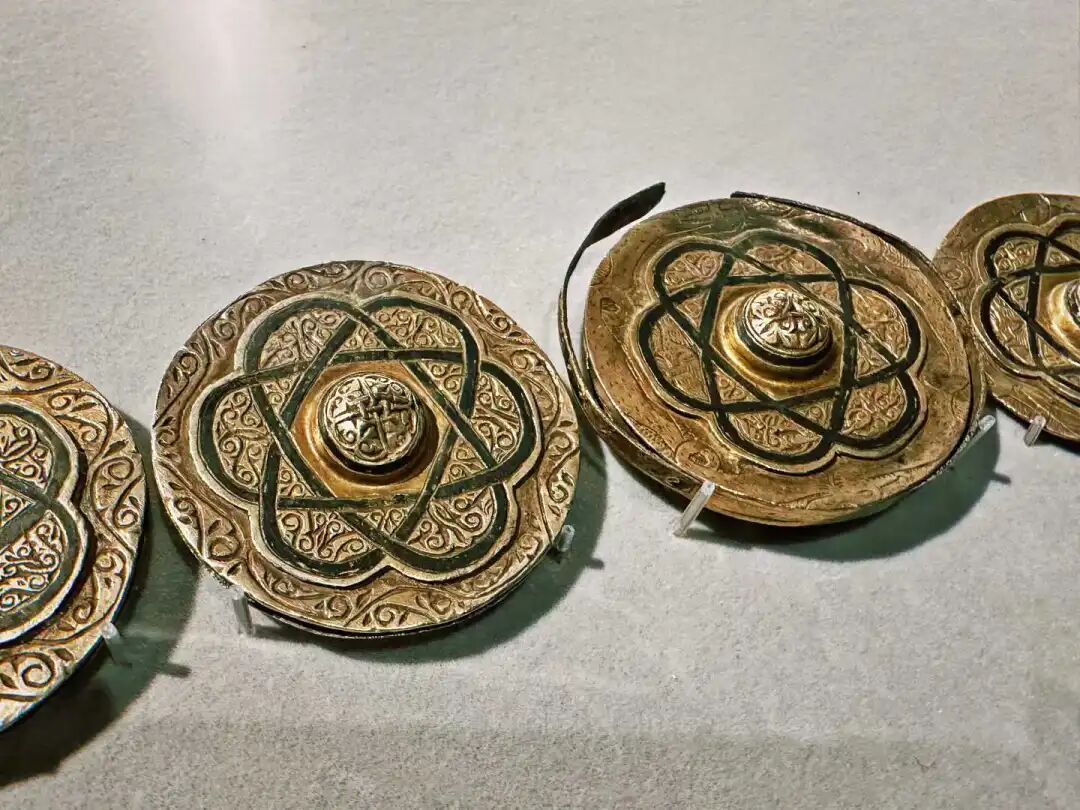
From the collection of the National Historical Museum of Belarus, this is a belt featuring traditional Crimean jewelry craftsmanship. It is believed to be a gift from Hacı I Giray, the founding Khan of the Crimean Khanate, to Grand Duke Vytautas of Lithuania.
Hacı I Giray was a descendant of Tuka-Timur, the thirteenth son of Jochi, who was the eldest son of Genghis Khan. His family began ruling the Crimean Peninsula in 1260, but they were defeated by Tamerlane in 1395 and fled to Lithuania. Hacı I Giray was born in Lithuania in 1397. In 1428, with the support of Grand Duke Vytautas of Lithuania, Hacı I Giray led an army to take over the Crimean Peninsula, but he was soon defeated by the Golden Horde. Later, with Lithuanian support, Hacı I Giray sent troops to Crimea several more times. He finally occupied the Crimean Peninsula in 1441 and established the Crimean Khanate.
This belt is made of high-purity silver. The circular discs feature Tatar decorative motifs, while the buckle has a Gothic design, reflecting the cultural exchange between East and West at the time.
National Museum of Kazakhstan
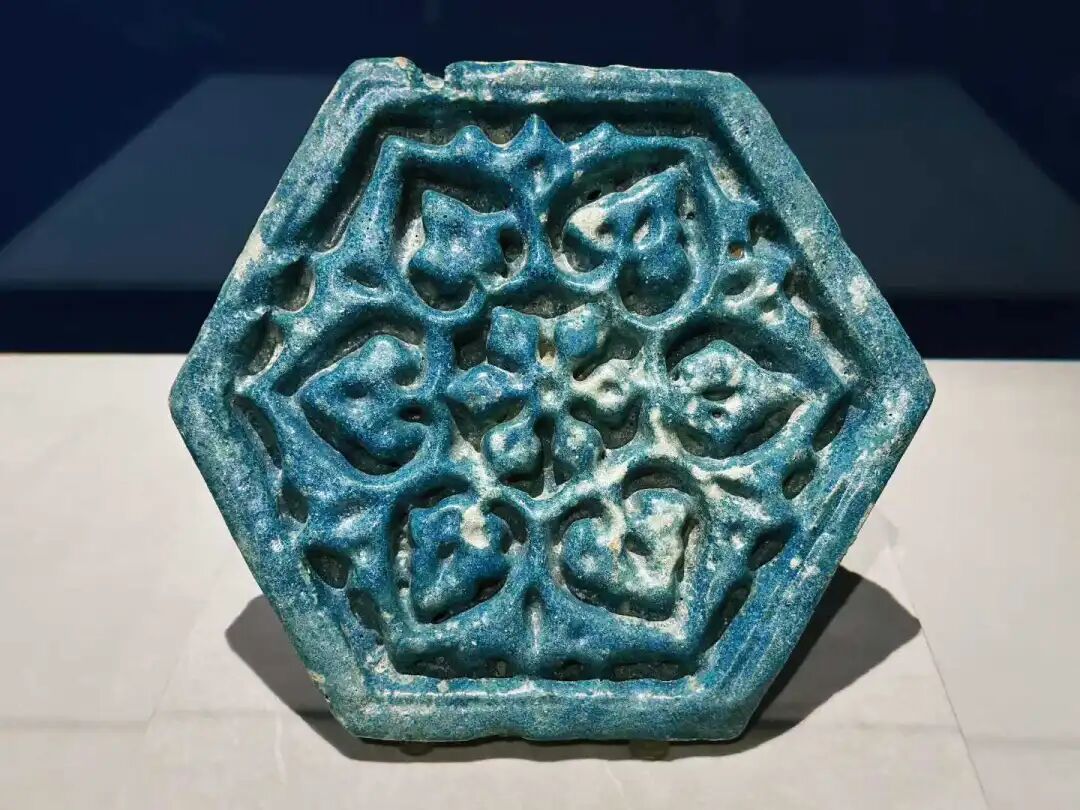
From the collection of the National Museum of Kazakhstan, these are ceramic tiles unearthed from a tomb at the ancient city site of Zhaiyk, dating back to the Golden Horde period in the 14th century. The ancient city site of Zhaiyk was discovered by an archaeological team in 2001. Subsequent excavations revealed the remains of a Turkish bath with an underfloor heating system and a domed tomb decorated with colorful glazed tiles in the cemetery west of the city.
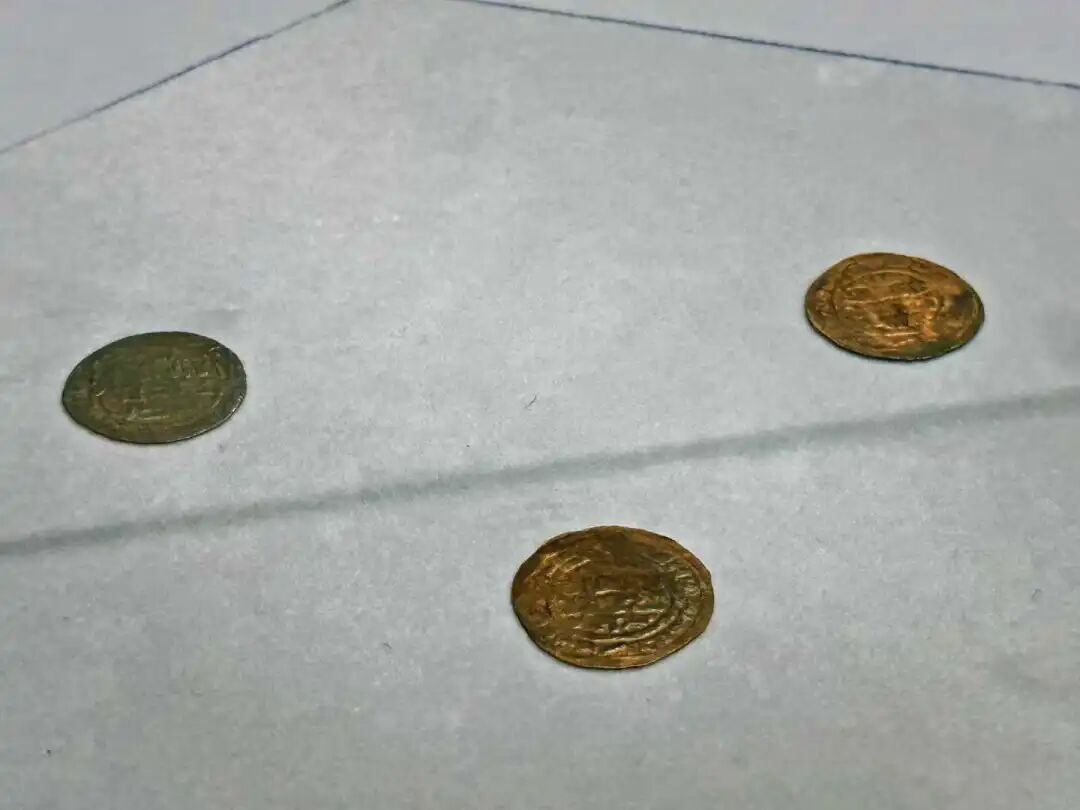
From the collection of the National Museum of Kazakhstan, this is a copper coin minted by the Samanid dynasty in 922-923, unearthed in Otrar, southern Kazakhstan. During the 9th and 10th centuries, this region was an important trade center for the Samanid dynasty.
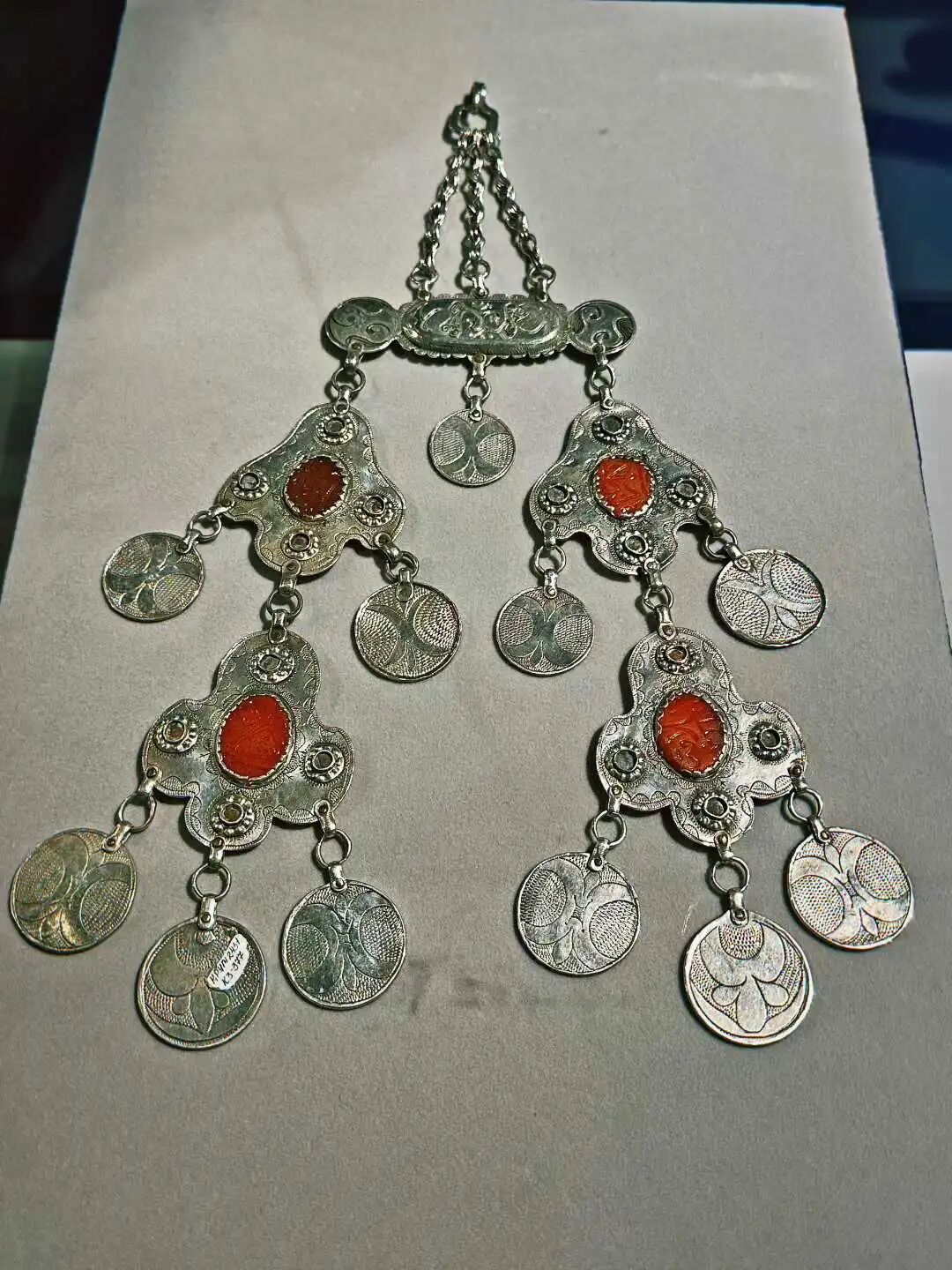
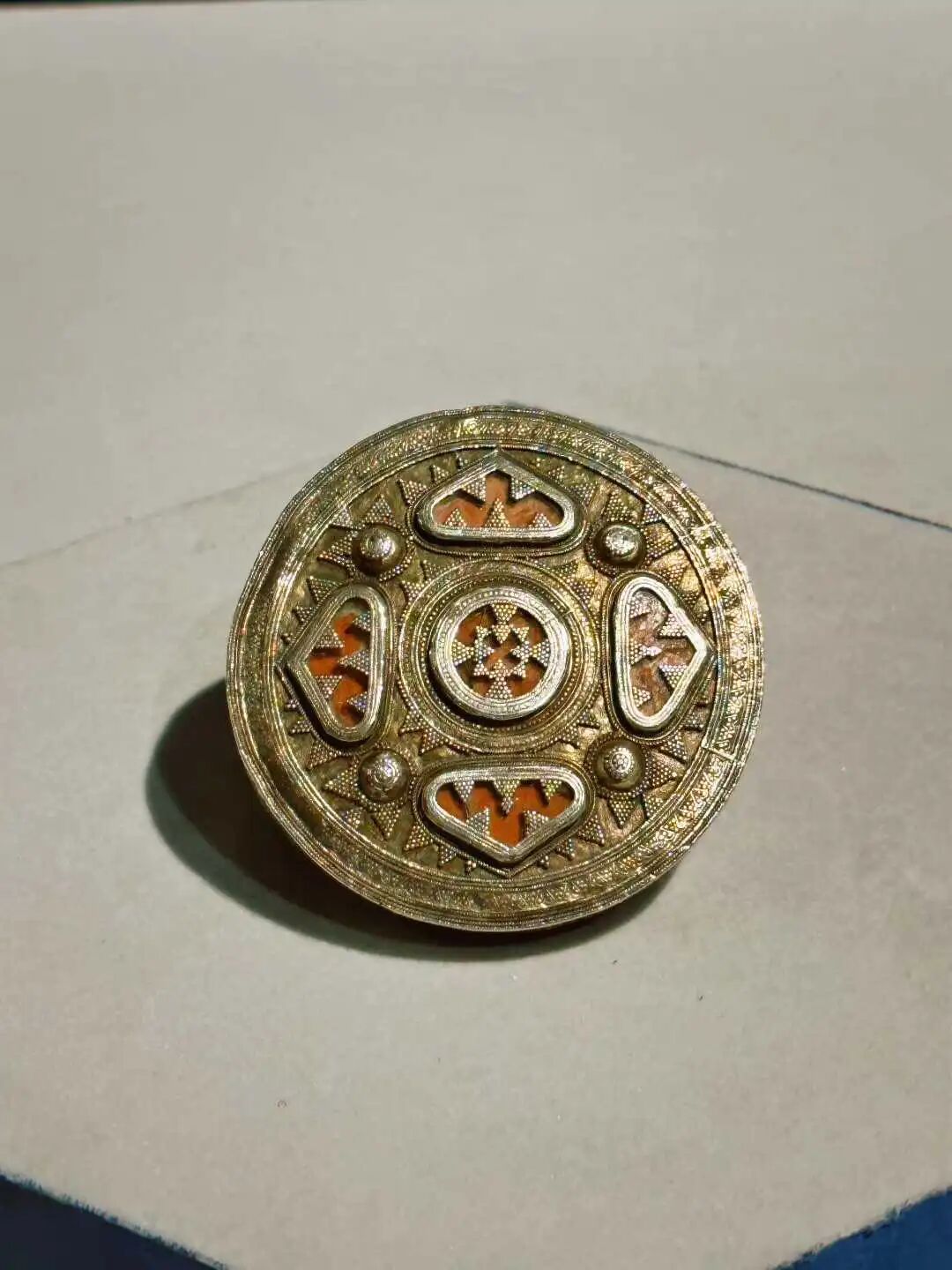
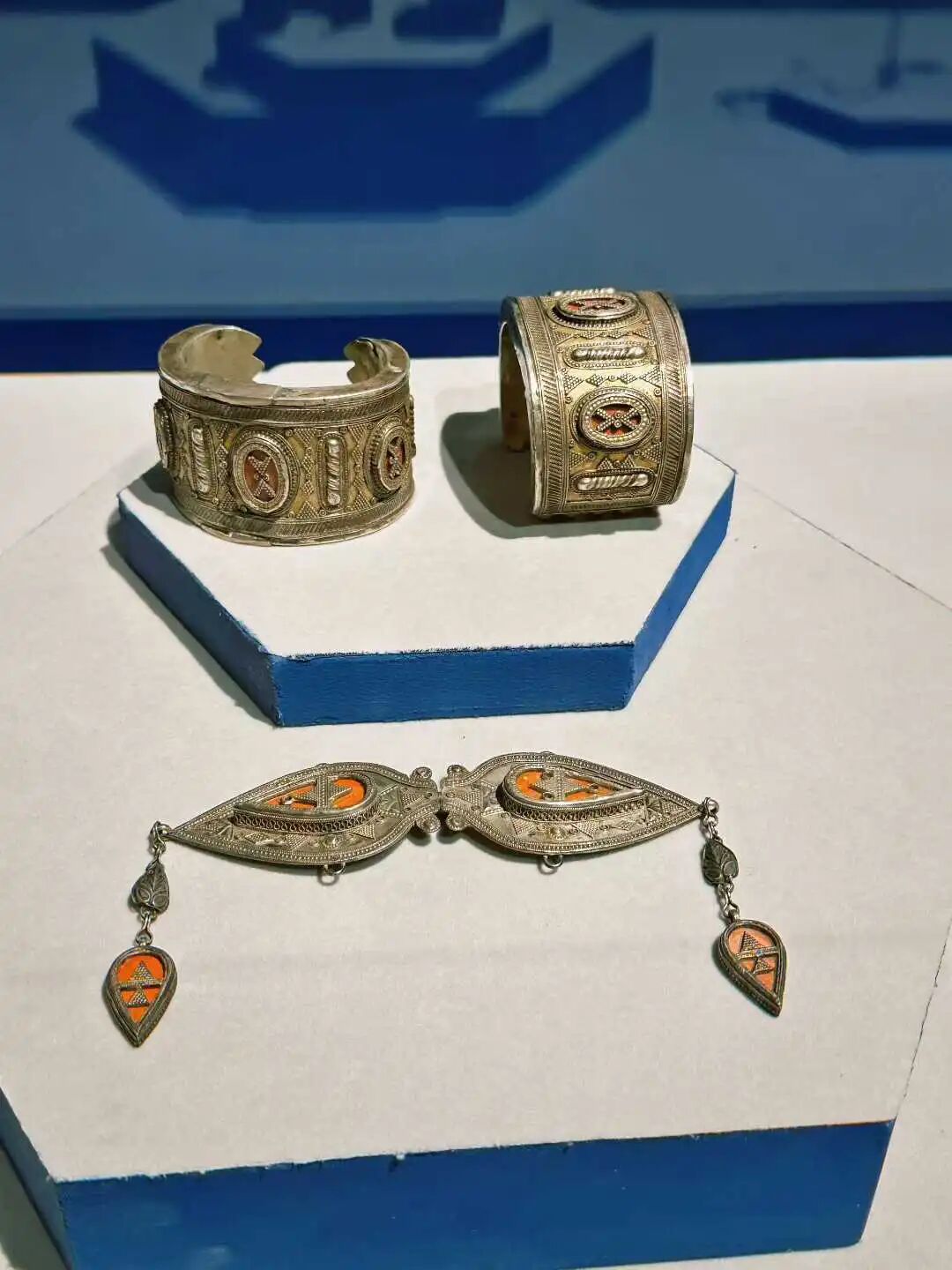
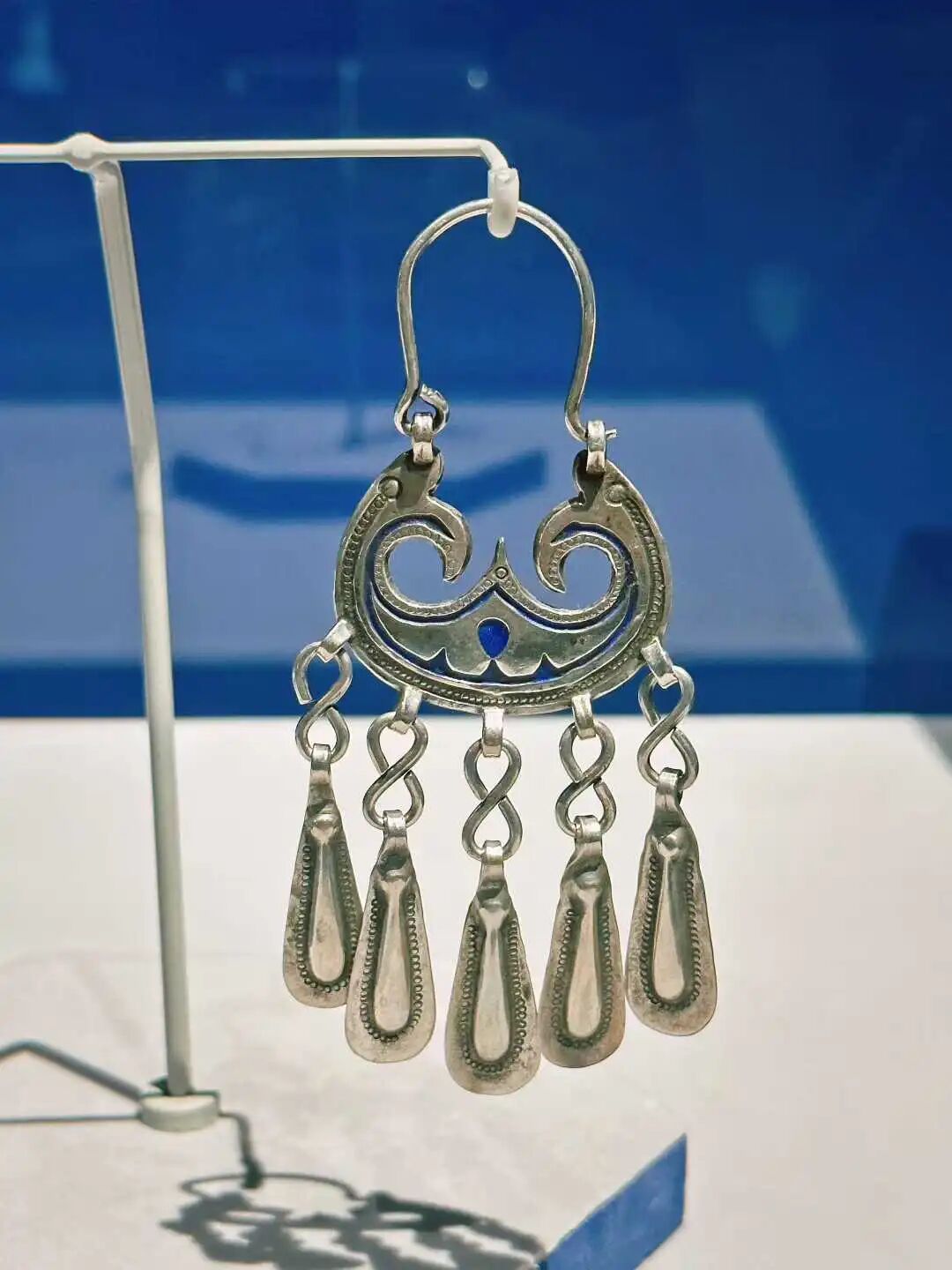
This is a modern Kazakh women's accessory.
National Museum of Pakistan, Islamabad
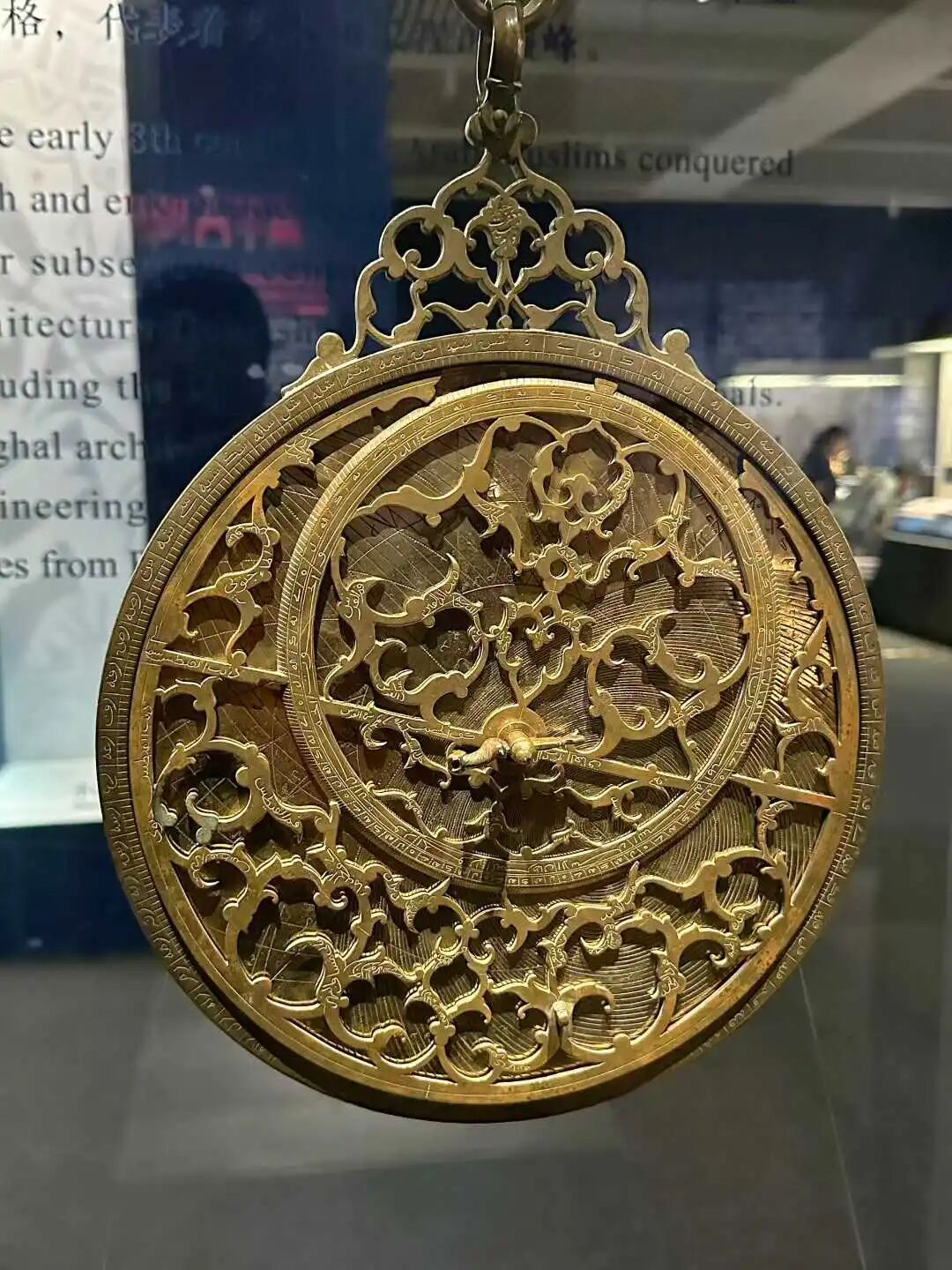
From the collection of the National Museum of Pakistan in Islamabad, this is a brass astrolabe from Lahore, dating to the Mughal Empire period under Humayun (reigned 1530-1540, 1555-1556). It is engraved with latitude and longitude, Persian and Arabic text, and decorated with arabesque and geometric patterns. Humayun himself had a strong interest in astronomy and astrology.
National Museum of Tajikistan.
A Persian copper water pitcher (aftabeh) from the early 20th century in the National Museum of Tajikistan collection. The aftabeh, also called abdasta, is a water pitcher used for wudu (ablution) in Persian cultural regions like Iran, Afghanistan, Azerbaijan, and Central Asia. They are usually made of clay or brass.
A copper hand-washing basin (dastshui) from the early 20th century in the National Museum of Tajikistan collection, featuring an engraving of 25 deer in different poses.
A copper water pitcher for wudu from the 19th century in the National Museum of Tajikistan collection.
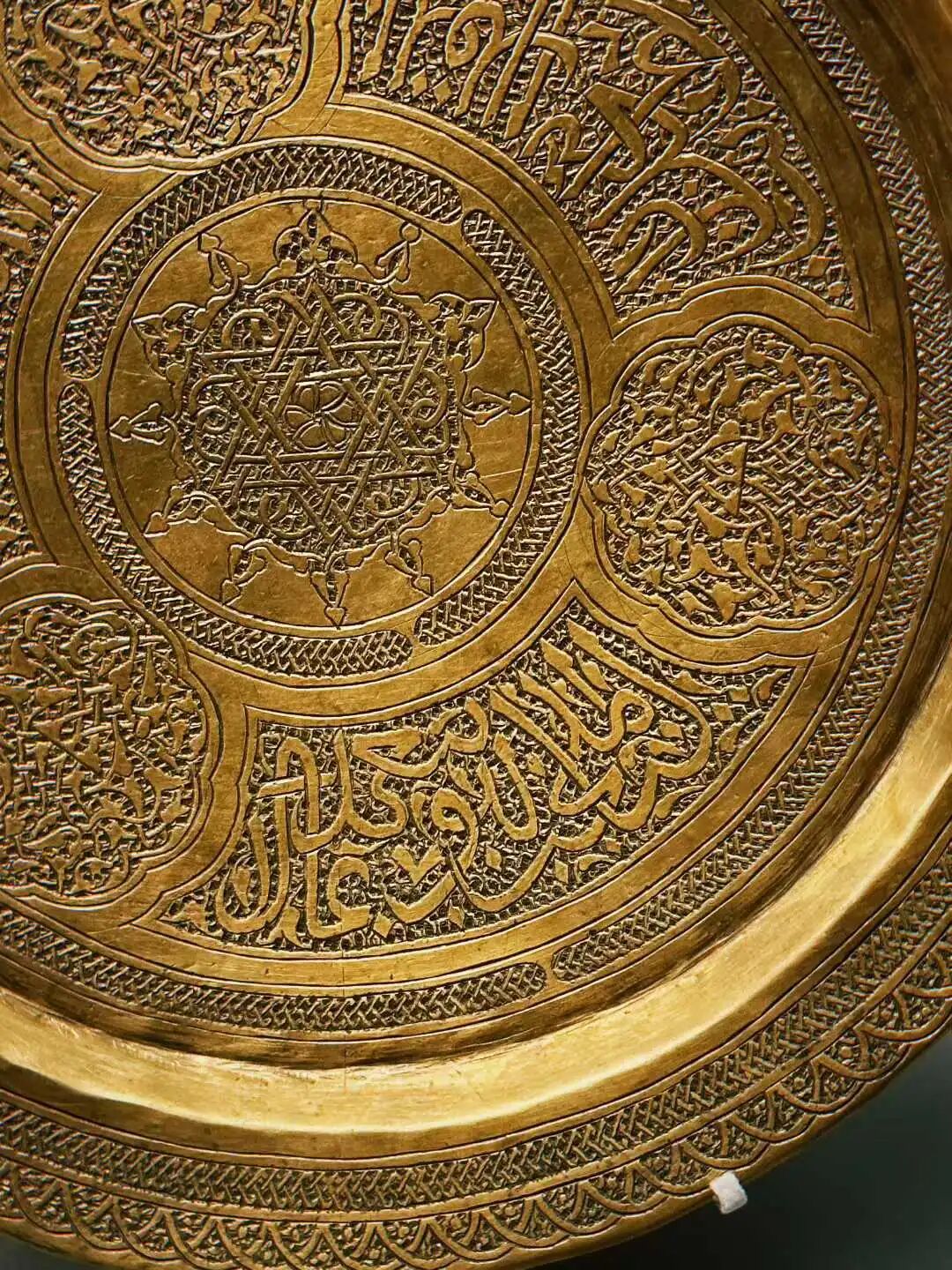
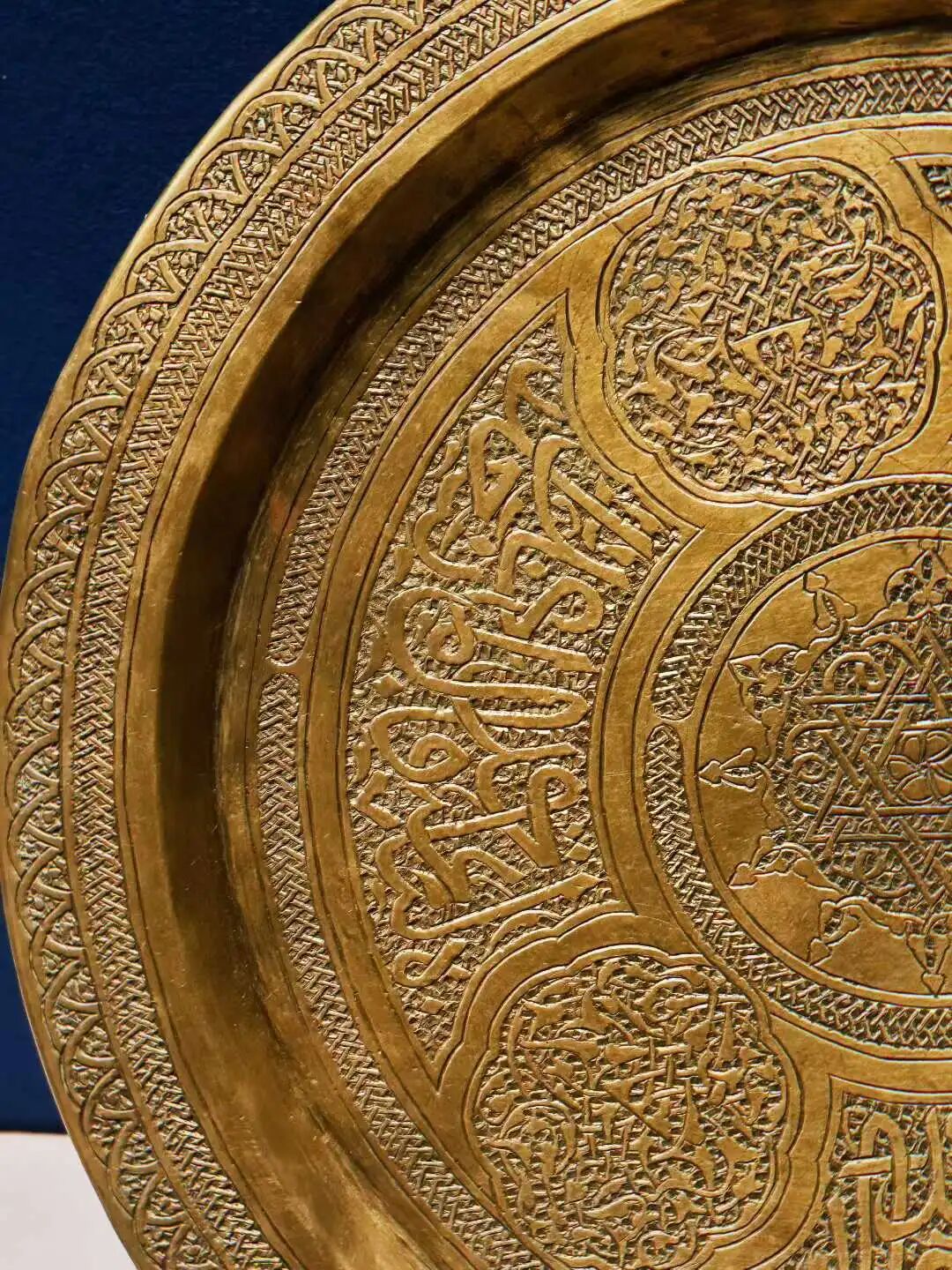
A tray with Arabic script from the 19th century in the National Museum of Tajikistan collection.
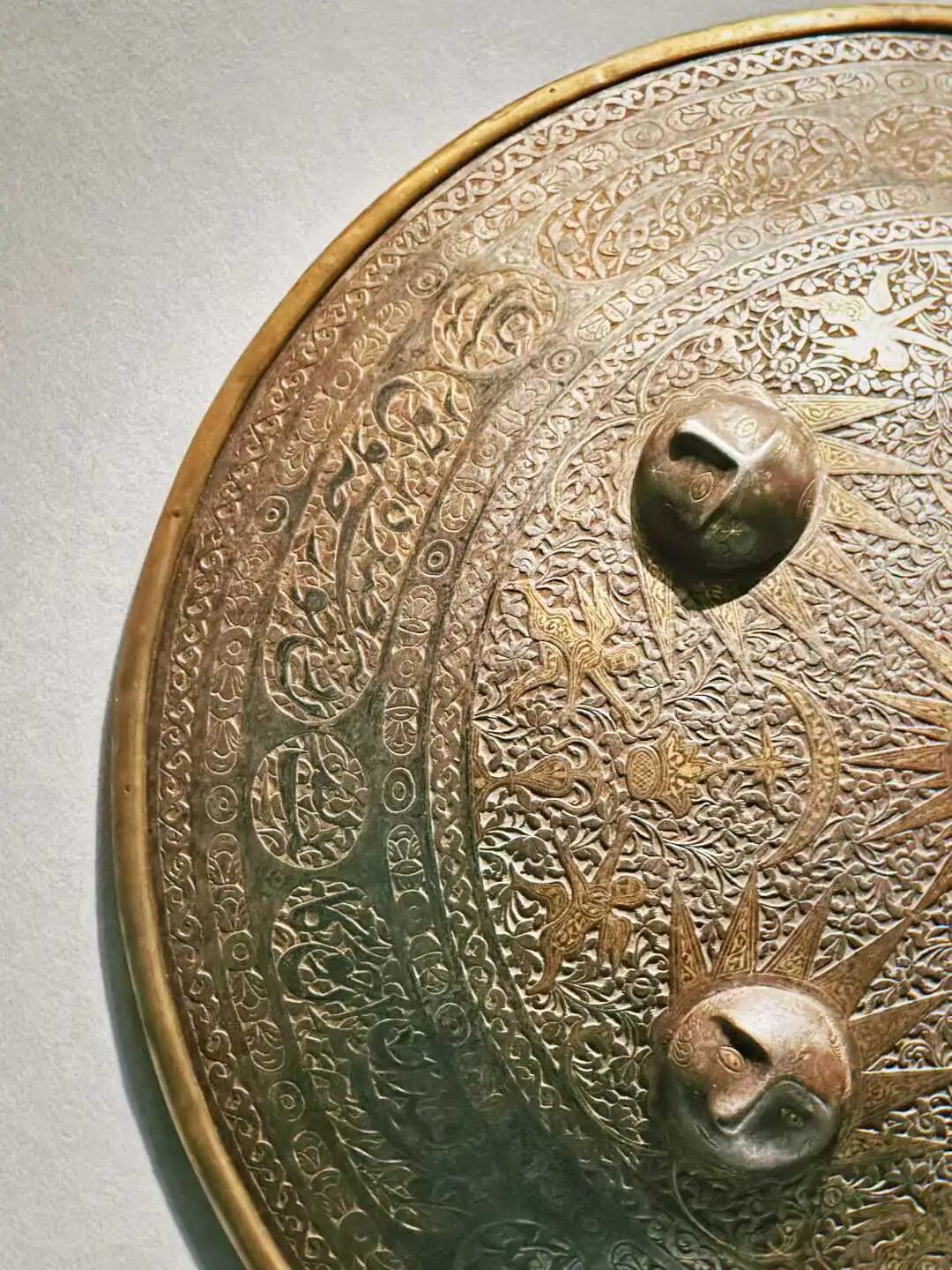
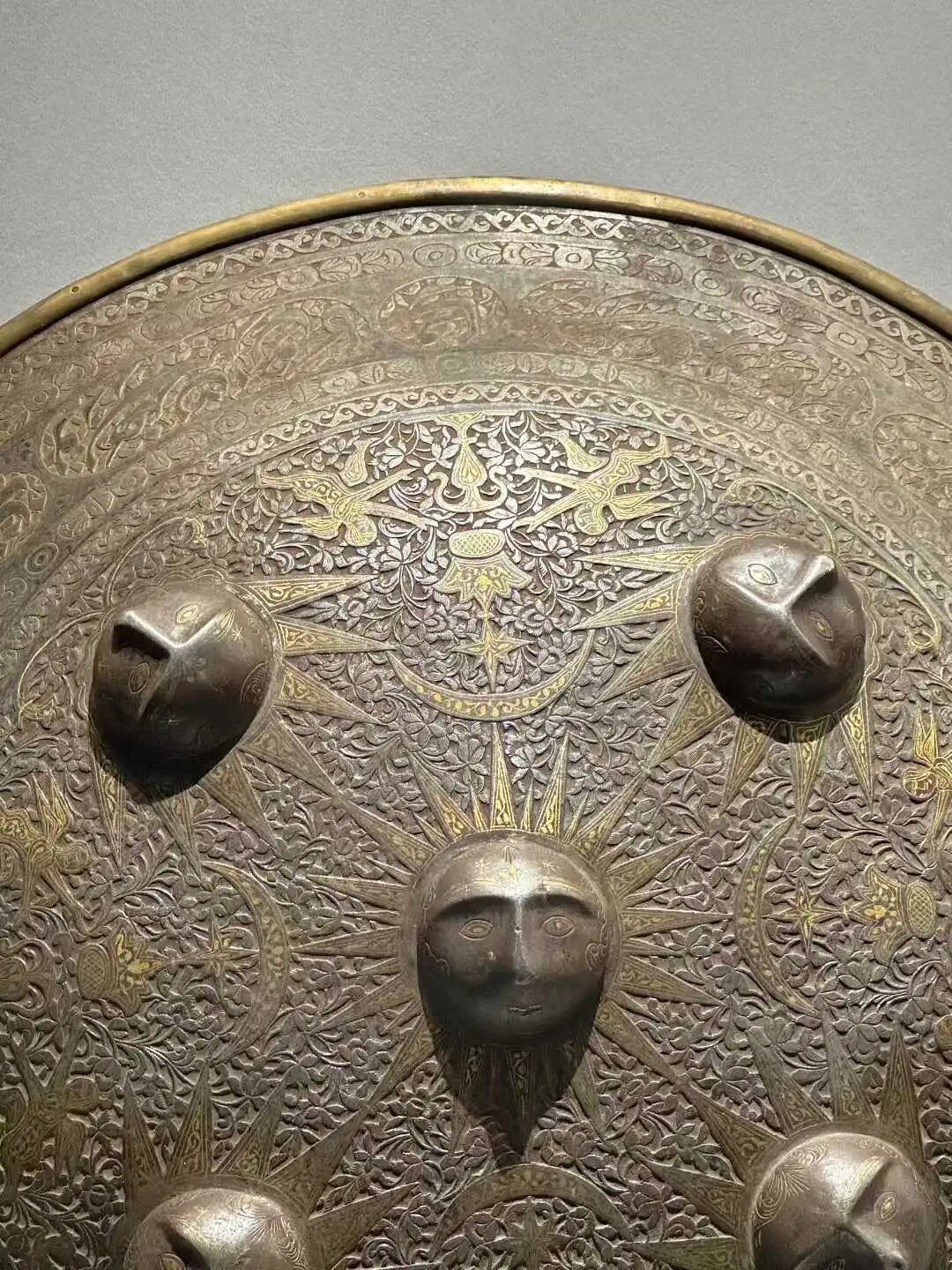
A Persian shield in the National Museum of Tajikistan collection, decorated with sun and angel patterns and engraved with beautiful Persian calligraphy.
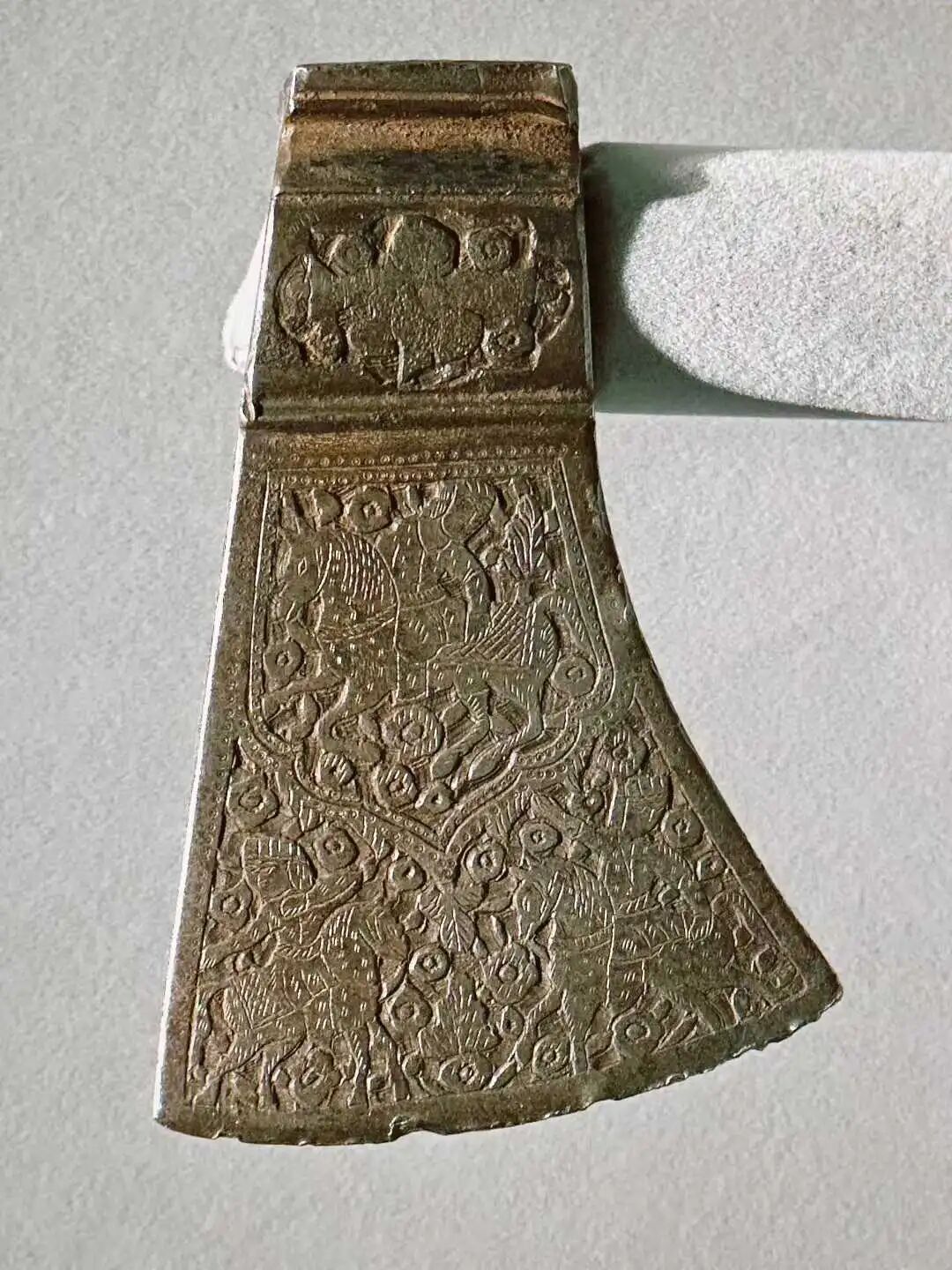
A 16th-century axe in the National Museum of Tajikistan collection, engraved with a scene of three riders hunting.
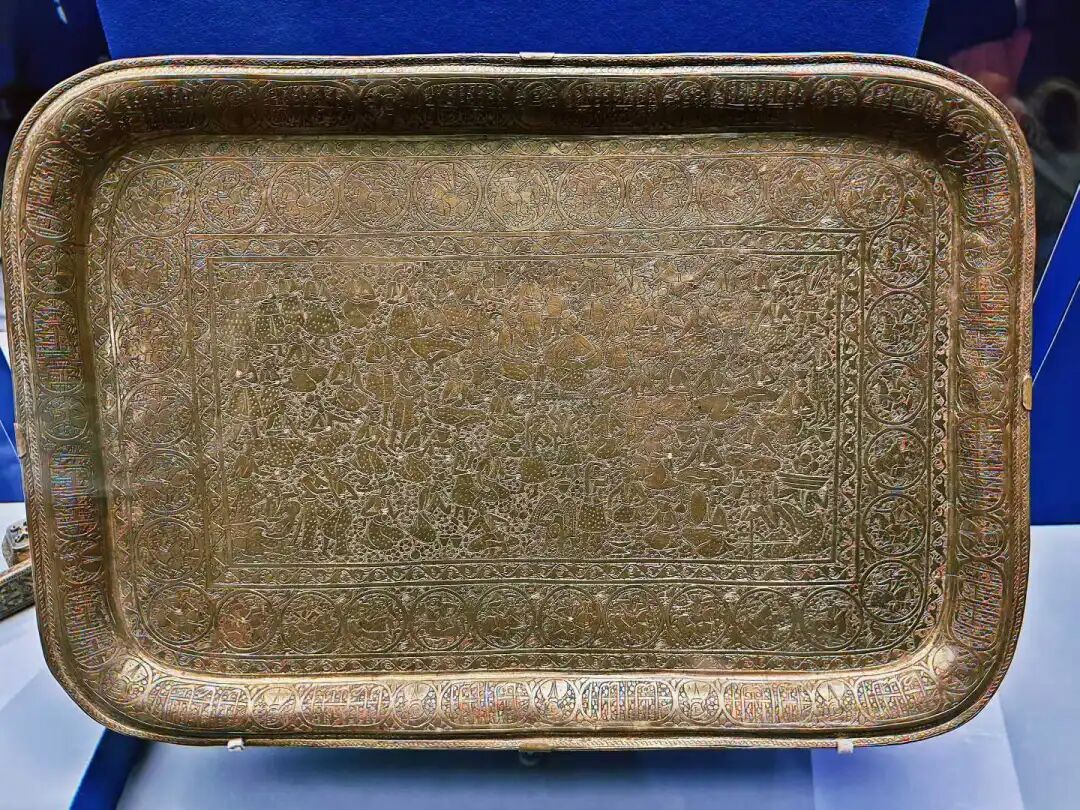
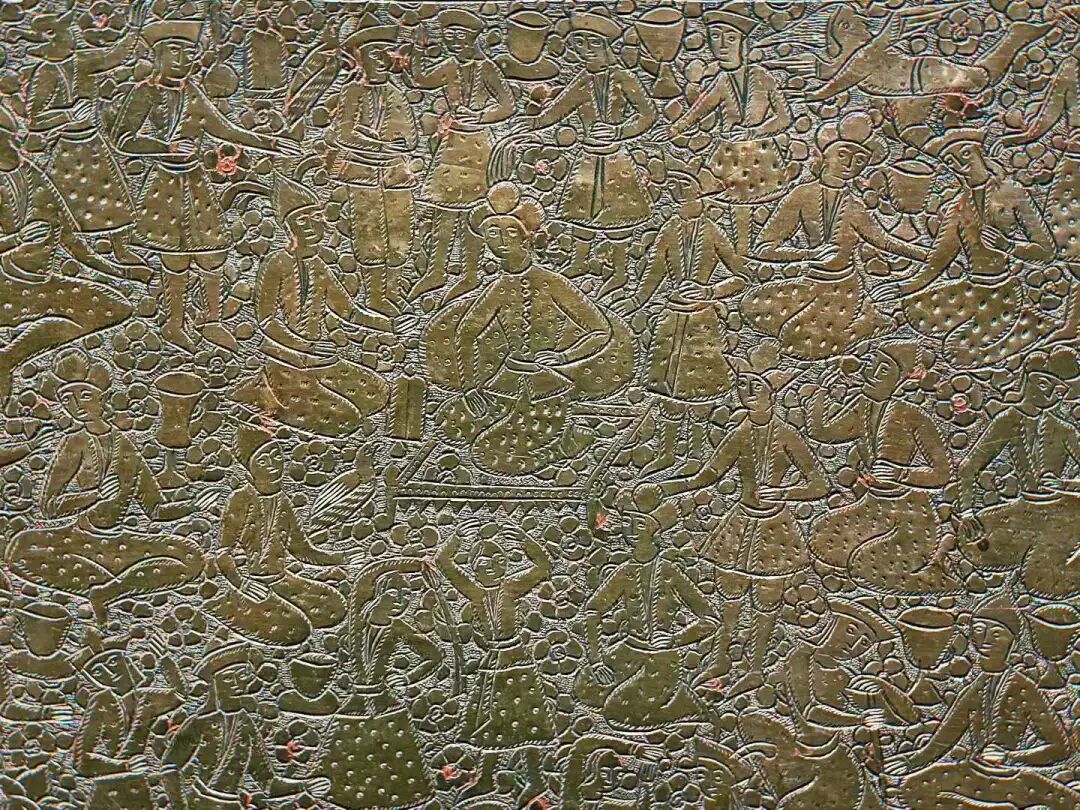
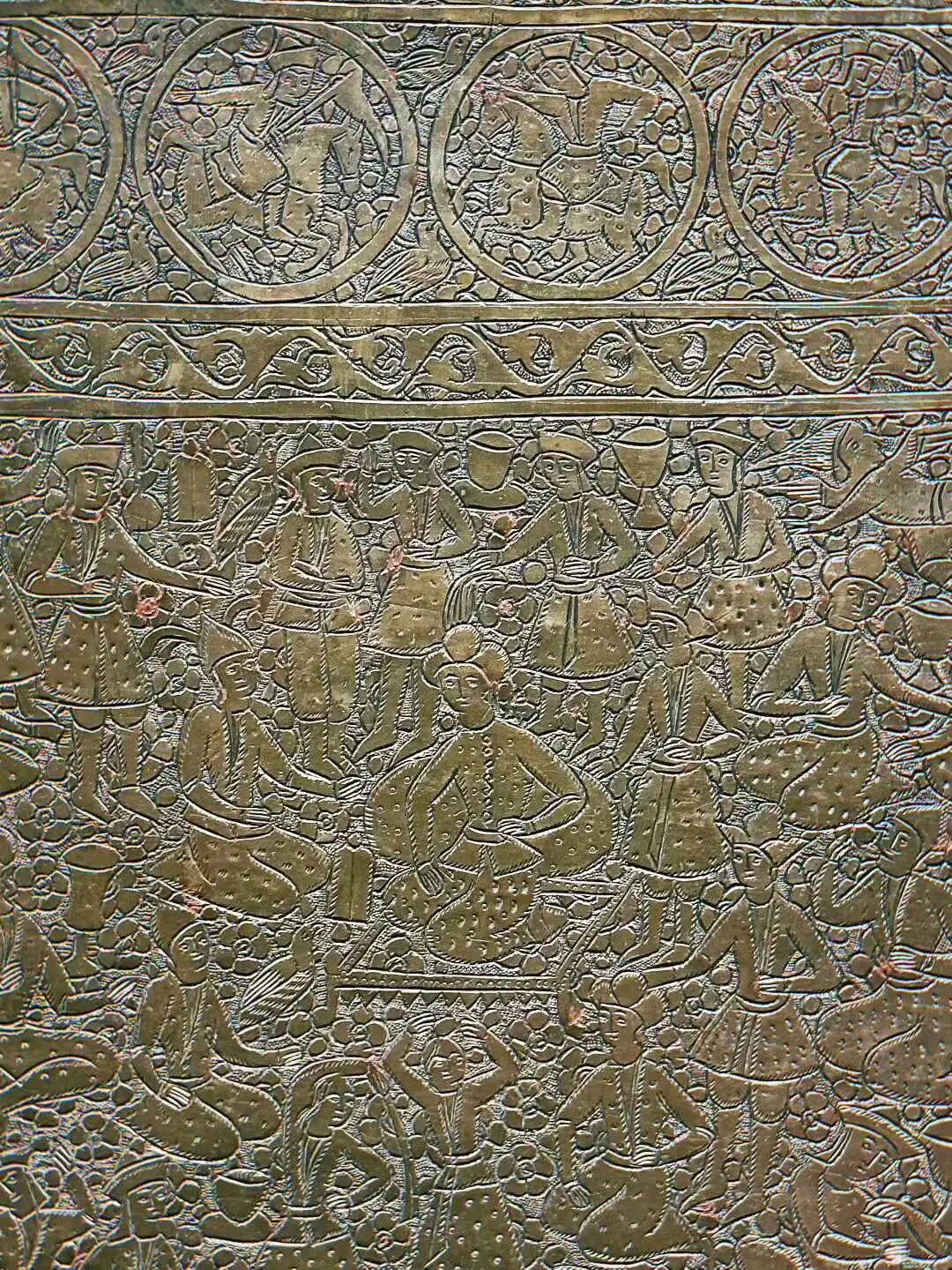
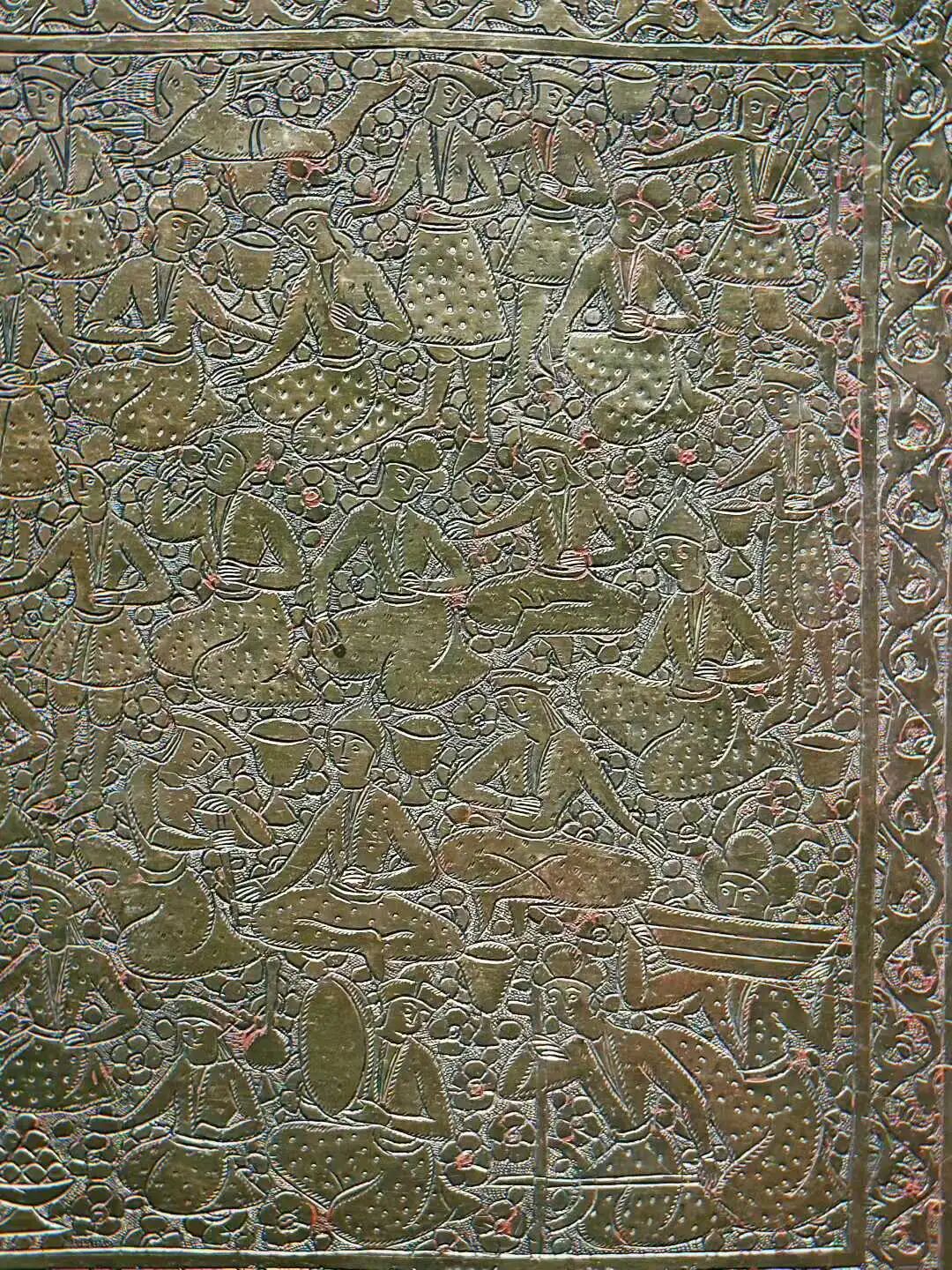
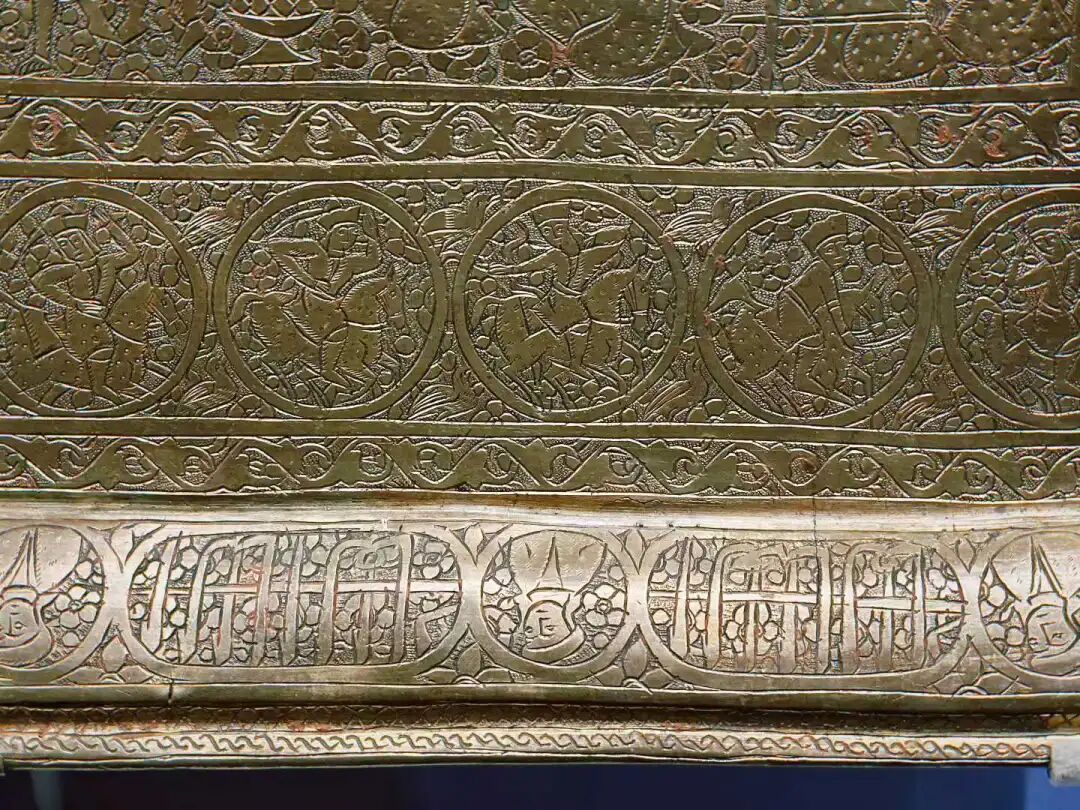
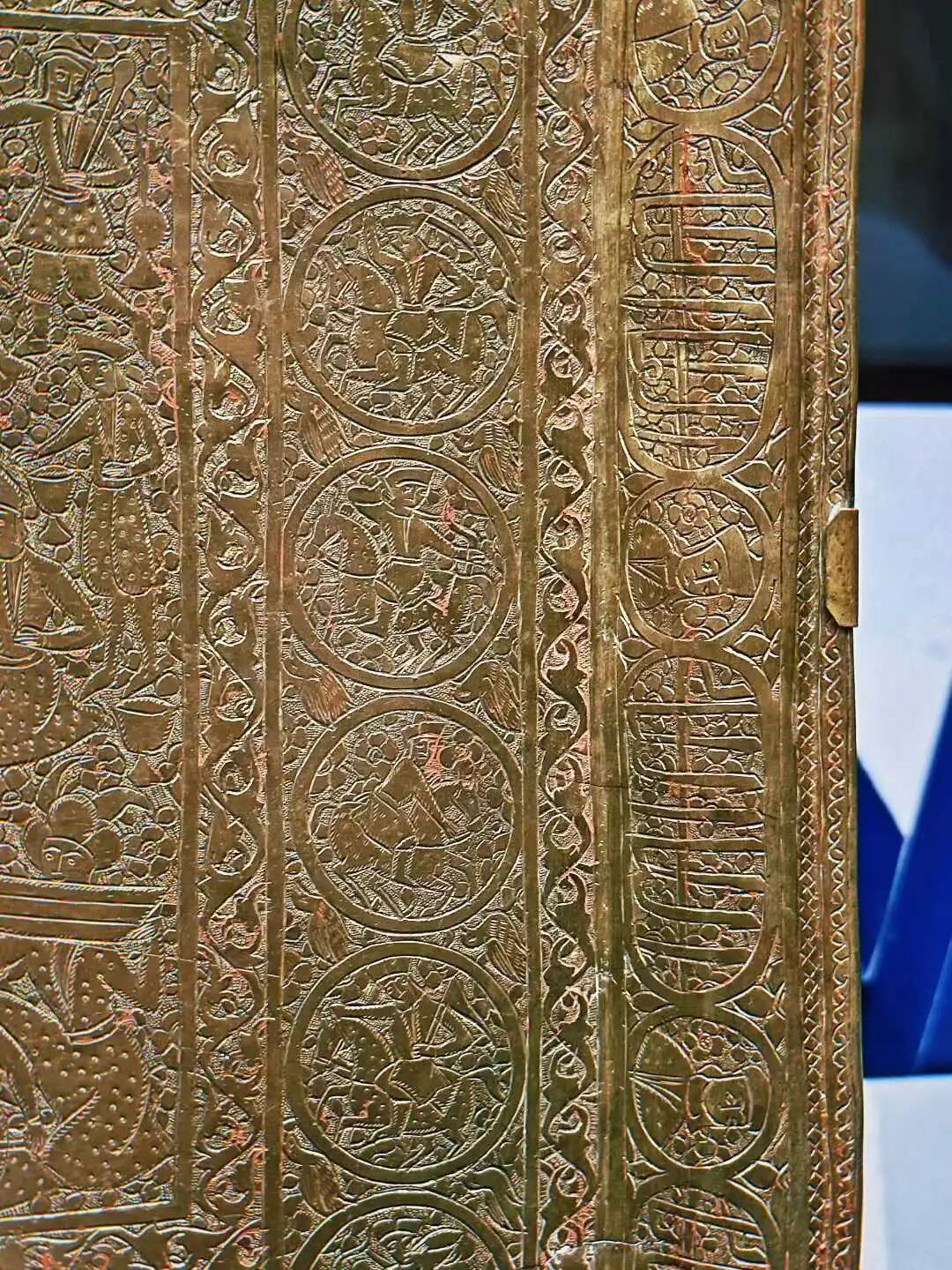
A 19th-century decorative tray in the National Museum of Tajikistan collection, engraved with a lively banquet scene. The border features 33 circular panels, each showing a rider in a different pose, with Arabic script on the outermost edge.
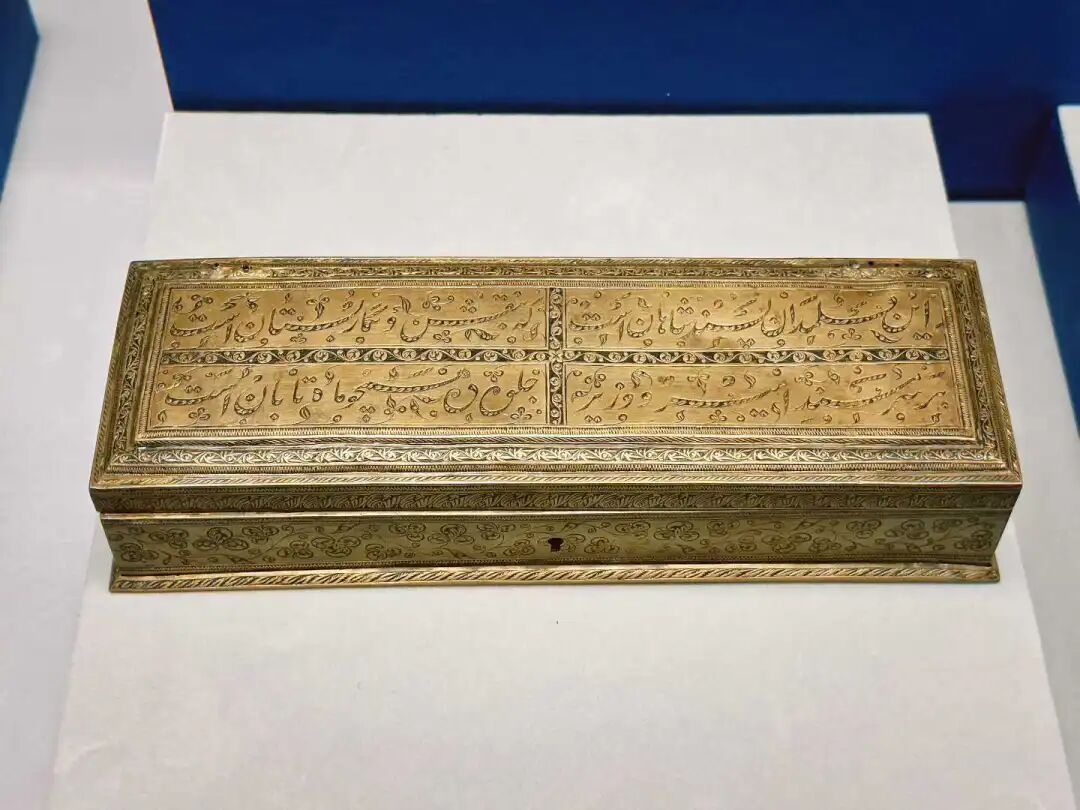
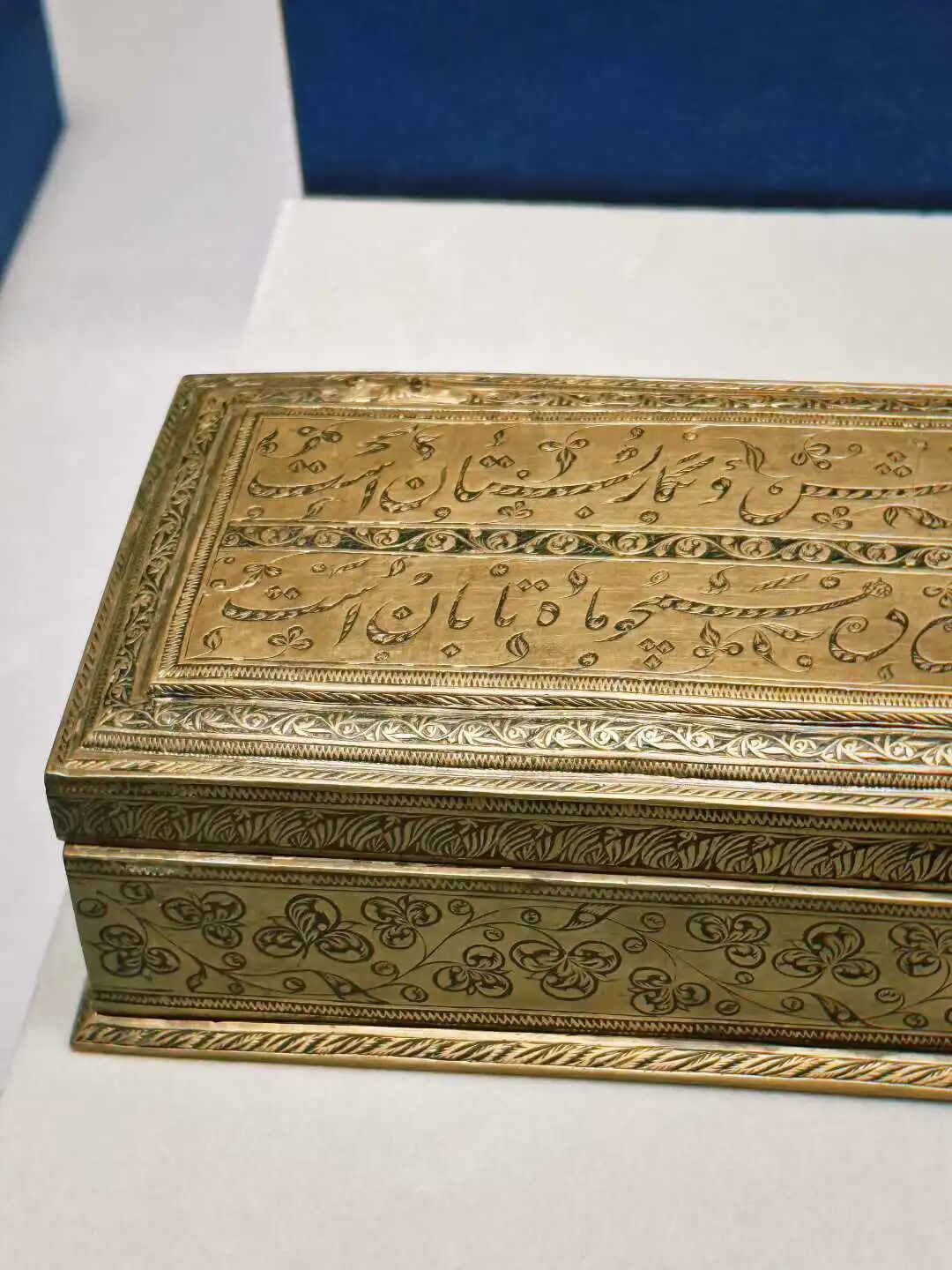
A 19th-century copper pen case in the National Museum of Tajikistan collection, featuring four lines of Persian poetry in Persian calligraphy and decorated with various leaves and plants.
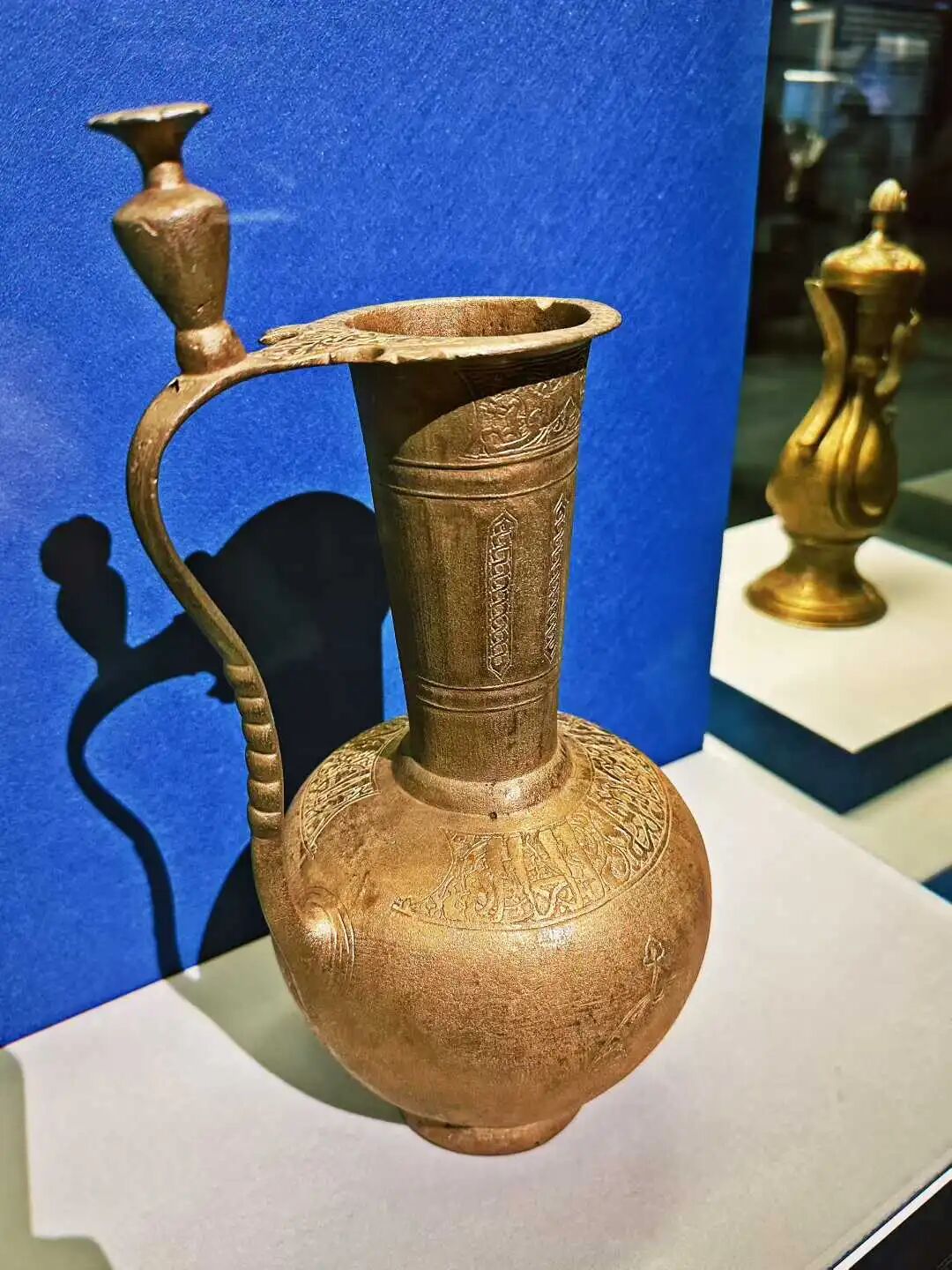
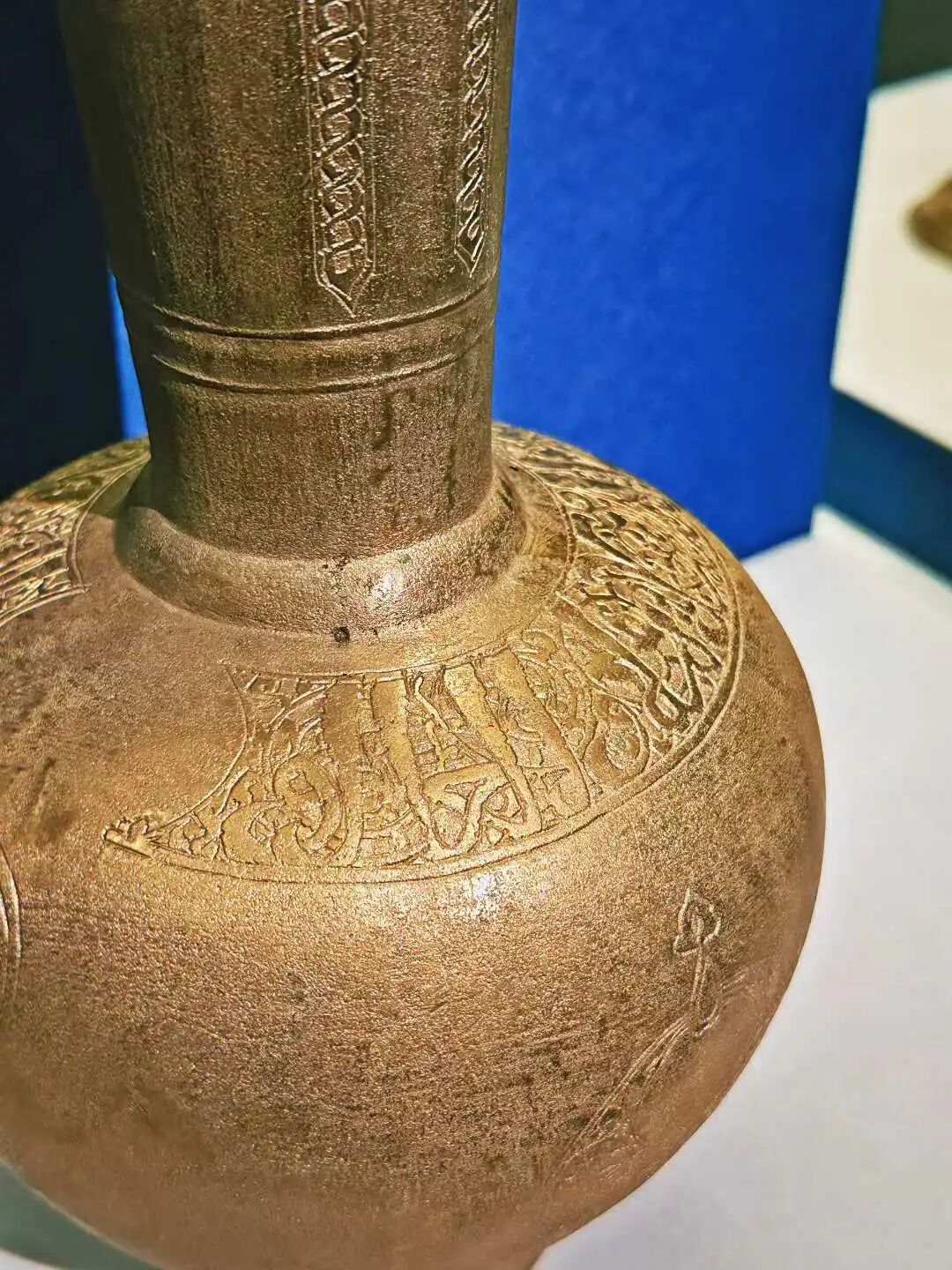
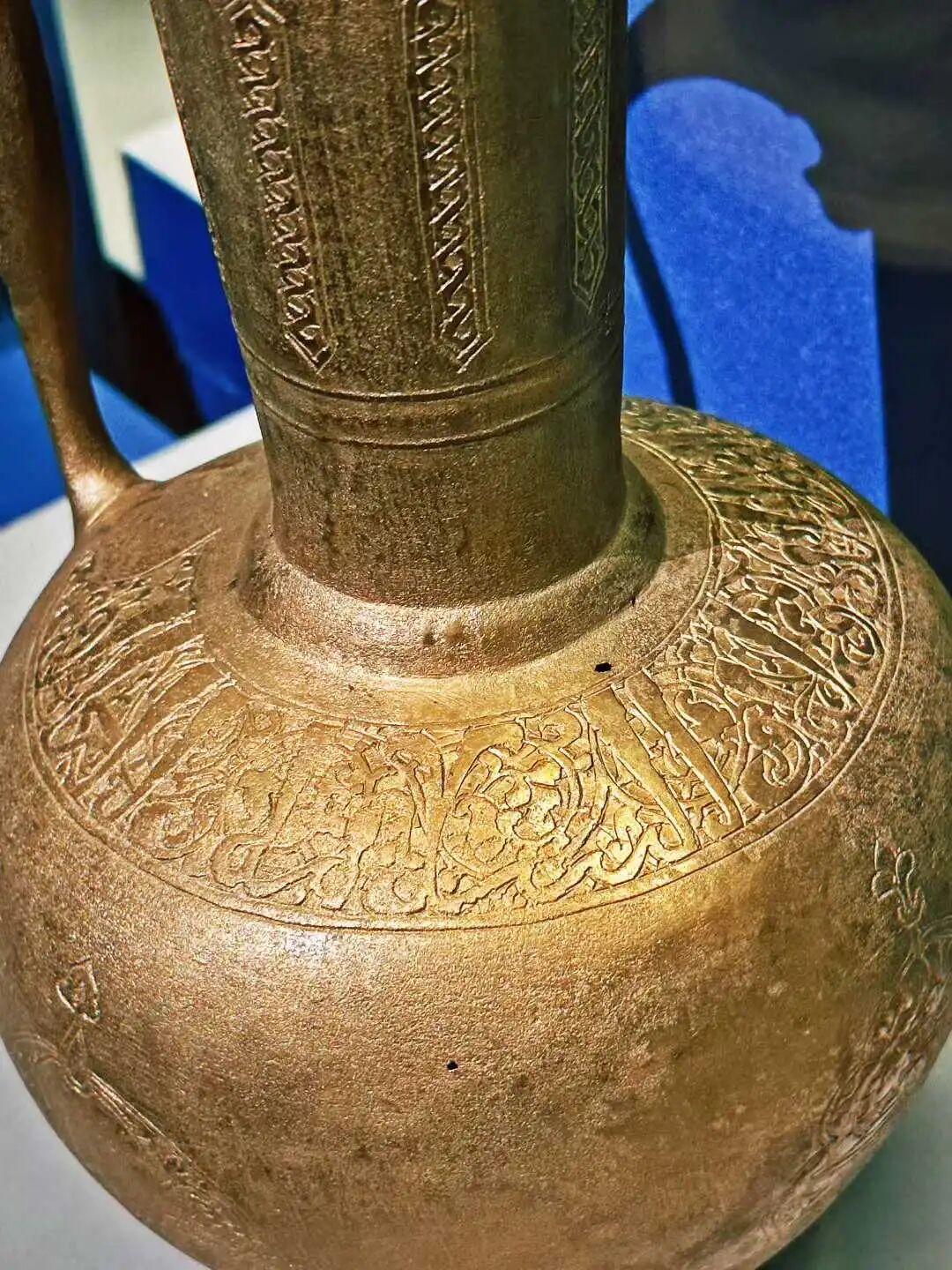
A 10th-11th century copper pitcher unearthed in Istaravshan (Dayuan City) and held in the National Museum of Tajikistan, with Arabic and Persian inscriptions on the body and neck. Istaravshan was ruled by the Samanid and Karakhanid dynasties during the 10th and 11th centuries and was a famous center for trade and handicrafts.
National Museum of Uzbekistan.
A 10th-12th century copper pitcher in the National Museum of Uzbekistan collection, dating to the Samanid and Karakhanid period. It has Arabic script on the neck and human-headed bird patterns on the rim.
A 10th-11th century copper bowl in the National Museum of Uzbekistan collection, dating to the Samanid and Karakhanid period. The outer wall is engraved with Kufic script, and the inner wall is decorated with fish and bird patterns.
State Museum of Arts of Uzbekistan.
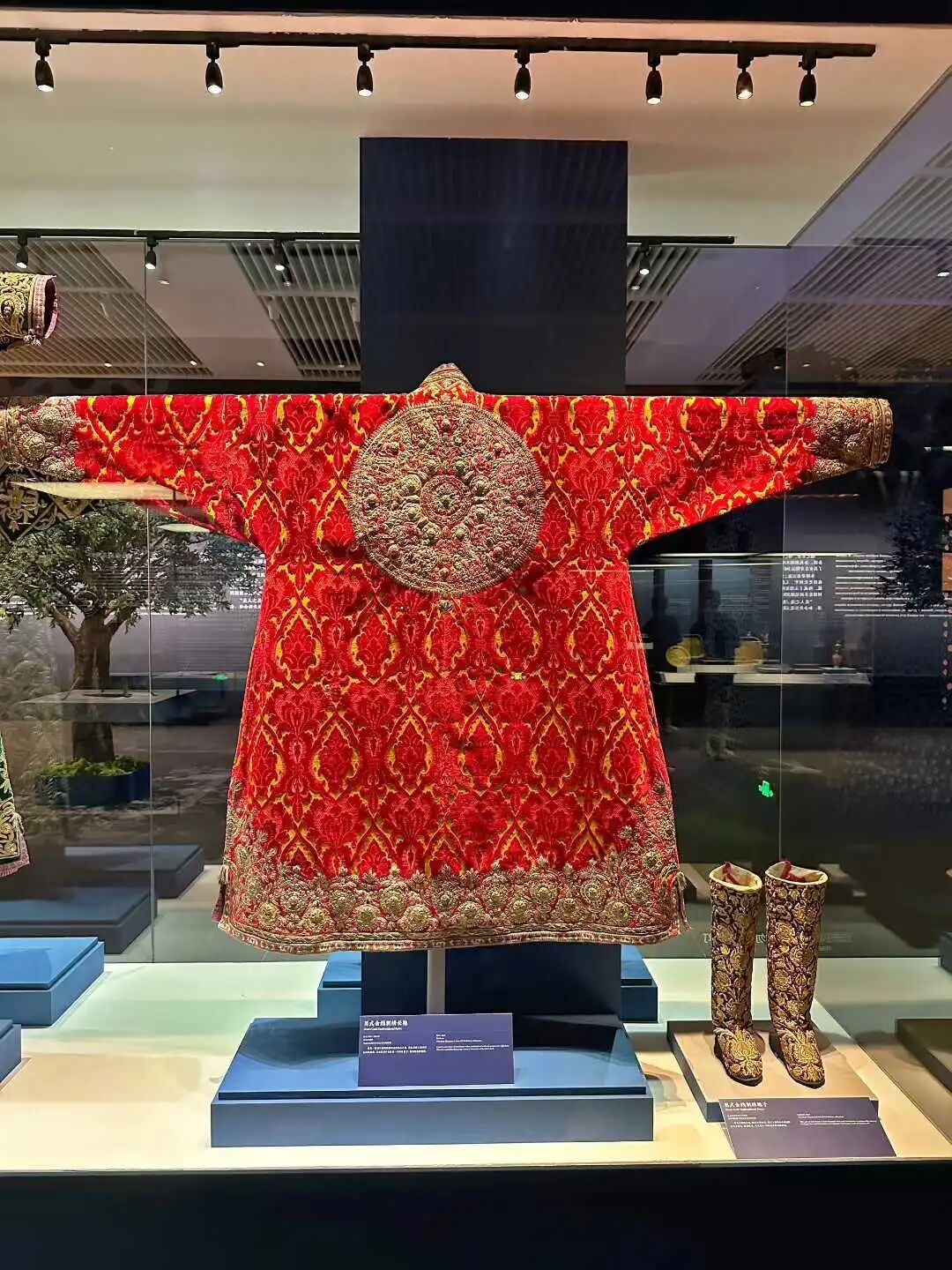
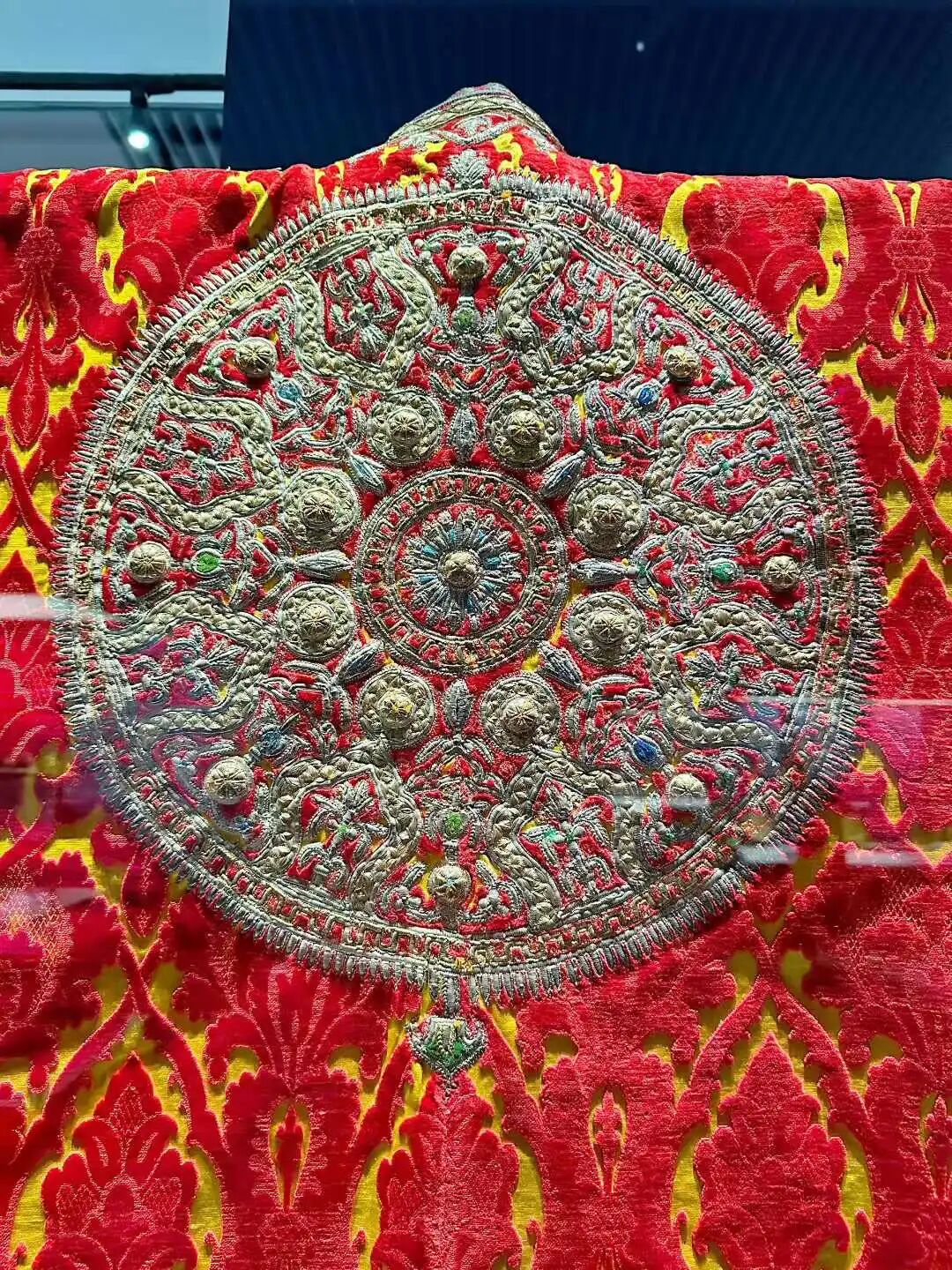
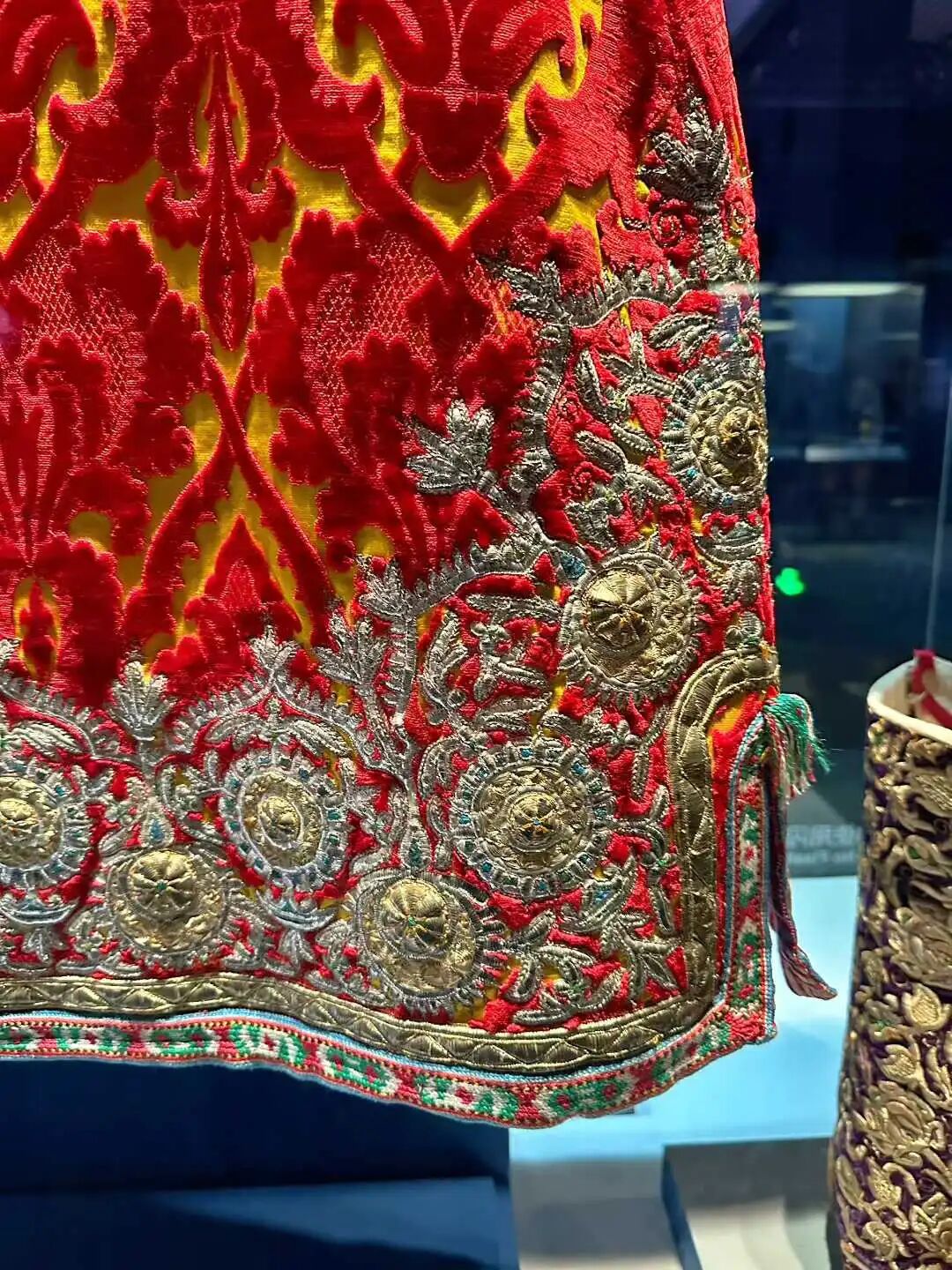
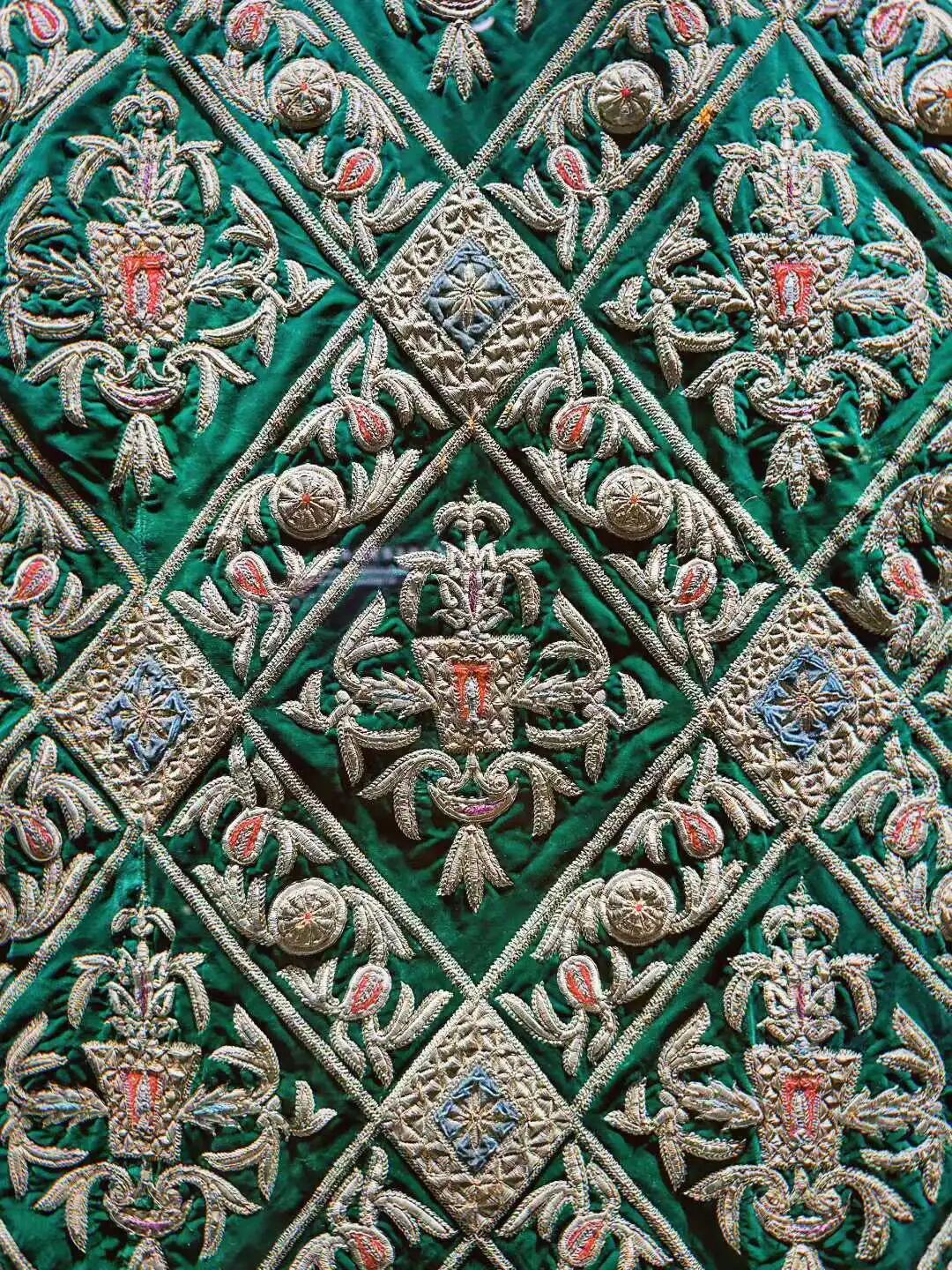
A men's gold-embroidered velvet robe made in Bukhara in 1905, held in the State Museum of Arts of Uzbekistan.
A men's gold-embroidered velvet robe made in Bukhara between 1900 and 1905, held in the State Museum of Arts of Uzbekistan.
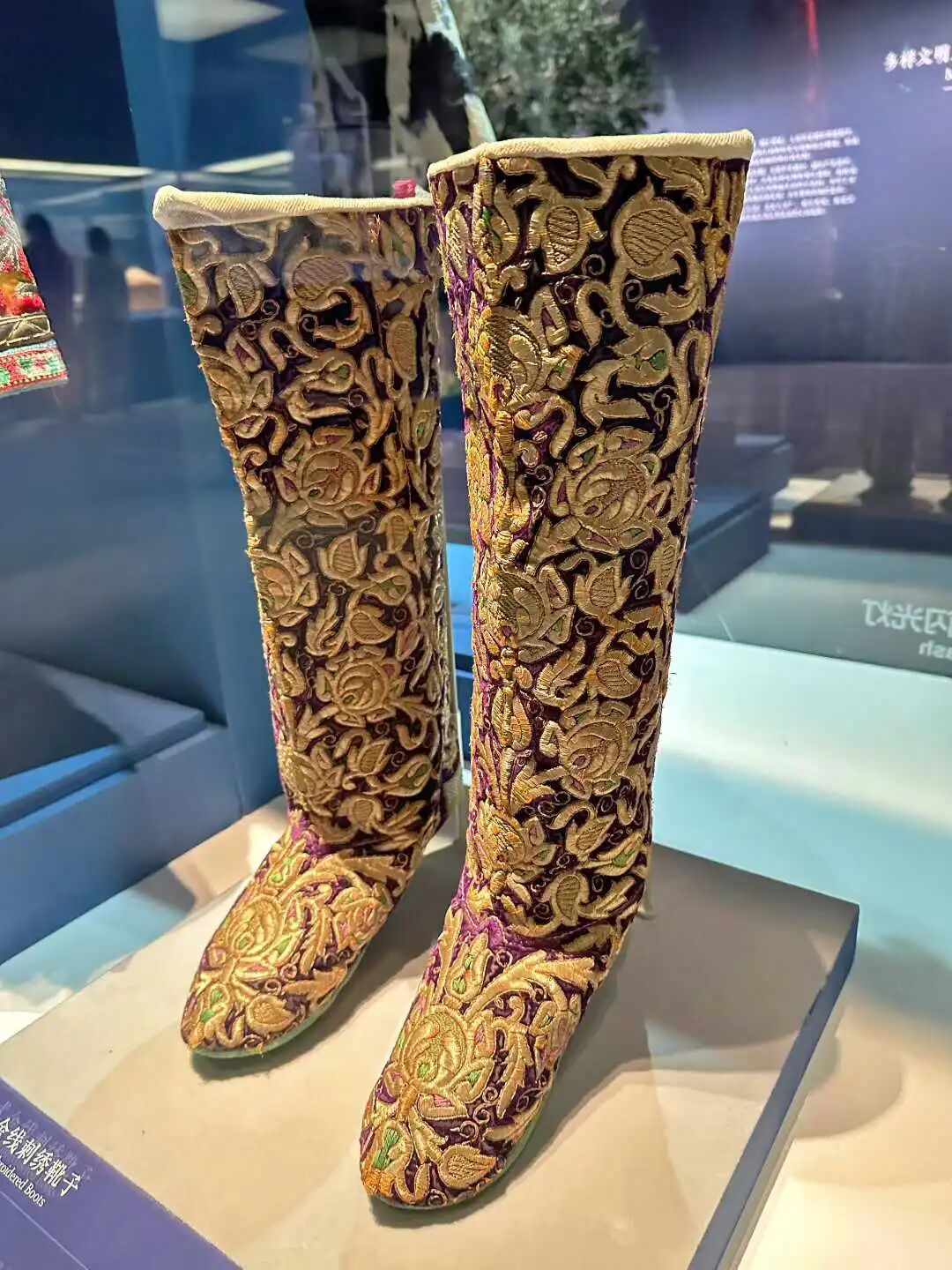
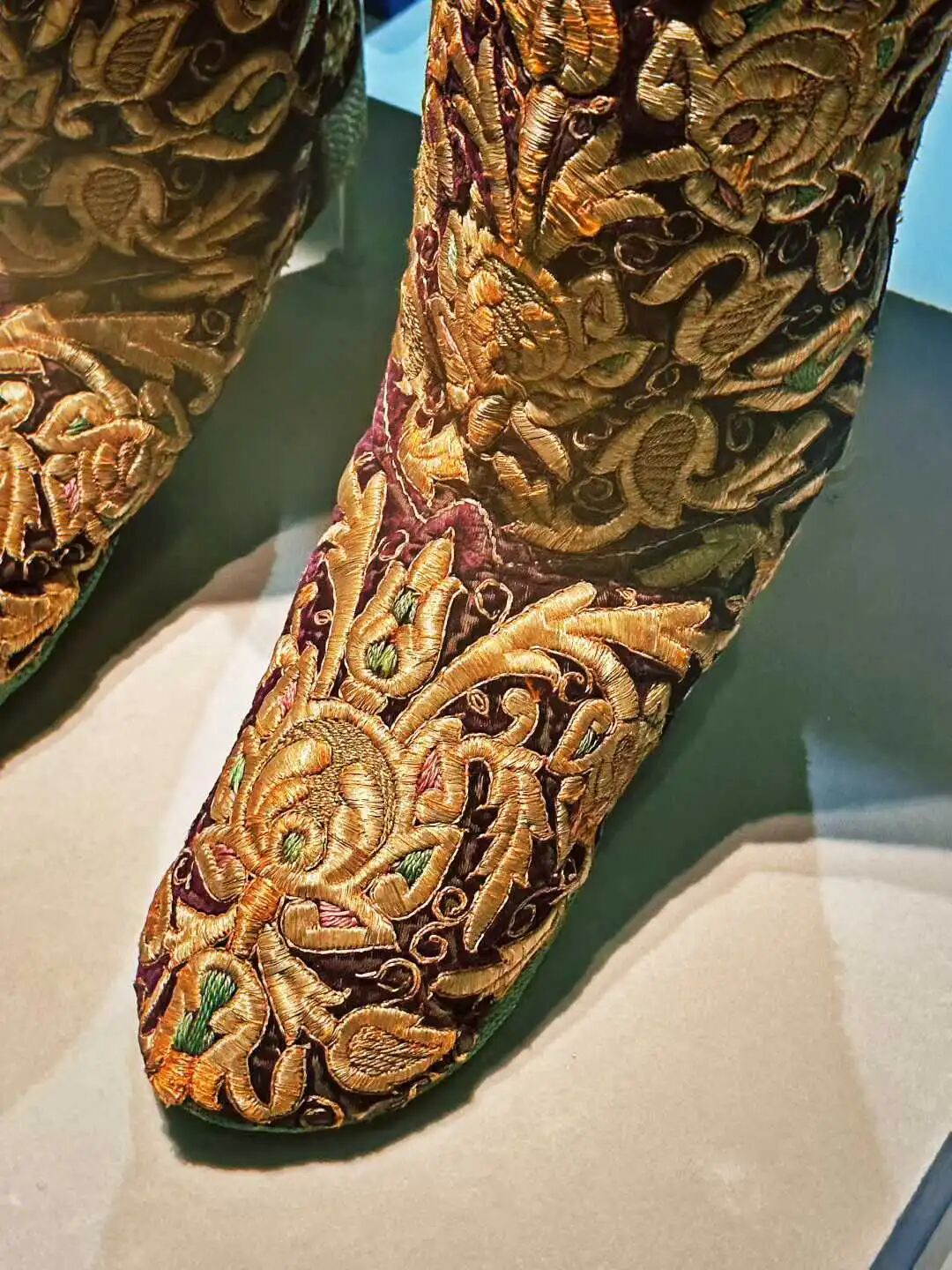
Men's gold-embroidered velvet boots made in Bukhara in 1890, held in the State Museum of Arts of Uzbekistan.
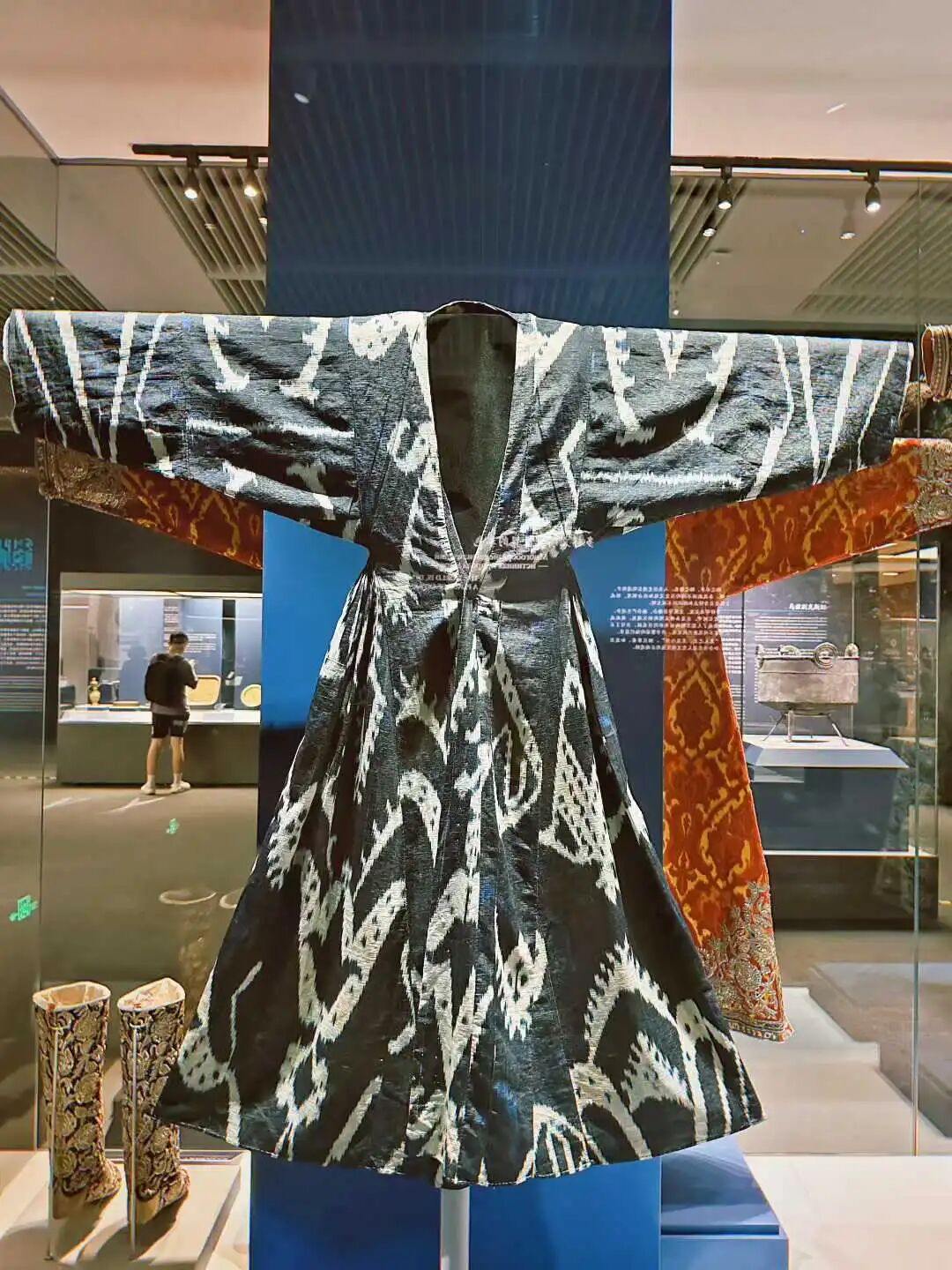
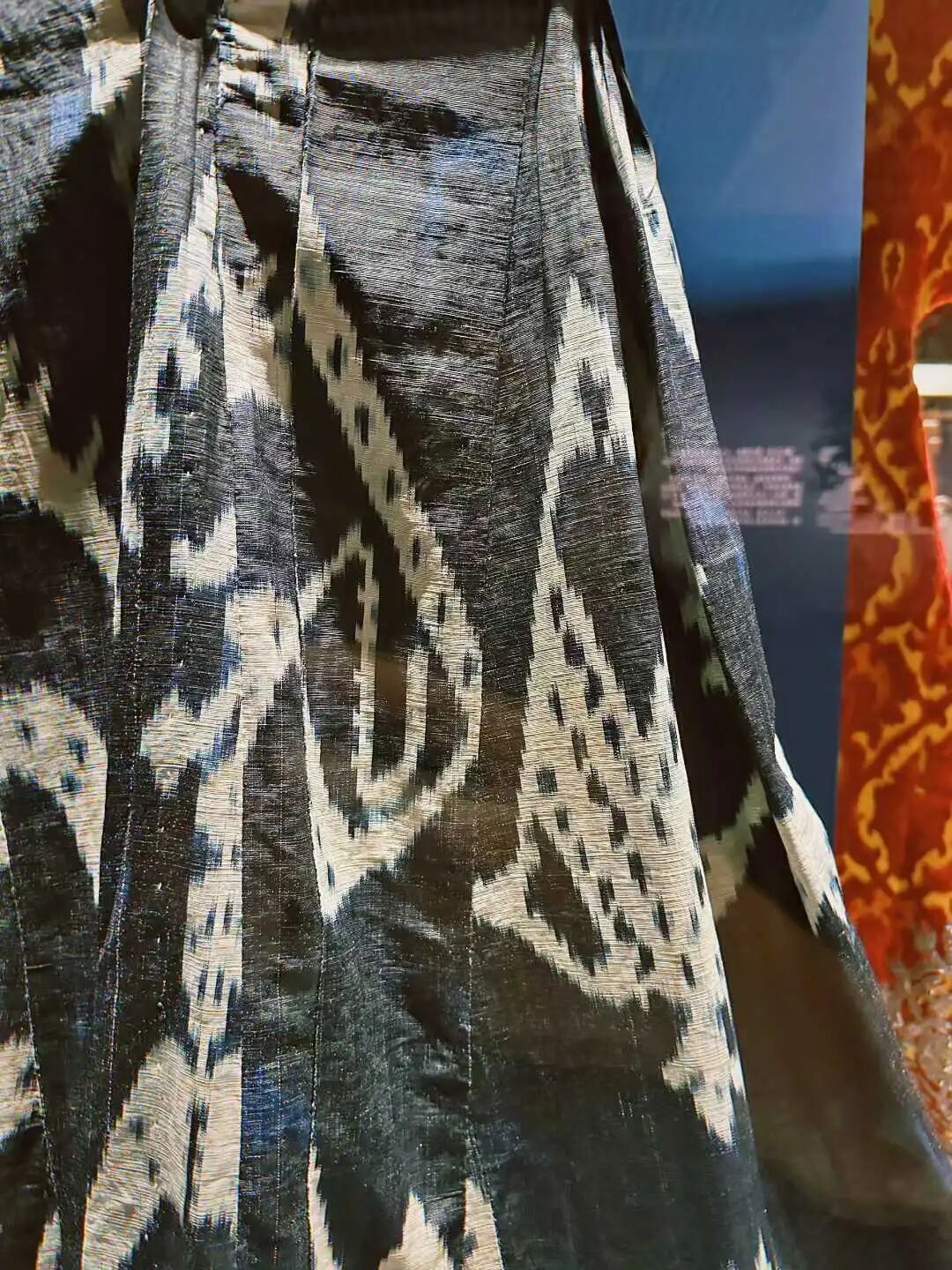
A women's ikat silk robe from the early 20th century, held in the State Museum of Arts of Uzbekistan.
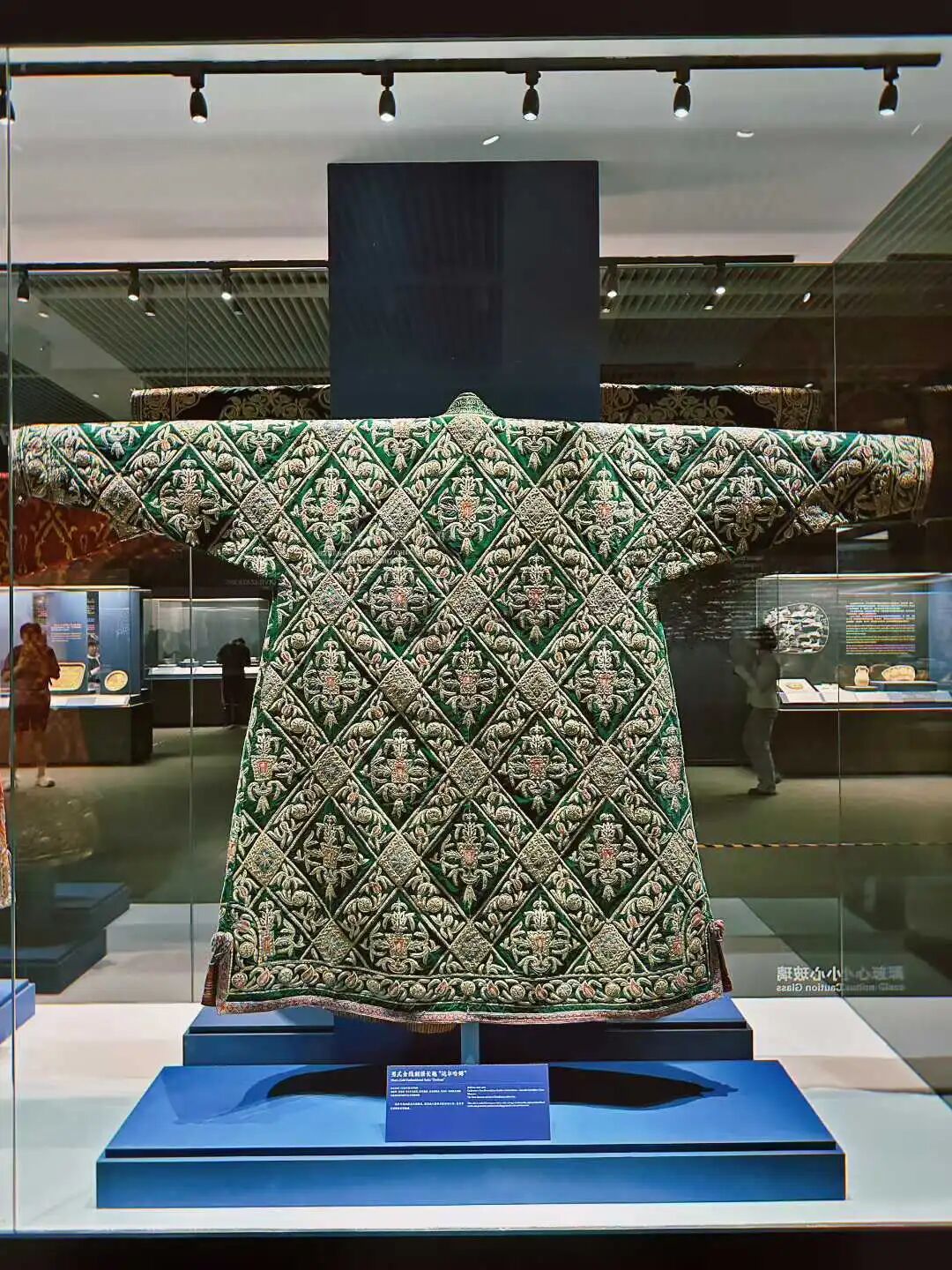
A men's gold-embroidered velvet robe made in Bukhara between 1898 and 1900, held in the State Museum of Arts of Uzbekistan.
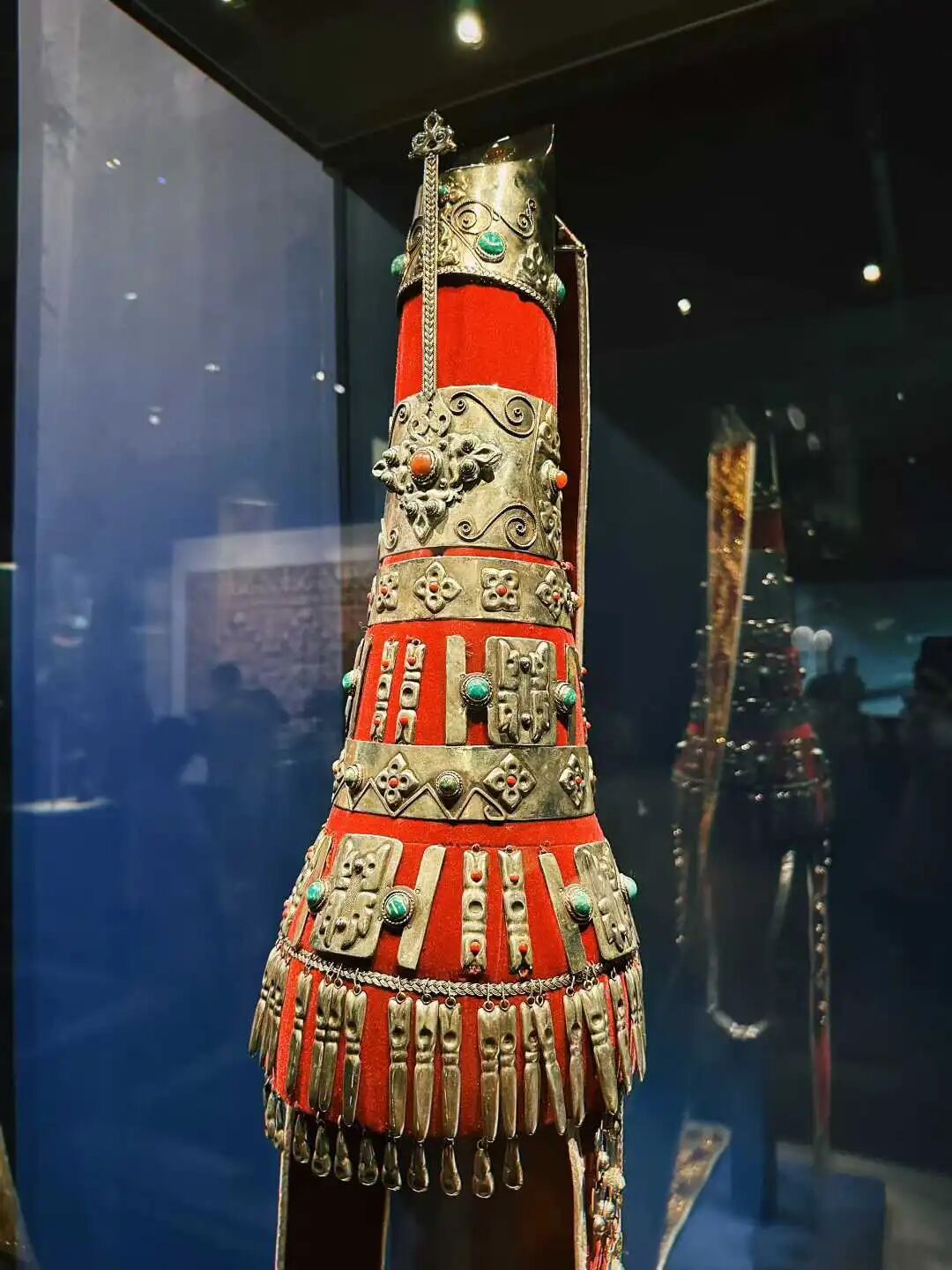
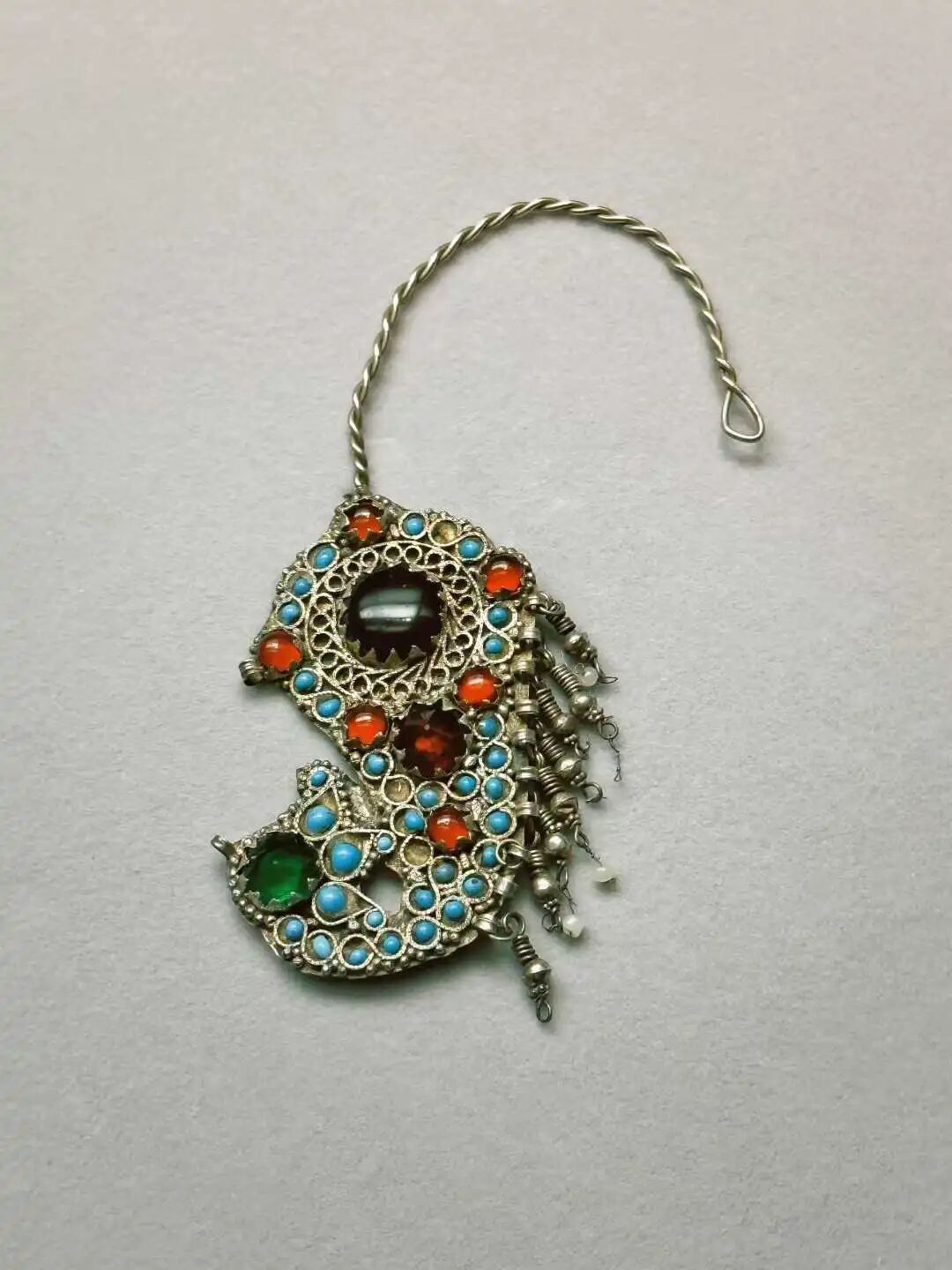
A headpiece (gajak) made in Tashkent in 1912, held in the State Museum of Arts of Uzbekistan.
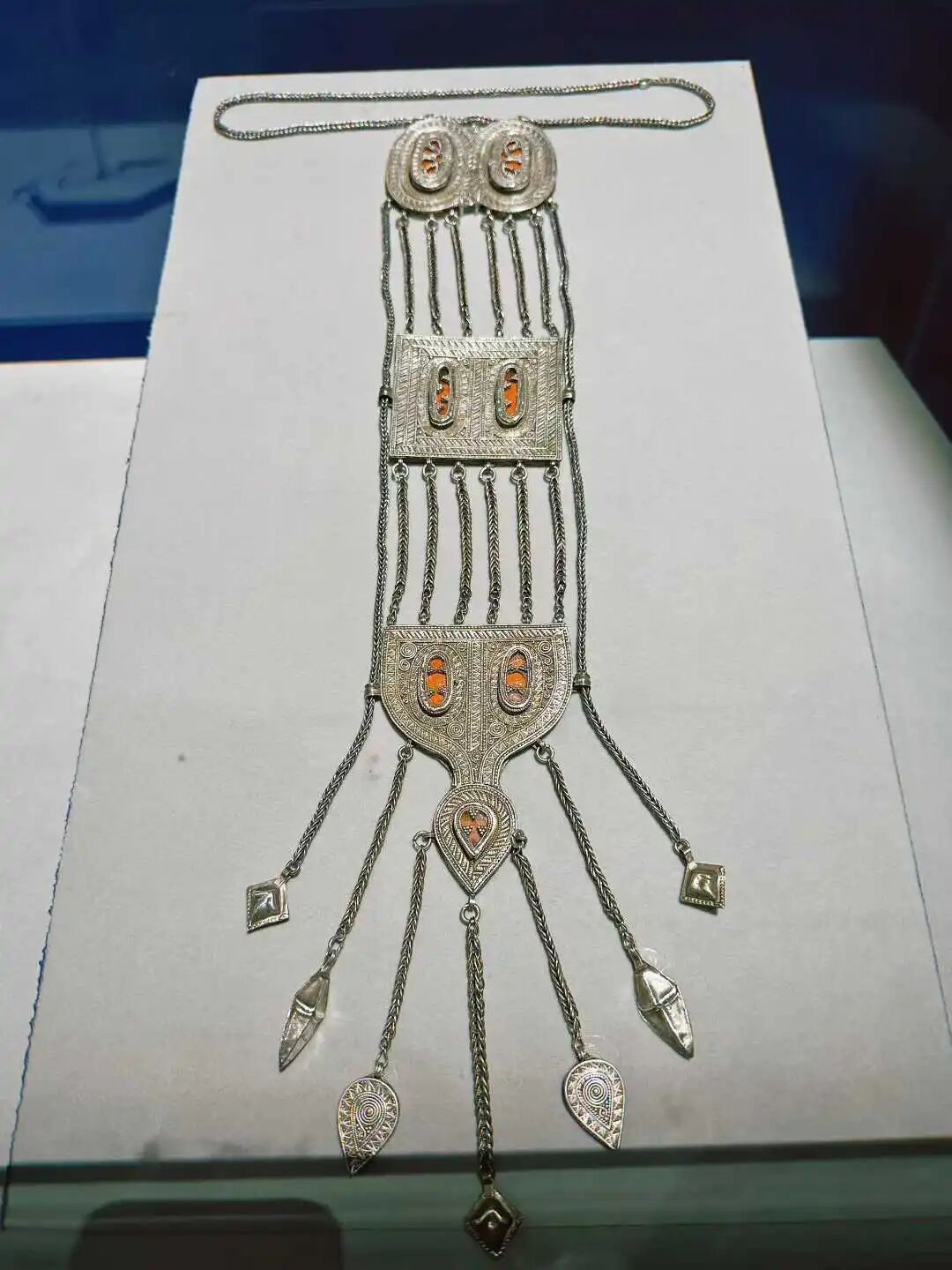
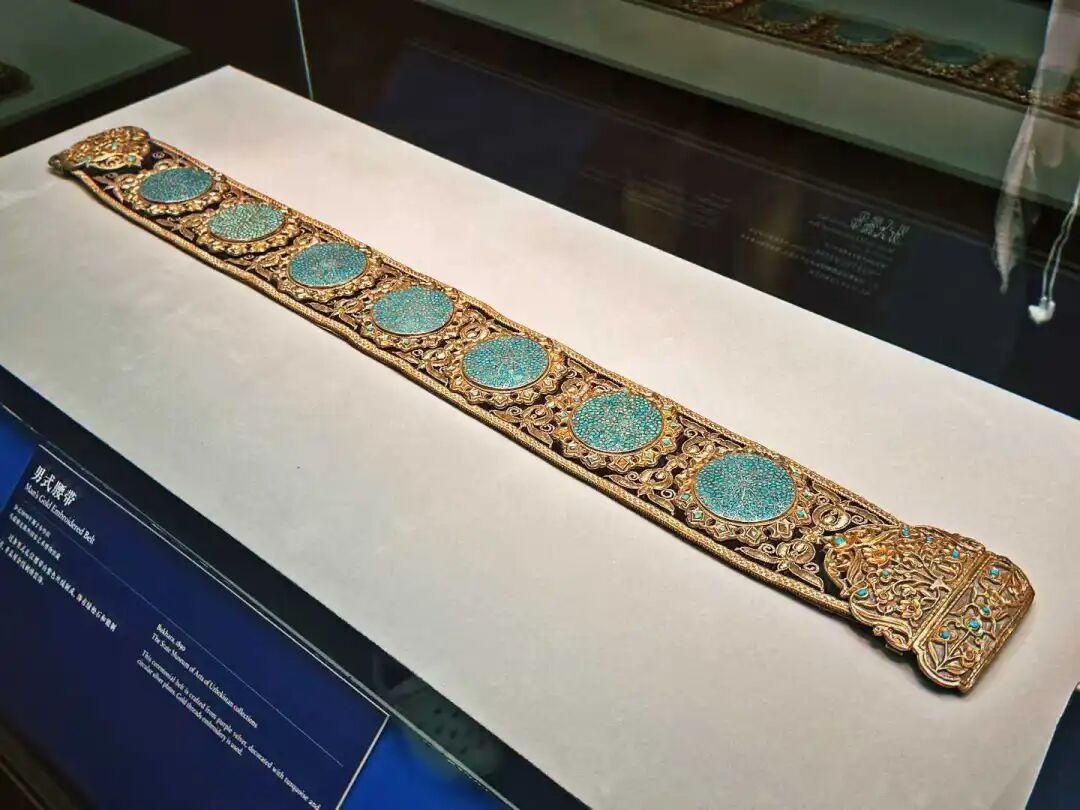
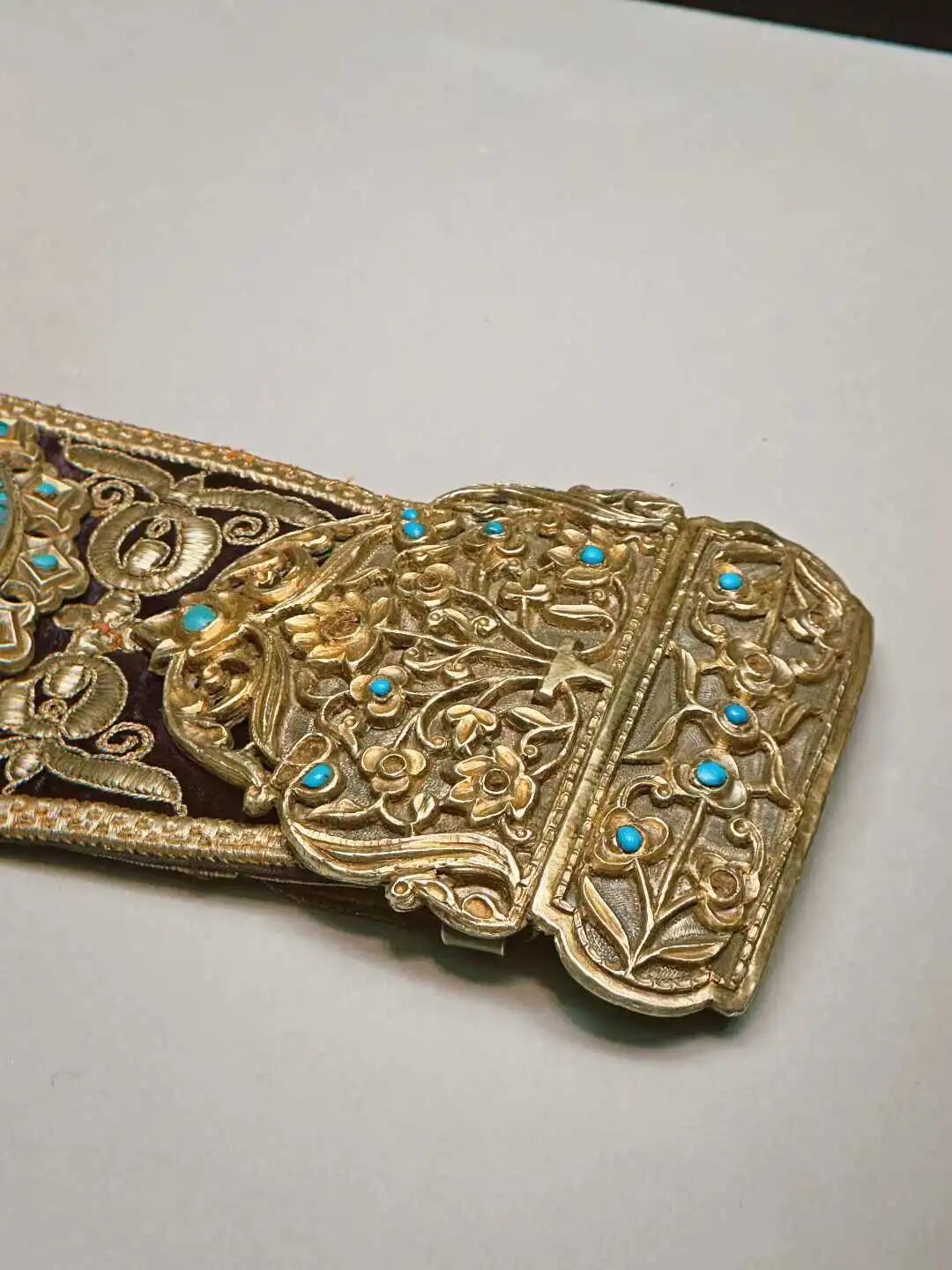
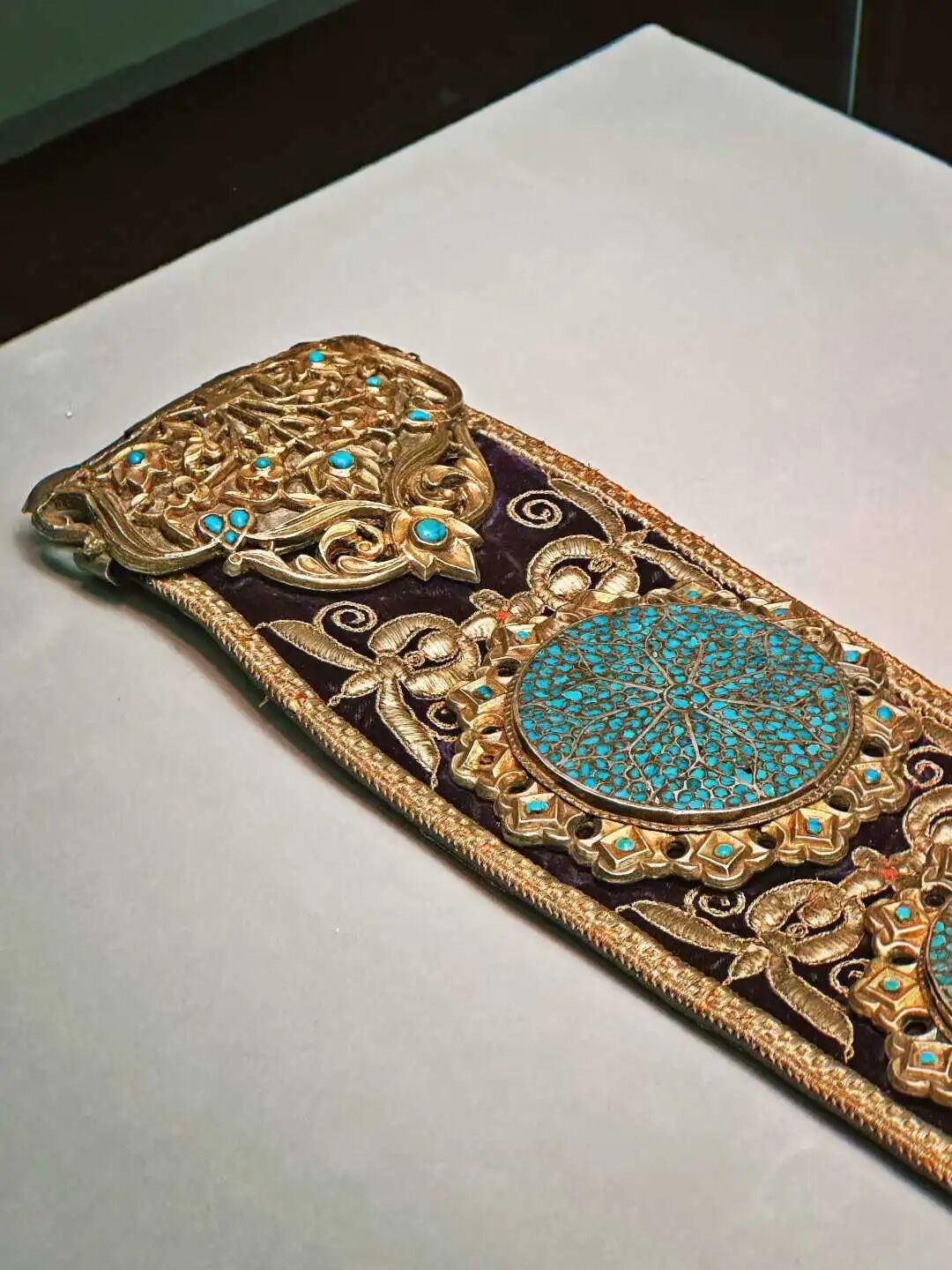
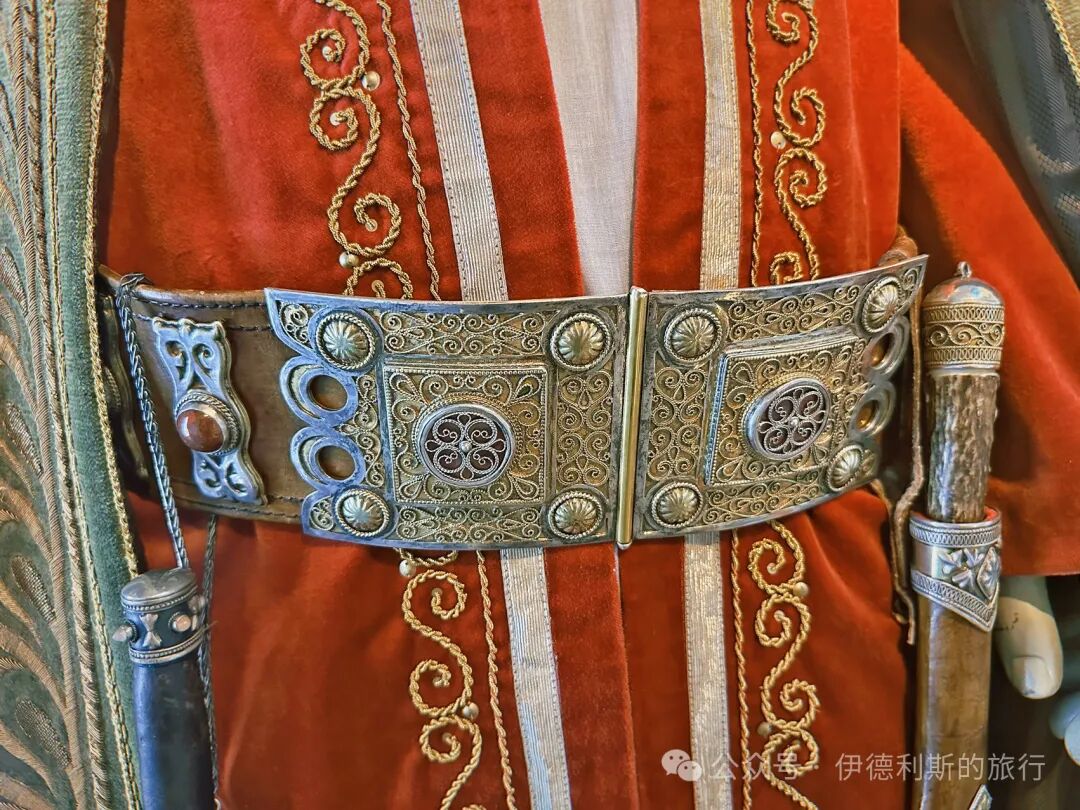
A men's gold-embroidered velvet belt made in Bukhara in 1890, decorated with turquoise and silver pieces and held in the State Museum of Arts of Uzbekistan.
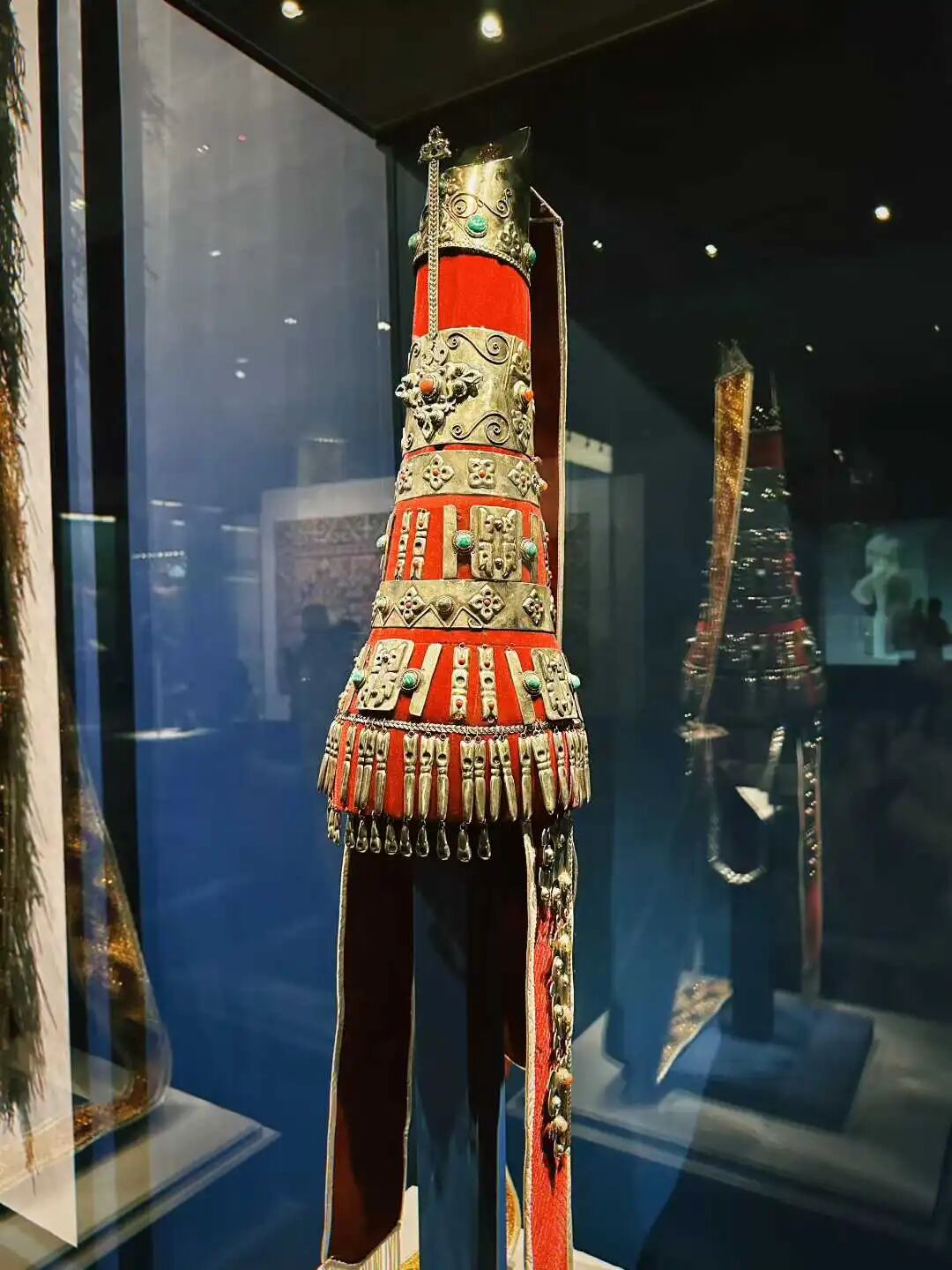
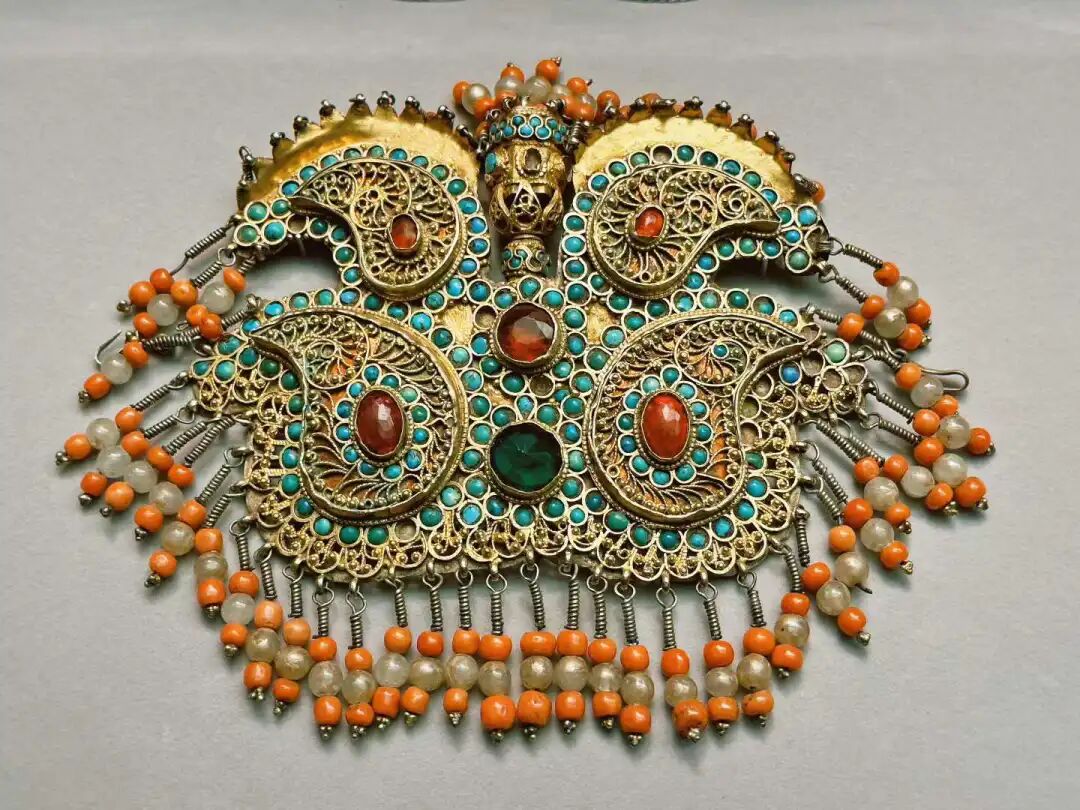
This Tojduzi headpiece from the early 20th century is kept at the State Museum of Arts of Uzbekistan. view all
Summary: This National Museum of China exhibition visit focuses on SCO-related cultural objects, including Persian-style calligraphy, Central Asian robes, jewelry, ceramics, carpets, and manuscripts. The account records the museum displays through an Islamic art and Silk Road cultural lens.
From August 27 to November 16, 2025, the National Museum of China hosts the exhibition "Galaxy of Civilizations: Joint Exhibition of Cultural Relics from National Museums of Shanghai Cooperation Organization Countries." It features items from 10 institutions, including the National Historical Museum of Belarus, the National Museum of Kazakhstan, the National Museum of Kyrgyzstan, the Department of Archaeology and Museums of the Pakistan Heritage and Culture Division, the State Historical Museum of Russia, the National Museum of Tajikistan, the State Museum of History of Uzbekistan, and the State Museum of Arts of Uzbekistan.
National Historical Museum of Belarus
From the collection of the National Historical Museum of Belarus, this is a hoard of silver coins from the Abbasid Caliphate in the mid-10th century, found in Pinsk, Belarus, in 1991. Archaeologists have found tens of thousands of Arab silver coins in Northern Europe and the Baltic region. These coins were minted during the Abbasid Caliphate between the 8th and 11th centuries and were popular for their high purity and consistency. Between the 9th and 11th centuries, Vikings from Northern Europe used Eastern European waterways like the Volga and Dnieper rivers to trade with Arabs. They exchanged furs, slaves, and amber for large amounts of Arab silver coins. Interestingly, many of the Arab silver coins in Viking hoards were cut into pieces. This is because Vikings measured silver by weight rather than face value at the time.
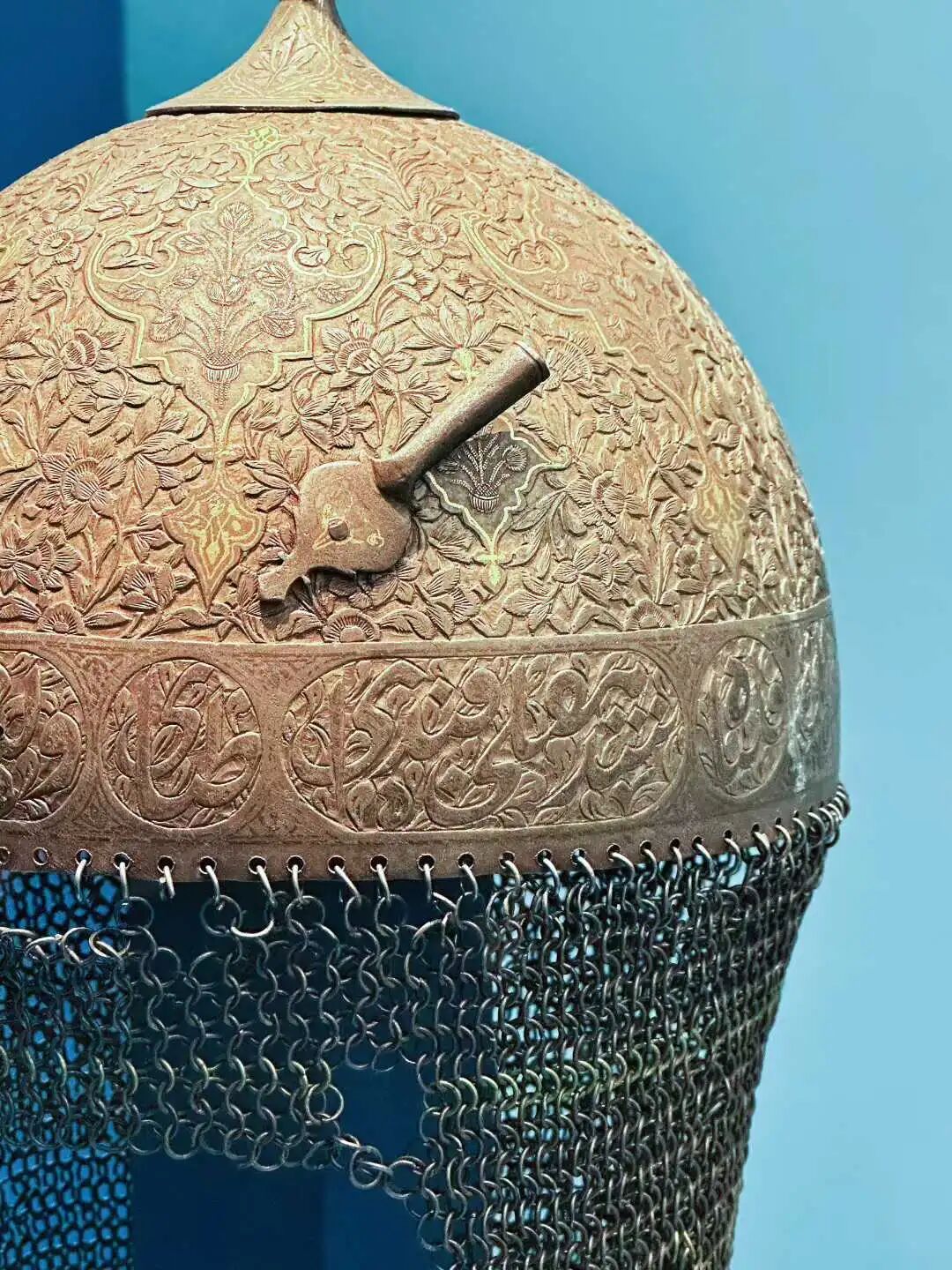
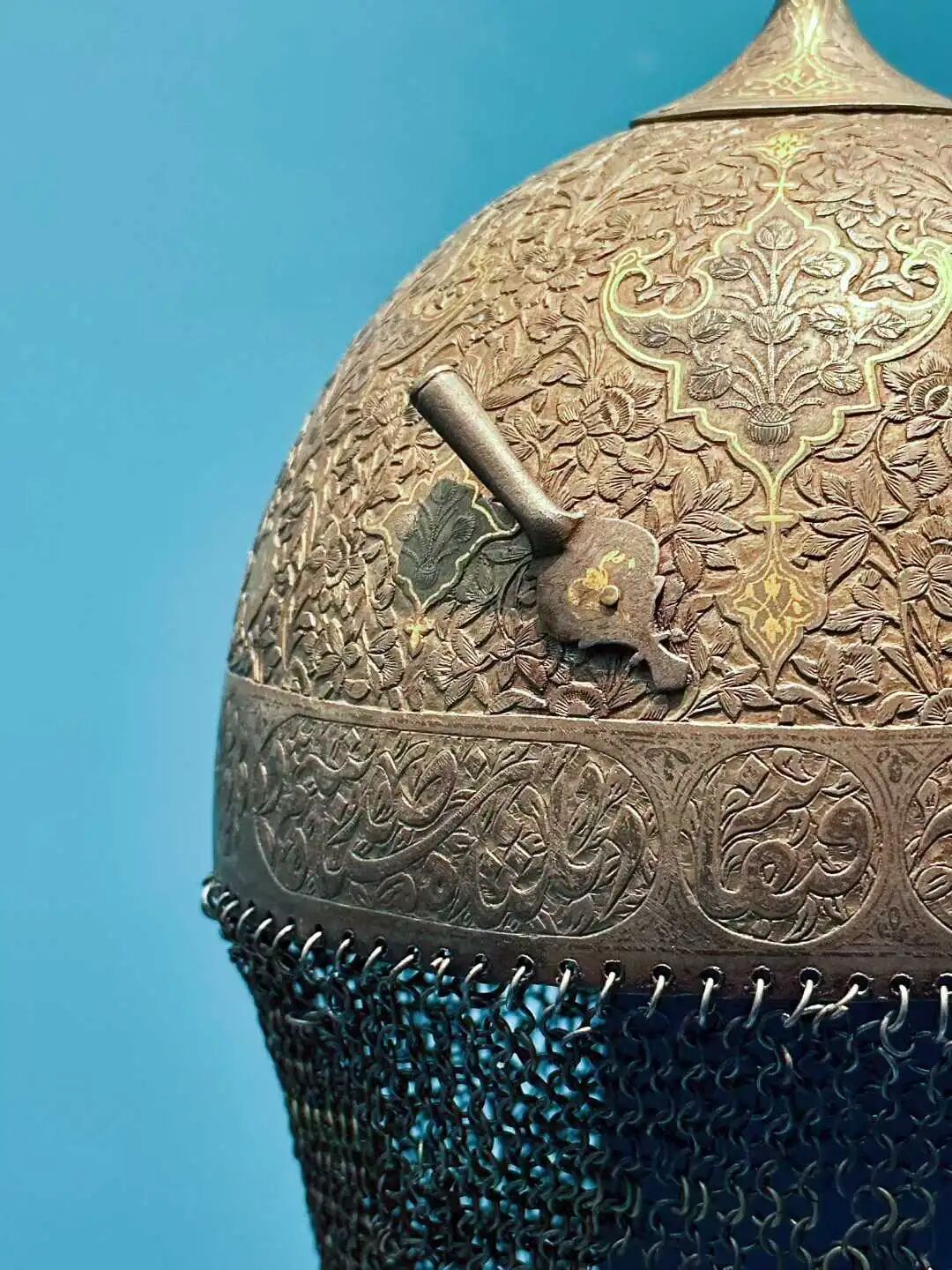
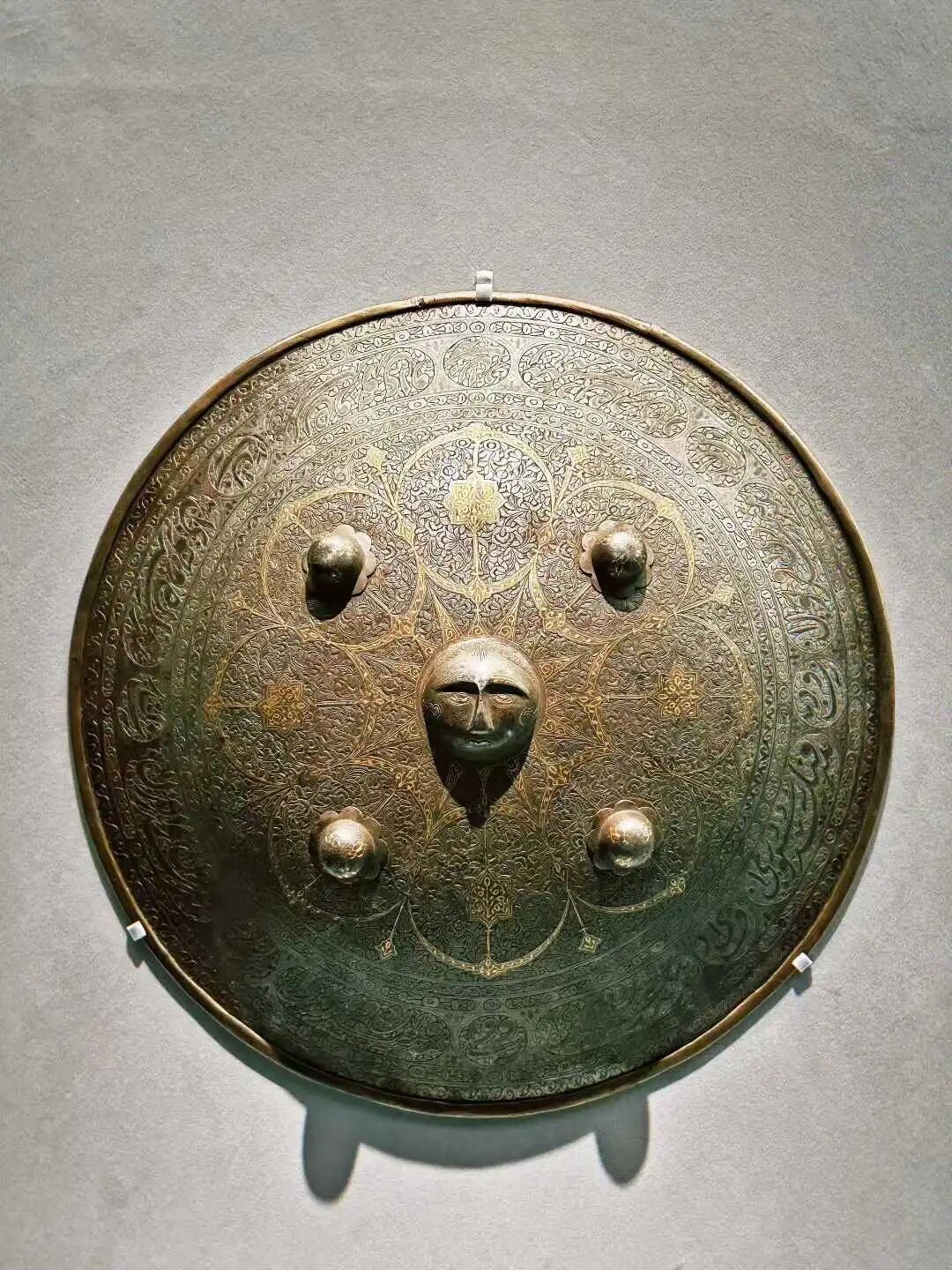
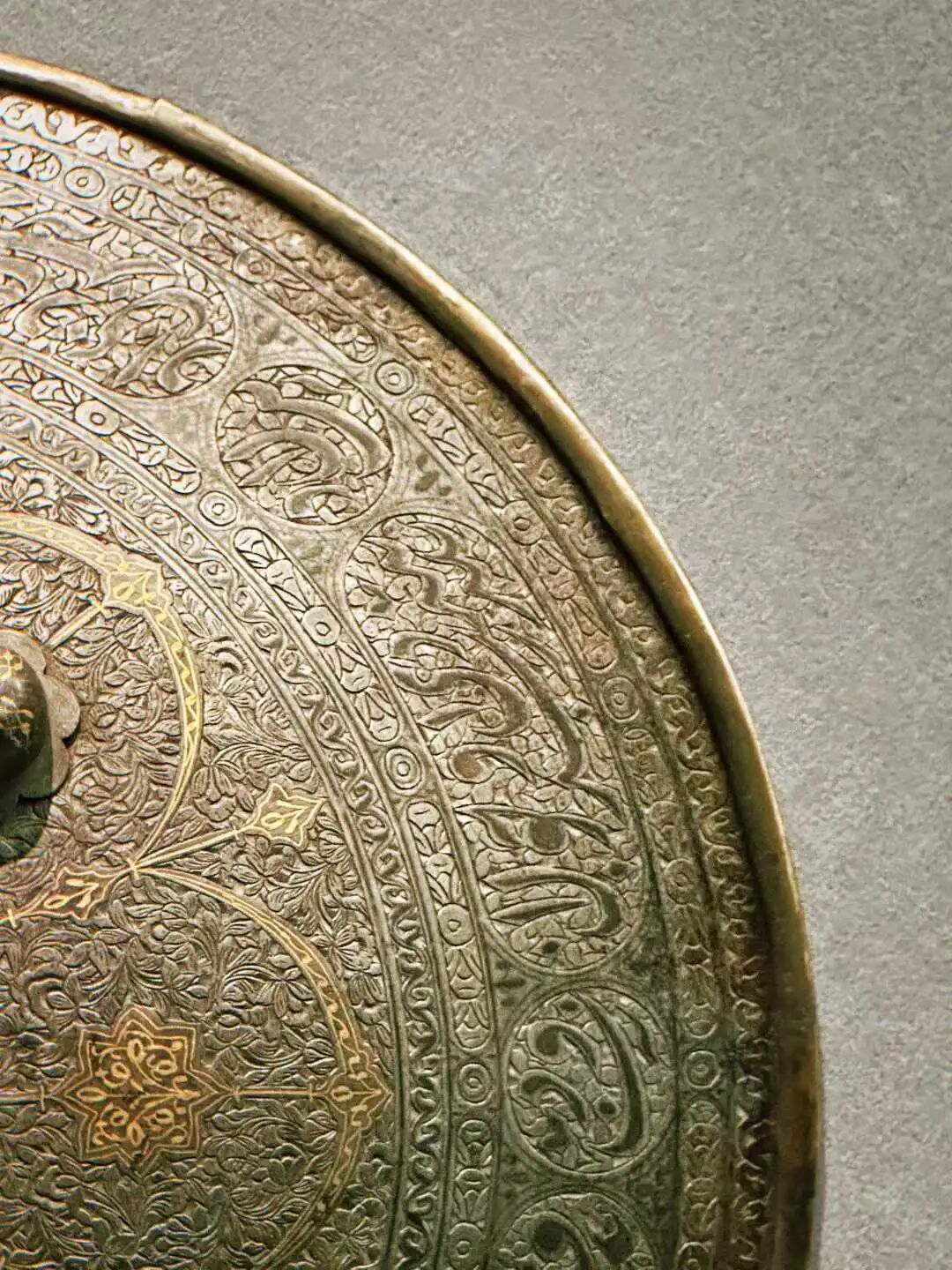
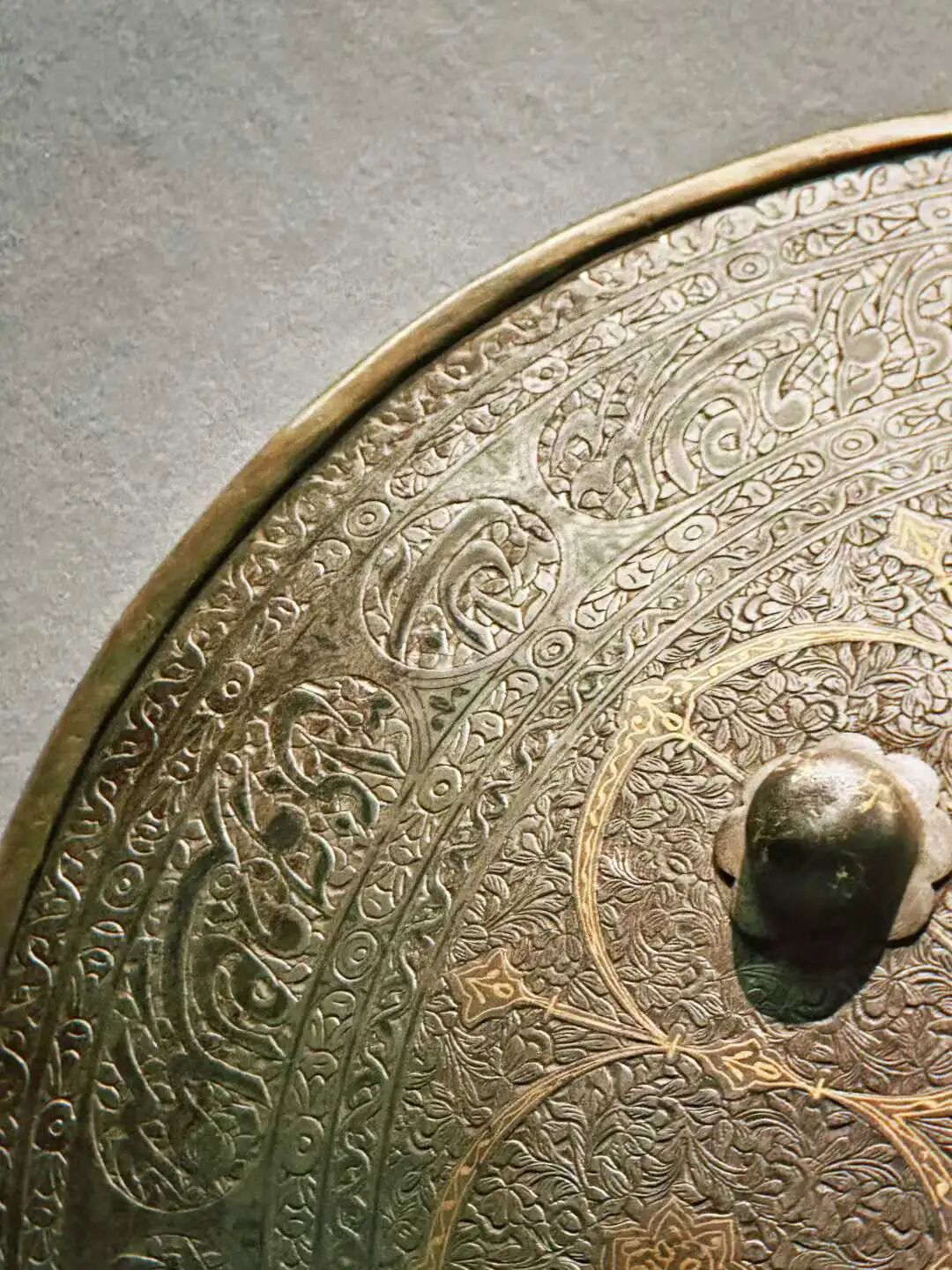
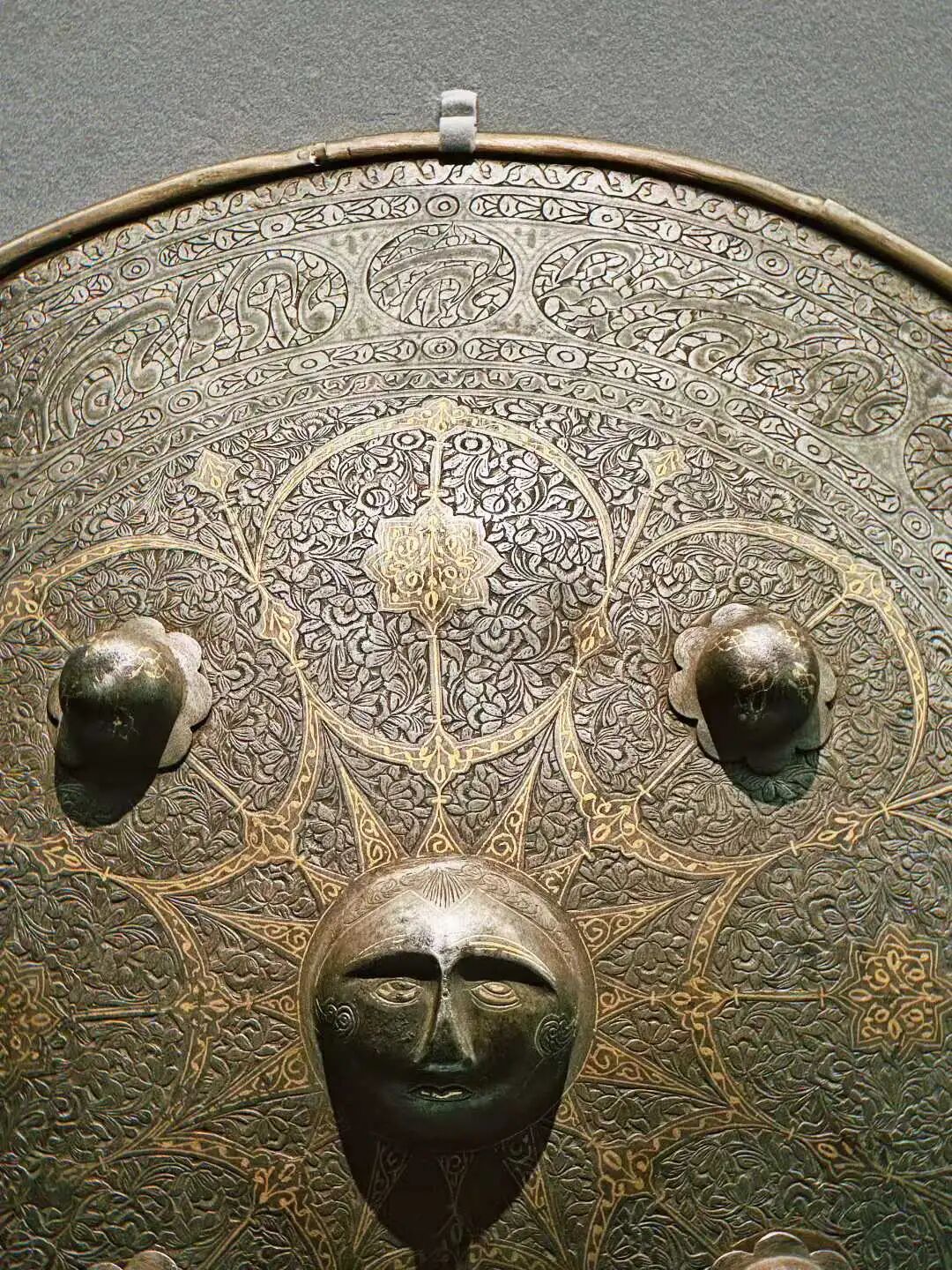
From the collection of the National Historical Museum of Belarus, this is a helmet and shield from the Qajar dynasty of Iran in the 19th century. The helmet and shield were hand-forged from single plates of Damascus steel. The helmet has a long spike on top and feather holders on both sides, while the shield features a sun motif. Both the helmet and shield are engraved with floral patterns and beautiful Persian calligraphy. Persian calligraphy developed from Naskh Arabic script. Compared to Naskh, the strokes are more elongated and tilt from the top right to the bottom left, allowing for more freedom when writing.
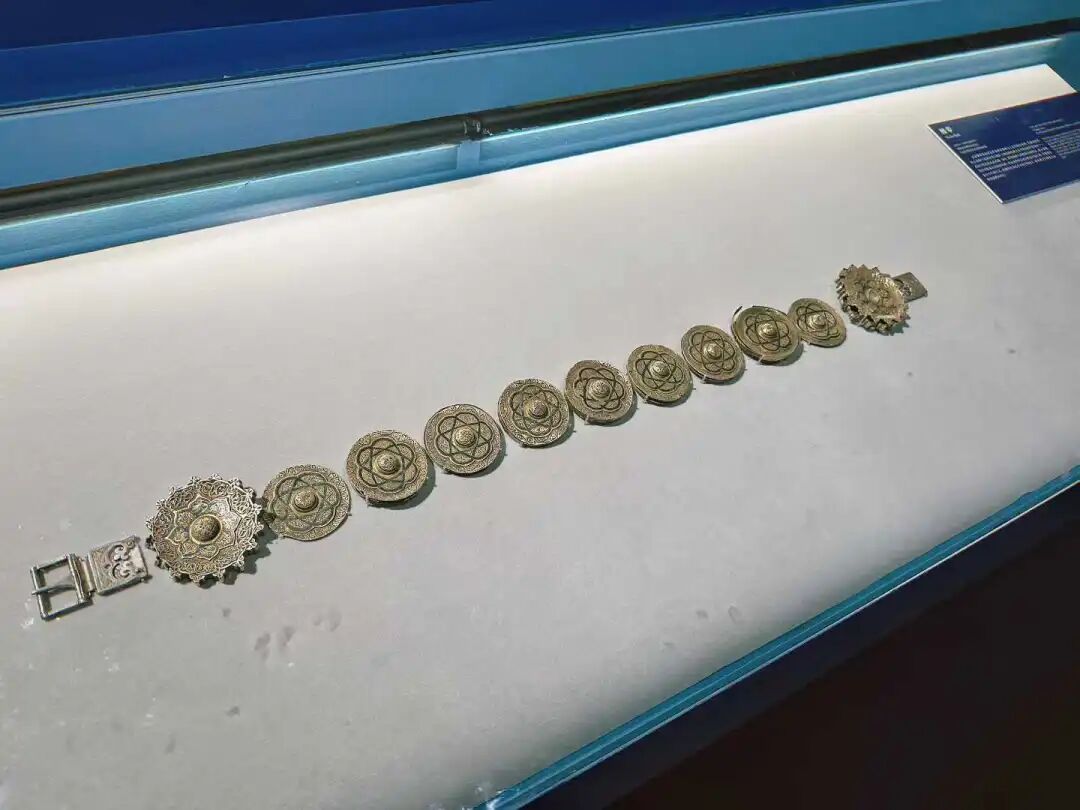
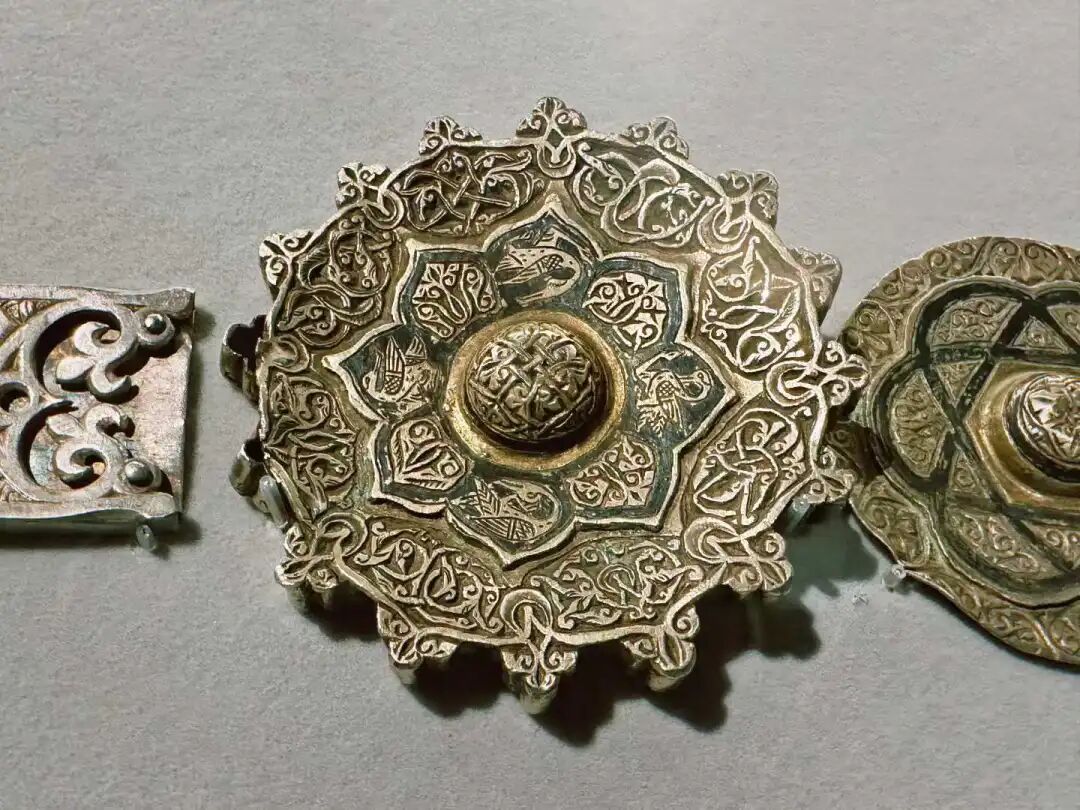
From the collection of the National Historical Museum of Belarus, this is a belt featuring traditional Crimean jewelry craftsmanship. It is believed to be a gift from Hacı I Giray, the founding Khan of the Crimean Khanate, to Grand Duke Vytautas of Lithuania.
Hacı I Giray was a descendant of Tuka-Timur, the thirteenth son of Jochi, who was the eldest son of Genghis Khan. His family began ruling the Crimean Peninsula in 1260, but they were defeated by Tamerlane in 1395 and fled to Lithuania. Hacı I Giray was born in Lithuania in 1397. In 1428, with the support of Grand Duke Vytautas of Lithuania, Hacı I Giray led an army to take over the Crimean Peninsula, but he was soon defeated by the Golden Horde. Later, with Lithuanian support, Hacı I Giray sent troops to Crimea several more times. He finally occupied the Crimean Peninsula in 1441 and established the Crimean Khanate.
This belt is made of high-purity silver. The circular discs feature Tatar decorative motifs, while the buckle has a Gothic design, reflecting the cultural exchange between East and West at the time.
National Museum of Kazakhstan
From the collection of the National Museum of Kazakhstan, these are ceramic tiles unearthed from a tomb at the ancient city site of Zhaiyk, dating back to the Golden Horde period in the 14th century. The ancient city site of Zhaiyk was discovered by an archaeological team in 2001. Subsequent excavations revealed the remains of a Turkish bath with an underfloor heating system and a domed tomb decorated with colorful glazed tiles in the cemetery west of the city.
From the collection of the National Museum of Kazakhstan, this is a copper coin minted by the Samanid dynasty in 922-923, unearthed in Otrar, southern Kazakhstan. During the 9th and 10th centuries, this region was an important trade center for the Samanid dynasty.
This is a modern Kazakh women's accessory.
National Museum of Pakistan, Islamabad
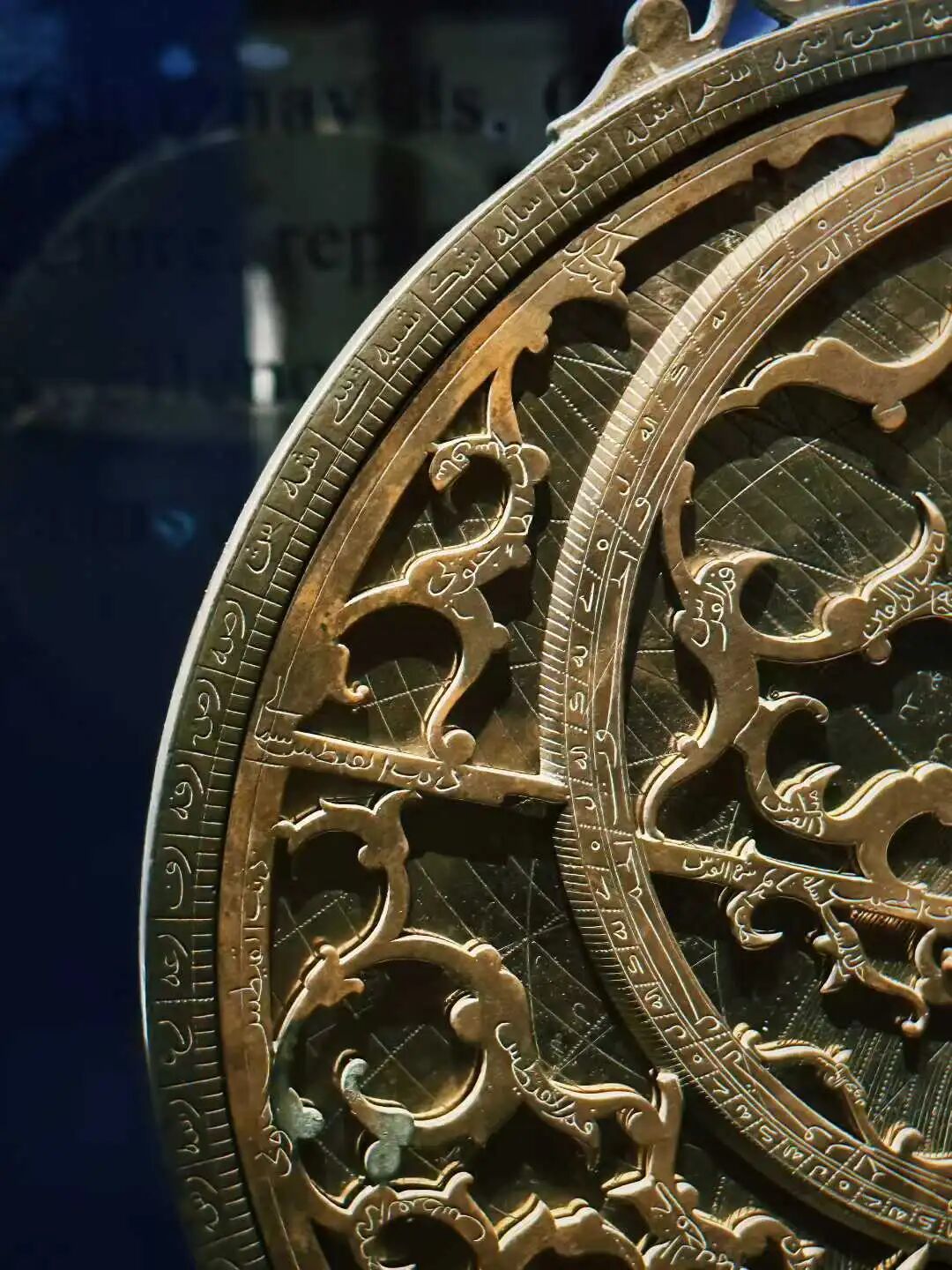
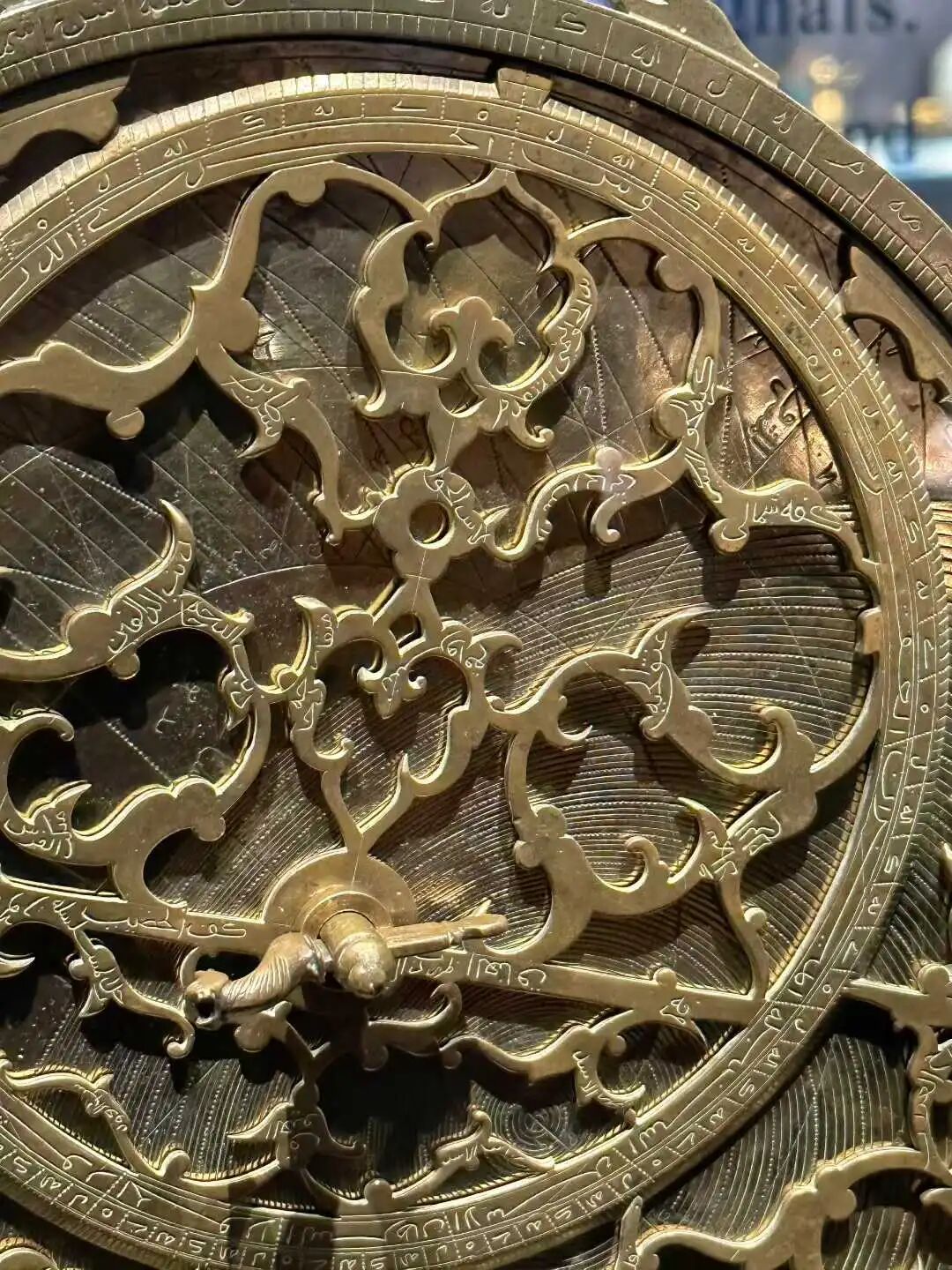
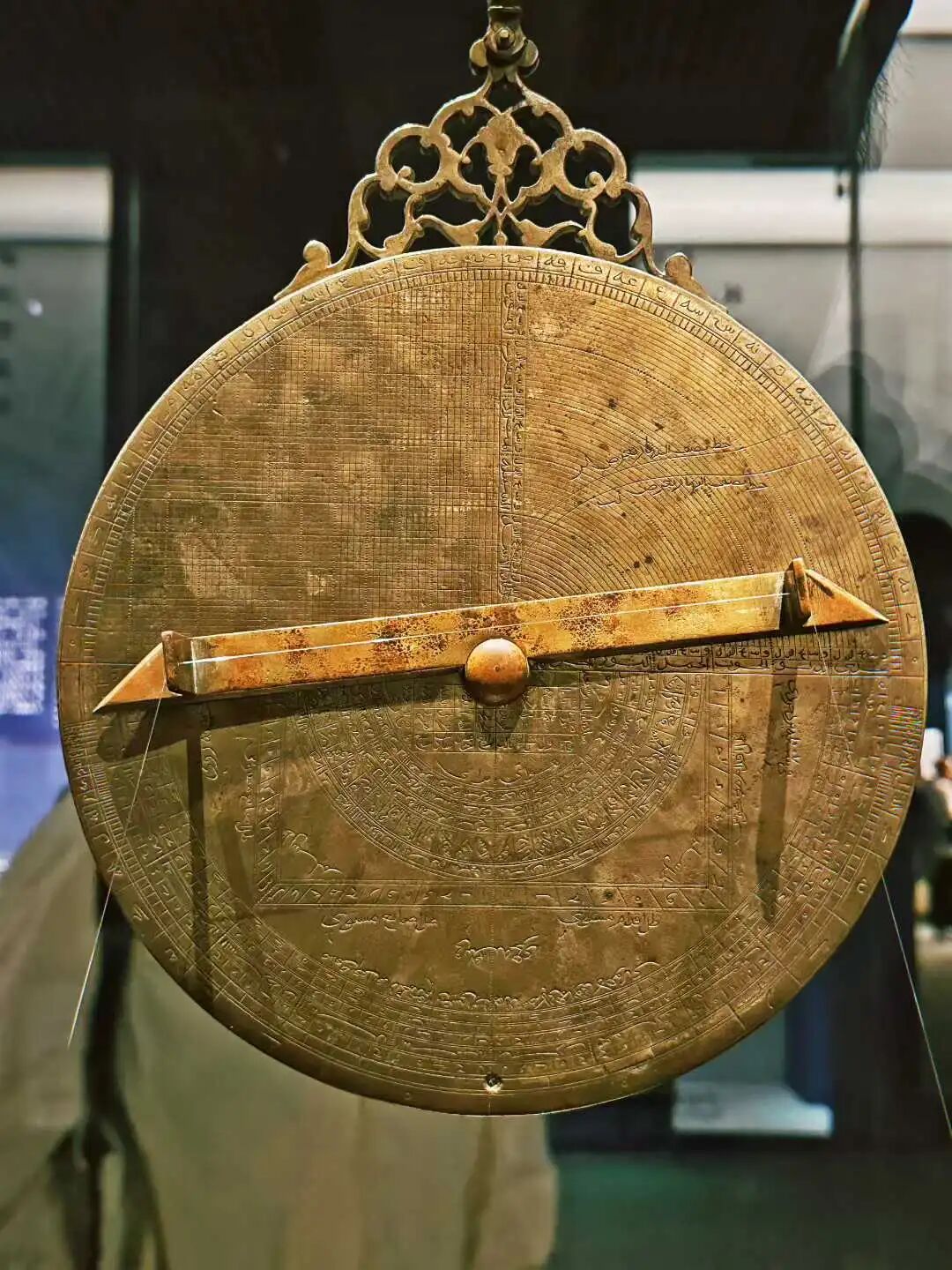
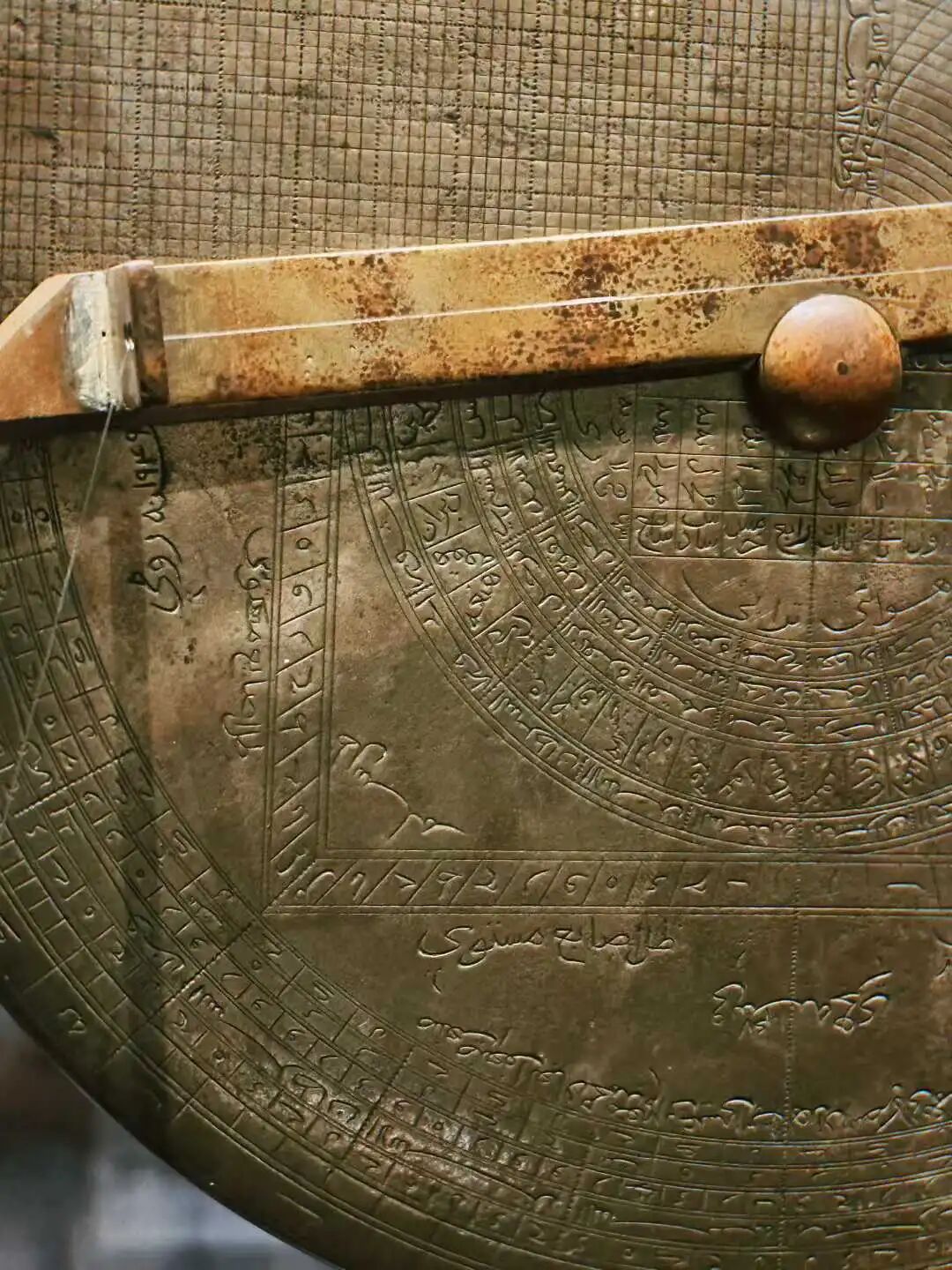
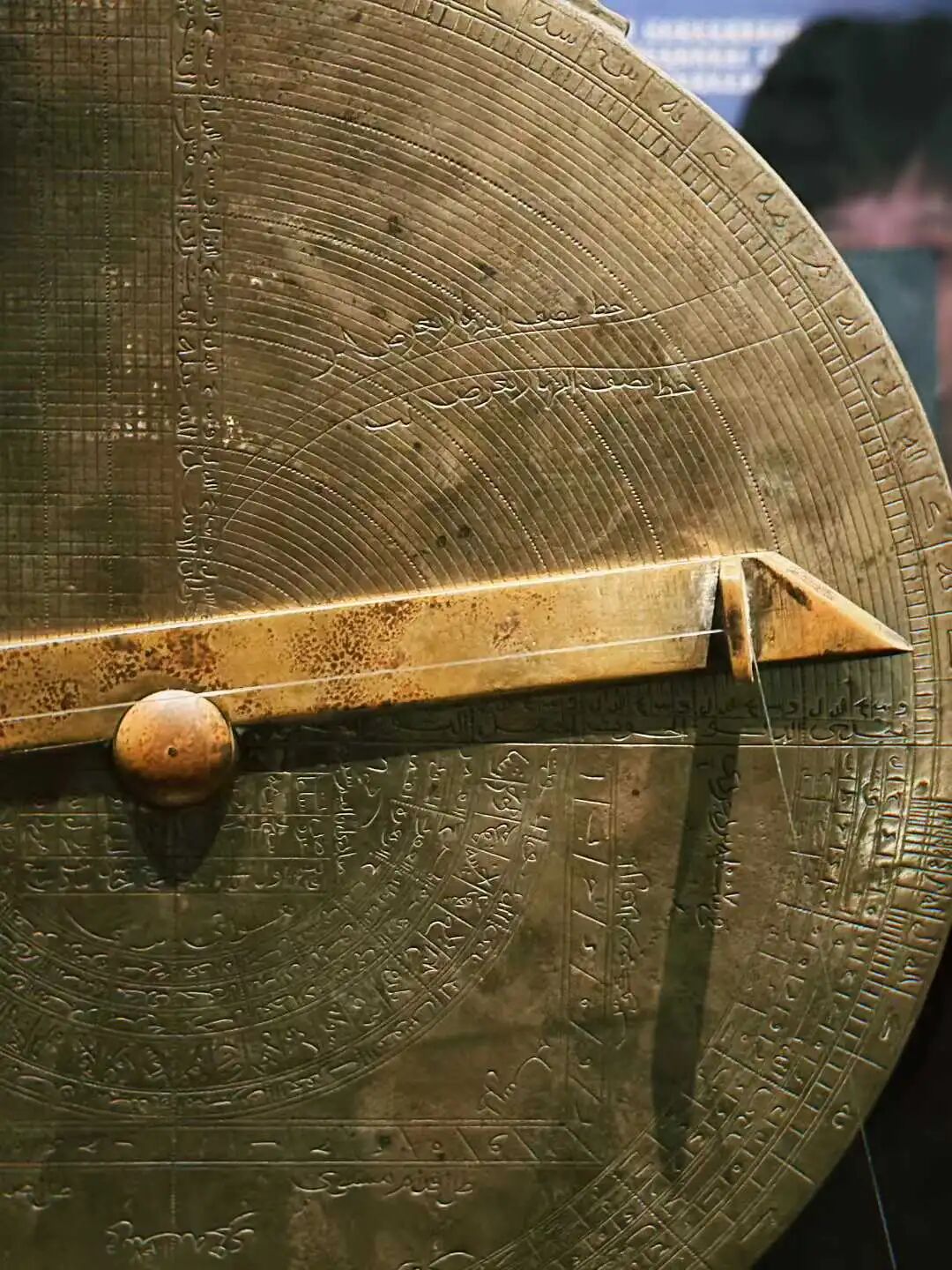
From the collection of the National Museum of Pakistan in Islamabad, this is a brass astrolabe from Lahore, dating to the Mughal Empire period under Humayun (reigned 1530-1540, 1555-1556). It is engraved with latitude and longitude, Persian and Arabic text, and decorated with arabesque and geometric patterns. Humayun himself had a strong interest in astronomy and astrology.
National Museum of Tajikistan.
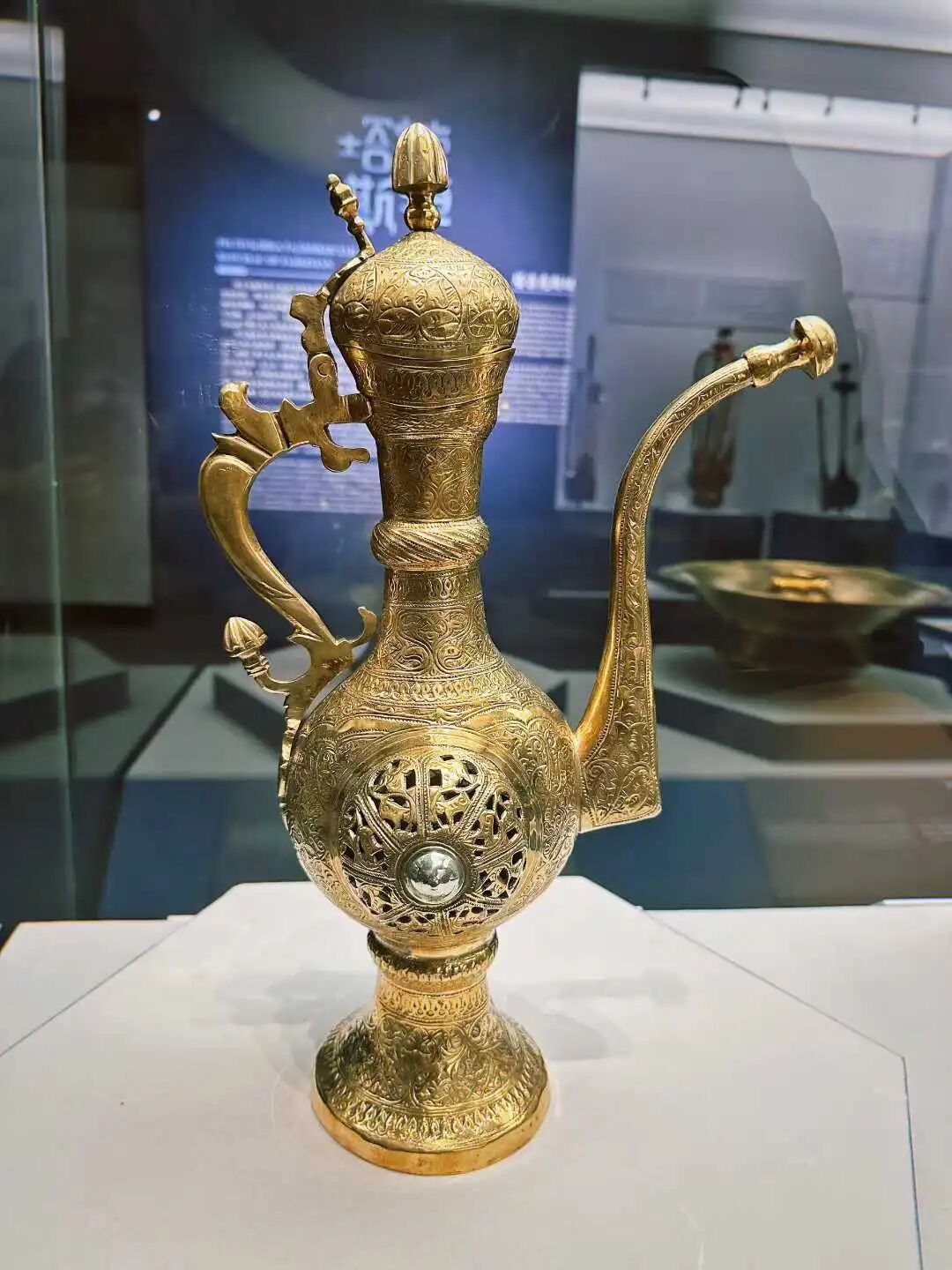
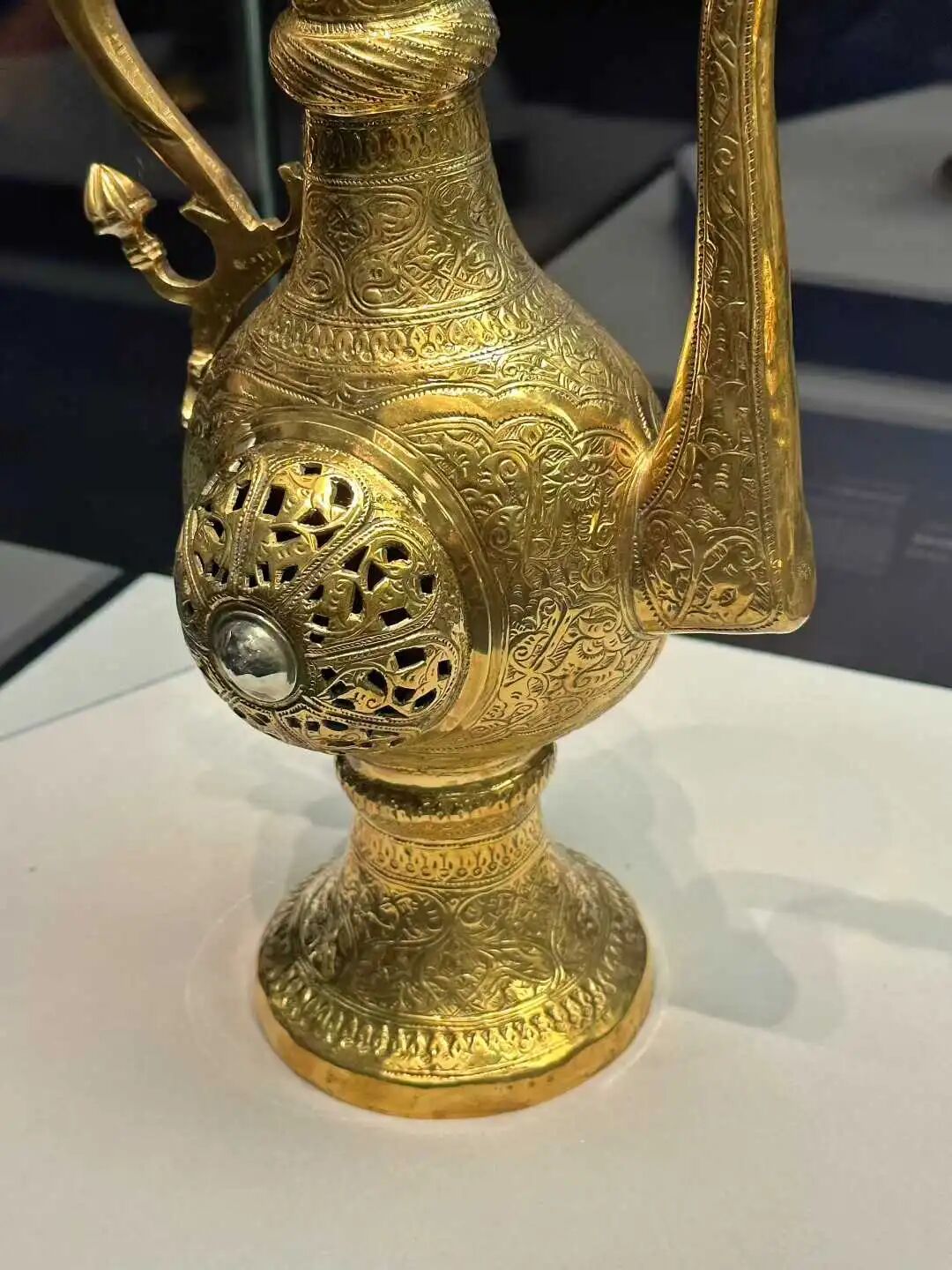
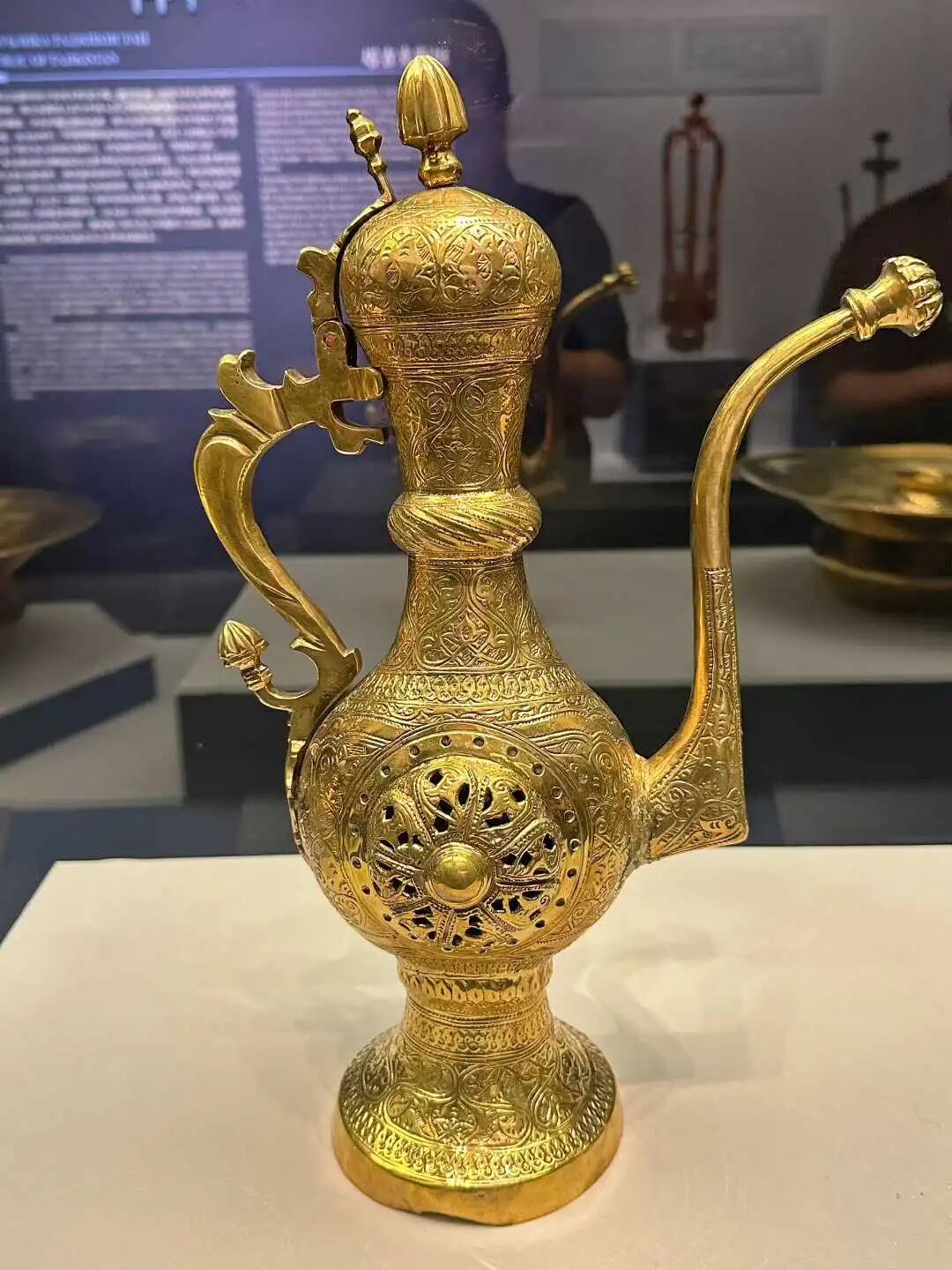
A Persian copper water pitcher (aftabeh) from the early 20th century in the National Museum of Tajikistan collection. The aftabeh, also called abdasta, is a water pitcher used for wudu (ablution) in Persian cultural regions like Iran, Afghanistan, Azerbaijan, and Central Asia. They are usually made of clay or brass.
A copper hand-washing basin (dastshui) from the early 20th century in the National Museum of Tajikistan collection, featuring an engraving of 25 deer in different poses.
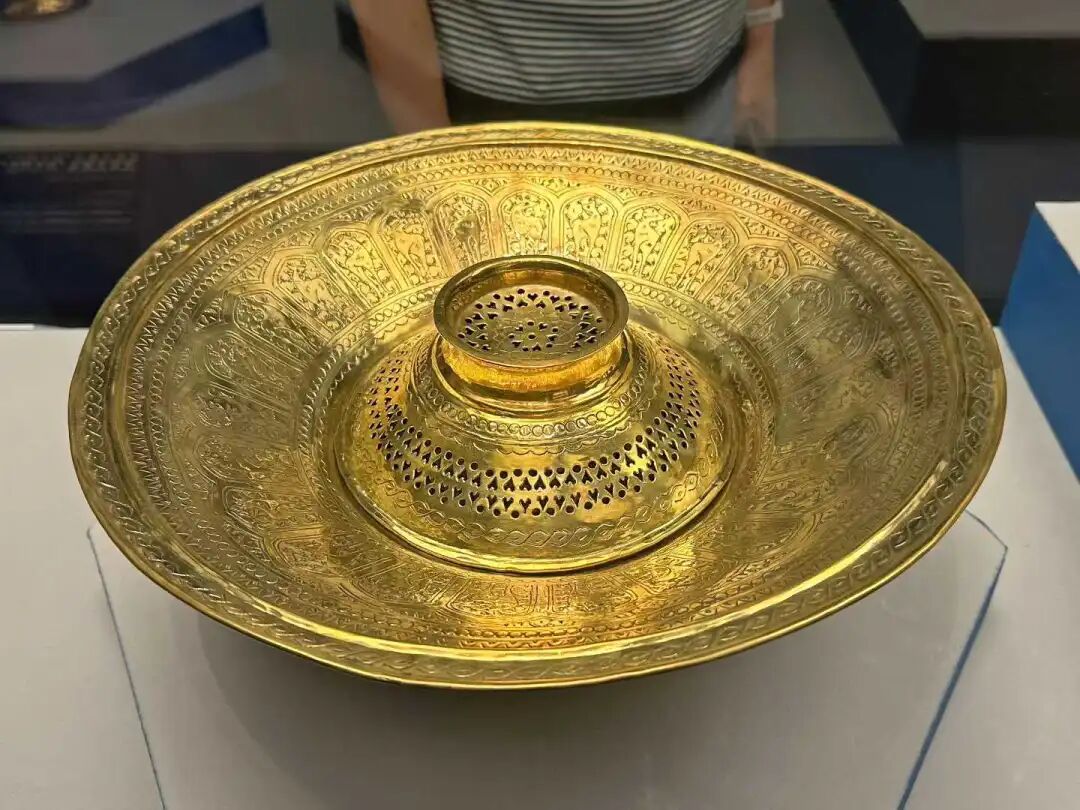
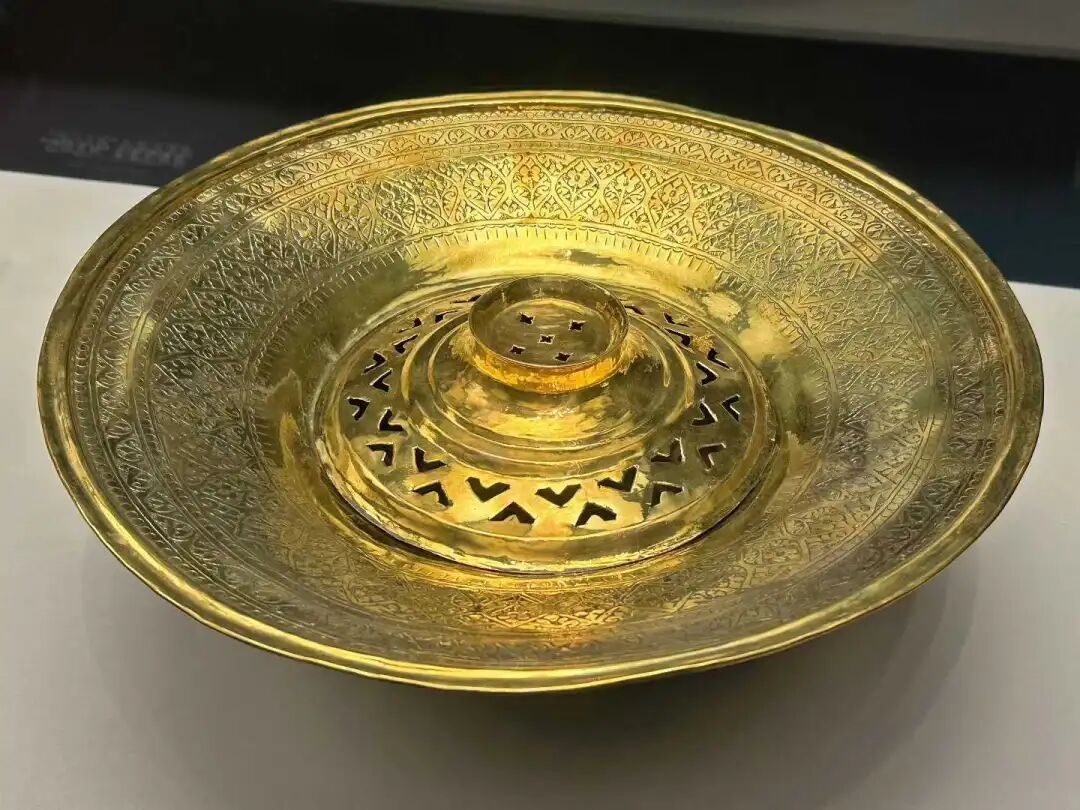
A copper water pitcher for wudu from the 19th century in the National Museum of Tajikistan collection.
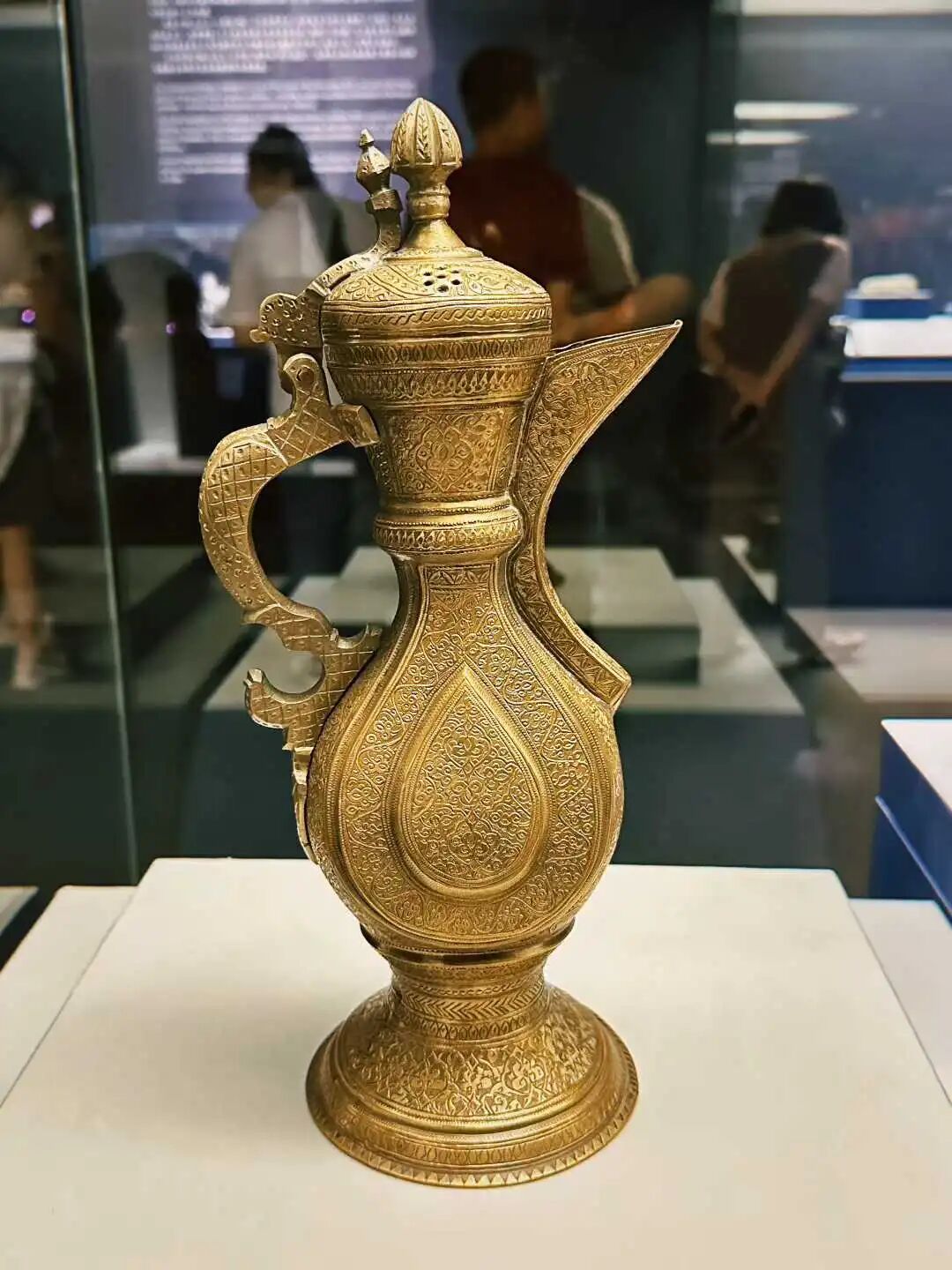
A tray with Arabic script from the 19th century in the National Museum of Tajikistan collection.
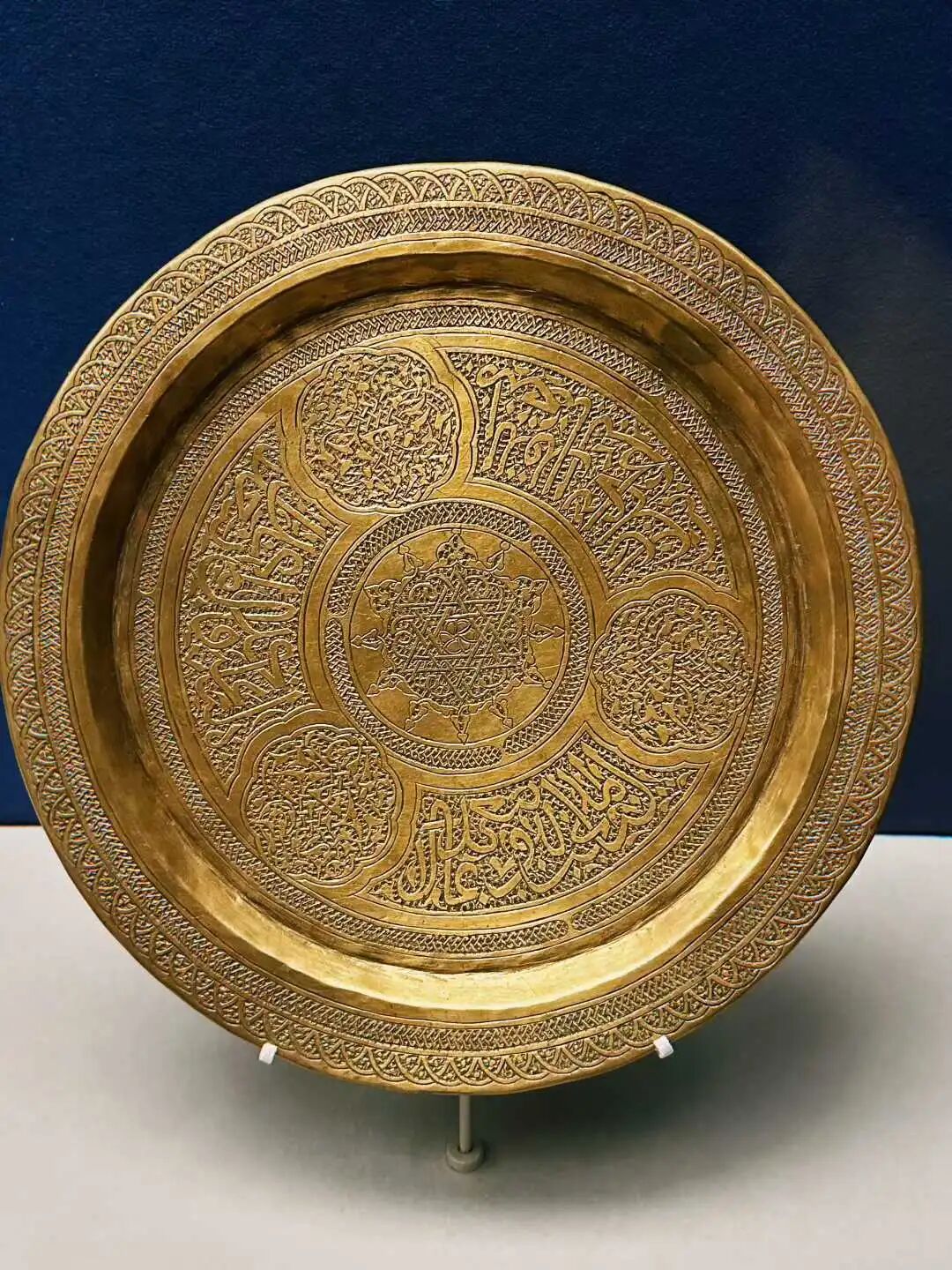
A Persian shield in the National Museum of Tajikistan collection, decorated with sun and angel patterns and engraved with beautiful Persian calligraphy.
A 16th-century axe in the National Museum of Tajikistan collection, engraved with a scene of three riders hunting.
A 19th-century decorative tray in the National Museum of Tajikistan collection, engraved with a lively banquet scene. The border features 33 circular panels, each showing a rider in a different pose, with Arabic script on the outermost edge.
A 19th-century copper pen case in the National Museum of Tajikistan collection, featuring four lines of Persian poetry in Persian calligraphy and decorated with various leaves and plants.
A 10th-11th century copper pitcher unearthed in Istaravshan (Dayuan City) and held in the National Museum of Tajikistan, with Arabic and Persian inscriptions on the body and neck. Istaravshan was ruled by the Samanid and Karakhanid dynasties during the 10th and 11th centuries and was a famous center for trade and handicrafts.
National Museum of Uzbekistan.
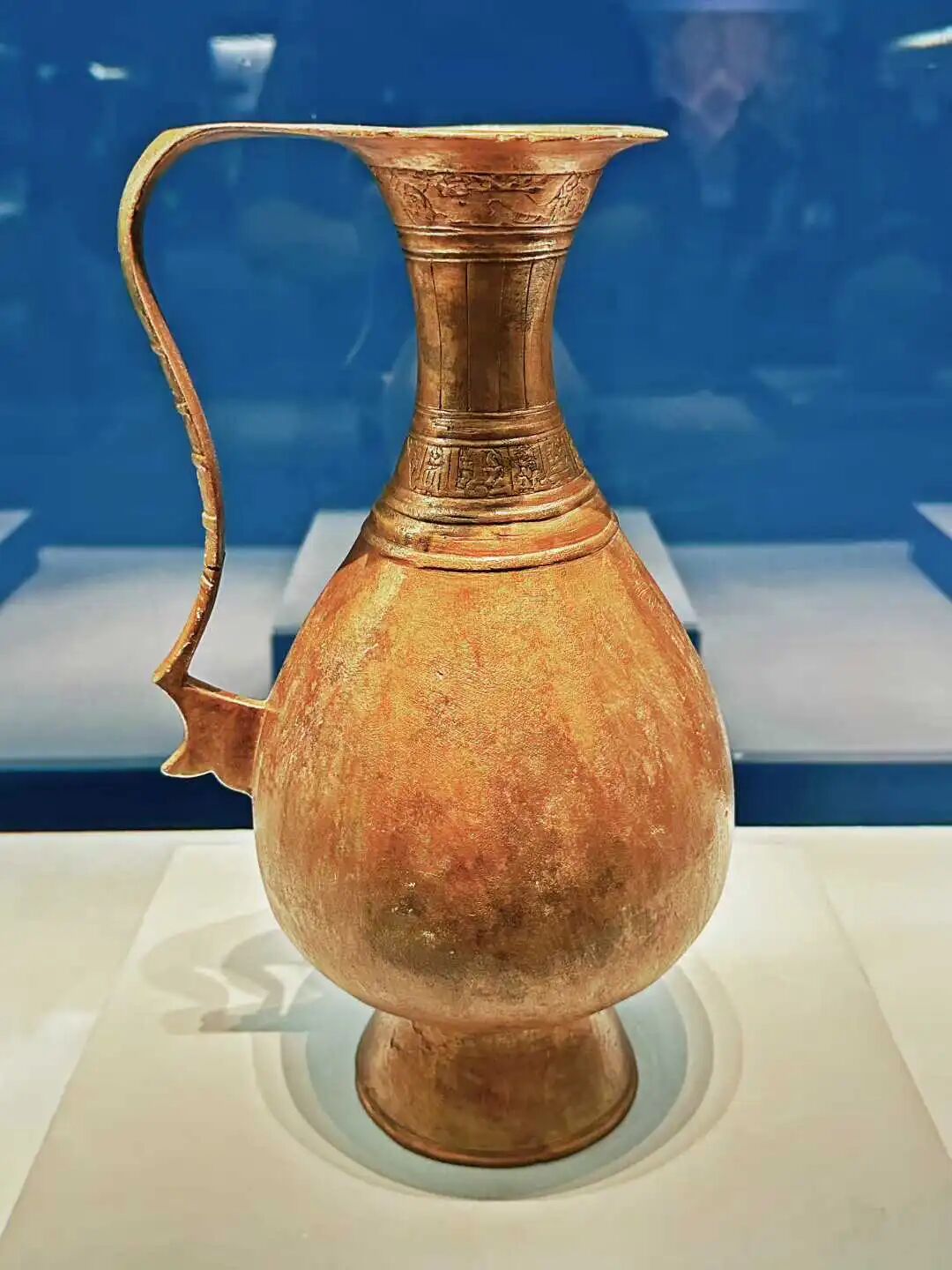
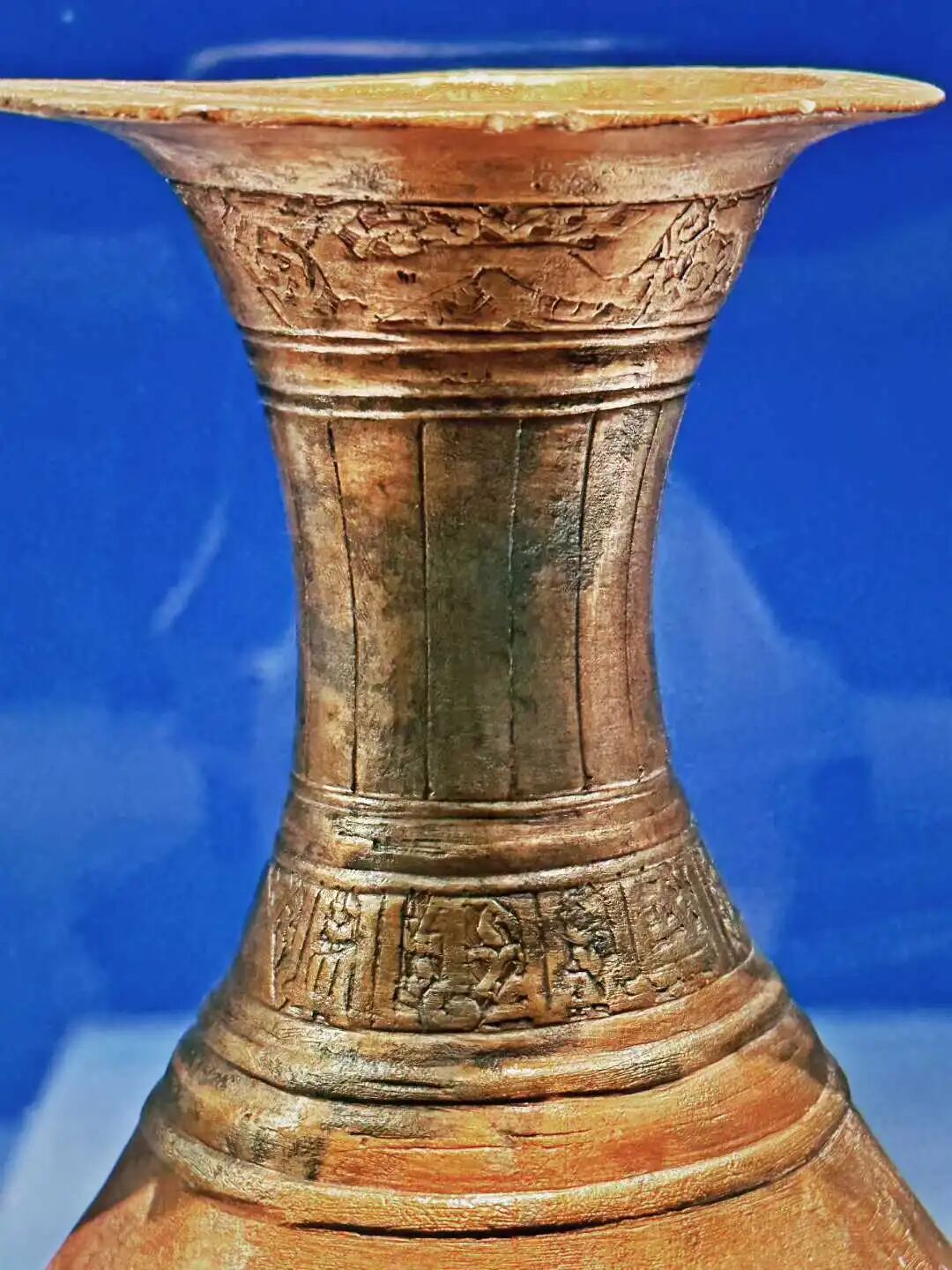
A 10th-12th century copper pitcher in the National Museum of Uzbekistan collection, dating to the Samanid and Karakhanid period. It has Arabic script on the neck and human-headed bird patterns on the rim.
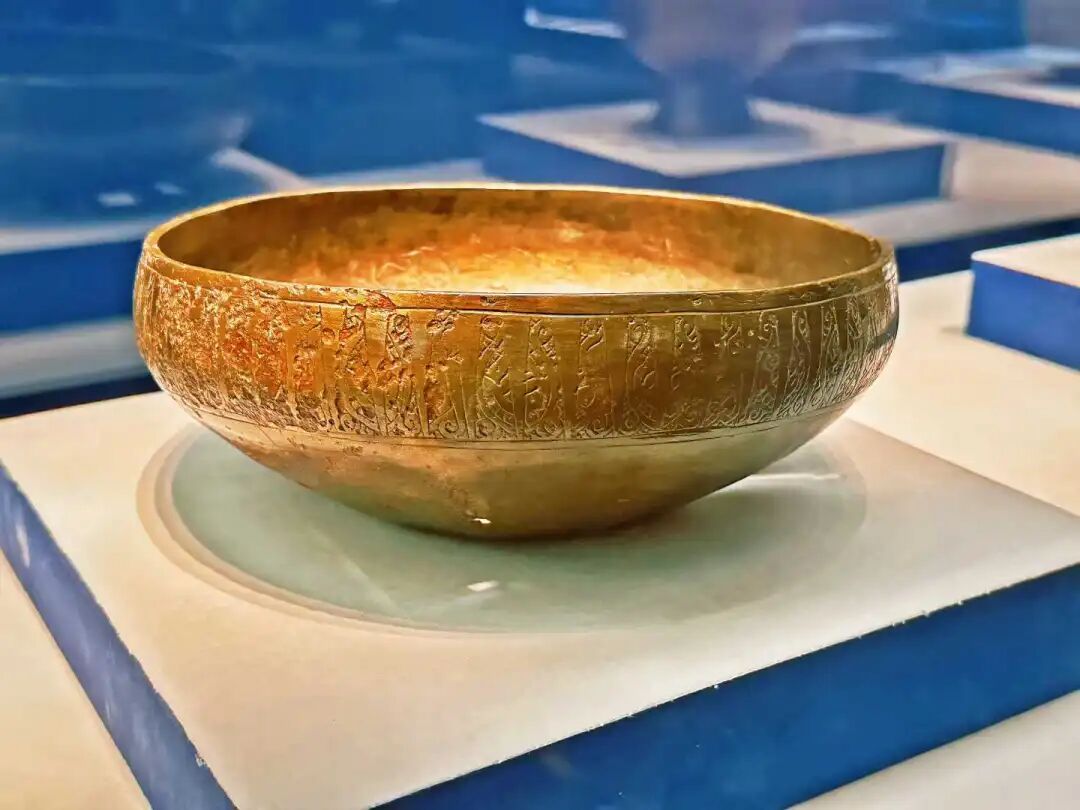
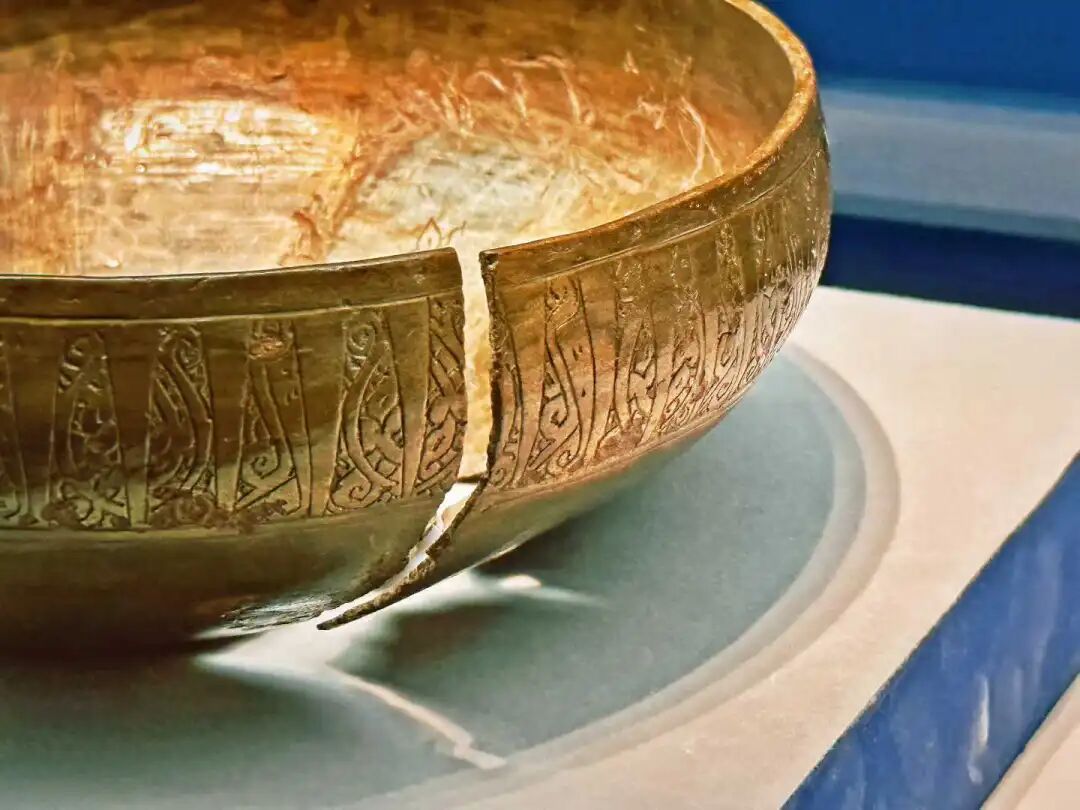
A 10th-11th century copper bowl in the National Museum of Uzbekistan collection, dating to the Samanid and Karakhanid period. The outer wall is engraved with Kufic script, and the inner wall is decorated with fish and bird patterns.
State Museum of Arts of Uzbekistan.
A men's gold-embroidered velvet robe made in Bukhara in 1905, held in the State Museum of Arts of Uzbekistan.
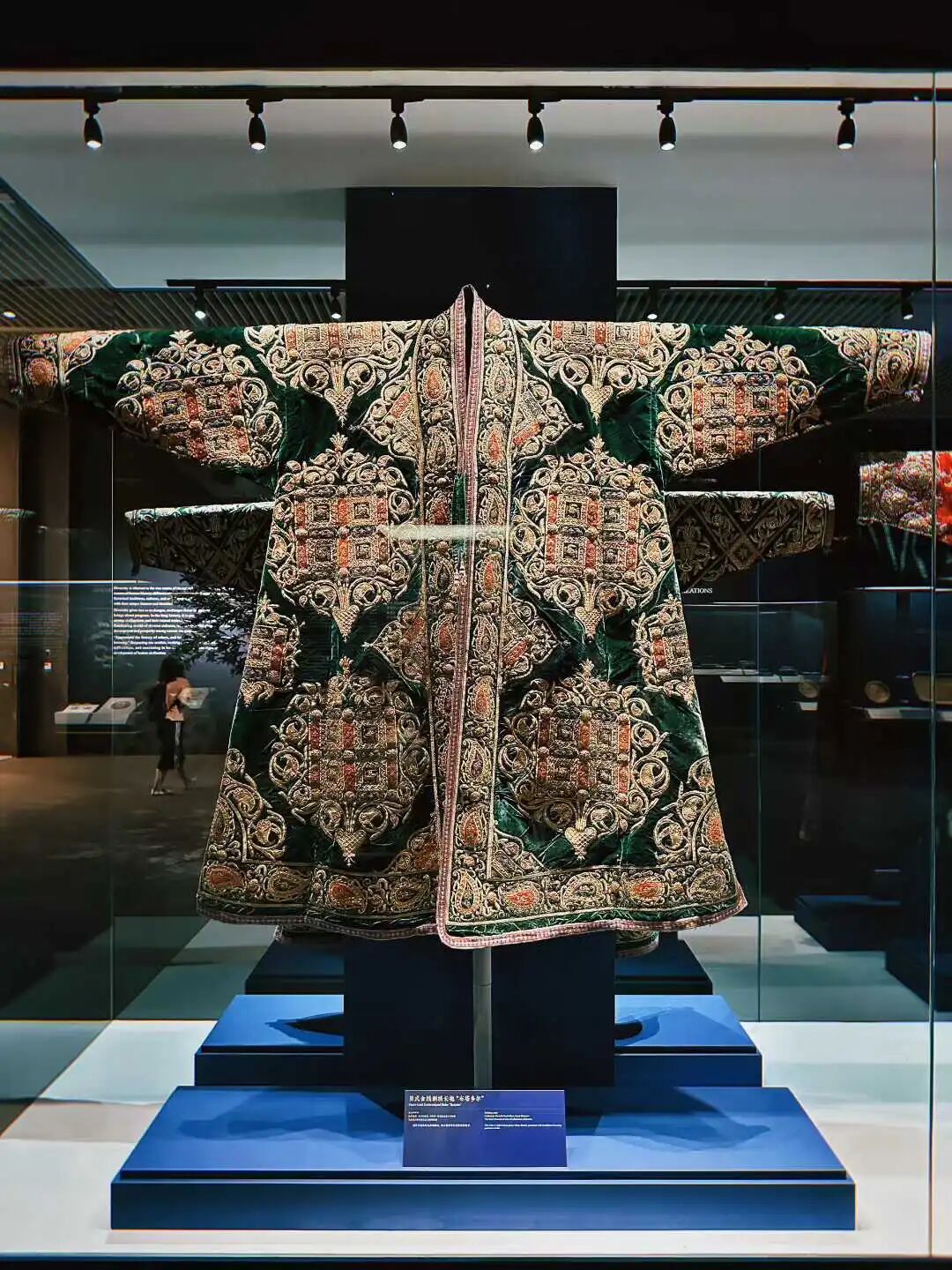
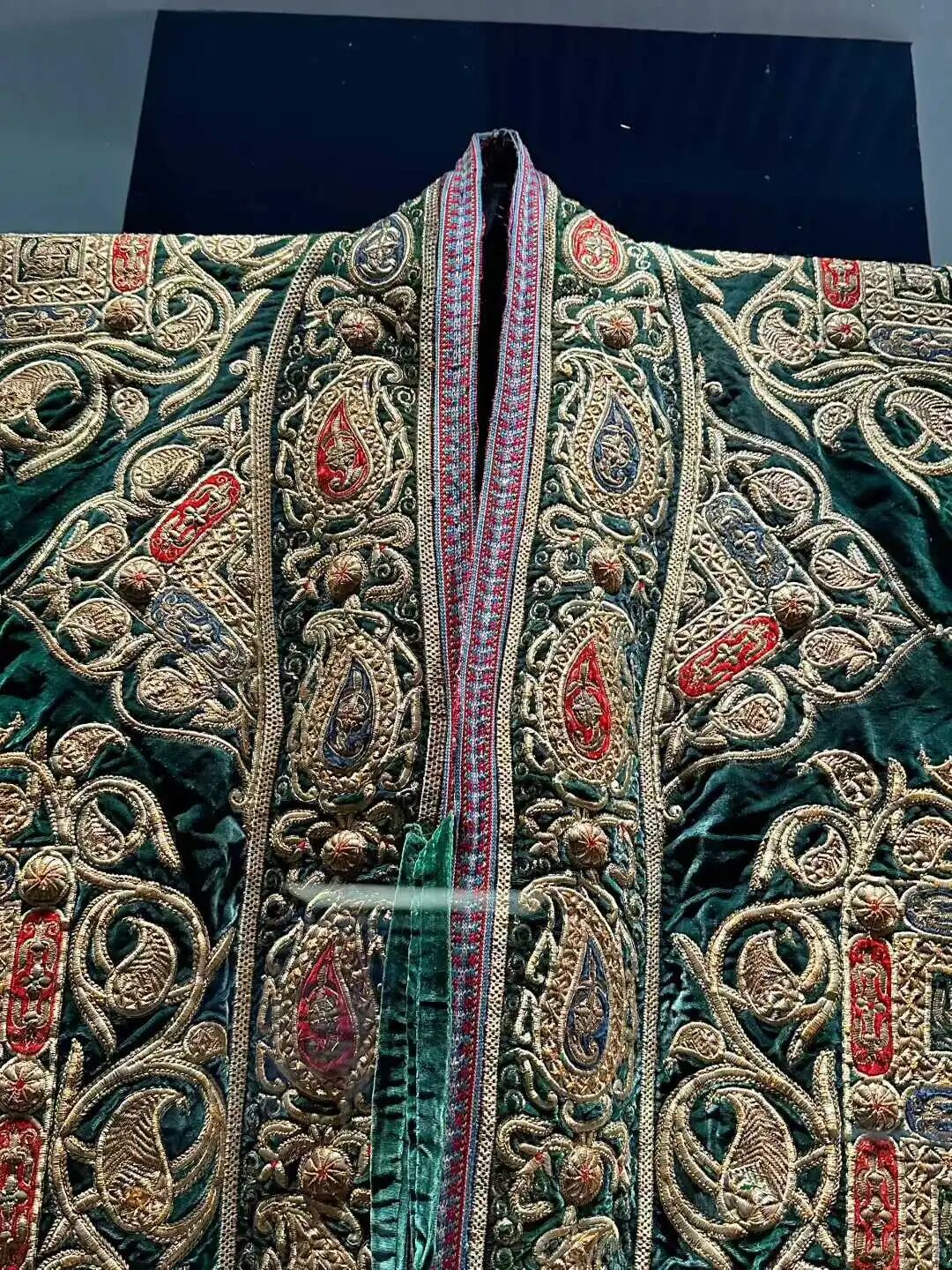
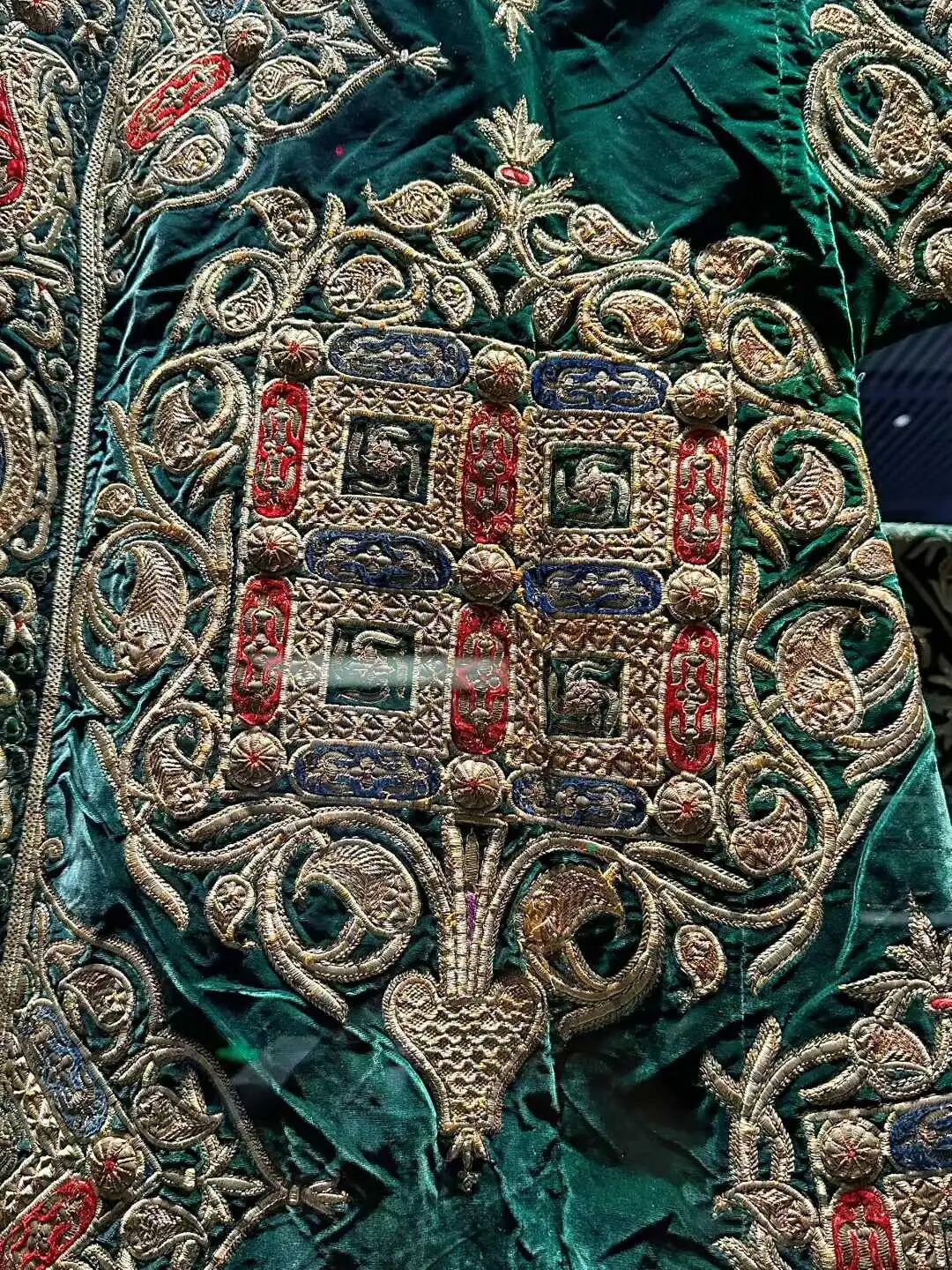
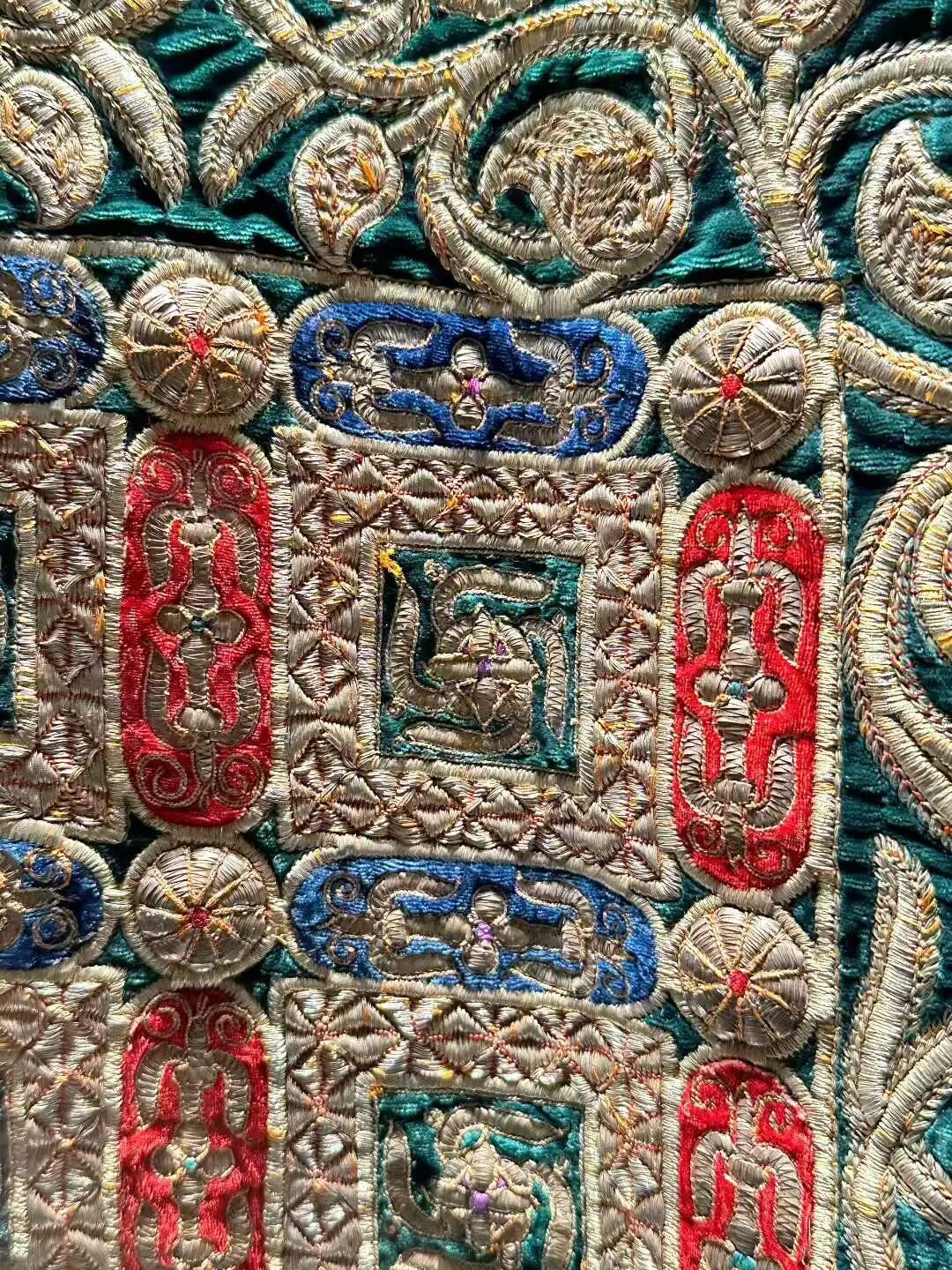
A men's gold-embroidered velvet robe made in Bukhara between 1900 and 1905, held in the State Museum of Arts of Uzbekistan.
Men's gold-embroidered velvet boots made in Bukhara in 1890, held in the State Museum of Arts of Uzbekistan.
A women's ikat silk robe from the early 20th century, held in the State Museum of Arts of Uzbekistan.
A men's gold-embroidered velvet robe made in Bukhara between 1898 and 1900, held in the State Museum of Arts of Uzbekistan.
A headpiece (gajak) made in Tashkent in 1912, held in the State Museum of Arts of Uzbekistan.
A men's gold-embroidered velvet belt made in Bukhara in 1890, decorated with turquoise and silver pieces and held in the State Museum of Arts of Uzbekistan.
This Tojduzi headpiece from the early 20th century is kept at the State Museum of Arts of Uzbekistan.
Museum Guide: Tianjin Kazakhstan National Museum Exhibition - History and Artifacts
Articles • ali2007fr posted the article • 0 comments • 211 views • 2026-05-19 22:56
Summary: This article covers the Kazakhstan National Museum collection exhibition at Tianjin Museum, with a close look at historical artifacts, steppe culture, and Central Asian heritage. It preserves the original exhibition details, object names, photographs, and cultural context for English readers.
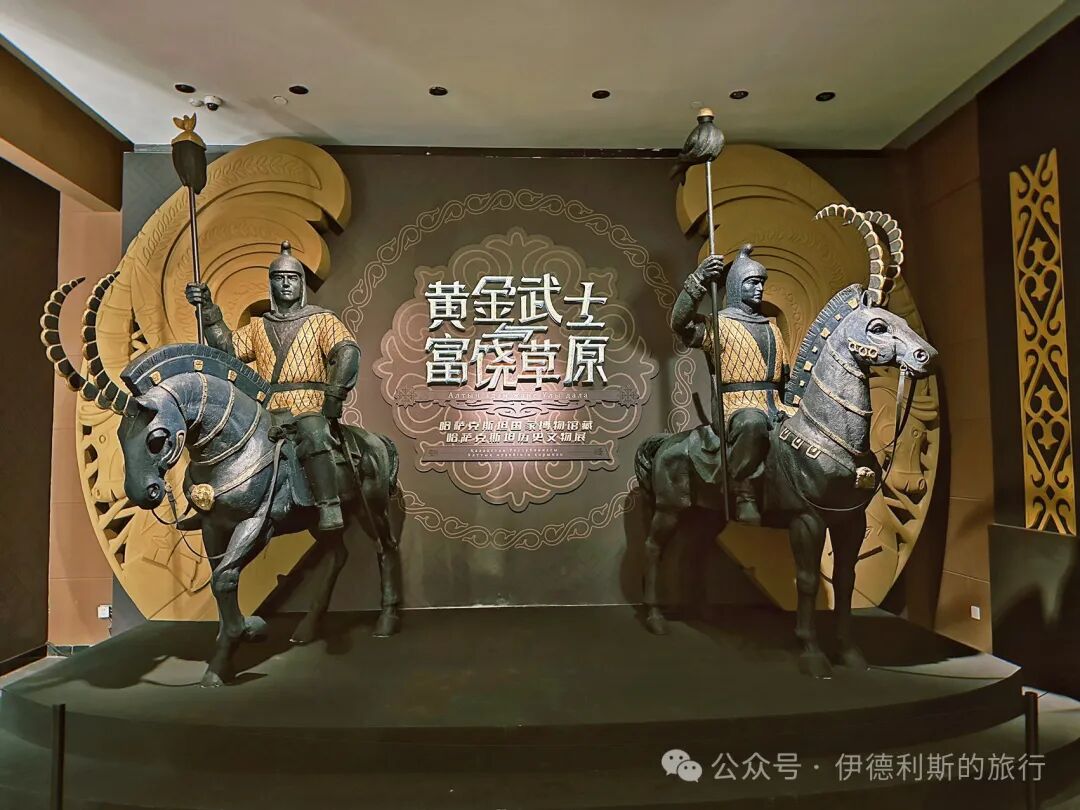
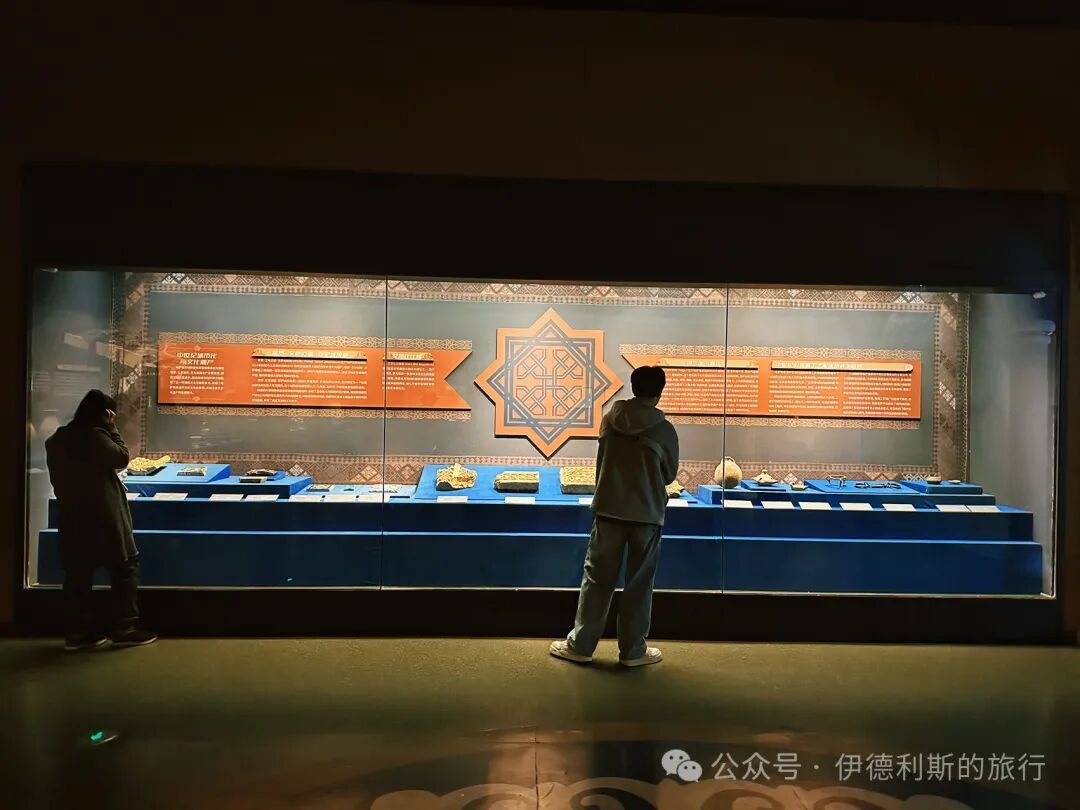
From September 30, 2024, to February 12, 2025, the fifth floor of the Tianjin Museum is hosting an exhibition of historical artifacts from the National Museum of Kazakhstan. Overall, it is not very stunning and lacks any major, heavy-hitting artifacts. Of course, I did not see any particularly significant artifacts when I visited the National Museum of Kazakhstan in person either.
These are carved clay tiles from the 12th-century Karakhanid dynasty Aisha-Bibi Mausoleum in the ancient city of Taraz. The architectural style of this mausoleum follows the Samanid Mausoleum in Bukhara and serves as an important example of Karakhanid architecture. Taraz grew into a wealthy city during the 9th-century Samanid dynasty, reached its peak during the 10th to 12th-century Karakhanid dynasty, and was destroyed by the Mongol army in 1220.
These are painted glazed tiles and glazed pottery shards from the Khoja Ahmed Yasawi Mausoleum, dating to the Timurid dynasty between 1389 and 1405. This mausoleum is a masterpiece of Timurid architecture and an important religious center in southern Kazakhstan. It was added to the World Heritage List in 2003.
These are glazed tile fragments unearthed from a mausoleum at the Zhaiyk ancient city site, dating to the 14th-century Golden Horde period. The Zhaiyk ancient city site was discovered by an archaeological team in 2001 and has since been fully excavated and studied. Inside the city, they found the remains of a Turkish bath with an underfloor heating system, and in the cemetery west of the city, they found a domed mausoleum decorated with colorful glazed tiles.
These are clay bricks unearthed from the Kyshkala ancient city site in the Syr Darya delta. Kyshkala was a wealthy ancient city during the Golden Horde period that produced a large number of clay bricks.
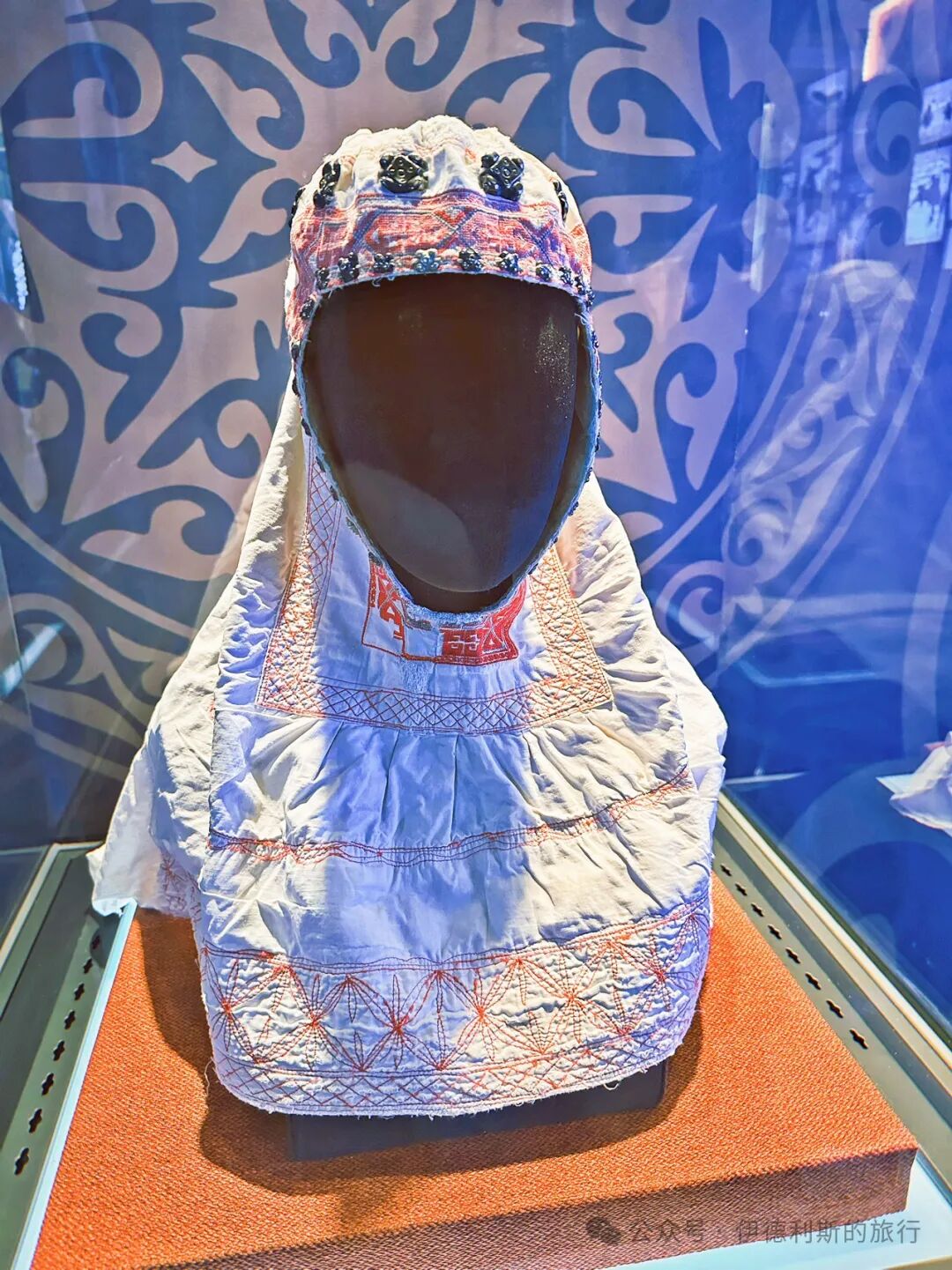
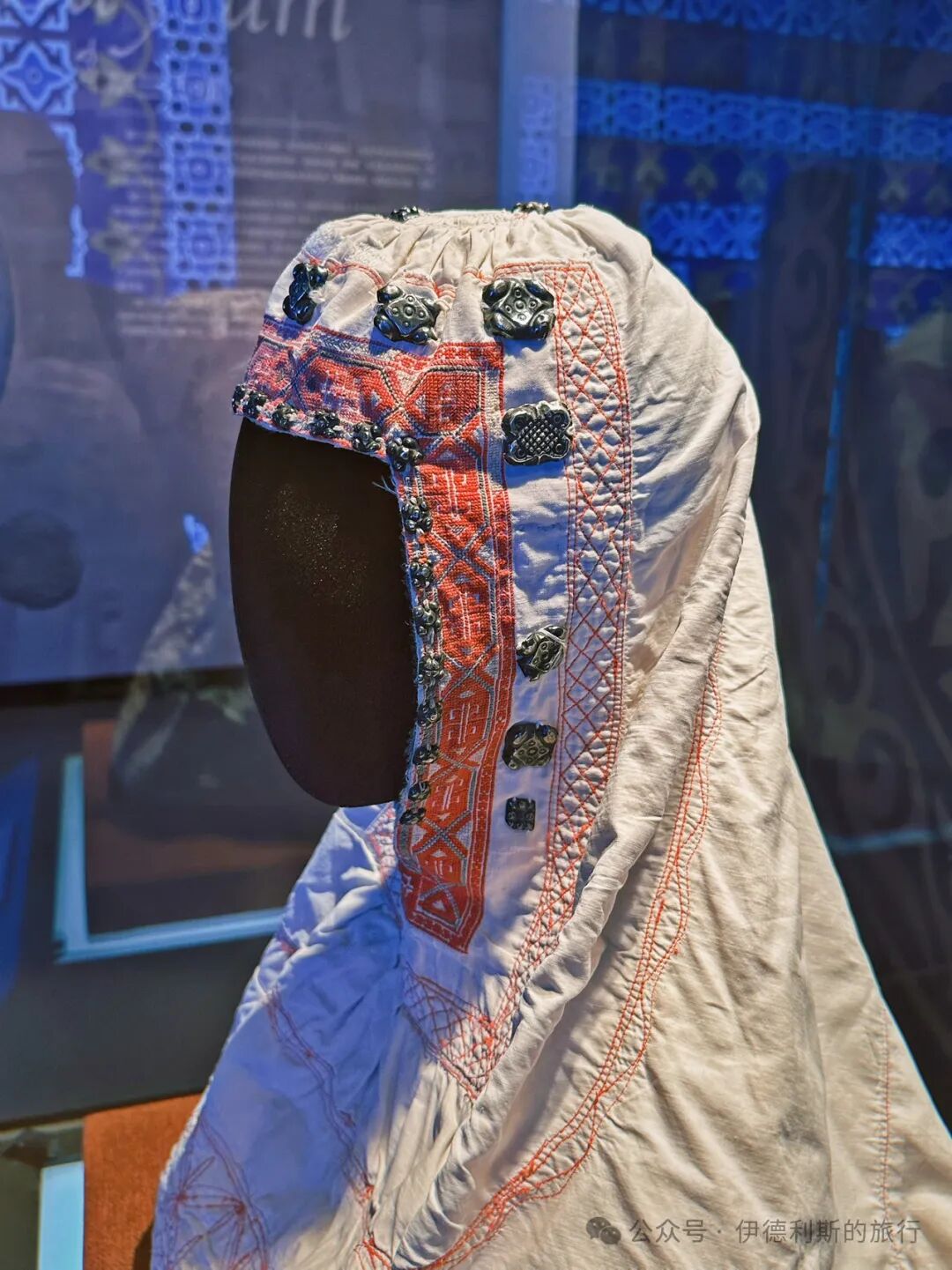
This is a Kimeshek, an embroidered head covering for married women from 19th-century southern Kazakhstan.
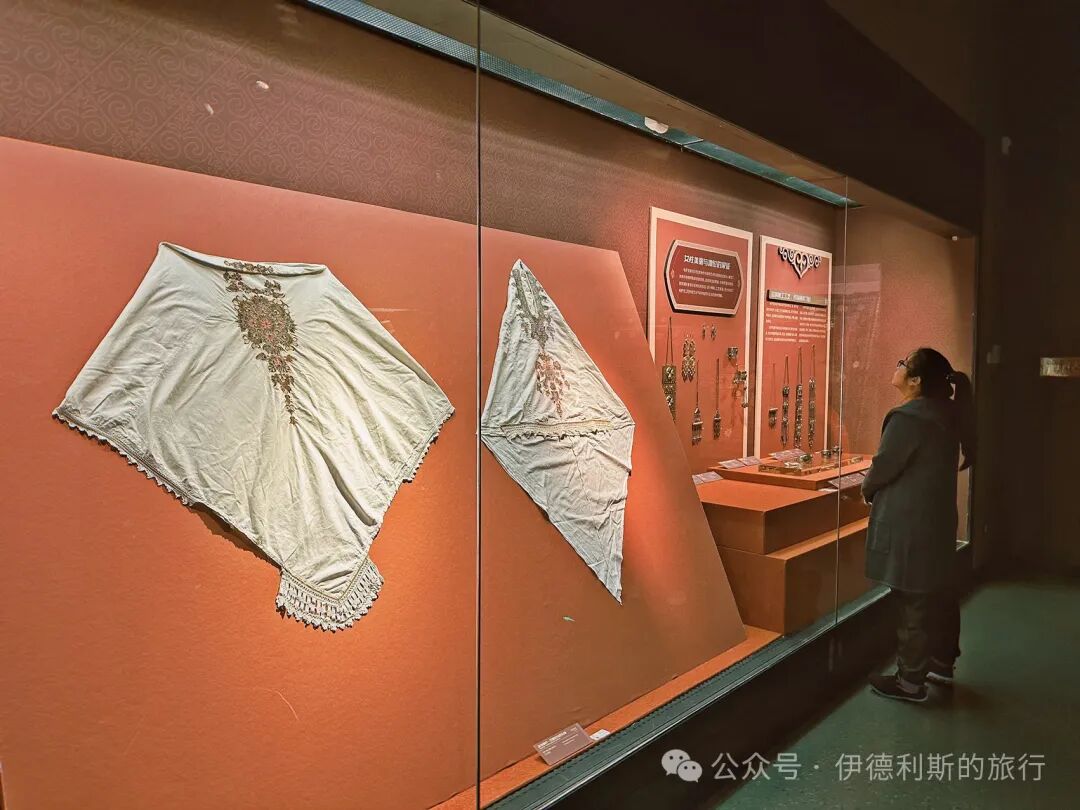
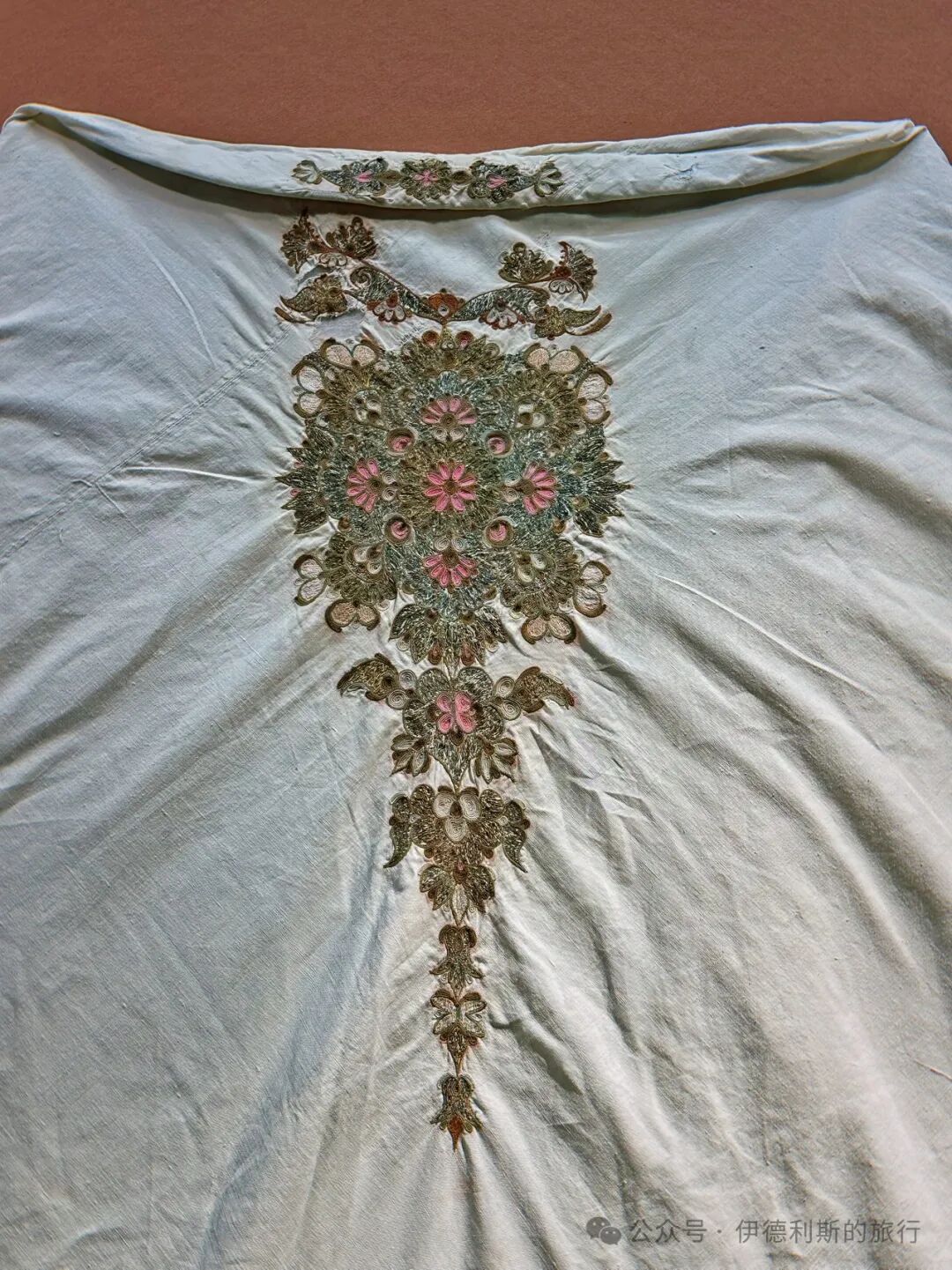
A Kimeshek with lace pendants.
A Kebeje, which is a wooden chest with bone inlays, dating from the 19th to the mid-20th century.
A Khan's robe (chapan) made of velvet, gold and silver thread, and appliqué from 18th to 19th-century northern Kazakhstan. After the 18th century, due to long-term conflicts with the Dzungar Khanate, the Kazakh Khanate split into the Senior, Middle, and Junior Juz, with each Juz having its own Khan. After the mid-19th century, the Kazakh Khanate was gradually controlled by the Russian Empire. Khan Kenesary Kasymov (reigned 1841–1847) was the last national hero to bravely resist Russia. After he died for his country in 1847, the Kazakh Khanate was declared fallen.
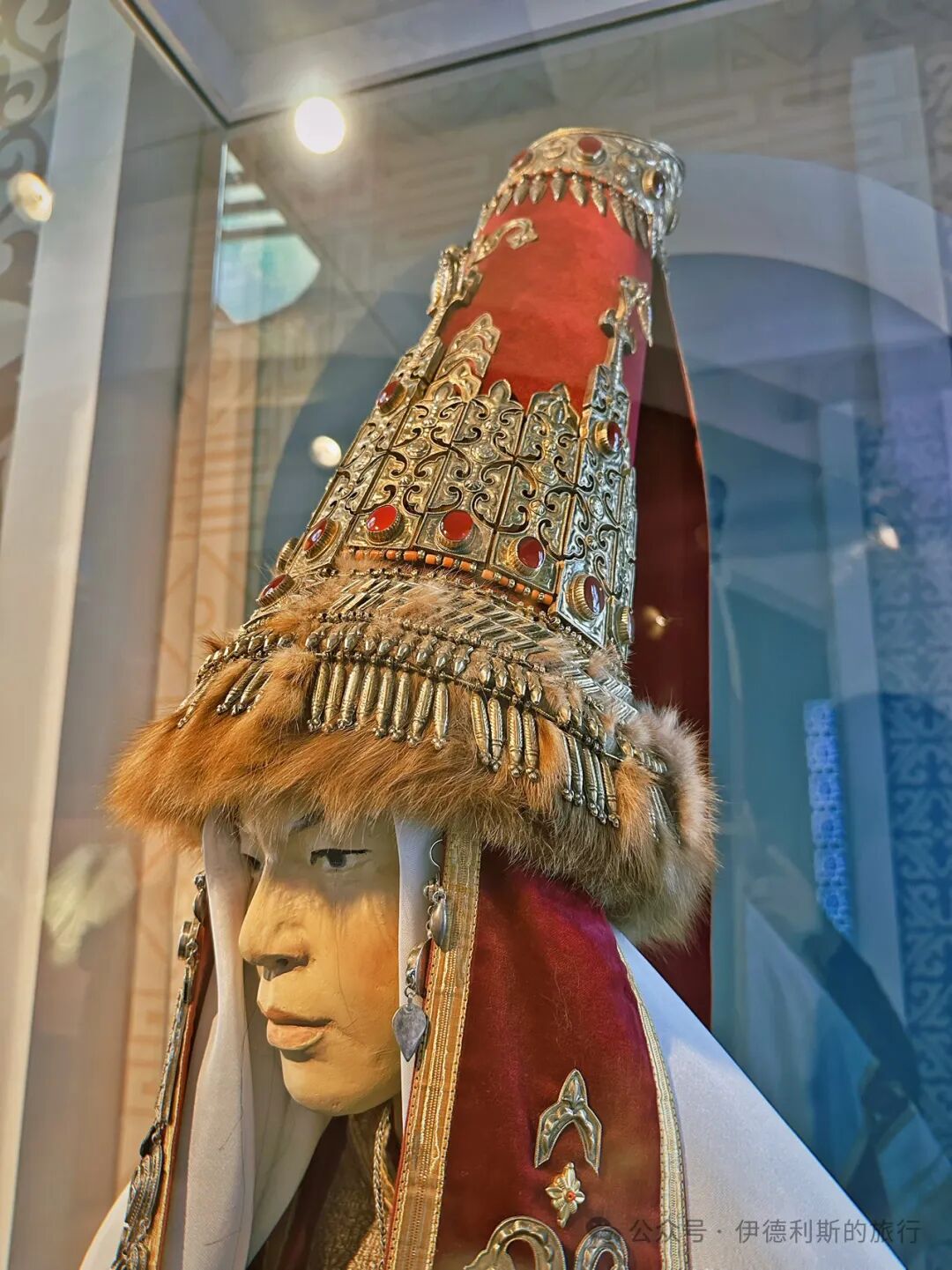
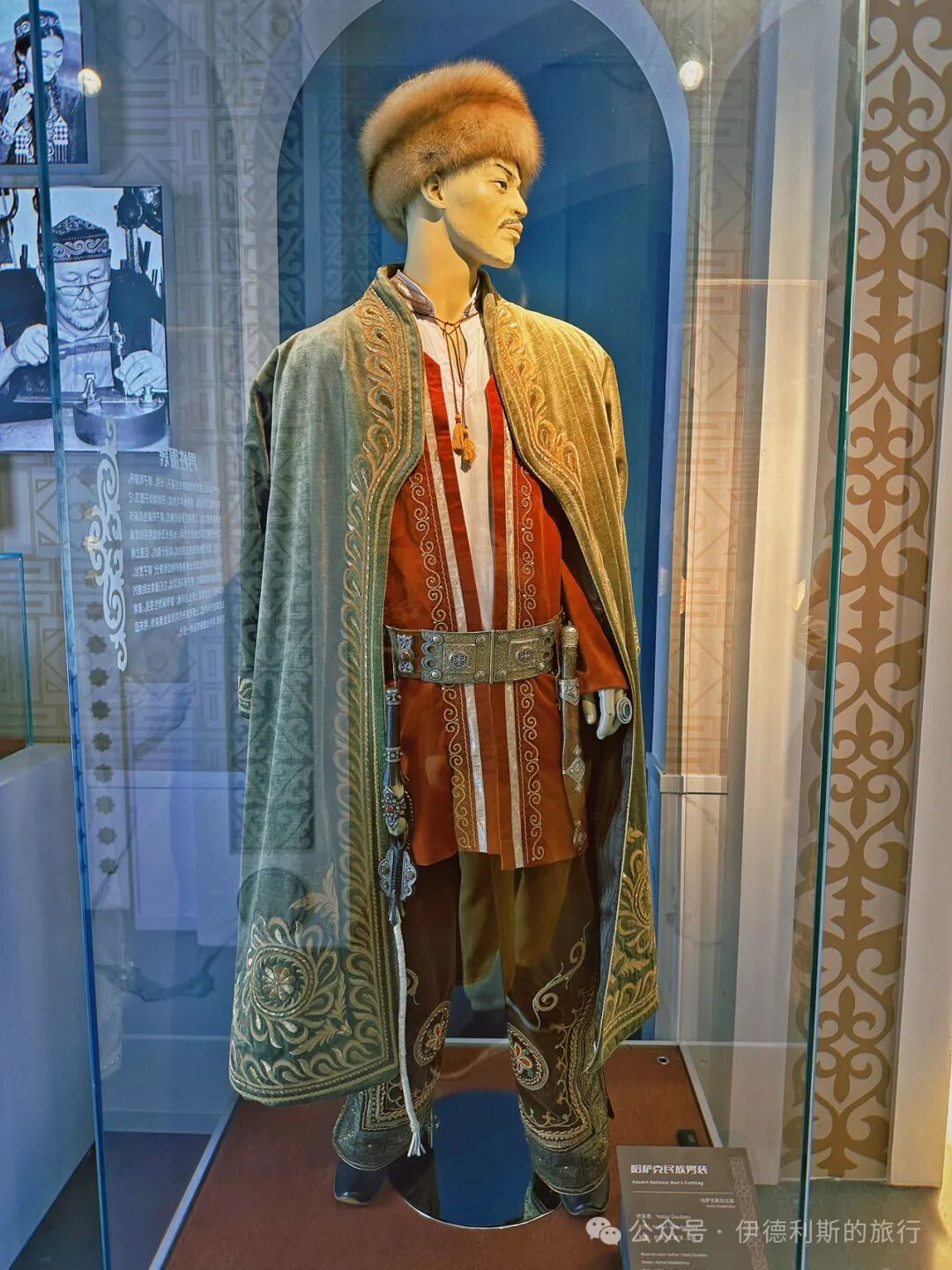
Traditional Kazakh clothing made by master designer Aizhan Abdubait. She comes from a family of tailors and is dedicated to making ethnic clothing. She has also restored the gold-thread embroidery technique that was gradually lost after the fall of the Kazakh Khanate in the 19th century. This is an embroidery technique that was used on the clothing of Khans and Sultans during the Kazakh Khanate era.
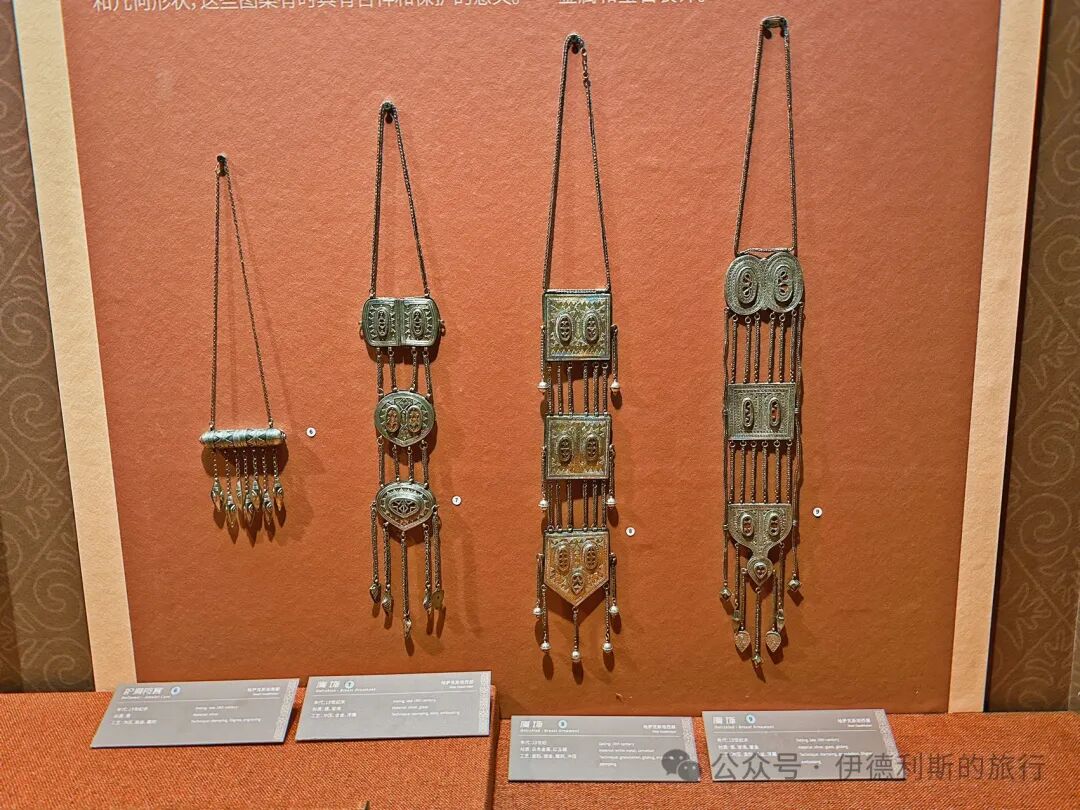
A 19th-century chest ornament.
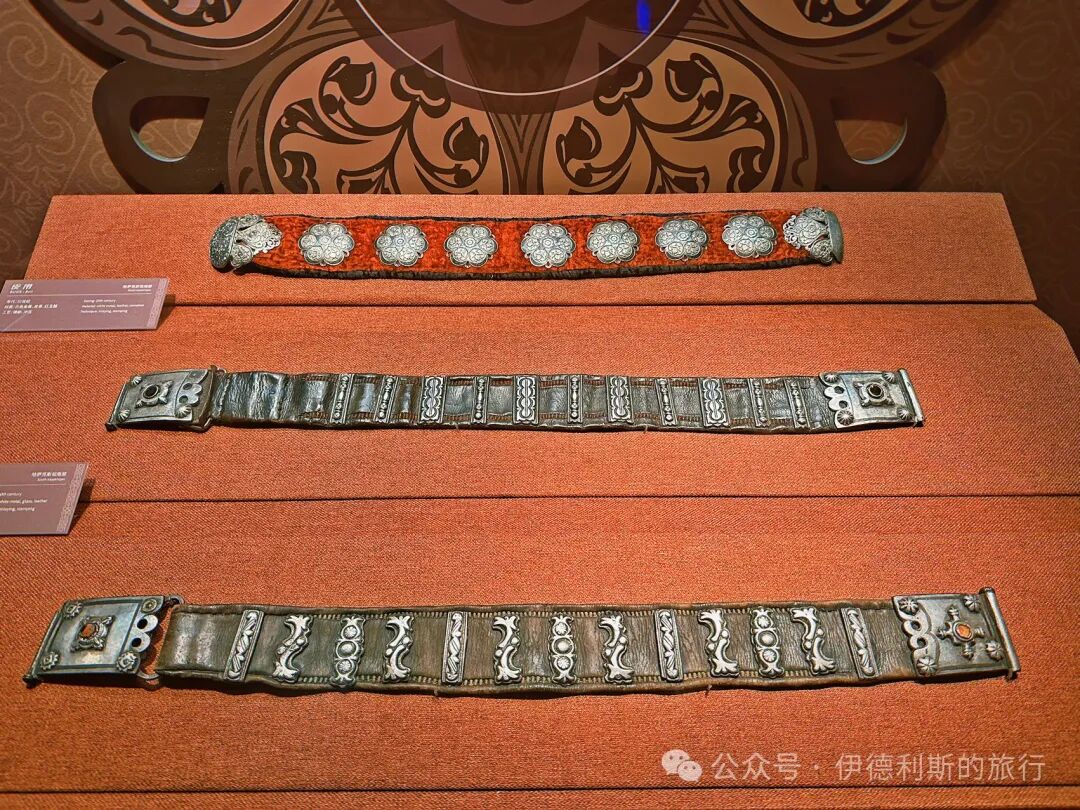
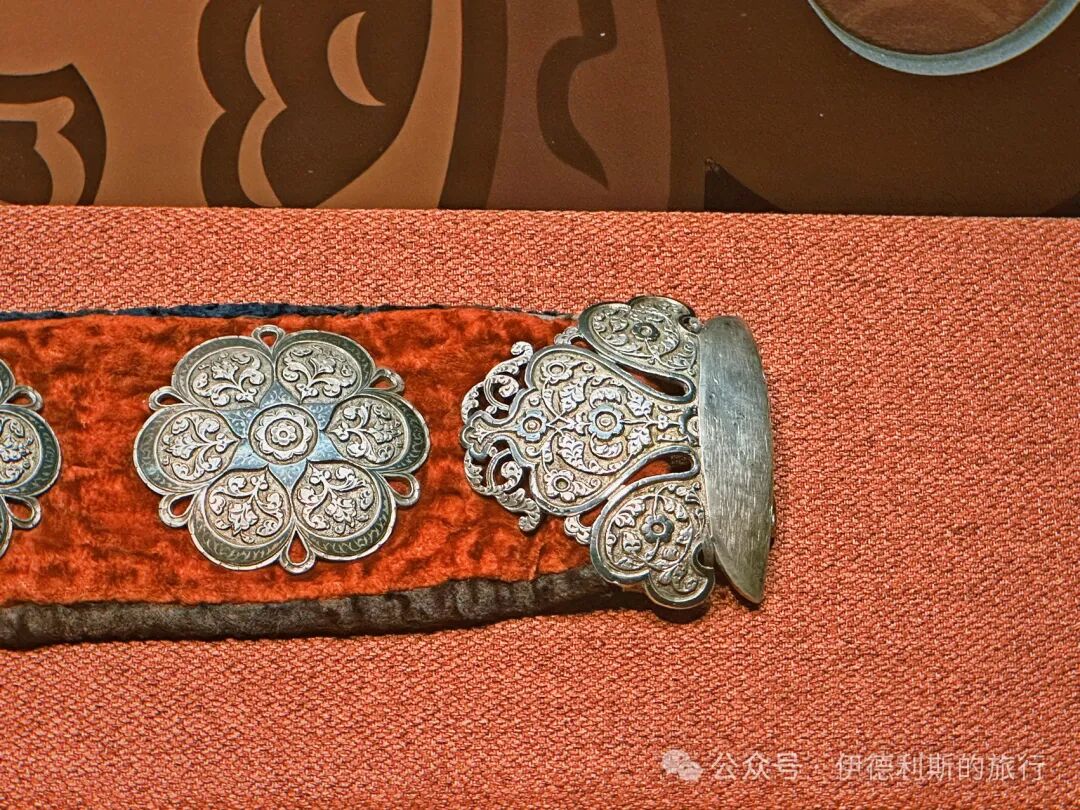
A 20th-century belt.
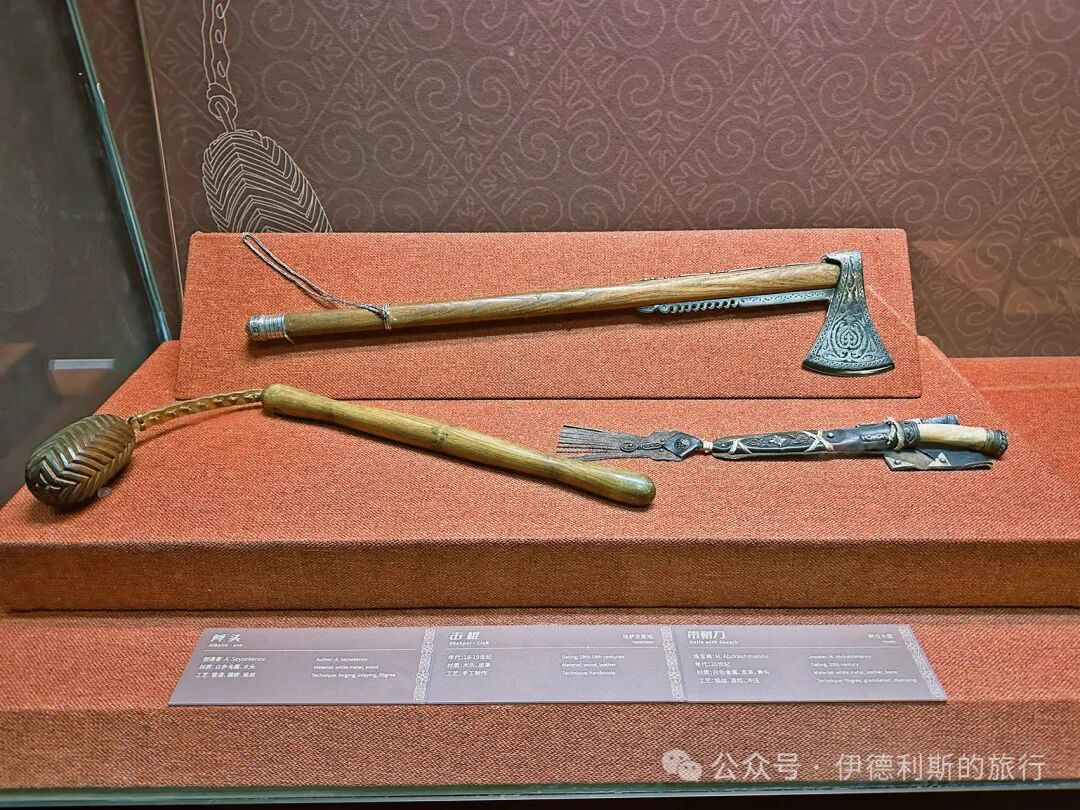
An axe, a club, and a sheathed knife.
A 19th-century copper pot. view all
Summary: This article covers the Kazakhstan National Museum collection exhibition at Tianjin Museum, with a close look at historical artifacts, steppe culture, and Central Asian heritage. It preserves the original exhibition details, object names, photographs, and cultural context for English readers.
From September 30, 2024, to February 12, 2025, the fifth floor of the Tianjin Museum is hosting an exhibition of historical artifacts from the National Museum of Kazakhstan. Overall, it is not very stunning and lacks any major, heavy-hitting artifacts. Of course, I did not see any particularly significant artifacts when I visited the National Museum of Kazakhstan in person either.
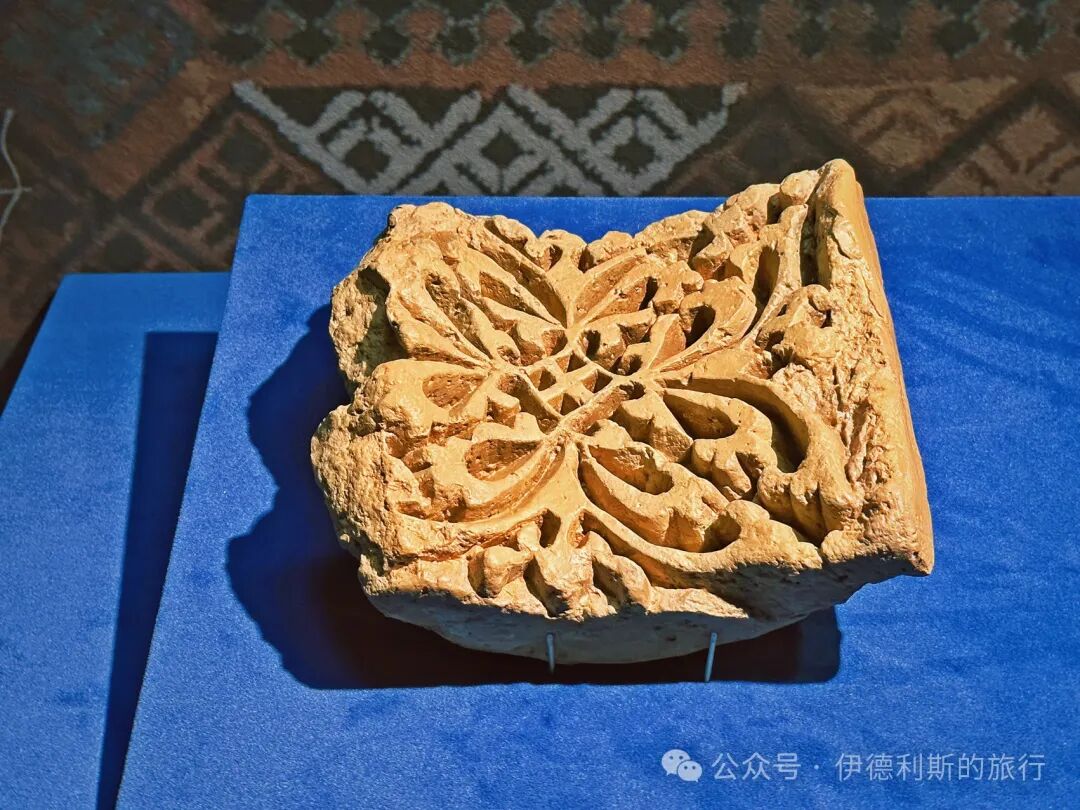
These are carved clay tiles from the 12th-century Karakhanid dynasty Aisha-Bibi Mausoleum in the ancient city of Taraz. The architectural style of this mausoleum follows the Samanid Mausoleum in Bukhara and serves as an important example of Karakhanid architecture. Taraz grew into a wealthy city during the 9th-century Samanid dynasty, reached its peak during the 10th to 12th-century Karakhanid dynasty, and was destroyed by the Mongol army in 1220.
These are painted glazed tiles and glazed pottery shards from the Khoja Ahmed Yasawi Mausoleum, dating to the Timurid dynasty between 1389 and 1405. This mausoleum is a masterpiece of Timurid architecture and an important religious center in southern Kazakhstan. It was added to the World Heritage List in 2003.
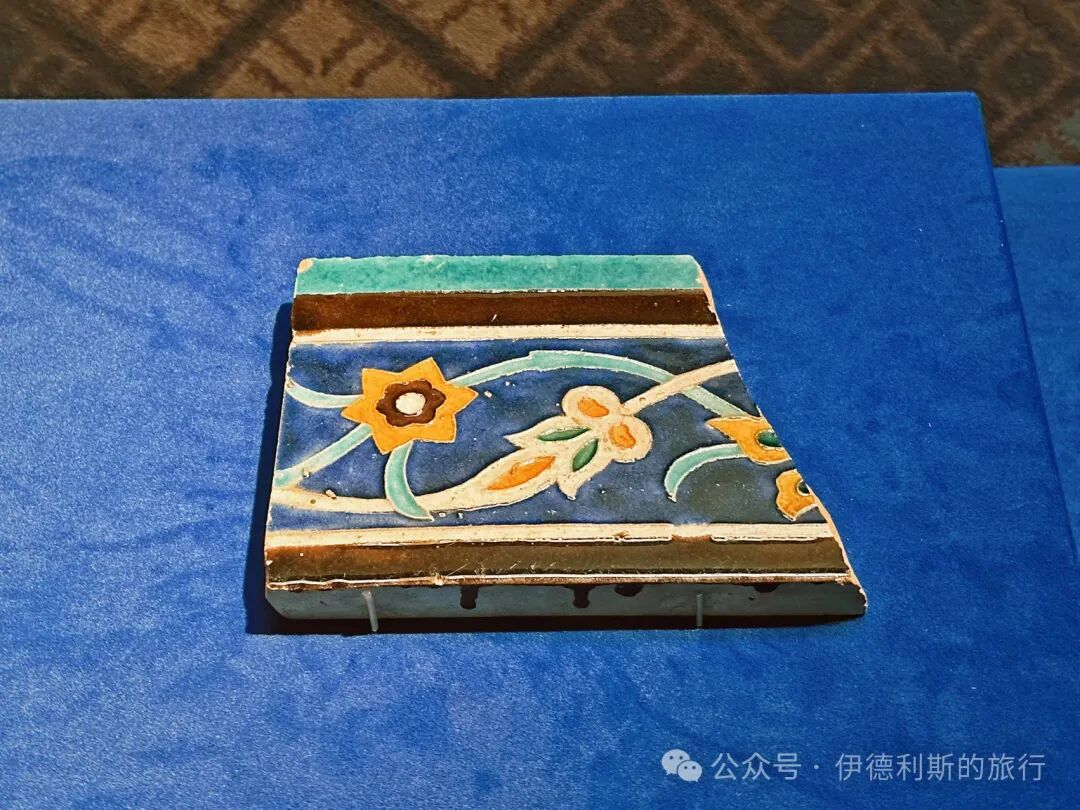
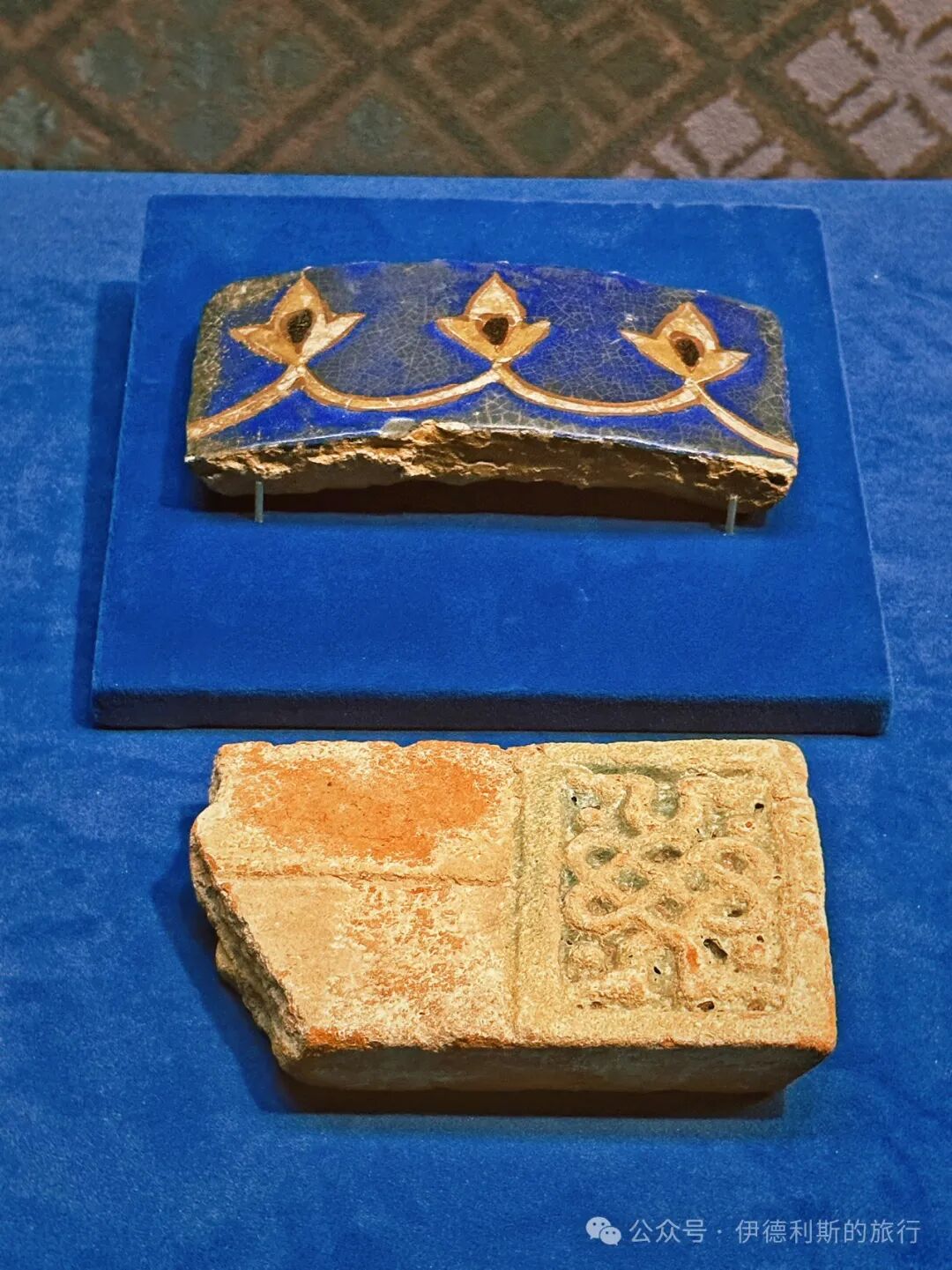
These are glazed tile fragments unearthed from a mausoleum at the Zhaiyk ancient city site, dating to the 14th-century Golden Horde period. The Zhaiyk ancient city site was discovered by an archaeological team in 2001 and has since been fully excavated and studied. Inside the city, they found the remains of a Turkish bath with an underfloor heating system, and in the cemetery west of the city, they found a domed mausoleum decorated with colorful glazed tiles.
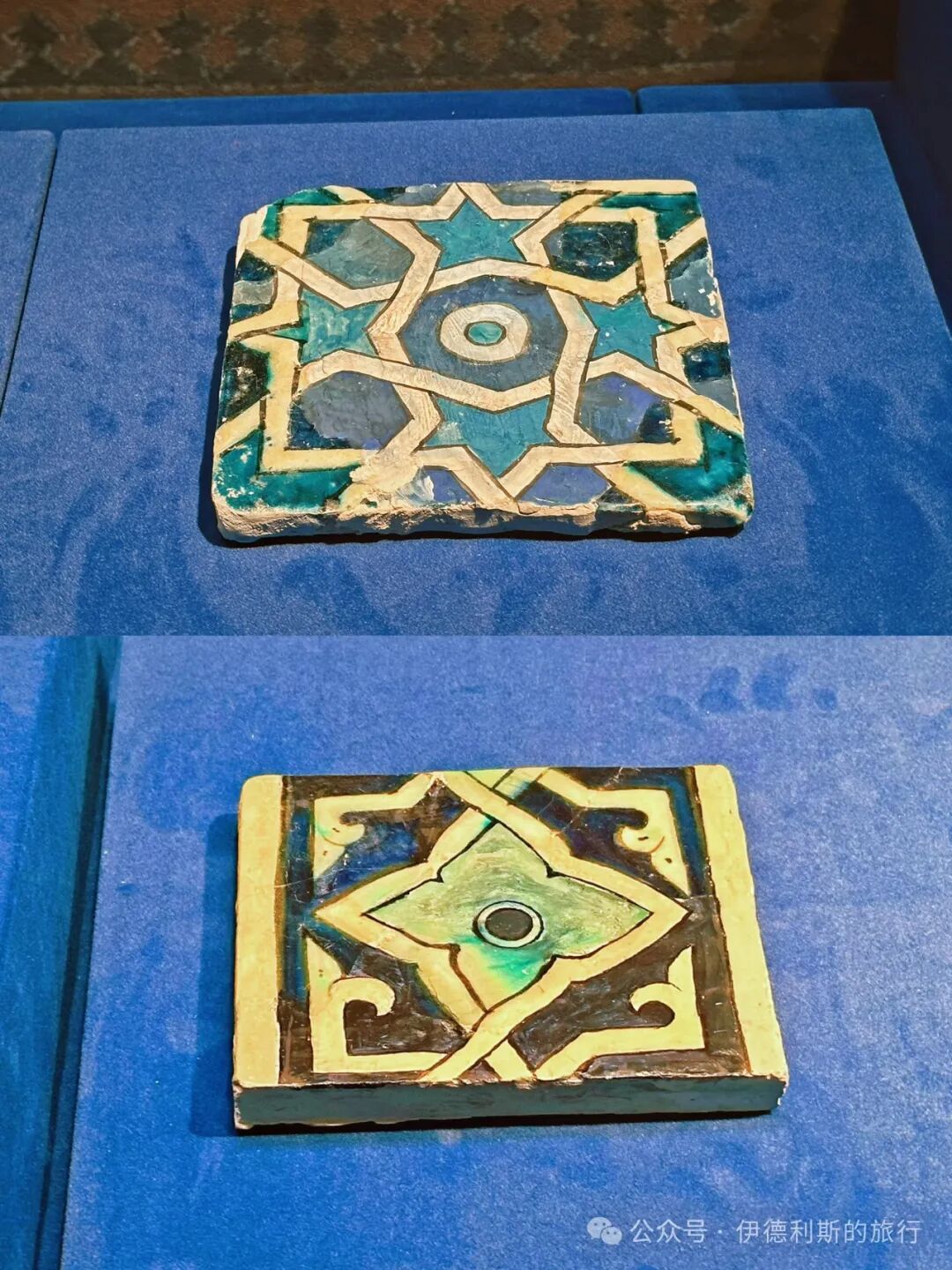
These are clay bricks unearthed from the Kyshkala ancient city site in the Syr Darya delta. Kyshkala was a wealthy ancient city during the Golden Horde period that produced a large number of clay bricks.
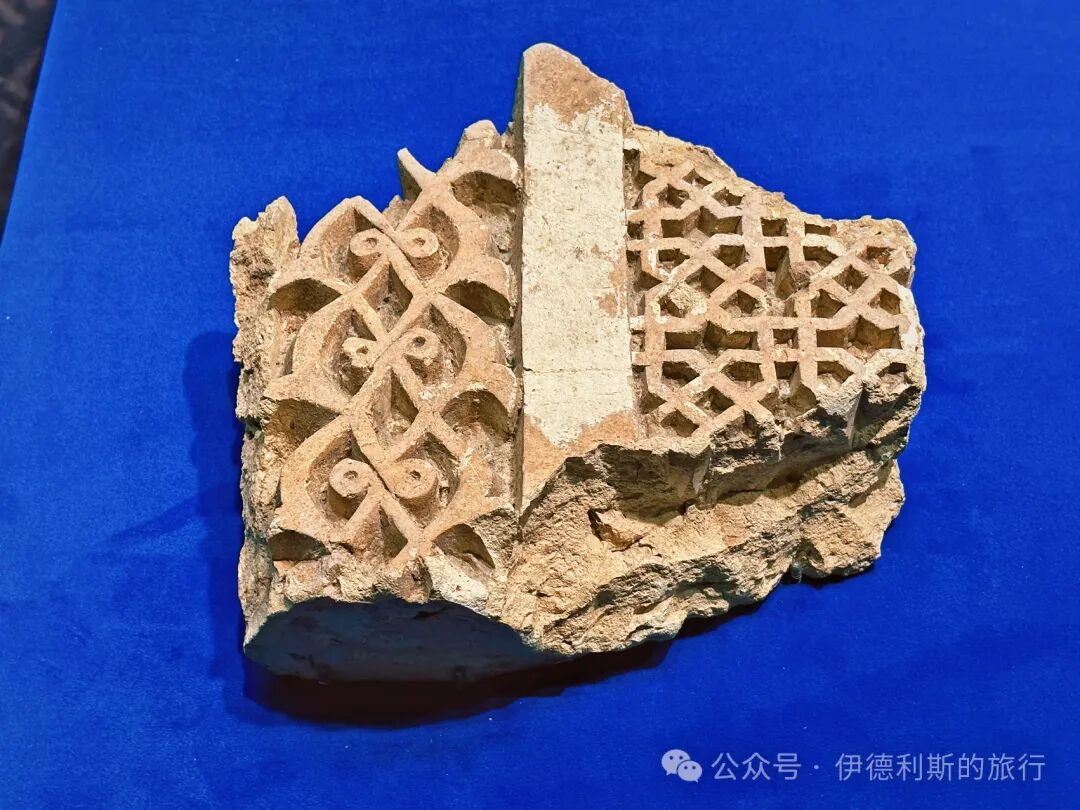
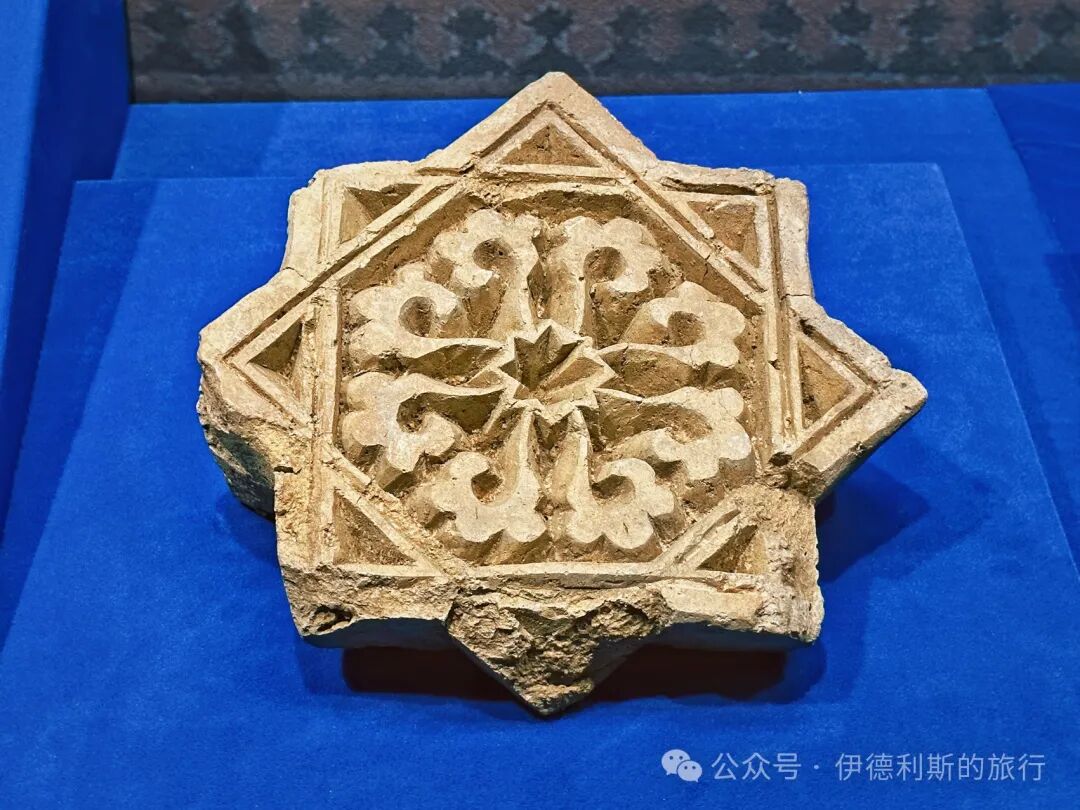
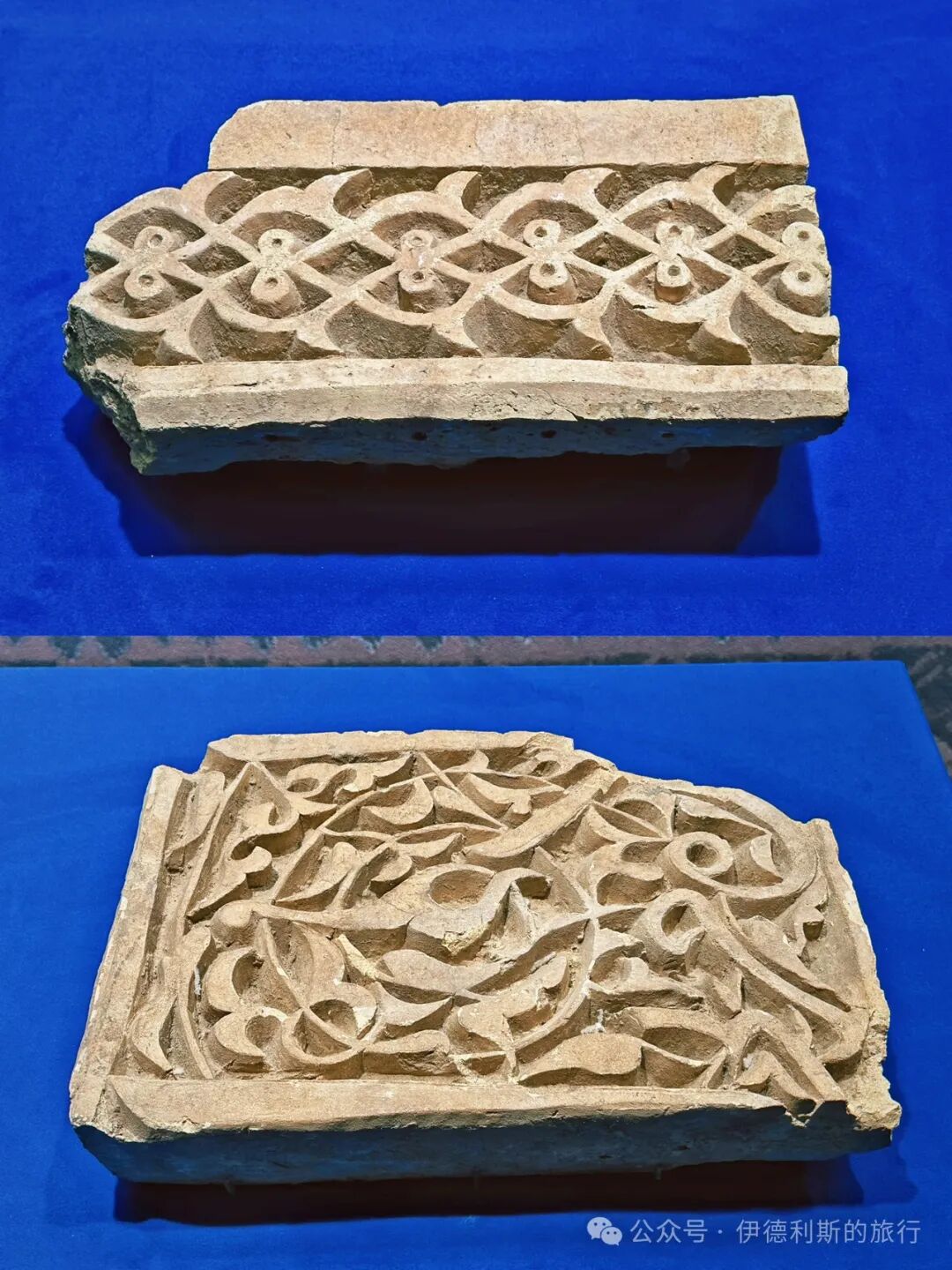
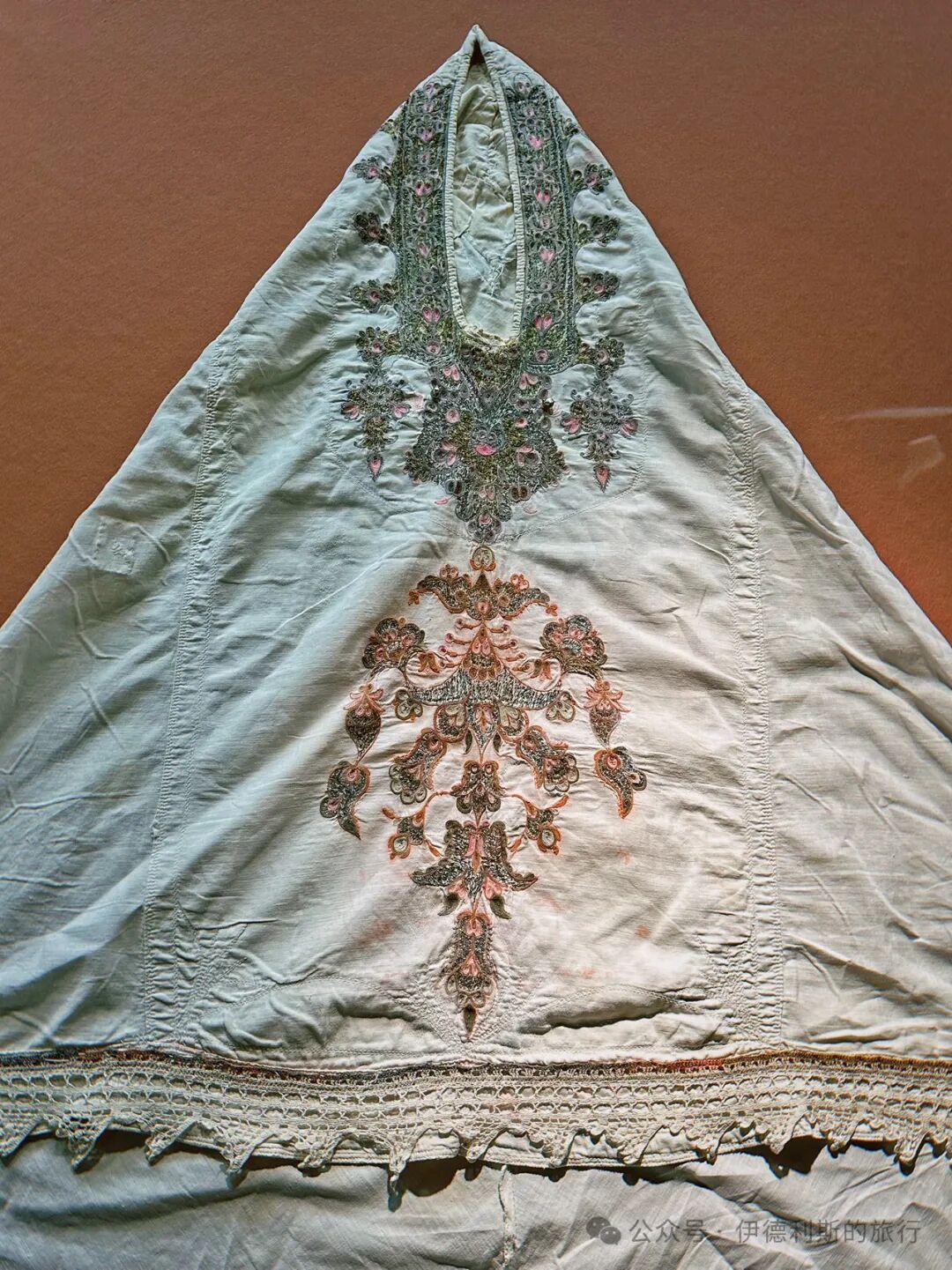
This is a Kimeshek, an embroidered head covering for married women from 19th-century southern Kazakhstan.
A Kimeshek with lace pendants.
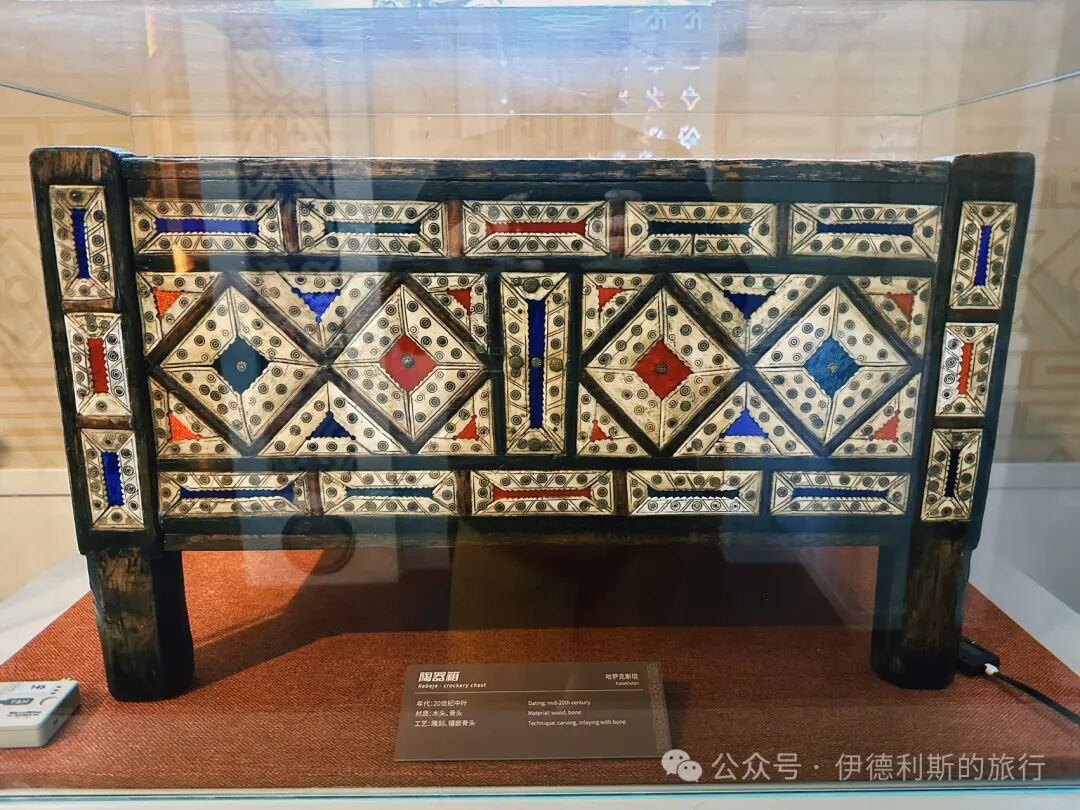
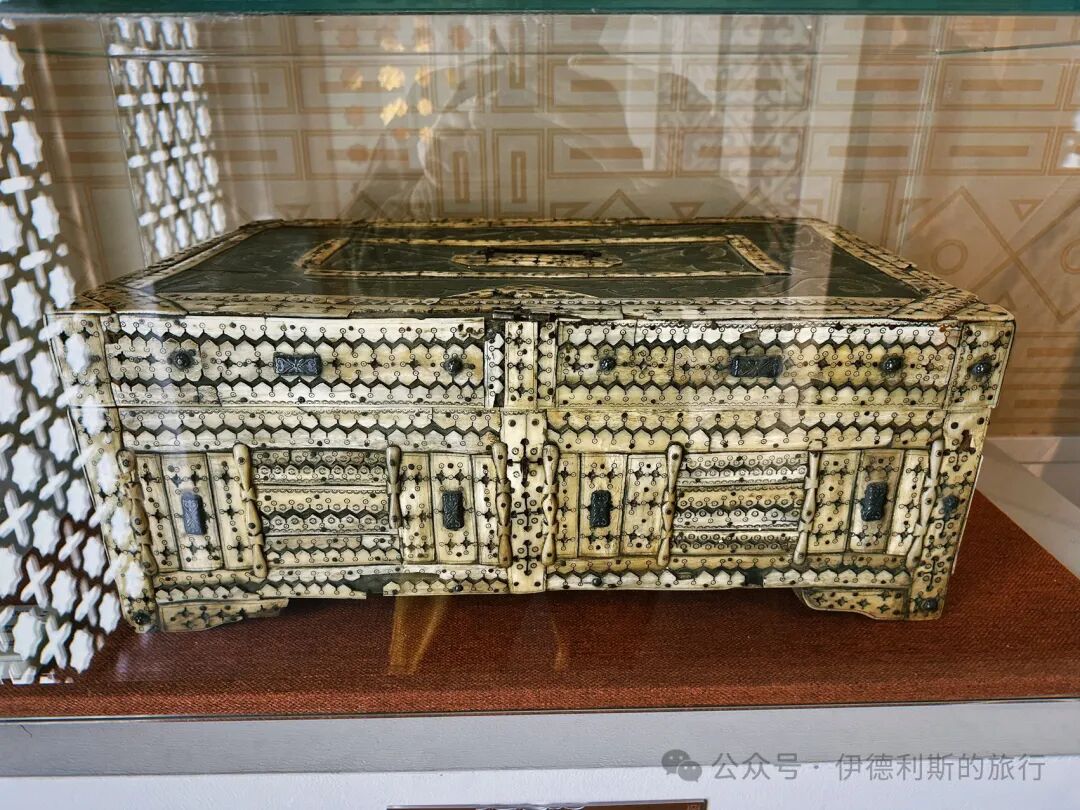
A Kebeje, which is a wooden chest with bone inlays, dating from the 19th to the mid-20th century.
A Khan's robe (chapan) made of velvet, gold and silver thread, and appliqué from 18th to 19th-century northern Kazakhstan. After the 18th century, due to long-term conflicts with the Dzungar Khanate, the Kazakh Khanate split into the Senior, Middle, and Junior Juz, with each Juz having its own Khan. After the mid-19th century, the Kazakh Khanate was gradually controlled by the Russian Empire. Khan Kenesary Kasymov (reigned 1841–1847) was the last national hero to bravely resist Russia. After he died for his country in 1847, the Kazakh Khanate was declared fallen.
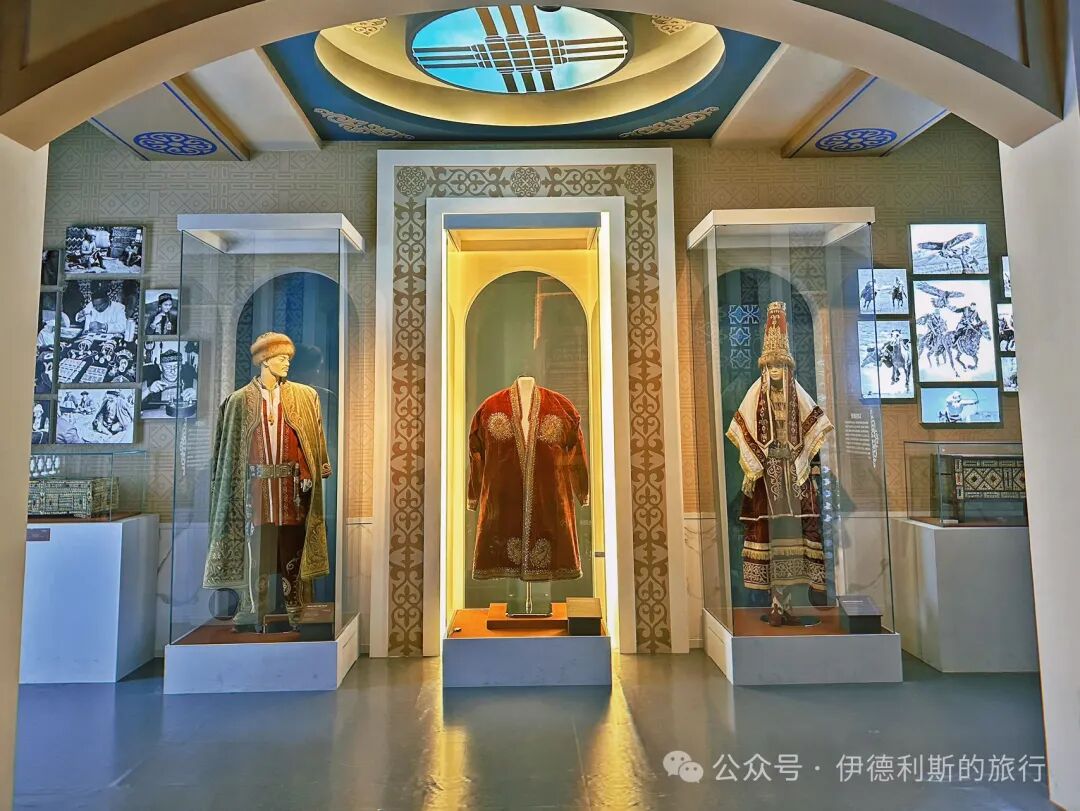
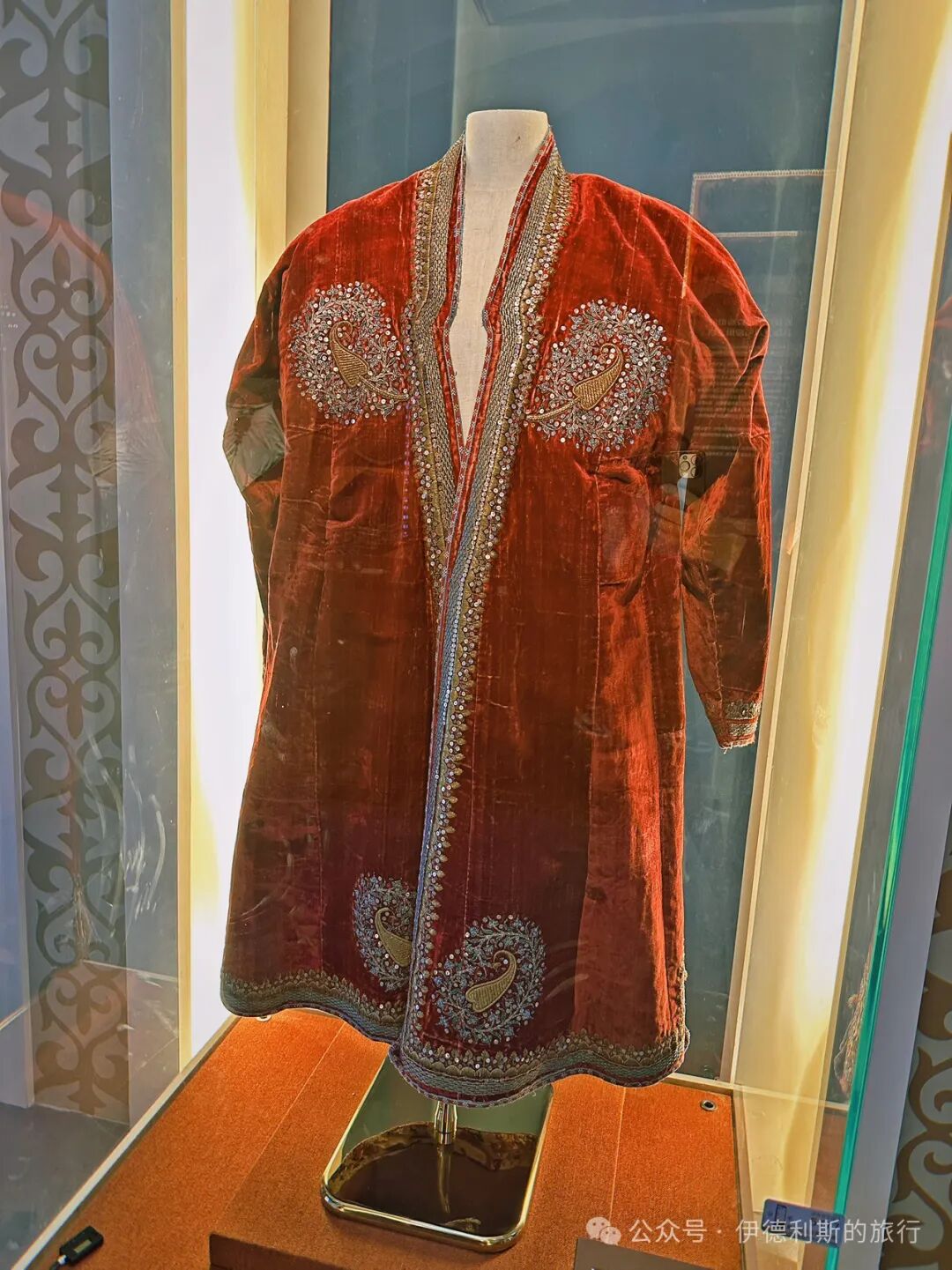
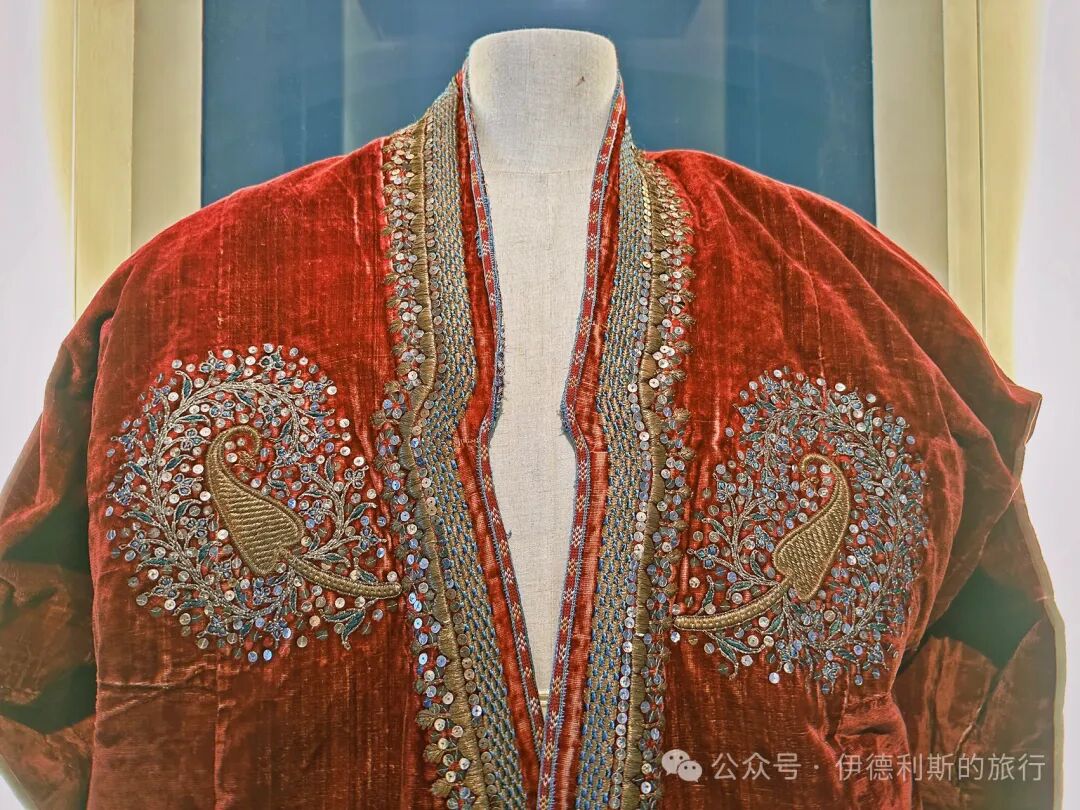
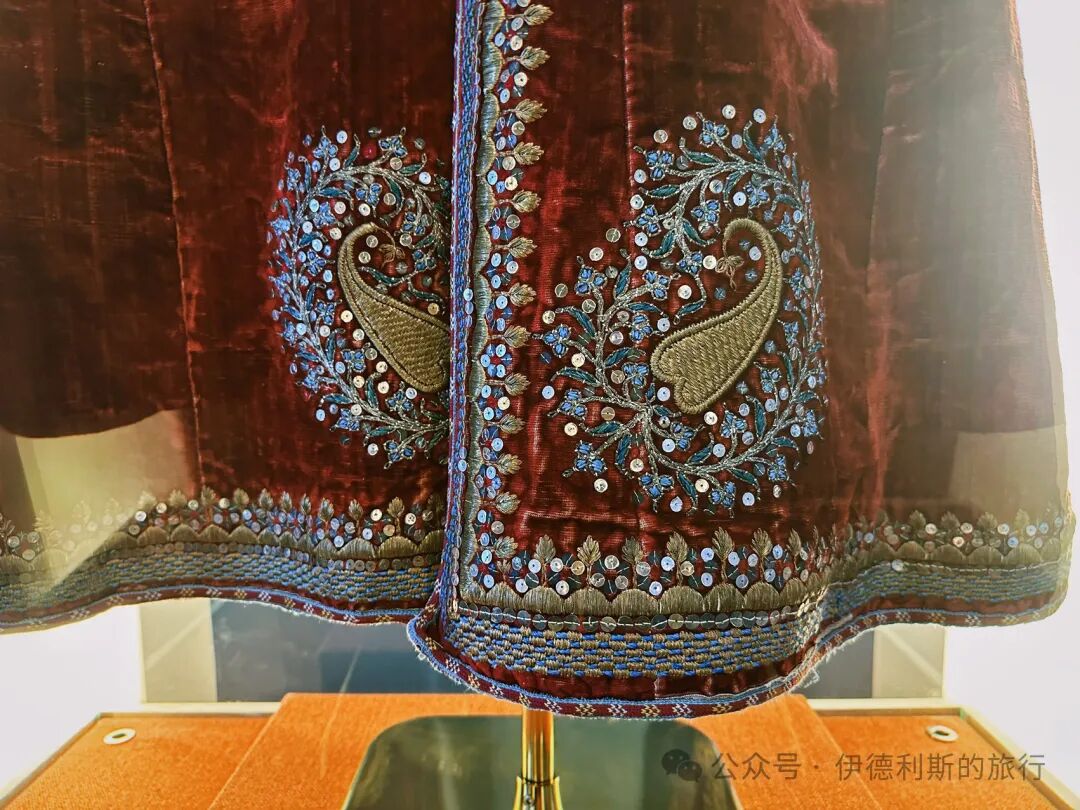
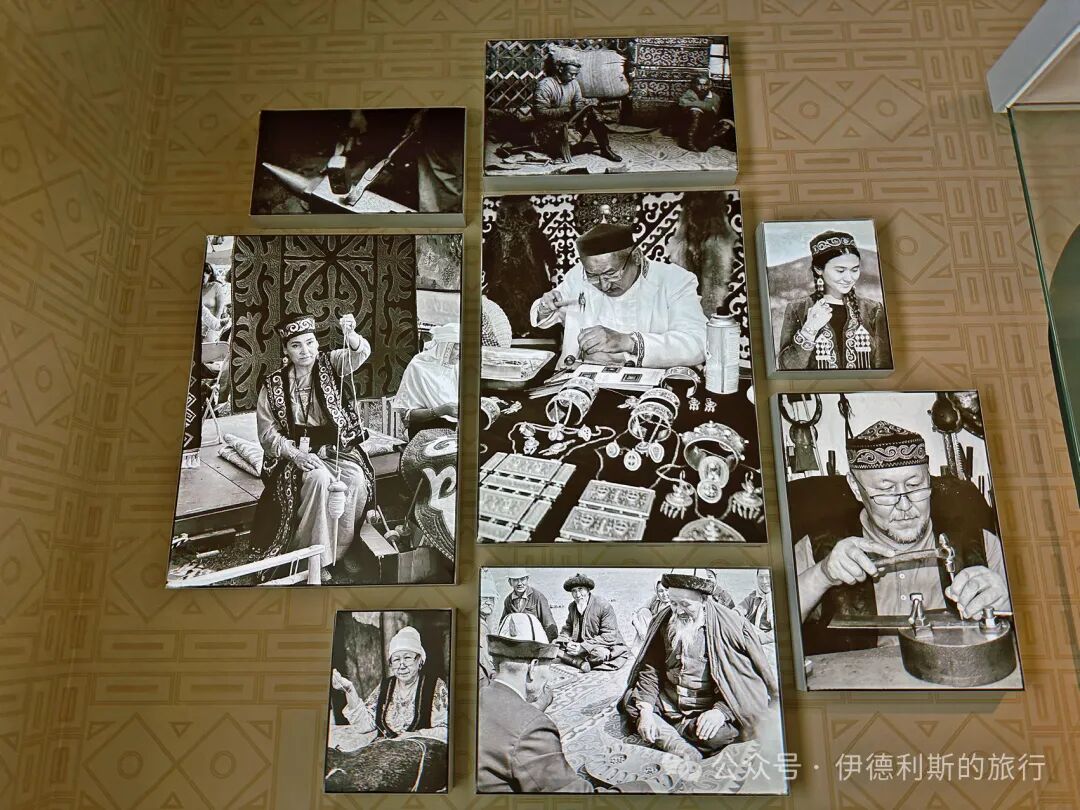
Traditional Kazakh clothing made by master designer Aizhan Abdubait. She comes from a family of tailors and is dedicated to making ethnic clothing. She has also restored the gold-thread embroidery technique that was gradually lost after the fall of the Kazakh Khanate in the 19th century. This is an embroidery technique that was used on the clothing of Khans and Sultans during the Kazakh Khanate era.
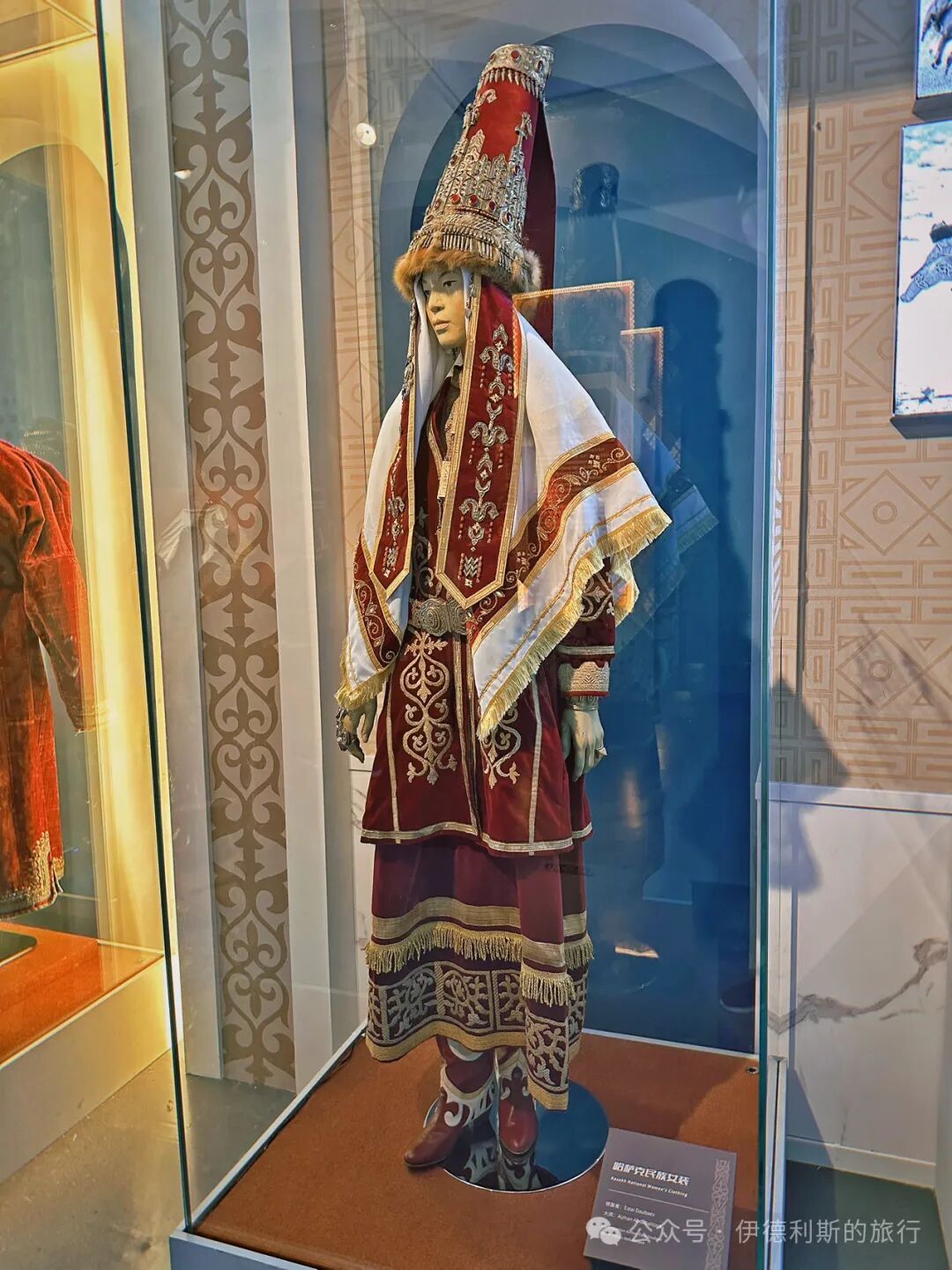
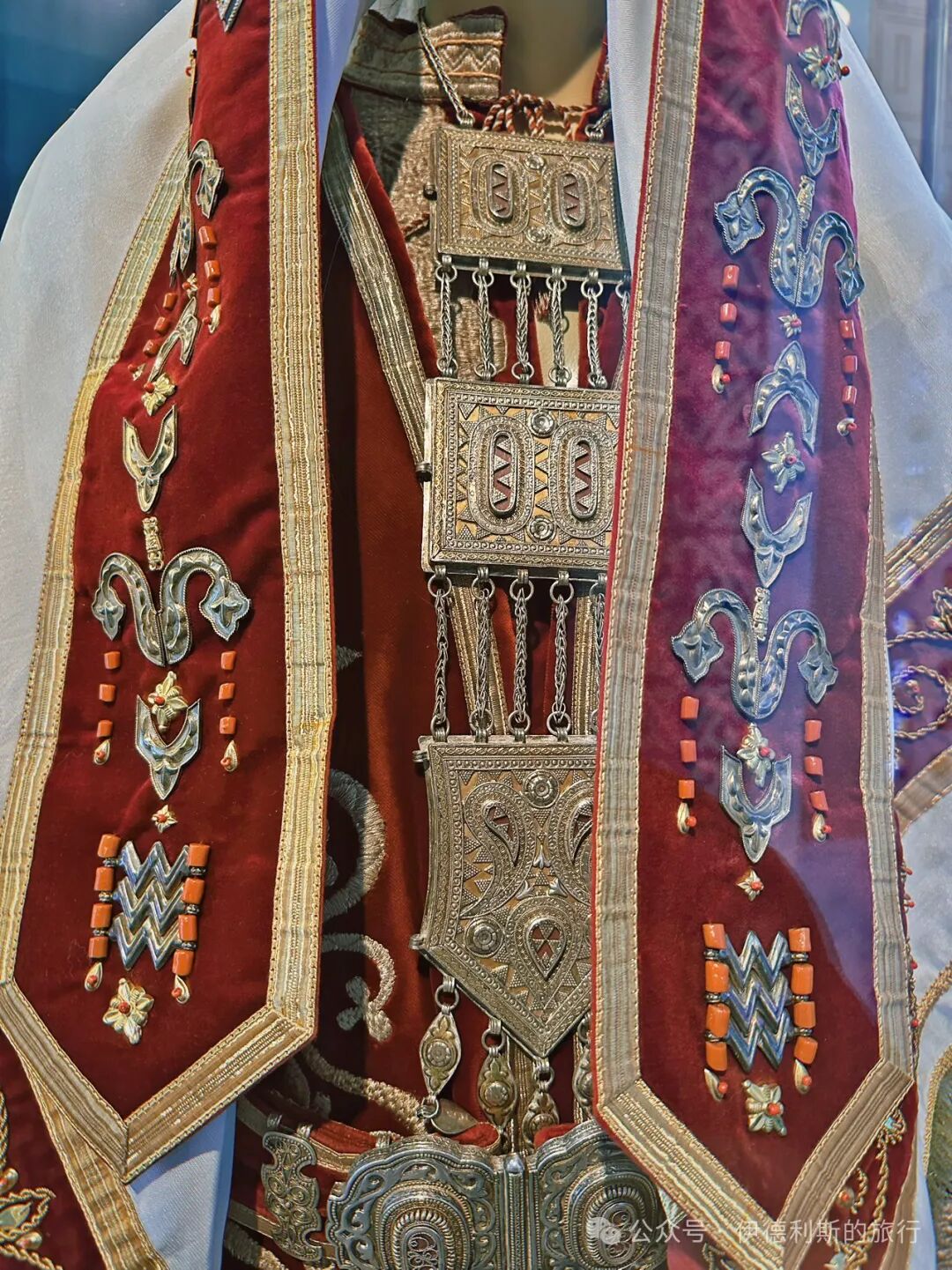
A 19th-century chest ornament.
A 20th-century belt.
An axe, a club, and a sheathed knife.
A 19th-century copper pot.
Museum Guide: Tunis Bardo National Museum - Palace, Mosaics and History
Articles • ali2007fr posted the article • 0 comments • 252 views • 2026-05-19 22:20
Summary: This article visits the Bardo National Museum in Tunis, a major museum set inside a former palace and known for its historical collections and mosaics. It keeps the original museum details, photographs, object notes, and travel observations for readers interested in Tunisia's cultural heritage.
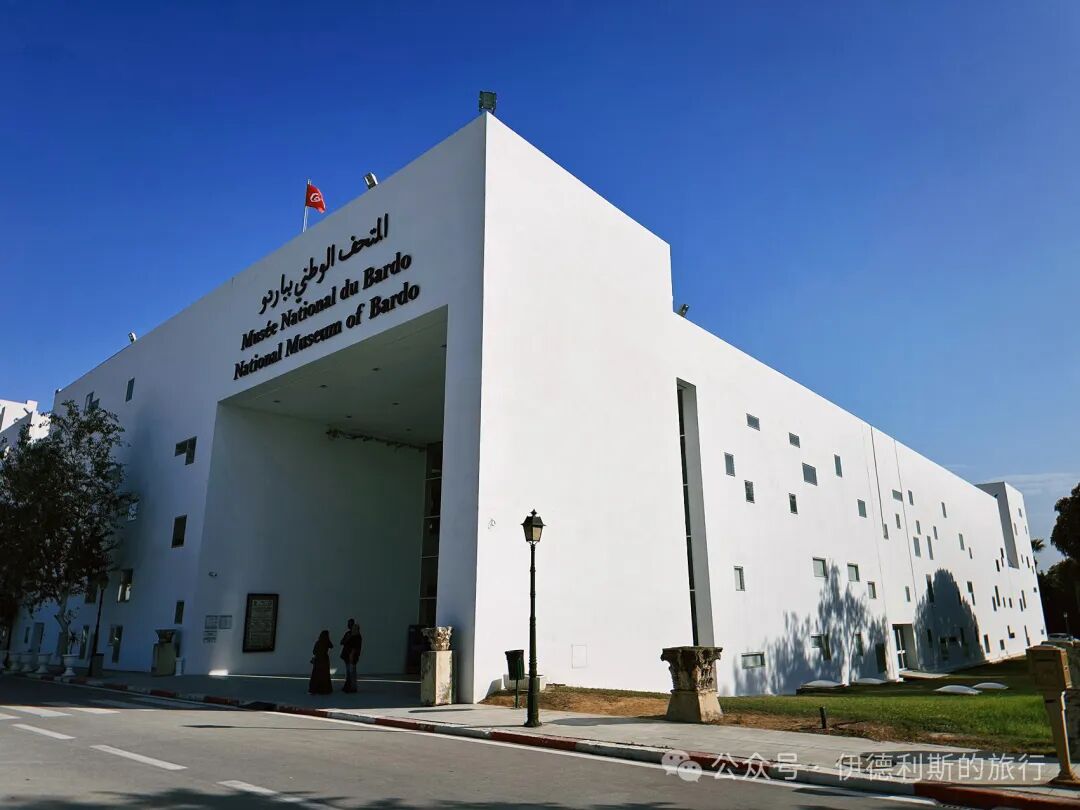
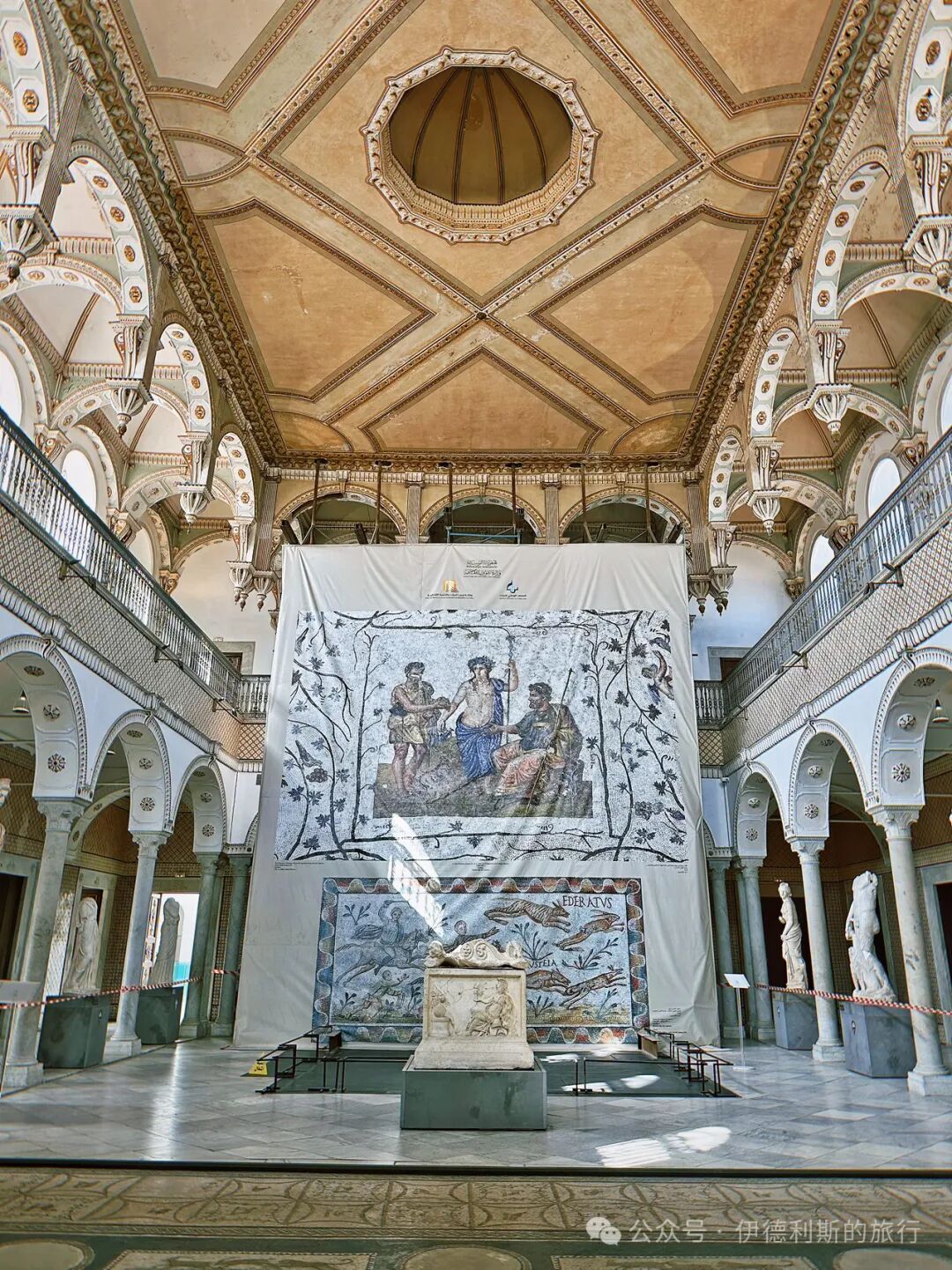
The National Museum of Tunisia is located inside the Bardo Palace, 4 kilometers west of the old Medina. The palace was first built in the 15th century. After the Ottoman dynasty took over in the 16th century, it was rebuilt and expanded many times, eventually becoming the main residence of the Husainid Beys (1705-1957).
The Husainid dynasty was a Beylik nominally under the Ottoman Empire. Its founder, Husain, was an Ottoman officer of Greek Cretan descent. He was granted the title of Bey by the Ottoman Sultan in 1705 and began his rule over Tunisia. After the 19th century, the Husainid dynasty began trading heavily with European merchants, and in 1861, they issued the first constitution in the Arab world. However, economic decline and social unrest in the late 19th century led to Tunisia becoming a French protectorate in 1881.
In 1882, Tunisia and France jointly established the Tunisian Office of Antiquities and Arts, which immediately began converting the old harem of the Bardo Palace into a museum. After six years of restoration and collecting, the museum officially opened in 1888.
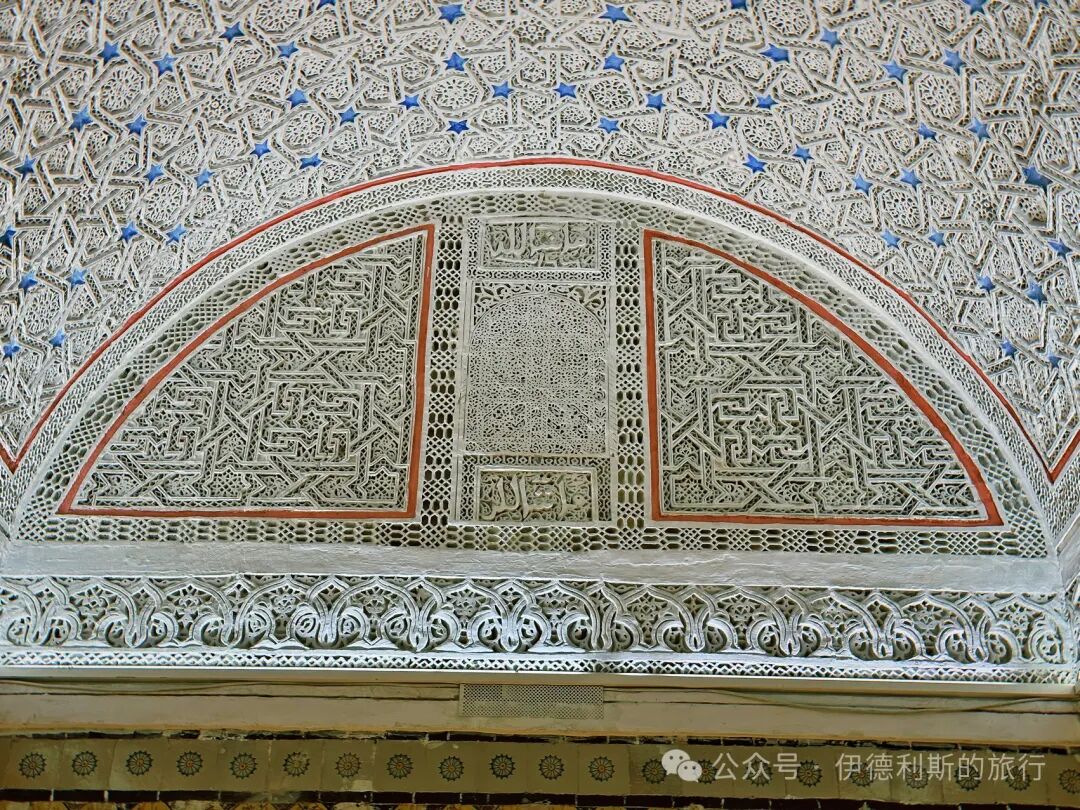
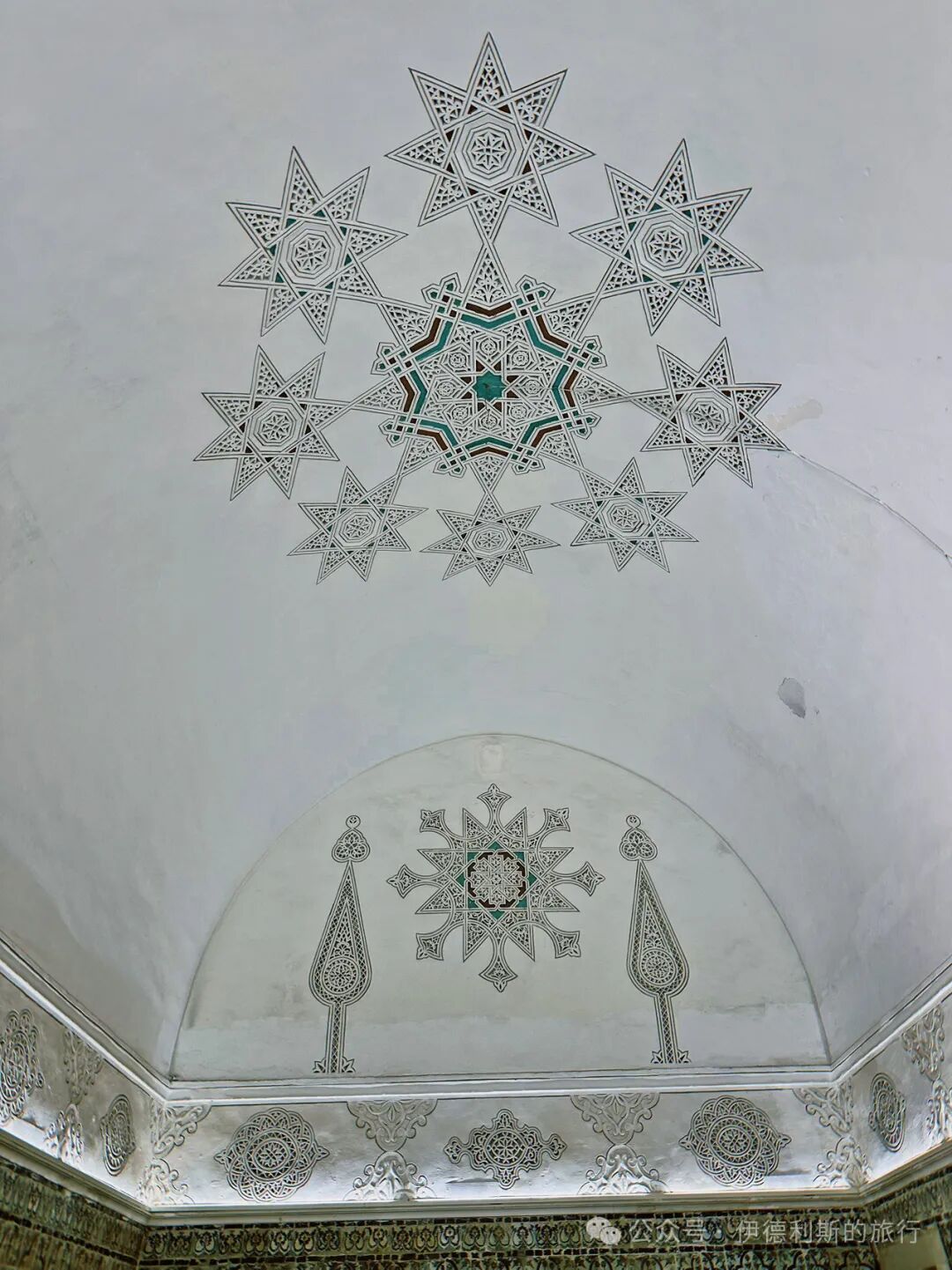
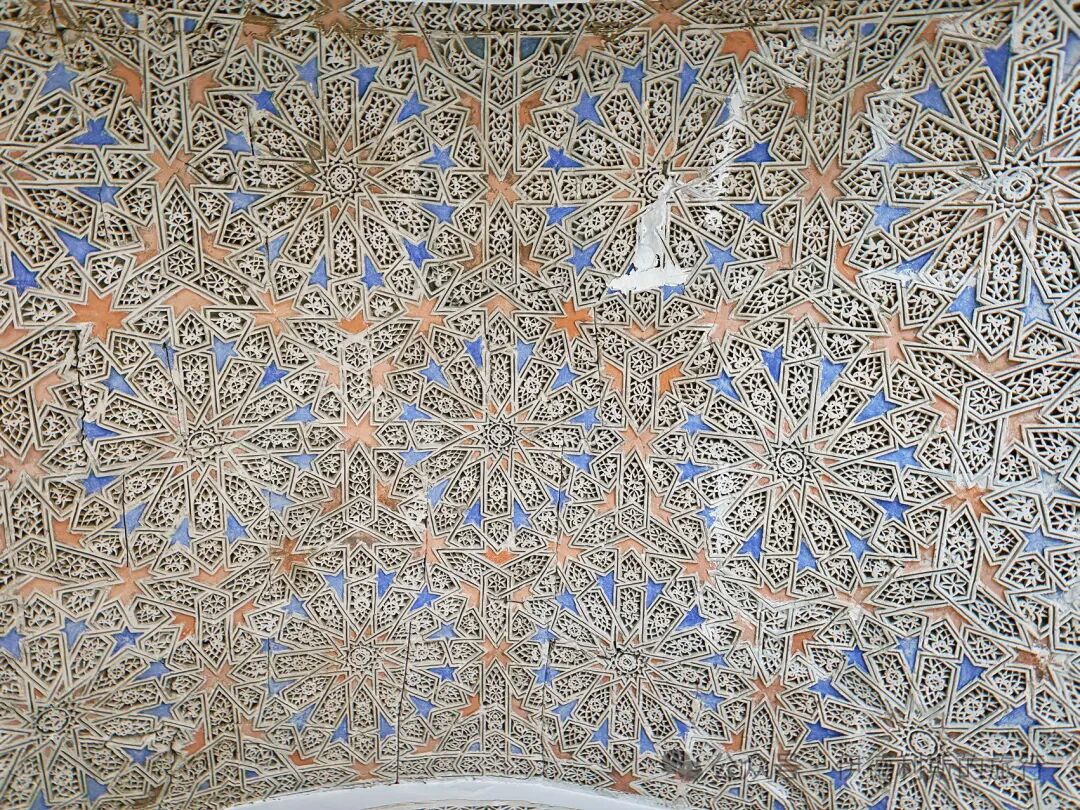
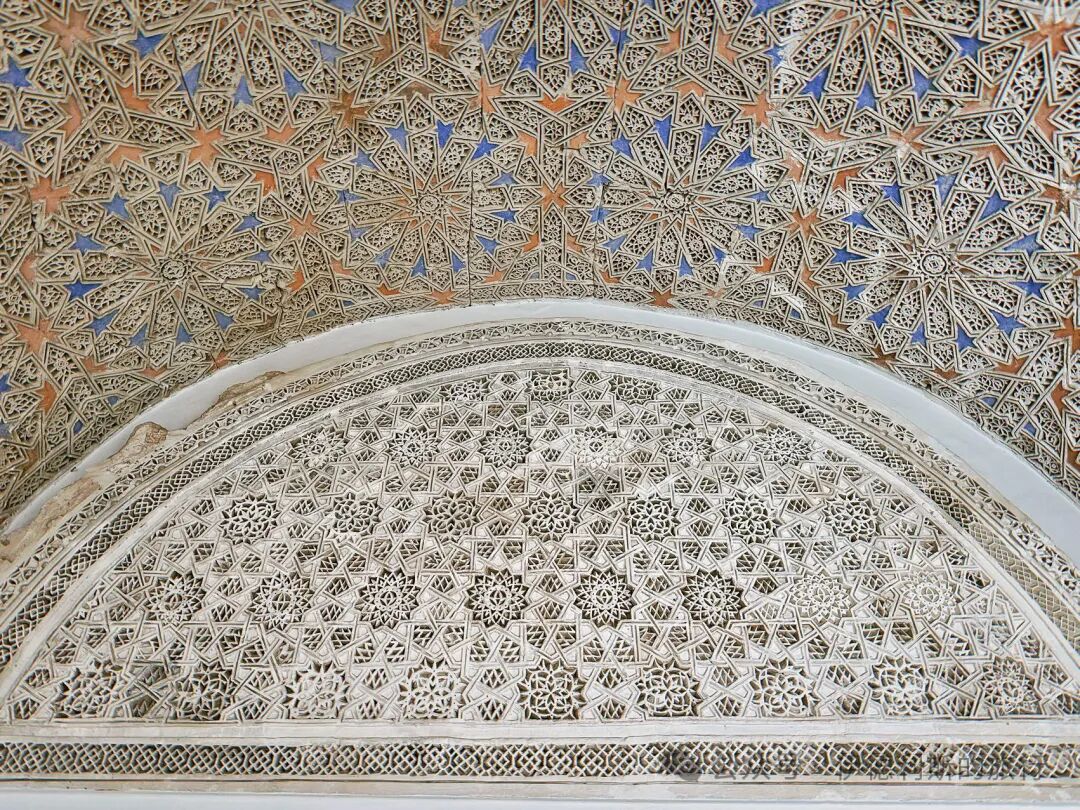
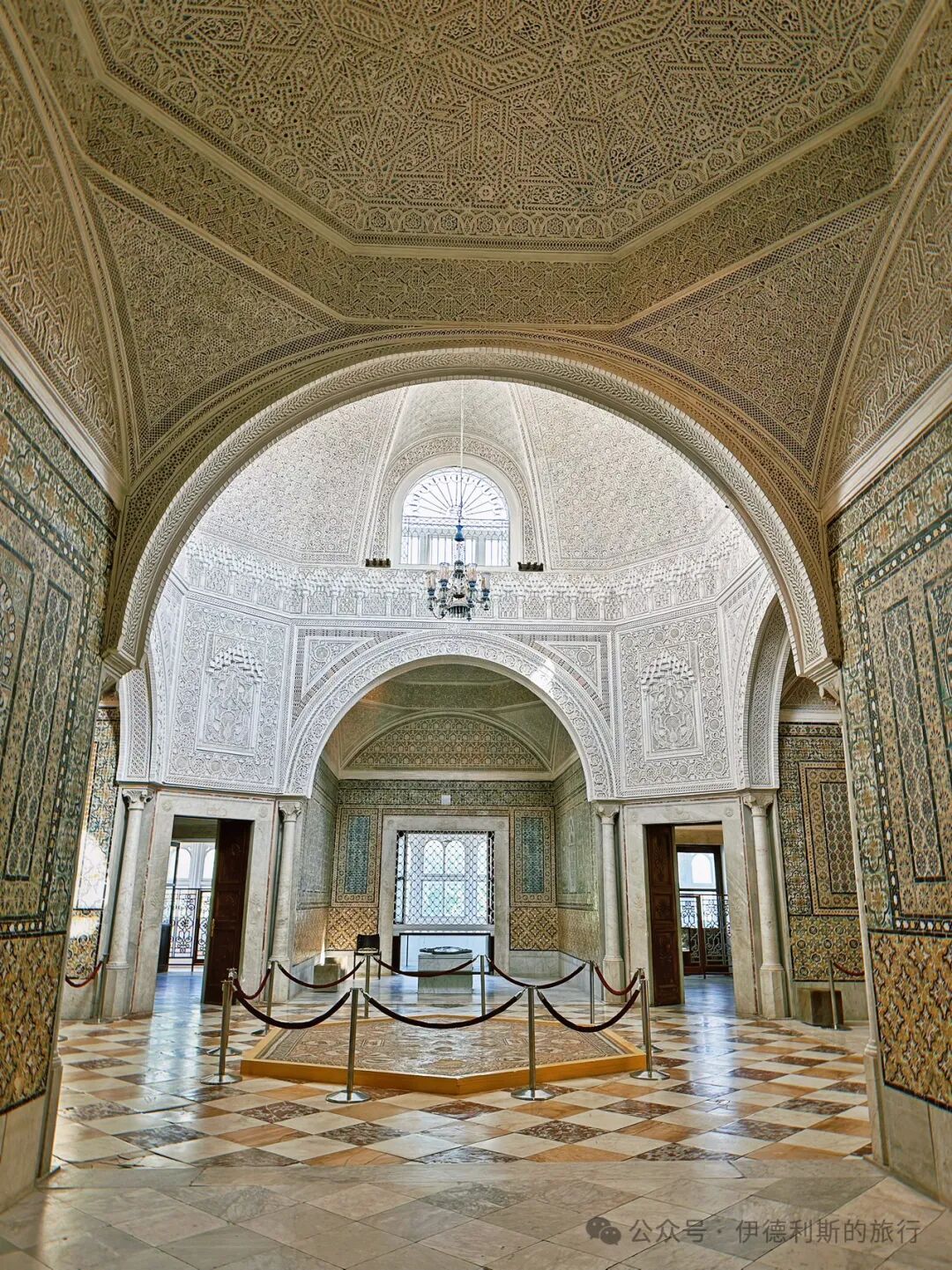
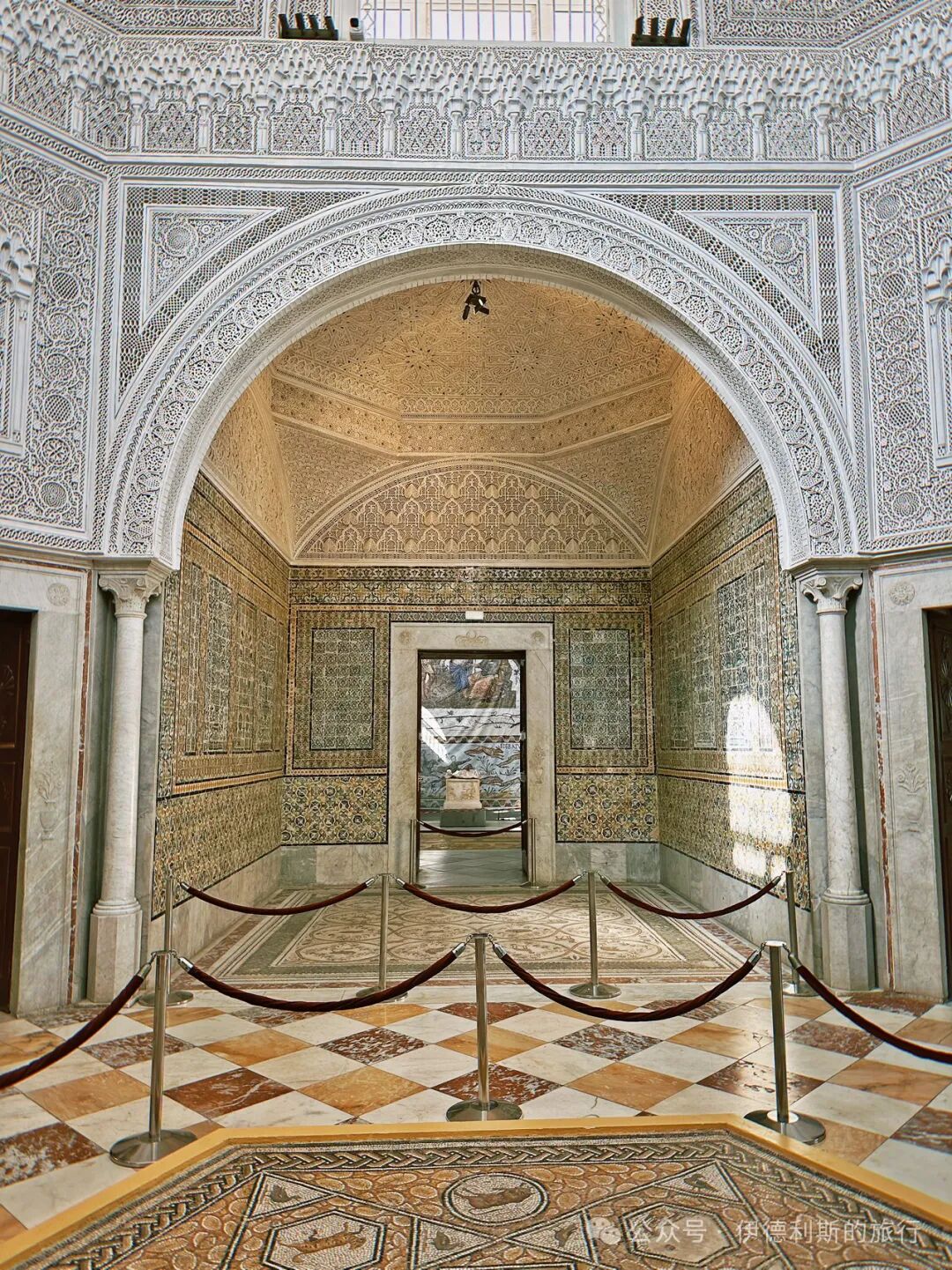
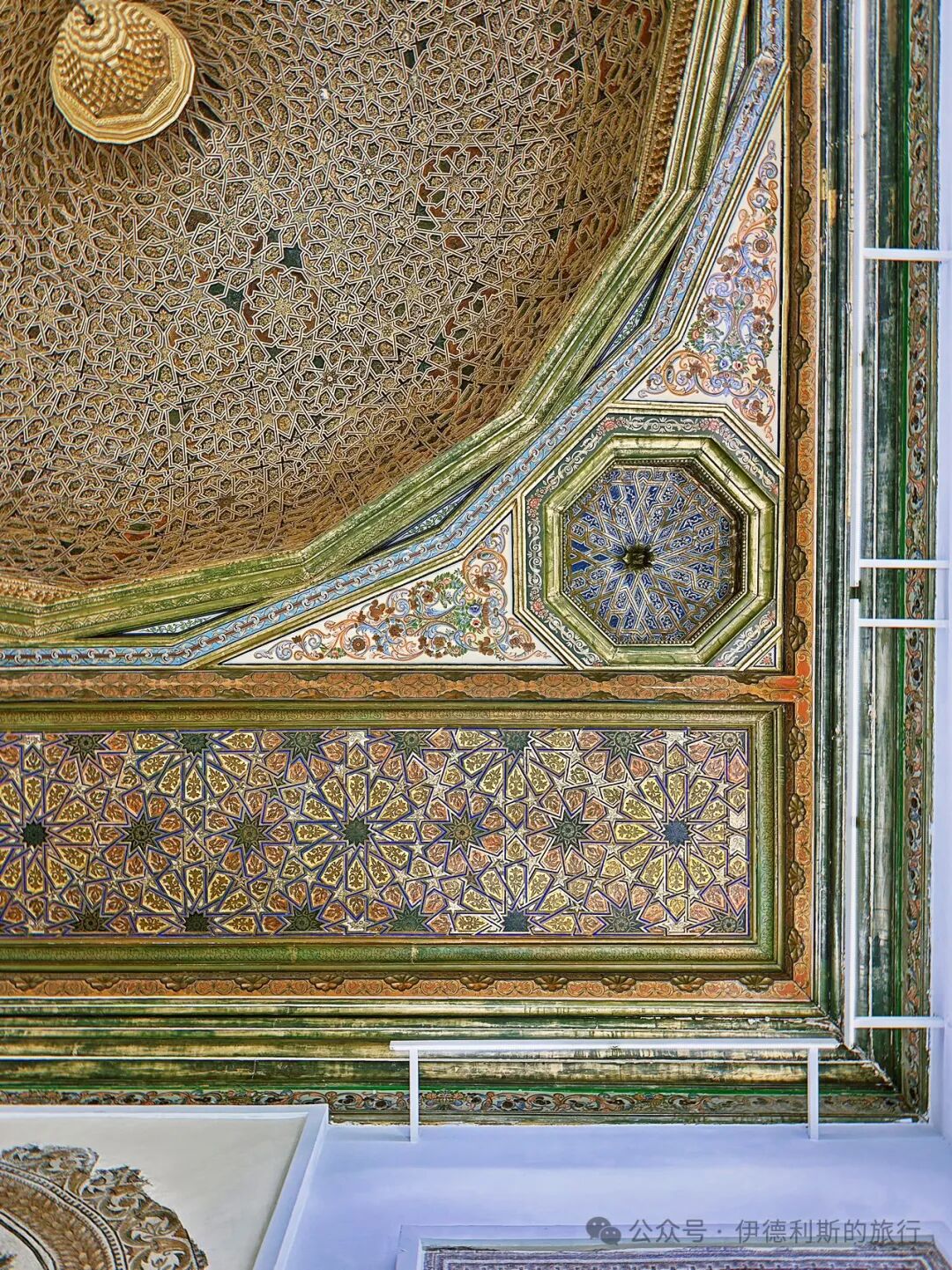
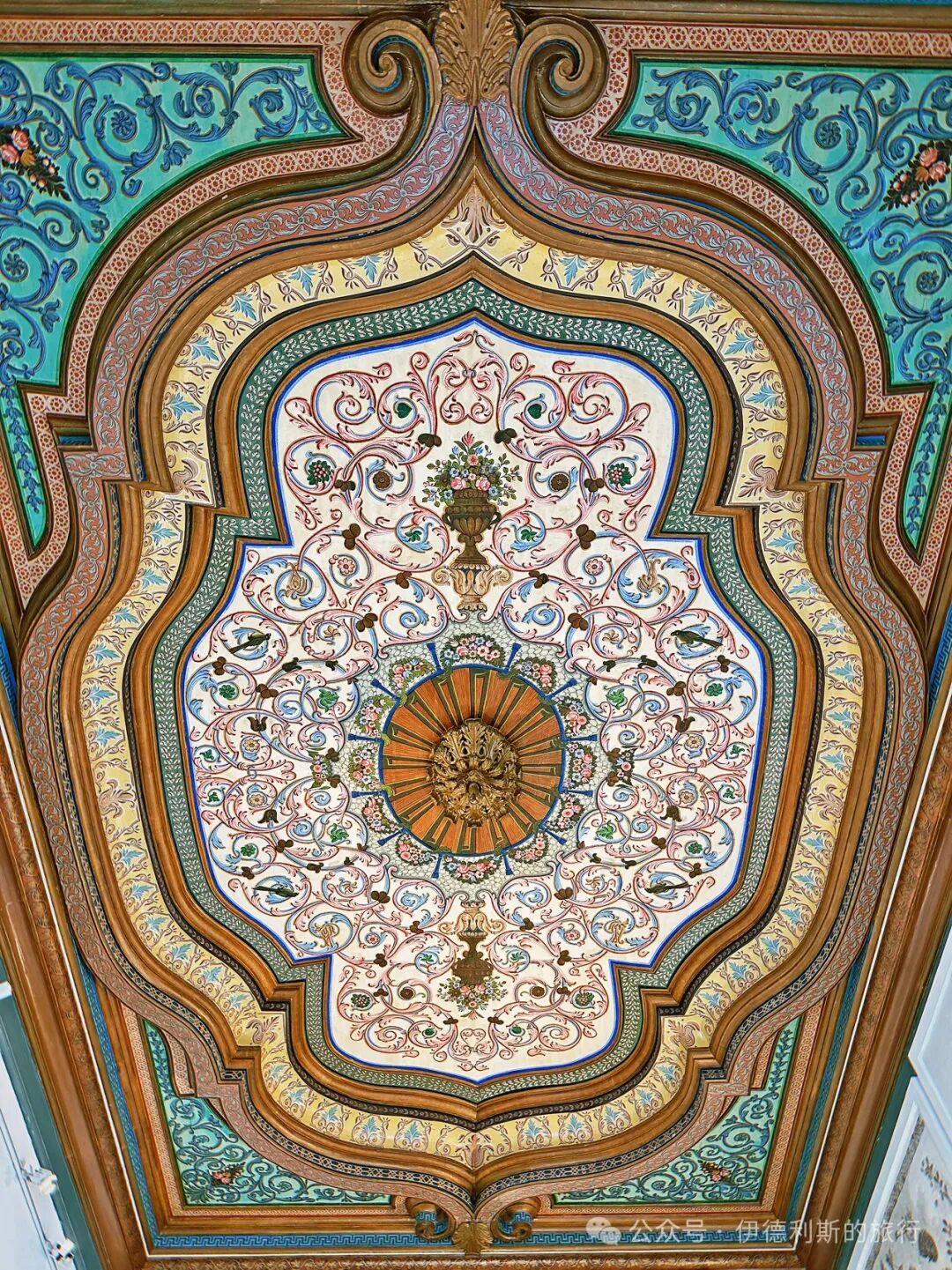
The museum houses the Small Palace, built by Husain II Bey between 1824 and 1835. The palace was built in the Andalusian Moorish style, featuring a T-shaped main hall and a central courtyard with a pool.
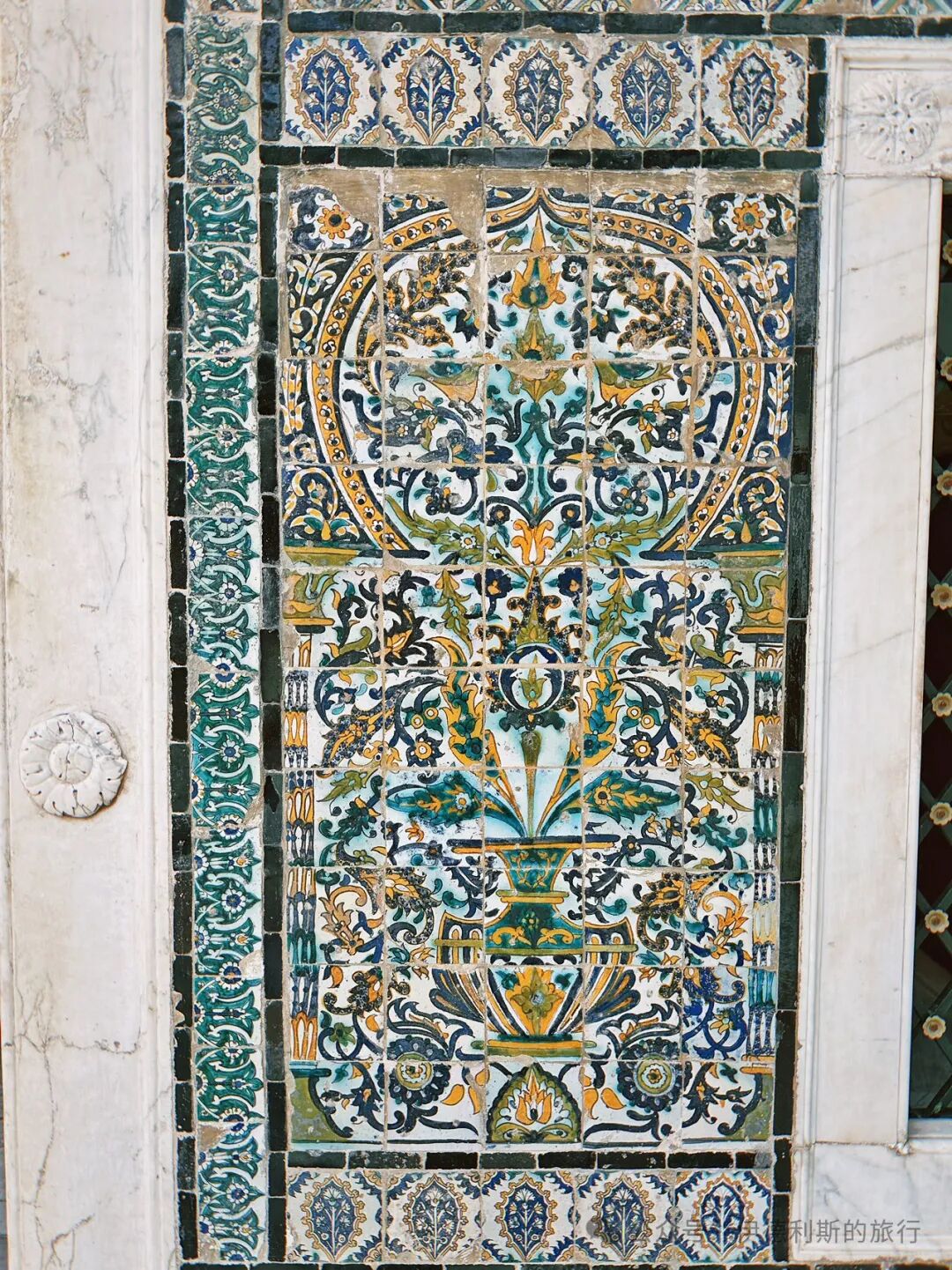
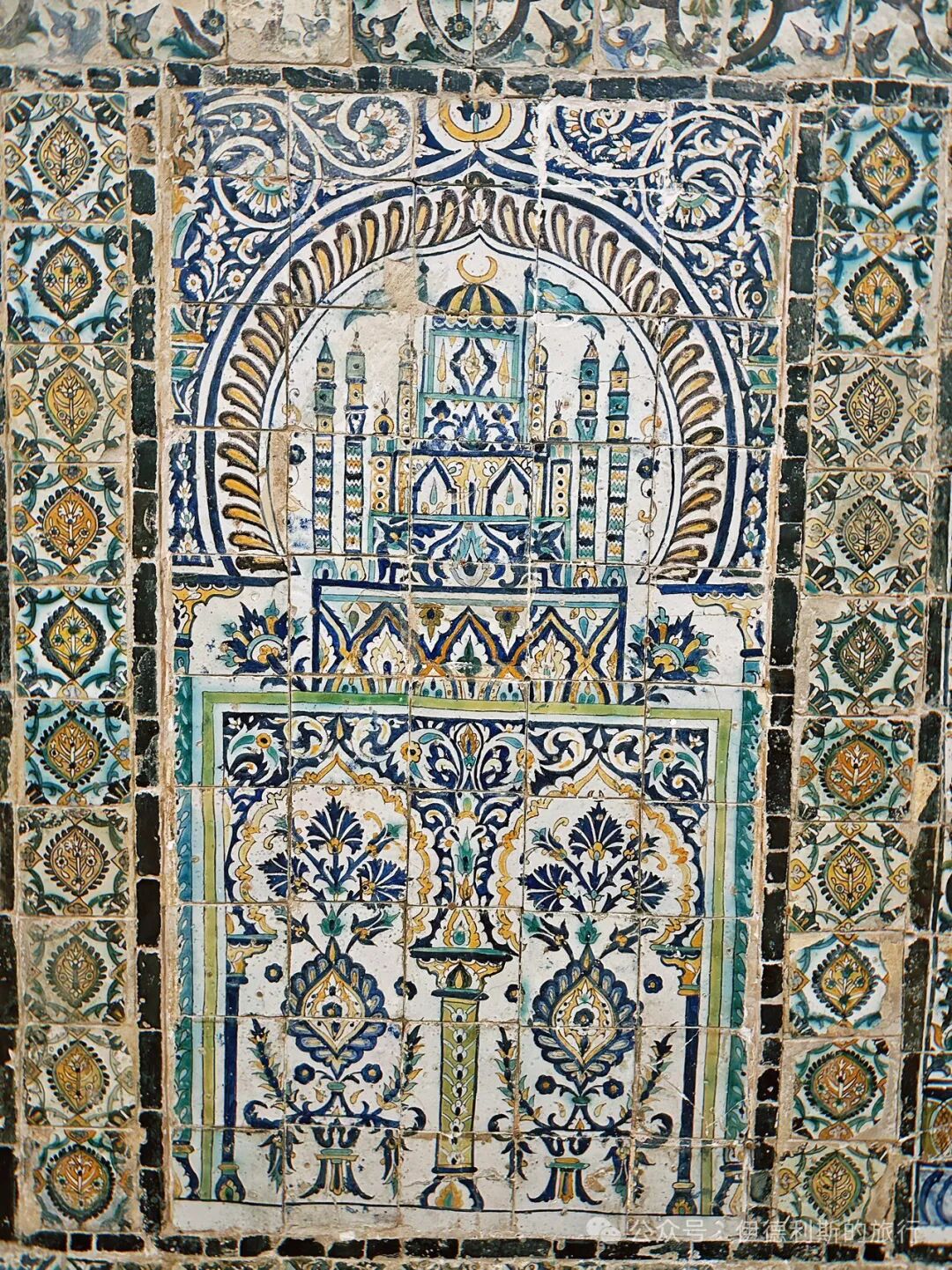
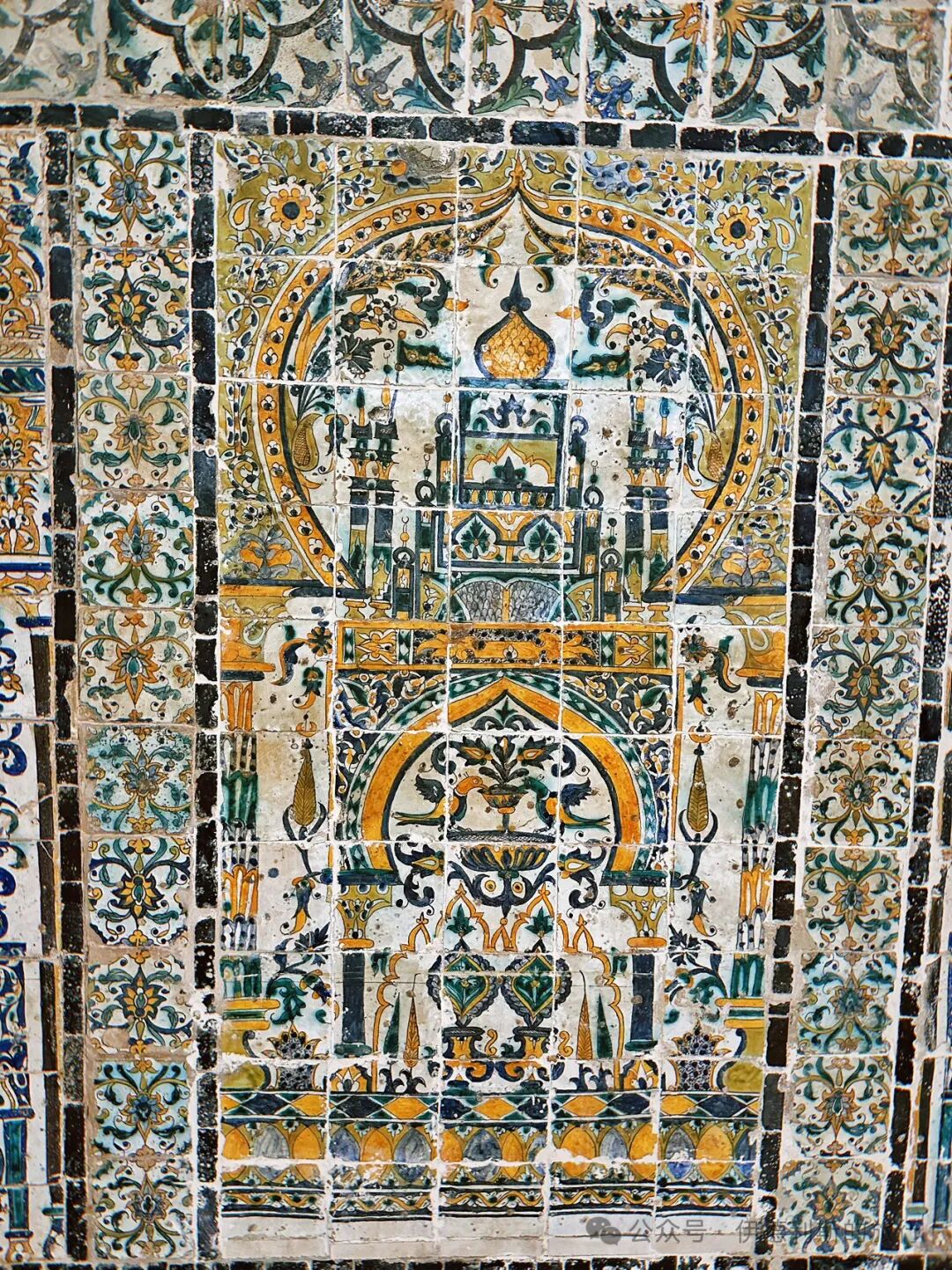
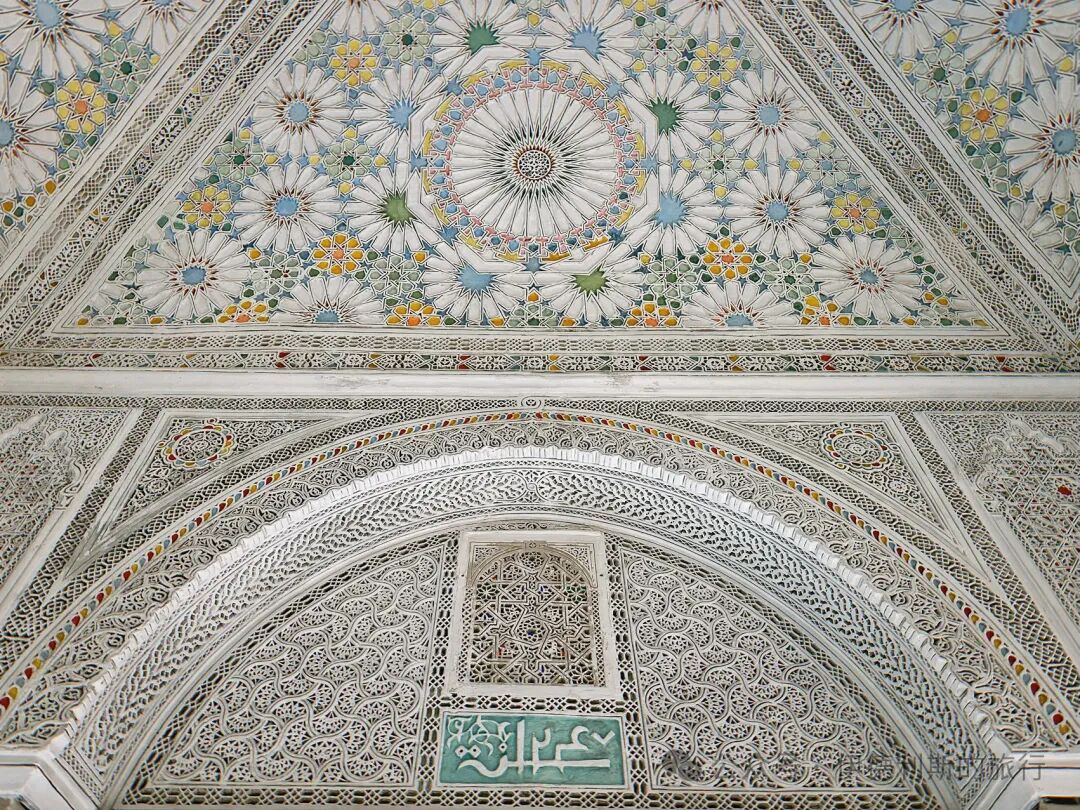
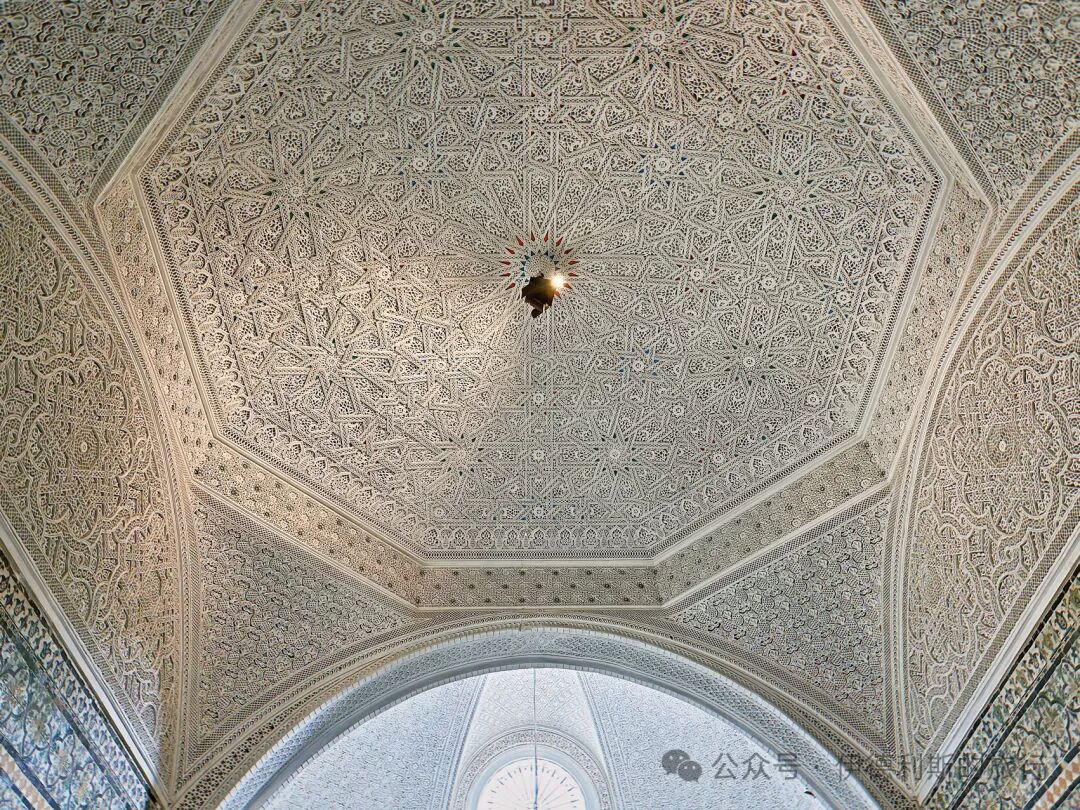
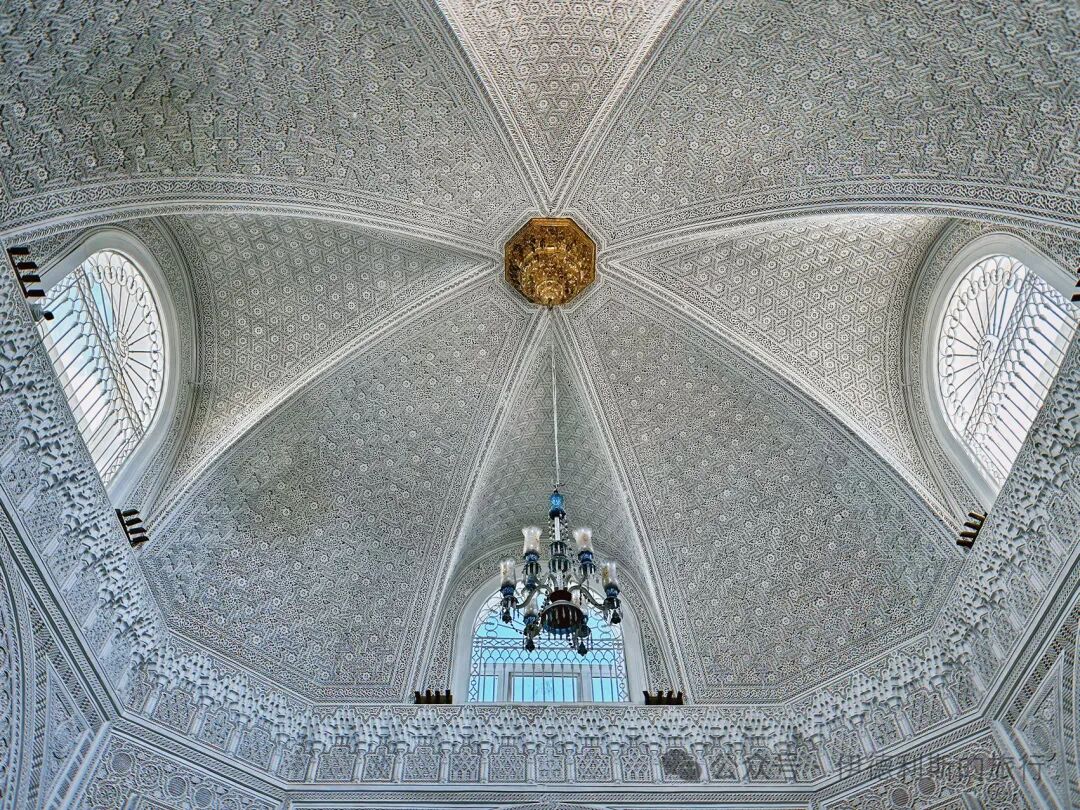
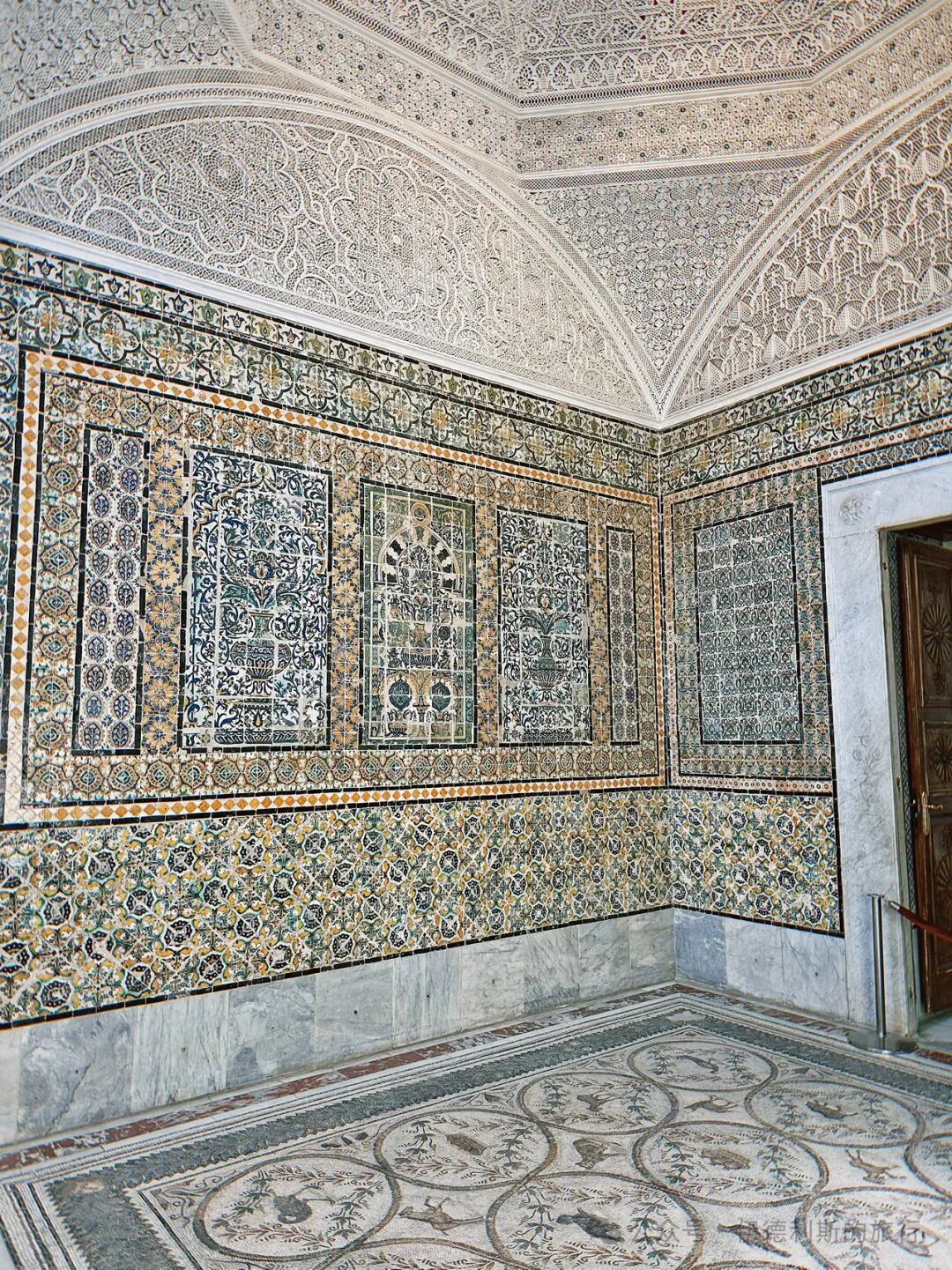
Tile and plaster decorations inside the Small Palace of Husain II.
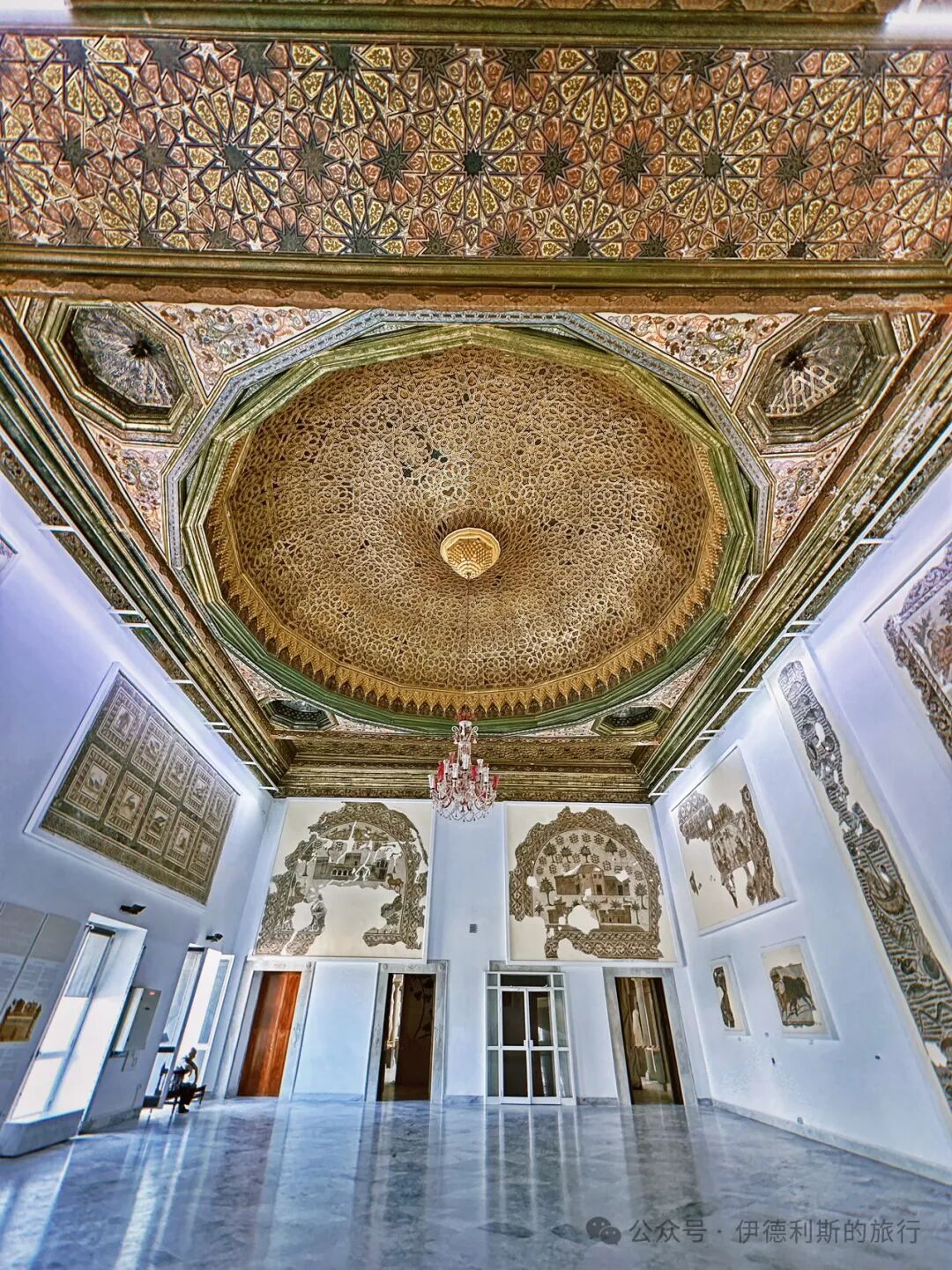
The reception hall and harem built by Muhammad III Bey between 1859 and 1864 feature both Italian and Tunisian styles.
Muhammad III Bey issued the first written constitution in the Arab world in 1861, which separated executive, legislative, and judicial powers and guaranteed equal rights for Muslims, Christians, and Jews. After the new constitution was issued, European merchants and secular schools began to appear in Tunisia.
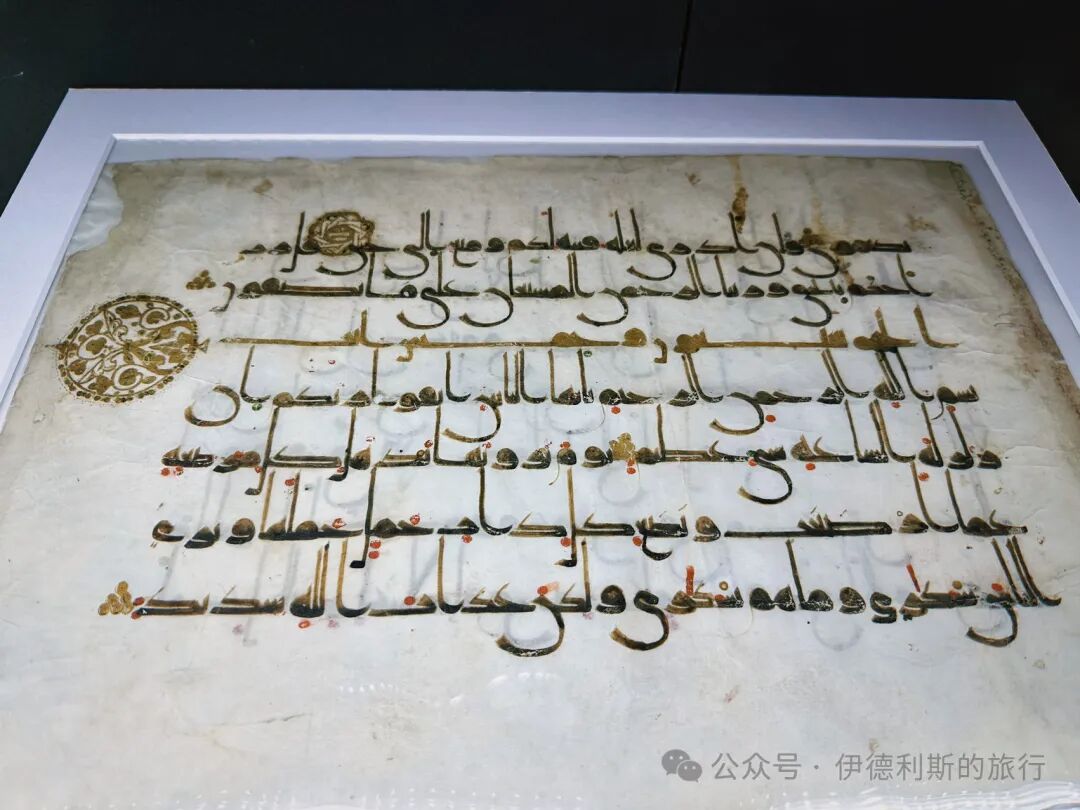
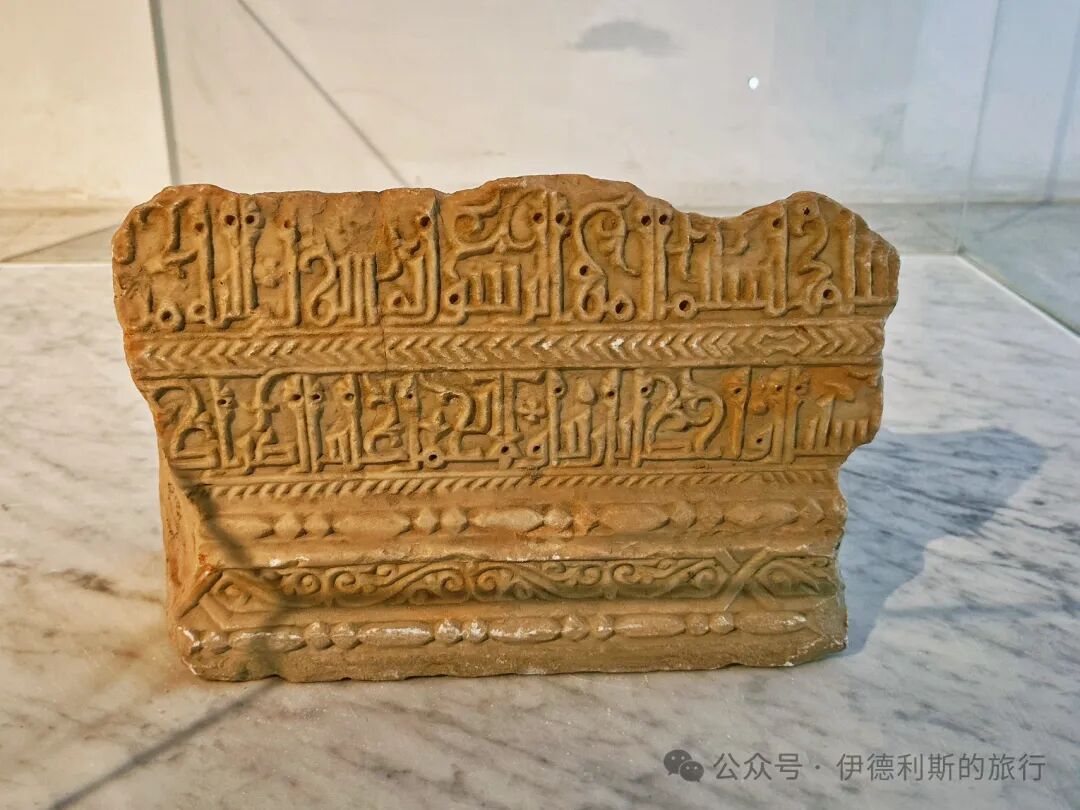
The Blue Quran manuscript in the National Museum of Tunisia is a very famous religious manuscript in the world. This scripture uses parchment dyed with indigo, with ink outlining the text and gold leaf applied on top. The calligraphy is in the early Kufic script, which lacks sharp angles and vowel marks.
The origin of the Blue Quran is still highly debated, with theories pointing to Kairouan in Tunisia, Cordoba in Spain, Mashhad in Iran, or Iraq, dating back to the 9th or 10th century. The records say the Blue Quran was kept in the Great Mosque of Kairouan after the 14th century. It was broken up during the Ottoman period, but most of it remains in Kairouan, while other parts are held by major museums and collectors.
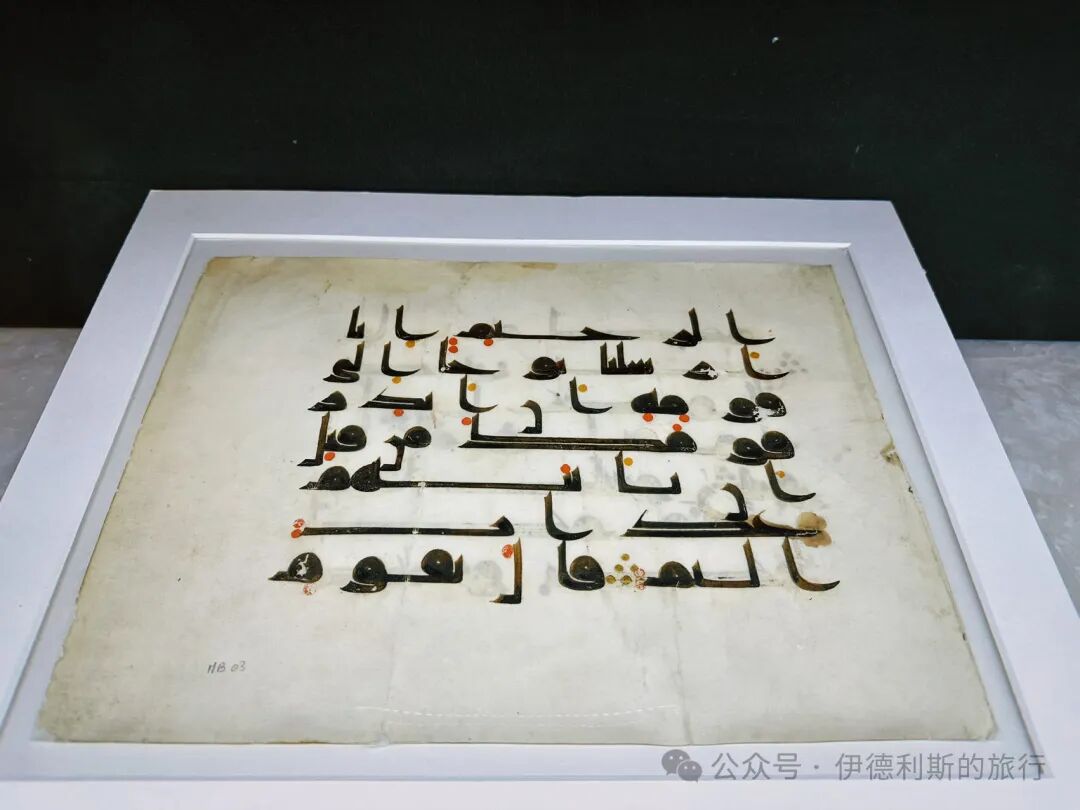
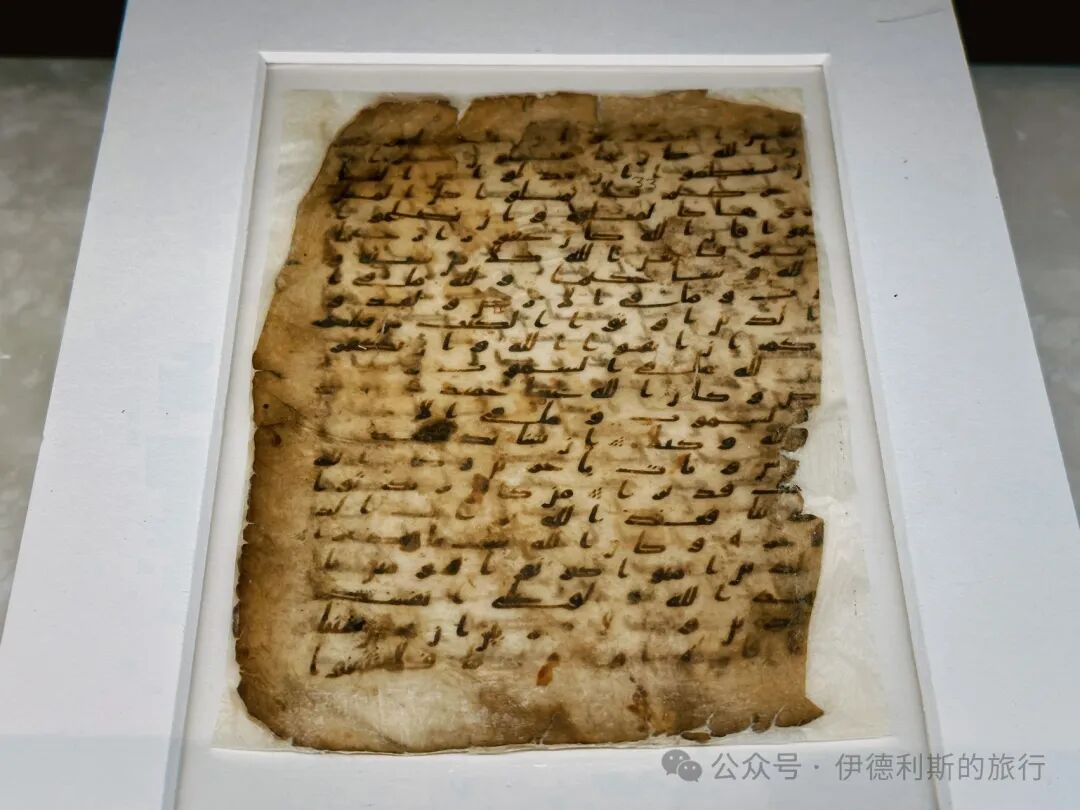
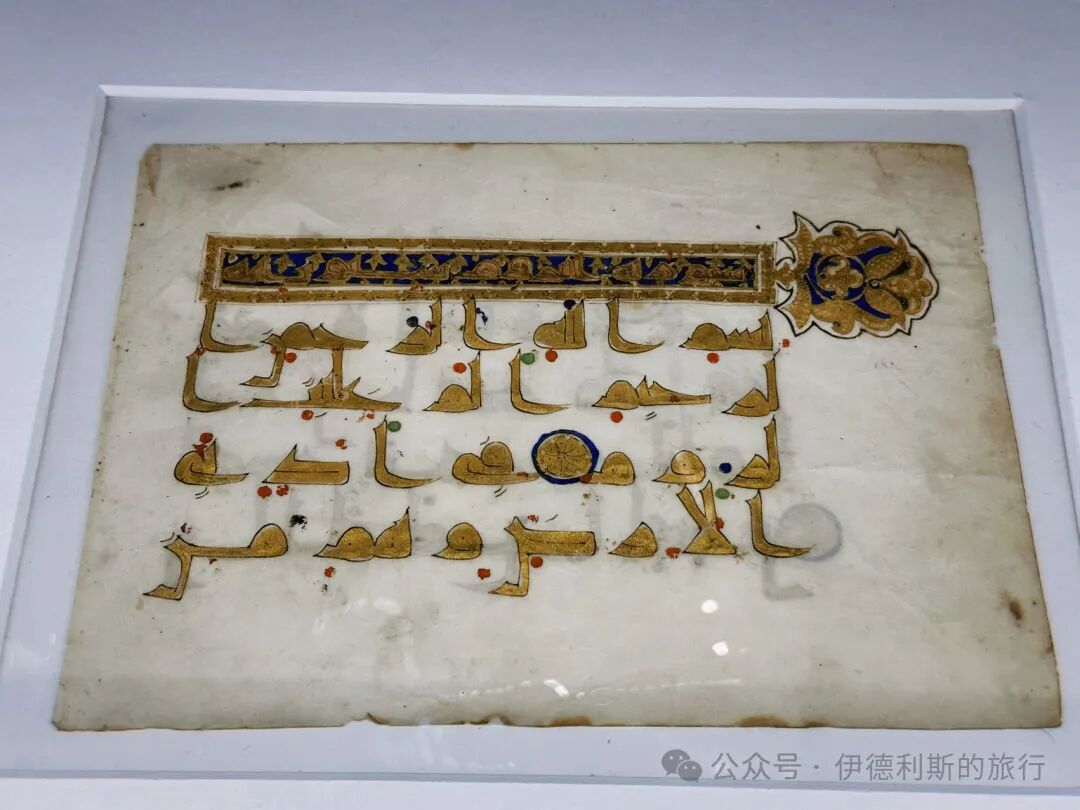
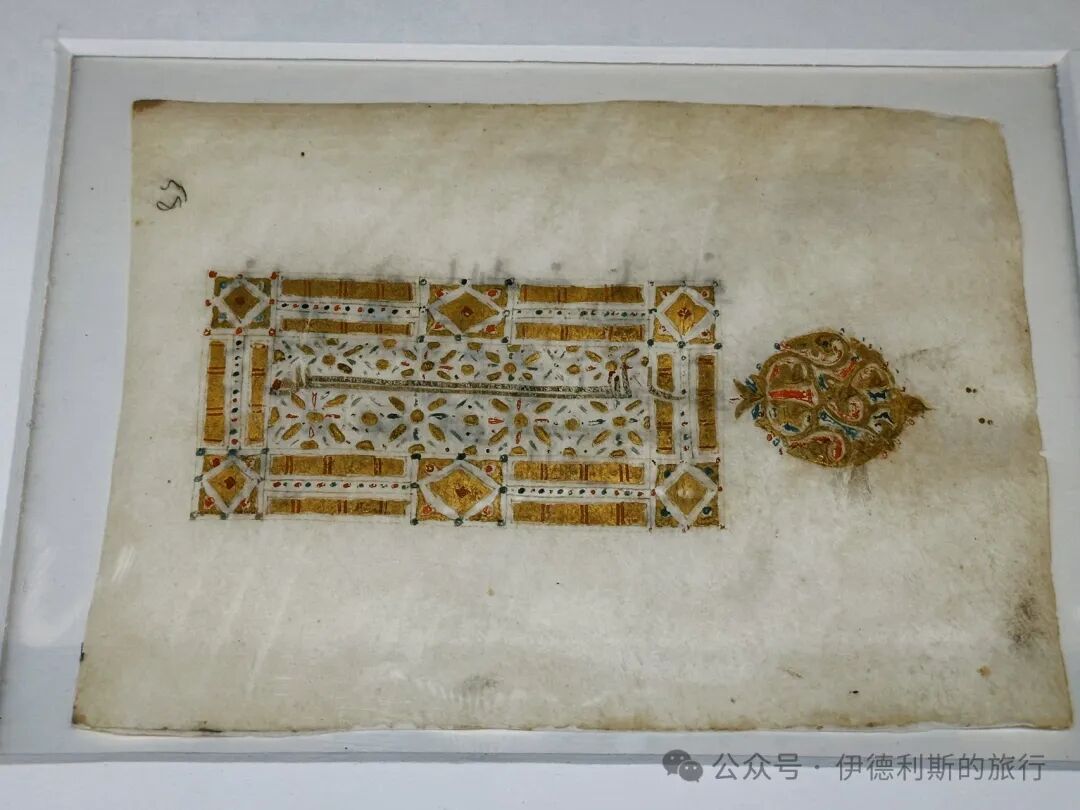
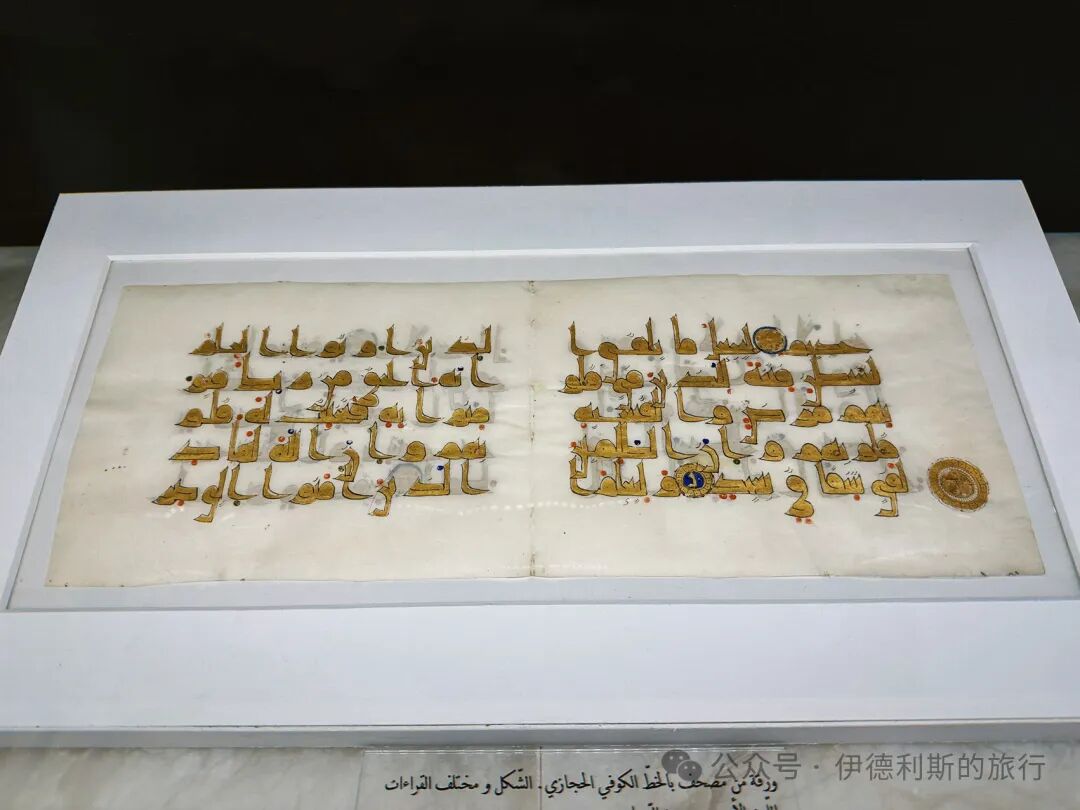
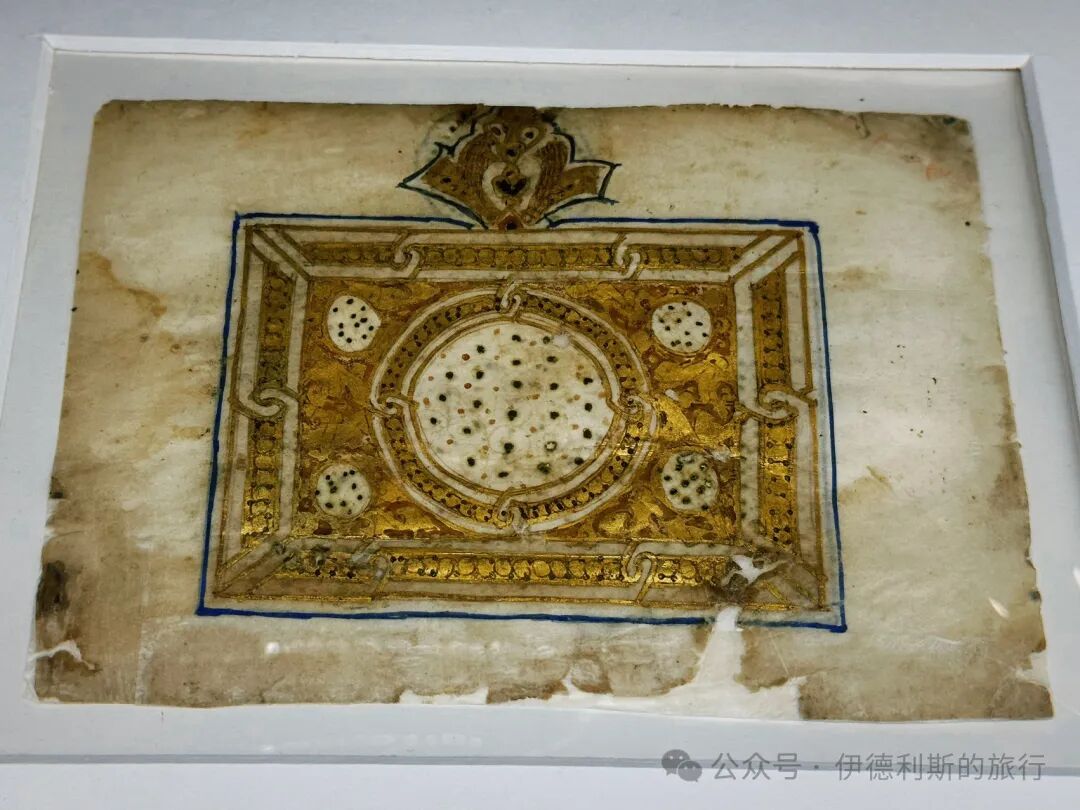
Quran manuscripts from the 8th to 12th centuries held by the Great Mosque of Kairouan in Tunisia.
The library of the Great Mosque of Kairouan holds a large number of manuscripts and established a catalog as early as the 13th century. to scriptures, these manuscripts include books related to the Maliki school of thought, which are also the oldest documents of the Maliki school.
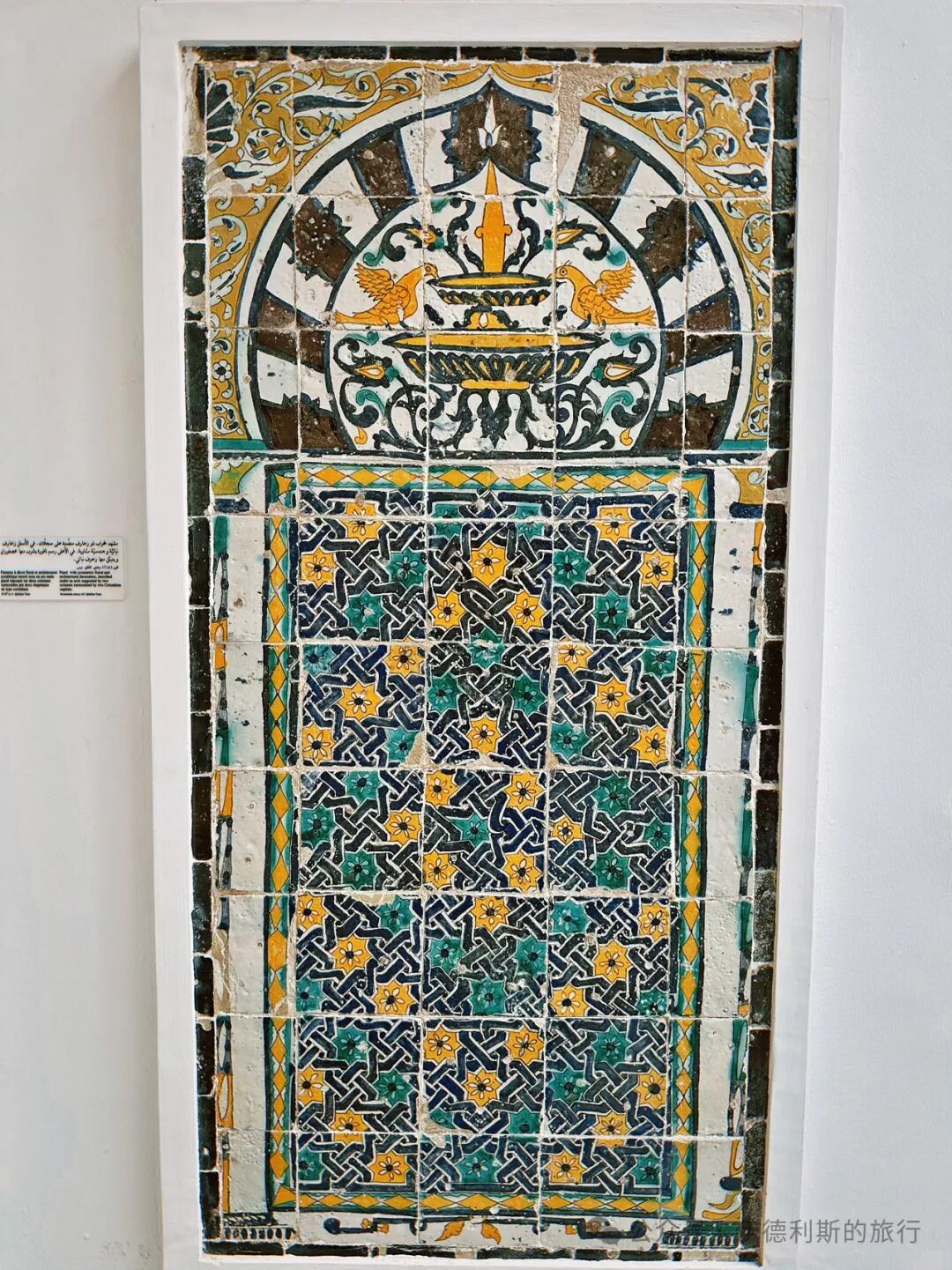
Tunisian Qallaline tiles from the 17th and 18th centuries. These tiles are named after the Qallaline region of Tunisia. They were influenced by Ottoman tile art but developed their own unique style.
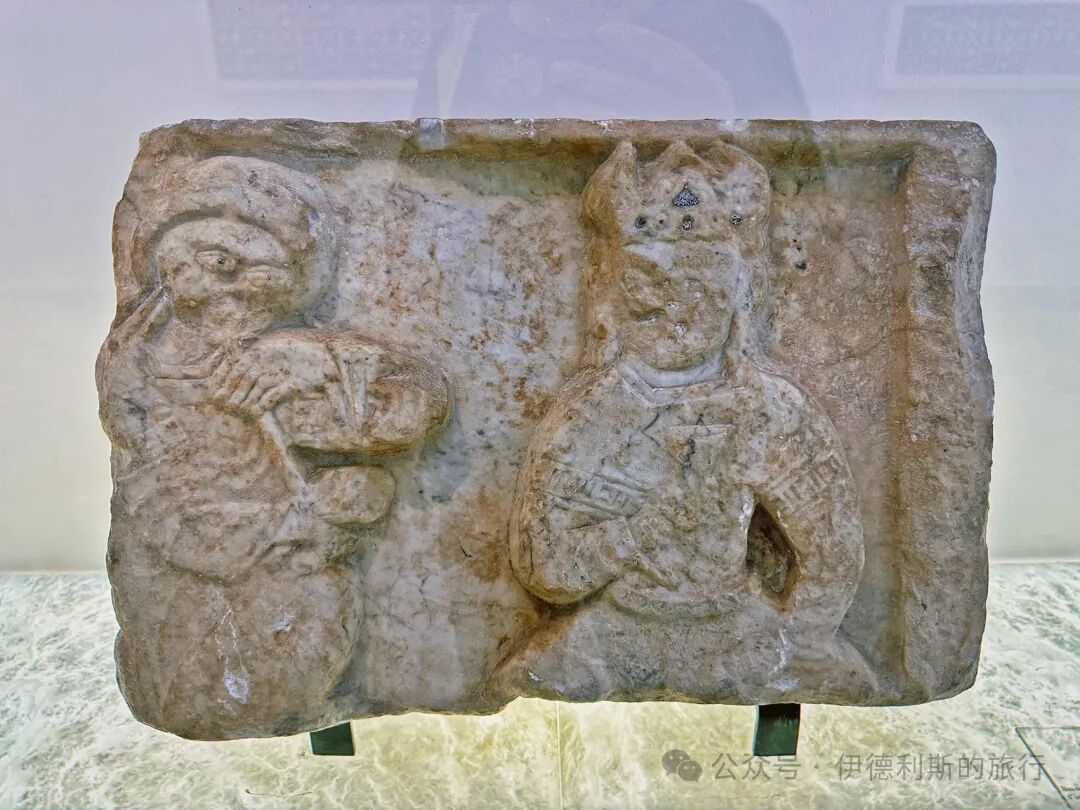
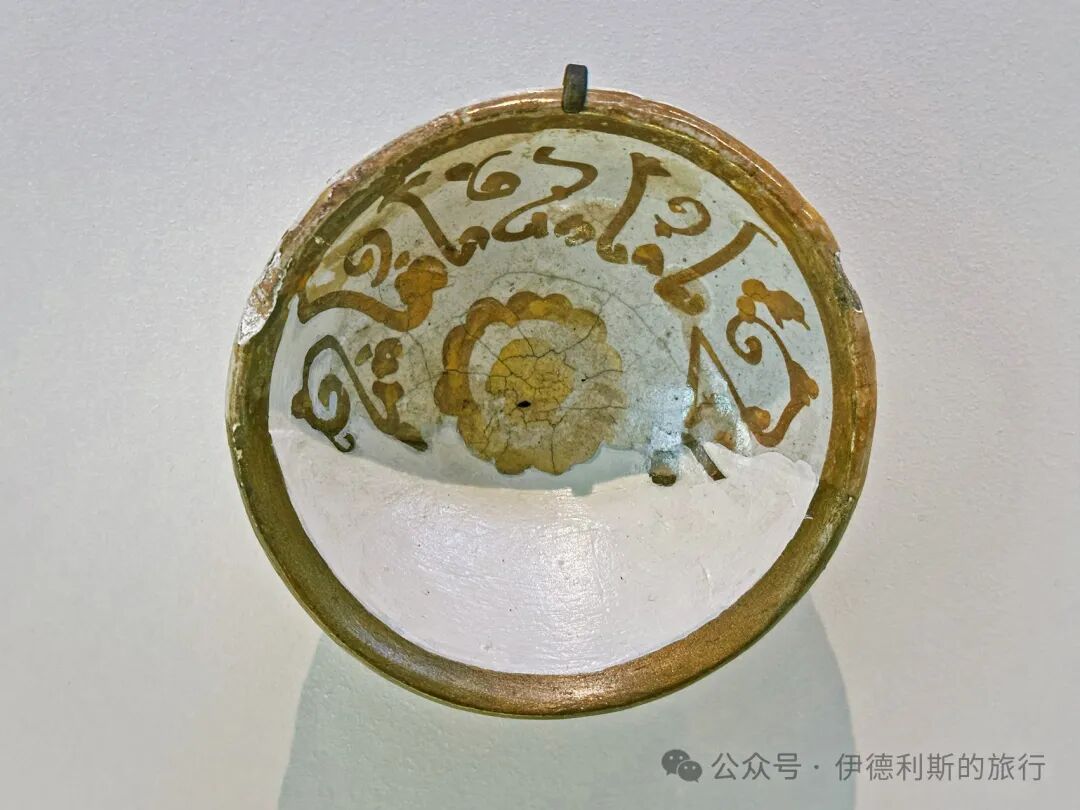
A marble carving from the 10th-century Fatimid period in Mahdia, Tunisia, depicting a Fatimid prince. A glazed bowl with Kufic script from the Fatimid dynasty period in Mahdia.
The ancient city of Mahdia was built by the Fatimid dynasty between 916 and 921, and it became the capital of the Tunisia region after its completion. Before this, the capital of the Tunisia region was Kairouan, which was dominated by Sunnis. Because of this, the Shia Fatimid dynasty built a new capital on the Mediterranean coast, far away from Kairouan. Once finished, Mahdia included thick city walls, palaces, a harbor, and a great mosque. Unfortunately, none of the surface buildings survived. Now, you can only see artifacts unearthed through archaeological excavations in museums.
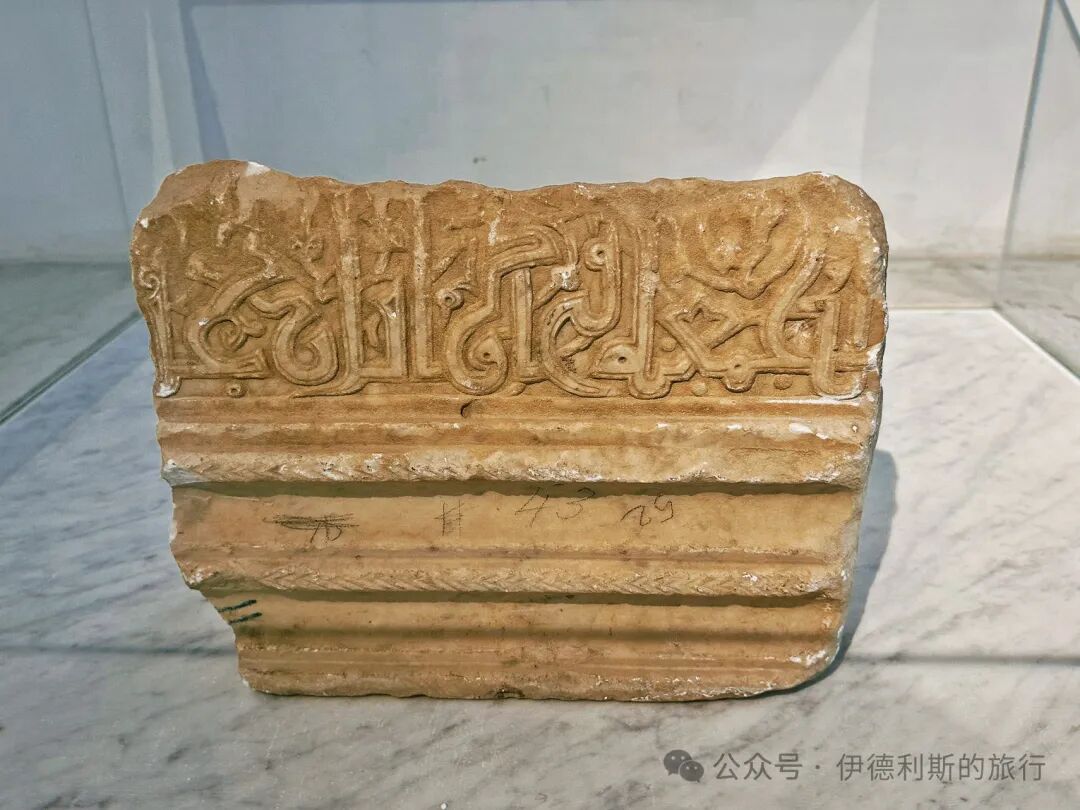
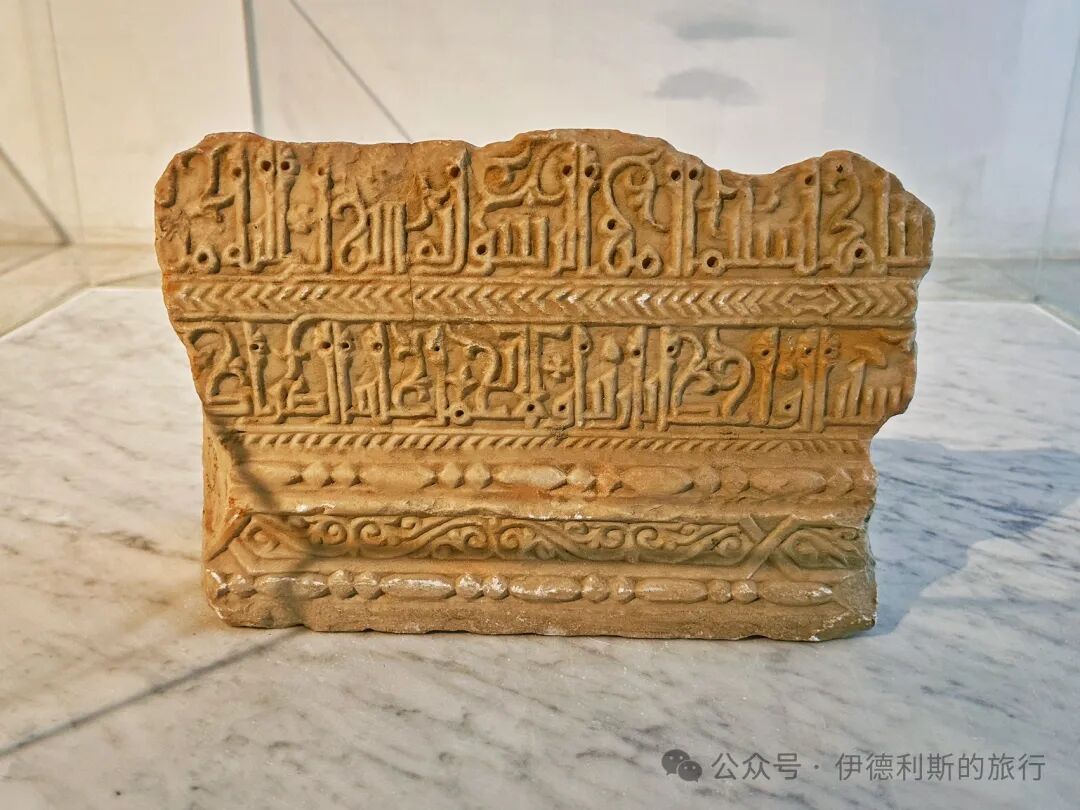
Exquisite 11th-century marble carvings with Kufic script.
A 10th-century wood carving from Egypt.
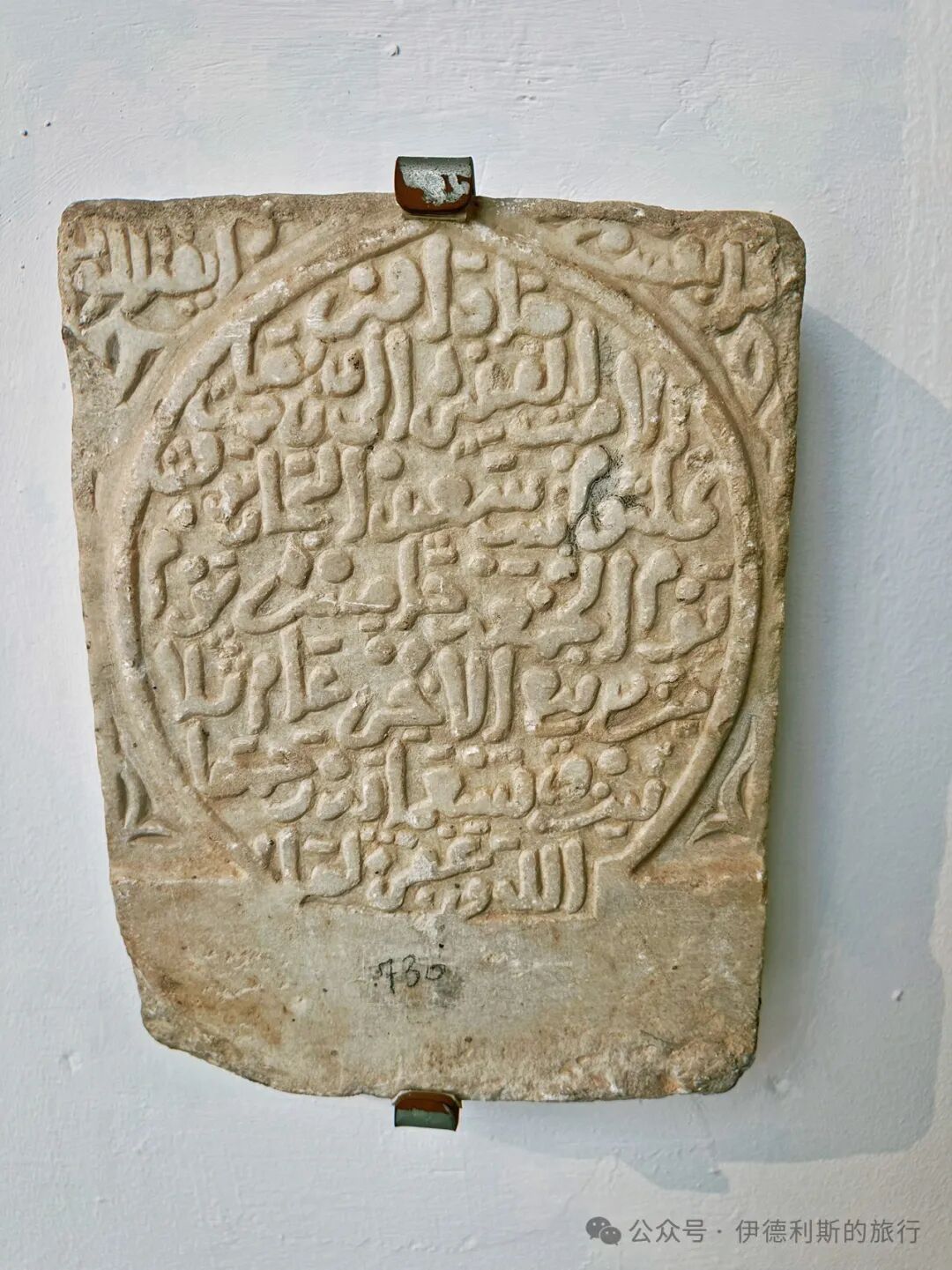
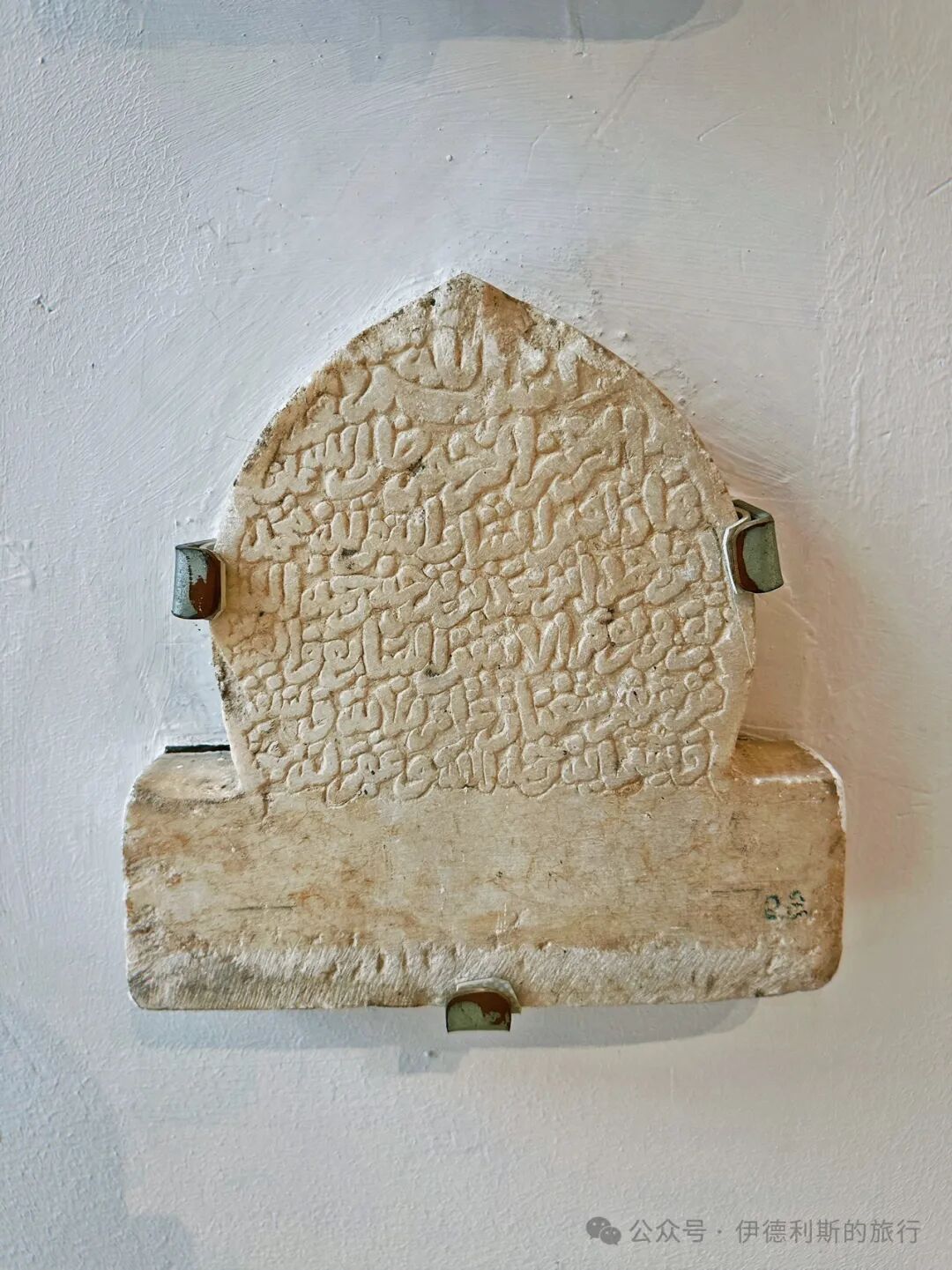
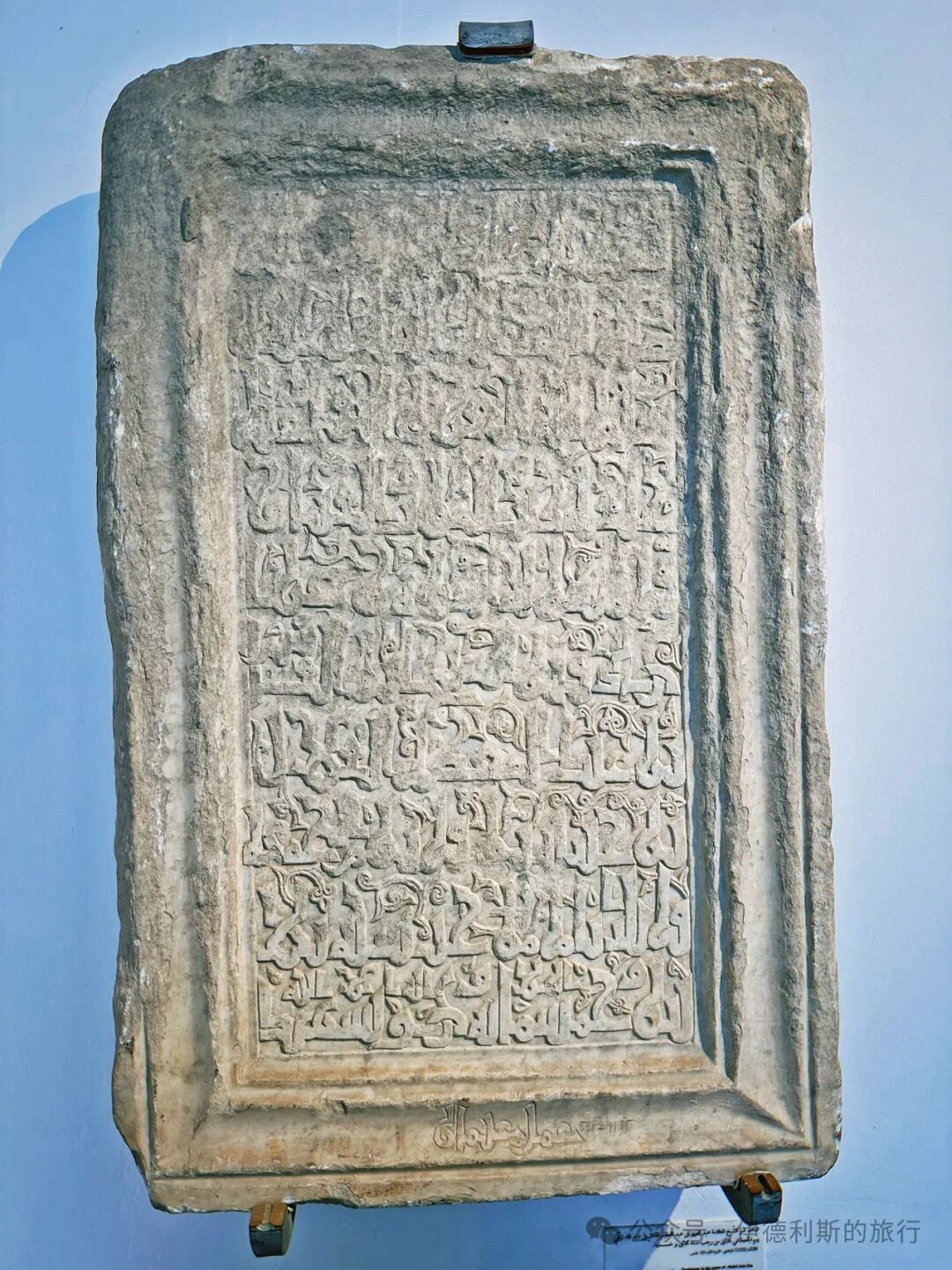
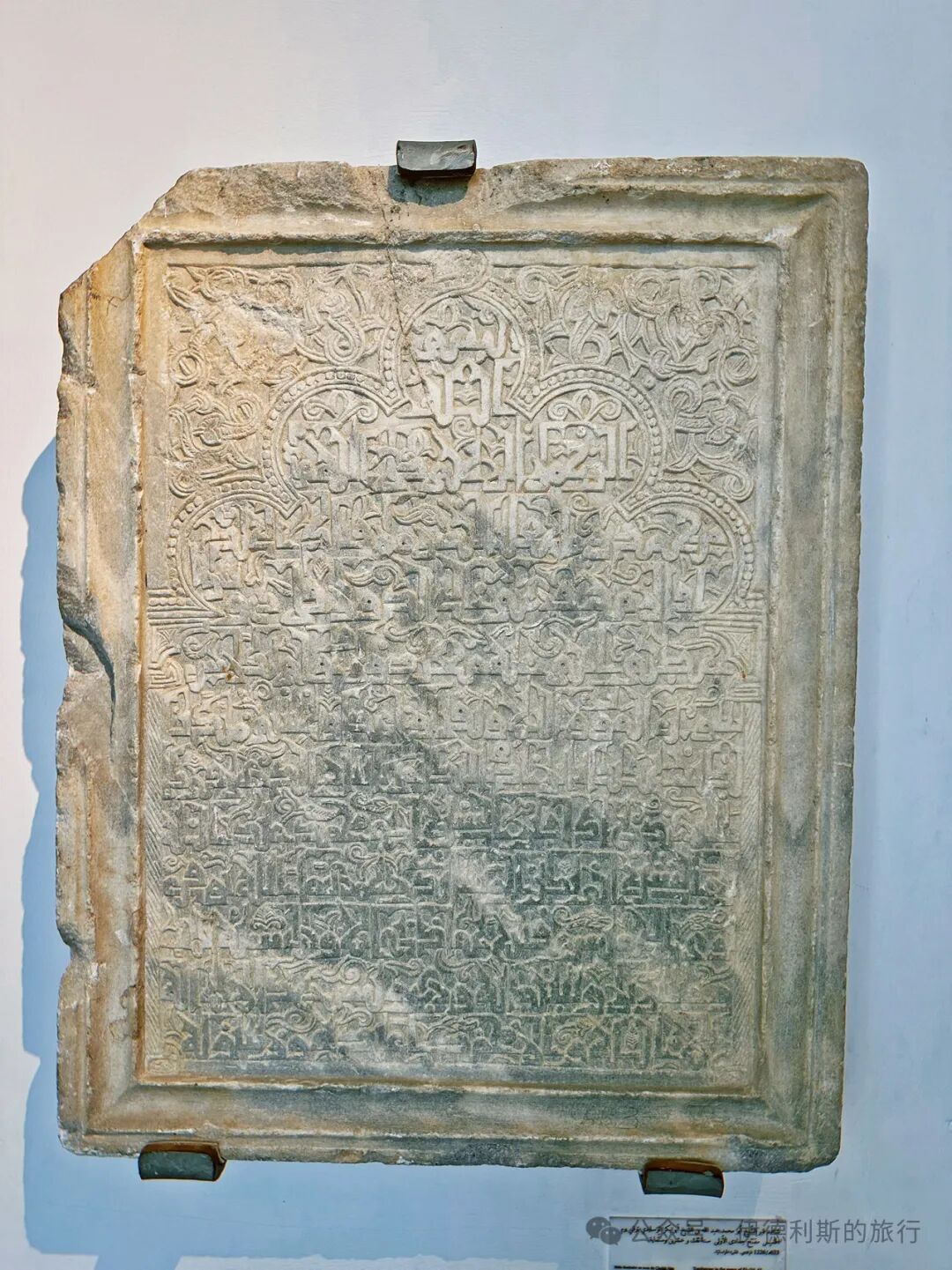
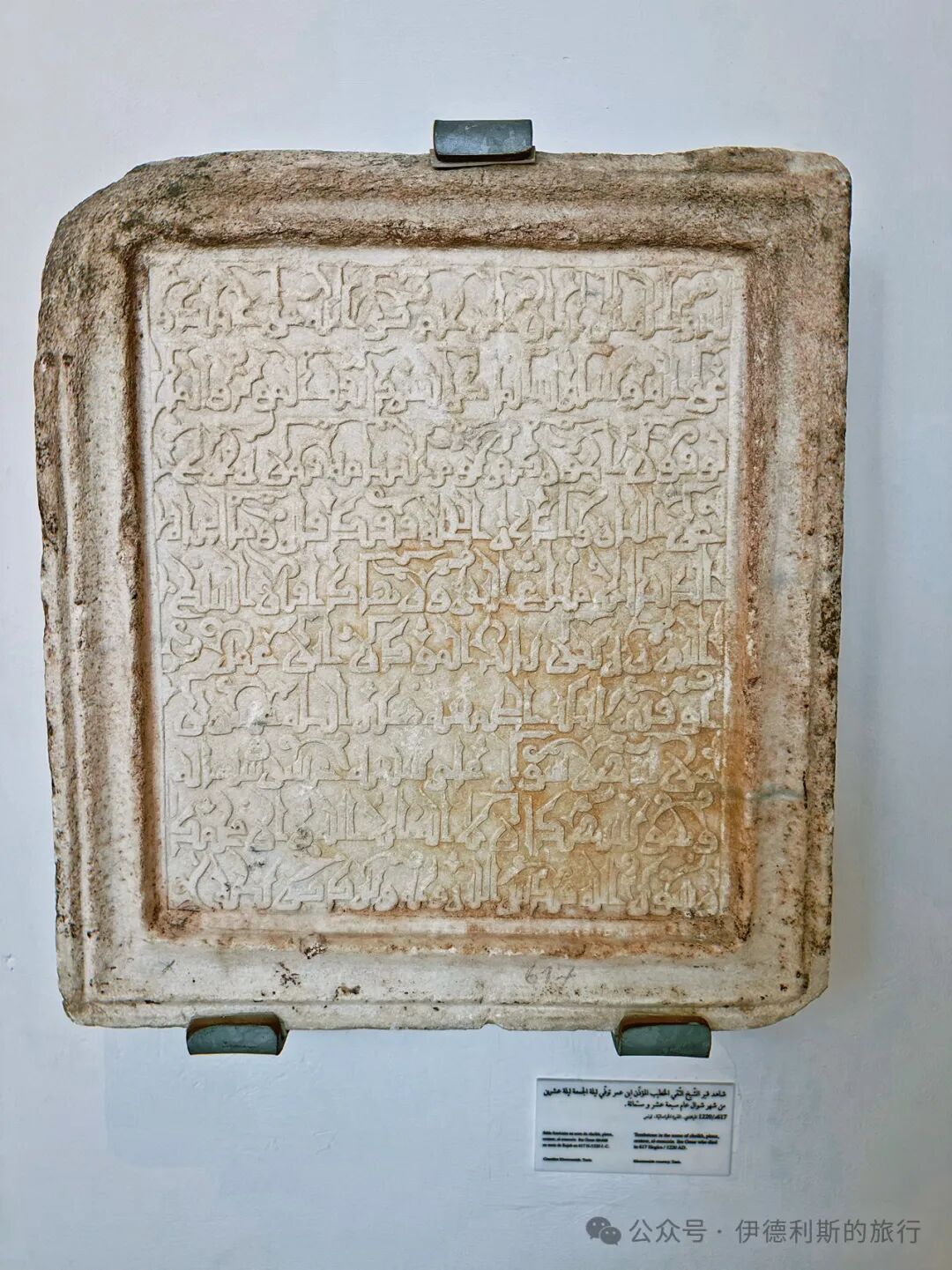
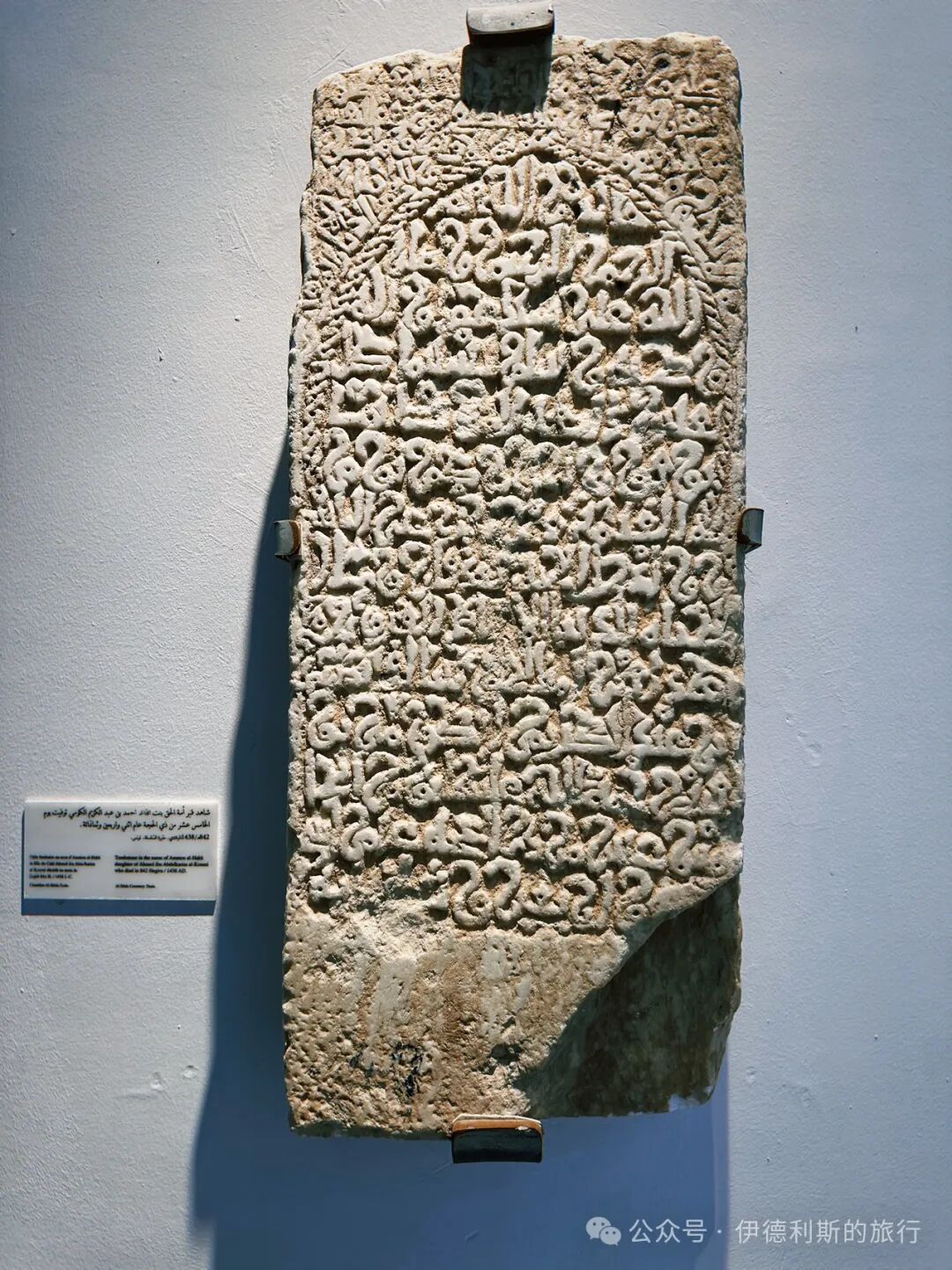
A 13th to 16th-century tombstone from Tunisia where you can see the local style of Arabic calligraphy.
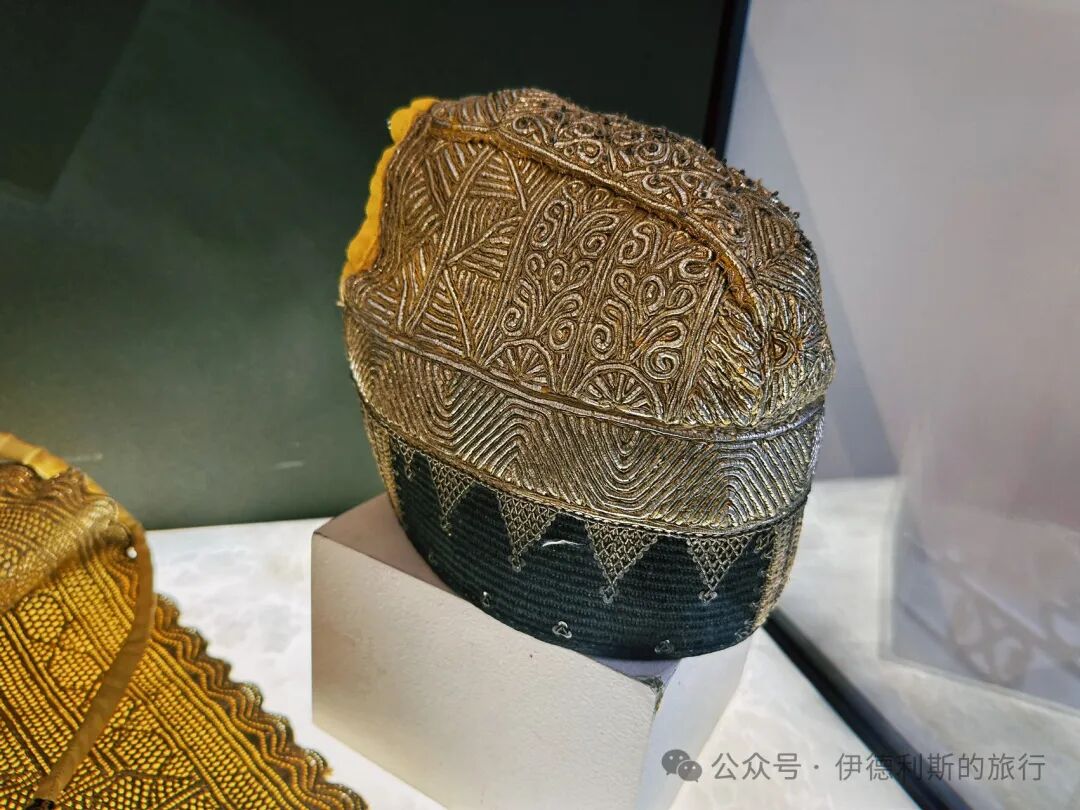
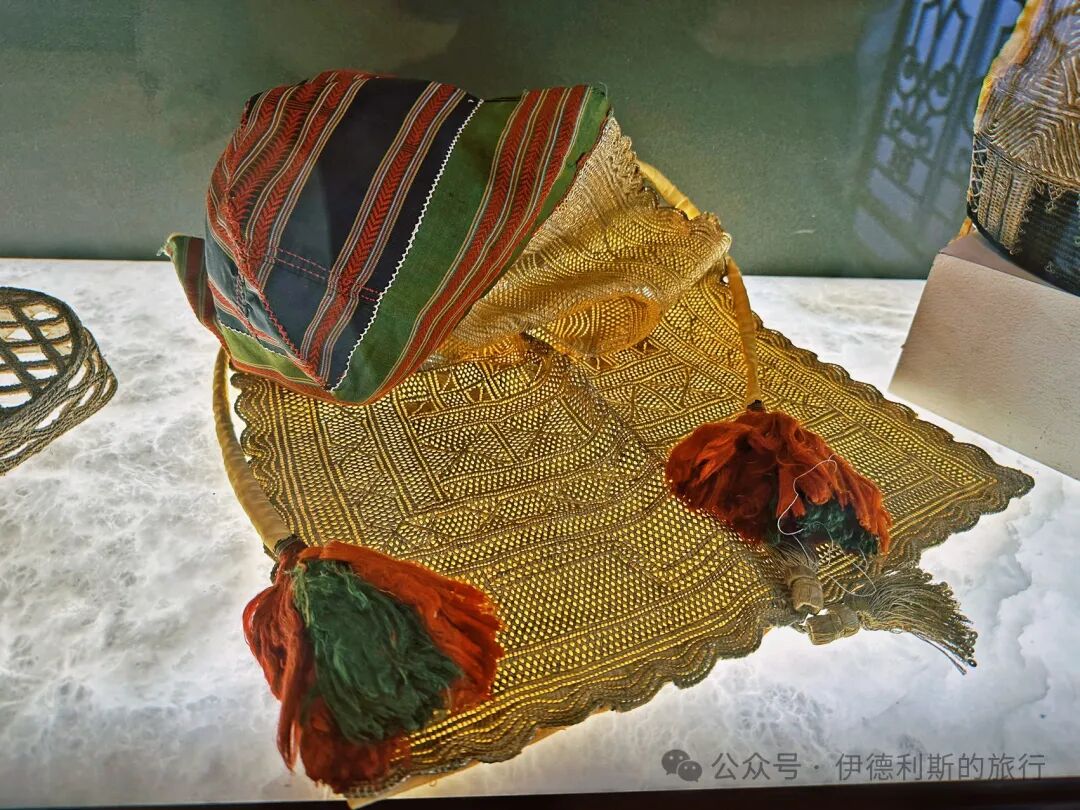
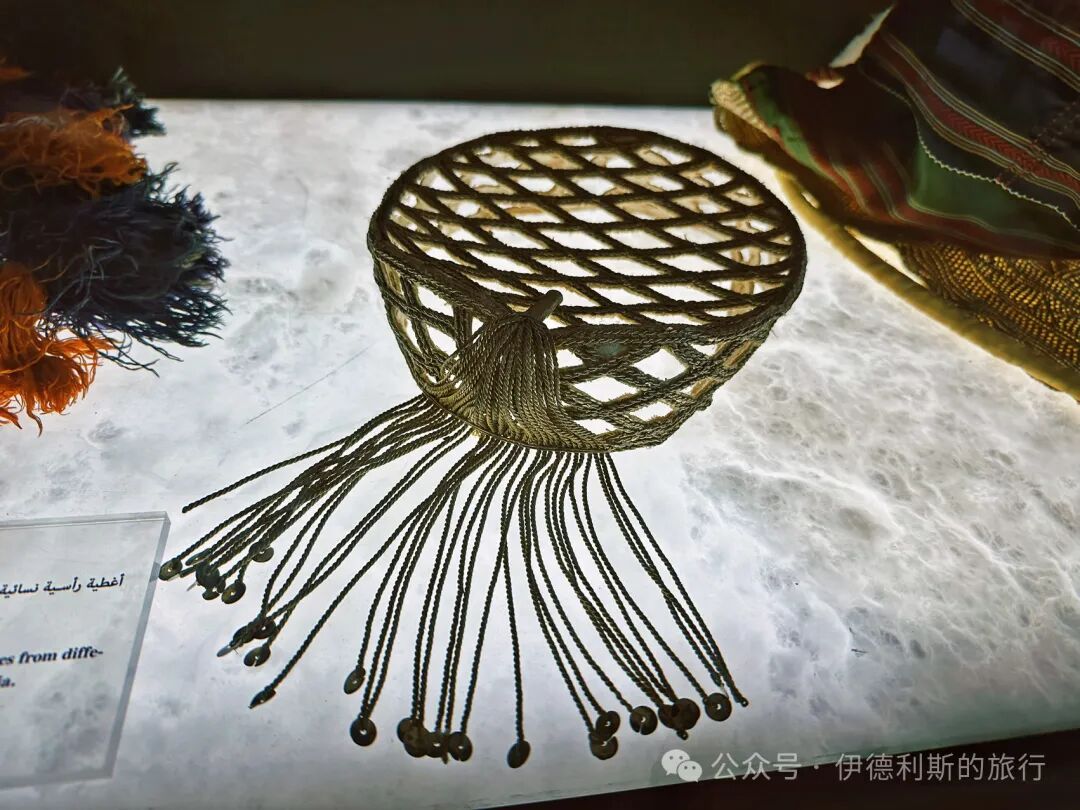
A traditional Tunisian women's headpiece. view all
Summary: This article visits the Bardo National Museum in Tunis, a major museum set inside a former palace and known for its historical collections and mosaics. It keeps the original museum details, photographs, object notes, and travel observations for readers interested in Tunisia's cultural heritage.
The National Museum of Tunisia is located inside the Bardo Palace, 4 kilometers west of the old Medina. The palace was first built in the 15th century. After the Ottoman dynasty took over in the 16th century, it was rebuilt and expanded many times, eventually becoming the main residence of the Husainid Beys (1705-1957).
The Husainid dynasty was a Beylik nominally under the Ottoman Empire. Its founder, Husain, was an Ottoman officer of Greek Cretan descent. He was granted the title of Bey by the Ottoman Sultan in 1705 and began his rule over Tunisia. After the 19th century, the Husainid dynasty began trading heavily with European merchants, and in 1861, they issued the first constitution in the Arab world. However, economic decline and social unrest in the late 19th century led to Tunisia becoming a French protectorate in 1881.
In 1882, Tunisia and France jointly established the Tunisian Office of Antiquities and Arts, which immediately began converting the old harem of the Bardo Palace into a museum. After six years of restoration and collecting, the museum officially opened in 1888.
The museum houses the Small Palace, built by Husain II Bey between 1824 and 1835. The palace was built in the Andalusian Moorish style, featuring a T-shaped main hall and a central courtyard with a pool.
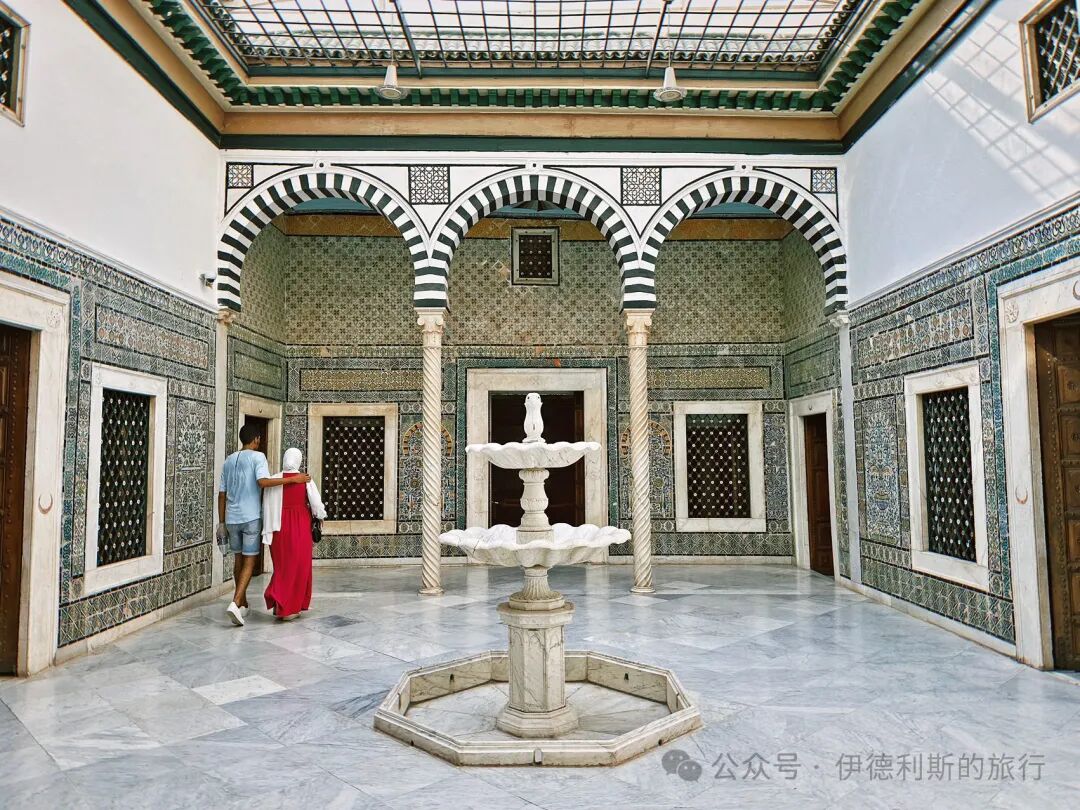
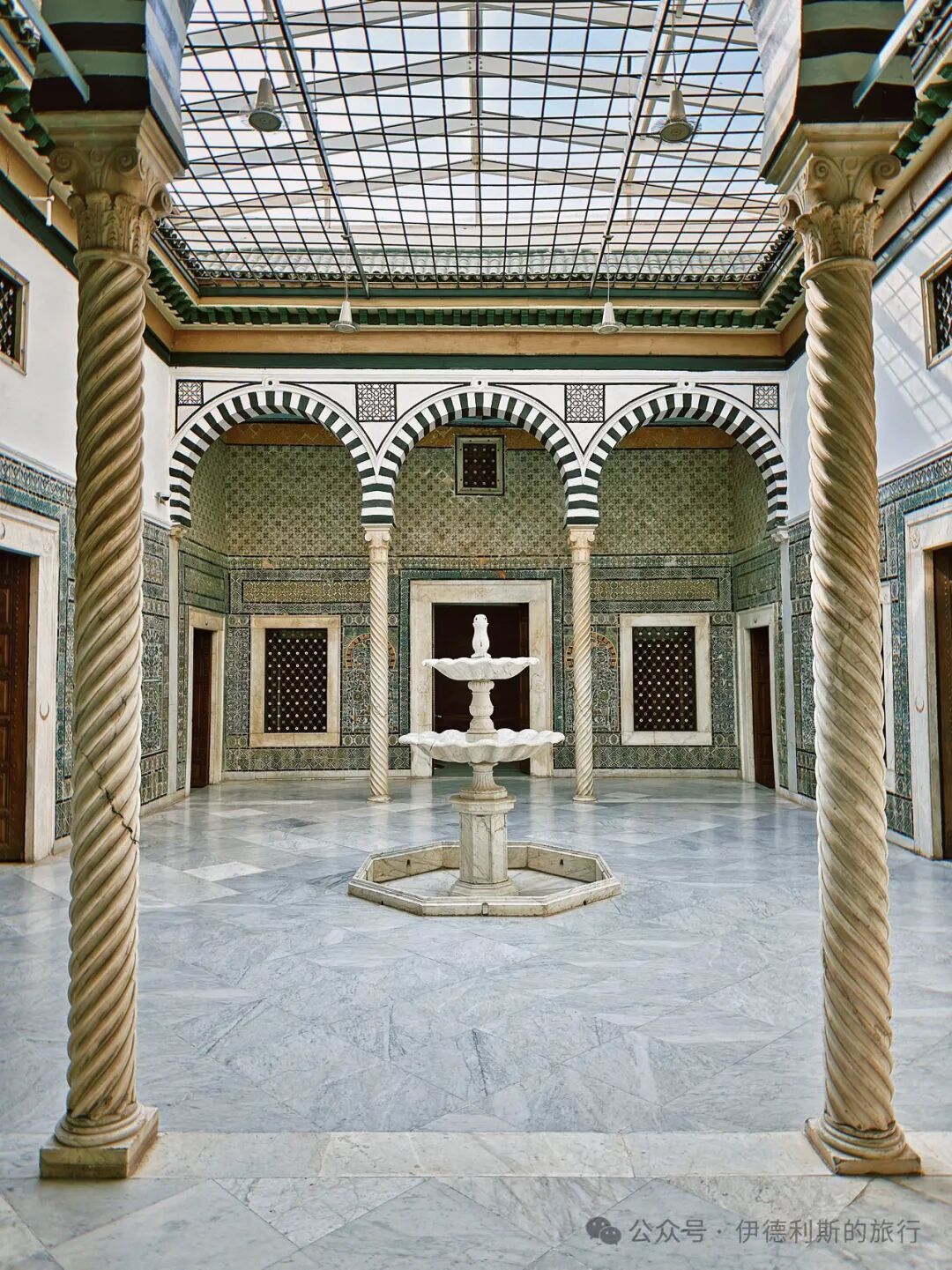
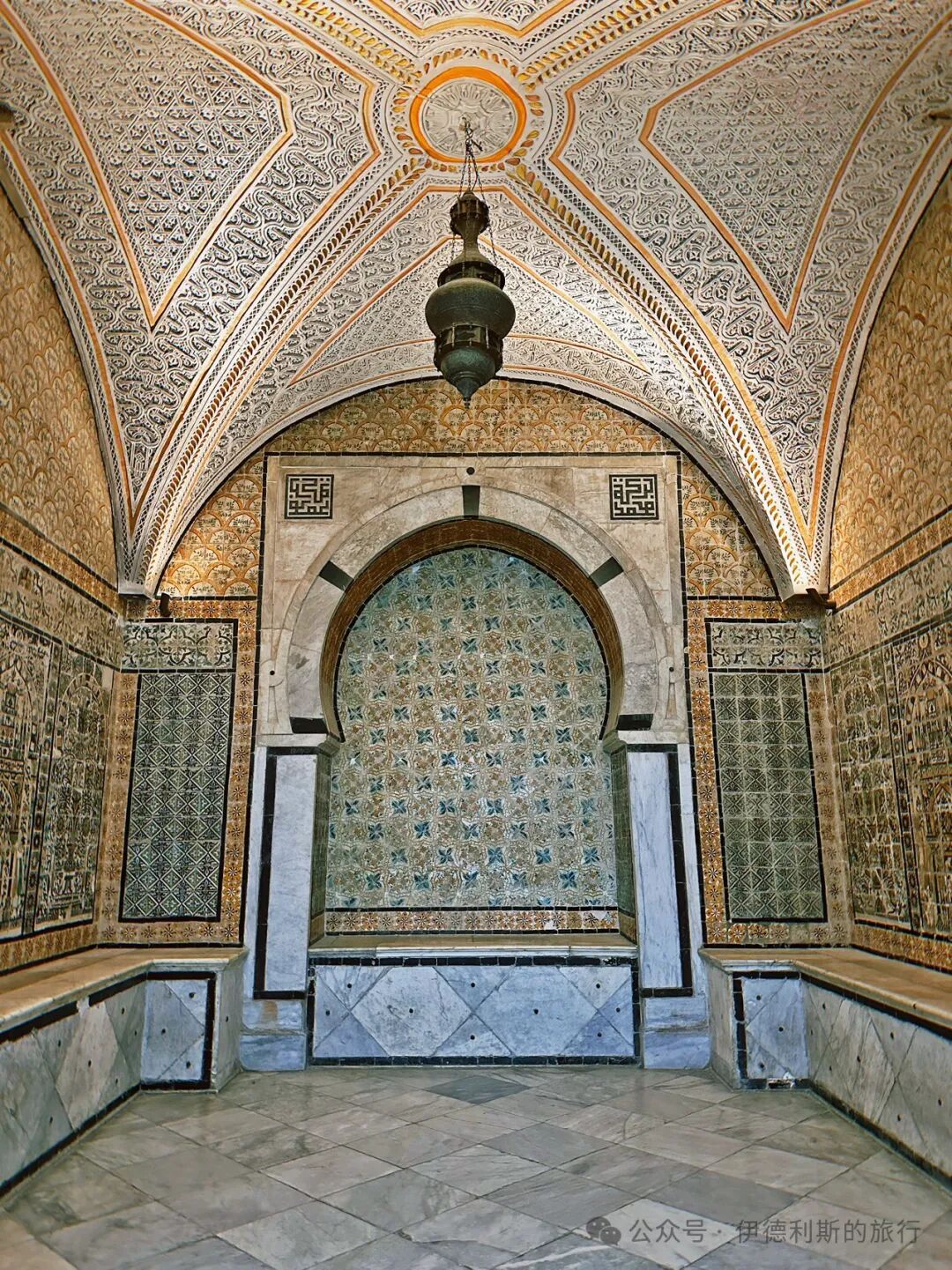
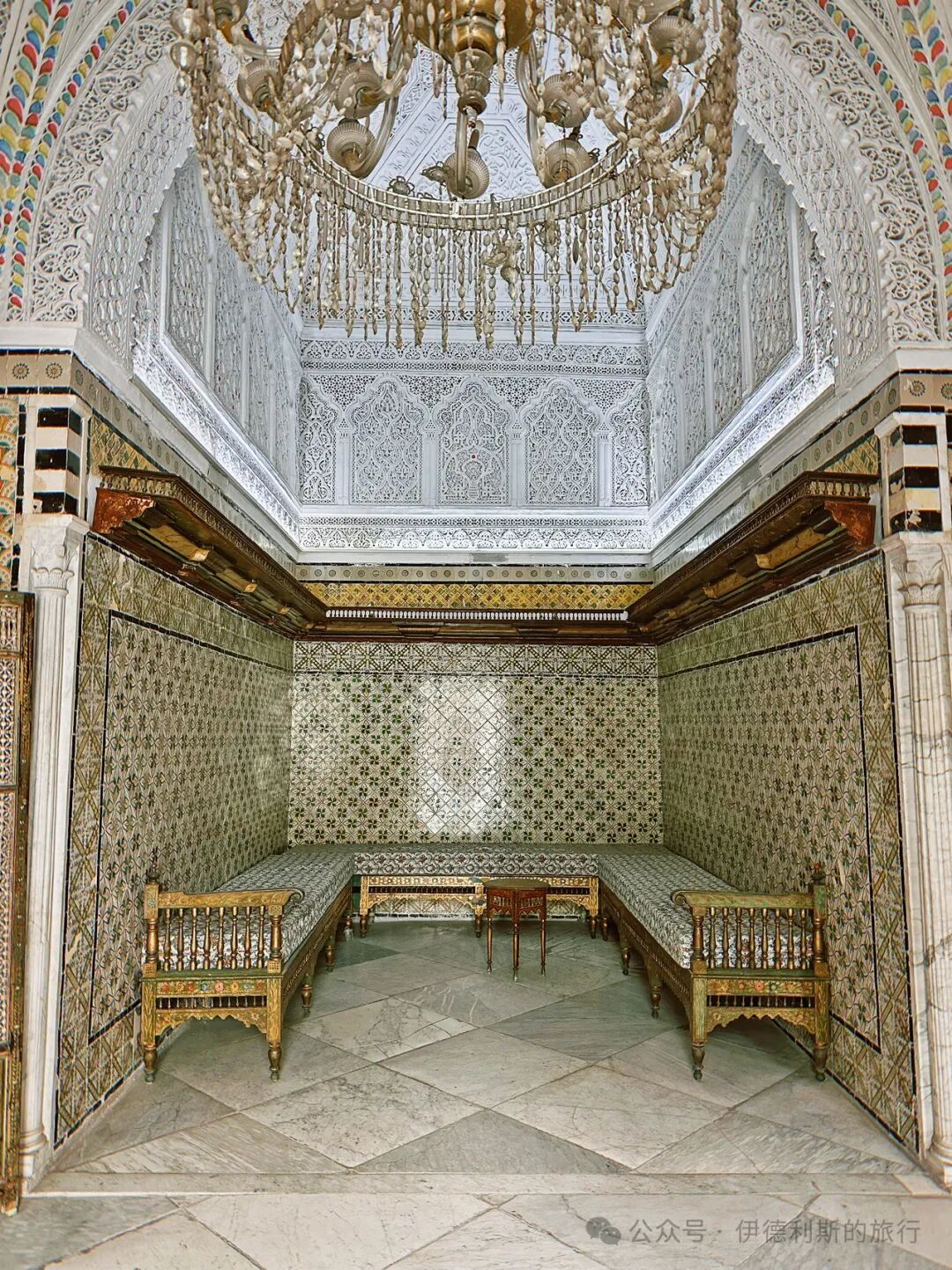
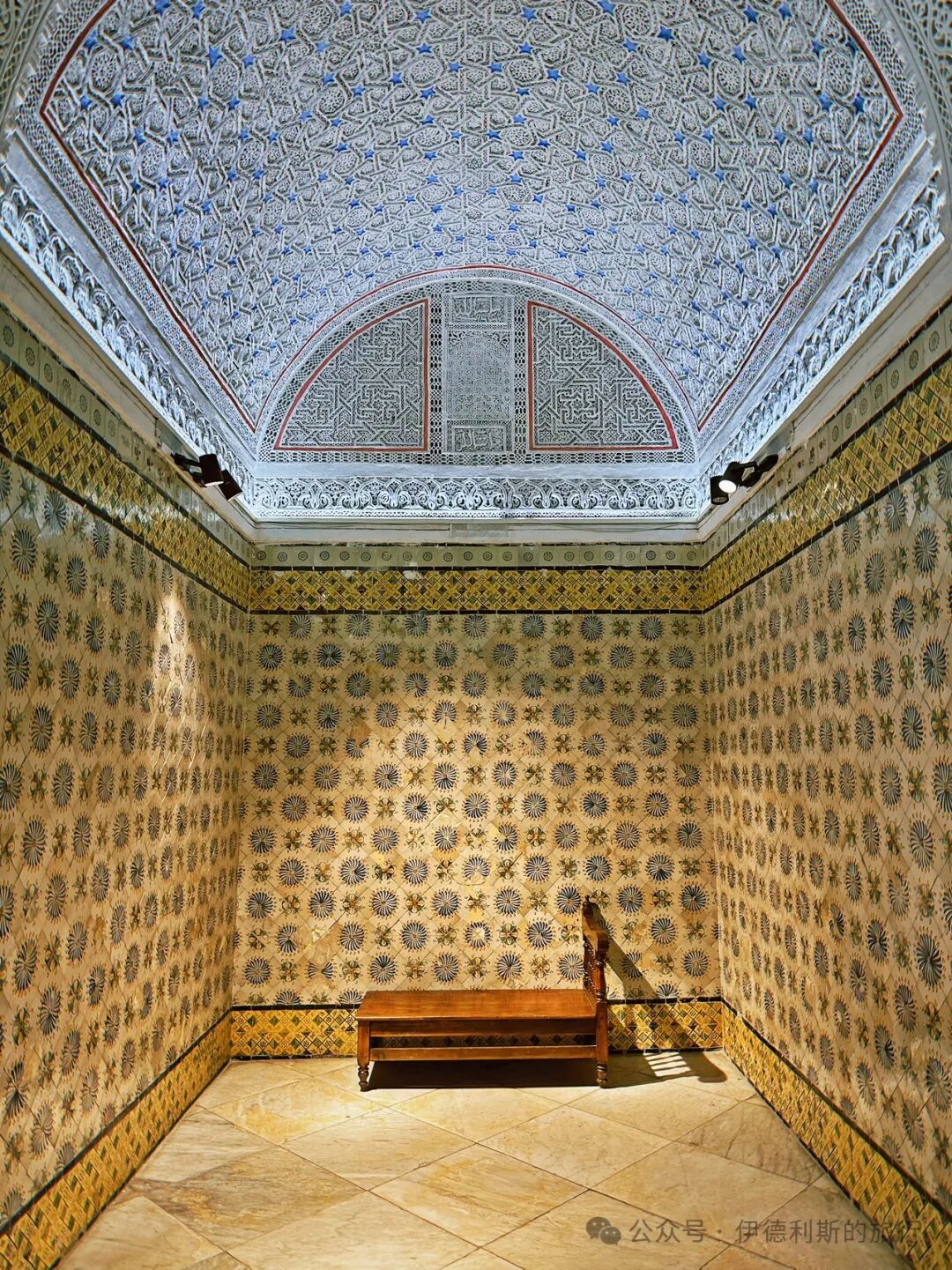
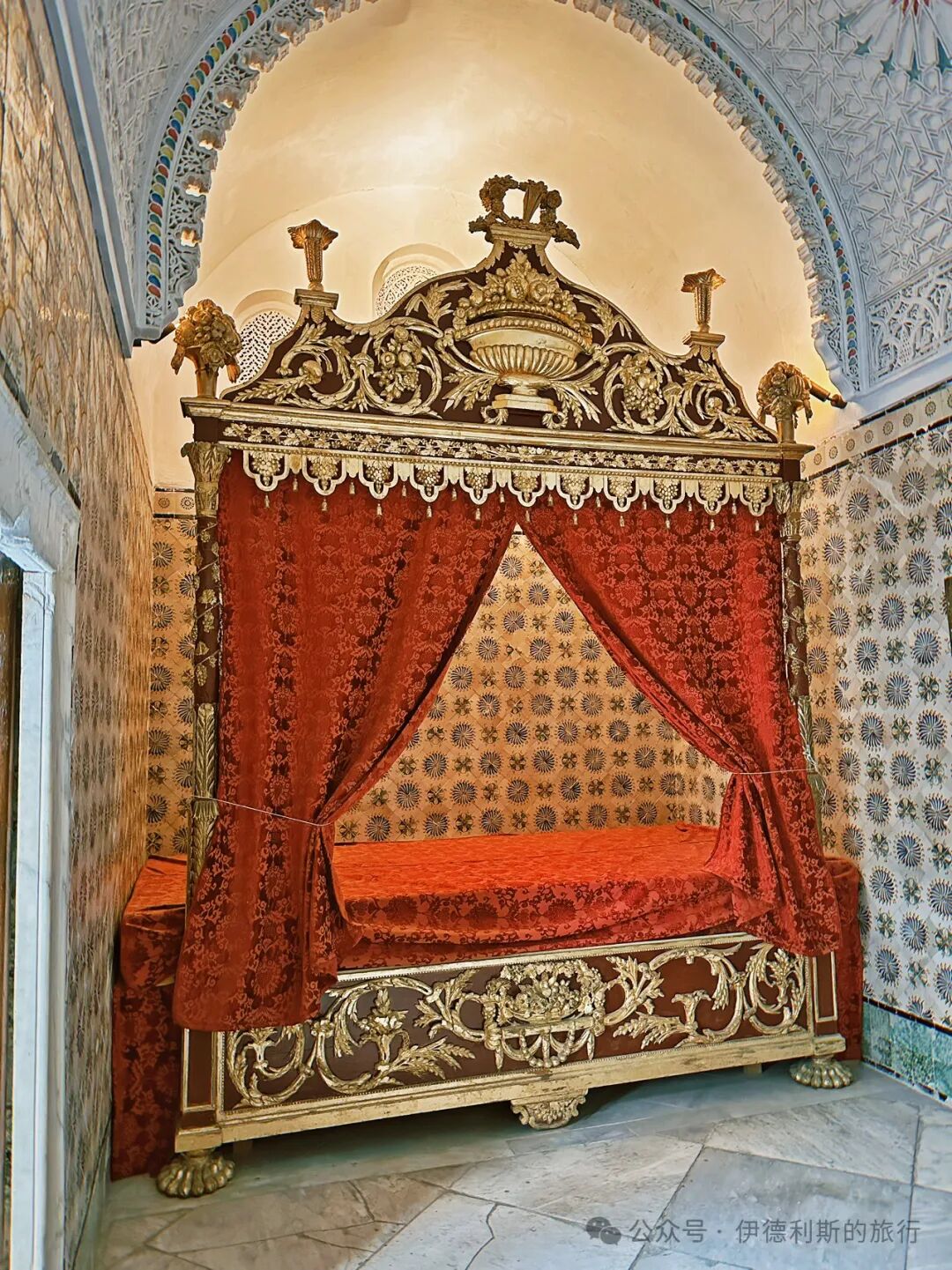
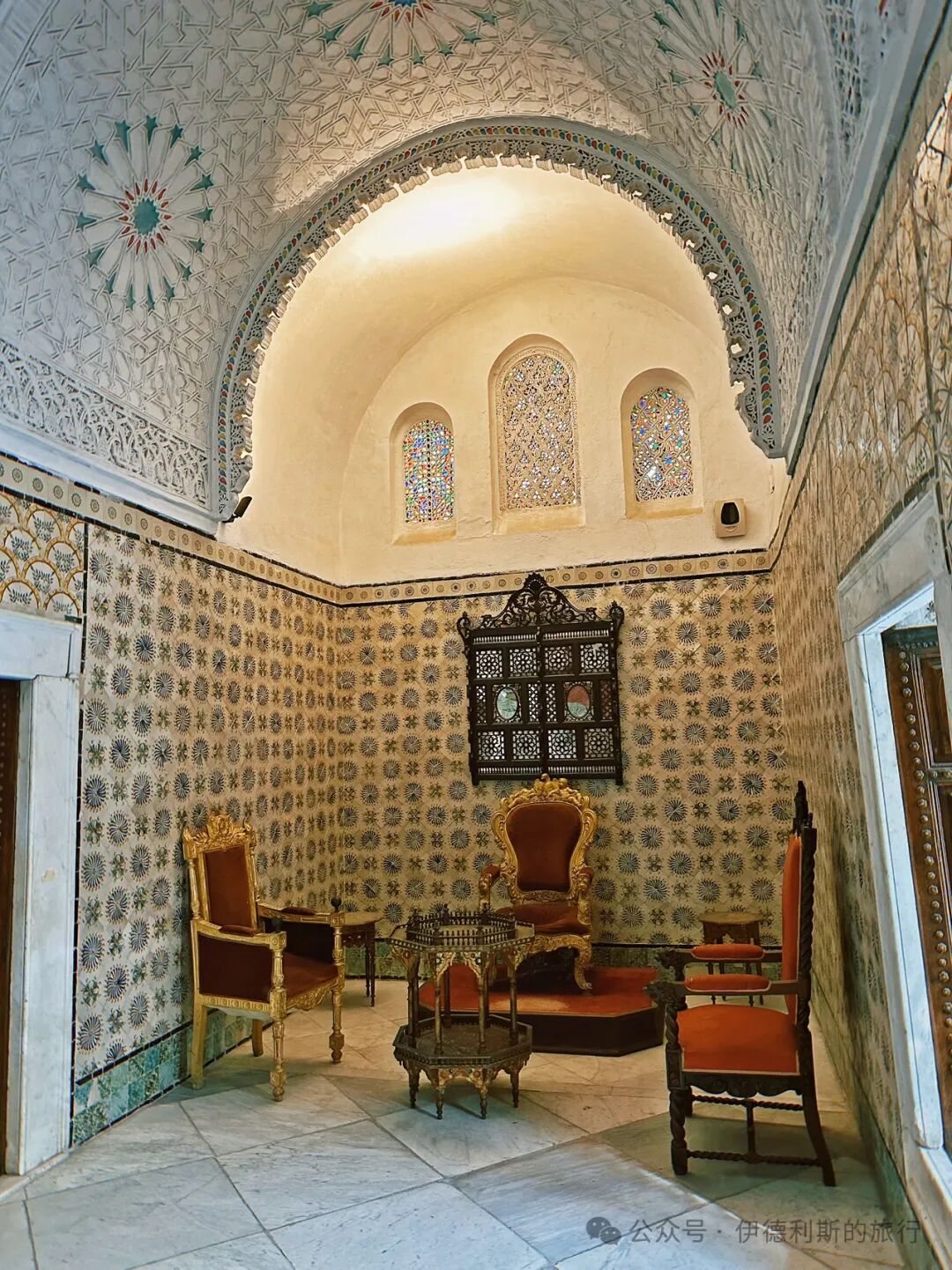
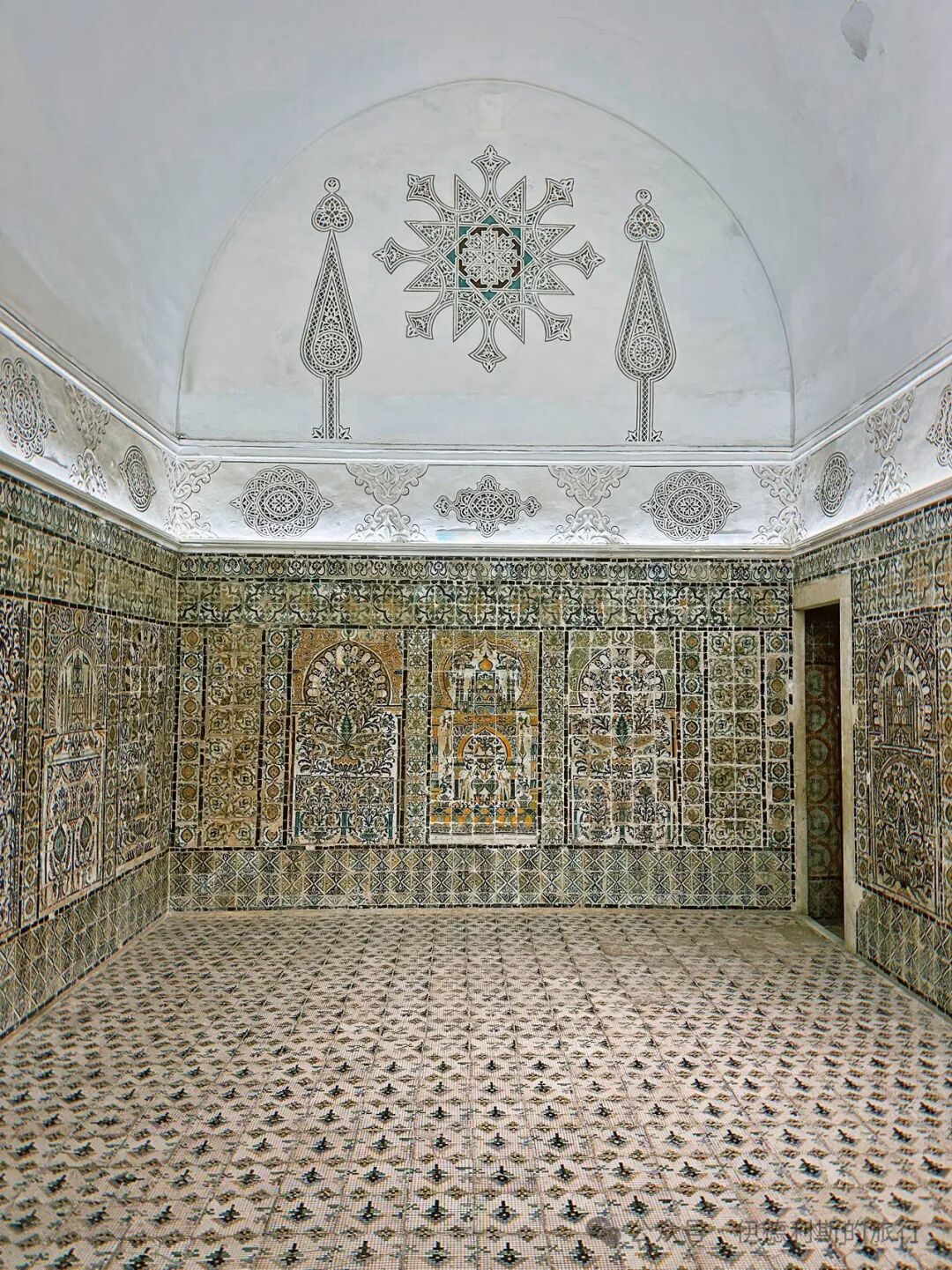
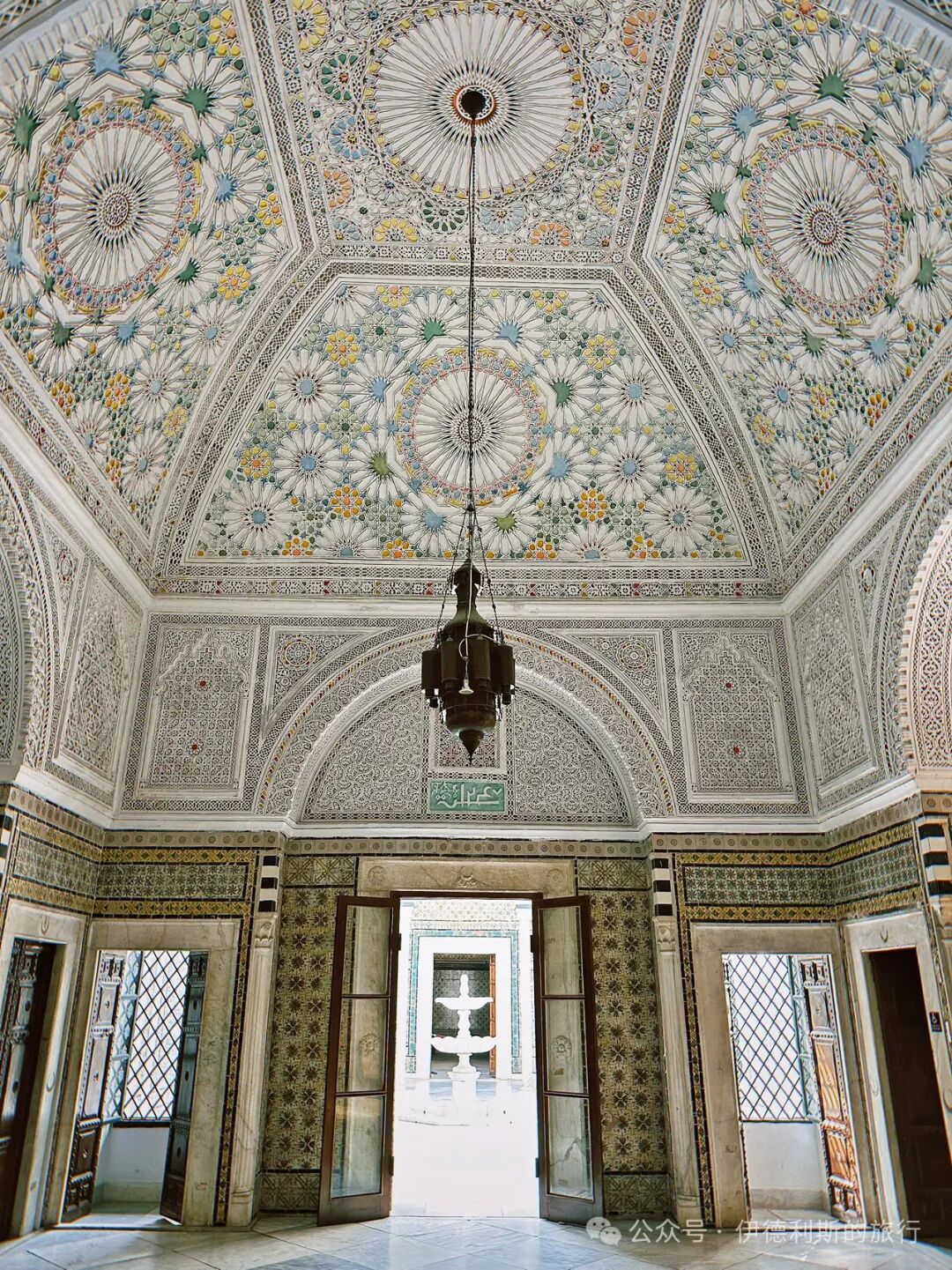
Tile and plaster decorations inside the Small Palace of Husain II.
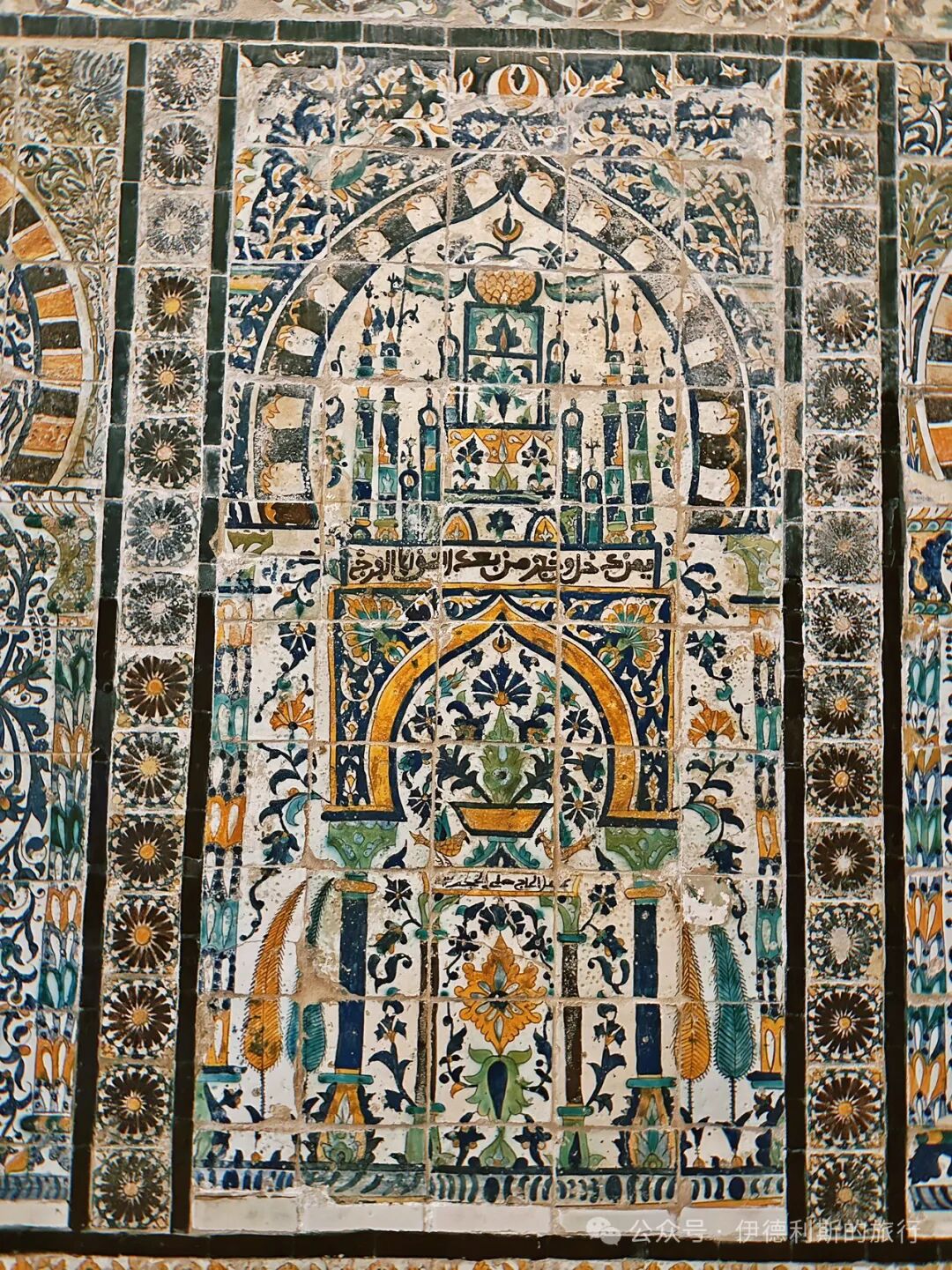
The reception hall and harem built by Muhammad III Bey between 1859 and 1864 feature both Italian and Tunisian styles.
Muhammad III Bey issued the first written constitution in the Arab world in 1861, which separated executive, legislative, and judicial powers and guaranteed equal rights for Muslims, Christians, and Jews. After the new constitution was issued, European merchants and secular schools began to appear in Tunisia.
The Blue Quran manuscript in the National Museum of Tunisia is a very famous religious manuscript in the world. This scripture uses parchment dyed with indigo, with ink outlining the text and gold leaf applied on top. The calligraphy is in the early Kufic script, which lacks sharp angles and vowel marks.
The origin of the Blue Quran is still highly debated, with theories pointing to Kairouan in Tunisia, Cordoba in Spain, Mashhad in Iran, or Iraq, dating back to the 9th or 10th century. The records say the Blue Quran was kept in the Great Mosque of Kairouan after the 14th century. It was broken up during the Ottoman period, but most of it remains in Kairouan, while other parts are held by major museums and collectors.
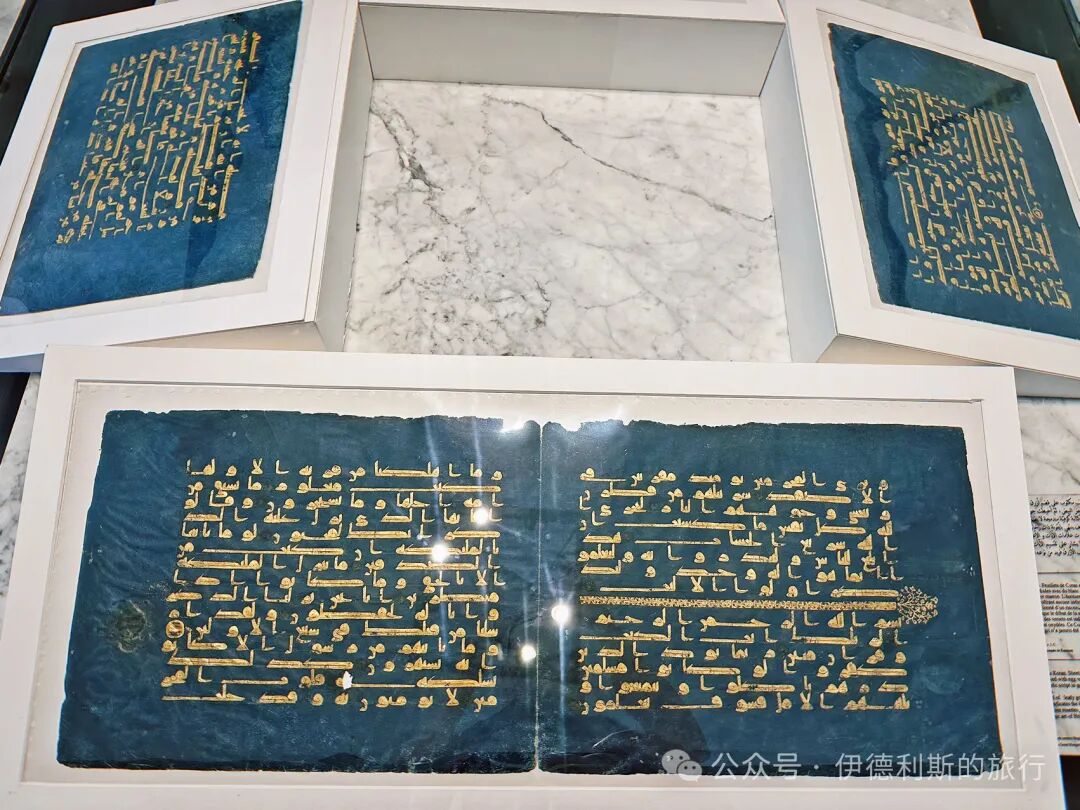
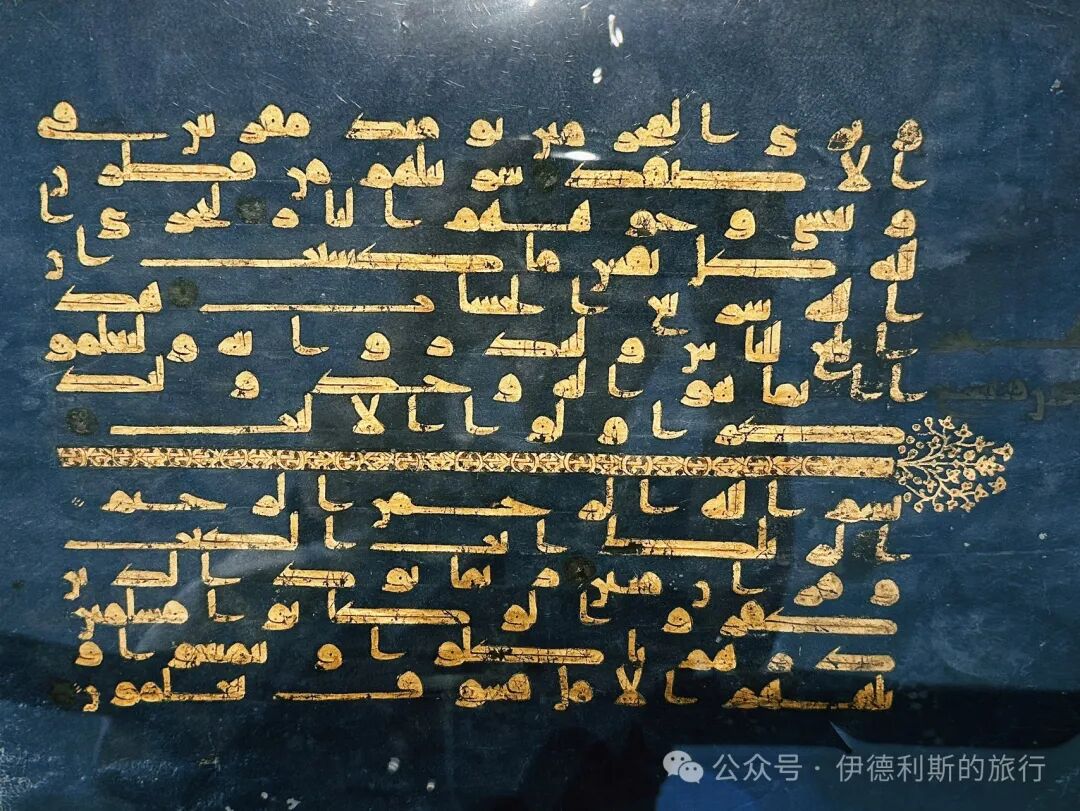
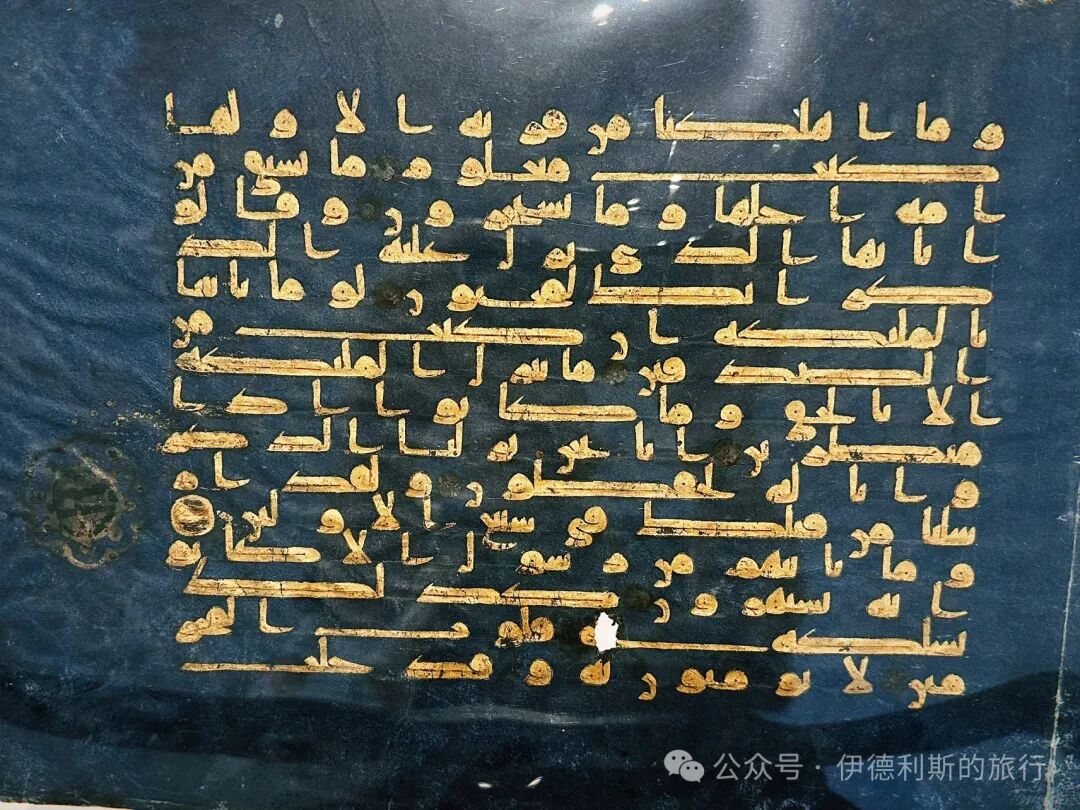
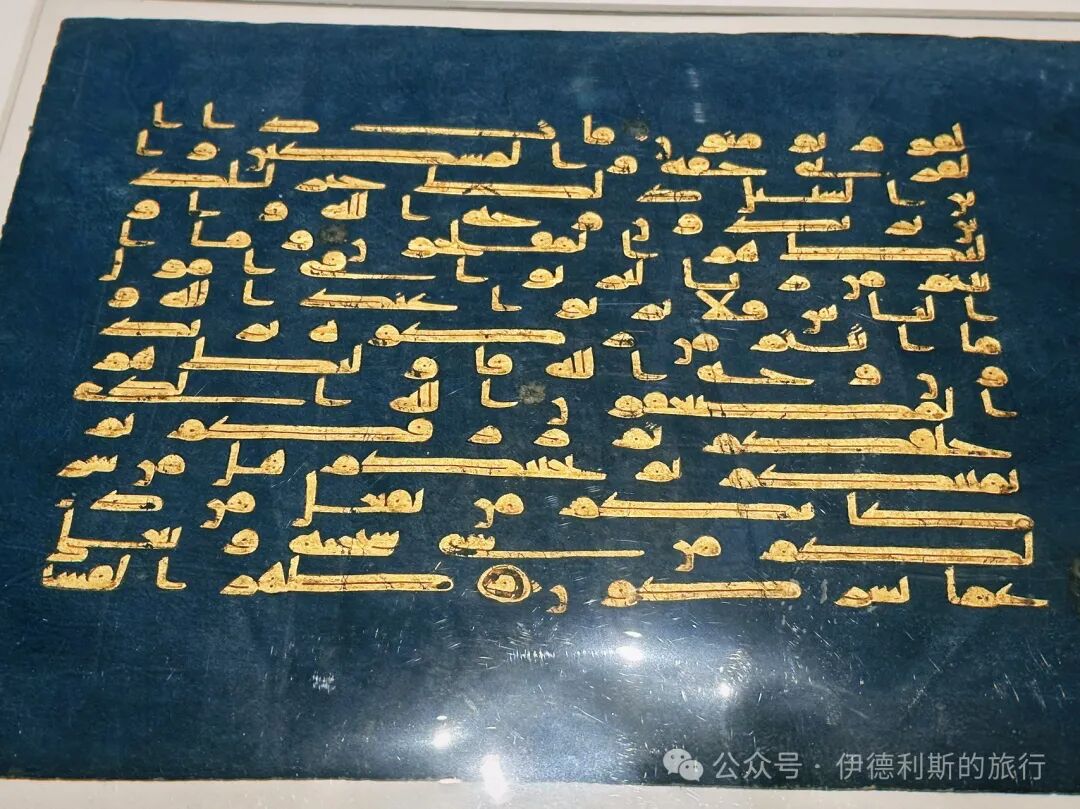
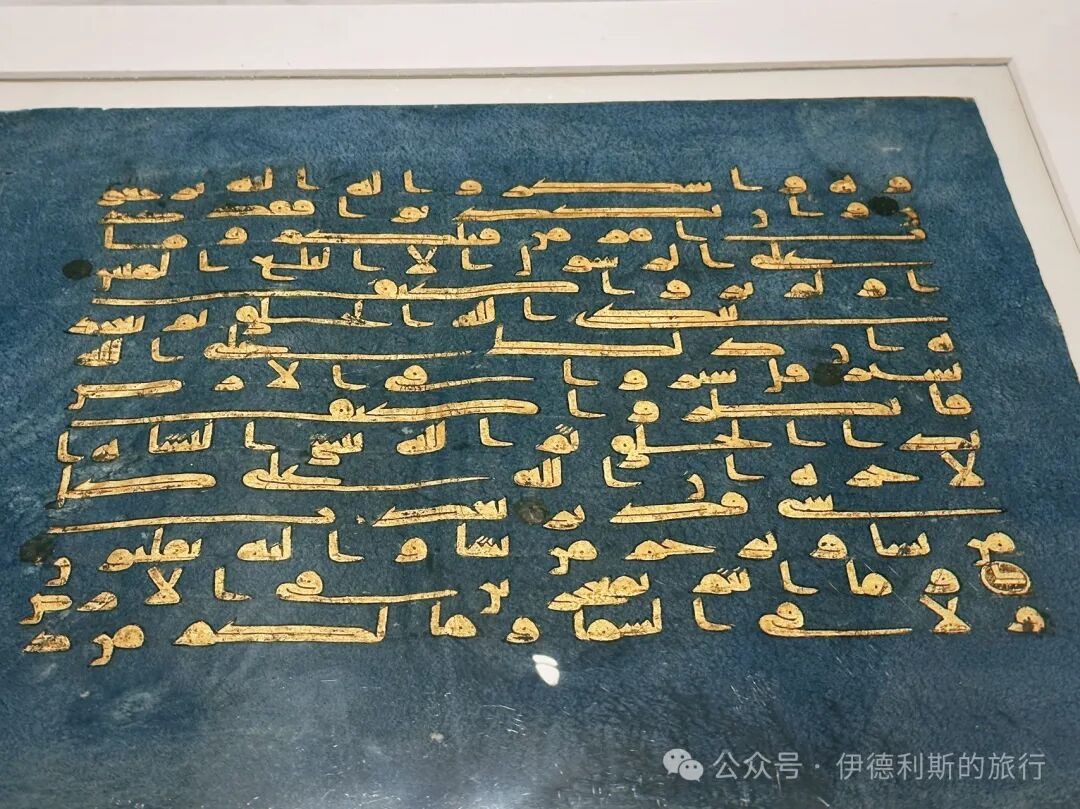
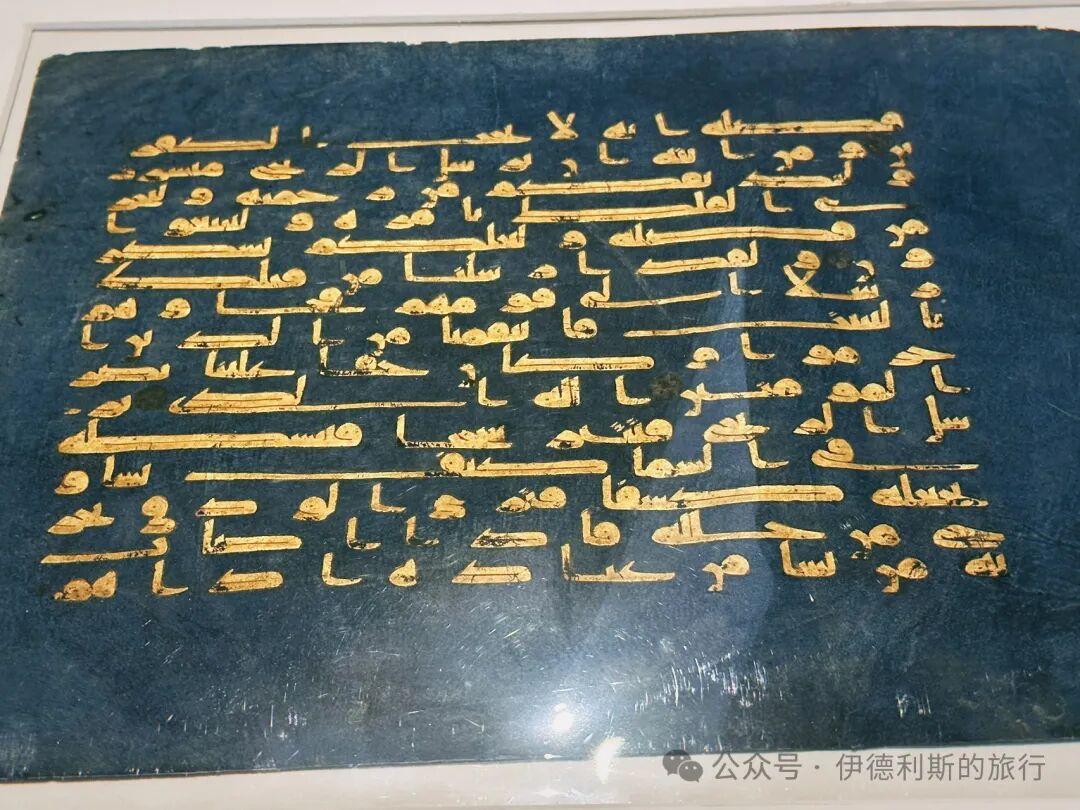
Quran manuscripts from the 8th to 12th centuries held by the Great Mosque of Kairouan in Tunisia.
The library of the Great Mosque of Kairouan holds a large number of manuscripts and established a catalog as early as the 13th century. to scriptures, these manuscripts include books related to the Maliki school of thought, which are also the oldest documents of the Maliki school.
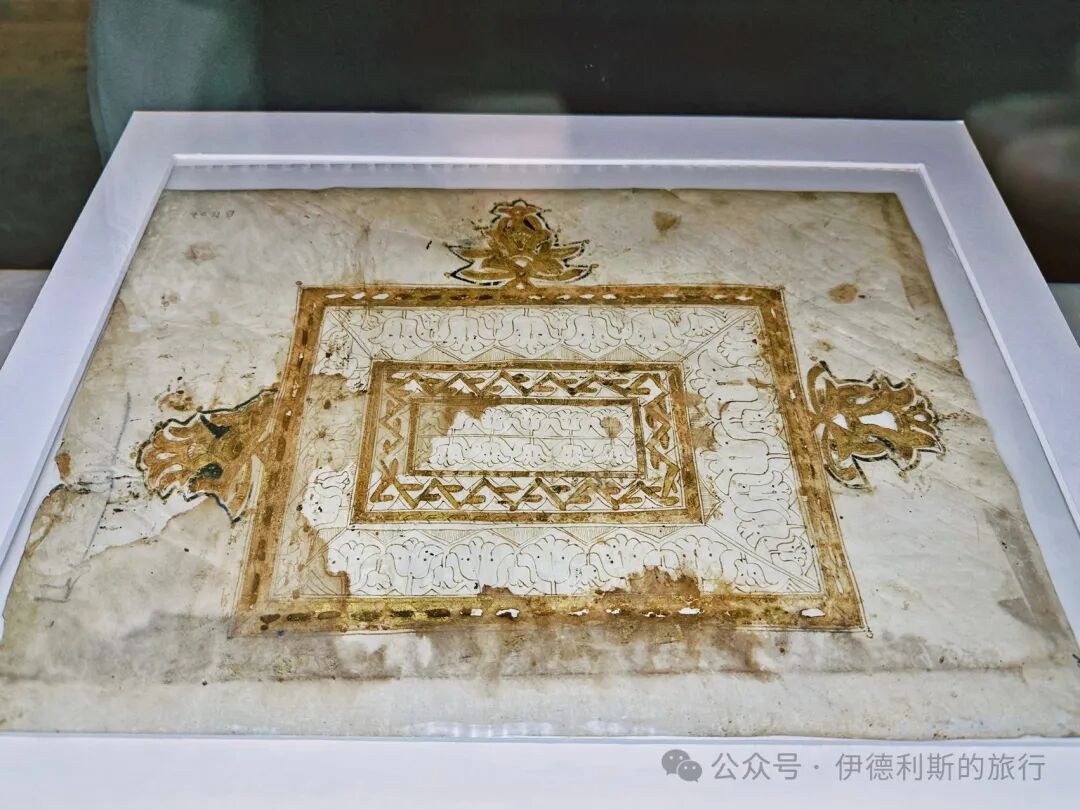
Tunisian Qallaline tiles from the 17th and 18th centuries. These tiles are named after the Qallaline region of Tunisia. They were influenced by Ottoman tile art but developed their own unique style.
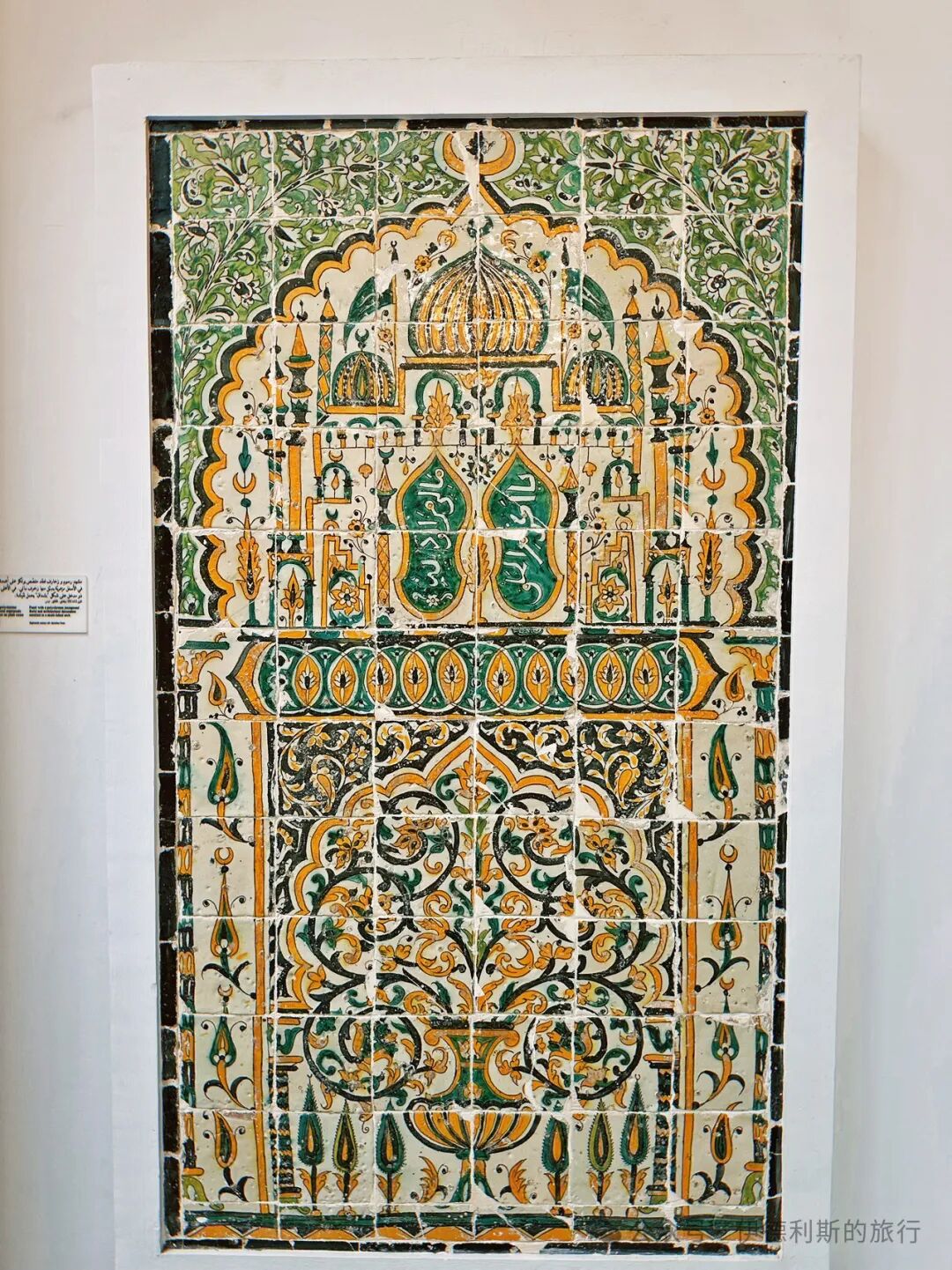
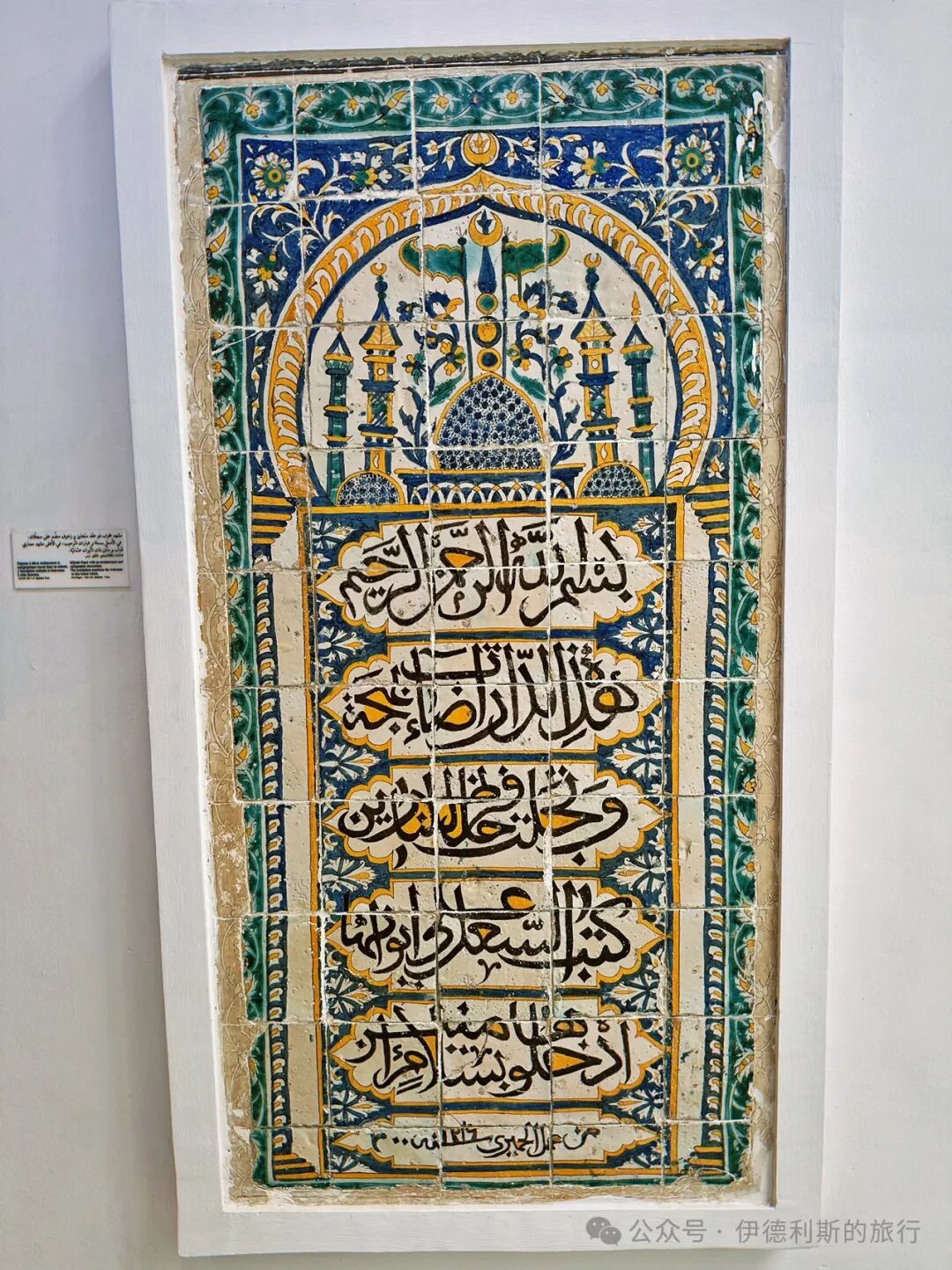
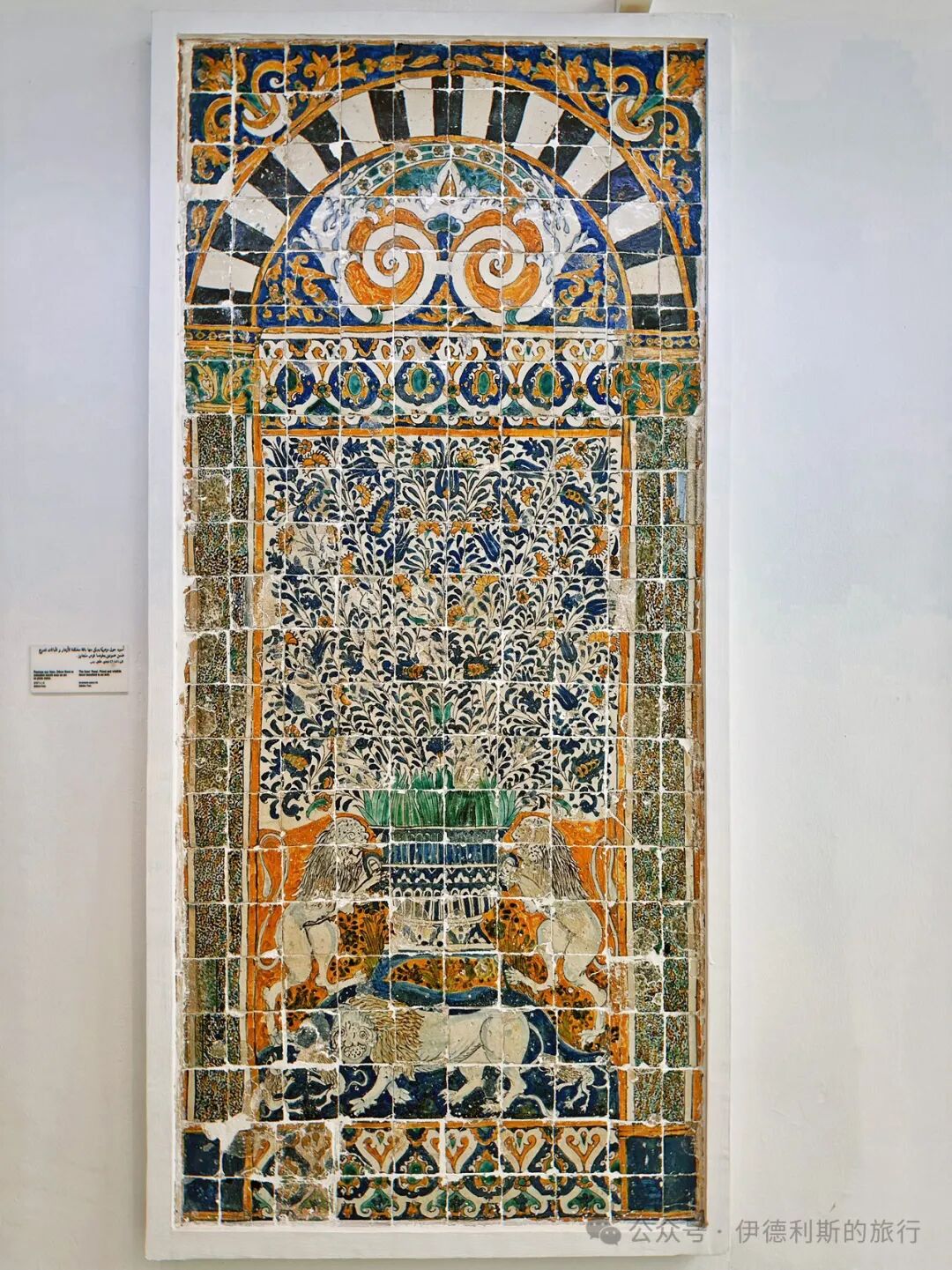
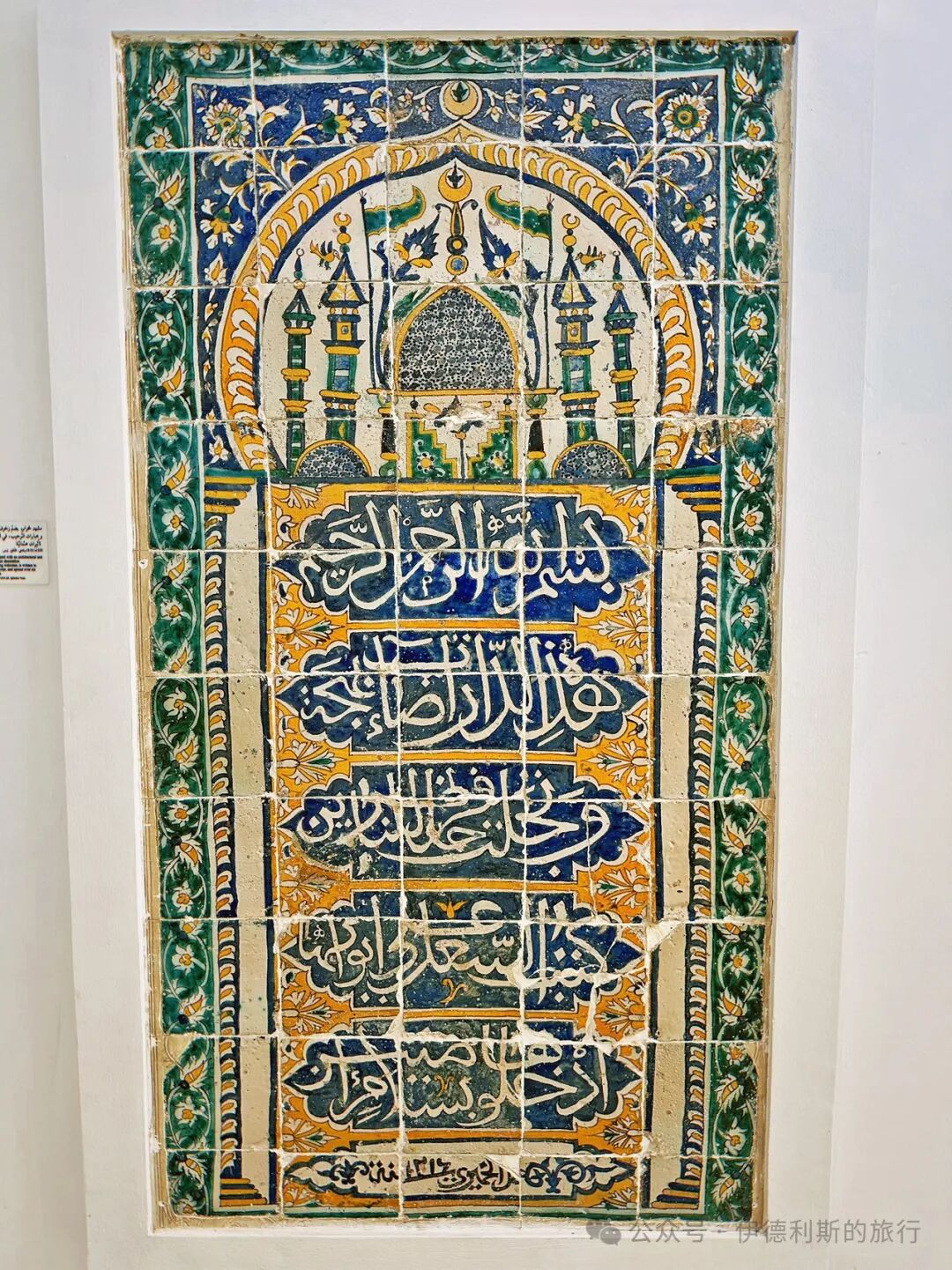
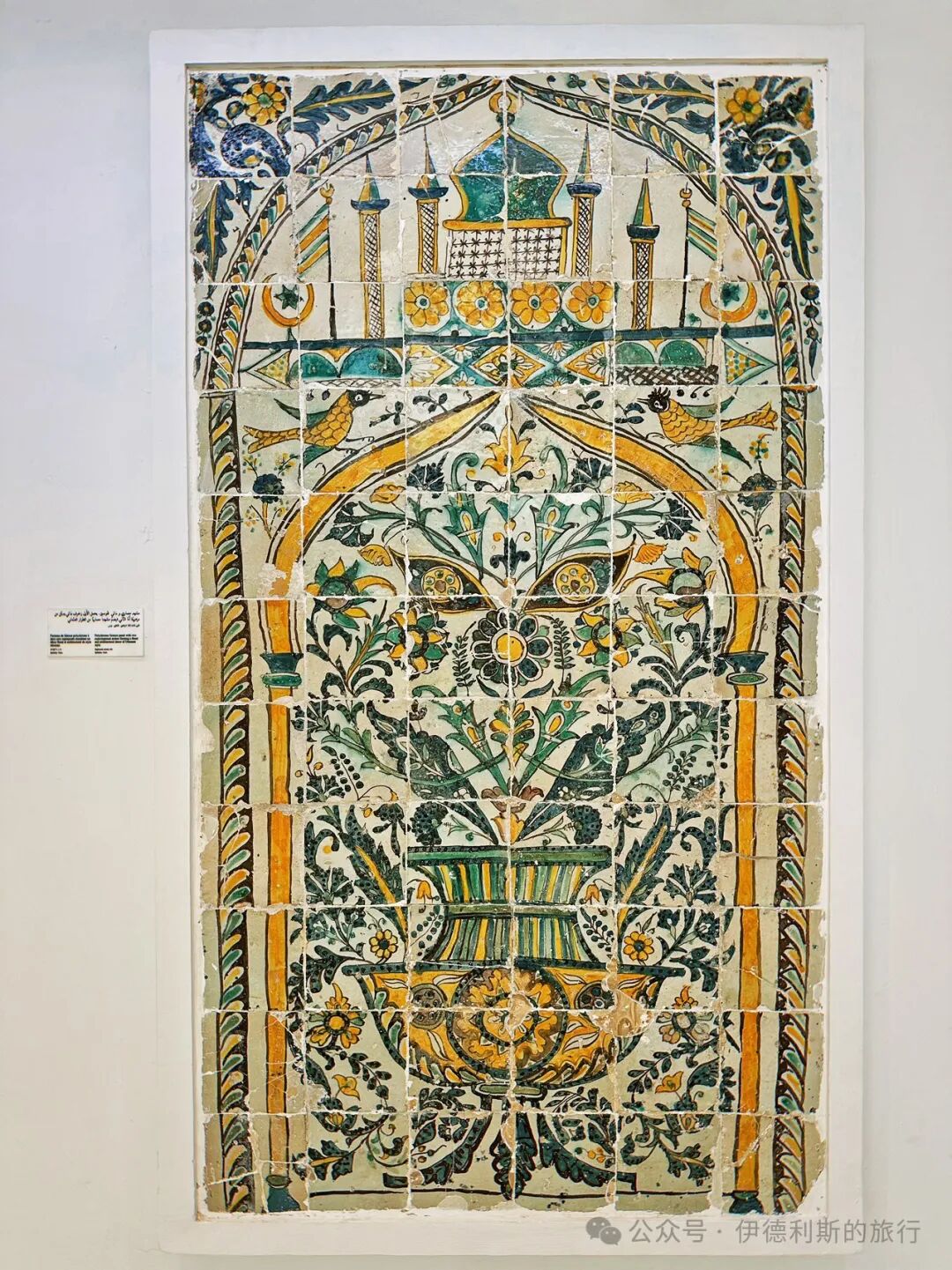
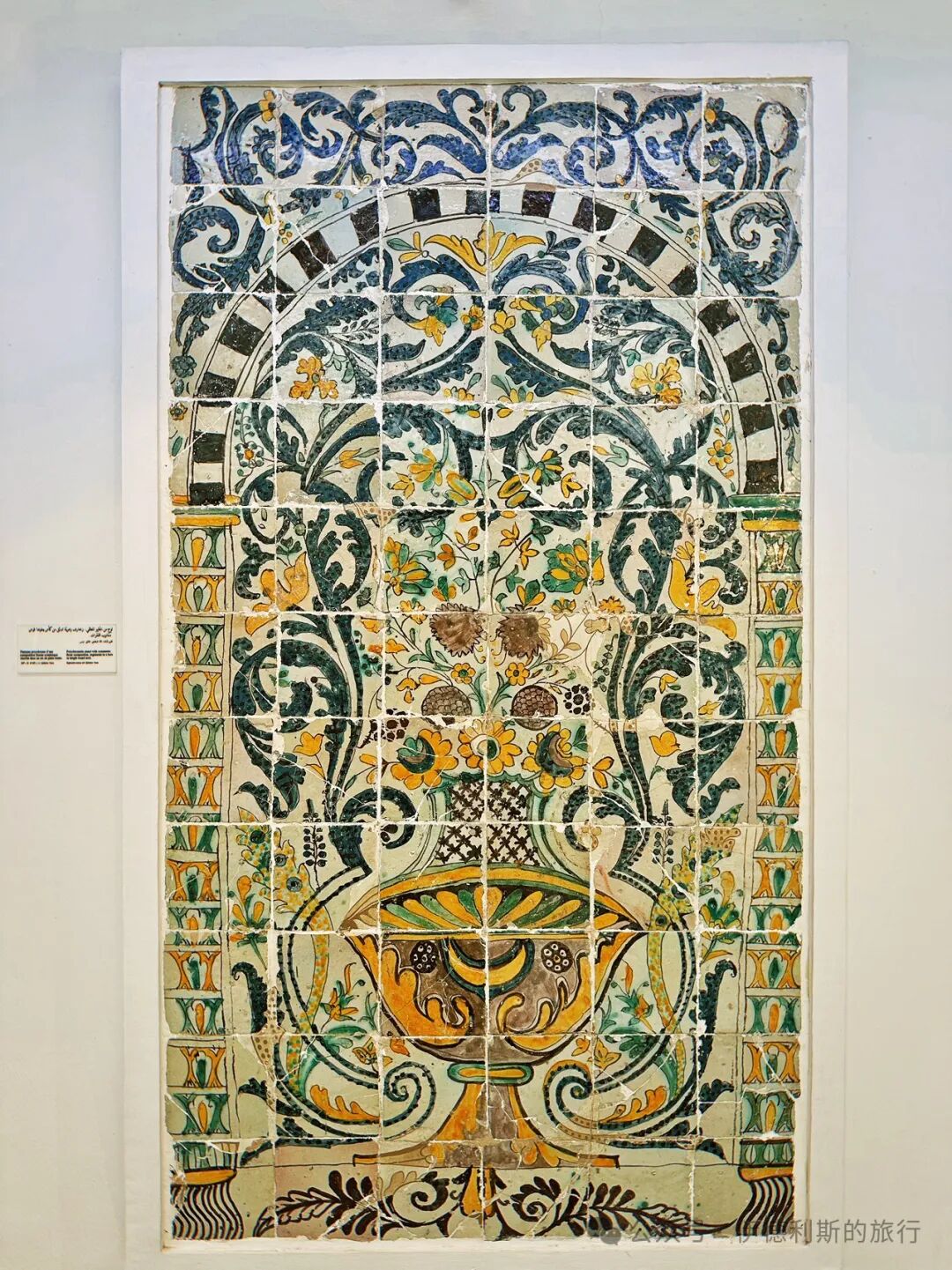
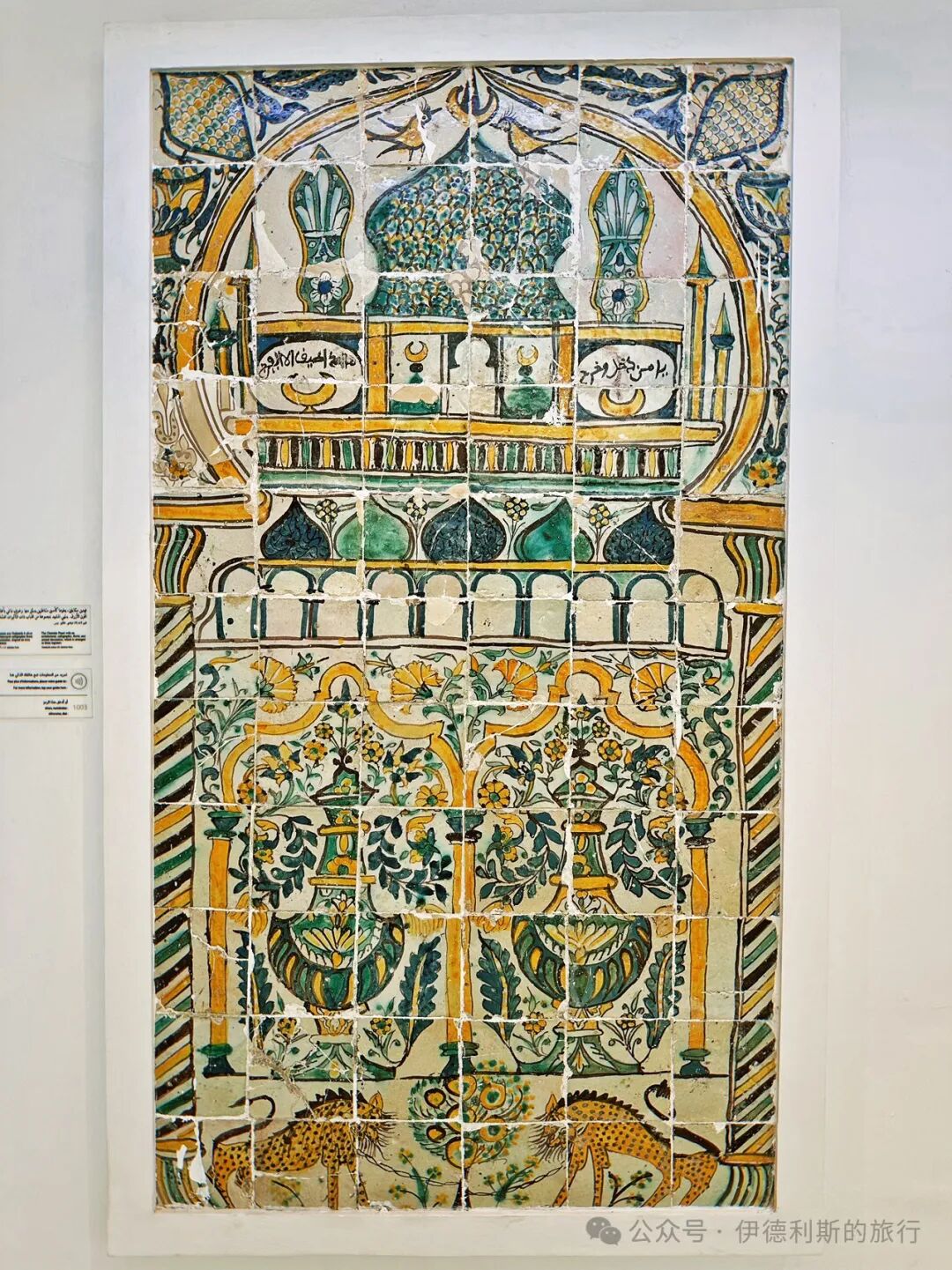
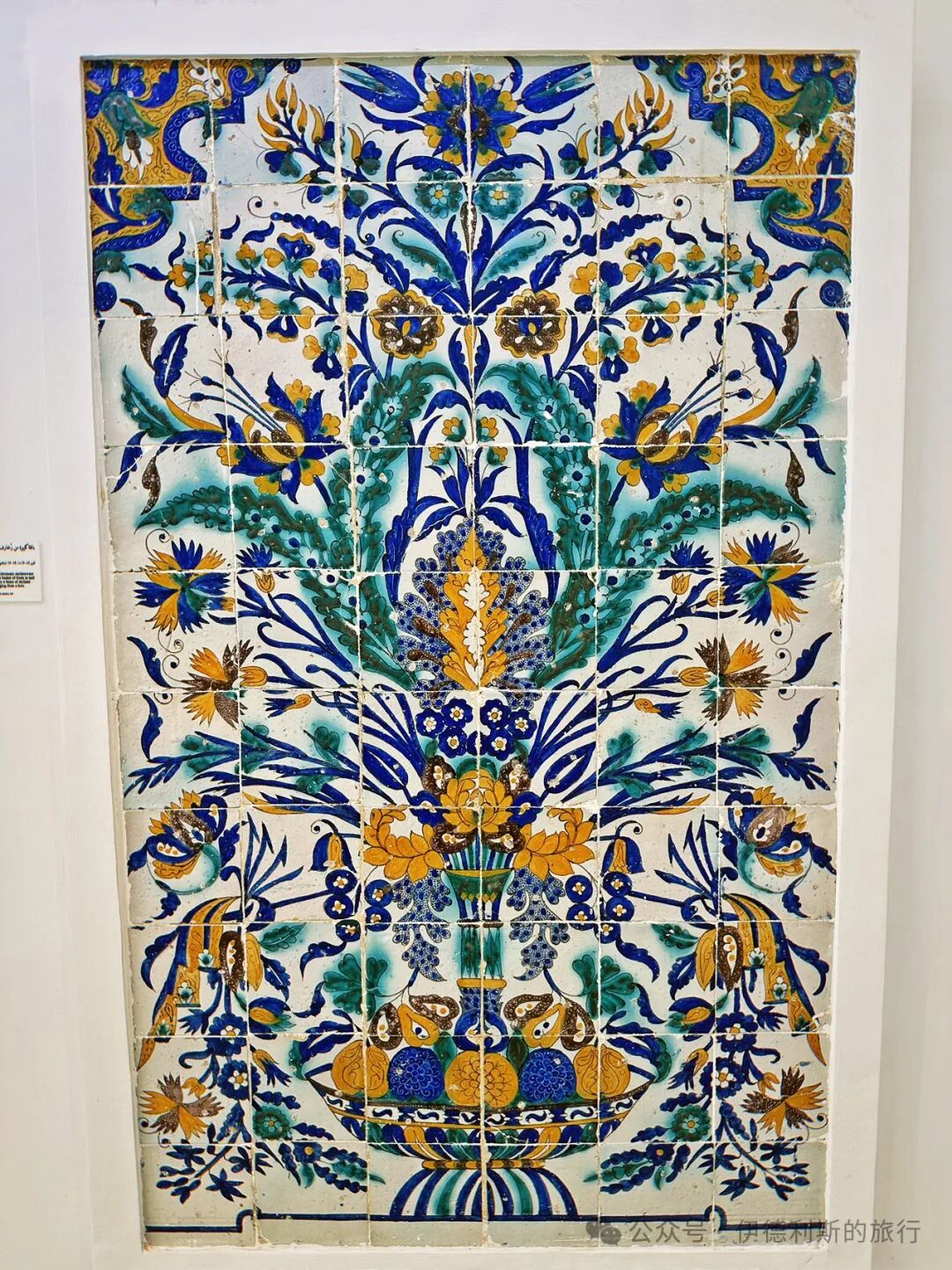
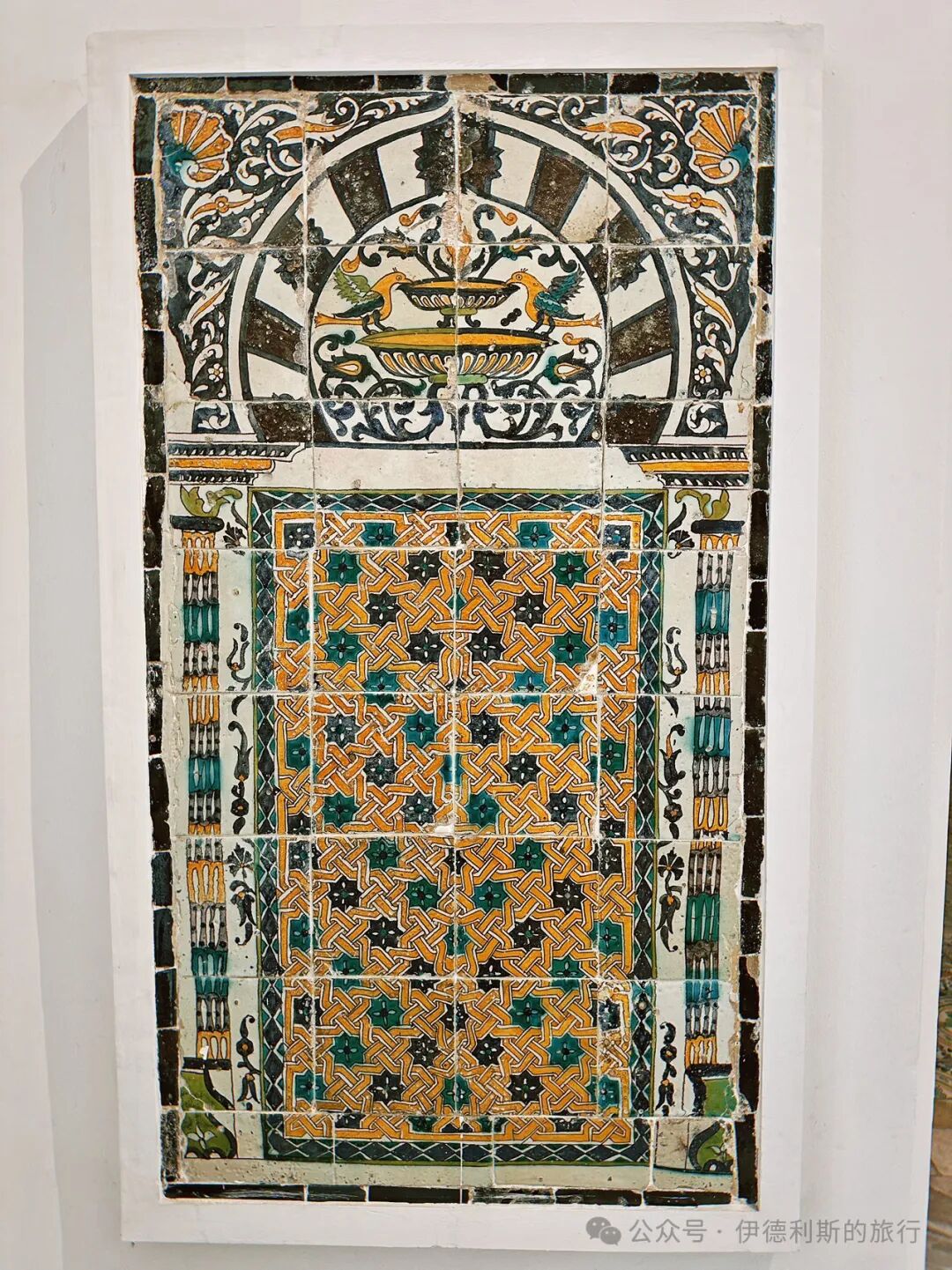
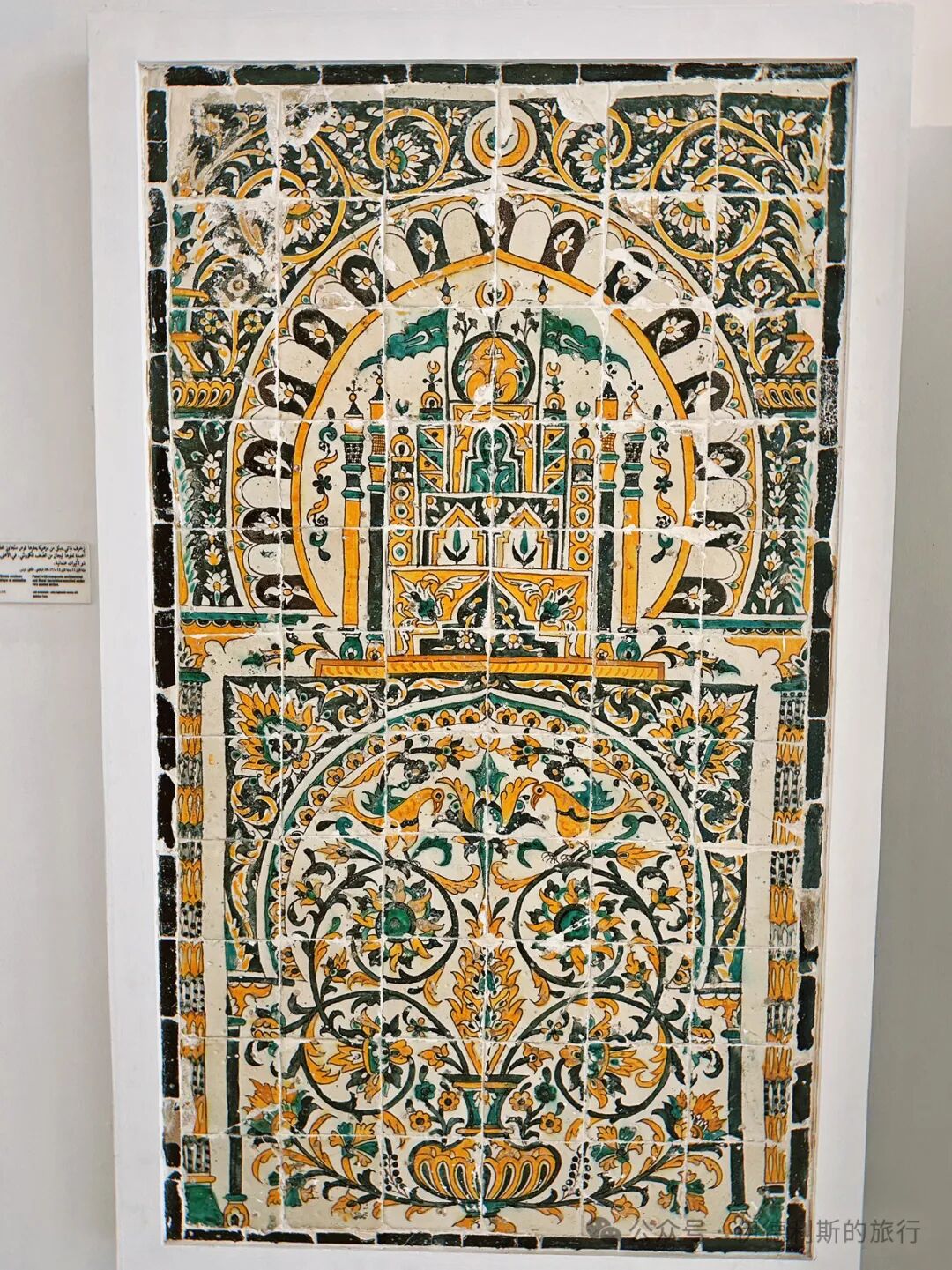
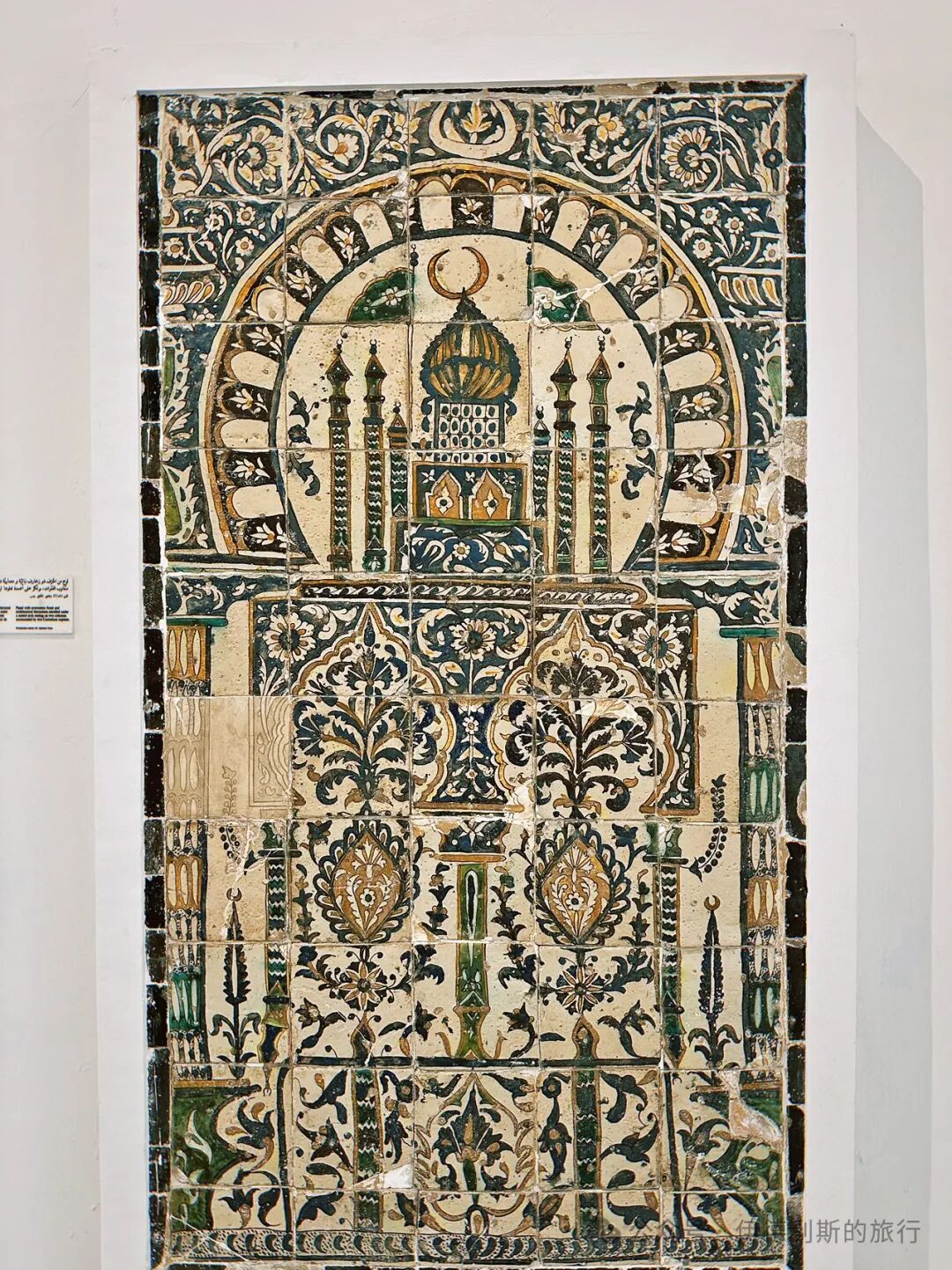
A marble carving from the 10th-century Fatimid period in Mahdia, Tunisia, depicting a Fatimid prince. A glazed bowl with Kufic script from the Fatimid dynasty period in Mahdia.
The ancient city of Mahdia was built by the Fatimid dynasty between 916 and 921, and it became the capital of the Tunisia region after its completion. Before this, the capital of the Tunisia region was Kairouan, which was dominated by Sunnis. Because of this, the Shia Fatimid dynasty built a new capital on the Mediterranean coast, far away from Kairouan. Once finished, Mahdia included thick city walls, palaces, a harbor, and a great mosque. Unfortunately, none of the surface buildings survived. Now, you can only see artifacts unearthed through archaeological excavations in museums.
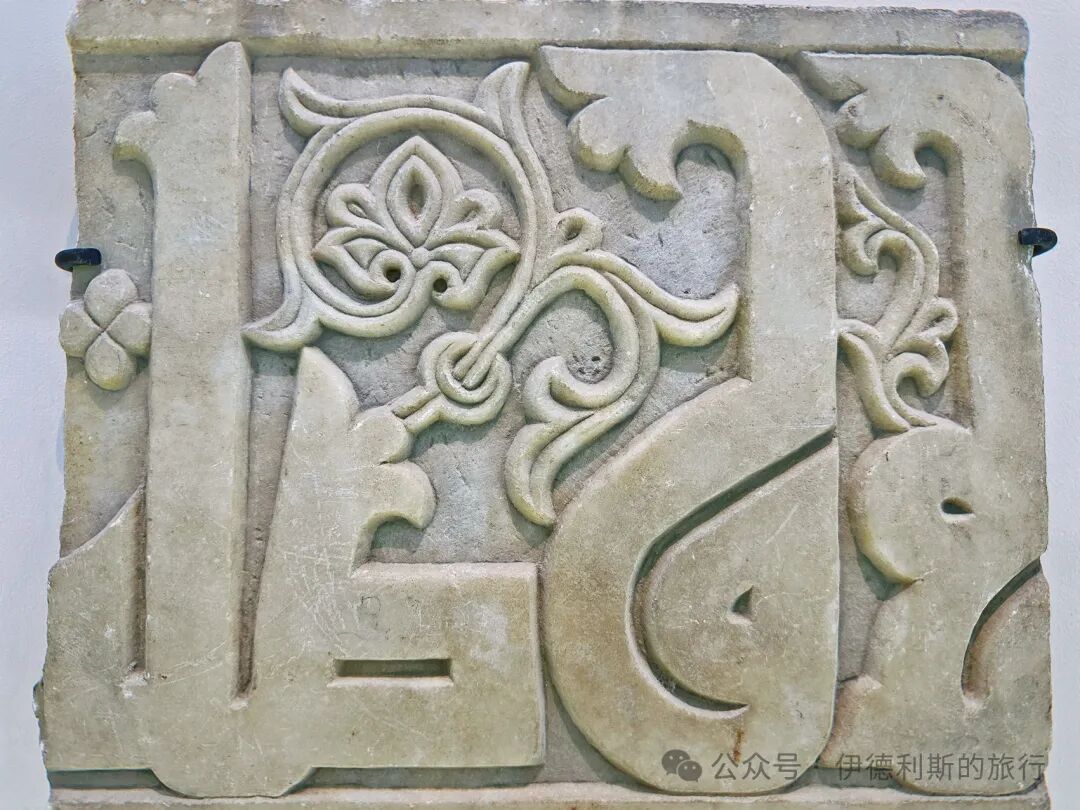
Exquisite 11th-century marble carvings with Kufic script.
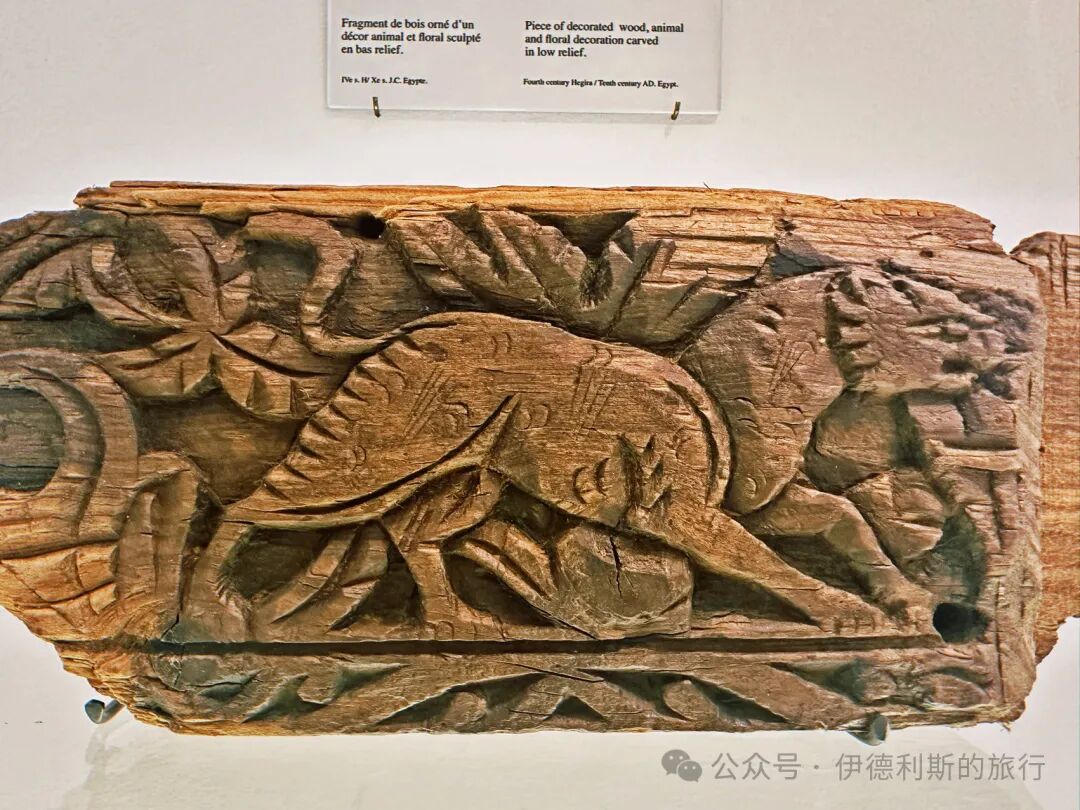
A 10th-century wood carving from Egypt.
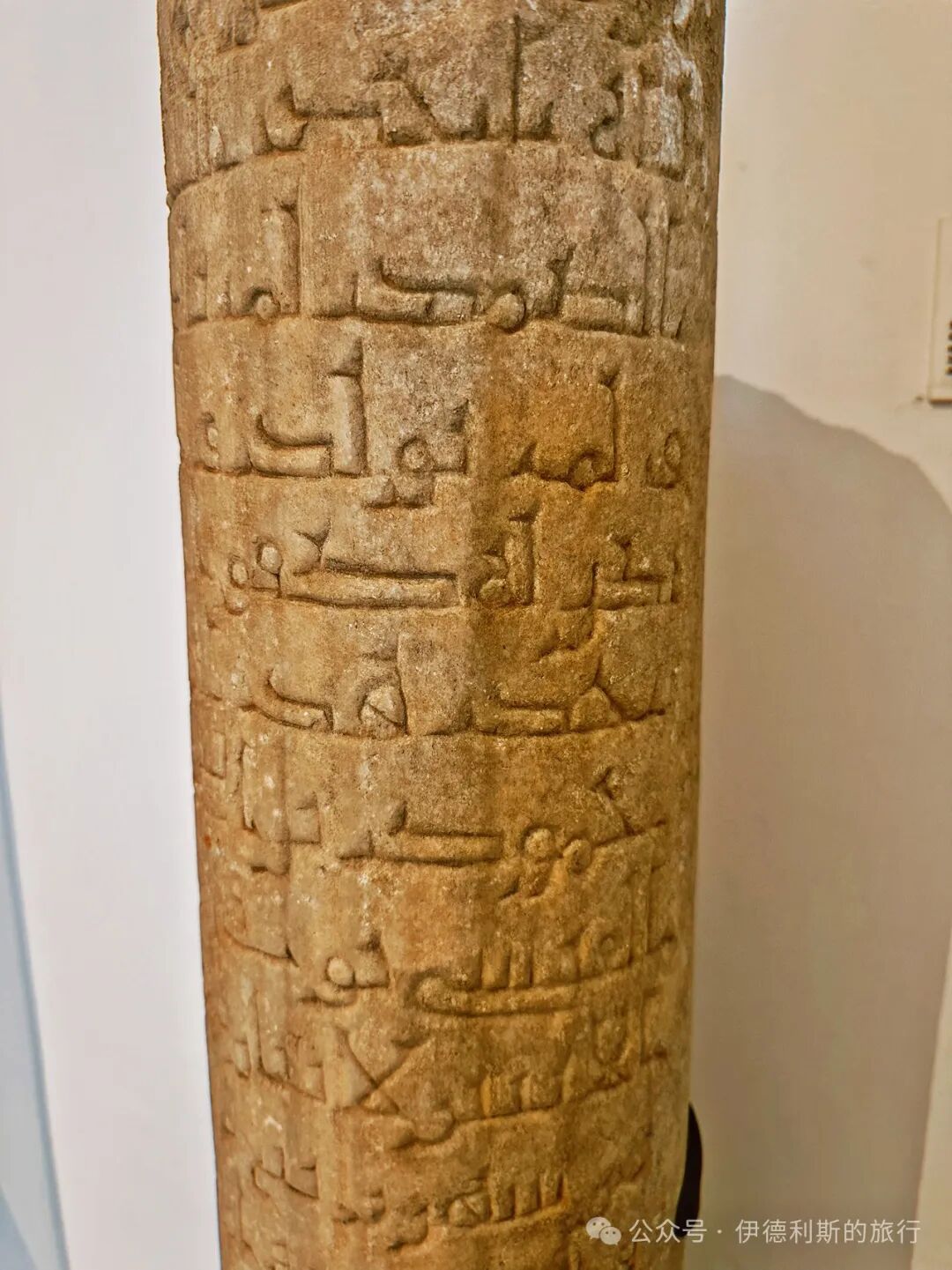
A 13th to 16th-century tombstone from Tunisia where you can see the local style of Arabic calligraphy.
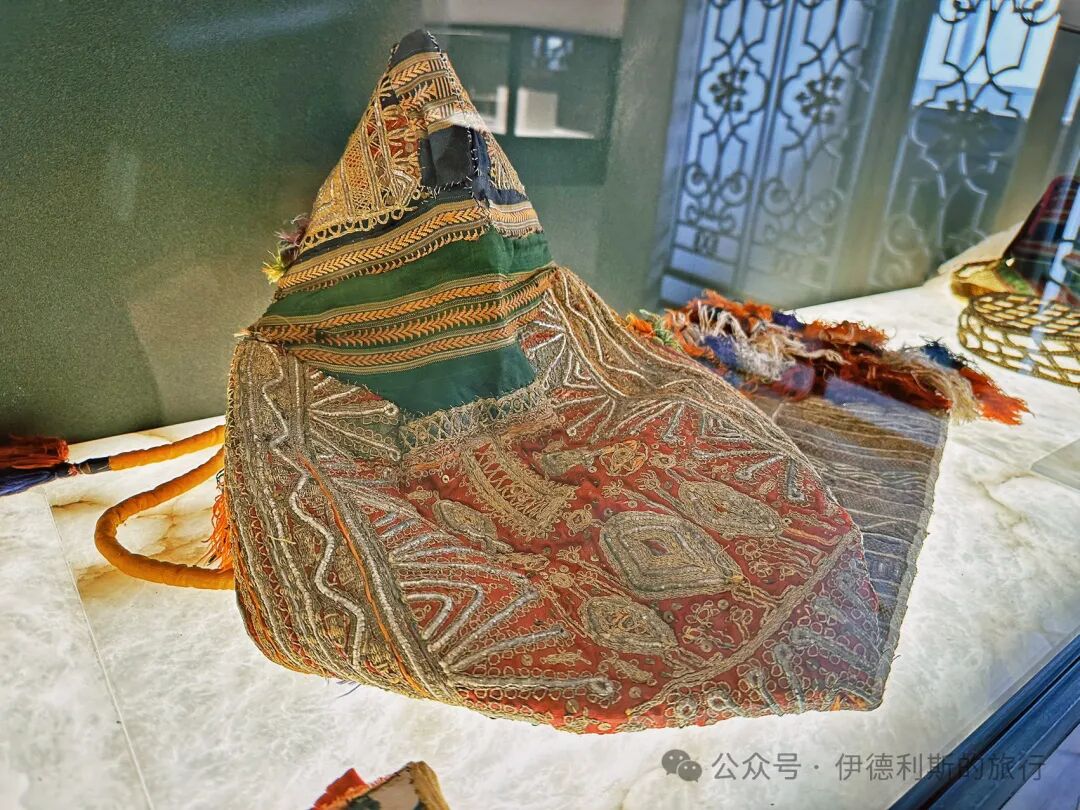
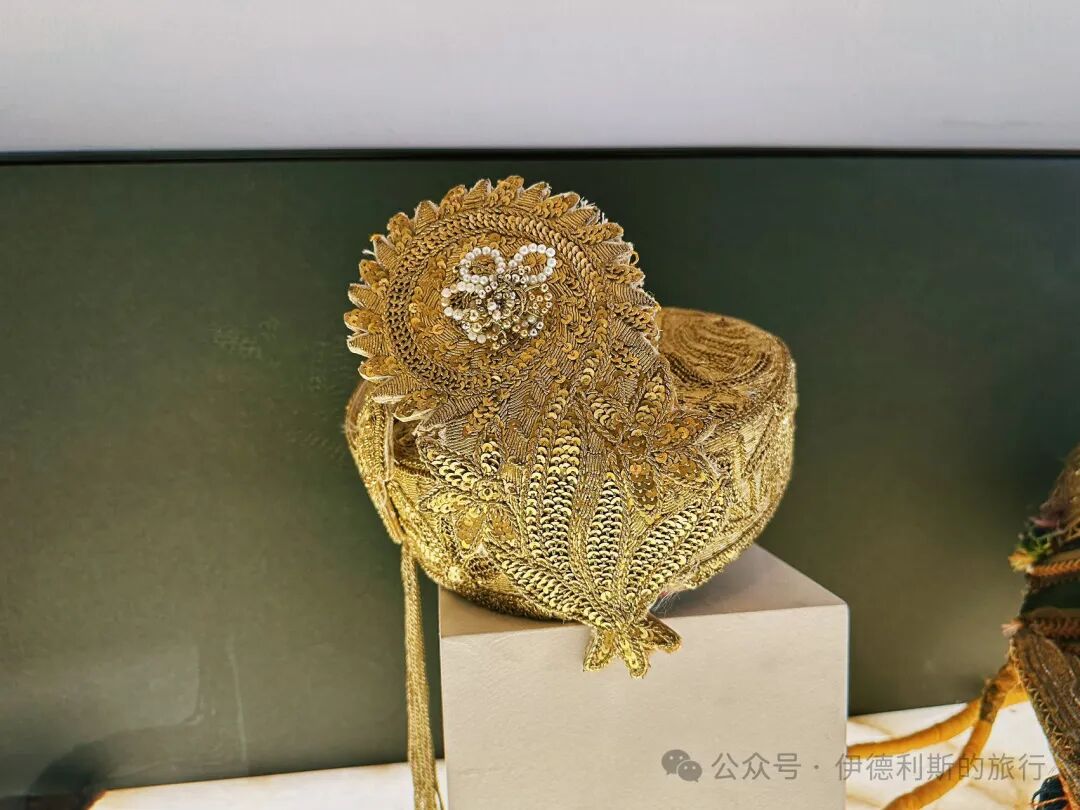
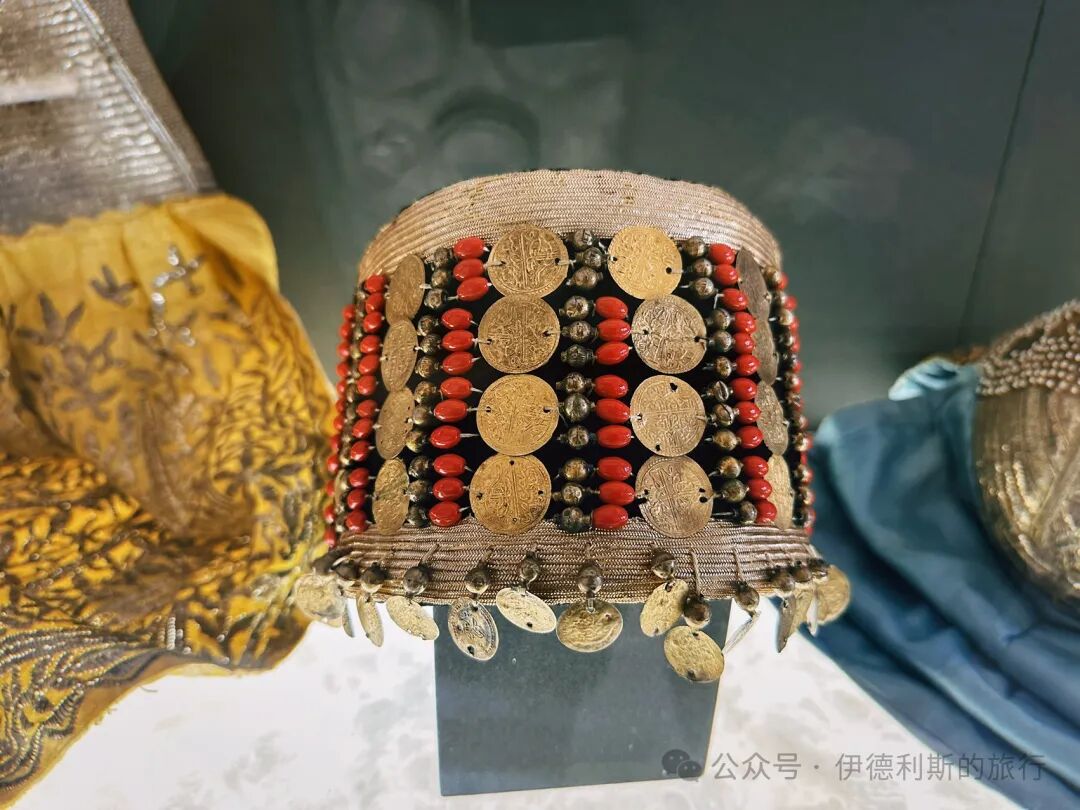
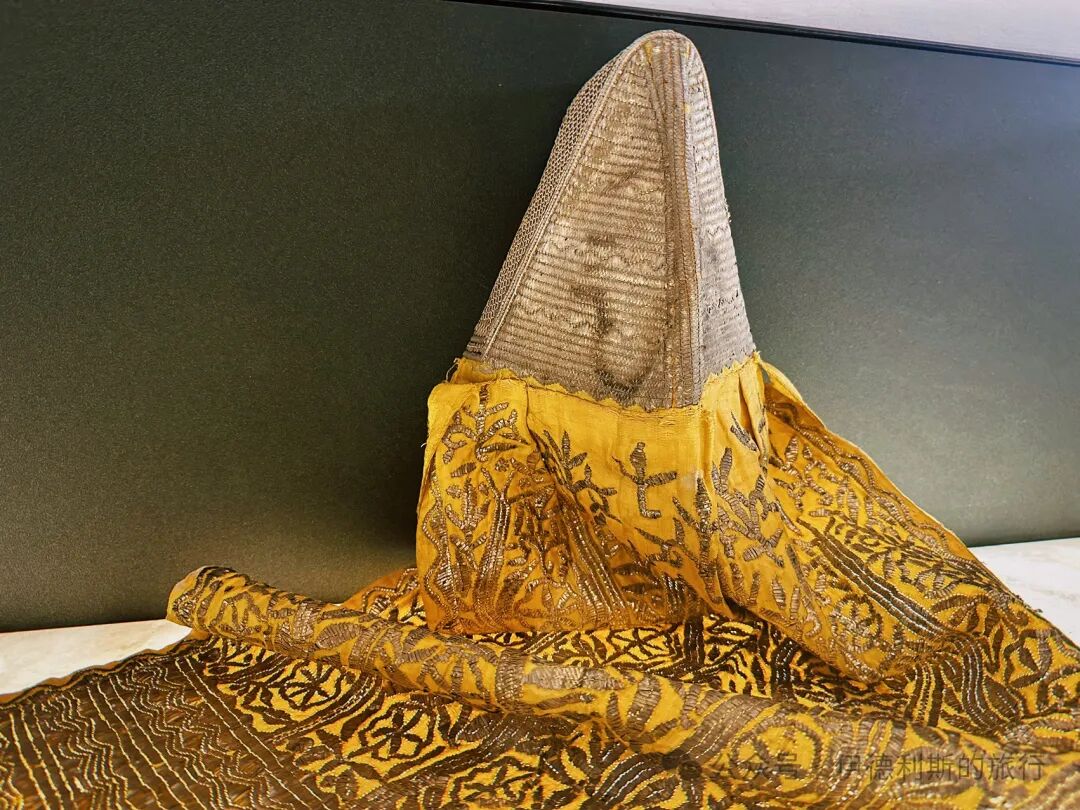
A traditional Tunisian women's headpiece.
Halal Travel Guide: Singapore - Asian Civilisations Museum and Islamic Art
Articles • ali2007fr posted the article • 0 comments • 144 views • 2026-05-19 07:23
Summary: This Singapore article visits the Asian Civilisations Museum and looks closely at Islamic art, trade history, ceramics, textiles, and cultural objects. It keeps the original museum observations, object names, and historical details for English readers.
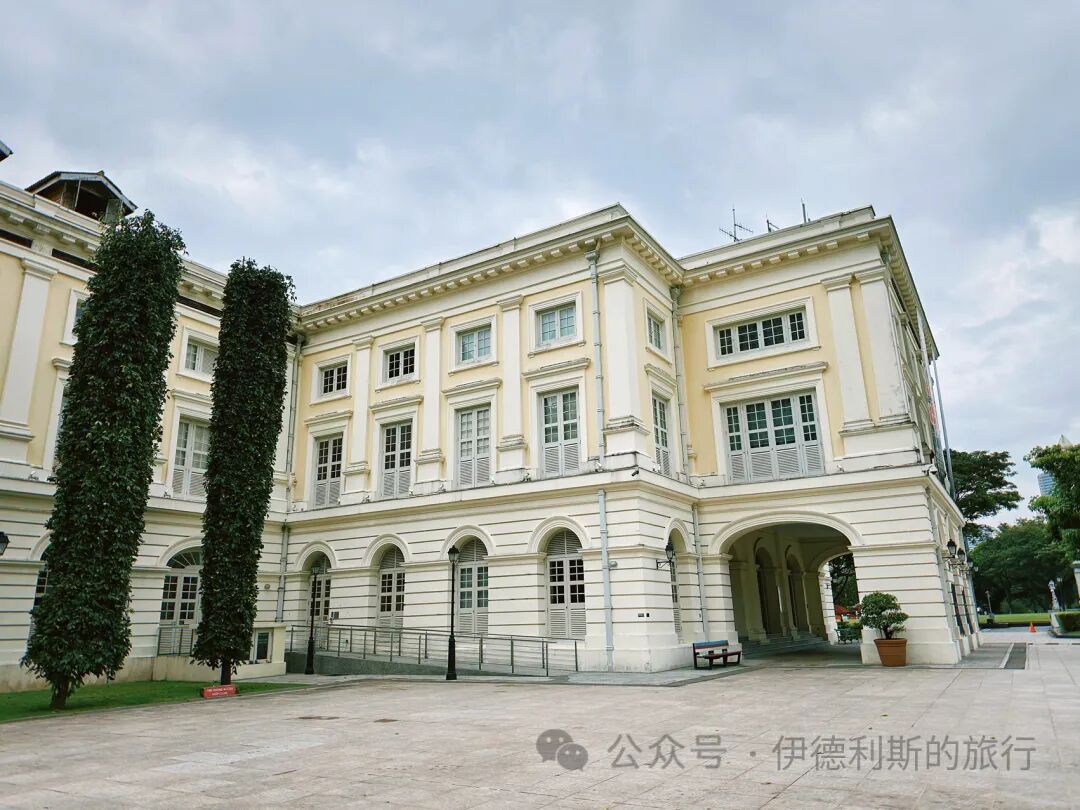
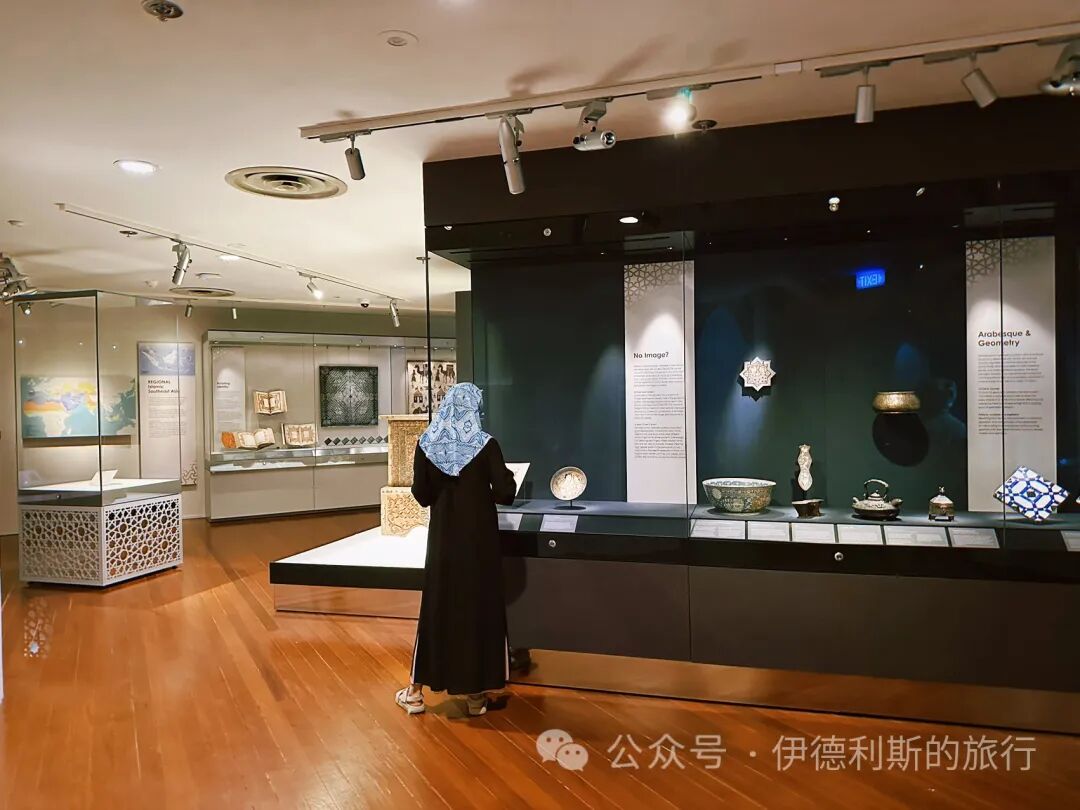
The Asian Civilisations Museum in Singapore sits by the Singapore River in a neoclassical building from 1867. It first focused on crafts from Malay and Southeast Asian indigenous peoples. After the 1990s, it expanded its collection to include West and South Asia, becoming a museum that shows the meeting of different Asian cultures and civilizations.
Two miniature paintings from the late 16th-century Shiraz school in Iran depict the famous Persian poet Nizami's masterpiece, the Five Poems (Khamsa).
A late 16th-century Ottoman miniature illustration comes from the Garden of the Blessed (Hadigat us-Su'ada), written around 1547. This illustration shows the hardships faced by the Prophet and his family. He is giving a sermon (khutbah) from a pulpit, with Imam Ali, Husayn, Hasan, and other family members below. To show respect, golden flames burn behind the Prophet, Ali, Husayn, and Hasan, and the faces of the Prophet and Ali are covered.
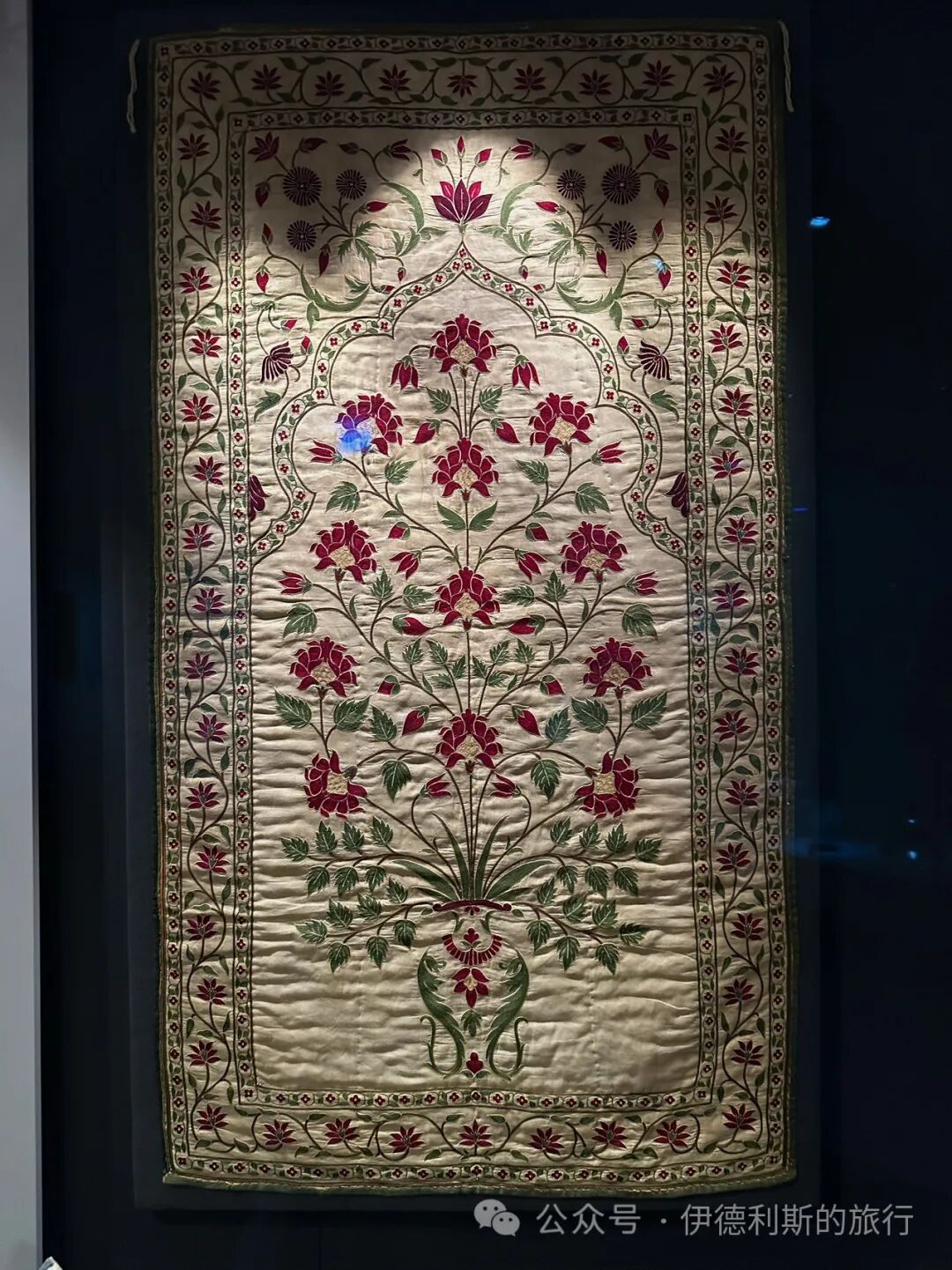
This 18th-19th century silk embroidery from Jaipur, India, was usually used for tapestries or curtains in tents or noble homes. The floral patterns in the center are classic Mughal dynasty designs, widely used in Rajasthan, where Jaipur is located.
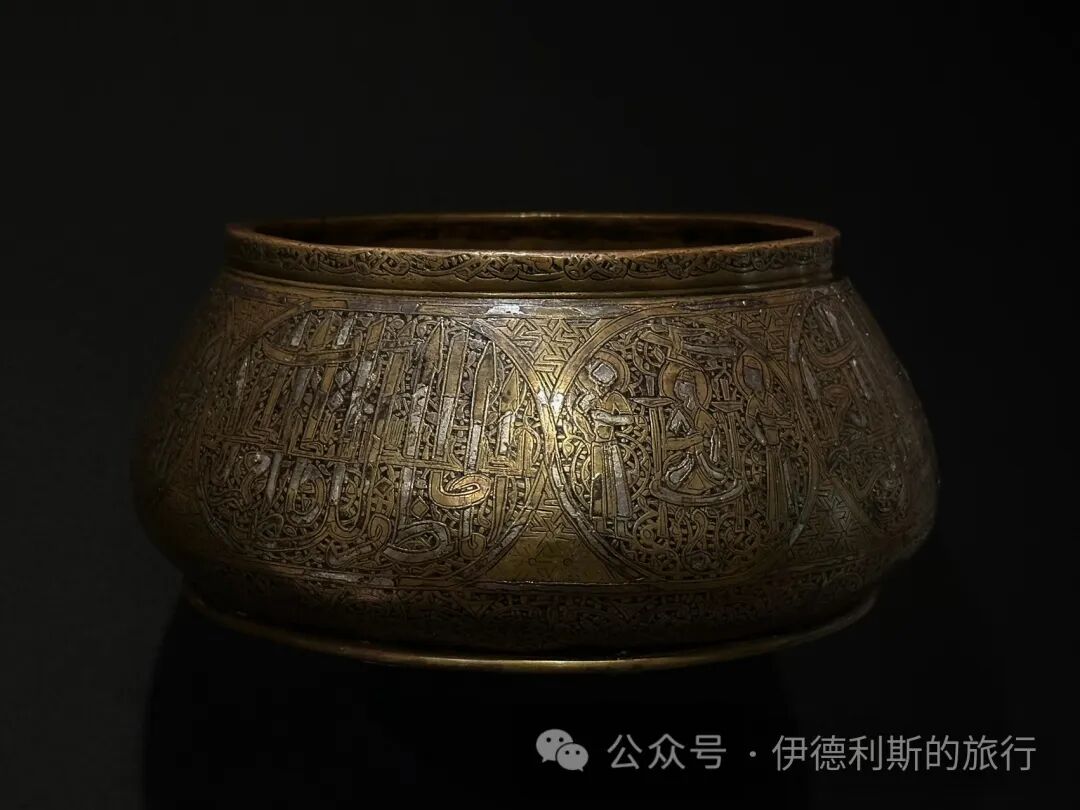
This 14th-century copper bowl with gold and silver inlay is from Fars, Iran. Fars was the center of Iran's metalworking industry in the 14th and 15th centuries, and the bowl depicts the image of the Sultan at that time.
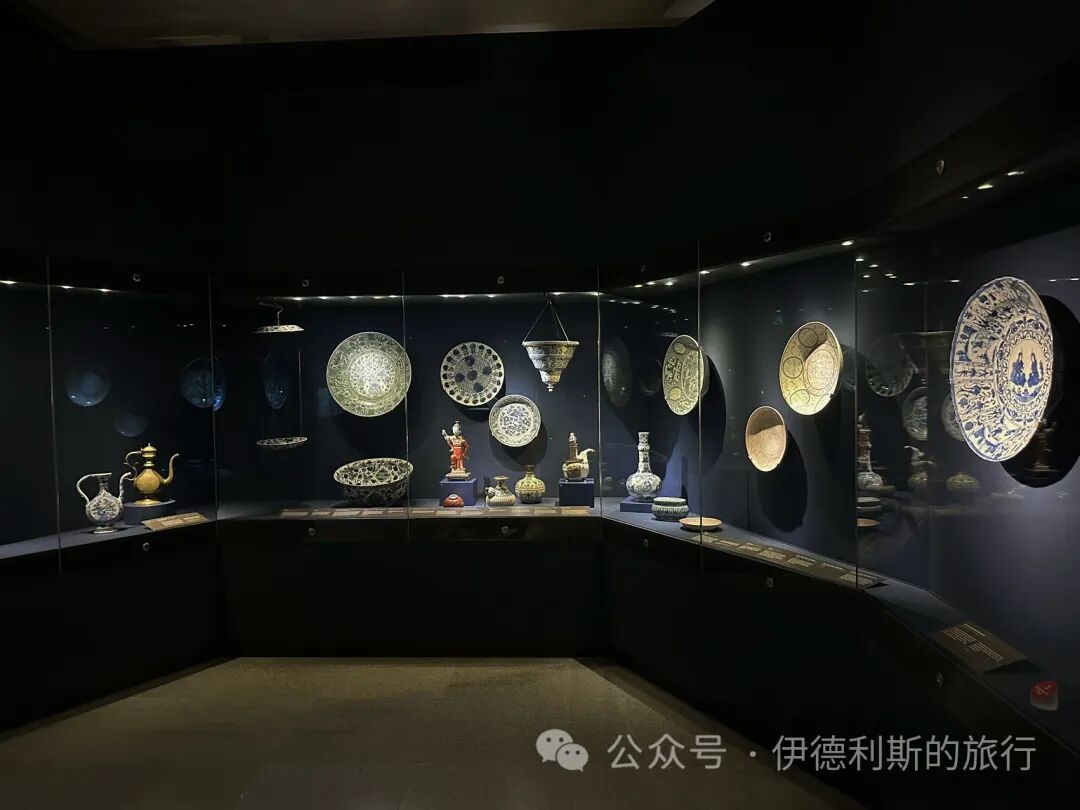
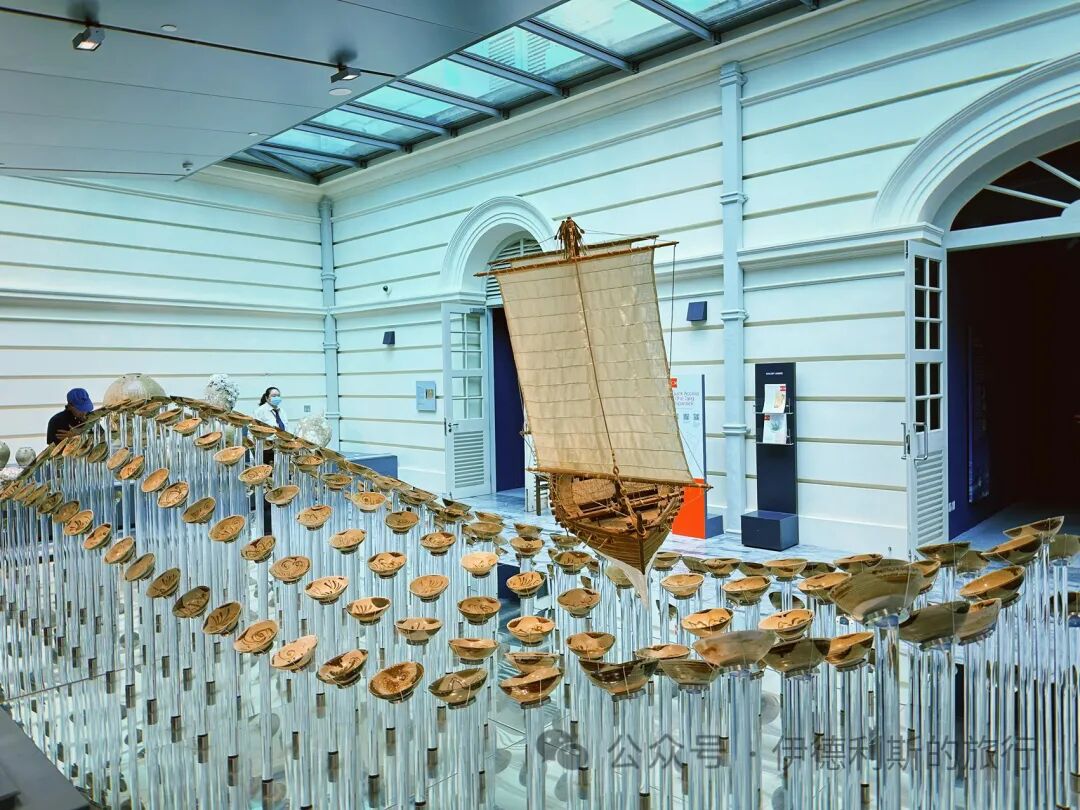
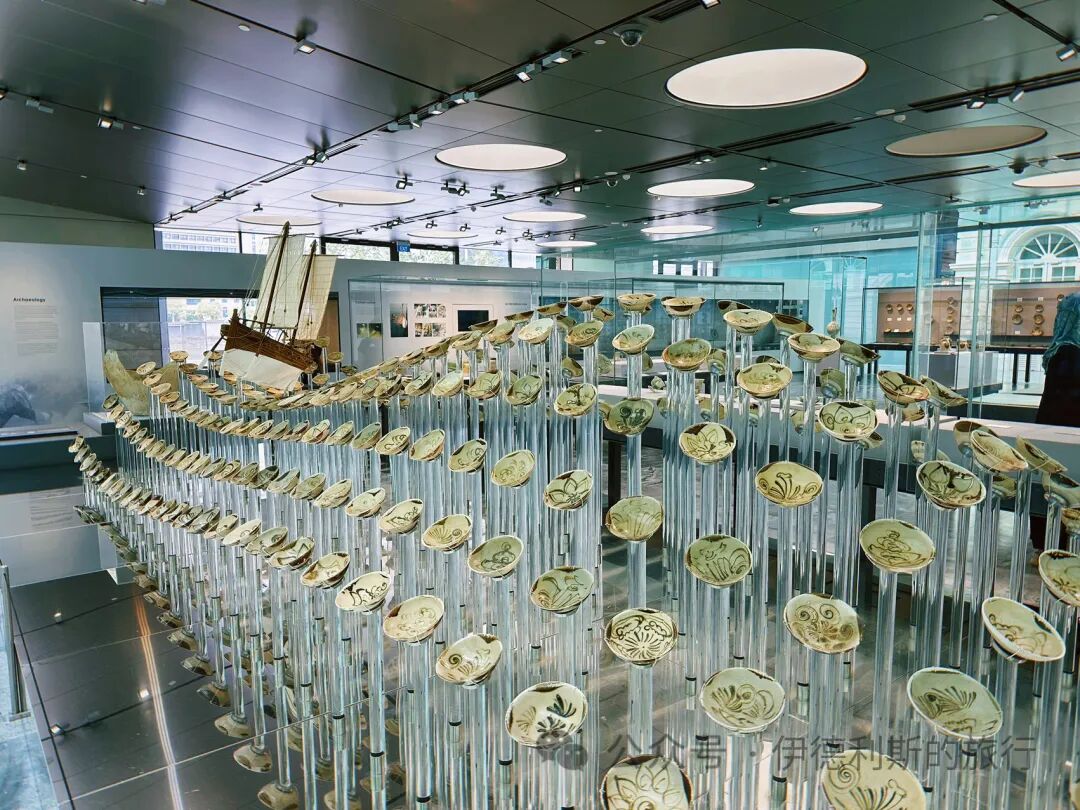
The Batu Hitam shipwreck gallery at the Asian Civilisations Museum in Singapore. 1,100 years ago, an Arab cargo ship loaded with precious goods left Guangzhou port to return to the Abbasid Caliphate. It eventually sank near the coast of Sumatra, 600 kilometers southeast of Singapore. It was not discovered until 1998 and is called the Batu Hitam (Black Rock) shipwreck because of the location where it was found. The shipwreck yielded a large number of ceramic bowls, which are the same shape as those found from the Abbasid Caliphate of the same period.
A 13th-century calligraphy fritware tile from Kashan, Iran.
A fritware jug from the late 12th-century Seljuk dynasty in Iran. Fritware is a ceramic technique invented by Middle Eastern craftsmen in the 11th century to imitate Chinese porcelain. It developed from early Egyptian faience and is made of a mixture of clay, quartz, and glaze.
A marble tombstone from early 9th-century Syria.
A late 14th-century Kufic script tile from the Timurid dynasty, likely from the tomb of a Timurid noble.
An 11th-century mihrab tile from northeastern Iran. The lamp in the center represents light (nur), symbolizing the presence of Allah.
This 11th-century tombstone tile from Afghanistan was likely embedded in the wall of a tomb.
This 14th-century sandstone calligraphy carving from western India features a three-part script style that is stretched vertically.
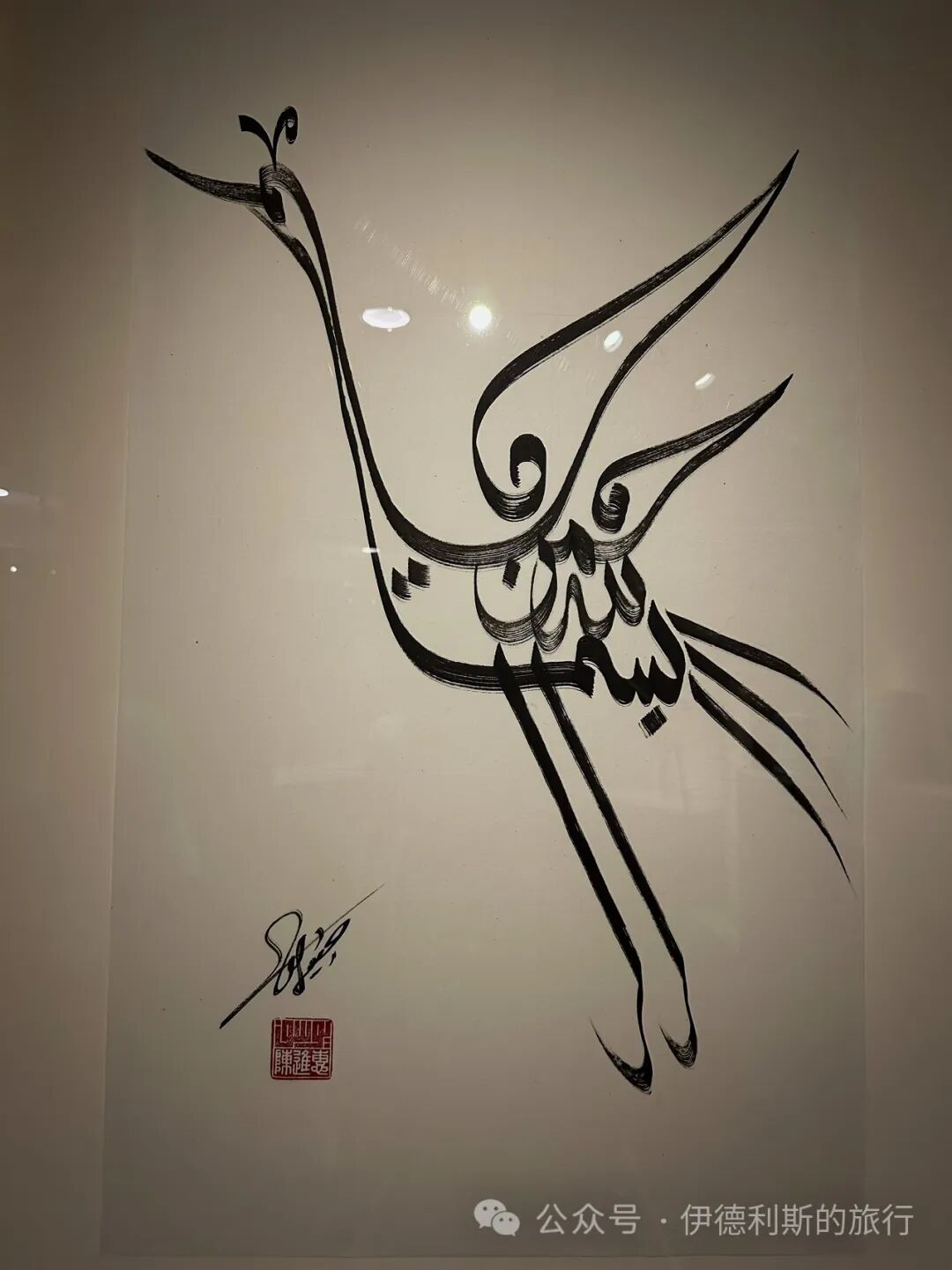
Renowned Arabic calligrapher Chen Jinhui created this piece in 1996, blending in techniques from Chinese ink wash painting.
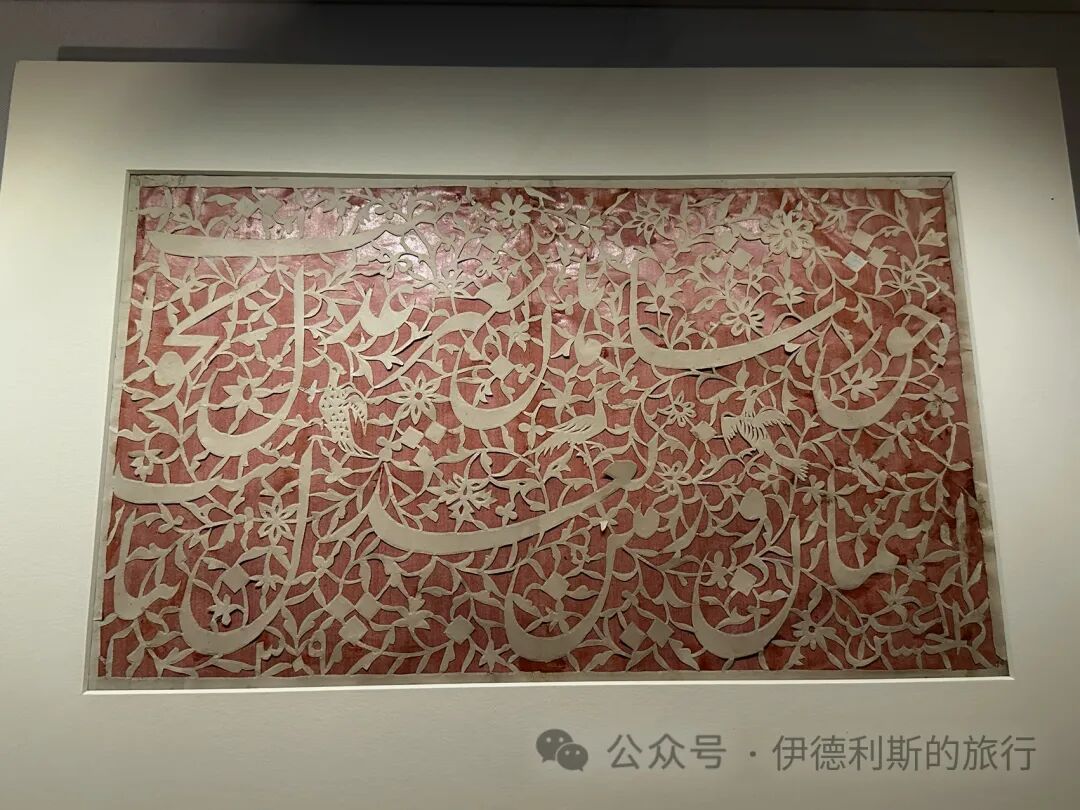
This is a Persian paper-cut from Iran, dated 1891. This art form was widely used for binding Iranian manuscripts from the 15th to 17th centuries and continued until the end of the 19th century.
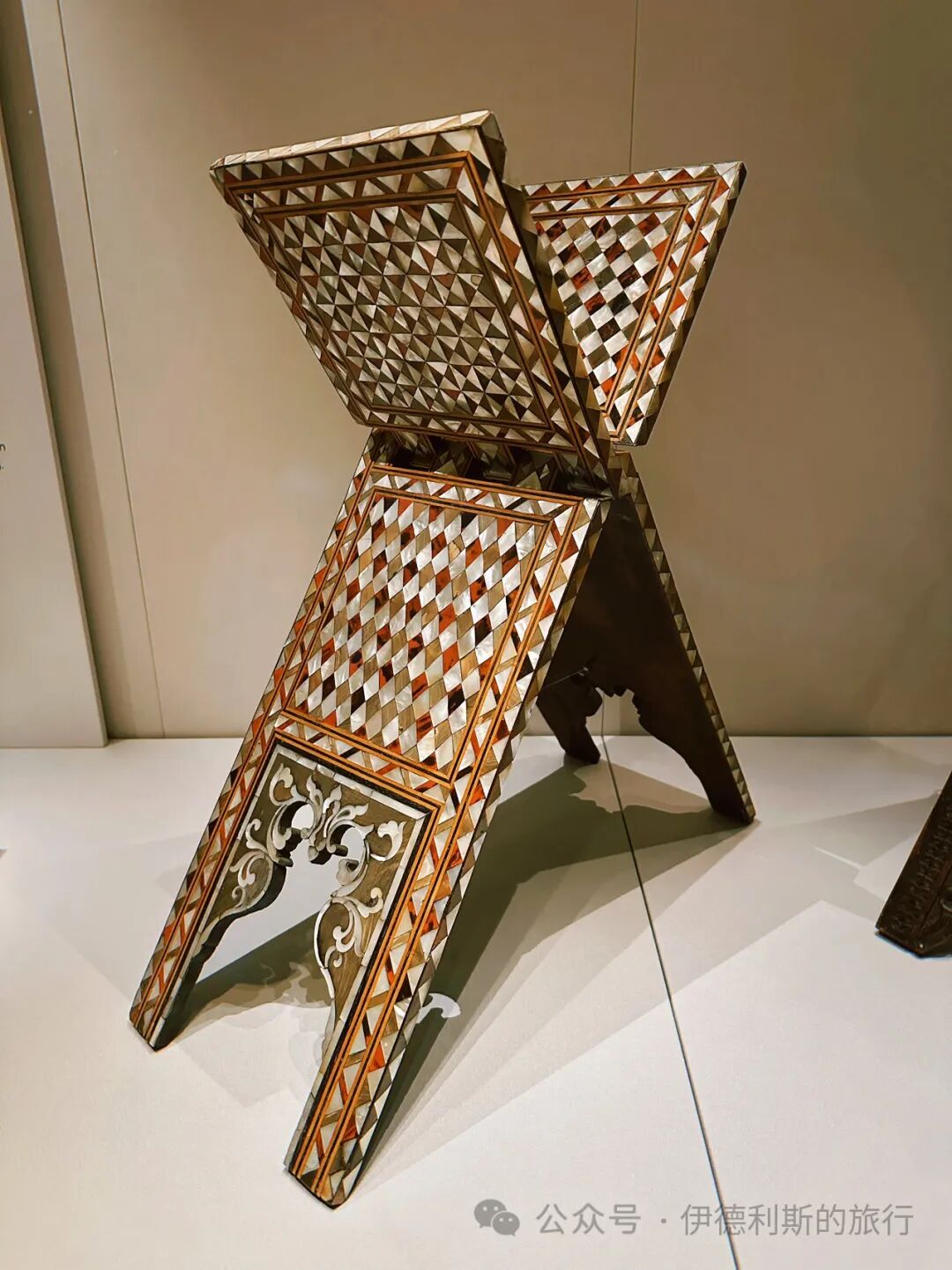
This 18th-century Ottoman Turkish book stand (rehal) is inlaid with tortoiseshell and mother-of-pearl.
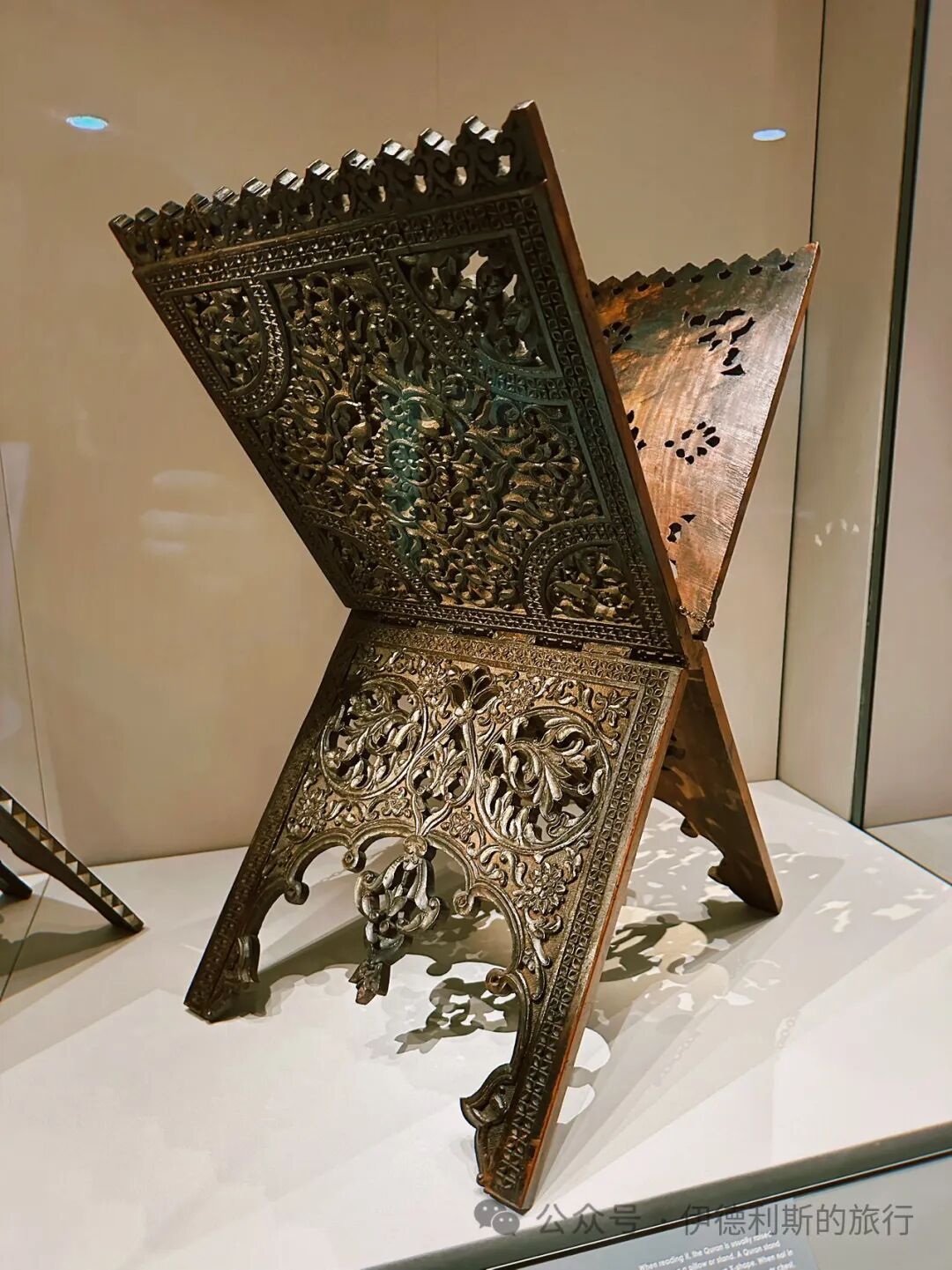
This 19th-century Iranian book stand (rehal) is carved with beautiful floral and geometric patterns.
This 8th-to-9th-century parchment manuscript from Syria or North Africa is an early form of Kufic script. These parchment Kufic manuscripts are among the earliest Quran copies visible today.
These two religious texts, written in China and Java, show how non-native Arabic speakers wrote the language, including notes in their own native tongues.
This is an 1876 Ottoman Turkish pen case with an inkwell.
This is a pottery jug from Kashan, Iran, dating to the late 12th century.
This is a 10th-century pottery bowl from Nishapur, Iran, featuring Kufic calligraphy.
This 1887-88 sandstone screen (jali) from India was used to block the hot sun and is inscribed with praises to Allah.
This 17th-century Iranian copy of the anatomy book Tashrih-i Mansuri was originally written in the 14th century. It studies different body systems, including bones, nerves, muscles, and arteries. The final chapter explains how human organs and fetuses form, and it includes anatomical drawings of a pregnant woman.
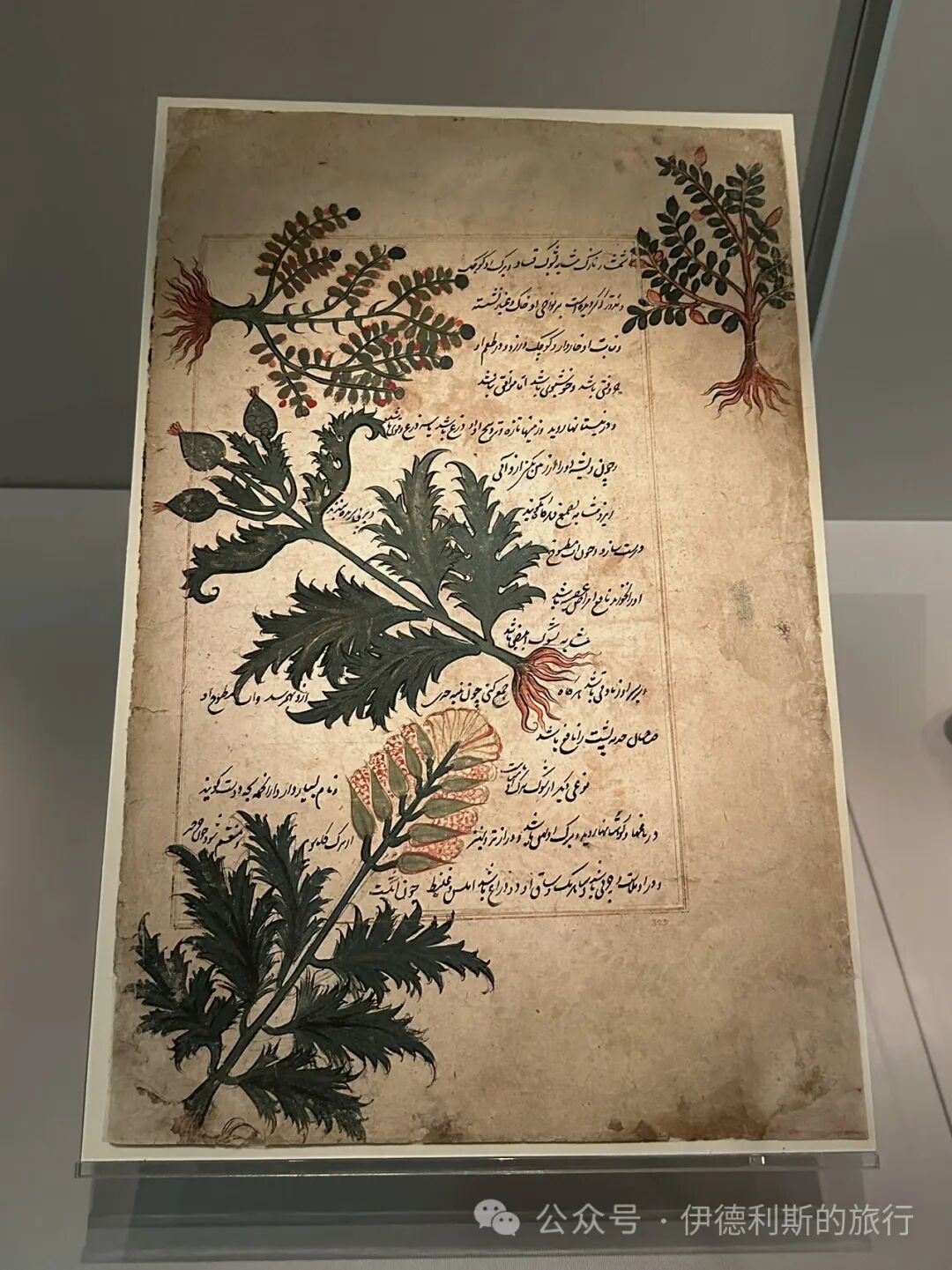
This is a Persian version of the famous ancient Roman pharmacology book De materia medica, copied in the Deccan region of India in 1595. De materia medica was written in Greek in the 1st century AD, translated into Arabic in the 9th century, and later translated into Persian, laying an important foundation for botany and pharmacology in West Asia.
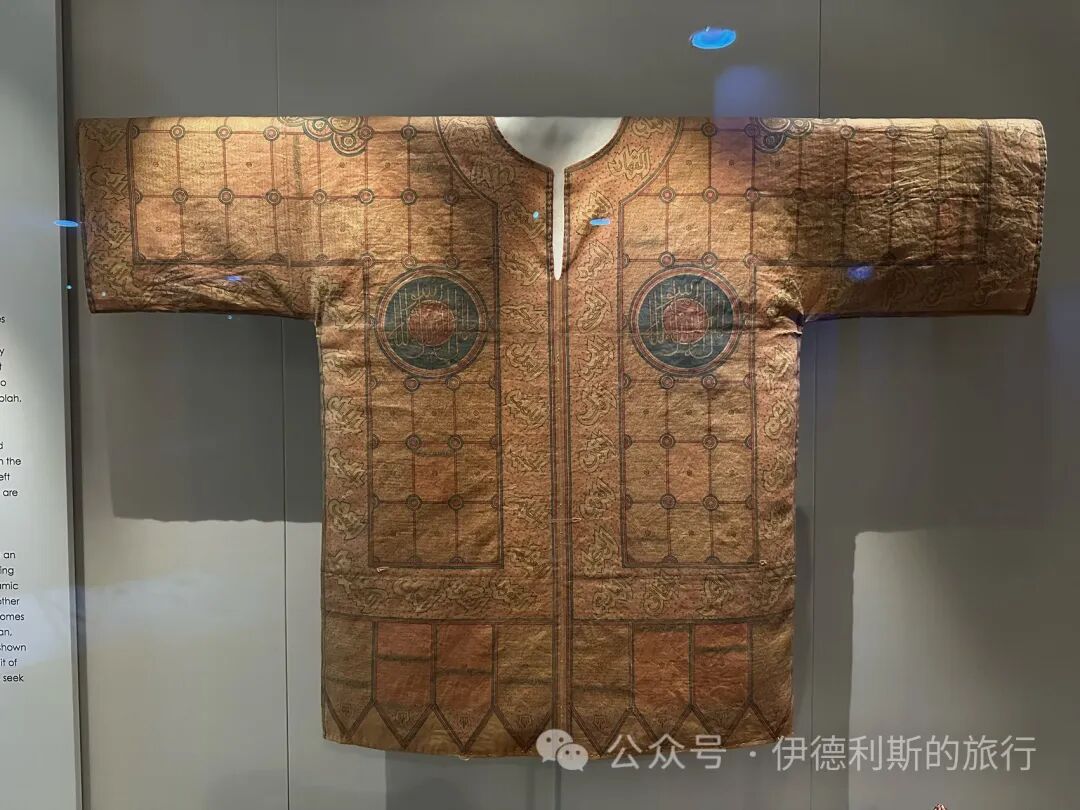
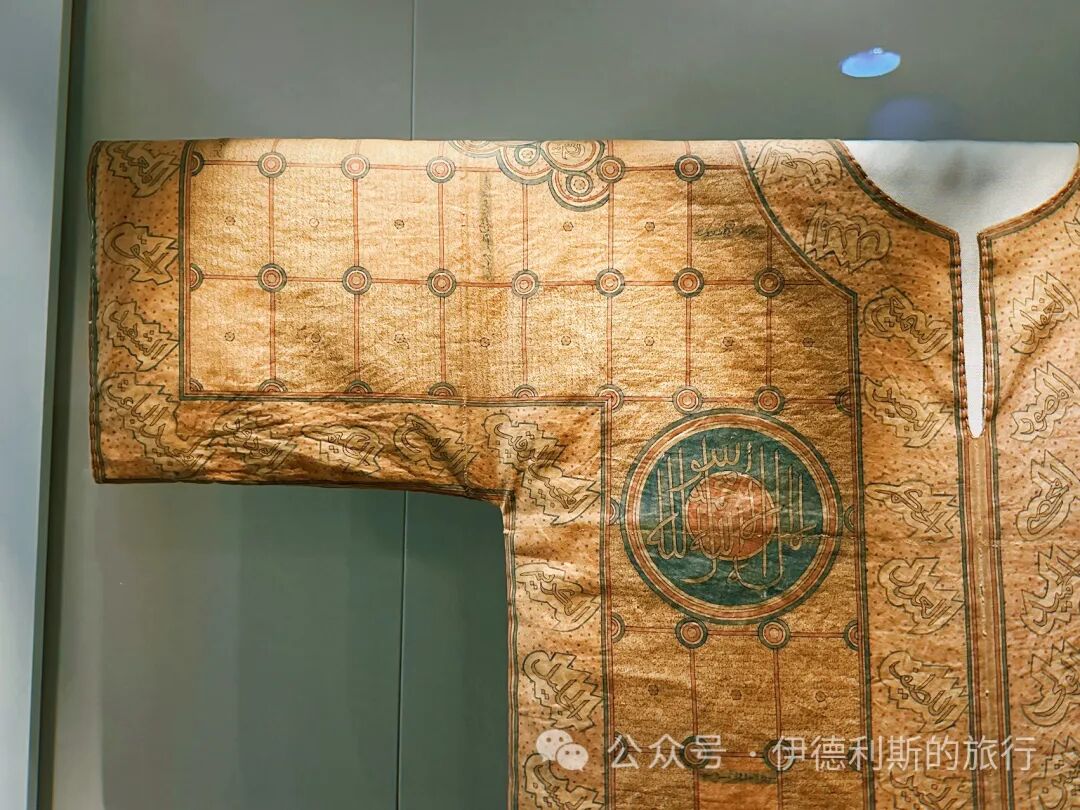
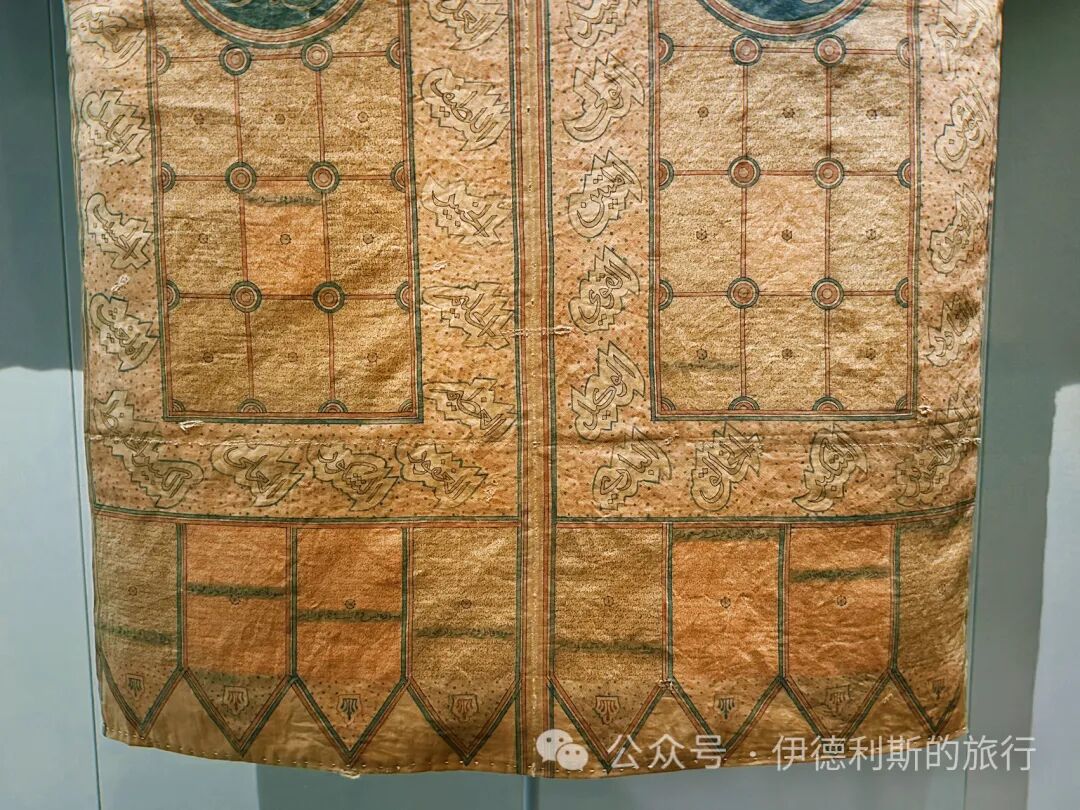
A dua shirt (dua shirt) from the Mughal Empire in India, dating from the 16th to the early 17th century. This garment is covered in scripture and the 99 names of Allah. Warriors wore it under their armor, and sick people wore it for health and safety.
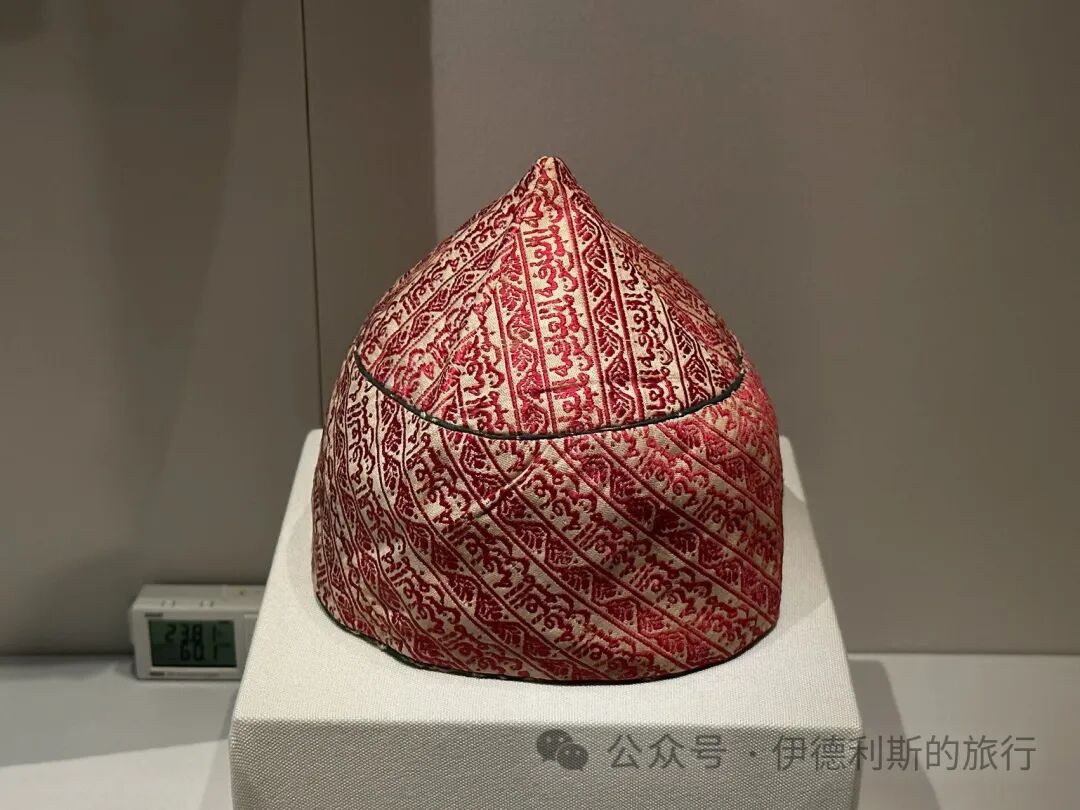
A 19th-century Indian dua hat (dua hat) inscribed with scripture.
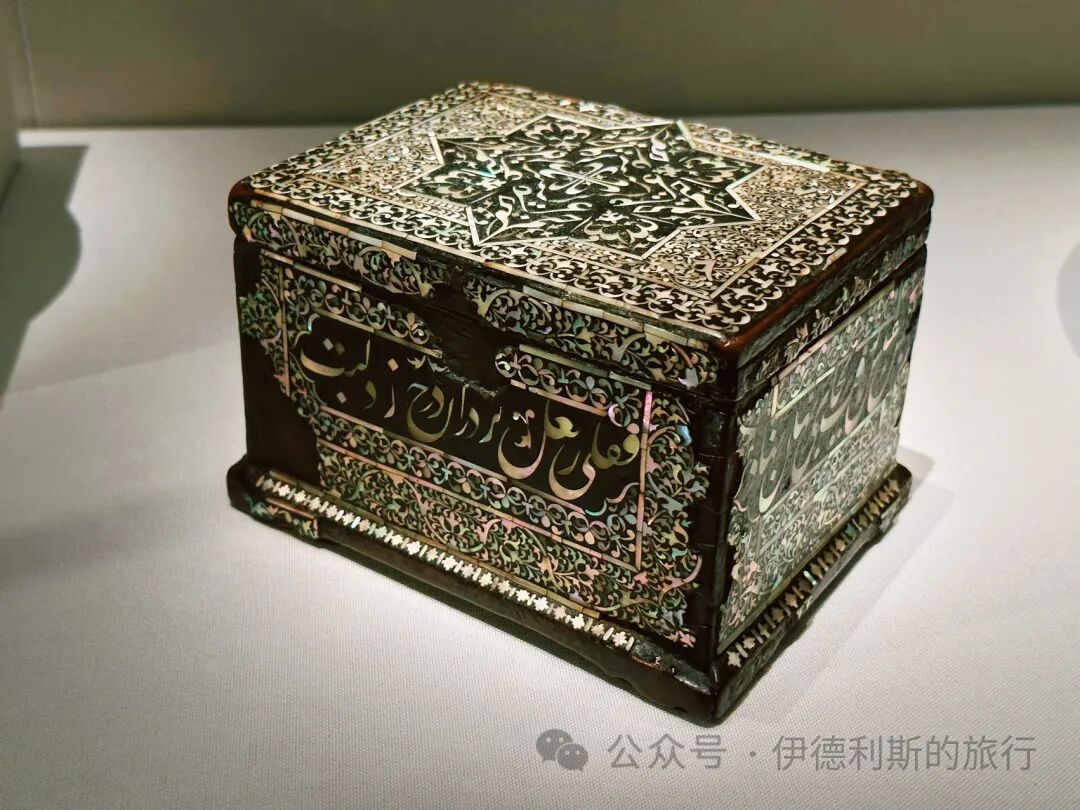
A jewelry box from Gujarat, India, made between the late 16th and 17th centuries. Muslim artisans in Gujarat crafted these fine boxes for the entire Islamic world, decorating them with finely cut mother-of-pearl.
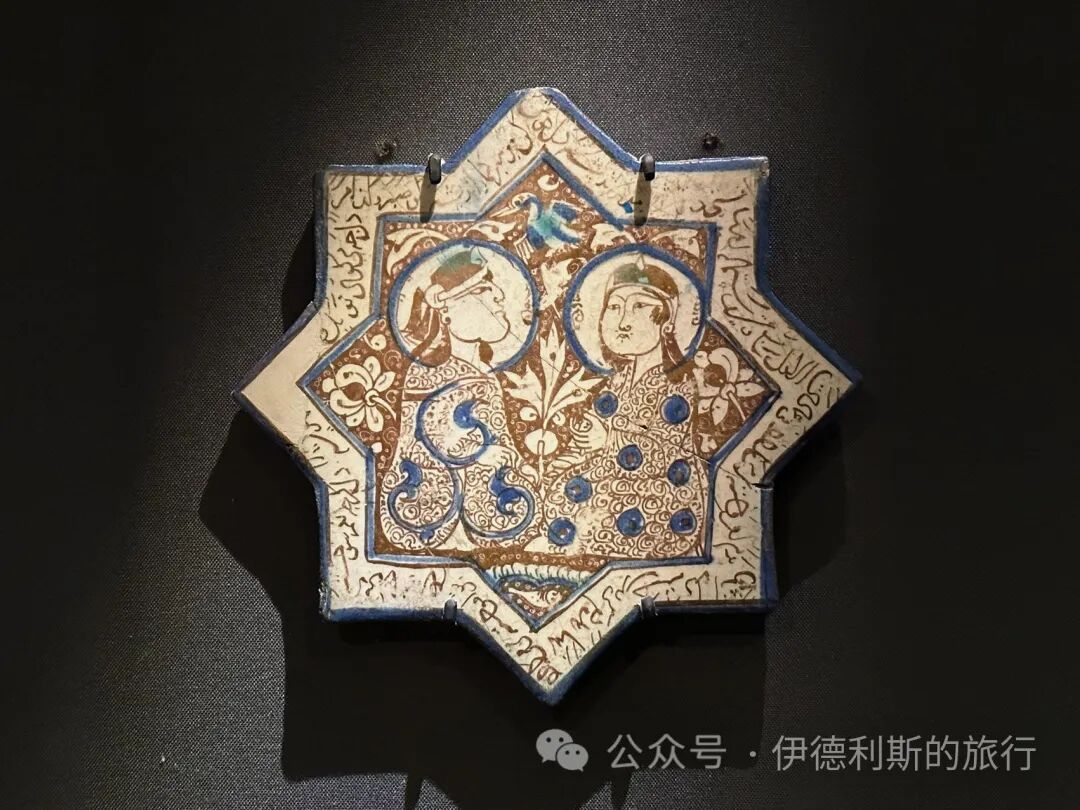
A 1230 tile from Kashan, Iran. These octagonal tiles, paired with cross-shaped tiles, covered the walls of Iranian palaces and important tombs. They often feature Persian poetry and Quranic verses.
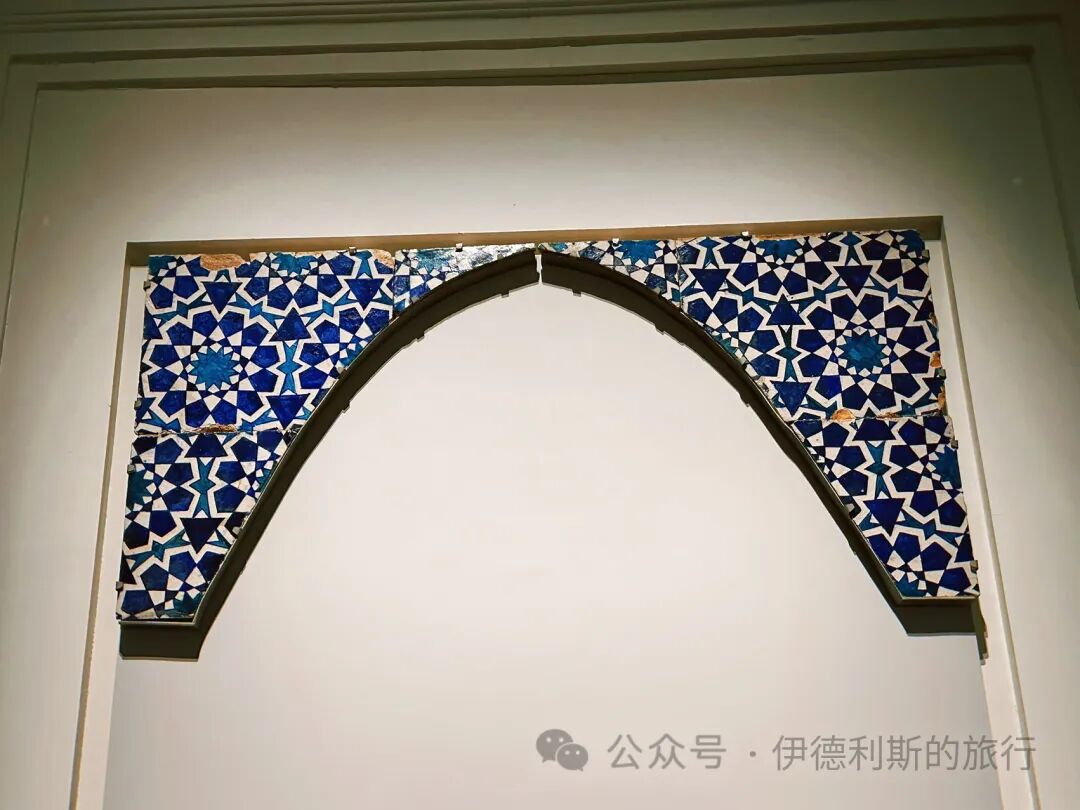
A 15th-century tile from Multan, Pakistan. Influenced by the Timurid Empire of Central Asia, it features a striking blue and green twelve-pointed star design.
Exquisite Chinese export porcelain, reflecting the economic and cultural exchange between China and the Islamic world at that time.
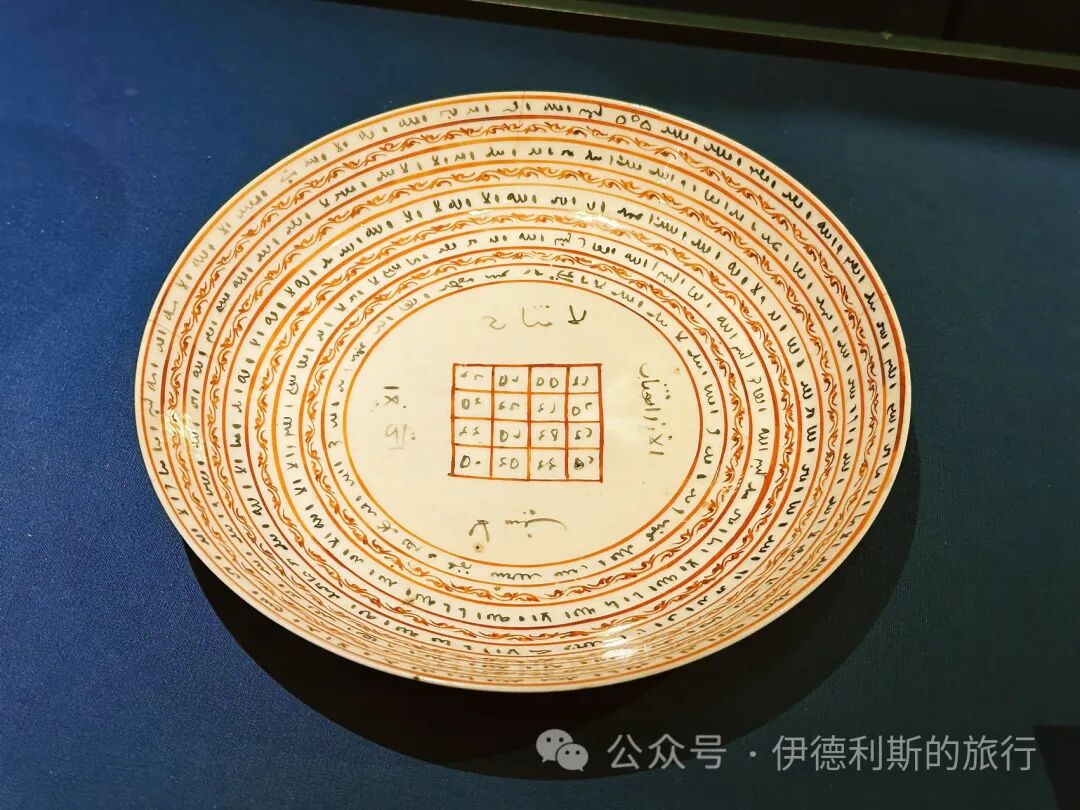
A Chinese porcelain plate from the early 17th century featuring a magic square, with black cursive scripture alternating with red scroll patterns. Magic squares were believed to help prevent disease.
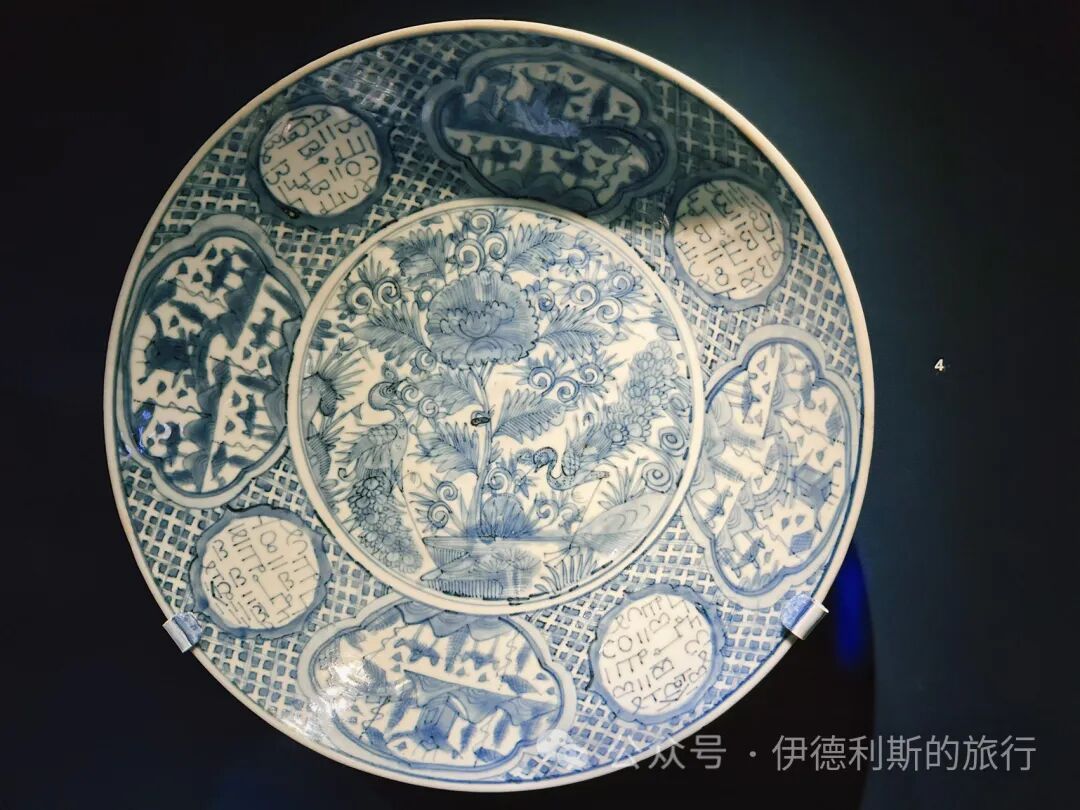
An early 17th-century export porcelain plate from the Zhangzhou kiln in Fujian. It shows two peacocks under a blooming flower, surrounded by the Shahada.
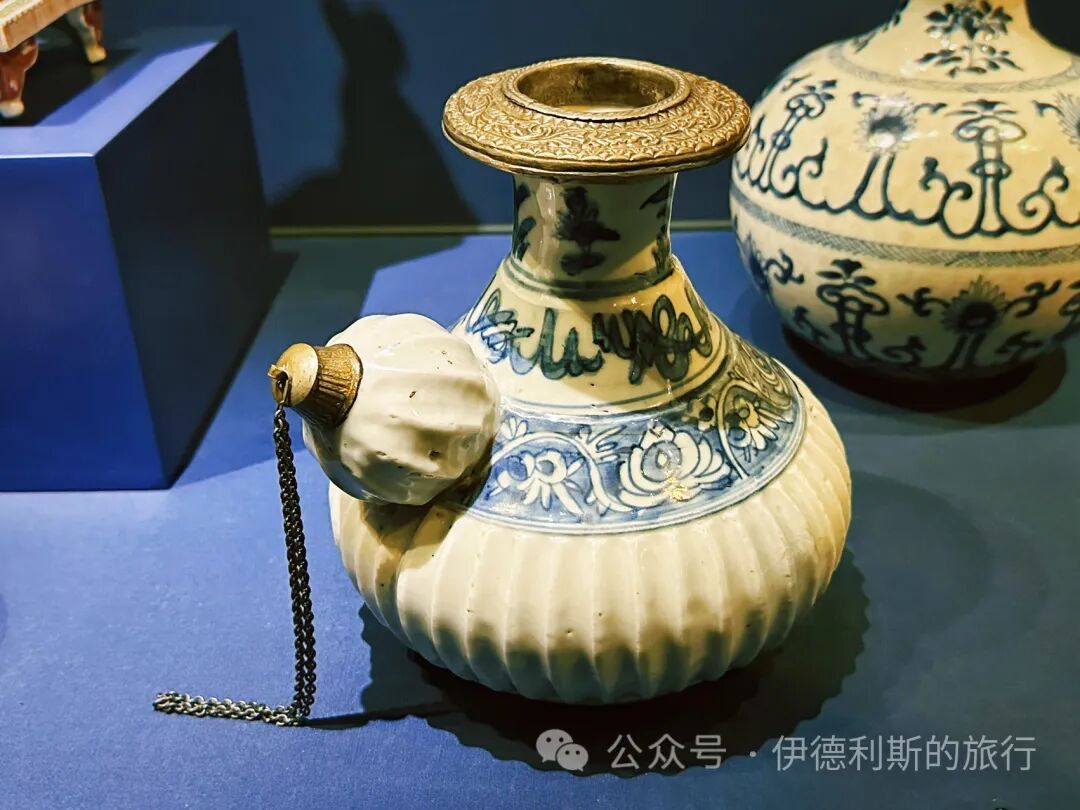
A 17th-century Qing dynasty export porcelain piece, fitted with a silver rim and spout, featuring the name of Allah.
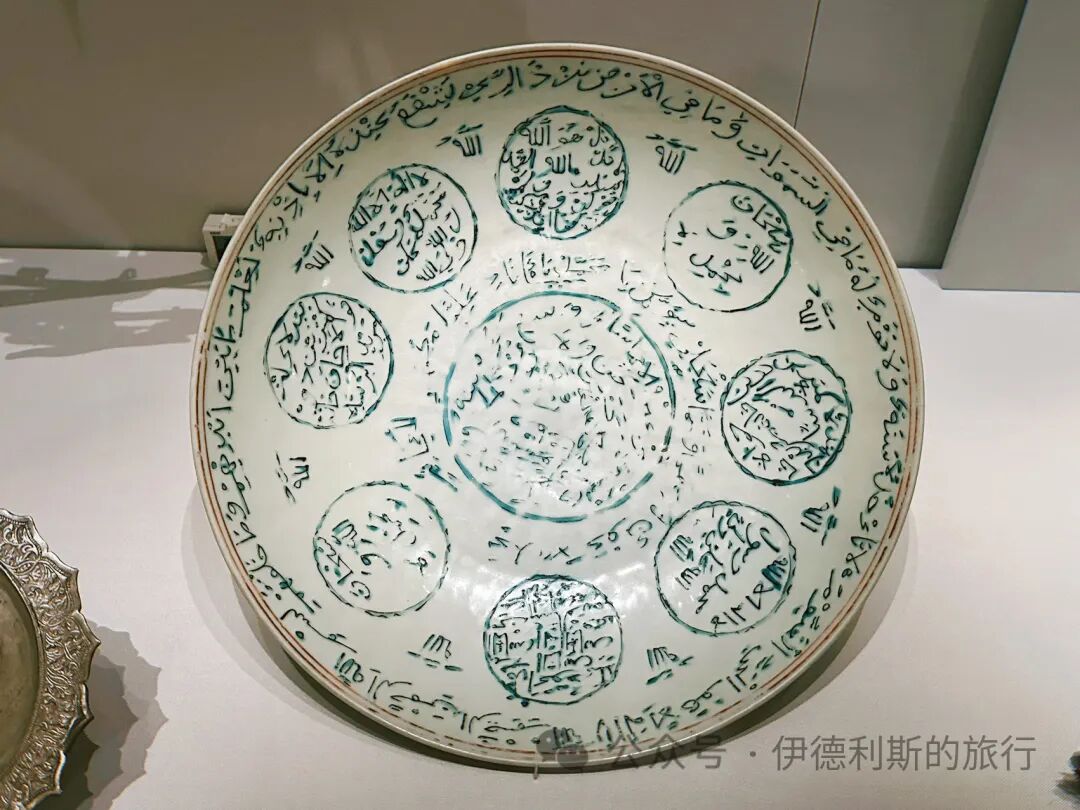
A porcelain plate from the Zhangzhou kiln in Fujian, commissioned by the Sultan of Aceh in the 17th century. The inner circle contains scripture, while the eight outer circles feature seals designed by the Sultan in imitation of the Mughal Empire. The Sultanate of Aceh (1496-1903) was located in northern Sumatra, Indonesia, and was once a major center for Islamic scholarship and trade. These plates were likely ordered during the reign of Sultan Iskandar Muda (1607-1636). Under his rule, the Sultanate of Aceh reached its peak, becoming the most powerful and wealthy state in western Indonesia and the Strait of Malacca.
An export porcelain plate commissioned by Shia Muslims in Iran or India in 1844-45, featuring Persian poetry related to the martyrdom of Imam Hussein. The teardrop-shaped pattern used here is called a boteh design in Persian.
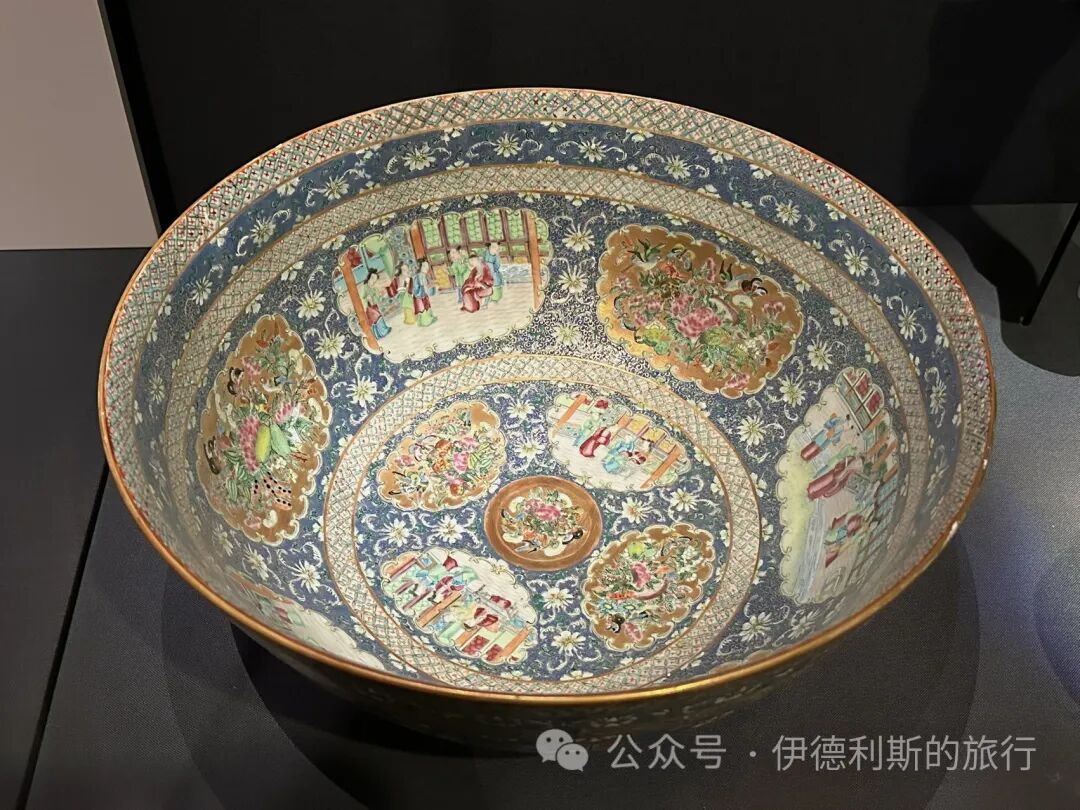
This Canton enamel porcelain bowl was ordered by the Qajar dynasty royal family in Iran between 1883 and 1884. It mentions Prince Mass'oud Mirza Zell-e Soltan, the eldest son of the Qajar King Naser al-Din Shah (who reigned from 1848 to 1896), who served as the governor of Isfahan for over 35 years. The Qajar royal family loved Canton enamel porcelain and often ordered full sets of tableware to use at banquets.
A set of traditional Qing dynasty enamel incense tools used by Hui Muslims: an incense burner, an incense box, and a vase for incense tools. In the past, Hui Muslims usually kept these in a high place at home and only used them during religious gatherings (nieti) and the Eid festivals. Later, as stick incense became popular, the three-piece incense set was gradually replaced by a single incense burner.
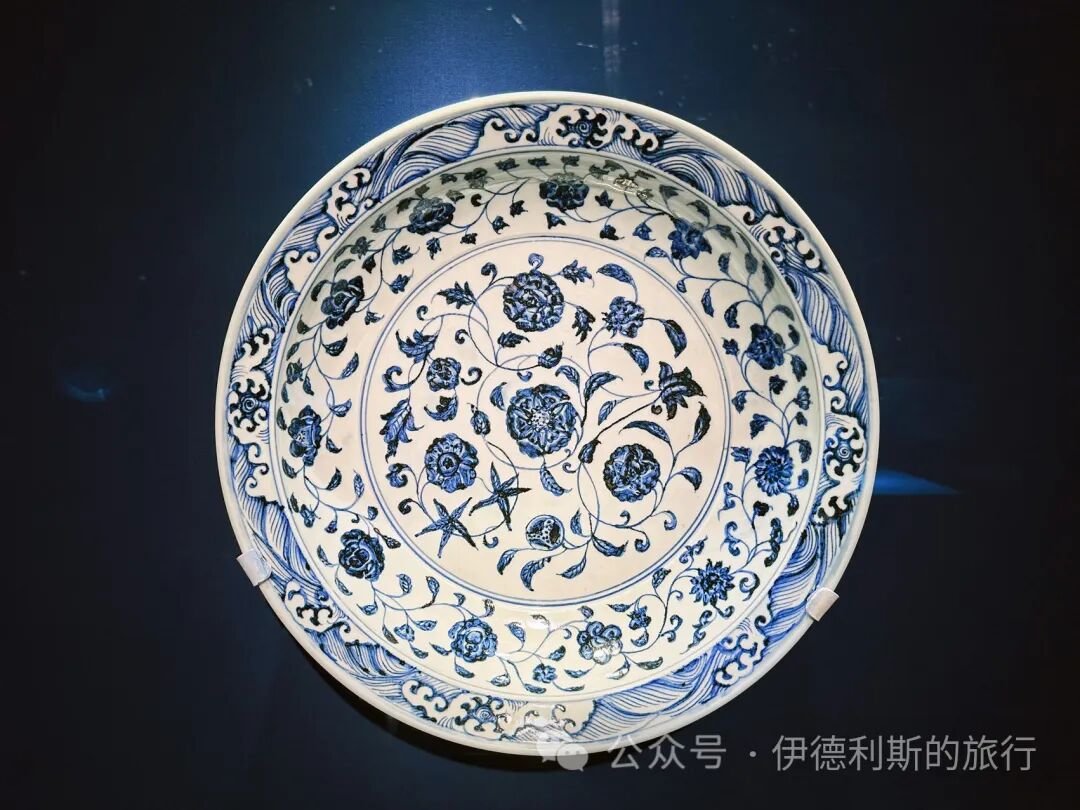
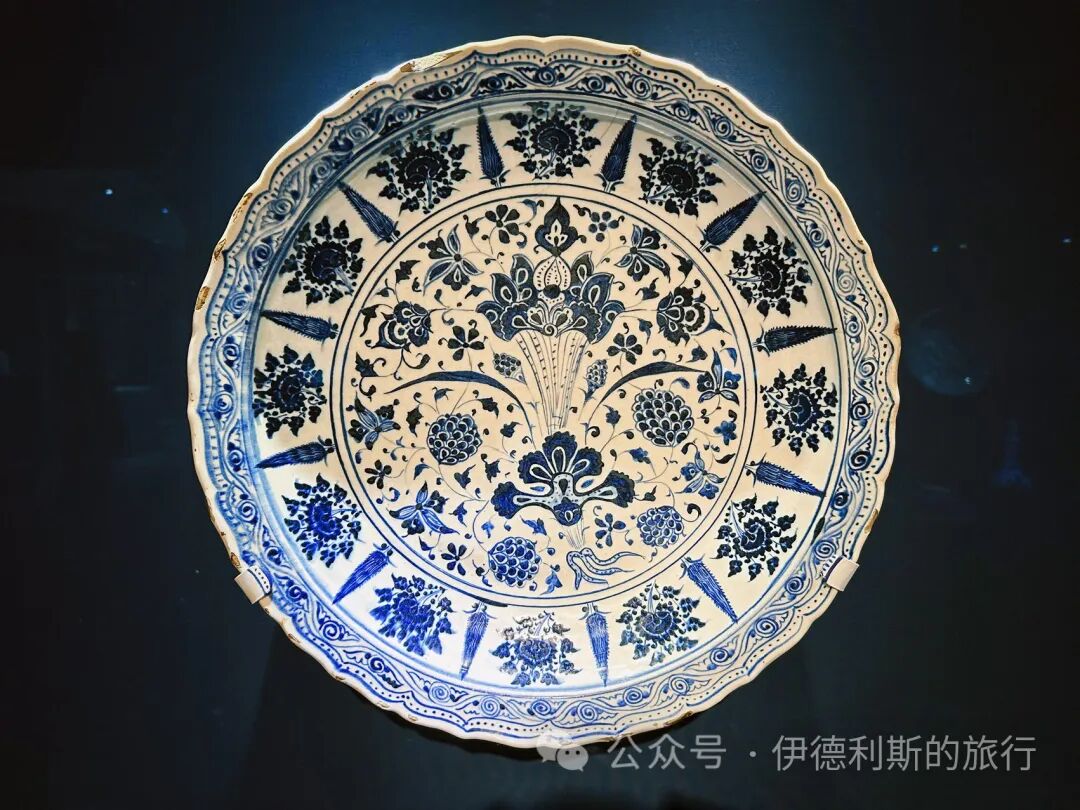
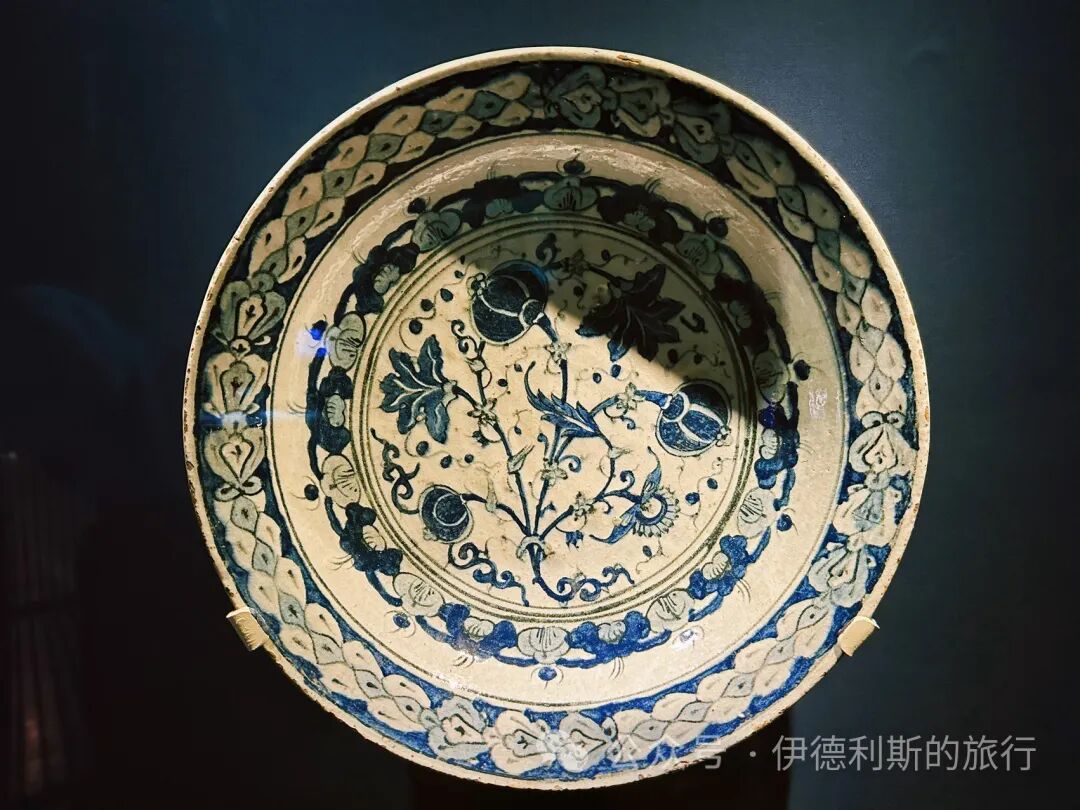
The spread and evolution of blue and white porcelain in the Middle East.
The first is a blue and white porcelain plate from Jingdezhen in the 15th century. This type of floral blue and white porcelain plate was exported in large quantities to Middle Eastern countries during the Ming dynasty, and one is kept in the tomb of the famous Sufi Sheikh Safi al-Din in Iran.
The second is blue and white porcelain produced by the Ottoman Empire in the mid-15th century, representing an early Middle Eastern attempt to learn from Jingdezhen blue and white porcelain. The floral patterns are clearly influenced by China, but the cypress tree pattern is a Turkish specialty.
The third is porcelain produced around 1600 in Iznik, Turkey, under Ottoman rule. By this period, Iznik was able to produce high-quality blue and white porcelain, and the floral patterns continued to be influenced by China.
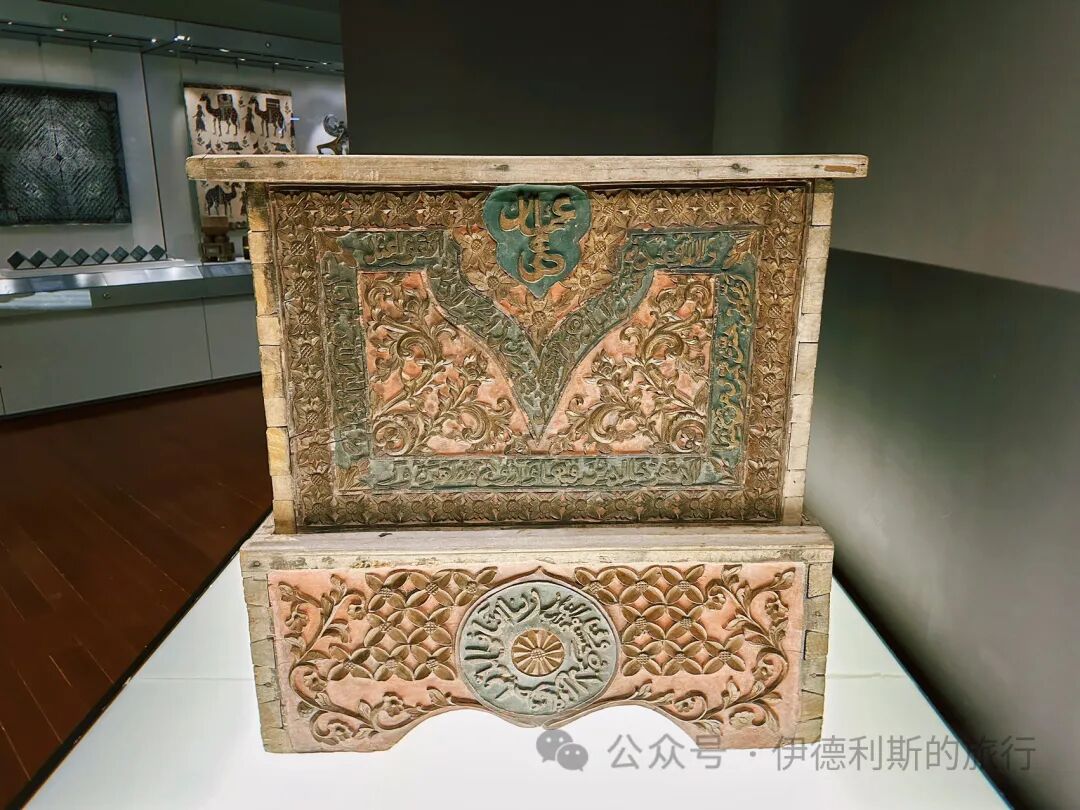
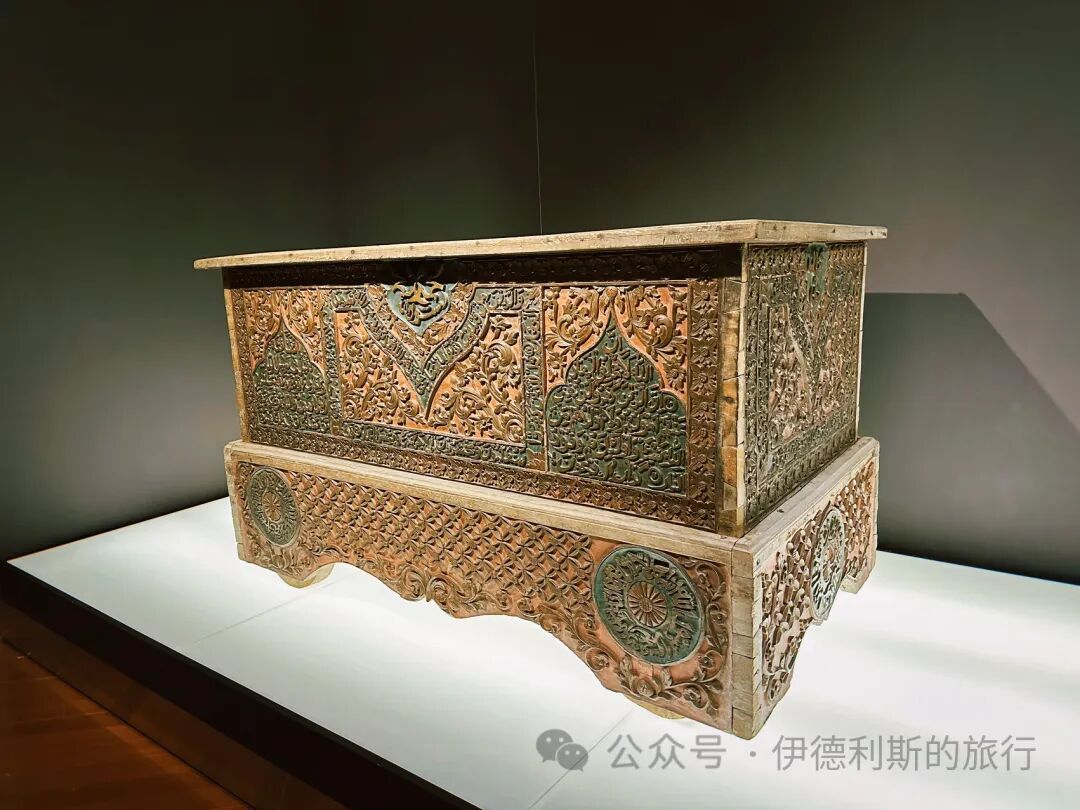
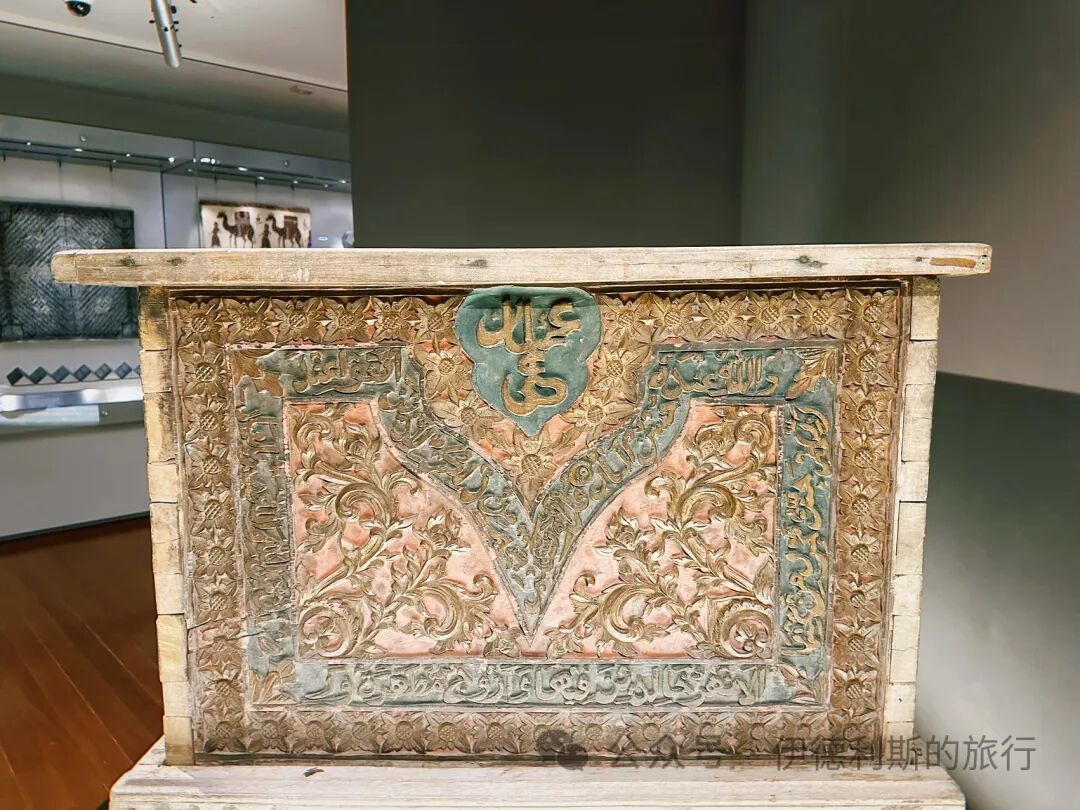
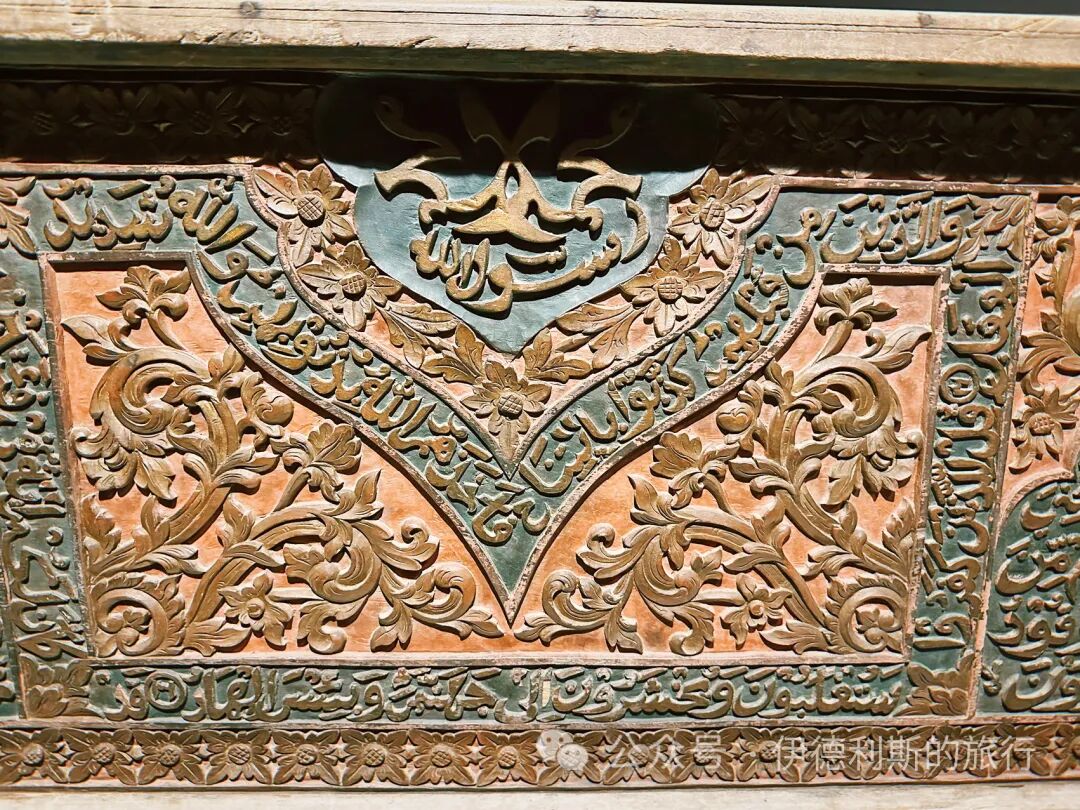
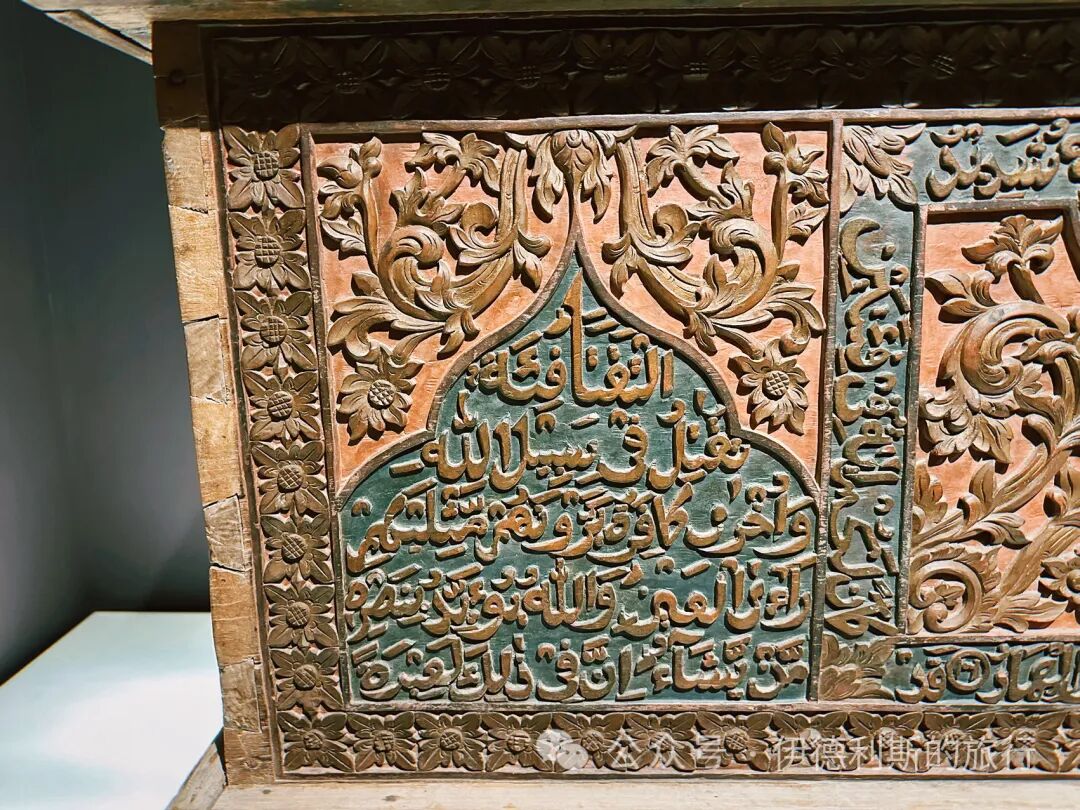
A 19th-century teak wood scripture box from northern Java. This intricately carved scripture box was generally only used in mosques and madrasas, and it features traditional Javanese-style patterns.
A Jingdezhen blue and white porcelain brush rest with the mark 'Made in the Zhengde reign of the Great Ming'. The front is written in Arabic as 'khamah' (pen), and the back is written in Arabic as 'dan' (rest).
The Islamic culture of Southeast Asia.
A collection of blessings for the Prophet (Dala'il al-Khayrat) copied in Terengganu on the Malay Peninsula in the 19th century. Malay people usually carried this book with them when they went on Hajj, so it includes diagrams of the Prophet's Mosque and the Sacred Mosque, marking the locations of the Prophet's tomb and the Kaaba. The two illustrations of the Kaaba use the ornate Terengganu decorative style and feature a lot of gold leaf.
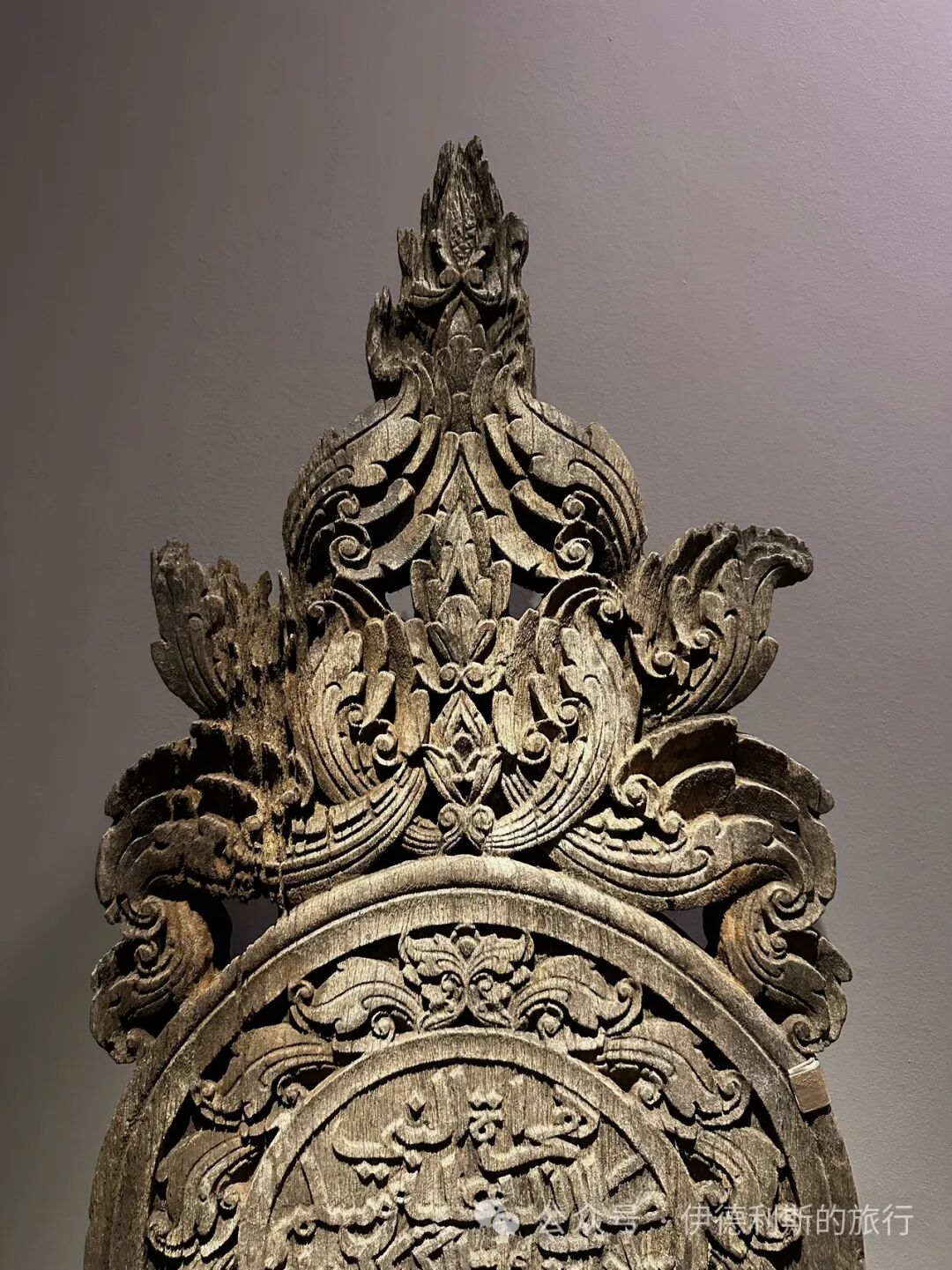
A wooden carving of Buraq from Lanao del Sur province on Mindanao island in the southern Philippines, dating to the early 20th century; this is the mount the Prophet Muhammad rode during his Night Journey. Muslims in Mindanao display the Buraq during important feasts and holidays. Although the Hadith does not describe the face of the Buraq, it mentions it has a handsome face, so it has historically been depicted with a human face; this Buraq's headpiece and tail incorporate traditional Okir patterns from the southern Philippines.
A wooden tombstone from the southeast of Kalimantan island dated 1894; the intricately carved tombstone is a symbol of noble status and wealth, featuring both Malay and Arabic.
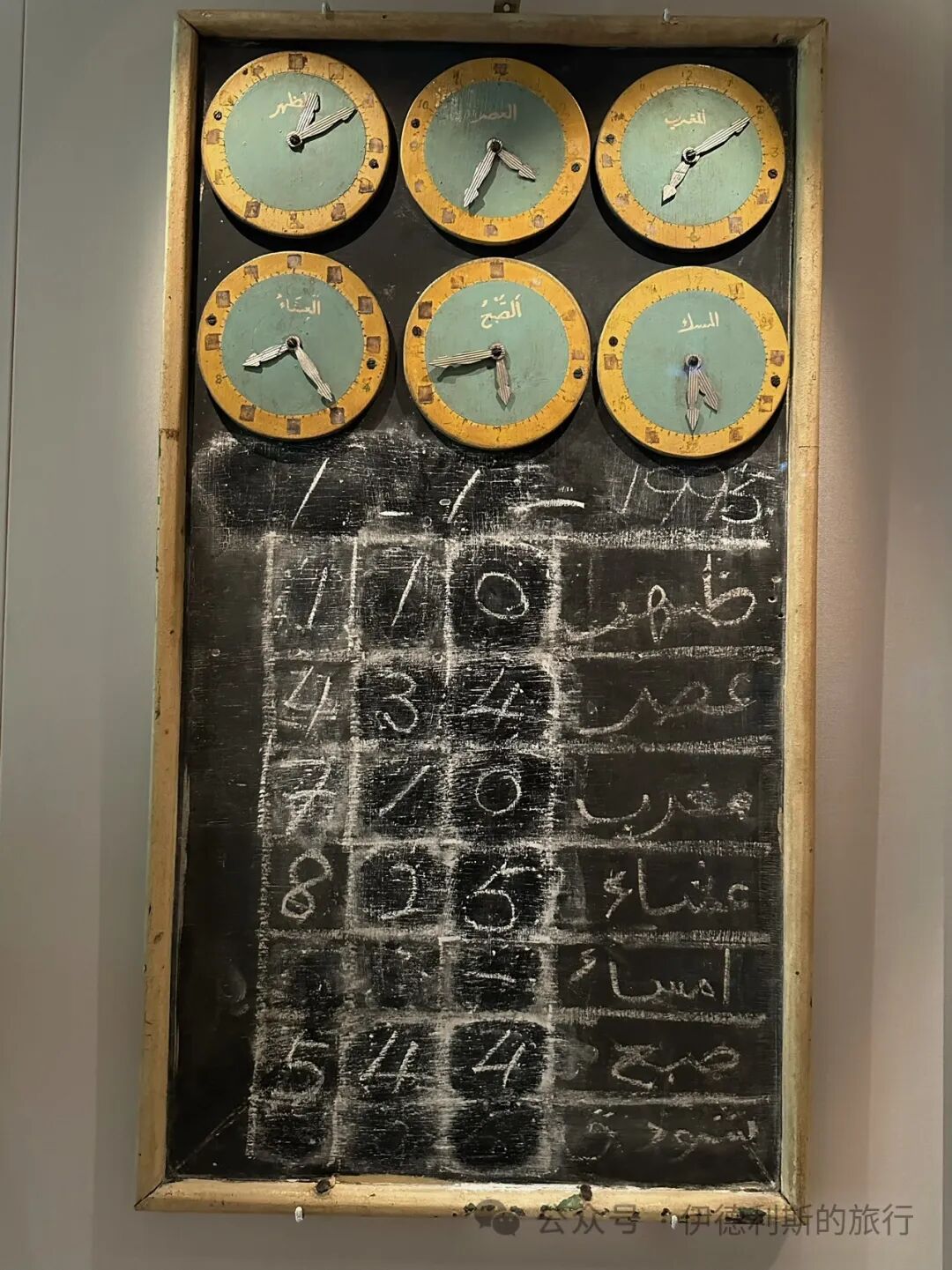
A prayer time chart from the mid-20th century at the Wak Sumang mosque in Punggol, Singapore, which was used until the mosque was demolished in 1995.
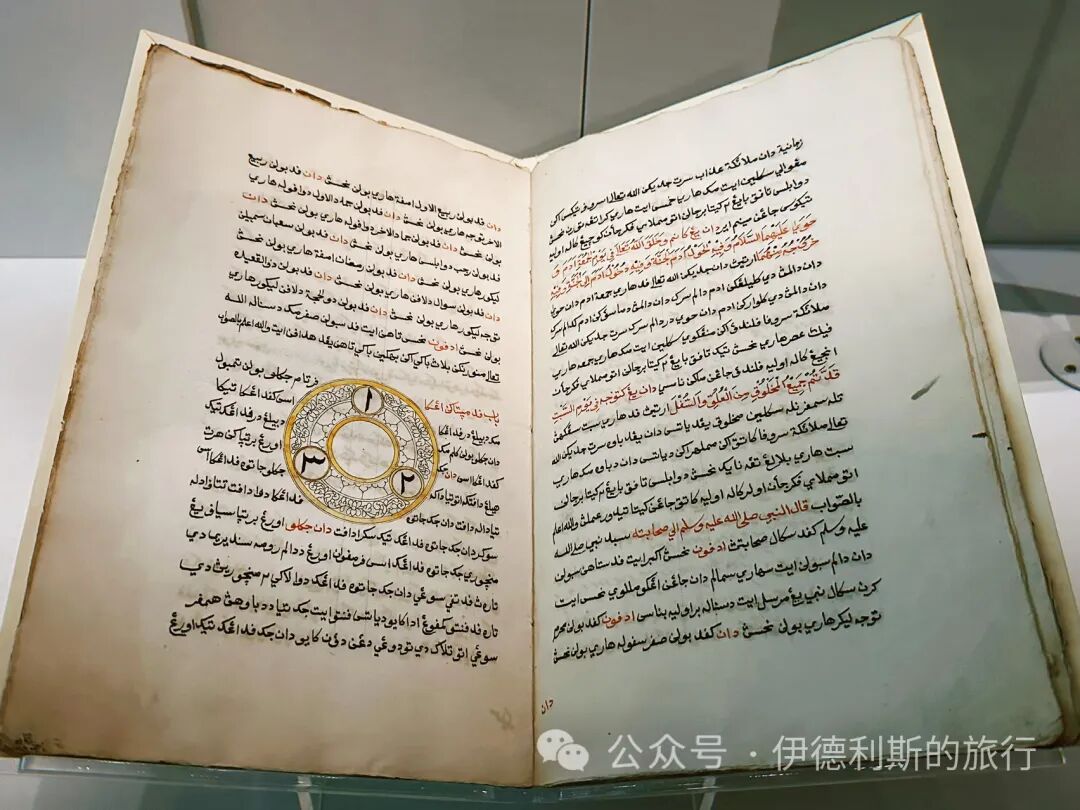
A book of divination (Primbon) from Semarang, Java, copied in 1824 in Jawi script (Arabic script used to write Malay). The book uses a combination of numerology and Quranic verses to provide guidance on decisions or auspicious dates and times for events ranging from moving house to getting married.
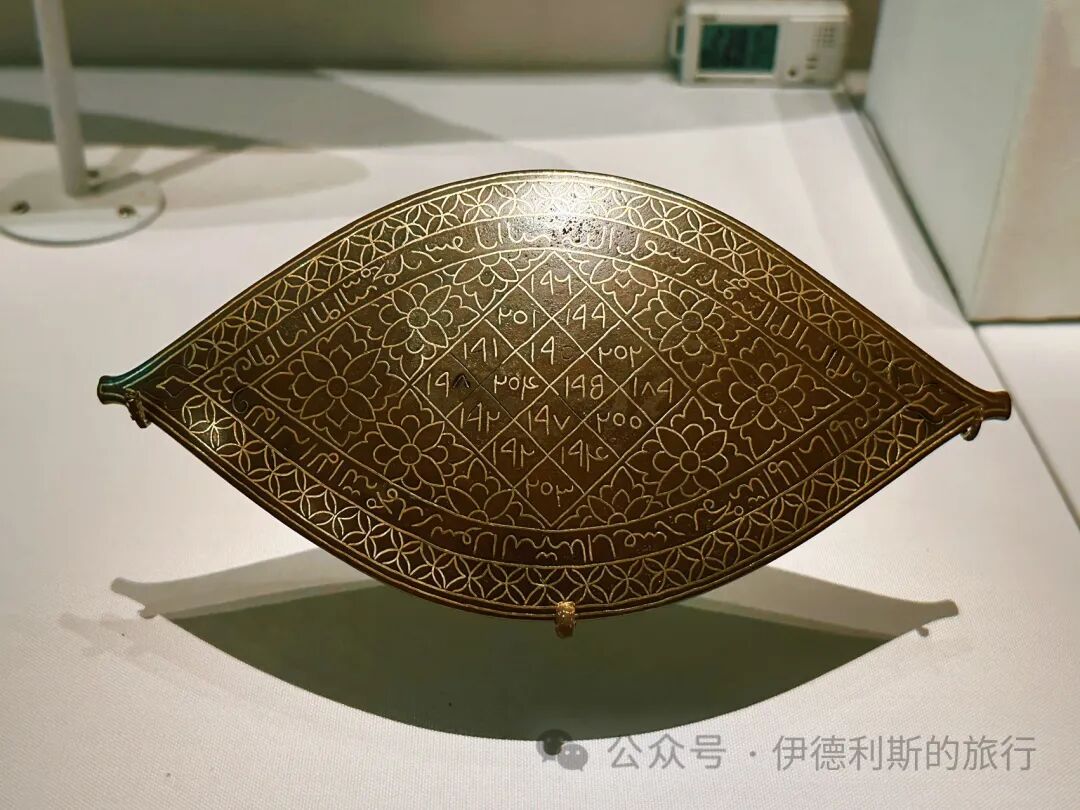
A magic square belt buckle from the late 19th to early 20th century in Kuala Kangsar, the royal city of the Sultan of Perak on the Malay Peninsula; it is inscribed with the Shahada and was part of traditional Malay attire.
Arabic calligraphy on wax-resist dyed cloth (Batik) from the Jambi region of Sumatra in the 20th century. This overall design, with four satellite patterns surrounding a central motif, originated from the Buddhist mandala and was later used by Muslims in Sumatra as a burial shroud for coffins.
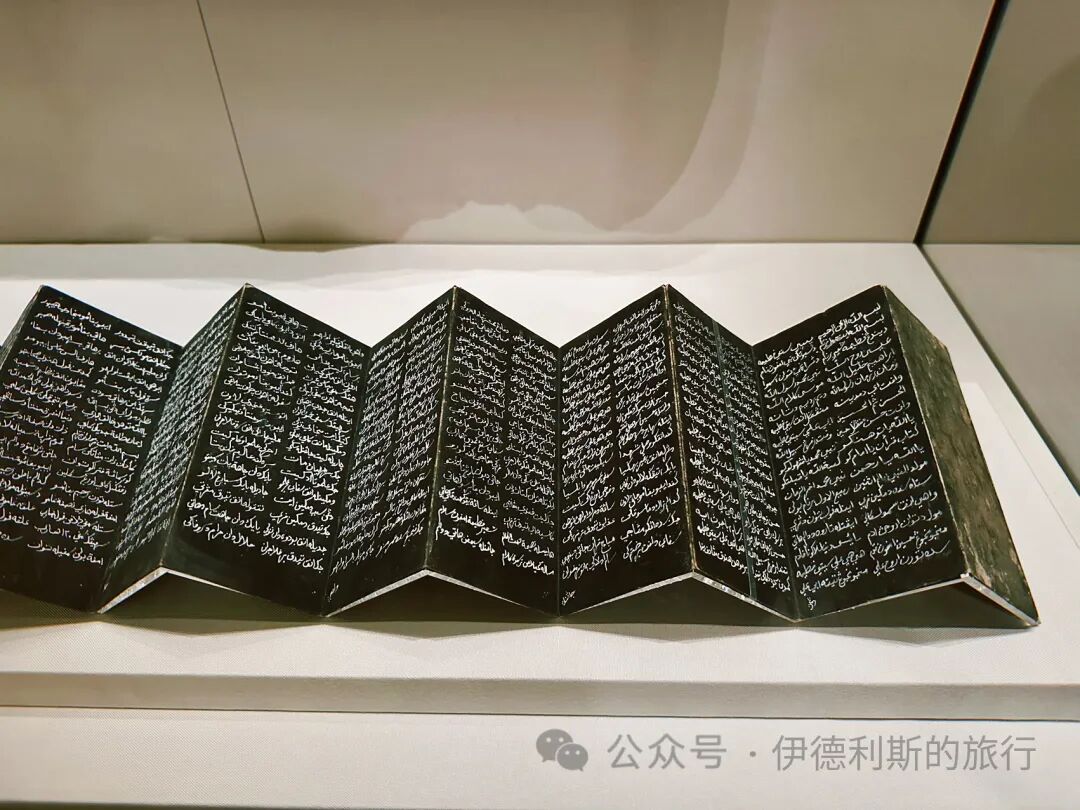
A mulberry paper manuscript from Pattani, Malay Peninsula, dated 1835. This black folding manuscript is written with white talc; it was very popular in Buddhist regions of Myanmar and was later adopted by Muslims in places like Myanmar and Malaysia. The manuscript includes advice for young people, and the Song of Fatimah (Syair Dendang Fatimah) is often chanted during ceremonies for newborns.
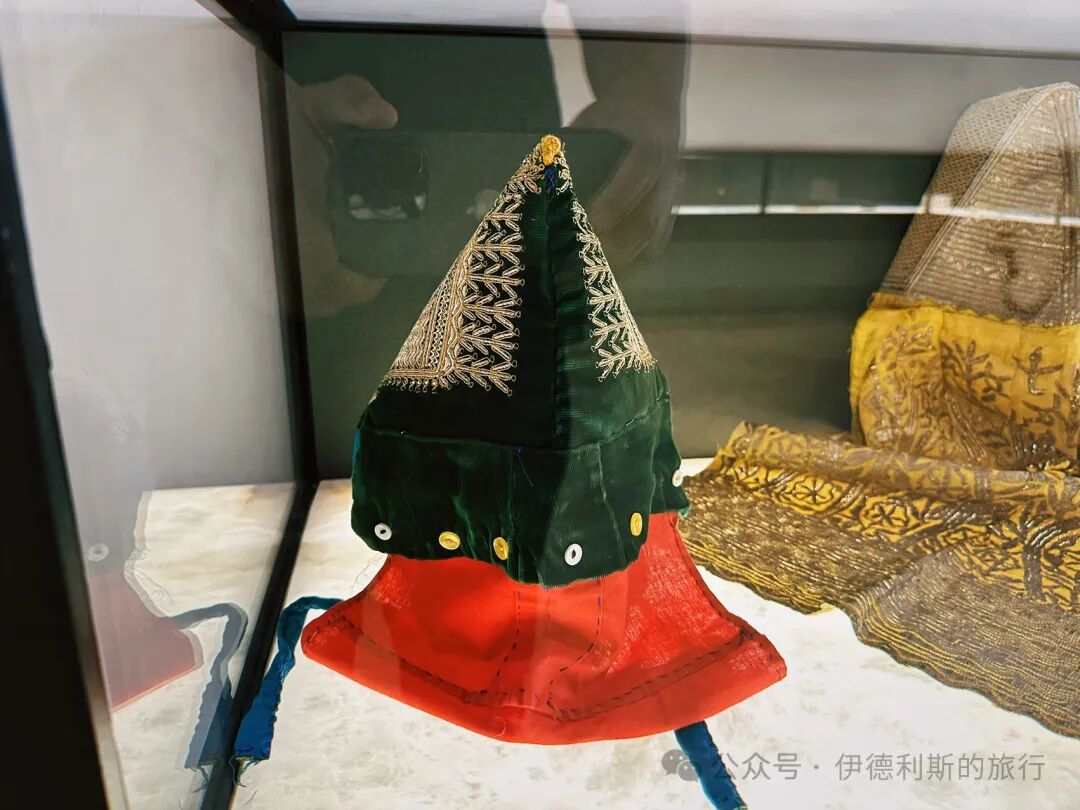
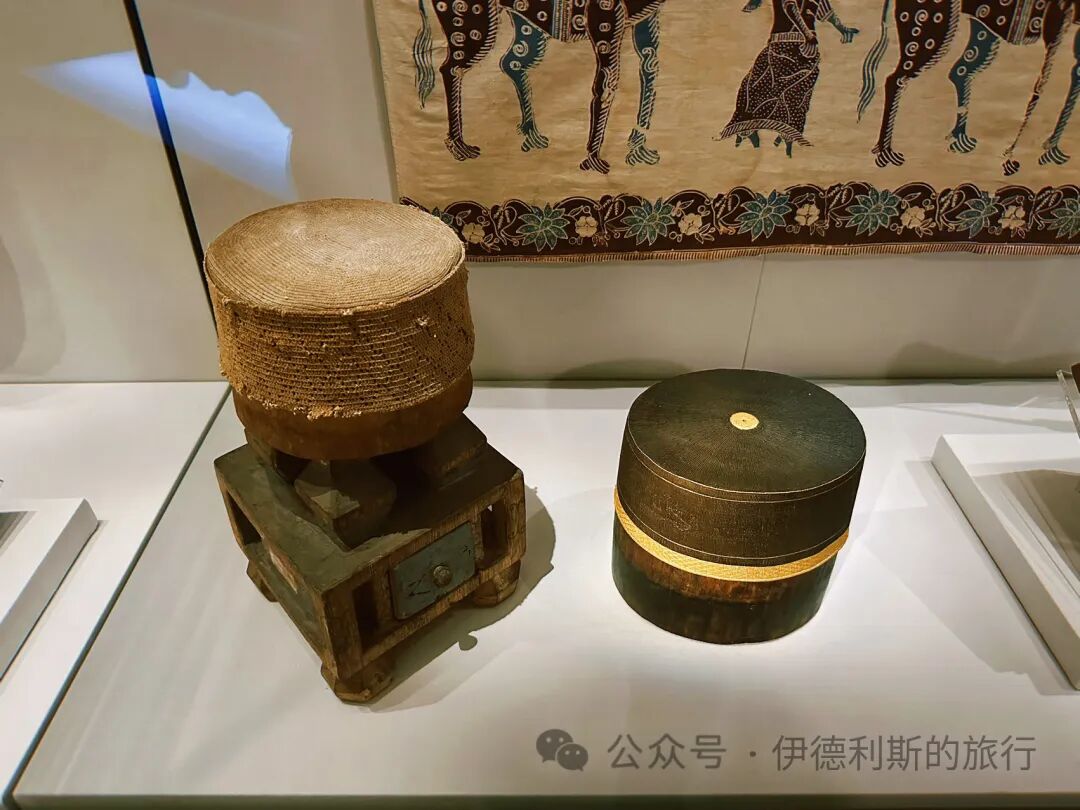
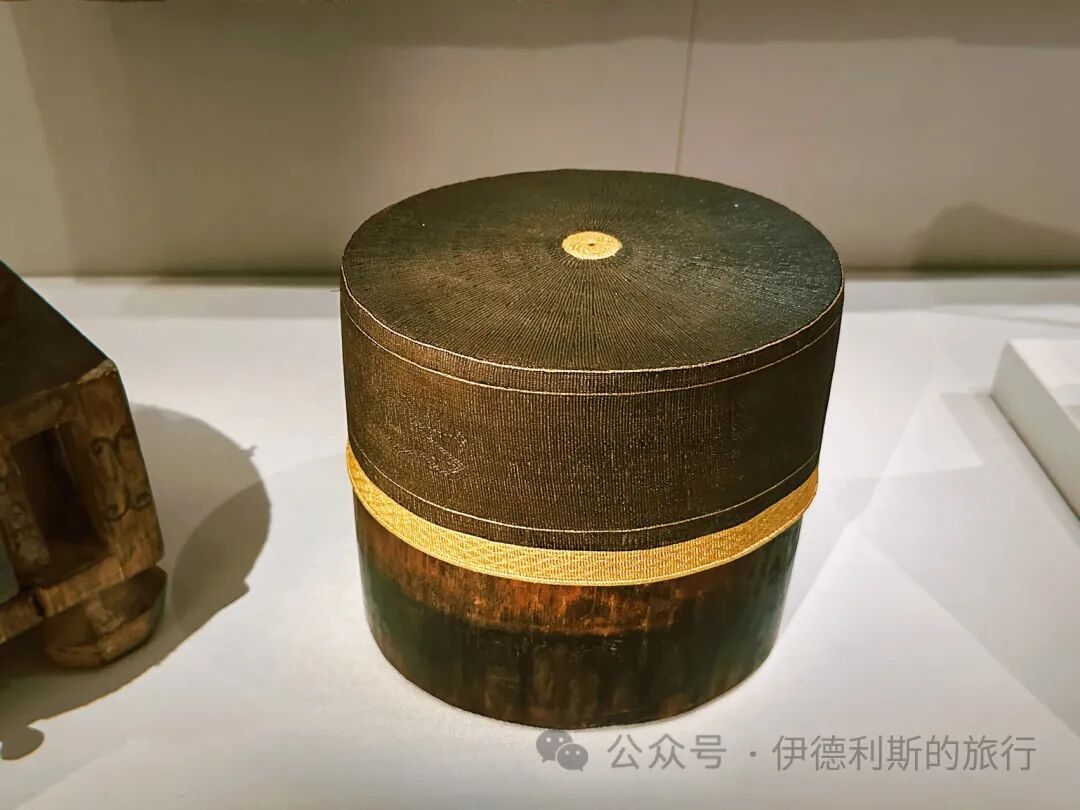
On the left is a 19th-century Indonesian haji cap, and on the right is a Bugis songkok cap (Songkok Recca) from southern Sulawesi dating to the 19th or 20th century. White symbolizes purity and the plain white ihram garments worn during the Hajj pilgrimage; in Indonesia, it is typically worn by a haji who has returned from the pilgrimage. The black songkok cap comes from the Ottoman fez, and the Bugis people of southern Sulawesi usually wear this cap for Friday namaz. A wider gold band indicates a closer relationship with the king.
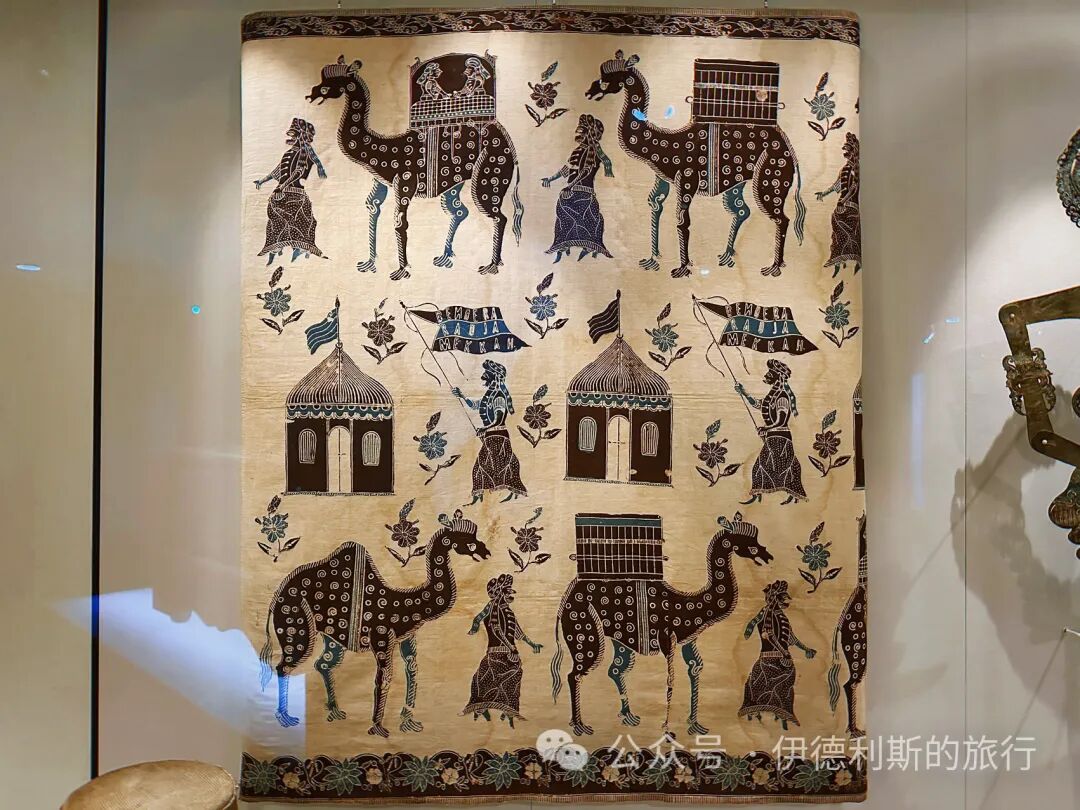
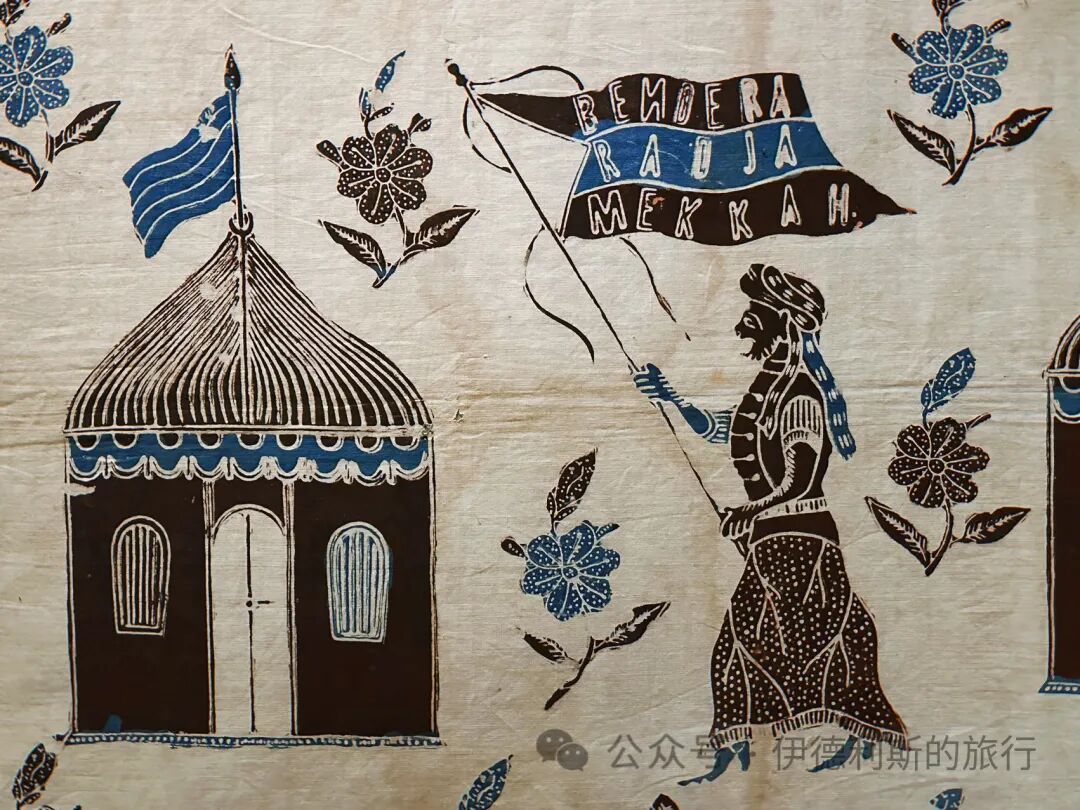
This early 20th-century batik sarong from Java depicts a Hajj pilgrimage group. The flag reads 'Bendera Radja Mekkah' (Flag of the King of Mecca), which was used during the 1916 Meccan revolt against the Ottoman Empire. The revolt was supported by the Hadharem people of Yemen. Many Arabs in Southeast Asia belong to Hadharem families, and some ran batik workshops on the north coast of Java while organizing Hajj trips for Javanese Muslims. This sarong was likely made in that context.
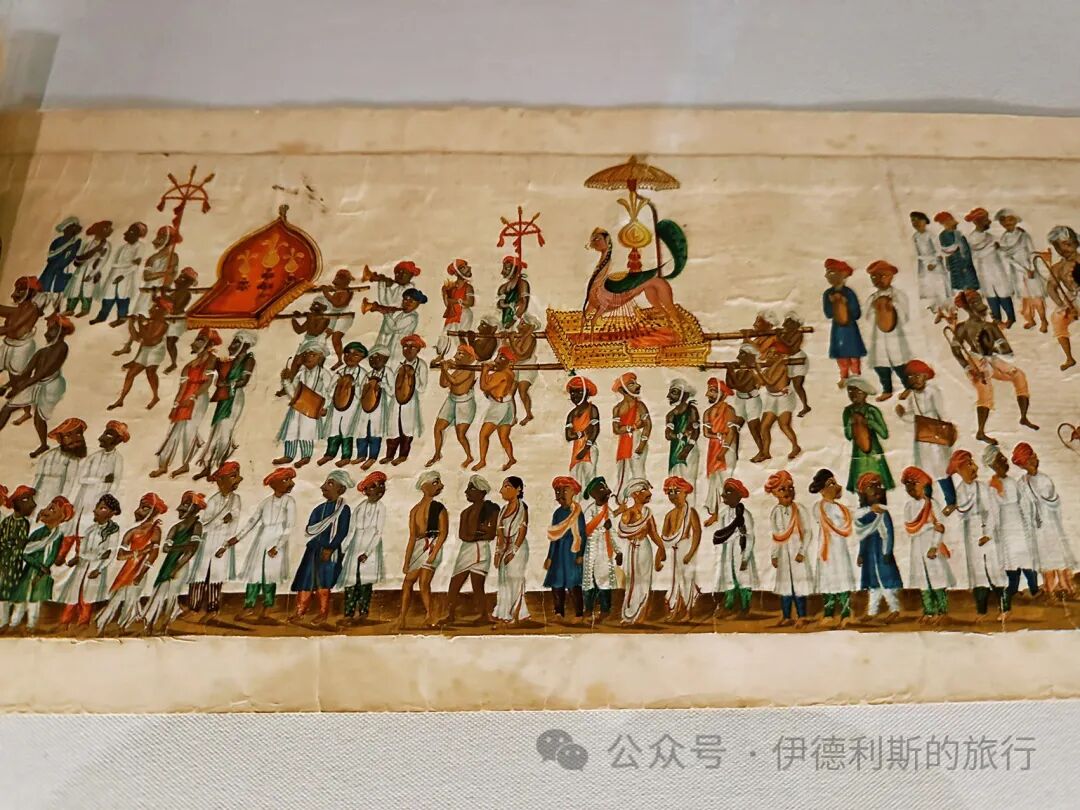
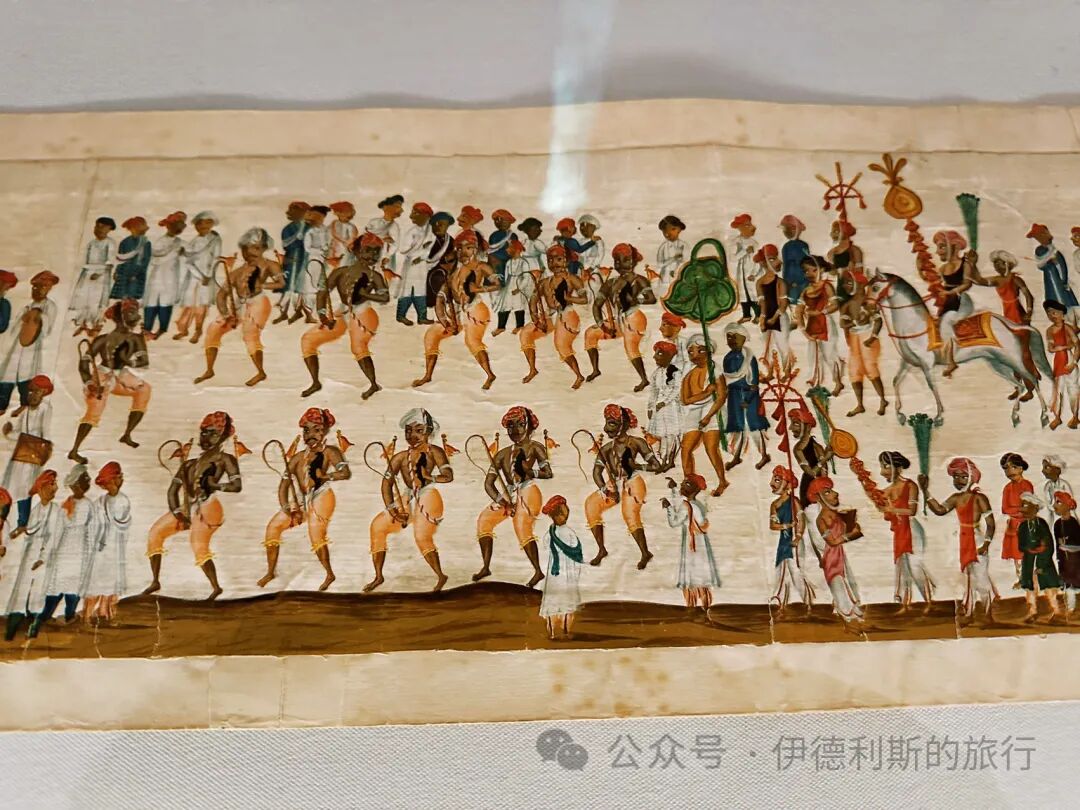
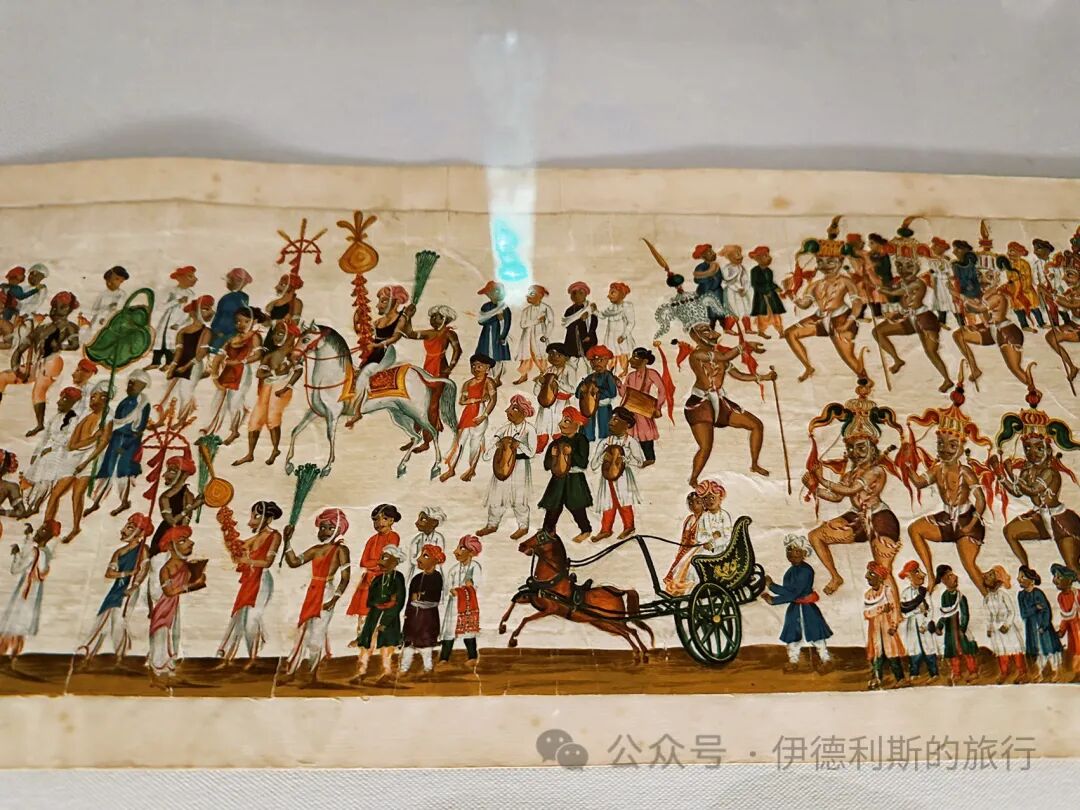
A scroll from the 1830s or 1840s showing a Shia Ashura procession in southern India, likely Chennai. The entire scroll is nearly 6 meters long. It shows a model of the tombs of Imam Hussein and Hassan (Ta'ziya), the mount of the Prophet during his night journey (Buraq), an Alam flag, the Hand of Abbas, a shield (Sipar), and a reenactment of the Battle of Karbala. You can also see the Chennai native infantry, people dressed as animals, and even elements of the Hindu Charak festival, which reflects India's multiculturalism.
An early 18th-century copper-gilt Alam flag pole from the Safavid dynasty in Iran, engraved with Quranic verses. The Alam flag pole is used by Shia Muslims during Ashura processions and consists of three parts. At the bottom, a cube rises on a copper axis engraved with a call to the Prophet. In the middle is a pear-shaped flat surface with a dragon head, featuring an enamel ball with colorful floral patterns. The top symbolizes the sword of Ali.
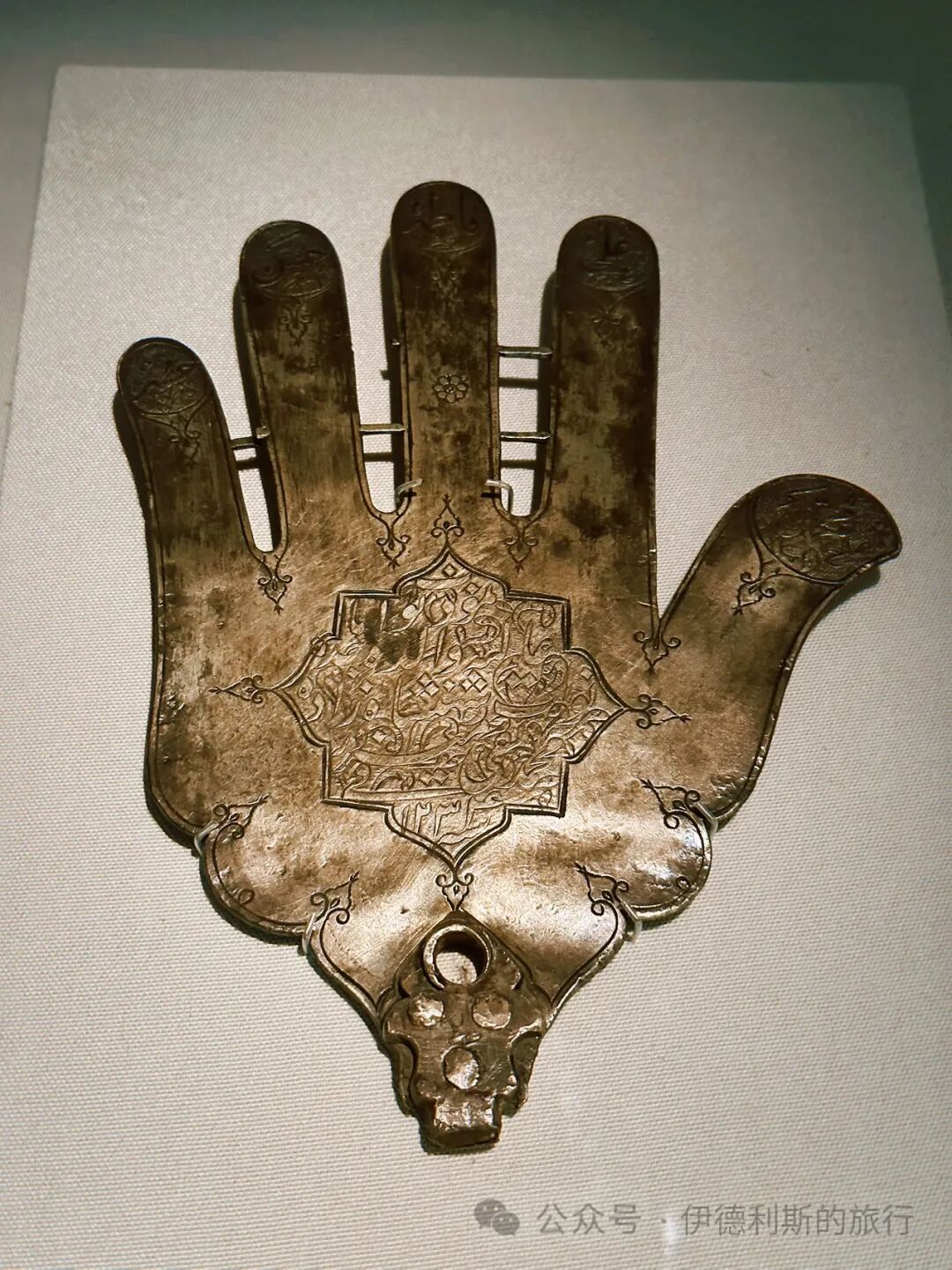
A 'Hand of Abbas' from the late 19th or early 20th century. Abbas was the son of Imam Ali. He served as the standard-bearer for his brother Imam Hussein's troops during the 680 AD Battle of Karbala against the Umayyad Caliphate. On the eve of Ashura, Abbas went to the Euphrates River to get water, but he was blocked by the enemy on his way back, his hands were cut off, and he was eventually killed. Since then, the 'Hand of Abbas' has been seen by Shia Muslims as a symbol of courage, sincerity, and self-sacrifice.
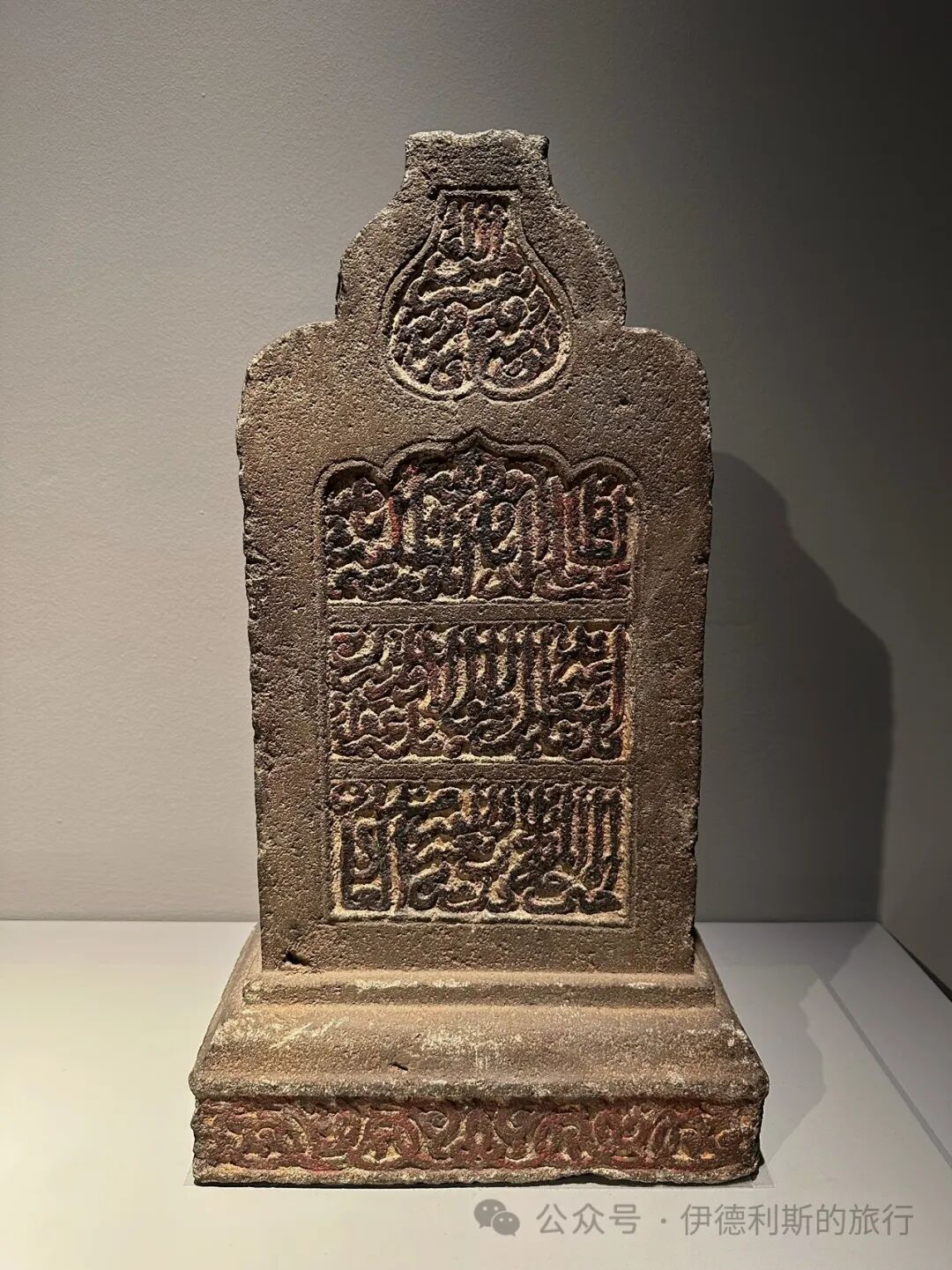
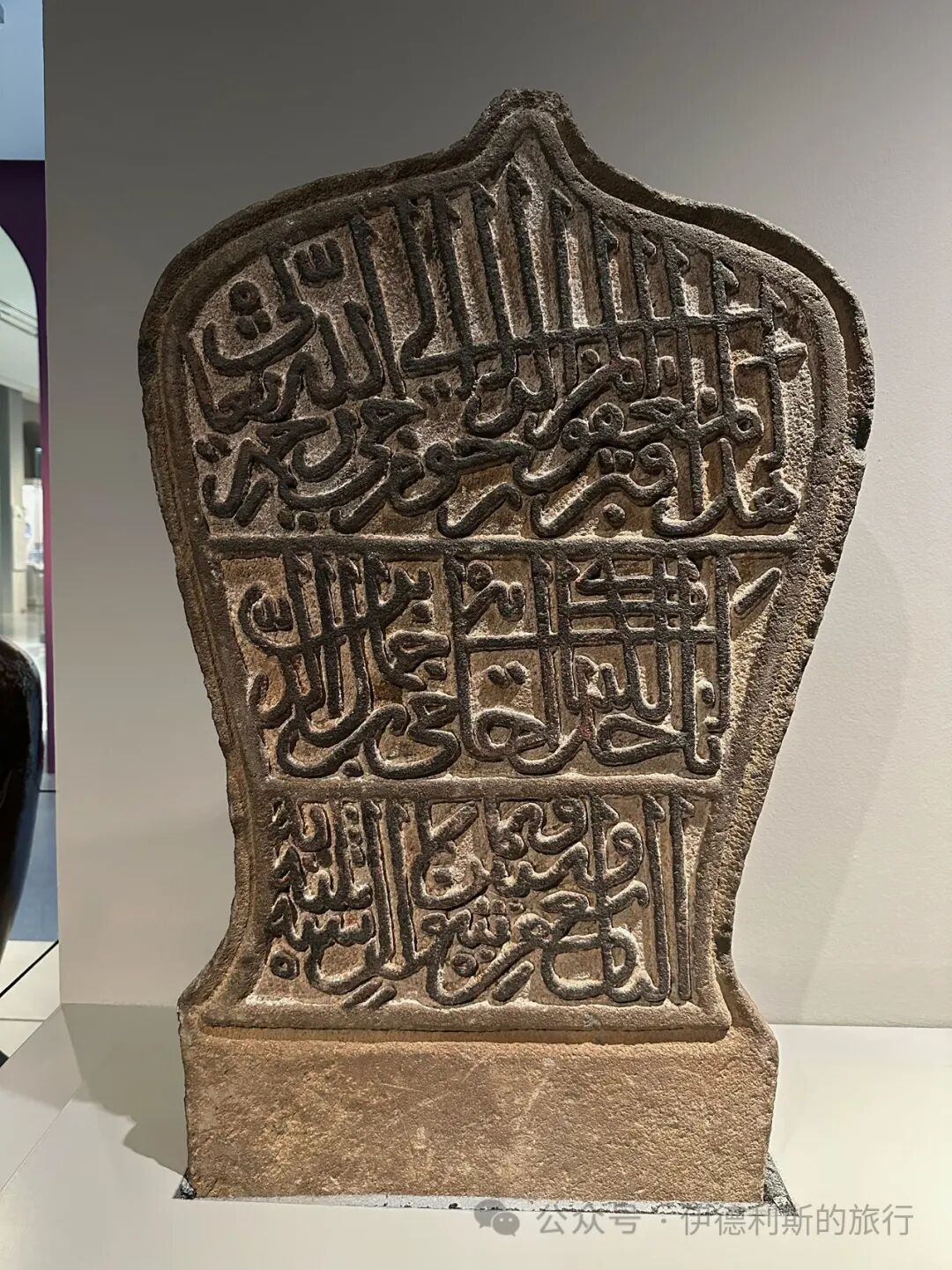
Two tombstones from the mid-15th-century Malacca Sultanate. Besides scripture, one of them is inscribed for a captain from Gujarat in western India who passed away in 1459. Muslim merchants from Gujarat played a key role in the trade of the Malacca Sultanate, where one of the four harbor masters was specifically in charge of trade with Gujarati merchants. These two tombstones were found by British engineers in the walls of the Portuguese fortress in Malacca and were among the first items collected by the Raffles Museum in Singapore, now known as the National Museum.
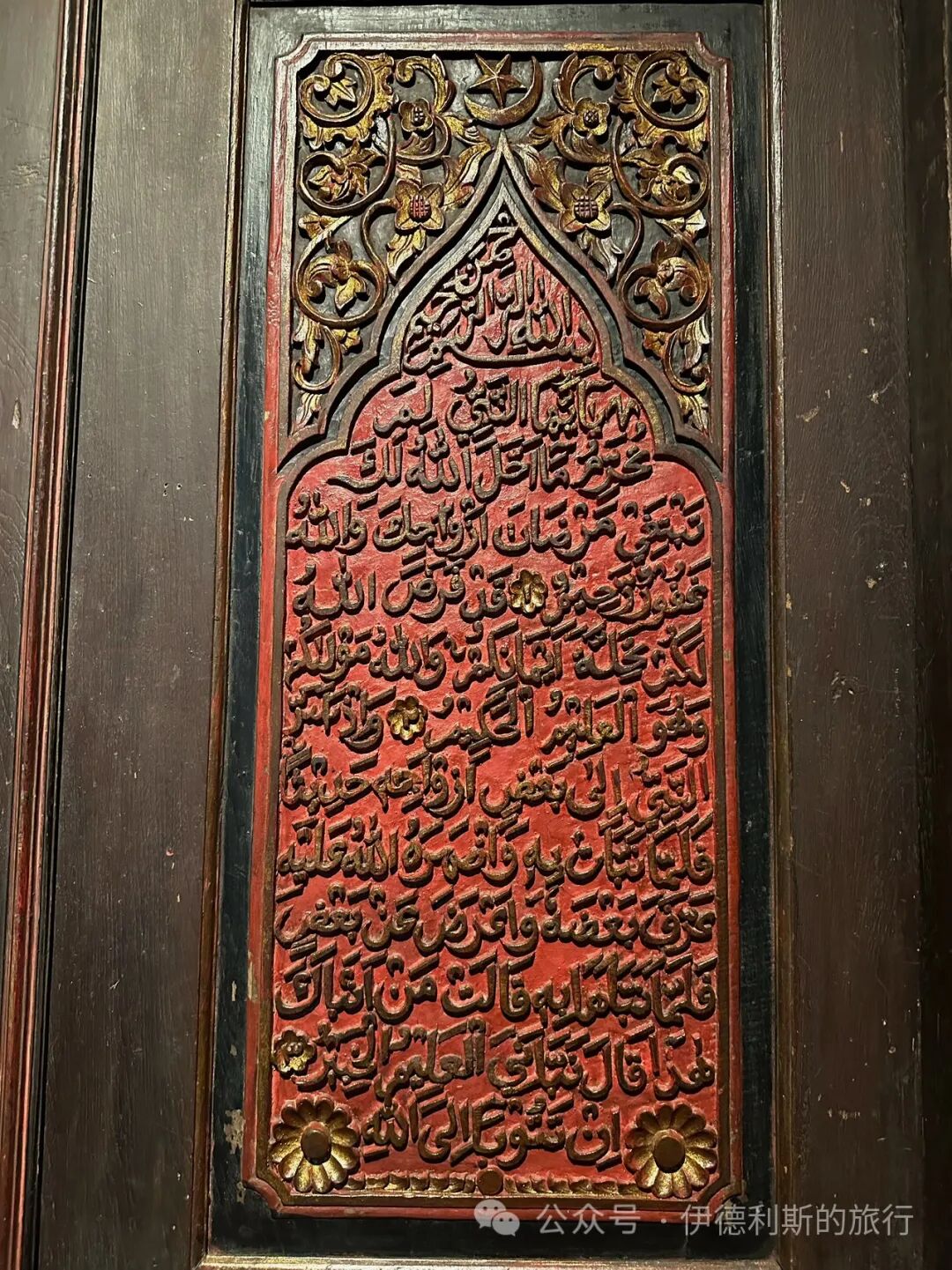
A gilded door panel from the early 20th century from Jepara or Kudus in Central Java. This traditional door panel is called Gebyog in Javanese and was used in traditional Javanese houses to separate the living room from the bedroom. Besides scripture, it features beautiful floral patterns. Lotus patterns were often used during the Hindu-Buddhist period, but these shifted to jasmine patterns after the arrival of Islam.
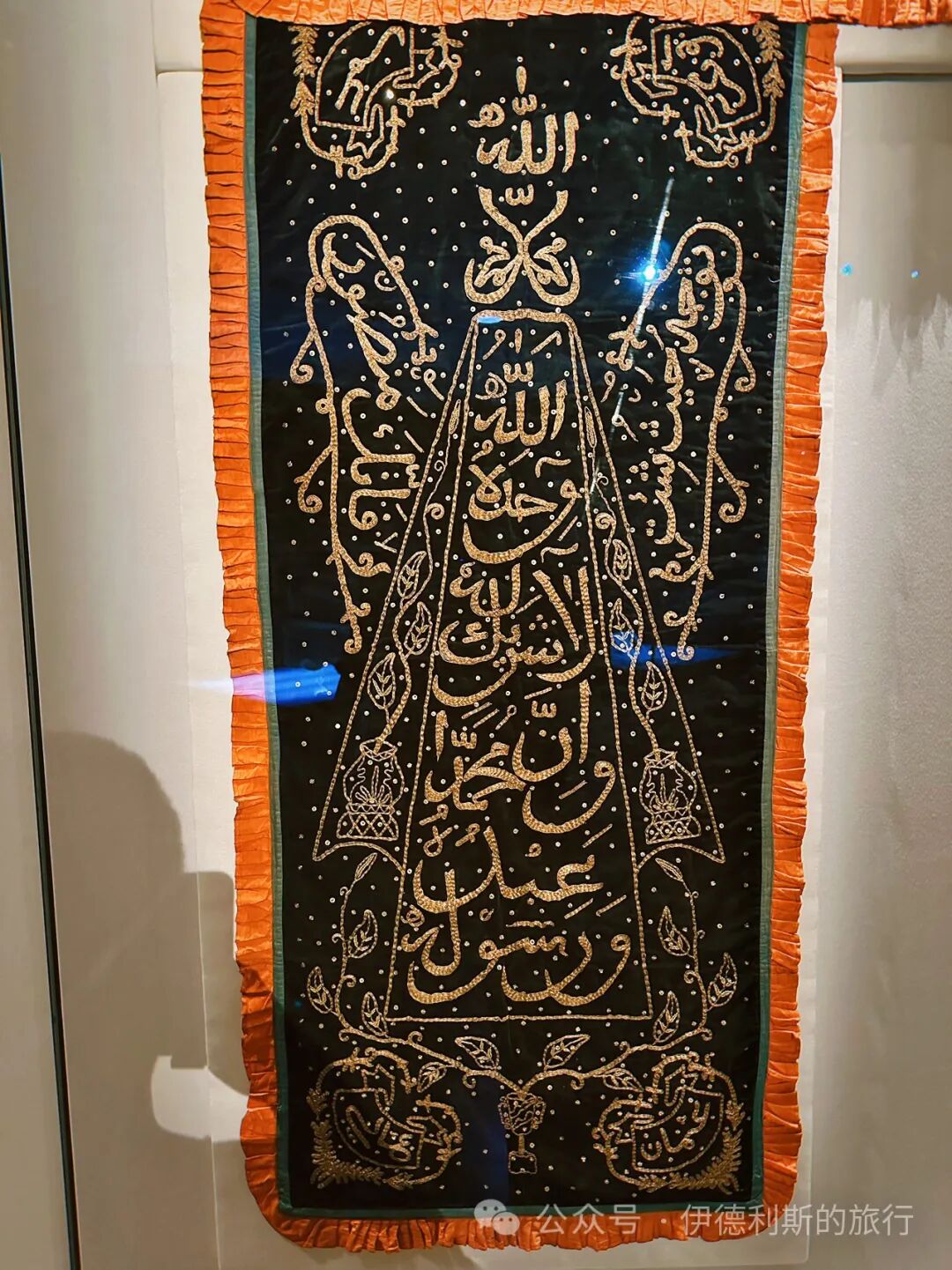
A 20th-century velvet tapestry embroidered with gold thread from Sumatra. This traditional tapestry is called Tekat. It was once used for royal clothing and buildings, but now it is mostly used at weddings or at the entrances of mosques and gongbei.
Three Southeast Asian scripture manuscripts in different styles.
A 19th-century scripture manuscript from the Terengganu region on the east coast of the Malay Peninsula. Because it uses a large amount of gold, it is believed to have been commissioned by the Sultan's court in Terengganu. This type of manuscript from the Terengganu region is dense and delicate, featuring red and gold as the main colors, followed by black and green.
A 19th-century scripture manuscript from the Aceh region of Sumatra. Like those from the Terengganu region, the Aceh manuscripts also primarily use red, gold, and black. The most unique features of the Aceh manuscripts are their triangular edges and wing-shaped patterns.
A scripture manuscript from Central Java dating to the late 19th or early 20th century. Compared to the Aceh style from Sumatra and the Terengganu style from the Malay Peninsula, Javanese-style manuscripts feature more colors and patterns. Blue is more common in Javanese manuscripts, and the swastika (wan) pattern is also unique to them. view all
Summary: This Singapore article visits the Asian Civilisations Museum and looks closely at Islamic art, trade history, ceramics, textiles, and cultural objects. It keeps the original museum observations, object names, and historical details for English readers.
The Asian Civilisations Museum in Singapore sits by the Singapore River in a neoclassical building from 1867. It first focused on crafts from Malay and Southeast Asian indigenous peoples. After the 1990s, it expanded its collection to include West and South Asia, becoming a museum that shows the meeting of different Asian cultures and civilizations.
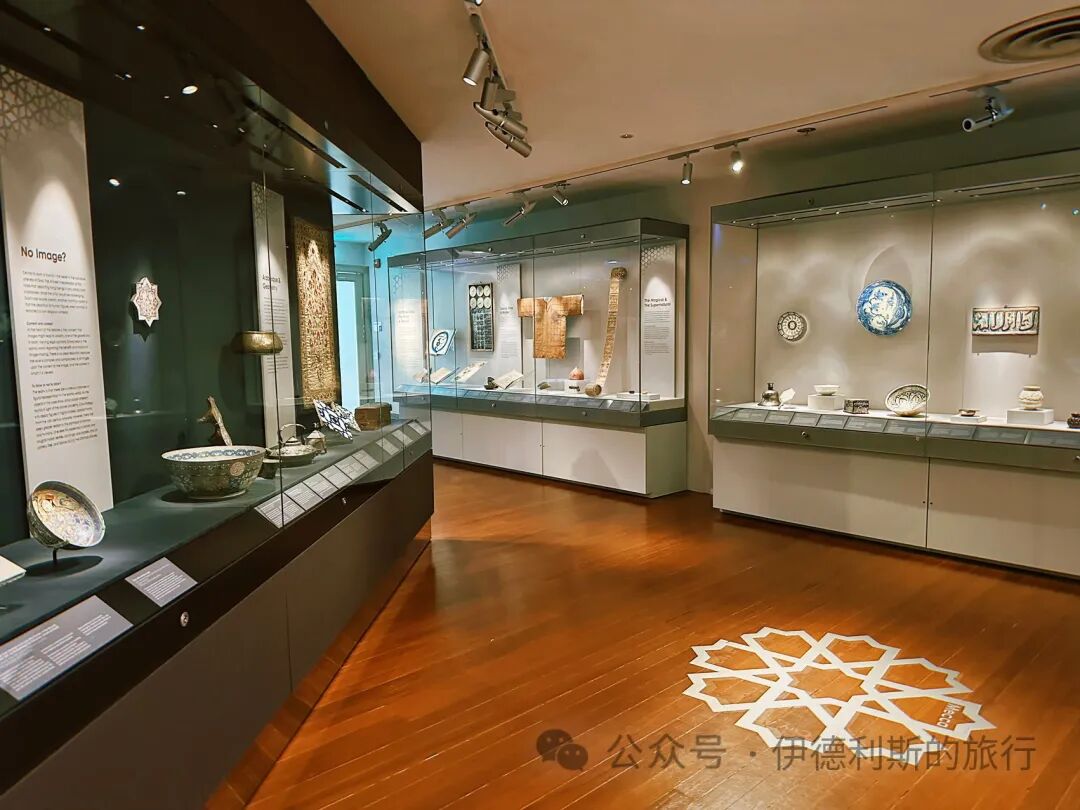
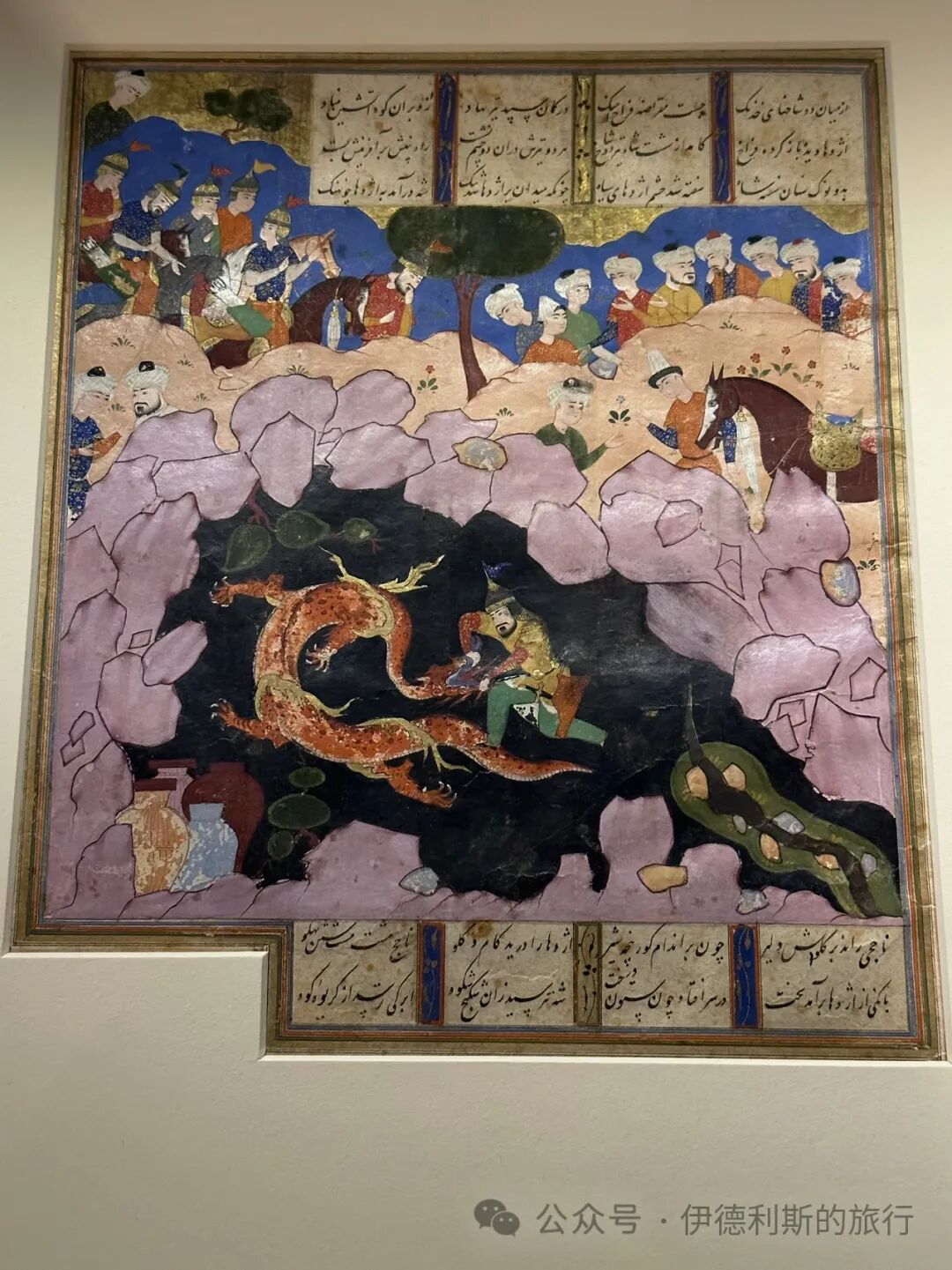
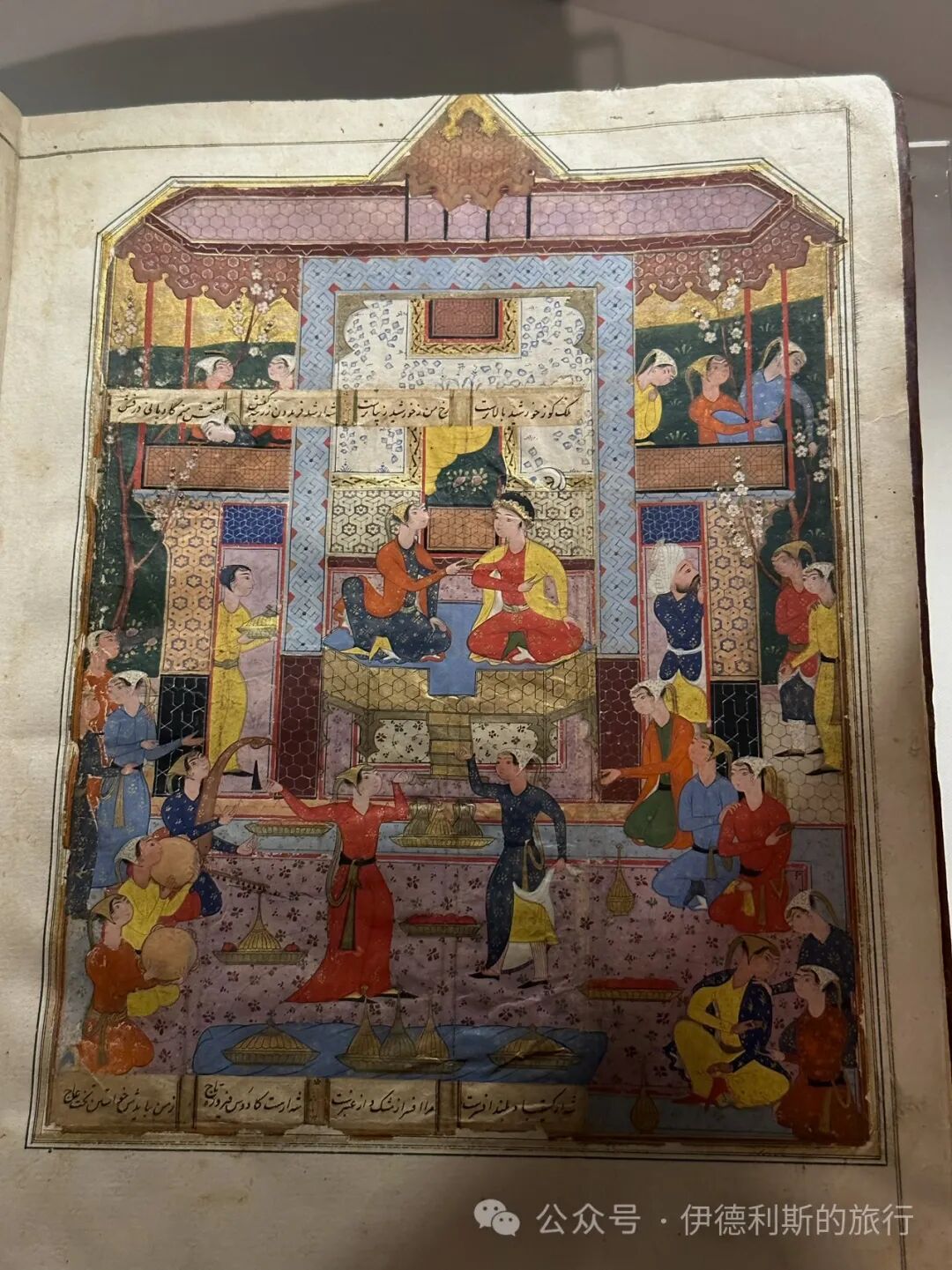
Two miniature paintings from the late 16th-century Shiraz school in Iran depict the famous Persian poet Nizami's masterpiece, the Five Poems (Khamsa).
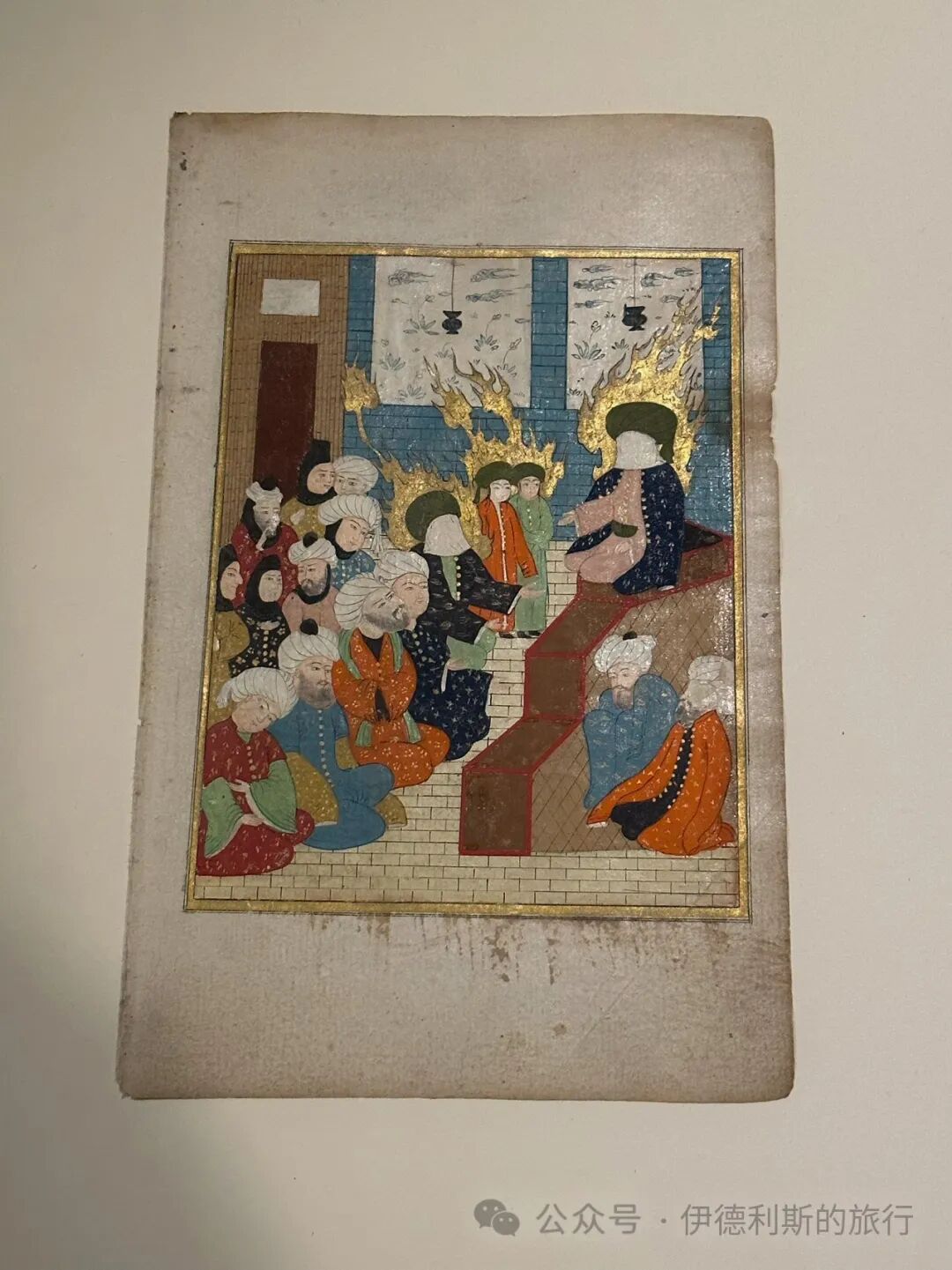
A late 16th-century Ottoman miniature illustration comes from the Garden of the Blessed (Hadigat us-Su'ada), written around 1547. This illustration shows the hardships faced by the Prophet and his family. He is giving a sermon (khutbah) from a pulpit, with Imam Ali, Husayn, Hasan, and other family members below. To show respect, golden flames burn behind the Prophet, Ali, Husayn, and Hasan, and the faces of the Prophet and Ali are covered.
This 18th-19th century silk embroidery from Jaipur, India, was usually used for tapestries or curtains in tents or noble homes. The floral patterns in the center are classic Mughal dynasty designs, widely used in Rajasthan, where Jaipur is located.
This 14th-century copper bowl with gold and silver inlay is from Fars, Iran. Fars was the center of Iran's metalworking industry in the 14th and 15th centuries, and the bowl depicts the image of the Sultan at that time.
The Batu Hitam shipwreck gallery at the Asian Civilisations Museum in Singapore. 1,100 years ago, an Arab cargo ship loaded with precious goods left Guangzhou port to return to the Abbasid Caliphate. It eventually sank near the coast of Sumatra, 600 kilometers southeast of Singapore. It was not discovered until 1998 and is called the Batu Hitam (Black Rock) shipwreck because of the location where it was found. The shipwreck yielded a large number of ceramic bowls, which are the same shape as those found from the Abbasid Caliphate of the same period.
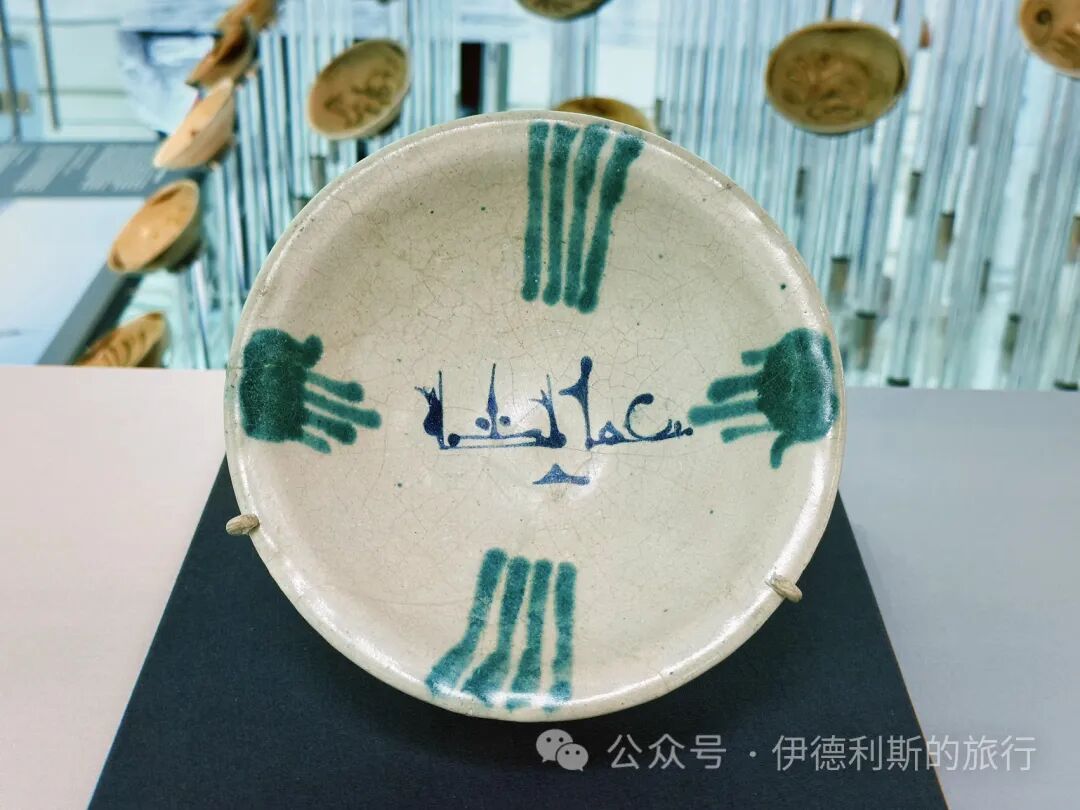
A 13th-century calligraphy fritware tile from Kashan, Iran.
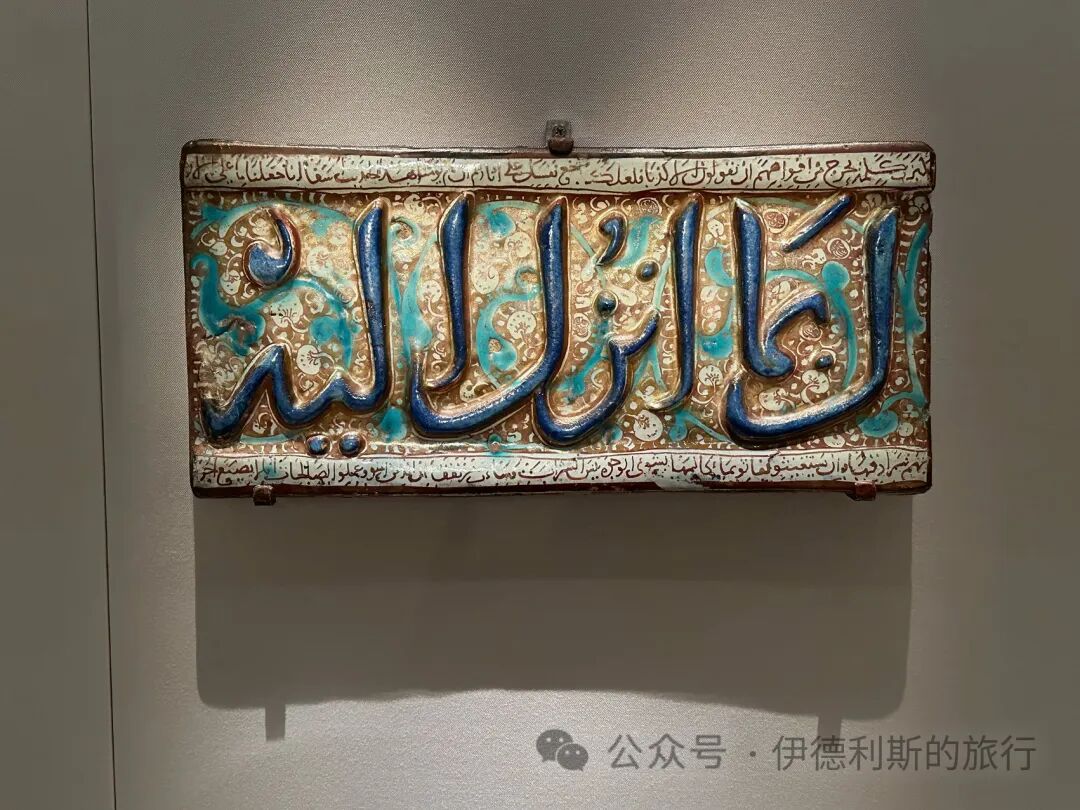
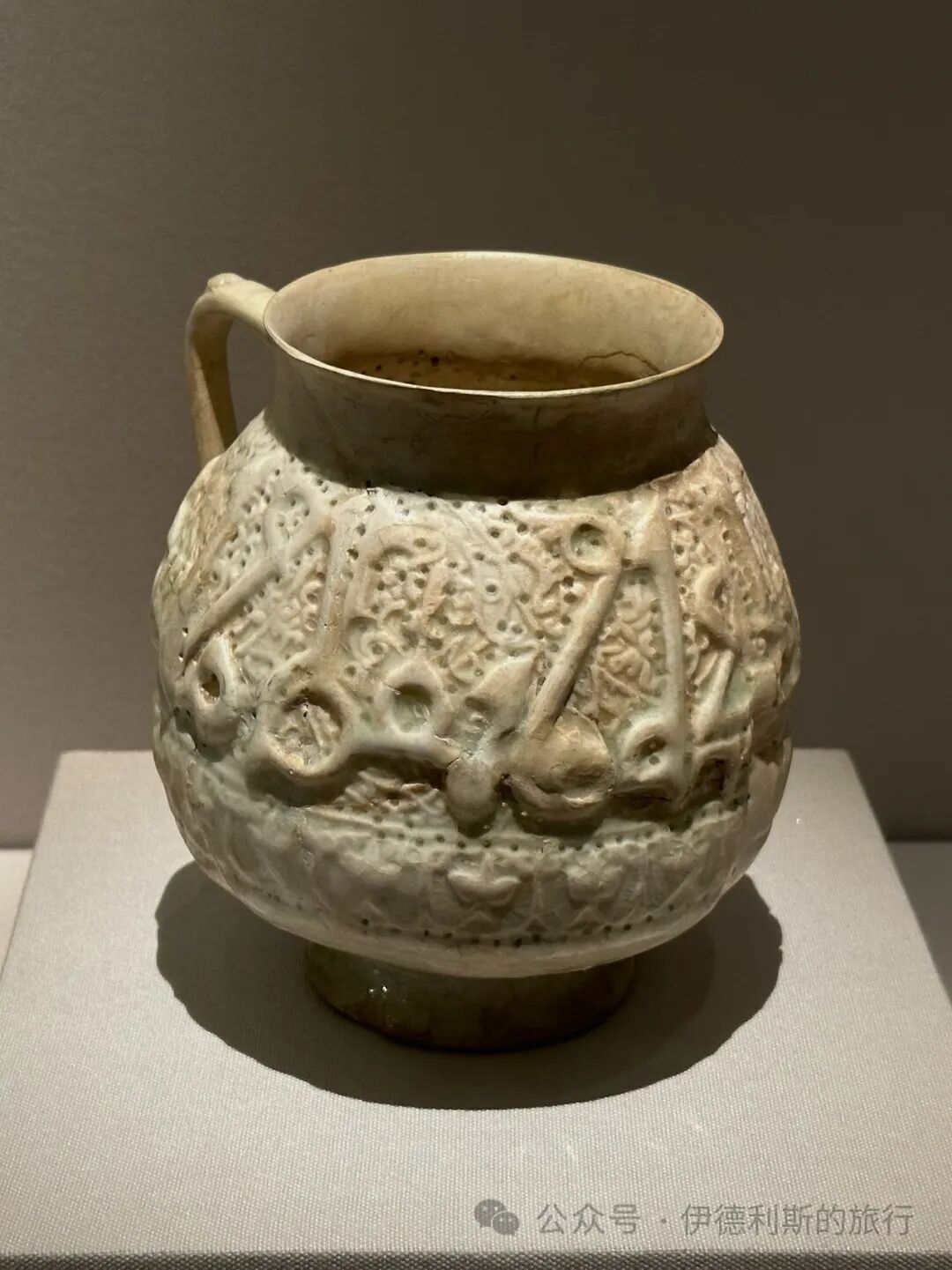
A fritware jug from the late 12th-century Seljuk dynasty in Iran. Fritware is a ceramic technique invented by Middle Eastern craftsmen in the 11th century to imitate Chinese porcelain. It developed from early Egyptian faience and is made of a mixture of clay, quartz, and glaze.
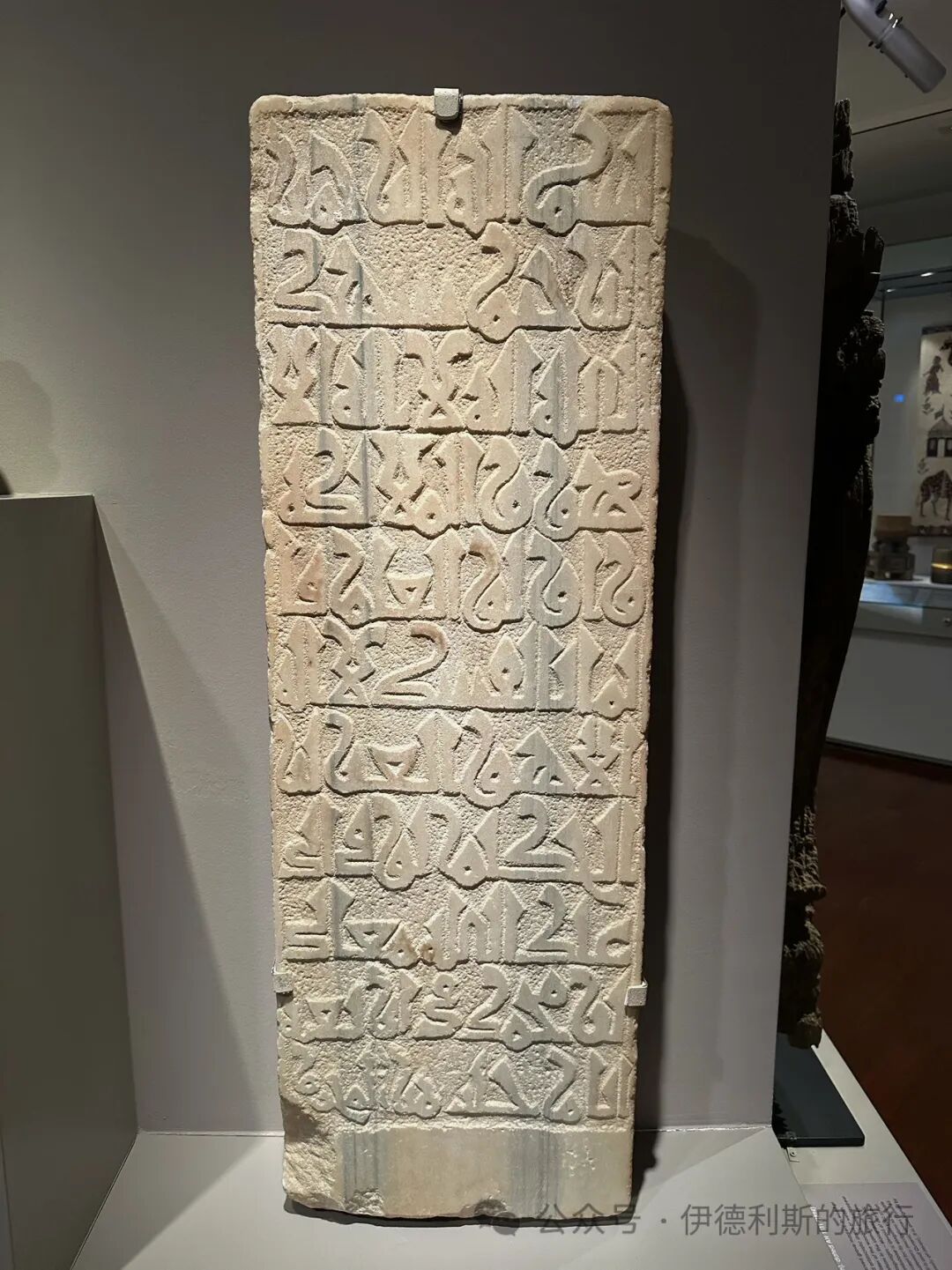
A marble tombstone from early 9th-century Syria.
A late 14th-century Kufic script tile from the Timurid dynasty, likely from the tomb of a Timurid noble.
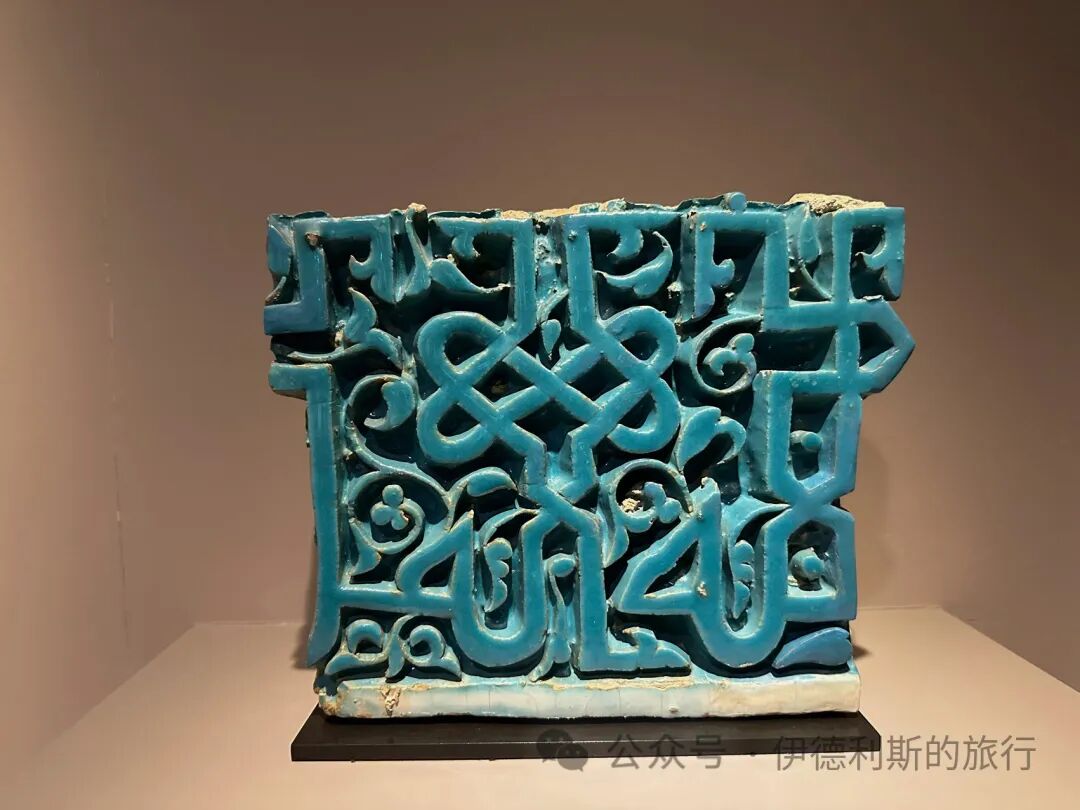
An 11th-century mihrab tile from northeastern Iran. The lamp in the center represents light (nur), symbolizing the presence of Allah.
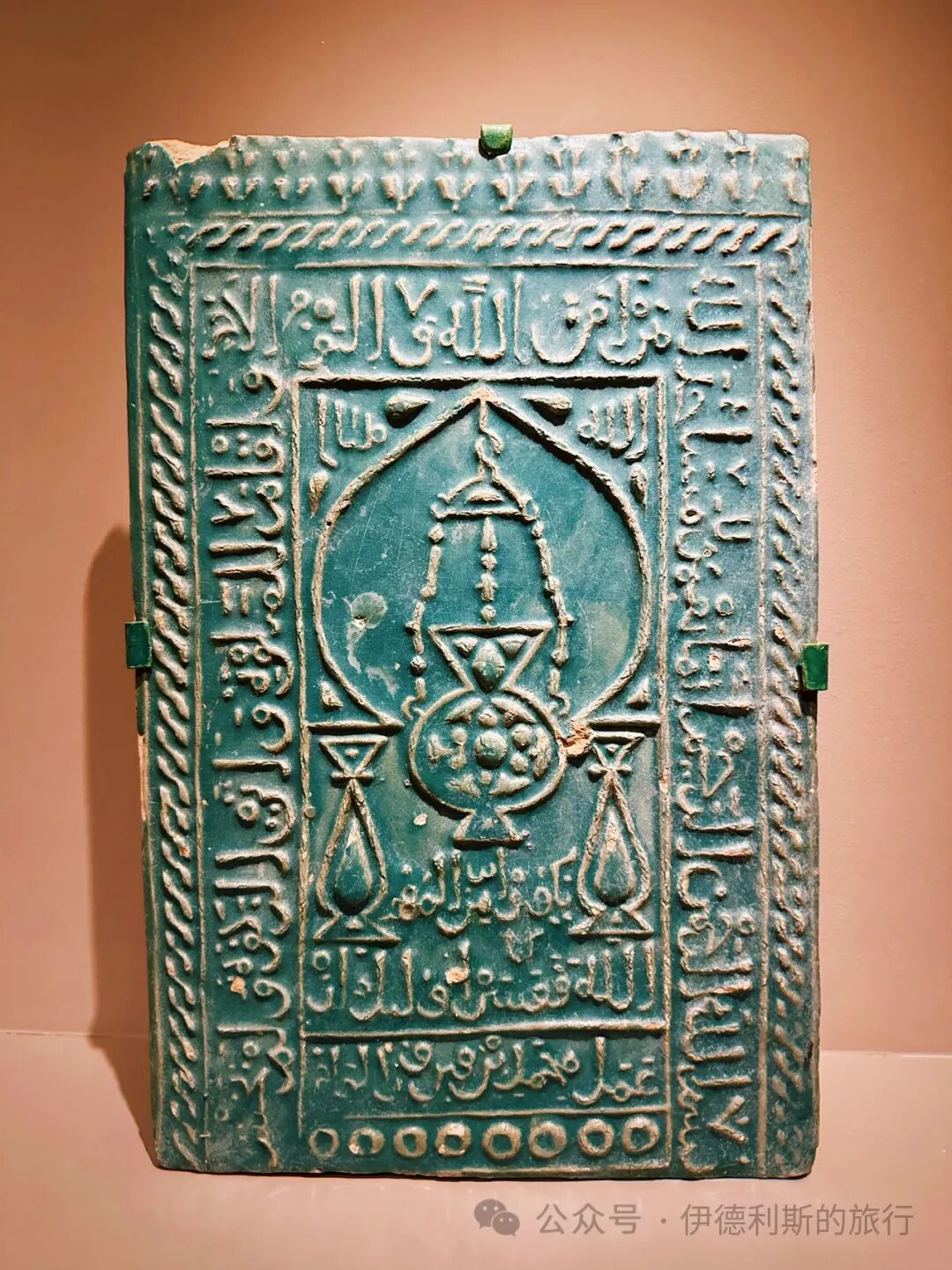
This 11th-century tombstone tile from Afghanistan was likely embedded in the wall of a tomb.
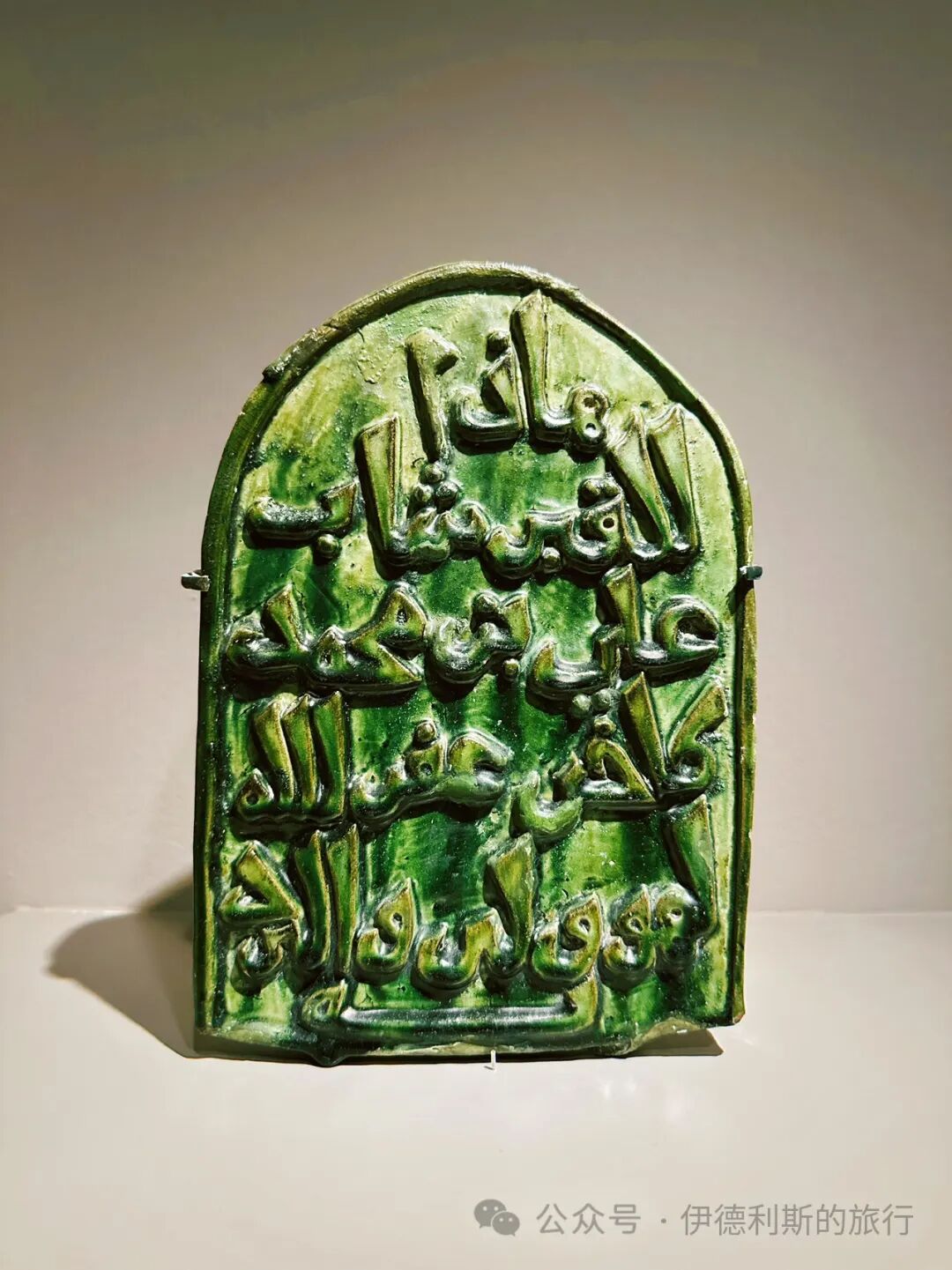
This 14th-century sandstone calligraphy carving from western India features a three-part script style that is stretched vertically.
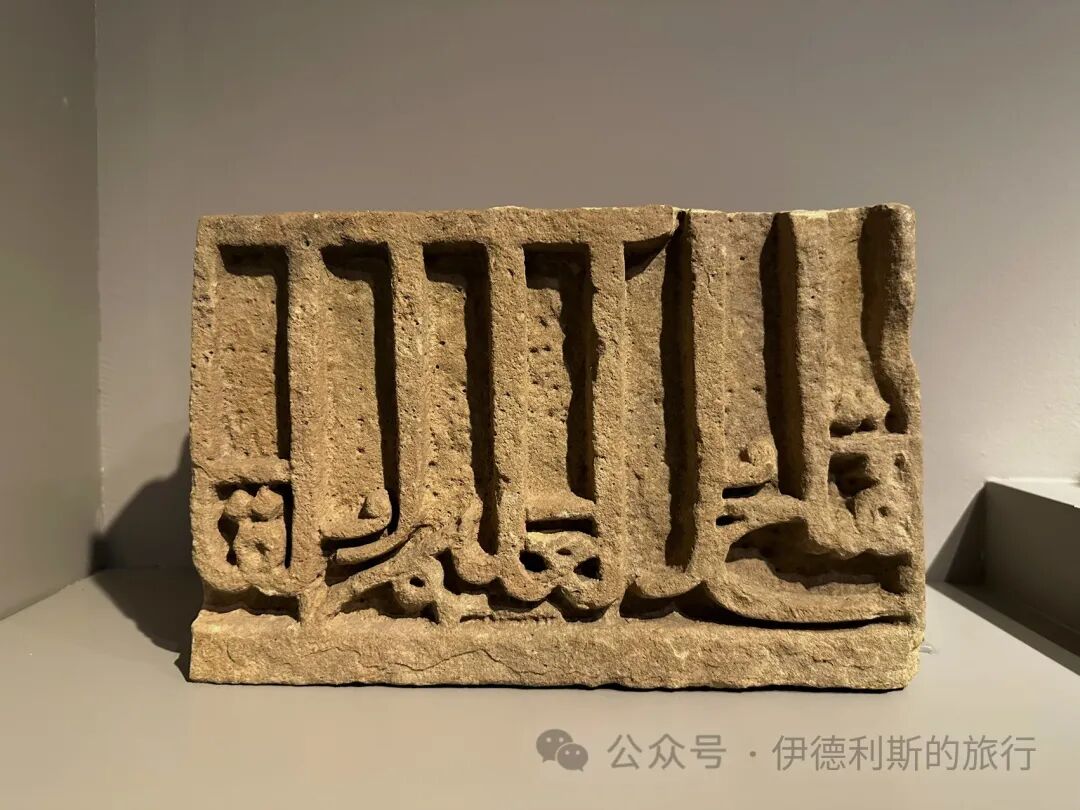
Renowned Arabic calligrapher Chen Jinhui created this piece in 1996, blending in techniques from Chinese ink wash painting.
This is a Persian paper-cut from Iran, dated 1891. This art form was widely used for binding Iranian manuscripts from the 15th to 17th centuries and continued until the end of the 19th century.
This 18th-century Ottoman Turkish book stand (rehal) is inlaid with tortoiseshell and mother-of-pearl.
This 19th-century Iranian book stand (rehal) is carved with beautiful floral and geometric patterns.
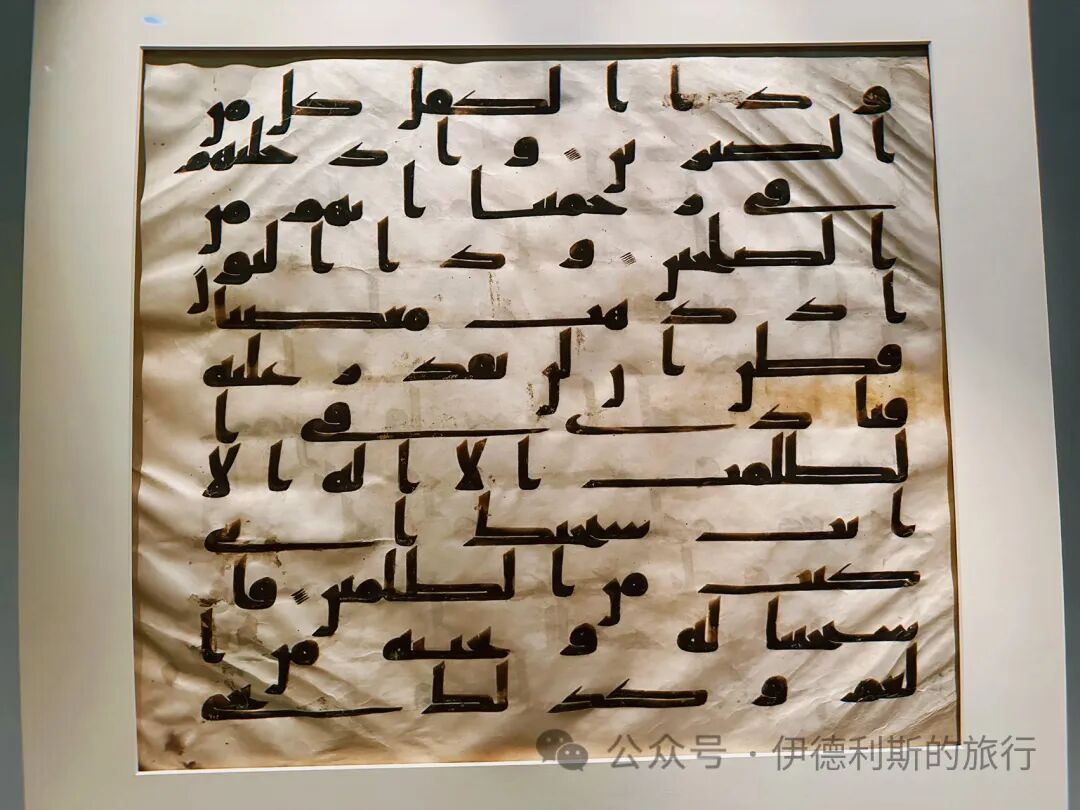
This 8th-to-9th-century parchment manuscript from Syria or North Africa is an early form of Kufic script. These parchment Kufic manuscripts are among the earliest Quran copies visible today.
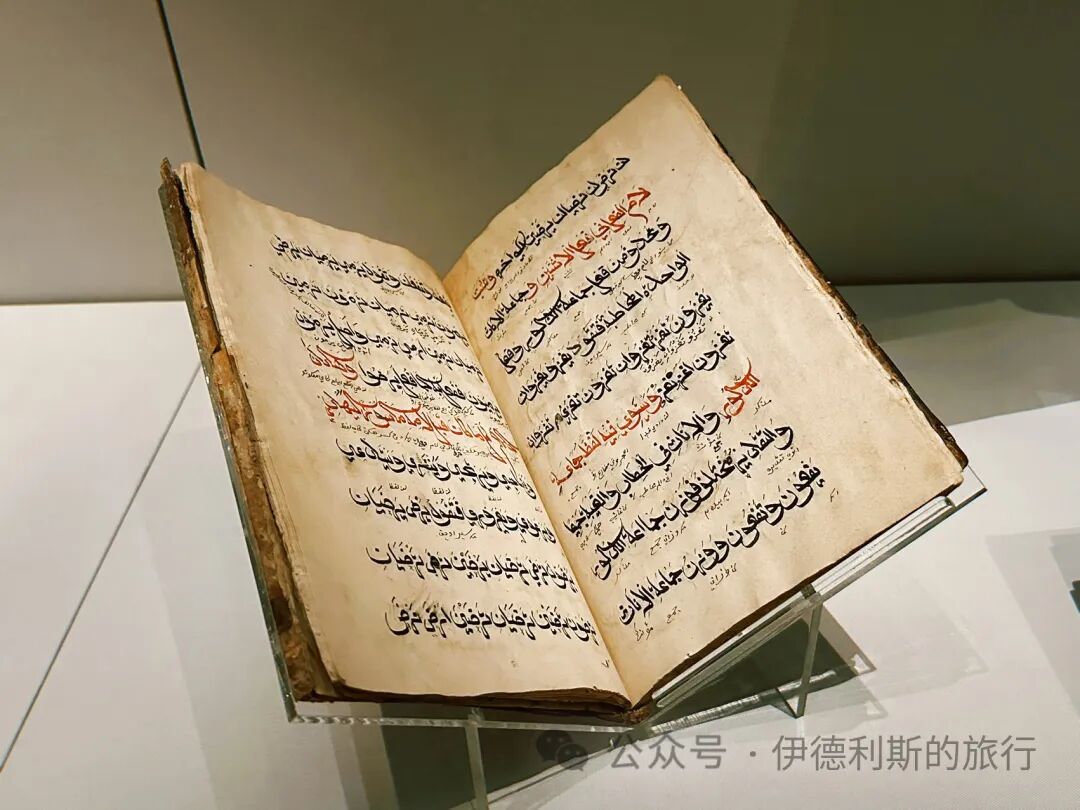
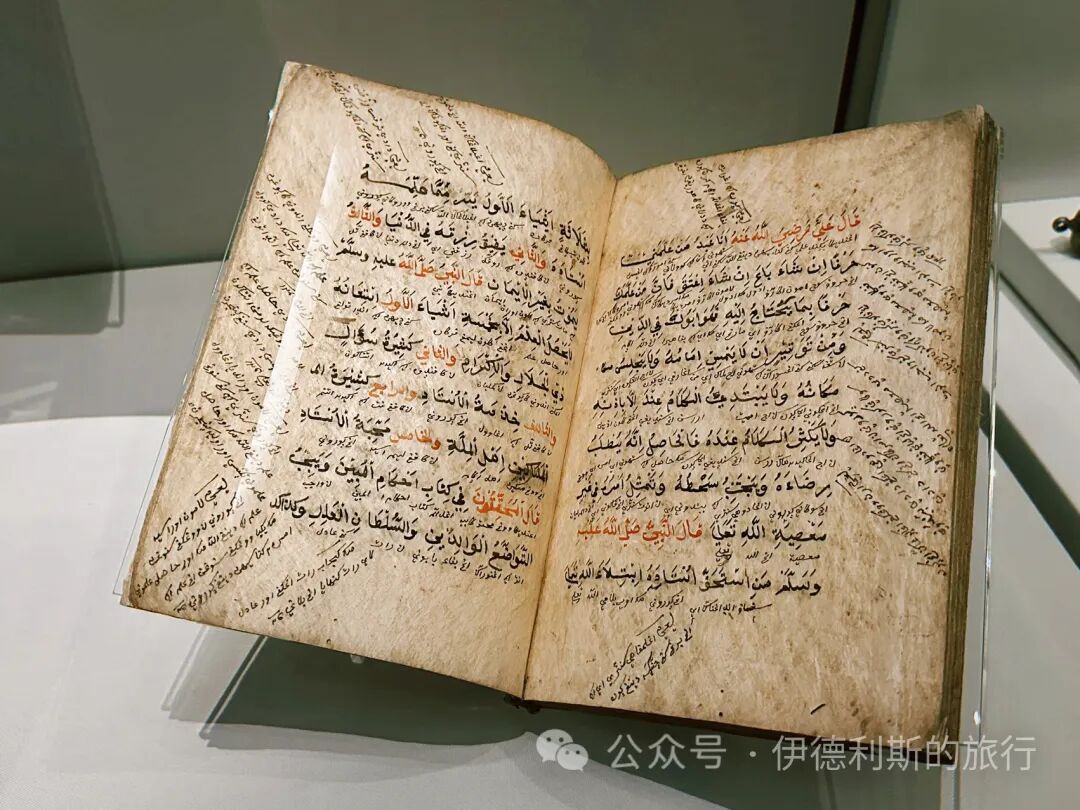
These two religious texts, written in China and Java, show how non-native Arabic speakers wrote the language, including notes in their own native tongues.
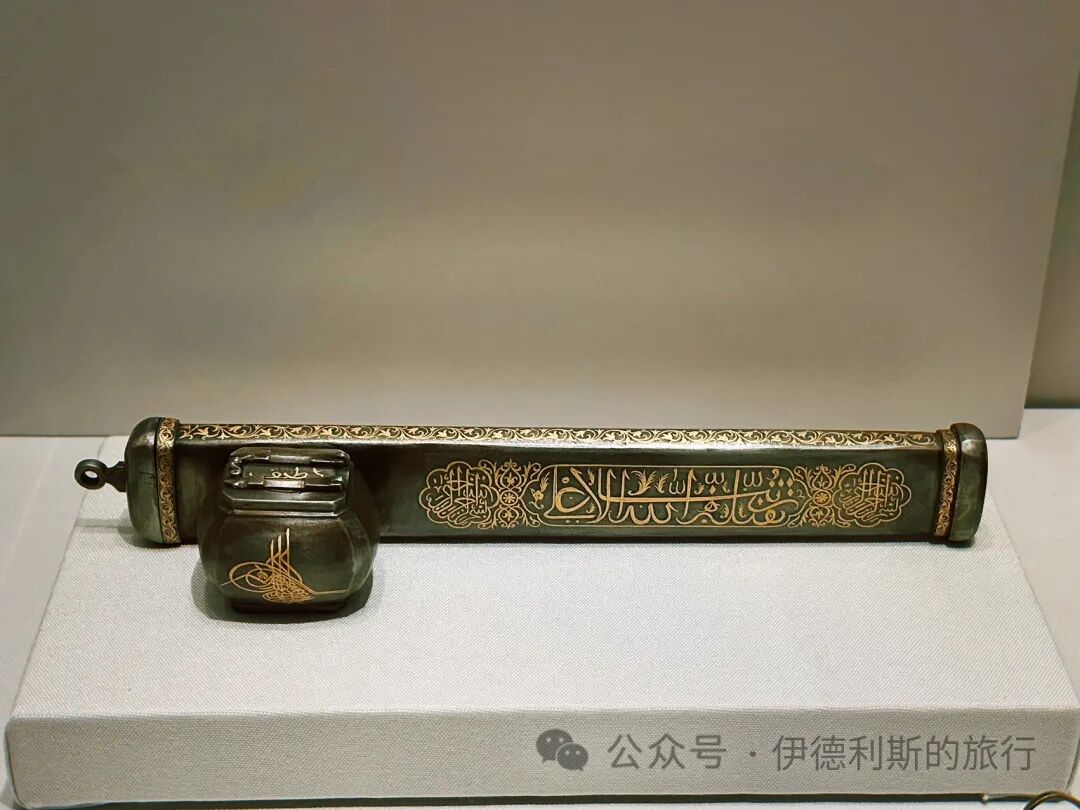
This is an 1876 Ottoman Turkish pen case with an inkwell.
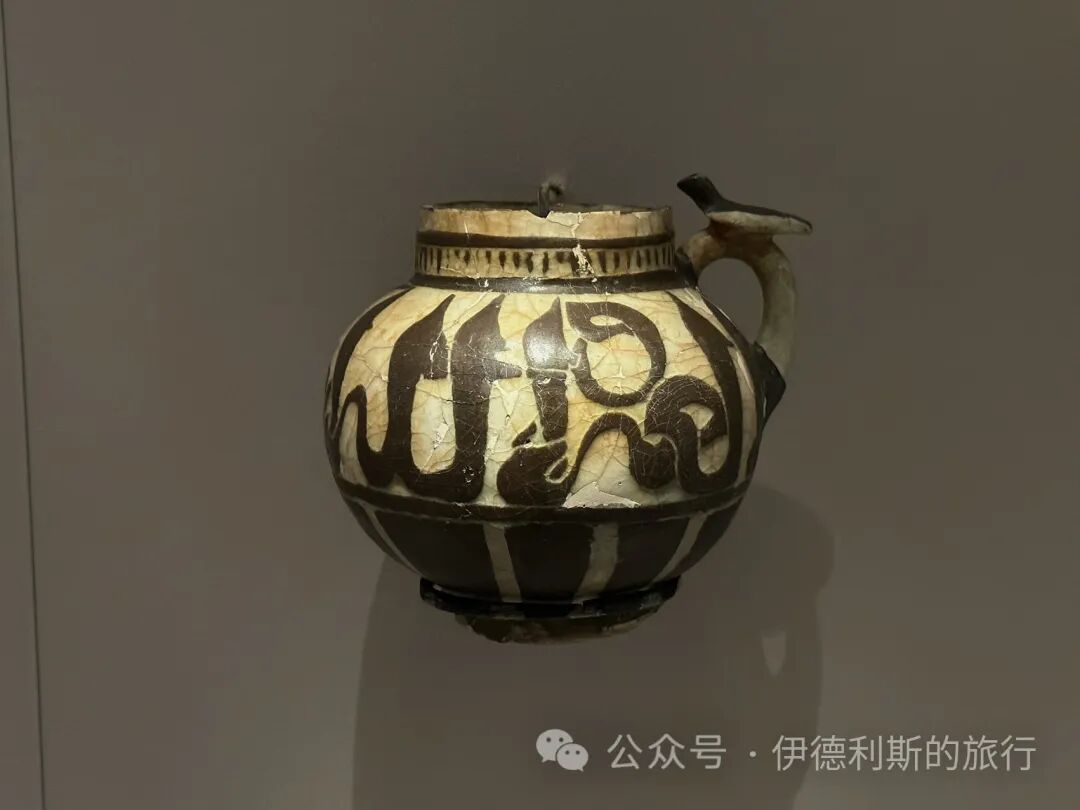
This is a pottery jug from Kashan, Iran, dating to the late 12th century.
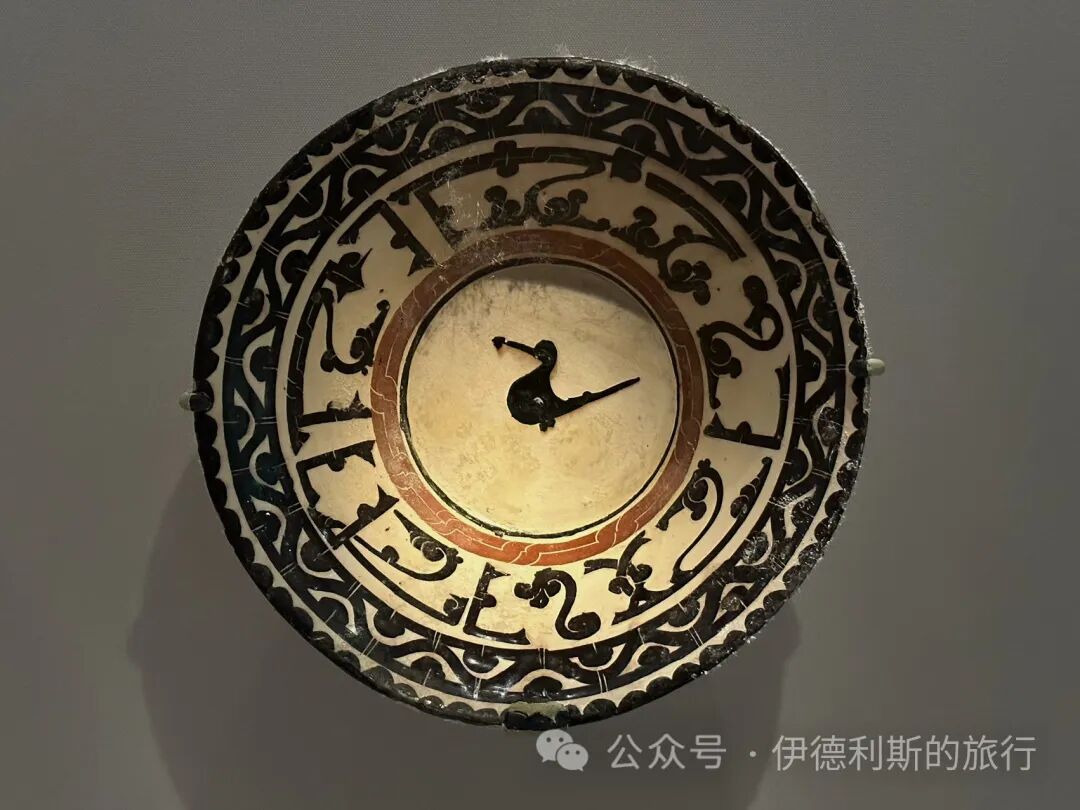
This is a 10th-century pottery bowl from Nishapur, Iran, featuring Kufic calligraphy.
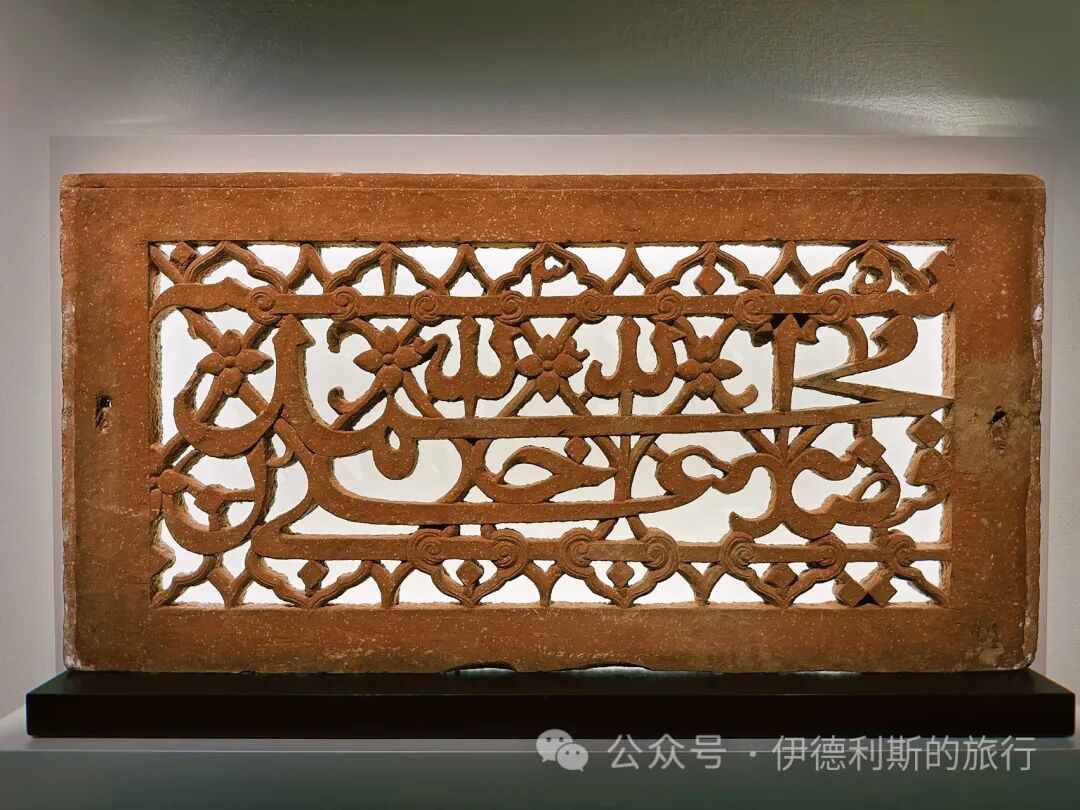
This 1887-88 sandstone screen (jali) from India was used to block the hot sun and is inscribed with praises to Allah.
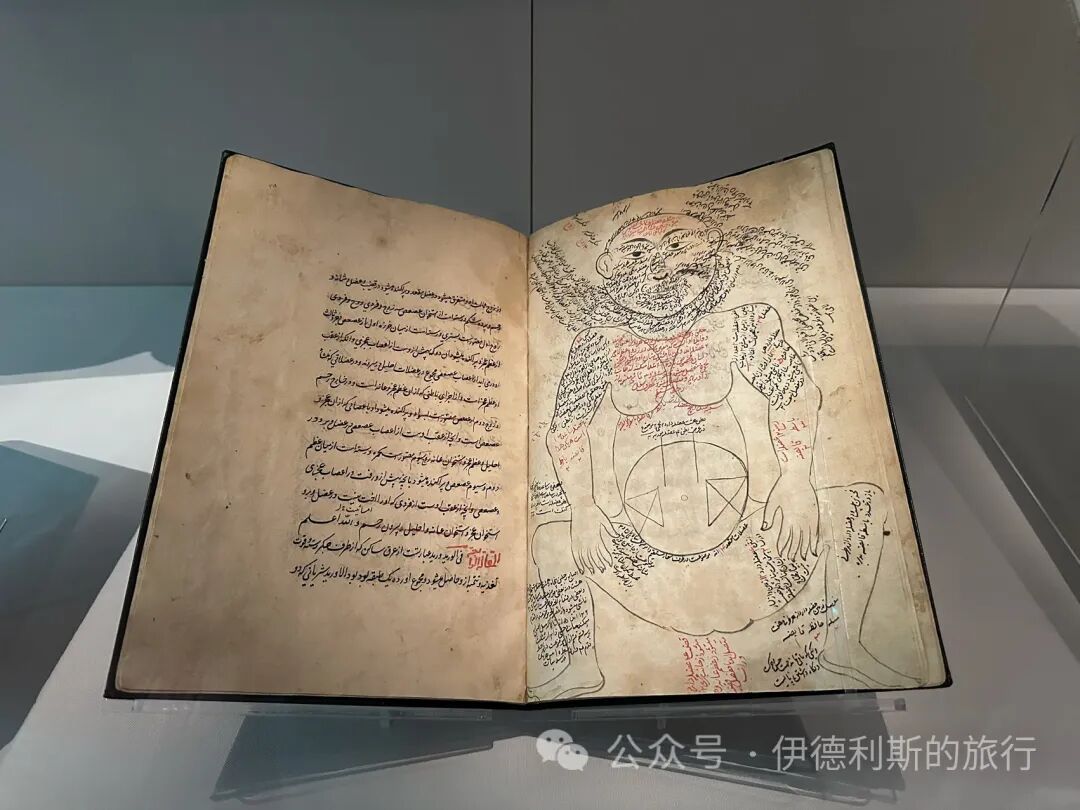
This 17th-century Iranian copy of the anatomy book Tashrih-i Mansuri was originally written in the 14th century. It studies different body systems, including bones, nerves, muscles, and arteries. The final chapter explains how human organs and fetuses form, and it includes anatomical drawings of a pregnant woman.
This is a Persian version of the famous ancient Roman pharmacology book De materia medica, copied in the Deccan region of India in 1595. De materia medica was written in Greek in the 1st century AD, translated into Arabic in the 9th century, and later translated into Persian, laying an important foundation for botany and pharmacology in West Asia.
A dua shirt (dua shirt) from the Mughal Empire in India, dating from the 16th to the early 17th century. This garment is covered in scripture and the 99 names of Allah. Warriors wore it under their armor, and sick people wore it for health and safety.
A 19th-century Indian dua hat (dua hat) inscribed with scripture.
A jewelry box from Gujarat, India, made between the late 16th and 17th centuries. Muslim artisans in Gujarat crafted these fine boxes for the entire Islamic world, decorating them with finely cut mother-of-pearl.
A 1230 tile from Kashan, Iran. These octagonal tiles, paired with cross-shaped tiles, covered the walls of Iranian palaces and important tombs. They often feature Persian poetry and Quranic verses.
A 15th-century tile from Multan, Pakistan. Influenced by the Timurid Empire of Central Asia, it features a striking blue and green twelve-pointed star design.
Exquisite Chinese export porcelain, reflecting the economic and cultural exchange between China and the Islamic world at that time.
A Chinese porcelain plate from the early 17th century featuring a magic square, with black cursive scripture alternating with red scroll patterns. Magic squares were believed to help prevent disease.
An early 17th-century export porcelain plate from the Zhangzhou kiln in Fujian. It shows two peacocks under a blooming flower, surrounded by the Shahada.
A 17th-century Qing dynasty export porcelain piece, fitted with a silver rim and spout, featuring the name of Allah.
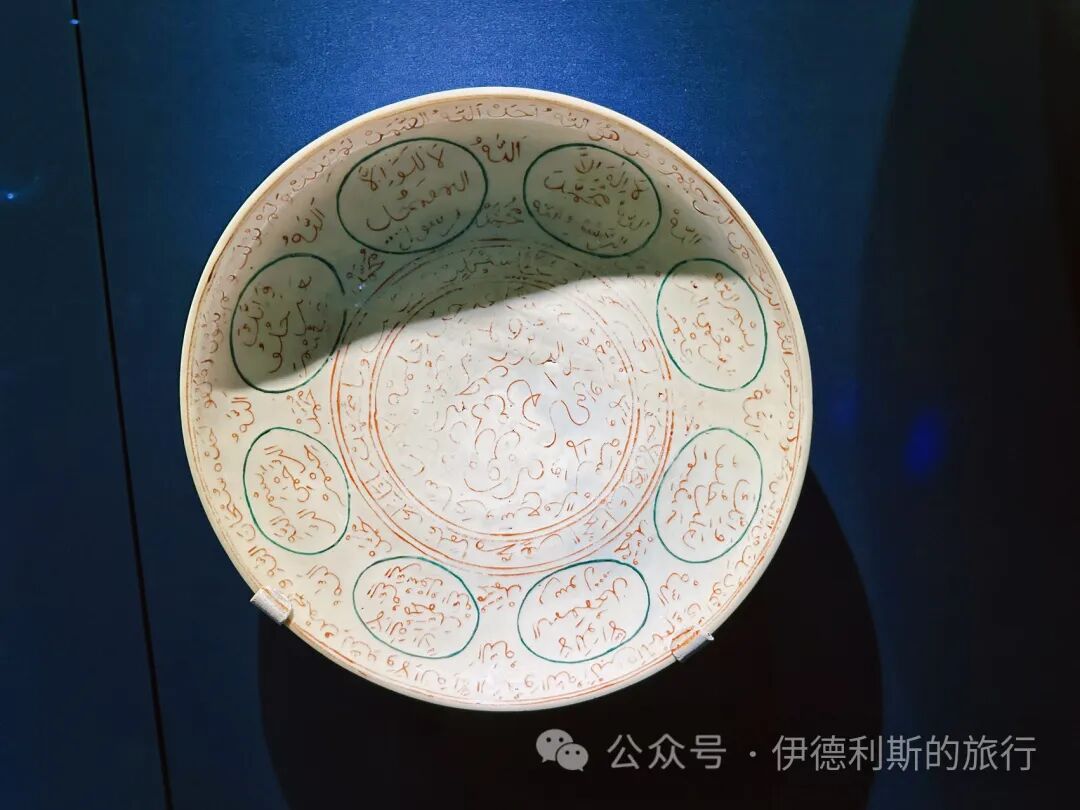
A porcelain plate from the Zhangzhou kiln in Fujian, commissioned by the Sultan of Aceh in the 17th century. The inner circle contains scripture, while the eight outer circles feature seals designed by the Sultan in imitation of the Mughal Empire. The Sultanate of Aceh (1496-1903) was located in northern Sumatra, Indonesia, and was once a major center for Islamic scholarship and trade. These plates were likely ordered during the reign of Sultan Iskandar Muda (1607-1636). Under his rule, the Sultanate of Aceh reached its peak, becoming the most powerful and wealthy state in western Indonesia and the Strait of Malacca.
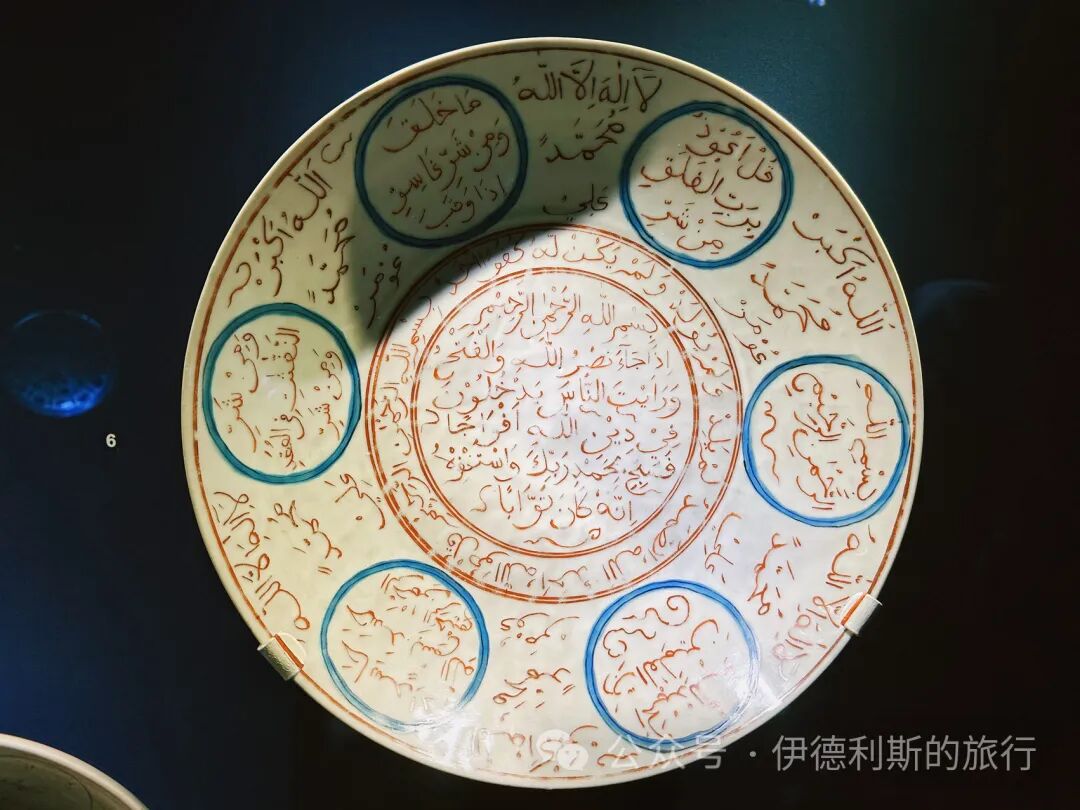
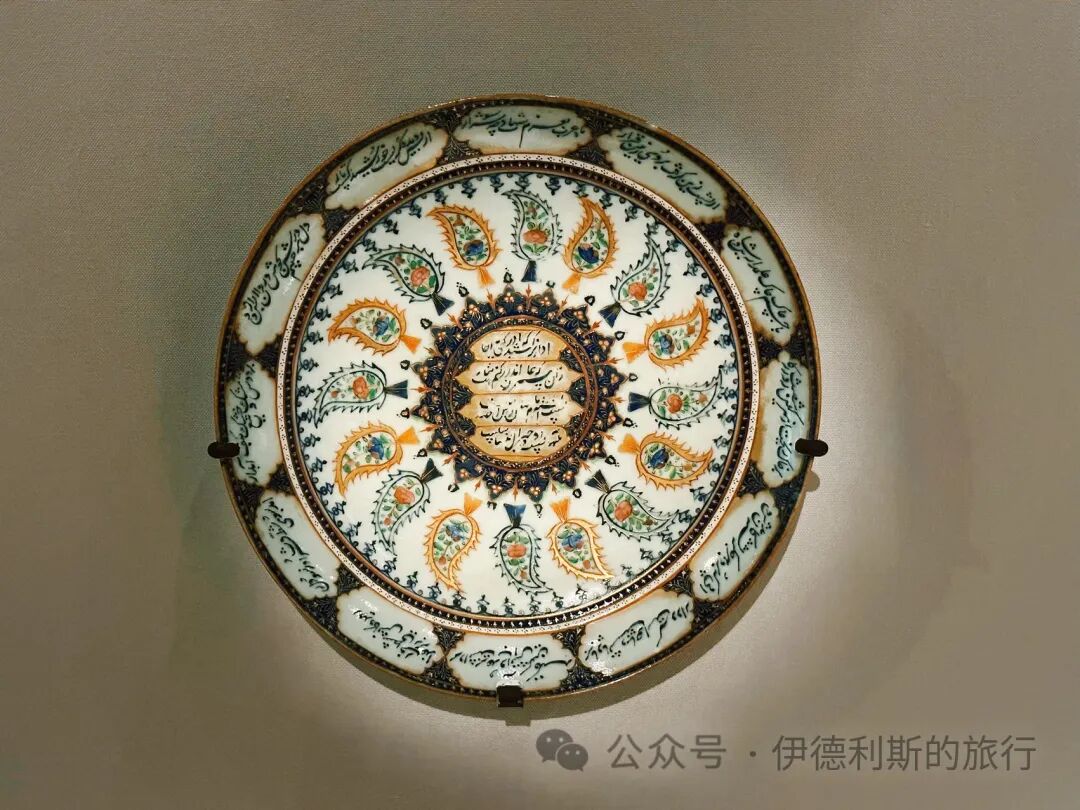
An export porcelain plate commissioned by Shia Muslims in Iran or India in 1844-45, featuring Persian poetry related to the martyrdom of Imam Hussein. The teardrop-shaped pattern used here is called a boteh design in Persian.
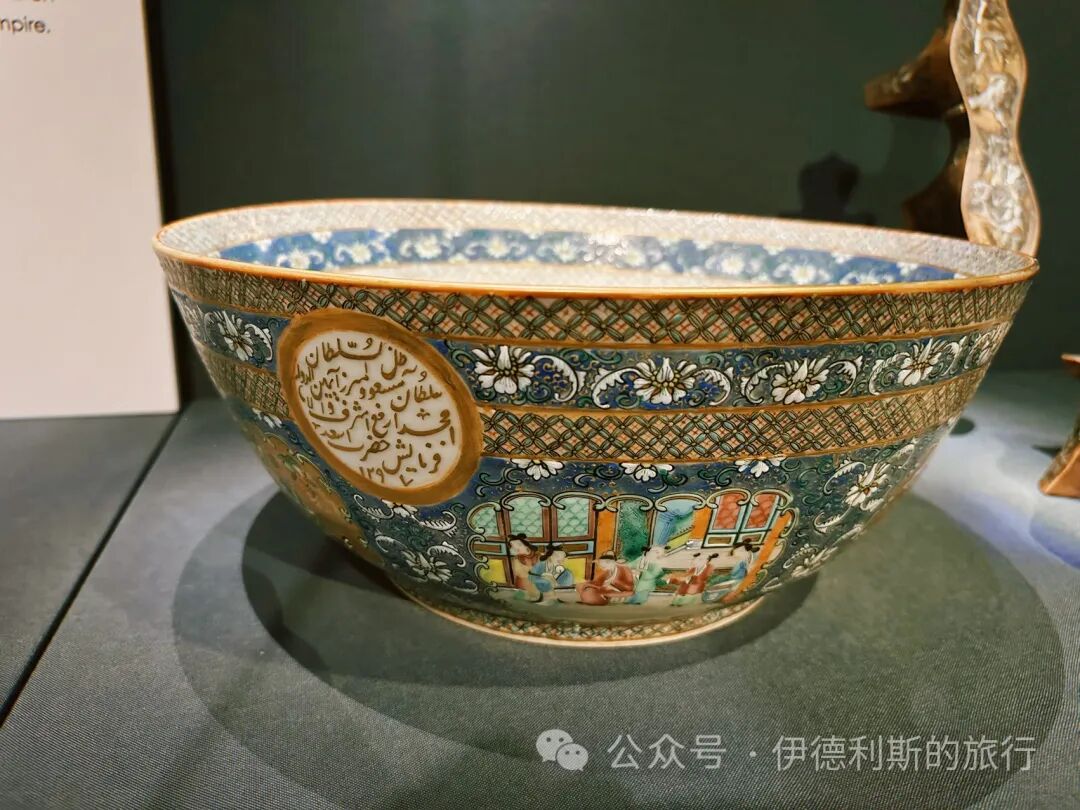
This Canton enamel porcelain bowl was ordered by the Qajar dynasty royal family in Iran between 1883 and 1884. It mentions Prince Mass'oud Mirza Zell-e Soltan, the eldest son of the Qajar King Naser al-Din Shah (who reigned from 1848 to 1896), who served as the governor of Isfahan for over 35 years. The Qajar royal family loved Canton enamel porcelain and often ordered full sets of tableware to use at banquets.
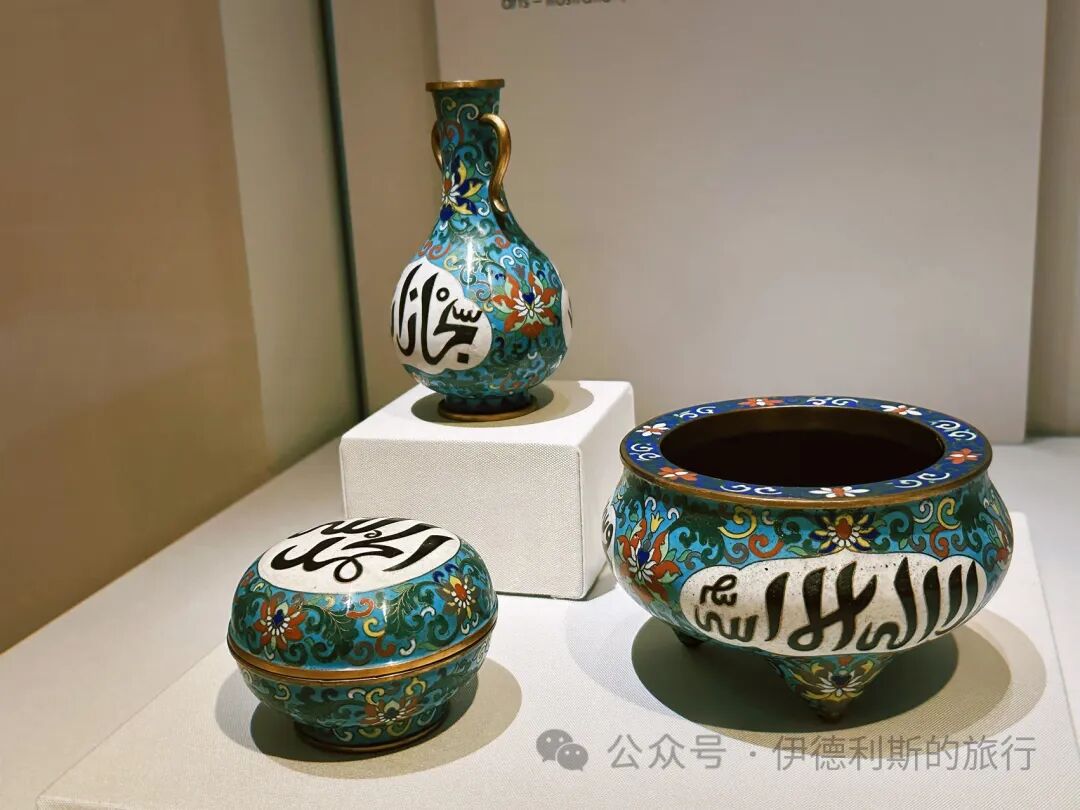
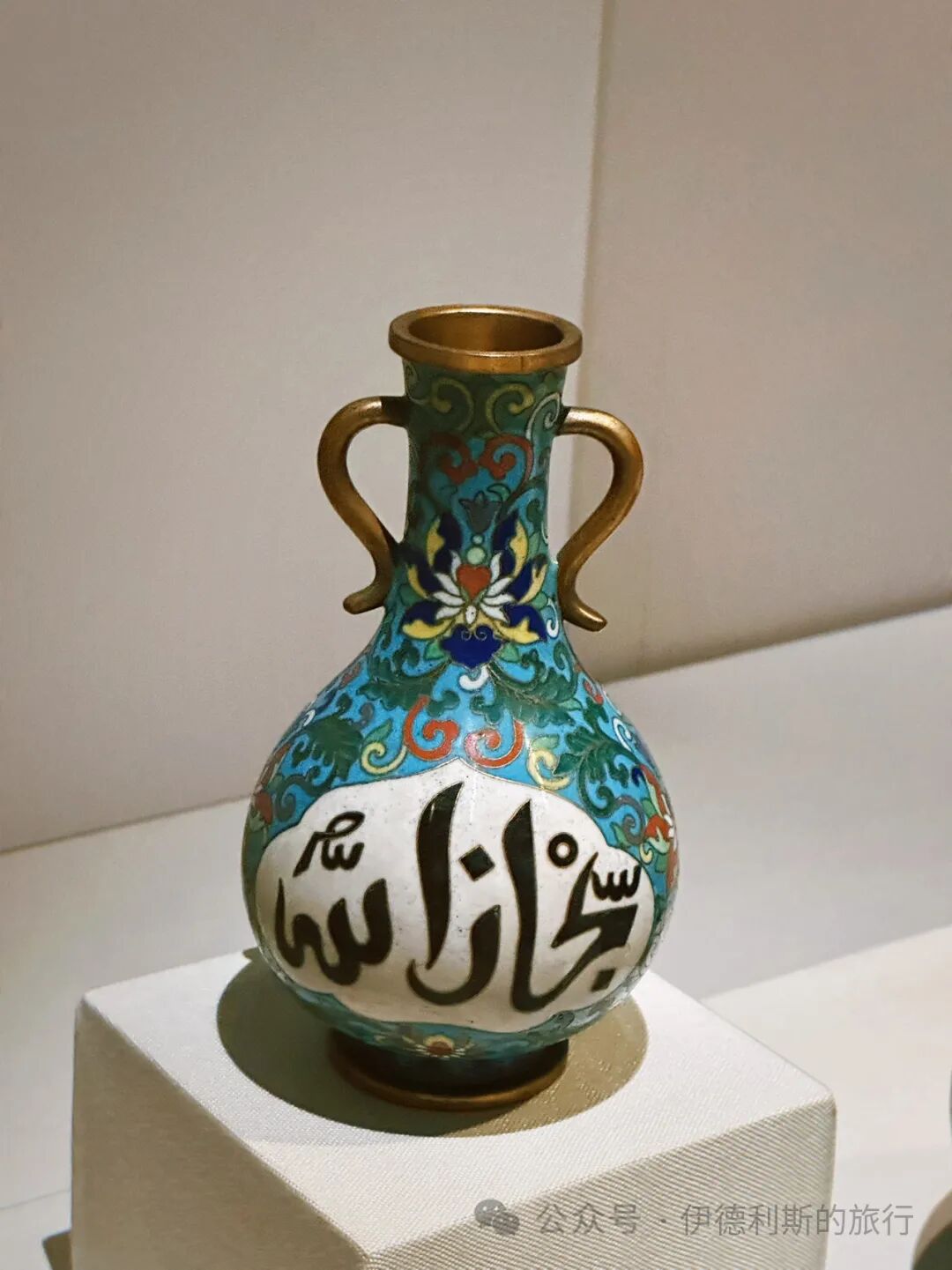
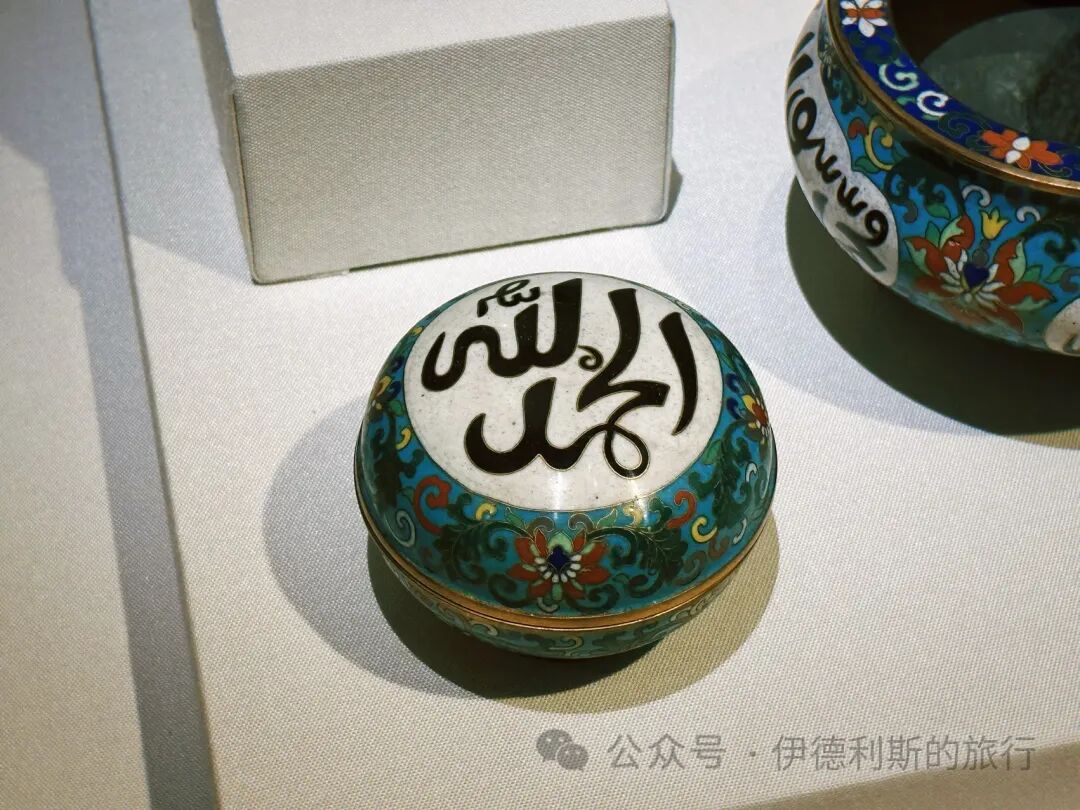
A set of traditional Qing dynasty enamel incense tools used by Hui Muslims: an incense burner, an incense box, and a vase for incense tools. In the past, Hui Muslims usually kept these in a high place at home and only used them during religious gatherings (nieti) and the Eid festivals. Later, as stick incense became popular, the three-piece incense set was gradually replaced by a single incense burner.
The spread and evolution of blue and white porcelain in the Middle East.
The first is a blue and white porcelain plate from Jingdezhen in the 15th century. This type of floral blue and white porcelain plate was exported in large quantities to Middle Eastern countries during the Ming dynasty, and one is kept in the tomb of the famous Sufi Sheikh Safi al-Din in Iran.
The second is blue and white porcelain produced by the Ottoman Empire in the mid-15th century, representing an early Middle Eastern attempt to learn from Jingdezhen blue and white porcelain. The floral patterns are clearly influenced by China, but the cypress tree pattern is a Turkish specialty.
The third is porcelain produced around 1600 in Iznik, Turkey, under Ottoman rule. By this period, Iznik was able to produce high-quality blue and white porcelain, and the floral patterns continued to be influenced by China.
A 19th-century teak wood scripture box from northern Java. This intricately carved scripture box was generally only used in mosques and madrasas, and it features traditional Javanese-style patterns.
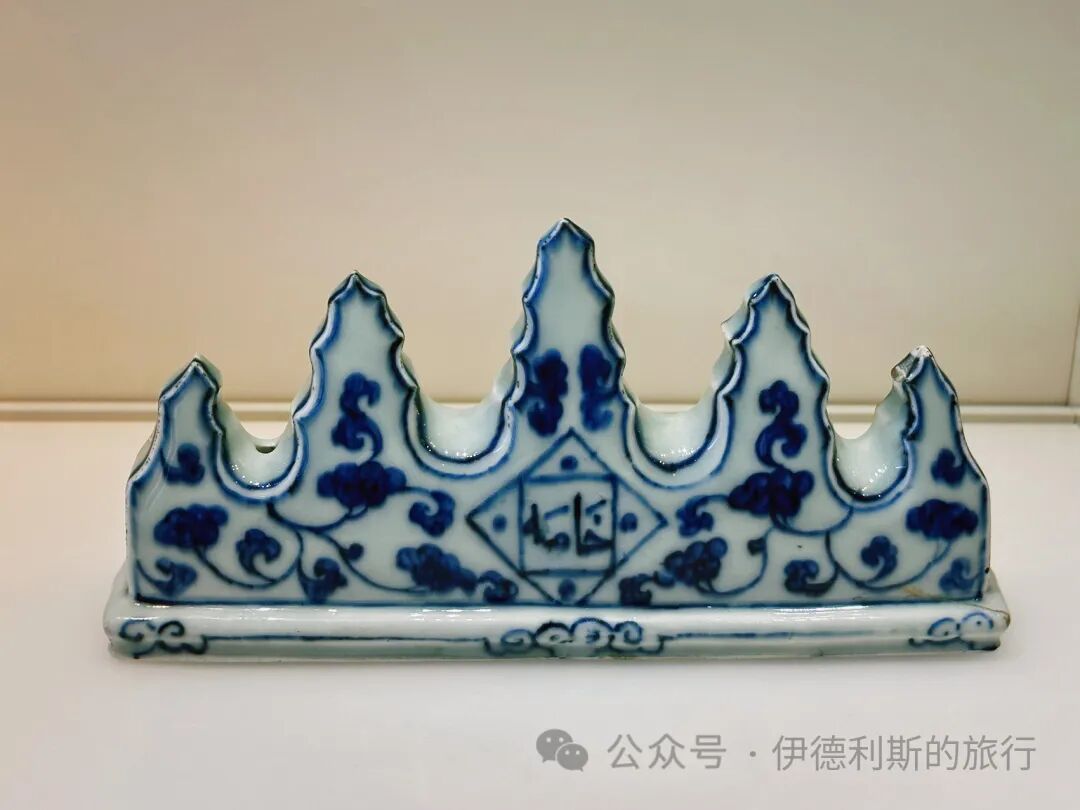
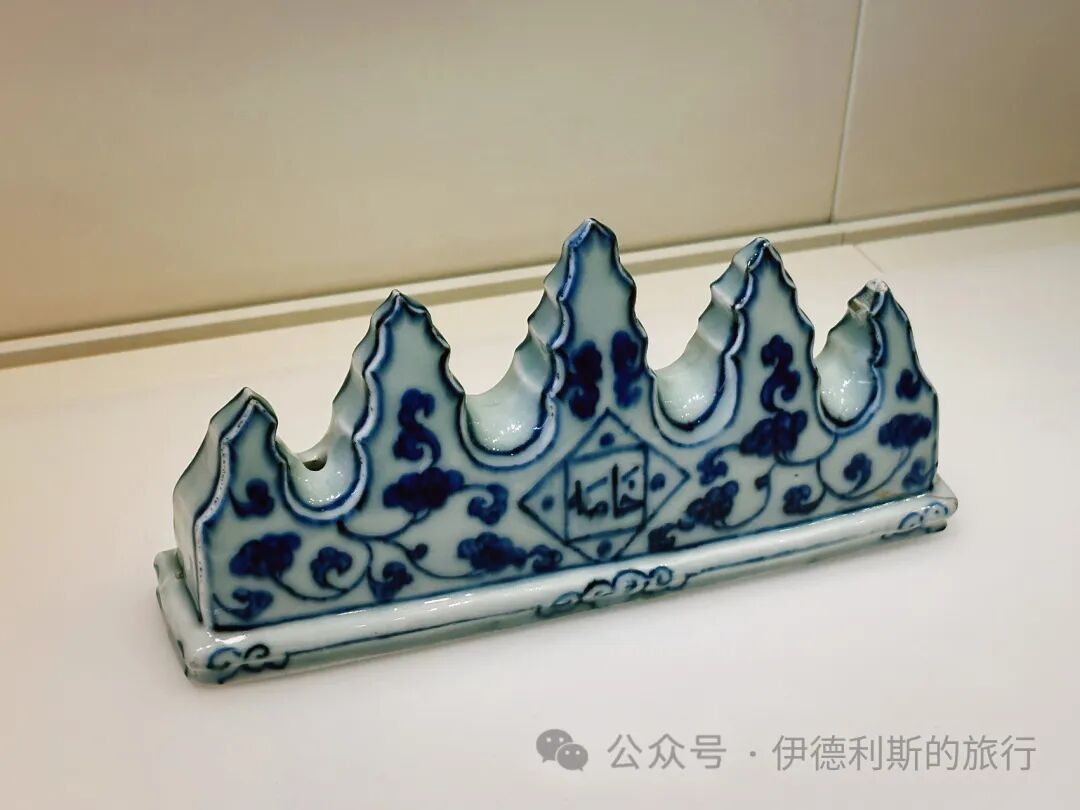
A Jingdezhen blue and white porcelain brush rest with the mark 'Made in the Zhengde reign of the Great Ming'. The front is written in Arabic as 'khamah' (pen), and the back is written in Arabic as 'dan' (rest).
The Islamic culture of Southeast Asia.
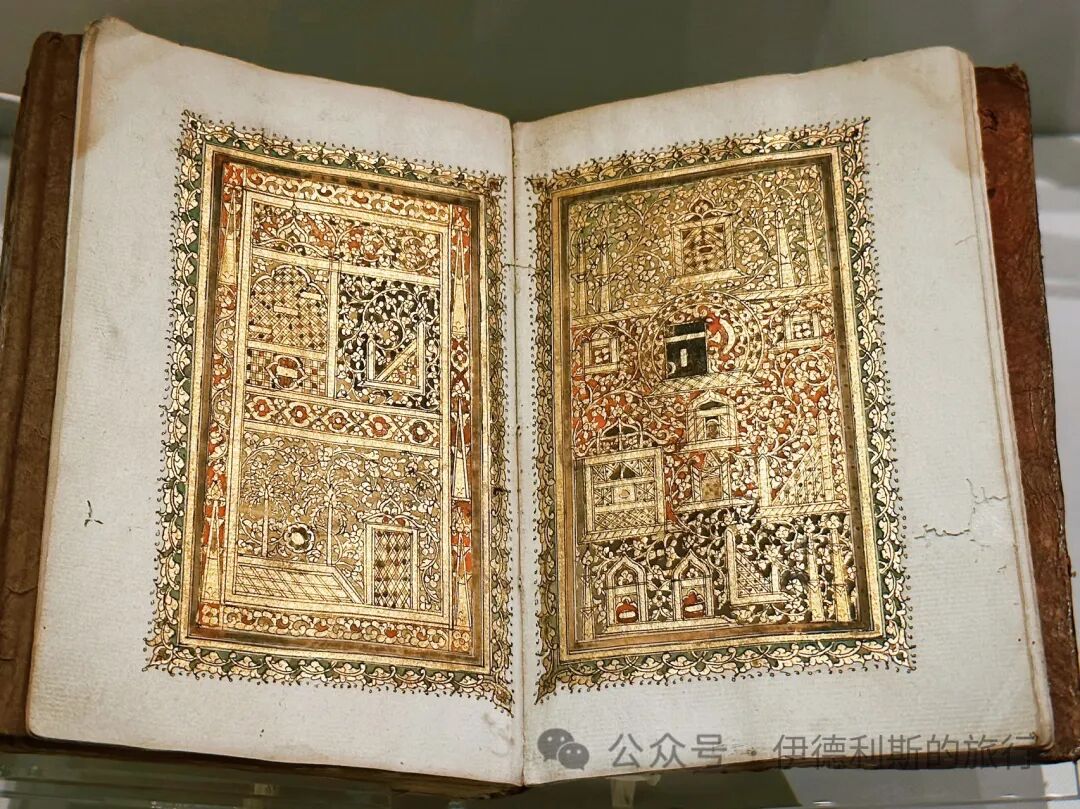
A collection of blessings for the Prophet (Dala'il al-Khayrat) copied in Terengganu on the Malay Peninsula in the 19th century. Malay people usually carried this book with them when they went on Hajj, so it includes diagrams of the Prophet's Mosque and the Sacred Mosque, marking the locations of the Prophet's tomb and the Kaaba. The two illustrations of the Kaaba use the ornate Terengganu decorative style and feature a lot of gold leaf.
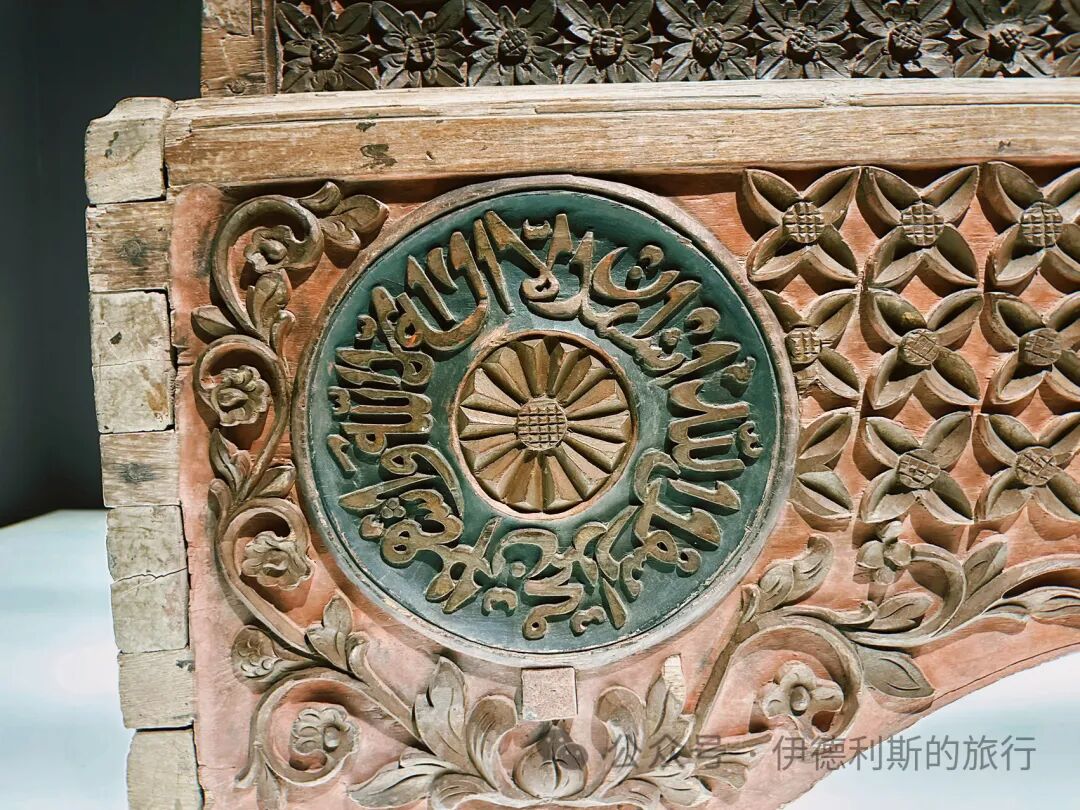
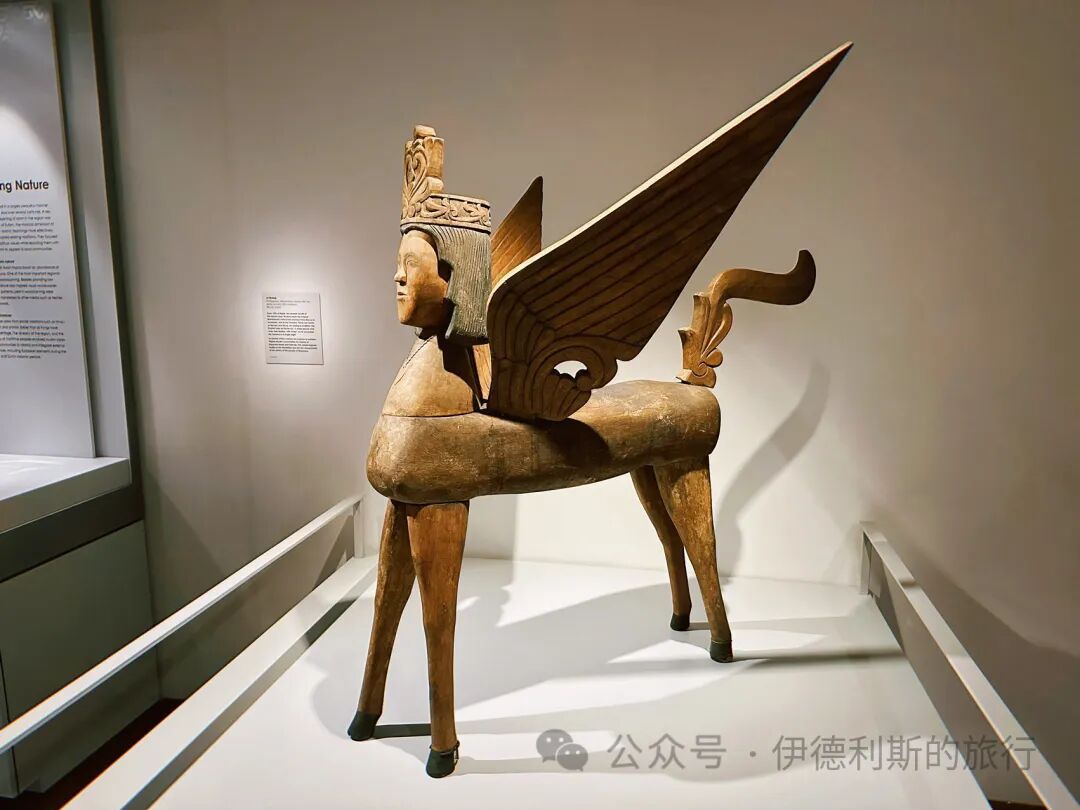
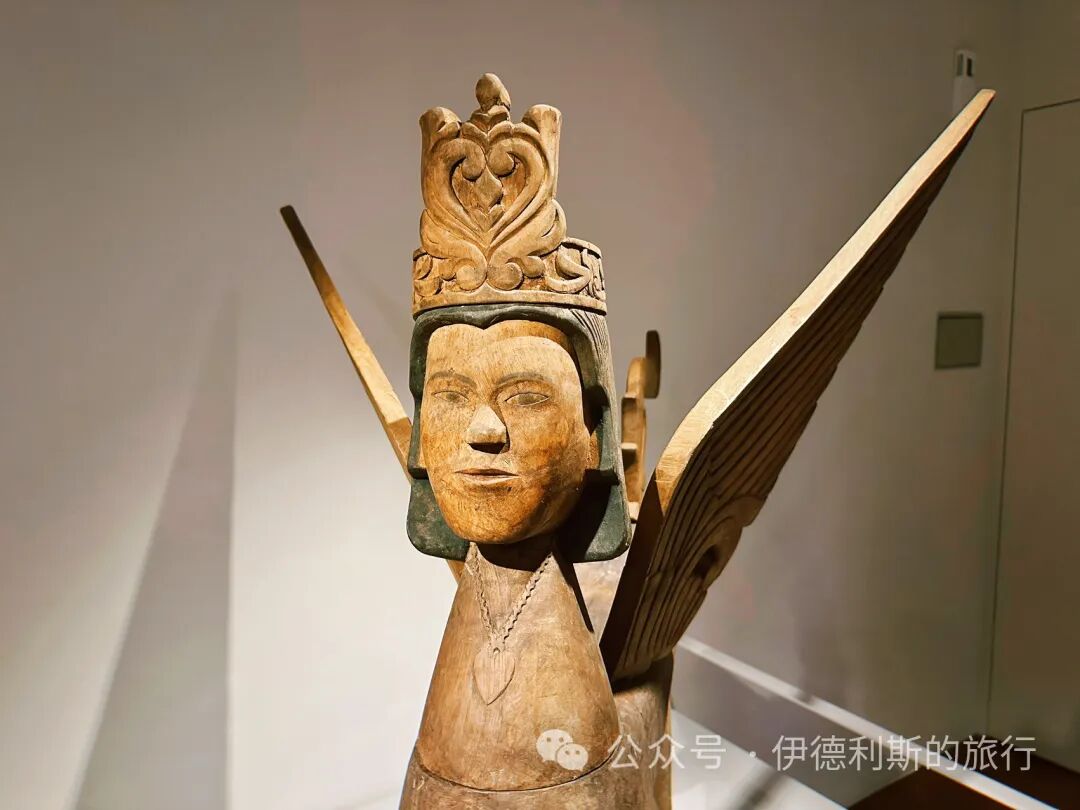
A wooden carving of Buraq from Lanao del Sur province on Mindanao island in the southern Philippines, dating to the early 20th century; this is the mount the Prophet Muhammad rode during his Night Journey. Muslims in Mindanao display the Buraq during important feasts and holidays. Although the Hadith does not describe the face of the Buraq, it mentions it has a handsome face, so it has historically been depicted with a human face; this Buraq's headpiece and tail incorporate traditional Okir patterns from the southern Philippines.
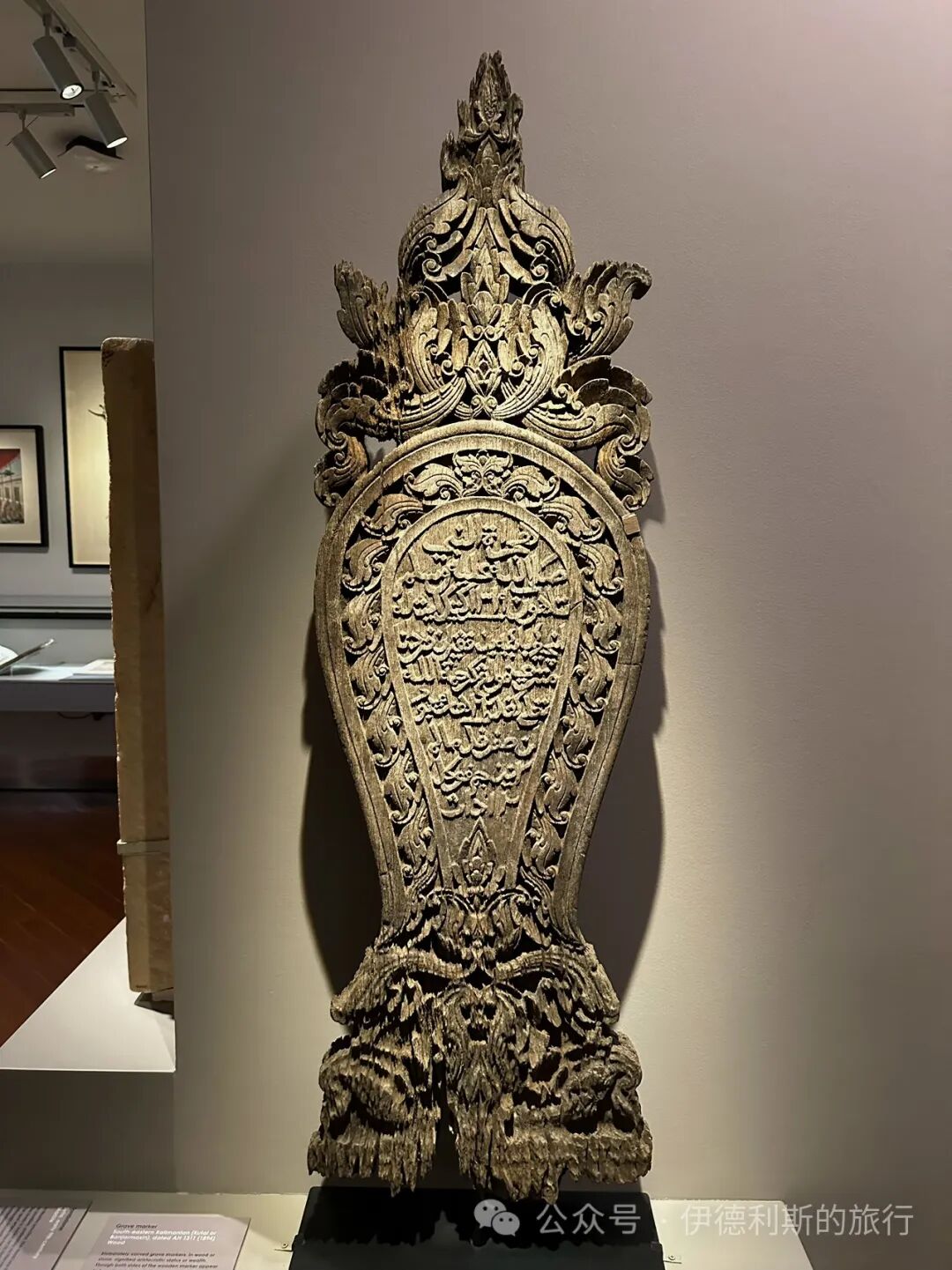
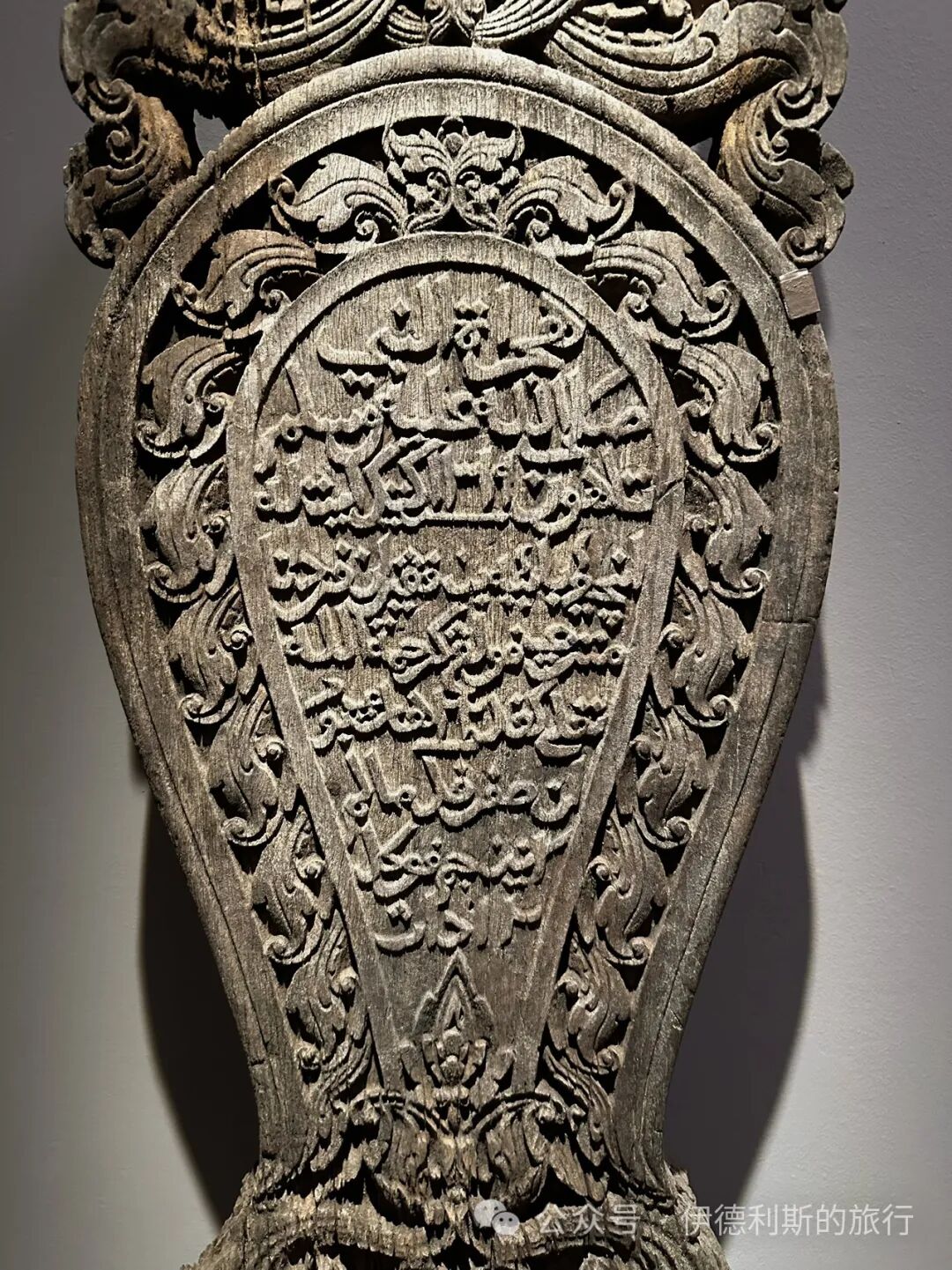
A wooden tombstone from the southeast of Kalimantan island dated 1894; the intricately carved tombstone is a symbol of noble status and wealth, featuring both Malay and Arabic.
A prayer time chart from the mid-20th century at the Wak Sumang mosque in Punggol, Singapore, which was used until the mosque was demolished in 1995.
A book of divination (Primbon) from Semarang, Java, copied in 1824 in Jawi script (Arabic script used to write Malay). The book uses a combination of numerology and Quranic verses to provide guidance on decisions or auspicious dates and times for events ranging from moving house to getting married.
A magic square belt buckle from the late 19th to early 20th century in Kuala Kangsar, the royal city of the Sultan of Perak on the Malay Peninsula; it is inscribed with the Shahada and was part of traditional Malay attire.
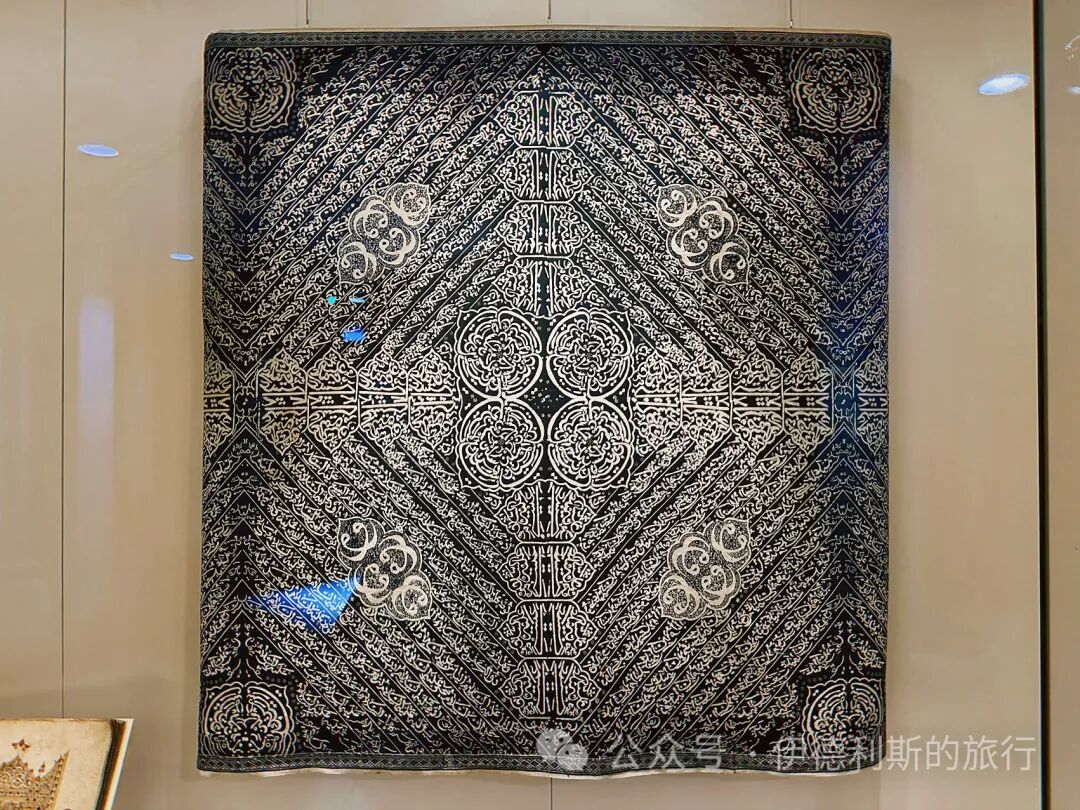
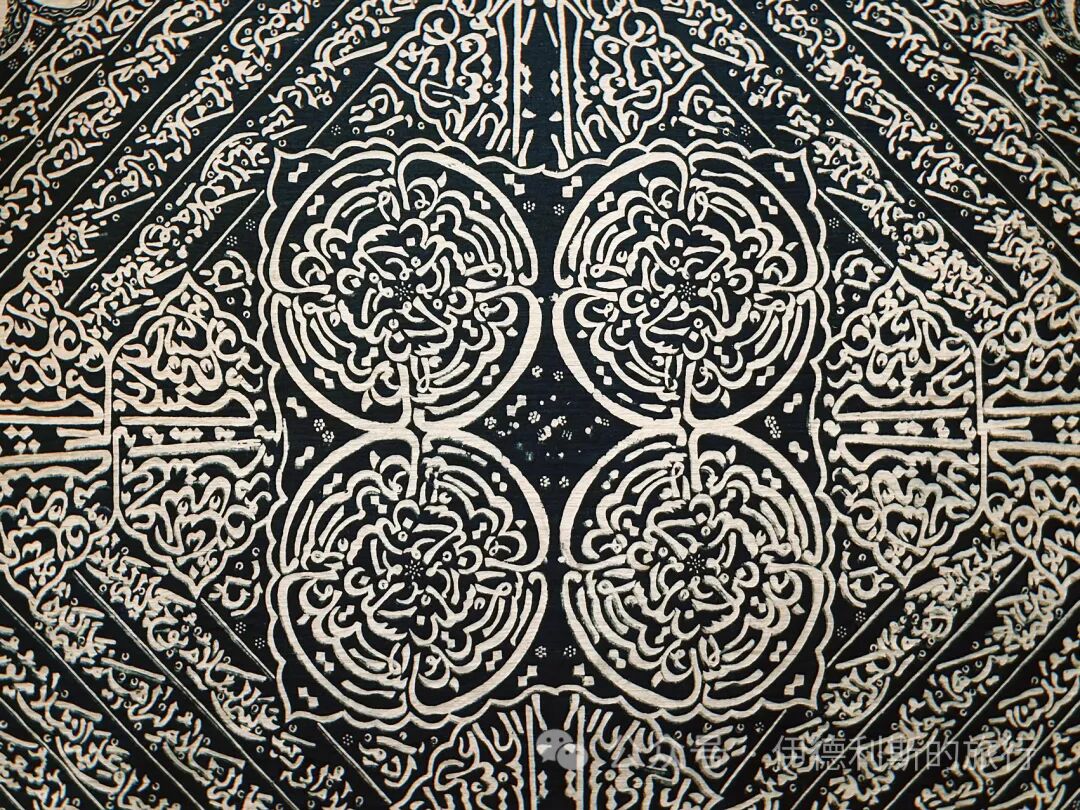
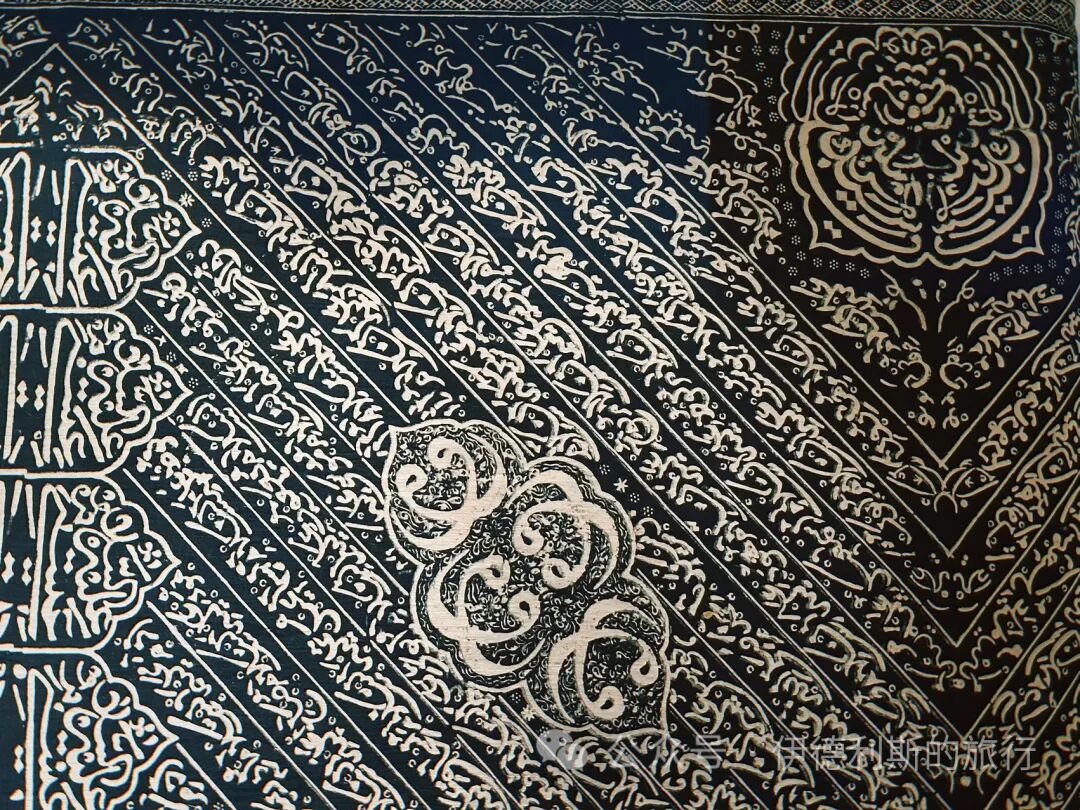
Arabic calligraphy on wax-resist dyed cloth (Batik) from the Jambi region of Sumatra in the 20th century. This overall design, with four satellite patterns surrounding a central motif, originated from the Buddhist mandala and was later used by Muslims in Sumatra as a burial shroud for coffins.
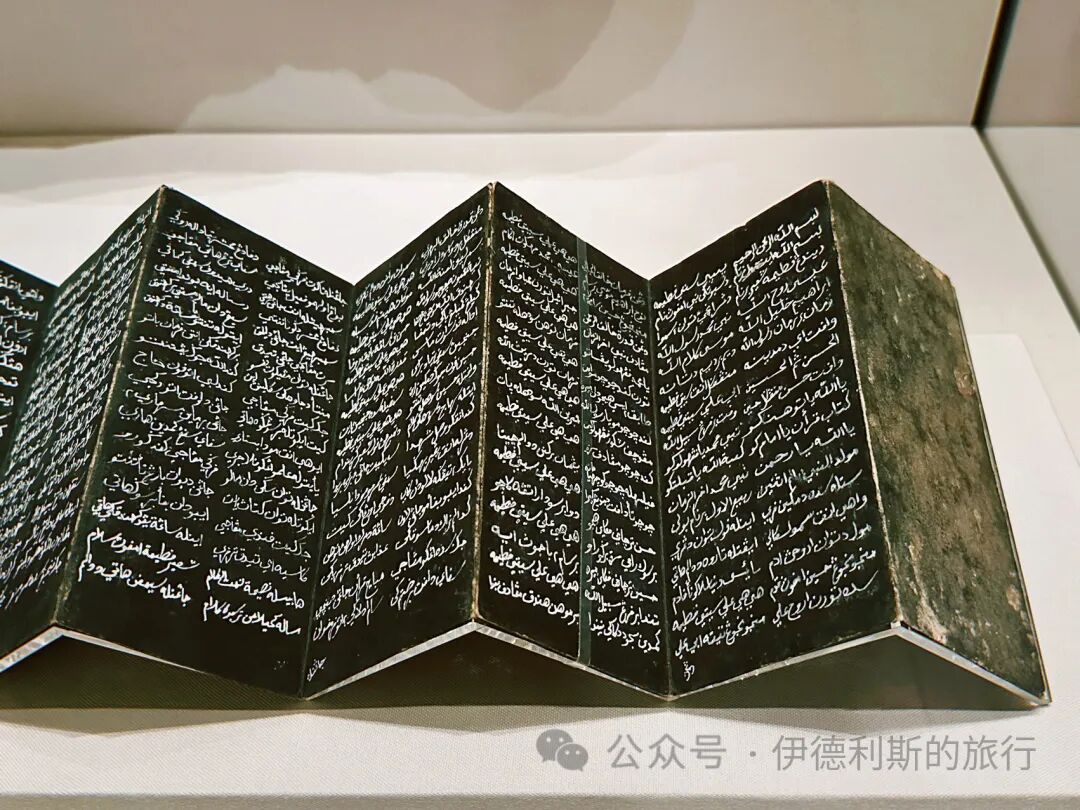
A mulberry paper manuscript from Pattani, Malay Peninsula, dated 1835. This black folding manuscript is written with white talc; it was very popular in Buddhist regions of Myanmar and was later adopted by Muslims in places like Myanmar and Malaysia. The manuscript includes advice for young people, and the Song of Fatimah (Syair Dendang Fatimah) is often chanted during ceremonies for newborns.
On the left is a 19th-century Indonesian haji cap, and on the right is a Bugis songkok cap (Songkok Recca) from southern Sulawesi dating to the 19th or 20th century. White symbolizes purity and the plain white ihram garments worn during the Hajj pilgrimage; in Indonesia, it is typically worn by a haji who has returned from the pilgrimage. The black songkok cap comes from the Ottoman fez, and the Bugis people of southern Sulawesi usually wear this cap for Friday namaz. A wider gold band indicates a closer relationship with the king.
This early 20th-century batik sarong from Java depicts a Hajj pilgrimage group. The flag reads 'Bendera Radja Mekkah' (Flag of the King of Mecca), which was used during the 1916 Meccan revolt against the Ottoman Empire. The revolt was supported by the Hadharem people of Yemen. Many Arabs in Southeast Asia belong to Hadharem families, and some ran batik workshops on the north coast of Java while organizing Hajj trips for Javanese Muslims. This sarong was likely made in that context.
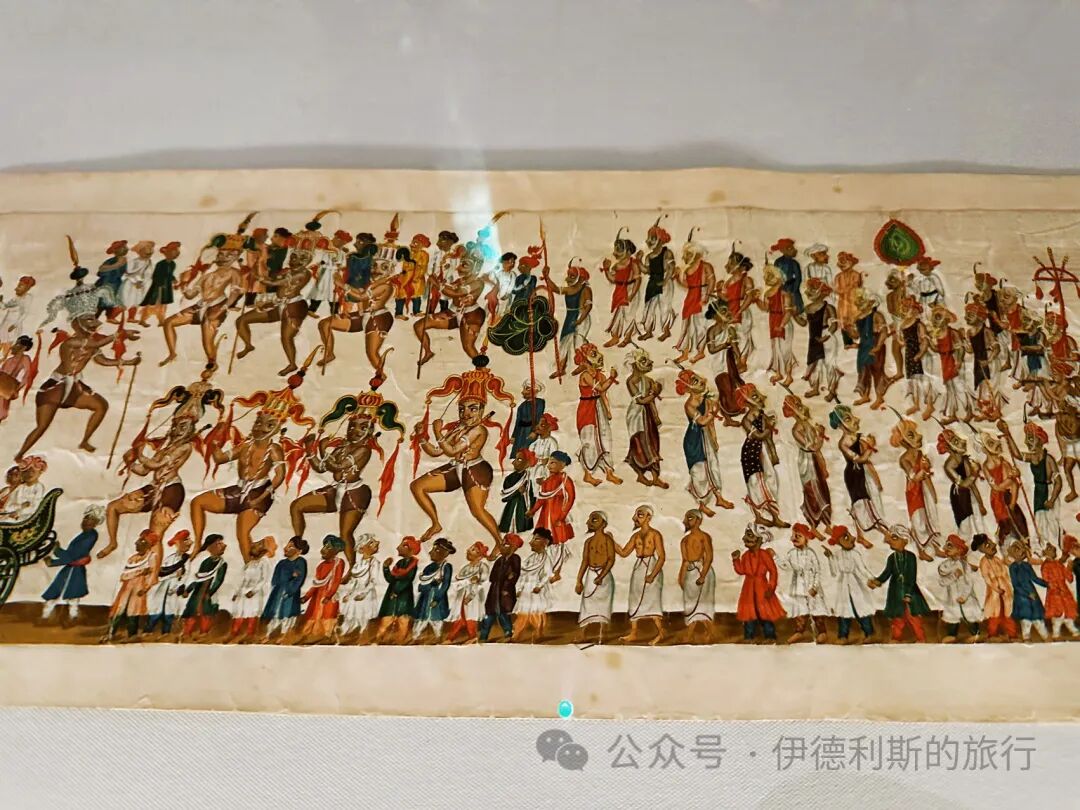
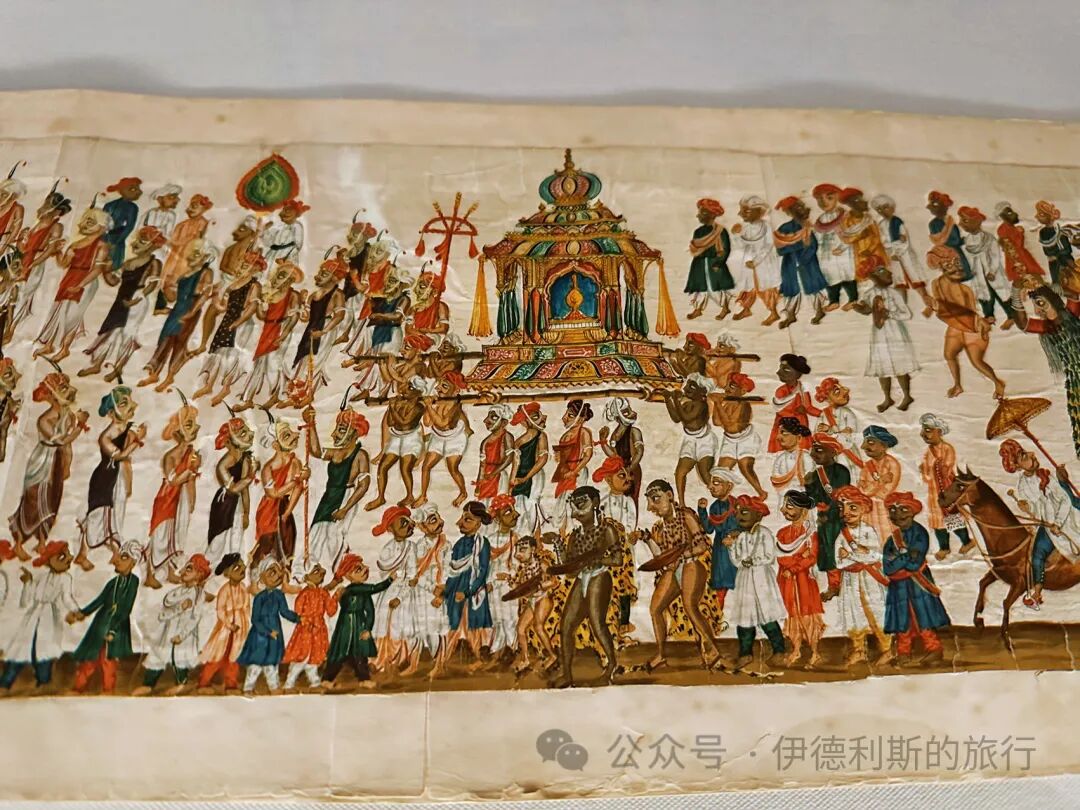
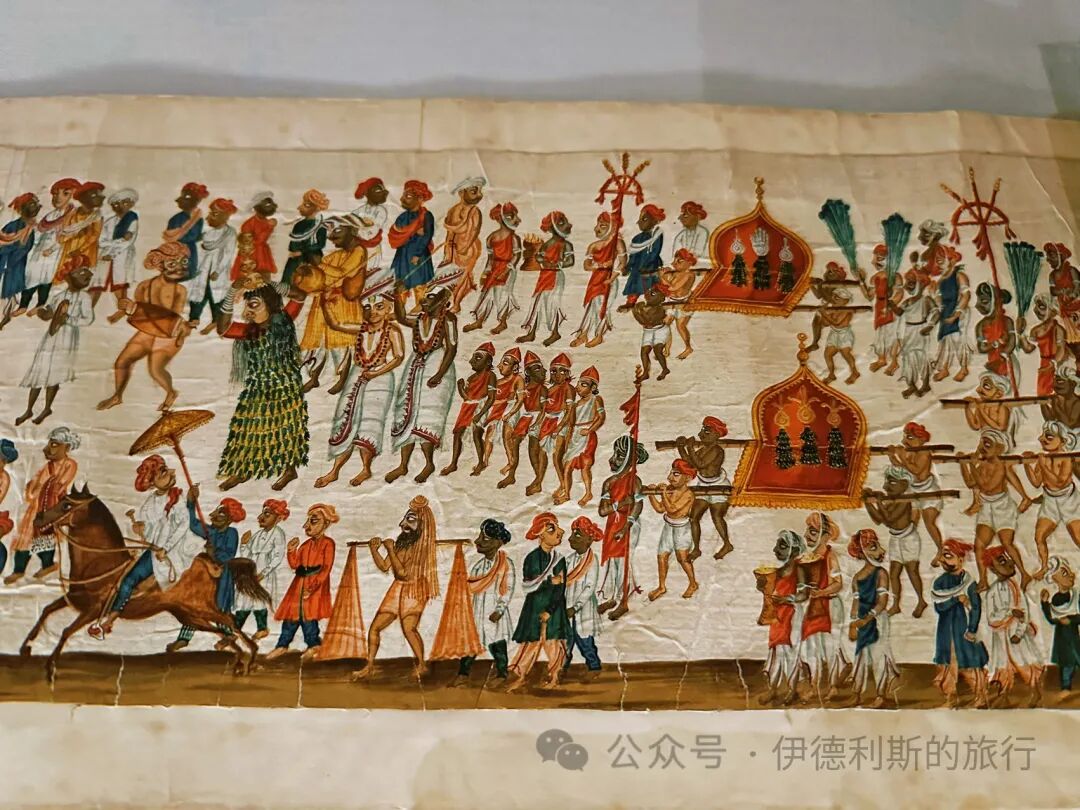
A scroll from the 1830s or 1840s showing a Shia Ashura procession in southern India, likely Chennai. The entire scroll is nearly 6 meters long. It shows a model of the tombs of Imam Hussein and Hassan (Ta'ziya), the mount of the Prophet during his night journey (Buraq), an Alam flag, the Hand of Abbas, a shield (Sipar), and a reenactment of the Battle of Karbala. You can also see the Chennai native infantry, people dressed as animals, and even elements of the Hindu Charak festival, which reflects India's multiculturalism.
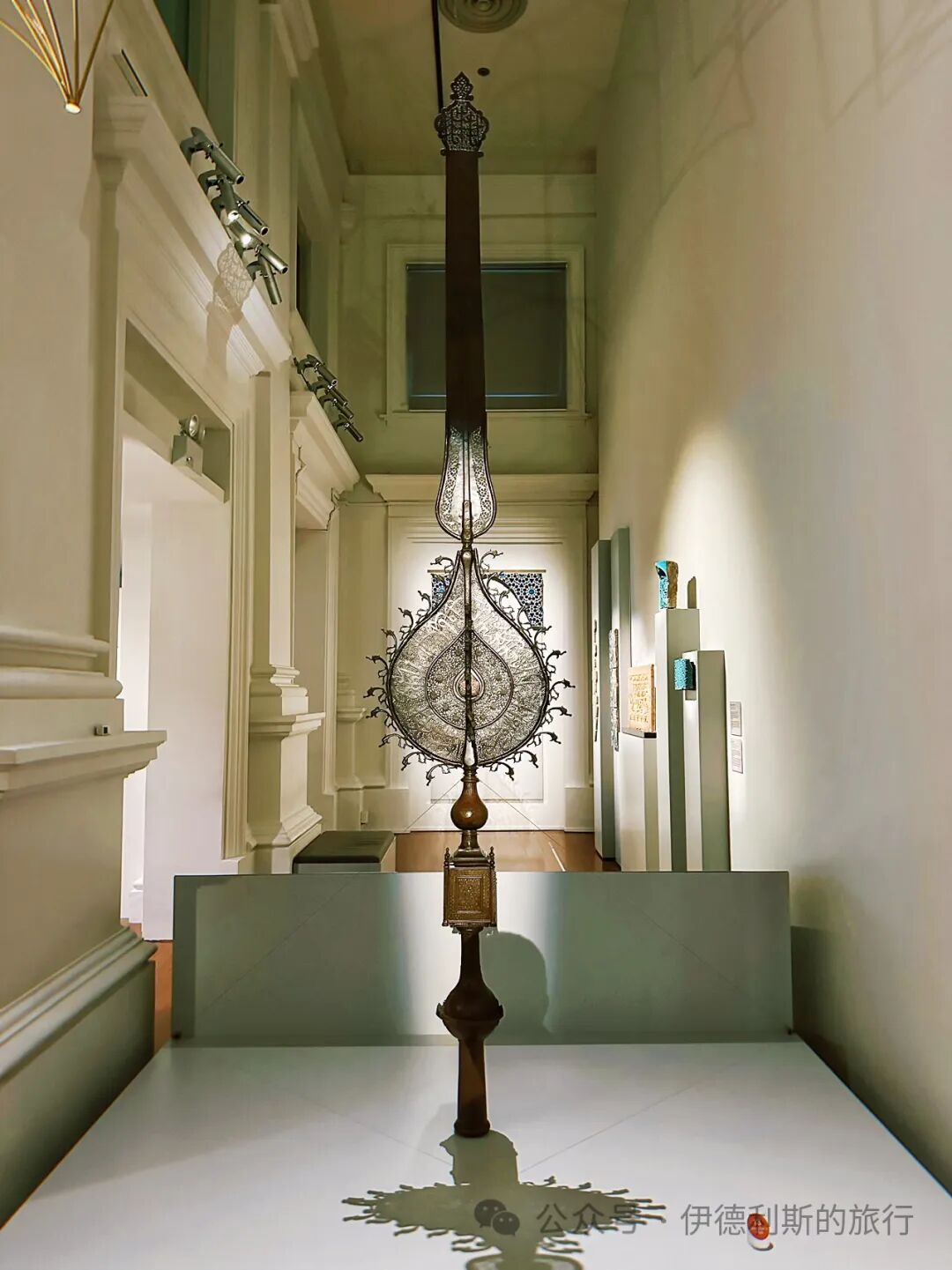
An early 18th-century copper-gilt Alam flag pole from the Safavid dynasty in Iran, engraved with Quranic verses. The Alam flag pole is used by Shia Muslims during Ashura processions and consists of three parts. At the bottom, a cube rises on a copper axis engraved with a call to the Prophet. In the middle is a pear-shaped flat surface with a dragon head, featuring an enamel ball with colorful floral patterns. The top symbolizes the sword of Ali.
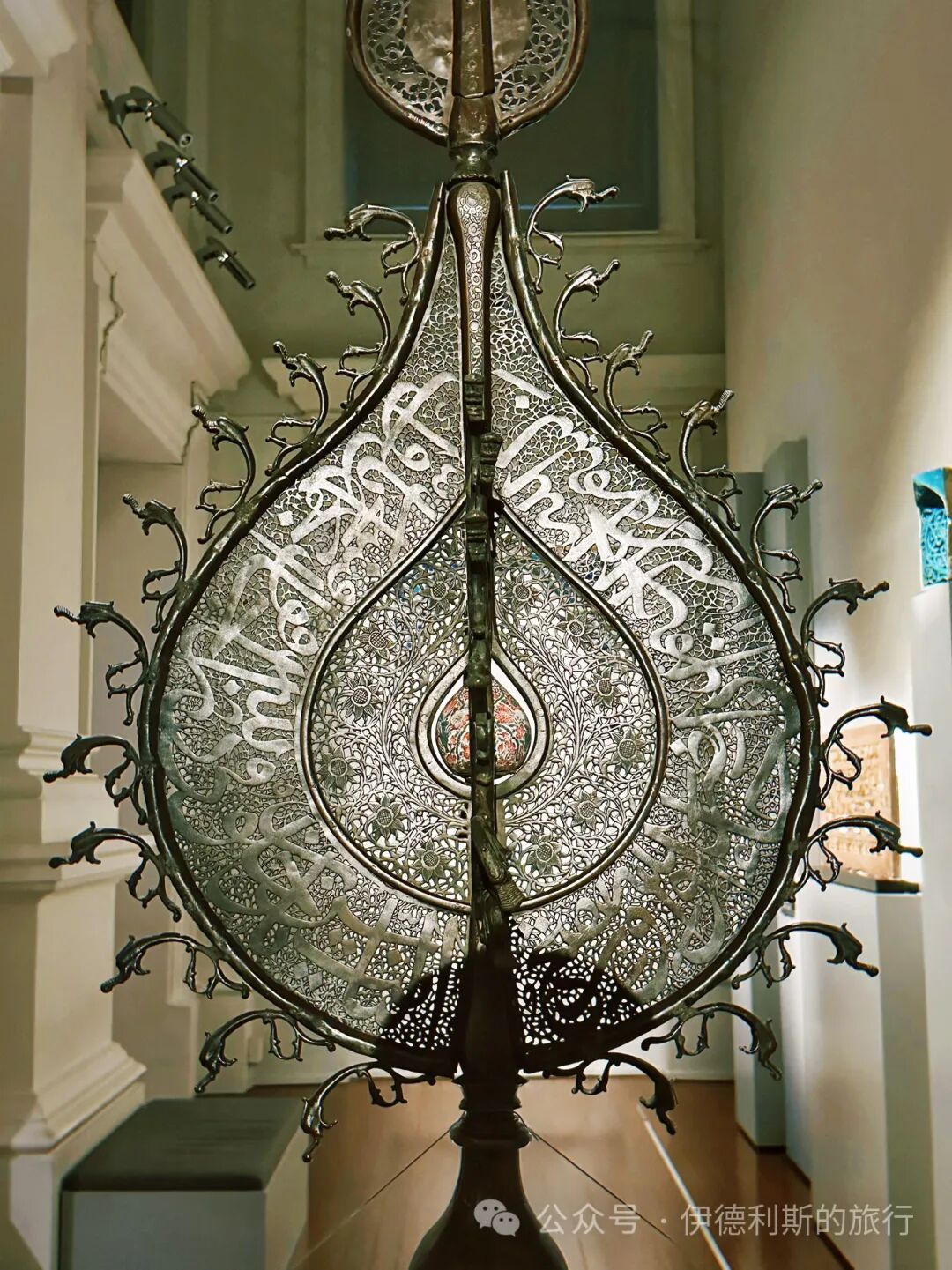
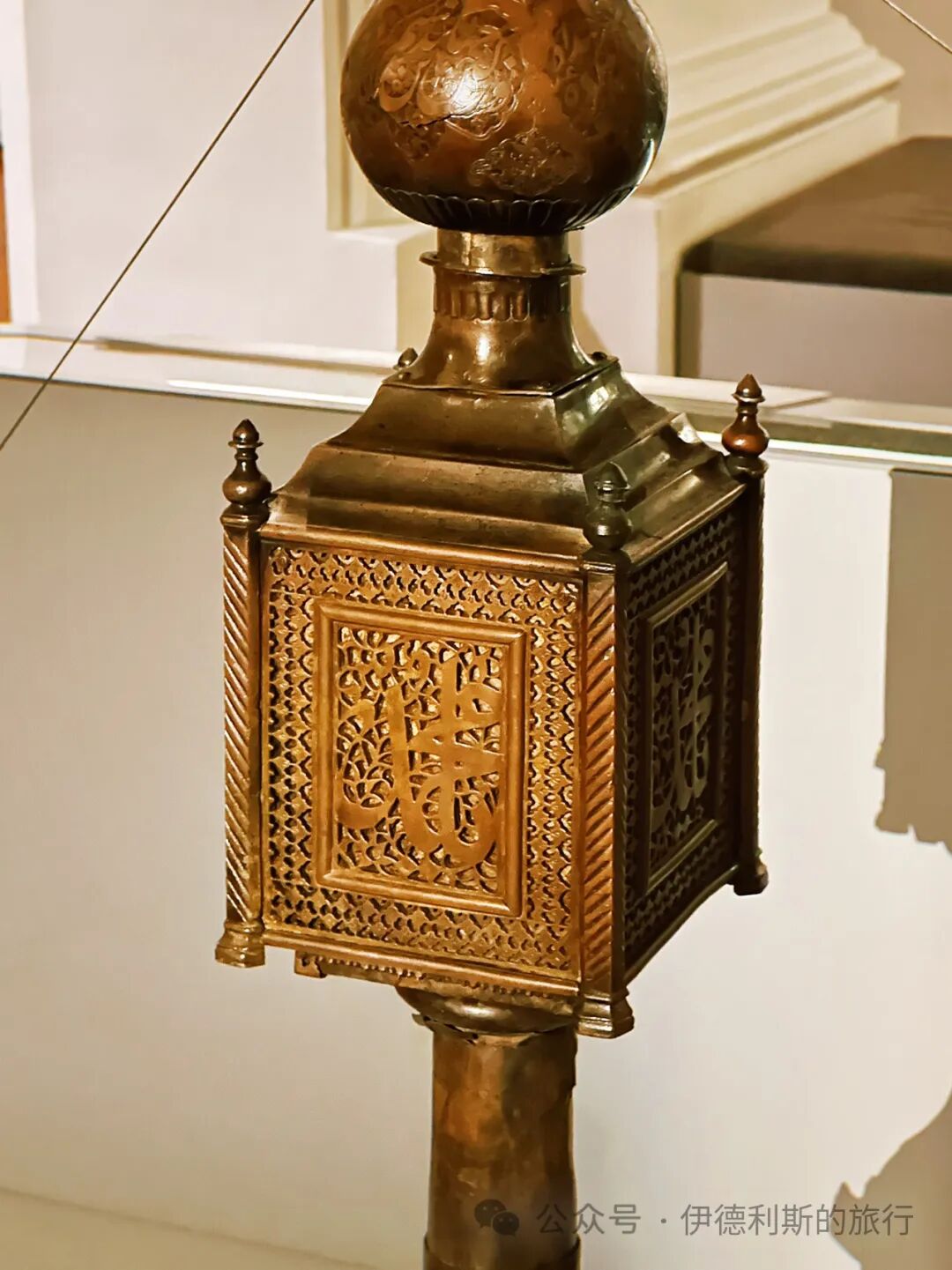
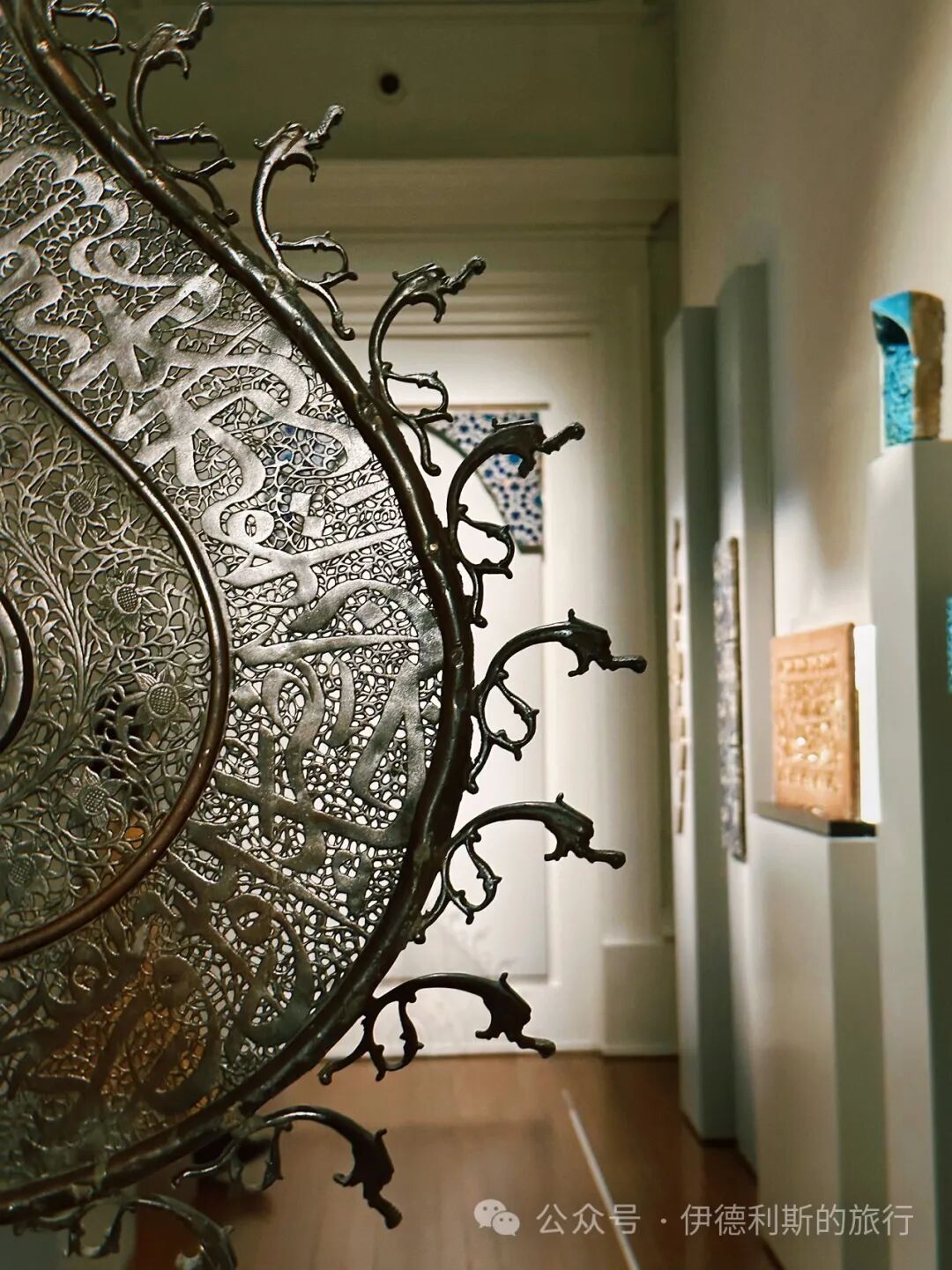
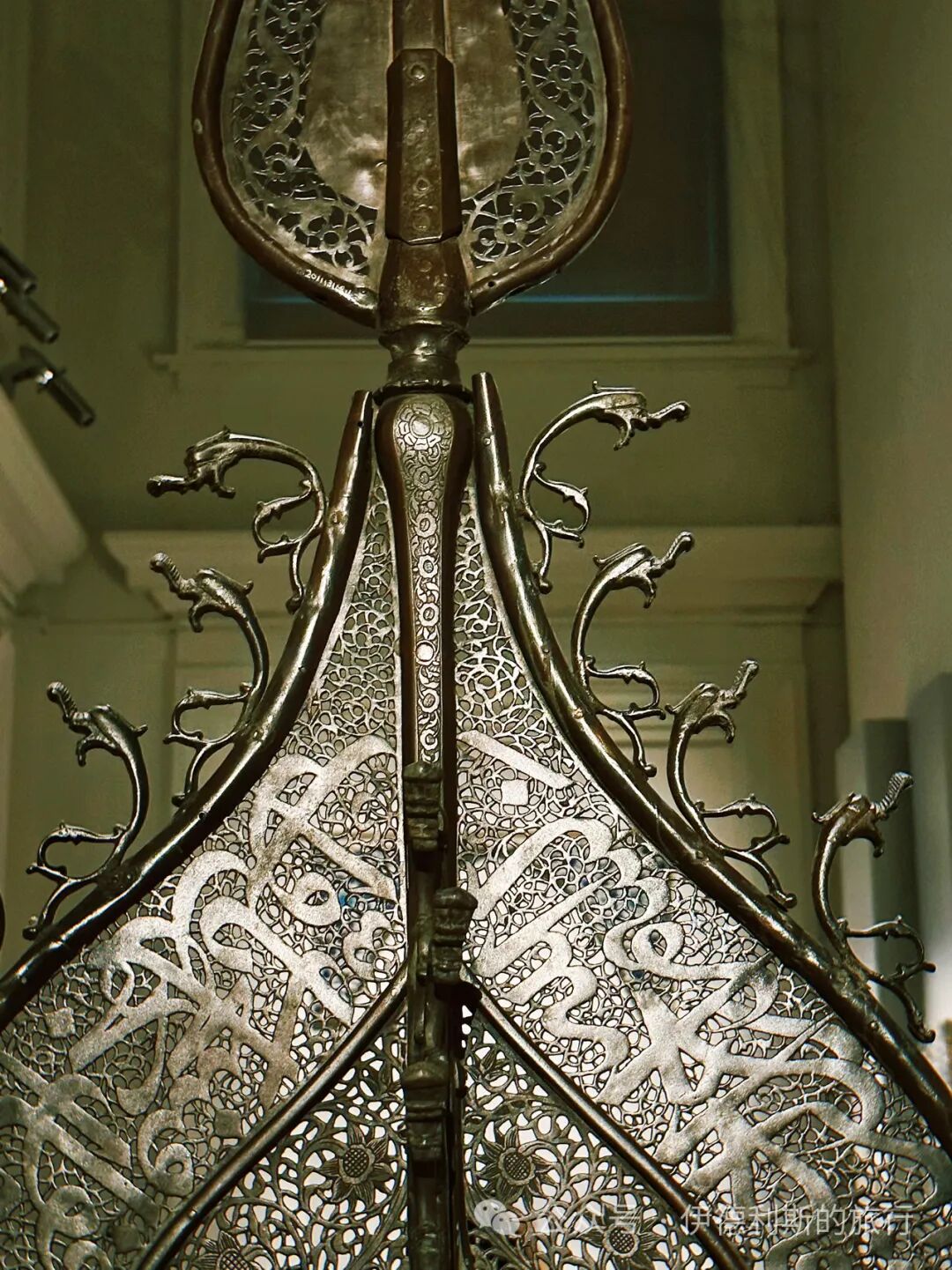
A 'Hand of Abbas' from the late 19th or early 20th century. Abbas was the son of Imam Ali. He served as the standard-bearer for his brother Imam Hussein's troops during the 680 AD Battle of Karbala against the Umayyad Caliphate. On the eve of Ashura, Abbas went to the Euphrates River to get water, but he was blocked by the enemy on his way back, his hands were cut off, and he was eventually killed. Since then, the 'Hand of Abbas' has been seen by Shia Muslims as a symbol of courage, sincerity, and self-sacrifice.
Two tombstones from the mid-15th-century Malacca Sultanate. Besides scripture, one of them is inscribed for a captain from Gujarat in western India who passed away in 1459. Muslim merchants from Gujarat played a key role in the trade of the Malacca Sultanate, where one of the four harbor masters was specifically in charge of trade with Gujarati merchants. These two tombstones were found by British engineers in the walls of the Portuguese fortress in Malacca and were among the first items collected by the Raffles Museum in Singapore, now known as the National Museum.
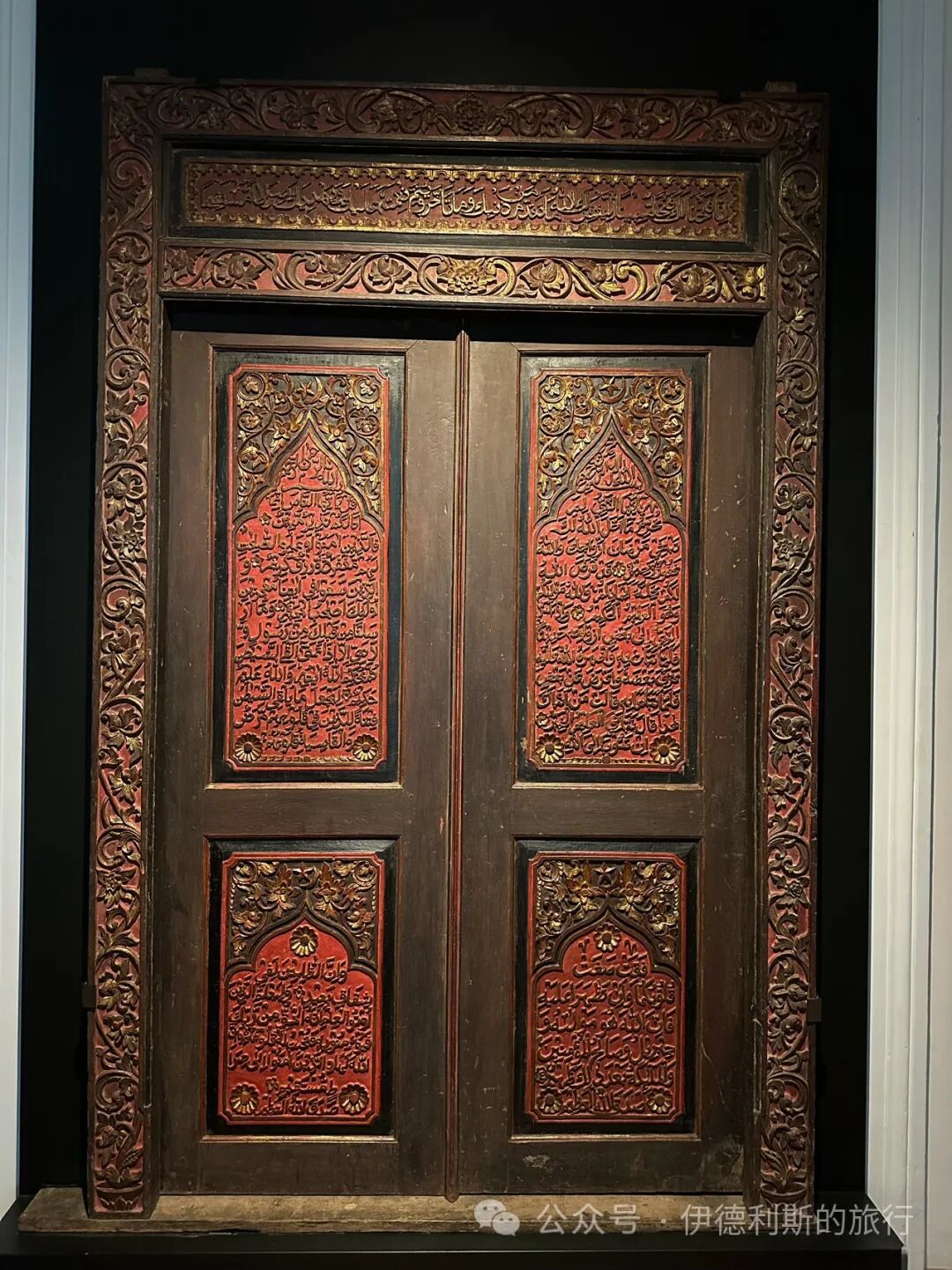
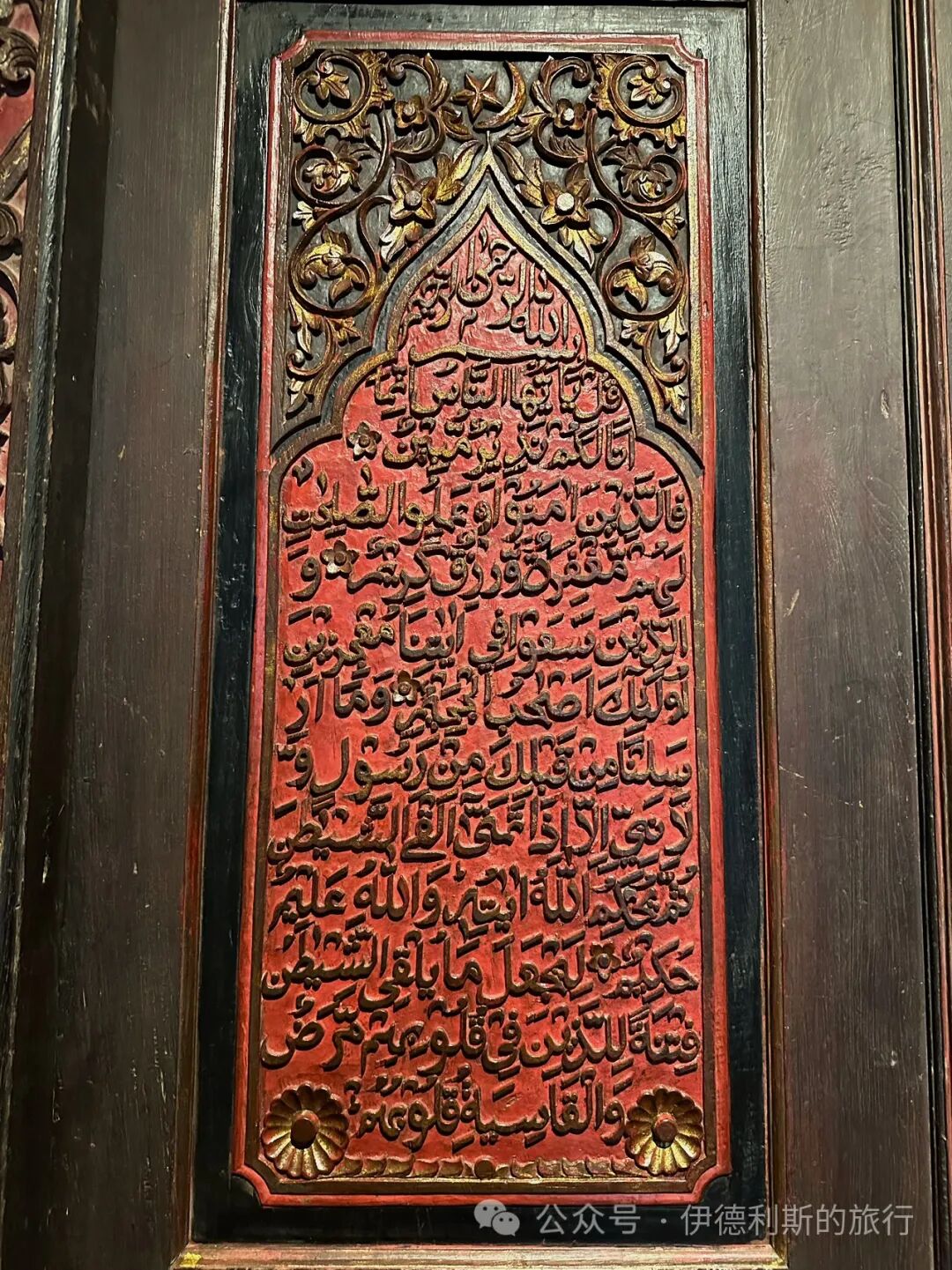
A gilded door panel from the early 20th century from Jepara or Kudus in Central Java. This traditional door panel is called Gebyog in Javanese and was used in traditional Javanese houses to separate the living room from the bedroom. Besides scripture, it features beautiful floral patterns. Lotus patterns were often used during the Hindu-Buddhist period, but these shifted to jasmine patterns after the arrival of Islam.
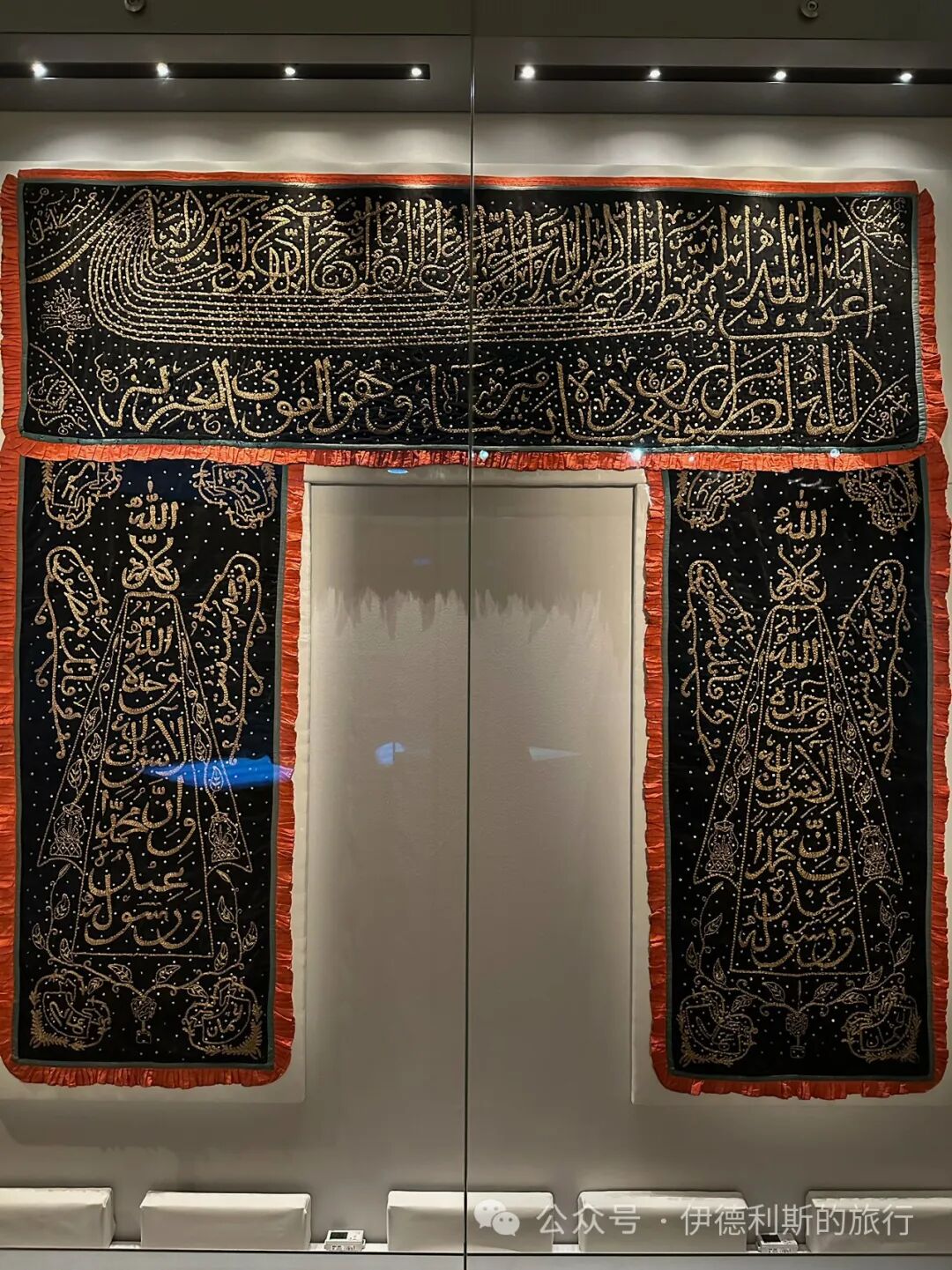
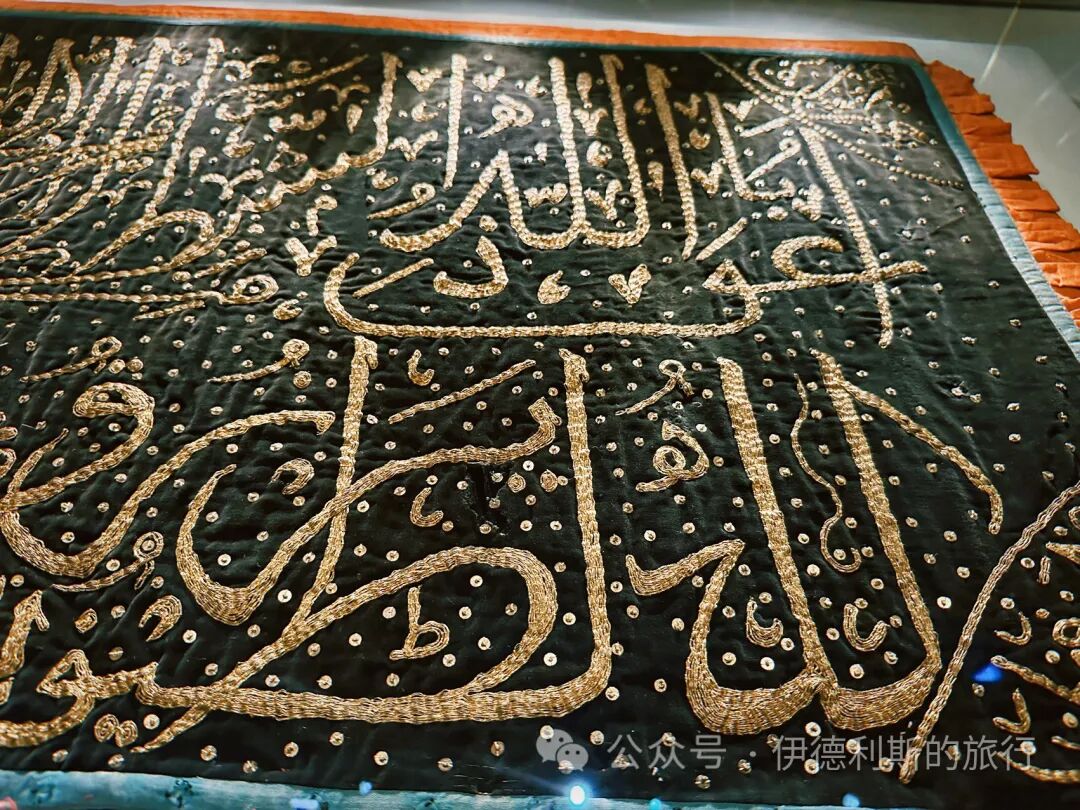
A 20th-century velvet tapestry embroidered with gold thread from Sumatra. This traditional tapestry is called Tekat. It was once used for royal clothing and buildings, but now it is mostly used at weddings or at the entrances of mosques and gongbei.
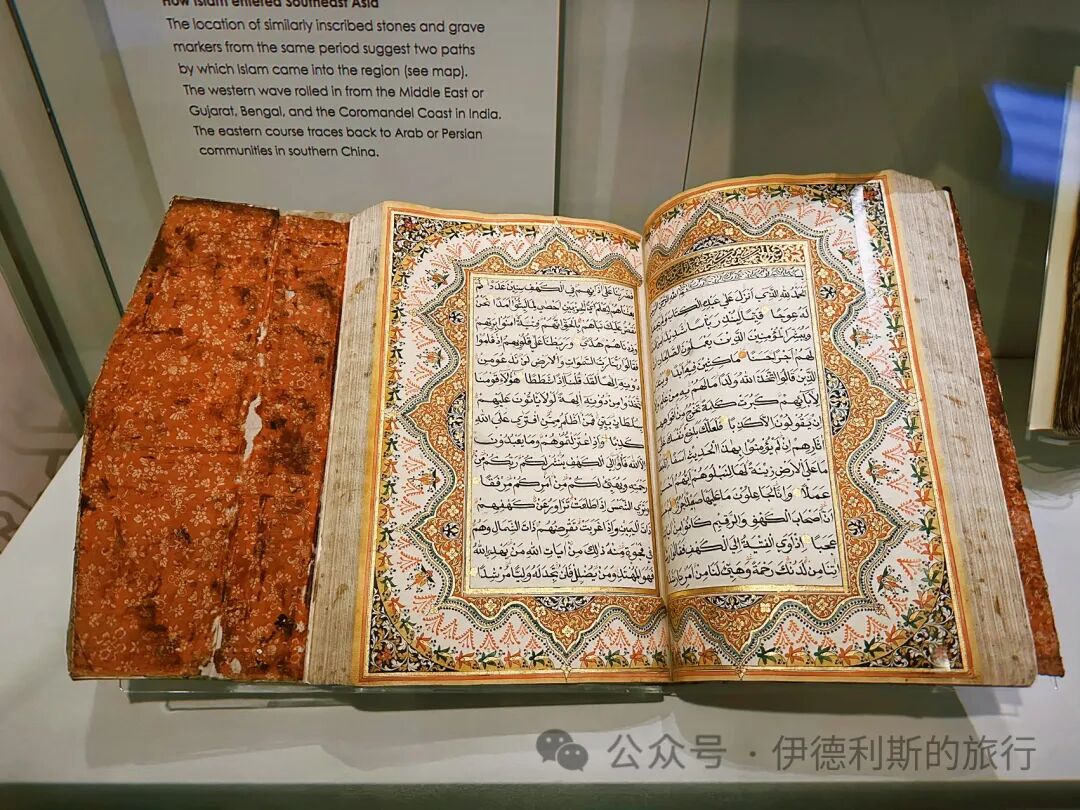
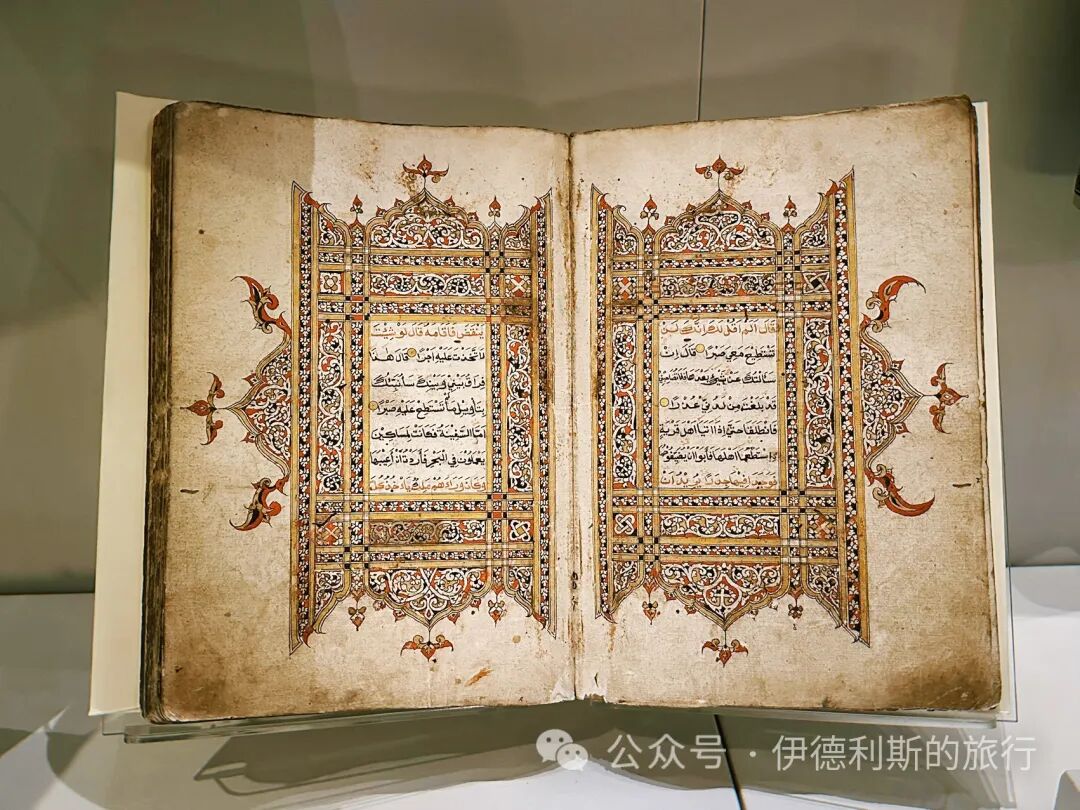
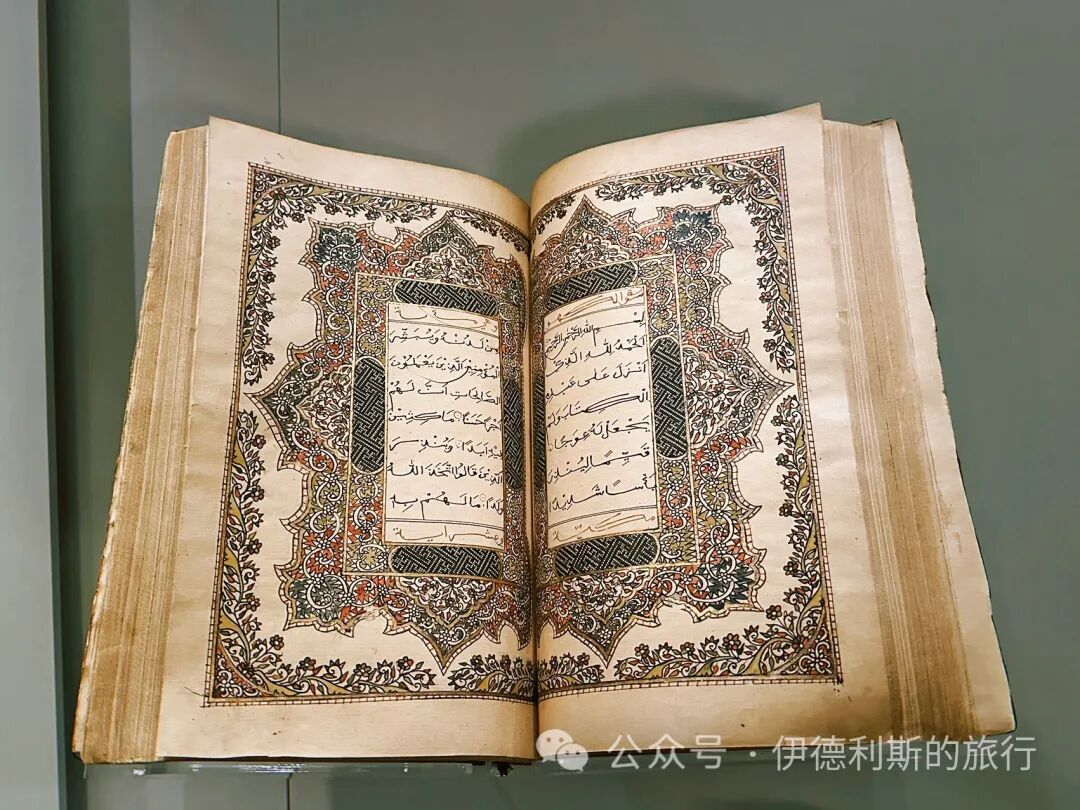
Three Southeast Asian scripture manuscripts in different styles.
A 19th-century scripture manuscript from the Terengganu region on the east coast of the Malay Peninsula. Because it uses a large amount of gold, it is believed to have been commissioned by the Sultan's court in Terengganu. This type of manuscript from the Terengganu region is dense and delicate, featuring red and gold as the main colors, followed by black and green.
A 19th-century scripture manuscript from the Aceh region of Sumatra. Like those from the Terengganu region, the Aceh manuscripts also primarily use red, gold, and black. The most unique features of the Aceh manuscripts are their triangular edges and wing-shaped patterns.
A scripture manuscript from Central Java dating to the late 19th or early 20th century. Compared to the Aceh style from Sumatra and the Terengganu style from the Malay Peninsula, Javanese-style manuscripts feature more colors and patterns. Blue is more common in Javanese manuscripts, and the swastika (wan) pattern is also unique to them.
Malaysia Islamic Arts Museum: Chinese Muslim Artifacts and Islamic Heritage
Articles • ali2007fr posted the article • 0 comments • 143 views • 2026-05-18 07:38
Summary: Malaysia Islamic Arts Museum: Chinese Muslim Artifacts and Islamic Heritage is presented here as a firsthand travel account in clear English, beginning with this scene: The Islamic Arts Museum Malaysia (Muzium Kesenian Islam Malaysia) is in Kuala Lumpur. It is the largest Islamic museum in Southeast Asia and holds over 7,000 Islamic art pieces from all over the world. The account keeps its focus on Malaysia Islamic Art, Chinese Artifacts, Museum Visit while preserving the names, places, food, and historical details from the Chinese source.
The Islamic Arts Museum Malaysia (Muzium Kesenian Islam Malaysia) is in Kuala Lumpur. It is the largest Islamic museum in Southeast Asia and holds over 7,000 Islamic art pieces from all over the world.
First, let's look at the museum's collection of artifacts related to China.
The history of Chinese-made porcelain with Arabic and Persian script.
Starting in the Yuan Dynasty, China exported large amounts of blue and white porcelain to the Middle East. Pieces have been dug up in Egypt, Iran, and Syria. During the Ming Dynasty, starting in the Yongle period (1403-1424), blue and white porcelain with Arabic and Persian script appeared. Most were modeled after metal and glass items from Arab and Persian regions and were made mainly for export. During the Zhengde period (1506-1521), blue and white porcelain with Arabic and Persian script mostly consisted of bowls, cups, brush rests, and boxes that matched the shapes of official imperial kiln pieces. Many were traditional stationery items. Because they often featured Quranic verses and praises to Allah, it is believed they were mostly ordered by Hui Muslims living in China.
Starting in the 16th century, folk kilns in Chaoshan and southern Fujian began producing Arabic-script export porcelain. These were mainly for the Southeast Asian market. The quality was lower than that of Jingdezhen, but the output was much higher.
After the Thirteen Factories were set up in Guangzhou during the Kangxi period, the amount of export porcelain grew rapidly. Porcelain began to be exported with long passages of scripture and the names of Caliphs. The higher-quality pieces were usually from Jingdezhen, while the lower-quality ones came from folk kilns in Chaoshan and southern Fujian. Because the folk kiln artisans were not familiar with the script, the Quranic text was often written incorrectly.
By the 18th and 19th centuries, the British East India Company imported large amounts of Chinese export porcelain. Wealthy Muslim families began ordering a lot of porcelain with Arabic and Persian script. The most famous examples were for the Asaf Jahi dynasty court in Hyderabad, India, and the Qajar dynasty court in Persia. However, most of these Muslim families ordered through the British East India Company in London rather than directly from Guangzhou.
1. Ming Zhengde porcelain.
The Arabic and Persian script on Ming Zhengde porcelain is mostly written inside diamond or square-shaped panels. The outer walls are decorated with scrolling flowers or cloud patterns. The bottom has a mark reading 'Made in the Zhengde period of the Great Ming'. Most are blue and white, with only a few featuring overglaze red enamel.
The text inside the four diamond and square panels on the overglaze red enamel Zhengde piece in the picture translates to: 'O Allah, protect Hui Ma Yun from the anger of the wicked.'
2. Swatow ware (Shantou qi) ordered by the Aceh Sultanate royal family.
Swatow ware, also called Zhangzhou ware (Zhangzhou qi), is a type of export porcelain that appeared in the late Ming Dynasty. It was mainly for the Southeast Asian and Japanese markets and was popular from the mid-16th to mid-17th centuries. Most Swatow ware was produced by folk kilns in the Chaoshan and southern Fujian regions, with the most coming from near Zhangzhou, Fujian.
Compared to Jingdezhen porcelain, Swatow ware is rougher. Its biggest feature is the 'sandy base' (shadi zu). To save space in the kiln, artisans skipped using pads and saggers and instead dipped the foot ring of the porcelain in fine sand. After firing, sand grains remained on the base and foot ring. At first, Swatow ware only had underglaze blue and white, but later, overglaze enamel styles became very diverse.
15th-century Arabic-script Swatow ware exported to Muslim regions in Southeast Asia.
The most famous Arabic-script Swatow ware was ordered by the royal family of the Aceh Sultanate. The Aceh Sultanate was a powerful maritime trading state established in 1496 on the northwest coast of Sumatra. After the fall of the Malacca Sultanate, it became the center of Islam in Southeast Asia. The 16th and 17th centuries were the peak of the Aceh Sultanate. Most Aceh Shantou ware came from the court of Sultan Iskandar Muda (reigned 1607-1636) and several other sultans.
Most Aceh Shantou ware features nine circles. The center circle holds the name of the current sultan, while the eight surrounding circles hold the names of famous past sultans.
Shantou ware commissioned by the Aceh Sultanate royal family in the 16th and 17th centuries.
3. Magic square (huanfang) porcelain produced in China.
Magic squares, also called grid charts (zonghengtu), were believed to have predictive and healing powers.
A magic square is divided into 16 squares, each containing a number. The sum of the numbers in any row, column, or diagonal should be the same. Among these numbers, 1 is a symbol of Allah, and 7 represents the seven heavens, the seven hells, and the seven days of the week. In astrology, the 3 in a magic square represents Saturn, 4 represents Jupiter, 5 represents Mars, 6 represents the Sun, 7 represents Venus, 8 represents Mercury, and 9 represents the Moon.
Most 18th-century magic square export porcelain was produced in Jingdezhen. The squares are surrounded by excerpts from scriptures and classic texts. After the 19th century, folk kilns began mass-producing imitations. The surrounding text degraded into decorative patterns, and the numbers in the magic squares were simplified into symbols or disappeared entirely. By this time, the predictive function of magic square porcelain had changed, and it was used only for decoration.
4. Chinese Imari porcelain.
Imari porcelain comes from the Arita kilns on Kyushu Island, Japan. In the mid-17th century, during the transition between the Ming and Qing dynasties, Chinese people who moved to Kyushu Island brought overglaze painting techniques, which helped the colorful Arita kilns take shape. The Ming-Qing transition also interrupted the export of Jingdezhen porcelain. In the late 17th century, Arita porcelain began to be exported in large quantities from the port of Imari in northwestern Kyushu, becoming the main source of export porcelain.
At the end of the 17th century, as China resumed porcelain exports from Guangzhou, Guangzhou export porcelain began to imitate Imari porcelain on a large scale, eventually surpassing Japan's export volume.
Chinese Imari porcelain mostly uses underglaze cobalt blue or iron-red enamel, with heavy gold painting applied over the glaze. Imari teapots with swan-neck spouts were also classic styles exported to Europe.
Chinese Imari porcelain from the Kangxi period.
Chinese Imari porcelain from the Qianlong era.
5. A Qianlong peach-shaped porcelain box ordered by the court of the Asaf Jahi dynasty in India.
The inscription on the porcelain box has Latin text on the outer ring reading 'NABOB ASUF UT DOWLAH VAZIR UL MUMULLECK ASUPJAH' and Latin text on the inner ring reading 'BEHADRE HOZBUR JUNG IEAYAA CAWN'. The Persian text in the center says the same thing, meaning it was dedicated to Muhyi ad-Din Muzaffar Jang Hidayat of the Asaf Jahi dynasty. Muzaffar Jang ruled the Asaf Jahi dynasty from 1750 to 1751.
The Asaf Jahi dynasty was a Muslim kingdom on the Deccan Plateau in southern India from 1724 to 1948, centered in the city of Hyderabad.
The Asaf Jahi family was originally a Turkic family from Samarkand. They arrived in the Mughal Empire in the late 17th century to serve as court officials. In 1724, the Mughal Empire fell into chaos. Mir Qamar-ud-Din Siddiqi, who had served as the Governor of the Deccan, declared independence using the Asaf Jah title granted by the Mughal Emperor. He established the Asaf Jahi dynasty in Hyderabad and called himself the Nizam-ul-Mulk of Hyderabad (the ruler of Hyderabad).
Asaf Jah I died in 1748. His son Nasir Jung and his grandson Muzaffar Jung fought for the throne with support from the British and French. Nasir Jung died in battle in 1750. Muzaffar Jung ruled for one year before dying in battle in 1751. Finally, Asaf Jah I's third son, Salabat Jung, became Asaf Jah II.
6. Chinese export porcelain ordered by the Persian Qajar dynasty.
The fourth monarch of the Persian Qajar dynasty, Naser al-Din Shah Qajar (reigned 1848-1896), and his eldest son, Mass'oud Mirza Zell-e Soltan (1850-1918), ordered a large amount of Chinese export porcelain. These porcelains were mainly Canton enamel (guangcai), but also included blue and white porcelain and Fitzhugh porcelain.
The porcelain plate below features the emblem of the Qajar dynasty at the top.
Canton enamel (guangcai).
The full name of Canton enamel is Guangzhou gold-woven colored porcelain (Guangzhou zhijin caici). It was a famous export porcelain from Guangzhou during the middle and late Qing dynasty.
In 1685 (the 24th year of the Kangxi reign), the Yuehai Customs was established, followed by the Thirteen Factories of Guangzhou for foreign trade. Porcelain was an important export commodity. Initial export porcelain was ordered directly from Jingdezhen. By the Yongzheng era, porcelain merchants in Guangzhou began shipping white porcelain blanks from Jingdezhen to Guangzhou. They hired Jingdezhen masters to perform low-temperature overglaze painting in Guangzhou, which is how Canton enamel began.
After the Qianlong era, Canton enamel entered a mature stage and formed its own colorful and gorgeous style. The colors were mainly Western red, crane-spring color, eggplant color, deep ochre, and powder green, all produced locally in Guangzhou. After the Daoguang era, the number of colors increased to more than a dozen.
Canton enamel from the late Qing dynasty was mass-produced with neat patterns. Bowls, plates, and dishes mostly had a gold-trimmed circle in the center. The surrounding area was filled with 'full-ground' patterns of various flowers, fruits, birds, insects, people, and landscapes, along with logos specified by foreign merchants.
Below is Canton enamel ordered by the court of the Persian Qajar dynasty (1779-1921) between the late 19th century and 1915.
Guangzhou blue porcelain from 1882.
Fitzhugh porcelain from 1878.
Fitzhugh porcelain is named after Thomas Fitzhugh, a director of the British East India Company in Guangzhou during the 1760s. He ordered many pieces in this style between 1787 and 1800. This made the porcelain very popular for export during the Jiaqing period (1796-1820), and it remained popular through the Daoguang period (1821-1850). The main feature of Fitzhugh porcelain is a medallion pattern in the center, surrounded by various traditional Chinese elements.
7. Other export porcelain with Arabic and Persian script.
18th-century multicolored porcelain plate.
19th-century brush pot.
18th-century jar.
19th-century teapot.
8. Ming and Qing dynasty scripture manuscripts.
A 30-volume scripture manuscript from Gansu Province, dated March to April 1546. It is signed by Khaili Ibrahim Yunus Al-sini and features peony and cloud patterns.
A 30-volume scripture manuscript from the 17th-century Qing dynasty.
A 30-volume scripture manuscript from 1730 during the Qing dynasty, with a brown embossed leather cover.
9. Xuande incense burners (Xuande lu).
Bronze incense burners appeared at the end of the Yuan dynasty. They reached their peak during the Ming dynasty Xuande period (1425-1435), when they were cast in brass for the first time. Xuande burners are made using the lost-wax casting method, so you cannot see any mold marks after polishing. Most have an open mouth, a short neck, and a flat belly. Some have three blunt cone-shaped solid feet, while others have bridge-shaped handles on the rim. They are dark purple or blackish-brown, and many are gilded or inlaid with gold flakes on the outside.
The production of imitation Xuande burners continued from the Xuande period through the Republic of China era. Xuande burners from different eras have different features. Those from the late Ming dynasty are heavier, those from the Yongzheng period are softer, and those from the Qianlong period show higher craftsmanship. After the 19th century, Xuande burners became increasingly rough, and their quality dropped significantly.
Starting in the Ming dynasty Zhengde period (1506-1521), Xuande burners featuring the Basmala or the Shahada appeared and continued to be made.
10. Qing Dynasty copperware and cloisonné enamel (jingtailan)
After the Canton Customs was set up in 1685 (the 24th year of the Kangxi reign) and the Thirteen Factories were established in Guangdong, copperware and cloisonné enamel (jingtailan) featuring Arabic and Persian script began to be exported during the 18th and 19th centuries.
The one on the left is from 1815, and the one on the right is from the 18th century.
18th-century copperware
Cloisonné enamel (jingtailan) view all
Summary: Malaysia Islamic Arts Museum: Chinese Muslim Artifacts and Islamic Heritage is presented here as a firsthand travel account in clear English, beginning with this scene: The Islamic Arts Museum Malaysia (Muzium Kesenian Islam Malaysia) is in Kuala Lumpur. It is the largest Islamic museum in Southeast Asia and holds over 7,000 Islamic art pieces from all over the world. The account keeps its focus on Malaysia Islamic Art, Chinese Artifacts, Museum Visit while preserving the names, places, food, and historical details from the Chinese source.
The Islamic Arts Museum Malaysia (Muzium Kesenian Islam Malaysia) is in Kuala Lumpur. It is the largest Islamic museum in Southeast Asia and holds over 7,000 Islamic art pieces from all over the world.
First, let's look at the museum's collection of artifacts related to China.
The history of Chinese-made porcelain with Arabic and Persian script.
Starting in the Yuan Dynasty, China exported large amounts of blue and white porcelain to the Middle East. Pieces have been dug up in Egypt, Iran, and Syria. During the Ming Dynasty, starting in the Yongle period (1403-1424), blue and white porcelain with Arabic and Persian script appeared. Most were modeled after metal and glass items from Arab and Persian regions and were made mainly for export. During the Zhengde period (1506-1521), blue and white porcelain with Arabic and Persian script mostly consisted of bowls, cups, brush rests, and boxes that matched the shapes of official imperial kiln pieces. Many were traditional stationery items. Because they often featured Quranic verses and praises to Allah, it is believed they were mostly ordered by Hui Muslims living in China.
Starting in the 16th century, folk kilns in Chaoshan and southern Fujian began producing Arabic-script export porcelain. These were mainly for the Southeast Asian market. The quality was lower than that of Jingdezhen, but the output was much higher.
After the Thirteen Factories were set up in Guangzhou during the Kangxi period, the amount of export porcelain grew rapidly. Porcelain began to be exported with long passages of scripture and the names of Caliphs. The higher-quality pieces were usually from Jingdezhen, while the lower-quality ones came from folk kilns in Chaoshan and southern Fujian. Because the folk kiln artisans were not familiar with the script, the Quranic text was often written incorrectly.
By the 18th and 19th centuries, the British East India Company imported large amounts of Chinese export porcelain. Wealthy Muslim families began ordering a lot of porcelain with Arabic and Persian script. The most famous examples were for the Asaf Jahi dynasty court in Hyderabad, India, and the Qajar dynasty court in Persia. However, most of these Muslim families ordered through the British East India Company in London rather than directly from Guangzhou.
1. Ming Zhengde porcelain.
The Arabic and Persian script on Ming Zhengde porcelain is mostly written inside diamond or square-shaped panels. The outer walls are decorated with scrolling flowers or cloud patterns. The bottom has a mark reading 'Made in the Zhengde period of the Great Ming'. Most are blue and white, with only a few featuring overglaze red enamel.
The text inside the four diamond and square panels on the overglaze red enamel Zhengde piece in the picture translates to: 'O Allah, protect Hui Ma Yun from the anger of the wicked.'
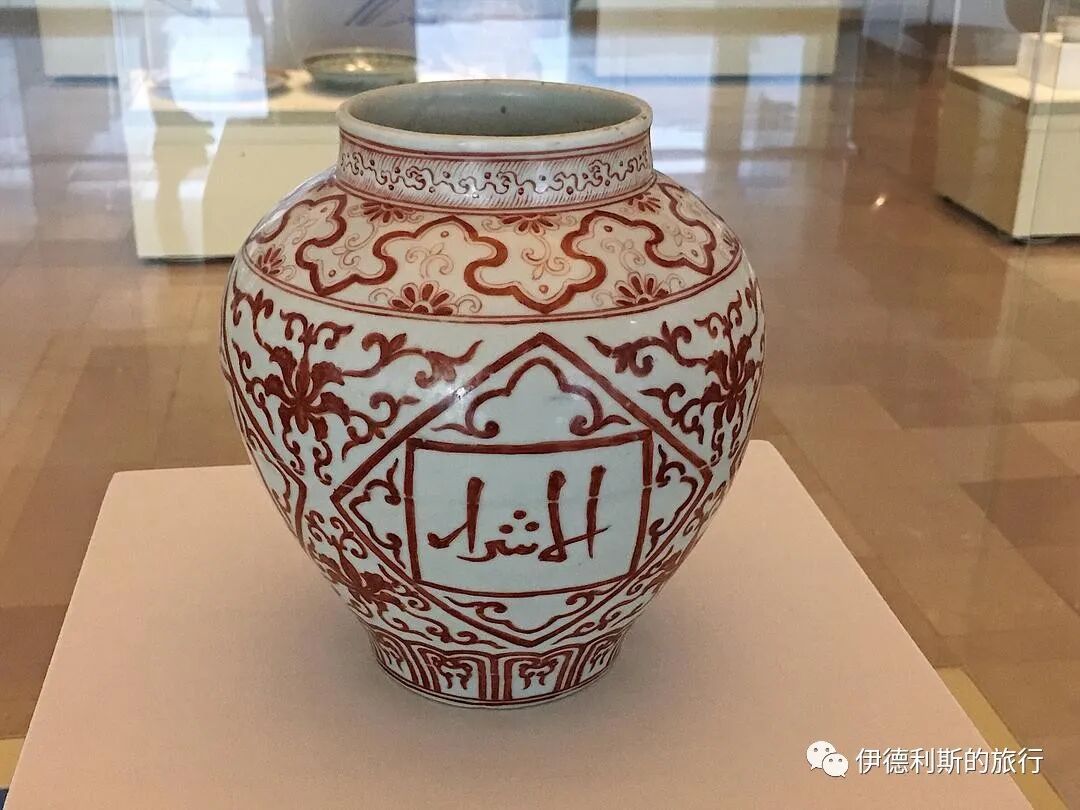
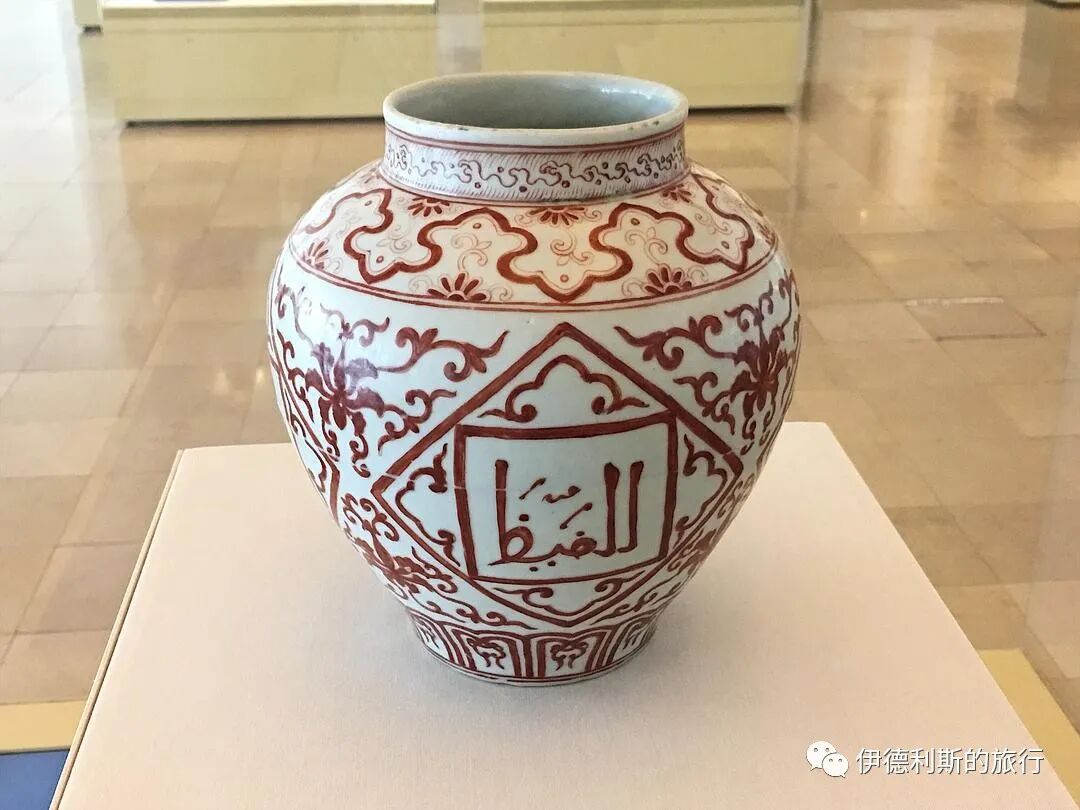
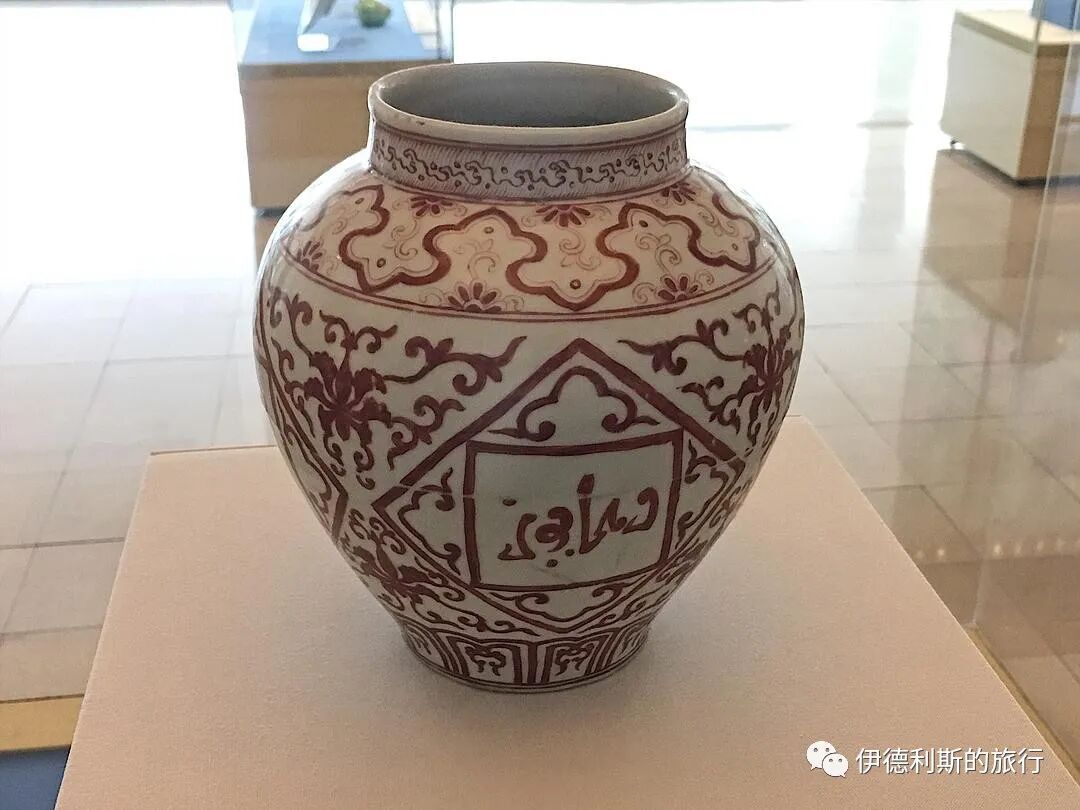
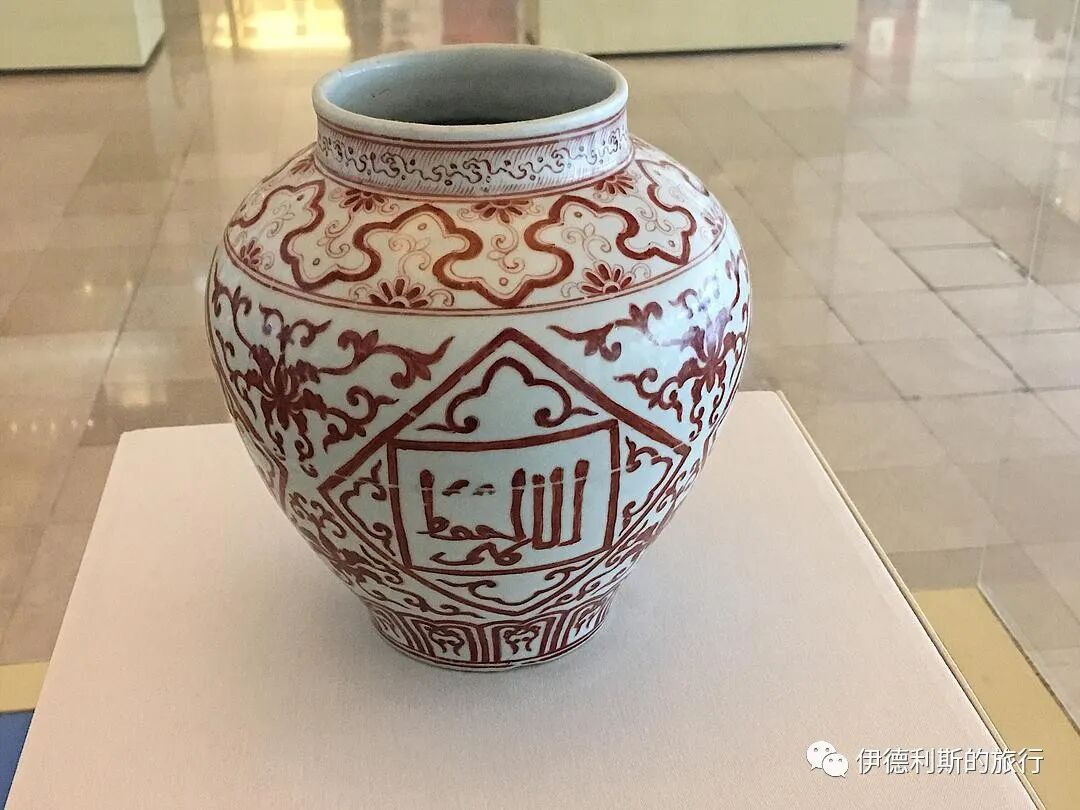
2. Swatow ware (Shantou qi) ordered by the Aceh Sultanate royal family.
Swatow ware, also called Zhangzhou ware (Zhangzhou qi), is a type of export porcelain that appeared in the late Ming Dynasty. It was mainly for the Southeast Asian and Japanese markets and was popular from the mid-16th to mid-17th centuries. Most Swatow ware was produced by folk kilns in the Chaoshan and southern Fujian regions, with the most coming from near Zhangzhou, Fujian.
Compared to Jingdezhen porcelain, Swatow ware is rougher. Its biggest feature is the 'sandy base' (shadi zu). To save space in the kiln, artisans skipped using pads and saggers and instead dipped the foot ring of the porcelain in fine sand. After firing, sand grains remained on the base and foot ring. At first, Swatow ware only had underglaze blue and white, but later, overglaze enamel styles became very diverse.
15th-century Arabic-script Swatow ware exported to Muslim regions in Southeast Asia.
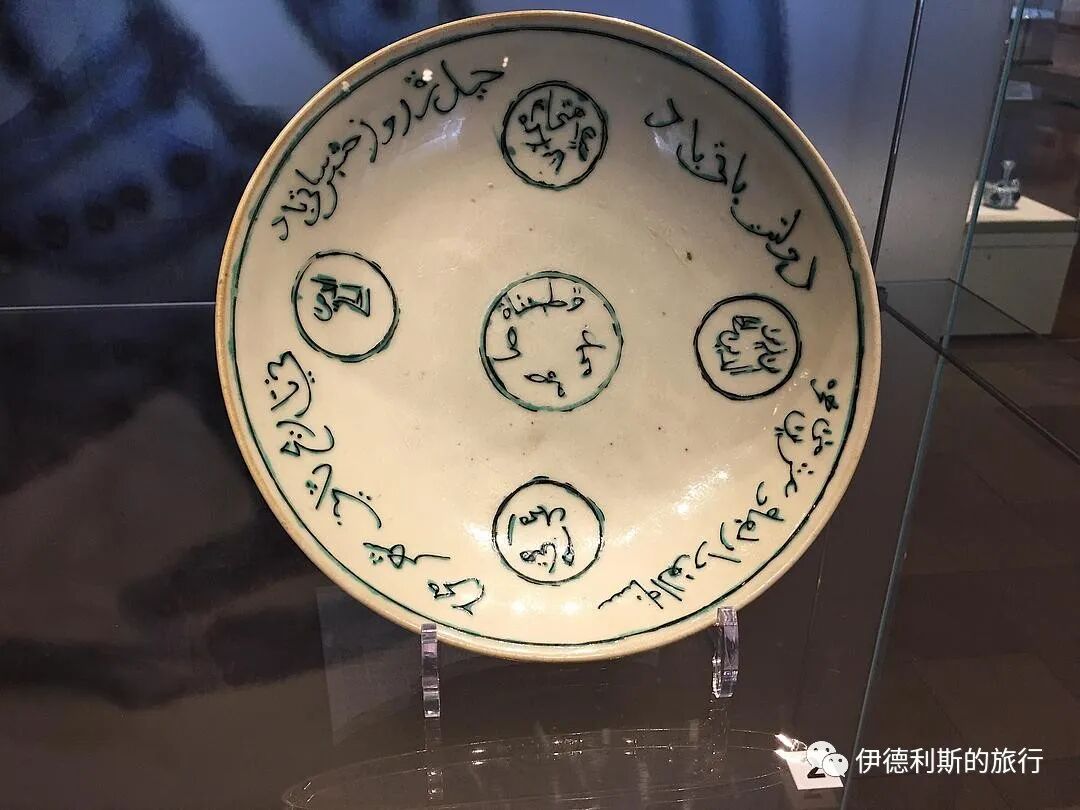
The most famous Arabic-script Swatow ware was ordered by the royal family of the Aceh Sultanate. The Aceh Sultanate was a powerful maritime trading state established in 1496 on the northwest coast of Sumatra. After the fall of the Malacca Sultanate, it became the center of Islam in Southeast Asia. The 16th and 17th centuries were the peak of the Aceh Sultanate. Most Aceh Shantou ware came from the court of Sultan Iskandar Muda (reigned 1607-1636) and several other sultans.
Most Aceh Shantou ware features nine circles. The center circle holds the name of the current sultan, while the eight surrounding circles hold the names of famous past sultans.
Shantou ware commissioned by the Aceh Sultanate royal family in the 16th and 17th centuries.
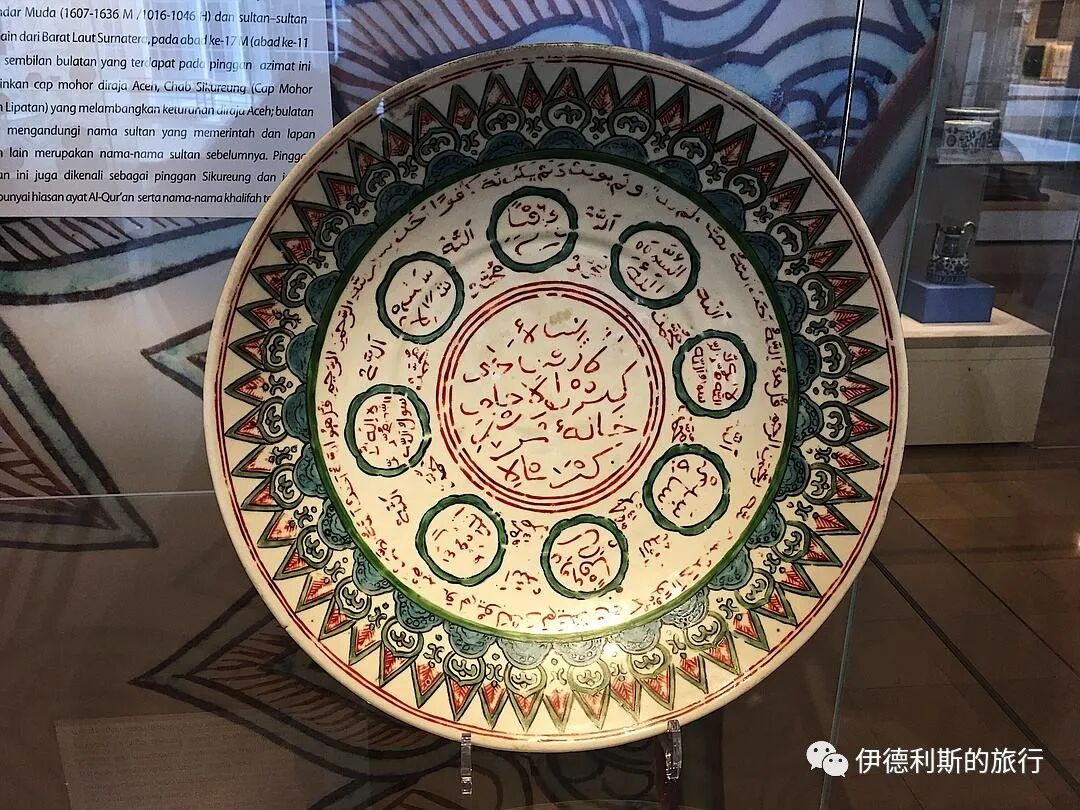
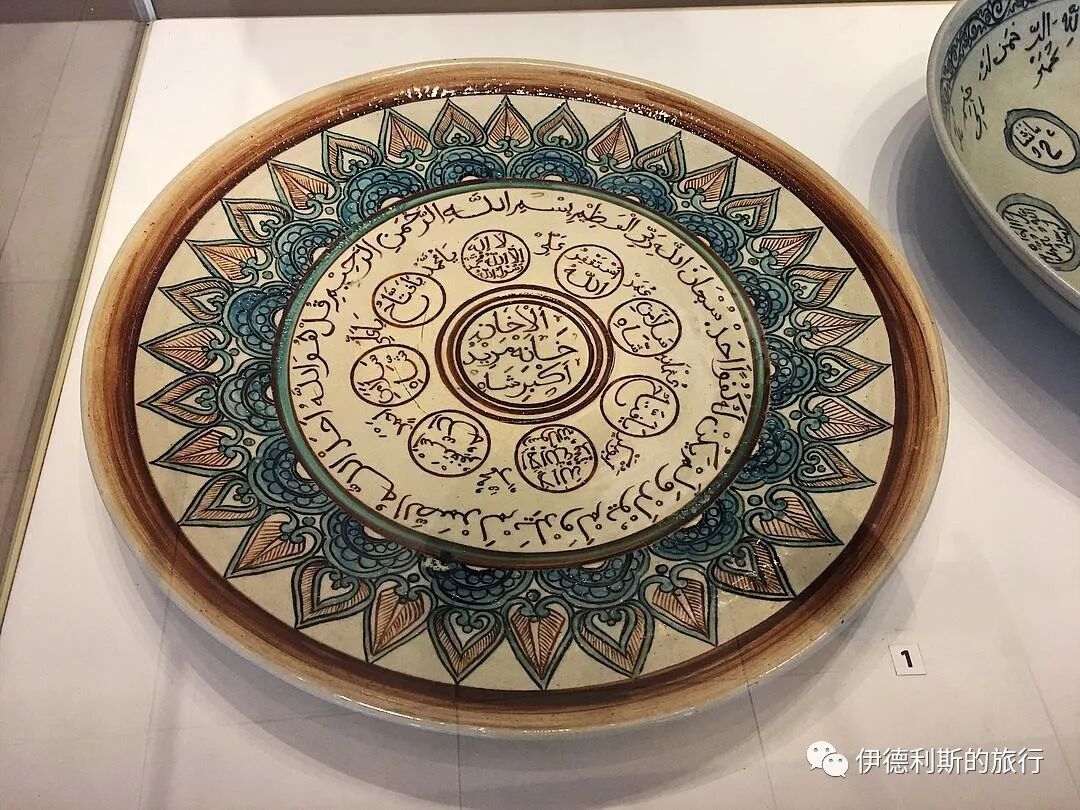
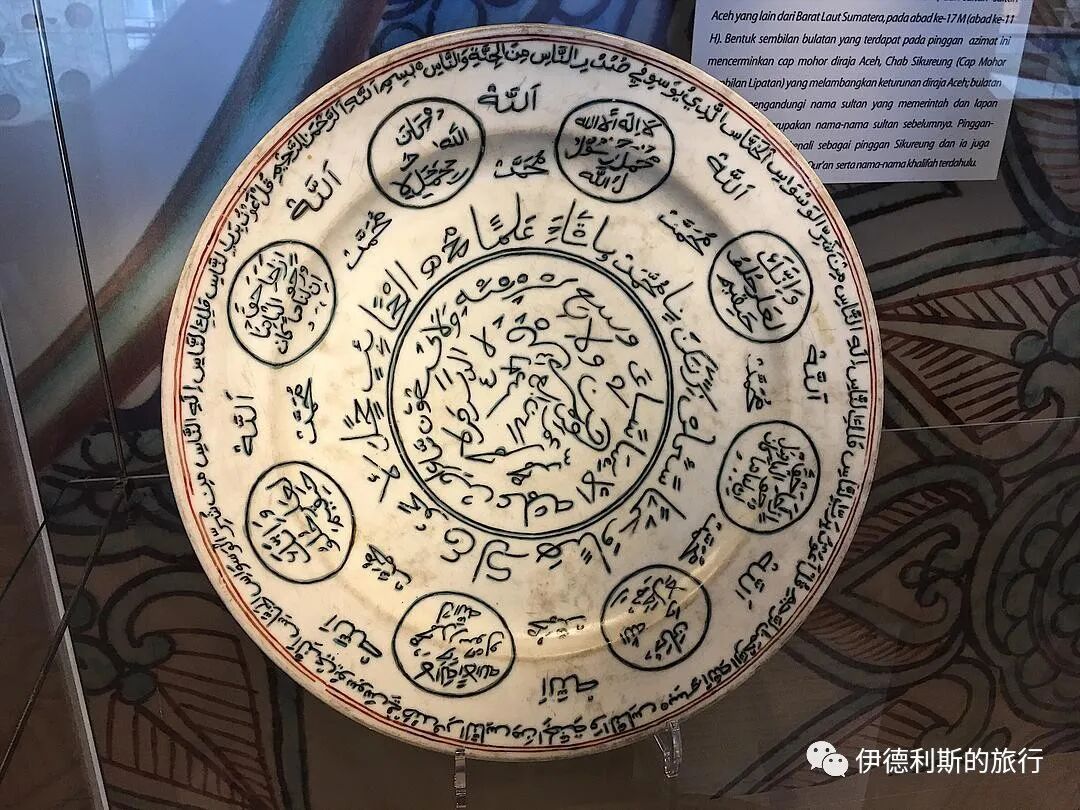
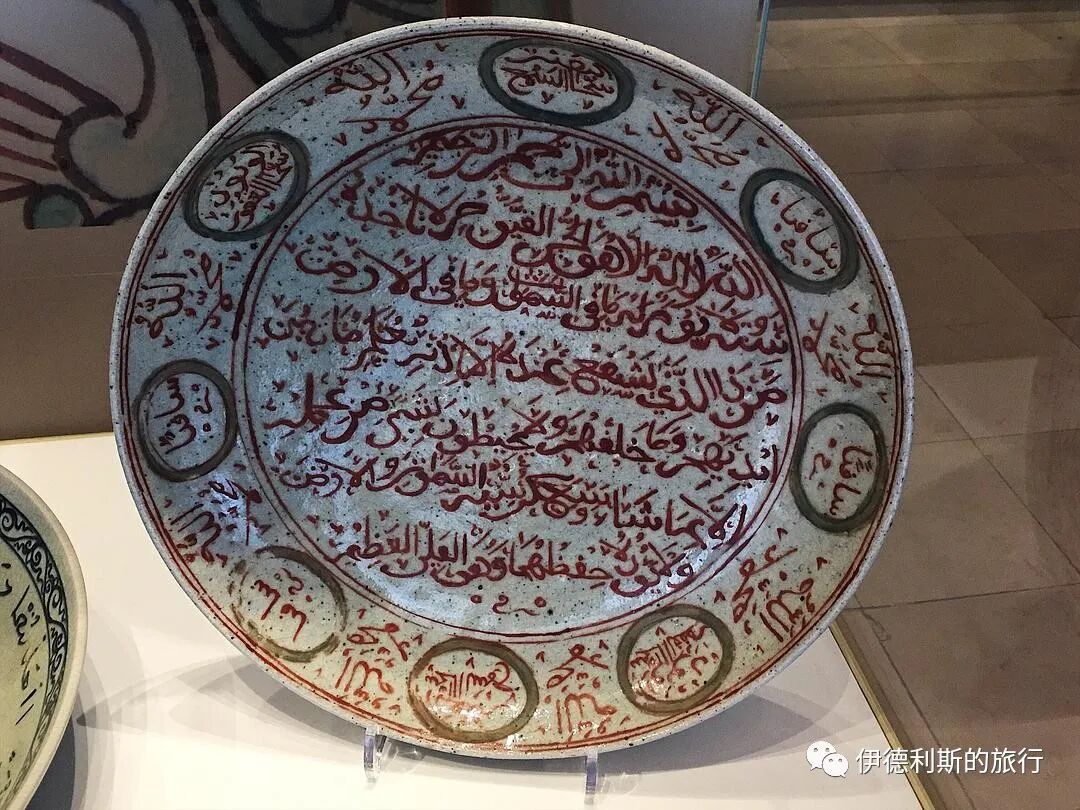
3. Magic square (huanfang) porcelain produced in China.
Magic squares, also called grid charts (zonghengtu), were believed to have predictive and healing powers.
A magic square is divided into 16 squares, each containing a number. The sum of the numbers in any row, column, or diagonal should be the same. Among these numbers, 1 is a symbol of Allah, and 7 represents the seven heavens, the seven hells, and the seven days of the week. In astrology, the 3 in a magic square represents Saturn, 4 represents Jupiter, 5 represents Mars, 6 represents the Sun, 7 represents Venus, 8 represents Mercury, and 9 represents the Moon.
Most 18th-century magic square export porcelain was produced in Jingdezhen. The squares are surrounded by excerpts from scriptures and classic texts. After the 19th century, folk kilns began mass-producing imitations. The surrounding text degraded into decorative patterns, and the numbers in the magic squares were simplified into symbols or disappeared entirely. By this time, the predictive function of magic square porcelain had changed, and it was used only for decoration.
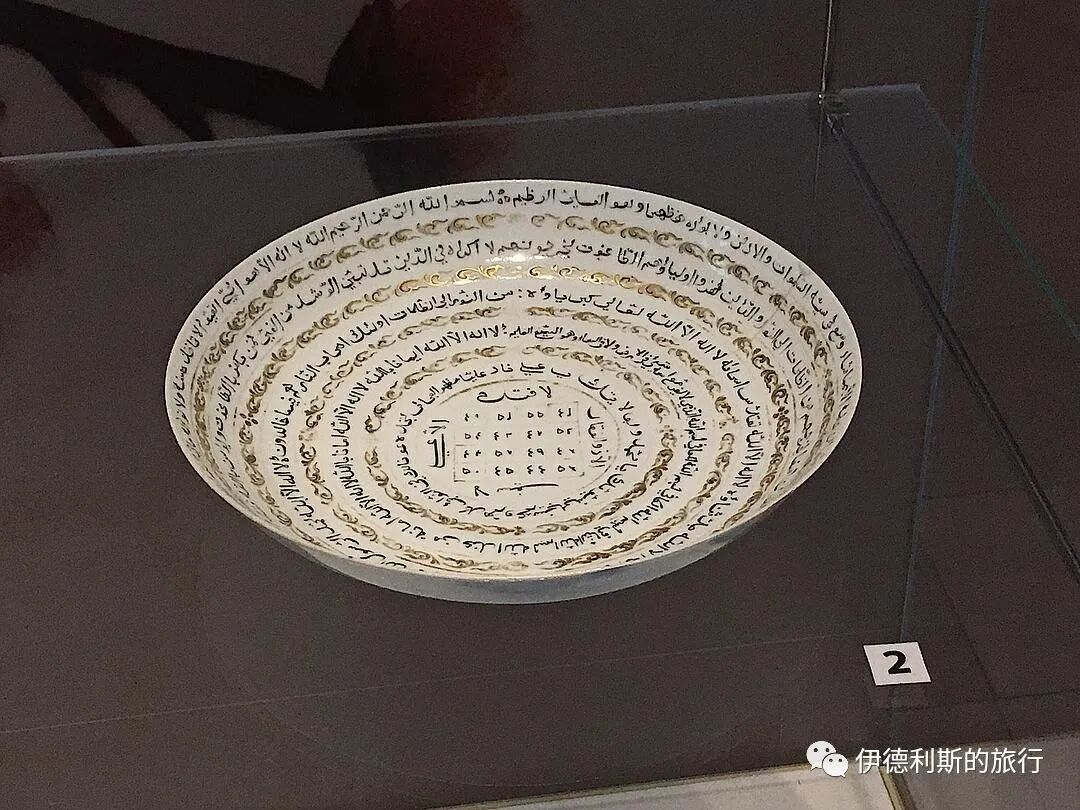
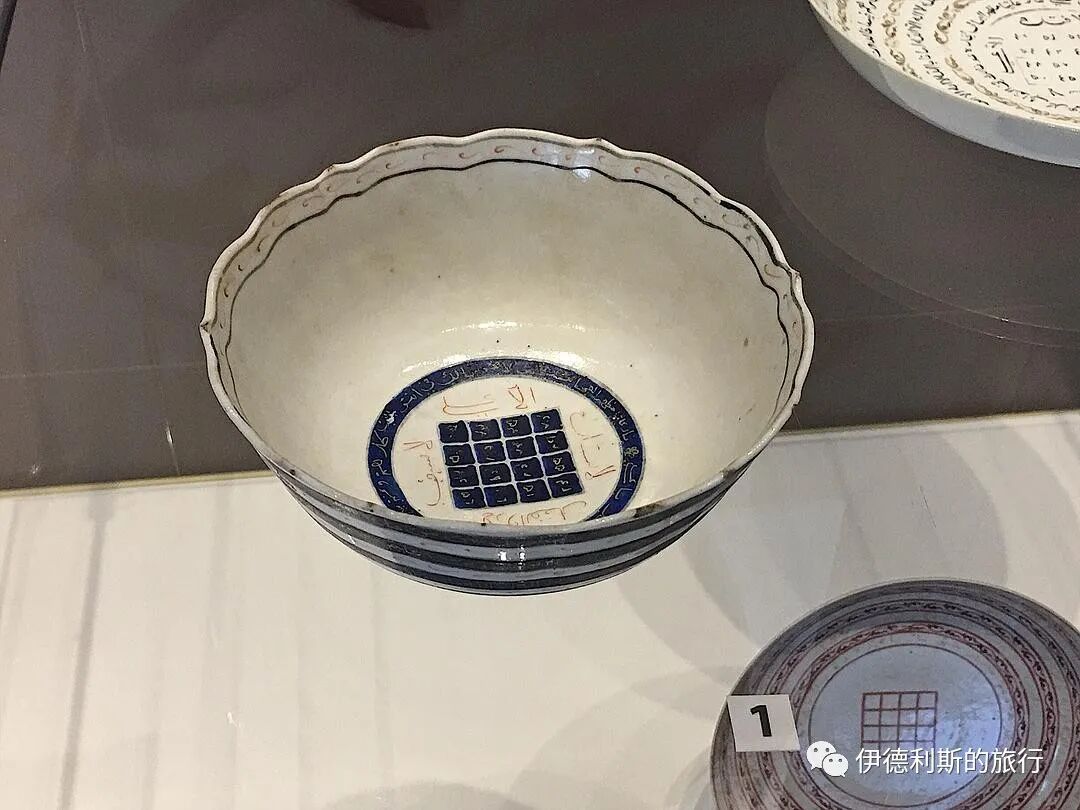
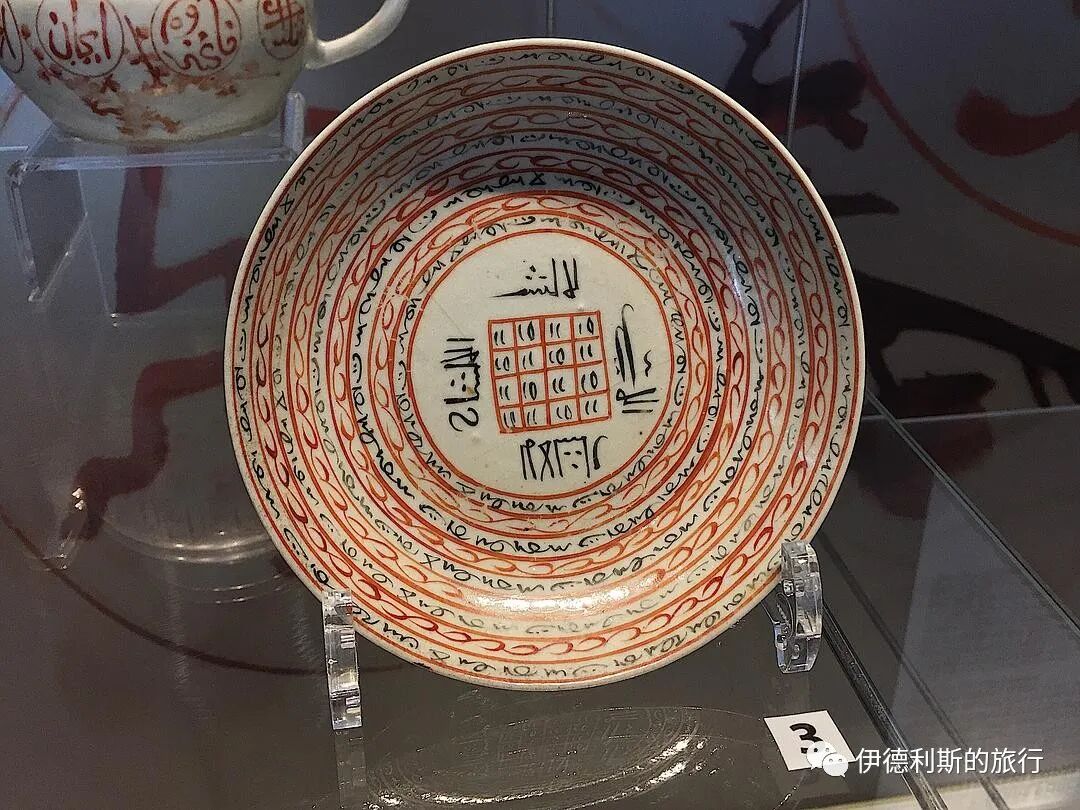
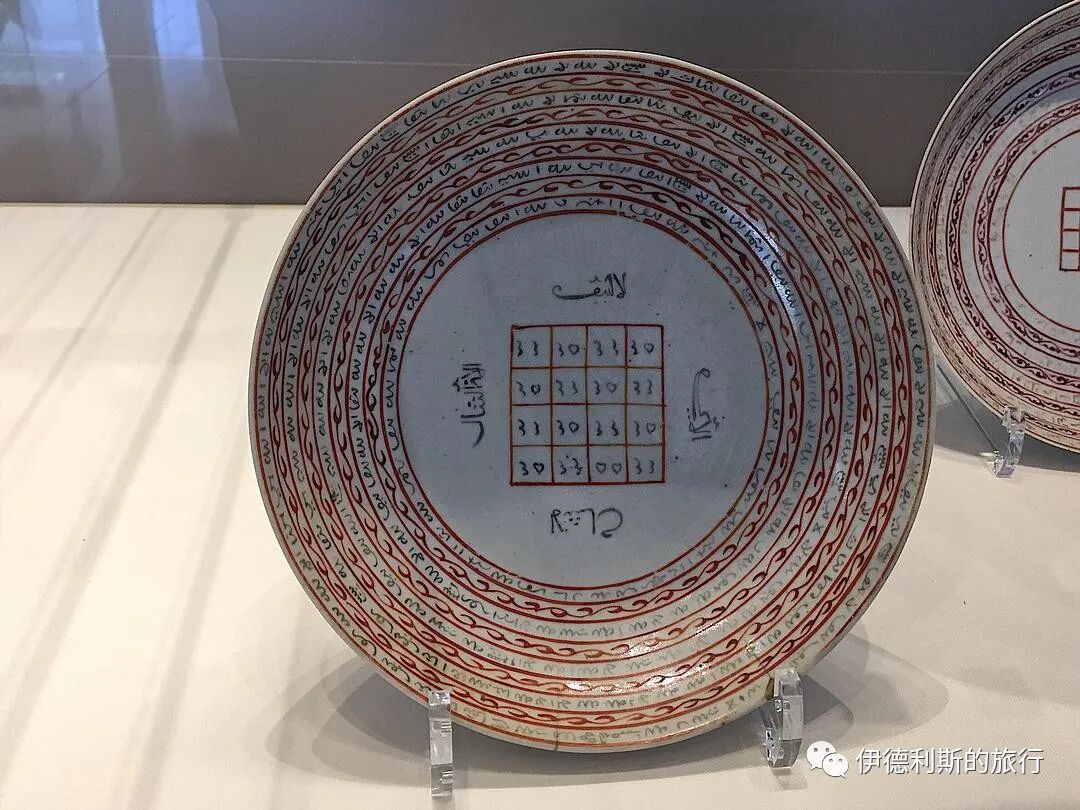
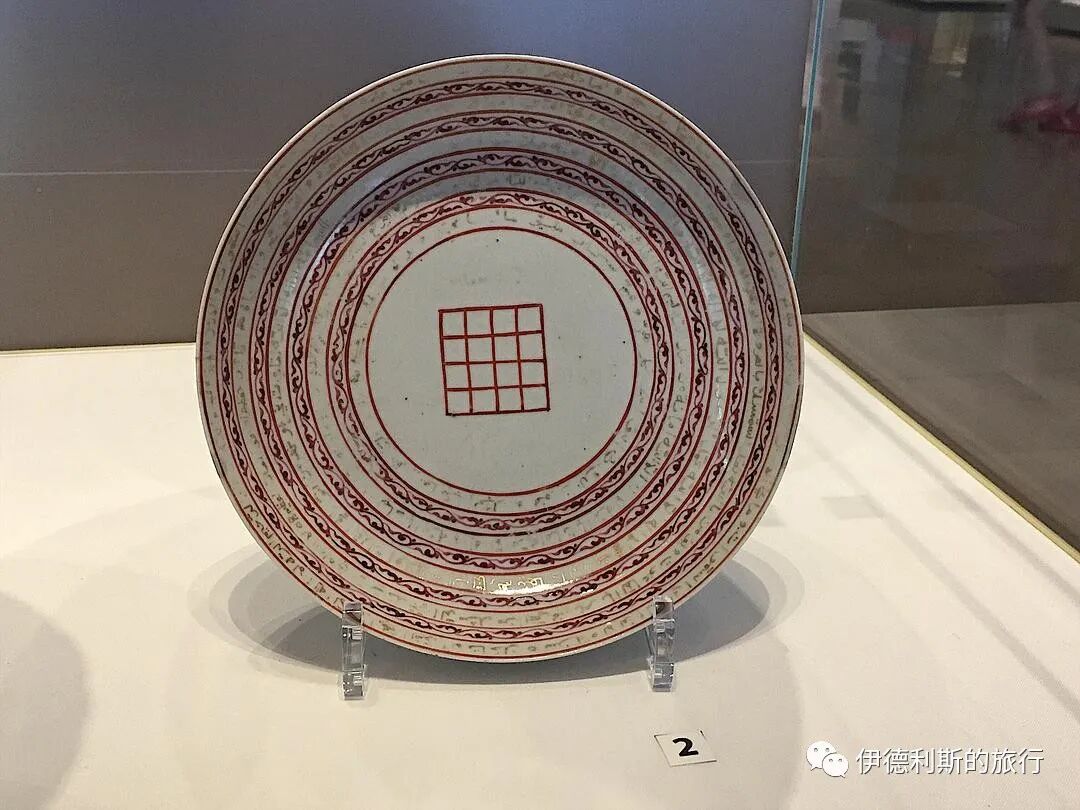
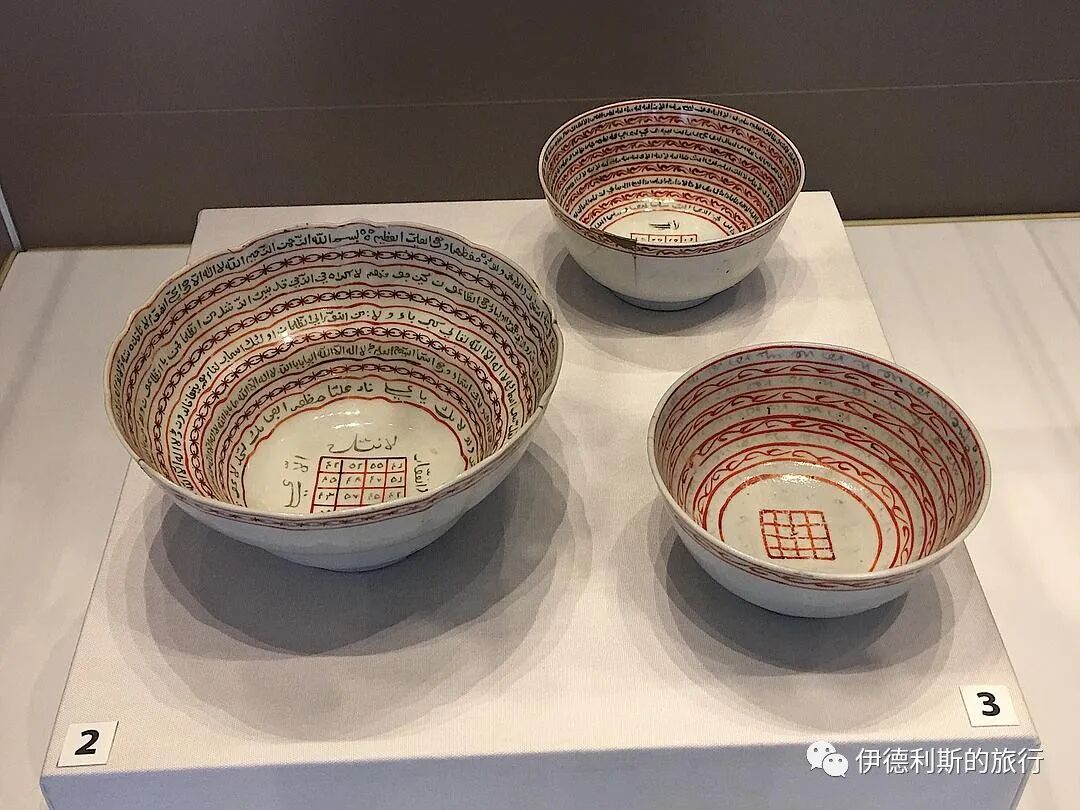
4. Chinese Imari porcelain.
Imari porcelain comes from the Arita kilns on Kyushu Island, Japan. In the mid-17th century, during the transition between the Ming and Qing dynasties, Chinese people who moved to Kyushu Island brought overglaze painting techniques, which helped the colorful Arita kilns take shape. The Ming-Qing transition also interrupted the export of Jingdezhen porcelain. In the late 17th century, Arita porcelain began to be exported in large quantities from the port of Imari in northwestern Kyushu, becoming the main source of export porcelain.
At the end of the 17th century, as China resumed porcelain exports from Guangzhou, Guangzhou export porcelain began to imitate Imari porcelain on a large scale, eventually surpassing Japan's export volume.
Chinese Imari porcelain mostly uses underglaze cobalt blue or iron-red enamel, with heavy gold painting applied over the glaze. Imari teapots with swan-neck spouts were also classic styles exported to Europe.
Chinese Imari porcelain from the Kangxi period.
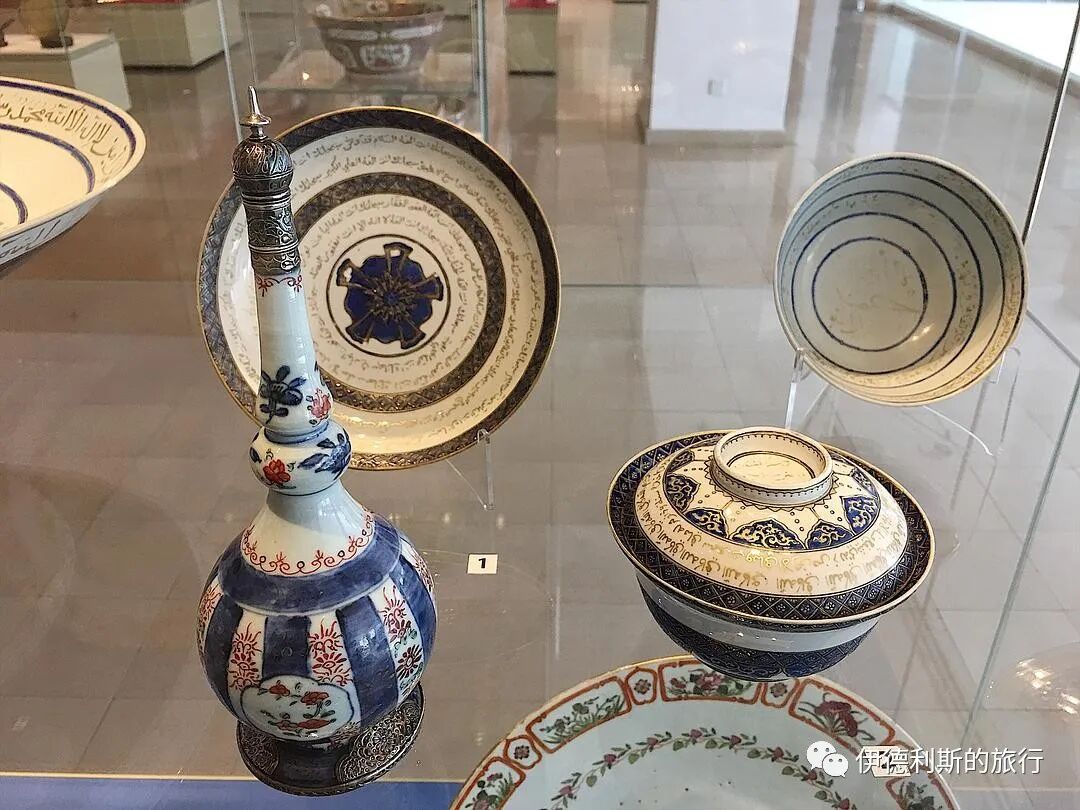
Chinese Imari porcelain from the Qianlong era.
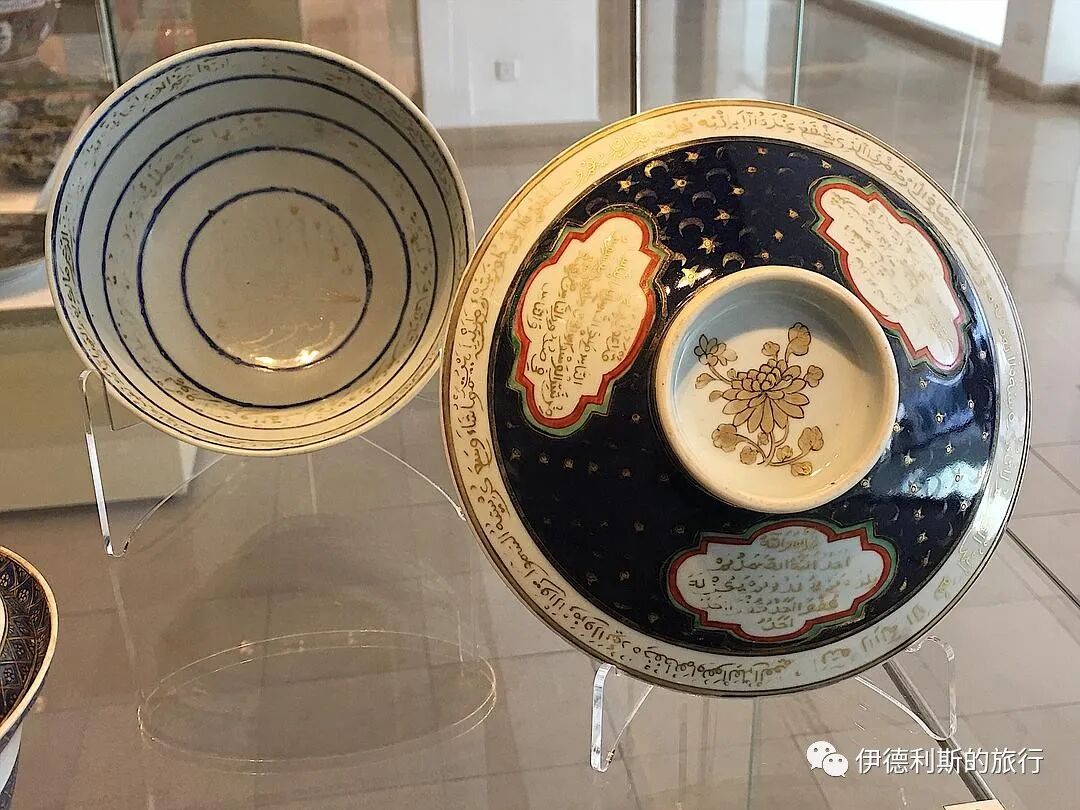
5. A Qianlong peach-shaped porcelain box ordered by the court of the Asaf Jahi dynasty in India.
The inscription on the porcelain box has Latin text on the outer ring reading 'NABOB ASUF UT DOWLAH VAZIR UL MUMULLECK ASUPJAH' and Latin text on the inner ring reading 'BEHADRE HOZBUR JUNG IEAYAA CAWN'. The Persian text in the center says the same thing, meaning it was dedicated to Muhyi ad-Din Muzaffar Jang Hidayat of the Asaf Jahi dynasty. Muzaffar Jang ruled the Asaf Jahi dynasty from 1750 to 1751.
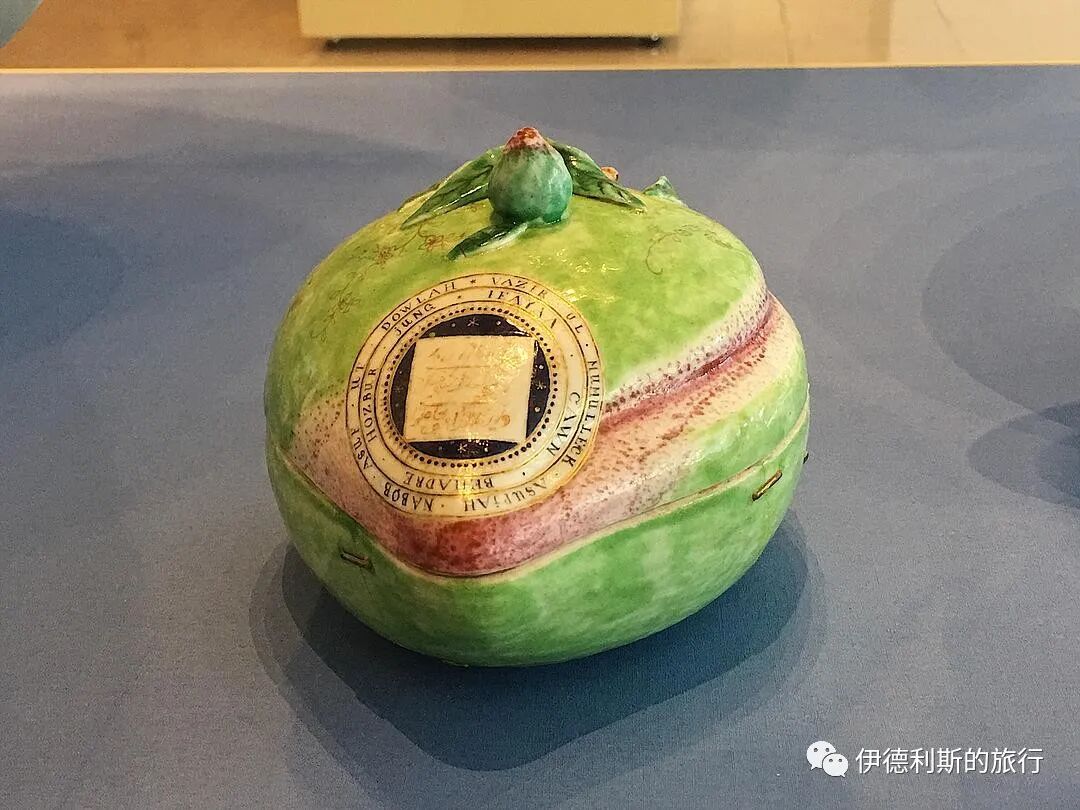
The Asaf Jahi dynasty was a Muslim kingdom on the Deccan Plateau in southern India from 1724 to 1948, centered in the city of Hyderabad.
The Asaf Jahi family was originally a Turkic family from Samarkand. They arrived in the Mughal Empire in the late 17th century to serve as court officials. In 1724, the Mughal Empire fell into chaos. Mir Qamar-ud-Din Siddiqi, who had served as the Governor of the Deccan, declared independence using the Asaf Jah title granted by the Mughal Emperor. He established the Asaf Jahi dynasty in Hyderabad and called himself the Nizam-ul-Mulk of Hyderabad (the ruler of Hyderabad).
Asaf Jah I died in 1748. His son Nasir Jung and his grandson Muzaffar Jung fought for the throne with support from the British and French. Nasir Jung died in battle in 1750. Muzaffar Jung ruled for one year before dying in battle in 1751. Finally, Asaf Jah I's third son, Salabat Jung, became Asaf Jah II.
6. Chinese export porcelain ordered by the Persian Qajar dynasty.
The fourth monarch of the Persian Qajar dynasty, Naser al-Din Shah Qajar (reigned 1848-1896), and his eldest son, Mass'oud Mirza Zell-e Soltan (1850-1918), ordered a large amount of Chinese export porcelain. These porcelains were mainly Canton enamel (guangcai), but also included blue and white porcelain and Fitzhugh porcelain.
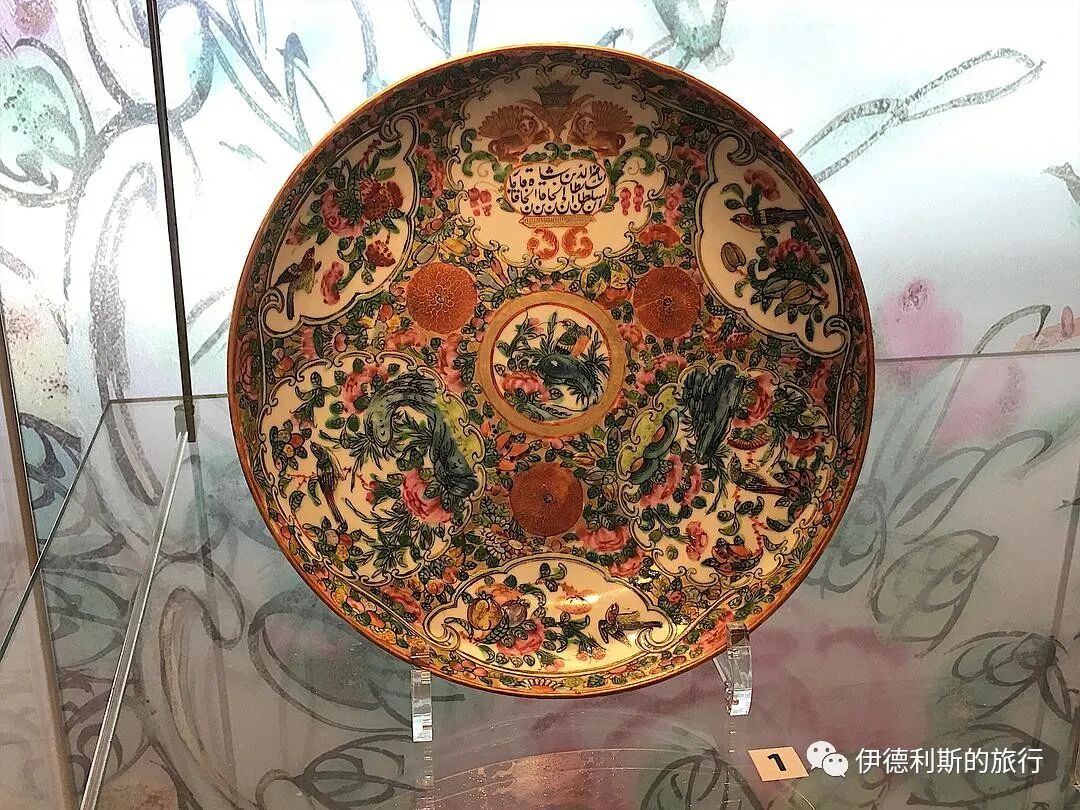
The porcelain plate below features the emblem of the Qajar dynasty at the top.
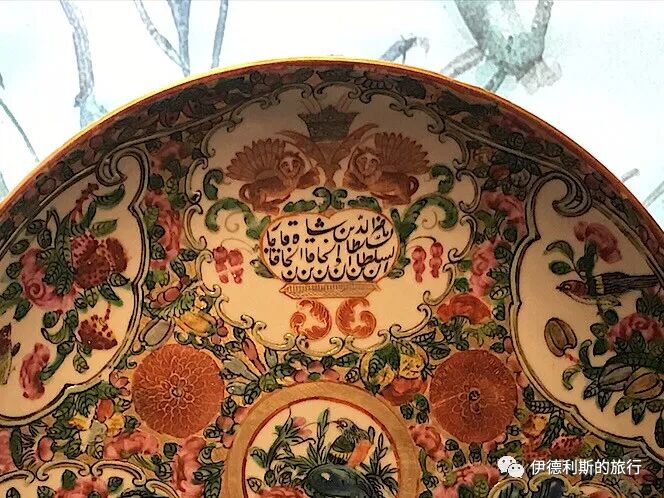
Canton enamel (guangcai).
The full name of Canton enamel is Guangzhou gold-woven colored porcelain (Guangzhou zhijin caici). It was a famous export porcelain from Guangzhou during the middle and late Qing dynasty.
In 1685 (the 24th year of the Kangxi reign), the Yuehai Customs was established, followed by the Thirteen Factories of Guangzhou for foreign trade. Porcelain was an important export commodity. Initial export porcelain was ordered directly from Jingdezhen. By the Yongzheng era, porcelain merchants in Guangzhou began shipping white porcelain blanks from Jingdezhen to Guangzhou. They hired Jingdezhen masters to perform low-temperature overglaze painting in Guangzhou, which is how Canton enamel began.
After the Qianlong era, Canton enamel entered a mature stage and formed its own colorful and gorgeous style. The colors were mainly Western red, crane-spring color, eggplant color, deep ochre, and powder green, all produced locally in Guangzhou. After the Daoguang era, the number of colors increased to more than a dozen.
Canton enamel from the late Qing dynasty was mass-produced with neat patterns. Bowls, plates, and dishes mostly had a gold-trimmed circle in the center. The surrounding area was filled with 'full-ground' patterns of various flowers, fruits, birds, insects, people, and landscapes, along with logos specified by foreign merchants.
Below is Canton enamel ordered by the court of the Persian Qajar dynasty (1779-1921) between the late 19th century and 1915.
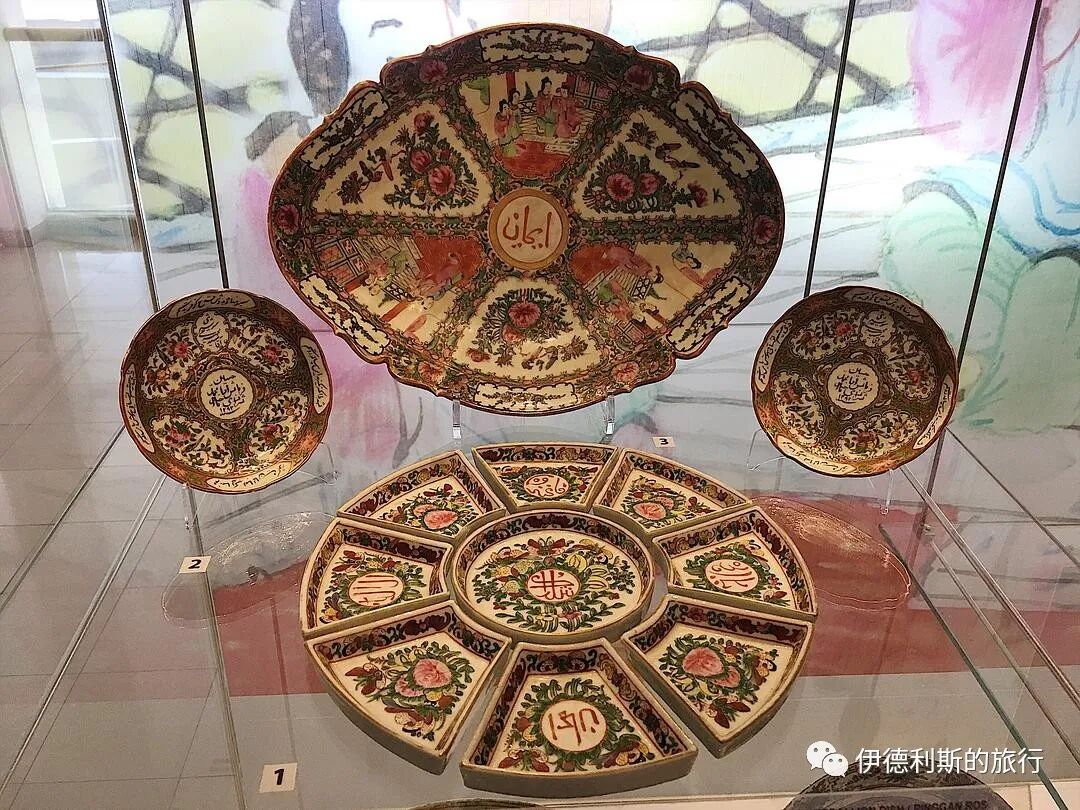
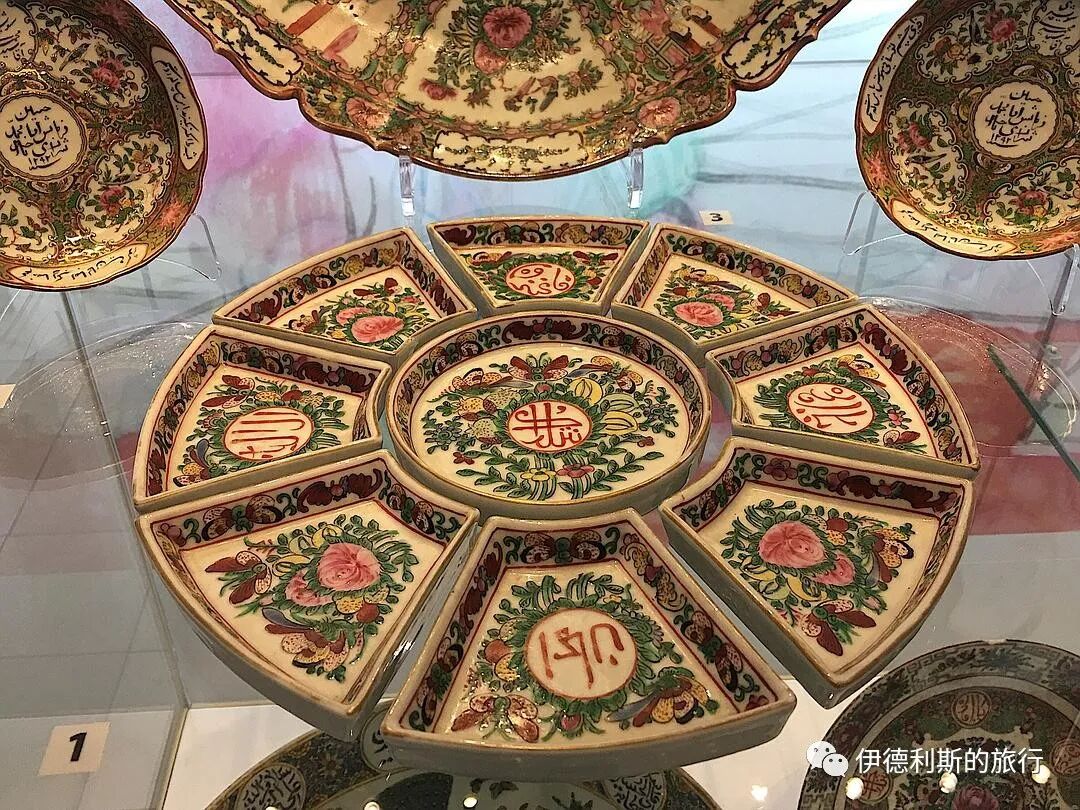
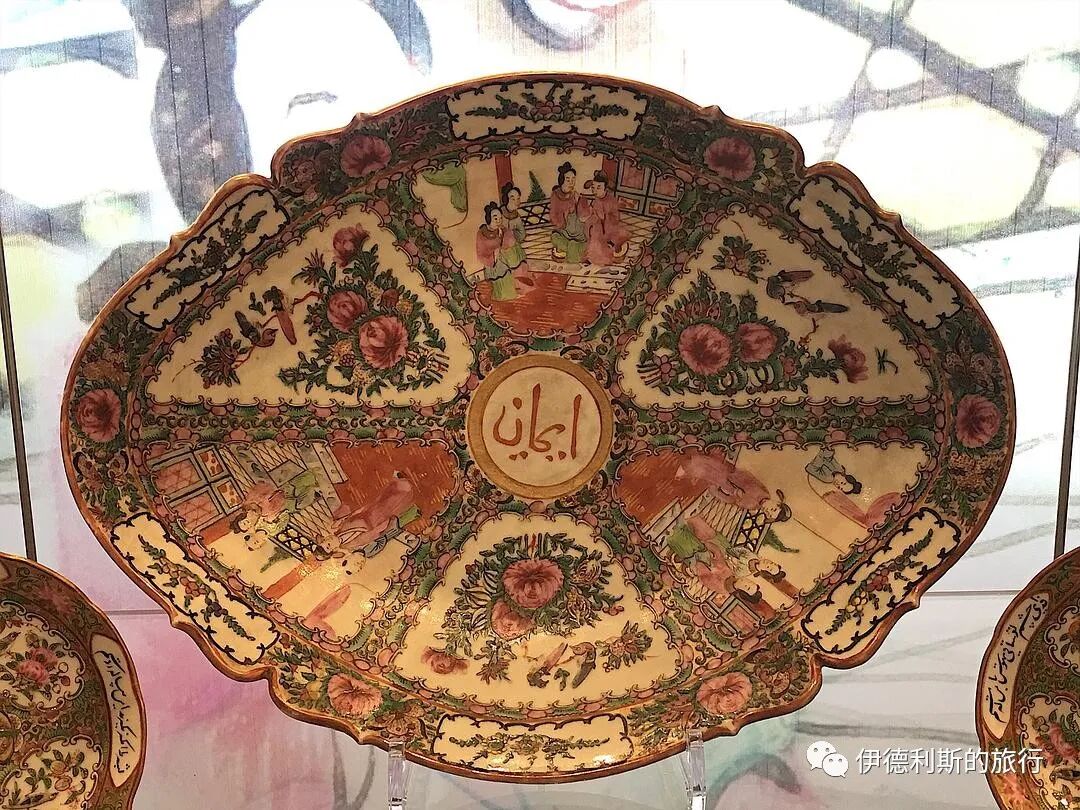
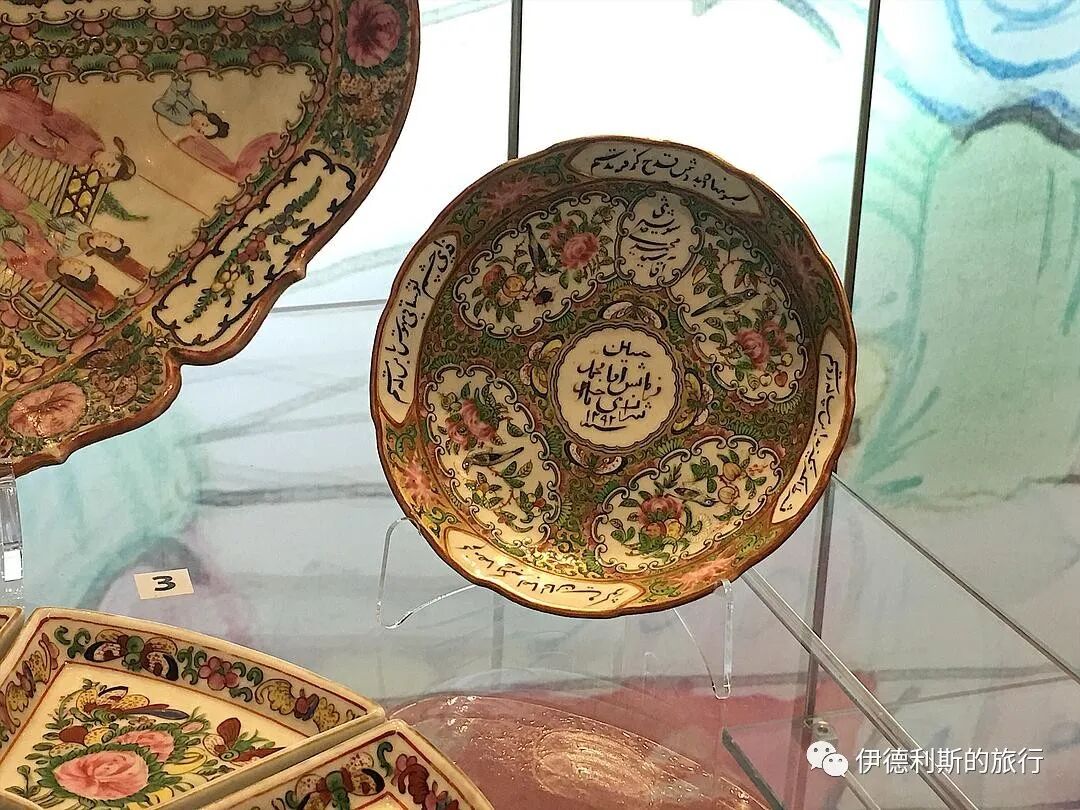
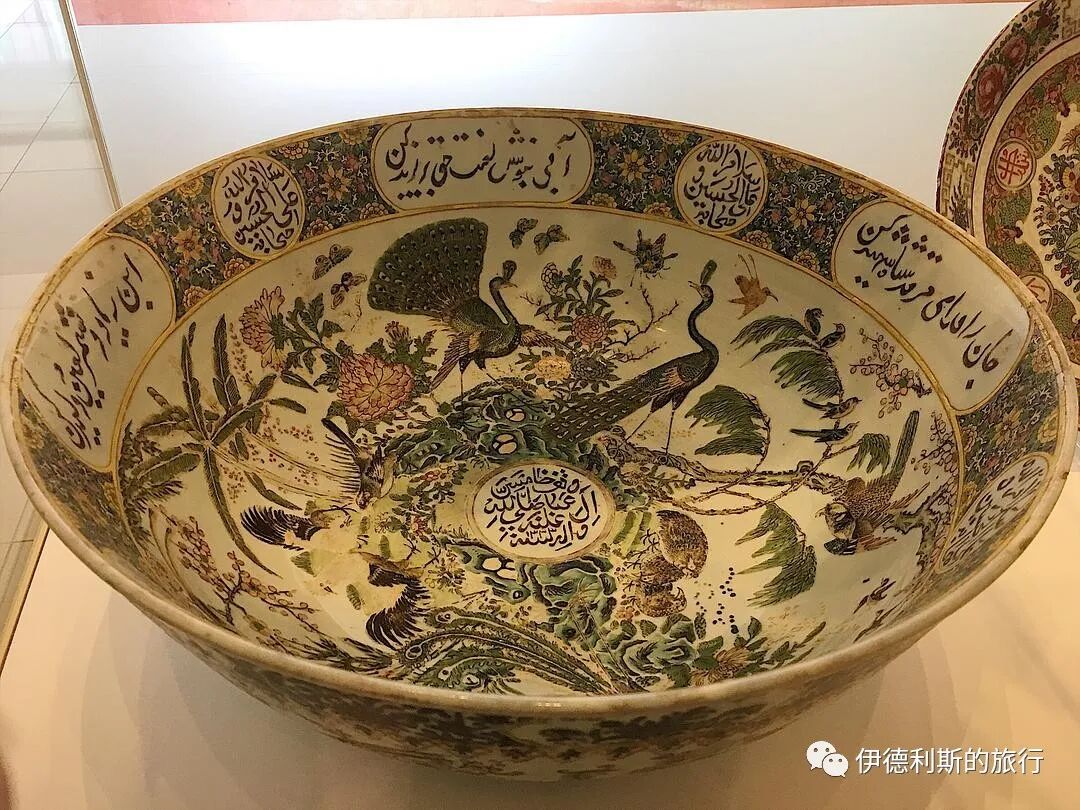
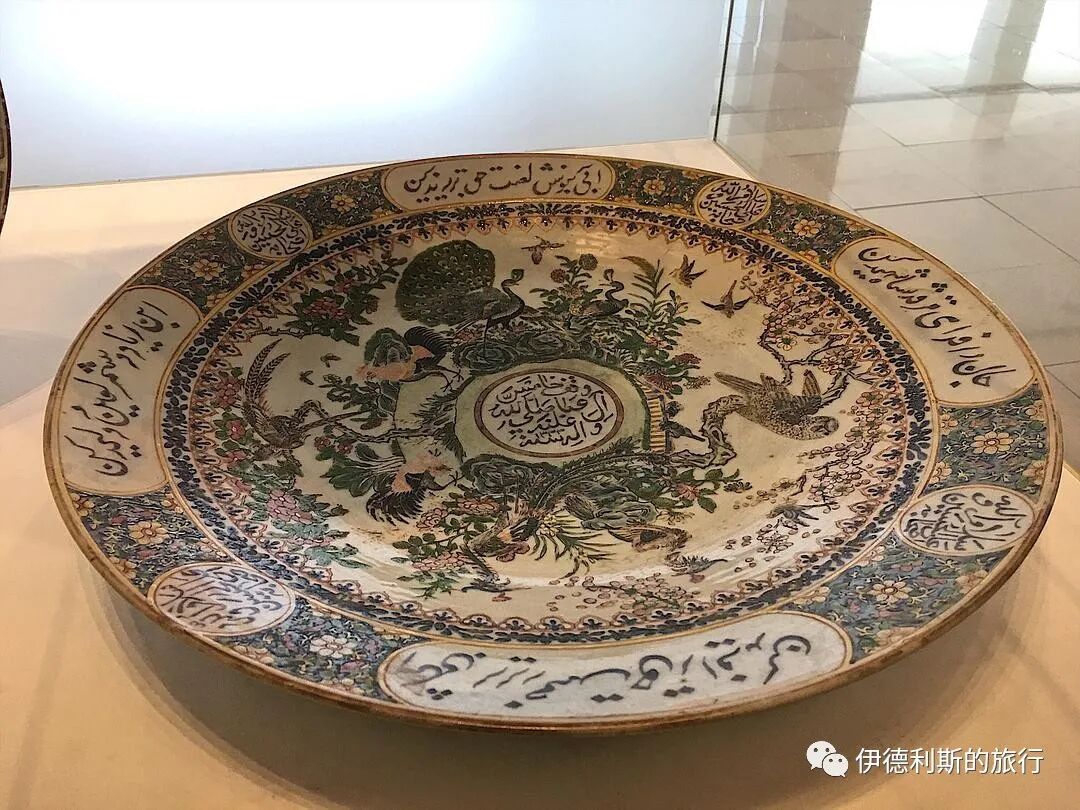
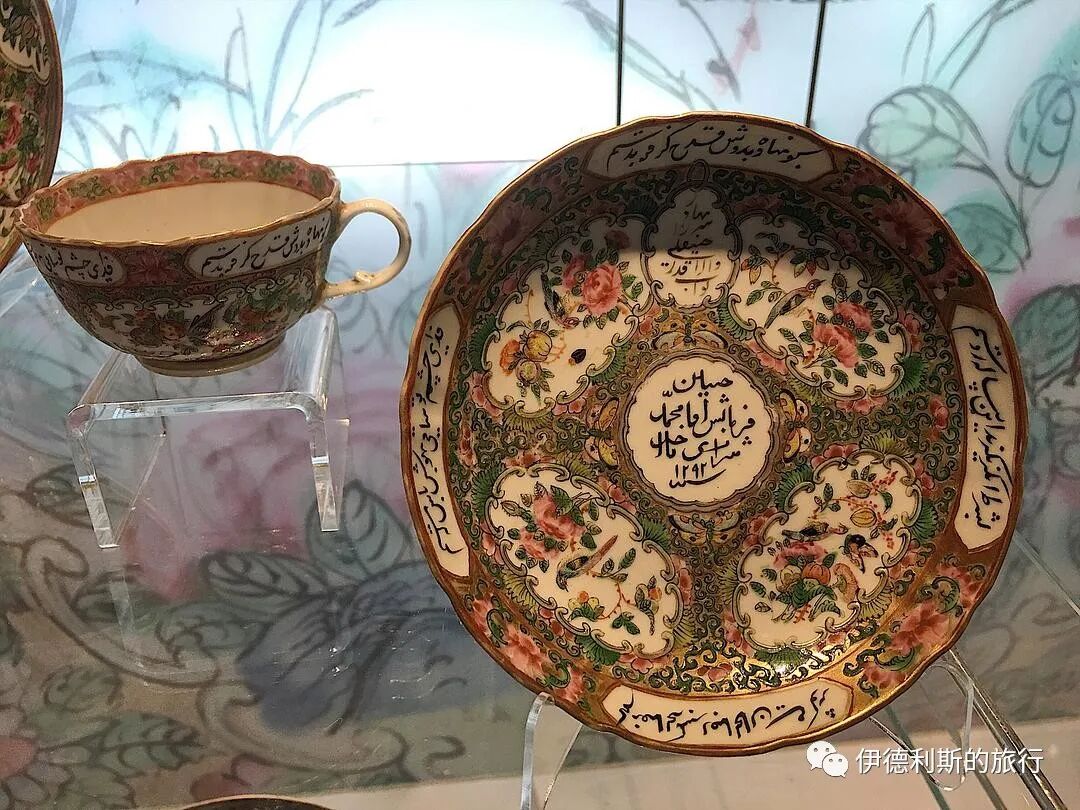
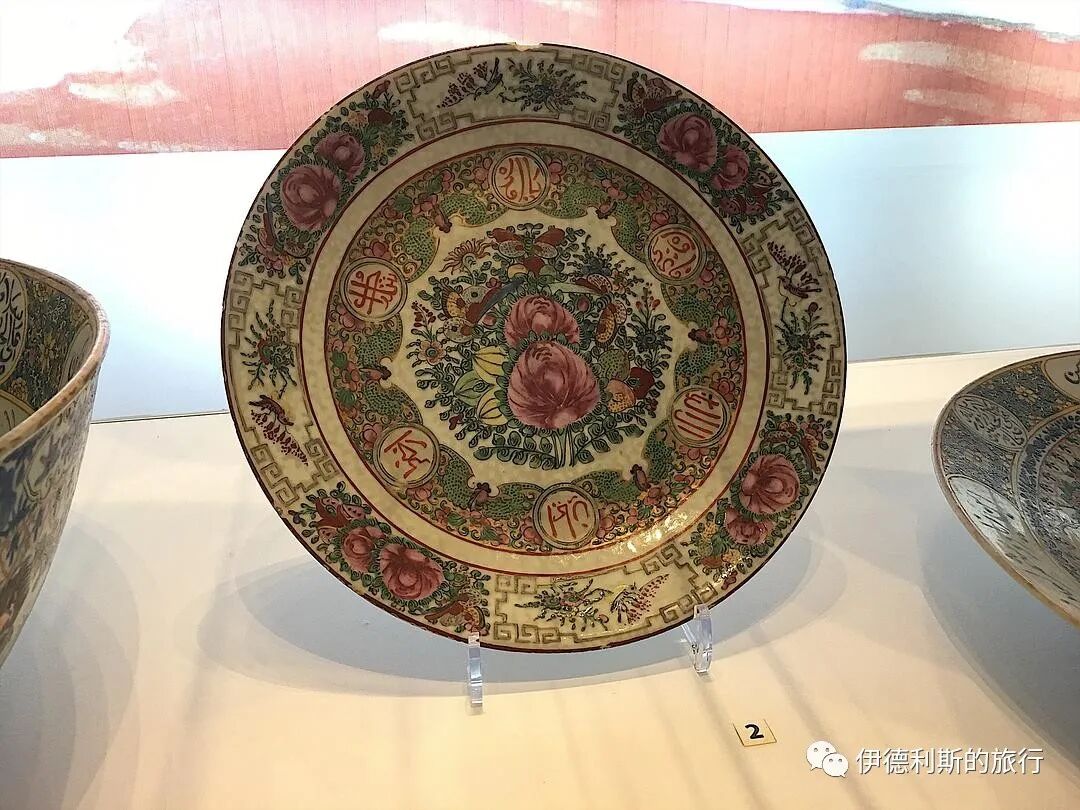
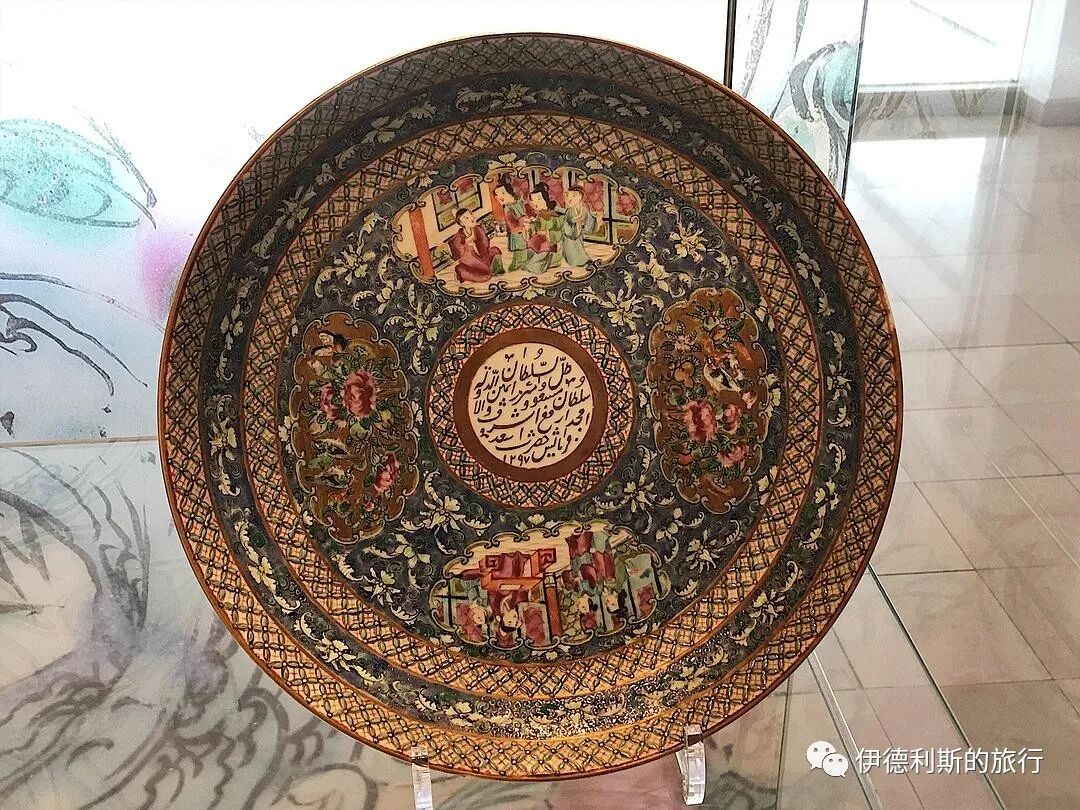
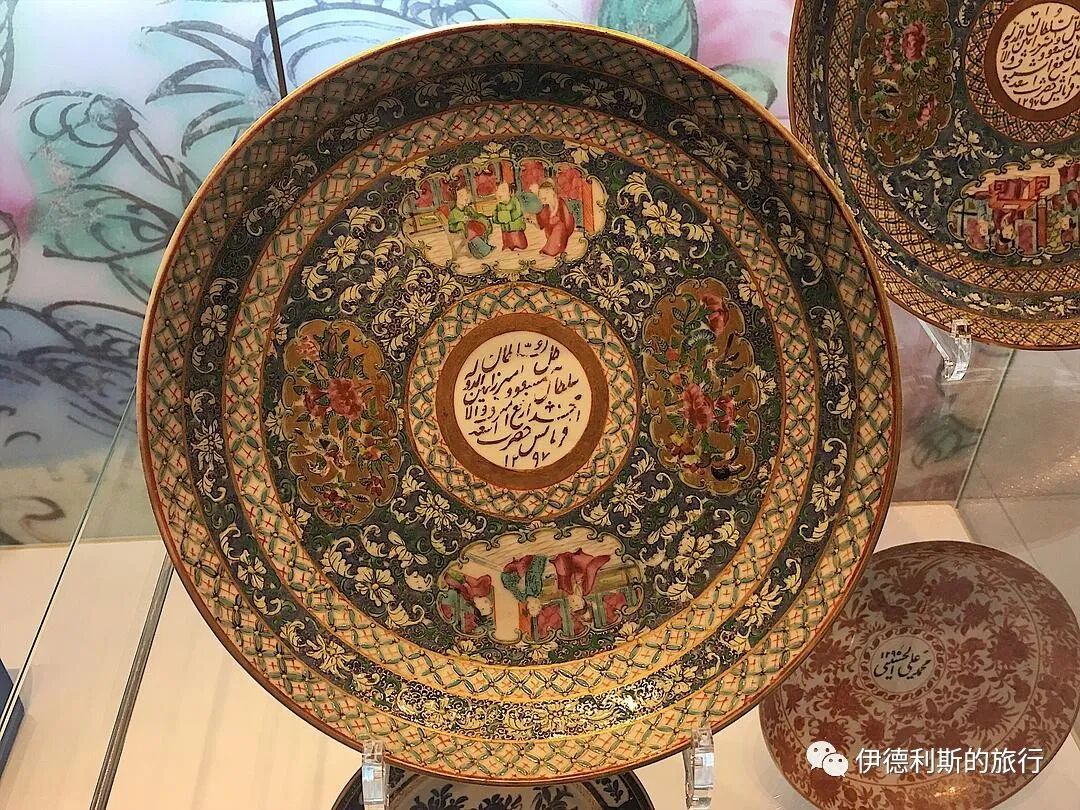
Guangzhou blue porcelain from 1882.
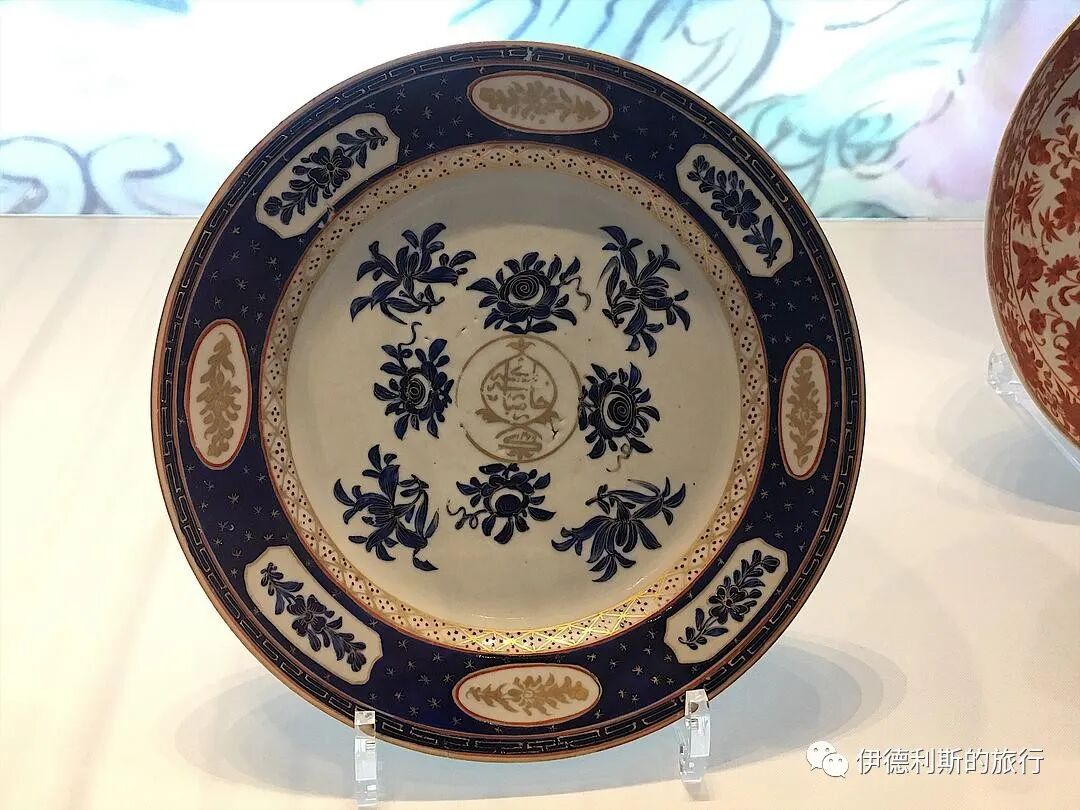
Fitzhugh porcelain from 1878.
Fitzhugh porcelain is named after Thomas Fitzhugh, a director of the British East India Company in Guangzhou during the 1760s. He ordered many pieces in this style between 1787 and 1800. This made the porcelain very popular for export during the Jiaqing period (1796-1820), and it remained popular through the Daoguang period (1821-1850). The main feature of Fitzhugh porcelain is a medallion pattern in the center, surrounded by various traditional Chinese elements.
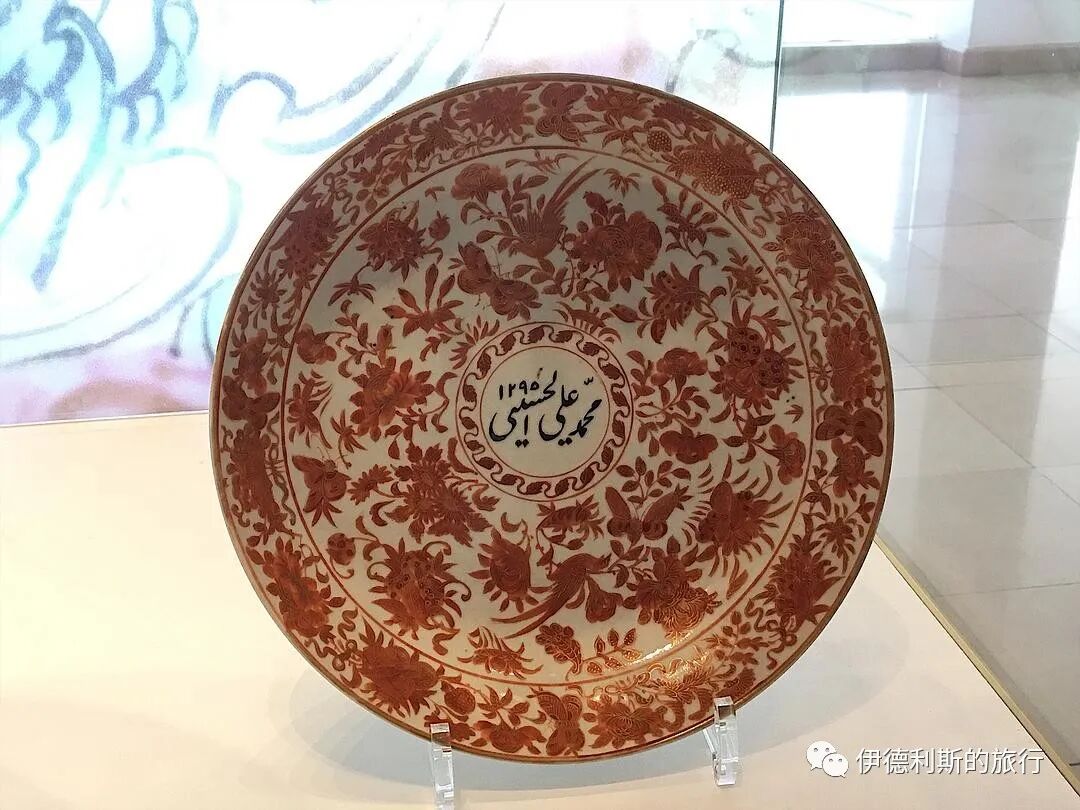
7. Other export porcelain with Arabic and Persian script.
18th-century multicolored porcelain plate.
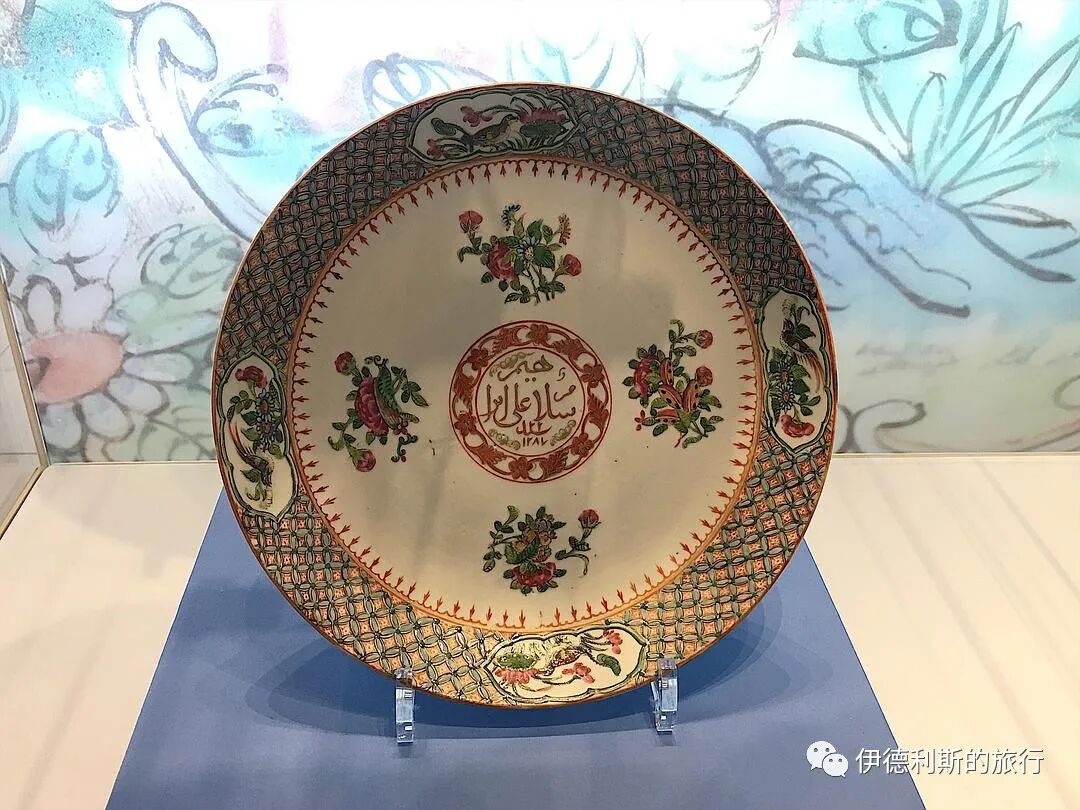
19th-century brush pot.
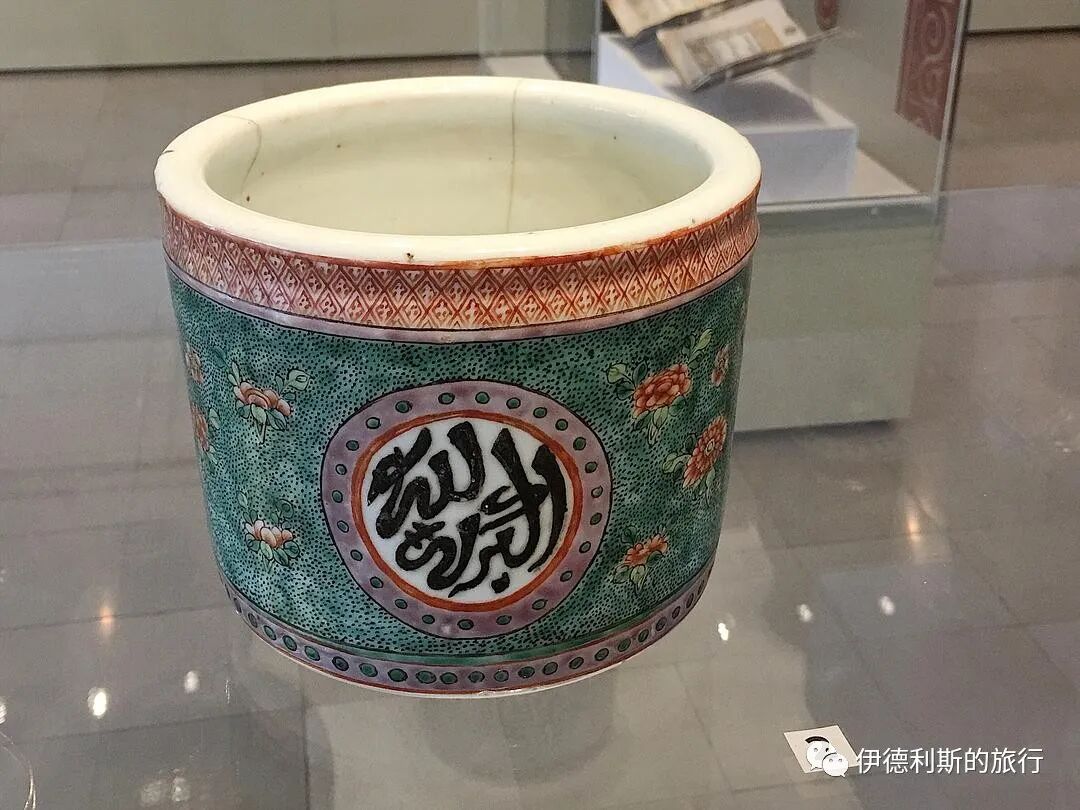
18th-century jar.
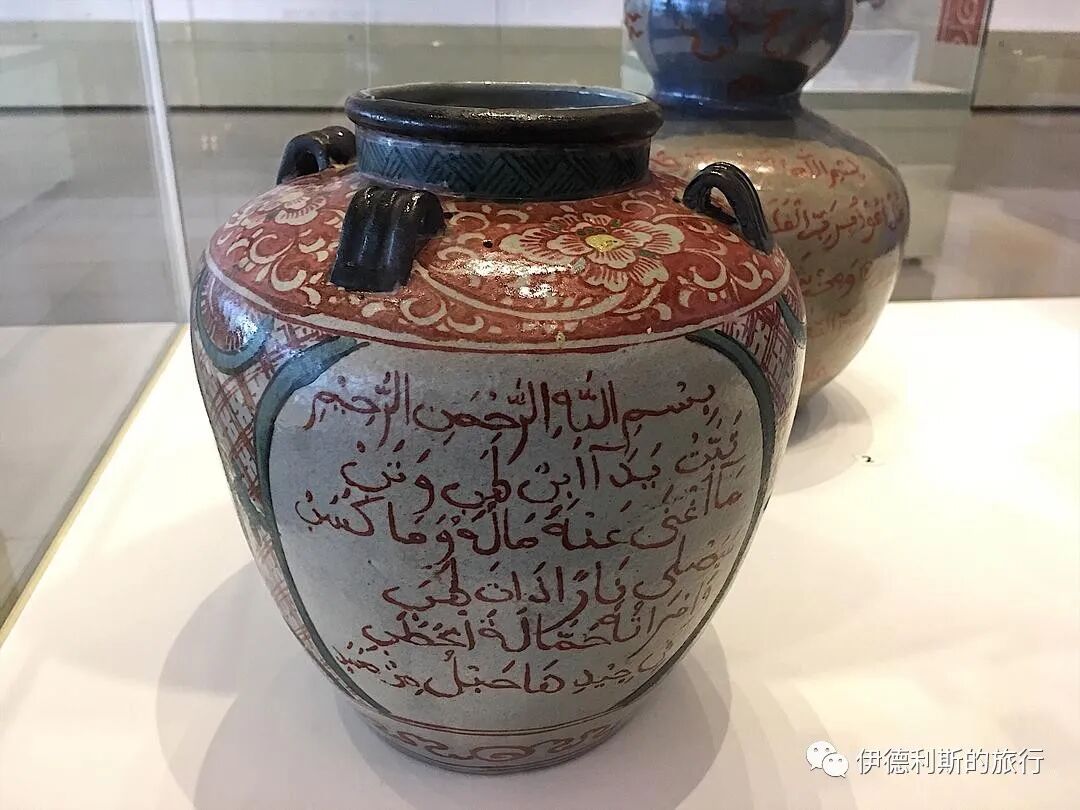
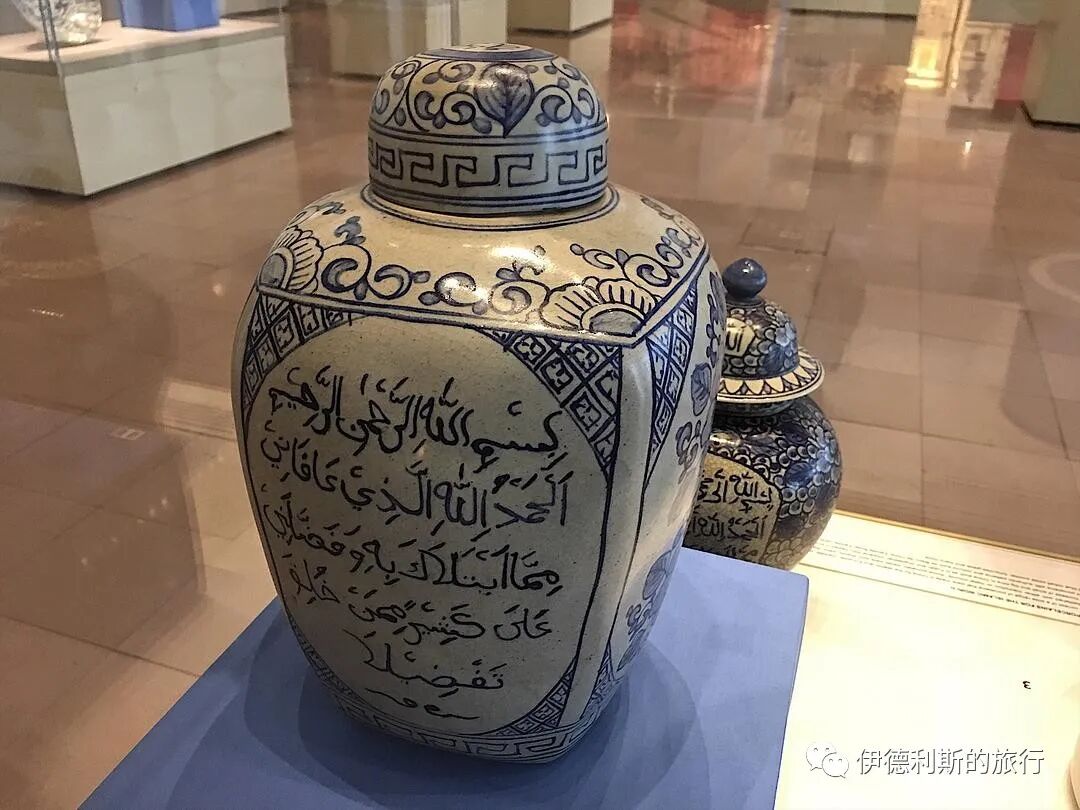
19th-century teapot.
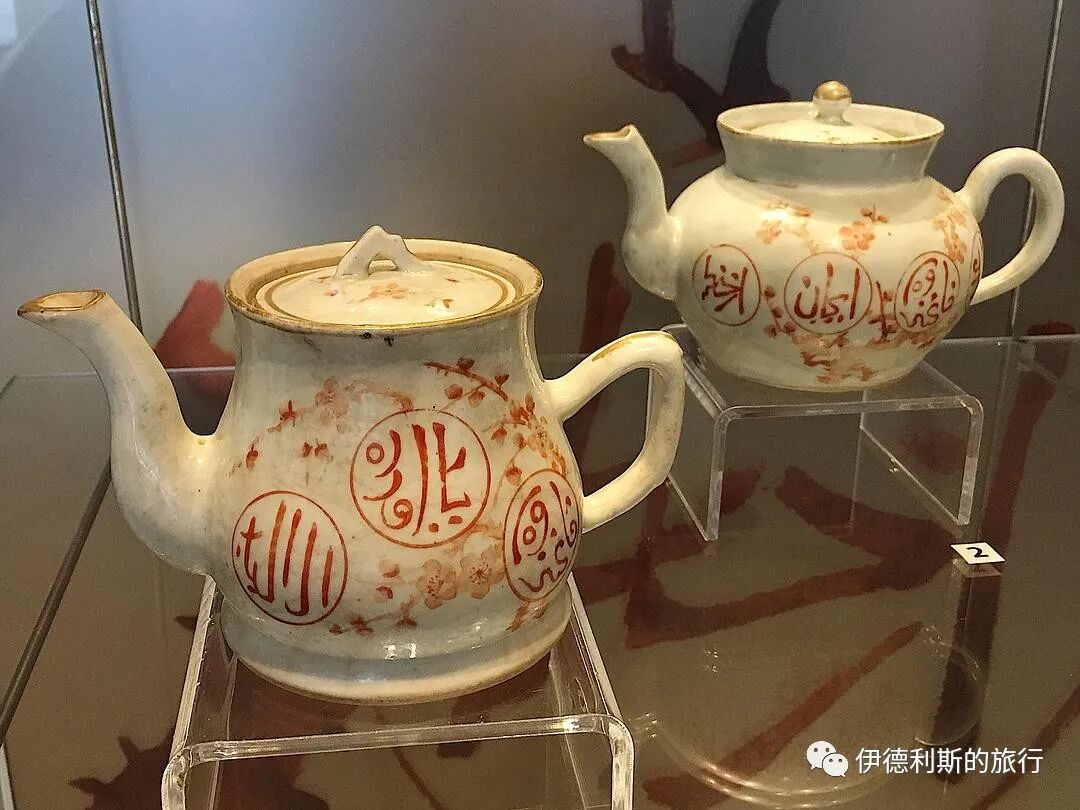
8. Ming and Qing dynasty scripture manuscripts.
A 30-volume scripture manuscript from Gansu Province, dated March to April 1546. It is signed by Khaili Ibrahim Yunus Al-sini and features peony and cloud patterns.
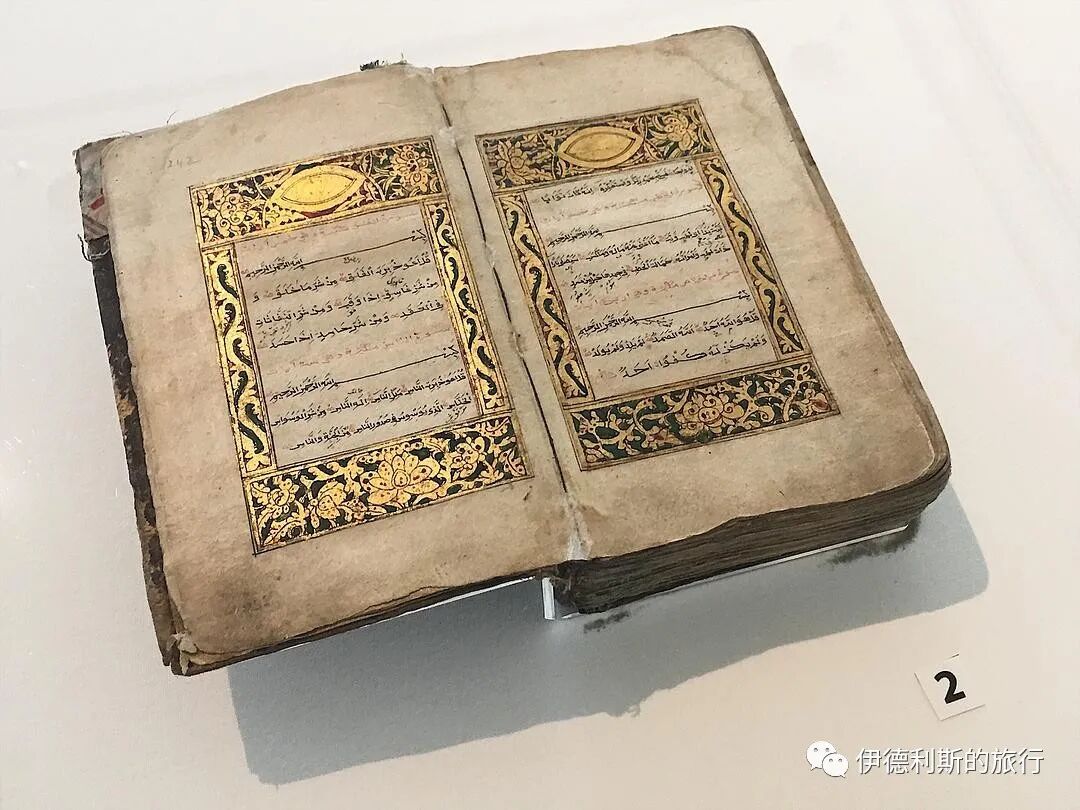
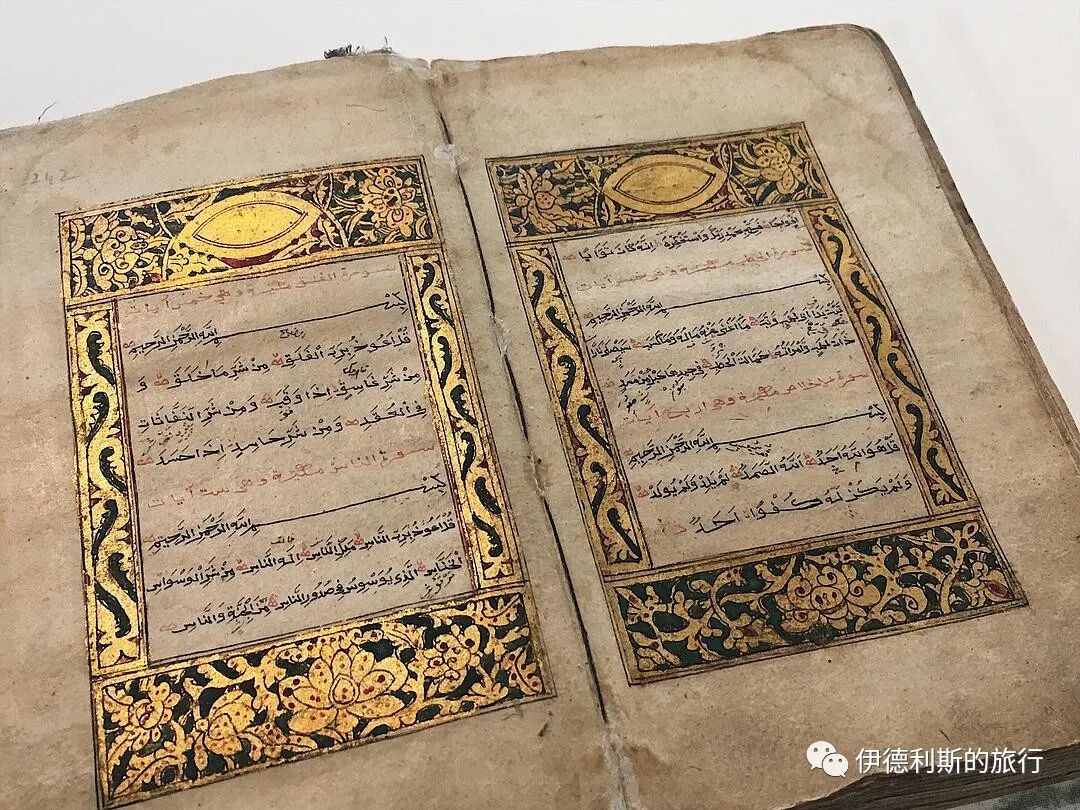
A 30-volume scripture manuscript from the 17th-century Qing dynasty.
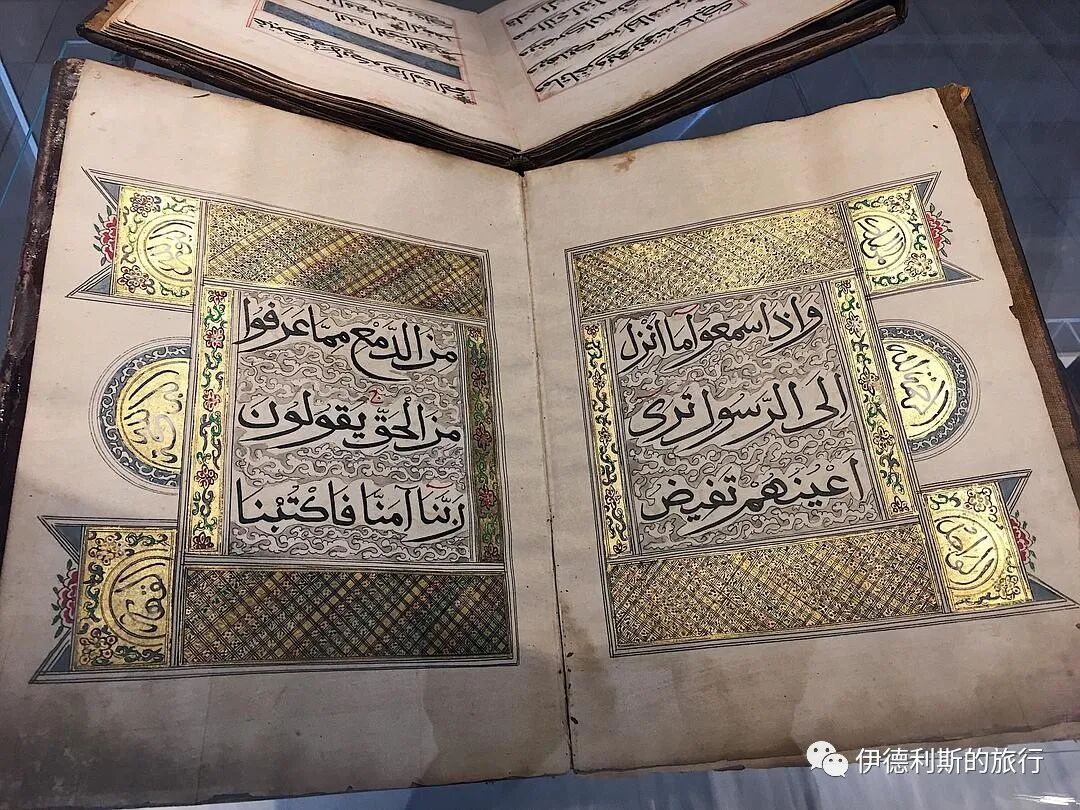
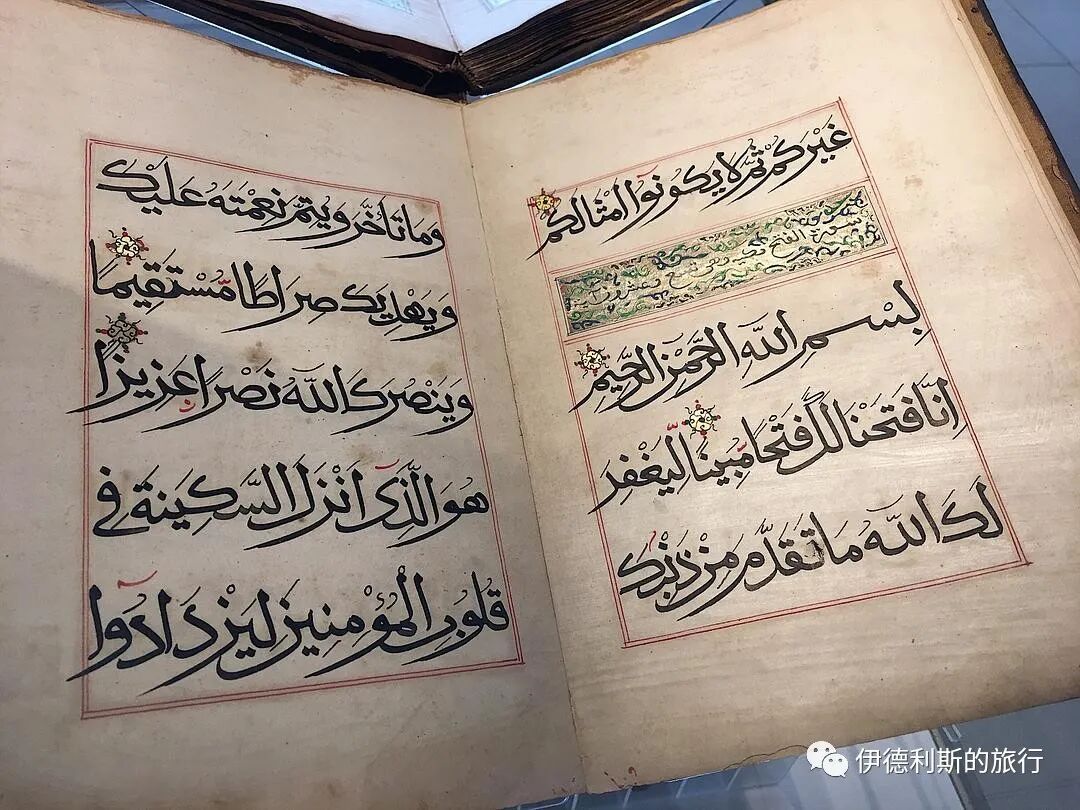
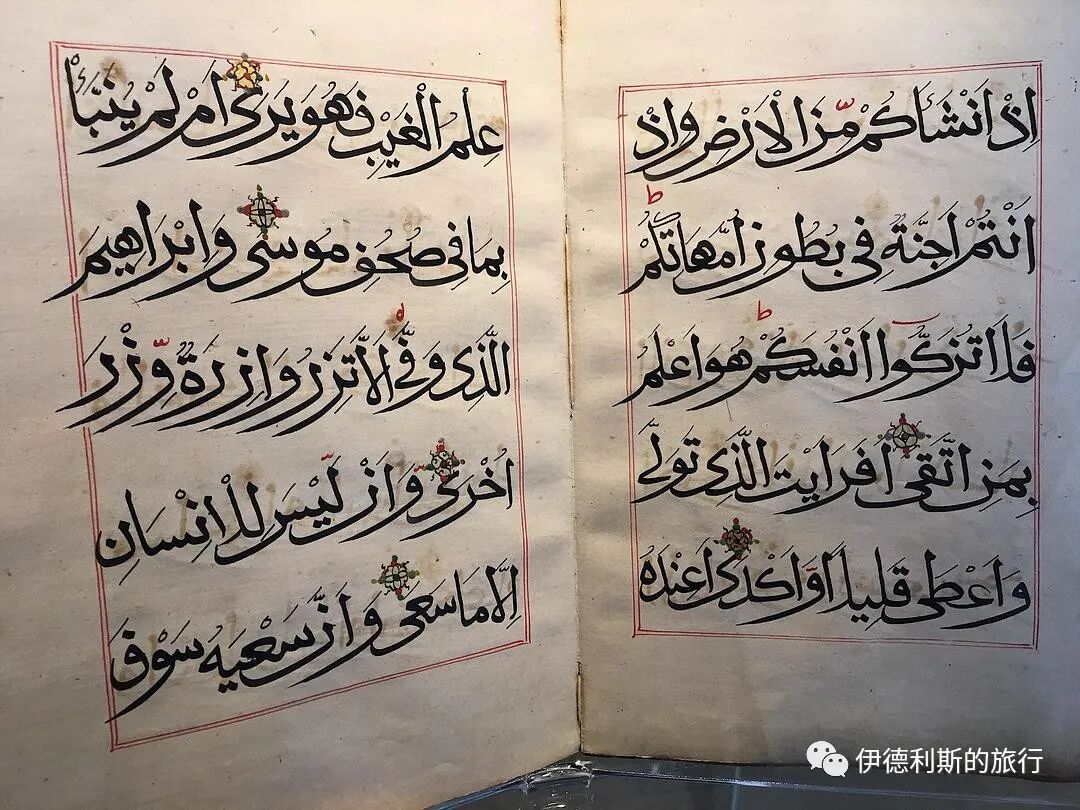
A 30-volume scripture manuscript from 1730 during the Qing dynasty, with a brown embossed leather cover.
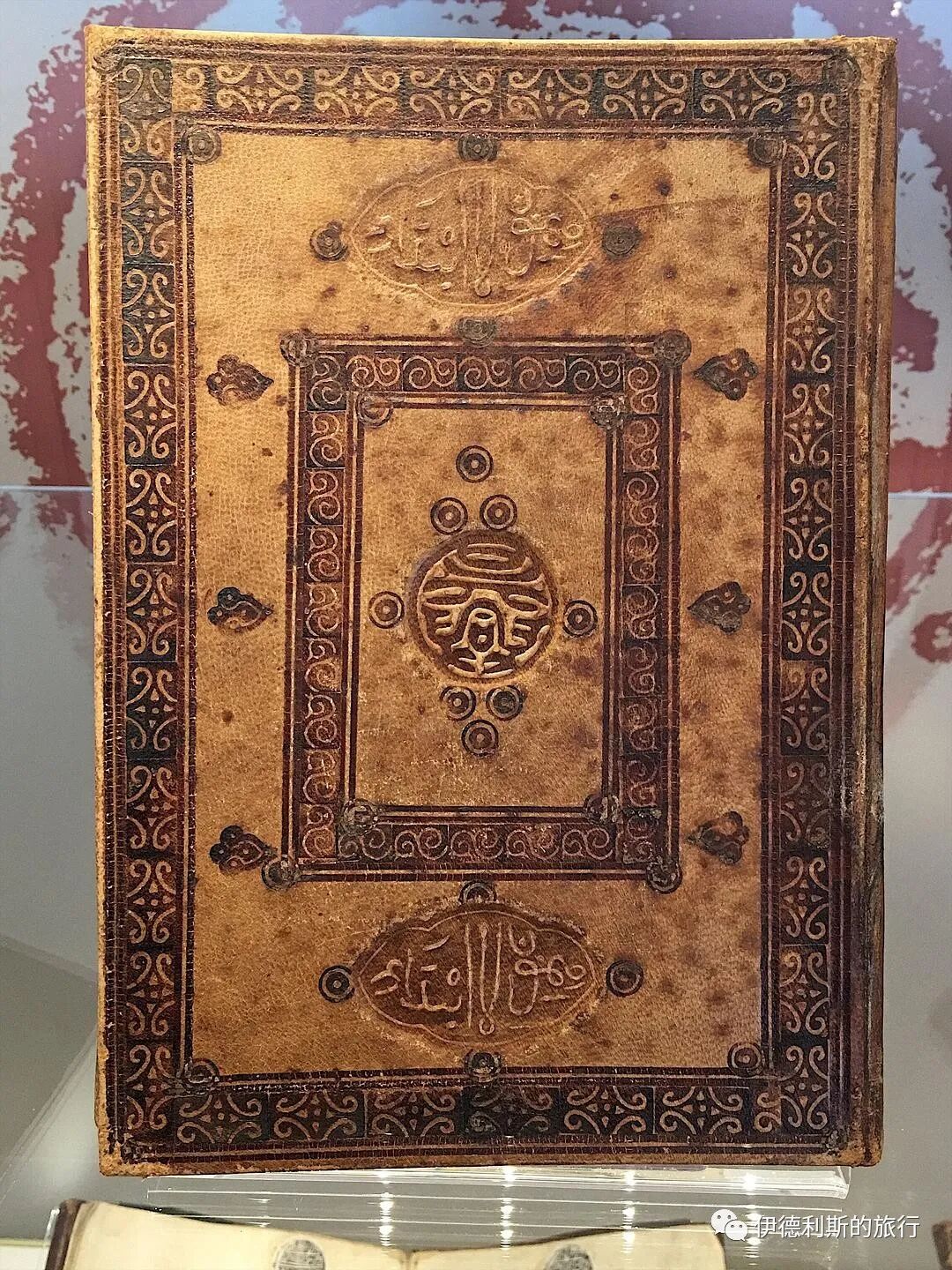
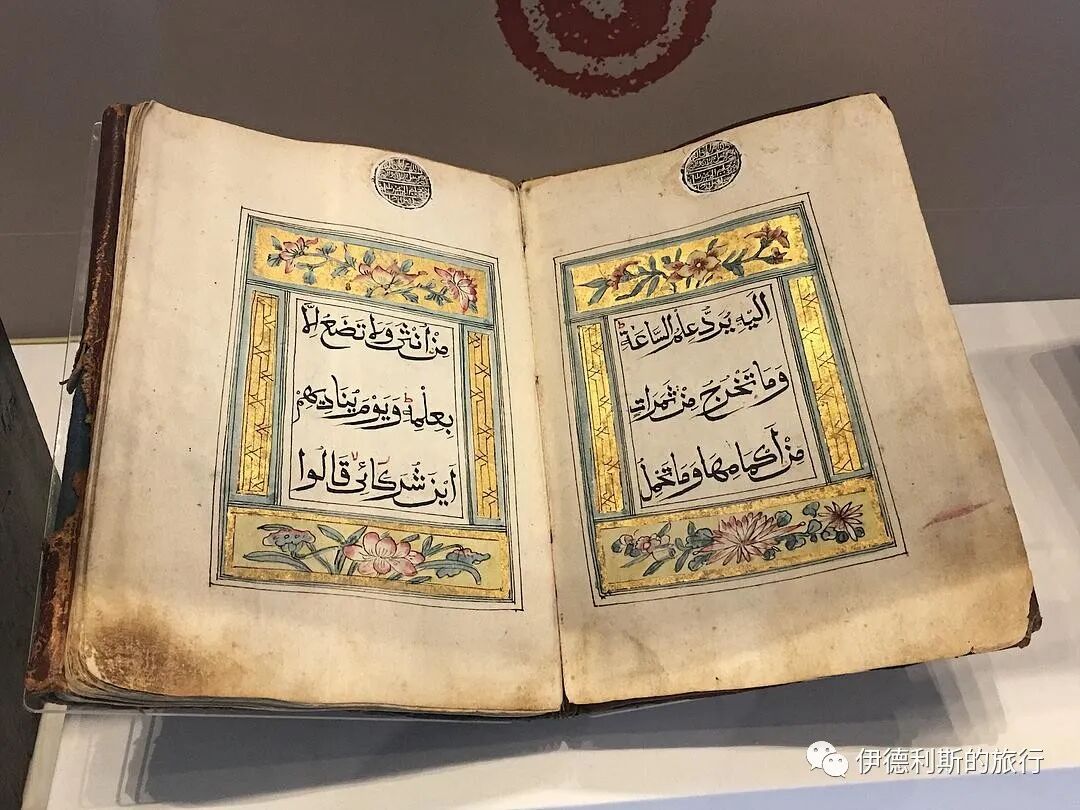
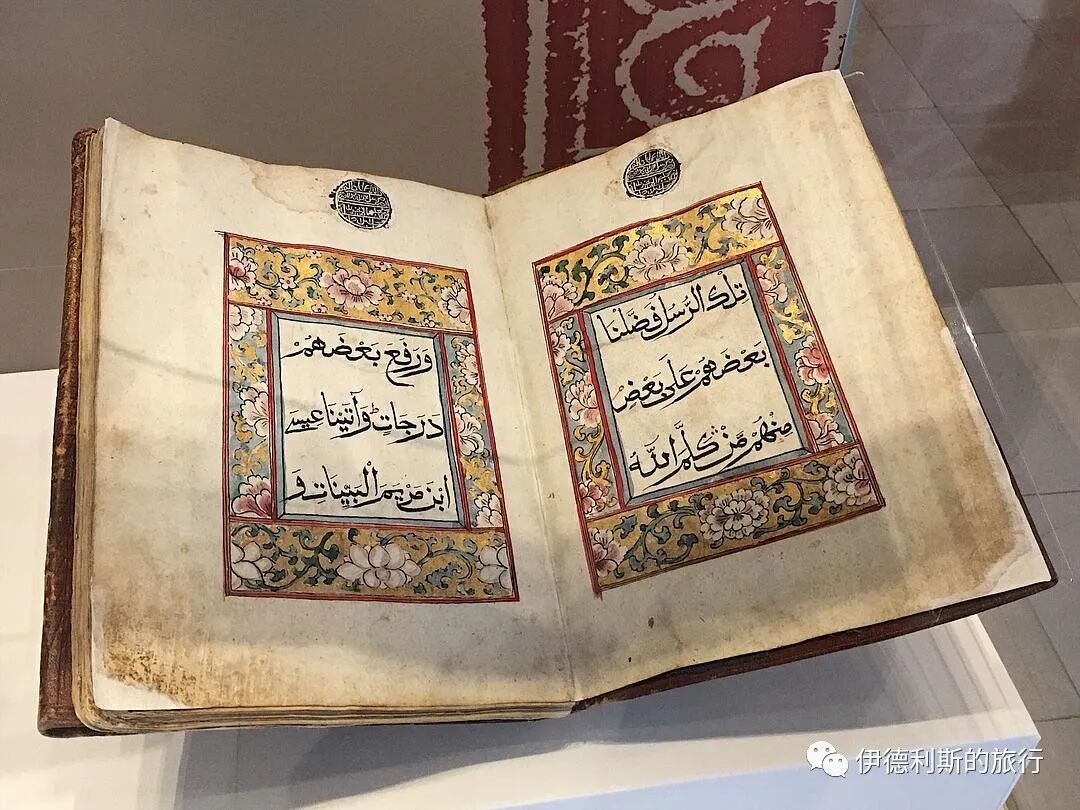
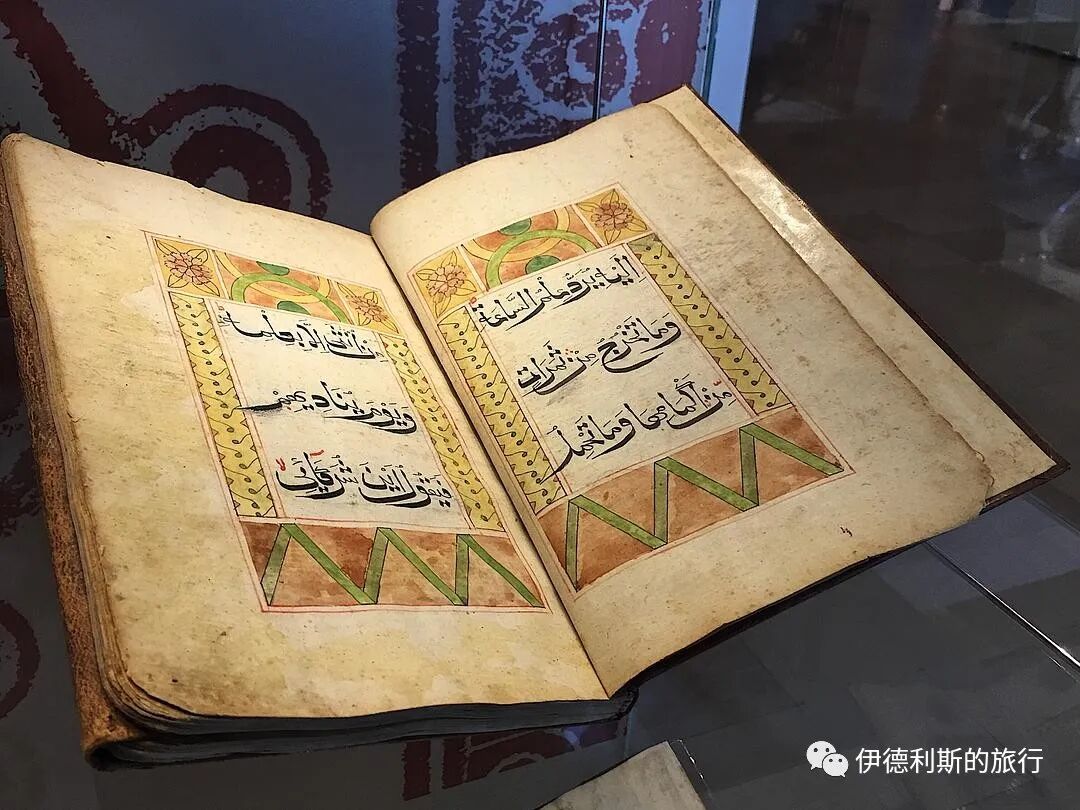
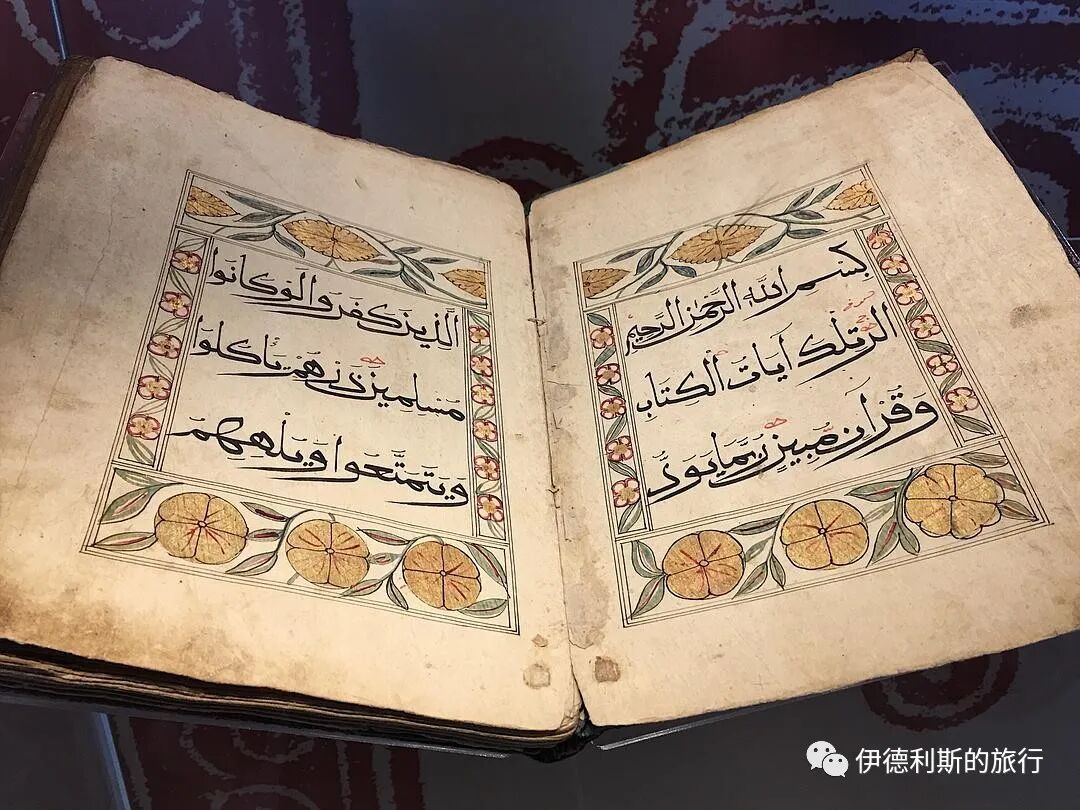
9. Xuande incense burners (Xuande lu).
Bronze incense burners appeared at the end of the Yuan dynasty. They reached their peak during the Ming dynasty Xuande period (1425-1435), when they were cast in brass for the first time. Xuande burners are made using the lost-wax casting method, so you cannot see any mold marks after polishing. Most have an open mouth, a short neck, and a flat belly. Some have three blunt cone-shaped solid feet, while others have bridge-shaped handles on the rim. They are dark purple or blackish-brown, and many are gilded or inlaid with gold flakes on the outside.
The production of imitation Xuande burners continued from the Xuande period through the Republic of China era. Xuande burners from different eras have different features. Those from the late Ming dynasty are heavier, those from the Yongzheng period are softer, and those from the Qianlong period show higher craftsmanship. After the 19th century, Xuande burners became increasingly rough, and their quality dropped significantly.
Starting in the Ming dynasty Zhengde period (1506-1521), Xuande burners featuring the Basmala or the Shahada appeared and continued to be made.
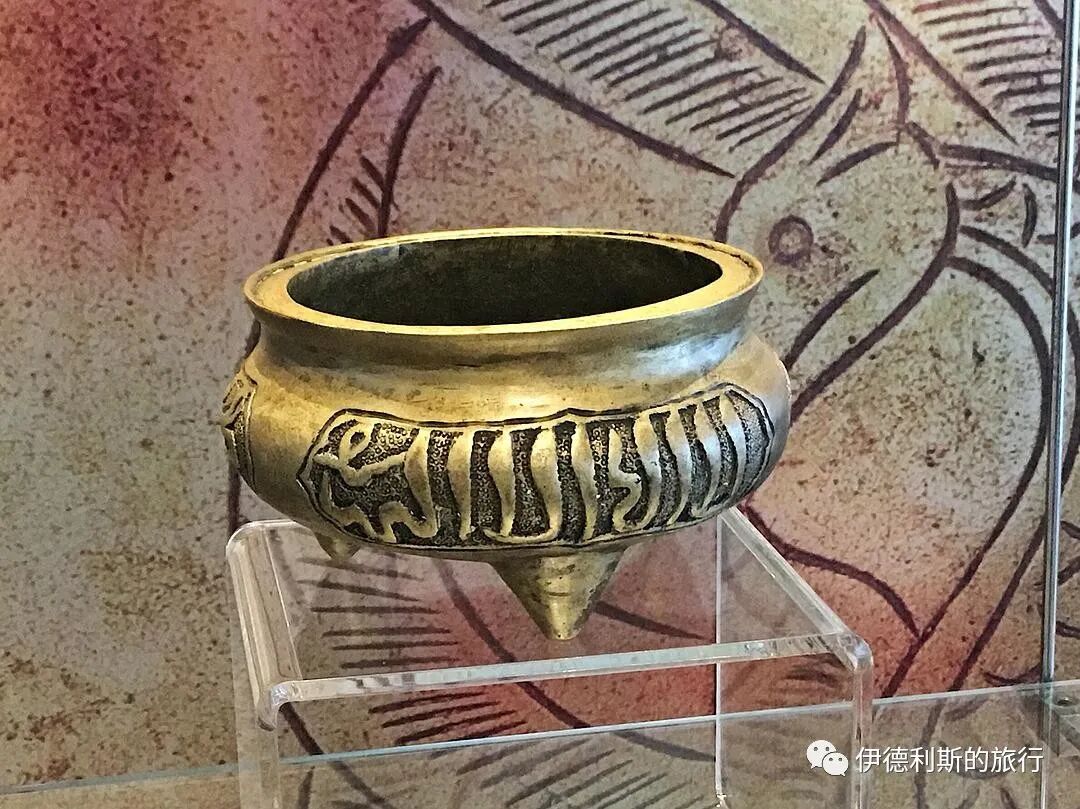
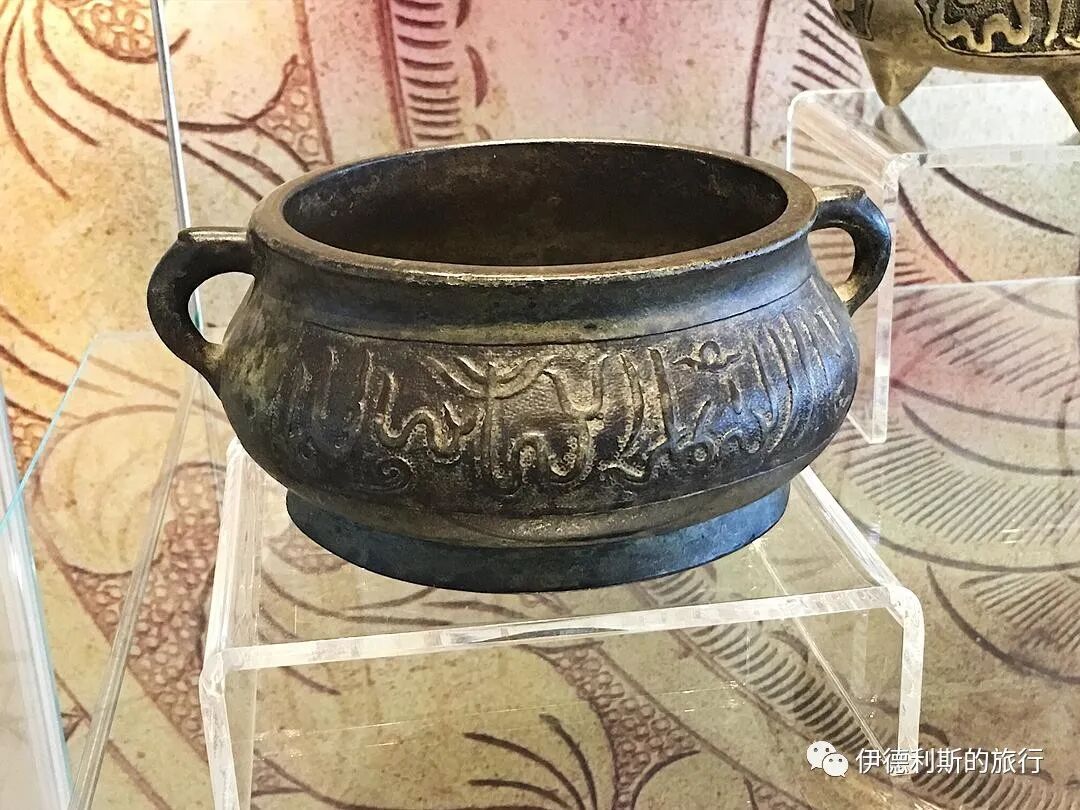
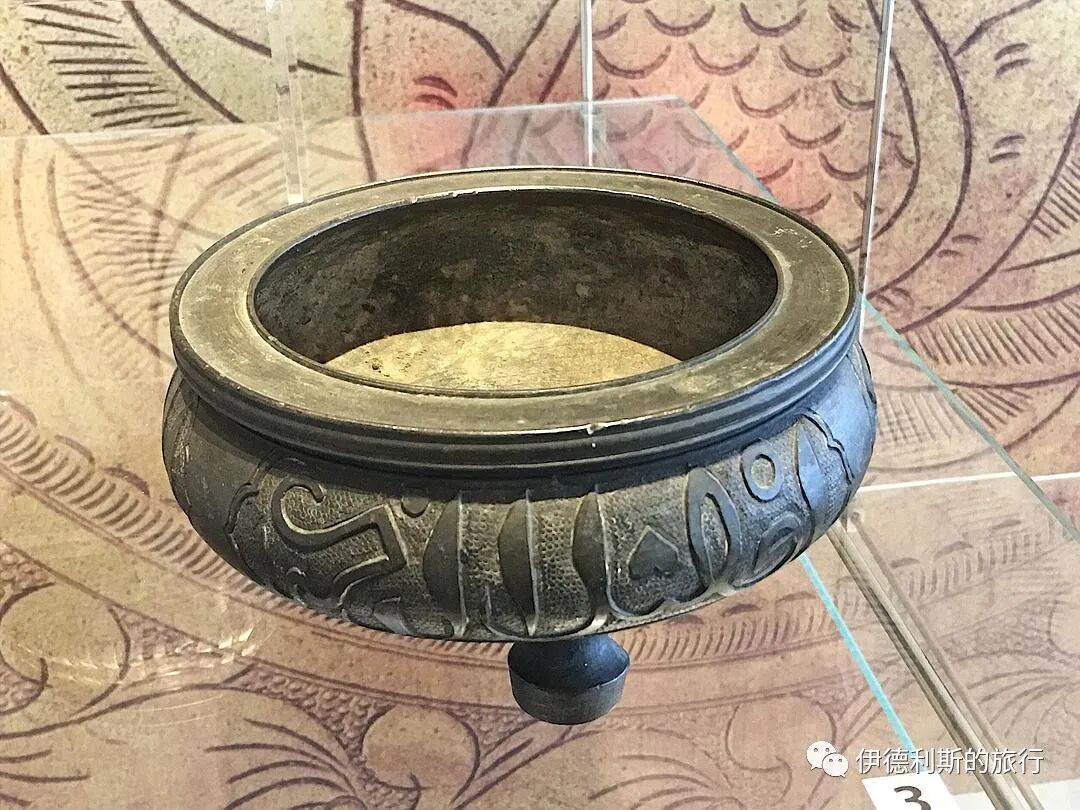
10. Qing Dynasty copperware and cloisonné enamel (jingtailan)
After the Canton Customs was set up in 1685 (the 24th year of the Kangxi reign) and the Thirteen Factories were established in Guangdong, copperware and cloisonné enamel (jingtailan) featuring Arabic and Persian script began to be exported during the 18th and 19th centuries.
The one on the left is from 1815, and the one on the right is from the 18th century.
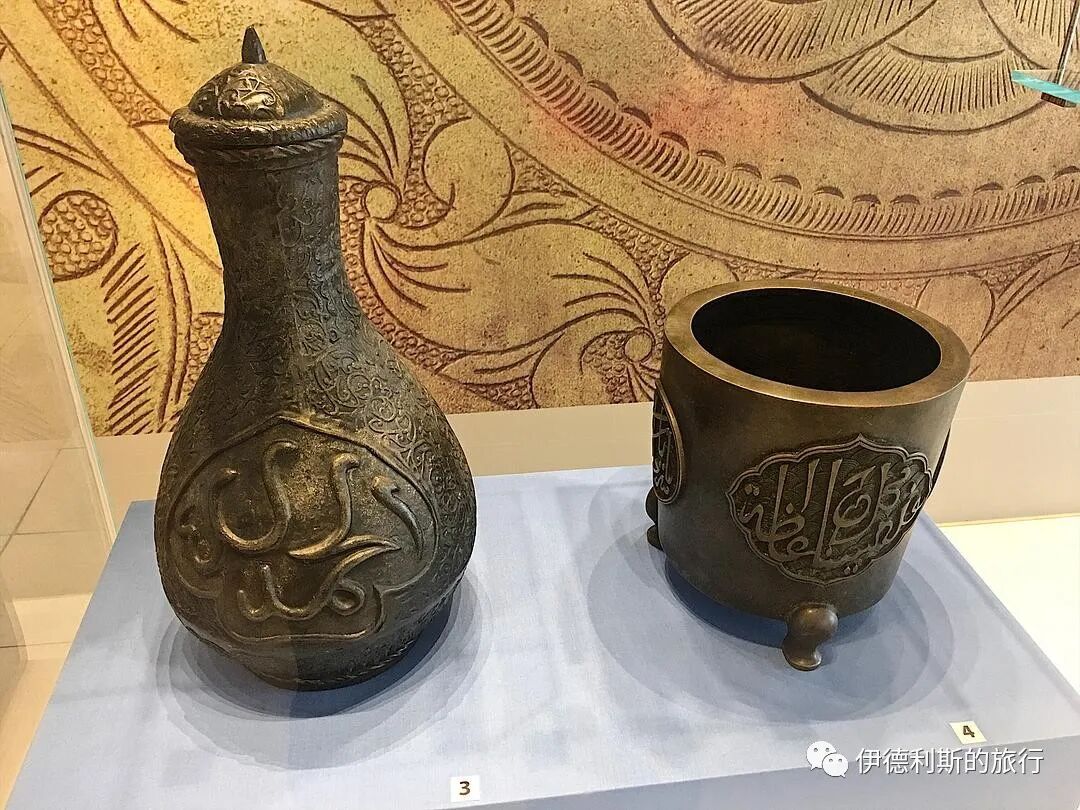
18th-century copperware
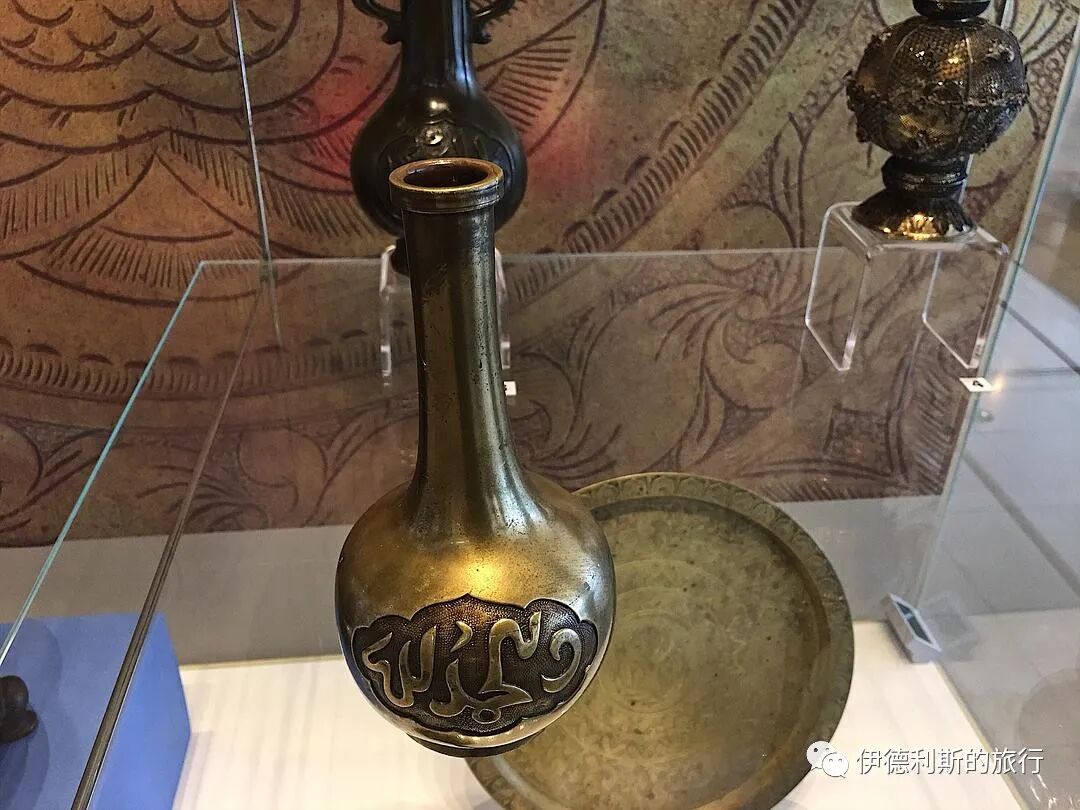
Cloisonné enamel (jingtailan)
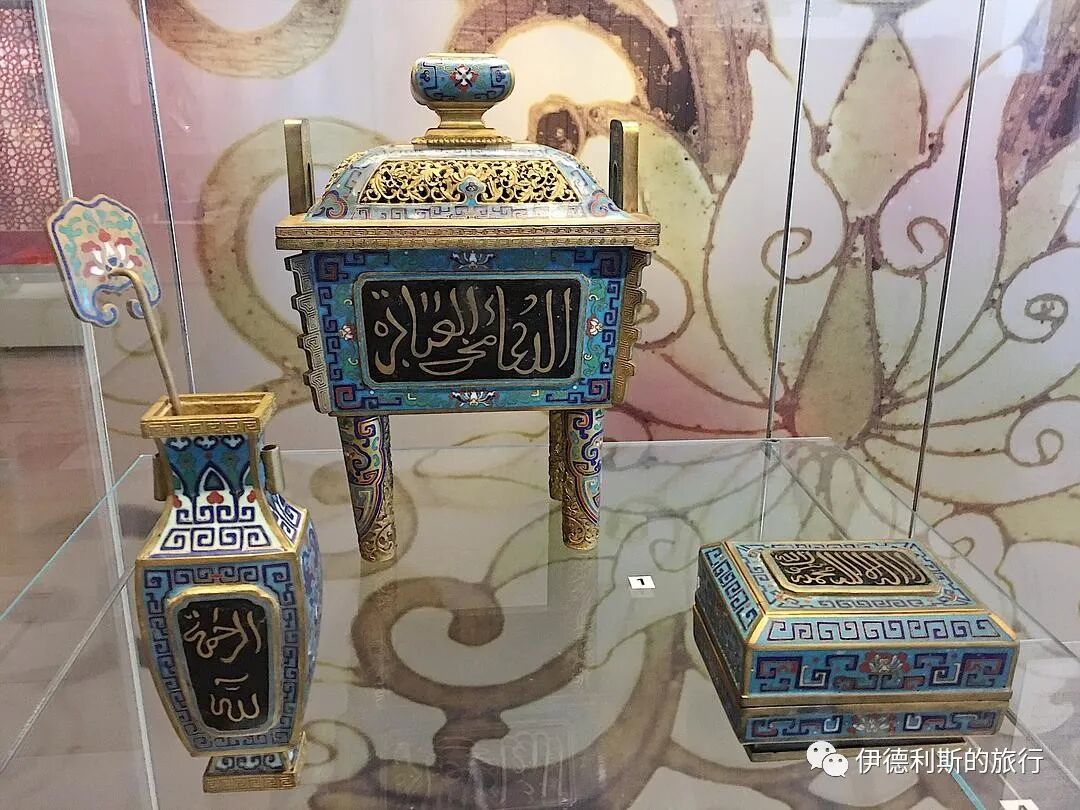
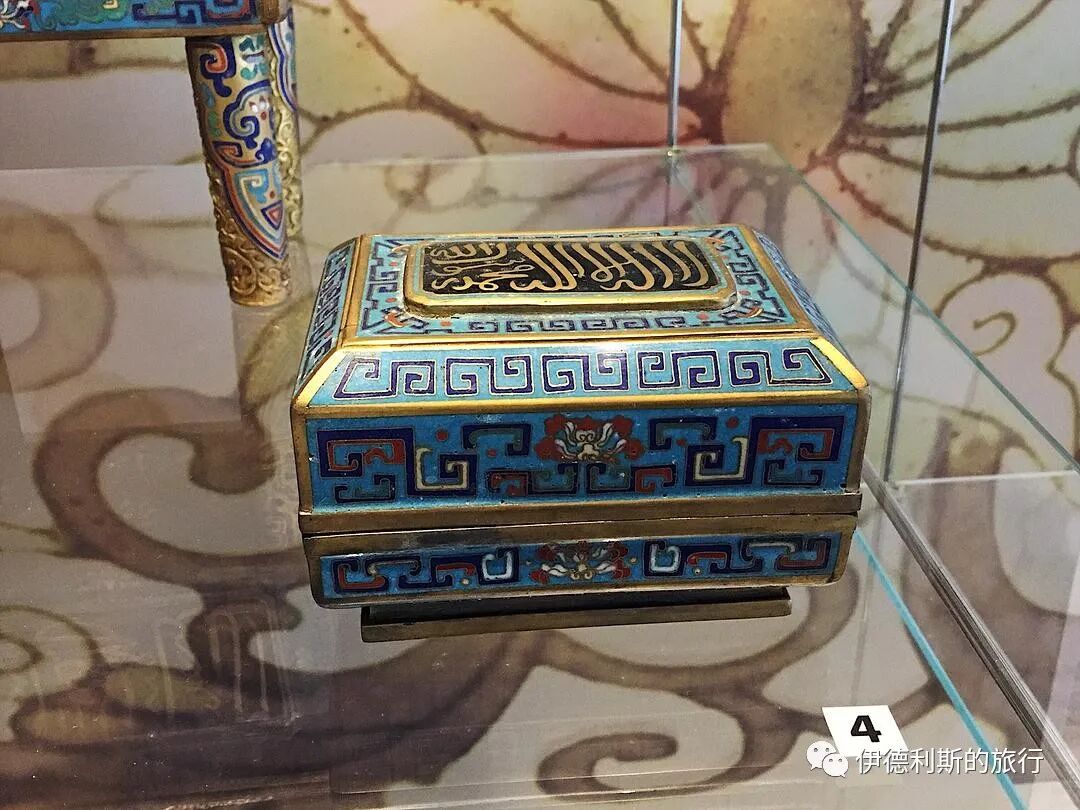
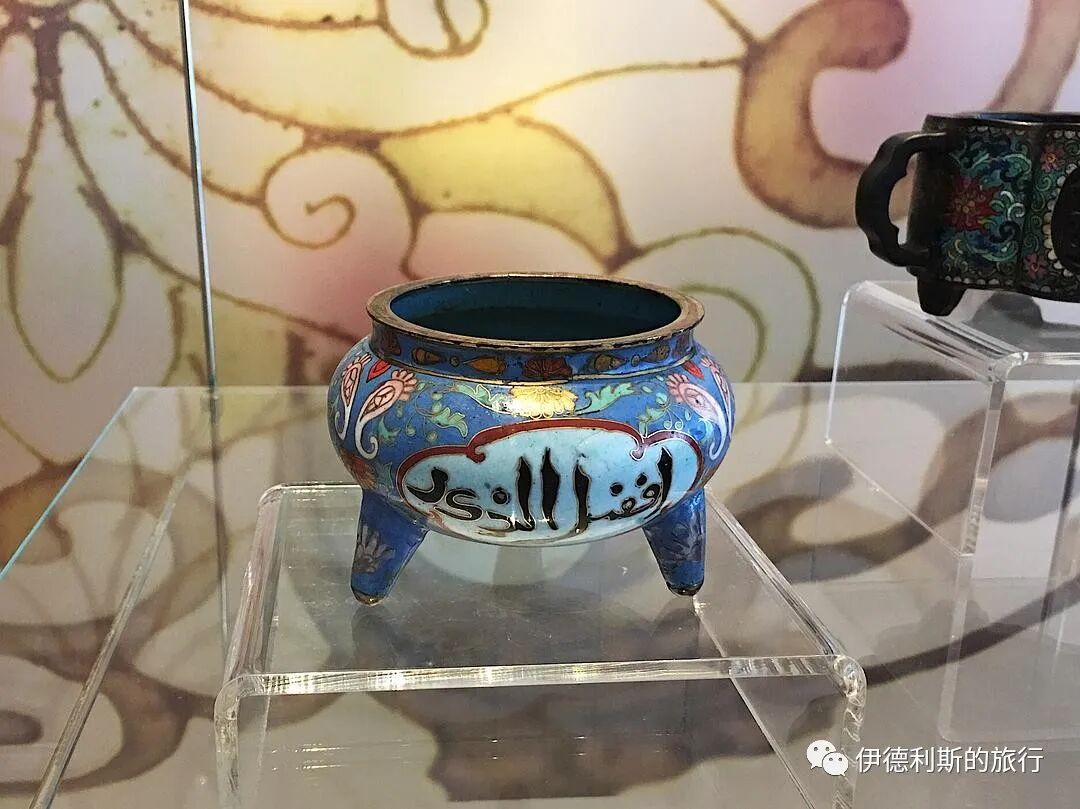
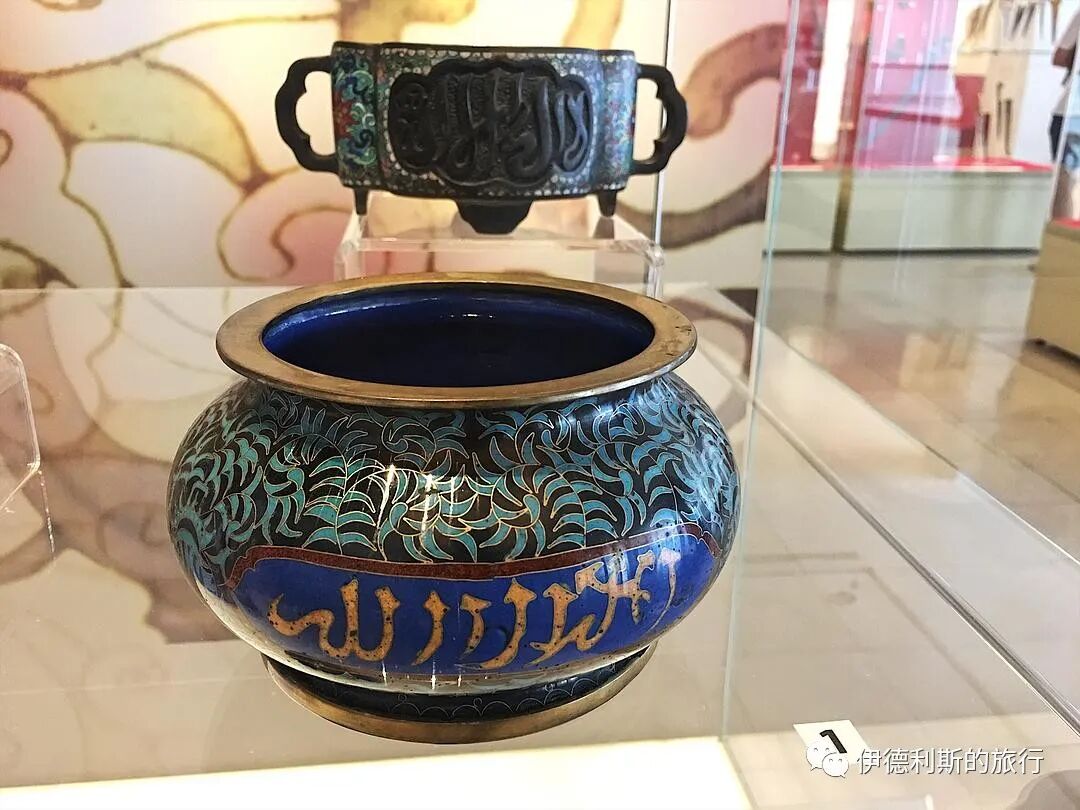
Museum of Turkish and Islamic Art
Articles • ali2007fr posted the article • 0 comments • 246 views • 2026-05-16 23:50
Summary: This travel note introduces Museum of Turkish and Islamic Art. The museum was founded in 1914, initially as an Islamic Foundation Museum (Vakıf-ı İslamiye Museum) within the Süleymaniye complex. It is useful for readers interested in Turkey Travel, Islamic Art, Museum Visit.
The museum was founded in 1914, initially as an Islamic Foundation Museum (Vakıf-ı İslamiye Museum) within the Süleymaniye complex. After the establishment of the Republic of Turkey in 1923, it was renamed the Museum of Turkish and Islamic Arts, and its exhibits shifted from Ottoman imperial culture to showcasing the culture and art of the Islamic world across various periods. In 1983, the museum moved to its current location, the Ibrahim Pasha Palace, and currently houses over 40,000 artifacts, including Islamic calligraphy, tiles, carpets, and other works of art.
Table of Contents
I. The Era of the Prophet
II. The Umayyad Caliphate: 661-750
III. The Abbasid Caliphate: 750-1258
IV. Artifacts from Konya, Capital of the Seljuk Sultanate of Rum
V. Ceramics of the Seljuk Empire: 1040-1157
VI. The Ayyubid Dynasty: 1171-1250
VII. The Mamluk Sultanate: 1250-1517
VIII. The Ilkhanate: 1256-1353
IX. The Timurid Empire: 1370-1507
X. The Safavid Dynasty: 1501-1722
XI. The Ottoman Dynasty: 1299-1923
I. The Era of the Prophet
The beard of the Prophet Muhammad (Lihye-i Saadet) and his footprint (Kadem-i Saadat).
II. The Umayyad Caliphate: 661-750
The Umayyad Caliphate was the first hereditary dynasty of the Arab Empire. It was established in 661 by Muawiyah, the former governor of Syria, after the era of the four Rightly Guided Caliphs ended. In Chinese historical records, it is known as the 'White-Robed Caliphate'.
A Quran manuscript from the early 8th century
A 7th-century stone inscription in Kufic Arabic calligraphy
III. The Abbasid Caliphate: 750-1258
In 750, the descendants of Abbas, the uncle of the Prophet Muhammad, overthrew the Umayyad family and established the Abbasid Caliphate. In Chinese historical records, it is known as the 'Black-Robed Caliphate'. In 762, the Abbasid Caliphate moved its capital to Baghdad. The early period of the Abbasid Caliphate (750-842) was the peak of the Arab Empire, and its major cultural and artistic achievements continued until the mid-10th century.
Although the capital of the Abbasid Caliphate was in Baghdad, its monuments stretched from Kairouan in Tunisia to the west, to the ancient Central Asian city of Bukhara to the east. Many cities founded by the Abbasid Caliphate saw further development later on. In the early Abbasid period, the hypostyle mosque with a flat roof, inherited from the residence of the Prophet Muhammad in Medina, was further developed. Artisans from Persia introduced the Sassanid four-iwan courtyard and the iwan (vaulted hall) into Abbasid architecture. In the late 8th century, with the influx of Khorasanians and the introduction of Sassanid court etiquette into the Abbasid court, the influence of Persian culture expanded further within the Abbasid Caliphate.
A tombstone from 859
A 9th-century marble carving
Fragments of a 9th-century mural
A 10th-century Quran
9th-century column capitals and paving fragments excavated from Samarra.
Samarra is located 125 kilometers northwest of Baghdad. It became the capital of the Abbasid Caliphate in 836 until the capital was moved back to Baghdad in 892. Because Samarra was abandoned after the 10th century and the population returned to Baghdad, a large number of ruins were left behind. It is hailed as the only metropolis of the late ancient world that can be fully excavated, and it was listed as a UNESCO World Heritage site in 2007.
The Abbasid Caliphate built several palaces, barracks, markets, two grand mosques, and countless gardens and private residences in Samarra. The Great Mosque of Samarra was enormous, measuring 240 by 156 meters, and featured a hypostyle structure. Judging from the surviving mosaics and the wooden panels surrounding the mihrab, the decoration was once very magnificent. The Caliph's private residence was decorated with marble slabs, stucco sculptures, paintings, and gilded teak wood.
IV. Artifacts from Konya, Capital of the Seljuk Sultanate of Rum
The Seljuks were a branch of the Oghuz Turkic tribes. They established the Seljuk Empire in Khorasan in 1037, defeated the Byzantines in the 1070s to occupy Asia Minor, and established the Seljuk Sultanate of Rum in 1077. The rapid expansion of the Seljuk Empire caused panic among Christian nations, directly triggering the First Crusade. In 1097, after the capital Nicaea was captured by the Crusaders, the Sultanate of Rum moved its capital eastward to Konya.
In the early 13th century, after the Mongol invasion of Central Asia and Persia, a large number of Turks and Persians came to Konya for refuge. In the 1220s, Konya was filled with refugees from the Khwarezmid Empire. Many were educated intellectuals or skilled artisans, the most famous of whom was the Sufi scholar and great Persian poet Rumi. In 1243, the Seljuk Sultanate of Rum was defeated by the Mongol Empire and became a vassal state, but Konya remained the capital of the Sultanate. People lived in stability, and many existing Seljuk buildings were constructed during this period.
Stone lions in front of the Alâeddin Pavilion (Alâeddin Köşkü). The Alâeddin Pavilion is the only remaining tower site of the Konya city walls. Located on the north side of Alâeddin Hill, it was originally a brick tower of the inner city wall of Konya. The Seljuk Sultan of Rum, Kilij Arslan II (reigned 1156-1192), built a palace adjacent to the city wall and turned this tower into part of the palace.
The Alâeddin Pavilion I photographed.
Warrior stone carving. As the capital of the Seljuk Sultanate of Rum, Konya was the final 'Turko-Persian' cultural center of the Seljuks after the fall of the Seljuk Empire. Seljuk culture is a very distinctive branch of 'Turko-Persian' culture, most famous for its tiles and stone carvings featuring human and animal motifs.
Griffin stone carving. The griffin is a common theme in Iranian mythology, possessing the body of a lion and the beak and wings of an eagle, and is considered a symbol of power.
Sphinx. The sphinx has a human head and an animal body, originating from ancient Egypt and later spreading to Iran and the Anatolian region.
A 13th-century carpet from Konya. These carpets from the Seljuk Sultanate of Rum period are among the most important collections in the Museum of Turkish and Islamic Arts, and are the most unique and precious among Seljuk artifacts.
A 13th-century Quran calligraphy tile
An early 14th-century wooden window
A 1251 tabut (coffin) box and wooden stele
A 13th-century Quran
V. Ceramics of the Seljuk Empire: 1040-1157
12th-13th century, Iran
VI. The Ayyubid Dynasty: 1171-1250
The Ayyubid dynasty was established in 1171 by the Kurdish general Saladin. It was an important dynasty during the Crusades, with its capitals successively in Damascus and Cairo. In 1260, the Mongol army captured Damascus, and the Ayyubid dynasty existed in name only.
13th-century wood carving from Damascus.
12th-13th century ceramic bowl.
A 1205 Hajj certificate
VII. The Mamluk Sultanate: 1250-1517
The Mamluk Sultanate was a state that ruled Egypt, the Levant, and the Hejaz region from the 13th to the 16th century. Most Mamluks were Kipchak Turks from Central Asia. They were brought to Western Asia as slave mercenaries and became an important force in the military during the Ayyubid dynasty. In 1260, they overthrew the Ayyubid dynasty to rule Egypt and Syria, and subsequently prevented the invasion of the Ilkhanate. In 1517, the Mamluk Sultanate was destroyed by the Ottoman Empire.
A late 14th-century Quran manuscript (Juz').
A 1380 Quran manuscript.
A 14th-century ceramic vase.
A 1282 astrolabe.
VIII. The Ilkhanate: 1256-1353
In 1256, Hulagu, the grandson of Genghis Khan, was enfeoffed as the Ilkhan, establishing the Ilkhanate. In 1260, Kublai Khan sent an envoy to issue an edict, placing the lands west of the Amu Darya up to the Egyptian border, including present-day Iran and Afghanistan, under Ilkhan rule.
A 1333-4 Quran manuscript, copied by Muhammed el-Hac Devletshah esh-Shirazi.
A 1338-9 Quran manuscript, copied by Yahya el-Sufi.
A 1318 Quran manuscript, copied by Ahmed b. al-Suhreverdi.
A 1323-4 Quran manuscript, copied by Huseyin bin Ali bin Camii.
A 1320-21 Quran manuscript, copied by Argun bin Abdullah Kamili.
Two Quran manuscript volumes (Juz') copied by Ali ibn-i Mehmed in 1306-7 and 1310-11.
A 1286-87 Quran manuscript, copied by Yakut el-Musta'simi.
IX. The Timurid Empire: 1370-1507
The Timurid dynasty was established in Samarkand in 1370 by the Chagatai Mongol noble, Timur the Great. Timur began his western campaigns in 1380, successively occupying Afghanistan and Iran. After Timur's death in 1405, his successors continued to rule Iran, and the Timurid dynasty was deeply influenced by Persian culture.
Under the rule of the Timurid dynasty, the ancient Afghan city of Herat flourished. The Timurid prince Sultan Husayn Bayqara, who ruled Herat from 1469 to 1506, strongly supported the development of Persian poetry and literature. His minister, Mir Ali-Shir Nava'i, was a famous Persian poet. Herat at that time was also famous for its architecture, miniatures, and music. The ancient Iranian city of Shiraz also became a center of art and literature during this period, hailed as the 'House of Knowledge' and the 'Athens of Iran'. Shiraz's miniatures are also world-famous.
A 15th-century book from the city of Shiraz, Iran.
1445 and 1482 books of the 'Masnavi' from Herat, Afghanistan; this is a long poem collection by the famous Persian poet Rumi.
A 15th-century book from Herat, Afghanistan.
A 1398 book from Shiraz, Iran.
X. The Safavid Dynasty: 1501-1722
The Safavid dynasty originated from the Sufi Safaviyya order, and its rulers were Kurds living in northwestern Iran. The Safavid family itself spoke Turkic and composed poetry in Turkic, but they also strongly supported Persian poetry, literature, and various forms of Persian culture and art. For over 200 years, the Safavid dynasty ruled parts of Iran, the Caucasus, Iraq, Turkey, and Afghanistan. It is considered the first native Iranian dynasty since the Sassanid Persian Empire and is also considered the beginning of modern Iran.
An early 17th-century Kashkul, a bowl used by Sufi dervishes for begging. Sufi dervishes would generally chant praises to Allah and the Prophet along the streets, then use the Kashkul to collect donated money and food. The Kashkul actually used were mostly made of coconut shells, brass, wood, or clay. They were boat-shaped and hung from the shoulder with metal chains, with a relatively simple design. This is because true Sufi dervishes had abandoned the desire for worldly wealth and devoted themselves entirely to Allah. In addition, many beautifully crafted Kashkuls were used by the wealthy as decorative items, most of which have Quranic inscriptions.
A 17th-century Quran from Shiraz.
Delete
A 1591 Quran from Shiraz.
A 17th-century Quran volume (Juz') cover.
A 1549 Quran from Shiraz.
A 1580/1 Quran from Shiraz.
XI. The Ottoman Dynasty: 1299-1923
A late 15th-early 16th-century scripture box
14th-15th-century tiles
The book 'Zubdet'ut Tevarih (Faith, Islam, and Ottoman History)', produced in 1583 by the calligrapher Seyyid Lokman Ashuri for Sultan Murad III
A Quran written by the calligrapher Seyh Hamdullah in 1494
Chapter 6 of the Quran, 'The Cattle', written by the calligrapher Ahmed Karahisari in 1443
A Quran written by the calligrapher Hafiz Osman between 1540 and 1550
A 1612 endowment deed of Sultan Ahmed I
A 1738 Ottoman Qiblanuma (qibla compass), which is the most famous of all Ottoman qibla compasses.
An early 15th-century wooden door from the Karaman dynasty view all
Summary: This travel note introduces Museum of Turkish and Islamic Art. The museum was founded in 1914, initially as an Islamic Foundation Museum (Vakıf-ı İslamiye Museum) within the Süleymaniye complex. It is useful for readers interested in Turkey Travel, Islamic Art, Museum Visit.
The museum was founded in 1914, initially as an Islamic Foundation Museum (Vakıf-ı İslamiye Museum) within the Süleymaniye complex. After the establishment of the Republic of Turkey in 1923, it was renamed the Museum of Turkish and Islamic Arts, and its exhibits shifted from Ottoman imperial culture to showcasing the culture and art of the Islamic world across various periods. In 1983, the museum moved to its current location, the Ibrahim Pasha Palace, and currently houses over 40,000 artifacts, including Islamic calligraphy, tiles, carpets, and other works of art.
Table of Contents
I. The Era of the Prophet
II. The Umayyad Caliphate: 661-750
III. The Abbasid Caliphate: 750-1258
IV. Artifacts from Konya, Capital of the Seljuk Sultanate of Rum
V. Ceramics of the Seljuk Empire: 1040-1157
VI. The Ayyubid Dynasty: 1171-1250
VII. The Mamluk Sultanate: 1250-1517
VIII. The Ilkhanate: 1256-1353
IX. The Timurid Empire: 1370-1507
X. The Safavid Dynasty: 1501-1722
XI. The Ottoman Dynasty: 1299-1923
I. The Era of the Prophet
The beard of the Prophet Muhammad (Lihye-i Saadet) and his footprint (Kadem-i Saadat).
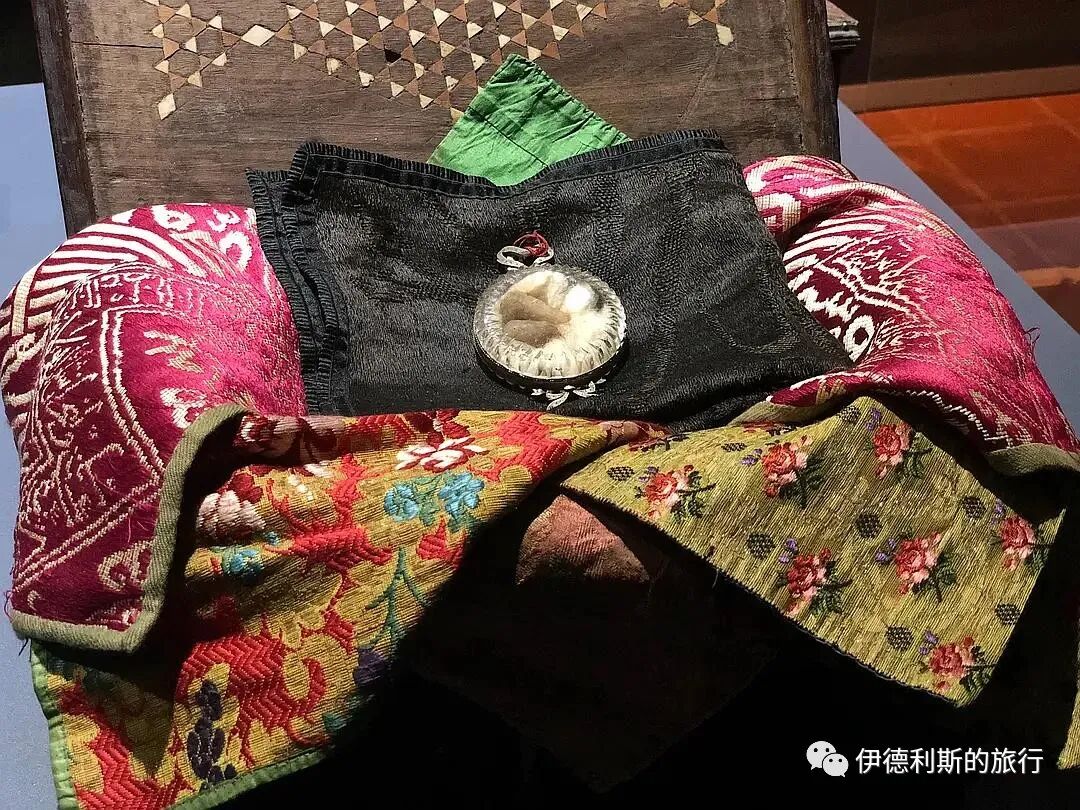
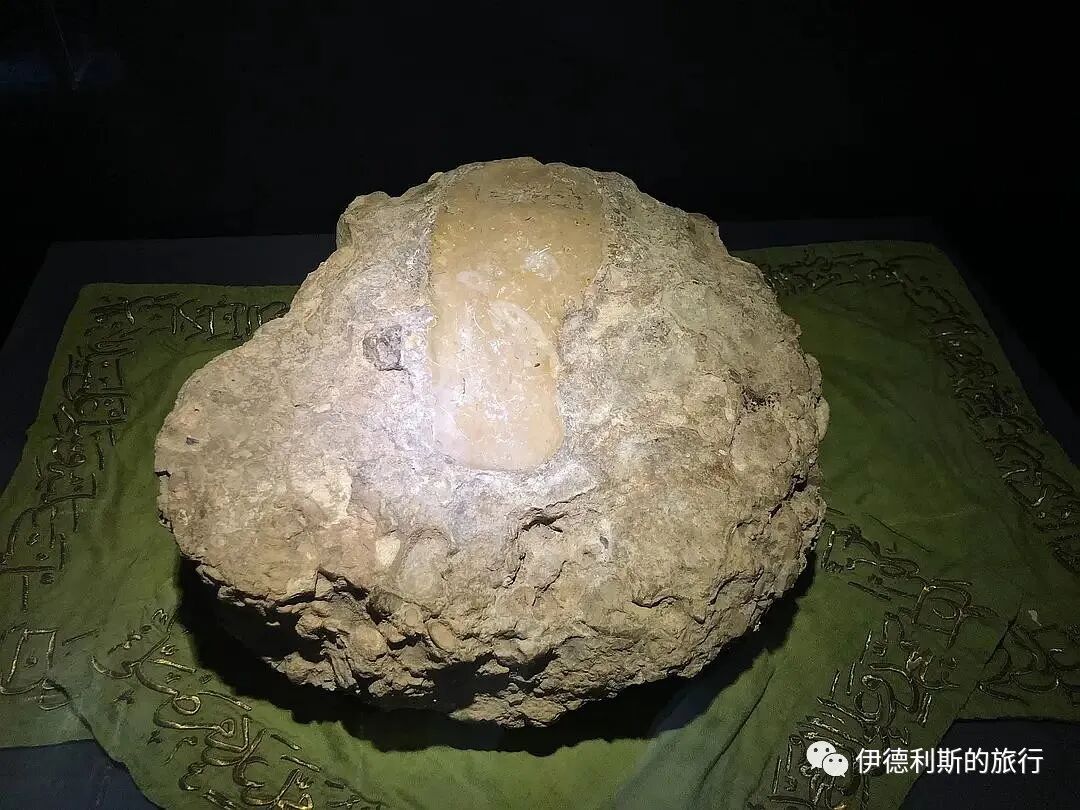
II. The Umayyad Caliphate: 661-750
The Umayyad Caliphate was the first hereditary dynasty of the Arab Empire. It was established in 661 by Muawiyah, the former governor of Syria, after the era of the four Rightly Guided Caliphs ended. In Chinese historical records, it is known as the 'White-Robed Caliphate'.
A Quran manuscript from the early 8th century
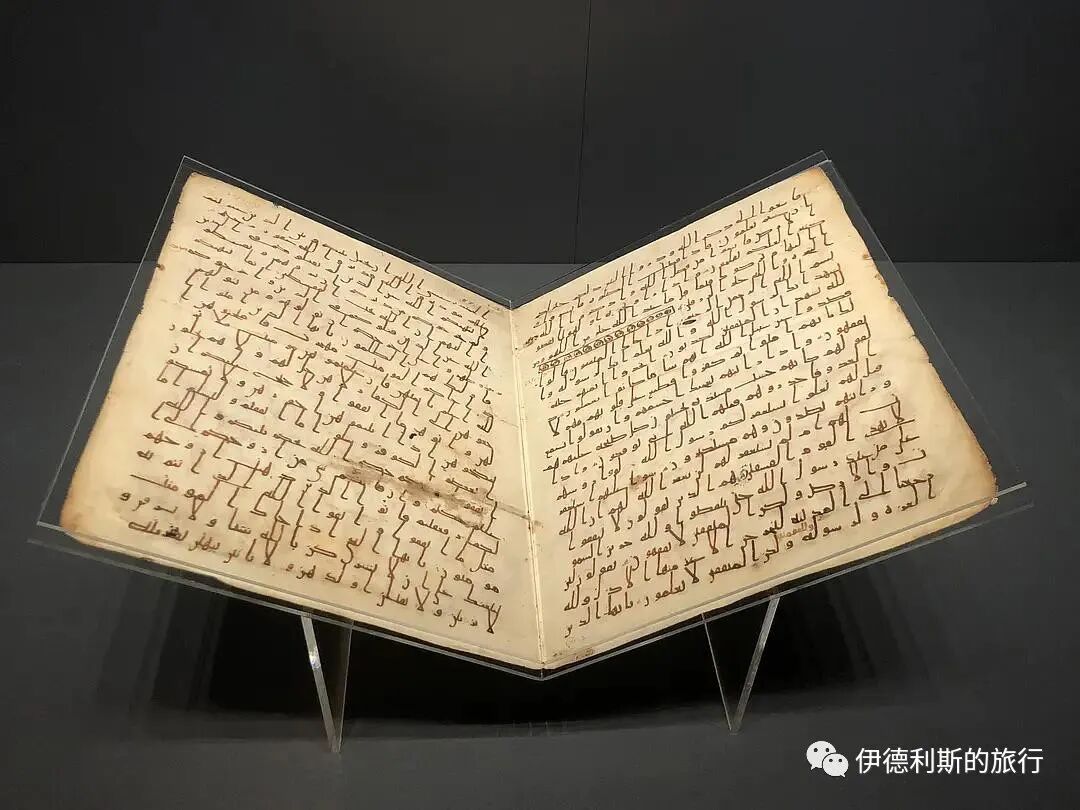
A 7th-century stone inscription in Kufic Arabic calligraphy
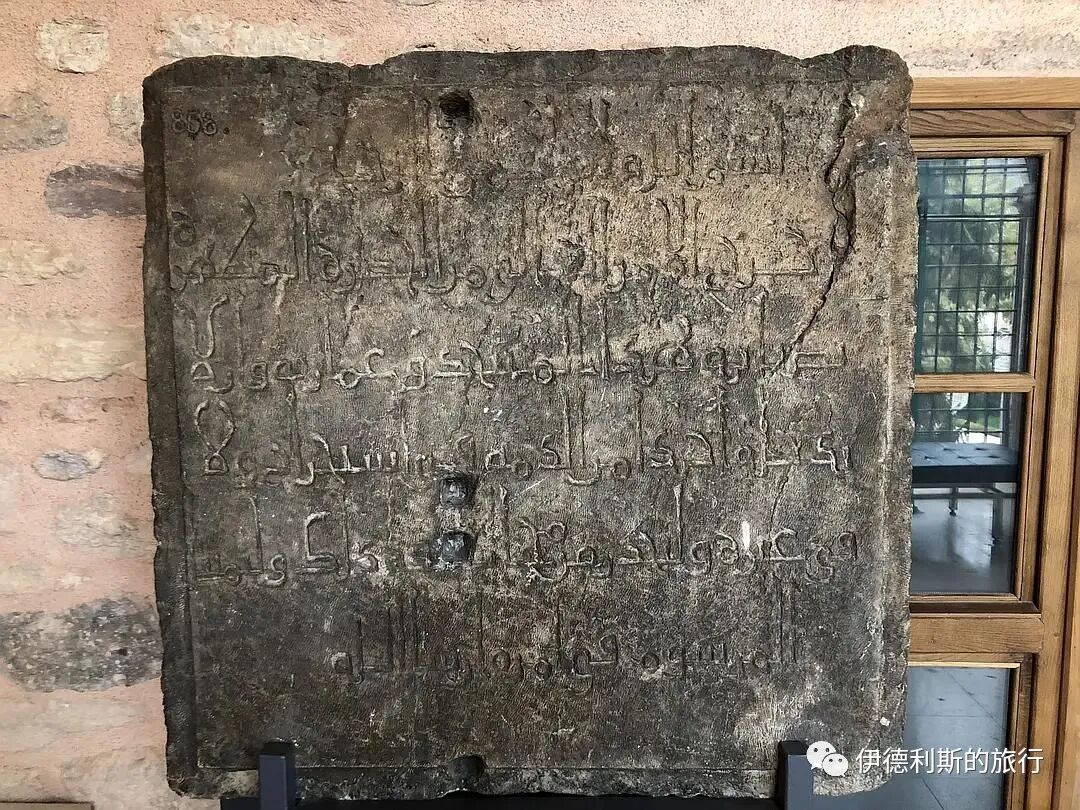
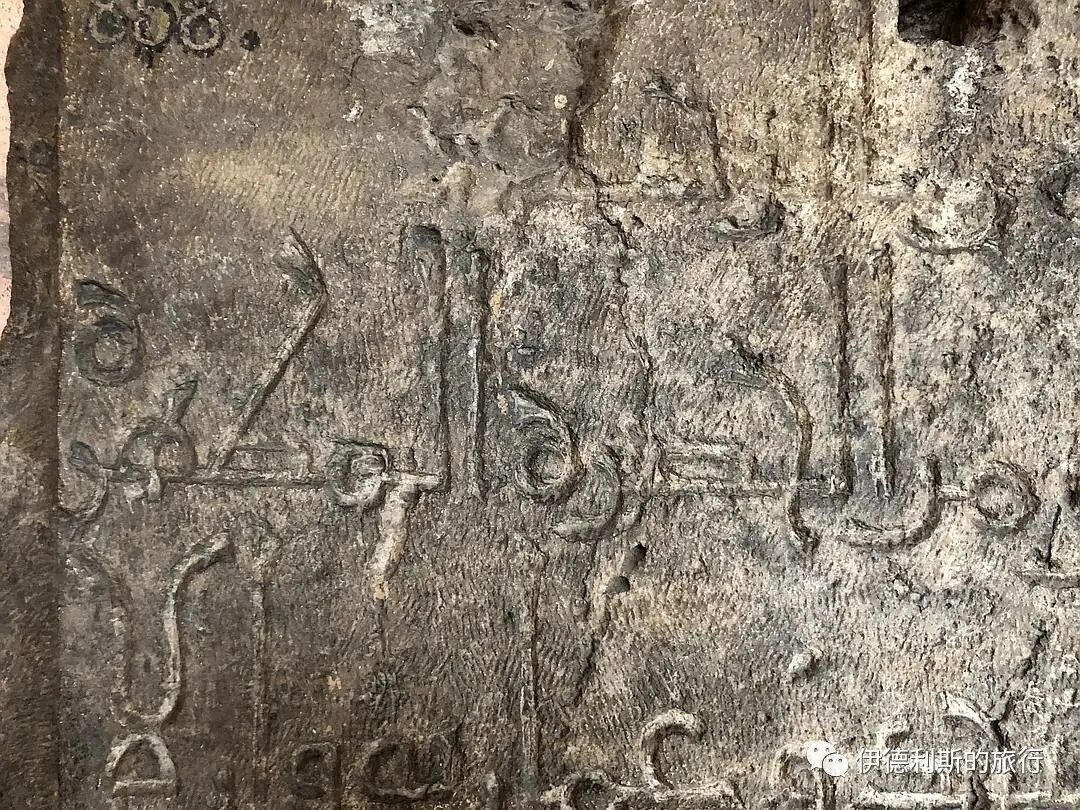
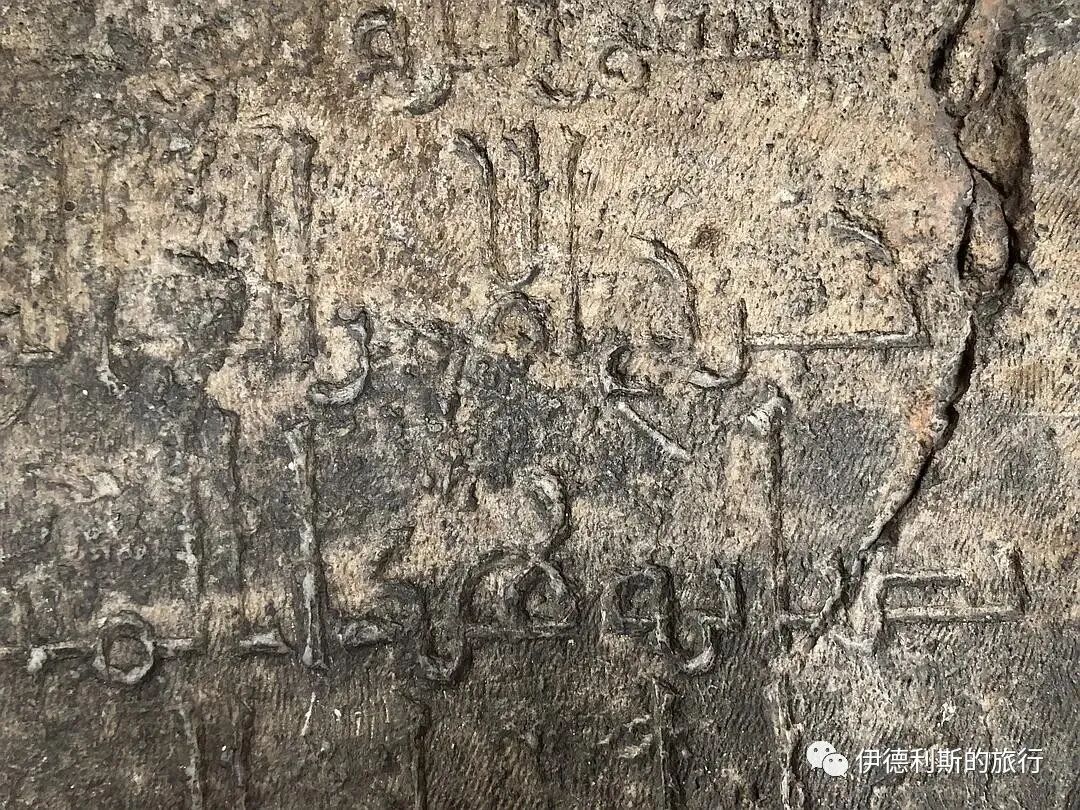
III. The Abbasid Caliphate: 750-1258
In 750, the descendants of Abbas, the uncle of the Prophet Muhammad, overthrew the Umayyad family and established the Abbasid Caliphate. In Chinese historical records, it is known as the 'Black-Robed Caliphate'. In 762, the Abbasid Caliphate moved its capital to Baghdad. The early period of the Abbasid Caliphate (750-842) was the peak of the Arab Empire, and its major cultural and artistic achievements continued until the mid-10th century.
Although the capital of the Abbasid Caliphate was in Baghdad, its monuments stretched from Kairouan in Tunisia to the west, to the ancient Central Asian city of Bukhara to the east. Many cities founded by the Abbasid Caliphate saw further development later on. In the early Abbasid period, the hypostyle mosque with a flat roof, inherited from the residence of the Prophet Muhammad in Medina, was further developed. Artisans from Persia introduced the Sassanid four-iwan courtyard and the iwan (vaulted hall) into Abbasid architecture. In the late 8th century, with the influx of Khorasanians and the introduction of Sassanid court etiquette into the Abbasid court, the influence of Persian culture expanded further within the Abbasid Caliphate.
A tombstone from 859
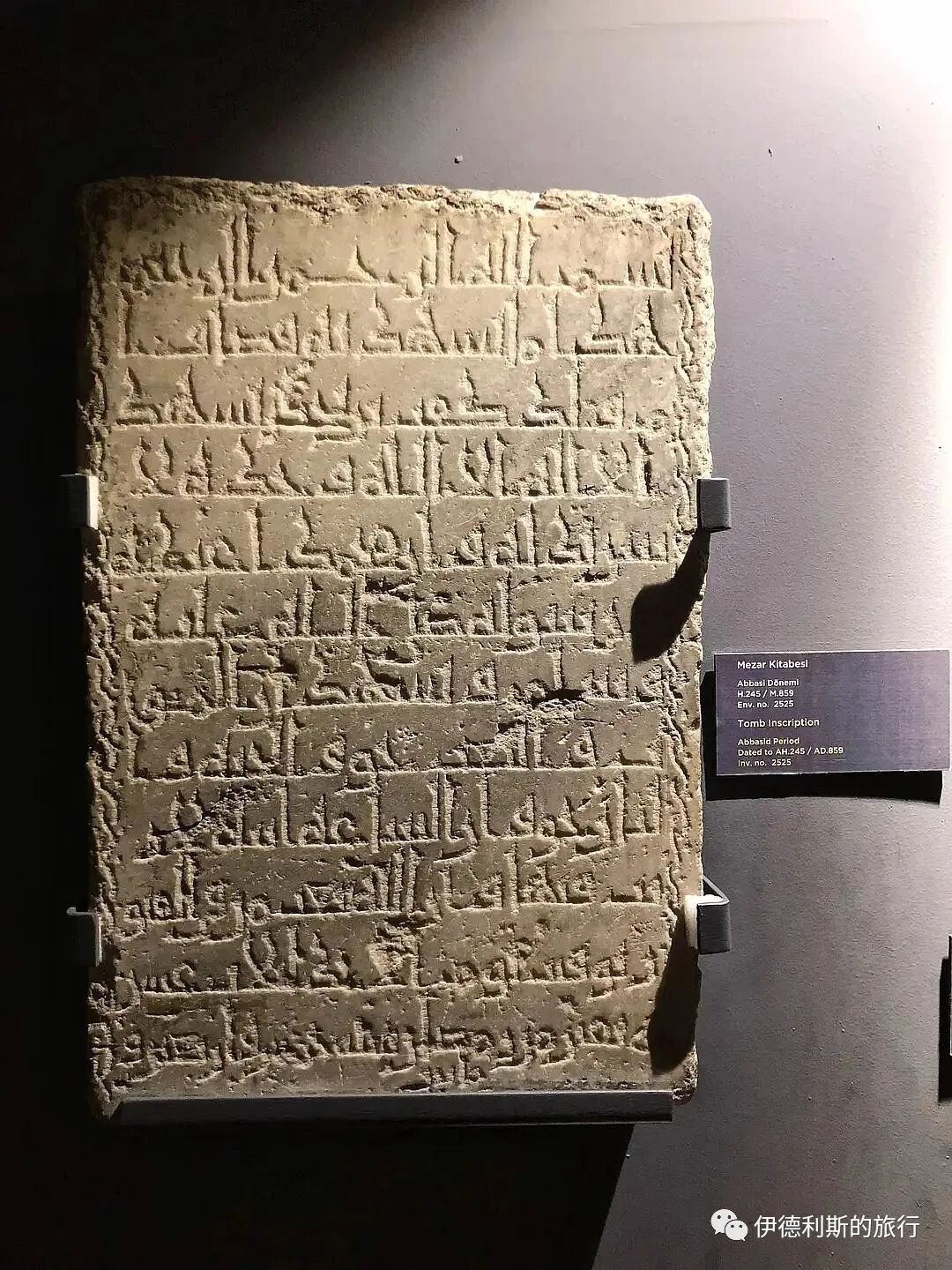
A 9th-century marble carving
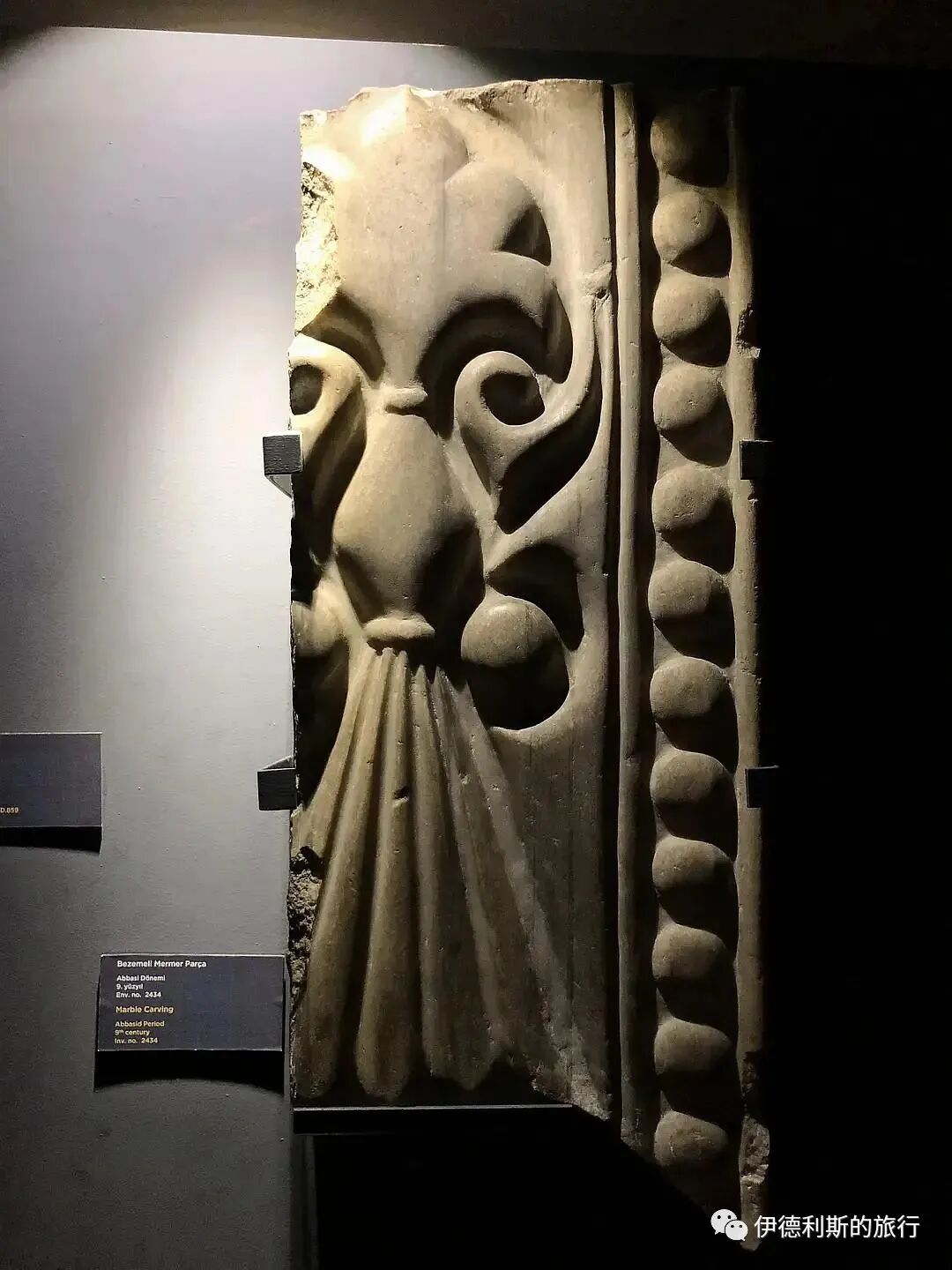
Fragments of a 9th-century mural
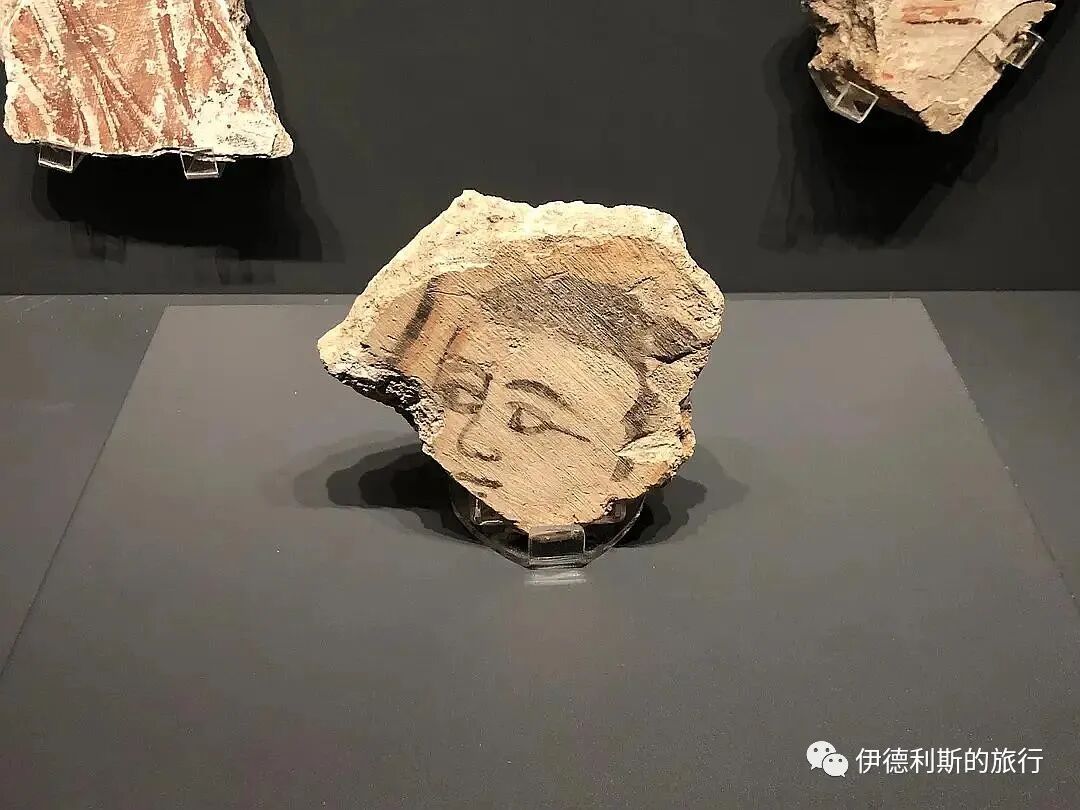
A 10th-century Quran
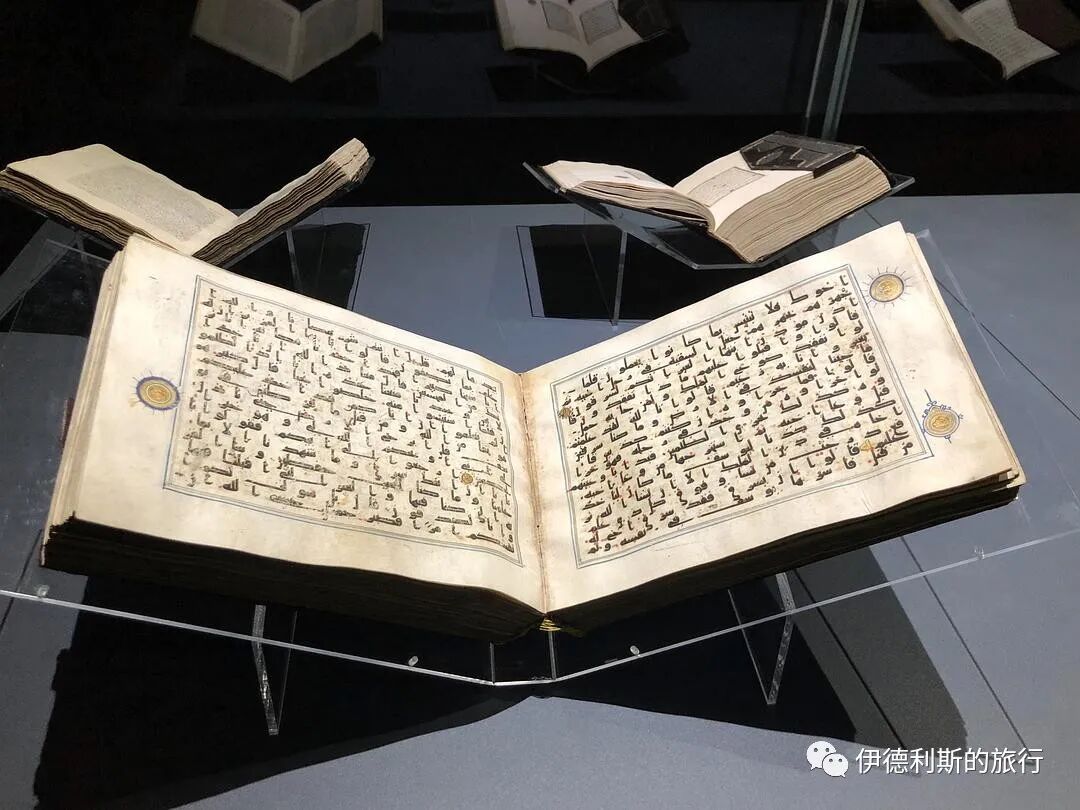
9th-century column capitals and paving fragments excavated from Samarra.
Samarra is located 125 kilometers northwest of Baghdad. It became the capital of the Abbasid Caliphate in 836 until the capital was moved back to Baghdad in 892. Because Samarra was abandoned after the 10th century and the population returned to Baghdad, a large number of ruins were left behind. It is hailed as the only metropolis of the late ancient world that can be fully excavated, and it was listed as a UNESCO World Heritage site in 2007.
The Abbasid Caliphate built several palaces, barracks, markets, two grand mosques, and countless gardens and private residences in Samarra. The Great Mosque of Samarra was enormous, measuring 240 by 156 meters, and featured a hypostyle structure. Judging from the surviving mosaics and the wooden panels surrounding the mihrab, the decoration was once very magnificent. The Caliph's private residence was decorated with marble slabs, stucco sculptures, paintings, and gilded teak wood.
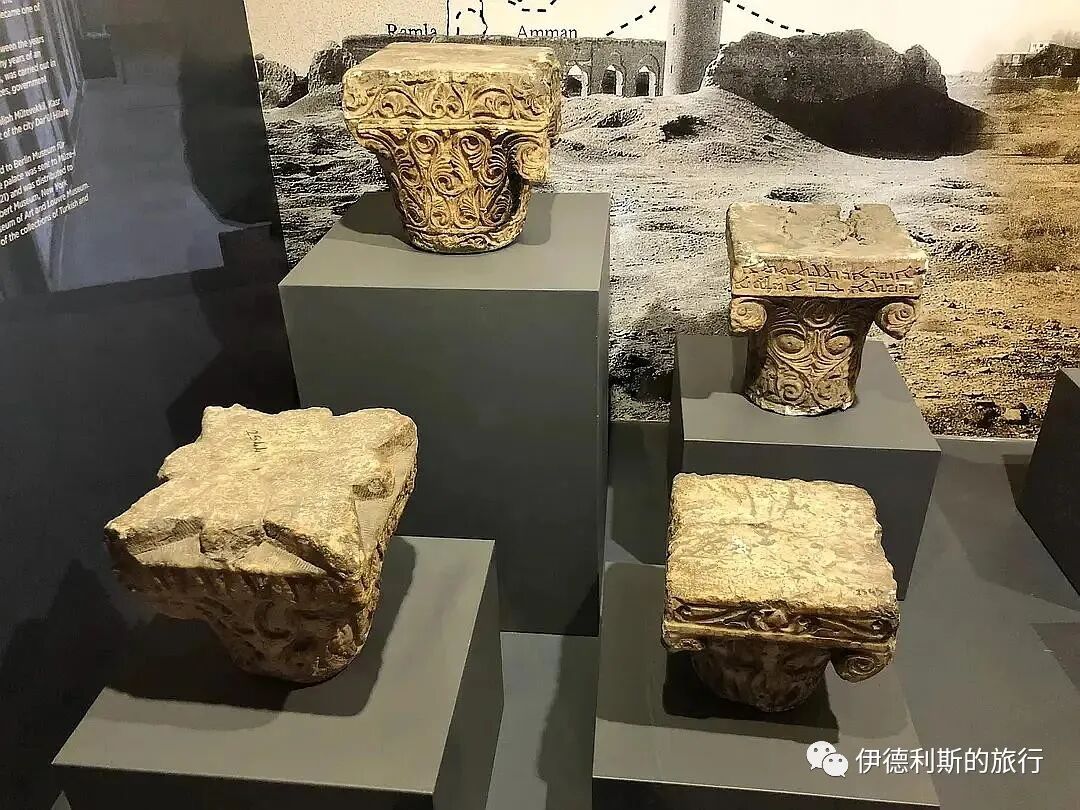
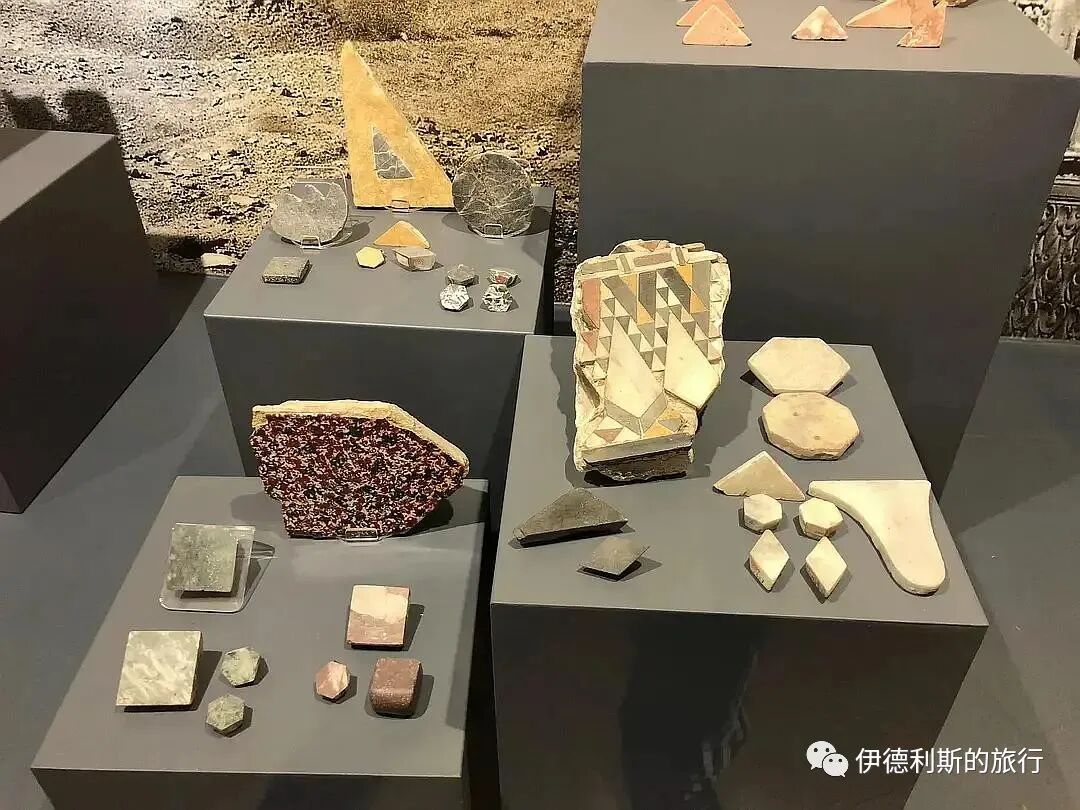
IV. Artifacts from Konya, Capital of the Seljuk Sultanate of Rum
The Seljuks were a branch of the Oghuz Turkic tribes. They established the Seljuk Empire in Khorasan in 1037, defeated the Byzantines in the 1070s to occupy Asia Minor, and established the Seljuk Sultanate of Rum in 1077. The rapid expansion of the Seljuk Empire caused panic among Christian nations, directly triggering the First Crusade. In 1097, after the capital Nicaea was captured by the Crusaders, the Sultanate of Rum moved its capital eastward to Konya.
In the early 13th century, after the Mongol invasion of Central Asia and Persia, a large number of Turks and Persians came to Konya for refuge. In the 1220s, Konya was filled with refugees from the Khwarezmid Empire. Many were educated intellectuals or skilled artisans, the most famous of whom was the Sufi scholar and great Persian poet Rumi. In 1243, the Seljuk Sultanate of Rum was defeated by the Mongol Empire and became a vassal state, but Konya remained the capital of the Sultanate. People lived in stability, and many existing Seljuk buildings were constructed during this period.
Stone lions in front of the Alâeddin Pavilion (Alâeddin Köşkü). The Alâeddin Pavilion is the only remaining tower site of the Konya city walls. Located on the north side of Alâeddin Hill, it was originally a brick tower of the inner city wall of Konya. The Seljuk Sultan of Rum, Kilij Arslan II (reigned 1156-1192), built a palace adjacent to the city wall and turned this tower into part of the palace.
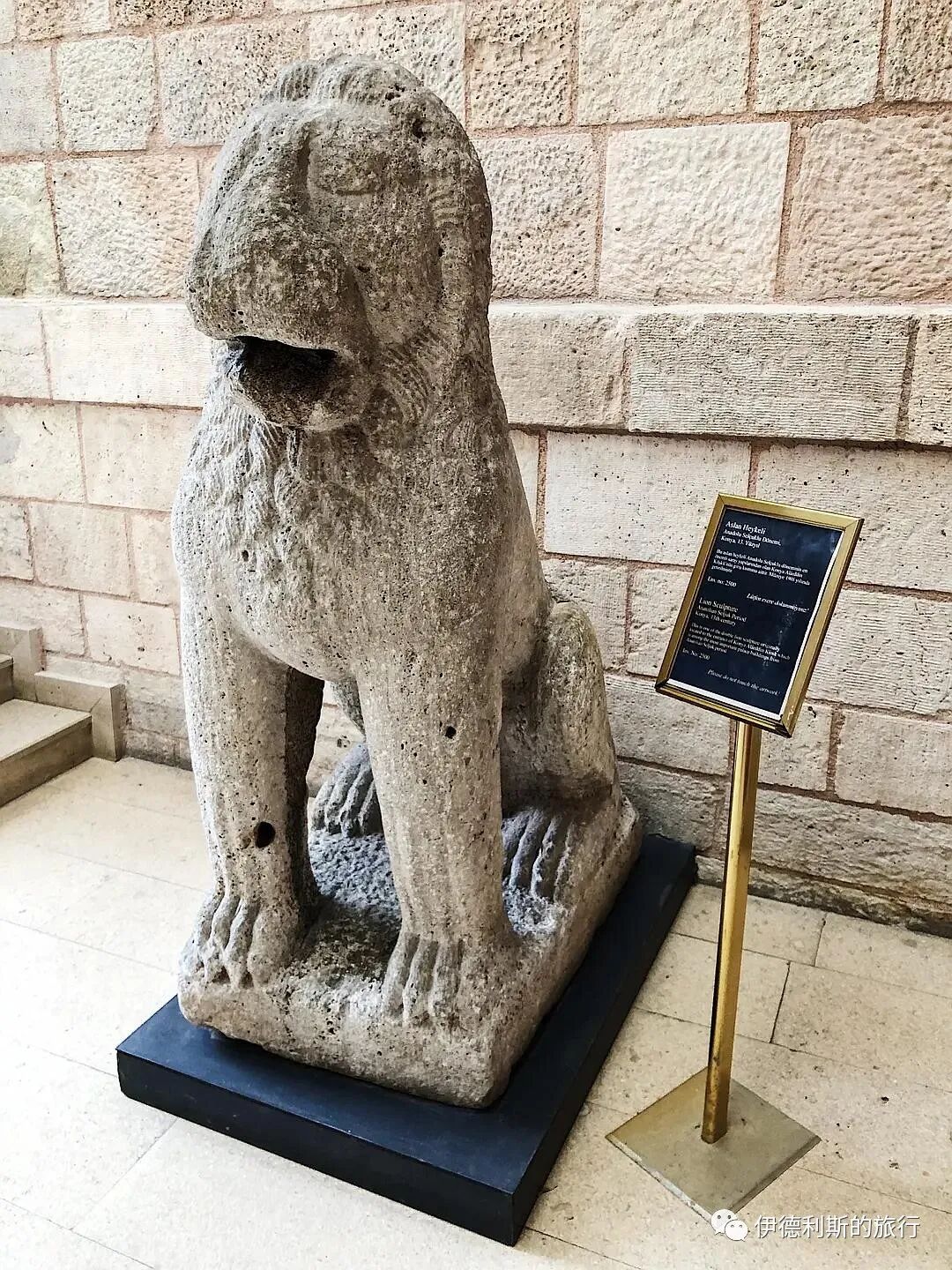
The Alâeddin Pavilion I photographed.
Warrior stone carving. As the capital of the Seljuk Sultanate of Rum, Konya was the final 'Turko-Persian' cultural center of the Seljuks after the fall of the Seljuk Empire. Seljuk culture is a very distinctive branch of 'Turko-Persian' culture, most famous for its tiles and stone carvings featuring human and animal motifs.
Griffin stone carving. The griffin is a common theme in Iranian mythology, possessing the body of a lion and the beak and wings of an eagle, and is considered a symbol of power.
Sphinx. The sphinx has a human head and an animal body, originating from ancient Egypt and later spreading to Iran and the Anatolian region.
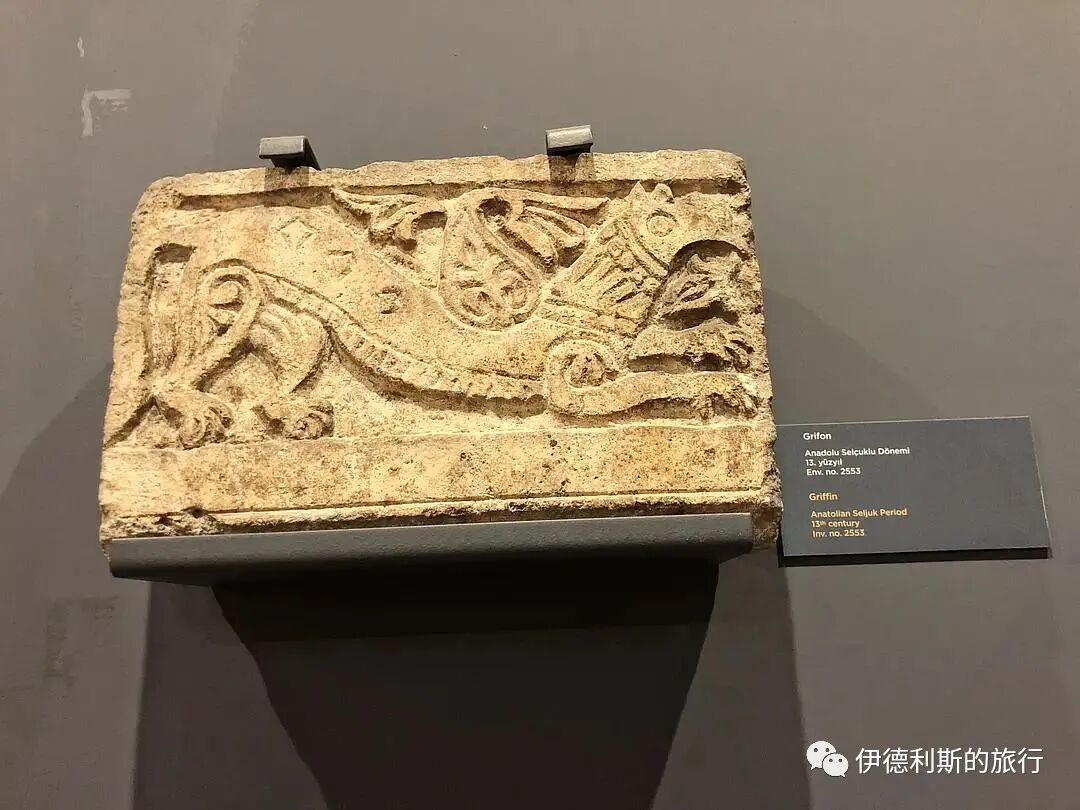
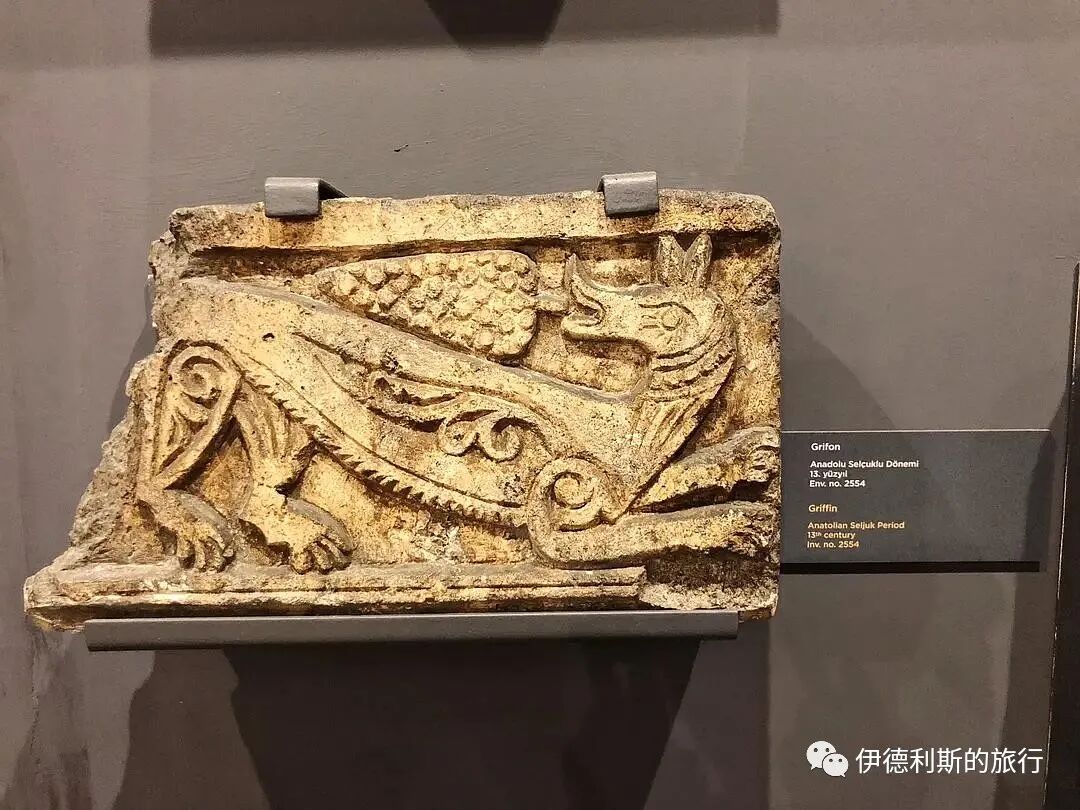
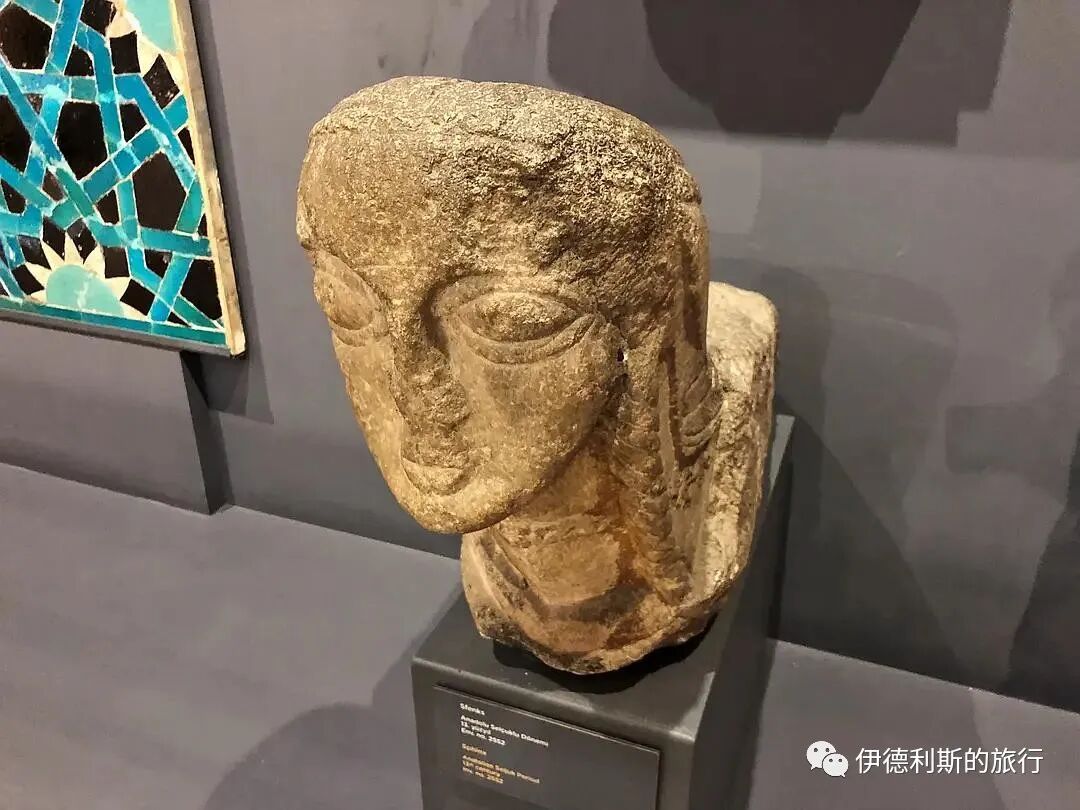
A 13th-century carpet from Konya. These carpets from the Seljuk Sultanate of Rum period are among the most important collections in the Museum of Turkish and Islamic Arts, and are the most unique and precious among Seljuk artifacts.
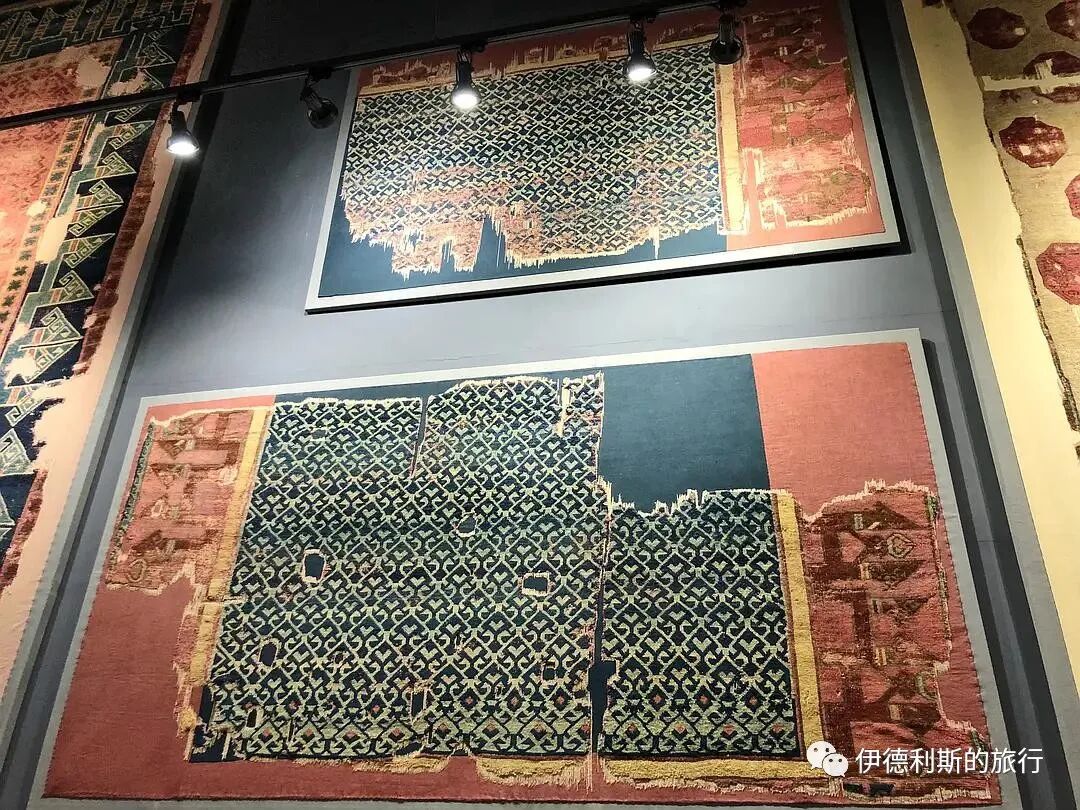
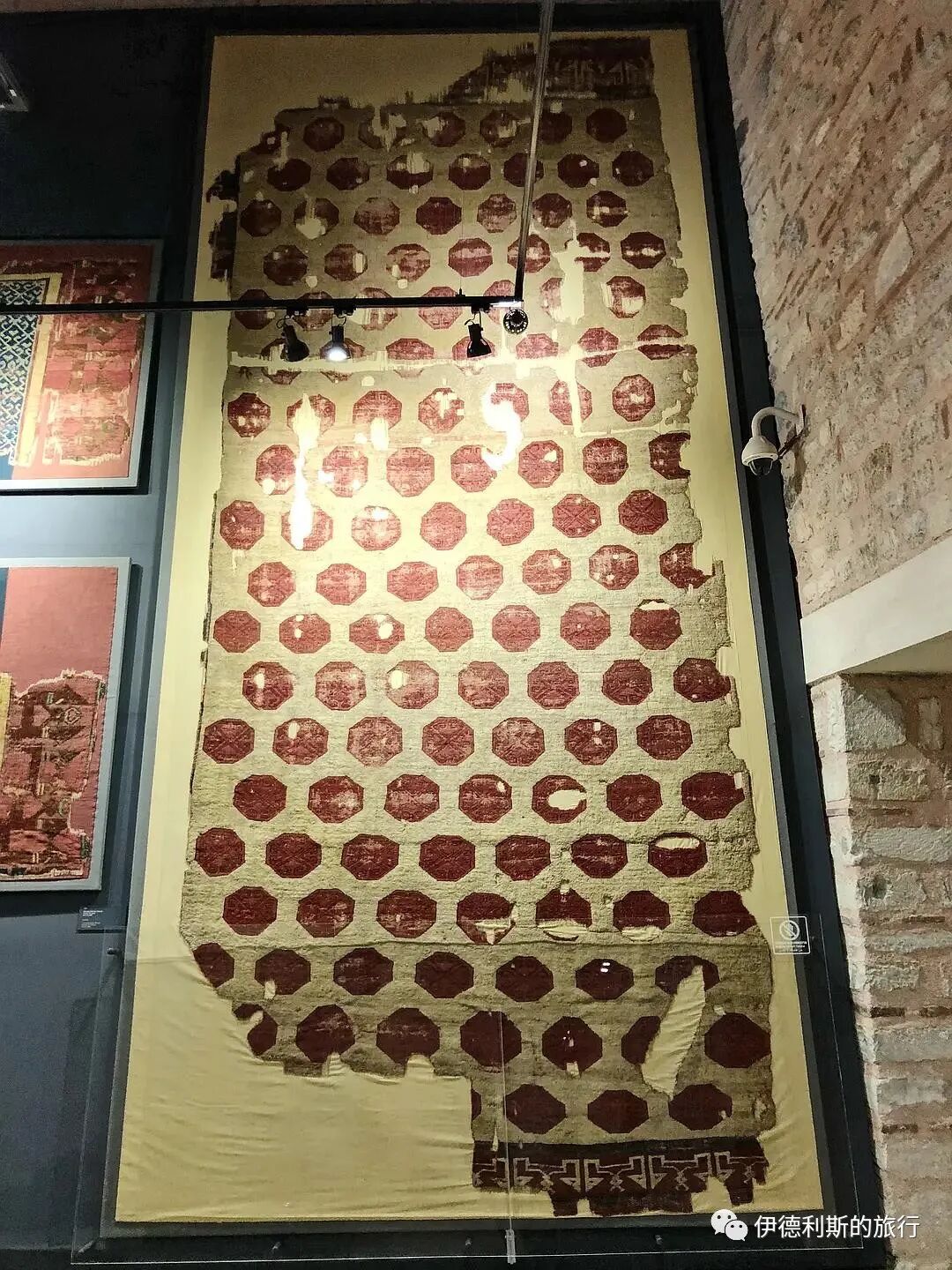
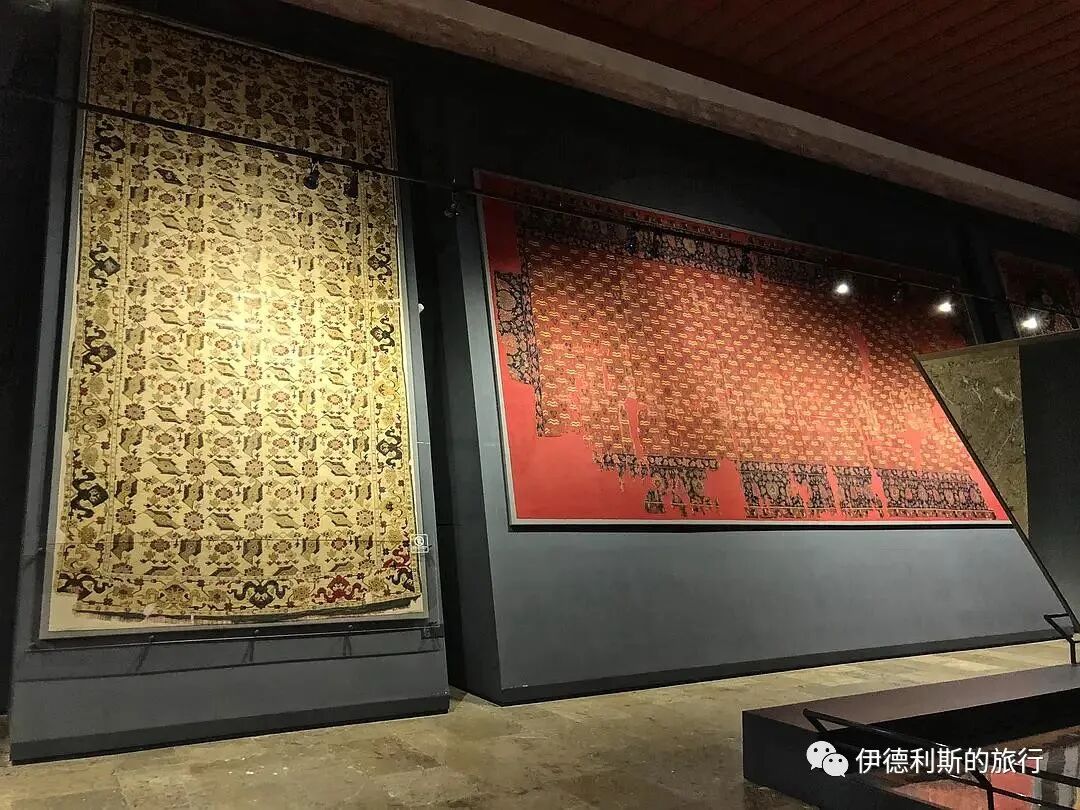
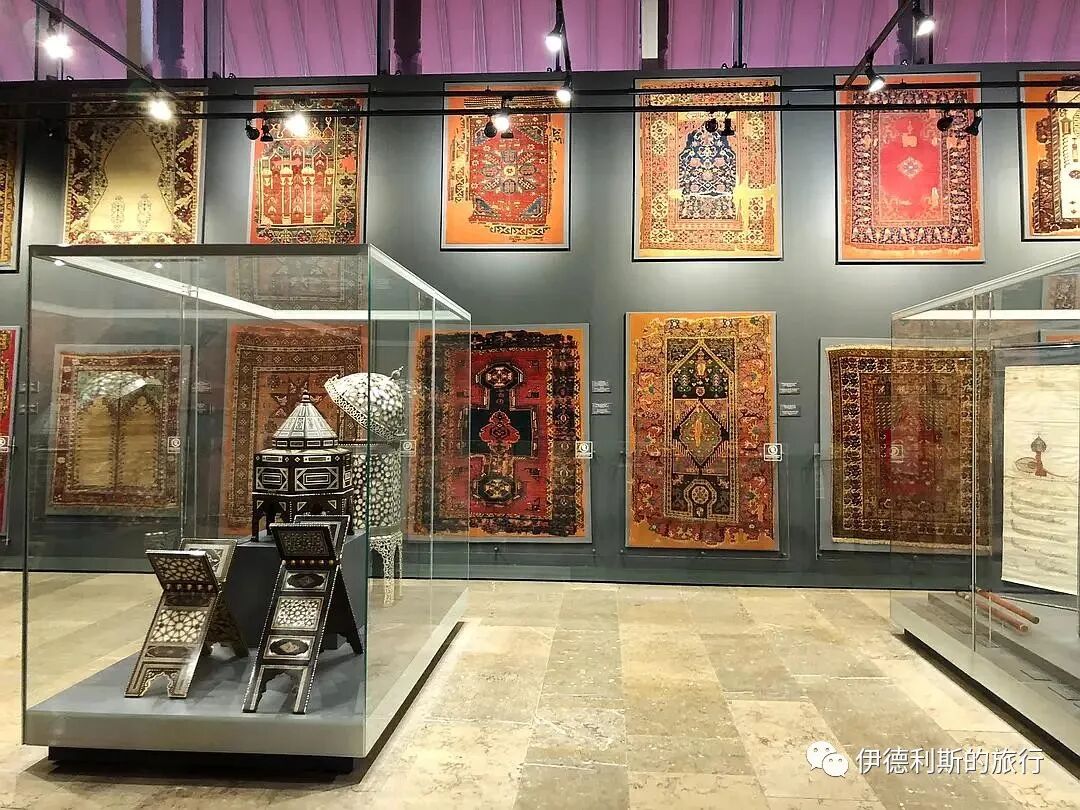
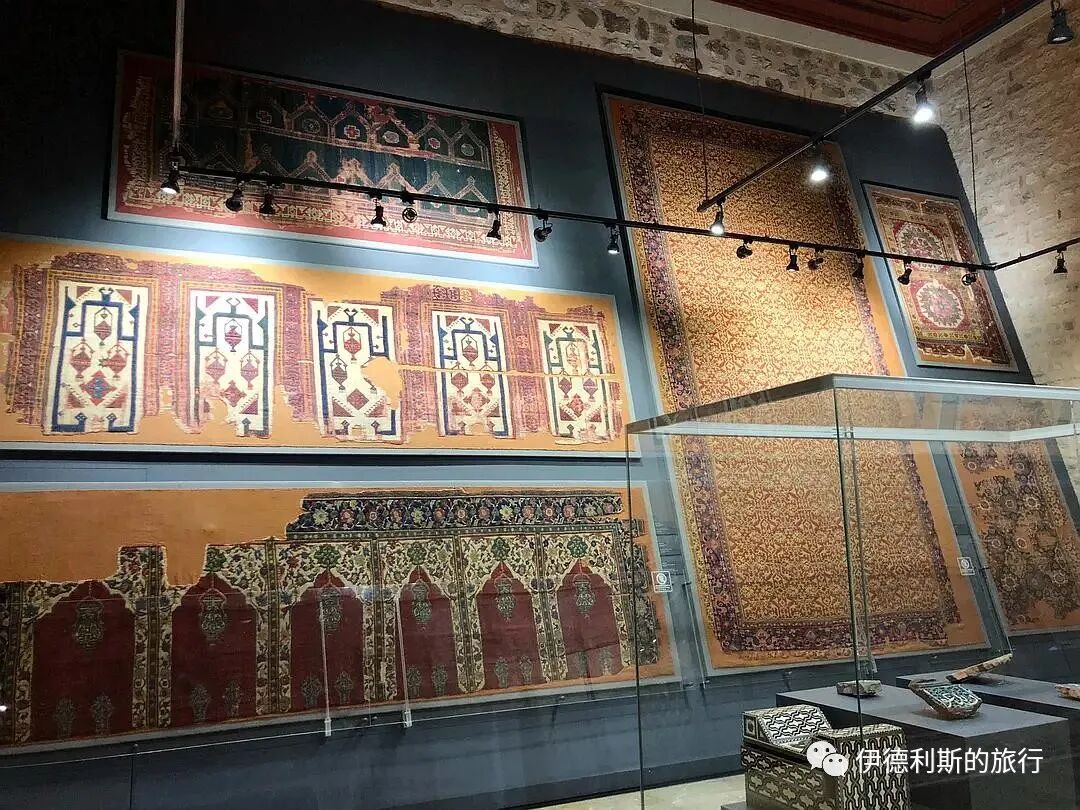
A 13th-century Quran calligraphy tile
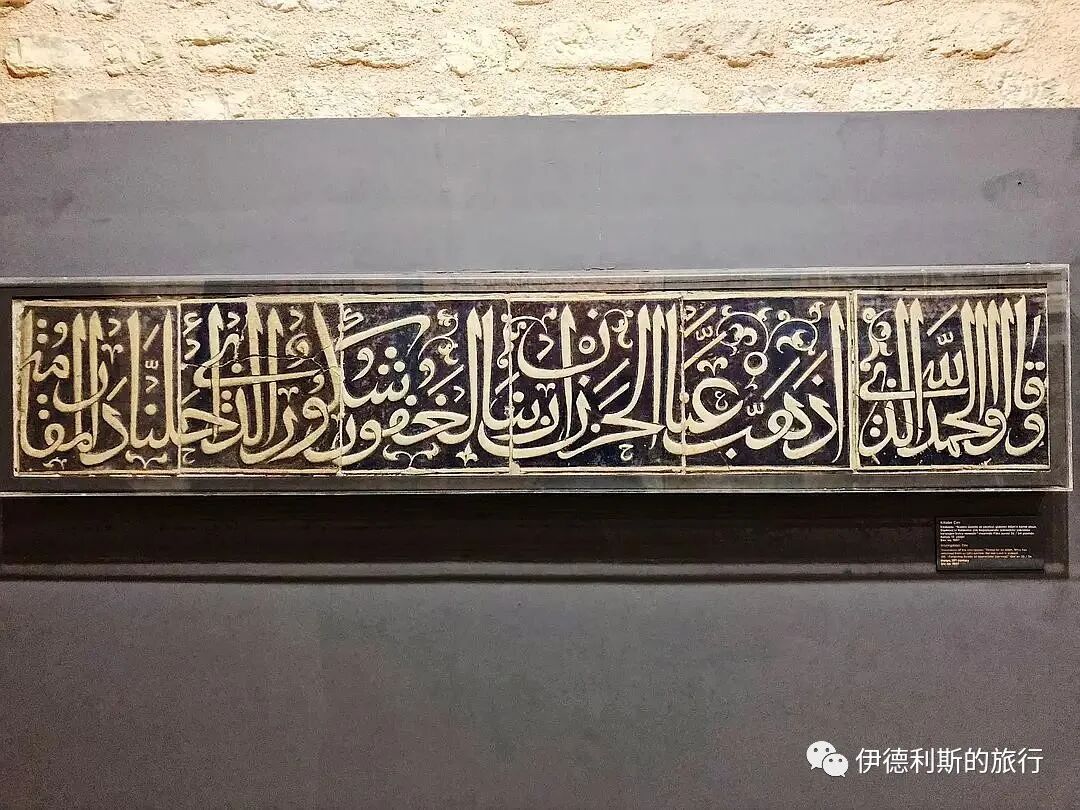
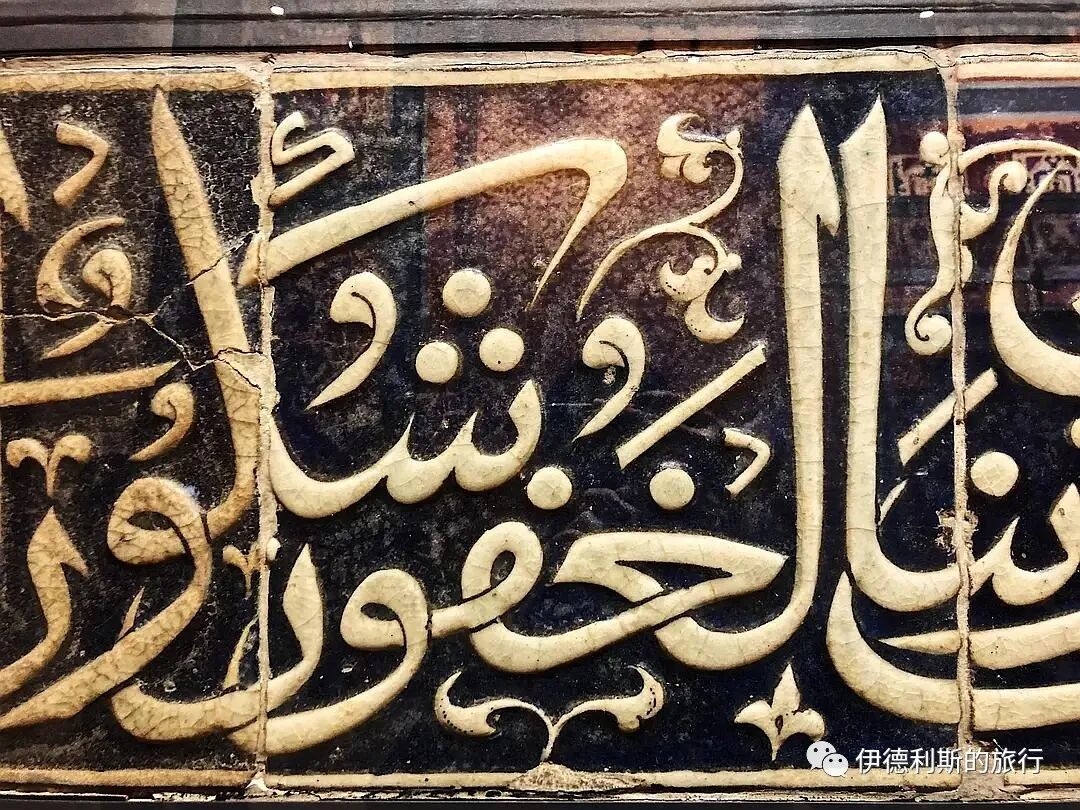
An early 14th-century wooden window
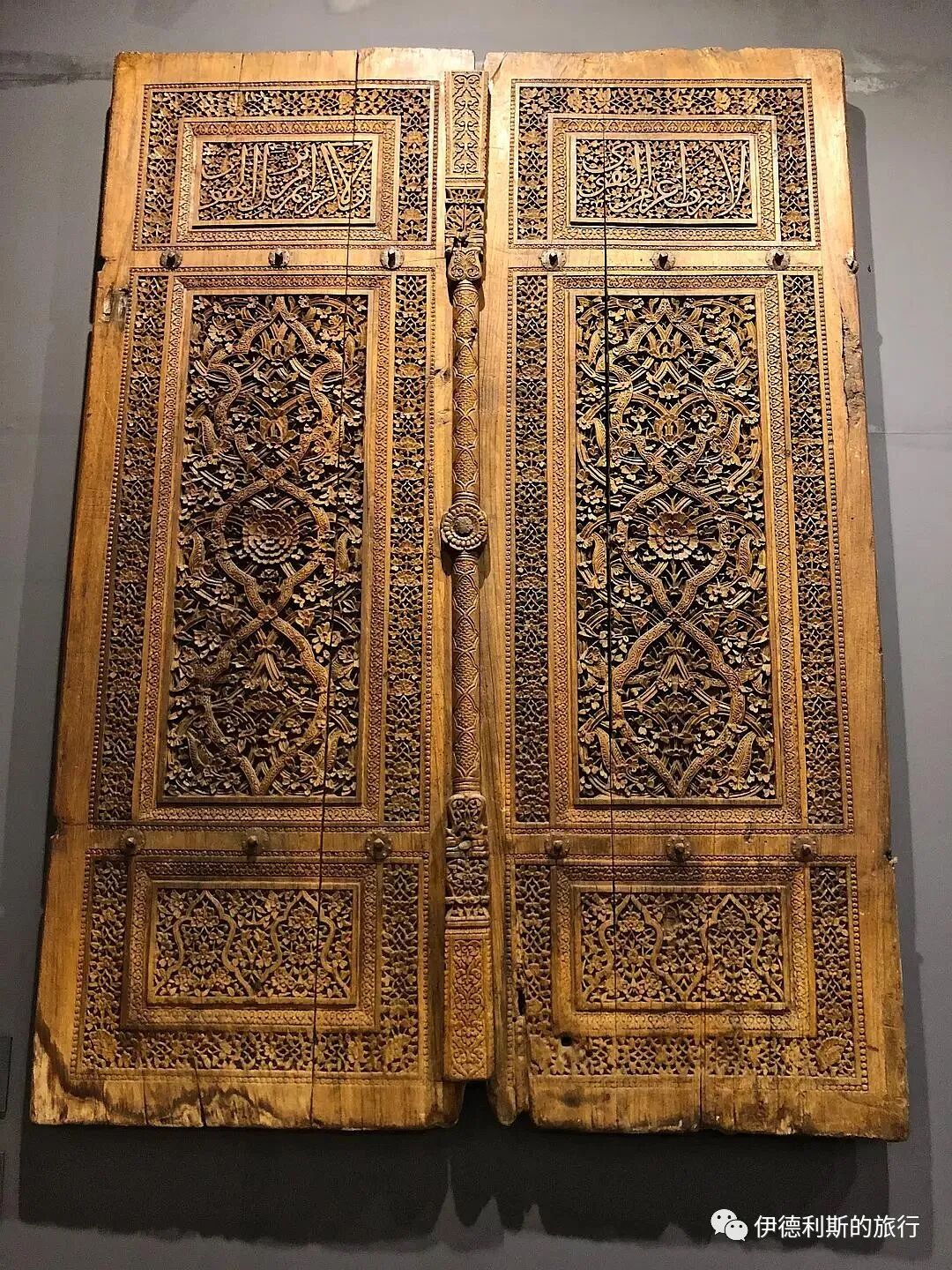
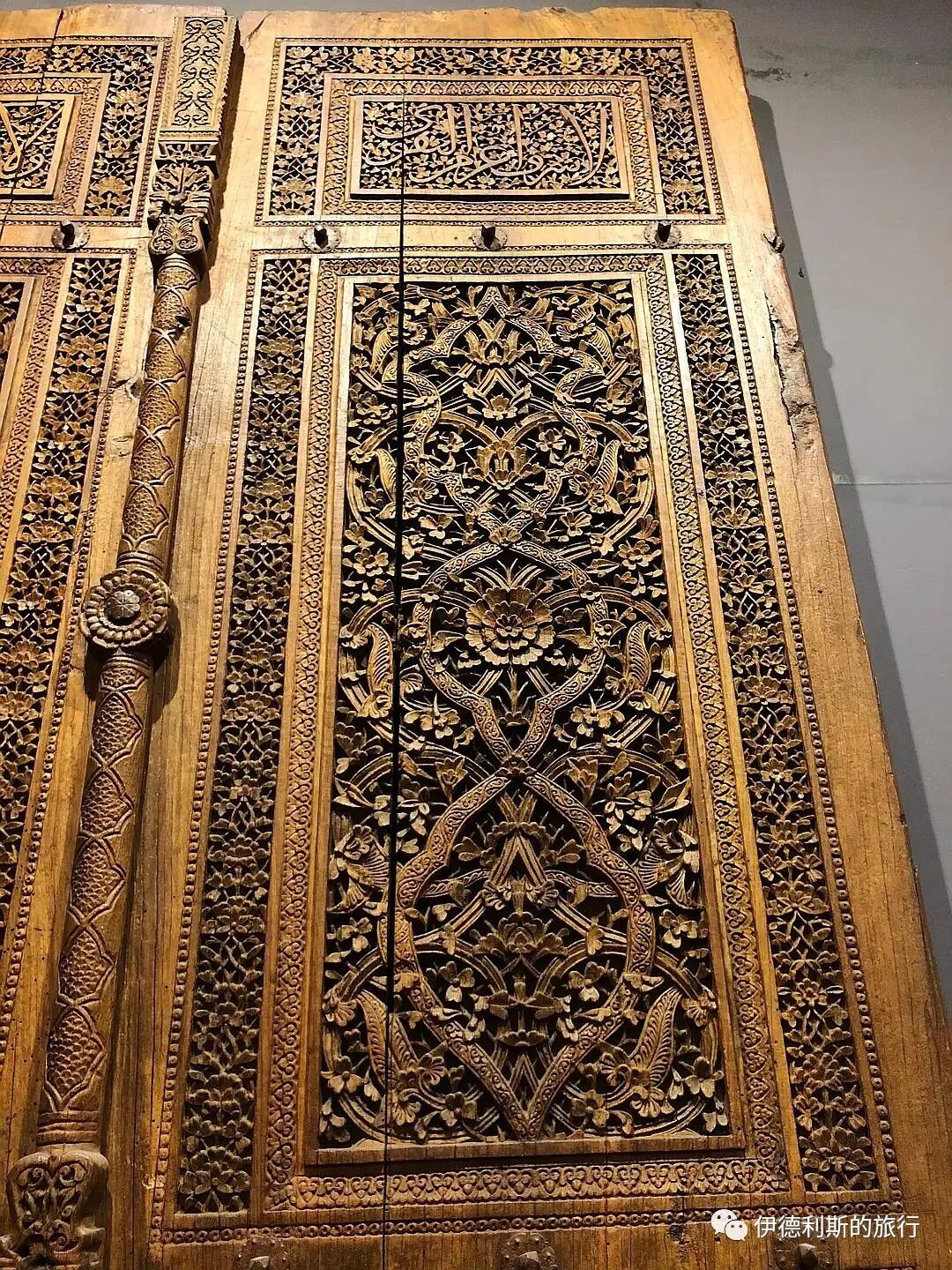
A 1251 tabut (coffin) box and wooden stele
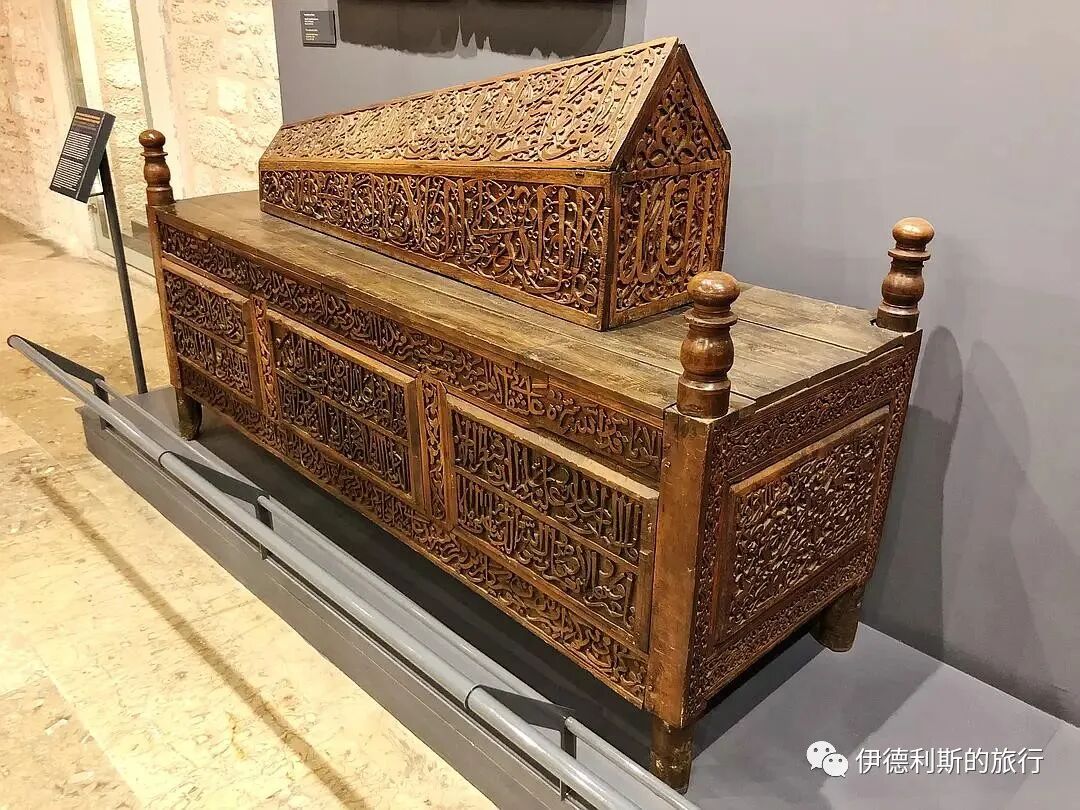
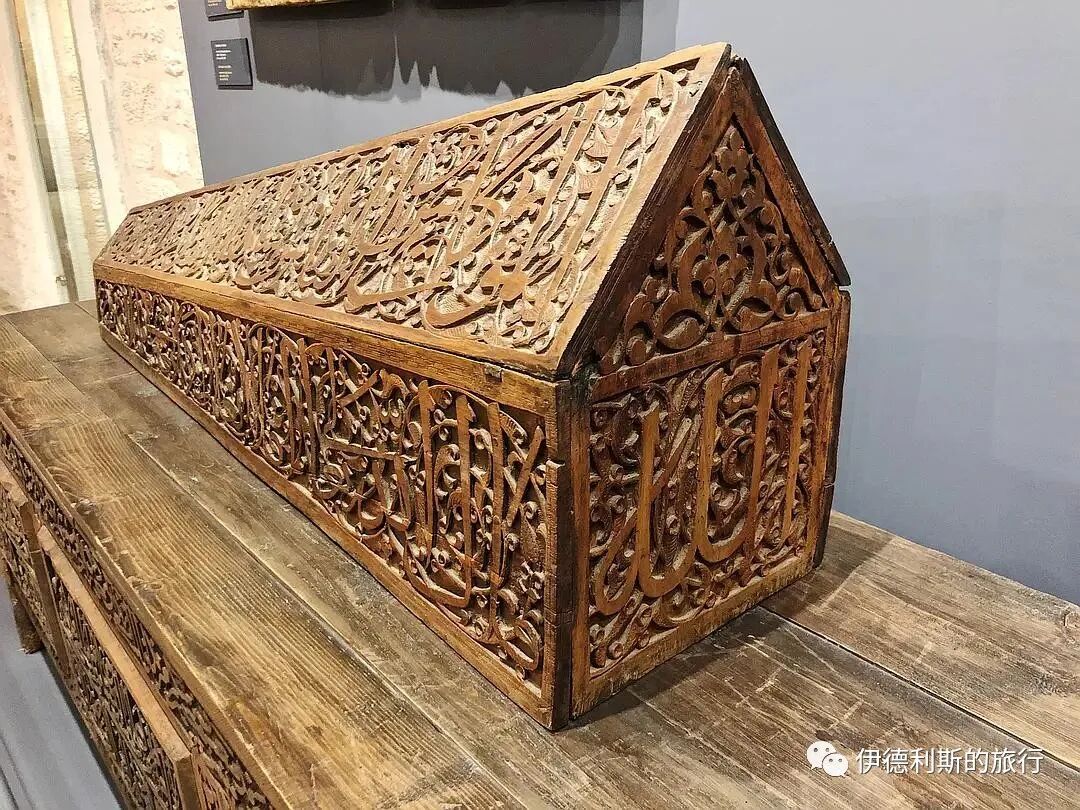
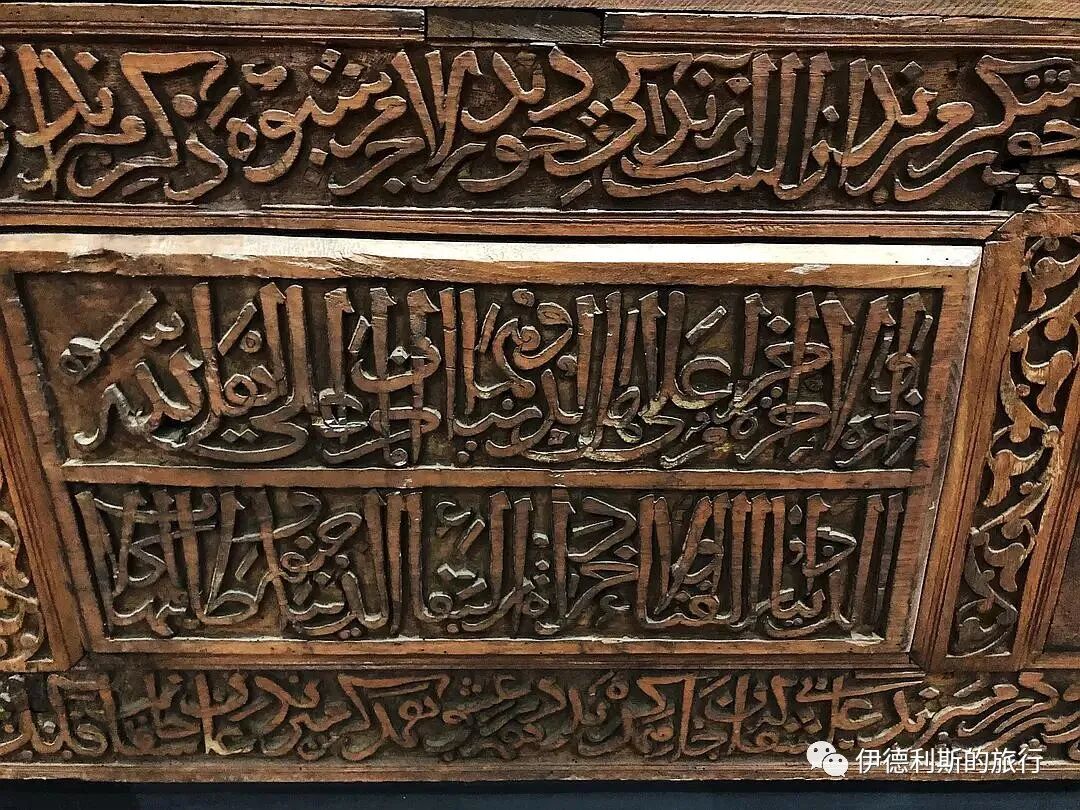
A 13th-century Quran
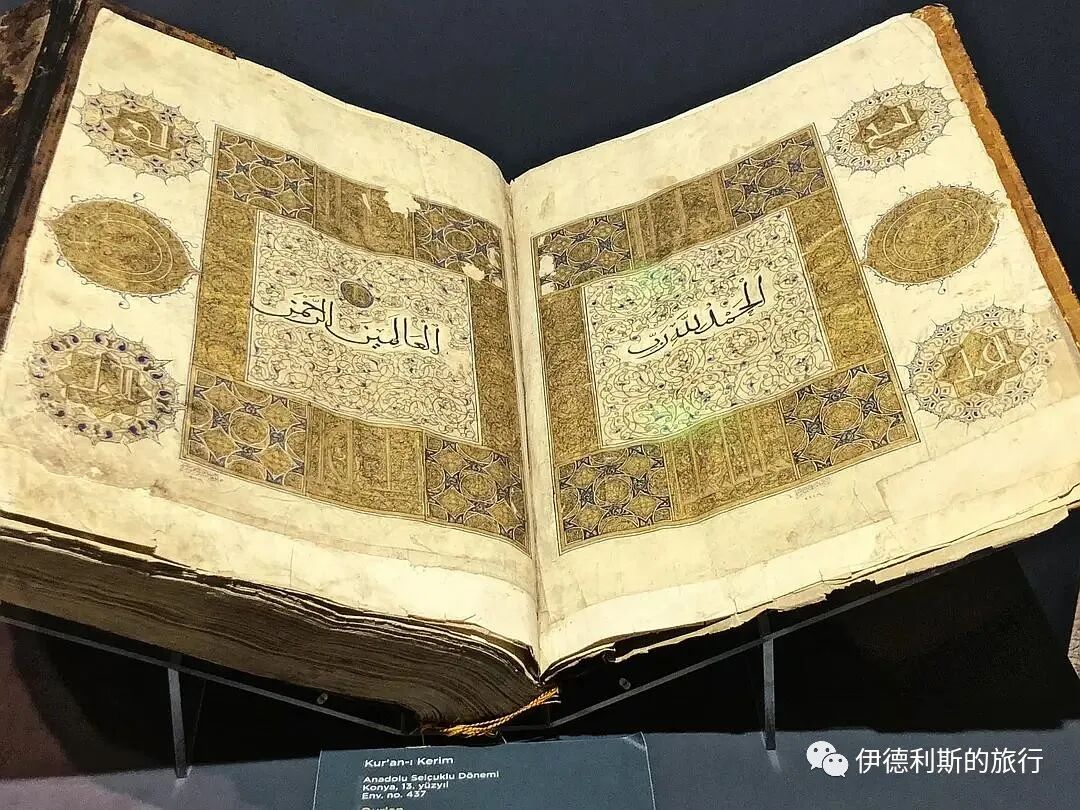
V. Ceramics of the Seljuk Empire: 1040-1157
12th-13th century, Iran
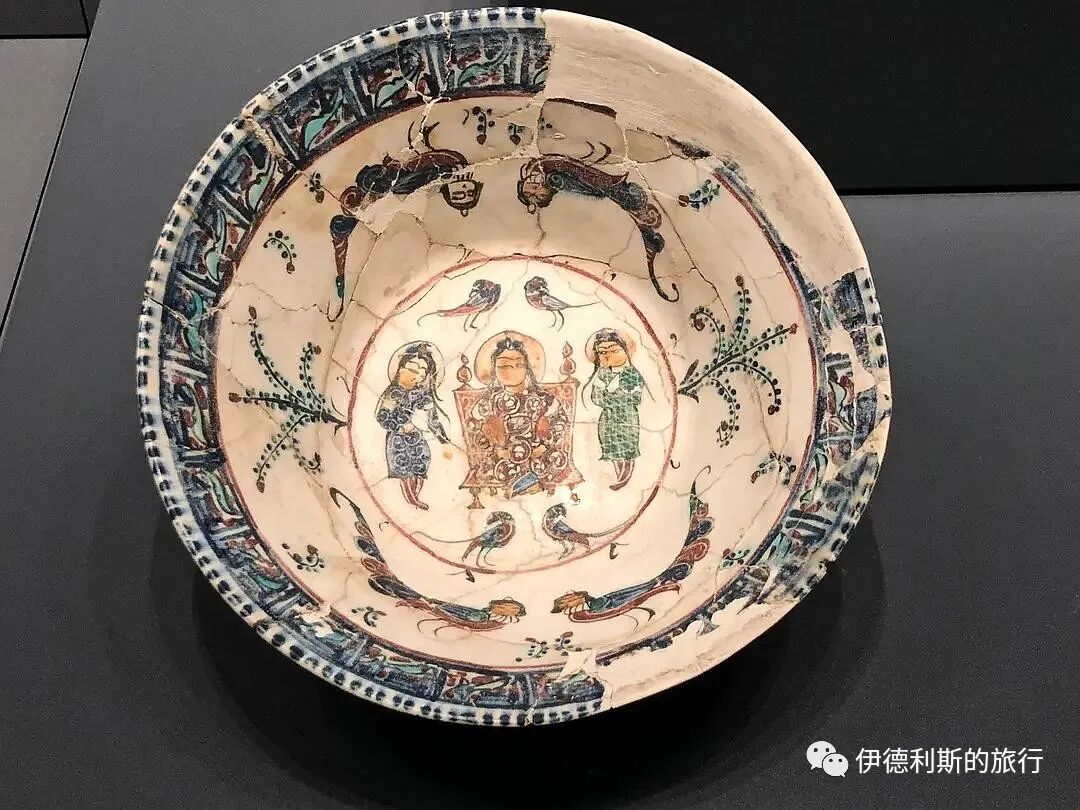
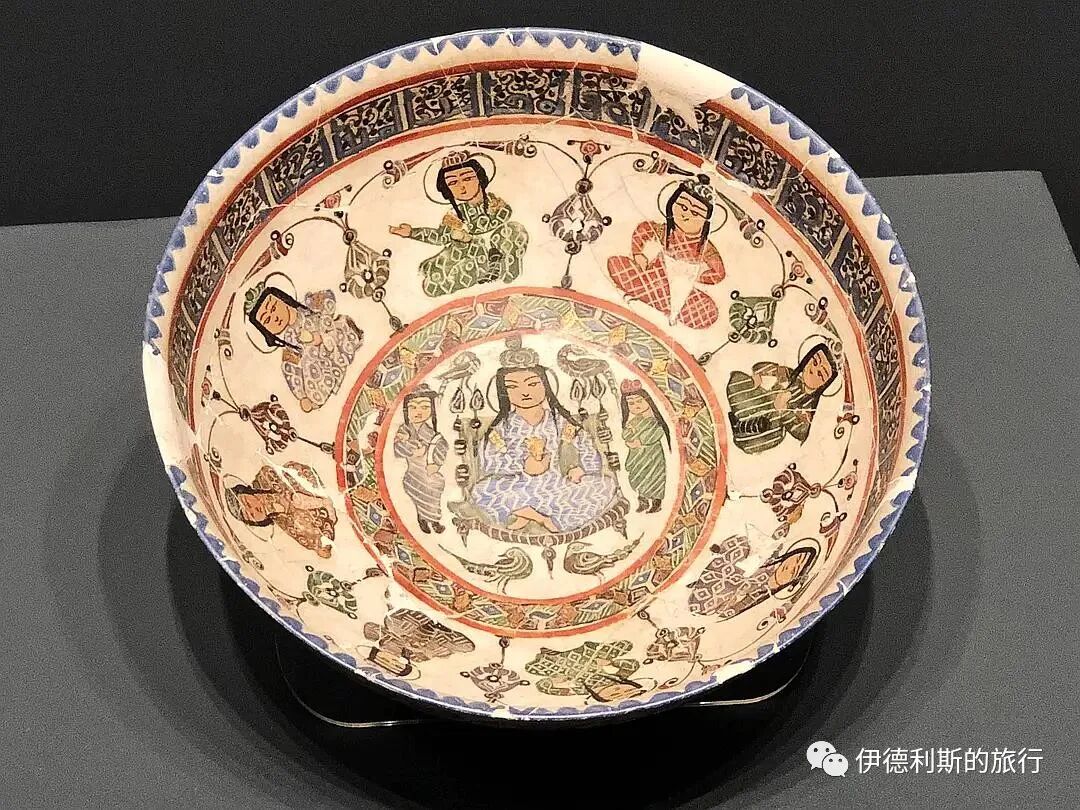
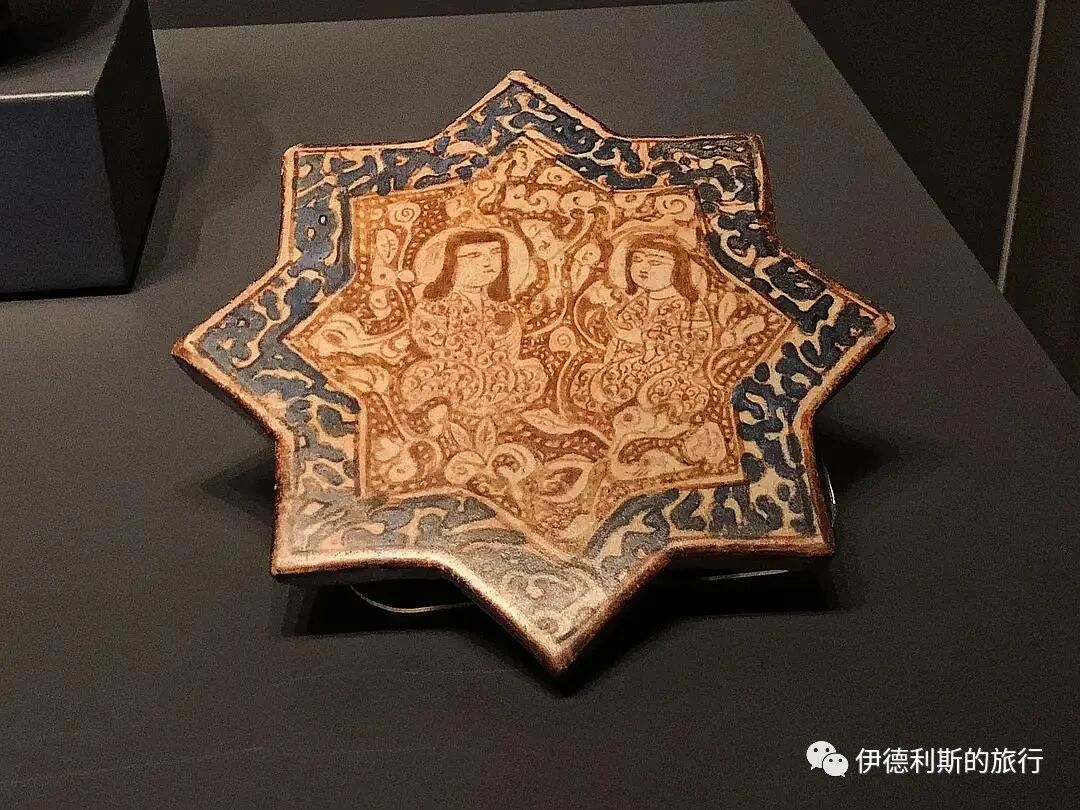
VI. The Ayyubid Dynasty: 1171-1250
The Ayyubid dynasty was established in 1171 by the Kurdish general Saladin. It was an important dynasty during the Crusades, with its capitals successively in Damascus and Cairo. In 1260, the Mongol army captured Damascus, and the Ayyubid dynasty existed in name only.
13th-century wood carving from Damascus.
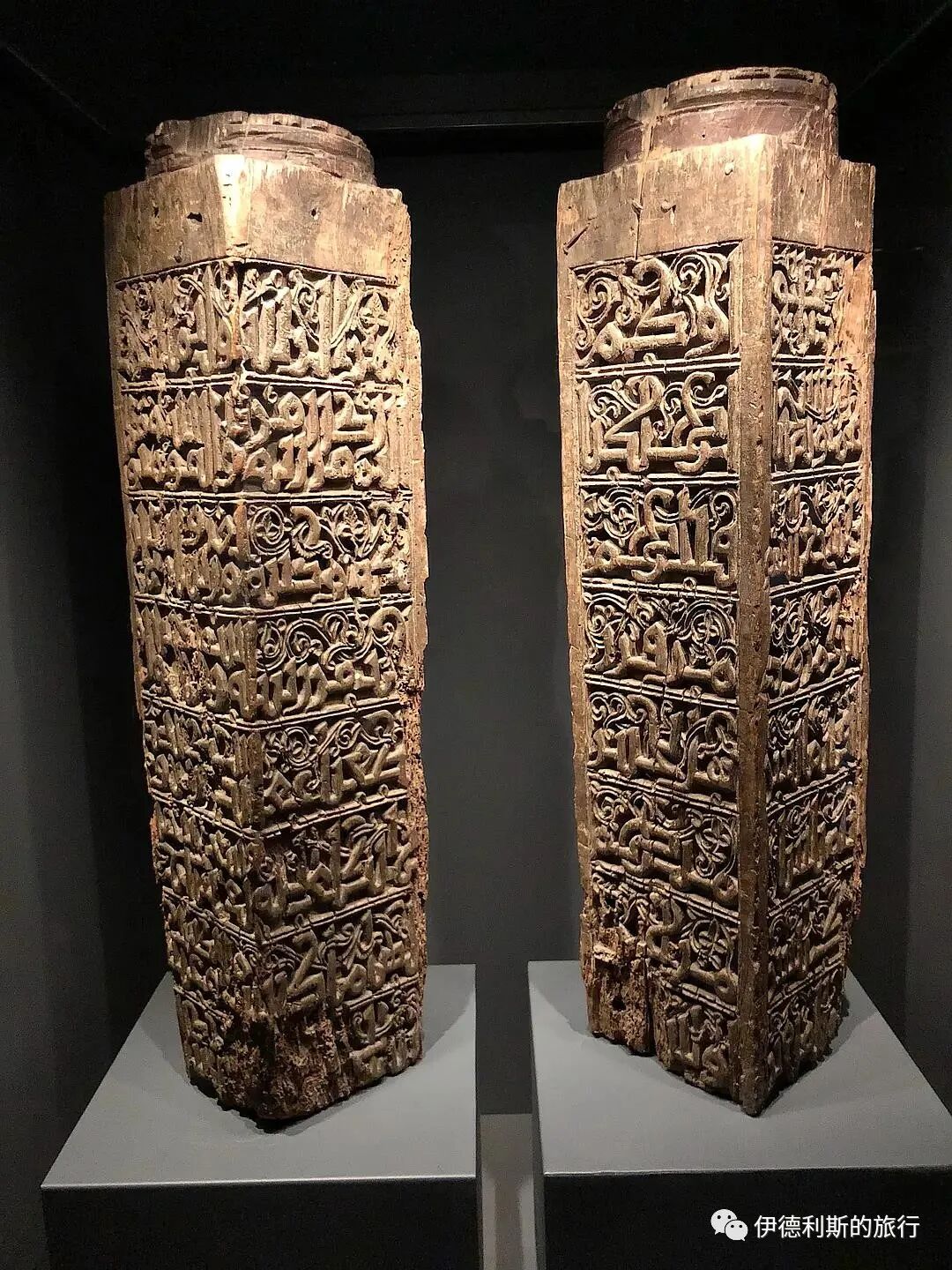
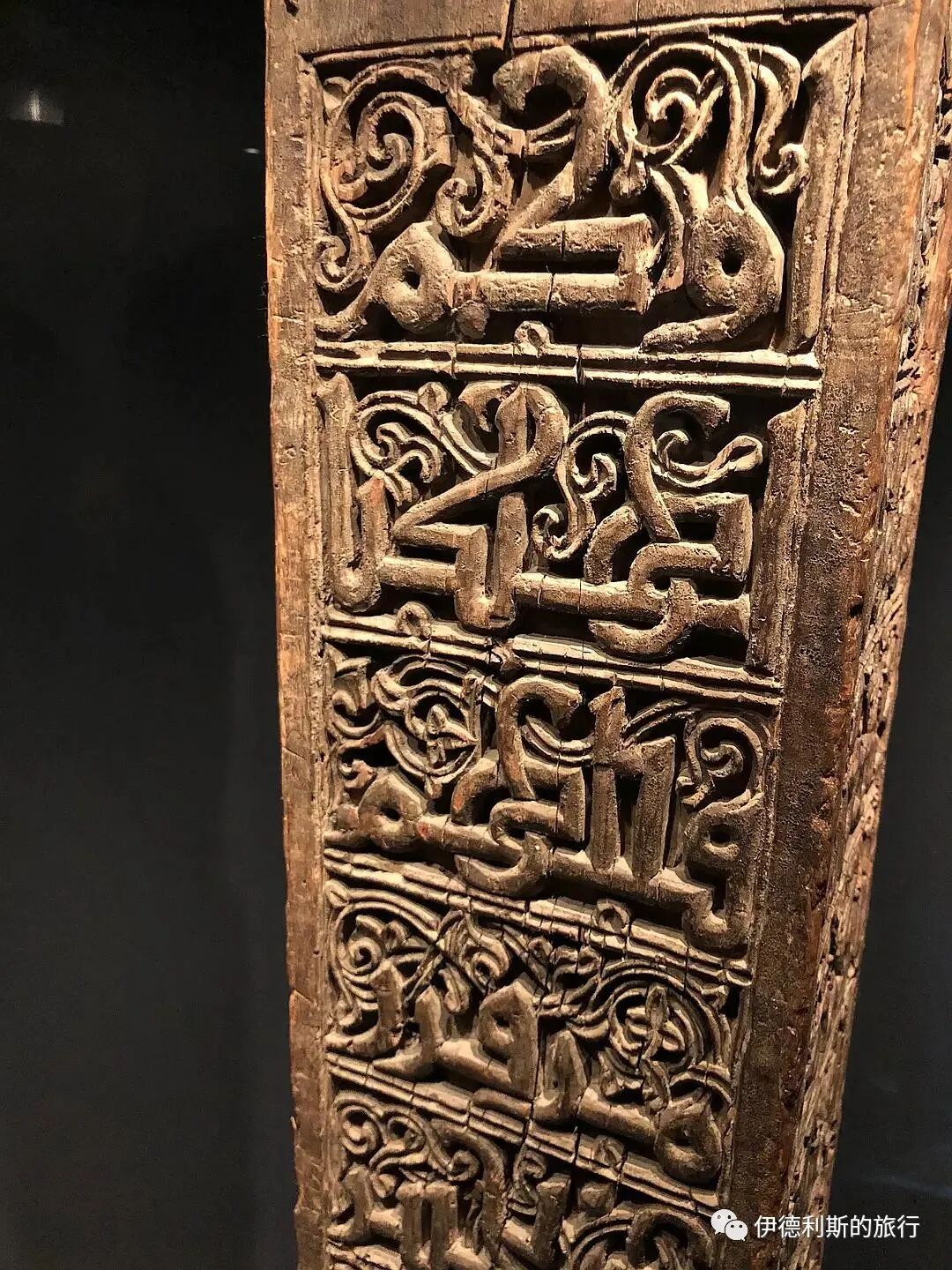
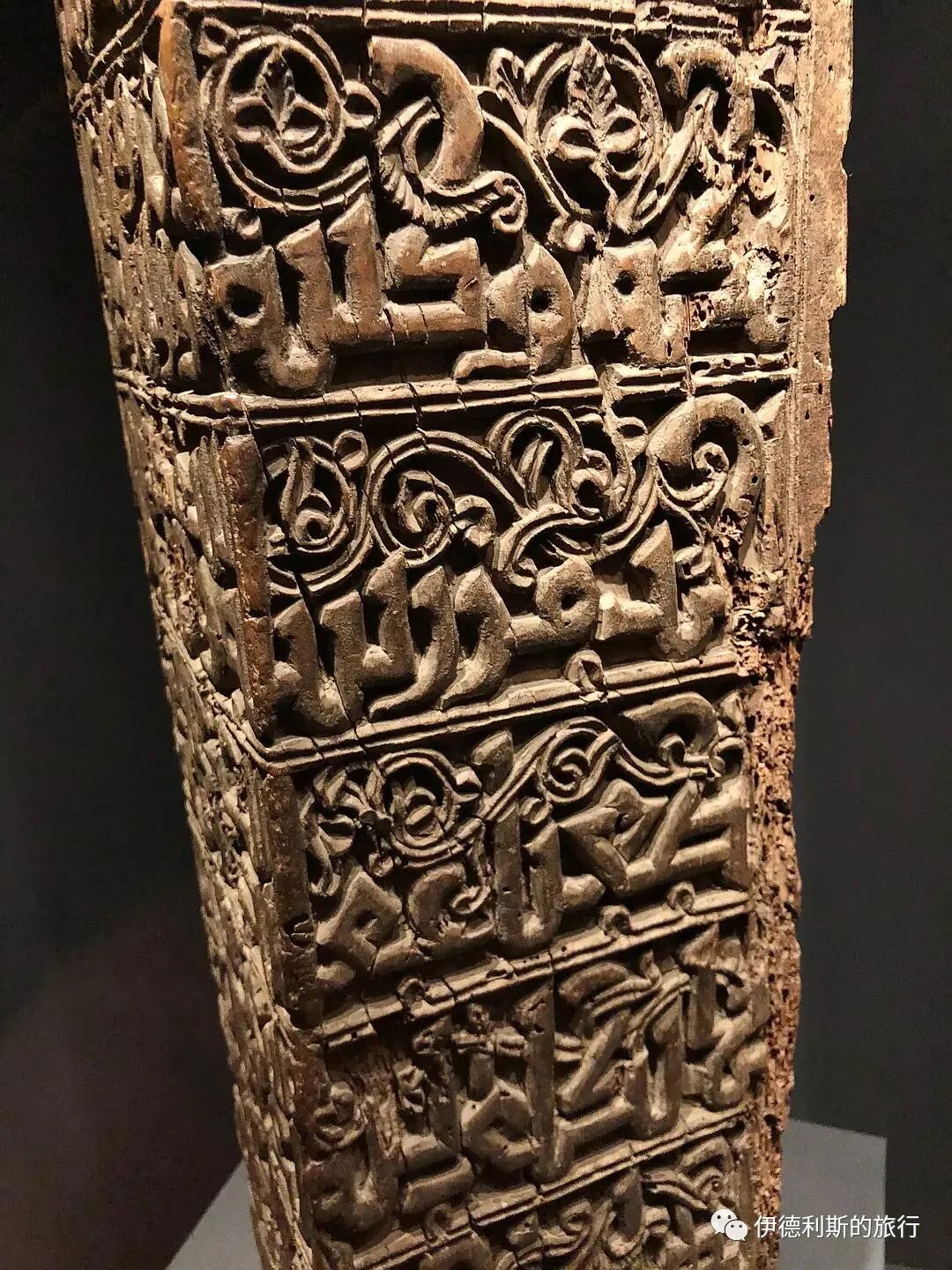
12th-13th century ceramic bowl.
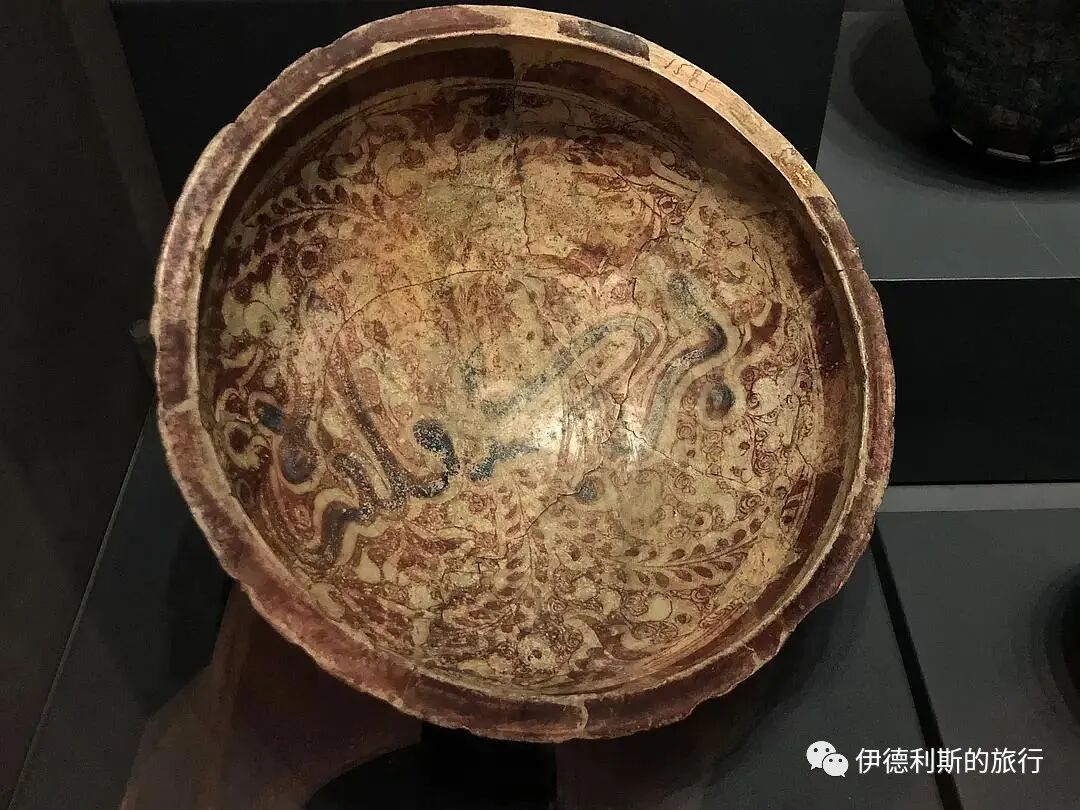
A 1205 Hajj certificate
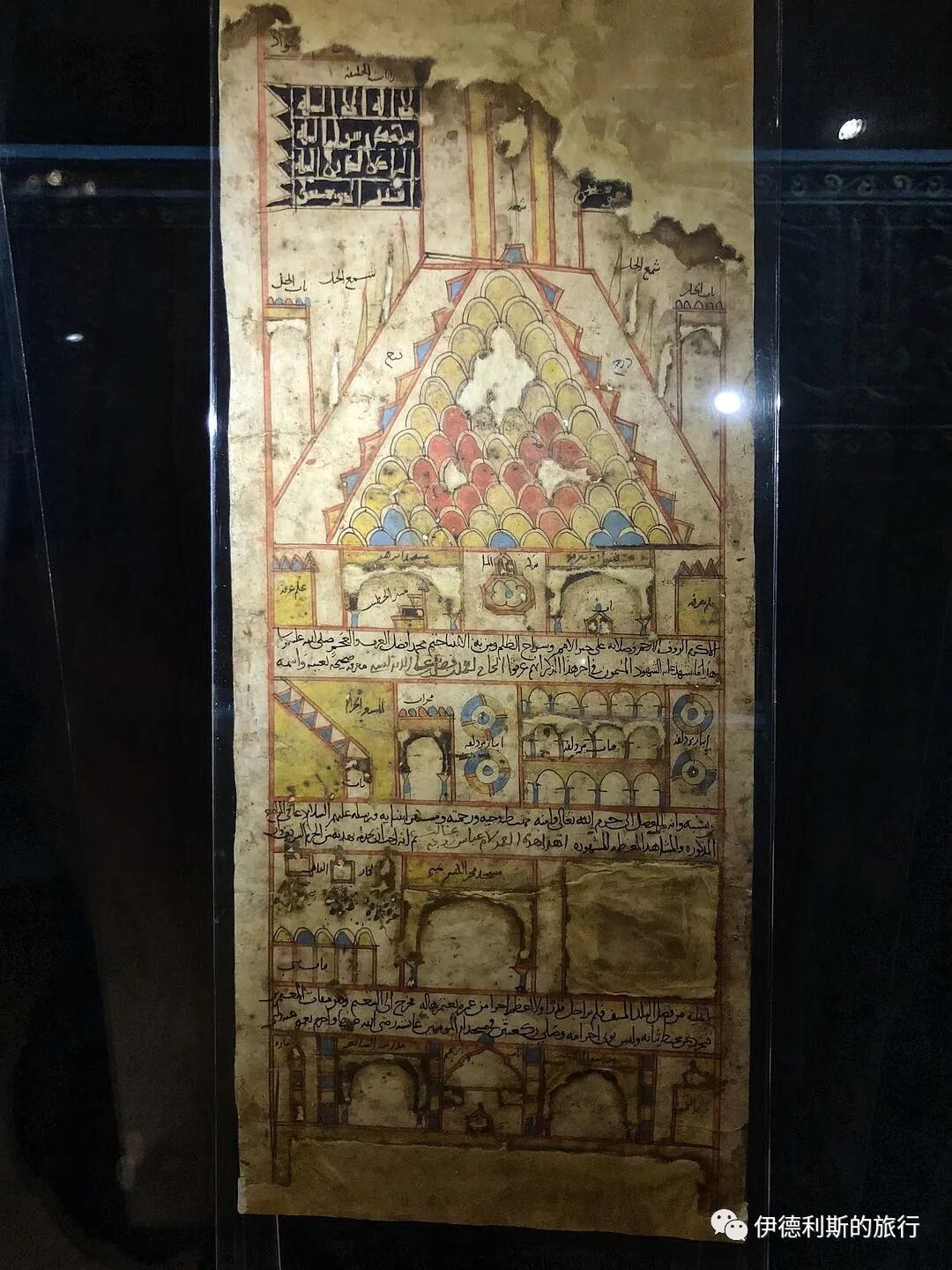
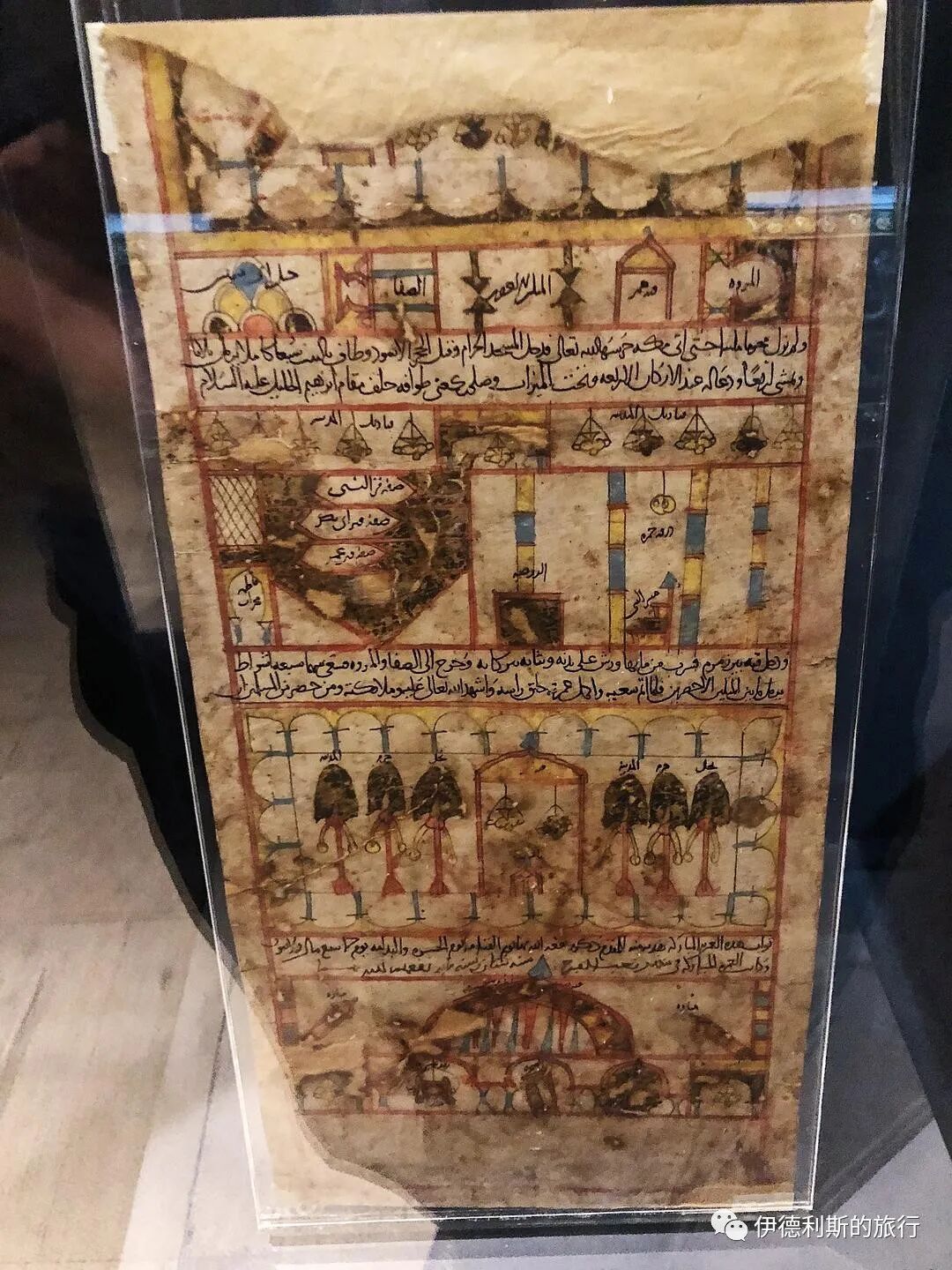
VII. The Mamluk Sultanate: 1250-1517
The Mamluk Sultanate was a state that ruled Egypt, the Levant, and the Hejaz region from the 13th to the 16th century. Most Mamluks were Kipchak Turks from Central Asia. They were brought to Western Asia as slave mercenaries and became an important force in the military during the Ayyubid dynasty. In 1260, they overthrew the Ayyubid dynasty to rule Egypt and Syria, and subsequently prevented the invasion of the Ilkhanate. In 1517, the Mamluk Sultanate was destroyed by the Ottoman Empire.
A late 14th-century Quran manuscript (Juz').
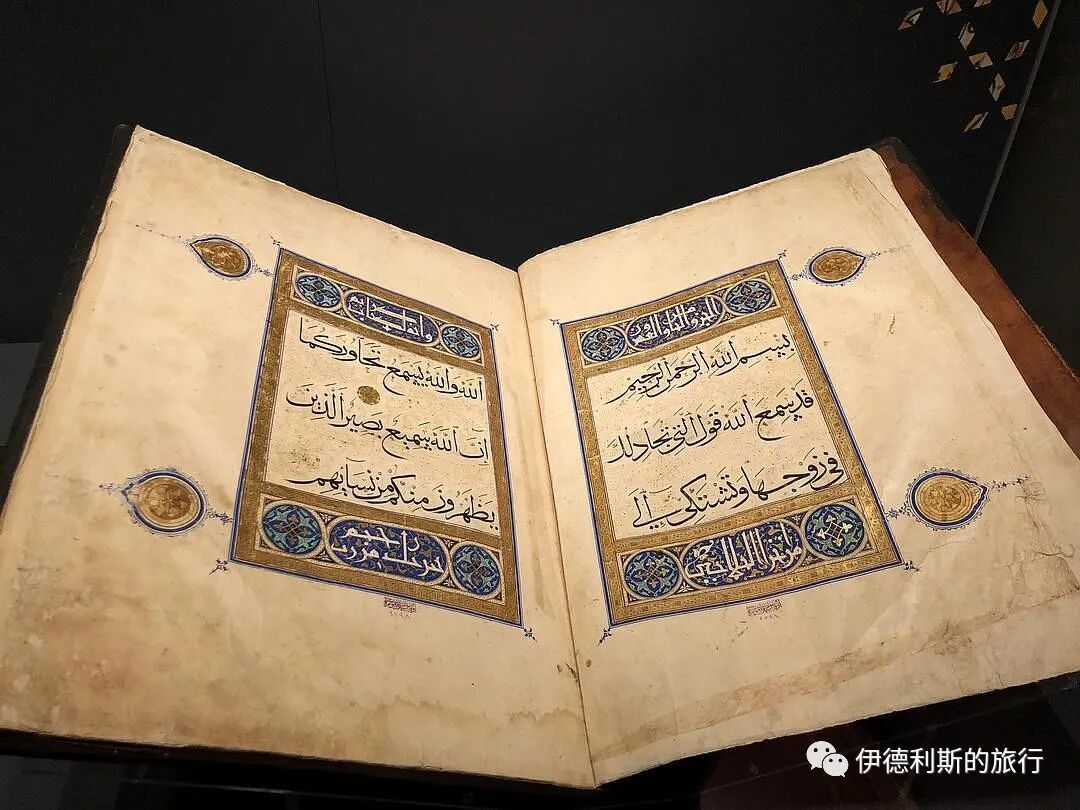
A 1380 Quran manuscript.
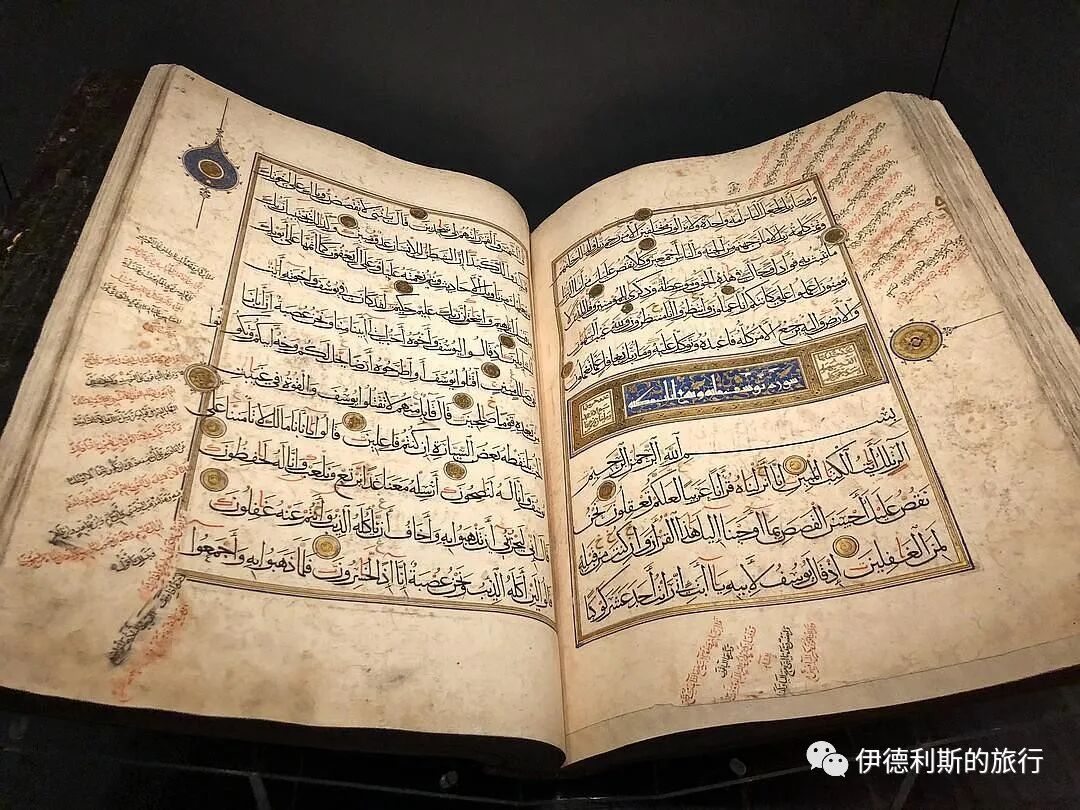
A 14th-century ceramic vase.
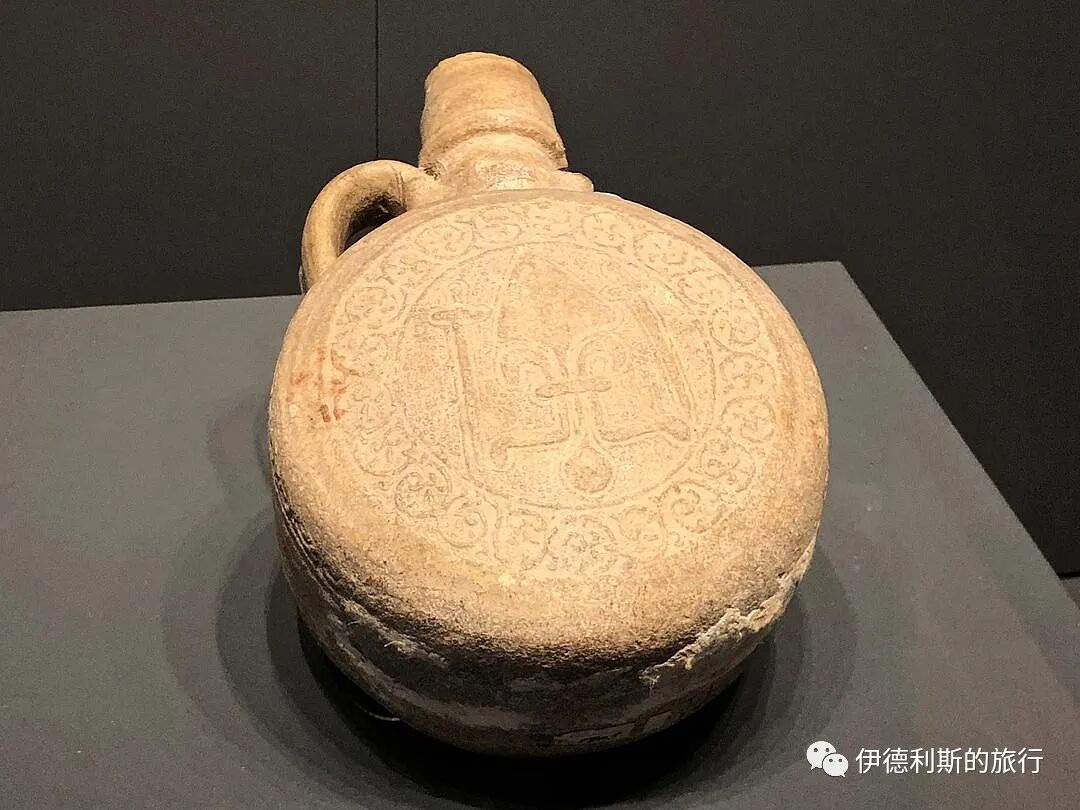
A 1282 astrolabe.
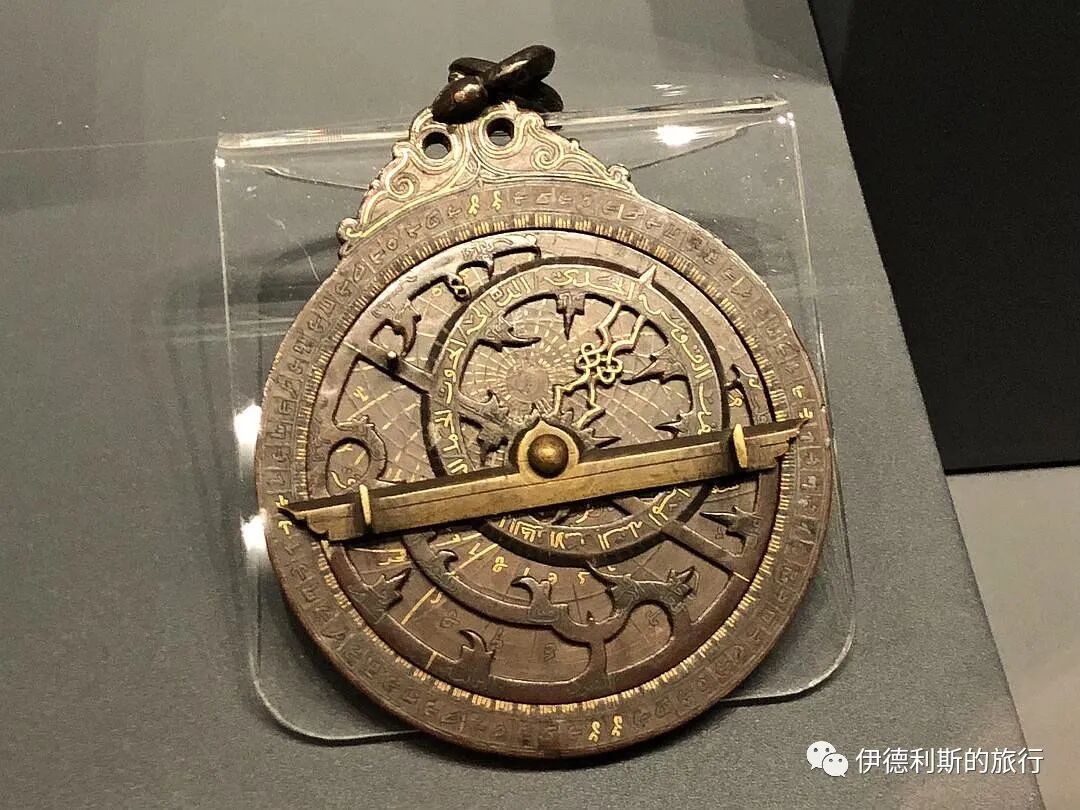
VIII. The Ilkhanate: 1256-1353
In 1256, Hulagu, the grandson of Genghis Khan, was enfeoffed as the Ilkhan, establishing the Ilkhanate. In 1260, Kublai Khan sent an envoy to issue an edict, placing the lands west of the Amu Darya up to the Egyptian border, including present-day Iran and Afghanistan, under Ilkhan rule.
A 1333-4 Quran manuscript, copied by Muhammed el-Hac Devletshah esh-Shirazi.
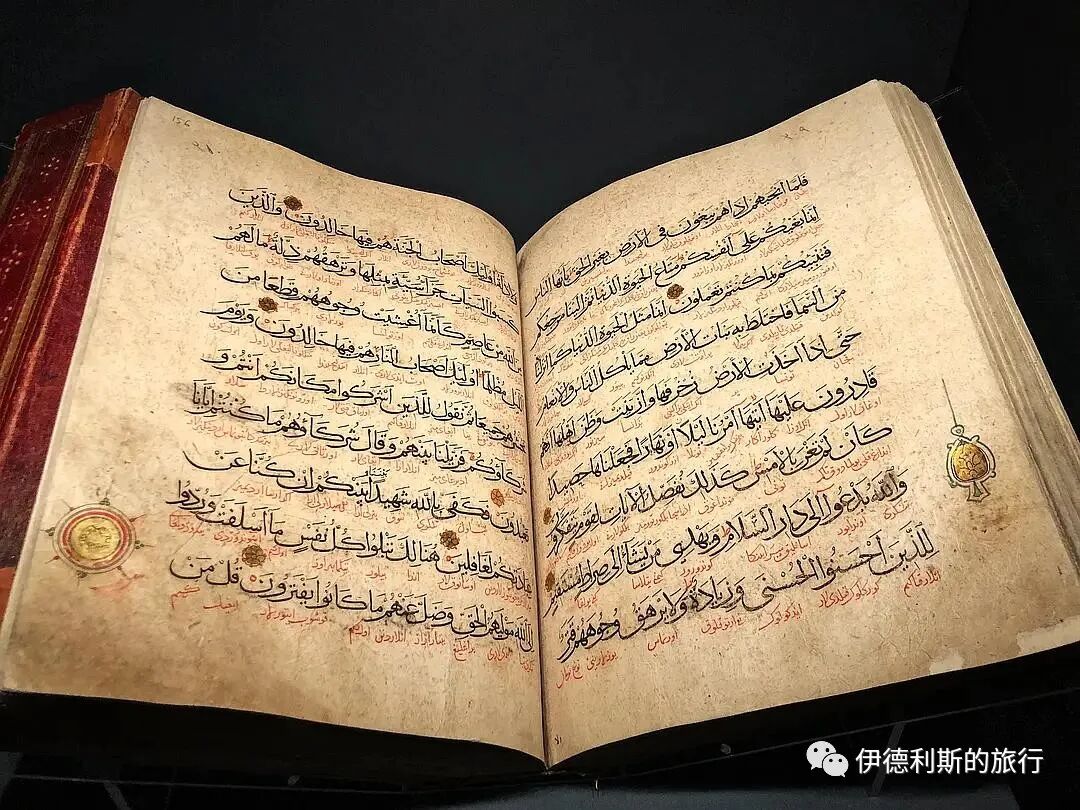
A 1338-9 Quran manuscript, copied by Yahya el-Sufi.
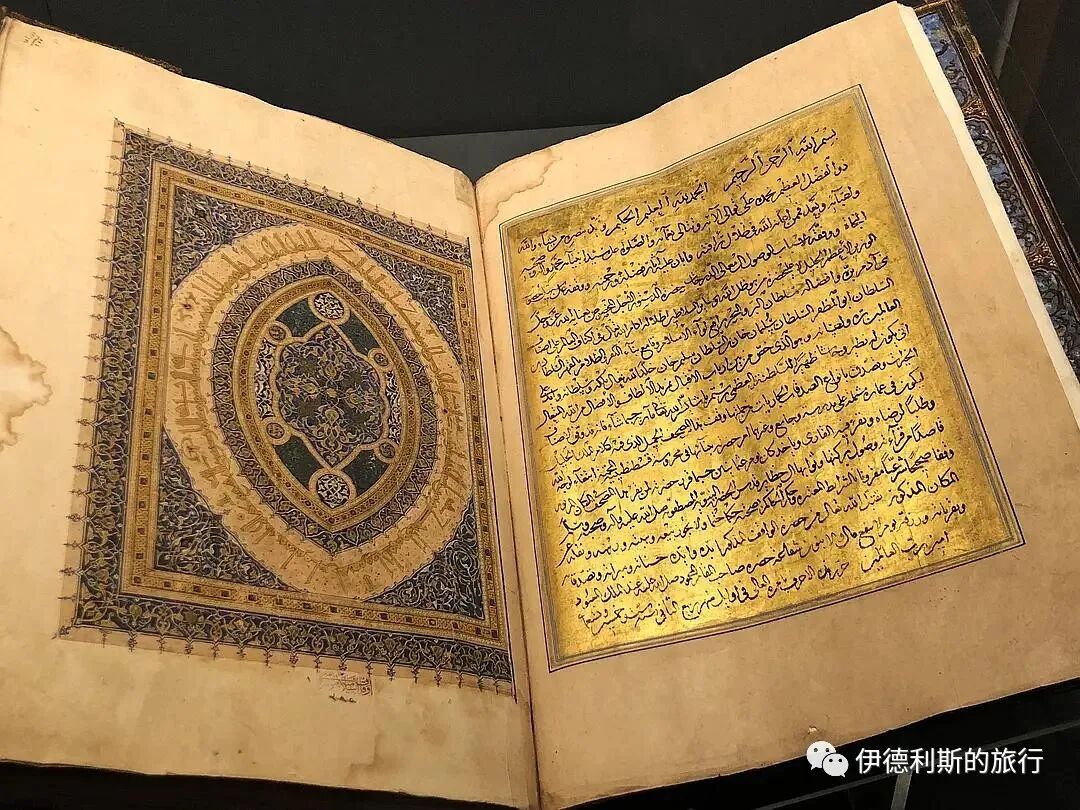
A 1318 Quran manuscript, copied by Ahmed b. al-Suhreverdi.
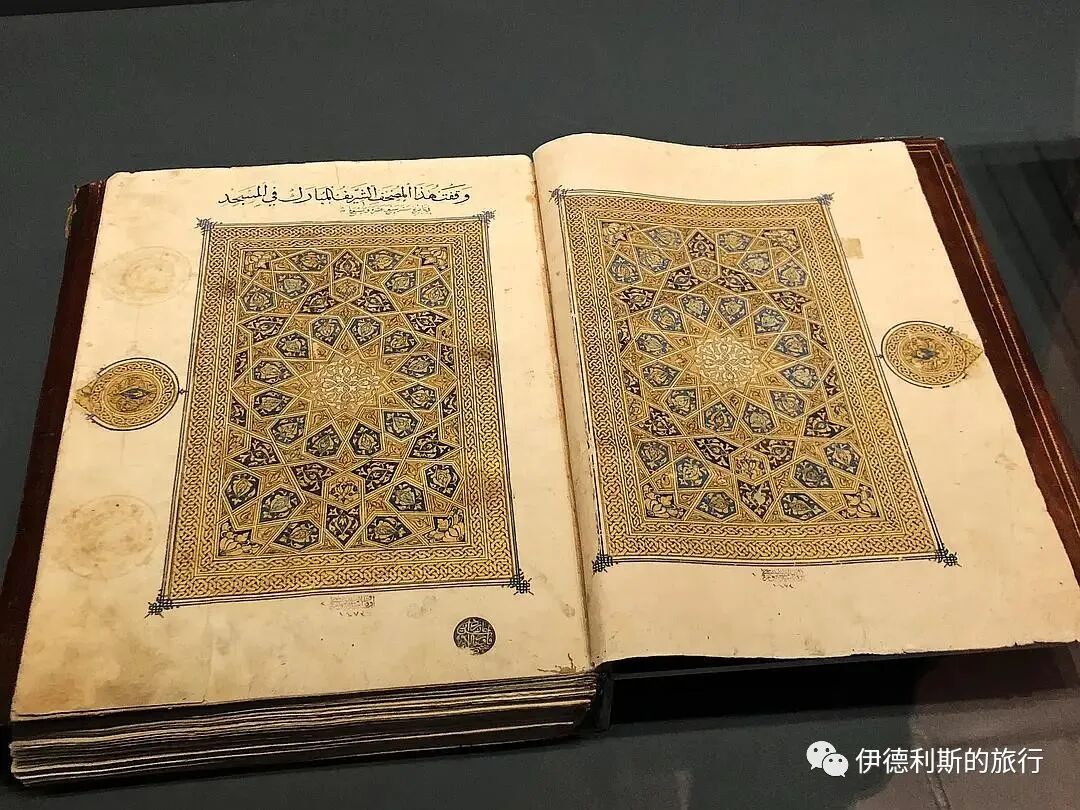
A 1323-4 Quran manuscript, copied by Huseyin bin Ali bin Camii.
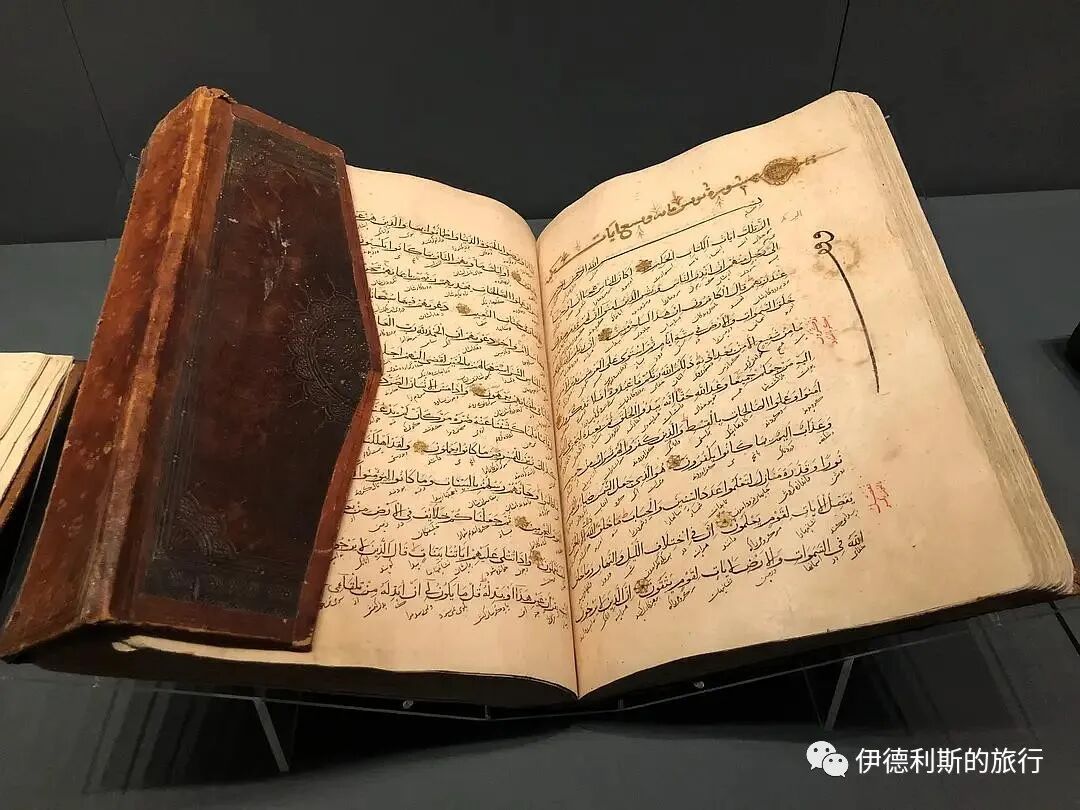
A 1320-21 Quran manuscript, copied by Argun bin Abdullah Kamili.
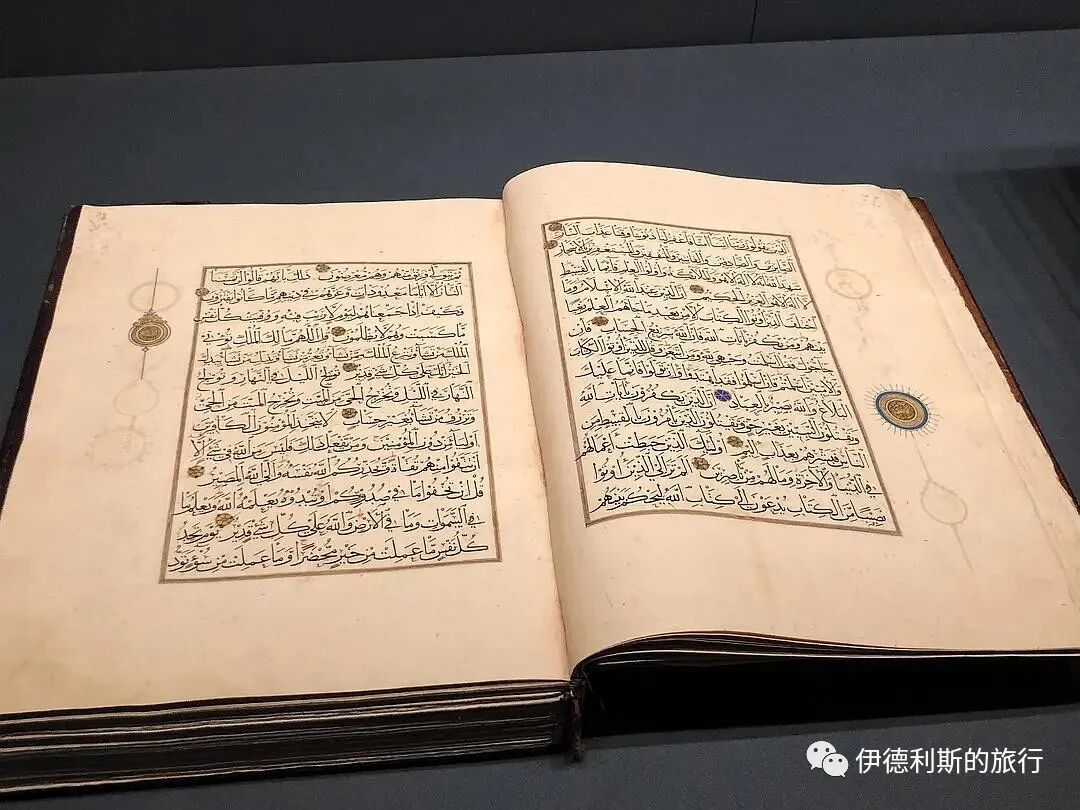
Two Quran manuscript volumes (Juz') copied by Ali ibn-i Mehmed in 1306-7 and 1310-11.
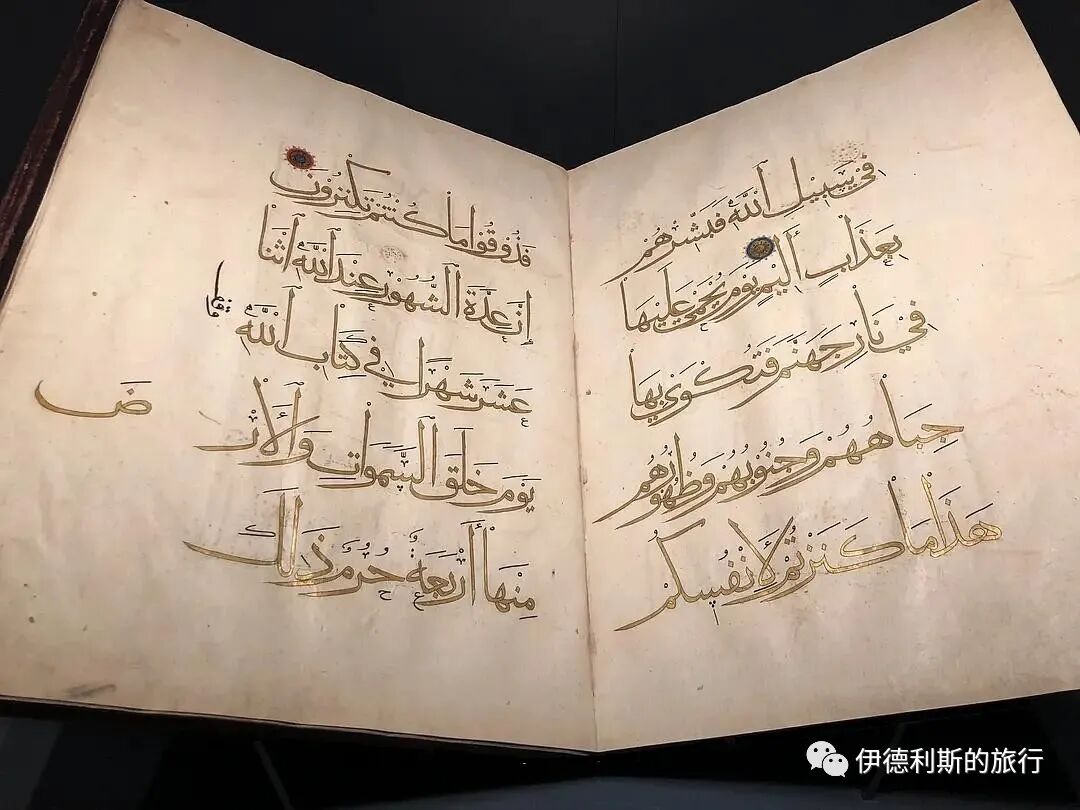
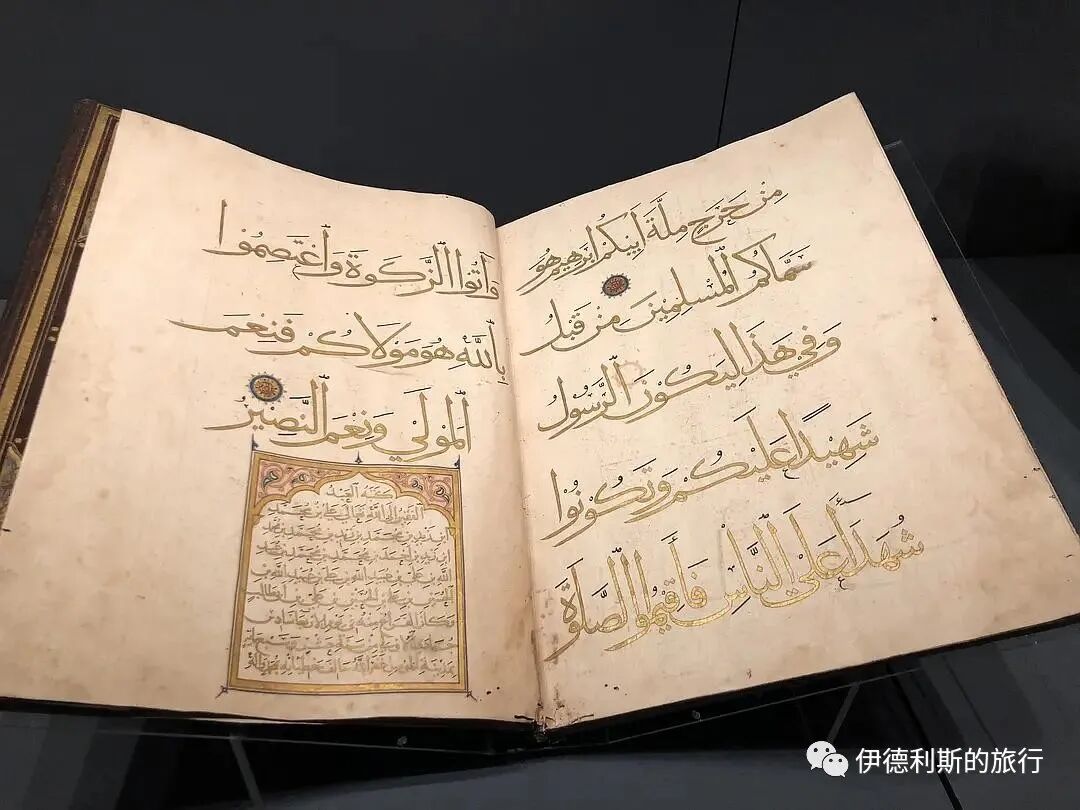
A 1286-87 Quran manuscript, copied by Yakut el-Musta'simi.
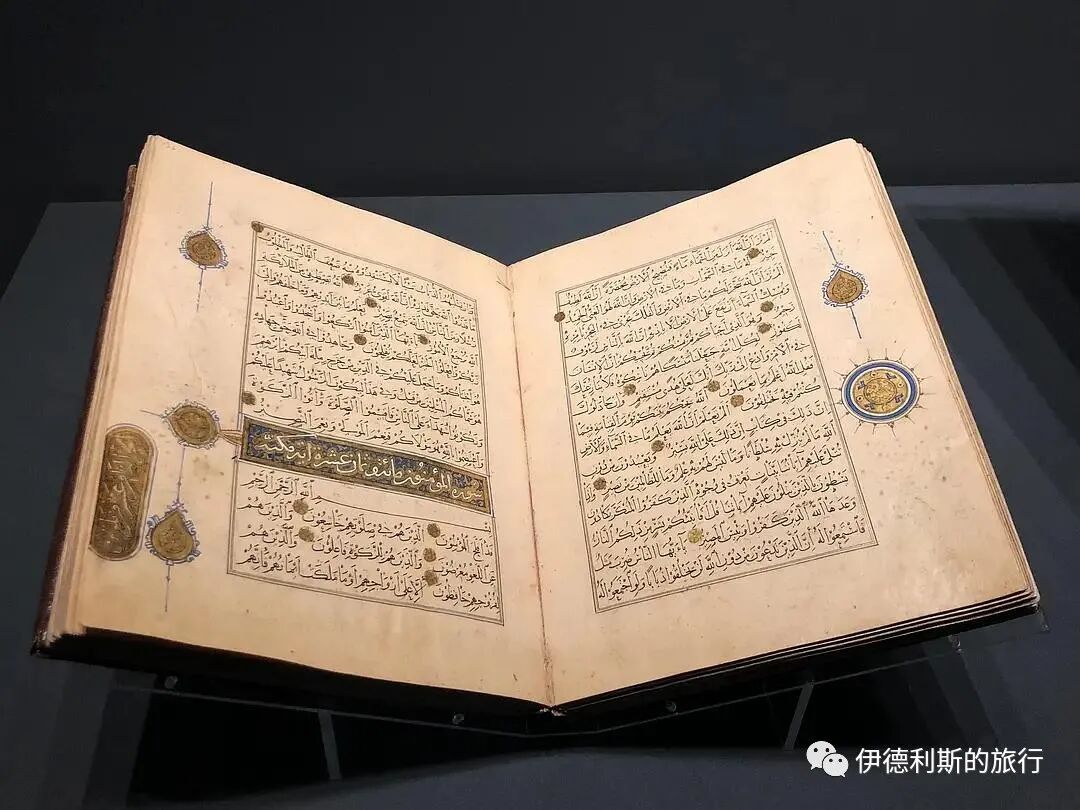
IX. The Timurid Empire: 1370-1507
The Timurid dynasty was established in Samarkand in 1370 by the Chagatai Mongol noble, Timur the Great. Timur began his western campaigns in 1380, successively occupying Afghanistan and Iran. After Timur's death in 1405, his successors continued to rule Iran, and the Timurid dynasty was deeply influenced by Persian culture.
Under the rule of the Timurid dynasty, the ancient Afghan city of Herat flourished. The Timurid prince Sultan Husayn Bayqara, who ruled Herat from 1469 to 1506, strongly supported the development of Persian poetry and literature. His minister, Mir Ali-Shir Nava'i, was a famous Persian poet. Herat at that time was also famous for its architecture, miniatures, and music. The ancient Iranian city of Shiraz also became a center of art and literature during this period, hailed as the 'House of Knowledge' and the 'Athens of Iran'. Shiraz's miniatures are also world-famous.
A 15th-century book from the city of Shiraz, Iran.
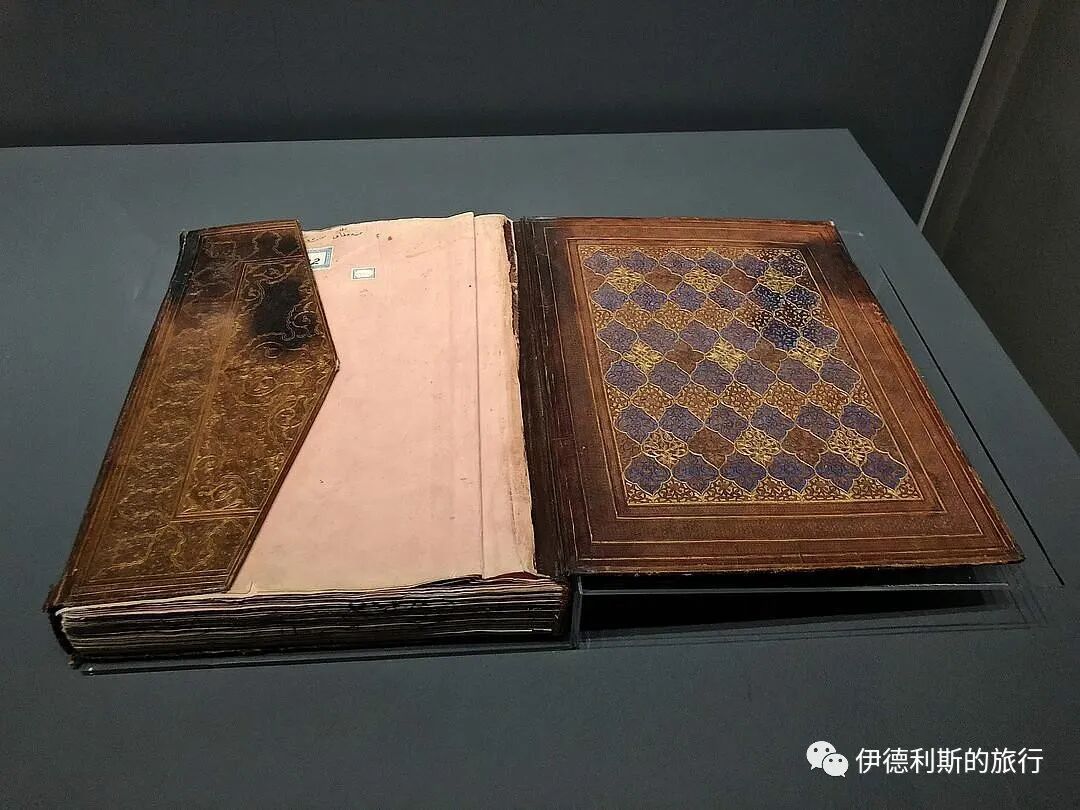
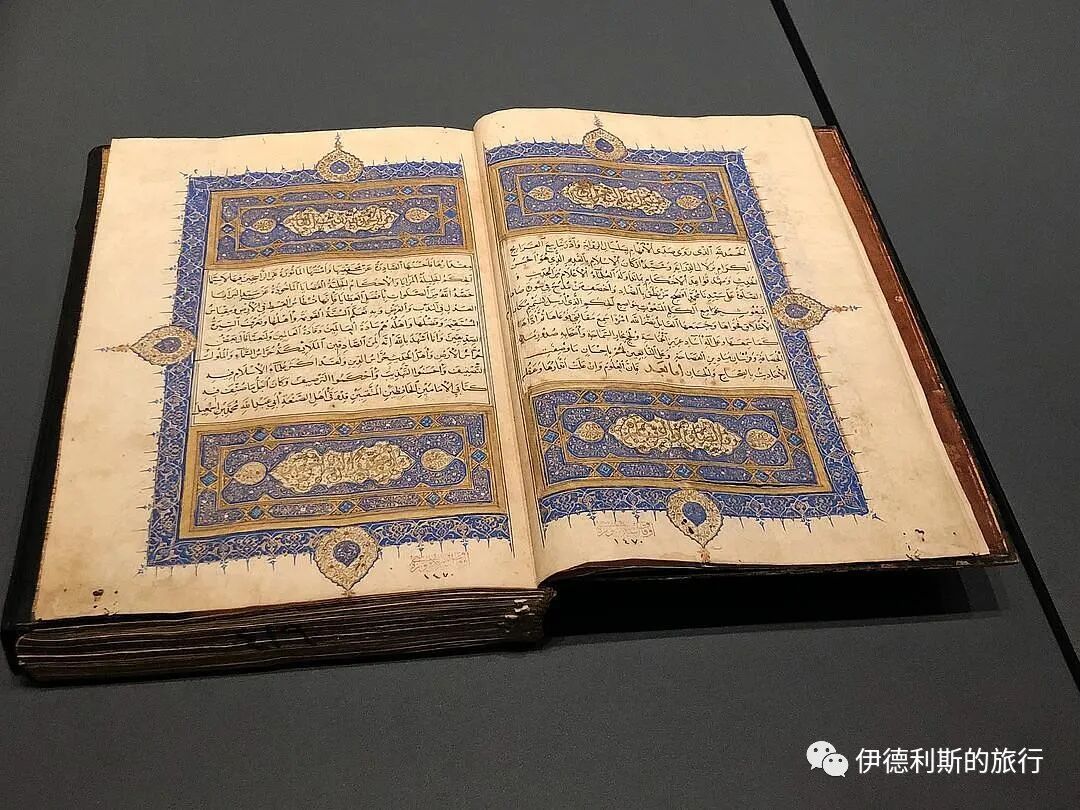
1445 and 1482 books of the 'Masnavi' from Herat, Afghanistan; this is a long poem collection by the famous Persian poet Rumi.
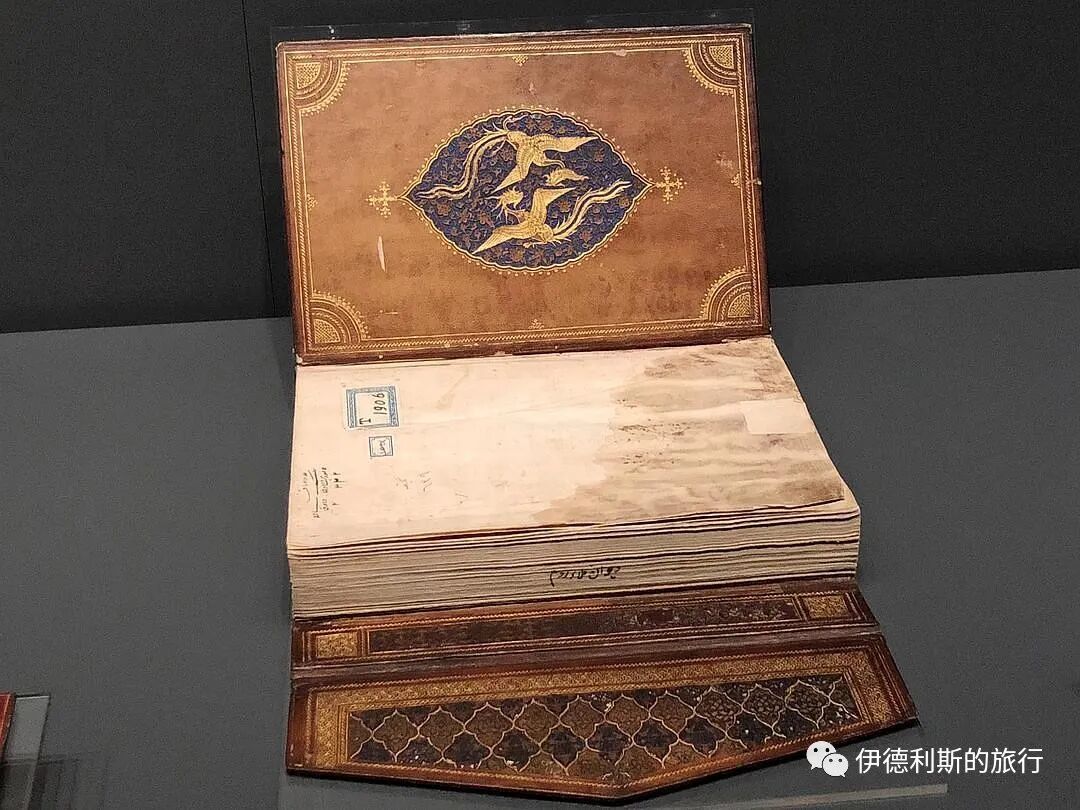
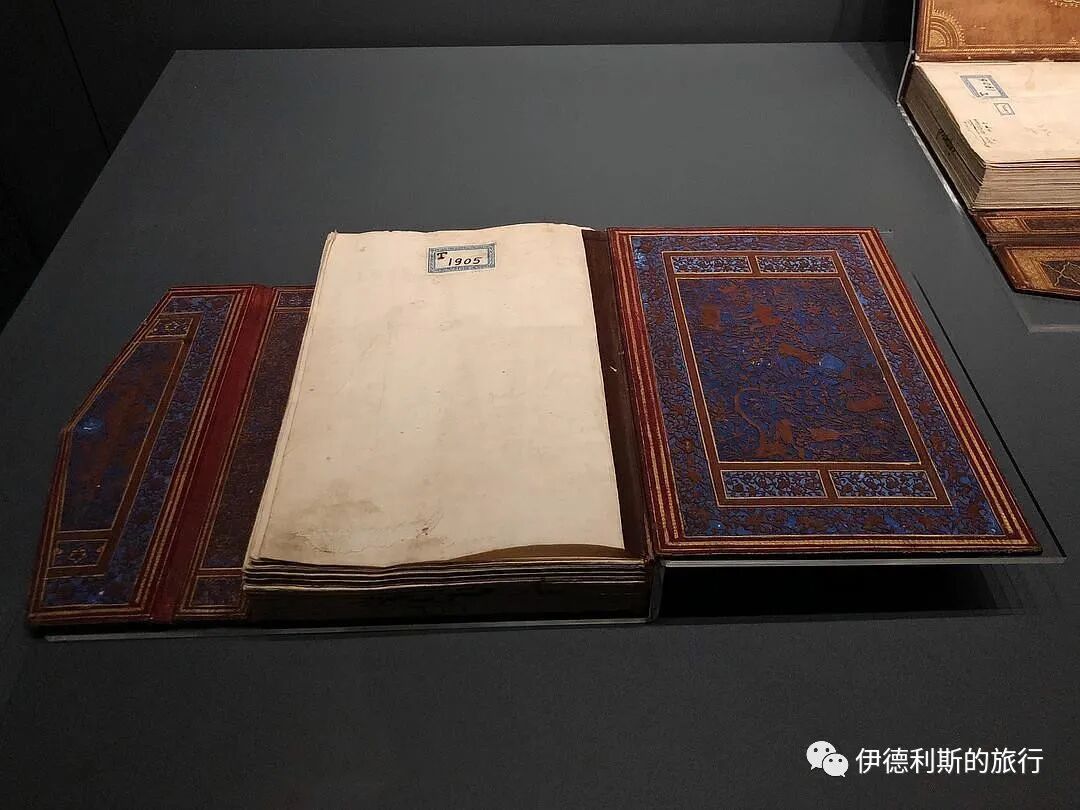
A 15th-century book from Herat, Afghanistan.
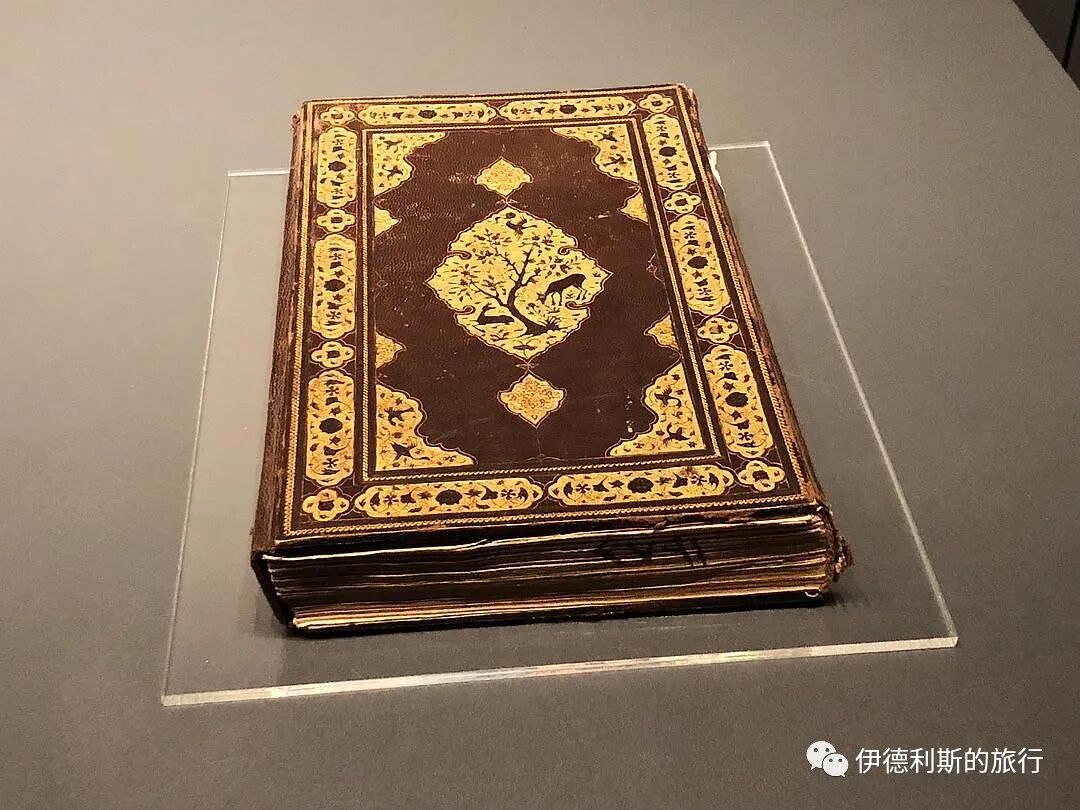
A 1398 book from Shiraz, Iran.
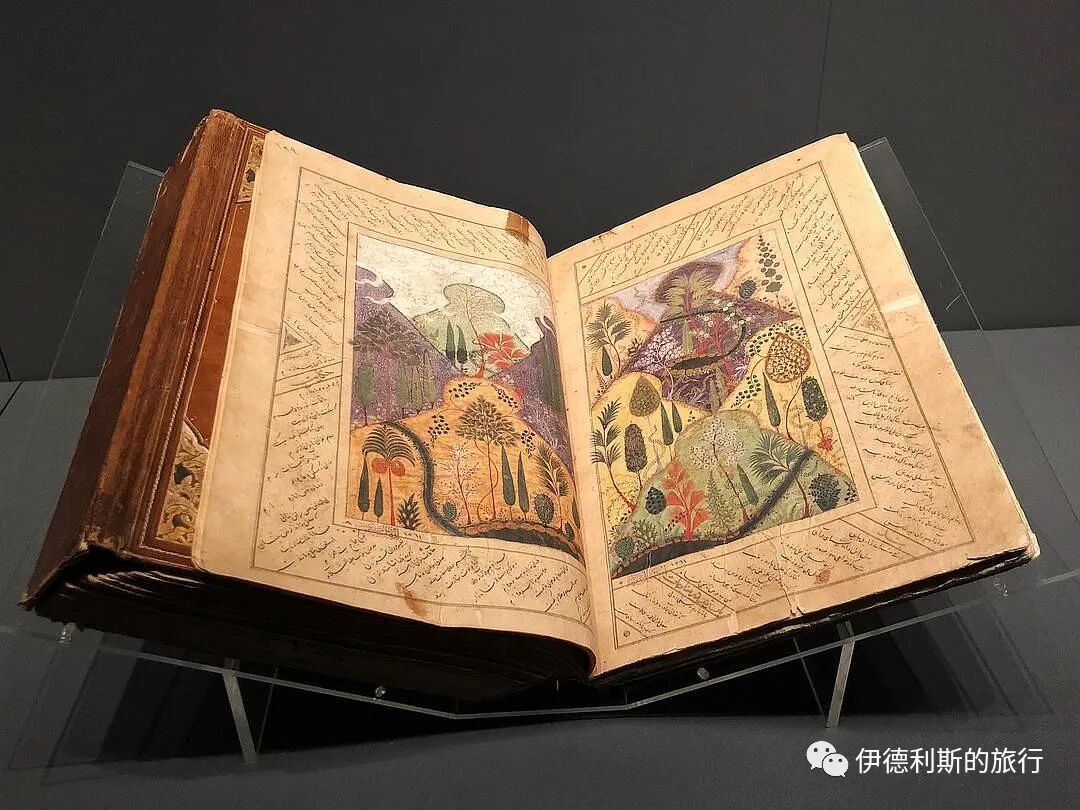
X. The Safavid Dynasty: 1501-1722
The Safavid dynasty originated from the Sufi Safaviyya order, and its rulers were Kurds living in northwestern Iran. The Safavid family itself spoke Turkic and composed poetry in Turkic, but they also strongly supported Persian poetry, literature, and various forms of Persian culture and art. For over 200 years, the Safavid dynasty ruled parts of Iran, the Caucasus, Iraq, Turkey, and Afghanistan. It is considered the first native Iranian dynasty since the Sassanid Persian Empire and is also considered the beginning of modern Iran.
An early 17th-century Kashkul, a bowl used by Sufi dervishes for begging. Sufi dervishes would generally chant praises to Allah and the Prophet along the streets, then use the Kashkul to collect donated money and food. The Kashkul actually used were mostly made of coconut shells, brass, wood, or clay. They were boat-shaped and hung from the shoulder with metal chains, with a relatively simple design. This is because true Sufi dervishes had abandoned the desire for worldly wealth and devoted themselves entirely to Allah. In addition, many beautifully crafted Kashkuls were used by the wealthy as decorative items, most of which have Quranic inscriptions.
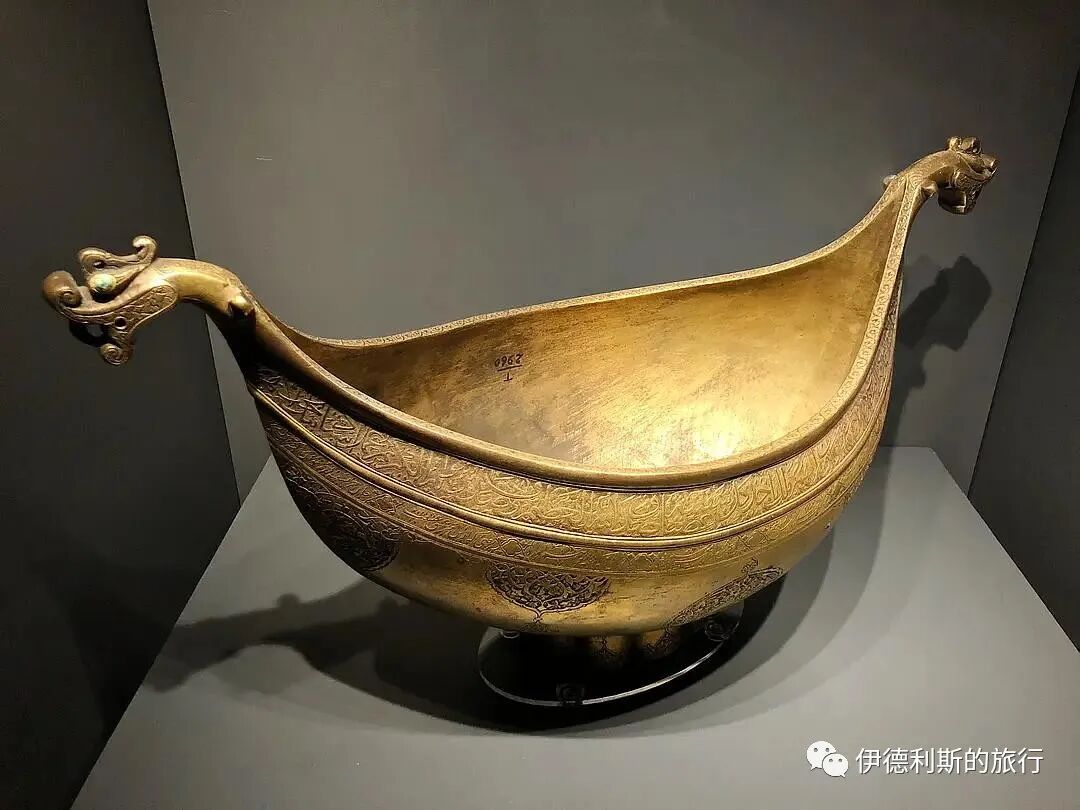
A 17th-century Quran from Shiraz.
Delete
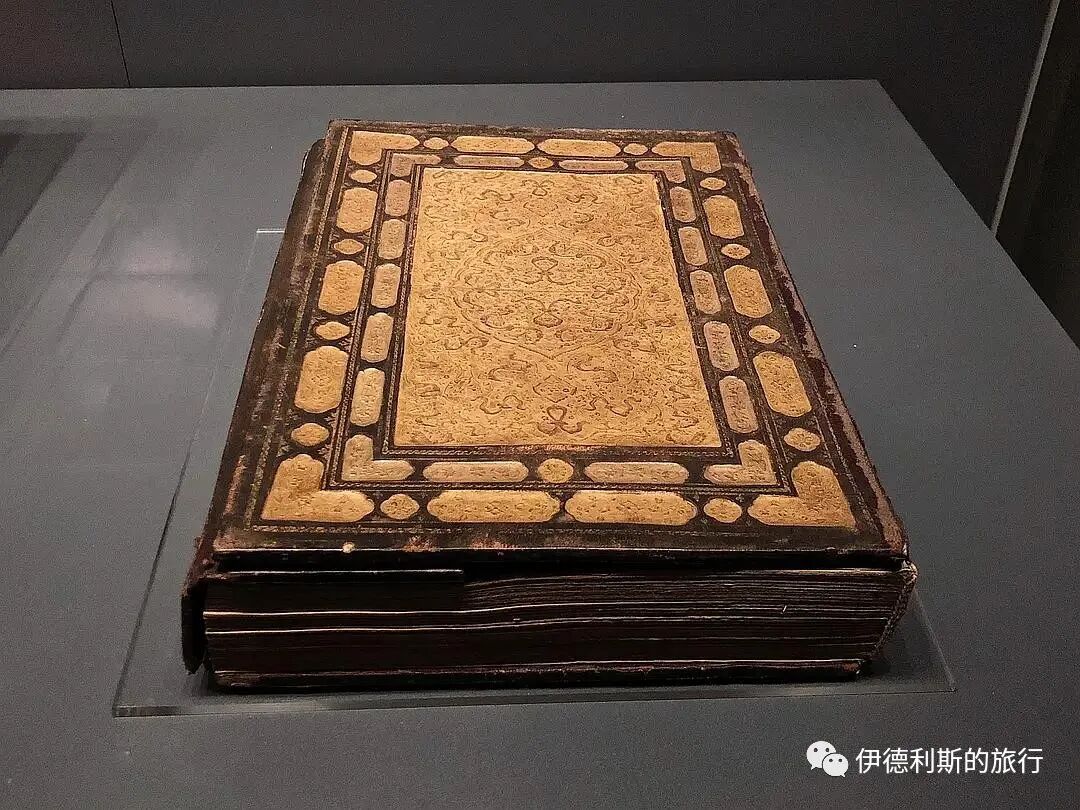
A 1591 Quran from Shiraz.
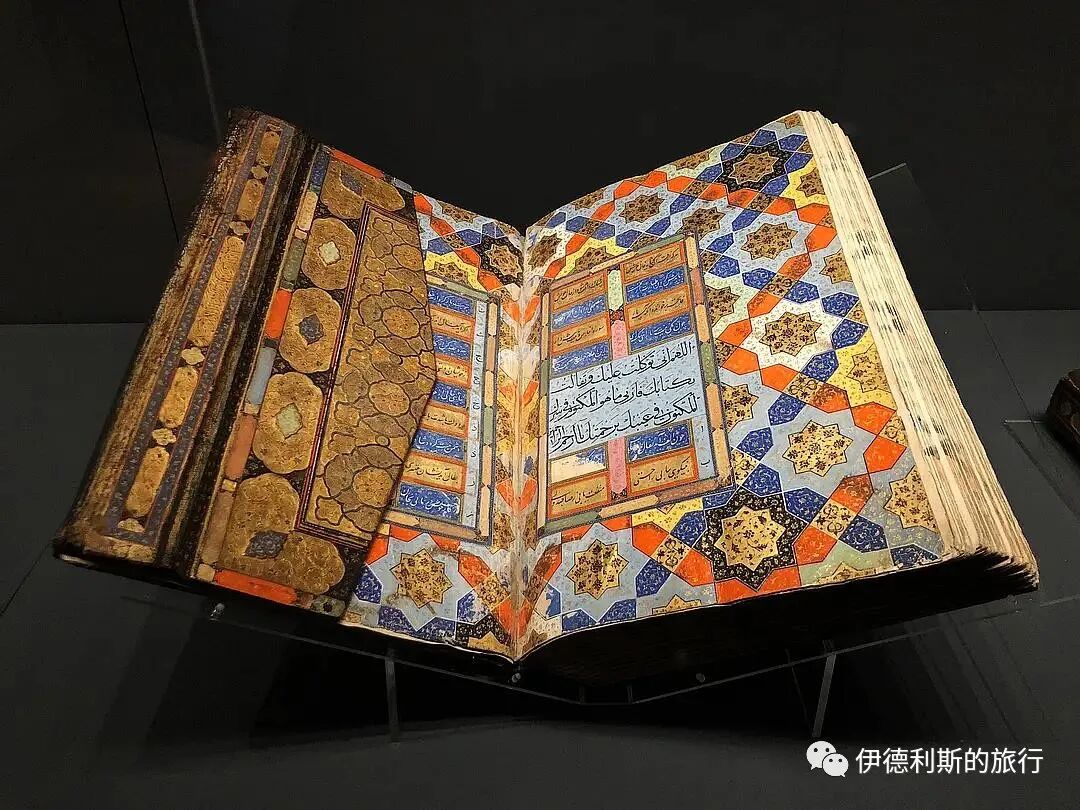
A 17th-century Quran volume (Juz') cover.
A 1549 Quran from Shiraz.
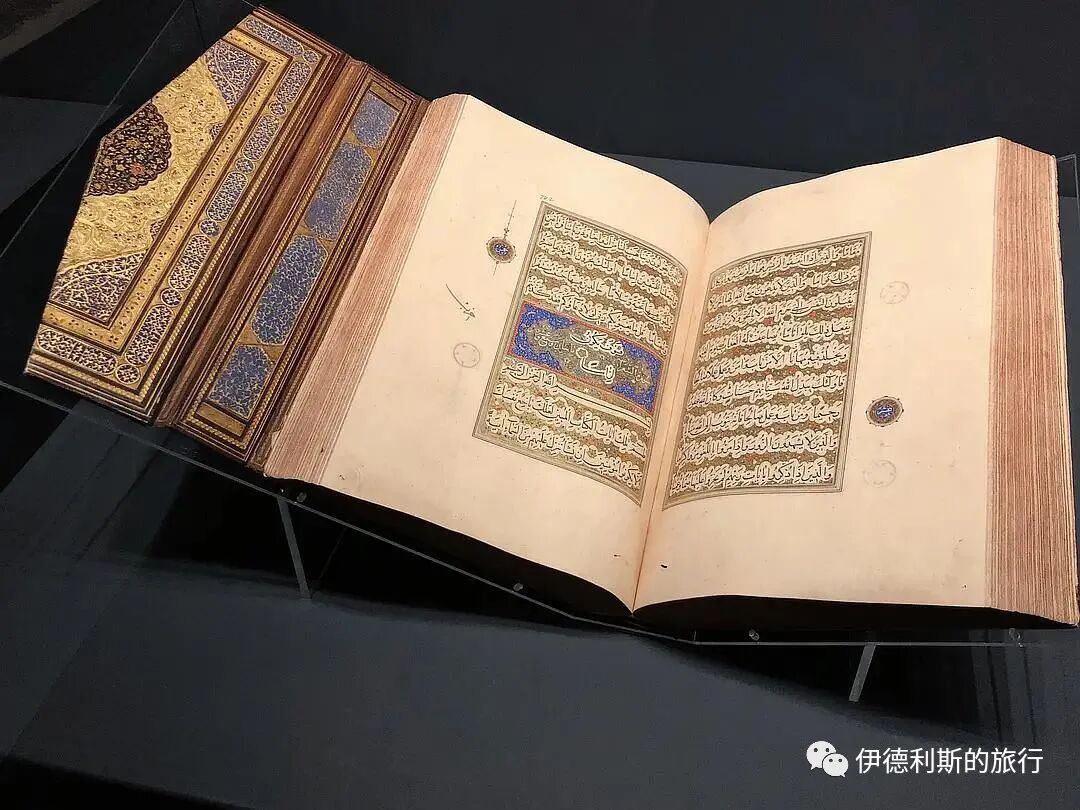
A 1580/1 Quran from Shiraz.
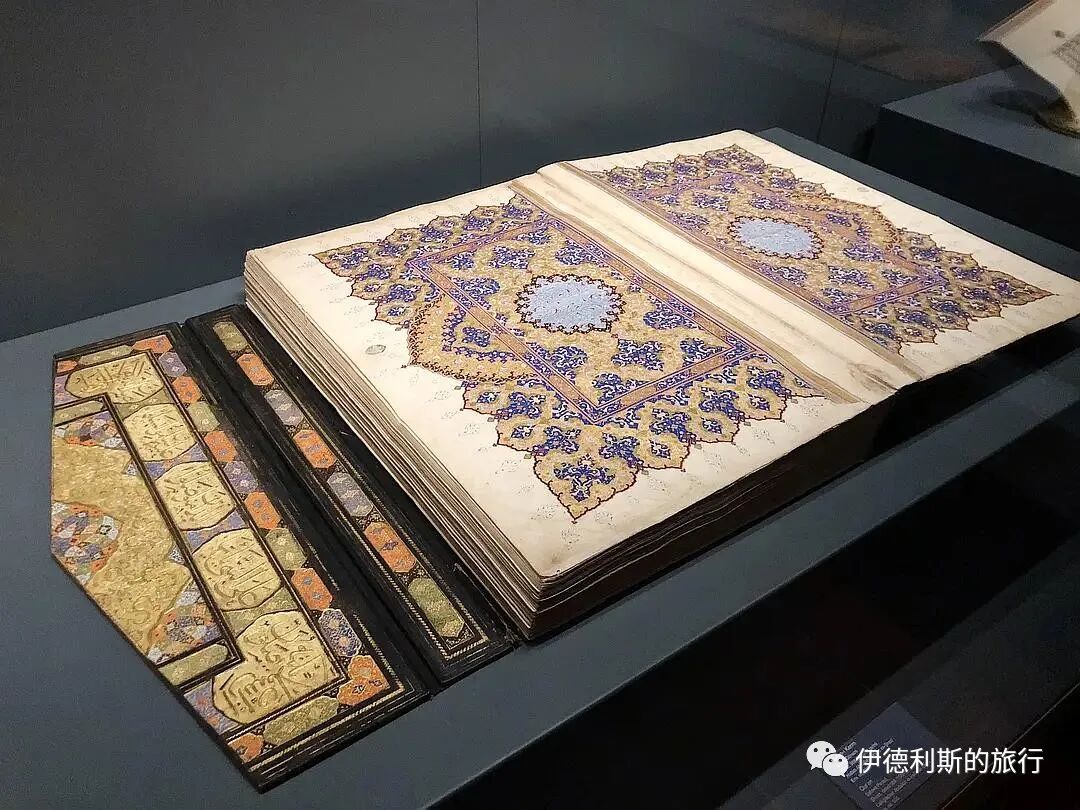
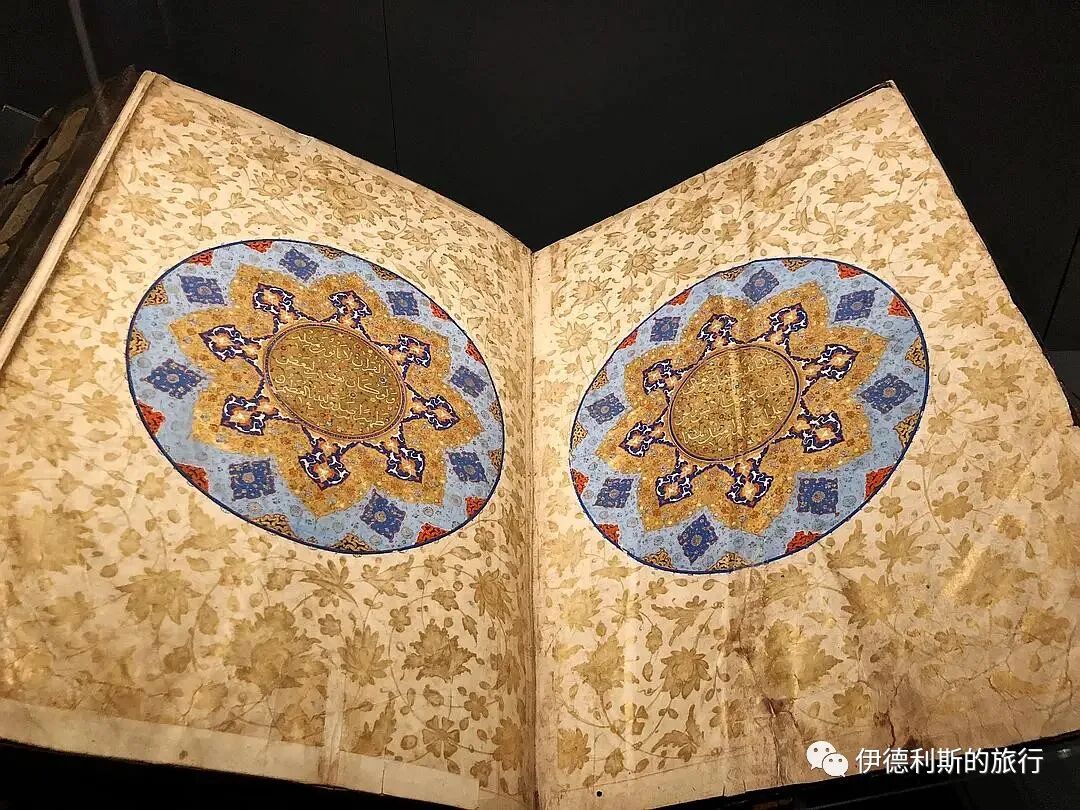
XI. The Ottoman Dynasty: 1299-1923
A late 15th-early 16th-century scripture box
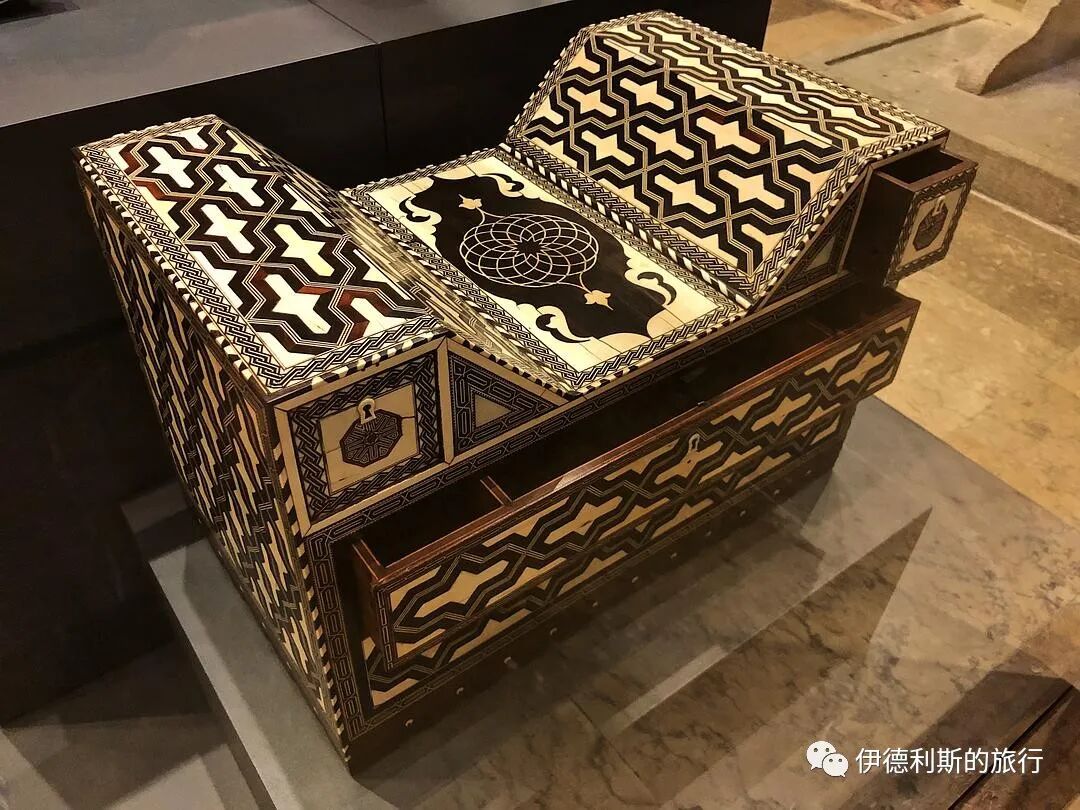
14th-15th-century tiles
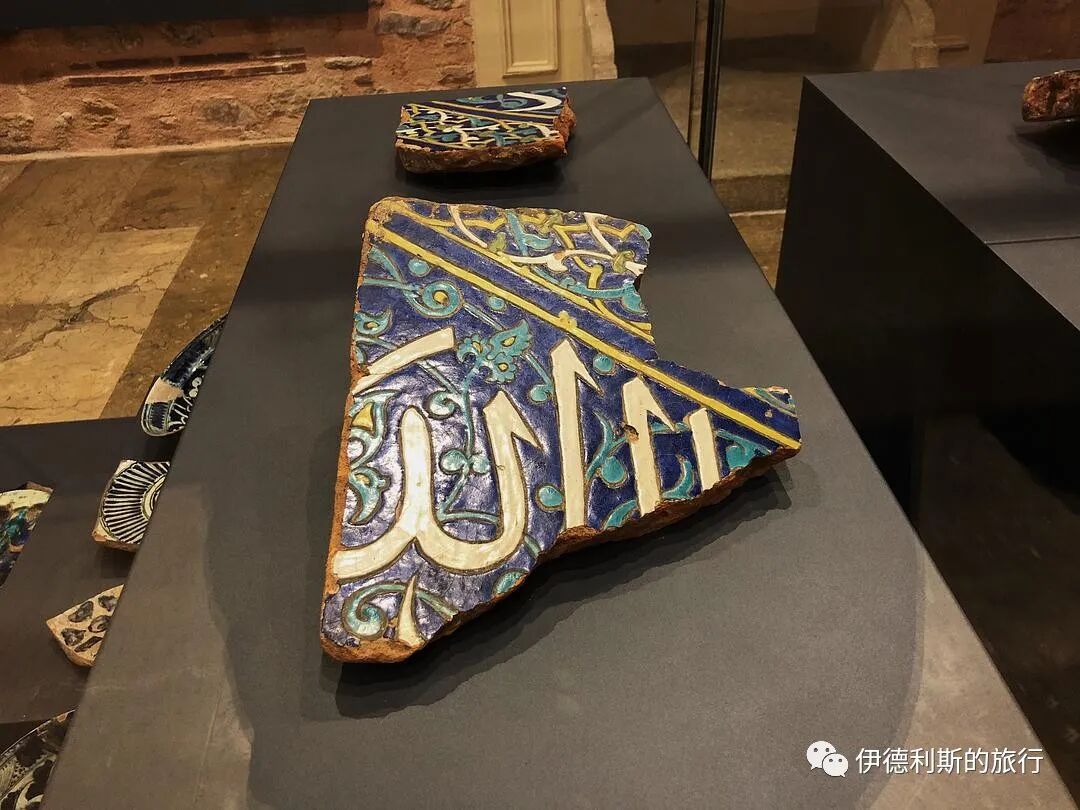
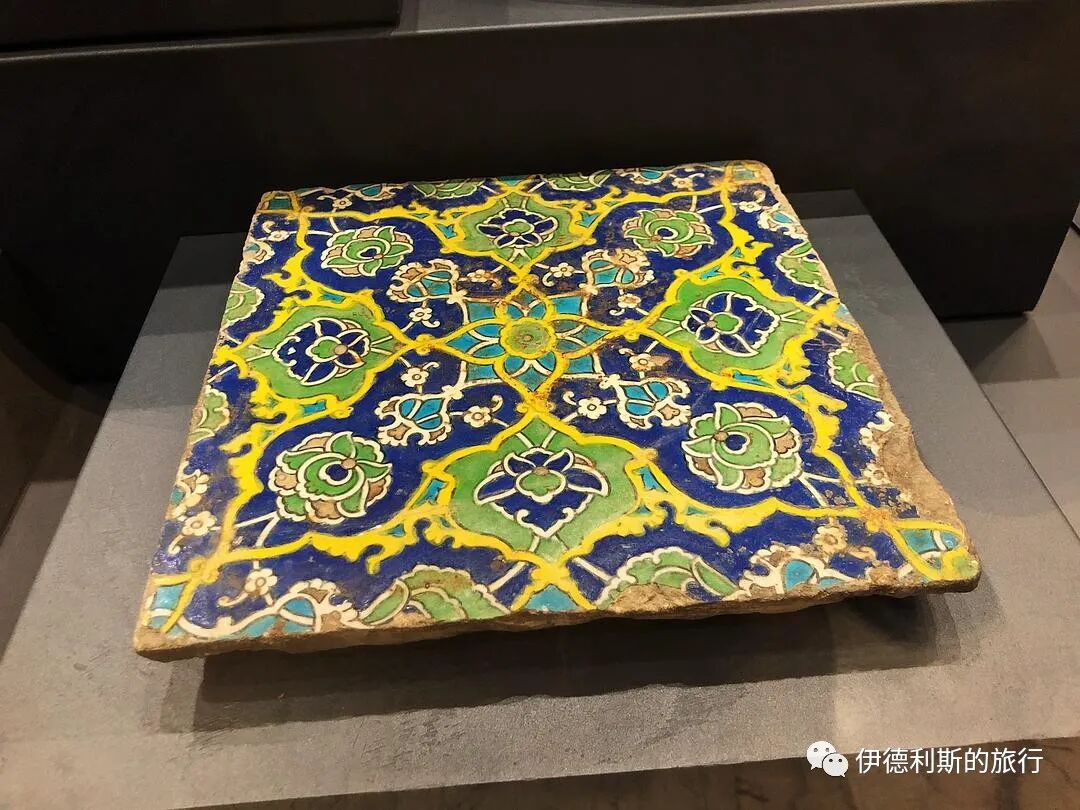
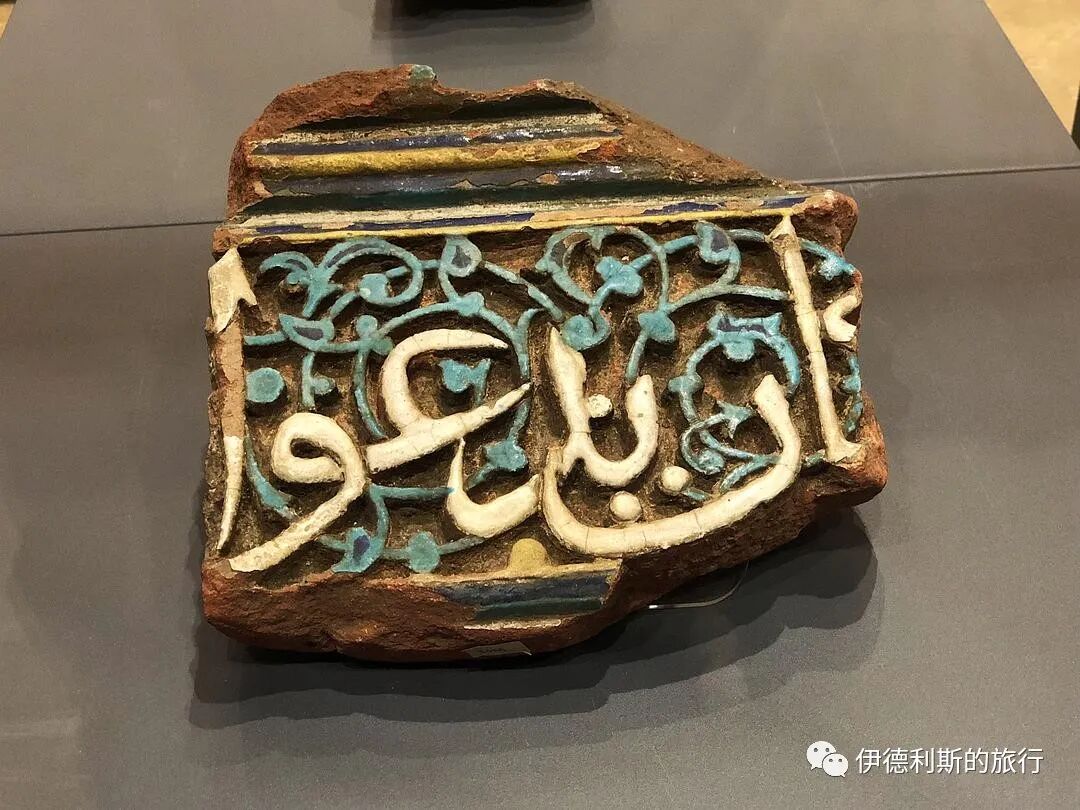
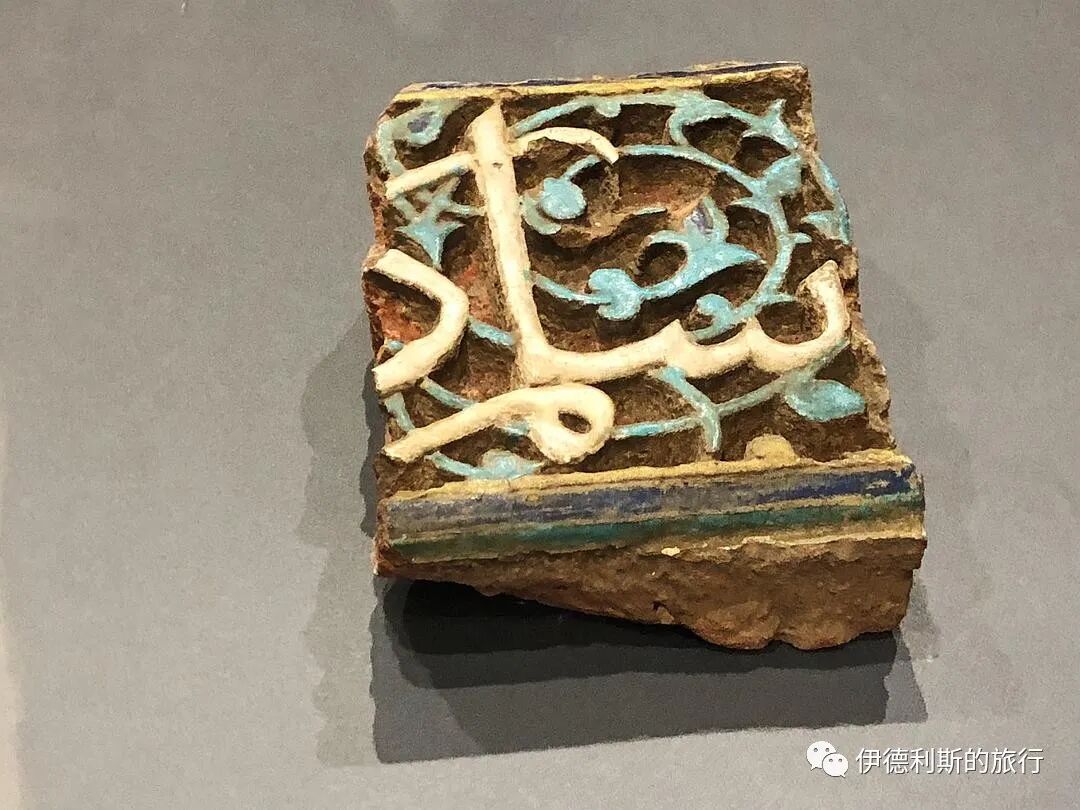
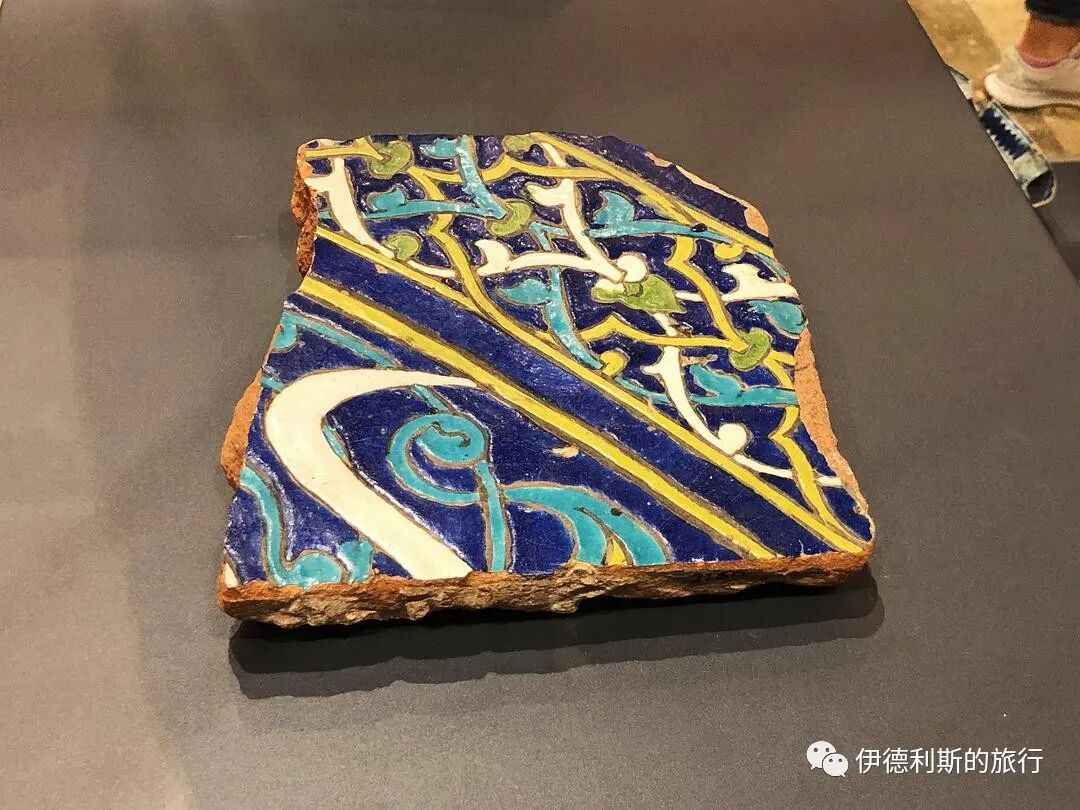
The book 'Zubdet'ut Tevarih (Faith, Islam, and Ottoman History)', produced in 1583 by the calligrapher Seyyid Lokman Ashuri for Sultan Murad III
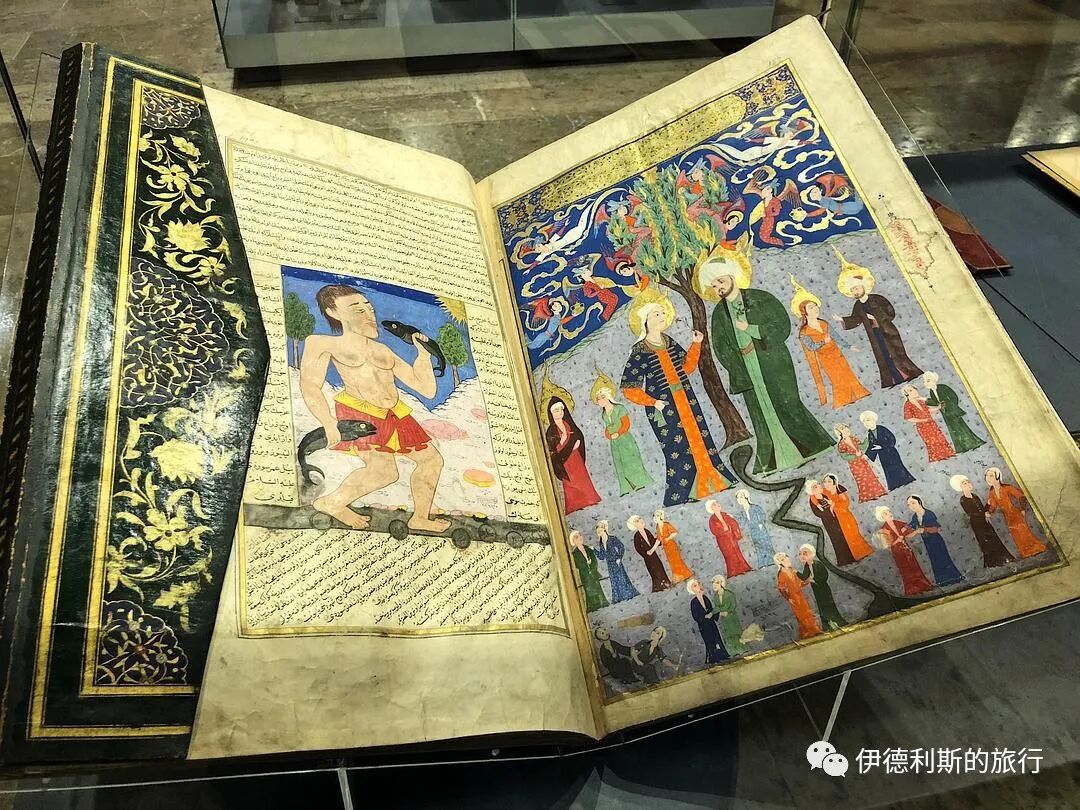
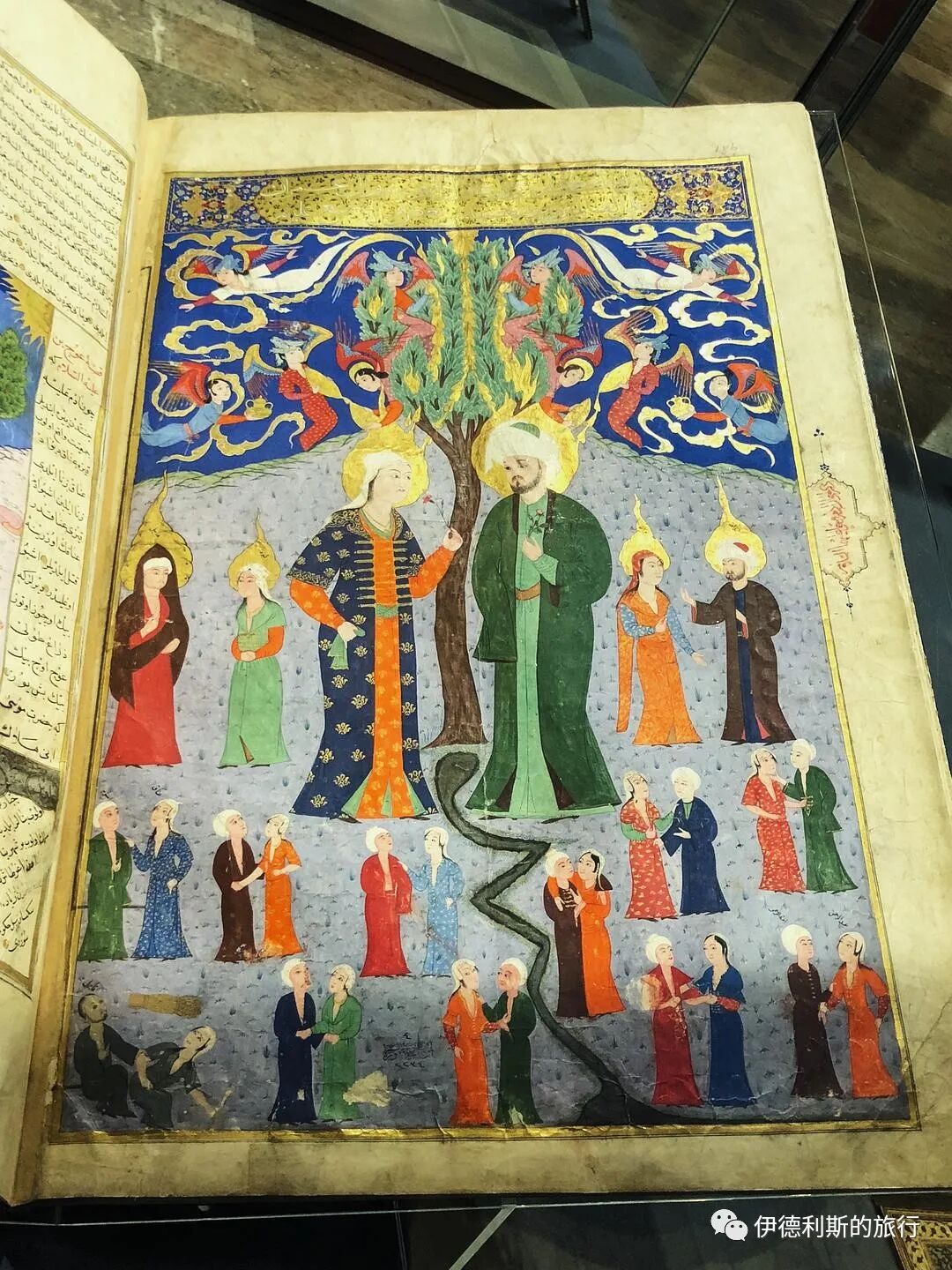
A Quran written by the calligrapher Seyh Hamdullah in 1494
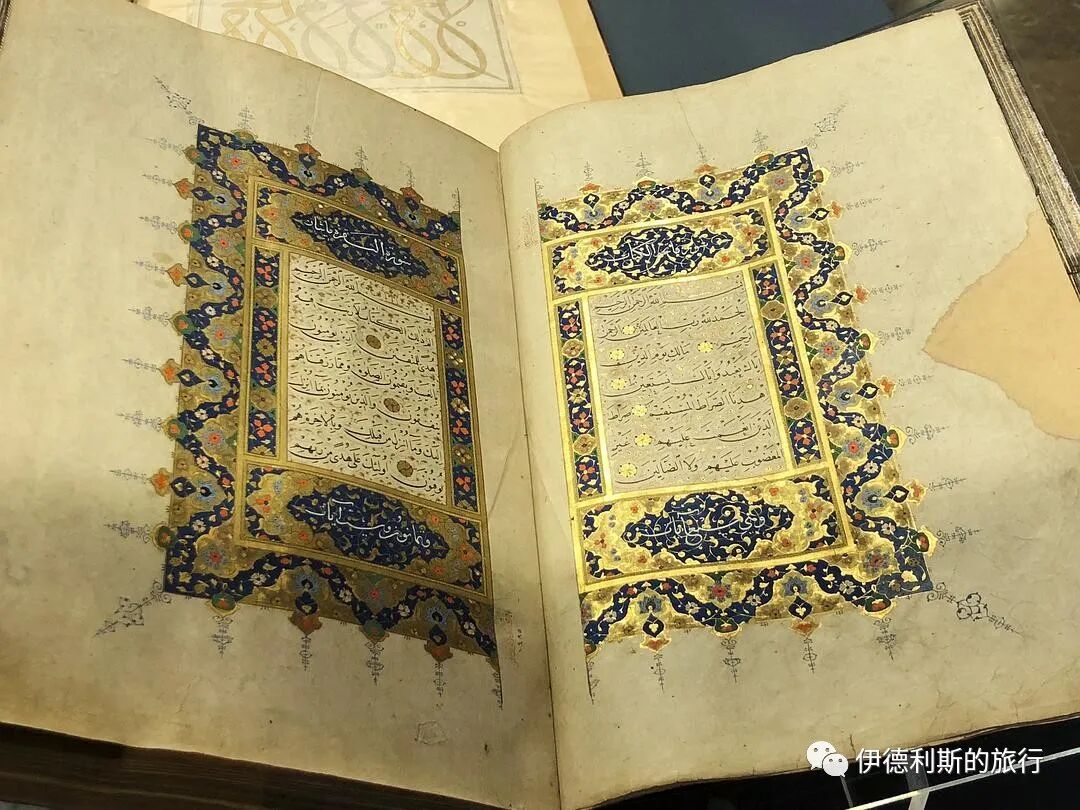
Chapter 6 of the Quran, 'The Cattle', written by the calligrapher Ahmed Karahisari in 1443
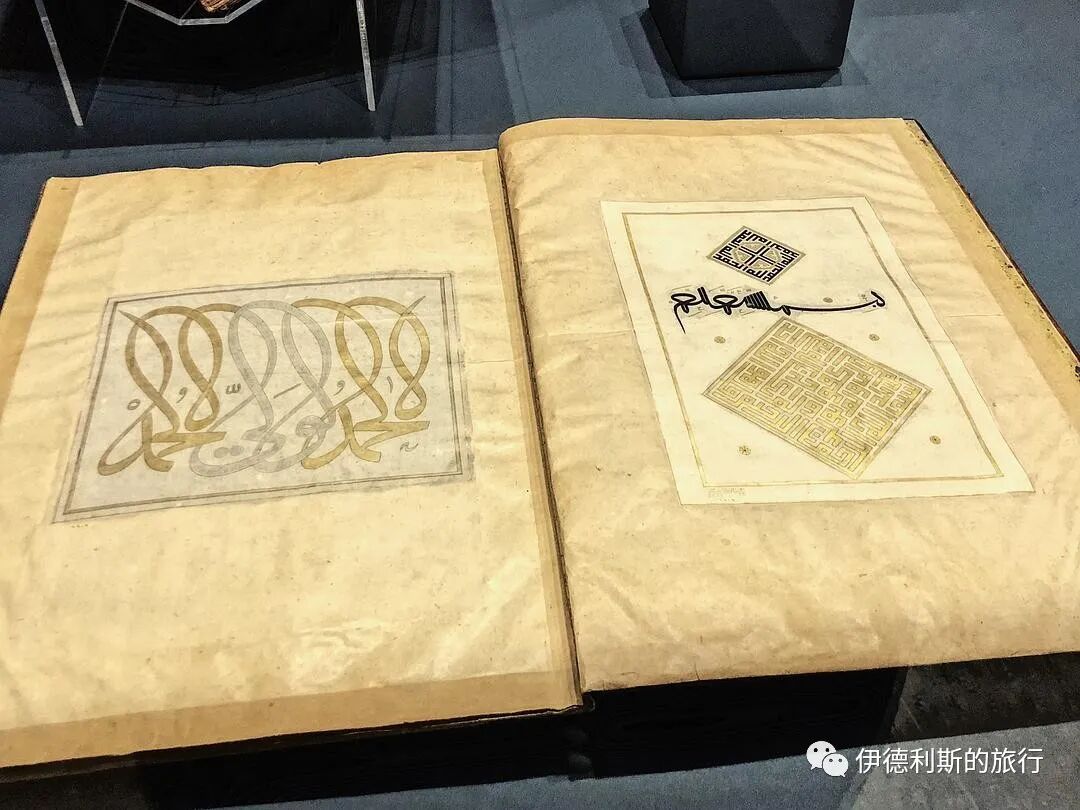
A Quran written by the calligrapher Hafiz Osman between 1540 and 1550
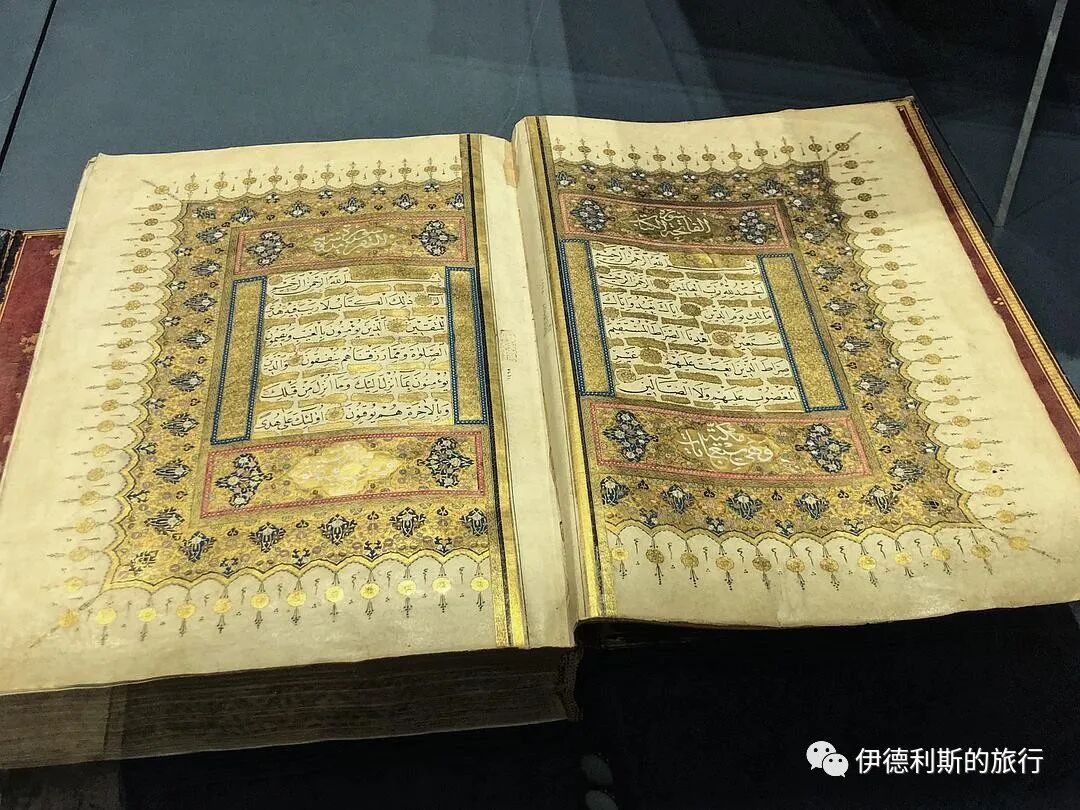
A 1612 endowment deed of Sultan Ahmed I
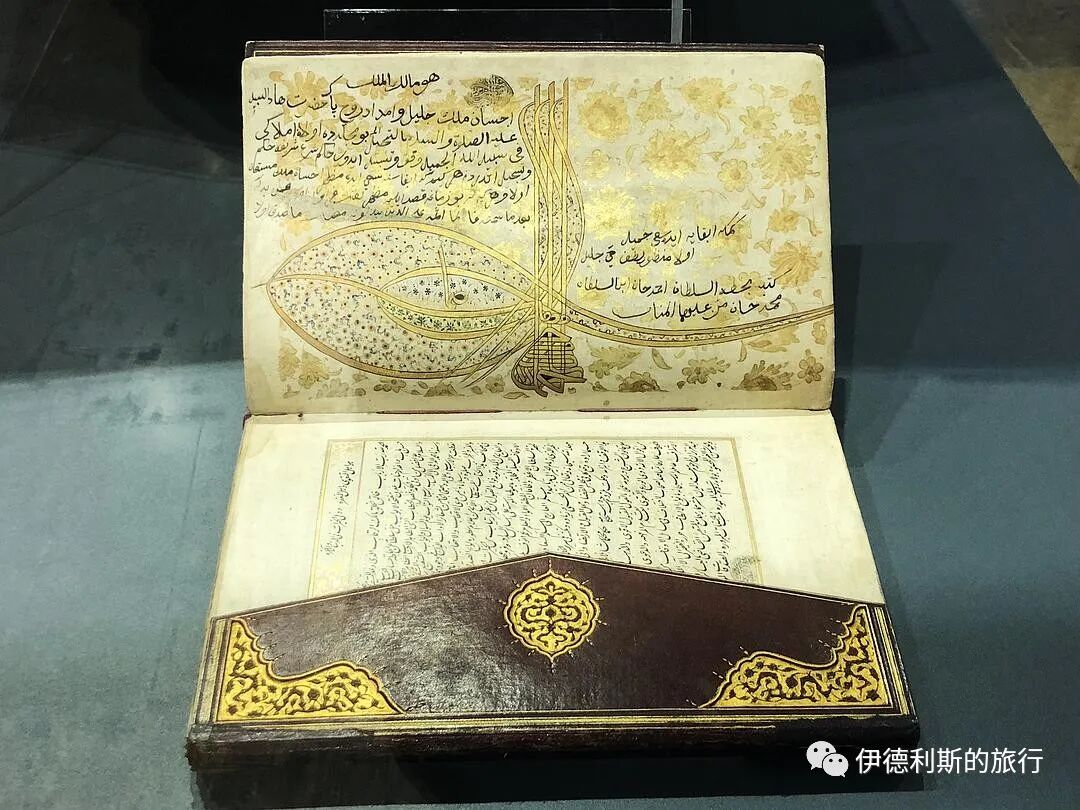
A 1738 Ottoman Qiblanuma (qibla compass), which is the most famous of all Ottoman qibla compasses.
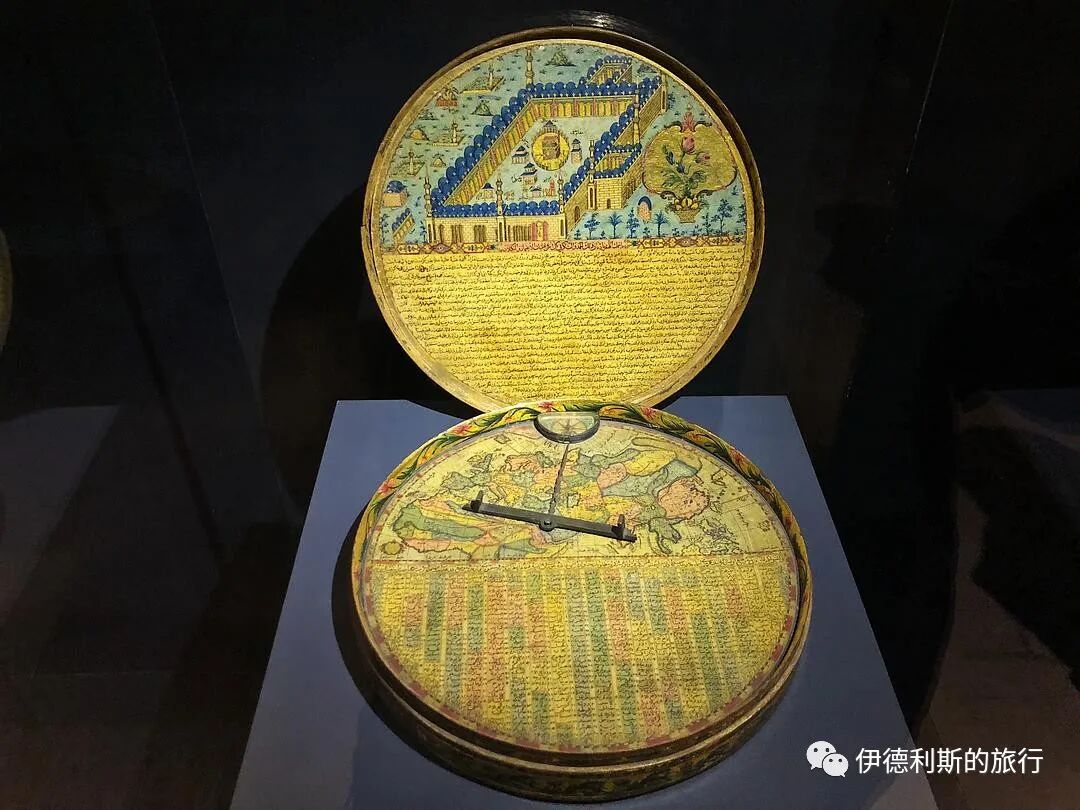
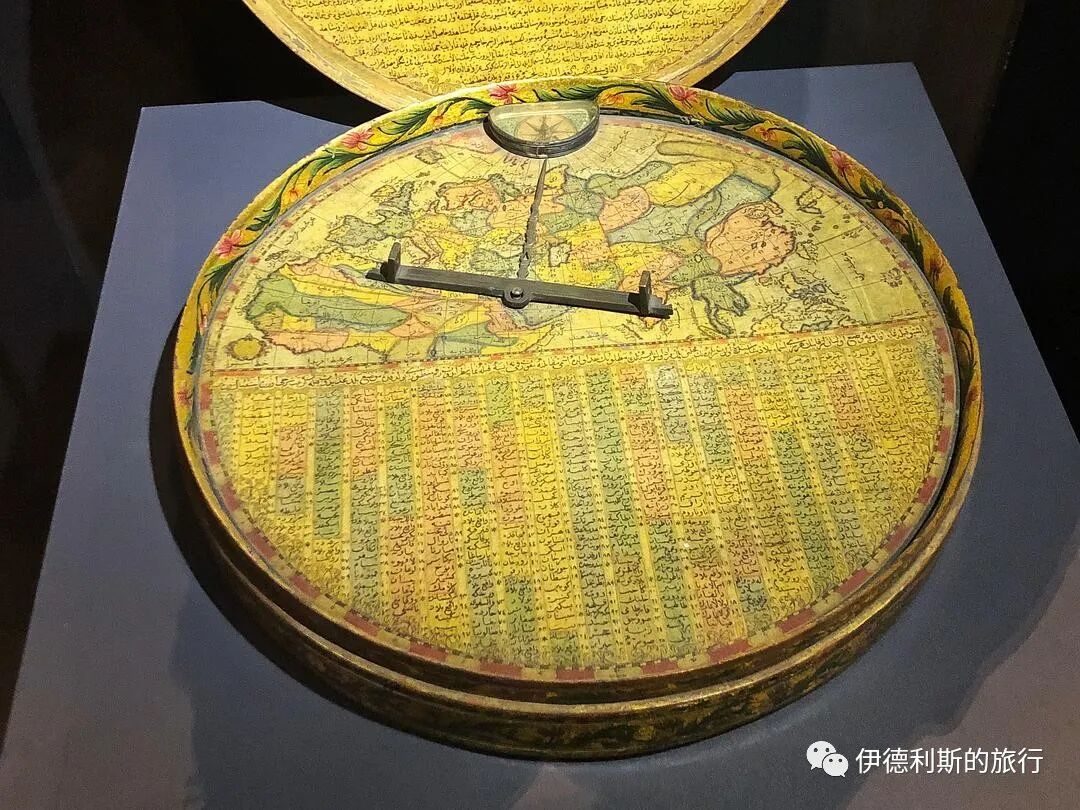
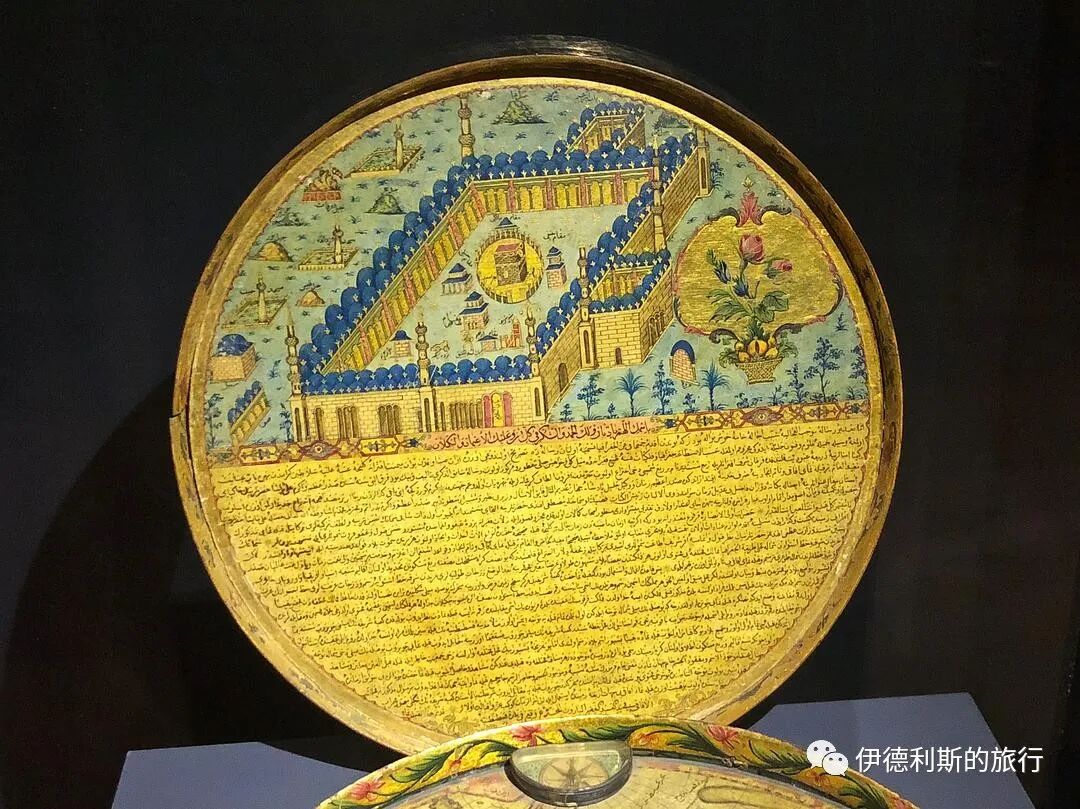
An early 15th-century wooden door from the Karaman dynasty
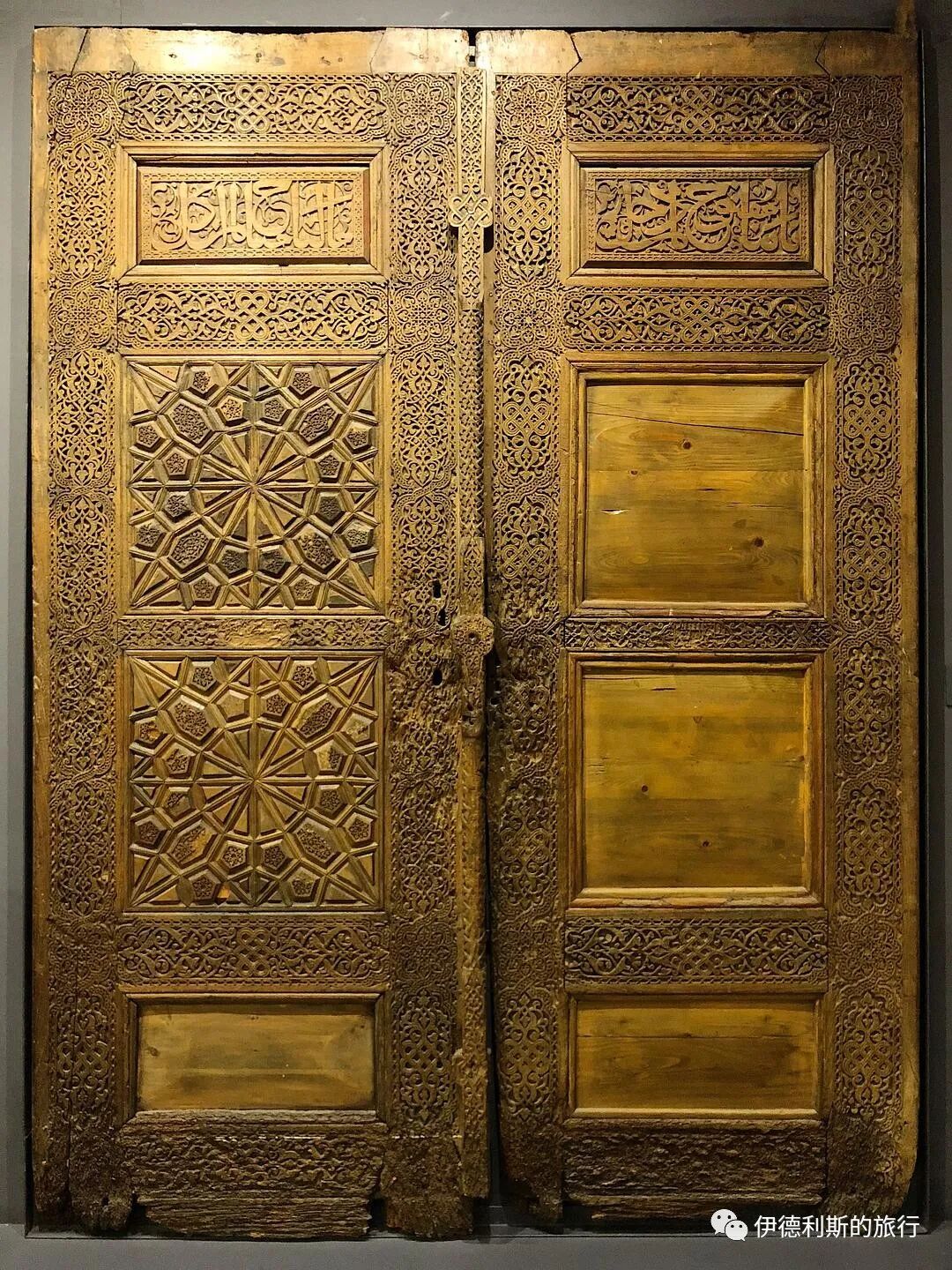
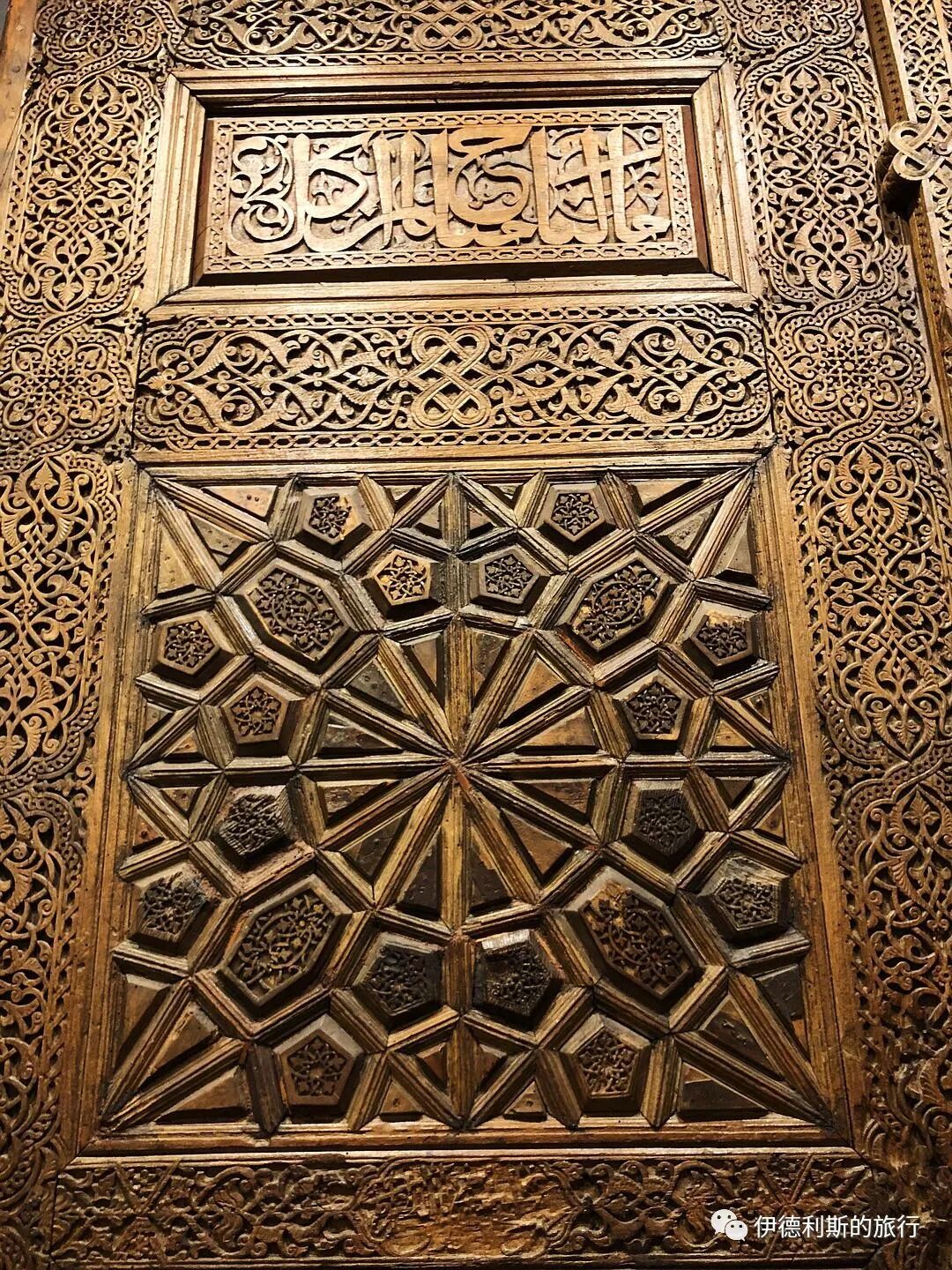
Notes on Visiting the Exhibition at the Museum of the Islamic Era in Iran (Part 1)
Articles • ali2007fr posted the article • 0 comments • 141 views • 2026-05-16 23:49
Summary: This travel note introduces Notes on Visiting the Exhibition at the Museum of the Islamic Era in Iran (Part 1). The National Museum of Iran is divided into two parts: the Museum of Ancient Iran, built in 1937, and the Museum of the Islamic Era, built in 1972. It is useful for readers interested in Iran Travel, Islamic Art, Museum Visit.
The National Museum of Iran is divided into two parts: the Museum of Ancient Iran, built in 1937, and the Museum of the Islamic Era, built in 1972. The Museum of the Islamic Era displays important artifacts from various Islamic dynasties in Iran over the past thousand years, organized chronologically.
Mihrab prayer niche
Mosaic tile mihrab
A mosaic tile mihrab from 1641, from the holy city of Mashhad during the Safavid dynasty, featuring Thuluth calligraphy.
Stucco mihrab
A mihrab from 1133, from the Karrar shrine in the city of Bouzun, Isfahan province, during the Seljuk Empire. It was made by Ali ibn-e Shirzad Ansari al-Qazvini and features Thuluth, Kufic, and Reqa scripts.
A mihrab from 1308, from the Rabi' Khatoon shrine in the city of Oshtorjan, Isfahan province, during the Ilkhanate period, made by Masoud Kermani. It features Kufic and Thuluth calligraphy.
Lustreware mihrab
A lustreware mihrab from 1271, from the tomb of Habib ibn-e Musa in Kashan, Isfahan, during the Ilkhanate period, featuring Thuluth calligraphy.
A lustreware mihrab from the early 14th century, from the tomb of Hares Ibn-e Ahmad Ibn-e Zein 'Abedin in the city of Qom during the Ilkhanate period, featuring Thuluth calligraphy.
A 14th-century Ilkhanate period lustreware mihrab featuring Naskh calligraphy.
A 1333 lustreware mihrab from the Ali ibn-e Jafar shrine in the city of Qom, also known as the Gate of Paradise (Dar-e-Behesht), featuring Kufic, Naskh, and Thuluth calligraphy.
Stone mihrab
An 11th-century stone mihrab from the city of Meymeh, Isfahan province, featuring Kufic calligraphy.
A 17th-century Safavid dynasty mihrab from the Ganj mosque in Kerman, featuring Thuluth calligraphy. The Ganjali Khan complex was built between 1596 and 1631 by Ganj Ali Khan, who ruled Kerman at the time; the architect was Mohammad Soltani from Yazd.
A 16th-century Timurid dynasty mihrab from the Jameh Mosque of Abarkuh, with Thuluth calligraphy on three sides and Kufic calligraphy on the two corners. Furthermore, the mihrab features two unique and beautiful marble columns on either side, which also bear Kufic calligraphy. Abarkuh is located in Yazd province, and its Timurid-era Jameh Mosque is situated in the city center square.
A 15th-century Timurid dynasty marble mihrab featuring Thuluth and Kufic calligraphy.
A 1413 Timurid dynasty marble mihrab featuring Thuluth calligraphy.
Brickwork art
11th-century brick Kufic inscriptions from the Nezamiyyeh School in Khargerd, Khaf city, Razavi Khorasan province, northeastern Iran. Khaf is a historic city near the Iran-Afghanistan border, home to numerous ancient monuments.
A 1148 brick Kufic inscription, possibly from the Joneyd shrine in the village of Turan Posht. Turan Posht is one of the oldest villages in Yazd province, home to the Sheikh Joneyd and Chehel Dokhtaran domed shrines, known for their exquisite Kufic calligraphy.
Wood carving art
10th-century Kufic wood carving from the city of Qom.
An 11th-century wooden door from the city of Behbahan, Khuzestan province, southwestern Iran, featuring Kufic and Naskh wood carvings.
A 1341 wooden door from Fars province, southern Iran.
Ilkhanate tiles
14th-century Ilkhanate tiles unearthed at the Takht-e Soleymān site in West Azerbaijan province. The Takht-e Soleymān site is a World Heritage site; it was originally an important Zoroastrian temple during the 5th-century Sassanid dynasty and was rebuilt in the 13th century as a summer palace for the Ilkhanate. Here, the Ilkhanate blended Eastern art with Iranian art, developing a unique Ilkhanate artistic style.
Takht-e Soleymān is the only surviving secular complex of the Ilkhanate. The walls of the Great Khan's palace are decorated with exquisite tiles, serving as a direct reflection of the cultural and artistic exchange between China and Iran in the 14th century. The tiles depict various floral, animal, and human motifs, with themes covering Buddhism, Chinese mythology, pre-Islamic Iran, as well as the Islamic Quran and Shia traditions, showcasing a fusion of multiple cultures. Some of the tiles feature themes from the famous Iranian epic, the Shahnameh, which also reflects the integration of the Ilkhanate into Iranian culture at the time.
13th-14th century Ilkhanate period tiles from the city of Saveh, Markazi province. Saveh was an important city during the Parthian Empire; it was later destroyed by the Mongol army and rebuilt during the Ilkhanate period.
13th-century Gorgan, located on the Caspian coast. Gorgan was an important city during the Sassanid Empire and remained a center for Zoroastrianism after the 8th century. Old Gorgan was destroyed by the Mongols, and the city was relocated to a new site during the Ilkhanate period.
13th-14th century Ilkhanate period tiles from Kashan, Isfahan province. During the Seljuk Empire and Ilkhanate rule from the 12th to the 14th century, Kashan was an important center for the production of high-quality pottery and tiles in Iran. In modern Persian, the word for tile (kashi) is derived from Kashan.
Artifacts from Nishapur, 9th to 11th century.
Nishapur is located on the ancient Silk Road in northeastern Iran and was once one of the four major cities of the Greater Khorasan region. In the 9th century AD, Nishapur became the capital of the Persian Tahirid dynasty. Under the rule of the Persian Samanid dynasty in the 10th century, Nishapur developed into an important cultural and commercial center of the Islamic world, continuing through the 11th-century Seljuk dynasty. Between the 9th and 11th centuries, various cultures and religions converged in Nishapur, where trade routes from Central Asia, China, Iraq, and Egypt intersected. The glazed pottery produced in Nishapur at that time became an important trade commodity in the West, once rivaling Baghdad and Cairo.
In 1221, Nishapur was massacred by the Mongols and subsequently completely destroyed; the former metropolis was buried deep underground. It was not until archaeological excavations by the Metropolitan Museum of Art in New York between 1935 and 1940 that countless artifacts and ruins were discovered beneath the farmland. Today, most of the excavated Nishapur artifacts are preserved in the Metropolitan Museum of Art, as well as in museums in Tehran and Mashhad.
According to historical records, Nishapur had at least 38 madrasas before the 11th century. Before the archaeological excavations, no ruins were visible except for a mound in the farmland. Archaeological excavations identified six layers of the Tappeh Madreseh site dating from the 9th to the 13th century; although signs of destruction and subsequent restoration or reconstruction were found in each layer, they maintained a relatively consistent overall layout.
The lowest layer of the madrasa dates back to the 9th century and is believed to have been built by the Tahirid ruler Abdallah ibn Tahir (reigned 828-845). The early spaces were large, but were further subdivided during the Samanid dynasty in the 10th century and the Seljuk dynasty in the 11th century. Overall, however, the madrasa featured a square courtyard in the center, surrounded by more than 20 rooms on three sides, with rectangular colonnades.
9th-century colored plaster murals unearthed at the Tappeh Madreseh site.
9th-century plaster hunting murals unearthed at the Tappeh Takestan site in Nishapur.
9th-10th century pottery with Kufic calligraphy.
Artifacts unearthed from the ancient city of Ray.
Ray is located in the southern suburbs of Tehran and is an important ancient city in northern Iran, referred to as 'Layi' in books such as the History of Yuan. The history of the ancient city of Ray is very old, mentioned in both the Zoroastrian Avesta and the Christian Bible.
In the 640s AD, the Sassanid dynasty used the ancient city of Ray as a base to resist the Arab invasion, but ultimately failed, and Ray came under the rule of the Arab Empire. In the 9th century AD, the Shah Abdol-Azim shrine was built in Ray, becoming an important religious site in Iran.
In 1043, the founder of the Seljuk Empire, Tuğrul Beg, made Ray the capital of the empire and carried out large-scale reconstruction of the ancient city. Under the rule of the Seljuk Empire, Ray reached its peak, with a massive bazaar and very prosperous commerce. Import and export trade, primarily in silk, connected the entire Eurasian continent. Ray was the center of painted pottery production in Iran at the time, and Ray-style painted pottery was an important handicraft of this period.
In 1220, the Mongol army invaded Ray, which was under the rule of the Khwarazmian Empire. Due to the lack of fierce resistance, the Mongols did not massacre the city. Nevertheless, the residents of the city gradually left, and the center of pottery production shifted to the southern city of Kashan. After this, Ray became a ghost town, but its sturdy walls still allowed it to be used as a military fortress during wars. It was not until the construction of the walls of Tehran in the 16th century that Ray was finally abandoned.
8th-9th century dado, located on the lower part of interior walls, serving both to protect the wall and as decoration.
11th-century Seljuk Empire period mihrab.
11th-century Seljuk Empire period circular stucco decoration with Kufic calligraphy.
A fragment of a stucco wall from an 11th-century Seljuk Empire school.
12th-13th century pottery bowl with typical Seljuk style and overglaze Kufic calligraphy.
12th-13th century pottery bowl with transparent glaze and Taʿlīq Persian calligraphy.
Ray-style silk fabric from the early Islamic period, 7th-10th century.
Others
13th-century Kufic tile, unearthed in the city of Damghan, Semnan province, Iran.
1469 Timurid dynasty wood carving with Thuluth calligraphy.
15th-century Timurid dynasty tile with Thuluth calligraphy, unearthed in the city of Taft, Yazd province. view all
Summary: This travel note introduces Notes on Visiting the Exhibition at the Museum of the Islamic Era in Iran (Part 1). The National Museum of Iran is divided into two parts: the Museum of Ancient Iran, built in 1937, and the Museum of the Islamic Era, built in 1972. It is useful for readers interested in Iran Travel, Islamic Art, Museum Visit.
The National Museum of Iran is divided into two parts: the Museum of Ancient Iran, built in 1937, and the Museum of the Islamic Era, built in 1972. The Museum of the Islamic Era displays important artifacts from various Islamic dynasties in Iran over the past thousand years, organized chronologically.
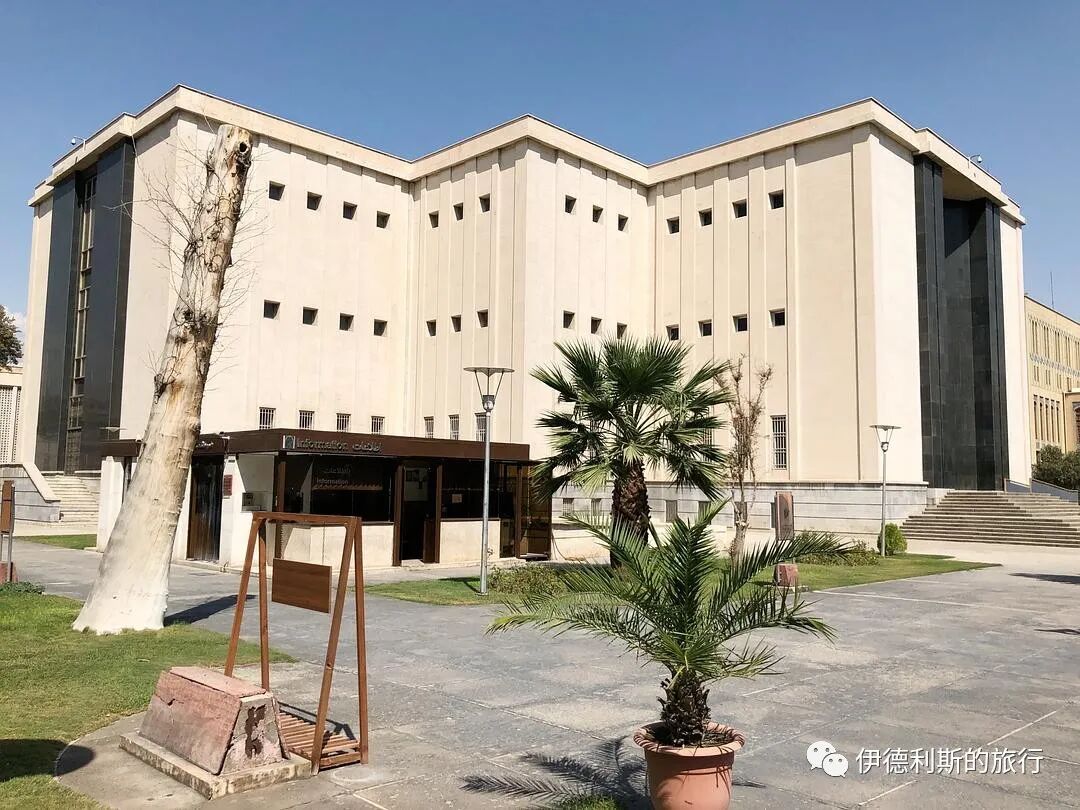
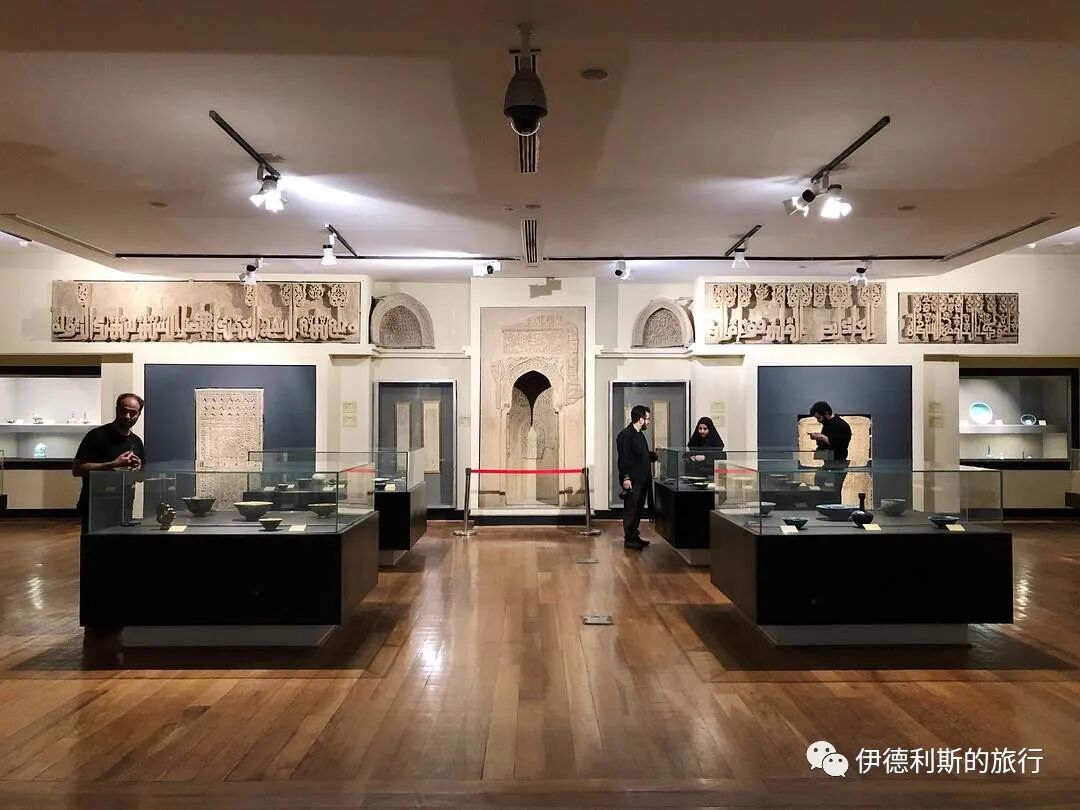
Mihrab prayer niche
Mosaic tile mihrab
A mosaic tile mihrab from 1641, from the holy city of Mashhad during the Safavid dynasty, featuring Thuluth calligraphy.
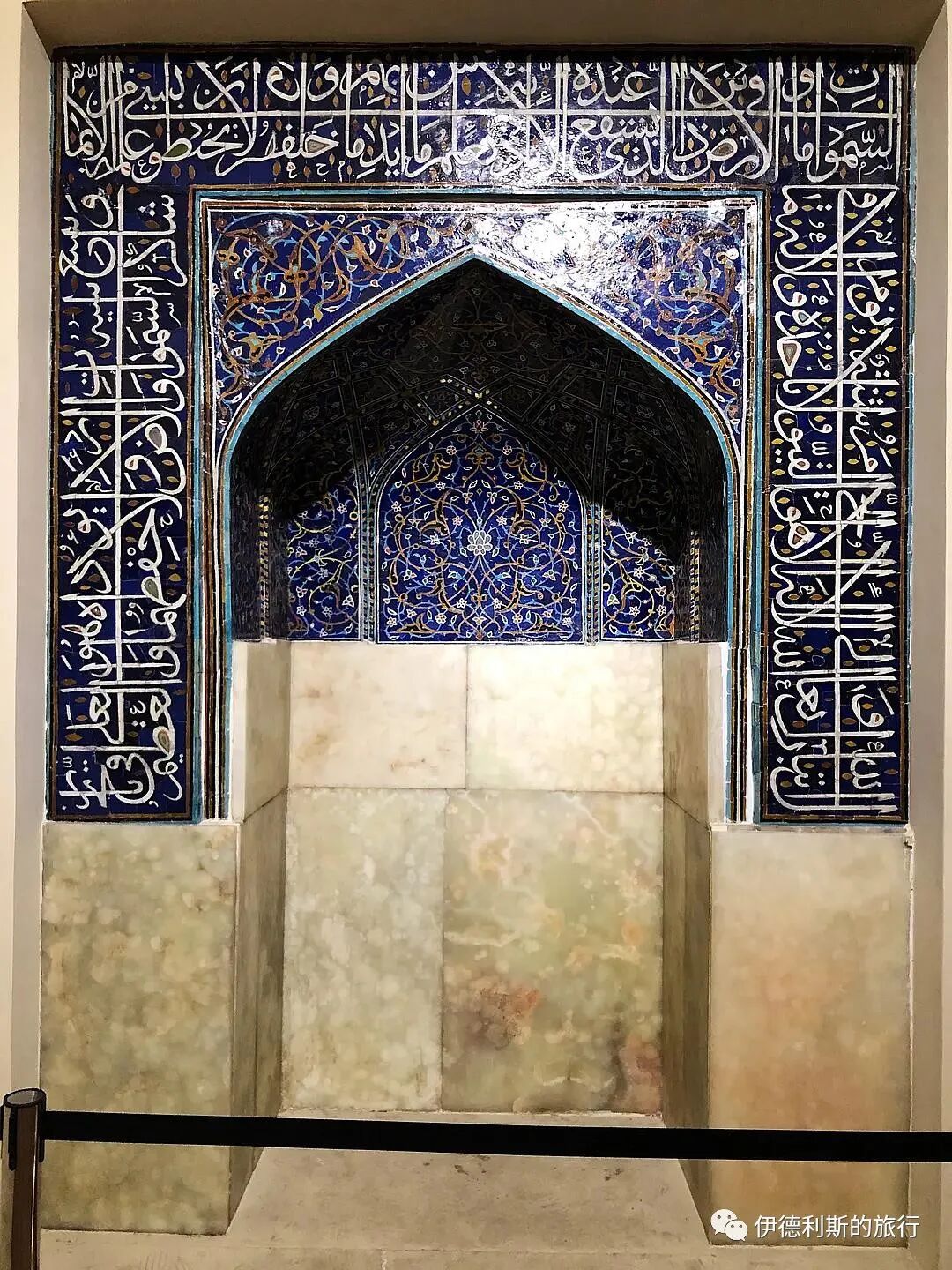
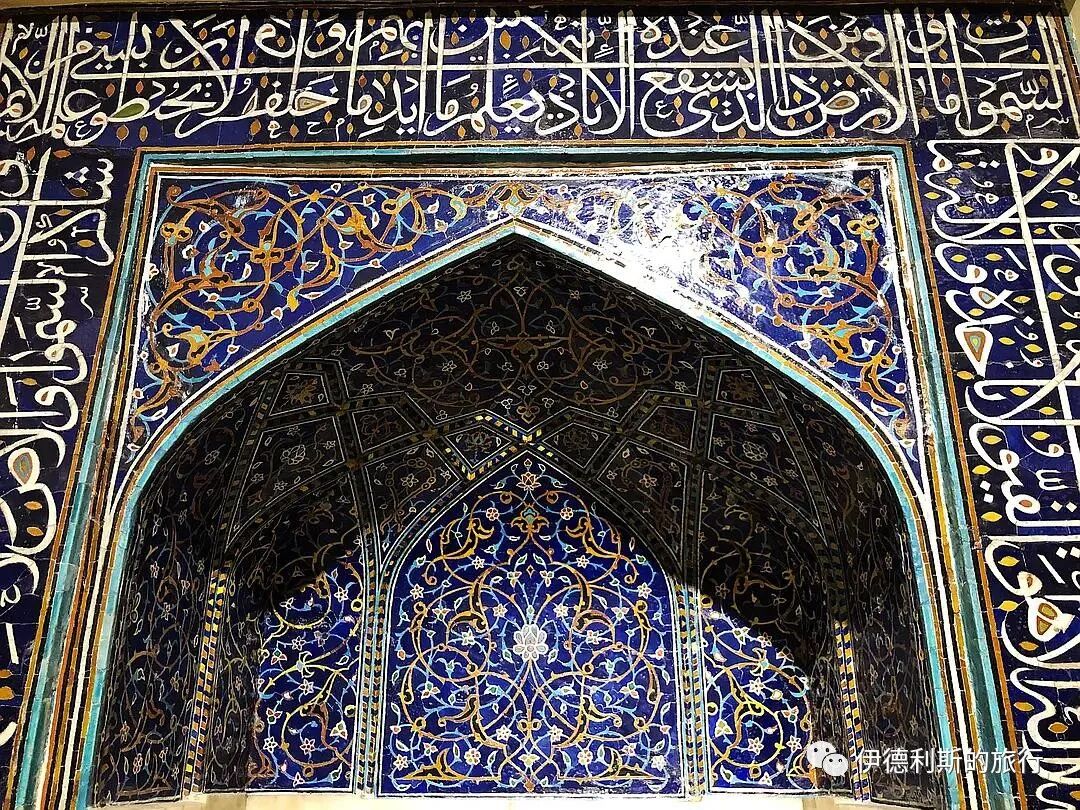
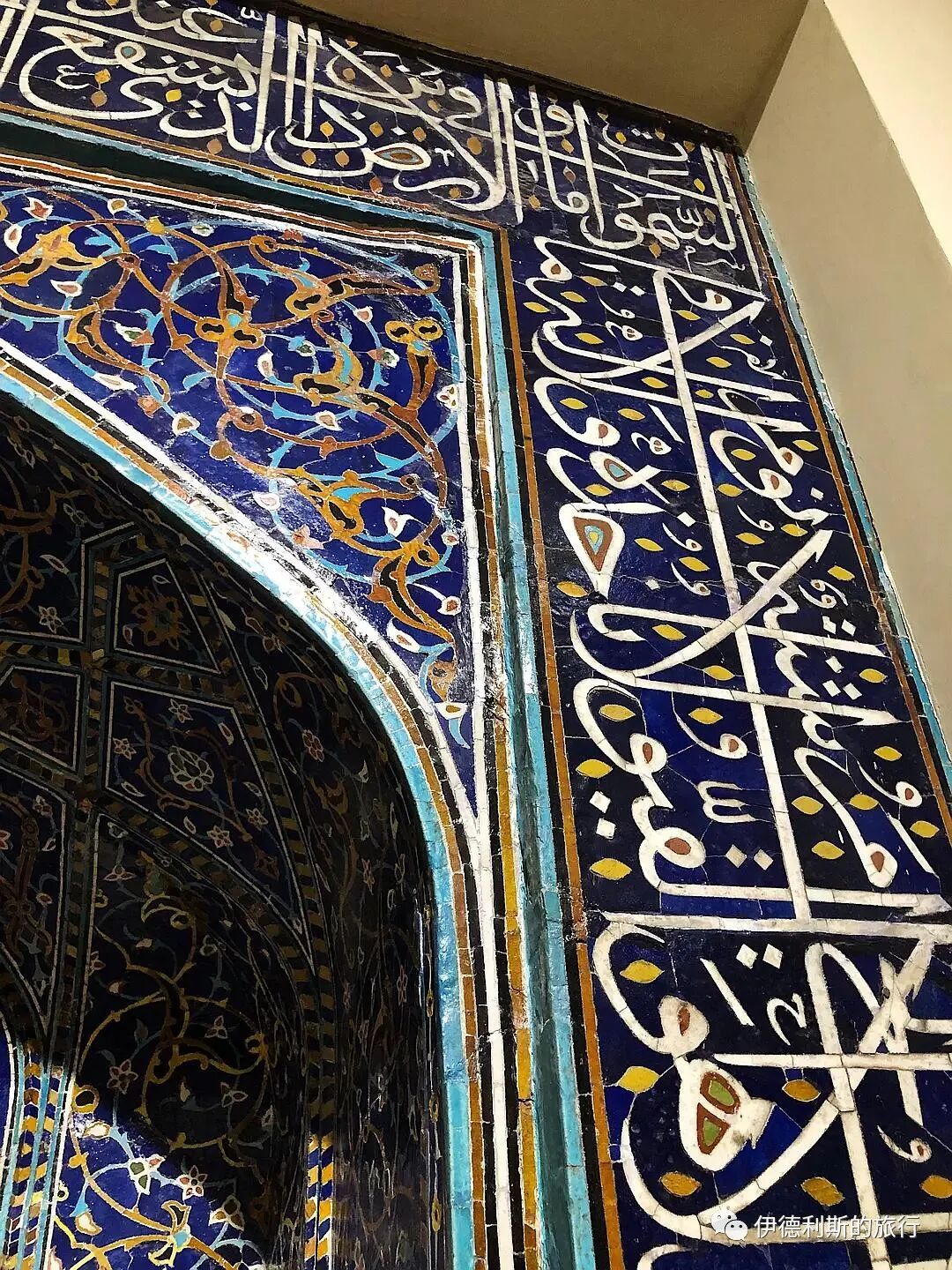
Stucco mihrab
A mihrab from 1133, from the Karrar shrine in the city of Bouzun, Isfahan province, during the Seljuk Empire. It was made by Ali ibn-e Shirzad Ansari al-Qazvini and features Thuluth, Kufic, and Reqa scripts.
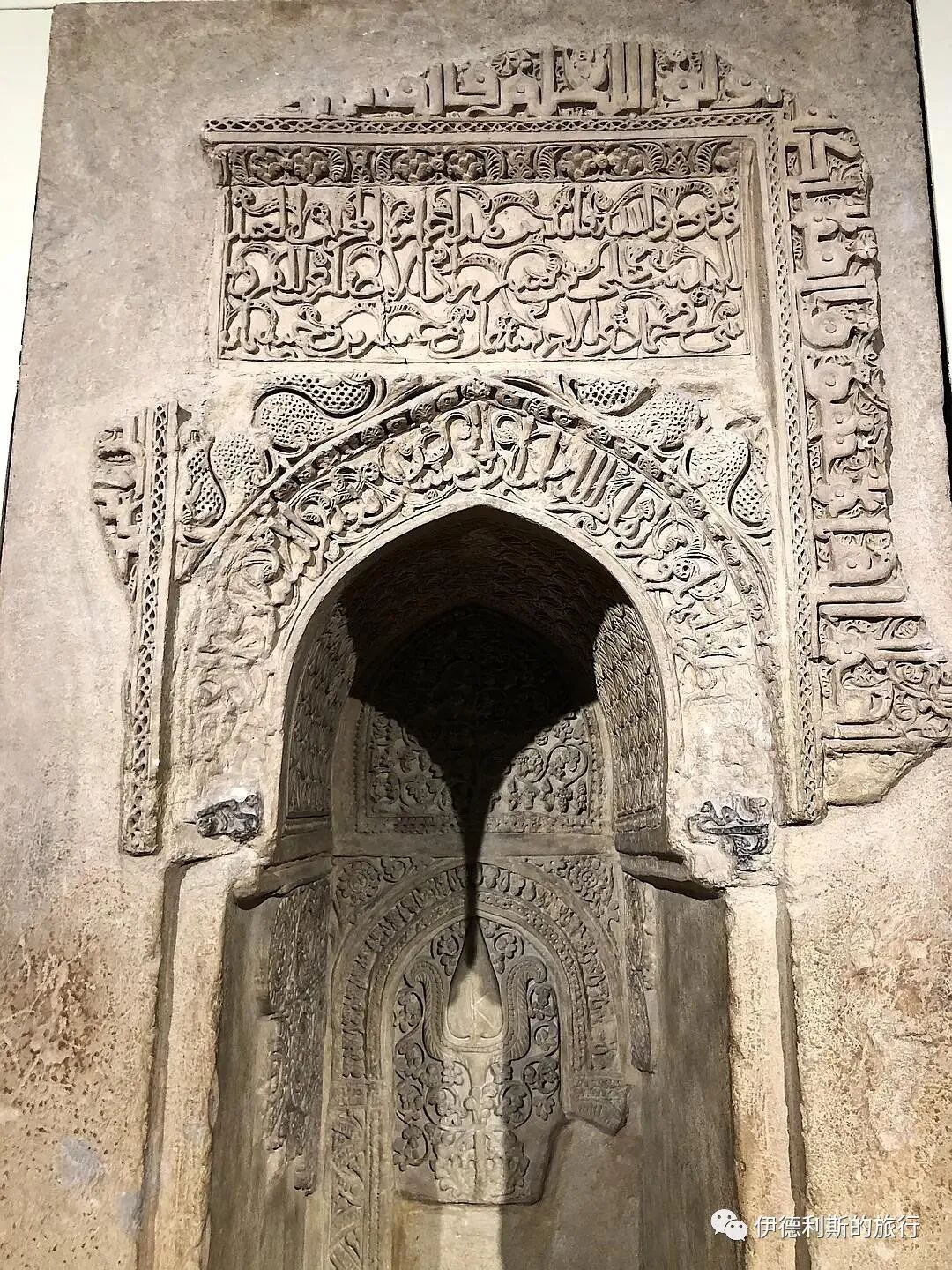
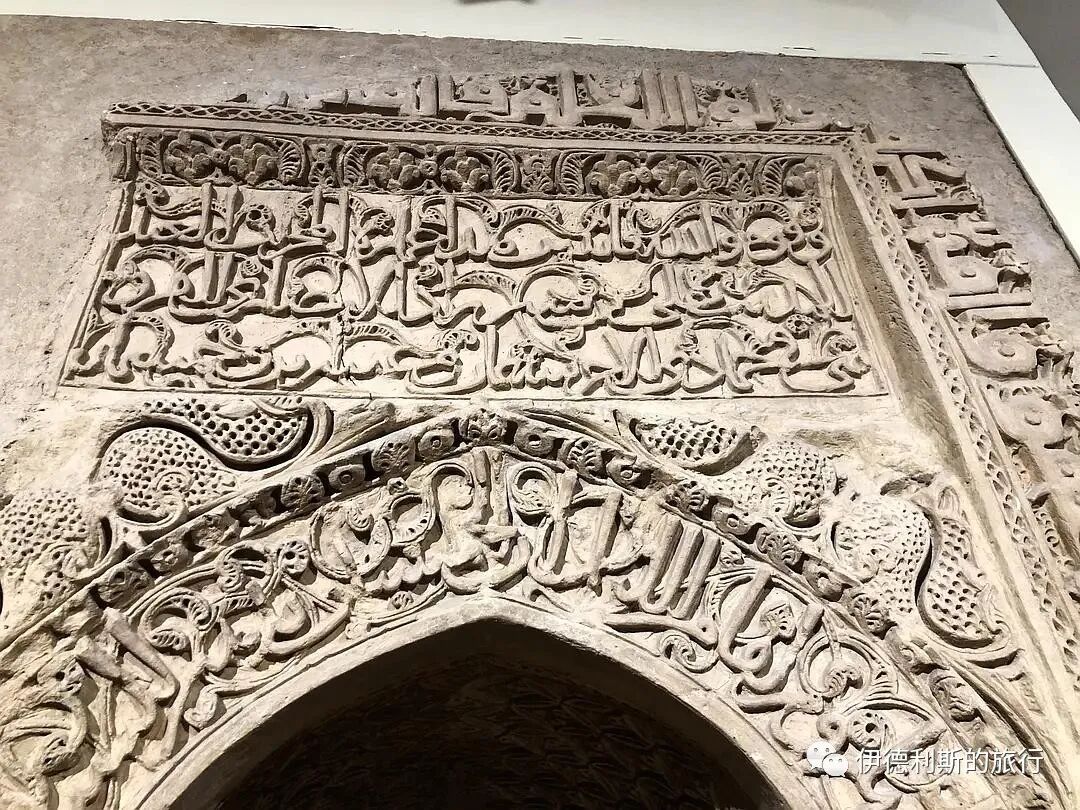
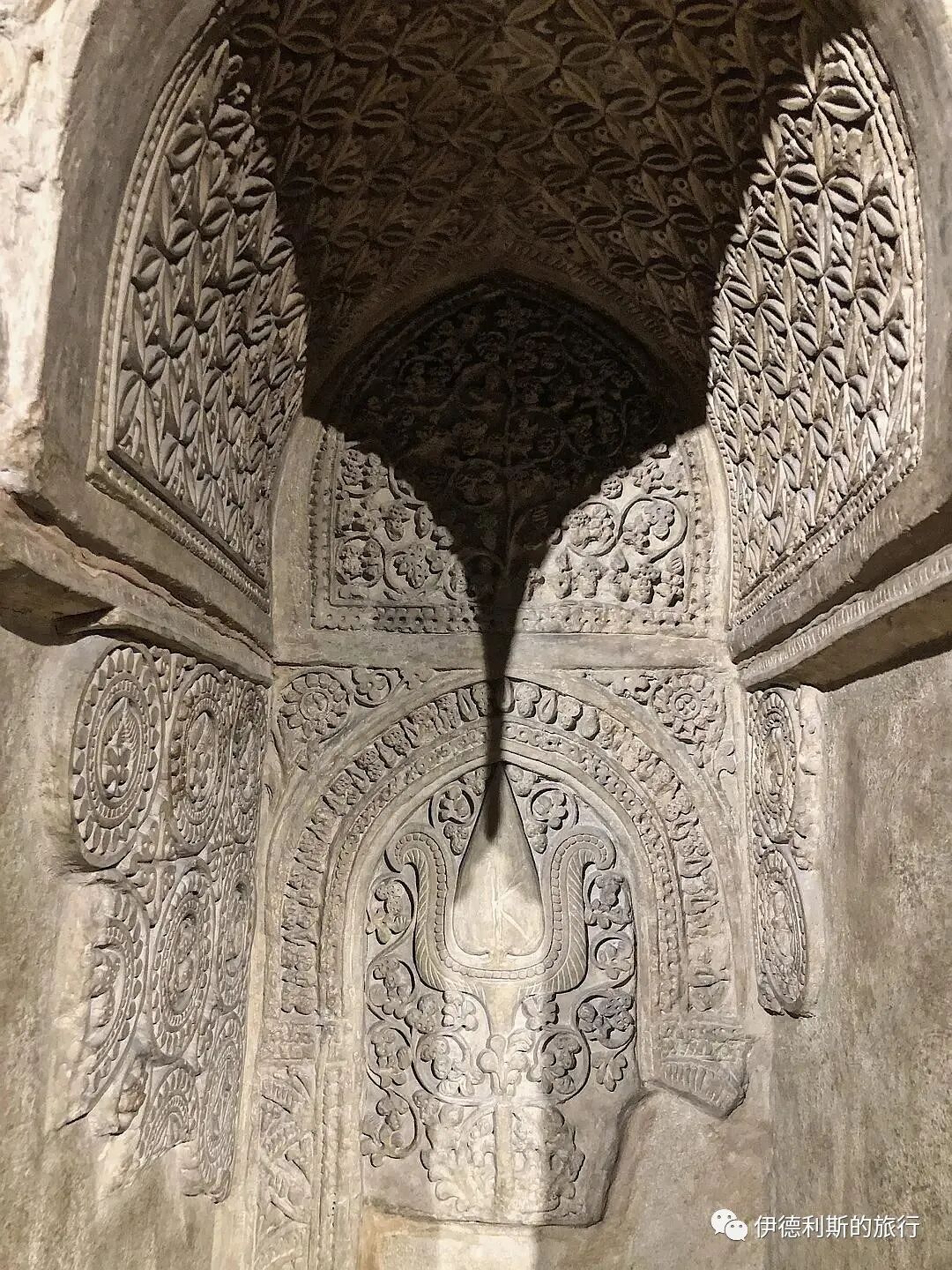
A mihrab from 1308, from the Rabi' Khatoon shrine in the city of Oshtorjan, Isfahan province, during the Ilkhanate period, made by Masoud Kermani. It features Kufic and Thuluth calligraphy.
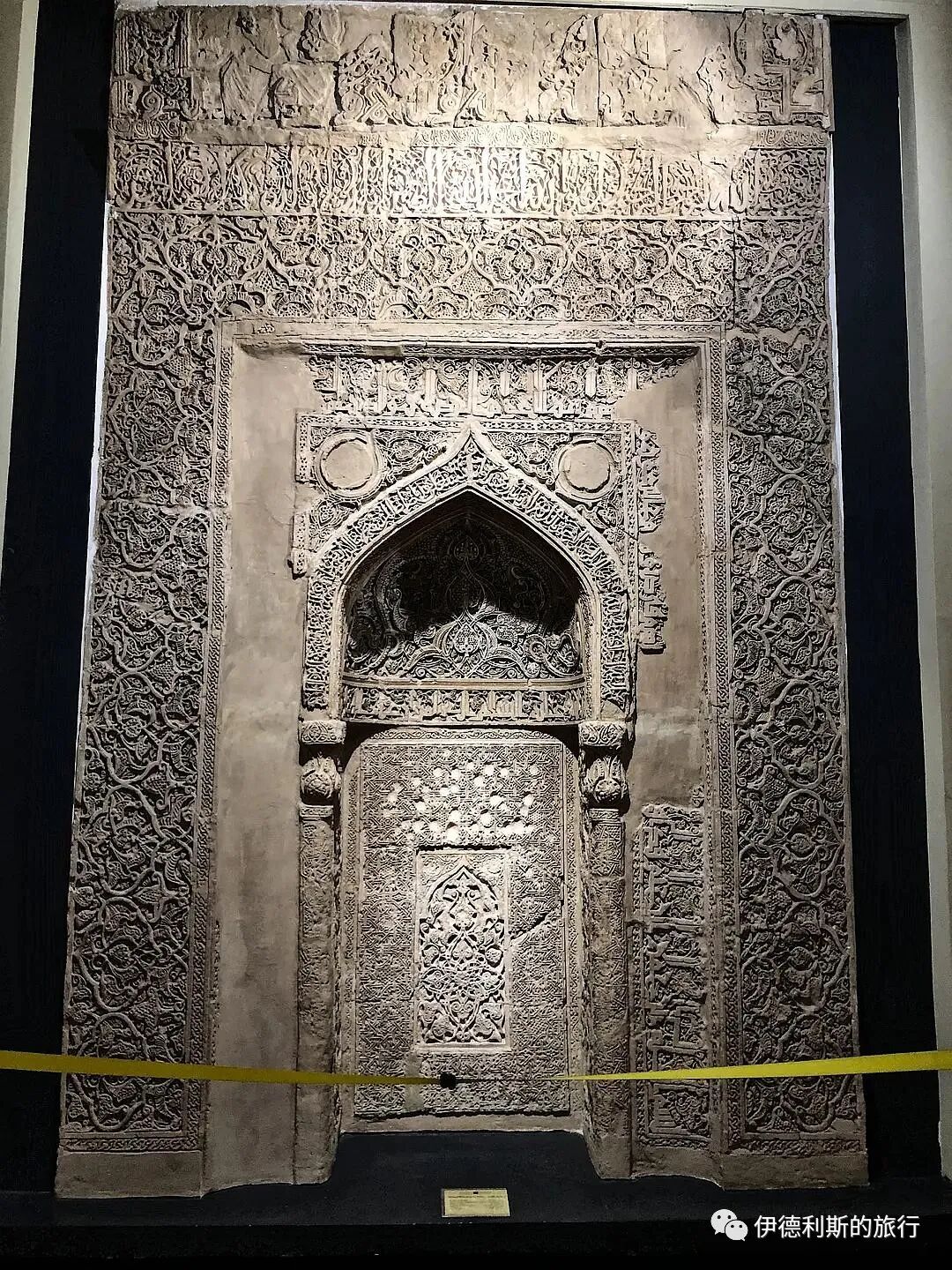
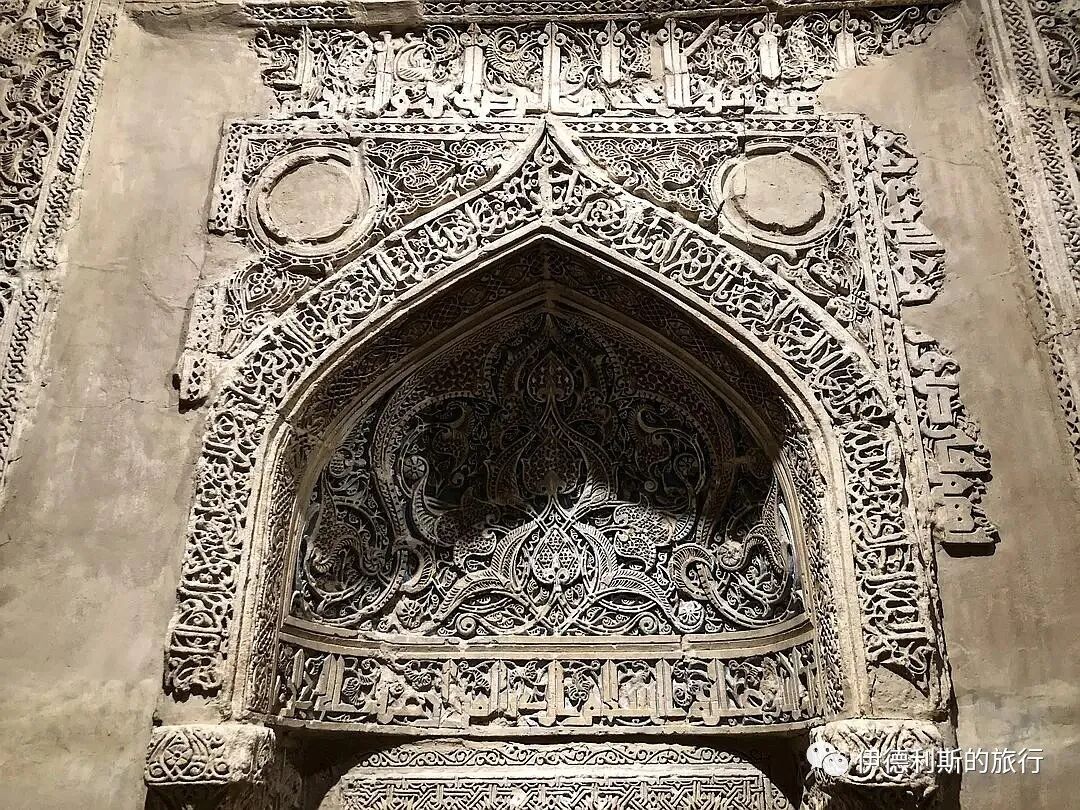
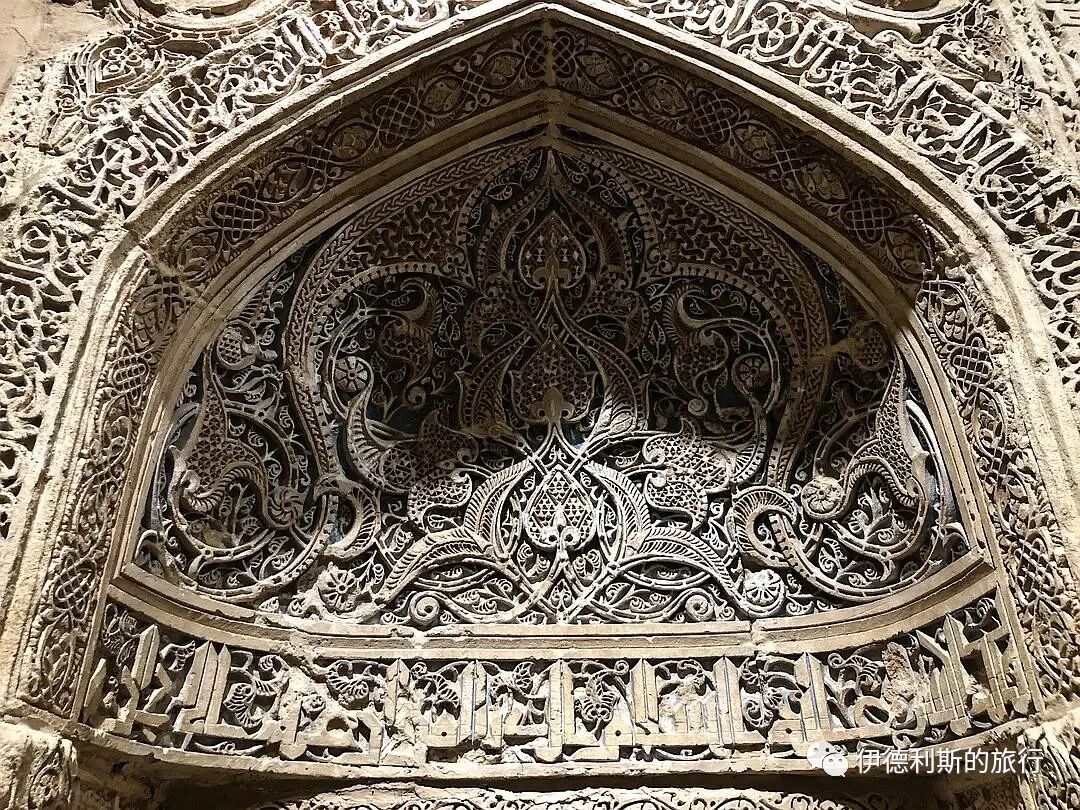
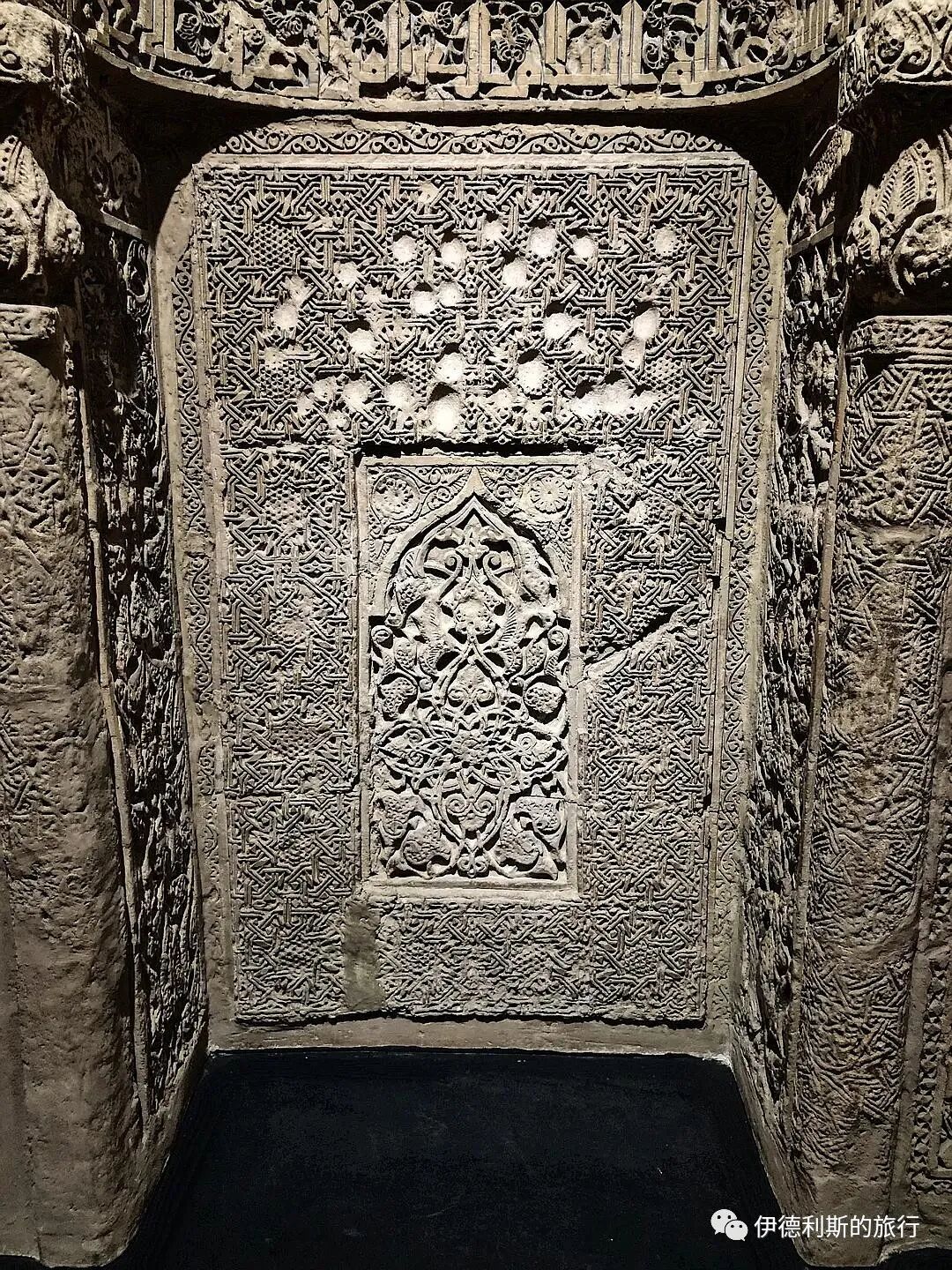
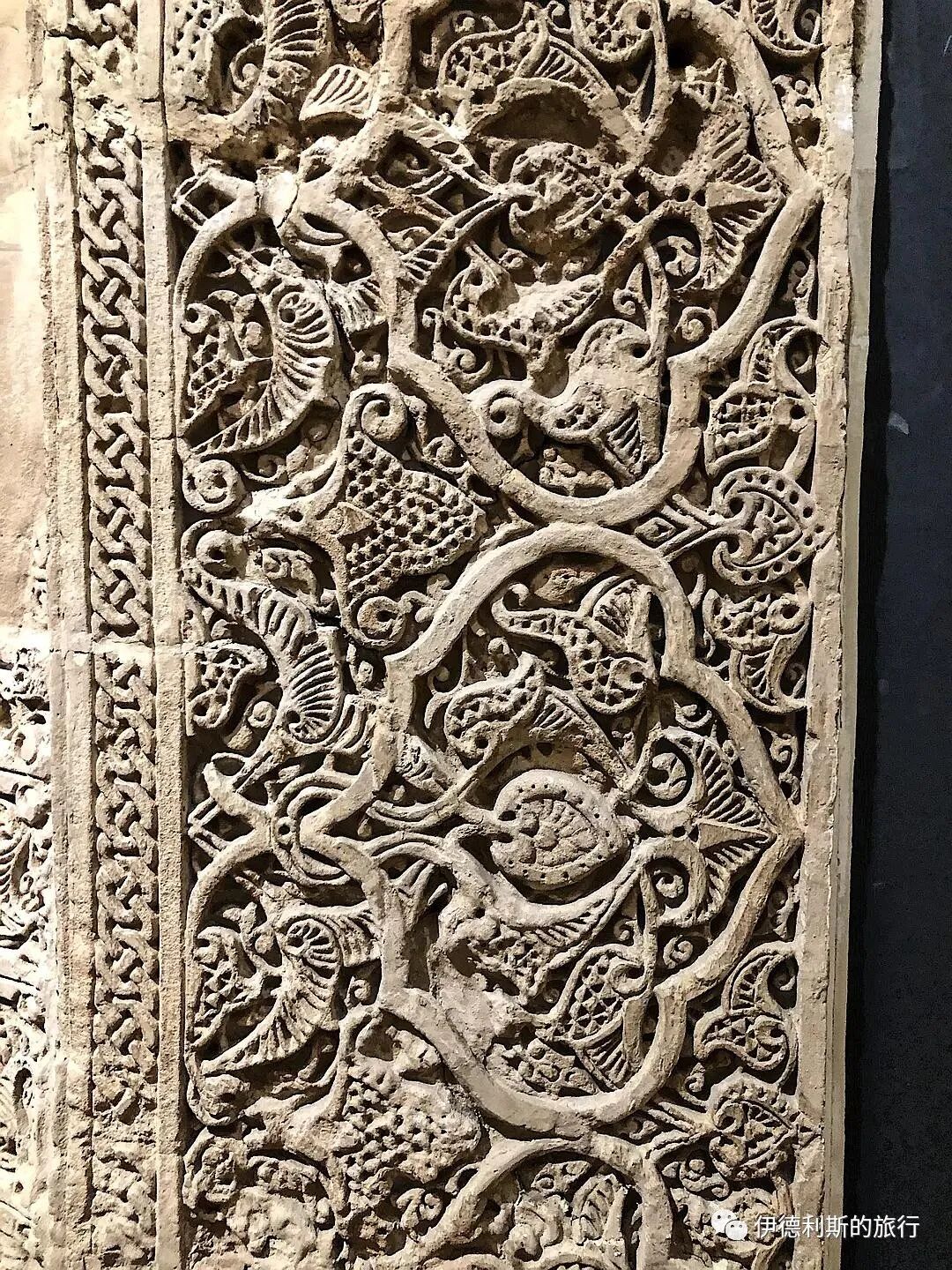
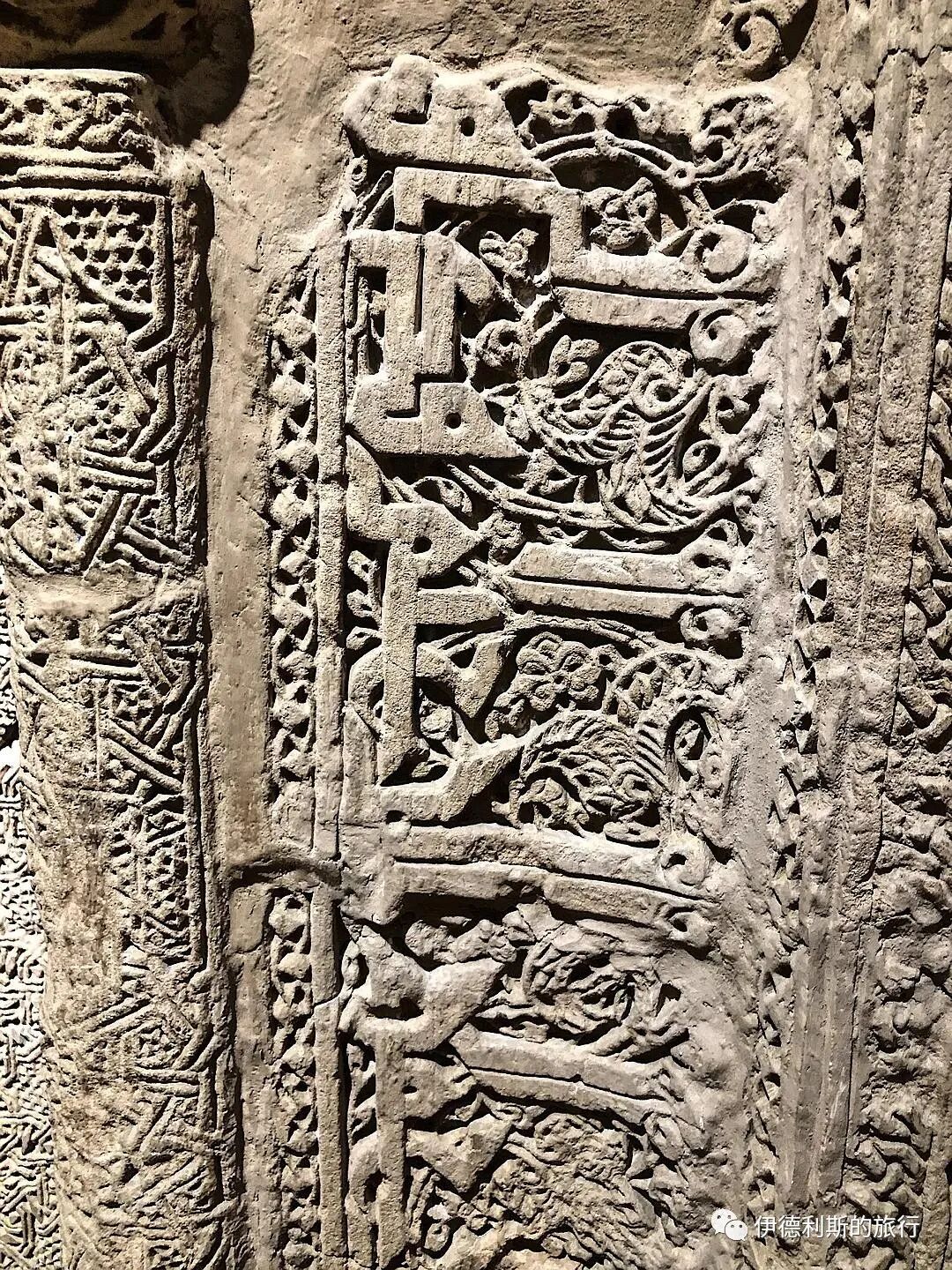
Lustreware mihrab
A lustreware mihrab from 1271, from the tomb of Habib ibn-e Musa in Kashan, Isfahan, during the Ilkhanate period, featuring Thuluth calligraphy.
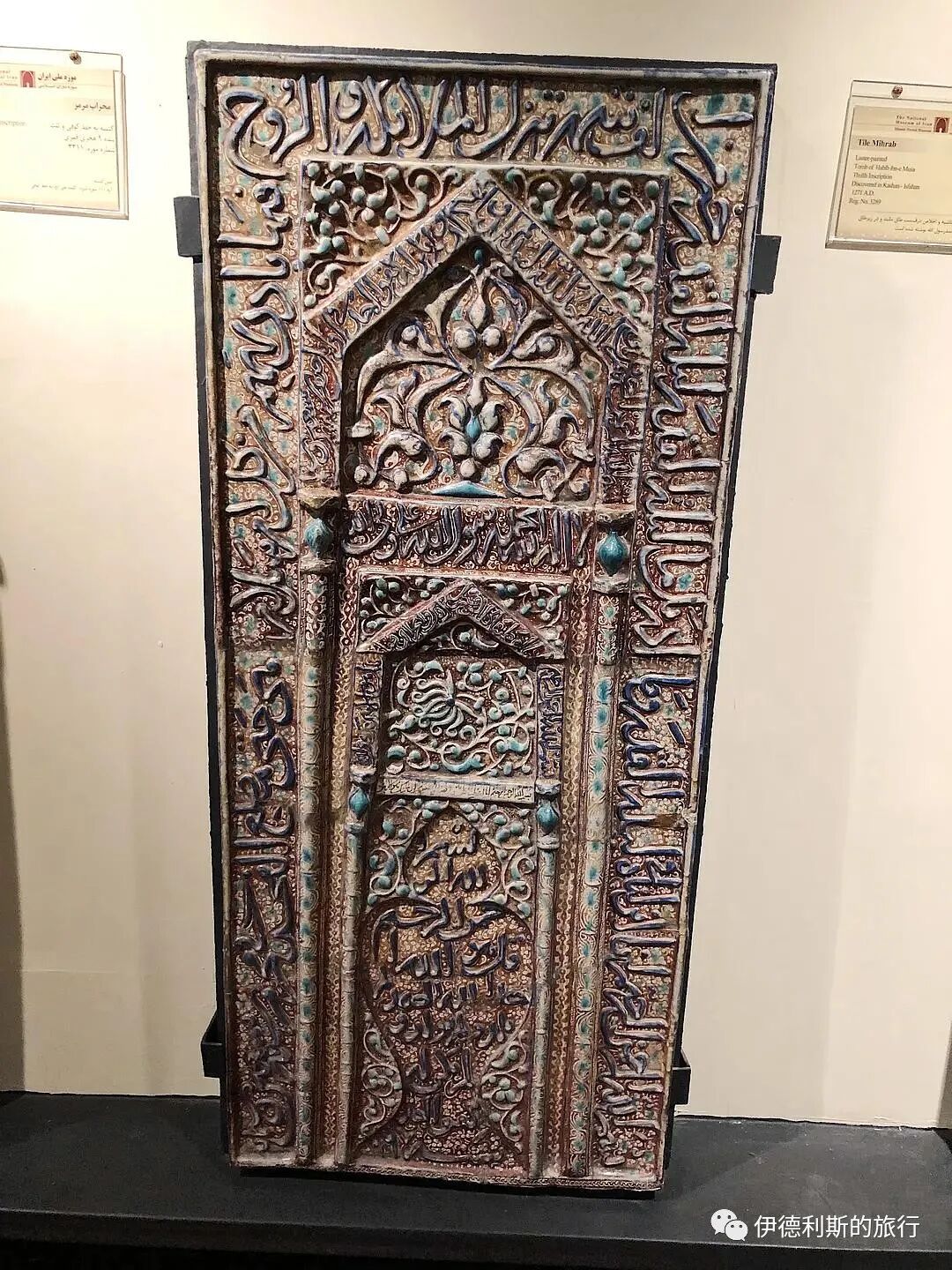
A lustreware mihrab from the early 14th century, from the tomb of Hares Ibn-e Ahmad Ibn-e Zein 'Abedin in the city of Qom during the Ilkhanate period, featuring Thuluth calligraphy.
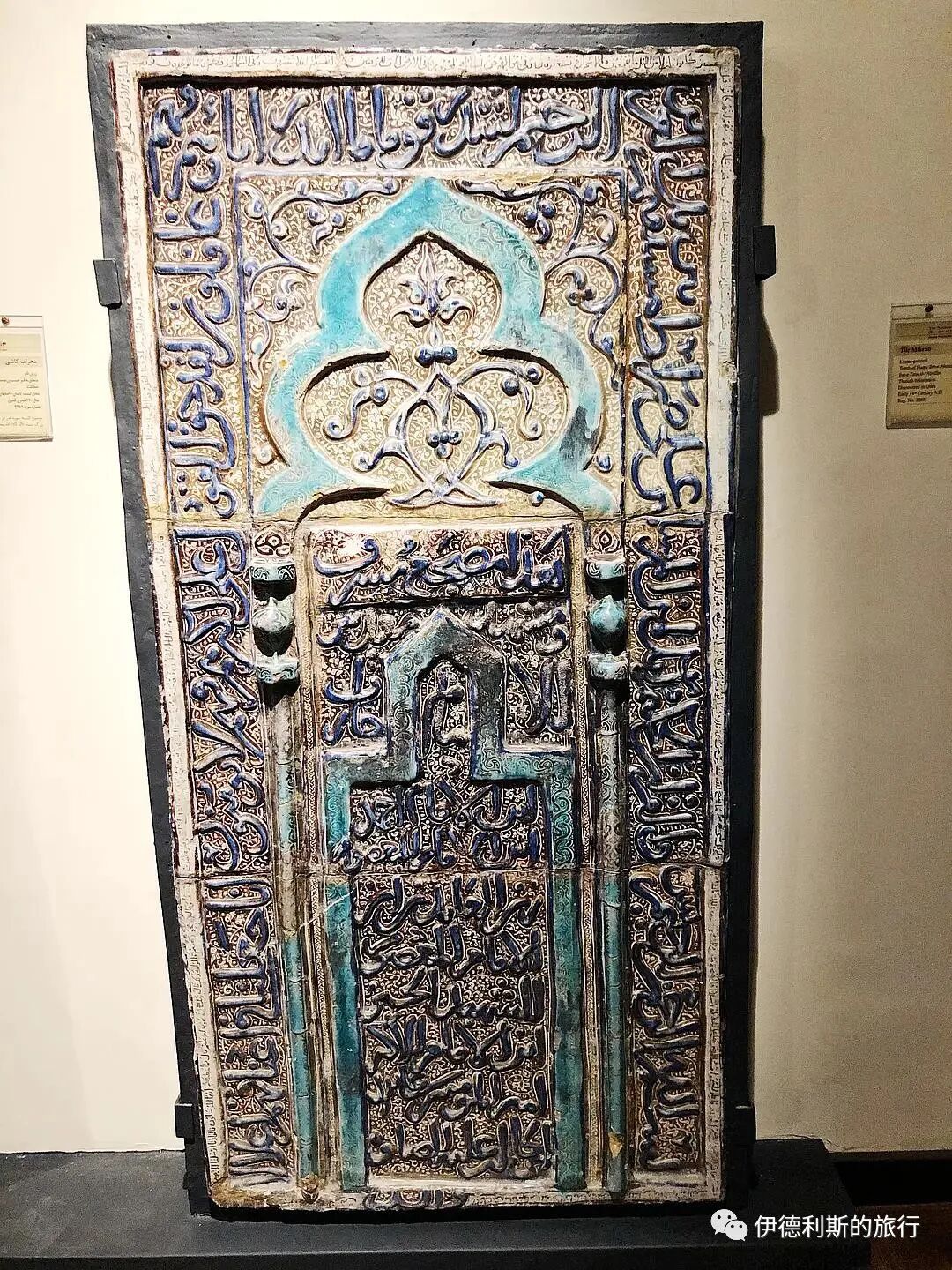
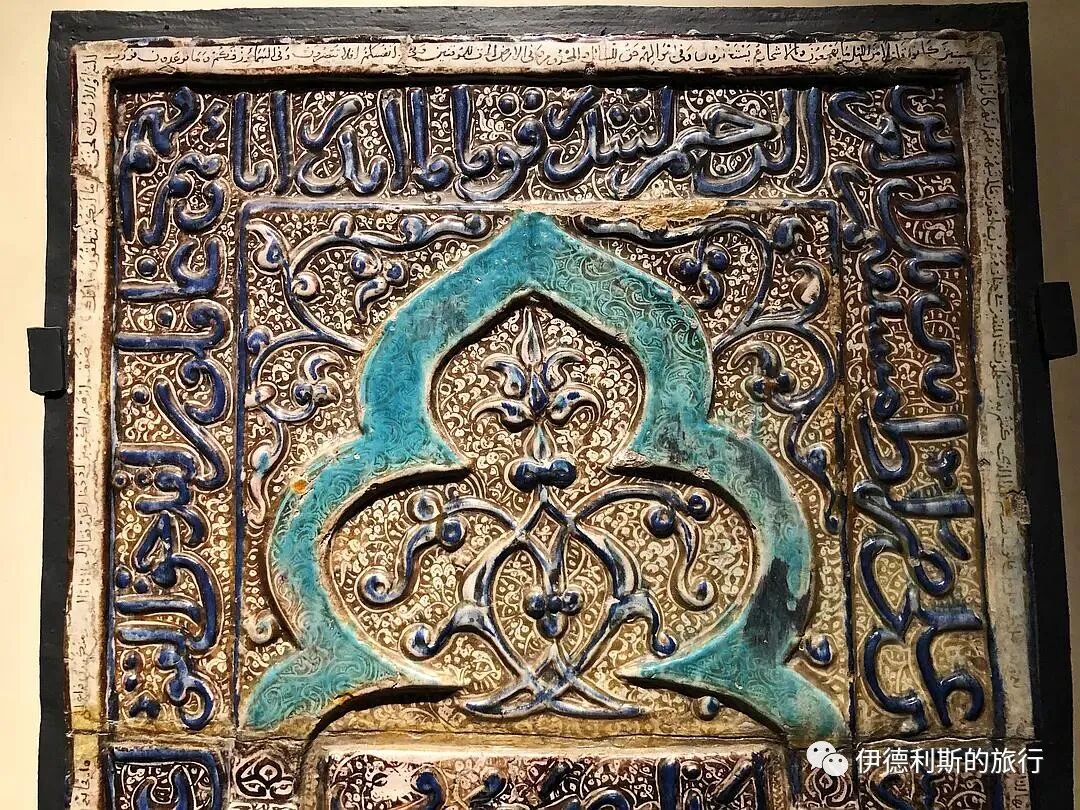
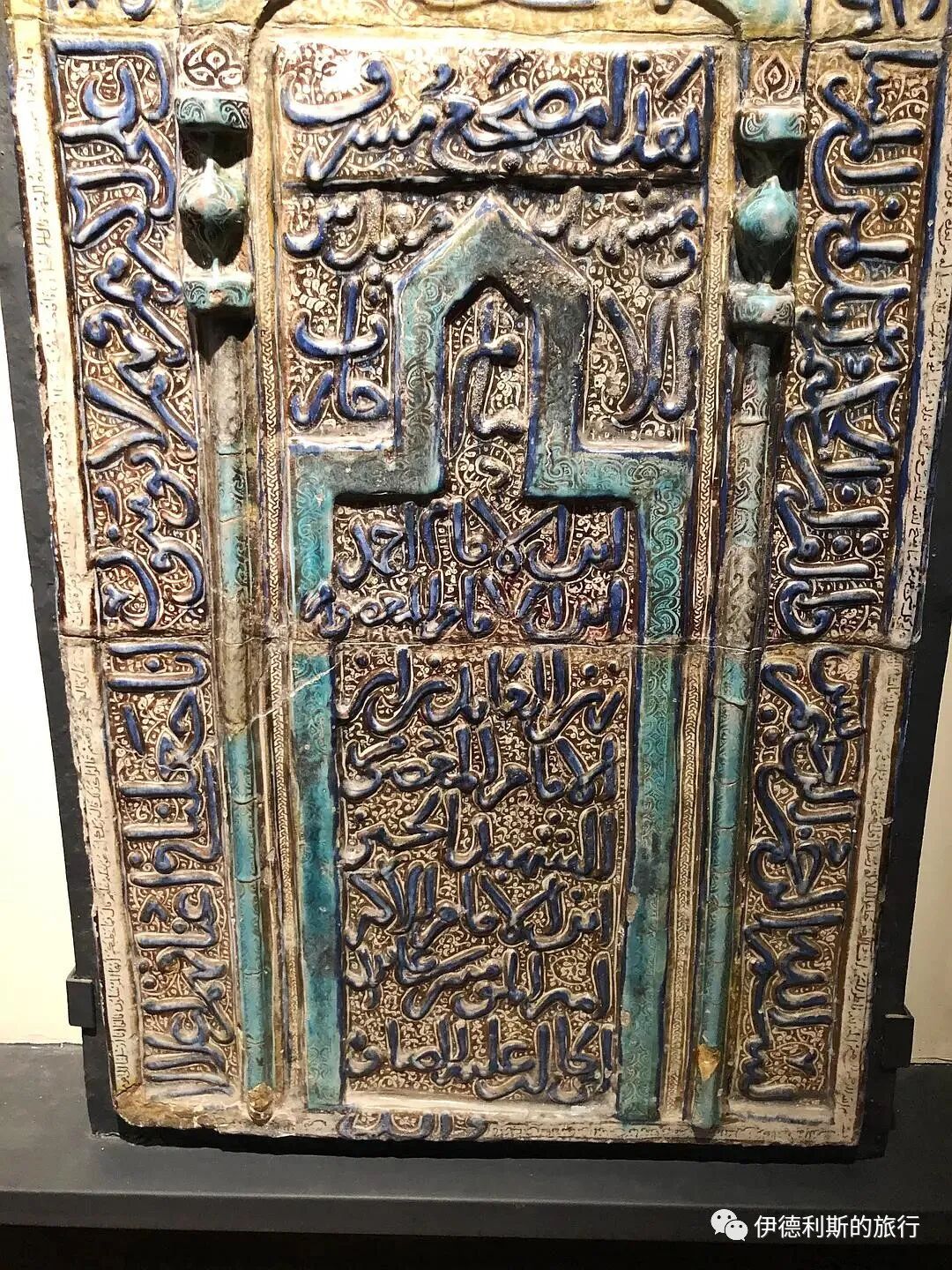
A 14th-century Ilkhanate period lustreware mihrab featuring Naskh calligraphy.
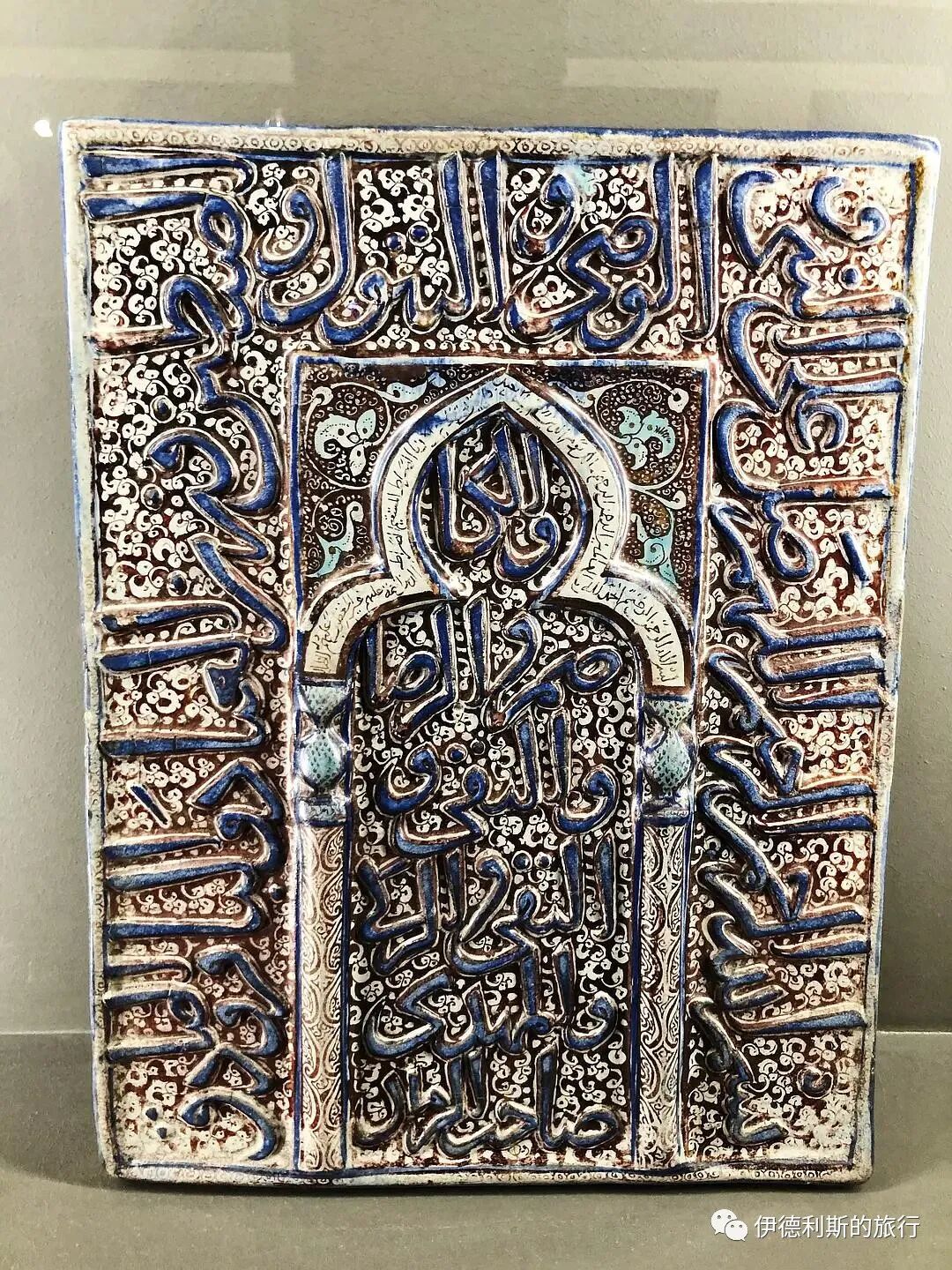
A 1333 lustreware mihrab from the Ali ibn-e Jafar shrine in the city of Qom, also known as the Gate of Paradise (Dar-e-Behesht), featuring Kufic, Naskh, and Thuluth calligraphy.
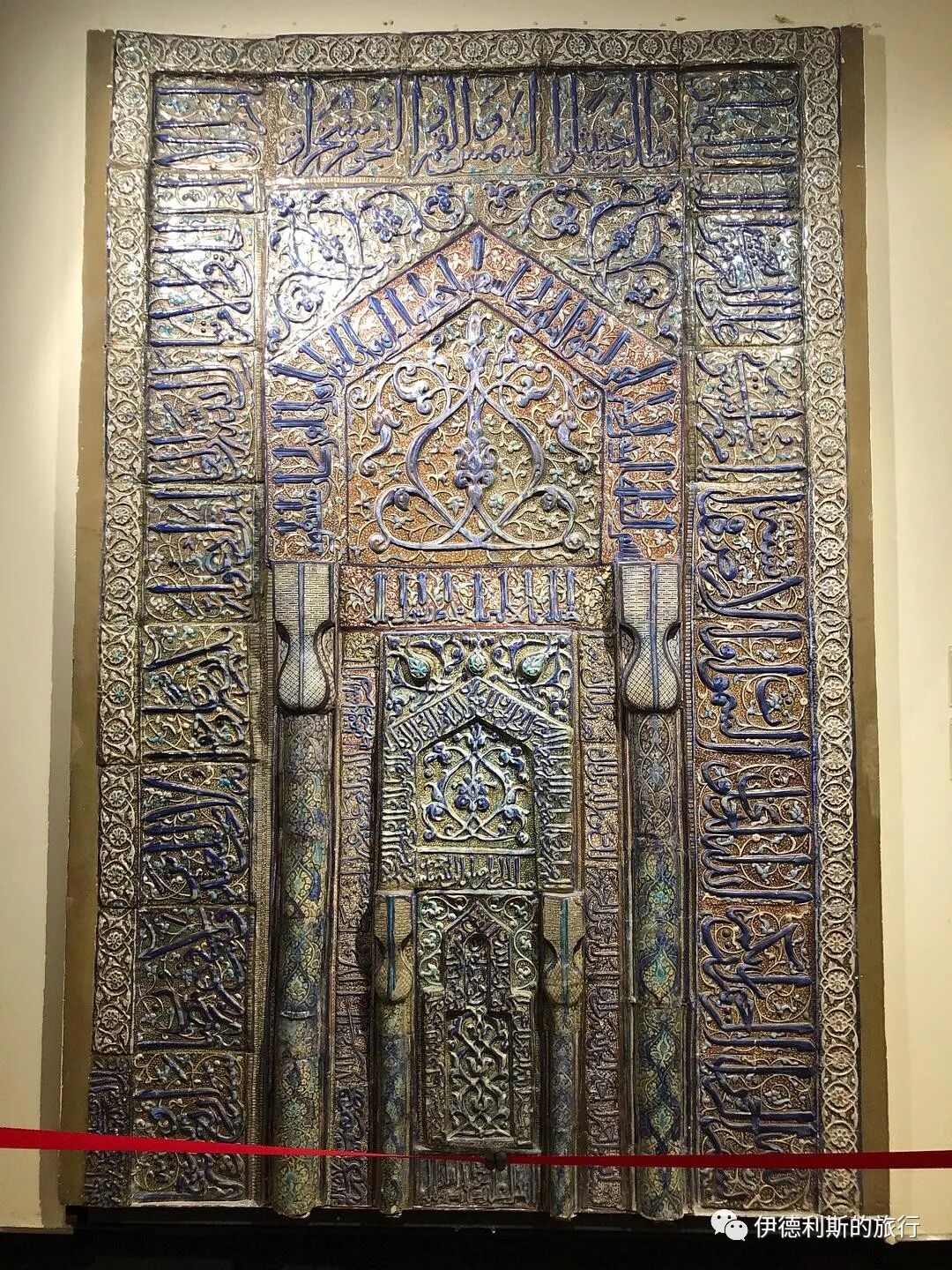
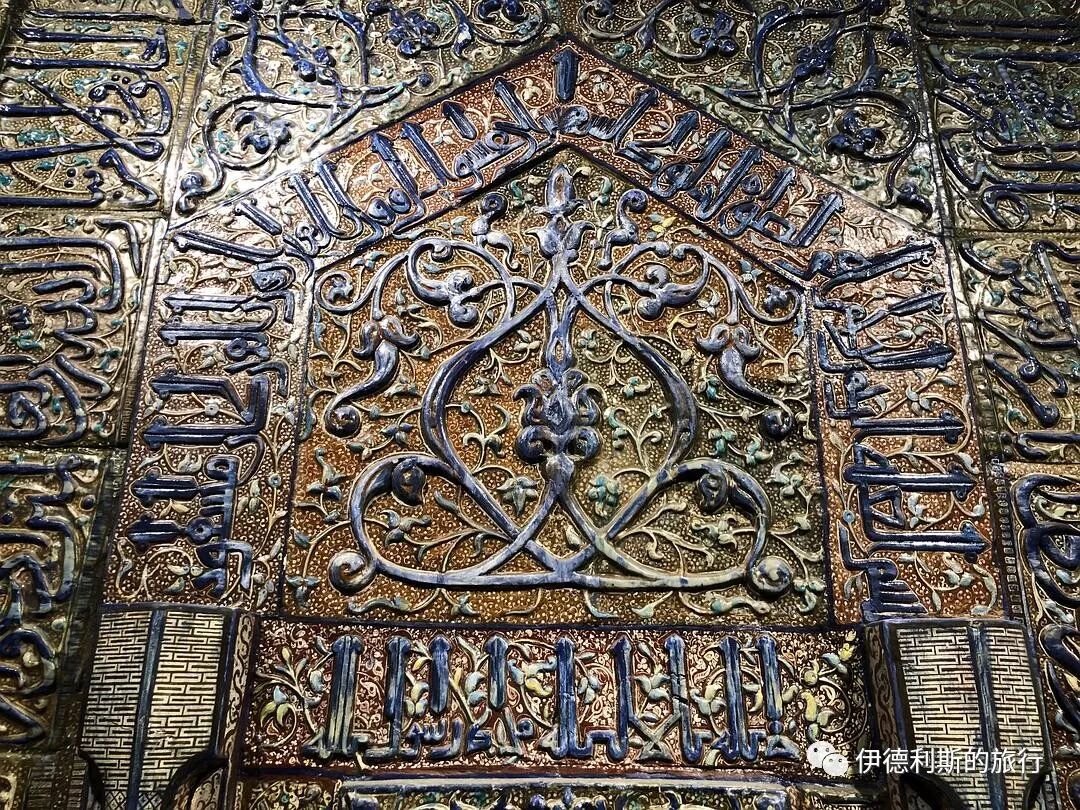
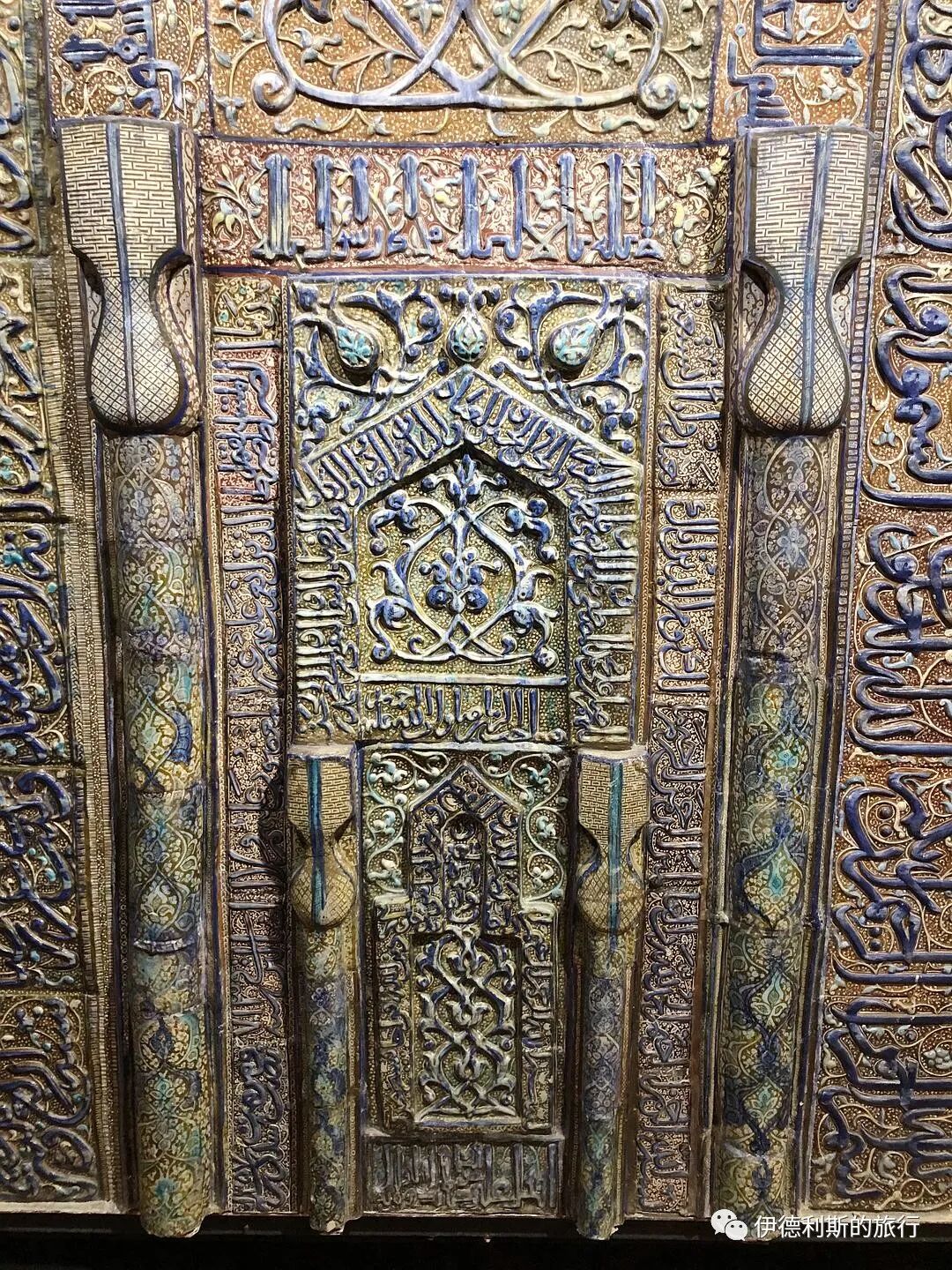
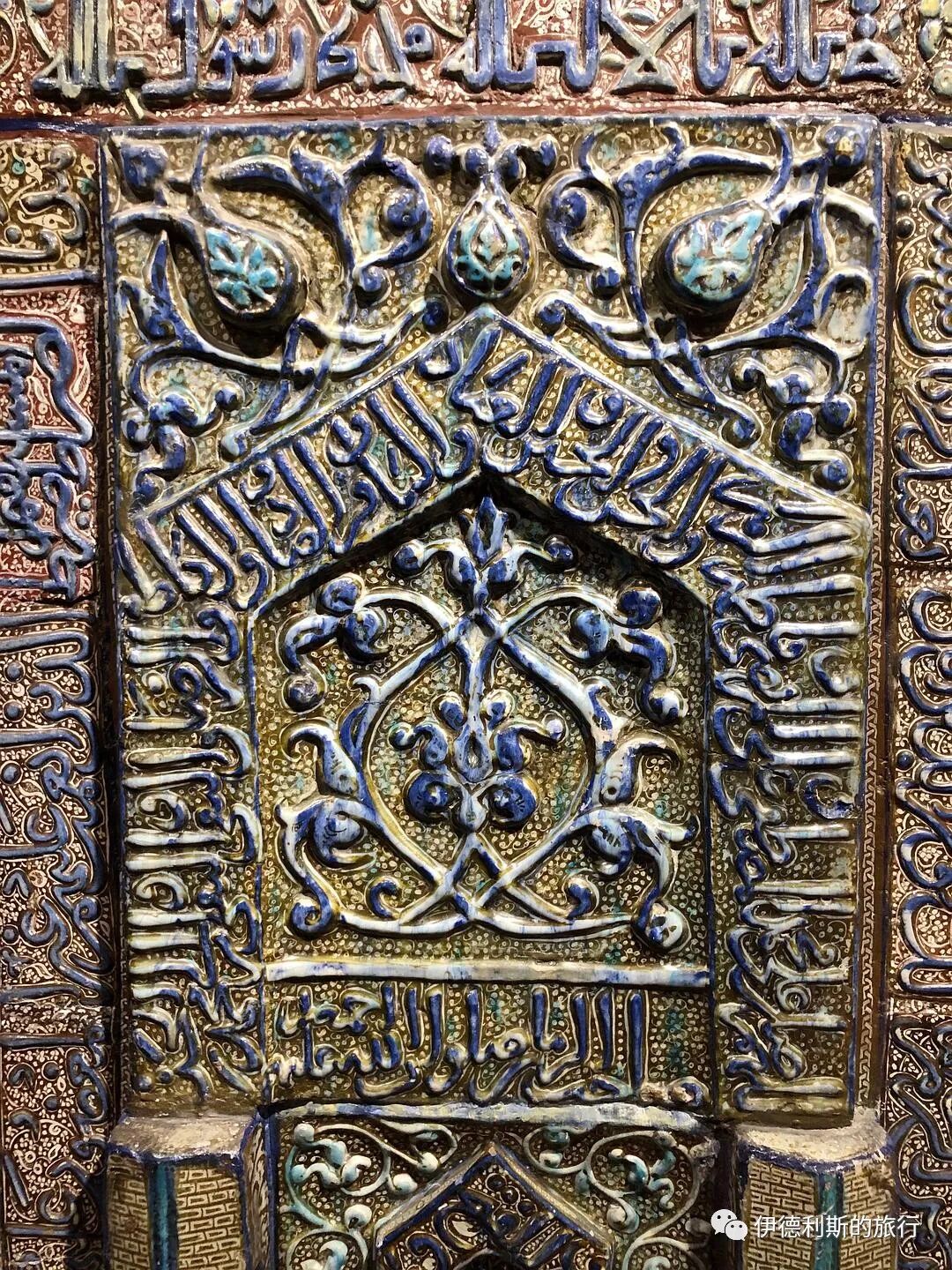
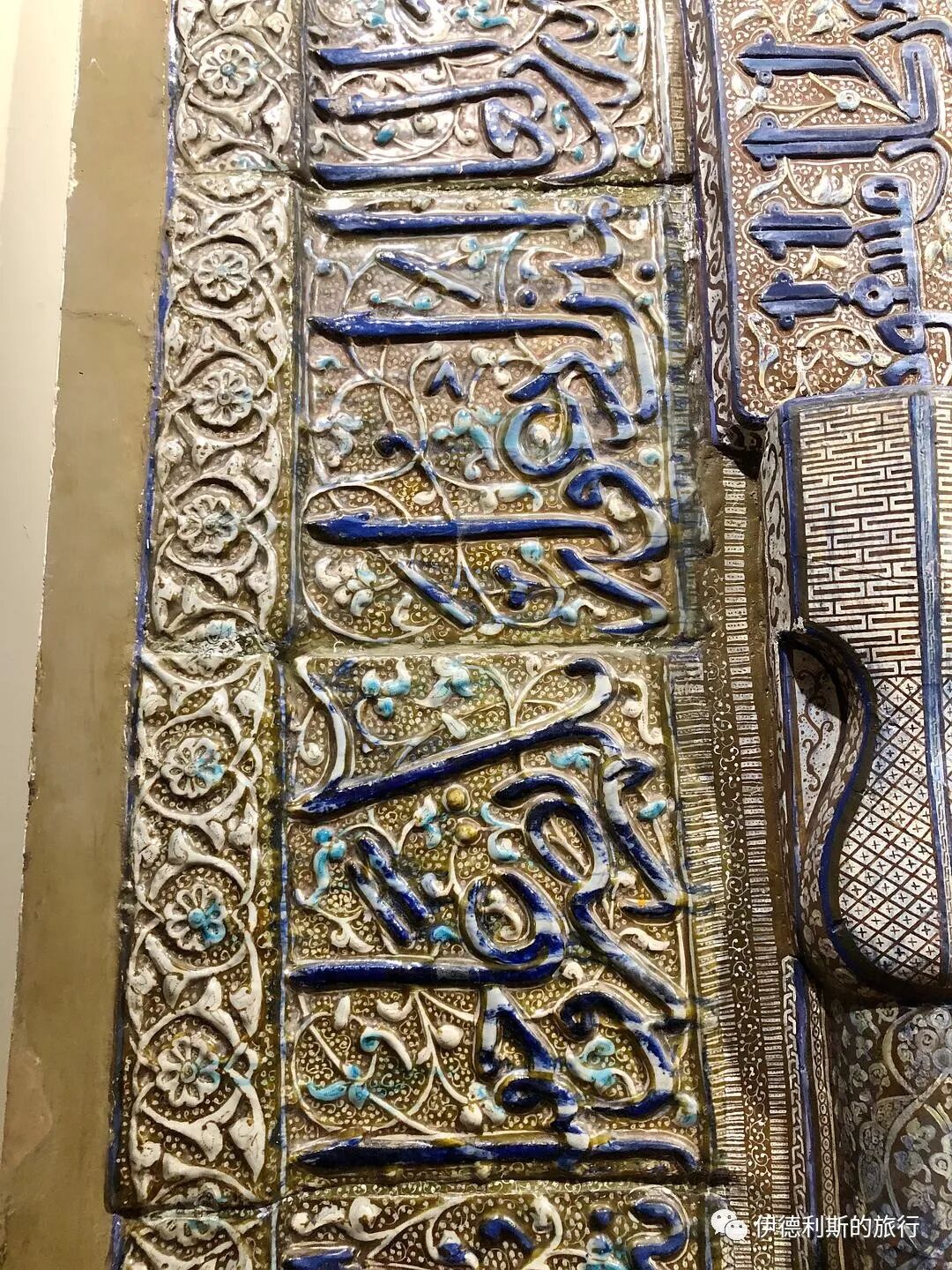
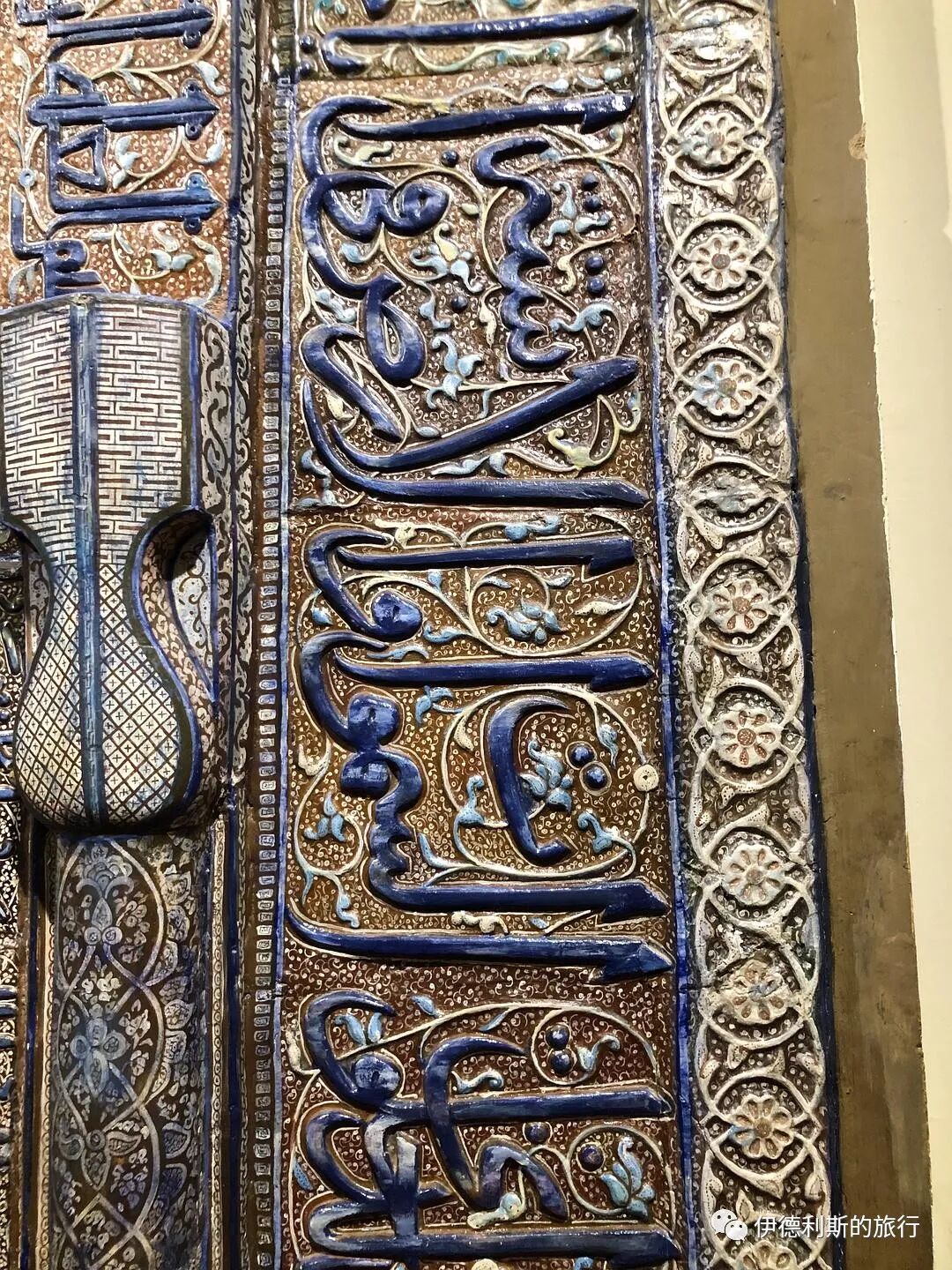
Stone mihrab
An 11th-century stone mihrab from the city of Meymeh, Isfahan province, featuring Kufic calligraphy.
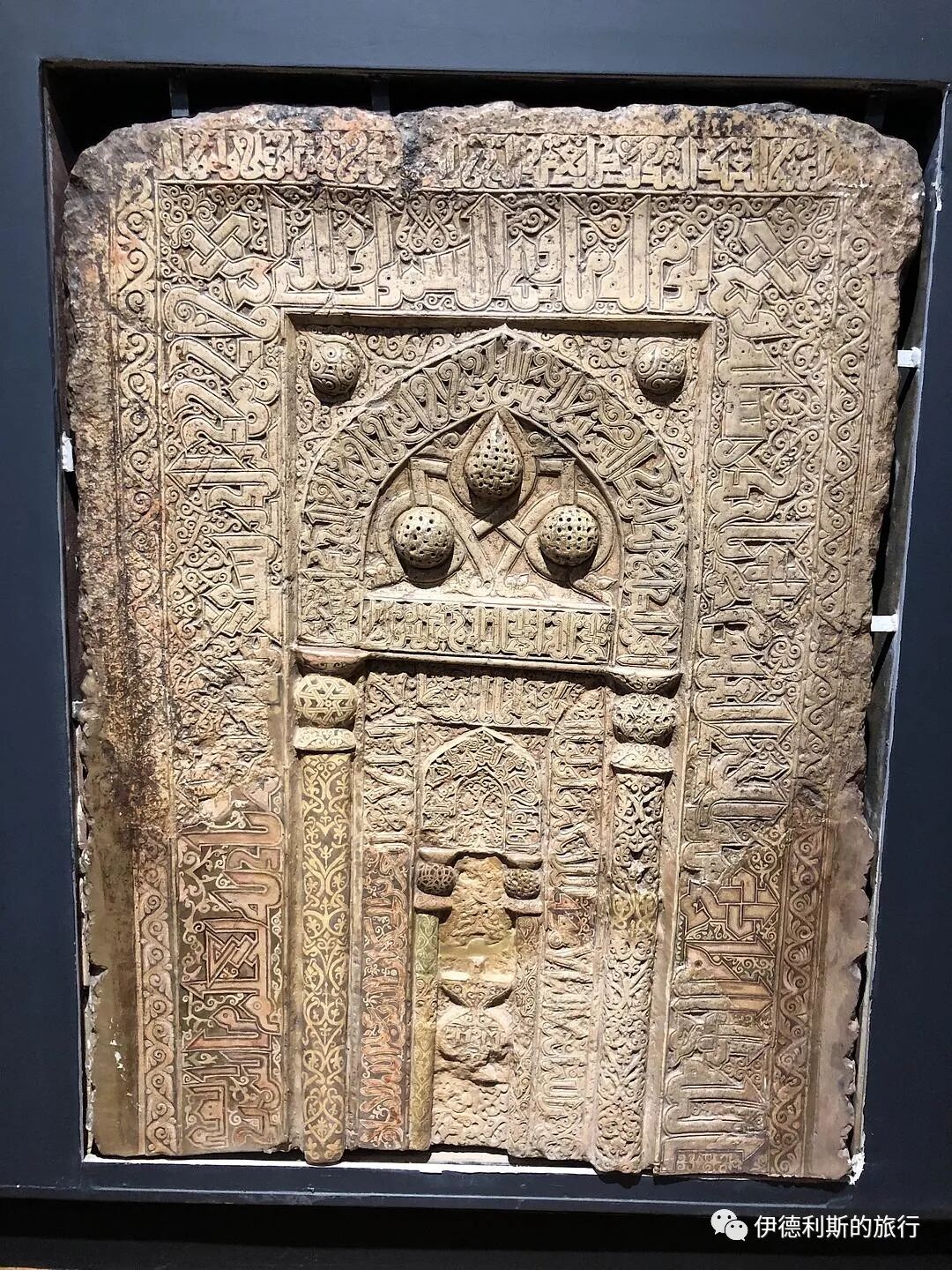
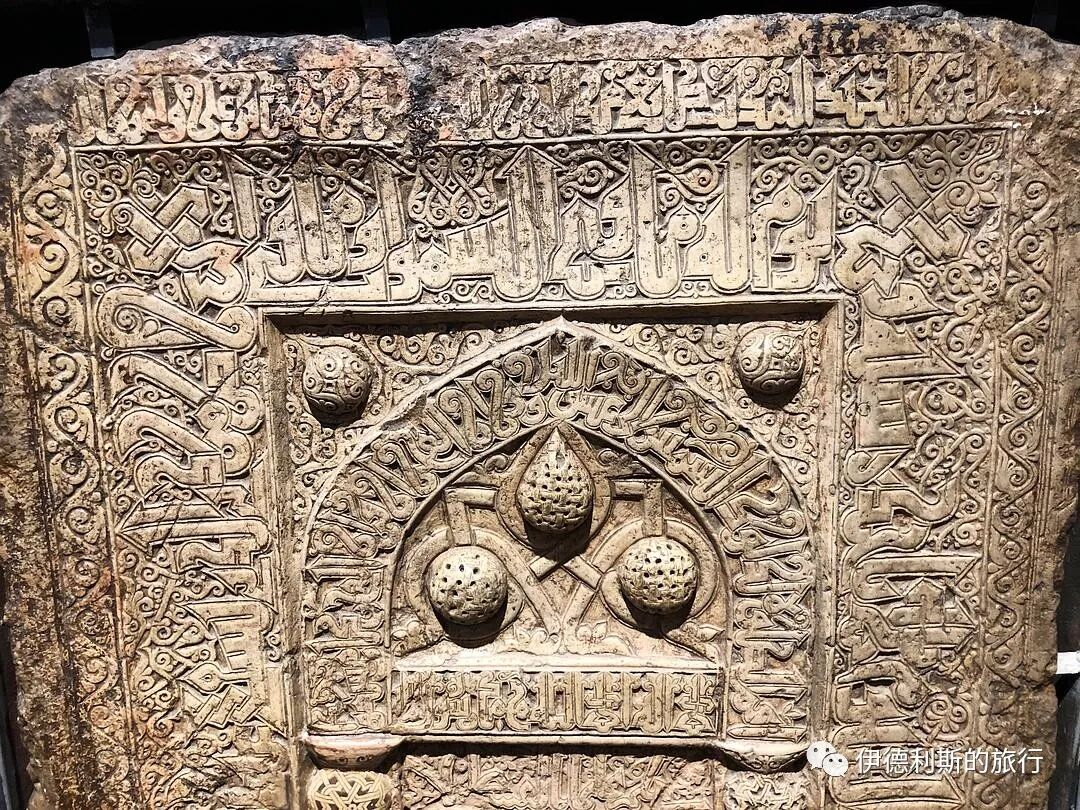
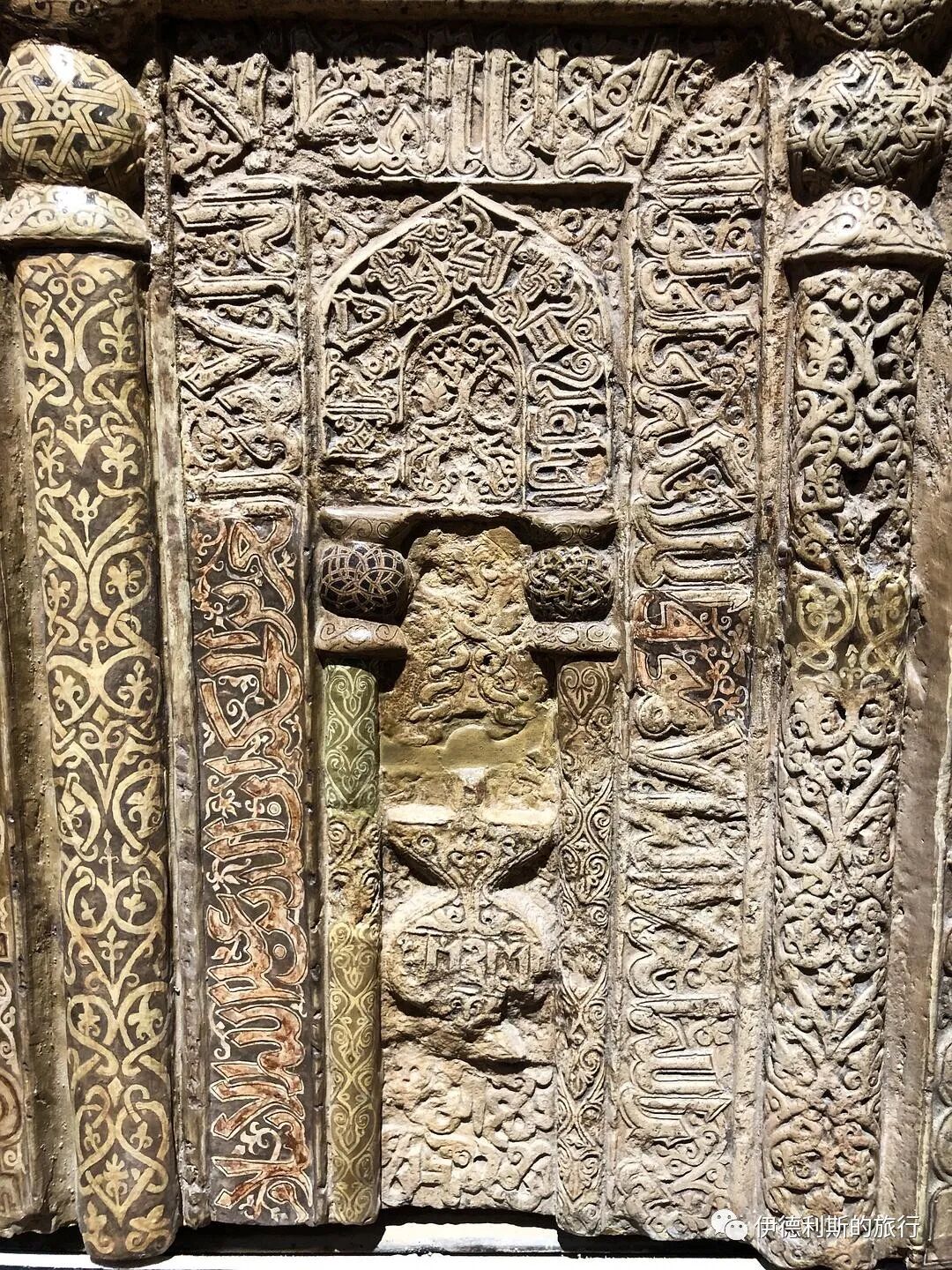
A 17th-century Safavid dynasty mihrab from the Ganj mosque in Kerman, featuring Thuluth calligraphy. The Ganjali Khan complex was built between 1596 and 1631 by Ganj Ali Khan, who ruled Kerman at the time; the architect was Mohammad Soltani from Yazd.
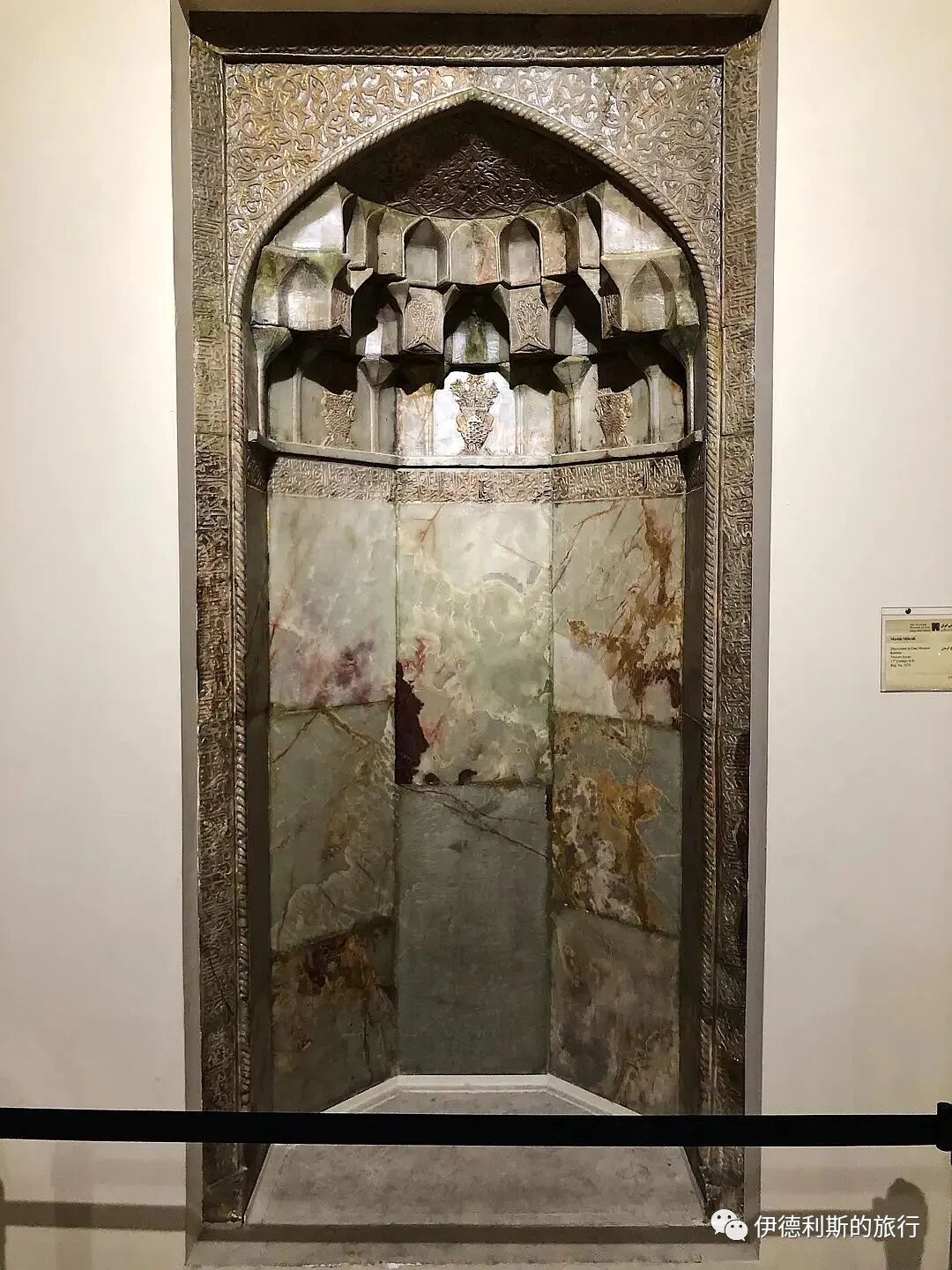
A 16th-century Timurid dynasty mihrab from the Jameh Mosque of Abarkuh, with Thuluth calligraphy on three sides and Kufic calligraphy on the two corners. Furthermore, the mihrab features two unique and beautiful marble columns on either side, which also bear Kufic calligraphy. Abarkuh is located in Yazd province, and its Timurid-era Jameh Mosque is situated in the city center square.
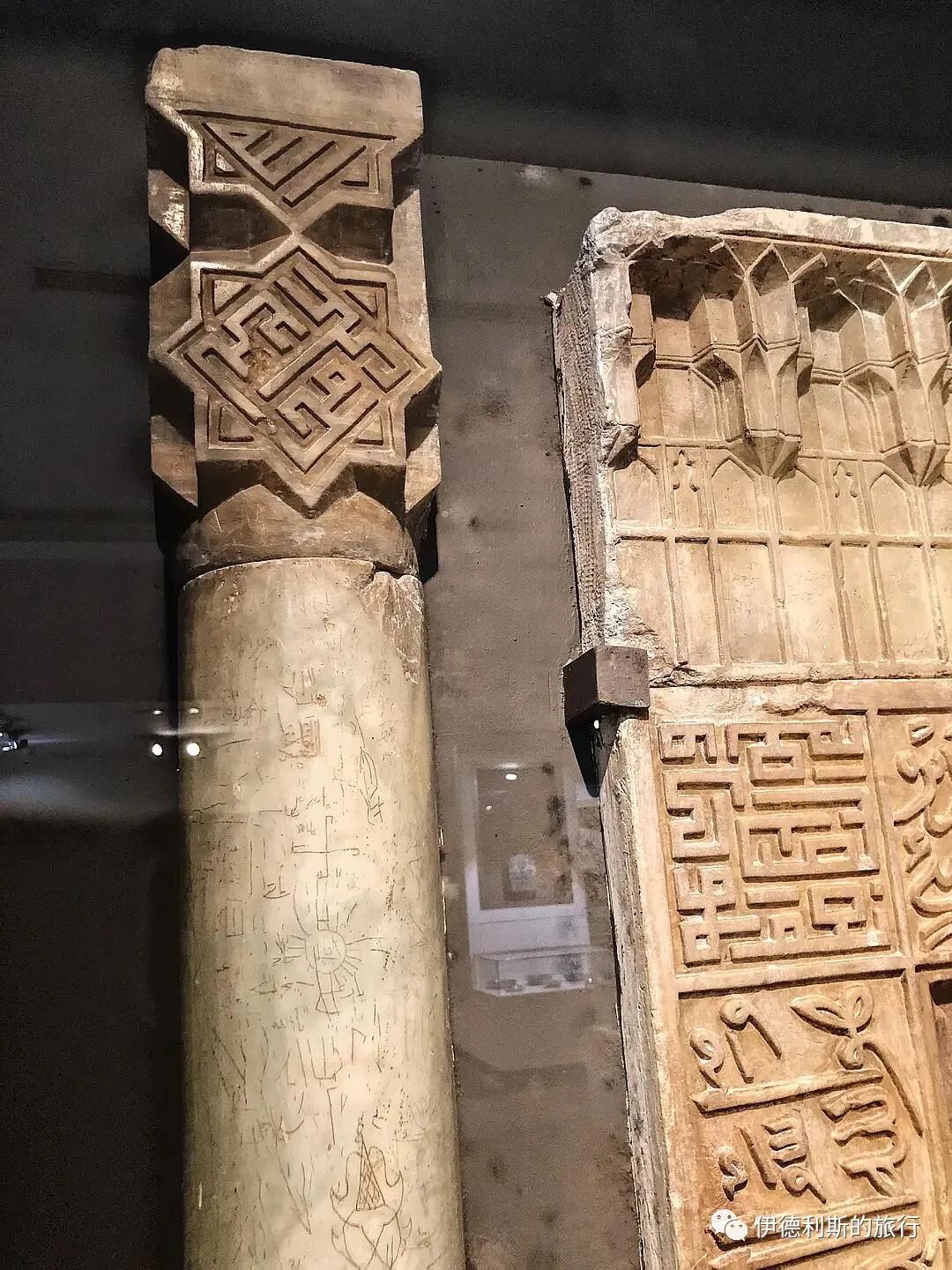
A 15th-century Timurid dynasty marble mihrab featuring Thuluth and Kufic calligraphy.
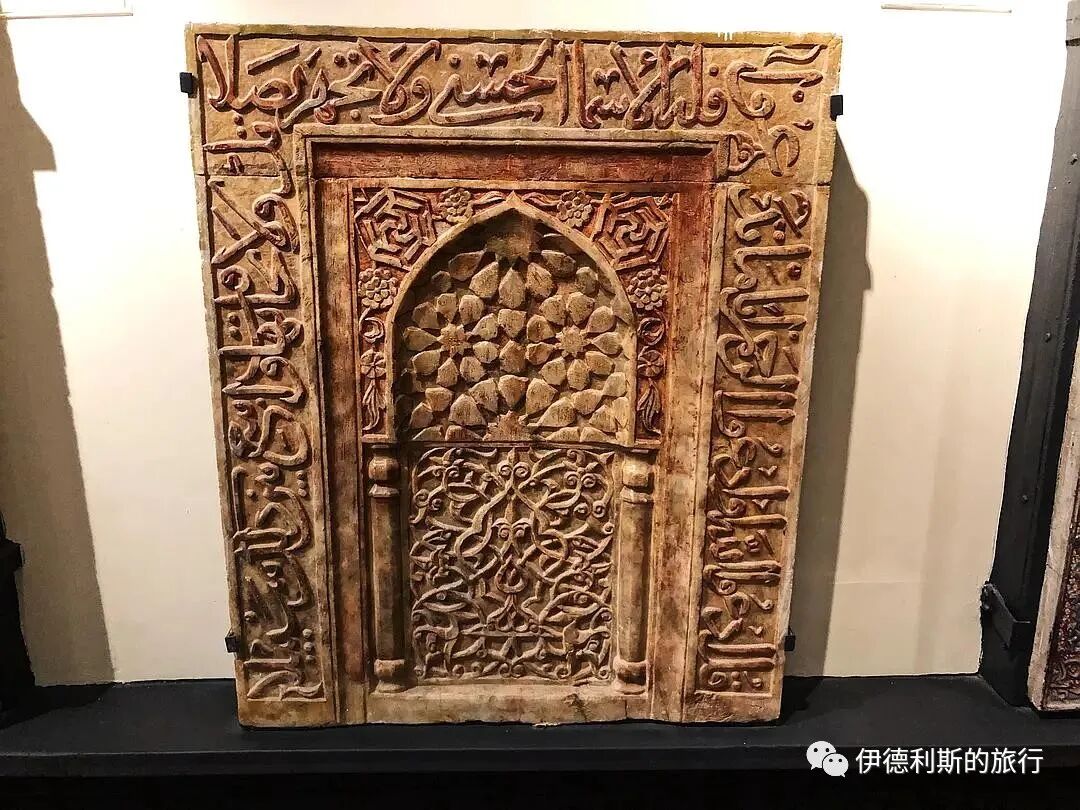
A 1413 Timurid dynasty marble mihrab featuring Thuluth calligraphy.
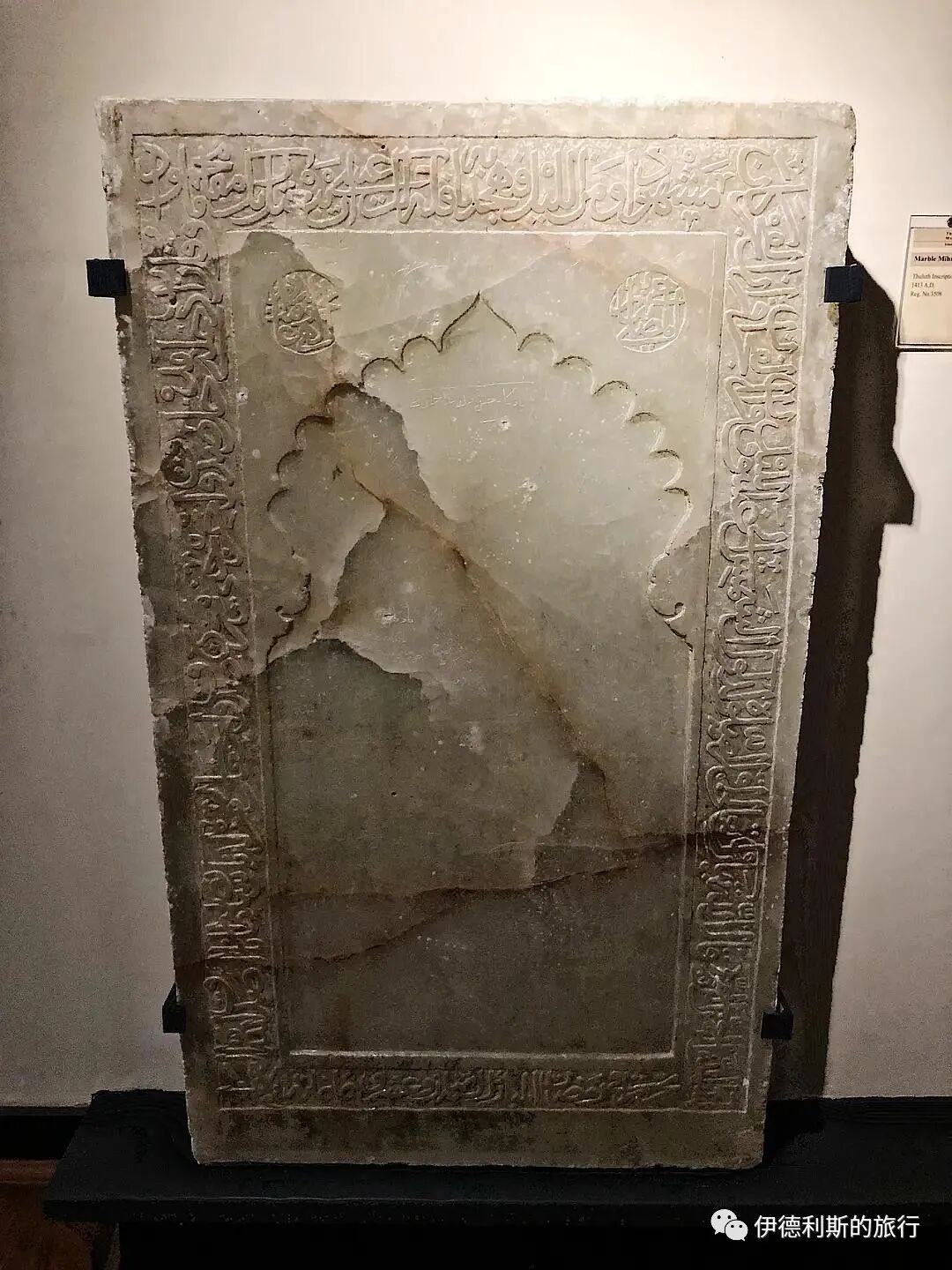
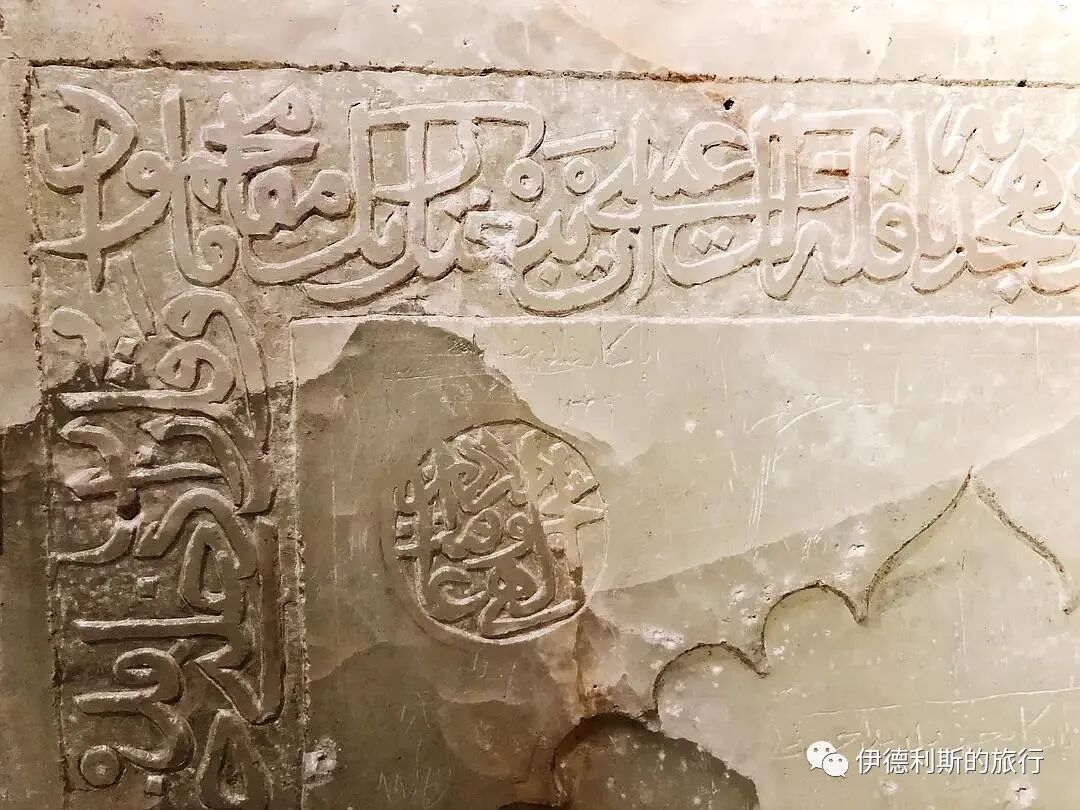
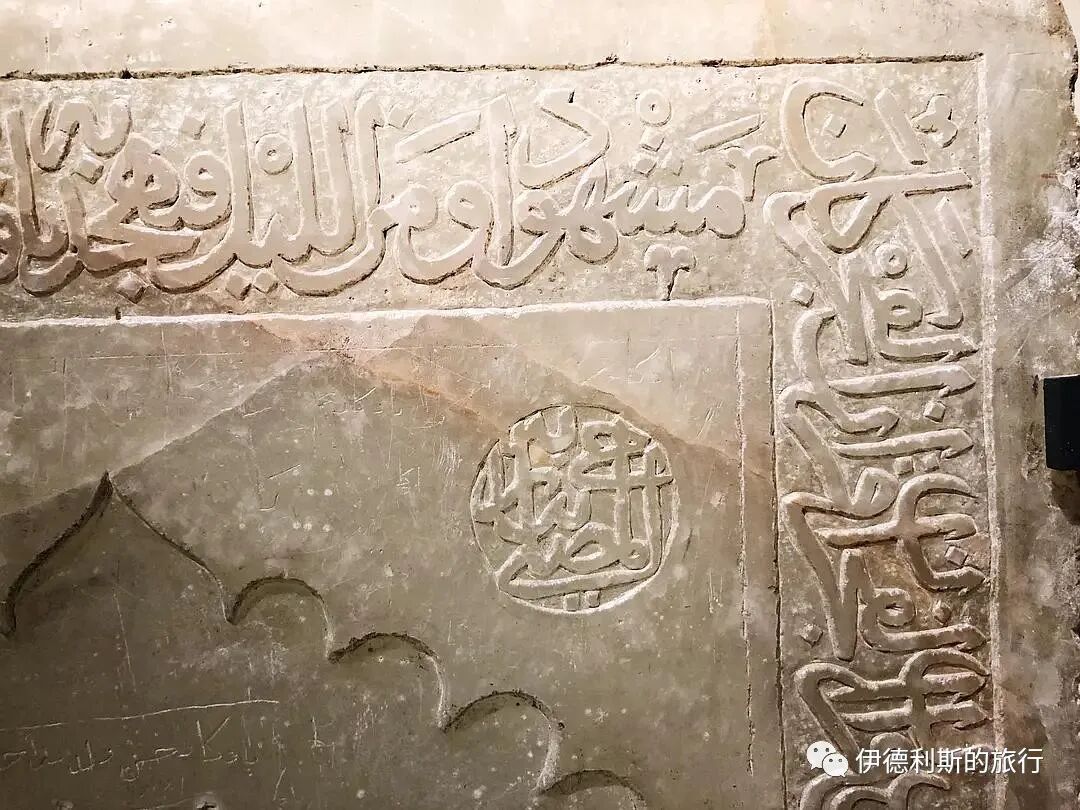
Brickwork art
11th-century brick Kufic inscriptions from the Nezamiyyeh School in Khargerd, Khaf city, Razavi Khorasan province, northeastern Iran. Khaf is a historic city near the Iran-Afghanistan border, home to numerous ancient monuments.
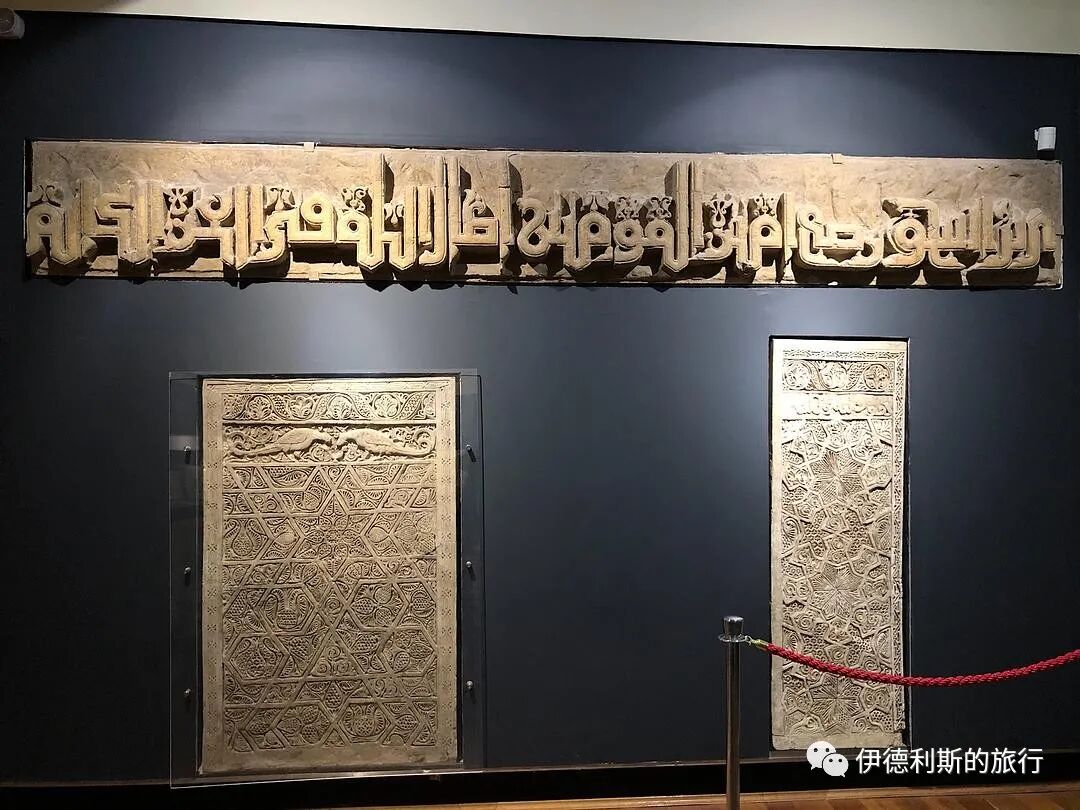
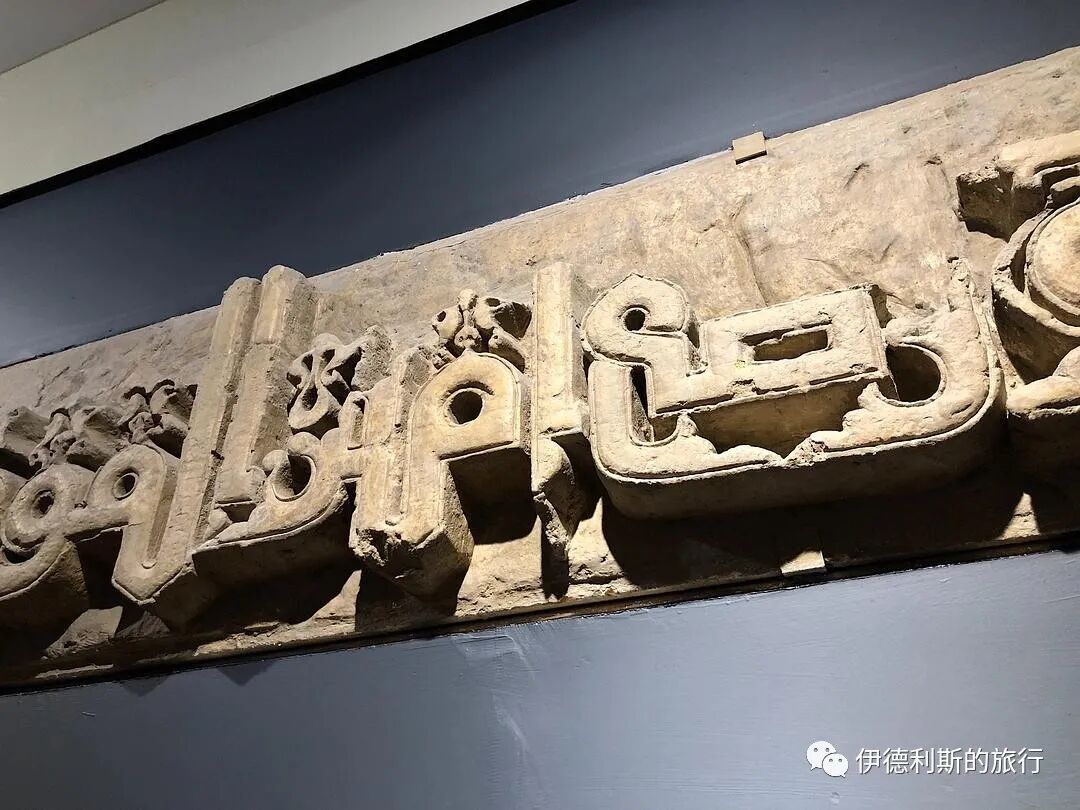
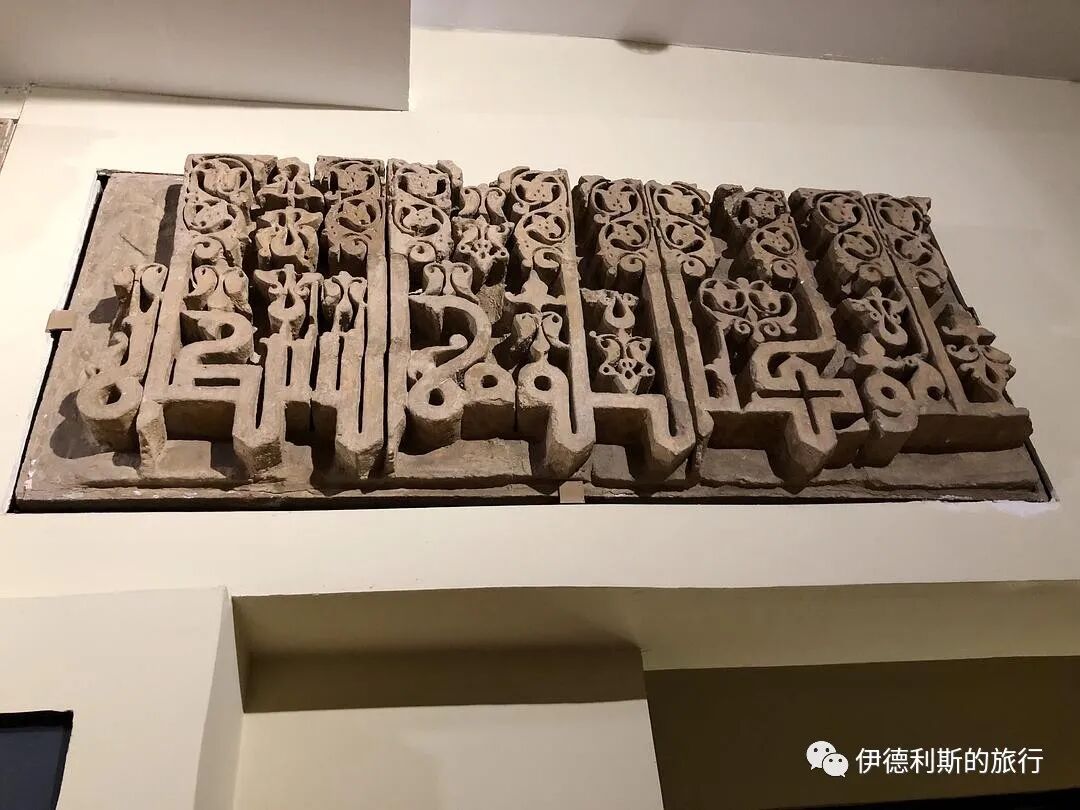
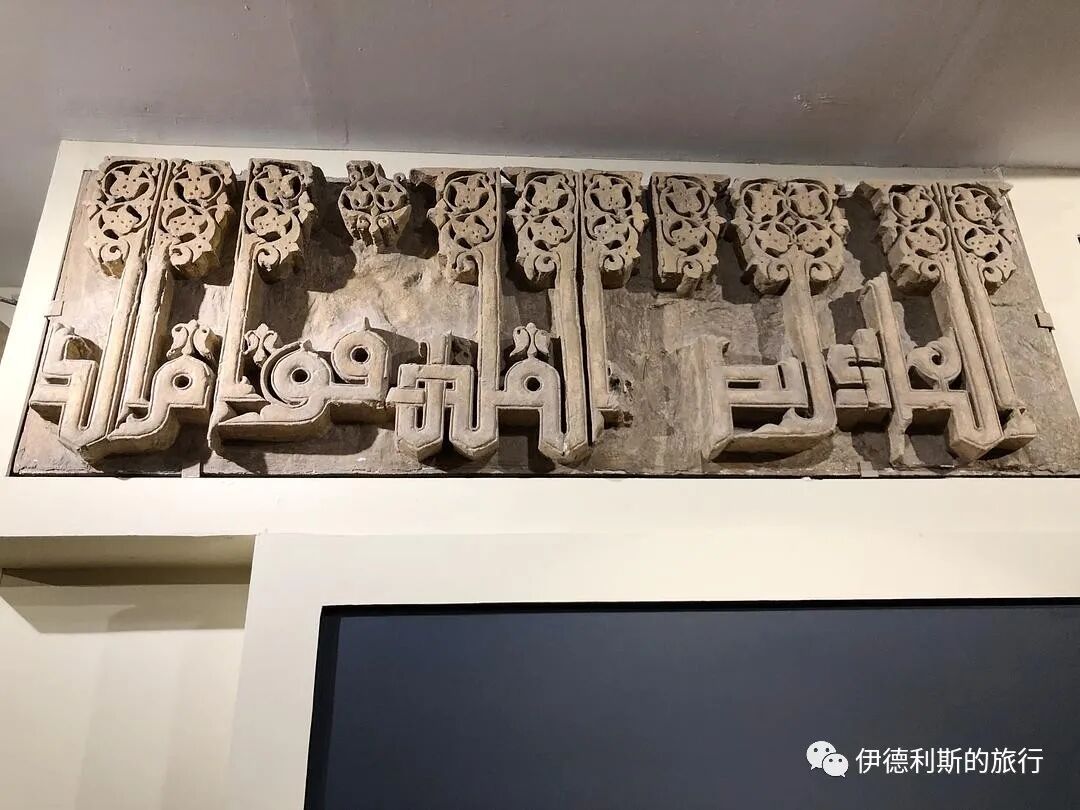
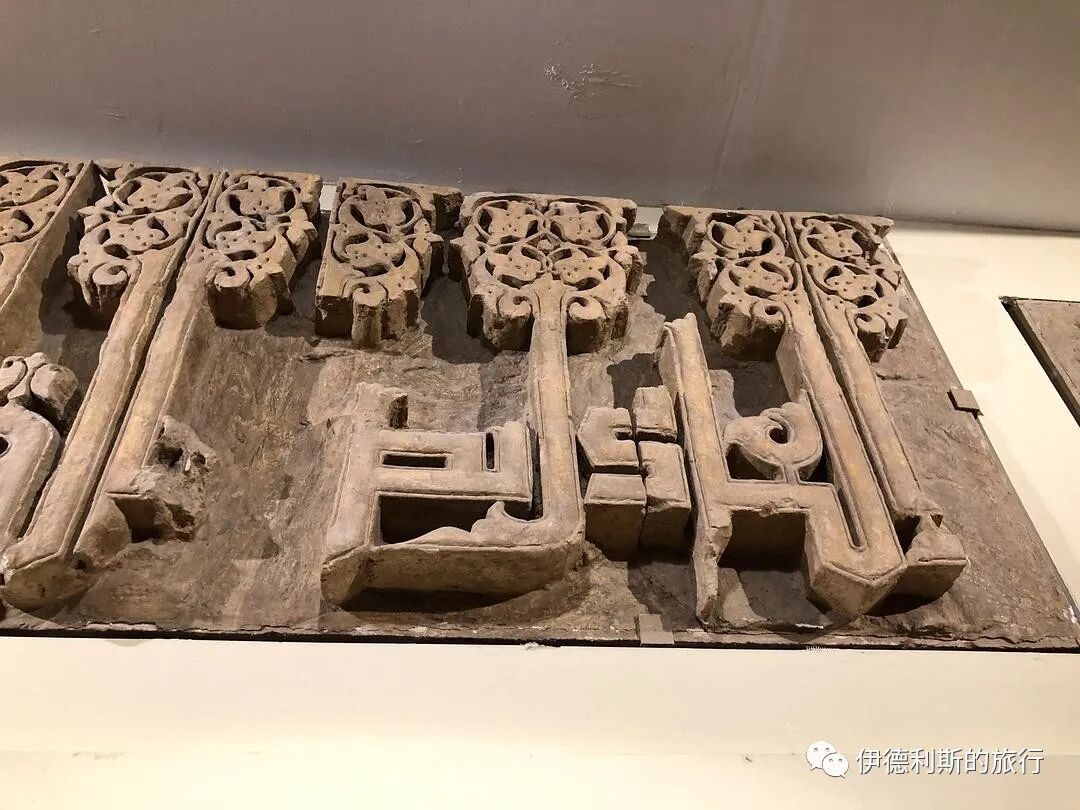
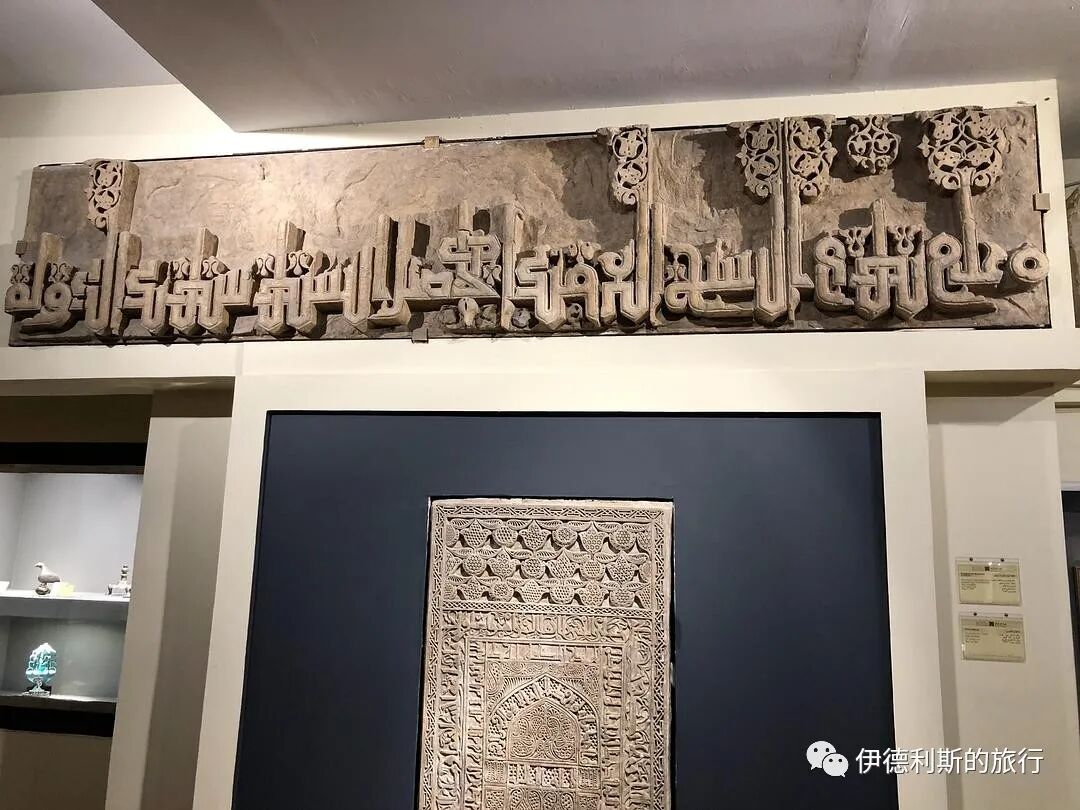
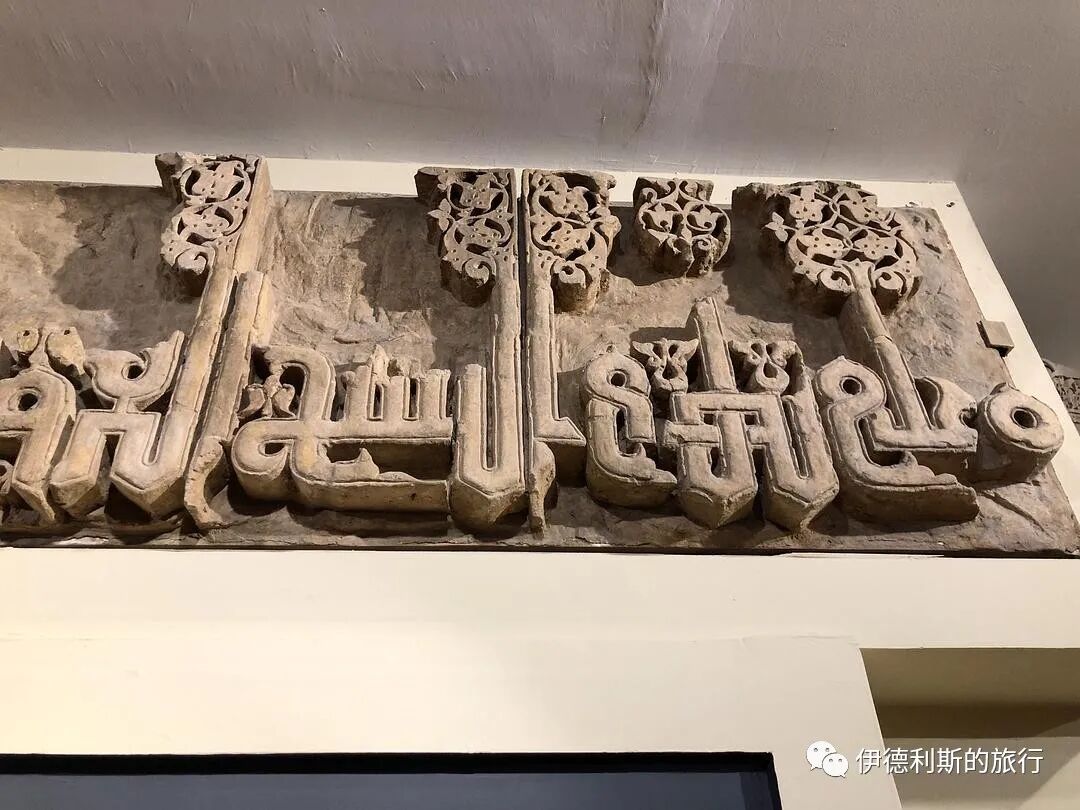
A 1148 brick Kufic inscription, possibly from the Joneyd shrine in the village of Turan Posht. Turan Posht is one of the oldest villages in Yazd province, home to the Sheikh Joneyd and Chehel Dokhtaran domed shrines, known for their exquisite Kufic calligraphy.
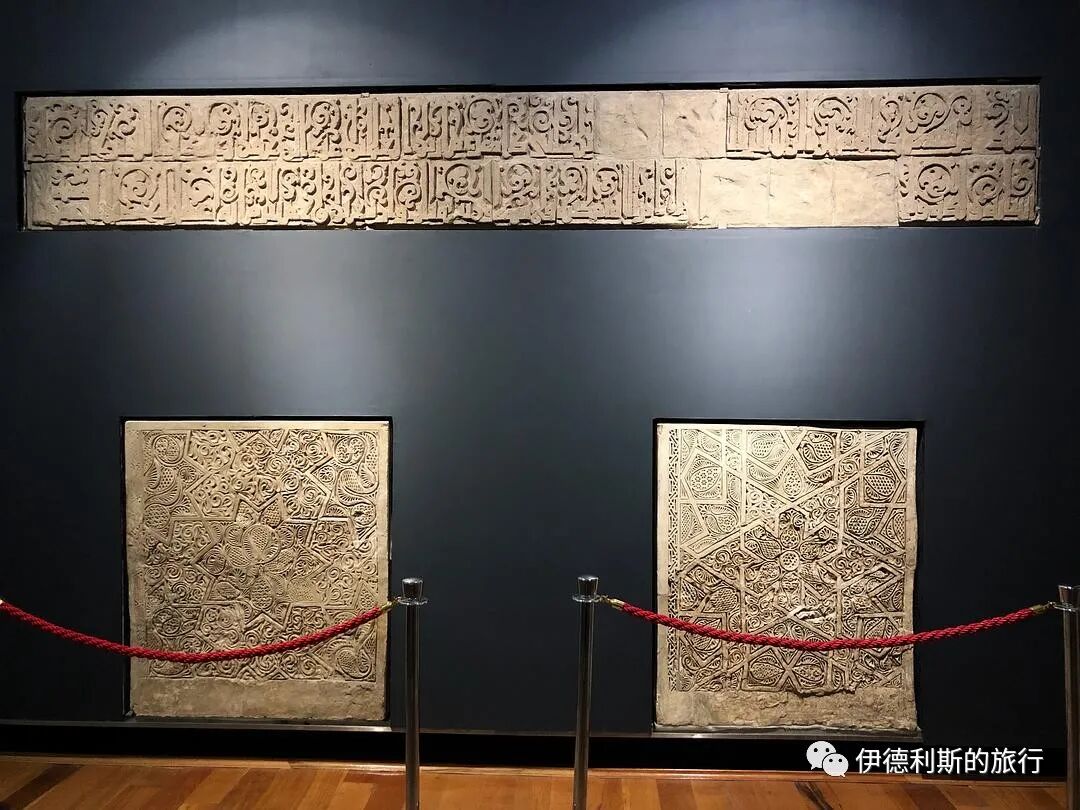
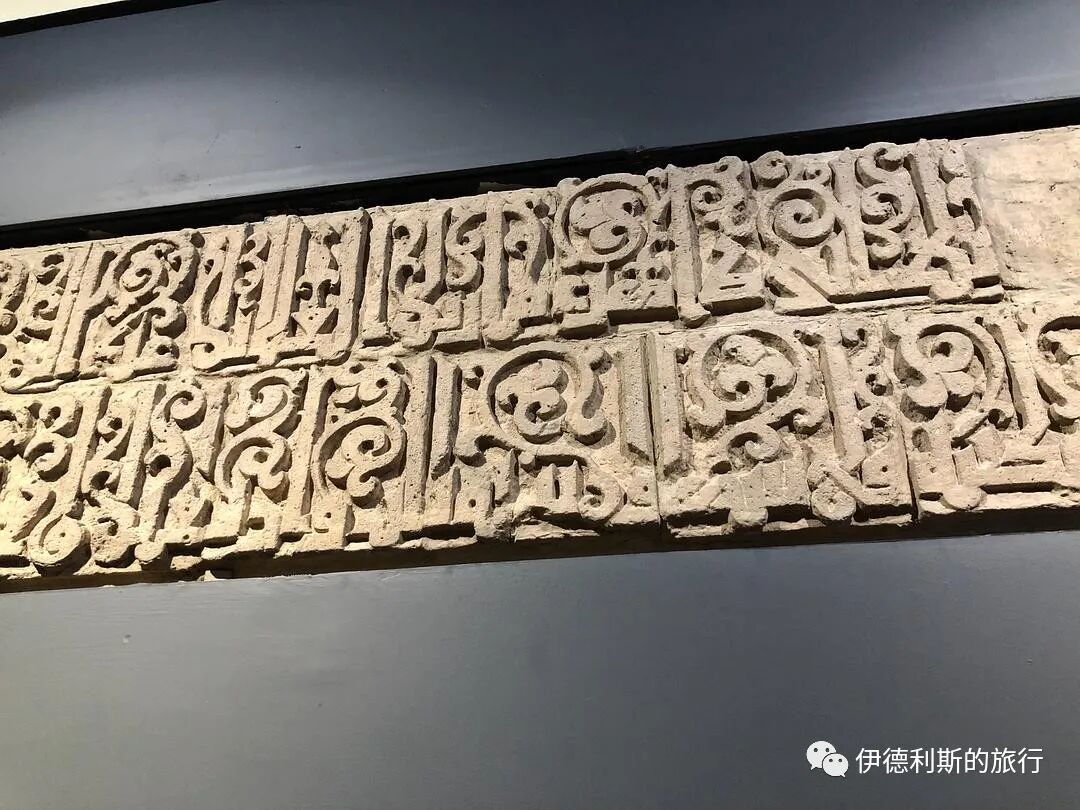
Wood carving art
10th-century Kufic wood carving from the city of Qom.
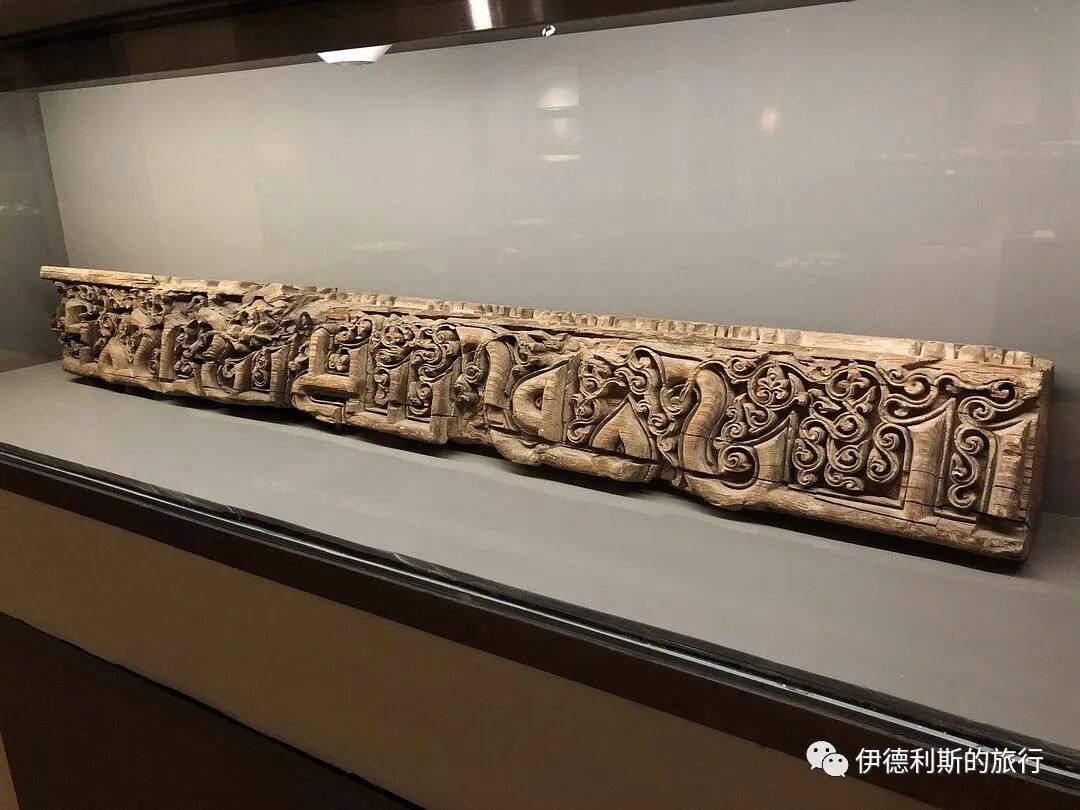
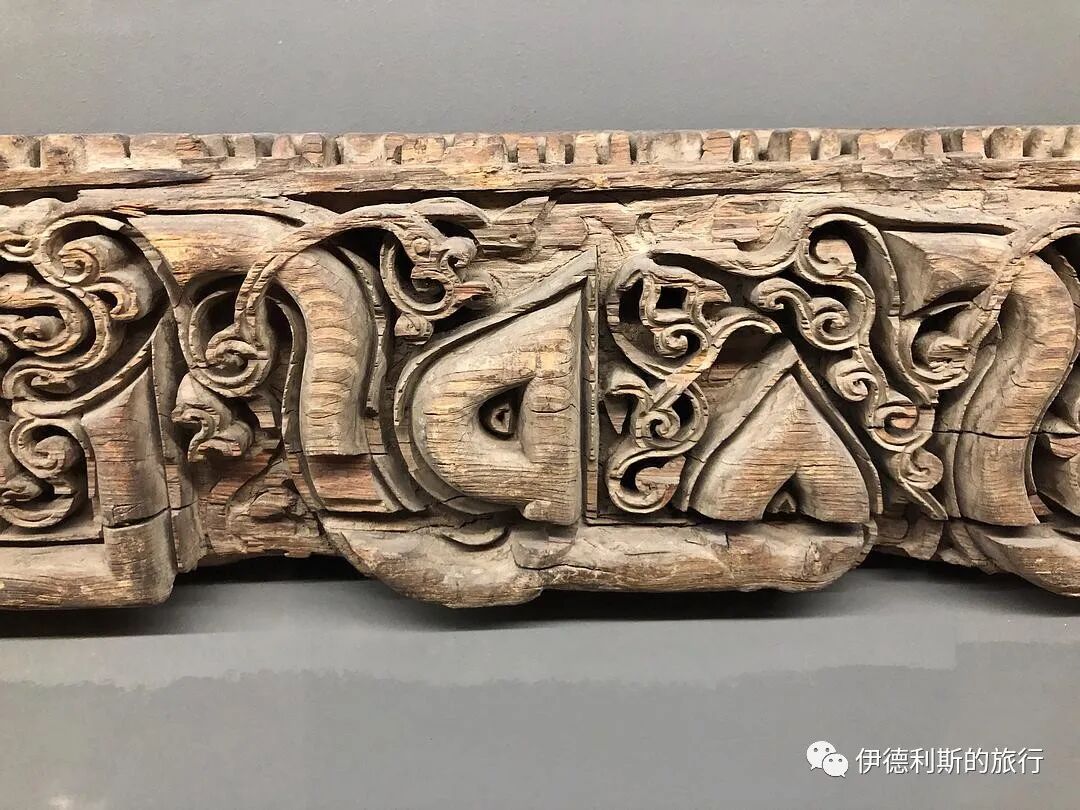
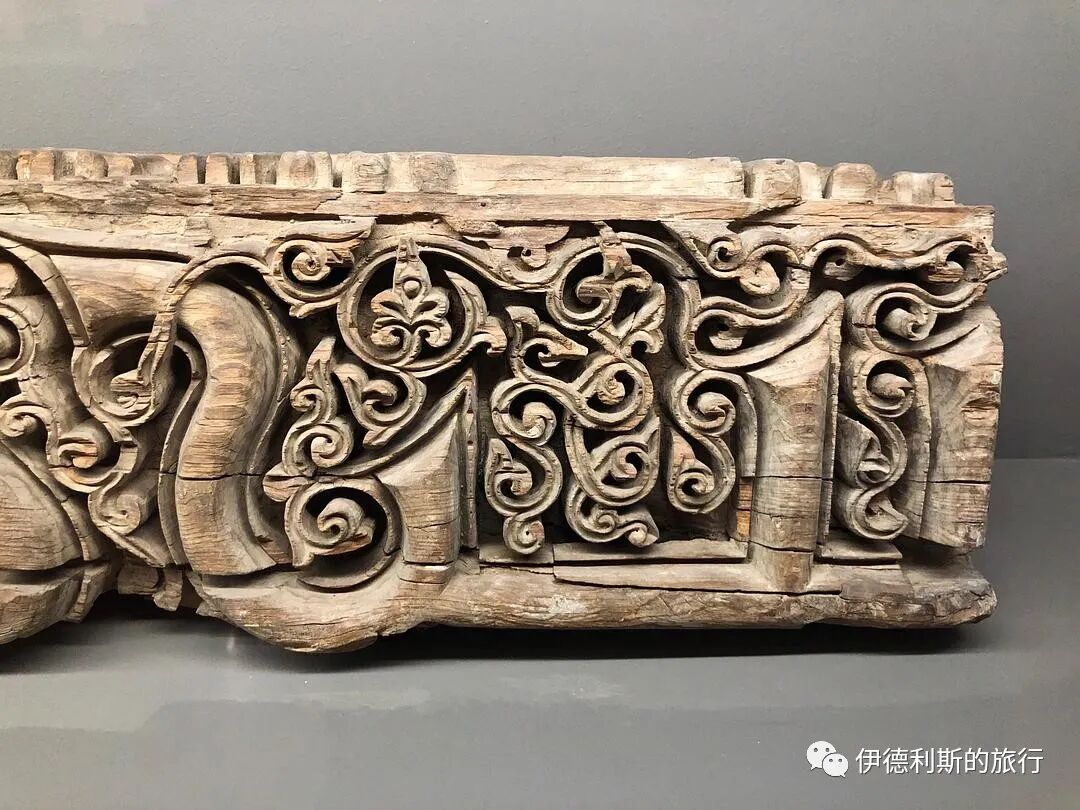
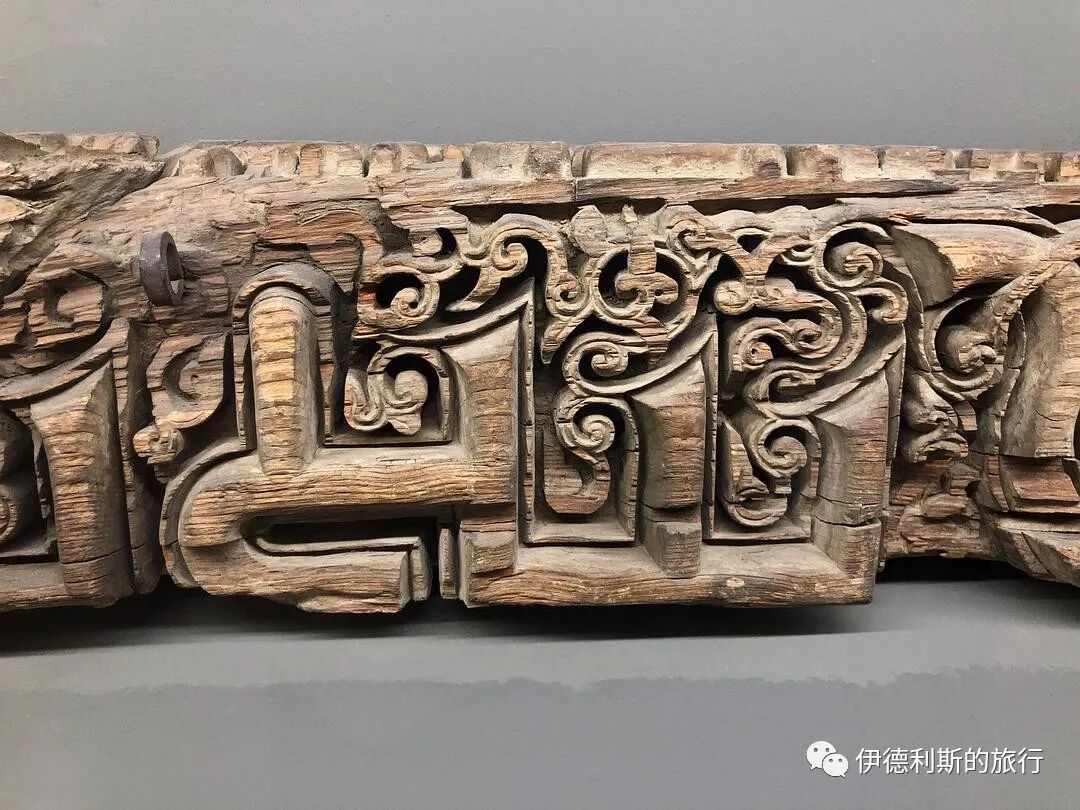
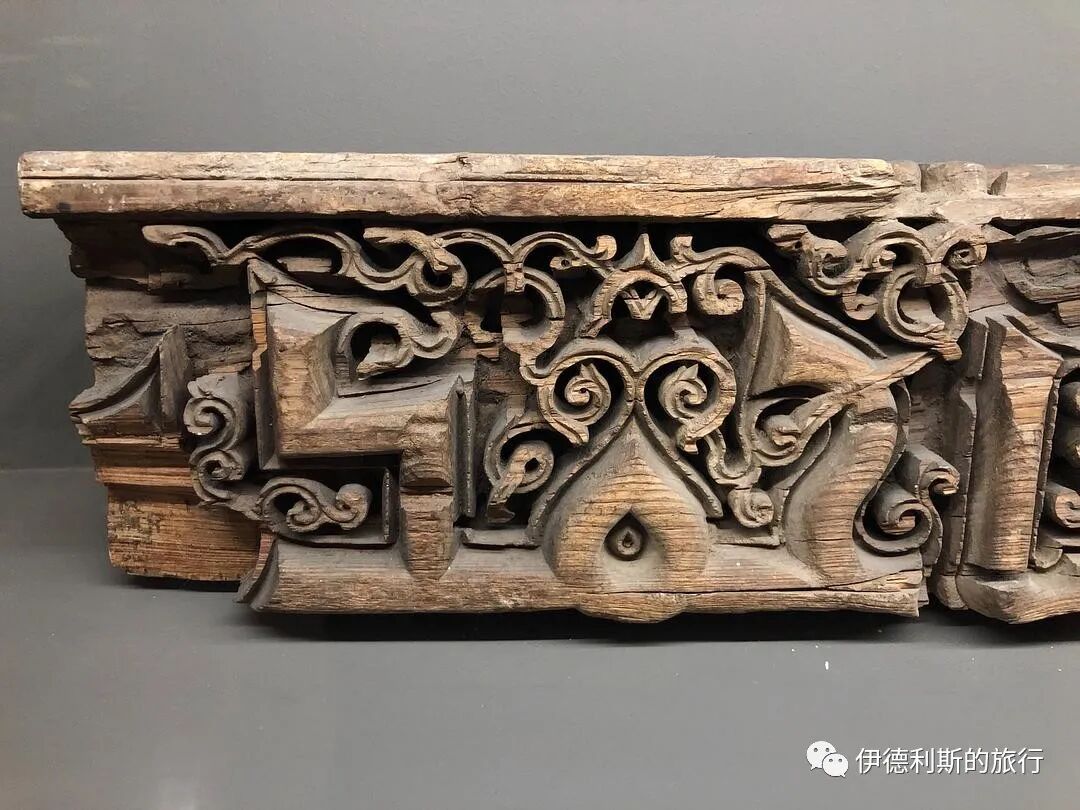
An 11th-century wooden door from the city of Behbahan, Khuzestan province, southwestern Iran, featuring Kufic and Naskh wood carvings.
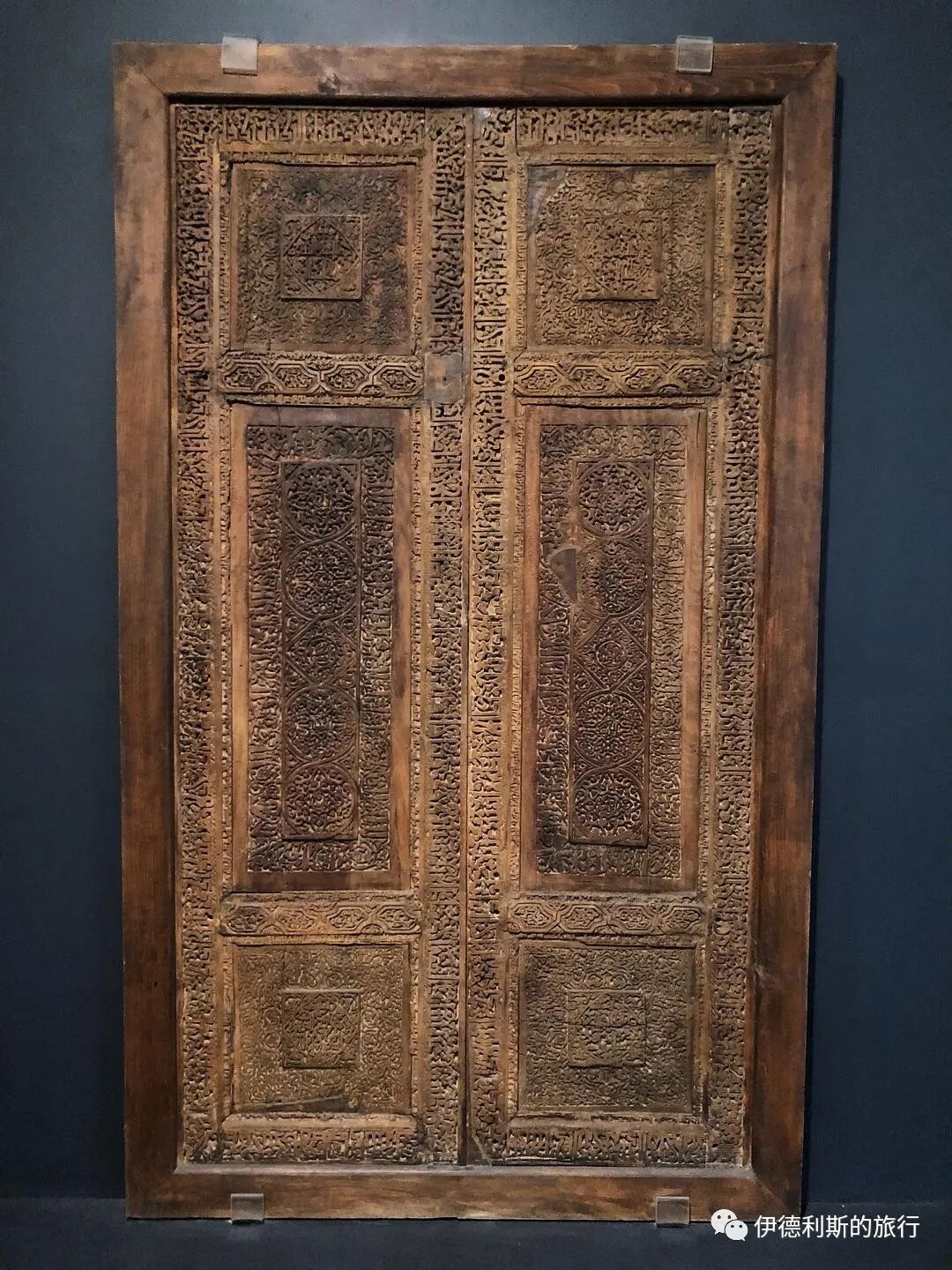
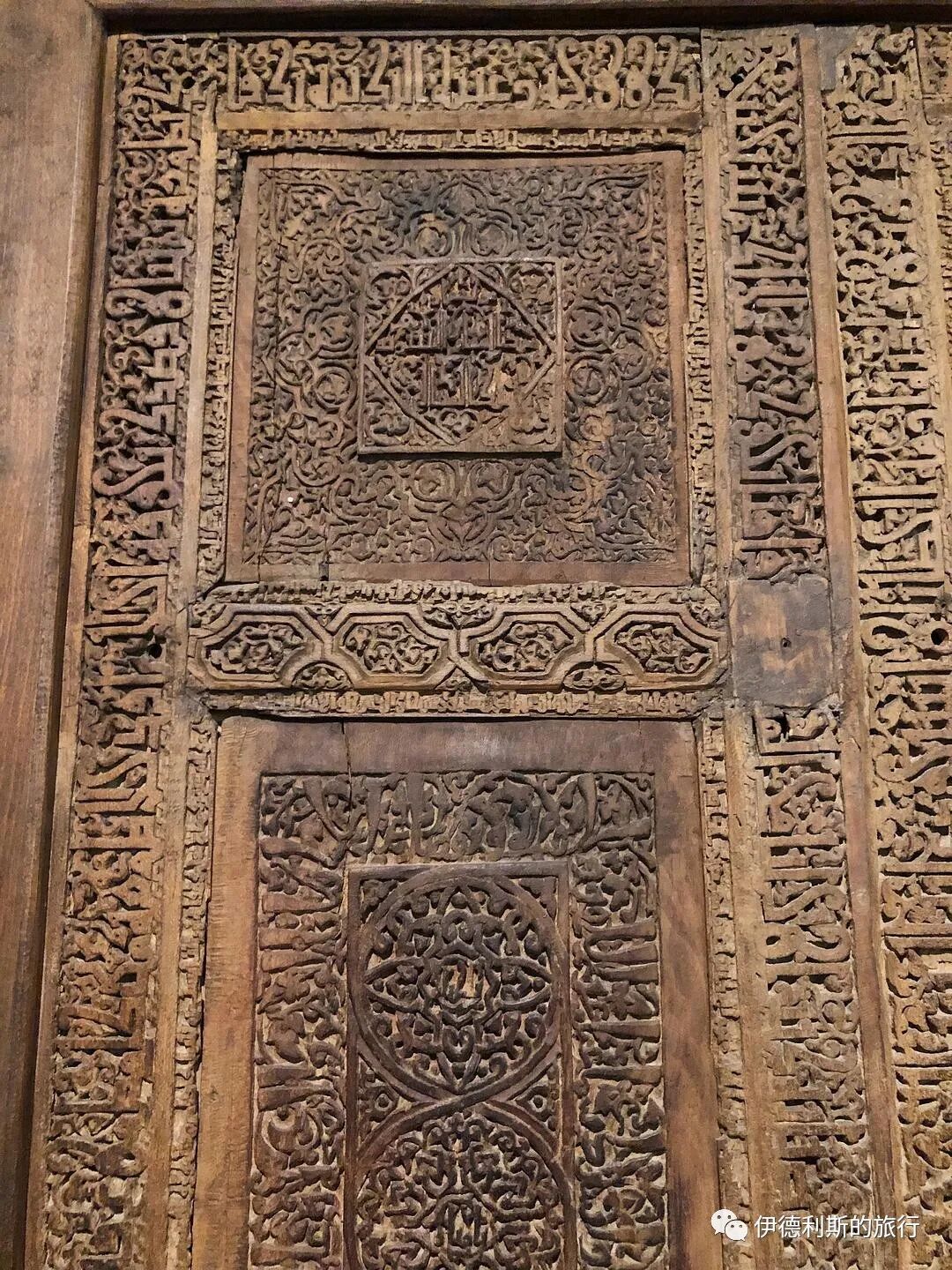
A 1341 wooden door from Fars province, southern Iran.
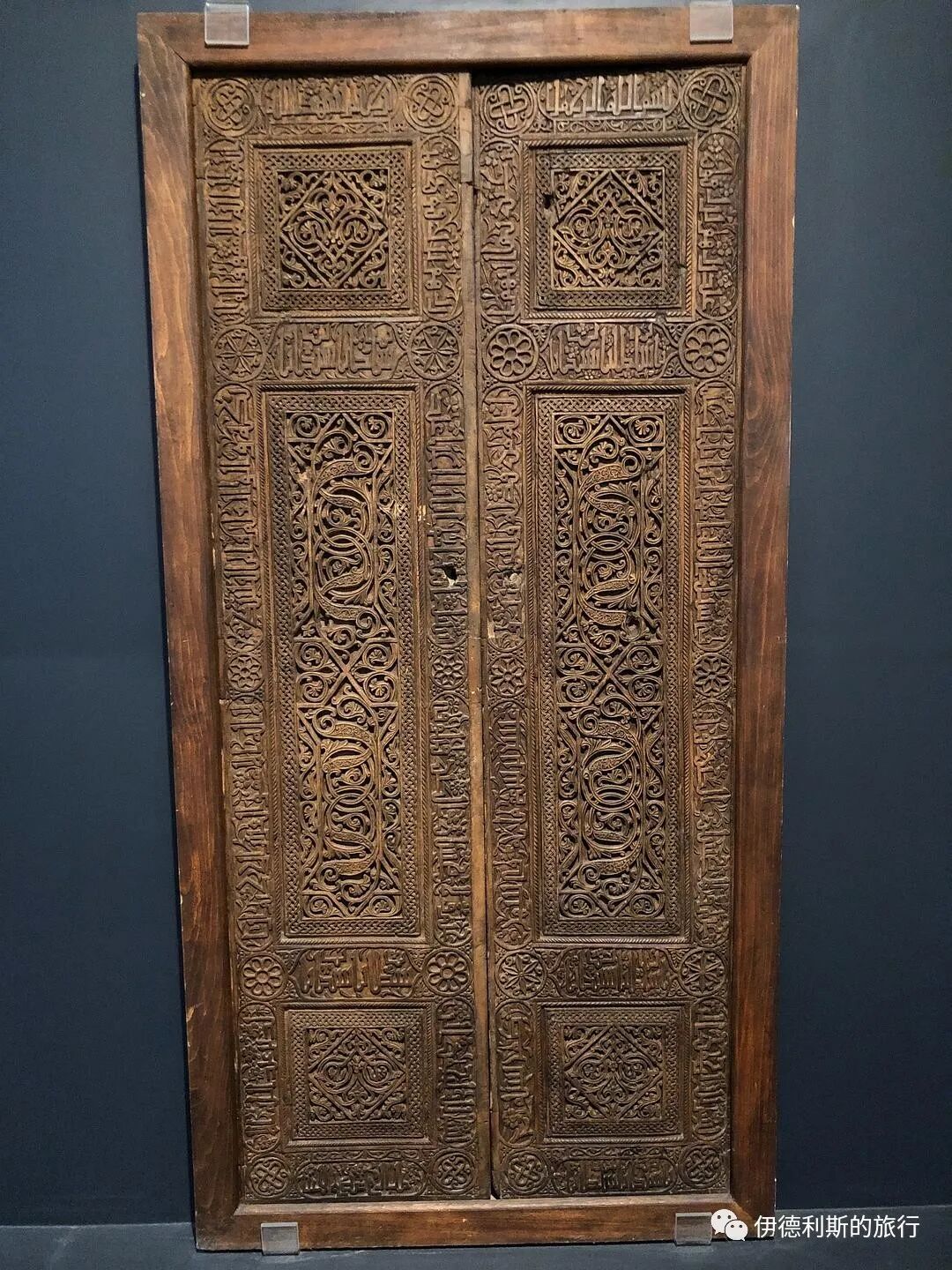
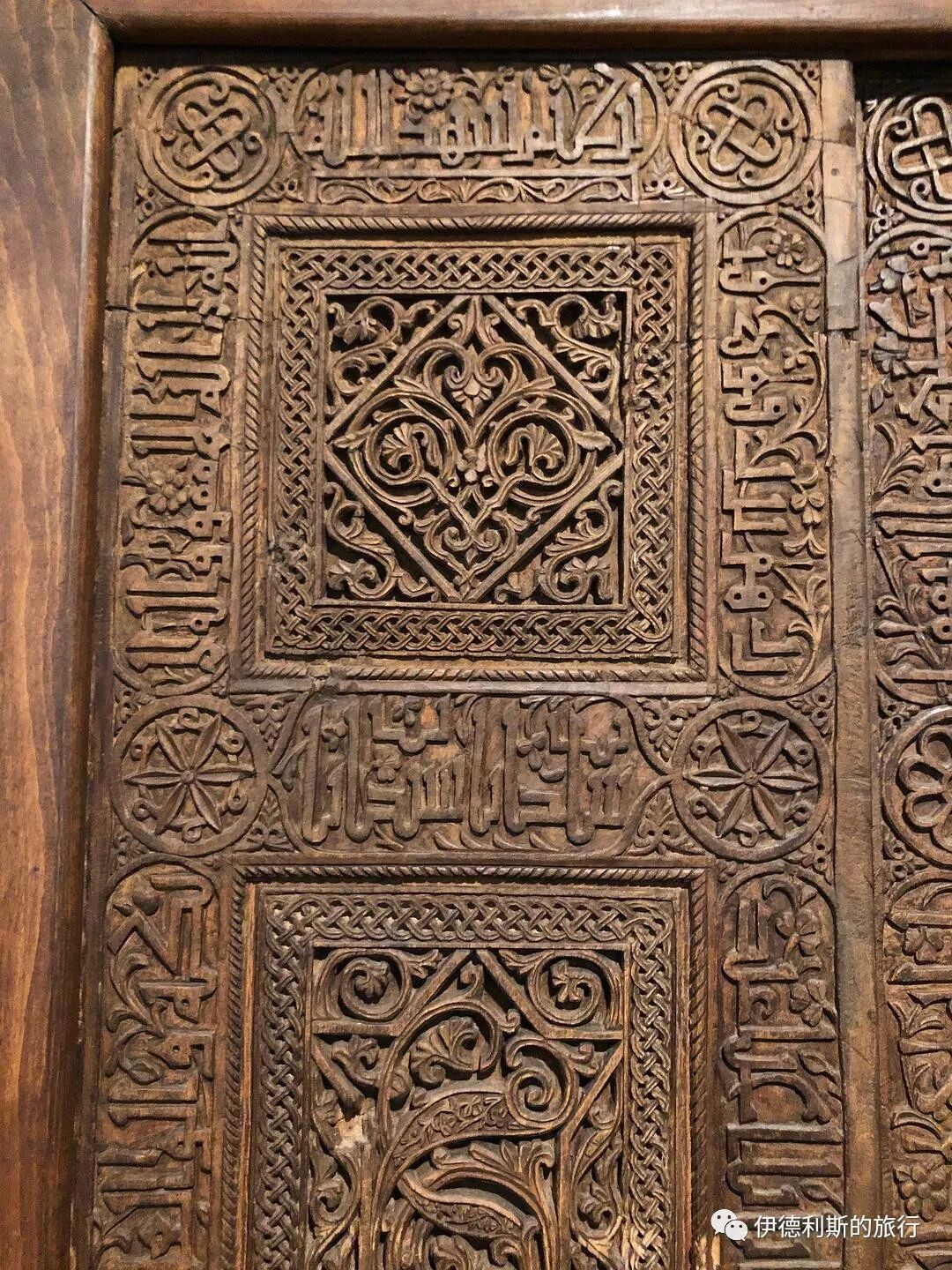
Ilkhanate tiles
14th-century Ilkhanate tiles unearthed at the Takht-e Soleymān site in West Azerbaijan province. The Takht-e Soleymān site is a World Heritage site; it was originally an important Zoroastrian temple during the 5th-century Sassanid dynasty and was rebuilt in the 13th century as a summer palace for the Ilkhanate. Here, the Ilkhanate blended Eastern art with Iranian art, developing a unique Ilkhanate artistic style.
Takht-e Soleymān is the only surviving secular complex of the Ilkhanate. The walls of the Great Khan's palace are decorated with exquisite tiles, serving as a direct reflection of the cultural and artistic exchange between China and Iran in the 14th century. The tiles depict various floral, animal, and human motifs, with themes covering Buddhism, Chinese mythology, pre-Islamic Iran, as well as the Islamic Quran and Shia traditions, showcasing a fusion of multiple cultures. Some of the tiles feature themes from the famous Iranian epic, the Shahnameh, which also reflects the integration of the Ilkhanate into Iranian culture at the time.
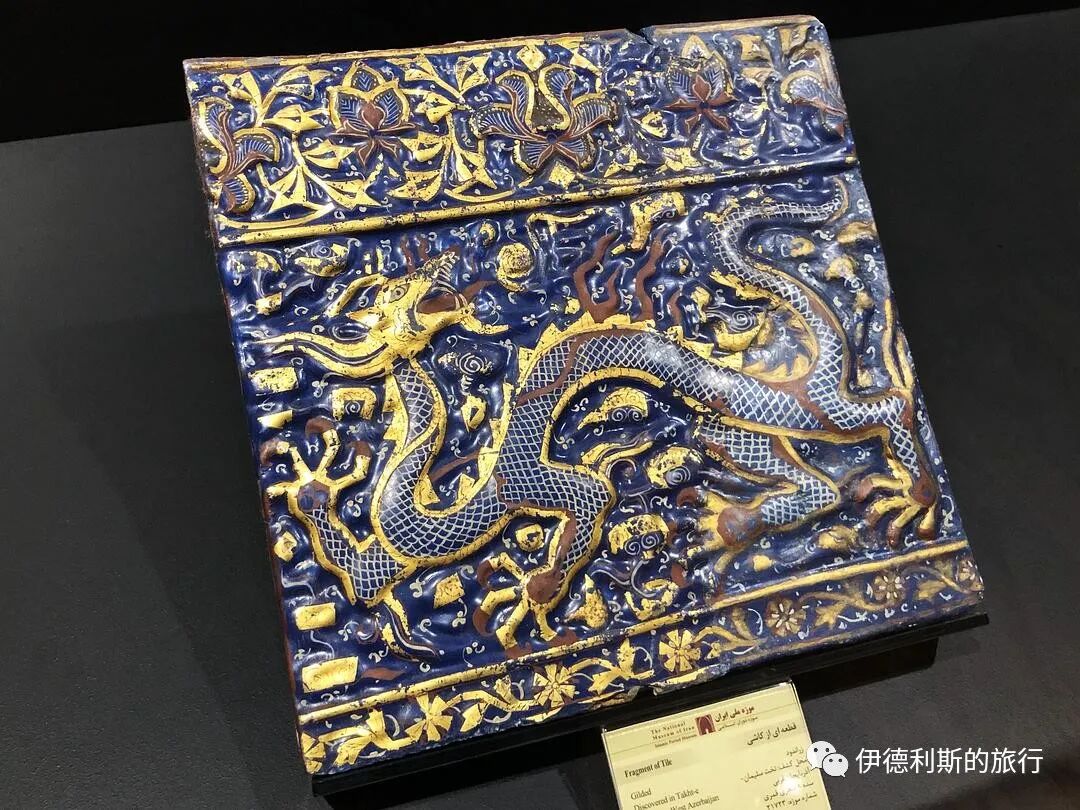
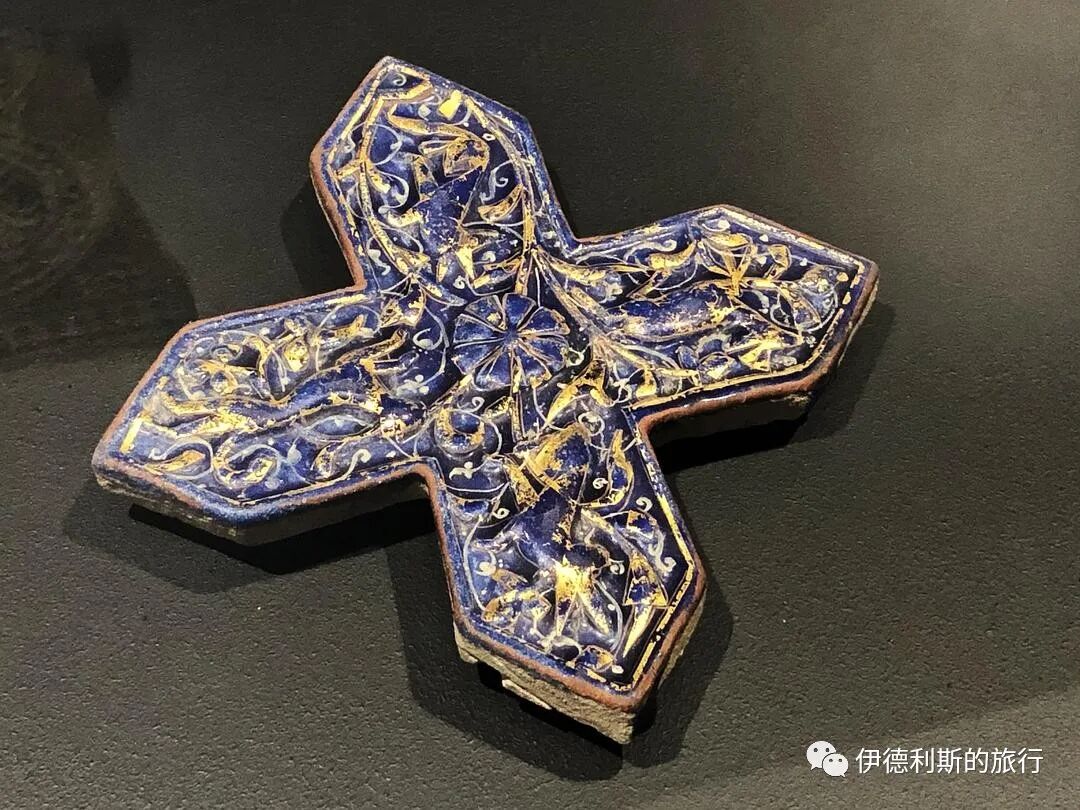
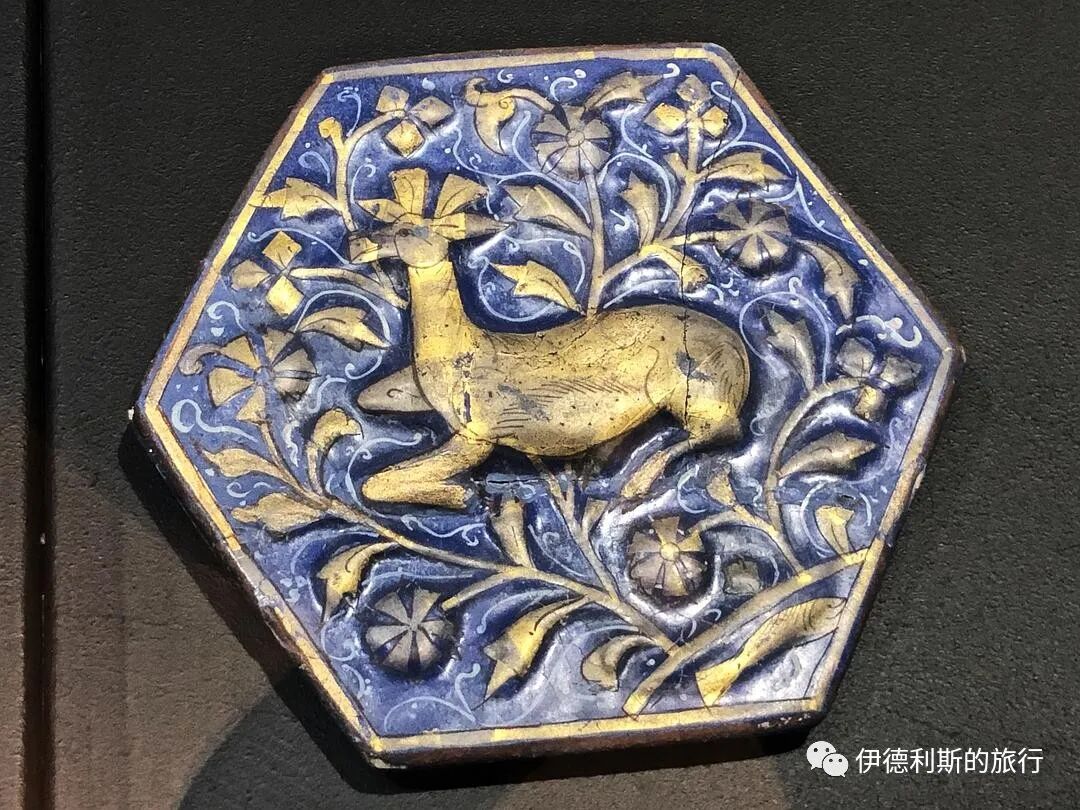
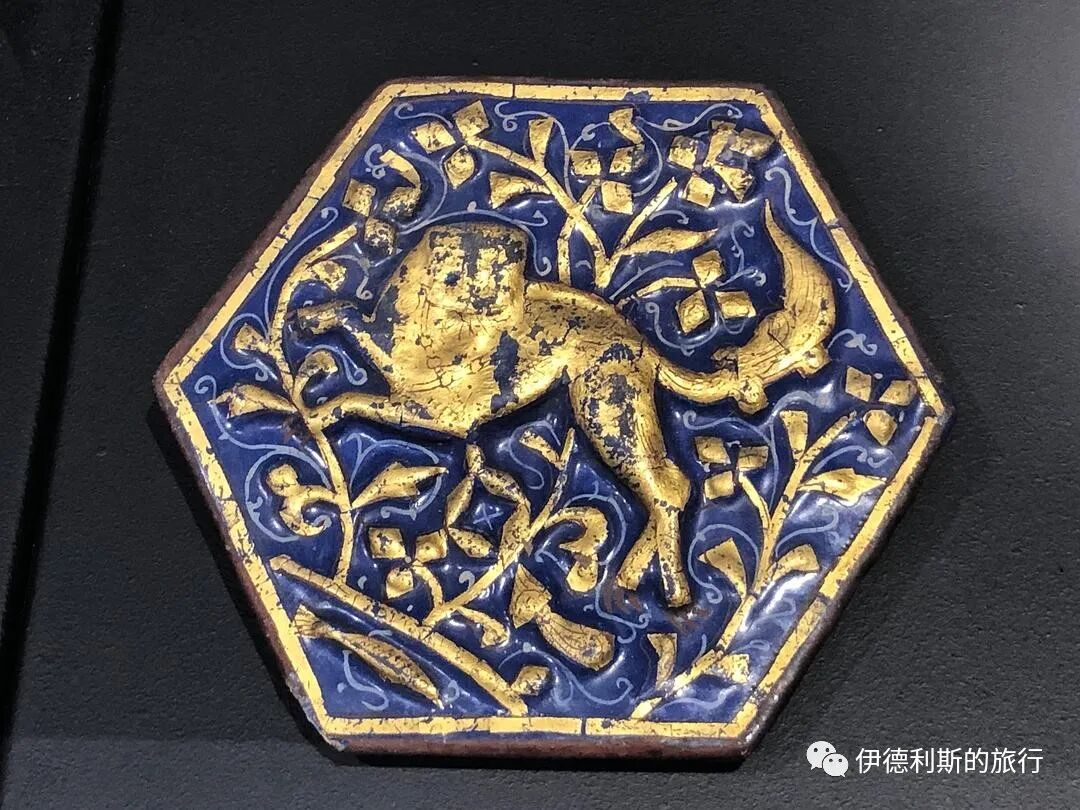
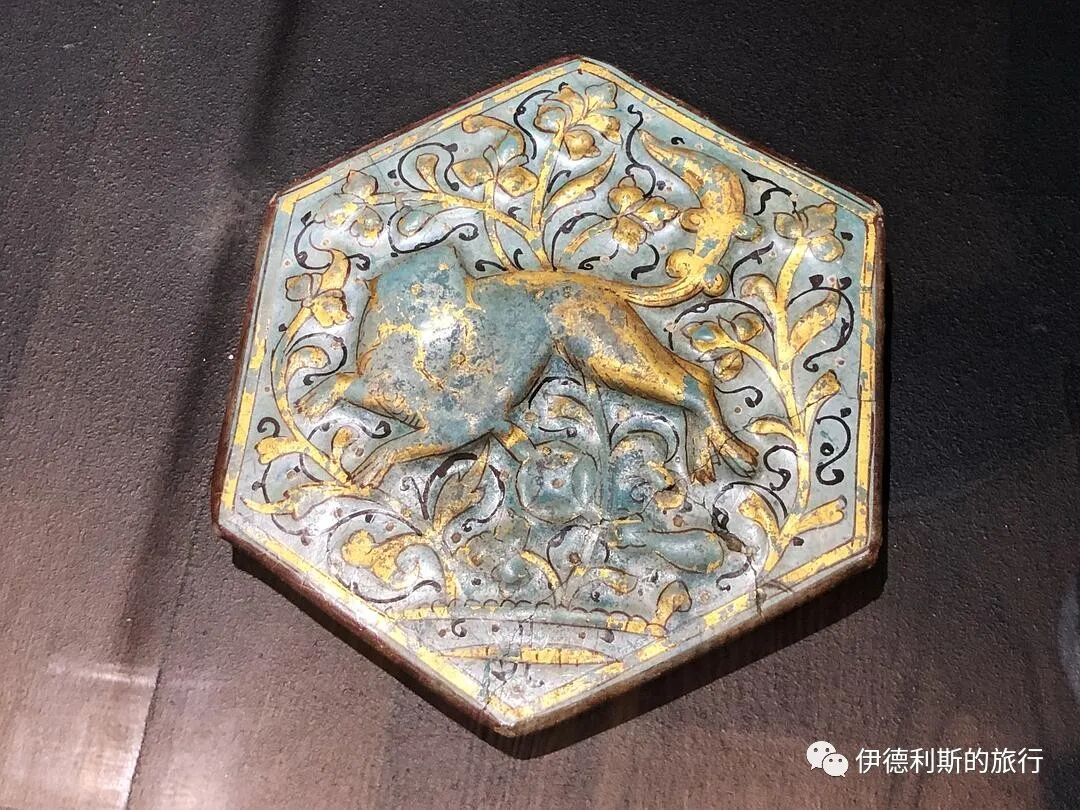
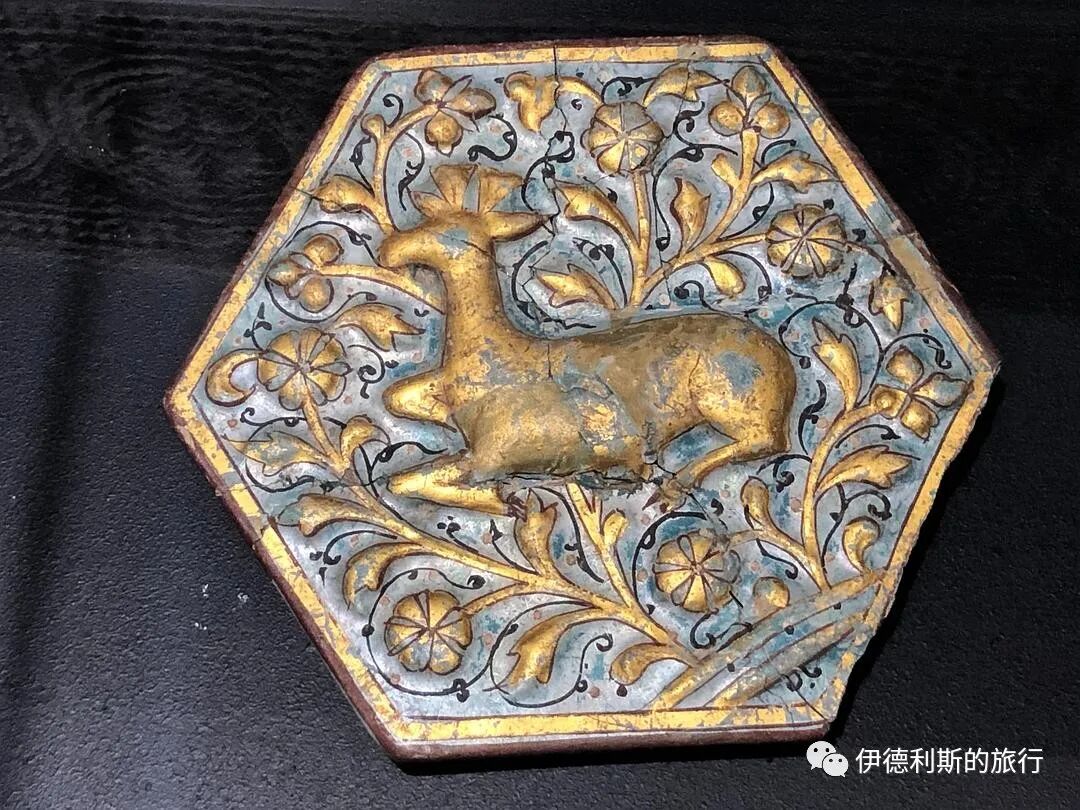
13th-14th century Ilkhanate period tiles from the city of Saveh, Markazi province. Saveh was an important city during the Parthian Empire; it was later destroyed by the Mongol army and rebuilt during the Ilkhanate period.
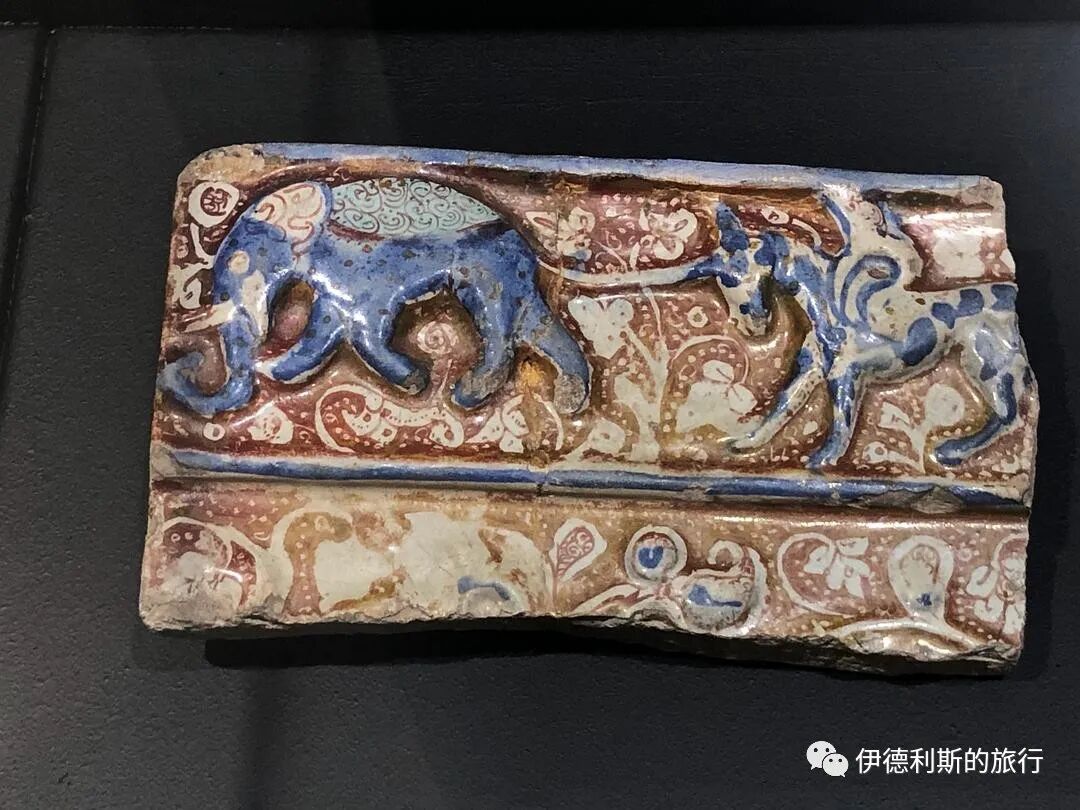
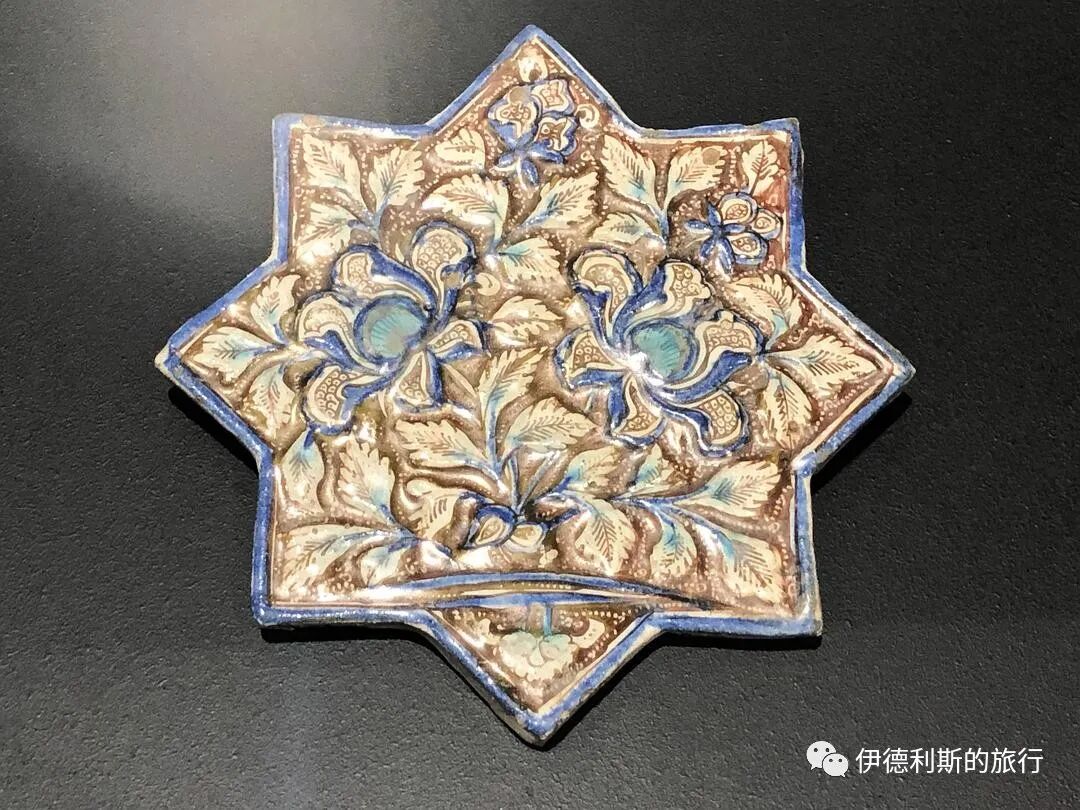
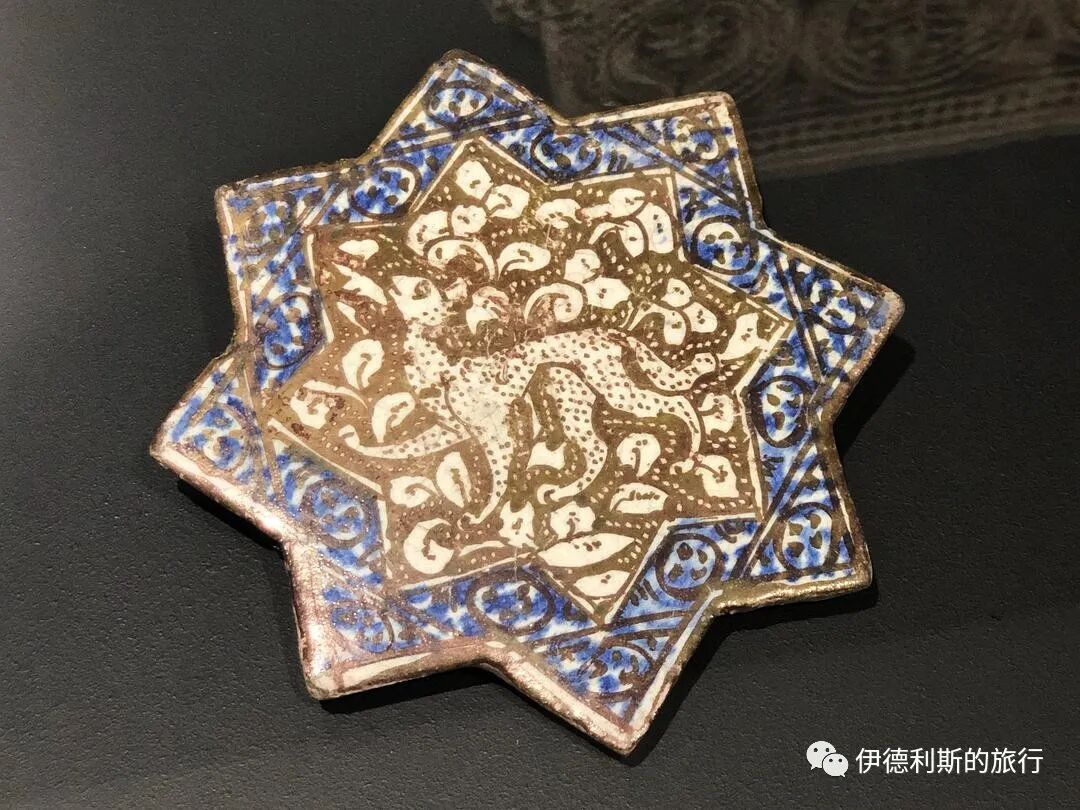
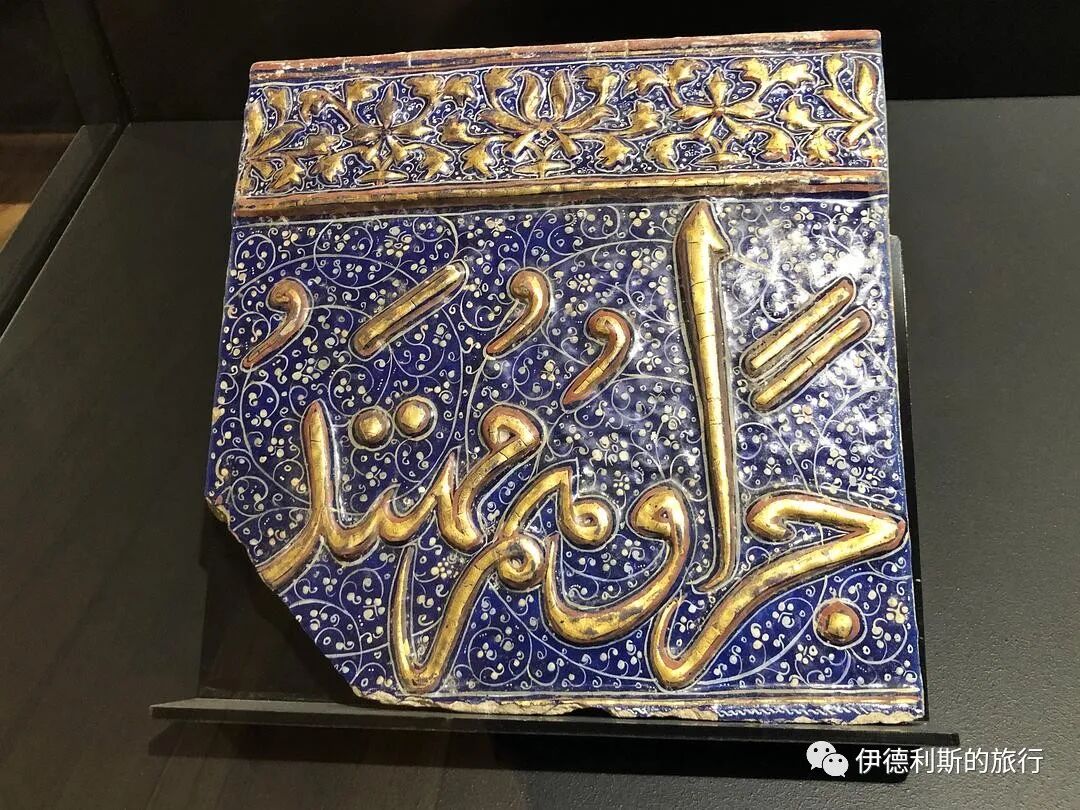
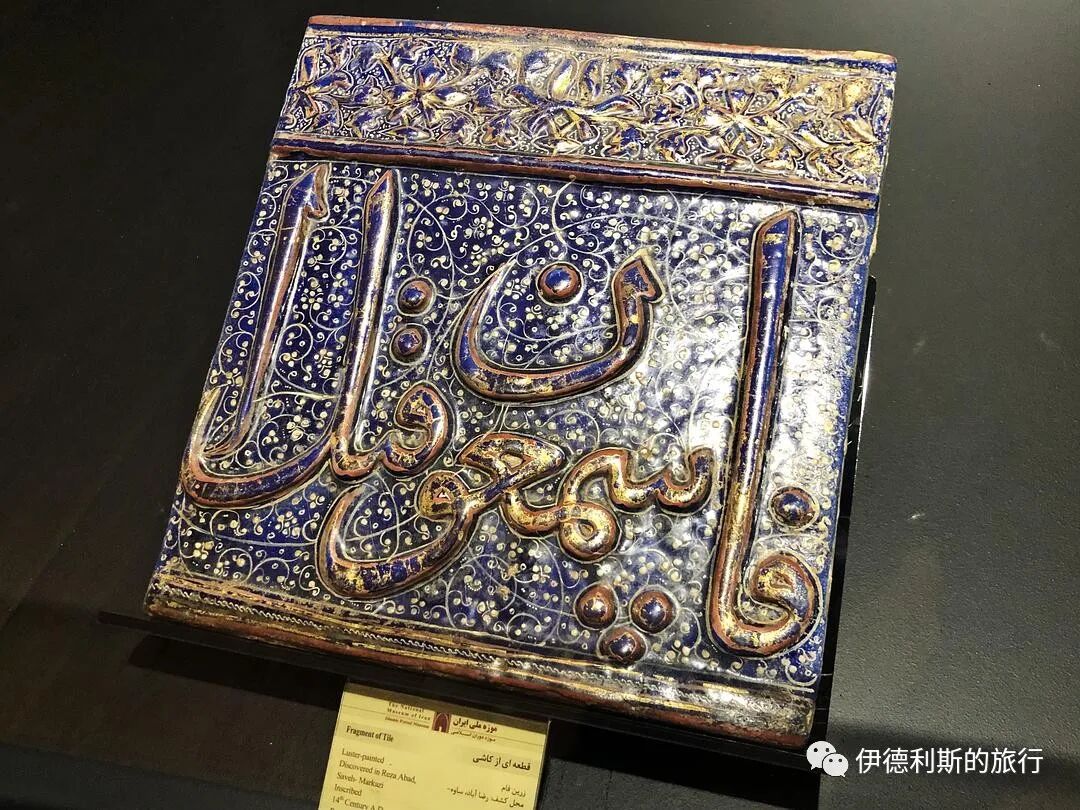
13th-century Gorgan, located on the Caspian coast. Gorgan was an important city during the Sassanid Empire and remained a center for Zoroastrianism after the 8th century. Old Gorgan was destroyed by the Mongols, and the city was relocated to a new site during the Ilkhanate period.
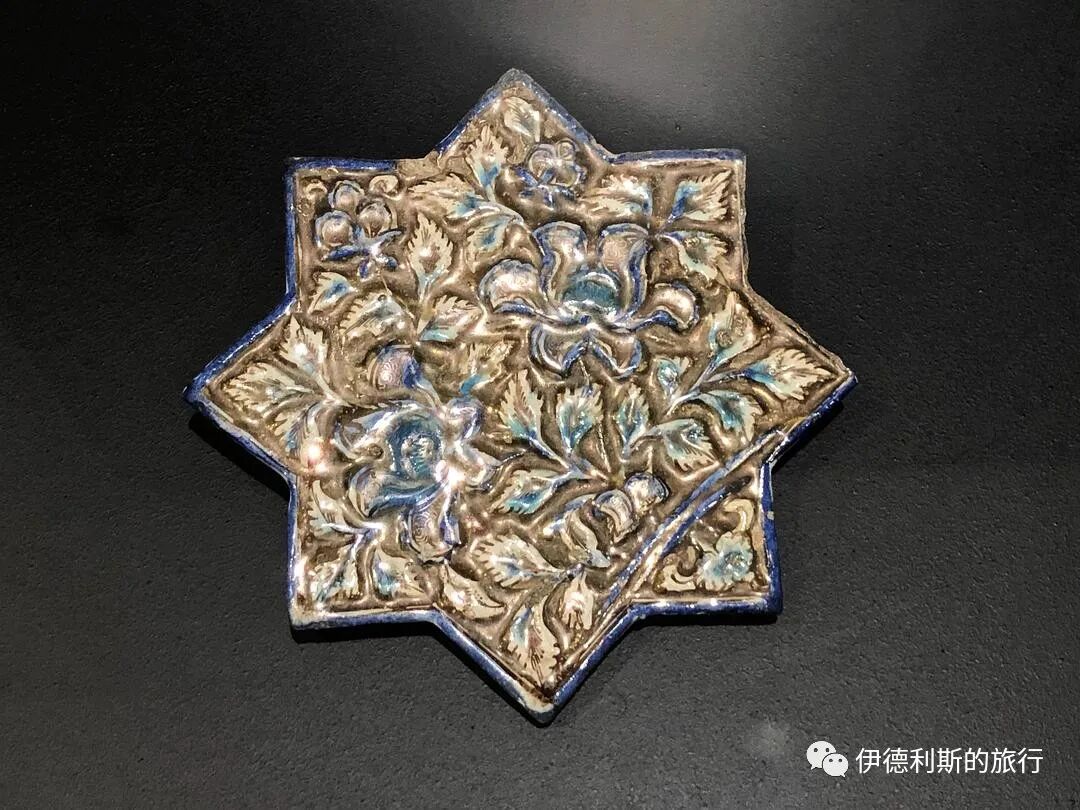
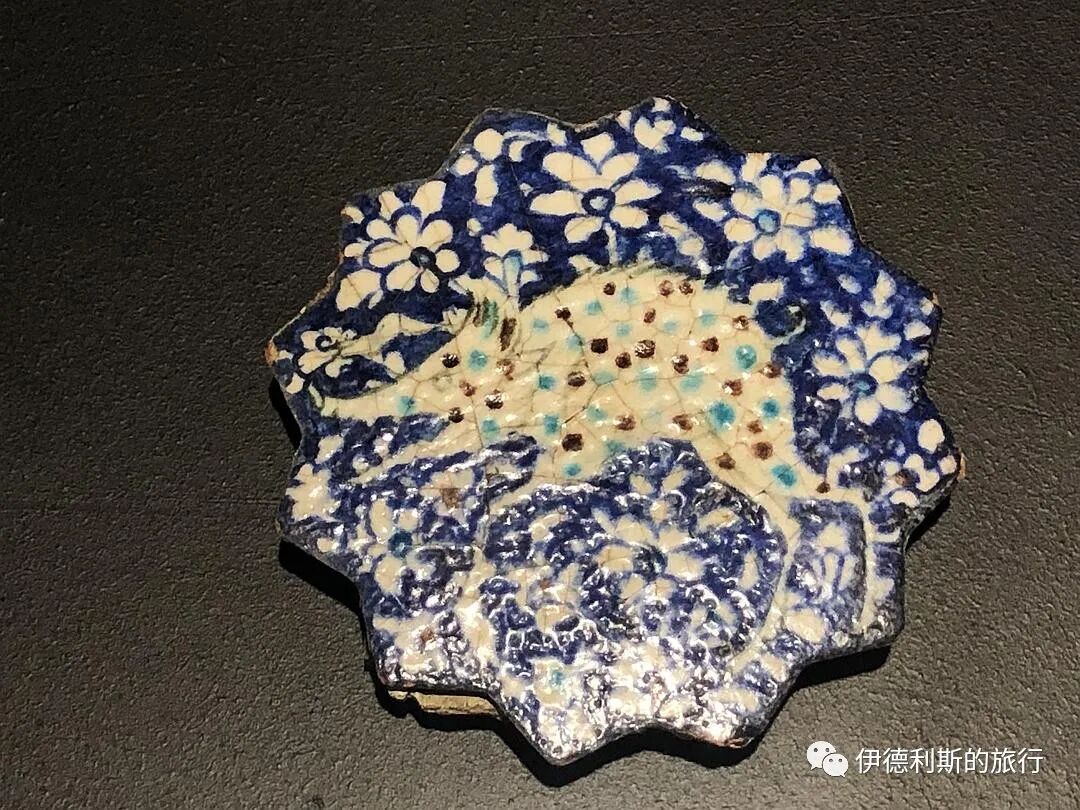
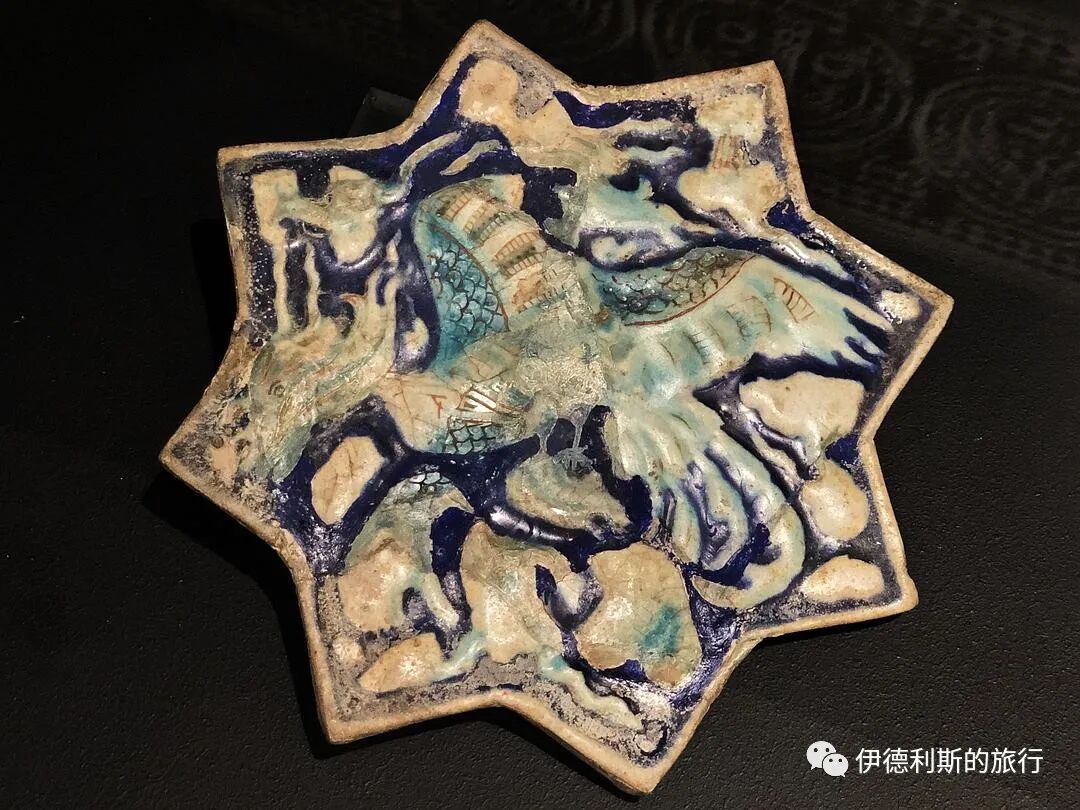
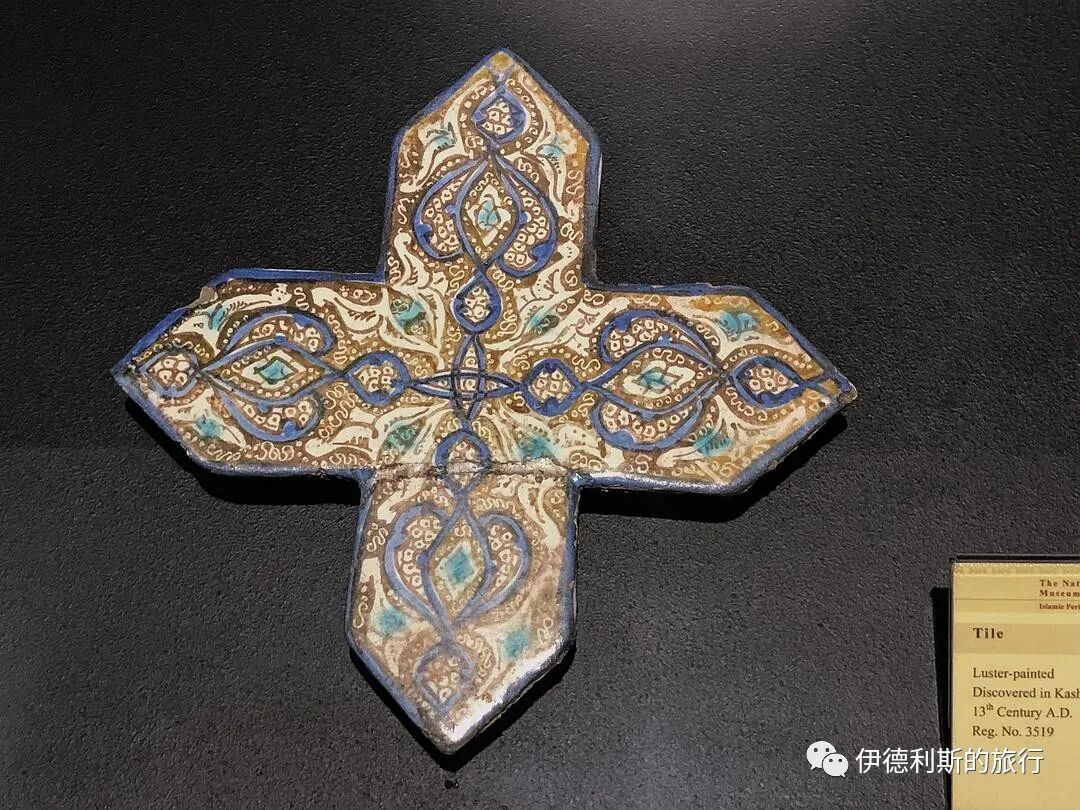
13th-14th century Ilkhanate period tiles from Kashan, Isfahan province. During the Seljuk Empire and Ilkhanate rule from the 12th to the 14th century, Kashan was an important center for the production of high-quality pottery and tiles in Iran. In modern Persian, the word for tile (kashi) is derived from Kashan.
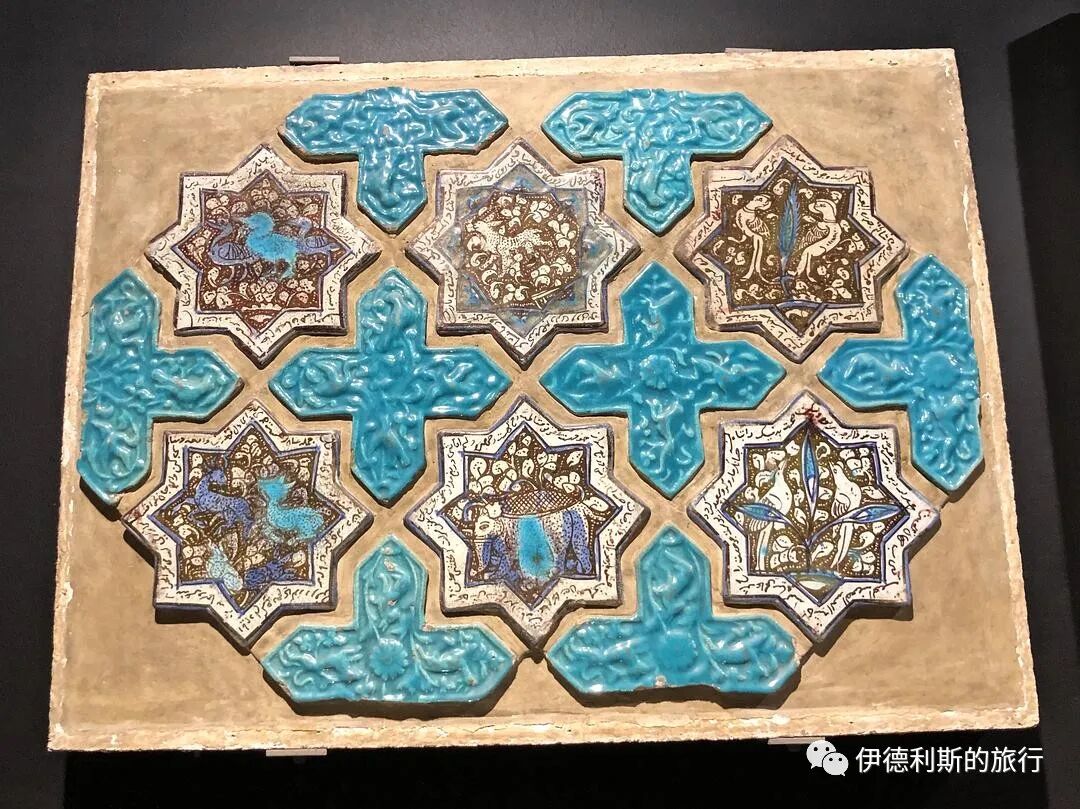
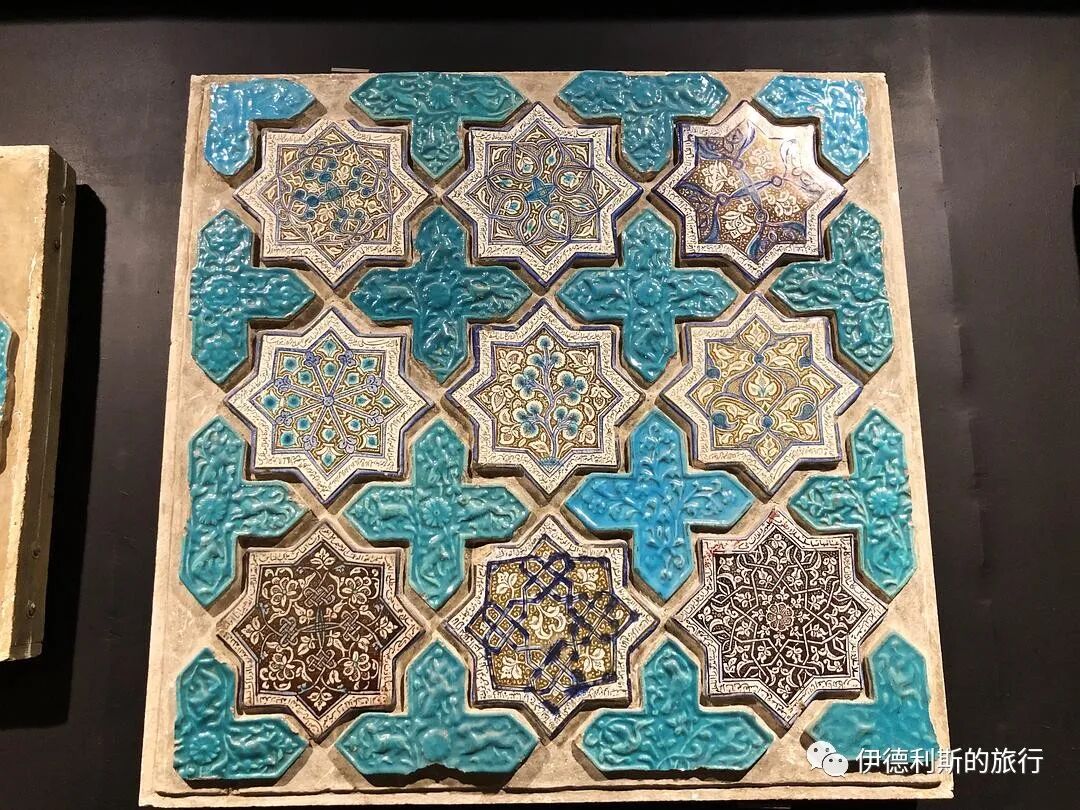
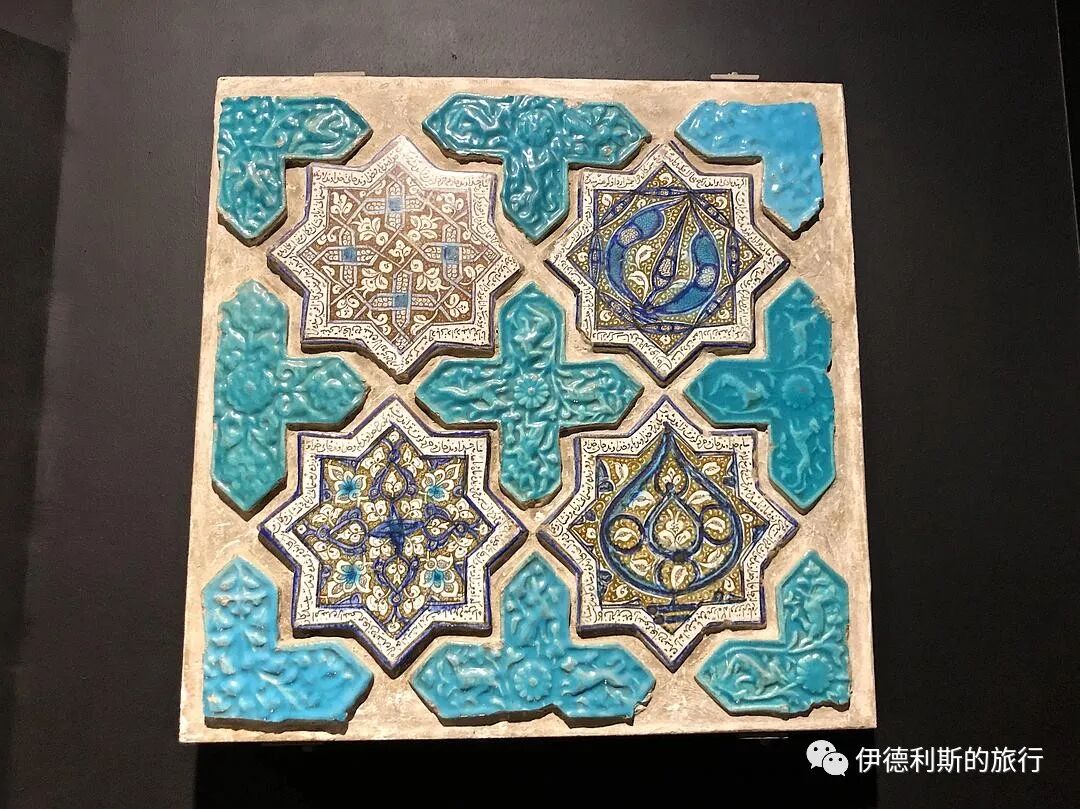
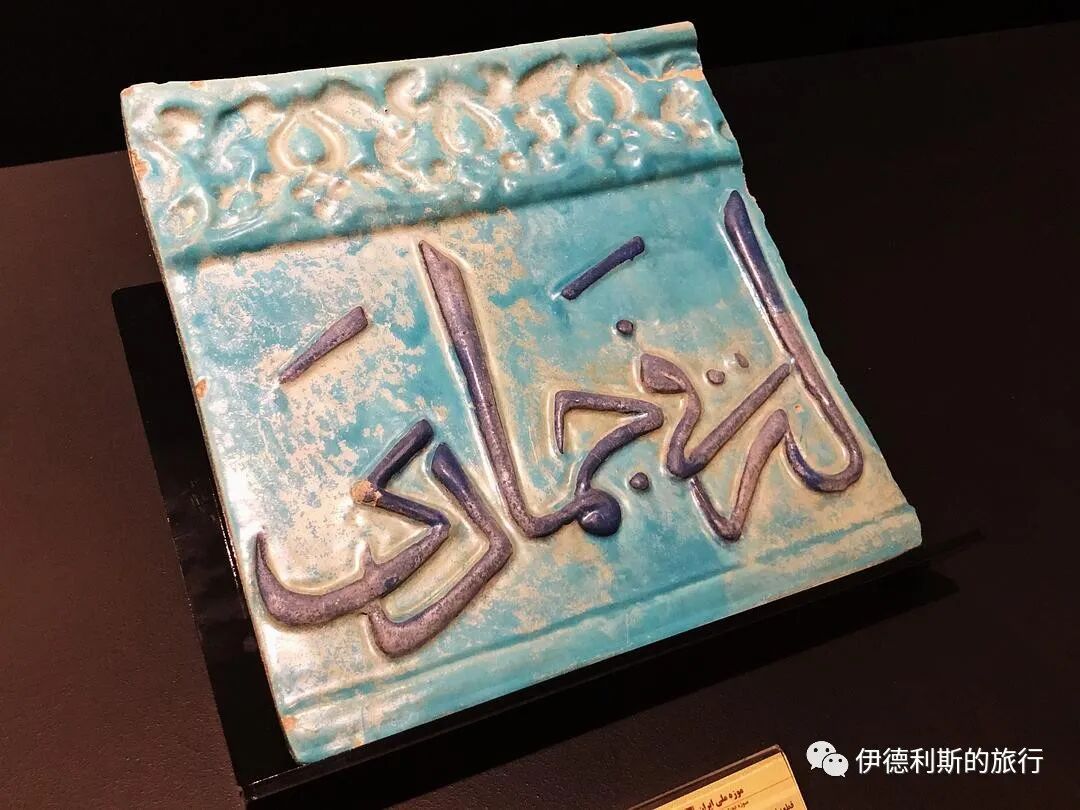
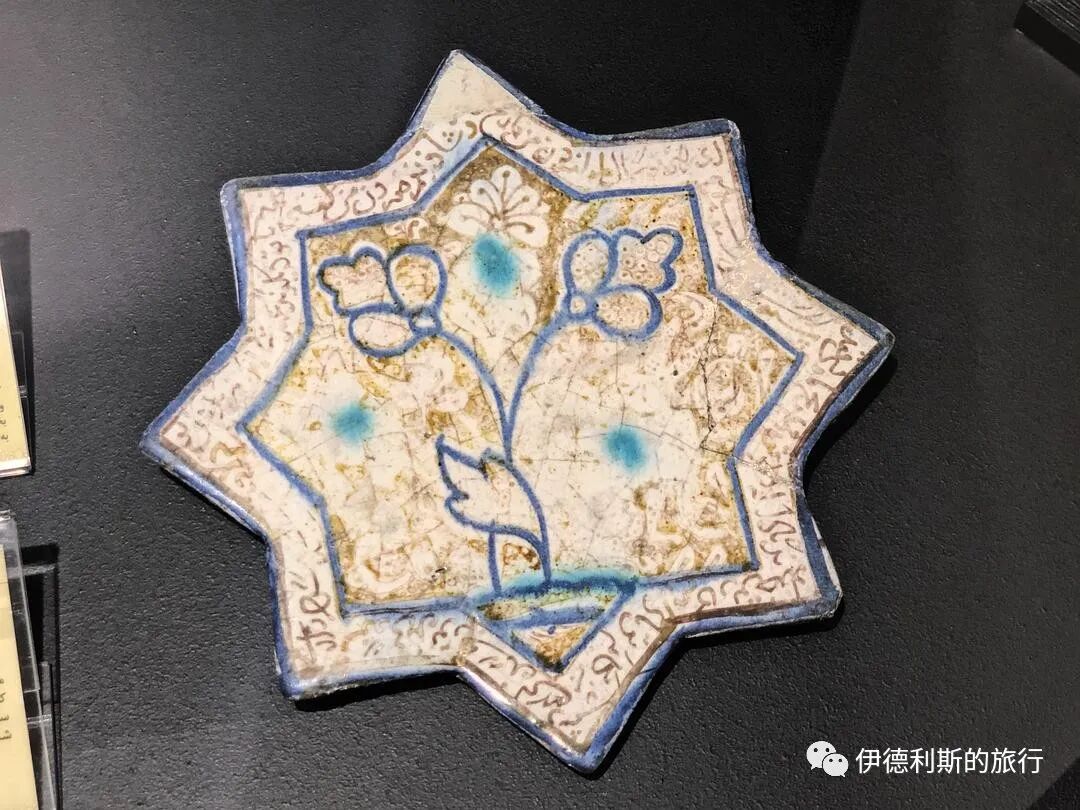
Artifacts from Nishapur, 9th to 11th century.
Nishapur is located on the ancient Silk Road in northeastern Iran and was once one of the four major cities of the Greater Khorasan region. In the 9th century AD, Nishapur became the capital of the Persian Tahirid dynasty. Under the rule of the Persian Samanid dynasty in the 10th century, Nishapur developed into an important cultural and commercial center of the Islamic world, continuing through the 11th-century Seljuk dynasty. Between the 9th and 11th centuries, various cultures and religions converged in Nishapur, where trade routes from Central Asia, China, Iraq, and Egypt intersected. The glazed pottery produced in Nishapur at that time became an important trade commodity in the West, once rivaling Baghdad and Cairo.
In 1221, Nishapur was massacred by the Mongols and subsequently completely destroyed; the former metropolis was buried deep underground. It was not until archaeological excavations by the Metropolitan Museum of Art in New York between 1935 and 1940 that countless artifacts and ruins were discovered beneath the farmland. Today, most of the excavated Nishapur artifacts are preserved in the Metropolitan Museum of Art, as well as in museums in Tehran and Mashhad.
According to historical records, Nishapur had at least 38 madrasas before the 11th century. Before the archaeological excavations, no ruins were visible except for a mound in the farmland. Archaeological excavations identified six layers of the Tappeh Madreseh site dating from the 9th to the 13th century; although signs of destruction and subsequent restoration or reconstruction were found in each layer, they maintained a relatively consistent overall layout.
The lowest layer of the madrasa dates back to the 9th century and is believed to have been built by the Tahirid ruler Abdallah ibn Tahir (reigned 828-845). The early spaces were large, but were further subdivided during the Samanid dynasty in the 10th century and the Seljuk dynasty in the 11th century. Overall, however, the madrasa featured a square courtyard in the center, surrounded by more than 20 rooms on three sides, with rectangular colonnades.
9th-century colored plaster murals unearthed at the Tappeh Madreseh site.
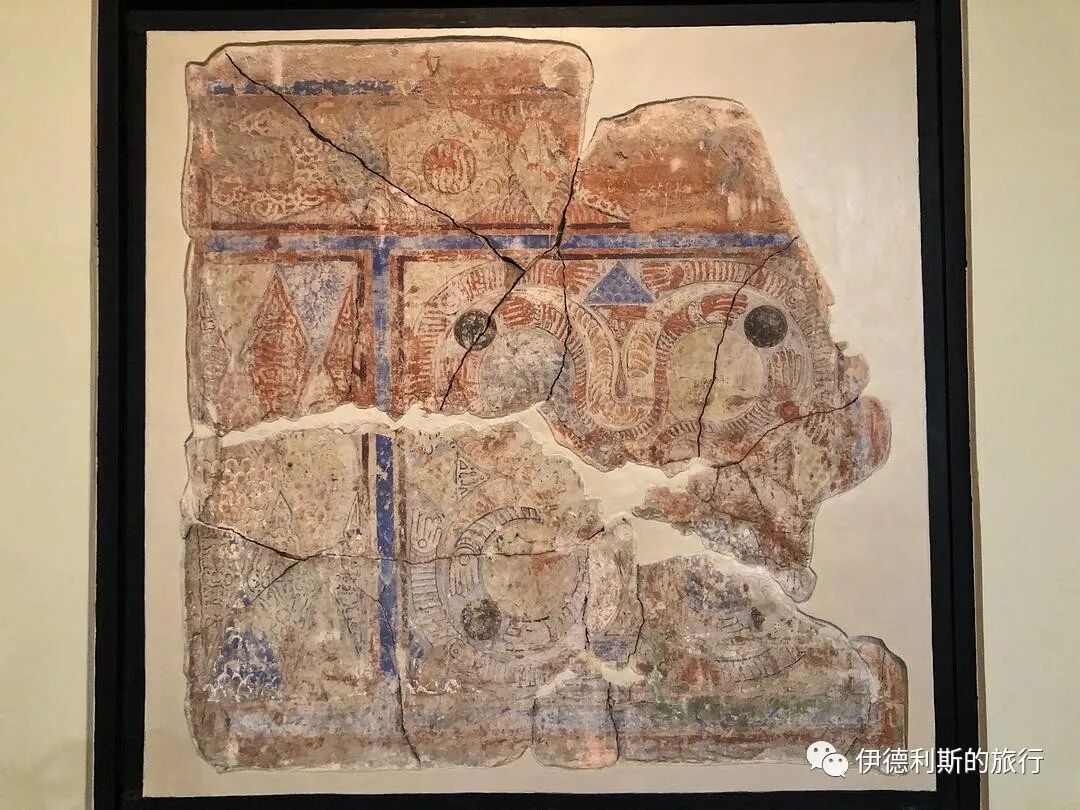
9th-century plaster hunting murals unearthed at the Tappeh Takestan site in Nishapur.
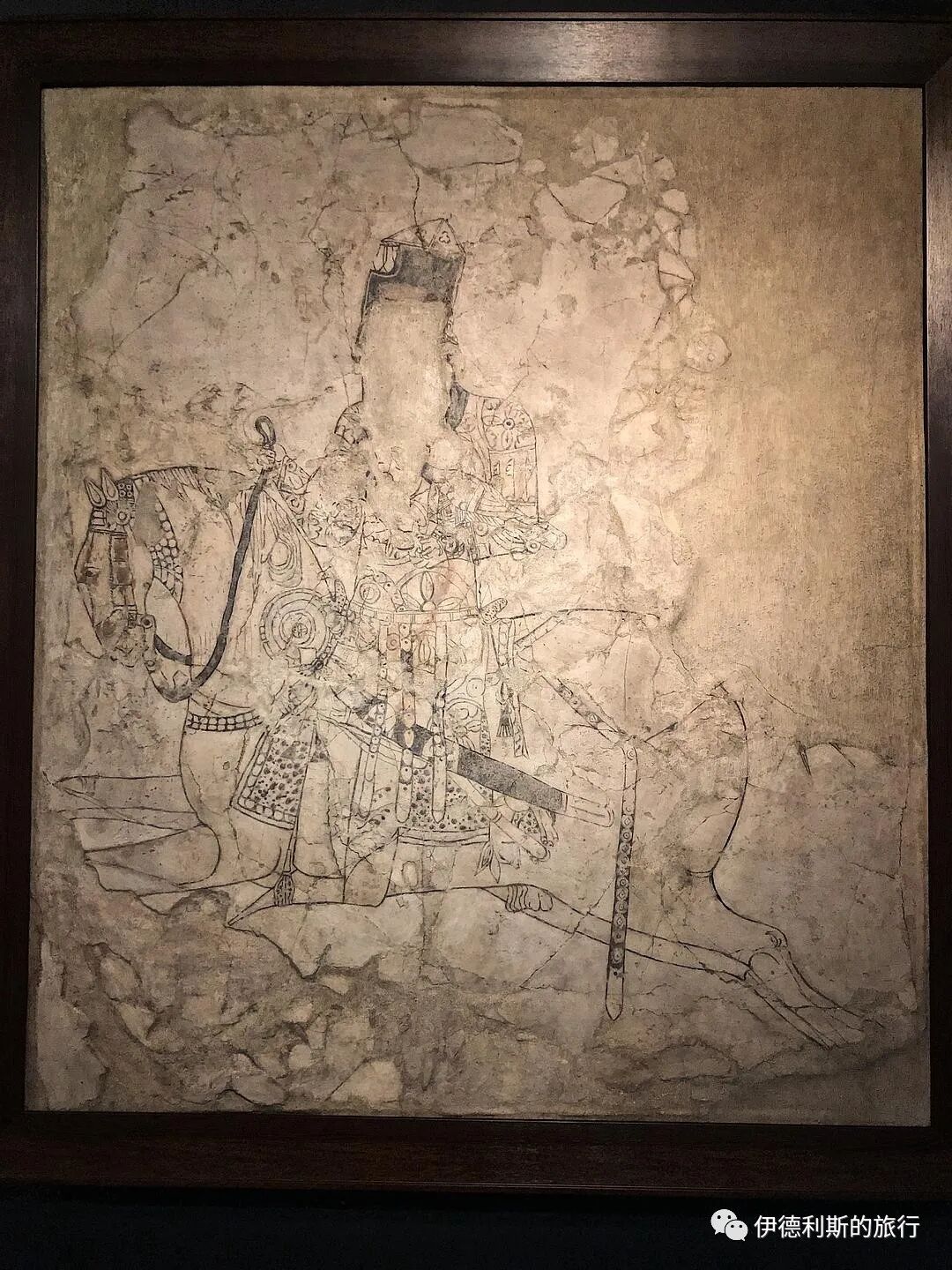
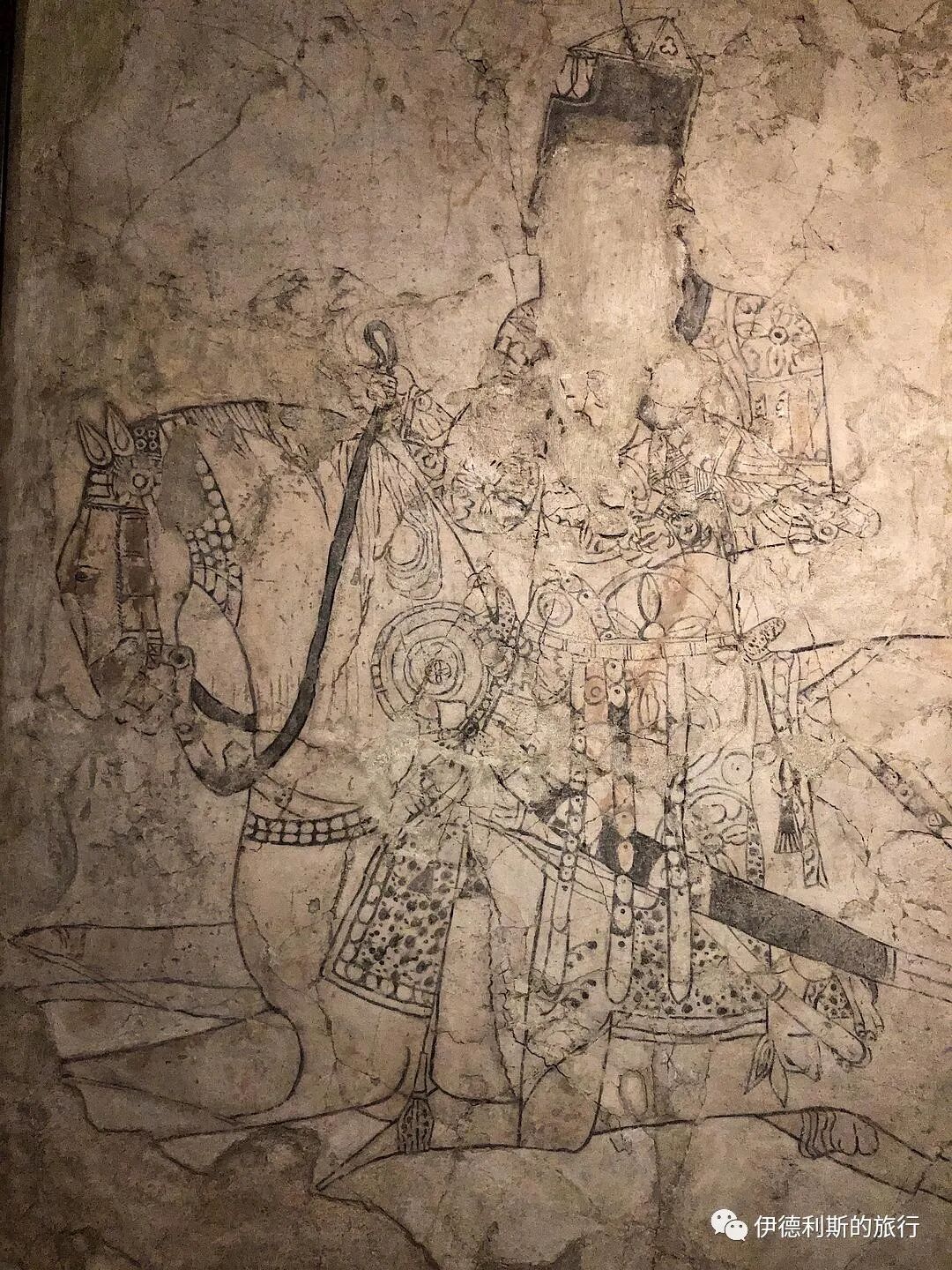
9th-10th century pottery with Kufic calligraphy.
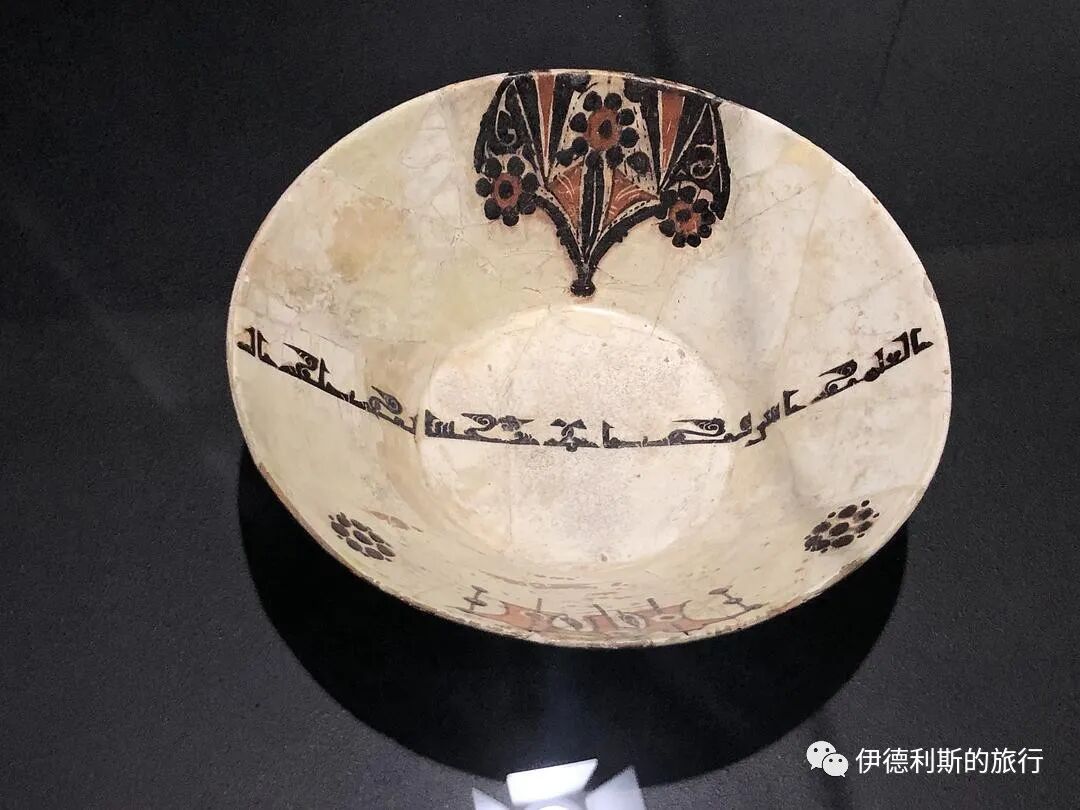
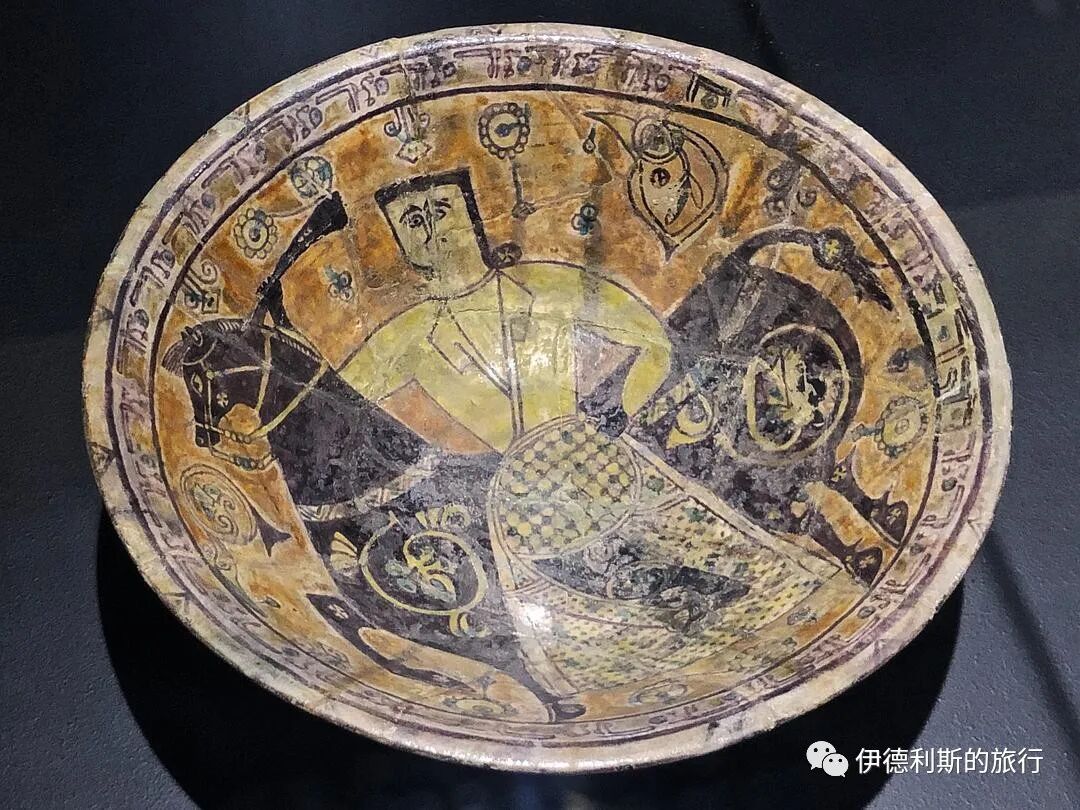
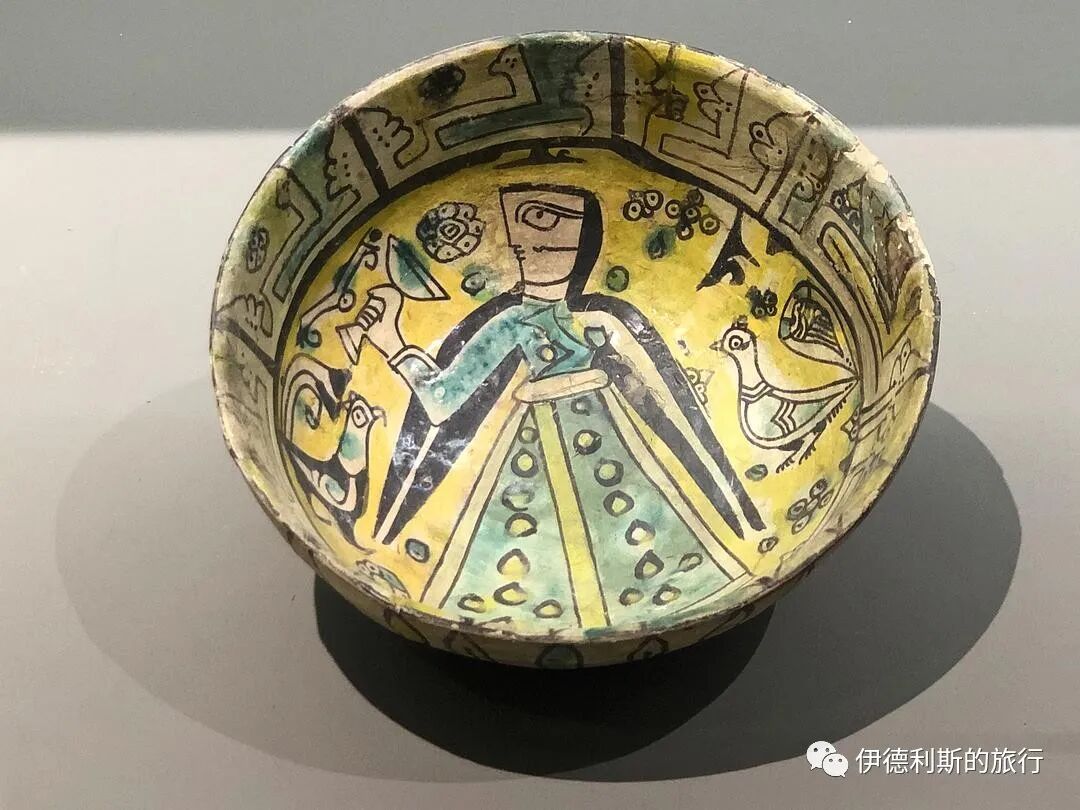
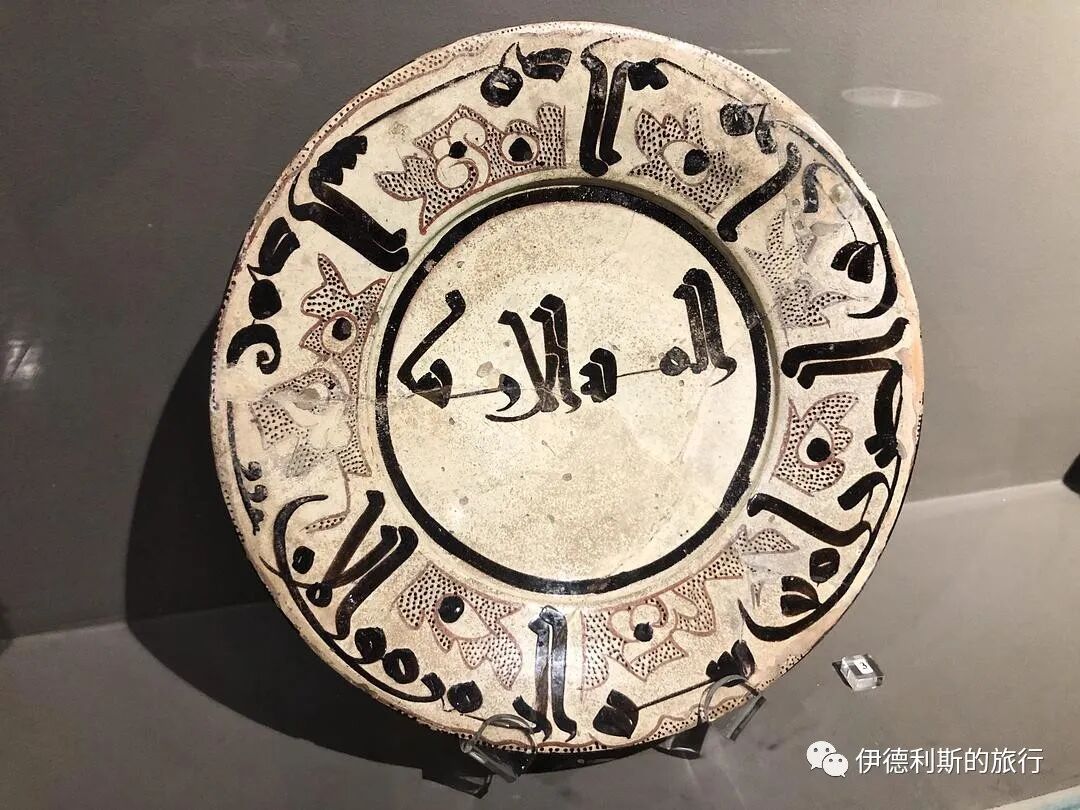
Artifacts unearthed from the ancient city of Ray.
Ray is located in the southern suburbs of Tehran and is an important ancient city in northern Iran, referred to as 'Layi' in books such as the History of Yuan. The history of the ancient city of Ray is very old, mentioned in both the Zoroastrian Avesta and the Christian Bible.
In the 640s AD, the Sassanid dynasty used the ancient city of Ray as a base to resist the Arab invasion, but ultimately failed, and Ray came under the rule of the Arab Empire. In the 9th century AD, the Shah Abdol-Azim shrine was built in Ray, becoming an important religious site in Iran.
In 1043, the founder of the Seljuk Empire, Tuğrul Beg, made Ray the capital of the empire and carried out large-scale reconstruction of the ancient city. Under the rule of the Seljuk Empire, Ray reached its peak, with a massive bazaar and very prosperous commerce. Import and export trade, primarily in silk, connected the entire Eurasian continent. Ray was the center of painted pottery production in Iran at the time, and Ray-style painted pottery was an important handicraft of this period.
In 1220, the Mongol army invaded Ray, which was under the rule of the Khwarazmian Empire. Due to the lack of fierce resistance, the Mongols did not massacre the city. Nevertheless, the residents of the city gradually left, and the center of pottery production shifted to the southern city of Kashan. After this, Ray became a ghost town, but its sturdy walls still allowed it to be used as a military fortress during wars. It was not until the construction of the walls of Tehran in the 16th century that Ray was finally abandoned.
8th-9th century dado, located on the lower part of interior walls, serving both to protect the wall and as decoration.
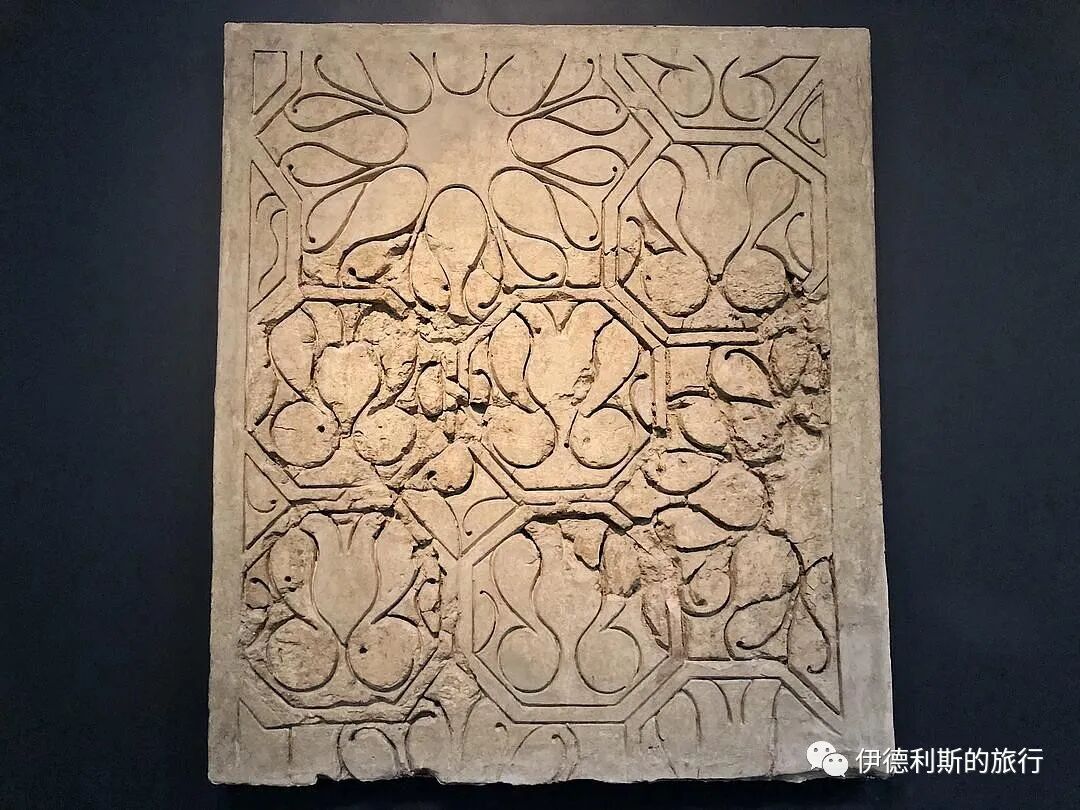
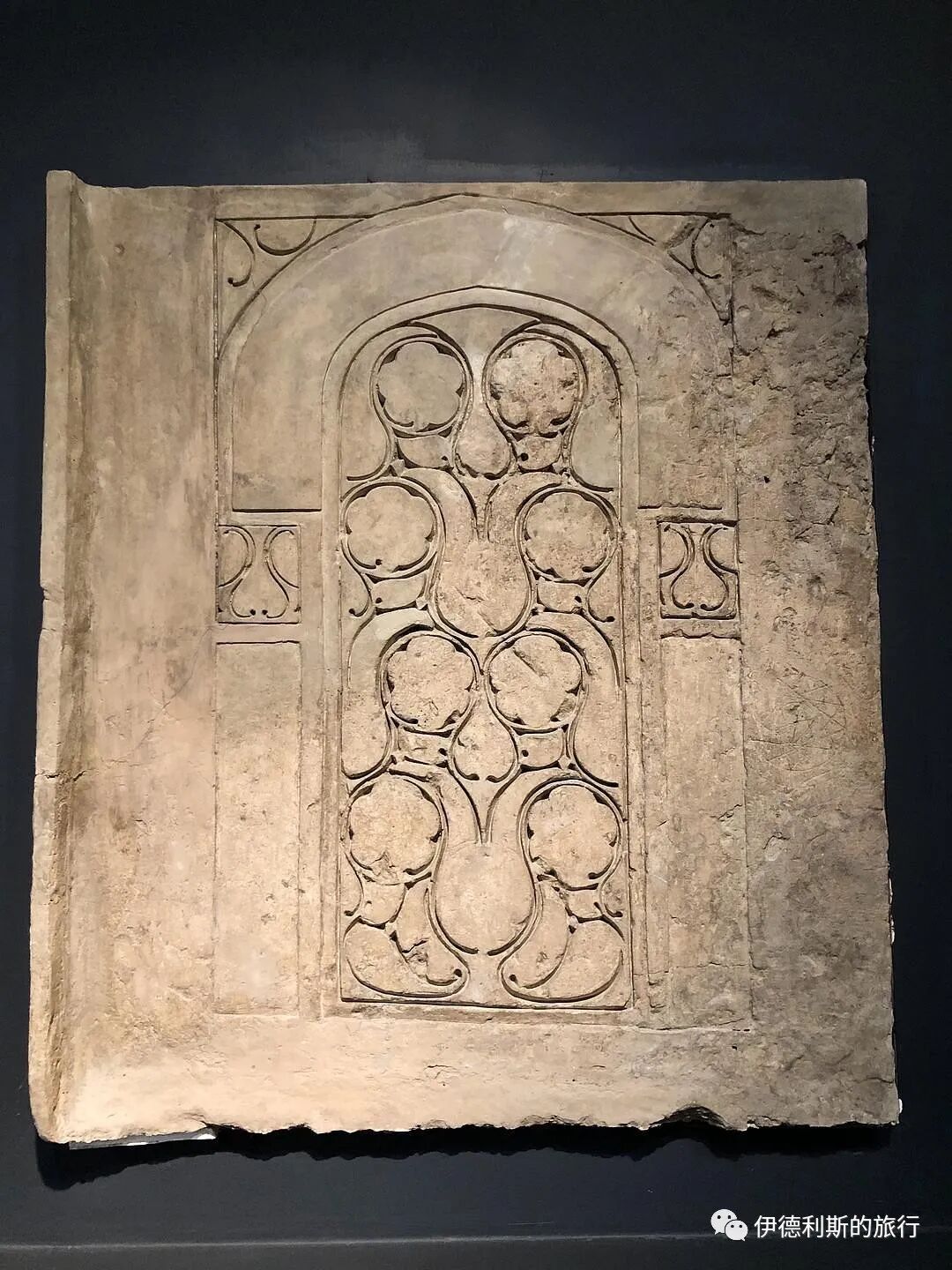
11th-century Seljuk Empire period mihrab.
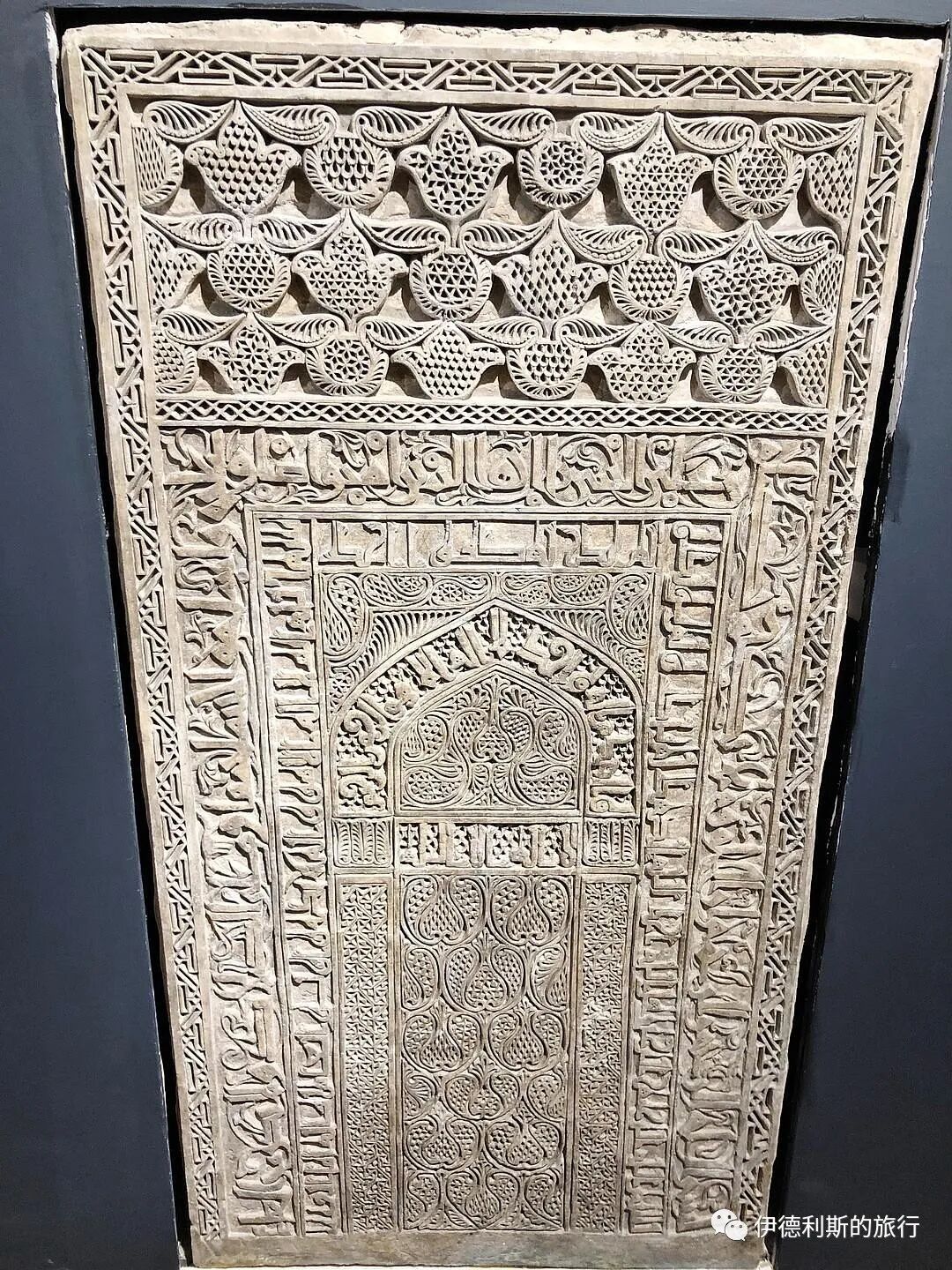
11th-century Seljuk Empire period circular stucco decoration with Kufic calligraphy.
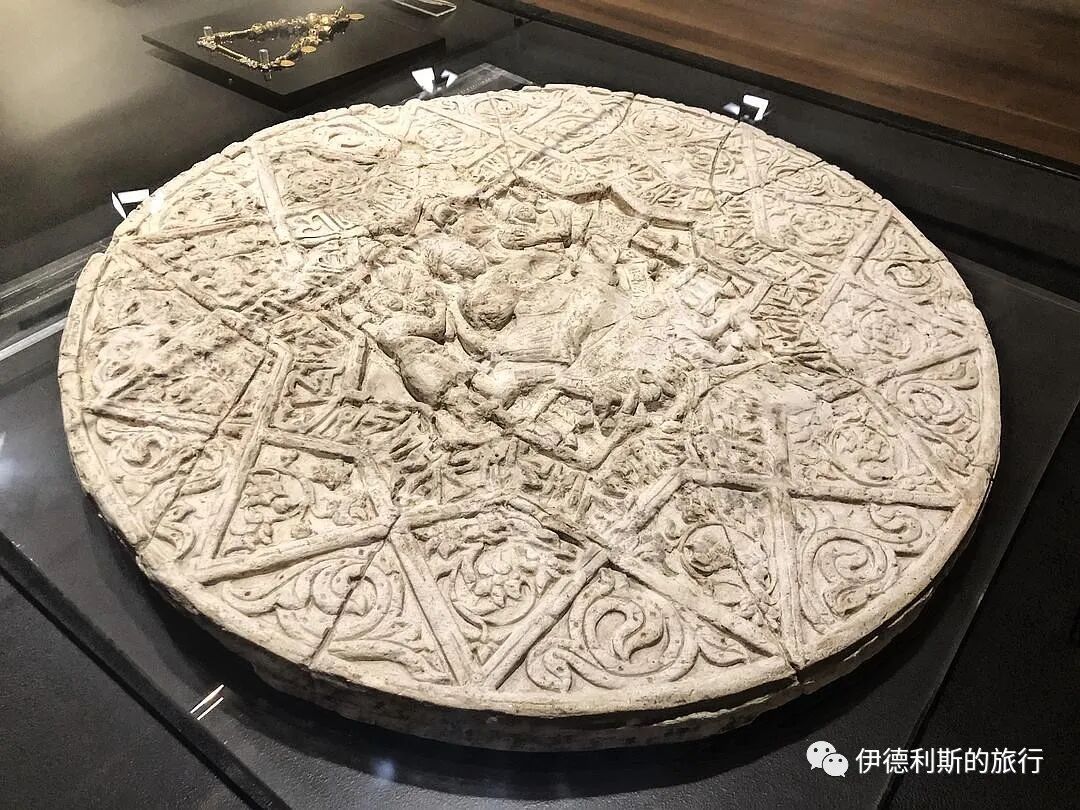
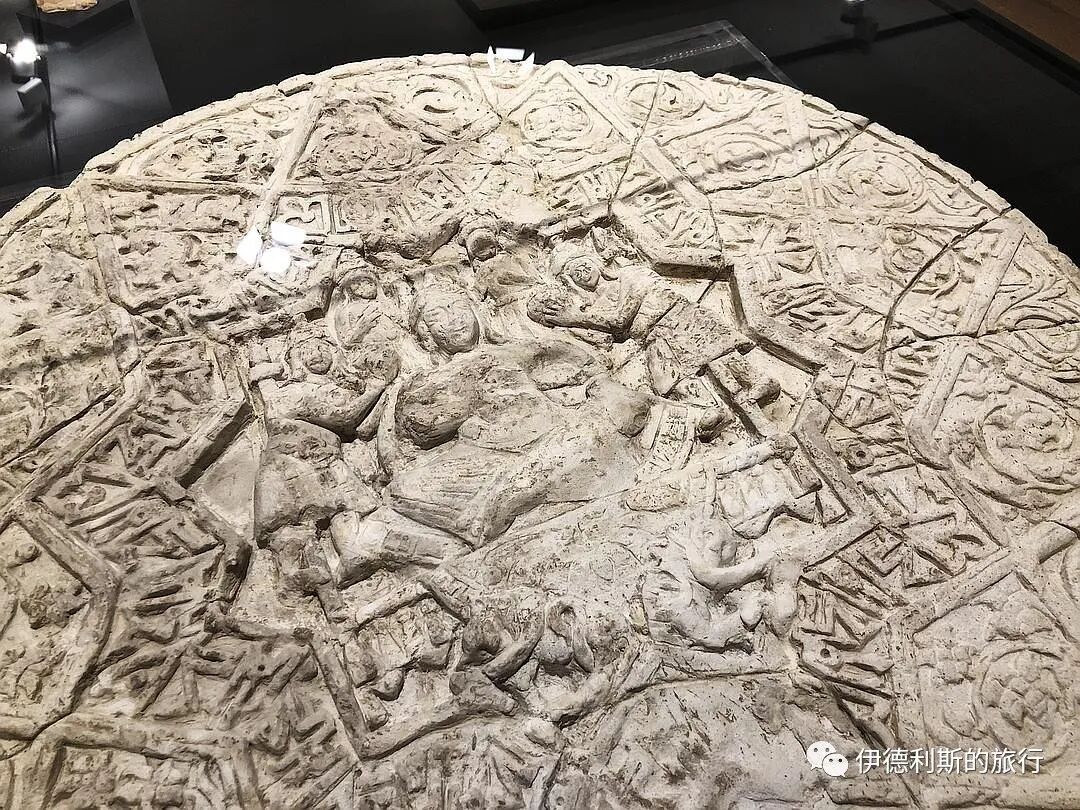
A fragment of a stucco wall from an 11th-century Seljuk Empire school.
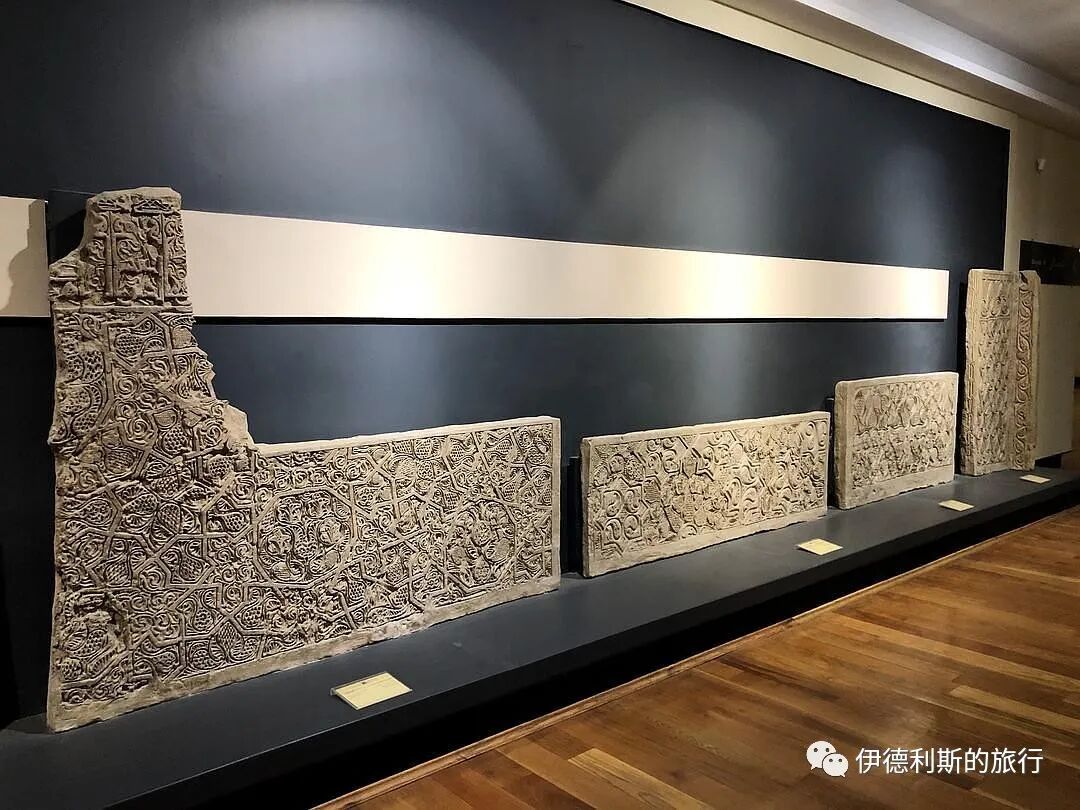
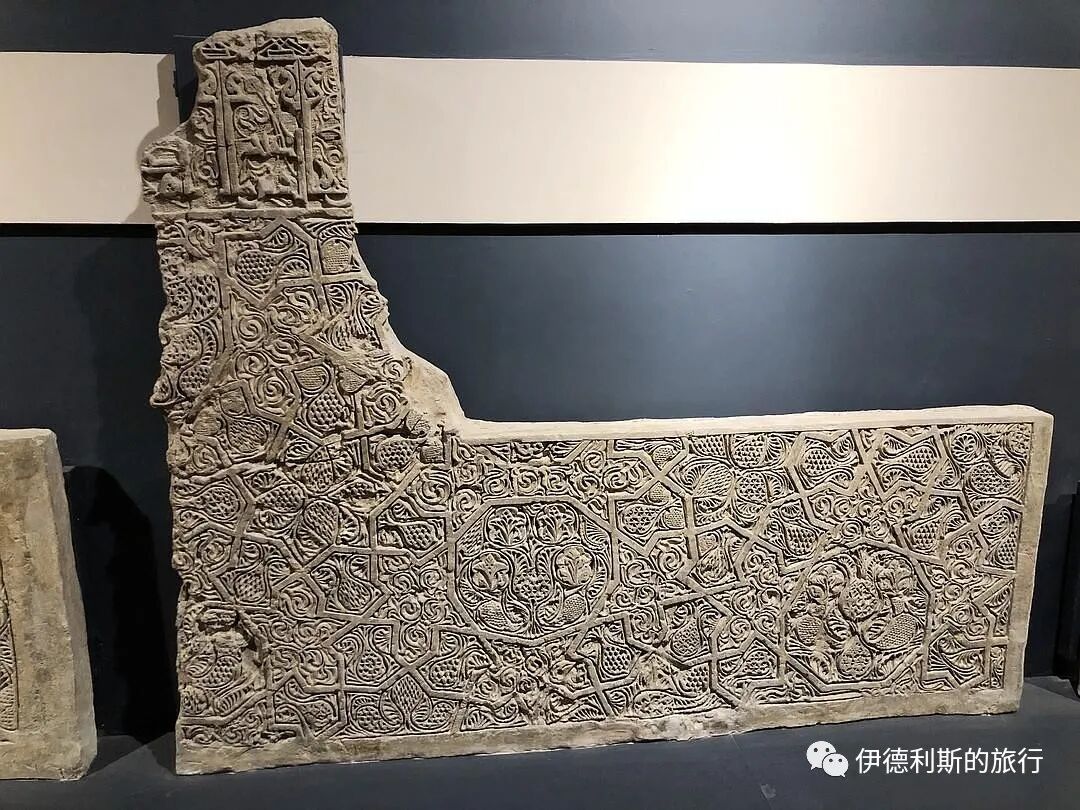
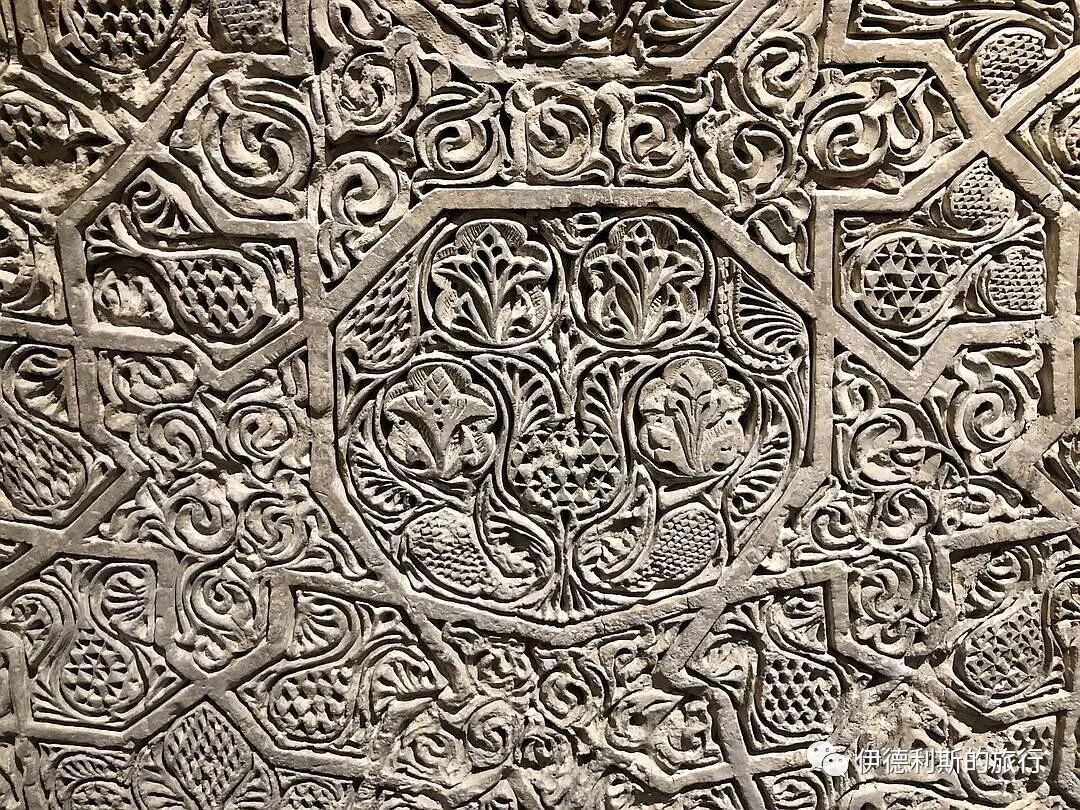
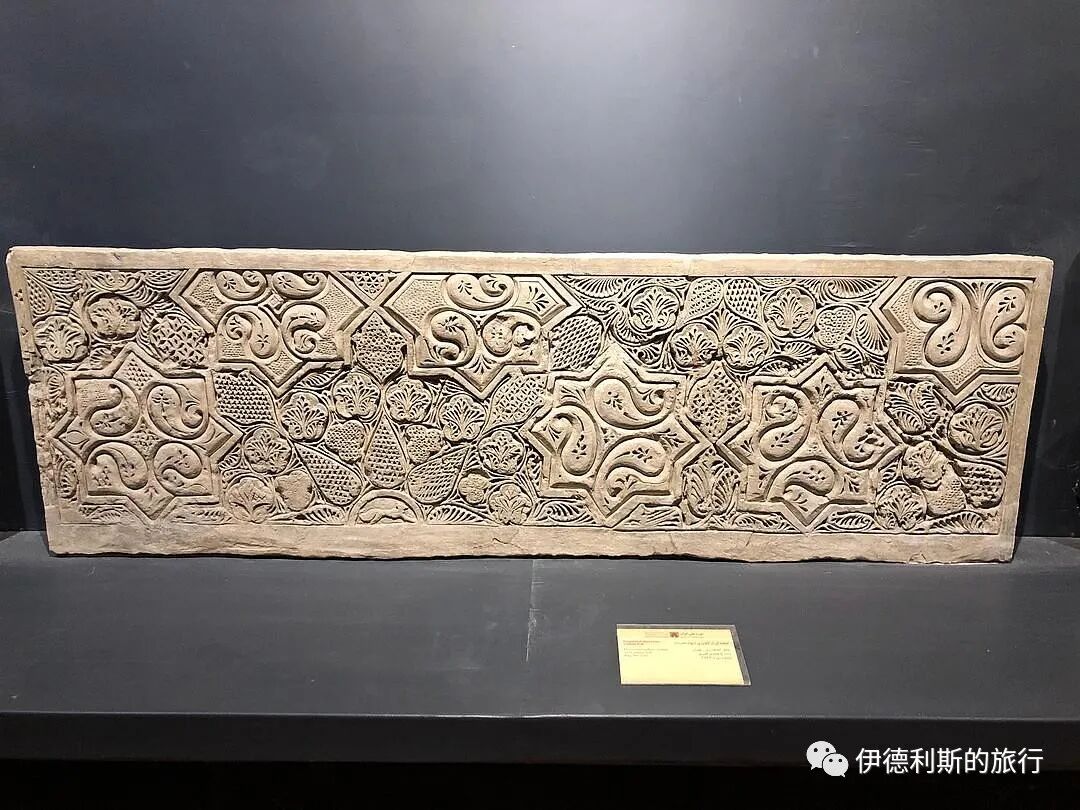
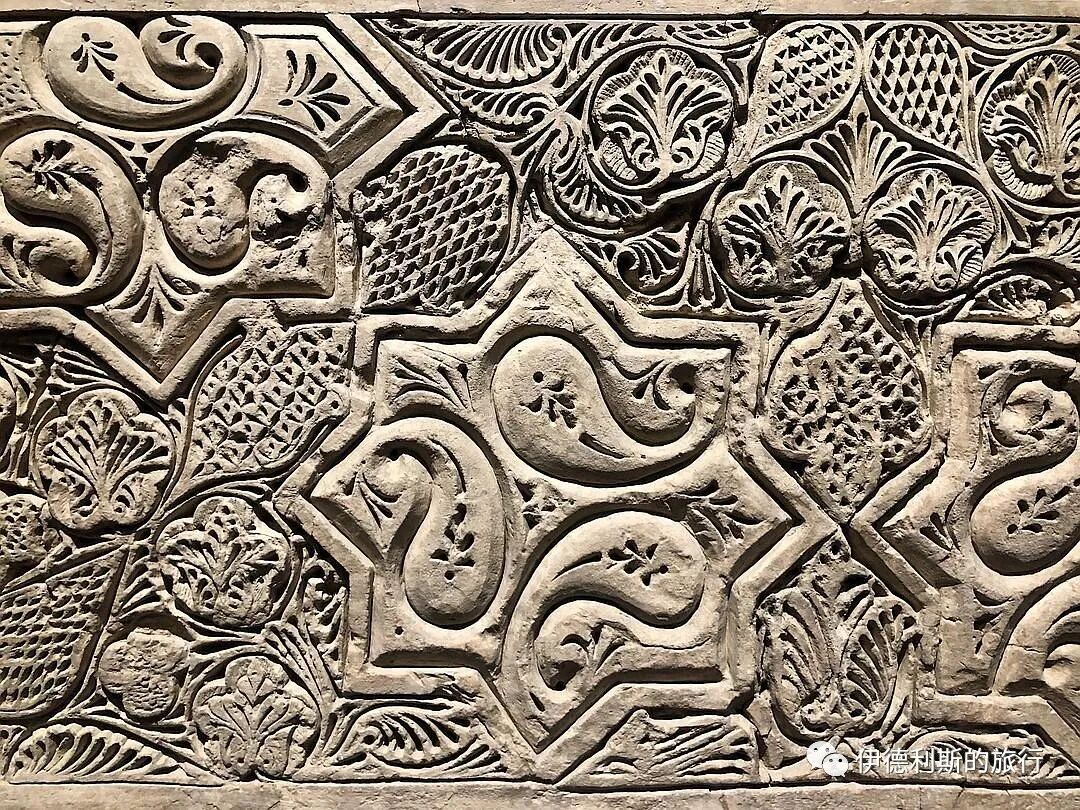
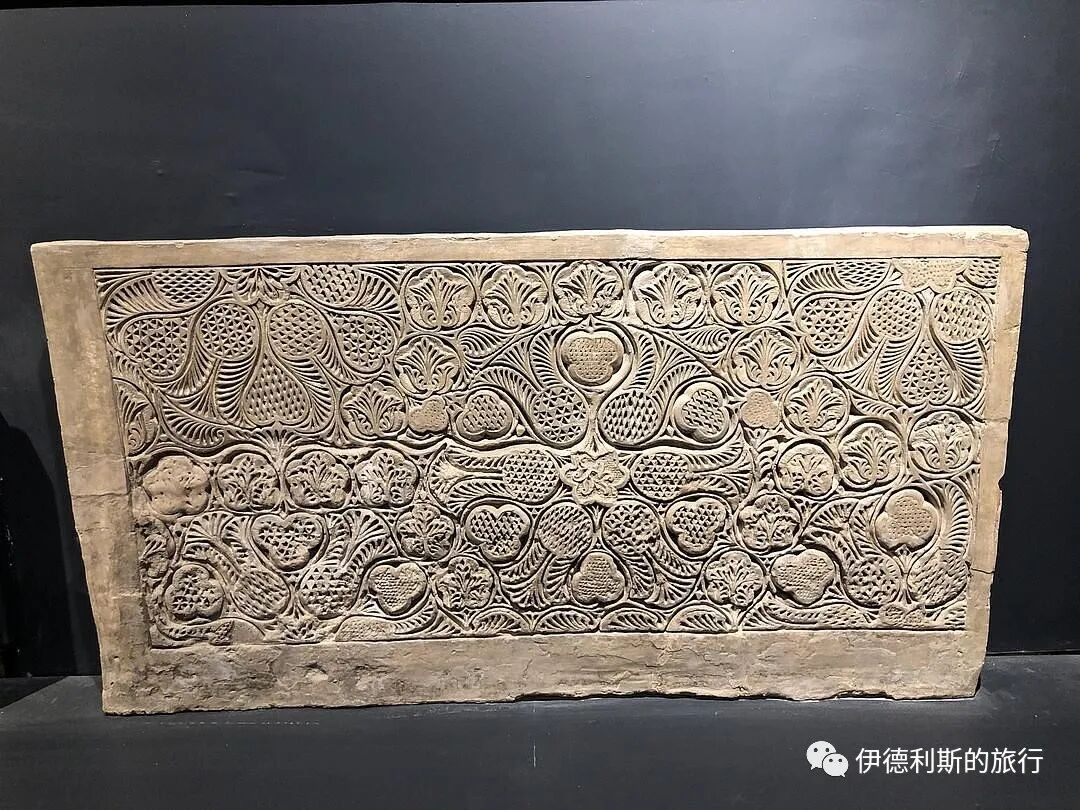
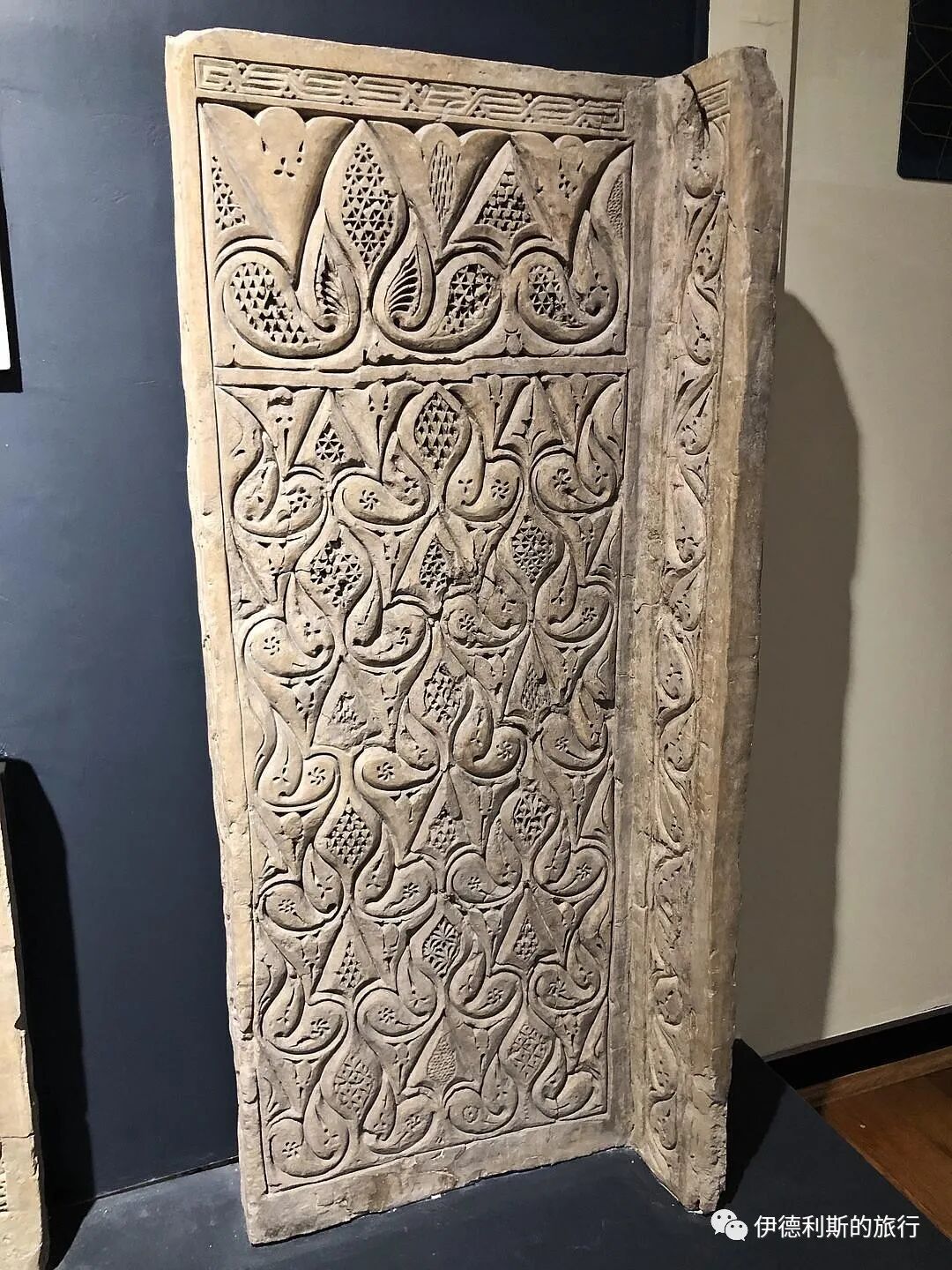
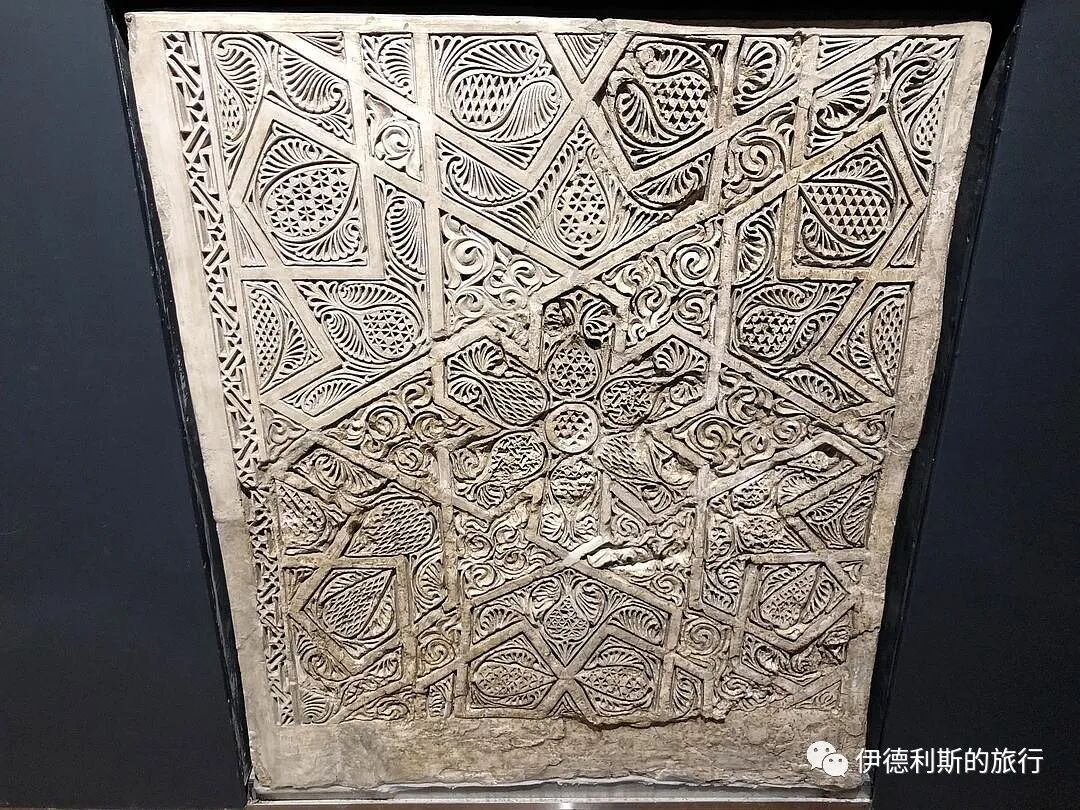
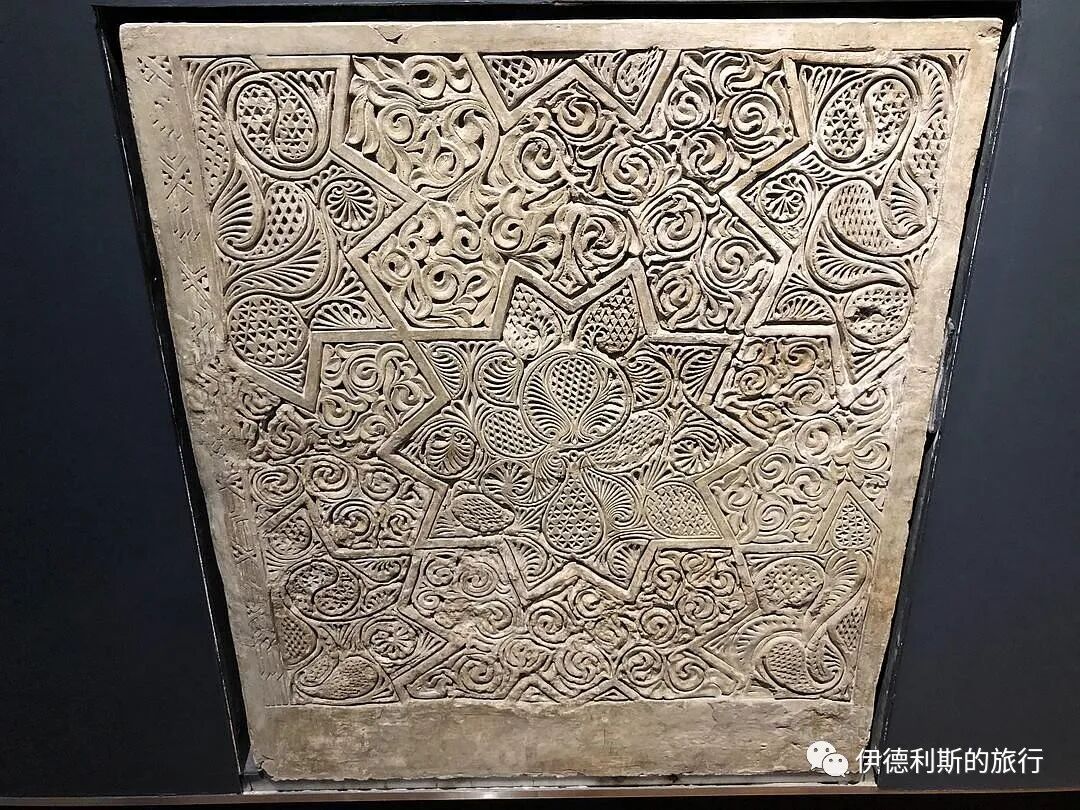
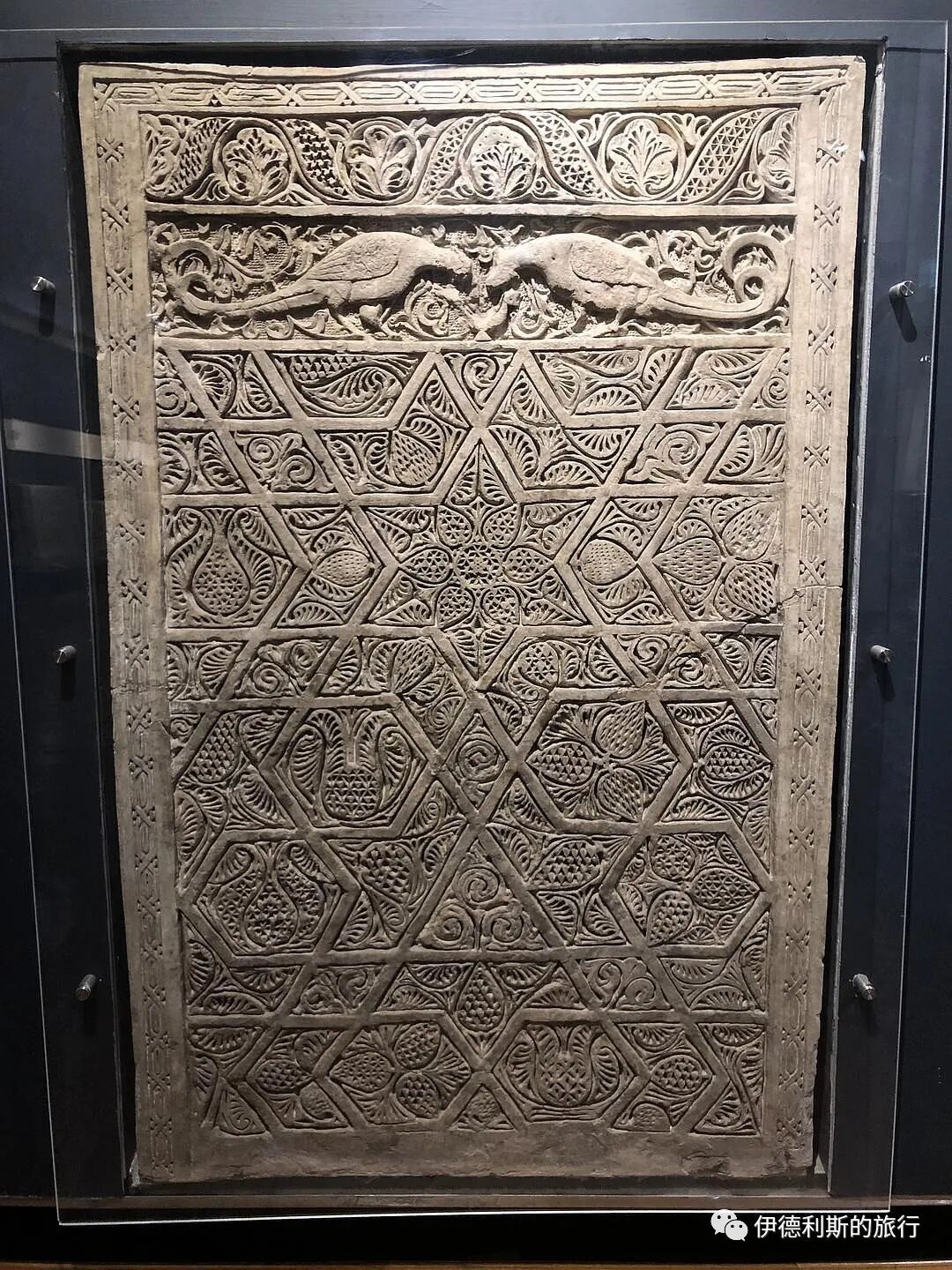
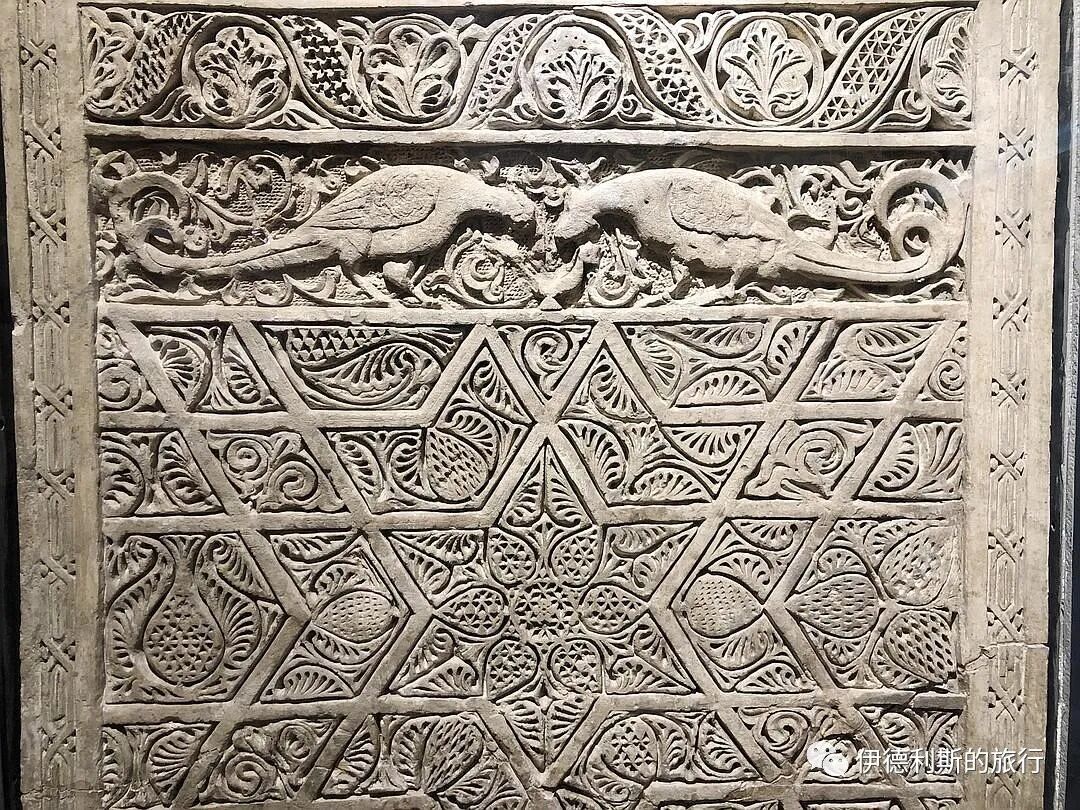
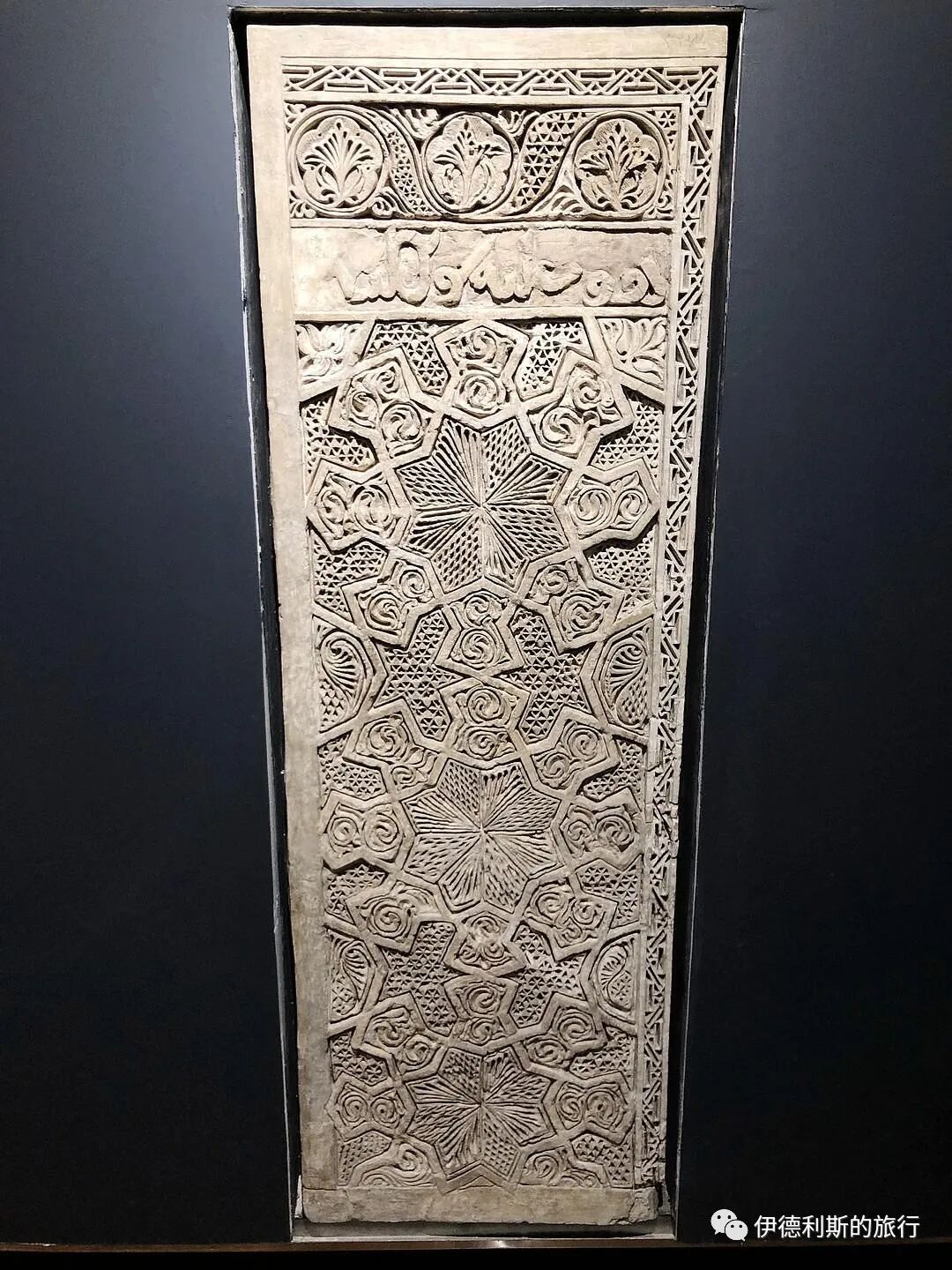
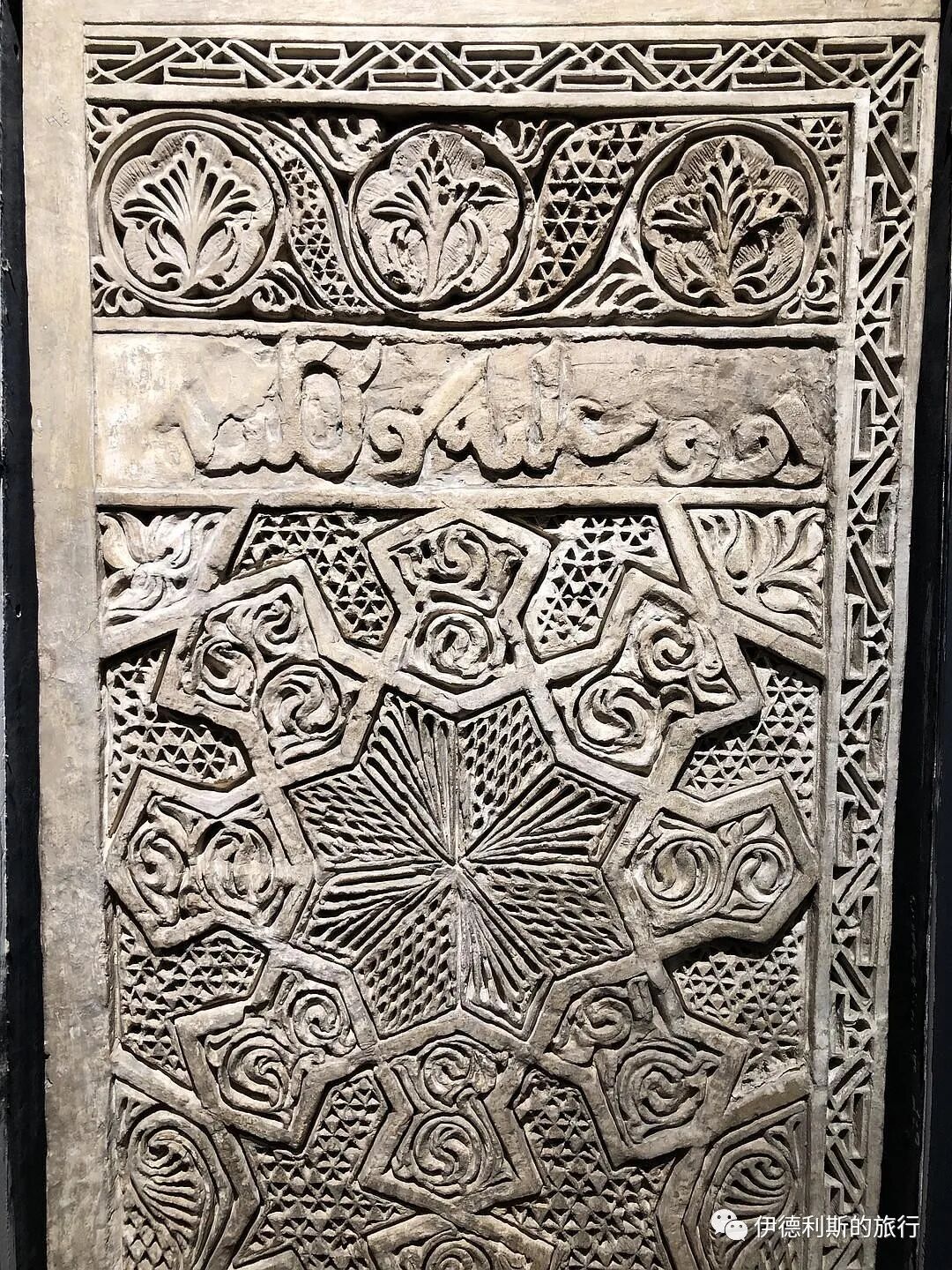
12th-13th century pottery bowl with typical Seljuk style and overglaze Kufic calligraphy.
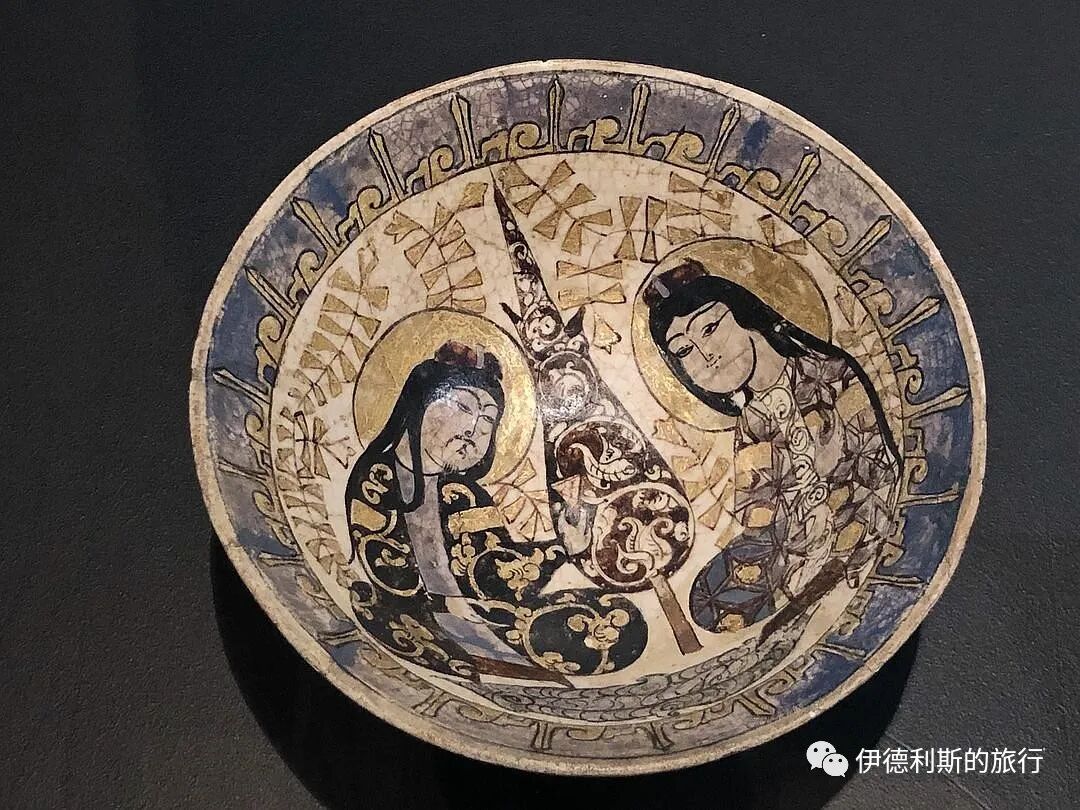
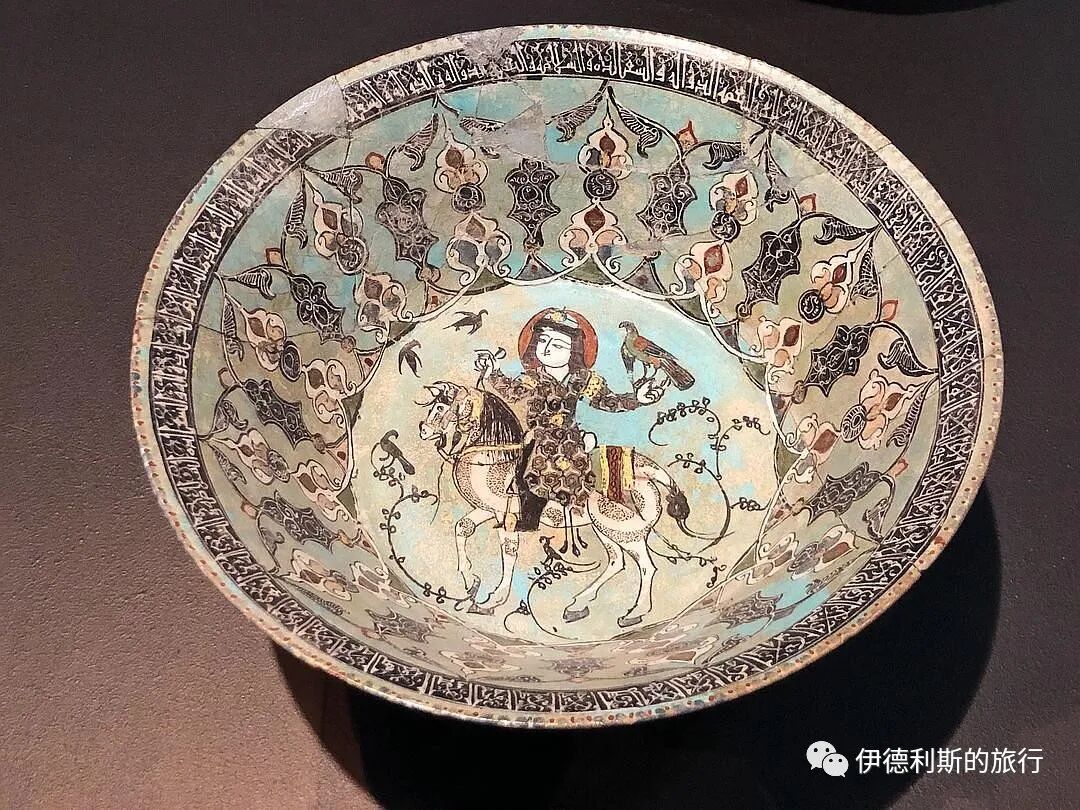
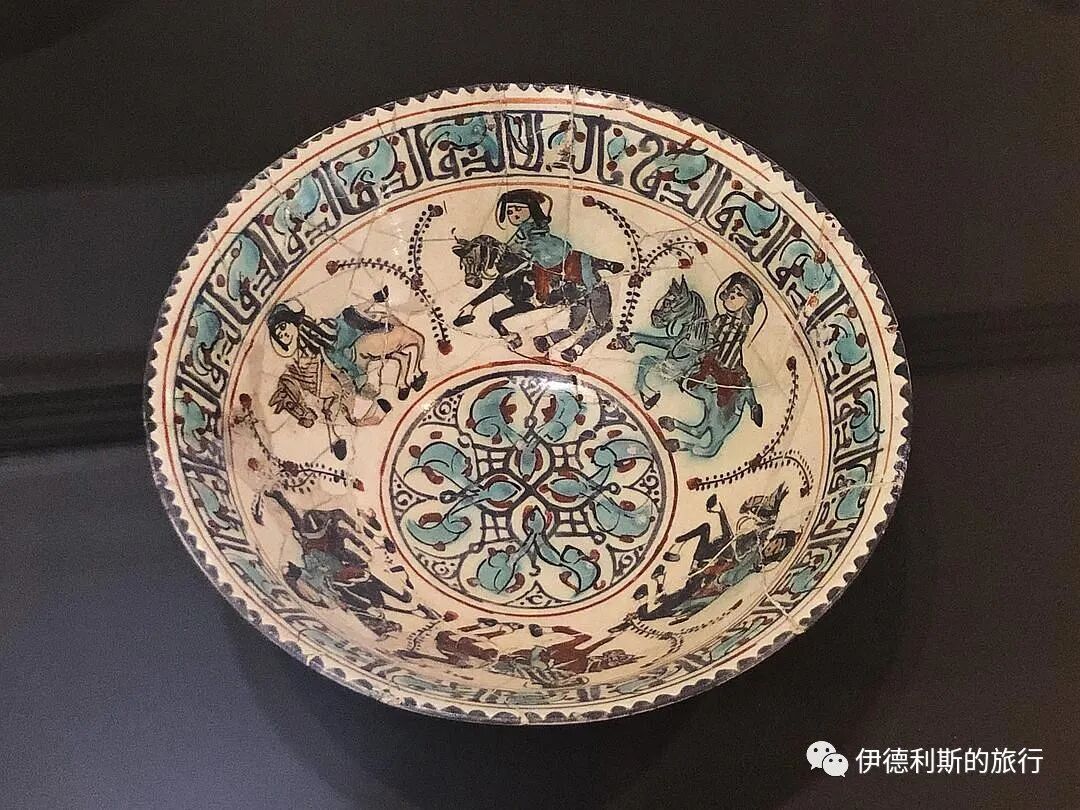
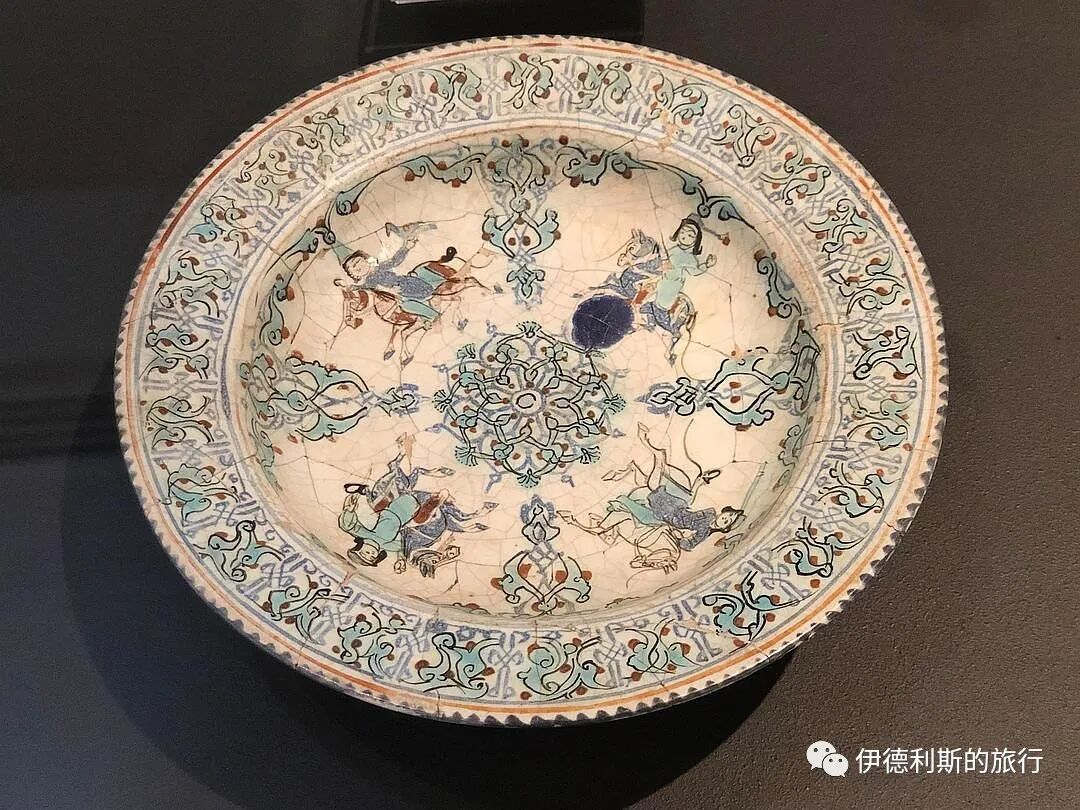
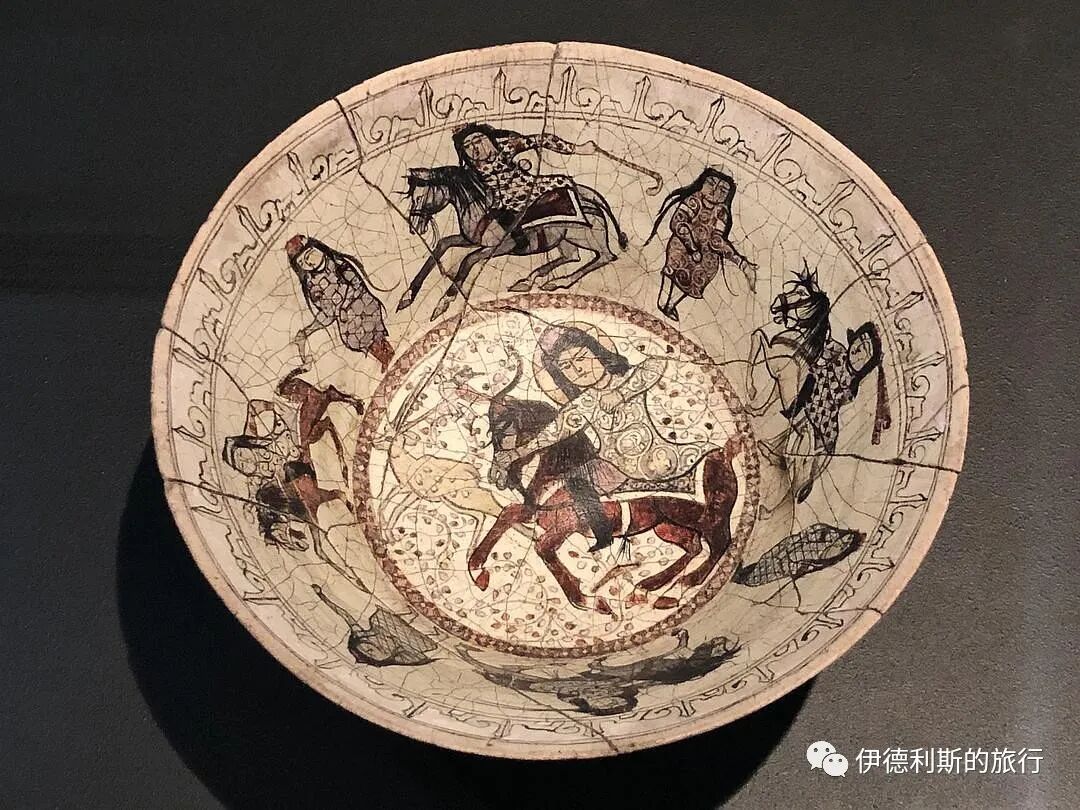
12th-13th century pottery bowl with transparent glaze and Taʿlīq Persian calligraphy.
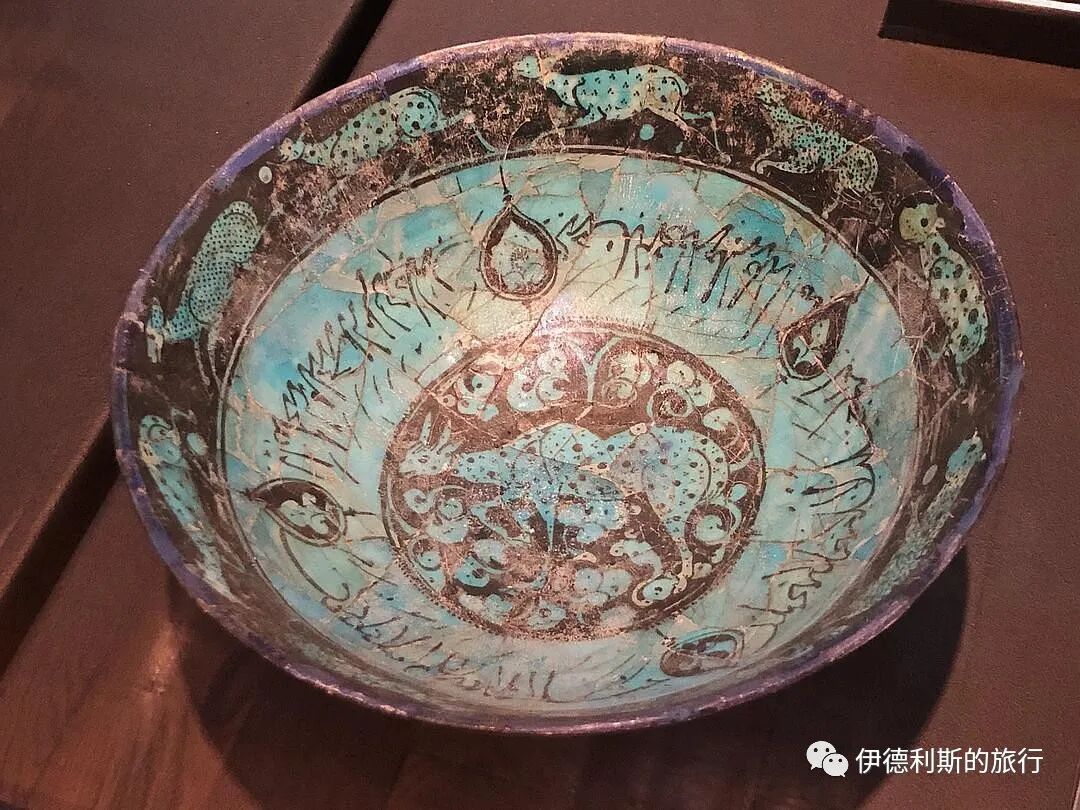
Ray-style silk fabric from the early Islamic period, 7th-10th century.
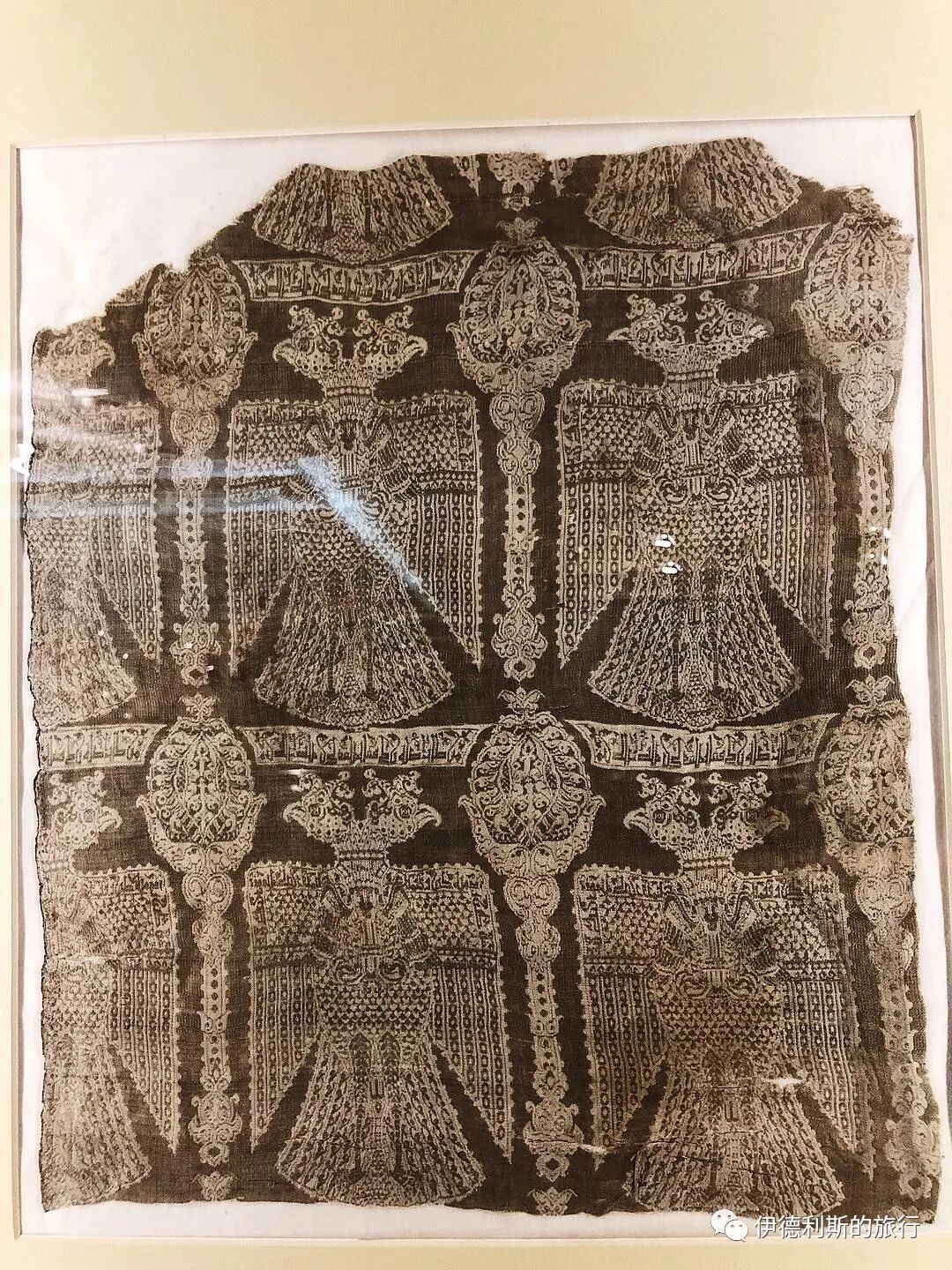
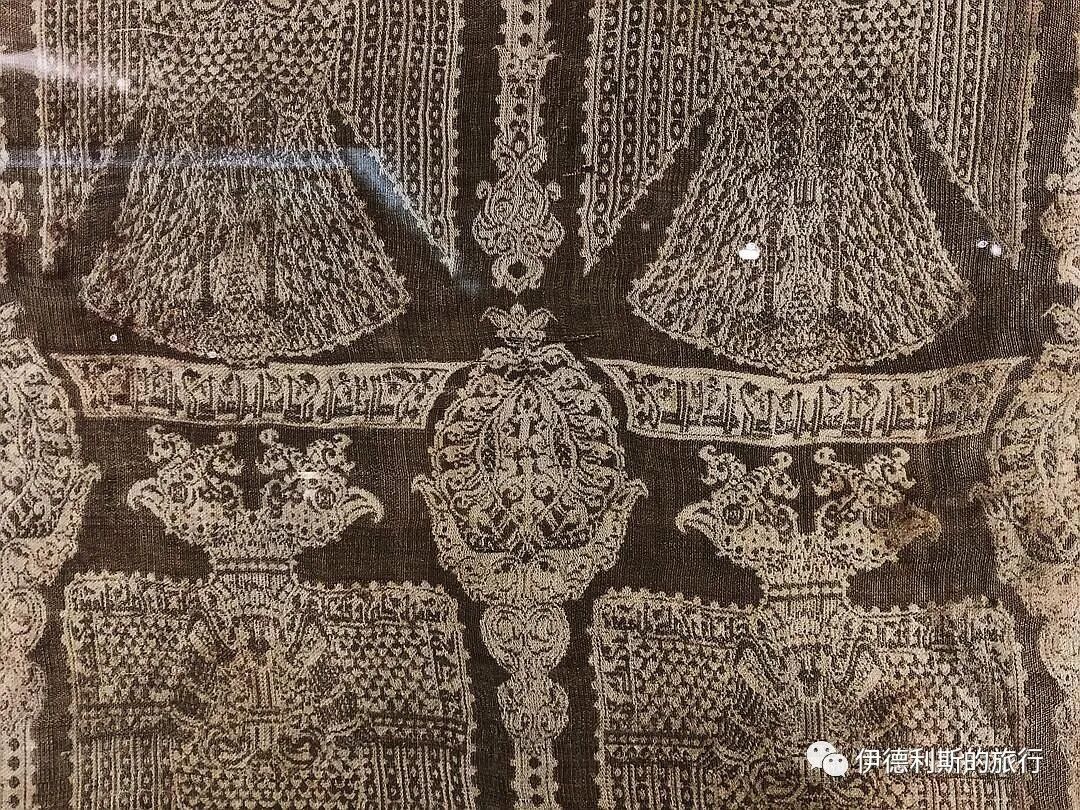
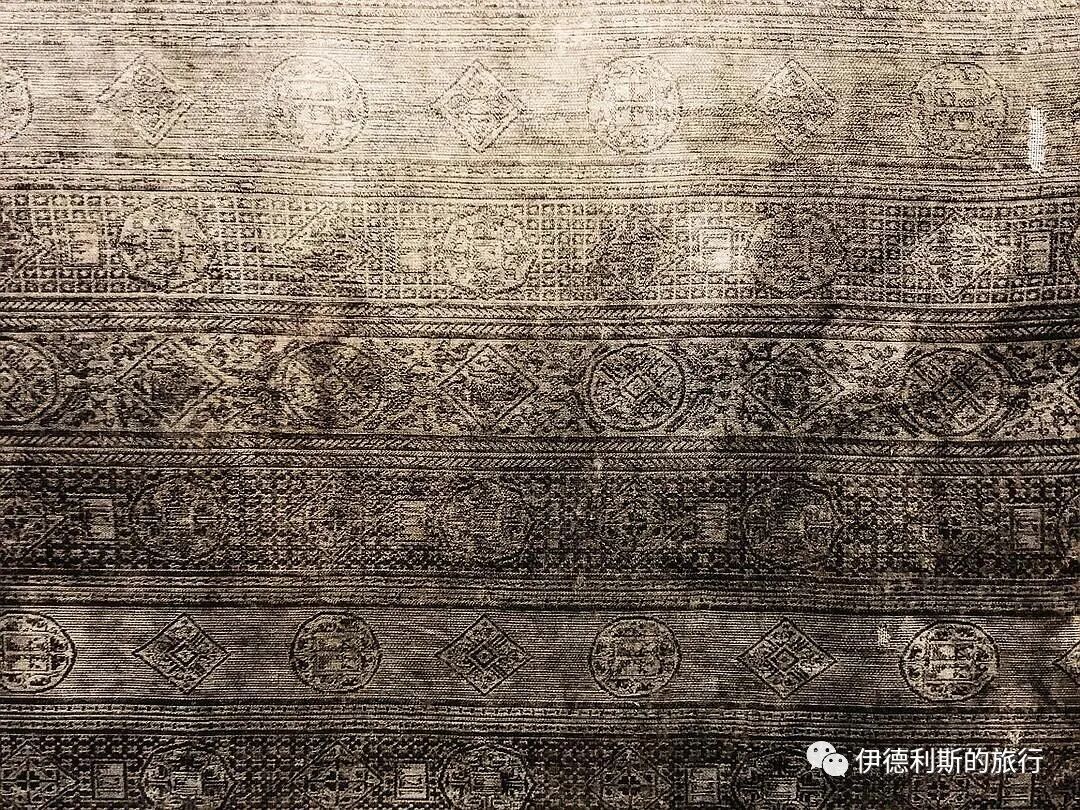
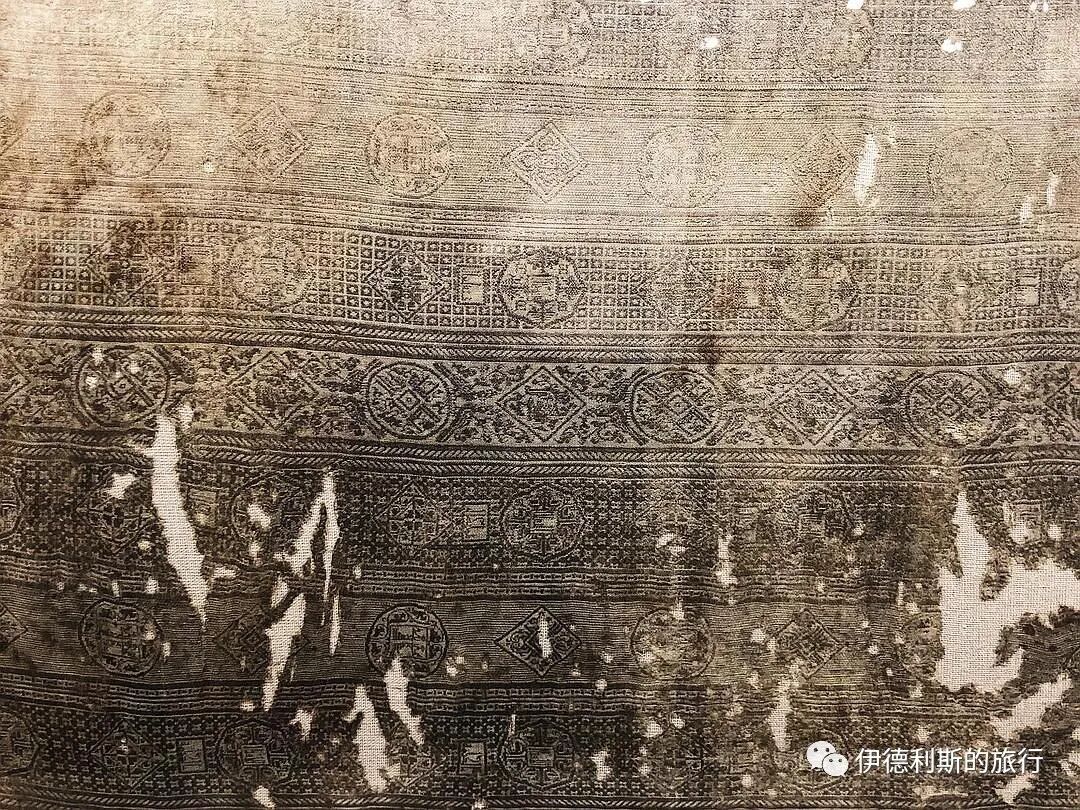
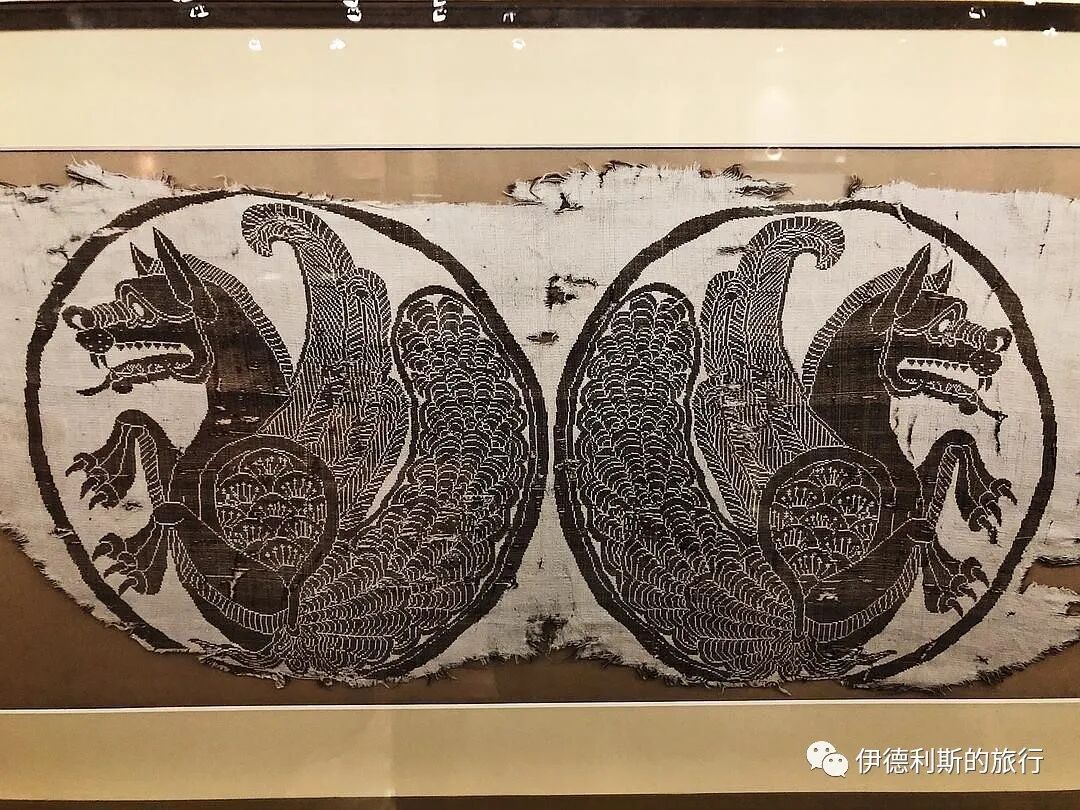
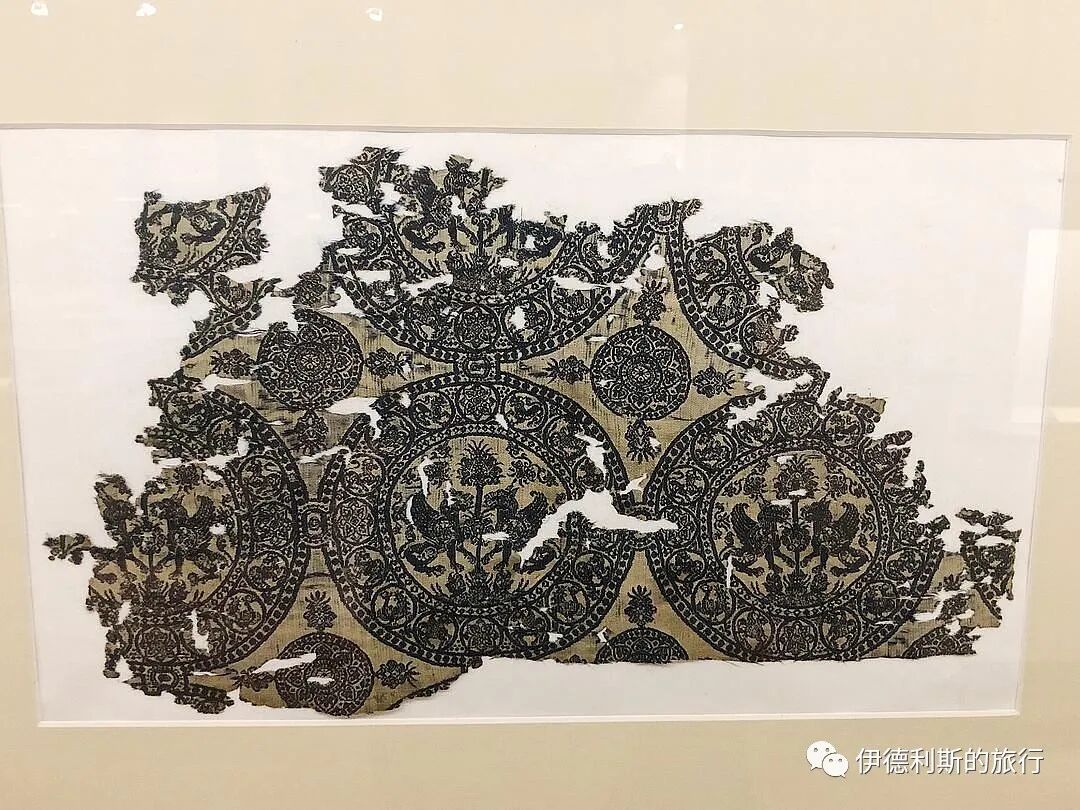
Others
13th-century Kufic tile, unearthed in the city of Damghan, Semnan province, Iran.
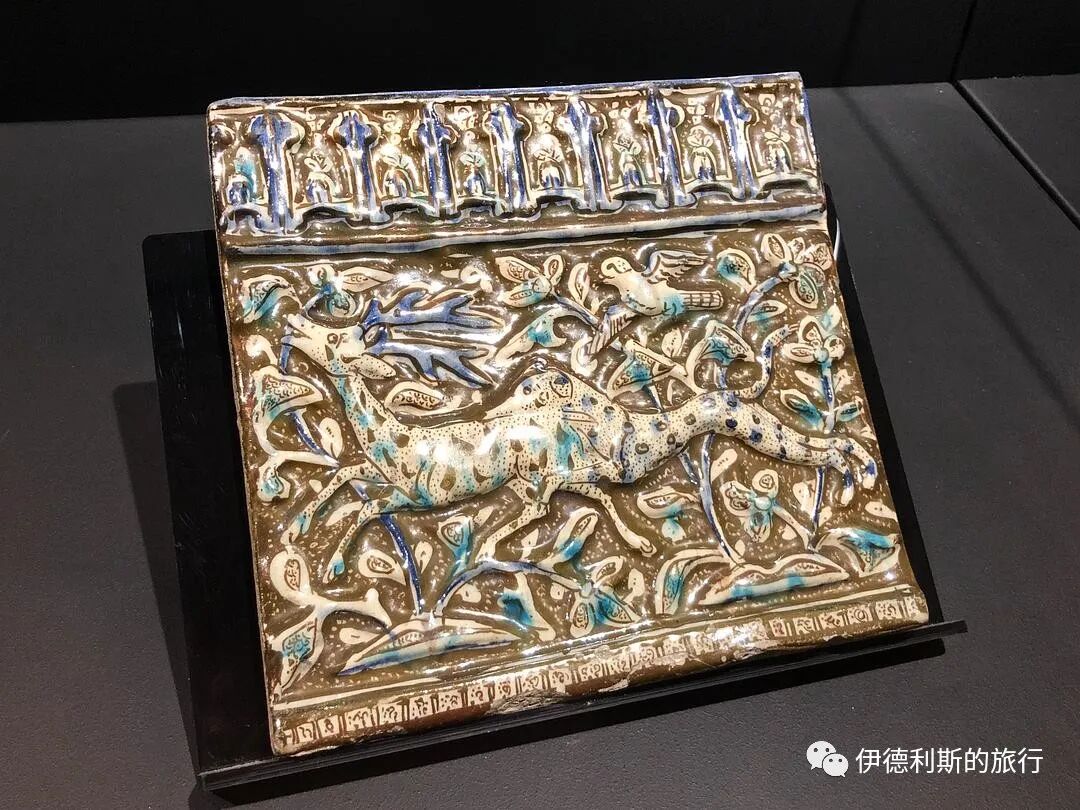
1469 Timurid dynasty wood carving with Thuluth calligraphy.
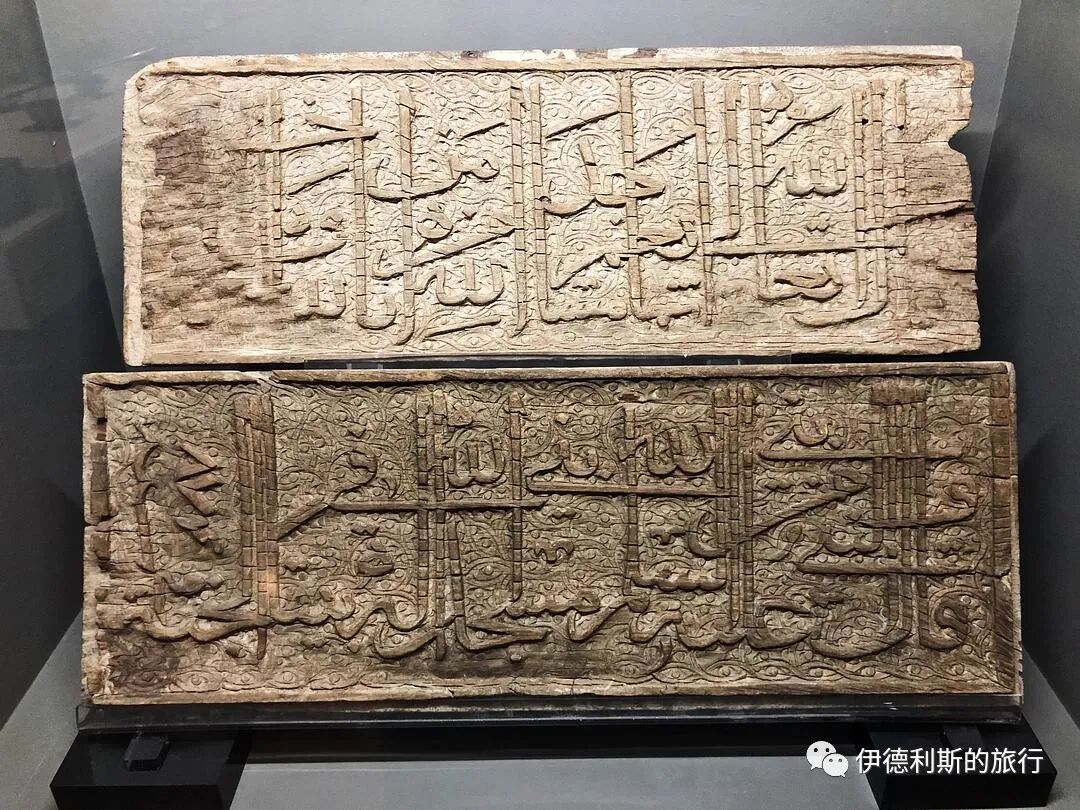
15th-century Timurid dynasty tile with Thuluth calligraphy, unearthed in the city of Taft, Yazd province.
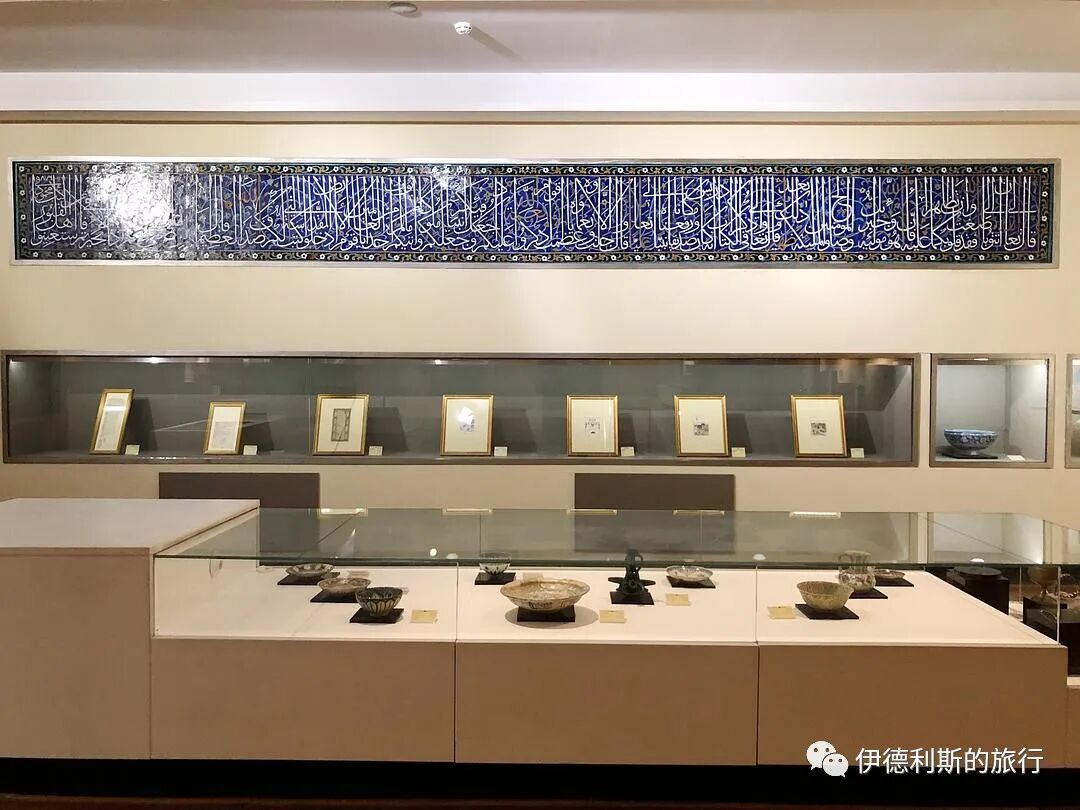
Notes on Visiting the Exhibition at the Museum of the Islamic Era in Iran (Part 2)
Articles • ali2007fr posted the article • 0 comments • 115 views • 2026-05-16 23:49
Summary: This travel note introduces Notes on Visiting the Exhibition at the Museum of the Islamic Era in Iran (Part 2). Silk garment made by Moein Mosavar in 1646. It is useful for readers interested in Iran Travel, Islamic Art, Museum Visit.
Silk garment made by Moein Mosavar in 1646
Silk hat from the Safavid dynasty in the 17th century view all
Summary: This travel note introduces Notes on Visiting the Exhibition at the Museum of the Islamic Era in Iran (Part 2). Silk garment made by Moein Mosavar in 1646. It is useful for readers interested in Iran Travel, Islamic Art, Museum Visit.
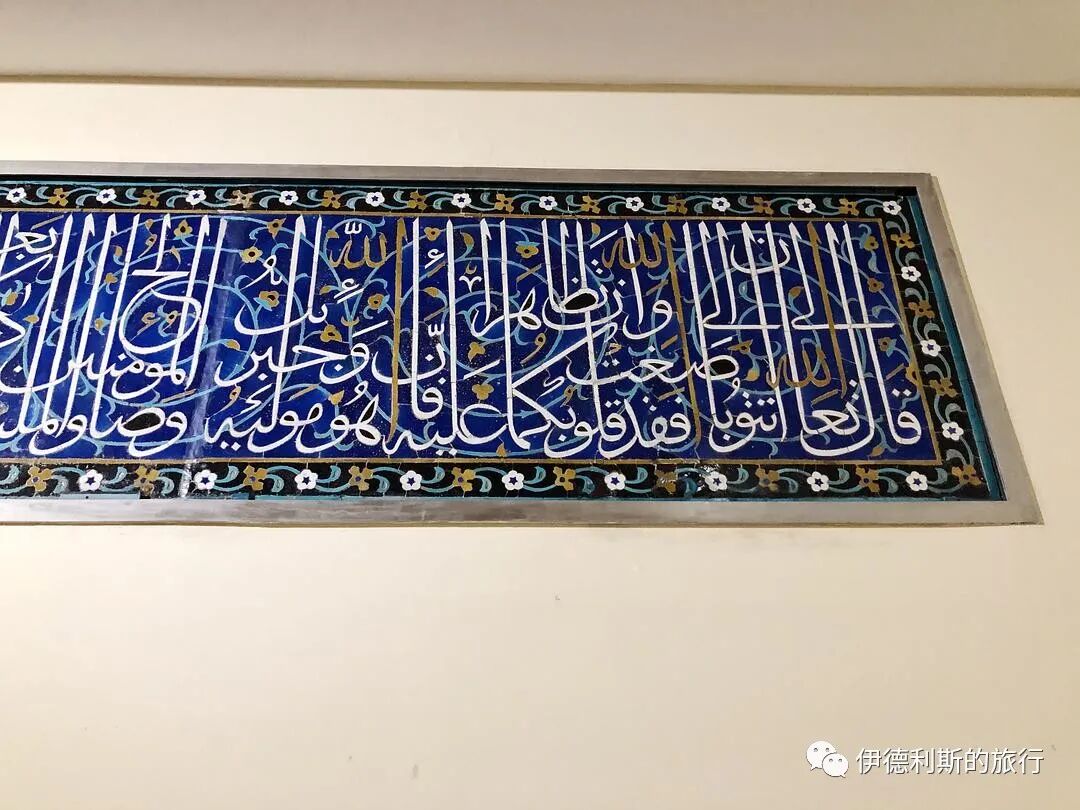
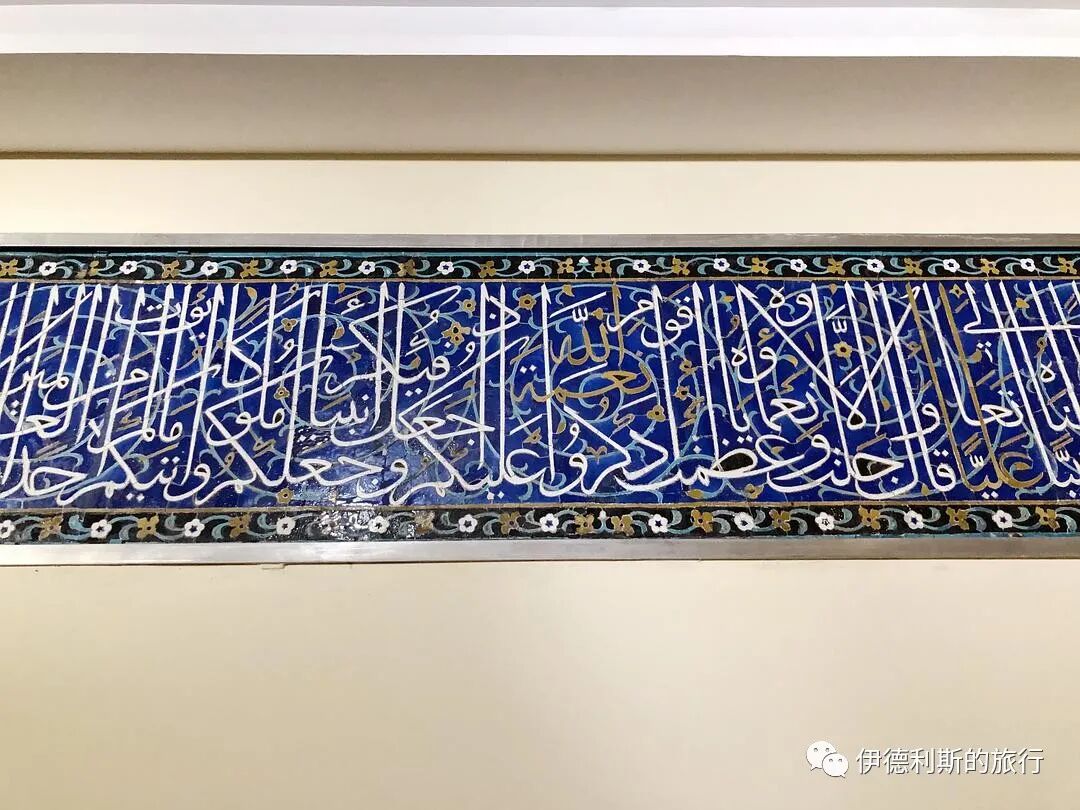
Silk garment made by Moein Mosavar in 1646
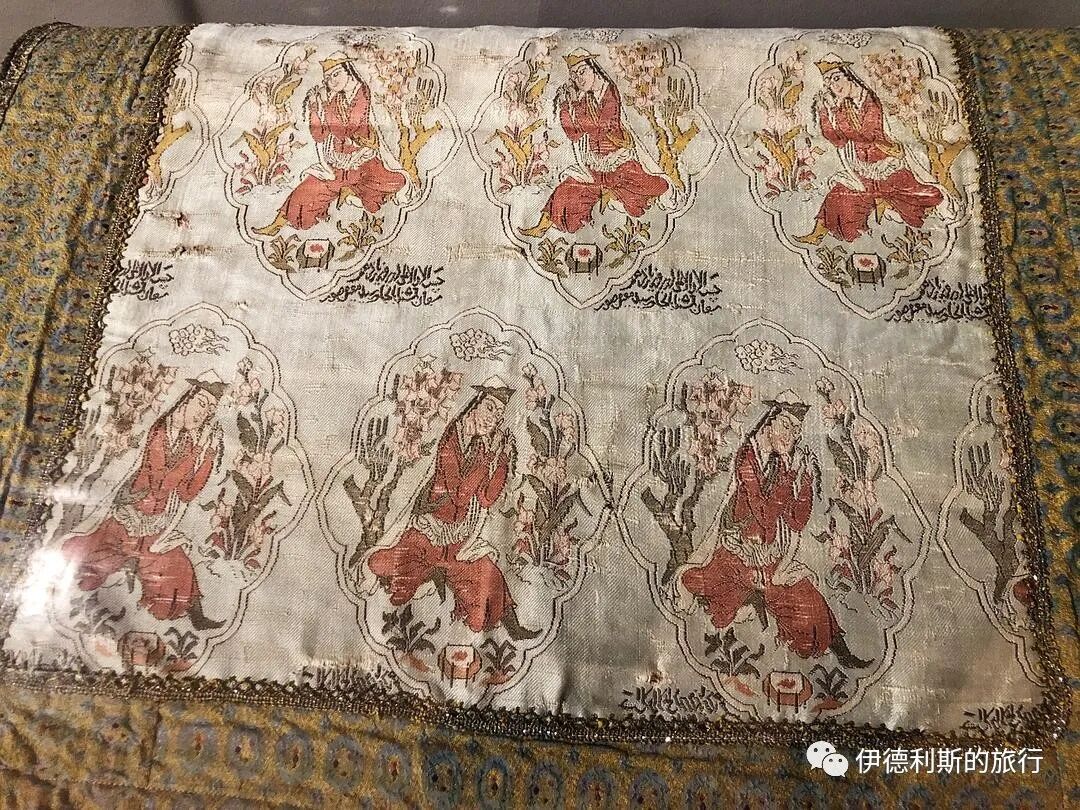
Silk hat from the Safavid dynasty in the 17th century
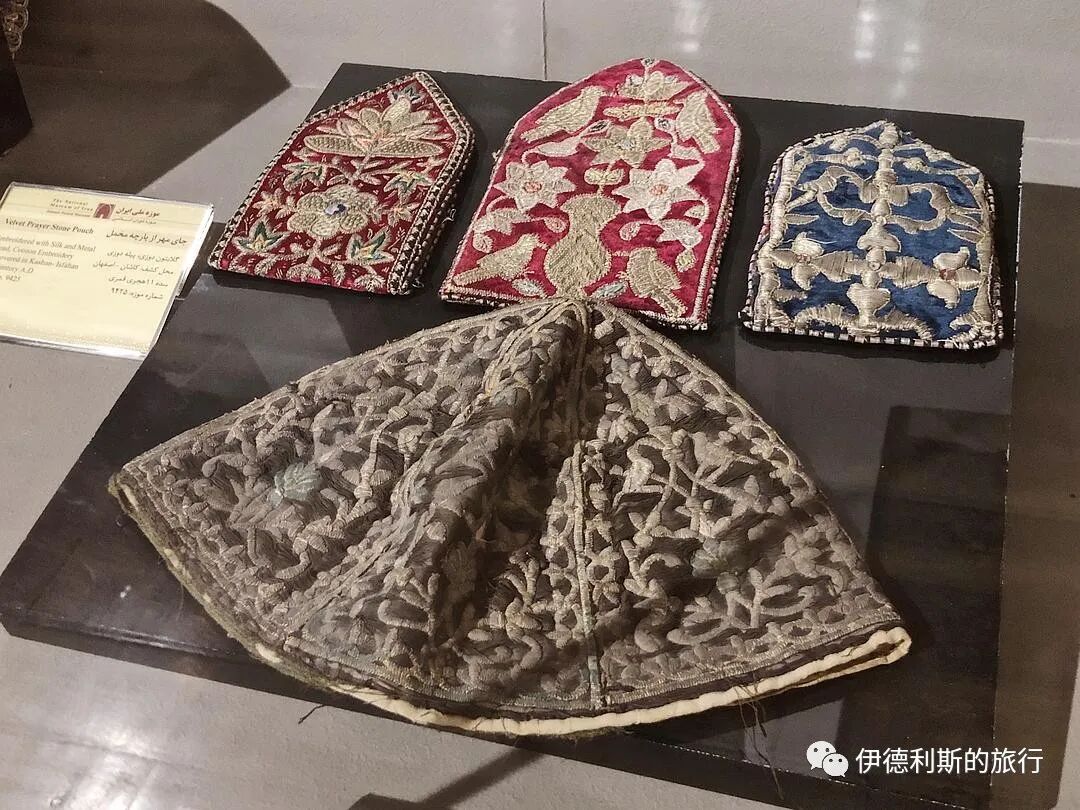
Islamic Art Guide: Hanoi - Muslim Artifacts at Vietnam Museum
Articles • ali2007fr posted the article • 0 comments • 243 views • 2026-05-20 23:51
Summary: The Vietnam Museum of Ethnology in Hanoi holds Islamic and Muslim-related objects connected to Vietnam and the wider region. This exhibition note preserves the source's artifact details, museum context, captions, and cultural observations in a clean English version.
The Vietnam Museum of Ethnology is in Hanoi, the capital of Vietnam. The main building opened in 1997 and focuses on introducing Vietnam's various ethnic groups. A new exhibition hall opened in 2013, expanding the collection to include artifacts from other ethnic groups in Southeast Asia and the rest of Asia. I previously shared the museum's collection of Javanese glass paintings in my post titled 'Exhibition Notes: Javanese Glass Paintings at the Vietnam Museum of Ethnology.' This time, I am sharing other items in the collection related to the faith.
This 18th-century Damascus steel armor is from the Mughal Empire in North India. Its style is the same as Persian work and uses gold inlay techniques.
A 20th-century traditional Malay wood carving.
This copper tray is from Kelantan, Malaysia, and is engraved with the year 1261, which corresponds to 1845 AD.
A Javanese dagger known as a kris.
Wedding attire from Yogyakarta, Java.
Malay religious books and a cap.
Decorations used during a funeral for the Maranao people of the Philippines. The Maranao people mainly live in the Lake Lanao region of Mindanao in the southern Philippines. They are an important Muslim ethnic group in the Philippines and hold a dominant position in the country's Islamic culture.
The museum courtyard displays a traditional Cham thatched-roof compound. Its design comes from the region where the ancient Champa Kingdom was located in southern Vietnam. I also happened to see the craftsmen working on the thatch.
Photos of the Cham people performing acts of worship and studying. view all
Summary: The Vietnam Museum of Ethnology in Hanoi holds Islamic and Muslim-related objects connected to Vietnam and the wider region. This exhibition note preserves the source's artifact details, museum context, captions, and cultural observations in a clean English version.
The Vietnam Museum of Ethnology is in Hanoi, the capital of Vietnam. The main building opened in 1997 and focuses on introducing Vietnam's various ethnic groups. A new exhibition hall opened in 2013, expanding the collection to include artifacts from other ethnic groups in Southeast Asia and the rest of Asia. I previously shared the museum's collection of Javanese glass paintings in my post titled 'Exhibition Notes: Javanese Glass Paintings at the Vietnam Museum of Ethnology.' This time, I am sharing other items in the collection related to the faith.
This 18th-century Damascus steel armor is from the Mughal Empire in North India. Its style is the same as Persian work and uses gold inlay techniques.
A 20th-century traditional Malay wood carving.
This copper tray is from Kelantan, Malaysia, and is engraved with the year 1261, which corresponds to 1845 AD.
A Javanese dagger known as a kris.
Wedding attire from Yogyakarta, Java.
Malay religious books and a cap.
Decorations used during a funeral for the Maranao people of the Philippines. The Maranao people mainly live in the Lake Lanao region of Mindanao in the southern Philippines. They are an important Muslim ethnic group in the Philippines and hold a dominant position in the country's Islamic culture.
The museum courtyard displays a traditional Cham thatched-roof compound. Its design comes from the region where the ancient Champa Kingdom was located in southern Vietnam. I also happened to see the craftsmen working on the thatch.
Photos of the Cham people performing acts of worship and studying.
Museum Guide: Beijing - Saudi Contemporary Art and Mosques in the Desert
Articles • ali2007fr posted the article • 0 comments • 275 views • 2026-05-20 09:37
Summary: The Saudi contemporary art exhibition at the National Museum of China ran from July 31 to October 30, 2025 and included paintings, sculpture, photography, and installation works. This account highlights desert imagery, Moath Alofi mosque photographs, Ahmad Angawi mihrab works, and Arabic-script objects in the Ancient China gallery.
From July 31 to October 30, 2025, the National Museum of China is hosting the exhibition Art of the Kingdom: Contemporary Saudi Arabian Art, featuring works including paintings, sculptures, and installation art.
The first section displays Saudi modernist paintings from the 1960s to the 1980s. Here are a few lines from the introduction:
Fine desert sand is sealed in resin, becoming an amber of time. From vast desert imagery to the reinterpretation of cultural memory, and from deep reflection on social roles to the exploration of environment and urban life, the exhibition works present many layers of an ever-evolving society.
One set of works I particularly like is the 2017 light box installation The Last Witness by Moath Alofi, which features his photographs of small mosques found in the wilderness along the route to Medina.
Ahmad Angawi's 2025 work, The Simplicity in Multiplicity, features five mihrab niches arranged in sequence to represent the five daily namaz, with the infinite extension of geometric patterns representing the infinity of faith (imani).
After seeing the SCO exhibition and the Saudi contemporary art exhibition on the first floor of the National Museum, you can head downstairs to the Ancient China exhibition to see a Ming dynasty incense burner with Arabic script and a Qing dynasty incense box with Arabic script, both of which show faith (imani) expressed through objects. view all
Summary: The Saudi contemporary art exhibition at the National Museum of China ran from July 31 to October 30, 2025 and included paintings, sculpture, photography, and installation works. This account highlights desert imagery, Moath Alofi mosque photographs, Ahmad Angawi mihrab works, and Arabic-script objects in the Ancient China gallery.
From July 31 to October 30, 2025, the National Museum of China is hosting the exhibition Art of the Kingdom: Contemporary Saudi Arabian Art, featuring works including paintings, sculptures, and installation art.
The first section displays Saudi modernist paintings from the 1960s to the 1980s. Here are a few lines from the introduction:
Fine desert sand is sealed in resin, becoming an amber of time. From vast desert imagery to the reinterpretation of cultural memory, and from deep reflection on social roles to the exploration of environment and urban life, the exhibition works present many layers of an ever-evolving society.
One set of works I particularly like is the 2017 light box installation The Last Witness by Moath Alofi, which features his photographs of small mosques found in the wilderness along the route to Medina.
Ahmad Angawi's 2025 work, The Simplicity in Multiplicity, features five mihrab niches arranged in sequence to represent the five daily namaz, with the infinite extension of geometric patterns representing the infinity of faith (imani).
After seeing the SCO exhibition and the Saudi contemporary art exhibition on the first floor of the National Museum, you can head downstairs to the Ancient China exhibition to see a Ming dynasty incense burner with Arabic script and a Qing dynasty incense box with Arabic script, both of which show faith (imani) expressed through objects.
Museum Guide: Beijing - SCO Exhibition, Persian Calligraphy and Central Asian Robes
Articles • ali2007fr posted the article • 0 comments • 258 views • 2026-05-20 09:37
Summary: This National Museum of China exhibition visit focuses on SCO-related cultural objects, including Persian-style calligraphy, Central Asian robes, jewelry, ceramics, carpets, and manuscripts. The account records the museum displays through an Islamic art and Silk Road cultural lens.
From August 27 to November 16, 2025, the National Museum of China hosts the exhibition "Galaxy of Civilizations: Joint Exhibition of Cultural Relics from National Museums of Shanghai Cooperation Organization Countries." It features items from 10 institutions, including the National Historical Museum of Belarus, the National Museum of Kazakhstan, the National Museum of Kyrgyzstan, the Department of Archaeology and Museums of the Pakistan Heritage and Culture Division, the State Historical Museum of Russia, the National Museum of Tajikistan, the State Museum of History of Uzbekistan, and the State Museum of Arts of Uzbekistan.
National Historical Museum of Belarus
From the collection of the National Historical Museum of Belarus, this is a hoard of silver coins from the Abbasid Caliphate in the mid-10th century, found in Pinsk, Belarus, in 1991. Archaeologists have found tens of thousands of Arab silver coins in Northern Europe and the Baltic region. These coins were minted during the Abbasid Caliphate between the 8th and 11th centuries and were popular for their high purity and consistency. Between the 9th and 11th centuries, Vikings from Northern Europe used Eastern European waterways like the Volga and Dnieper rivers to trade with Arabs. They exchanged furs, slaves, and amber for large amounts of Arab silver coins. Interestingly, many of the Arab silver coins in Viking hoards were cut into pieces. This is because Vikings measured silver by weight rather than face value at the time.
From the collection of the National Historical Museum of Belarus, this is a helmet and shield from the Qajar dynasty of Iran in the 19th century. The helmet and shield were hand-forged from single plates of Damascus steel. The helmet has a long spike on top and feather holders on both sides, while the shield features a sun motif. Both the helmet and shield are engraved with floral patterns and beautiful Persian calligraphy. Persian calligraphy developed from Naskh Arabic script. Compared to Naskh, the strokes are more elongated and tilt from the top right to the bottom left, allowing for more freedom when writing.
From the collection of the National Historical Museum of Belarus, this is a belt featuring traditional Crimean jewelry craftsmanship. It is believed to be a gift from Hacı I Giray, the founding Khan of the Crimean Khanate, to Grand Duke Vytautas of Lithuania.
Hacı I Giray was a descendant of Tuka-Timur, the thirteenth son of Jochi, who was the eldest son of Genghis Khan. His family began ruling the Crimean Peninsula in 1260, but they were defeated by Tamerlane in 1395 and fled to Lithuania. Hacı I Giray was born in Lithuania in 1397. In 1428, with the support of Grand Duke Vytautas of Lithuania, Hacı I Giray led an army to take over the Crimean Peninsula, but he was soon defeated by the Golden Horde. Later, with Lithuanian support, Hacı I Giray sent troops to Crimea several more times. He finally occupied the Crimean Peninsula in 1441 and established the Crimean Khanate.
This belt is made of high-purity silver. The circular discs feature Tatar decorative motifs, while the buckle has a Gothic design, reflecting the cultural exchange between East and West at the time.
National Museum of Kazakhstan
From the collection of the National Museum of Kazakhstan, these are ceramic tiles unearthed from a tomb at the ancient city site of Zhaiyk, dating back to the Golden Horde period in the 14th century. The ancient city site of Zhaiyk was discovered by an archaeological team in 2001. Subsequent excavations revealed the remains of a Turkish bath with an underfloor heating system and a domed tomb decorated with colorful glazed tiles in the cemetery west of the city.
From the collection of the National Museum of Kazakhstan, this is a copper coin minted by the Samanid dynasty in 922-923, unearthed in Otrar, southern Kazakhstan. During the 9th and 10th centuries, this region was an important trade center for the Samanid dynasty.
This is a modern Kazakh women's accessory.
National Museum of Pakistan, Islamabad
From the collection of the National Museum of Pakistan in Islamabad, this is a brass astrolabe from Lahore, dating to the Mughal Empire period under Humayun (reigned 1530-1540, 1555-1556). It is engraved with latitude and longitude, Persian and Arabic text, and decorated with arabesque and geometric patterns. Humayun himself had a strong interest in astronomy and astrology.
National Museum of Tajikistan.
A Persian copper water pitcher (aftabeh) from the early 20th century in the National Museum of Tajikistan collection. The aftabeh, also called abdasta, is a water pitcher used for wudu (ablution) in Persian cultural regions like Iran, Afghanistan, Azerbaijan, and Central Asia. They are usually made of clay or brass.
A copper hand-washing basin (dastshui) from the early 20th century in the National Museum of Tajikistan collection, featuring an engraving of 25 deer in different poses.
A copper water pitcher for wudu from the 19th century in the National Museum of Tajikistan collection.
A tray with Arabic script from the 19th century in the National Museum of Tajikistan collection.
A Persian shield in the National Museum of Tajikistan collection, decorated with sun and angel patterns and engraved with beautiful Persian calligraphy.
A 16th-century axe in the National Museum of Tajikistan collection, engraved with a scene of three riders hunting.
A 19th-century decorative tray in the National Museum of Tajikistan collection, engraved with a lively banquet scene. The border features 33 circular panels, each showing a rider in a different pose, with Arabic script on the outermost edge.
A 19th-century copper pen case in the National Museum of Tajikistan collection, featuring four lines of Persian poetry in Persian calligraphy and decorated with various leaves and plants.
A 10th-11th century copper pitcher unearthed in Istaravshan (Dayuan City) and held in the National Museum of Tajikistan, with Arabic and Persian inscriptions on the body and neck. Istaravshan was ruled by the Samanid and Karakhanid dynasties during the 10th and 11th centuries and was a famous center for trade and handicrafts.
National Museum of Uzbekistan.
A 10th-12th century copper pitcher in the National Museum of Uzbekistan collection, dating to the Samanid and Karakhanid period. It has Arabic script on the neck and human-headed bird patterns on the rim.
A 10th-11th century copper bowl in the National Museum of Uzbekistan collection, dating to the Samanid and Karakhanid period. The outer wall is engraved with Kufic script, and the inner wall is decorated with fish and bird patterns.
State Museum of Arts of Uzbekistan.
A men's gold-embroidered velvet robe made in Bukhara in 1905, held in the State Museum of Arts of Uzbekistan.
A men's gold-embroidered velvet robe made in Bukhara between 1900 and 1905, held in the State Museum of Arts of Uzbekistan.
Men's gold-embroidered velvet boots made in Bukhara in 1890, held in the State Museum of Arts of Uzbekistan.
A women's ikat silk robe from the early 20th century, held in the State Museum of Arts of Uzbekistan.
A men's gold-embroidered velvet robe made in Bukhara between 1898 and 1900, held in the State Museum of Arts of Uzbekistan.
A headpiece (gajak) made in Tashkent in 1912, held in the State Museum of Arts of Uzbekistan.
A men's gold-embroidered velvet belt made in Bukhara in 1890, decorated with turquoise and silver pieces and held in the State Museum of Arts of Uzbekistan.
This Tojduzi headpiece from the early 20th century is kept at the State Museum of Arts of Uzbekistan. view all
Summary: This National Museum of China exhibition visit focuses on SCO-related cultural objects, including Persian-style calligraphy, Central Asian robes, jewelry, ceramics, carpets, and manuscripts. The account records the museum displays through an Islamic art and Silk Road cultural lens.
From August 27 to November 16, 2025, the National Museum of China hosts the exhibition "Galaxy of Civilizations: Joint Exhibition of Cultural Relics from National Museums of Shanghai Cooperation Organization Countries." It features items from 10 institutions, including the National Historical Museum of Belarus, the National Museum of Kazakhstan, the National Museum of Kyrgyzstan, the Department of Archaeology and Museums of the Pakistan Heritage and Culture Division, the State Historical Museum of Russia, the National Museum of Tajikistan, the State Museum of History of Uzbekistan, and the State Museum of Arts of Uzbekistan.
National Historical Museum of Belarus
From the collection of the National Historical Museum of Belarus, this is a hoard of silver coins from the Abbasid Caliphate in the mid-10th century, found in Pinsk, Belarus, in 1991. Archaeologists have found tens of thousands of Arab silver coins in Northern Europe and the Baltic region. These coins were minted during the Abbasid Caliphate between the 8th and 11th centuries and were popular for their high purity and consistency. Between the 9th and 11th centuries, Vikings from Northern Europe used Eastern European waterways like the Volga and Dnieper rivers to trade with Arabs. They exchanged furs, slaves, and amber for large amounts of Arab silver coins. Interestingly, many of the Arab silver coins in Viking hoards were cut into pieces. This is because Vikings measured silver by weight rather than face value at the time.
From the collection of the National Historical Museum of Belarus, this is a helmet and shield from the Qajar dynasty of Iran in the 19th century. The helmet and shield were hand-forged from single plates of Damascus steel. The helmet has a long spike on top and feather holders on both sides, while the shield features a sun motif. Both the helmet and shield are engraved with floral patterns and beautiful Persian calligraphy. Persian calligraphy developed from Naskh Arabic script. Compared to Naskh, the strokes are more elongated and tilt from the top right to the bottom left, allowing for more freedom when writing.
From the collection of the National Historical Museum of Belarus, this is a belt featuring traditional Crimean jewelry craftsmanship. It is believed to be a gift from Hacı I Giray, the founding Khan of the Crimean Khanate, to Grand Duke Vytautas of Lithuania.
Hacı I Giray was a descendant of Tuka-Timur, the thirteenth son of Jochi, who was the eldest son of Genghis Khan. His family began ruling the Crimean Peninsula in 1260, but they were defeated by Tamerlane in 1395 and fled to Lithuania. Hacı I Giray was born in Lithuania in 1397. In 1428, with the support of Grand Duke Vytautas of Lithuania, Hacı I Giray led an army to take over the Crimean Peninsula, but he was soon defeated by the Golden Horde. Later, with Lithuanian support, Hacı I Giray sent troops to Crimea several more times. He finally occupied the Crimean Peninsula in 1441 and established the Crimean Khanate.
This belt is made of high-purity silver. The circular discs feature Tatar decorative motifs, while the buckle has a Gothic design, reflecting the cultural exchange between East and West at the time.
National Museum of Kazakhstan
From the collection of the National Museum of Kazakhstan, these are ceramic tiles unearthed from a tomb at the ancient city site of Zhaiyk, dating back to the Golden Horde period in the 14th century. The ancient city site of Zhaiyk was discovered by an archaeological team in 2001. Subsequent excavations revealed the remains of a Turkish bath with an underfloor heating system and a domed tomb decorated with colorful glazed tiles in the cemetery west of the city.
From the collection of the National Museum of Kazakhstan, this is a copper coin minted by the Samanid dynasty in 922-923, unearthed in Otrar, southern Kazakhstan. During the 9th and 10th centuries, this region was an important trade center for the Samanid dynasty.
This is a modern Kazakh women's accessory.
National Museum of Pakistan, Islamabad
From the collection of the National Museum of Pakistan in Islamabad, this is a brass astrolabe from Lahore, dating to the Mughal Empire period under Humayun (reigned 1530-1540, 1555-1556). It is engraved with latitude and longitude, Persian and Arabic text, and decorated with arabesque and geometric patterns. Humayun himself had a strong interest in astronomy and astrology.
National Museum of Tajikistan.
A Persian copper water pitcher (aftabeh) from the early 20th century in the National Museum of Tajikistan collection. The aftabeh, also called abdasta, is a water pitcher used for wudu (ablution) in Persian cultural regions like Iran, Afghanistan, Azerbaijan, and Central Asia. They are usually made of clay or brass.
A copper hand-washing basin (dastshui) from the early 20th century in the National Museum of Tajikistan collection, featuring an engraving of 25 deer in different poses.
A copper water pitcher for wudu from the 19th century in the National Museum of Tajikistan collection.
A tray with Arabic script from the 19th century in the National Museum of Tajikistan collection.
A Persian shield in the National Museum of Tajikistan collection, decorated with sun and angel patterns and engraved with beautiful Persian calligraphy.
A 16th-century axe in the National Museum of Tajikistan collection, engraved with a scene of three riders hunting.
A 19th-century decorative tray in the National Museum of Tajikistan collection, engraved with a lively banquet scene. The border features 33 circular panels, each showing a rider in a different pose, with Arabic script on the outermost edge.
A 19th-century copper pen case in the National Museum of Tajikistan collection, featuring four lines of Persian poetry in Persian calligraphy and decorated with various leaves and plants.
A 10th-11th century copper pitcher unearthed in Istaravshan (Dayuan City) and held in the National Museum of Tajikistan, with Arabic and Persian inscriptions on the body and neck. Istaravshan was ruled by the Samanid and Karakhanid dynasties during the 10th and 11th centuries and was a famous center for trade and handicrafts.
National Museum of Uzbekistan.
A 10th-12th century copper pitcher in the National Museum of Uzbekistan collection, dating to the Samanid and Karakhanid period. It has Arabic script on the neck and human-headed bird patterns on the rim.
A 10th-11th century copper bowl in the National Museum of Uzbekistan collection, dating to the Samanid and Karakhanid period. The outer wall is engraved with Kufic script, and the inner wall is decorated with fish and bird patterns.
State Museum of Arts of Uzbekistan.
A men's gold-embroidered velvet robe made in Bukhara in 1905, held in the State Museum of Arts of Uzbekistan.
A men's gold-embroidered velvet robe made in Bukhara between 1900 and 1905, held in the State Museum of Arts of Uzbekistan.
Men's gold-embroidered velvet boots made in Bukhara in 1890, held in the State Museum of Arts of Uzbekistan.
A women's ikat silk robe from the early 20th century, held in the State Museum of Arts of Uzbekistan.
A men's gold-embroidered velvet robe made in Bukhara between 1898 and 1900, held in the State Museum of Arts of Uzbekistan.
A headpiece (gajak) made in Tashkent in 1912, held in the State Museum of Arts of Uzbekistan.
A men's gold-embroidered velvet belt made in Bukhara in 1890, decorated with turquoise and silver pieces and held in the State Museum of Arts of Uzbekistan.
This Tojduzi headpiece from the early 20th century is kept at the State Museum of Arts of Uzbekistan.
Museum Guide: Tianjin Kazakhstan National Museum Exhibition - History and Artifacts
Articles • ali2007fr posted the article • 0 comments • 211 views • 2026-05-19 22:56
Summary: This article covers the Kazakhstan National Museum collection exhibition at Tianjin Museum, with a close look at historical artifacts, steppe culture, and Central Asian heritage. It preserves the original exhibition details, object names, photographs, and cultural context for English readers.
From September 30, 2024, to February 12, 2025, the fifth floor of the Tianjin Museum is hosting an exhibition of historical artifacts from the National Museum of Kazakhstan. Overall, it is not very stunning and lacks any major, heavy-hitting artifacts. Of course, I did not see any particularly significant artifacts when I visited the National Museum of Kazakhstan in person either.
These are carved clay tiles from the 12th-century Karakhanid dynasty Aisha-Bibi Mausoleum in the ancient city of Taraz. The architectural style of this mausoleum follows the Samanid Mausoleum in Bukhara and serves as an important example of Karakhanid architecture. Taraz grew into a wealthy city during the 9th-century Samanid dynasty, reached its peak during the 10th to 12th-century Karakhanid dynasty, and was destroyed by the Mongol army in 1220.
These are painted glazed tiles and glazed pottery shards from the Khoja Ahmed Yasawi Mausoleum, dating to the Timurid dynasty between 1389 and 1405. This mausoleum is a masterpiece of Timurid architecture and an important religious center in southern Kazakhstan. It was added to the World Heritage List in 2003.
These are glazed tile fragments unearthed from a mausoleum at the Zhaiyk ancient city site, dating to the 14th-century Golden Horde period. The Zhaiyk ancient city site was discovered by an archaeological team in 2001 and has since been fully excavated and studied. Inside the city, they found the remains of a Turkish bath with an underfloor heating system, and in the cemetery west of the city, they found a domed mausoleum decorated with colorful glazed tiles.
These are clay bricks unearthed from the Kyshkala ancient city site in the Syr Darya delta. Kyshkala was a wealthy ancient city during the Golden Horde period that produced a large number of clay bricks.
This is a Kimeshek, an embroidered head covering for married women from 19th-century southern Kazakhstan.
A Kimeshek with lace pendants.
A Kebeje, which is a wooden chest with bone inlays, dating from the 19th to the mid-20th century.
A Khan's robe (chapan) made of velvet, gold and silver thread, and appliqué from 18th to 19th-century northern Kazakhstan. After the 18th century, due to long-term conflicts with the Dzungar Khanate, the Kazakh Khanate split into the Senior, Middle, and Junior Juz, with each Juz having its own Khan. After the mid-19th century, the Kazakh Khanate was gradually controlled by the Russian Empire. Khan Kenesary Kasymov (reigned 1841–1847) was the last national hero to bravely resist Russia. After he died for his country in 1847, the Kazakh Khanate was declared fallen.
Traditional Kazakh clothing made by master designer Aizhan Abdubait. She comes from a family of tailors and is dedicated to making ethnic clothing. She has also restored the gold-thread embroidery technique that was gradually lost after the fall of the Kazakh Khanate in the 19th century. This is an embroidery technique that was used on the clothing of Khans and Sultans during the Kazakh Khanate era.
A 19th-century chest ornament.
A 20th-century belt.
An axe, a club, and a sheathed knife.
A 19th-century copper pot. view all
Summary: This article covers the Kazakhstan National Museum collection exhibition at Tianjin Museum, with a close look at historical artifacts, steppe culture, and Central Asian heritage. It preserves the original exhibition details, object names, photographs, and cultural context for English readers.
From September 30, 2024, to February 12, 2025, the fifth floor of the Tianjin Museum is hosting an exhibition of historical artifacts from the National Museum of Kazakhstan. Overall, it is not very stunning and lacks any major, heavy-hitting artifacts. Of course, I did not see any particularly significant artifacts when I visited the National Museum of Kazakhstan in person either.
These are carved clay tiles from the 12th-century Karakhanid dynasty Aisha-Bibi Mausoleum in the ancient city of Taraz. The architectural style of this mausoleum follows the Samanid Mausoleum in Bukhara and serves as an important example of Karakhanid architecture. Taraz grew into a wealthy city during the 9th-century Samanid dynasty, reached its peak during the 10th to 12th-century Karakhanid dynasty, and was destroyed by the Mongol army in 1220.
These are painted glazed tiles and glazed pottery shards from the Khoja Ahmed Yasawi Mausoleum, dating to the Timurid dynasty between 1389 and 1405. This mausoleum is a masterpiece of Timurid architecture and an important religious center in southern Kazakhstan. It was added to the World Heritage List in 2003.
These are glazed tile fragments unearthed from a mausoleum at the Zhaiyk ancient city site, dating to the 14th-century Golden Horde period. The Zhaiyk ancient city site was discovered by an archaeological team in 2001 and has since been fully excavated and studied. Inside the city, they found the remains of a Turkish bath with an underfloor heating system, and in the cemetery west of the city, they found a domed mausoleum decorated with colorful glazed tiles.
These are clay bricks unearthed from the Kyshkala ancient city site in the Syr Darya delta. Kyshkala was a wealthy ancient city during the Golden Horde period that produced a large number of clay bricks.
This is a Kimeshek, an embroidered head covering for married women from 19th-century southern Kazakhstan.
A Kimeshek with lace pendants.
A Kebeje, which is a wooden chest with bone inlays, dating from the 19th to the mid-20th century.
A Khan's robe (chapan) made of velvet, gold and silver thread, and appliqué from 18th to 19th-century northern Kazakhstan. After the 18th century, due to long-term conflicts with the Dzungar Khanate, the Kazakh Khanate split into the Senior, Middle, and Junior Juz, with each Juz having its own Khan. After the mid-19th century, the Kazakh Khanate was gradually controlled by the Russian Empire. Khan Kenesary Kasymov (reigned 1841–1847) was the last national hero to bravely resist Russia. After he died for his country in 1847, the Kazakh Khanate was declared fallen.
Traditional Kazakh clothing made by master designer Aizhan Abdubait. She comes from a family of tailors and is dedicated to making ethnic clothing. She has also restored the gold-thread embroidery technique that was gradually lost after the fall of the Kazakh Khanate in the 19th century. This is an embroidery technique that was used on the clothing of Khans and Sultans during the Kazakh Khanate era.
A 19th-century chest ornament.
A 20th-century belt.
An axe, a club, and a sheathed knife.
A 19th-century copper pot.
Museum Guide: Tunis Bardo National Museum - Palace, Mosaics and History
Articles • ali2007fr posted the article • 0 comments • 252 views • 2026-05-19 22:20
Summary: This article visits the Bardo National Museum in Tunis, a major museum set inside a former palace and known for its historical collections and mosaics. It keeps the original museum details, photographs, object notes, and travel observations for readers interested in Tunisia's cultural heritage.
The National Museum of Tunisia is located inside the Bardo Palace, 4 kilometers west of the old Medina. The palace was first built in the 15th century. After the Ottoman dynasty took over in the 16th century, it was rebuilt and expanded many times, eventually becoming the main residence of the Husainid Beys (1705-1957).
The Husainid dynasty was a Beylik nominally under the Ottoman Empire. Its founder, Husain, was an Ottoman officer of Greek Cretan descent. He was granted the title of Bey by the Ottoman Sultan in 1705 and began his rule over Tunisia. After the 19th century, the Husainid dynasty began trading heavily with European merchants, and in 1861, they issued the first constitution in the Arab world. However, economic decline and social unrest in the late 19th century led to Tunisia becoming a French protectorate in 1881.
In 1882, Tunisia and France jointly established the Tunisian Office of Antiquities and Arts, which immediately began converting the old harem of the Bardo Palace into a museum. After six years of restoration and collecting, the museum officially opened in 1888.
The museum houses the Small Palace, built by Husain II Bey between 1824 and 1835. The palace was built in the Andalusian Moorish style, featuring a T-shaped main hall and a central courtyard with a pool.
Tile and plaster decorations inside the Small Palace of Husain II.
The reception hall and harem built by Muhammad III Bey between 1859 and 1864 feature both Italian and Tunisian styles.
Muhammad III Bey issued the first written constitution in the Arab world in 1861, which separated executive, legislative, and judicial powers and guaranteed equal rights for Muslims, Christians, and Jews. After the new constitution was issued, European merchants and secular schools began to appear in Tunisia.
The Blue Quran manuscript in the National Museum of Tunisia is a very famous religious manuscript in the world. This scripture uses parchment dyed with indigo, with ink outlining the text and gold leaf applied on top. The calligraphy is in the early Kufic script, which lacks sharp angles and vowel marks.
The origin of the Blue Quran is still highly debated, with theories pointing to Kairouan in Tunisia, Cordoba in Spain, Mashhad in Iran, or Iraq, dating back to the 9th or 10th century. The records say the Blue Quran was kept in the Great Mosque of Kairouan after the 14th century. It was broken up during the Ottoman period, but most of it remains in Kairouan, while other parts are held by major museums and collectors.
Quran manuscripts from the 8th to 12th centuries held by the Great Mosque of Kairouan in Tunisia.
The library of the Great Mosque of Kairouan holds a large number of manuscripts and established a catalog as early as the 13th century. to scriptures, these manuscripts include books related to the Maliki school of thought, which are also the oldest documents of the Maliki school.
Tunisian Qallaline tiles from the 17th and 18th centuries. These tiles are named after the Qallaline region of Tunisia. They were influenced by Ottoman tile art but developed their own unique style.
A marble carving from the 10th-century Fatimid period in Mahdia, Tunisia, depicting a Fatimid prince. A glazed bowl with Kufic script from the Fatimid dynasty period in Mahdia.
The ancient city of Mahdia was built by the Fatimid dynasty between 916 and 921, and it became the capital of the Tunisia region after its completion. Before this, the capital of the Tunisia region was Kairouan, which was dominated by Sunnis. Because of this, the Shia Fatimid dynasty built a new capital on the Mediterranean coast, far away from Kairouan. Once finished, Mahdia included thick city walls, palaces, a harbor, and a great mosque. Unfortunately, none of the surface buildings survived. Now, you can only see artifacts unearthed through archaeological excavations in museums.
Exquisite 11th-century marble carvings with Kufic script.
A 10th-century wood carving from Egypt.
A 13th to 16th-century tombstone from Tunisia where you can see the local style of Arabic calligraphy.
A traditional Tunisian women's headpiece. view all
Summary: This article visits the Bardo National Museum in Tunis, a major museum set inside a former palace and known for its historical collections and mosaics. It keeps the original museum details, photographs, object notes, and travel observations for readers interested in Tunisia's cultural heritage.
The National Museum of Tunisia is located inside the Bardo Palace, 4 kilometers west of the old Medina. The palace was first built in the 15th century. After the Ottoman dynasty took over in the 16th century, it was rebuilt and expanded many times, eventually becoming the main residence of the Husainid Beys (1705-1957).
The Husainid dynasty was a Beylik nominally under the Ottoman Empire. Its founder, Husain, was an Ottoman officer of Greek Cretan descent. He was granted the title of Bey by the Ottoman Sultan in 1705 and began his rule over Tunisia. After the 19th century, the Husainid dynasty began trading heavily with European merchants, and in 1861, they issued the first constitution in the Arab world. However, economic decline and social unrest in the late 19th century led to Tunisia becoming a French protectorate in 1881.
In 1882, Tunisia and France jointly established the Tunisian Office of Antiquities and Arts, which immediately began converting the old harem of the Bardo Palace into a museum. After six years of restoration and collecting, the museum officially opened in 1888.
The museum houses the Small Palace, built by Husain II Bey between 1824 and 1835. The palace was built in the Andalusian Moorish style, featuring a T-shaped main hall and a central courtyard with a pool.
Tile and plaster decorations inside the Small Palace of Husain II.
The reception hall and harem built by Muhammad III Bey between 1859 and 1864 feature both Italian and Tunisian styles.
Muhammad III Bey issued the first written constitution in the Arab world in 1861, which separated executive, legislative, and judicial powers and guaranteed equal rights for Muslims, Christians, and Jews. After the new constitution was issued, European merchants and secular schools began to appear in Tunisia.
The Blue Quran manuscript in the National Museum of Tunisia is a very famous religious manuscript in the world. This scripture uses parchment dyed with indigo, with ink outlining the text and gold leaf applied on top. The calligraphy is in the early Kufic script, which lacks sharp angles and vowel marks.
The origin of the Blue Quran is still highly debated, with theories pointing to Kairouan in Tunisia, Cordoba in Spain, Mashhad in Iran, or Iraq, dating back to the 9th or 10th century. The records say the Blue Quran was kept in the Great Mosque of Kairouan after the 14th century. It was broken up during the Ottoman period, but most of it remains in Kairouan, while other parts are held by major museums and collectors.
Quran manuscripts from the 8th to 12th centuries held by the Great Mosque of Kairouan in Tunisia.
The library of the Great Mosque of Kairouan holds a large number of manuscripts and established a catalog as early as the 13th century. to scriptures, these manuscripts include books related to the Maliki school of thought, which are also the oldest documents of the Maliki school.
Tunisian Qallaline tiles from the 17th and 18th centuries. These tiles are named after the Qallaline region of Tunisia. They were influenced by Ottoman tile art but developed their own unique style.
A marble carving from the 10th-century Fatimid period in Mahdia, Tunisia, depicting a Fatimid prince. A glazed bowl with Kufic script from the Fatimid dynasty period in Mahdia.
The ancient city of Mahdia was built by the Fatimid dynasty between 916 and 921, and it became the capital of the Tunisia region after its completion. Before this, the capital of the Tunisia region was Kairouan, which was dominated by Sunnis. Because of this, the Shia Fatimid dynasty built a new capital on the Mediterranean coast, far away from Kairouan. Once finished, Mahdia included thick city walls, palaces, a harbor, and a great mosque. Unfortunately, none of the surface buildings survived. Now, you can only see artifacts unearthed through archaeological excavations in museums.
Exquisite 11th-century marble carvings with Kufic script.
A 10th-century wood carving from Egypt.
A 13th to 16th-century tombstone from Tunisia where you can see the local style of Arabic calligraphy.
A traditional Tunisian women's headpiece.
Halal Travel Guide: Singapore - Asian Civilisations Museum and Islamic Art
Articles • ali2007fr posted the article • 0 comments • 144 views • 2026-05-19 07:23
Summary: This Singapore article visits the Asian Civilisations Museum and looks closely at Islamic art, trade history, ceramics, textiles, and cultural objects. It keeps the original museum observations, object names, and historical details for English readers.
The Asian Civilisations Museum in Singapore sits by the Singapore River in a neoclassical building from 1867. It first focused on crafts from Malay and Southeast Asian indigenous peoples. After the 1990s, it expanded its collection to include West and South Asia, becoming a museum that shows the meeting of different Asian cultures and civilizations.
Two miniature paintings from the late 16th-century Shiraz school in Iran depict the famous Persian poet Nizami's masterpiece, the Five Poems (Khamsa).
A late 16th-century Ottoman miniature illustration comes from the Garden of the Blessed (Hadigat us-Su'ada), written around 1547. This illustration shows the hardships faced by the Prophet and his family. He is giving a sermon (khutbah) from a pulpit, with Imam Ali, Husayn, Hasan, and other family members below. To show respect, golden flames burn behind the Prophet, Ali, Husayn, and Hasan, and the faces of the Prophet and Ali are covered.
This 18th-19th century silk embroidery from Jaipur, India, was usually used for tapestries or curtains in tents or noble homes. The floral patterns in the center are classic Mughal dynasty designs, widely used in Rajasthan, where Jaipur is located.
This 14th-century copper bowl with gold and silver inlay is from Fars, Iran. Fars was the center of Iran's metalworking industry in the 14th and 15th centuries, and the bowl depicts the image of the Sultan at that time.
The Batu Hitam shipwreck gallery at the Asian Civilisations Museum in Singapore. 1,100 years ago, an Arab cargo ship loaded with precious goods left Guangzhou port to return to the Abbasid Caliphate. It eventually sank near the coast of Sumatra, 600 kilometers southeast of Singapore. It was not discovered until 1998 and is called the Batu Hitam (Black Rock) shipwreck because of the location where it was found. The shipwreck yielded a large number of ceramic bowls, which are the same shape as those found from the Abbasid Caliphate of the same period.
A 13th-century calligraphy fritware tile from Kashan, Iran.
A fritware jug from the late 12th-century Seljuk dynasty in Iran. Fritware is a ceramic technique invented by Middle Eastern craftsmen in the 11th century to imitate Chinese porcelain. It developed from early Egyptian faience and is made of a mixture of clay, quartz, and glaze.
A marble tombstone from early 9th-century Syria.
A late 14th-century Kufic script tile from the Timurid dynasty, likely from the tomb of a Timurid noble.
An 11th-century mihrab tile from northeastern Iran. The lamp in the center represents light (nur), symbolizing the presence of Allah.
This 11th-century tombstone tile from Afghanistan was likely embedded in the wall of a tomb.
This 14th-century sandstone calligraphy carving from western India features a three-part script style that is stretched vertically.
Renowned Arabic calligrapher Chen Jinhui created this piece in 1996, blending in techniques from Chinese ink wash painting.
This is a Persian paper-cut from Iran, dated 1891. This art form was widely used for binding Iranian manuscripts from the 15th to 17th centuries and continued until the end of the 19th century.
This 18th-century Ottoman Turkish book stand (rehal) is inlaid with tortoiseshell and mother-of-pearl.
This 19th-century Iranian book stand (rehal) is carved with beautiful floral and geometric patterns.
This 8th-to-9th-century parchment manuscript from Syria or North Africa is an early form of Kufic script. These parchment Kufic manuscripts are among the earliest Quran copies visible today.
These two religious texts, written in China and Java, show how non-native Arabic speakers wrote the language, including notes in their own native tongues.
This is an 1876 Ottoman Turkish pen case with an inkwell.
This is a pottery jug from Kashan, Iran, dating to the late 12th century.
This is a 10th-century pottery bowl from Nishapur, Iran, featuring Kufic calligraphy.
This 1887-88 sandstone screen (jali) from India was used to block the hot sun and is inscribed with praises to Allah.
This 17th-century Iranian copy of the anatomy book Tashrih-i Mansuri was originally written in the 14th century. It studies different body systems, including bones, nerves, muscles, and arteries. The final chapter explains how human organs and fetuses form, and it includes anatomical drawings of a pregnant woman.
This is a Persian version of the famous ancient Roman pharmacology book De materia medica, copied in the Deccan region of India in 1595. De materia medica was written in Greek in the 1st century AD, translated into Arabic in the 9th century, and later translated into Persian, laying an important foundation for botany and pharmacology in West Asia.
A dua shirt (dua shirt) from the Mughal Empire in India, dating from the 16th to the early 17th century. This garment is covered in scripture and the 99 names of Allah. Warriors wore it under their armor, and sick people wore it for health and safety.
A 19th-century Indian dua hat (dua hat) inscribed with scripture.
A jewelry box from Gujarat, India, made between the late 16th and 17th centuries. Muslim artisans in Gujarat crafted these fine boxes for the entire Islamic world, decorating them with finely cut mother-of-pearl.
A 1230 tile from Kashan, Iran. These octagonal tiles, paired with cross-shaped tiles, covered the walls of Iranian palaces and important tombs. They often feature Persian poetry and Quranic verses.
A 15th-century tile from Multan, Pakistan. Influenced by the Timurid Empire of Central Asia, it features a striking blue and green twelve-pointed star design.
Exquisite Chinese export porcelain, reflecting the economic and cultural exchange between China and the Islamic world at that time.
A Chinese porcelain plate from the early 17th century featuring a magic square, with black cursive scripture alternating with red scroll patterns. Magic squares were believed to help prevent disease.
An early 17th-century export porcelain plate from the Zhangzhou kiln in Fujian. It shows two peacocks under a blooming flower, surrounded by the Shahada.
A 17th-century Qing dynasty export porcelain piece, fitted with a silver rim and spout, featuring the name of Allah.
A porcelain plate from the Zhangzhou kiln in Fujian, commissioned by the Sultan of Aceh in the 17th century. The inner circle contains scripture, while the eight outer circles feature seals designed by the Sultan in imitation of the Mughal Empire. The Sultanate of Aceh (1496-1903) was located in northern Sumatra, Indonesia, and was once a major center for Islamic scholarship and trade. These plates were likely ordered during the reign of Sultan Iskandar Muda (1607-1636). Under his rule, the Sultanate of Aceh reached its peak, becoming the most powerful and wealthy state in western Indonesia and the Strait of Malacca.
An export porcelain plate commissioned by Shia Muslims in Iran or India in 1844-45, featuring Persian poetry related to the martyrdom of Imam Hussein. The teardrop-shaped pattern used here is called a boteh design in Persian.
This Canton enamel porcelain bowl was ordered by the Qajar dynasty royal family in Iran between 1883 and 1884. It mentions Prince Mass'oud Mirza Zell-e Soltan, the eldest son of the Qajar King Naser al-Din Shah (who reigned from 1848 to 1896), who served as the governor of Isfahan for over 35 years. The Qajar royal family loved Canton enamel porcelain and often ordered full sets of tableware to use at banquets.
A set of traditional Qing dynasty enamel incense tools used by Hui Muslims: an incense burner, an incense box, and a vase for incense tools. In the past, Hui Muslims usually kept these in a high place at home and only used them during religious gatherings (nieti) and the Eid festivals. Later, as stick incense became popular, the three-piece incense set was gradually replaced by a single incense burner.
The spread and evolution of blue and white porcelain in the Middle East.
The first is a blue and white porcelain plate from Jingdezhen in the 15th century. This type of floral blue and white porcelain plate was exported in large quantities to Middle Eastern countries during the Ming dynasty, and one is kept in the tomb of the famous Sufi Sheikh Safi al-Din in Iran.
The second is blue and white porcelain produced by the Ottoman Empire in the mid-15th century, representing an early Middle Eastern attempt to learn from Jingdezhen blue and white porcelain. The floral patterns are clearly influenced by China, but the cypress tree pattern is a Turkish specialty.
The third is porcelain produced around 1600 in Iznik, Turkey, under Ottoman rule. By this period, Iznik was able to produce high-quality blue and white porcelain, and the floral patterns continued to be influenced by China.
A 19th-century teak wood scripture box from northern Java. This intricately carved scripture box was generally only used in mosques and madrasas, and it features traditional Javanese-style patterns.
A Jingdezhen blue and white porcelain brush rest with the mark 'Made in the Zhengde reign of the Great Ming'. The front is written in Arabic as 'khamah' (pen), and the back is written in Arabic as 'dan' (rest).
The Islamic culture of Southeast Asia.
A collection of blessings for the Prophet (Dala'il al-Khayrat) copied in Terengganu on the Malay Peninsula in the 19th century. Malay people usually carried this book with them when they went on Hajj, so it includes diagrams of the Prophet's Mosque and the Sacred Mosque, marking the locations of the Prophet's tomb and the Kaaba. The two illustrations of the Kaaba use the ornate Terengganu decorative style and feature a lot of gold leaf.
A wooden carving of Buraq from Lanao del Sur province on Mindanao island in the southern Philippines, dating to the early 20th century; this is the mount the Prophet Muhammad rode during his Night Journey. Muslims in Mindanao display the Buraq during important feasts and holidays. Although the Hadith does not describe the face of the Buraq, it mentions it has a handsome face, so it has historically been depicted with a human face; this Buraq's headpiece and tail incorporate traditional Okir patterns from the southern Philippines.
A wooden tombstone from the southeast of Kalimantan island dated 1894; the intricately carved tombstone is a symbol of noble status and wealth, featuring both Malay and Arabic.
A prayer time chart from the mid-20th century at the Wak Sumang mosque in Punggol, Singapore, which was used until the mosque was demolished in 1995.
A book of divination (Primbon) from Semarang, Java, copied in 1824 in Jawi script (Arabic script used to write Malay). The book uses a combination of numerology and Quranic verses to provide guidance on decisions or auspicious dates and times for events ranging from moving house to getting married.
A magic square belt buckle from the late 19th to early 20th century in Kuala Kangsar, the royal city of the Sultan of Perak on the Malay Peninsula; it is inscribed with the Shahada and was part of traditional Malay attire.
Arabic calligraphy on wax-resist dyed cloth (Batik) from the Jambi region of Sumatra in the 20th century. This overall design, with four satellite patterns surrounding a central motif, originated from the Buddhist mandala and was later used by Muslims in Sumatra as a burial shroud for coffins.
A mulberry paper manuscript from Pattani, Malay Peninsula, dated 1835. This black folding manuscript is written with white talc; it was very popular in Buddhist regions of Myanmar and was later adopted by Muslims in places like Myanmar and Malaysia. The manuscript includes advice for young people, and the Song of Fatimah (Syair Dendang Fatimah) is often chanted during ceremonies for newborns.
On the left is a 19th-century Indonesian haji cap, and on the right is a Bugis songkok cap (Songkok Recca) from southern Sulawesi dating to the 19th or 20th century. White symbolizes purity and the plain white ihram garments worn during the Hajj pilgrimage; in Indonesia, it is typically worn by a haji who has returned from the pilgrimage. The black songkok cap comes from the Ottoman fez, and the Bugis people of southern Sulawesi usually wear this cap for Friday namaz. A wider gold band indicates a closer relationship with the king.
This early 20th-century batik sarong from Java depicts a Hajj pilgrimage group. The flag reads 'Bendera Radja Mekkah' (Flag of the King of Mecca), which was used during the 1916 Meccan revolt against the Ottoman Empire. The revolt was supported by the Hadharem people of Yemen. Many Arabs in Southeast Asia belong to Hadharem families, and some ran batik workshops on the north coast of Java while organizing Hajj trips for Javanese Muslims. This sarong was likely made in that context.
A scroll from the 1830s or 1840s showing a Shia Ashura procession in southern India, likely Chennai. The entire scroll is nearly 6 meters long. It shows a model of the tombs of Imam Hussein and Hassan (Ta'ziya), the mount of the Prophet during his night journey (Buraq), an Alam flag, the Hand of Abbas, a shield (Sipar), and a reenactment of the Battle of Karbala. You can also see the Chennai native infantry, people dressed as animals, and even elements of the Hindu Charak festival, which reflects India's multiculturalism.
An early 18th-century copper-gilt Alam flag pole from the Safavid dynasty in Iran, engraved with Quranic verses. The Alam flag pole is used by Shia Muslims during Ashura processions and consists of three parts. At the bottom, a cube rises on a copper axis engraved with a call to the Prophet. In the middle is a pear-shaped flat surface with a dragon head, featuring an enamel ball with colorful floral patterns. The top symbolizes the sword of Ali.
A 'Hand of Abbas' from the late 19th or early 20th century. Abbas was the son of Imam Ali. He served as the standard-bearer for his brother Imam Hussein's troops during the 680 AD Battle of Karbala against the Umayyad Caliphate. On the eve of Ashura, Abbas went to the Euphrates River to get water, but he was blocked by the enemy on his way back, his hands were cut off, and he was eventually killed. Since then, the 'Hand of Abbas' has been seen by Shia Muslims as a symbol of courage, sincerity, and self-sacrifice.
Two tombstones from the mid-15th-century Malacca Sultanate. Besides scripture, one of them is inscribed for a captain from Gujarat in western India who passed away in 1459. Muslim merchants from Gujarat played a key role in the trade of the Malacca Sultanate, where one of the four harbor masters was specifically in charge of trade with Gujarati merchants. These two tombstones were found by British engineers in the walls of the Portuguese fortress in Malacca and were among the first items collected by the Raffles Museum in Singapore, now known as the National Museum.
A gilded door panel from the early 20th century from Jepara or Kudus in Central Java. This traditional door panel is called Gebyog in Javanese and was used in traditional Javanese houses to separate the living room from the bedroom. Besides scripture, it features beautiful floral patterns. Lotus patterns were often used during the Hindu-Buddhist period, but these shifted to jasmine patterns after the arrival of Islam.
A 20th-century velvet tapestry embroidered with gold thread from Sumatra. This traditional tapestry is called Tekat. It was once used for royal clothing and buildings, but now it is mostly used at weddings or at the entrances of mosques and gongbei.
Three Southeast Asian scripture manuscripts in different styles.
A 19th-century scripture manuscript from the Terengganu region on the east coast of the Malay Peninsula. Because it uses a large amount of gold, it is believed to have been commissioned by the Sultan's court in Terengganu. This type of manuscript from the Terengganu region is dense and delicate, featuring red and gold as the main colors, followed by black and green.
A 19th-century scripture manuscript from the Aceh region of Sumatra. Like those from the Terengganu region, the Aceh manuscripts also primarily use red, gold, and black. The most unique features of the Aceh manuscripts are their triangular edges and wing-shaped patterns.
A scripture manuscript from Central Java dating to the late 19th or early 20th century. Compared to the Aceh style from Sumatra and the Terengganu style from the Malay Peninsula, Javanese-style manuscripts feature more colors and patterns. Blue is more common in Javanese manuscripts, and the swastika (wan) pattern is also unique to them. view all
Summary: This Singapore article visits the Asian Civilisations Museum and looks closely at Islamic art, trade history, ceramics, textiles, and cultural objects. It keeps the original museum observations, object names, and historical details for English readers.
The Asian Civilisations Museum in Singapore sits by the Singapore River in a neoclassical building from 1867. It first focused on crafts from Malay and Southeast Asian indigenous peoples. After the 1990s, it expanded its collection to include West and South Asia, becoming a museum that shows the meeting of different Asian cultures and civilizations.
Two miniature paintings from the late 16th-century Shiraz school in Iran depict the famous Persian poet Nizami's masterpiece, the Five Poems (Khamsa).
A late 16th-century Ottoman miniature illustration comes from the Garden of the Blessed (Hadigat us-Su'ada), written around 1547. This illustration shows the hardships faced by the Prophet and his family. He is giving a sermon (khutbah) from a pulpit, with Imam Ali, Husayn, Hasan, and other family members below. To show respect, golden flames burn behind the Prophet, Ali, Husayn, and Hasan, and the faces of the Prophet and Ali are covered.
This 18th-19th century silk embroidery from Jaipur, India, was usually used for tapestries or curtains in tents or noble homes. The floral patterns in the center are classic Mughal dynasty designs, widely used in Rajasthan, where Jaipur is located.
This 14th-century copper bowl with gold and silver inlay is from Fars, Iran. Fars was the center of Iran's metalworking industry in the 14th and 15th centuries, and the bowl depicts the image of the Sultan at that time.
The Batu Hitam shipwreck gallery at the Asian Civilisations Museum in Singapore. 1,100 years ago, an Arab cargo ship loaded with precious goods left Guangzhou port to return to the Abbasid Caliphate. It eventually sank near the coast of Sumatra, 600 kilometers southeast of Singapore. It was not discovered until 1998 and is called the Batu Hitam (Black Rock) shipwreck because of the location where it was found. The shipwreck yielded a large number of ceramic bowls, which are the same shape as those found from the Abbasid Caliphate of the same period.
A 13th-century calligraphy fritware tile from Kashan, Iran.
A fritware jug from the late 12th-century Seljuk dynasty in Iran. Fritware is a ceramic technique invented by Middle Eastern craftsmen in the 11th century to imitate Chinese porcelain. It developed from early Egyptian faience and is made of a mixture of clay, quartz, and glaze.
A marble tombstone from early 9th-century Syria.
A late 14th-century Kufic script tile from the Timurid dynasty, likely from the tomb of a Timurid noble.
An 11th-century mihrab tile from northeastern Iran. The lamp in the center represents light (nur), symbolizing the presence of Allah.
This 11th-century tombstone tile from Afghanistan was likely embedded in the wall of a tomb.
This 14th-century sandstone calligraphy carving from western India features a three-part script style that is stretched vertically.
Renowned Arabic calligrapher Chen Jinhui created this piece in 1996, blending in techniques from Chinese ink wash painting.
This is a Persian paper-cut from Iran, dated 1891. This art form was widely used for binding Iranian manuscripts from the 15th to 17th centuries and continued until the end of the 19th century.
This 18th-century Ottoman Turkish book stand (rehal) is inlaid with tortoiseshell and mother-of-pearl.
This 19th-century Iranian book stand (rehal) is carved with beautiful floral and geometric patterns.
This 8th-to-9th-century parchment manuscript from Syria or North Africa is an early form of Kufic script. These parchment Kufic manuscripts are among the earliest Quran copies visible today.
These two religious texts, written in China and Java, show how non-native Arabic speakers wrote the language, including notes in their own native tongues.
This is an 1876 Ottoman Turkish pen case with an inkwell.
This is a pottery jug from Kashan, Iran, dating to the late 12th century.
This is a 10th-century pottery bowl from Nishapur, Iran, featuring Kufic calligraphy.
This 1887-88 sandstone screen (jali) from India was used to block the hot sun and is inscribed with praises to Allah.
This 17th-century Iranian copy of the anatomy book Tashrih-i Mansuri was originally written in the 14th century. It studies different body systems, including bones, nerves, muscles, and arteries. The final chapter explains how human organs and fetuses form, and it includes anatomical drawings of a pregnant woman.
This is a Persian version of the famous ancient Roman pharmacology book De materia medica, copied in the Deccan region of India in 1595. De materia medica was written in Greek in the 1st century AD, translated into Arabic in the 9th century, and later translated into Persian, laying an important foundation for botany and pharmacology in West Asia.
A dua shirt (dua shirt) from the Mughal Empire in India, dating from the 16th to the early 17th century. This garment is covered in scripture and the 99 names of Allah. Warriors wore it under their armor, and sick people wore it for health and safety.
A 19th-century Indian dua hat (dua hat) inscribed with scripture.
A jewelry box from Gujarat, India, made between the late 16th and 17th centuries. Muslim artisans in Gujarat crafted these fine boxes for the entire Islamic world, decorating them with finely cut mother-of-pearl.
A 1230 tile from Kashan, Iran. These octagonal tiles, paired with cross-shaped tiles, covered the walls of Iranian palaces and important tombs. They often feature Persian poetry and Quranic verses.
A 15th-century tile from Multan, Pakistan. Influenced by the Timurid Empire of Central Asia, it features a striking blue and green twelve-pointed star design.
Exquisite Chinese export porcelain, reflecting the economic and cultural exchange between China and the Islamic world at that time.
A Chinese porcelain plate from the early 17th century featuring a magic square, with black cursive scripture alternating with red scroll patterns. Magic squares were believed to help prevent disease.
An early 17th-century export porcelain plate from the Zhangzhou kiln in Fujian. It shows two peacocks under a blooming flower, surrounded by the Shahada.
A 17th-century Qing dynasty export porcelain piece, fitted with a silver rim and spout, featuring the name of Allah.
A porcelain plate from the Zhangzhou kiln in Fujian, commissioned by the Sultan of Aceh in the 17th century. The inner circle contains scripture, while the eight outer circles feature seals designed by the Sultan in imitation of the Mughal Empire. The Sultanate of Aceh (1496-1903) was located in northern Sumatra, Indonesia, and was once a major center for Islamic scholarship and trade. These plates were likely ordered during the reign of Sultan Iskandar Muda (1607-1636). Under his rule, the Sultanate of Aceh reached its peak, becoming the most powerful and wealthy state in western Indonesia and the Strait of Malacca.
An export porcelain plate commissioned by Shia Muslims in Iran or India in 1844-45, featuring Persian poetry related to the martyrdom of Imam Hussein. The teardrop-shaped pattern used here is called a boteh design in Persian.
This Canton enamel porcelain bowl was ordered by the Qajar dynasty royal family in Iran between 1883 and 1884. It mentions Prince Mass'oud Mirza Zell-e Soltan, the eldest son of the Qajar King Naser al-Din Shah (who reigned from 1848 to 1896), who served as the governor of Isfahan for over 35 years. The Qajar royal family loved Canton enamel porcelain and often ordered full sets of tableware to use at banquets.
A set of traditional Qing dynasty enamel incense tools used by Hui Muslims: an incense burner, an incense box, and a vase for incense tools. In the past, Hui Muslims usually kept these in a high place at home and only used them during religious gatherings (nieti) and the Eid festivals. Later, as stick incense became popular, the three-piece incense set was gradually replaced by a single incense burner.
The spread and evolution of blue and white porcelain in the Middle East.
The first is a blue and white porcelain plate from Jingdezhen in the 15th century. This type of floral blue and white porcelain plate was exported in large quantities to Middle Eastern countries during the Ming dynasty, and one is kept in the tomb of the famous Sufi Sheikh Safi al-Din in Iran.
The second is blue and white porcelain produced by the Ottoman Empire in the mid-15th century, representing an early Middle Eastern attempt to learn from Jingdezhen blue and white porcelain. The floral patterns are clearly influenced by China, but the cypress tree pattern is a Turkish specialty.
The third is porcelain produced around 1600 in Iznik, Turkey, under Ottoman rule. By this period, Iznik was able to produce high-quality blue and white porcelain, and the floral patterns continued to be influenced by China.
A 19th-century teak wood scripture box from northern Java. This intricately carved scripture box was generally only used in mosques and madrasas, and it features traditional Javanese-style patterns.
A Jingdezhen blue and white porcelain brush rest with the mark 'Made in the Zhengde reign of the Great Ming'. The front is written in Arabic as 'khamah' (pen), and the back is written in Arabic as 'dan' (rest).
The Islamic culture of Southeast Asia.
A collection of blessings for the Prophet (Dala'il al-Khayrat) copied in Terengganu on the Malay Peninsula in the 19th century. Malay people usually carried this book with them when they went on Hajj, so it includes diagrams of the Prophet's Mosque and the Sacred Mosque, marking the locations of the Prophet's tomb and the Kaaba. The two illustrations of the Kaaba use the ornate Terengganu decorative style and feature a lot of gold leaf.
A wooden carving of Buraq from Lanao del Sur province on Mindanao island in the southern Philippines, dating to the early 20th century; this is the mount the Prophet Muhammad rode during his Night Journey. Muslims in Mindanao display the Buraq during important feasts and holidays. Although the Hadith does not describe the face of the Buraq, it mentions it has a handsome face, so it has historically been depicted with a human face; this Buraq's headpiece and tail incorporate traditional Okir patterns from the southern Philippines.
A wooden tombstone from the southeast of Kalimantan island dated 1894; the intricately carved tombstone is a symbol of noble status and wealth, featuring both Malay and Arabic.
A prayer time chart from the mid-20th century at the Wak Sumang mosque in Punggol, Singapore, which was used until the mosque was demolished in 1995.
A book of divination (Primbon) from Semarang, Java, copied in 1824 in Jawi script (Arabic script used to write Malay). The book uses a combination of numerology and Quranic verses to provide guidance on decisions or auspicious dates and times for events ranging from moving house to getting married.
A magic square belt buckle from the late 19th to early 20th century in Kuala Kangsar, the royal city of the Sultan of Perak on the Malay Peninsula; it is inscribed with the Shahada and was part of traditional Malay attire.
Arabic calligraphy on wax-resist dyed cloth (Batik) from the Jambi region of Sumatra in the 20th century. This overall design, with four satellite patterns surrounding a central motif, originated from the Buddhist mandala and was later used by Muslims in Sumatra as a burial shroud for coffins.
A mulberry paper manuscript from Pattani, Malay Peninsula, dated 1835. This black folding manuscript is written with white talc; it was very popular in Buddhist regions of Myanmar and was later adopted by Muslims in places like Myanmar and Malaysia. The manuscript includes advice for young people, and the Song of Fatimah (Syair Dendang Fatimah) is often chanted during ceremonies for newborns.
On the left is a 19th-century Indonesian haji cap, and on the right is a Bugis songkok cap (Songkok Recca) from southern Sulawesi dating to the 19th or 20th century. White symbolizes purity and the plain white ihram garments worn during the Hajj pilgrimage; in Indonesia, it is typically worn by a haji who has returned from the pilgrimage. The black songkok cap comes from the Ottoman fez, and the Bugis people of southern Sulawesi usually wear this cap for Friday namaz. A wider gold band indicates a closer relationship with the king.
This early 20th-century batik sarong from Java depicts a Hajj pilgrimage group. The flag reads 'Bendera Radja Mekkah' (Flag of the King of Mecca), which was used during the 1916 Meccan revolt against the Ottoman Empire. The revolt was supported by the Hadharem people of Yemen. Many Arabs in Southeast Asia belong to Hadharem families, and some ran batik workshops on the north coast of Java while organizing Hajj trips for Javanese Muslims. This sarong was likely made in that context.
A scroll from the 1830s or 1840s showing a Shia Ashura procession in southern India, likely Chennai. The entire scroll is nearly 6 meters long. It shows a model of the tombs of Imam Hussein and Hassan (Ta'ziya), the mount of the Prophet during his night journey (Buraq), an Alam flag, the Hand of Abbas, a shield (Sipar), and a reenactment of the Battle of Karbala. You can also see the Chennai native infantry, people dressed as animals, and even elements of the Hindu Charak festival, which reflects India's multiculturalism.
An early 18th-century copper-gilt Alam flag pole from the Safavid dynasty in Iran, engraved with Quranic verses. The Alam flag pole is used by Shia Muslims during Ashura processions and consists of three parts. At the bottom, a cube rises on a copper axis engraved with a call to the Prophet. In the middle is a pear-shaped flat surface with a dragon head, featuring an enamel ball with colorful floral patterns. The top symbolizes the sword of Ali.
A 'Hand of Abbas' from the late 19th or early 20th century. Abbas was the son of Imam Ali. He served as the standard-bearer for his brother Imam Hussein's troops during the 680 AD Battle of Karbala against the Umayyad Caliphate. On the eve of Ashura, Abbas went to the Euphrates River to get water, but he was blocked by the enemy on his way back, his hands were cut off, and he was eventually killed. Since then, the 'Hand of Abbas' has been seen by Shia Muslims as a symbol of courage, sincerity, and self-sacrifice.
Two tombstones from the mid-15th-century Malacca Sultanate. Besides scripture, one of them is inscribed for a captain from Gujarat in western India who passed away in 1459. Muslim merchants from Gujarat played a key role in the trade of the Malacca Sultanate, where one of the four harbor masters was specifically in charge of trade with Gujarati merchants. These two tombstones were found by British engineers in the walls of the Portuguese fortress in Malacca and were among the first items collected by the Raffles Museum in Singapore, now known as the National Museum.
A gilded door panel from the early 20th century from Jepara or Kudus in Central Java. This traditional door panel is called Gebyog in Javanese and was used in traditional Javanese houses to separate the living room from the bedroom. Besides scripture, it features beautiful floral patterns. Lotus patterns were often used during the Hindu-Buddhist period, but these shifted to jasmine patterns after the arrival of Islam.
A 20th-century velvet tapestry embroidered with gold thread from Sumatra. This traditional tapestry is called Tekat. It was once used for royal clothing and buildings, but now it is mostly used at weddings or at the entrances of mosques and gongbei.
Three Southeast Asian scripture manuscripts in different styles.
A 19th-century scripture manuscript from the Terengganu region on the east coast of the Malay Peninsula. Because it uses a large amount of gold, it is believed to have been commissioned by the Sultan's court in Terengganu. This type of manuscript from the Terengganu region is dense and delicate, featuring red and gold as the main colors, followed by black and green.
A 19th-century scripture manuscript from the Aceh region of Sumatra. Like those from the Terengganu region, the Aceh manuscripts also primarily use red, gold, and black. The most unique features of the Aceh manuscripts are their triangular edges and wing-shaped patterns.
A scripture manuscript from Central Java dating to the late 19th or early 20th century. Compared to the Aceh style from Sumatra and the Terengganu style from the Malay Peninsula, Javanese-style manuscripts feature more colors and patterns. Blue is more common in Javanese manuscripts, and the swastika (wan) pattern is also unique to them.
Malaysia Islamic Arts Museum: Chinese Muslim Artifacts and Islamic Heritage
Articles • ali2007fr posted the article • 0 comments • 143 views • 2026-05-18 07:38
Summary: Malaysia Islamic Arts Museum: Chinese Muslim Artifacts and Islamic Heritage is presented here as a firsthand travel account in clear English, beginning with this scene: The Islamic Arts Museum Malaysia (Muzium Kesenian Islam Malaysia) is in Kuala Lumpur. It is the largest Islamic museum in Southeast Asia and holds over 7,000 Islamic art pieces from all over the world. The account keeps its focus on Malaysia Islamic Art, Chinese Artifacts, Museum Visit while preserving the names, places, food, and historical details from the Chinese source.
The Islamic Arts Museum Malaysia (Muzium Kesenian Islam Malaysia) is in Kuala Lumpur. It is the largest Islamic museum in Southeast Asia and holds over 7,000 Islamic art pieces from all over the world.
First, let's look at the museum's collection of artifacts related to China.
The history of Chinese-made porcelain with Arabic and Persian script.
Starting in the Yuan Dynasty, China exported large amounts of blue and white porcelain to the Middle East. Pieces have been dug up in Egypt, Iran, and Syria. During the Ming Dynasty, starting in the Yongle period (1403-1424), blue and white porcelain with Arabic and Persian script appeared. Most were modeled after metal and glass items from Arab and Persian regions and were made mainly for export. During the Zhengde period (1506-1521), blue and white porcelain with Arabic and Persian script mostly consisted of bowls, cups, brush rests, and boxes that matched the shapes of official imperial kiln pieces. Many were traditional stationery items. Because they often featured Quranic verses and praises to Allah, it is believed they were mostly ordered by Hui Muslims living in China.
Starting in the 16th century, folk kilns in Chaoshan and southern Fujian began producing Arabic-script export porcelain. These were mainly for the Southeast Asian market. The quality was lower than that of Jingdezhen, but the output was much higher.
After the Thirteen Factories were set up in Guangzhou during the Kangxi period, the amount of export porcelain grew rapidly. Porcelain began to be exported with long passages of scripture and the names of Caliphs. The higher-quality pieces were usually from Jingdezhen, while the lower-quality ones came from folk kilns in Chaoshan and southern Fujian. Because the folk kiln artisans were not familiar with the script, the Quranic text was often written incorrectly.
By the 18th and 19th centuries, the British East India Company imported large amounts of Chinese export porcelain. Wealthy Muslim families began ordering a lot of porcelain with Arabic and Persian script. The most famous examples were for the Asaf Jahi dynasty court in Hyderabad, India, and the Qajar dynasty court in Persia. However, most of these Muslim families ordered through the British East India Company in London rather than directly from Guangzhou.
1. Ming Zhengde porcelain.
The Arabic and Persian script on Ming Zhengde porcelain is mostly written inside diamond or square-shaped panels. The outer walls are decorated with scrolling flowers or cloud patterns. The bottom has a mark reading 'Made in the Zhengde period of the Great Ming'. Most are blue and white, with only a few featuring overglaze red enamel.
The text inside the four diamond and square panels on the overglaze red enamel Zhengde piece in the picture translates to: 'O Allah, protect Hui Ma Yun from the anger of the wicked.'
2. Swatow ware (Shantou qi) ordered by the Aceh Sultanate royal family.
Swatow ware, also called Zhangzhou ware (Zhangzhou qi), is a type of export porcelain that appeared in the late Ming Dynasty. It was mainly for the Southeast Asian and Japanese markets and was popular from the mid-16th to mid-17th centuries. Most Swatow ware was produced by folk kilns in the Chaoshan and southern Fujian regions, with the most coming from near Zhangzhou, Fujian.
Compared to Jingdezhen porcelain, Swatow ware is rougher. Its biggest feature is the 'sandy base' (shadi zu). To save space in the kiln, artisans skipped using pads and saggers and instead dipped the foot ring of the porcelain in fine sand. After firing, sand grains remained on the base and foot ring. At first, Swatow ware only had underglaze blue and white, but later, overglaze enamel styles became very diverse.
15th-century Arabic-script Swatow ware exported to Muslim regions in Southeast Asia.
The most famous Arabic-script Swatow ware was ordered by the royal family of the Aceh Sultanate. The Aceh Sultanate was a powerful maritime trading state established in 1496 on the northwest coast of Sumatra. After the fall of the Malacca Sultanate, it became the center of Islam in Southeast Asia. The 16th and 17th centuries were the peak of the Aceh Sultanate. Most Aceh Shantou ware came from the court of Sultan Iskandar Muda (reigned 1607-1636) and several other sultans.
Most Aceh Shantou ware features nine circles. The center circle holds the name of the current sultan, while the eight surrounding circles hold the names of famous past sultans.
Shantou ware commissioned by the Aceh Sultanate royal family in the 16th and 17th centuries.
3. Magic square (huanfang) porcelain produced in China.
Magic squares, also called grid charts (zonghengtu), were believed to have predictive and healing powers.
A magic square is divided into 16 squares, each containing a number. The sum of the numbers in any row, column, or diagonal should be the same. Among these numbers, 1 is a symbol of Allah, and 7 represents the seven heavens, the seven hells, and the seven days of the week. In astrology, the 3 in a magic square represents Saturn, 4 represents Jupiter, 5 represents Mars, 6 represents the Sun, 7 represents Venus, 8 represents Mercury, and 9 represents the Moon.
Most 18th-century magic square export porcelain was produced in Jingdezhen. The squares are surrounded by excerpts from scriptures and classic texts. After the 19th century, folk kilns began mass-producing imitations. The surrounding text degraded into decorative patterns, and the numbers in the magic squares were simplified into symbols or disappeared entirely. By this time, the predictive function of magic square porcelain had changed, and it was used only for decoration.
4. Chinese Imari porcelain.
Imari porcelain comes from the Arita kilns on Kyushu Island, Japan. In the mid-17th century, during the transition between the Ming and Qing dynasties, Chinese people who moved to Kyushu Island brought overglaze painting techniques, which helped the colorful Arita kilns take shape. The Ming-Qing transition also interrupted the export of Jingdezhen porcelain. In the late 17th century, Arita porcelain began to be exported in large quantities from the port of Imari in northwestern Kyushu, becoming the main source of export porcelain.
At the end of the 17th century, as China resumed porcelain exports from Guangzhou, Guangzhou export porcelain began to imitate Imari porcelain on a large scale, eventually surpassing Japan's export volume.
Chinese Imari porcelain mostly uses underglaze cobalt blue or iron-red enamel, with heavy gold painting applied over the glaze. Imari teapots with swan-neck spouts were also classic styles exported to Europe.
Chinese Imari porcelain from the Kangxi period.
Chinese Imari porcelain from the Qianlong era.
5. A Qianlong peach-shaped porcelain box ordered by the court of the Asaf Jahi dynasty in India.
The inscription on the porcelain box has Latin text on the outer ring reading 'NABOB ASUF UT DOWLAH VAZIR UL MUMULLECK ASUPJAH' and Latin text on the inner ring reading 'BEHADRE HOZBUR JUNG IEAYAA CAWN'. The Persian text in the center says the same thing, meaning it was dedicated to Muhyi ad-Din Muzaffar Jang Hidayat of the Asaf Jahi dynasty. Muzaffar Jang ruled the Asaf Jahi dynasty from 1750 to 1751.
The Asaf Jahi dynasty was a Muslim kingdom on the Deccan Plateau in southern India from 1724 to 1948, centered in the city of Hyderabad.
The Asaf Jahi family was originally a Turkic family from Samarkand. They arrived in the Mughal Empire in the late 17th century to serve as court officials. In 1724, the Mughal Empire fell into chaos. Mir Qamar-ud-Din Siddiqi, who had served as the Governor of the Deccan, declared independence using the Asaf Jah title granted by the Mughal Emperor. He established the Asaf Jahi dynasty in Hyderabad and called himself the Nizam-ul-Mulk of Hyderabad (the ruler of Hyderabad).
Asaf Jah I died in 1748. His son Nasir Jung and his grandson Muzaffar Jung fought for the throne with support from the British and French. Nasir Jung died in battle in 1750. Muzaffar Jung ruled for one year before dying in battle in 1751. Finally, Asaf Jah I's third son, Salabat Jung, became Asaf Jah II.
6. Chinese export porcelain ordered by the Persian Qajar dynasty.
The fourth monarch of the Persian Qajar dynasty, Naser al-Din Shah Qajar (reigned 1848-1896), and his eldest son, Mass'oud Mirza Zell-e Soltan (1850-1918), ordered a large amount of Chinese export porcelain. These porcelains were mainly Canton enamel (guangcai), but also included blue and white porcelain and Fitzhugh porcelain.
The porcelain plate below features the emblem of the Qajar dynasty at the top.
Canton enamel (guangcai).
The full name of Canton enamel is Guangzhou gold-woven colored porcelain (Guangzhou zhijin caici). It was a famous export porcelain from Guangzhou during the middle and late Qing dynasty.
In 1685 (the 24th year of the Kangxi reign), the Yuehai Customs was established, followed by the Thirteen Factories of Guangzhou for foreign trade. Porcelain was an important export commodity. Initial export porcelain was ordered directly from Jingdezhen. By the Yongzheng era, porcelain merchants in Guangzhou began shipping white porcelain blanks from Jingdezhen to Guangzhou. They hired Jingdezhen masters to perform low-temperature overglaze painting in Guangzhou, which is how Canton enamel began.
After the Qianlong era, Canton enamel entered a mature stage and formed its own colorful and gorgeous style. The colors were mainly Western red, crane-spring color, eggplant color, deep ochre, and powder green, all produced locally in Guangzhou. After the Daoguang era, the number of colors increased to more than a dozen.
Canton enamel from the late Qing dynasty was mass-produced with neat patterns. Bowls, plates, and dishes mostly had a gold-trimmed circle in the center. The surrounding area was filled with 'full-ground' patterns of various flowers, fruits, birds, insects, people, and landscapes, along with logos specified by foreign merchants.
Below is Canton enamel ordered by the court of the Persian Qajar dynasty (1779-1921) between the late 19th century and 1915.
Guangzhou blue porcelain from 1882.
Fitzhugh porcelain from 1878.
Fitzhugh porcelain is named after Thomas Fitzhugh, a director of the British East India Company in Guangzhou during the 1760s. He ordered many pieces in this style between 1787 and 1800. This made the porcelain very popular for export during the Jiaqing period (1796-1820), and it remained popular through the Daoguang period (1821-1850). The main feature of Fitzhugh porcelain is a medallion pattern in the center, surrounded by various traditional Chinese elements.
7. Other export porcelain with Arabic and Persian script.
18th-century multicolored porcelain plate.
19th-century brush pot.
18th-century jar.
19th-century teapot.
8. Ming and Qing dynasty scripture manuscripts.
A 30-volume scripture manuscript from Gansu Province, dated March to April 1546. It is signed by Khaili Ibrahim Yunus Al-sini and features peony and cloud patterns.
A 30-volume scripture manuscript from the 17th-century Qing dynasty.
A 30-volume scripture manuscript from 1730 during the Qing dynasty, with a brown embossed leather cover.
9. Xuande incense burners (Xuande lu).
Bronze incense burners appeared at the end of the Yuan dynasty. They reached their peak during the Ming dynasty Xuande period (1425-1435), when they were cast in brass for the first time. Xuande burners are made using the lost-wax casting method, so you cannot see any mold marks after polishing. Most have an open mouth, a short neck, and a flat belly. Some have three blunt cone-shaped solid feet, while others have bridge-shaped handles on the rim. They are dark purple or blackish-brown, and many are gilded or inlaid with gold flakes on the outside.
The production of imitation Xuande burners continued from the Xuande period through the Republic of China era. Xuande burners from different eras have different features. Those from the late Ming dynasty are heavier, those from the Yongzheng period are softer, and those from the Qianlong period show higher craftsmanship. After the 19th century, Xuande burners became increasingly rough, and their quality dropped significantly.
Starting in the Ming dynasty Zhengde period (1506-1521), Xuande burners featuring the Basmala or the Shahada appeared and continued to be made.
10. Qing Dynasty copperware and cloisonné enamel (jingtailan)
After the Canton Customs was set up in 1685 (the 24th year of the Kangxi reign) and the Thirteen Factories were established in Guangdong, copperware and cloisonné enamel (jingtailan) featuring Arabic and Persian script began to be exported during the 18th and 19th centuries.
The one on the left is from 1815, and the one on the right is from the 18th century.
18th-century copperware
Cloisonné enamel (jingtailan) view all
Summary: Malaysia Islamic Arts Museum: Chinese Muslim Artifacts and Islamic Heritage is presented here as a firsthand travel account in clear English, beginning with this scene: The Islamic Arts Museum Malaysia (Muzium Kesenian Islam Malaysia) is in Kuala Lumpur. It is the largest Islamic museum in Southeast Asia and holds over 7,000 Islamic art pieces from all over the world. The account keeps its focus on Malaysia Islamic Art, Chinese Artifacts, Museum Visit while preserving the names, places, food, and historical details from the Chinese source.
The Islamic Arts Museum Malaysia (Muzium Kesenian Islam Malaysia) is in Kuala Lumpur. It is the largest Islamic museum in Southeast Asia and holds over 7,000 Islamic art pieces from all over the world.
First, let's look at the museum's collection of artifacts related to China.
The history of Chinese-made porcelain with Arabic and Persian script.
Starting in the Yuan Dynasty, China exported large amounts of blue and white porcelain to the Middle East. Pieces have been dug up in Egypt, Iran, and Syria. During the Ming Dynasty, starting in the Yongle period (1403-1424), blue and white porcelain with Arabic and Persian script appeared. Most were modeled after metal and glass items from Arab and Persian regions and were made mainly for export. During the Zhengde period (1506-1521), blue and white porcelain with Arabic and Persian script mostly consisted of bowls, cups, brush rests, and boxes that matched the shapes of official imperial kiln pieces. Many were traditional stationery items. Because they often featured Quranic verses and praises to Allah, it is believed they were mostly ordered by Hui Muslims living in China.
Starting in the 16th century, folk kilns in Chaoshan and southern Fujian began producing Arabic-script export porcelain. These were mainly for the Southeast Asian market. The quality was lower than that of Jingdezhen, but the output was much higher.
After the Thirteen Factories were set up in Guangzhou during the Kangxi period, the amount of export porcelain grew rapidly. Porcelain began to be exported with long passages of scripture and the names of Caliphs. The higher-quality pieces were usually from Jingdezhen, while the lower-quality ones came from folk kilns in Chaoshan and southern Fujian. Because the folk kiln artisans were not familiar with the script, the Quranic text was often written incorrectly.
By the 18th and 19th centuries, the British East India Company imported large amounts of Chinese export porcelain. Wealthy Muslim families began ordering a lot of porcelain with Arabic and Persian script. The most famous examples were for the Asaf Jahi dynasty court in Hyderabad, India, and the Qajar dynasty court in Persia. However, most of these Muslim families ordered through the British East India Company in London rather than directly from Guangzhou.
1. Ming Zhengde porcelain.
The Arabic and Persian script on Ming Zhengde porcelain is mostly written inside diamond or square-shaped panels. The outer walls are decorated with scrolling flowers or cloud patterns. The bottom has a mark reading 'Made in the Zhengde period of the Great Ming'. Most are blue and white, with only a few featuring overglaze red enamel.
The text inside the four diamond and square panels on the overglaze red enamel Zhengde piece in the picture translates to: 'O Allah, protect Hui Ma Yun from the anger of the wicked.'
2. Swatow ware (Shantou qi) ordered by the Aceh Sultanate royal family.
Swatow ware, also called Zhangzhou ware (Zhangzhou qi), is a type of export porcelain that appeared in the late Ming Dynasty. It was mainly for the Southeast Asian and Japanese markets and was popular from the mid-16th to mid-17th centuries. Most Swatow ware was produced by folk kilns in the Chaoshan and southern Fujian regions, with the most coming from near Zhangzhou, Fujian.
Compared to Jingdezhen porcelain, Swatow ware is rougher. Its biggest feature is the 'sandy base' (shadi zu). To save space in the kiln, artisans skipped using pads and saggers and instead dipped the foot ring of the porcelain in fine sand. After firing, sand grains remained on the base and foot ring. At first, Swatow ware only had underglaze blue and white, but later, overglaze enamel styles became very diverse.
15th-century Arabic-script Swatow ware exported to Muslim regions in Southeast Asia.
The most famous Arabic-script Swatow ware was ordered by the royal family of the Aceh Sultanate. The Aceh Sultanate was a powerful maritime trading state established in 1496 on the northwest coast of Sumatra. After the fall of the Malacca Sultanate, it became the center of Islam in Southeast Asia. The 16th and 17th centuries were the peak of the Aceh Sultanate. Most Aceh Shantou ware came from the court of Sultan Iskandar Muda (reigned 1607-1636) and several other sultans.
Most Aceh Shantou ware features nine circles. The center circle holds the name of the current sultan, while the eight surrounding circles hold the names of famous past sultans.
Shantou ware commissioned by the Aceh Sultanate royal family in the 16th and 17th centuries.
3. Magic square (huanfang) porcelain produced in China.
Magic squares, also called grid charts (zonghengtu), were believed to have predictive and healing powers.
A magic square is divided into 16 squares, each containing a number. The sum of the numbers in any row, column, or diagonal should be the same. Among these numbers, 1 is a symbol of Allah, and 7 represents the seven heavens, the seven hells, and the seven days of the week. In astrology, the 3 in a magic square represents Saturn, 4 represents Jupiter, 5 represents Mars, 6 represents the Sun, 7 represents Venus, 8 represents Mercury, and 9 represents the Moon.
Most 18th-century magic square export porcelain was produced in Jingdezhen. The squares are surrounded by excerpts from scriptures and classic texts. After the 19th century, folk kilns began mass-producing imitations. The surrounding text degraded into decorative patterns, and the numbers in the magic squares were simplified into symbols or disappeared entirely. By this time, the predictive function of magic square porcelain had changed, and it was used only for decoration.
4. Chinese Imari porcelain.
Imari porcelain comes from the Arita kilns on Kyushu Island, Japan. In the mid-17th century, during the transition between the Ming and Qing dynasties, Chinese people who moved to Kyushu Island brought overglaze painting techniques, which helped the colorful Arita kilns take shape. The Ming-Qing transition also interrupted the export of Jingdezhen porcelain. In the late 17th century, Arita porcelain began to be exported in large quantities from the port of Imari in northwestern Kyushu, becoming the main source of export porcelain.
At the end of the 17th century, as China resumed porcelain exports from Guangzhou, Guangzhou export porcelain began to imitate Imari porcelain on a large scale, eventually surpassing Japan's export volume.
Chinese Imari porcelain mostly uses underglaze cobalt blue or iron-red enamel, with heavy gold painting applied over the glaze. Imari teapots with swan-neck spouts were also classic styles exported to Europe.
Chinese Imari porcelain from the Kangxi period.
Chinese Imari porcelain from the Qianlong era.
5. A Qianlong peach-shaped porcelain box ordered by the court of the Asaf Jahi dynasty in India.
The inscription on the porcelain box has Latin text on the outer ring reading 'NABOB ASUF UT DOWLAH VAZIR UL MUMULLECK ASUPJAH' and Latin text on the inner ring reading 'BEHADRE HOZBUR JUNG IEAYAA CAWN'. The Persian text in the center says the same thing, meaning it was dedicated to Muhyi ad-Din Muzaffar Jang Hidayat of the Asaf Jahi dynasty. Muzaffar Jang ruled the Asaf Jahi dynasty from 1750 to 1751.
The Asaf Jahi dynasty was a Muslim kingdom on the Deccan Plateau in southern India from 1724 to 1948, centered in the city of Hyderabad.
The Asaf Jahi family was originally a Turkic family from Samarkand. They arrived in the Mughal Empire in the late 17th century to serve as court officials. In 1724, the Mughal Empire fell into chaos. Mir Qamar-ud-Din Siddiqi, who had served as the Governor of the Deccan, declared independence using the Asaf Jah title granted by the Mughal Emperor. He established the Asaf Jahi dynasty in Hyderabad and called himself the Nizam-ul-Mulk of Hyderabad (the ruler of Hyderabad).
Asaf Jah I died in 1748. His son Nasir Jung and his grandson Muzaffar Jung fought for the throne with support from the British and French. Nasir Jung died in battle in 1750. Muzaffar Jung ruled for one year before dying in battle in 1751. Finally, Asaf Jah I's third son, Salabat Jung, became Asaf Jah II.
6. Chinese export porcelain ordered by the Persian Qajar dynasty.
The fourth monarch of the Persian Qajar dynasty, Naser al-Din Shah Qajar (reigned 1848-1896), and his eldest son, Mass'oud Mirza Zell-e Soltan (1850-1918), ordered a large amount of Chinese export porcelain. These porcelains were mainly Canton enamel (guangcai), but also included blue and white porcelain and Fitzhugh porcelain.
The porcelain plate below features the emblem of the Qajar dynasty at the top.
Canton enamel (guangcai).
The full name of Canton enamel is Guangzhou gold-woven colored porcelain (Guangzhou zhijin caici). It was a famous export porcelain from Guangzhou during the middle and late Qing dynasty.
In 1685 (the 24th year of the Kangxi reign), the Yuehai Customs was established, followed by the Thirteen Factories of Guangzhou for foreign trade. Porcelain was an important export commodity. Initial export porcelain was ordered directly from Jingdezhen. By the Yongzheng era, porcelain merchants in Guangzhou began shipping white porcelain blanks from Jingdezhen to Guangzhou. They hired Jingdezhen masters to perform low-temperature overglaze painting in Guangzhou, which is how Canton enamel began.
After the Qianlong era, Canton enamel entered a mature stage and formed its own colorful and gorgeous style. The colors were mainly Western red, crane-spring color, eggplant color, deep ochre, and powder green, all produced locally in Guangzhou. After the Daoguang era, the number of colors increased to more than a dozen.
Canton enamel from the late Qing dynasty was mass-produced with neat patterns. Bowls, plates, and dishes mostly had a gold-trimmed circle in the center. The surrounding area was filled with 'full-ground' patterns of various flowers, fruits, birds, insects, people, and landscapes, along with logos specified by foreign merchants.
Below is Canton enamel ordered by the court of the Persian Qajar dynasty (1779-1921) between the late 19th century and 1915.
Guangzhou blue porcelain from 1882.
Fitzhugh porcelain from 1878.
Fitzhugh porcelain is named after Thomas Fitzhugh, a director of the British East India Company in Guangzhou during the 1760s. He ordered many pieces in this style between 1787 and 1800. This made the porcelain very popular for export during the Jiaqing period (1796-1820), and it remained popular through the Daoguang period (1821-1850). The main feature of Fitzhugh porcelain is a medallion pattern in the center, surrounded by various traditional Chinese elements.
7. Other export porcelain with Arabic and Persian script.
18th-century multicolored porcelain plate.
19th-century brush pot.
18th-century jar.
19th-century teapot.
8. Ming and Qing dynasty scripture manuscripts.
A 30-volume scripture manuscript from Gansu Province, dated March to April 1546. It is signed by Khaili Ibrahim Yunus Al-sini and features peony and cloud patterns.
A 30-volume scripture manuscript from the 17th-century Qing dynasty.
A 30-volume scripture manuscript from 1730 during the Qing dynasty, with a brown embossed leather cover.
9. Xuande incense burners (Xuande lu).
Bronze incense burners appeared at the end of the Yuan dynasty. They reached their peak during the Ming dynasty Xuande period (1425-1435), when they were cast in brass for the first time. Xuande burners are made using the lost-wax casting method, so you cannot see any mold marks after polishing. Most have an open mouth, a short neck, and a flat belly. Some have three blunt cone-shaped solid feet, while others have bridge-shaped handles on the rim. They are dark purple or blackish-brown, and many are gilded or inlaid with gold flakes on the outside.
The production of imitation Xuande burners continued from the Xuande period through the Republic of China era. Xuande burners from different eras have different features. Those from the late Ming dynasty are heavier, those from the Yongzheng period are softer, and those from the Qianlong period show higher craftsmanship. After the 19th century, Xuande burners became increasingly rough, and their quality dropped significantly.
Starting in the Ming dynasty Zhengde period (1506-1521), Xuande burners featuring the Basmala or the Shahada appeared and continued to be made.
10. Qing Dynasty copperware and cloisonné enamel (jingtailan)
After the Canton Customs was set up in 1685 (the 24th year of the Kangxi reign) and the Thirteen Factories were established in Guangdong, copperware and cloisonné enamel (jingtailan) featuring Arabic and Persian script began to be exported during the 18th and 19th centuries.
The one on the left is from 1815, and the one on the right is from the 18th century.
18th-century copperware
Cloisonné enamel (jingtailan)
Museum of Turkish and Islamic Art
Articles • ali2007fr posted the article • 0 comments • 246 views • 2026-05-16 23:50
Summary: This travel note introduces Museum of Turkish and Islamic Art. The museum was founded in 1914, initially as an Islamic Foundation Museum (Vakıf-ı İslamiye Museum) within the Süleymaniye complex. It is useful for readers interested in Turkey Travel, Islamic Art, Museum Visit.
The museum was founded in 1914, initially as an Islamic Foundation Museum (Vakıf-ı İslamiye Museum) within the Süleymaniye complex. After the establishment of the Republic of Turkey in 1923, it was renamed the Museum of Turkish and Islamic Arts, and its exhibits shifted from Ottoman imperial culture to showcasing the culture and art of the Islamic world across various periods. In 1983, the museum moved to its current location, the Ibrahim Pasha Palace, and currently houses over 40,000 artifacts, including Islamic calligraphy, tiles, carpets, and other works of art.
Table of Contents
I. The Era of the Prophet
II. The Umayyad Caliphate: 661-750
III. The Abbasid Caliphate: 750-1258
IV. Artifacts from Konya, Capital of the Seljuk Sultanate of Rum
V. Ceramics of the Seljuk Empire: 1040-1157
VI. The Ayyubid Dynasty: 1171-1250
VII. The Mamluk Sultanate: 1250-1517
VIII. The Ilkhanate: 1256-1353
IX. The Timurid Empire: 1370-1507
X. The Safavid Dynasty: 1501-1722
XI. The Ottoman Dynasty: 1299-1923
I. The Era of the Prophet
The beard of the Prophet Muhammad (Lihye-i Saadet) and his footprint (Kadem-i Saadat).
II. The Umayyad Caliphate: 661-750
The Umayyad Caliphate was the first hereditary dynasty of the Arab Empire. It was established in 661 by Muawiyah, the former governor of Syria, after the era of the four Rightly Guided Caliphs ended. In Chinese historical records, it is known as the 'White-Robed Caliphate'.
A Quran manuscript from the early 8th century
A 7th-century stone inscription in Kufic Arabic calligraphy
III. The Abbasid Caliphate: 750-1258
In 750, the descendants of Abbas, the uncle of the Prophet Muhammad, overthrew the Umayyad family and established the Abbasid Caliphate. In Chinese historical records, it is known as the 'Black-Robed Caliphate'. In 762, the Abbasid Caliphate moved its capital to Baghdad. The early period of the Abbasid Caliphate (750-842) was the peak of the Arab Empire, and its major cultural and artistic achievements continued until the mid-10th century.
Although the capital of the Abbasid Caliphate was in Baghdad, its monuments stretched from Kairouan in Tunisia to the west, to the ancient Central Asian city of Bukhara to the east. Many cities founded by the Abbasid Caliphate saw further development later on. In the early Abbasid period, the hypostyle mosque with a flat roof, inherited from the residence of the Prophet Muhammad in Medina, was further developed. Artisans from Persia introduced the Sassanid four-iwan courtyard and the iwan (vaulted hall) into Abbasid architecture. In the late 8th century, with the influx of Khorasanians and the introduction of Sassanid court etiquette into the Abbasid court, the influence of Persian culture expanded further within the Abbasid Caliphate.
A tombstone from 859
A 9th-century marble carving
Fragments of a 9th-century mural
A 10th-century Quran
9th-century column capitals and paving fragments excavated from Samarra.
Samarra is located 125 kilometers northwest of Baghdad. It became the capital of the Abbasid Caliphate in 836 until the capital was moved back to Baghdad in 892. Because Samarra was abandoned after the 10th century and the population returned to Baghdad, a large number of ruins were left behind. It is hailed as the only metropolis of the late ancient world that can be fully excavated, and it was listed as a UNESCO World Heritage site in 2007.
The Abbasid Caliphate built several palaces, barracks, markets, two grand mosques, and countless gardens and private residences in Samarra. The Great Mosque of Samarra was enormous, measuring 240 by 156 meters, and featured a hypostyle structure. Judging from the surviving mosaics and the wooden panels surrounding the mihrab, the decoration was once very magnificent. The Caliph's private residence was decorated with marble slabs, stucco sculptures, paintings, and gilded teak wood.
IV. Artifacts from Konya, Capital of the Seljuk Sultanate of Rum
The Seljuks were a branch of the Oghuz Turkic tribes. They established the Seljuk Empire in Khorasan in 1037, defeated the Byzantines in the 1070s to occupy Asia Minor, and established the Seljuk Sultanate of Rum in 1077. The rapid expansion of the Seljuk Empire caused panic among Christian nations, directly triggering the First Crusade. In 1097, after the capital Nicaea was captured by the Crusaders, the Sultanate of Rum moved its capital eastward to Konya.
In the early 13th century, after the Mongol invasion of Central Asia and Persia, a large number of Turks and Persians came to Konya for refuge. In the 1220s, Konya was filled with refugees from the Khwarezmid Empire. Many were educated intellectuals or skilled artisans, the most famous of whom was the Sufi scholar and great Persian poet Rumi. In 1243, the Seljuk Sultanate of Rum was defeated by the Mongol Empire and became a vassal state, but Konya remained the capital of the Sultanate. People lived in stability, and many existing Seljuk buildings were constructed during this period.
Stone lions in front of the Alâeddin Pavilion (Alâeddin Köşkü). The Alâeddin Pavilion is the only remaining tower site of the Konya city walls. Located on the north side of Alâeddin Hill, it was originally a brick tower of the inner city wall of Konya. The Seljuk Sultan of Rum, Kilij Arslan II (reigned 1156-1192), built a palace adjacent to the city wall and turned this tower into part of the palace.
The Alâeddin Pavilion I photographed.
Warrior stone carving. As the capital of the Seljuk Sultanate of Rum, Konya was the final 'Turko-Persian' cultural center of the Seljuks after the fall of the Seljuk Empire. Seljuk culture is a very distinctive branch of 'Turko-Persian' culture, most famous for its tiles and stone carvings featuring human and animal motifs.
Griffin stone carving. The griffin is a common theme in Iranian mythology, possessing the body of a lion and the beak and wings of an eagle, and is considered a symbol of power.
Sphinx. The sphinx has a human head and an animal body, originating from ancient Egypt and later spreading to Iran and the Anatolian region.
A 13th-century carpet from Konya. These carpets from the Seljuk Sultanate of Rum period are among the most important collections in the Museum of Turkish and Islamic Arts, and are the most unique and precious among Seljuk artifacts.
A 13th-century Quran calligraphy tile
An early 14th-century wooden window
A 1251 tabut (coffin) box and wooden stele
A 13th-century Quran
V. Ceramics of the Seljuk Empire: 1040-1157
12th-13th century, Iran
VI. The Ayyubid Dynasty: 1171-1250
The Ayyubid dynasty was established in 1171 by the Kurdish general Saladin. It was an important dynasty during the Crusades, with its capitals successively in Damascus and Cairo. In 1260, the Mongol army captured Damascus, and the Ayyubid dynasty existed in name only.
13th-century wood carving from Damascus.
12th-13th century ceramic bowl.
A 1205 Hajj certificate
VII. The Mamluk Sultanate: 1250-1517
The Mamluk Sultanate was a state that ruled Egypt, the Levant, and the Hejaz region from the 13th to the 16th century. Most Mamluks were Kipchak Turks from Central Asia. They were brought to Western Asia as slave mercenaries and became an important force in the military during the Ayyubid dynasty. In 1260, they overthrew the Ayyubid dynasty to rule Egypt and Syria, and subsequently prevented the invasion of the Ilkhanate. In 1517, the Mamluk Sultanate was destroyed by the Ottoman Empire.
A late 14th-century Quran manuscript (Juz').
A 1380 Quran manuscript.
A 14th-century ceramic vase.
A 1282 astrolabe.
VIII. The Ilkhanate: 1256-1353
In 1256, Hulagu, the grandson of Genghis Khan, was enfeoffed as the Ilkhan, establishing the Ilkhanate. In 1260, Kublai Khan sent an envoy to issue an edict, placing the lands west of the Amu Darya up to the Egyptian border, including present-day Iran and Afghanistan, under Ilkhan rule.
A 1333-4 Quran manuscript, copied by Muhammed el-Hac Devletshah esh-Shirazi.
A 1338-9 Quran manuscript, copied by Yahya el-Sufi.
A 1318 Quran manuscript, copied by Ahmed b. al-Suhreverdi.
A 1323-4 Quran manuscript, copied by Huseyin bin Ali bin Camii.
A 1320-21 Quran manuscript, copied by Argun bin Abdullah Kamili.
Two Quran manuscript volumes (Juz') copied by Ali ibn-i Mehmed in 1306-7 and 1310-11.
A 1286-87 Quran manuscript, copied by Yakut el-Musta'simi.
IX. The Timurid Empire: 1370-1507
The Timurid dynasty was established in Samarkand in 1370 by the Chagatai Mongol noble, Timur the Great. Timur began his western campaigns in 1380, successively occupying Afghanistan and Iran. After Timur's death in 1405, his successors continued to rule Iran, and the Timurid dynasty was deeply influenced by Persian culture.
Under the rule of the Timurid dynasty, the ancient Afghan city of Herat flourished. The Timurid prince Sultan Husayn Bayqara, who ruled Herat from 1469 to 1506, strongly supported the development of Persian poetry and literature. His minister, Mir Ali-Shir Nava'i, was a famous Persian poet. Herat at that time was also famous for its architecture, miniatures, and music. The ancient Iranian city of Shiraz also became a center of art and literature during this period, hailed as the 'House of Knowledge' and the 'Athens of Iran'. Shiraz's miniatures are also world-famous.
A 15th-century book from the city of Shiraz, Iran.
1445 and 1482 books of the 'Masnavi' from Herat, Afghanistan; this is a long poem collection by the famous Persian poet Rumi.
A 15th-century book from Herat, Afghanistan.
A 1398 book from Shiraz, Iran.
X. The Safavid Dynasty: 1501-1722
The Safavid dynasty originated from the Sufi Safaviyya order, and its rulers were Kurds living in northwestern Iran. The Safavid family itself spoke Turkic and composed poetry in Turkic, but they also strongly supported Persian poetry, literature, and various forms of Persian culture and art. For over 200 years, the Safavid dynasty ruled parts of Iran, the Caucasus, Iraq, Turkey, and Afghanistan. It is considered the first native Iranian dynasty since the Sassanid Persian Empire and is also considered the beginning of modern Iran.
An early 17th-century Kashkul, a bowl used by Sufi dervishes for begging. Sufi dervishes would generally chant praises to Allah and the Prophet along the streets, then use the Kashkul to collect donated money and food. The Kashkul actually used were mostly made of coconut shells, brass, wood, or clay. They were boat-shaped and hung from the shoulder with metal chains, with a relatively simple design. This is because true Sufi dervishes had abandoned the desire for worldly wealth and devoted themselves entirely to Allah. In addition, many beautifully crafted Kashkuls were used by the wealthy as decorative items, most of which have Quranic inscriptions.
A 17th-century Quran from Shiraz.
Delete
A 1591 Quran from Shiraz.
A 17th-century Quran volume (Juz') cover.
A 1549 Quran from Shiraz.
A 1580/1 Quran from Shiraz.
XI. The Ottoman Dynasty: 1299-1923
A late 15th-early 16th-century scripture box
14th-15th-century tiles
The book 'Zubdet'ut Tevarih (Faith, Islam, and Ottoman History)', produced in 1583 by the calligrapher Seyyid Lokman Ashuri for Sultan Murad III
A Quran written by the calligrapher Seyh Hamdullah in 1494
Chapter 6 of the Quran, 'The Cattle', written by the calligrapher Ahmed Karahisari in 1443
A Quran written by the calligrapher Hafiz Osman between 1540 and 1550
A 1612 endowment deed of Sultan Ahmed I
A 1738 Ottoman Qiblanuma (qibla compass), which is the most famous of all Ottoman qibla compasses.
An early 15th-century wooden door from the Karaman dynasty view all
Summary: This travel note introduces Museum of Turkish and Islamic Art. The museum was founded in 1914, initially as an Islamic Foundation Museum (Vakıf-ı İslamiye Museum) within the Süleymaniye complex. It is useful for readers interested in Turkey Travel, Islamic Art, Museum Visit.
The museum was founded in 1914, initially as an Islamic Foundation Museum (Vakıf-ı İslamiye Museum) within the Süleymaniye complex. After the establishment of the Republic of Turkey in 1923, it was renamed the Museum of Turkish and Islamic Arts, and its exhibits shifted from Ottoman imperial culture to showcasing the culture and art of the Islamic world across various periods. In 1983, the museum moved to its current location, the Ibrahim Pasha Palace, and currently houses over 40,000 artifacts, including Islamic calligraphy, tiles, carpets, and other works of art.
Table of Contents
I. The Era of the Prophet
II. The Umayyad Caliphate: 661-750
III. The Abbasid Caliphate: 750-1258
IV. Artifacts from Konya, Capital of the Seljuk Sultanate of Rum
V. Ceramics of the Seljuk Empire: 1040-1157
VI. The Ayyubid Dynasty: 1171-1250
VII. The Mamluk Sultanate: 1250-1517
VIII. The Ilkhanate: 1256-1353
IX. The Timurid Empire: 1370-1507
X. The Safavid Dynasty: 1501-1722
XI. The Ottoman Dynasty: 1299-1923
I. The Era of the Prophet
The beard of the Prophet Muhammad (Lihye-i Saadet) and his footprint (Kadem-i Saadat).
II. The Umayyad Caliphate: 661-750
The Umayyad Caliphate was the first hereditary dynasty of the Arab Empire. It was established in 661 by Muawiyah, the former governor of Syria, after the era of the four Rightly Guided Caliphs ended. In Chinese historical records, it is known as the 'White-Robed Caliphate'.
A Quran manuscript from the early 8th century
A 7th-century stone inscription in Kufic Arabic calligraphy
III. The Abbasid Caliphate: 750-1258
In 750, the descendants of Abbas, the uncle of the Prophet Muhammad, overthrew the Umayyad family and established the Abbasid Caliphate. In Chinese historical records, it is known as the 'Black-Robed Caliphate'. In 762, the Abbasid Caliphate moved its capital to Baghdad. The early period of the Abbasid Caliphate (750-842) was the peak of the Arab Empire, and its major cultural and artistic achievements continued until the mid-10th century.
Although the capital of the Abbasid Caliphate was in Baghdad, its monuments stretched from Kairouan in Tunisia to the west, to the ancient Central Asian city of Bukhara to the east. Many cities founded by the Abbasid Caliphate saw further development later on. In the early Abbasid period, the hypostyle mosque with a flat roof, inherited from the residence of the Prophet Muhammad in Medina, was further developed. Artisans from Persia introduced the Sassanid four-iwan courtyard and the iwan (vaulted hall) into Abbasid architecture. In the late 8th century, with the influx of Khorasanians and the introduction of Sassanid court etiquette into the Abbasid court, the influence of Persian culture expanded further within the Abbasid Caliphate.
A tombstone from 859
A 9th-century marble carving
Fragments of a 9th-century mural
A 10th-century Quran
9th-century column capitals and paving fragments excavated from Samarra.
Samarra is located 125 kilometers northwest of Baghdad. It became the capital of the Abbasid Caliphate in 836 until the capital was moved back to Baghdad in 892. Because Samarra was abandoned after the 10th century and the population returned to Baghdad, a large number of ruins were left behind. It is hailed as the only metropolis of the late ancient world that can be fully excavated, and it was listed as a UNESCO World Heritage site in 2007.
The Abbasid Caliphate built several palaces, barracks, markets, two grand mosques, and countless gardens and private residences in Samarra. The Great Mosque of Samarra was enormous, measuring 240 by 156 meters, and featured a hypostyle structure. Judging from the surviving mosaics and the wooden panels surrounding the mihrab, the decoration was once very magnificent. The Caliph's private residence was decorated with marble slabs, stucco sculptures, paintings, and gilded teak wood.
IV. Artifacts from Konya, Capital of the Seljuk Sultanate of Rum
The Seljuks were a branch of the Oghuz Turkic tribes. They established the Seljuk Empire in Khorasan in 1037, defeated the Byzantines in the 1070s to occupy Asia Minor, and established the Seljuk Sultanate of Rum in 1077. The rapid expansion of the Seljuk Empire caused panic among Christian nations, directly triggering the First Crusade. In 1097, after the capital Nicaea was captured by the Crusaders, the Sultanate of Rum moved its capital eastward to Konya.
In the early 13th century, after the Mongol invasion of Central Asia and Persia, a large number of Turks and Persians came to Konya for refuge. In the 1220s, Konya was filled with refugees from the Khwarezmid Empire. Many were educated intellectuals or skilled artisans, the most famous of whom was the Sufi scholar and great Persian poet Rumi. In 1243, the Seljuk Sultanate of Rum was defeated by the Mongol Empire and became a vassal state, but Konya remained the capital of the Sultanate. People lived in stability, and many existing Seljuk buildings were constructed during this period.
Stone lions in front of the Alâeddin Pavilion (Alâeddin Köşkü). The Alâeddin Pavilion is the only remaining tower site of the Konya city walls. Located on the north side of Alâeddin Hill, it was originally a brick tower of the inner city wall of Konya. The Seljuk Sultan of Rum, Kilij Arslan II (reigned 1156-1192), built a palace adjacent to the city wall and turned this tower into part of the palace.
The Alâeddin Pavilion I photographed.
Warrior stone carving. As the capital of the Seljuk Sultanate of Rum, Konya was the final 'Turko-Persian' cultural center of the Seljuks after the fall of the Seljuk Empire. Seljuk culture is a very distinctive branch of 'Turko-Persian' culture, most famous for its tiles and stone carvings featuring human and animal motifs.
Griffin stone carving. The griffin is a common theme in Iranian mythology, possessing the body of a lion and the beak and wings of an eagle, and is considered a symbol of power.
Sphinx. The sphinx has a human head and an animal body, originating from ancient Egypt and later spreading to Iran and the Anatolian region.
A 13th-century carpet from Konya. These carpets from the Seljuk Sultanate of Rum period are among the most important collections in the Museum of Turkish and Islamic Arts, and are the most unique and precious among Seljuk artifacts.
A 13th-century Quran calligraphy tile
An early 14th-century wooden window
A 1251 tabut (coffin) box and wooden stele
A 13th-century Quran
V. Ceramics of the Seljuk Empire: 1040-1157
12th-13th century, Iran
VI. The Ayyubid Dynasty: 1171-1250
The Ayyubid dynasty was established in 1171 by the Kurdish general Saladin. It was an important dynasty during the Crusades, with its capitals successively in Damascus and Cairo. In 1260, the Mongol army captured Damascus, and the Ayyubid dynasty existed in name only.
13th-century wood carving from Damascus.
12th-13th century ceramic bowl.
A 1205 Hajj certificate
VII. The Mamluk Sultanate: 1250-1517
The Mamluk Sultanate was a state that ruled Egypt, the Levant, and the Hejaz region from the 13th to the 16th century. Most Mamluks were Kipchak Turks from Central Asia. They were brought to Western Asia as slave mercenaries and became an important force in the military during the Ayyubid dynasty. In 1260, they overthrew the Ayyubid dynasty to rule Egypt and Syria, and subsequently prevented the invasion of the Ilkhanate. In 1517, the Mamluk Sultanate was destroyed by the Ottoman Empire.
A late 14th-century Quran manuscript (Juz').
A 1380 Quran manuscript.
A 14th-century ceramic vase.
A 1282 astrolabe.
VIII. The Ilkhanate: 1256-1353
In 1256, Hulagu, the grandson of Genghis Khan, was enfeoffed as the Ilkhan, establishing the Ilkhanate. In 1260, Kublai Khan sent an envoy to issue an edict, placing the lands west of the Amu Darya up to the Egyptian border, including present-day Iran and Afghanistan, under Ilkhan rule.
A 1333-4 Quran manuscript, copied by Muhammed el-Hac Devletshah esh-Shirazi.
A 1338-9 Quran manuscript, copied by Yahya el-Sufi.
A 1318 Quran manuscript, copied by Ahmed b. al-Suhreverdi.
A 1323-4 Quran manuscript, copied by Huseyin bin Ali bin Camii.
A 1320-21 Quran manuscript, copied by Argun bin Abdullah Kamili.
Two Quran manuscript volumes (Juz') copied by Ali ibn-i Mehmed in 1306-7 and 1310-11.
A 1286-87 Quran manuscript, copied by Yakut el-Musta'simi.
IX. The Timurid Empire: 1370-1507
The Timurid dynasty was established in Samarkand in 1370 by the Chagatai Mongol noble, Timur the Great. Timur began his western campaigns in 1380, successively occupying Afghanistan and Iran. After Timur's death in 1405, his successors continued to rule Iran, and the Timurid dynasty was deeply influenced by Persian culture.
Under the rule of the Timurid dynasty, the ancient Afghan city of Herat flourished. The Timurid prince Sultan Husayn Bayqara, who ruled Herat from 1469 to 1506, strongly supported the development of Persian poetry and literature. His minister, Mir Ali-Shir Nava'i, was a famous Persian poet. Herat at that time was also famous for its architecture, miniatures, and music. The ancient Iranian city of Shiraz also became a center of art and literature during this period, hailed as the 'House of Knowledge' and the 'Athens of Iran'. Shiraz's miniatures are also world-famous.
A 15th-century book from the city of Shiraz, Iran.
1445 and 1482 books of the 'Masnavi' from Herat, Afghanistan; this is a long poem collection by the famous Persian poet Rumi.
A 15th-century book from Herat, Afghanistan.
A 1398 book from Shiraz, Iran.
X. The Safavid Dynasty: 1501-1722
The Safavid dynasty originated from the Sufi Safaviyya order, and its rulers were Kurds living in northwestern Iran. The Safavid family itself spoke Turkic and composed poetry in Turkic, but they also strongly supported Persian poetry, literature, and various forms of Persian culture and art. For over 200 years, the Safavid dynasty ruled parts of Iran, the Caucasus, Iraq, Turkey, and Afghanistan. It is considered the first native Iranian dynasty since the Sassanid Persian Empire and is also considered the beginning of modern Iran.
An early 17th-century Kashkul, a bowl used by Sufi dervishes for begging. Sufi dervishes would generally chant praises to Allah and the Prophet along the streets, then use the Kashkul to collect donated money and food. The Kashkul actually used were mostly made of coconut shells, brass, wood, or clay. They were boat-shaped and hung from the shoulder with metal chains, with a relatively simple design. This is because true Sufi dervishes had abandoned the desire for worldly wealth and devoted themselves entirely to Allah. In addition, many beautifully crafted Kashkuls were used by the wealthy as decorative items, most of which have Quranic inscriptions.
A 17th-century Quran from Shiraz.
Delete
A 1591 Quran from Shiraz.
A 17th-century Quran volume (Juz') cover.
A 1549 Quran from Shiraz.
A 1580/1 Quran from Shiraz.
XI. The Ottoman Dynasty: 1299-1923
A late 15th-early 16th-century scripture box
14th-15th-century tiles
The book 'Zubdet'ut Tevarih (Faith, Islam, and Ottoman History)', produced in 1583 by the calligrapher Seyyid Lokman Ashuri for Sultan Murad III
A Quran written by the calligrapher Seyh Hamdullah in 1494
Chapter 6 of the Quran, 'The Cattle', written by the calligrapher Ahmed Karahisari in 1443
A Quran written by the calligrapher Hafiz Osman between 1540 and 1550
A 1612 endowment deed of Sultan Ahmed I
A 1738 Ottoman Qiblanuma (qibla compass), which is the most famous of all Ottoman qibla compasses.
An early 15th-century wooden door from the Karaman dynasty
Notes on Visiting the Exhibition at the Museum of the Islamic Era in Iran (Part 1)
Articles • ali2007fr posted the article • 0 comments • 141 views • 2026-05-16 23:49
Summary: This travel note introduces Notes on Visiting the Exhibition at the Museum of the Islamic Era in Iran (Part 1). The National Museum of Iran is divided into two parts: the Museum of Ancient Iran, built in 1937, and the Museum of the Islamic Era, built in 1972. It is useful for readers interested in Iran Travel, Islamic Art, Museum Visit.
The National Museum of Iran is divided into two parts: the Museum of Ancient Iran, built in 1937, and the Museum of the Islamic Era, built in 1972. The Museum of the Islamic Era displays important artifacts from various Islamic dynasties in Iran over the past thousand years, organized chronologically.
Mihrab prayer niche
Mosaic tile mihrab
A mosaic tile mihrab from 1641, from the holy city of Mashhad during the Safavid dynasty, featuring Thuluth calligraphy.
Stucco mihrab
A mihrab from 1133, from the Karrar shrine in the city of Bouzun, Isfahan province, during the Seljuk Empire. It was made by Ali ibn-e Shirzad Ansari al-Qazvini and features Thuluth, Kufic, and Reqa scripts.
A mihrab from 1308, from the Rabi' Khatoon shrine in the city of Oshtorjan, Isfahan province, during the Ilkhanate period, made by Masoud Kermani. It features Kufic and Thuluth calligraphy.
Lustreware mihrab
A lustreware mihrab from 1271, from the tomb of Habib ibn-e Musa in Kashan, Isfahan, during the Ilkhanate period, featuring Thuluth calligraphy.
A lustreware mihrab from the early 14th century, from the tomb of Hares Ibn-e Ahmad Ibn-e Zein 'Abedin in the city of Qom during the Ilkhanate period, featuring Thuluth calligraphy.
A 14th-century Ilkhanate period lustreware mihrab featuring Naskh calligraphy.
A 1333 lustreware mihrab from the Ali ibn-e Jafar shrine in the city of Qom, also known as the Gate of Paradise (Dar-e-Behesht), featuring Kufic, Naskh, and Thuluth calligraphy.
Stone mihrab
An 11th-century stone mihrab from the city of Meymeh, Isfahan province, featuring Kufic calligraphy.
A 17th-century Safavid dynasty mihrab from the Ganj mosque in Kerman, featuring Thuluth calligraphy. The Ganjali Khan complex was built between 1596 and 1631 by Ganj Ali Khan, who ruled Kerman at the time; the architect was Mohammad Soltani from Yazd.
A 16th-century Timurid dynasty mihrab from the Jameh Mosque of Abarkuh, with Thuluth calligraphy on three sides and Kufic calligraphy on the two corners. Furthermore, the mihrab features two unique and beautiful marble columns on either side, which also bear Kufic calligraphy. Abarkuh is located in Yazd province, and its Timurid-era Jameh Mosque is situated in the city center square.
A 15th-century Timurid dynasty marble mihrab featuring Thuluth and Kufic calligraphy.
A 1413 Timurid dynasty marble mihrab featuring Thuluth calligraphy.
Brickwork art
11th-century brick Kufic inscriptions from the Nezamiyyeh School in Khargerd, Khaf city, Razavi Khorasan province, northeastern Iran. Khaf is a historic city near the Iran-Afghanistan border, home to numerous ancient monuments.
A 1148 brick Kufic inscription, possibly from the Joneyd shrine in the village of Turan Posht. Turan Posht is one of the oldest villages in Yazd province, home to the Sheikh Joneyd and Chehel Dokhtaran domed shrines, known for their exquisite Kufic calligraphy.
Wood carving art
10th-century Kufic wood carving from the city of Qom.
An 11th-century wooden door from the city of Behbahan, Khuzestan province, southwestern Iran, featuring Kufic and Naskh wood carvings.
A 1341 wooden door from Fars province, southern Iran.
Ilkhanate tiles
14th-century Ilkhanate tiles unearthed at the Takht-e Soleymān site in West Azerbaijan province. The Takht-e Soleymān site is a World Heritage site; it was originally an important Zoroastrian temple during the 5th-century Sassanid dynasty and was rebuilt in the 13th century as a summer palace for the Ilkhanate. Here, the Ilkhanate blended Eastern art with Iranian art, developing a unique Ilkhanate artistic style.
Takht-e Soleymān is the only surviving secular complex of the Ilkhanate. The walls of the Great Khan's palace are decorated with exquisite tiles, serving as a direct reflection of the cultural and artistic exchange between China and Iran in the 14th century. The tiles depict various floral, animal, and human motifs, with themes covering Buddhism, Chinese mythology, pre-Islamic Iran, as well as the Islamic Quran and Shia traditions, showcasing a fusion of multiple cultures. Some of the tiles feature themes from the famous Iranian epic, the Shahnameh, which also reflects the integration of the Ilkhanate into Iranian culture at the time.
13th-14th century Ilkhanate period tiles from the city of Saveh, Markazi province. Saveh was an important city during the Parthian Empire; it was later destroyed by the Mongol army and rebuilt during the Ilkhanate period.
13th-century Gorgan, located on the Caspian coast. Gorgan was an important city during the Sassanid Empire and remained a center for Zoroastrianism after the 8th century. Old Gorgan was destroyed by the Mongols, and the city was relocated to a new site during the Ilkhanate period.
13th-14th century Ilkhanate period tiles from Kashan, Isfahan province. During the Seljuk Empire and Ilkhanate rule from the 12th to the 14th century, Kashan was an important center for the production of high-quality pottery and tiles in Iran. In modern Persian, the word for tile (kashi) is derived from Kashan.
Artifacts from Nishapur, 9th to 11th century.
Nishapur is located on the ancient Silk Road in northeastern Iran and was once one of the four major cities of the Greater Khorasan region. In the 9th century AD, Nishapur became the capital of the Persian Tahirid dynasty. Under the rule of the Persian Samanid dynasty in the 10th century, Nishapur developed into an important cultural and commercial center of the Islamic world, continuing through the 11th-century Seljuk dynasty. Between the 9th and 11th centuries, various cultures and religions converged in Nishapur, where trade routes from Central Asia, China, Iraq, and Egypt intersected. The glazed pottery produced in Nishapur at that time became an important trade commodity in the West, once rivaling Baghdad and Cairo.
In 1221, Nishapur was massacred by the Mongols and subsequently completely destroyed; the former metropolis was buried deep underground. It was not until archaeological excavations by the Metropolitan Museum of Art in New York between 1935 and 1940 that countless artifacts and ruins were discovered beneath the farmland. Today, most of the excavated Nishapur artifacts are preserved in the Metropolitan Museum of Art, as well as in museums in Tehran and Mashhad.
According to historical records, Nishapur had at least 38 madrasas before the 11th century. Before the archaeological excavations, no ruins were visible except for a mound in the farmland. Archaeological excavations identified six layers of the Tappeh Madreseh site dating from the 9th to the 13th century; although signs of destruction and subsequent restoration or reconstruction were found in each layer, they maintained a relatively consistent overall layout.
The lowest layer of the madrasa dates back to the 9th century and is believed to have been built by the Tahirid ruler Abdallah ibn Tahir (reigned 828-845). The early spaces were large, but were further subdivided during the Samanid dynasty in the 10th century and the Seljuk dynasty in the 11th century. Overall, however, the madrasa featured a square courtyard in the center, surrounded by more than 20 rooms on three sides, with rectangular colonnades.
9th-century colored plaster murals unearthed at the Tappeh Madreseh site.
9th-century plaster hunting murals unearthed at the Tappeh Takestan site in Nishapur.
9th-10th century pottery with Kufic calligraphy.
Artifacts unearthed from the ancient city of Ray.
Ray is located in the southern suburbs of Tehran and is an important ancient city in northern Iran, referred to as 'Layi' in books such as the History of Yuan. The history of the ancient city of Ray is very old, mentioned in both the Zoroastrian Avesta and the Christian Bible.
In the 640s AD, the Sassanid dynasty used the ancient city of Ray as a base to resist the Arab invasion, but ultimately failed, and Ray came under the rule of the Arab Empire. In the 9th century AD, the Shah Abdol-Azim shrine was built in Ray, becoming an important religious site in Iran.
In 1043, the founder of the Seljuk Empire, Tuğrul Beg, made Ray the capital of the empire and carried out large-scale reconstruction of the ancient city. Under the rule of the Seljuk Empire, Ray reached its peak, with a massive bazaar and very prosperous commerce. Import and export trade, primarily in silk, connected the entire Eurasian continent. Ray was the center of painted pottery production in Iran at the time, and Ray-style painted pottery was an important handicraft of this period.
In 1220, the Mongol army invaded Ray, which was under the rule of the Khwarazmian Empire. Due to the lack of fierce resistance, the Mongols did not massacre the city. Nevertheless, the residents of the city gradually left, and the center of pottery production shifted to the southern city of Kashan. After this, Ray became a ghost town, but its sturdy walls still allowed it to be used as a military fortress during wars. It was not until the construction of the walls of Tehran in the 16th century that Ray was finally abandoned.
8th-9th century dado, located on the lower part of interior walls, serving both to protect the wall and as decoration.
11th-century Seljuk Empire period mihrab.
11th-century Seljuk Empire period circular stucco decoration with Kufic calligraphy.
A fragment of a stucco wall from an 11th-century Seljuk Empire school.
12th-13th century pottery bowl with typical Seljuk style and overglaze Kufic calligraphy.
12th-13th century pottery bowl with transparent glaze and Taʿlīq Persian calligraphy.
Ray-style silk fabric from the early Islamic period, 7th-10th century.
Others
13th-century Kufic tile, unearthed in the city of Damghan, Semnan province, Iran.
1469 Timurid dynasty wood carving with Thuluth calligraphy.
15th-century Timurid dynasty tile with Thuluth calligraphy, unearthed in the city of Taft, Yazd province. view all
Summary: This travel note introduces Notes on Visiting the Exhibition at the Museum of the Islamic Era in Iran (Part 1). The National Museum of Iran is divided into two parts: the Museum of Ancient Iran, built in 1937, and the Museum of the Islamic Era, built in 1972. It is useful for readers interested in Iran Travel, Islamic Art, Museum Visit.
The National Museum of Iran is divided into two parts: the Museum of Ancient Iran, built in 1937, and the Museum of the Islamic Era, built in 1972. The Museum of the Islamic Era displays important artifacts from various Islamic dynasties in Iran over the past thousand years, organized chronologically.
Mihrab prayer niche
Mosaic tile mihrab
A mosaic tile mihrab from 1641, from the holy city of Mashhad during the Safavid dynasty, featuring Thuluth calligraphy.
Stucco mihrab
A mihrab from 1133, from the Karrar shrine in the city of Bouzun, Isfahan province, during the Seljuk Empire. It was made by Ali ibn-e Shirzad Ansari al-Qazvini and features Thuluth, Kufic, and Reqa scripts.
A mihrab from 1308, from the Rabi' Khatoon shrine in the city of Oshtorjan, Isfahan province, during the Ilkhanate period, made by Masoud Kermani. It features Kufic and Thuluth calligraphy.
Lustreware mihrab
A lustreware mihrab from 1271, from the tomb of Habib ibn-e Musa in Kashan, Isfahan, during the Ilkhanate period, featuring Thuluth calligraphy.
A lustreware mihrab from the early 14th century, from the tomb of Hares Ibn-e Ahmad Ibn-e Zein 'Abedin in the city of Qom during the Ilkhanate period, featuring Thuluth calligraphy.
A 14th-century Ilkhanate period lustreware mihrab featuring Naskh calligraphy.
A 1333 lustreware mihrab from the Ali ibn-e Jafar shrine in the city of Qom, also known as the Gate of Paradise (Dar-e-Behesht), featuring Kufic, Naskh, and Thuluth calligraphy.
Stone mihrab
An 11th-century stone mihrab from the city of Meymeh, Isfahan province, featuring Kufic calligraphy.
A 17th-century Safavid dynasty mihrab from the Ganj mosque in Kerman, featuring Thuluth calligraphy. The Ganjali Khan complex was built between 1596 and 1631 by Ganj Ali Khan, who ruled Kerman at the time; the architect was Mohammad Soltani from Yazd.
A 16th-century Timurid dynasty mihrab from the Jameh Mosque of Abarkuh, with Thuluth calligraphy on three sides and Kufic calligraphy on the two corners. Furthermore, the mihrab features two unique and beautiful marble columns on either side, which also bear Kufic calligraphy. Abarkuh is located in Yazd province, and its Timurid-era Jameh Mosque is situated in the city center square.
A 15th-century Timurid dynasty marble mihrab featuring Thuluth and Kufic calligraphy.
A 1413 Timurid dynasty marble mihrab featuring Thuluth calligraphy.
Brickwork art
11th-century brick Kufic inscriptions from the Nezamiyyeh School in Khargerd, Khaf city, Razavi Khorasan province, northeastern Iran. Khaf is a historic city near the Iran-Afghanistan border, home to numerous ancient monuments.
A 1148 brick Kufic inscription, possibly from the Joneyd shrine in the village of Turan Posht. Turan Posht is one of the oldest villages in Yazd province, home to the Sheikh Joneyd and Chehel Dokhtaran domed shrines, known for their exquisite Kufic calligraphy.
Wood carving art
10th-century Kufic wood carving from the city of Qom.
An 11th-century wooden door from the city of Behbahan, Khuzestan province, southwestern Iran, featuring Kufic and Naskh wood carvings.
A 1341 wooden door from Fars province, southern Iran.
Ilkhanate tiles
14th-century Ilkhanate tiles unearthed at the Takht-e Soleymān site in West Azerbaijan province. The Takht-e Soleymān site is a World Heritage site; it was originally an important Zoroastrian temple during the 5th-century Sassanid dynasty and was rebuilt in the 13th century as a summer palace for the Ilkhanate. Here, the Ilkhanate blended Eastern art with Iranian art, developing a unique Ilkhanate artistic style.
Takht-e Soleymān is the only surviving secular complex of the Ilkhanate. The walls of the Great Khan's palace are decorated with exquisite tiles, serving as a direct reflection of the cultural and artistic exchange between China and Iran in the 14th century. The tiles depict various floral, animal, and human motifs, with themes covering Buddhism, Chinese mythology, pre-Islamic Iran, as well as the Islamic Quran and Shia traditions, showcasing a fusion of multiple cultures. Some of the tiles feature themes from the famous Iranian epic, the Shahnameh, which also reflects the integration of the Ilkhanate into Iranian culture at the time.
13th-14th century Ilkhanate period tiles from the city of Saveh, Markazi province. Saveh was an important city during the Parthian Empire; it was later destroyed by the Mongol army and rebuilt during the Ilkhanate period.
13th-century Gorgan, located on the Caspian coast. Gorgan was an important city during the Sassanid Empire and remained a center for Zoroastrianism after the 8th century. Old Gorgan was destroyed by the Mongols, and the city was relocated to a new site during the Ilkhanate period.
13th-14th century Ilkhanate period tiles from Kashan, Isfahan province. During the Seljuk Empire and Ilkhanate rule from the 12th to the 14th century, Kashan was an important center for the production of high-quality pottery and tiles in Iran. In modern Persian, the word for tile (kashi) is derived from Kashan.
Artifacts from Nishapur, 9th to 11th century.
Nishapur is located on the ancient Silk Road in northeastern Iran and was once one of the four major cities of the Greater Khorasan region. In the 9th century AD, Nishapur became the capital of the Persian Tahirid dynasty. Under the rule of the Persian Samanid dynasty in the 10th century, Nishapur developed into an important cultural and commercial center of the Islamic world, continuing through the 11th-century Seljuk dynasty. Between the 9th and 11th centuries, various cultures and religions converged in Nishapur, where trade routes from Central Asia, China, Iraq, and Egypt intersected. The glazed pottery produced in Nishapur at that time became an important trade commodity in the West, once rivaling Baghdad and Cairo.
In 1221, Nishapur was massacred by the Mongols and subsequently completely destroyed; the former metropolis was buried deep underground. It was not until archaeological excavations by the Metropolitan Museum of Art in New York between 1935 and 1940 that countless artifacts and ruins were discovered beneath the farmland. Today, most of the excavated Nishapur artifacts are preserved in the Metropolitan Museum of Art, as well as in museums in Tehran and Mashhad.
According to historical records, Nishapur had at least 38 madrasas before the 11th century. Before the archaeological excavations, no ruins were visible except for a mound in the farmland. Archaeological excavations identified six layers of the Tappeh Madreseh site dating from the 9th to the 13th century; although signs of destruction and subsequent restoration or reconstruction were found in each layer, they maintained a relatively consistent overall layout.
The lowest layer of the madrasa dates back to the 9th century and is believed to have been built by the Tahirid ruler Abdallah ibn Tahir (reigned 828-845). The early spaces were large, but were further subdivided during the Samanid dynasty in the 10th century and the Seljuk dynasty in the 11th century. Overall, however, the madrasa featured a square courtyard in the center, surrounded by more than 20 rooms on three sides, with rectangular colonnades.
9th-century colored plaster murals unearthed at the Tappeh Madreseh site.
9th-century plaster hunting murals unearthed at the Tappeh Takestan site in Nishapur.
9th-10th century pottery with Kufic calligraphy.
Artifacts unearthed from the ancient city of Ray.
Ray is located in the southern suburbs of Tehran and is an important ancient city in northern Iran, referred to as 'Layi' in books such as the History of Yuan. The history of the ancient city of Ray is very old, mentioned in both the Zoroastrian Avesta and the Christian Bible.
In the 640s AD, the Sassanid dynasty used the ancient city of Ray as a base to resist the Arab invasion, but ultimately failed, and Ray came under the rule of the Arab Empire. In the 9th century AD, the Shah Abdol-Azim shrine was built in Ray, becoming an important religious site in Iran.
In 1043, the founder of the Seljuk Empire, Tuğrul Beg, made Ray the capital of the empire and carried out large-scale reconstruction of the ancient city. Under the rule of the Seljuk Empire, Ray reached its peak, with a massive bazaar and very prosperous commerce. Import and export trade, primarily in silk, connected the entire Eurasian continent. Ray was the center of painted pottery production in Iran at the time, and Ray-style painted pottery was an important handicraft of this period.
In 1220, the Mongol army invaded Ray, which was under the rule of the Khwarazmian Empire. Due to the lack of fierce resistance, the Mongols did not massacre the city. Nevertheless, the residents of the city gradually left, and the center of pottery production shifted to the southern city of Kashan. After this, Ray became a ghost town, but its sturdy walls still allowed it to be used as a military fortress during wars. It was not until the construction of the walls of Tehran in the 16th century that Ray was finally abandoned.
8th-9th century dado, located on the lower part of interior walls, serving both to protect the wall and as decoration.
11th-century Seljuk Empire period mihrab.
11th-century Seljuk Empire period circular stucco decoration with Kufic calligraphy.
A fragment of a stucco wall from an 11th-century Seljuk Empire school.
12th-13th century pottery bowl with typical Seljuk style and overglaze Kufic calligraphy.
12th-13th century pottery bowl with transparent glaze and Taʿlīq Persian calligraphy.
Ray-style silk fabric from the early Islamic period, 7th-10th century.
Others
13th-century Kufic tile, unearthed in the city of Damghan, Semnan province, Iran.
1469 Timurid dynasty wood carving with Thuluth calligraphy.
15th-century Timurid dynasty tile with Thuluth calligraphy, unearthed in the city of Taft, Yazd province.
Notes on Visiting the Exhibition at the Museum of the Islamic Era in Iran (Part 2)
Articles • ali2007fr posted the article • 0 comments • 115 views • 2026-05-16 23:49
Summary: This travel note introduces Notes on Visiting the Exhibition at the Museum of the Islamic Era in Iran (Part 2). Silk garment made by Moein Mosavar in 1646. It is useful for readers interested in Iran Travel, Islamic Art, Museum Visit.
Silk garment made by Moein Mosavar in 1646
Silk hat from the Safavid dynasty in the 17th century view all
Summary: This travel note introduces Notes on Visiting the Exhibition at the Museum of the Islamic Era in Iran (Part 2). Silk garment made by Moein Mosavar in 1646. It is useful for readers interested in Iran Travel, Islamic Art, Museum Visit.
Silk garment made by Moein Mosavar in 1646
Silk hat from the Safavid dynasty in the 17th century