
Halal Travel Guide: Tunisia - 15 Ancient Mosques, Part Two
Reposted from the web
Summary: This second part of the Tunisia mosque journey continues through ancient mosque sites, including Tunis, Sousse, and other historic Islamic landmarks. It keeps the source's mosque names, dynastic references, architectural notes, images, and travel observations in one English long-form article.
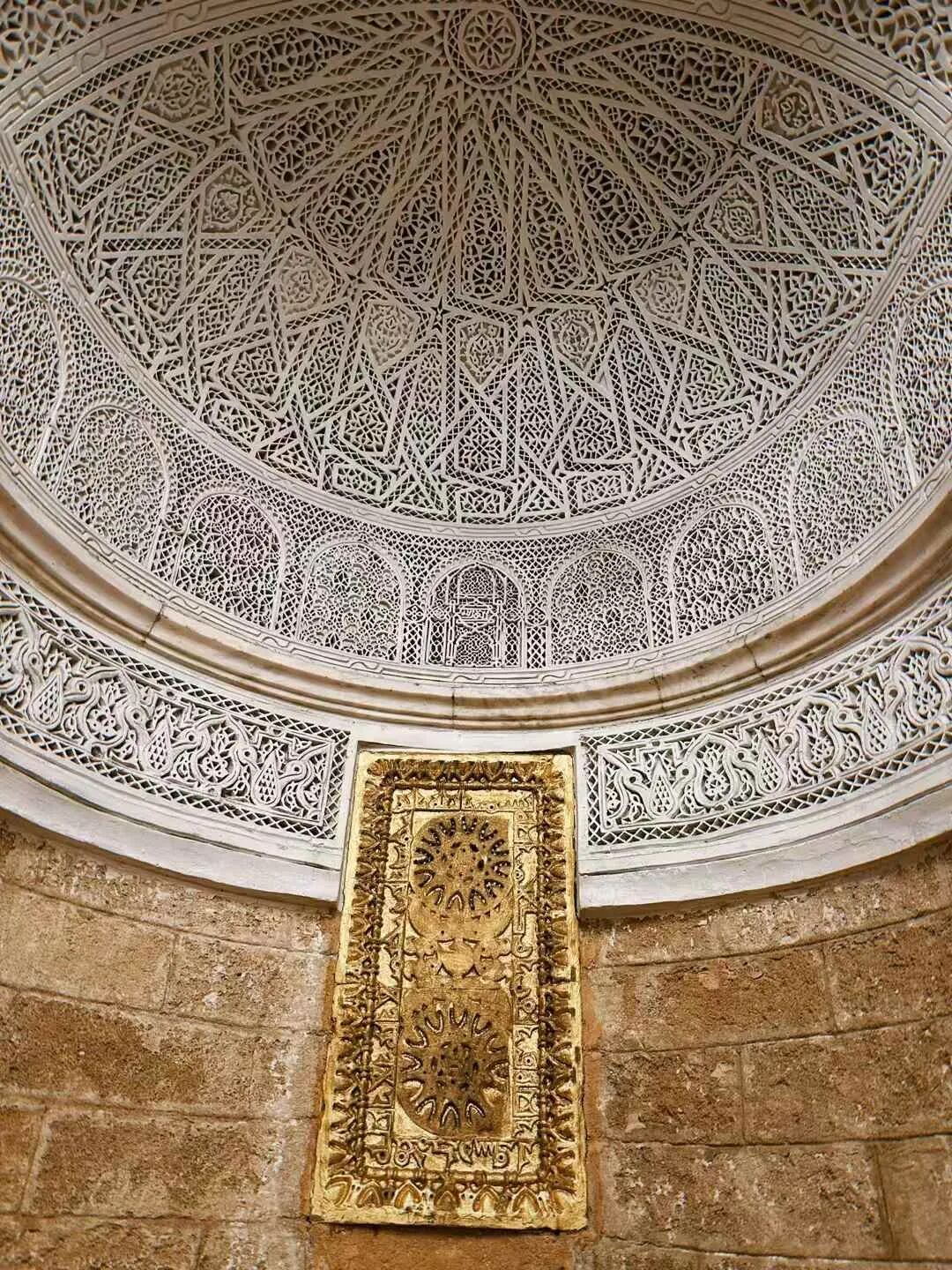
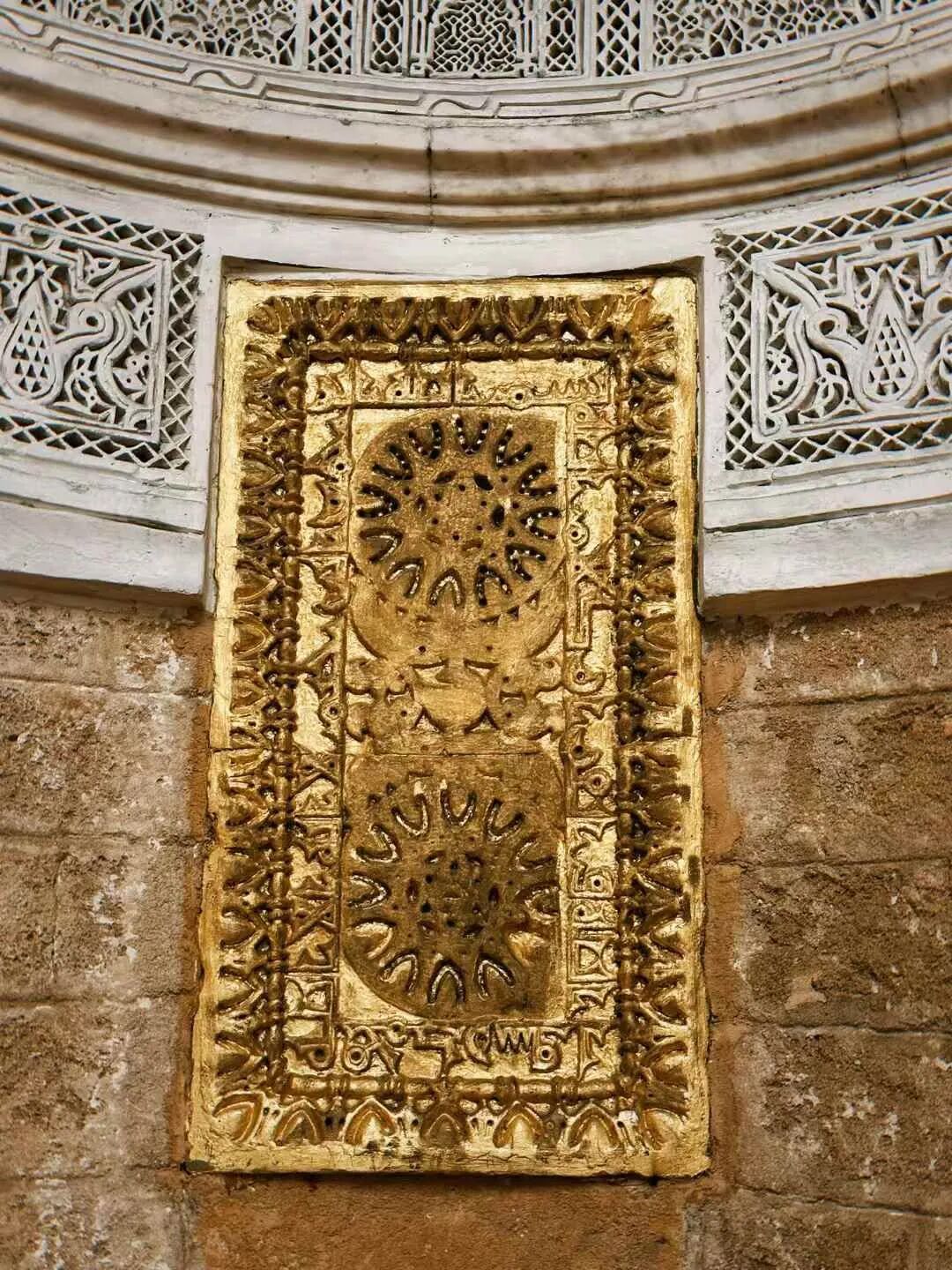
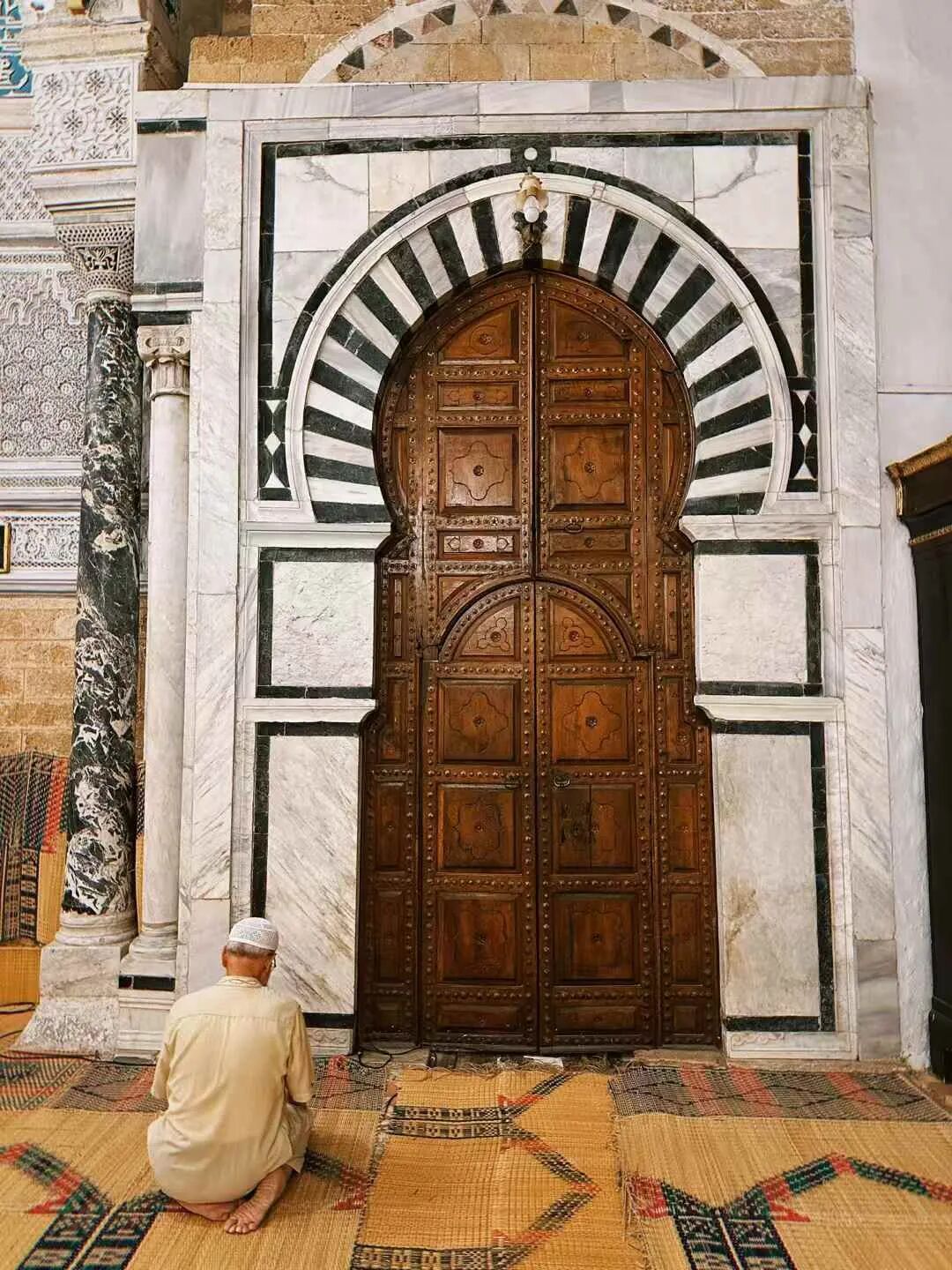
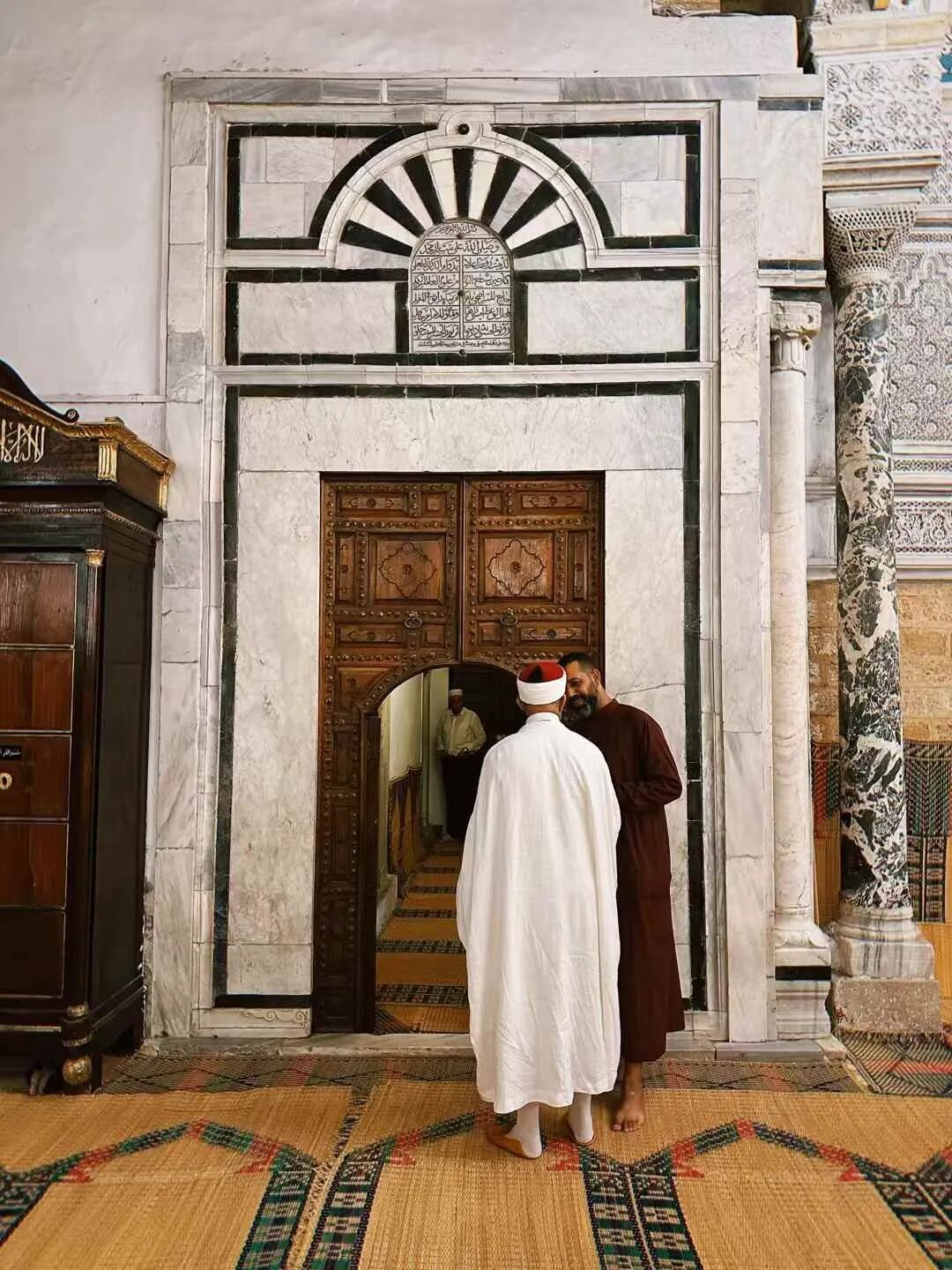
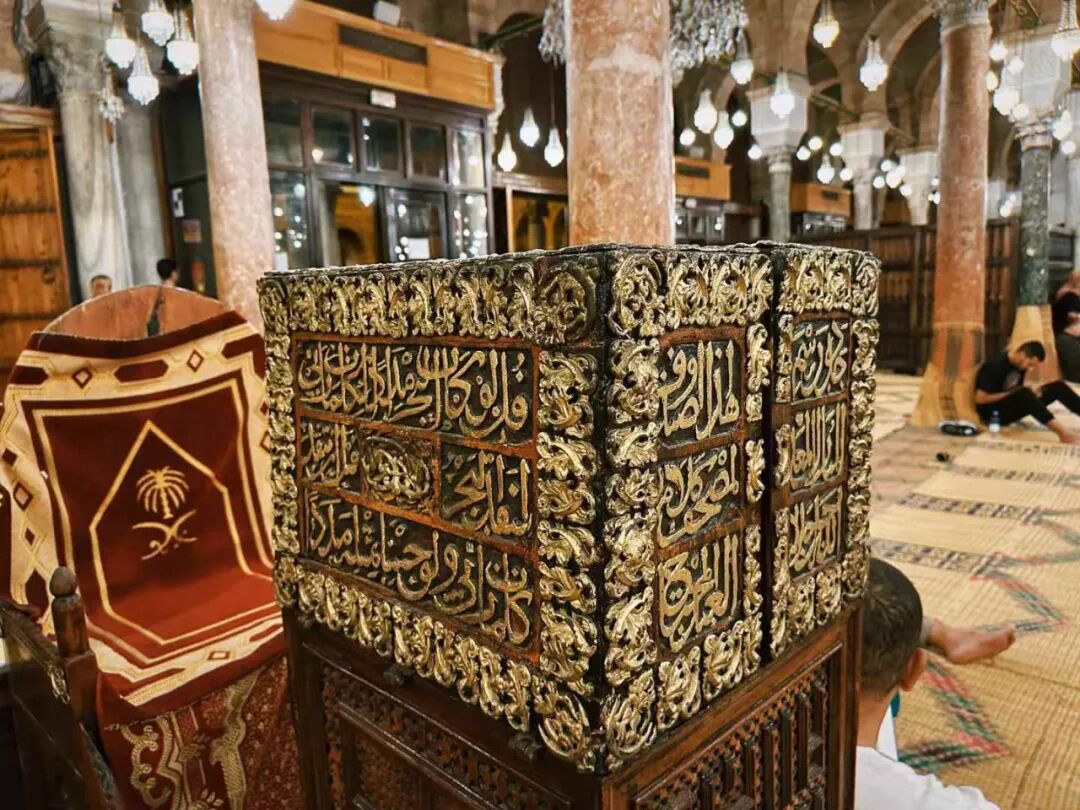
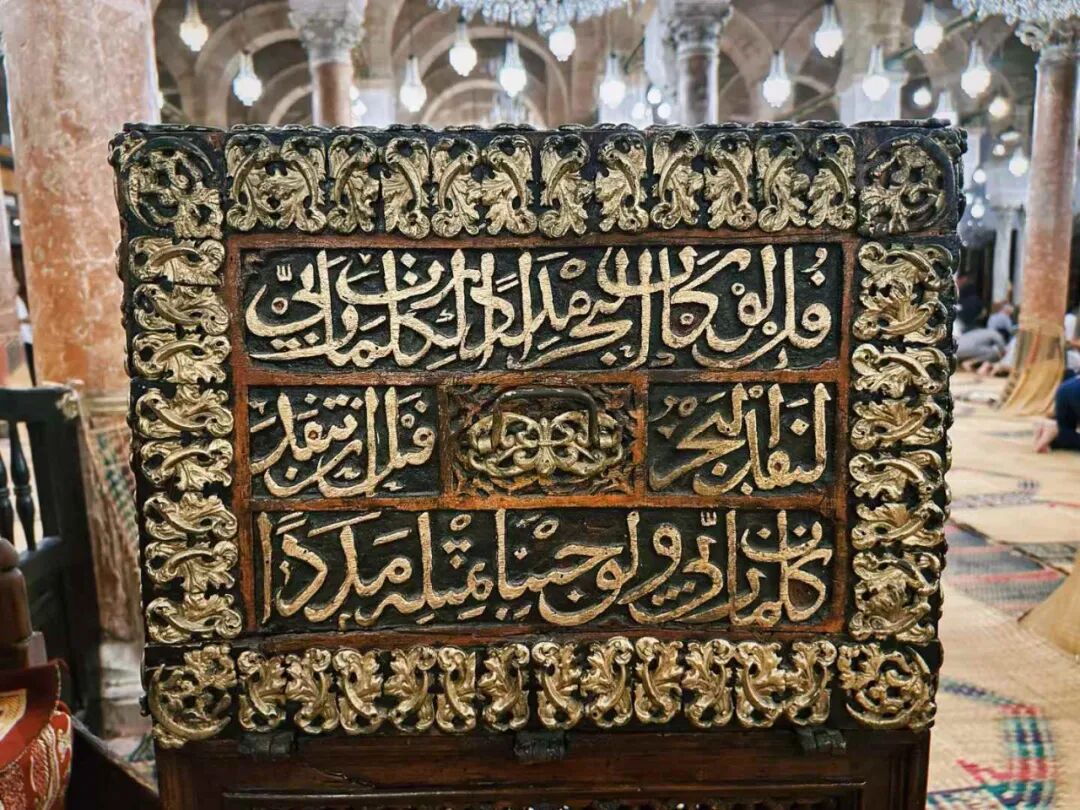
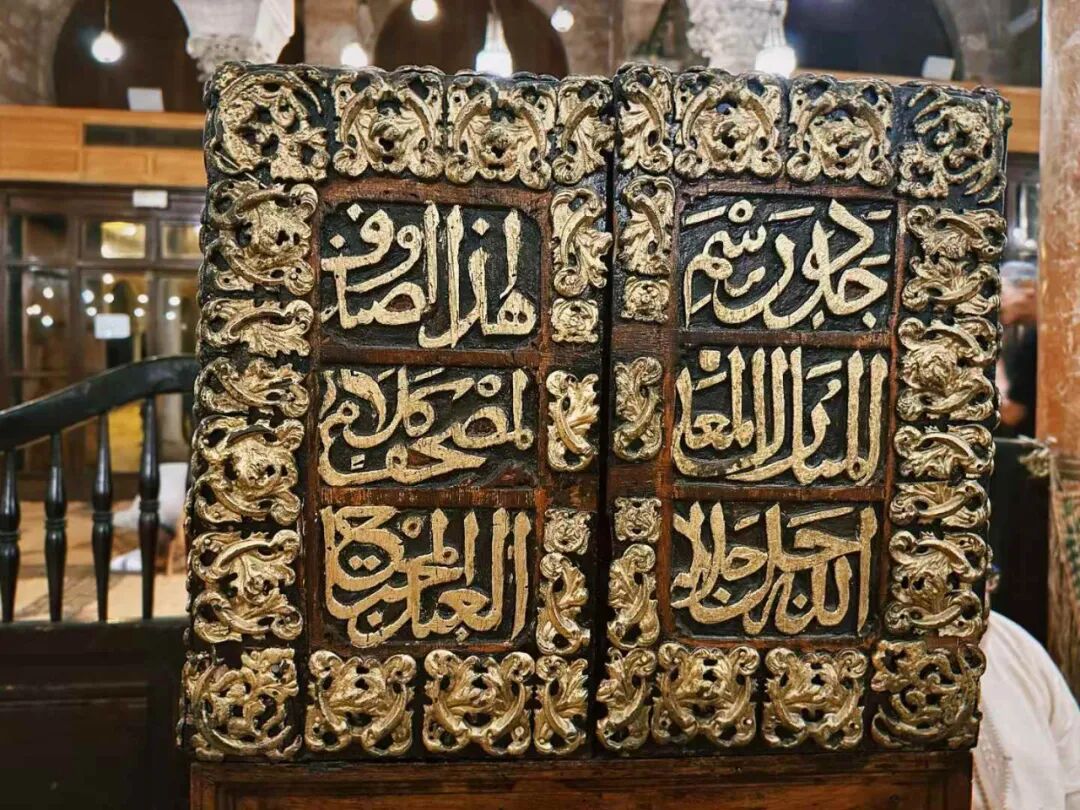
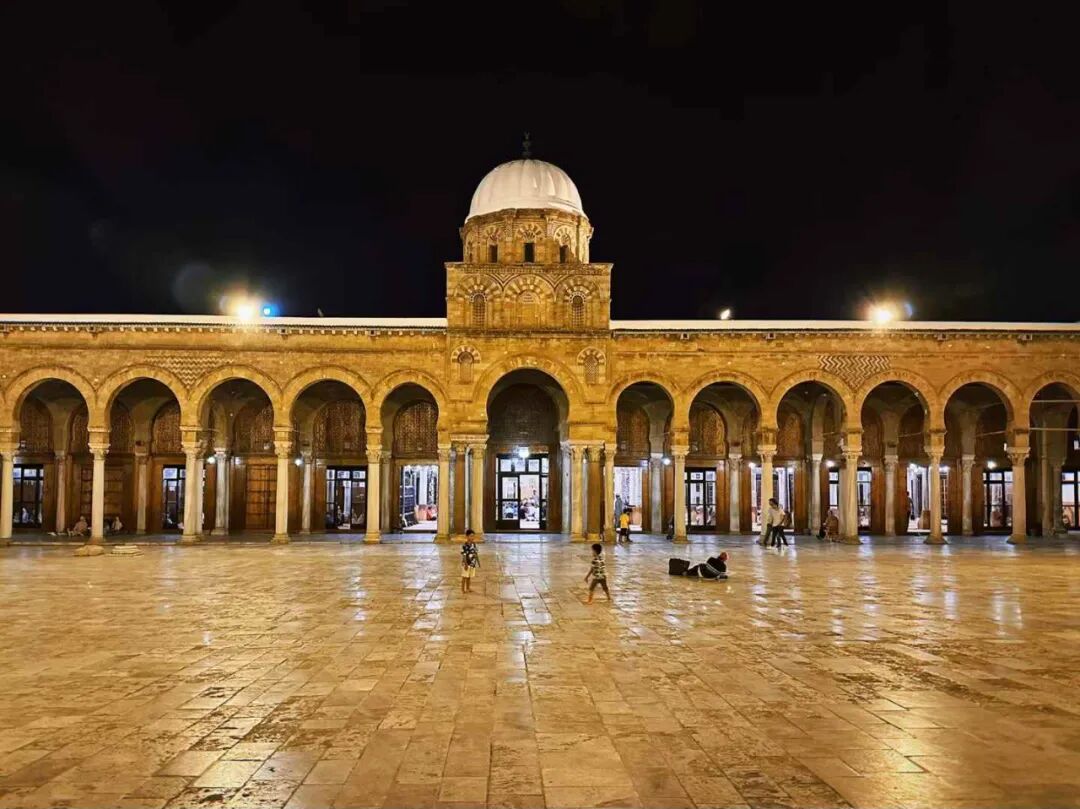
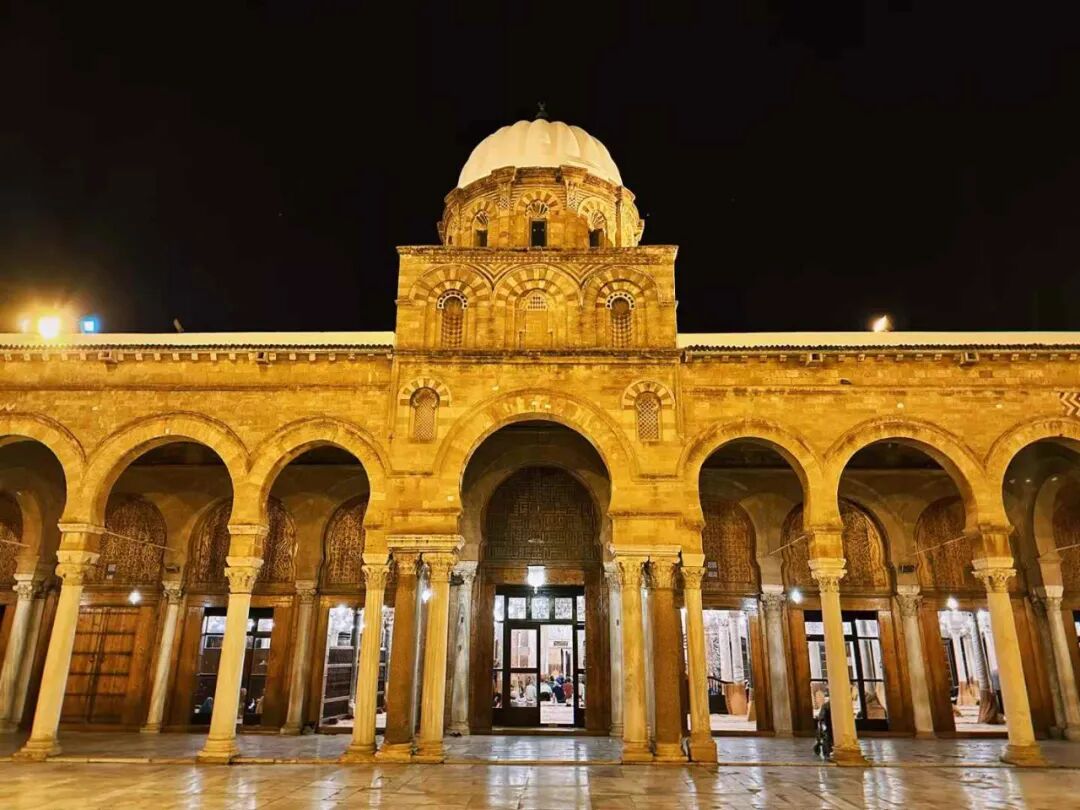
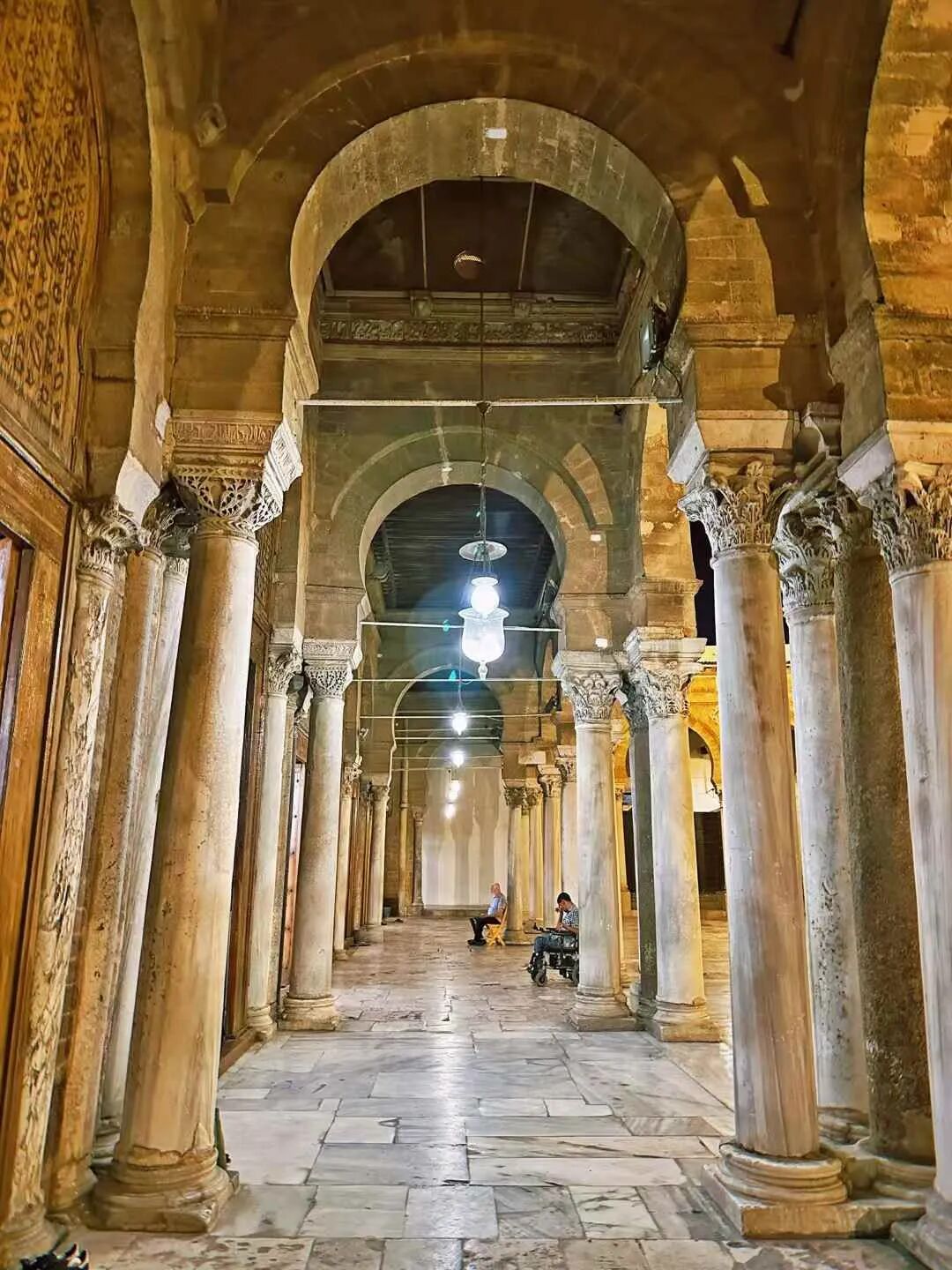
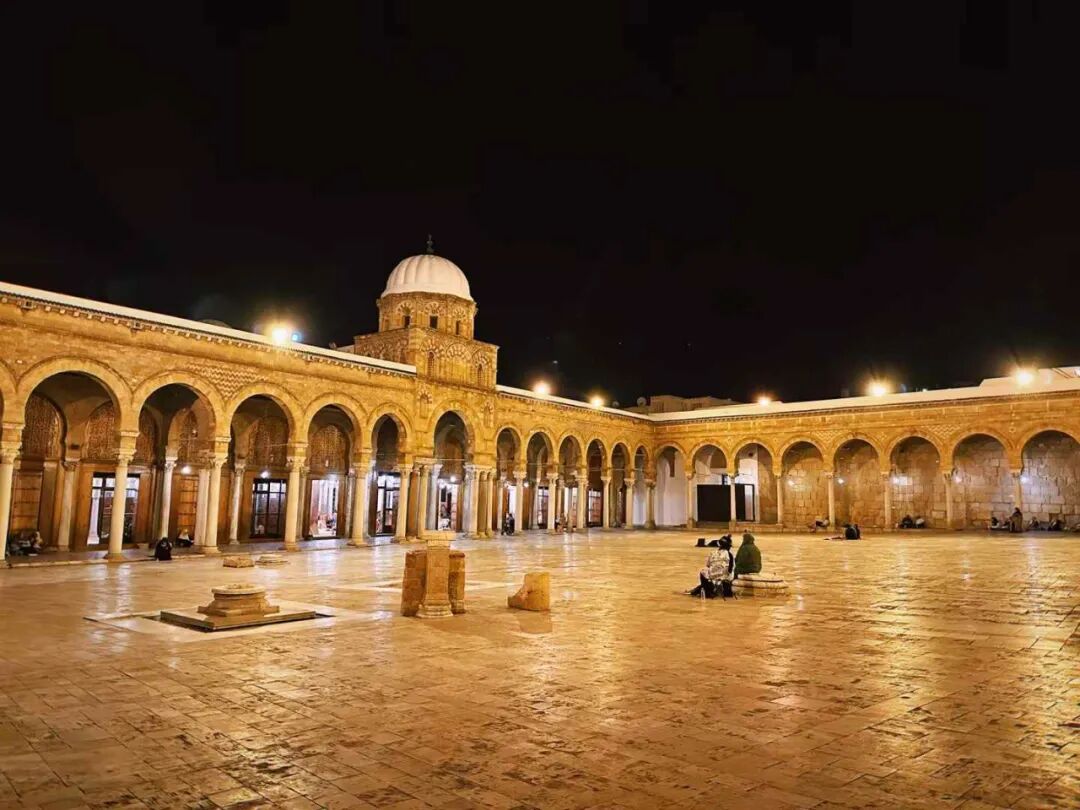
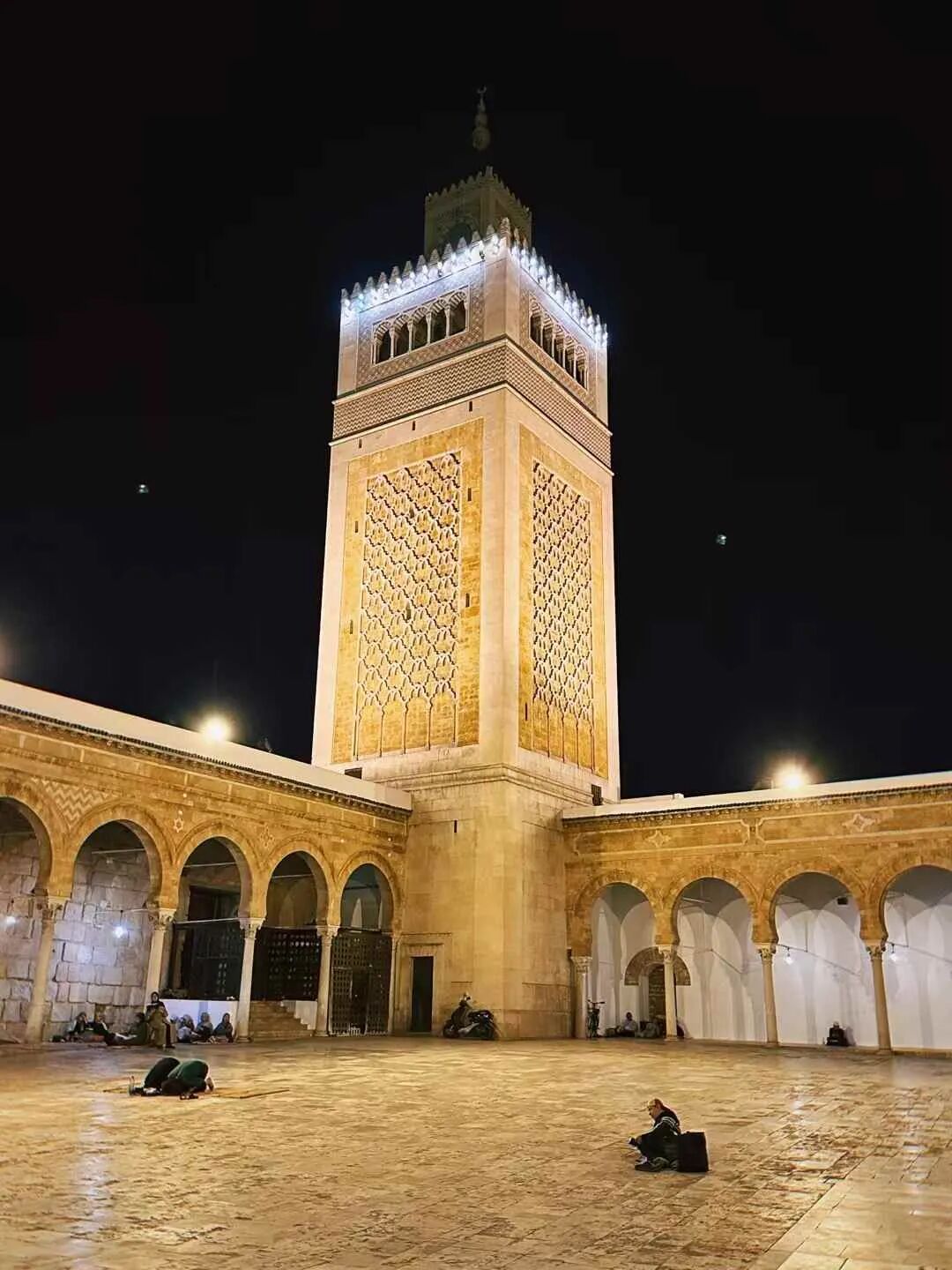
The scripture cases and night view of the Zaytuna Mosque (Jami' al-Zaytuna). The Hafsid dynasty made Tunis the capital between the 13th and 15th centuries, and the Zaytuna Mosque surpassed the Kairouan Mosque to become the largest mosque in Tunisia. A minaret (sawma'a) was added to the Zaytuna Mosque in 1438-39, though the current minaret was rebuilt in 1894.
As the main Friday mosque (Jami') of Tunis, the Zaytuna Mosque is closed for the dawn prayer (fajr) and the noon prayer (dhuhr), so people pray in their local neighborhoods. In the evening, the market at the mosque entrance closes, and everyone gathers at the mosque for the sunset prayer (maghrib). After the sunset prayer, the imam gives a sermon (wa'z) and recites the Quran, and everyone stays in the prayer hall to listen.
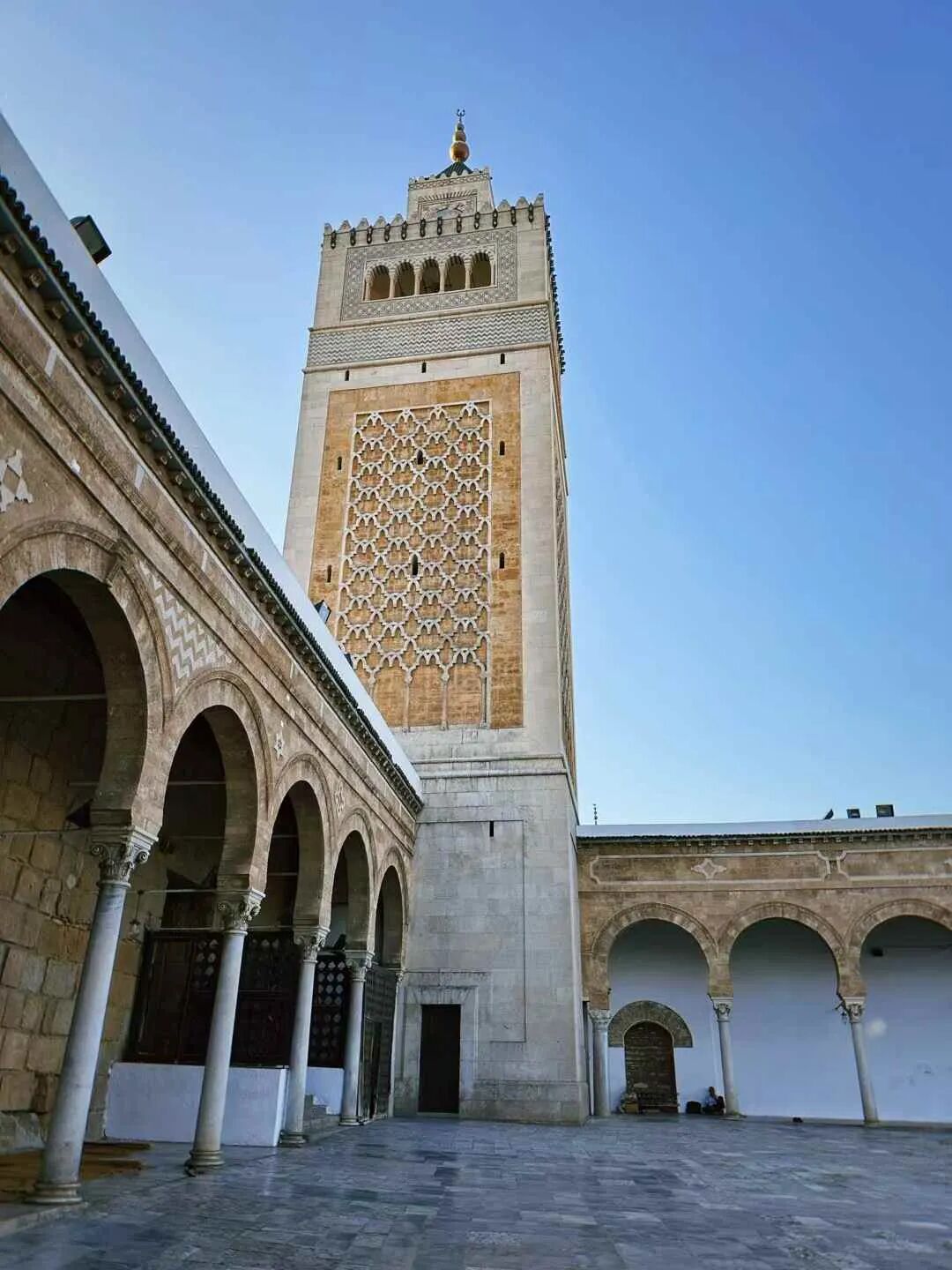
Kasbah Mosque in Tunis: 1230.
The Kasbah Mosque in Tunis was built between 1230 and 1233 by Abu Zakariyya Yahya (reigned 1229-49), the founding sultan of the Hafsid dynasty. It is the second main Friday mosque in Tunis after the Zaytuna Mosque. The mosque has been closed since the 2010 Jasmine Revolution, so you can only admire its famous minaret from the outside.
The minaret of the Kasbah Mosque was heavily influenced by the Almohad dynasty of Morocco and looks very similar to the Kasbah Mosque in Marrakesh. The minaret features interlocking diamond patterns (sebka), but unlike the brick structure of the Marrakesh Kasbah Mosque, the Tunis Kasbah Mosque uses stone decorations, showing the high level of ancient Tunisian stone masonry. The top of the minaret is decorated with triple horseshoe-shaped windows surrounded by tiles. This minaret design influenced many later minaret styles.
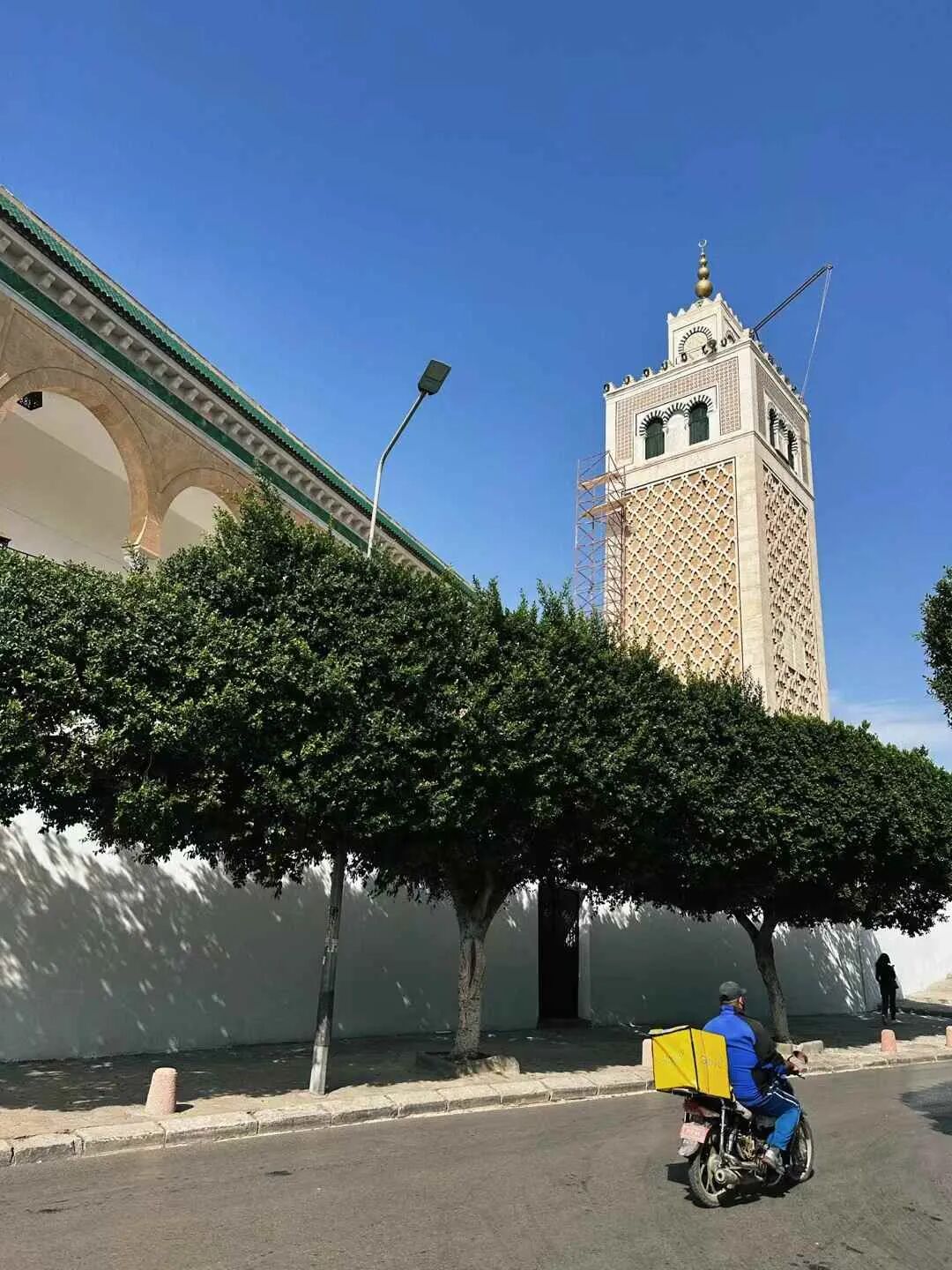
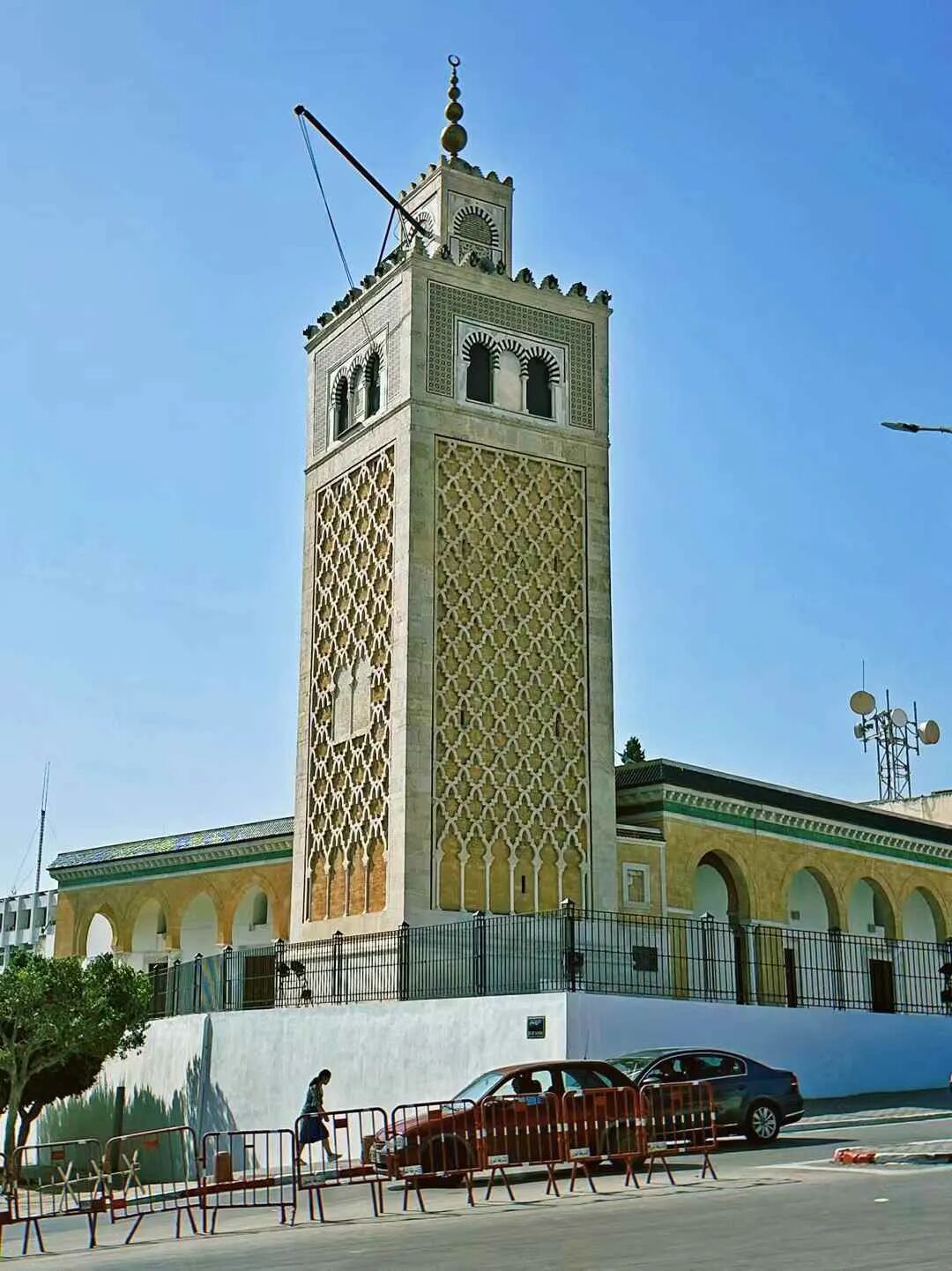
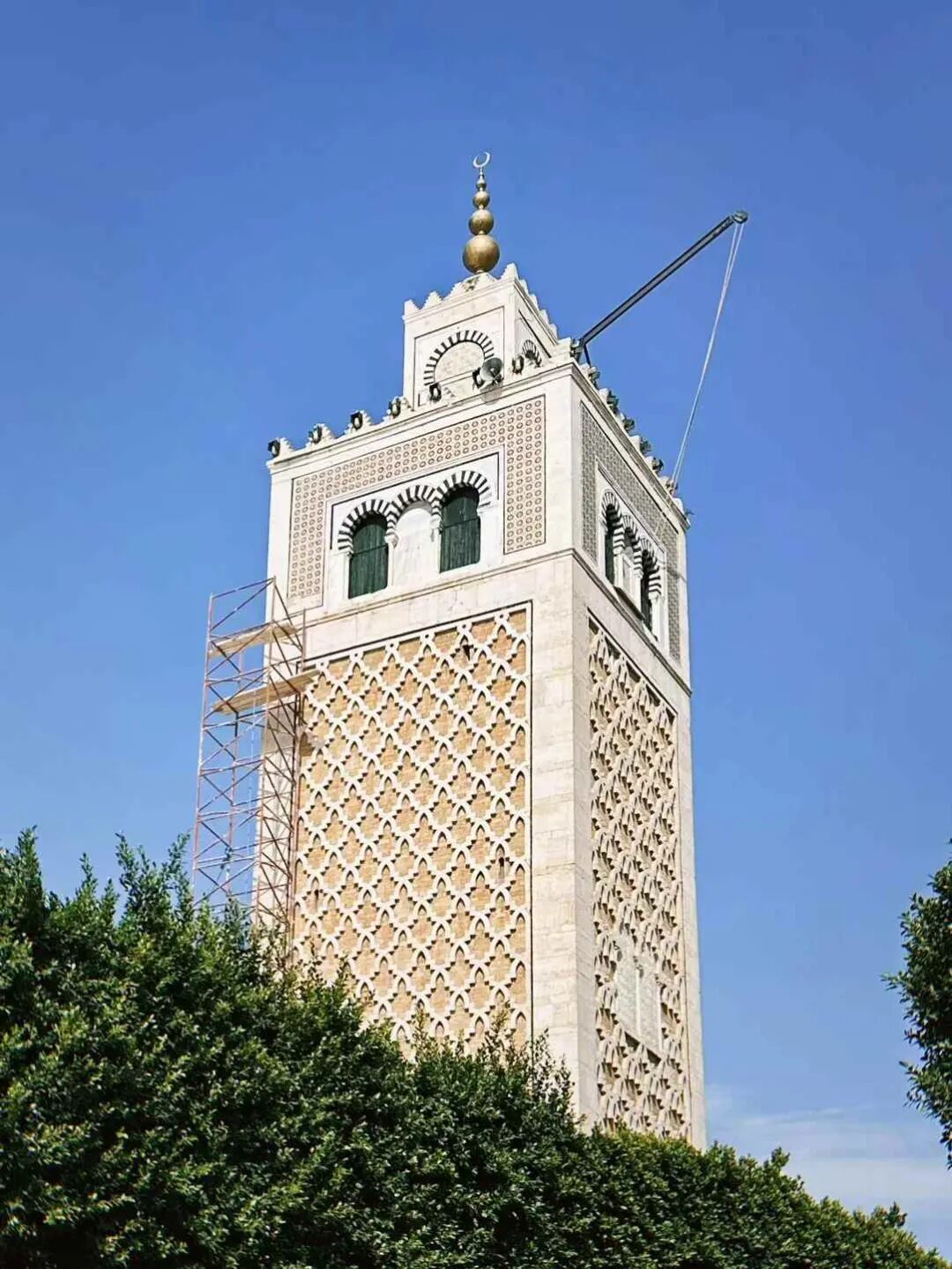
New Mosque (Masjid El Jedid) in Tunis: 1726.
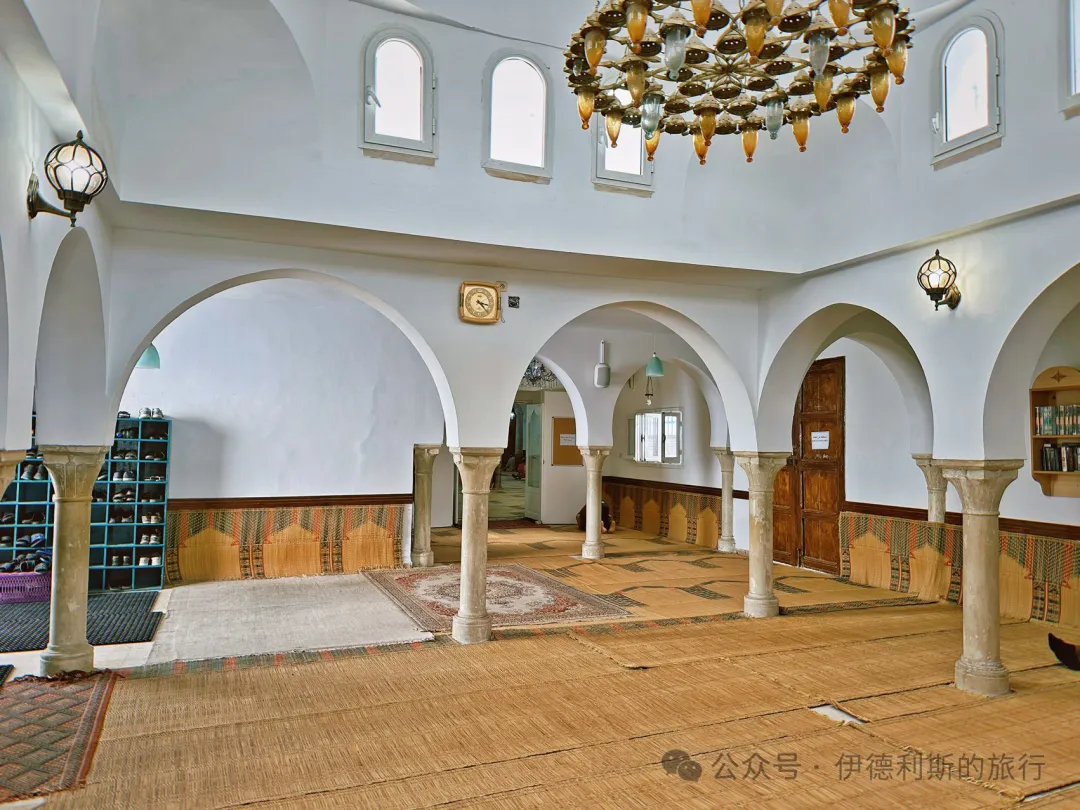
The New Mosque is in the southern part of the Tunis Medina. During the afternoon prayer (asr), the lights in the main hall were off, and people were praying in the portico.
The New Mosque was built in 1726 by Al-Husayn I ibn Ali (reigned 1705-35), the founder of the Husainid dynasty in Tunisia. The Husainid dynasty was a Beylik nominally subordinate to the Ottoman Empire. Husayn was an Ottoman officer of Greek Cretan descent who was granted the title of Bey by the Ottoman Sultan in 1705 and began ruling Tunisia. Husayn used religion to unite different ethnic groups in Tunisia. He ordered the construction of many madrasas, and the New Mosque is one of his representative works.
The New Mosque is famous for the Ottoman Turkish tiles embedded in its walls.
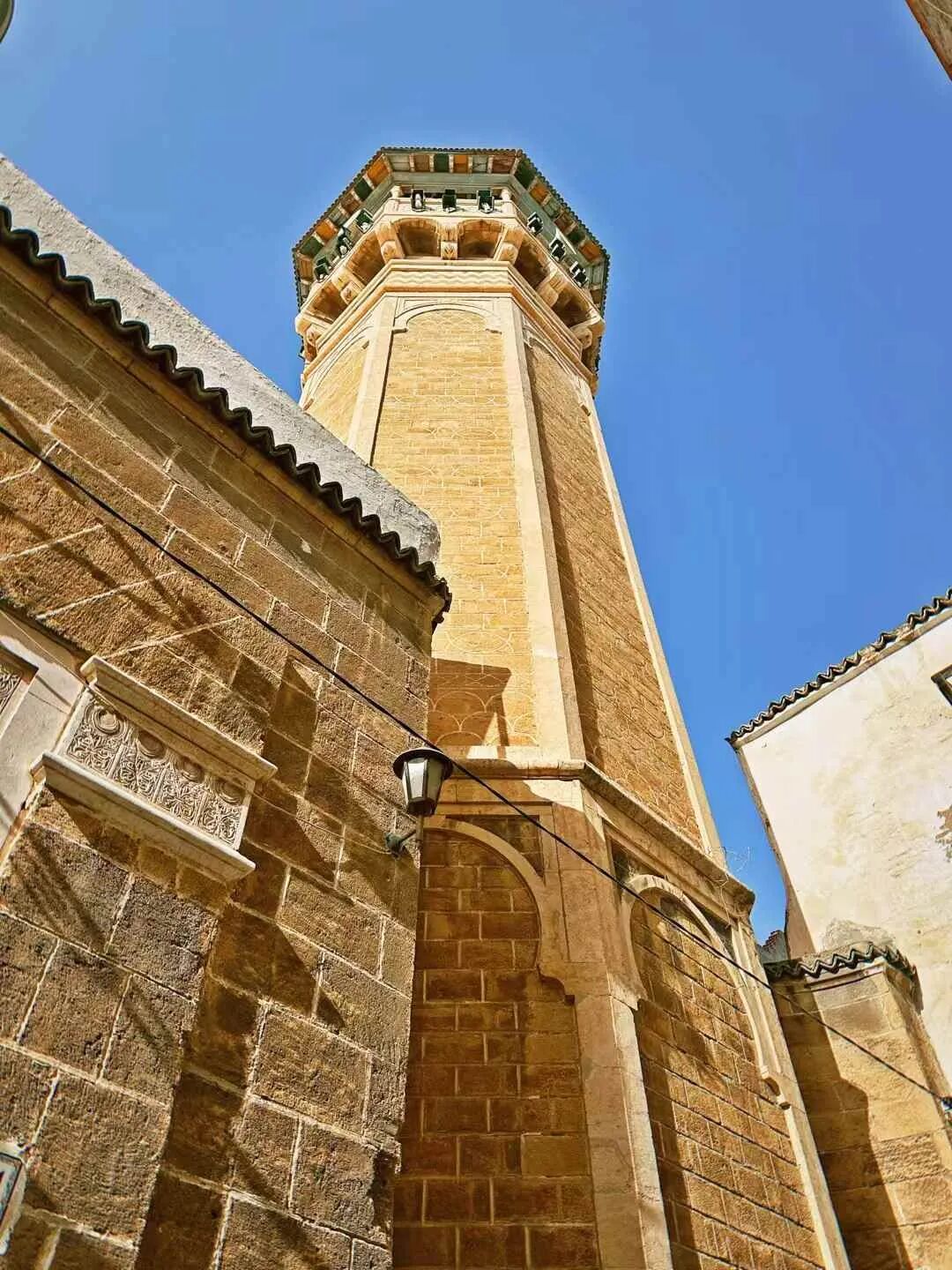
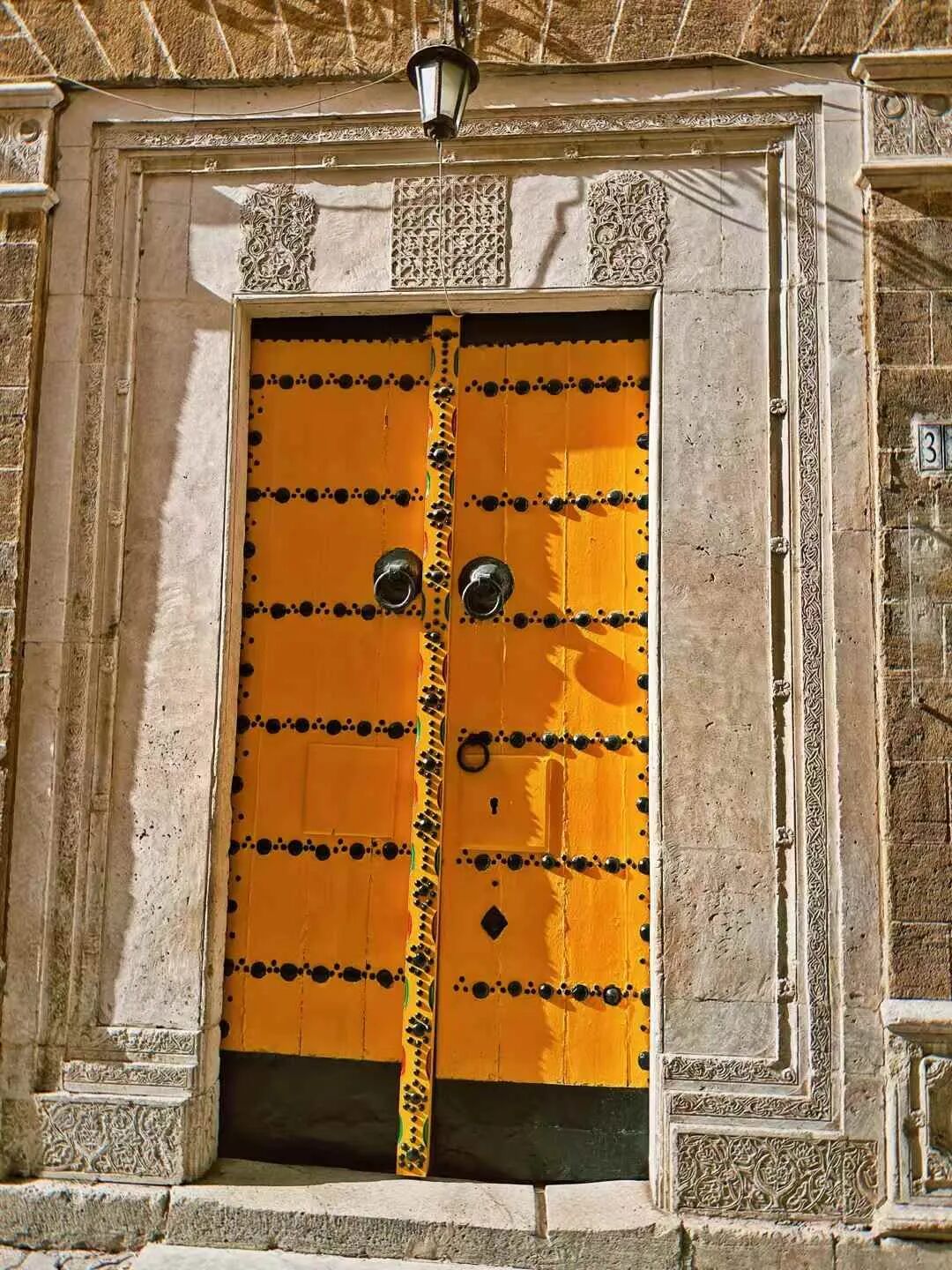
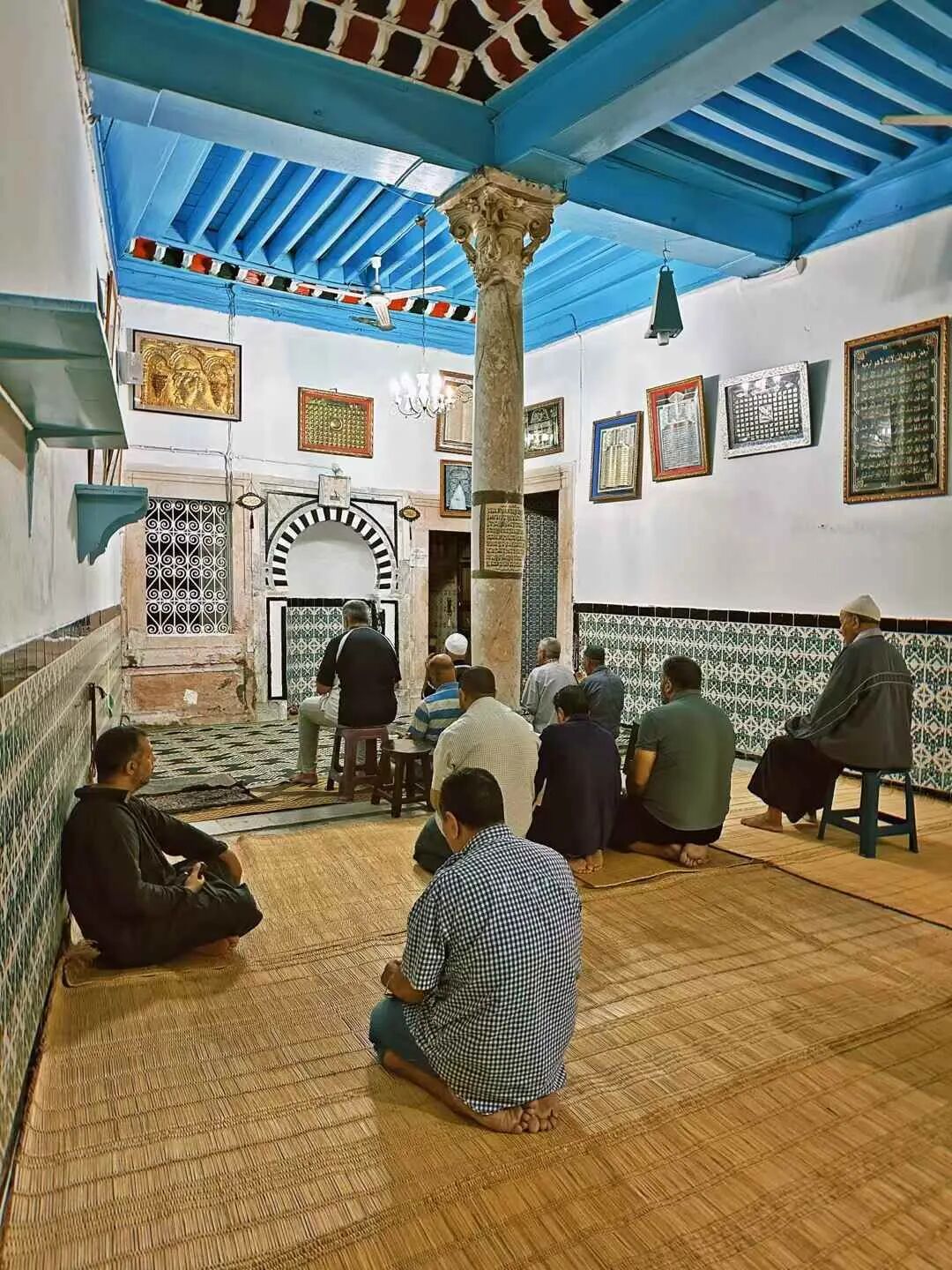
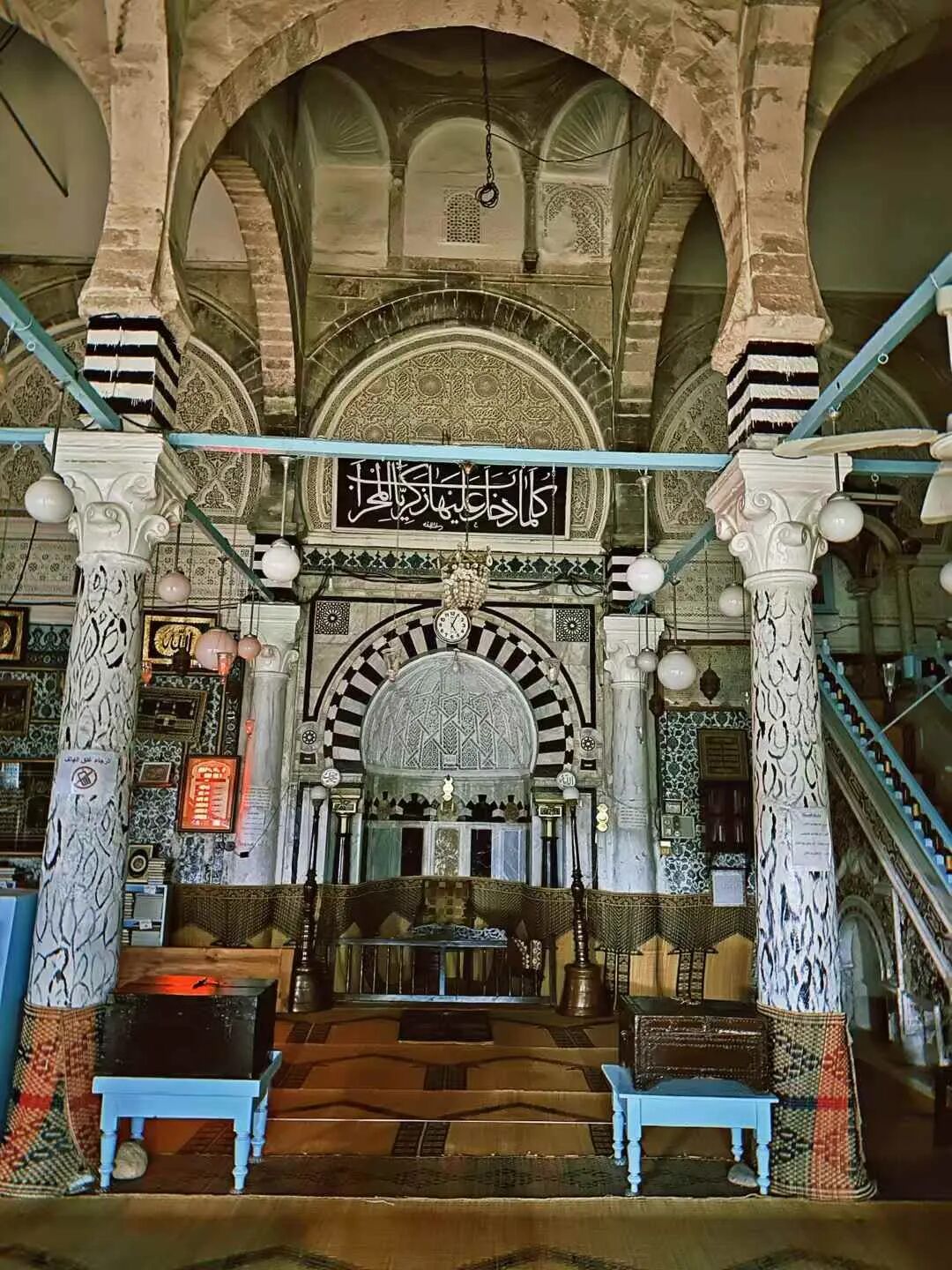
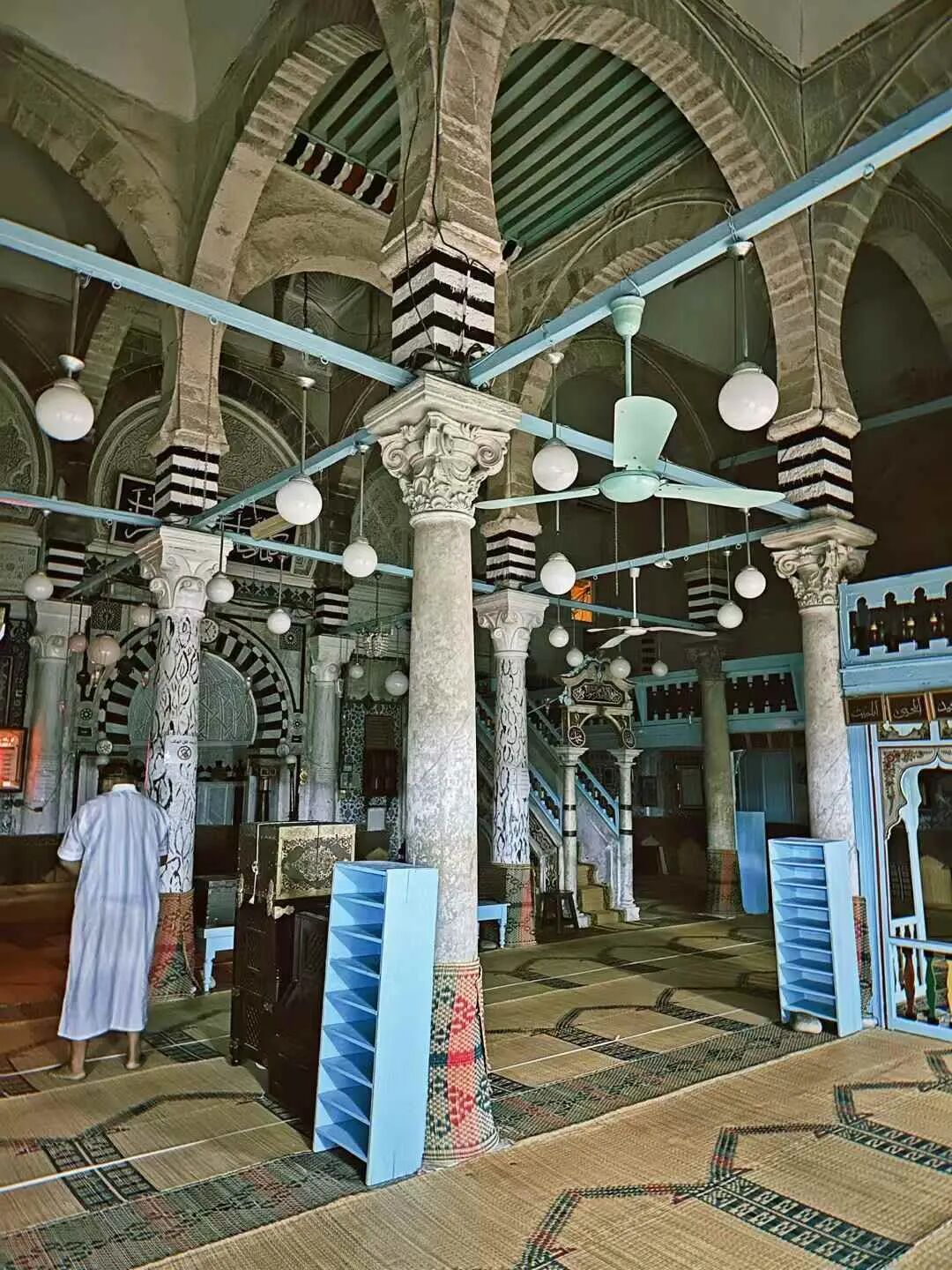
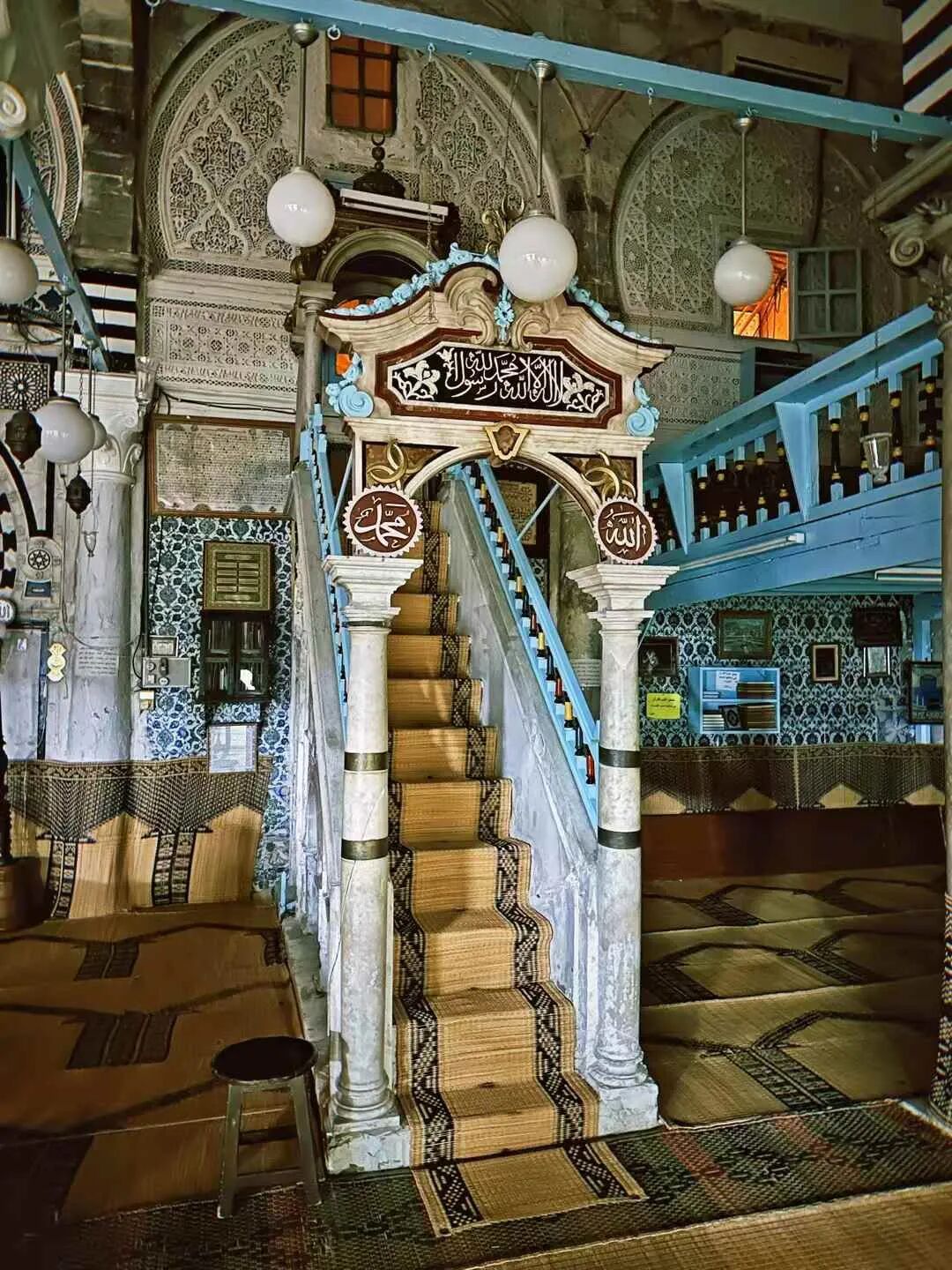
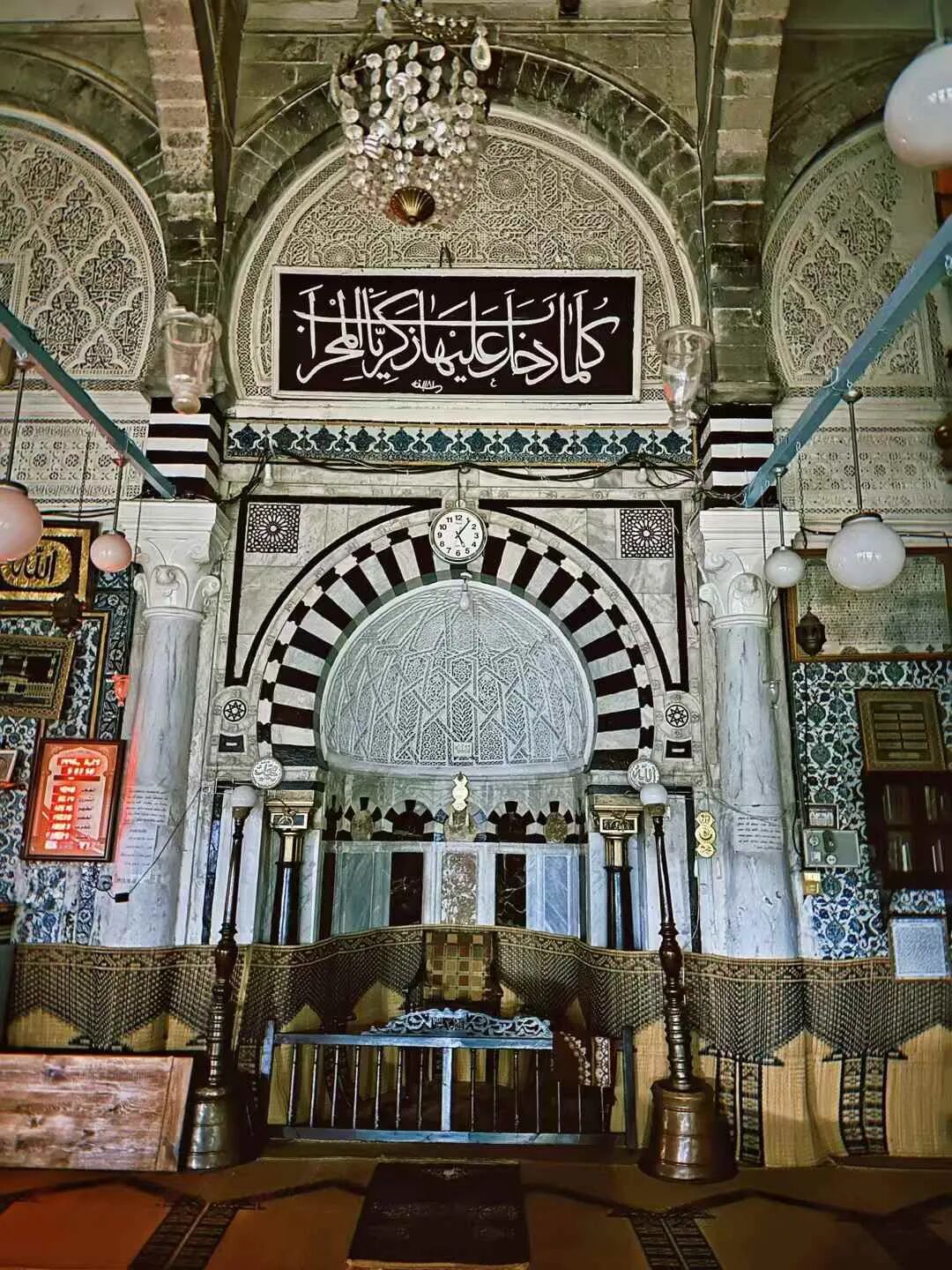
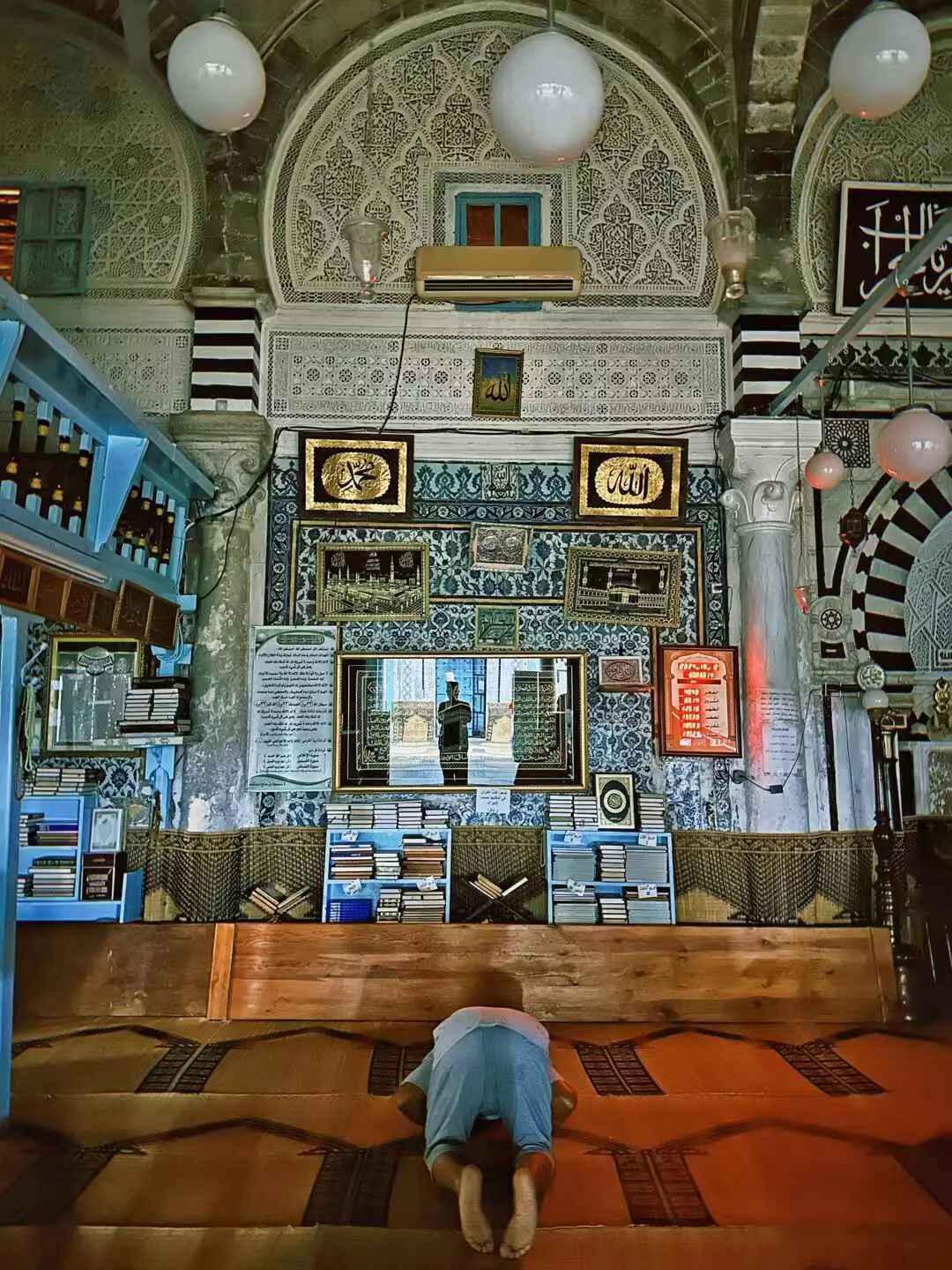
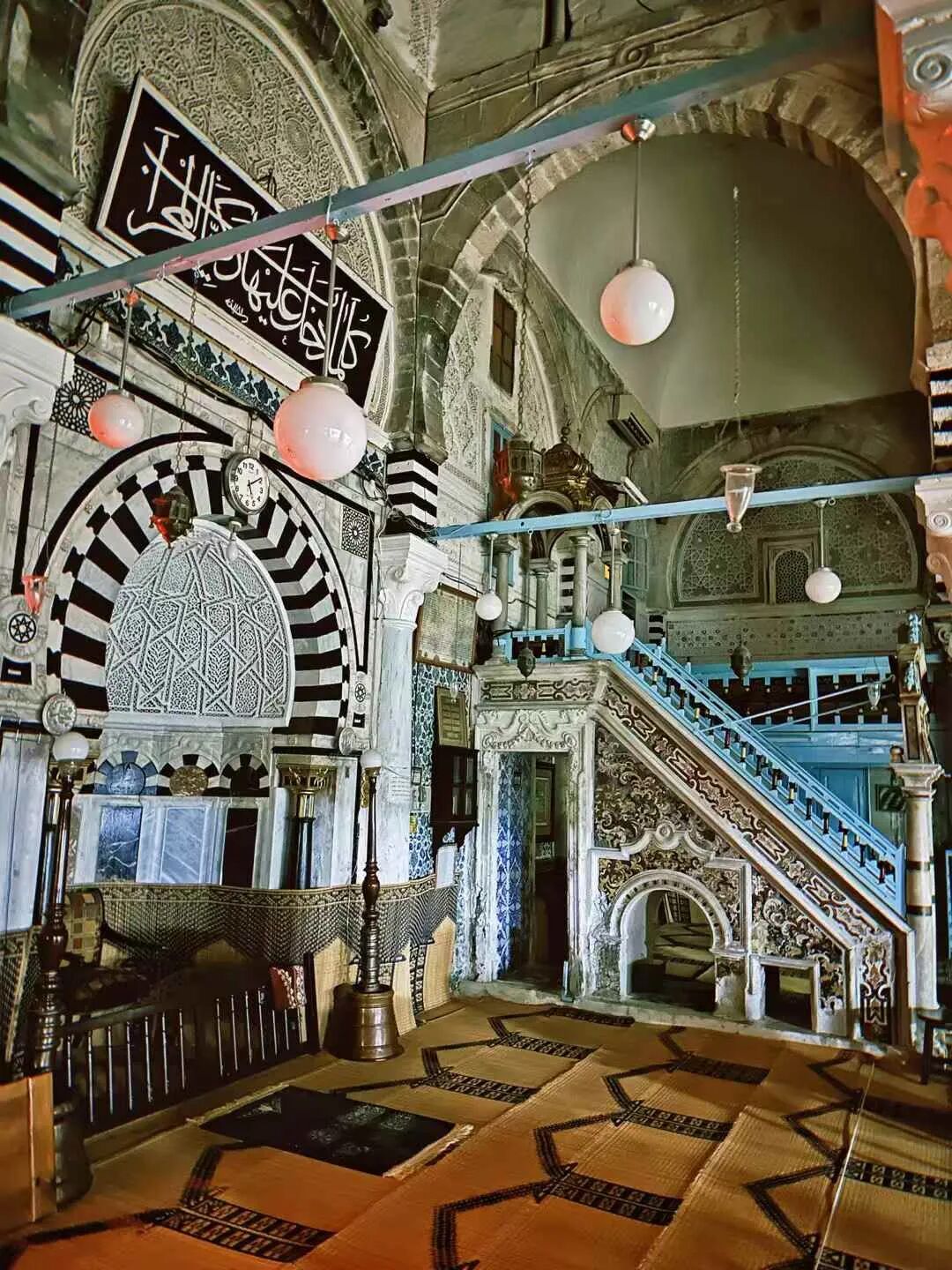
Ksar Mosque in Tunis: construction started in 1106, rebuilt in 1647.
The Ksar Mosque in the Tunis Medina is a rare Hanafi mosque in Tunisia.
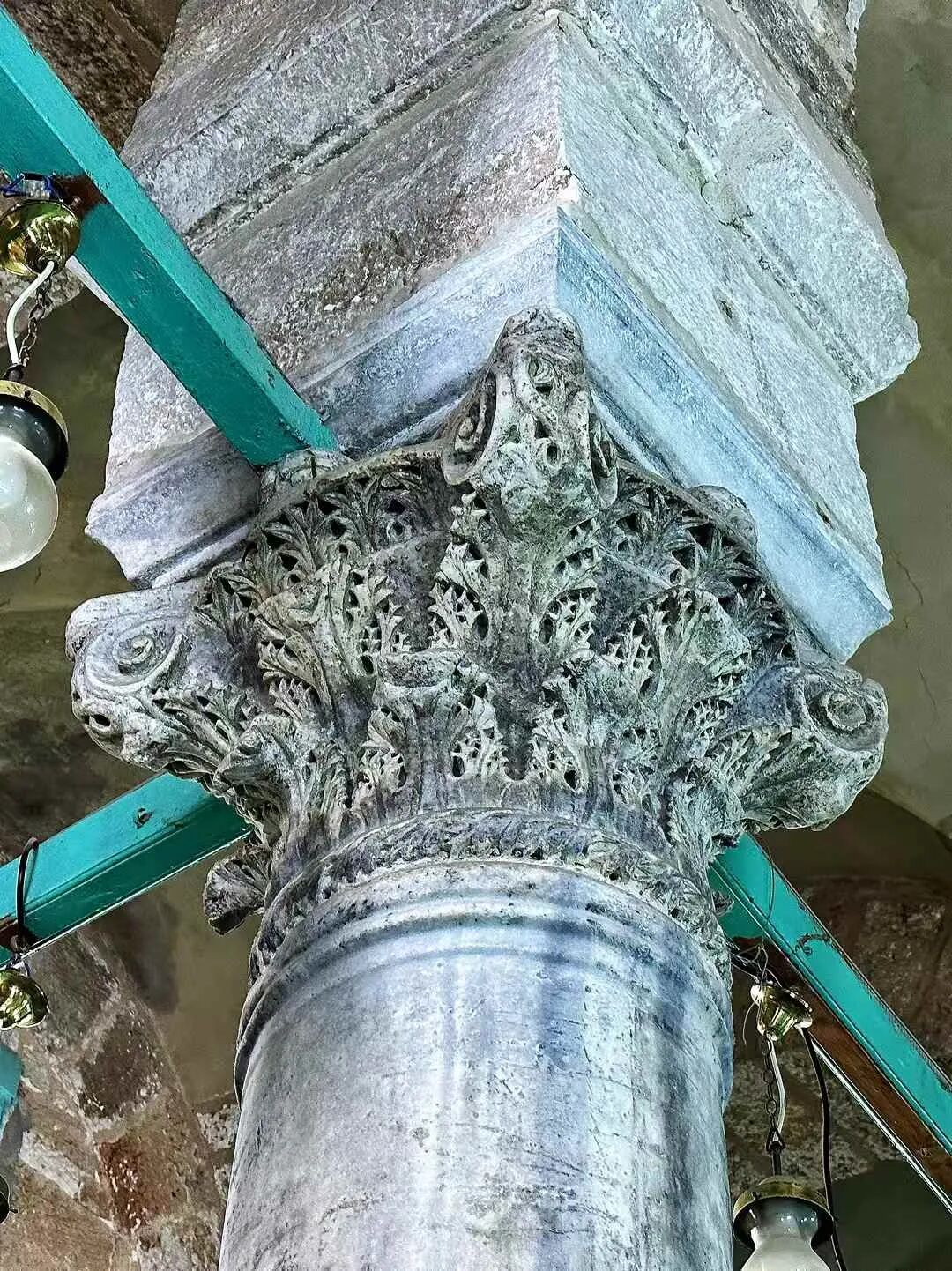
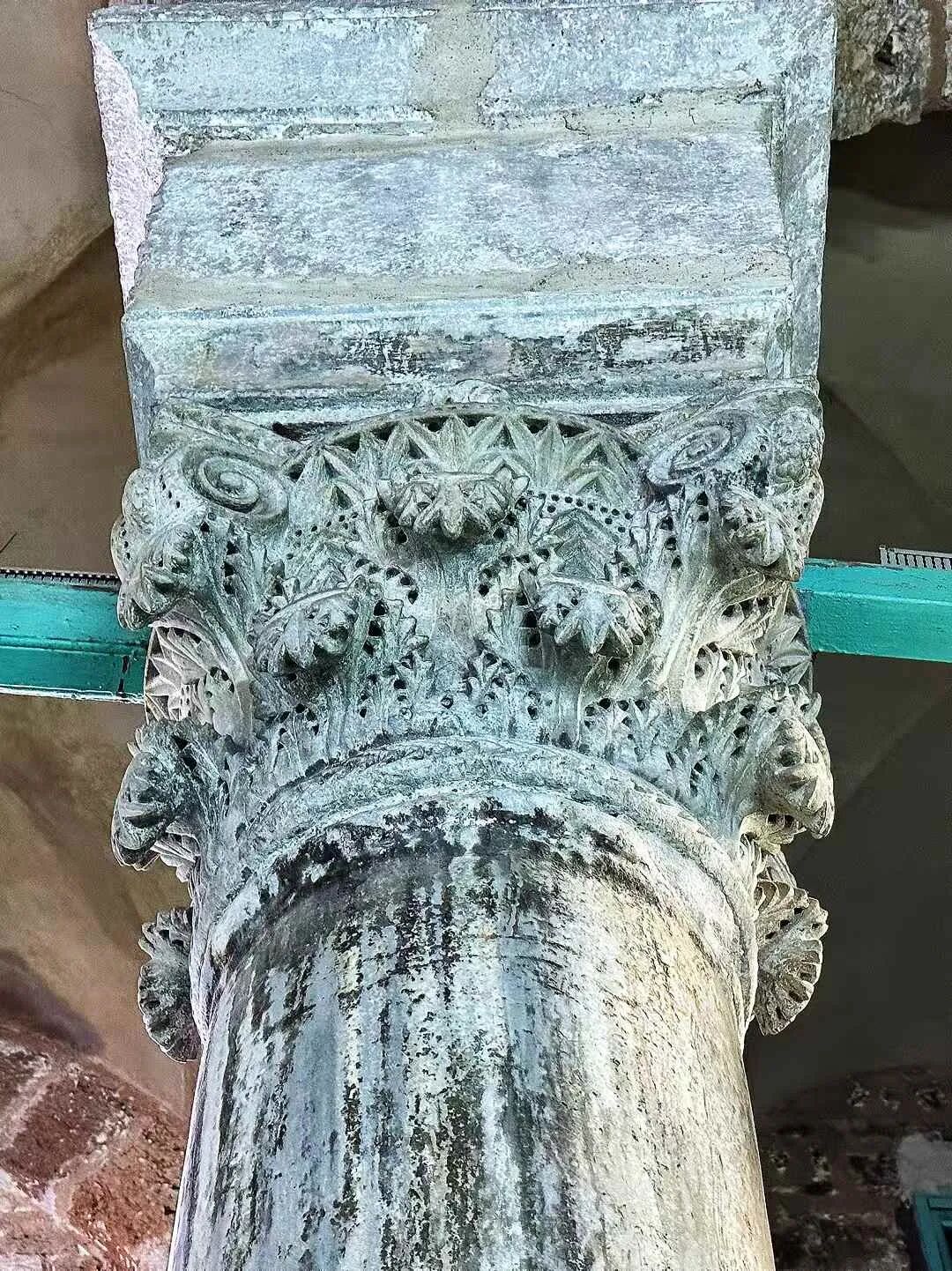
The Ksar Mosque was built in 1106 by the Banu Khurasan dynasty that ruled Tunis at the time. It was converted to the Hanafi school by the Ottoman Empire in 1598, and the minaret was rebuilt in its current Moorish style in 1647-48. The capitals of the columns inside the main hall were also taken from ancient architectural ruins. Inside the mihrab, there are seven niches with Fatimid-style fluted semi-domes.
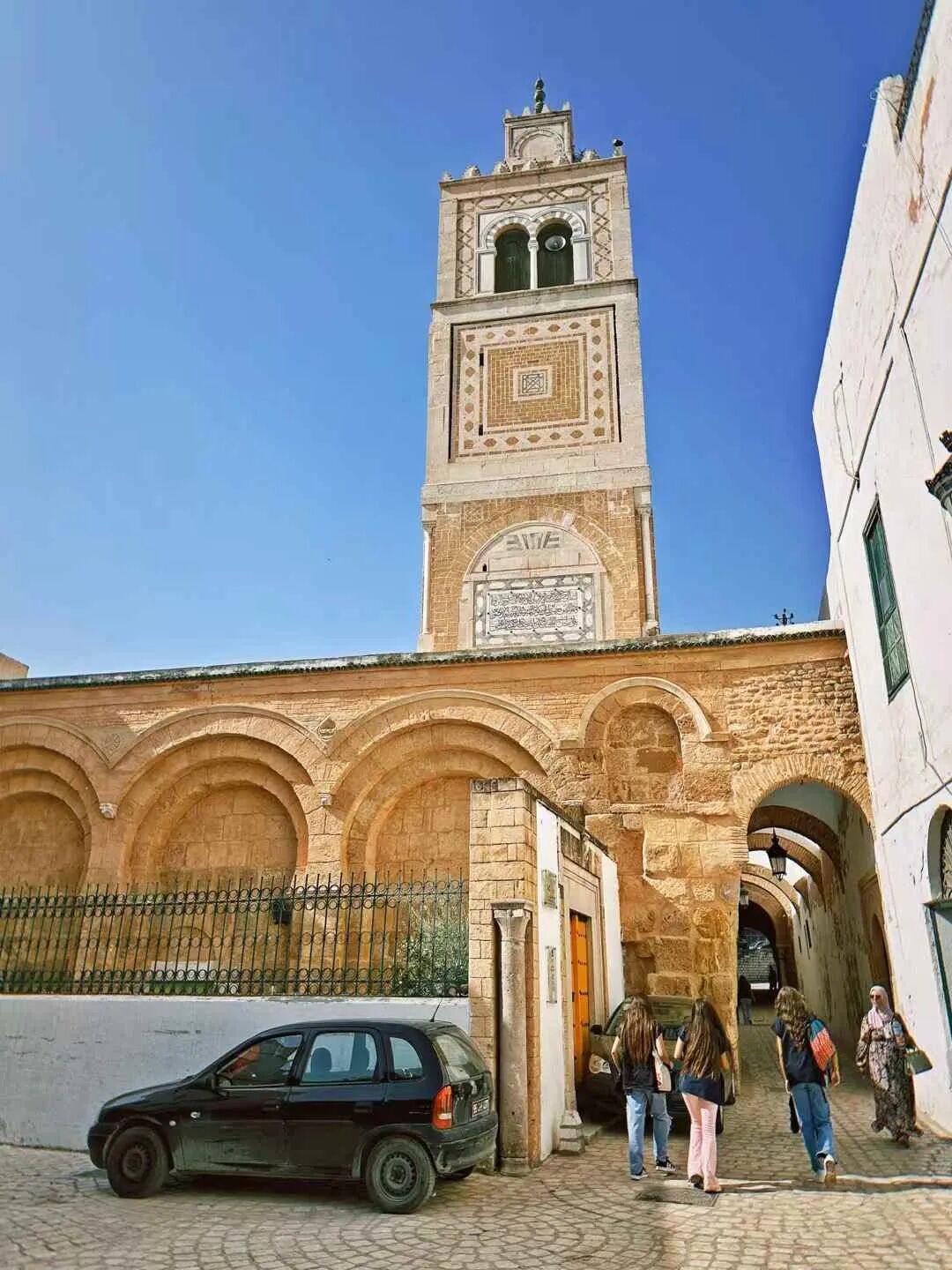
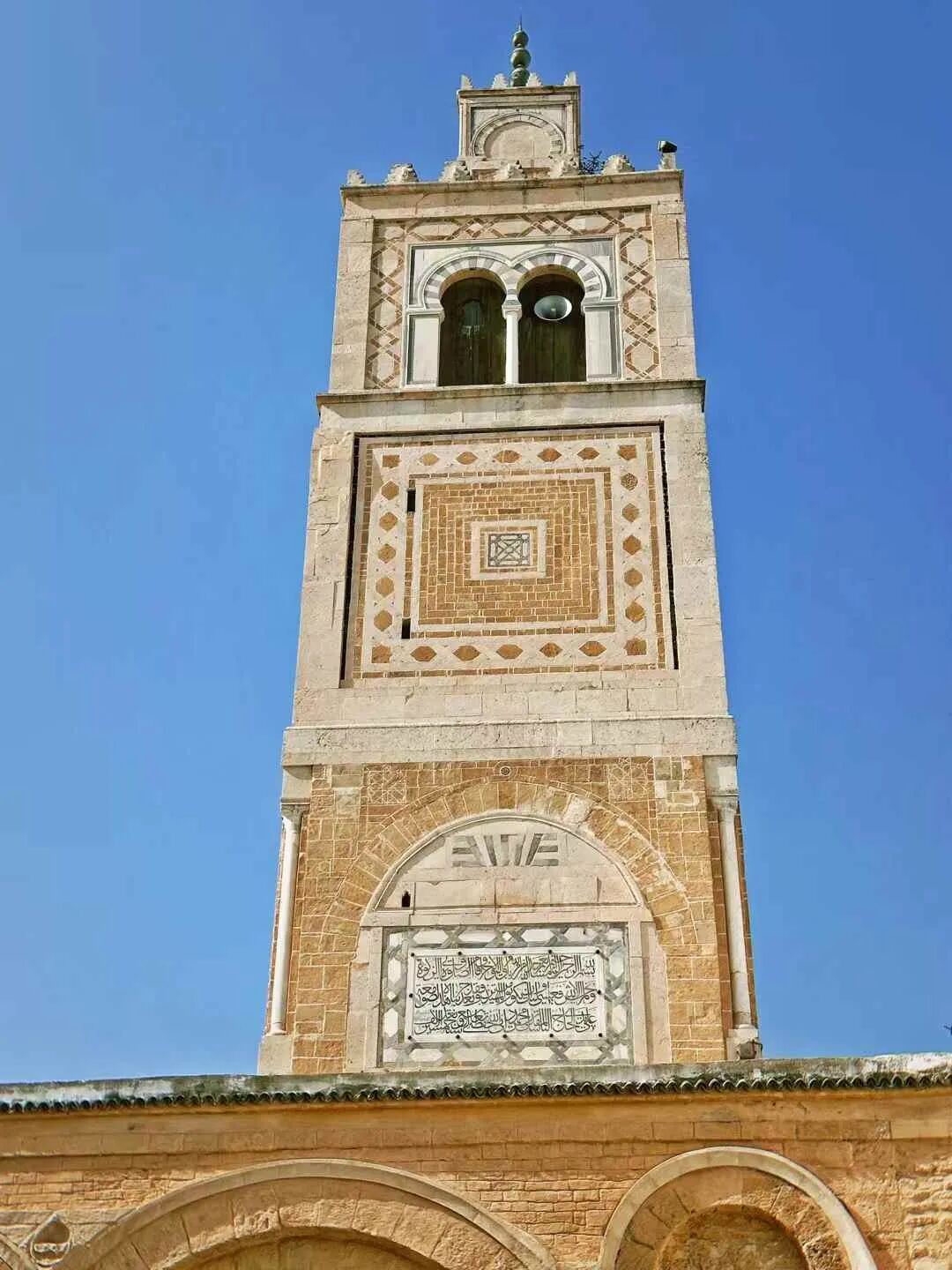
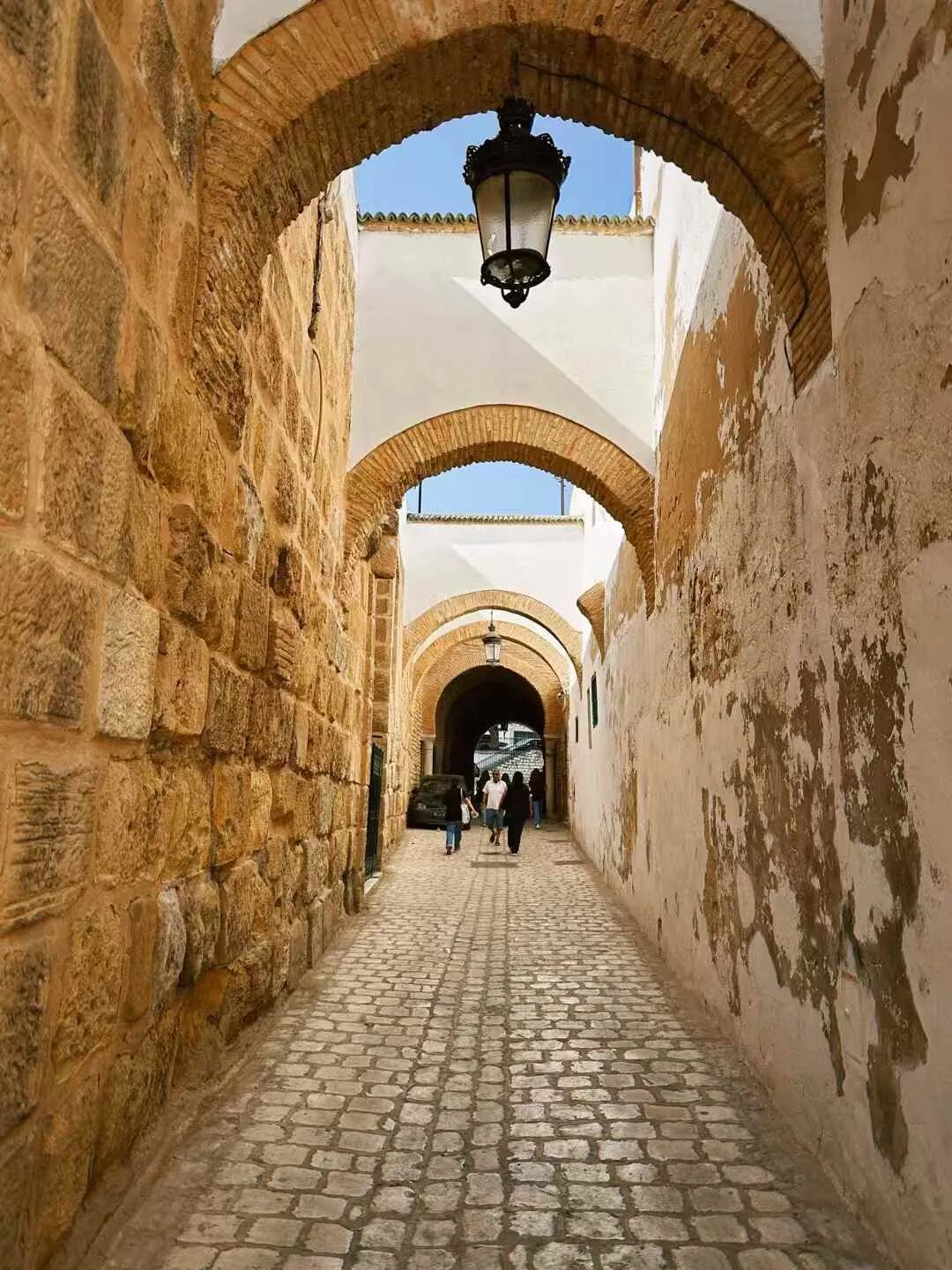
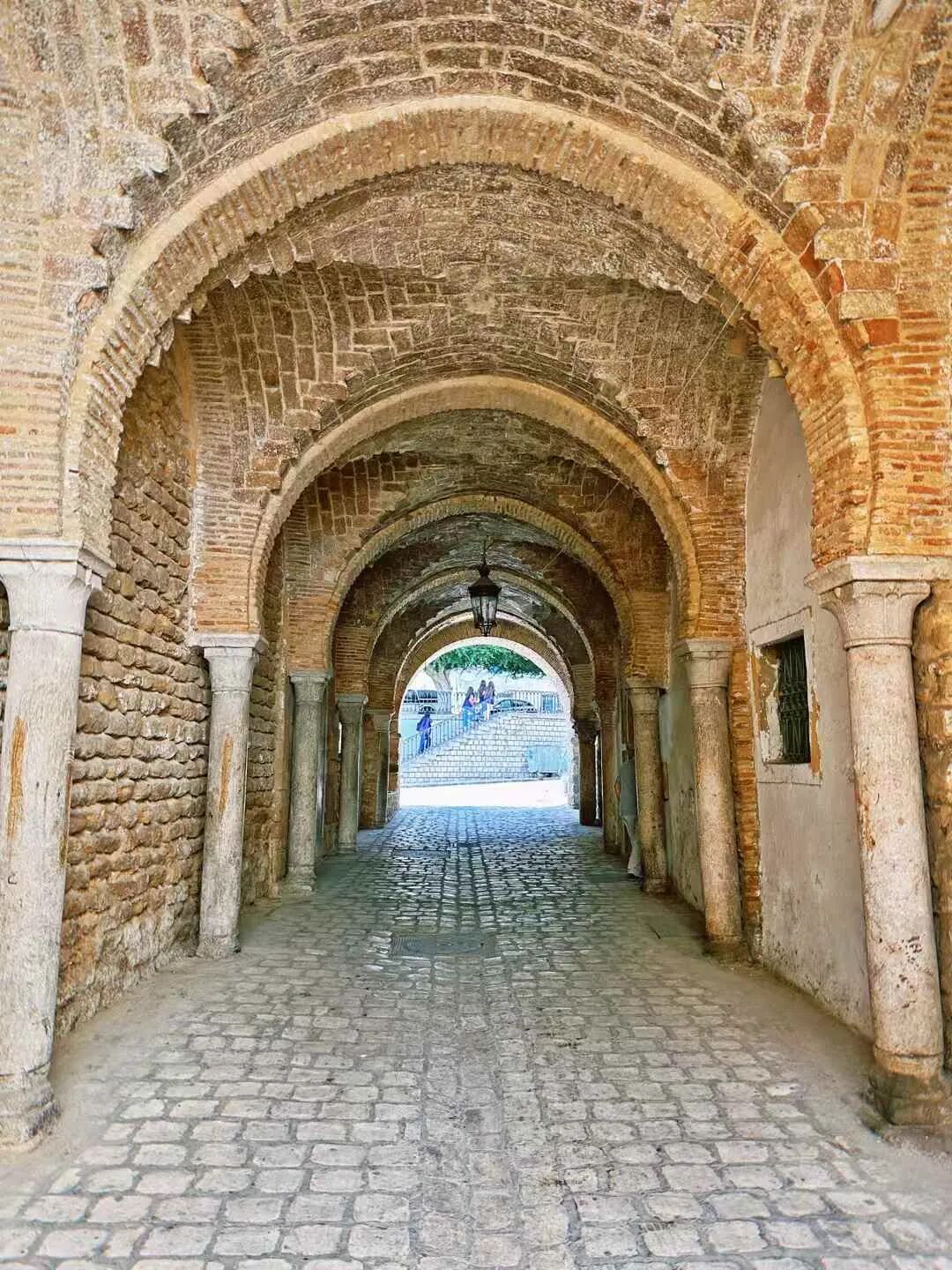
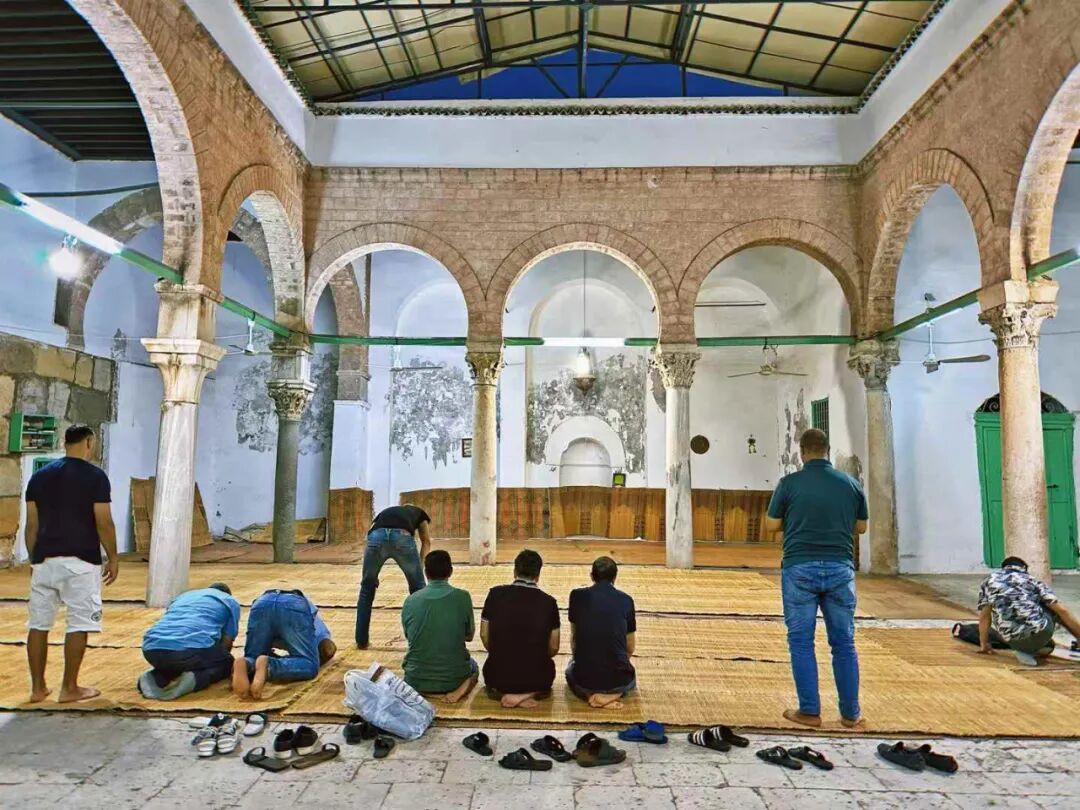
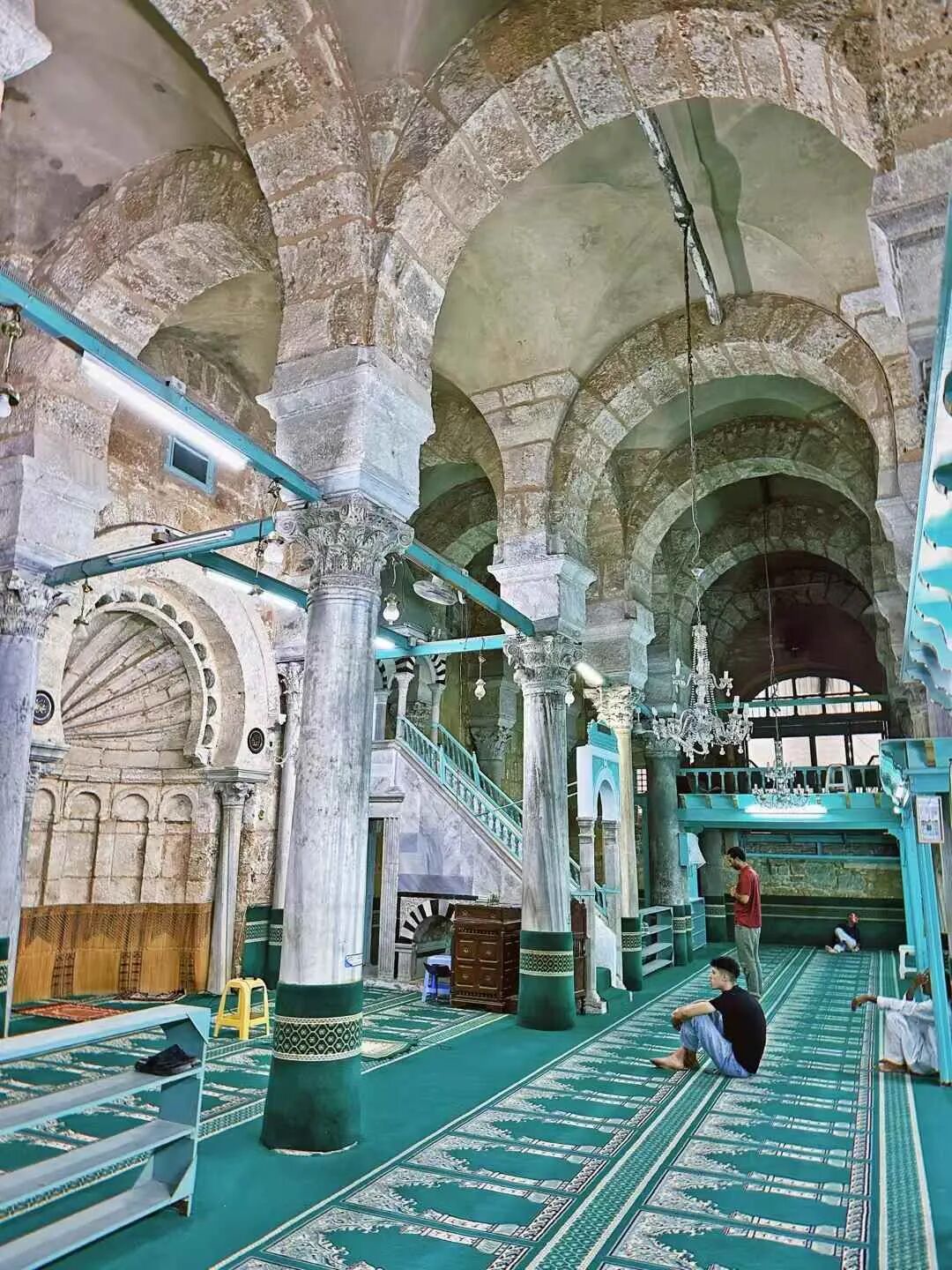
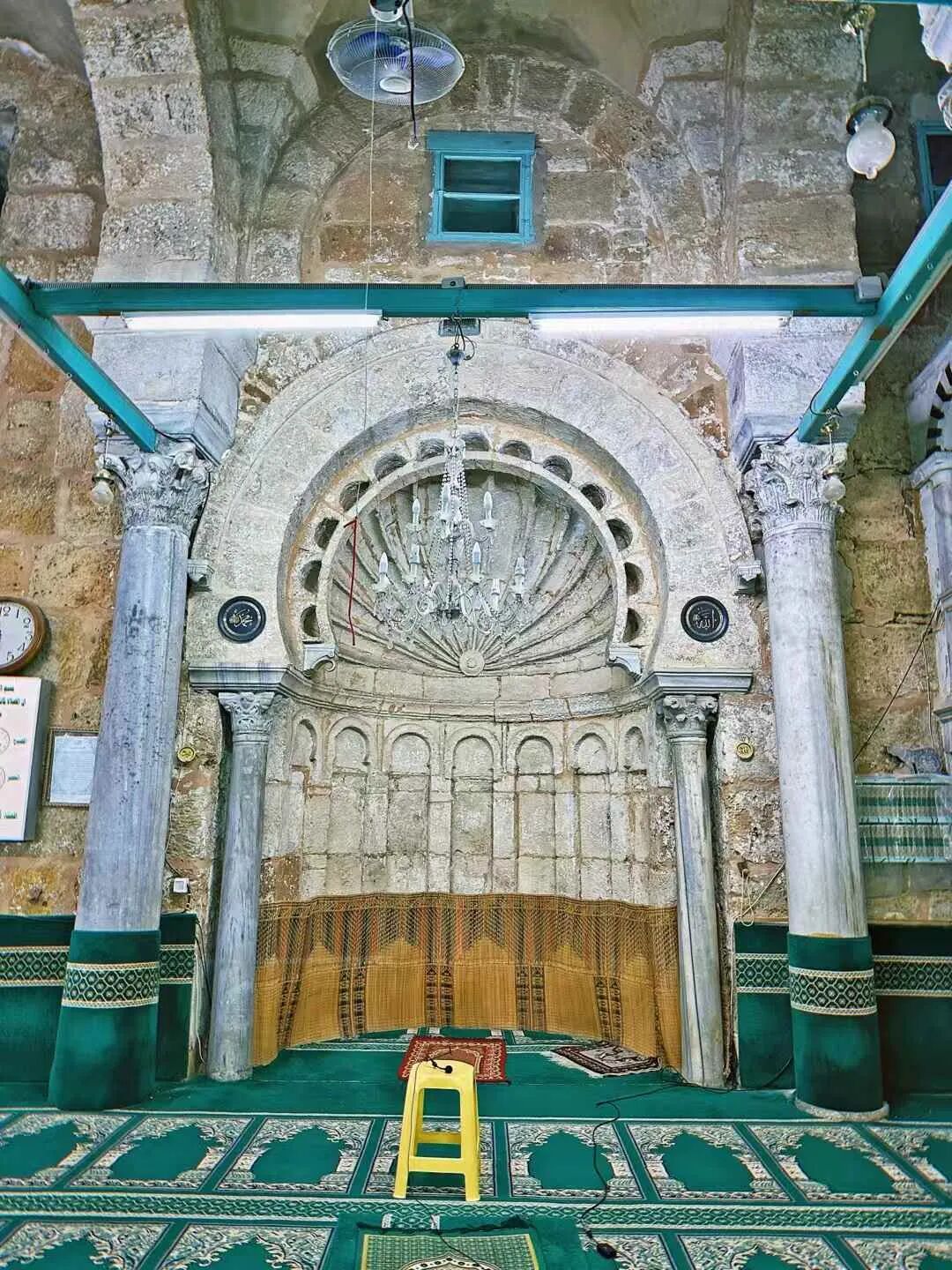
Hammouda Pacha Mosque in Tunis: 1655.
Located in the Medina of Tunis, the Hammouda Pacha Mosque was built in 1655 by Hammouda Pacha, the second Bey of the Muradid dynasty (reigned 1631–66). It is the second Hanafi mosque in Tunis, following the Ksar Mosque.
Hammouda Pacha’s father, Murad I, was originally from Corsica. At age nine, he was captured by Tunisian pirates and sold to a Mamluk Bey in Tunis. He later rose to power and earned the Ottoman title of Pasha of Tunis. The Muradid dynasty was part of the Ottoman Empire but held significant administrative autonomy, allowing them to sign peace treaties and trade agreements with European nations.
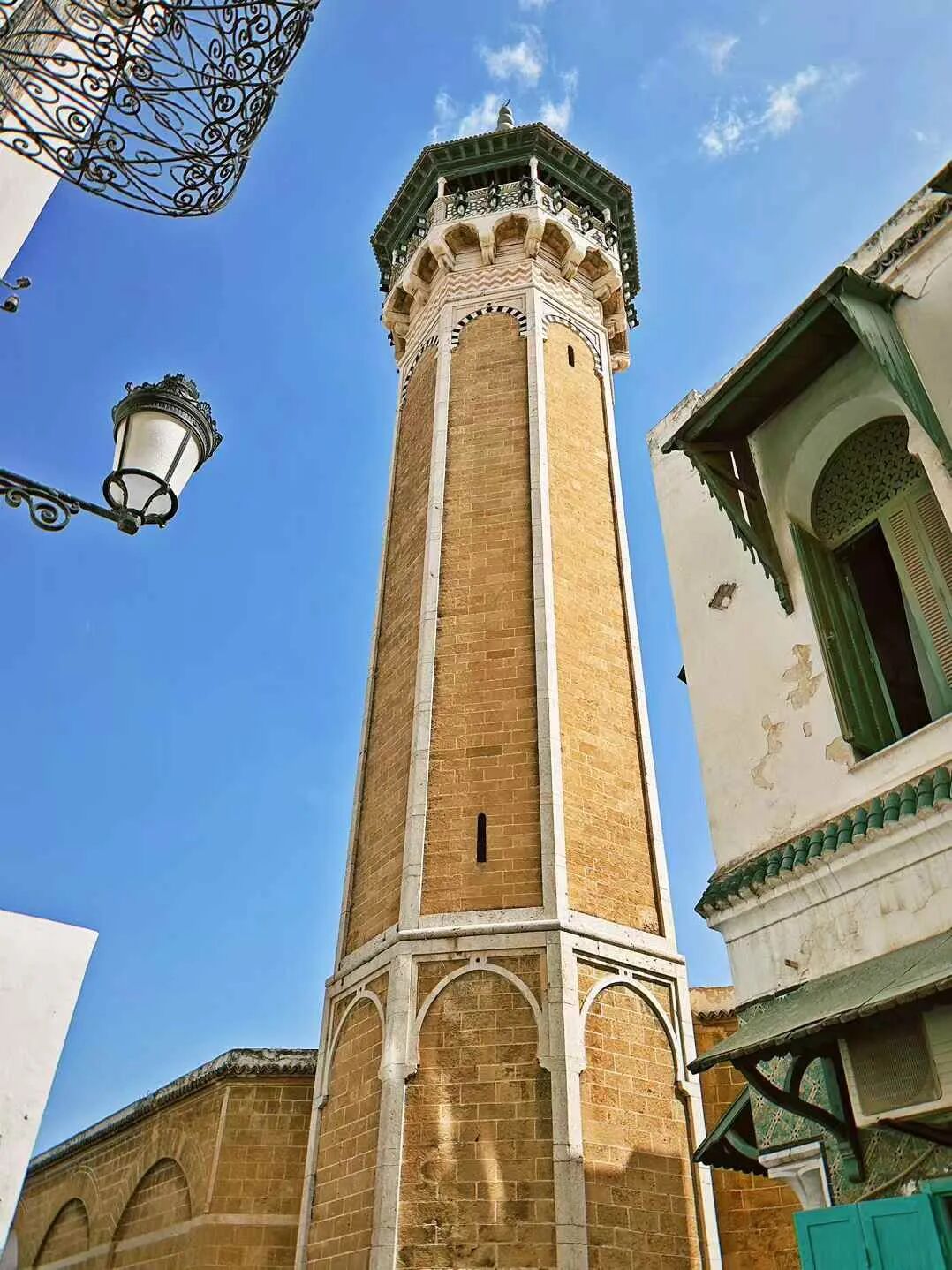
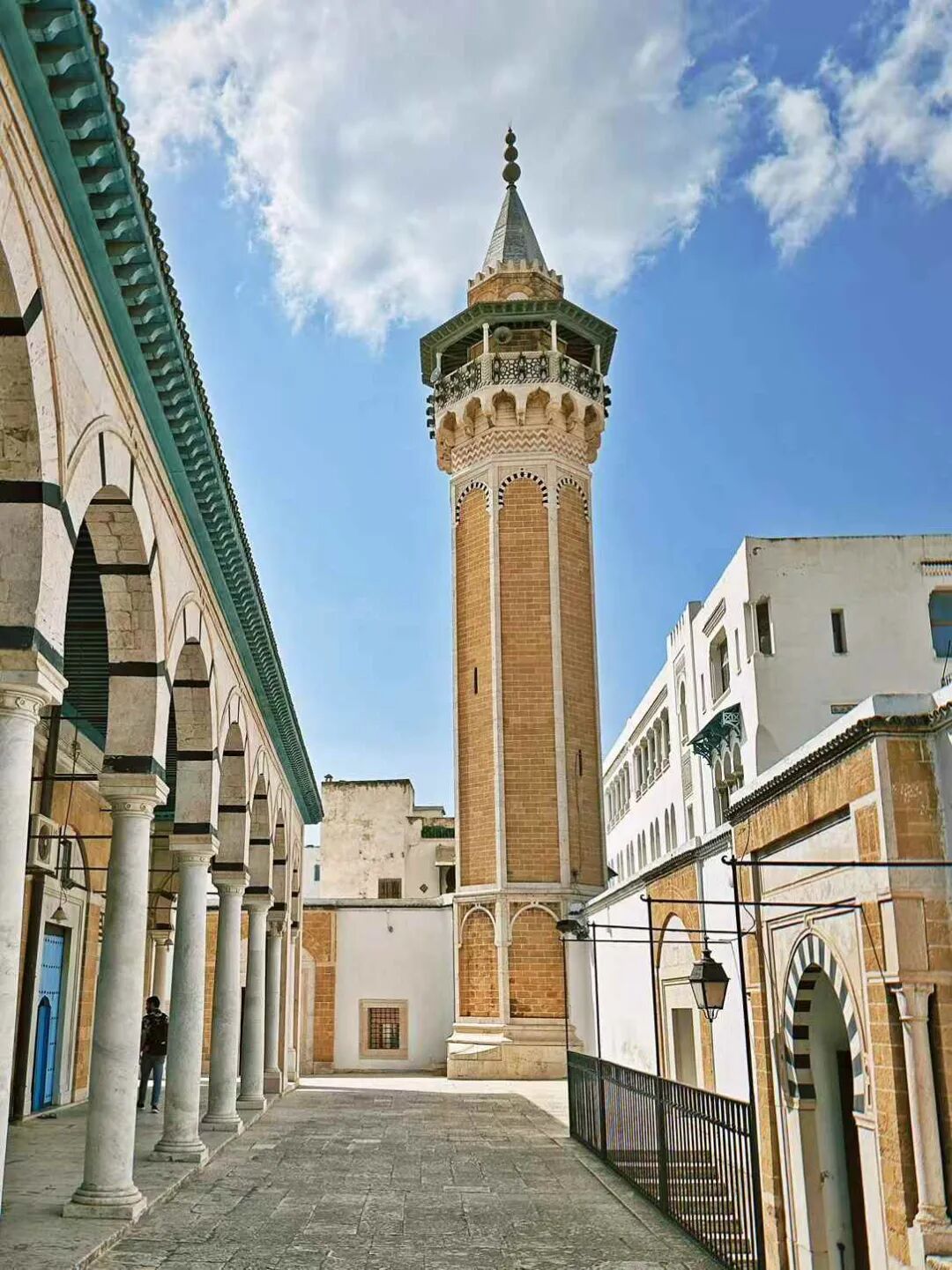
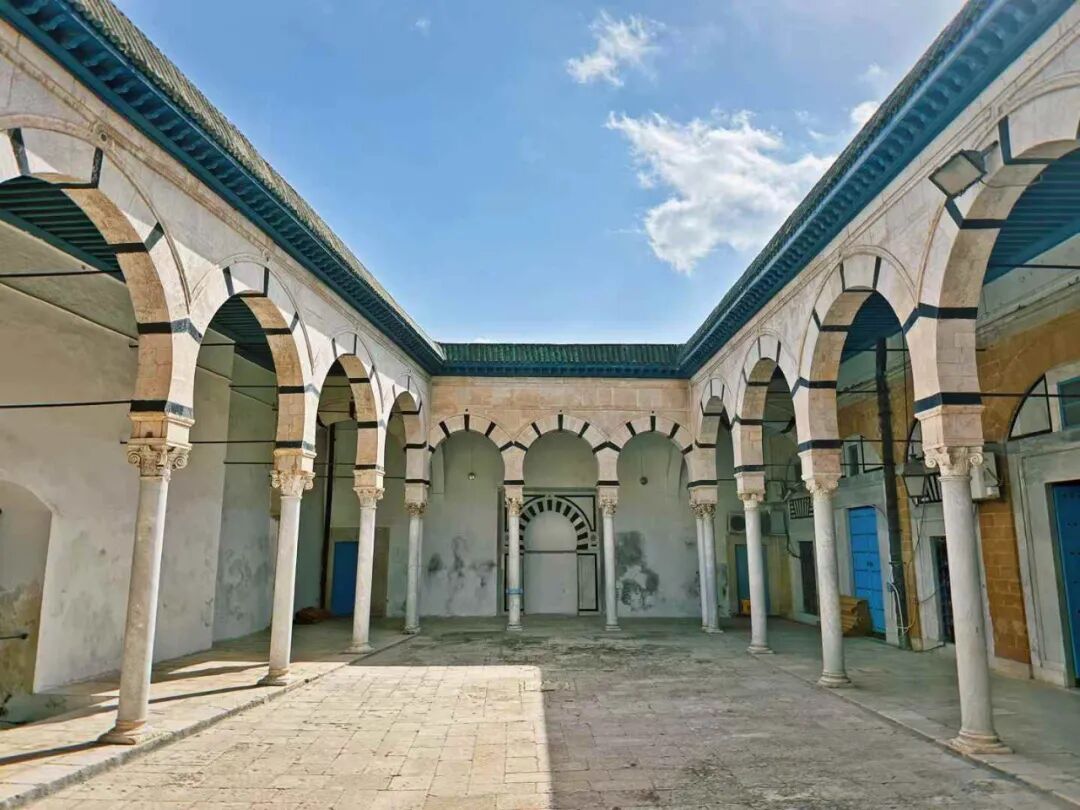
During his reign, Hammouda Pacha led several expeditions to maintain peace and order in Tunisia. People say merchants could trade freely across the country without carrying weapons. Hammouda Pacha built many markets and hospitals in Tunis, and the Ottoman-style Hammouda Pacha Mosque is his most famous work. The Hammouda Pacha Mosque features an octagonal minaret and a rectangular courtyard with galleries. The marble work inside the main prayer hall is also very Ottoman in style.
Sidi Mahrez Mosque in Tunis: 1692.
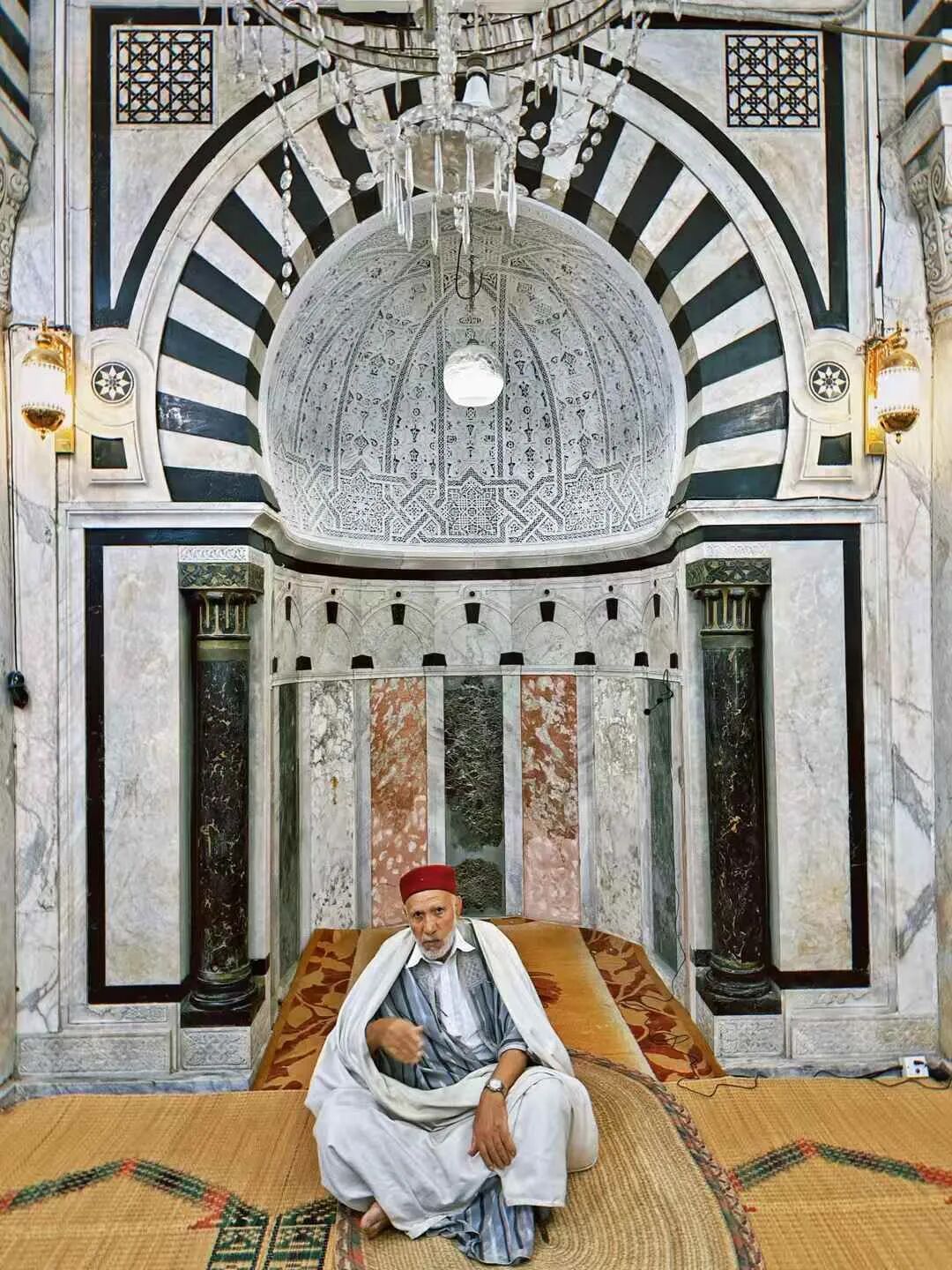
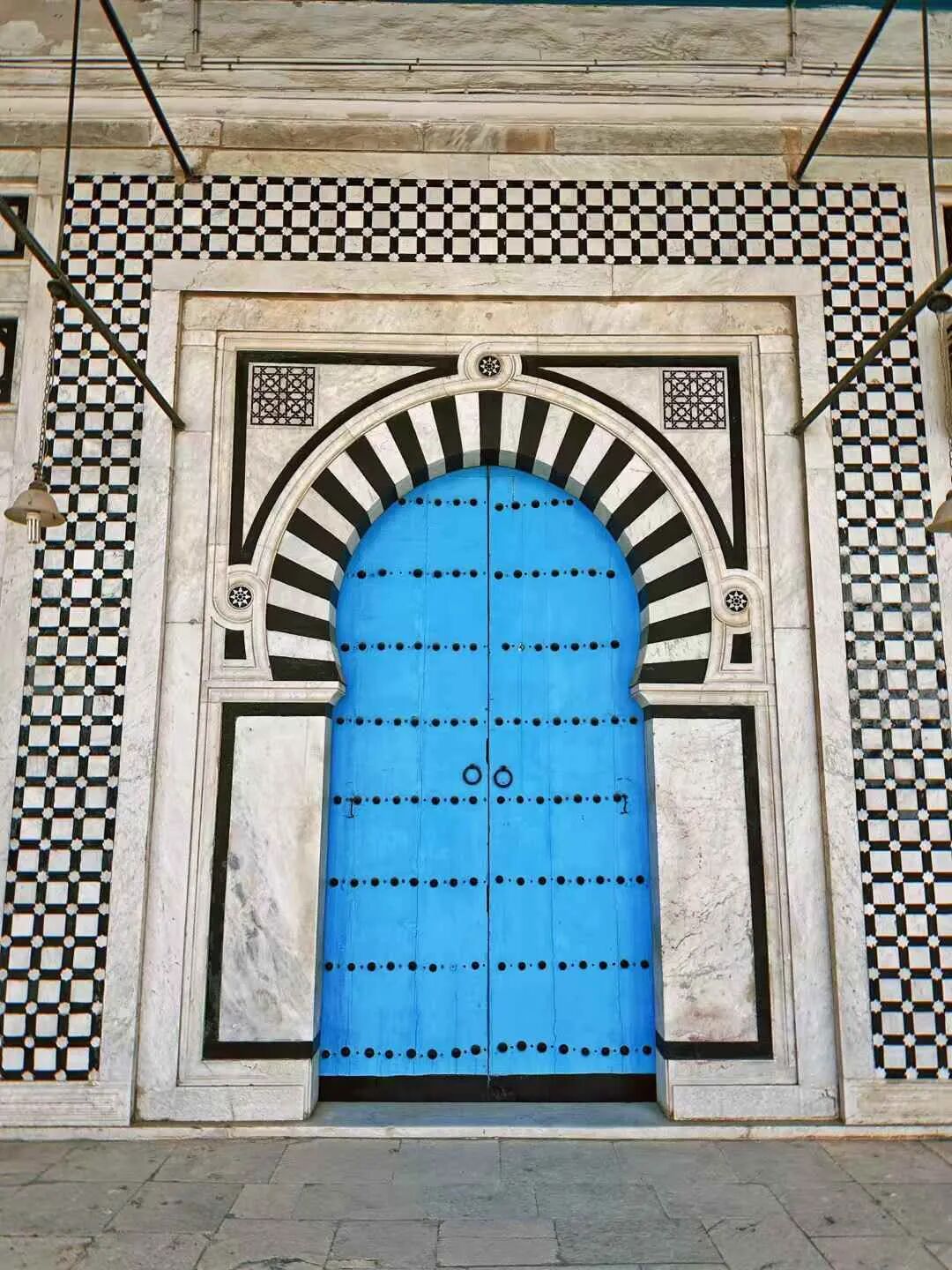
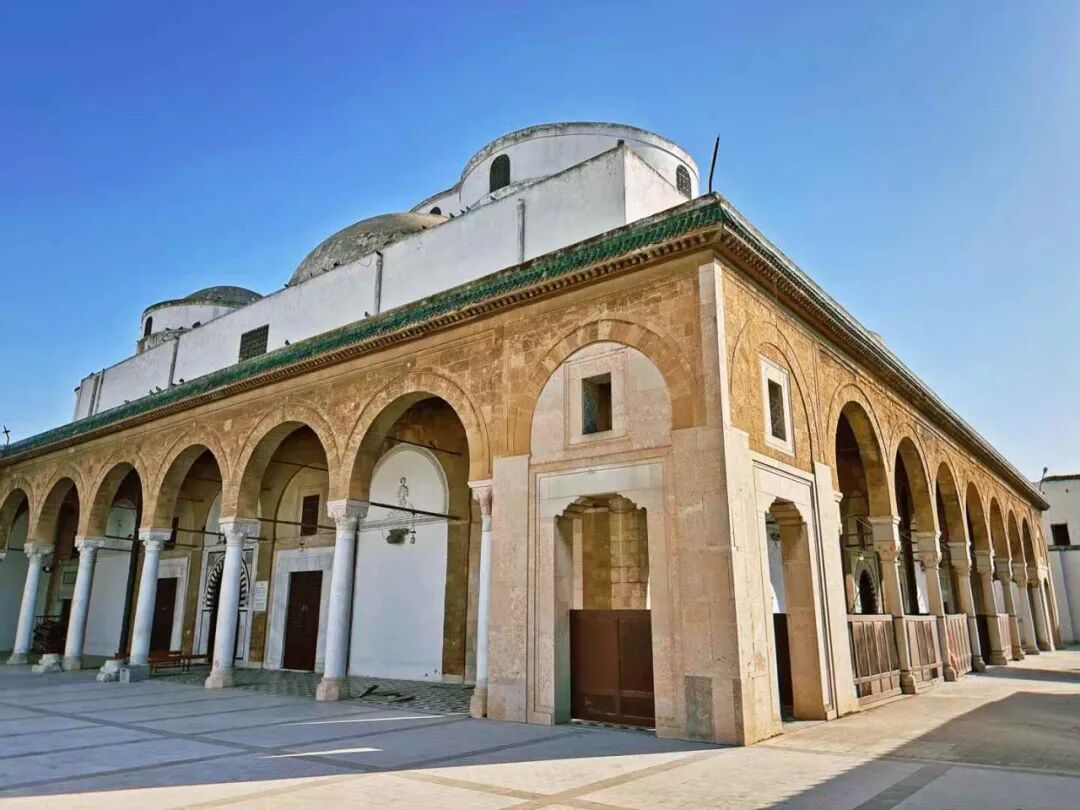
The Sidi Mahrez Mosque is located on the north side of the Tunis Medina. It was built in 1692 by Mohamed Bey, the fourth Bey of the Muradid dynasty (reigned 1675–96). It sits right next to the gongbei of Sidi Mahrez, the most important wali (saint) in Tunis, who was also a famous Maliki scholar.
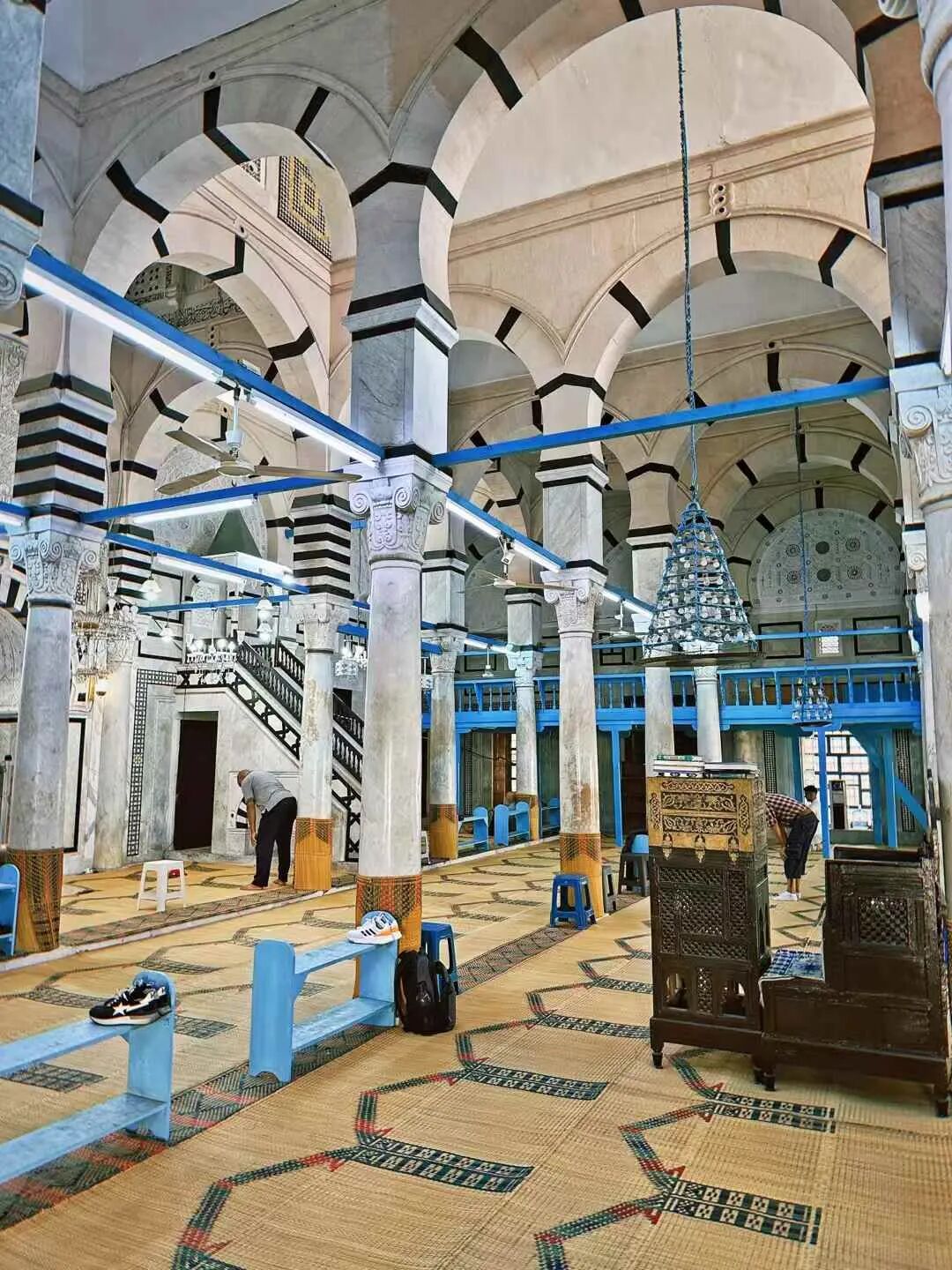
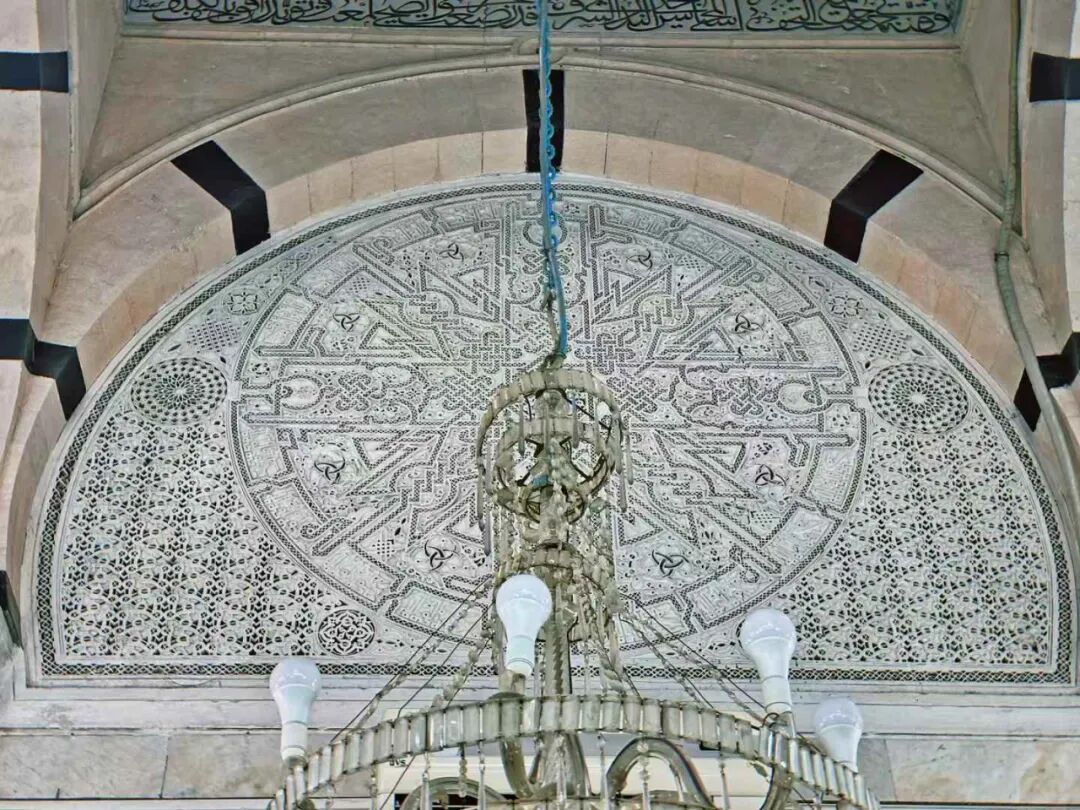
The Sidi Mahrez Mosque is heavily influenced by Ottoman style. It is modeled after the great mosques of Istanbul, featuring a central dome and smaller domes, with the interior decorated in Iznik tiles imported from Turkey. Tunisia was unstable during the reign of Mohamed Bey, with civil war and invasions from Algiers causing internal and external trouble. Despite this, the Bey still built many structures, and the Sidi Mahrez Mosque is his representative work.
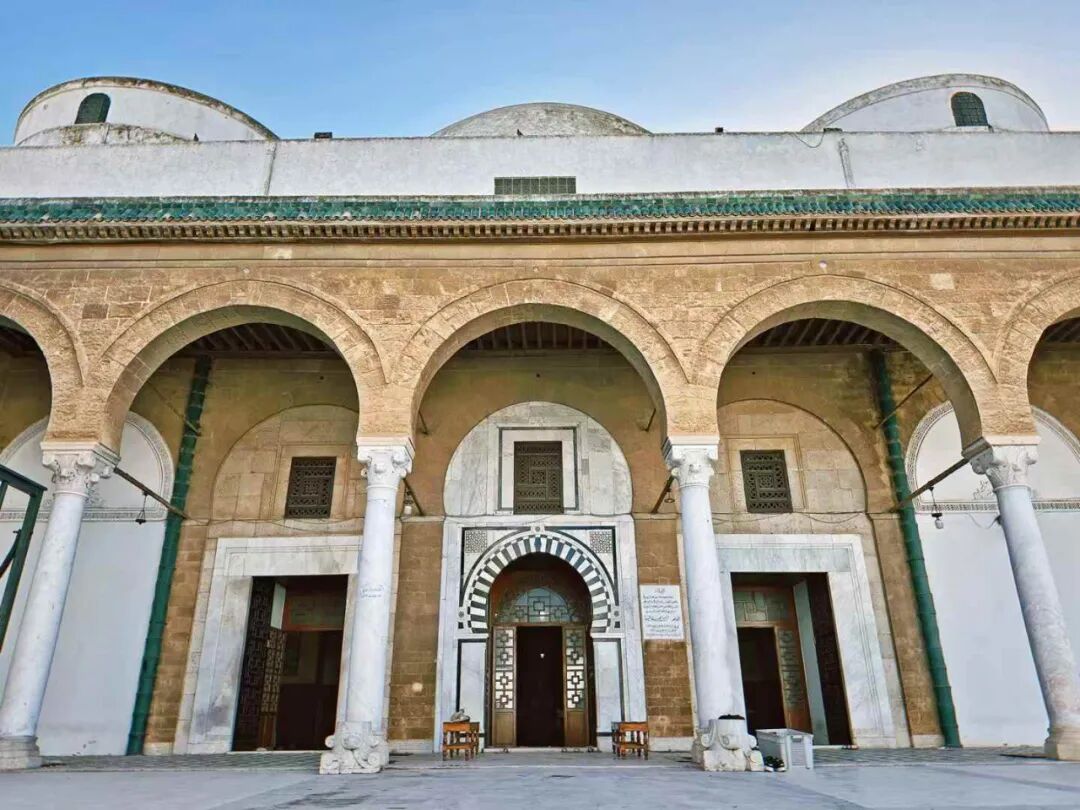
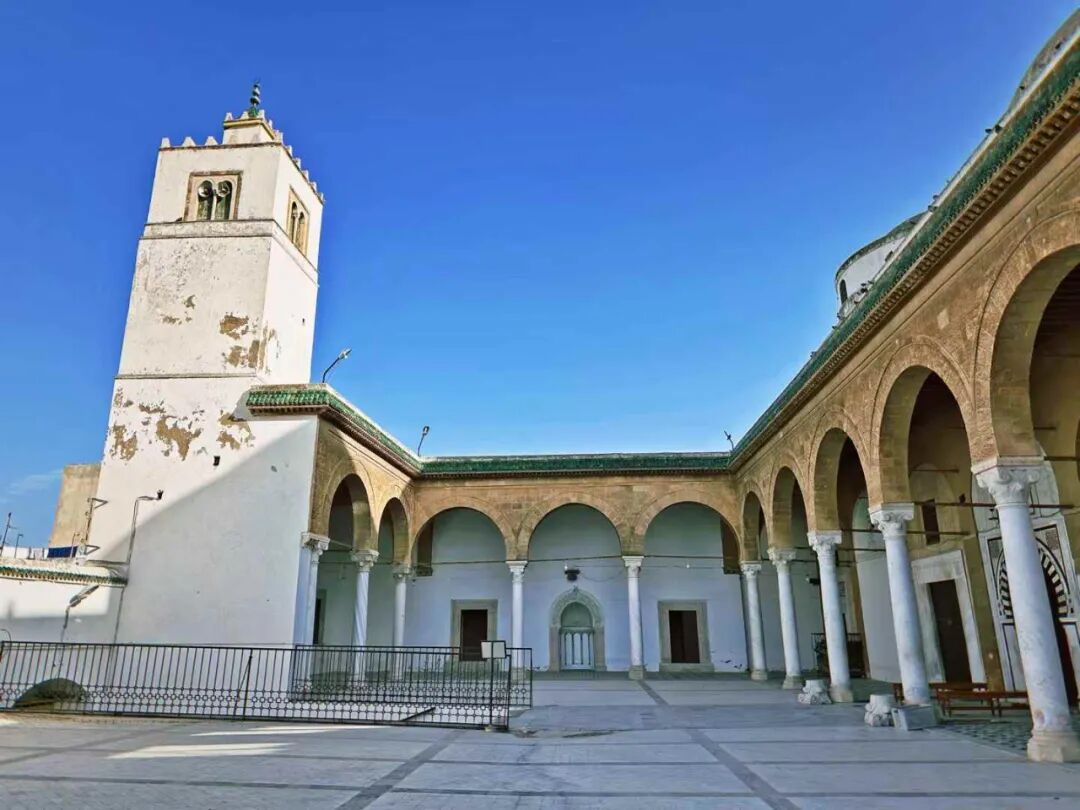
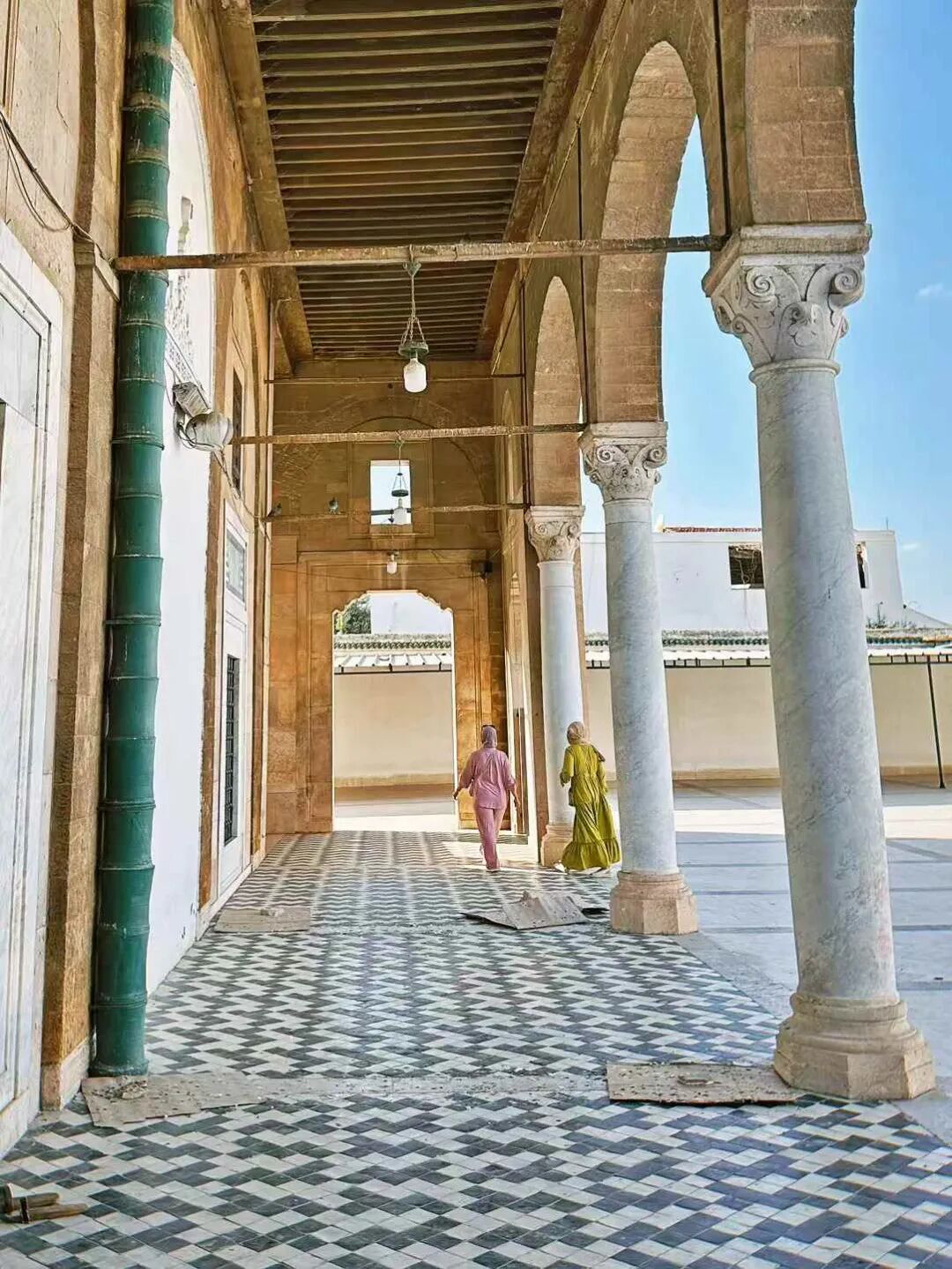
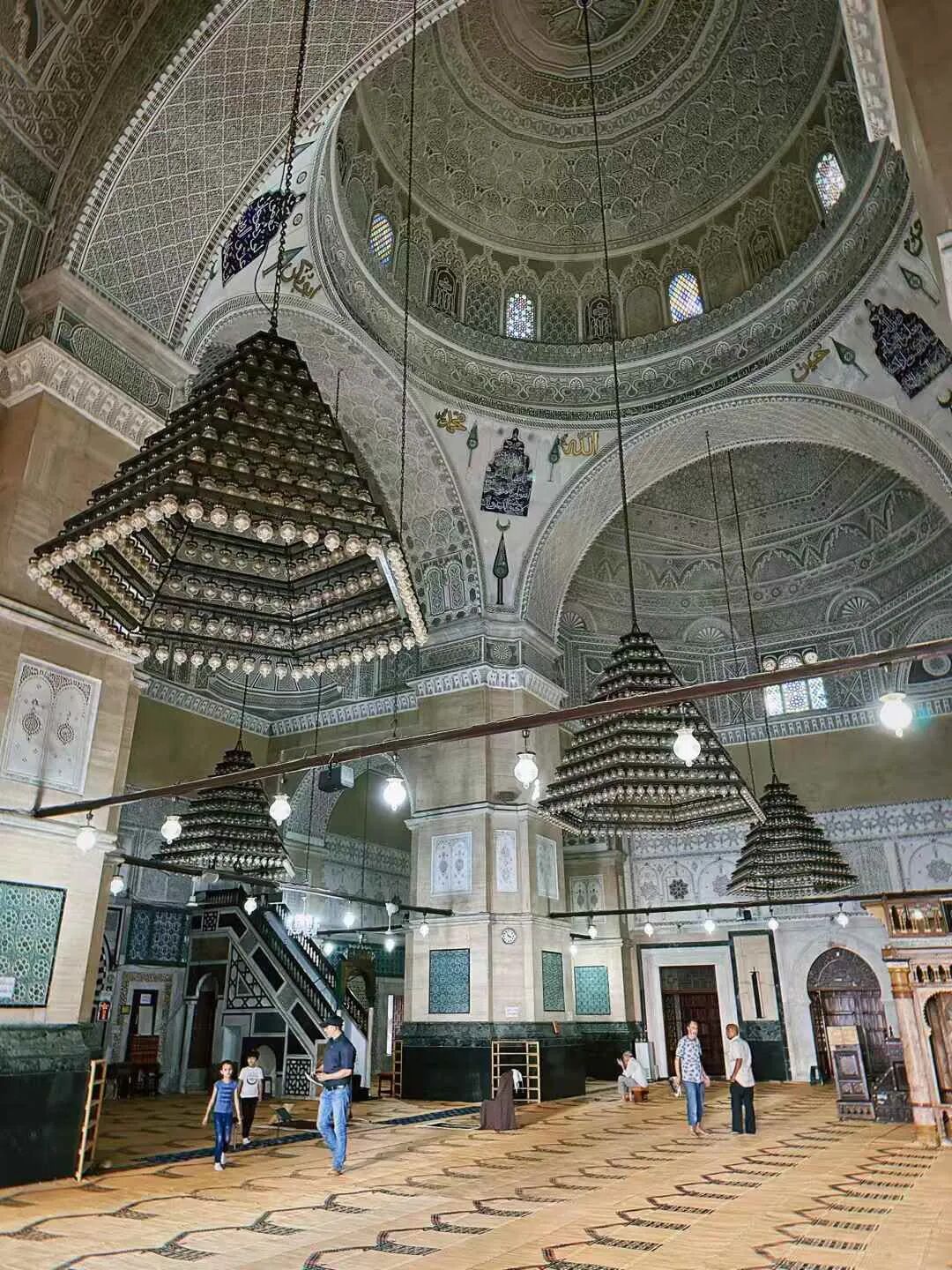
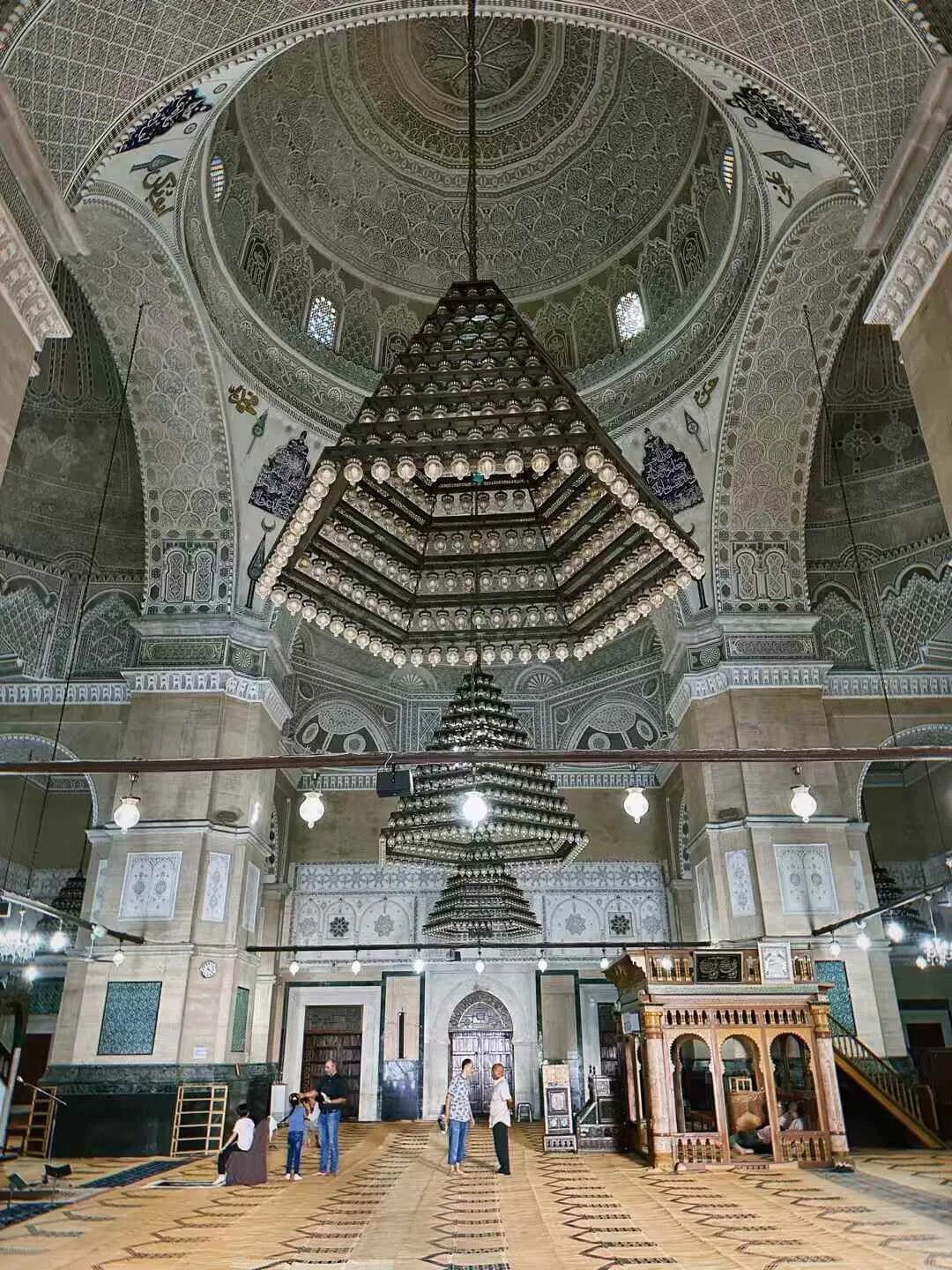
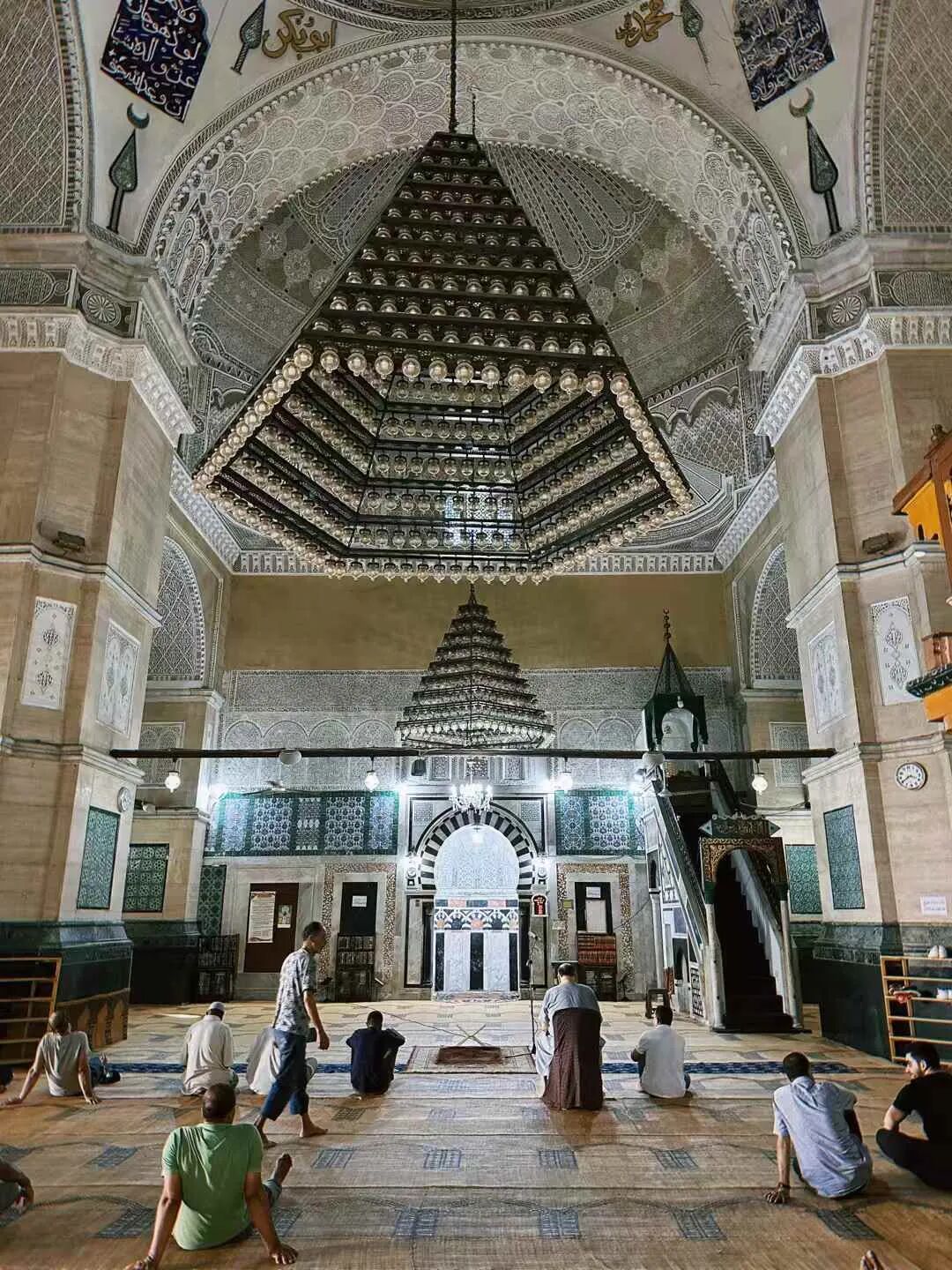
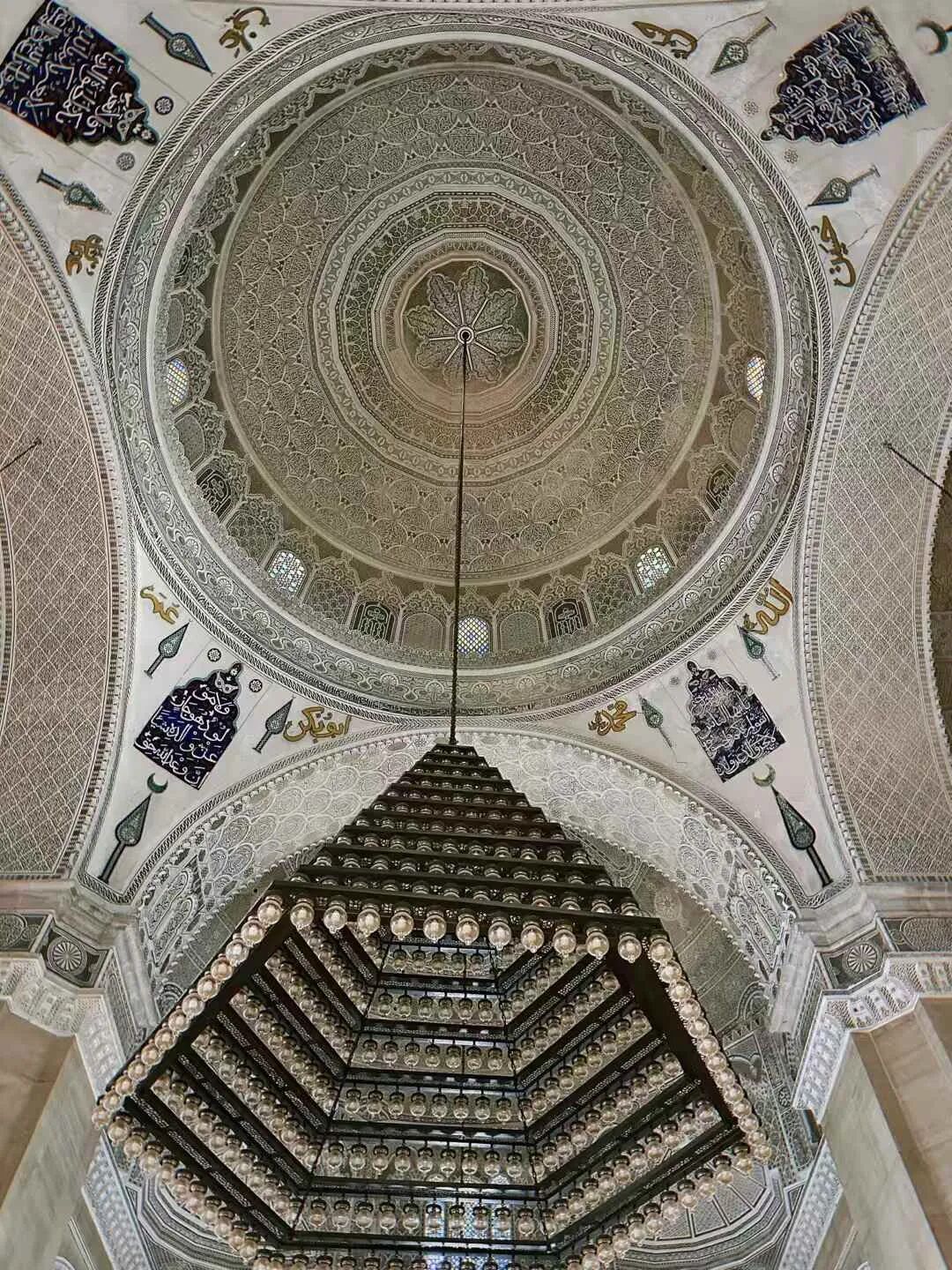
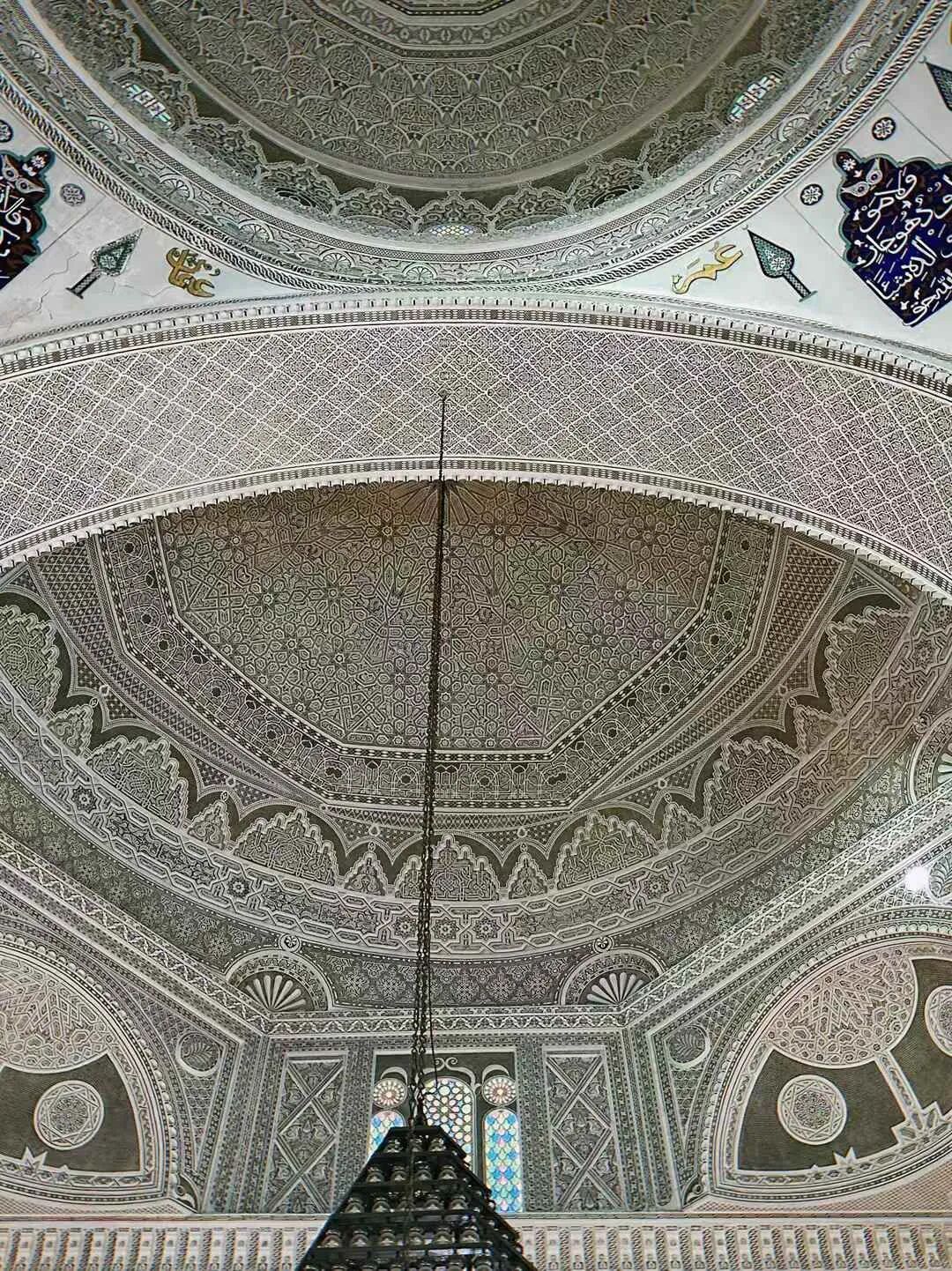
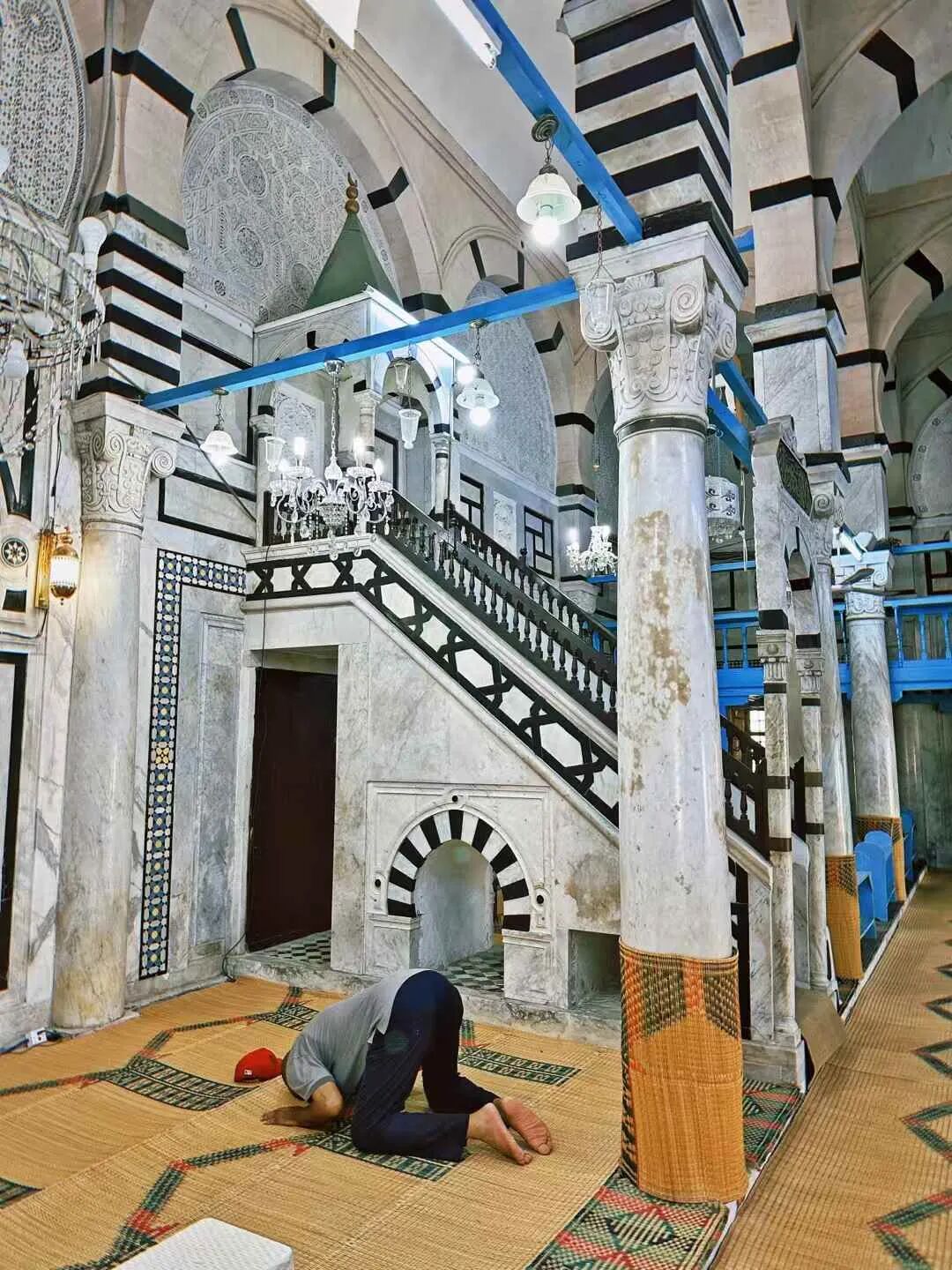
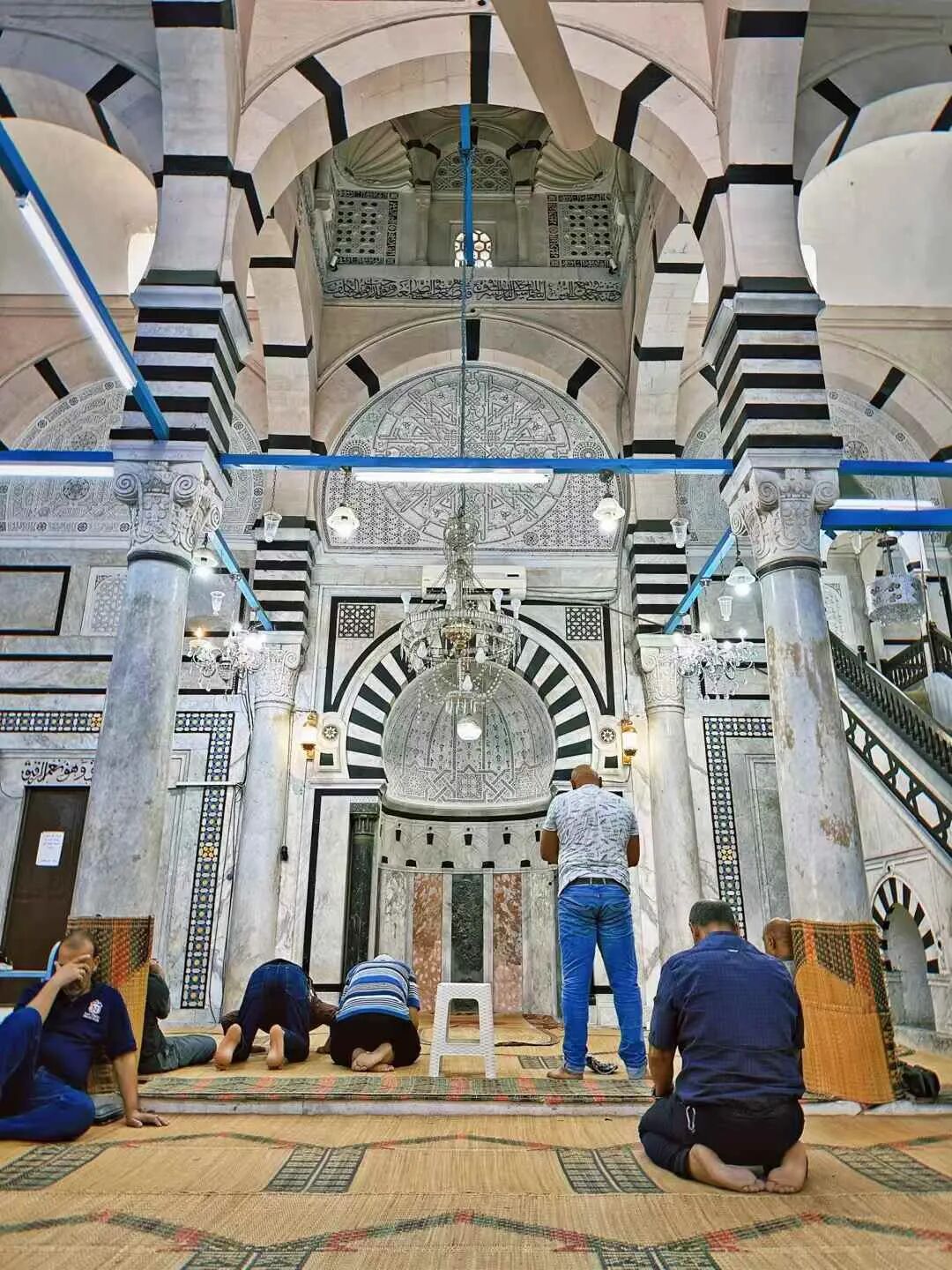
Using the Sidi Mahrez Mosque as an example, here is the main layout of a mosque's interior during the Ottoman period.
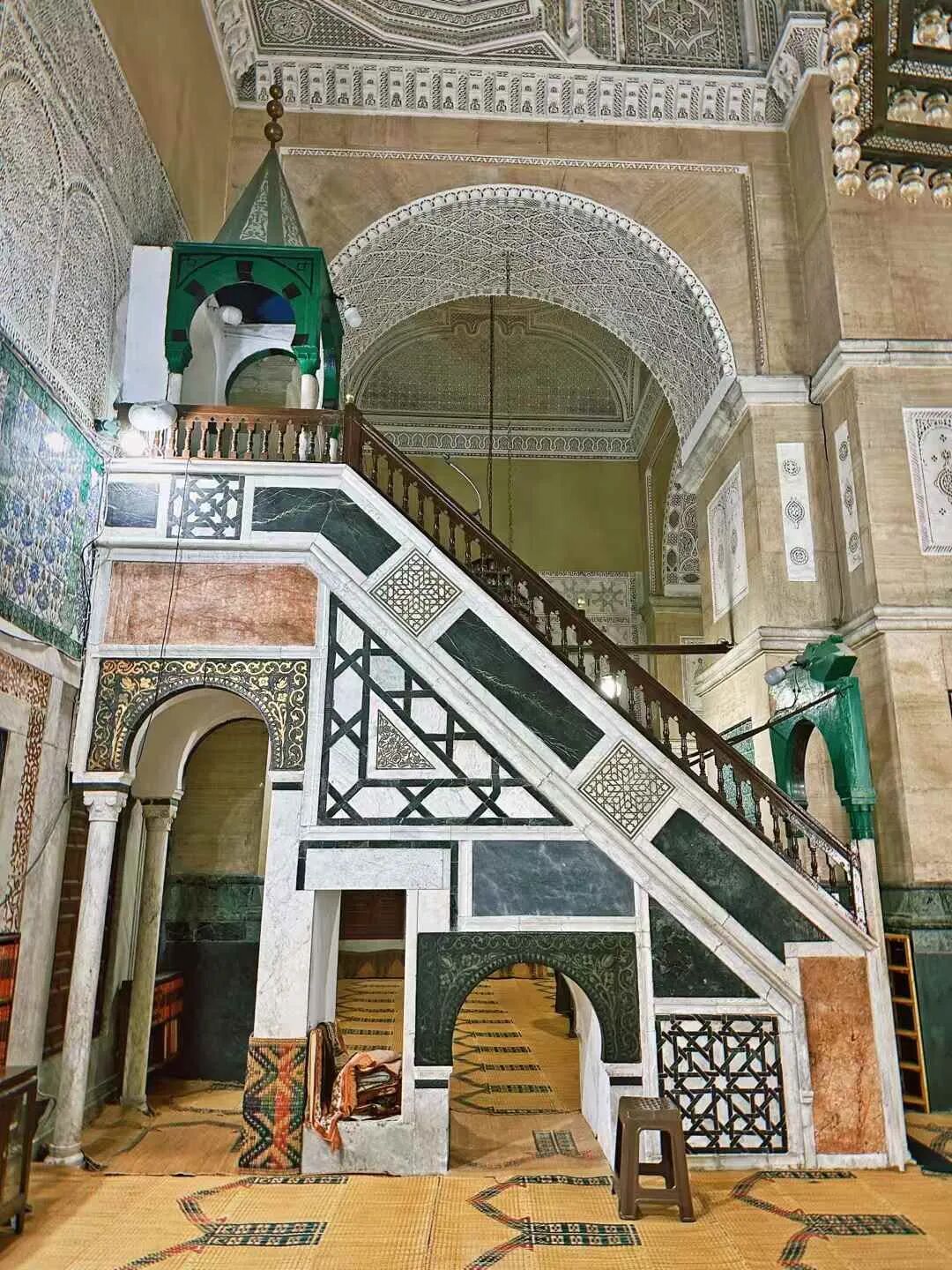
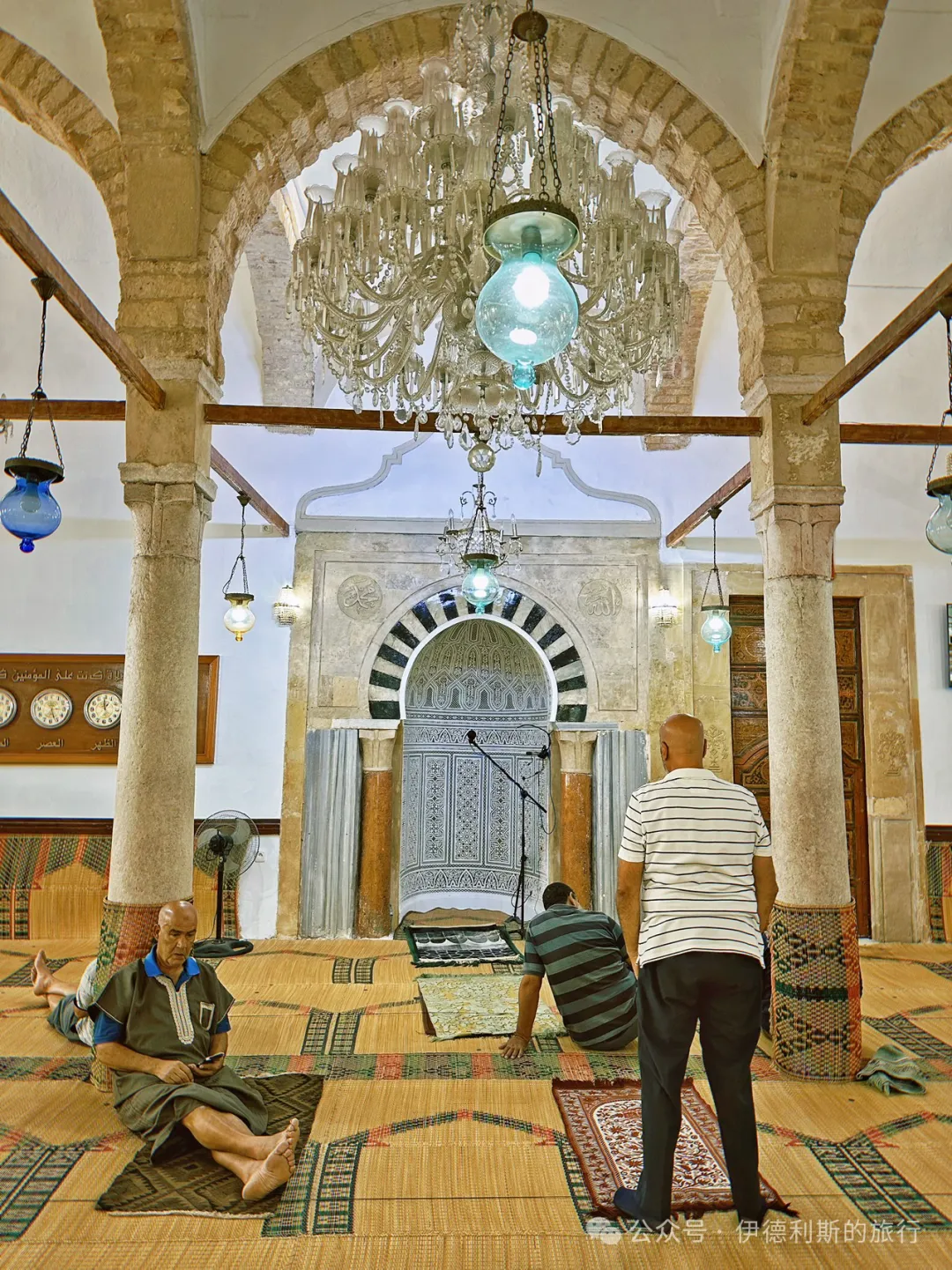
The most important part of the main hall is the qibla wall, which faces the direction of Mecca. During namaz, every row of worshippers aligns parallel to the qibla wall. In the center of the qibla wall is the mihrab, a niche that symbolizes the entrance to Paradise. After the congregation forms, the imam stands directly in front of this niche.
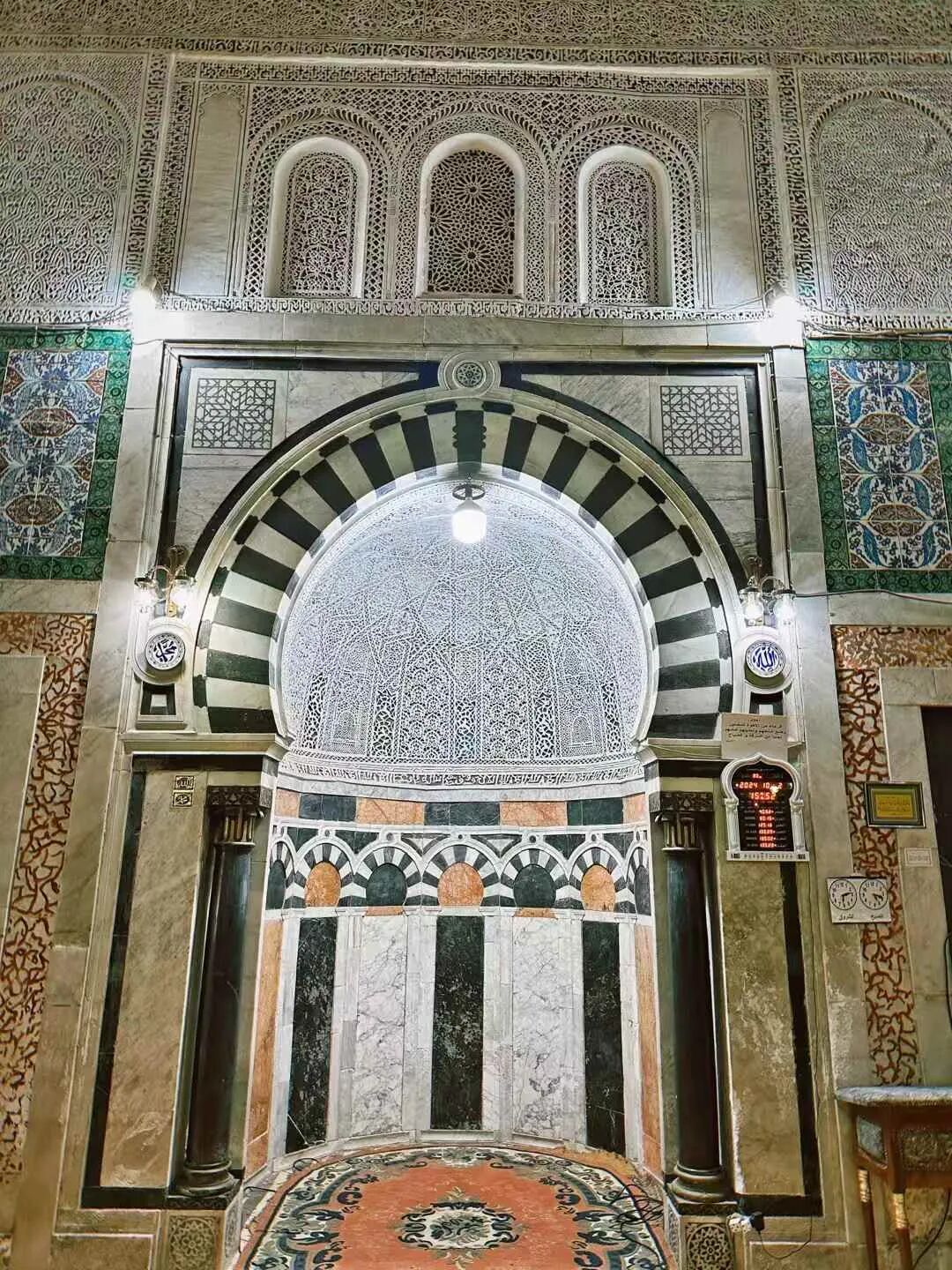
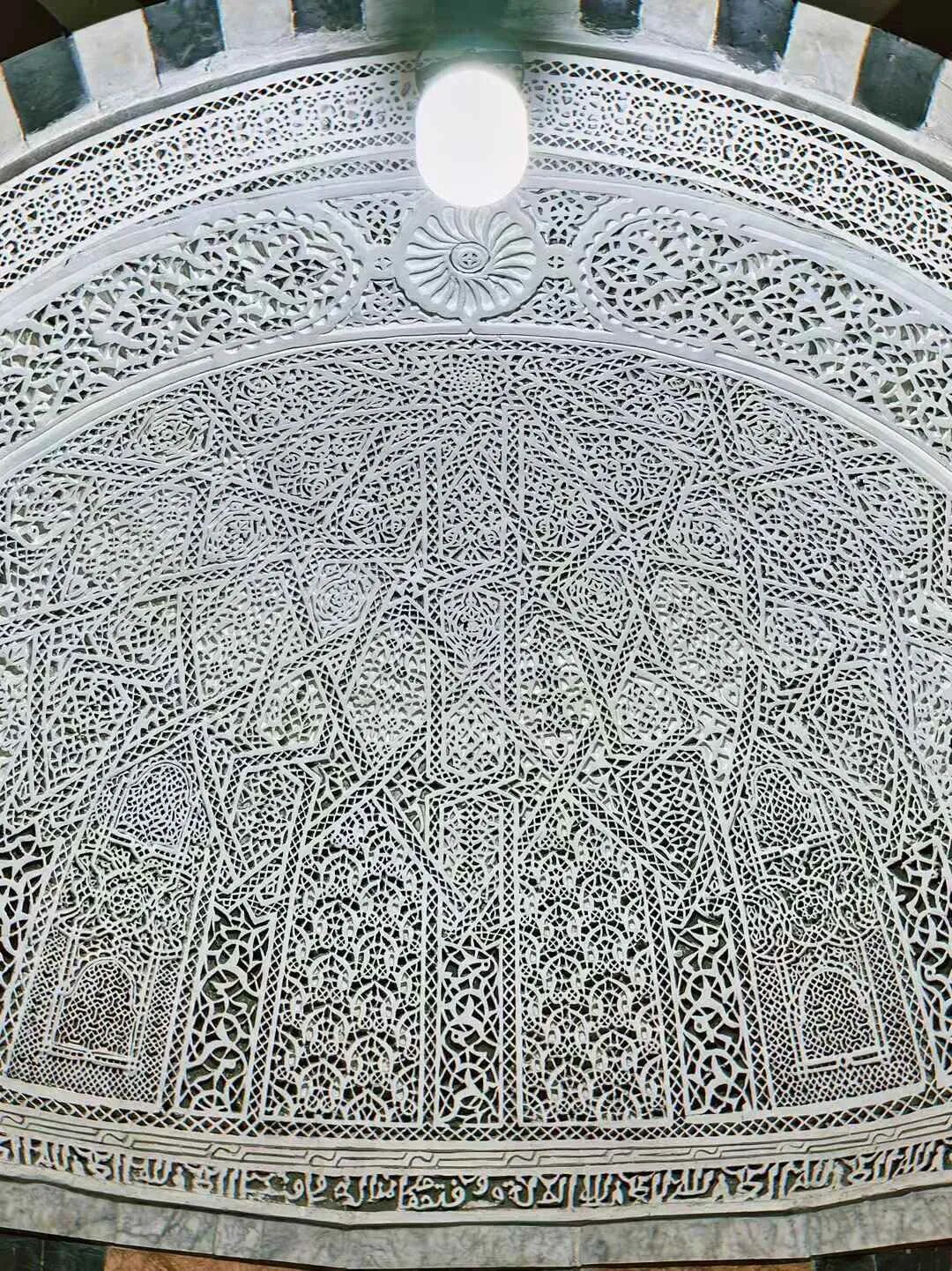
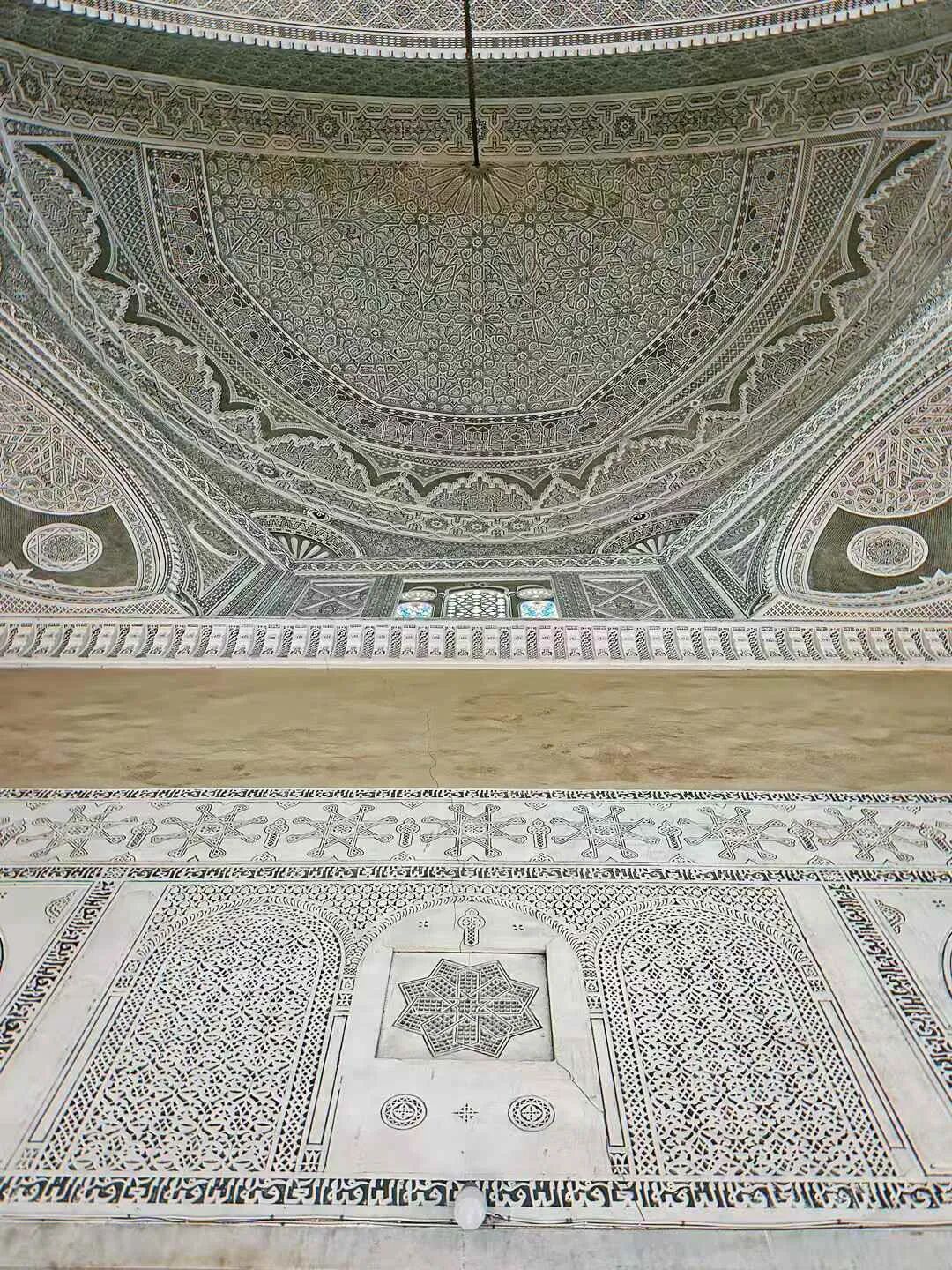
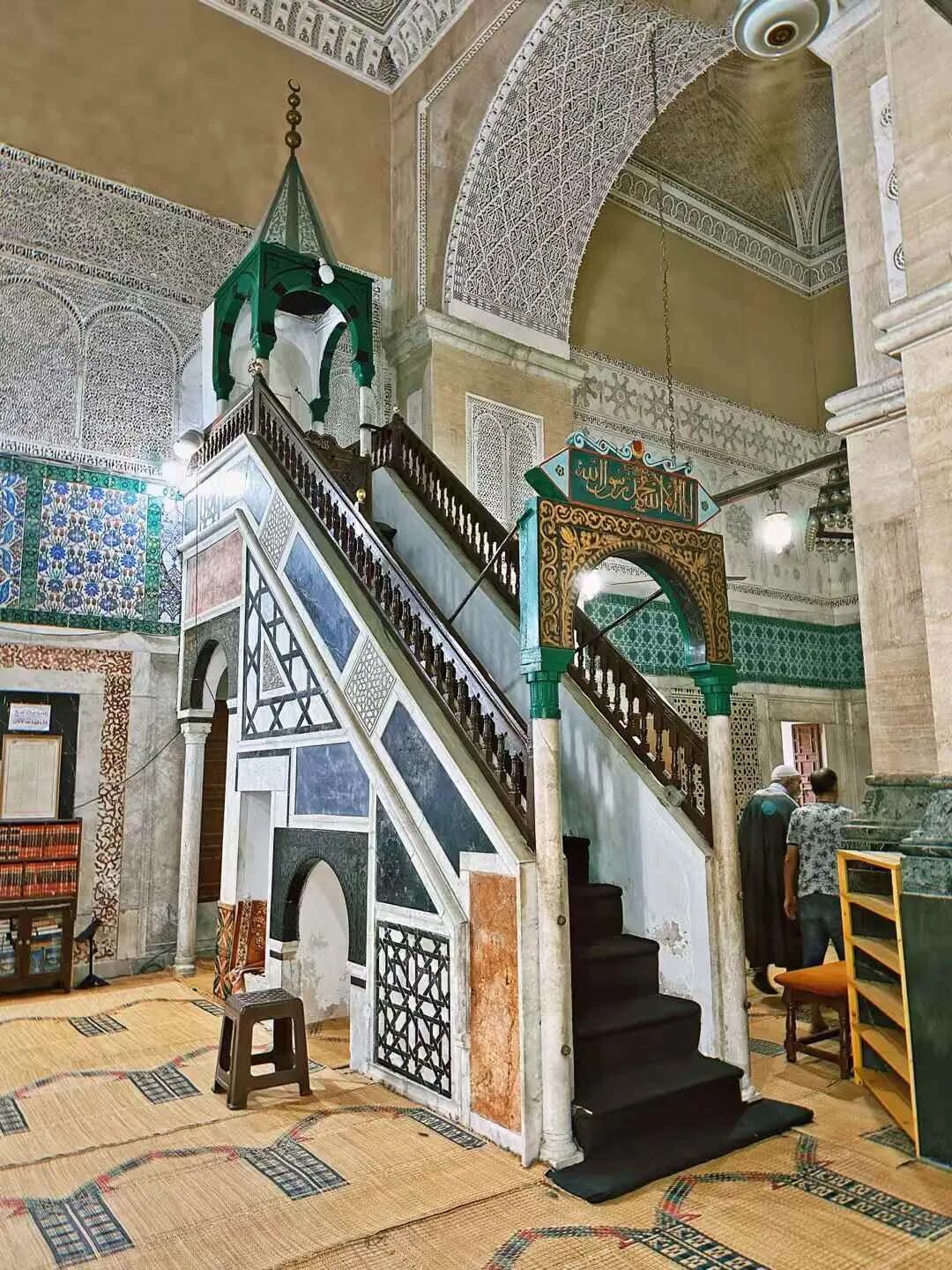
The minbar (pulpit) is next to the mihrab. This is where the sermon is delivered during the Friday Jumu'ah prayer and Eid prayers.
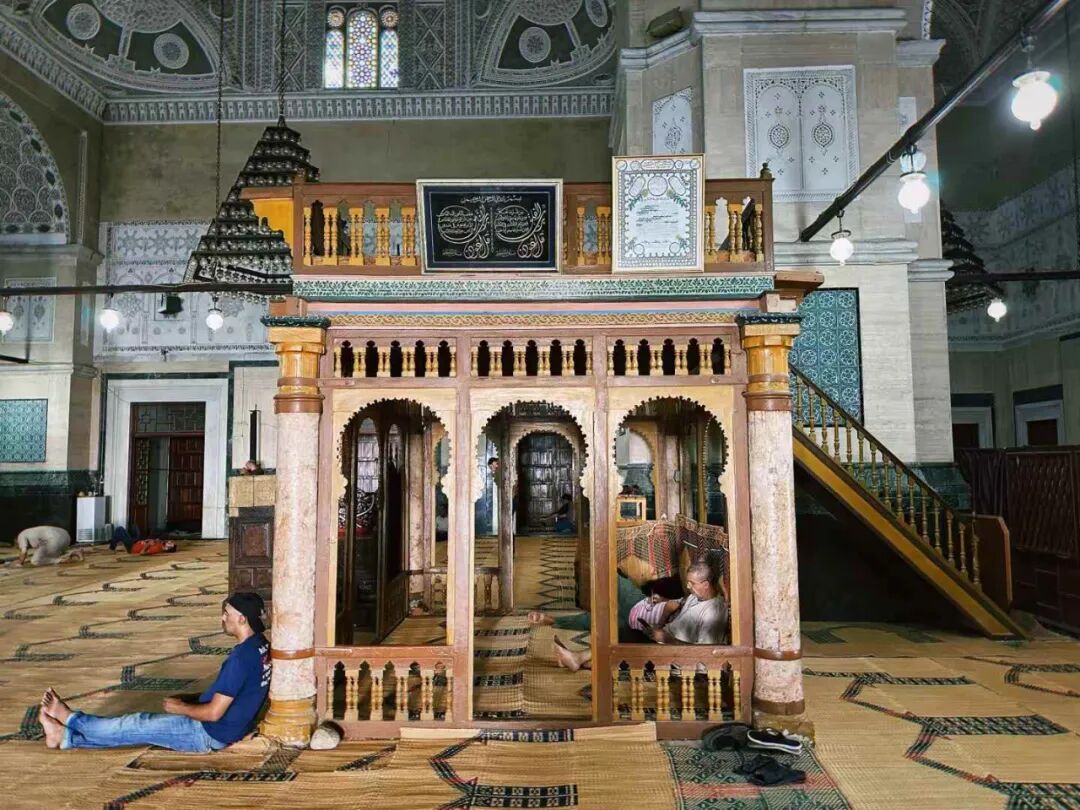
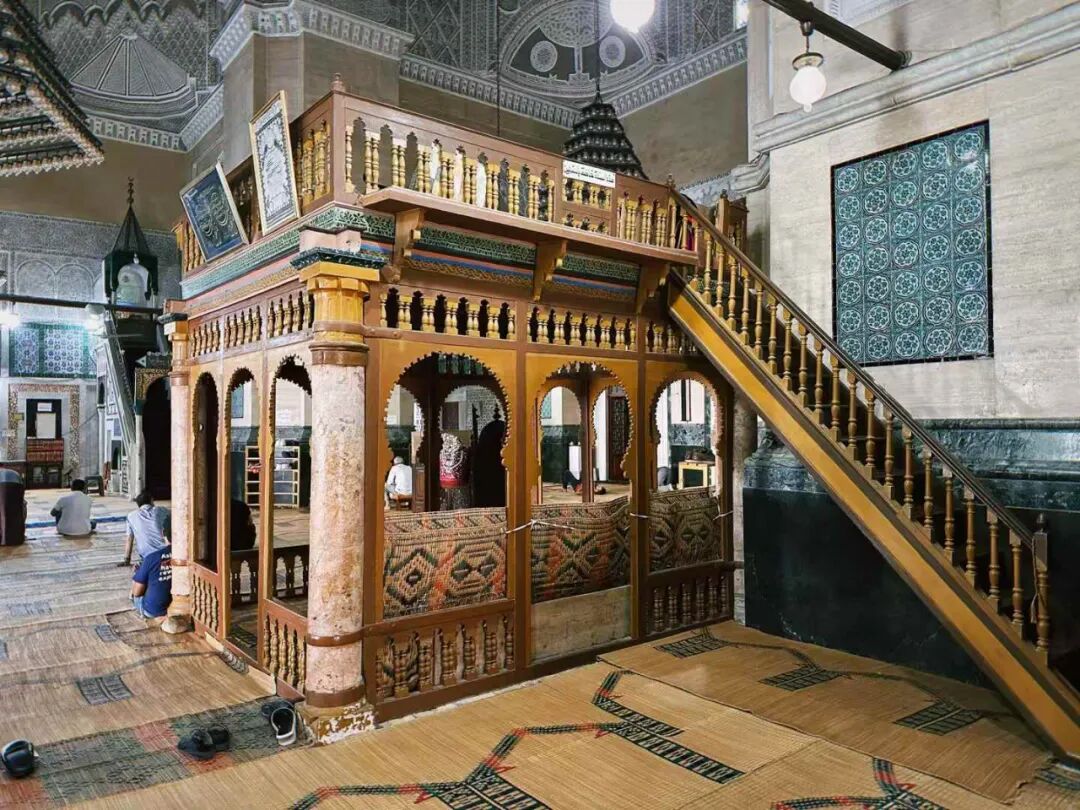
The main hall of a large mosque often has a dikka (raised platform) in the center, though some mosques build them above the main entrance. The dikka is called Müezzin Mahfili in Turkish. It is where the muezzin calls the adhan and responds to the imam during prayer. People also recite the Quran here during the nights of Ramadan. Because there were no sound systems in the past, not everyone could hear the imam leading the prayer, so the muezzin needed to repeat the sounds loudly from the platform.
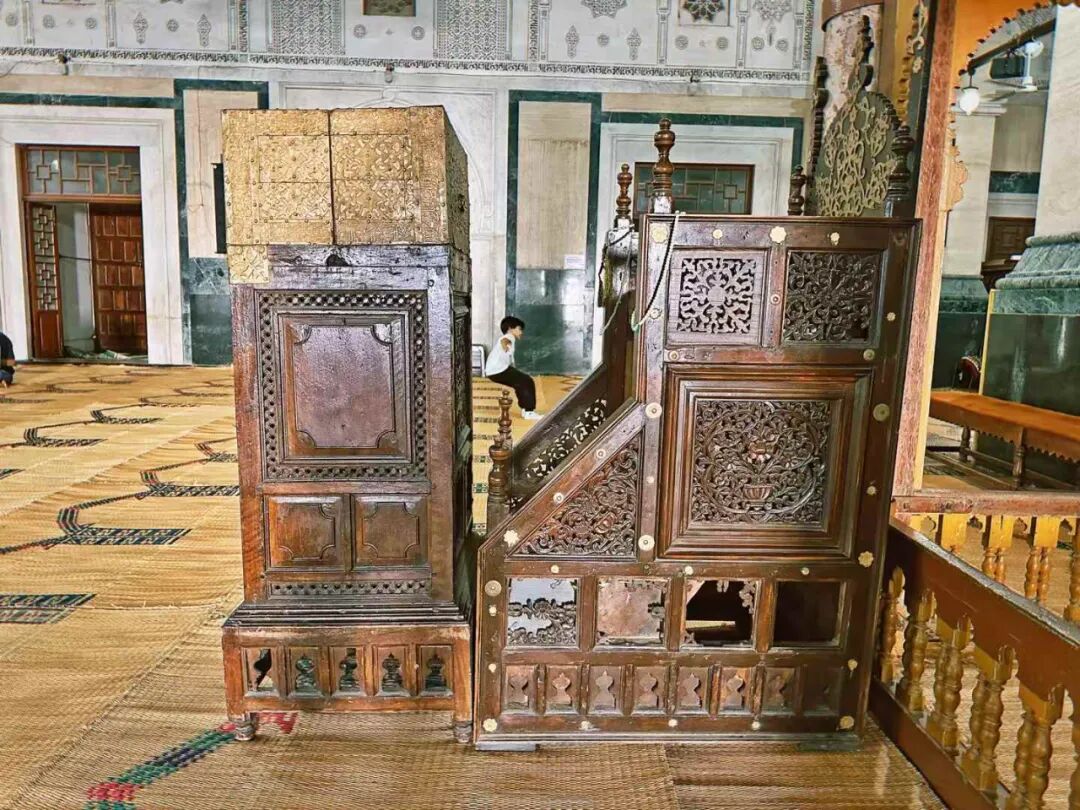
Additionally, the main halls of some large mosques in Tunis contain beautifully crafted Quran cases, made of either carved wood or copper.
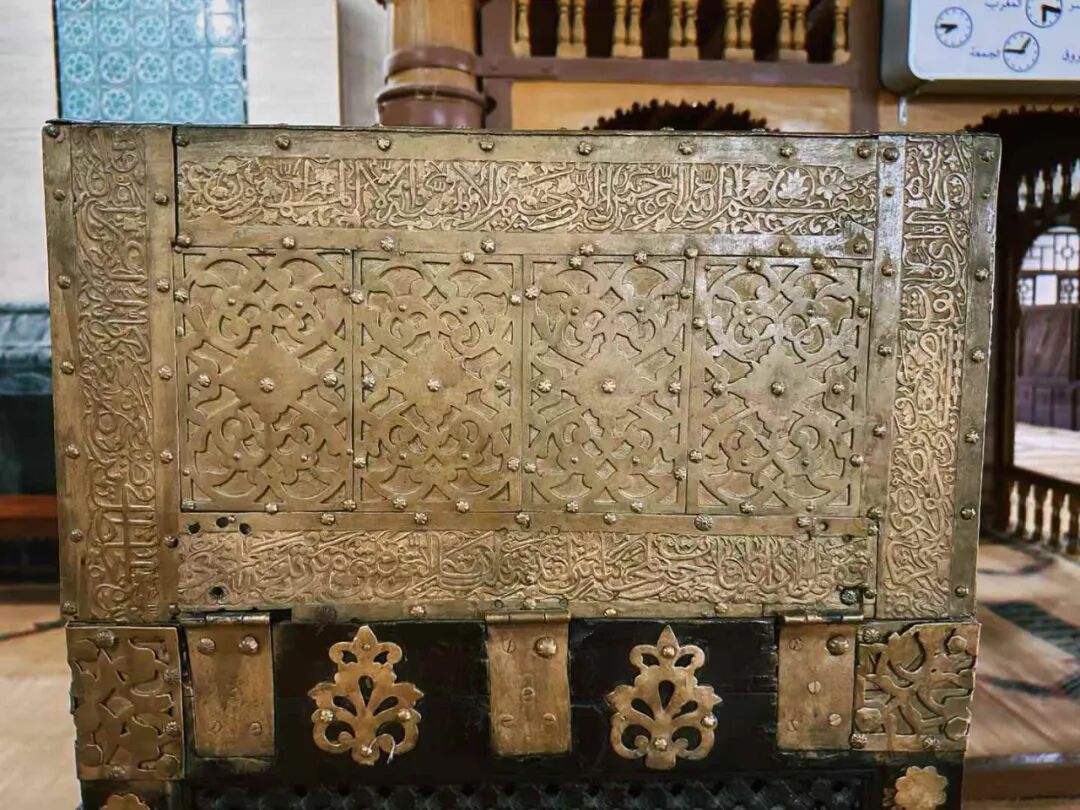
El Ichbili Mosque in Tunis: Founded in the 10th century.
The El Ichbili Mosque is located deep within the Medina of Tunis, right next to the El Brat market. The mosque was founded in the 10th century, and the minaret was built in the 14th century.
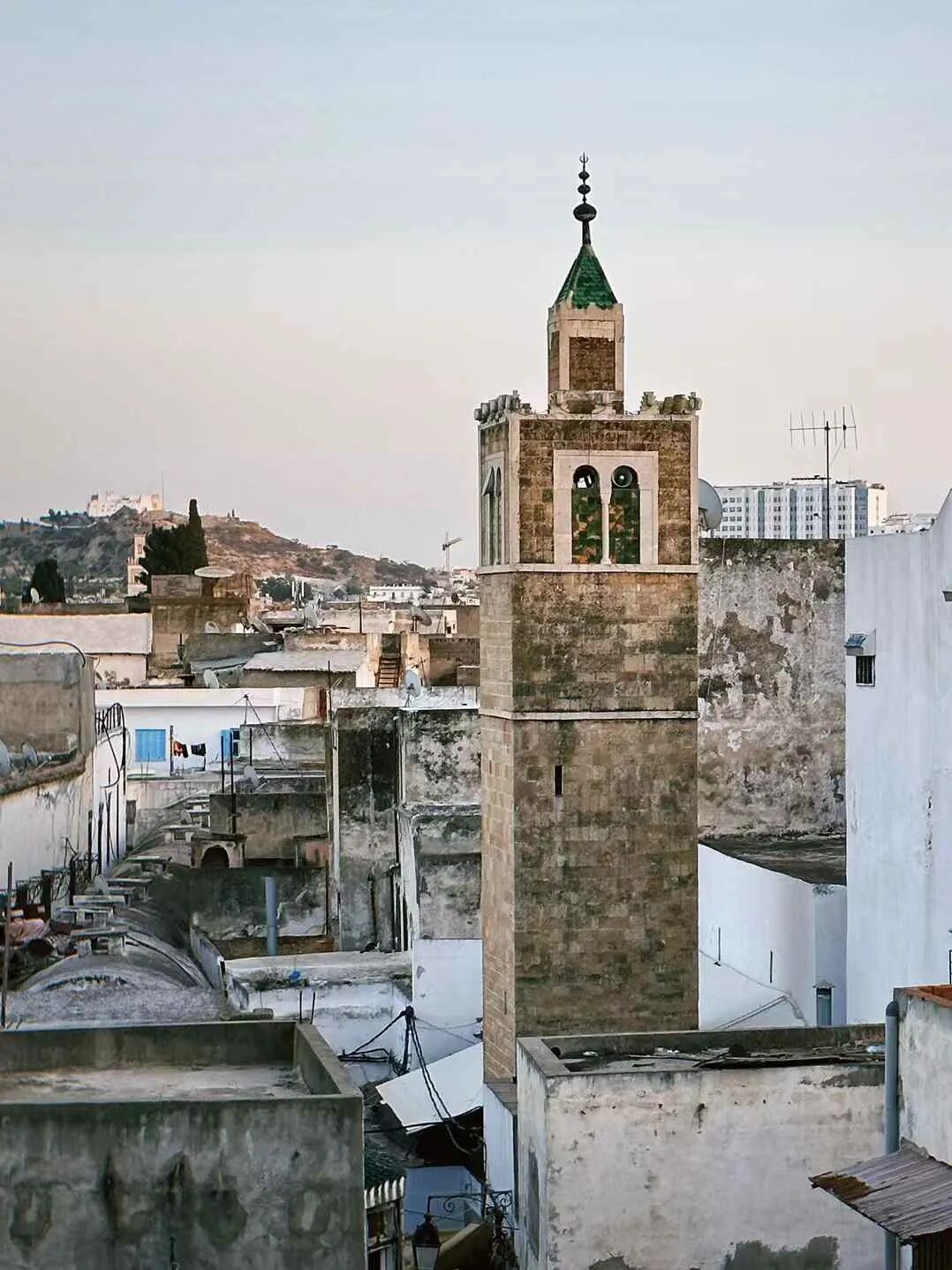
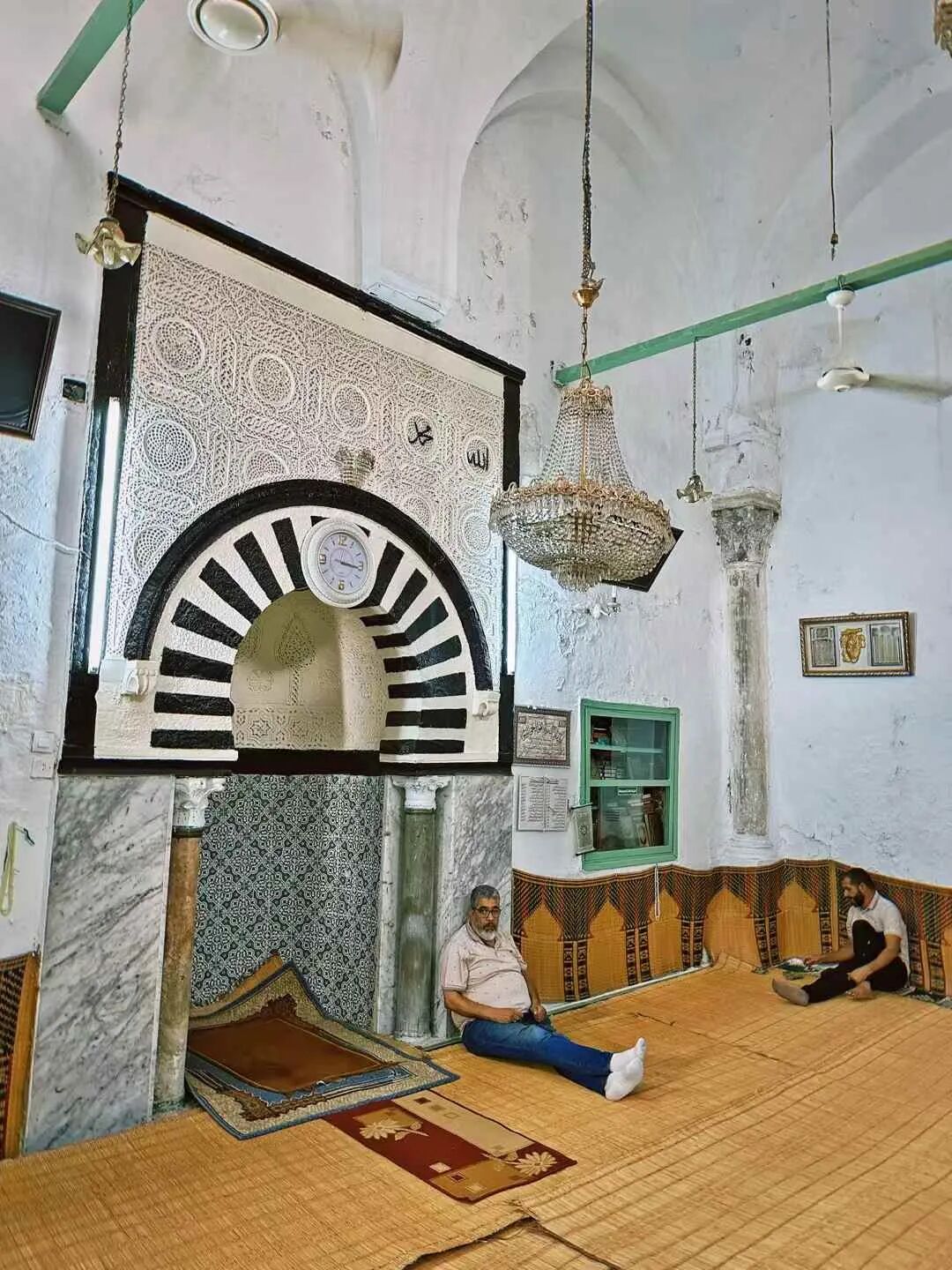
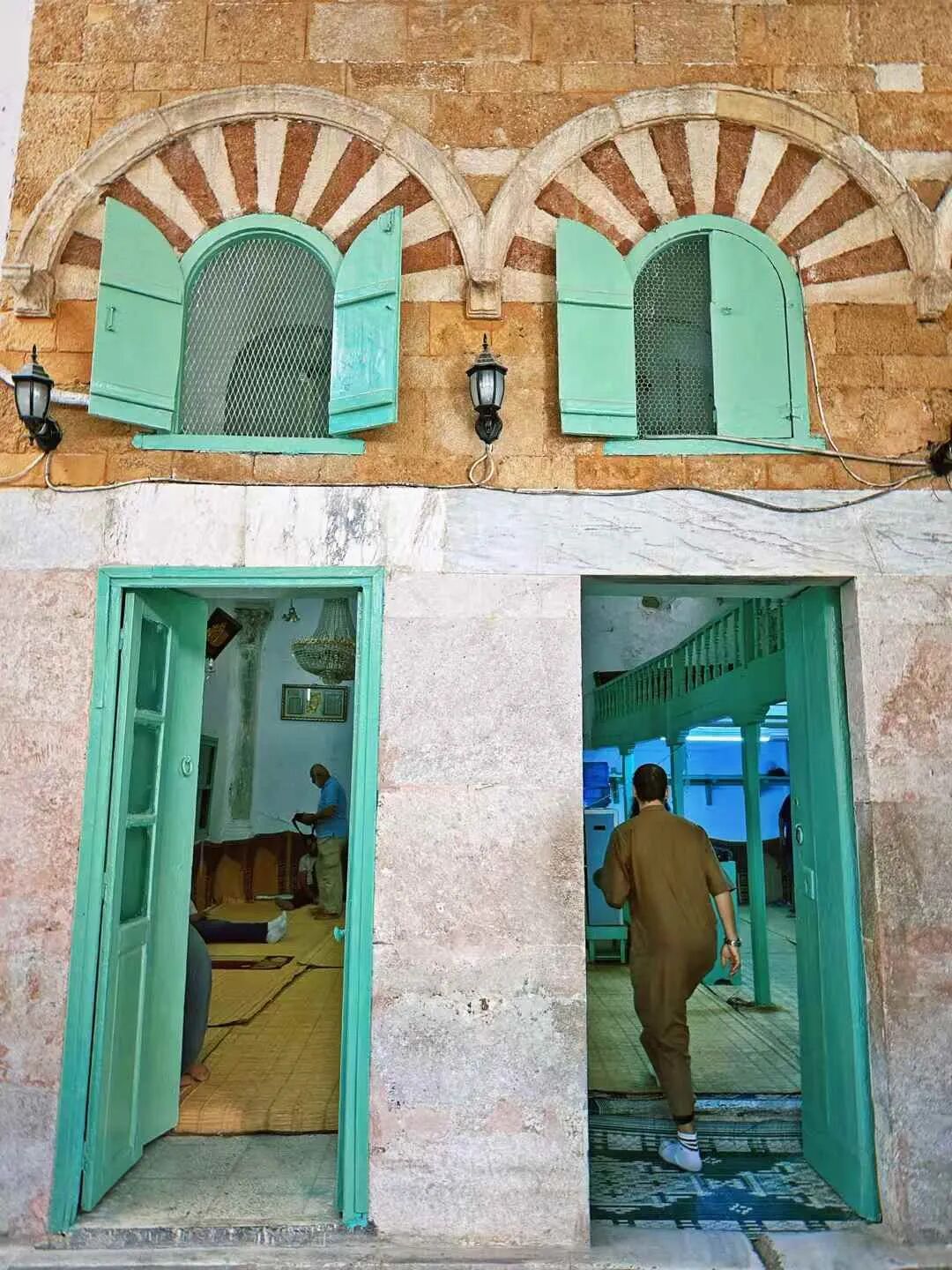
Yusuf Dey Mosque in Tunis: 1616
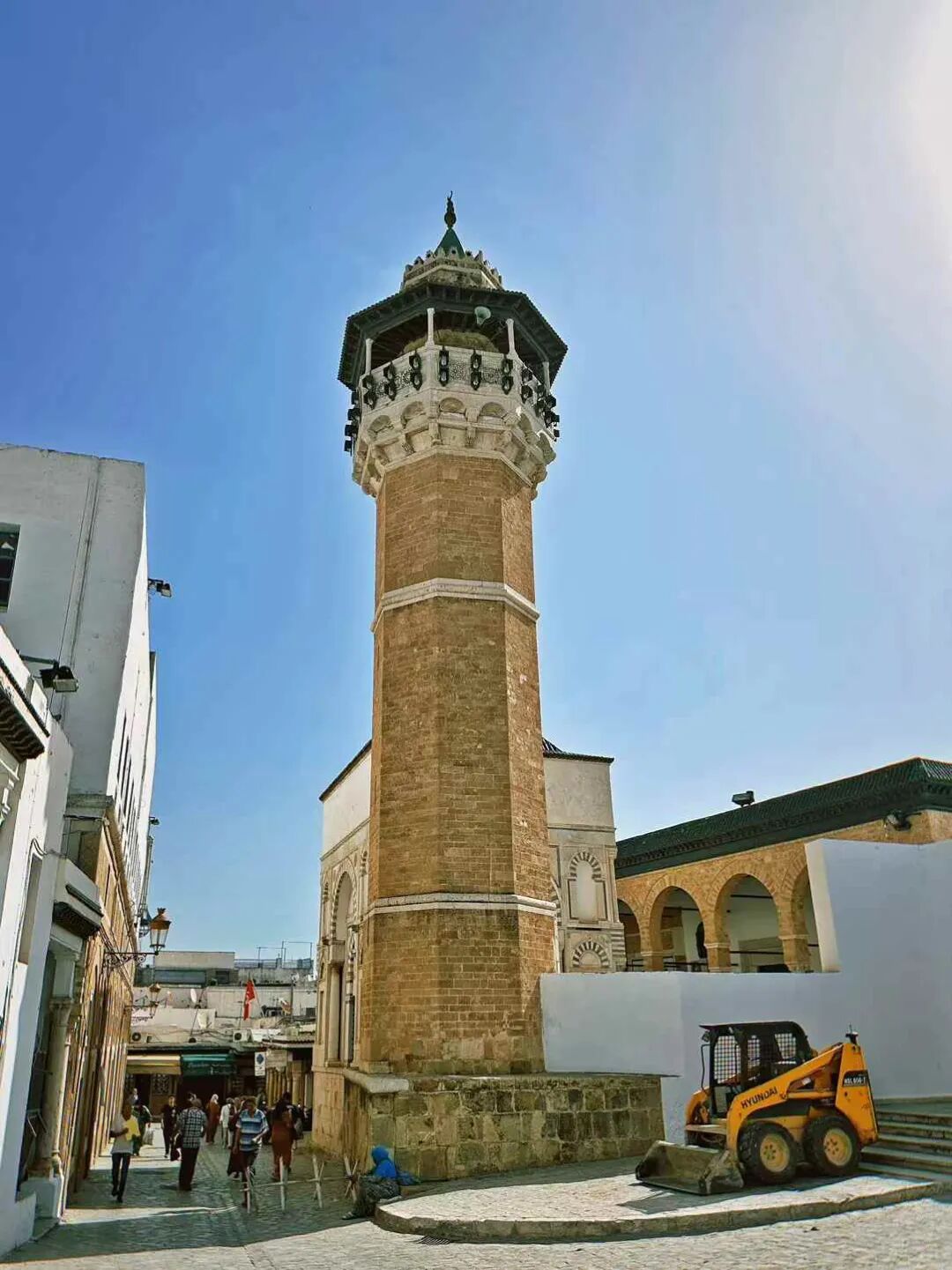
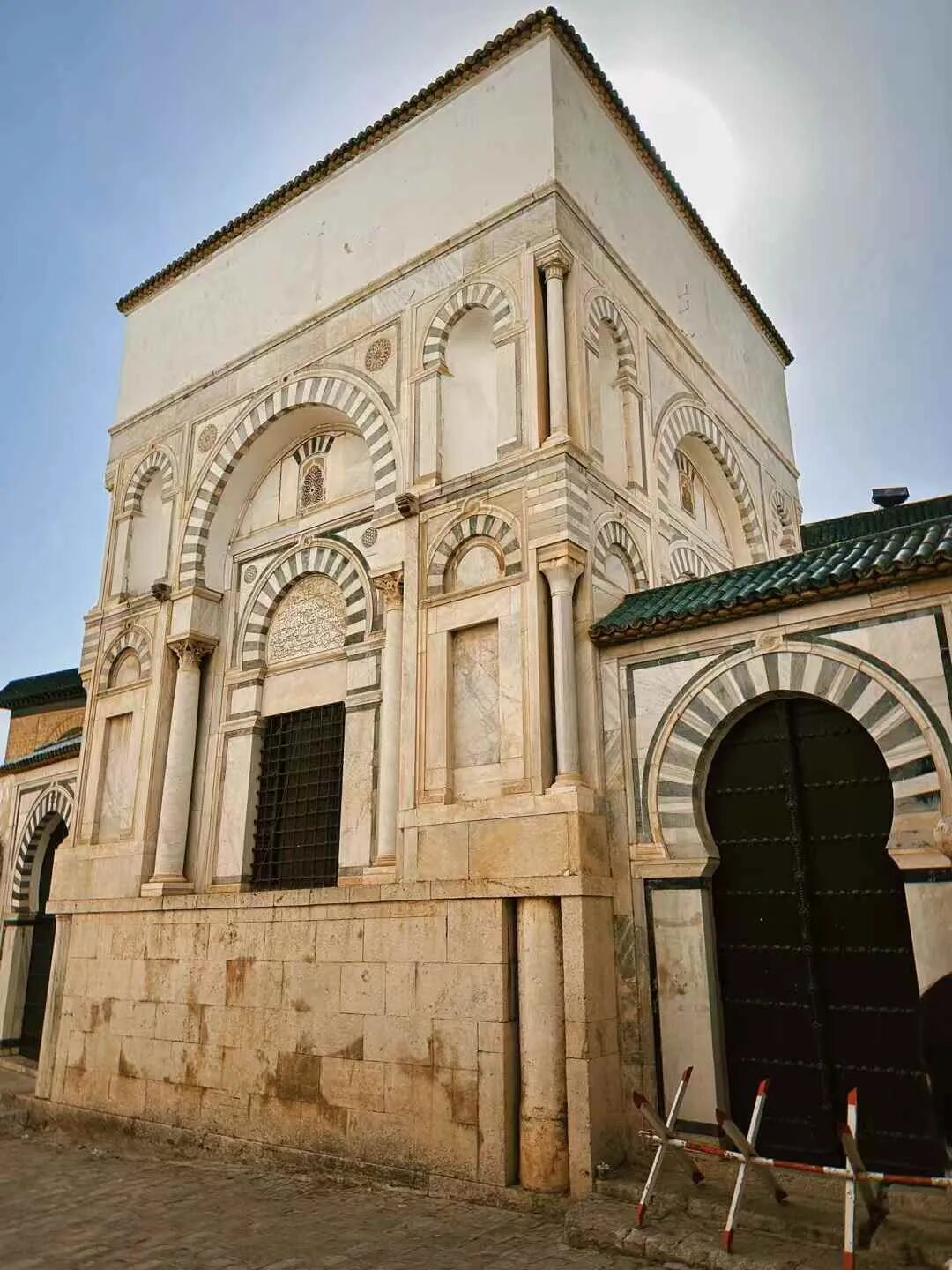
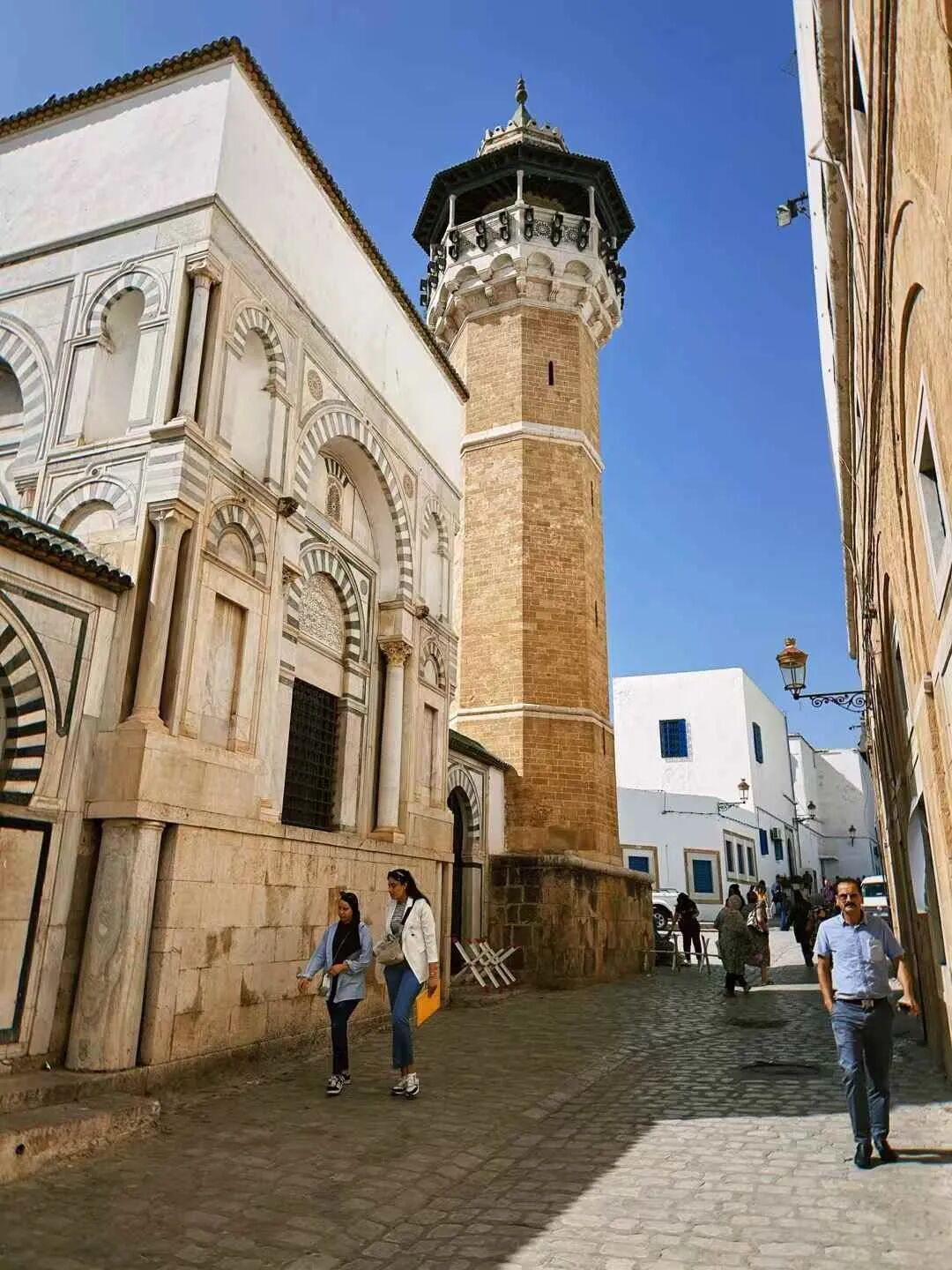
Yusuf Dey Mosque was built by Yusuf Dey of the Ottoman dynasty in 1616. It is the first Ottoman-style mosque in Tunis. He built a Turkish market around the mosque that sold many spoils taken by pirates. I only visited the outside of the mosque because it was not open yet. At the intersection, there is the first octagonal minaret (bangke ta) in Tunis, which has a wooden sunshade on top. Next to the minaret is the white marble tomb of Yusuf Dey, featuring large blind arcades on the walls.
Great Mosque of Sousse: 851
The Great Mosque of Sousse was started in 851 by the Aghlabid ruler Emir Muhammad I ibn al-Aghlab (reigned 841-56). The main hall was expanded to the south in the 10th century. The current courtyard portico and the minaret in the northeast corner were built in the 11th century, and the south portico was renovated in 1785.
The Great Mosque of Sousse is right next to the Sousse Fortress and also has a fortress-like appearance. The exterior has jagged walls and corner towers. The minaret in the northeast corner is not very tall and looks more like a castle tower.
Muhammad I ibn al-Aghlab was a powerful military leader and strategist. He kept expanding into the Mediterranean and conquered Sicily and large parts of southern Italy. In 846, he led a large army to attack Rome, looted Vatican Hill, and took a lot of wealth. At the same time, agriculture and trade in Tunisia flourished under his rule. The cities of Sousse and Sfax were prosperous, and the Great Mosque of Sousse and the Great Mosque of Sfax are the best proof of this.
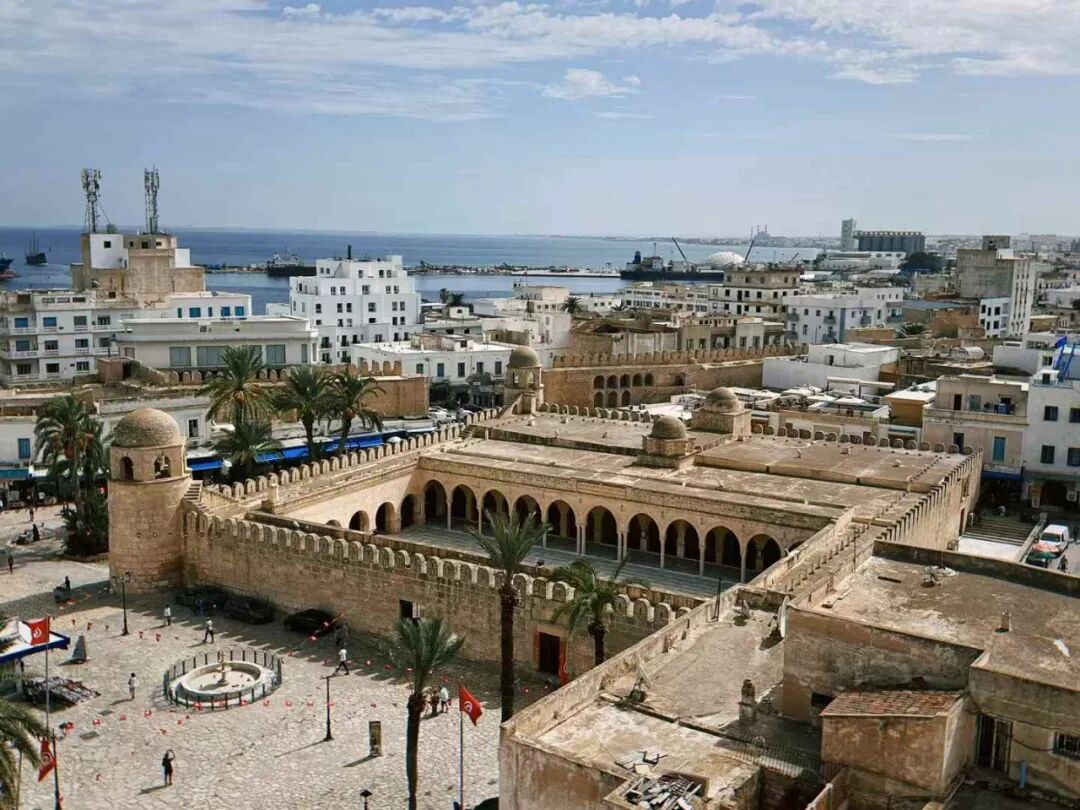
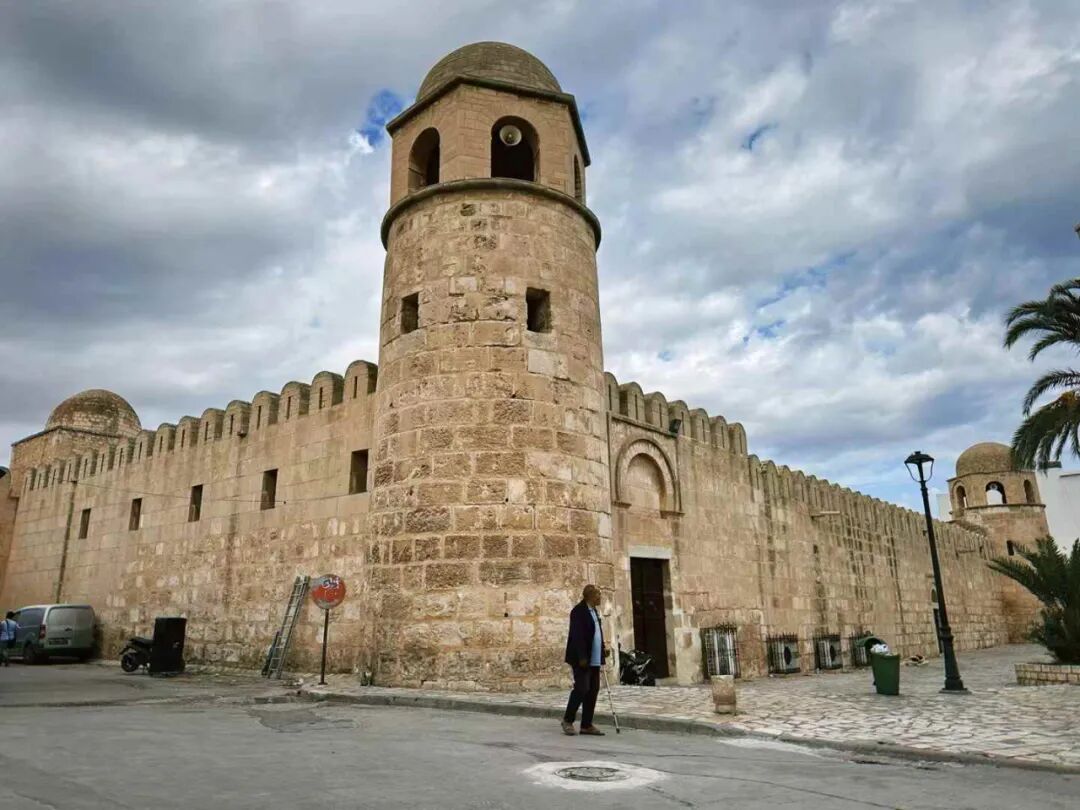
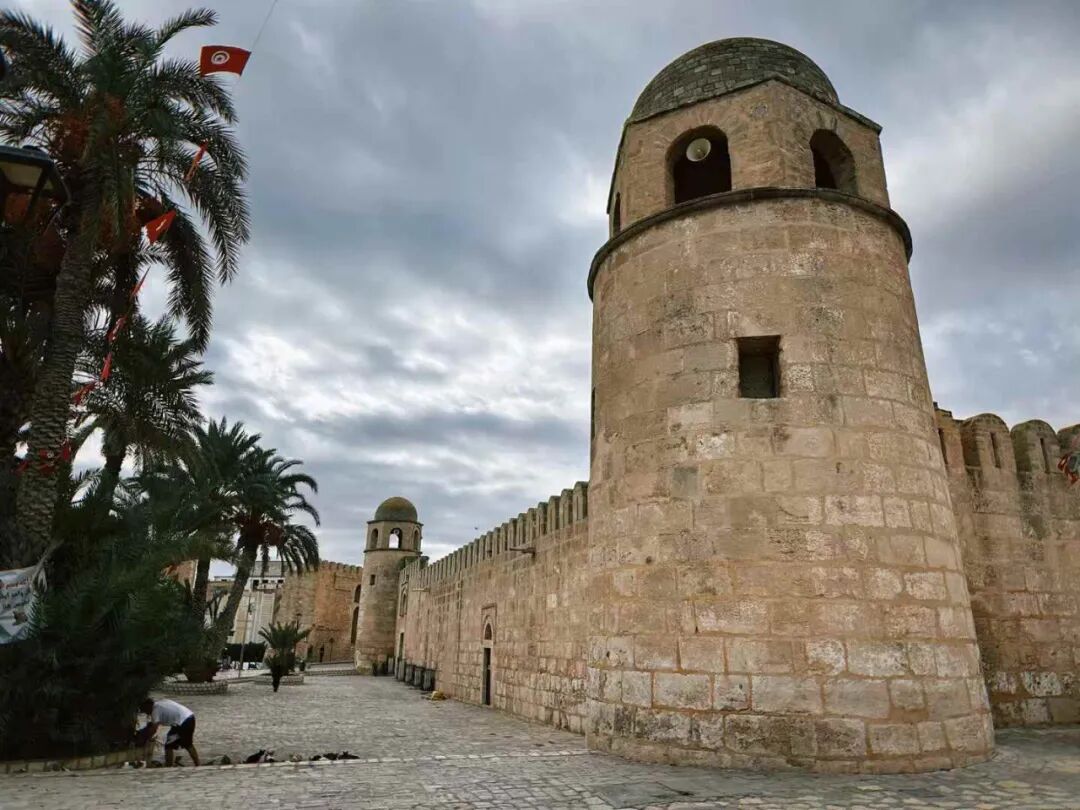
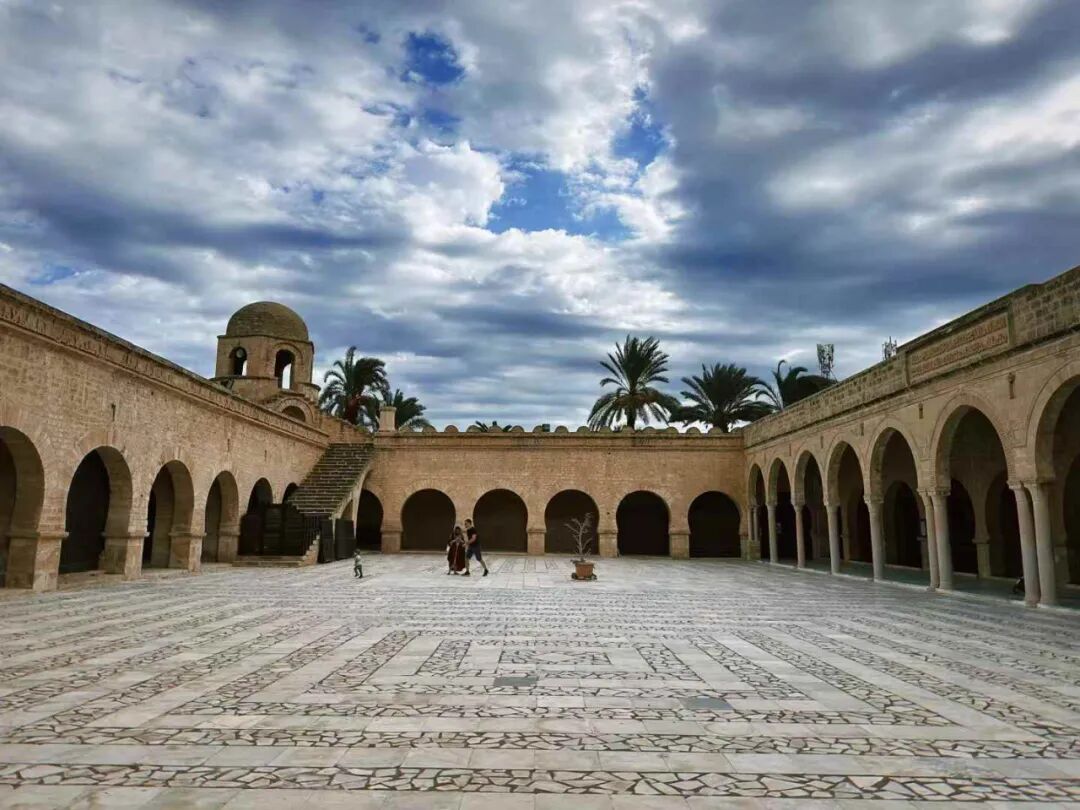
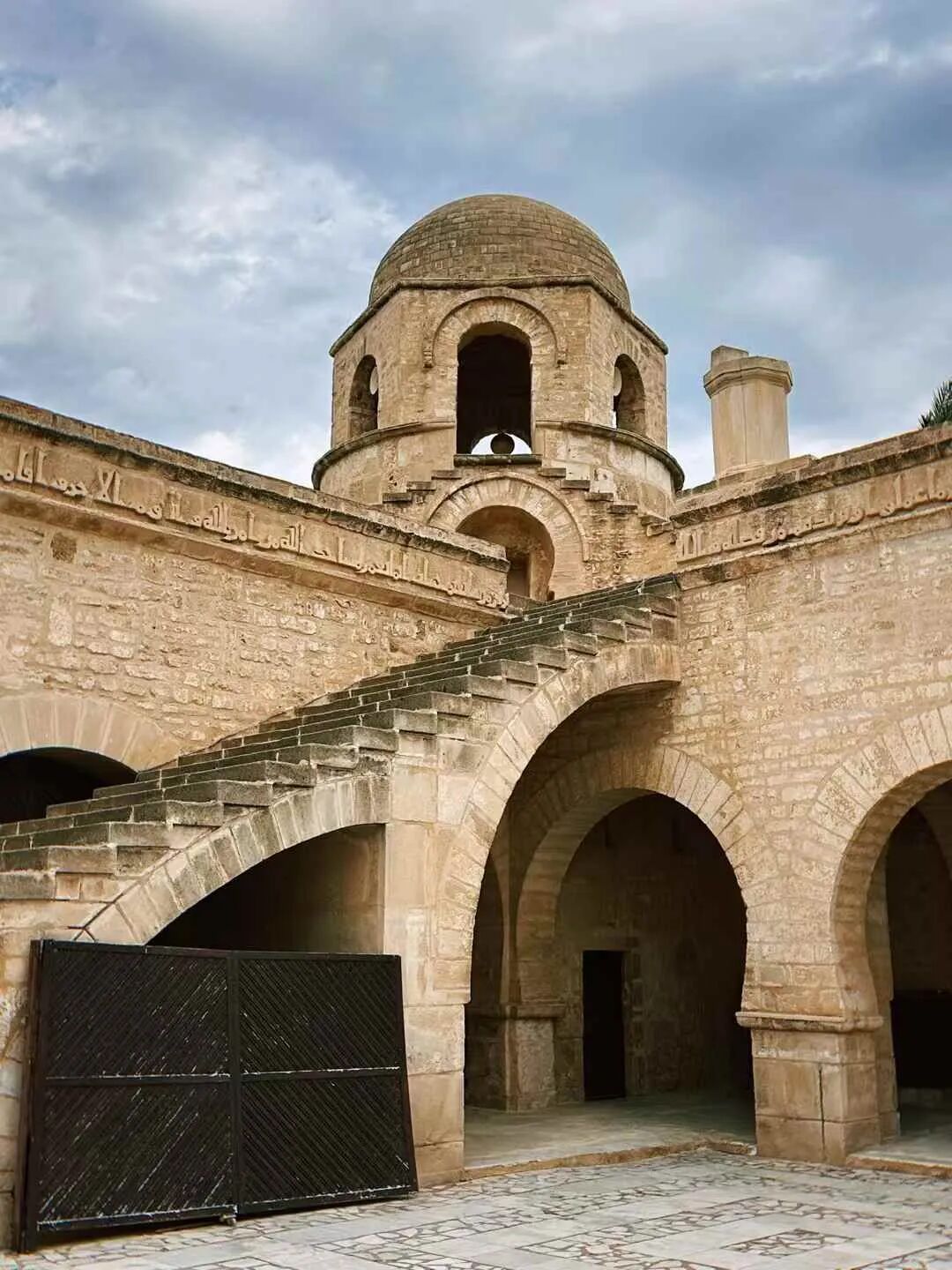
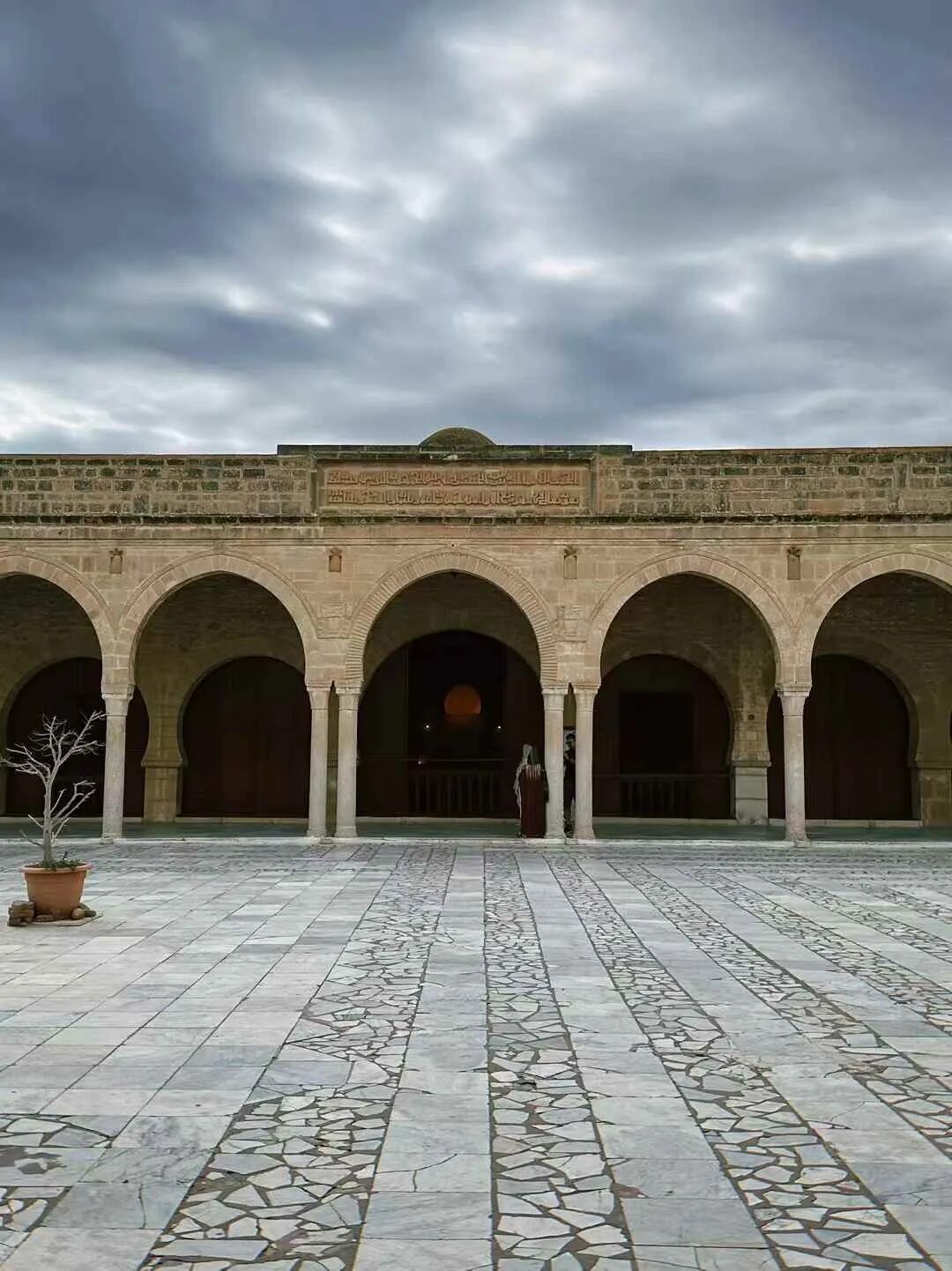
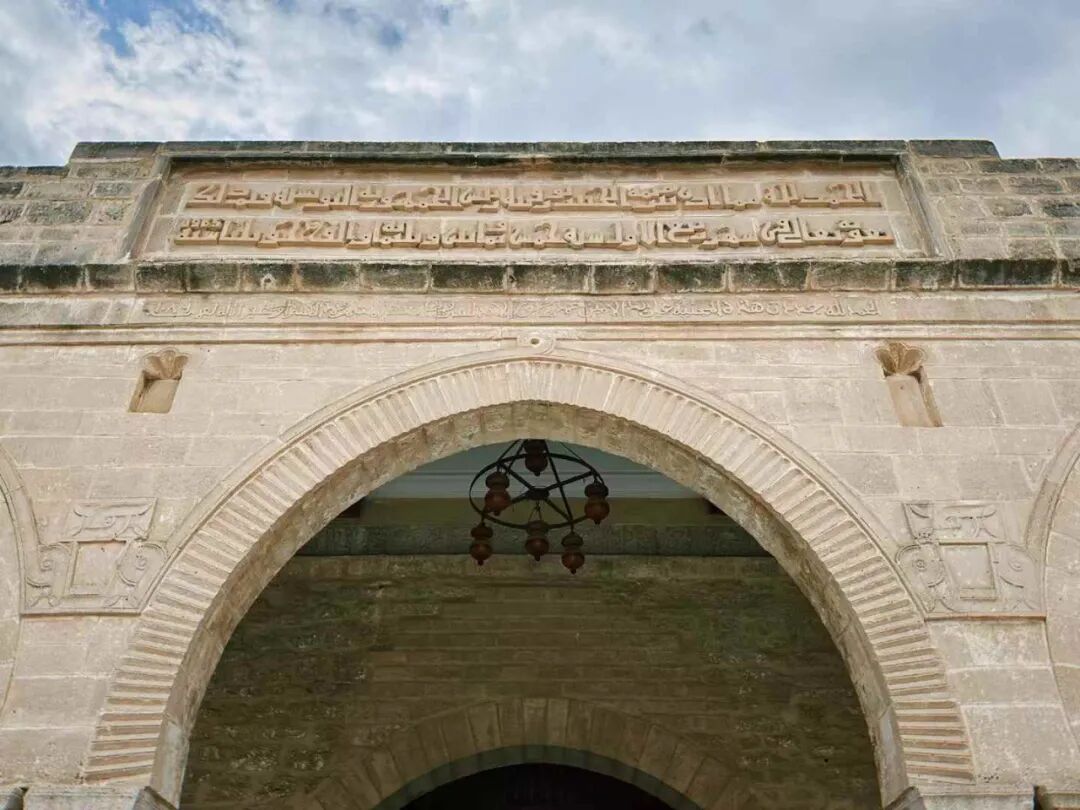
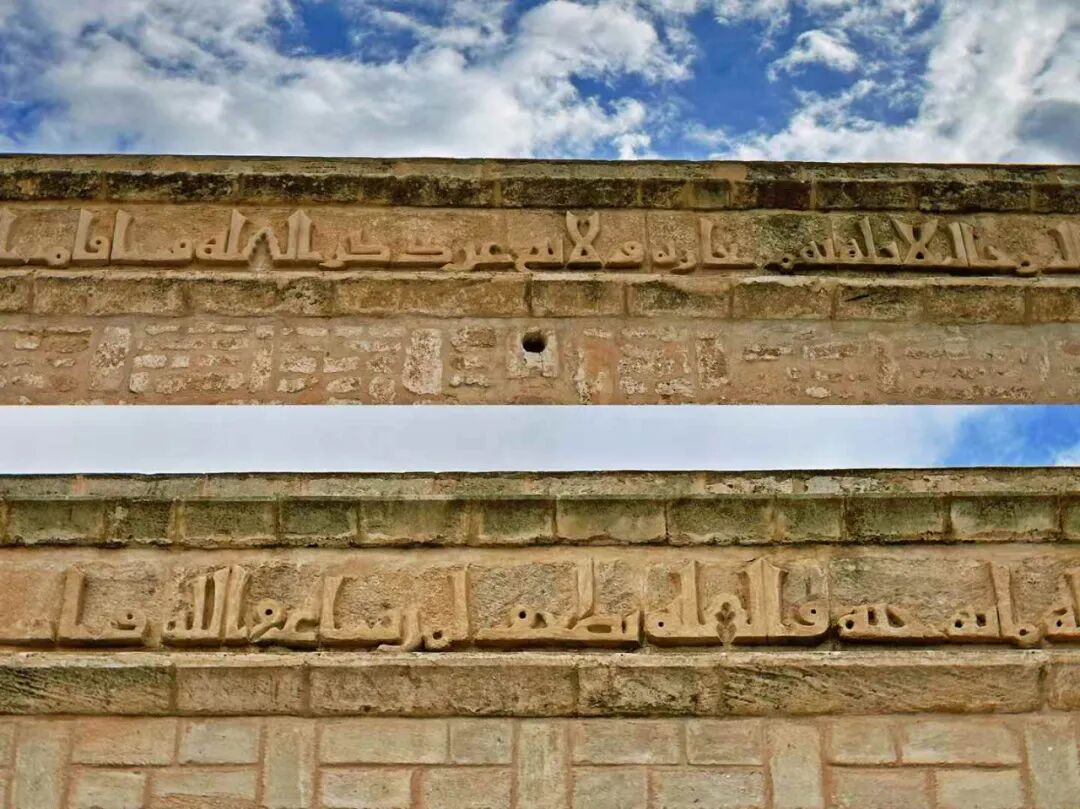
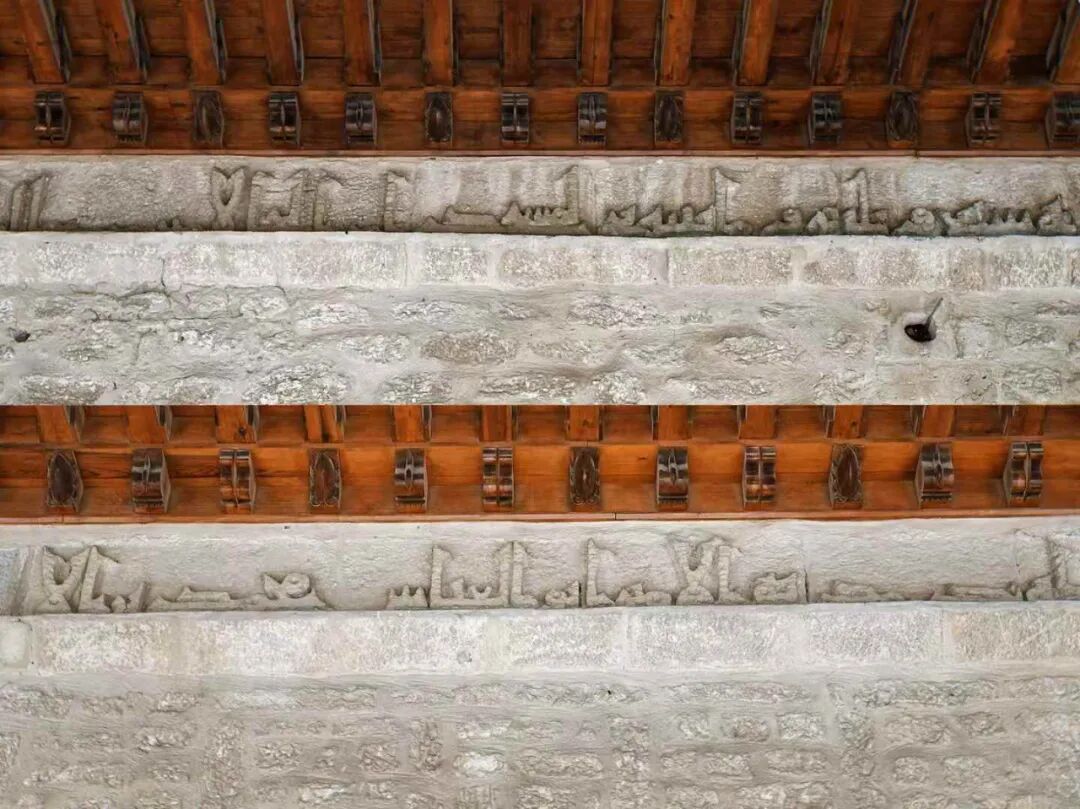
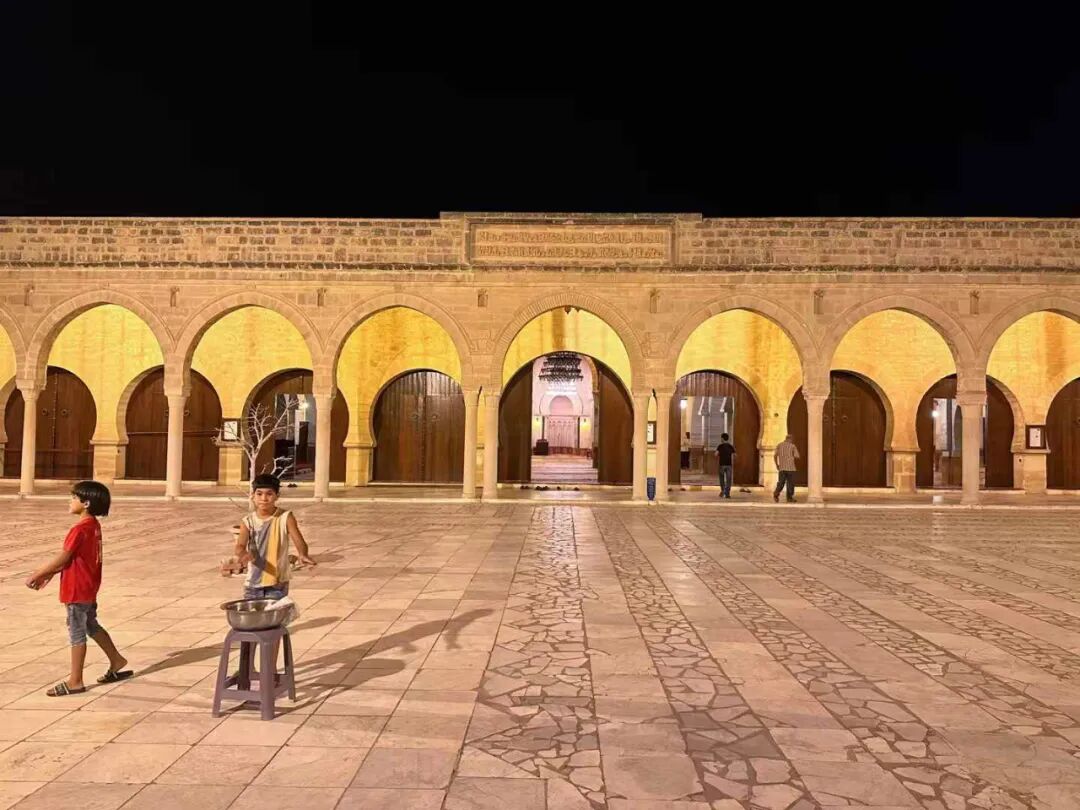
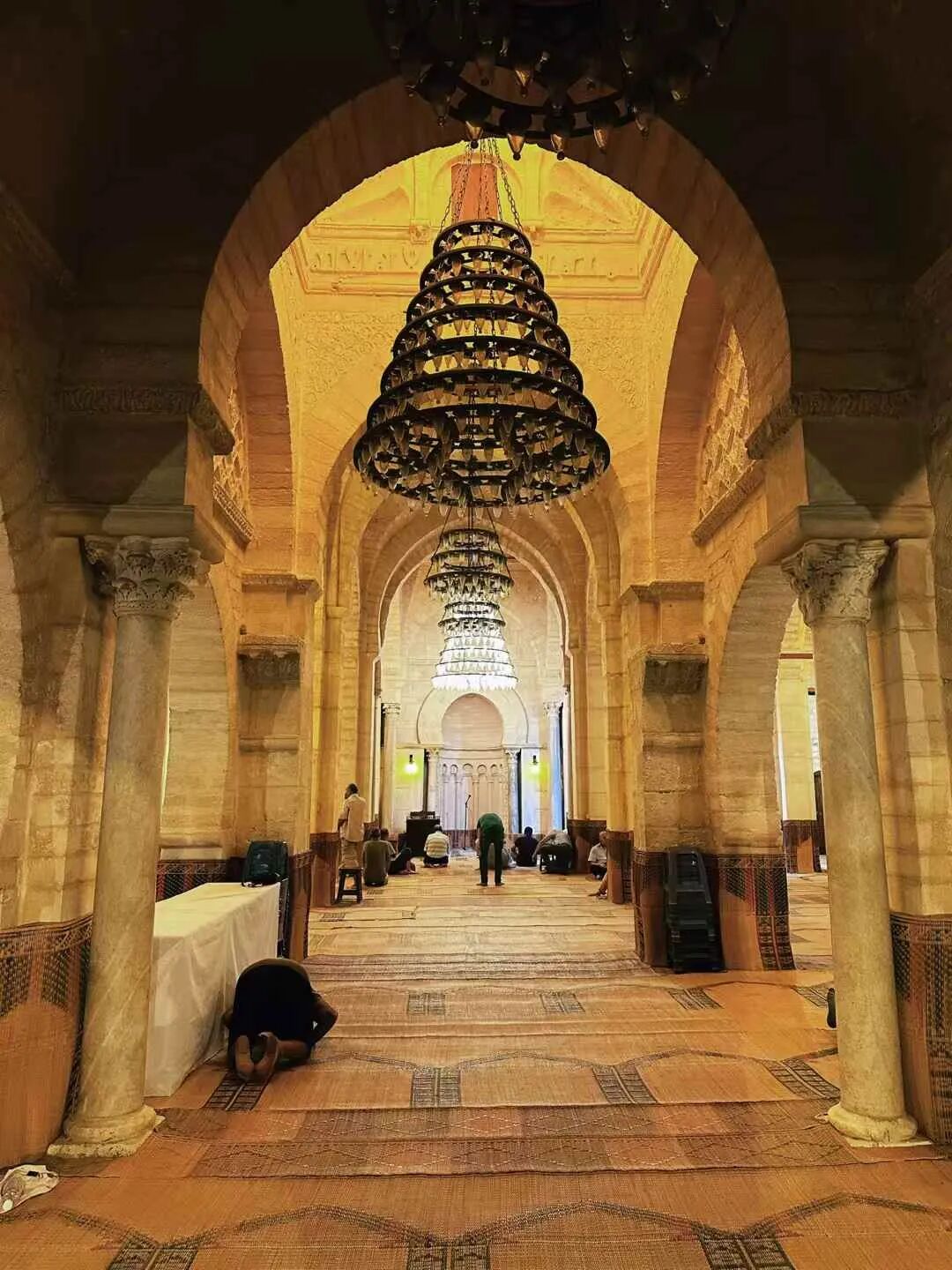
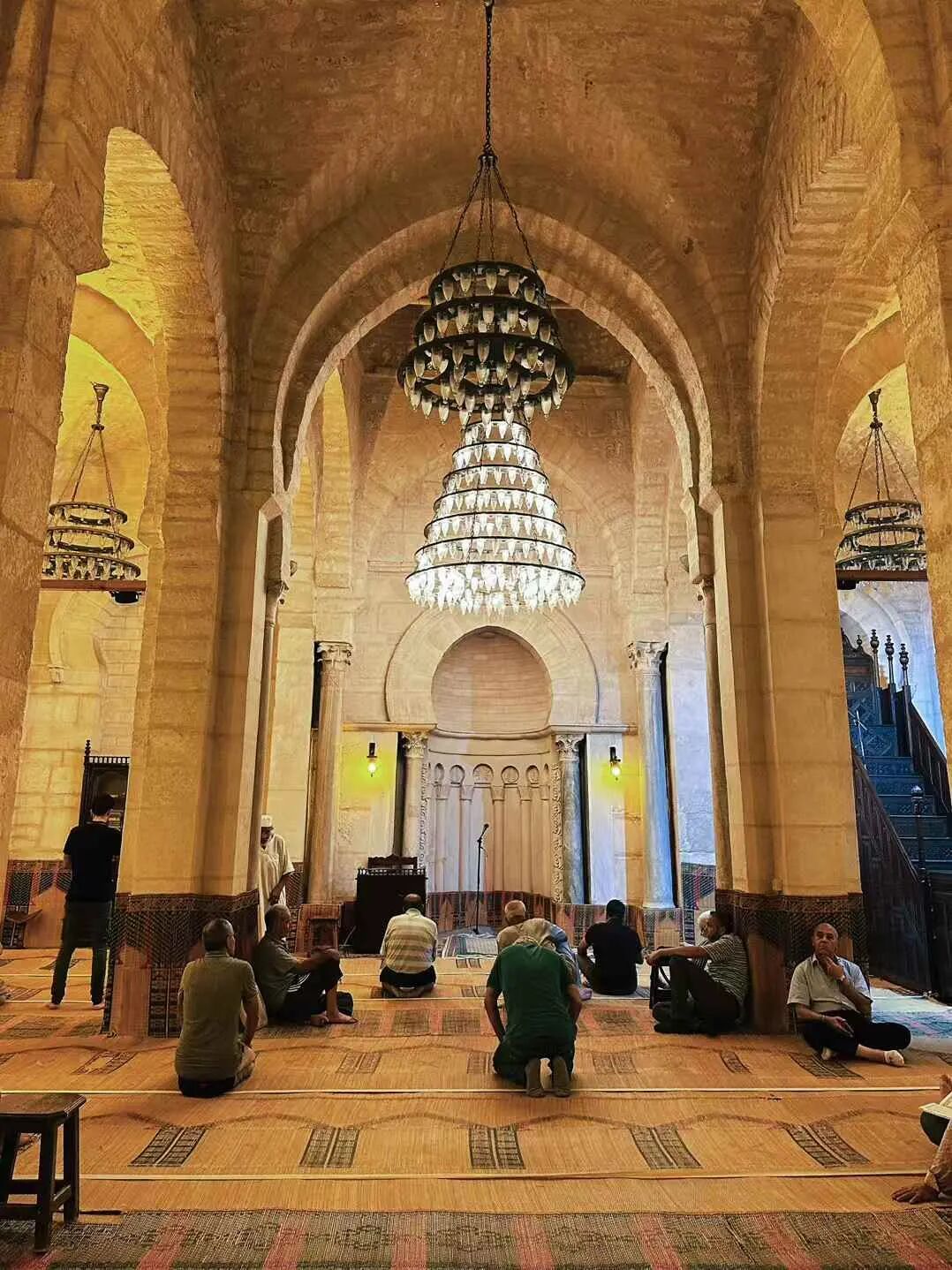
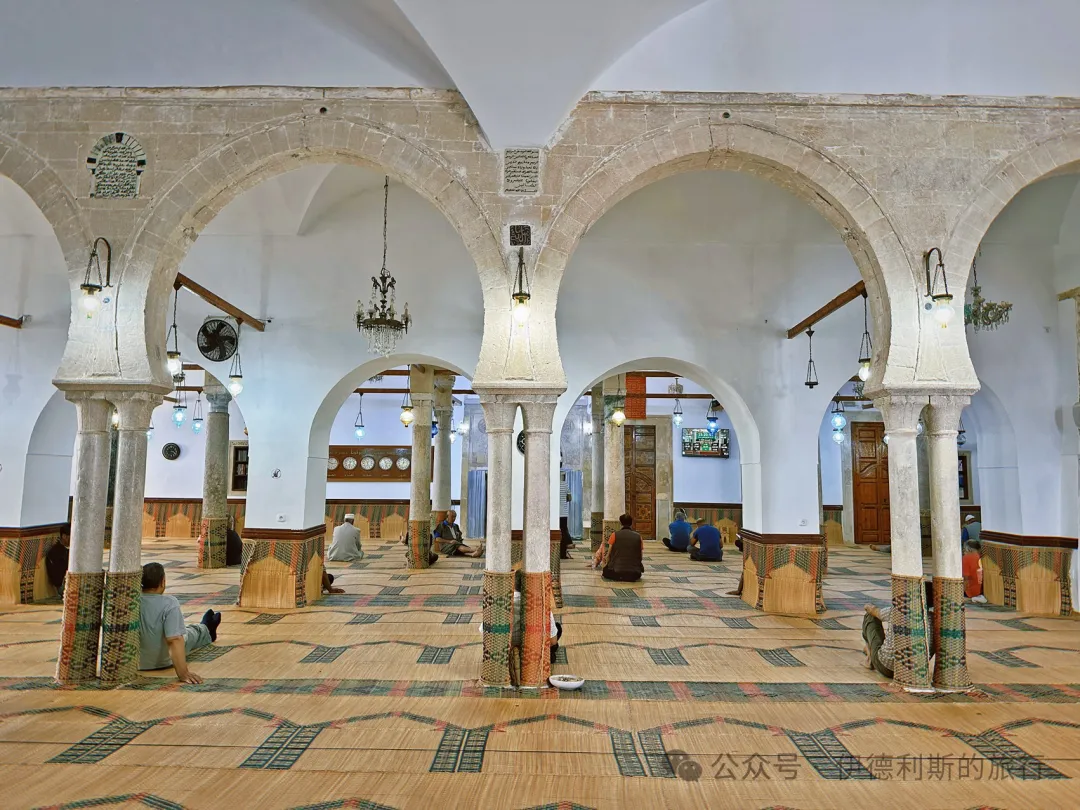
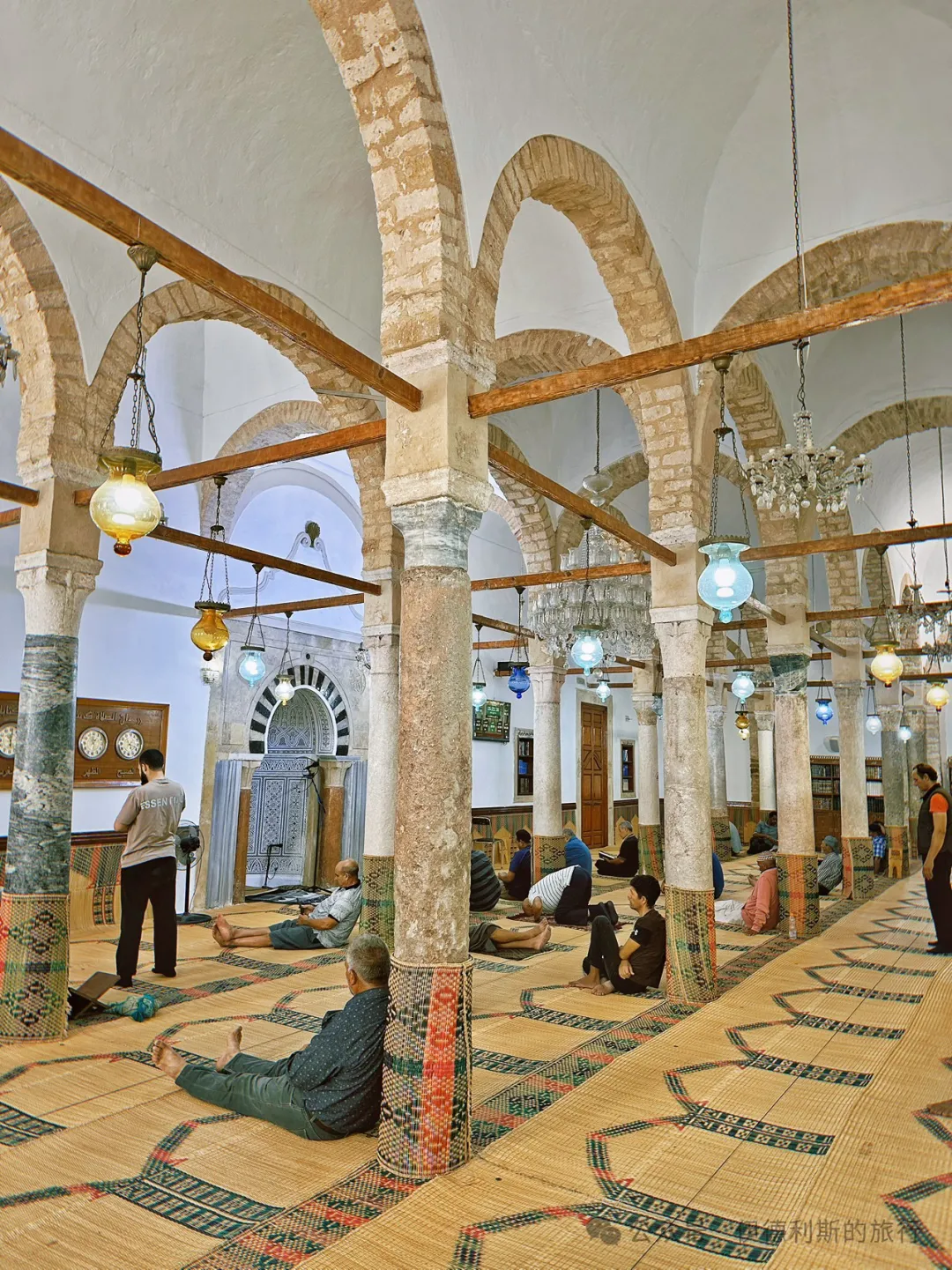
Unlike all mosques in Turkey which are open all day, mosques in Tunisia have limited opening hours. Some only open for the five daily prayers, and some only open in the morning and evening. Because of this, visiting mosques in Tunisia was not easy, and I did not get to enter many of them. From September 16 to April 30, the courtyard of the Great Mosque of Sousse is open to tourists from 8:00 to 12:00. The gates close in the afternoon and only reopen at night for namaz in the main hall. Therefore, I only captured the night view of the main hall during Maghrib and Isha, and only took photos of the courtyard during the day.
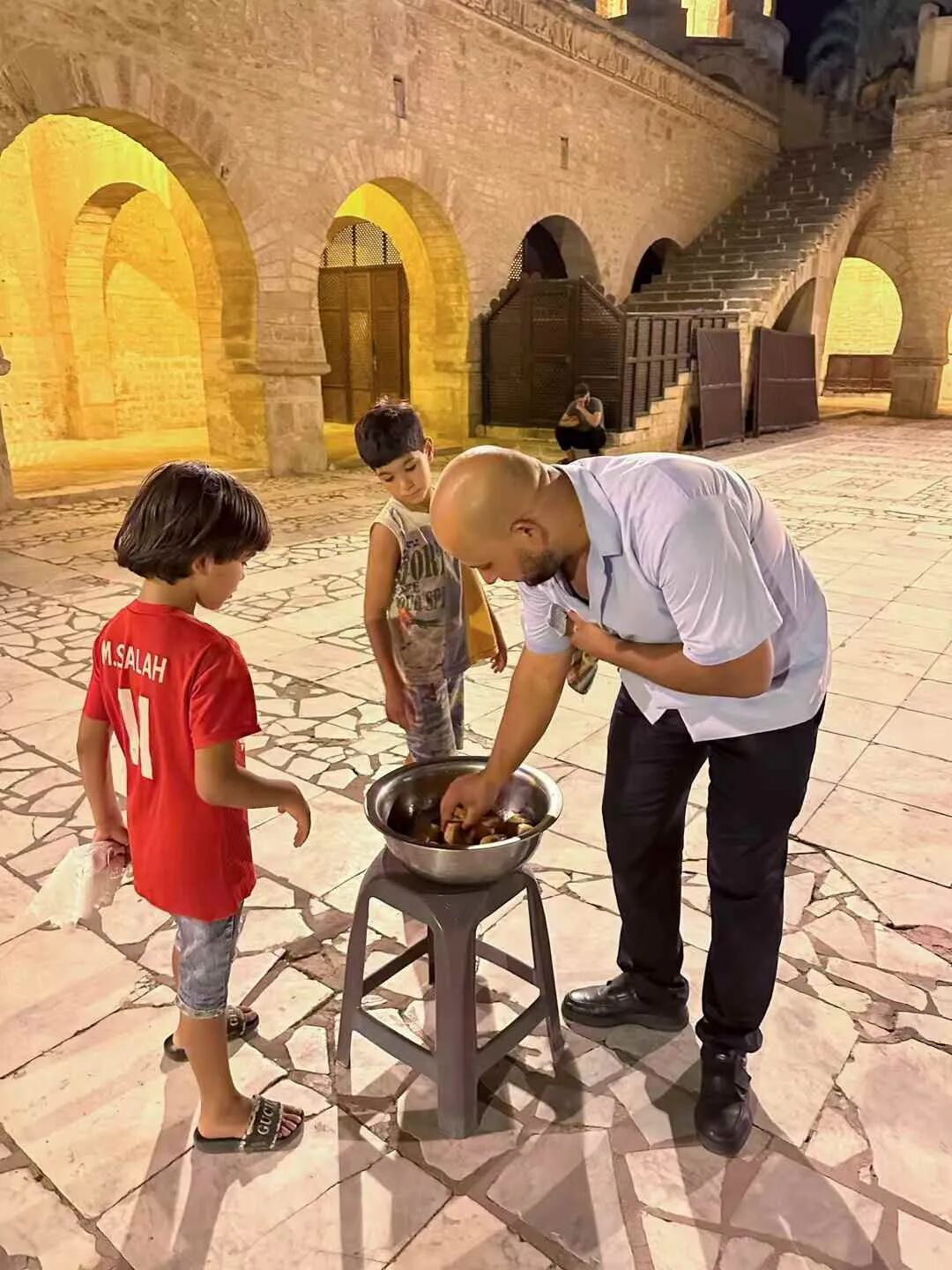
The atmosphere at the Great Mosque of Sousse at night is quite good. There were children in the courtyard at night handing out baguettes soaked in olive oil to everyone, which was very welcoming.
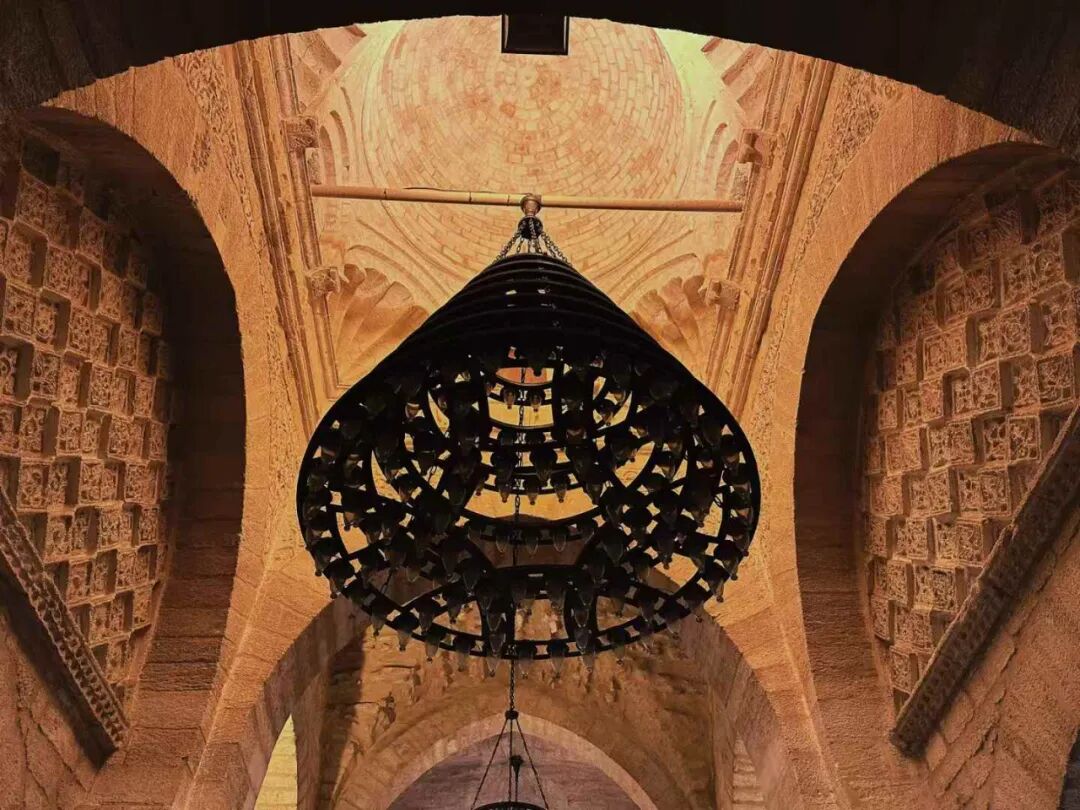
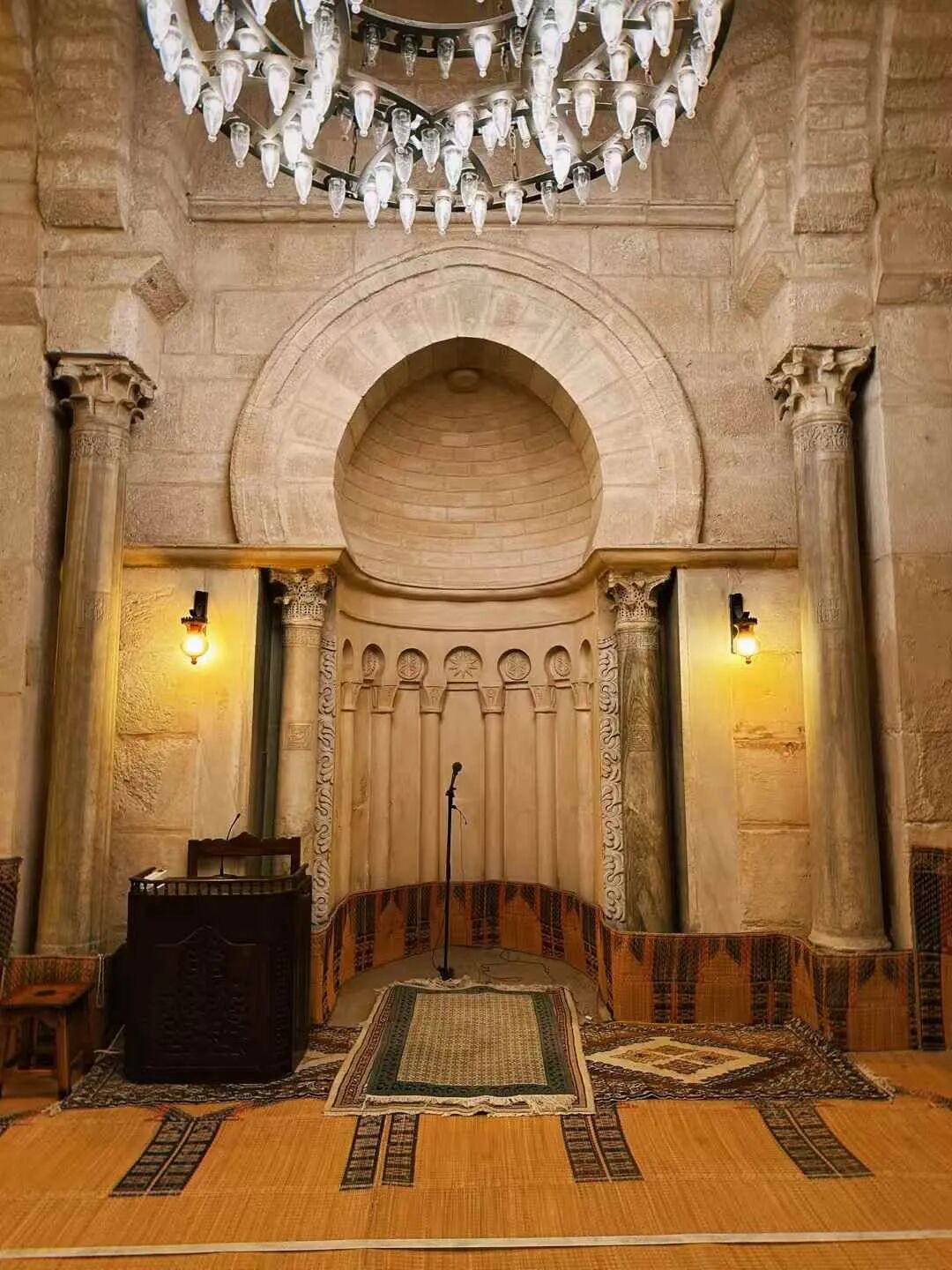
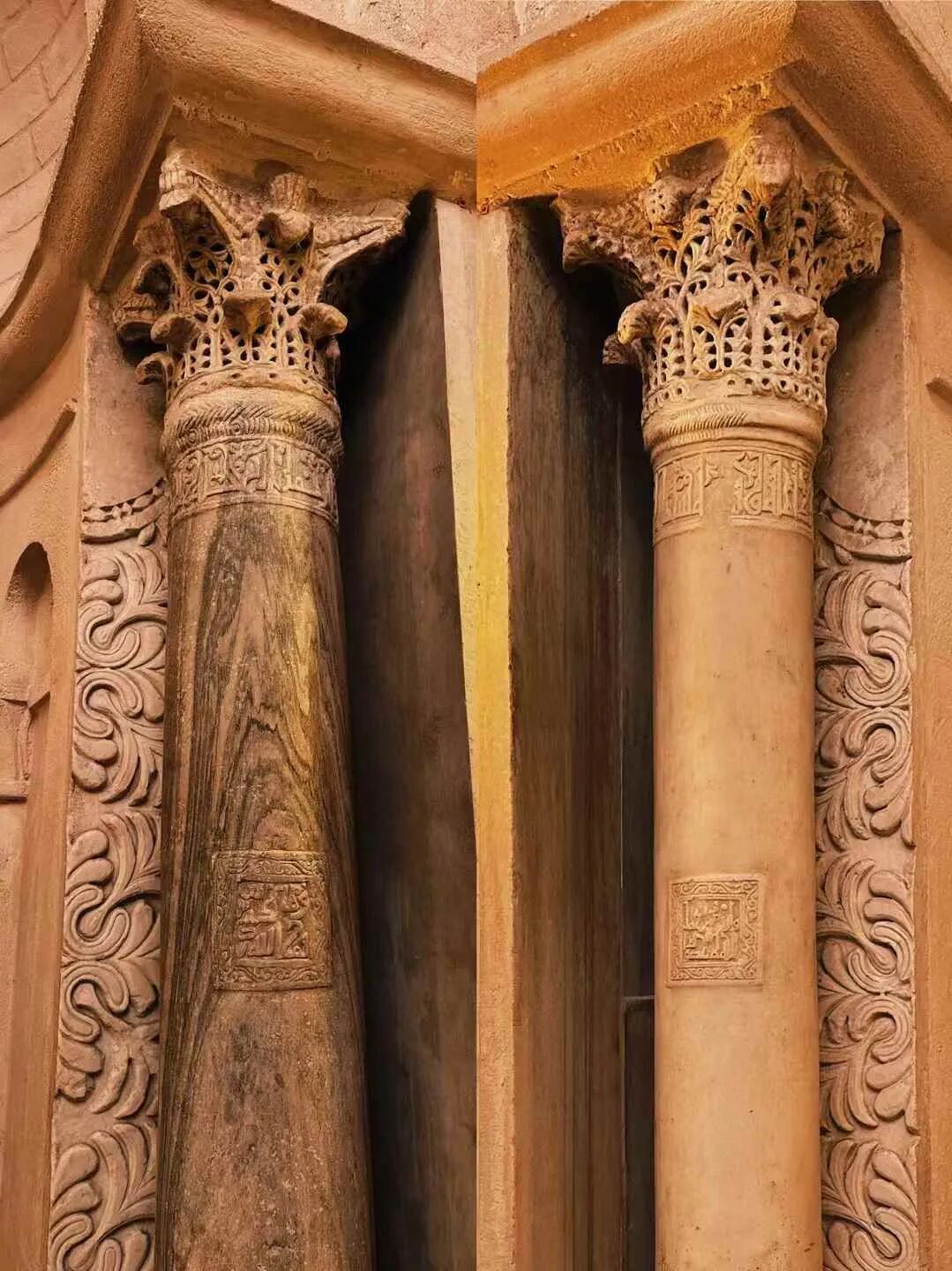
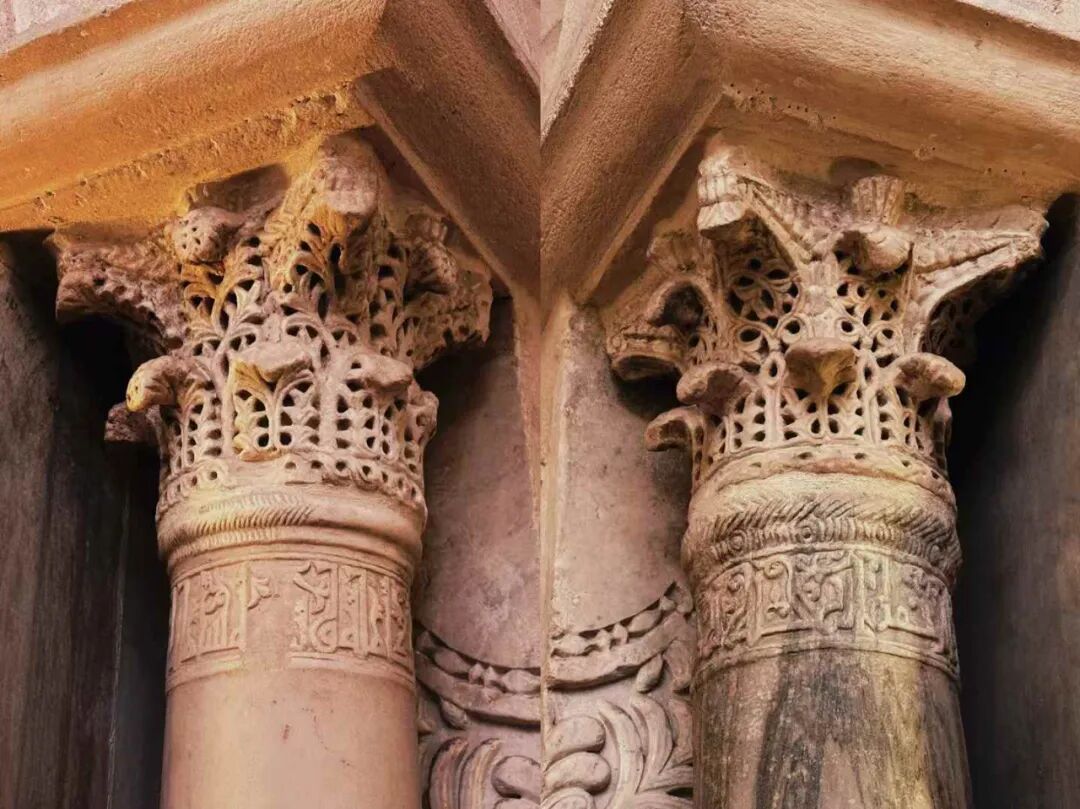
The mihrab of the Great Mosque of Sousse was rebuilt in the 11th century, but the dome above it is original from the 9th century, decorated with Kufic inscriptions and floral patterns. This kind of dome directly above the mihrab was rare before the 9th century. Only a few have been preserved, such as those at the Al-Aqsa Mosque in Jerusalem and the Umayyad Mosque in Damascus.
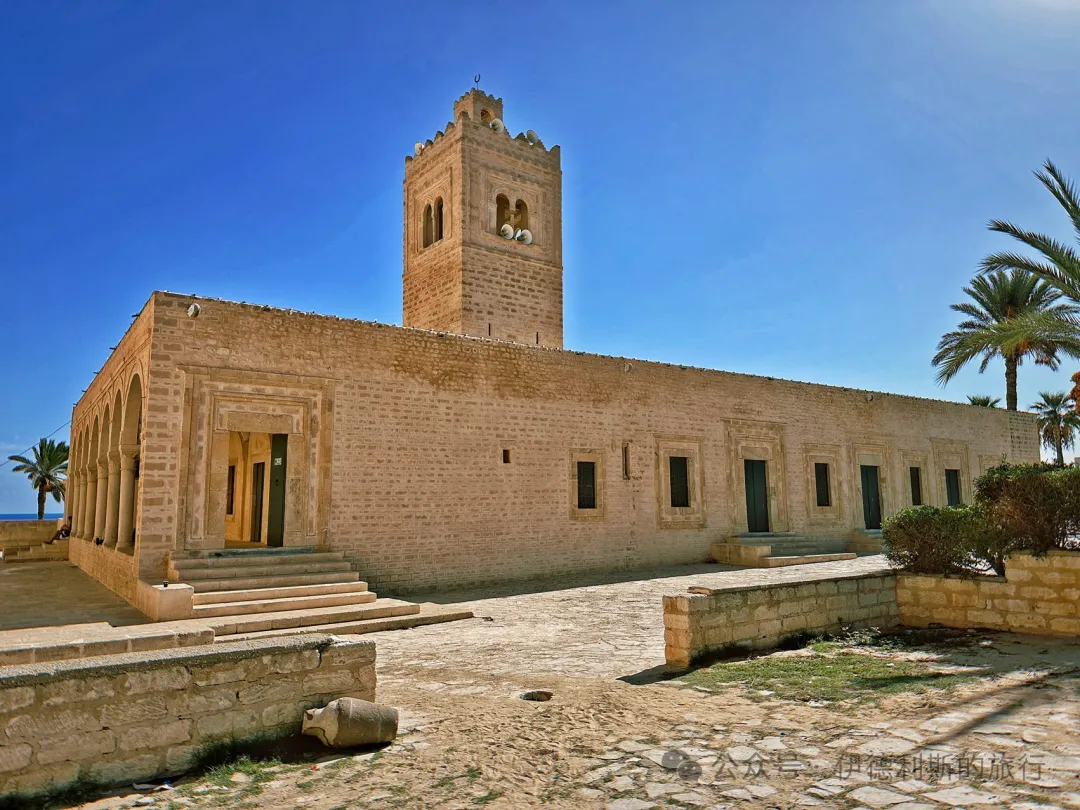
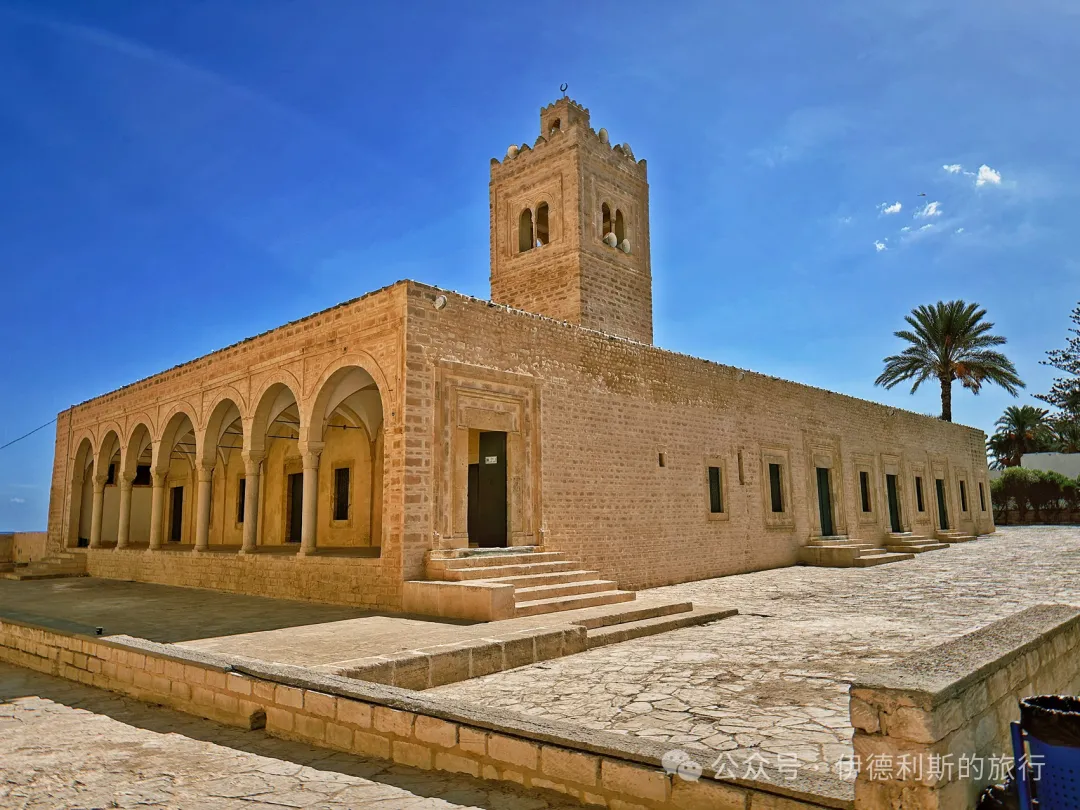
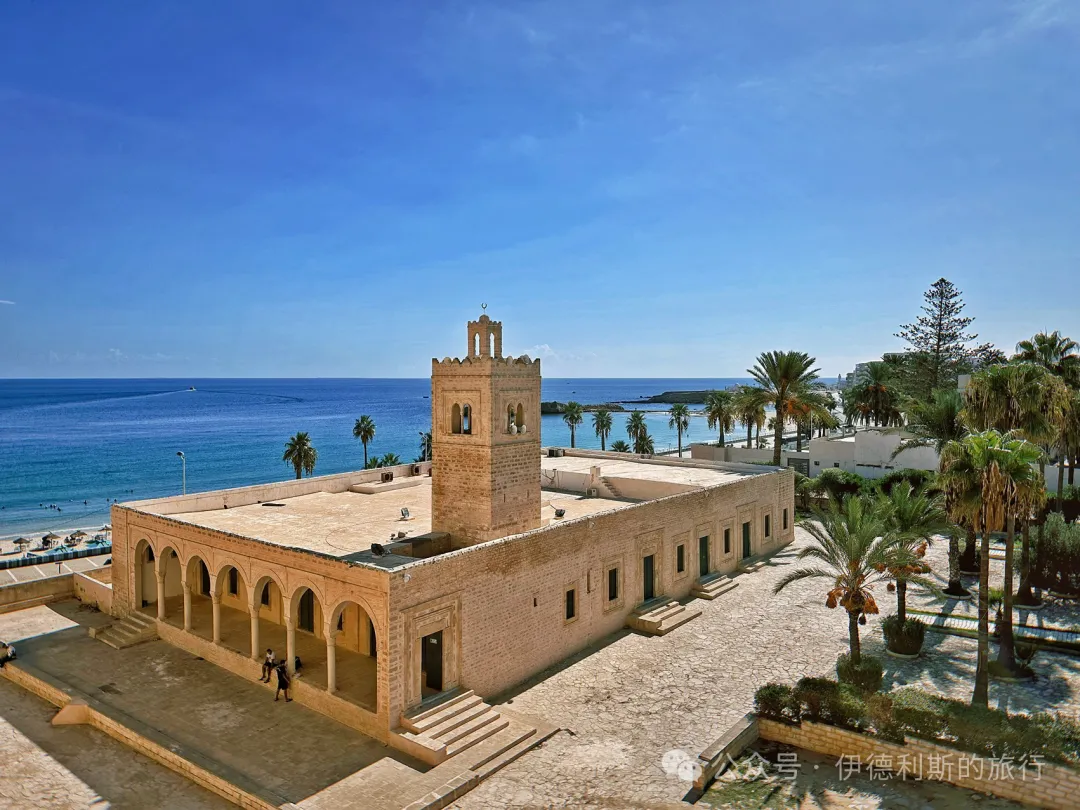
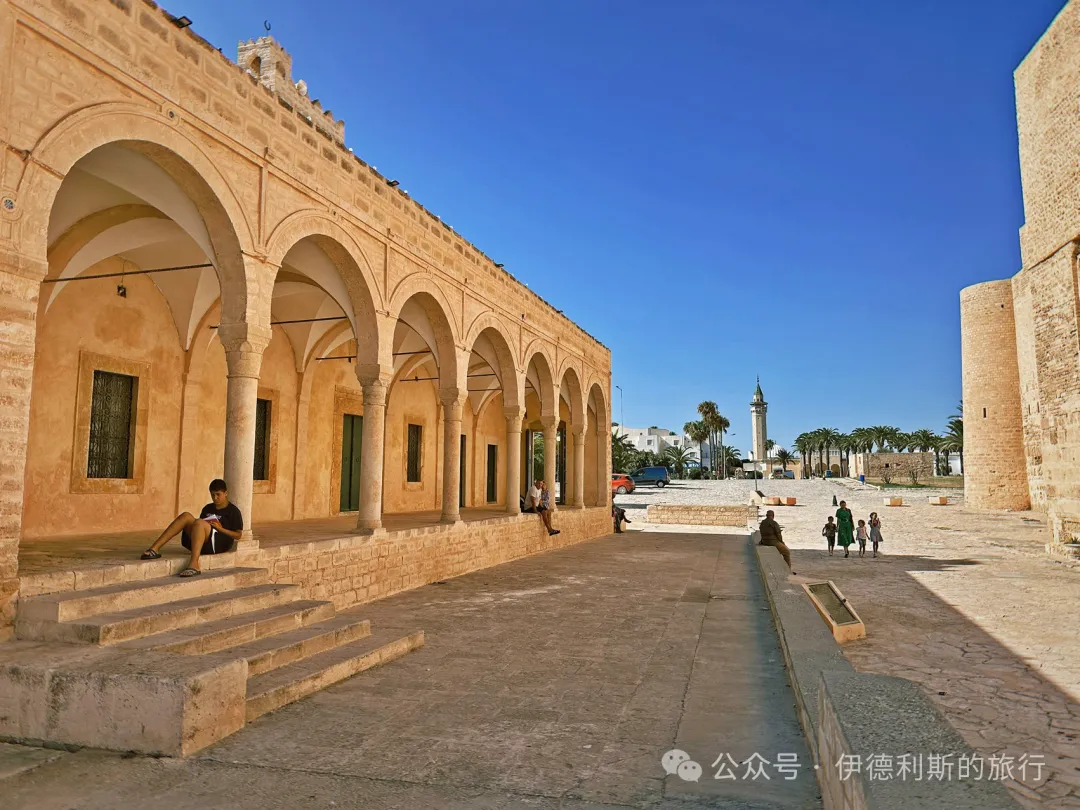
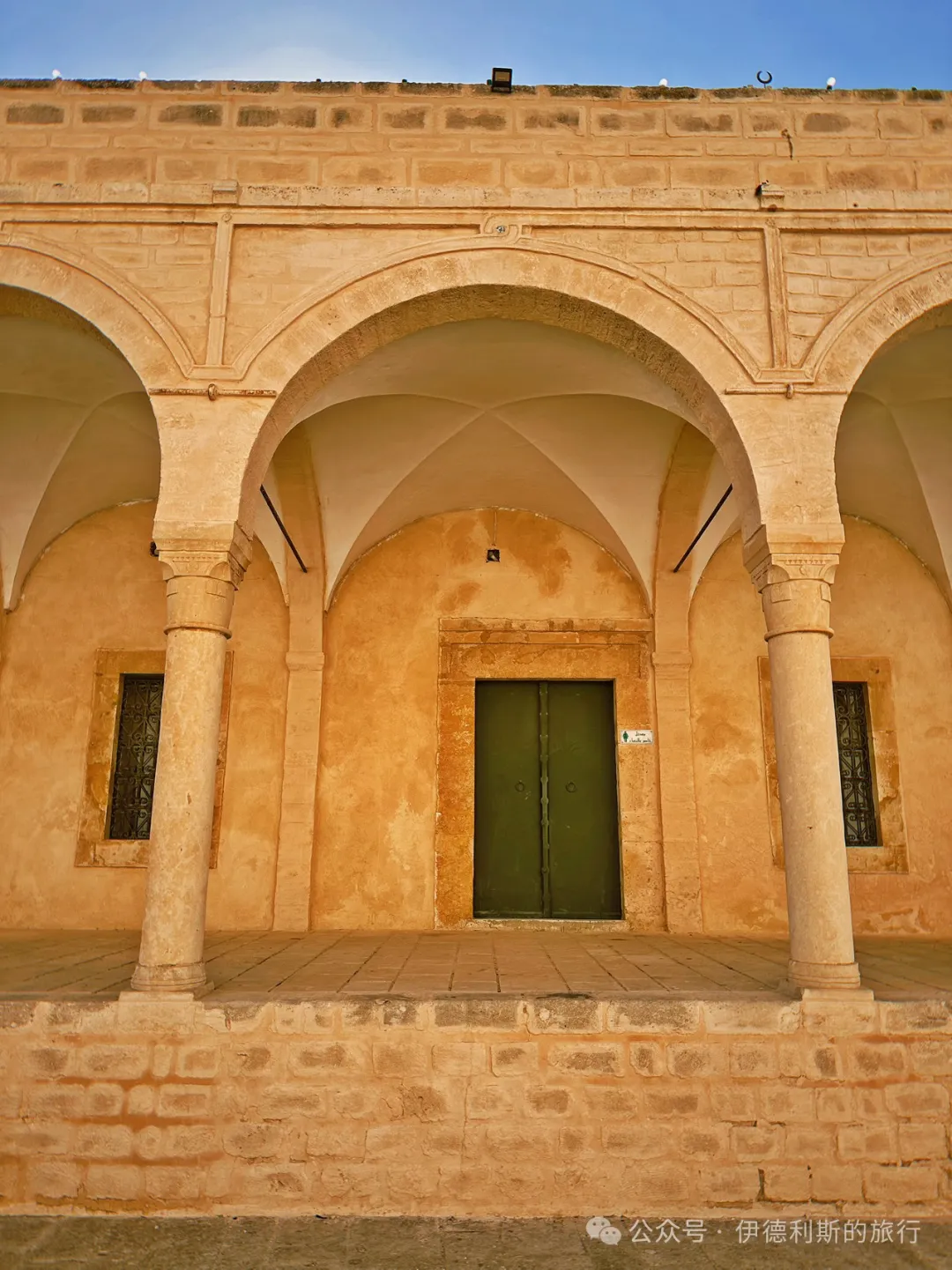
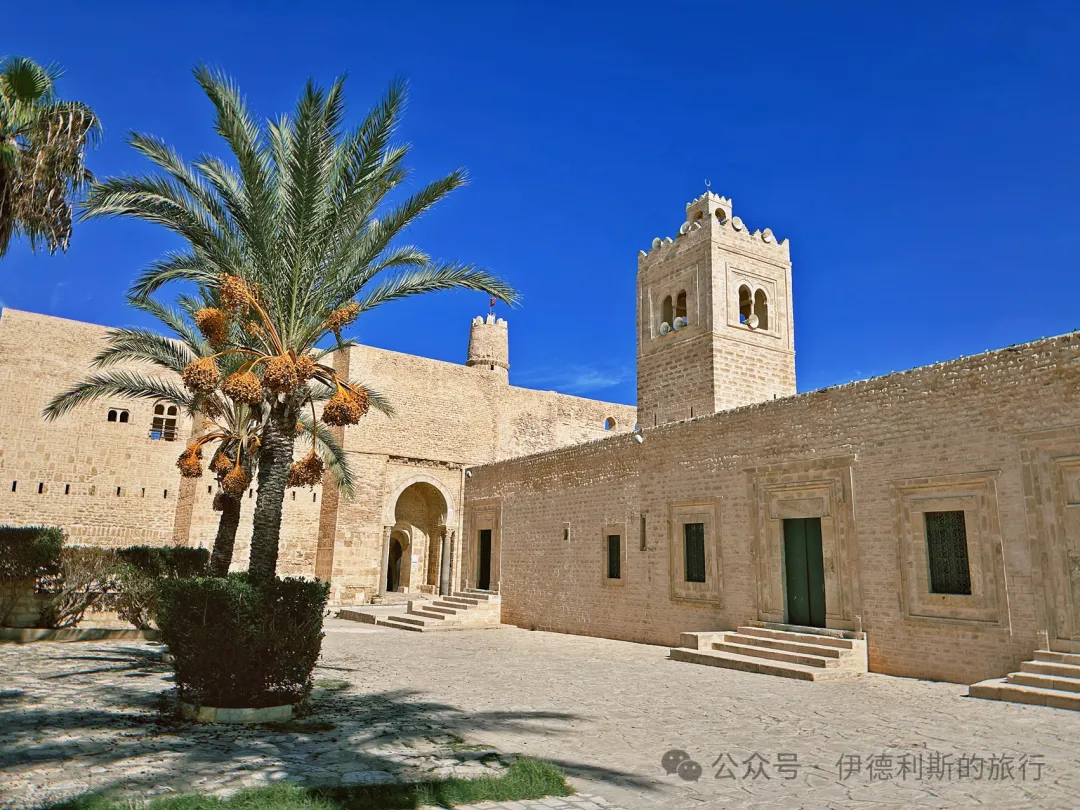
Great Mosque of Monastir: Founded in the 9th century
The Great Mosque of Monastir was founded during the Aghlabid dynasty in the 9th century. The Aghlabid dynasty was a Hanafi Arab dynasty that was nominally a vassal of the Abbasid Caliphate. They valued trans-Saharan and Mediterranean trade and conquered Sardinia, Sicily, and southern Italy. Buildings from the Aghlabid period have a typical fortress style, and the Great Mosque was also built like a military castle.
During the Zirid dynasty in the 11th century, the Great Mosque of Monastir was expanded, and the current mihrab niche in the typical Zirid style was built. It is a pity that in Tunisia, except for a very few mosques open to tourists in the morning, most are locked outside of prayer times, so we could not go inside to visit.
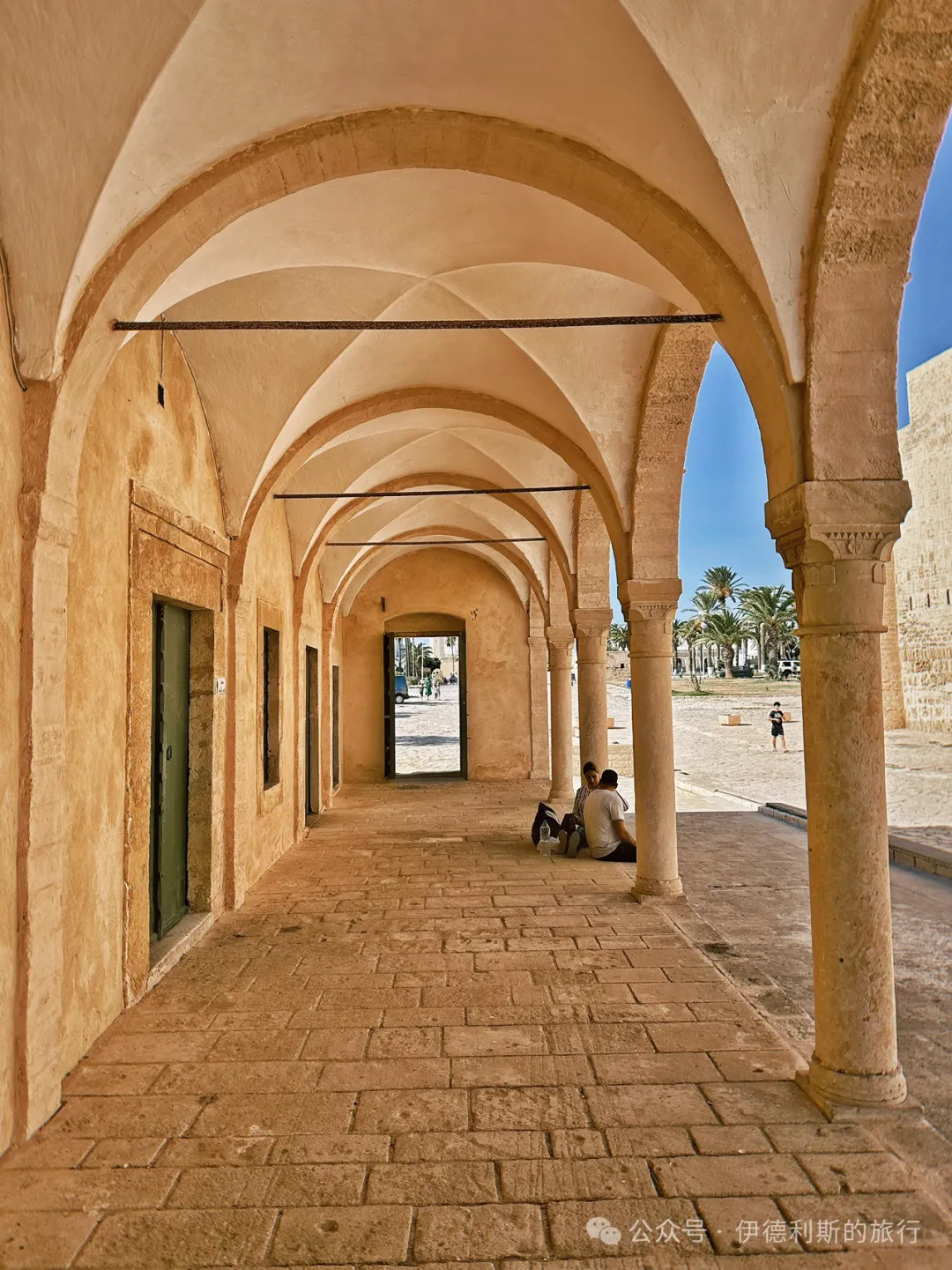
The Great Mosque continued to expand during the Hafsid dynasty, when the current minaret (bangke ta) was built. The Great Mosque was finally completed in the 18th century with the addition of the current porch. The biggest feature of the Great Mosque of Monastir is that there is no dome above the mihrab, which is very rare among ancient mosques in Tunisia.
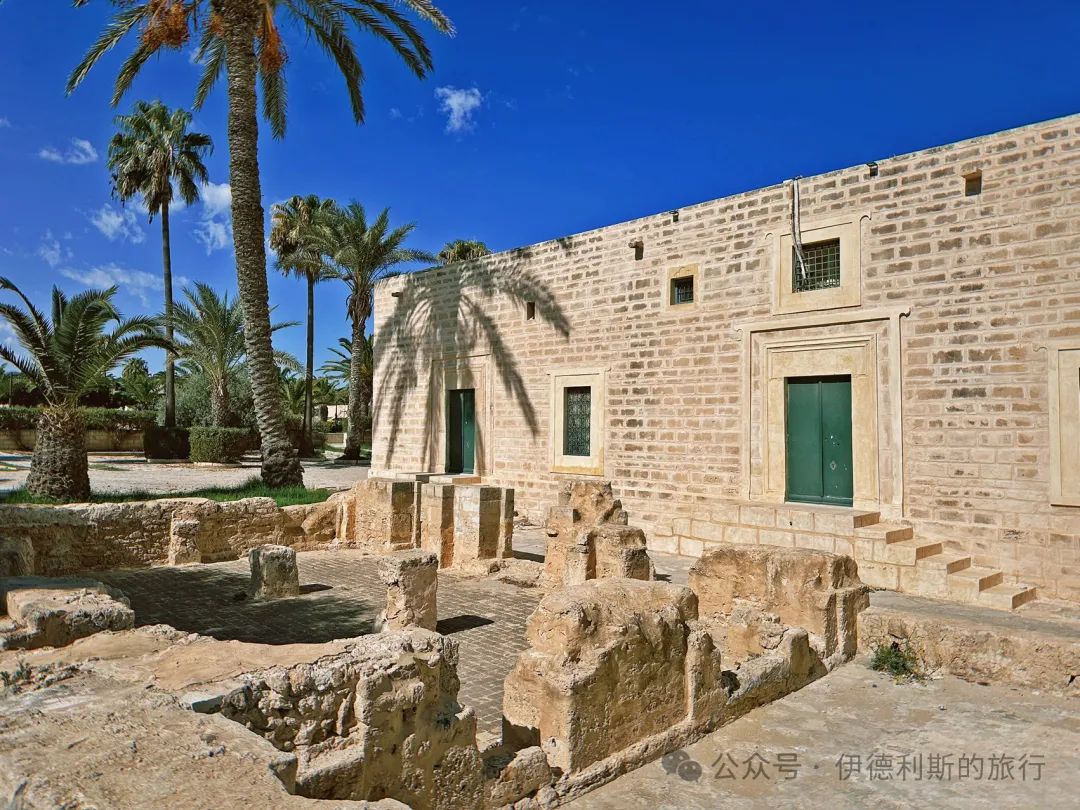
Great Mosque of Hammamet: founded in the 12th century.
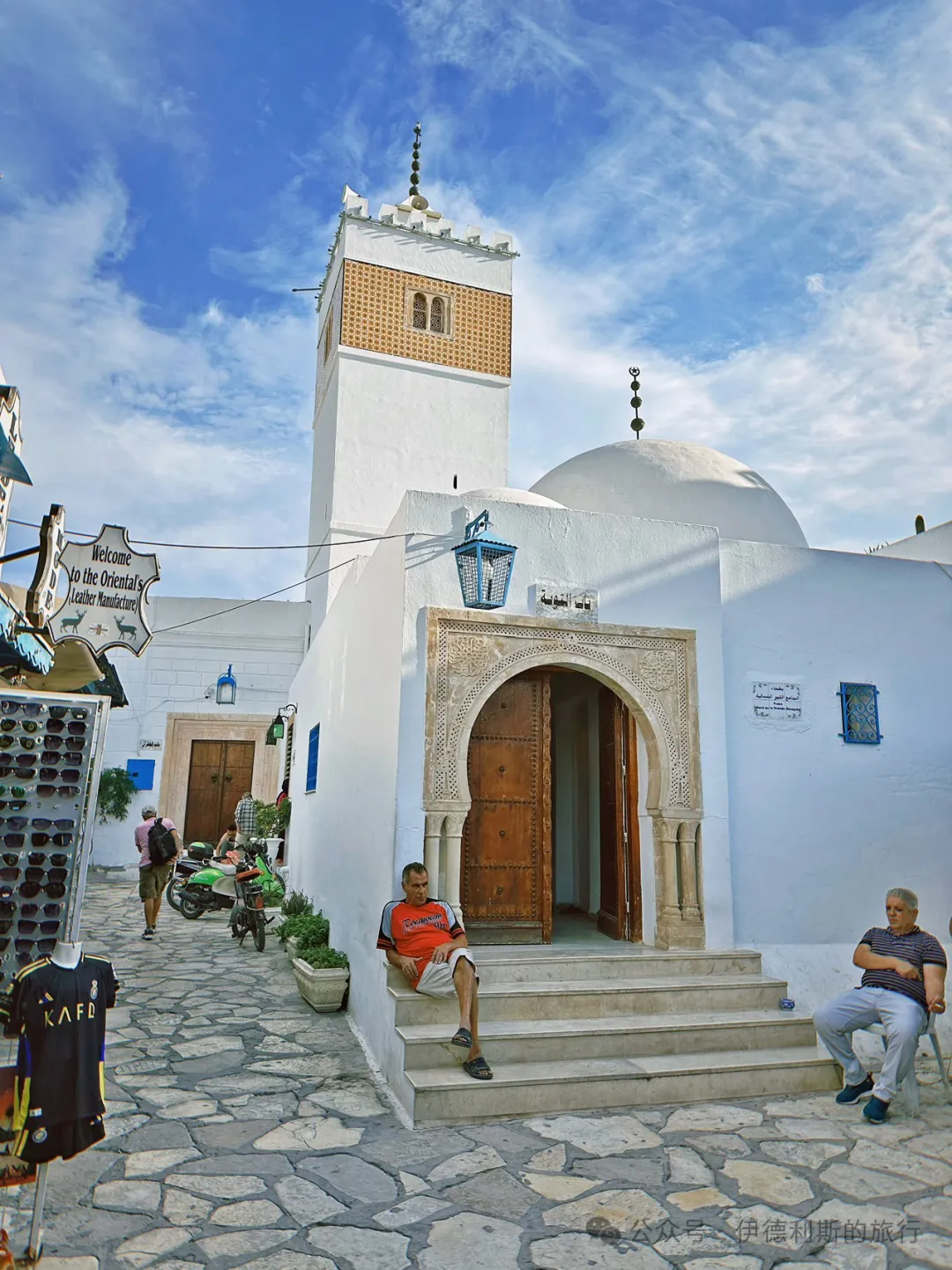
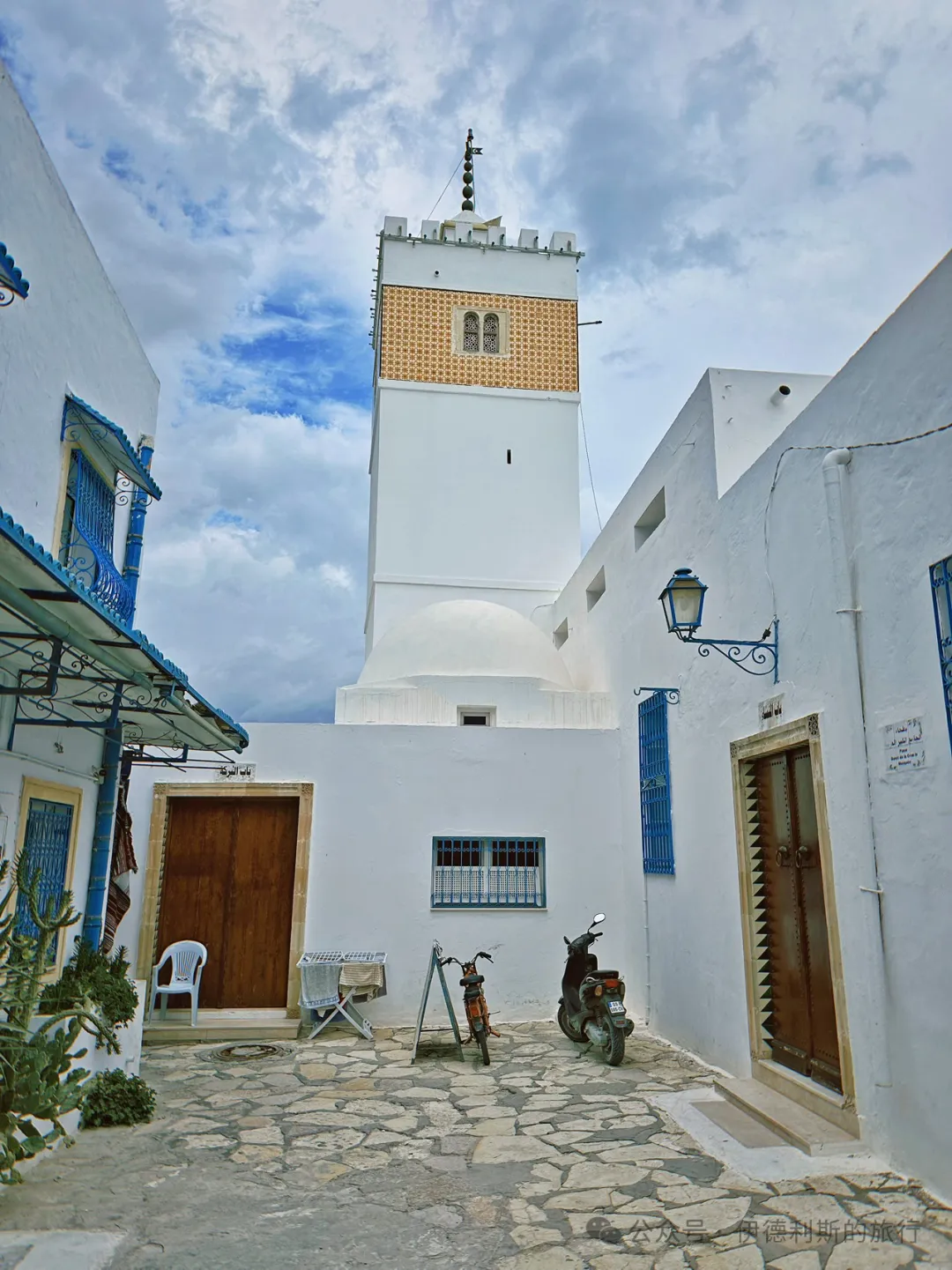
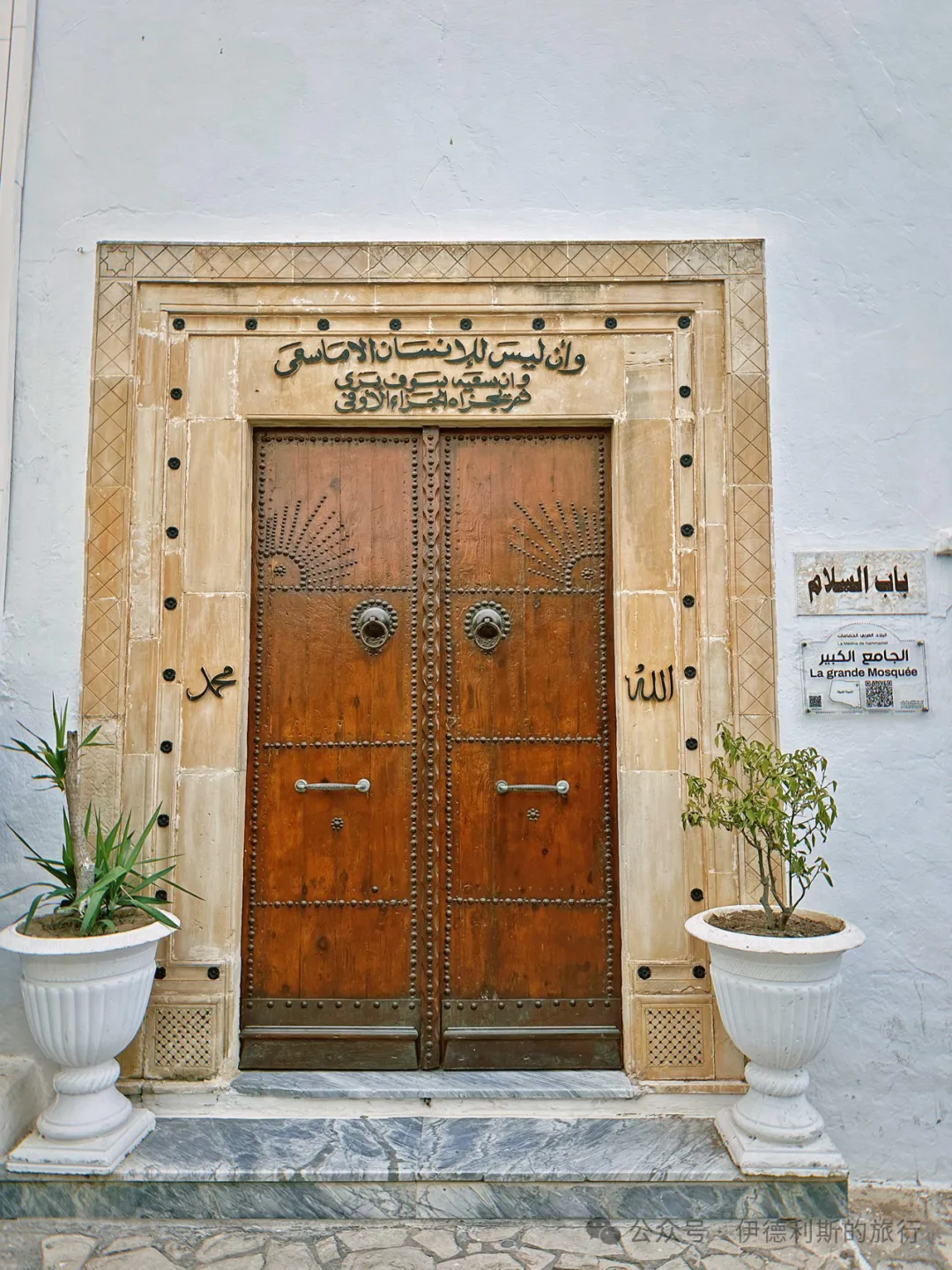
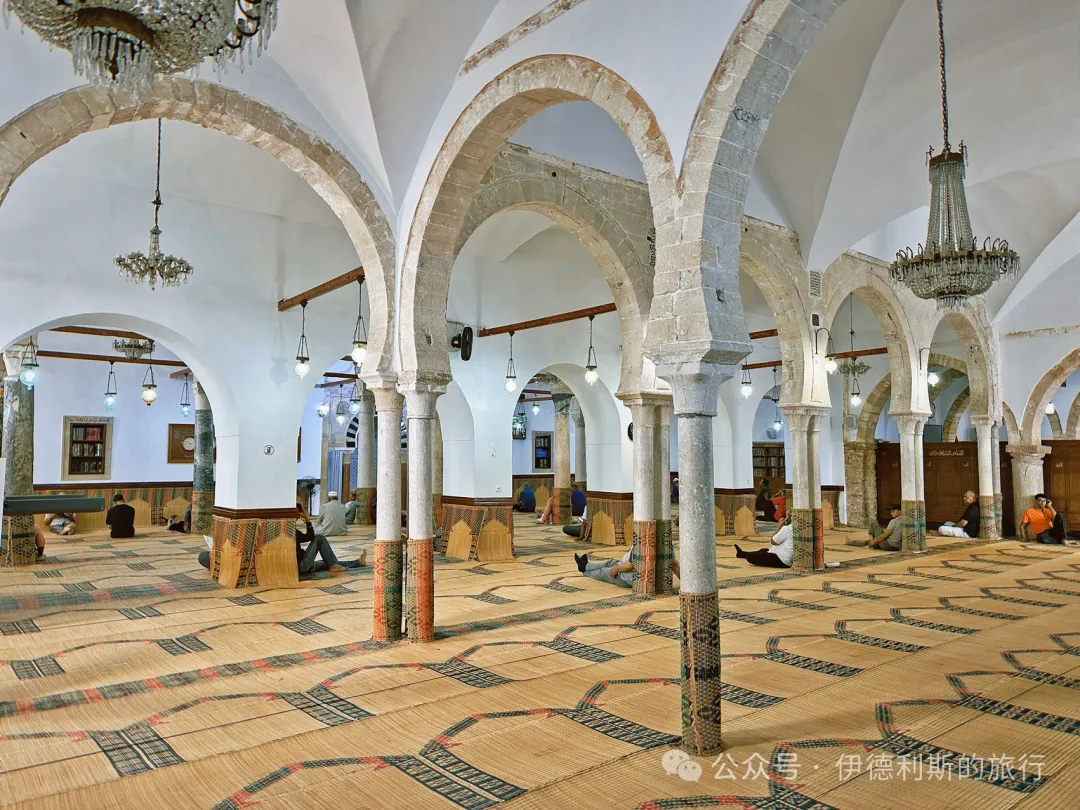
The Great Mosque of Hammamet was founded in the 12th century and officially completed in the 13th century, while the minaret (bangke ta) was added in 1463. It was also during this period that Hammamet developed from a coastal fortress into a medina residential area. The stone pillars of the Great Mosque of Hammamet are of different colors, and many were collected from nearby ancient Roman ruins.
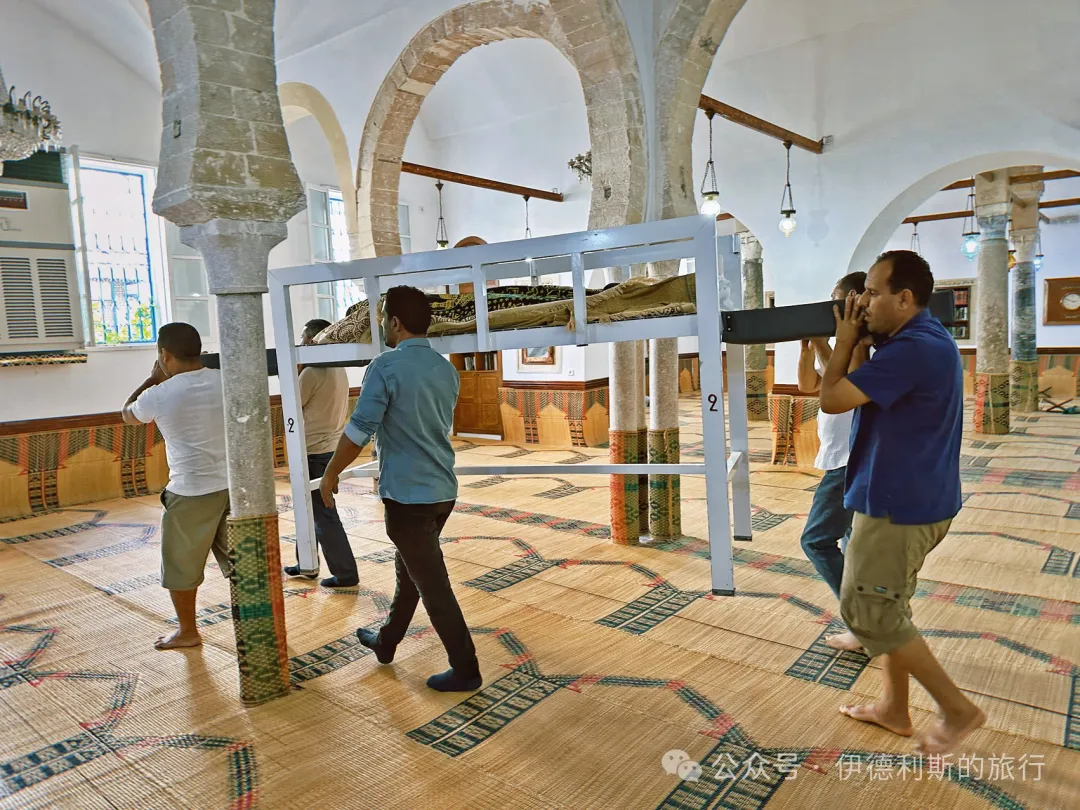
Tunisia follows the Maliki school, where the imam raising hands once, twice, or three times all coexist. After bowing, people stand directly in the main hall for namaz, and the janazah (mayti) is also kept in the main hall, which is quite different from our Hanafi practice.
Summary: This second part of the Tunisia mosque journey continues through ancient mosque sites, including Tunis, Sousse, and other historic Islamic landmarks. It keeps the source's mosque names, dynastic references, architectural notes, images, and travel observations in one English long-form article.
The scripture cases and night view of the Zaytuna Mosque (Jami' al-Zaytuna). The Hafsid dynasty made Tunis the capital between the 13th and 15th centuries, and the Zaytuna Mosque surpassed the Kairouan Mosque to become the largest mosque in Tunisia. A minaret (sawma'a) was added to the Zaytuna Mosque in 1438-39, though the current minaret was rebuilt in 1894.
As the main Friday mosque (Jami') of Tunis, the Zaytuna Mosque is closed for the dawn prayer (fajr) and the noon prayer (dhuhr), so people pray in their local neighborhoods. In the evening, the market at the mosque entrance closes, and everyone gathers at the mosque for the sunset prayer (maghrib). After the sunset prayer, the imam gives a sermon (wa'z) and recites the Quran, and everyone stays in the prayer hall to listen.
Kasbah Mosque in Tunis: 1230.
The Kasbah Mosque in Tunis was built between 1230 and 1233 by Abu Zakariyya Yahya (reigned 1229-49), the founding sultan of the Hafsid dynasty. It is the second main Friday mosque in Tunis after the Zaytuna Mosque. The mosque has been closed since the 2010 Jasmine Revolution, so you can only admire its famous minaret from the outside.
The minaret of the Kasbah Mosque was heavily influenced by the Almohad dynasty of Morocco and looks very similar to the Kasbah Mosque in Marrakesh. The minaret features interlocking diamond patterns (sebka), but unlike the brick structure of the Marrakesh Kasbah Mosque, the Tunis Kasbah Mosque uses stone decorations, showing the high level of ancient Tunisian stone masonry. The top of the minaret is decorated with triple horseshoe-shaped windows surrounded by tiles. This minaret design influenced many later minaret styles.
New Mosque (Masjid El Jedid) in Tunis: 1726.
The New Mosque is in the southern part of the Tunis Medina. During the afternoon prayer (asr), the lights in the main hall were off, and people were praying in the portico.
The New Mosque was built in 1726 by Al-Husayn I ibn Ali (reigned 1705-35), the founder of the Husainid dynasty in Tunisia. The Husainid dynasty was a Beylik nominally subordinate to the Ottoman Empire. Husayn was an Ottoman officer of Greek Cretan descent who was granted the title of Bey by the Ottoman Sultan in 1705 and began ruling Tunisia. Husayn used religion to unite different ethnic groups in Tunisia. He ordered the construction of many madrasas, and the New Mosque is one of his representative works.
The New Mosque is famous for the Ottoman Turkish tiles embedded in its walls.
Ksar Mosque in Tunis: construction started in 1106, rebuilt in 1647.
The Ksar Mosque in the Tunis Medina is a rare Hanafi mosque in Tunisia.
The Ksar Mosque was built in 1106 by the Banu Khurasan dynasty that ruled Tunis at the time. It was converted to the Hanafi school by the Ottoman Empire in 1598, and the minaret was rebuilt in its current Moorish style in 1647-48. The capitals of the columns inside the main hall were also taken from ancient architectural ruins. Inside the mihrab, there are seven niches with Fatimid-style fluted semi-domes.
Hammouda Pacha Mosque in Tunis: 1655.
Located in the Medina of Tunis, the Hammouda Pacha Mosque was built in 1655 by Hammouda Pacha, the second Bey of the Muradid dynasty (reigned 1631–66). It is the second Hanafi mosque in Tunis, following the Ksar Mosque.
Hammouda Pacha’s father, Murad I, was originally from Corsica. At age nine, he was captured by Tunisian pirates and sold to a Mamluk Bey in Tunis. He later rose to power and earned the Ottoman title of Pasha of Tunis. The Muradid dynasty was part of the Ottoman Empire but held significant administrative autonomy, allowing them to sign peace treaties and trade agreements with European nations.
During his reign, Hammouda Pacha led several expeditions to maintain peace and order in Tunisia. People say merchants could trade freely across the country without carrying weapons. Hammouda Pacha built many markets and hospitals in Tunis, and the Ottoman-style Hammouda Pacha Mosque is his most famous work. The Hammouda Pacha Mosque features an octagonal minaret and a rectangular courtyard with galleries. The marble work inside the main prayer hall is also very Ottoman in style.
Sidi Mahrez Mosque in Tunis: 1692.
The Sidi Mahrez Mosque is located on the north side of the Tunis Medina. It was built in 1692 by Mohamed Bey, the fourth Bey of the Muradid dynasty (reigned 1675–96). It sits right next to the gongbei of Sidi Mahrez, the most important wali (saint) in Tunis, who was also a famous Maliki scholar.
The Sidi Mahrez Mosque is heavily influenced by Ottoman style. It is modeled after the great mosques of Istanbul, featuring a central dome and smaller domes, with the interior decorated in Iznik tiles imported from Turkey. Tunisia was unstable during the reign of Mohamed Bey, with civil war and invasions from Algiers causing internal and external trouble. Despite this, the Bey still built many structures, and the Sidi Mahrez Mosque is his representative work.
Using the Sidi Mahrez Mosque as an example, here is the main layout of a mosque's interior during the Ottoman period.
The most important part of the main hall is the qibla wall, which faces the direction of Mecca. During namaz, every row of worshippers aligns parallel to the qibla wall. In the center of the qibla wall is the mihrab, a niche that symbolizes the entrance to Paradise. After the congregation forms, the imam stands directly in front of this niche.
The minbar (pulpit) is next to the mihrab. This is where the sermon is delivered during the Friday Jumu'ah prayer and Eid prayers.
The main hall of a large mosque often has a dikka (raised platform) in the center, though some mosques build them above the main entrance. The dikka is called Müezzin Mahfili in Turkish. It is where the muezzin calls the adhan and responds to the imam during prayer. People also recite the Quran here during the nights of Ramadan. Because there were no sound systems in the past, not everyone could hear the imam leading the prayer, so the muezzin needed to repeat the sounds loudly from the platform.
Additionally, the main halls of some large mosques in Tunis contain beautifully crafted Quran cases, made of either carved wood or copper.
El Ichbili Mosque in Tunis: Founded in the 10th century.
The El Ichbili Mosque is located deep within the Medina of Tunis, right next to the El Brat market. The mosque was founded in the 10th century, and the minaret was built in the 14th century.
Yusuf Dey Mosque in Tunis: 1616
Yusuf Dey Mosque was built by Yusuf Dey of the Ottoman dynasty in 1616. It is the first Ottoman-style mosque in Tunis. He built a Turkish market around the mosque that sold many spoils taken by pirates. I only visited the outside of the mosque because it was not open yet. At the intersection, there is the first octagonal minaret (bangke ta) in Tunis, which has a wooden sunshade on top. Next to the minaret is the white marble tomb of Yusuf Dey, featuring large blind arcades on the walls.
Great Mosque of Sousse: 851
The Great Mosque of Sousse was started in 851 by the Aghlabid ruler Emir Muhammad I ibn al-Aghlab (reigned 841-56). The main hall was expanded to the south in the 10th century. The current courtyard portico and the minaret in the northeast corner were built in the 11th century, and the south portico was renovated in 1785.
The Great Mosque of Sousse is right next to the Sousse Fortress and also has a fortress-like appearance. The exterior has jagged walls and corner towers. The minaret in the northeast corner is not very tall and looks more like a castle tower.
Muhammad I ibn al-Aghlab was a powerful military leader and strategist. He kept expanding into the Mediterranean and conquered Sicily and large parts of southern Italy. In 846, he led a large army to attack Rome, looted Vatican Hill, and took a lot of wealth. At the same time, agriculture and trade in Tunisia flourished under his rule. The cities of Sousse and Sfax were prosperous, and the Great Mosque of Sousse and the Great Mosque of Sfax are the best proof of this.
Unlike all mosques in Turkey which are open all day, mosques in Tunisia have limited opening hours. Some only open for the five daily prayers, and some only open in the morning and evening. Because of this, visiting mosques in Tunisia was not easy, and I did not get to enter many of them. From September 16 to April 30, the courtyard of the Great Mosque of Sousse is open to tourists from 8:00 to 12:00. The gates close in the afternoon and only reopen at night for namaz in the main hall. Therefore, I only captured the night view of the main hall during Maghrib and Isha, and only took photos of the courtyard during the day.
The atmosphere at the Great Mosque of Sousse at night is quite good. There were children in the courtyard at night handing out baguettes soaked in olive oil to everyone, which was very welcoming.
The mihrab of the Great Mosque of Sousse was rebuilt in the 11th century, but the dome above it is original from the 9th century, decorated with Kufic inscriptions and floral patterns. This kind of dome directly above the mihrab was rare before the 9th century. Only a few have been preserved, such as those at the Al-Aqsa Mosque in Jerusalem and the Umayyad Mosque in Damascus.
Great Mosque of Monastir: Founded in the 9th century
The Great Mosque of Monastir was founded during the Aghlabid dynasty in the 9th century. The Aghlabid dynasty was a Hanafi Arab dynasty that was nominally a vassal of the Abbasid Caliphate. They valued trans-Saharan and Mediterranean trade and conquered Sardinia, Sicily, and southern Italy. Buildings from the Aghlabid period have a typical fortress style, and the Great Mosque was also built like a military castle.
During the Zirid dynasty in the 11th century, the Great Mosque of Monastir was expanded, and the current mihrab niche in the typical Zirid style was built. It is a pity that in Tunisia, except for a very few mosques open to tourists in the morning, most are locked outside of prayer times, so we could not go inside to visit.
The Great Mosque continued to expand during the Hafsid dynasty, when the current minaret (bangke ta) was built. The Great Mosque was finally completed in the 18th century with the addition of the current porch. The biggest feature of the Great Mosque of Monastir is that there is no dome above the mihrab, which is very rare among ancient mosques in Tunisia.
Great Mosque of Hammamet: founded in the 12th century.
The Great Mosque of Hammamet was founded in the 12th century and officially completed in the 13th century, while the minaret (bangke ta) was added in 1463. It was also during this period that Hammamet developed from a coastal fortress into a medina residential area. The stone pillars of the Great Mosque of Hammamet are of different colors, and many were collected from nearby ancient Roman ruins.
Tunisia follows the Maliki school, where the imam raising hands once, twice, or three times all coexist. After bowing, people stand directly in the main hall for namaz, and the janazah (mayti) is also kept in the main hall, which is quite different from our Hanafi practice.
