
Beijing Ramadan 2026 Diary: Madian Mosque, Fayuan Mosque, Sudan Embassy Iftar and Hui Meals
Reposted from the web
Summary: This Beijing Ramadan 2026 diary follows iftar meals and mosque visits at Madian, Fayuan, Zhengyuan, Nanxiaopo, Dongwai, Houheyan, and the Sudan Embassy, with food and community details kept in full.
I returned to Beijing from Sichuan during the second week of Ramadan. This year, I had to take my son to kindergarten by electric scooter every morning, so I couldn't break my fast at Balizhuang like I did last year (see 'A Wonderful Look Back at Ramadan 2025 in Beijing Balizhuang'). Instead, I mostly went to the mosques near my office and home. I visited seven in total: Madian Mosque, Fayuan Mosque, Zhengyuan Mosque, Nanxiaopo Mosque, Dongwai Mosque, Houheyuan Mosque, and the Sudan Embassy. I will share them with you below.
Madian Mosque
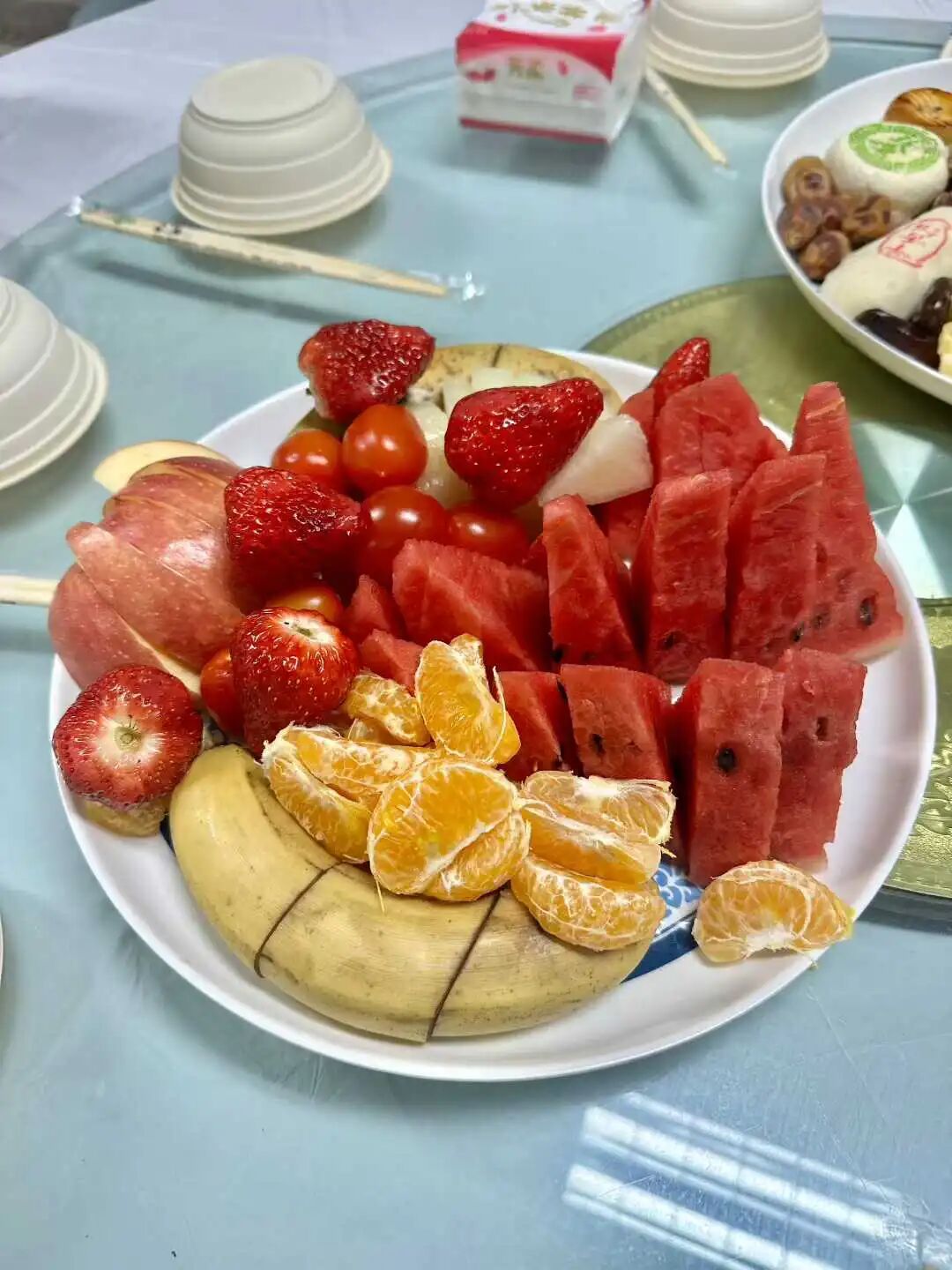
Madian Mosque is the closest mosque to my office, and it is the one I visited the most. The iftar at Madian Mosque is quite generous. Before breaking the fast, there is a plate of fruit and a plate of pastries. After breaking the fast, there are noodles, stir-fried dishes, stir-fried dough bits (chaogeda), steamed buns (baozi), and more. Usually, there are two tables of international students, one table of friends (dosti) from Northwest China, one table of female elders, and one table of male elders at iftar. I met many old friends and made many new ones at Madian Mosque this year, which was very blessed. We set up over a dozen tables in the courtyard for the Night of Power (Laylat al-Qadr), which I will write about in my next post.
Madian is located on the Jingbei Avenue outside Deshengmen in Beijing. After the Ming Dynasty overthrew the Yuan Dynasty, they moved the northern wall of the capital city south. However, the main road from Beijing through Deshengmen to outside the Great Wall still passed through the Jiande Gate gap of the Yuan capital. The trade of horses, cattle, and sheep coming from the north gradually formed a market inside the Jiande Gate gap, attracting a large number of Hui Muslims to settle there. It was said that the number of Hui Muslims there was no less than at Niujie. Since the Qing Dynasty, hundreds of thousands of cattle, sheep, and horses entered Beijing from Mongolia via Zhangjiakou every year. Hui Muslims opened many horse shops and sheep shops in Madian, responsible for feeding and selling the livestock to earn commissions. After the Daoguang era, the horse trade moved to the suburbs outside Deshengmen, and most of the businesses in Madian changed into sheep shops, keeping only a few horse shops. Since it formed in the Qing Dynasty, Madian was called 'Madian' (Horse Shop). It wasn't until the early Republic of China, when place names were made to sound more elegant, that it was changed to 'Madian' (Horse Station), a name that is still used today.
The inscriptions inside Madian Mosque also record the situation of the Hui Muslims in Madian: Madian is located inside the rammed earth walls of the Yuan capital, outside the brick walls of the Ming and Qing Beijing, right on the ancient and modern main road leading north from the capital, connecting to the bustling city in the south and the vast plains stretching for hundreds of miles in the north. Along the Changping Road, there are endless trees. Traveling to Nankou, the Yan Mountains rise one after another, blocking the vast grazing lands of the Bashang plateau. The weather outside the Great Wall is bitterly cold, making it hard to raise sheep. The Hui Muslims of Madian did not avoid the hard work, braving the elements to bring them back, raising and grazing the wild animals until they survived and grew stronger. They earned a meager income, which was their livelihood. This was the sheep trade.
Madian Mosque is located on a terrace on the west side of the ancient road. It was first built during the Kangxi era. In 1850 (the 30th year of the Daoguang reign), it was rebuilt with funds raised by fourteen sheep and horse shops in Madian. It was rebuilt again during the Republic of China and is quite large in scale. In 1930, Ding Ziyu, the principal of Madian Guangyu Primary School, published 'An Investigation of the Madian Mosque Outside Deshengmen, Beiping' in 'Zhengdao' magazine. The article mentioned that more than 300 people attended the Taraweeh prayers at Madian Mosque during Ramadan, 500 to 600 people fasted, and one-third of them fasted for the entire month. According to the memories of the elders in Madian, until the early days after liberation, whenever Ramadan ended and the new moon appeared, people on the front and back streets of Madian would shout, 'The fast is broken!' The fast is broken! ''
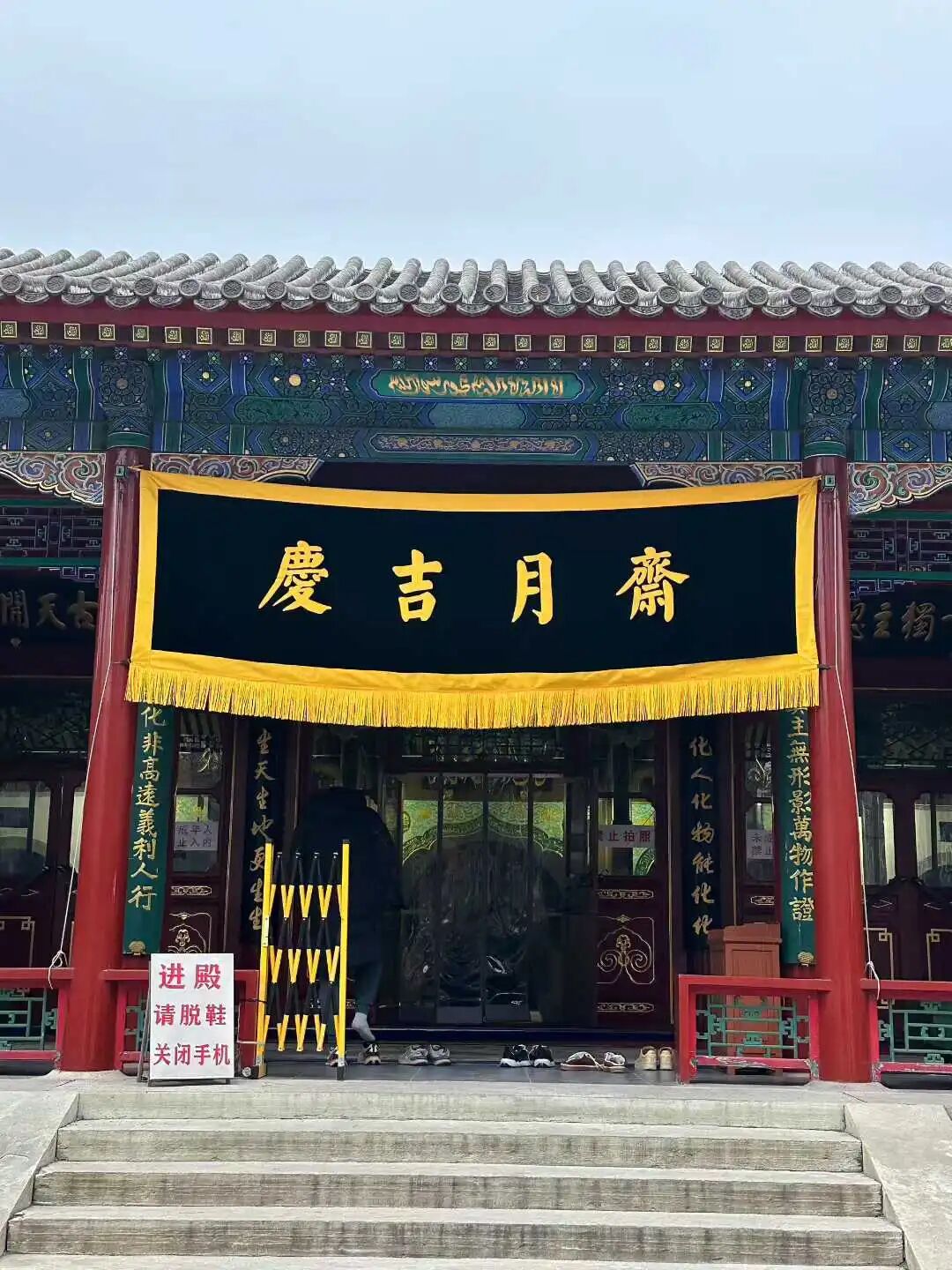
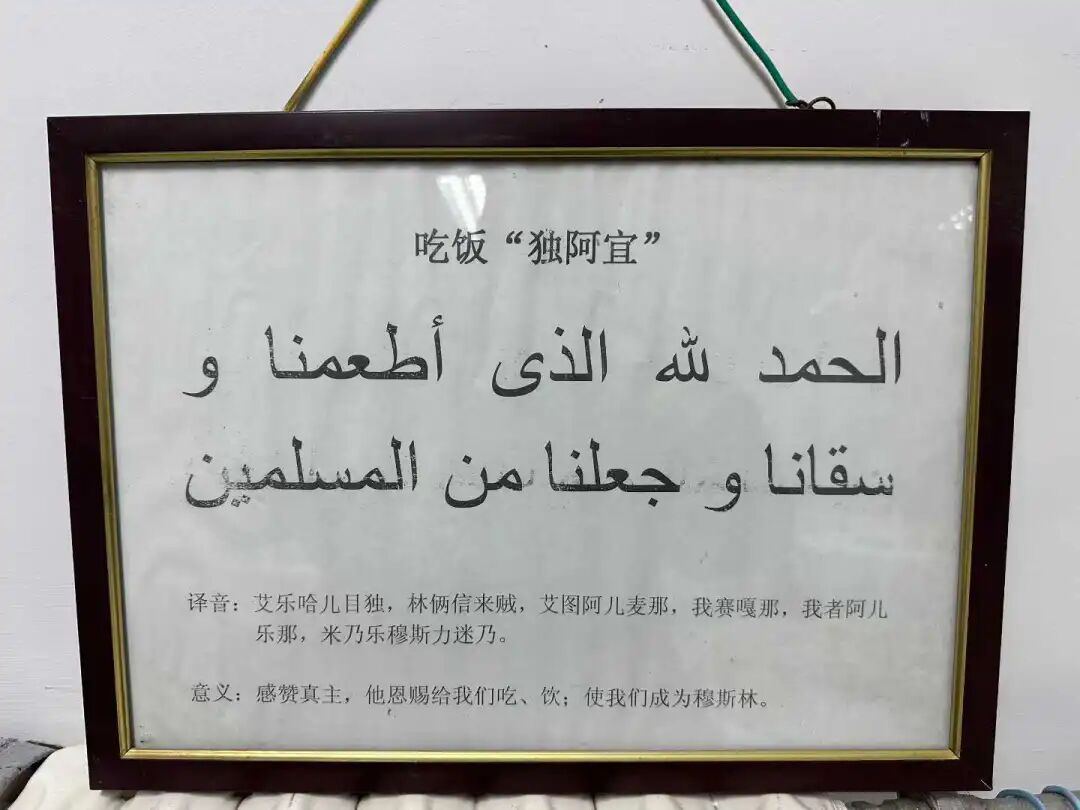
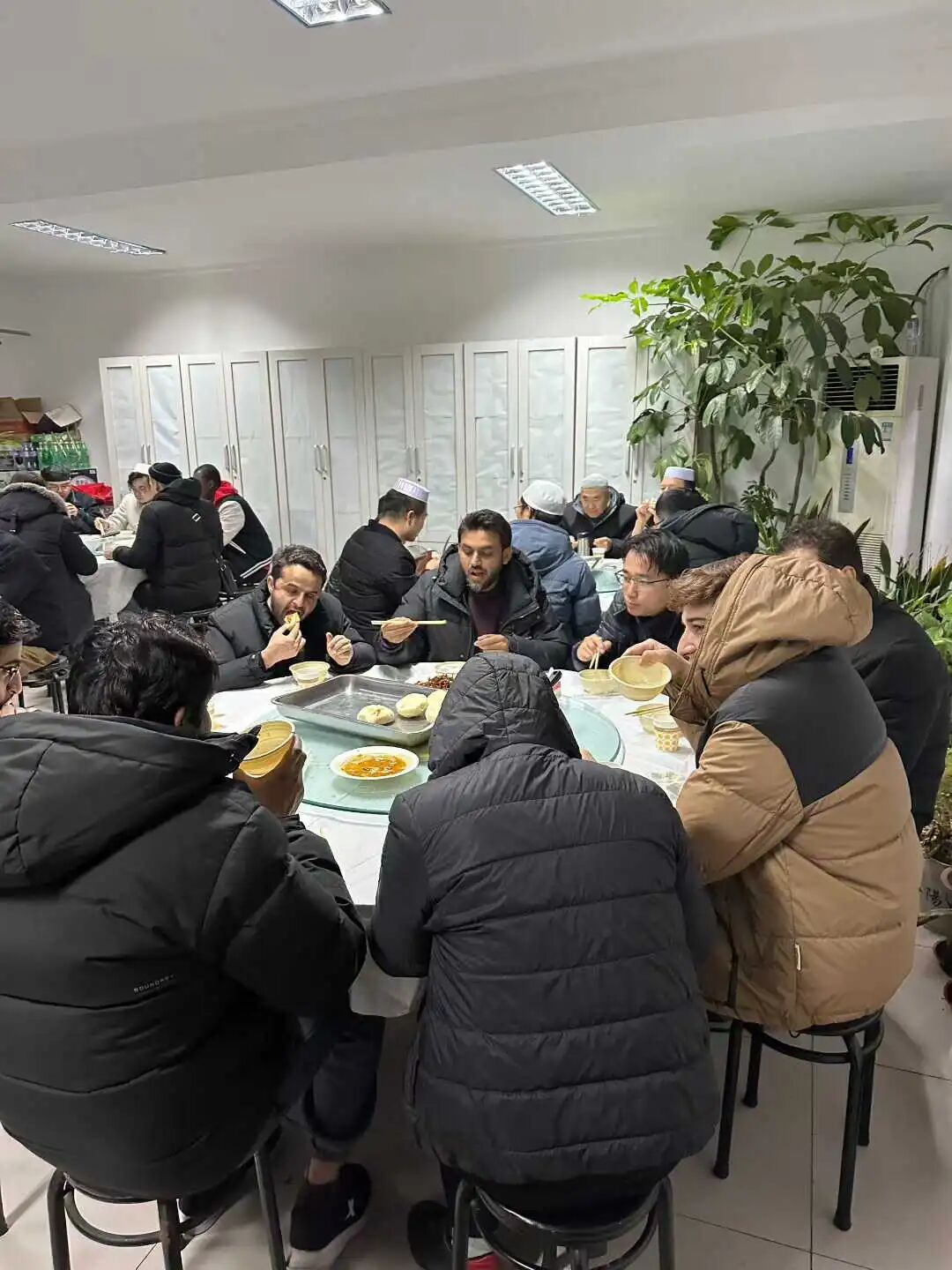
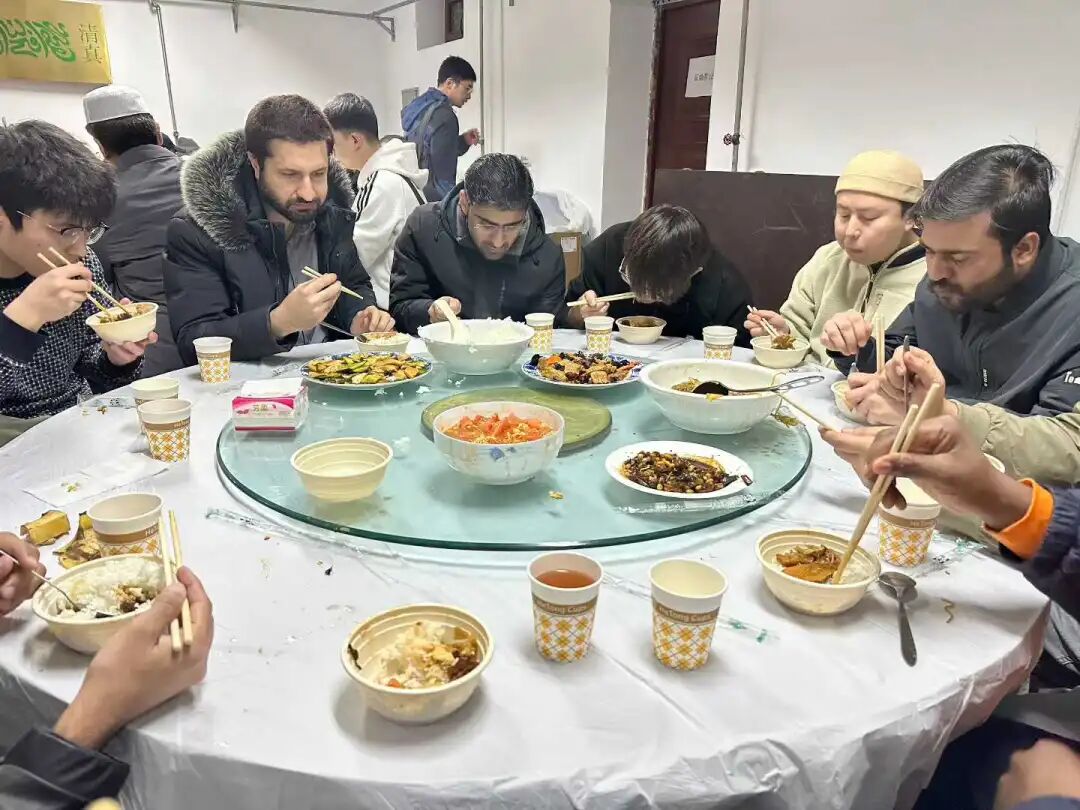
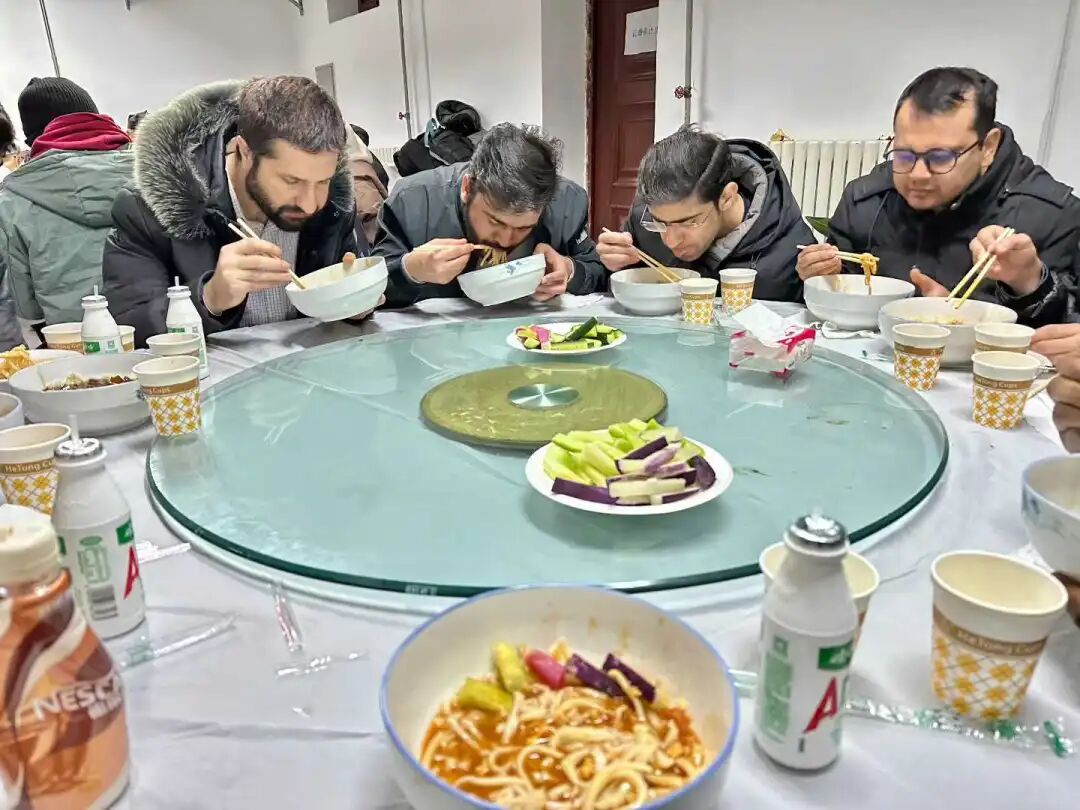
The international students who come to Madian Mosque for iftar include friends (dosti) from India and Pakistan, and they are friends with each other.
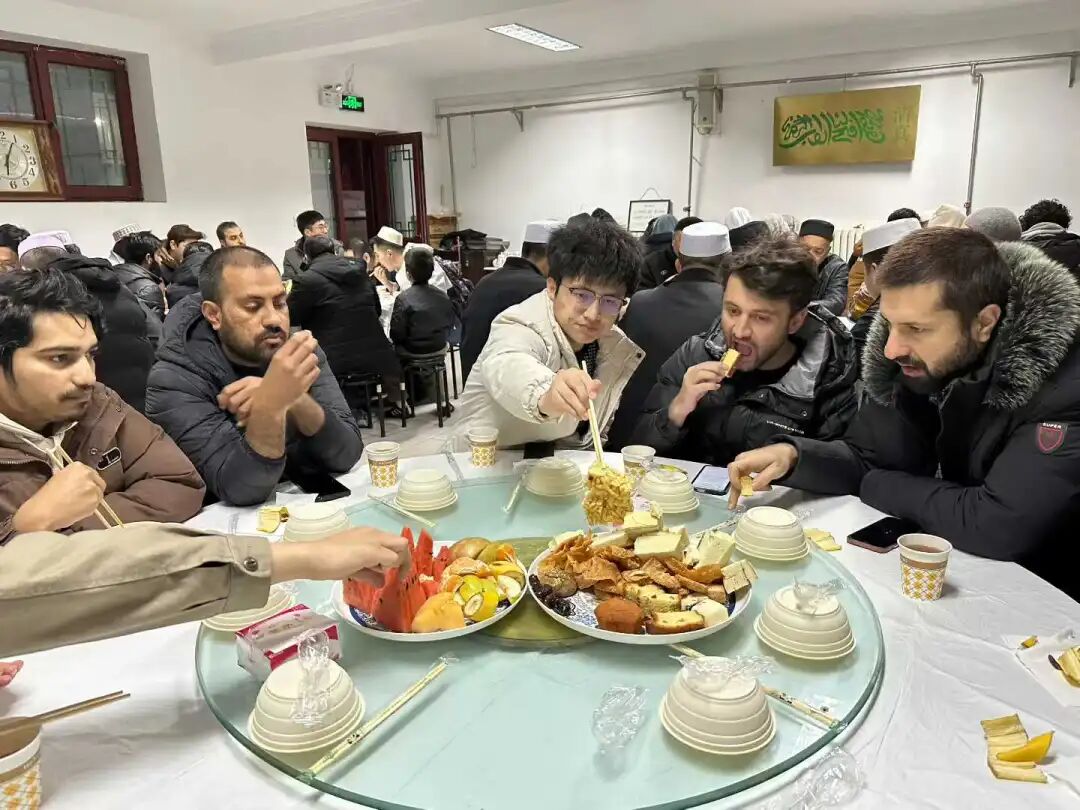
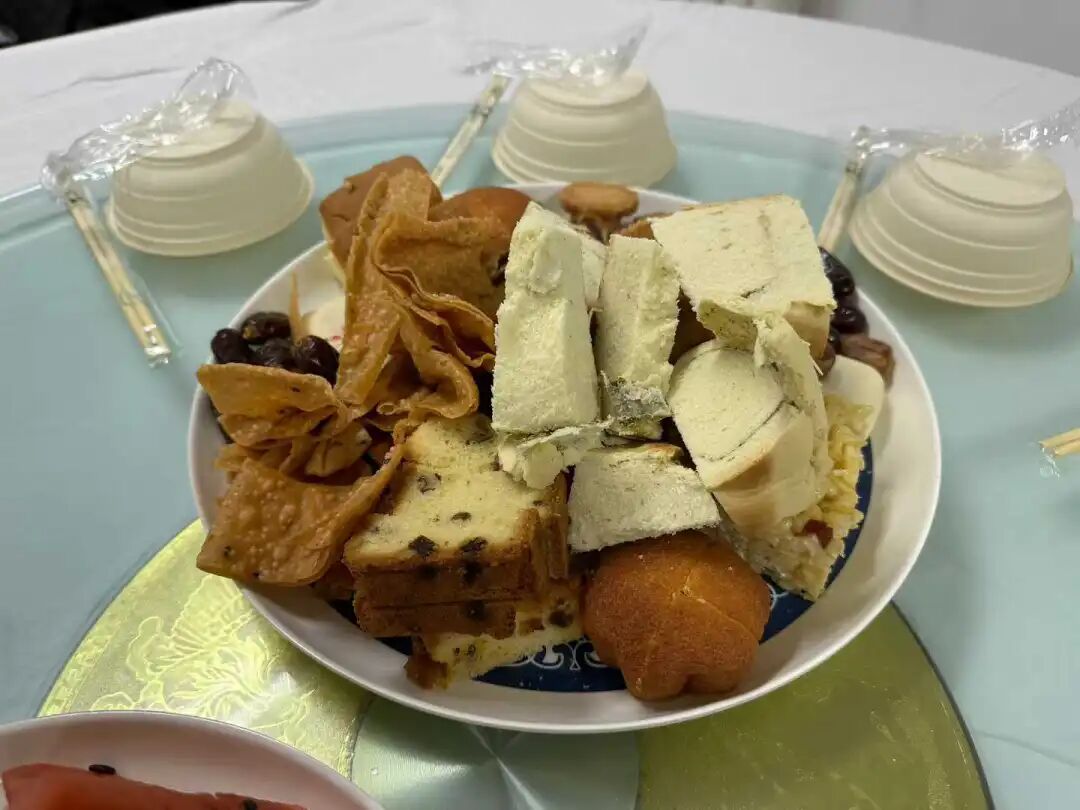
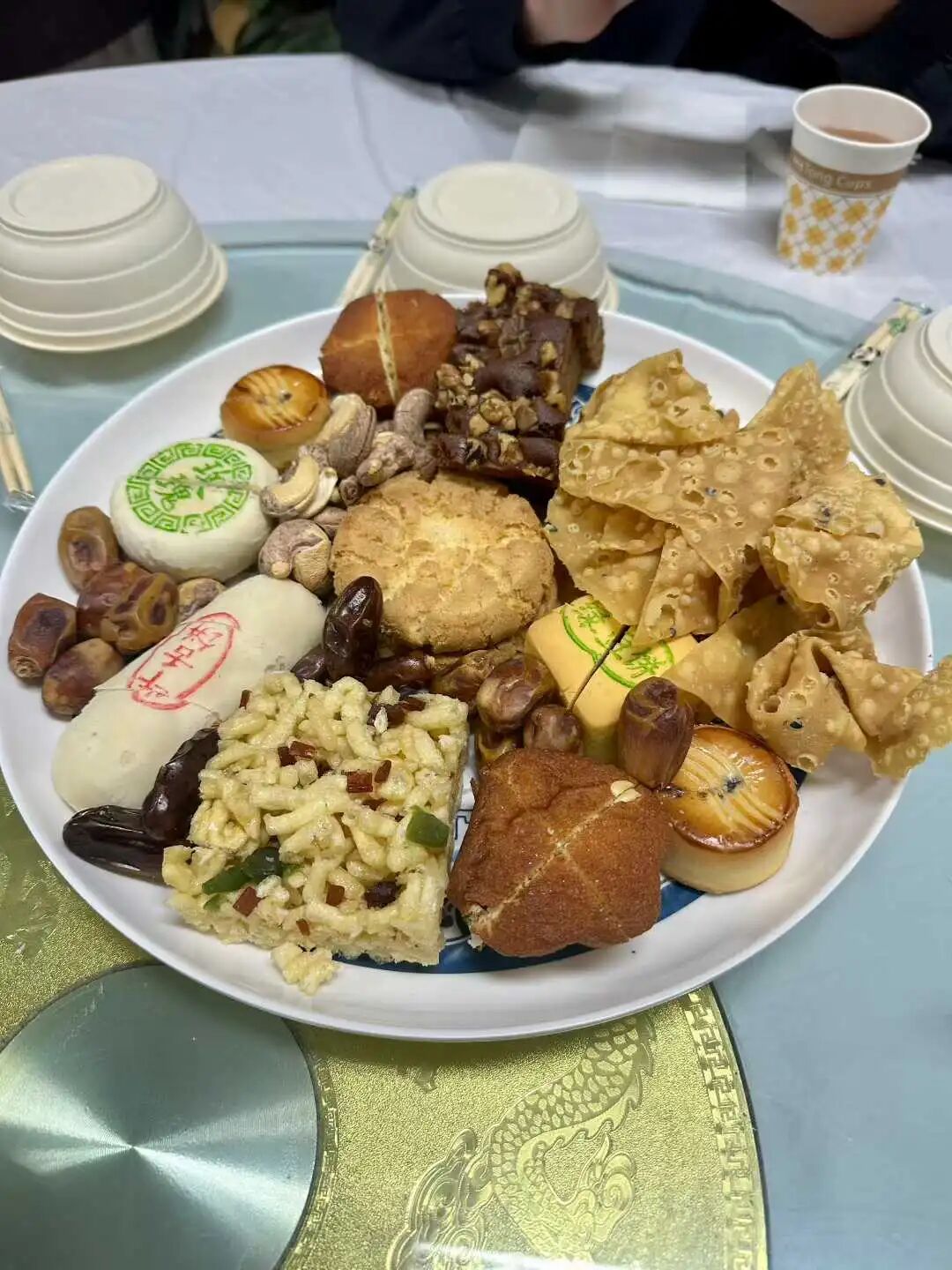
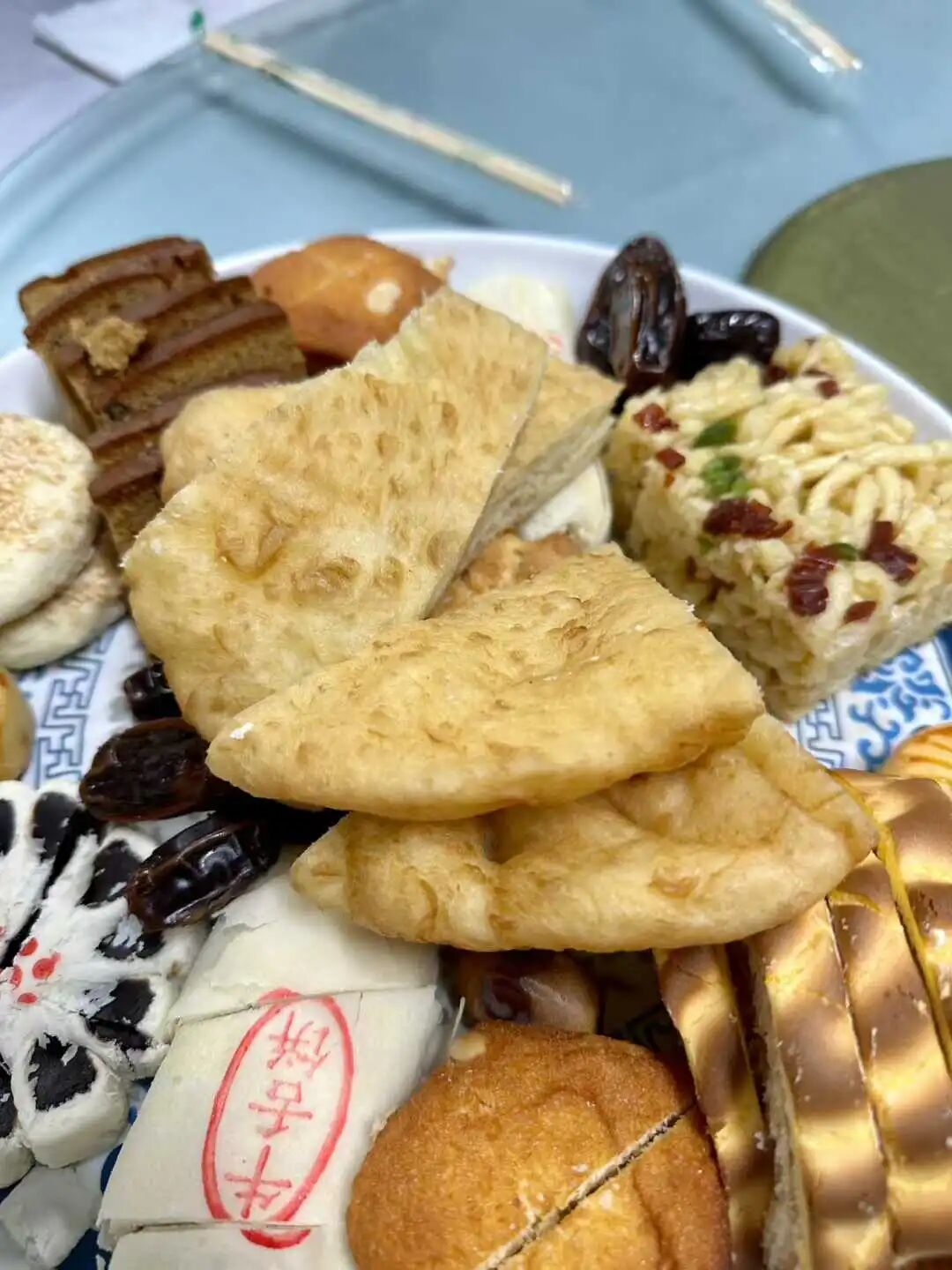
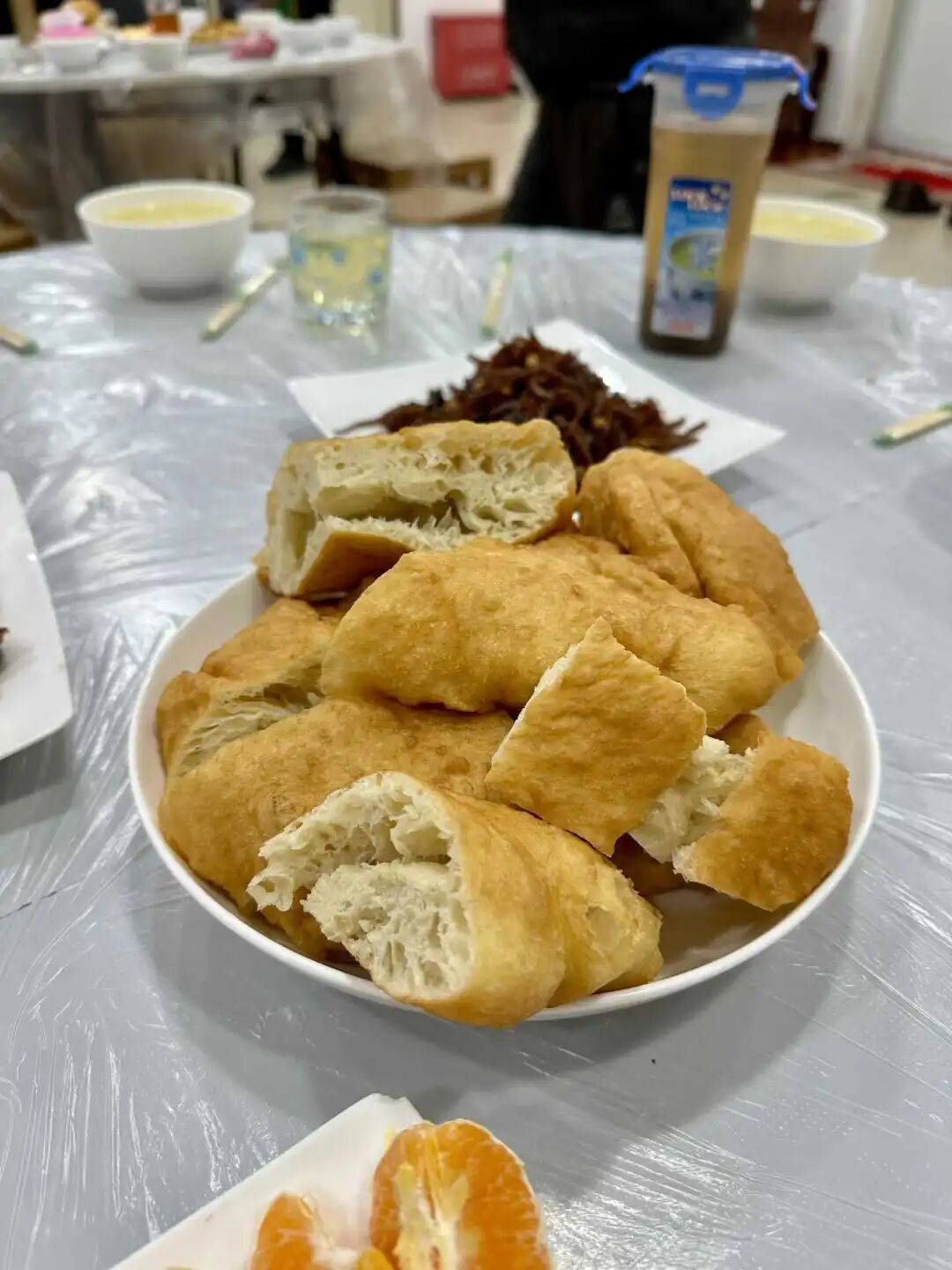
Fried dough (youxiang) at the mosque.
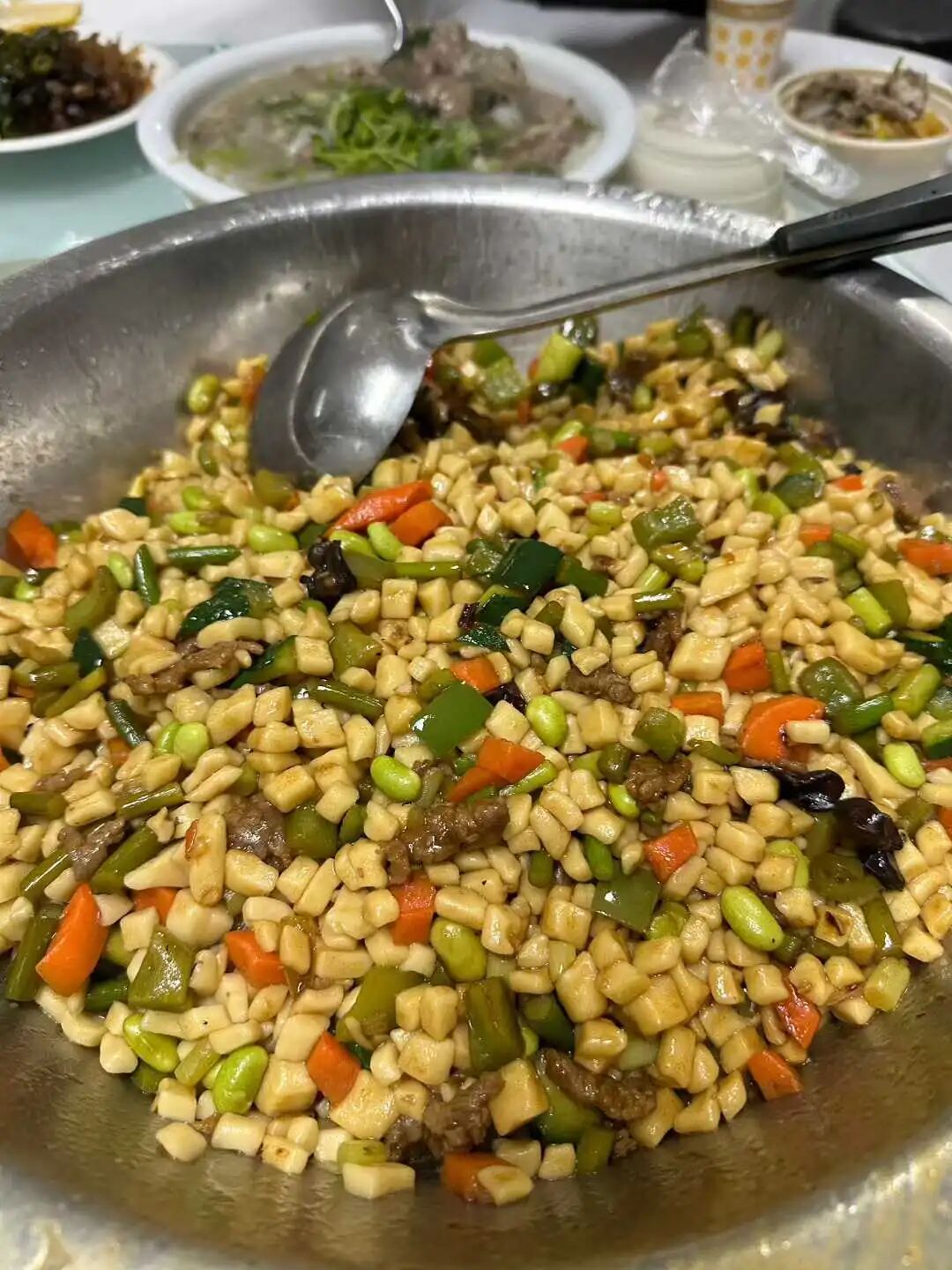
Stir-fried dough bits (chaogeda) made at the mosque.
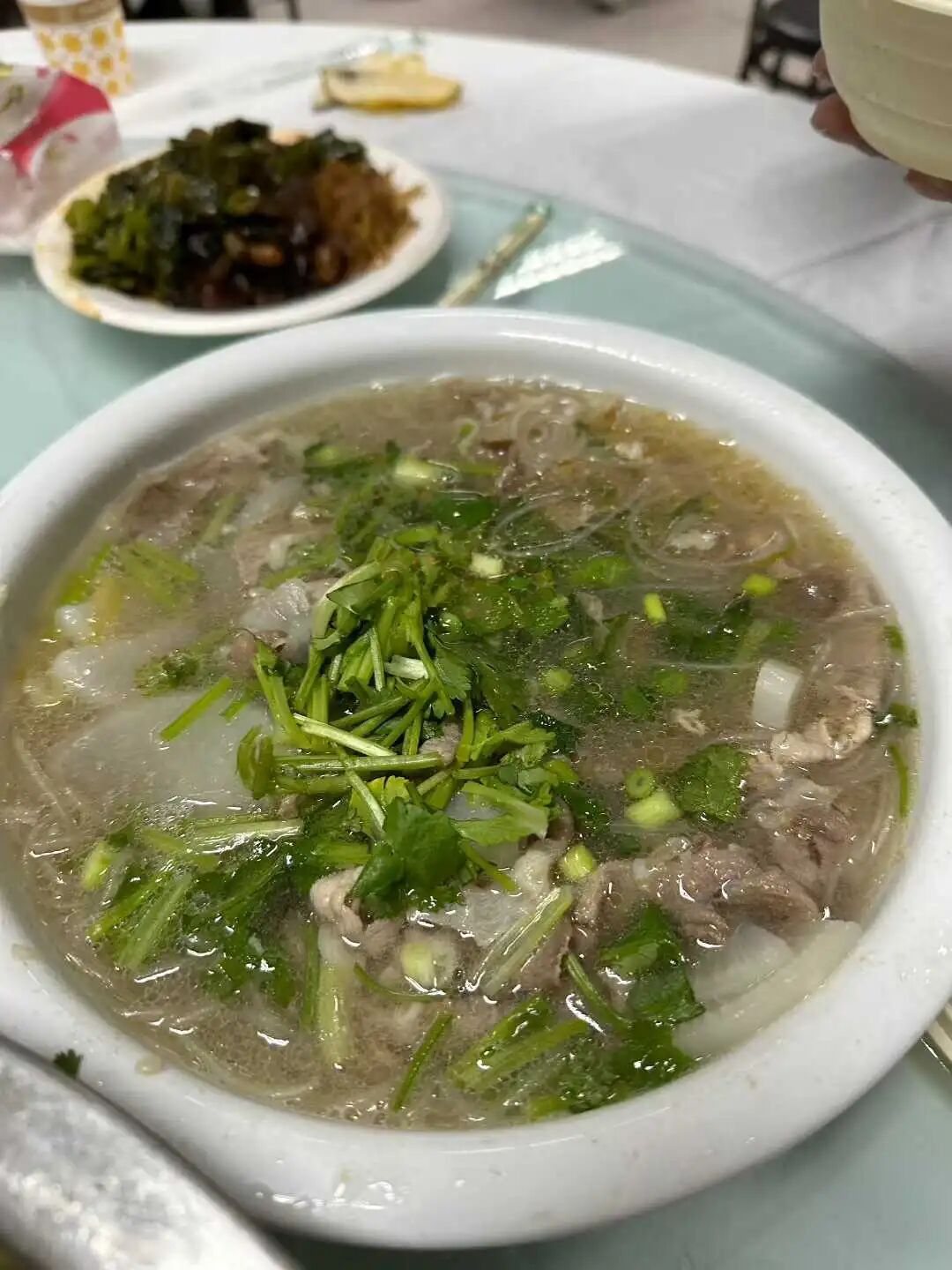
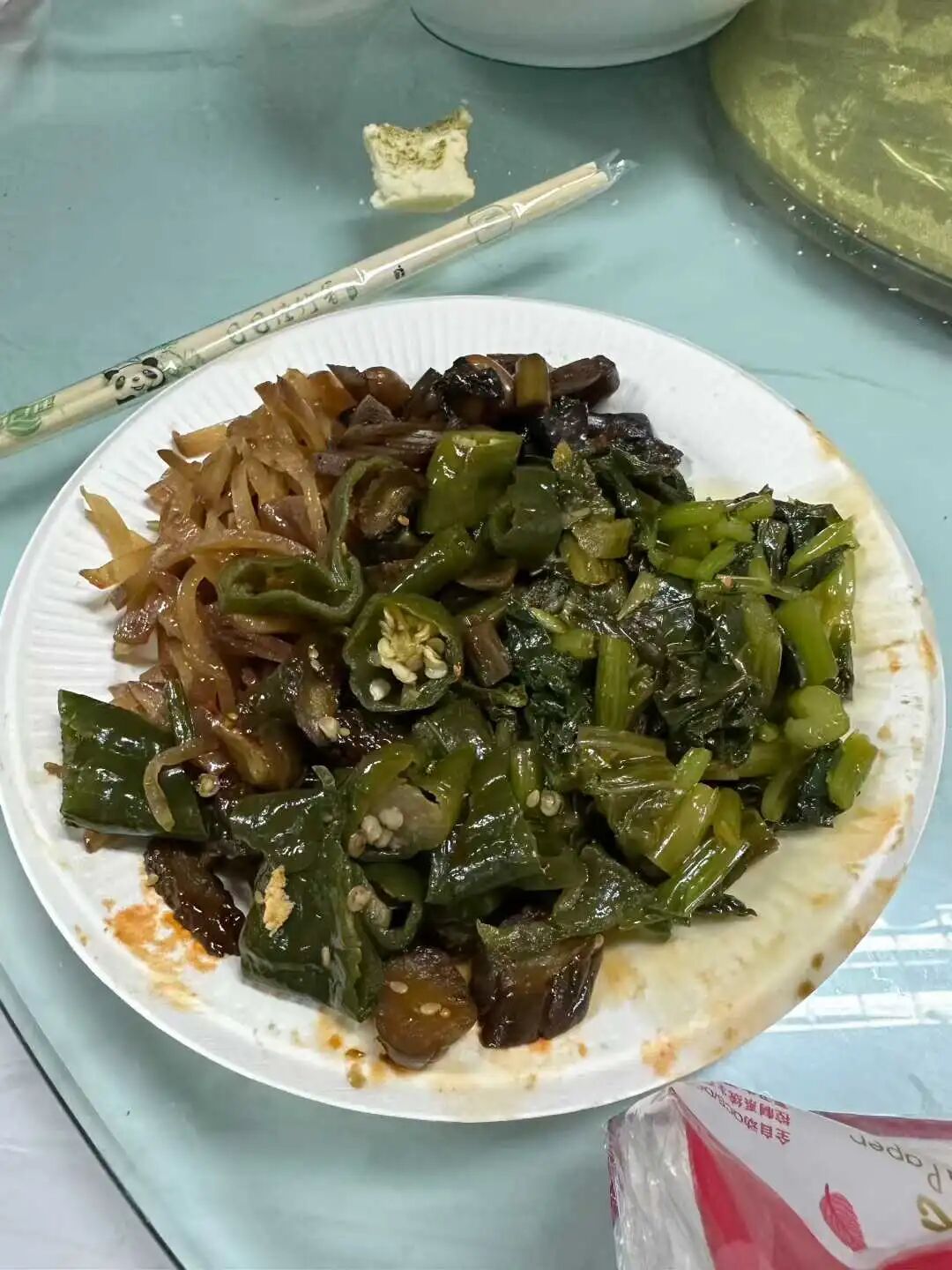
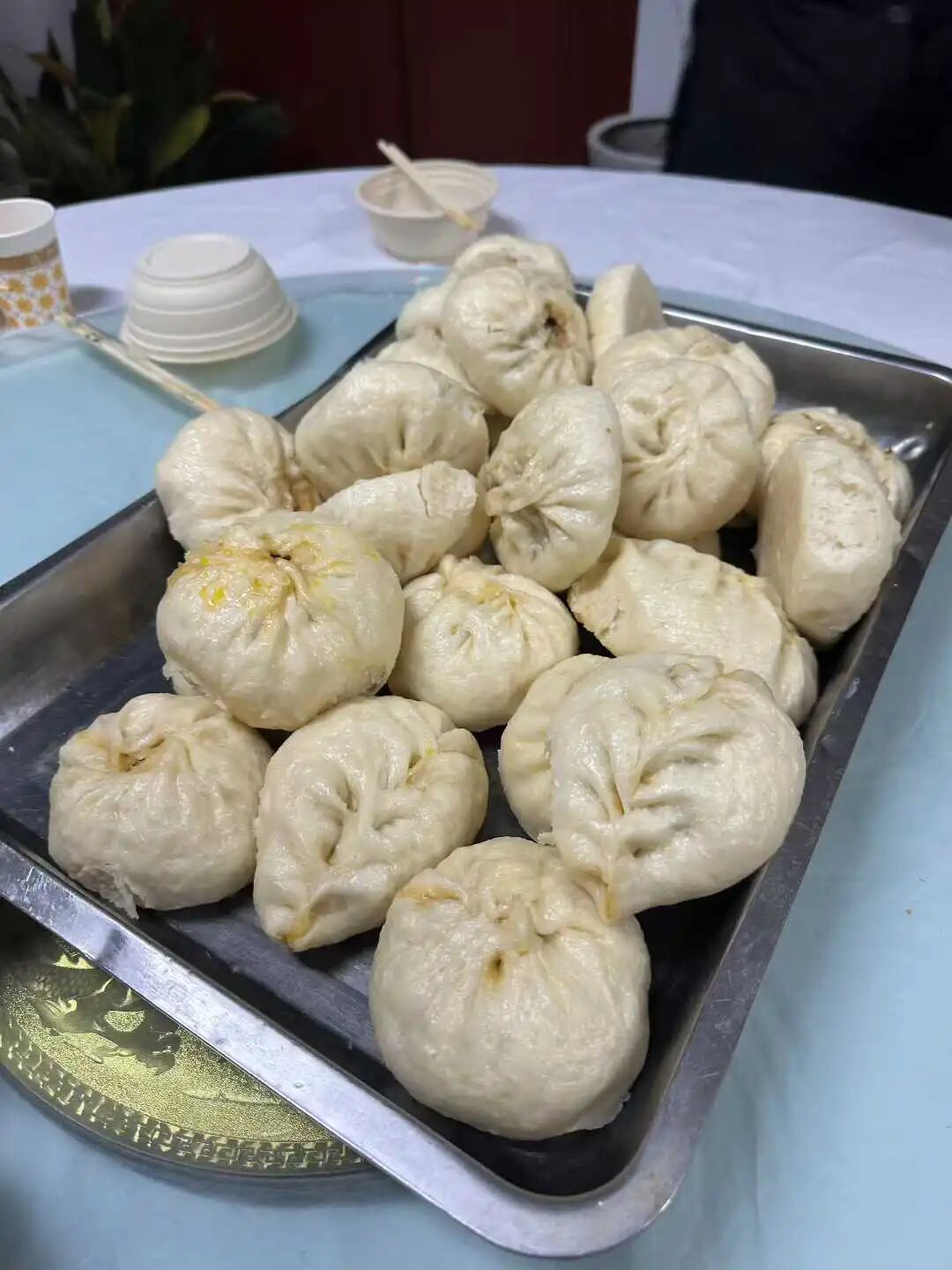
Eating steamed buns (baozi) at Madian Mosque, the carrot and fennel fillings are very filling!
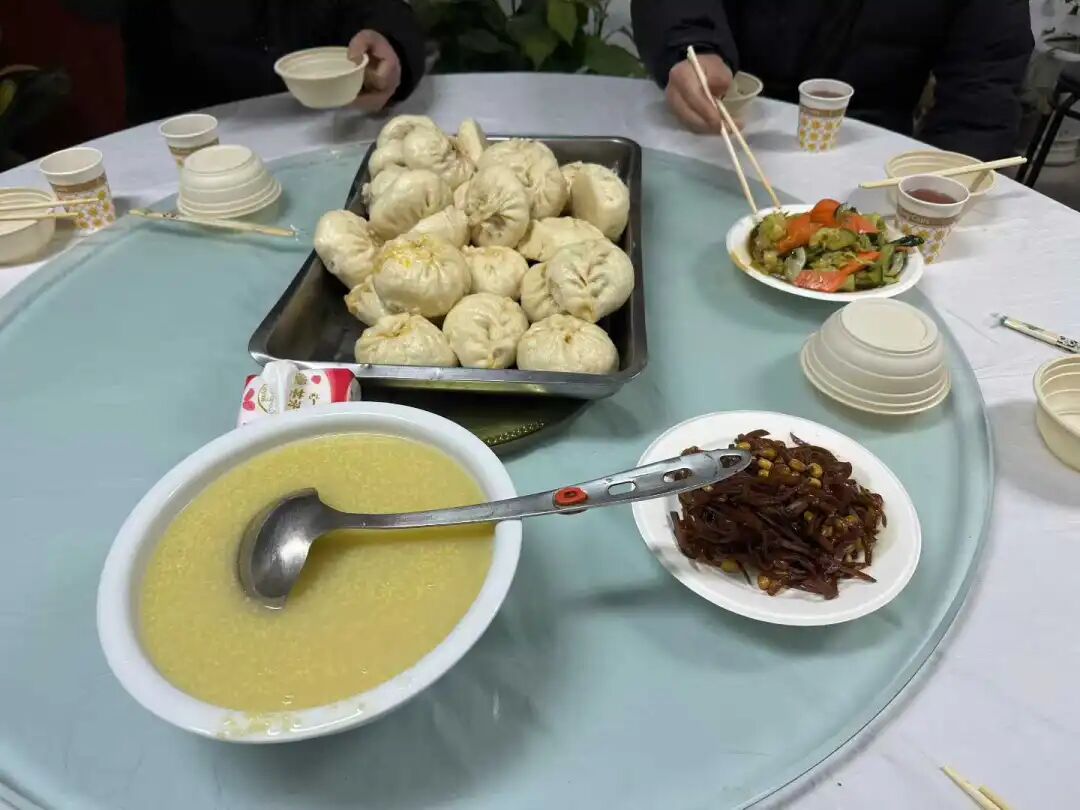
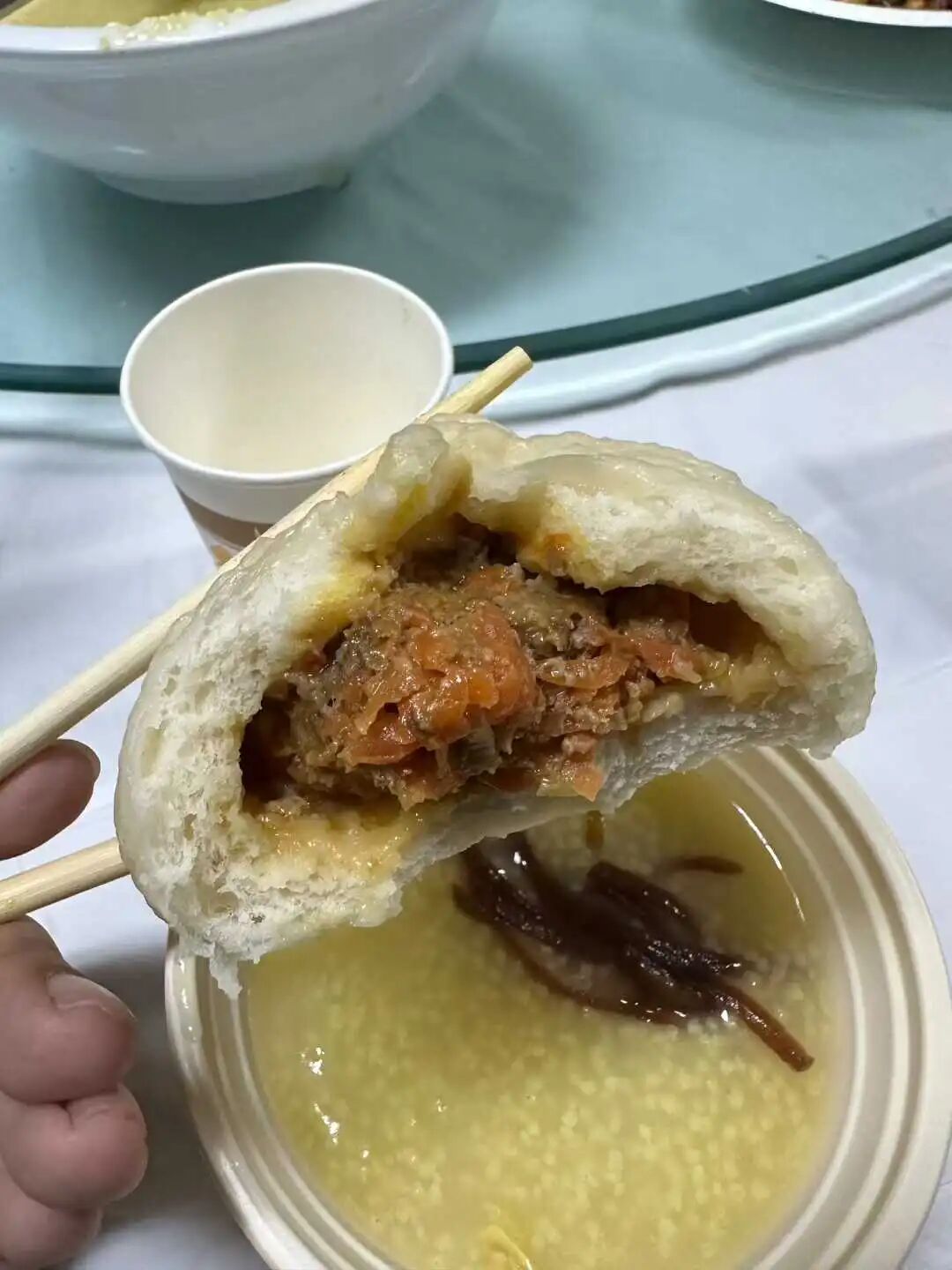
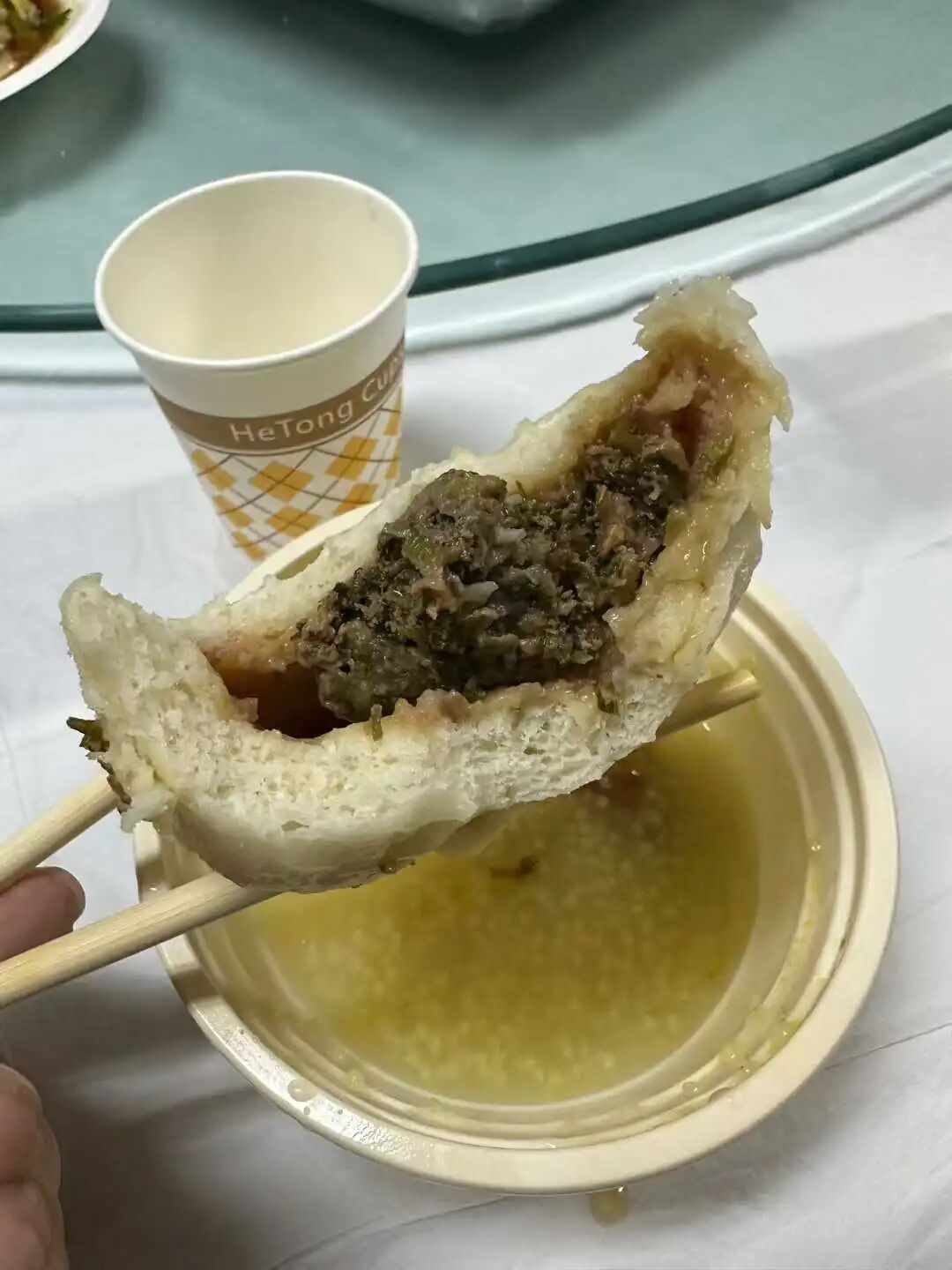
I ate the sweet rice balls (yuanxiao) from Yaofengcheng, a Shandong-style restaurant at the mosque gate, for several days during my fast.
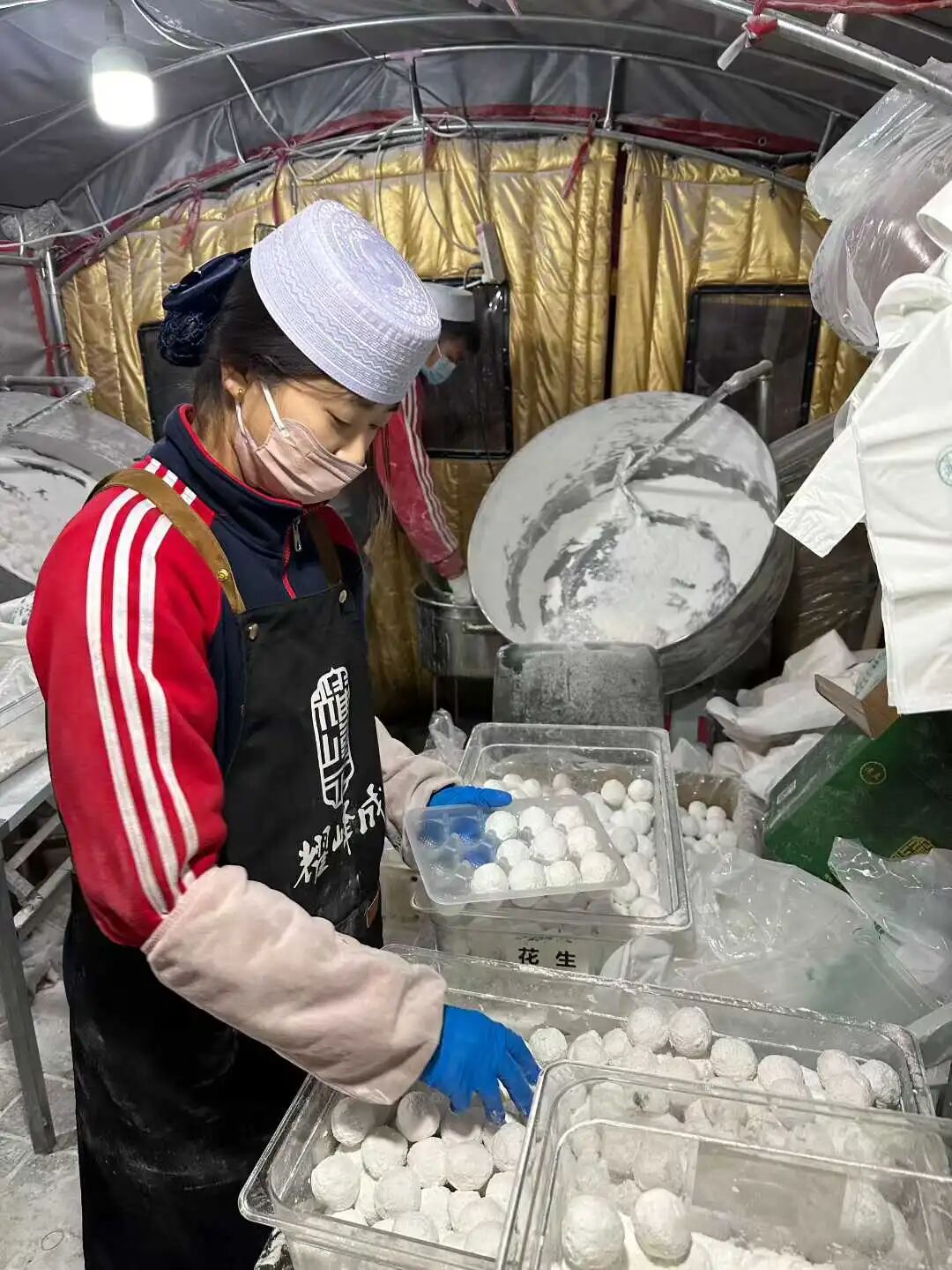
Stir-fried dishes at Madian Mosque; international students from nearby countries all love the food at Madian.
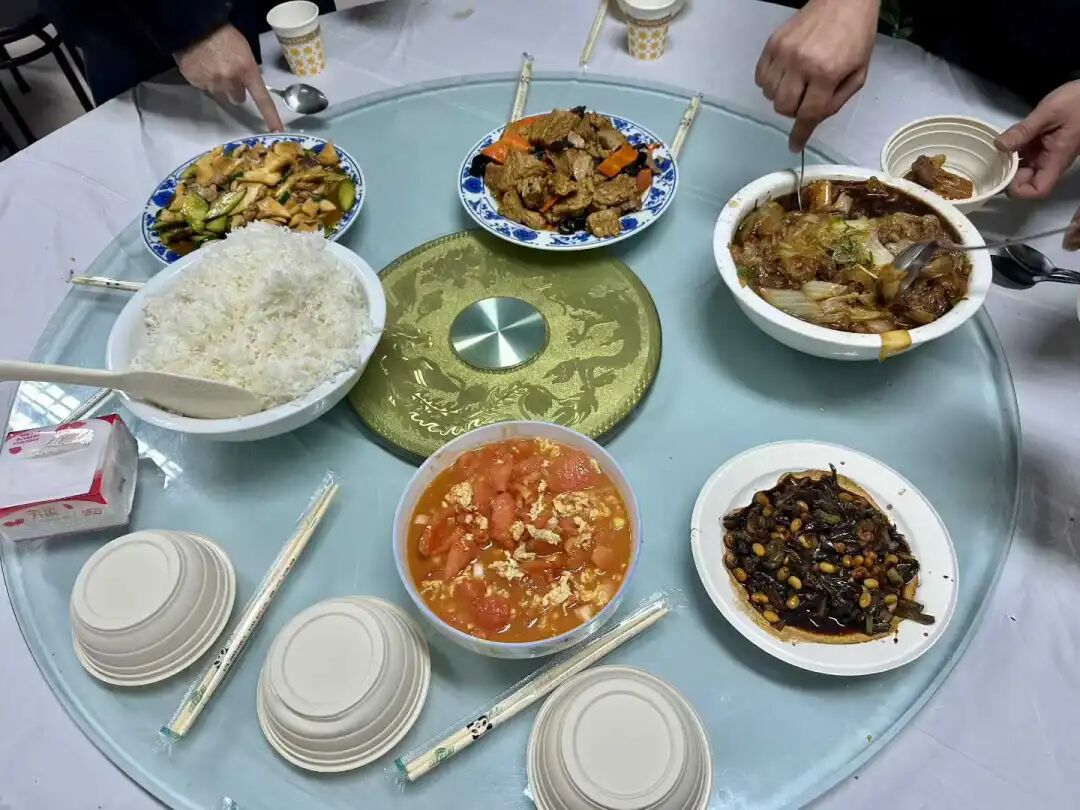
Fried tofu (zhadoufu).
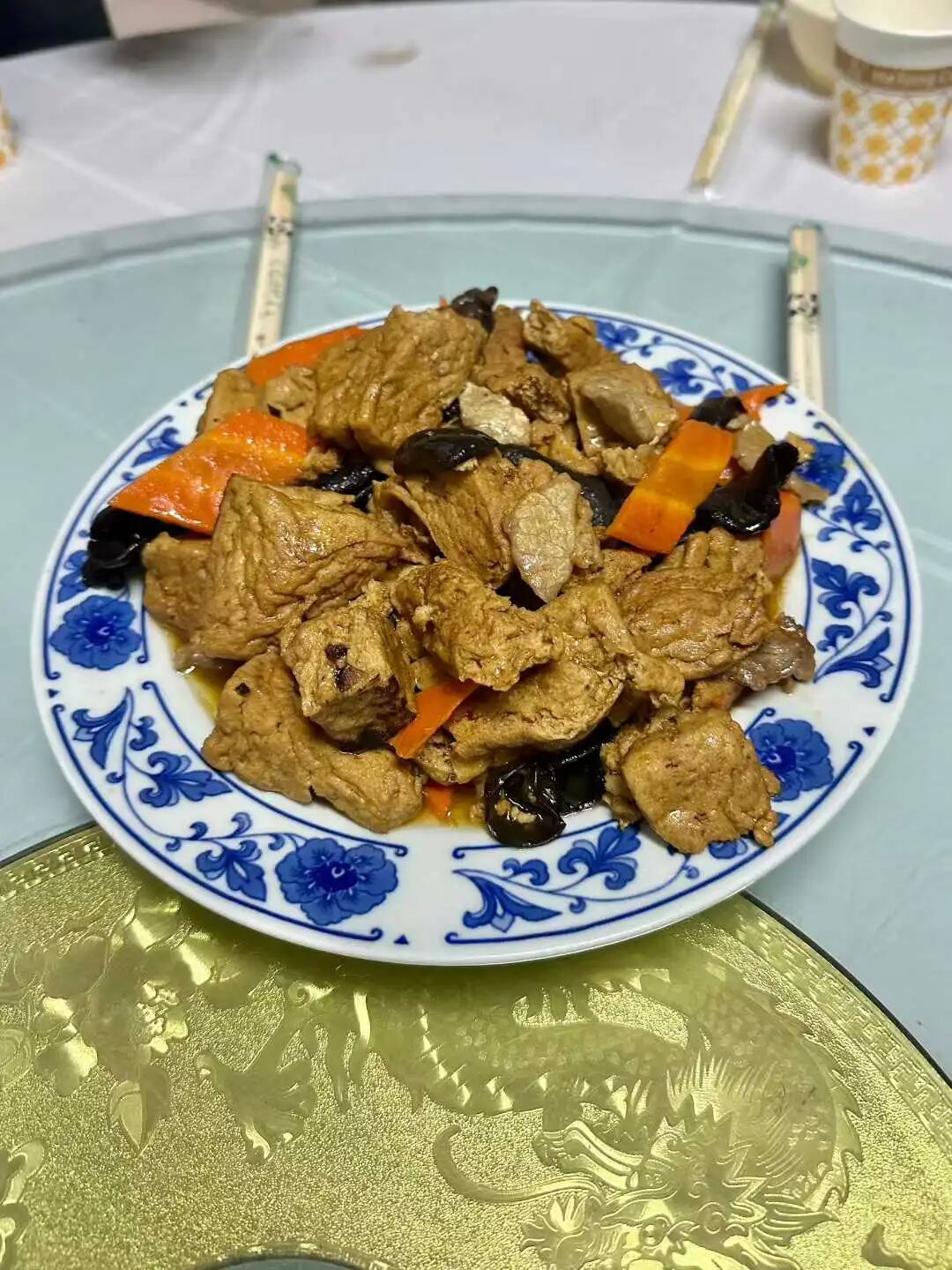
Stir-stir-fried meat with oyster mushrooms (pinggu chaorou).
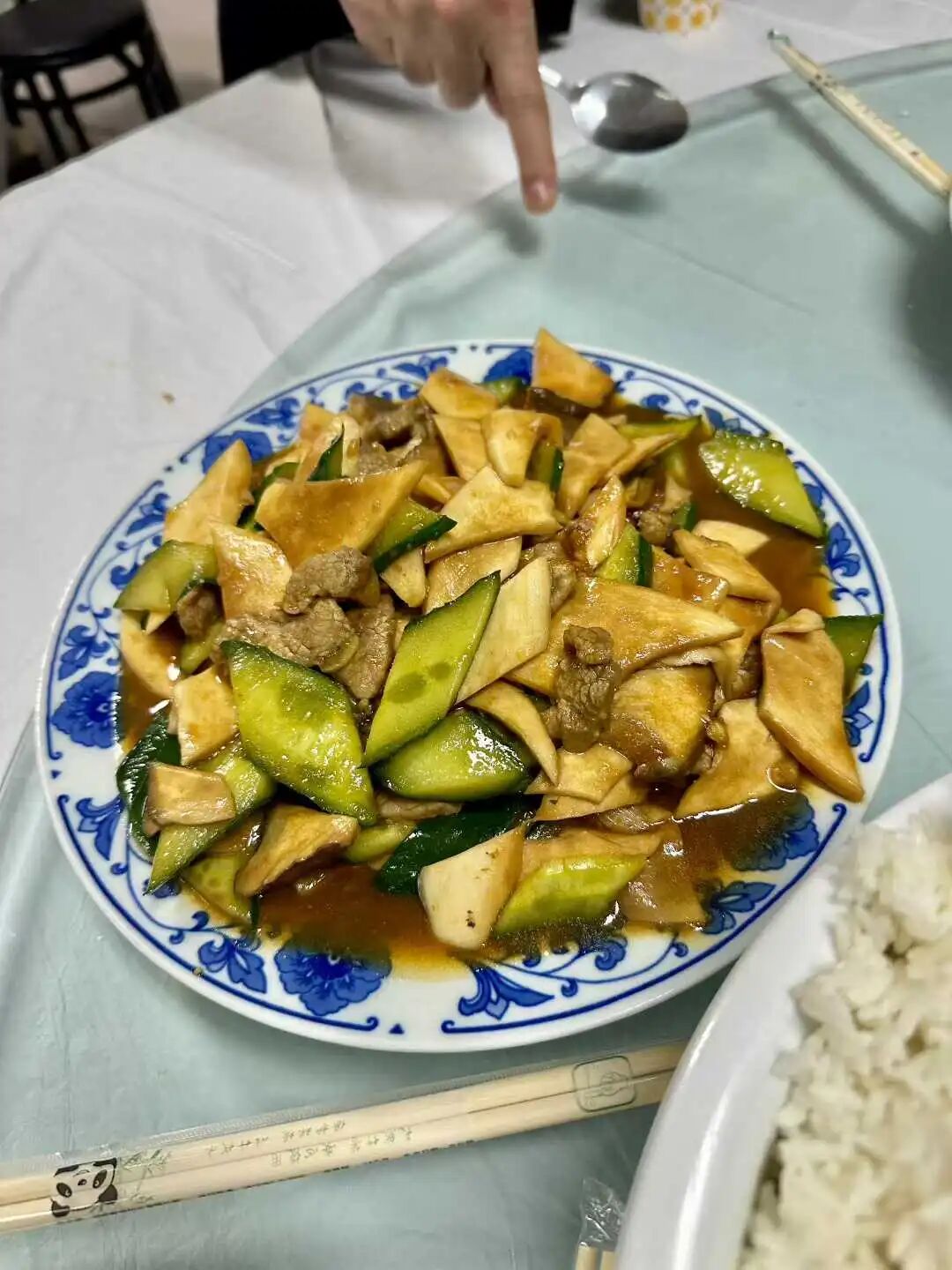
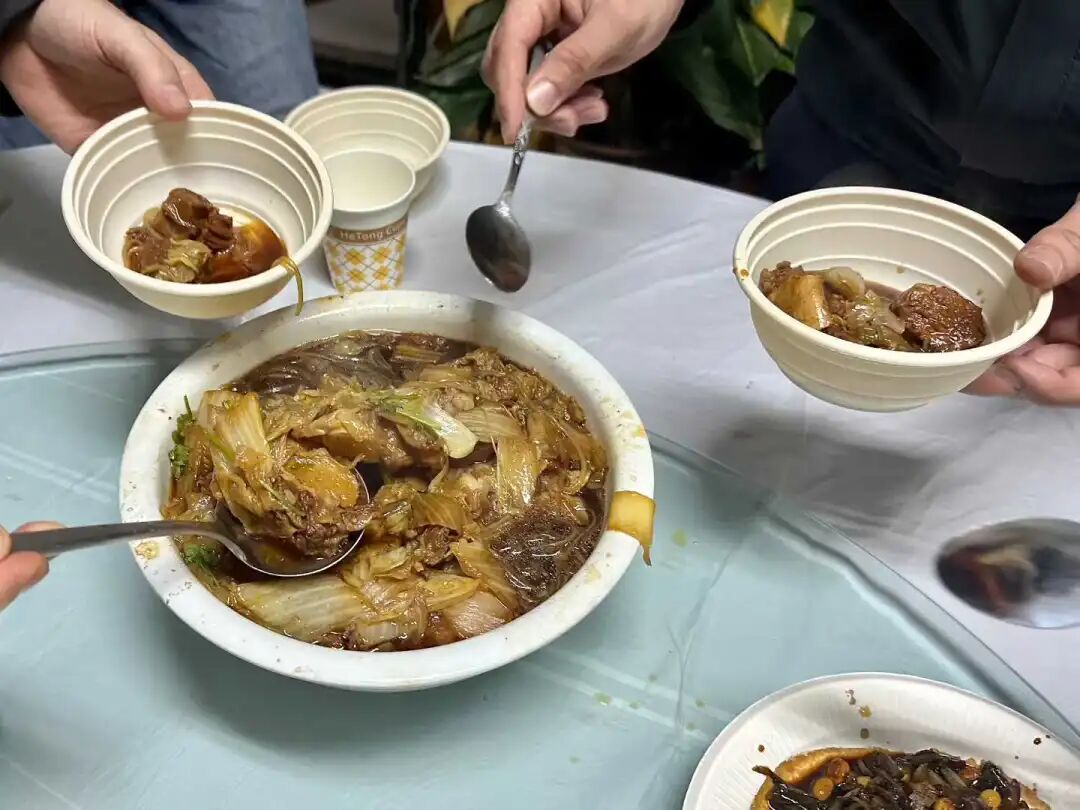
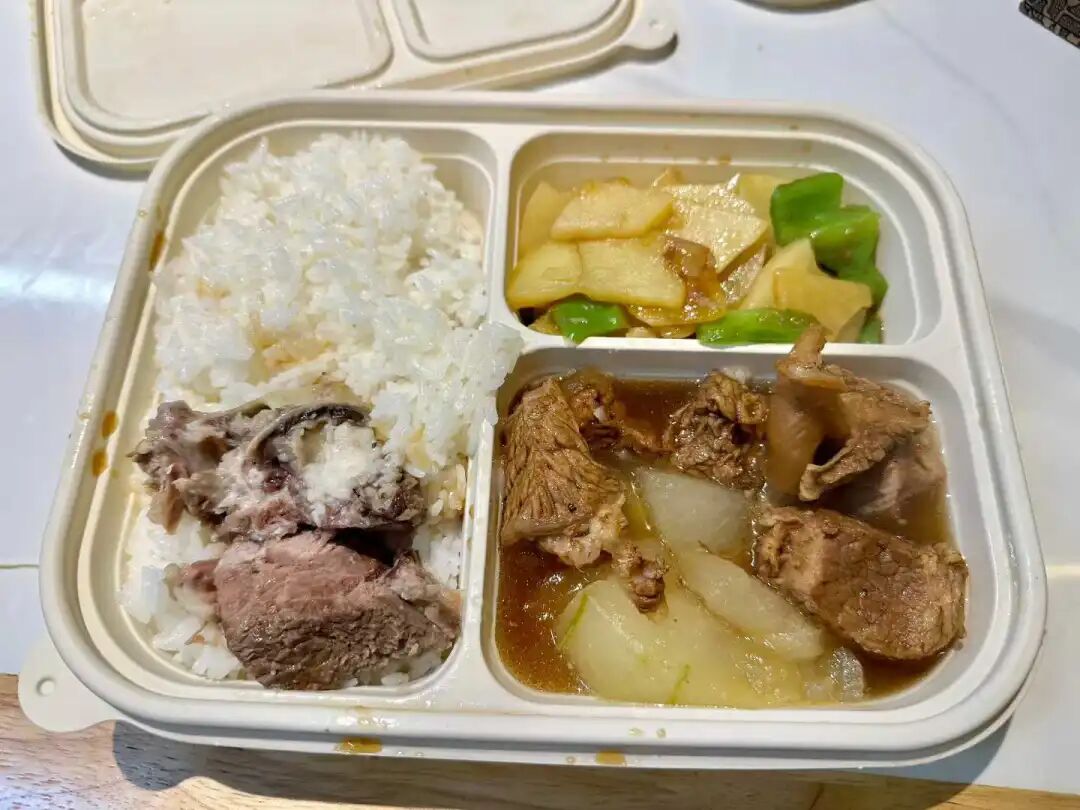
Beef stewed with Chinese cabbage and vermicelli (baicai fentiao dun niurou).
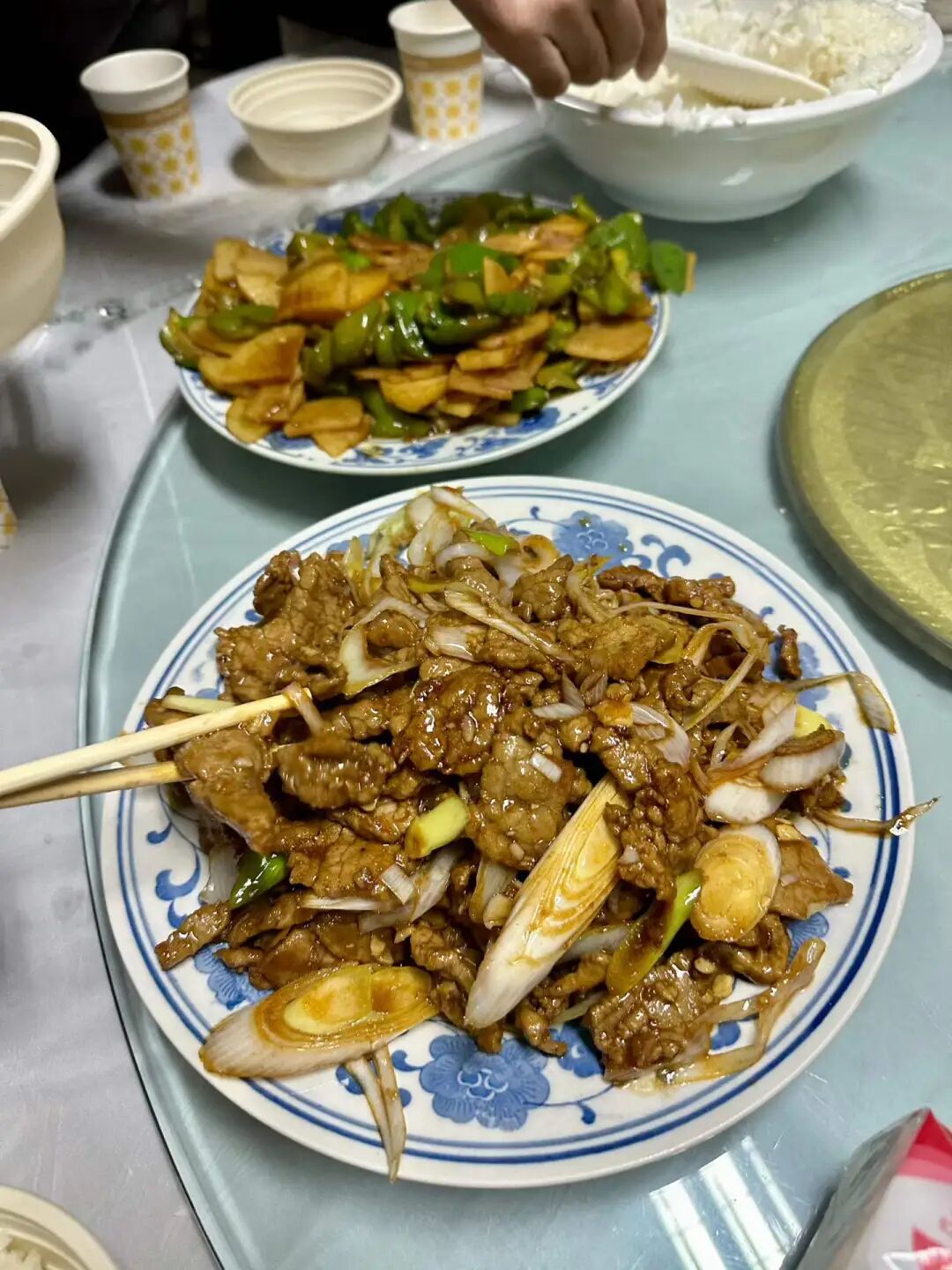
Stir-fried lamb with scallions (congbao yangrou).
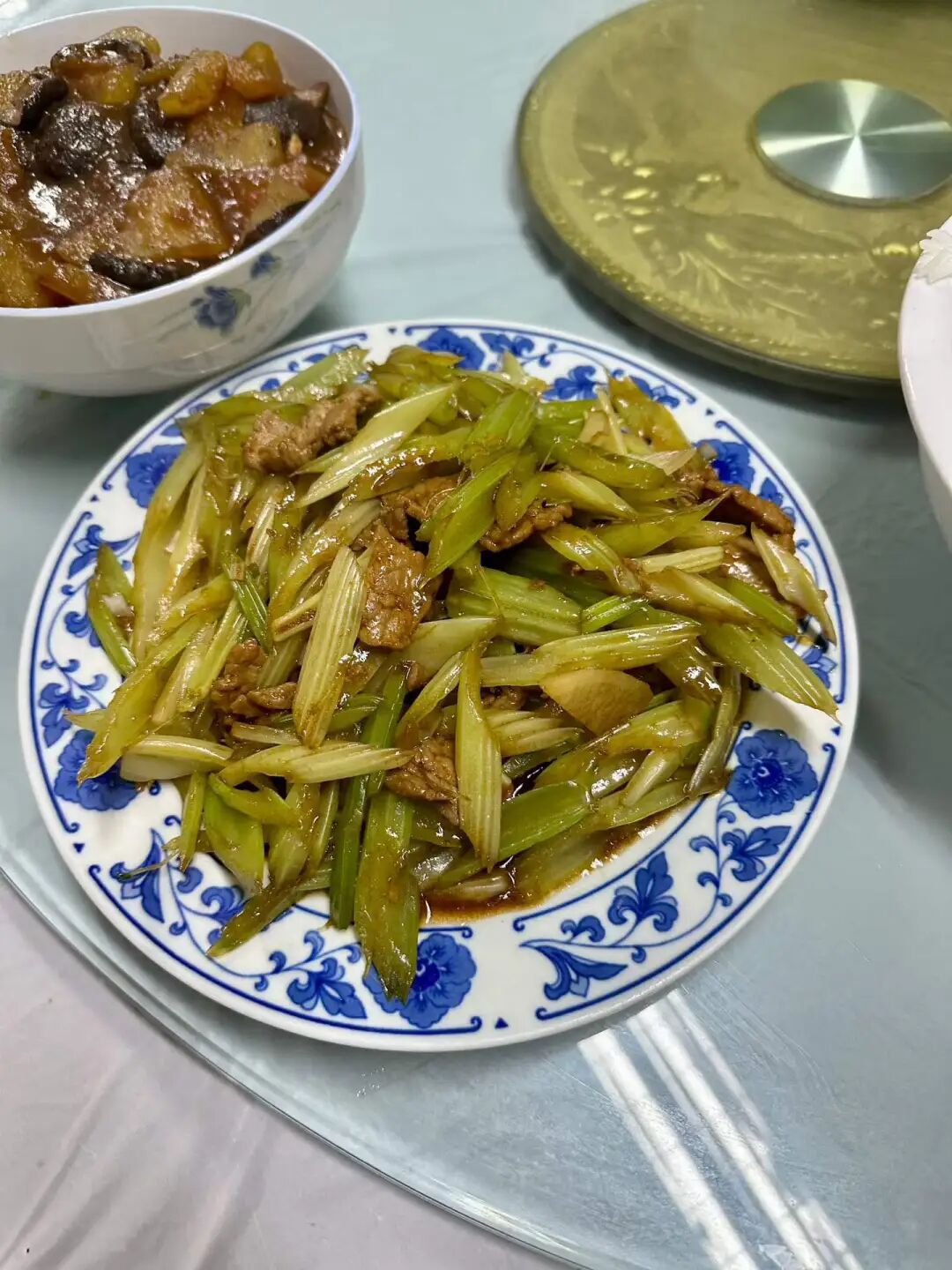
Stir-stir-fried meat with celery (qincai chaorou).
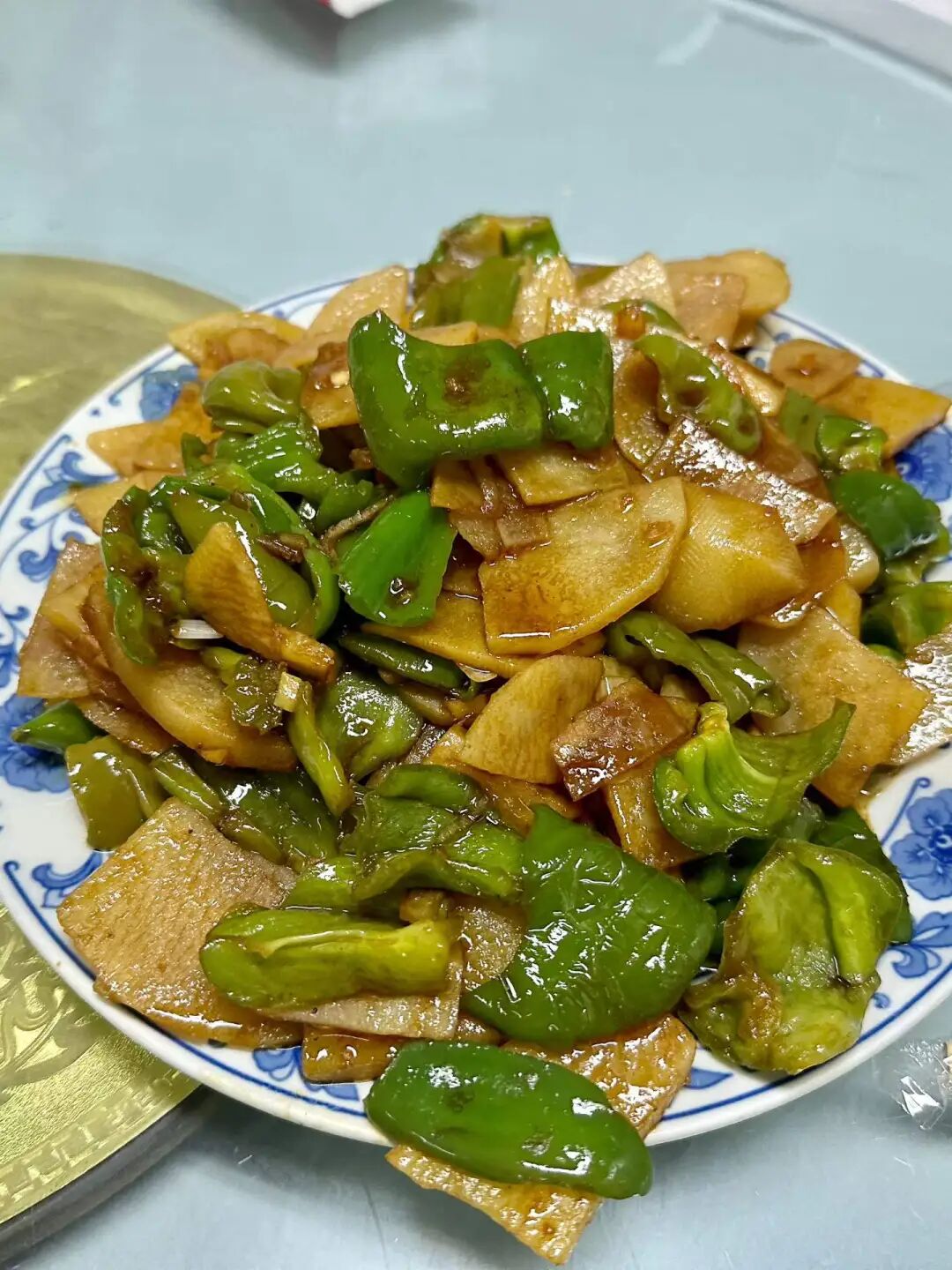
Stir-fried potato slices (chao tudoupian).
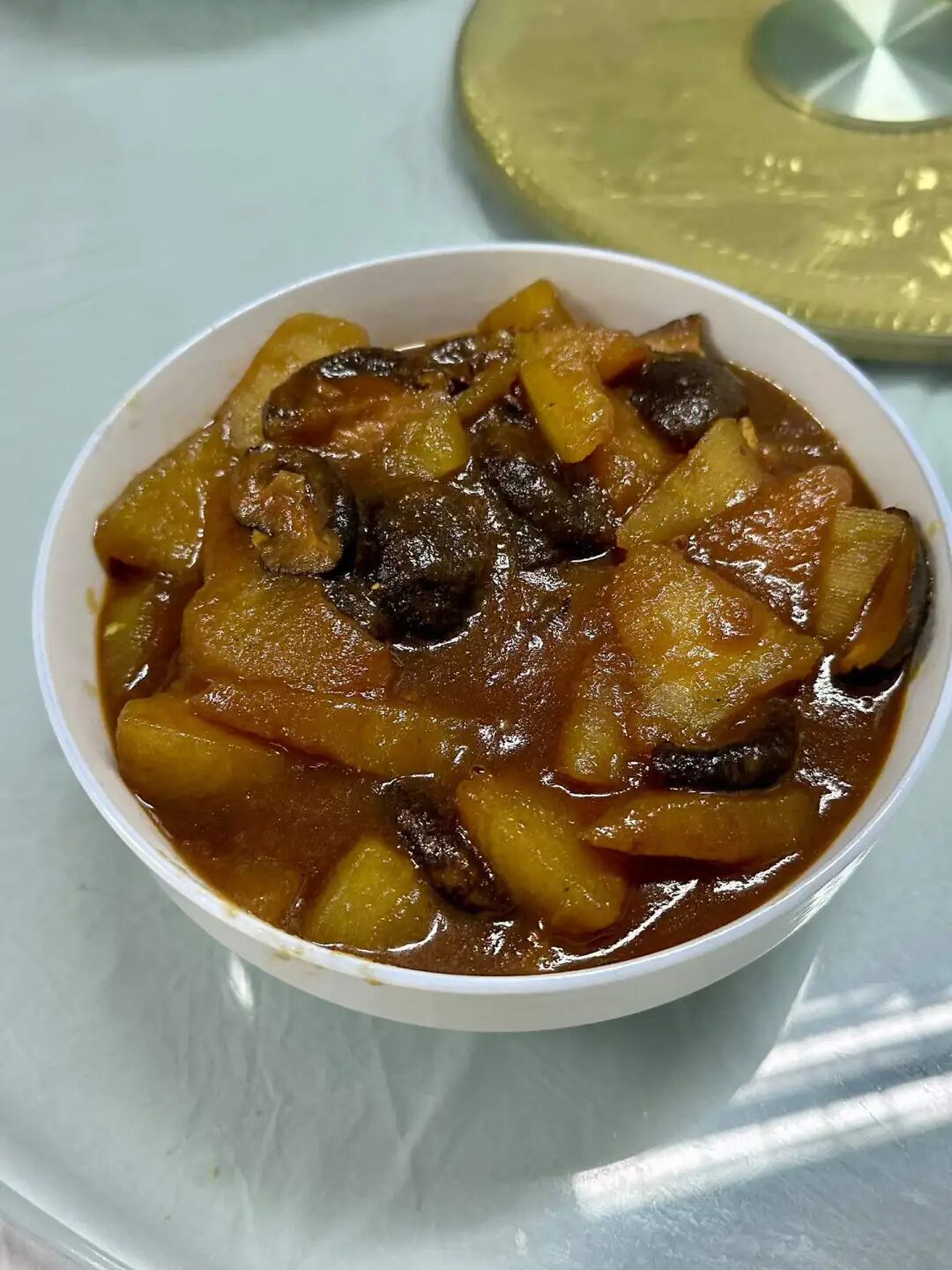
Braised winter melon with shiitake mushrooms (donggua shao donggu).
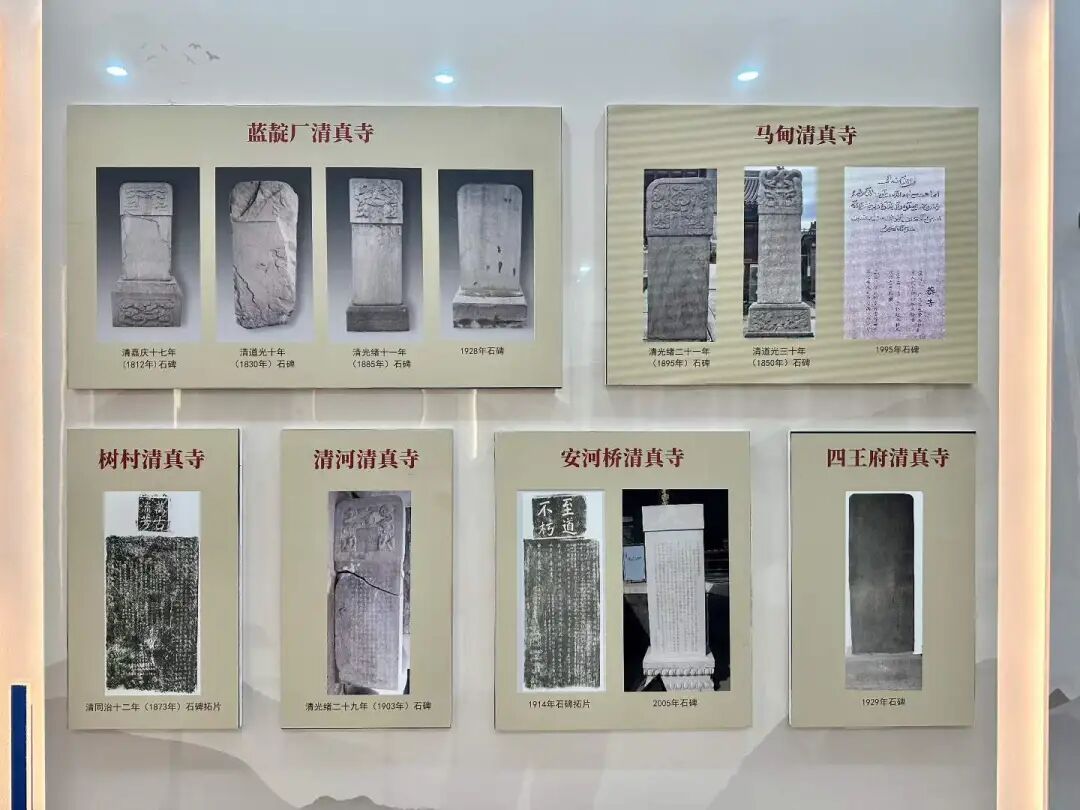
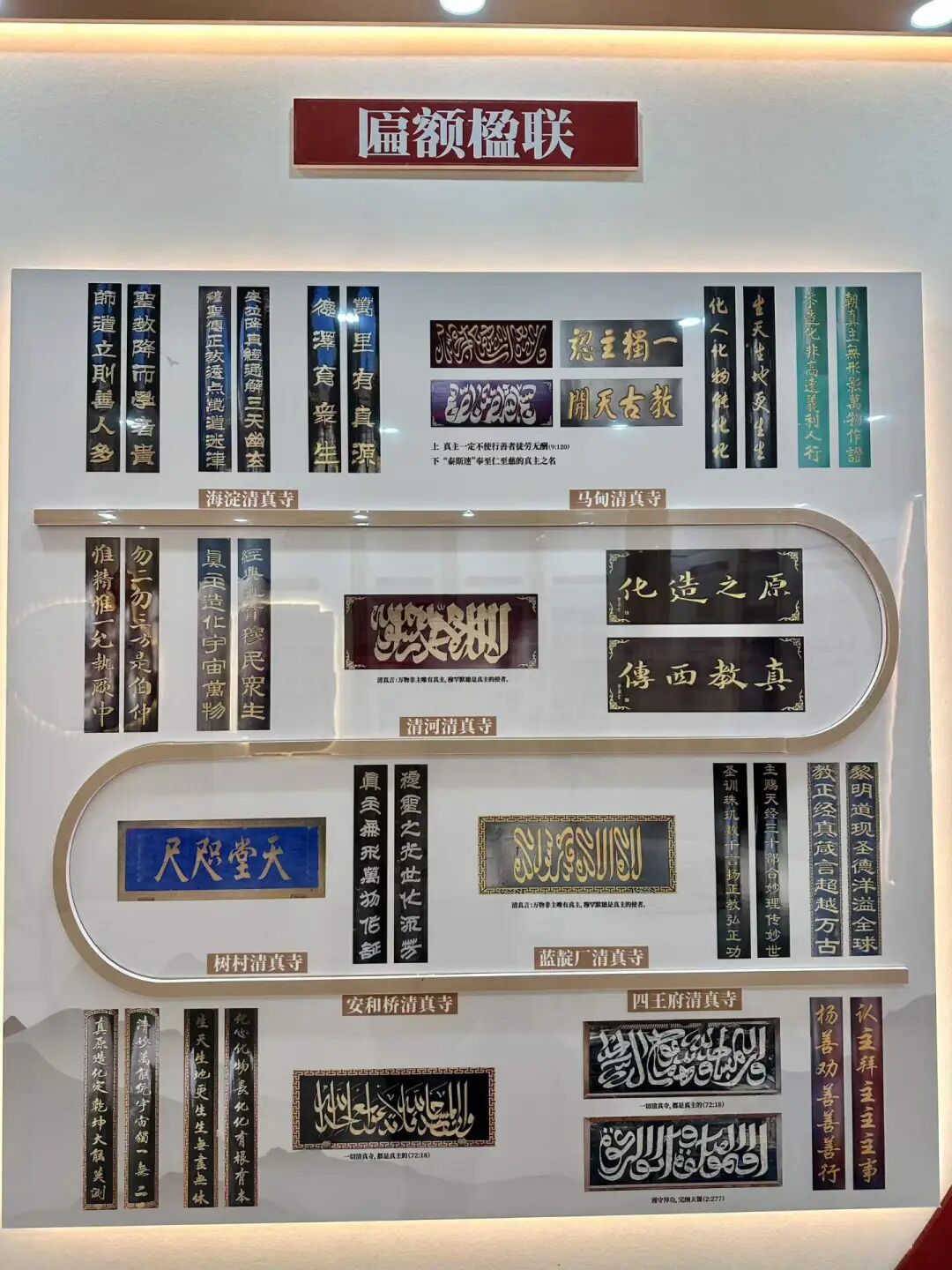
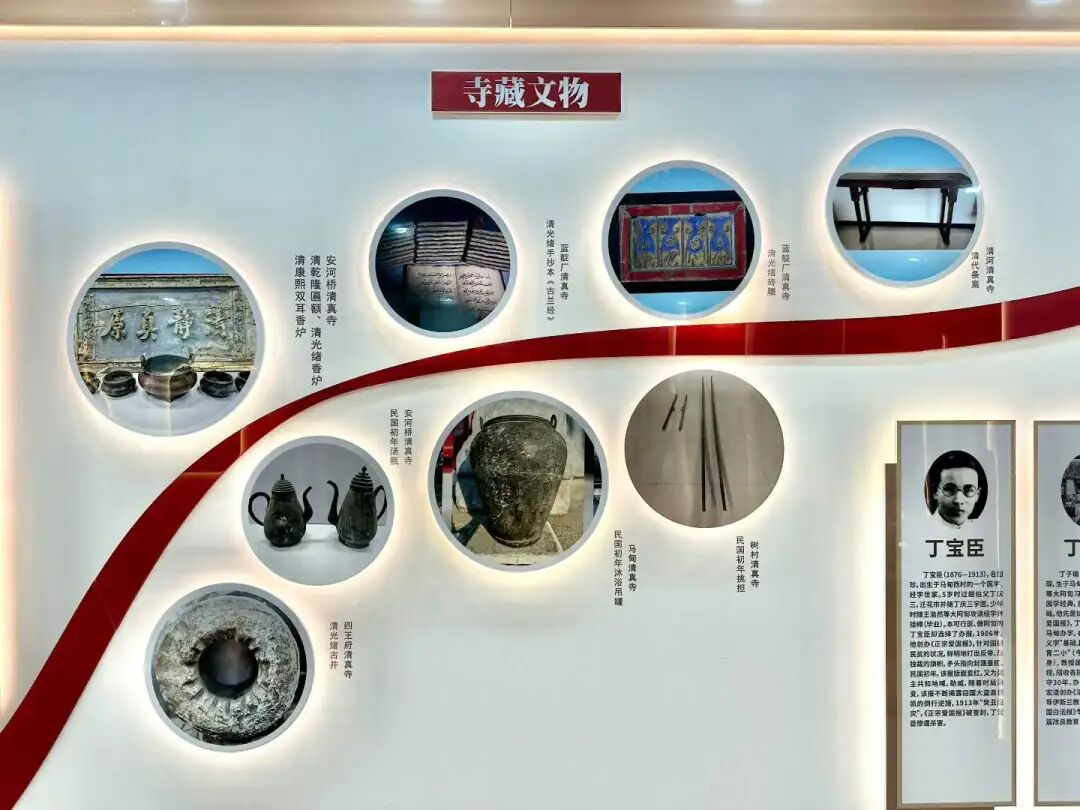
Exhibits about the local Muslim community in Haidian at the Madian Mosque gallery.
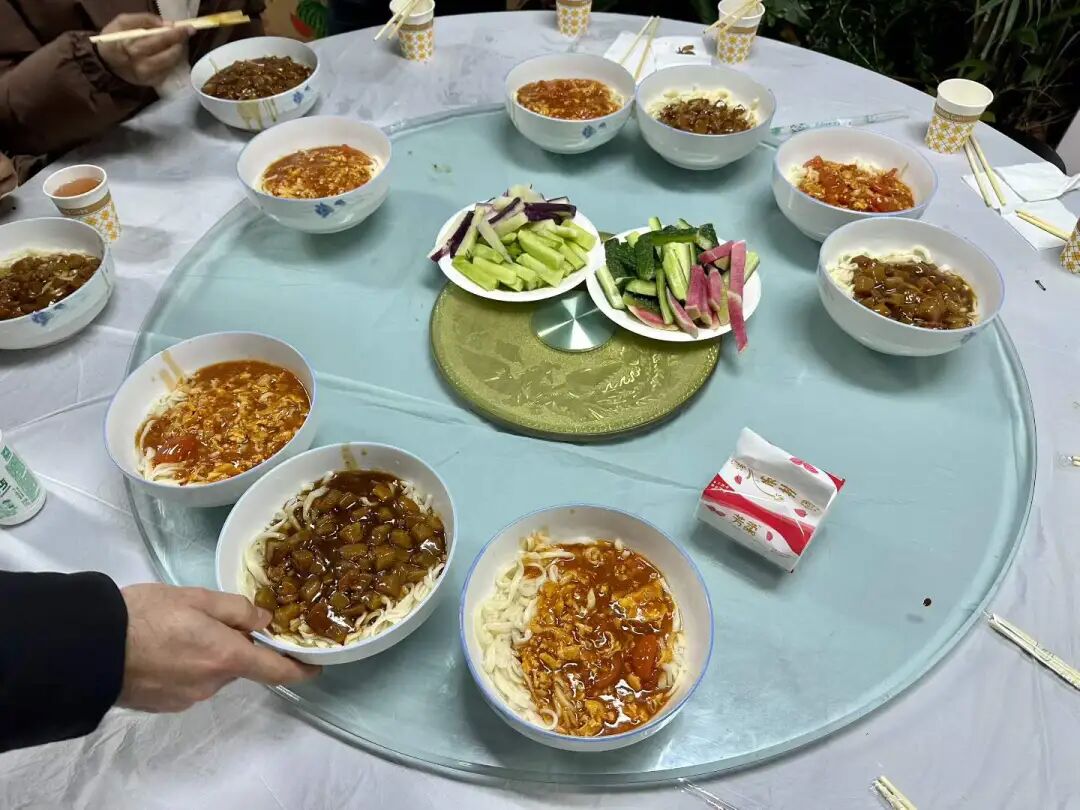
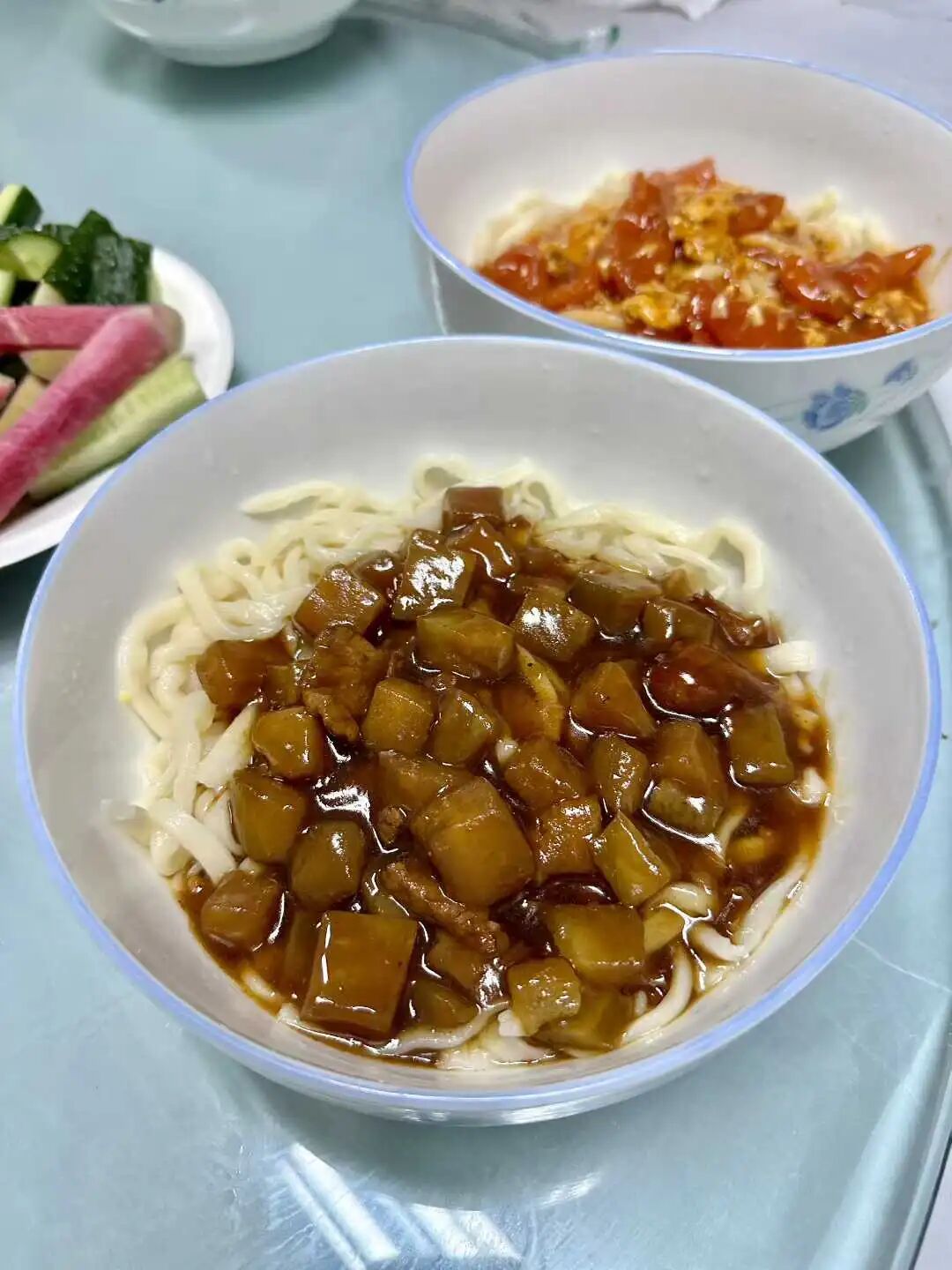
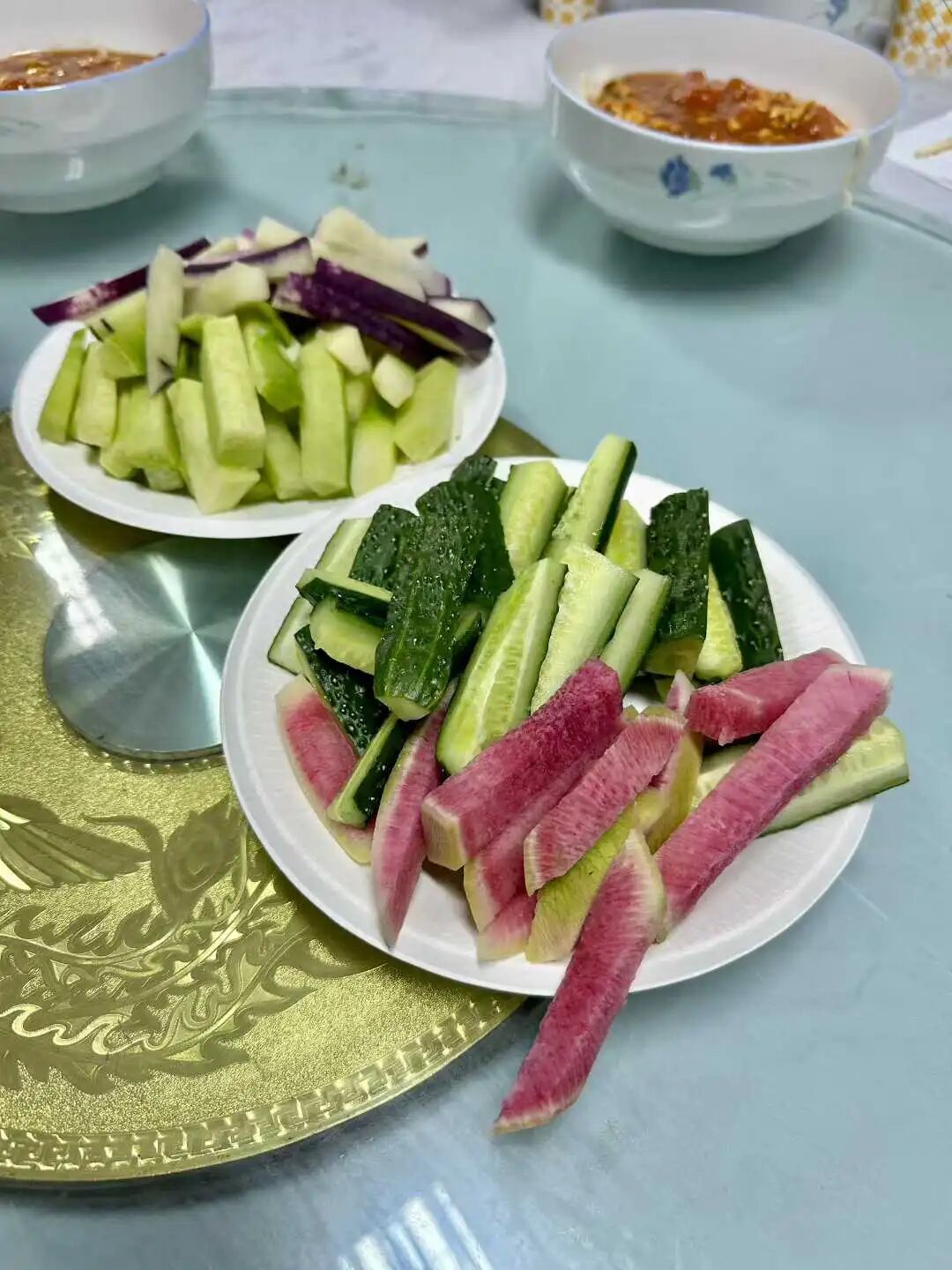
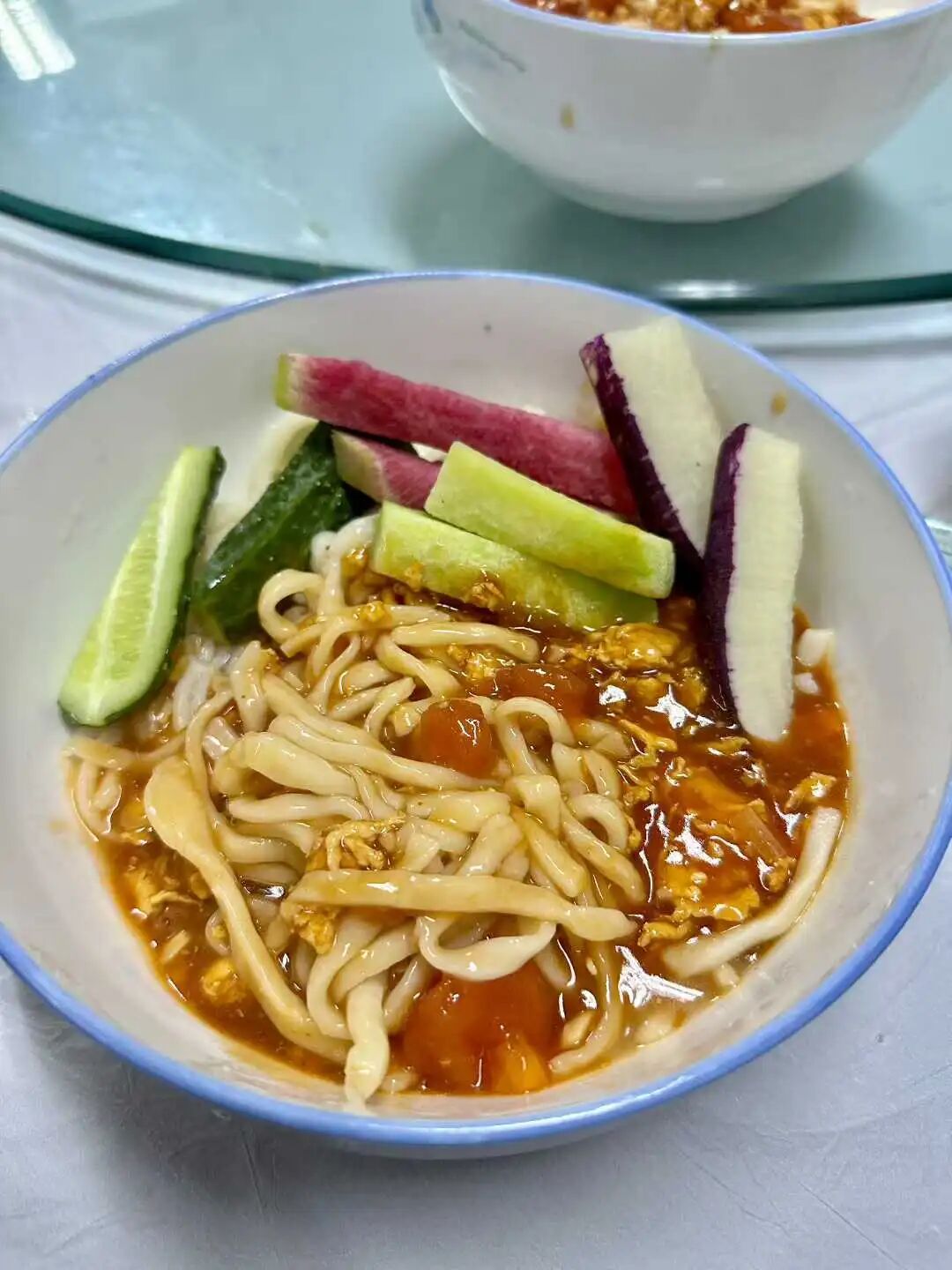
Hand-pulled noodles (shouganmian) with tomato sauce and eggplant sauce; our international friends all love Beijing hand-pulled noodles, haha.
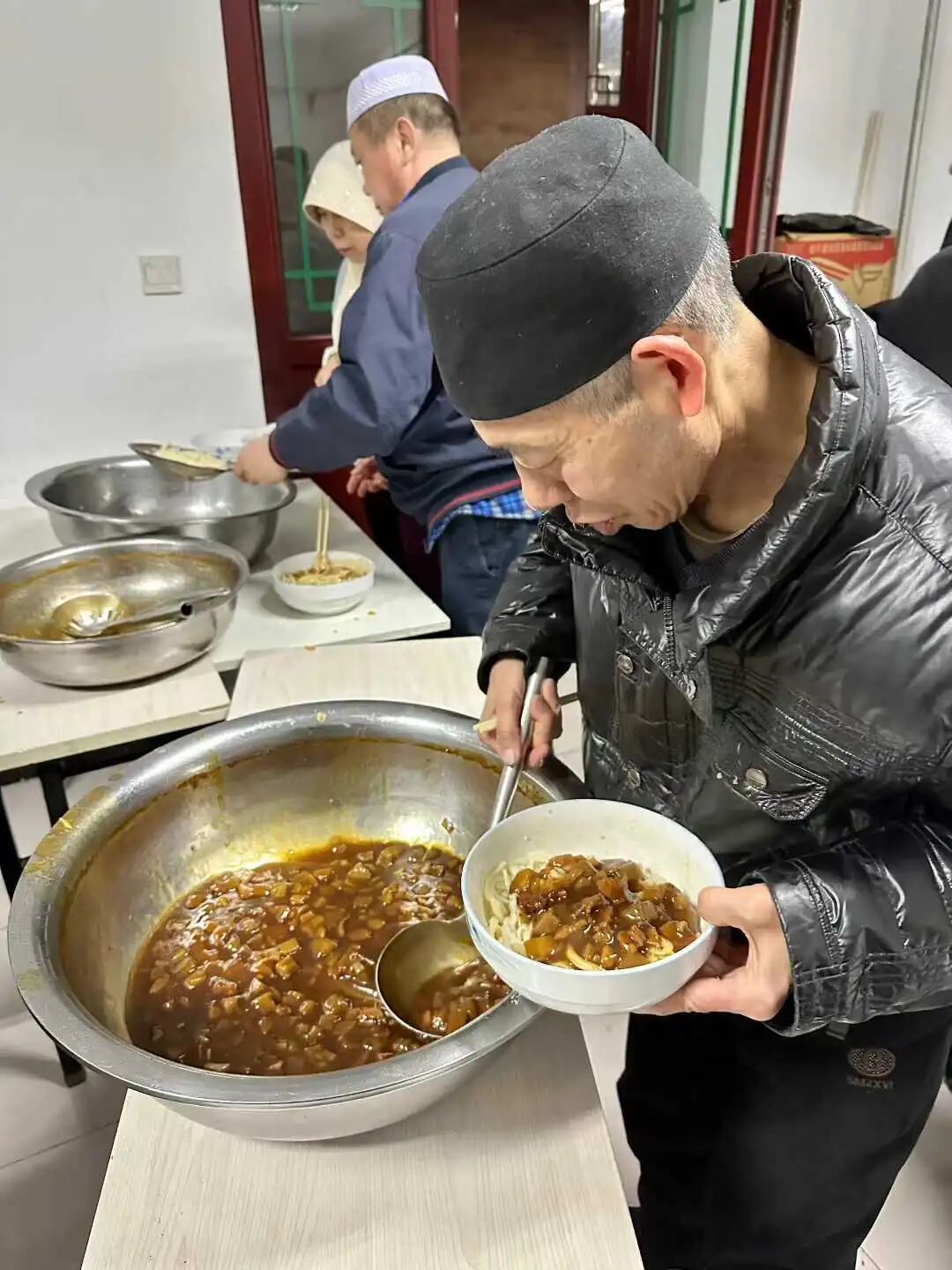
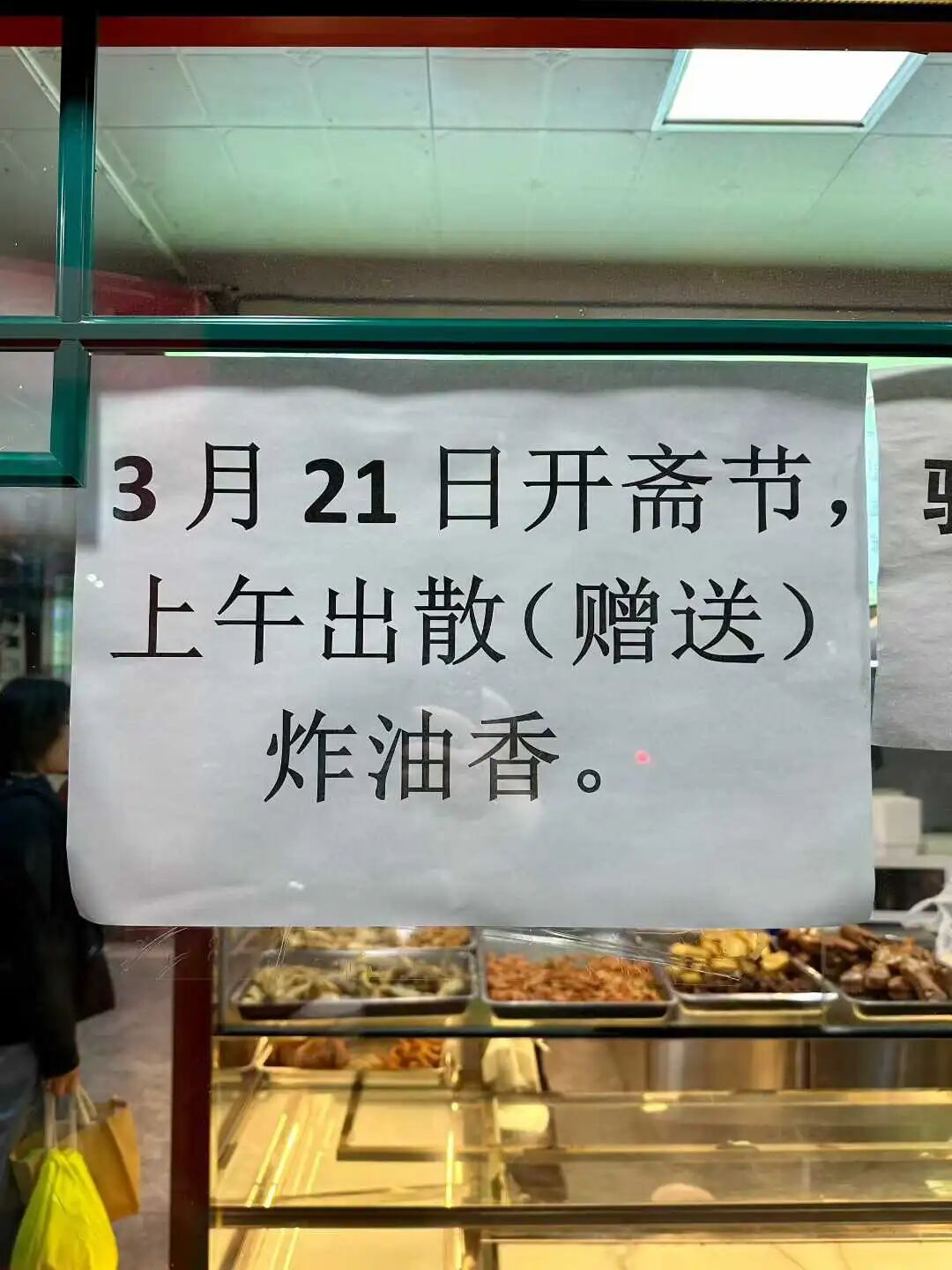
After eating, I bought food for my fast at Yaofengcheng by the gate, steamed buns (mantou) with spiced beef (jiang niurou); they give out fried dough (youxiang) during Eid al-Fitr.
Nanxiapo Mosque.
As an important hub for water transport, there were historically several mosques and neighborhoods outside Chaoyang Gate, such as Nanzhong Street, Nanxiapo, and Shegutang, but only the Nanxiapo neighborhood remains today. According to the elders, Nanxiapo Mosque dates back to the late Ming and early Qing dynasties. At that time, a shed builder used fir poles and reed mats to build a large shed at Nanxiapo, and an imam named Hu Zhonghe led the local Hui Muslims in prayer there; this was the earliest Nanxiapo Mosque. In the early years of the Kangxi reign of the Qing Dynasty, a Hui Muslim surnamed Ma who sold bows and arrows inside Chaoyang Gate heard about the situation at Nanxiapo. He had just received a payment for bows and arrows that had been owed by some Mongols, so he donated the money to formally build the Nanxiapo Mosque.
Most of the leaders of Nanxiapo Mosque were descendants of the first leader, Hu Zhonghe. Hu Zhonghe's 12th-generation descendant, Hu Degui, was born in 1883 (the ninth year of the Guangxu reign). Because his parents died early, 15-year-old Hu Zichen inherited his father's business in 1898 (the 24th year of the Guangxu reign) and became the second leader (haitui bu) of Nanxiapo Mosque, known as Master Hu the Second. At that time, the imam of Nanxiapo Mosque was Hu Wenzhi, and the third master was Ma Shikuan, known as Master Ma the Third.
In 1900, when Empress Dowager Cixi fled west, bandits were everywhere, and many merchants on Chaowai Street were robbed. Seventeen-year-old Imam Hu Zichen organized a local militia in Nanxiapo. Young Hui Muslims joined eagerly. Some were wrestlers, some were martial artists, some were cart drivers, and the wealthy ones even bought muskets. Every night, everyone gathered at the gate of the Nanxiapo mosque to take turns patrolling the streets and keeping watch, and they finally made it through the crisis.
On February 15, 1928, after the martyr Ma Jun died, his body (maiti) was washed at the Nanxiapo mosque by Imam Hu Wenzhi and Imam Hu Zichen. Then, the village elders and the community (dost) donated burial shroud cloth (kafan), and he was buried in the northwest corner of Ritan.
In 1947, the Nationalist army was rounding up young men for conscription near the South Barracks outside Chaoyang Gate. The young Hui Muslims of Nanxiapo were terrified, so with the help of the imam and the elders, they climbed wooden ladders onto the roof of the main hall of the Nanxiapo mosque. After they were hidden, the imam and the elders immediately hid the ladders. When the Nationalist troops came to the mosque to grab people, the imam persuaded them to leave. Everyone lay on the roof for the whole day and finally escaped the danger.
The second Friday (Jumu'ah) of Ramadan is the day Beijing mosques hold charity events for the holy month.
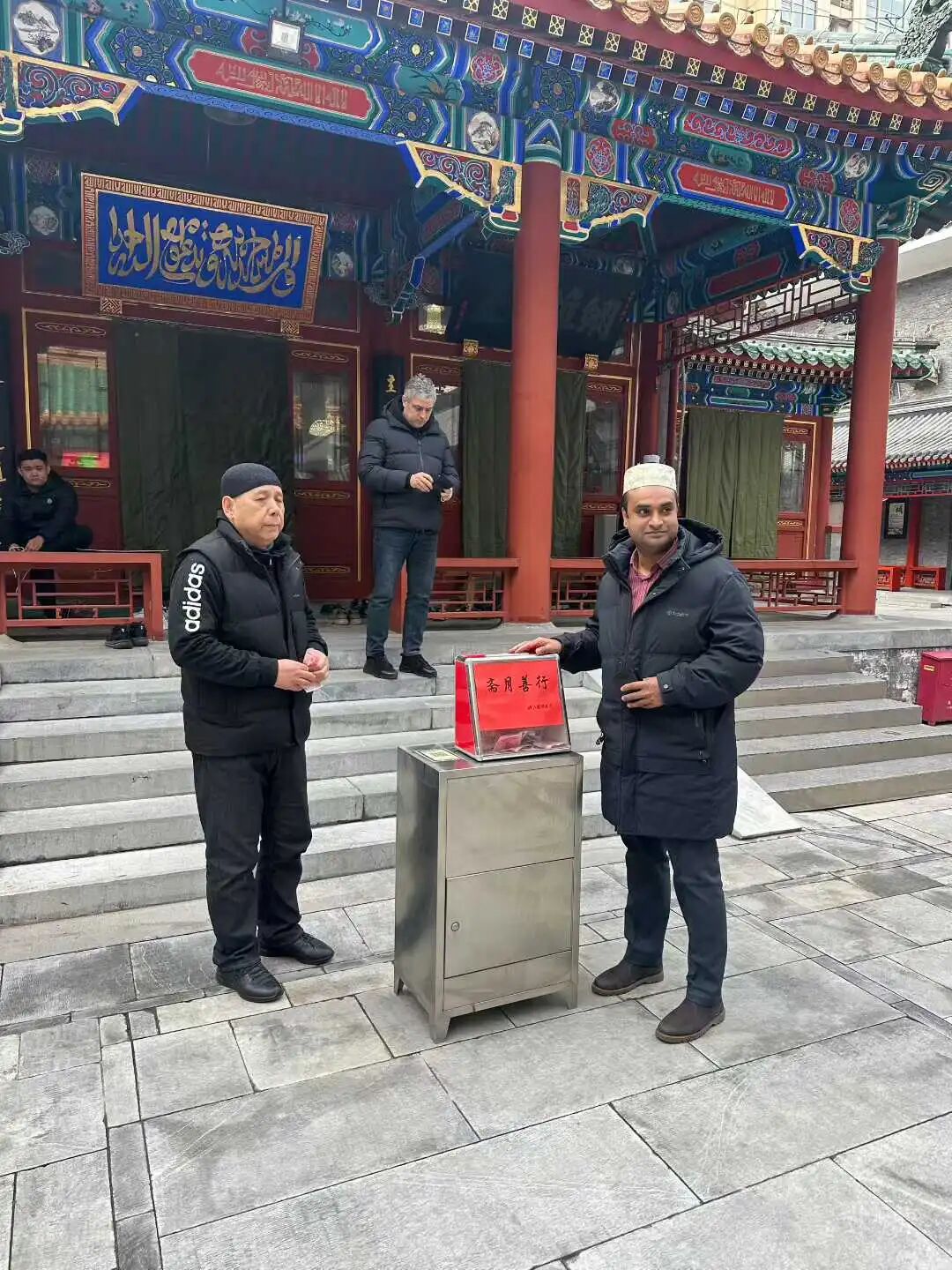
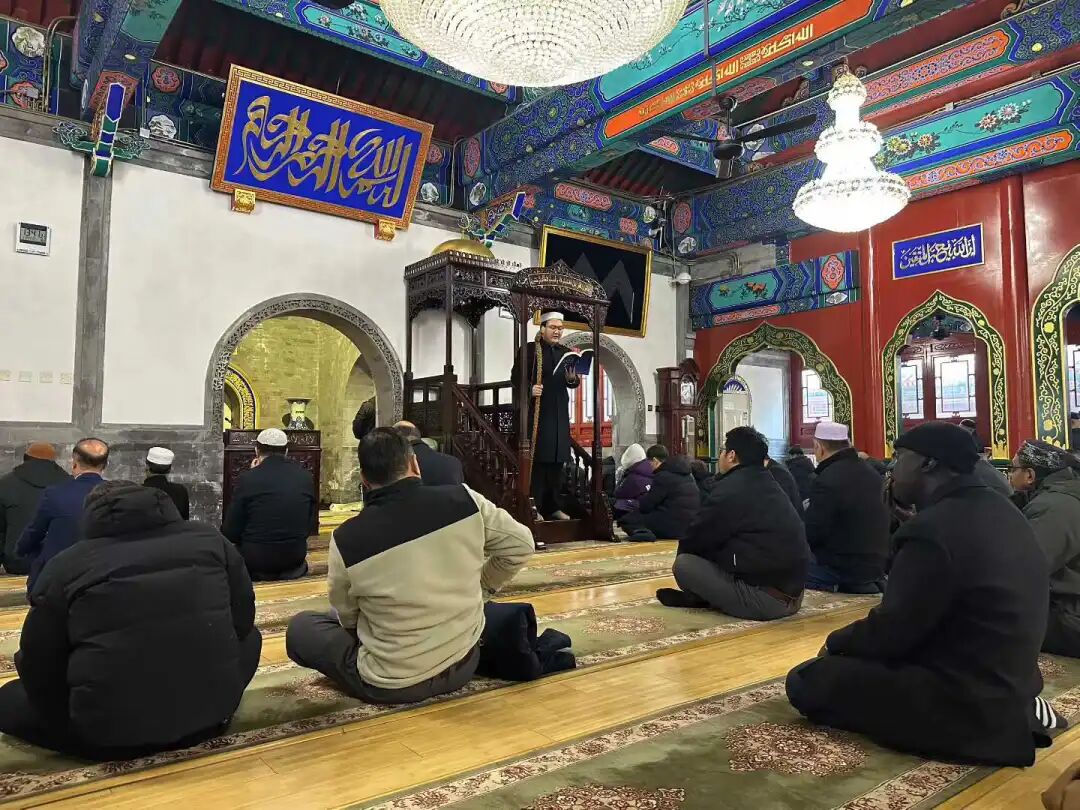
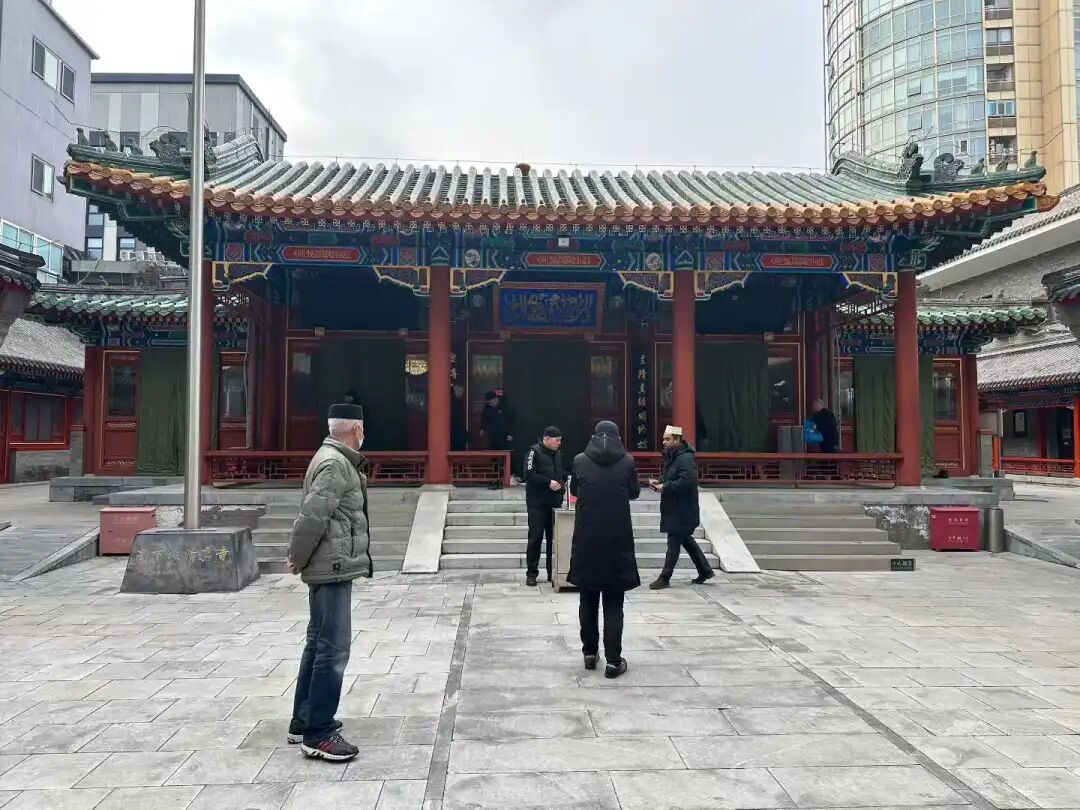
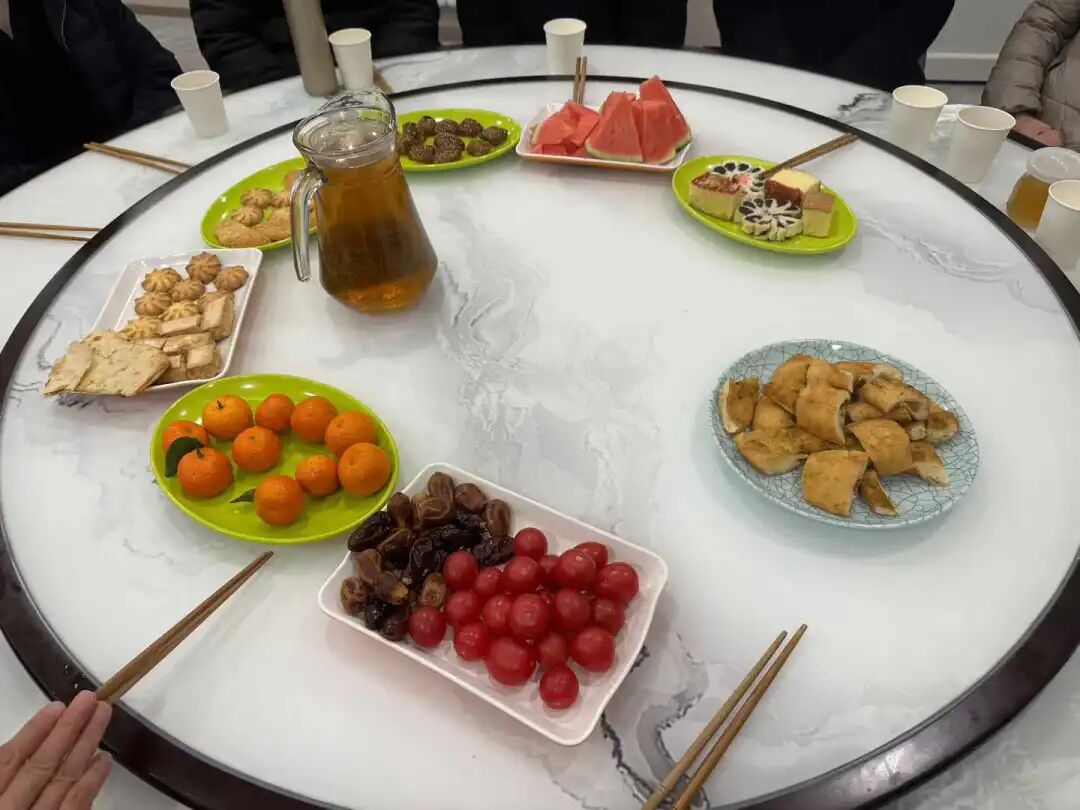
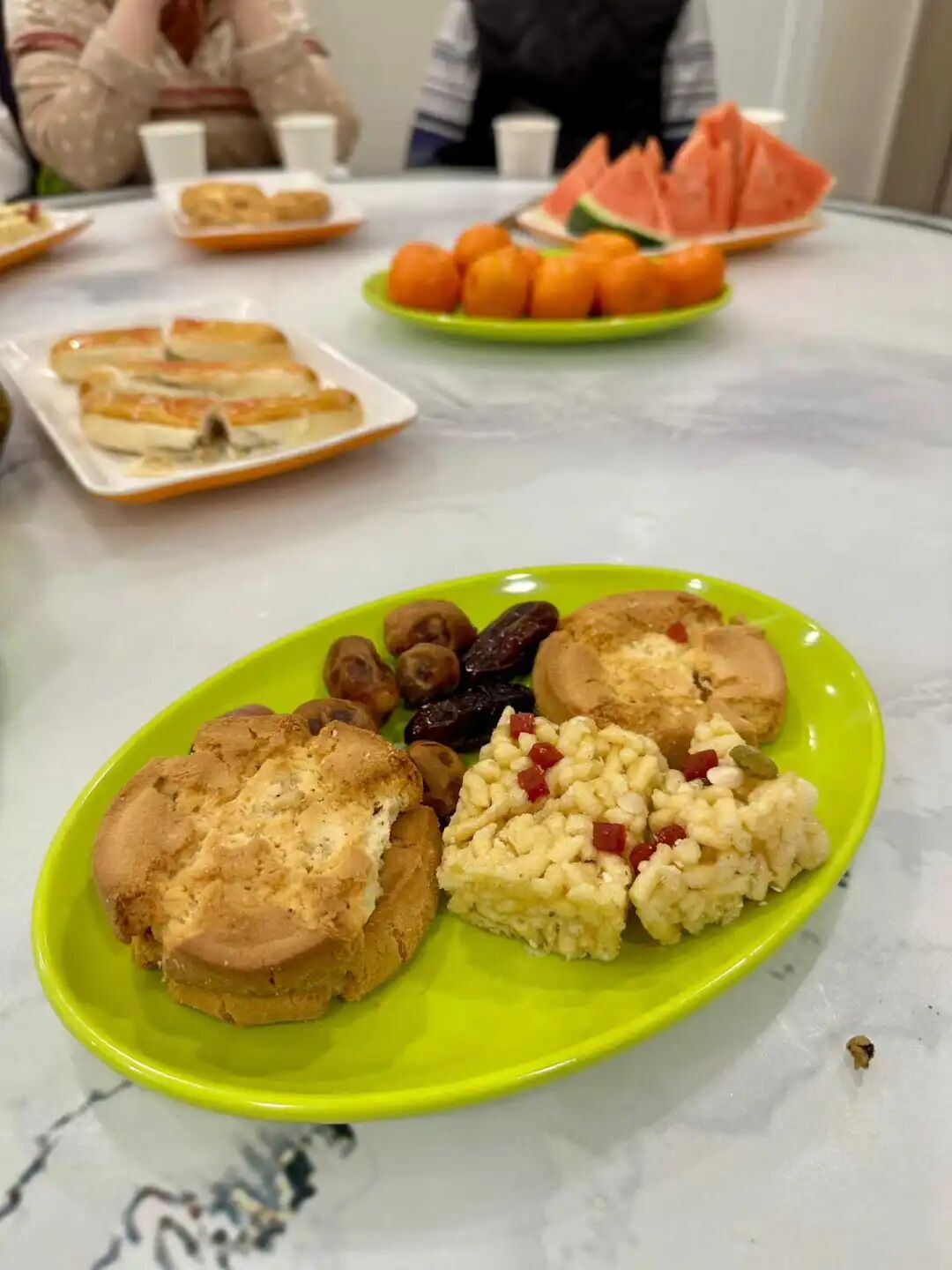
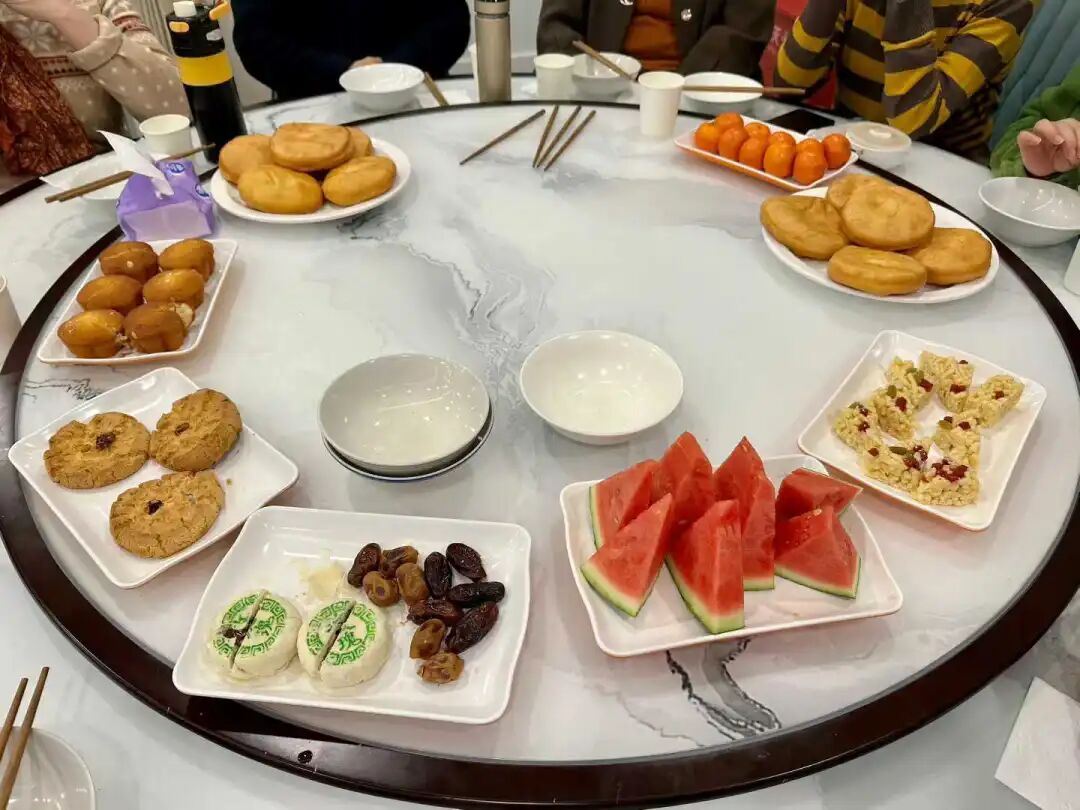
The Nanxiapo mosque has the most abundant selection of pastries for breaking the fast (iftar).
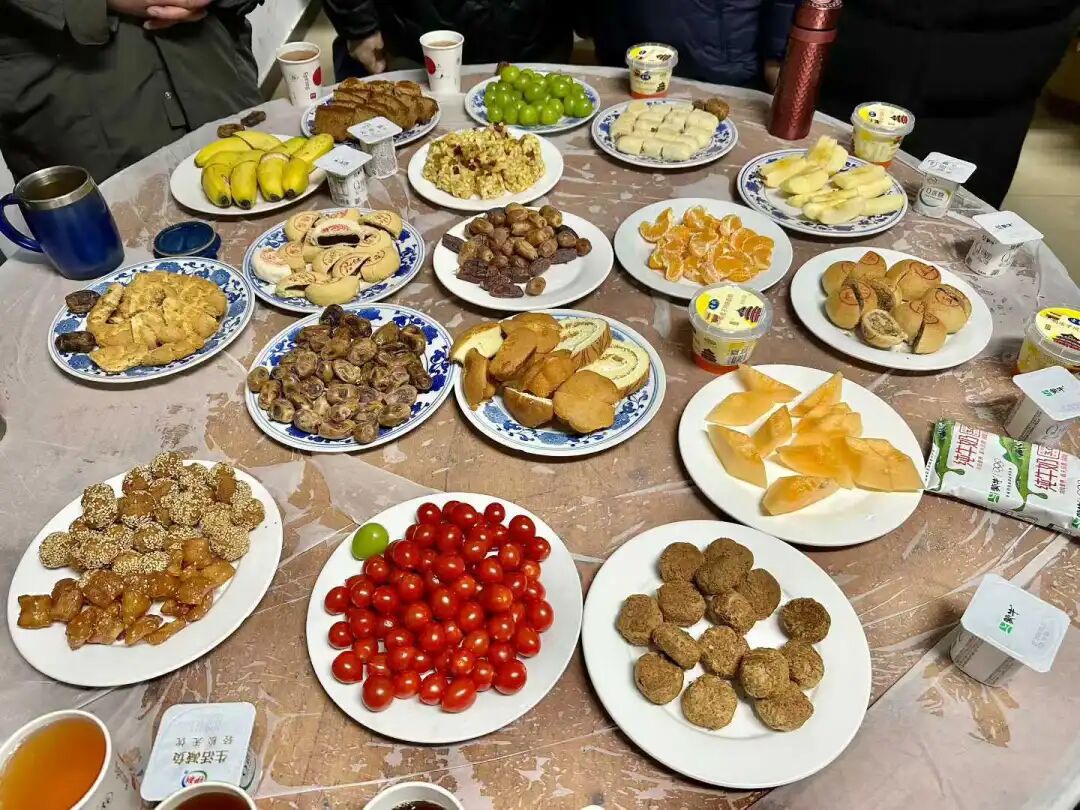
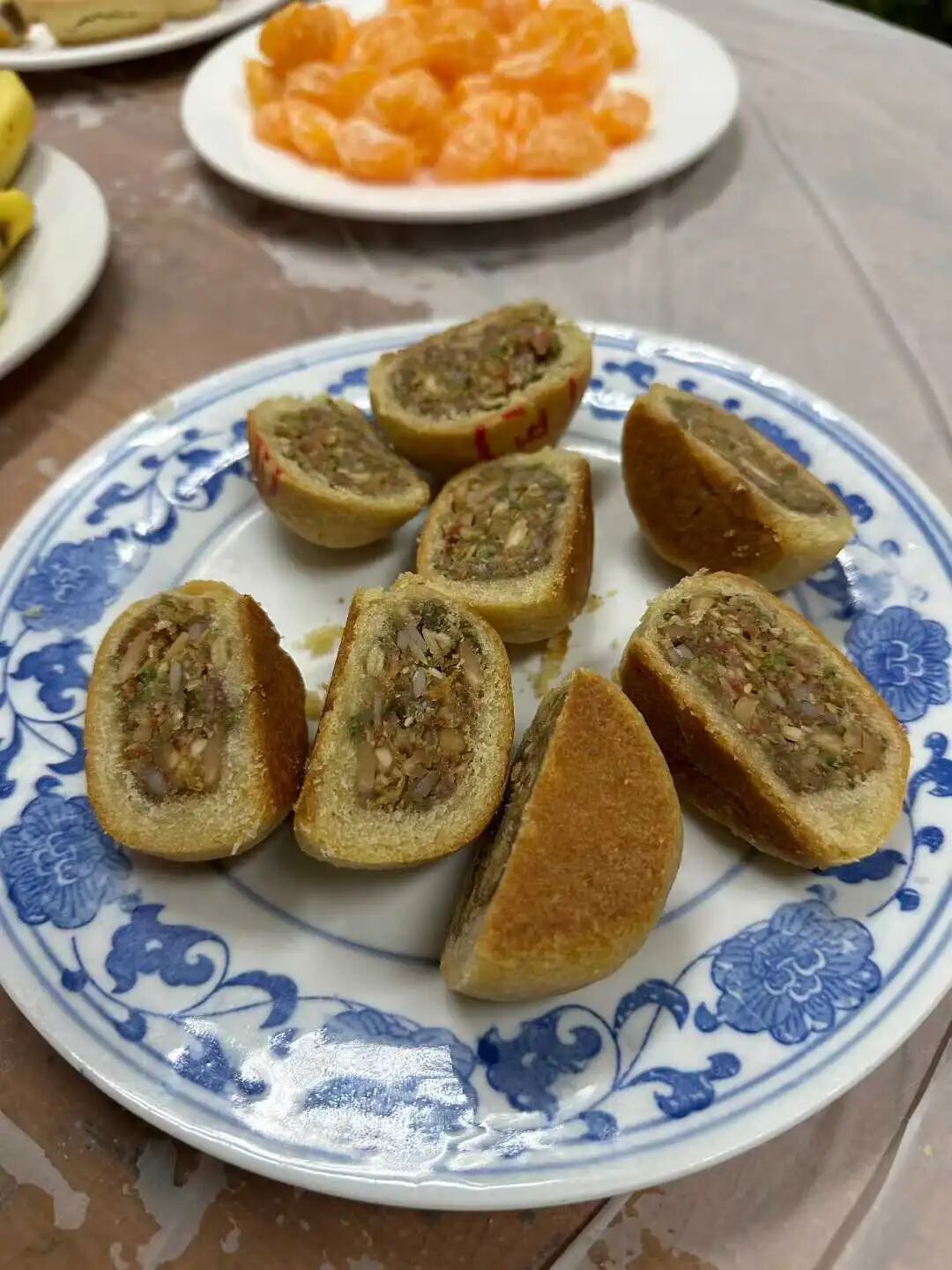
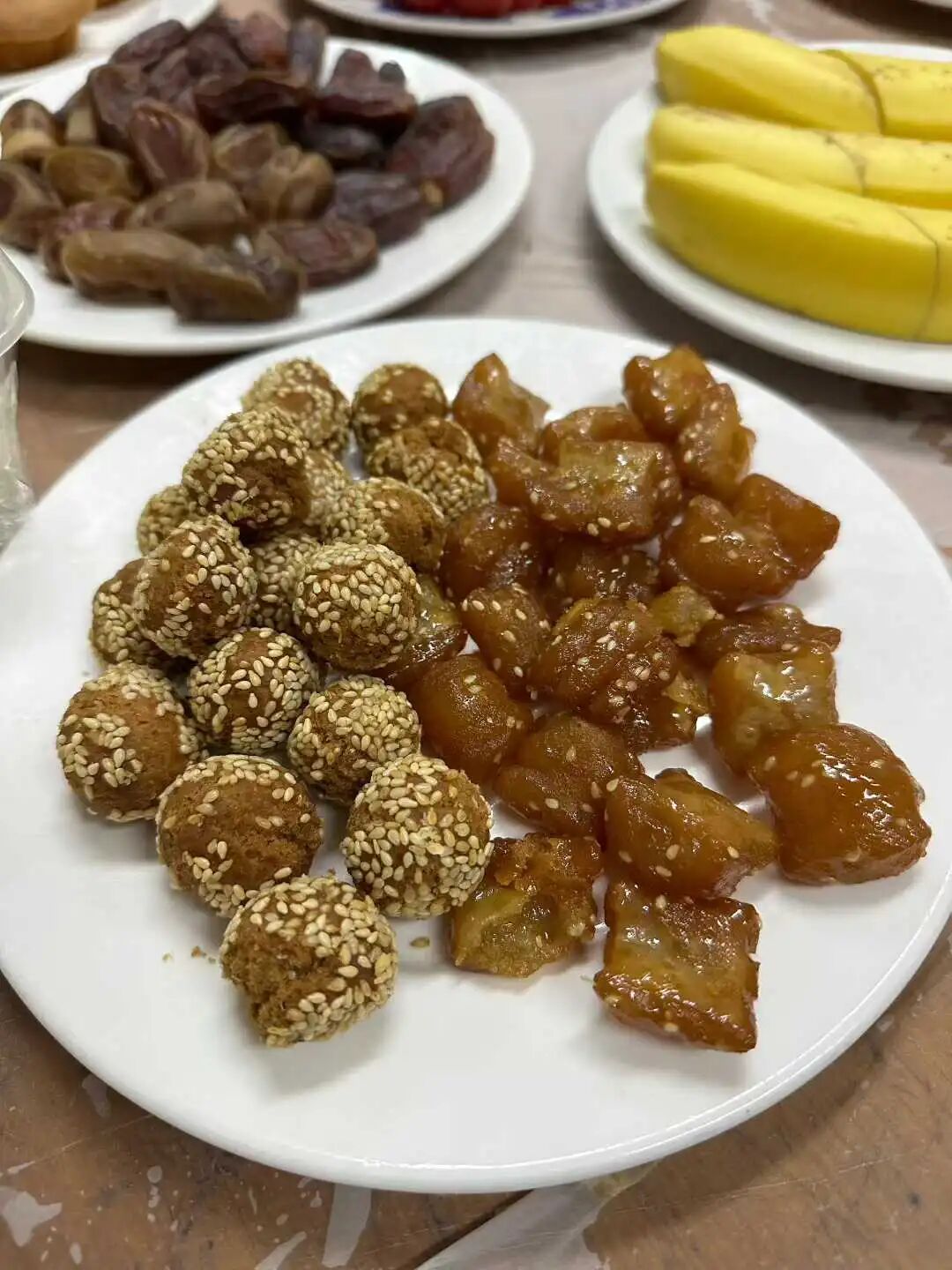
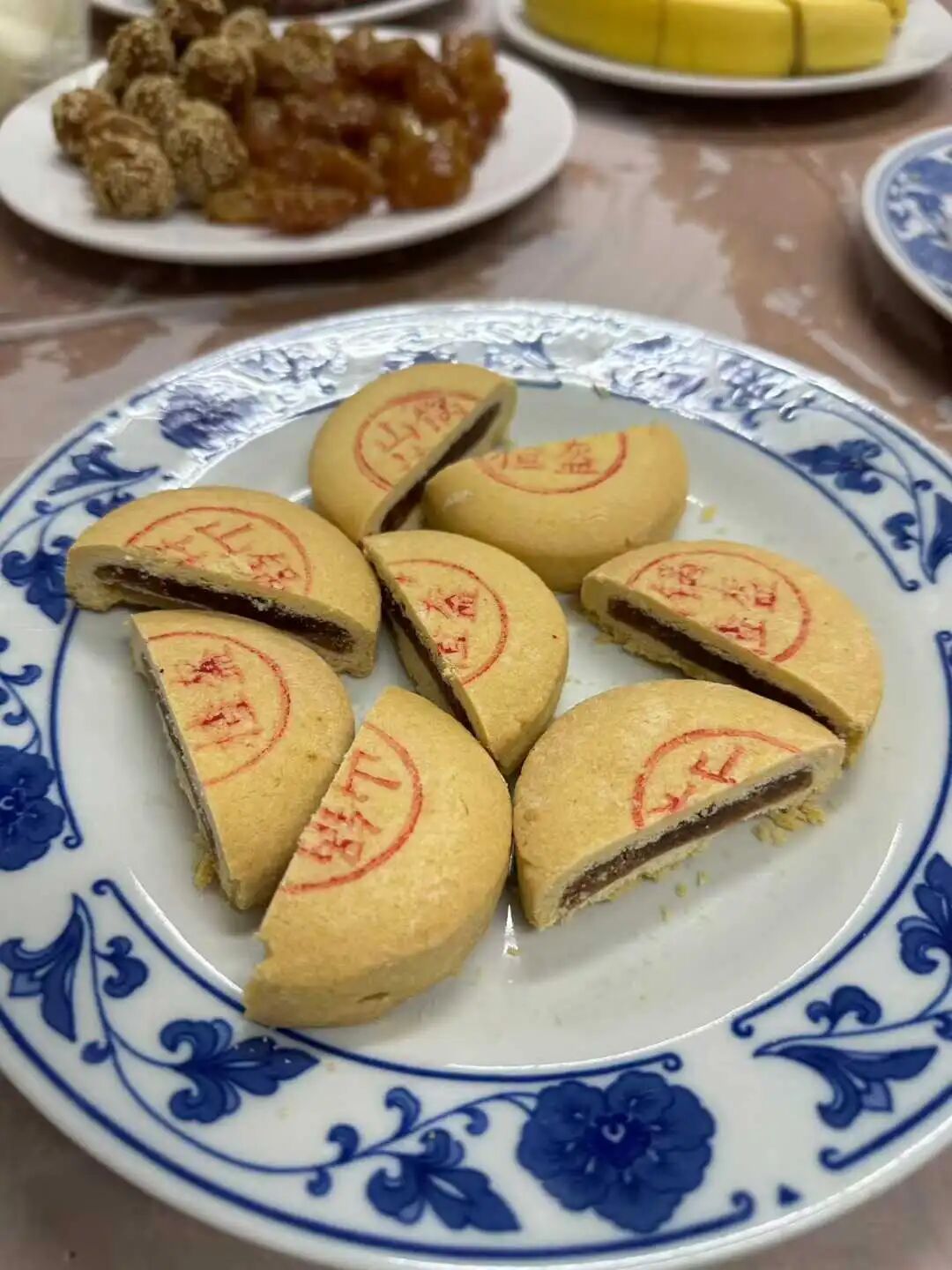
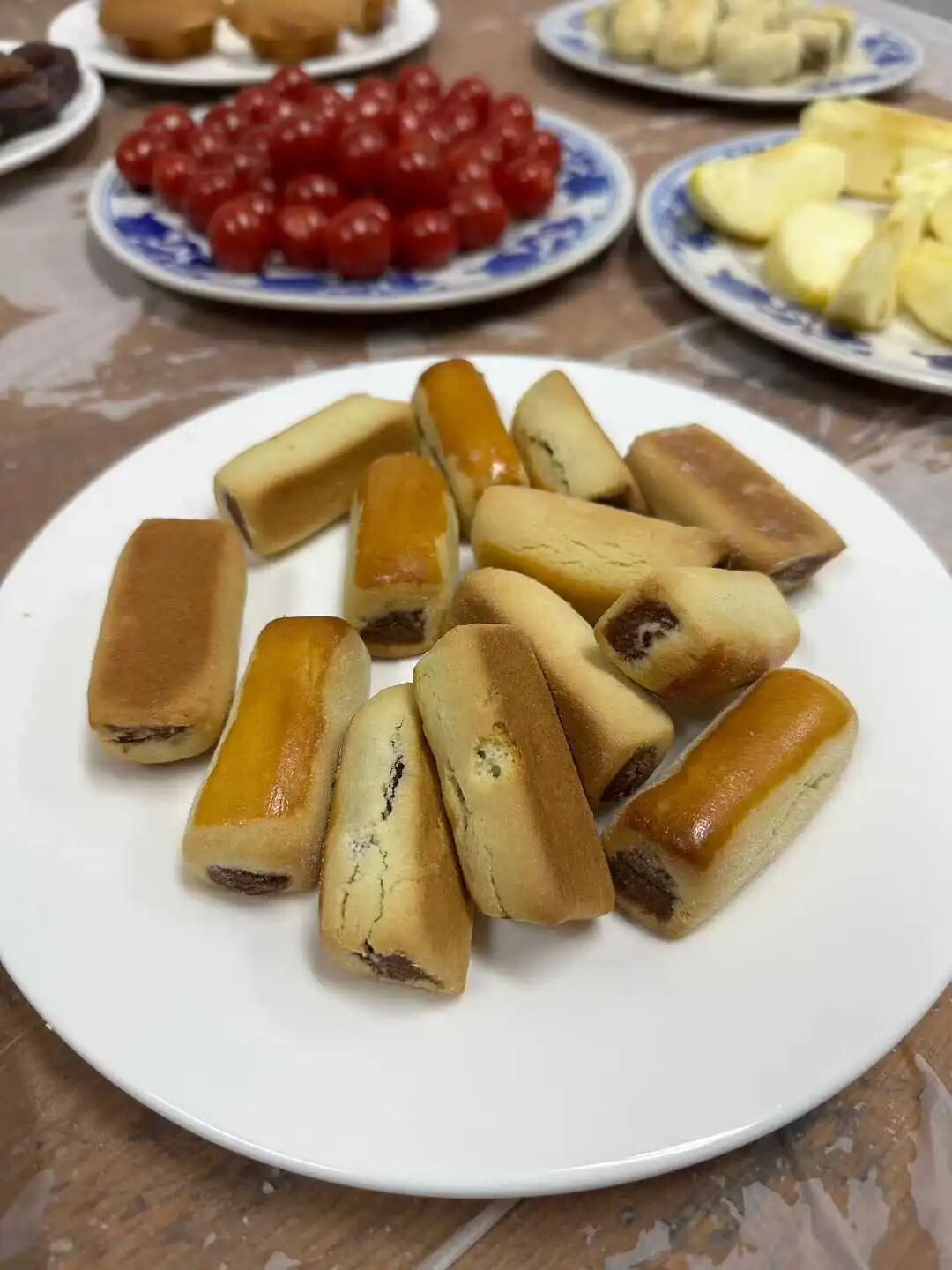
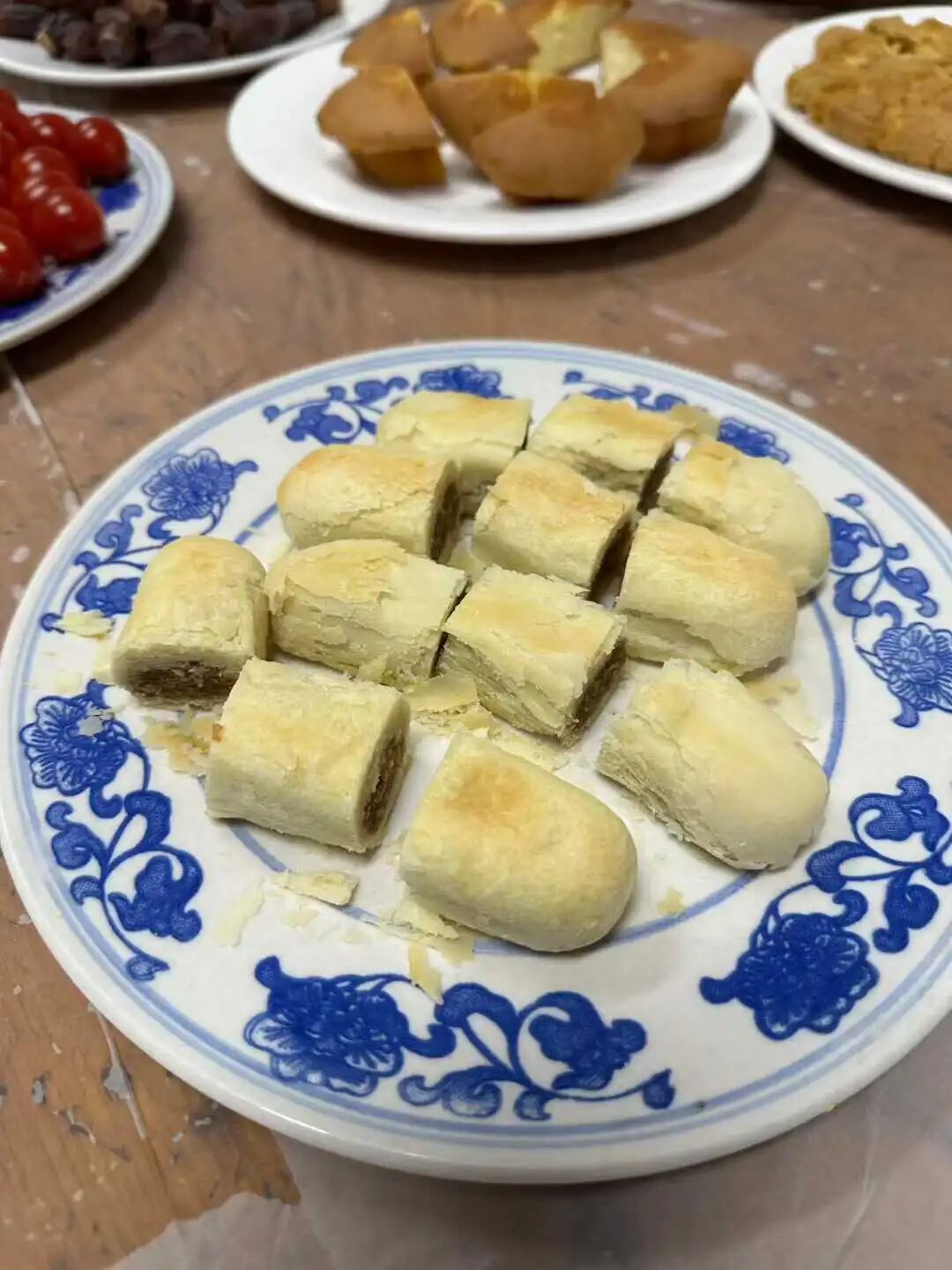
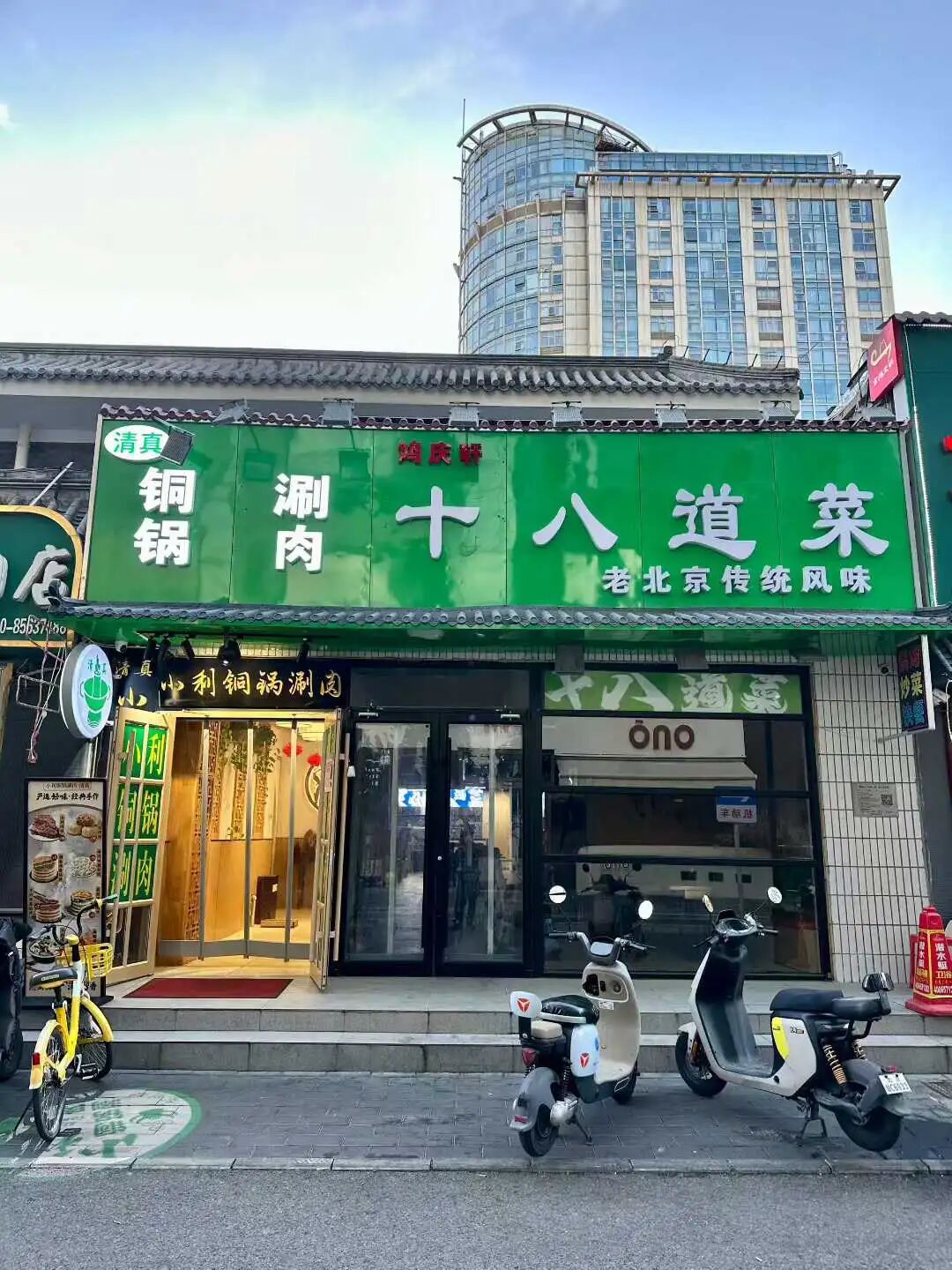
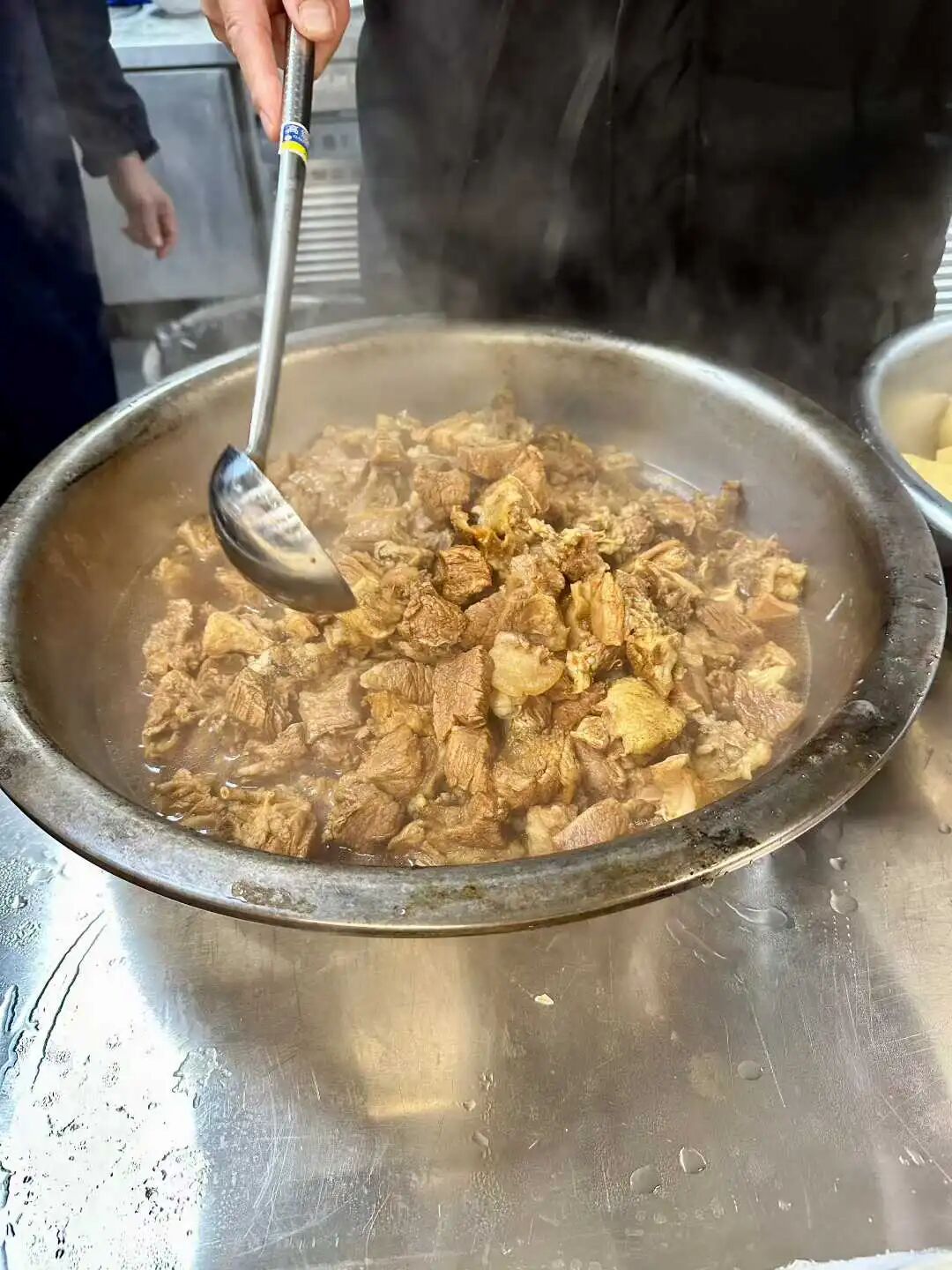
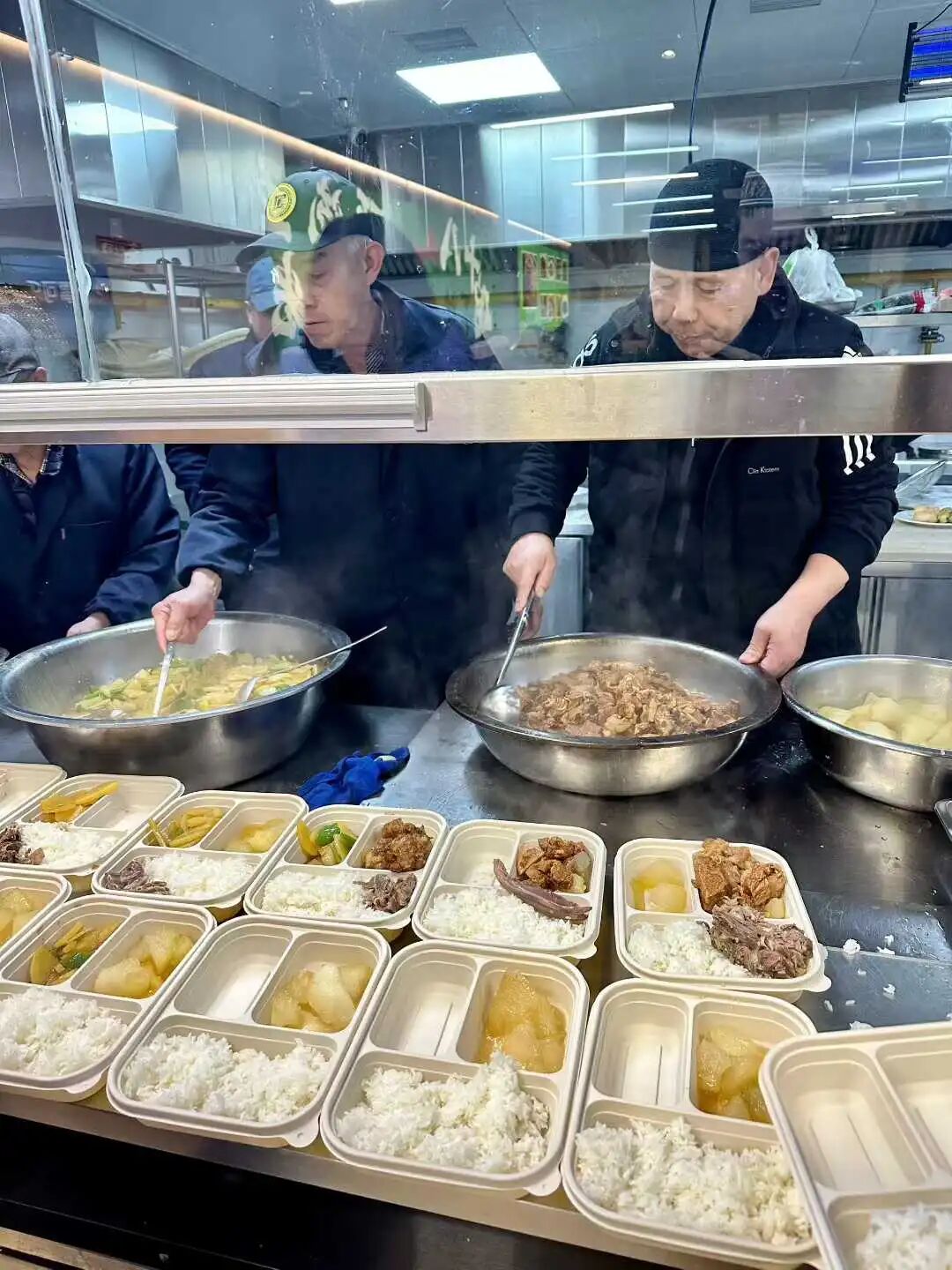
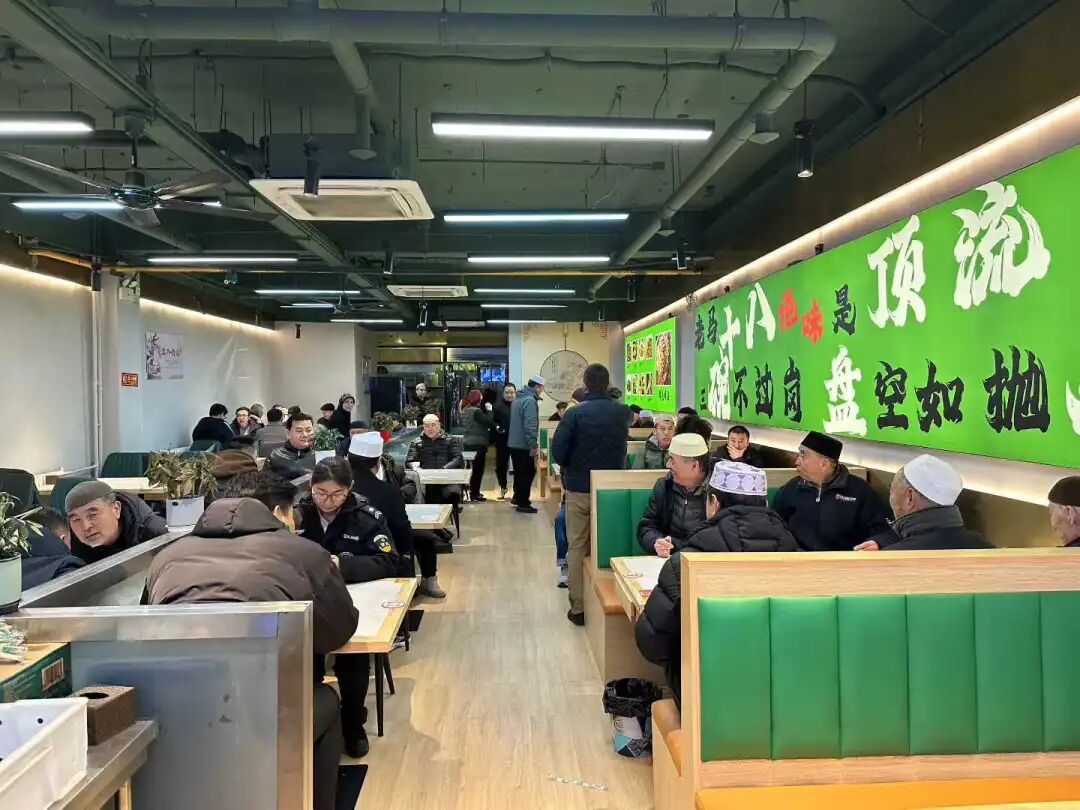
Haji Li treated everyone to stewed meat, with both beef and lamb available. The iftar at Nanxiapo was held at the nearby Hongqingxuan restaurant with eighteen dishes. Over a hundred people attended, including many young people, and it was a very blessed occasion.
Fayuan Mosque.
Fayuan Mosque is also called Dewai Guanxiang Mosque. It was originally located at the north slope of Xiaochangkou outside Deshengmen. It was relocated and expanded during the Kangxi reign. During the Republic of China era, the main hall was expanded again, featuring four interlocking roofs and a four-cornered pavilion roof.
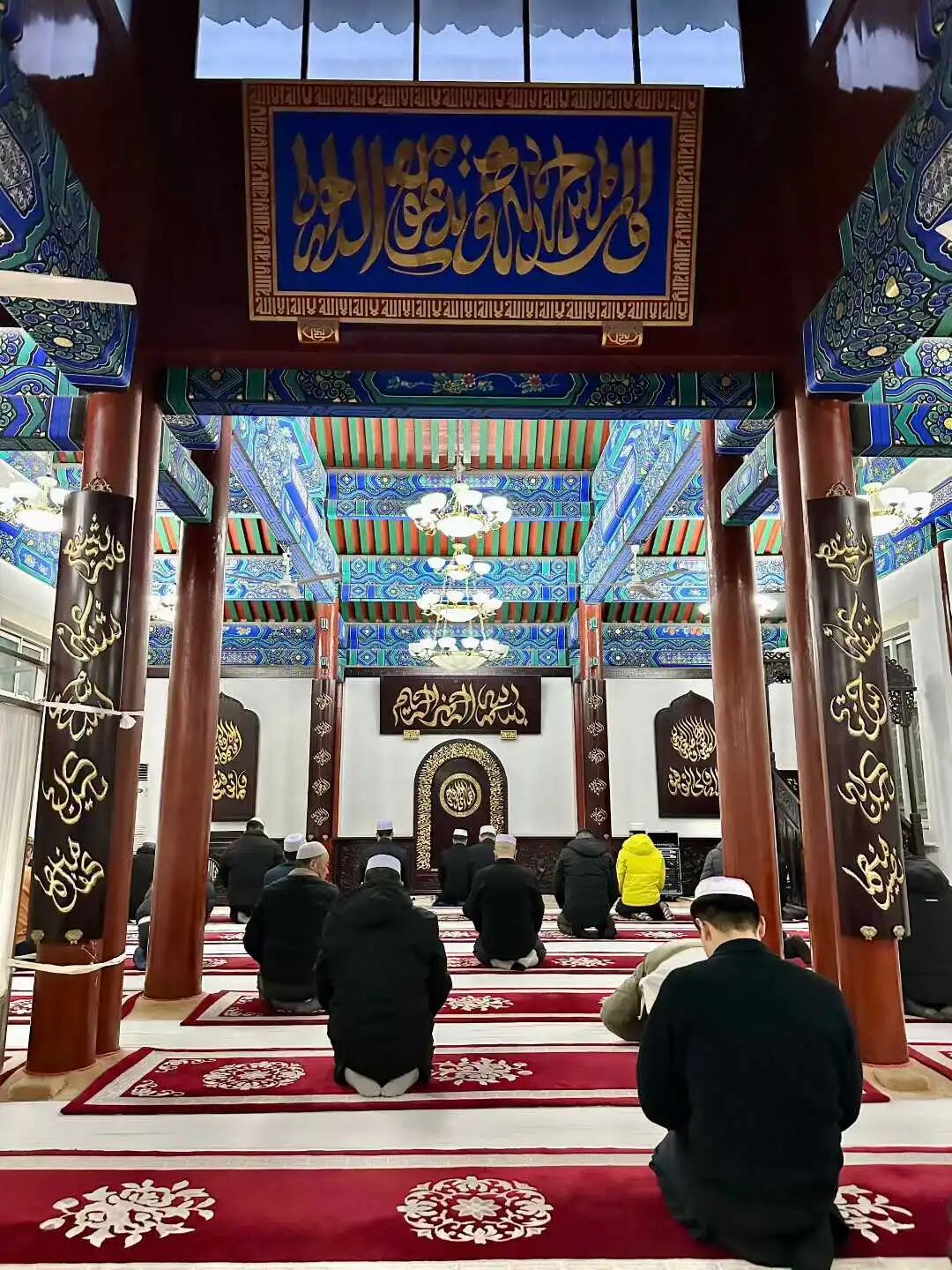
Fayuan Mosque built a new dining hall, and so many people come to break their fast every day that there are often not enough seats. The iftar meal includes meat, vegetables, shrimp, fruit, pastries, and fried dough cakes (youxiang).
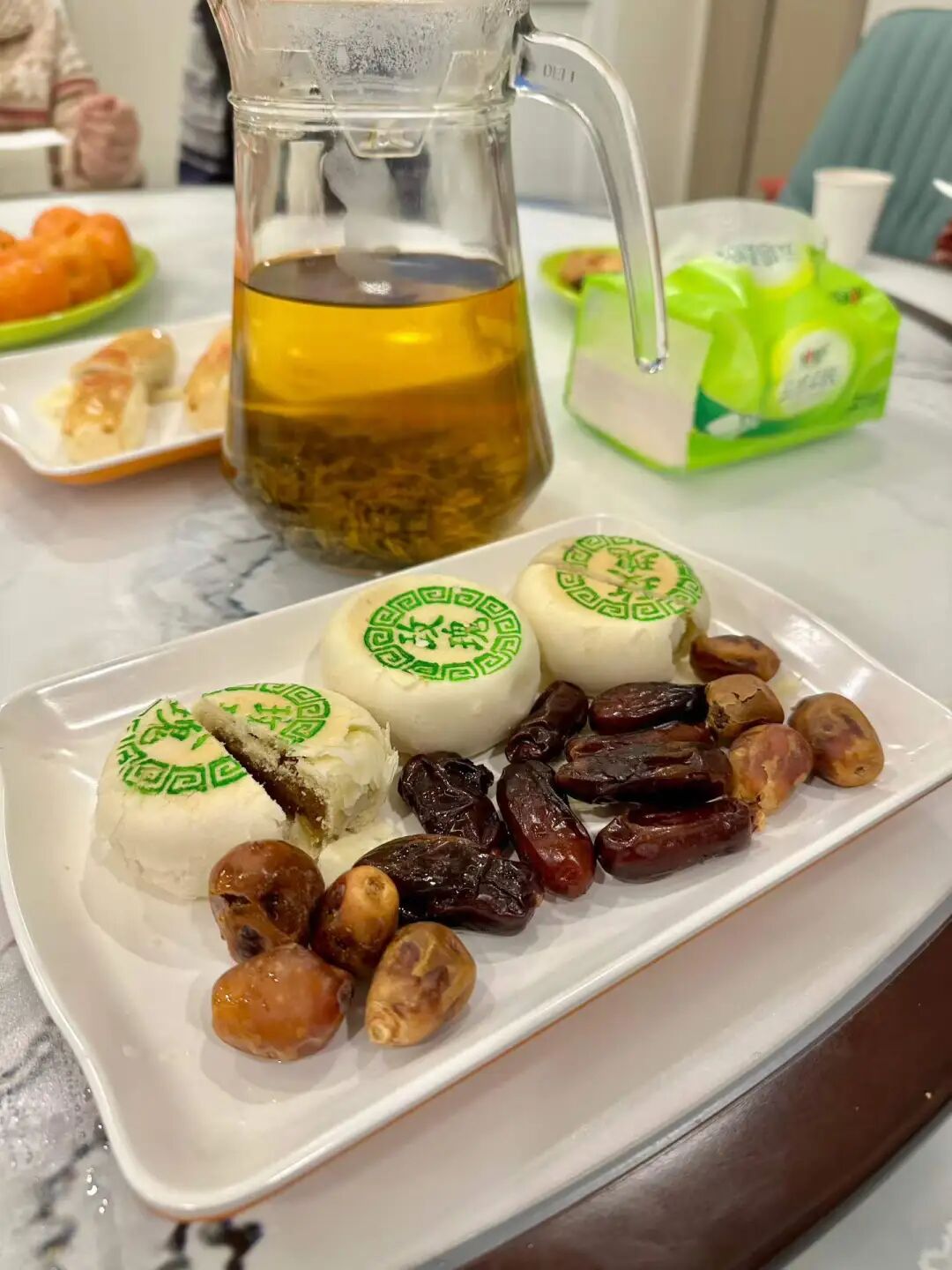
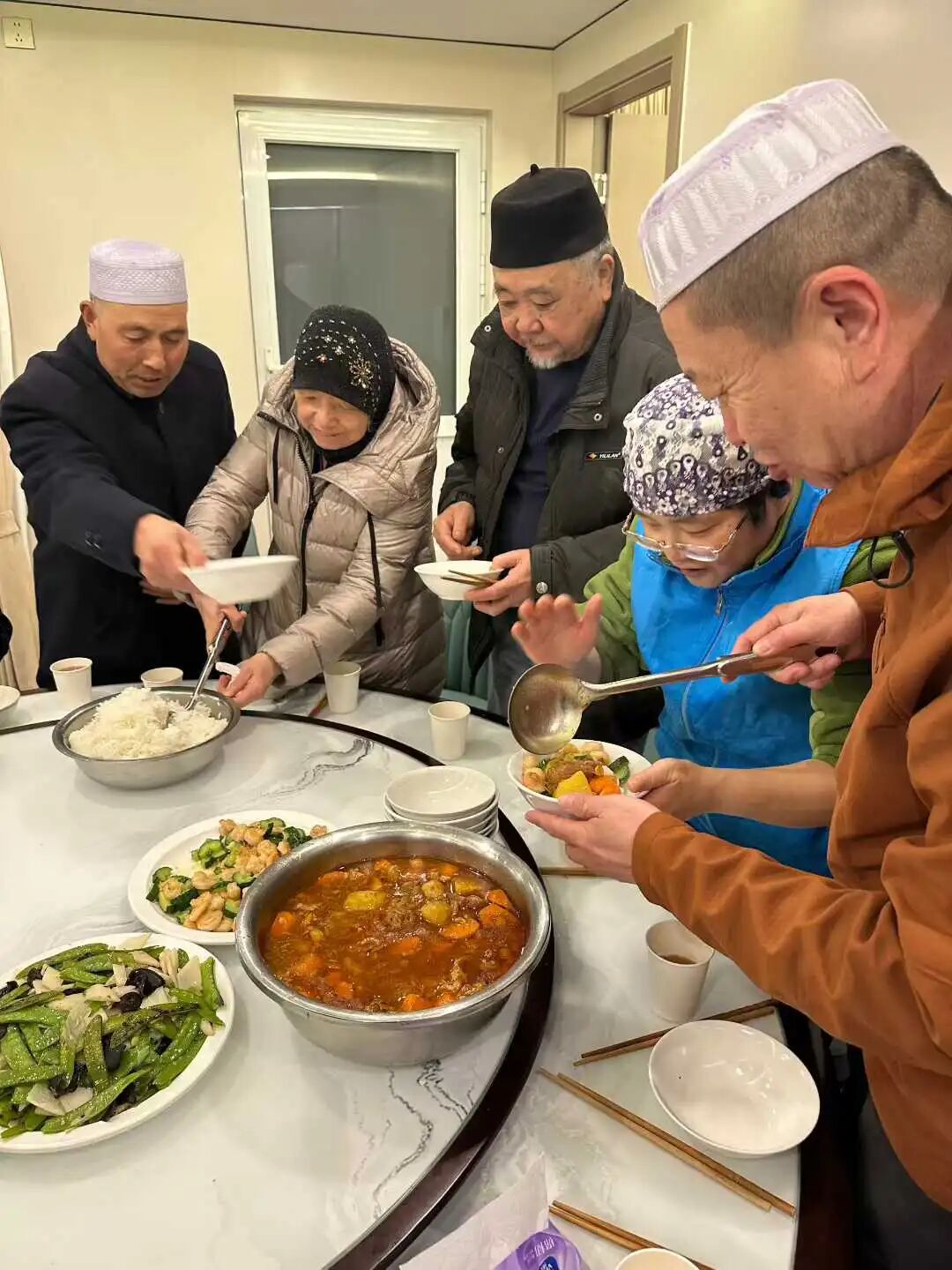
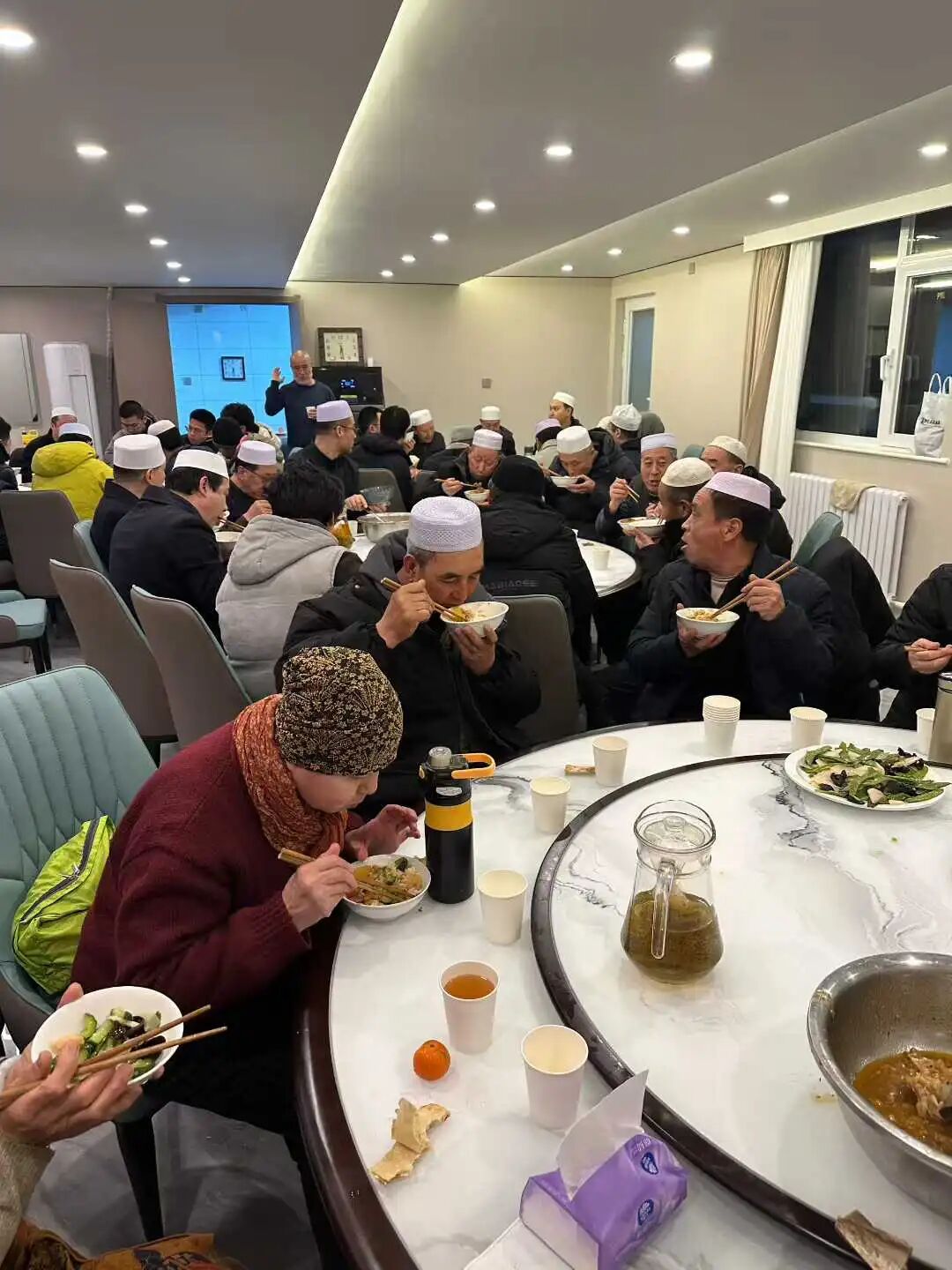
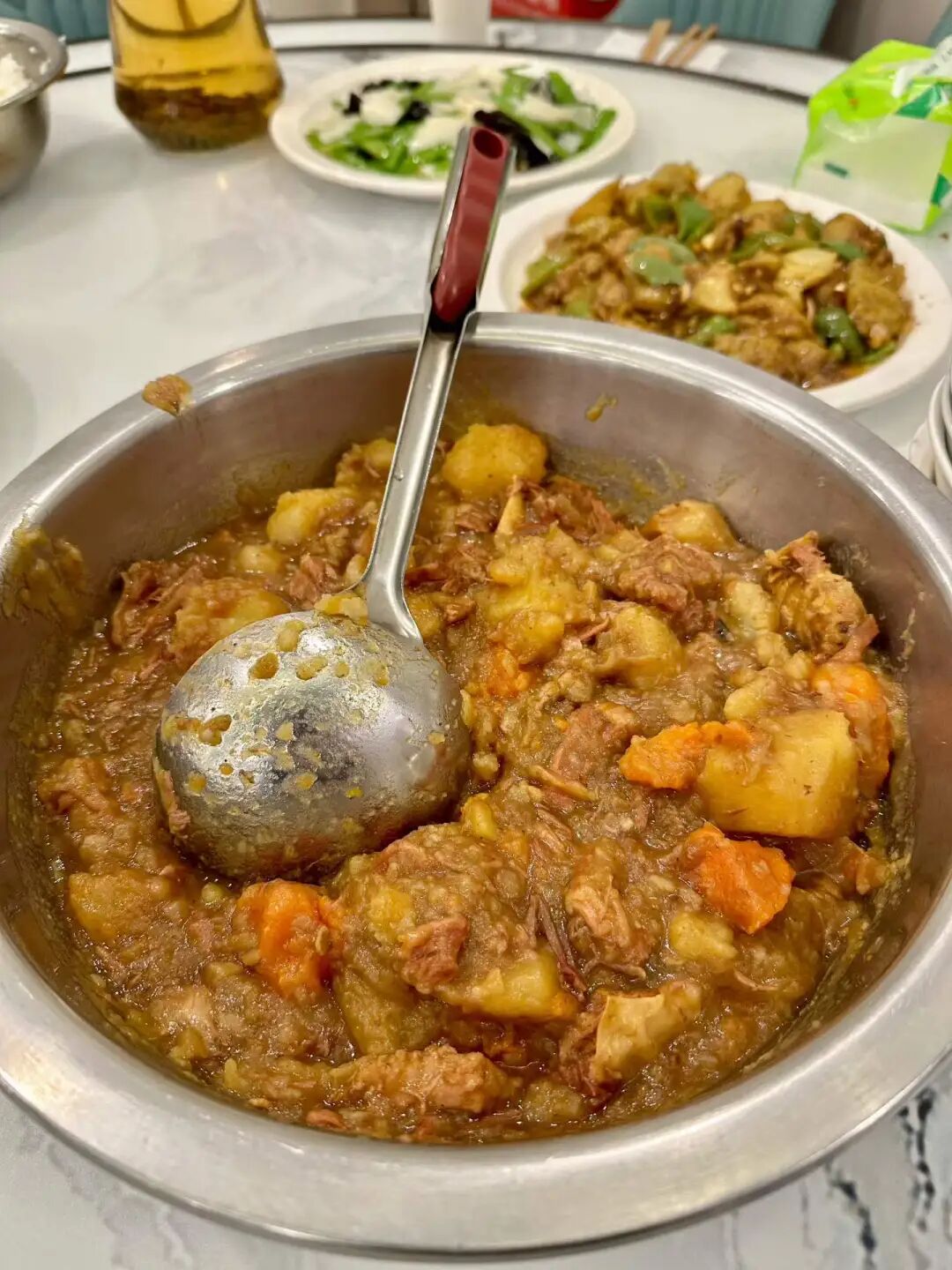
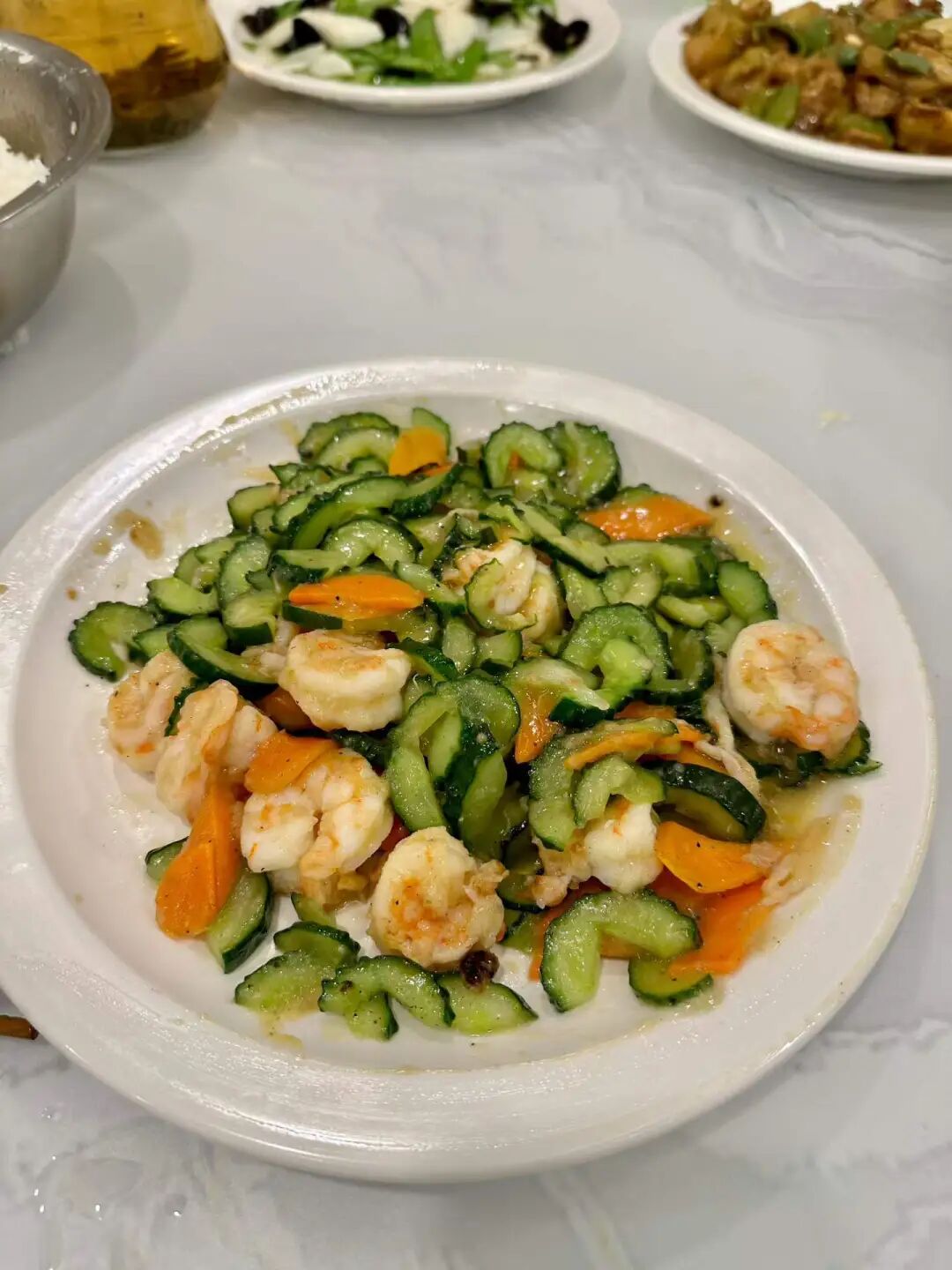
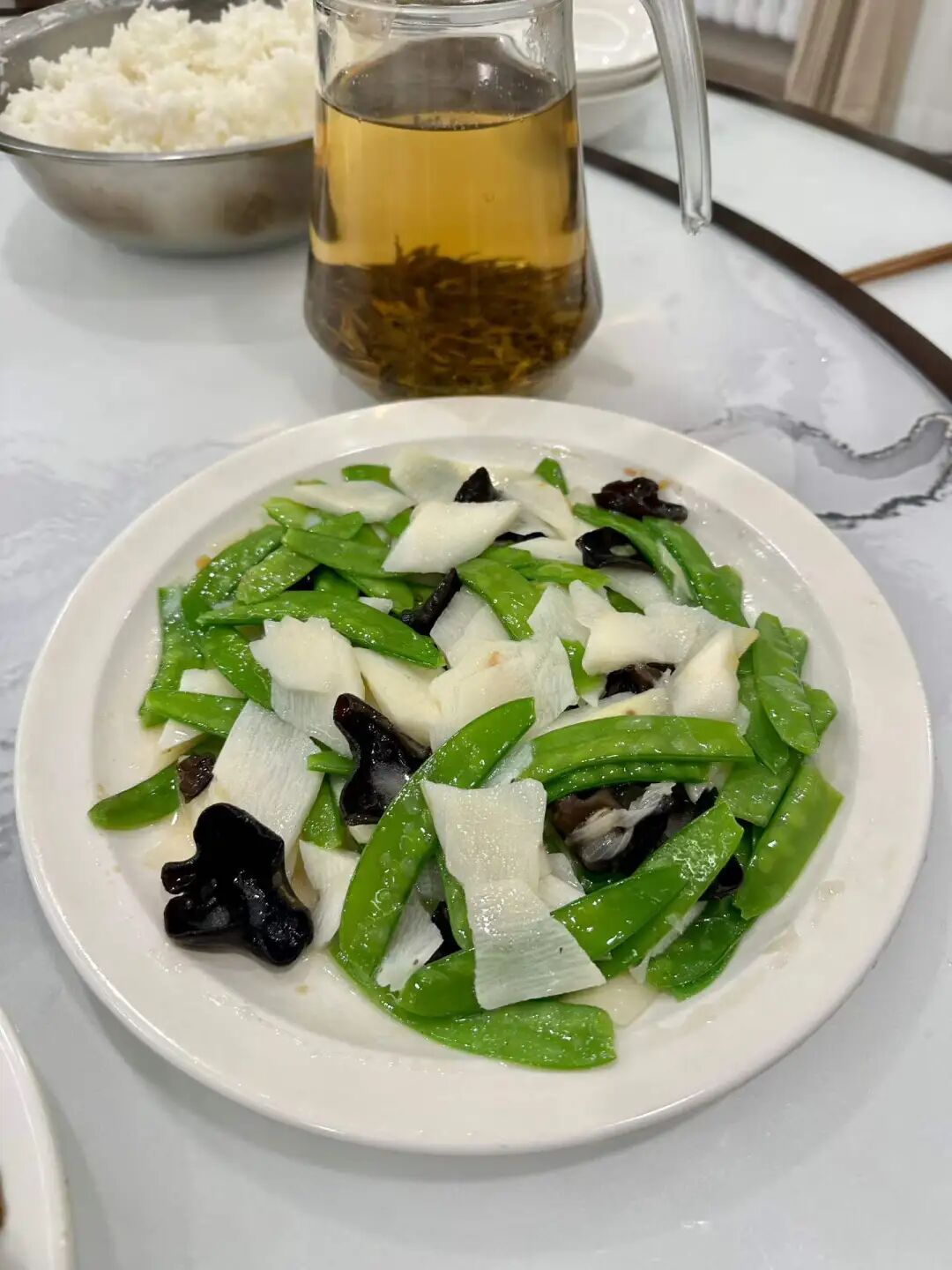
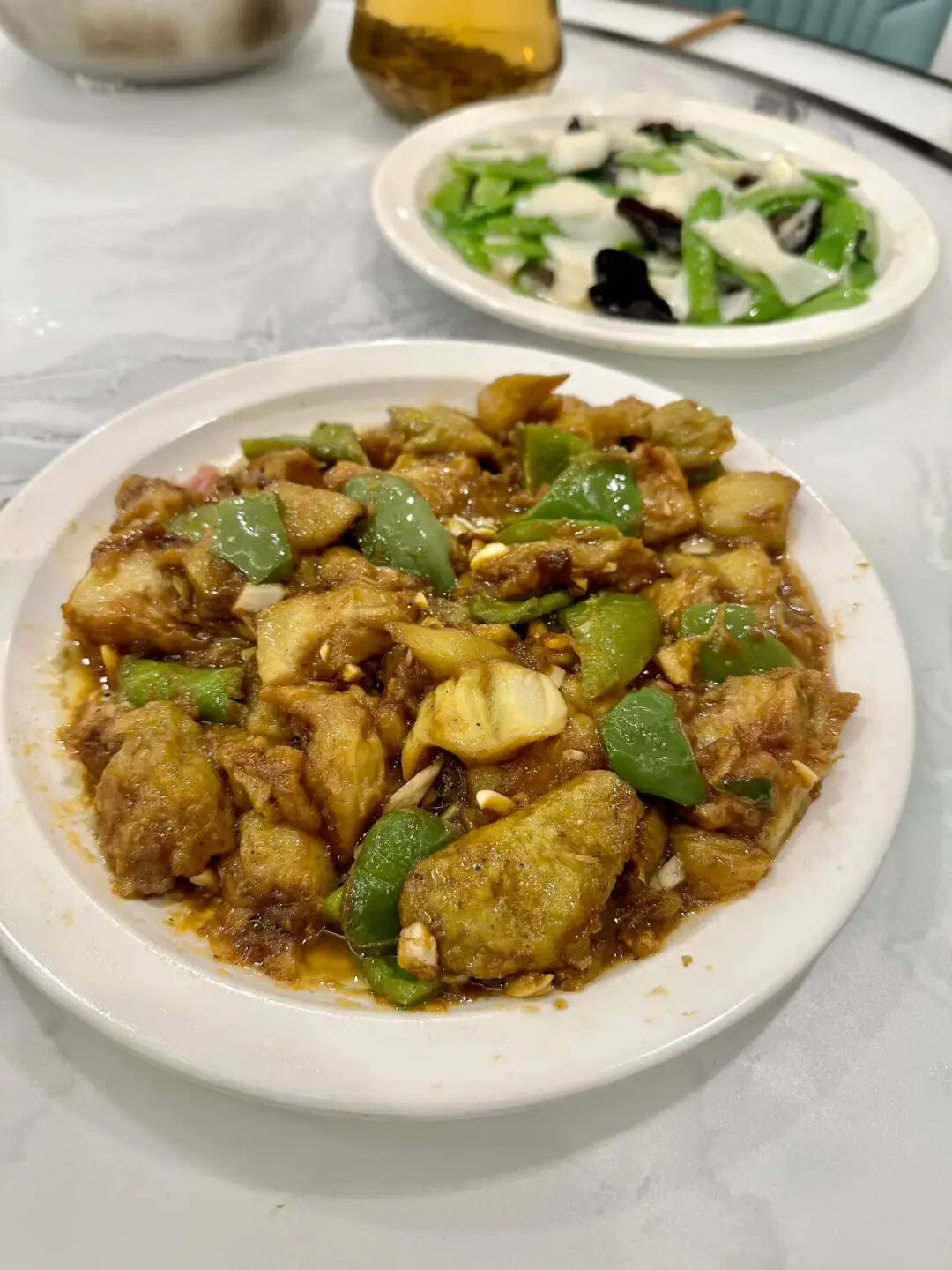
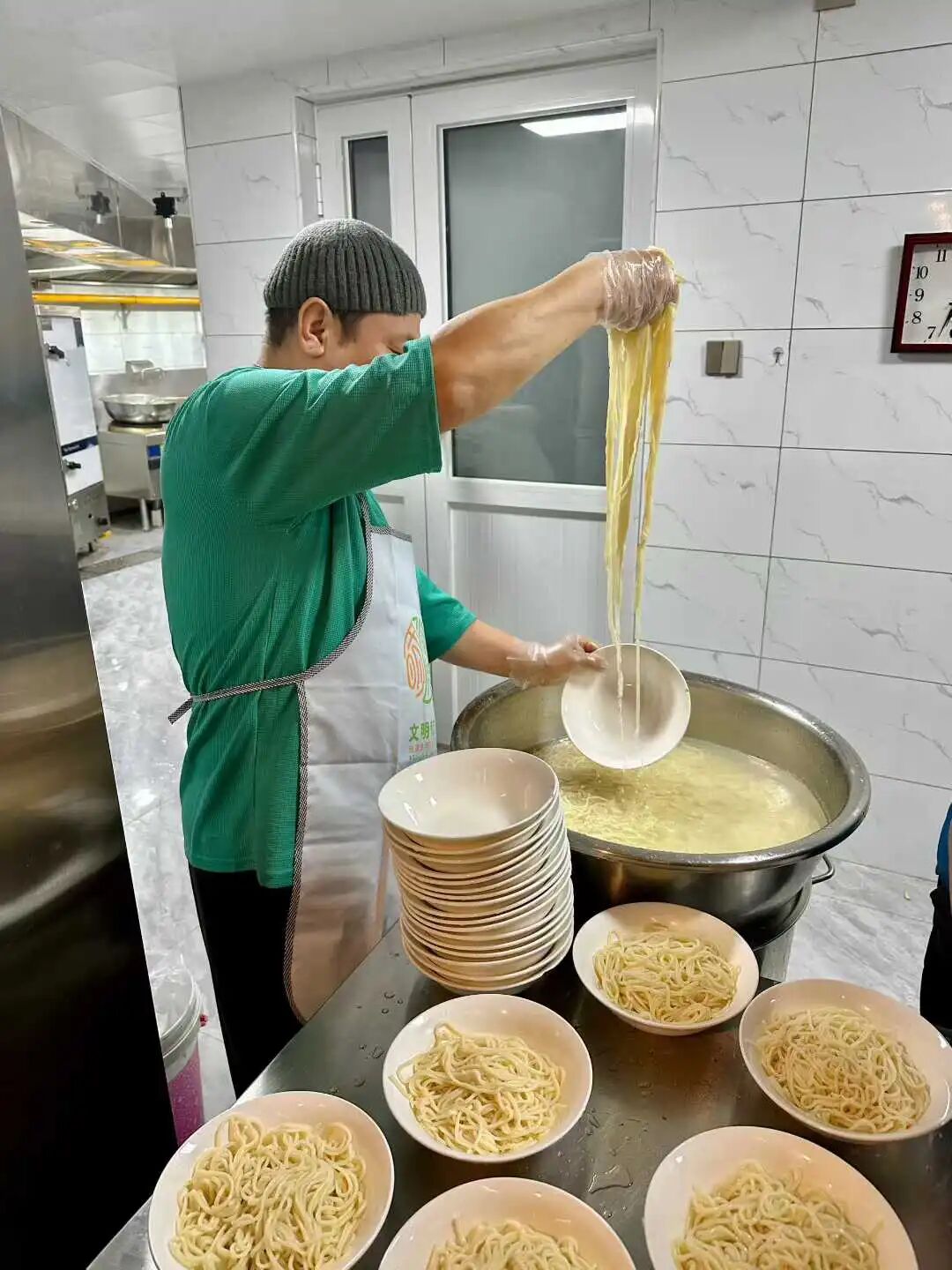
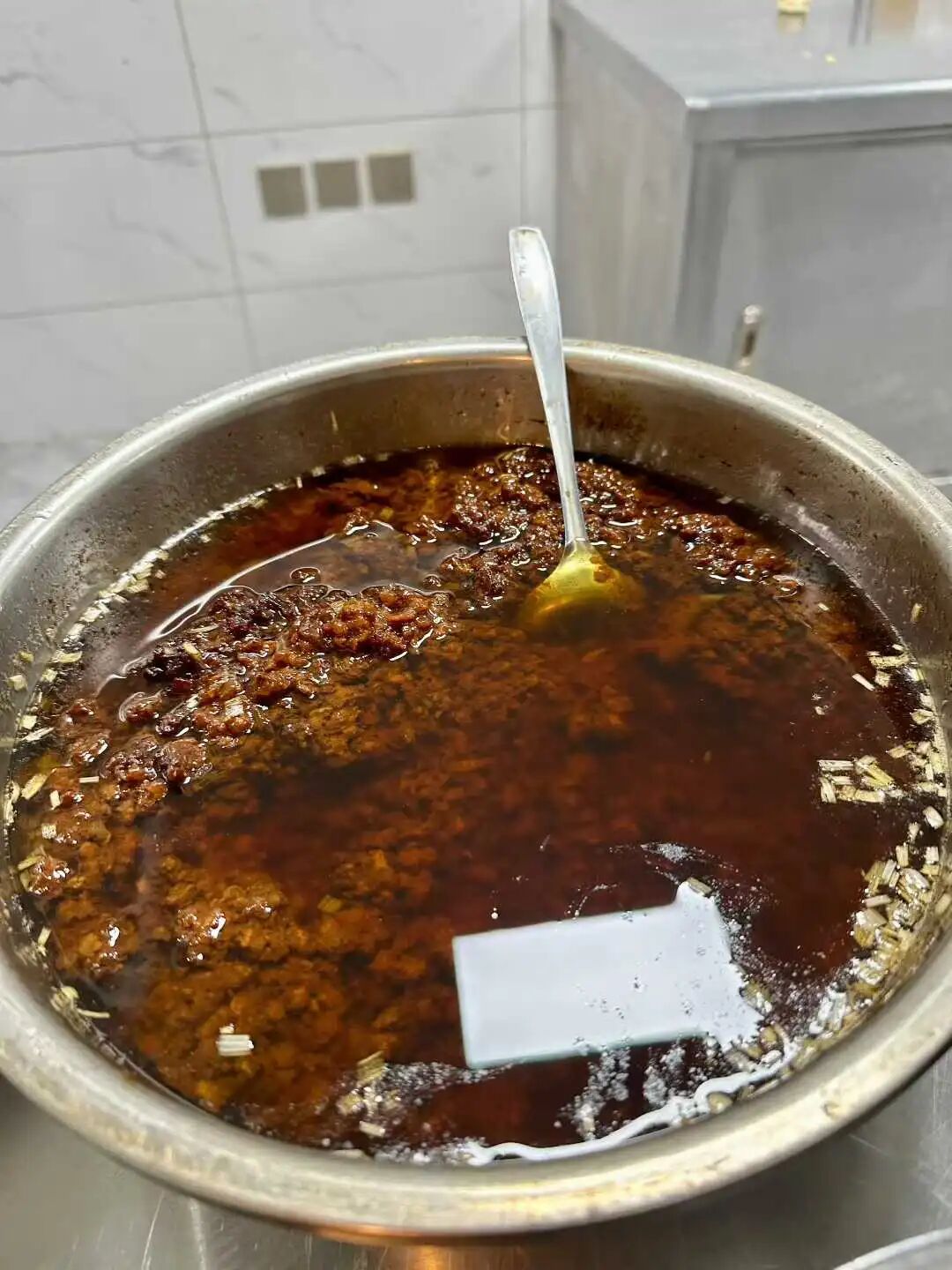
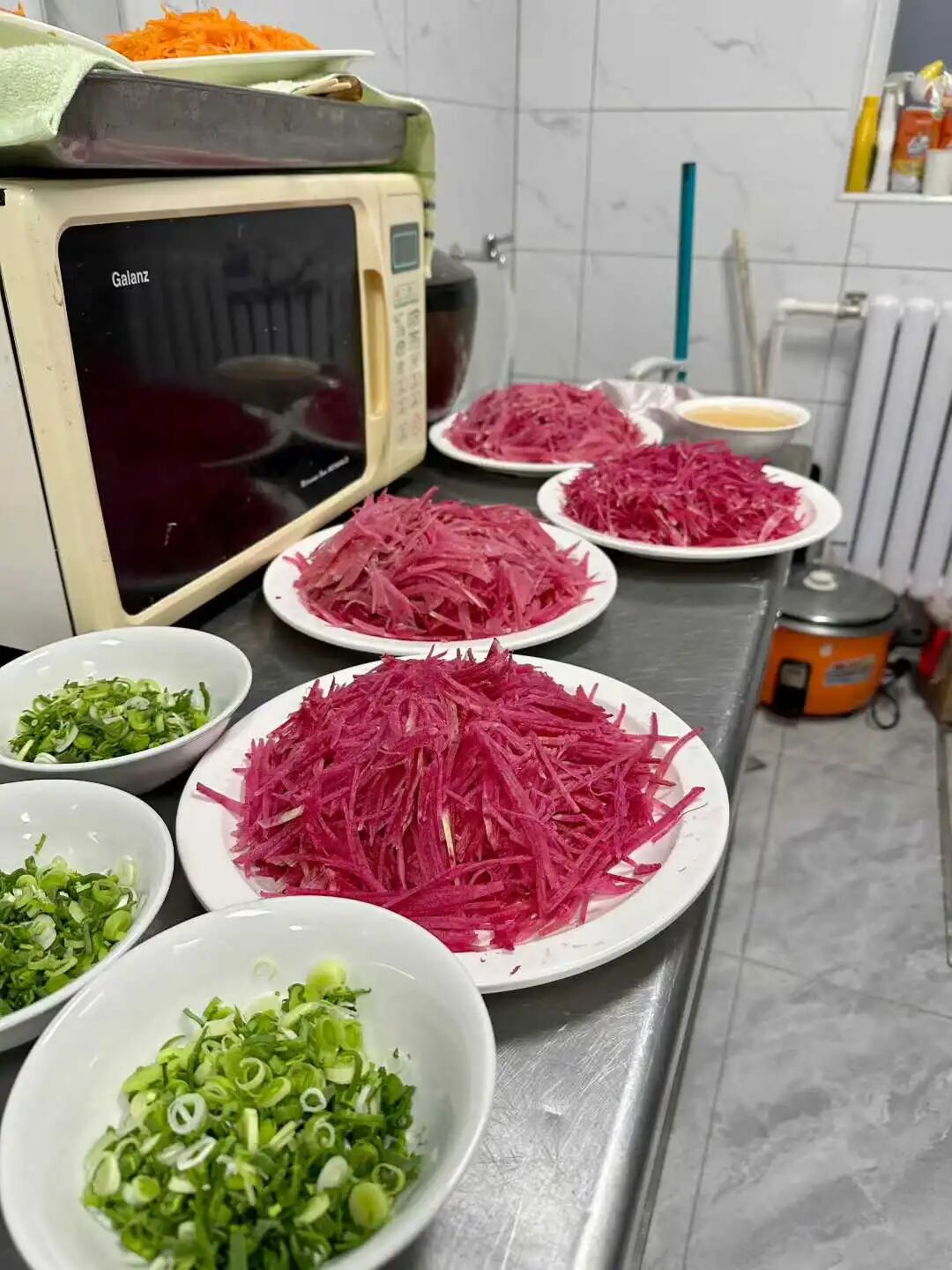
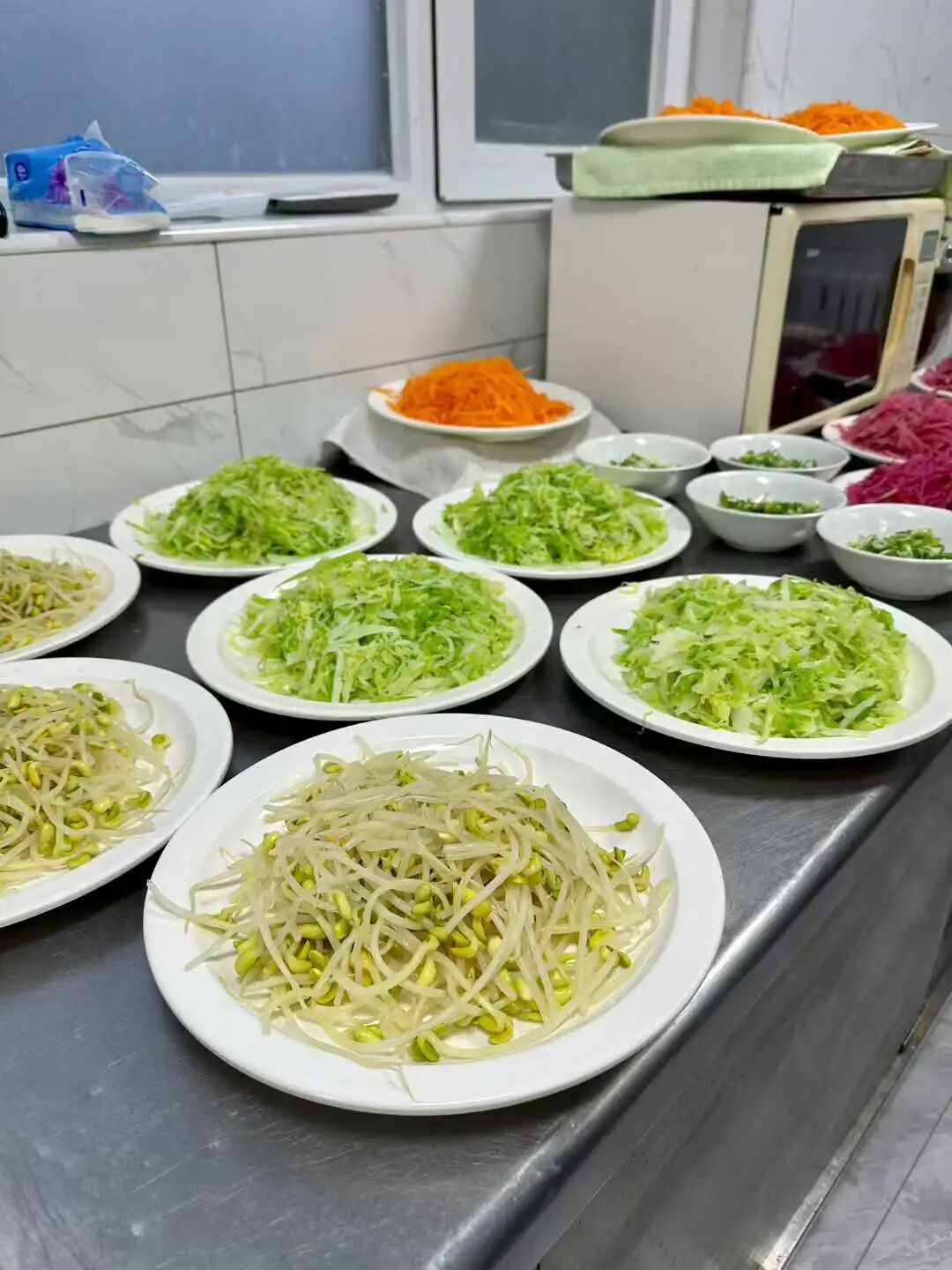
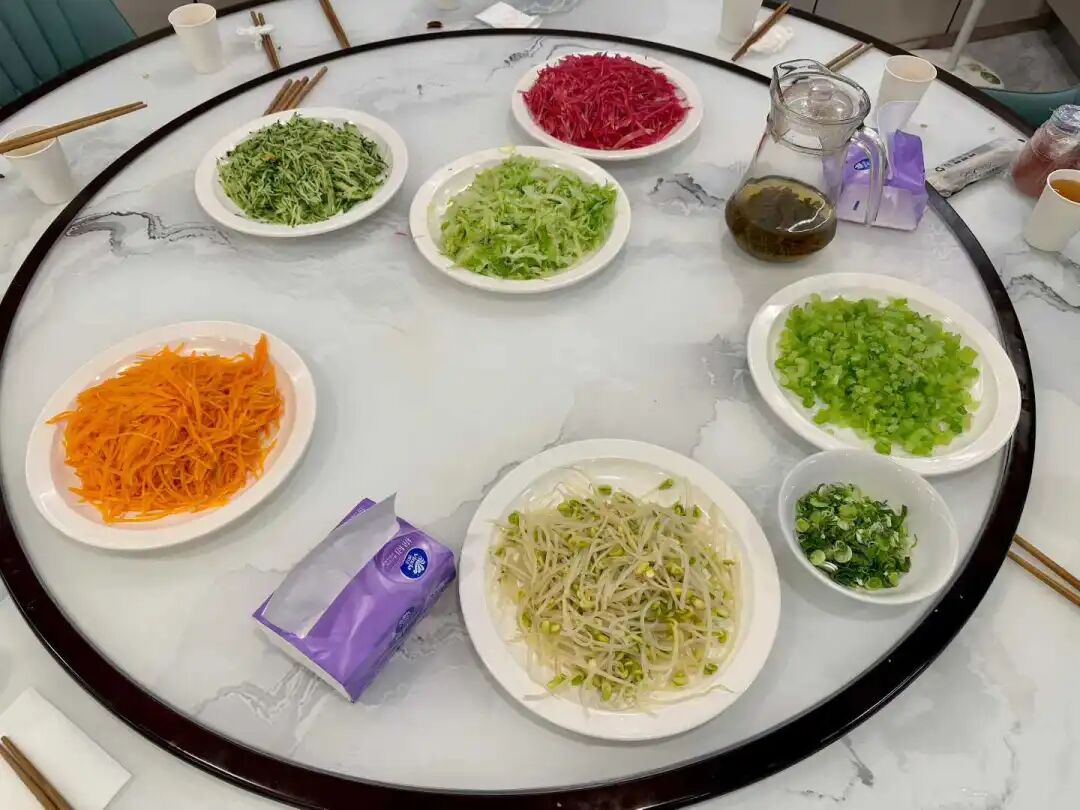
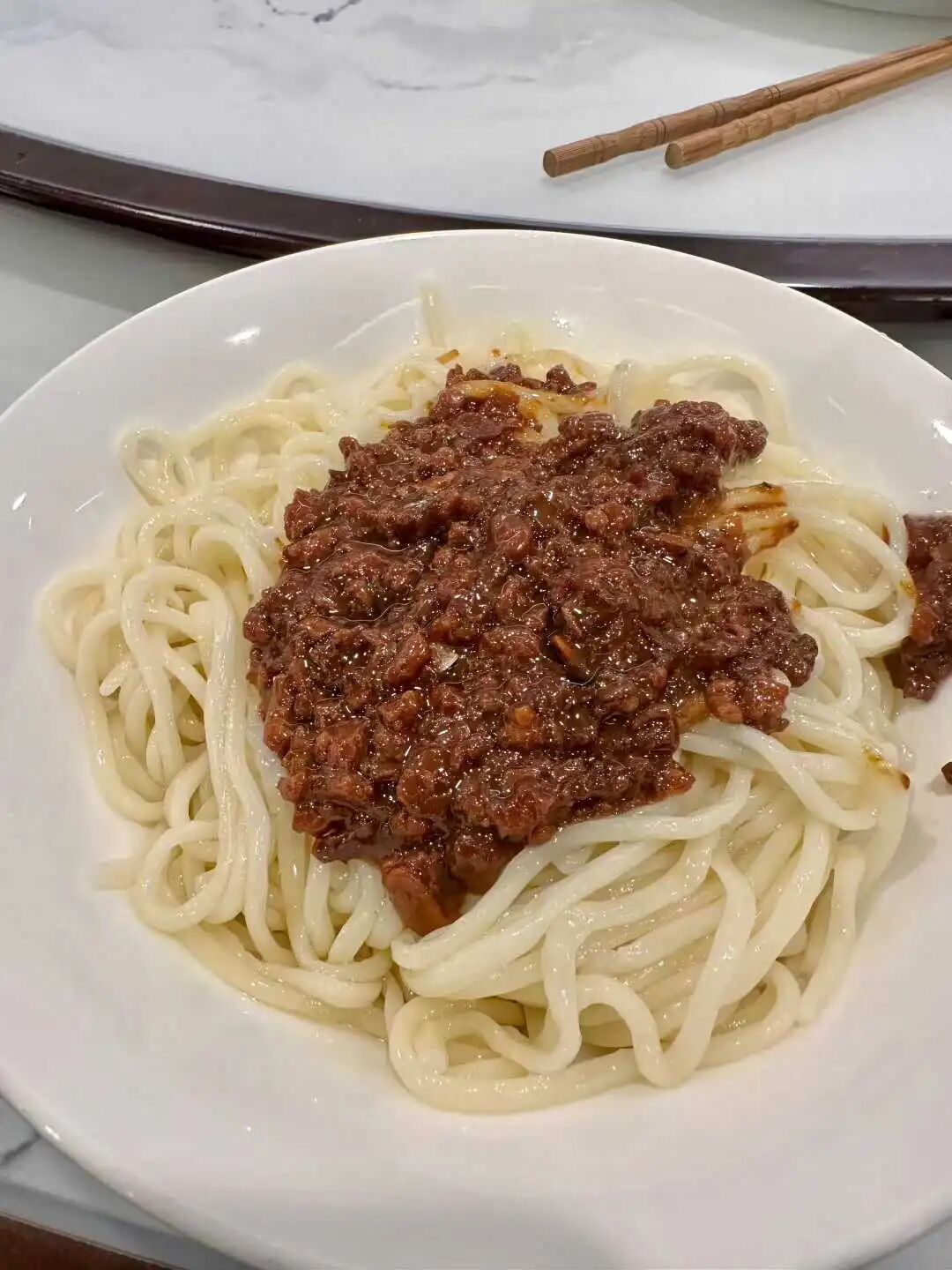
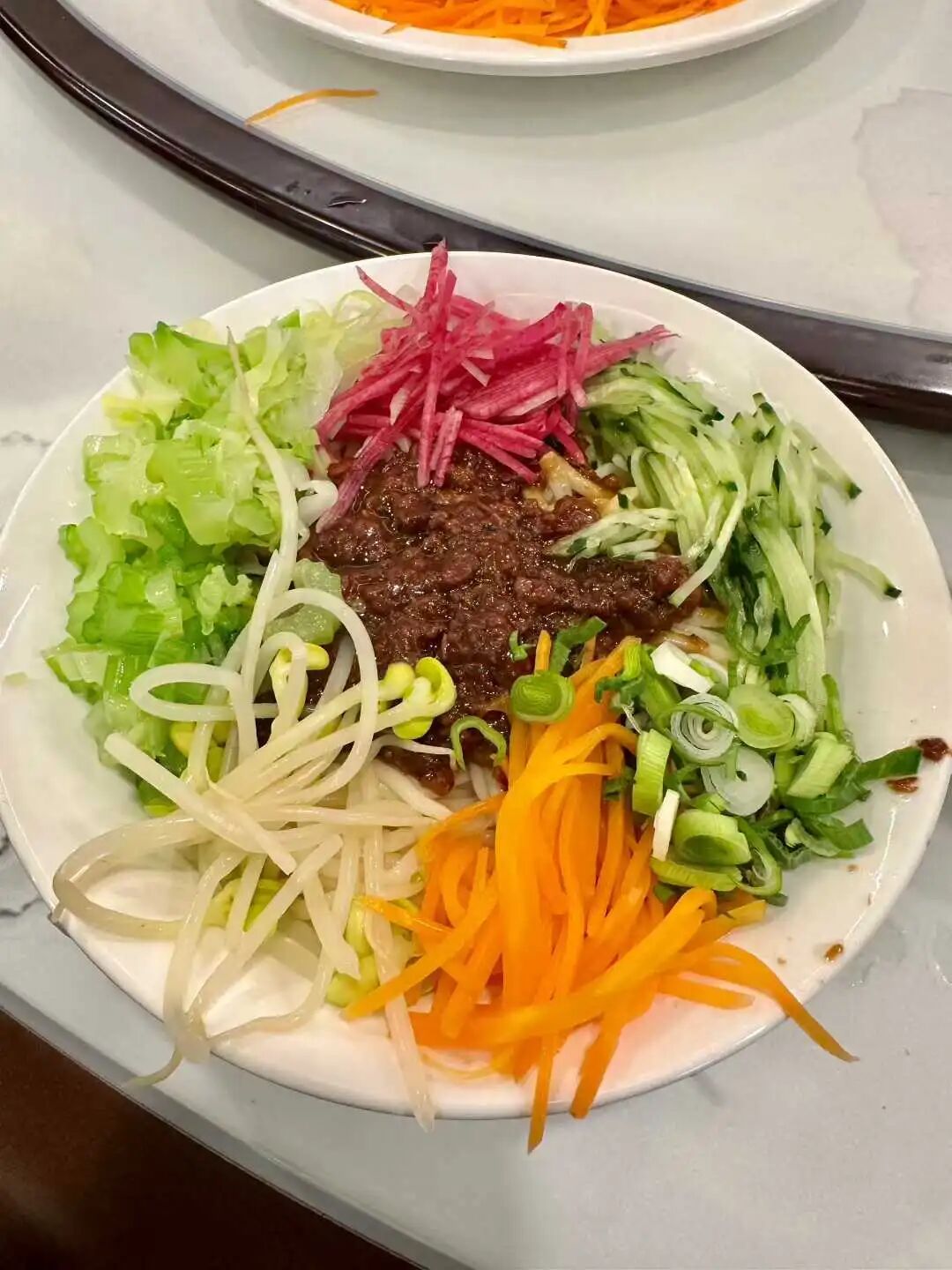
The meat sauce noodles (zhajiangmian) served for iftar at Fayuan Mosque come with seven vegetable toppings: shredded carrots, shredded cucumber, shredded cabbage, shredded radish (xinlimei), diced celery, green garlic, and bean sprouts. It is very hearty! Every Ramadan, I look forward to this bowl of noodles at the mosque.
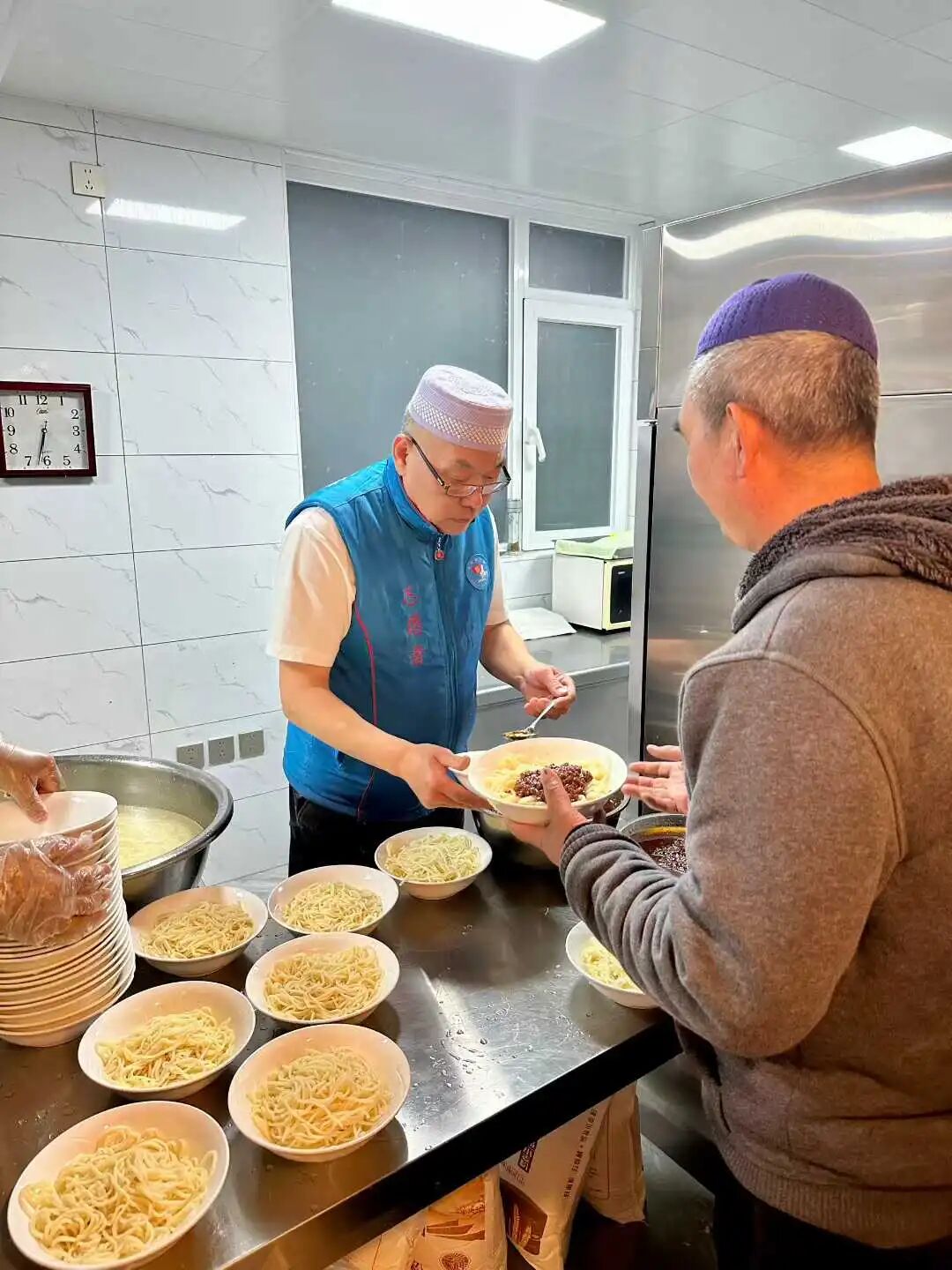
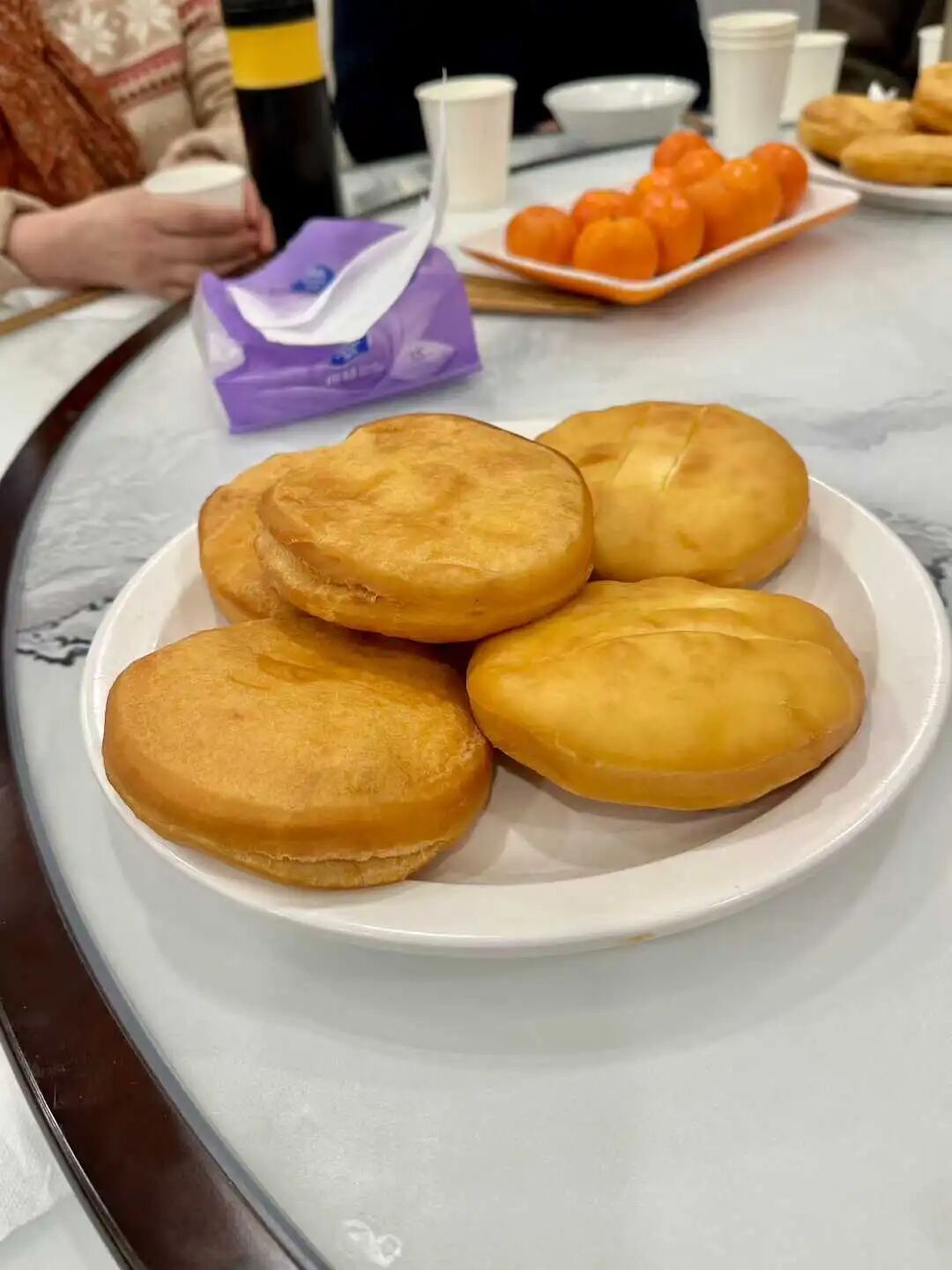
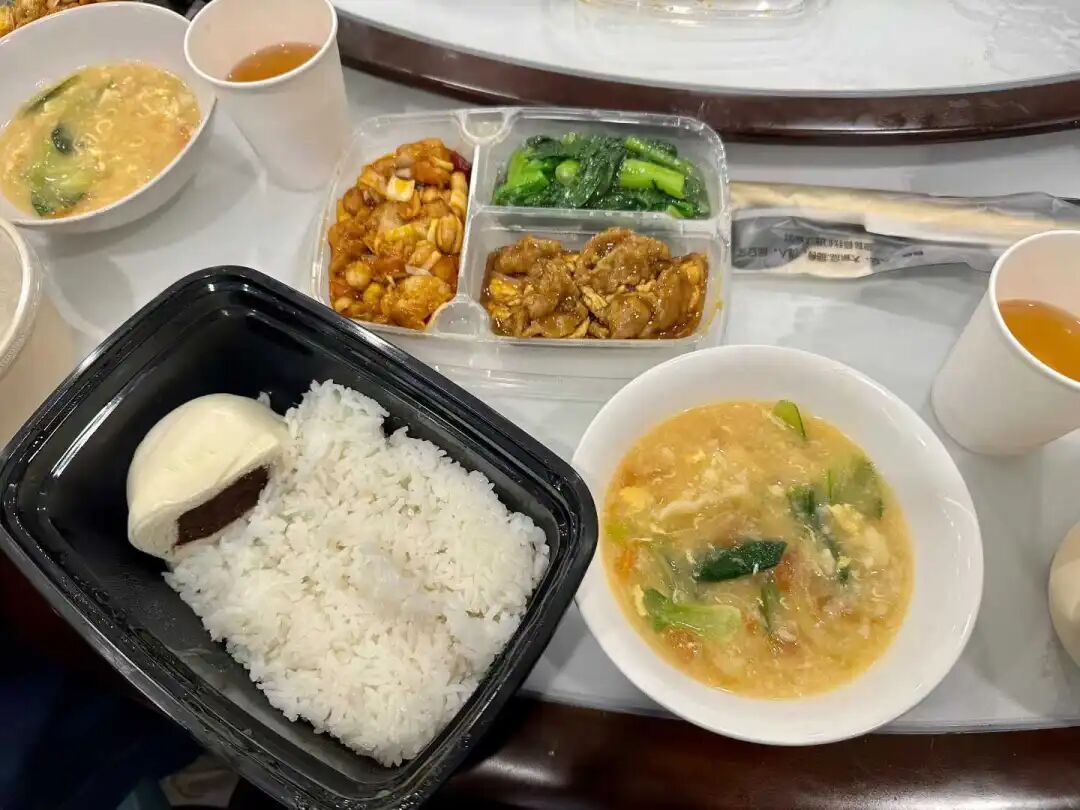
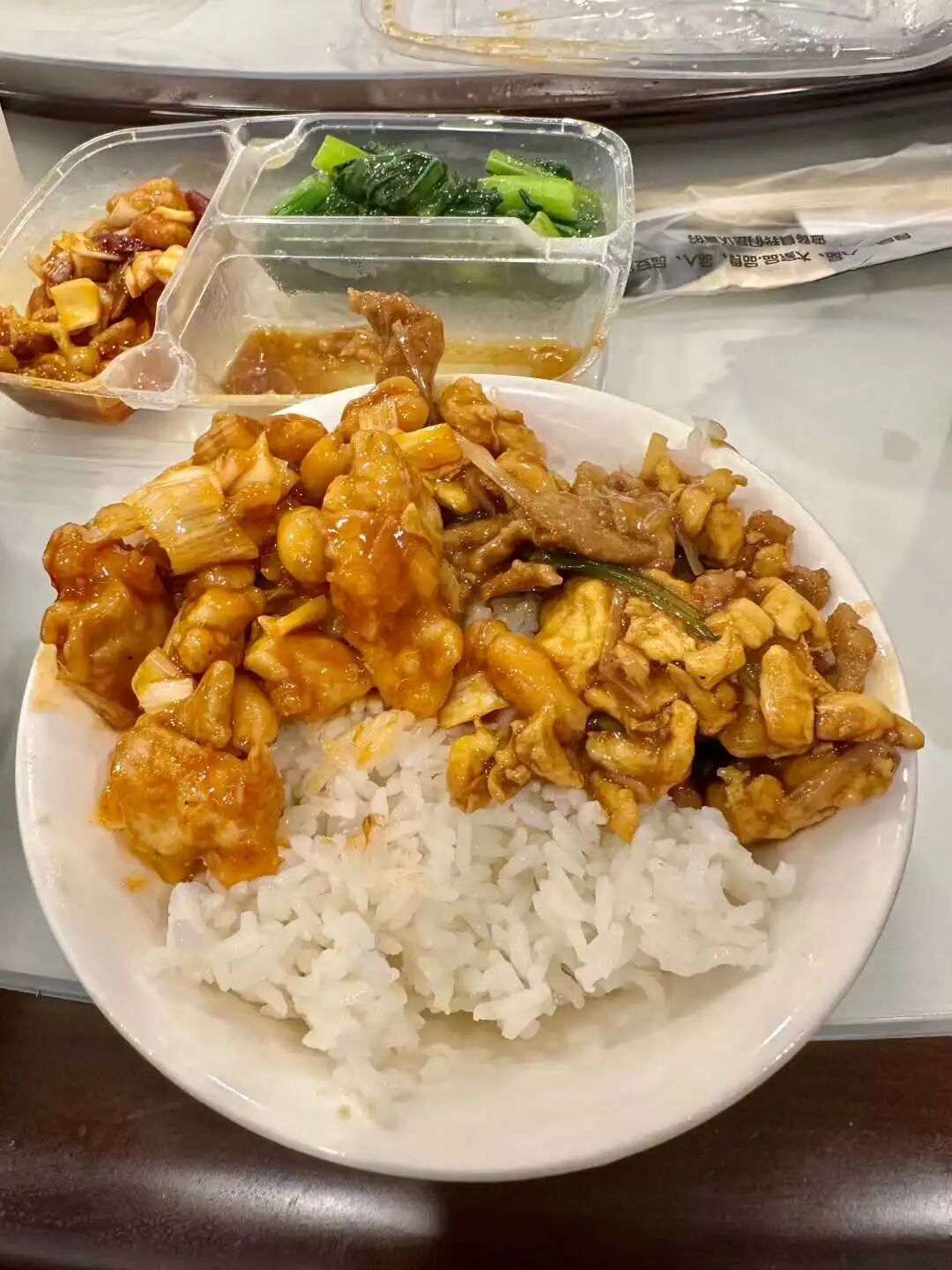
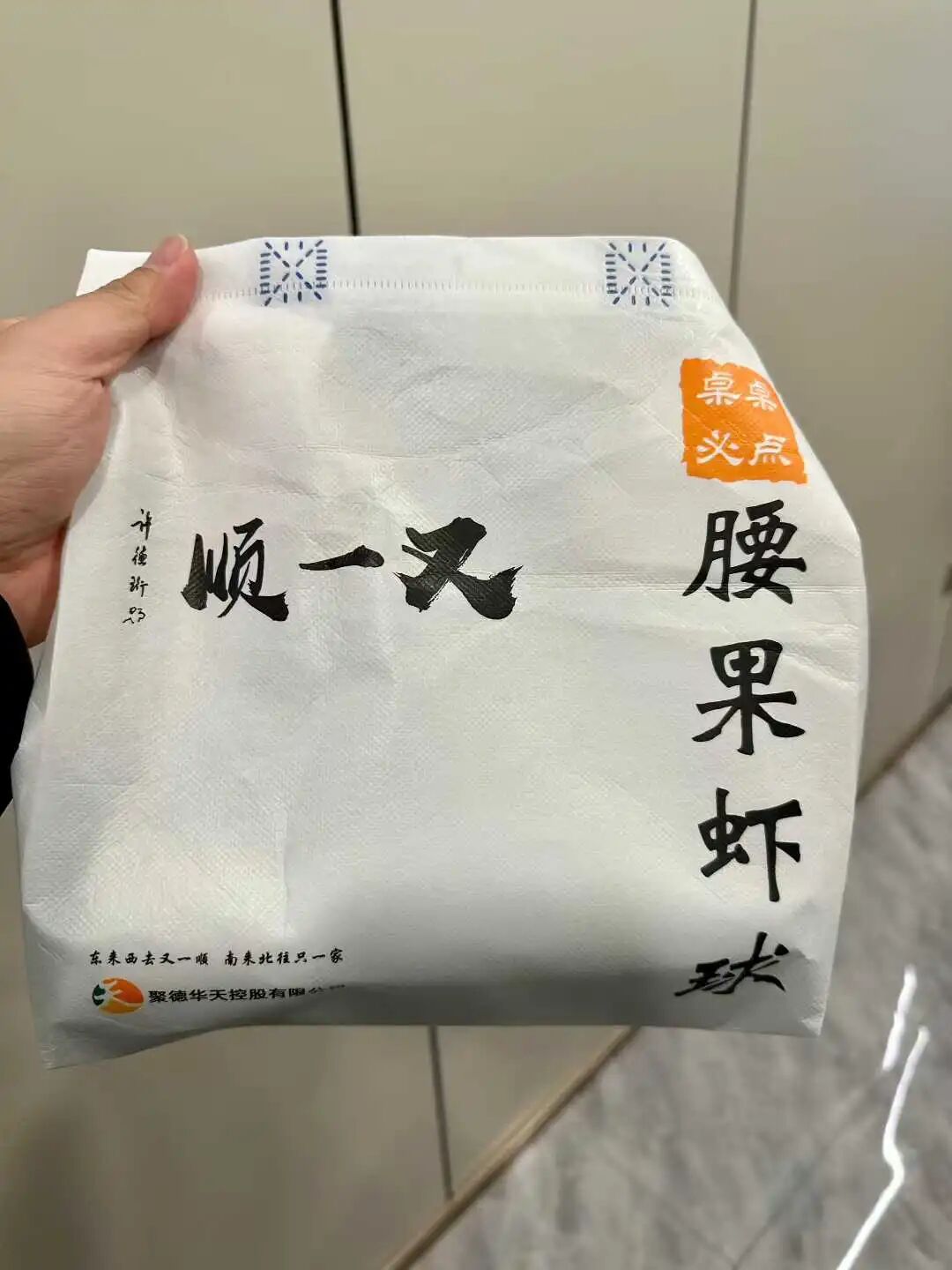
Silk Road Yilan in Niujie donated small fried dough cakes (youxiang), and Youyishun on Huangsi Street donated boxed meals of kung pao chicken and stir-fried egg with vinegar (culiu muxu). Every Ramadan, many restaurants donate iftar meals to the mosque, which is a very good deed (nietie).
Youyishun is a restaurant founded in 1948 by Ding Deshan, the founder of Donglaishun. There is a saying: 'Donglai goes west and Youyishun follows, north and south, there are only these two.' The original location of Youyishun was at the Xidan intersection. It combined the quick-frying, roasting, and hot-pot styles of Donglaishun with the delicate stir-fries of Xilaishun, bringing the strengths of both together into its own unique style. In the 1950s, Youyishun opened a branch in the Xidan shopping center. Business was booming, and it became an important place for hosting foreign guests. When U. S. President Nixon visited China in 1972, he dined at the restaurant. After Chang'an Avenue was renovated in 1999, Youyishun moved to its current location on Huangsi Street, specializing in traditional famous dishes like stir-fried egg with vinegar (culiu muxu), honey-glazed lamb (tashimi), and deep-fried lamb tails.
Dongzhimenwai Mosque.
Dongzhimenwai Mosque was originally called Erlizhuang Mosque. It was first built in the Yuan Dynasty and renovated during the Kangxi reign of the Qing Dynasty. In the late 1980s, Shougang and a Danish company built international apartments in Erlizhuang, so the mosque was moved one kilometer northwest and rebuilt. It was finished in 1991 and reopened in 1993.
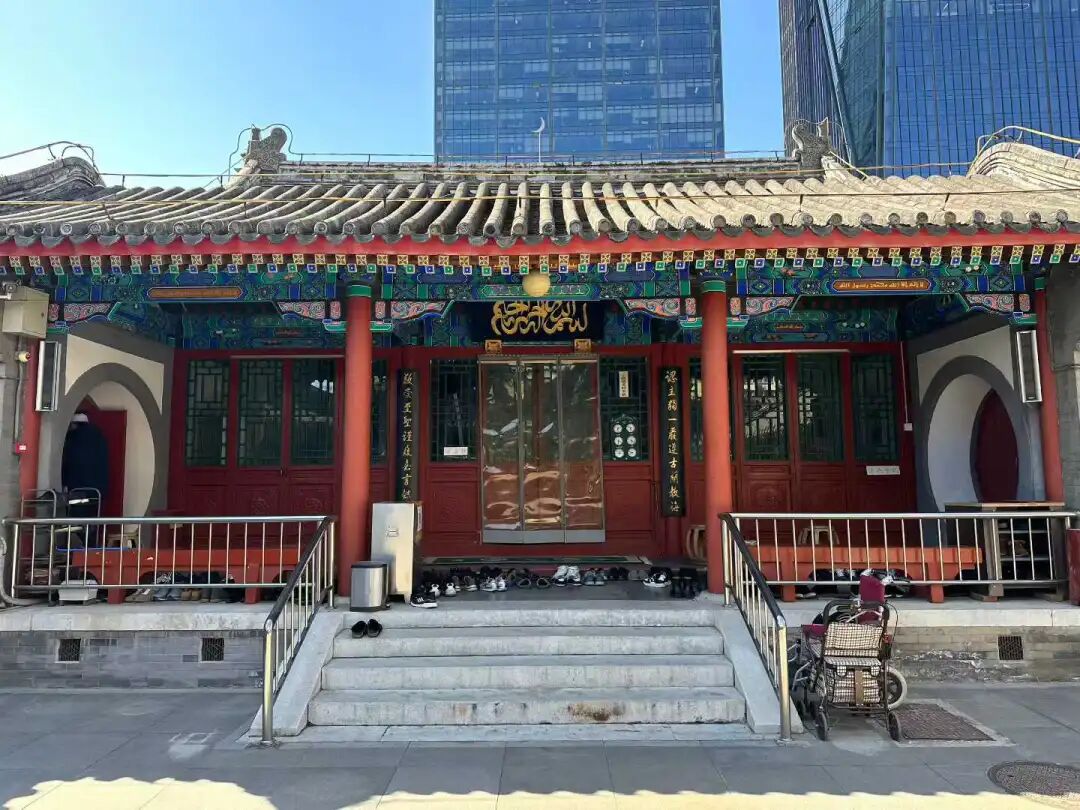
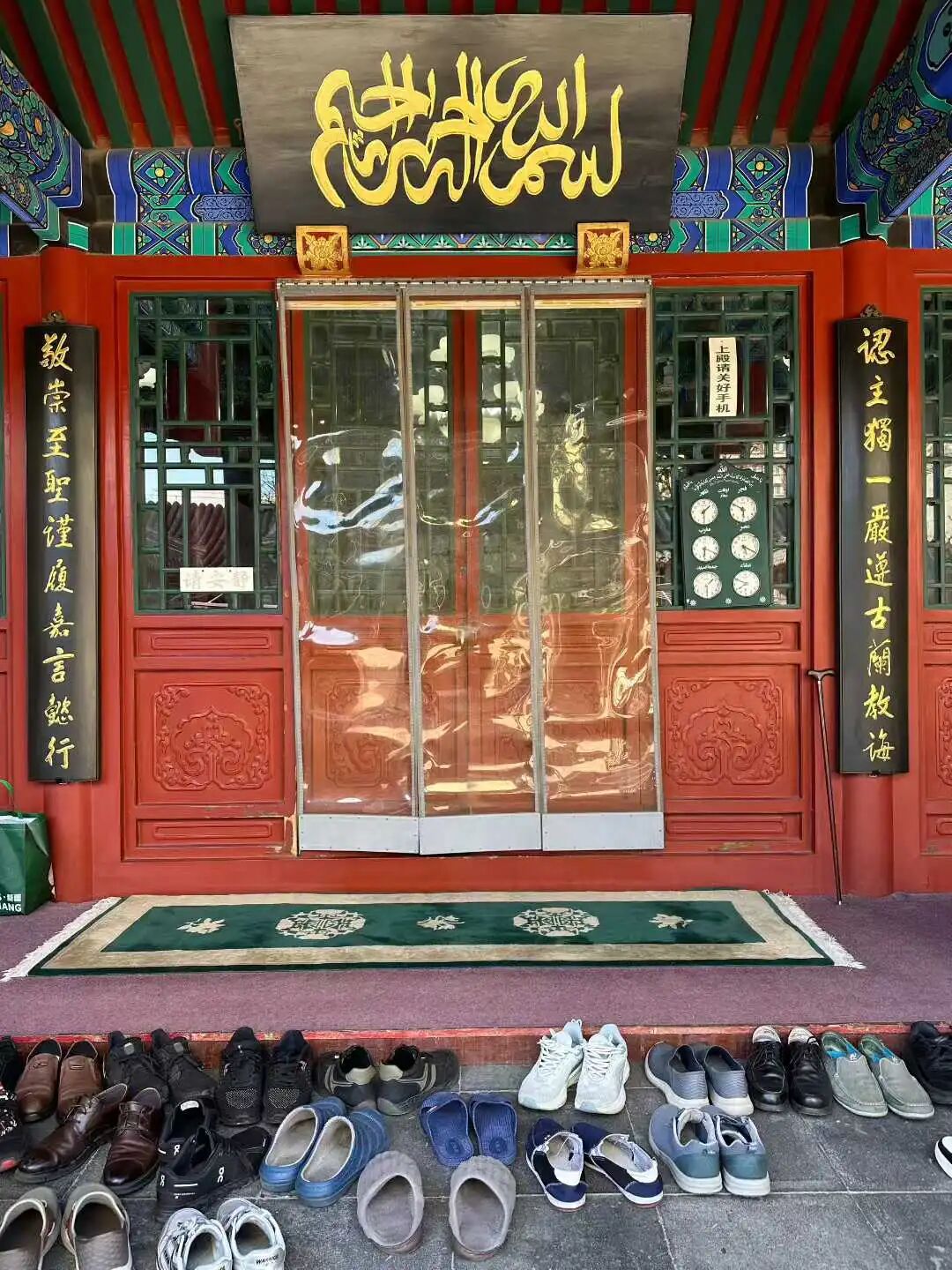
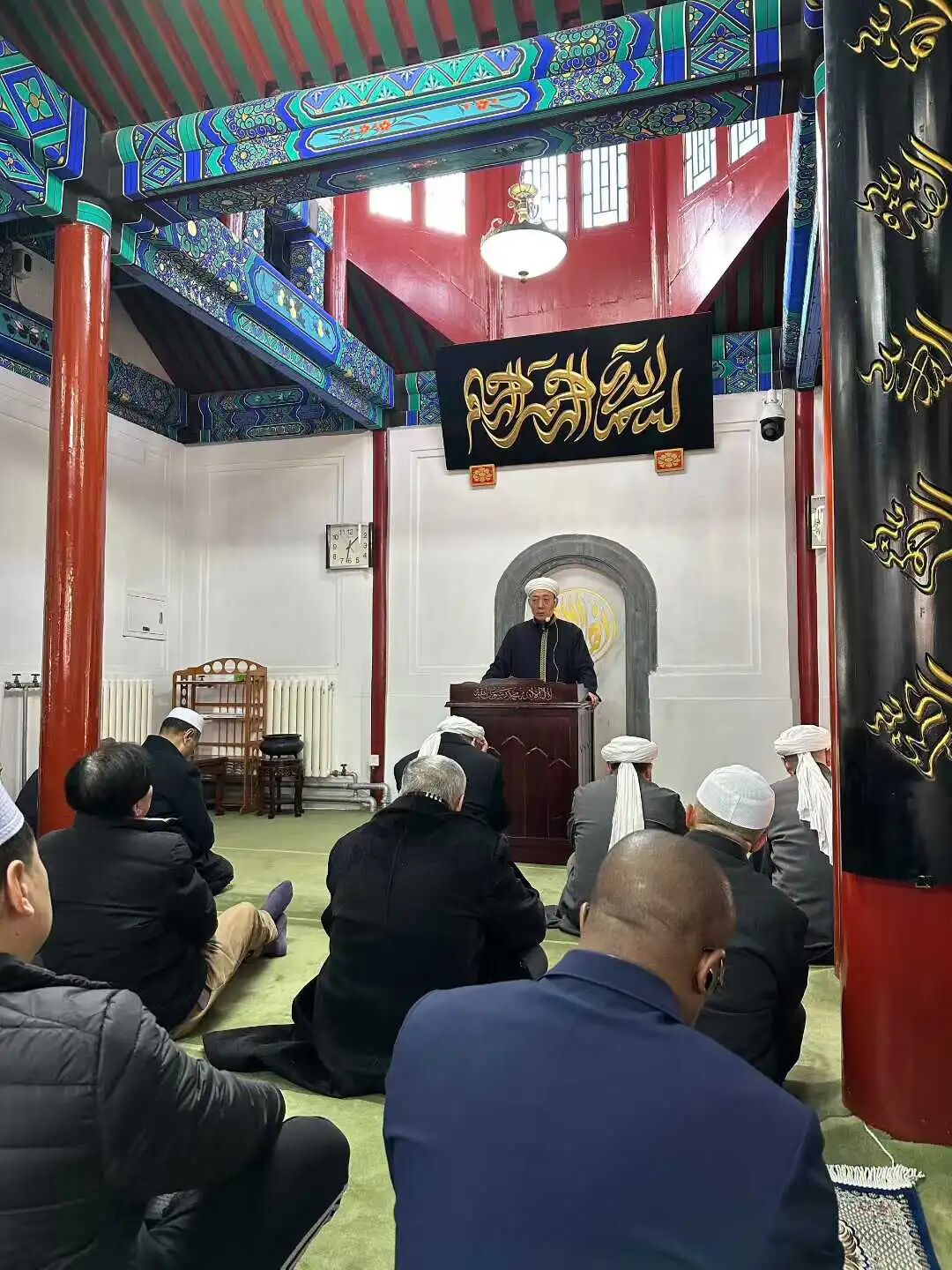
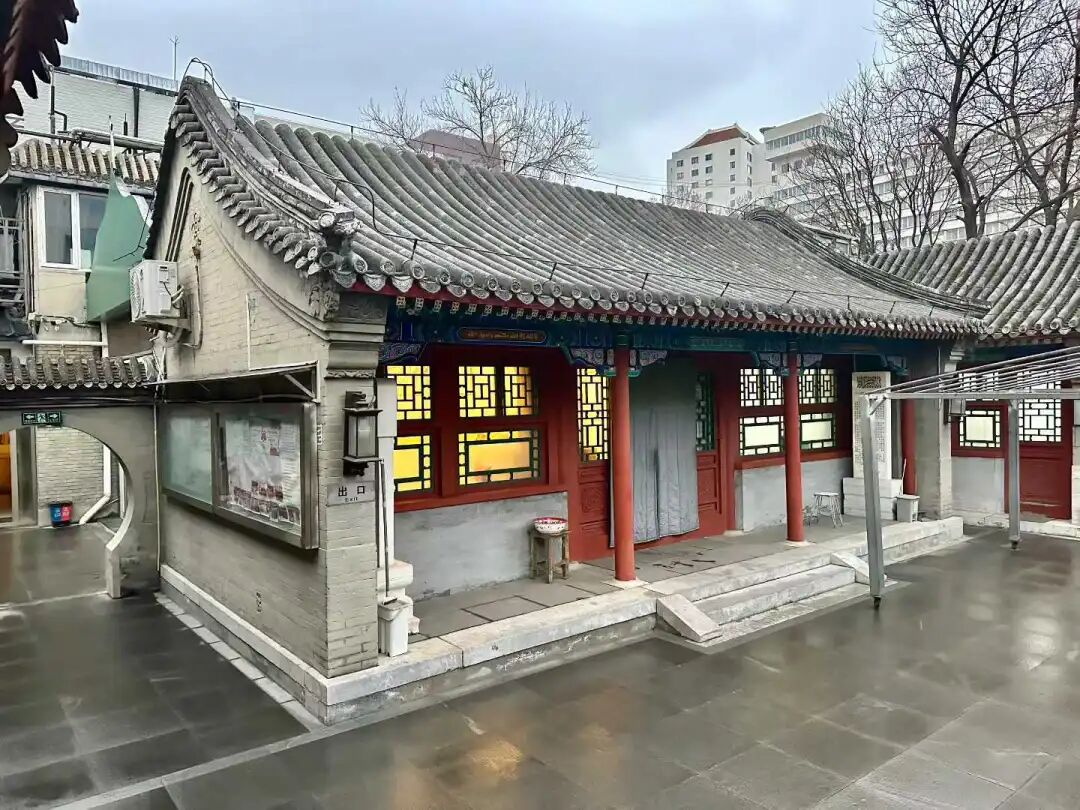
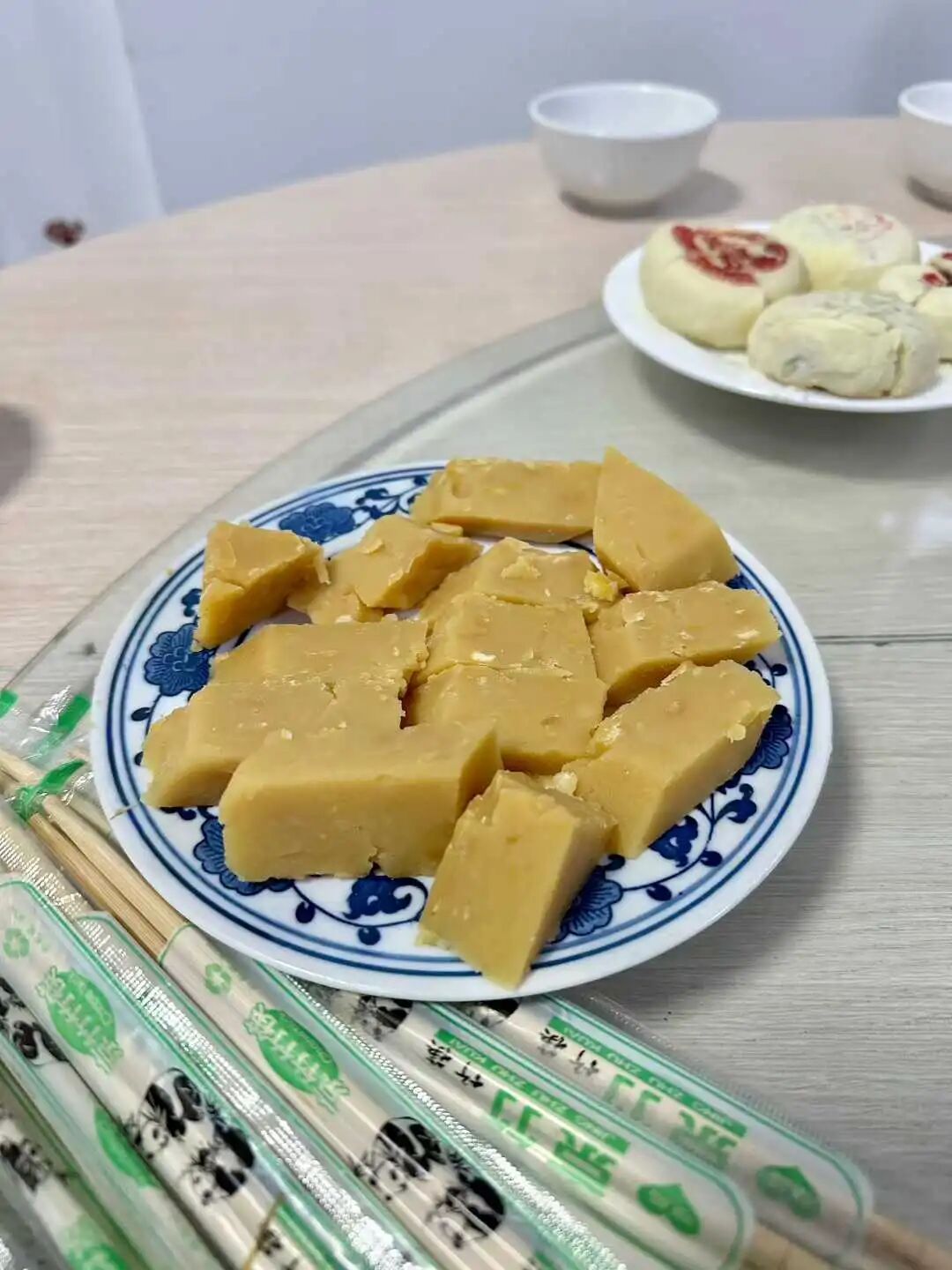
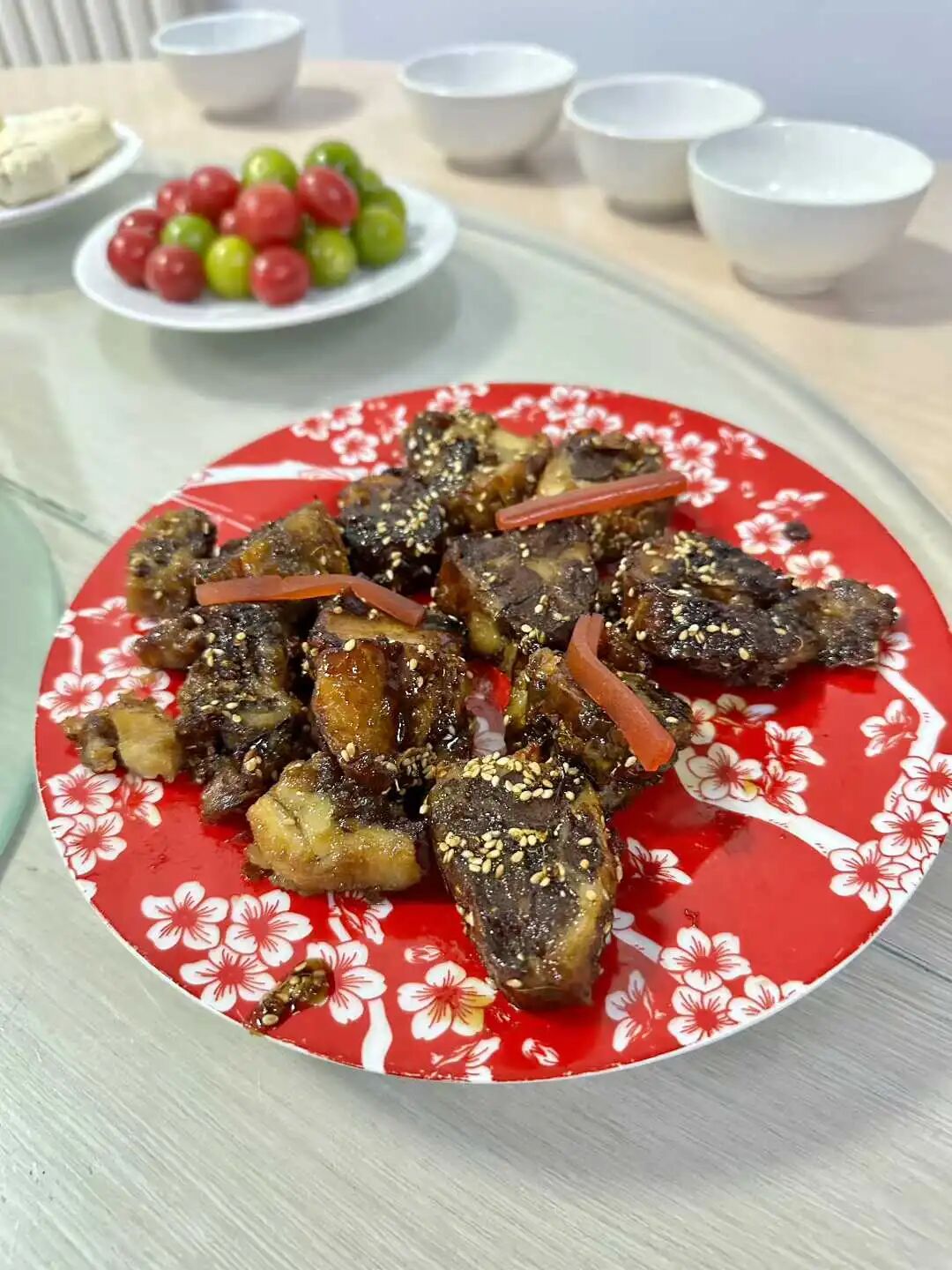
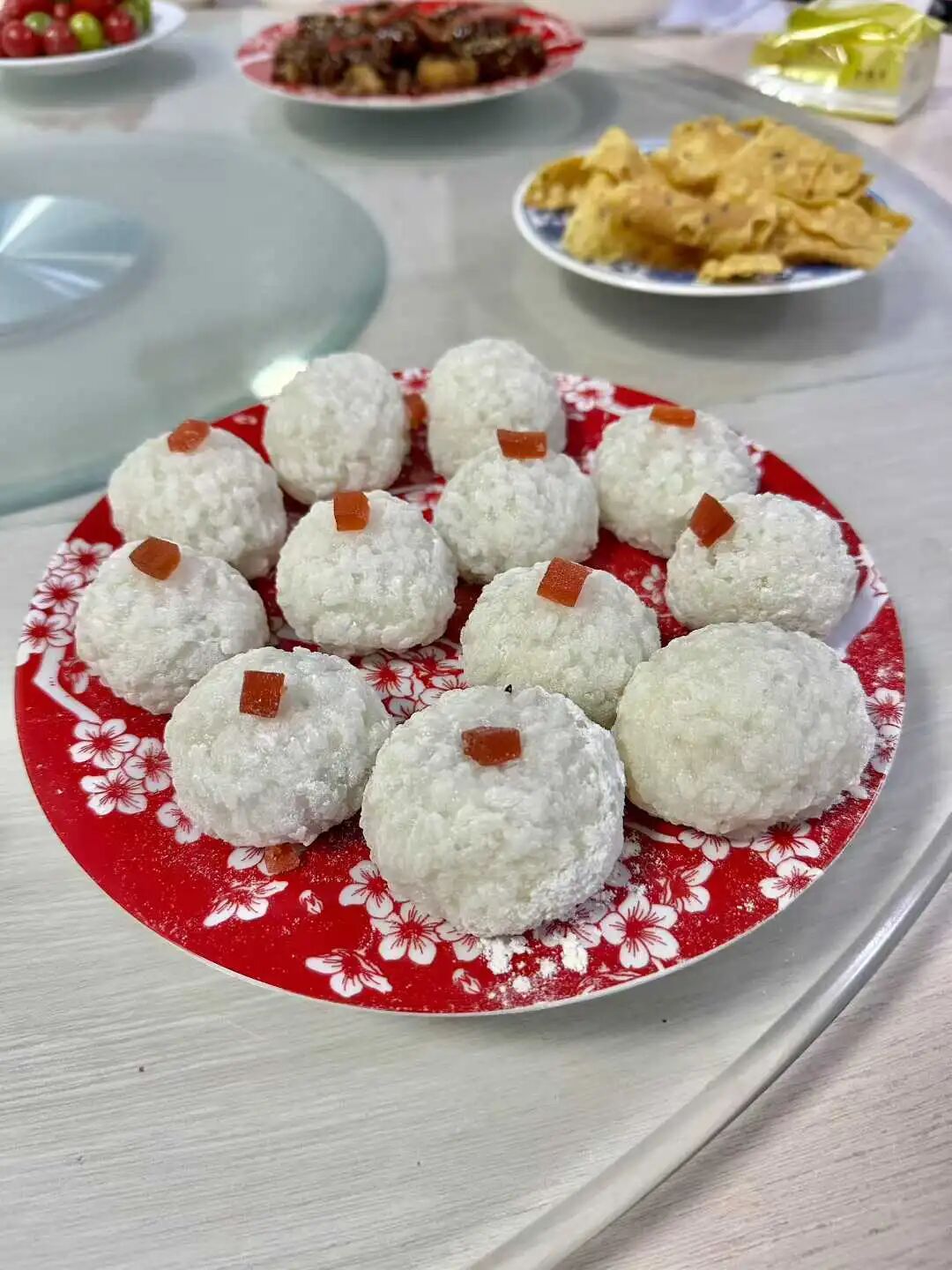
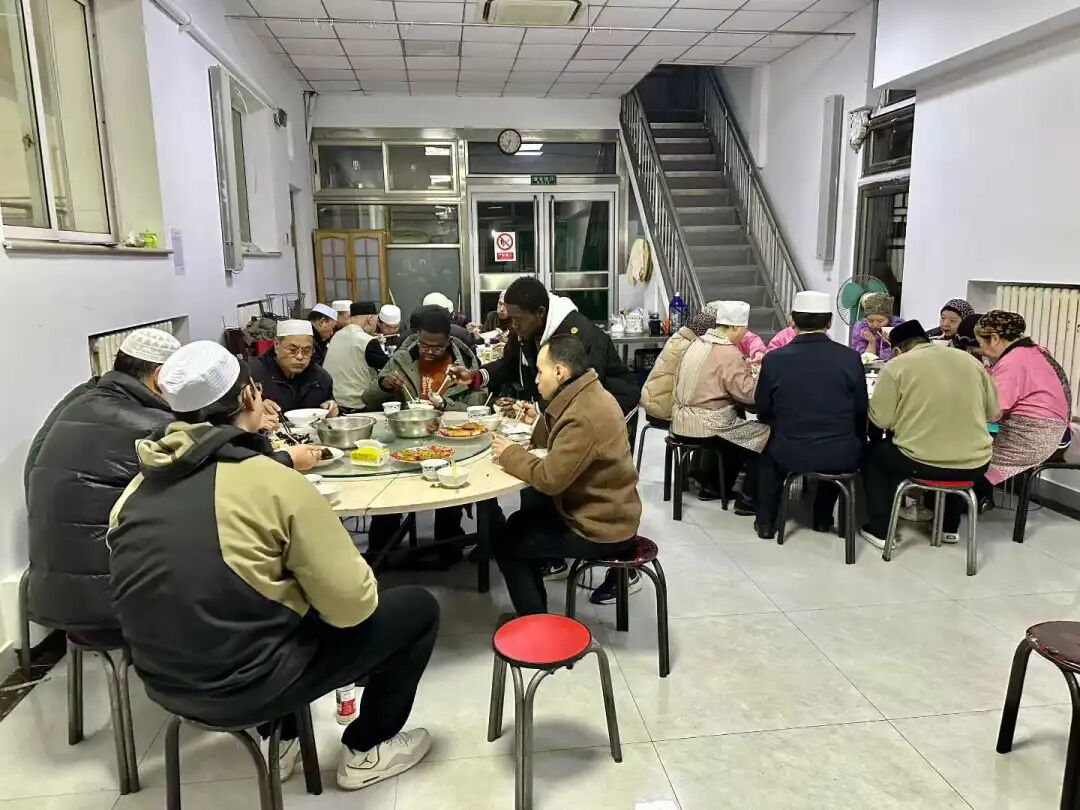
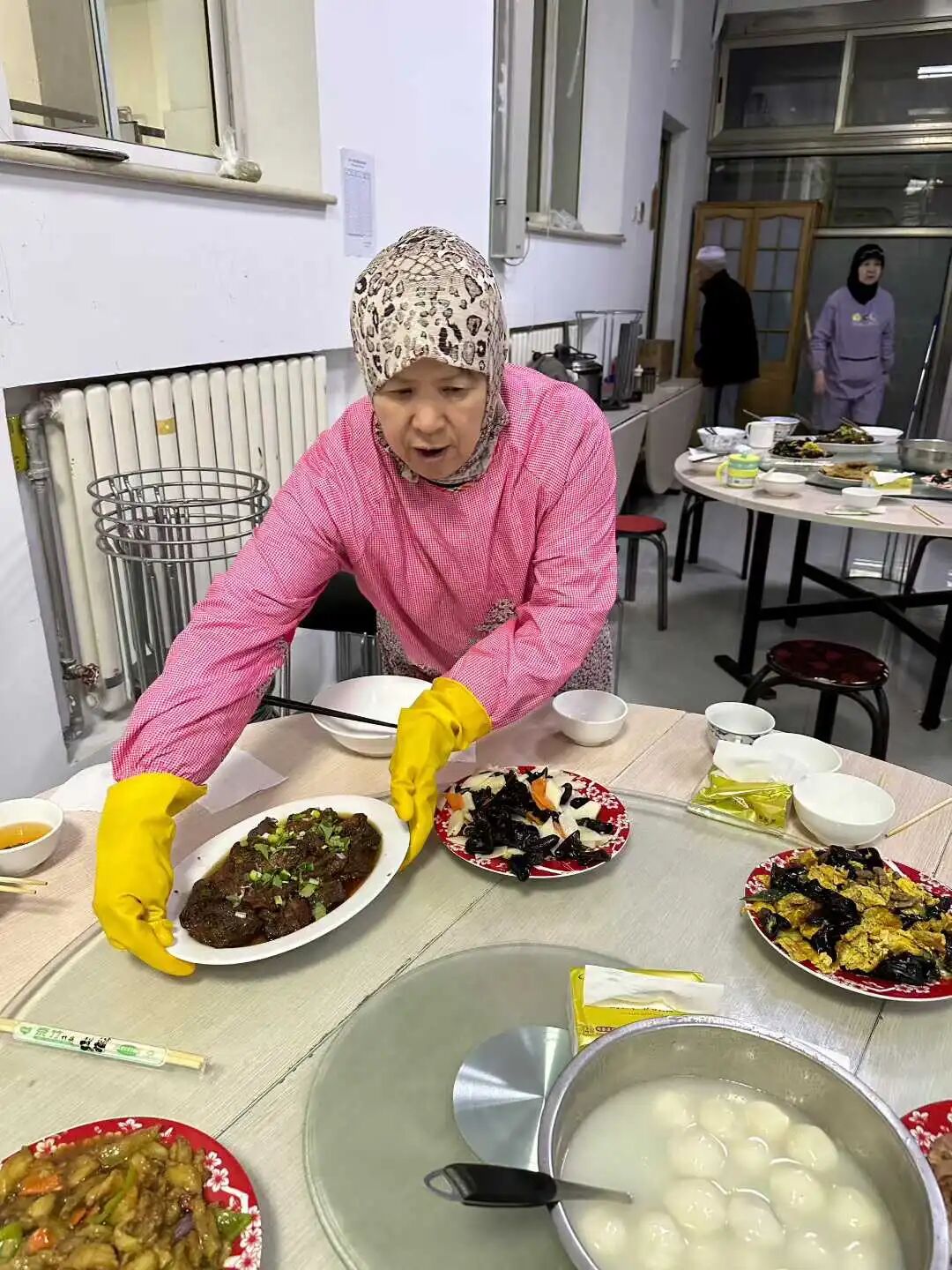
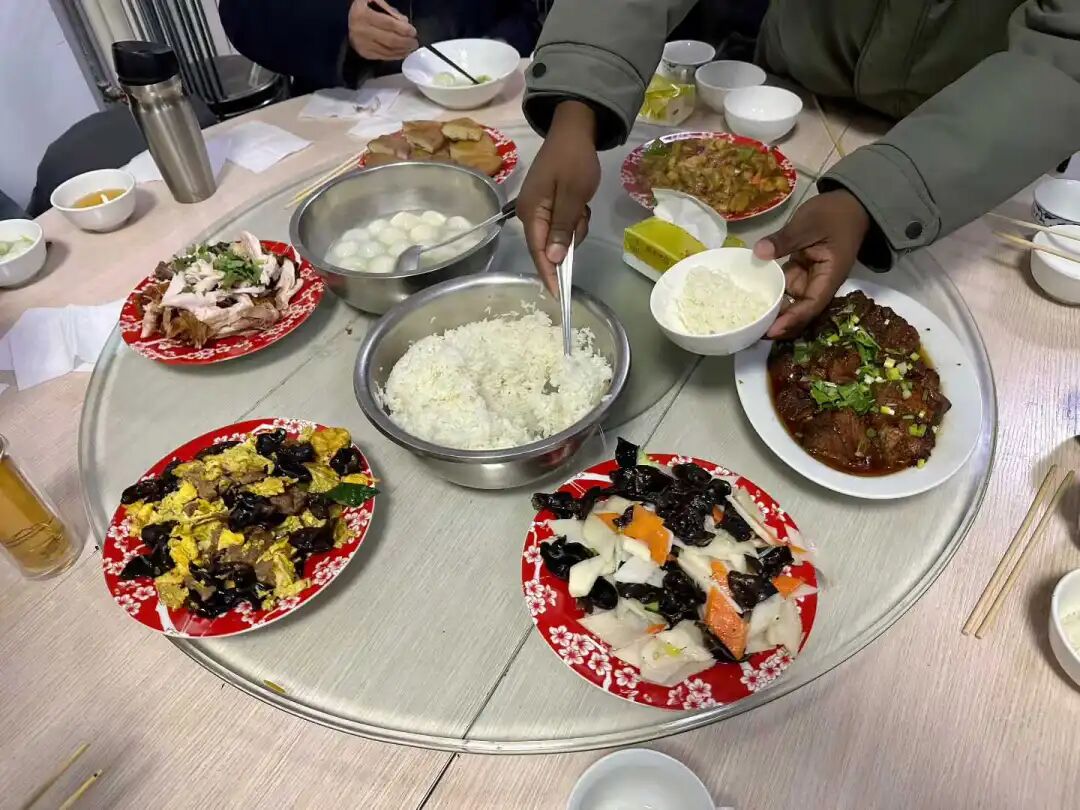
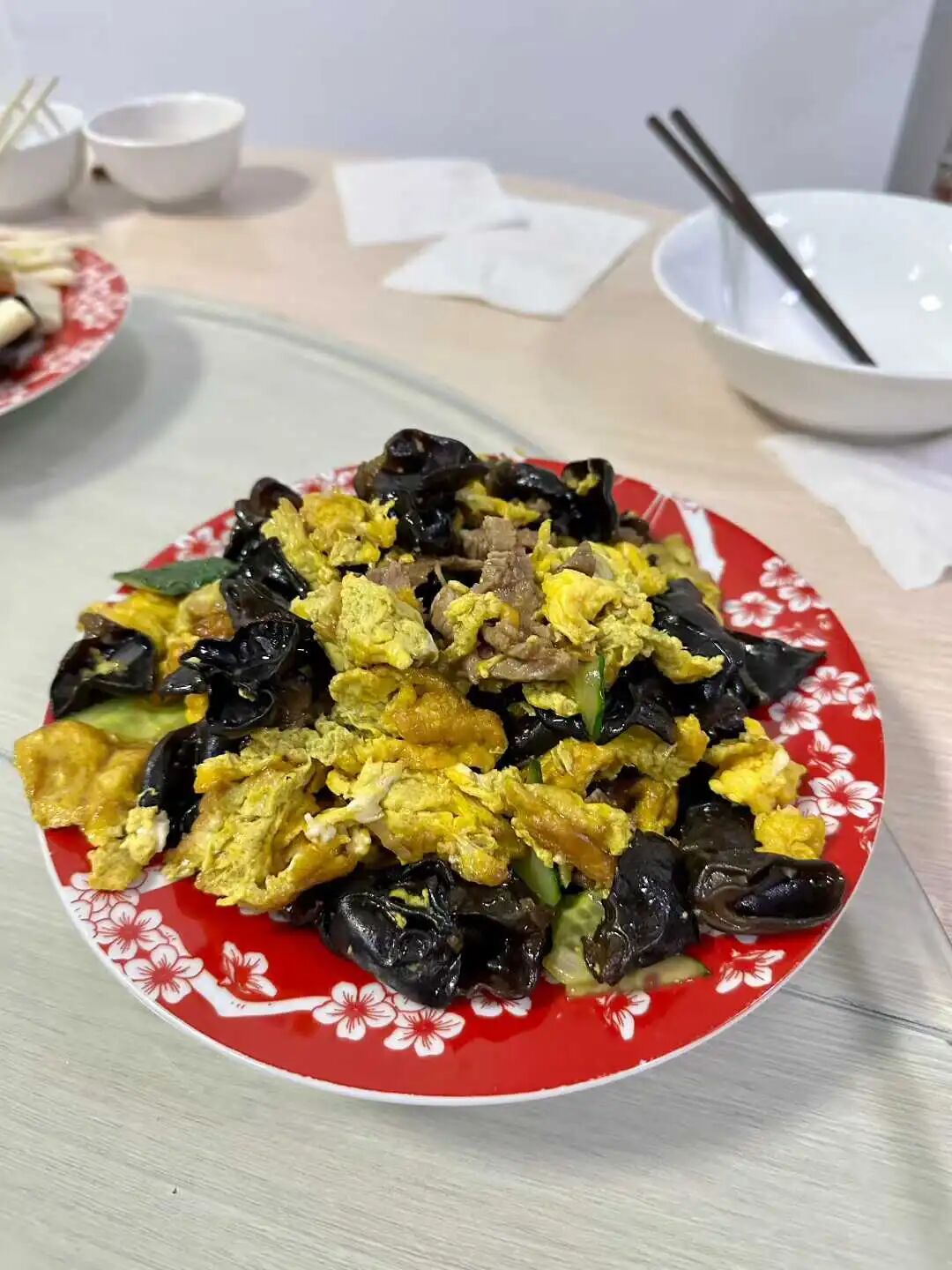
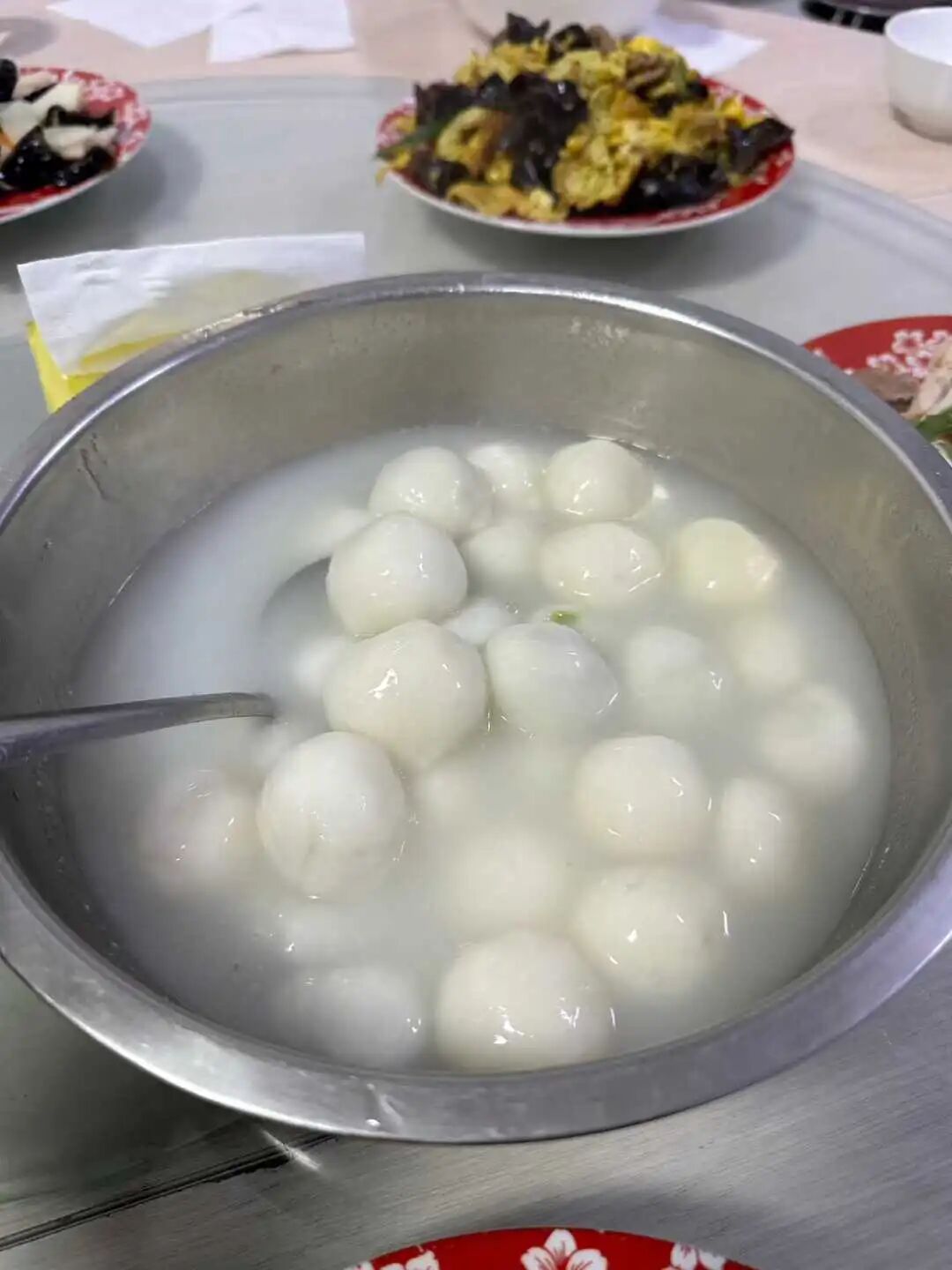
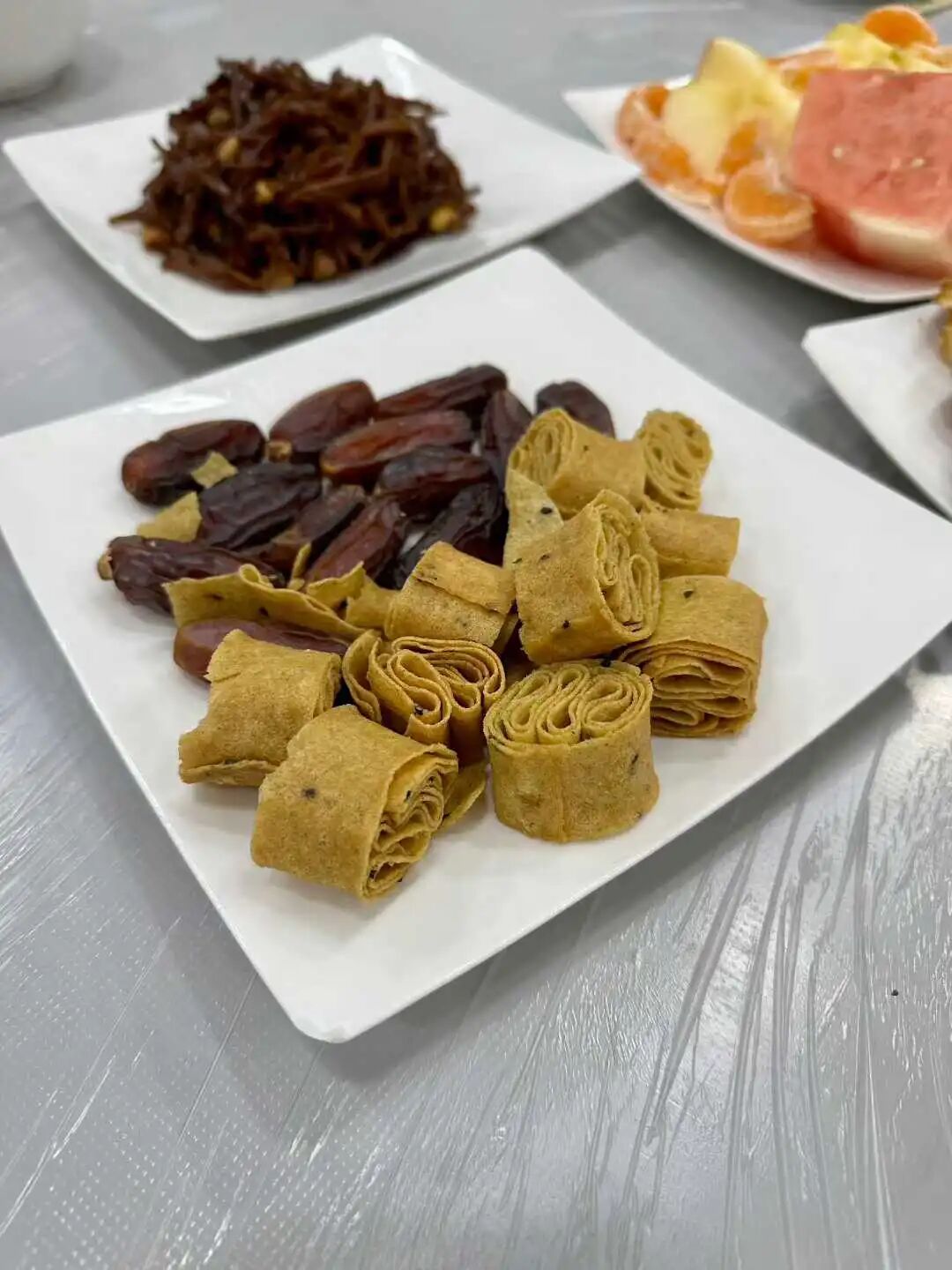
I broke my fast at the mosque outside Dongzhimen. The snacks available after the prayer included pea flour cake (wandouhuang), candied yam rolls (tangjuanguo), and steamed rice cakes (aiwowo), all made by the mosque. After the prayer, there was a mix of meat and vegetable dishes, including stir-stir-fried meat with wood ear mushrooms and eggs (mushurou), yam with wood ear mushrooms, braised eggplant, braised fish chunks, and roast chicken. They also boiled sweet rice balls (yuanxiao) for the occasion. Although there are not many people at the mosque outside Dongzhimen every year, the atmosphere during Ramadan is very good.
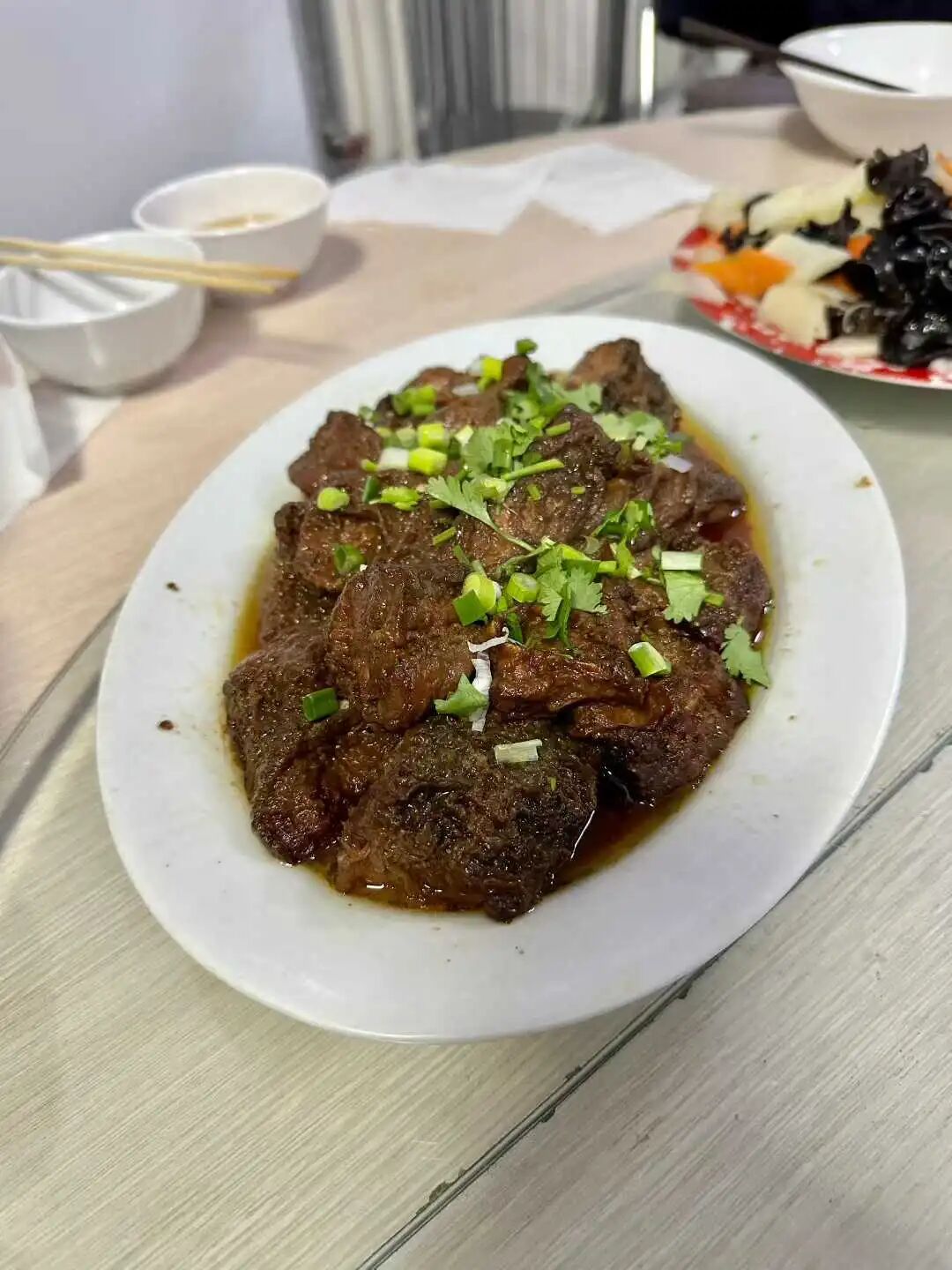
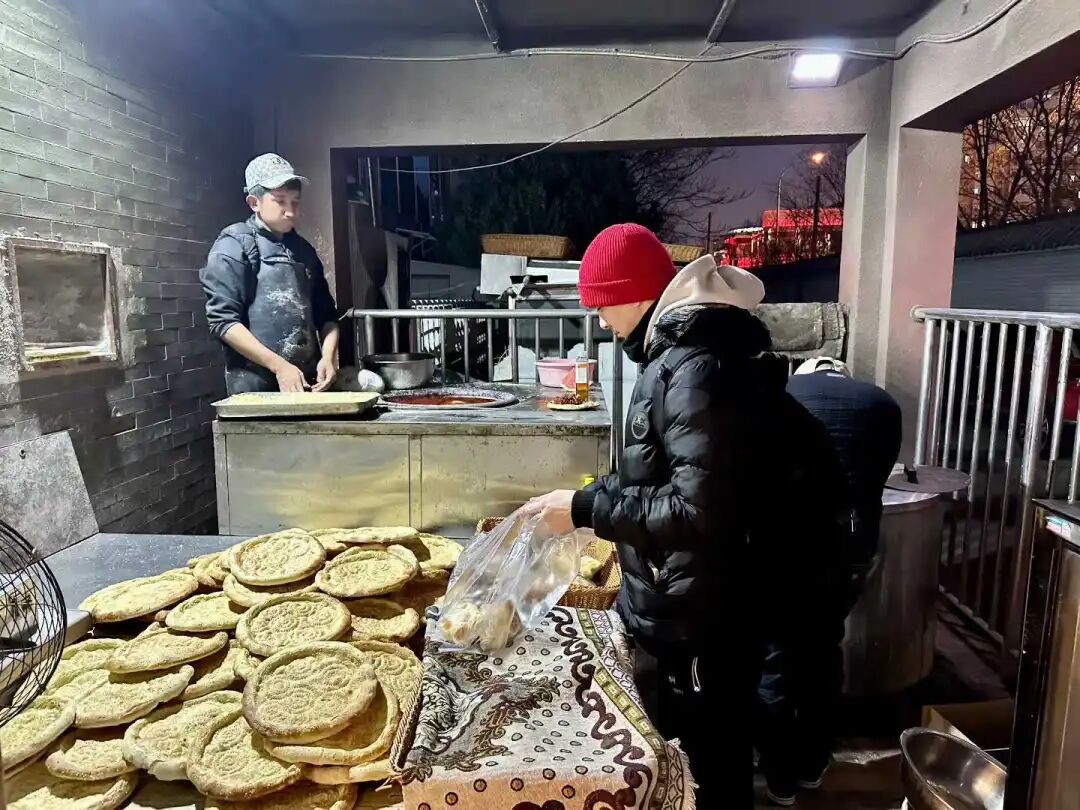
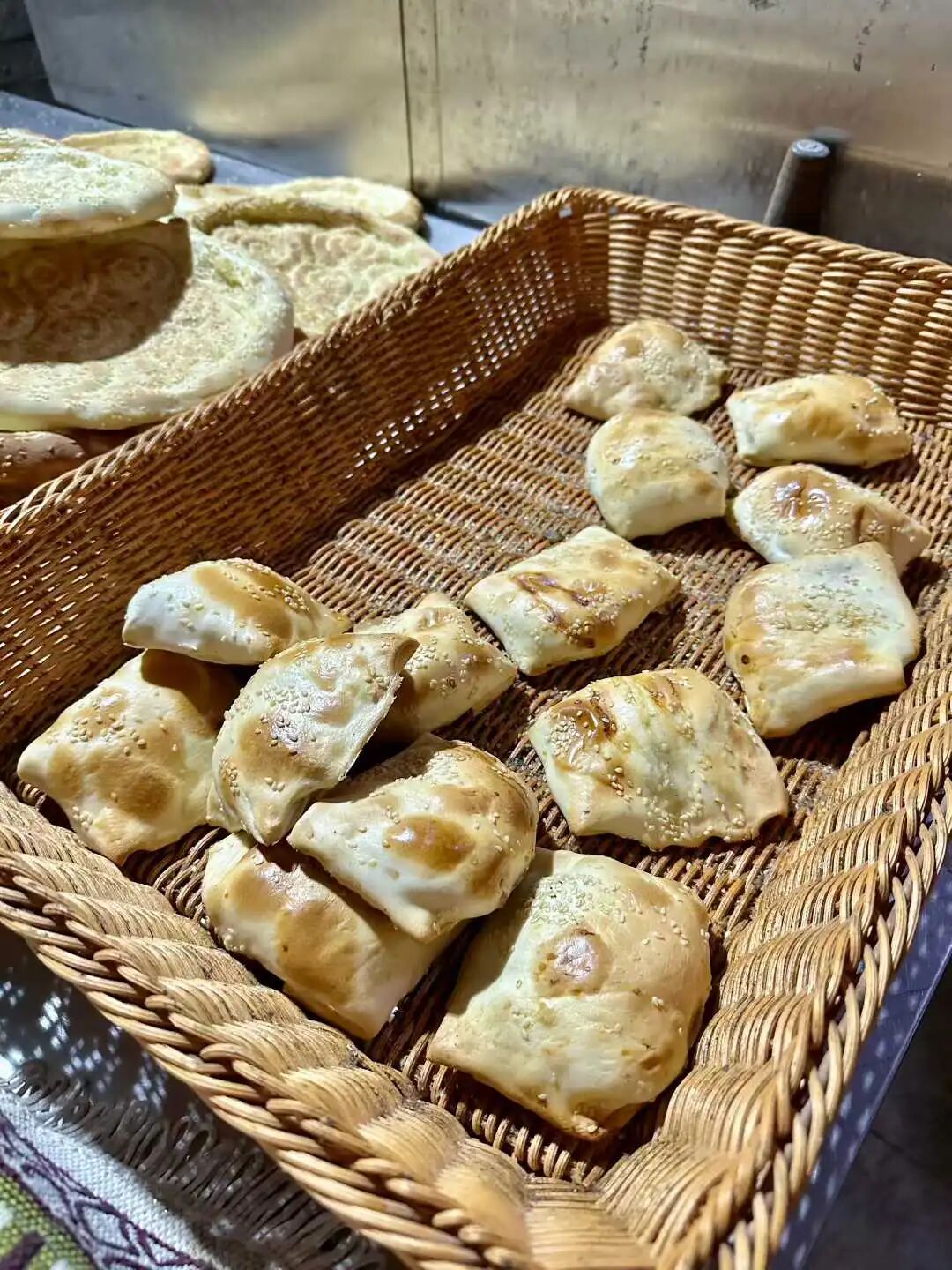
Silk Road Legend (Silu Chuanqi) served baked buns (kaobaozi) with millet porridge and various cold dishes. These baked buns were actually invented by Gansu friends (dost), so they are different from Uyghur baked buns, but they still taste good.
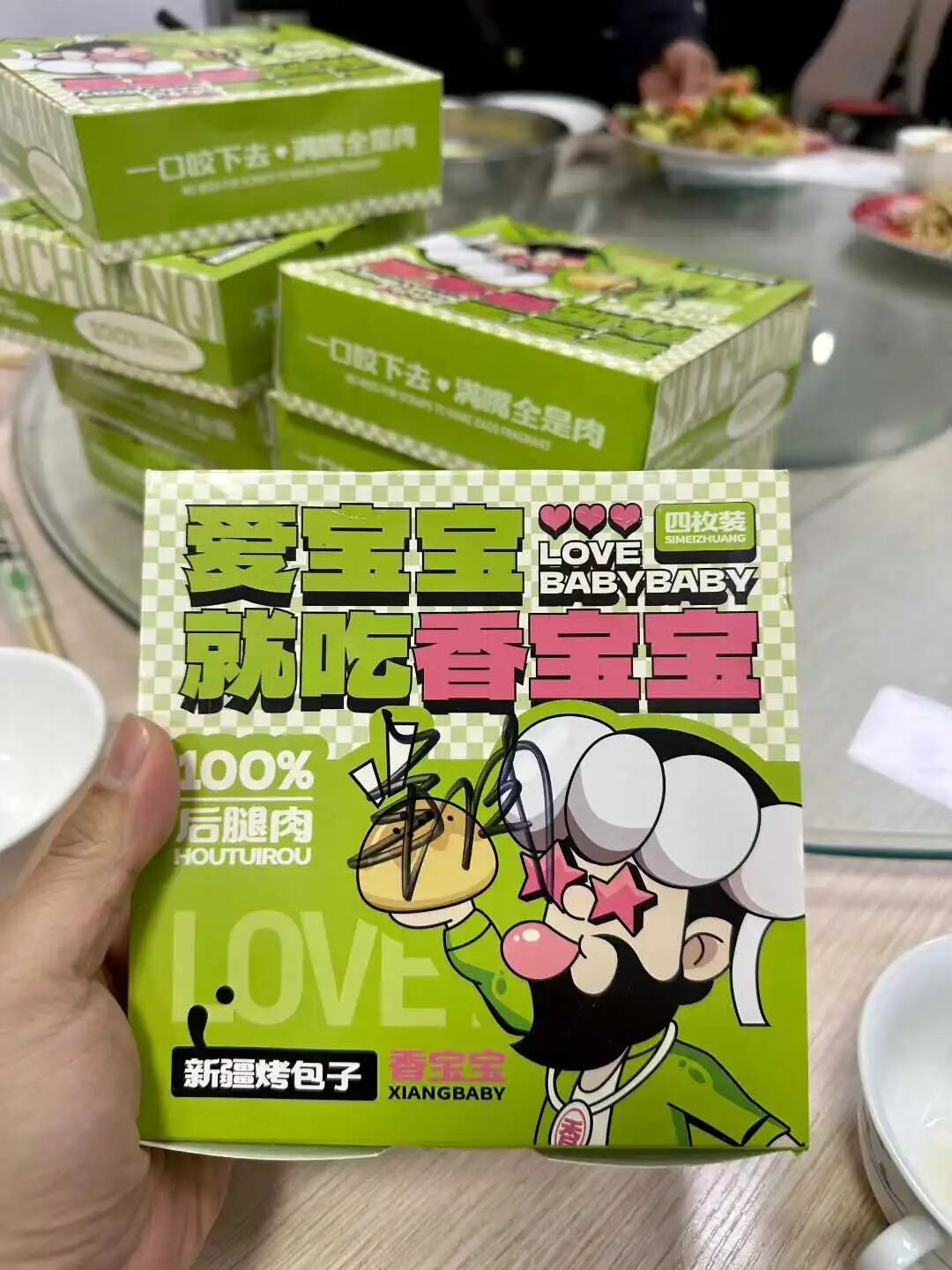
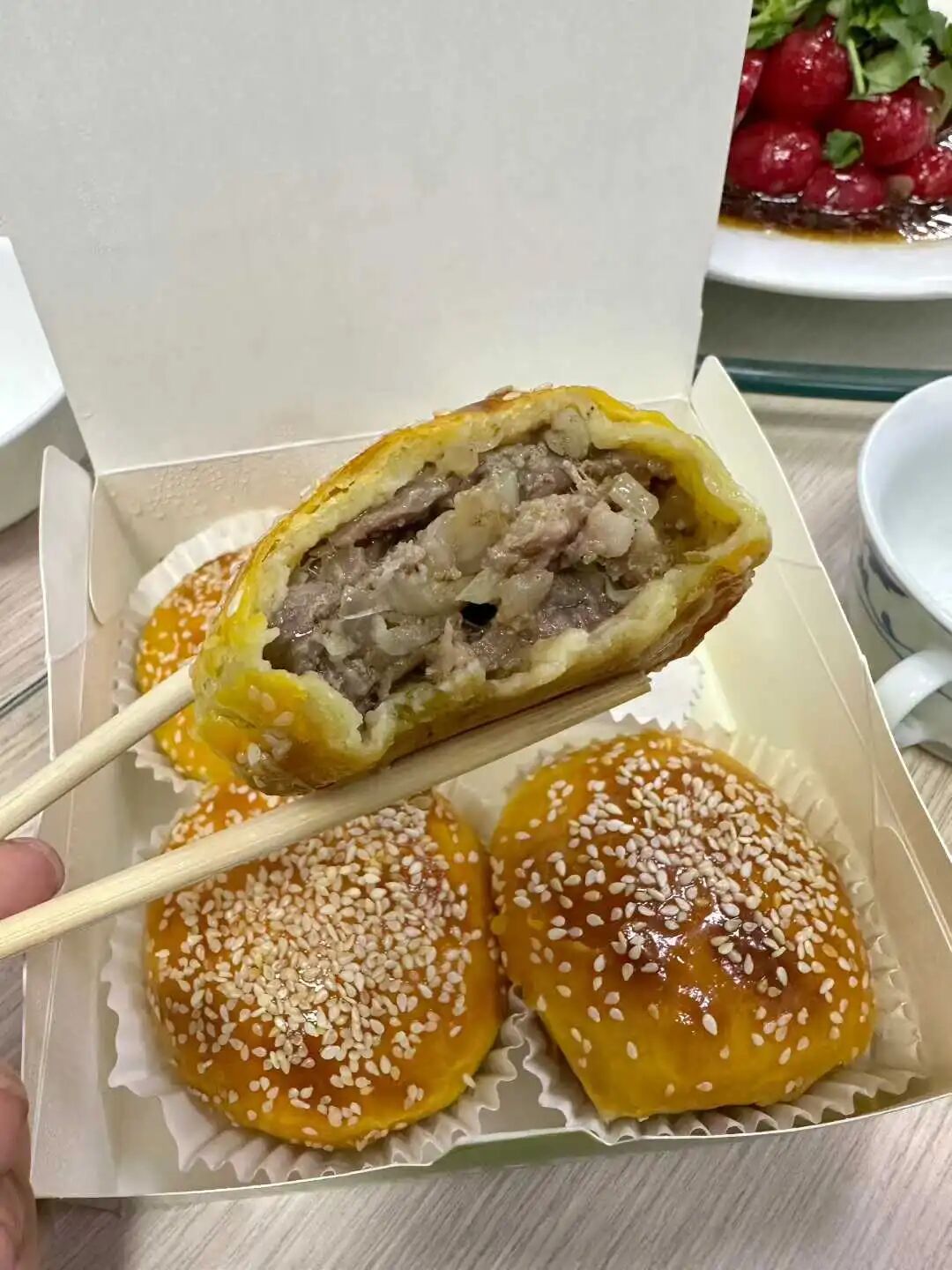
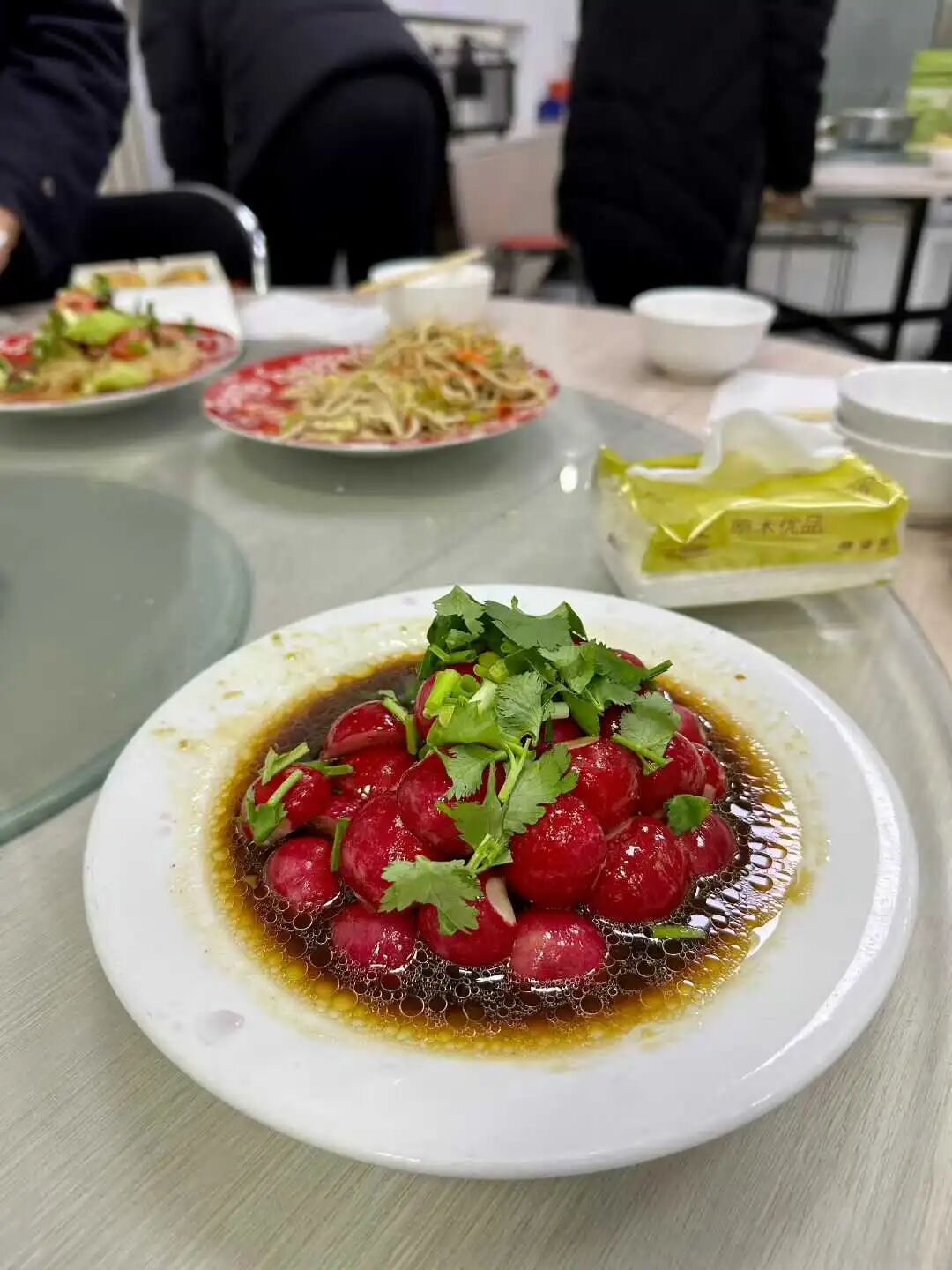
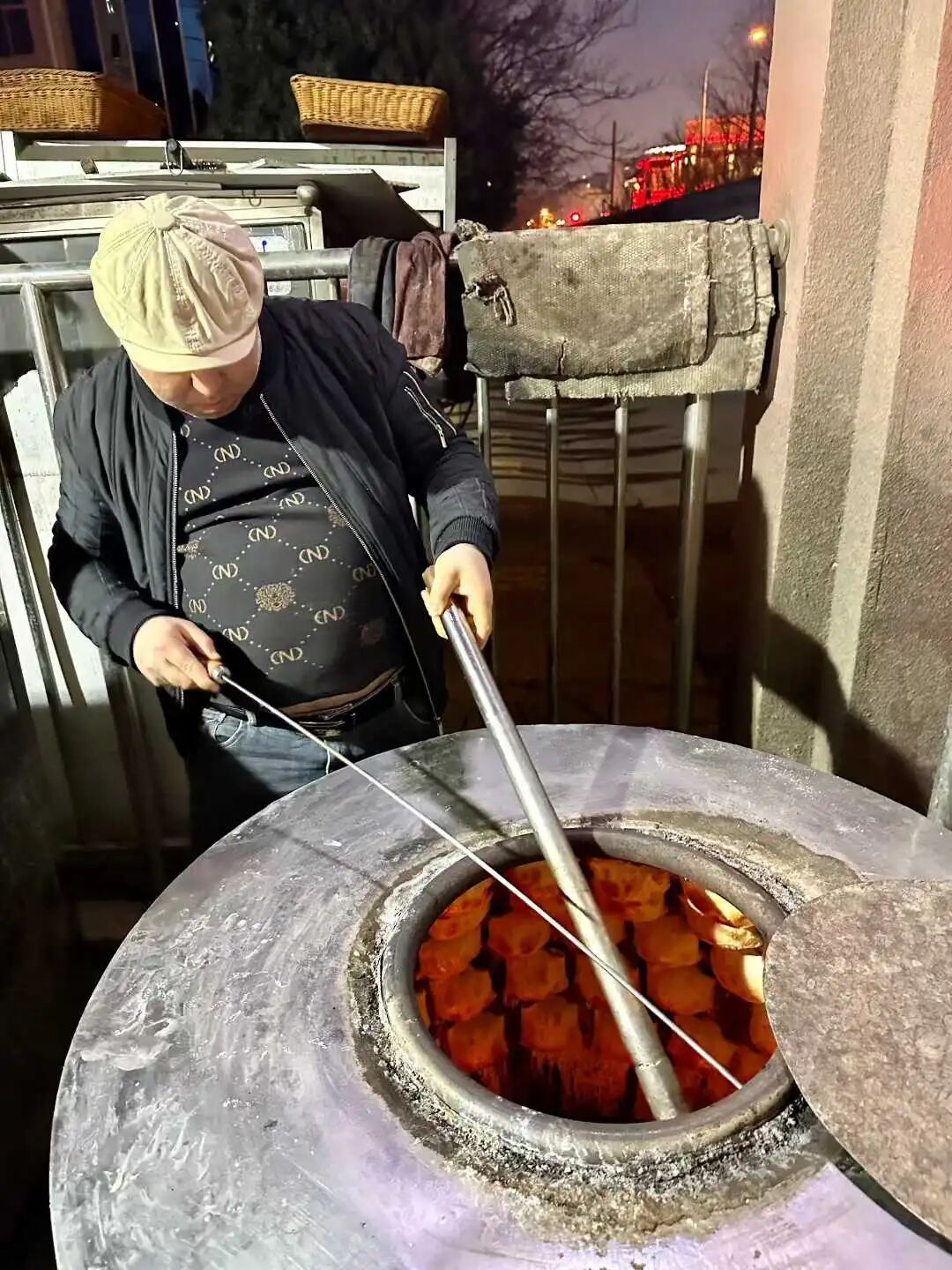
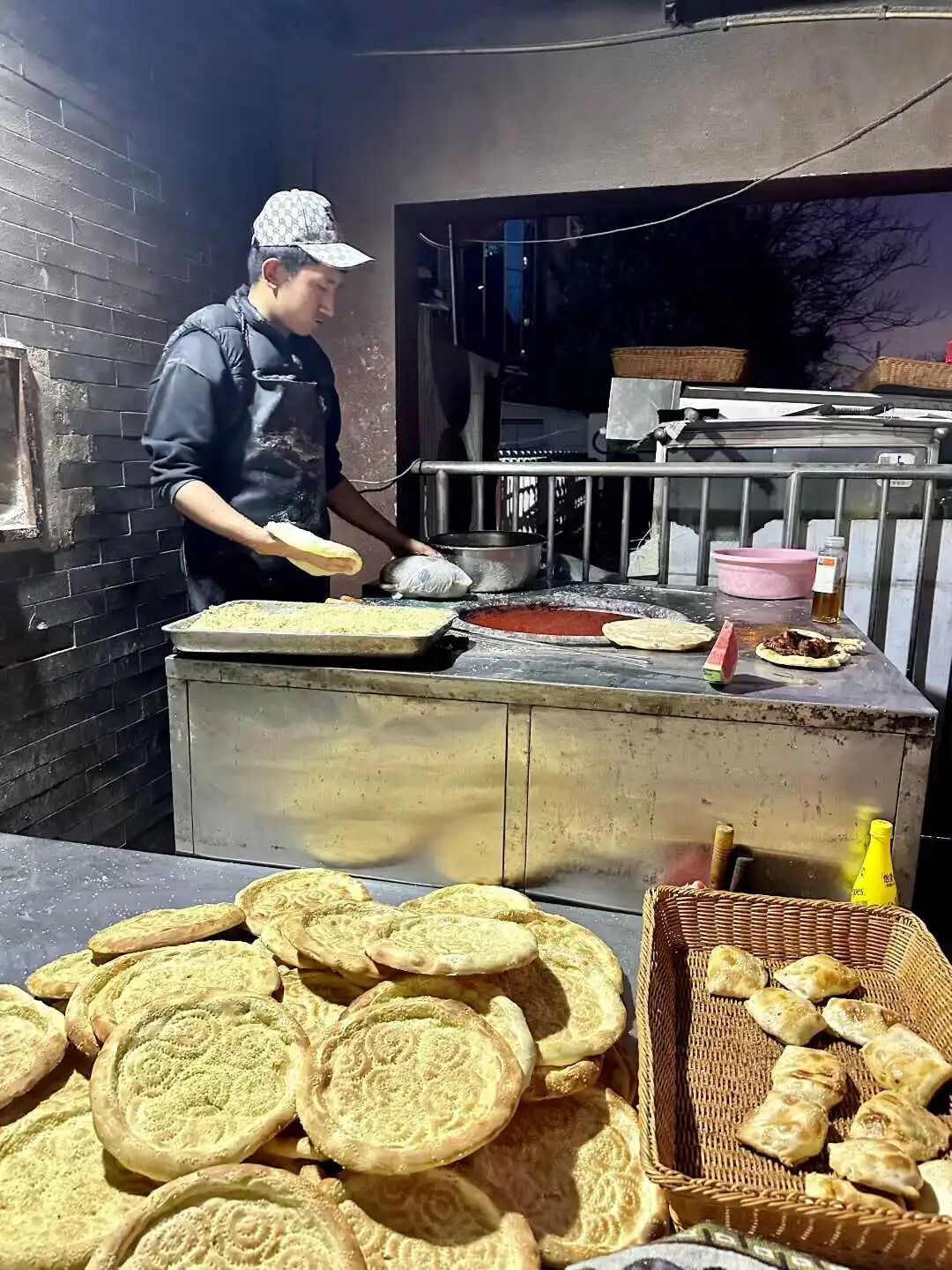
At the naan shop by the gate of the mosque outside Dongzhimen, I finished my fast-breaking meal at 6:40, just as the naan and baked buns were coming out of the oven. The skin of the baked bun is very thin but a bit chewy, and there is plenty of meat inside, making it perfect for the pre-dawn meal (suhoor) the next day.
Zhengyuan Mosque
The predecessor of Zhengyuan Mosque was the Beigouyan Mosque inside Xizhimen, which was first built during the Daoguang era. After 1946, Beigouyan was renamed Zhaodengyu Road, so it was also called Zhaodengyu Road Mosque. In 1997, it was demolished and rebuilt at its current location, and renamed Zhengyuan Mosque.
Zhengyuan Mosque is very low-key, and this year was my first time going there to break my fast. I ate steamed buns (baozi) and sesame flatbread (shaobing) with lamb offal soup (yangza) at the mosque, and also had fried toon sprouts and fried meatballs. The mosque said not to post photos of the fast-breaking meal, so I will not post them here.
Sudanese Embassy
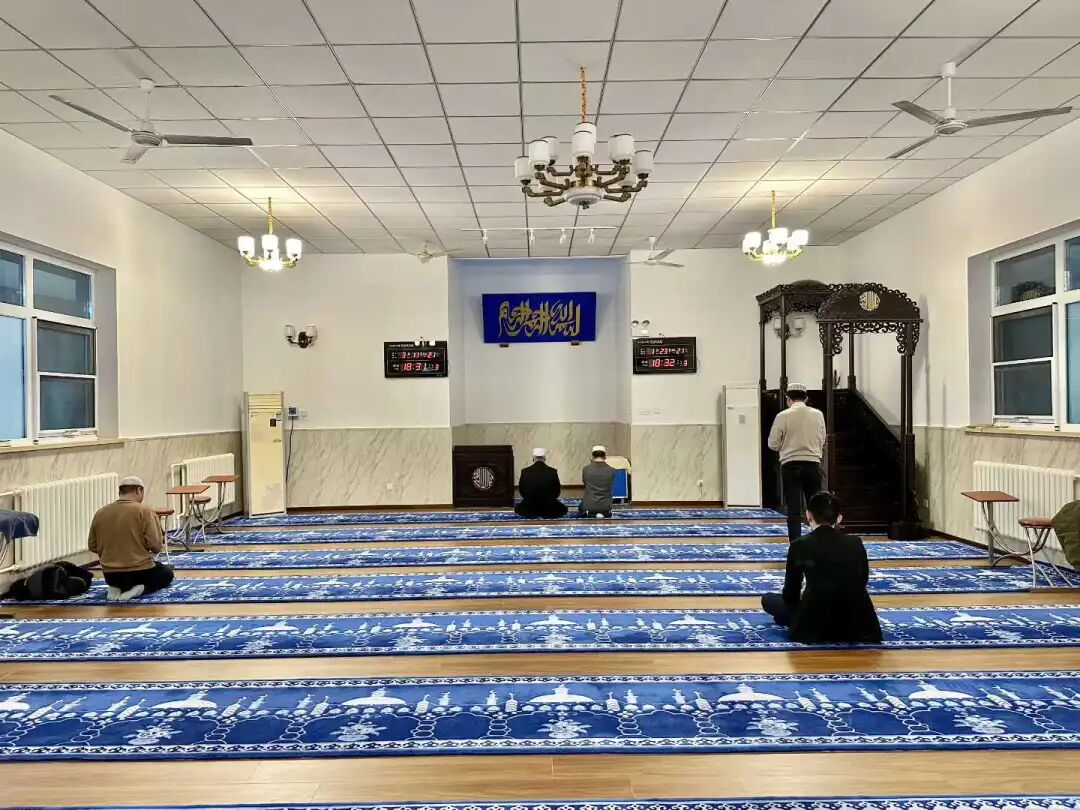
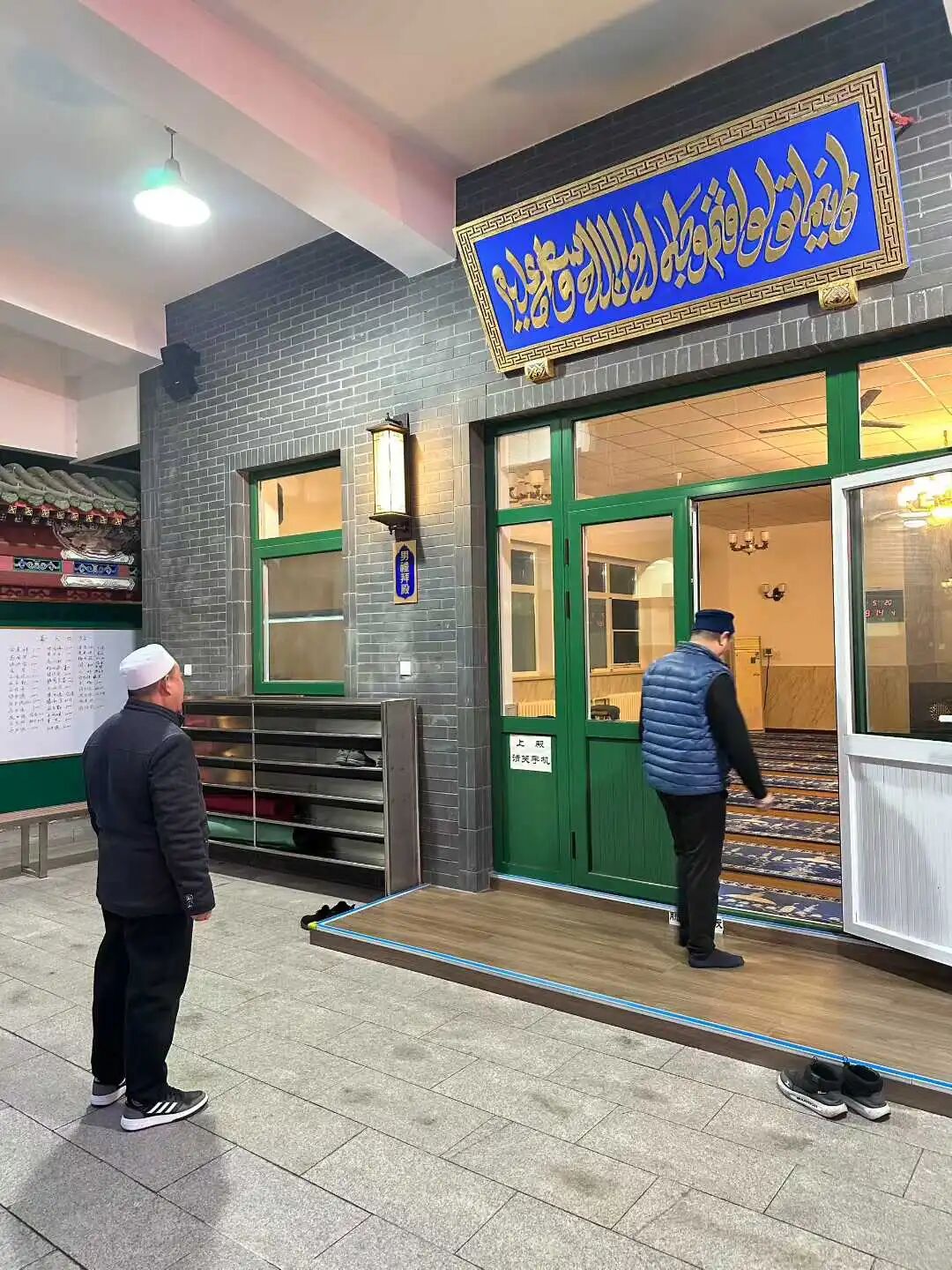
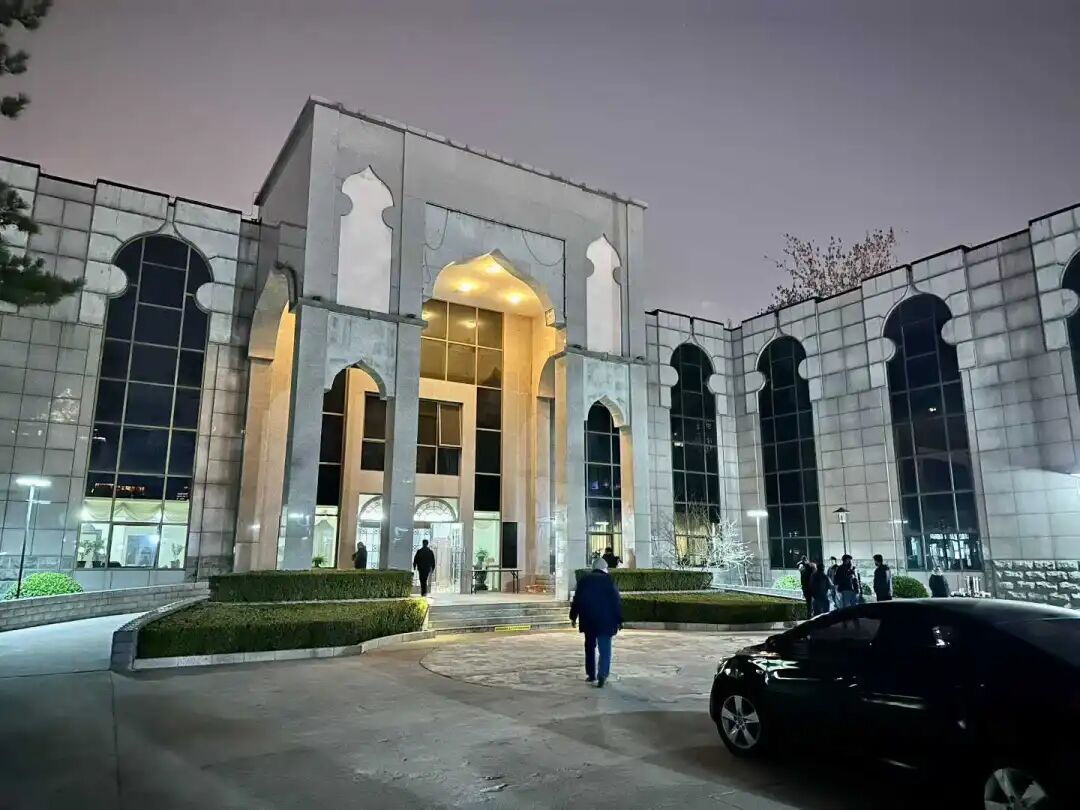
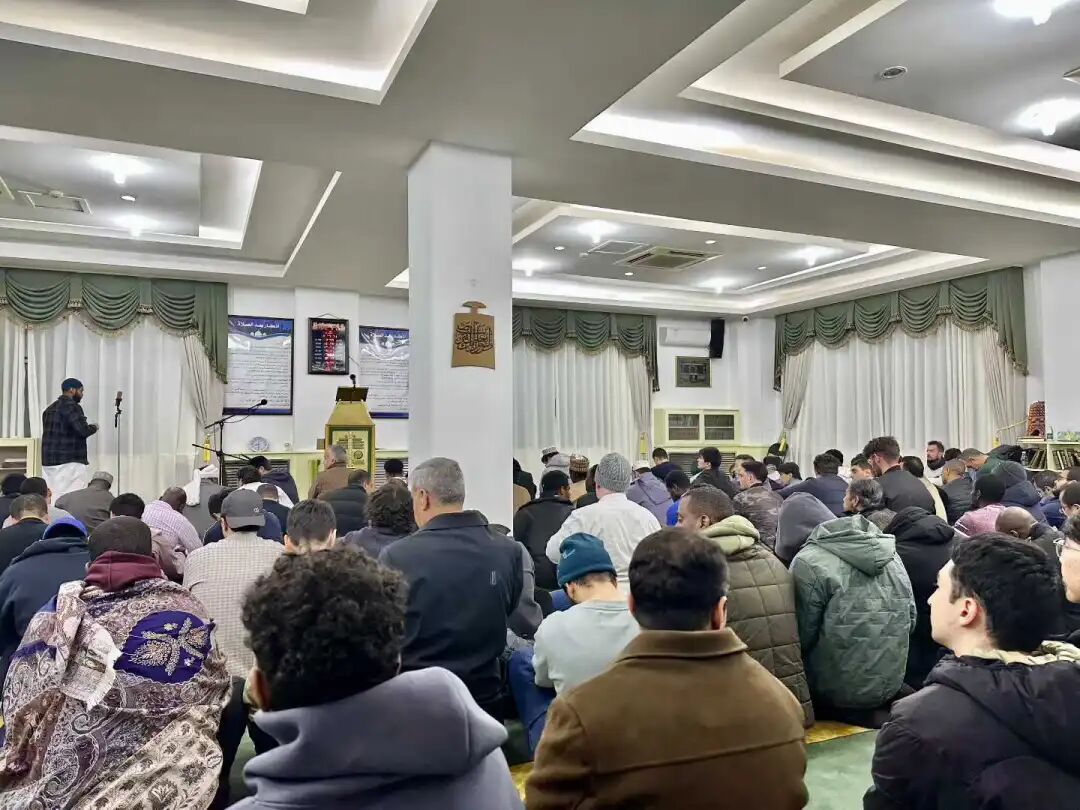
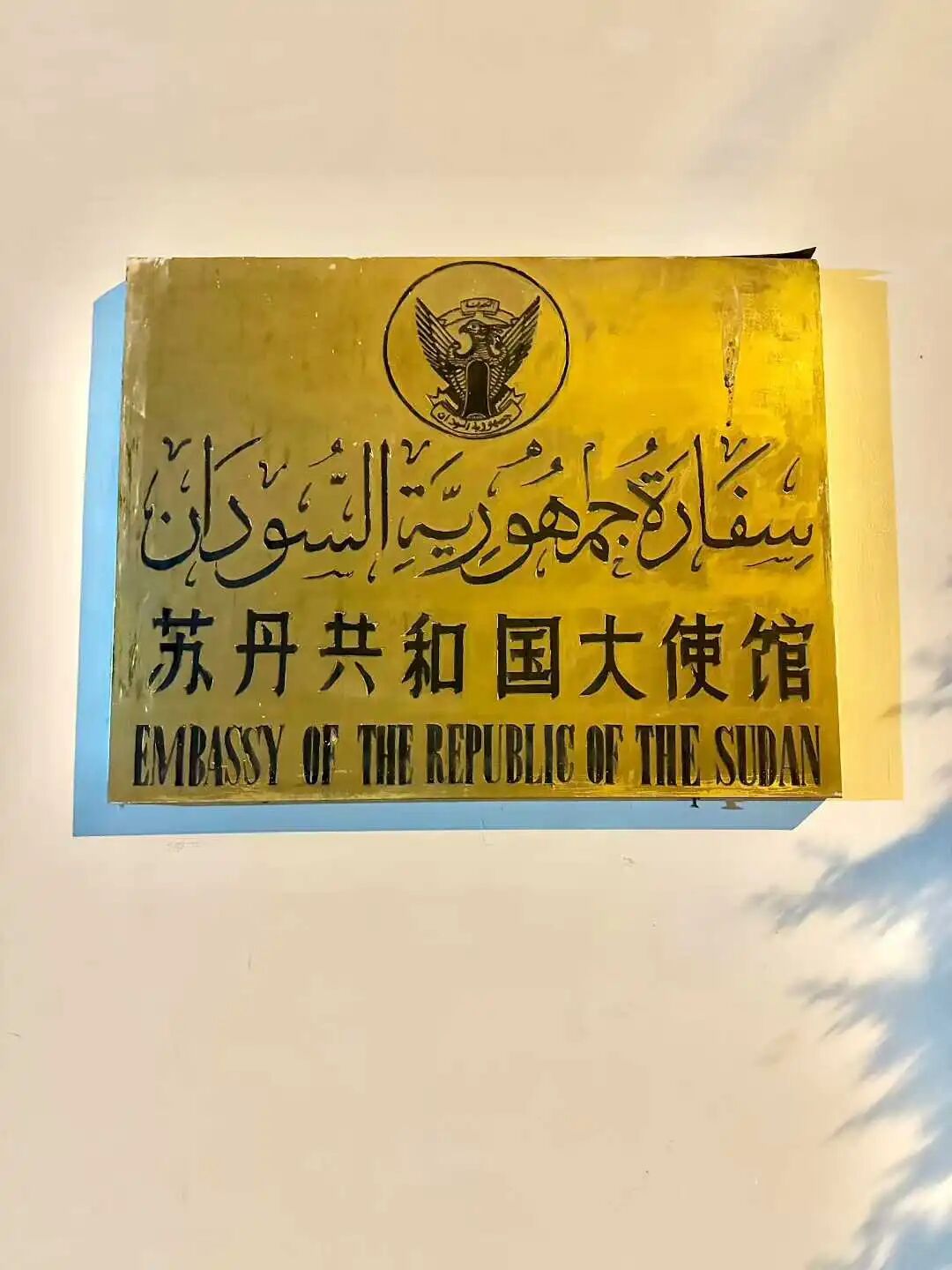
For the past few years, I have gone to the Sudanese Embassy every Ramadan to pray Taraweeh. The atmosphere is great, and the whole family can go together.
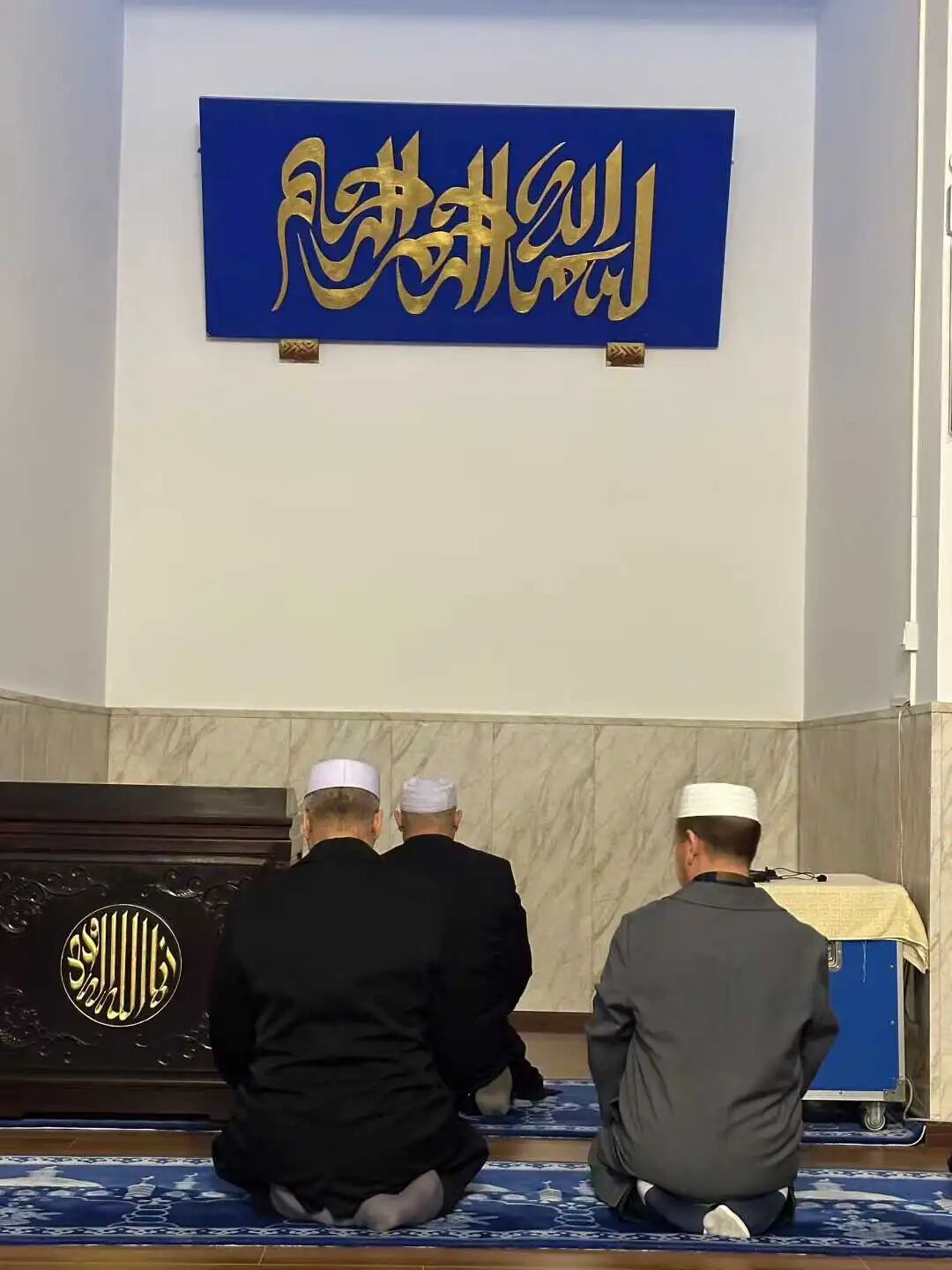
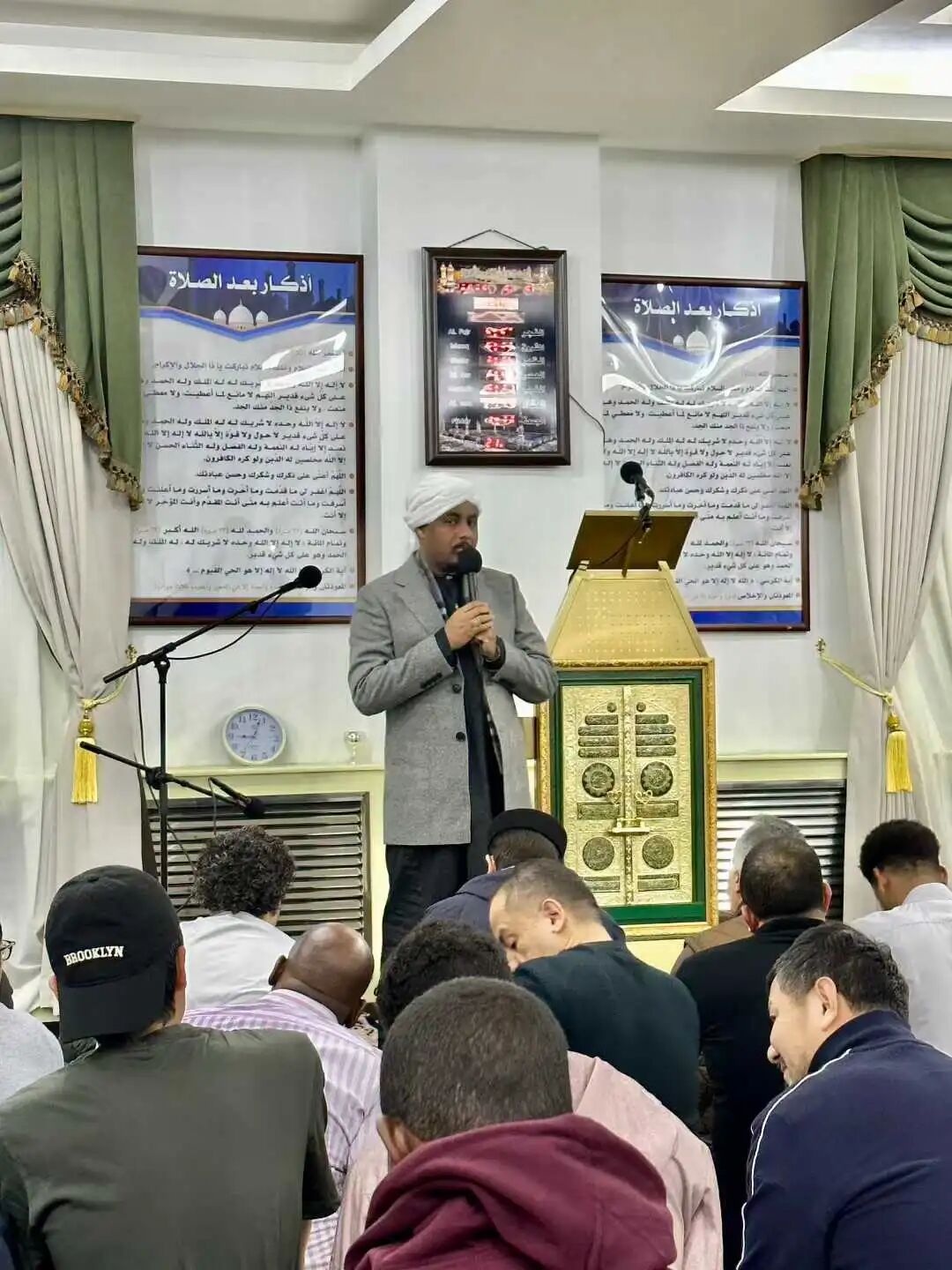
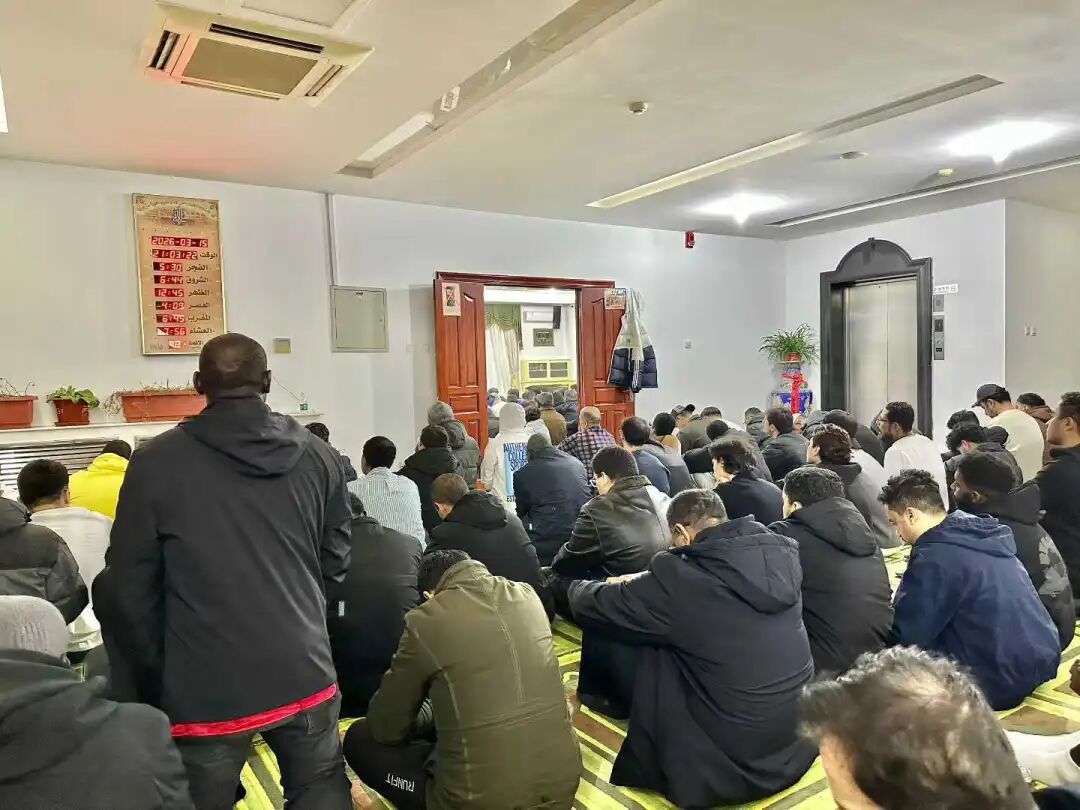
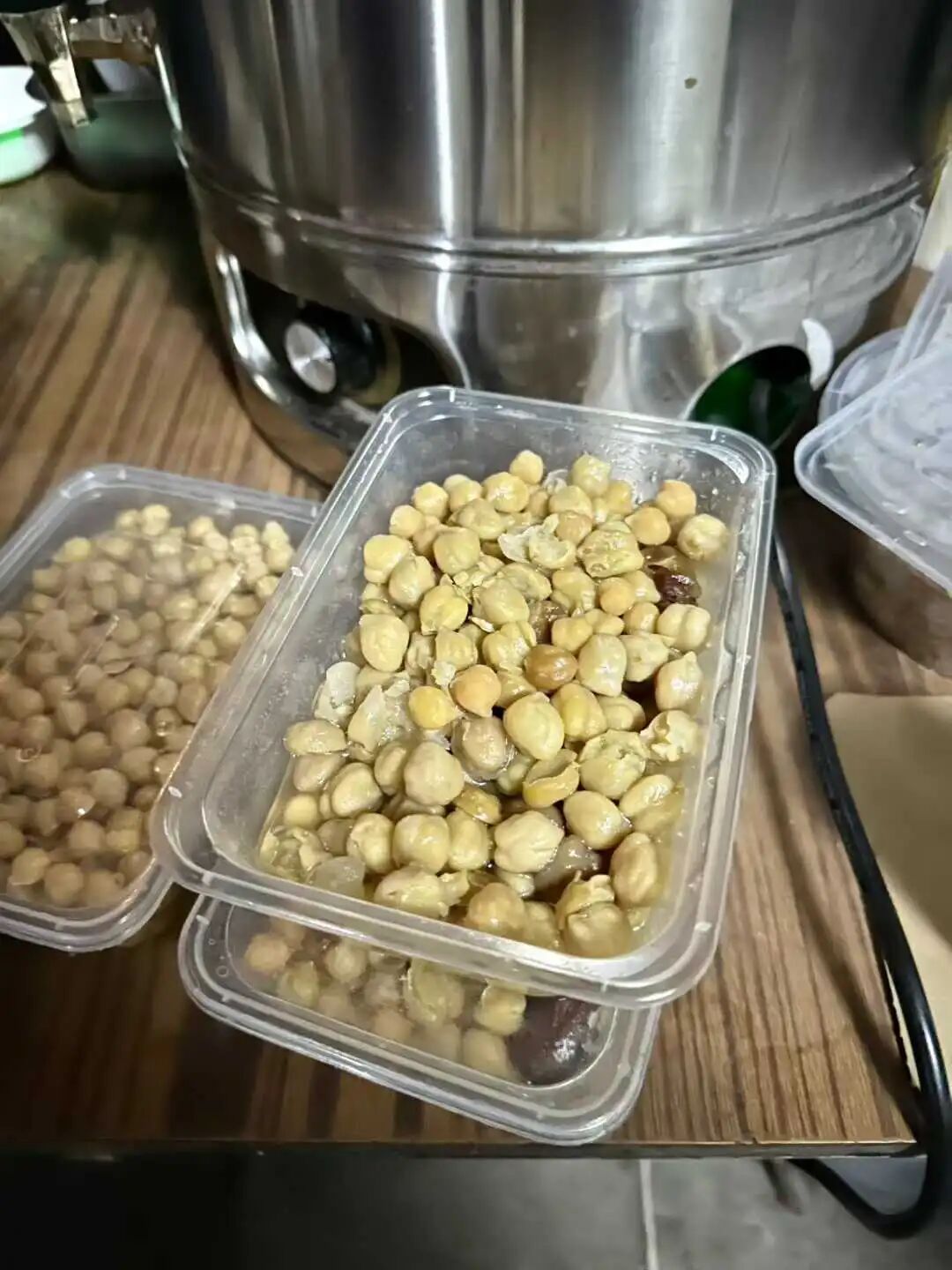
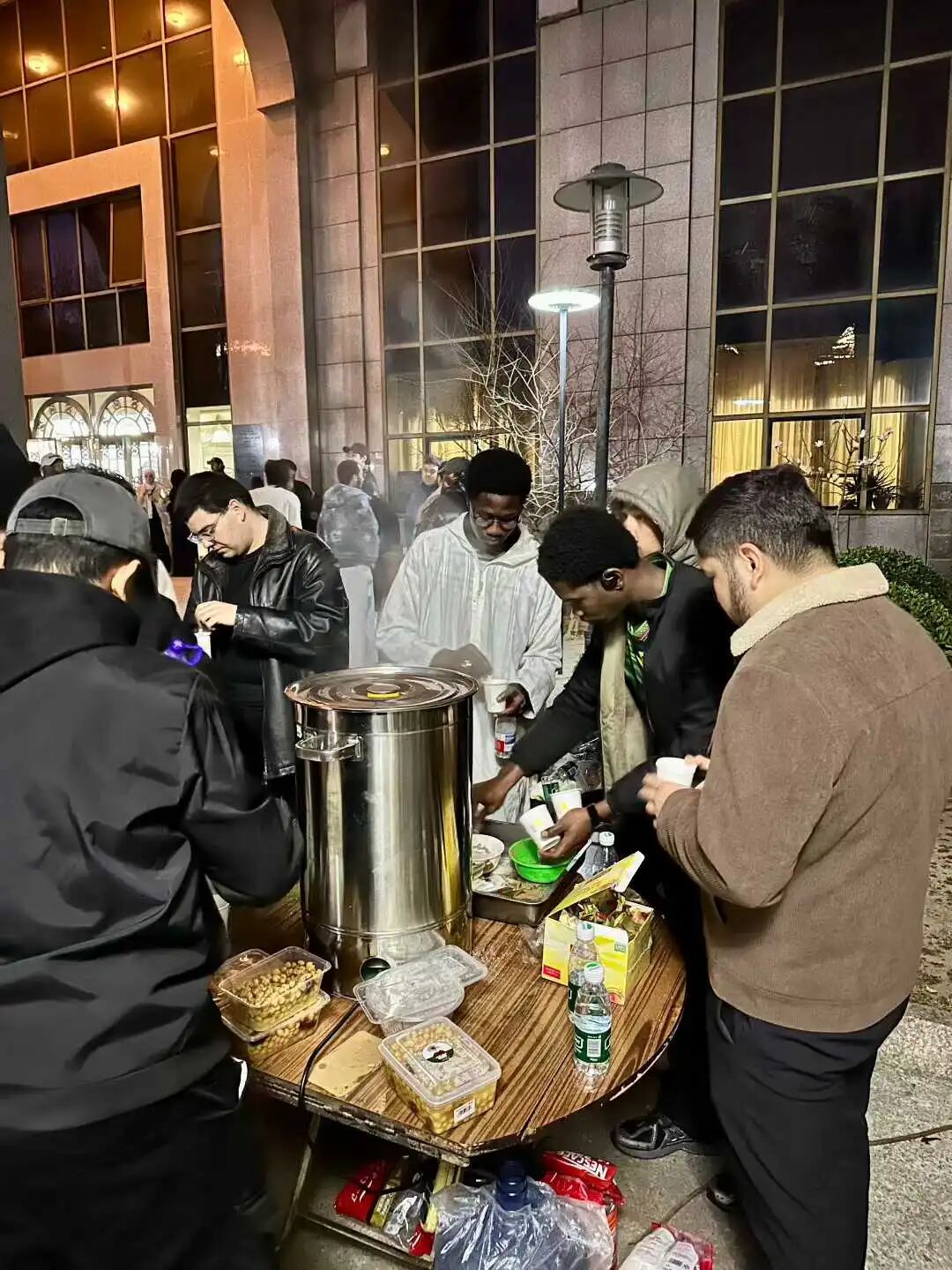
During the last ten days, it starts at 8:30 and lasts for over an hour. Taraweeh consists of eight rak'ahs, with a sermon (wa'z) after every four. The Witr dua is two rak'ahs followed by one, and during the third rak'ah, we raise our hands for a long dua. In the embassy courtyard, you can brew your own mint black tea and coffee, and after the prayer, there were chickpeas distributed by friends (dost).
Sudan follows the Maliki school of thought, which most of North and West Africa belongs to, and it has many differences from the Hanafi school in China. I think it is a rare opportunity to come here every year to experience a different religious cultural atmosphere.
In the 15th and 16th centuries, Sufi sages began to spread the faith along the upper Nile River toward the Sudan region. In the early 16th century, the Funj Sultanate ruling Sudan had nominally converted to the faith, but it still kept traditions of witchcraft and ritual sacrifice. The Funj Sultanate changed dynasties in 1718, which started a push for a more orthodox faith and the beginning of Arabization. By the 19th century, Sudan had become a region that followed orthodox Sunni Islam and began using Arabic as its common language. Today, the vast majority of Sudanese people follow the Maliki school of Sunni Islam and are deeply influenced by Sufism.
Houheyan Mosque
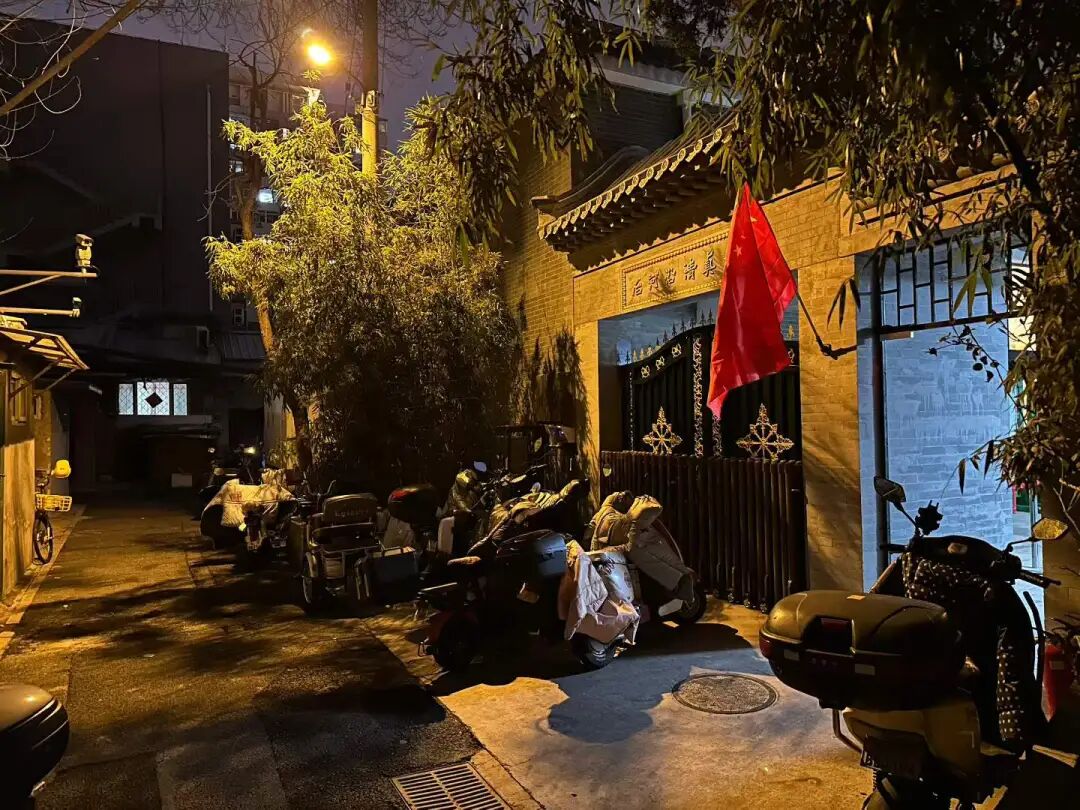
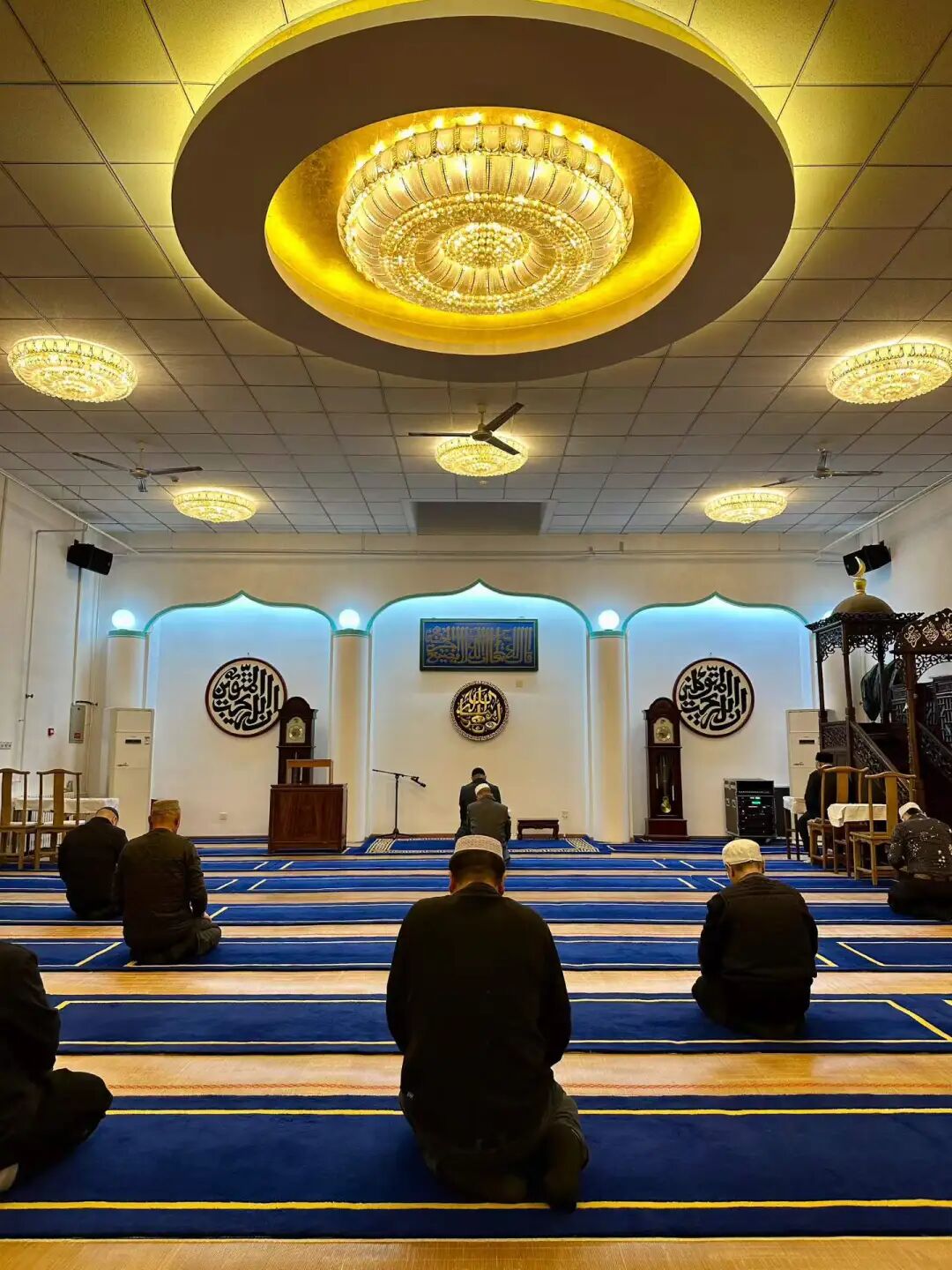
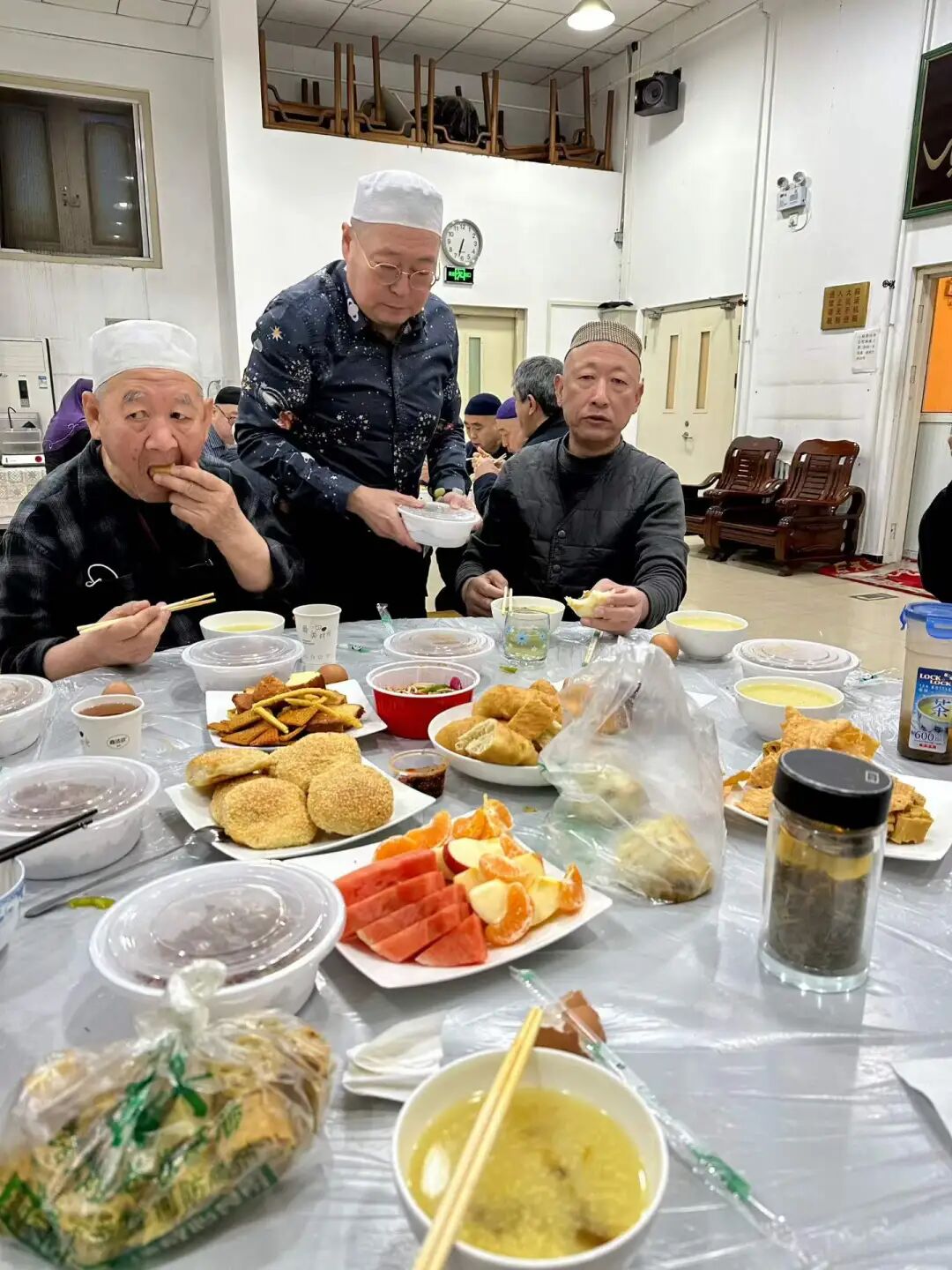
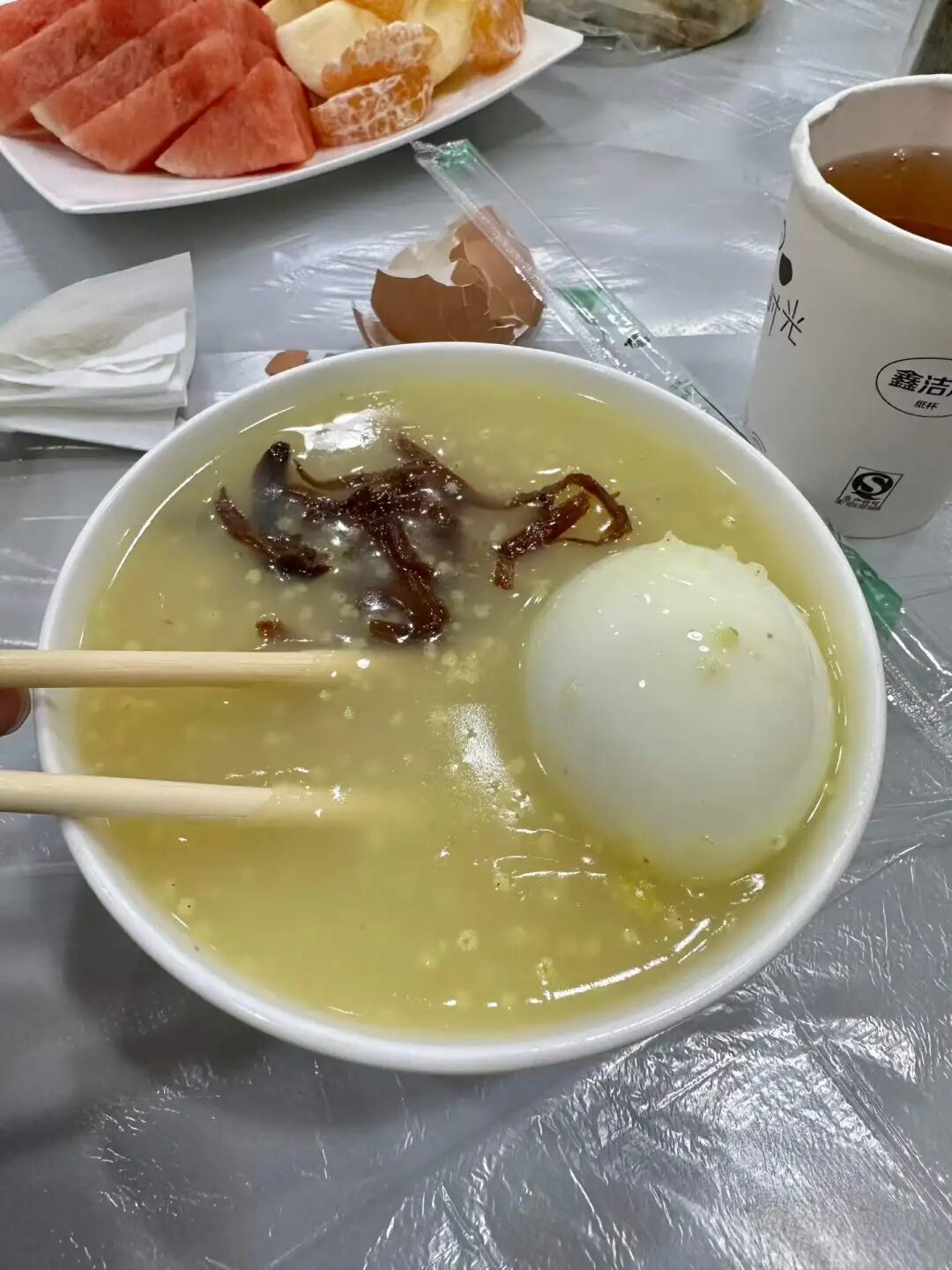
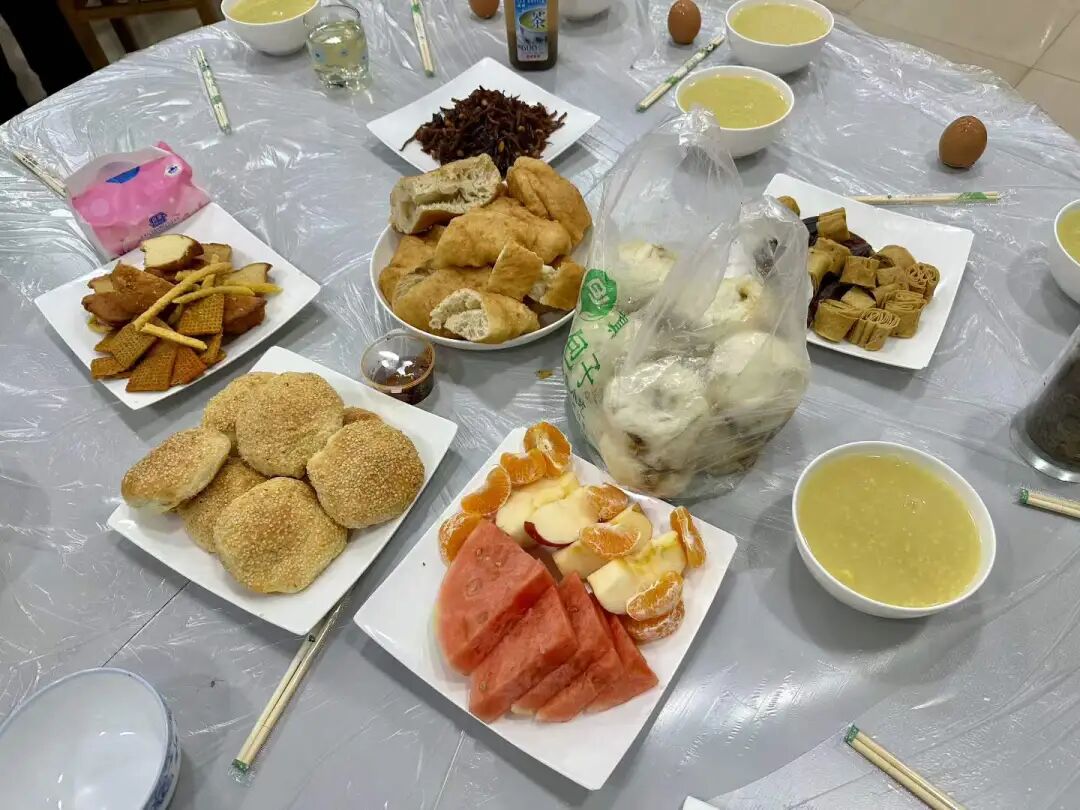
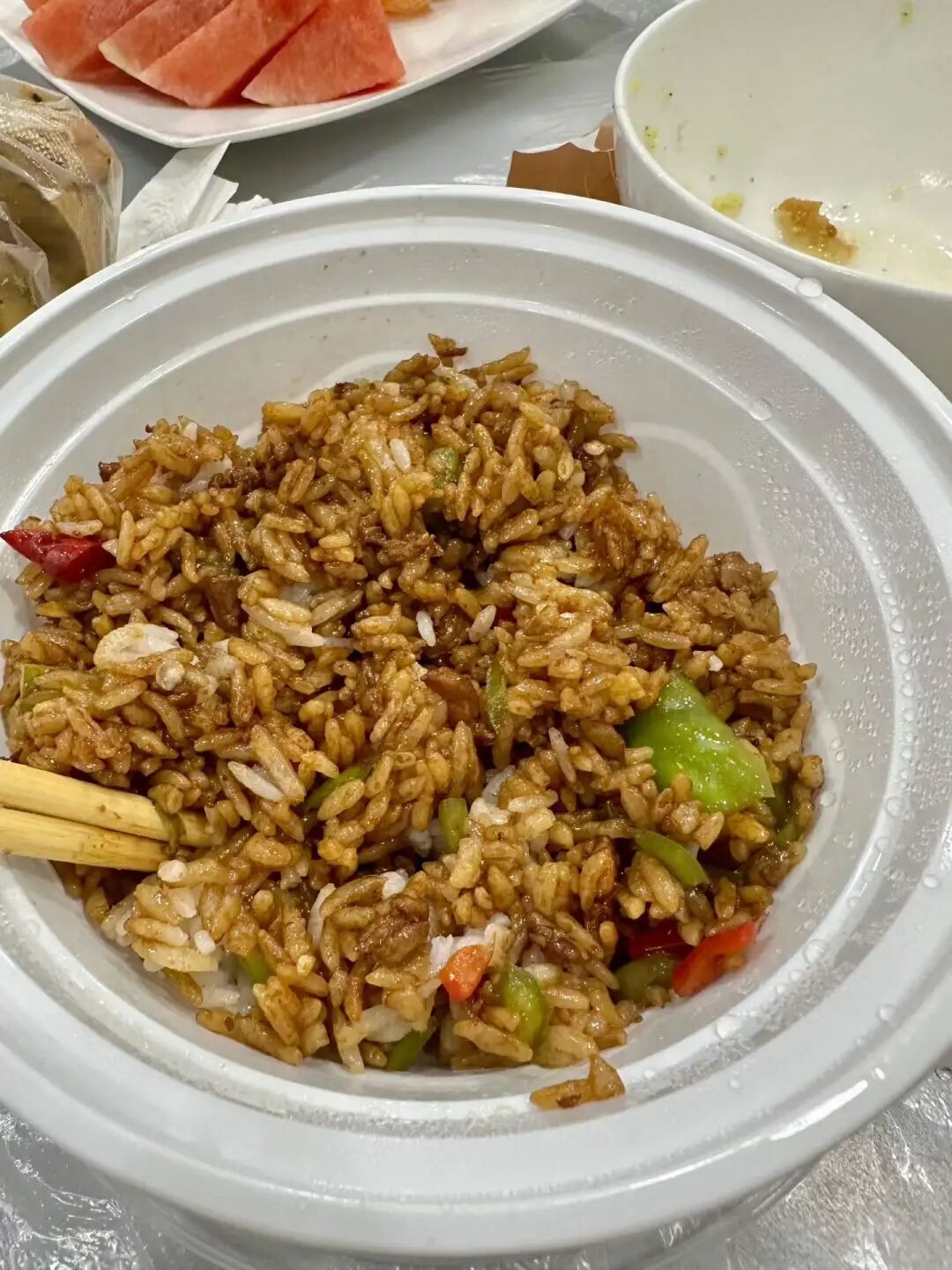
On the last night of Ramadan, I broke my fast at Houheyan Mosque. There were three tables of elderly people in the mosque, which is hard to find deep in the alleyways. We had steamed buns (baozi), millet porridge (xiaomizhou), sesame flatbread (shaobing), soy sauce fried rice (jiangyouchaofan), and fried dough (youxiang), and everyone also received a bag of Tongxian crispy fried snacks (gezhihe).
Houheyan Mosque sits right on the south bank of the moat. During the Qing Dynasty and the Republic of China era, many transport workers and restaurant owners lived nearby. In 1944, Yang Yuting of the 'Heyan Yang family' and his sons Yang Hongda and Yang Honglai donated their own ice cellar. Then, village elders Yang Zengbin and Yang Zengsen led the fundraising efforts. They received active support from Hui Muslims in Beijing and Dachang, including Peking Opera master Ma Lianliang and Wan Qirui, the owner of the Kaorouwan restaurant, and built the mosque in 1948. Houheyan Mosque originally covered a large area. In the 1970s, part of the land was taken to fill in the moat for the subway, and the current building was rebuilt in 2012.
Summary: This Beijing Ramadan 2026 diary follows iftar meals and mosque visits at Madian, Fayuan, Zhengyuan, Nanxiaopo, Dongwai, Houheyan, and the Sudan Embassy, with food and community details kept in full.
I returned to Beijing from Sichuan during the second week of Ramadan. This year, I had to take my son to kindergarten by electric scooter every morning, so I couldn't break my fast at Balizhuang like I did last year (see 'A Wonderful Look Back at Ramadan 2025 in Beijing Balizhuang'). Instead, I mostly went to the mosques near my office and home. I visited seven in total: Madian Mosque, Fayuan Mosque, Zhengyuan Mosque, Nanxiaopo Mosque, Dongwai Mosque, Houheyuan Mosque, and the Sudan Embassy. I will share them with you below.
Madian Mosque
Madian Mosque is the closest mosque to my office, and it is the one I visited the most. The iftar at Madian Mosque is quite generous. Before breaking the fast, there is a plate of fruit and a plate of pastries. After breaking the fast, there are noodles, stir-fried dishes, stir-fried dough bits (chaogeda), steamed buns (baozi), and more. Usually, there are two tables of international students, one table of friends (dosti) from Northwest China, one table of female elders, and one table of male elders at iftar. I met many old friends and made many new ones at Madian Mosque this year, which was very blessed. We set up over a dozen tables in the courtyard for the Night of Power (Laylat al-Qadr), which I will write about in my next post.
Madian is located on the Jingbei Avenue outside Deshengmen in Beijing. After the Ming Dynasty overthrew the Yuan Dynasty, they moved the northern wall of the capital city south. However, the main road from Beijing through Deshengmen to outside the Great Wall still passed through the Jiande Gate gap of the Yuan capital. The trade of horses, cattle, and sheep coming from the north gradually formed a market inside the Jiande Gate gap, attracting a large number of Hui Muslims to settle there. It was said that the number of Hui Muslims there was no less than at Niujie. Since the Qing Dynasty, hundreds of thousands of cattle, sheep, and horses entered Beijing from Mongolia via Zhangjiakou every year. Hui Muslims opened many horse shops and sheep shops in Madian, responsible for feeding and selling the livestock to earn commissions. After the Daoguang era, the horse trade moved to the suburbs outside Deshengmen, and most of the businesses in Madian changed into sheep shops, keeping only a few horse shops. Since it formed in the Qing Dynasty, Madian was called 'Madian' (Horse Shop). It wasn't until the early Republic of China, when place names were made to sound more elegant, that it was changed to 'Madian' (Horse Station), a name that is still used today.
The inscriptions inside Madian Mosque also record the situation of the Hui Muslims in Madian: Madian is located inside the rammed earth walls of the Yuan capital, outside the brick walls of the Ming and Qing Beijing, right on the ancient and modern main road leading north from the capital, connecting to the bustling city in the south and the vast plains stretching for hundreds of miles in the north. Along the Changping Road, there are endless trees. Traveling to Nankou, the Yan Mountains rise one after another, blocking the vast grazing lands of the Bashang plateau. The weather outside the Great Wall is bitterly cold, making it hard to raise sheep. The Hui Muslims of Madian did not avoid the hard work, braving the elements to bring them back, raising and grazing the wild animals until they survived and grew stronger. They earned a meager income, which was their livelihood. This was the sheep trade.
Madian Mosque is located on a terrace on the west side of the ancient road. It was first built during the Kangxi era. In 1850 (the 30th year of the Daoguang reign), it was rebuilt with funds raised by fourteen sheep and horse shops in Madian. It was rebuilt again during the Republic of China and is quite large in scale. In 1930, Ding Ziyu, the principal of Madian Guangyu Primary School, published 'An Investigation of the Madian Mosque Outside Deshengmen, Beiping' in 'Zhengdao' magazine. The article mentioned that more than 300 people attended the Taraweeh prayers at Madian Mosque during Ramadan, 500 to 600 people fasted, and one-third of them fasted for the entire month. According to the memories of the elders in Madian, until the early days after liberation, whenever Ramadan ended and the new moon appeared, people on the front and back streets of Madian would shout, 'The fast is broken!' The fast is broken! ''
The international students who come to Madian Mosque for iftar include friends (dosti) from India and Pakistan, and they are friends with each other.
Fried dough (youxiang) at the mosque.
Stir-fried dough bits (chaogeda) made at the mosque.
Eating steamed buns (baozi) at Madian Mosque, the carrot and fennel fillings are very filling!
I ate the sweet rice balls (yuanxiao) from Yaofengcheng, a Shandong-style restaurant at the mosque gate, for several days during my fast.
Stir-fried dishes at Madian Mosque; international students from nearby countries all love the food at Madian.
Fried tofu (zhadoufu).
Stir-stir-fried meat with oyster mushrooms (pinggu chaorou).
Beef stewed with Chinese cabbage and vermicelli (baicai fentiao dun niurou).
Stir-fried lamb with scallions (congbao yangrou).
Stir-stir-fried meat with celery (qincai chaorou).
Stir-fried potato slices (chao tudoupian).
Braised winter melon with shiitake mushrooms (donggua shao donggu).
Exhibits about the local Muslim community in Haidian at the Madian Mosque gallery.
Hand-pulled noodles (shouganmian) with tomato sauce and eggplant sauce; our international friends all love Beijing hand-pulled noodles, haha.
After eating, I bought food for my fast at Yaofengcheng by the gate, steamed buns (mantou) with spiced beef (jiang niurou); they give out fried dough (youxiang) during Eid al-Fitr.
Nanxiapo Mosque.
As an important hub for water transport, there were historically several mosques and neighborhoods outside Chaoyang Gate, such as Nanzhong Street, Nanxiapo, and Shegutang, but only the Nanxiapo neighborhood remains today. According to the elders, Nanxiapo Mosque dates back to the late Ming and early Qing dynasties. At that time, a shed builder used fir poles and reed mats to build a large shed at Nanxiapo, and an imam named Hu Zhonghe led the local Hui Muslims in prayer there; this was the earliest Nanxiapo Mosque. In the early years of the Kangxi reign of the Qing Dynasty, a Hui Muslim surnamed Ma who sold bows and arrows inside Chaoyang Gate heard about the situation at Nanxiapo. He had just received a payment for bows and arrows that had been owed by some Mongols, so he donated the money to formally build the Nanxiapo Mosque.
Most of the leaders of Nanxiapo Mosque were descendants of the first leader, Hu Zhonghe. Hu Zhonghe's 12th-generation descendant, Hu Degui, was born in 1883 (the ninth year of the Guangxu reign). Because his parents died early, 15-year-old Hu Zichen inherited his father's business in 1898 (the 24th year of the Guangxu reign) and became the second leader (haitui bu) of Nanxiapo Mosque, known as Master Hu the Second. At that time, the imam of Nanxiapo Mosque was Hu Wenzhi, and the third master was Ma Shikuan, known as Master Ma the Third.
In 1900, when Empress Dowager Cixi fled west, bandits were everywhere, and many merchants on Chaowai Street were robbed. Seventeen-year-old Imam Hu Zichen organized a local militia in Nanxiapo. Young Hui Muslims joined eagerly. Some were wrestlers, some were martial artists, some were cart drivers, and the wealthy ones even bought muskets. Every night, everyone gathered at the gate of the Nanxiapo mosque to take turns patrolling the streets and keeping watch, and they finally made it through the crisis.
On February 15, 1928, after the martyr Ma Jun died, his body (maiti) was washed at the Nanxiapo mosque by Imam Hu Wenzhi and Imam Hu Zichen. Then, the village elders and the community (dost) donated burial shroud cloth (kafan), and he was buried in the northwest corner of Ritan.
In 1947, the Nationalist army was rounding up young men for conscription near the South Barracks outside Chaoyang Gate. The young Hui Muslims of Nanxiapo were terrified, so with the help of the imam and the elders, they climbed wooden ladders onto the roof of the main hall of the Nanxiapo mosque. After they were hidden, the imam and the elders immediately hid the ladders. When the Nationalist troops came to the mosque to grab people, the imam persuaded them to leave. Everyone lay on the roof for the whole day and finally escaped the danger.
The second Friday (Jumu'ah) of Ramadan is the day Beijing mosques hold charity events for the holy month.
The Nanxiapo mosque has the most abundant selection of pastries for breaking the fast (iftar).
Haji Li treated everyone to stewed meat, with both beef and lamb available. The iftar at Nanxiapo was held at the nearby Hongqingxuan restaurant with eighteen dishes. Over a hundred people attended, including many young people, and it was a very blessed occasion.
Fayuan Mosque.
Fayuan Mosque is also called Dewai Guanxiang Mosque. It was originally located at the north slope of Xiaochangkou outside Deshengmen. It was relocated and expanded during the Kangxi reign. During the Republic of China era, the main hall was expanded again, featuring four interlocking roofs and a four-cornered pavilion roof.
Fayuan Mosque built a new dining hall, and so many people come to break their fast every day that there are often not enough seats. The iftar meal includes meat, vegetables, shrimp, fruit, pastries, and fried dough cakes (youxiang).
The meat sauce noodles (zhajiangmian) served for iftar at Fayuan Mosque come with seven vegetable toppings: shredded carrots, shredded cucumber, shredded cabbage, shredded radish (xinlimei), diced celery, green garlic, and bean sprouts. It is very hearty! Every Ramadan, I look forward to this bowl of noodles at the mosque.
Silk Road Yilan in Niujie donated small fried dough cakes (youxiang), and Youyishun on Huangsi Street donated boxed meals of kung pao chicken and stir-fried egg with vinegar (culiu muxu). Every Ramadan, many restaurants donate iftar meals to the mosque, which is a very good deed (nietie).
Youyishun is a restaurant founded in 1948 by Ding Deshan, the founder of Donglaishun. There is a saying: 'Donglai goes west and Youyishun follows, north and south, there are only these two.' The original location of Youyishun was at the Xidan intersection. It combined the quick-frying, roasting, and hot-pot styles of Donglaishun with the delicate stir-fries of Xilaishun, bringing the strengths of both together into its own unique style. In the 1950s, Youyishun opened a branch in the Xidan shopping center. Business was booming, and it became an important place for hosting foreign guests. When U. S. President Nixon visited China in 1972, he dined at the restaurant. After Chang'an Avenue was renovated in 1999, Youyishun moved to its current location on Huangsi Street, specializing in traditional famous dishes like stir-fried egg with vinegar (culiu muxu), honey-glazed lamb (tashimi), and deep-fried lamb tails.
Dongzhimenwai Mosque.
Dongzhimenwai Mosque was originally called Erlizhuang Mosque. It was first built in the Yuan Dynasty and renovated during the Kangxi reign of the Qing Dynasty. In the late 1980s, Shougang and a Danish company built international apartments in Erlizhuang, so the mosque was moved one kilometer northwest and rebuilt. It was finished in 1991 and reopened in 1993.
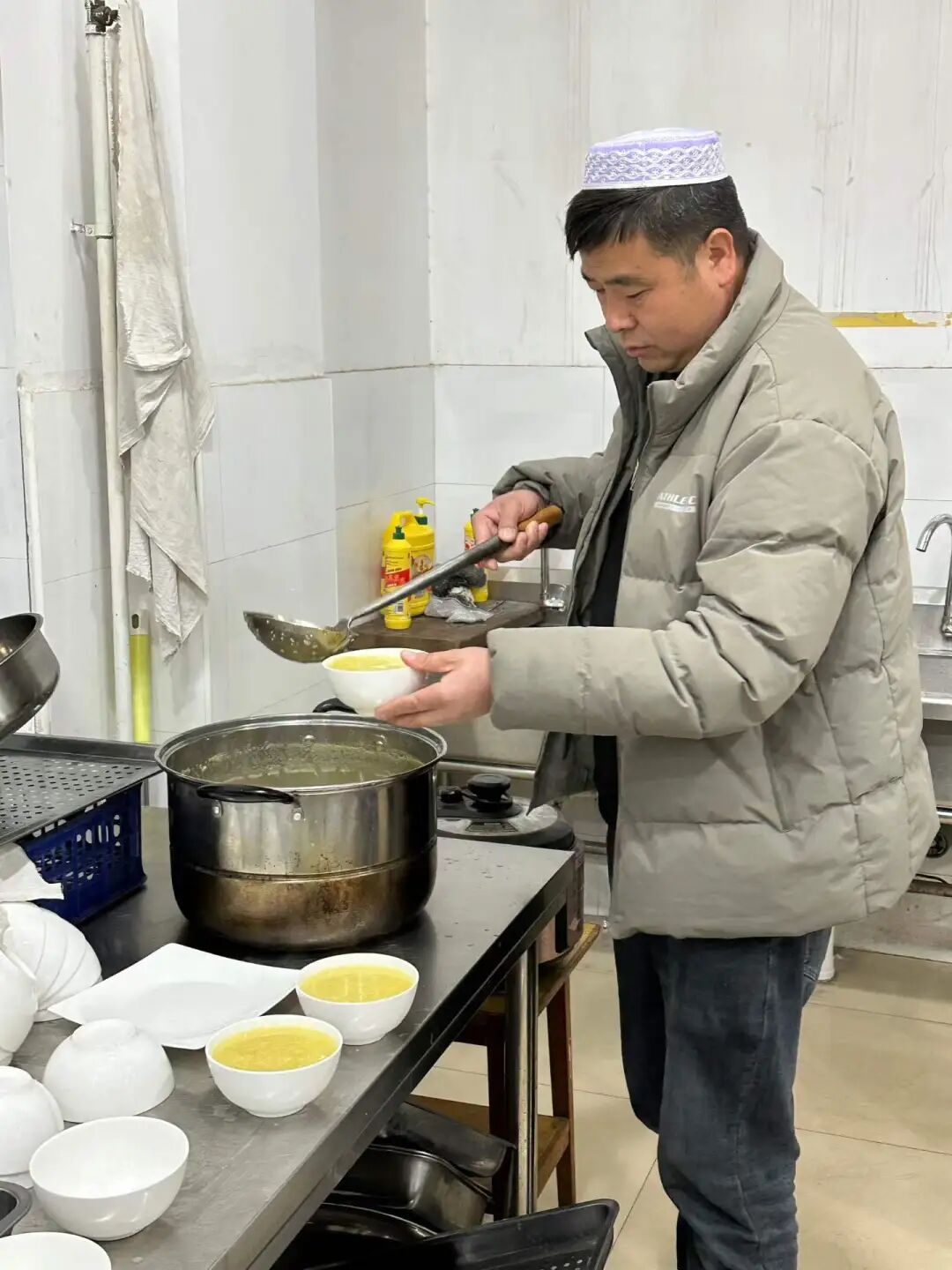
I broke my fast at the mosque outside Dongzhimen. The snacks available after the prayer included pea flour cake (wandouhuang), candied yam rolls (tangjuanguo), and steamed rice cakes (aiwowo), all made by the mosque. After the prayer, there was a mix of meat and vegetable dishes, including stir-stir-fried meat with wood ear mushrooms and eggs (mushurou), yam with wood ear mushrooms, braised eggplant, braised fish chunks, and roast chicken. They also boiled sweet rice balls (yuanxiao) for the occasion. Although there are not many people at the mosque outside Dongzhimen every year, the atmosphere during Ramadan is very good.
Silk Road Legend (Silu Chuanqi) served baked buns (kaobaozi) with millet porridge and various cold dishes. These baked buns were actually invented by Gansu friends (dost), so they are different from Uyghur baked buns, but they still taste good.
At the naan shop by the gate of the mosque outside Dongzhimen, I finished my fast-breaking meal at 6:40, just as the naan and baked buns were coming out of the oven. The skin of the baked bun is very thin but a bit chewy, and there is plenty of meat inside, making it perfect for the pre-dawn meal (suhoor) the next day.
Zhengyuan Mosque
The predecessor of Zhengyuan Mosque was the Beigouyan Mosque inside Xizhimen, which was first built during the Daoguang era. After 1946, Beigouyan was renamed Zhaodengyu Road, so it was also called Zhaodengyu Road Mosque. In 1997, it was demolished and rebuilt at its current location, and renamed Zhengyuan Mosque.
Zhengyuan Mosque is very low-key, and this year was my first time going there to break my fast. I ate steamed buns (baozi) and sesame flatbread (shaobing) with lamb offal soup (yangza) at the mosque, and also had fried toon sprouts and fried meatballs. The mosque said not to post photos of the fast-breaking meal, so I will not post them here.
Sudanese Embassy
For the past few years, I have gone to the Sudanese Embassy every Ramadan to pray Taraweeh. The atmosphere is great, and the whole family can go together.
During the last ten days, it starts at 8:30 and lasts for over an hour. Taraweeh consists of eight rak'ahs, with a sermon (wa'z) after every four. The Witr dua is two rak'ahs followed by one, and during the third rak'ah, we raise our hands for a long dua. In the embassy courtyard, you can brew your own mint black tea and coffee, and after the prayer, there were chickpeas distributed by friends (dost).
Sudan follows the Maliki school of thought, which most of North and West Africa belongs to, and it has many differences from the Hanafi school in China. I think it is a rare opportunity to come here every year to experience a different religious cultural atmosphere.
In the 15th and 16th centuries, Sufi sages began to spread the faith along the upper Nile River toward the Sudan region. In the early 16th century, the Funj Sultanate ruling Sudan had nominally converted to the faith, but it still kept traditions of witchcraft and ritual sacrifice. The Funj Sultanate changed dynasties in 1718, which started a push for a more orthodox faith and the beginning of Arabization. By the 19th century, Sudan had become a region that followed orthodox Sunni Islam and began using Arabic as its common language. Today, the vast majority of Sudanese people follow the Maliki school of Sunni Islam and are deeply influenced by Sufism.
Houheyan Mosque
On the last night of Ramadan, I broke my fast at Houheyan Mosque. There were three tables of elderly people in the mosque, which is hard to find deep in the alleyways. We had steamed buns (baozi), millet porridge (xiaomizhou), sesame flatbread (shaobing), soy sauce fried rice (jiangyouchaofan), and fried dough (youxiang), and everyone also received a bag of Tongxian crispy fried snacks (gezhihe).
Houheyan Mosque sits right on the south bank of the moat. During the Qing Dynasty and the Republic of China era, many transport workers and restaurant owners lived nearby. In 1944, Yang Yuting of the 'Heyan Yang family' and his sons Yang Hongda and Yang Honglai donated their own ice cellar. Then, village elders Yang Zengbin and Yang Zengsen led the fundraising efforts. They received active support from Hui Muslims in Beijing and Dachang, including Peking Opera master Ma Lianliang and Wan Qirui, the owner of the Kaorouwan restaurant, and built the mosque in 1948. Houheyan Mosque originally covered a large area. In the 1970s, part of the land was taken to fill in the moat for the subway, and the current building was rebuilt in 2012.
