
Muslim Travel Guide China: A Hui Muslim Journey Through Faith, Niujie, Mosques and Halal Life
Reposted from the web
Summary: This personal Muslim travel and faith memoir looks back on growing up around Niujie in Beijing, learning about Hui Muslim identity, mosque life, family memory, and the search for religious knowledge.
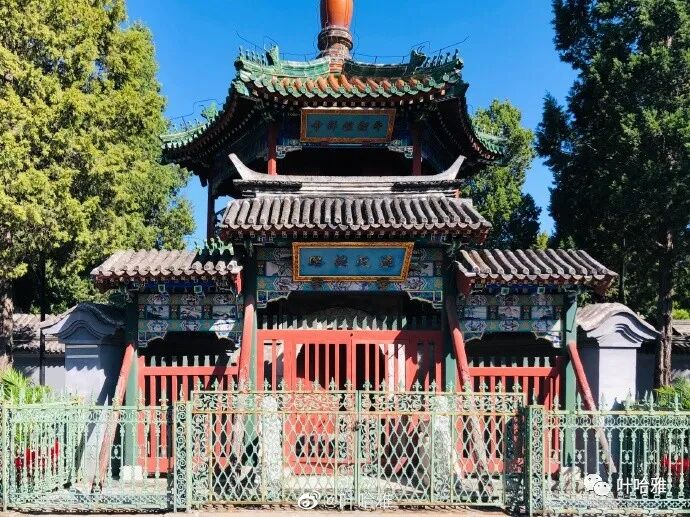
To be honest, I started learning about my faith during college. Before university, I did not even know that Hui Muslims were not allowed to drink alcohol. Although my family lived on Shouliu Hutong in Niujie (right by the old site of the Jubaoyuan restaurant) and our family tree shows generations of Hui Muslims, I never received any traditional religious education (jingtang jiaoyu) growing up. My parents did not have a religious education either. My grandfather and maternal grandfather passed away before I was born. My maternal grandmother was the only one in the house who kept up with the five daily prayers (namaz). I lived with her from elementary school through middle school.
If you have seen the show "Beautiful New World" (Pinzui Zhang Damin de Xingfu Shenghuo) starring Liang Guanhua, the life scenes and dialogue in that show are just like my childhood. When I was little, I mostly hung out in the South City area. By South City, I mean Xuanwu and Chongwen, but mostly Xuanwu. Going to Xidan or Wangfujing on the weekend felt like a big trip to the city center. To me, those were the busiest places in Beijing. I had never even heard of places like Guomao or Sanlitun.
About twenty or thirty percent of my classmates were Hui Muslims. I only found out after we graduated and had a reunion. We lived and studied together, but there were no real ethnic differences. The school cafeteria was halal, and everyone ate together, so you could not tell the difference. I even thought Hui Muslims were the majority and Han Chinese were the minority when I was a kid.
The most important thing is that none of us Hui Muslim students knew much about our faith. Our parents might have known a little, but only the basics. The people who went to the mosque (libaisi) often were retired folks like my grandmother. Even she did not go to the mosque much; she just prayed at home every day.
My grandmother and the other elderly Hui Muslims in Niujie are the most typical Beijingers I know. Most Niujie Hui Muslims moved to Beijing during the Qing Dynasty. Their language is mixed with traditional religious terms. For example, my grandmother would call me a "little Iblis" (the devil) or say I was "shumin" (clever). If you leave the South City, people in the East or West districts probably would not understand those words. They also do not talk like those so-called Beijing native bloggers on social media who raise their pitch and put on a fake, annoying voice. My grandmother was naturally funny. The older generation loved to joke, and some things are only funny when they say them. That is why so many Hui Muslims are stand-up comedians (xiangsheng).
My grandmother only started her five daily prayers after she retired. This is normal for the elderly in Niujie today. Most people there do not think young people should go to the mosque; they think we should focus on school and work. Going to the mosque is for retirement. My grandmother did not expect the younger generation to pray; she only held herself to that standard. Years later, when I started going back to the mosque, some old people thought I was unemployed. I got tired of being asked, so sometimes I just walk around them.
I did not go back to the mosque because of some mental breakdown or because someone tried to convert me. About eleven years ago, I saw a video on Weibo about the Quran and science. I clicked on it, and it felt like being struck by lightning. My curiosity was sparked instantly.
I have always loved science. I won many science competitions organized by the Xuanwu District Children's Palace. A children's show on the education channel called "I Want to Know" once invited me to record a program at CCTV. I won third place in a science competition they arranged, and neighbors even recognized me after it aired.
Even though I loved science, I always felt like there was a supreme being watching over me, so I never accepted atheism. Later, I read a study by Yale psychology and cognitive science professor Paul Bloom, which said: "Children are born dualists." Humans are naturally inclined to be creationists. Natural selection does not produce intuitive judgments, and children are especially likely to assign a purpose to every phenomenon. Born dualists find it very easy to believe that a "soul" lives inside the body. "(
Source http://www.americanscientist.o... birth
I remember asking my mom that same day to get me a Quran from the mosque. It was the Ma Jian translation with a brown cover. I found out later it was a pirated copy. The official version certified by the King Fahd Glorious Quran Printing Complex has a red cover and is given away for free, but in China, it was being sold for 100 yuan.
That was my first time reading the Quran, or more accurately, reading a Chinese translation and commentary, because only the Arabic Quran is the true Quran. Even reading Mr. Ma Jian's translation had a huge impact on me. I felt the power in the words. I really liked his style. I enjoy reading simple, plain language and dislike overly emotional adjectives in writing. They feel fake to me if I cannot connect with the author.
It took me about a week to finish reading the entire Quran. The translation felt personal, strong, and full of wisdom that resonated with me. Still wanting more, I went to the shop at the Niujie Mosque and bought the four-volume Sahih al-Bukhari. I finished that quickly too. It was the second religious text I had read. The language in the Hadith is even simpler and more direct than the Quran. The Prophet's plain and rational words touched my heart, so I went on to buy the other five books of the Six Major Hadith collections.
Before I started reading books about Islam, I was in the middle of forming my worldview. I had not thought much about philosophy before high school. Once I got to college, I suddenly had more free time. I used Xiaonei, a social network that connected me with students from other schools. I felt a huge gap in intellectual depth between me and the students from Peking University and Tsinghua University. Once, a senior student hosted a grassroots forum at his home for Xiaonei users. The people who came were the active opinion leaders of the time. One of them was Sun Yuchen, the billionaire active in the crypto world today. He was only 19 then, plain-looking, short, dressed simply, and just starting his second year at Peking University.
To keep up with their thinking, I started reading all kinds of social science and philosophy texts. I kept changing my own values, but I always felt that the books I read could not explain everything I saw in the world. Every thinker's theory had its flaws.
After that, I watched various opinion leaders argue with each other. Conservatives attacked reformers, and the Republican Party criticized the Democratic Party. I slowly lost interest in their arguments until I started reading books about religion.
Between 2007 and 2015, I did my most intense reading. I could finish a book every two or three days. I collected almost every book on religious history and law available in China. The Niujie ethnic goods shop had new books every two days, and I bought them as soon as I saw them. I spent over ten thousand yuan at Mr. Ma's shop. I made sure to buy every book by foreign authors. Luckily, I started early, as some of those books are now off the market for various reasons. When my home ran out of space for paper books, I started collecting e-books. Luckily, Sina Aiwen shared many classics in PDF format back then.
I read religious books much faster than social science or philosophy books. This was partly because of my interest, and partly because I found religious books simpler and easier to understand than theoretical philosophy books.
Whenever I had doubts about a social issue, I would use my religious knowledge to explain it, and it always worked. Slowly, I found my world becoming clearer. I started to feel a sense of transparency, as if I finally understood life. Before this, I would have had to look for answers in the works of experts and scholars.
After many years, I realized that friends made because of shared opinions often drift apart as our views change over time. But friendships built on faith can last.
Before 2015, my Weibo was mostly for sharing my reading notes. I rarely posted about food or fun. I was not interested in food, and I did not have the habit of taking photos when I went out to eat. Around 2015, more and more internet trolls started attacking me on Weibo. Public opinion turned against me, and my blacklist grew to over a thousand people. To reduce the conflict, I occasionally posted photos of food and fun. Unexpectedly, I gained more followers, and the number of people cursing me dropped.
At that time, a friend told me I should read ten thousand books and travel ten thousand miles instead of staying home reading. That really hit home, because before 2014, I had never even been on a plane.
I did not stay home because I was lazy, but because I had no money. My salary back then went to Japanese classes and books. I only had a home so I did not have to pay rent; otherwise, I would not have even had the money for classes.
Later, my work improved. By 2014, I was earning over ten thousand yuan a month, so I finally had extra money for plane tickets. The first time I flew was from Beijing to Xining, Qinghai. Xining was the first city I visited where halal food was the norm. It was also the first time I saw beautiful girls wearing headscarves everywhere, which left an unforgettable memory.
Everyone knows the rest of the story. I married a Salar girl from Qinghai and held our wedding at the Sky Garden in Xining in 2018. I am a classic example of how knowledge changes destiny. Because I read so many religious books, my aesthetic values changed, which led me to Qinghai. My original life path would never have crossed with a Salar girl.
I started my halal travel journey in 2014. By 2022, I had visited every province-level administrative unit in China and Hui Muslim neighborhoods in over a hundred cities. Abroad, I have been to North America, Oceania, Siberia, and more than 10 countries across East and Southeast Asia. I have visited over 400 mosques at home and abroad, writing an article about each one for my public account. Everything happened naturally, bit by bit, and I never planned it out beforehand.
As I get older, my interest in traveling is fading, and the excitement it brings me is decreasing. Instead, I find more sense of achievement in my work. I know I can never visit every mosque, and there is no point in just checking them off a list. Aside from the Sacred Mosque (Masjid al-Haram) and the Prophet's Mosque (Al-Masjid an-Nabawi), there are not many places left that I want to see. I might take my child on more trips in the future to broaden his horizons early on, making up for the lack of travel experiences in my own childhood.
Summary: This personal Muslim travel and faith memoir looks back on growing up around Niujie in Beijing, learning about Hui Muslim identity, mosque life, family memory, and the search for religious knowledge.
To be honest, I started learning about my faith during college. Before university, I did not even know that Hui Muslims were not allowed to drink alcohol. Although my family lived on Shouliu Hutong in Niujie (right by the old site of the Jubaoyuan restaurant) and our family tree shows generations of Hui Muslims, I never received any traditional religious education (jingtang jiaoyu) growing up. My parents did not have a religious education either. My grandfather and maternal grandfather passed away before I was born. My maternal grandmother was the only one in the house who kept up with the five daily prayers (namaz). I lived with her from elementary school through middle school.
If you have seen the show "Beautiful New World" (Pinzui Zhang Damin de Xingfu Shenghuo) starring Liang Guanhua, the life scenes and dialogue in that show are just like my childhood. When I was little, I mostly hung out in the South City area. By South City, I mean Xuanwu and Chongwen, but mostly Xuanwu. Going to Xidan or Wangfujing on the weekend felt like a big trip to the city center. To me, those were the busiest places in Beijing. I had never even heard of places like Guomao or Sanlitun.
About twenty or thirty percent of my classmates were Hui Muslims. I only found out after we graduated and had a reunion. We lived and studied together, but there were no real ethnic differences. The school cafeteria was halal, and everyone ate together, so you could not tell the difference. I even thought Hui Muslims were the majority and Han Chinese were the minority when I was a kid.
The most important thing is that none of us Hui Muslim students knew much about our faith. Our parents might have known a little, but only the basics. The people who went to the mosque (libaisi) often were retired folks like my grandmother. Even she did not go to the mosque much; she just prayed at home every day.
My grandmother and the other elderly Hui Muslims in Niujie are the most typical Beijingers I know. Most Niujie Hui Muslims moved to Beijing during the Qing Dynasty. Their language is mixed with traditional religious terms. For example, my grandmother would call me a "little Iblis" (the devil) or say I was "shumin" (clever). If you leave the South City, people in the East or West districts probably would not understand those words. They also do not talk like those so-called Beijing native bloggers on social media who raise their pitch and put on a fake, annoying voice. My grandmother was naturally funny. The older generation loved to joke, and some things are only funny when they say them. That is why so many Hui Muslims are stand-up comedians (xiangsheng).
My grandmother only started her five daily prayers after she retired. This is normal for the elderly in Niujie today. Most people there do not think young people should go to the mosque; they think we should focus on school and work. Going to the mosque is for retirement. My grandmother did not expect the younger generation to pray; she only held herself to that standard. Years later, when I started going back to the mosque, some old people thought I was unemployed. I got tired of being asked, so sometimes I just walk around them.
I did not go back to the mosque because of some mental breakdown or because someone tried to convert me. About eleven years ago, I saw a video on Weibo about the Quran and science. I clicked on it, and it felt like being struck by lightning. My curiosity was sparked instantly.
I have always loved science. I won many science competitions organized by the Xuanwu District Children's Palace. A children's show on the education channel called "I Want to Know" once invited me to record a program at CCTV. I won third place in a science competition they arranged, and neighbors even recognized me after it aired.
Even though I loved science, I always felt like there was a supreme being watching over me, so I never accepted atheism. Later, I read a study by Yale psychology and cognitive science professor Paul Bloom, which said: "Children are born dualists." Humans are naturally inclined to be creationists. Natural selection does not produce intuitive judgments, and children are especially likely to assign a purpose to every phenomenon. Born dualists find it very easy to believe that a "soul" lives inside the body. "(
Source http://www.americanscientist.o... birth
I remember asking my mom that same day to get me a Quran from the mosque. It was the Ma Jian translation with a brown cover. I found out later it was a pirated copy. The official version certified by the King Fahd Glorious Quran Printing Complex has a red cover and is given away for free, but in China, it was being sold for 100 yuan.
That was my first time reading the Quran, or more accurately, reading a Chinese translation and commentary, because only the Arabic Quran is the true Quran. Even reading Mr. Ma Jian's translation had a huge impact on me. I felt the power in the words. I really liked his style. I enjoy reading simple, plain language and dislike overly emotional adjectives in writing. They feel fake to me if I cannot connect with the author.
It took me about a week to finish reading the entire Quran. The translation felt personal, strong, and full of wisdom that resonated with me. Still wanting more, I went to the shop at the Niujie Mosque and bought the four-volume Sahih al-Bukhari. I finished that quickly too. It was the second religious text I had read. The language in the Hadith is even simpler and more direct than the Quran. The Prophet's plain and rational words touched my heart, so I went on to buy the other five books of the Six Major Hadith collections.
Before I started reading books about Islam, I was in the middle of forming my worldview. I had not thought much about philosophy before high school. Once I got to college, I suddenly had more free time. I used Xiaonei, a social network that connected me with students from other schools. I felt a huge gap in intellectual depth between me and the students from Peking University and Tsinghua University. Once, a senior student hosted a grassroots forum at his home for Xiaonei users. The people who came were the active opinion leaders of the time. One of them was Sun Yuchen, the billionaire active in the crypto world today. He was only 19 then, plain-looking, short, dressed simply, and just starting his second year at Peking University.
To keep up with their thinking, I started reading all kinds of social science and philosophy texts. I kept changing my own values, but I always felt that the books I read could not explain everything I saw in the world. Every thinker's theory had its flaws.
After that, I watched various opinion leaders argue with each other. Conservatives attacked reformers, and the Republican Party criticized the Democratic Party. I slowly lost interest in their arguments until I started reading books about religion.
Between 2007 and 2015, I did my most intense reading. I could finish a book every two or three days. I collected almost every book on religious history and law available in China. The Niujie ethnic goods shop had new books every two days, and I bought them as soon as I saw them. I spent over ten thousand yuan at Mr. Ma's shop. I made sure to buy every book by foreign authors. Luckily, I started early, as some of those books are now off the market for various reasons. When my home ran out of space for paper books, I started collecting e-books. Luckily, Sina Aiwen shared many classics in PDF format back then.
I read religious books much faster than social science or philosophy books. This was partly because of my interest, and partly because I found religious books simpler and easier to understand than theoretical philosophy books.
Whenever I had doubts about a social issue, I would use my religious knowledge to explain it, and it always worked. Slowly, I found my world becoming clearer. I started to feel a sense of transparency, as if I finally understood life. Before this, I would have had to look for answers in the works of experts and scholars.
After many years, I realized that friends made because of shared opinions often drift apart as our views change over time. But friendships built on faith can last.
Before 2015, my Weibo was mostly for sharing my reading notes. I rarely posted about food or fun. I was not interested in food, and I did not have the habit of taking photos when I went out to eat. Around 2015, more and more internet trolls started attacking me on Weibo. Public opinion turned against me, and my blacklist grew to over a thousand people. To reduce the conflict, I occasionally posted photos of food and fun. Unexpectedly, I gained more followers, and the number of people cursing me dropped.
At that time, a friend told me I should read ten thousand books and travel ten thousand miles instead of staying home reading. That really hit home, because before 2014, I had never even been on a plane.
I did not stay home because I was lazy, but because I had no money. My salary back then went to Japanese classes and books. I only had a home so I did not have to pay rent; otherwise, I would not have even had the money for classes.
Later, my work improved. By 2014, I was earning over ten thousand yuan a month, so I finally had extra money for plane tickets. The first time I flew was from Beijing to Xining, Qinghai. Xining was the first city I visited where halal food was the norm. It was also the first time I saw beautiful girls wearing headscarves everywhere, which left an unforgettable memory.
Everyone knows the rest of the story. I married a Salar girl from Qinghai and held our wedding at the Sky Garden in Xining in 2018. I am a classic example of how knowledge changes destiny. Because I read so many religious books, my aesthetic values changed, which led me to Qinghai. My original life path would never have crossed with a Salar girl.
I started my halal travel journey in 2014. By 2022, I had visited every province-level administrative unit in China and Hui Muslim neighborhoods in over a hundred cities. Abroad, I have been to North America, Oceania, Siberia, and more than 10 countries across East and Southeast Asia. I have visited over 400 mosques at home and abroad, writing an article about each one for my public account. Everything happened naturally, bit by bit, and I never planned it out beforehand.
As I get older, my interest in traveling is fading, and the excitement it brings me is decreasing. Instead, I find more sense of achievement in my work. I know I can never visit every mosque, and there is no point in just checking them off a list. Aside from the Sacred Mosque (Masjid al-Haram) and the Prophet's Mosque (Al-Masjid an-Nabawi), there are not many places left that I want to see. I might take my child on more trips in the future to broaden his horizons early on, making up for the lack of travel experiences in my own childhood.
