
China Mosque Travel Guide Shandong: Tai'an Hui Muslim Villages, Historic Mosques and Resistance History
Reposted from the web
Summary: This China mosque travel guide continues the Tai'an seventy mosques project, covering Xintai and Feicheng mosques, village mosque architecture, stone tablets, imam records, Hui Muslim communities, and anti-Japanese resistance history.
The Seventy Mosques of Tai'an is presented here as a firsthand travel account in clear English, beginning with this scene: Xigaoping Mosque in Guli Town sits in the northwest part of the old Xigaoping village. The account keeps its focus on Mosque Travel, Islamic Heritage, Muslim Travel while preserving the names, places, food, and historical details from the Chinese source.
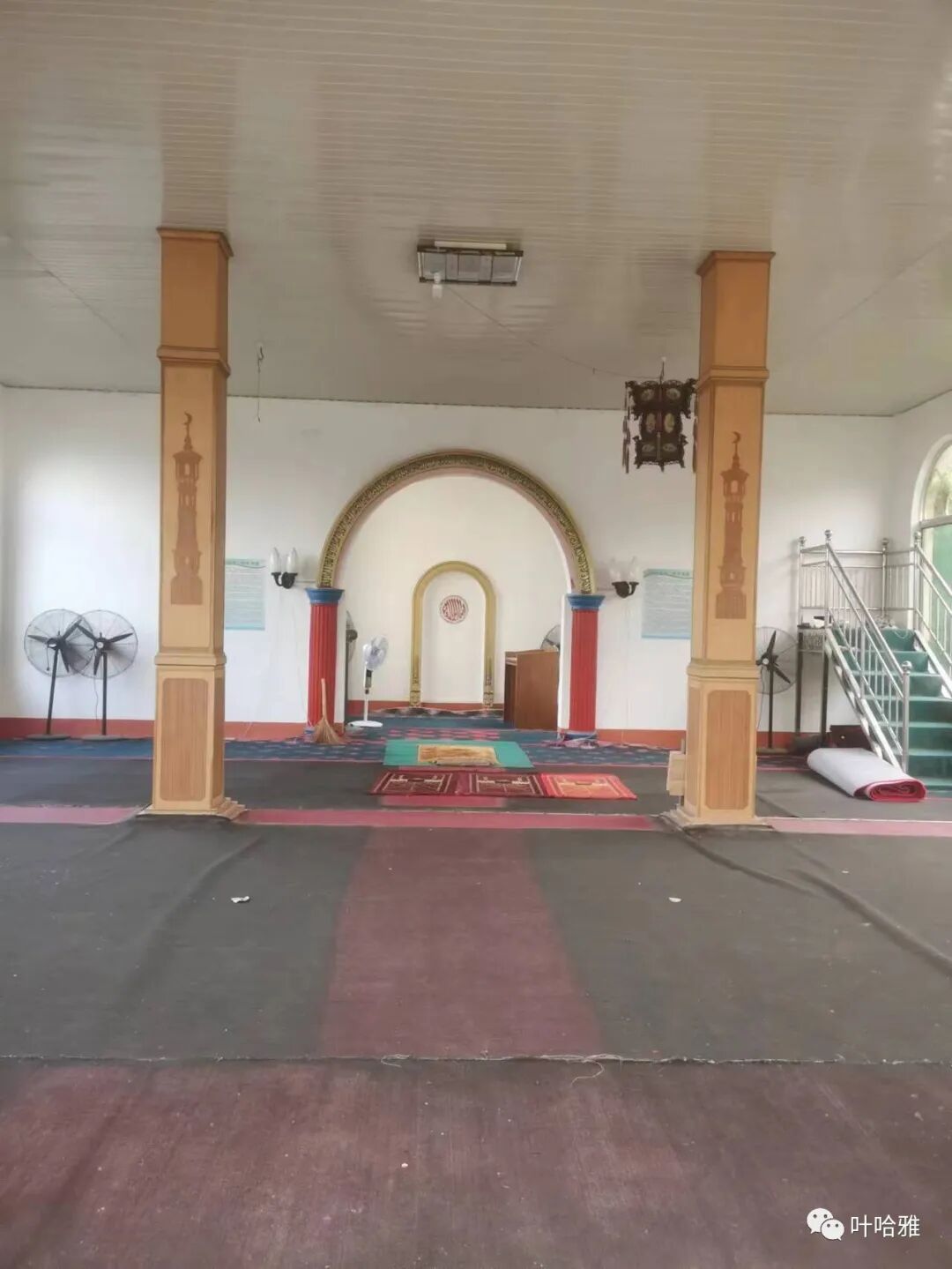
Xigaoping Mosque
Xigaoping Mosque in Guli Town sits in the northwest part of the old Xigaoping village. It was first built in the early Qing Dynasty and has been expanded and repaired many times since. When the mosque was first established, it had a main prayer hall with five rooms and two lecture halls to the north and south with three rooms each. An ancient cypress tree once stood inside the mosque, but it was cut down during the Cultural Revolution. The mosque was re-established in 1981. It underwent large-scale renovations in 1995 and 2005.
The mosque features a typical traditional Chinese courtyard style with a single-entry layout. It is 45 meters long and 35 meters wide. The prayer hall is 15 meters long and 6.5 meters wide. The rear hall is 4 meters long and 3.5 meters wide. The north lecture hall is 16 meters long and 8 meters wide. The south lecture hall is 18 meters long and 4.5 meters wide. Two stone tablets remain today: the 2005 Renovation Record and the List of Donors for the Mosque Construction on March 16, 1994, which was also set up in 2005.
Before the founding of the People's Republic of China, Imam Bai Anfu led the religious affairs at this mosque. After the founding of the People's Republic of China, Imams Yang Yuejun, Bai Anfu, Liu Qingyuan, Wang Xiuming, and Yu Guangwei served as leaders of religious affairs in succession. The mosque is currently managed by a mosque management committee, with Liu Guitian serving as the current director.
In 2008, the mosque was named a Model Mosque by Tai'an City. In 2009, it was awarded the title of Civilized Religious Activity Venue by Xintai City. In 2010, it was once again named a Model Mosque by Tai'an City.
Feicheng City
Houhuang Village Mosque
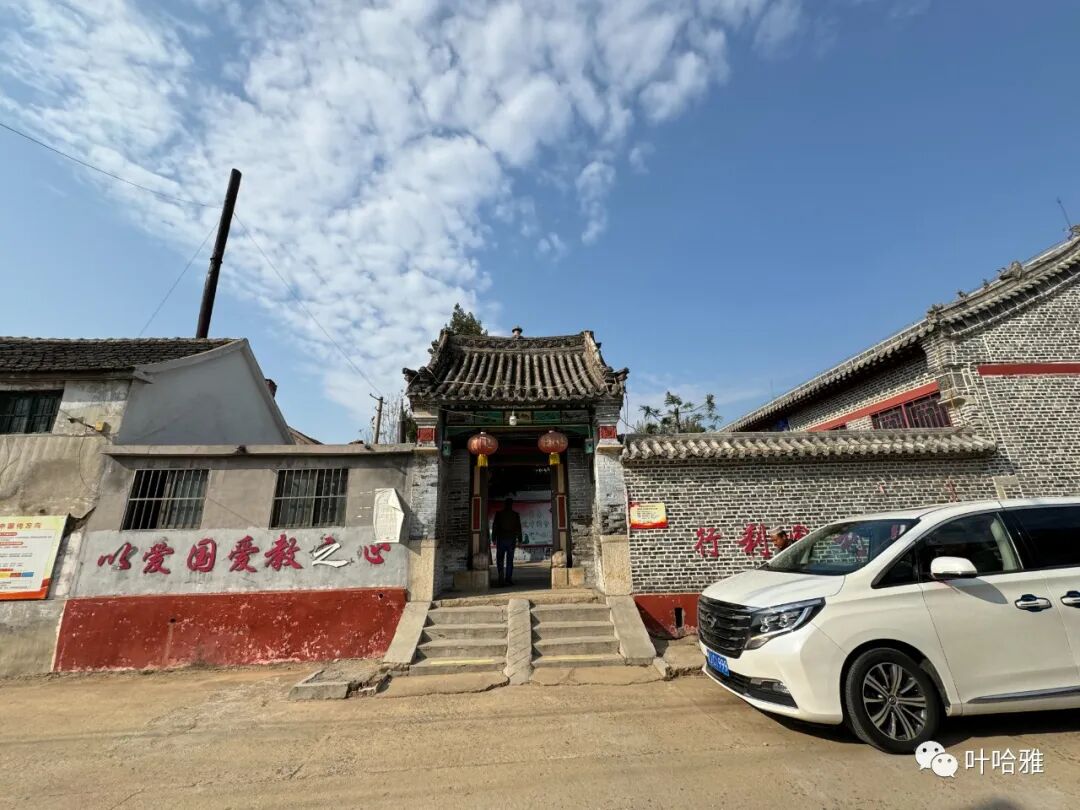
Houhuang Village Mosque in Bianyuan Town sits in the southwest corner of the village. It was built during the Ming Dynasty and has been repaired continuously since then. The mosque underwent seven large-scale renovations in 1747 (the 12th year of the Qianlong reign of the Qing Dynasty), 1809 (the 14th year of the Jiaqing reign), 1903 (the 30th year of the Guangxu reign), 1937 (the 26th year of the Republic of China), 1944 (the 33rd year of the Republic of China), 1984, and 2010.
The mosque features a Chinese palace-style architectural design and measures 45 meters long and 28 meters wide. The prayer hall has two sections, front and back, standing 9 meters high with two side rooms and a moon platform (yuetai) in front. The main hall is 17.2 meters long and 12.45 meters wide. The north lecture hall is 10 meters long and 8 meters wide. The south lecture hall is 15.2 meters long and 5.7 meters wide. The ablution room (shuiwu) is divided into separate areas for men and women. The men's room is 15 meters long and 6.2 meters wide. The women's room is 8.8 meters long and 5.8 meters wide. There are four stone tablets here: the 1747 Record of Rebuilding the Mosque Moon Platform Railing Rooms from the Qianlong era, the 1809 Record of Rebuilding the North and South Lecture Halls from the Jiaqing era, the 1910 Record of Rebuilding the Huangjiazhuang Mosque from the Xuantong era, and the 2011 Record of Rebuilding the Main Prayer Hall.
The mosque's religious affairs have been led by imams including Zhang, Zhang Baotai, Ma Yonghui, Tang Qinglin, Wang Changshun, Ma Tongyun, Yang Fulian, Xu Changcun, Yang Baojun, Zhang Shugang, and Ma Gang. The mosque has trained many religious scholars, including imams Zhang Xuan, Xu Shihe, Xu Jiben, Xu Jiwen, Xu Changchun, Xu Changzhi, Xu Jiwu, Xu Changshan, Zhang Baotai, Ma Wenli, Yang Guotai, Yang Maodou, Xu Changzeng, Yang Suo, Xu Bin, Ding Jian, Bai Yanbing, Ding Junjian, Ding Rongfu, Ding Jianhua, Yang Libiao, Xu Yongqiang, and Yang Chaoxuan. It is currently managed by the mosque's democratic management committee, with Ding Junqian, Xu Weihua, Ding Junfu, Ding Ruqing, and Yang Wei serving as directors. Religious activities are carried out according to the law. The mosque keeps a white porcelain incense burner from the Qing Dynasty. The mosque values education, and every imam has held classes to train many students (hailifan).
In 2008, the mosque was named a Model Mosque by Tai'an City. It was named a Model Mosque by Tai'an City again in 2014.
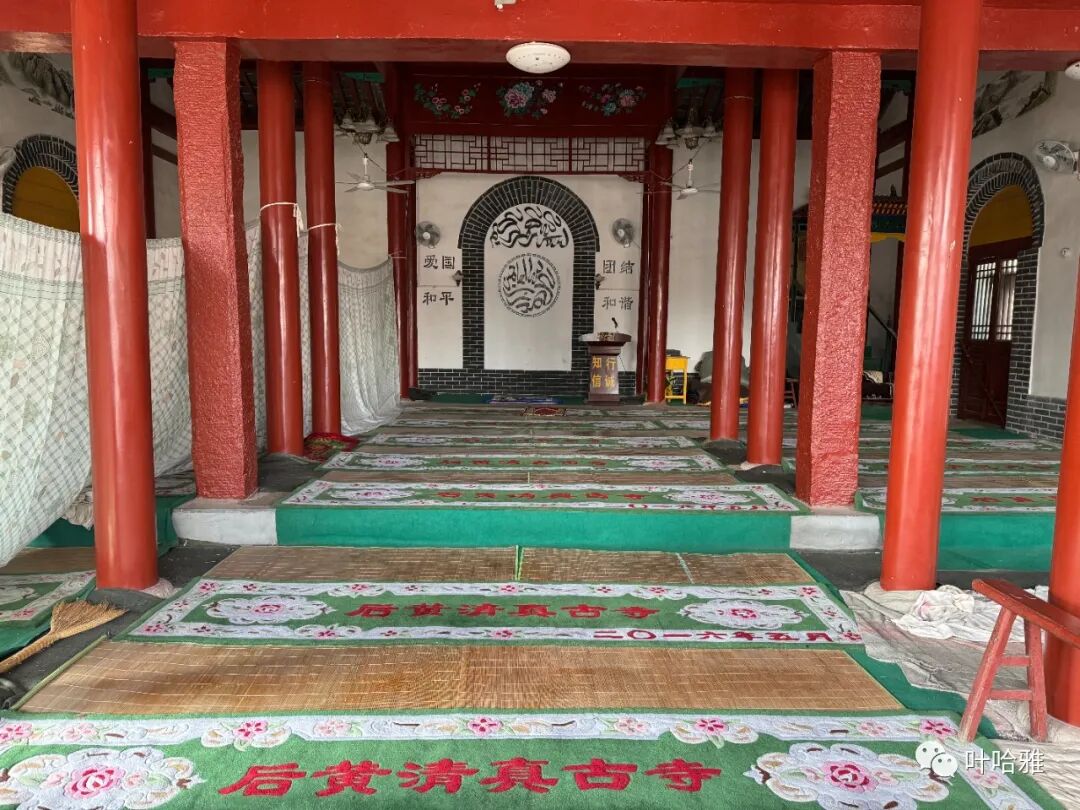
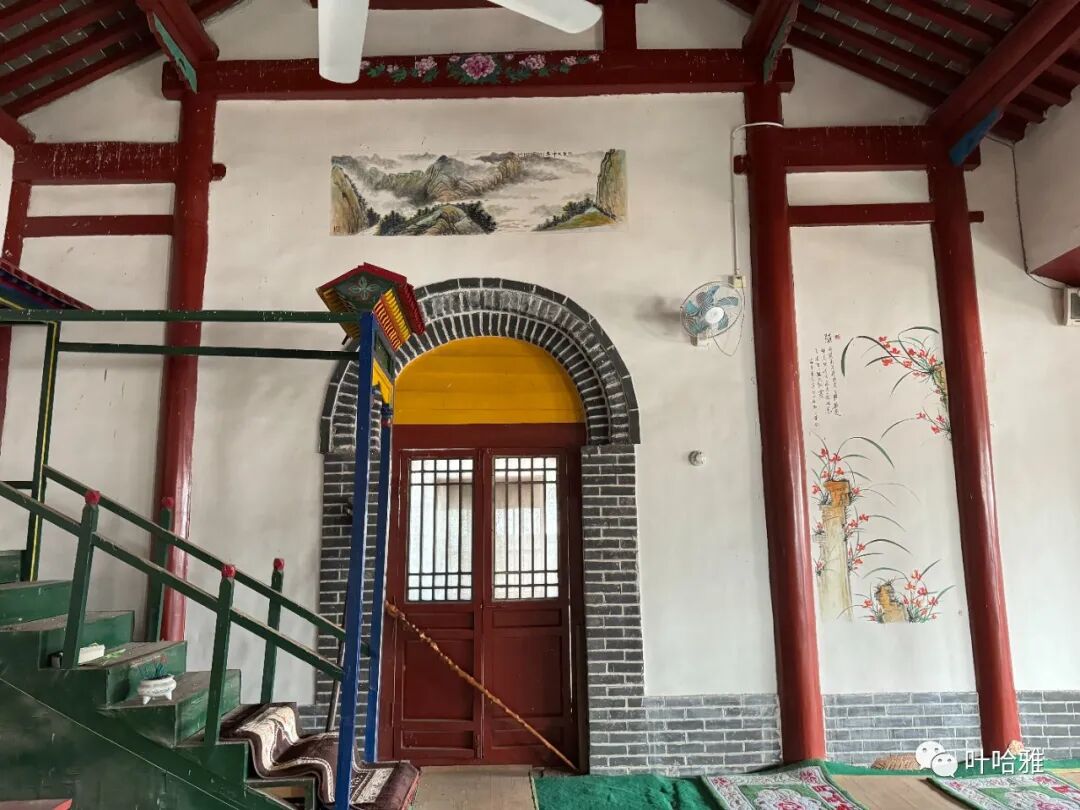
Qianhuang Village Mosque
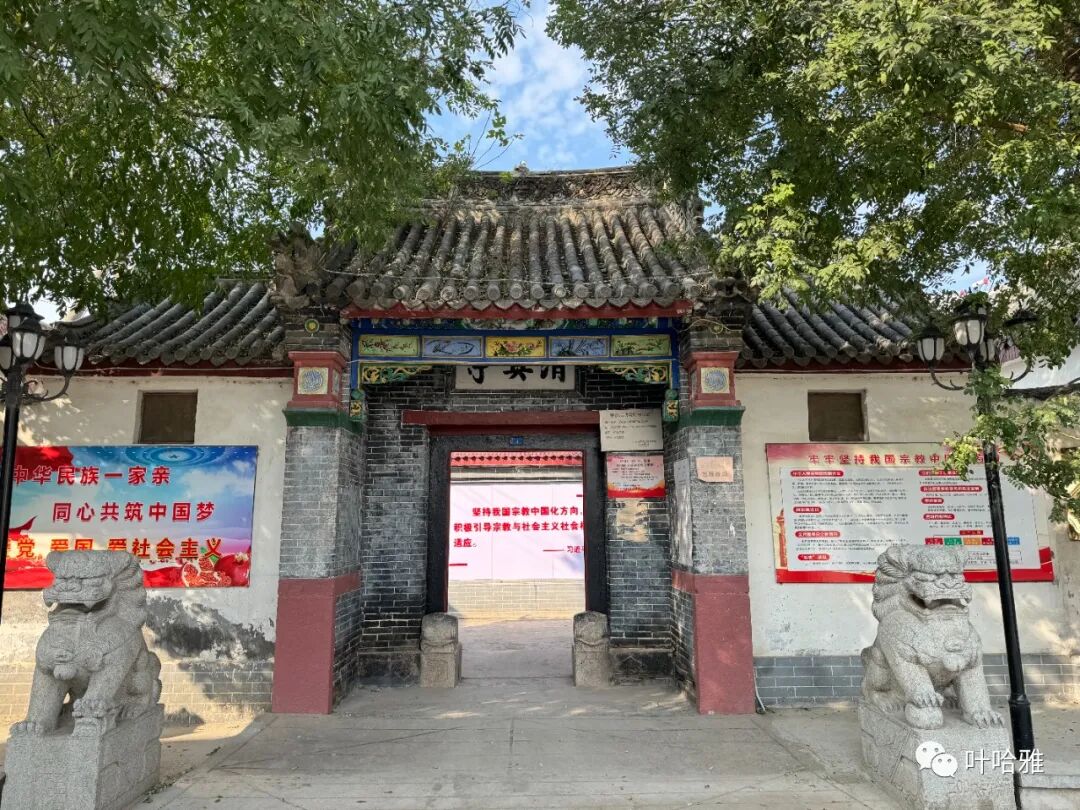
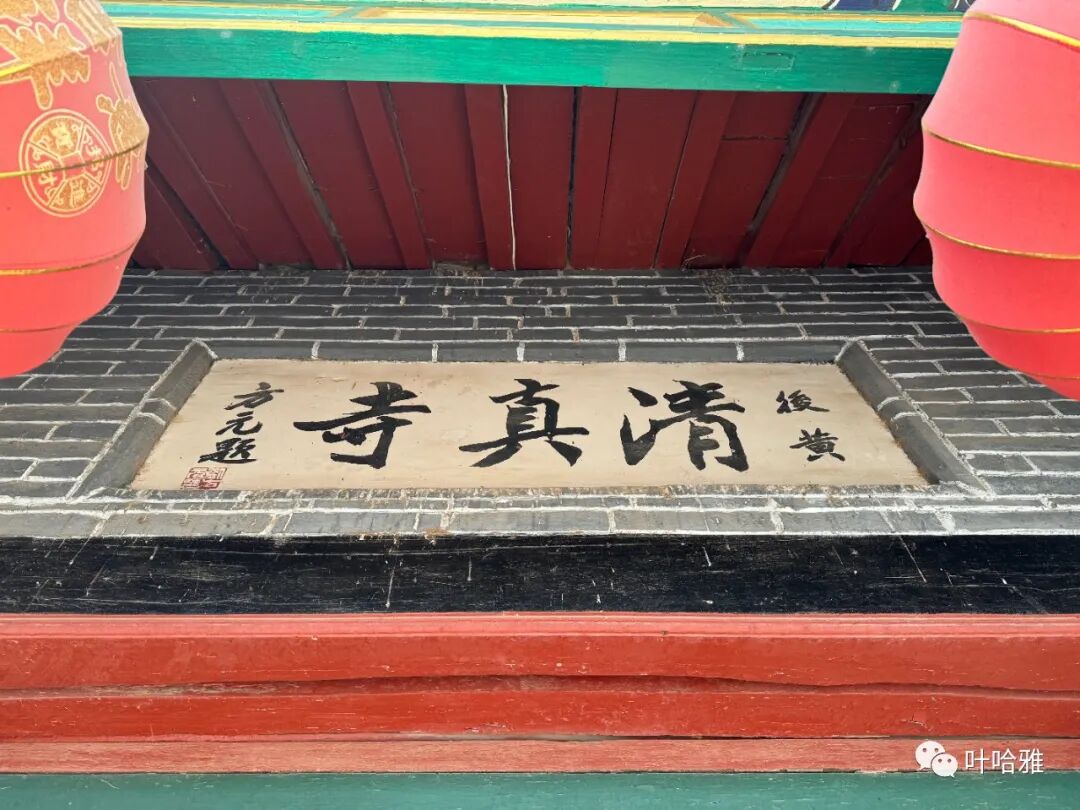
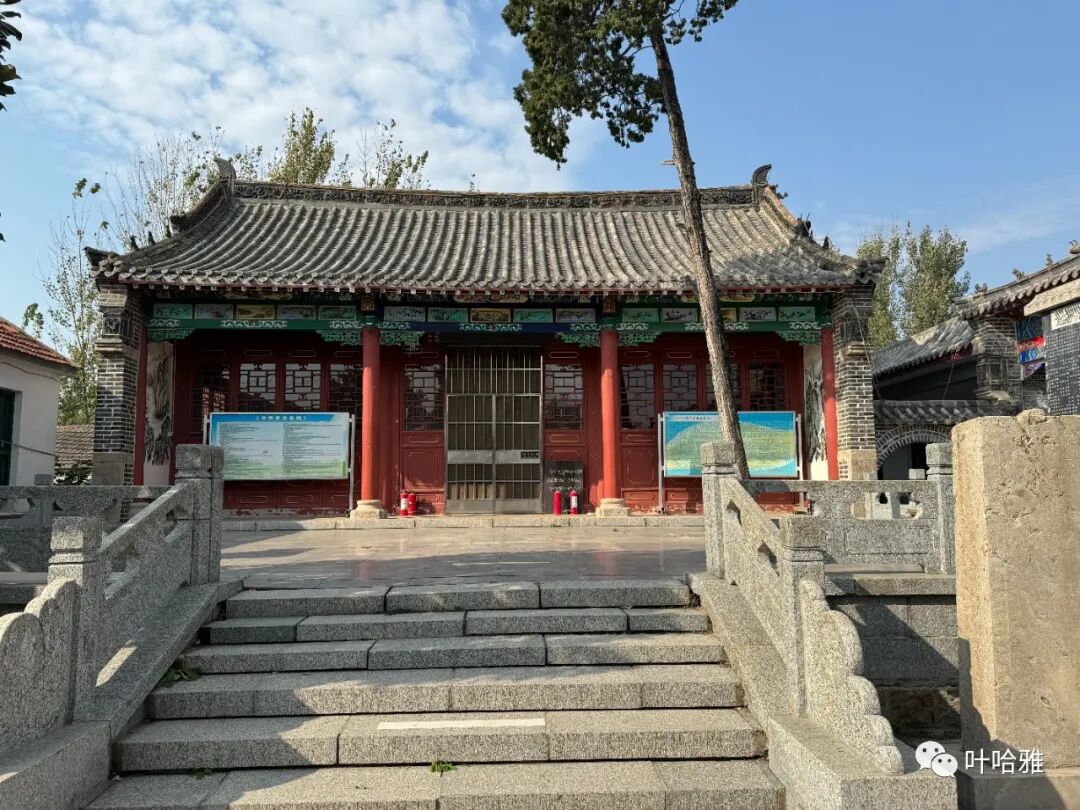
Qianhuang Village Mosque in Bianyuan Town sits at the west end of the village. It was first built during the Guangxu reign of the Qing Dynasty (1875-1906) and has been repaired many times since. In the third year of the Xuantong reign (1911), elder Zhang Shi'en donated over 3.6 mu of land, which became the current site. In 1924, four rooms were built for the south lecture hall. In 1946, elder Wang Yuduo from the Taihe firm in Qianhuang Village led a fundraising effort, and the five-room main prayer hall was finished in 1947. Large-scale repairs took place in 1991, 2000, 2002, 2004, and 2014.
The mosque is a single-courtyard building in the classic Chinese palace style. The main prayer hall has front and back sections and covers 250 square meters. The north lecture hall covers 107 square meters, the south lecture hall covers 98 square meters, and the water room covers 88 square meters. There are four stone tablets here: the Huangjiazhuang Ding Family Genealogy Tablet from 1741 (Qianlong year 6), the New Ablution Room Tablet from 2000, the Mosque Inscription from 2003, and the South Lecture Hall Reconstruction Tablet from 2004.
The mosque's religious affairs have been led by imams including Yang Guotai, Yang Chaoxuan, Mi Shuting, Ma Yongcai, Zhao Rongsheng, Zhan Qinggui, Dong Zhongqing, Mi Shuangzhong, Mi Shuangliang, Li Huaiguo, Wang Xiuming, Chen Xingwu, Wang Huaiyu, Jin Haixue, Wang Jingdou, Wang Xiuming, and Ma Jundong. Before the founding of the People's Republic of China, the mosque was managed by village elders including Ding Yuxi, Wang Wensheng, Wang Guanxi, Wang Guanxing, Wang Jixian, Bai Yuhe, Zhang Juntang, Wang Jichen, Ding Yang, Wang Guanqi, Zhang Baoshan, Zhang Baodang, and Wang Jixin. After the founding of the People's Republic of China, it was managed by village elders including Ding Yanzheng, Ding Yanyang, Wang Guanjiang, Ding Huaixin, Zhang Yongquan, Wang Xiuzhong, Ma Hongzhang, Wang Xiucai, Bai Tangyou, Zhang Yanlong, Wang Xiutong, Wang Jingshui, Ding Huaikui, Wang Jingtao, Wang Jingliang, Ma Xianmin, and Wang Zhongmin. It is now managed by the mosque's democratic management committee, with Ding Yanzheng, Ma Hongzhang, Wang Jingshui, and Ding Huaikui serving as directors.
The mosque once held cultural relics like celadon incense burners and vases, along with thirty handwritten copies of the Quran, but these were destroyed or lost during the Great Leap Forward and the Cultural Revolution.
In 2008, the mosque was named a Model Mosque by Tai'an City. In 2010, it was named a provincial-level Harmonious Religious Activity Site. In 2011, it was designated as a Feicheng City Cultural Relic Protection Unit.
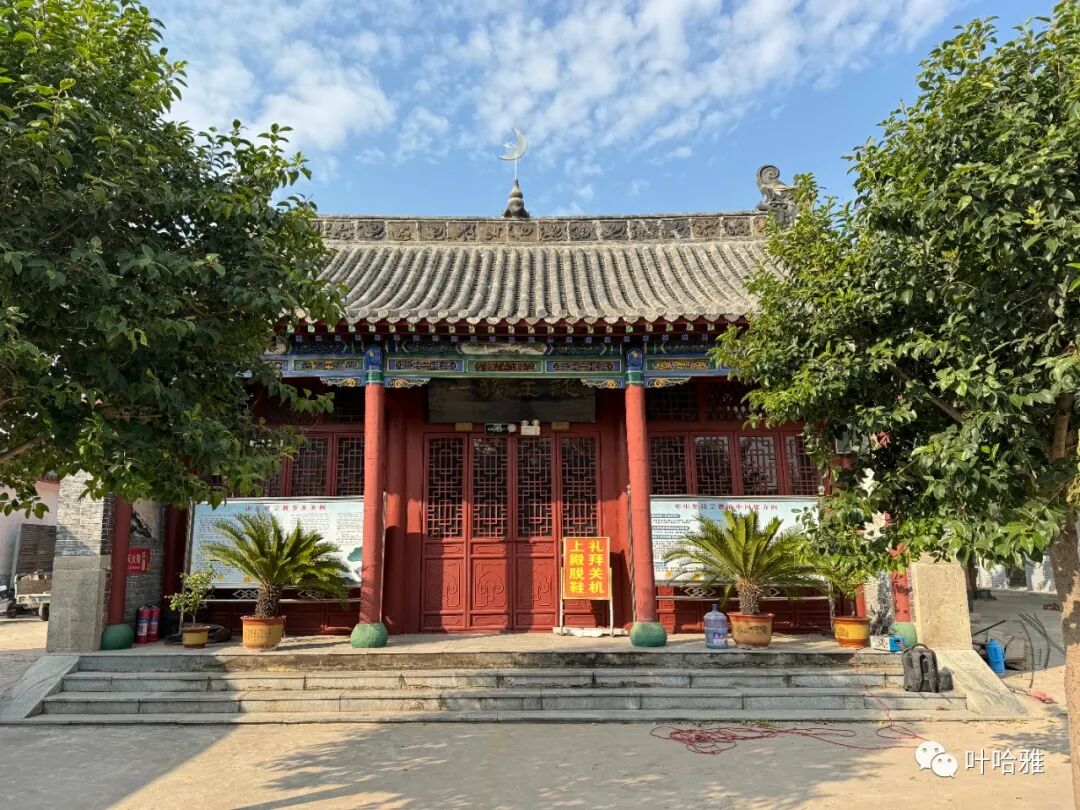
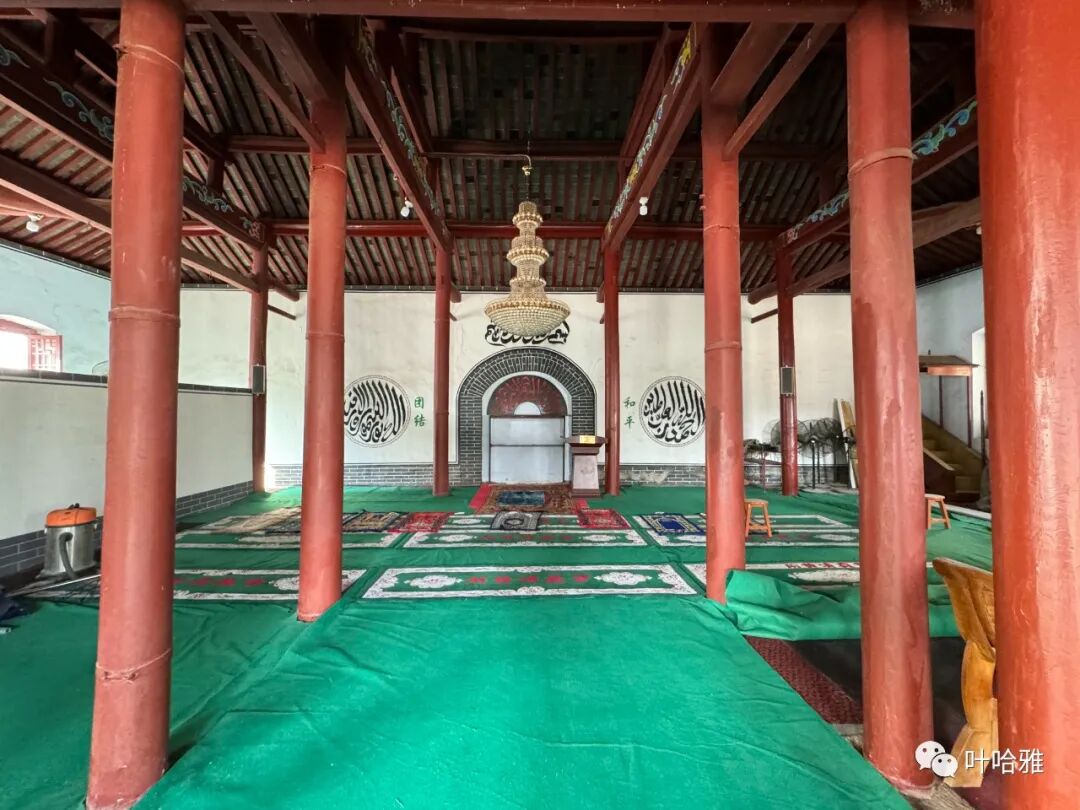
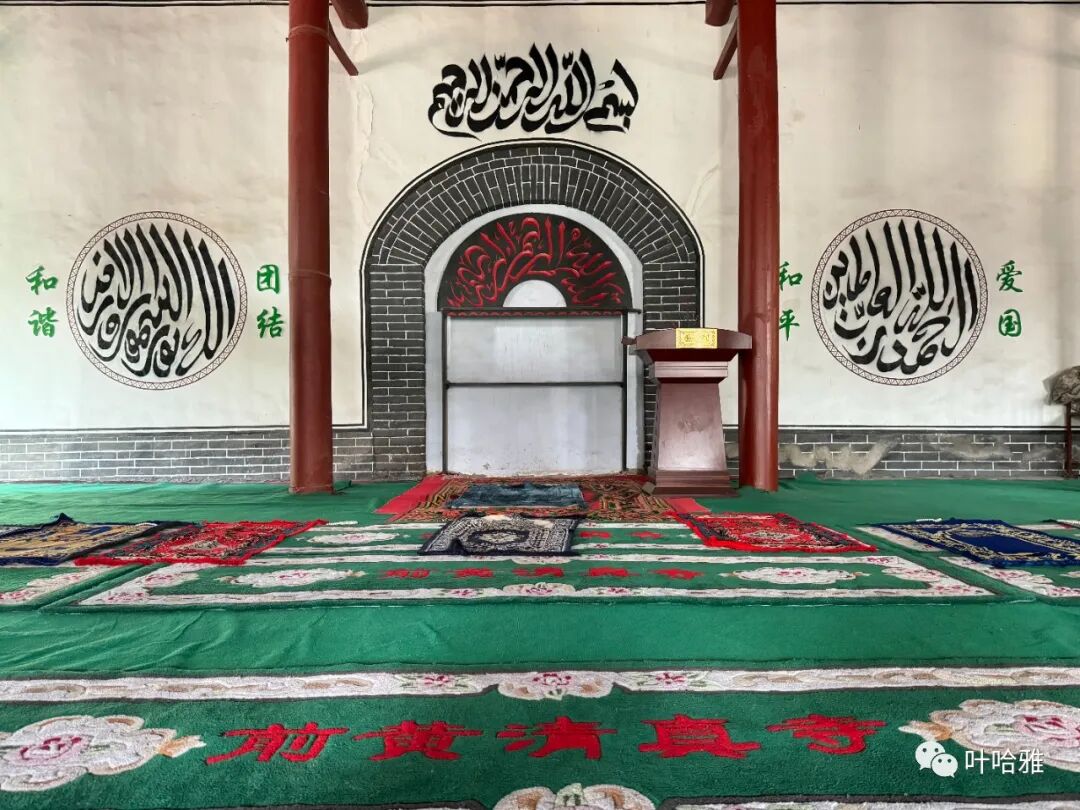
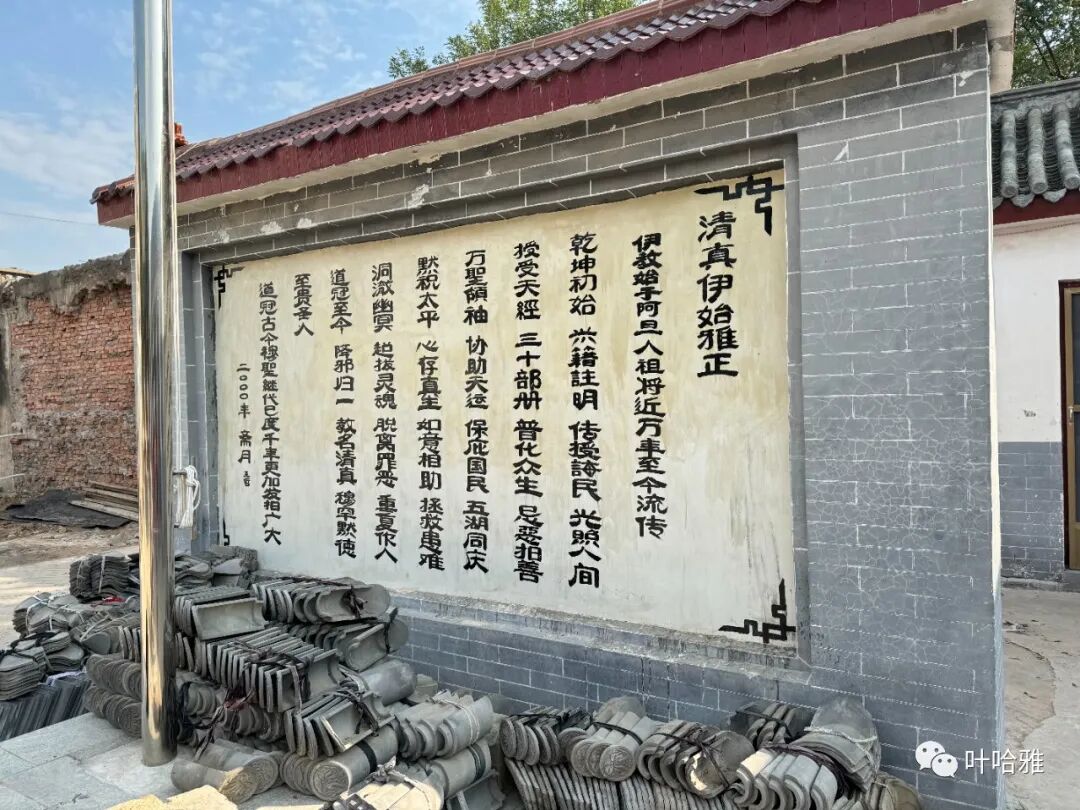
Shengjiazhuang Mosque.
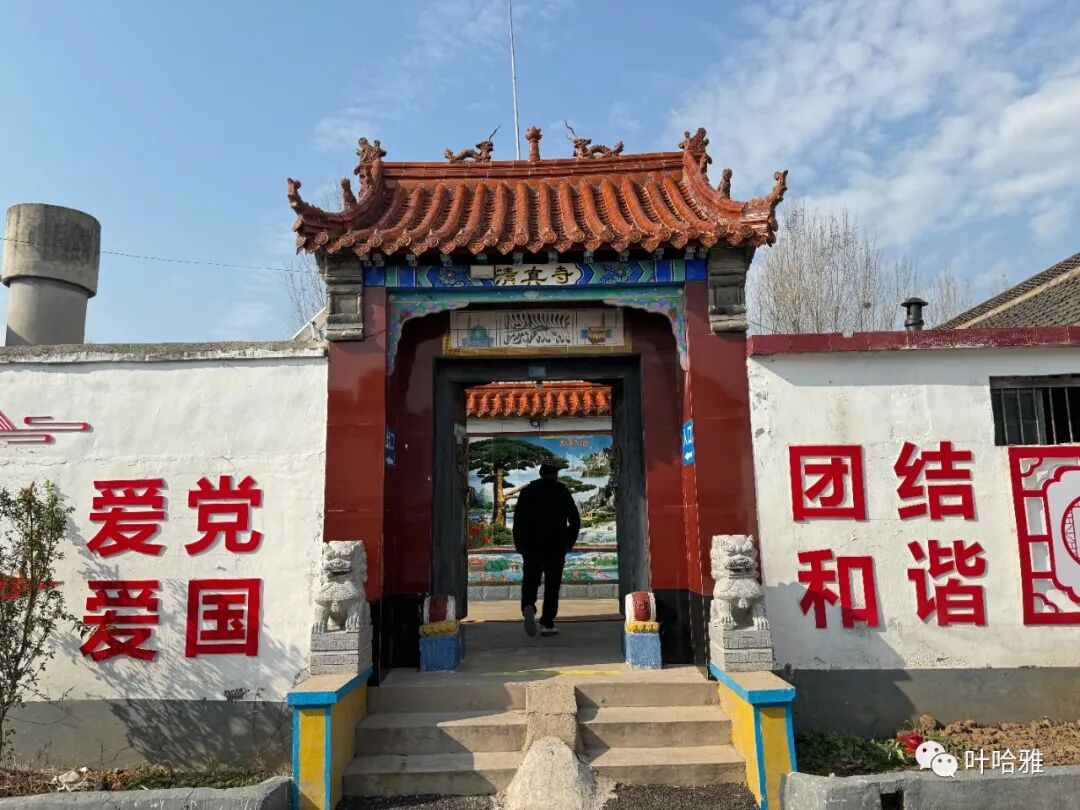
Shengjiazhuang Mosque in Anjiazhuang Town is located in the northwest corner of the village. It was first built in the early Qing Dynasty and has been renovated many times since. The mosque is built in the style of a Chinese palace, measuring 34 meters long and 30 meters wide. The prayer hall consists of a front and back section, and the main hall features a raised platform (yuetai) that is 8 meters high, 14 meters long, and 10 meters wide. The north lecture hall is 21 meters long and 7 meters wide. The south lecture hall is 11 meters long and 5 meters wide. The water room is 11 meters long and 5 meters wide. There are 7 stone tablets remaining, including the 1929 (the 18th year of the Republic of China) Tablet for the Reconstruction of the Mosque and 4 newer tablets honoring donors. An ancient stone tablet stands in front of the main hall, but the inscription is badly damaged and hard to read.
The mosque's religious affairs have been led by imams including Yang Maoxiu, Wu Mingcai, Li Jigui, and Wang Hualei. It is currently managed by the Mosque Democratic Management Committee, with Li Zhaoji, Mi Qingguo, and Yang Dengfa serving as directors.
In 2009, the mosque was named a provincial-level Harmonious Religious Activity Site. It won the title of Model Mosque of Tai'an City in 2010 and again in 2014.
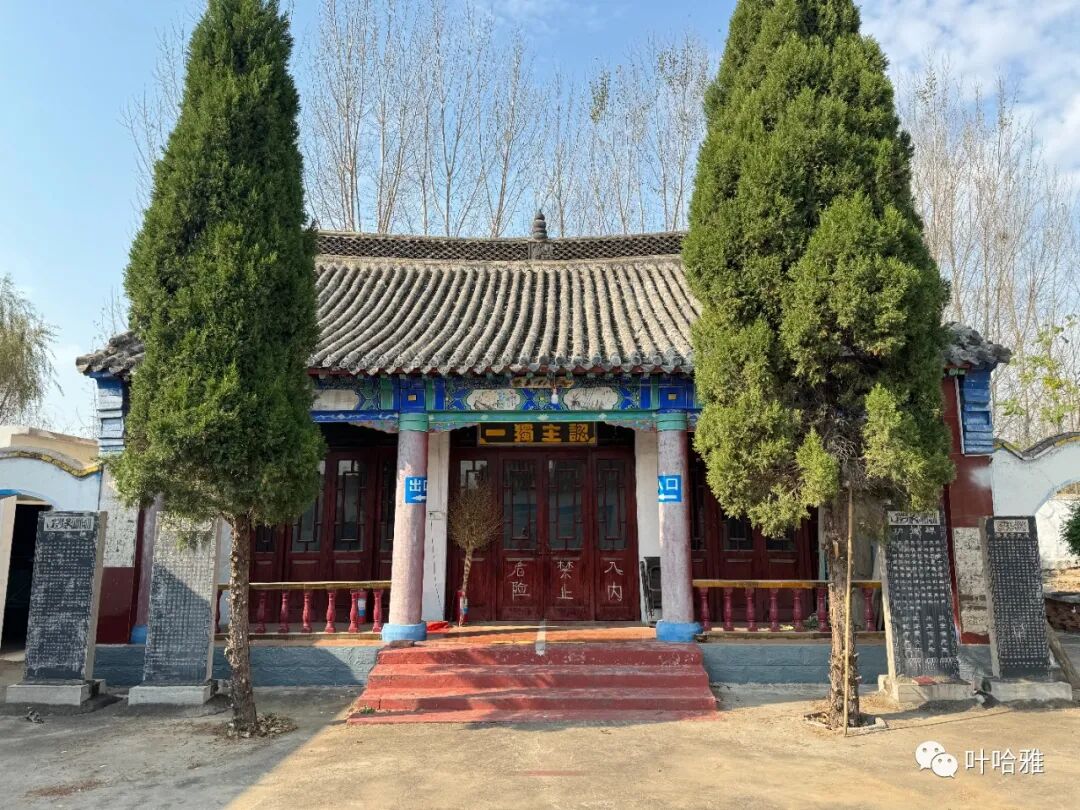
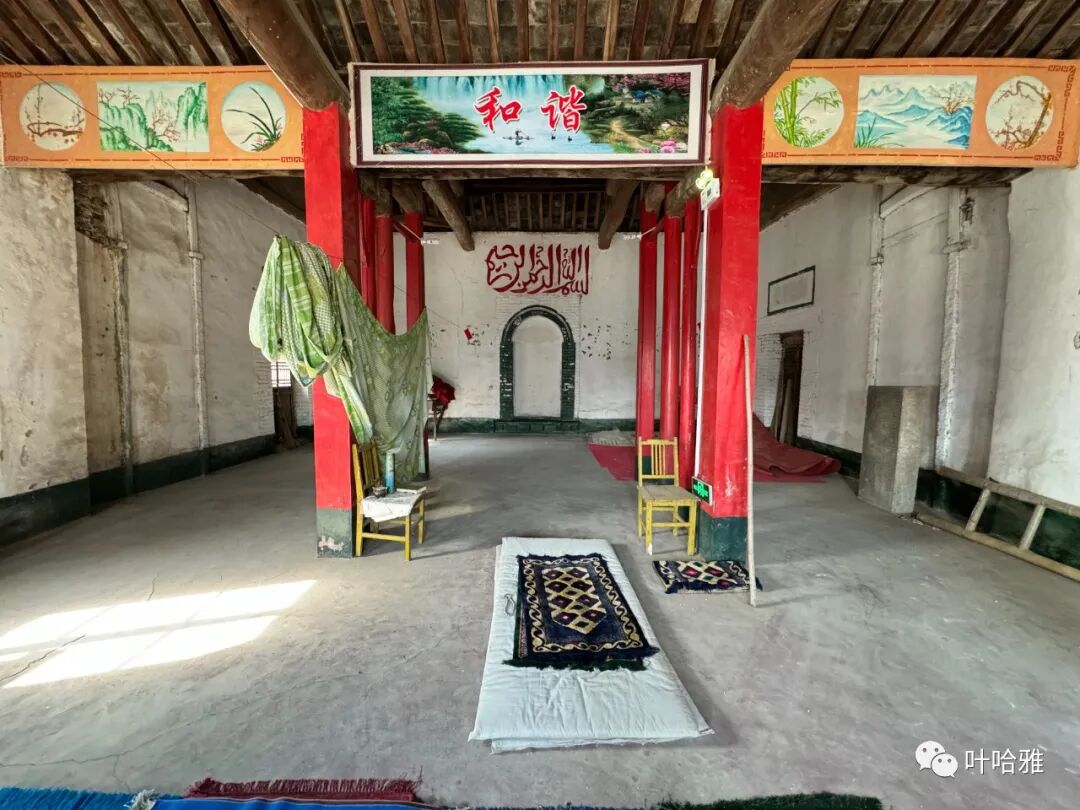
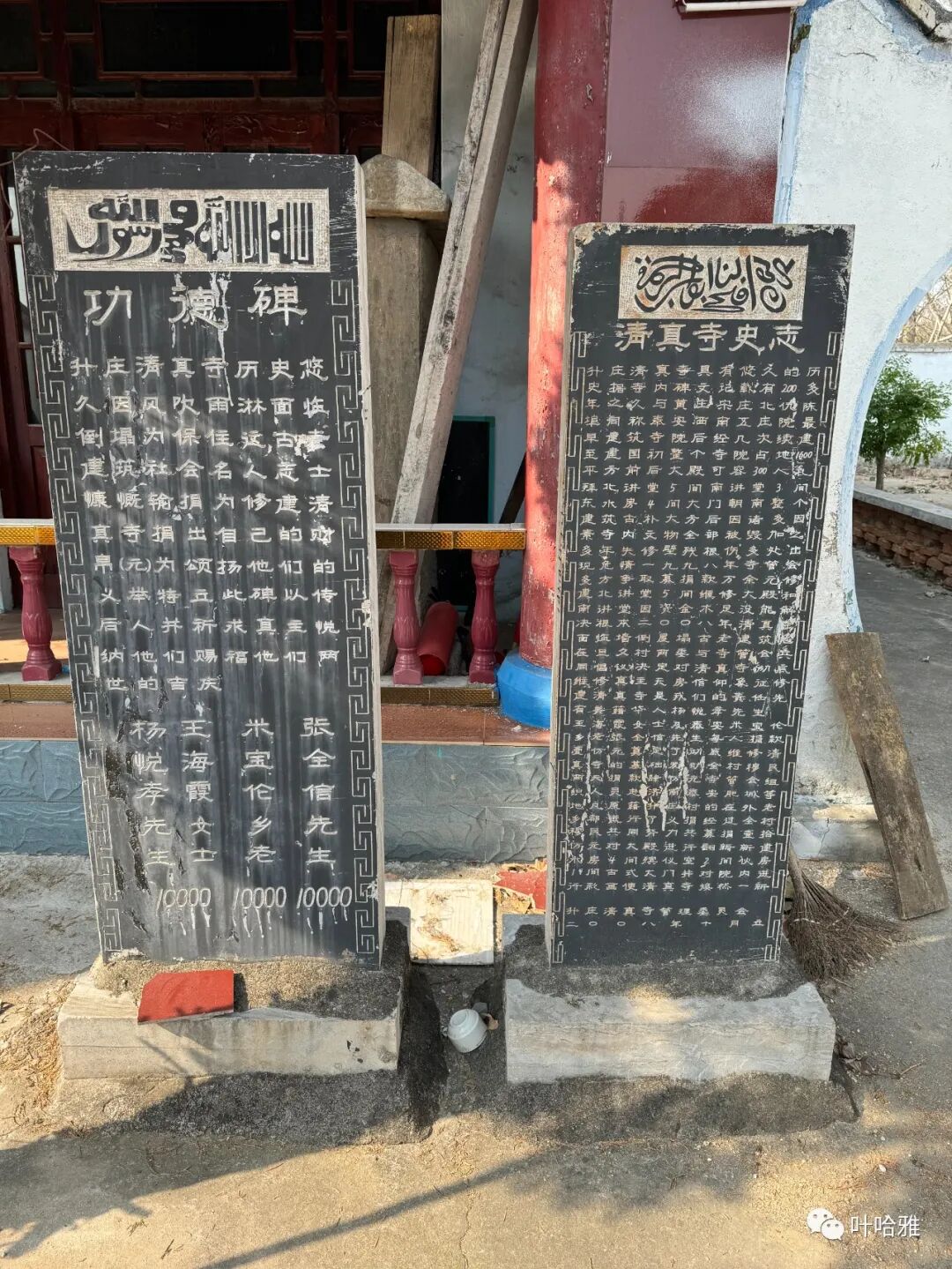
Beiqiu Mosque
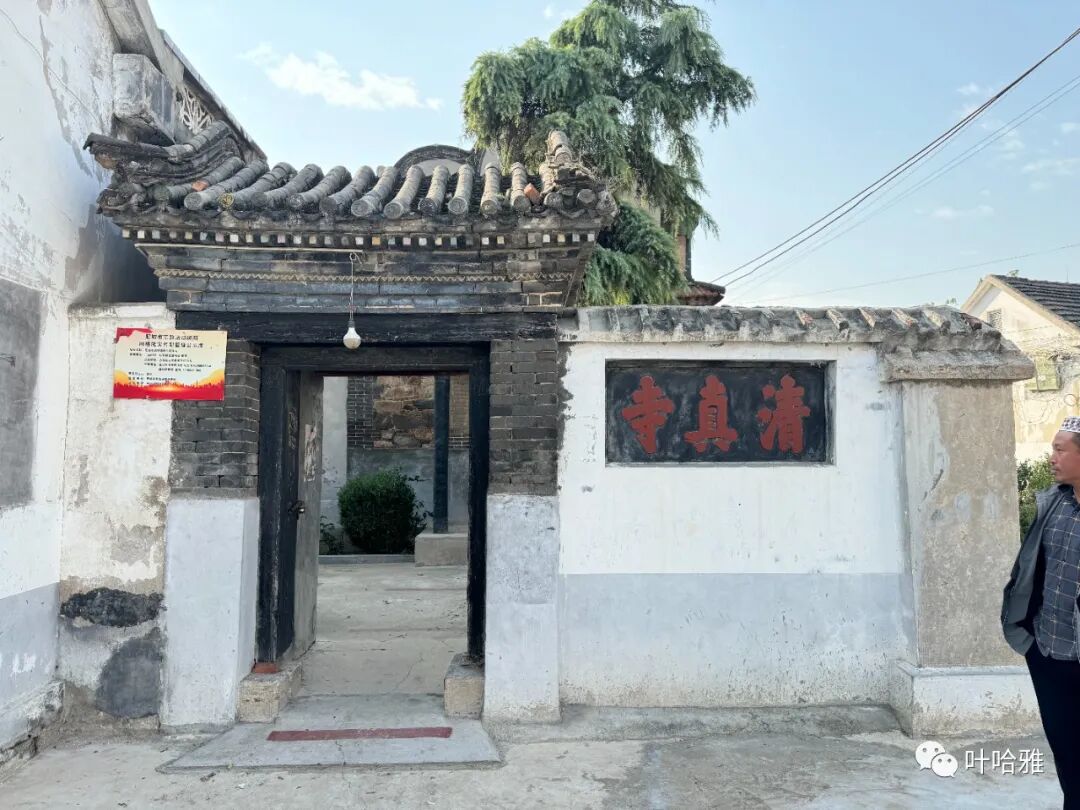
Located in the eastern half of Beiqiu Village in Bianyuan Town, the mosque was first built between the late Ming and early Qing dynasties and has been expanded several times since. The main hall was restored in the 12th year of the Qianlong reign of the Qing Dynasty (1747). The north lecture hall was rebuilt in 1991. In 2015, the south lecture hall, the water room, and the courtyard were built.
The mosque is built in the style of a Chinese palace, measuring 37.3 meters long and 26.8 meters wide. The prayer hall is a double-layered structure divided into a front hall and a back hall, with side rooms attached to the main hall and a moon terrace (yuetai) in front that is 8.5 meters long and 23.5 meters wide. The north lecture hall is 5 meters long and 17.8 meters wide. The south lecture hall is 5 meters long and 8 meters wide. The water room is 5 meters long and 19 meters wide. The mosque includes a living area for the imam. There are five stone tablets remaining, including the "Stele Record of the Mosque Restoration" from the 12th year of the Qianlong reign (1747), the "Mosque Prohibition Stele" from the Xuantong reign (1909-1911), the "Stele Record of the North Lecture Hall Reconstruction" from 1991, and the "Stele Record of the South Lecture Hall and Water Room Reconstruction" from 2015.
Imam Ding Ruhu currently oversees the religious affairs. In the past, village elders worked with the mosque's imam to manage affairs, with Xu Huali from the Daoguang reign of the Qing Dynasty (1820-1850) serving as a representative example. The mosque is now managed by a democratic management committee, with Liu Yuyuan, Ding Yongchang, Ding Yongdui, and Ding Xianquan serving as directors in succession. The mosque currently houses a copper water pitcher (tangping) dating back to the late Ming and early Qing dynasties.
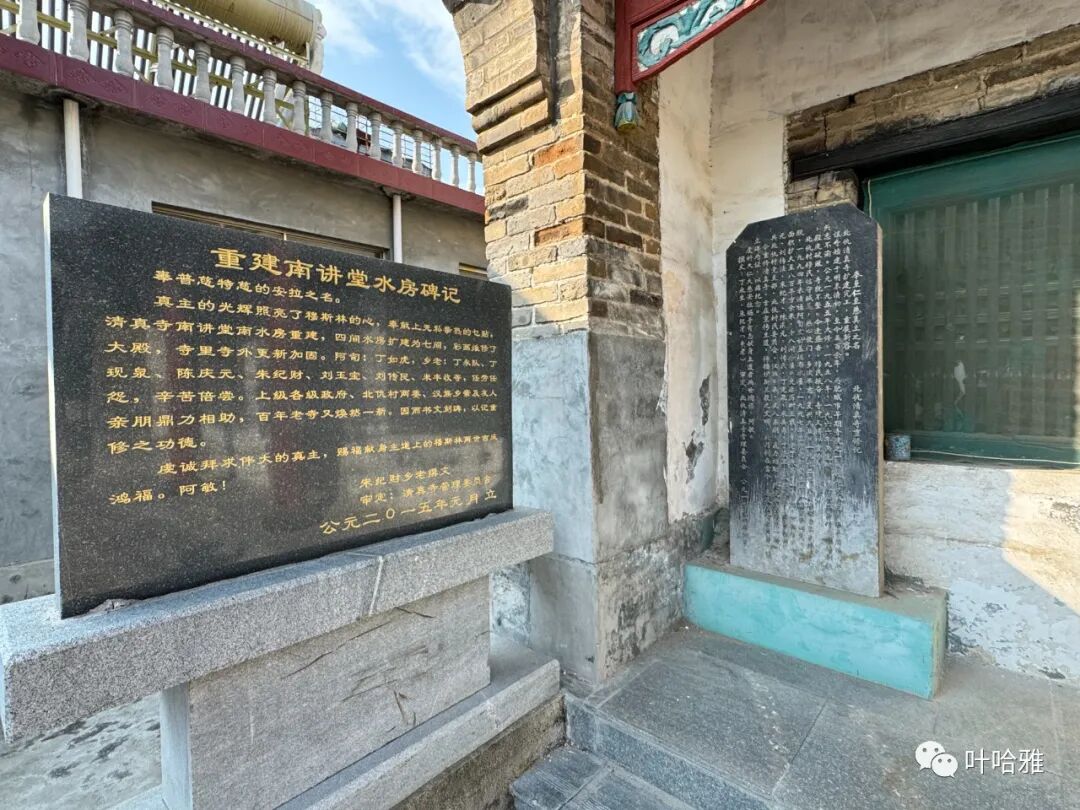
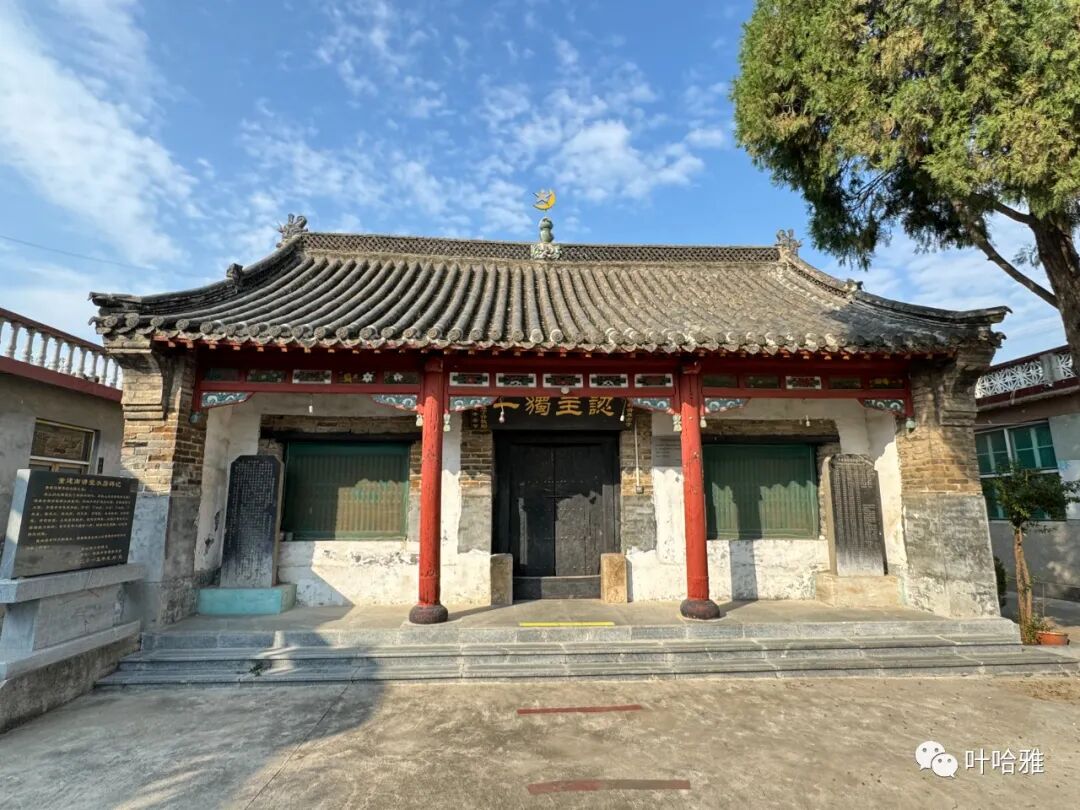
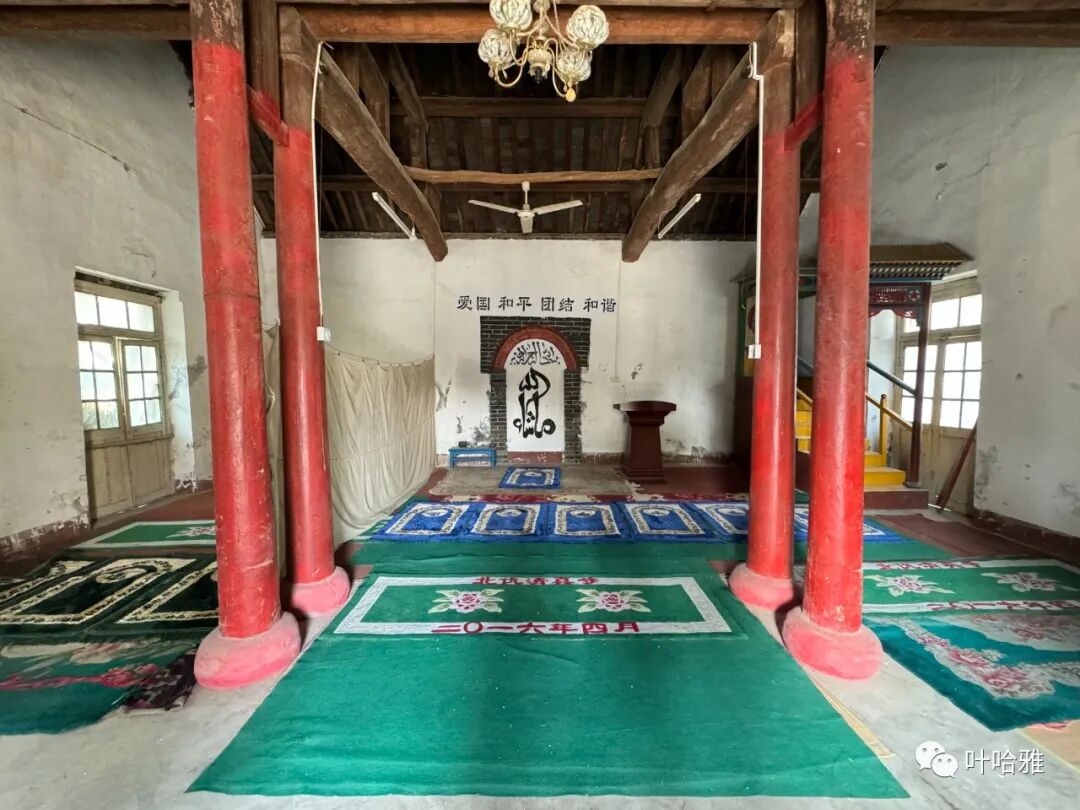
Songzhuang Mosque
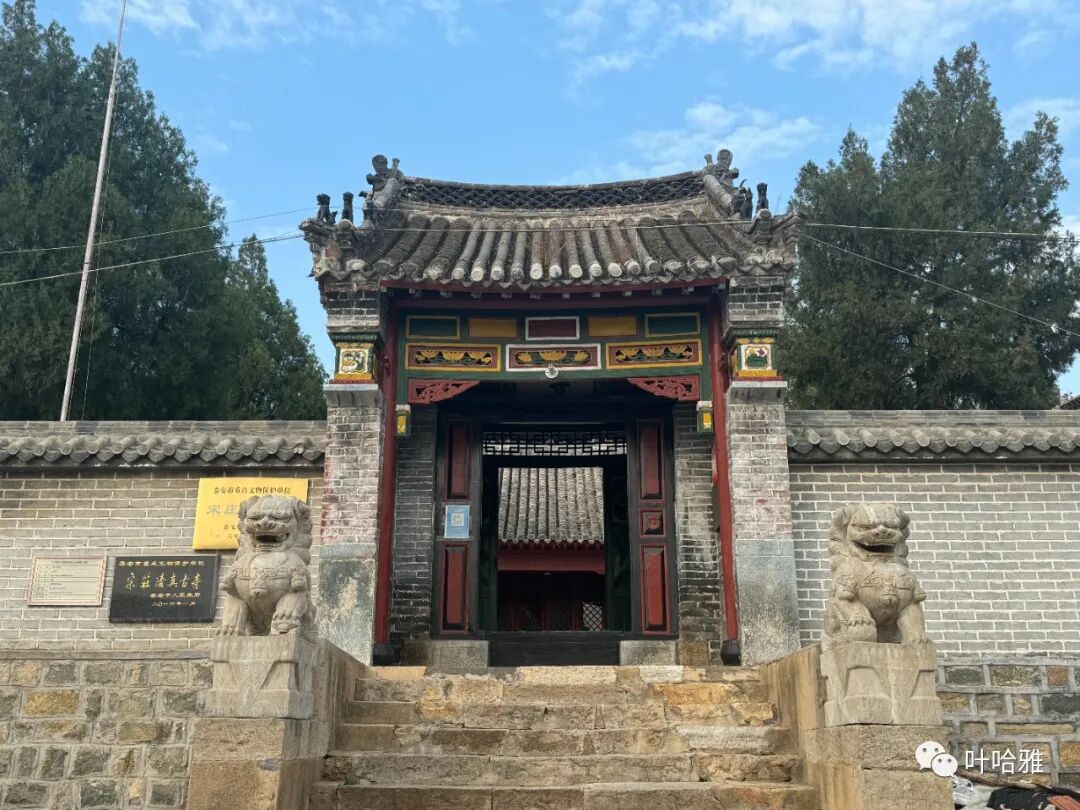
The Songzhuang Village Mosque in Bianyuan Town is located at the west end of the village. It is said to have been built in the late Ming and early Qing dynasties and has been renovated continuously since then. Before the founding of the People's Republic of China, there were four major renovations, with the most significant ones occurring in the tenth year of the Jiaqing reign (1805), the seventeenth year of the Daoguang reign (1837), the twenty-sixth year of the Guangxu reign (1900), and the fifteenth year of the Republic of China (1926). Since the founding of the People's Republic of China, it has been repaired many times, including the 2013 reconstruction of four ablution rooms (shuifang), two warehouses, and three southern lecture halls.
The mosque is built in the style of a Chinese palace, measuring 36 meters long and 36 meters wide. The prayer hall is 15.6 meters long and 11.3 meters wide, and the northern lecture hall is 18.3 meters long and 5.4 meters wide. The southern lecture hall is 15.7 meters long and 5 meters wide. The water room is 12 meters long and 5 meters wide. There are five stone tablets remaining, including the Stele for the Reconstruction of the Mosque from the nineteenth year of the Daoguang reign (1839), the Stele Record for the Reconstruction of the Mosque from the twenty-sixth year of the Guangxu reign (1900), the Preface Stele for the Reconstruction of the Mosque from the fifteenth year of the Republic of China (1926), and the Preface to the Reconstruction of the Songzhuang Ancient Mosque.
Historically, the mosque trained imams such as Ma Huanwen and Sha Xianzhang. Over the past twenty years or so, imams including Li Zhongguo and Wang Huarong have led the religious affairs. The mosque is currently managed by a democratic management committee, with Zuo Guangwen, Ma Yumin, Bai Youting, Ma Yujun, and Yang Changgang serving as directors in succession.
In 2009, the mosque was awarded the provincial title of Harmonious Religious Activity Venue. In 2010, it received the title of Model Mosque from Tai'an City. In 2016, it was designated as a Cultural Relic Protection Unit of Tai'an City.
Chahedian Mosque
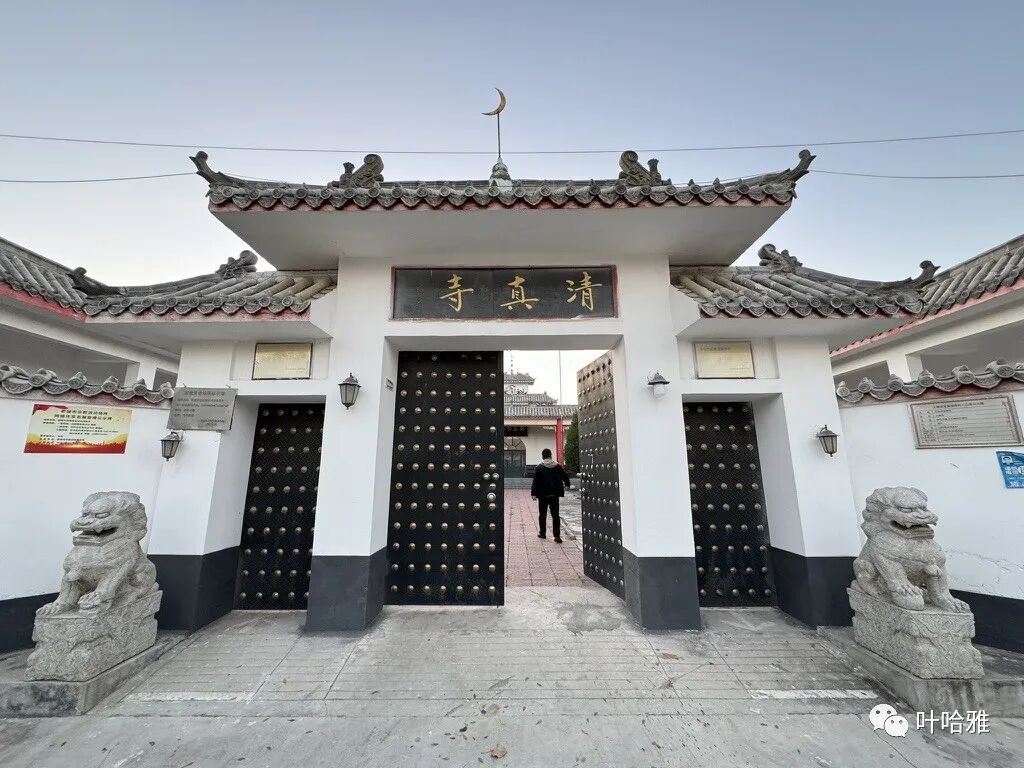
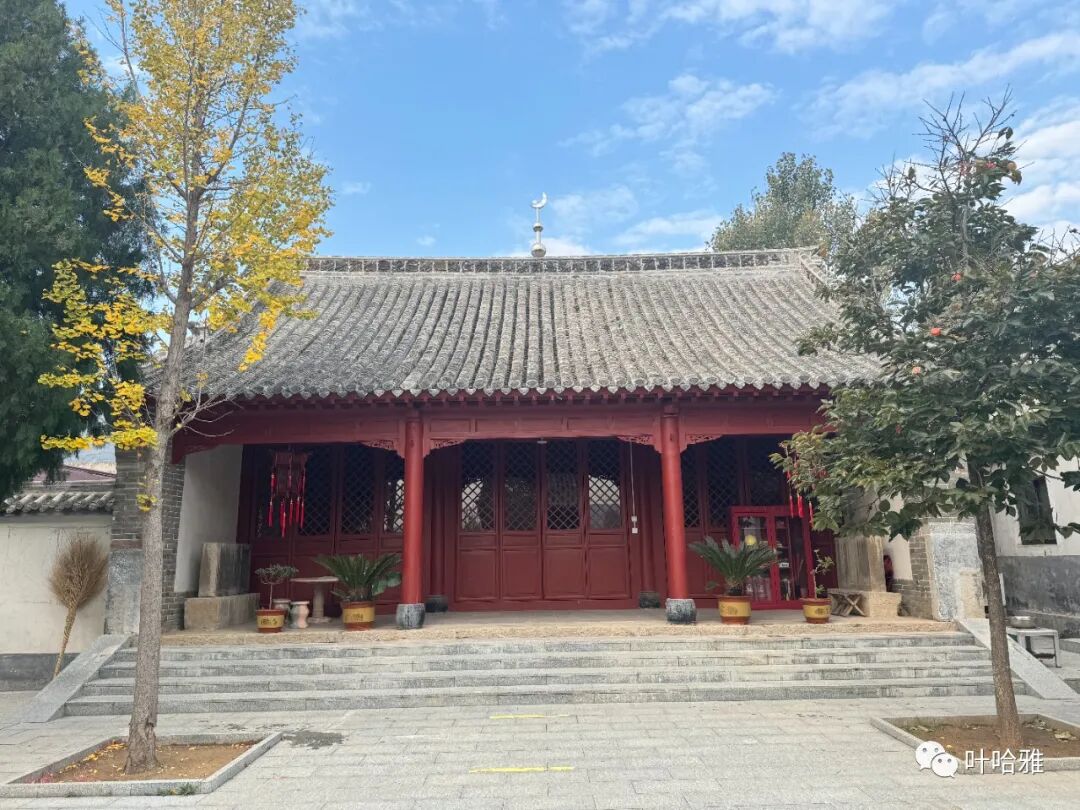
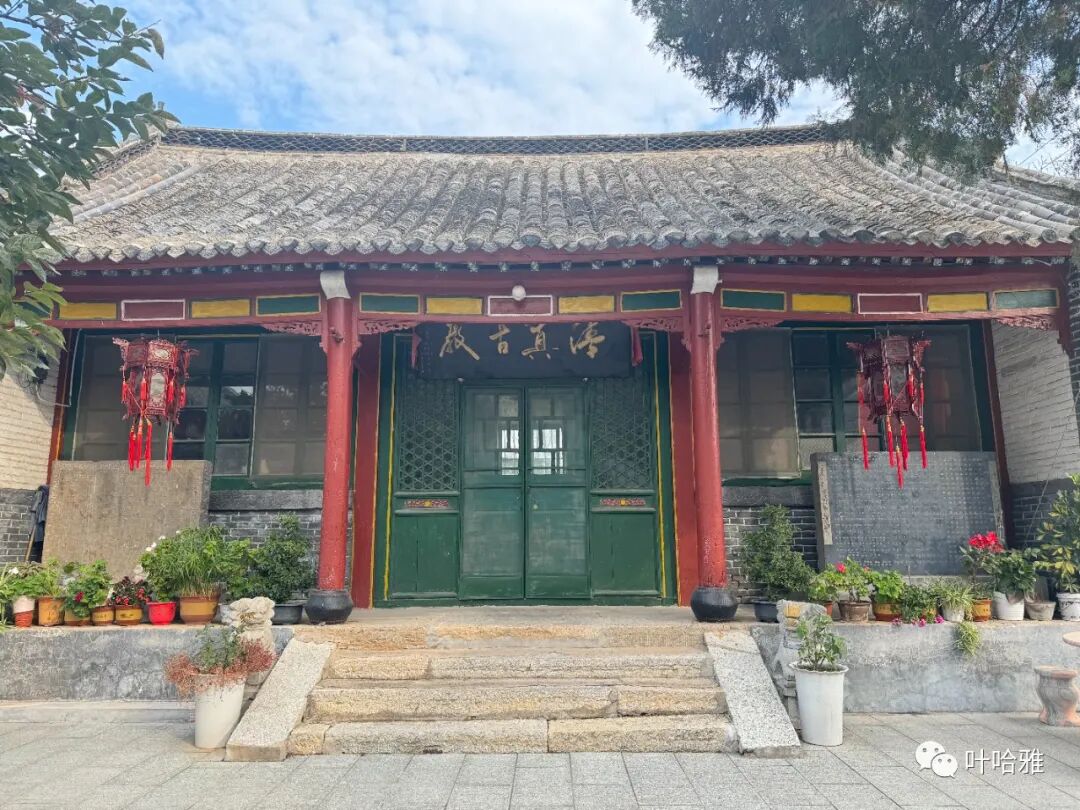
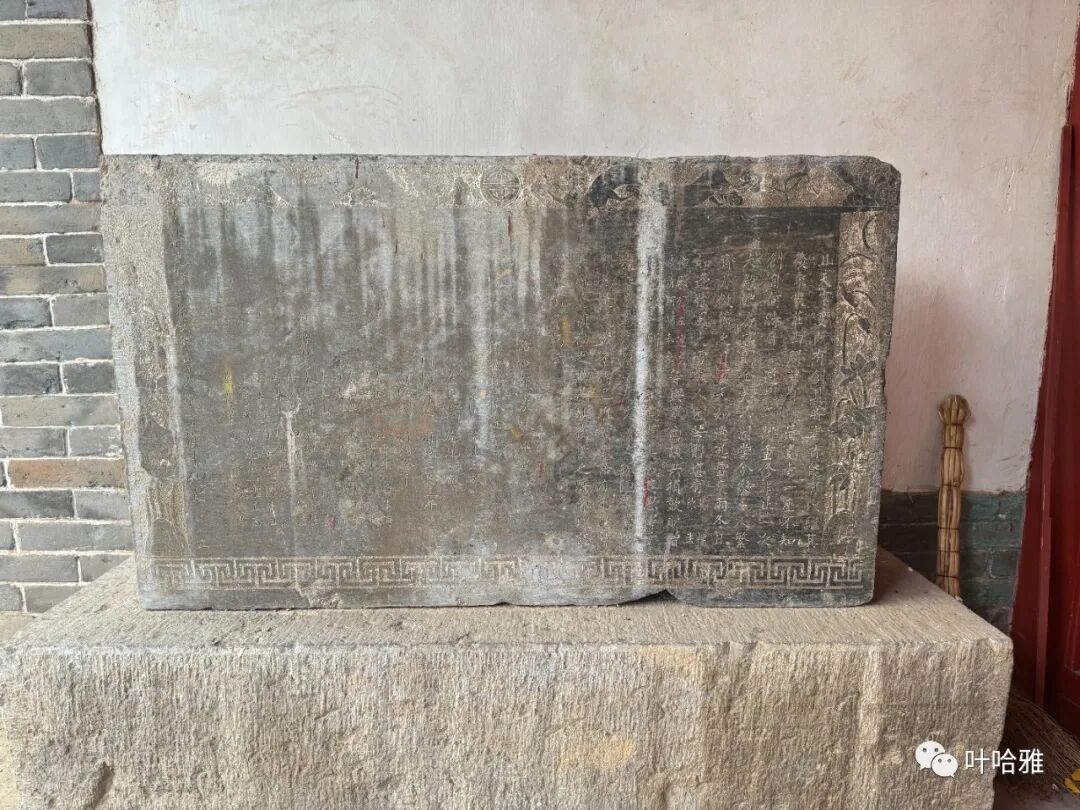
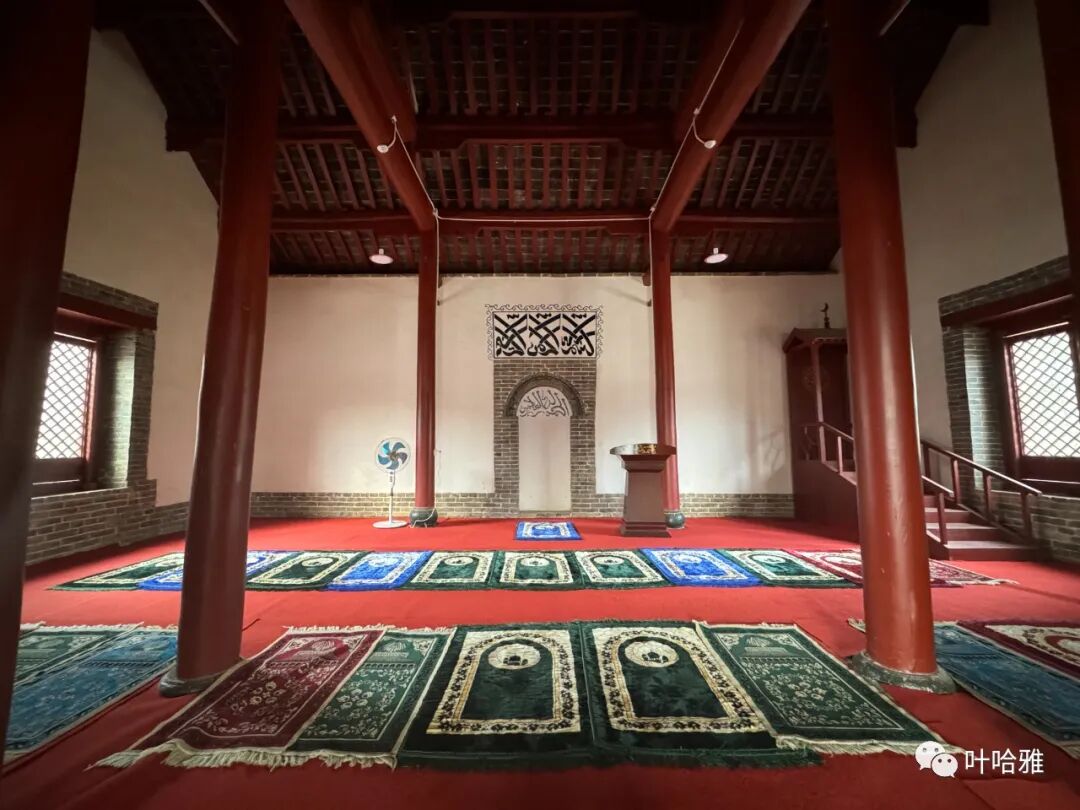
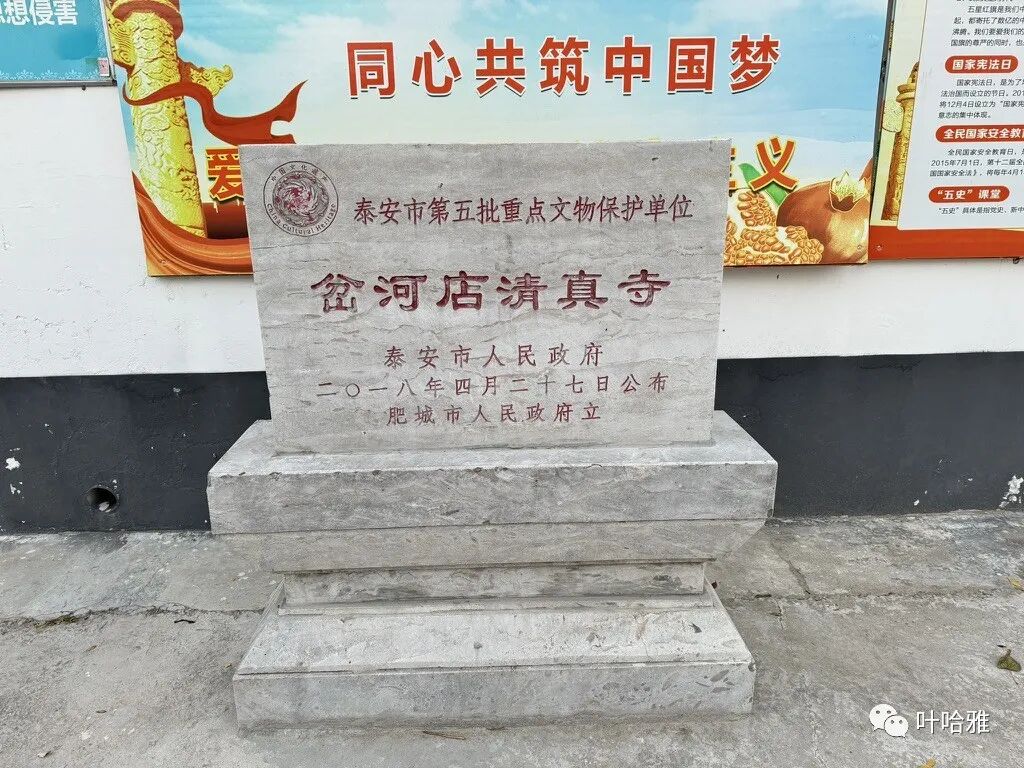
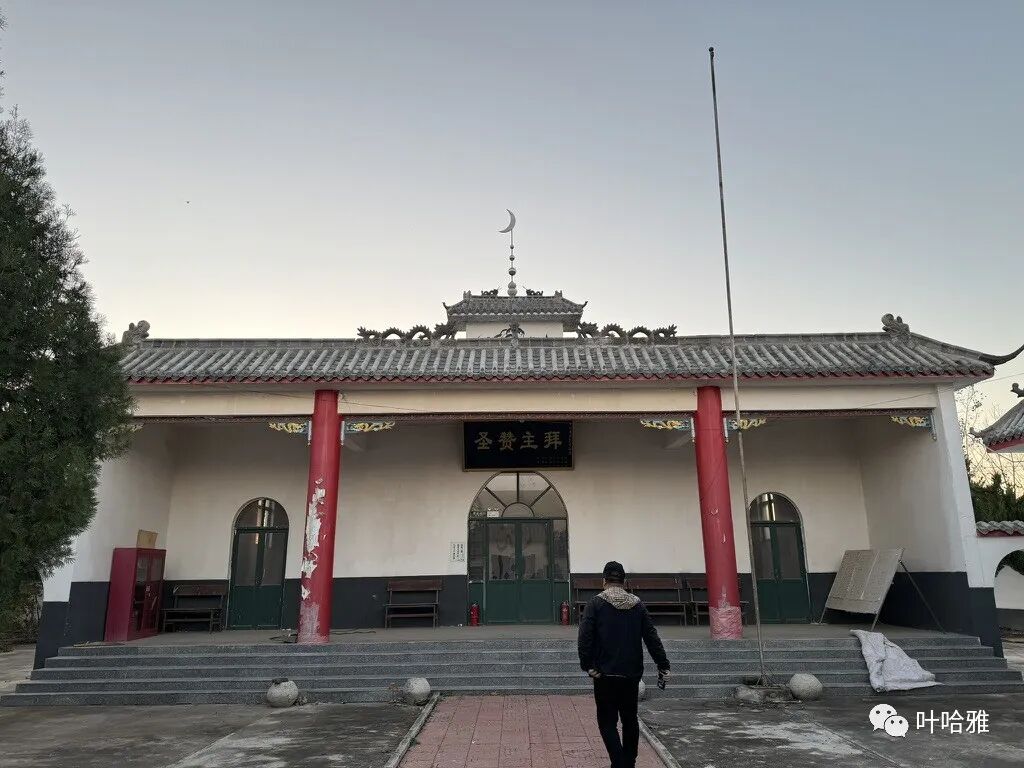
Chahedian Mosque in Bianyuan Town is located in the middle of the village. It was first built during the Qianlong reign of the Qing Dynasty (1735-1796) and has been expanded and repaired ever since. In 2014, the mosque underwent a large-scale renovation.
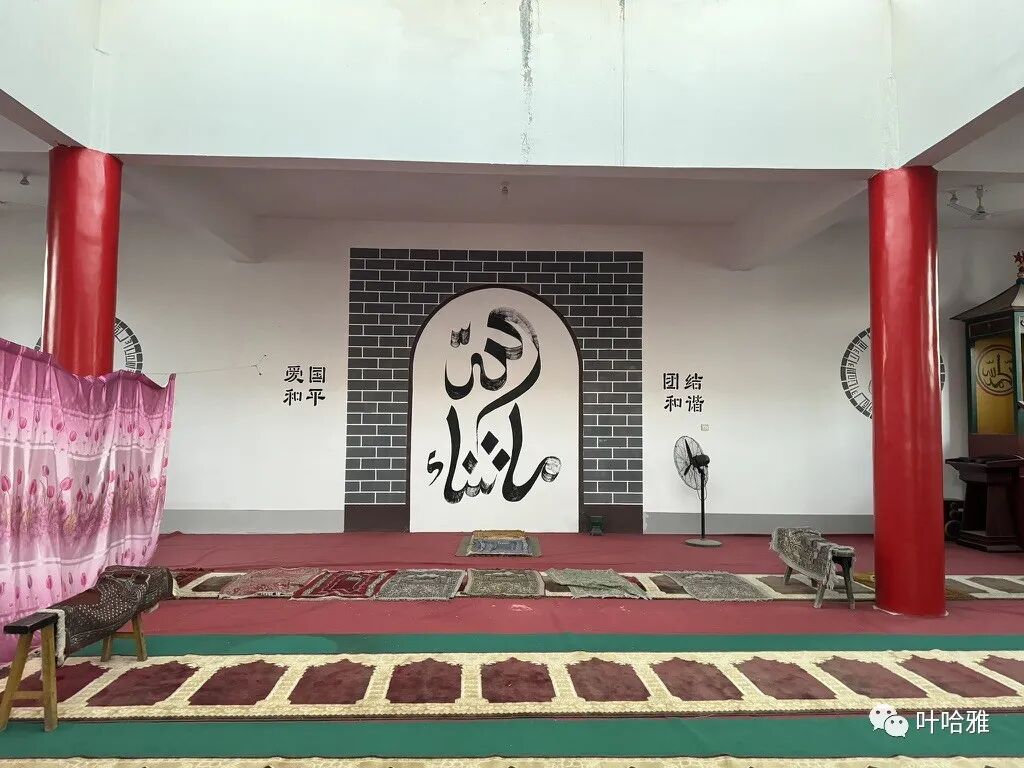
The mosque features a Chinese palace-style architectural design, measuring 45 meters long and 30 meters wide. The prayer hall is 15 meters long and 15 meters wide, and the north lecture hall is 27 meters long and 7 meters wide. The south lecture hall is 20 meters long and 7 meters wide. The ablution room (shuiwu) is 6 meters long and 7 meters wide.
The mosque's religious affairs were led by imams including Xu Changzhi, Zhang Yanzhai, Wang Huarong, Ma Wenli, Wang Hualei, and Yang Shunchang. It is now managed by the mosque's democratic management committee, with Han Hongbin, Liu Yuantai, and Wang Jihe serving as directors. In 2012, it was named a provincial-level Harmonious Religious Activity Venue.
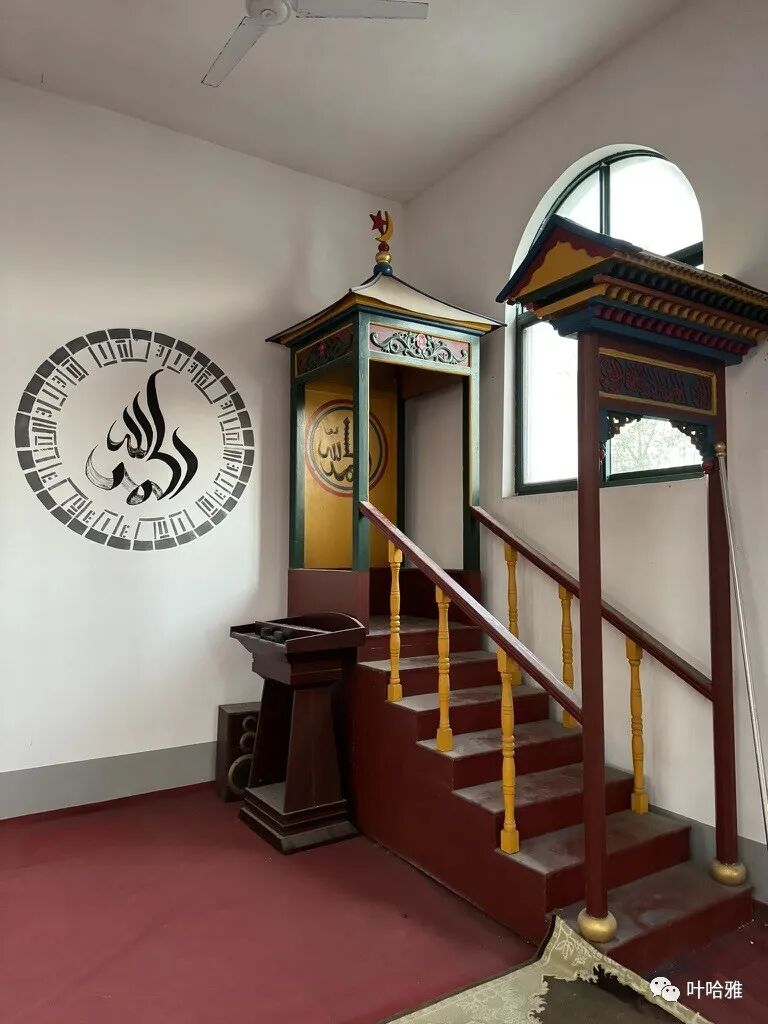
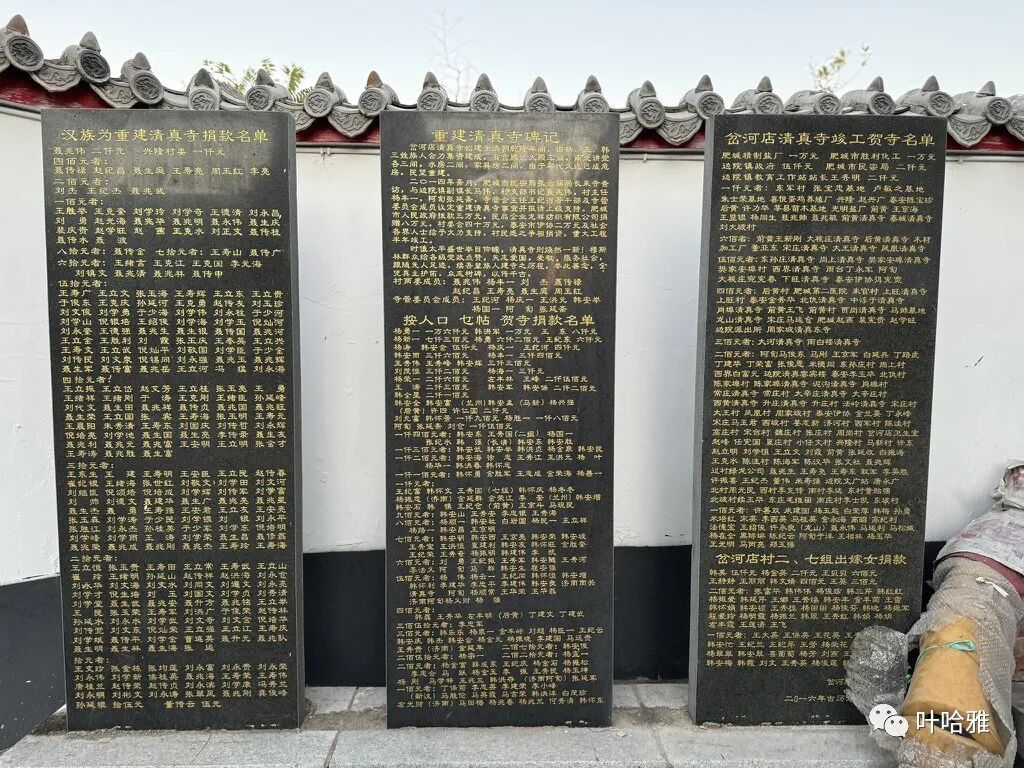
Fenghuang Village Mosque
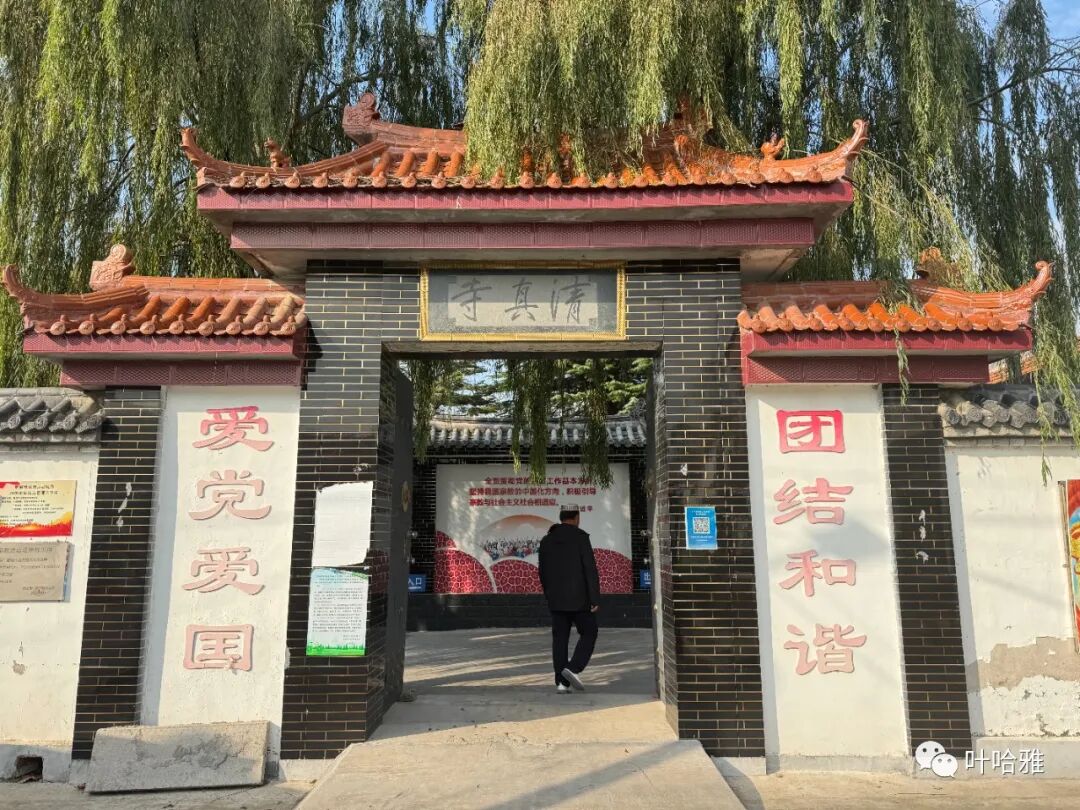
Fenghuang Village Mosque in Bianyuan Town sits at the west end of the village. It was built in the 11th year of the Republic of China (1922). When the mosque was first established, it included a main prayer hall, a lecture hall, an ablution room, a main gate, and courtyard walls. It underwent large-scale renovations in 1994.
The mosque features a Chinese palace-style architectural design and is 35 meters long and 30 meters wide. The prayer hall is 12 meters long and 10 meters wide. The north lecture hall is 13 meters long and 6 meters wide. The south lecture hall is 13 meters long and 6 meters wide. There are two existing stone tablets: the Mosque Founding Tablet from 1940 and the Mosque Reconstruction Record Tablet from 1995.
The mosque's religious affairs were led by imams including Wang Yongqing, Ma Xingchang, Ding Hu, Wang Changming, Yang Xingwang, Wang Changgui, and Yang Baojun. It is currently managed by the mosque's democratic management committee, with Wu Maowen, Wu Baoshu, Mi Kuan, Wu Yuanfa, Wu Mingkun, Wu Mingxiang, Wu Jinzhong, and Mi Zhaoying serving as directors.
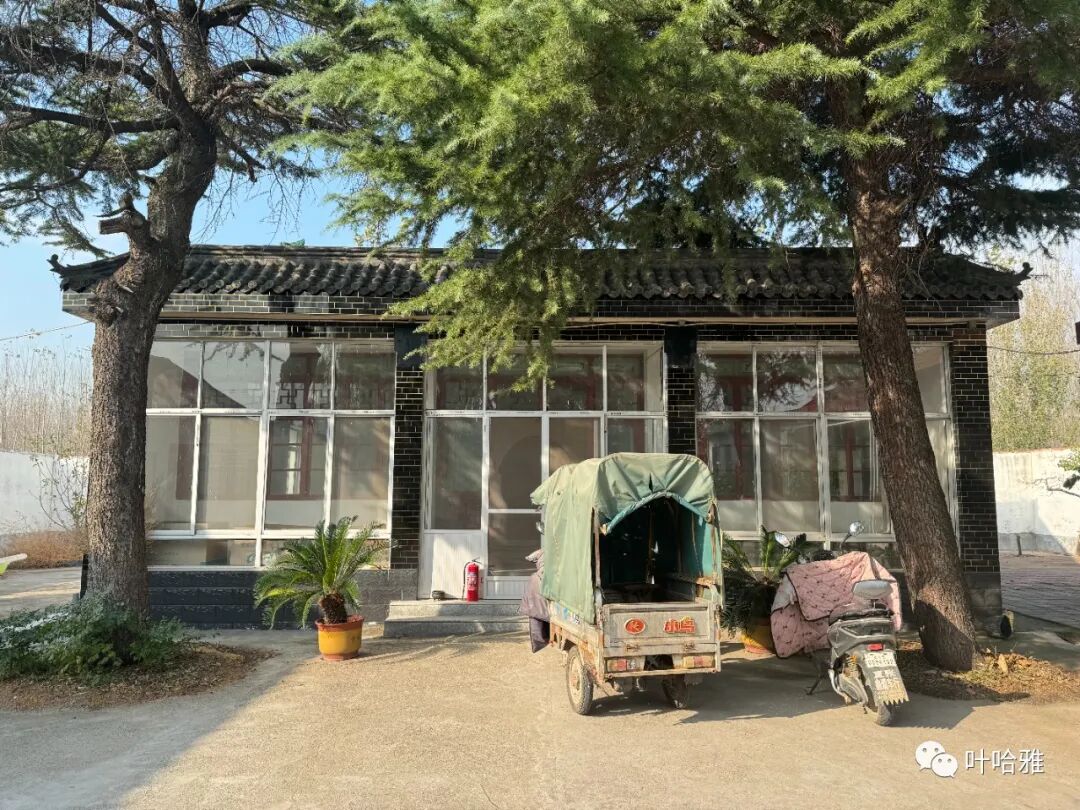
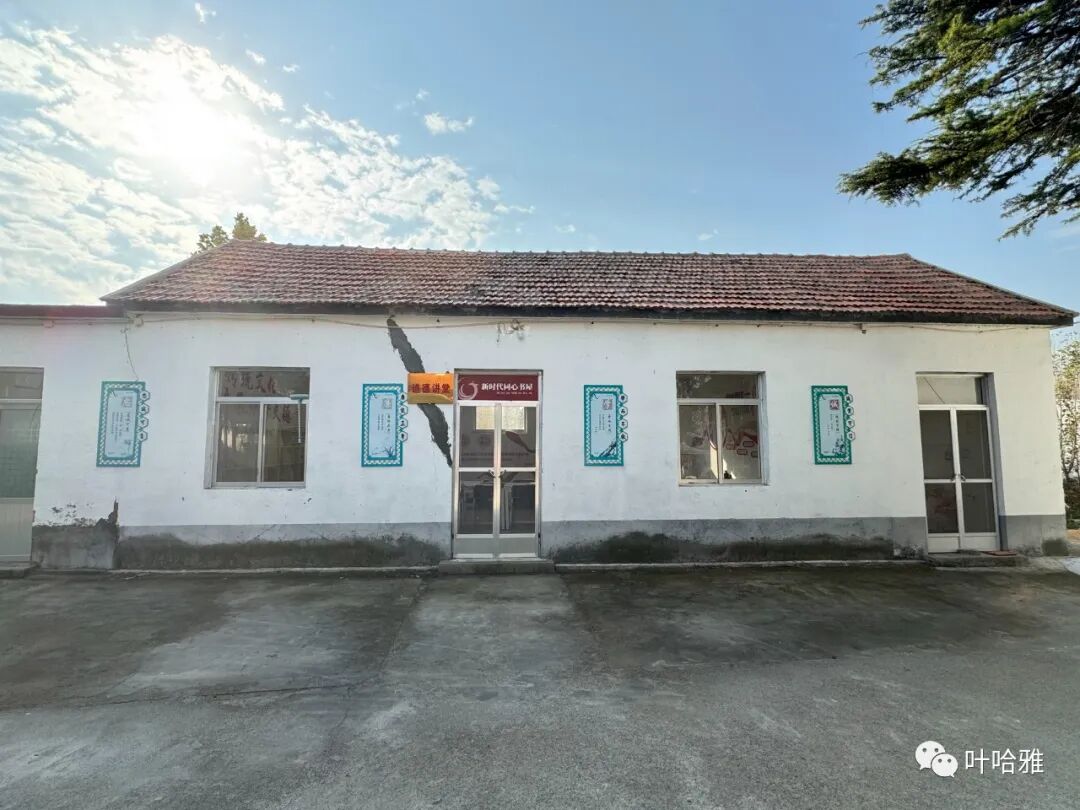
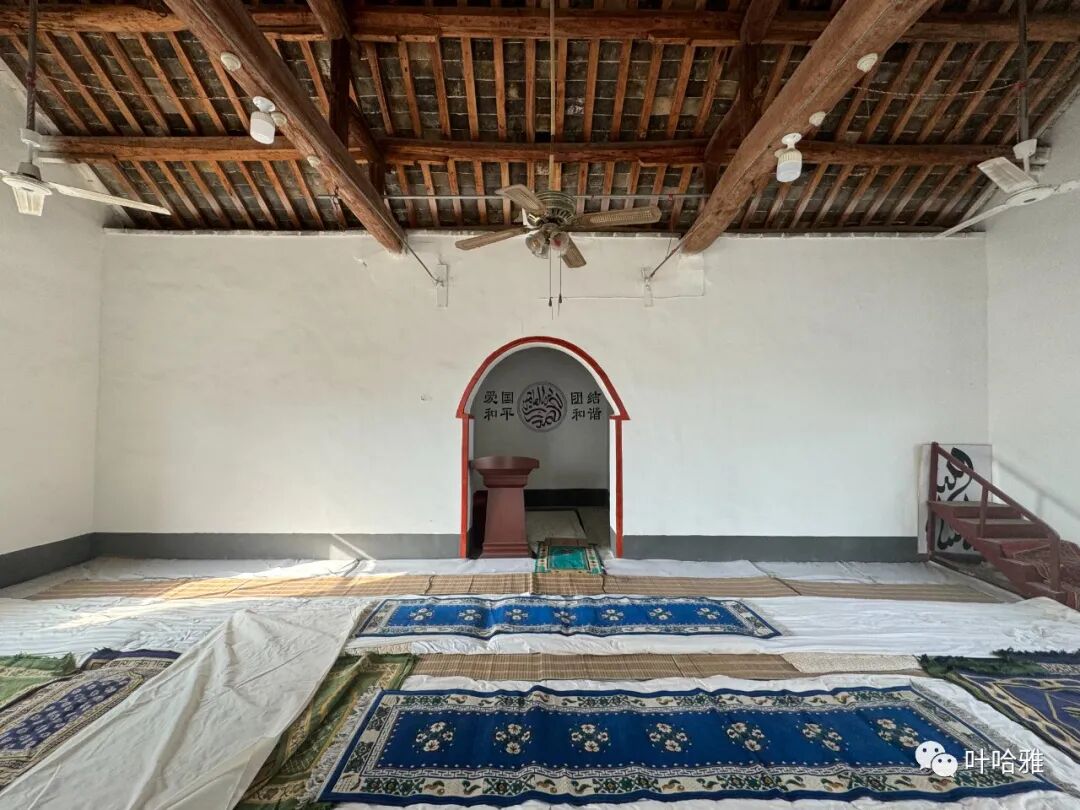
Dawangzhuang Mosque
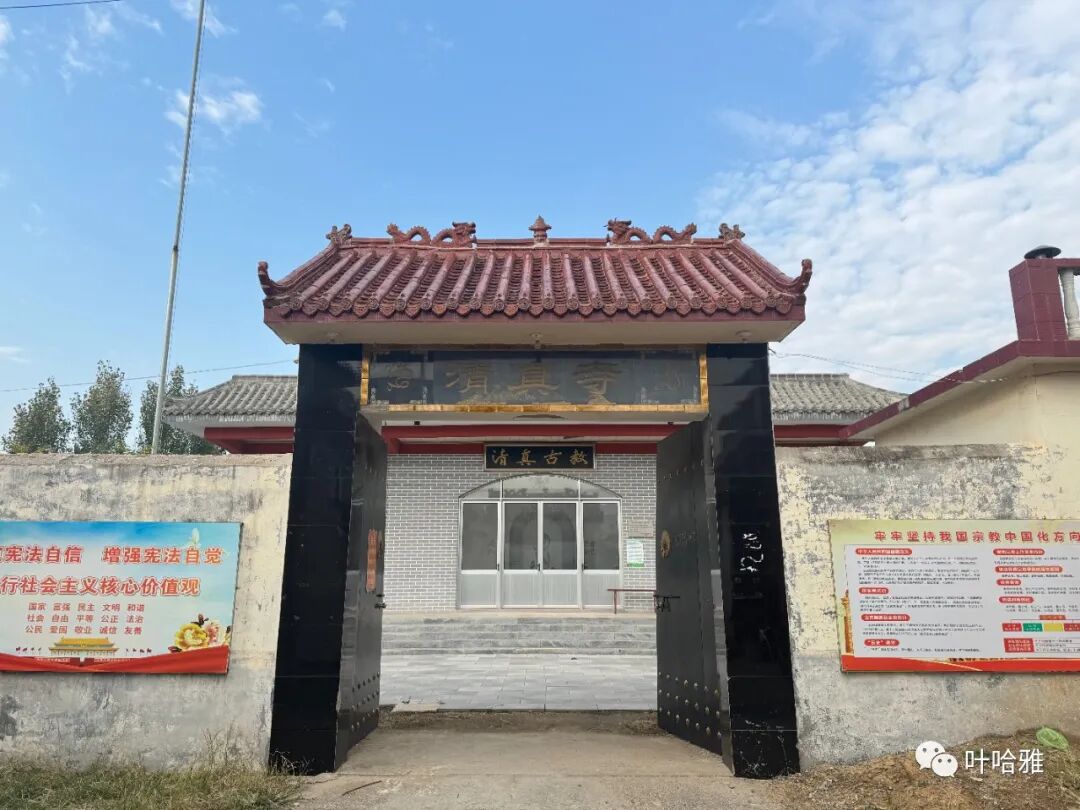
Dawangzhuang Mosque in Bianyuan Town is located at the east end of the village. It was built in 1953 and has been repaired many times since. Large-scale renovations took place in 2005, 2007, and 2011.
The mosque is in a modern architectural style, measuring 35 meters long and 40.5 meters wide. The prayer hall is a single-level structure with a rear hall, standing 5.2 meters high, 11 meters long, and 7.5 meters wide. The north lecture hall is 15 meters long and 7.6 meters wide. The south lecture hall is 3 meters long and 7.6 meters wide. The water room is 7.6 meters wide.
The mosque's religious affairs were led by imams including Bai Anfu, Imam Yang, Yang Baojun, Jin Haizeng, Wang Zengli, Ma Chuanxiang, Yang Dong, and Ding Jianhua. It is now managed by the mosque's democratic management committee, with Yang Baojin, Yang Shunping, and Yang Shuncang serving as directors. The mosque houses an incense burner.
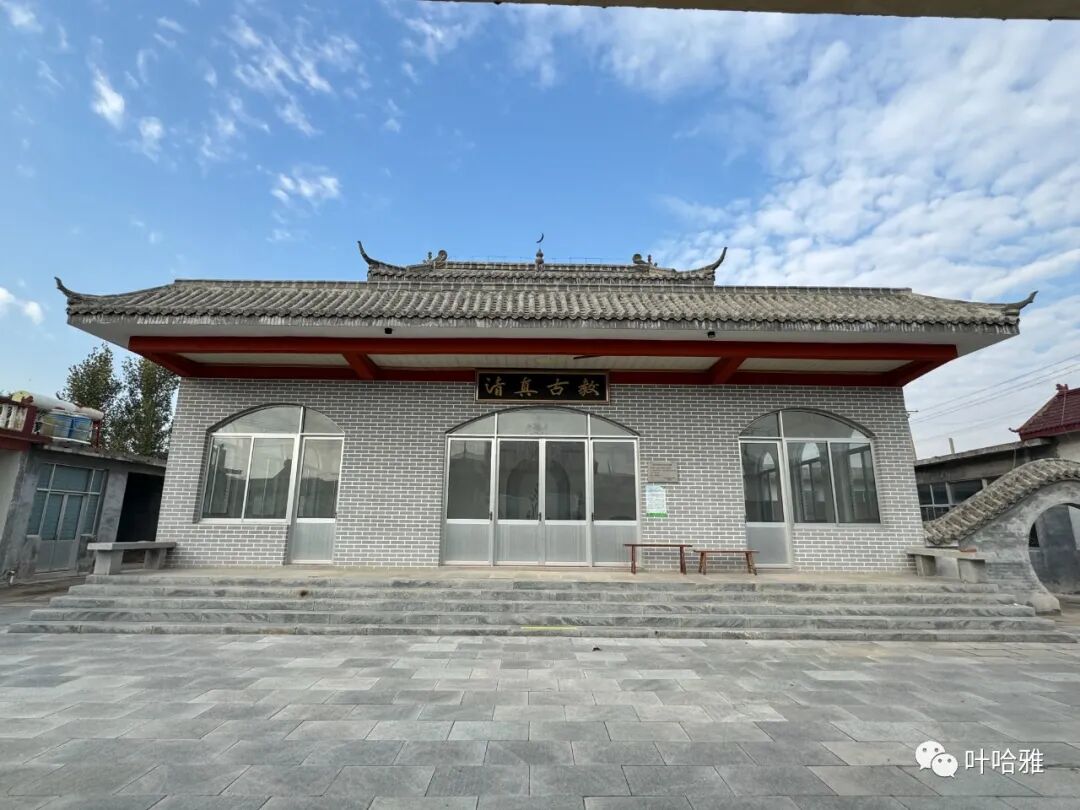
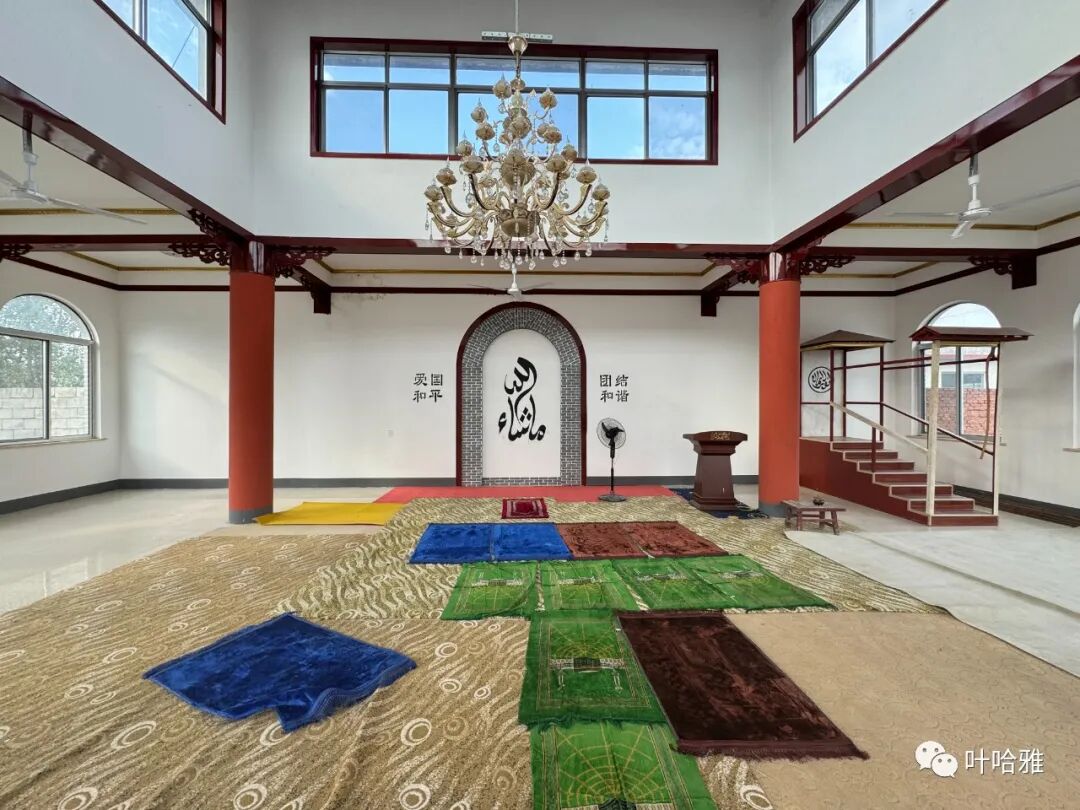
Chenjiabu Mosque
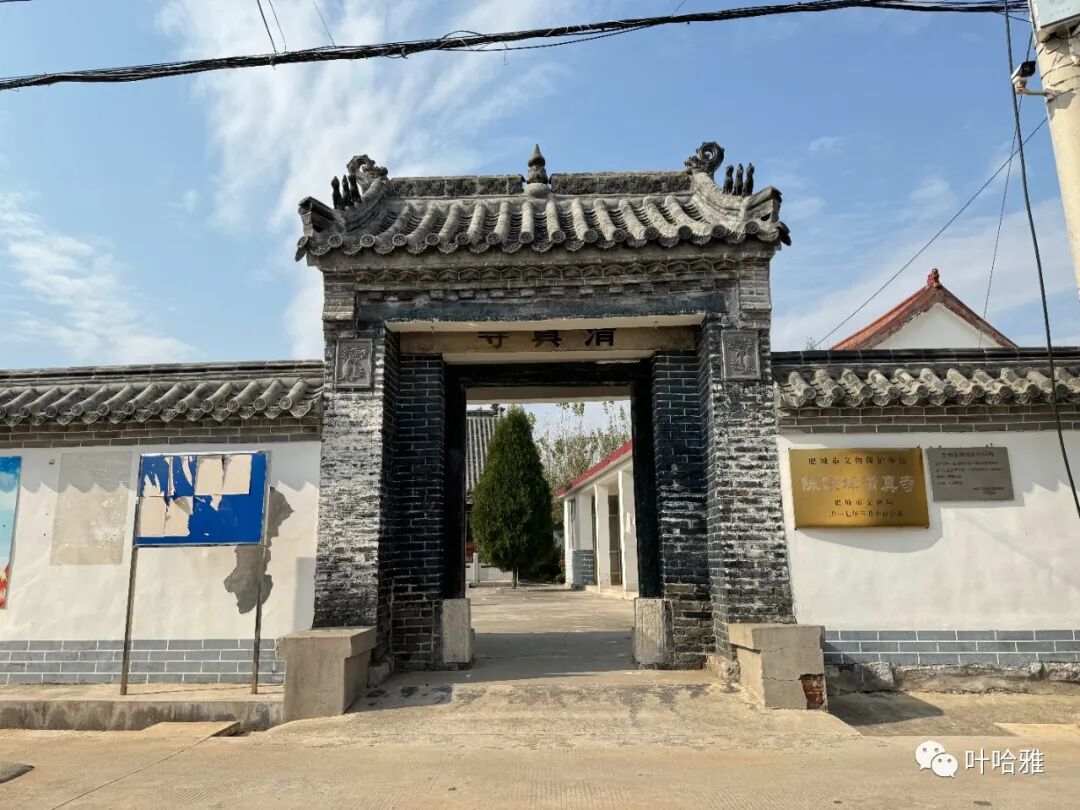
Chenjiabu Mosque in Anjiazhuang Town sits at the west end of the village. It was first built between the late Ming and early Qing dynasties and has been expanded and repaired ever since. The mosque underwent two large-scale reconstructions in 1996 and 2007.
The mosque features a Chinese palace-style architectural design and measures 46 meters long and 24 meters wide. The prayer hall is a double-layered structure consisting of a front porch, a front hall, a gutter, and a rear hall, creating a connected architectural layout. Both the front and rear halls follow a four-beam and eight-pillar design, with a brick and lime gutter installed at the junction of the two halls for drainage. There are side doors on both sides and a raised platform (yuetai) in front. The main prayer hall is now a dangerous building. The main prayer hall is 9 meters high, 16 meters long, and 10 meters wide. The north lecture hall is 16 meters long and 6.5 meters wide. The south lecture hall is 13 meters long and 5 meters wide. The water room is 6.5 meters long and 5 meters wide. The mosque was once awarded the provincial title of Harmonious Religious Activity Venue.
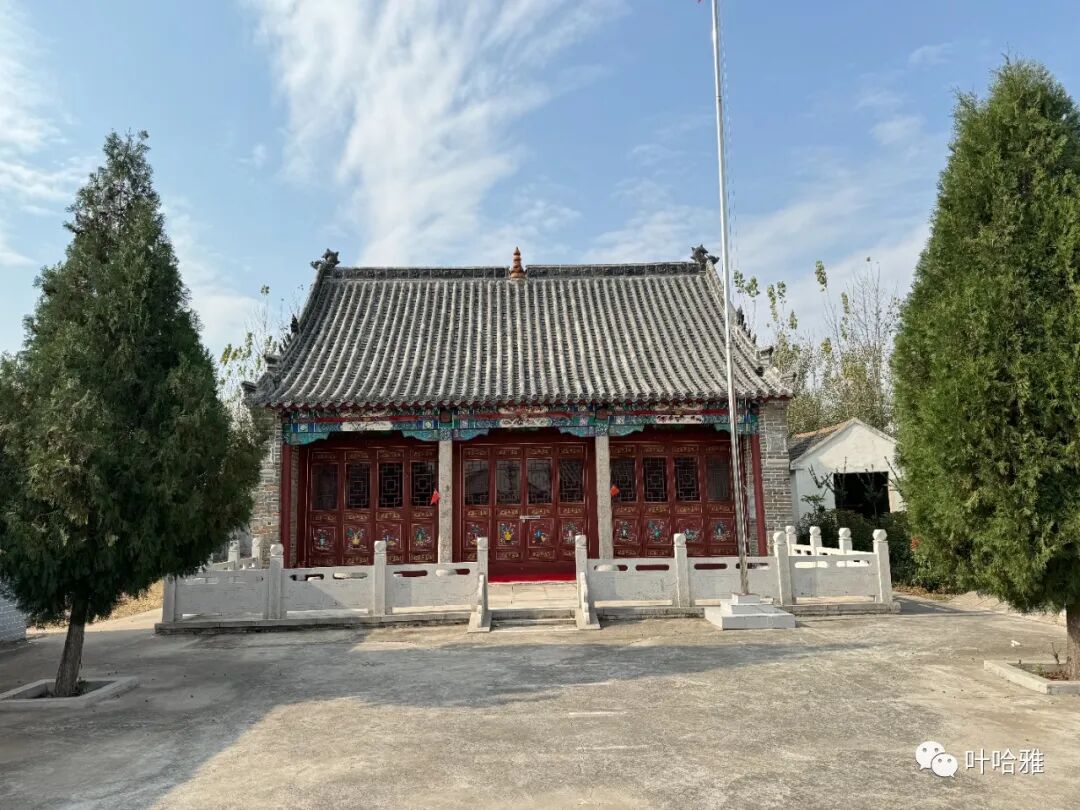
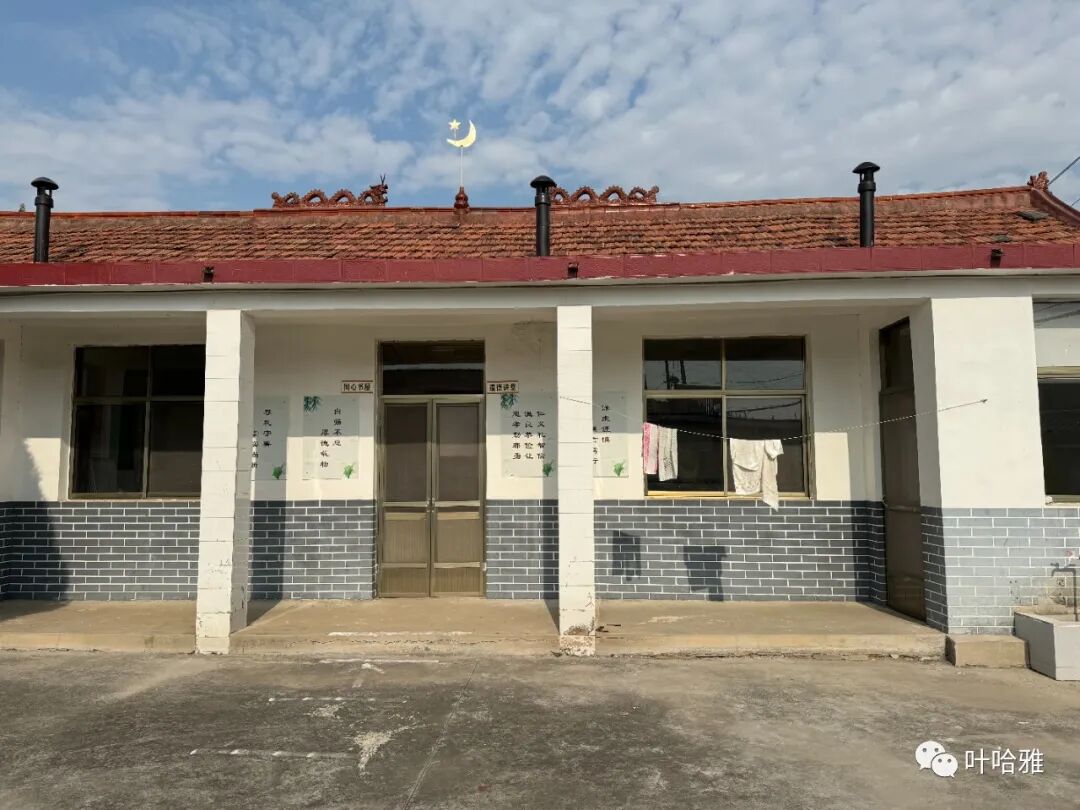
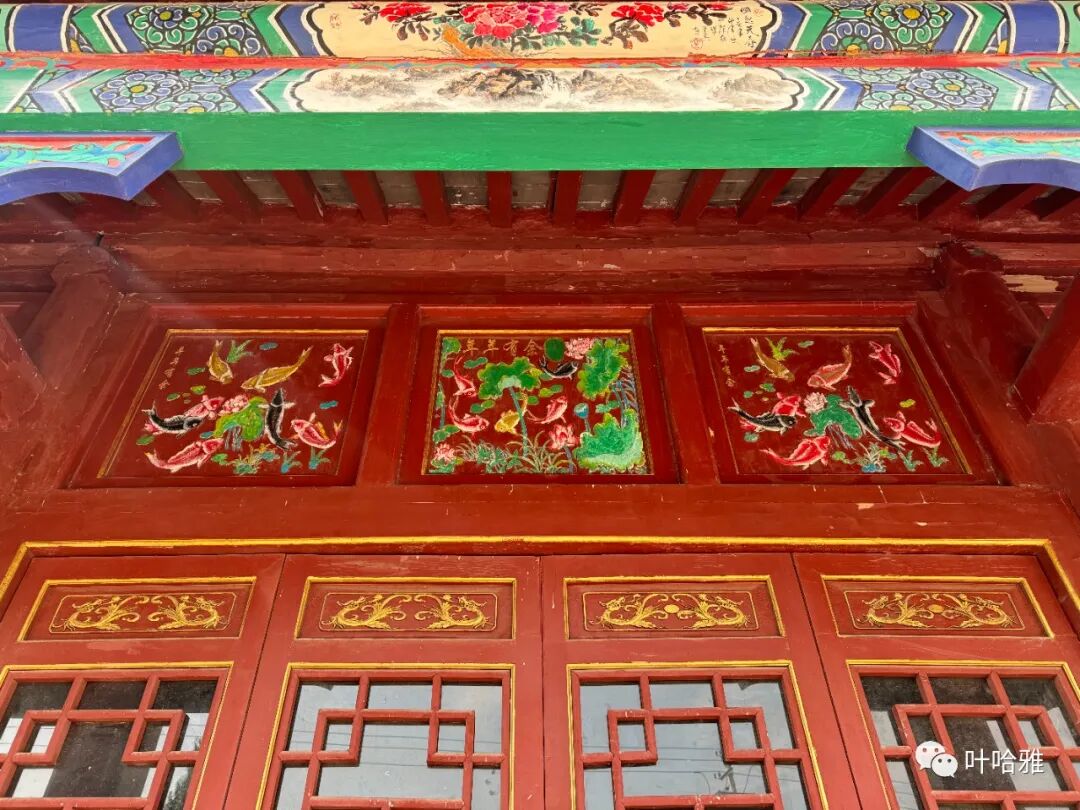
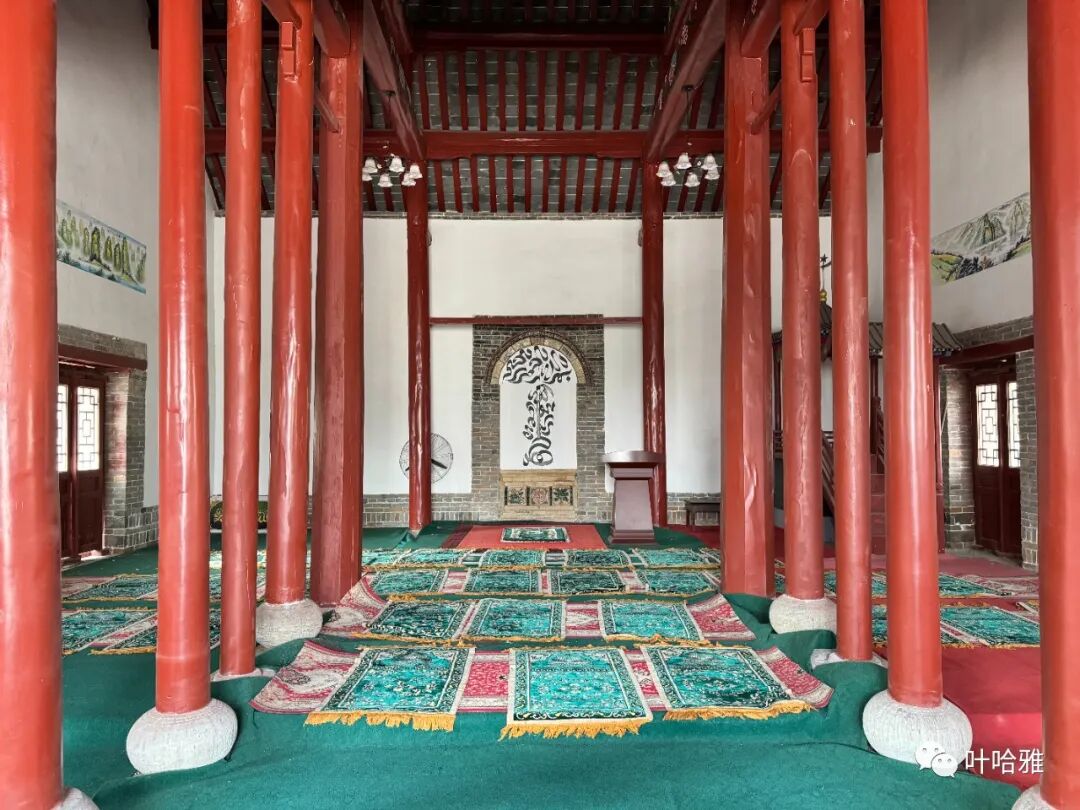
Xiaojiabu Mosque
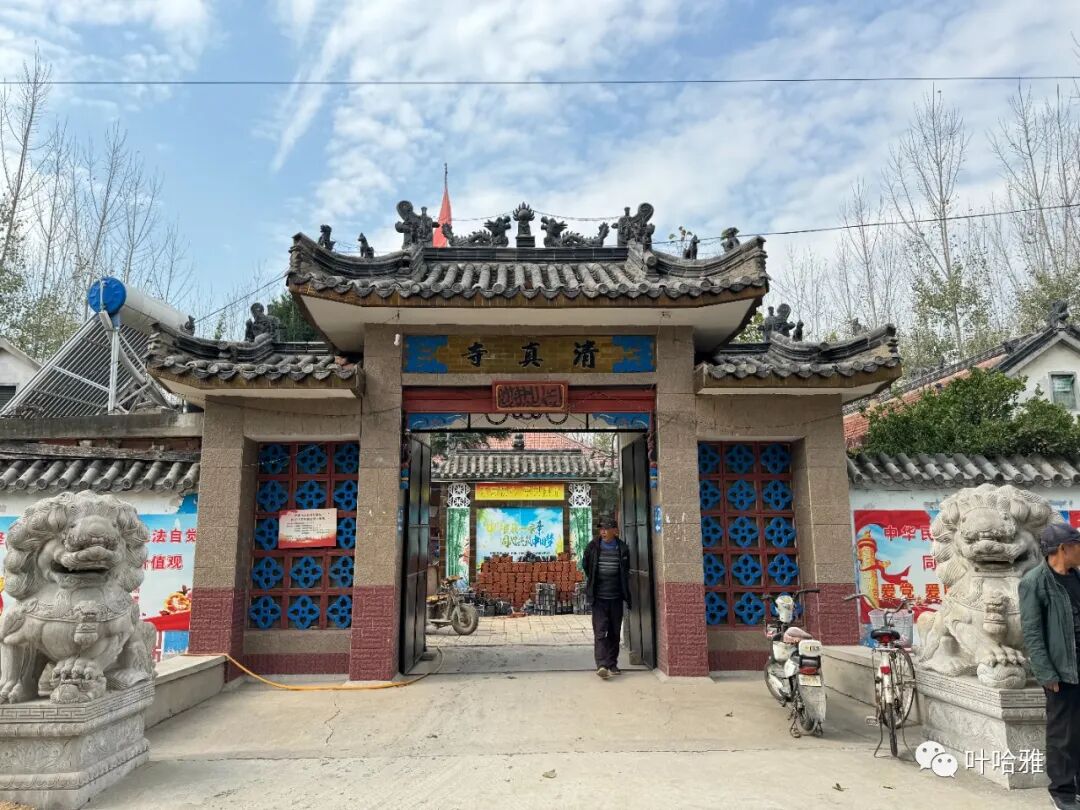
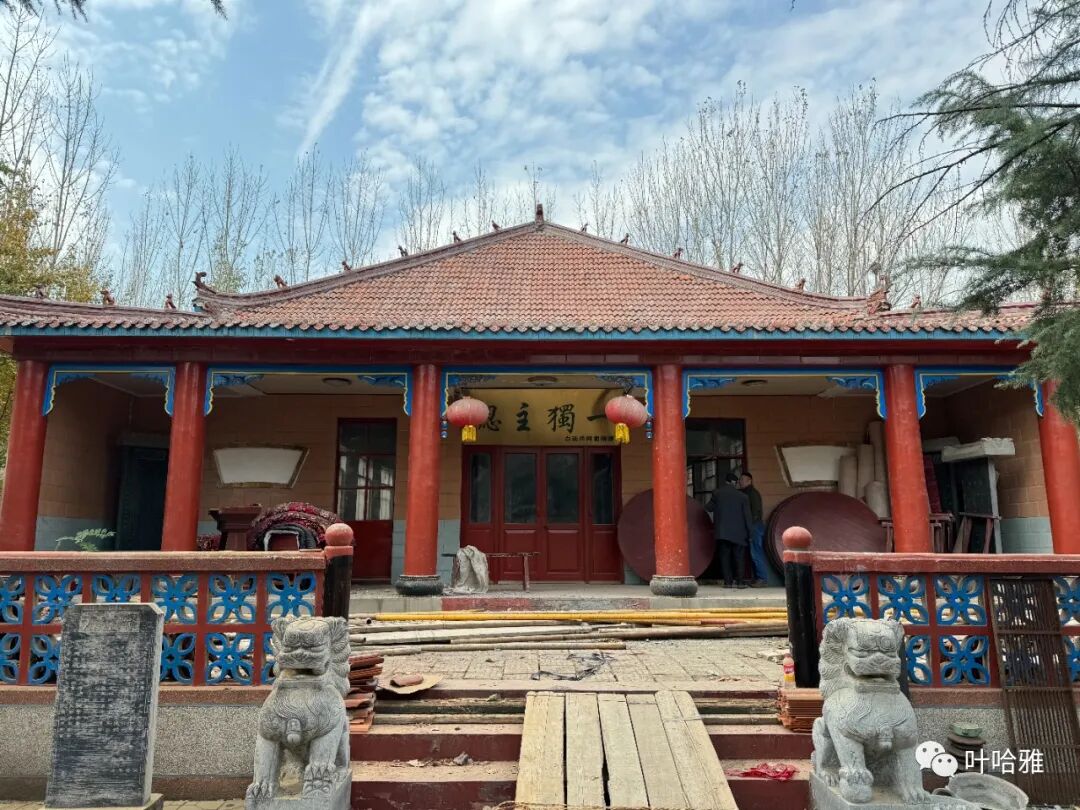
Xiaojiabu Mosque in Anjiazhuang Town is located at the west end of the village. The founding date is unknown, and it was destroyed by fire in 1973 when machines inside the building caught fire. The new mosque was built in 1999.
The mosque features Chinese palace-style architecture and is 56 meters long and 50 meters wide. The prayer hall is 9.9 meters high, and the moon terrace in front of the main hall is 26 meters long and 15 meters wide. The north lecture hall has 5 rooms, measuring 15 meters long and 8 meters wide. The south lecture hall has 5 rooms, measuring 15 meters long and 5 meters wide. There is 1 kitchen, measuring 3 meters long and 4 meters wide. More than 250 trees are planted inside and outside the mosque, and the mosque is fully equipped with all necessary utensils. A stone tablet erected in 2000 still exists today.
The mosque's religious affairs have been led by imams including Bai Maoxiang, Imam Xu, Imam Yang, Imam Wang, and Bai Yanbing. It is currently managed by the mosque's democratic management committee, with Ma Wenhuan serving as the director.
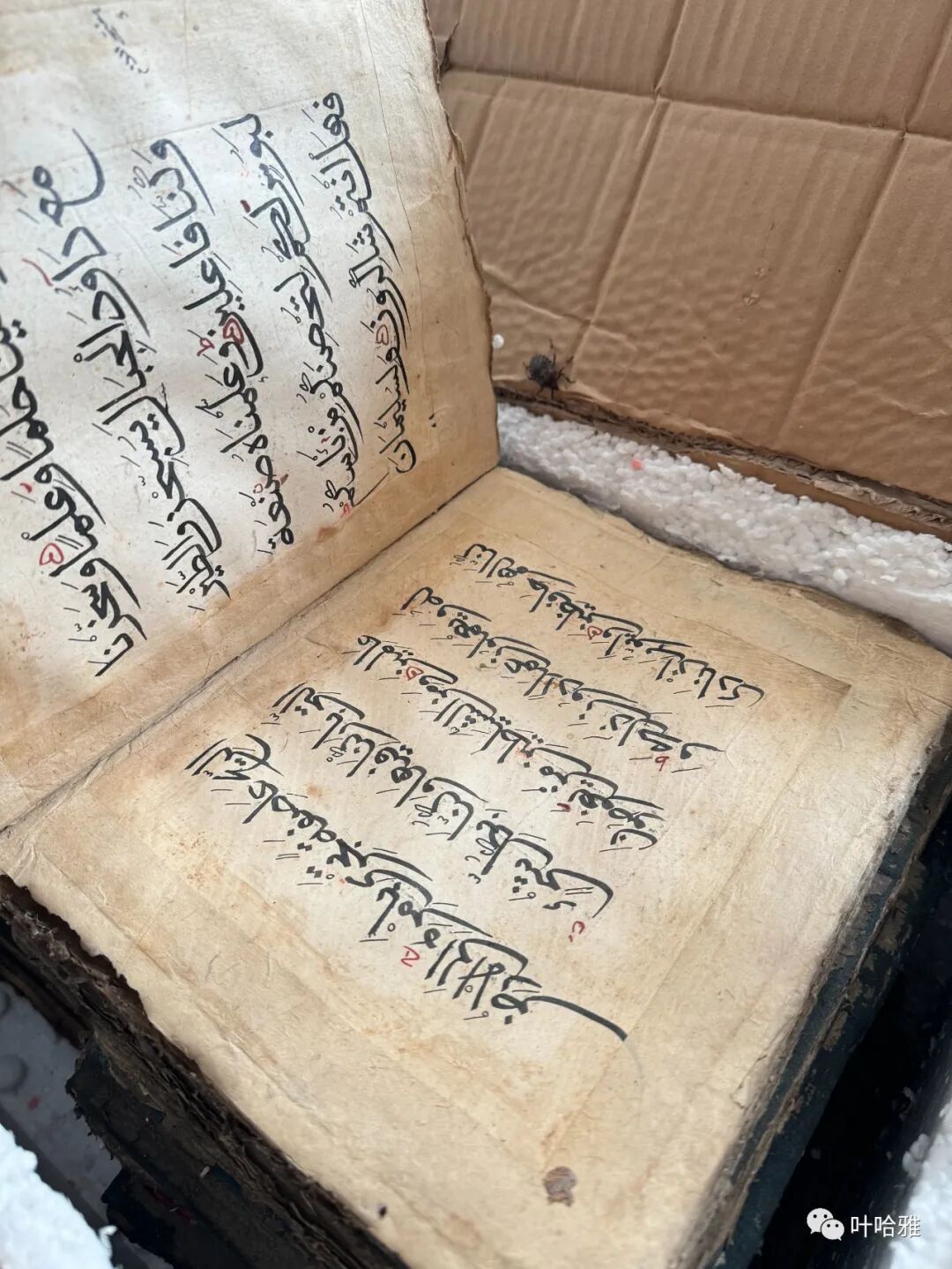
A handwritten copy of the Quran from the 17th year of the Republic of China (1928) is preserved here. In 2008, the mosque was named a Model Mosque by Tai'an City.
Ningyang County
Xitaili Mosque
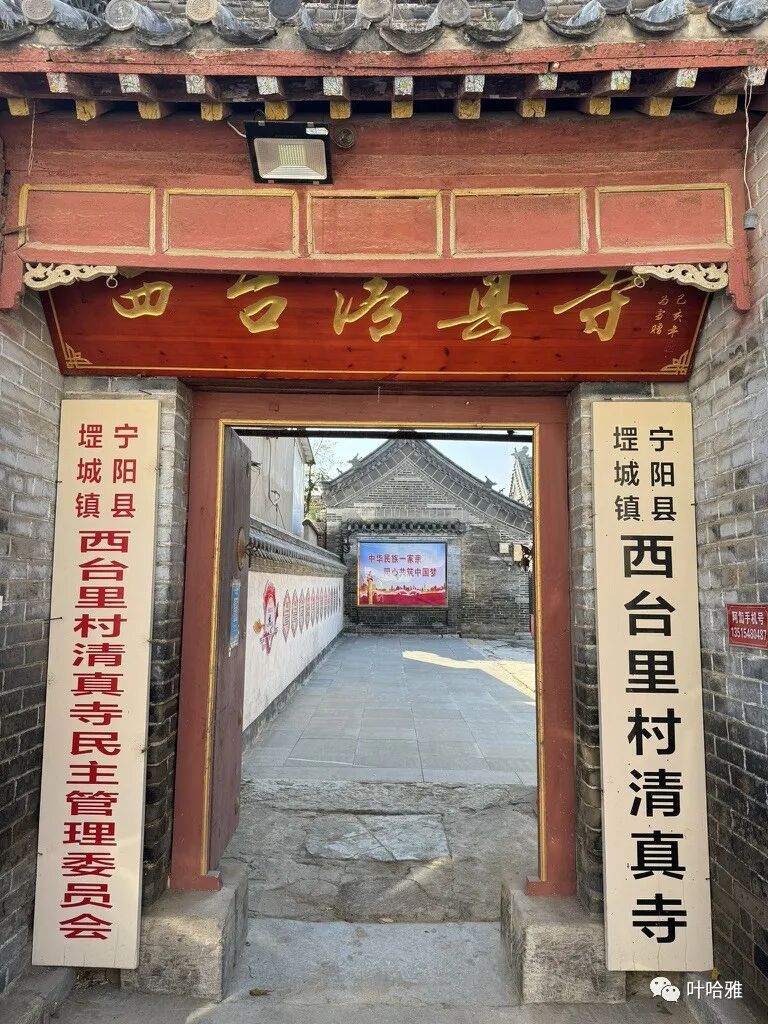
Xitaili Mosque in Gangcheng Town sits in the western half of the village. Wang Xiong founded the mosque in 1398, the 31st year of the Hongwu reign of the Ming Dynasty, and it has been expanded and repaired ever since. The mosque underwent repairs in 1411, 1460, 1698, 1719, 1738, 1819, 1900, 1945-1946, 2005, 2008, and 2012.
The mosque features Chinese palace-style architecture. It is 41.5 meters long and 34.1 meters wide, with two courtyards. The main prayer hall is a double-layered structure, 13 meters high, 13.1 meters long, and 7.1 meters wide. The north lecture hall is 17.1 meters long and 7 meters wide. The south lecture hall is 10.5 meters long and 7 meters wide. The water room is 10.6 meters long and 5.5 meters wide.
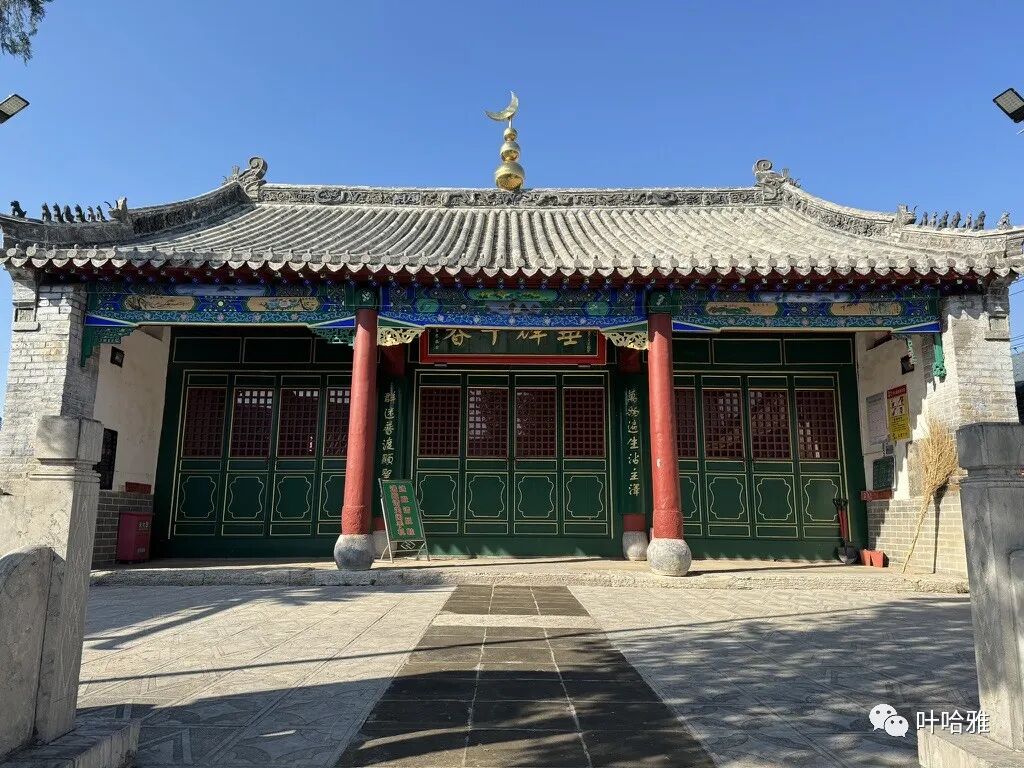
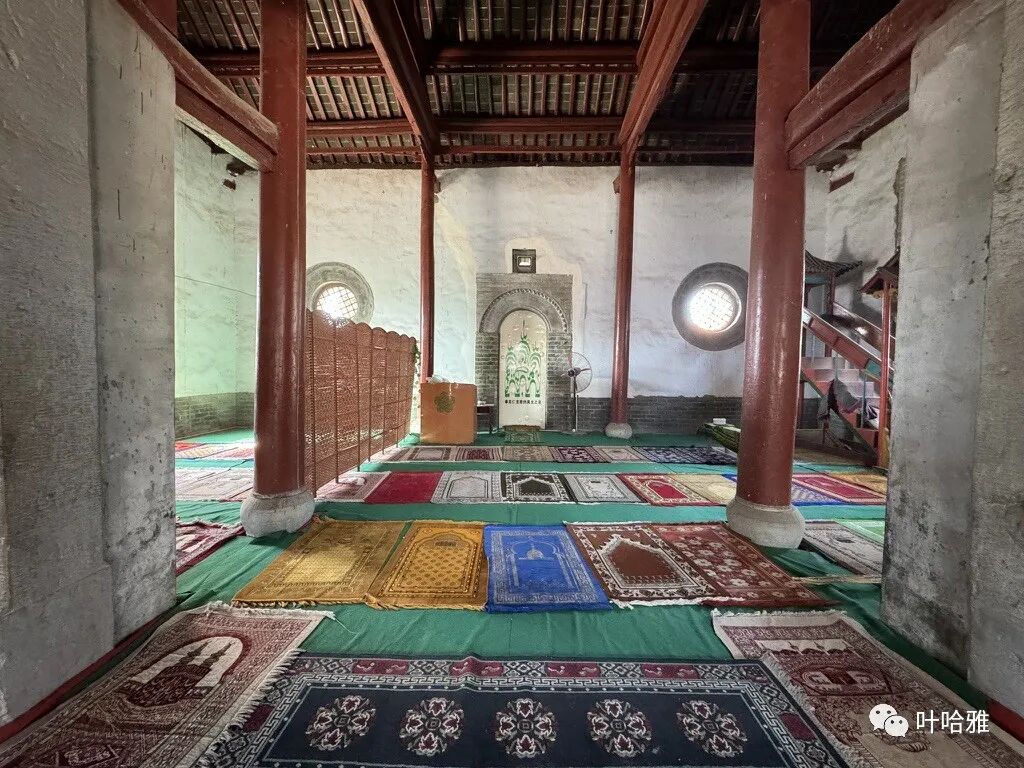
The mosque entrance has a main gate and a second gate. Past the second gate is the main courtyard. The main prayer hall sits on the west side, facing east. It is the primary building of the mosque and can hold hundreds of people for namaz at the same time. The main prayer hall uses a three-arch design with a connected roof structure, consisting of a front porch, a middle hall, and a back hall. The front porch is three bays wide with a curved roof and a wooden frame covered in small gray tiles. A stone tablet from 1719 titled Mosque Inscription is embedded in the inner north wall of the porch. The middle hall is three bays wide with a hard mountain-style roof. The front eaves connect to the back eaves of the middle hall, with water drainage channels left on both side walls. The rear hall is three bays wide, extending 0.62 meters beyond the sides of the middle hall's front porch. The front and rear eaves connect, the main roof ridge features animal ornaments, the brick walls have delicate carvings, and the mihrab is set in the center of the west wall.
The floor plan of the main hall looks like the Chinese character 'zhu' (master), and the roof has a varied, undulating shape. The platform in front of the main hall has stone railings and panels. On the north side of the platform stand stone tablets from the 11th year of the Guangxu reign (1885) and 2005 documenting repairs to the mosque. In front of the platform, the north and south lecture halls each have three rooms. They feature a single-eave, hard-mountain style roof covered with grey tiles and a front porch. North of the second gate is the room for students (hailifan). To the south is the bathing room, which can accommodate dozens of people for major and minor ablutions. Between the east gable of the north lecture hall and the courtyard wall is the east side room. To the west of the west gable are the west side room, the covered room (zhaozifang), and the tableware room. There are six existing stone tablets: the 'Mosque Tablet Record' from the 58th year of the Kangxi reign (1719), the 'Mosque Land Donation Tablet' from the 11th year of the Guangxu reign (1885), the 'Eternal Tablet' from 2005, the 'Second Batch of Municipal Key Cultural Relics Unit Tablet' from 2007, the 'Eternal Tablet' from 2008, and the 'Xitaili Mosque Reconstruction Record Tablet' from 2012.
Throughout its history, the mosque has trained many imams, including Yang Peicheng, Wang Minqing, Wang Minyi, Xu Menglan, Xu Shanfang, Li Chuanzheng, Li Hongbin, Wang Anyi, Li Anchen, Li Qingjun, Ma Xiangfa, Yang Zhenfa, Yang Cunguo, Yang Wei, Wang Antang, Wang Zifa, Xu Shouguo, Huang Zhongqing, Li Qingyun, Ma Xingcheng, Tang Wenhai, Wang Zhongzhen, Zhang Hongyi, Xu Shanfang, Li Zhaokun, Han Yuhai, and Xia Qianguo. The mosque is currently managed by a democratic management committee. Past directors include Wang Zishang, Wang Enshang, Wang Anxiang, Wang Anwen, Li Anshan, Li Baojin, Wang Anpo, and Ma Yongfu.
In 2009, the mosque received the provincial title of 'Harmonious Religious Activity Venue.' It was also named a 'Model Mosque' by Tai'an City in 2008, 2010, and 2014.
Liujiazhuang Mosque
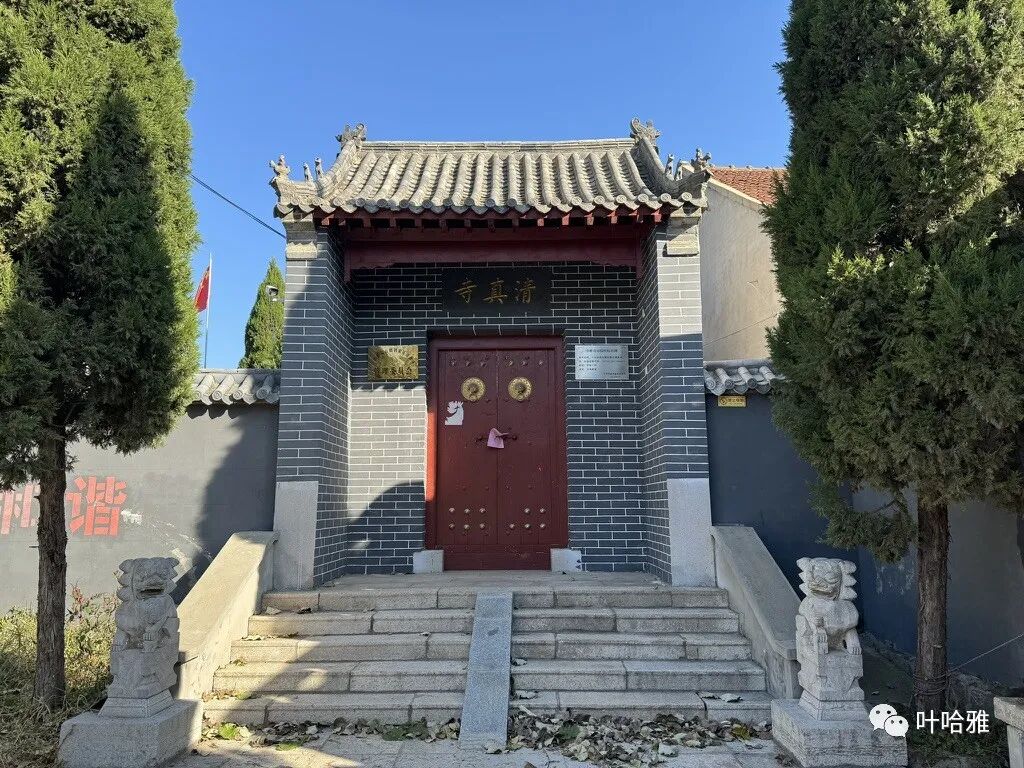
Liujiazhuang Mosque in Geshi Town is located in the southwest corner of the village. It was first built during the Hongwu period of the Ming Dynasty (1368-1398) and has been expanded and repaired many times since. The mosque underwent three large-scale renovations in 1984, 1997, and 2008.
The mosque follows the Chinese palace architectural style, measuring 26 meters long and 19 meters wide. The prayer hall is 7.9 meters high, 10 meters long, and 8.5 meters wide. The north lecture hall is 13.5 meters long and 7 meters wide. The water room is 5 meters long and 7 meters wide. There is one stone tablet currently on site, which is the 2008 Tablet Record of Mosque Renovation.
Since the founding of the People's Republic of China, the religious affairs have been led by imams including Xu Menglan, Shi Xianbao, Wang Minqing, Xu Shanfang, Bai Anmeng, Han Tongwen, Xu Lingzhi, Wang Antang, Li Anchen, and Ma Ning. The mosque is currently managed by a democratic management committee, and past directors include Li Huaiqing, Li Lanting, and Sha Xingdong.
It has received the title of Model Mosque from Tai'an City.
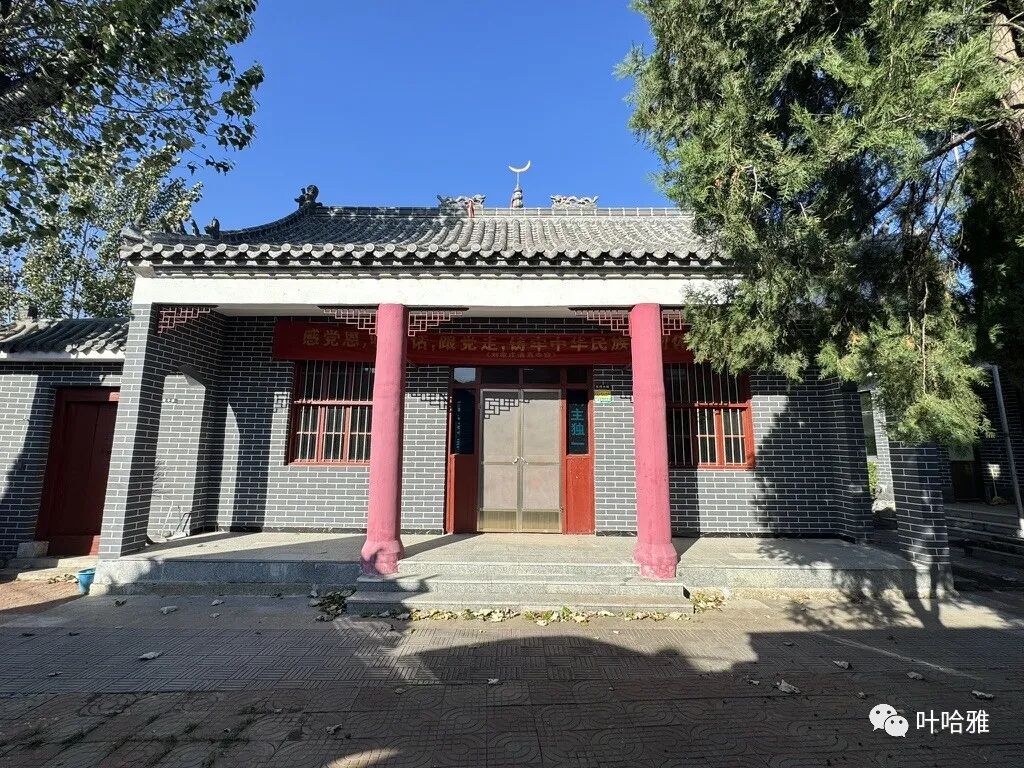
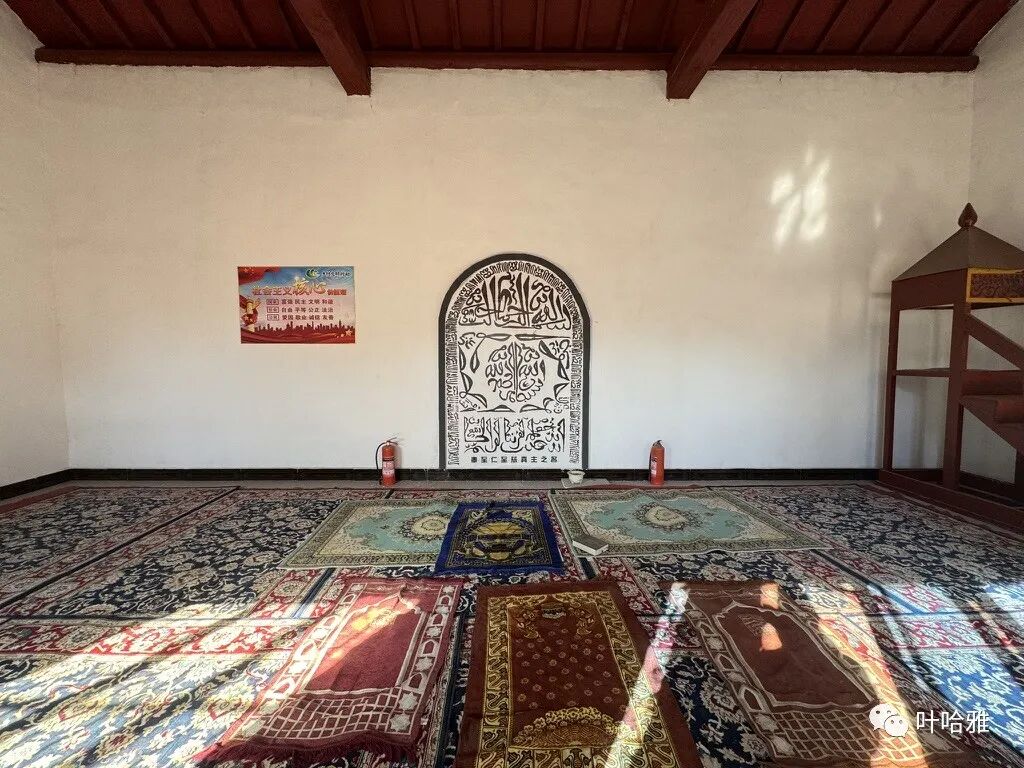
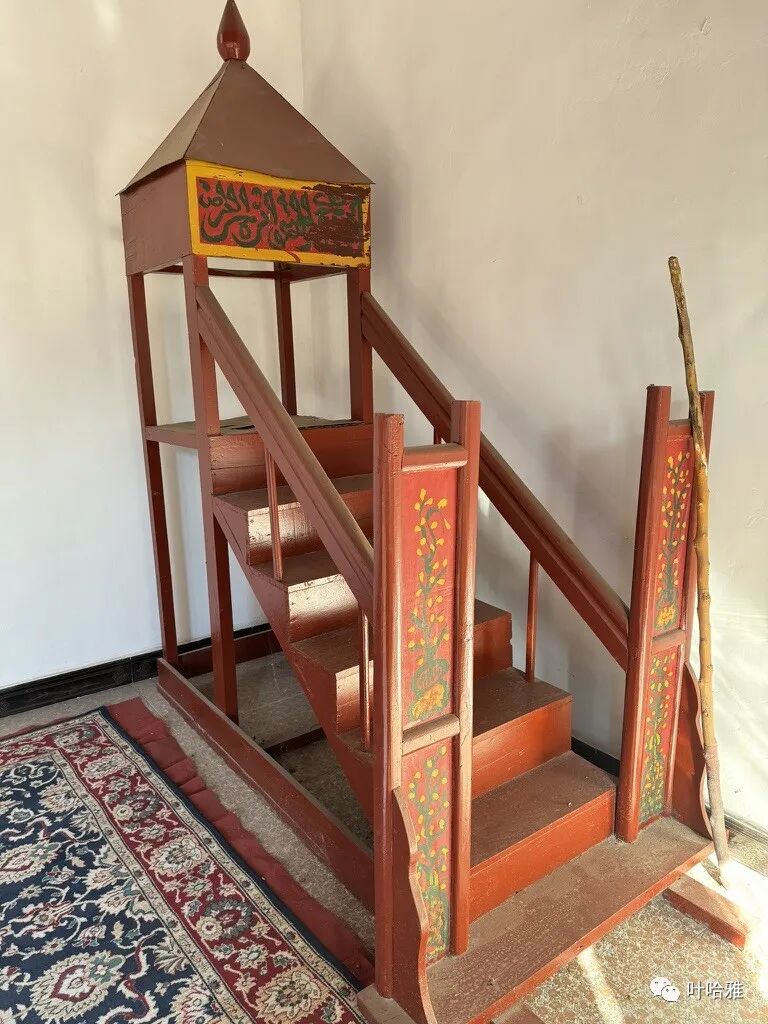
Baima Mosque Mosque
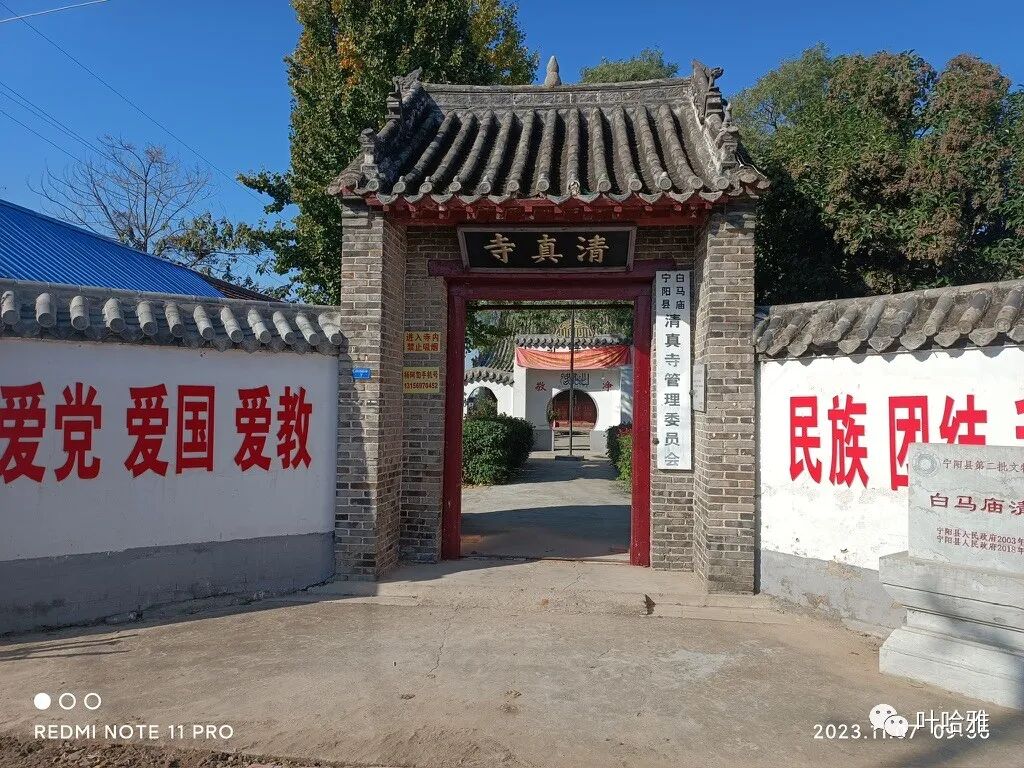
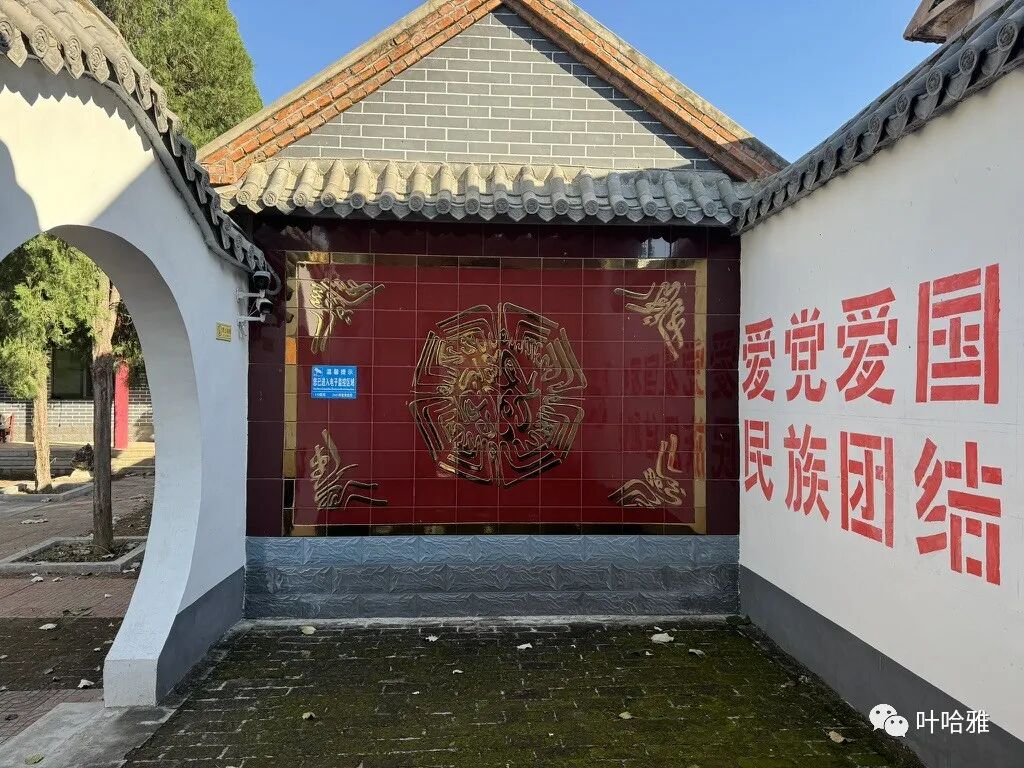
Baimamiao Mosque in Fushan Town sits at the southwest corner of South Baimamiao Street in Taipingzhuang Village. It was first built during the Yongle period of the Ming Dynasty (1403-1424) and has been expanded and repaired ever since. The mosque has undergone four major renovations, including those during the Jiajing period of the Ming Dynasty (1522-1566), in the 16th year of the Guangxu reign of the Qing Dynasty (1890), and in 2001 and 2010.
The mosque features Chinese palace-style architecture, measuring 72.7 meters long, 21.1 meters wide at the front, and 27.5 meters wide at the back. The prayer hall is a double-eaved structure measuring 15.9 meters long and 13.2 meters wide. The north lecture hall is 10.2 meters long and 7 meters wide. The south lecture hall is 10.2 meters long and 6.4 meters wide. The ablution room (shuiwu) is 13.8 meters long and 6.6 meters wide. There are three stone tablets currently on site: the 1890 'Record of the Mosque Renovation' from the Qing Dynasty, the 2001 'Everlasting Renewal Tablet,' and the 2010 'Preface Tablet.'
The mosque's religious affairs have been led by imams including Zhao Wenjie, Yang Yueqing, Zhu Yuepo, Ma Guang, Han Yunting, Zhu Guanglai, Zhao Xinzheng, Zhao Guangfu, Zhu Yuehou, Yang Zhanji, Wang Ai, Zhang Yanzhai, and Yang Dawei. It is currently managed by the mosque's democratic management committee, with past directors including Mi Kuancheng, Hong Qingfang, and Zhao Anren.
A plaque from the 19th year of the Guangxu reign of the Qing Dynasty (1893) is still preserved today. In recent years, Zhu Zhaoxin donated a pair of wooden couplets that read, "The only true Allah of the universe is Allah, the only greatest sage in the world is Muhammad," which now hang on both sides of the mosque (libaidian) door.
In 2003, the county government designated the mosque as a county-level cultural relic protection site. It received the provincial title of "Harmonious Religious Activity Venue" in 2011 and was named a "Model Mosque" by Tai'an City in 2014.
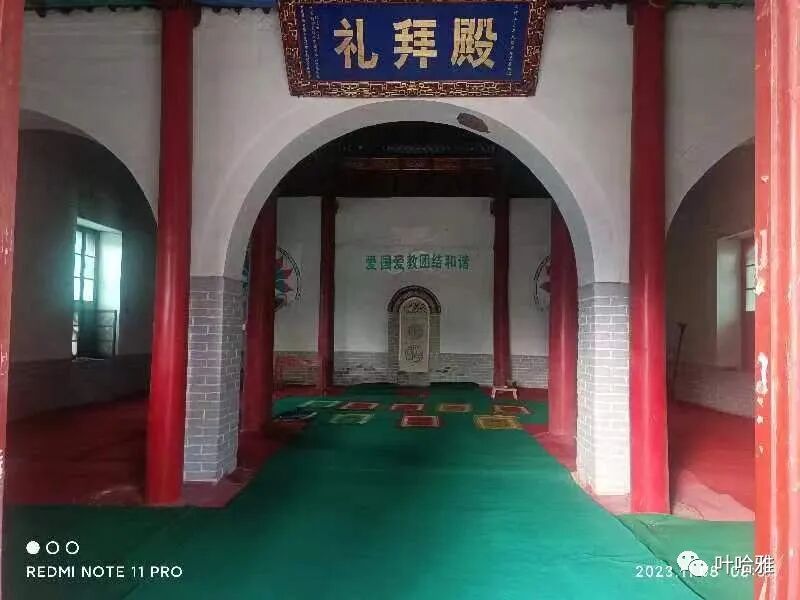
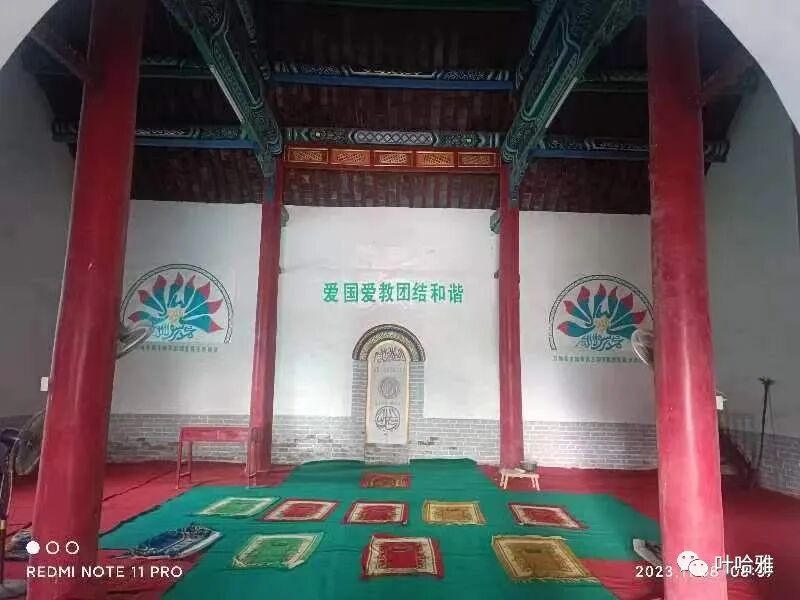
Hongqi Village Mosque
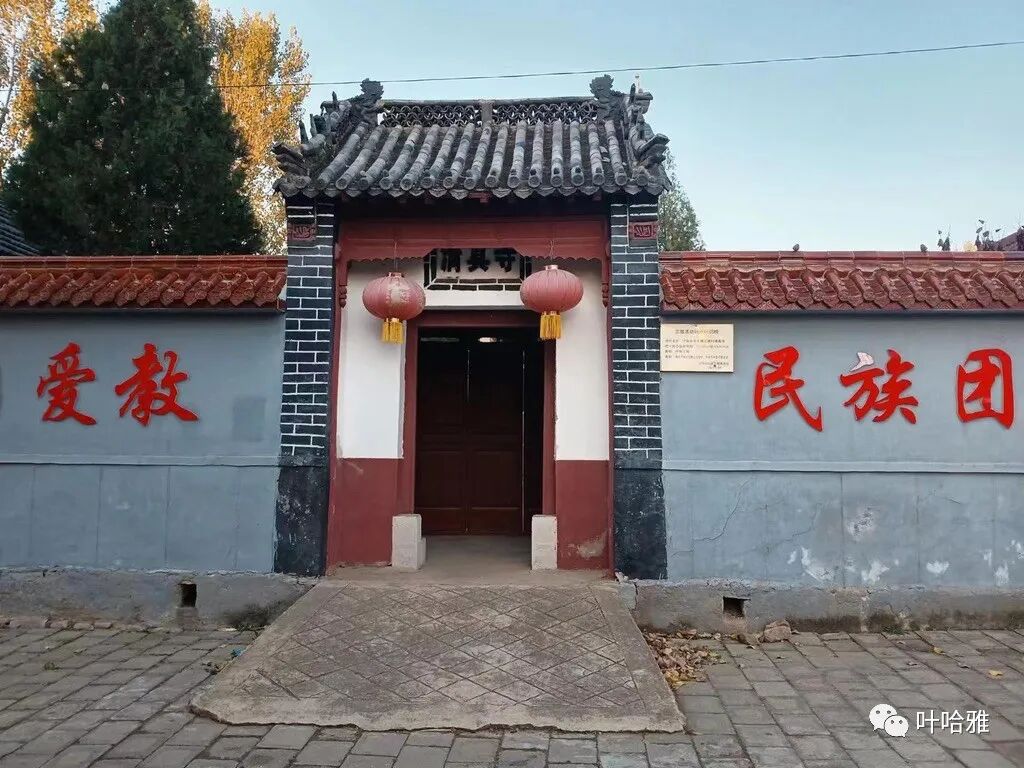
Hongqi Village Mosque in Huafeng Town sits in the center of the village. It was first built during the Wanli period of the Ming Dynasty (1573-1620) and has been expanded and repaired ever since. The mosque underwent two large-scale renovations in 1932 and 2011.
The mosque features Chinese palace-style architecture and measures 30 meters long and 25 meters wide. The prayer hall is a double-layered structure that is 6 meters high, 13 meters long, and 10 meters wide. The north lecture hall is 15 meters long and 7 meters wide. The south lecture hall is 14 meters long and 4.5 meters wide. The water room is 6 meters long and 4 meters wide. There are two stone tablets here: the 2012 Tablet of Rebuilding the Main Hall and the Tablet of Eternal Memory.
Since the late 1940s, the mosque's religious affairs have been led by imams including Chen Junfang, Shi Xianxing, Liu Qingyuan, Gao Guo, and Ma Yingshang. The mosque is currently managed by a democratic management committee. Past directors include Chen Jinmei, Zhu Xiangxun, Bai Yushun, Zhu Xuyin, Wang Ansheng, Shi Junyou, Zhu Xutian, and Chen Weimin.
In 2008, the mosque was named a Model Mosque by Tai'an City, and in 2012, it received the provincial title of Harmonious Religious Activity Venue.
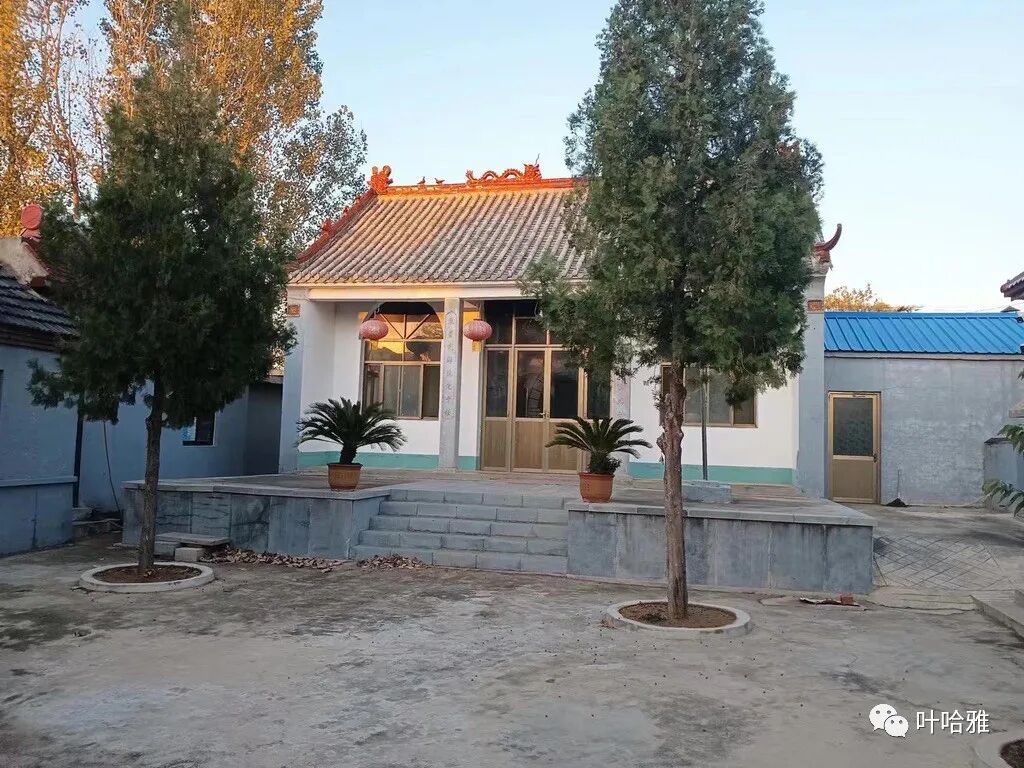
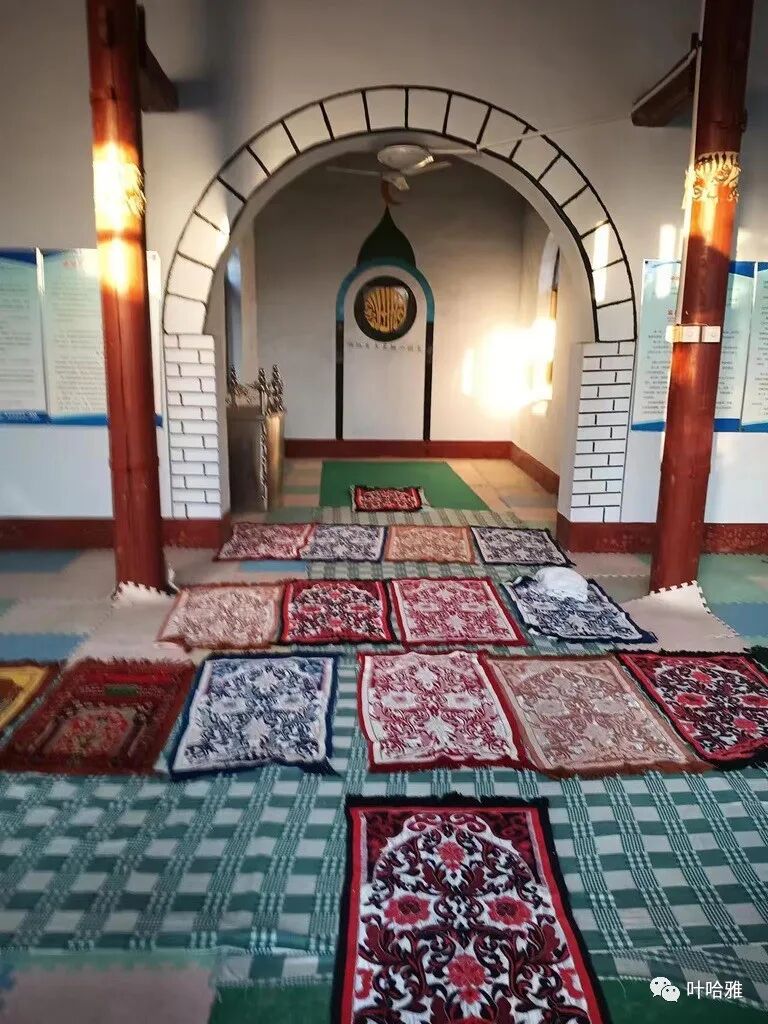
Jingquan Village Mosque
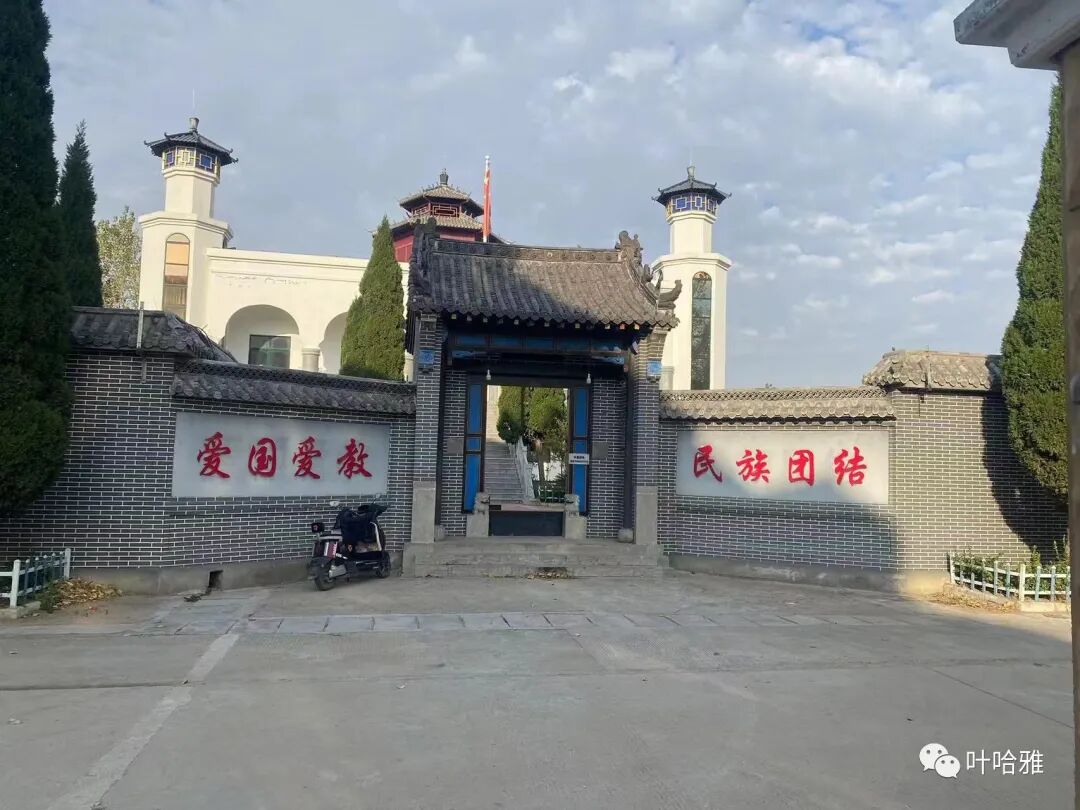
Jingquan Village Mosque in Huafeng Town is located in the northwest part of the village. It was first built in the 14th year of the Daoguang reign of the Qing Dynasty (1834). It was originally located in the eastern part of Jingquan Village and has been expanded and repaired many times since. Large-scale renovations took place in the 24th year of the Daoguang reign (1844), 1988, and 2001.
The mosque is 47 meters long and 35 meters wide. It includes a main hall, a north lecture hall, a south lecture hall, and a water room. There are three stone tablets: the Tablet of Founding the Mosque from the 14th year of the Daoguang reign (1834), the Tablet of Rebuilding the Mosque from 1998, and the Tablet Record of Repairing the Mosque from 2003.
Since the 1950s, the mosque's religious affairs have been led by imams including Jin Haixue, Ma Maoquan, Xu Changchun, Zhang Changshi, and Ma Shengchao. The mosque is now managed by a democratic management committee, with past directors including Huang Yuxiang, Huang Ruichang, Huang Qingfa, and Yang Yanhua.
The mosque houses a set of handwritten Quran manuscripts (volumes 15, 16, 29, and 30 are missing) and one copper water pitcher (tangping), which was originally part of a pair.
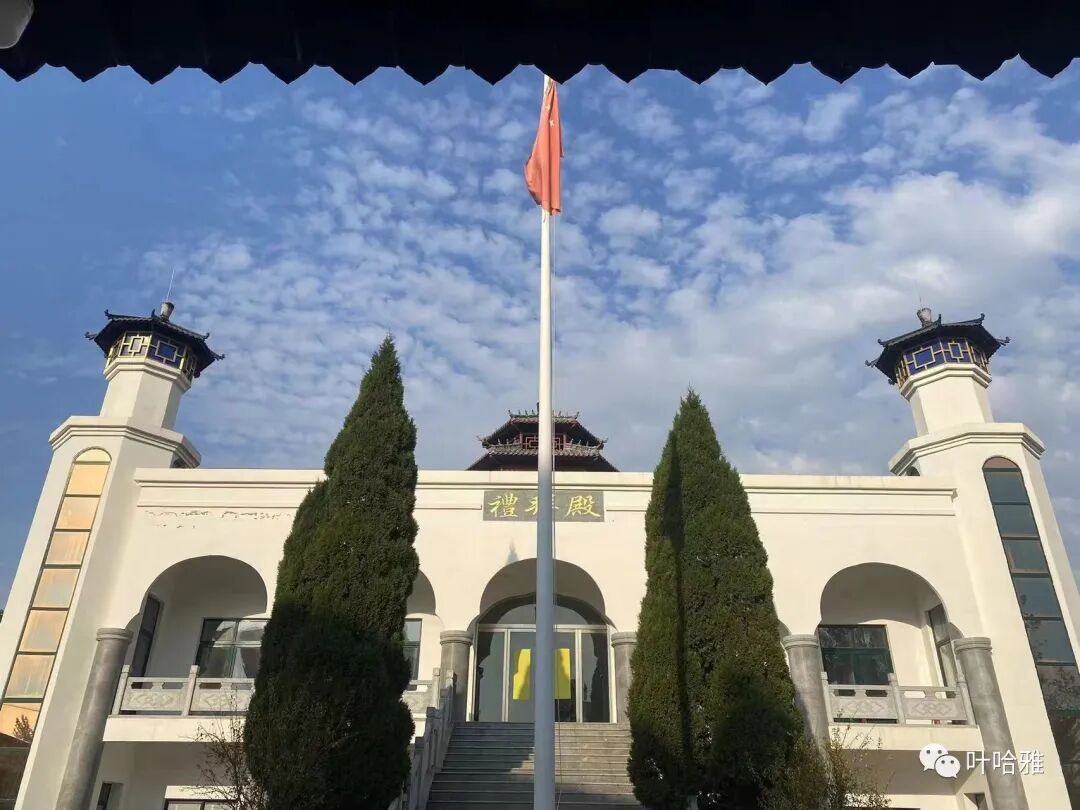
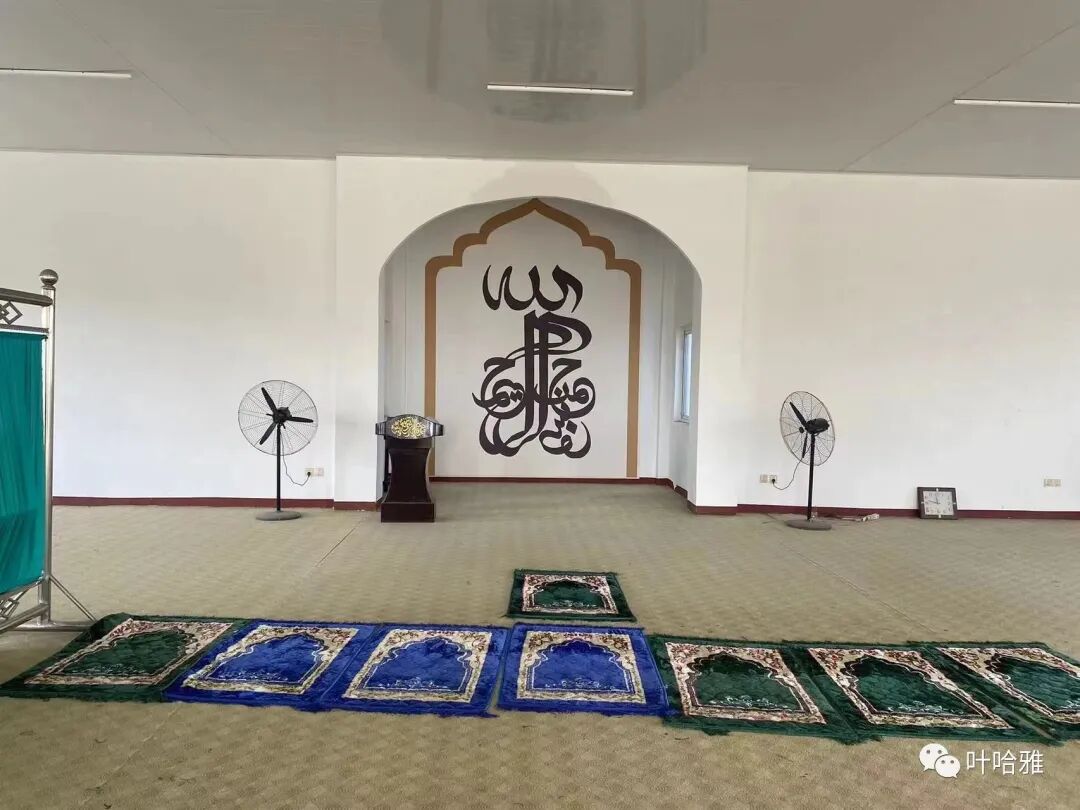
Sidian Village Mosque
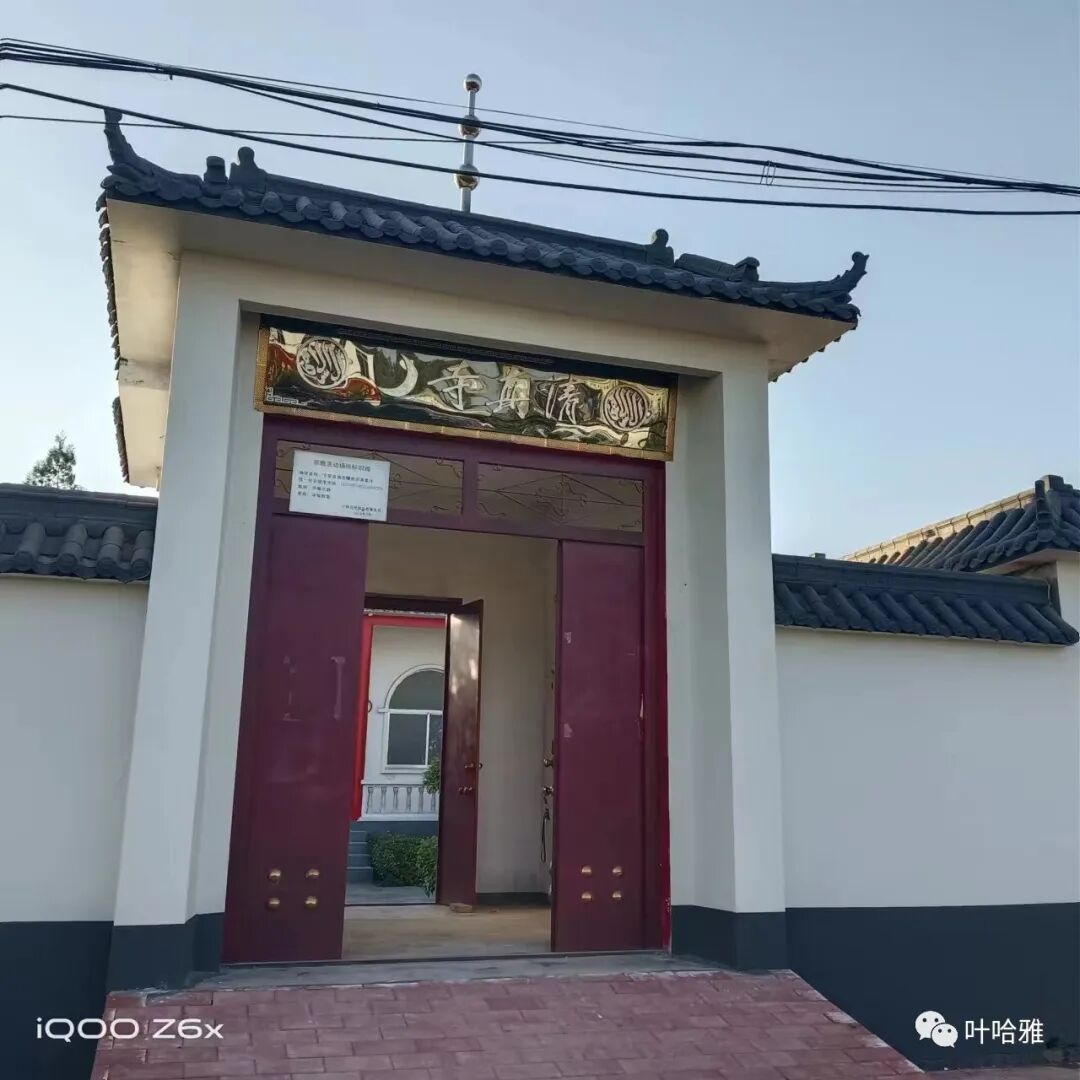
Sidian Village Mosque in Sidian Town is located in the northern part of the village. It was built in the 11th year of the Yongzheng reign of the Qing Dynasty (1733) and has been expanded and repaired many times since. In the first year of the Jiaqing reign (1796), a fire at a neighbor's house spread to the mosque, which was later rebuilt. In October 1926, a fire destroyed the main prayer hall. The main hall, lecture hall, and gate wall were rebuilt in 1935. The main prayer hall was torn down in the early 1950s. In the 1980s, the Sidian village brigade arranged for members to build houses on the site, but the south lecture hall remains standing today. The mosque was rebuilt between 2012 and 2015.
The mosque is built in the style of a Chinese palace, measuring 22 meters long and 21 meters wide. A white marble plaque inscribed with the words "Mosque" is embedded above the main gate. There are side doors on both sides, each with a five-step entrance platform. About 10 meters inside the main gate is a second gate, and a path leads straight from there to the main prayer hall. The main prayer hall is a single-story building with a three-bay porch-style design, standing 15 meters high with a bronze vase ornament on the roof. On each side of the main prayer hall, there is a carved openwork lattice window featuring Arabic calligraphy. Inside the hall, four round plaques hang on the front sides, and a plaque with gold lettering hangs in the center. There are four large painted pillars, each over 40 centimeters in diameter, decorated with large gold-painted lotus flowers. The ceiling is inscribed with the holy names of Allah. The floor of the main prayer hall is covered with felt carpets. The front of the main prayer hall is a wooden structure with a simple, ancient style, built in the Chinese hip-roof (wudian) architectural form. The north lecture hall has three rooms and covers an area of about 60 square meters. Inside the hall, there is antique porcelain printed with Arabic scripture. The south lecture hall has three rooms and covers an area of about 50 square meters.
There are two stone tablets remaining: the Imperial Edict Tablet (Shengyu Bei) from the seventh year of the Yongzheng reign of the Qing Dynasty (1729) and the Tablet Record of the Reconstruction of Sizhuangdian Mosque (Chongxiu Sizhuangdian Qingzhensi Beiji) from the twenty-eighth year of the Republic of China (1939). The former is the only one of its kind in Tai'an and holds significant historical and cultural value. There are several cypress trees inside the mosque.
The mosque was once led by imams including Mi Baogui, Zhao Defu, and Zhao Furun. It is now managed by the mosque's democratic management committee, with past directors including Shi Guanli, Li Xiangqian, and Li Hong'an. The mosque also serves the communities of Qianwang Village and Houwang Village in Caohe Town, Yanzhou City.
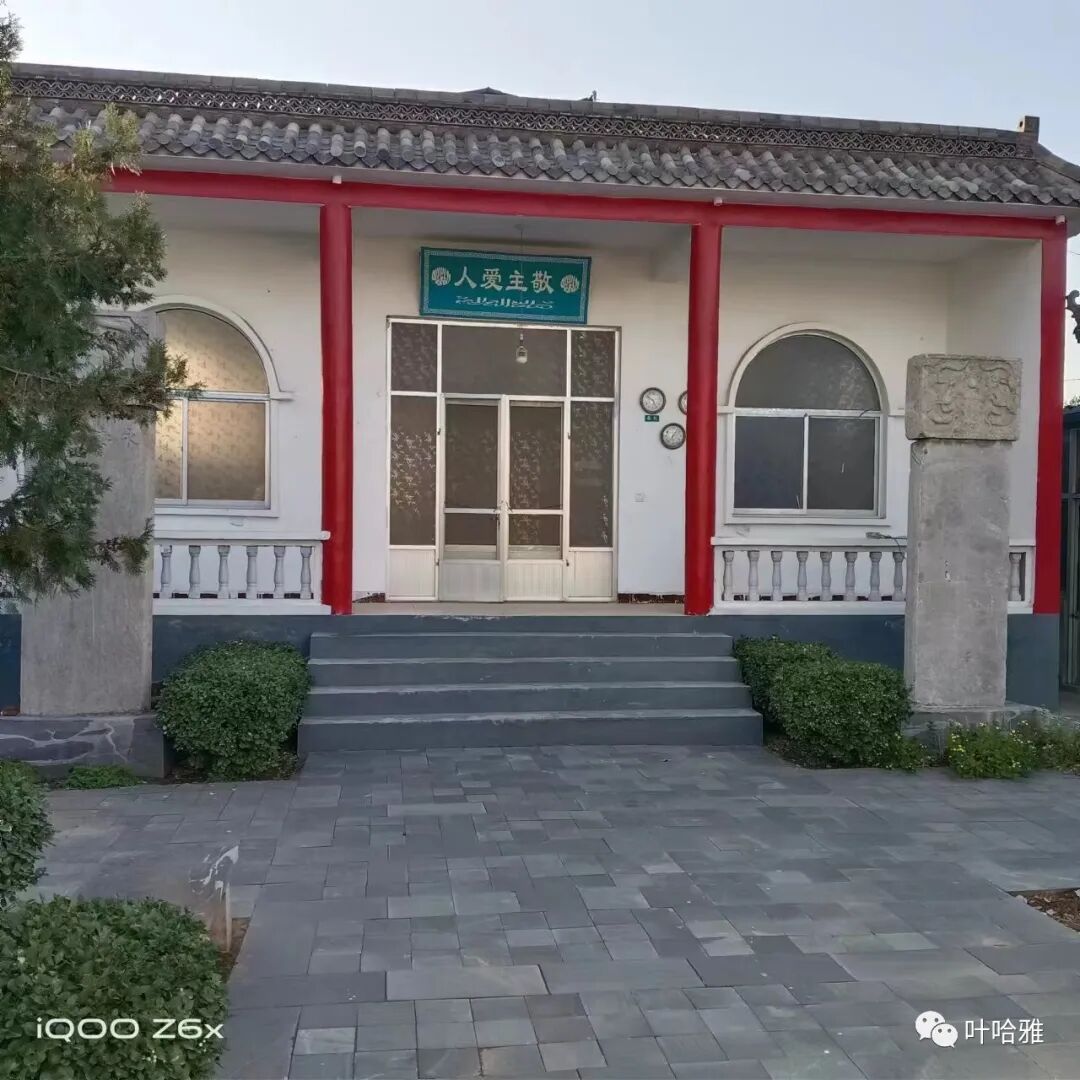
Nanyi Village Mosque
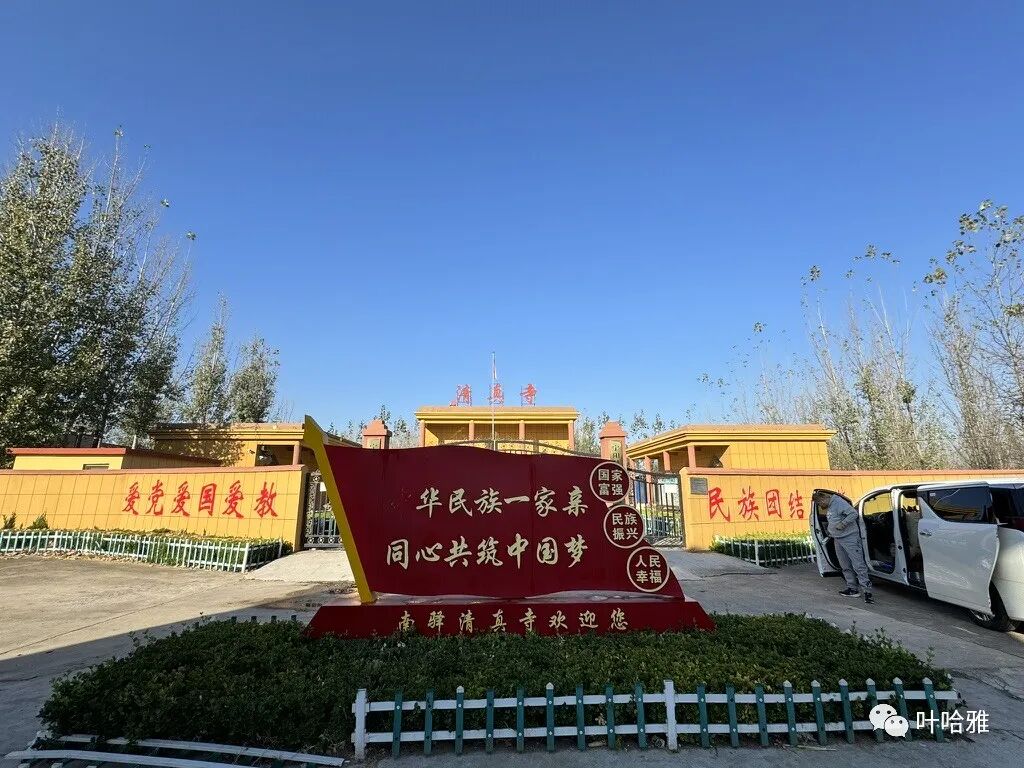
Nanyi Village Mosque in Ciyao Town is located in the southwest part of the village. The original mosque in Nanyi Village fell into disrepair and was severely damaged. In May 2015, the dangerous structures were demolished according to plan, and a new mosque was built at a different site.
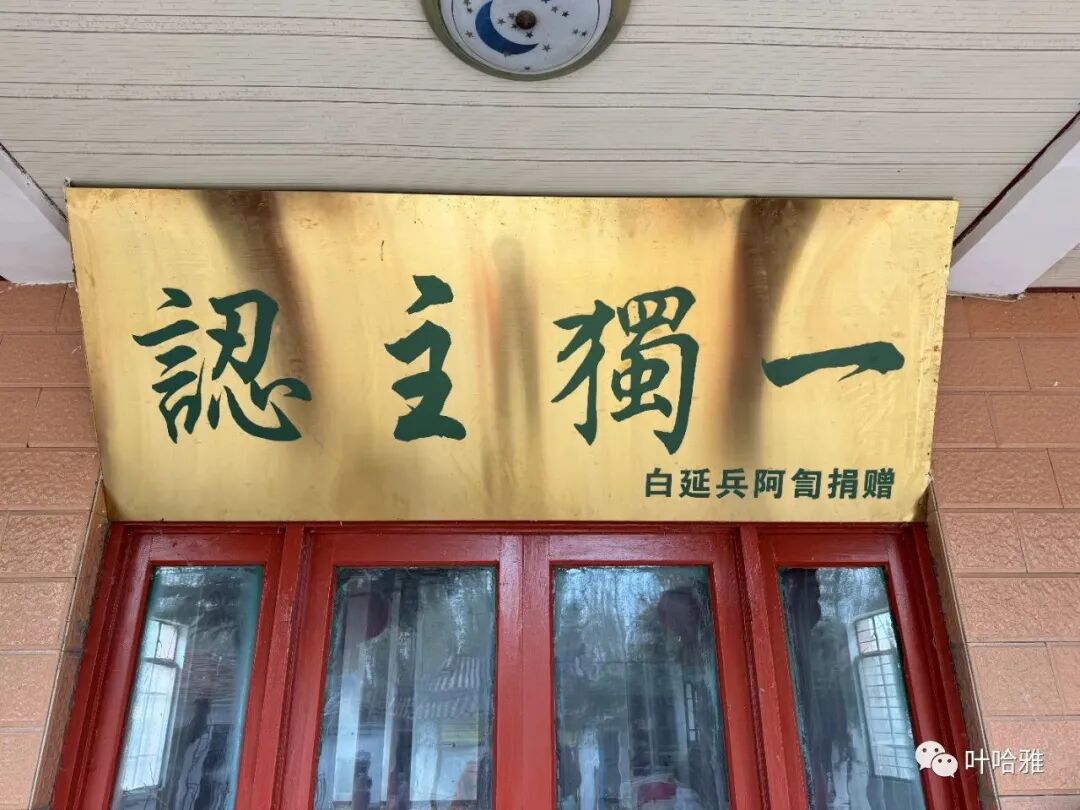
The mosque covers an area of 1,600 square meters, measuring 40 meters long and 40 meters wide. The prayer hall is 15 meters long and 11 meters wide. The north lecture hall is 10 meters long and 8 meters wide. The south lecture hall is 10 meters long and 8 meters wide. The water house is 10 meters long and 11 meters wide. There is one stone tablet here, the 2016 Tablet of Loving the Country, Loving the Faith, and Recognizing the Oneness of Allah.
The mosque has trained imams like Zhu Zhili, and Imam Yang Zhi currently manages religious affairs. The mosque is managed by a mosque management committee, with Zhang Weimin and Zhu Zhiming serving as past directors.
Houlyuguan Mosque
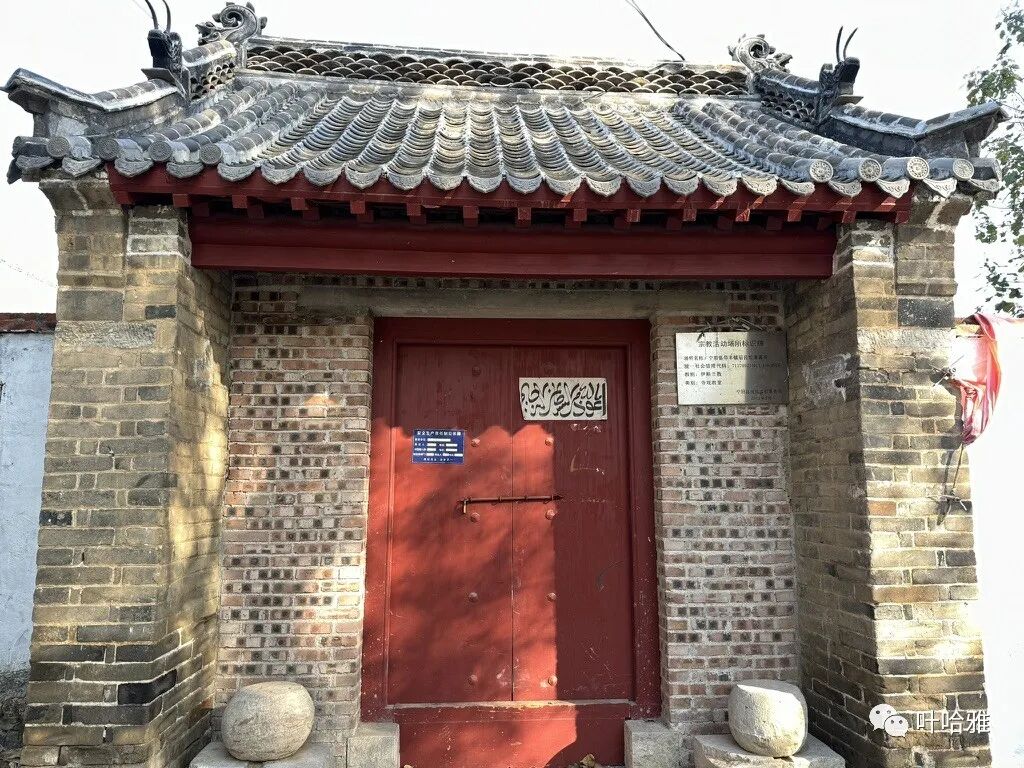
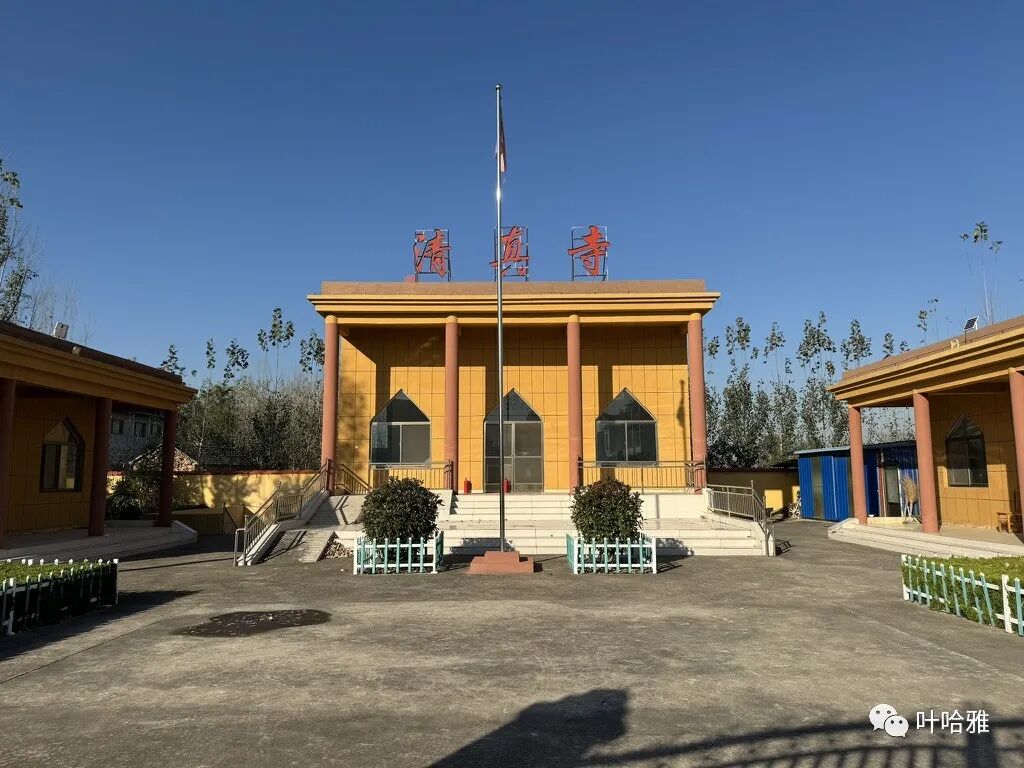
Houlyuguan Mosque in Huafeng Town sits in the middle of the village. It was likely built in the early days of Lyuguan Village and has been expanded and repaired ever since. In the second year of the Daoguang reign (1822), the old mosque was falling apart, so it moved to the north end of the village, which is its current location. The new mosque added three lecture rooms and a moon terrace (yuetai). In the 27th year of the Guangxu reign (1901), three large tiled rooms were added, and pine and bamboo were planted. The mosque was repaired in the ninth year of the Republic of China (1920). It was severely damaged during the Cultural Revolution.
When the mosque was first built, it was made of grass huts and covered seven and a half mu of land, with eight farming families from the north and south villages providing money and grain. After moving to the north of the village, it was rebuilt with brick, wood, earth, and stone, measuring 62 meters long and 52 meters wide. An old plaque hangs in the prayer hall, but the three characters on it are no longer readable. The main hall is 11 meters long and 11 meters wide. The north lecture hall is 11 meters long and 5 meters wide. The south lecture hall is 11 meters long and 5 meters wide. The water room is 4 meters long and 3.5 meters wide. There are three existing stone tablets: the Record of Rebuilding the Mosque from the second year of the Daoguang reign of the Qing Dynasty (1822), the Record of Rebuilding the Mosque from the 27th year of the Guangxu reign (1901), and the Record of Rebuilding the Mosque from the ninth year of the Republic of China (1920). Several stone tablets buried during the Cultural Revolution are inside the water pool.
The mosque's religious affairs were successively led by imams including Ma, Liu Yulin, and Xu Yongtong. Xiluoshan Mosque.
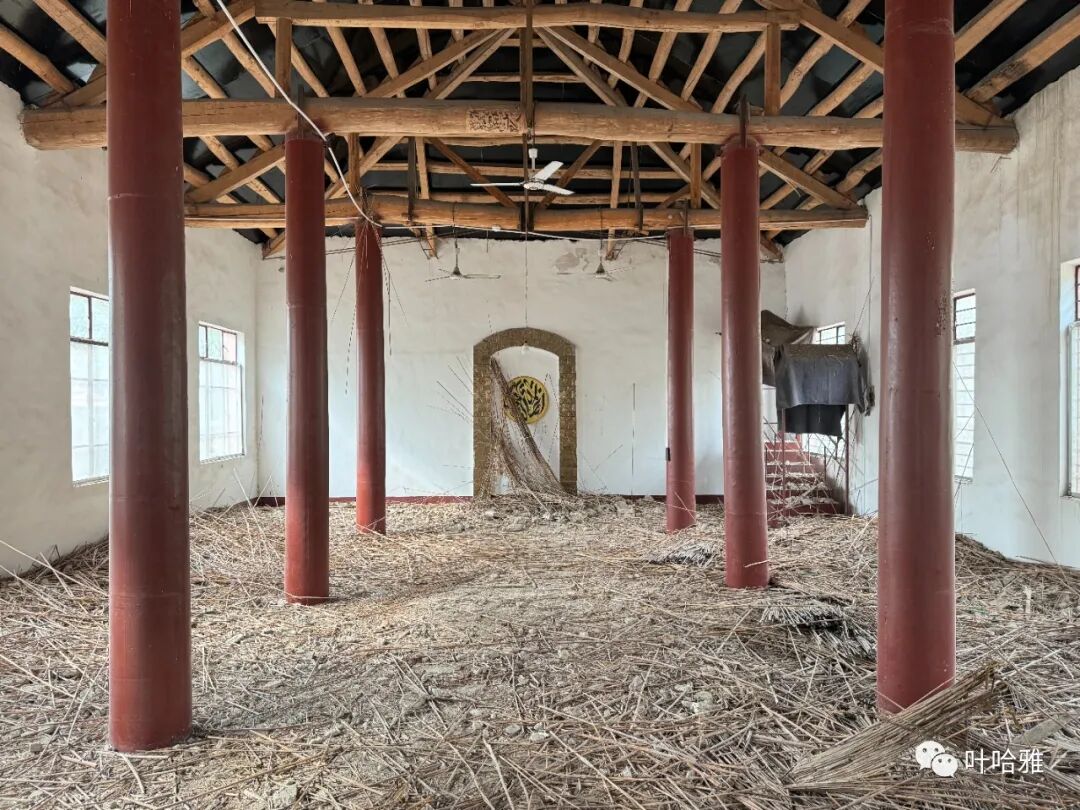
Xiluoshan Mosque in Heshan Township. Built in 2013, it covers 500 square meters with a building area of 300 square meters. It includes a main prayer hall, north and south lecture halls, and a main gate.
Xiluoshan Mosque.
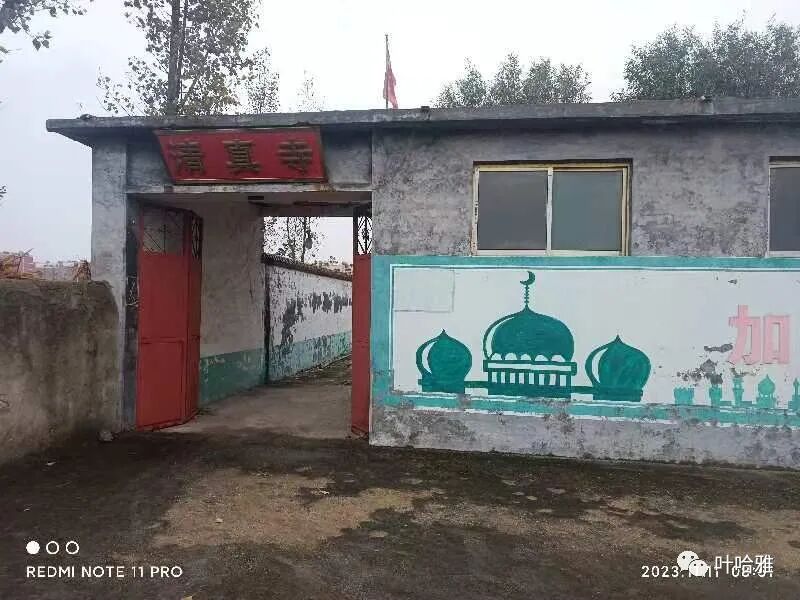
Xiluoshan Mosque in Heshan Township. Built in 2013, it covers 500 square meters with a building area of 300 square meters. It includes a main prayer hall, north and south lecture halls, and a main gate.
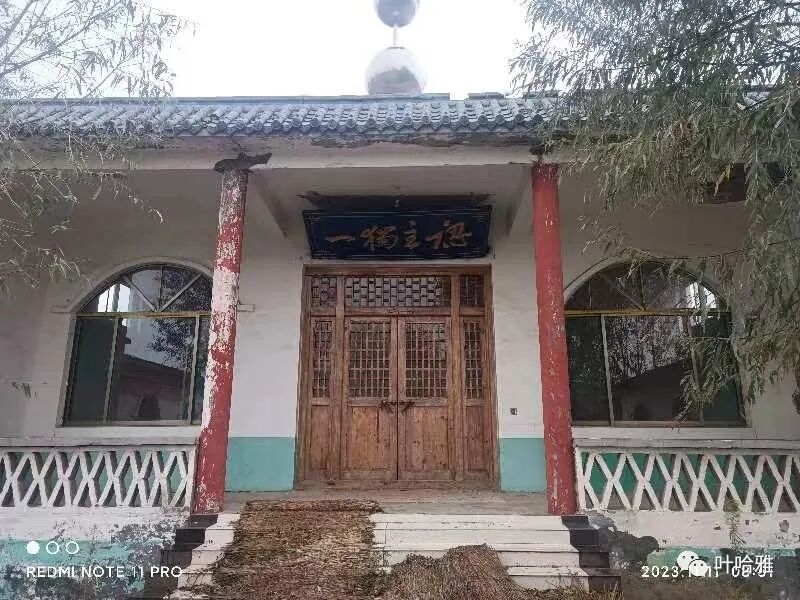
Dongping County
Zhoucheng Mosque
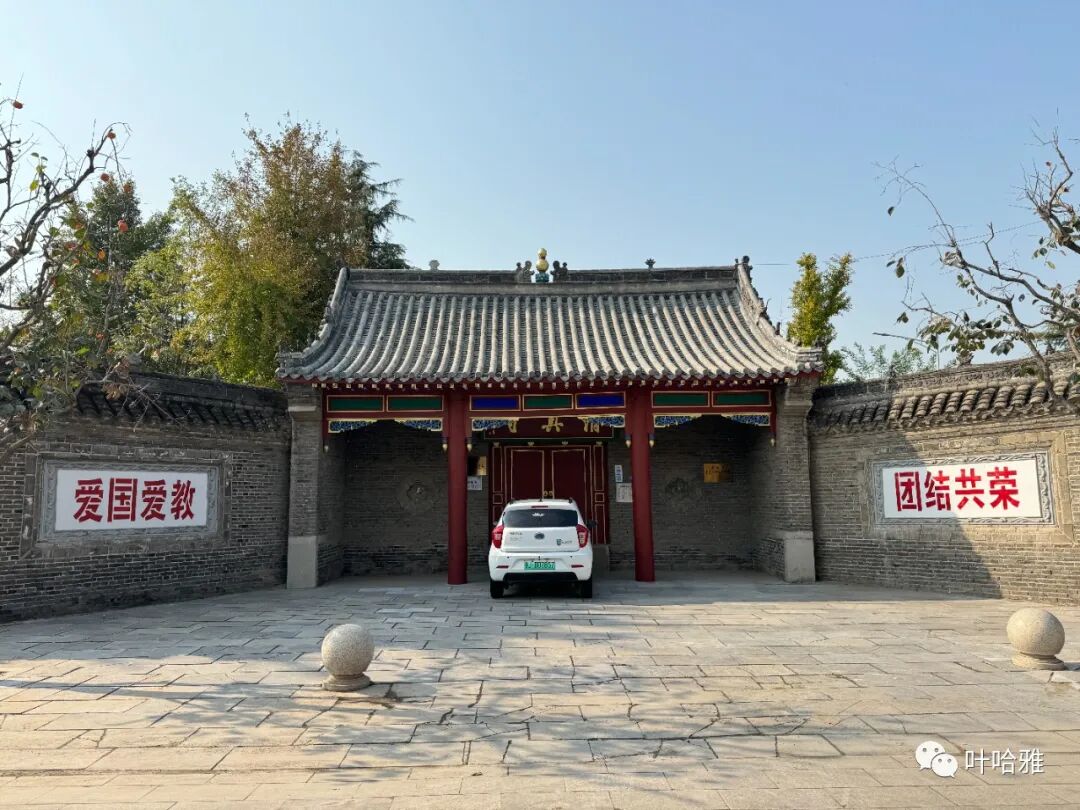
Zhoucheng Mosque is located in the middle of the ten-mile Song Street in Zhoucheng Subdistrict. It was first built in 1575 during the third year of the Wanli reign of the Ming Dynasty and has been expanded several times since. Large-scale renovations took place in 1819 (the 24th year of the Jiaqing reign), 1828 (the 8th year of the Daoguang reign), 1840 (the 20th year of the Daoguang reign), 1911 (the 3rd year of the Xuantong reign), and 1926 (the 15th year of the Republic of China). After the founding of the People's Republic of China, it was repaired many times, with major renovations in 1990 and 2004.
The mosque features a classic Chinese palace-style architectural design, measuring 91 meters long and 51 meters wide. The prayer hall is a ridge-roof building that stands 12 meters high, 31 meters long, and 29 meters wide. The north lecture hall is 17.5 meters long and 6 meters wide. The south lecture hall is 17.5 meters long and 6 meters wide. The water house is 10.5 meters long and 6 meters wide. There are five stone tablets remaining: the Donation of Land Tablet and the Record of Rebuilding the Mosque Tablet from the 12th year of the Daoguang reign (1832), the Record of Rebuilding the Mosque Tablet from the 20th year of the Daoguang reign (1840), the Preface to the Tablet for Rebuilding the Mosque from the 3rd year of the Xuantong reign (1911), and the Tablet for Rebuilding the Mosque from the 15th year of the Republic of China (1926).
Since modern times, the mosque's religious affairs have been led by imams including Zhan Huiyuan, Zhan Shikai, Zhan Hongru, Zhan Faxin, Xu Changzheng, Xu Changzhi, Yang Maoxiu, Yang Baojun, Zhan Hongda, Imam Guo, Ding Shanzhen, Ma Xiangfa, Li Anchen, Zhan Qiang, and Jin Feng. It is now managed by the mosque's democratic management committee, with Bian Qingfang, Wang Jinghan, Guo Guangcai, Zhan Yanling, and Zhao Rongsheng serving as directors in succession.
In 2004, the mosque was designated as a Tai'an City Cultural Relics Protection Unit. It won the title of Tai'an City Model Mosque four times in 2008, 2009, 2010, and 2014. In 2010, it was named a provincial-level Harmonious Religious Activity Venue.
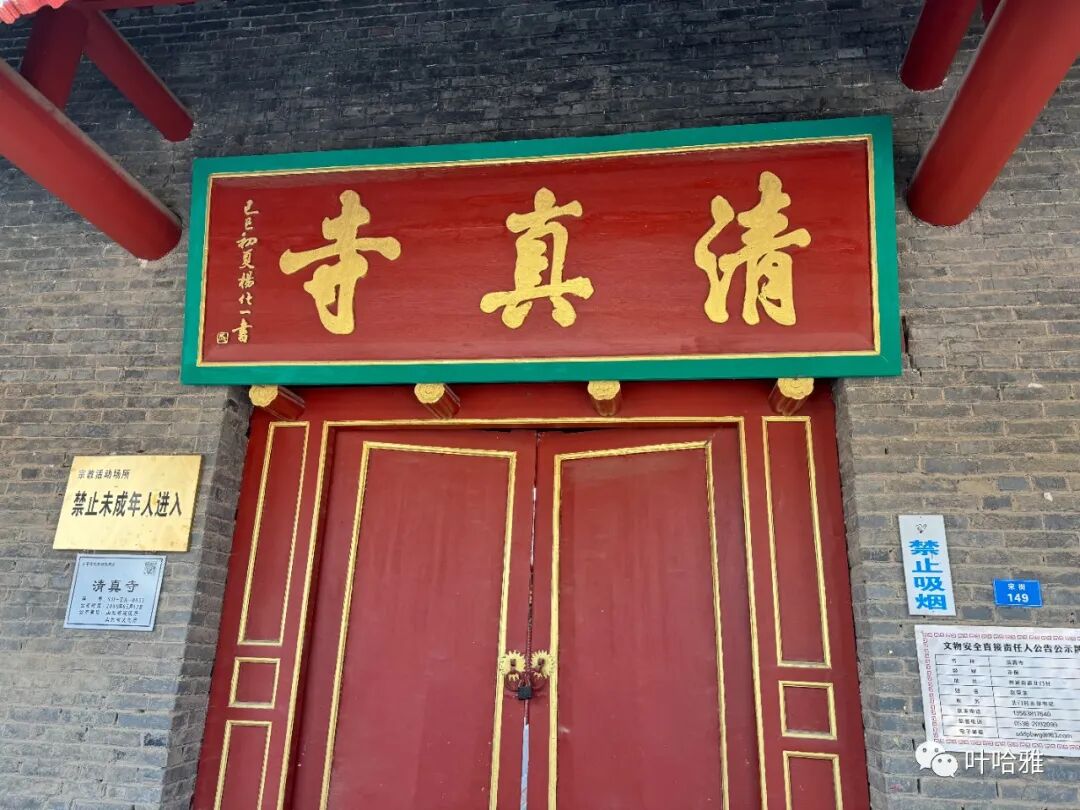
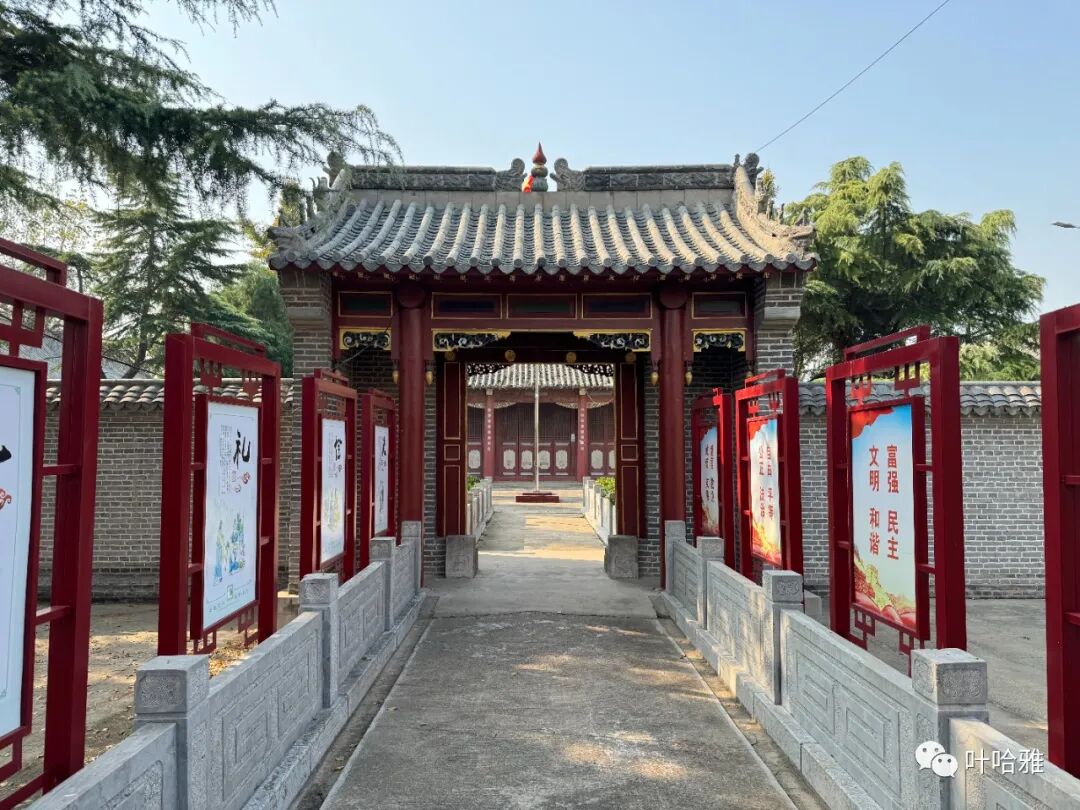
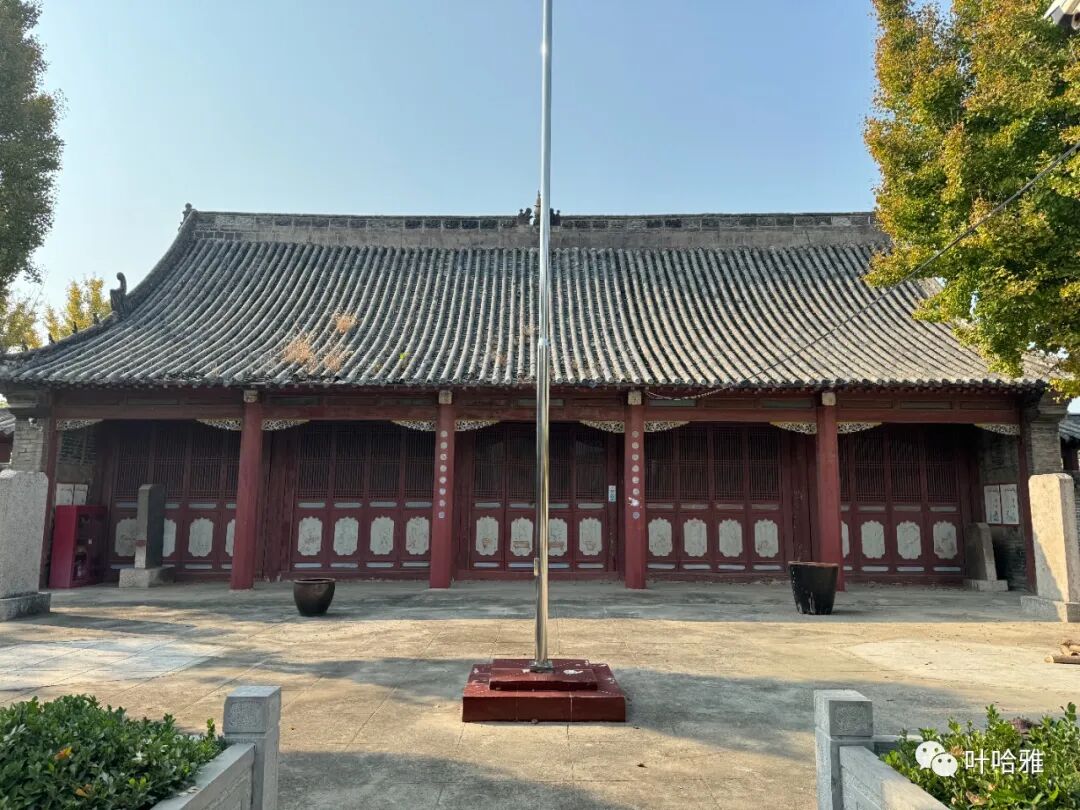
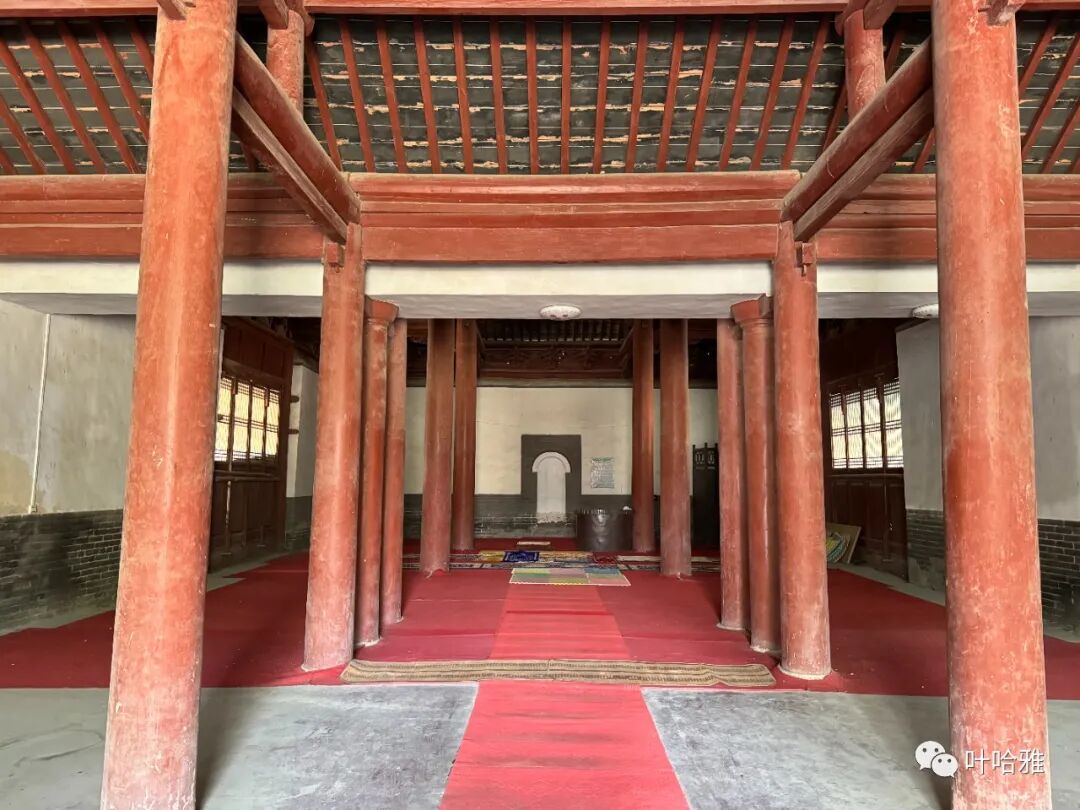
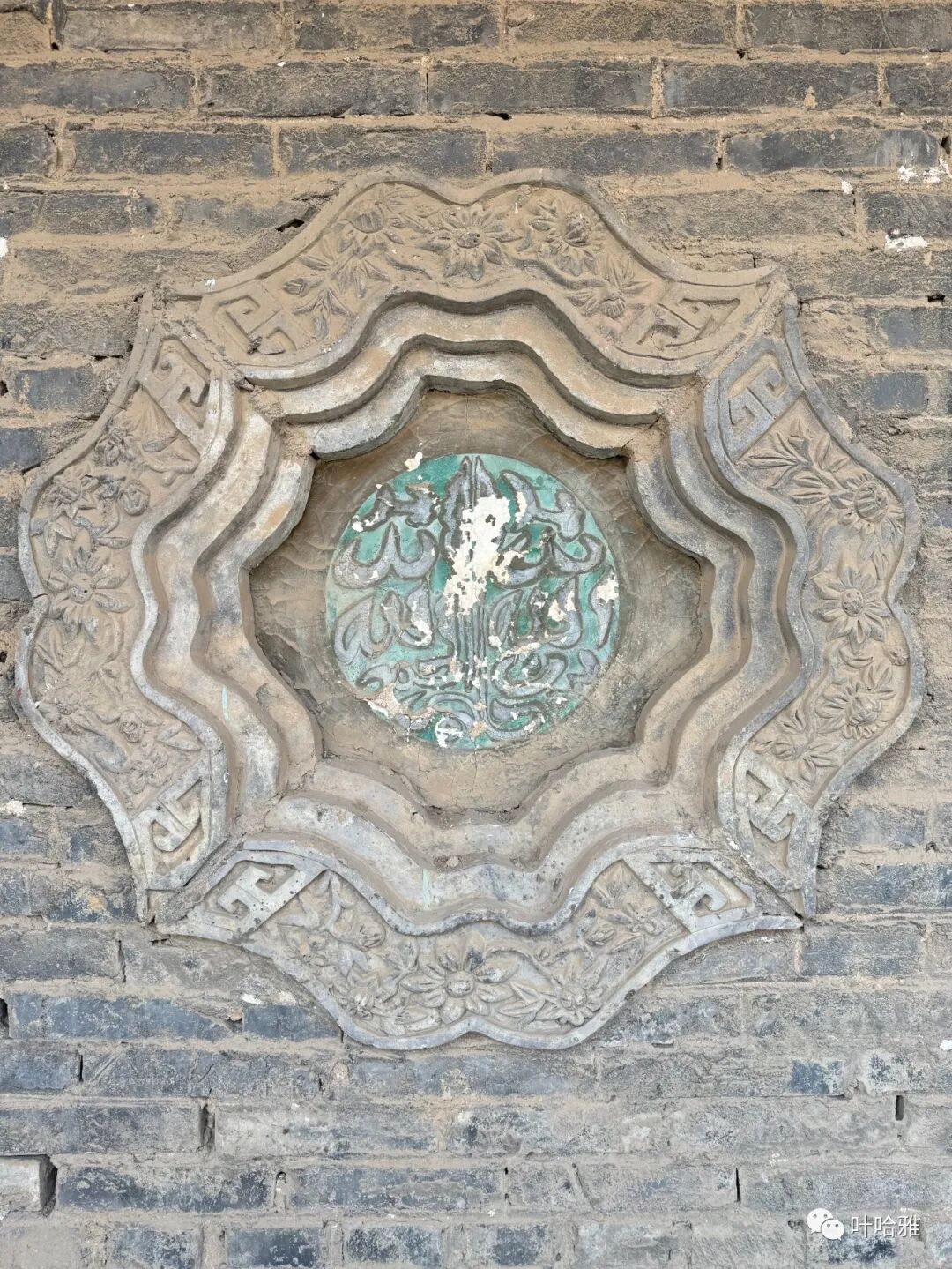
Xicun Mosque
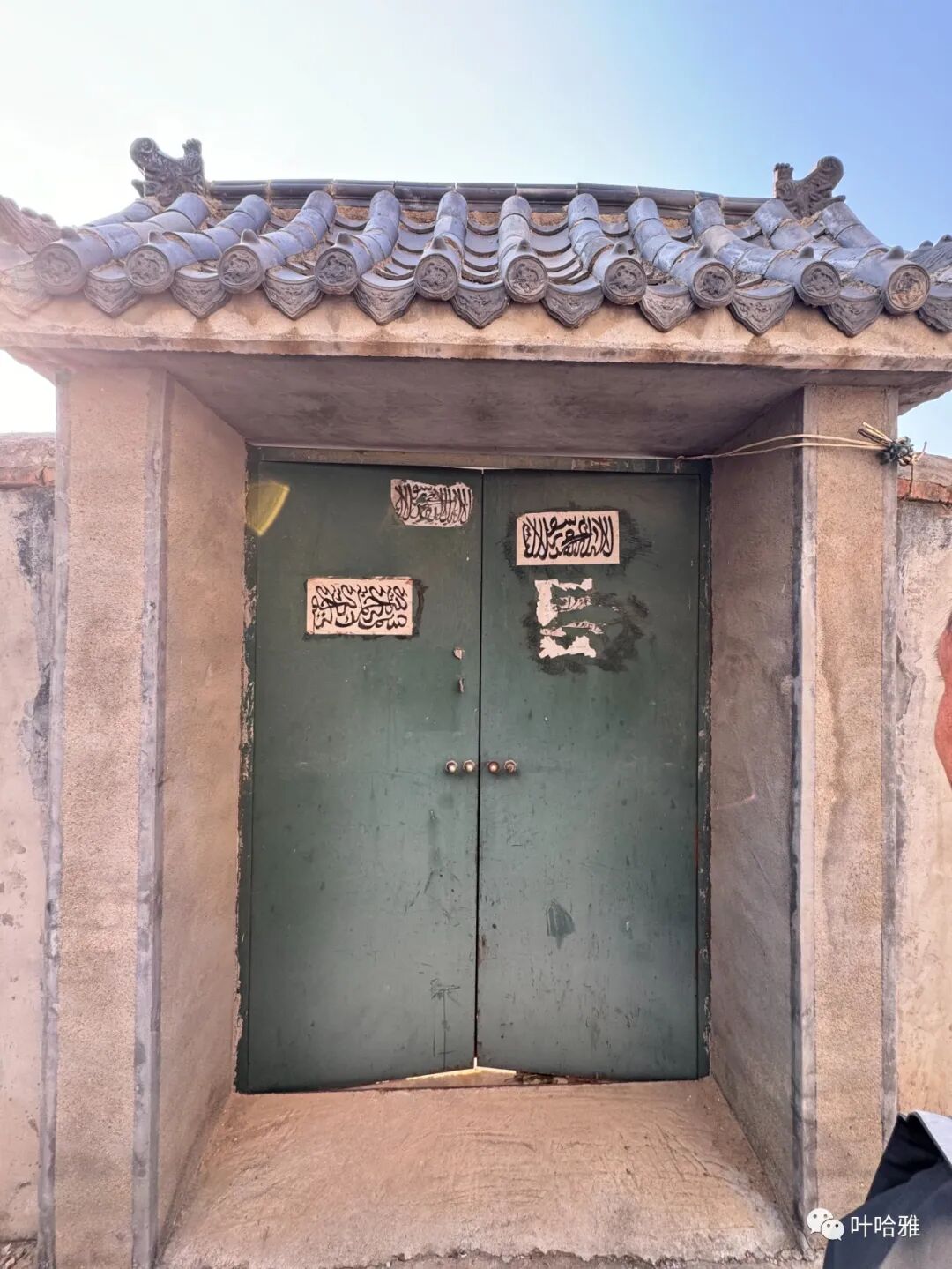
Laohu Town Xicun Mosque is located in the southern part of the village. The mosque was originally built in Zhanjialou during the Daoguang reign of the Qing Dynasty (1820-1850) and was expanded several times later. It was destroyed by a flood in 1955 and later rebuilt in Xicun Village, where it was completed with a main prayer hall of three rooms and a lecture hall of four rooms.
The mosque is built in the style of a Chinese palace and covers a total area of 1,404 square meters. The main prayer hall is a single-story building that stands 12 meters high and covers 130 square meters. The north lecture hall covers 168 square meters, and the south lecture hall covers 43.2 square meters. The ablution room (shuiwu) covers 77 square meters. The mosque currently houses two stone tablets.
The mosque's religious affairs have been led by imams including Mi, Yang, Ma Yunxiang, Xu Changzhi, Wu Mingcai, Wang Enqing, Bai Zhenhe, Lu Qingjie, Yang Yinqing, and Zhang Changshi. It is now managed by a mosque democratic management committee, with members including Zhan Ensu, Zhan Enkui, Zhan Qinghai, Zhan Qingyu, Bai Shulin, Jin Licai, Jin Baoli, Zhan Yanwu, Bai Chengzhen, and He Mingjun serving as directors.
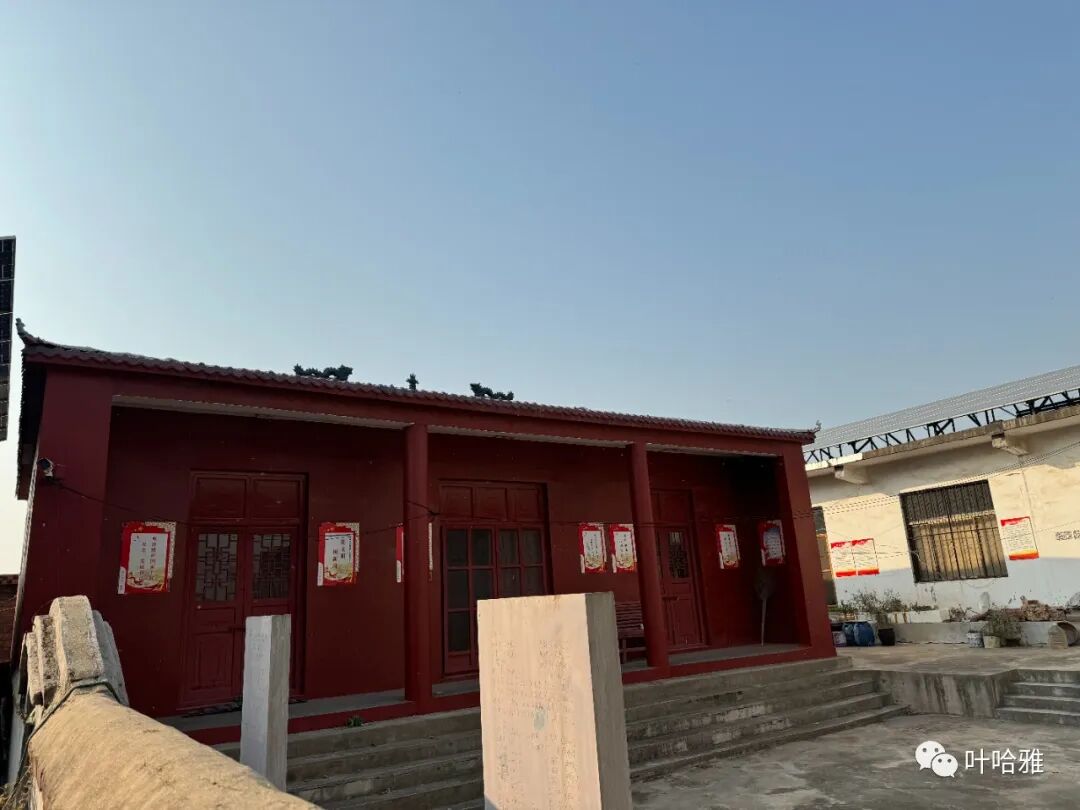
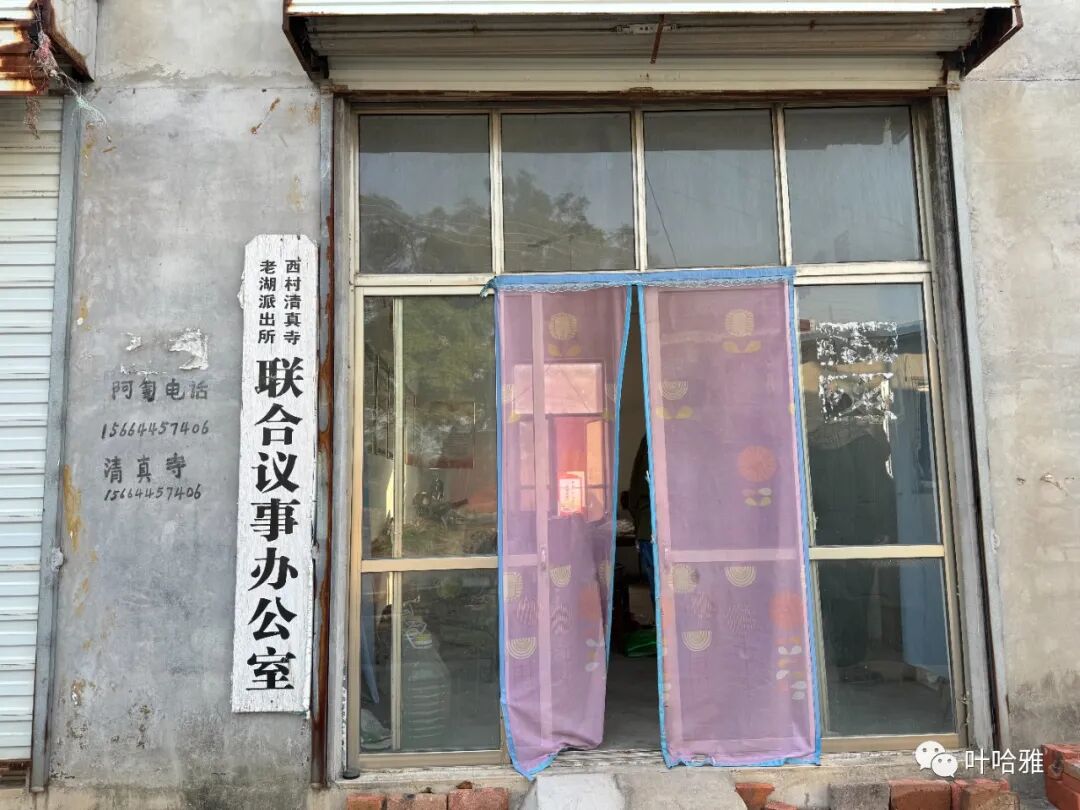
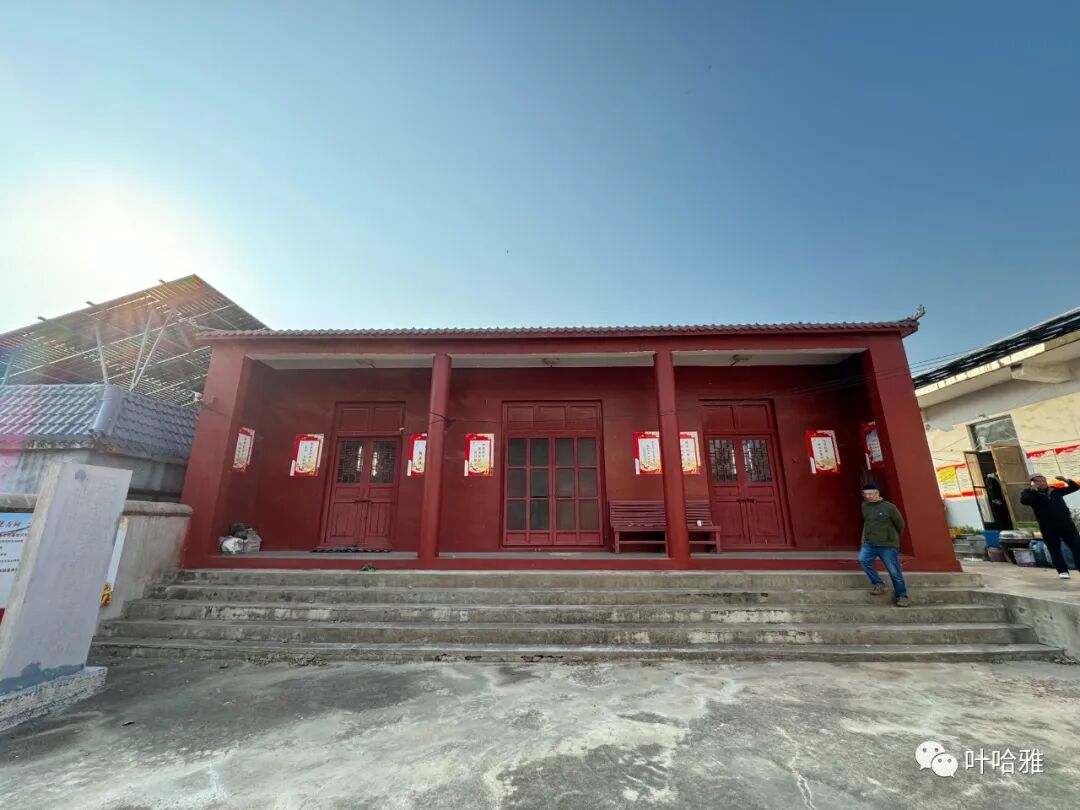
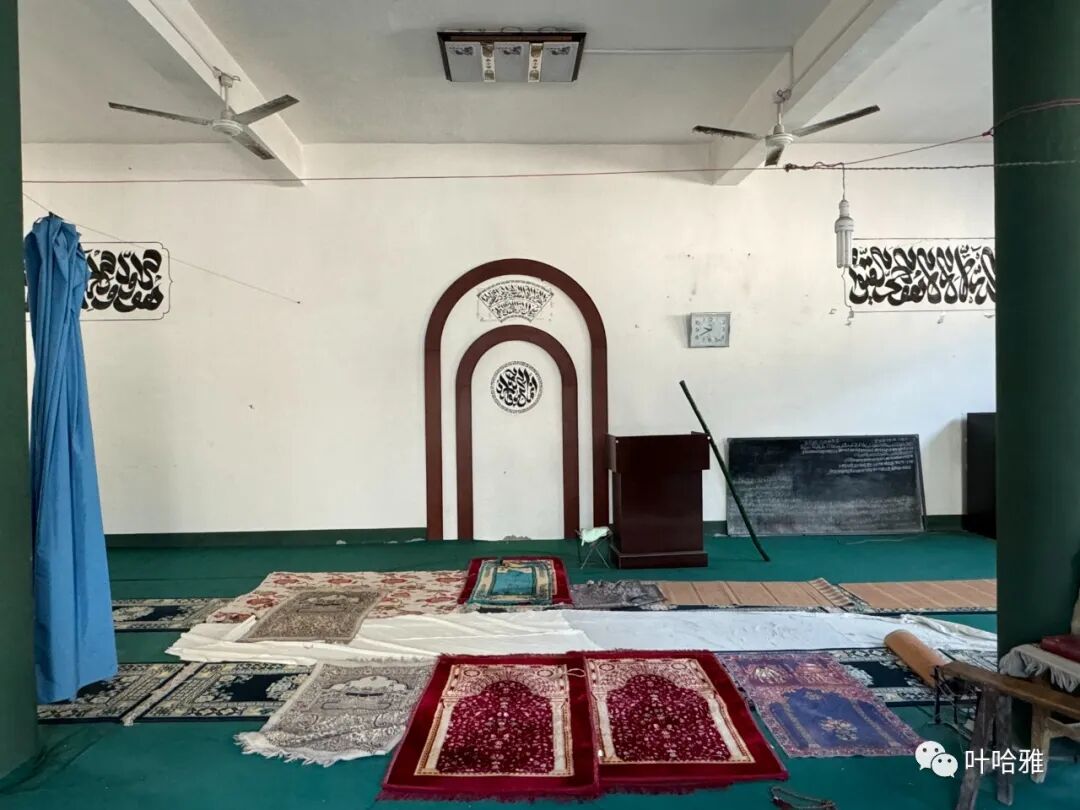
Lisuo Village Mosque.
Lisuo Village Mosque in Timen Town was built in 1896 during the Guangxu reign of the Qing Dynasty and has been repaired several times since. It was damaged in 1958 and later rebuilt. In 2012, due to new village planning, it was moved and rebuilt 60 meters southeast of the old mosque, and it is now located at the 15th Team in the south of Lisuo Village. Repairs were carried out in 2015 and 2016.
This mosque has a modern architectural style and covers a total area of 1,751.1 square meters. The main prayer hall is a single-story building that stands 8 meters high and covers 151.2 square meters. The north lecture hall covers 87.1 square meters, and the ablution room (shuiwu) covers 90 square meters. A storage room (jiazi fang) is built to the south of the main prayer hall. Two stone tablets remain. One ancient tablet was carved with verses from the Quran, the date the mosque was built, and the names of the founders, but it was damaged in 1958 and is now a broken fragment.
The mosque was led by imams including Imam Ding, Imam Yang, and Zhao Jie, and it is currently managed by the mosque's democratic management committee.
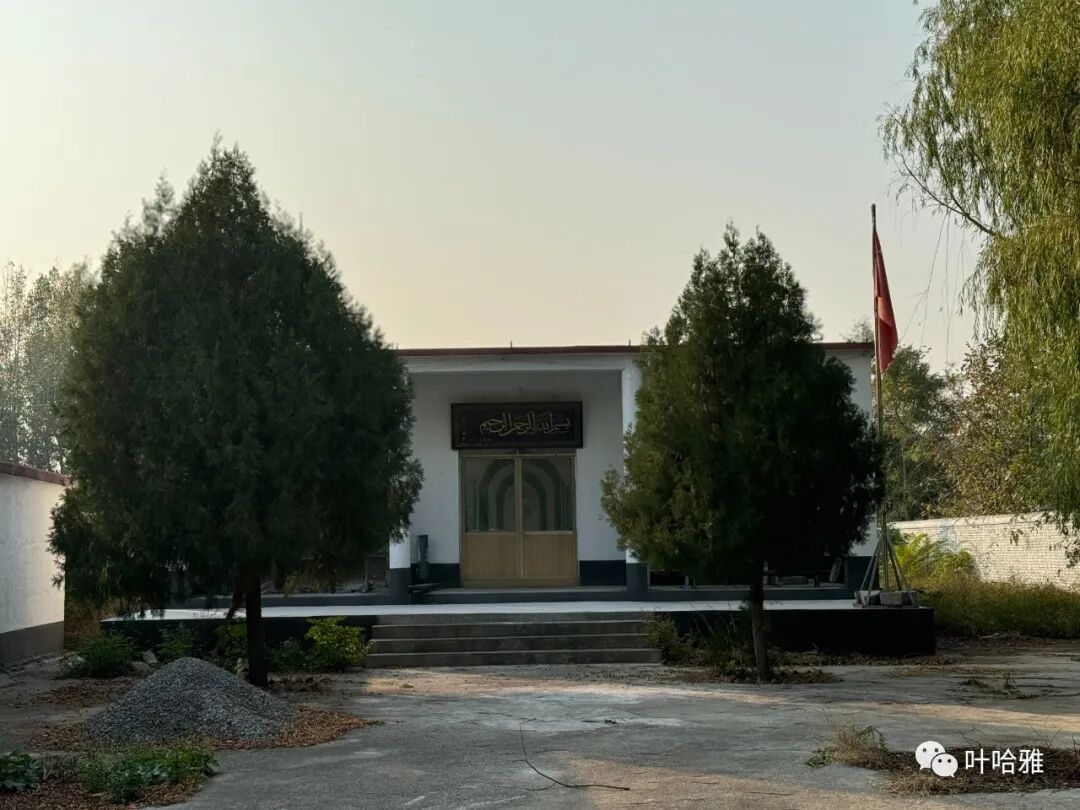
Daimiao Mosque
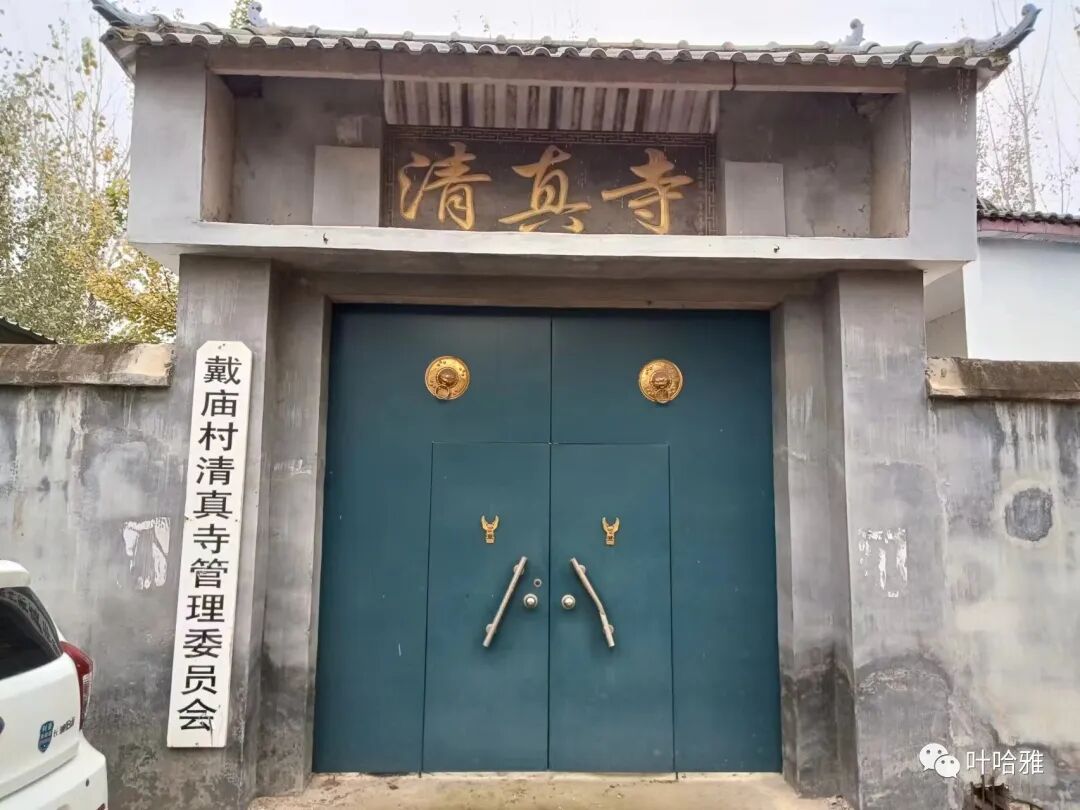
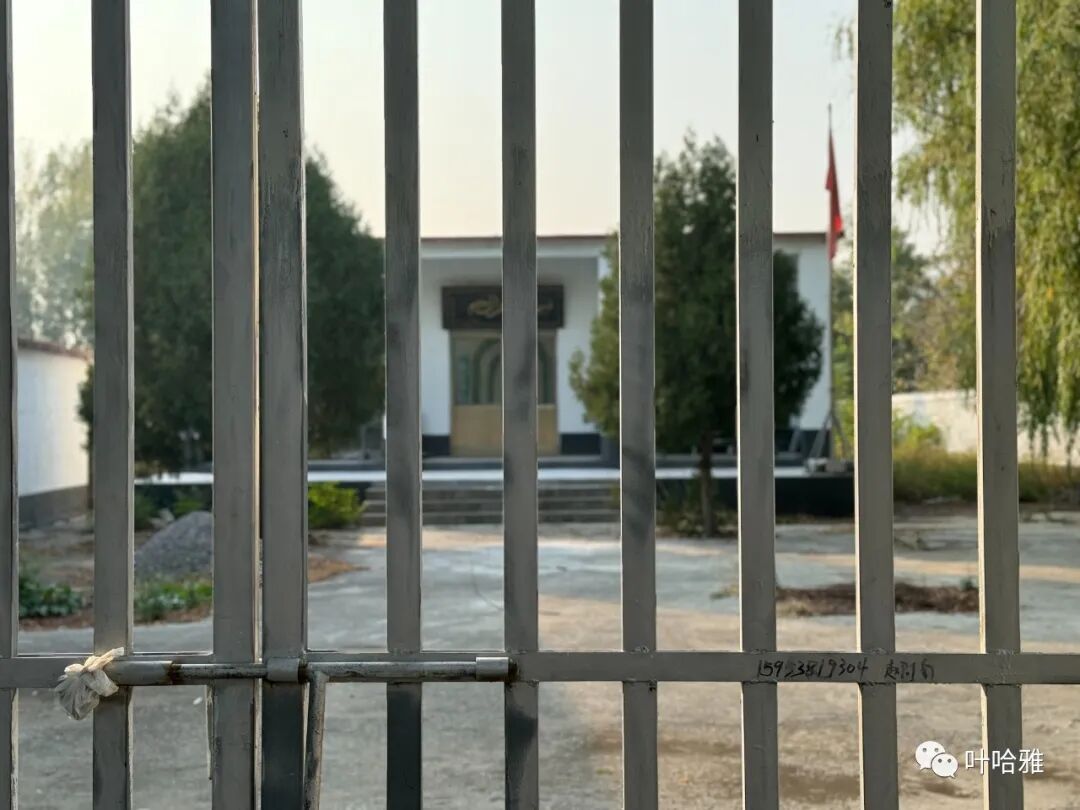
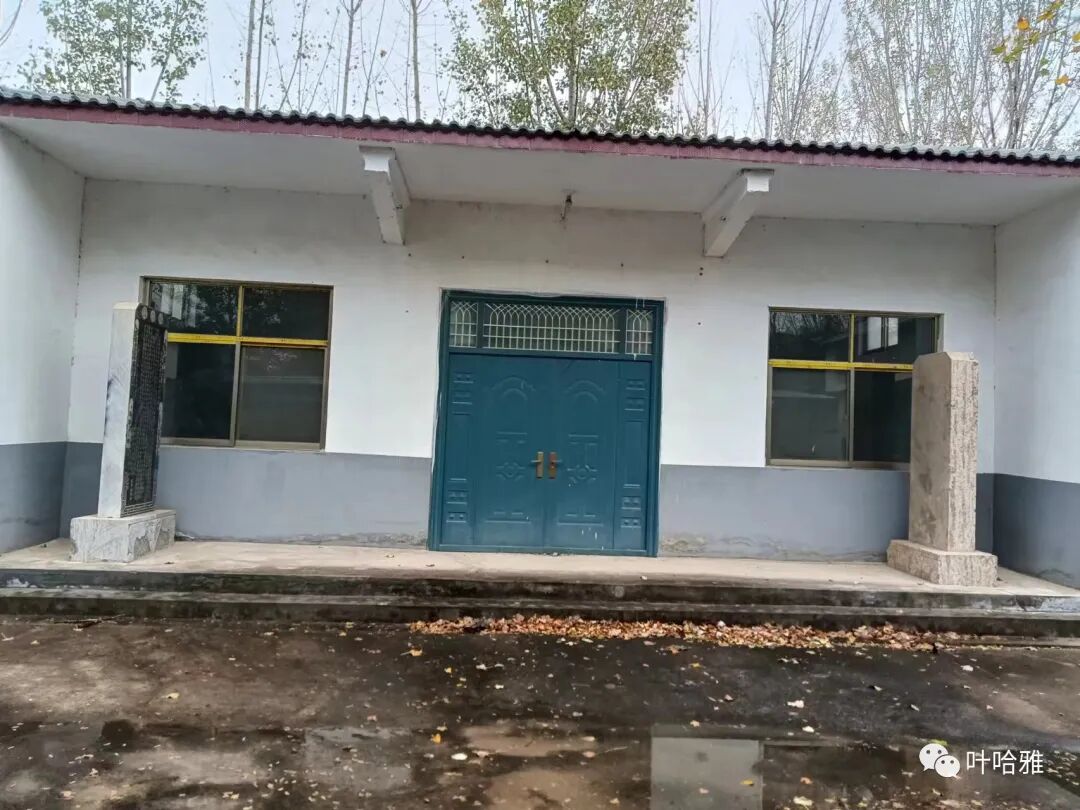
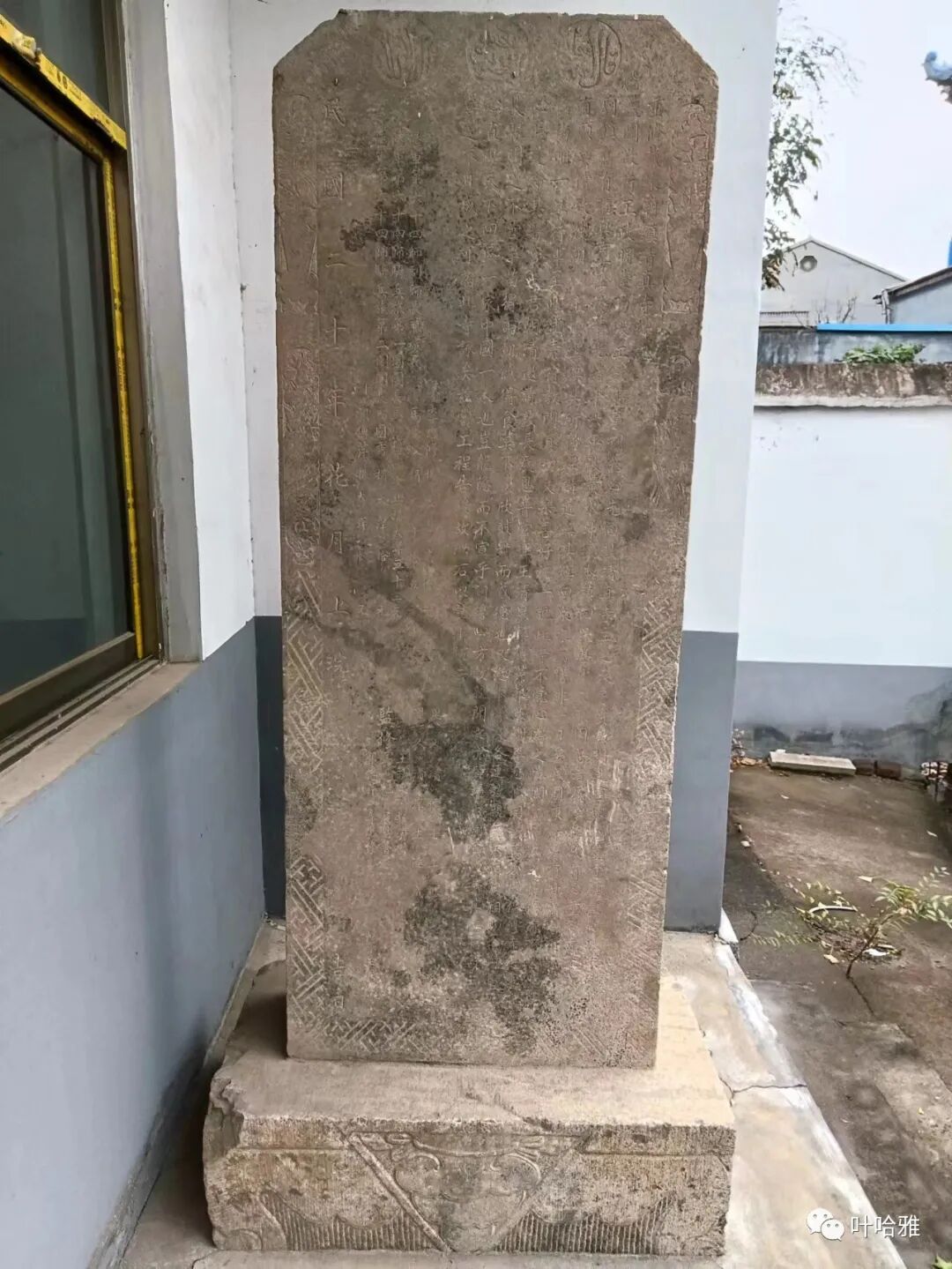
Daimiao Mosque is located in the center of Daimiao Village, Daimiao Town. The date it was first built is unknown. It was damaged by the Yellow River in the 16th year of the Guangxu reign of the Qing Dynasty (1890). It was rebuilt in the spring of the 20th year of the Republic of China (1931). It was later destroyed by flooding and was rebuilt at a new site in 2017. It covers 400 square meters and includes a prayer hall, a south lecture hall, an ablution room (shuifang), a main gate, and a storage room (jiazi fang). There is one stone tablet remaining from the 20th year of the Republic of China (1931) titled 'Record of the Reconstruction of the Daijia Mosque Town Mosque'.
The mosque was led by imams such as Zhan Enpu and Jin Feng. It is currently managed by the mosque's democratic management committee, with Guo Guangcai serving as the current director.
Discussion | A Preliminary Study of the Hui Muslims' Resistance Against Japan in Tai'an, Shandong
At the end of 1937, the Japanese army invaded the Tai'an region of Shandong, causing major losses to the local economy and society. After thorough mobilization, people from all walks of life among the Hui Muslims in Tai'an—including farmers, workers, teachers, students, business owners, doctors, and imams—all joined the vigorous, full-scale war of resistance. Under the leadership of the Party, the Hui Muslim forces in Tai'an grew from nothing to something and from weak to strong, participating in over 300 battles, with figures like Jin Xiaocun and Jin Guang becoming key leaders of the force. The Tai'an Hui Muslim Anti-Japanese School, the Anti-Japanese National Salvation Association, the Anti-Japanese Propaganda Team, and anti-Japanese logistics industries continued to develop, becoming important elements of the systematic Hui Muslim resistance in Tai'an.
During the war, 322,000 soldiers and civilians in Tai'an city (based on current statistics for the six counties and districts of Tai'an) were killed or wounded, accounting for 1/20 of the total casualties in Shandong (6,526,000 people), which shows the atrocities committed by the Japanese army in Shandong and Tai'an. After the Japanese army occupied Tai'an at the end of 1937, they set up 37 enemy-puppet strongholds and carried out horrific, insane massacres. Between 3:00 PM and 5:00 PM on February 24, 1938, the Japanese army committed the Shanyang Village (in front of Culai Mountain) massacre, killing 72 villagers and wounding 13. They burned down 3,080 rooms. 151 large livestock and over 3,500 sheep were burned to death. Over 500,000 jin of grain and more than 400 carts of various sizes were burned. Hui Muslims in Shandong suffered severely from the Japanese invaders. The Japanese army raped countless women, burned down 71 mosques, killed over 130 imams (aheng), and looted all gold, silver, and property. Hui Muslims in Tai'an were not spared either. The Japanese invaders committed monstrous crimes against Hui Muslim villagers in places like Dashuozhuang in Zhuyang Town, Nigou Village in Manzhuang Town, and Yuezhuang Village in Shengzhuang Town. Facing the inhumane massacre policy of the Japanese invaders, Hui Muslim villagers in Tai'an joined the broad masses of Han people in a bitter and arduous war of resistance. Since the spring of 1938, Hui Muslim villagers in the Tai'an region launched a vigorous and systematic war of resistance against Japan, making important contributions to the victory of the war in Tai'an, Shandong, and North China.
1.
Tai'an Hui Muslim Resistance Forces
The Tai'an Hui Muslim resistance was divided into two forces: the Taixi Hui Muslim Anti-Japanese Armed Force and the Taidong Hui Muslim Anti-Japanese Armed Force. The Taixi Hui Muslim resistance was centered in Chenjiabu and Shengjiazhuang in Anjiazhuang Town, Feicheng City, as well as Nanbailou and Zhoujiapo in Xiazhang Town, Daiyue District, with Jin Xiaocun, Mi Yingjun, and Ma Ancai as the main leaders. The Taidong Hui Muslim resistance was centered in Yuezhuang, Gangshang, and Ershilibu in Shengzhuang Town, Tai'an District, and Dashuozhuang Village in Zhuyang Town, Daiyue District, with Jin Guang, Zhao Manshi, Ma Qianli, and Hong Zhanwu as the main leaders. In January 1941, the two forces merged into the Hui Muslim Backbone Battalion in Nigou Village, Manzhuang Town, Daiyue District, totaling over 100 people. The reorganized Hui Muslim backbone brigade operated mainly in the Taixi region. Specifically, the Taixi region covers the vast area west of the Jinpu Railway in Tai'an, south of the Yellow River, up to the north bank of the Dawen River, and east of the Ding River. It mainly includes the counties of Tai'an, Feicheng, Changqing, Dongping, Pingyin, Dong'e, Wenshang, and Ningyang. The anti-Japanese war led by the Hui Muslims of Tai'an was not a series of isolated or scattered battles, but a systematic resistance. The leadership of the Party, the Hui Muslim forces, the Hui Muslim National Salvation Association, the Hui Muslim resistance leaders, the anti-Japanese propaganda teams, the anti-Japanese schools, and the Longshan Military Shoe Factory were all specific elements of the systematic resistance of the Tai'an Hui Muslims. Specifically, the Party's leadership provided a strong political guarantee for the Tai'an Hui Muslim resistance. The Hui Muslim forces were a solid fighting force, and the National Salvation Association was a comprehensive revolutionary group. Jin Xiaocun, Mi Yingjun, and Jin Guang were outstanding leaders of the Tai'an Hui Muslim resistance. The Hui Muslim anti-Japanese propaganda team was an independent system for mobilization, the Hui Muslim anti-Japanese school was a fully established training institution for the resistance, and the Longshan Military Shoe Factory was an independent anti-Japanese logistics industry for the Tai'an Hui Muslims.
II.
The Tai'an Hui Muslim Resistance and the Party's Leadership
Branches of the Communist Party of China were established very early among Hui Muslim teachers and young students in Tai'an. The earliest ones were the Party branch in Ershilibu Village in Taidong and the Party branch in Beiqiu Village in Taixi. The former was established in 1932 with the help of Zhao Manshi and was the first rural Party branch in Tai'an County. Jin Yisan served as secretary, Hong Jixiao as propagandist, and Chen Xingcai as armed committee member, building up strength for future revolutionary struggles. In 1938, the Taixi Special Committee of the Communist Party of China was founded at Beiqiu Primary School, becoming the first Party organization in Taixi County at that time. Duan Junyi served as secretary, and Hui Muslim Party members such as Bai Youfang and Ding Maoshan actively participated in the work.
After the July 7th Incident, cooperation between the Kuomintang and the Communist Party gradually deepened, and many imprisoned Communist Party members were released. In July 1937, Communist Party members Lu Baoqi, Zhu Yugan, Yan Yuming, and Wu Guanying, who had been hiding outside, returned to Tai'an one after another to carry out anti-Japanese propaganda and mobilization. Around October, more than ten Communist Party members, including Zhang Beihua, Cheng Zhaoxuan, Xia Furen, Hou Decai, Cui Ziming, and Wang Zhongfan, returned one after another to Tai'an and the surrounding areas. Li Wenfu, Xu Lincun, Wang Shaofen, and others were released from a Kuomintang prison in Nanjing and returned to Feicheng one by one to start anti-Japanese activities. Many party members returned to Tai'an, planting the seeds for the anti-Japanese war among Hui Muslims in Tai'an and providing a strong political foundation.
In early 1938, Wu Guanying held a mobilization meeting for progressive youth at Hekou in western Tai'an, which was attended by Jin Xiaocun, Mi Yingjun, Wang Baoheng, and others. The meeting decided to organize an anti-Japanese guerrilla force and proposed the slogan, "Those with strength give strength, those with money give money." After the meeting, Mi Yingjun sold 800 jin of wheat to buy a box cannon (xiaziqiang). Fan Changyou sold his mule to buy a Hanyang rifle, and others did the same. This formed the initial organization for the Hui Muslim resistance in Tai'an. During the brutal struggle, the Communist Party cared deeply for Mi Yingjun and the Hui Muslim troops he led. Mi Yingjun also studied the works of Mao Zedong diligently to constantly improve his ideological awareness and military skills. In 1939, he joined the Communist Party of China. In March of the same year, Chen Guang, acting commander of the 115th Division of the Eighth Route Army, and political commissar Luo Ronghuan led the Eastward Advance Detachment to the Tai-Fei mountain area to establish the western Tai'an anti-Japanese base. Fan Pengfei, the leader of the Eastward Advance Detachment's civil movement team, quickly made contact with Jin Xiaocun and others and provided guns to the guerrilla group. Fan Pengfei once recalled:
North of Anjiazhuang, there was a village with many Hui Muslims. Several young men there formed a guerrilla group on their own, and they had a few guns. After I arrived, I often visited them. One of them was named Mi Yingjun. He was a very accurate shot and trusted me a lot. Later, I organized them and they joined the Tai'an Independent Regiment.
3.
The Growth of Hui Muslim Resistance Forces in Tai'an
Under the leadership of the Party and the guidance of the 115th Division, the Hui Muslim anti-Japanese armed forces in Tai'an continued to grow and strengthen. Whether it was the Hui Muslim anti-Japanese armed forces, the Hui Muslim anti-Japanese leadership, or other entities like anti-Japanese schools and industries, all grew gradually under the leadership of the Communist Party of China.
The Hui Muslim Battalion was a vital force in the Tai'an Hui Muslim resistance. In January 1938, Jin Xiaocun, Mi Yingjun, and six or seven others organized a Hui Muslim anti-Japanese guerrilla group. It soon grew to over twenty people and became a guerrilla squad. After that, the number of Hui Muslim youths joining the resistance kept increasing, and by the end of that year, it had expanded to more than 80 people. In the spring of 1939, the unit was reorganized as the Second Company of the Taixi Independent Regiment, also known as the Hui Muslim Company, with Mi Yingjun serving as company commander.
From then on, this Hui Muslim anti-Japanese armed force grew rapidly under the leadership of the Party. Between the spring and summer of 1939, the Hui Muslim Company worked with the 115th Division and the 686th Regiment to wipe out the Taian traitor organization Red Spear Society and executed its leader, Gao Fuchang. Afterward, the company was reorganized as the Fourth Company of the Taixi Independent Battalion. Soon after, the Fourth Company was reorganized again as the Second Company of the Sub-district Backbone Regiment, fighting across the Taixi region and becoming a banner for Hui Muslim resistance against Japan in Taixi. In early 1940, Jin Xiaocun mobilized people in over 40 Hui Muslim villages in Taixi to form anti-Japanese armed forces, eventually establishing three platoons, which were actually three small squads. In 1941, the two Hui Muslim anti-Japanese units from Taidong and Taixi merged to form the Hui Muslim Backbone Battalion, which oversaw two squadrons. In the second half of that year, Jin Xiaocun and others ordered the formation of the Third Hui Muslim Squadron in the suburbs of Jinan. At the end of 1943, Zhang Xiaonong and others formed the Fifth Detachment of Qihe in Qihe. At the same time, Jin Xiaocun formed the Fourth Squad in Xiaojinzhuang, Jinan. In August 1945, the units merged to form the Taixi Hui Muslim Battalion, with Jin Xiaocun serving as political commissar and Ma Ancai as general branch secretary. In November, it was reorganized as the First Battalion of the First Backbone Regiment of the sub-district, overseeing three companies. Since its founding, this unit made the most of the Hui Muslims' bravery, tenacity, and strong sense of community. They actively carried out guerrilla warfare. After hundreds of battles, they became a national revolutionary force in the Hebei-Shandong-Henan border region that could not be crushed or broken. In February 1949, they were reorganized as the 151st Regiment of the 51st Division of the 17th Army. They took part in the Yangtze River crossing campaign and later marched into the great southwest.
The Tai'an Hui Muslim unit was a strong fighting force. They once successfully protected Comrade Jiang Hua as he passed through enemy blockade lines. During the War of Resistance Against Japan and the War of Liberation, this unit fought over 300 battles. They cleared out more than 60 enemy strongholds and wiped out over 6,000 Japanese, puppet, and Kuomintang troops. They captured 5 cannons, over 20 heavy machine guns, over 70 light machine guns, and more than 4,000 rifles. Nearly 20 people received special or first-class merit awards. Of course, they also made huge sacrifices. The unit's founder, Mi Yingjun, died in October 1943. His commanders spoke highly of him, calling him an excellent Communist Party member, a clever and brave commander, and a Hui Muslim anti-Japanese hero raised by the Party. Incomplete records show that during the War of Resistance, the unit lost 6 battalion-level officers, 14 company-level officers, and over 40 platoon or squad-level officers.
Anti-Japanese schools were important places for training reserve talent. The goal of starting the Hui Muslim Anti-Japanese School was to strengthen and expand the Hui Muslim anti-Japanese army, train more political officers for the Hui Muslim troops, and provide new talent for the army. In 1943, Jin Xiaocun and Jin Guang attended a meeting of the Hebei-Shandong-Henan border region government. They proposed the idea of starting the school to leaders like Deng Xiaoping, who were chairing the meeting, and received approval from the leaders and representatives. After approval from Zhang Yuenan and Wu Shengyu of the Taixi Commissioner's Office, the school was officially established in the autumn of 1944 in Dayuanzhuang Village, Qihe County, with over 60 students. The full name of the school was the Tai'an Region Hui Muslim Anti-Japanese School, also known as the Taiyun District Islamic School. It used military-style management, and the 60-plus students were organized into two platoons and eight squads. The main focus was studying the works of leaders like Mao Zedong, and figures such as Zhang Yaonan and Liu Zifang came to the school to give reports. After the founding of the country, more than 60 students joined various construction fronts across the nation, with some becoming key contributors to the building of the new China.
The Longshan Military Shoe Factory and others provided logistical support for the Hui Muslims' resistance efforts. The Hui Muslim resistance in Tai'an included production for self-sufficiency, with two typical logistics enterprises formed by Hui Muslim teams being the Taixi Wenyang Cooperative and the Longshan Military Shoe Factory. The former was established mainly in the late stages of the War of Resistance Against Japan, initially located at the western border of Mazhuang in Daiyue District, and later moved several times. Ma Qianli was the main person in charge, and it played a major role during the War of Liberation. The latter was founded in the autumn of 1944 and was located in Longshan Guanzhuang, southwest of Manzhuang Town in Daiyue District. Jin Guang served as the factory director, and Mi Guangzhen from Dashuozhuang, east of Tai'an city, served as the purchaser. With over 20 Hui Muslim workers, they mainly produced military shoes, with products primarily supplied to local Hui Muslim forces. Thousands of pairs of military shoes, along with some semi-finished products, raw materials, and tools, were escorted by Jin Guang's wife, Gao Fangpu, to the home of Jin Yongzeng in their village for hiding. Later, they were transported to Dashuozhuang, and in 1948, they were handed over to the Bohai Military Region.
On December 31, 1937, the Japanese invaders occupied Tai'an. On January 1, 1938, the first shot of the Shandong resistance, led by the Shandong Provincial Committee of the Communist Party of China, was fired on Culai Mountain within Tai'an. Influenced by the Culai Mountain anti-Japanese armed uprising and under the leadership of the Communist Party, Jin Xiaocun, Mi Yingjun, and others formed the Tai'an Hui Muslim anti-Japanese guerrilla group in early 1938. This force grew from weak to strong and from small to large, with Jin Xiaocun, Jin Guang, Ma Ancai, and others becoming important leaders of the team. Through in-depth mobilization, all walks of life among the Hui Muslims in Tai'an, including workers, farmers, intellectuals, entrepreneurs, and religious figures, participated in the vigorous all-out war of resistance.
(The author, Jin Po, is the director of the History Department at the School of History, Taishan University, and holds a doctorate in modern and contemporary Chinese history. He is a lecturer, and this was originally published in the first issue of 'Chinese Muslims' in 2019.)
Modern and contemporary history major, lecturer, originally published in 'Chinese Muslims', 2019, Issue 1.
I have finished introducing all 70 mosques in Tai'an. A mosque tour naturally needs to include halal food, but my trip to Tai'an was short and busy. With so many mosques to cover, I have limited space left to talk about the food.
Jin Family Roasted Chicken (Jin Jia Shaoji)
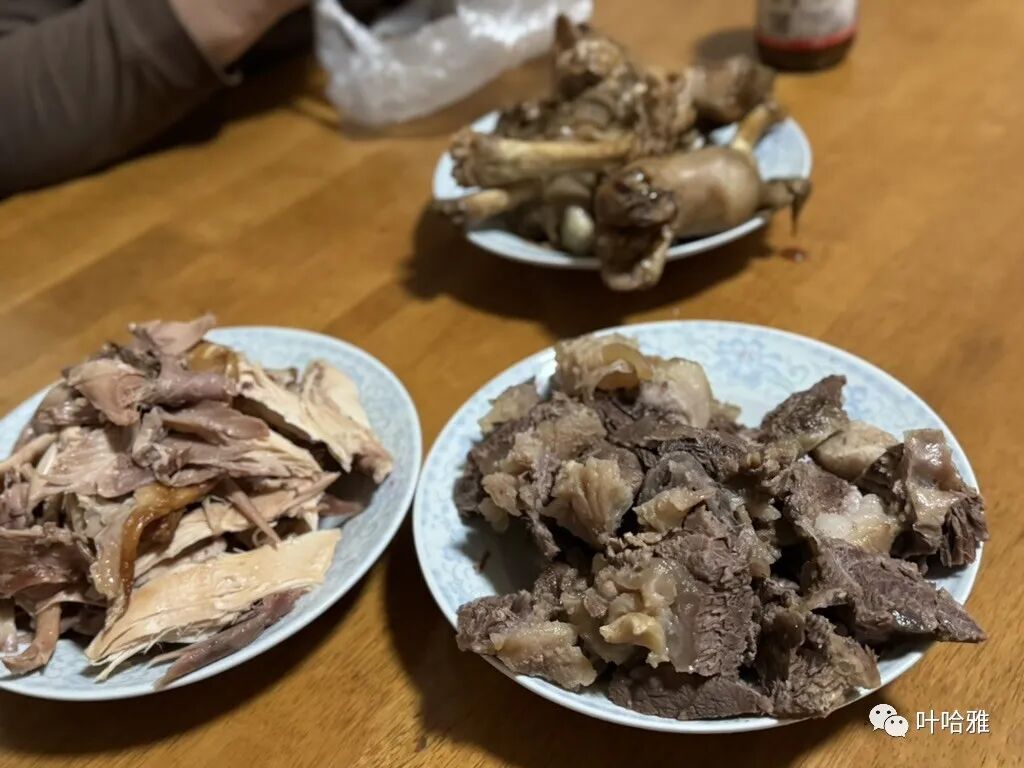
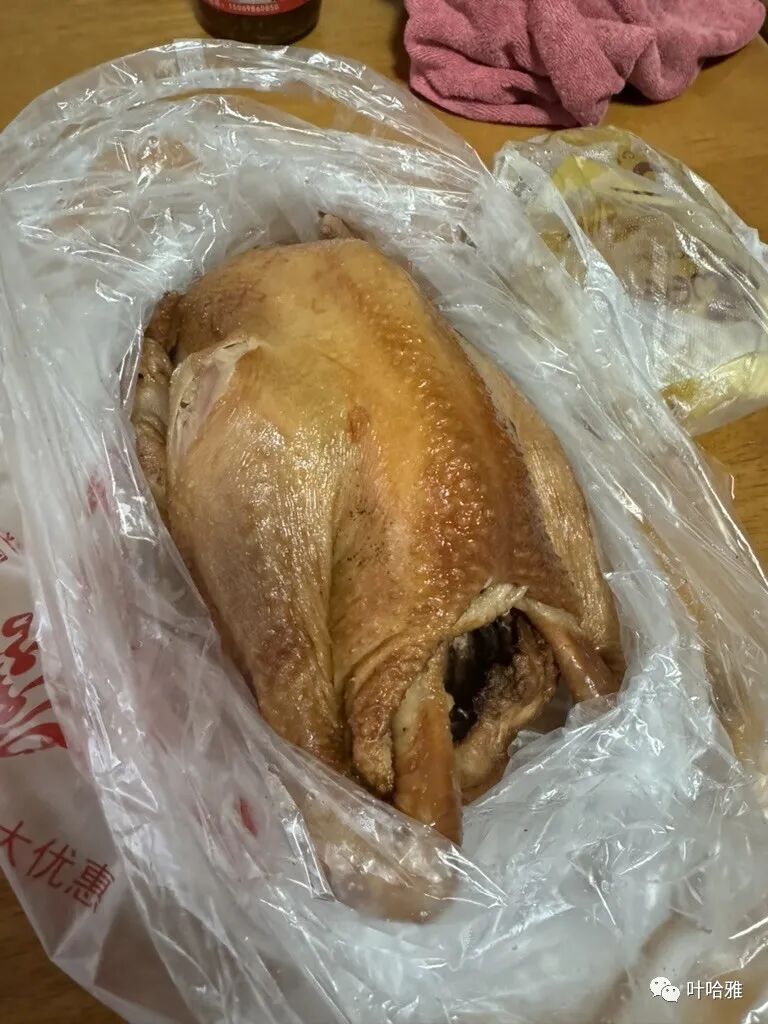
The highlight was the Jin Family Roasted Chicken we ate at a local elder's home near the Dashuozhuang Mosque. It was affordable and delicious. The chicken was tender, and the seasoning was just right. It tasted better than some of the trendy roasted chicken shops that have long lines, and it really suited my taste. On the right side of the photo is fresh camel meat, which tastes similar to beef.
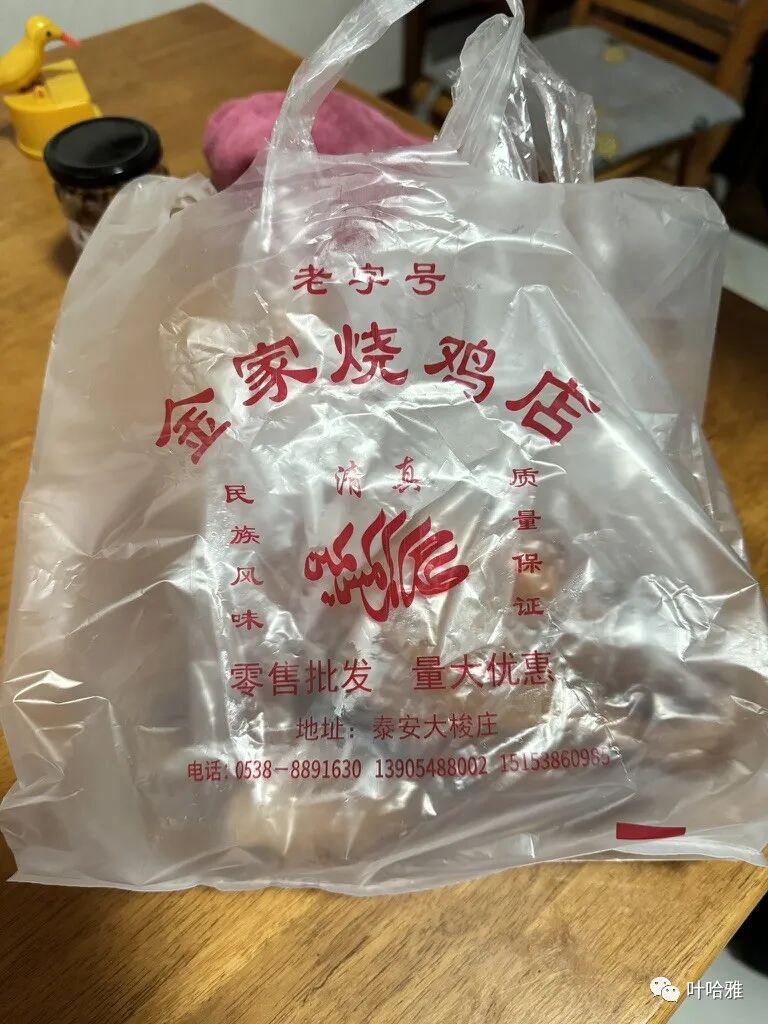
Also, Elder Jin is reliable in his faith, so the ingredients are safe to eat. You can find his contact number in the picture below.
Mi Family Halal Gruel Shop (Mi Jia Qingzhen Sanguan)
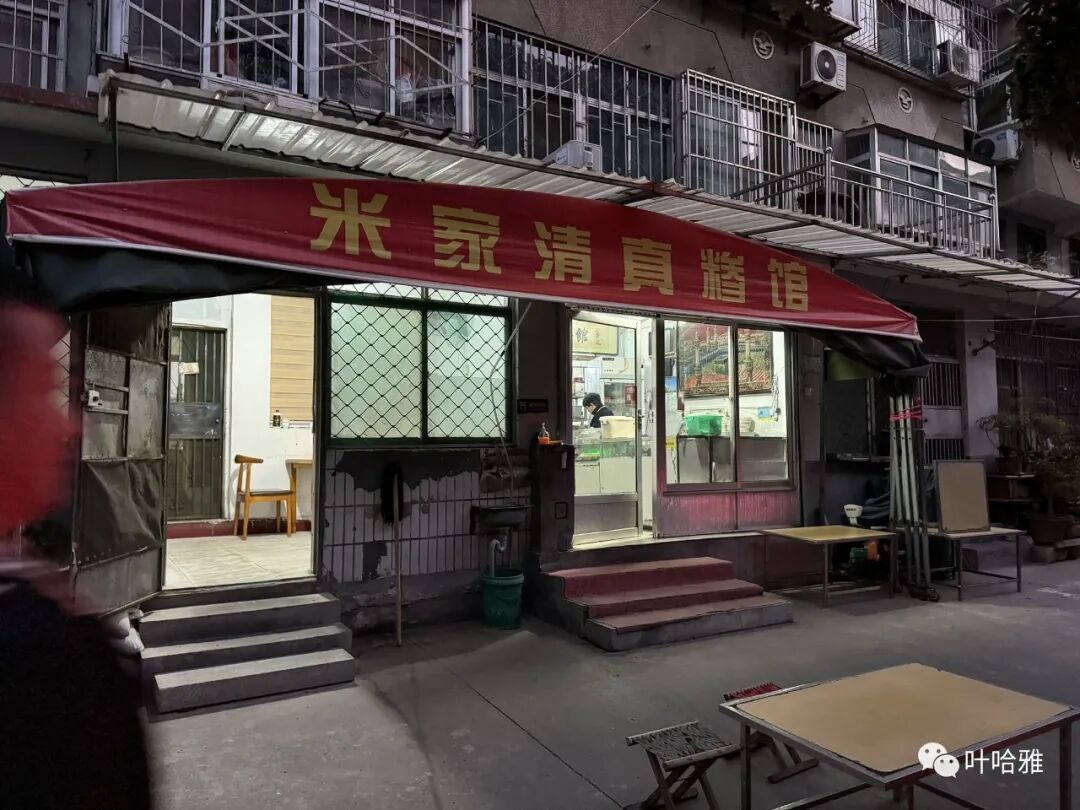
After finishing my work, I went with Elder Han to have a traditional Tai'an breakfast at the Mi Family Gruel Shop. It is a thick soup made with lamb broth and eggs. This type of gruel (sangtang) is most famous in the Linyi area.
Summary: This China mosque travel guide continues the Tai'an seventy mosques project, covering Xintai and Feicheng mosques, village mosque architecture, stone tablets, imam records, Hui Muslim communities, and anti-Japanese resistance history.
The Seventy Mosques of Tai'an is presented here as a firsthand travel account in clear English, beginning with this scene: Xigaoping Mosque in Guli Town sits in the northwest part of the old Xigaoping village. The account keeps its focus on Mosque Travel, Islamic Heritage, Muslim Travel while preserving the names, places, food, and historical details from the Chinese source.
Xigaoping Mosque
Xigaoping Mosque in Guli Town sits in the northwest part of the old Xigaoping village. It was first built in the early Qing Dynasty and has been expanded and repaired many times since. When the mosque was first established, it had a main prayer hall with five rooms and two lecture halls to the north and south with three rooms each. An ancient cypress tree once stood inside the mosque, but it was cut down during the Cultural Revolution. The mosque was re-established in 1981. It underwent large-scale renovations in 1995 and 2005.
The mosque features a typical traditional Chinese courtyard style with a single-entry layout. It is 45 meters long and 35 meters wide. The prayer hall is 15 meters long and 6.5 meters wide. The rear hall is 4 meters long and 3.5 meters wide. The north lecture hall is 16 meters long and 8 meters wide. The south lecture hall is 18 meters long and 4.5 meters wide. Two stone tablets remain today: the 2005 Renovation Record and the List of Donors for the Mosque Construction on March 16, 1994, which was also set up in 2005.
Before the founding of the People's Republic of China, Imam Bai Anfu led the religious affairs at this mosque. After the founding of the People's Republic of China, Imams Yang Yuejun, Bai Anfu, Liu Qingyuan, Wang Xiuming, and Yu Guangwei served as leaders of religious affairs in succession. The mosque is currently managed by a mosque management committee, with Liu Guitian serving as the current director.
In 2008, the mosque was named a Model Mosque by Tai'an City. In 2009, it was awarded the title of Civilized Religious Activity Venue by Xintai City. In 2010, it was once again named a Model Mosque by Tai'an City.
Feicheng City
Houhuang Village Mosque
Houhuang Village Mosque in Bianyuan Town sits in the southwest corner of the village. It was built during the Ming Dynasty and has been repaired continuously since then. The mosque underwent seven large-scale renovations in 1747 (the 12th year of the Qianlong reign of the Qing Dynasty), 1809 (the 14th year of the Jiaqing reign), 1903 (the 30th year of the Guangxu reign), 1937 (the 26th year of the Republic of China), 1944 (the 33rd year of the Republic of China), 1984, and 2010.
The mosque features a Chinese palace-style architectural design and measures 45 meters long and 28 meters wide. The prayer hall has two sections, front and back, standing 9 meters high with two side rooms and a moon platform (yuetai) in front. The main hall is 17.2 meters long and 12.45 meters wide. The north lecture hall is 10 meters long and 8 meters wide. The south lecture hall is 15.2 meters long and 5.7 meters wide. The ablution room (shuiwu) is divided into separate areas for men and women. The men's room is 15 meters long and 6.2 meters wide. The women's room is 8.8 meters long and 5.8 meters wide. There are four stone tablets here: the 1747 Record of Rebuilding the Mosque Moon Platform Railing Rooms from the Qianlong era, the 1809 Record of Rebuilding the North and South Lecture Halls from the Jiaqing era, the 1910 Record of Rebuilding the Huangjiazhuang Mosque from the Xuantong era, and the 2011 Record of Rebuilding the Main Prayer Hall.
The mosque's religious affairs have been led by imams including Zhang, Zhang Baotai, Ma Yonghui, Tang Qinglin, Wang Changshun, Ma Tongyun, Yang Fulian, Xu Changcun, Yang Baojun, Zhang Shugang, and Ma Gang. The mosque has trained many religious scholars, including imams Zhang Xuan, Xu Shihe, Xu Jiben, Xu Jiwen, Xu Changchun, Xu Changzhi, Xu Jiwu, Xu Changshan, Zhang Baotai, Ma Wenli, Yang Guotai, Yang Maodou, Xu Changzeng, Yang Suo, Xu Bin, Ding Jian, Bai Yanbing, Ding Junjian, Ding Rongfu, Ding Jianhua, Yang Libiao, Xu Yongqiang, and Yang Chaoxuan. It is currently managed by the mosque's democratic management committee, with Ding Junqian, Xu Weihua, Ding Junfu, Ding Ruqing, and Yang Wei serving as directors. Religious activities are carried out according to the law. The mosque keeps a white porcelain incense burner from the Qing Dynasty. The mosque values education, and every imam has held classes to train many students (hailifan).
In 2008, the mosque was named a Model Mosque by Tai'an City. It was named a Model Mosque by Tai'an City again in 2014.
Qianhuang Village Mosque
Qianhuang Village Mosque in Bianyuan Town sits at the west end of the village. It was first built during the Guangxu reign of the Qing Dynasty (1875-1906) and has been repaired many times since. In the third year of the Xuantong reign (1911), elder Zhang Shi'en donated over 3.6 mu of land, which became the current site. In 1924, four rooms were built for the south lecture hall. In 1946, elder Wang Yuduo from the Taihe firm in Qianhuang Village led a fundraising effort, and the five-room main prayer hall was finished in 1947. Large-scale repairs took place in 1991, 2000, 2002, 2004, and 2014.
The mosque is a single-courtyard building in the classic Chinese palace style. The main prayer hall has front and back sections and covers 250 square meters. The north lecture hall covers 107 square meters, the south lecture hall covers 98 square meters, and the water room covers 88 square meters. There are four stone tablets here: the Huangjiazhuang Ding Family Genealogy Tablet from 1741 (Qianlong year 6), the New Ablution Room Tablet from 2000, the Mosque Inscription from 2003, and the South Lecture Hall Reconstruction Tablet from 2004.
The mosque's religious affairs have been led by imams including Yang Guotai, Yang Chaoxuan, Mi Shuting, Ma Yongcai, Zhao Rongsheng, Zhan Qinggui, Dong Zhongqing, Mi Shuangzhong, Mi Shuangliang, Li Huaiguo, Wang Xiuming, Chen Xingwu, Wang Huaiyu, Jin Haixue, Wang Jingdou, Wang Xiuming, and Ma Jundong. Before the founding of the People's Republic of China, the mosque was managed by village elders including Ding Yuxi, Wang Wensheng, Wang Guanxi, Wang Guanxing, Wang Jixian, Bai Yuhe, Zhang Juntang, Wang Jichen, Ding Yang, Wang Guanqi, Zhang Baoshan, Zhang Baodang, and Wang Jixin. After the founding of the People's Republic of China, it was managed by village elders including Ding Yanzheng, Ding Yanyang, Wang Guanjiang, Ding Huaixin, Zhang Yongquan, Wang Xiuzhong, Ma Hongzhang, Wang Xiucai, Bai Tangyou, Zhang Yanlong, Wang Xiutong, Wang Jingshui, Ding Huaikui, Wang Jingtao, Wang Jingliang, Ma Xianmin, and Wang Zhongmin. It is now managed by the mosque's democratic management committee, with Ding Yanzheng, Ma Hongzhang, Wang Jingshui, and Ding Huaikui serving as directors.
The mosque once held cultural relics like celadon incense burners and vases, along with thirty handwritten copies of the Quran, but these were destroyed or lost during the Great Leap Forward and the Cultural Revolution.
In 2008, the mosque was named a Model Mosque by Tai'an City. In 2010, it was named a provincial-level Harmonious Religious Activity Site. In 2011, it was designated as a Feicheng City Cultural Relic Protection Unit.
Shengjiazhuang Mosque.
Shengjiazhuang Mosque in Anjiazhuang Town is located in the northwest corner of the village. It was first built in the early Qing Dynasty and has been renovated many times since. The mosque is built in the style of a Chinese palace, measuring 34 meters long and 30 meters wide. The prayer hall consists of a front and back section, and the main hall features a raised platform (yuetai) that is 8 meters high, 14 meters long, and 10 meters wide. The north lecture hall is 21 meters long and 7 meters wide. The south lecture hall is 11 meters long and 5 meters wide. The water room is 11 meters long and 5 meters wide. There are 7 stone tablets remaining, including the 1929 (the 18th year of the Republic of China) Tablet for the Reconstruction of the Mosque and 4 newer tablets honoring donors. An ancient stone tablet stands in front of the main hall, but the inscription is badly damaged and hard to read.
The mosque's religious affairs have been led by imams including Yang Maoxiu, Wu Mingcai, Li Jigui, and Wang Hualei. It is currently managed by the Mosque Democratic Management Committee, with Li Zhaoji, Mi Qingguo, and Yang Dengfa serving as directors.
In 2009, the mosque was named a provincial-level Harmonious Religious Activity Site. It won the title of Model Mosque of Tai'an City in 2010 and again in 2014.
Beiqiu Mosque
Located in the eastern half of Beiqiu Village in Bianyuan Town, the mosque was first built between the late Ming and early Qing dynasties and has been expanded several times since. The main hall was restored in the 12th year of the Qianlong reign of the Qing Dynasty (1747). The north lecture hall was rebuilt in 1991. In 2015, the south lecture hall, the water room, and the courtyard were built.
The mosque is built in the style of a Chinese palace, measuring 37.3 meters long and 26.8 meters wide. The prayer hall is a double-layered structure divided into a front hall and a back hall, with side rooms attached to the main hall and a moon terrace (yuetai) in front that is 8.5 meters long and 23.5 meters wide. The north lecture hall is 5 meters long and 17.8 meters wide. The south lecture hall is 5 meters long and 8 meters wide. The water room is 5 meters long and 19 meters wide. The mosque includes a living area for the imam. There are five stone tablets remaining, including the "Stele Record of the Mosque Restoration" from the 12th year of the Qianlong reign (1747), the "Mosque Prohibition Stele" from the Xuantong reign (1909-1911), the "Stele Record of the North Lecture Hall Reconstruction" from 1991, and the "Stele Record of the South Lecture Hall and Water Room Reconstruction" from 2015.
Imam Ding Ruhu currently oversees the religious affairs. In the past, village elders worked with the mosque's imam to manage affairs, with Xu Huali from the Daoguang reign of the Qing Dynasty (1820-1850) serving as a representative example. The mosque is now managed by a democratic management committee, with Liu Yuyuan, Ding Yongchang, Ding Yongdui, and Ding Xianquan serving as directors in succession. The mosque currently houses a copper water pitcher (tangping) dating back to the late Ming and early Qing dynasties.
Songzhuang Mosque
The Songzhuang Village Mosque in Bianyuan Town is located at the west end of the village. It is said to have been built in the late Ming and early Qing dynasties and has been renovated continuously since then. Before the founding of the People's Republic of China, there were four major renovations, with the most significant ones occurring in the tenth year of the Jiaqing reign (1805), the seventeenth year of the Daoguang reign (1837), the twenty-sixth year of the Guangxu reign (1900), and the fifteenth year of the Republic of China (1926). Since the founding of the People's Republic of China, it has been repaired many times, including the 2013 reconstruction of four ablution rooms (shuifang), two warehouses, and three southern lecture halls.
The mosque is built in the style of a Chinese palace, measuring 36 meters long and 36 meters wide. The prayer hall is 15.6 meters long and 11.3 meters wide, and the northern lecture hall is 18.3 meters long and 5.4 meters wide. The southern lecture hall is 15.7 meters long and 5 meters wide. The water room is 12 meters long and 5 meters wide. There are five stone tablets remaining, including the Stele for the Reconstruction of the Mosque from the nineteenth year of the Daoguang reign (1839), the Stele Record for the Reconstruction of the Mosque from the twenty-sixth year of the Guangxu reign (1900), the Preface Stele for the Reconstruction of the Mosque from the fifteenth year of the Republic of China (1926), and the Preface to the Reconstruction of the Songzhuang Ancient Mosque.
Historically, the mosque trained imams such as Ma Huanwen and Sha Xianzhang. Over the past twenty years or so, imams including Li Zhongguo and Wang Huarong have led the religious affairs. The mosque is currently managed by a democratic management committee, with Zuo Guangwen, Ma Yumin, Bai Youting, Ma Yujun, and Yang Changgang serving as directors in succession.
In 2009, the mosque was awarded the provincial title of Harmonious Religious Activity Venue. In 2010, it received the title of Model Mosque from Tai'an City. In 2016, it was designated as a Cultural Relic Protection Unit of Tai'an City.
Chahedian Mosque
Chahedian Mosque in Bianyuan Town is located in the middle of the village. It was first built during the Qianlong reign of the Qing Dynasty (1735-1796) and has been expanded and repaired ever since. In 2014, the mosque underwent a large-scale renovation.
The mosque features a Chinese palace-style architectural design, measuring 45 meters long and 30 meters wide. The prayer hall is 15 meters long and 15 meters wide, and the north lecture hall is 27 meters long and 7 meters wide. The south lecture hall is 20 meters long and 7 meters wide. The ablution room (shuiwu) is 6 meters long and 7 meters wide.
The mosque's religious affairs were led by imams including Xu Changzhi, Zhang Yanzhai, Wang Huarong, Ma Wenli, Wang Hualei, and Yang Shunchang. It is now managed by the mosque's democratic management committee, with Han Hongbin, Liu Yuantai, and Wang Jihe serving as directors. In 2012, it was named a provincial-level Harmonious Religious Activity Venue.
Fenghuang Village Mosque
Fenghuang Village Mosque in Bianyuan Town sits at the west end of the village. It was built in the 11th year of the Republic of China (1922). When the mosque was first established, it included a main prayer hall, a lecture hall, an ablution room, a main gate, and courtyard walls. It underwent large-scale renovations in 1994.
The mosque features a Chinese palace-style architectural design and is 35 meters long and 30 meters wide. The prayer hall is 12 meters long and 10 meters wide. The north lecture hall is 13 meters long and 6 meters wide. The south lecture hall is 13 meters long and 6 meters wide. There are two existing stone tablets: the Mosque Founding Tablet from 1940 and the Mosque Reconstruction Record Tablet from 1995.
The mosque's religious affairs were led by imams including Wang Yongqing, Ma Xingchang, Ding Hu, Wang Changming, Yang Xingwang, Wang Changgui, and Yang Baojun. It is currently managed by the mosque's democratic management committee, with Wu Maowen, Wu Baoshu, Mi Kuan, Wu Yuanfa, Wu Mingkun, Wu Mingxiang, Wu Jinzhong, and Mi Zhaoying serving as directors.
Dawangzhuang Mosque
Dawangzhuang Mosque in Bianyuan Town is located at the east end of the village. It was built in 1953 and has been repaired many times since. Large-scale renovations took place in 2005, 2007, and 2011.
The mosque is in a modern architectural style, measuring 35 meters long and 40.5 meters wide. The prayer hall is a single-level structure with a rear hall, standing 5.2 meters high, 11 meters long, and 7.5 meters wide. The north lecture hall is 15 meters long and 7.6 meters wide. The south lecture hall is 3 meters long and 7.6 meters wide. The water room is 7.6 meters wide.
The mosque's religious affairs were led by imams including Bai Anfu, Imam Yang, Yang Baojun, Jin Haizeng, Wang Zengli, Ma Chuanxiang, Yang Dong, and Ding Jianhua. It is now managed by the mosque's democratic management committee, with Yang Baojin, Yang Shunping, and Yang Shuncang serving as directors. The mosque houses an incense burner.
Chenjiabu Mosque
Chenjiabu Mosque in Anjiazhuang Town sits at the west end of the village. It was first built between the late Ming and early Qing dynasties and has been expanded and repaired ever since. The mosque underwent two large-scale reconstructions in 1996 and 2007.
The mosque features a Chinese palace-style architectural design and measures 46 meters long and 24 meters wide. The prayer hall is a double-layered structure consisting of a front porch, a front hall, a gutter, and a rear hall, creating a connected architectural layout. Both the front and rear halls follow a four-beam and eight-pillar design, with a brick and lime gutter installed at the junction of the two halls for drainage. There are side doors on both sides and a raised platform (yuetai) in front. The main prayer hall is now a dangerous building. The main prayer hall is 9 meters high, 16 meters long, and 10 meters wide. The north lecture hall is 16 meters long and 6.5 meters wide. The south lecture hall is 13 meters long and 5 meters wide. The water room is 6.5 meters long and 5 meters wide. The mosque was once awarded the provincial title of Harmonious Religious Activity Venue.
Xiaojiabu Mosque
Xiaojiabu Mosque in Anjiazhuang Town is located at the west end of the village. The founding date is unknown, and it was destroyed by fire in 1973 when machines inside the building caught fire. The new mosque was built in 1999.
The mosque features Chinese palace-style architecture and is 56 meters long and 50 meters wide. The prayer hall is 9.9 meters high, and the moon terrace in front of the main hall is 26 meters long and 15 meters wide. The north lecture hall has 5 rooms, measuring 15 meters long and 8 meters wide. The south lecture hall has 5 rooms, measuring 15 meters long and 5 meters wide. There is 1 kitchen, measuring 3 meters long and 4 meters wide. More than 250 trees are planted inside and outside the mosque, and the mosque is fully equipped with all necessary utensils. A stone tablet erected in 2000 still exists today.
The mosque's religious affairs have been led by imams including Bai Maoxiang, Imam Xu, Imam Yang, Imam Wang, and Bai Yanbing. It is currently managed by the mosque's democratic management committee, with Ma Wenhuan serving as the director.
A handwritten copy of the Quran from the 17th year of the Republic of China (1928) is preserved here. In 2008, the mosque was named a Model Mosque by Tai'an City.
Ningyang County
Xitaili Mosque
Xitaili Mosque in Gangcheng Town sits in the western half of the village. Wang Xiong founded the mosque in 1398, the 31st year of the Hongwu reign of the Ming Dynasty, and it has been expanded and repaired ever since. The mosque underwent repairs in 1411, 1460, 1698, 1719, 1738, 1819, 1900, 1945-1946, 2005, 2008, and 2012.
The mosque features Chinese palace-style architecture. It is 41.5 meters long and 34.1 meters wide, with two courtyards. The main prayer hall is a double-layered structure, 13 meters high, 13.1 meters long, and 7.1 meters wide. The north lecture hall is 17.1 meters long and 7 meters wide. The south lecture hall is 10.5 meters long and 7 meters wide. The water room is 10.6 meters long and 5.5 meters wide.
The mosque entrance has a main gate and a second gate. Past the second gate is the main courtyard. The main prayer hall sits on the west side, facing east. It is the primary building of the mosque and can hold hundreds of people for namaz at the same time. The main prayer hall uses a three-arch design with a connected roof structure, consisting of a front porch, a middle hall, and a back hall. The front porch is three bays wide with a curved roof and a wooden frame covered in small gray tiles. A stone tablet from 1719 titled Mosque Inscription is embedded in the inner north wall of the porch. The middle hall is three bays wide with a hard mountain-style roof. The front eaves connect to the back eaves of the middle hall, with water drainage channels left on both side walls. The rear hall is three bays wide, extending 0.62 meters beyond the sides of the middle hall's front porch. The front and rear eaves connect, the main roof ridge features animal ornaments, the brick walls have delicate carvings, and the mihrab is set in the center of the west wall.
The floor plan of the main hall looks like the Chinese character 'zhu' (master), and the roof has a varied, undulating shape. The platform in front of the main hall has stone railings and panels. On the north side of the platform stand stone tablets from the 11th year of the Guangxu reign (1885) and 2005 documenting repairs to the mosque. In front of the platform, the north and south lecture halls each have three rooms. They feature a single-eave, hard-mountain style roof covered with grey tiles and a front porch. North of the second gate is the room for students (hailifan). To the south is the bathing room, which can accommodate dozens of people for major and minor ablutions. Between the east gable of the north lecture hall and the courtyard wall is the east side room. To the west of the west gable are the west side room, the covered room (zhaozifang), and the tableware room. There are six existing stone tablets: the 'Mosque Tablet Record' from the 58th year of the Kangxi reign (1719), the 'Mosque Land Donation Tablet' from the 11th year of the Guangxu reign (1885), the 'Eternal Tablet' from 2005, the 'Second Batch of Municipal Key Cultural Relics Unit Tablet' from 2007, the 'Eternal Tablet' from 2008, and the 'Xitaili Mosque Reconstruction Record Tablet' from 2012.
Throughout its history, the mosque has trained many imams, including Yang Peicheng, Wang Minqing, Wang Minyi, Xu Menglan, Xu Shanfang, Li Chuanzheng, Li Hongbin, Wang Anyi, Li Anchen, Li Qingjun, Ma Xiangfa, Yang Zhenfa, Yang Cunguo, Yang Wei, Wang Antang, Wang Zifa, Xu Shouguo, Huang Zhongqing, Li Qingyun, Ma Xingcheng, Tang Wenhai, Wang Zhongzhen, Zhang Hongyi, Xu Shanfang, Li Zhaokun, Han Yuhai, and Xia Qianguo. The mosque is currently managed by a democratic management committee. Past directors include Wang Zishang, Wang Enshang, Wang Anxiang, Wang Anwen, Li Anshan, Li Baojin, Wang Anpo, and Ma Yongfu.
In 2009, the mosque received the provincial title of 'Harmonious Religious Activity Venue.' It was also named a 'Model Mosque' by Tai'an City in 2008, 2010, and 2014.
Liujiazhuang Mosque
Liujiazhuang Mosque in Geshi Town is located in the southwest corner of the village. It was first built during the Hongwu period of the Ming Dynasty (1368-1398) and has been expanded and repaired many times since. The mosque underwent three large-scale renovations in 1984, 1997, and 2008.
The mosque follows the Chinese palace architectural style, measuring 26 meters long and 19 meters wide. The prayer hall is 7.9 meters high, 10 meters long, and 8.5 meters wide. The north lecture hall is 13.5 meters long and 7 meters wide. The water room is 5 meters long and 7 meters wide. There is one stone tablet currently on site, which is the 2008 Tablet Record of Mosque Renovation.
Since the founding of the People's Republic of China, the religious affairs have been led by imams including Xu Menglan, Shi Xianbao, Wang Minqing, Xu Shanfang, Bai Anmeng, Han Tongwen, Xu Lingzhi, Wang Antang, Li Anchen, and Ma Ning. The mosque is currently managed by a democratic management committee, and past directors include Li Huaiqing, Li Lanting, and Sha Xingdong.
It has received the title of Model Mosque from Tai'an City.
Baima Mosque Mosque
Baimamiao Mosque in Fushan Town sits at the southwest corner of South Baimamiao Street in Taipingzhuang Village. It was first built during the Yongle period of the Ming Dynasty (1403-1424) and has been expanded and repaired ever since. The mosque has undergone four major renovations, including those during the Jiajing period of the Ming Dynasty (1522-1566), in the 16th year of the Guangxu reign of the Qing Dynasty (1890), and in 2001 and 2010.
The mosque features Chinese palace-style architecture, measuring 72.7 meters long, 21.1 meters wide at the front, and 27.5 meters wide at the back. The prayer hall is a double-eaved structure measuring 15.9 meters long and 13.2 meters wide. The north lecture hall is 10.2 meters long and 7 meters wide. The south lecture hall is 10.2 meters long and 6.4 meters wide. The ablution room (shuiwu) is 13.8 meters long and 6.6 meters wide. There are three stone tablets currently on site: the 1890 'Record of the Mosque Renovation' from the Qing Dynasty, the 2001 'Everlasting Renewal Tablet,' and the 2010 'Preface Tablet.'
The mosque's religious affairs have been led by imams including Zhao Wenjie, Yang Yueqing, Zhu Yuepo, Ma Guang, Han Yunting, Zhu Guanglai, Zhao Xinzheng, Zhao Guangfu, Zhu Yuehou, Yang Zhanji, Wang Ai, Zhang Yanzhai, and Yang Dawei. It is currently managed by the mosque's democratic management committee, with past directors including Mi Kuancheng, Hong Qingfang, and Zhao Anren.
A plaque from the 19th year of the Guangxu reign of the Qing Dynasty (1893) is still preserved today. In recent years, Zhu Zhaoxin donated a pair of wooden couplets that read, "The only true Allah of the universe is Allah, the only greatest sage in the world is Muhammad," which now hang on both sides of the mosque (libaidian) door.
In 2003, the county government designated the mosque as a county-level cultural relic protection site. It received the provincial title of "Harmonious Religious Activity Venue" in 2011 and was named a "Model Mosque" by Tai'an City in 2014.
Hongqi Village Mosque
Hongqi Village Mosque in Huafeng Town sits in the center of the village. It was first built during the Wanli period of the Ming Dynasty (1573-1620) and has been expanded and repaired ever since. The mosque underwent two large-scale renovations in 1932 and 2011.
The mosque features Chinese palace-style architecture and measures 30 meters long and 25 meters wide. The prayer hall is a double-layered structure that is 6 meters high, 13 meters long, and 10 meters wide. The north lecture hall is 15 meters long and 7 meters wide. The south lecture hall is 14 meters long and 4.5 meters wide. The water room is 6 meters long and 4 meters wide. There are two stone tablets here: the 2012 Tablet of Rebuilding the Main Hall and the Tablet of Eternal Memory.
Since the late 1940s, the mosque's religious affairs have been led by imams including Chen Junfang, Shi Xianxing, Liu Qingyuan, Gao Guo, and Ma Yingshang. The mosque is currently managed by a democratic management committee. Past directors include Chen Jinmei, Zhu Xiangxun, Bai Yushun, Zhu Xuyin, Wang Ansheng, Shi Junyou, Zhu Xutian, and Chen Weimin.
In 2008, the mosque was named a Model Mosque by Tai'an City, and in 2012, it received the provincial title of Harmonious Religious Activity Venue.
Jingquan Village Mosque
Jingquan Village Mosque in Huafeng Town is located in the northwest part of the village. It was first built in the 14th year of the Daoguang reign of the Qing Dynasty (1834). It was originally located in the eastern part of Jingquan Village and has been expanded and repaired many times since. Large-scale renovations took place in the 24th year of the Daoguang reign (1844), 1988, and 2001.
The mosque is 47 meters long and 35 meters wide. It includes a main hall, a north lecture hall, a south lecture hall, and a water room. There are three stone tablets: the Tablet of Founding the Mosque from the 14th year of the Daoguang reign (1834), the Tablet of Rebuilding the Mosque from 1998, and the Tablet Record of Repairing the Mosque from 2003.
Since the 1950s, the mosque's religious affairs have been led by imams including Jin Haixue, Ma Maoquan, Xu Changchun, Zhang Changshi, and Ma Shengchao. The mosque is now managed by a democratic management committee, with past directors including Huang Yuxiang, Huang Ruichang, Huang Qingfa, and Yang Yanhua.
The mosque houses a set of handwritten Quran manuscripts (volumes 15, 16, 29, and 30 are missing) and one copper water pitcher (tangping), which was originally part of a pair.
Sidian Village Mosque
Sidian Village Mosque in Sidian Town is located in the northern part of the village. It was built in the 11th year of the Yongzheng reign of the Qing Dynasty (1733) and has been expanded and repaired many times since. In the first year of the Jiaqing reign (1796), a fire at a neighbor's house spread to the mosque, which was later rebuilt. In October 1926, a fire destroyed the main prayer hall. The main hall, lecture hall, and gate wall were rebuilt in 1935. The main prayer hall was torn down in the early 1950s. In the 1980s, the Sidian village brigade arranged for members to build houses on the site, but the south lecture hall remains standing today. The mosque was rebuilt between 2012 and 2015.
The mosque is built in the style of a Chinese palace, measuring 22 meters long and 21 meters wide. A white marble plaque inscribed with the words "Mosque" is embedded above the main gate. There are side doors on both sides, each with a five-step entrance platform. About 10 meters inside the main gate is a second gate, and a path leads straight from there to the main prayer hall. The main prayer hall is a single-story building with a three-bay porch-style design, standing 15 meters high with a bronze vase ornament on the roof. On each side of the main prayer hall, there is a carved openwork lattice window featuring Arabic calligraphy. Inside the hall, four round plaques hang on the front sides, and a plaque with gold lettering hangs in the center. There are four large painted pillars, each over 40 centimeters in diameter, decorated with large gold-painted lotus flowers. The ceiling is inscribed with the holy names of Allah. The floor of the main prayer hall is covered with felt carpets. The front of the main prayer hall is a wooden structure with a simple, ancient style, built in the Chinese hip-roof (wudian) architectural form. The north lecture hall has three rooms and covers an area of about 60 square meters. Inside the hall, there is antique porcelain printed with Arabic scripture. The south lecture hall has three rooms and covers an area of about 50 square meters.
There are two stone tablets remaining: the Imperial Edict Tablet (Shengyu Bei) from the seventh year of the Yongzheng reign of the Qing Dynasty (1729) and the Tablet Record of the Reconstruction of Sizhuangdian Mosque (Chongxiu Sizhuangdian Qingzhensi Beiji) from the twenty-eighth year of the Republic of China (1939). The former is the only one of its kind in Tai'an and holds significant historical and cultural value. There are several cypress trees inside the mosque.
The mosque was once led by imams including Mi Baogui, Zhao Defu, and Zhao Furun. It is now managed by the mosque's democratic management committee, with past directors including Shi Guanli, Li Xiangqian, and Li Hong'an. The mosque also serves the communities of Qianwang Village and Houwang Village in Caohe Town, Yanzhou City.
Nanyi Village Mosque
Nanyi Village Mosque in Ciyao Town is located in the southwest part of the village. The original mosque in Nanyi Village fell into disrepair and was severely damaged. In May 2015, the dangerous structures were demolished according to plan, and a new mosque was built at a different site.
The mosque covers an area of 1,600 square meters, measuring 40 meters long and 40 meters wide. The prayer hall is 15 meters long and 11 meters wide. The north lecture hall is 10 meters long and 8 meters wide. The south lecture hall is 10 meters long and 8 meters wide. The water house is 10 meters long and 11 meters wide. There is one stone tablet here, the 2016 Tablet of Loving the Country, Loving the Faith, and Recognizing the Oneness of Allah.
The mosque has trained imams like Zhu Zhili, and Imam Yang Zhi currently manages religious affairs. The mosque is managed by a mosque management committee, with Zhang Weimin and Zhu Zhiming serving as past directors.
Houlyuguan Mosque
Houlyuguan Mosque in Huafeng Town sits in the middle of the village. It was likely built in the early days of Lyuguan Village and has been expanded and repaired ever since. In the second year of the Daoguang reign (1822), the old mosque was falling apart, so it moved to the north end of the village, which is its current location. The new mosque added three lecture rooms and a moon terrace (yuetai). In the 27th year of the Guangxu reign (1901), three large tiled rooms were added, and pine and bamboo were planted. The mosque was repaired in the ninth year of the Republic of China (1920). It was severely damaged during the Cultural Revolution.
When the mosque was first built, it was made of grass huts and covered seven and a half mu of land, with eight farming families from the north and south villages providing money and grain. After moving to the north of the village, it was rebuilt with brick, wood, earth, and stone, measuring 62 meters long and 52 meters wide. An old plaque hangs in the prayer hall, but the three characters on it are no longer readable. The main hall is 11 meters long and 11 meters wide. The north lecture hall is 11 meters long and 5 meters wide. The south lecture hall is 11 meters long and 5 meters wide. The water room is 4 meters long and 3.5 meters wide. There are three existing stone tablets: the Record of Rebuilding the Mosque from the second year of the Daoguang reign of the Qing Dynasty (1822), the Record of Rebuilding the Mosque from the 27th year of the Guangxu reign (1901), and the Record of Rebuilding the Mosque from the ninth year of the Republic of China (1920). Several stone tablets buried during the Cultural Revolution are inside the water pool.
The mosque's religious affairs were successively led by imams including Ma, Liu Yulin, and Xu Yongtong. Xiluoshan Mosque.
Xiluoshan Mosque in Heshan Township. Built in 2013, it covers 500 square meters with a building area of 300 square meters. It includes a main prayer hall, north and south lecture halls, and a main gate.
Xiluoshan Mosque.
Xiluoshan Mosque in Heshan Township. Built in 2013, it covers 500 square meters with a building area of 300 square meters. It includes a main prayer hall, north and south lecture halls, and a main gate.
Dongping County
Zhoucheng Mosque
Zhoucheng Mosque is located in the middle of the ten-mile Song Street in Zhoucheng Subdistrict. It was first built in 1575 during the third year of the Wanli reign of the Ming Dynasty and has been expanded several times since. Large-scale renovations took place in 1819 (the 24th year of the Jiaqing reign), 1828 (the 8th year of the Daoguang reign), 1840 (the 20th year of the Daoguang reign), 1911 (the 3rd year of the Xuantong reign), and 1926 (the 15th year of the Republic of China). After the founding of the People's Republic of China, it was repaired many times, with major renovations in 1990 and 2004.
The mosque features a classic Chinese palace-style architectural design, measuring 91 meters long and 51 meters wide. The prayer hall is a ridge-roof building that stands 12 meters high, 31 meters long, and 29 meters wide. The north lecture hall is 17.5 meters long and 6 meters wide. The south lecture hall is 17.5 meters long and 6 meters wide. The water house is 10.5 meters long and 6 meters wide. There are five stone tablets remaining: the Donation of Land Tablet and the Record of Rebuilding the Mosque Tablet from the 12th year of the Daoguang reign (1832), the Record of Rebuilding the Mosque Tablet from the 20th year of the Daoguang reign (1840), the Preface to the Tablet for Rebuilding the Mosque from the 3rd year of the Xuantong reign (1911), and the Tablet for Rebuilding the Mosque from the 15th year of the Republic of China (1926).
Since modern times, the mosque's religious affairs have been led by imams including Zhan Huiyuan, Zhan Shikai, Zhan Hongru, Zhan Faxin, Xu Changzheng, Xu Changzhi, Yang Maoxiu, Yang Baojun, Zhan Hongda, Imam Guo, Ding Shanzhen, Ma Xiangfa, Li Anchen, Zhan Qiang, and Jin Feng. It is now managed by the mosque's democratic management committee, with Bian Qingfang, Wang Jinghan, Guo Guangcai, Zhan Yanling, and Zhao Rongsheng serving as directors in succession.
In 2004, the mosque was designated as a Tai'an City Cultural Relics Protection Unit. It won the title of Tai'an City Model Mosque four times in 2008, 2009, 2010, and 2014. In 2010, it was named a provincial-level Harmonious Religious Activity Venue.
Xicun Mosque
Laohu Town Xicun Mosque is located in the southern part of the village. The mosque was originally built in Zhanjialou during the Daoguang reign of the Qing Dynasty (1820-1850) and was expanded several times later. It was destroyed by a flood in 1955 and later rebuilt in Xicun Village, where it was completed with a main prayer hall of three rooms and a lecture hall of four rooms.
The mosque is built in the style of a Chinese palace and covers a total area of 1,404 square meters. The main prayer hall is a single-story building that stands 12 meters high and covers 130 square meters. The north lecture hall covers 168 square meters, and the south lecture hall covers 43.2 square meters. The ablution room (shuiwu) covers 77 square meters. The mosque currently houses two stone tablets.
The mosque's religious affairs have been led by imams including Mi, Yang, Ma Yunxiang, Xu Changzhi, Wu Mingcai, Wang Enqing, Bai Zhenhe, Lu Qingjie, Yang Yinqing, and Zhang Changshi. It is now managed by a mosque democratic management committee, with members including Zhan Ensu, Zhan Enkui, Zhan Qinghai, Zhan Qingyu, Bai Shulin, Jin Licai, Jin Baoli, Zhan Yanwu, Bai Chengzhen, and He Mingjun serving as directors.
Lisuo Village Mosque.
Lisuo Village Mosque in Timen Town was built in 1896 during the Guangxu reign of the Qing Dynasty and has been repaired several times since. It was damaged in 1958 and later rebuilt. In 2012, due to new village planning, it was moved and rebuilt 60 meters southeast of the old mosque, and it is now located at the 15th Team in the south of Lisuo Village. Repairs were carried out in 2015 and 2016.
This mosque has a modern architectural style and covers a total area of 1,751.1 square meters. The main prayer hall is a single-story building that stands 8 meters high and covers 151.2 square meters. The north lecture hall covers 87.1 square meters, and the ablution room (shuiwu) covers 90 square meters. A storage room (jiazi fang) is built to the south of the main prayer hall. Two stone tablets remain. One ancient tablet was carved with verses from the Quran, the date the mosque was built, and the names of the founders, but it was damaged in 1958 and is now a broken fragment.
The mosque was led by imams including Imam Ding, Imam Yang, and Zhao Jie, and it is currently managed by the mosque's democratic management committee.
Daimiao Mosque
Daimiao Mosque is located in the center of Daimiao Village, Daimiao Town. The date it was first built is unknown. It was damaged by the Yellow River in the 16th year of the Guangxu reign of the Qing Dynasty (1890). It was rebuilt in the spring of the 20th year of the Republic of China (1931). It was later destroyed by flooding and was rebuilt at a new site in 2017. It covers 400 square meters and includes a prayer hall, a south lecture hall, an ablution room (shuifang), a main gate, and a storage room (jiazi fang). There is one stone tablet remaining from the 20th year of the Republic of China (1931) titled 'Record of the Reconstruction of the Daijia Mosque Town Mosque'.
The mosque was led by imams such as Zhan Enpu and Jin Feng. It is currently managed by the mosque's democratic management committee, with Guo Guangcai serving as the current director.
Discussion | A Preliminary Study of the Hui Muslims' Resistance Against Japan in Tai'an, Shandong
At the end of 1937, the Japanese army invaded the Tai'an region of Shandong, causing major losses to the local economy and society. After thorough mobilization, people from all walks of life among the Hui Muslims in Tai'an—including farmers, workers, teachers, students, business owners, doctors, and imams—all joined the vigorous, full-scale war of resistance. Under the leadership of the Party, the Hui Muslim forces in Tai'an grew from nothing to something and from weak to strong, participating in over 300 battles, with figures like Jin Xiaocun and Jin Guang becoming key leaders of the force. The Tai'an Hui Muslim Anti-Japanese School, the Anti-Japanese National Salvation Association, the Anti-Japanese Propaganda Team, and anti-Japanese logistics industries continued to develop, becoming important elements of the systematic Hui Muslim resistance in Tai'an.
During the war, 322,000 soldiers and civilians in Tai'an city (based on current statistics for the six counties and districts of Tai'an) were killed or wounded, accounting for 1/20 of the total casualties in Shandong (6,526,000 people), which shows the atrocities committed by the Japanese army in Shandong and Tai'an. After the Japanese army occupied Tai'an at the end of 1937, they set up 37 enemy-puppet strongholds and carried out horrific, insane massacres. Between 3:00 PM and 5:00 PM on February 24, 1938, the Japanese army committed the Shanyang Village (in front of Culai Mountain) massacre, killing 72 villagers and wounding 13. They burned down 3,080 rooms. 151 large livestock and over 3,500 sheep were burned to death. Over 500,000 jin of grain and more than 400 carts of various sizes were burned. Hui Muslims in Shandong suffered severely from the Japanese invaders. The Japanese army raped countless women, burned down 71 mosques, killed over 130 imams (aheng), and looted all gold, silver, and property. Hui Muslims in Tai'an were not spared either. The Japanese invaders committed monstrous crimes against Hui Muslim villagers in places like Dashuozhuang in Zhuyang Town, Nigou Village in Manzhuang Town, and Yuezhuang Village in Shengzhuang Town. Facing the inhumane massacre policy of the Japanese invaders, Hui Muslim villagers in Tai'an joined the broad masses of Han people in a bitter and arduous war of resistance. Since the spring of 1938, Hui Muslim villagers in the Tai'an region launched a vigorous and systematic war of resistance against Japan, making important contributions to the victory of the war in Tai'an, Shandong, and North China.
1.
Tai'an Hui Muslim Resistance Forces
The Tai'an Hui Muslim resistance was divided into two forces: the Taixi Hui Muslim Anti-Japanese Armed Force and the Taidong Hui Muslim Anti-Japanese Armed Force. The Taixi Hui Muslim resistance was centered in Chenjiabu and Shengjiazhuang in Anjiazhuang Town, Feicheng City, as well as Nanbailou and Zhoujiapo in Xiazhang Town, Daiyue District, with Jin Xiaocun, Mi Yingjun, and Ma Ancai as the main leaders. The Taidong Hui Muslim resistance was centered in Yuezhuang, Gangshang, and Ershilibu in Shengzhuang Town, Tai'an District, and Dashuozhuang Village in Zhuyang Town, Daiyue District, with Jin Guang, Zhao Manshi, Ma Qianli, and Hong Zhanwu as the main leaders. In January 1941, the two forces merged into the Hui Muslim Backbone Battalion in Nigou Village, Manzhuang Town, Daiyue District, totaling over 100 people. The reorganized Hui Muslim backbone brigade operated mainly in the Taixi region. Specifically, the Taixi region covers the vast area west of the Jinpu Railway in Tai'an, south of the Yellow River, up to the north bank of the Dawen River, and east of the Ding River. It mainly includes the counties of Tai'an, Feicheng, Changqing, Dongping, Pingyin, Dong'e, Wenshang, and Ningyang. The anti-Japanese war led by the Hui Muslims of Tai'an was not a series of isolated or scattered battles, but a systematic resistance. The leadership of the Party, the Hui Muslim forces, the Hui Muslim National Salvation Association, the Hui Muslim resistance leaders, the anti-Japanese propaganda teams, the anti-Japanese schools, and the Longshan Military Shoe Factory were all specific elements of the systematic resistance of the Tai'an Hui Muslims. Specifically, the Party's leadership provided a strong political guarantee for the Tai'an Hui Muslim resistance. The Hui Muslim forces were a solid fighting force, and the National Salvation Association was a comprehensive revolutionary group. Jin Xiaocun, Mi Yingjun, and Jin Guang were outstanding leaders of the Tai'an Hui Muslim resistance. The Hui Muslim anti-Japanese propaganda team was an independent system for mobilization, the Hui Muslim anti-Japanese school was a fully established training institution for the resistance, and the Longshan Military Shoe Factory was an independent anti-Japanese logistics industry for the Tai'an Hui Muslims.
II.
The Tai'an Hui Muslim Resistance and the Party's Leadership
Branches of the Communist Party of China were established very early among Hui Muslim teachers and young students in Tai'an. The earliest ones were the Party branch in Ershilibu Village in Taidong and the Party branch in Beiqiu Village in Taixi. The former was established in 1932 with the help of Zhao Manshi and was the first rural Party branch in Tai'an County. Jin Yisan served as secretary, Hong Jixiao as propagandist, and Chen Xingcai as armed committee member, building up strength for future revolutionary struggles. In 1938, the Taixi Special Committee of the Communist Party of China was founded at Beiqiu Primary School, becoming the first Party organization in Taixi County at that time. Duan Junyi served as secretary, and Hui Muslim Party members such as Bai Youfang and Ding Maoshan actively participated in the work.
After the July 7th Incident, cooperation between the Kuomintang and the Communist Party gradually deepened, and many imprisoned Communist Party members were released. In July 1937, Communist Party members Lu Baoqi, Zhu Yugan, Yan Yuming, and Wu Guanying, who had been hiding outside, returned to Tai'an one after another to carry out anti-Japanese propaganda and mobilization. Around October, more than ten Communist Party members, including Zhang Beihua, Cheng Zhaoxuan, Xia Furen, Hou Decai, Cui Ziming, and Wang Zhongfan, returned one after another to Tai'an and the surrounding areas. Li Wenfu, Xu Lincun, Wang Shaofen, and others were released from a Kuomintang prison in Nanjing and returned to Feicheng one by one to start anti-Japanese activities. Many party members returned to Tai'an, planting the seeds for the anti-Japanese war among Hui Muslims in Tai'an and providing a strong political foundation.
In early 1938, Wu Guanying held a mobilization meeting for progressive youth at Hekou in western Tai'an, which was attended by Jin Xiaocun, Mi Yingjun, Wang Baoheng, and others. The meeting decided to organize an anti-Japanese guerrilla force and proposed the slogan, "Those with strength give strength, those with money give money." After the meeting, Mi Yingjun sold 800 jin of wheat to buy a box cannon (xiaziqiang). Fan Changyou sold his mule to buy a Hanyang rifle, and others did the same. This formed the initial organization for the Hui Muslim resistance in Tai'an. During the brutal struggle, the Communist Party cared deeply for Mi Yingjun and the Hui Muslim troops he led. Mi Yingjun also studied the works of Mao Zedong diligently to constantly improve his ideological awareness and military skills. In 1939, he joined the Communist Party of China. In March of the same year, Chen Guang, acting commander of the 115th Division of the Eighth Route Army, and political commissar Luo Ronghuan led the Eastward Advance Detachment to the Tai-Fei mountain area to establish the western Tai'an anti-Japanese base. Fan Pengfei, the leader of the Eastward Advance Detachment's civil movement team, quickly made contact with Jin Xiaocun and others and provided guns to the guerrilla group. Fan Pengfei once recalled:
North of Anjiazhuang, there was a village with many Hui Muslims. Several young men there formed a guerrilla group on their own, and they had a few guns. After I arrived, I often visited them. One of them was named Mi Yingjun. He was a very accurate shot and trusted me a lot. Later, I organized them and they joined the Tai'an Independent Regiment.
3.
The Growth of Hui Muslim Resistance Forces in Tai'an
Under the leadership of the Party and the guidance of the 115th Division, the Hui Muslim anti-Japanese armed forces in Tai'an continued to grow and strengthen. Whether it was the Hui Muslim anti-Japanese armed forces, the Hui Muslim anti-Japanese leadership, or other entities like anti-Japanese schools and industries, all grew gradually under the leadership of the Communist Party of China.
The Hui Muslim Battalion was a vital force in the Tai'an Hui Muslim resistance. In January 1938, Jin Xiaocun, Mi Yingjun, and six or seven others organized a Hui Muslim anti-Japanese guerrilla group. It soon grew to over twenty people and became a guerrilla squad. After that, the number of Hui Muslim youths joining the resistance kept increasing, and by the end of that year, it had expanded to more than 80 people. In the spring of 1939, the unit was reorganized as the Second Company of the Taixi Independent Regiment, also known as the Hui Muslim Company, with Mi Yingjun serving as company commander.
From then on, this Hui Muslim anti-Japanese armed force grew rapidly under the leadership of the Party. Between the spring and summer of 1939, the Hui Muslim Company worked with the 115th Division and the 686th Regiment to wipe out the Taian traitor organization Red Spear Society and executed its leader, Gao Fuchang. Afterward, the company was reorganized as the Fourth Company of the Taixi Independent Battalion. Soon after, the Fourth Company was reorganized again as the Second Company of the Sub-district Backbone Regiment, fighting across the Taixi region and becoming a banner for Hui Muslim resistance against Japan in Taixi. In early 1940, Jin Xiaocun mobilized people in over 40 Hui Muslim villages in Taixi to form anti-Japanese armed forces, eventually establishing three platoons, which were actually three small squads. In 1941, the two Hui Muslim anti-Japanese units from Taidong and Taixi merged to form the Hui Muslim Backbone Battalion, which oversaw two squadrons. In the second half of that year, Jin Xiaocun and others ordered the formation of the Third Hui Muslim Squadron in the suburbs of Jinan. At the end of 1943, Zhang Xiaonong and others formed the Fifth Detachment of Qihe in Qihe. At the same time, Jin Xiaocun formed the Fourth Squad in Xiaojinzhuang, Jinan. In August 1945, the units merged to form the Taixi Hui Muslim Battalion, with Jin Xiaocun serving as political commissar and Ma Ancai as general branch secretary. In November, it was reorganized as the First Battalion of the First Backbone Regiment of the sub-district, overseeing three companies. Since its founding, this unit made the most of the Hui Muslims' bravery, tenacity, and strong sense of community. They actively carried out guerrilla warfare. After hundreds of battles, they became a national revolutionary force in the Hebei-Shandong-Henan border region that could not be crushed or broken. In February 1949, they were reorganized as the 151st Regiment of the 51st Division of the 17th Army. They took part in the Yangtze River crossing campaign and later marched into the great southwest.
The Tai'an Hui Muslim unit was a strong fighting force. They once successfully protected Comrade Jiang Hua as he passed through enemy blockade lines. During the War of Resistance Against Japan and the War of Liberation, this unit fought over 300 battles. They cleared out more than 60 enemy strongholds and wiped out over 6,000 Japanese, puppet, and Kuomintang troops. They captured 5 cannons, over 20 heavy machine guns, over 70 light machine guns, and more than 4,000 rifles. Nearly 20 people received special or first-class merit awards. Of course, they also made huge sacrifices. The unit's founder, Mi Yingjun, died in October 1943. His commanders spoke highly of him, calling him an excellent Communist Party member, a clever and brave commander, and a Hui Muslim anti-Japanese hero raised by the Party. Incomplete records show that during the War of Resistance, the unit lost 6 battalion-level officers, 14 company-level officers, and over 40 platoon or squad-level officers.
Anti-Japanese schools were important places for training reserve talent. The goal of starting the Hui Muslim Anti-Japanese School was to strengthen and expand the Hui Muslim anti-Japanese army, train more political officers for the Hui Muslim troops, and provide new talent for the army. In 1943, Jin Xiaocun and Jin Guang attended a meeting of the Hebei-Shandong-Henan border region government. They proposed the idea of starting the school to leaders like Deng Xiaoping, who were chairing the meeting, and received approval from the leaders and representatives. After approval from Zhang Yuenan and Wu Shengyu of the Taixi Commissioner's Office, the school was officially established in the autumn of 1944 in Dayuanzhuang Village, Qihe County, with over 60 students. The full name of the school was the Tai'an Region Hui Muslim Anti-Japanese School, also known as the Taiyun District Islamic School. It used military-style management, and the 60-plus students were organized into two platoons and eight squads. The main focus was studying the works of leaders like Mao Zedong, and figures such as Zhang Yaonan and Liu Zifang came to the school to give reports. After the founding of the country, more than 60 students joined various construction fronts across the nation, with some becoming key contributors to the building of the new China.
The Longshan Military Shoe Factory and others provided logistical support for the Hui Muslims' resistance efforts. The Hui Muslim resistance in Tai'an included production for self-sufficiency, with two typical logistics enterprises formed by Hui Muslim teams being the Taixi Wenyang Cooperative and the Longshan Military Shoe Factory. The former was established mainly in the late stages of the War of Resistance Against Japan, initially located at the western border of Mazhuang in Daiyue District, and later moved several times. Ma Qianli was the main person in charge, and it played a major role during the War of Liberation. The latter was founded in the autumn of 1944 and was located in Longshan Guanzhuang, southwest of Manzhuang Town in Daiyue District. Jin Guang served as the factory director, and Mi Guangzhen from Dashuozhuang, east of Tai'an city, served as the purchaser. With over 20 Hui Muslim workers, they mainly produced military shoes, with products primarily supplied to local Hui Muslim forces. Thousands of pairs of military shoes, along with some semi-finished products, raw materials, and tools, were escorted by Jin Guang's wife, Gao Fangpu, to the home of Jin Yongzeng in their village for hiding. Later, they were transported to Dashuozhuang, and in 1948, they were handed over to the Bohai Military Region.
On December 31, 1937, the Japanese invaders occupied Tai'an. On January 1, 1938, the first shot of the Shandong resistance, led by the Shandong Provincial Committee of the Communist Party of China, was fired on Culai Mountain within Tai'an. Influenced by the Culai Mountain anti-Japanese armed uprising and under the leadership of the Communist Party, Jin Xiaocun, Mi Yingjun, and others formed the Tai'an Hui Muslim anti-Japanese guerrilla group in early 1938. This force grew from weak to strong and from small to large, with Jin Xiaocun, Jin Guang, Ma Ancai, and others becoming important leaders of the team. Through in-depth mobilization, all walks of life among the Hui Muslims in Tai'an, including workers, farmers, intellectuals, entrepreneurs, and religious figures, participated in the vigorous all-out war of resistance.
(The author, Jin Po, is the director of the History Department at the School of History, Taishan University, and holds a doctorate in modern and contemporary Chinese history. He is a lecturer, and this was originally published in the first issue of 'Chinese Muslims' in 2019.)
Modern and contemporary history major, lecturer, originally published in 'Chinese Muslims', 2019, Issue 1.
I have finished introducing all 70 mosques in Tai'an. A mosque tour naturally needs to include halal food, but my trip to Tai'an was short and busy. With so many mosques to cover, I have limited space left to talk about the food.
Jin Family Roasted Chicken (Jin Jia Shaoji)
The highlight was the Jin Family Roasted Chicken we ate at a local elder's home near the Dashuozhuang Mosque. It was affordable and delicious. The chicken was tender, and the seasoning was just right. It tasted better than some of the trendy roasted chicken shops that have long lines, and it really suited my taste. On the right side of the photo is fresh camel meat, which tastes similar to beef.
Also, Elder Jin is reliable in his faith, so the ingredients are safe to eat. You can find his contact number in the picture below.
Mi Family Halal Gruel Shop (Mi Jia Qingzhen Sanguan)
After finishing my work, I went with Elder Han to have a traditional Tai'an breakfast at the Mi Family Gruel Shop. It is a thick soup made with lamb broth and eggs. This type of gruel (sangtang) is most famous in the Linyi area.
