
Muslim Life Guide Vancouver: MDRT Meeting, Islamic Insurance Ethics and Muslim Professionals
Reposted from the web
Summary: This Muslim life guide from Vancouver covers the MDRT annual meeting, Muslim insurance professionals from different countries, mainland Chinese attendance changes, halal finance discussions, Islamic insurance ethics, Muslim representation in the industry, and reflections on dignity and protection.
Gathering with Muslim Insurance Professionals from Around the World at the MDRT Annual Meeting in Vancouver is presented here as a firsthand travel account in clear English, beginning with this scene: The Million Dollar Round Table (MDRT) started in the United States in 1927. At that time, 32 life insurance agents who sold over one million dollars in policies wanted to form a forum to promote high standards in life. The account keeps its focus on Muslim Travel while preserving the names, places, food, and historical details from the Chinese source.
The Million Dollar Round Table (MDRT) started in the United States in 1927. At that time, 32 life insurance agents who sold over one million dollars in policies wanted to form a forum to promote high standards in life insurance sales and improve the image of insurance professionals.
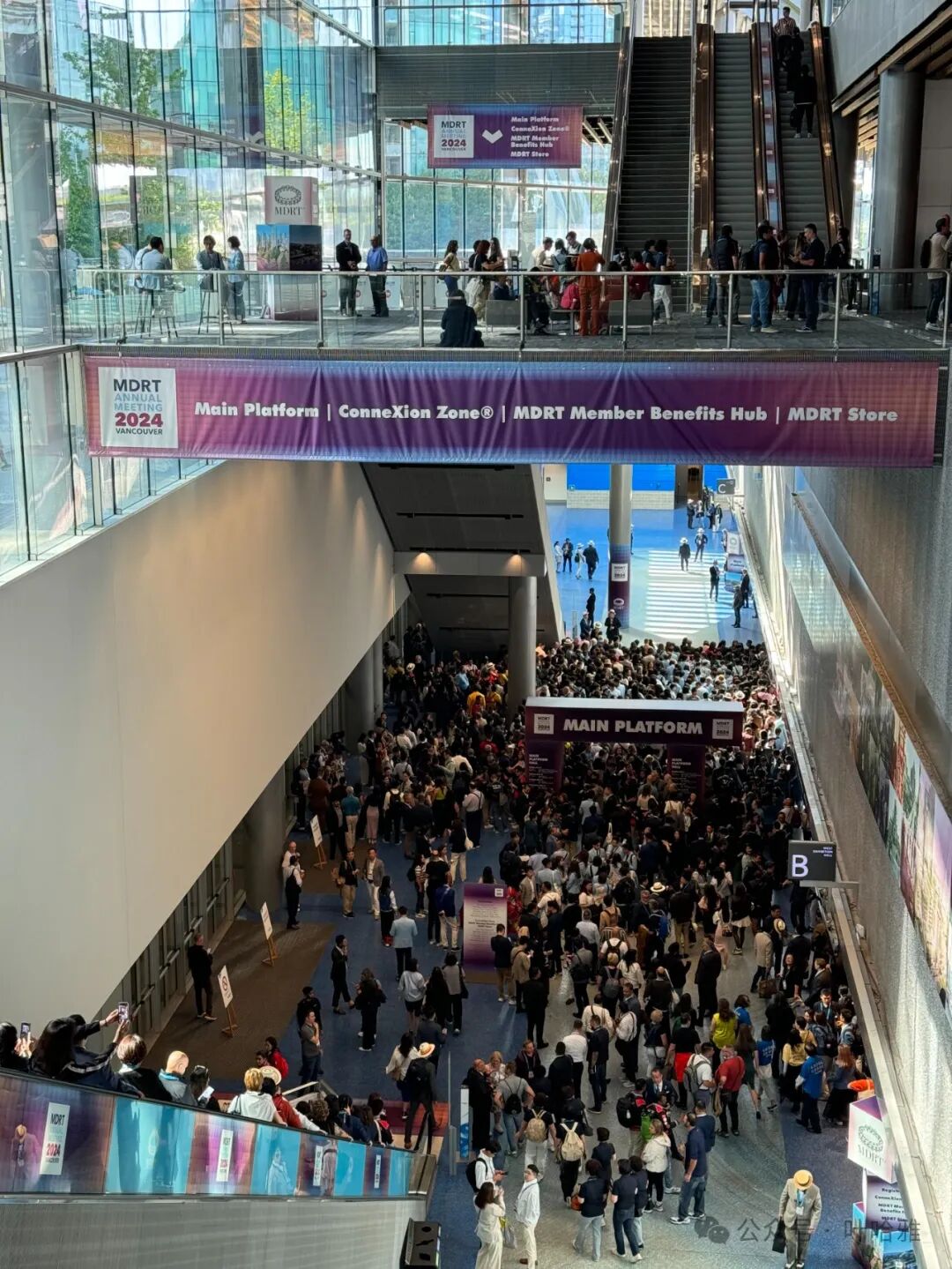
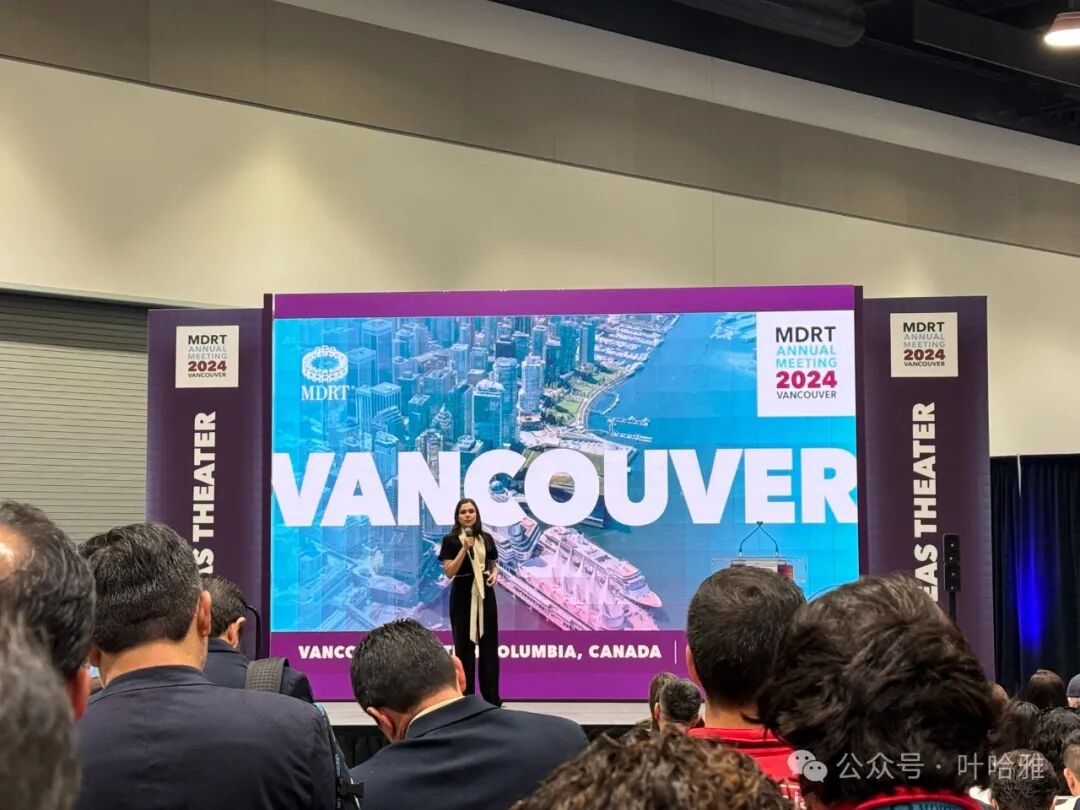
Since then, the MDRT annual meeting has been held every year in either the United States or Canada. Last year it was in the U.S., and this year it is at the Vancouver Convention Centre in Canada.
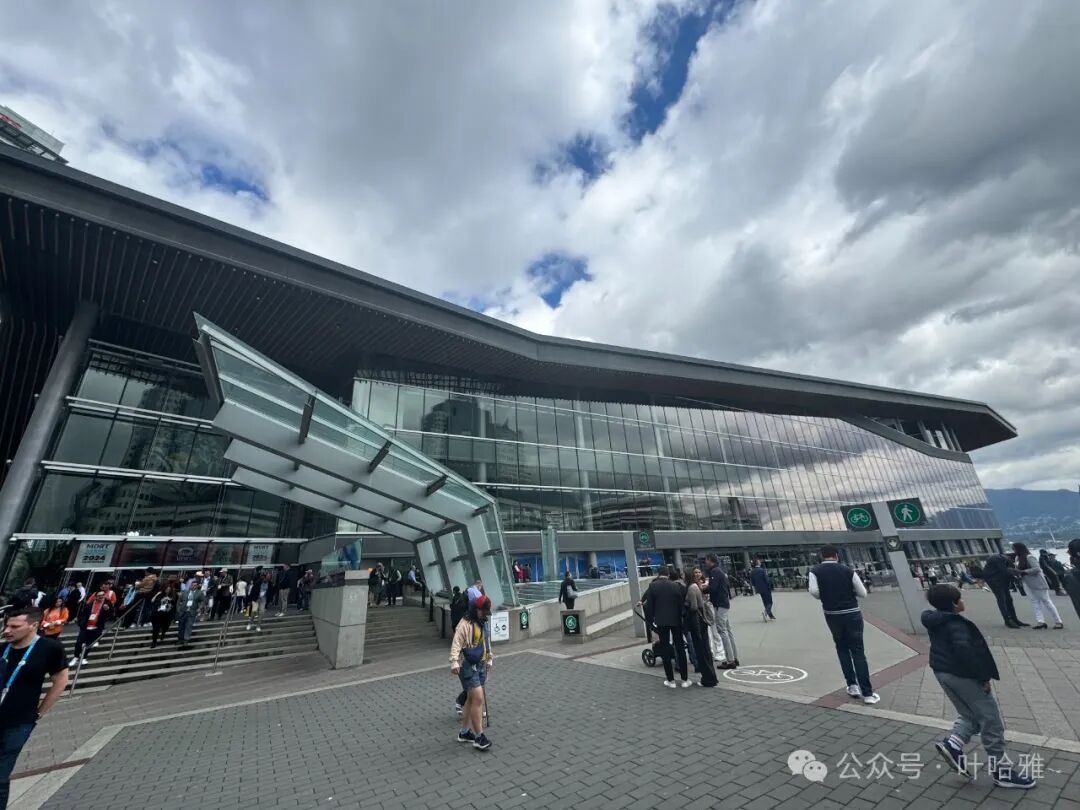
Vancouver Convention Centre
This year's attendance is very different from previous years. Before 2019, as the Chinese insurance market grew rapidly, the total number of attendees from mainland China, Hong Kong, and Taiwan was the highest, and it increased every year. This year, however, the Mandarin speakers I saw at the venue were mainly from Taiwan, with a reported attendance of over 600 people. Very few people came from Hong Kong, reportedly fewer than 30. Among the East Asian faces, there were many from Japan and South Korea, while the largest groups from Southeast Asia were from Singapore and Thailand.
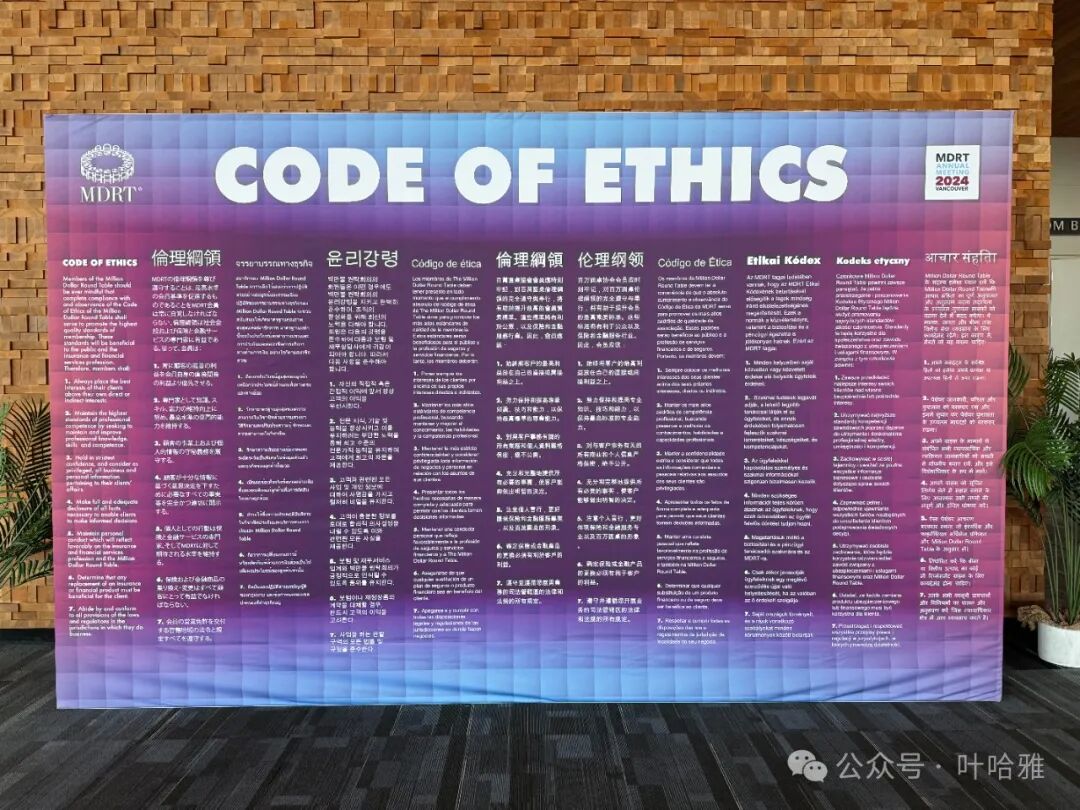
The sharp drop in attendees from mainland China may be related to political and economic factors. For one thing, we do not have direct flights to Canada, so most people have to transfer, which takes a long time. Prices in North America have soared in recent years, making a round trip very expensive. On the other hand, many of our colleagues could not get visas. I only saw a single-digit number of colleagues from my own company at the venue, even though over a thousand of us actually met the criteria to attend.
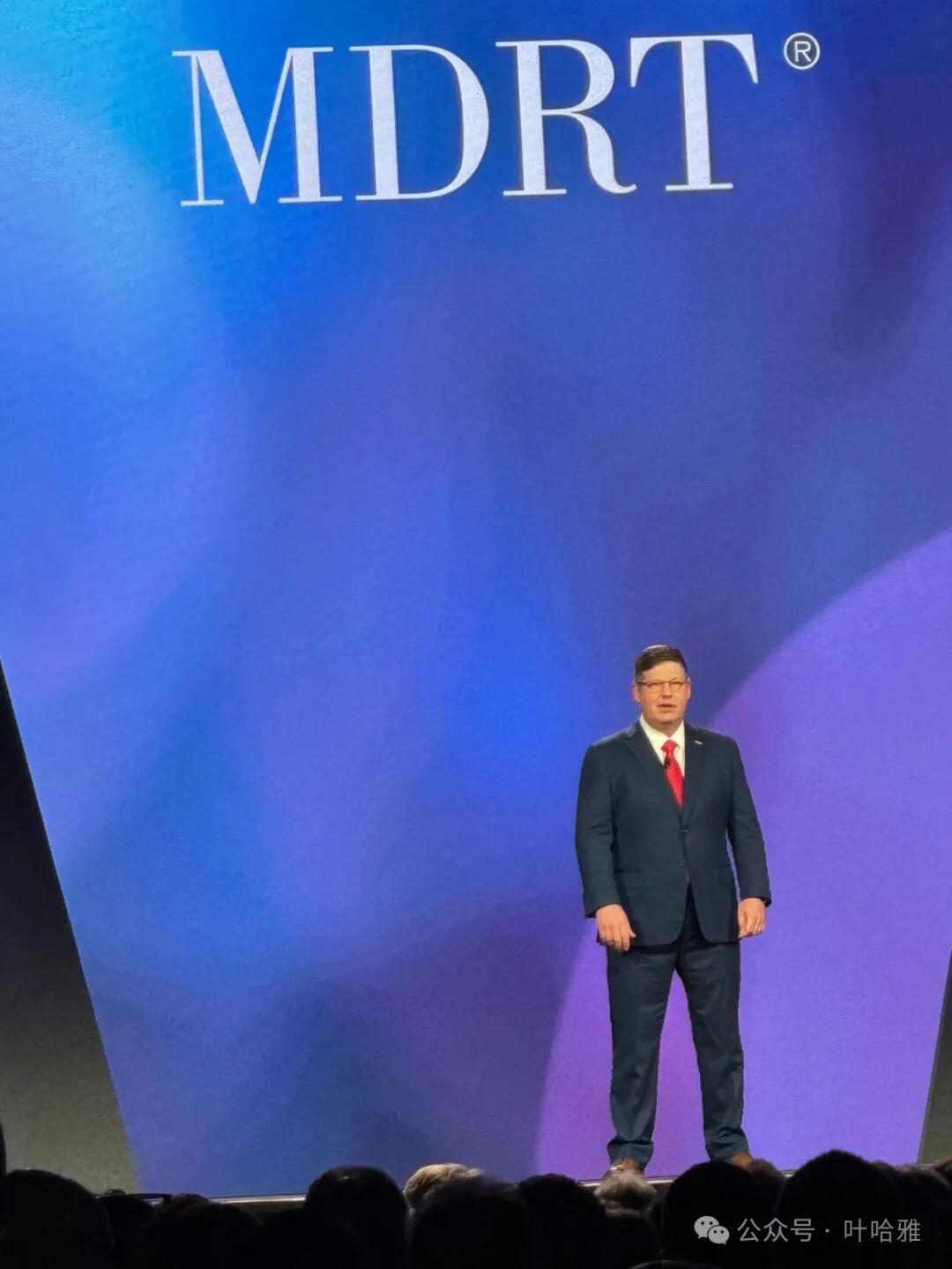
2024 MDRT President Gregory B. Gagne, ChFC
Another objective factor for the sharp decline in mainland attendees is that many large state-owned insurance companies no longer organize trips to the U.S. in an official capacity. Award winners have to go on their own. Instead, they attend insurance award ceremonies held within China, such as the International Management Associate (IMA) awards ceremony I attended last year. Although it is nominally an international award, everyone who attended was an insurance elite from the mainland.
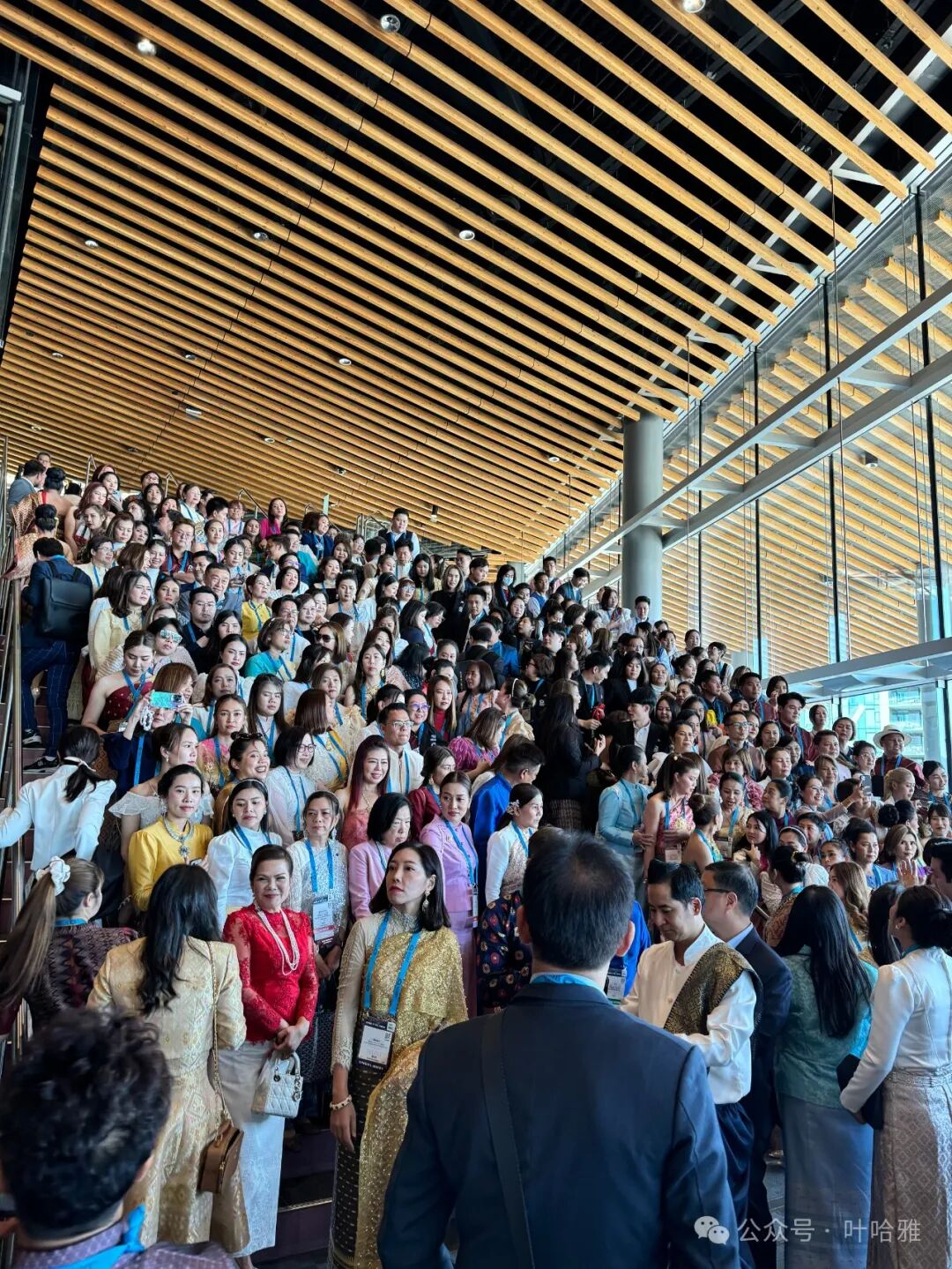
The group in the picture above is the Thai delegation taking a group photo. They are easy to recognize because they are wearing traditional Thai clothing.
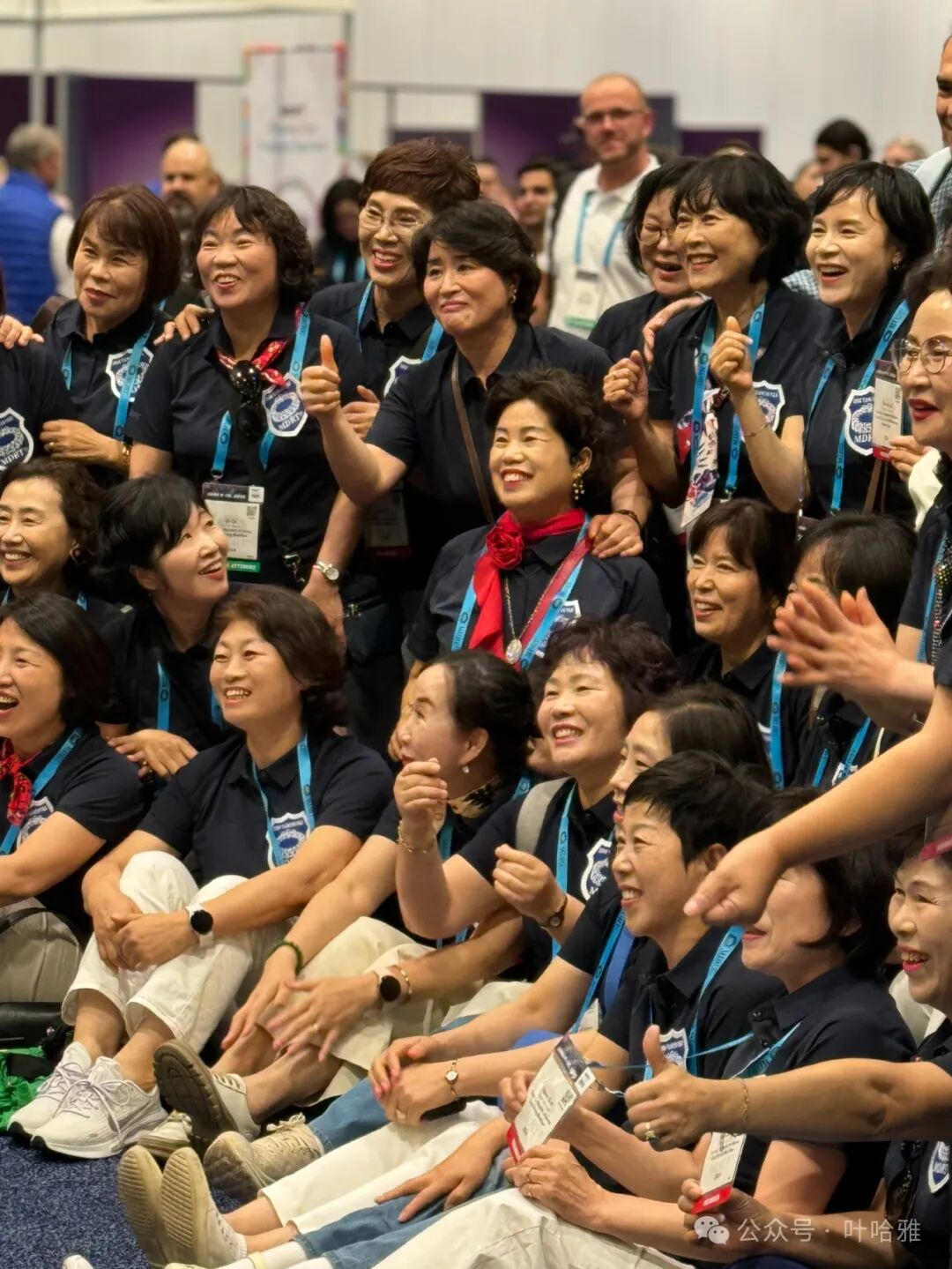
This is a delegation of middle-aged Japanese women (obasan). This is just the tip of the iceberg for the Japanese delegation, as the Japanese MDRT is not made up entirely of middle-aged women.
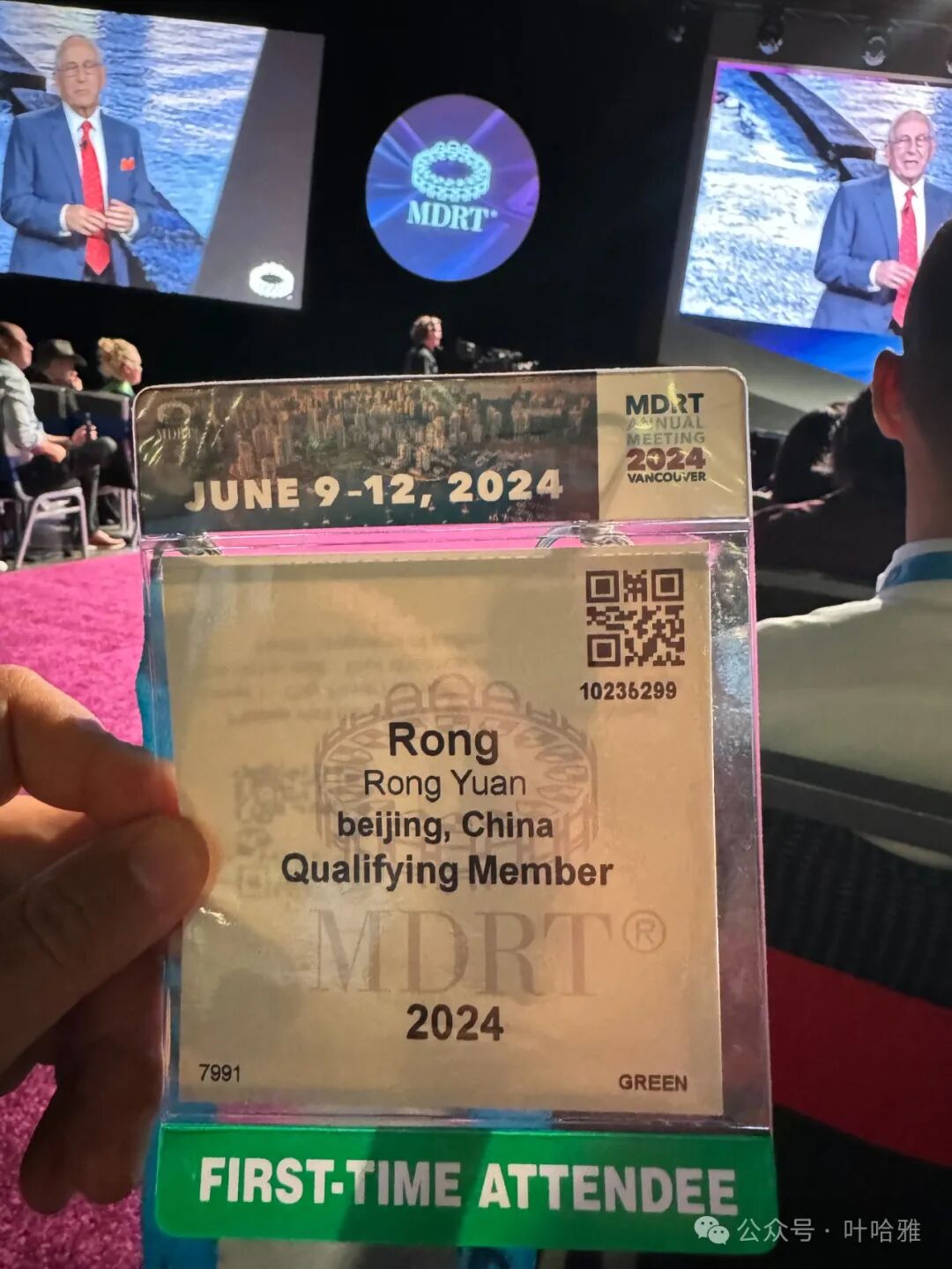
This is my conference badge. You must have it to enter during the meeting. There are guards at the entrance of every venue, so it is hard to sneak in without one. The badges are different every year.
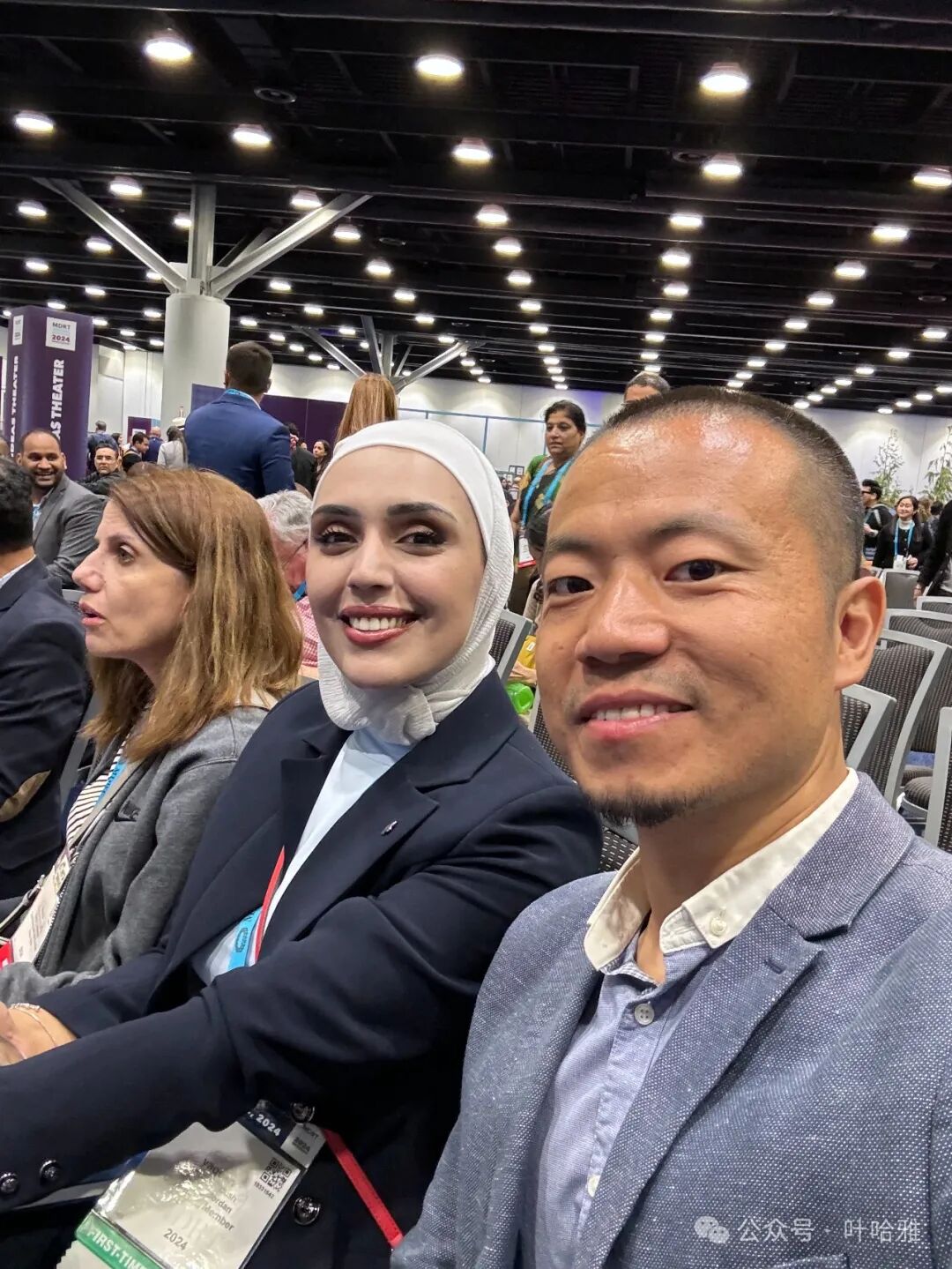
On the first day of the conference, I met this young woman from Jordan. She was easy to recognize because she wore a headscarf. I showed her some articles I translated about Islamic insurance law (sharia), and she was very surprised. She took photos of my articles and translated them into Arabic. It felt amazing to share knowledge about insurance law with an Arab person in this way.
The venue provides simultaneous interpretation services. Everyone gets a small translation device where they can select a language they understand.

These people are all veteran North American members of many years, and the bald man holding the microphone has been a member for over twenty years.
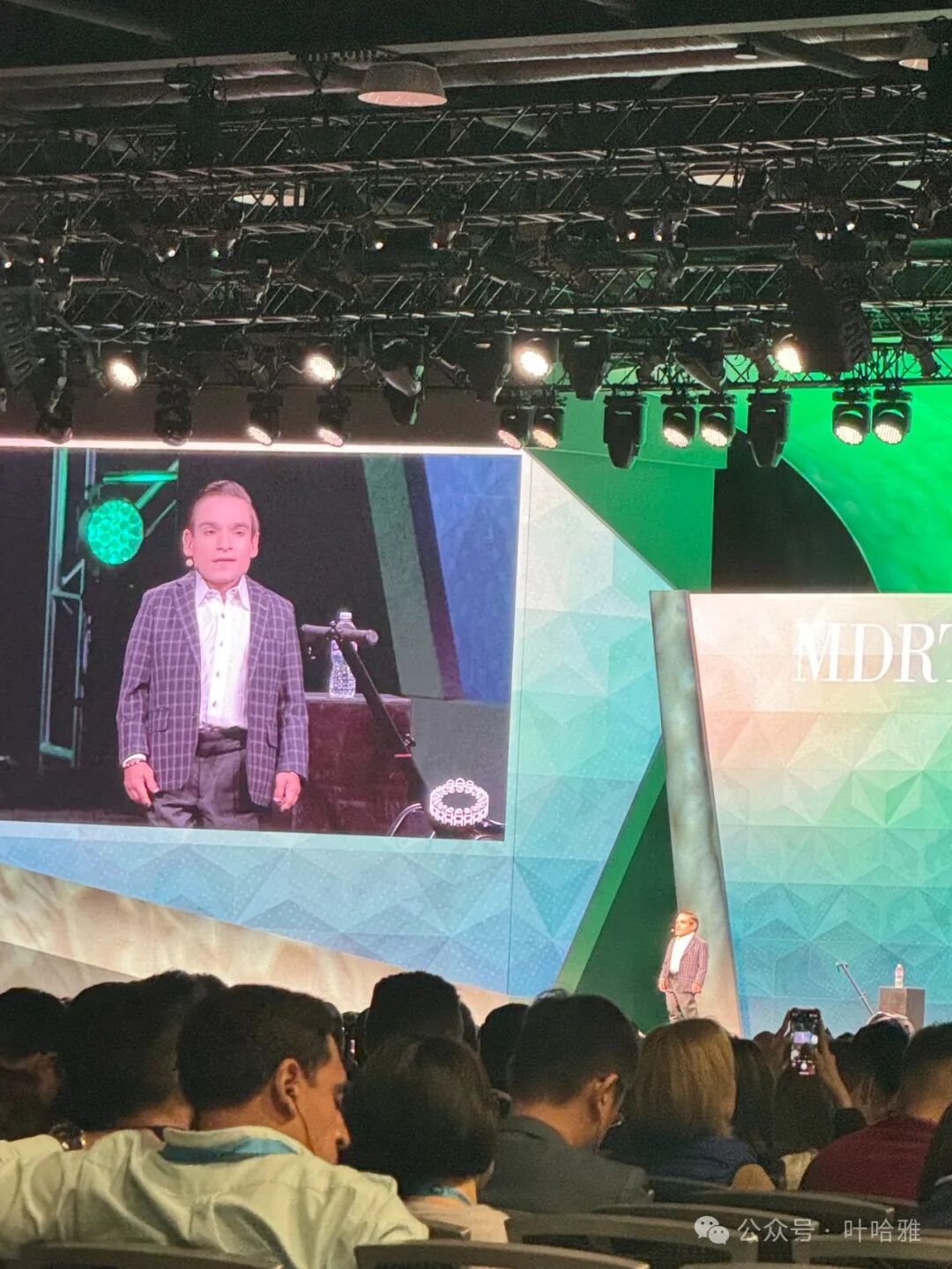
One of the keynote speakers was a person with dwarfism. This was a heartwarming moment for me. MDRT usually invites ordinary people, grassroots elites, rather than celebrities to stand on stage. Each guest shares their personal growth and shows their family life, which makes the audience feel it is real.
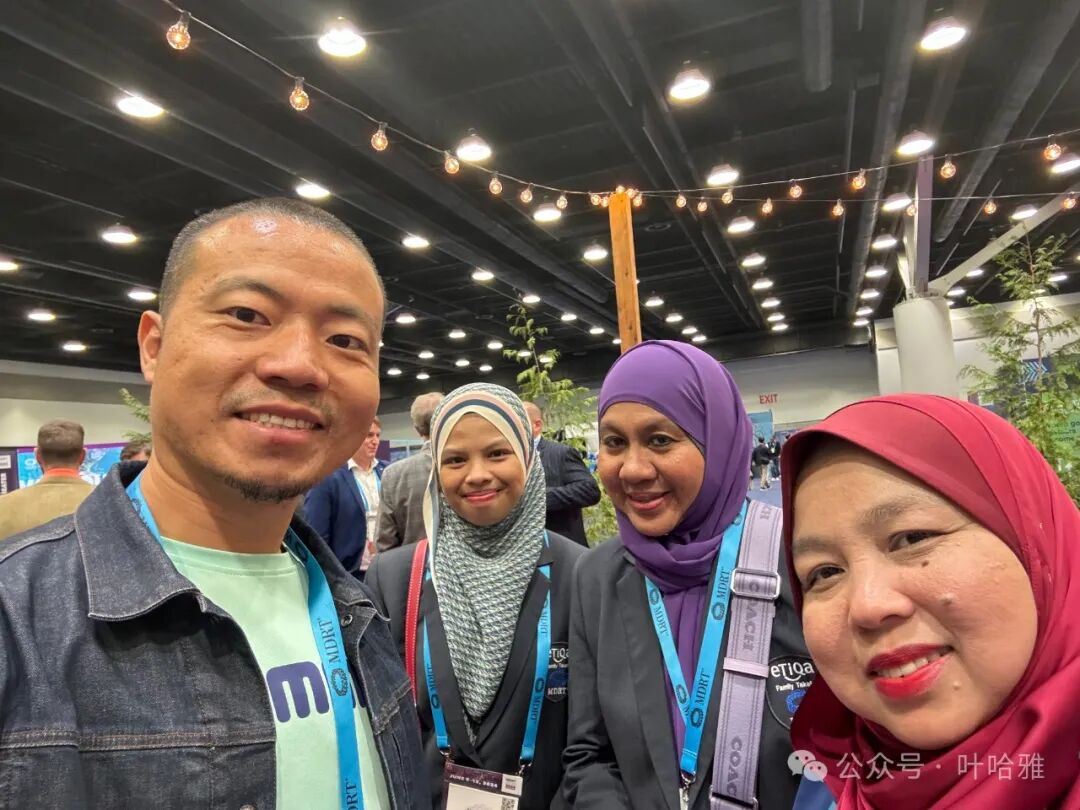
The Malaysian MDRT delegation was very warm. The young women asked where I was from. I said I am a Chinese Hui Muslim. They asked which province, and I said I am from Beijing. I showed them photos of my family's Hajj pilgrimage. They were very excited and immediately called over a colleague who spoke Chinese to take a photo with me.
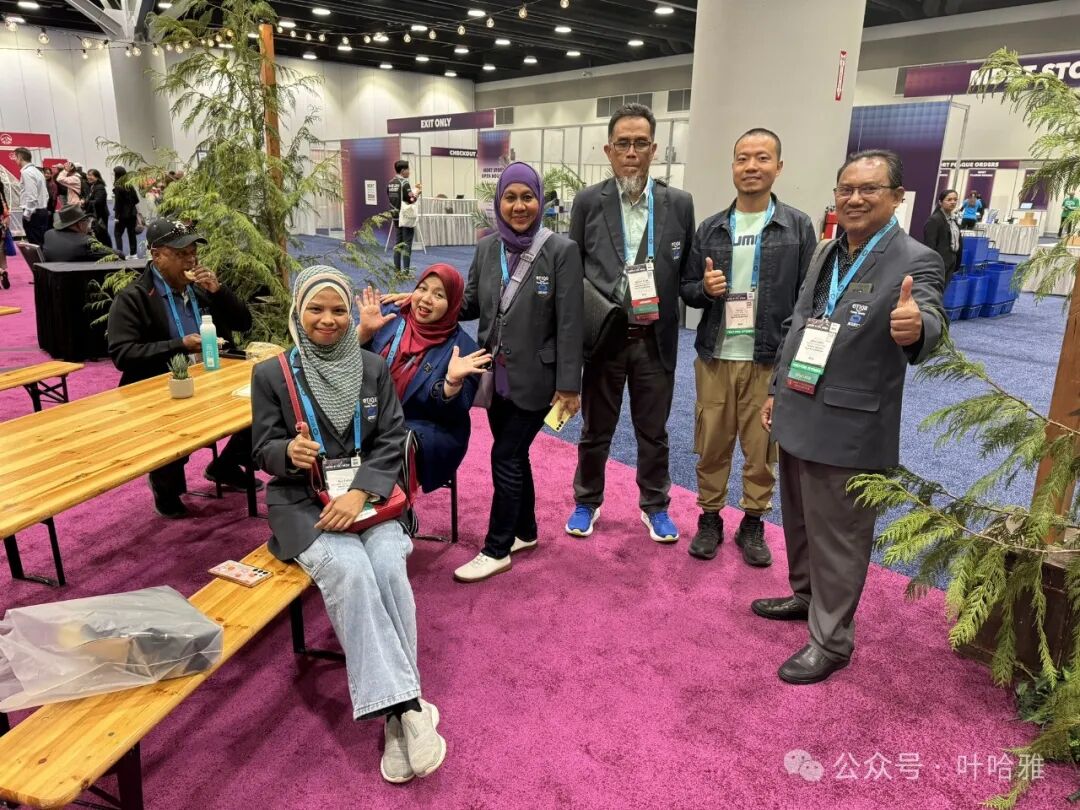
They belong to a Muslim insurance company in Malaysia and asked me if there are any Muslim insurance products in China. I said there are none in mainland China yet, and only a few insurance companies in Hong Kong have Muslim insurance businesses. Perhaps this will open up in the future.
I covered the topic of Muslim insurance in my previous article, Mustafa Zaka: Traditional Commercial Insurance Complies with Sharia.
I introduced it there.
According to current scholars, so-called Muslim insurance is not feasible in practice. This is because there are no Muslim reinsurance companies in the world today that can support Muslim insurance companies. Also, because Muslim insurance adds operating costs to its design, the products are expensive and offer weak coverage, making them uncompetitive in the market. They rely more on the sentiment of the faithful to pay for them, which limits the development of Muslim insurance. Therefore, we should re-evaluate the Sharia regarding traditional insurance and allow Muslims to purchase commercial insurance.
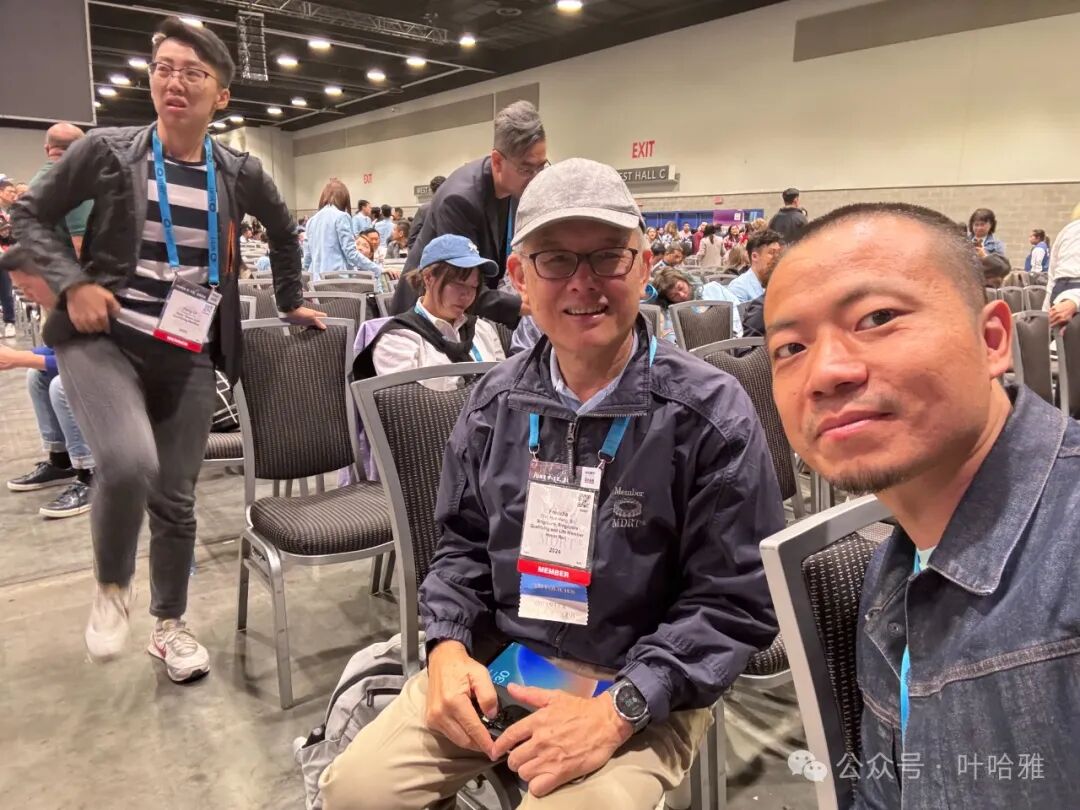
I met a very kind uncle from Singapore. He has worked in insurance for thirty years, and his daughter has been in the industry for nine years. Both father and daughter have achieved Million Dollar Round Table (MDRT) membership. It is a case of a daughter following in her father's footsteps. Many insurance professionals overseas, like this uncle, treat insurance as a lifelong career.
The insurance market in Singapore is different from the mainland. Mainland insurance teams can be very large with no upper limit on members, but in Singapore, you can only form a small team of up to 15 people. Also, there are not many insurance companies in Singapore, so customers have fewer choices and competition is fierce. The uncle has an annual salary of 400,000 Singapore dollars, which is equivalent to over 2 million RMB. This income would rank in the top 100 at my company, but he is very frugal in his daily life. He said that when he meets clients, he just chooses an ordinary coffee shop because he does not want to project an image of being very wealthy.
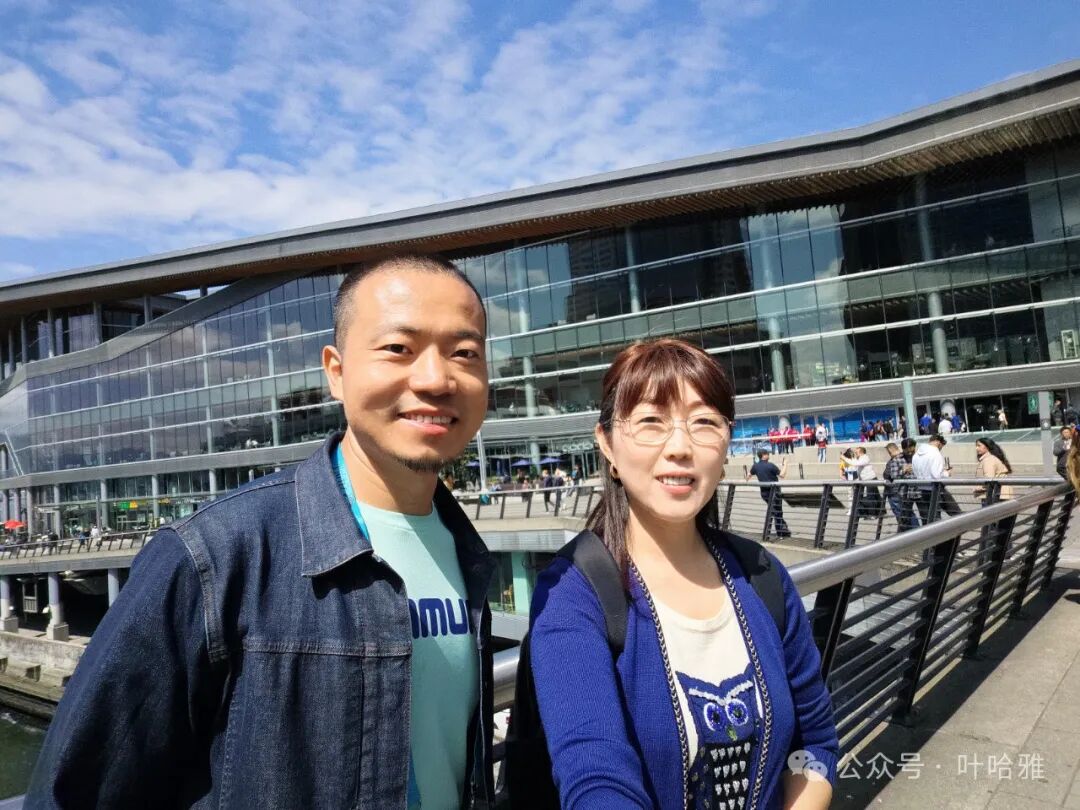
Besides meeting insurance elites from various countries, I also met two colleagues from my company who live in Canada. Even though their time zone is the complete opposite of China's, it does not stop them from qualifying for the Million Dollar Round Table for many years in a row. This is one of the reasons I chose Mingya, as it allows me to do my job from any corner of the globe.
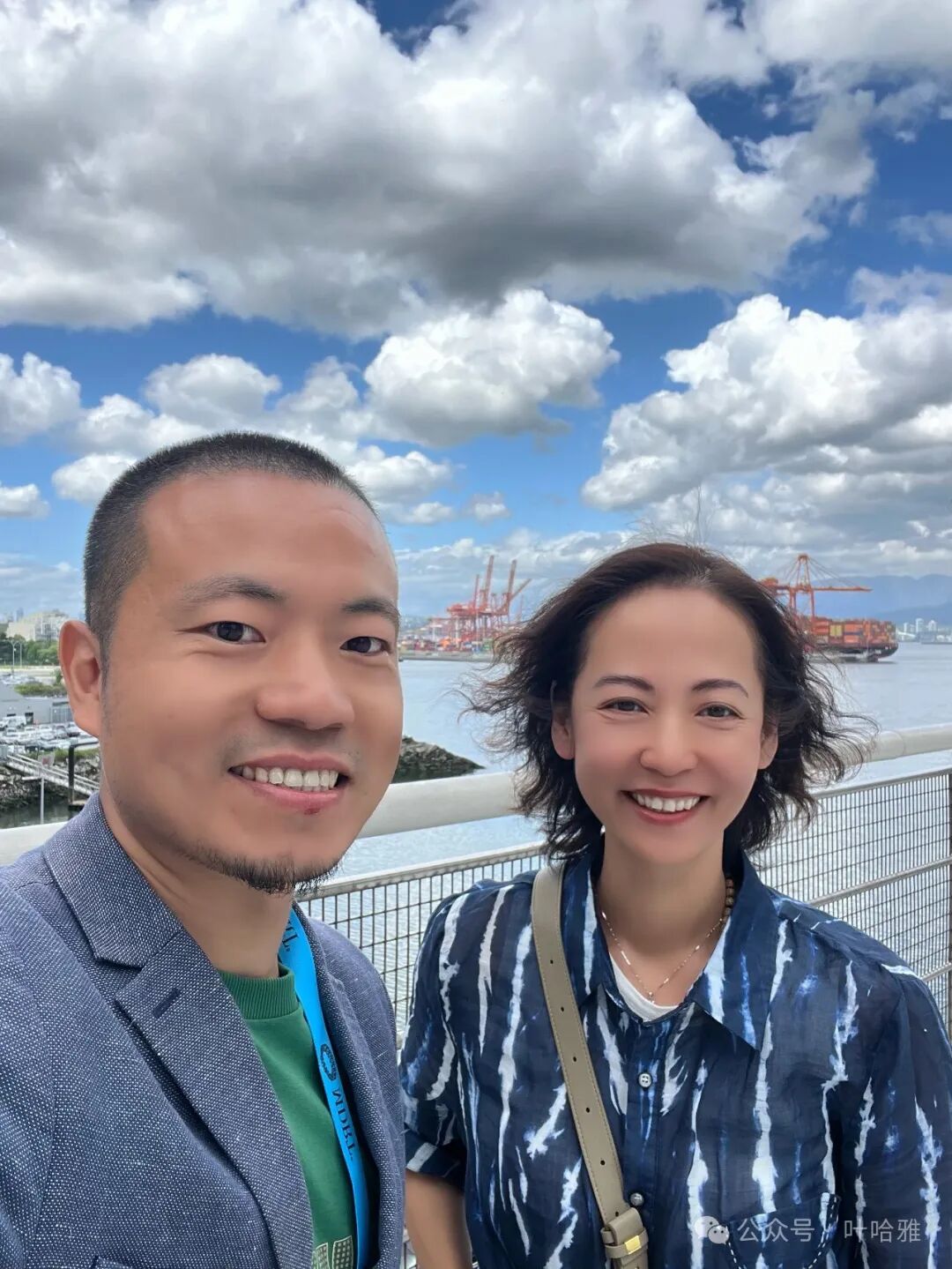
Both of these colleagues come from wealthy backgrounds, but they still work hard and stay positive. They did not just lie flat while living abroad. You could say that the momentum successful people have makes them unwilling to be mediocre in any environment, leading them to achieve outstanding results.
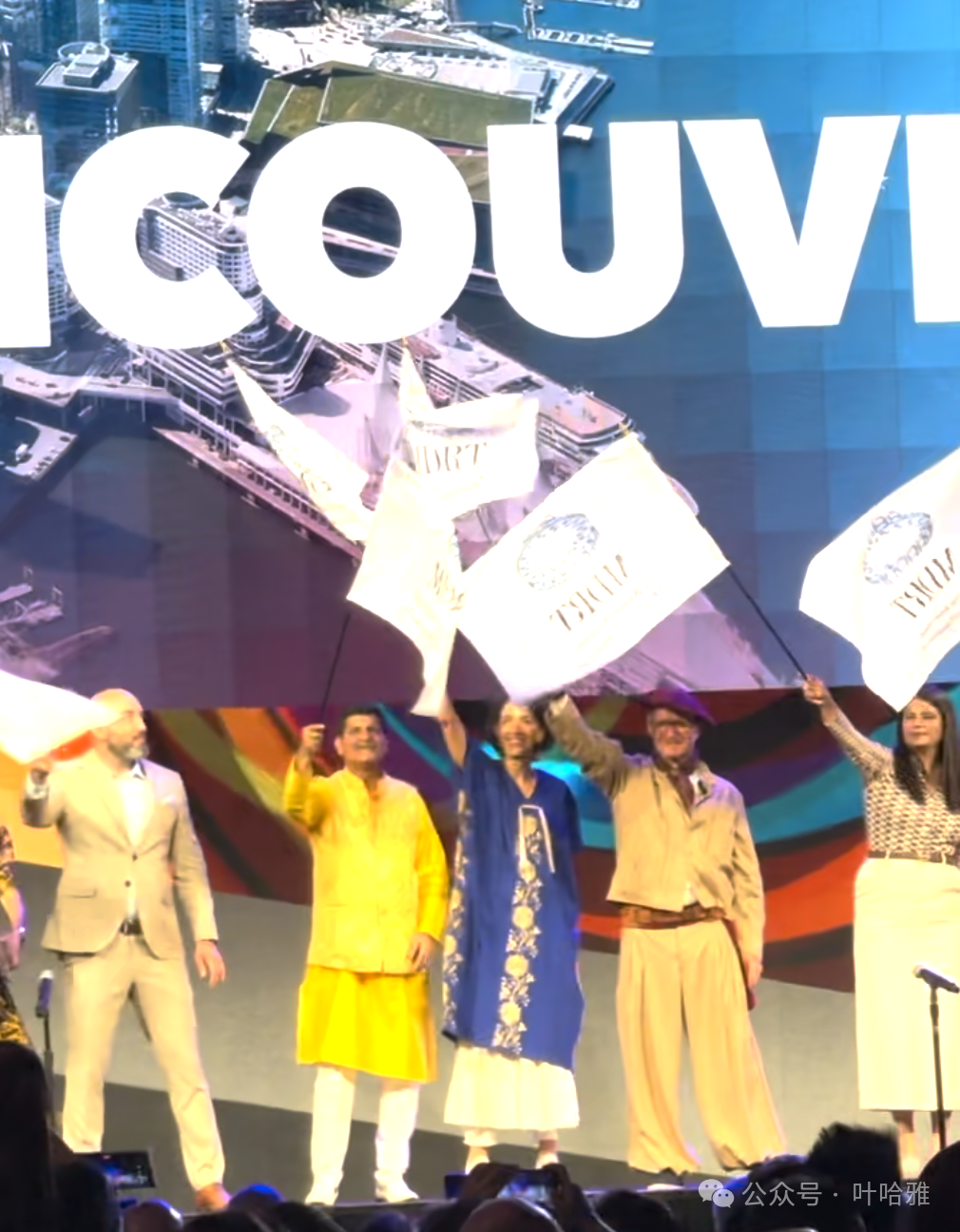
Every year, MDRT attracts tens of thousands of insurance elites from all over the world, but looking around the venue, the number of Muslims is very small. It is possible that I did not recognize some of the male Muslims, but I expect the number of this group is not very high. This is completely disproportionate to the fact that Muslims make up one-fifth of the world's population.
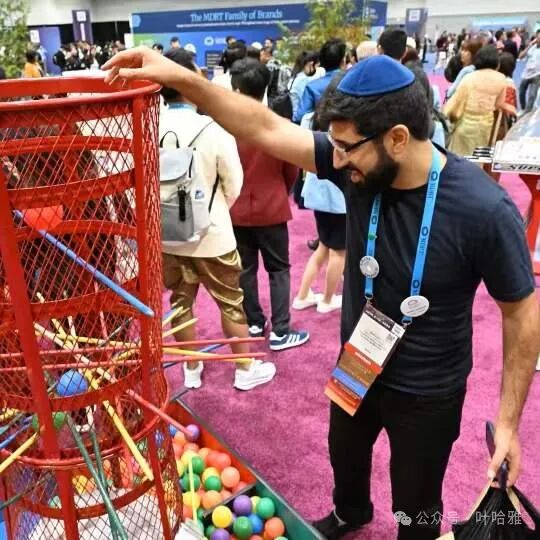
The people in the blue caps in the photo above are MDRT Jews. Insurance is already widely accepted in Judaism and Christianity, and North America has a very mature insurance industry. A century ago, they used the influence of the church to make insurance a part of daily life. Fortunately, Islamic legal scholars in North America, such as Ibrahim Khan and Monzer Kahf, also have an open attitude toward insurance.
Ibrahim Khan: Is insurance halal?
A collection of fatwa Q&As on insurance by Professor Sheikh Monzer Kahf.
In modern society, insurance has become a necessity. If a person lacks health insurance or retirement insurance, it is hard for them to live a worry-free and decent life. It is easy to issue a religious ruling that bans insurance, but these scholars do not provide alternatives for what to do instead. The difficulties this causes for the lives of Muslims are very real. Becoming an actuary is one of the hardest certifications in the world, taking an average of 10 years to complete. Since insurance is such a complex financial product, how can it be easily declared illegal?

A cruise ship heading to Alaska.
Look at the fundraising links in our social media feeds. When a family is reduced to crowdfunding for medical treatment, they lose their dignity. Relying on online crowdfunding is a form of begging, and begging is a detestable act repeatedly mentioned in the Quran and Sunnah. I do not want to see our community appearing on crowdfunding platforms all the time. As vicegerents on earth, this should not be our image.
Summary: This Muslim life guide from Vancouver covers the MDRT annual meeting, Muslim insurance professionals from different countries, mainland Chinese attendance changes, halal finance discussions, Islamic insurance ethics, Muslim representation in the industry, and reflections on dignity and protection.
Gathering with Muslim Insurance Professionals from Around the World at the MDRT Annual Meeting in Vancouver is presented here as a firsthand travel account in clear English, beginning with this scene: The Million Dollar Round Table (MDRT) started in the United States in 1927. At that time, 32 life insurance agents who sold over one million dollars in policies wanted to form a forum to promote high standards in life. The account keeps its focus on Muslim Travel while preserving the names, places, food, and historical details from the Chinese source.
The Million Dollar Round Table (MDRT) started in the United States in 1927. At that time, 32 life insurance agents who sold over one million dollars in policies wanted to form a forum to promote high standards in life insurance sales and improve the image of insurance professionals.
Since then, the MDRT annual meeting has been held every year in either the United States or Canada. Last year it was in the U.S., and this year it is at the Vancouver Convention Centre in Canada.
Vancouver Convention Centre
This year's attendance is very different from previous years. Before 2019, as the Chinese insurance market grew rapidly, the total number of attendees from mainland China, Hong Kong, and Taiwan was the highest, and it increased every year. This year, however, the Mandarin speakers I saw at the venue were mainly from Taiwan, with a reported attendance of over 600 people. Very few people came from Hong Kong, reportedly fewer than 30. Among the East Asian faces, there were many from Japan and South Korea, while the largest groups from Southeast Asia were from Singapore and Thailand.
The sharp drop in attendees from mainland China may be related to political and economic factors. For one thing, we do not have direct flights to Canada, so most people have to transfer, which takes a long time. Prices in North America have soared in recent years, making a round trip very expensive. On the other hand, many of our colleagues could not get visas. I only saw a single-digit number of colleagues from my own company at the venue, even though over a thousand of us actually met the criteria to attend.
2024 MDRT President Gregory B. Gagne, ChFC
Another objective factor for the sharp decline in mainland attendees is that many large state-owned insurance companies no longer organize trips to the U.S. in an official capacity. Award winners have to go on their own. Instead, they attend insurance award ceremonies held within China, such as the International Management Associate (IMA) awards ceremony I attended last year. Although it is nominally an international award, everyone who attended was an insurance elite from the mainland.
The group in the picture above is the Thai delegation taking a group photo. They are easy to recognize because they are wearing traditional Thai clothing.
This is a delegation of middle-aged Japanese women (obasan). This is just the tip of the iceberg for the Japanese delegation, as the Japanese MDRT is not made up entirely of middle-aged women.
This is my conference badge. You must have it to enter during the meeting. There are guards at the entrance of every venue, so it is hard to sneak in without one. The badges are different every year.
On the first day of the conference, I met this young woman from Jordan. She was easy to recognize because she wore a headscarf. I showed her some articles I translated about Islamic insurance law (sharia), and she was very surprised. She took photos of my articles and translated them into Arabic. It felt amazing to share knowledge about insurance law with an Arab person in this way.
The venue provides simultaneous interpretation services. Everyone gets a small translation device where they can select a language they understand.
These people are all veteran North American members of many years, and the bald man holding the microphone has been a member for over twenty years.
One of the keynote speakers was a person with dwarfism. This was a heartwarming moment for me. MDRT usually invites ordinary people, grassroots elites, rather than celebrities to stand on stage. Each guest shares their personal growth and shows their family life, which makes the audience feel it is real.
The Malaysian MDRT delegation was very warm. The young women asked where I was from. I said I am a Chinese Hui Muslim. They asked which province, and I said I am from Beijing. I showed them photos of my family's Hajj pilgrimage. They were very excited and immediately called over a colleague who spoke Chinese to take a photo with me.
They belong to a Muslim insurance company in Malaysia and asked me if there are any Muslim insurance products in China. I said there are none in mainland China yet, and only a few insurance companies in Hong Kong have Muslim insurance businesses. Perhaps this will open up in the future.
I covered the topic of Muslim insurance in my previous article, Mustafa Zaka: Traditional Commercial Insurance Complies with Sharia.
I introduced it there.
According to current scholars, so-called Muslim insurance is not feasible in practice. This is because there are no Muslim reinsurance companies in the world today that can support Muslim insurance companies. Also, because Muslim insurance adds operating costs to its design, the products are expensive and offer weak coverage, making them uncompetitive in the market. They rely more on the sentiment of the faithful to pay for them, which limits the development of Muslim insurance. Therefore, we should re-evaluate the Sharia regarding traditional insurance and allow Muslims to purchase commercial insurance.
I met a very kind uncle from Singapore. He has worked in insurance for thirty years, and his daughter has been in the industry for nine years. Both father and daughter have achieved Million Dollar Round Table (MDRT) membership. It is a case of a daughter following in her father's footsteps. Many insurance professionals overseas, like this uncle, treat insurance as a lifelong career.
The insurance market in Singapore is different from the mainland. Mainland insurance teams can be very large with no upper limit on members, but in Singapore, you can only form a small team of up to 15 people. Also, there are not many insurance companies in Singapore, so customers have fewer choices and competition is fierce. The uncle has an annual salary of 400,000 Singapore dollars, which is equivalent to over 2 million RMB. This income would rank in the top 100 at my company, but he is very frugal in his daily life. He said that when he meets clients, he just chooses an ordinary coffee shop because he does not want to project an image of being very wealthy.
Besides meeting insurance elites from various countries, I also met two colleagues from my company who live in Canada. Even though their time zone is the complete opposite of China's, it does not stop them from qualifying for the Million Dollar Round Table for many years in a row. This is one of the reasons I chose Mingya, as it allows me to do my job from any corner of the globe.
Both of these colleagues come from wealthy backgrounds, but they still work hard and stay positive. They did not just lie flat while living abroad. You could say that the momentum successful people have makes them unwilling to be mediocre in any environment, leading them to achieve outstanding results.
Every year, MDRT attracts tens of thousands of insurance elites from all over the world, but looking around the venue, the number of Muslims is very small. It is possible that I did not recognize some of the male Muslims, but I expect the number of this group is not very high. This is completely disproportionate to the fact that Muslims make up one-fifth of the world's population.
The people in the blue caps in the photo above are MDRT Jews. Insurance is already widely accepted in Judaism and Christianity, and North America has a very mature insurance industry. A century ago, they used the influence of the church to make insurance a part of daily life. Fortunately, Islamic legal scholars in North America, such as Ibrahim Khan and Monzer Kahf, also have an open attitude toward insurance.
Ibrahim Khan: Is insurance halal?
A collection of fatwa Q&As on insurance by Professor Sheikh Monzer Kahf.
In modern society, insurance has become a necessity. If a person lacks health insurance or retirement insurance, it is hard for them to live a worry-free and decent life. It is easy to issue a religious ruling that bans insurance, but these scholars do not provide alternatives for what to do instead. The difficulties this causes for the lives of Muslims are very real. Becoming an actuary is one of the hardest certifications in the world, taking an average of 10 years to complete. Since insurance is such a complex financial product, how can it be easily declared illegal?
A cruise ship heading to Alaska.
Look at the fundraising links in our social media feeds. When a family is reduced to crowdfunding for medical treatment, they lose their dignity. Relying on online crowdfunding is a form of begging, and begging is a detestable act repeatedly mentioned in the Quran and Sunnah. I do not want to see our community appearing on crowdfunding platforms all the time. As vicegerents on earth, this should not be our image.
