
Muslim Travel Guide Singapore 2026: Underground Mosque, Zakat Machine and Local Muslim Life
Reposted from the web
Summary: This Singapore Muslim travel guide continues the city route through underground mosques, local prayer spaces, and a self-service zakat machine. It preserves the source's guide structure, site order, and local Muslim life details.
In this issue:
8. Jamae Mosque, which features minarets in a South Indian style.
9. The South Indian gongbei of Singapore, Nagore Dargah.
10. Al-Abrar Mosque.
11. Underground Mosque.
12. Omar Kampong Melaka Mosque, the oldest mosque in Singapore.
13. Al-Amin Mosque.
14. Temenggong Mosque.
15. Sentosa prayer room.
16. Singapore Islamic Centre Mosque.
17. Islamic Religious Council of Singapore.
To be updated:
18. Tomb of Habib Nuh (Habib Nuh Lingmu)
19. Haji Muhammad Salleh Mosque
20. Hajjah Fatimah Mosque
21. Changi Airport Prayer Room
Main text starts:
8. Jamae Mosque
I find this Jamae Mosque very special. Everyone knows what North Indian mosques look like. The Badshahi Mosque in Pakistan, the Jama Masjid in Delhi, and even the Taj Mahal are all classic examples of North Indian mosque architecture.
These mosques are very famous and pop up on your feed all the time, but I bet you haven't seen many of the lesser-known South Indian mosques.
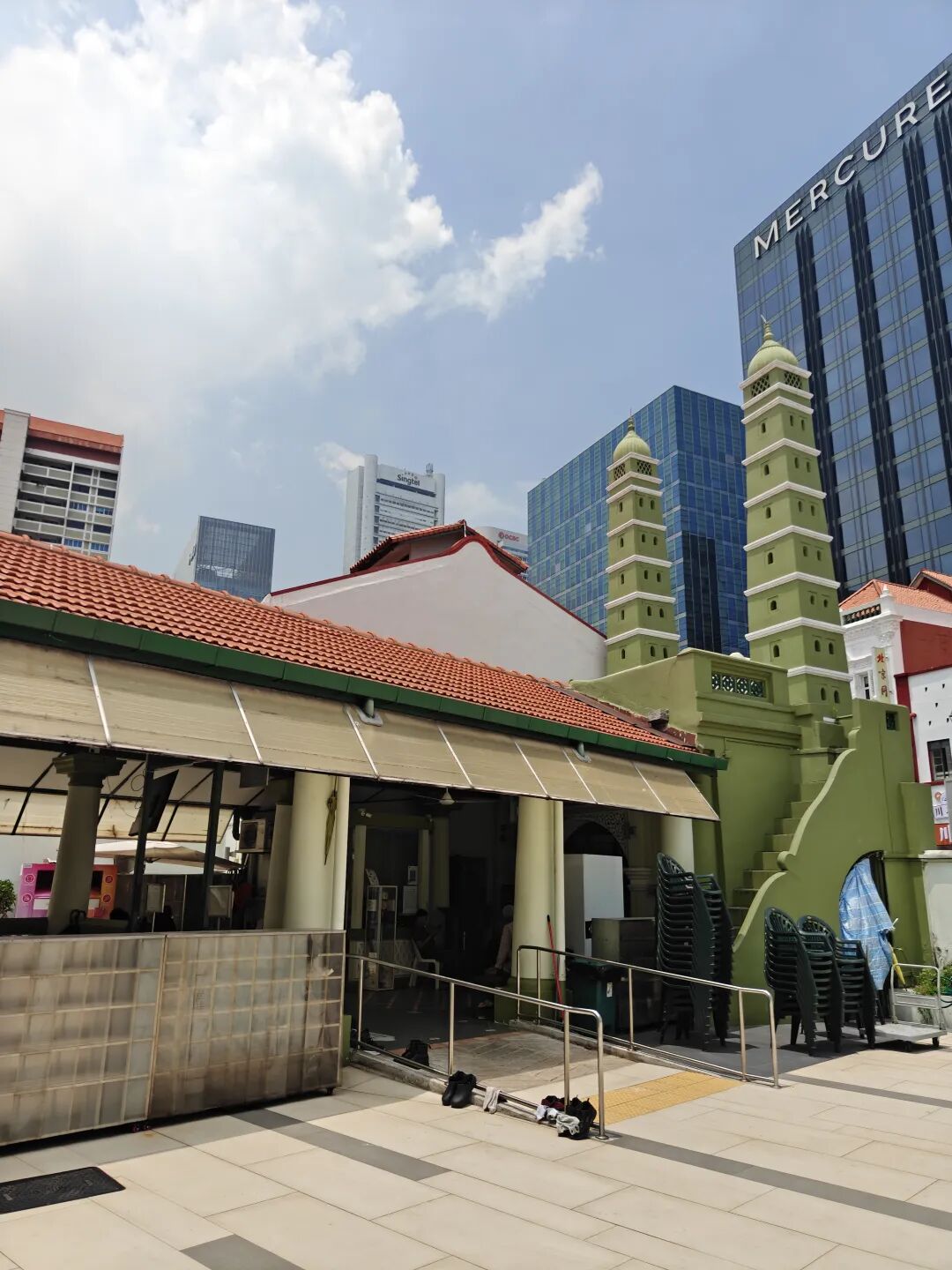
Look at its minaret; it is square. If you made this tower wider and added bright colors, it would look just like a South Indian Hindu temple.
I think this style of tower has a lot of local character.
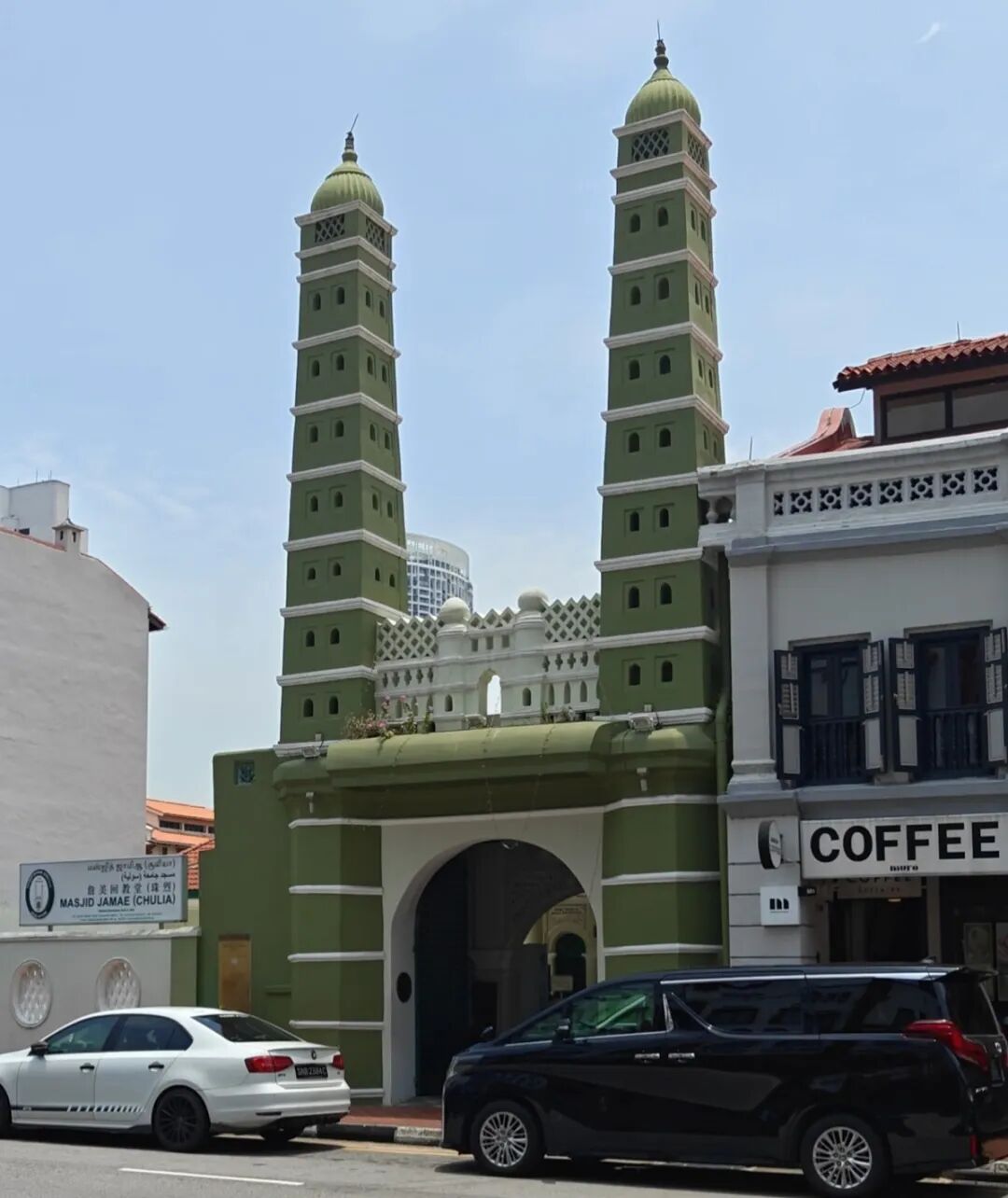
Jamae Mosque, the Buddha Tooth Relic Mosque, and a Hindu mosque are all on the same street.
This mosque welcomes visitors and has a dedicated tourist area. There are many information boards there to explain the basics to visitors.
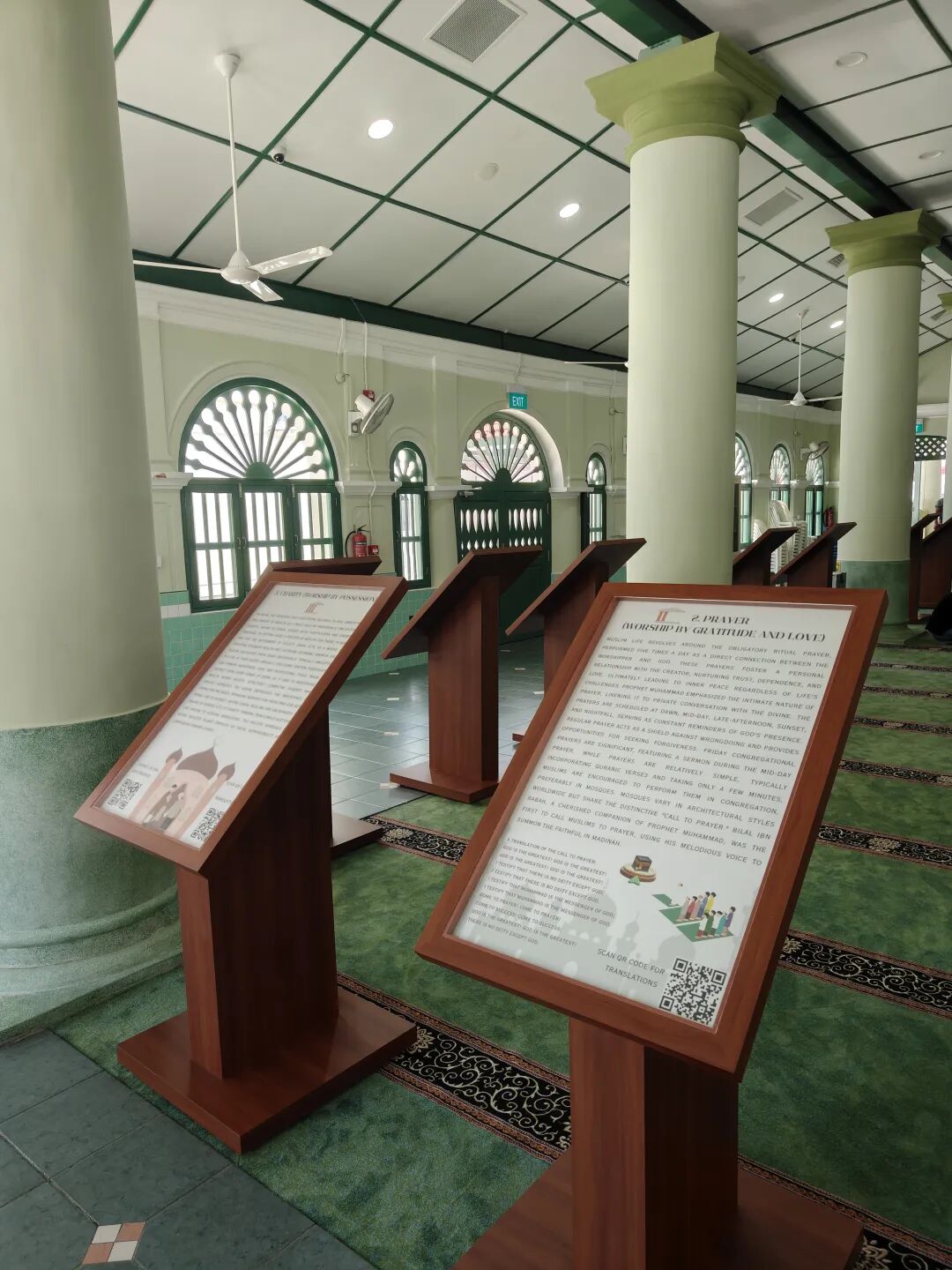
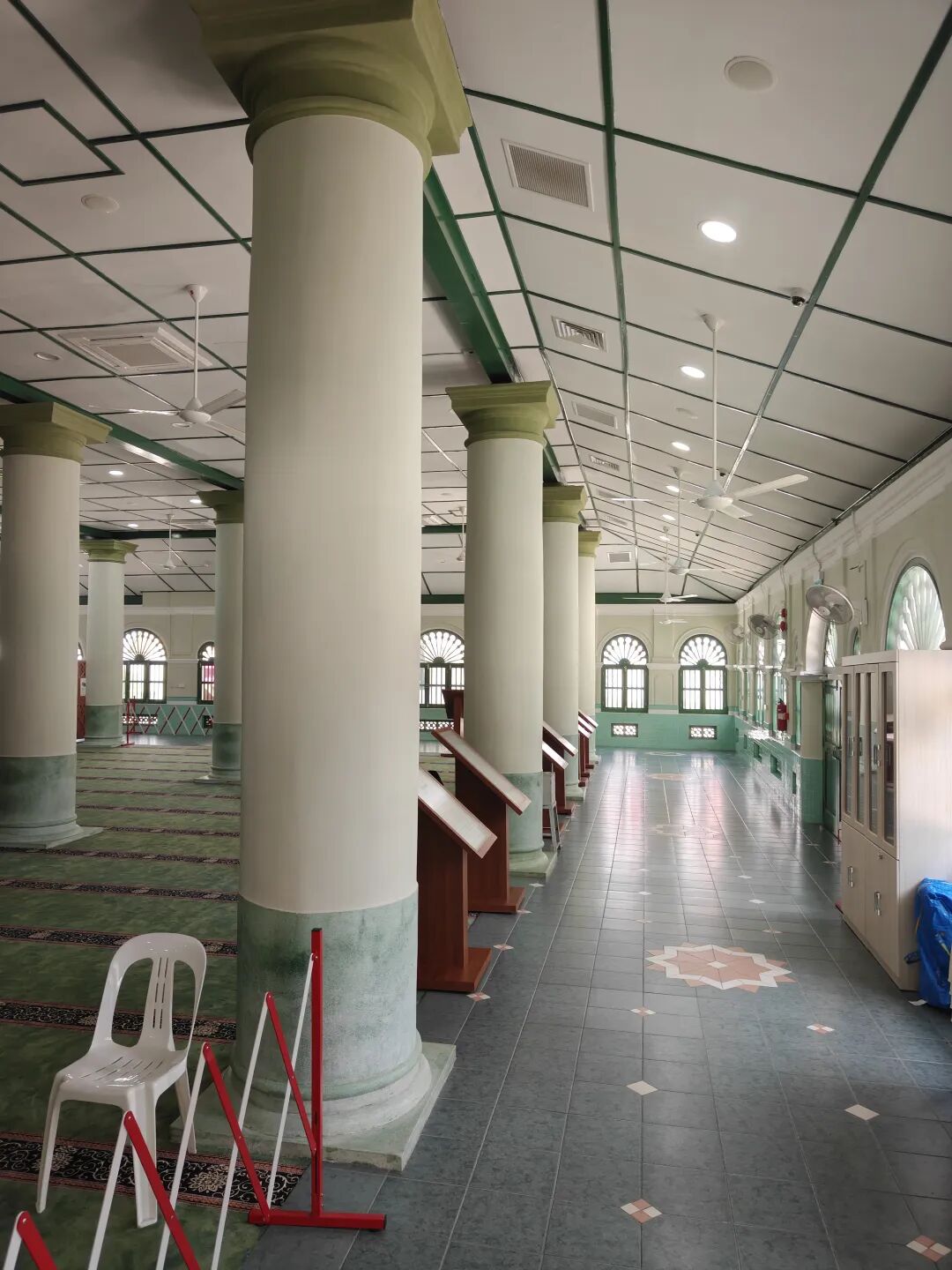
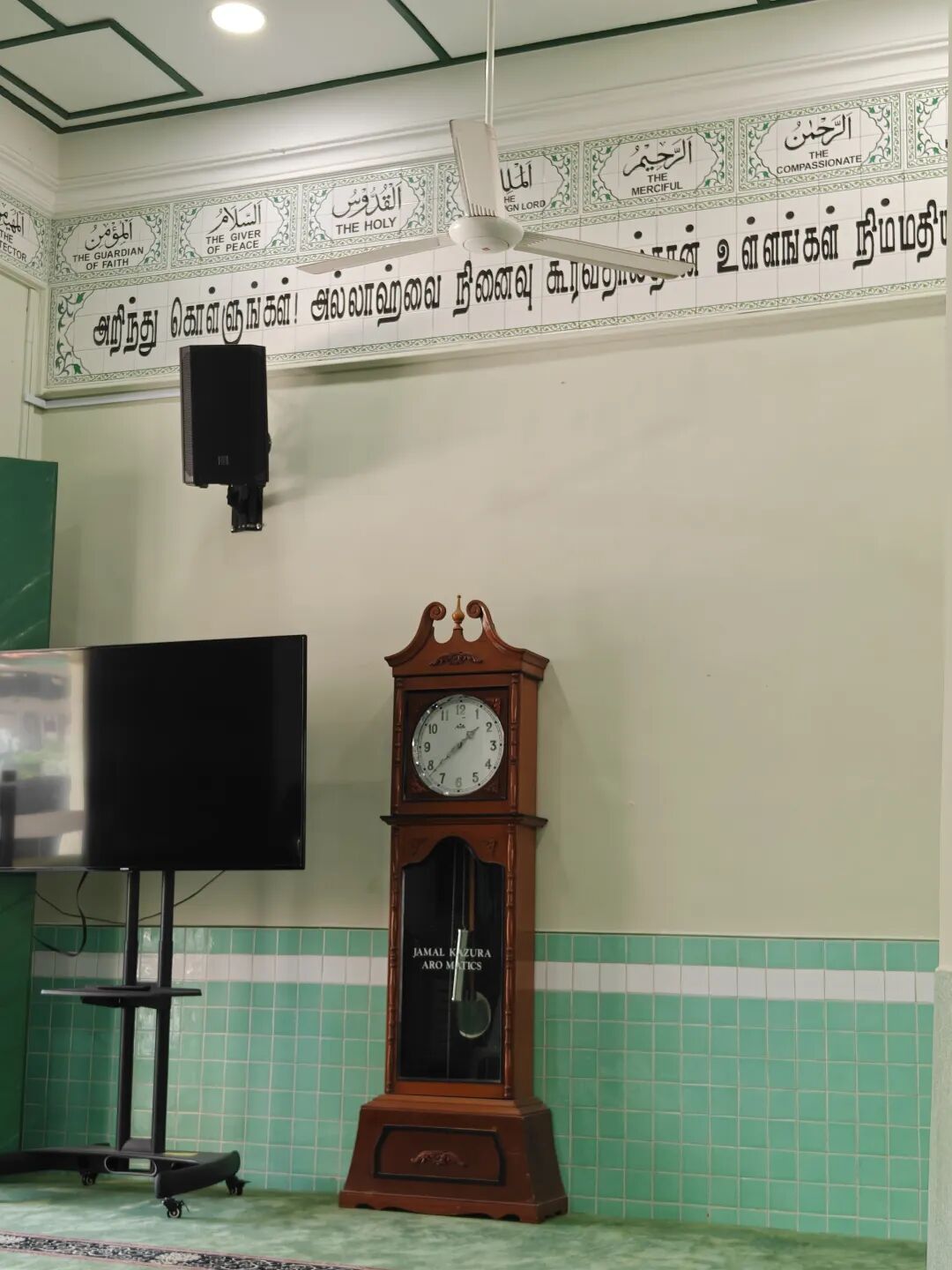
The mosque's minaret is in a South Indian style, but the prayer hall area instantly brings back memories of the South Seas. The doors and windows especially have a strong colonial-era South Seas feel.
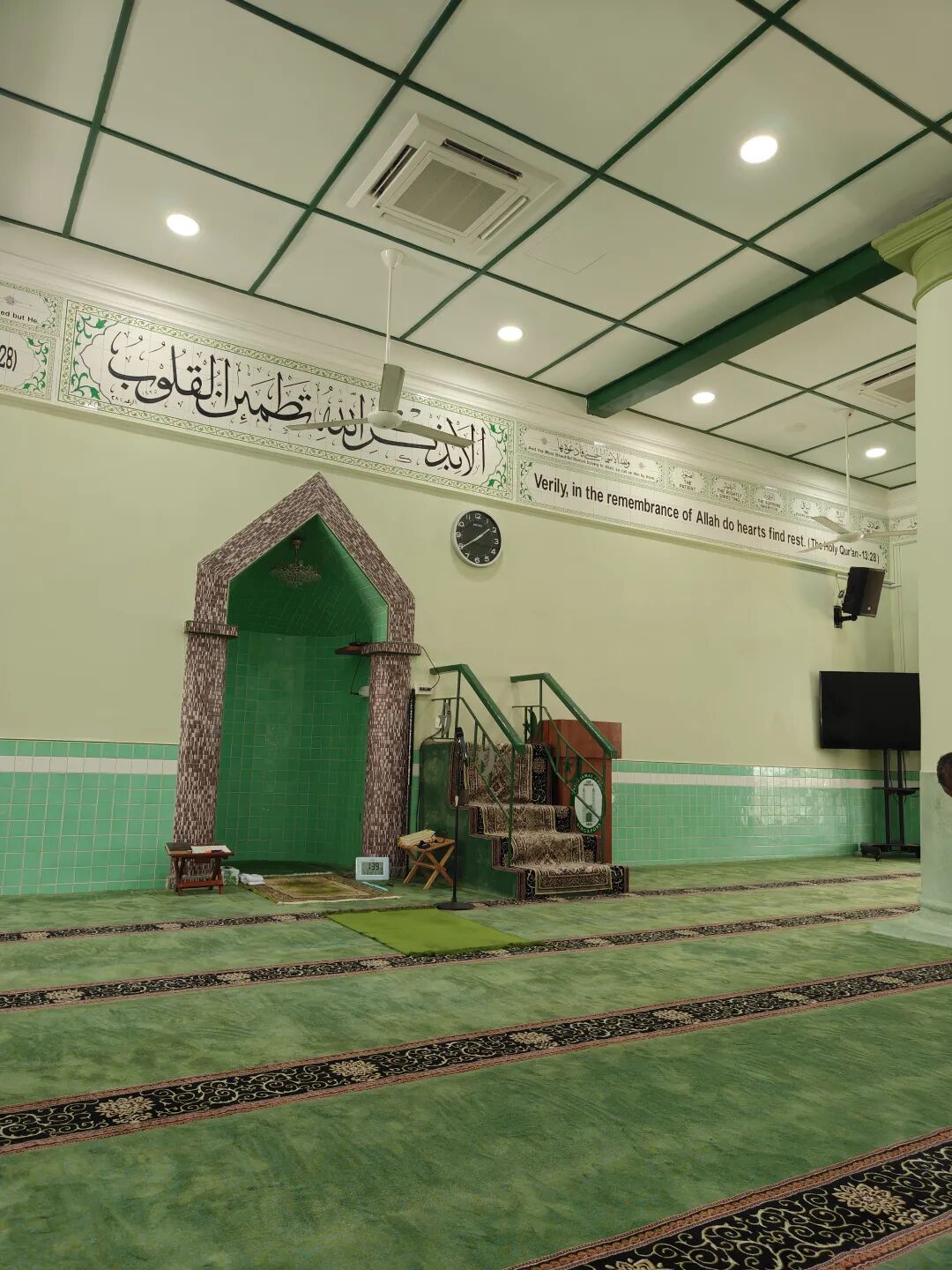
Inside the prayer hall, the mihrab and the minbar are very simple.
This mosque was established by Tamil people from South India, so there is also Tamil script inside the prayer hall.
As I left, I noticed there were actually steps by the minaret. It seems at least the entrance area can be climbed.
9. South Indian gongbei, Nagore Dargah
The actual Nagore Dargah is in the Indian state of Tamil Nadu, which is the ancestral home of the Tamil people.
To me, the Tamil people are a bit like the people from Fujian in our country.
Tamil Nadu is in southeastern India, facing the island of Sri Lanka across the sea.
People from Fujian are also on the southeast coast of China, with Taiwan island just across the strait.
Tamil people like to go to sea to do business, and so do Fujian people, running businesses all over the world.
Back to the topic, the Nagore Dargah in Tamil Nadu is a real gongbei, containing the graves of Muslim saints.
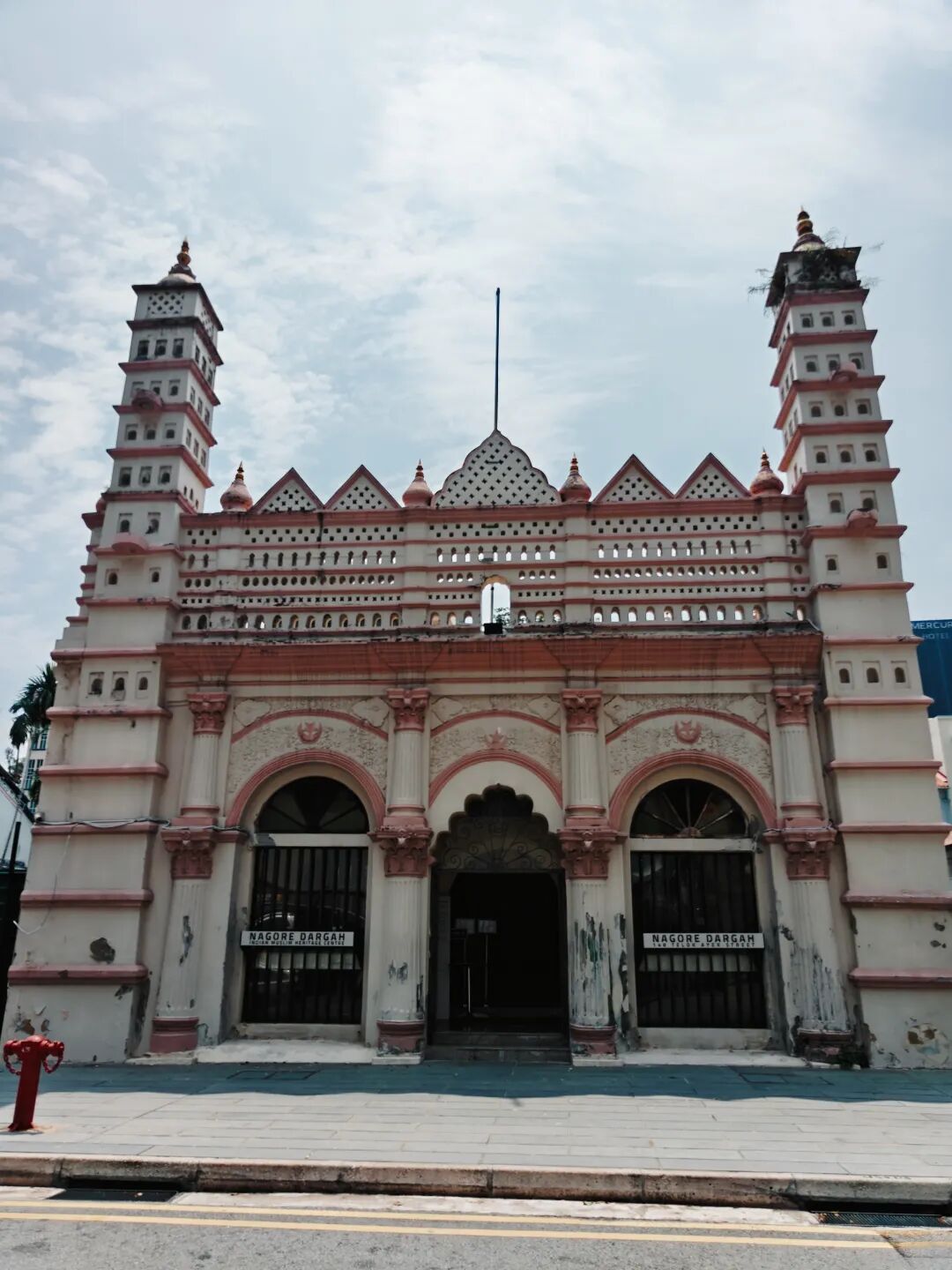
But this Nagore Dargah in Singapore is empty and only has a symbolic tomb.
This was my first time seeing something like this. I went inside and asked the manager where the tomb was. He said the tomb is back home in India. I was shocked!
This Dargah (a term used in South India for a gongbei) also has a South Indian style with a square tower.
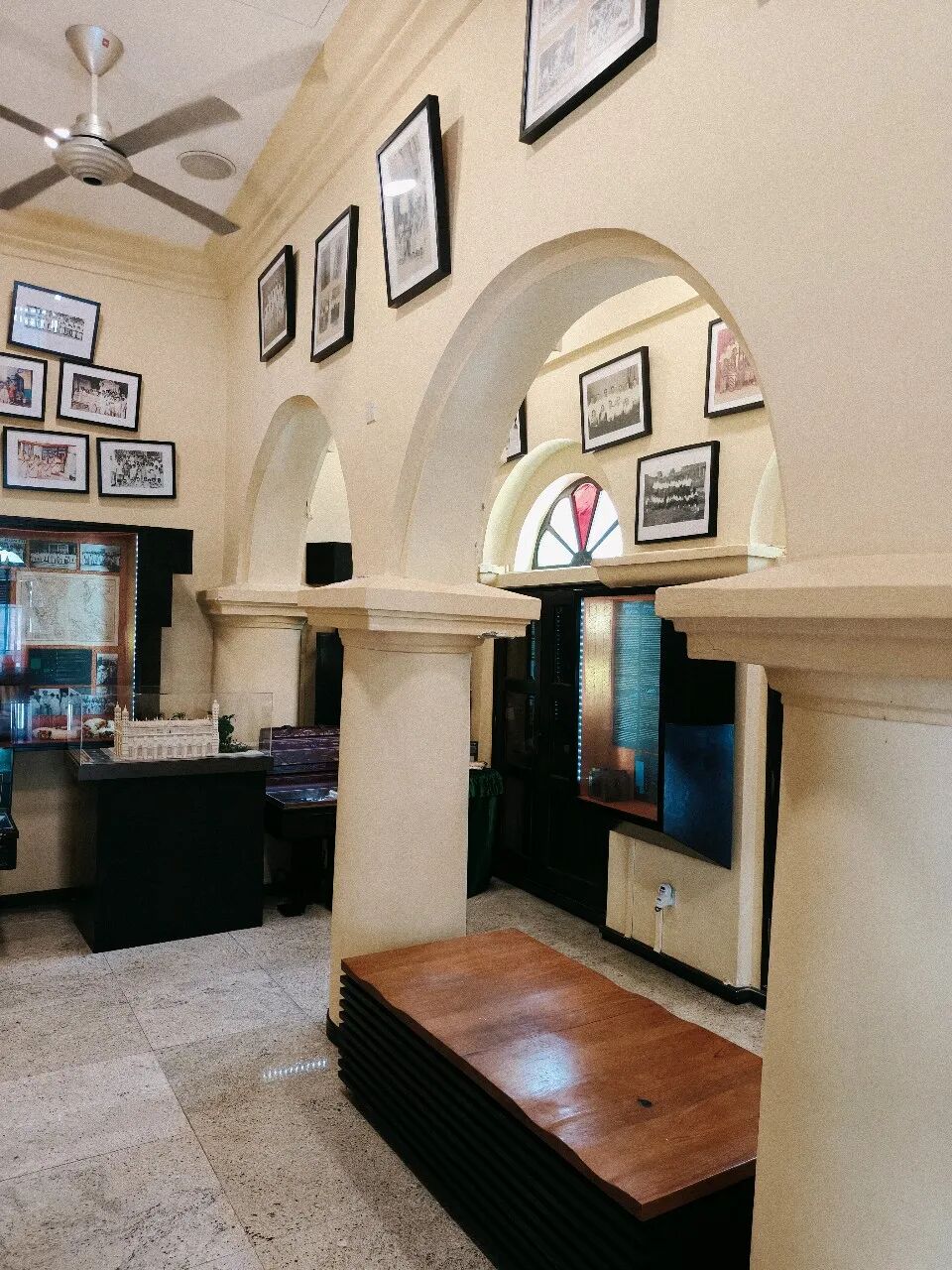
It is no longer a religious site but has been turned into a museum. It displays many items used by the older generation of Indian immigrants who came to Singapore.
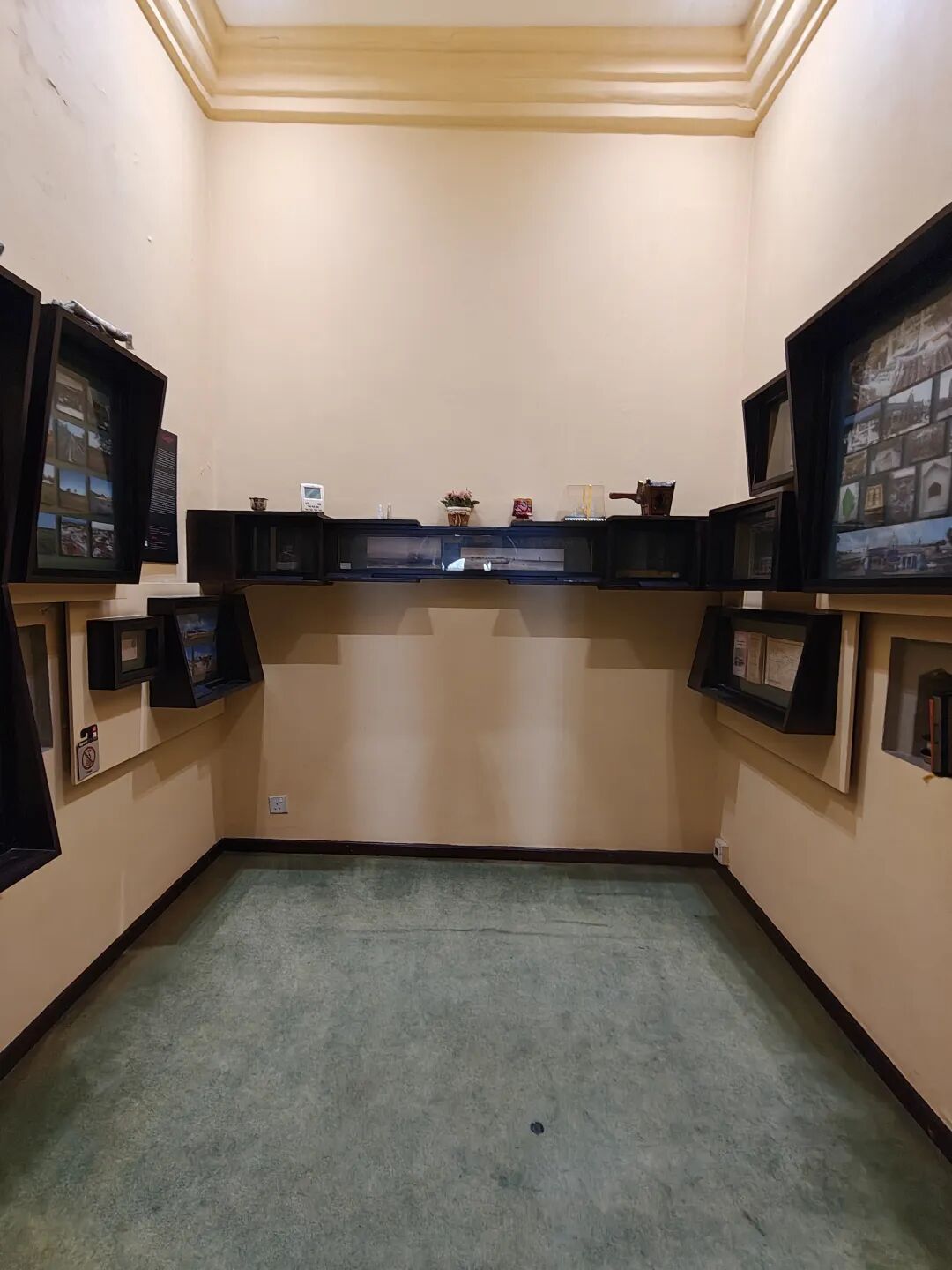
At the very back of the main hall, you can see a symbolic tomb chamber.
So, my trip was not a waste after all.
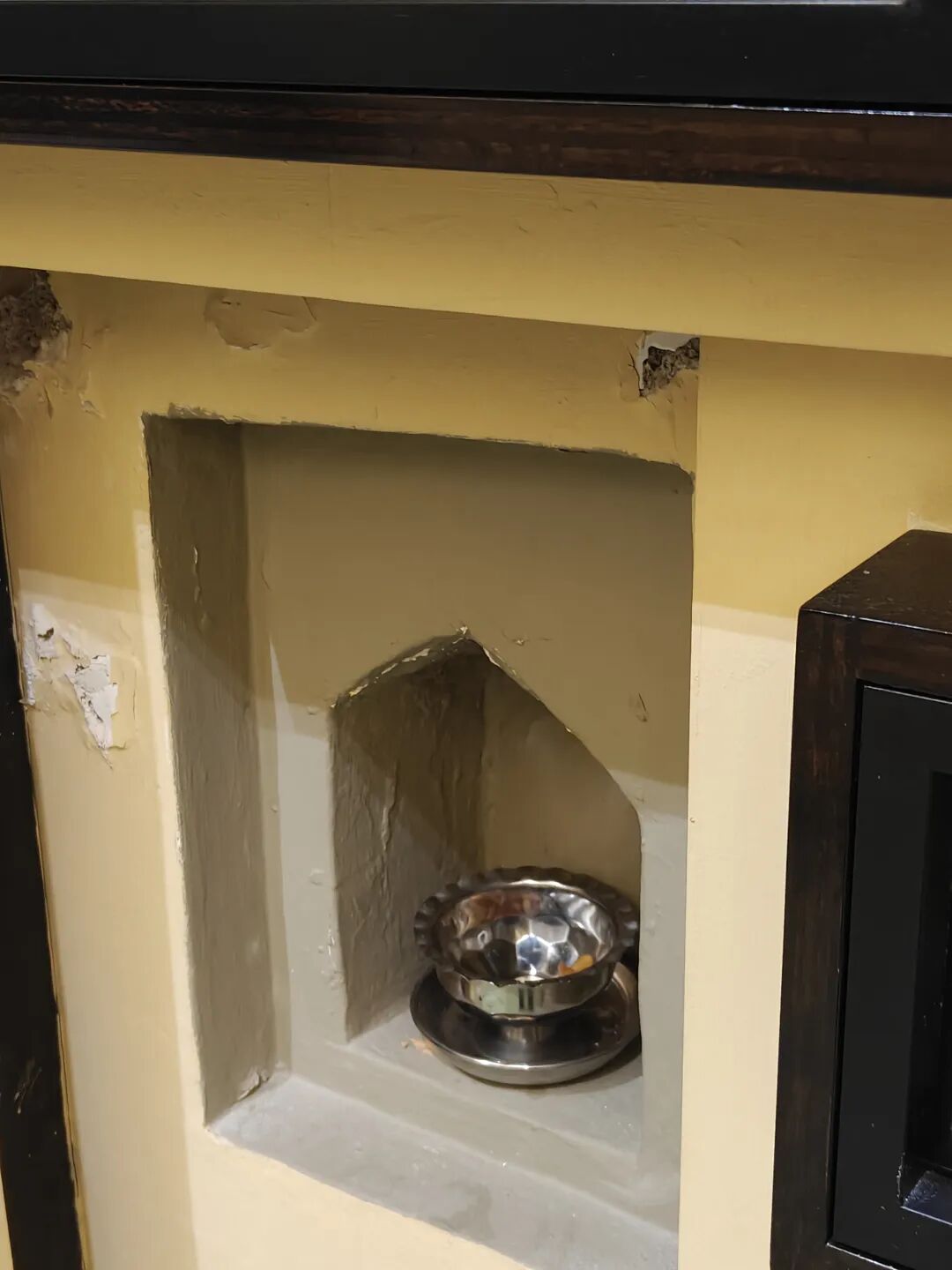
I think the highlight of the tomb chamber is the oil lamp placed in the small wall niche.
These niches are very common in India and are used to hold oil lamps for lighting.
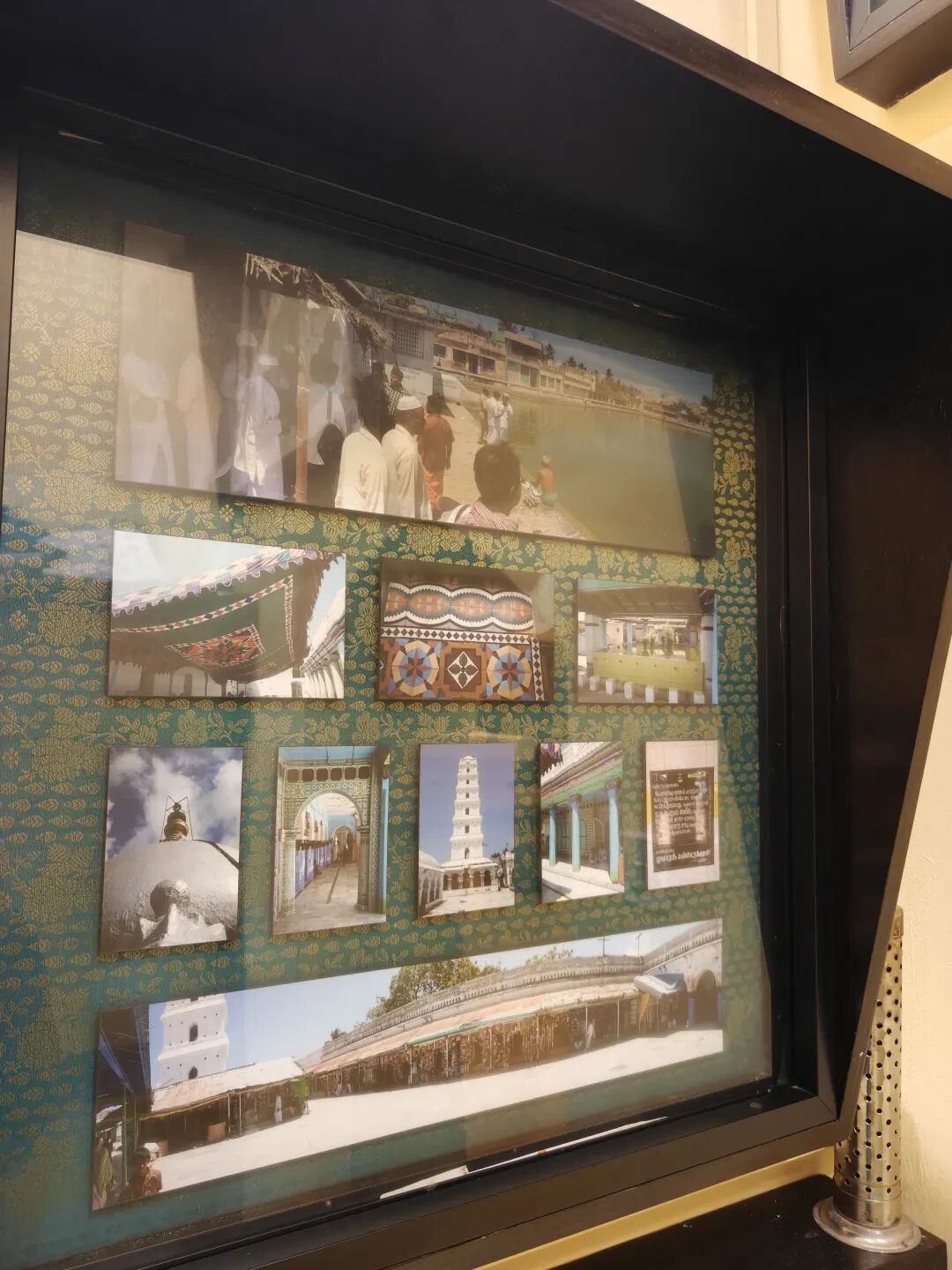
On the wall of the tomb chamber hangs a photo of the Nagore Dargah in India. Looking at it, the place covers a very large area.
I really want to go to India to see it in person, but it is a pity that India is very strict with Chinese citizens right now, and tourist visas are hard to get.
10. Al-Abrar Mosque.
When I visited the Nagore Dargah, I asked the manager if there was a place to perform namaz. He told me that everyone goes to a nearby mosque for namaz now.
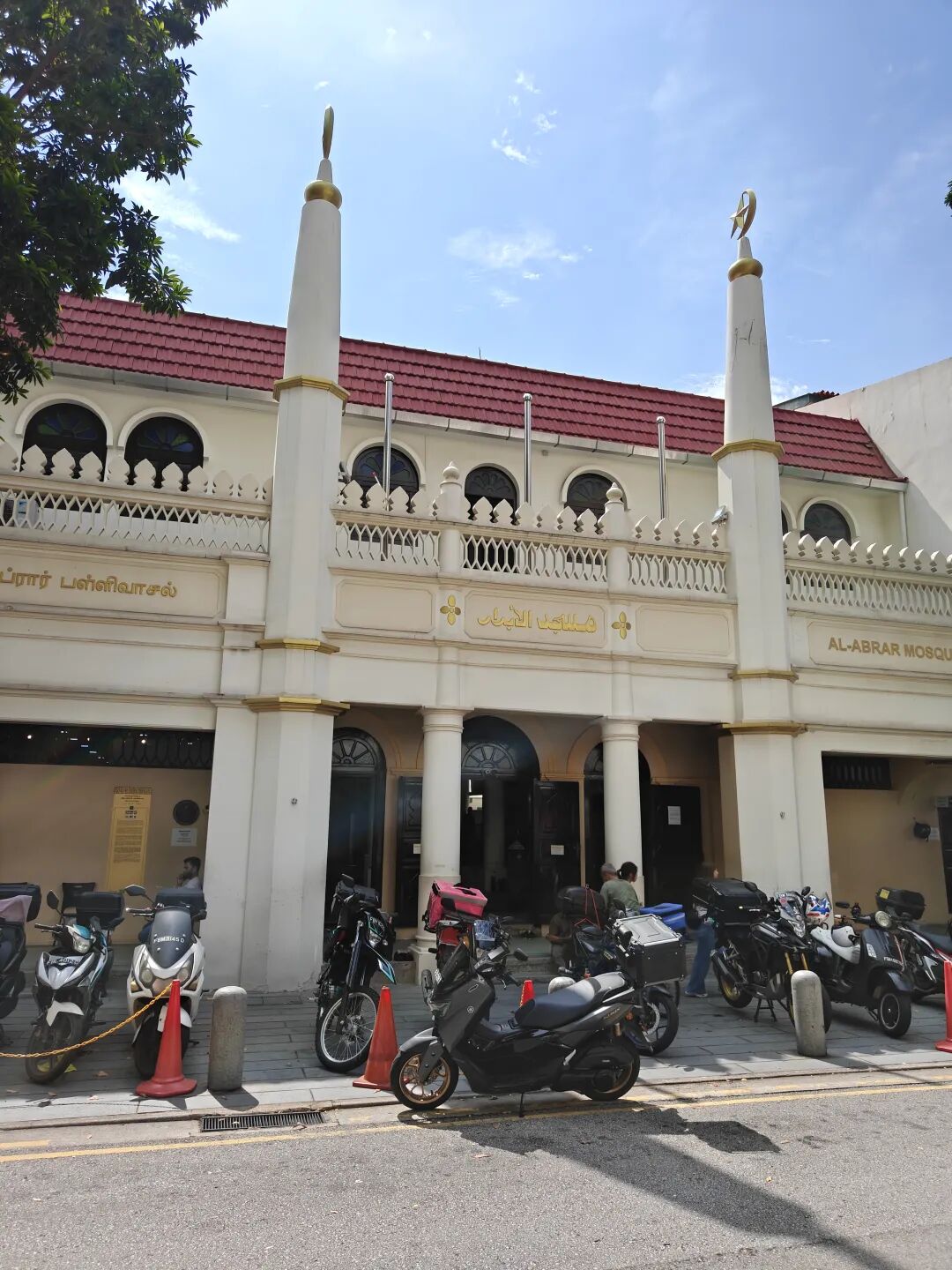
The mosque he mentioned is the Al-Abrar Mosque located on this same street.
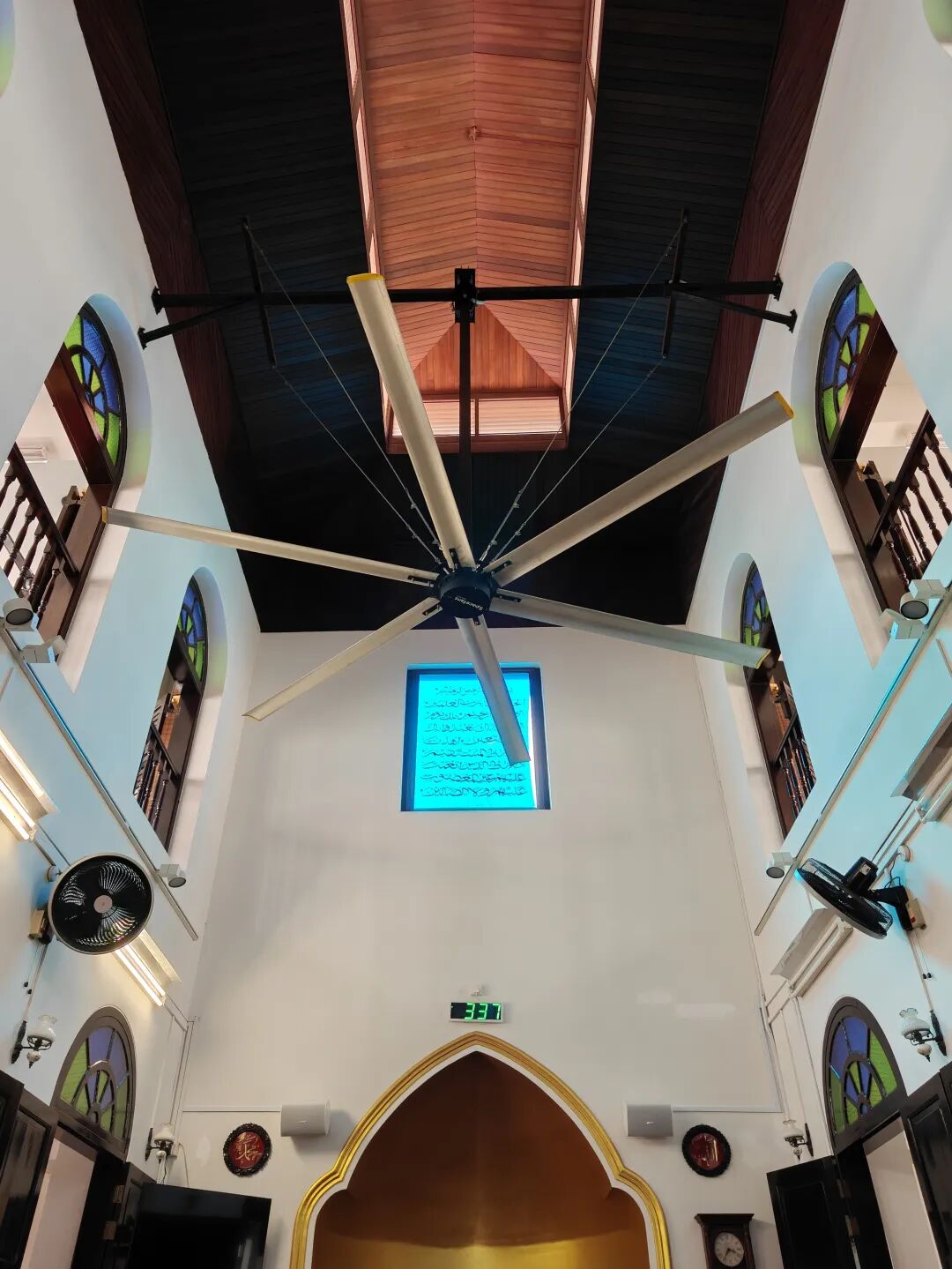
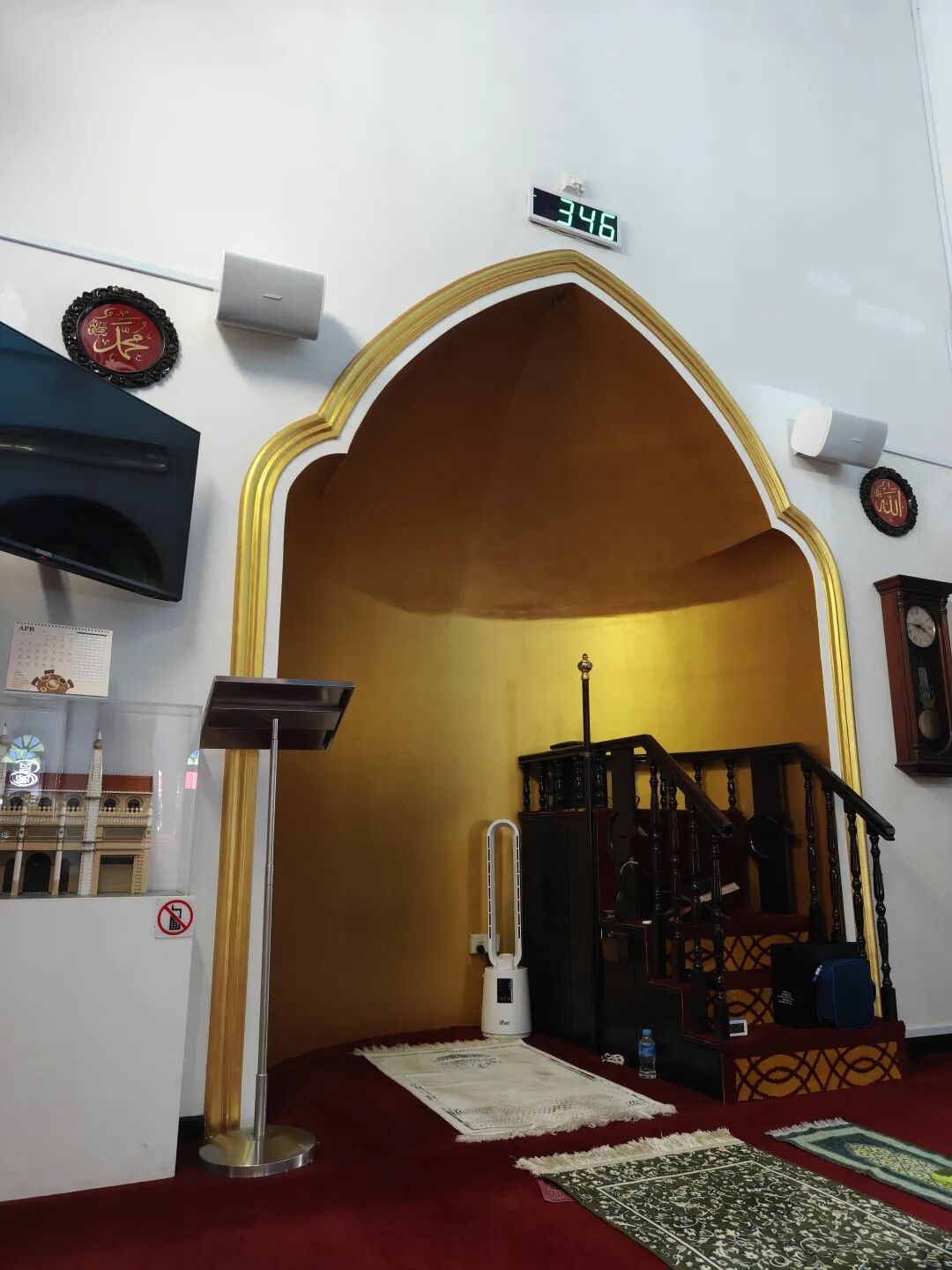
There is an inner hall inside the prayer hall of this mosque.
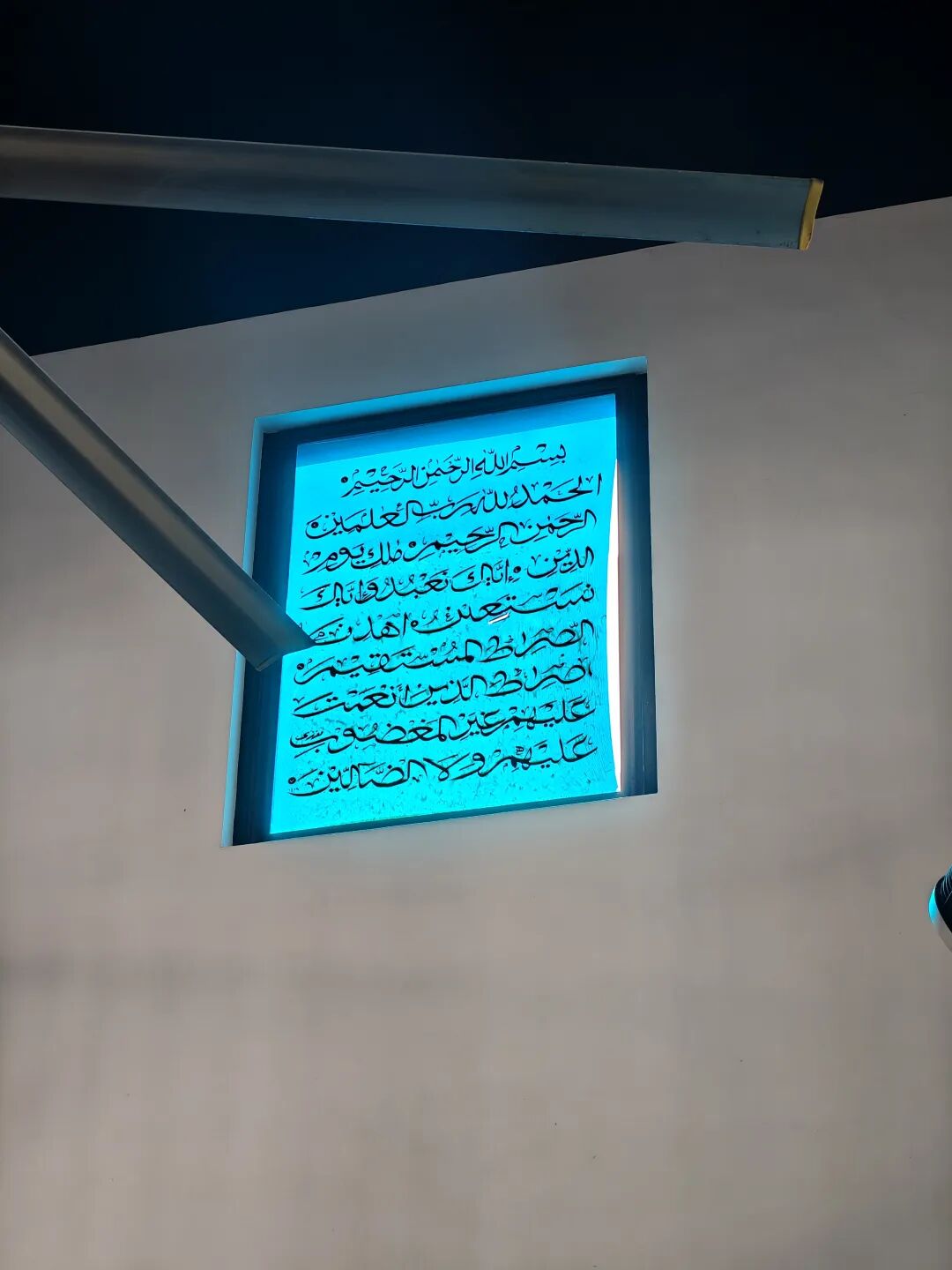
Directly above the inner hall, there is a piece of blue glass with the opening chapter of the Quran written on it.
The fan-shaped stained glass on the mosque's doors and windows is also very cute.
At the very back of the main hall, you can see a symbolic tomb chamber.
So, my trip was not a waste after all.
I think the highlight of the tomb chamber is the oil lamp placed in the small wall niche.
These niches are very common in India and are used to hold oil lamps for lighting.
On the wall of the tomb chamber hangs a photo of the Nagore Dargah in India. Looking at it, the place covers a very large area.
I really want to go to India to see it in person, but it is a pity that India is very strict with Chinese citizens right now, and tourist visas are hard to get.
At the very back of the main hall, you can see a symbolic tomb chamber.
So, my trip was not a waste after all.
I think the highlight of the tomb chamber is the oil lamp placed in the small wall niche.
These niches are very common in India and are used to hold oil lamps for lighting.
On the wall of the tomb chamber hangs a photo of the Nagore Dargah in India. Looking at it, the place covers a very large area.
I really want to go to India to see it in person, but it is a pity that India is very strict with Chinese citizens right now, and tourist visas are hard to get.
I think the highlight of the tomb chamber is the oil lamp placed in the small wall niche.
These niches are very common in India and are used to hold oil lamps for lighting.
On the wall of the tomb chamber hangs a photo of the Nagore Dargah in India. Looking at it, the place covers a very large area.
I really want to go to India to see it in person, but it is a pity that India is very strict with Chinese citizens right now, and tourist visas are hard to get.
On the wall of the tomb chamber hangs a photo of the Nagore Dargah in India. Looking at it, the place covers a very large area.
I really want to go to India to see it in person, but it is a pity that India is very strict with Chinese citizens right now, and tourist visas are hard to get.
10. Al-Abrar Mosque.
When I visited the Nagore Dargah, I asked the manager if there was a place to perform namaz. He told me that everyone goes to a nearby mosque for namaz now.
The mosque he mentioned is the Al-Abrar Mosque located on this same street.
There is an inner hall inside the prayer hall of this mosque.
Directly above the inner hall, there is a piece of blue glass with the opening chapter of the Quran written on it.
The fan-shaped stained glass on the mosque's doors and windows is also very cute.
There is an inner hall inside the prayer hall of this mosque.
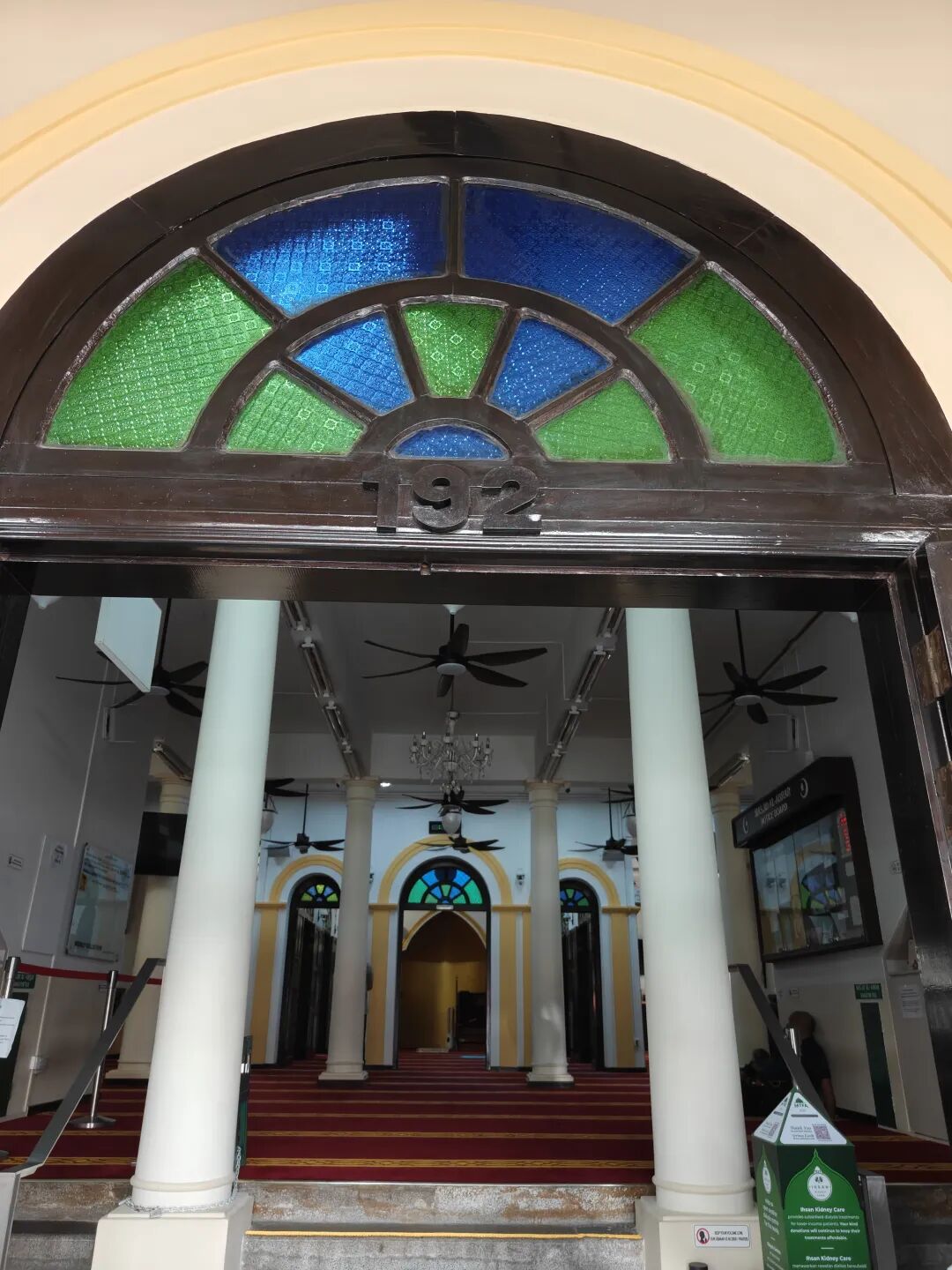
Directly above the inner hall, there is a piece of blue glass with the opening chapter of the Quran written on it.
The fan-shaped stained glass on the mosque's doors and windows is also very cute.
Just before leaving, I noticed a machine at the mosque entrance with the word Zakat written on it.
Zakat is the mandatory charity for Muslims. I was surprised to see a self-service Zakat machine here in Singapore, where you can pay using a bank card. The funds are managed by the Islamic Religious Council of Singapore.
This is the first time I have ever seen this way of paying.
11. Underground Mosque.
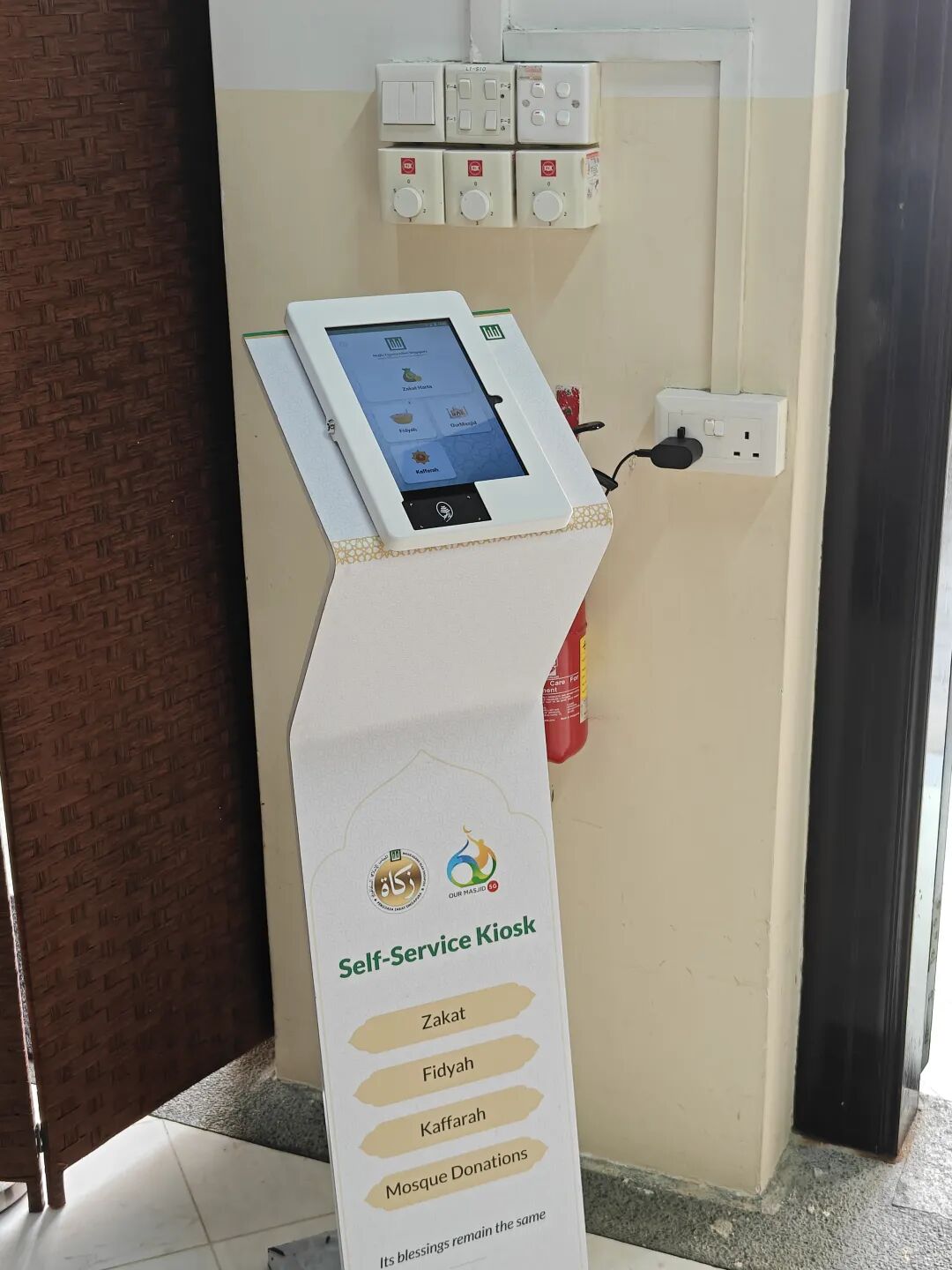
A self-service Zakat machine is novel enough, but even more surprising is Singapore's underground mosque.
This mosque is located in the basement of the UOB Plaza 1 building in Singapore.
At the time, the bank wanted this land, which had shops owned by the mosque. The mosque and the bank reached an agreement where the mosque traded its shop space for part of the bank's basement.
That is how this underground mosque came to be.
A brief introduction to the mosque is on the wall by the stairs leading down to the basement.
To be honest, the mosque is easy to find. Just follow your GPS to the UOB building and you will see the entrance.
There is a sign for the mosque near the entrance.
Be careful not to go to the wrong one, as this mosque has two entrances: one for men and one for women.
I almost went to the wrong one the first time I visited.
The men's entrance is on the side closer to the pier.
When I went a second time, they had added a white canopy to the men's entrance.
The mosque is quite spacious, much bigger than I imagined.
It has all the necessary facilities, though it does not have a minaret.
Inside, there are restrooms and a place for wudu.
There is an office for the imam.
To the left and right of the mihrab niche are the opening chapter of the Quran and its English translation.
That is right, just like at the Al-Abrar Mosque mentioned above, it is also the opening chapter.
The opening chapter is very important. Everyone who performs namaz must know how to recite it because it is used in every prayer.
Singapore's mosques really feel modern. First, in the prayer hall of the Sultan Mosque, there are two full rows of LCD screens looping information about hadith and upcoming lectures.
Then, there are the self-service zakat machines seen at the Al-Abrar Mosque and the Al-Falah Mosque on Orchard Road.
Now, I have found a heart defibrillator in the underground mosque, used to save patients who have sudden heart attacks.
12. Omar Kampong Melaka Mosque, the oldest mosque in Singapore.
Next, I will introduce the earliest mosque built in Singapore.
This mosque was built in 1820 by a Middle Eastern merchant named Syed Omar.
In 1820, twenty years later, the First Opium War would break out in China.
This shows how late this part of Singapore was developed.
The family members of this Sayyid Omar are buried right next to the minaret.
You can still see the graveyard when you visit the tower today.
At first, I thought this mosque might be exaggerating about being the oldest.
Sultan Mosque, Temenggong Mosque, and Jamae Mosque are also quite old.
But once I went inside, I saw it was built in 1820, which is indeed a few years earlier than Jamae Mosque, built in 1826.
You can see the mosque is built with solid materials. Even though you do not need thick walls in such a hot place, the railings and wall thickness show this building was not thrown together.
The imam at the mosque is very young, and he seems even younger than me.
He looks like he is in his early twenties.
When he found out I was a tourist, he gave me his contact information and told me to reach out if I had any trouble.
When I went to the mosque a second time, the imam had changed, but it was still a young man.
I do not know where the first imam went.
There are some long tables and chairs in the front courtyard of the mosque, and there is a vending machine nearby that sells halal boxed meals.
There is also a microwave nearby.
You can buy food, heat it up in the mosque, and eat it there, which is quite convenient.
13. Al-Amin Mosque.
We have introduced many South Indian-style mosques built by Indians, but I think the core of the Muslim population in Singapore is still the Malay community.
The Al-Amin Mosque I am about to introduce is a Malaysian-style mosque.
This type of roof has a very Southeast Asian feel, and you have probably seen similar buildings in other Southeast Asian countries.
The minaret also looks like this:
Take the elevator to the second floor to reach the prayer hall, which looks very cool and well-ventilated.
Sitting inside, you do not feel hot at all.
On the first floor of this mosque, I found a sign with writing that looks like Arabic.
But if you look closely, it is actually not Arabic.
It has a few letters that do not exist in Arabic, with two extra dots compared to Arabic letters.
Given the Malay style of the mosque, this must be Jawi script, which uses Arabic letters plus some extra characters to write the Malay language.
The sign says this mosque officially opened on May 1, 1991.
Not far from this mosque is another one called the Temenggong Mosque.
14. Temenggong Mosque.
The Temenggong Mosque was originally the reception hall for the Sultan of Johor, but it was later turned into a mosque. In fact, the mosque still belongs to the Sultan of Johor in Malaysia today.
In that case, does this count as a piece of Malaysian territory inside Singapore?
One thing worth seeing at this mosque is the two flags flying in front of the prayer hall, one of which is the Singapore national flag.
Summary: This Singapore Muslim travel guide continues the city route through underground mosques, local prayer spaces, and a self-service zakat machine. It preserves the source's guide structure, site order, and local Muslim life details.
In this issue:
8. Jamae Mosque, which features minarets in a South Indian style.
9. The South Indian gongbei of Singapore, Nagore Dargah.
10. Al-Abrar Mosque.
11. Underground Mosque.
12. Omar Kampong Melaka Mosque, the oldest mosque in Singapore.
13. Al-Amin Mosque.
14. Temenggong Mosque.
15. Sentosa prayer room.
16. Singapore Islamic Centre Mosque.
17. Islamic Religious Council of Singapore.
To be updated:
18. Tomb of Habib Nuh (Habib Nuh Lingmu)
19. Haji Muhammad Salleh Mosque
20. Hajjah Fatimah Mosque
21. Changi Airport Prayer Room
Main text starts:
8. Jamae Mosque
I find this Jamae Mosque very special. Everyone knows what North Indian mosques look like. The Badshahi Mosque in Pakistan, the Jama Masjid in Delhi, and even the Taj Mahal are all classic examples of North Indian mosque architecture.
These mosques are very famous and pop up on your feed all the time, but I bet you haven't seen many of the lesser-known South Indian mosques.
Look at its minaret; it is square. If you made this tower wider and added bright colors, it would look just like a South Indian Hindu temple.
I think this style of tower has a lot of local character.
Jamae Mosque, the Buddha Tooth Relic Mosque, and a Hindu mosque are all on the same street.
This mosque welcomes visitors and has a dedicated tourist area. There are many information boards there to explain the basics to visitors.
The mosque's minaret is in a South Indian style, but the prayer hall area instantly brings back memories of the South Seas. The doors and windows especially have a strong colonial-era South Seas feel.
Inside the prayer hall, the mihrab and the minbar are very simple.
This mosque was established by Tamil people from South India, so there is also Tamil script inside the prayer hall.
As I left, I noticed there were actually steps by the minaret. It seems at least the entrance area can be climbed.
9. South Indian gongbei, Nagore Dargah
The actual Nagore Dargah is in the Indian state of Tamil Nadu, which is the ancestral home of the Tamil people.
To me, the Tamil people are a bit like the people from Fujian in our country.
Tamil Nadu is in southeastern India, facing the island of Sri Lanka across the sea.
People from Fujian are also on the southeast coast of China, with Taiwan island just across the strait.
Tamil people like to go to sea to do business, and so do Fujian people, running businesses all over the world.
Back to the topic, the Nagore Dargah in Tamil Nadu is a real gongbei, containing the graves of Muslim saints.
But this Nagore Dargah in Singapore is empty and only has a symbolic tomb.
This was my first time seeing something like this. I went inside and asked the manager where the tomb was. He said the tomb is back home in India. I was shocked!
This Dargah (a term used in South India for a gongbei) also has a South Indian style with a square tower.
It is no longer a religious site but has been turned into a museum. It displays many items used by the older generation of Indian immigrants who came to Singapore.
At the very back of the main hall, you can see a symbolic tomb chamber.
So, my trip was not a waste after all.
I think the highlight of the tomb chamber is the oil lamp placed in the small wall niche.
These niches are very common in India and are used to hold oil lamps for lighting.
On the wall of the tomb chamber hangs a photo of the Nagore Dargah in India. Looking at it, the place covers a very large area.
I really want to go to India to see it in person, but it is a pity that India is very strict with Chinese citizens right now, and tourist visas are hard to get.
10. Al-Abrar Mosque.
When I visited the Nagore Dargah, I asked the manager if there was a place to perform namaz. He told me that everyone goes to a nearby mosque for namaz now.
The mosque he mentioned is the Al-Abrar Mosque located on this same street.
There is an inner hall inside the prayer hall of this mosque.
Directly above the inner hall, there is a piece of blue glass with the opening chapter of the Quran written on it.
The fan-shaped stained glass on the mosque's doors and windows is also very cute.
At the very back of the main hall, you can see a symbolic tomb chamber.
So, my trip was not a waste after all.
I think the highlight of the tomb chamber is the oil lamp placed in the small wall niche.
These niches are very common in India and are used to hold oil lamps for lighting.
On the wall of the tomb chamber hangs a photo of the Nagore Dargah in India. Looking at it, the place covers a very large area.
I really want to go to India to see it in person, but it is a pity that India is very strict with Chinese citizens right now, and tourist visas are hard to get.
At the very back of the main hall, you can see a symbolic tomb chamber.
So, my trip was not a waste after all.
I think the highlight of the tomb chamber is the oil lamp placed in the small wall niche.
These niches are very common in India and are used to hold oil lamps for lighting.
On the wall of the tomb chamber hangs a photo of the Nagore Dargah in India. Looking at it, the place covers a very large area.
I really want to go to India to see it in person, but it is a pity that India is very strict with Chinese citizens right now, and tourist visas are hard to get.
I think the highlight of the tomb chamber is the oil lamp placed in the small wall niche.
These niches are very common in India and are used to hold oil lamps for lighting.
On the wall of the tomb chamber hangs a photo of the Nagore Dargah in India. Looking at it, the place covers a very large area.
I really want to go to India to see it in person, but it is a pity that India is very strict with Chinese citizens right now, and tourist visas are hard to get.
On the wall of the tomb chamber hangs a photo of the Nagore Dargah in India. Looking at it, the place covers a very large area.
I really want to go to India to see it in person, but it is a pity that India is very strict with Chinese citizens right now, and tourist visas are hard to get.
10. Al-Abrar Mosque.
When I visited the Nagore Dargah, I asked the manager if there was a place to perform namaz. He told me that everyone goes to a nearby mosque for namaz now.
The mosque he mentioned is the Al-Abrar Mosque located on this same street.
There is an inner hall inside the prayer hall of this mosque.
Directly above the inner hall, there is a piece of blue glass with the opening chapter of the Quran written on it.
The fan-shaped stained glass on the mosque's doors and windows is also very cute.
There is an inner hall inside the prayer hall of this mosque.
Directly above the inner hall, there is a piece of blue glass with the opening chapter of the Quran written on it.
The fan-shaped stained glass on the mosque's doors and windows is also very cute.
Just before leaving, I noticed a machine at the mosque entrance with the word Zakat written on it.
Zakat is the mandatory charity for Muslims. I was surprised to see a self-service Zakat machine here in Singapore, where you can pay using a bank card. The funds are managed by the Islamic Religious Council of Singapore.
This is the first time I have ever seen this way of paying.
11. Underground Mosque.
A self-service Zakat machine is novel enough, but even more surprising is Singapore's underground mosque.
This mosque is located in the basement of the UOB Plaza 1 building in Singapore.
At the time, the bank wanted this land, which had shops owned by the mosque. The mosque and the bank reached an agreement where the mosque traded its shop space for part of the bank's basement.
That is how this underground mosque came to be.
A brief introduction to the mosque is on the wall by the stairs leading down to the basement.
To be honest, the mosque is easy to find. Just follow your GPS to the UOB building and you will see the entrance.
There is a sign for the mosque near the entrance.
Be careful not to go to the wrong one, as this mosque has two entrances: one for men and one for women.
I almost went to the wrong one the first time I visited.
The men's entrance is on the side closer to the pier.
When I went a second time, they had added a white canopy to the men's entrance.
The mosque is quite spacious, much bigger than I imagined.
It has all the necessary facilities, though it does not have a minaret.
Inside, there are restrooms and a place for wudu.
There is an office for the imam.
To the left and right of the mihrab niche are the opening chapter of the Quran and its English translation.
That is right, just like at the Al-Abrar Mosque mentioned above, it is also the opening chapter.
The opening chapter is very important. Everyone who performs namaz must know how to recite it because it is used in every prayer.
Singapore's mosques really feel modern. First, in the prayer hall of the Sultan Mosque, there are two full rows of LCD screens looping information about hadith and upcoming lectures.
Then, there are the self-service zakat machines seen at the Al-Abrar Mosque and the Al-Falah Mosque on Orchard Road.
Now, I have found a heart defibrillator in the underground mosque, used to save patients who have sudden heart attacks.
12. Omar Kampong Melaka Mosque, the oldest mosque in Singapore.
Next, I will introduce the earliest mosque built in Singapore.
This mosque was built in 1820 by a Middle Eastern merchant named Syed Omar.
In 1820, twenty years later, the First Opium War would break out in China.
This shows how late this part of Singapore was developed.
The family members of this Sayyid Omar are buried right next to the minaret.
You can still see the graveyard when you visit the tower today.
At first, I thought this mosque might be exaggerating about being the oldest.
Sultan Mosque, Temenggong Mosque, and Jamae Mosque are also quite old.
But once I went inside, I saw it was built in 1820, which is indeed a few years earlier than Jamae Mosque, built in 1826.
You can see the mosque is built with solid materials. Even though you do not need thick walls in such a hot place, the railings and wall thickness show this building was not thrown together.
The imam at the mosque is very young, and he seems even younger than me.
He looks like he is in his early twenties.
When he found out I was a tourist, he gave me his contact information and told me to reach out if I had any trouble.
When I went to the mosque a second time, the imam had changed, but it was still a young man.
I do not know where the first imam went.
There are some long tables and chairs in the front courtyard of the mosque, and there is a vending machine nearby that sells halal boxed meals.
There is also a microwave nearby.
You can buy food, heat it up in the mosque, and eat it there, which is quite convenient.
13. Al-Amin Mosque.
We have introduced many South Indian-style mosques built by Indians, but I think the core of the Muslim population in Singapore is still the Malay community.
The Al-Amin Mosque I am about to introduce is a Malaysian-style mosque.
This type of roof has a very Southeast Asian feel, and you have probably seen similar buildings in other Southeast Asian countries.
The minaret also looks like this:
Take the elevator to the second floor to reach the prayer hall, which looks very cool and well-ventilated.
Sitting inside, you do not feel hot at all.
On the first floor of this mosque, I found a sign with writing that looks like Arabic.
But if you look closely, it is actually not Arabic.
It has a few letters that do not exist in Arabic, with two extra dots compared to Arabic letters.
Given the Malay style of the mosque, this must be Jawi script, which uses Arabic letters plus some extra characters to write the Malay language.
The sign says this mosque officially opened on May 1, 1991.
Not far from this mosque is another one called the Temenggong Mosque.
14. Temenggong Mosque.
The Temenggong Mosque was originally the reception hall for the Sultan of Johor, but it was later turned into a mosque. In fact, the mosque still belongs to the Sultan of Johor in Malaysia today.
In that case, does this count as a piece of Malaysian territory inside Singapore?
One thing worth seeing at this mosque is the two flags flying in front of the prayer hall, one of which is the Singapore national flag.
