

Singapore Muslim Travel
Muslim Travel Guide Singapore: Temenggong Mosque, Malaysian Links and Mosque Heritage
Articles • Hasan09 posted the article • 0 comments • 325 views • 2026-05-24 01:59
Summary: This Singapore Muslim travel guide visits Temenggong Mosque and its complex ties to Malaysia. It keeps the source route, mosque setting, heritage notes, and Malay historical context in the same order.
This mosque is called the Temenggong Mosque, and it is not far from the Malay-style mosque I visited last time. This mosque has deep, complex ties to Malaysia.
The most unique thing about this mosque is that even though it is in Singapore, the land and sovereignty still belong to the Sultan of Johor, Malaysia. That is why two flags fly at the entrance of the prayer hall: the Singapore national flag and the flag of the Malaysian state of Johor.
This mosque was reportedly once the audience hall of the Temenggong's palace before it was converted into a mosque.
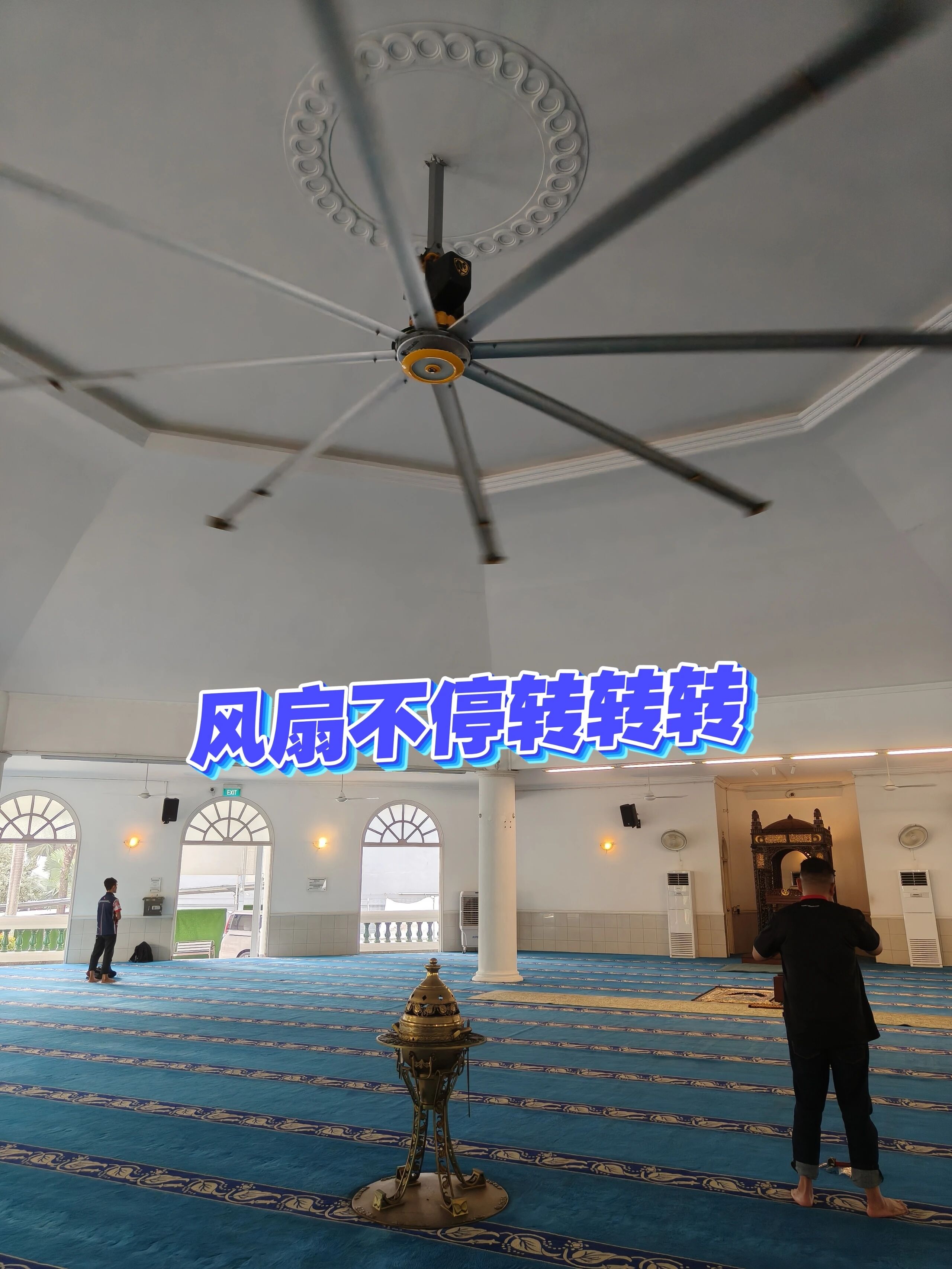
The mosque is a single-story octagonal building, as you can see in picture six.
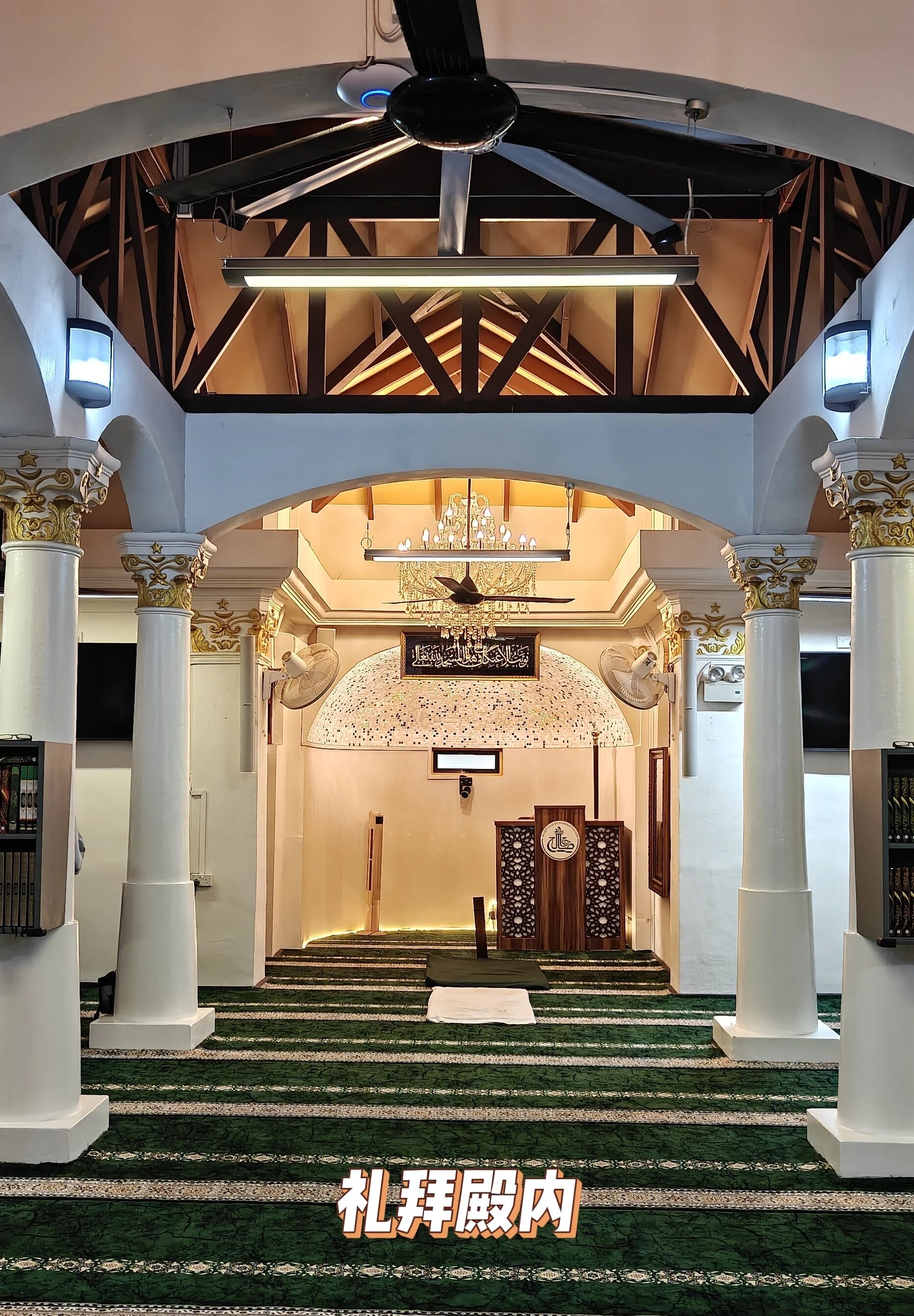
There is a large fan in the center that spins constantly to keep the prayer hall just barely cool.
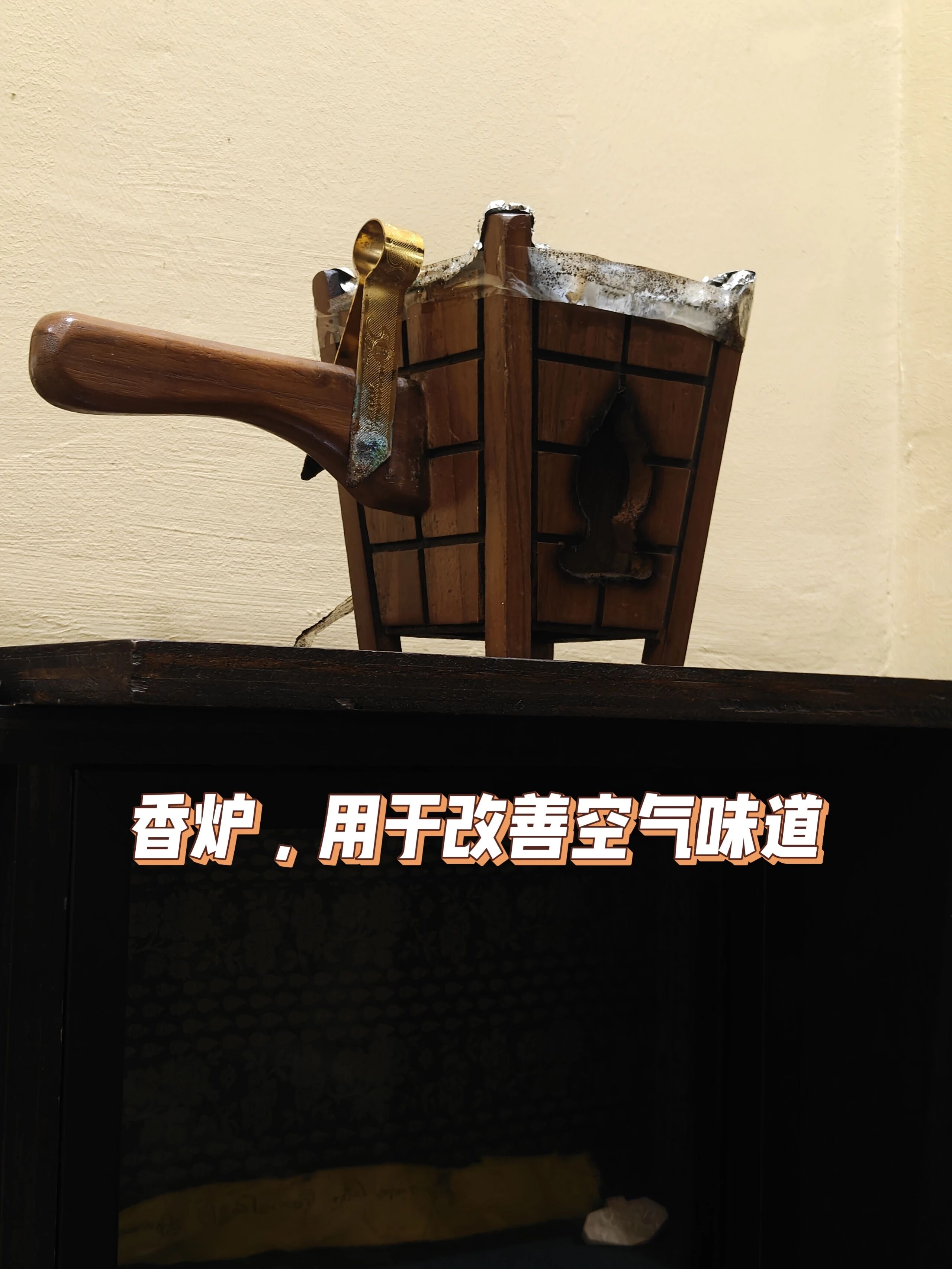
Under the fan is a small incense burner (picture seven). This is my first time seeing an incense burner placed in the middle of a main prayer hall.
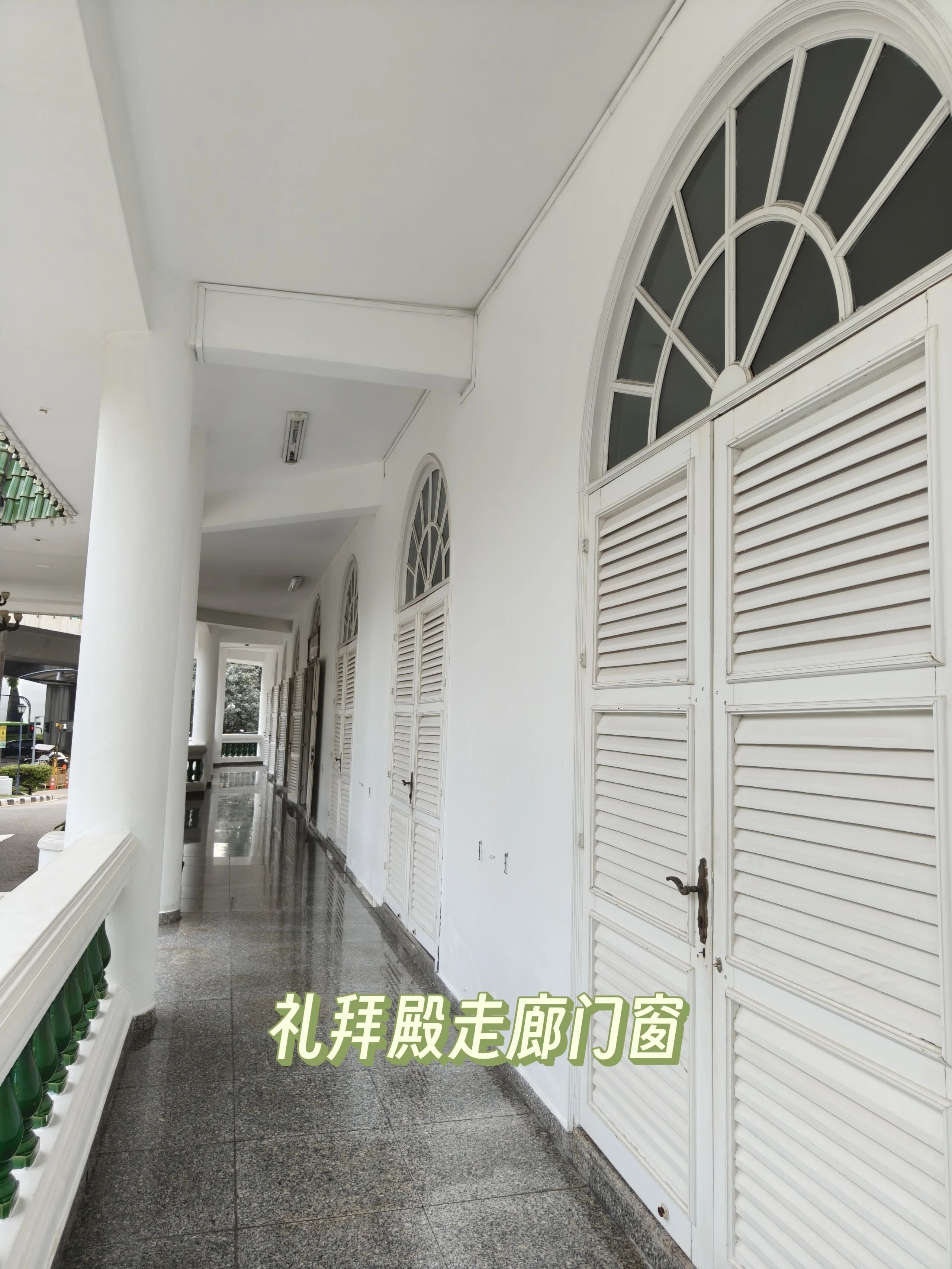
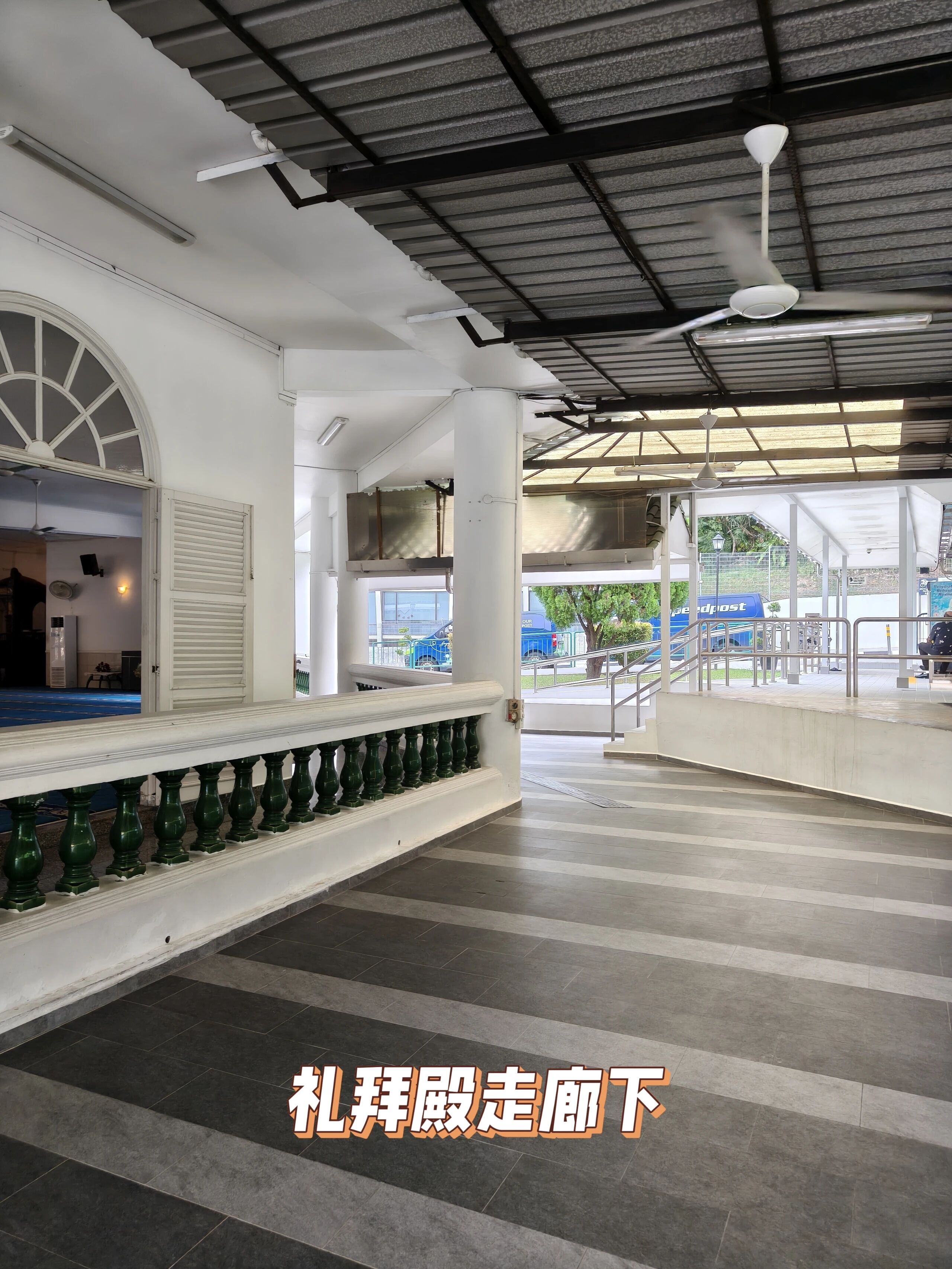
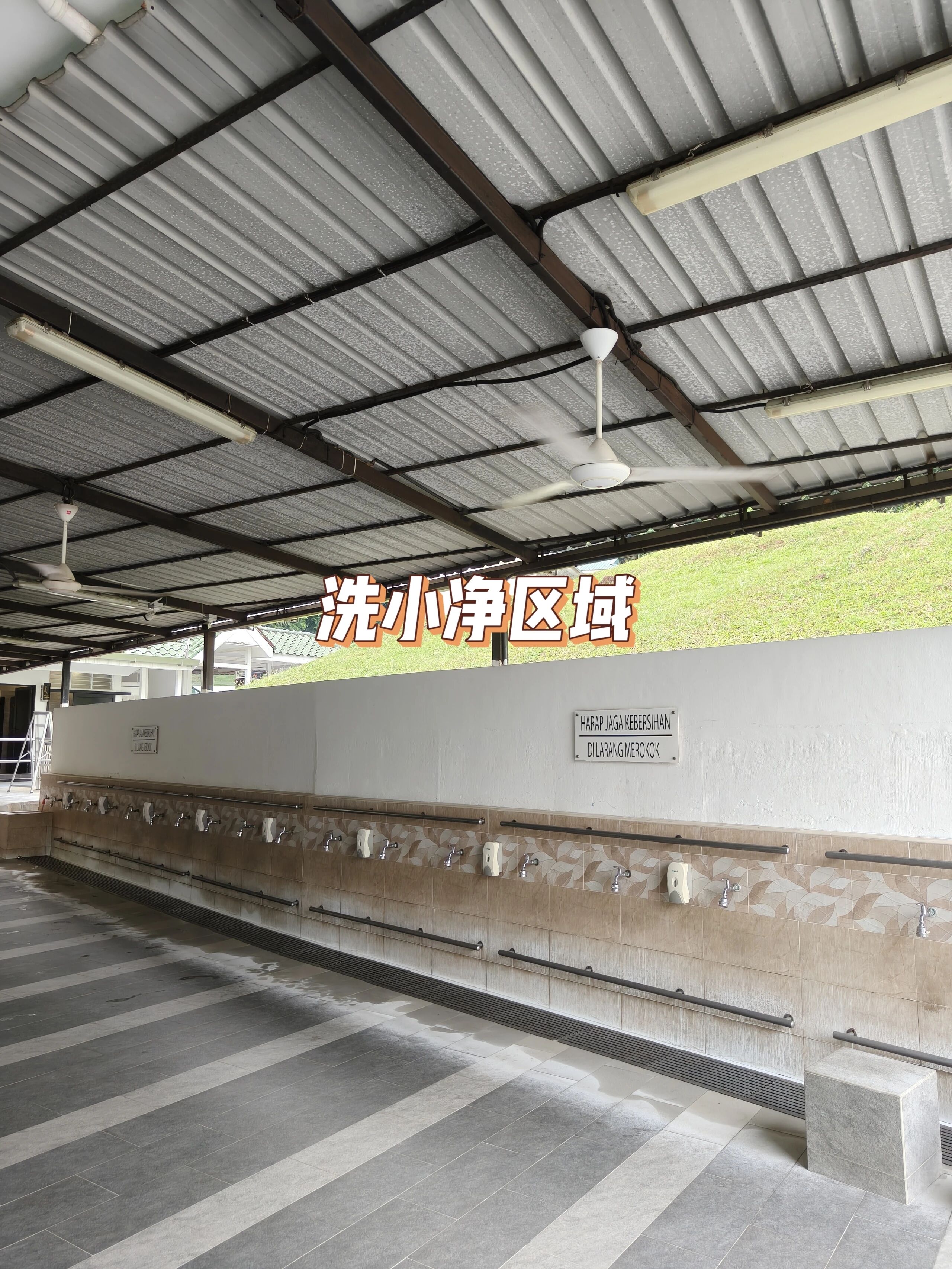
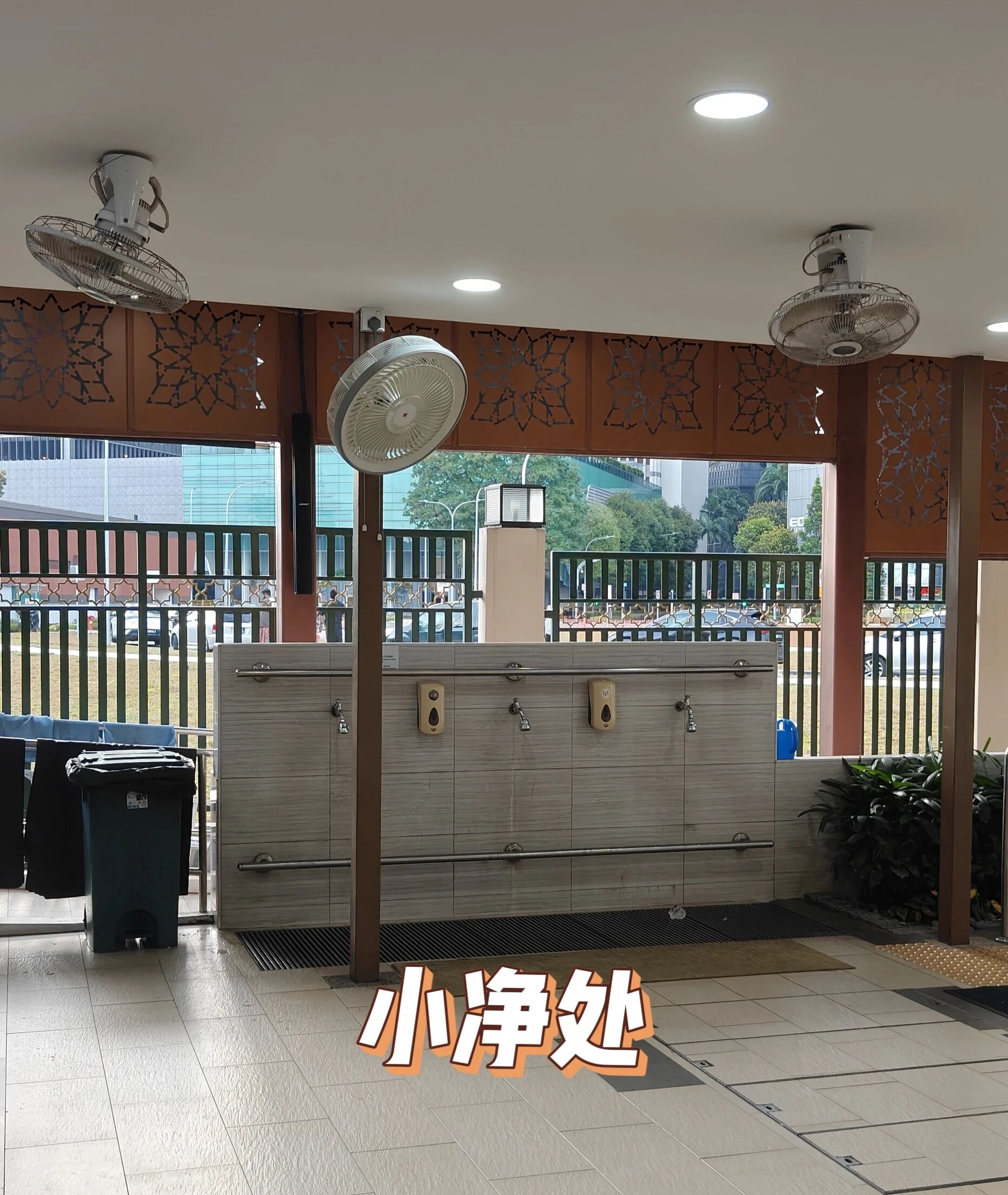
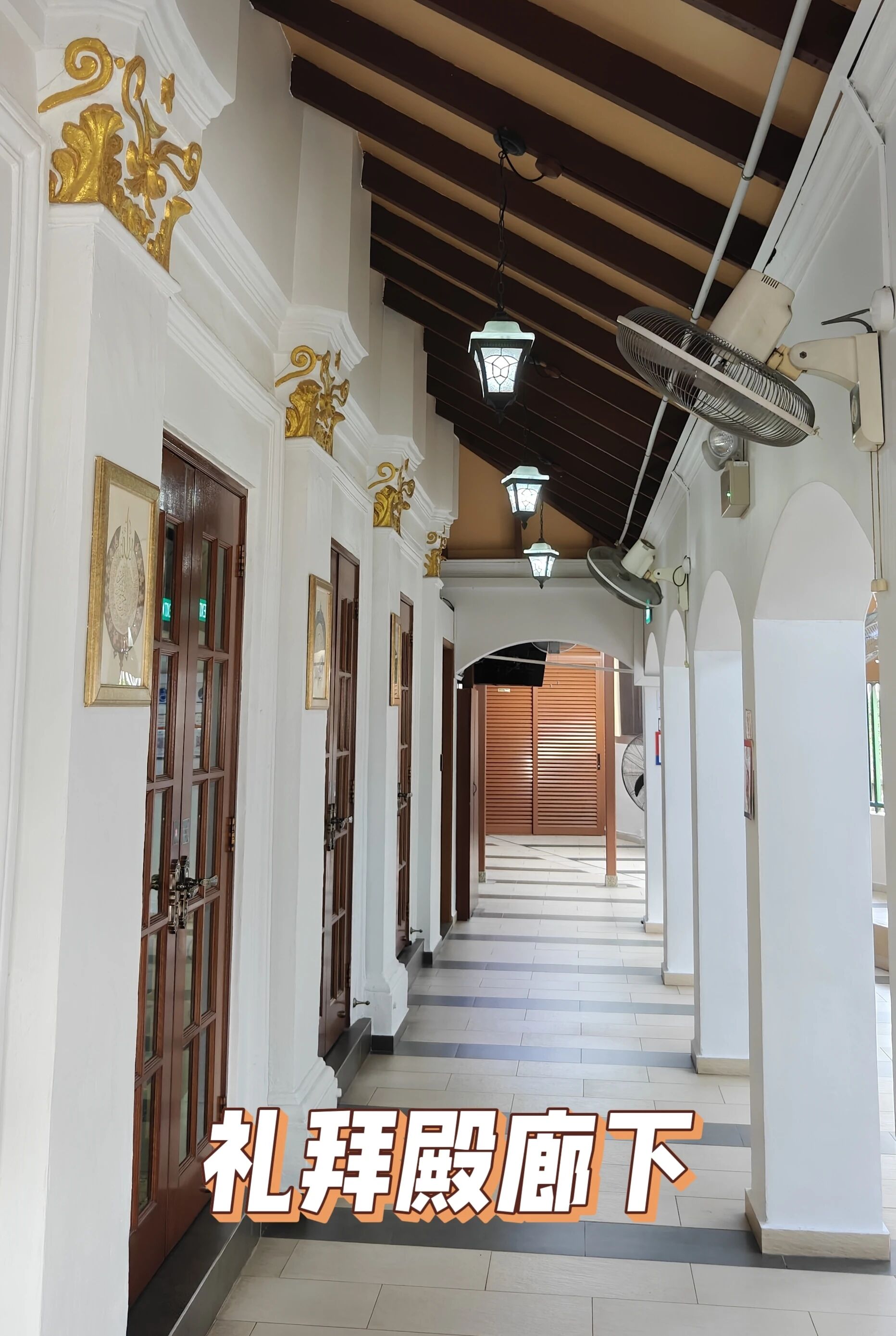
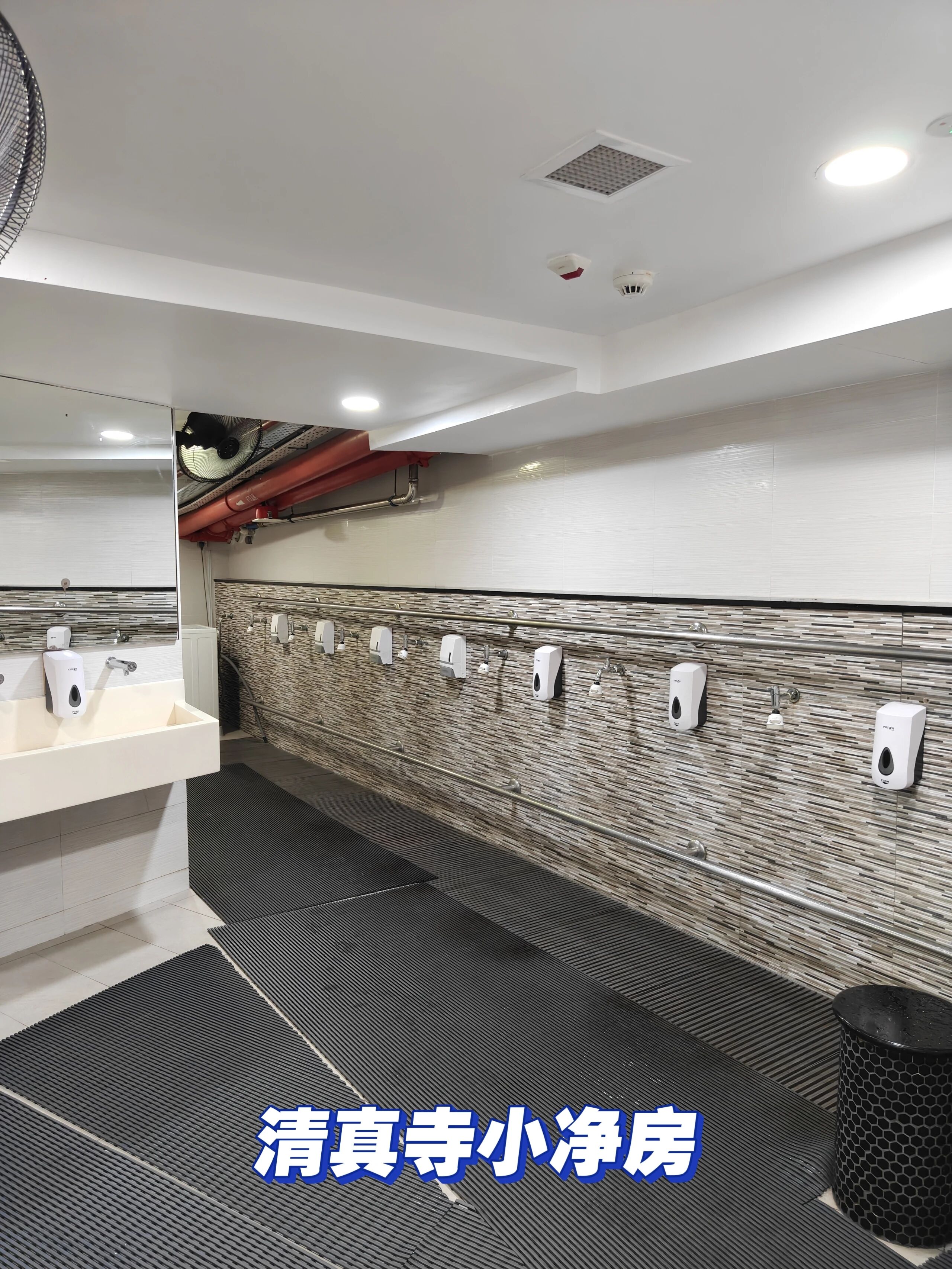
The mosque's porch is pure white, and the doors have shutters to help with heat dissipation. Singapore does not need to worry about keeping warm or protecting against the cold at all. That is why the area for performing wudu (small ablution) is outdoors. Of course, the area for performing ghusl (major ablution) is still indoors.
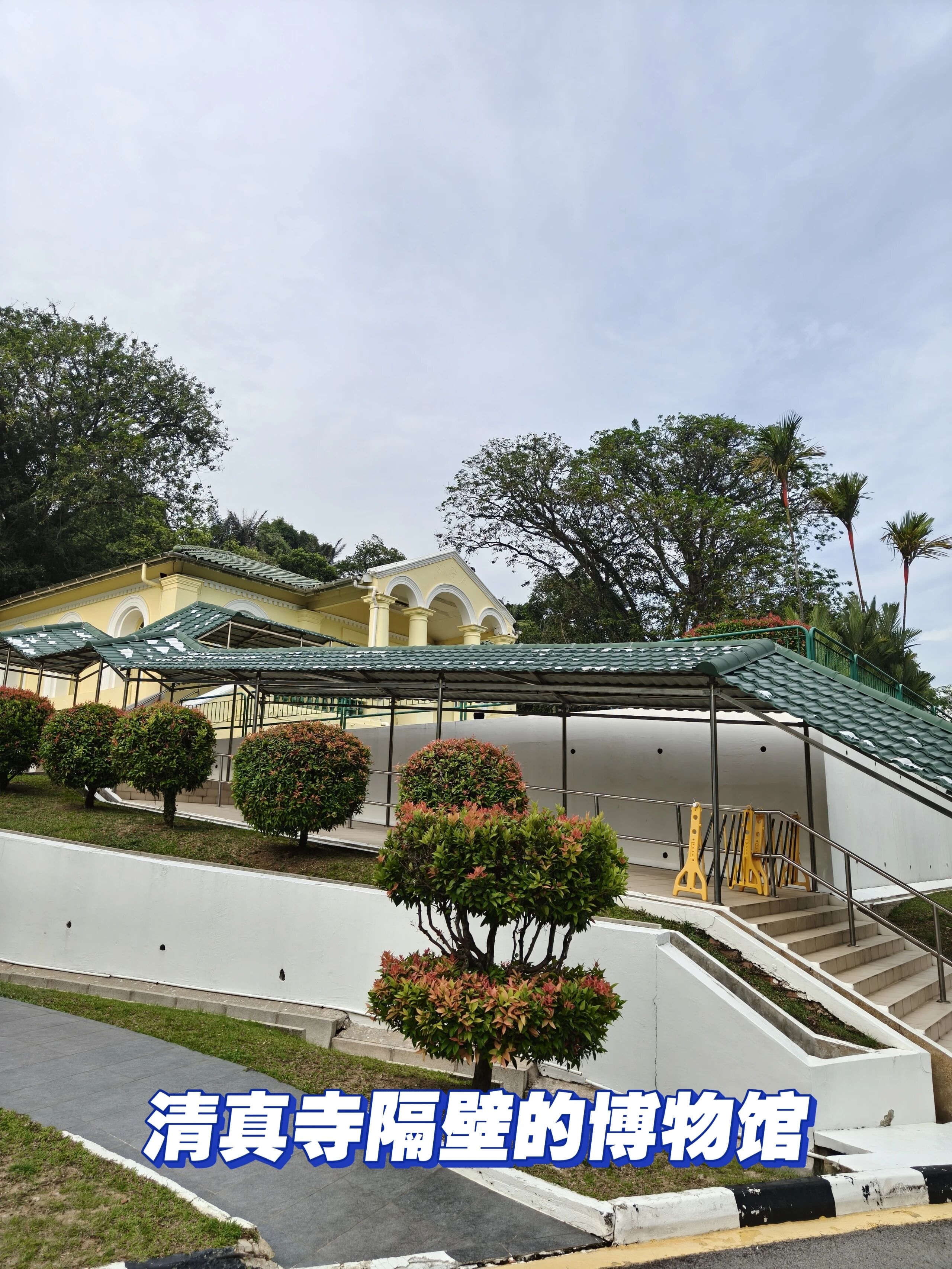
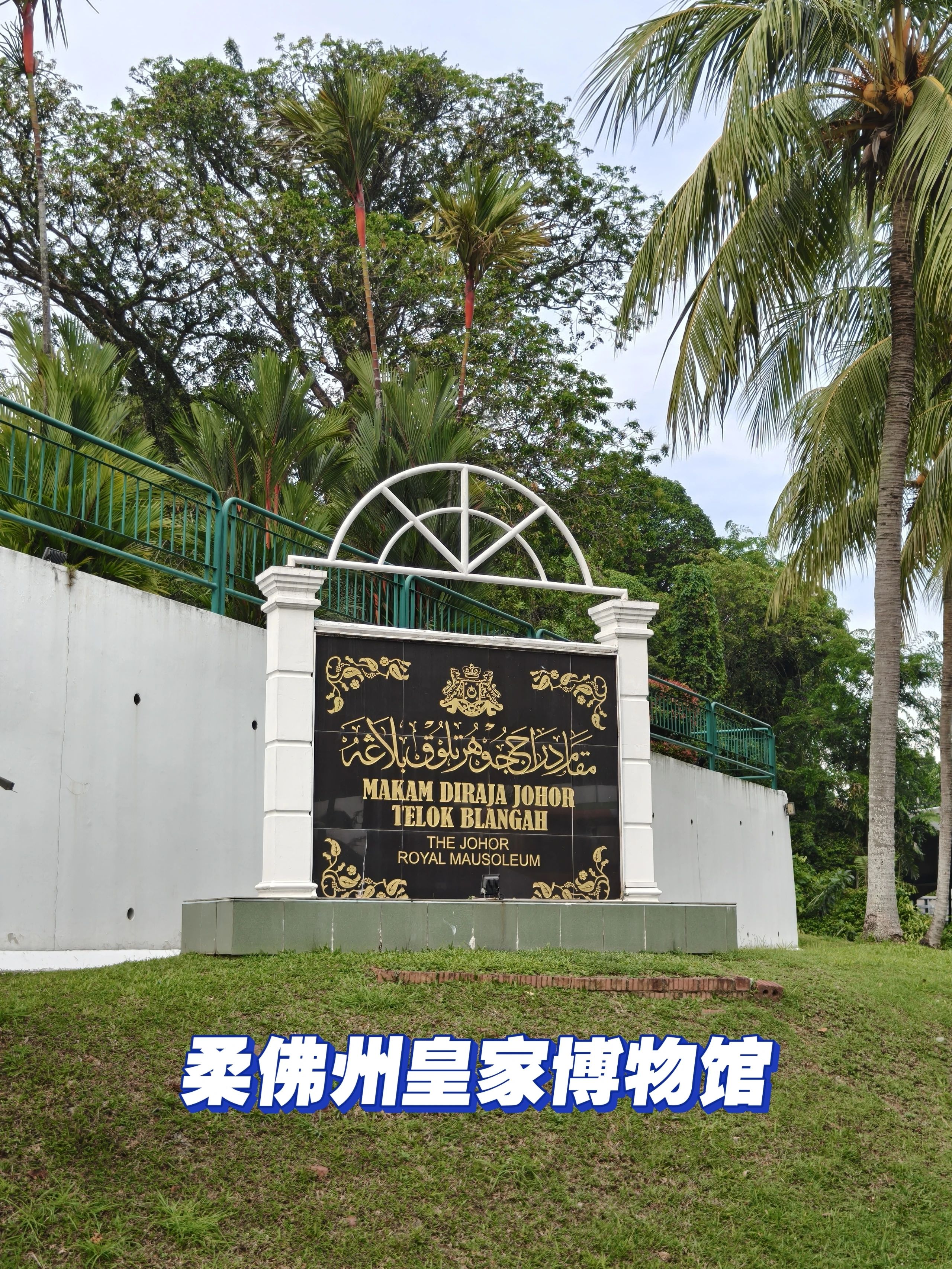
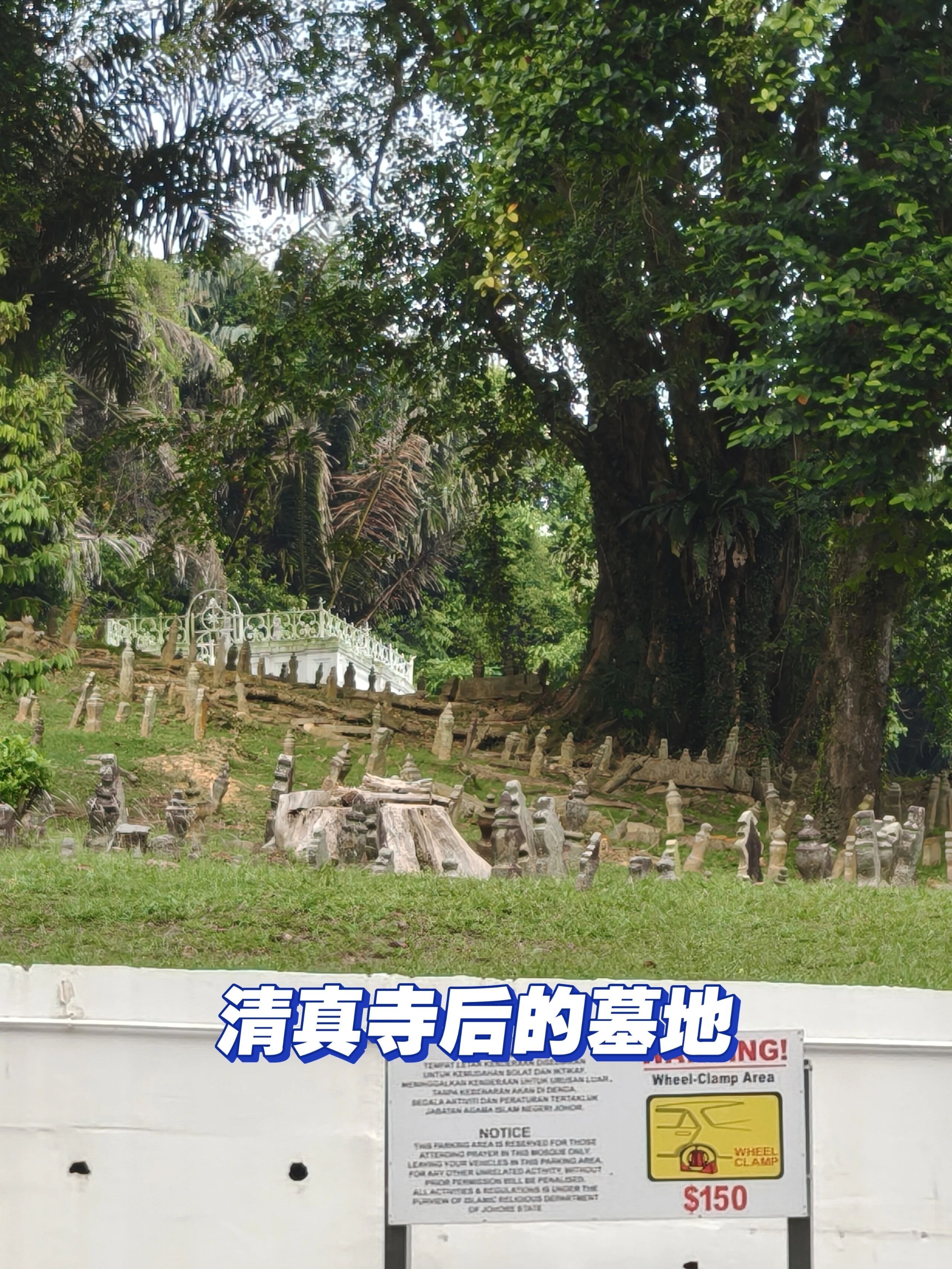
Right next to the mosque is a museum with a sign that says Johor Royal Museum, but unfortunately, it was not open when I visited. I did see the Muslim cemetery behind the mosque, which seems to be on the same plot of land as the museum.
As I mentioned, this mosque is near Sentosa Island, so I headed straight there after leaving. In the next post, I will show you the prayer room on Sentosa Island. view all
Summary: This Singapore Muslim travel guide visits Temenggong Mosque and its complex ties to Malaysia. It keeps the source route, mosque setting, heritage notes, and Malay historical context in the same order.
This mosque is called the Temenggong Mosque, and it is not far from the Malay-style mosque I visited last time. This mosque has deep, complex ties to Malaysia.
The most unique thing about this mosque is that even though it is in Singapore, the land and sovereignty still belong to the Sultan of Johor, Malaysia. That is why two flags fly at the entrance of the prayer hall: the Singapore national flag and the flag of the Malaysian state of Johor.
This mosque was reportedly once the audience hall of the Temenggong's palace before it was converted into a mosque.
The mosque is a single-story octagonal building, as you can see in picture six.
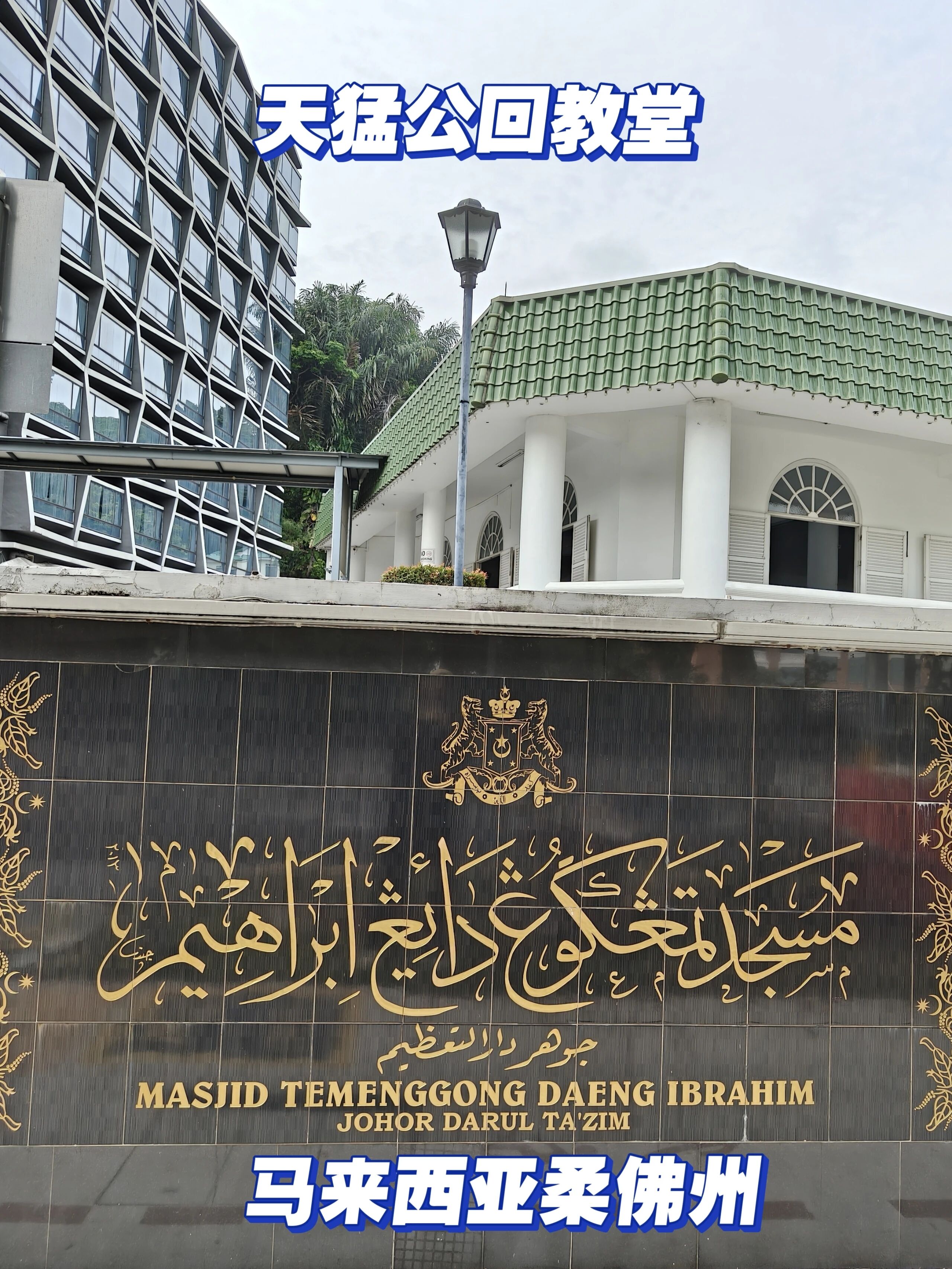
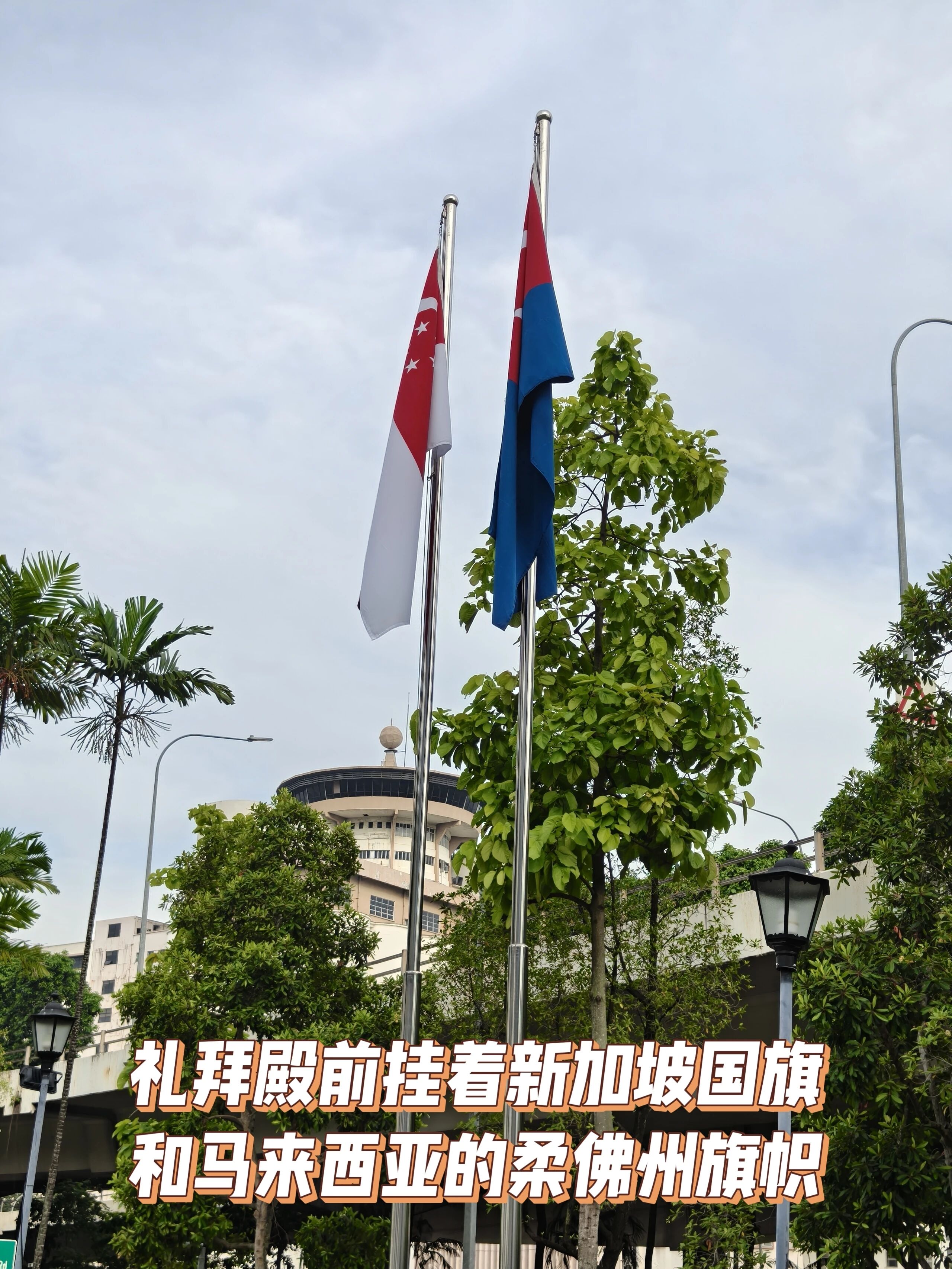
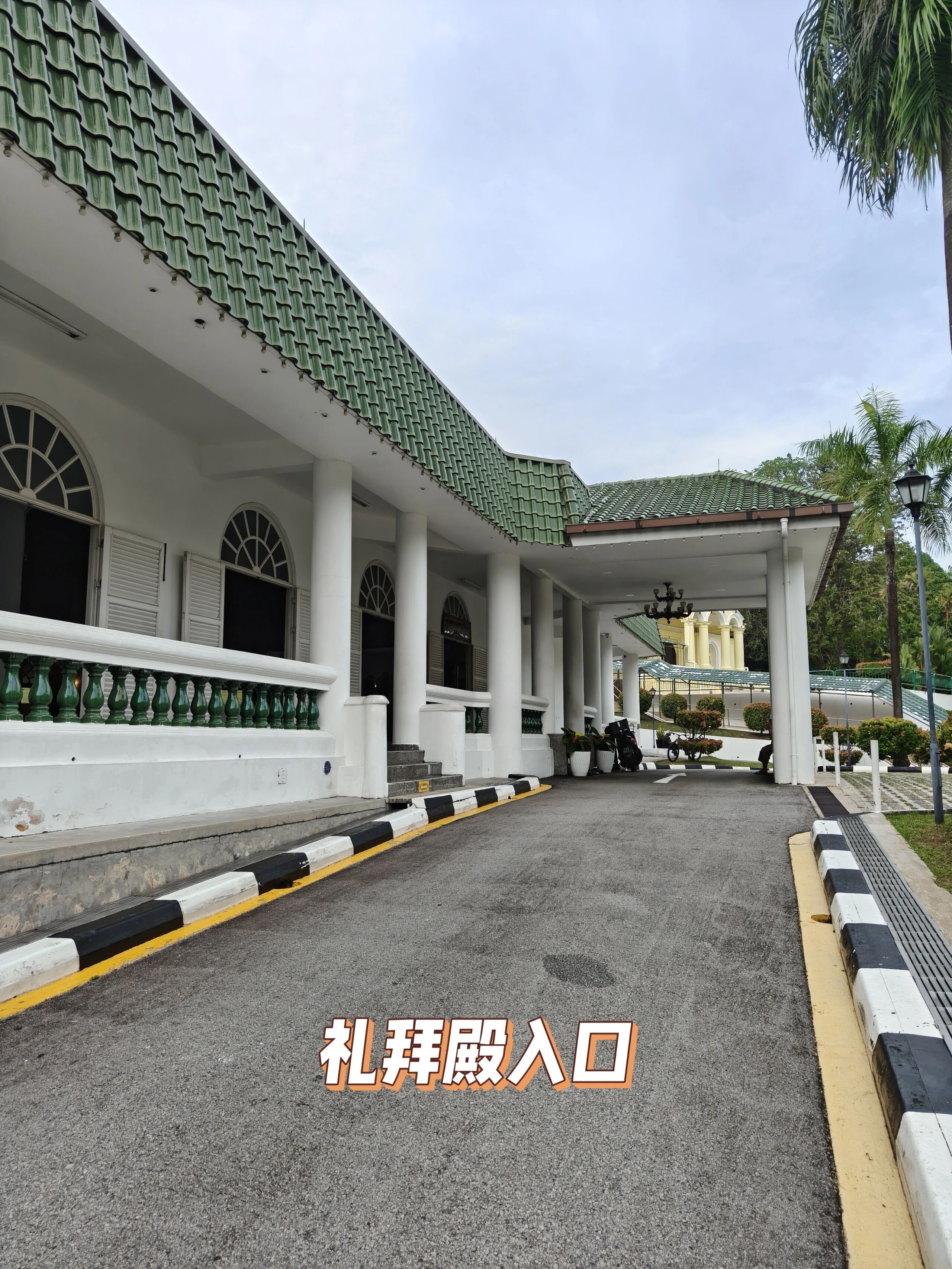
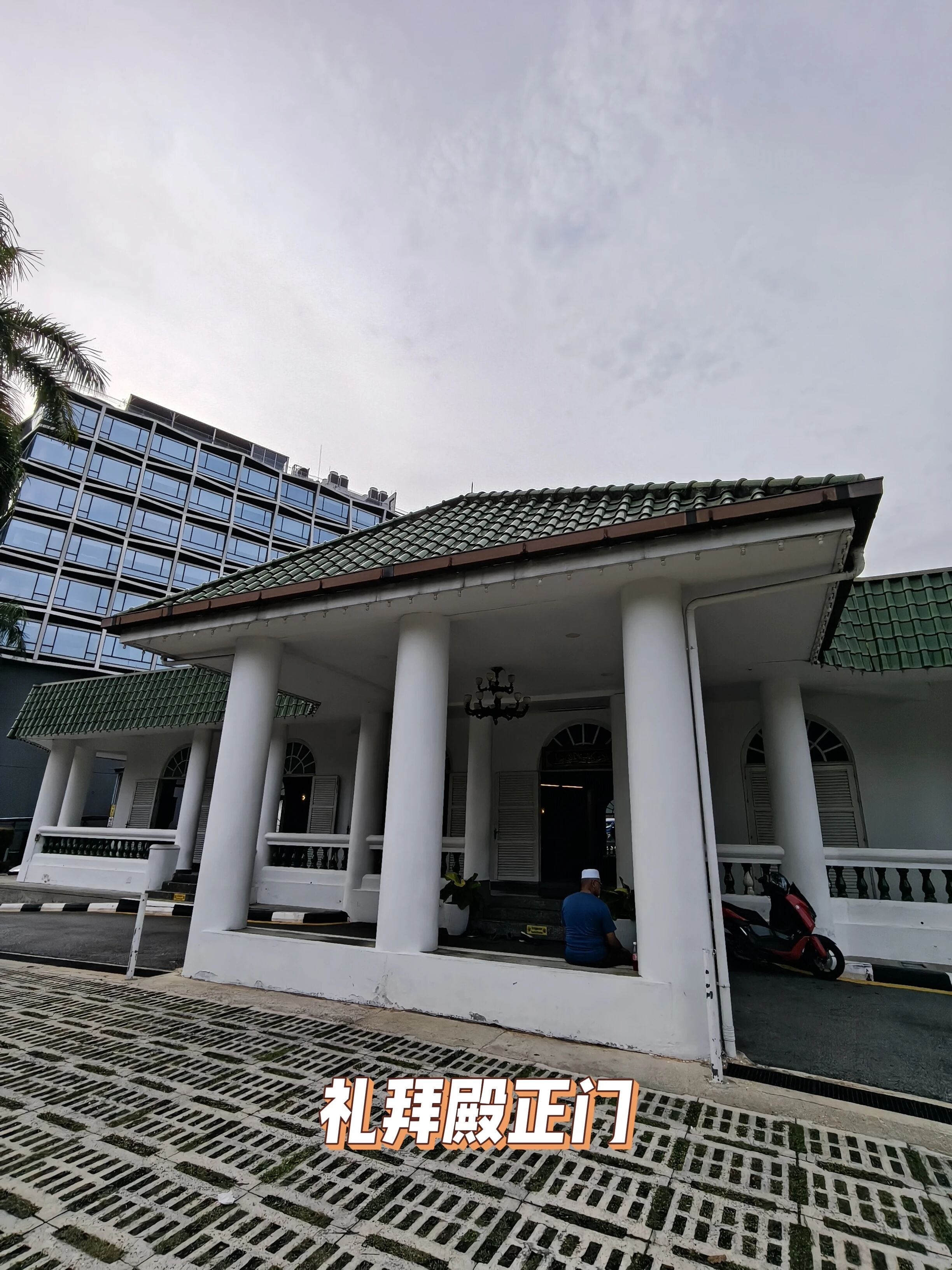
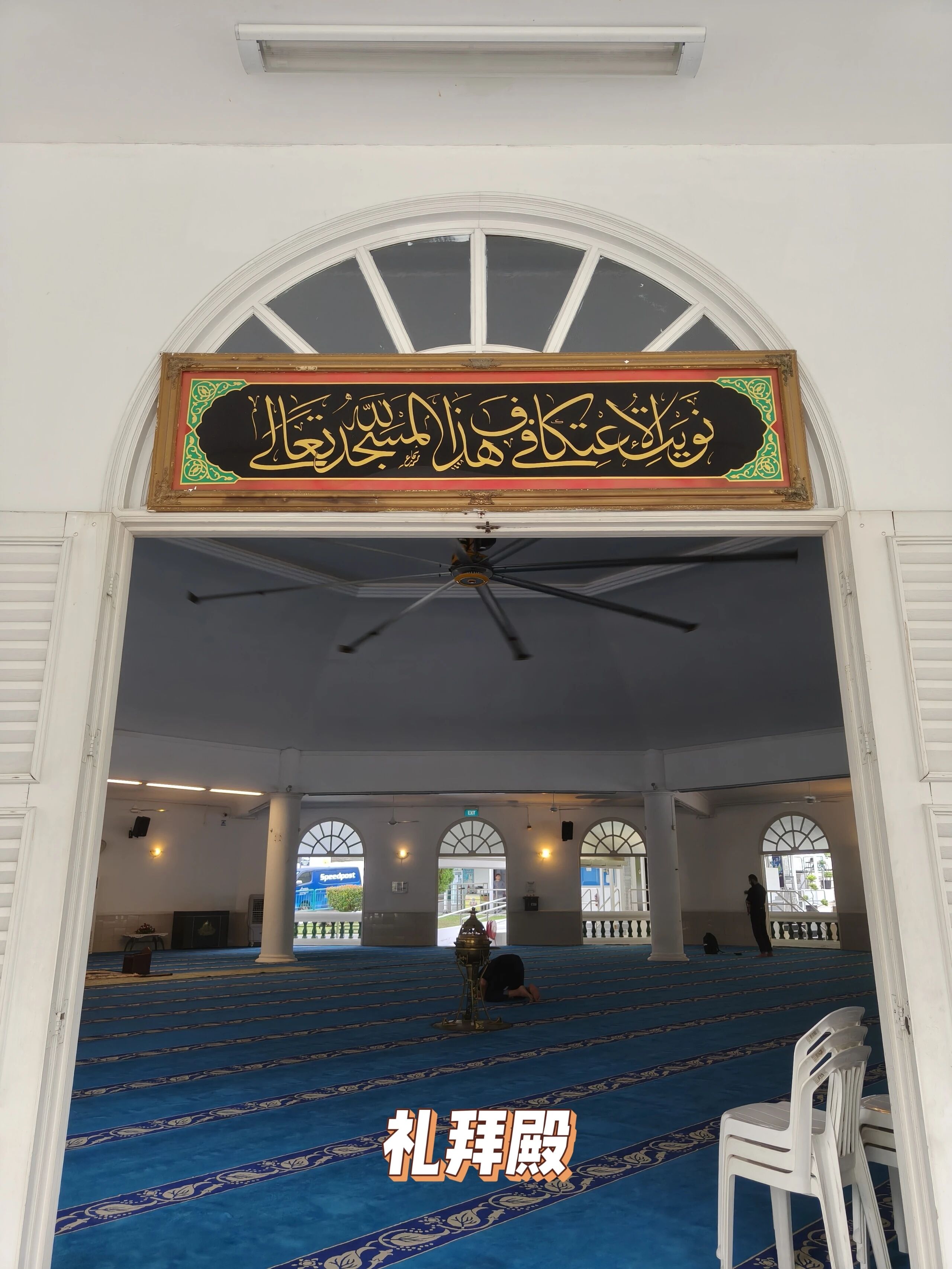
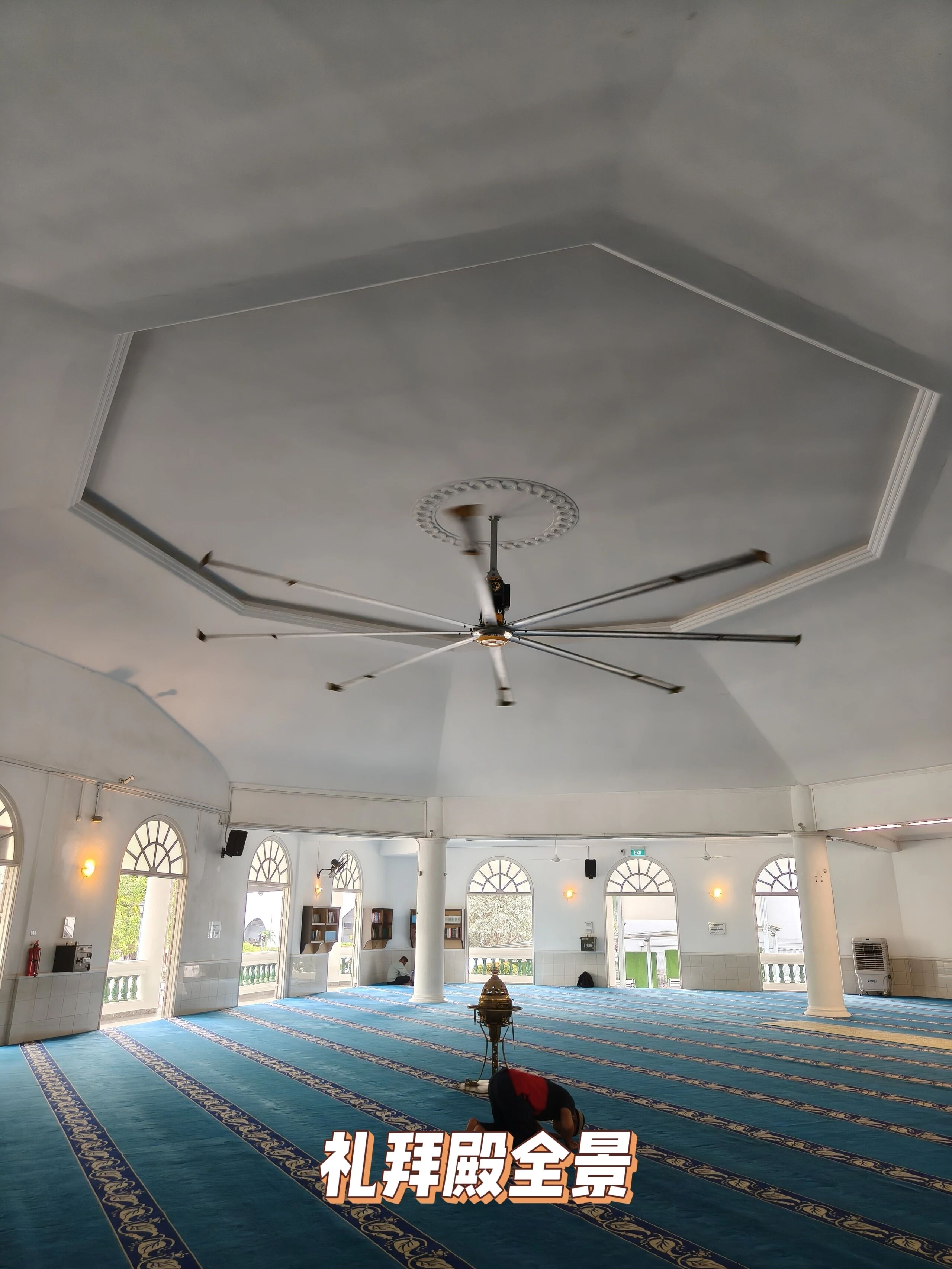
There is a large fan in the center that spins constantly to keep the prayer hall just barely cool.
Under the fan is a small incense burner (picture seven). This is my first time seeing an incense burner placed in the middle of a main prayer hall.
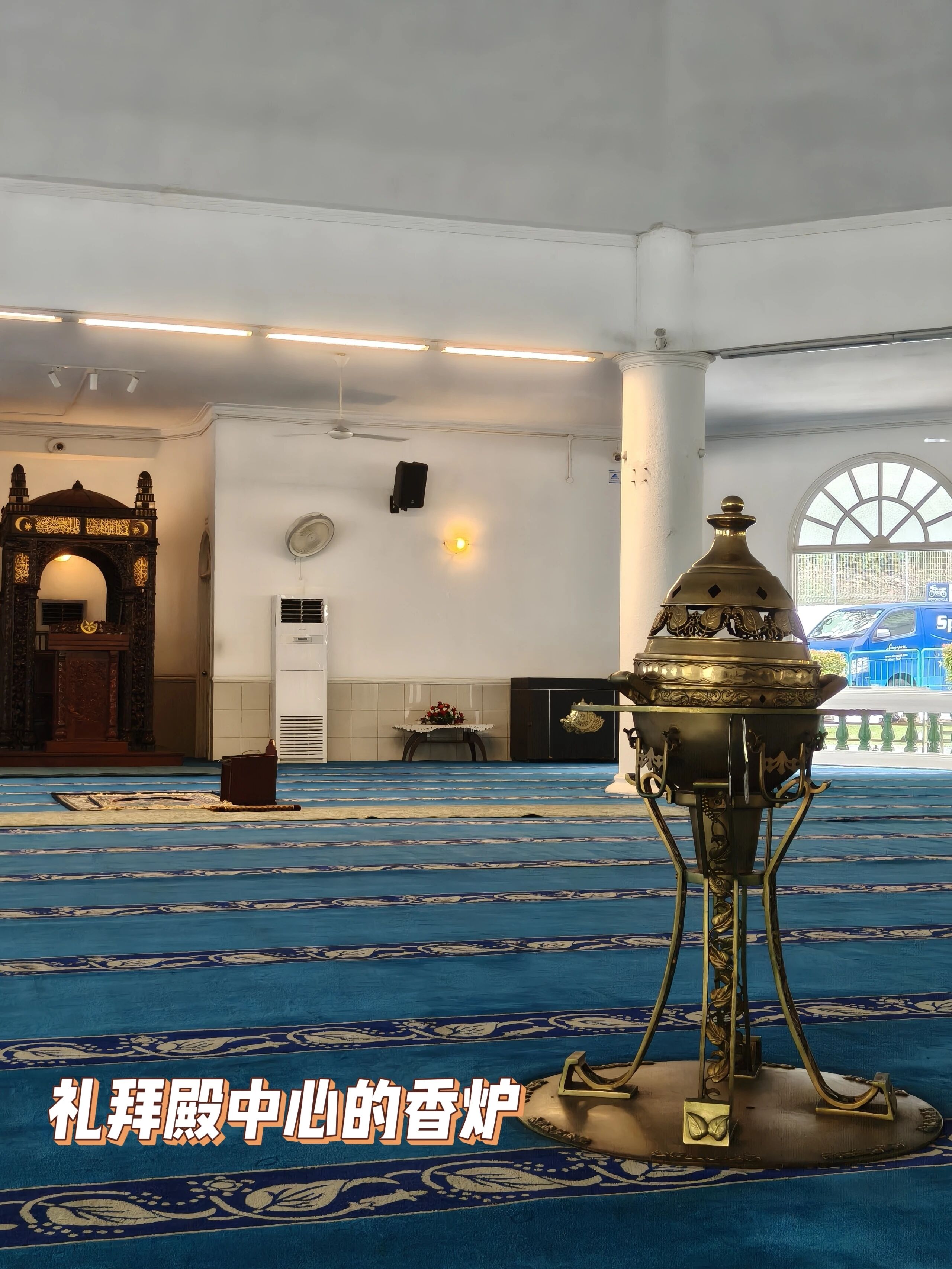
The mosque's porch is pure white, and the doors have shutters to help with heat dissipation. Singapore does not need to worry about keeping warm or protecting against the cold at all. That is why the area for performing wudu (small ablution) is outdoors. Of course, the area for performing ghusl (major ablution) is still indoors.
Right next to the mosque is a museum with a sign that says Johor Royal Museum, but unfortunately, it was not open when I visited. I did see the Muslim cemetery behind the mosque, which seems to be on the same plot of land as the museum.
As I mentioned, this mosque is near Sentosa Island, so I headed straight there after leaving. In the next post, I will show you the prayer room on Sentosa Island.
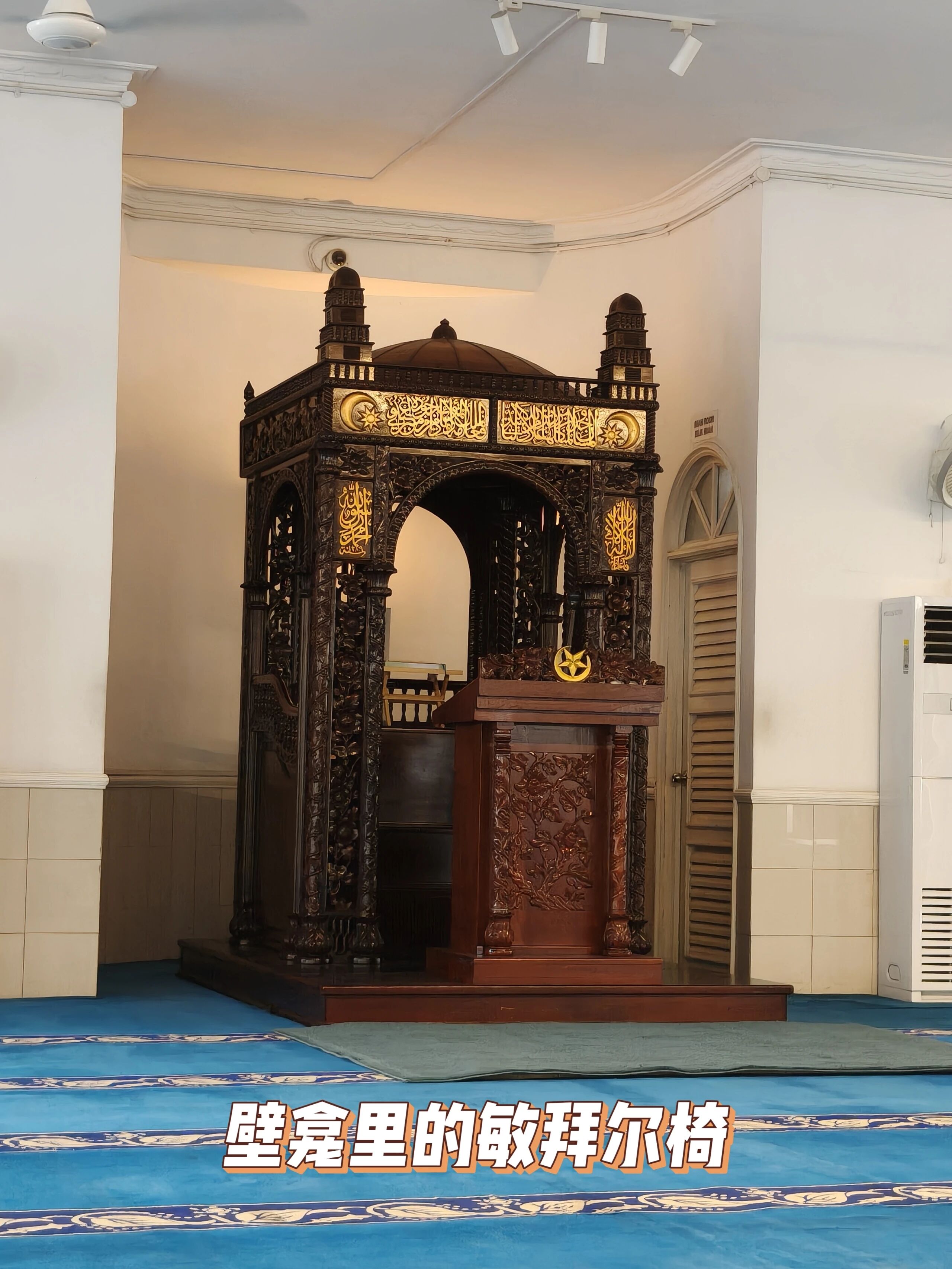
Muslim Travel Guide Singapore: Nagore Dargah, Sufi Gongbei and South Indian Muslim Heritage
Articles • Hasan09 posted the article • 0 comments • 328 views • 2026-05-24 01:59
Summary: This Singapore Muslim travel guide visits Nagore Dargah, described as a South Indian-style Sufi shrine or gongbei. It keeps the source comparison with Jamae Mosque, local Muslim heritage, and site observations.
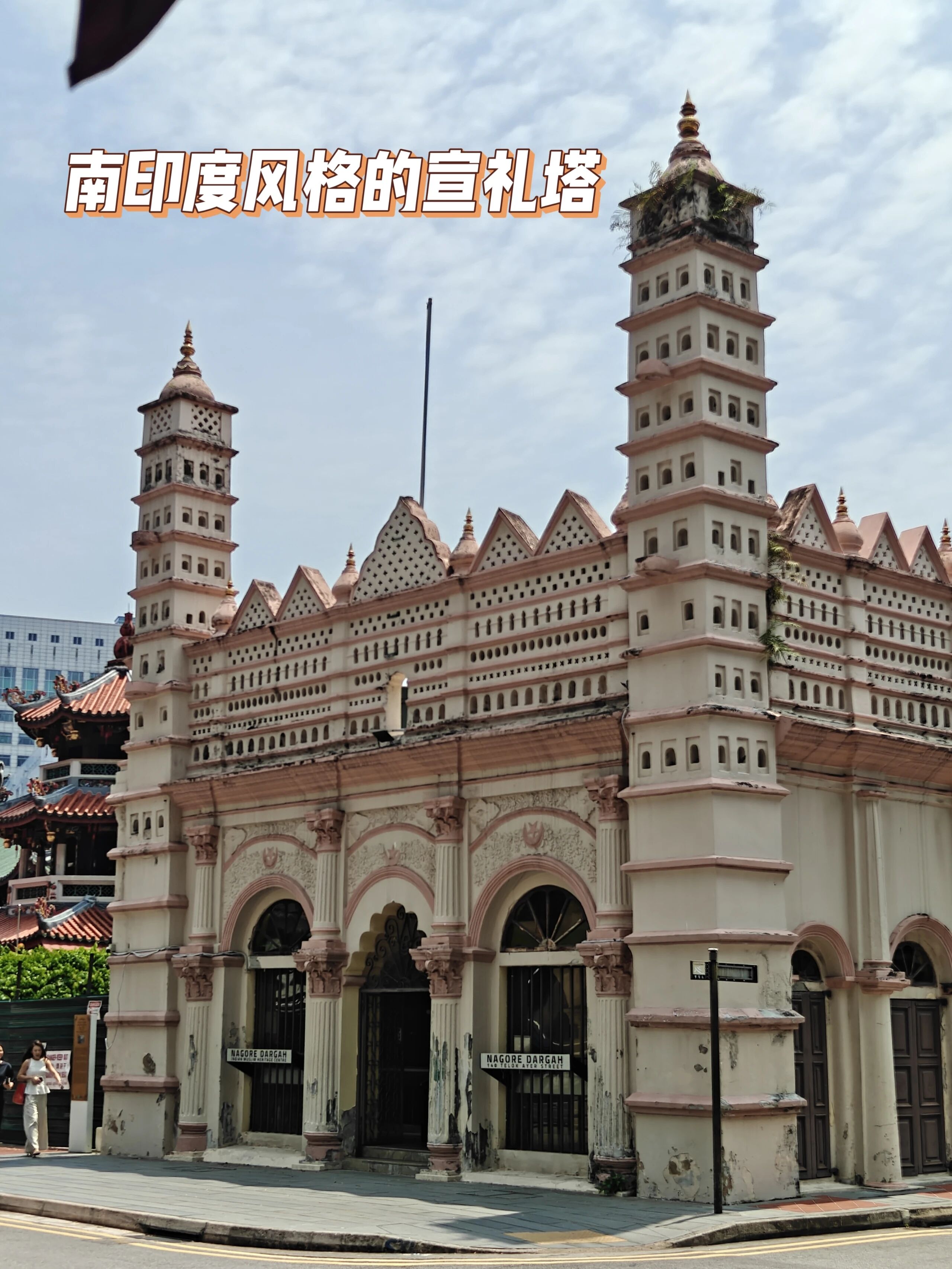
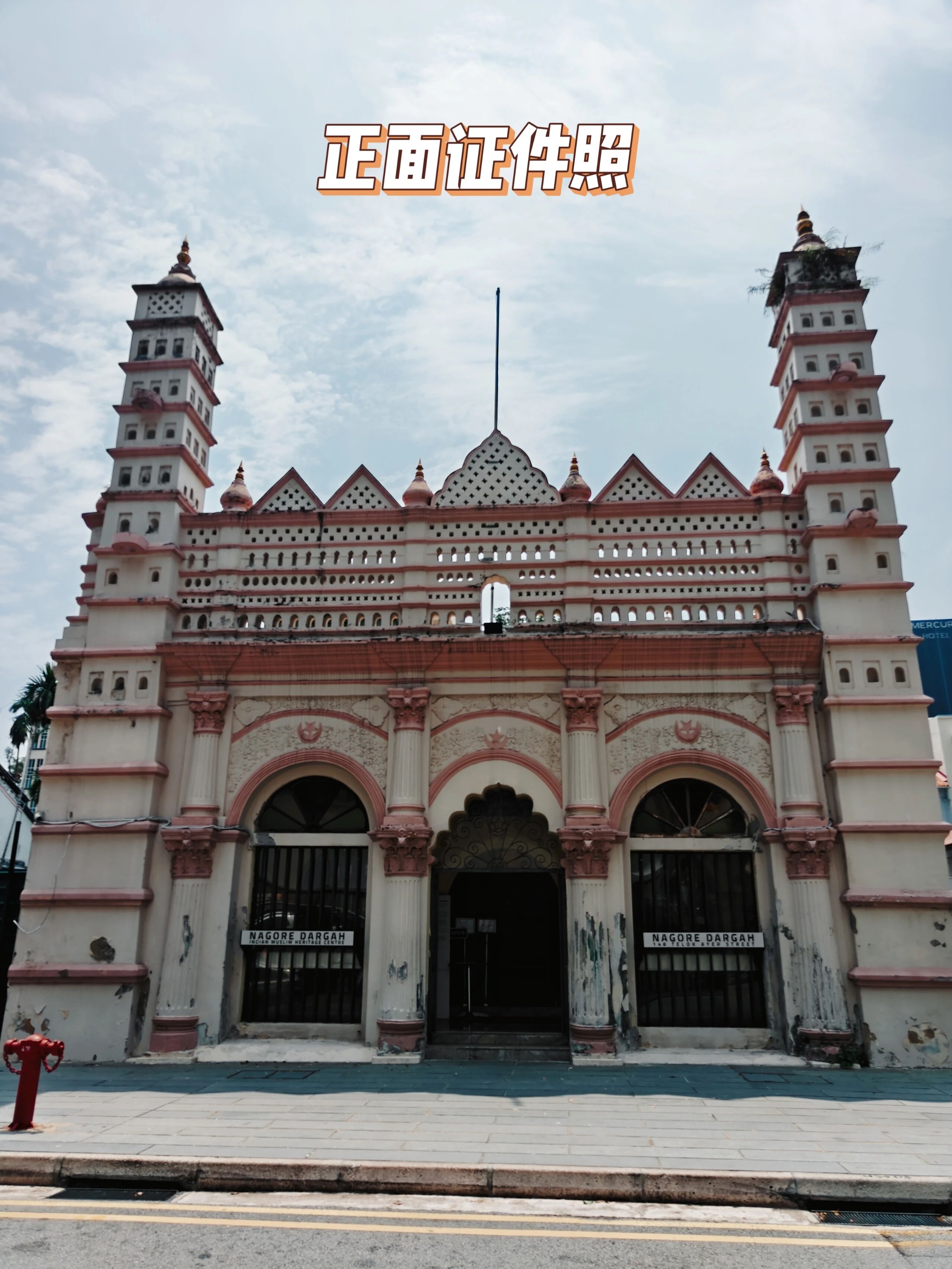
Singapore has more than just the South Indian-style mosque (Jamae Mosque) we introduced last time; it also has this South Indian-style shrine (Nagore Dargah).
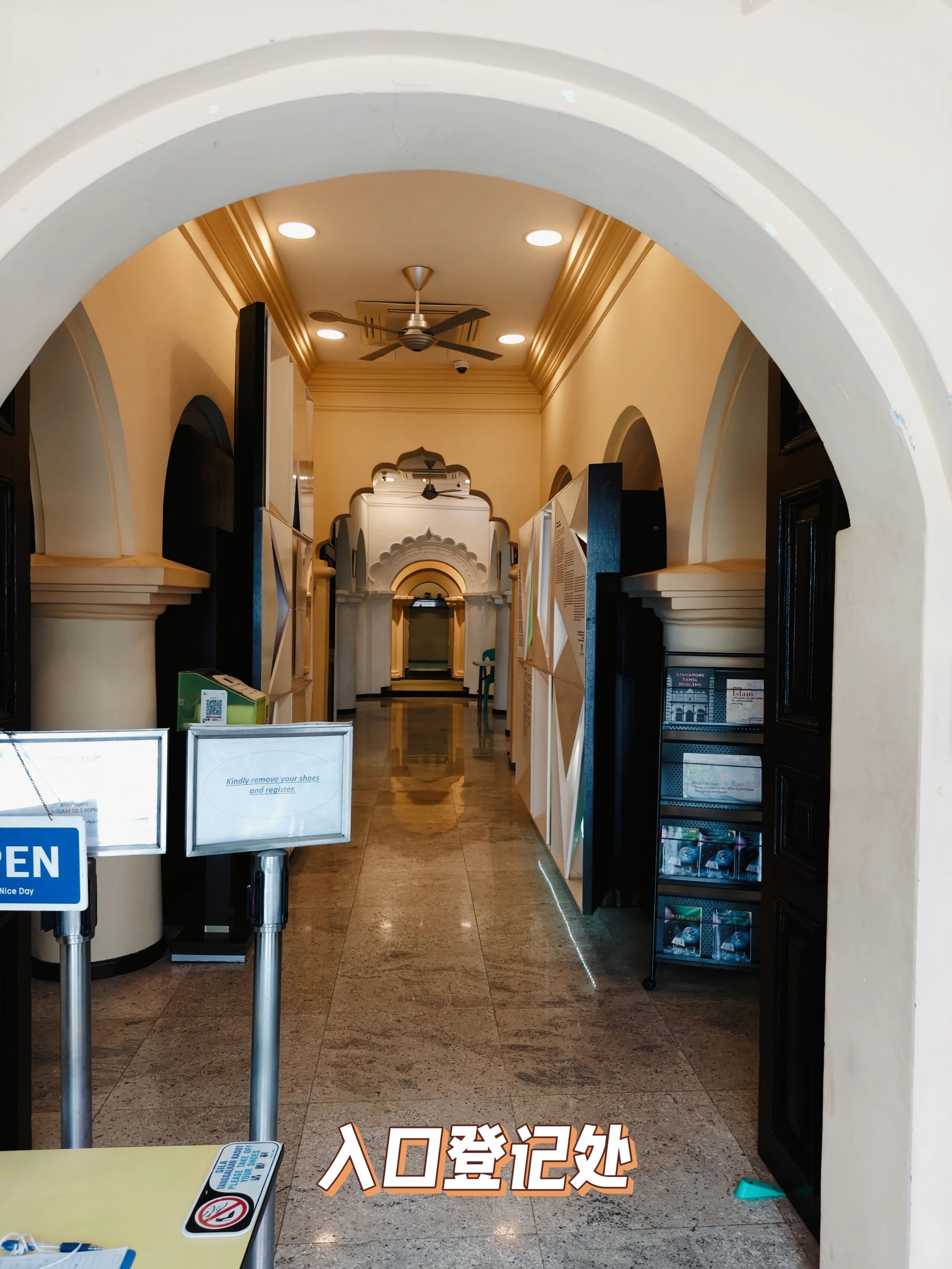
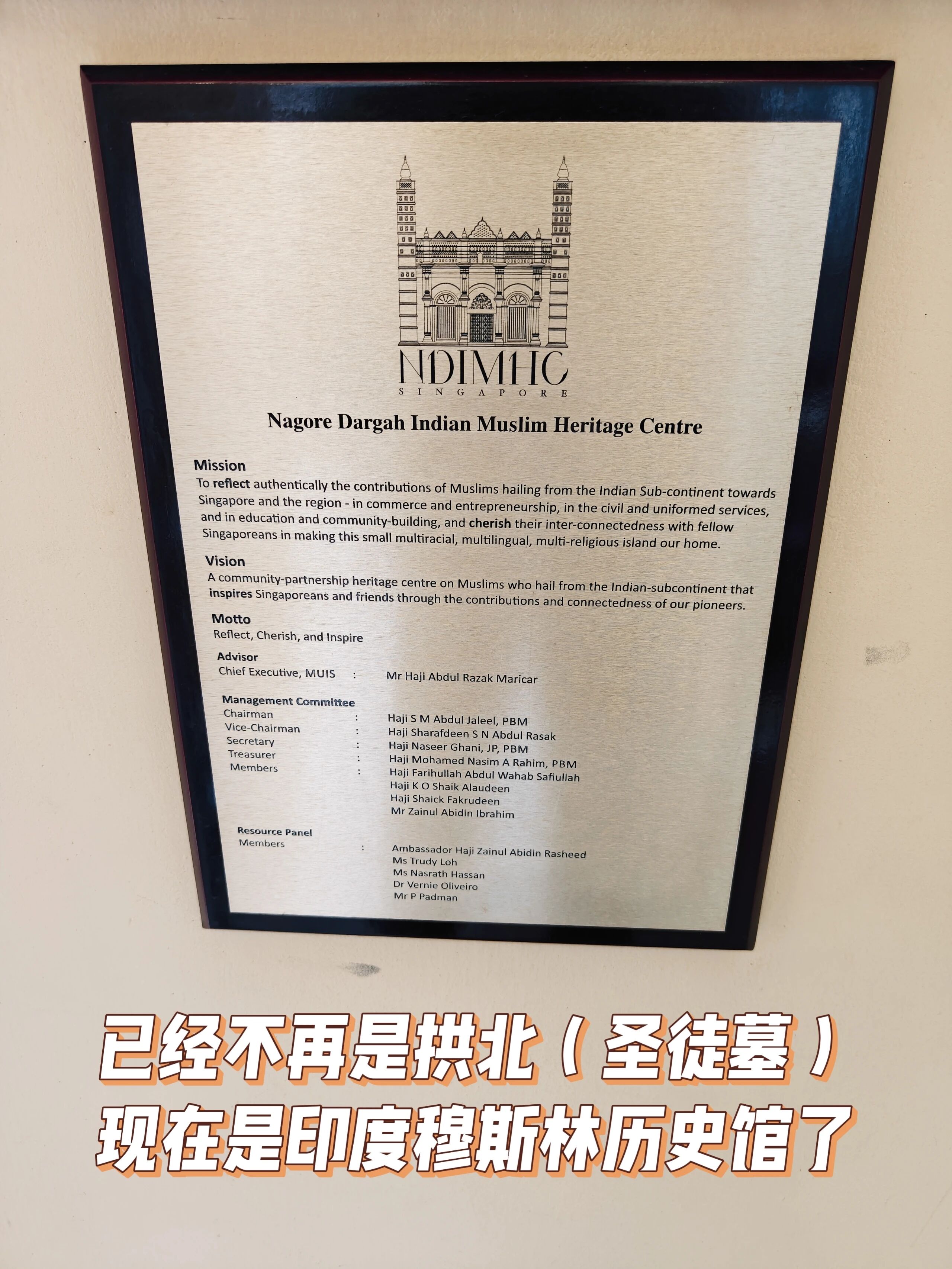
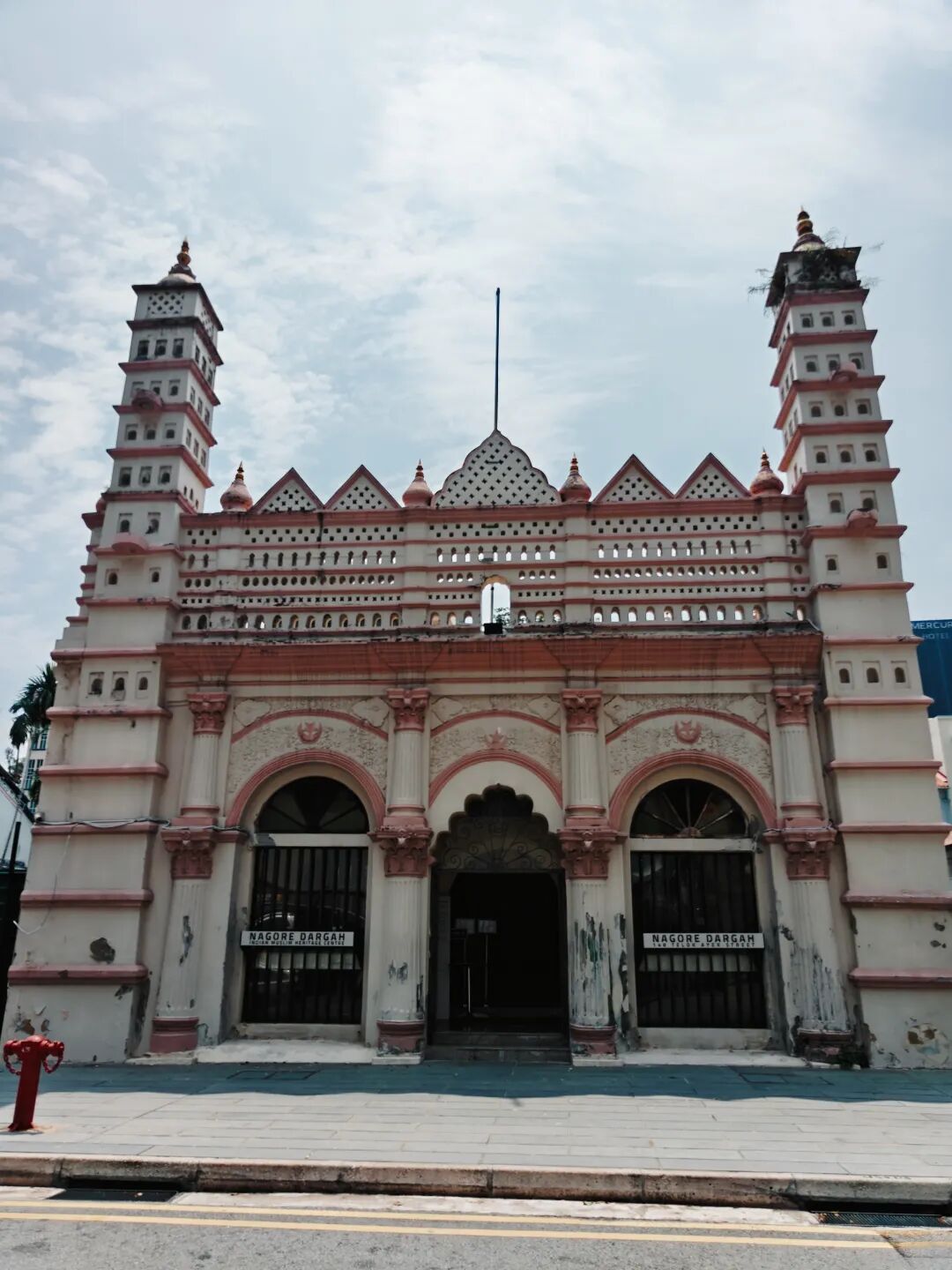
This shrine is right next to Thian Hock Keng Temple and is easy to find. It has been turned into the Indian Muslim Heritage Centre. You need to register before entering, and admission is free. Actually, there were never any graves inside, which I find quite strange. If a shrine has no grave, can it still be called a shrine?
Of course, they call it a dargah, which is the term used in South India for a shrine.
So, where is the real grave?
It is in Nagapattinam, Tamil Nadu, South India (Image 13). It was built to honor the Sufi saint Shahul Hamid. That shrine is very grand and has many white towers.
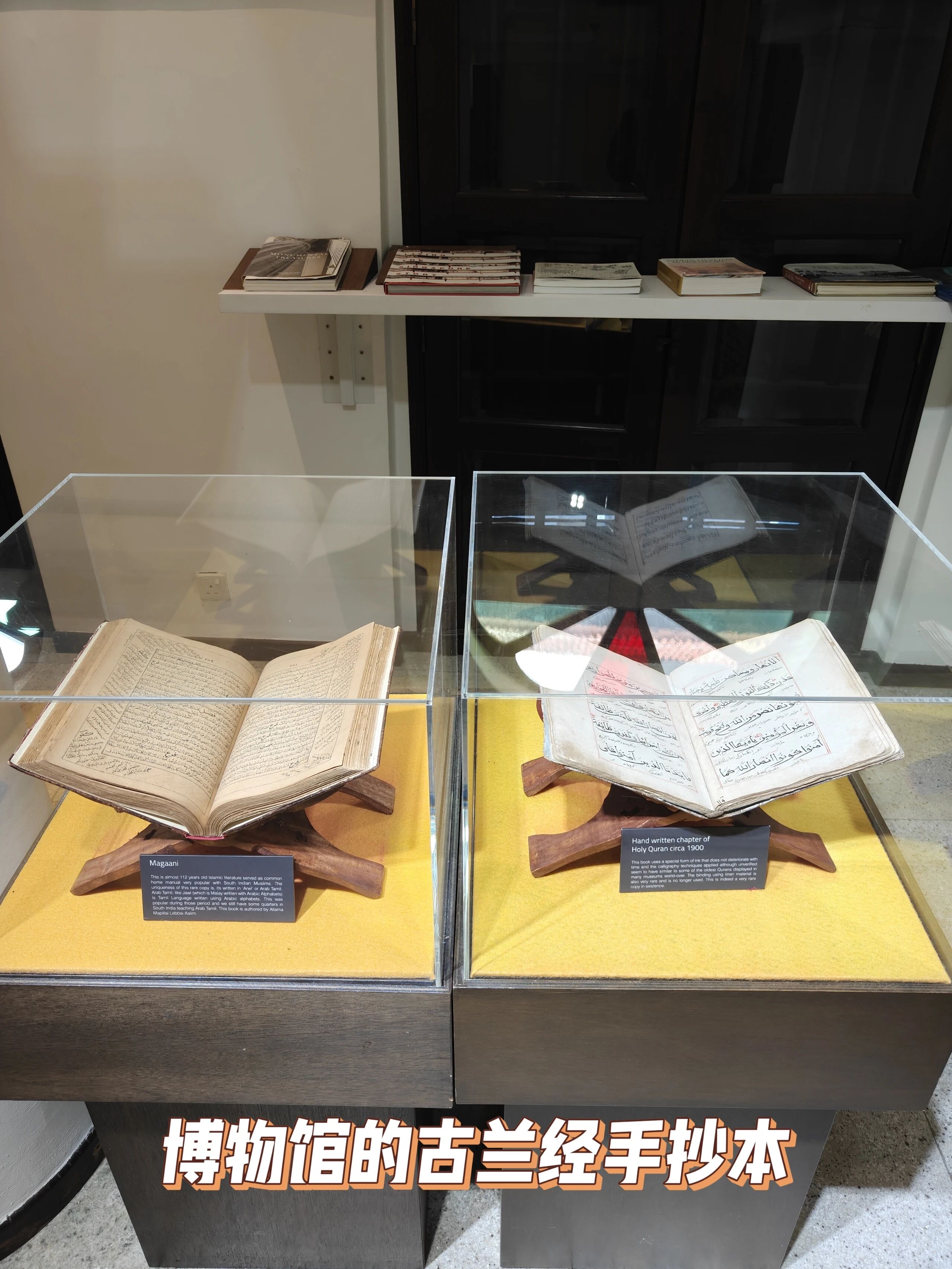
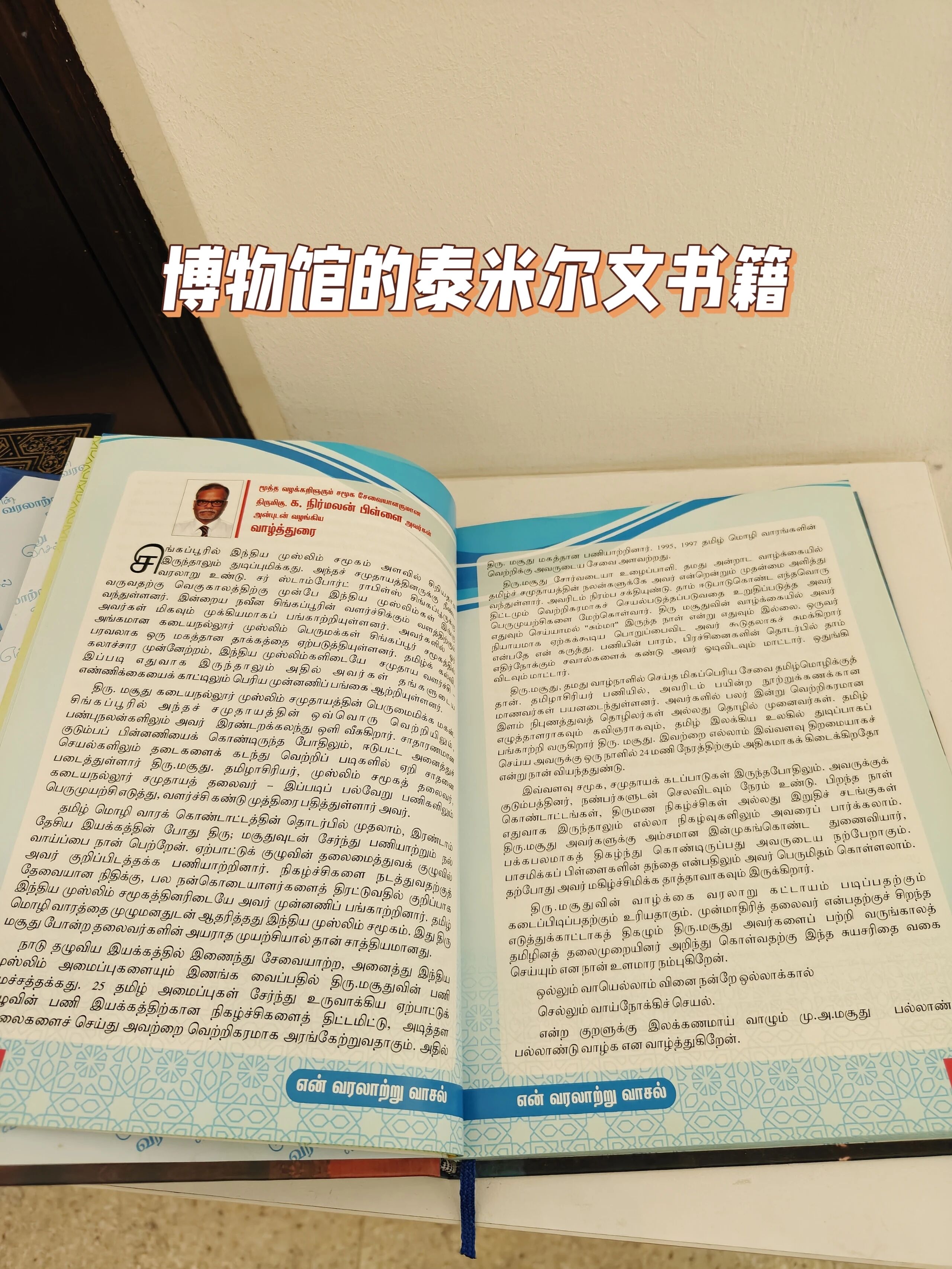
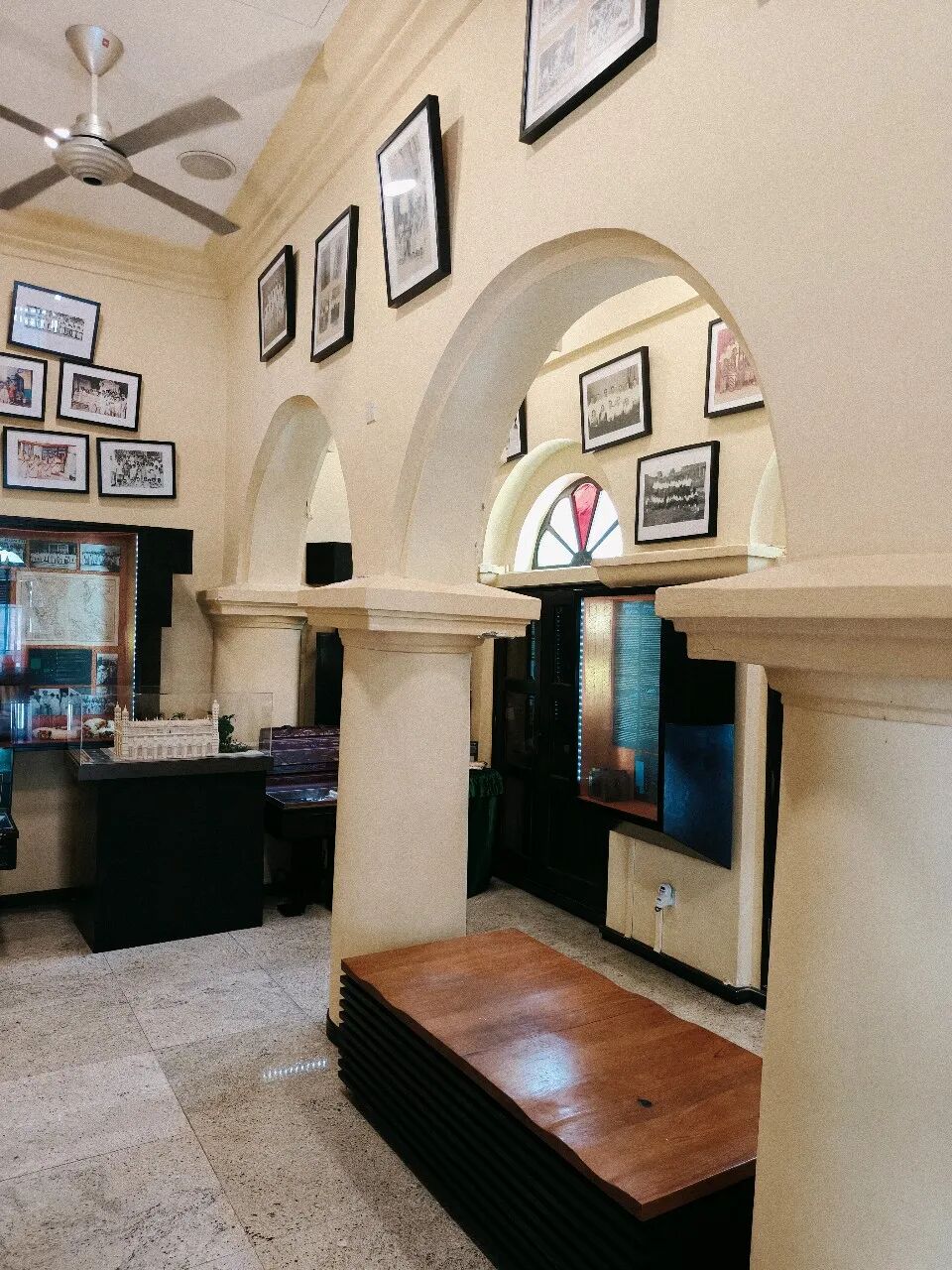
Inside the museum, you can see many old items from that time and some information about early Indian Muslim immigrants.
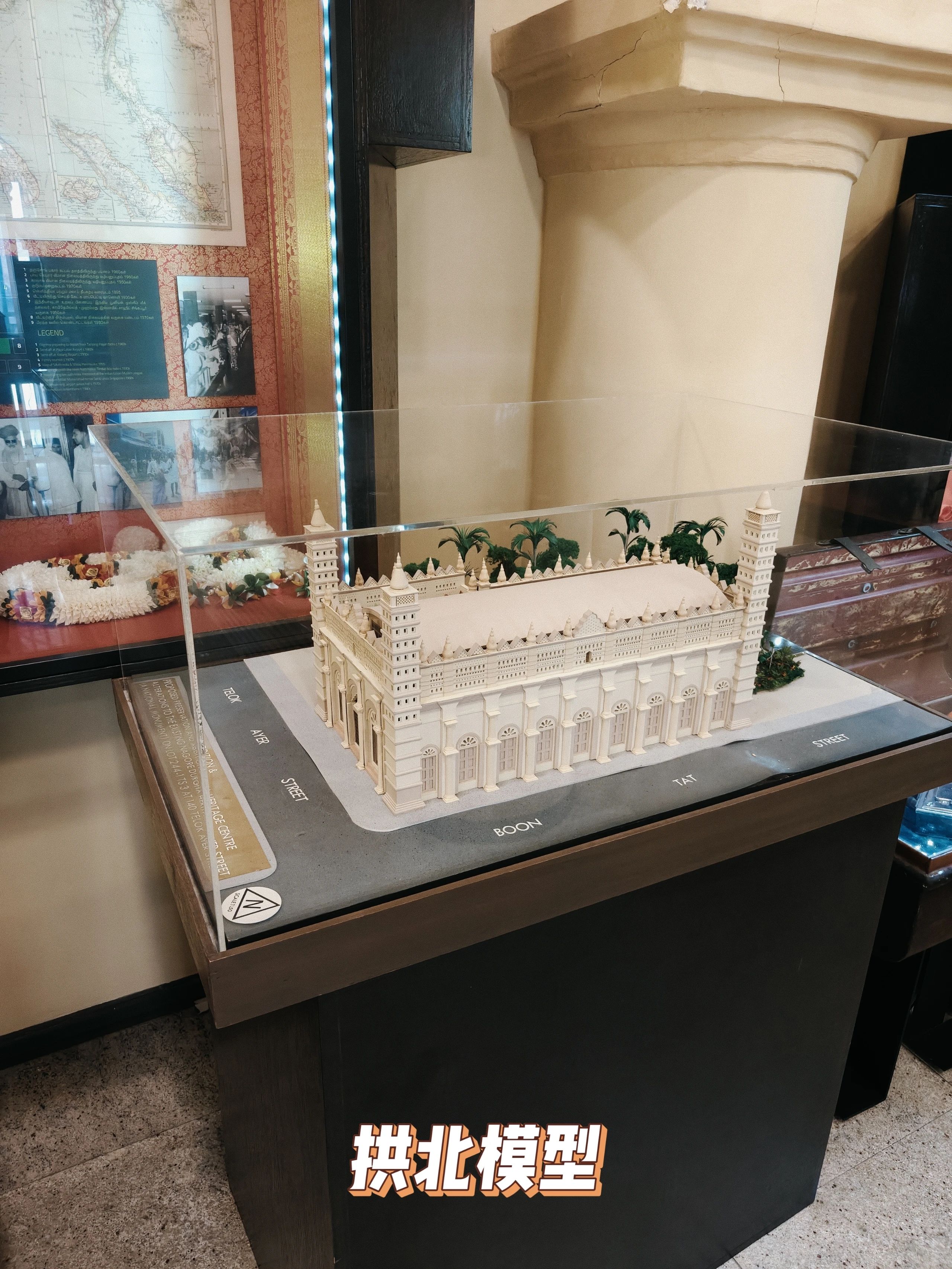
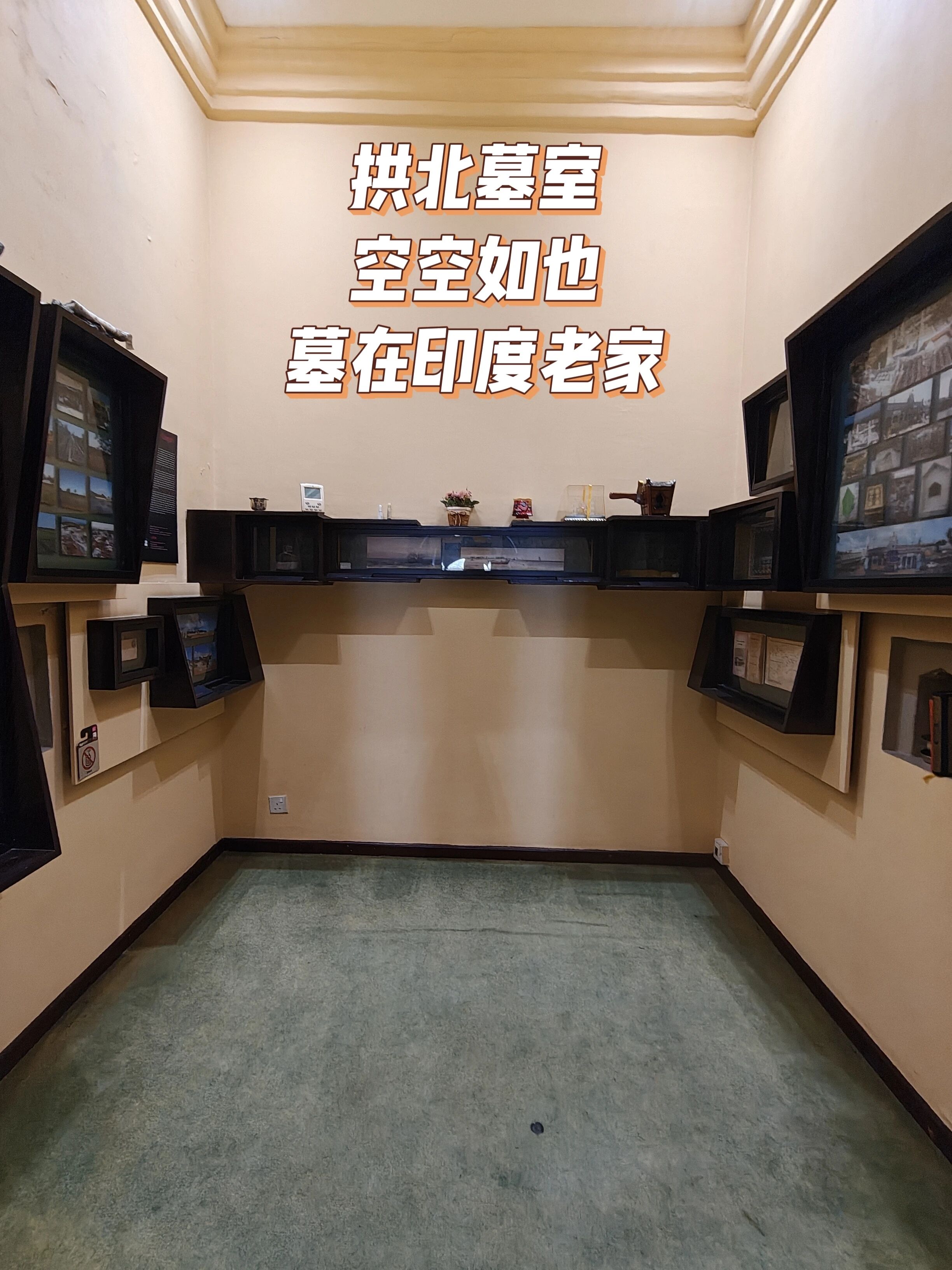
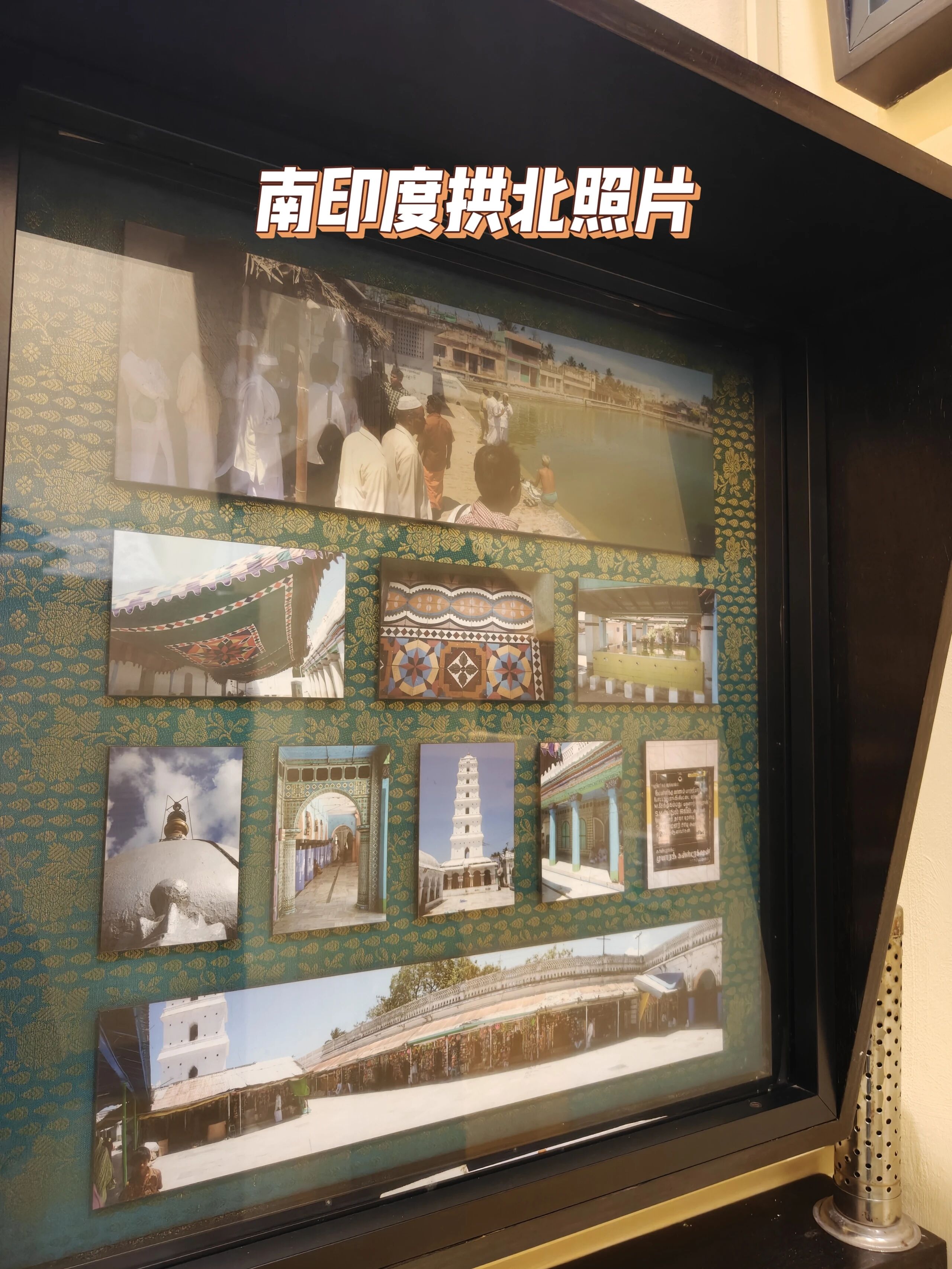
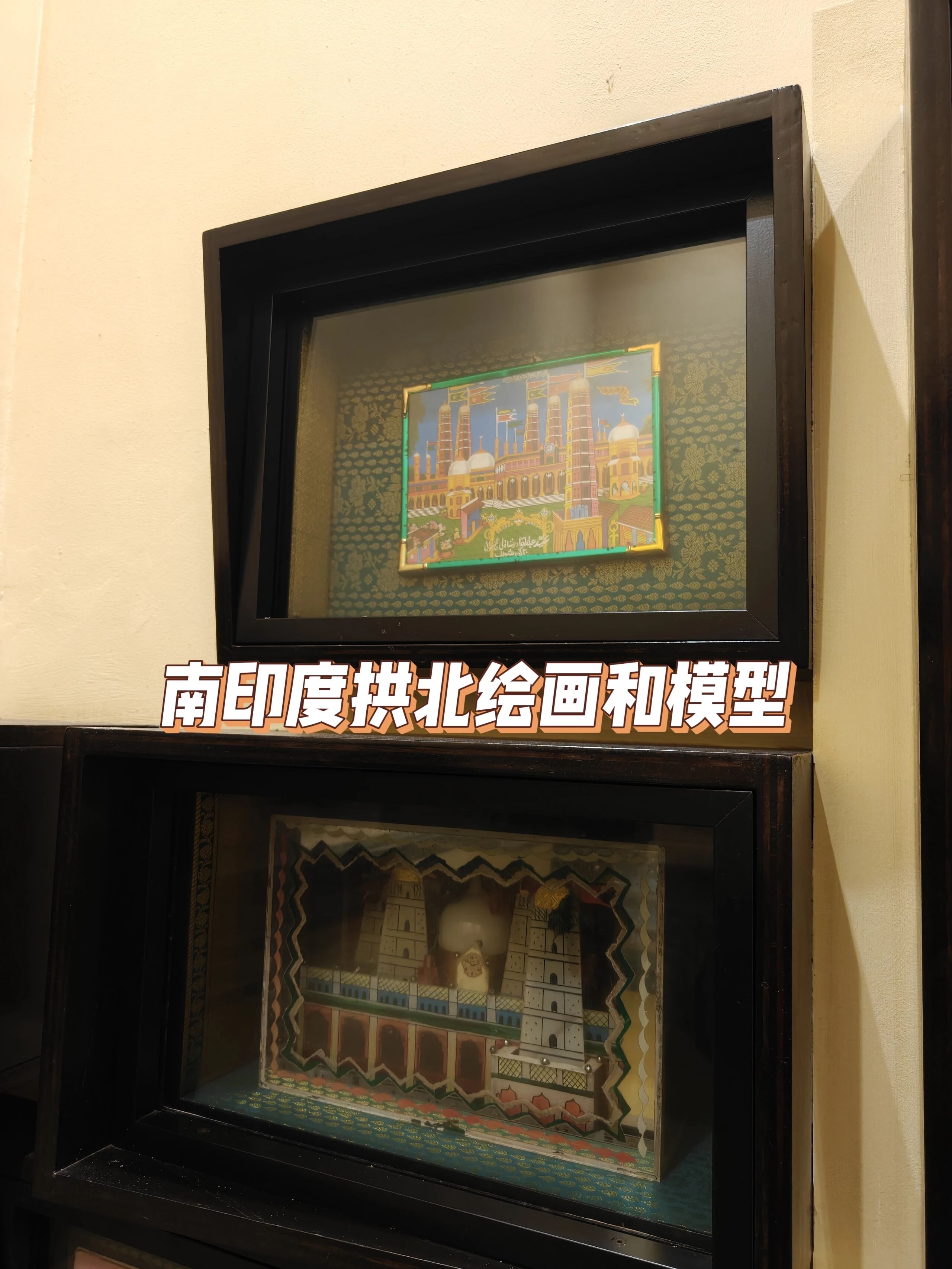
Walking straight from the entrance, you can see a symbolic tomb chamber. The walls inside the chamber feature photos, paintings, and models of that Nagore Dargah in Tamil Nadu. If I have the chance in the future, I really want to go to South India to see that place.
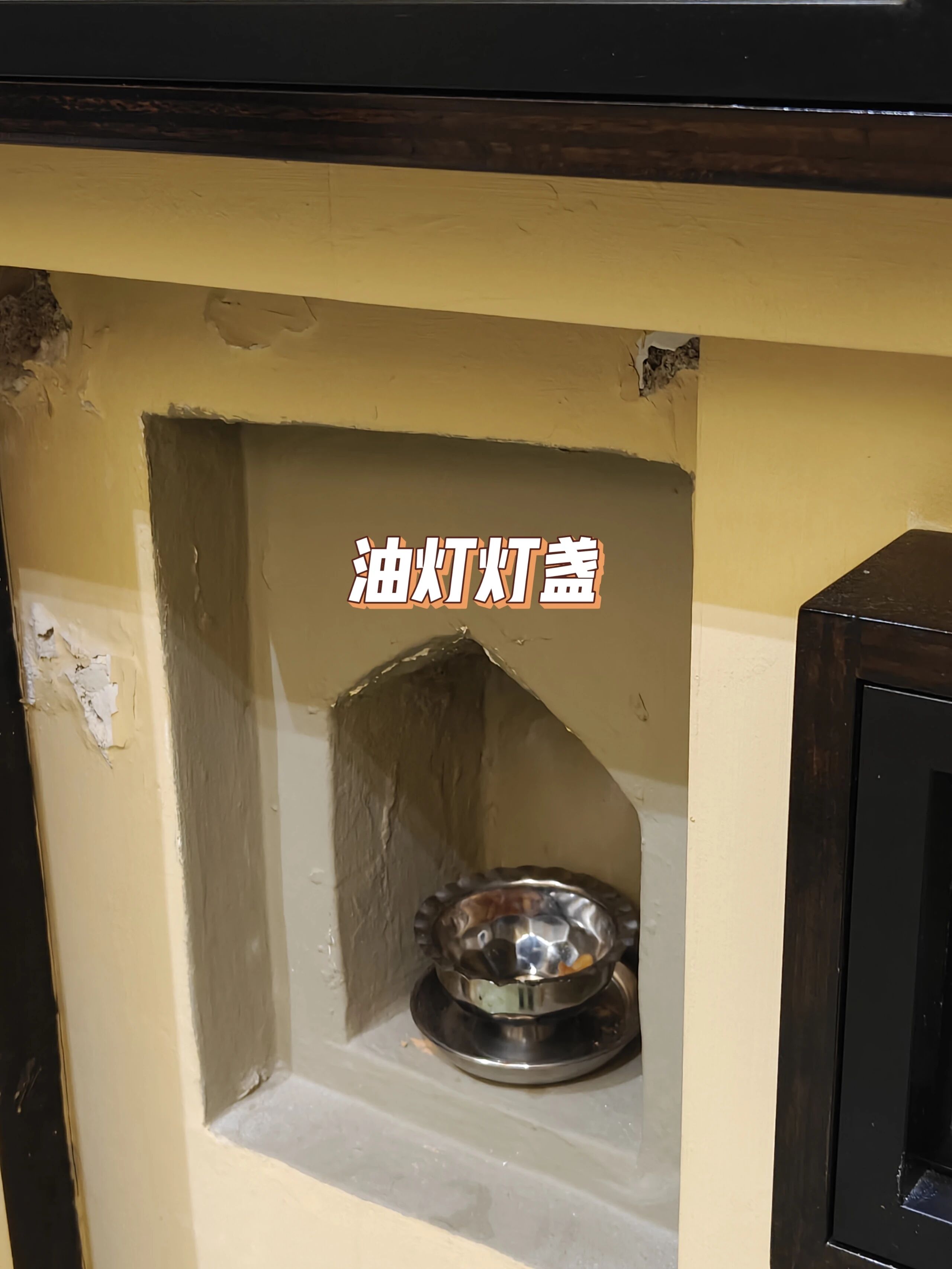
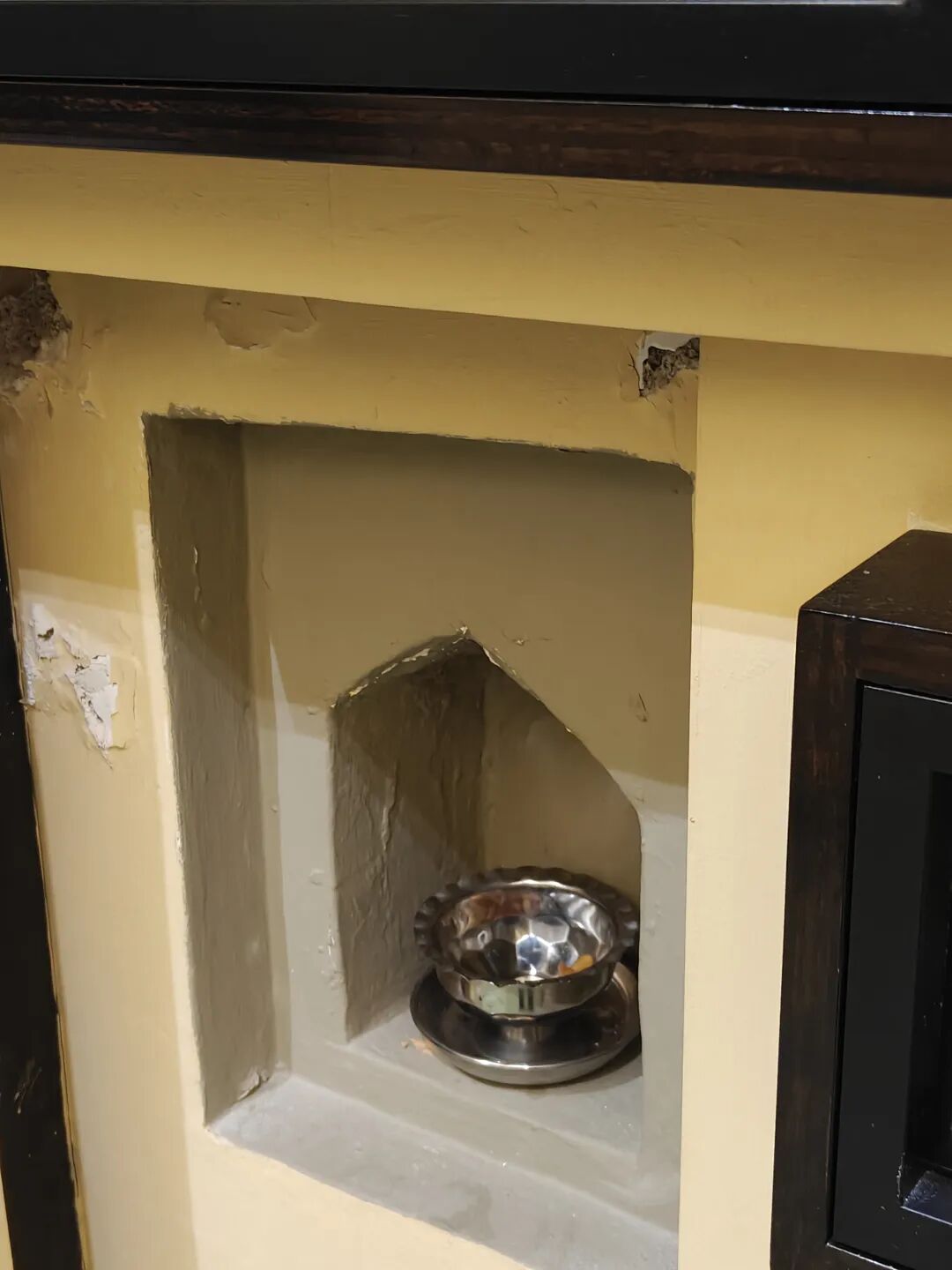
There is a detail in the tomb chamber that interests me: the small wall niches on the left and right (Image 16). These niches were used to hold candles or oil lamps for lighting.
This design is very common in India, so it is quite a distinct Indian feature.
Tourists from all over the world keep coming into the museum. I remember last time, a Korean tourist asked the Indian staff member about the ethnic composition of Muslims in Singapore. The Indian staff member explained that Malays are Muslims and there are also Indian Muslims.
I don't quite remember exactly what was said.
This time, I ran into two Singaporean Chinese asking a similar question to a Malay person nearby. The Malay person replied that there are also Muslims among Indians.
I guess everyone assumes Indians have a single faith, but while most Indians are Hindu, there are actually many Muslims. Besides that, India also has long-standing Christian communities, Sikhs, Buddhists, Jains, and so on.
The manager here told me there is no place to pray, but I can go to a nearby mosque for namaz. This mosque does not refer to the Jamae Mosque, but the closer Al-Abrar Mosque. So, in the next post, I will take you to see this Al-Abrar Mosque. view all
Summary: This Singapore Muslim travel guide visits Nagore Dargah, described as a South Indian-style Sufi shrine or gongbei. It keeps the source comparison with Jamae Mosque, local Muslim heritage, and site observations.
Singapore has more than just the South Indian-style mosque (Jamae Mosque) we introduced last time; it also has this South Indian-style shrine (Nagore Dargah).
This shrine is right next to Thian Hock Keng Temple and is easy to find. It has been turned into the Indian Muslim Heritage Centre. You need to register before entering, and admission is free. Actually, there were never any graves inside, which I find quite strange. If a shrine has no grave, can it still be called a shrine?
Of course, they call it a dargah, which is the term used in South India for a shrine.
So, where is the real grave?
It is in Nagapattinam, Tamil Nadu, South India (Image 13). It was built to honor the Sufi saint Shahul Hamid. That shrine is very grand and has many white towers.
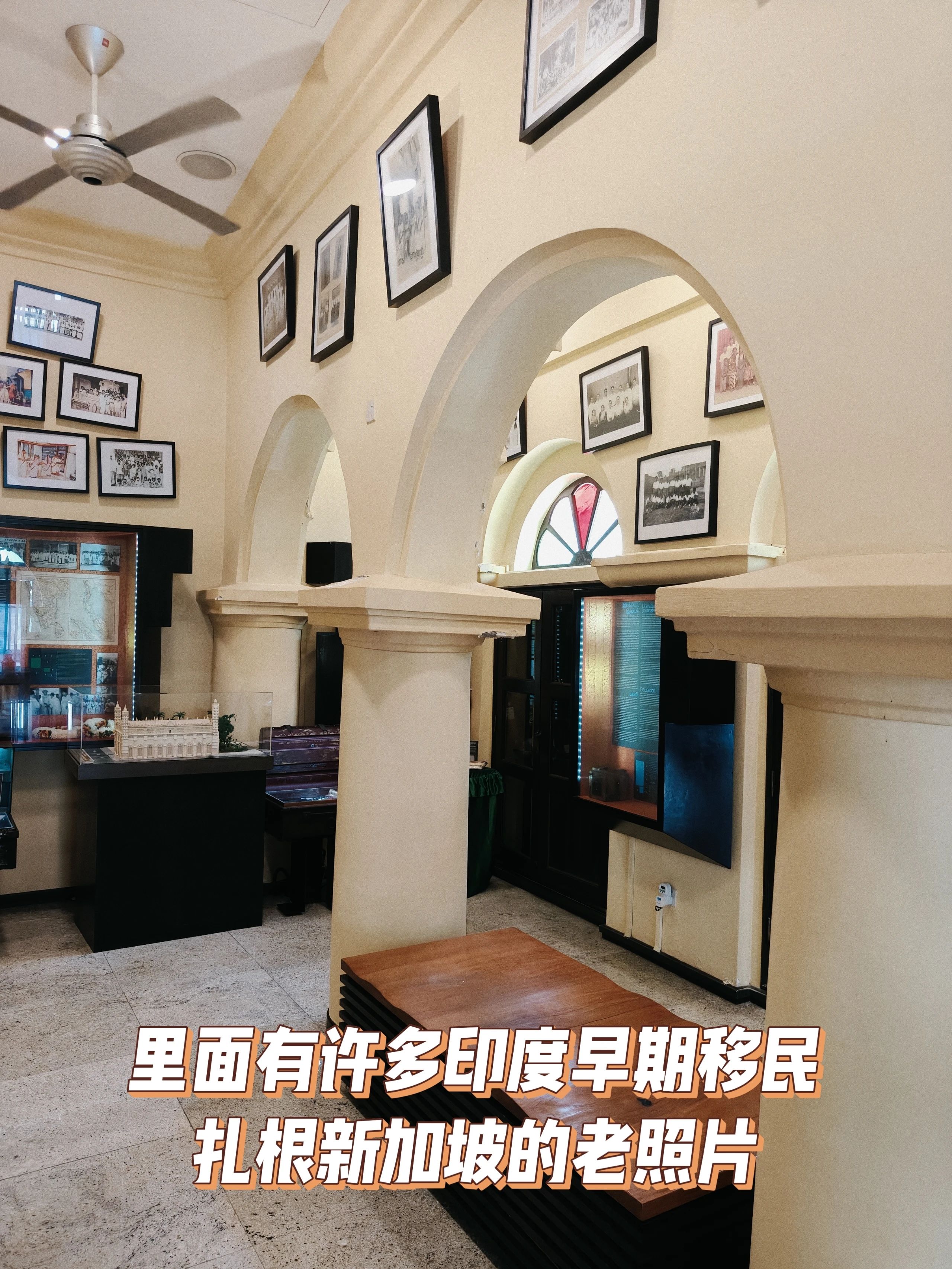
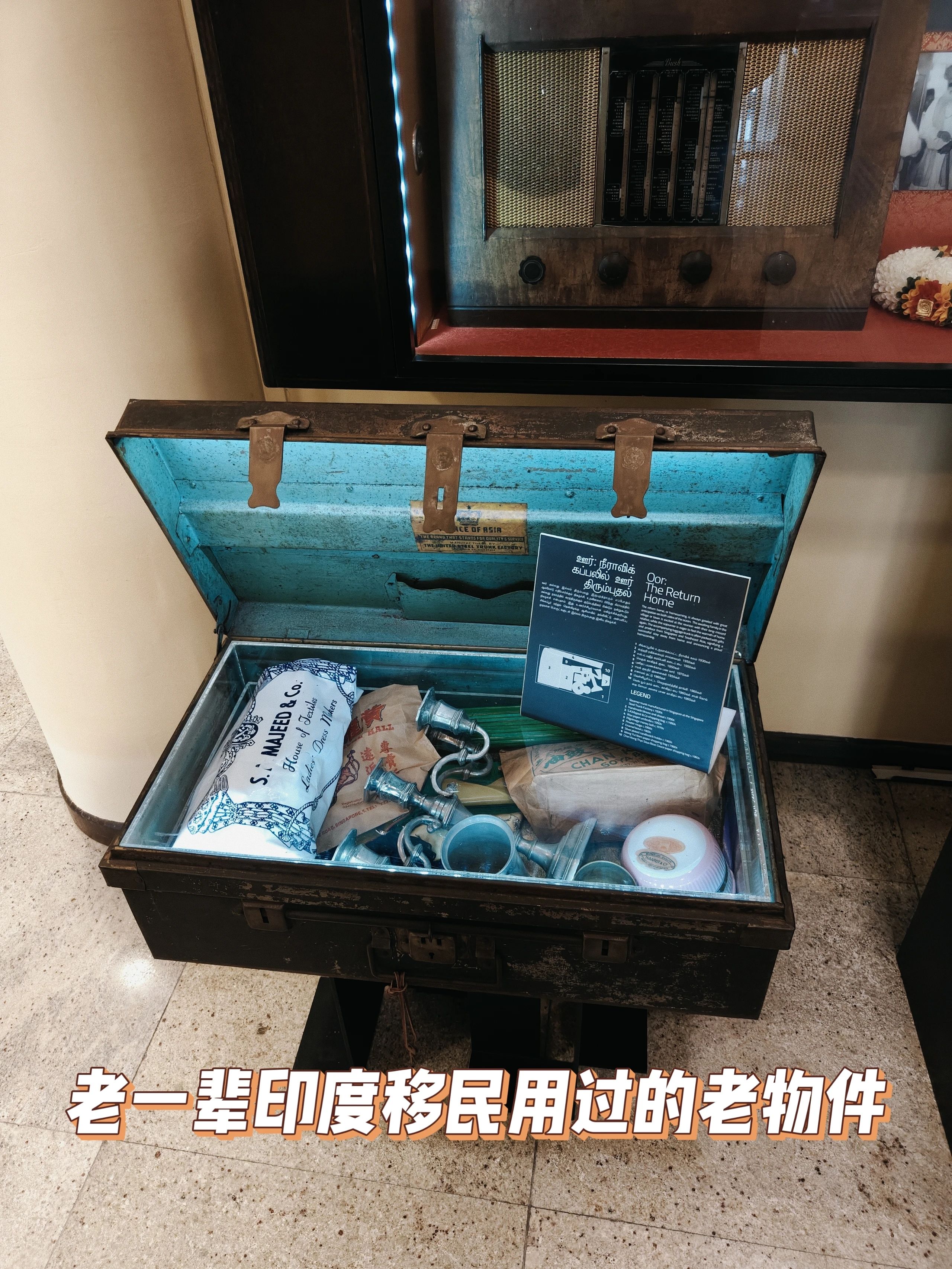
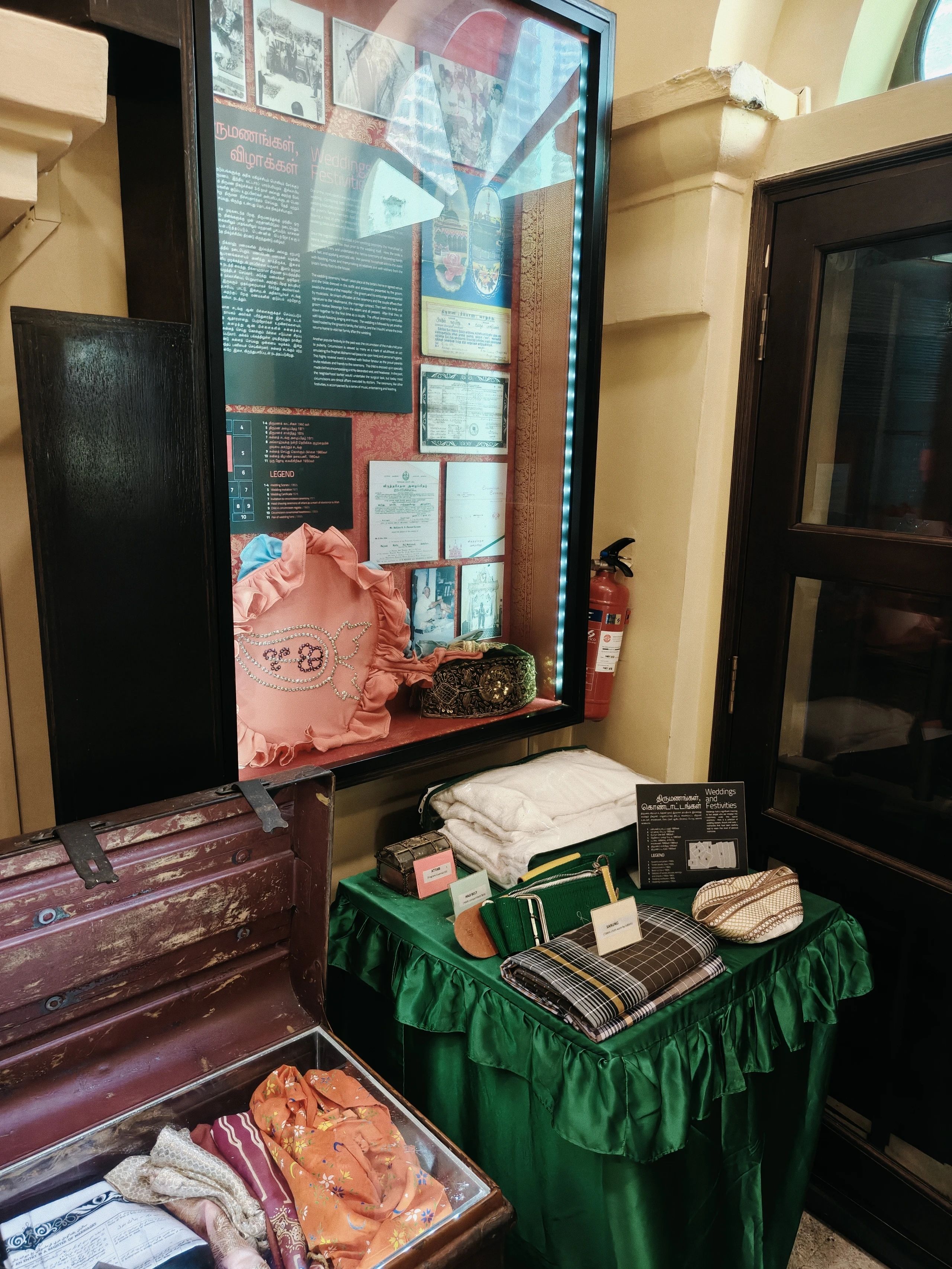
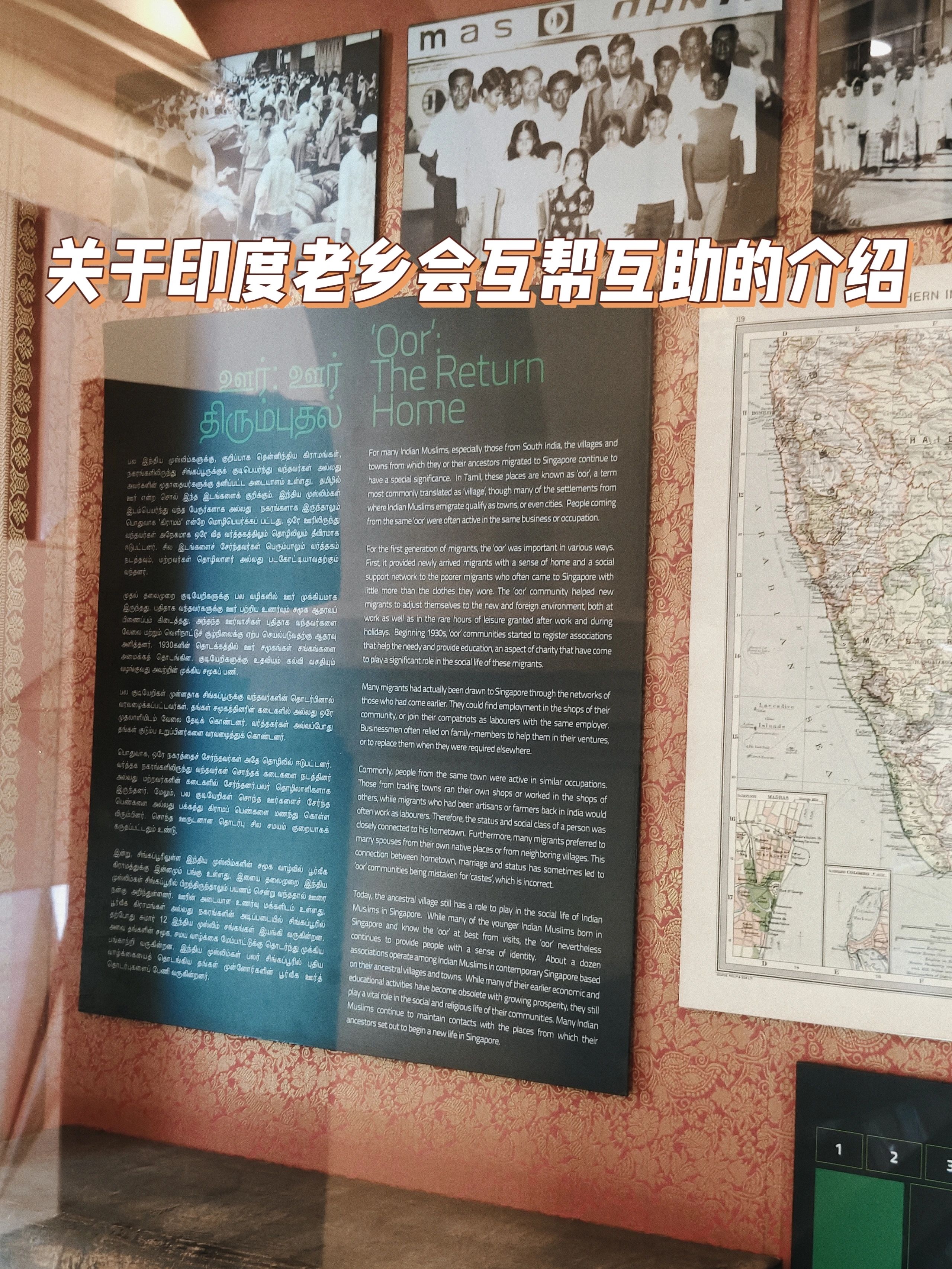
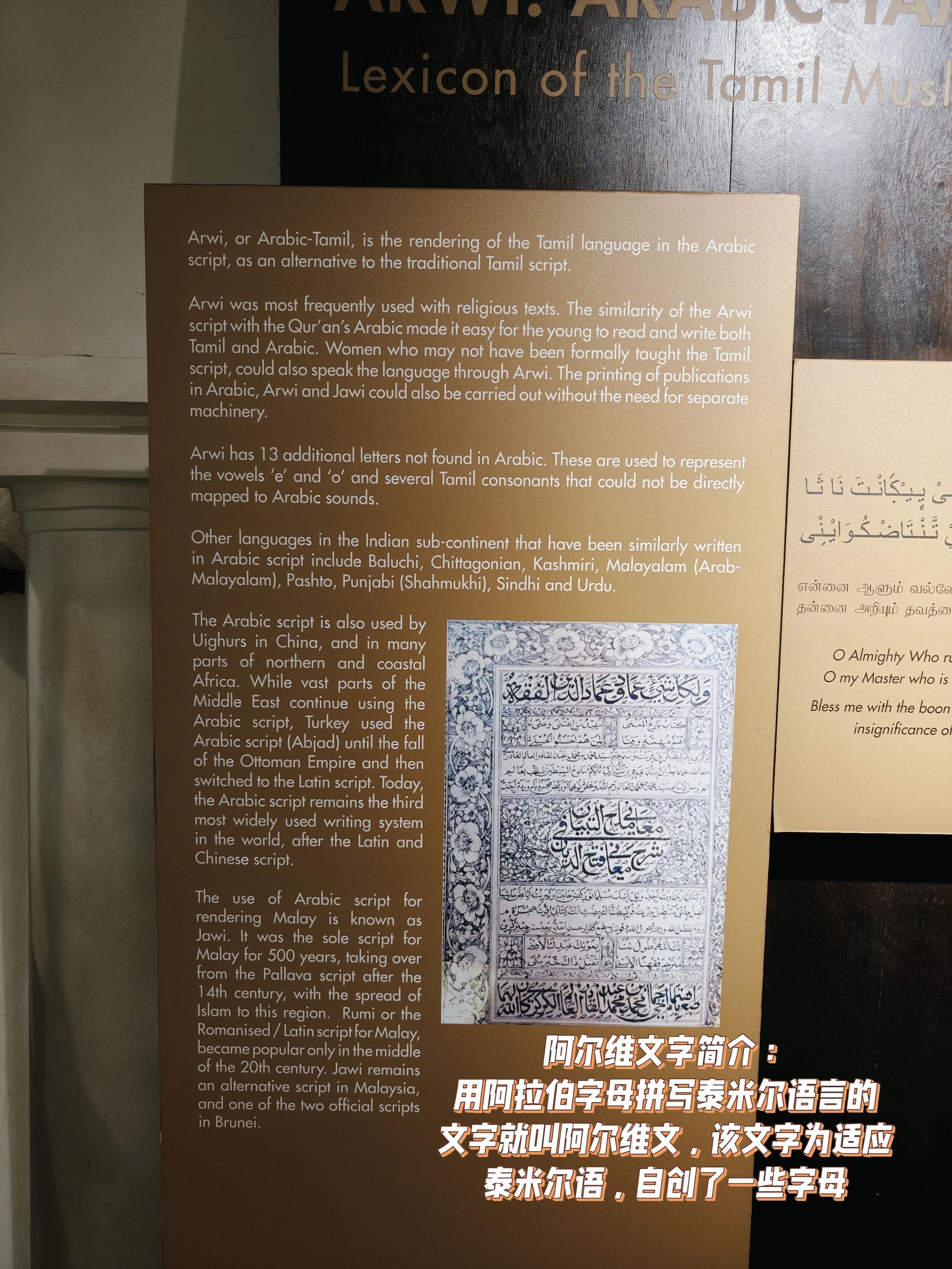
Inside the museum, you can see many old items from that time and some information about early Indian Muslim immigrants.
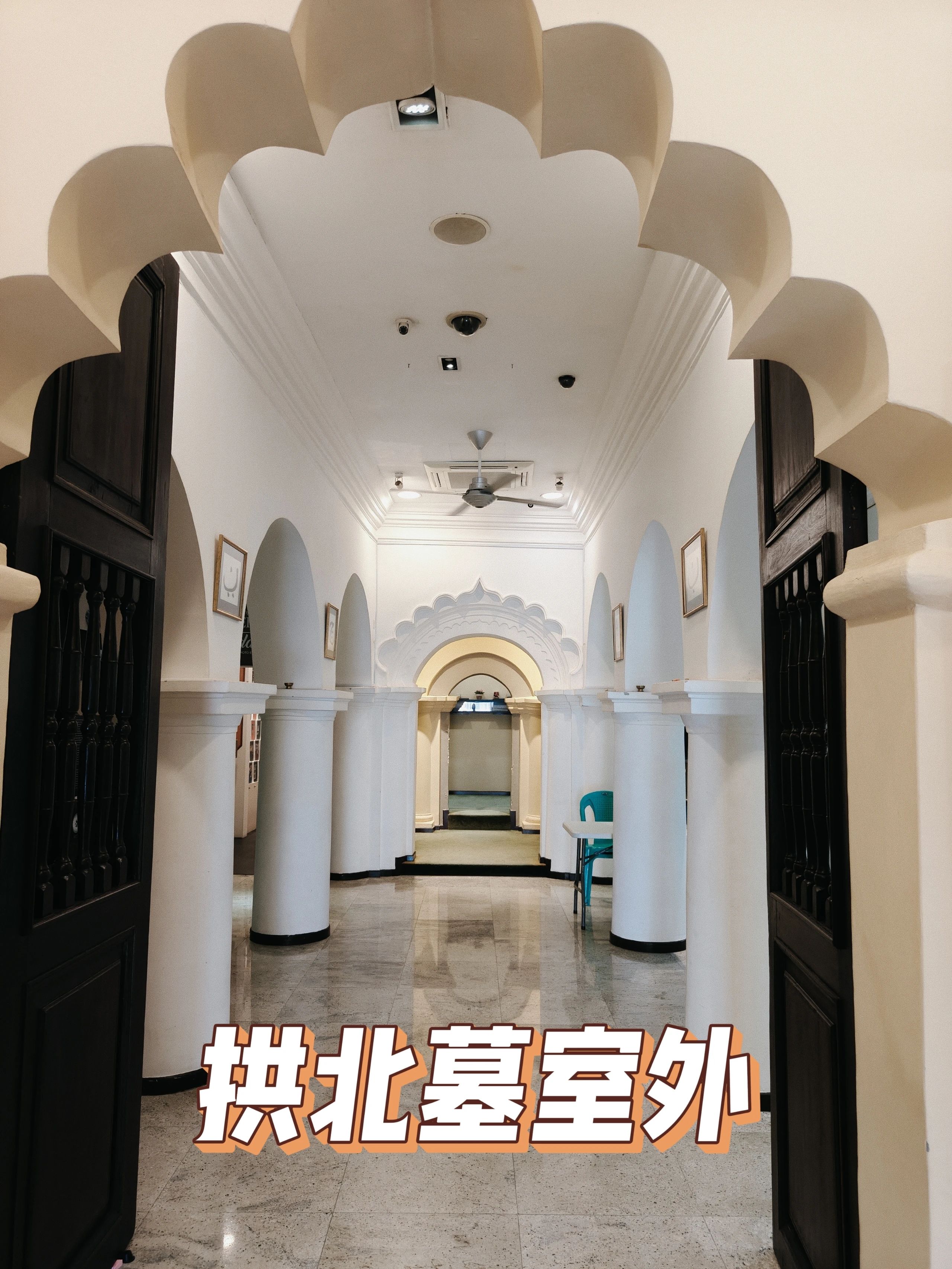
Walking straight from the entrance, you can see a symbolic tomb chamber. The walls inside the chamber feature photos, paintings, and models of that Nagore Dargah in Tamil Nadu. If I have the chance in the future, I really want to go to South India to see that place.
There is a detail in the tomb chamber that interests me: the small wall niches on the left and right (Image 16). These niches were used to hold candles or oil lamps for lighting.
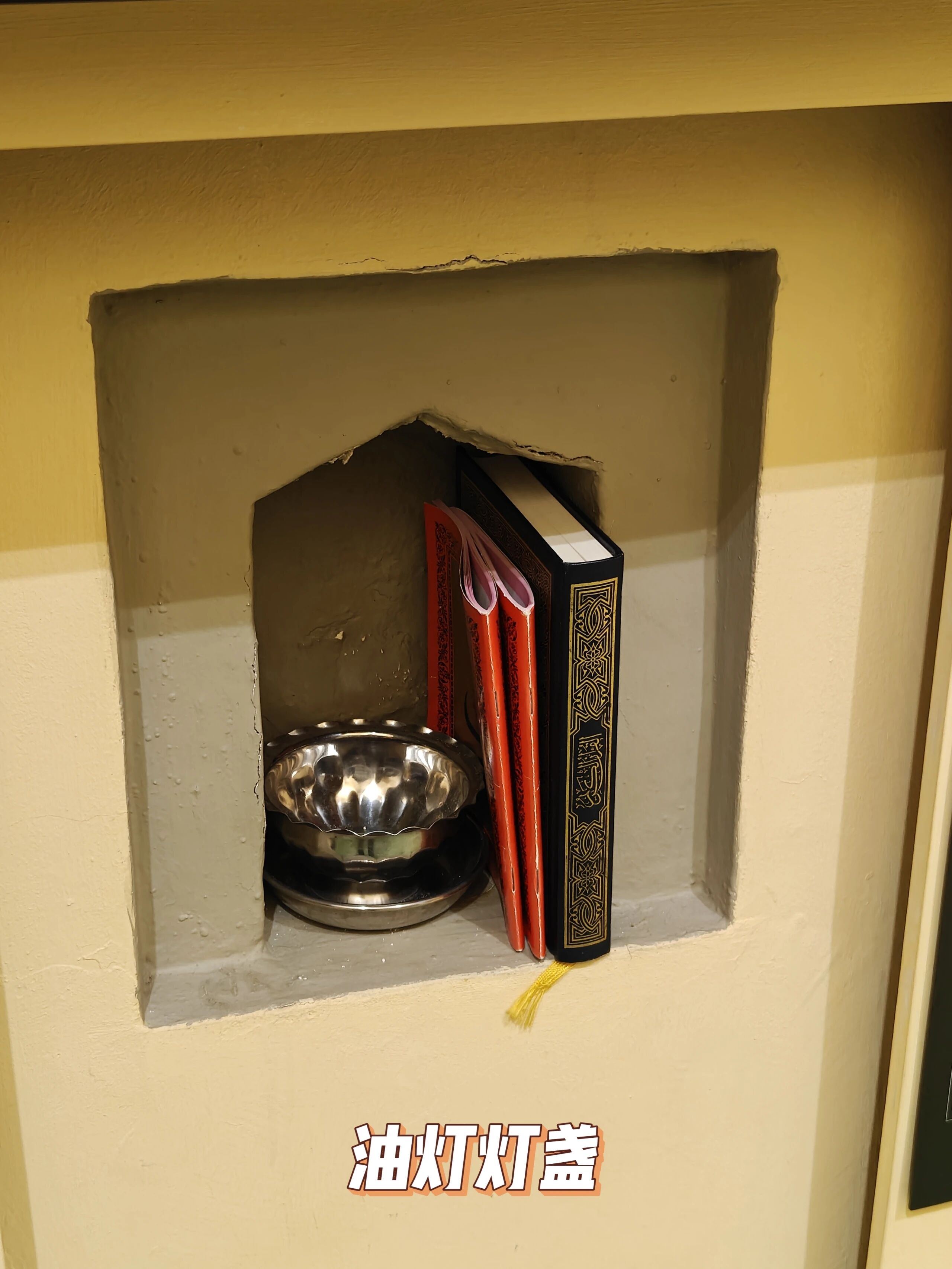
This design is very common in India, so it is quite a distinct Indian feature.
Tourists from all over the world keep coming into the museum. I remember last time, a Korean tourist asked the Indian staff member about the ethnic composition of Muslims in Singapore. The Indian staff member explained that Malays are Muslims and there are also Indian Muslims.
I don't quite remember exactly what was said.
This time, I ran into two Singaporean Chinese asking a similar question to a Malay person nearby. The Malay person replied that there are also Muslims among Indians.
I guess everyone assumes Indians have a single faith, but while most Indians are Hindu, there are actually many Muslims. Besides that, India also has long-standing Christian communities, Sikhs, Buddhists, Jains, and so on.
The manager here told me there is no place to pray, but I can go to a nearby mosque for namaz. This mosque does not refer to the Jamae Mosque, but the closer Al-Abrar Mosque. So, in the next post, I will take you to see this Al-Abrar Mosque.
Muslim Travel Guide Singapore 2026: Underground Mosque, Zakat Machine and Local Muslim Life
Articles • Hasan09 posted the article • 0 comments • 350 views • 2026-05-24 01:48
Summary: This Singapore Muslim travel guide continues the city route through underground mosques, local prayer spaces, and a self-service zakat machine. It preserves the source's guide structure, site order, and local Muslim life details.
In this issue:
8. Jamae Mosque, which features minarets in a South Indian style.
9. The South Indian gongbei of Singapore, Nagore Dargah.
10. Al-Abrar Mosque.
11. Underground Mosque.
12. Omar Kampong Melaka Mosque, the oldest mosque in Singapore.
13. Al-Amin Mosque.
14. Temenggong Mosque.
15. Sentosa prayer room.
16. Singapore Islamic Centre Mosque.
17. Islamic Religious Council of Singapore.
To be updated:
18. Tomb of Habib Nuh (Habib Nuh Lingmu)
19. Haji Muhammad Salleh Mosque
20. Hajjah Fatimah Mosque
21. Changi Airport Prayer Room
Main text starts:
8. Jamae Mosque
I find this Jamae Mosque very special. Everyone knows what North Indian mosques look like. The Badshahi Mosque in Pakistan, the Jama Masjid in Delhi, and even the Taj Mahal are all classic examples of North Indian mosque architecture.
These mosques are very famous and pop up on your feed all the time, but I bet you haven't seen many of the lesser-known South Indian mosques.
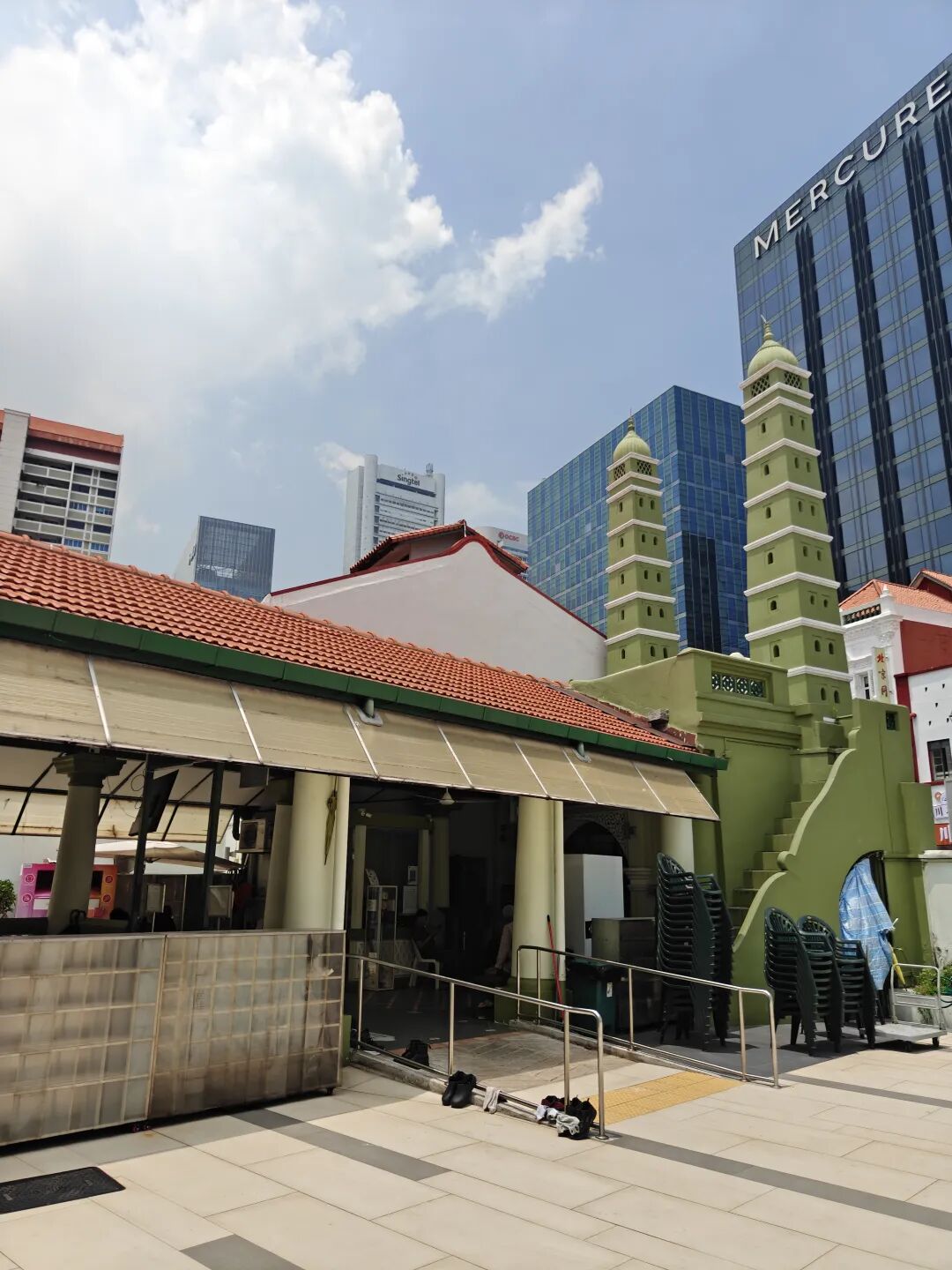
Look at its minaret; it is square. If you made this tower wider and added bright colors, it would look just like a South Indian Hindu temple.
I think this style of tower has a lot of local character.
Jamae Mosque, the Buddha Tooth Relic Mosque, and a Hindu mosque are all on the same street.
This mosque welcomes visitors and has a dedicated tourist area. There are many information boards there to explain the basics to visitors.
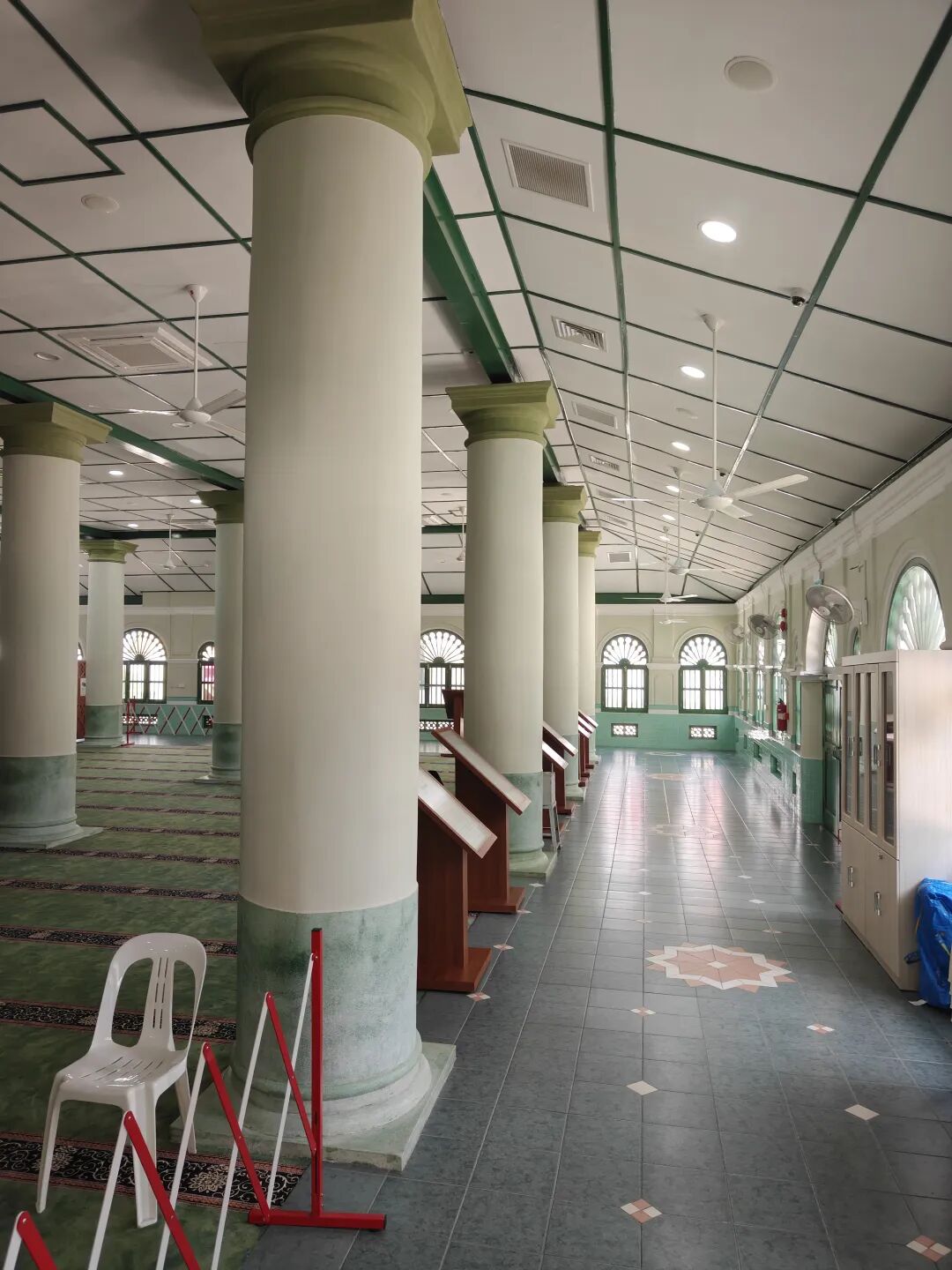
The mosque's minaret is in a South Indian style, but the prayer hall area instantly brings back memories of the South Seas. The doors and windows especially have a strong colonial-era South Seas feel.
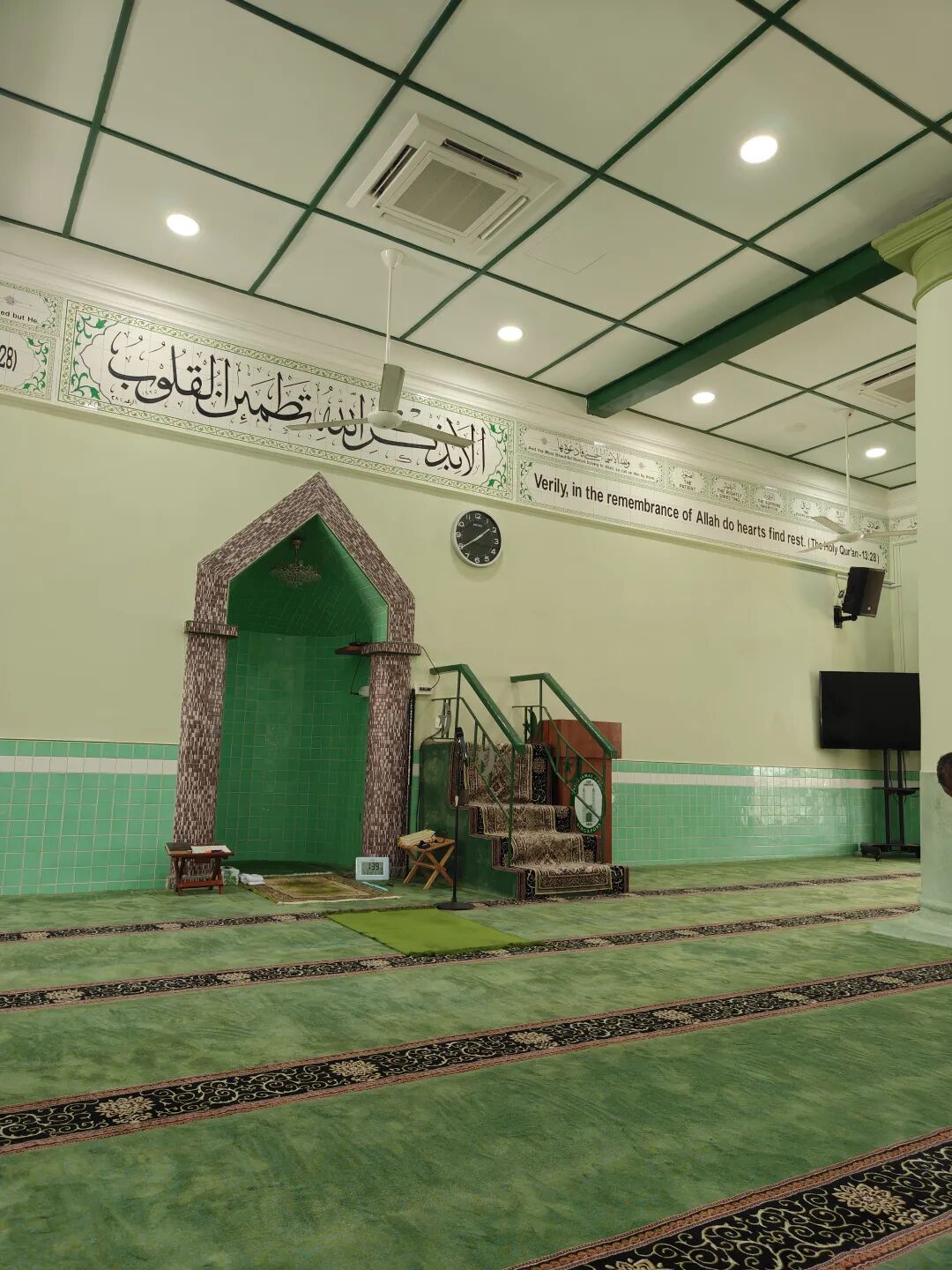
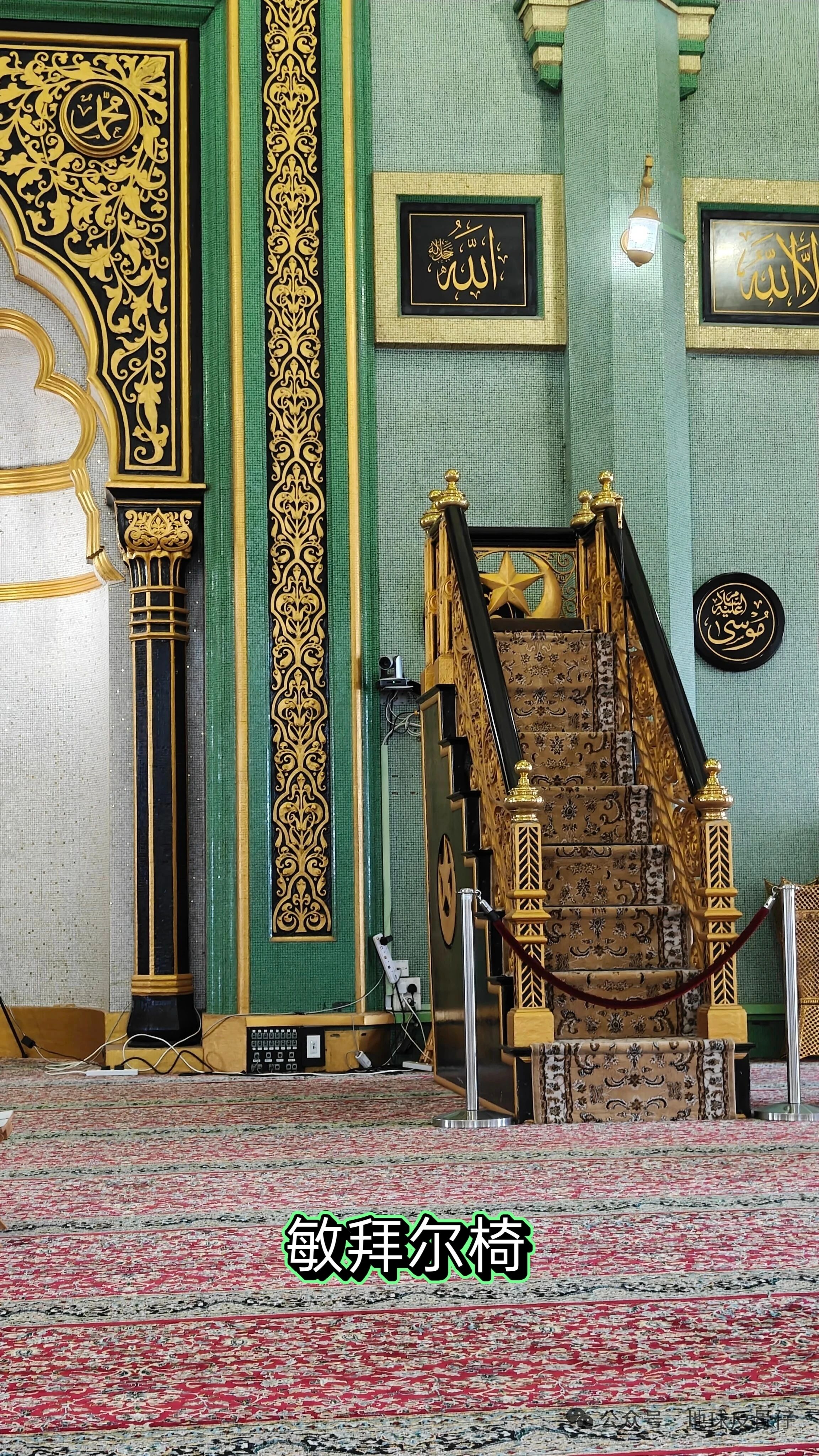
Inside the prayer hall, the mihrab and the minbar are very simple.
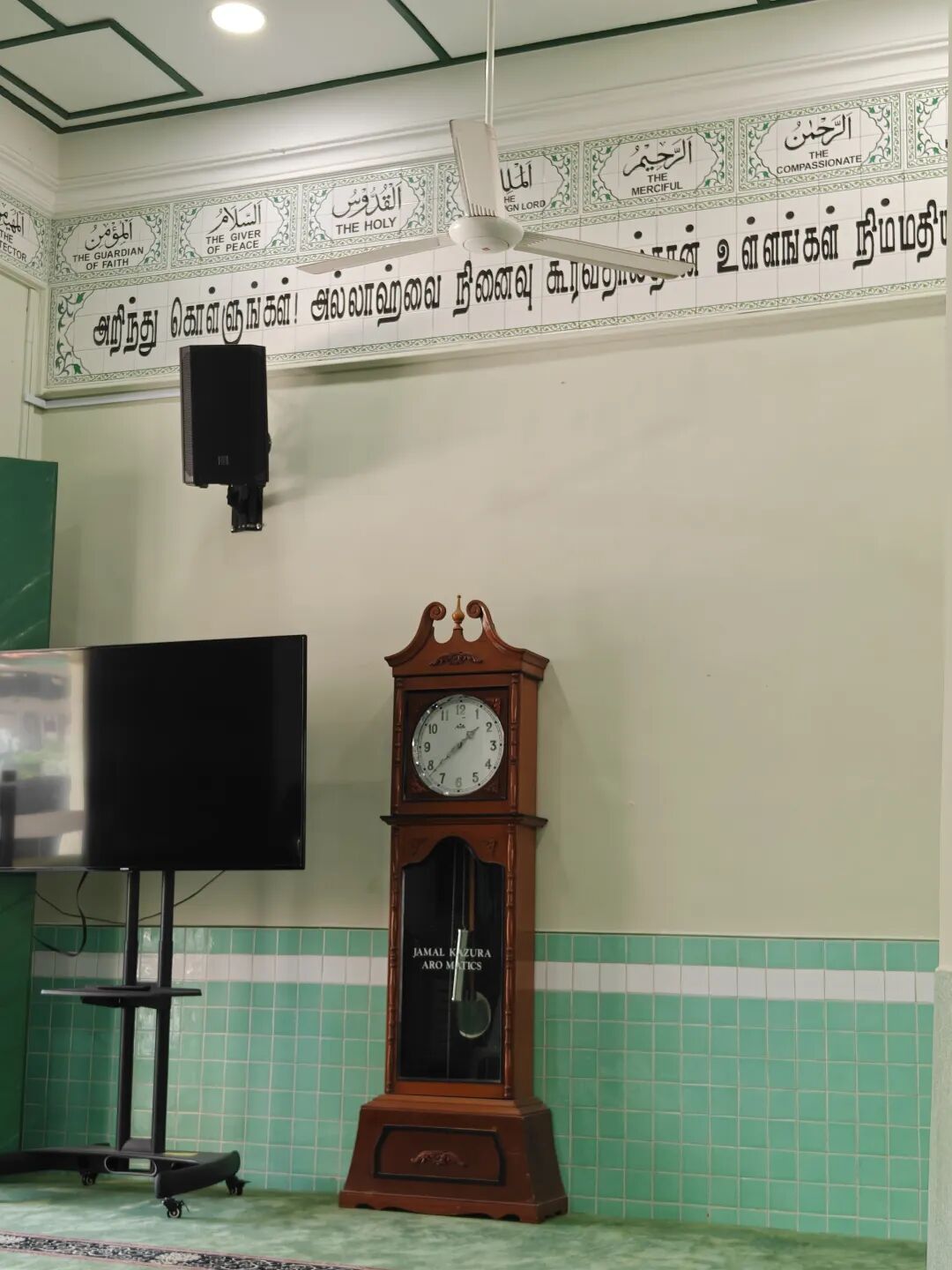
This mosque was established by Tamil people from South India, so there is also Tamil script inside the prayer hall.
As I left, I noticed there were actually steps by the minaret. It seems at least the entrance area can be climbed.
9. South Indian gongbei, Nagore Dargah
The actual Nagore Dargah is in the Indian state of Tamil Nadu, which is the ancestral home of the Tamil people.
To me, the Tamil people are a bit like the people from Fujian in our country.
Tamil Nadu is in southeastern India, facing the island of Sri Lanka across the sea.
People from Fujian are also on the southeast coast of China, with Taiwan island just across the strait.
Tamil people like to go to sea to do business, and so do Fujian people, running businesses all over the world.
Back to the topic, the Nagore Dargah in Tamil Nadu is a real gongbei, containing the graves of Muslim saints.
But this Nagore Dargah in Singapore is empty and only has a symbolic tomb.
This was my first time seeing something like this. I went inside and asked the manager where the tomb was. He said the tomb is back home in India. I was shocked!
This Dargah (a term used in South India for a gongbei) also has a South Indian style with a square tower.
It is no longer a religious site but has been turned into a museum. It displays many items used by the older generation of Indian immigrants who came to Singapore.
At the very back of the main hall, you can see a symbolic tomb chamber.
So, my trip was not a waste after all.
I think the highlight of the tomb chamber is the oil lamp placed in the small wall niche.
These niches are very common in India and are used to hold oil lamps for lighting.
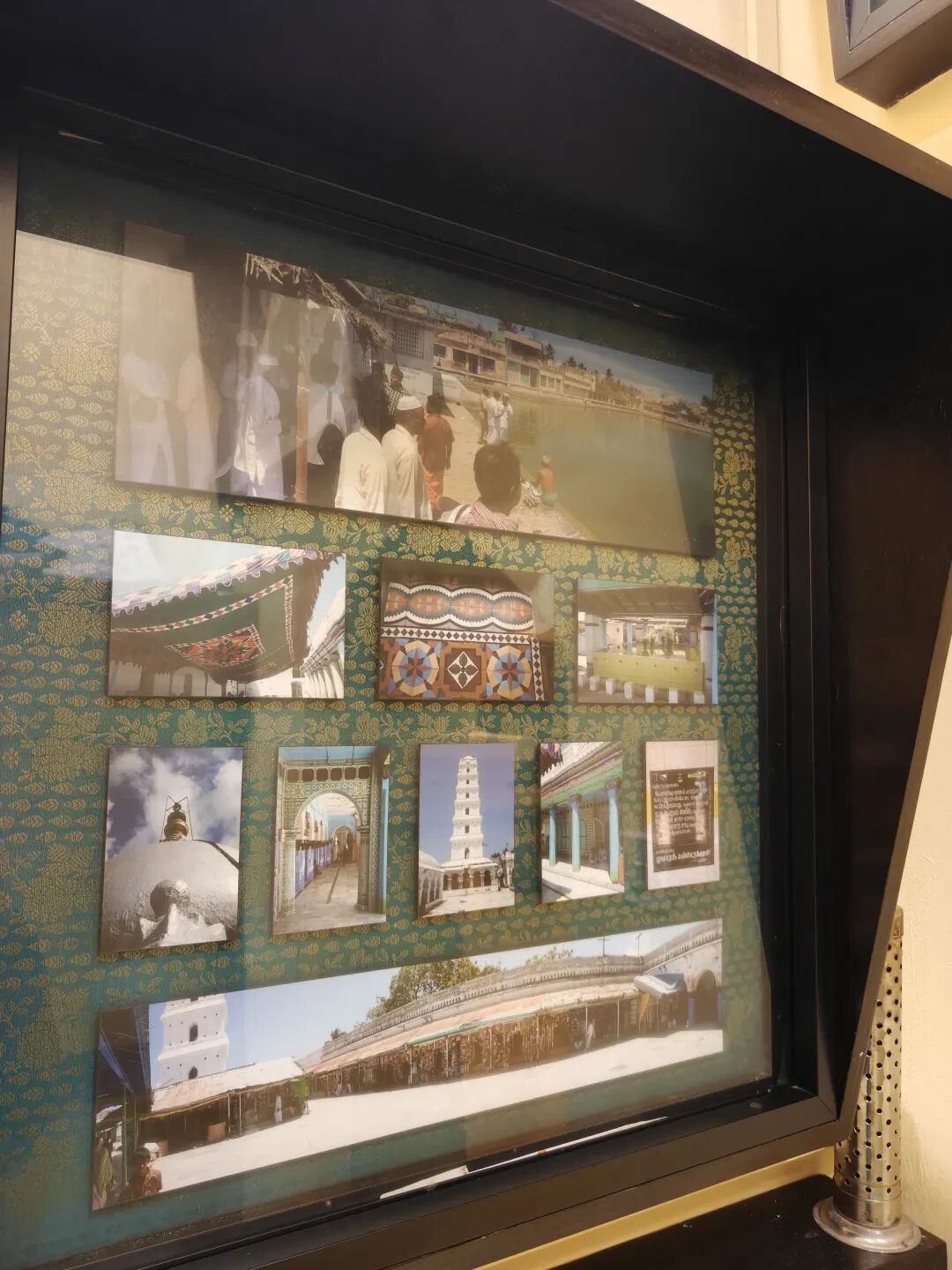
On the wall of the tomb chamber hangs a photo of the Nagore Dargah in India. Looking at it, the place covers a very large area.
I really want to go to India to see it in person, but it is a pity that India is very strict with Chinese citizens right now, and tourist visas are hard to get.
10. Al-Abrar Mosque.
When I visited the Nagore Dargah, I asked the manager if there was a place to perform namaz. He told me that everyone goes to a nearby mosque for namaz now.
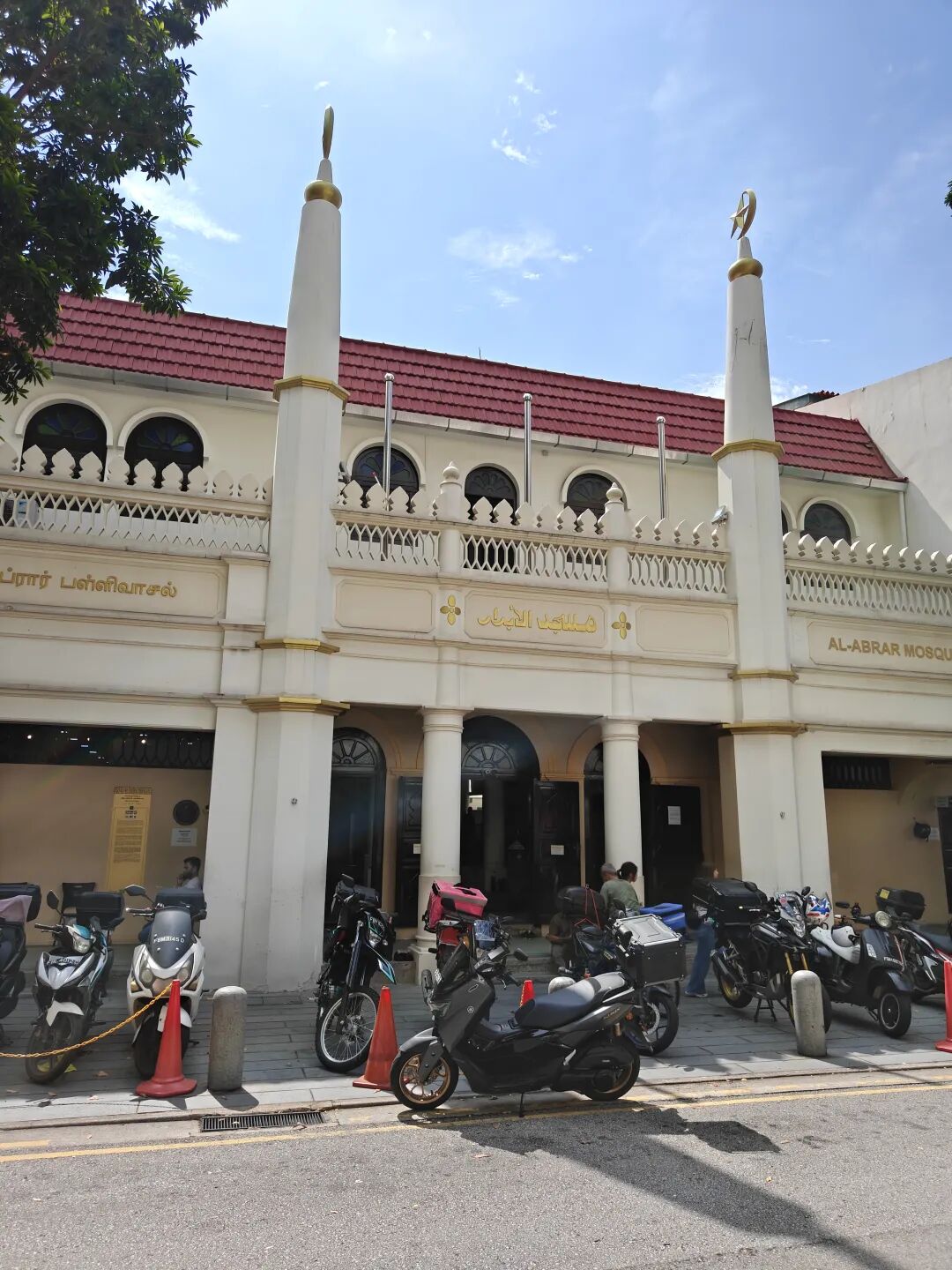
The mosque he mentioned is the Al-Abrar Mosque located on this same street.
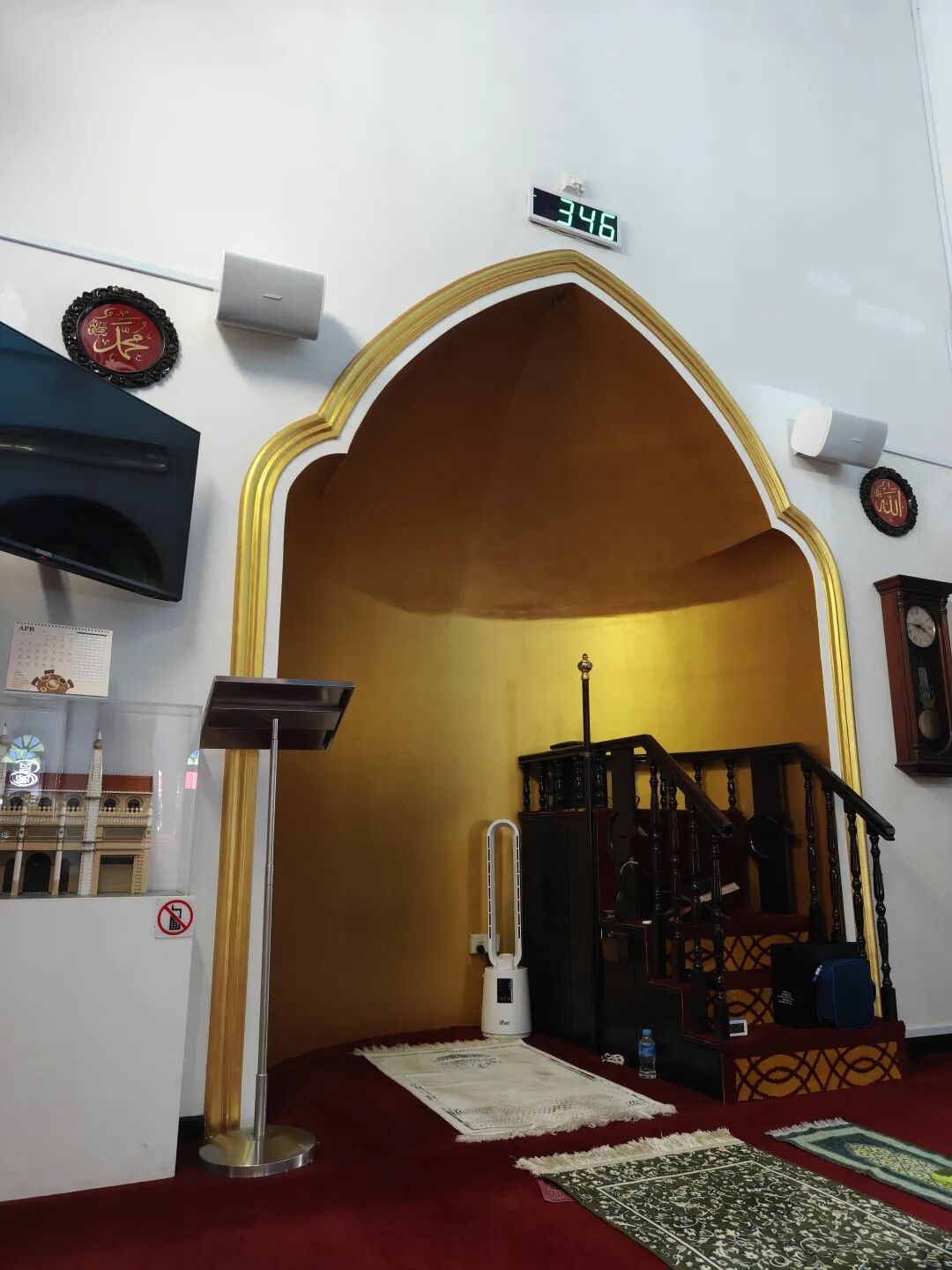
There is an inner hall inside the prayer hall of this mosque.
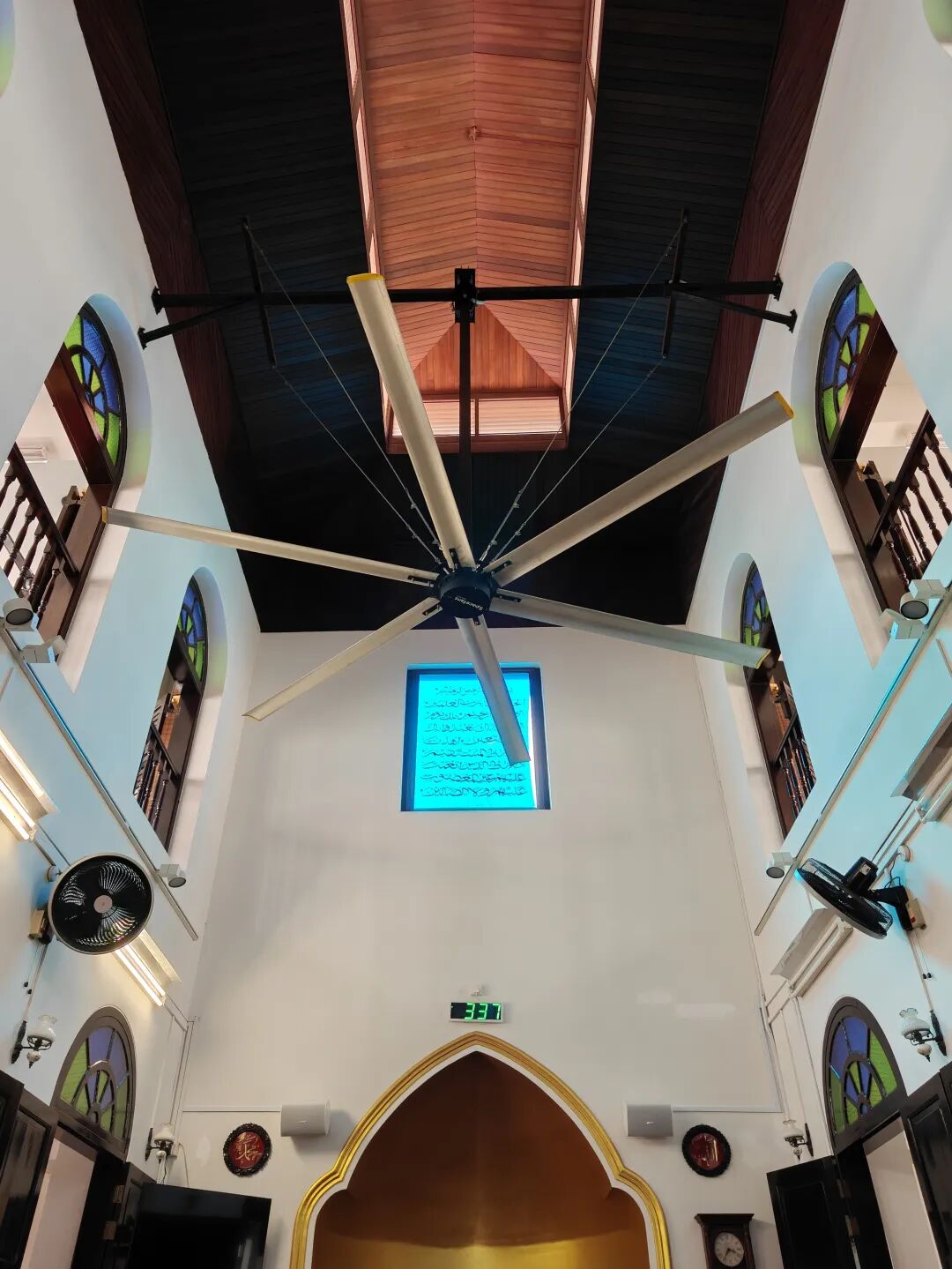
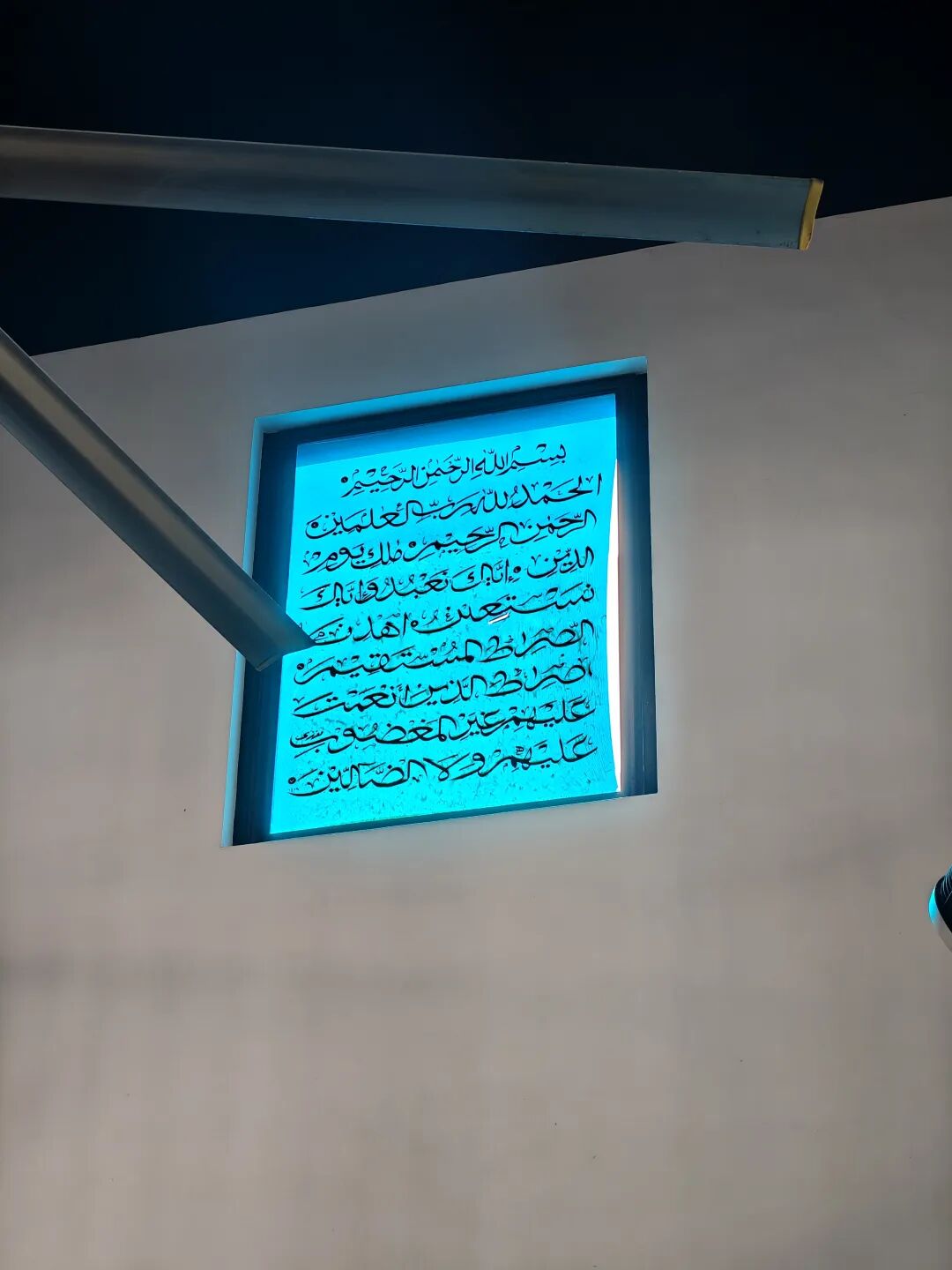
Directly above the inner hall, there is a piece of blue glass with the opening chapter of the Quran written on it.
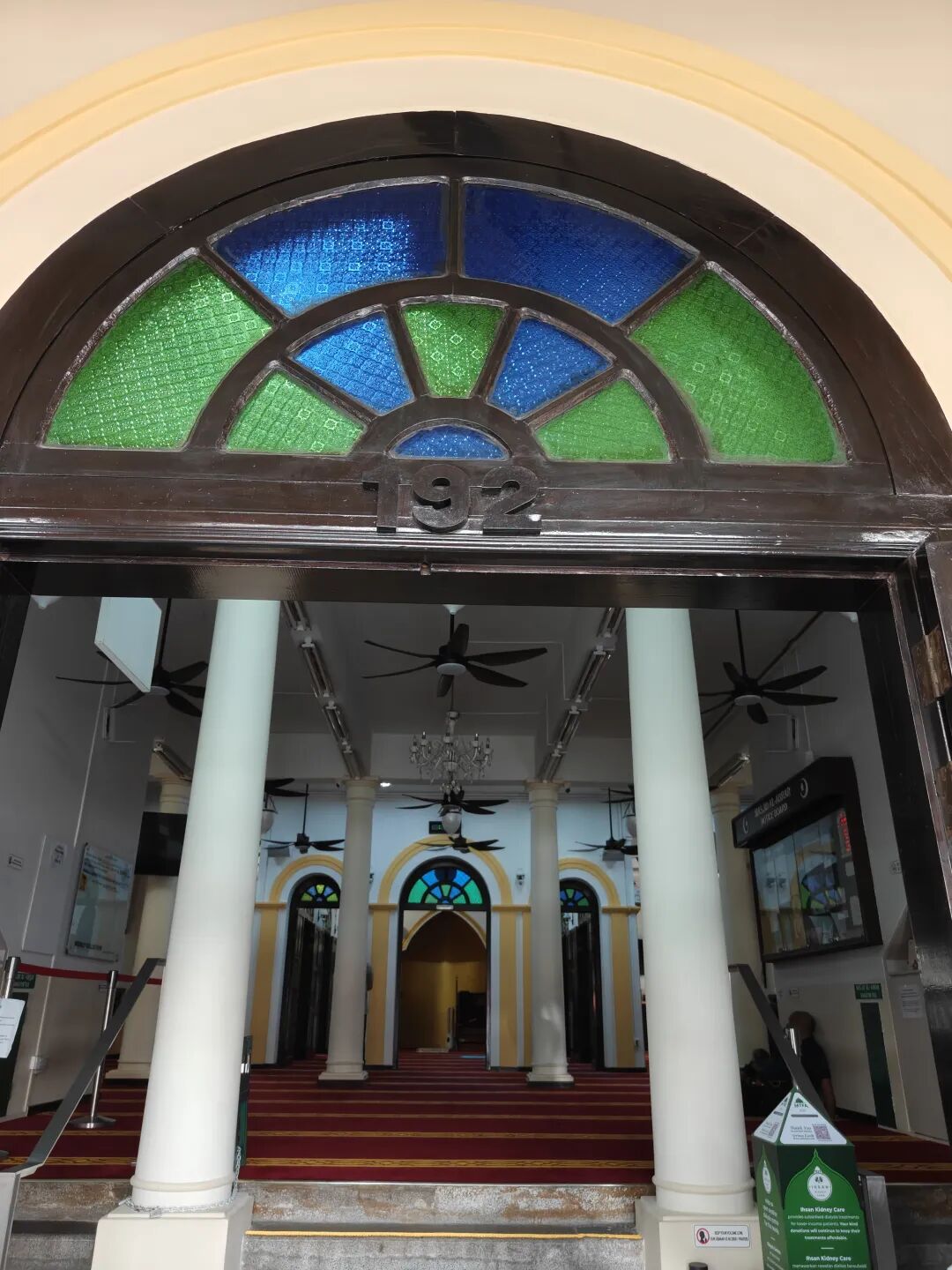
The fan-shaped stained glass on the mosque's doors and windows is also very cute.
At the very back of the main hall, you can see a symbolic tomb chamber.
So, my trip was not a waste after all.
I think the highlight of the tomb chamber is the oil lamp placed in the small wall niche.
These niches are very common in India and are used to hold oil lamps for lighting.
On the wall of the tomb chamber hangs a photo of the Nagore Dargah in India. Looking at it, the place covers a very large area.
I really want to go to India to see it in person, but it is a pity that India is very strict with Chinese citizens right now, and tourist visas are hard to get.
At the very back of the main hall, you can see a symbolic tomb chamber.
So, my trip was not a waste after all.
I think the highlight of the tomb chamber is the oil lamp placed in the small wall niche.
These niches are very common in India and are used to hold oil lamps for lighting.
On the wall of the tomb chamber hangs a photo of the Nagore Dargah in India. Looking at it, the place covers a very large area.
I really want to go to India to see it in person, but it is a pity that India is very strict with Chinese citizens right now, and tourist visas are hard to get.
I think the highlight of the tomb chamber is the oil lamp placed in the small wall niche.
These niches are very common in India and are used to hold oil lamps for lighting.
On the wall of the tomb chamber hangs a photo of the Nagore Dargah in India. Looking at it, the place covers a very large area.
I really want to go to India to see it in person, but it is a pity that India is very strict with Chinese citizens right now, and tourist visas are hard to get.
On the wall of the tomb chamber hangs a photo of the Nagore Dargah in India. Looking at it, the place covers a very large area.
I really want to go to India to see it in person, but it is a pity that India is very strict with Chinese citizens right now, and tourist visas are hard to get.
10. Al-Abrar Mosque.
When I visited the Nagore Dargah, I asked the manager if there was a place to perform namaz. He told me that everyone goes to a nearby mosque for namaz now.
The mosque he mentioned is the Al-Abrar Mosque located on this same street.
There is an inner hall inside the prayer hall of this mosque.
Directly above the inner hall, there is a piece of blue glass with the opening chapter of the Quran written on it.
The fan-shaped stained glass on the mosque's doors and windows is also very cute.
There is an inner hall inside the prayer hall of this mosque.
Directly above the inner hall, there is a piece of blue glass with the opening chapter of the Quran written on it.
The fan-shaped stained glass on the mosque's doors and windows is also very cute.
Just before leaving, I noticed a machine at the mosque entrance with the word Zakat written on it.
Zakat is the mandatory charity for Muslims. I was surprised to see a self-service Zakat machine here in Singapore, where you can pay using a bank card. The funds are managed by the Islamic Religious Council of Singapore.
This is the first time I have ever seen this way of paying.
11. Underground Mosque.
A self-service Zakat machine is novel enough, but even more surprising is Singapore's underground mosque.
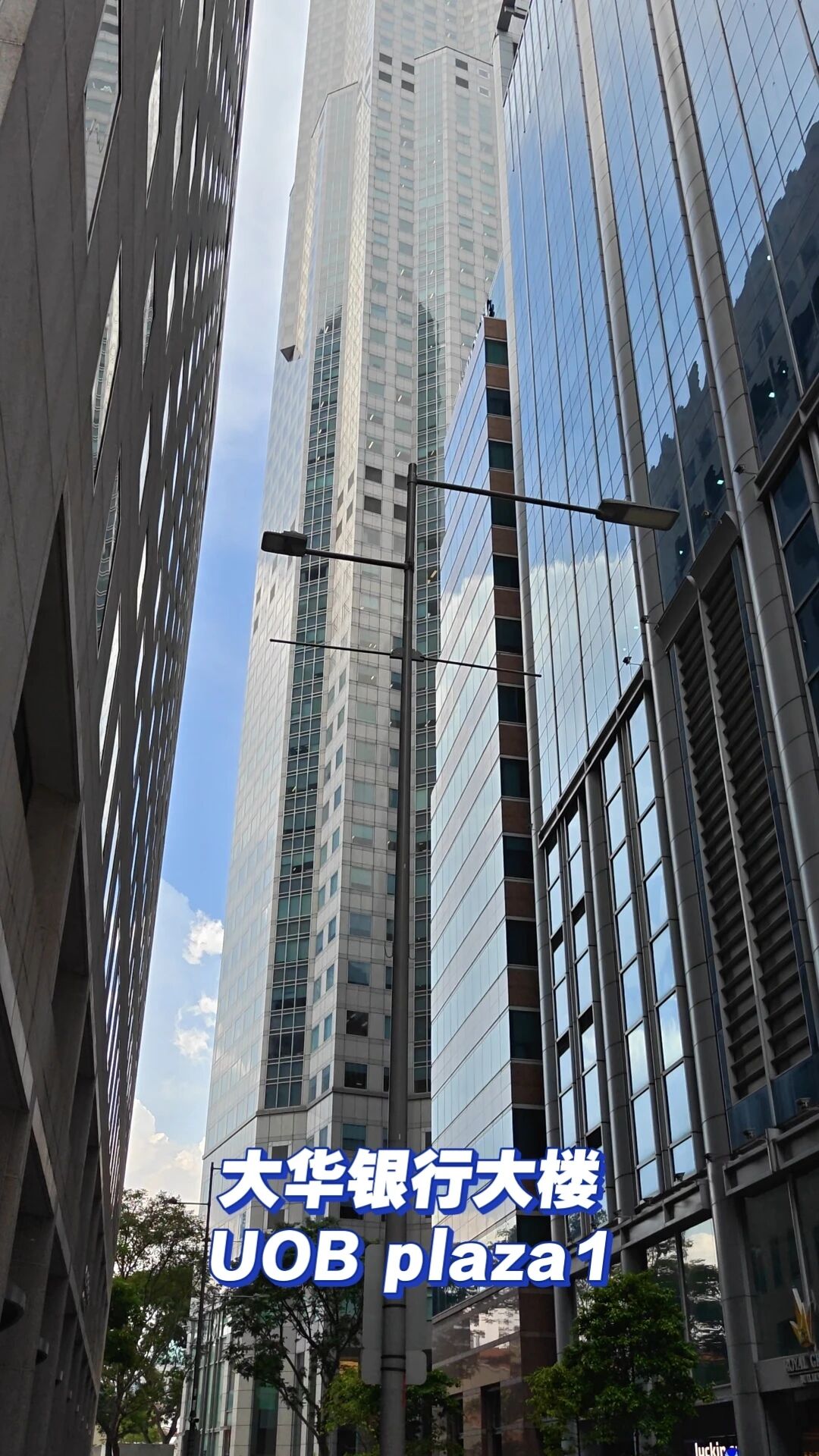
This mosque is located in the basement of the UOB Plaza 1 building in Singapore.
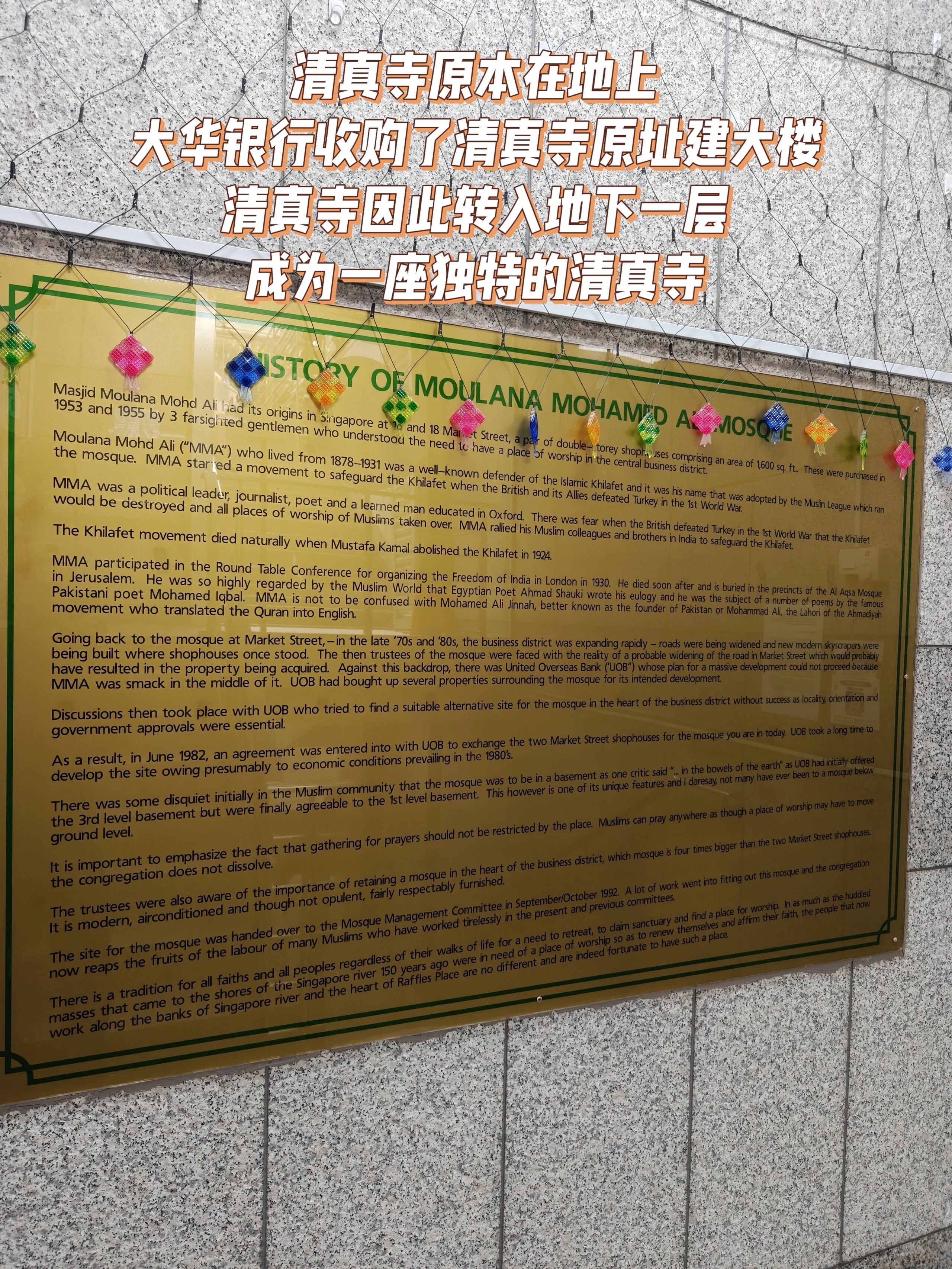
At the time, the bank wanted this land, which had shops owned by the mosque. The mosque and the bank reached an agreement where the mosque traded its shop space for part of the bank's basement.
That is how this underground mosque came to be.
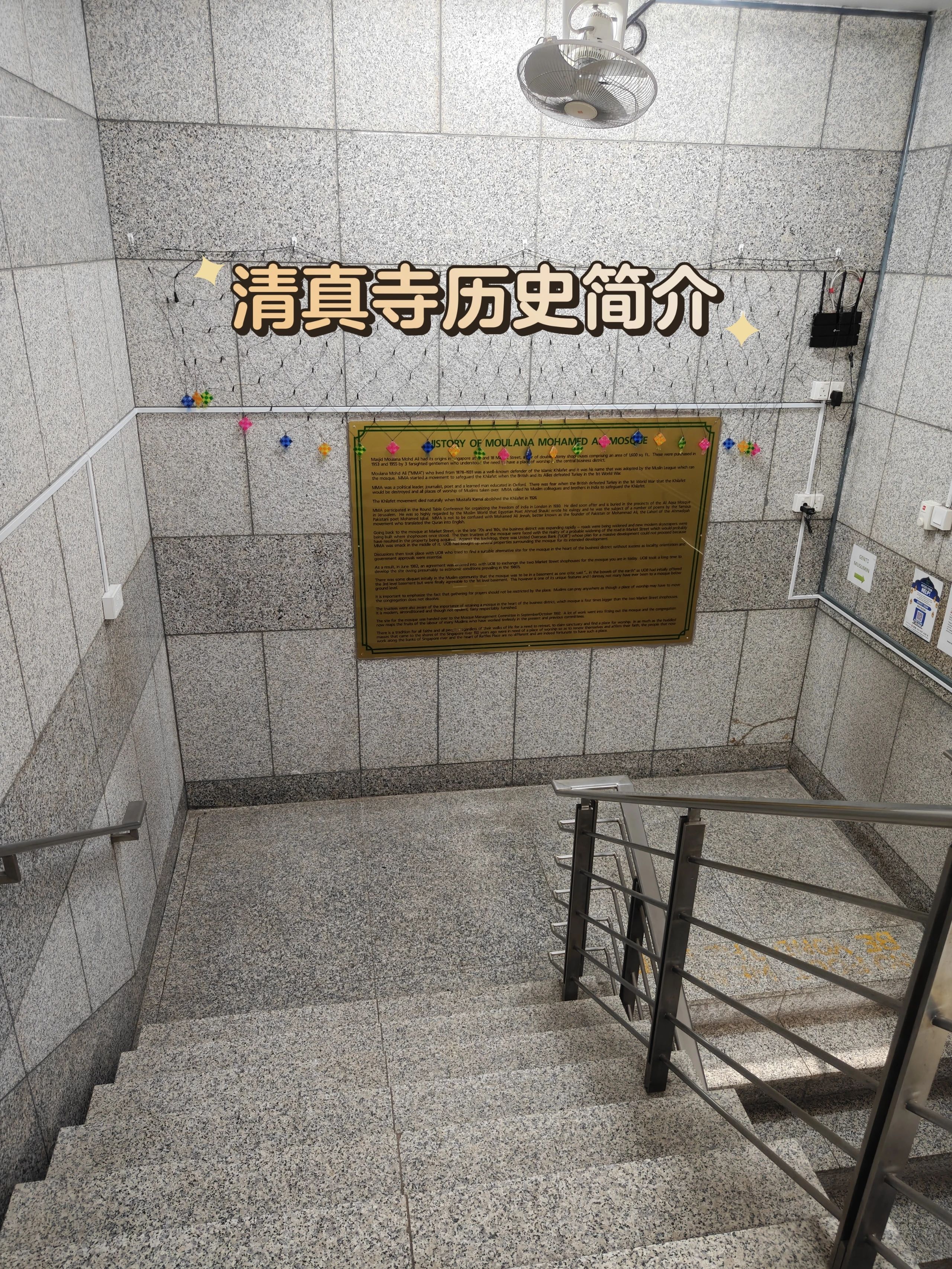
A brief introduction to the mosque is on the wall by the stairs leading down to the basement.
To be honest, the mosque is easy to find. Just follow your GPS to the UOB building and you will see the entrance.
There is a sign for the mosque near the entrance.
Be careful not to go to the wrong one, as this mosque has two entrances: one for men and one for women.
I almost went to the wrong one the first time I visited.
The men's entrance is on the side closer to the pier.
When I went a second time, they had added a white canopy to the men's entrance.
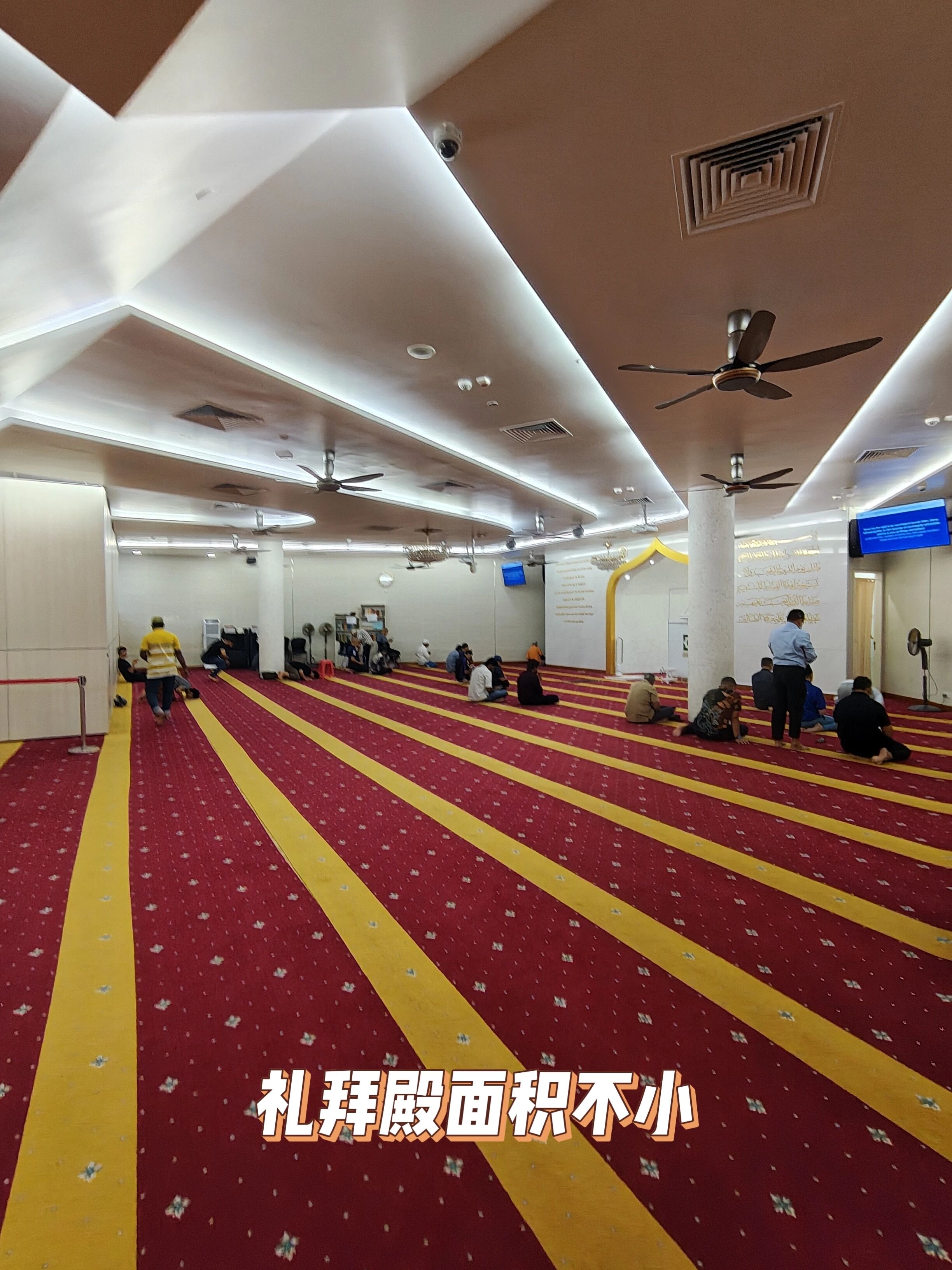
The mosque is quite spacious, much bigger than I imagined.
It has all the necessary facilities, though it does not have a minaret.
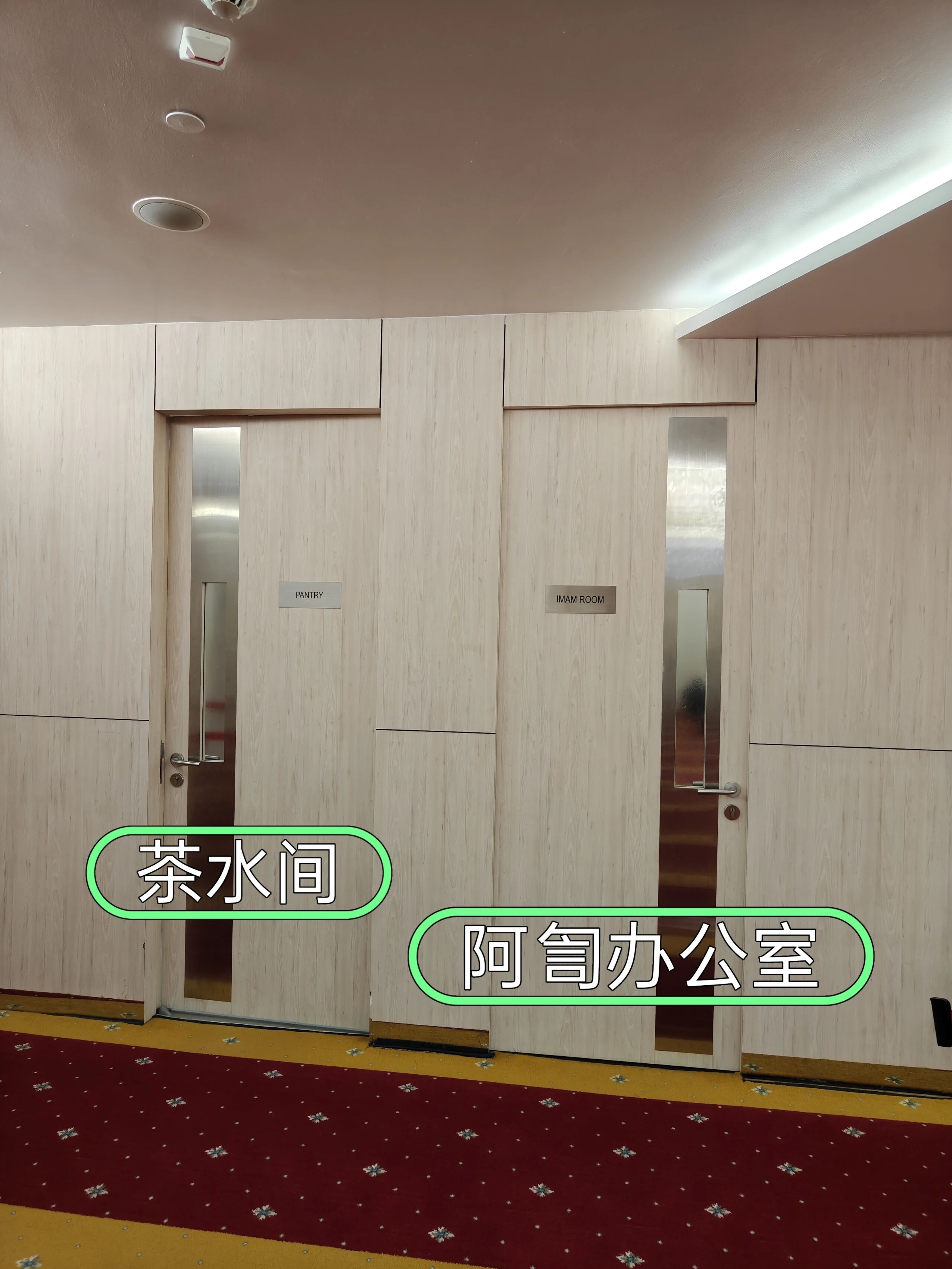
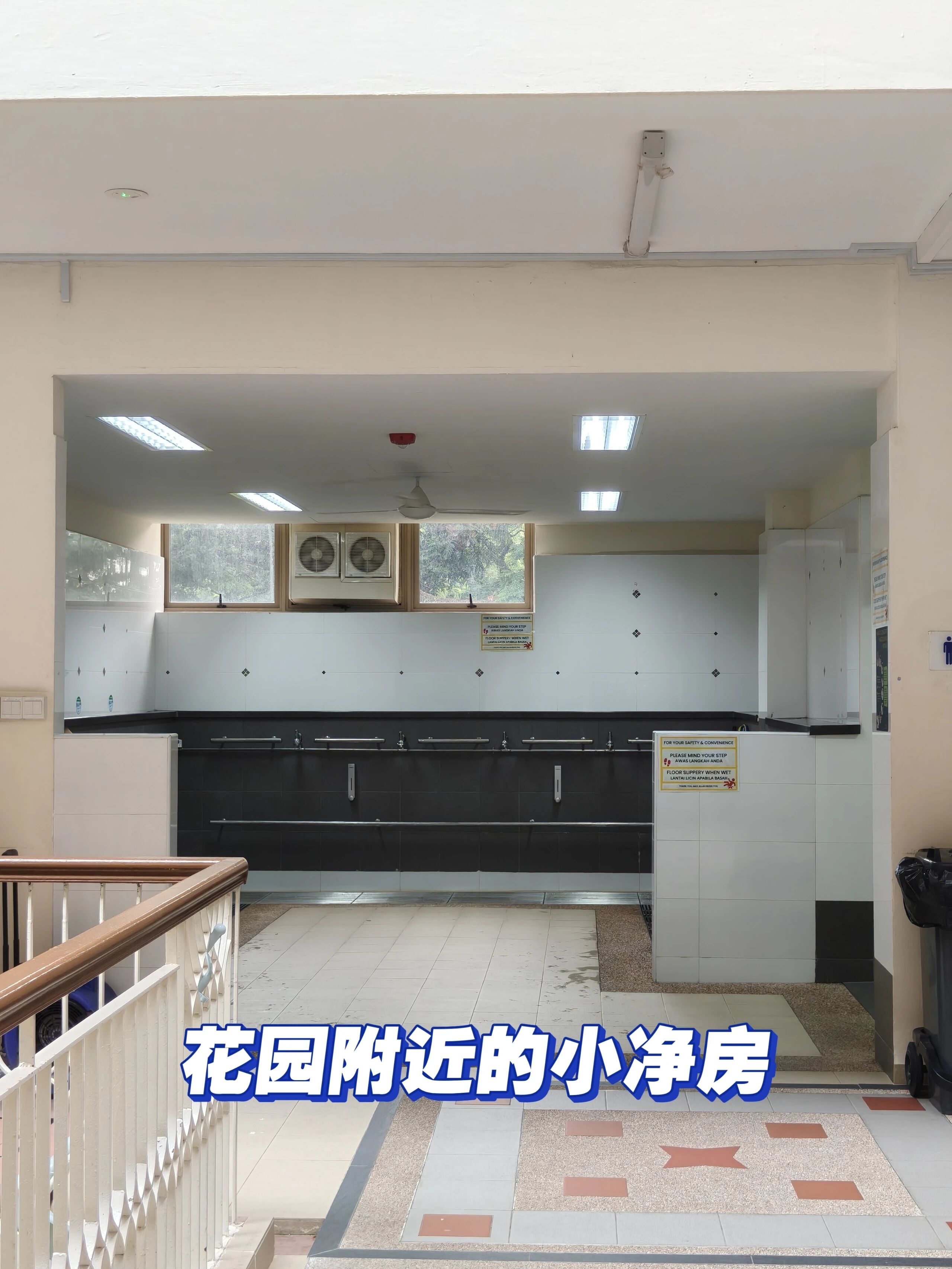
Inside, there are restrooms and a place for wudu.
There is an office for the imam.
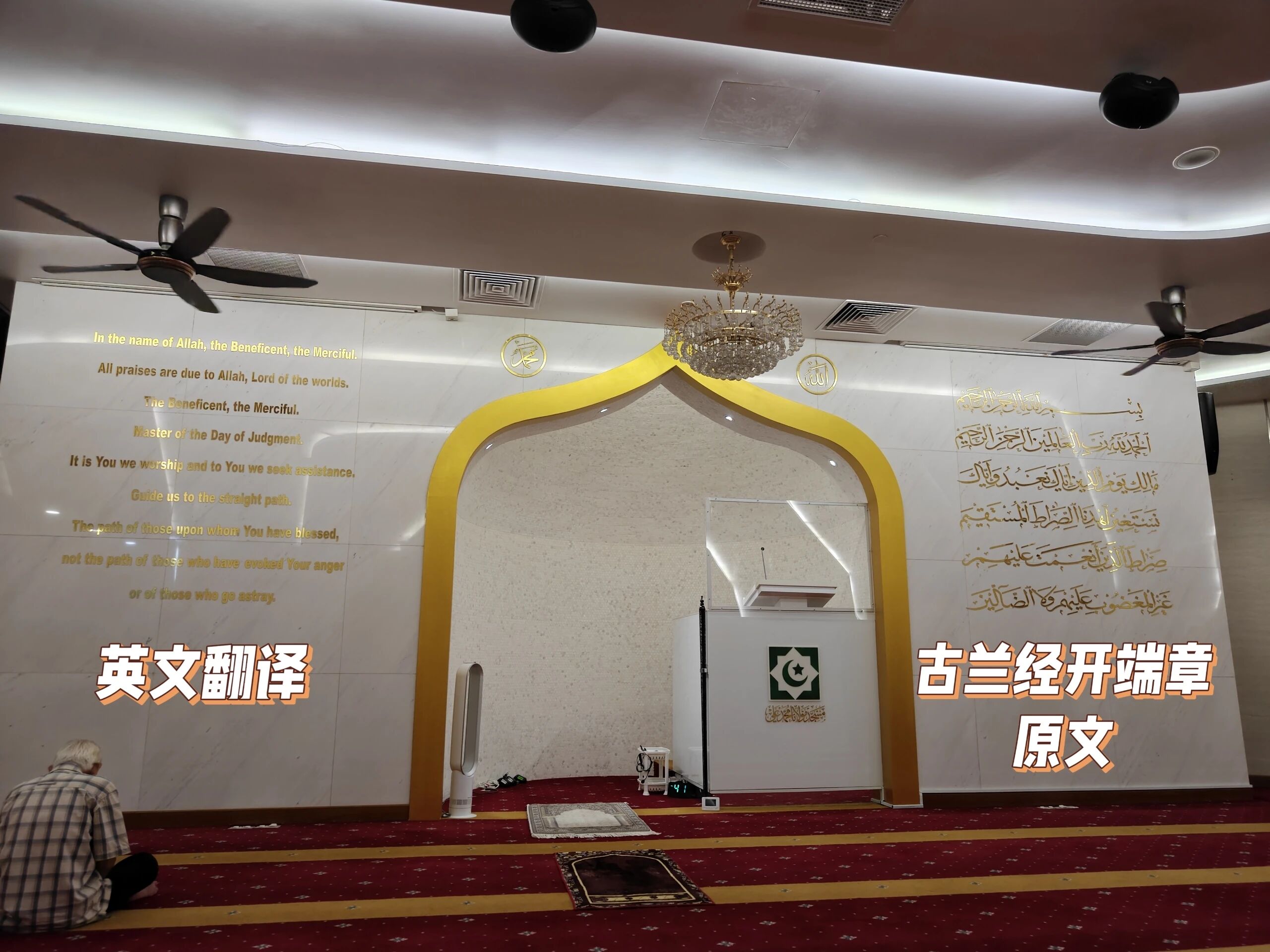
To the left and right of the mihrab niche are the opening chapter of the Quran and its English translation.
That is right, just like at the Al-Abrar Mosque mentioned above, it is also the opening chapter.
The opening chapter is very important. Everyone who performs namaz must know how to recite it because it is used in every prayer.
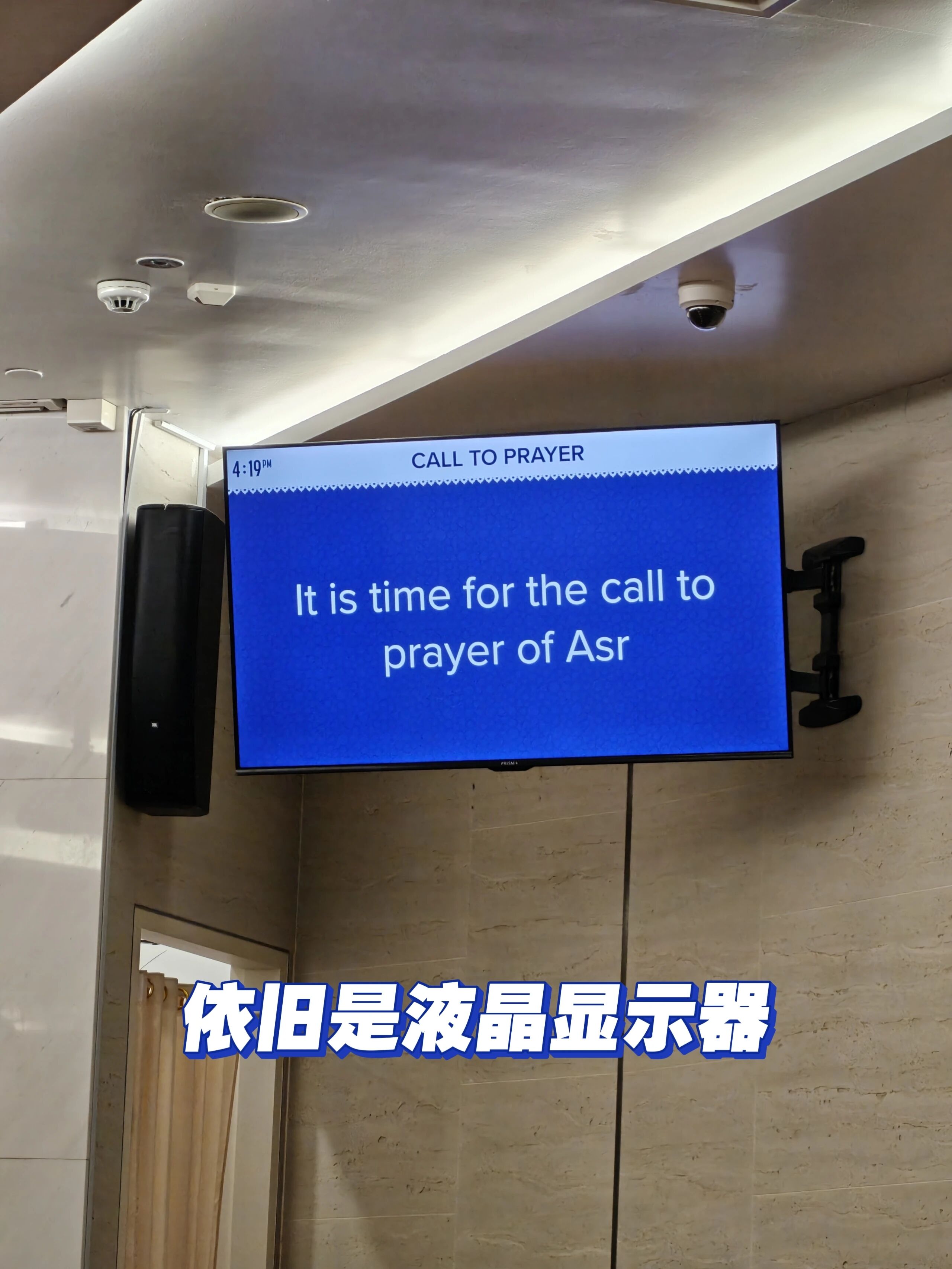
Singapore's mosques really feel modern. First, in the prayer hall of the Sultan Mosque, there are two full rows of LCD screens looping information about hadith and upcoming lectures.
Then, there are the self-service zakat machines seen at the Al-Abrar Mosque and the Al-Falah Mosque on Orchard Road.
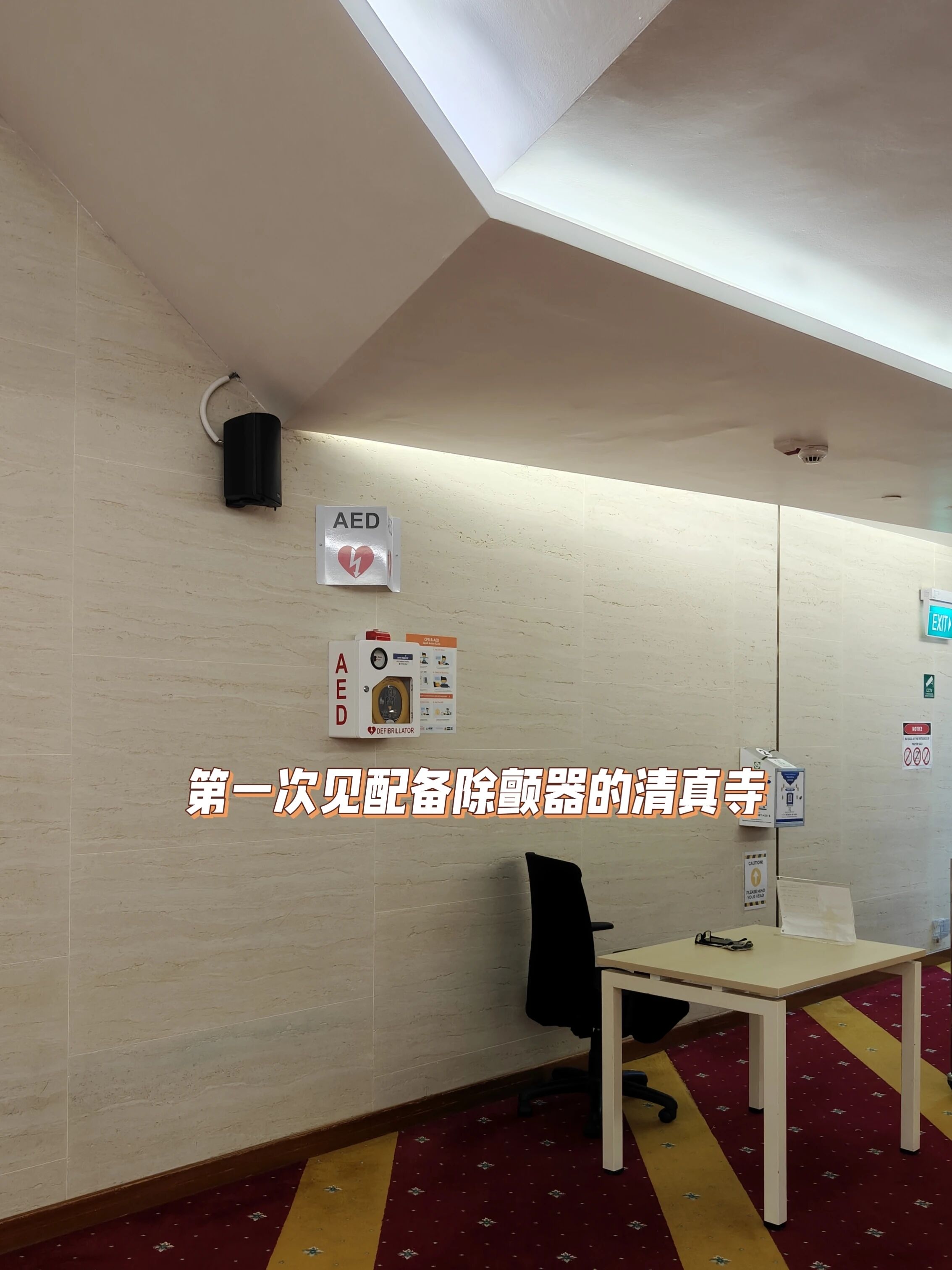
Now, I have found a heart defibrillator in the underground mosque, used to save patients who have sudden heart attacks.
12. Omar Kampong Melaka Mosque, the oldest mosque in Singapore.
Next, I will introduce the earliest mosque built in Singapore.
This mosque was built in 1820 by a Middle Eastern merchant named Syed Omar.
In 1820, twenty years later, the First Opium War would break out in China.
This shows how late this part of Singapore was developed.
The family members of this Sayyid Omar are buried right next to the minaret.
You can still see the graveyard when you visit the tower today.
At first, I thought this mosque might be exaggerating about being the oldest.
Sultan Mosque, Temenggong Mosque, and Jamae Mosque are also quite old.
But once I went inside, I saw it was built in 1820, which is indeed a few years earlier than Jamae Mosque, built in 1826.
You can see the mosque is built with solid materials. Even though you do not need thick walls in such a hot place, the railings and wall thickness show this building was not thrown together.
The imam at the mosque is very young, and he seems even younger than me.
He looks like he is in his early twenties.
When he found out I was a tourist, he gave me his contact information and told me to reach out if I had any trouble.
When I went to the mosque a second time, the imam had changed, but it was still a young man.
I do not know where the first imam went.
There are some long tables and chairs in the front courtyard of the mosque, and there is a vending machine nearby that sells halal boxed meals.
There is also a microwave nearby.
You can buy food, heat it up in the mosque, and eat it there, which is quite convenient.
13. Al-Amin Mosque.
We have introduced many South Indian-style mosques built by Indians, but I think the core of the Muslim population in Singapore is still the Malay community.
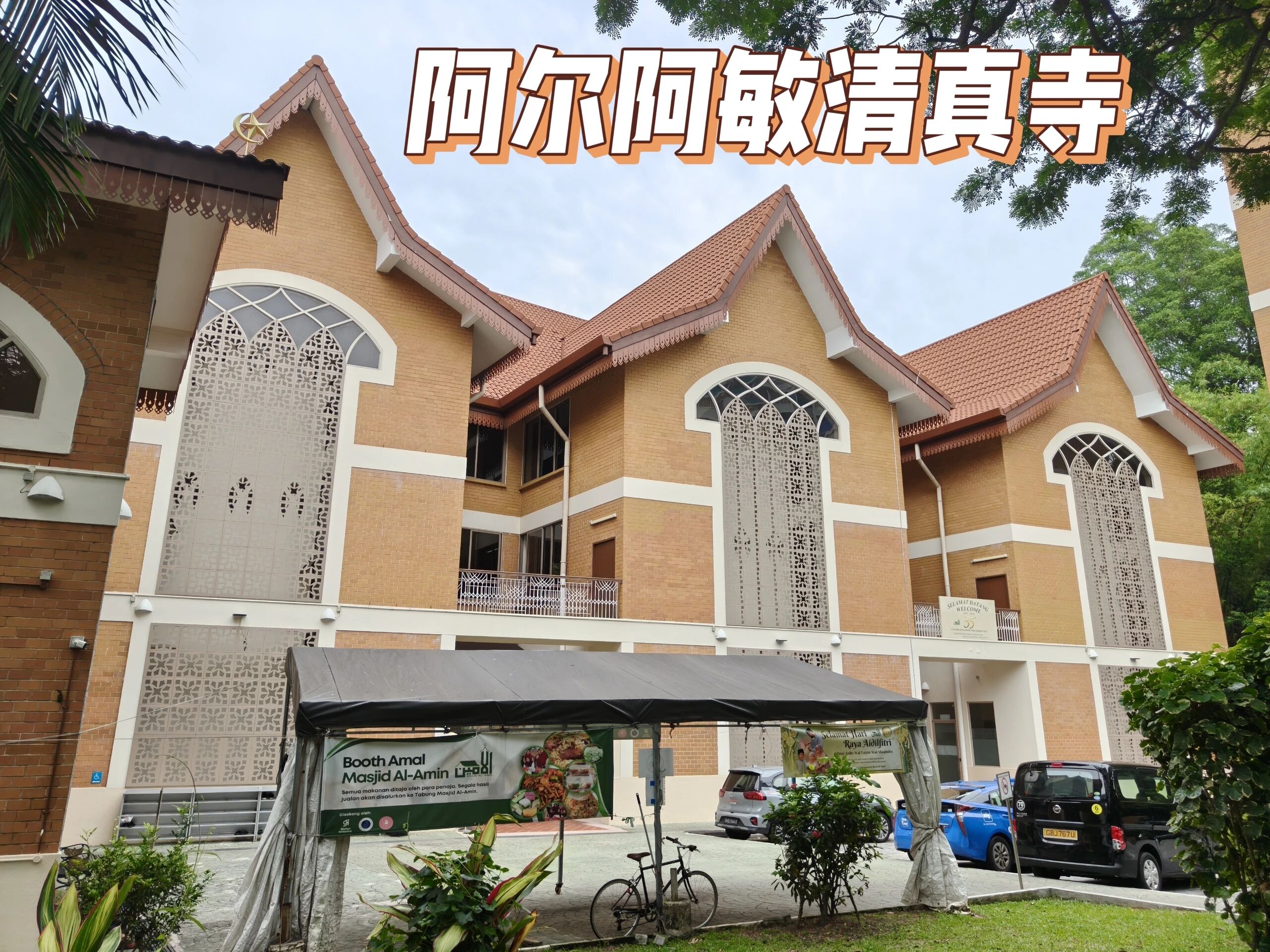
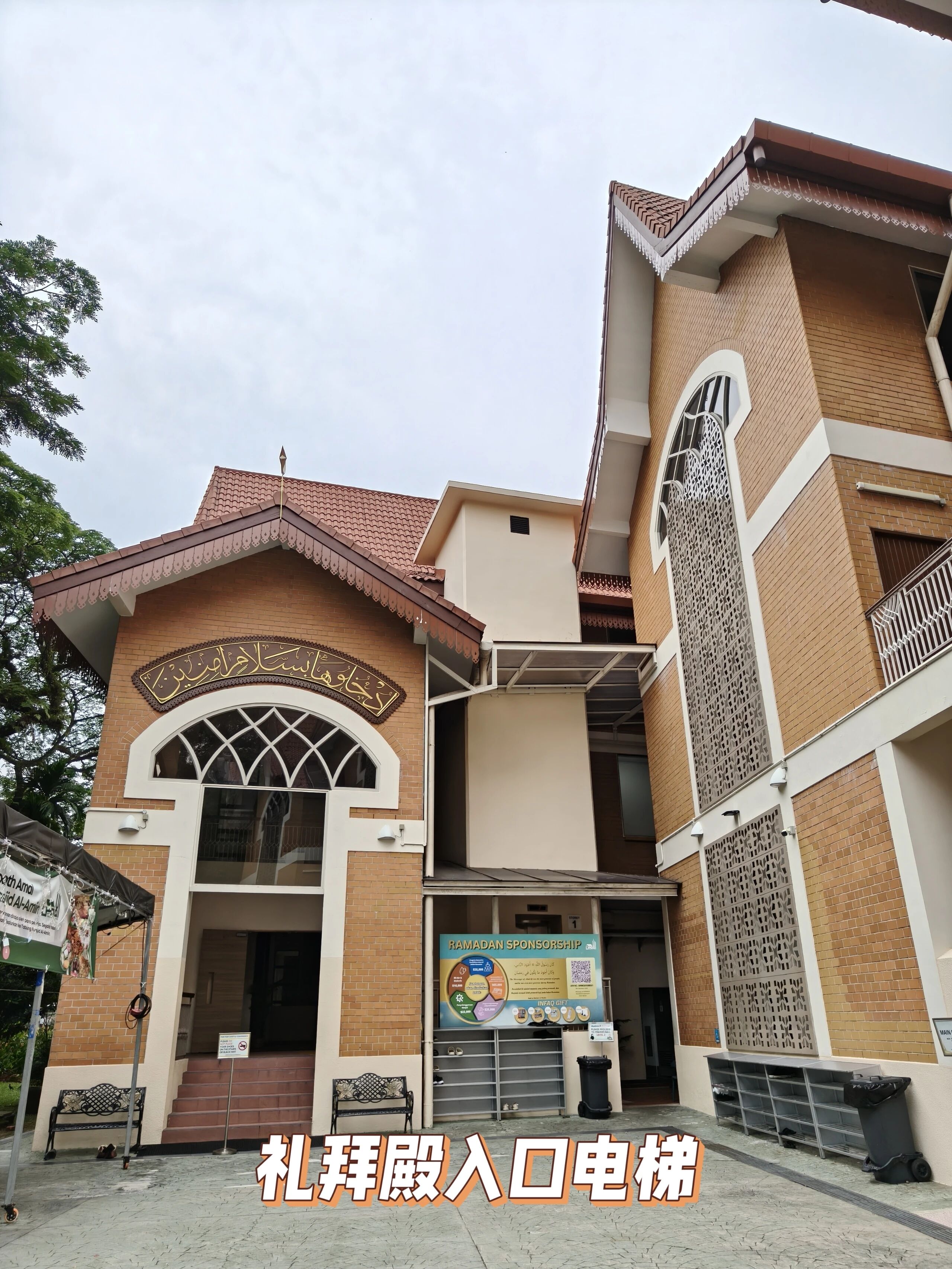
The Al-Amin Mosque I am about to introduce is a Malaysian-style mosque.
This type of roof has a very Southeast Asian feel, and you have probably seen similar buildings in other Southeast Asian countries.
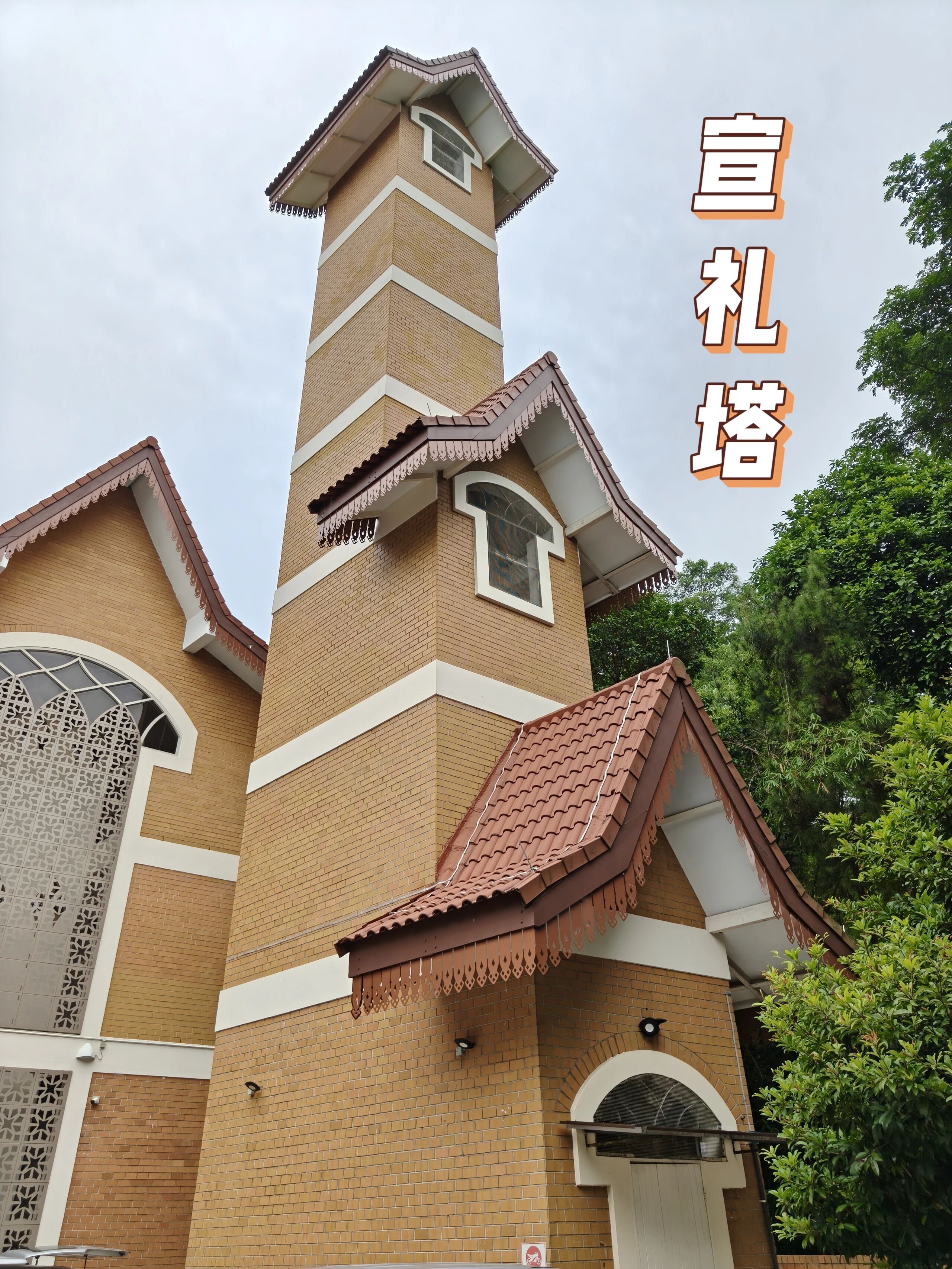
The minaret also looks like this:
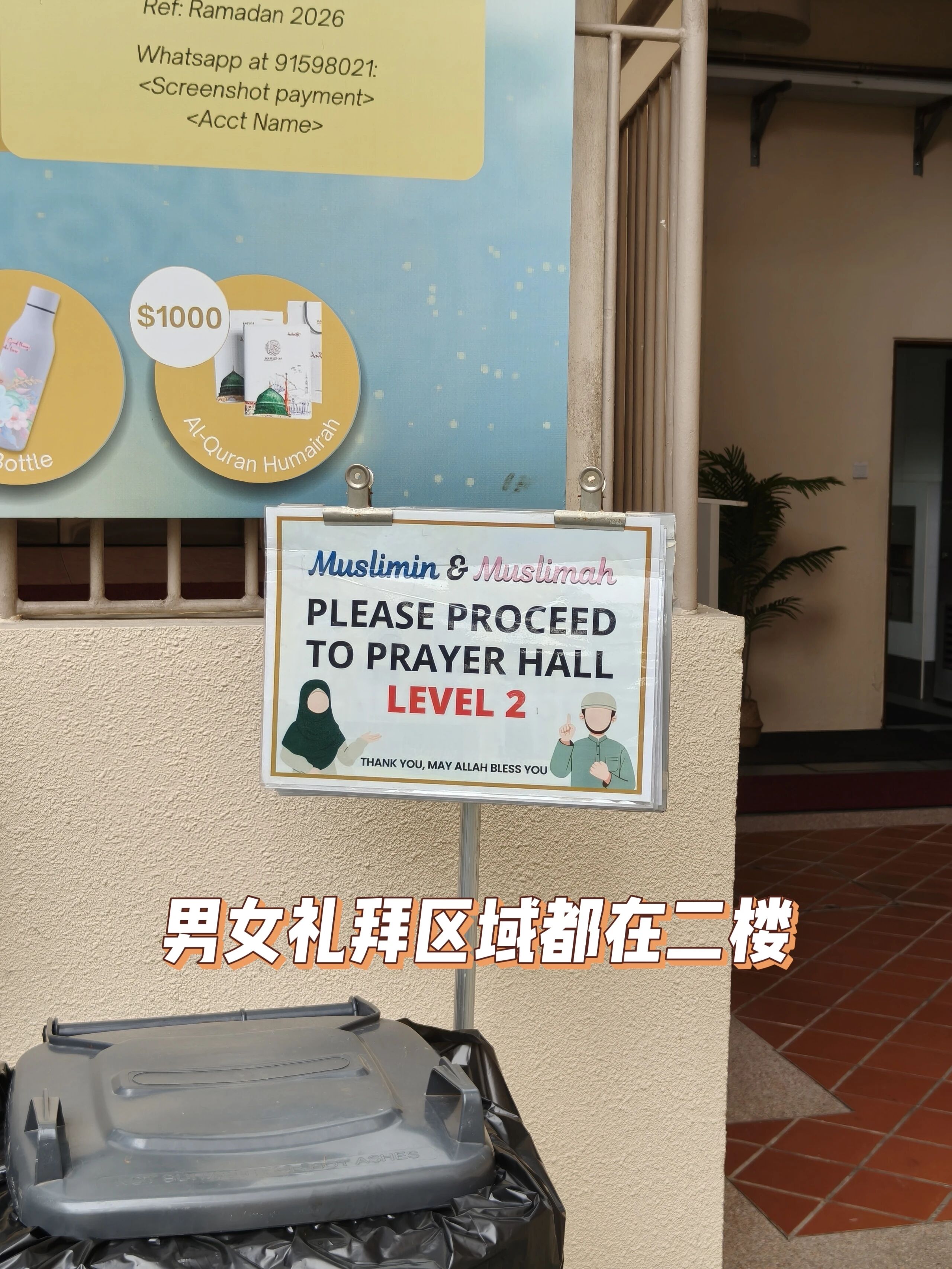
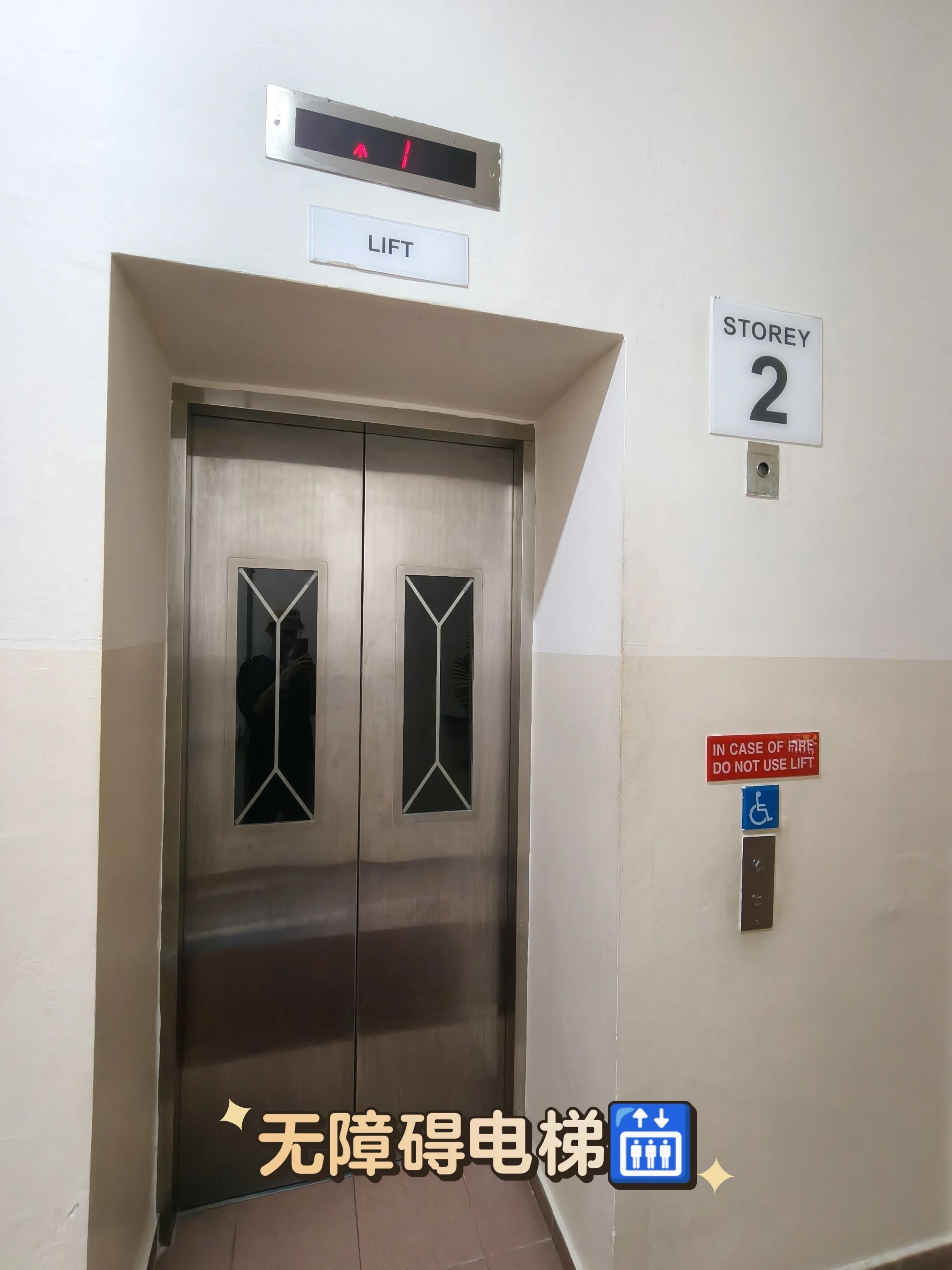
Take the elevator to the second floor to reach the prayer hall, which looks very cool and well-ventilated.
Sitting inside, you do not feel hot at all.
On the first floor of this mosque, I found a sign with writing that looks like Arabic.
But if you look closely, it is actually not Arabic.
It has a few letters that do not exist in Arabic, with two extra dots compared to Arabic letters.
Given the Malay style of the mosque, this must be Jawi script, which uses Arabic letters plus some extra characters to write the Malay language.
The sign says this mosque officially opened on May 1, 1991.
Not far from this mosque is another one called the Temenggong Mosque.
14. Temenggong Mosque.
The Temenggong Mosque was originally the reception hall for the Sultan of Johor, but it was later turned into a mosque. In fact, the mosque still belongs to the Sultan of Johor in Malaysia today.
In that case, does this count as a piece of Malaysian territory inside Singapore?
One thing worth seeing at this mosque is the two flags flying in front of the prayer hall, one of which is the Singapore national flag. view all
Summary: This Singapore Muslim travel guide continues the city route through underground mosques, local prayer spaces, and a self-service zakat machine. It preserves the source's guide structure, site order, and local Muslim life details.
In this issue:
8. Jamae Mosque, which features minarets in a South Indian style.
9. The South Indian gongbei of Singapore, Nagore Dargah.
10. Al-Abrar Mosque.
11. Underground Mosque.
12. Omar Kampong Melaka Mosque, the oldest mosque in Singapore.
13. Al-Amin Mosque.
14. Temenggong Mosque.
15. Sentosa prayer room.
16. Singapore Islamic Centre Mosque.
17. Islamic Religious Council of Singapore.
To be updated:
18. Tomb of Habib Nuh (Habib Nuh Lingmu)
19. Haji Muhammad Salleh Mosque
20. Hajjah Fatimah Mosque
21. Changi Airport Prayer Room
Main text starts:
8. Jamae Mosque
I find this Jamae Mosque very special. Everyone knows what North Indian mosques look like. The Badshahi Mosque in Pakistan, the Jama Masjid in Delhi, and even the Taj Mahal are all classic examples of North Indian mosque architecture.
These mosques are very famous and pop up on your feed all the time, but I bet you haven't seen many of the lesser-known South Indian mosques.
Look at its minaret; it is square. If you made this tower wider and added bright colors, it would look just like a South Indian Hindu temple.
I think this style of tower has a lot of local character.
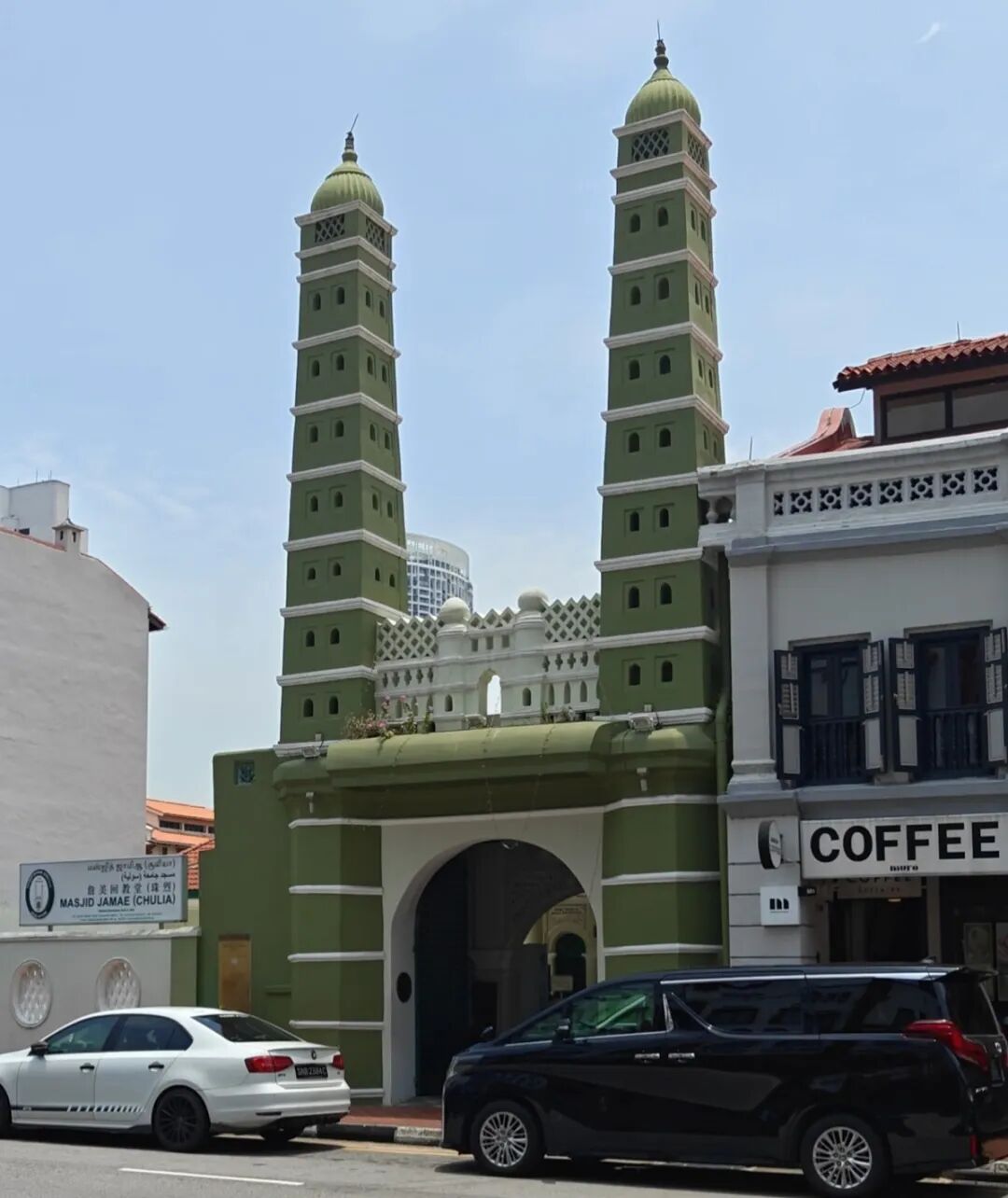
Jamae Mosque, the Buddha Tooth Relic Mosque, and a Hindu mosque are all on the same street.
This mosque welcomes visitors and has a dedicated tourist area. There are many information boards there to explain the basics to visitors.
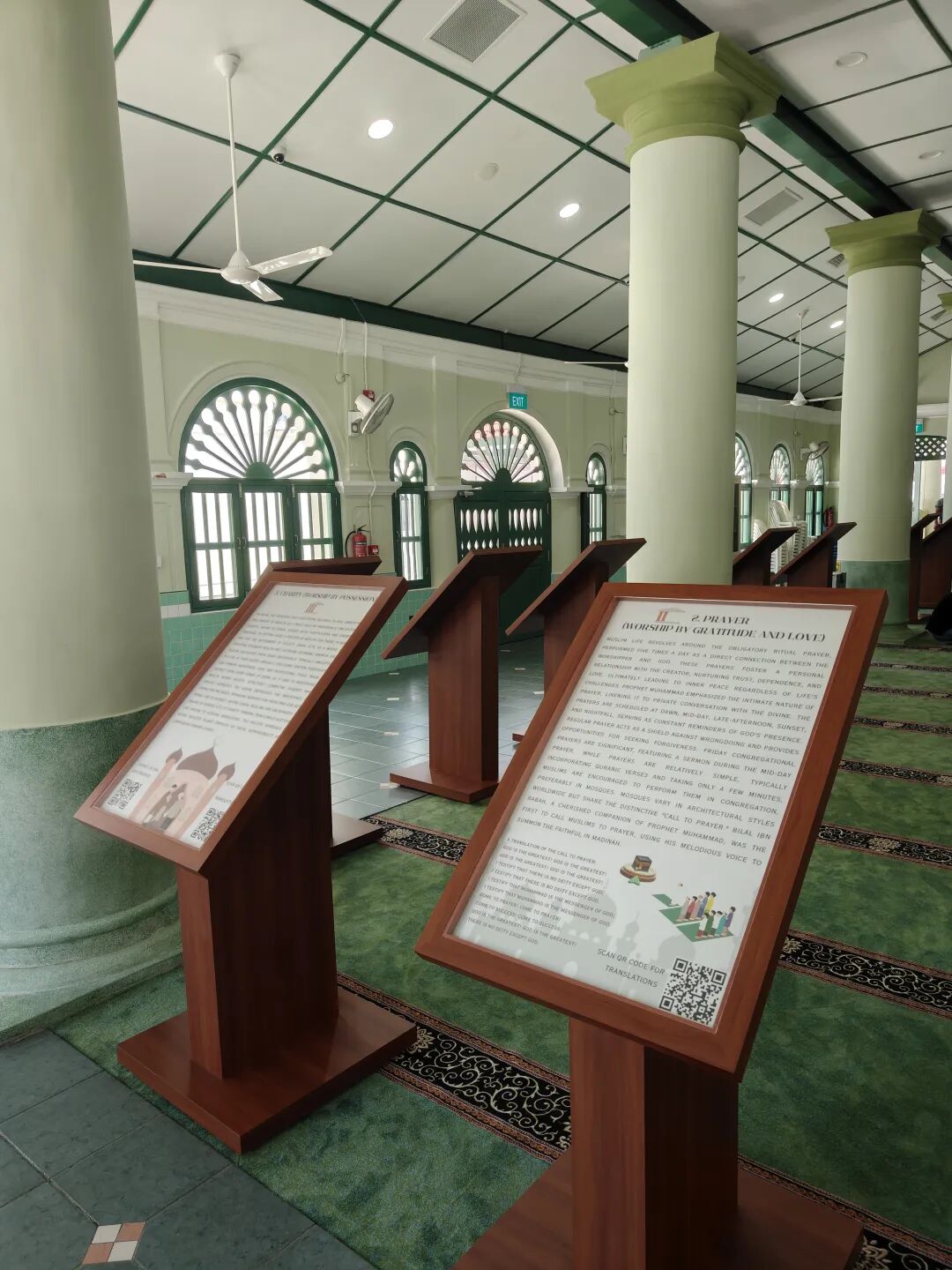
The mosque's minaret is in a South Indian style, but the prayer hall area instantly brings back memories of the South Seas. The doors and windows especially have a strong colonial-era South Seas feel.
Inside the prayer hall, the mihrab and the minbar are very simple.
This mosque was established by Tamil people from South India, so there is also Tamil script inside the prayer hall.
As I left, I noticed there were actually steps by the minaret. It seems at least the entrance area can be climbed.
9. South Indian gongbei, Nagore Dargah
The actual Nagore Dargah is in the Indian state of Tamil Nadu, which is the ancestral home of the Tamil people.
To me, the Tamil people are a bit like the people from Fujian in our country.
Tamil Nadu is in southeastern India, facing the island of Sri Lanka across the sea.
People from Fujian are also on the southeast coast of China, with Taiwan island just across the strait.
Tamil people like to go to sea to do business, and so do Fujian people, running businesses all over the world.
Back to the topic, the Nagore Dargah in Tamil Nadu is a real gongbei, containing the graves of Muslim saints.
But this Nagore Dargah in Singapore is empty and only has a symbolic tomb.
This was my first time seeing something like this. I went inside and asked the manager where the tomb was. He said the tomb is back home in India. I was shocked!
This Dargah (a term used in South India for a gongbei) also has a South Indian style with a square tower.
It is no longer a religious site but has been turned into a museum. It displays many items used by the older generation of Indian immigrants who came to Singapore.
At the very back of the main hall, you can see a symbolic tomb chamber.
So, my trip was not a waste after all.
I think the highlight of the tomb chamber is the oil lamp placed in the small wall niche.
These niches are very common in India and are used to hold oil lamps for lighting.
On the wall of the tomb chamber hangs a photo of the Nagore Dargah in India. Looking at it, the place covers a very large area.
I really want to go to India to see it in person, but it is a pity that India is very strict with Chinese citizens right now, and tourist visas are hard to get.
10. Al-Abrar Mosque.
When I visited the Nagore Dargah, I asked the manager if there was a place to perform namaz. He told me that everyone goes to a nearby mosque for namaz now.
The mosque he mentioned is the Al-Abrar Mosque located on this same street.
There is an inner hall inside the prayer hall of this mosque.
Directly above the inner hall, there is a piece of blue glass with the opening chapter of the Quran written on it.
The fan-shaped stained glass on the mosque's doors and windows is also very cute.
At the very back of the main hall, you can see a symbolic tomb chamber.
So, my trip was not a waste after all.
I think the highlight of the tomb chamber is the oil lamp placed in the small wall niche.
These niches are very common in India and are used to hold oil lamps for lighting.
On the wall of the tomb chamber hangs a photo of the Nagore Dargah in India. Looking at it, the place covers a very large area.
I really want to go to India to see it in person, but it is a pity that India is very strict with Chinese citizens right now, and tourist visas are hard to get.
At the very back of the main hall, you can see a symbolic tomb chamber.
So, my trip was not a waste after all.
I think the highlight of the tomb chamber is the oil lamp placed in the small wall niche.
These niches are very common in India and are used to hold oil lamps for lighting.
On the wall of the tomb chamber hangs a photo of the Nagore Dargah in India. Looking at it, the place covers a very large area.
I really want to go to India to see it in person, but it is a pity that India is very strict with Chinese citizens right now, and tourist visas are hard to get.
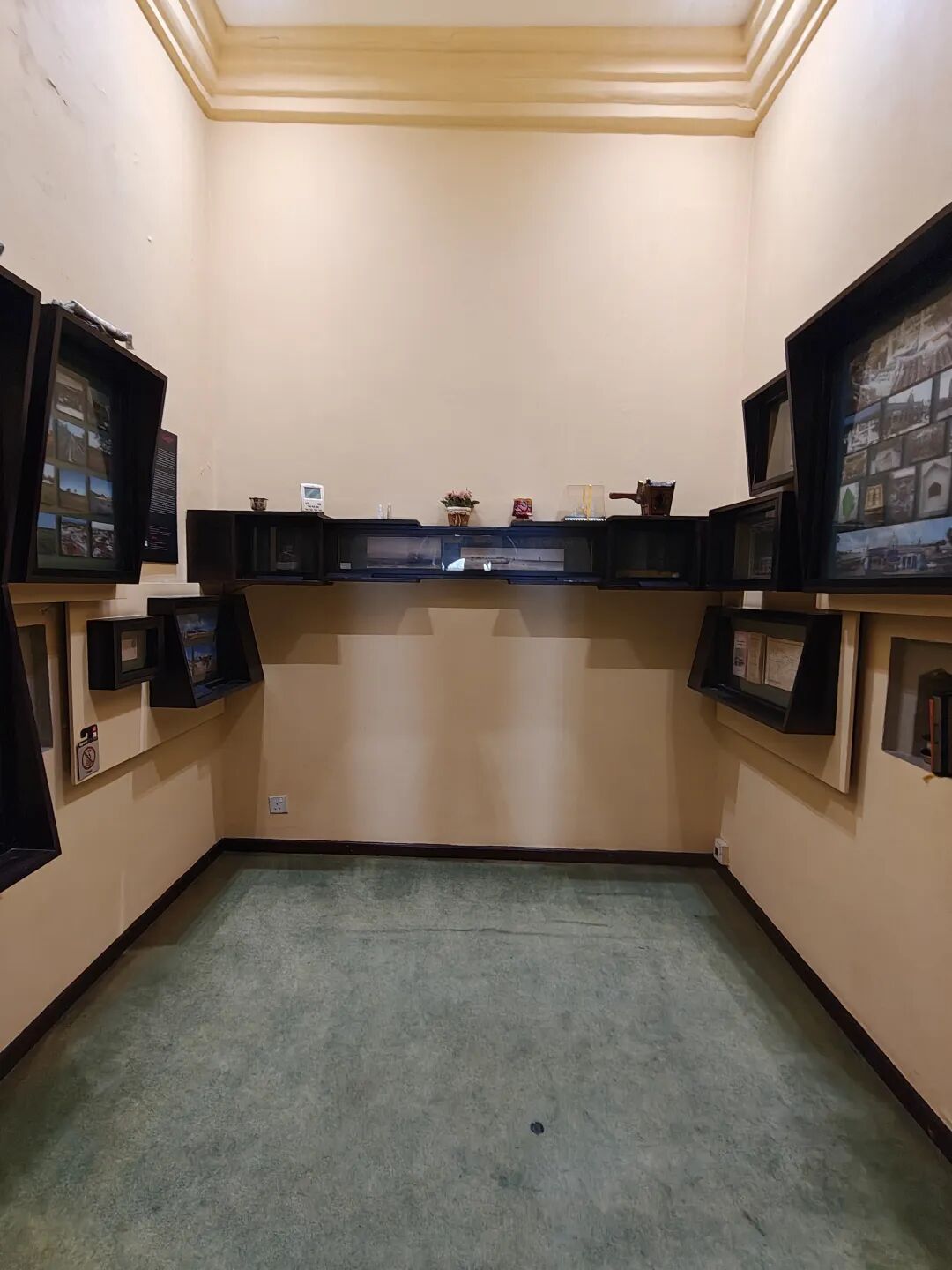
I think the highlight of the tomb chamber is the oil lamp placed in the small wall niche.
These niches are very common in India and are used to hold oil lamps for lighting.
On the wall of the tomb chamber hangs a photo of the Nagore Dargah in India. Looking at it, the place covers a very large area.
I really want to go to India to see it in person, but it is a pity that India is very strict with Chinese citizens right now, and tourist visas are hard to get.
On the wall of the tomb chamber hangs a photo of the Nagore Dargah in India. Looking at it, the place covers a very large area.
I really want to go to India to see it in person, but it is a pity that India is very strict with Chinese citizens right now, and tourist visas are hard to get.
10. Al-Abrar Mosque.
When I visited the Nagore Dargah, I asked the manager if there was a place to perform namaz. He told me that everyone goes to a nearby mosque for namaz now.
The mosque he mentioned is the Al-Abrar Mosque located on this same street.
There is an inner hall inside the prayer hall of this mosque.
Directly above the inner hall, there is a piece of blue glass with the opening chapter of the Quran written on it.
The fan-shaped stained glass on the mosque's doors and windows is also very cute.
There is an inner hall inside the prayer hall of this mosque.
Directly above the inner hall, there is a piece of blue glass with the opening chapter of the Quran written on it.
The fan-shaped stained glass on the mosque's doors and windows is also very cute.
Just before leaving, I noticed a machine at the mosque entrance with the word Zakat written on it.
Zakat is the mandatory charity for Muslims. I was surprised to see a self-service Zakat machine here in Singapore, where you can pay using a bank card. The funds are managed by the Islamic Religious Council of Singapore.
This is the first time I have ever seen this way of paying.
11. Underground Mosque.
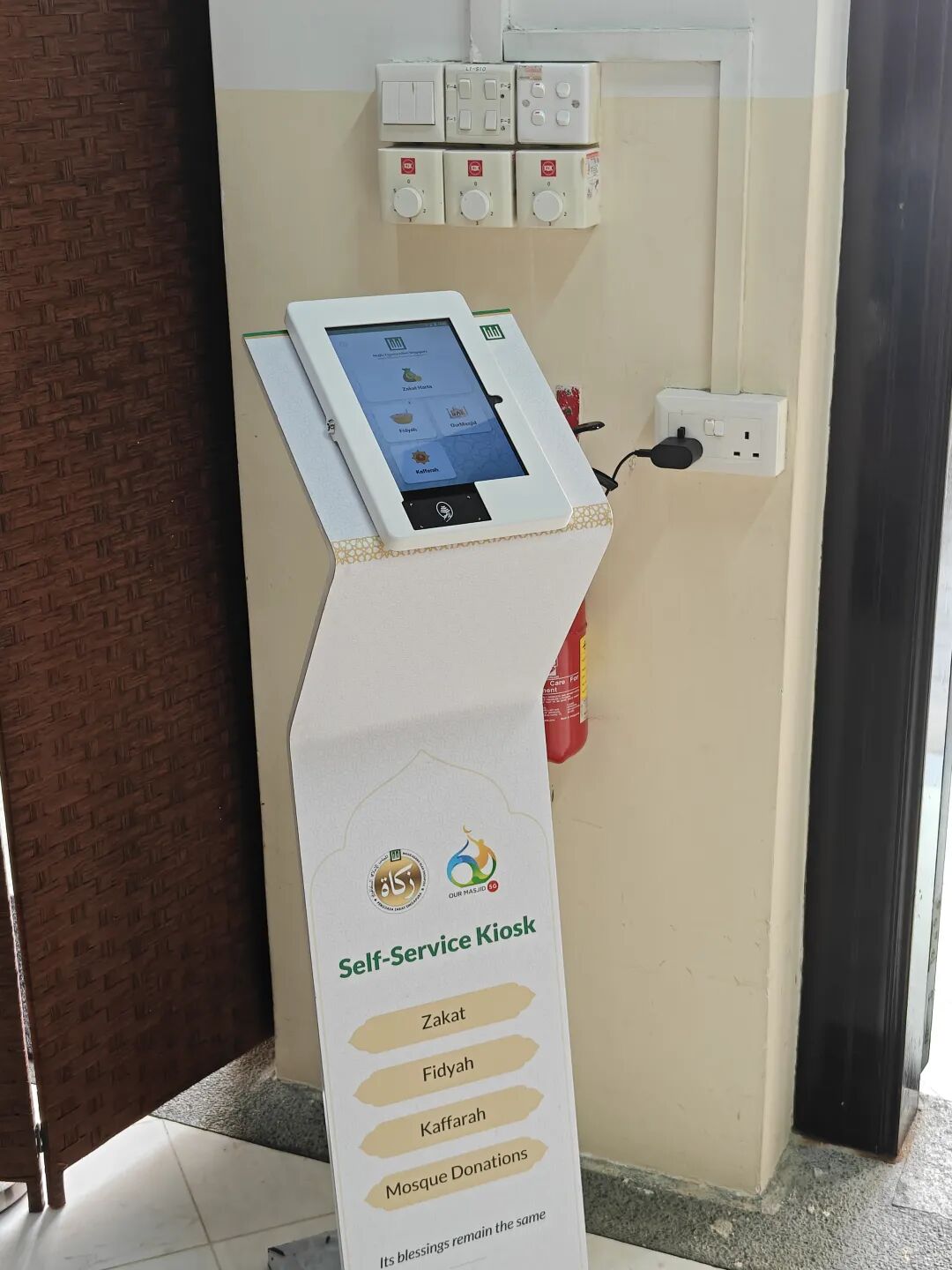
A self-service Zakat machine is novel enough, but even more surprising is Singapore's underground mosque.
This mosque is located in the basement of the UOB Plaza 1 building in Singapore.
At the time, the bank wanted this land, which had shops owned by the mosque. The mosque and the bank reached an agreement where the mosque traded its shop space for part of the bank's basement.
That is how this underground mosque came to be.
A brief introduction to the mosque is on the wall by the stairs leading down to the basement.
To be honest, the mosque is easy to find. Just follow your GPS to the UOB building and you will see the entrance.
There is a sign for the mosque near the entrance.
Be careful not to go to the wrong one, as this mosque has two entrances: one for men and one for women.
I almost went to the wrong one the first time I visited.
The men's entrance is on the side closer to the pier.
When I went a second time, they had added a white canopy to the men's entrance.
The mosque is quite spacious, much bigger than I imagined.
It has all the necessary facilities, though it does not have a minaret.
Inside, there are restrooms and a place for wudu.
There is an office for the imam.
To the left and right of the mihrab niche are the opening chapter of the Quran and its English translation.
That is right, just like at the Al-Abrar Mosque mentioned above, it is also the opening chapter.
The opening chapter is very important. Everyone who performs namaz must know how to recite it because it is used in every prayer.
Singapore's mosques really feel modern. First, in the prayer hall of the Sultan Mosque, there are two full rows of LCD screens looping information about hadith and upcoming lectures.
Then, there are the self-service zakat machines seen at the Al-Abrar Mosque and the Al-Falah Mosque on Orchard Road.
Now, I have found a heart defibrillator in the underground mosque, used to save patients who have sudden heart attacks.
12. Omar Kampong Melaka Mosque, the oldest mosque in Singapore.
Next, I will introduce the earliest mosque built in Singapore.
This mosque was built in 1820 by a Middle Eastern merchant named Syed Omar.
In 1820, twenty years later, the First Opium War would break out in China.
This shows how late this part of Singapore was developed.
The family members of this Sayyid Omar are buried right next to the minaret.
You can still see the graveyard when you visit the tower today.
At first, I thought this mosque might be exaggerating about being the oldest.
Sultan Mosque, Temenggong Mosque, and Jamae Mosque are also quite old.
But once I went inside, I saw it was built in 1820, which is indeed a few years earlier than Jamae Mosque, built in 1826.
You can see the mosque is built with solid materials. Even though you do not need thick walls in such a hot place, the railings and wall thickness show this building was not thrown together.
The imam at the mosque is very young, and he seems even younger than me.
He looks like he is in his early twenties.
When he found out I was a tourist, he gave me his contact information and told me to reach out if I had any trouble.
When I went to the mosque a second time, the imam had changed, but it was still a young man.
I do not know where the first imam went.
There are some long tables and chairs in the front courtyard of the mosque, and there is a vending machine nearby that sells halal boxed meals.
There is also a microwave nearby.
You can buy food, heat it up in the mosque, and eat it there, which is quite convenient.
13. Al-Amin Mosque.
We have introduced many South Indian-style mosques built by Indians, but I think the core of the Muslim population in Singapore is still the Malay community.
The Al-Amin Mosque I am about to introduce is a Malaysian-style mosque.
This type of roof has a very Southeast Asian feel, and you have probably seen similar buildings in other Southeast Asian countries.
The minaret also looks like this:
Take the elevator to the second floor to reach the prayer hall, which looks very cool and well-ventilated.
Sitting inside, you do not feel hot at all.
On the first floor of this mosque, I found a sign with writing that looks like Arabic.
But if you look closely, it is actually not Arabic.
It has a few letters that do not exist in Arabic, with two extra dots compared to Arabic letters.
Given the Malay style of the mosque, this must be Jawi script, which uses Arabic letters plus some extra characters to write the Malay language.
The sign says this mosque officially opened on May 1, 1991.
Not far from this mosque is another one called the Temenggong Mosque.
14. Temenggong Mosque.
The Temenggong Mosque was originally the reception hall for the Sultan of Johor, but it was later turned into a mosque. In fact, the mosque still belongs to the Sultan of Johor in Malaysia today.
In that case, does this count as a piece of Malaysian territory inside Singapore?
One thing worth seeing at this mosque is the two flags flying in front of the prayer hall, one of which is the Singapore national flag.
Muslim Travel Guide Singapore: Haja Fatimah Mosque, Western Minaret and Historic Prayer Hall
Articles • Hasan09 posted the article • 0 comments • 331 views • 2026-05-24 01:47
Summary: This Singapore Muslim travel guide visits Haja Fatimah Mosque, known in the source for its Western-style minaret. It keeps the author's Lion City mosque-series context, mosque details, and historic prayer-hall notes.
This mosque is the last one in my Lion City mosque exploration series. After this update, I will write some summary articles. I hope you all support them.
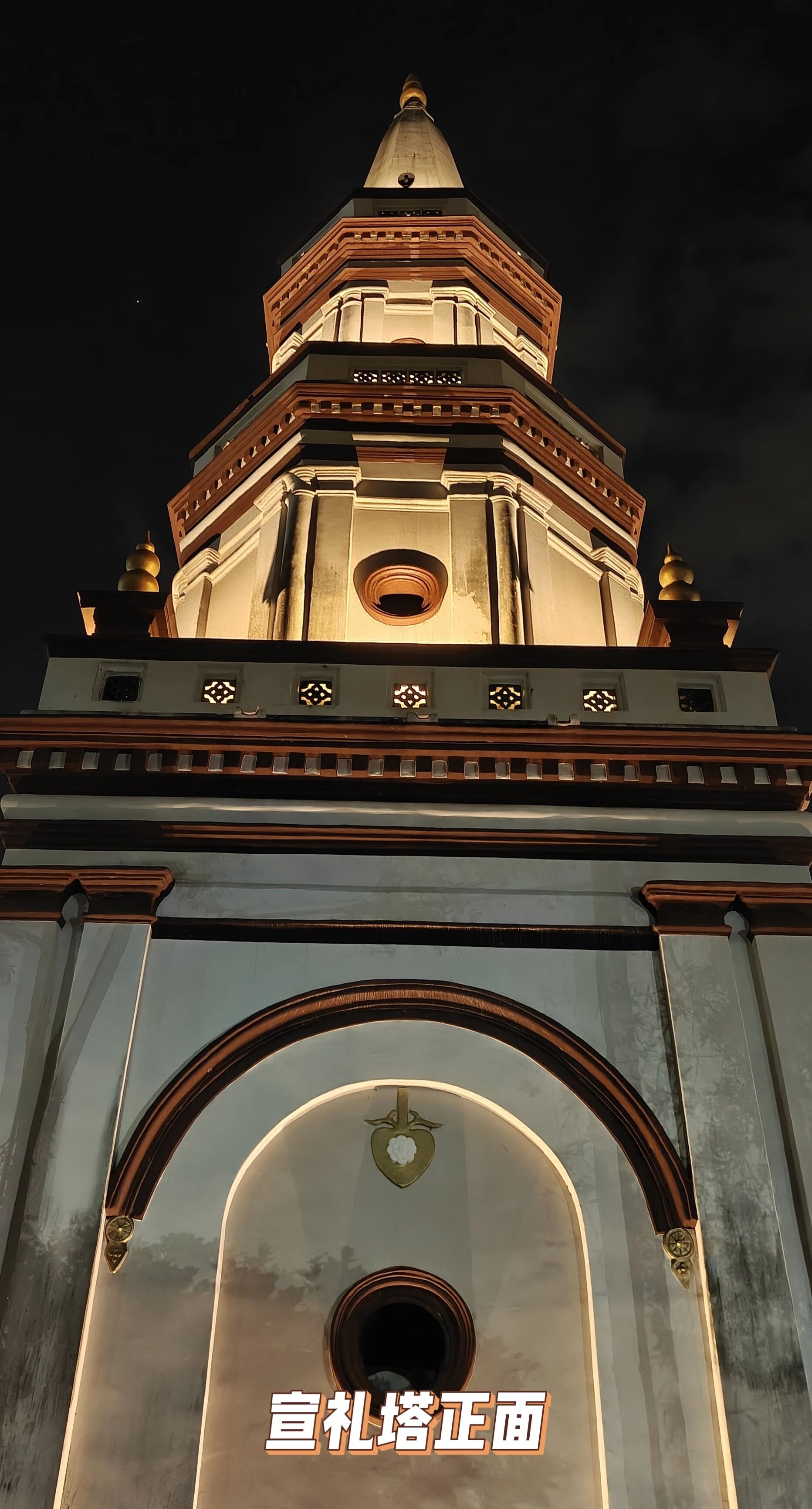
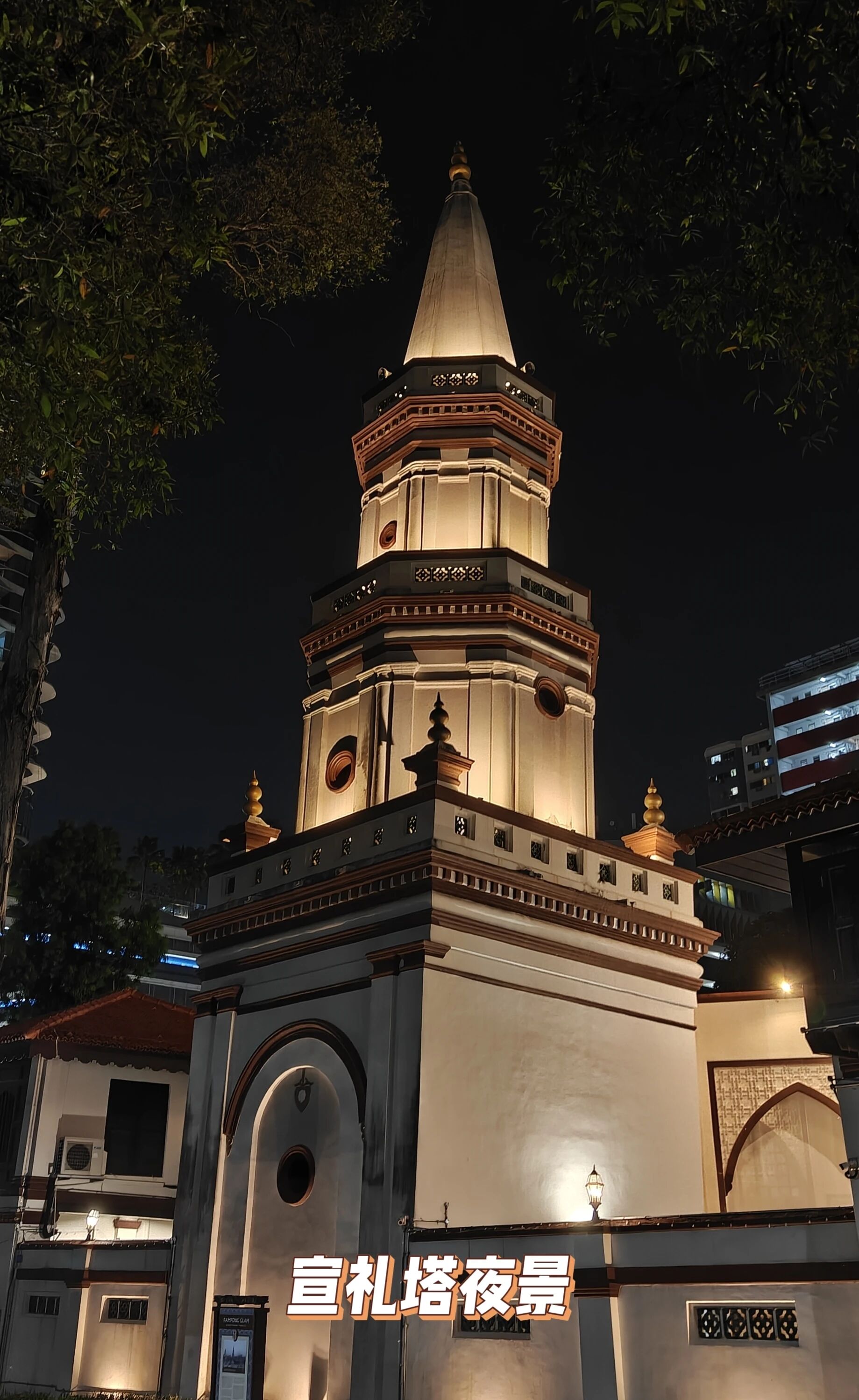
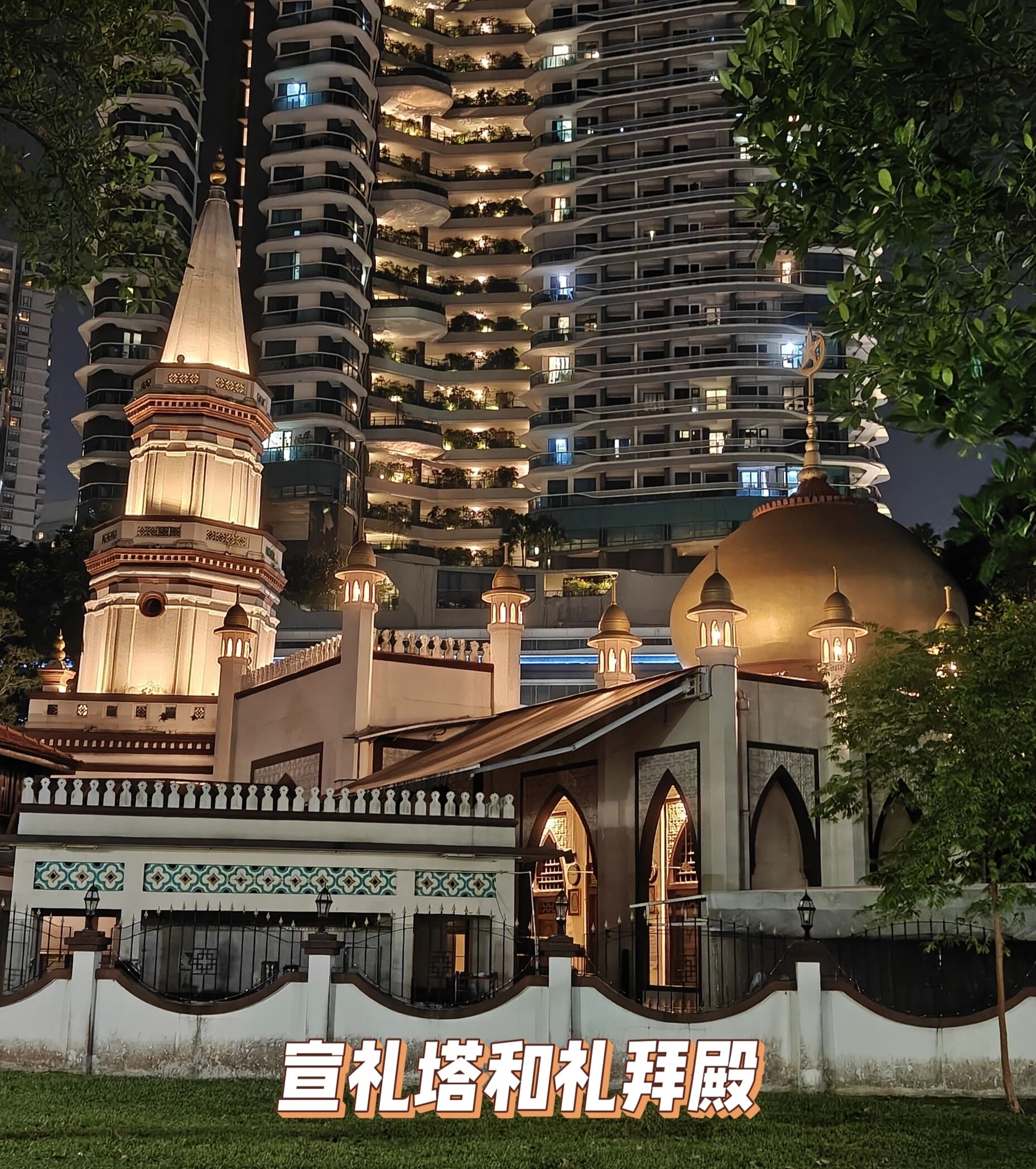
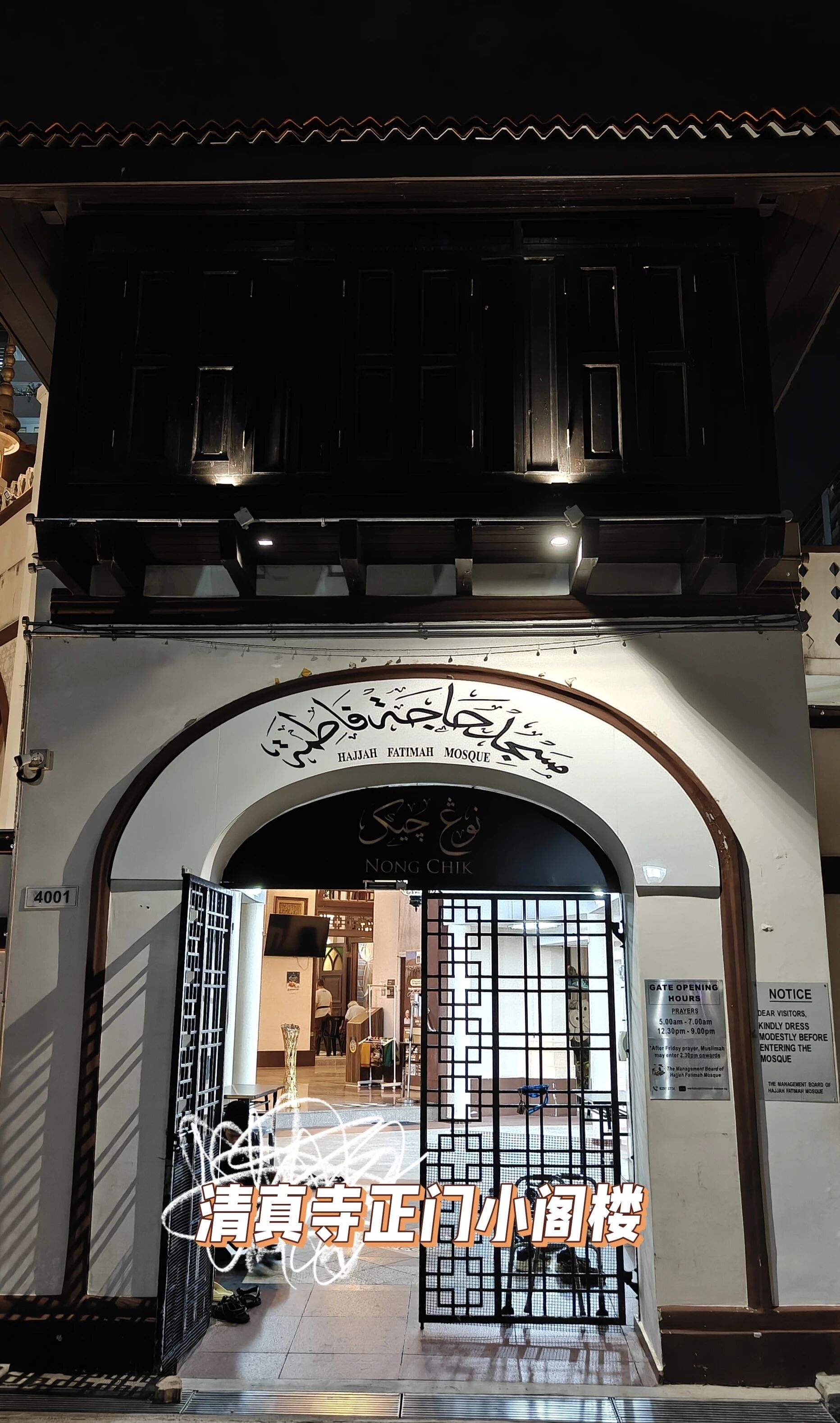
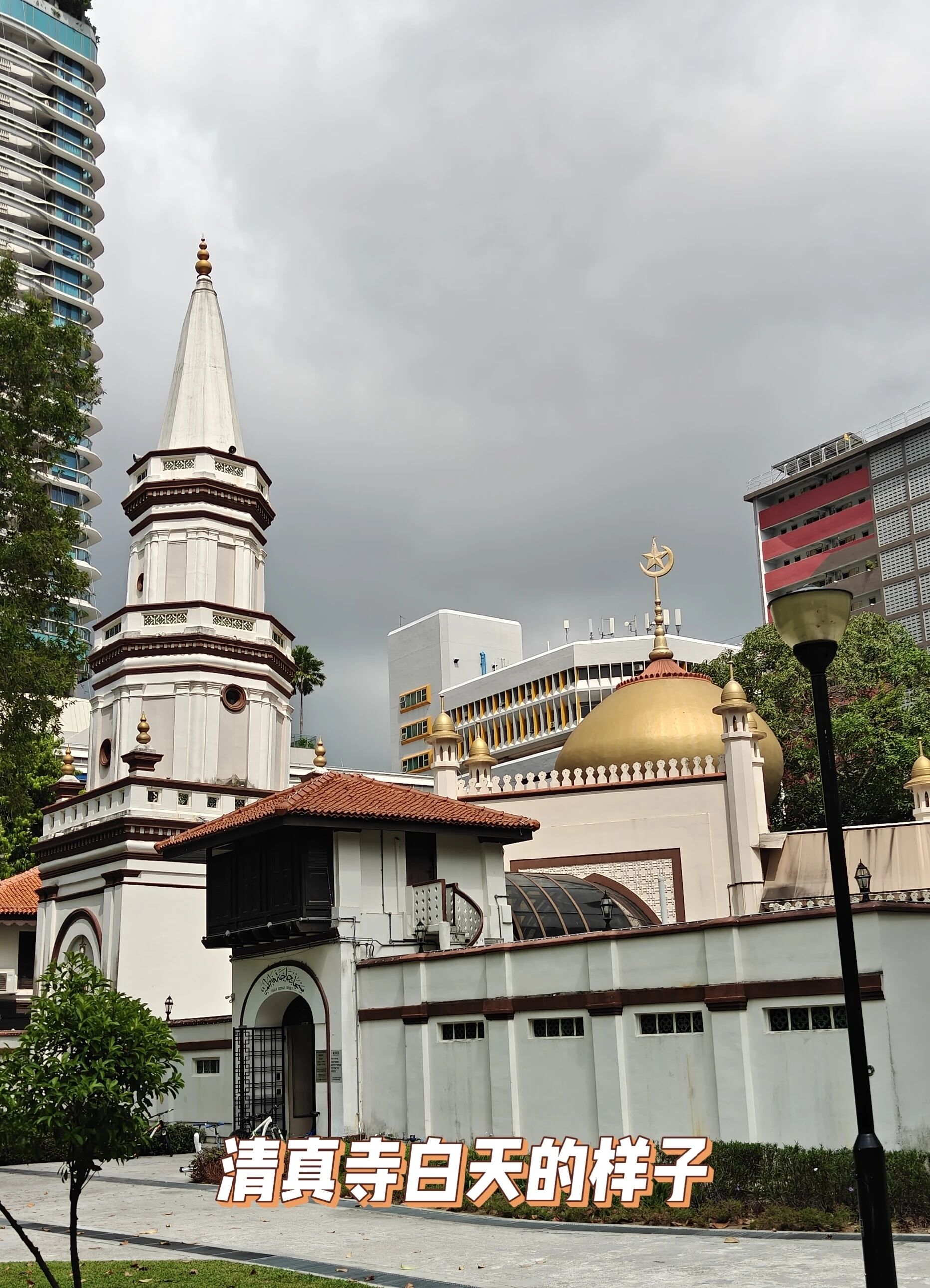
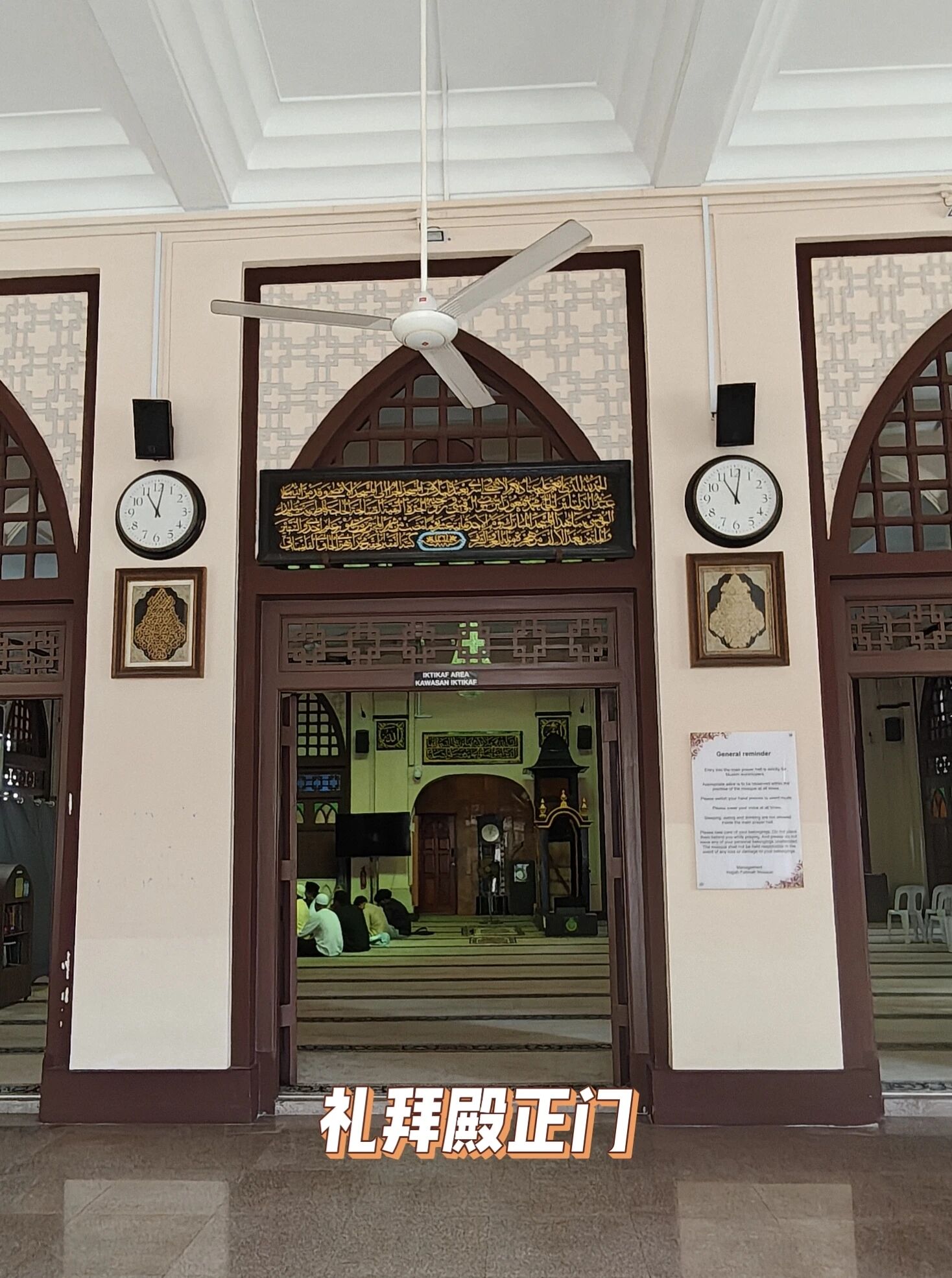
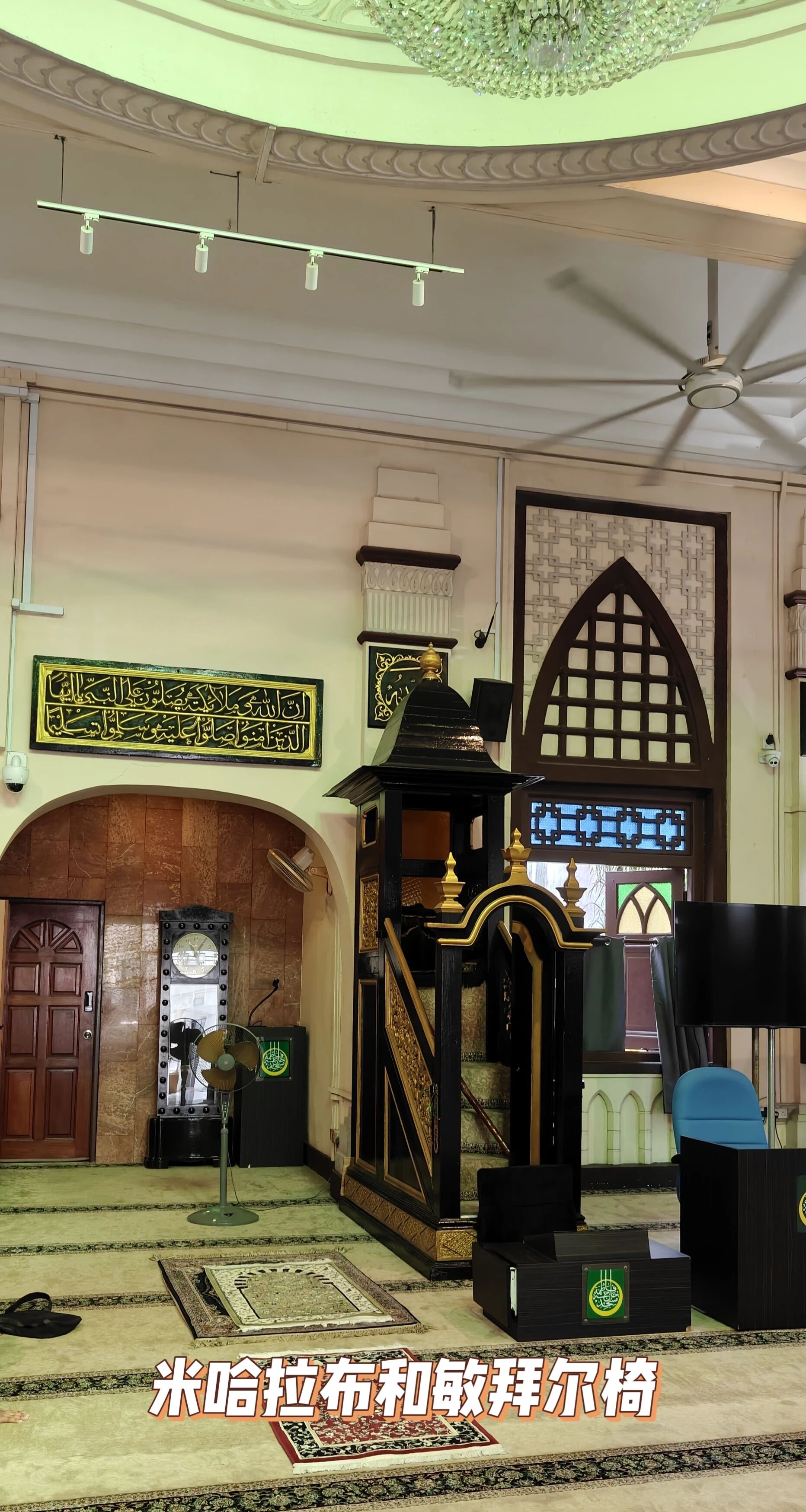
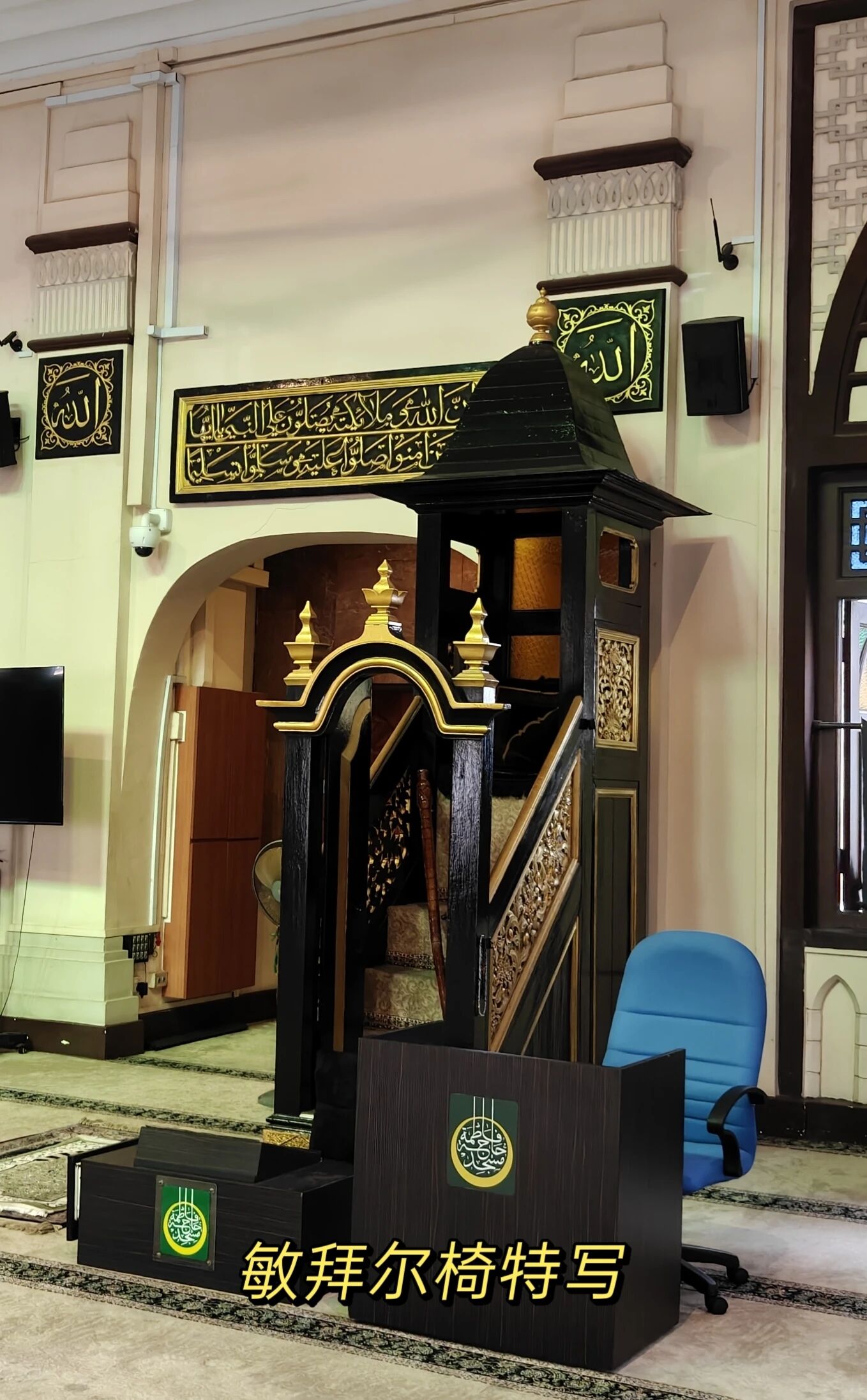
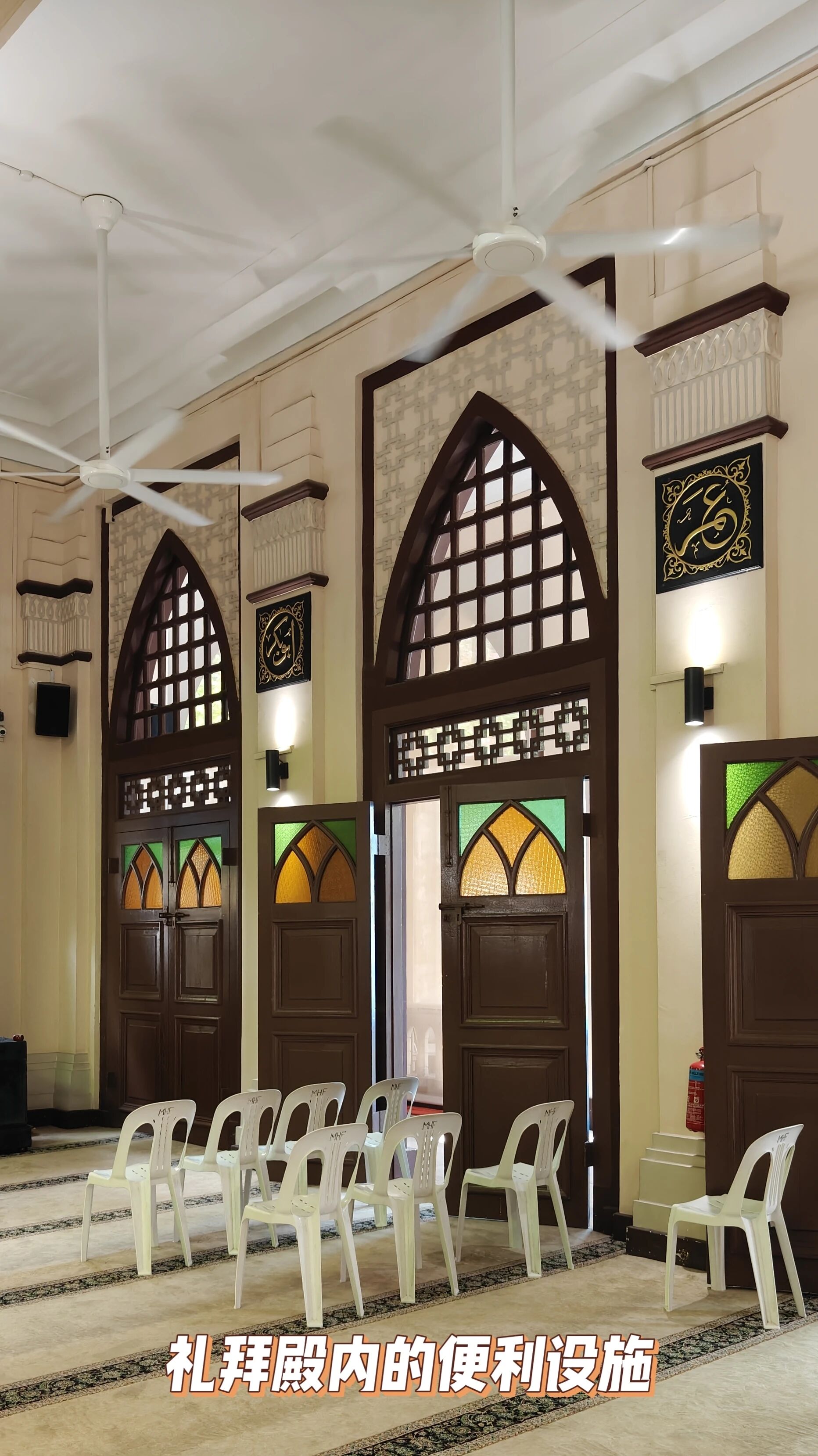
The most striking feature of this mosque is the style of its minaret, which looks different from the ones I usually see. It clearly borrows from Western architecture. At first glance, I really thought it was a Christian church.
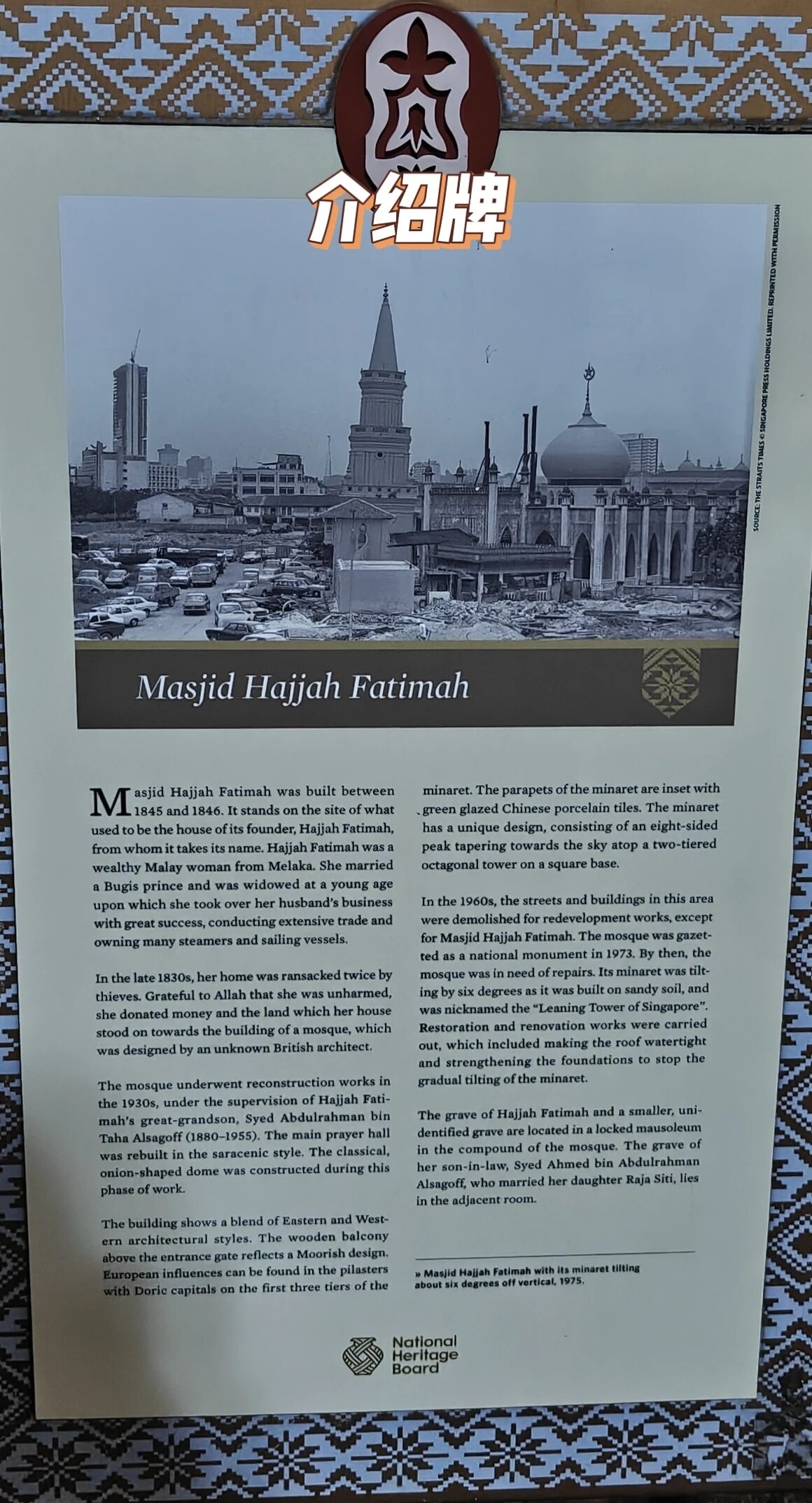
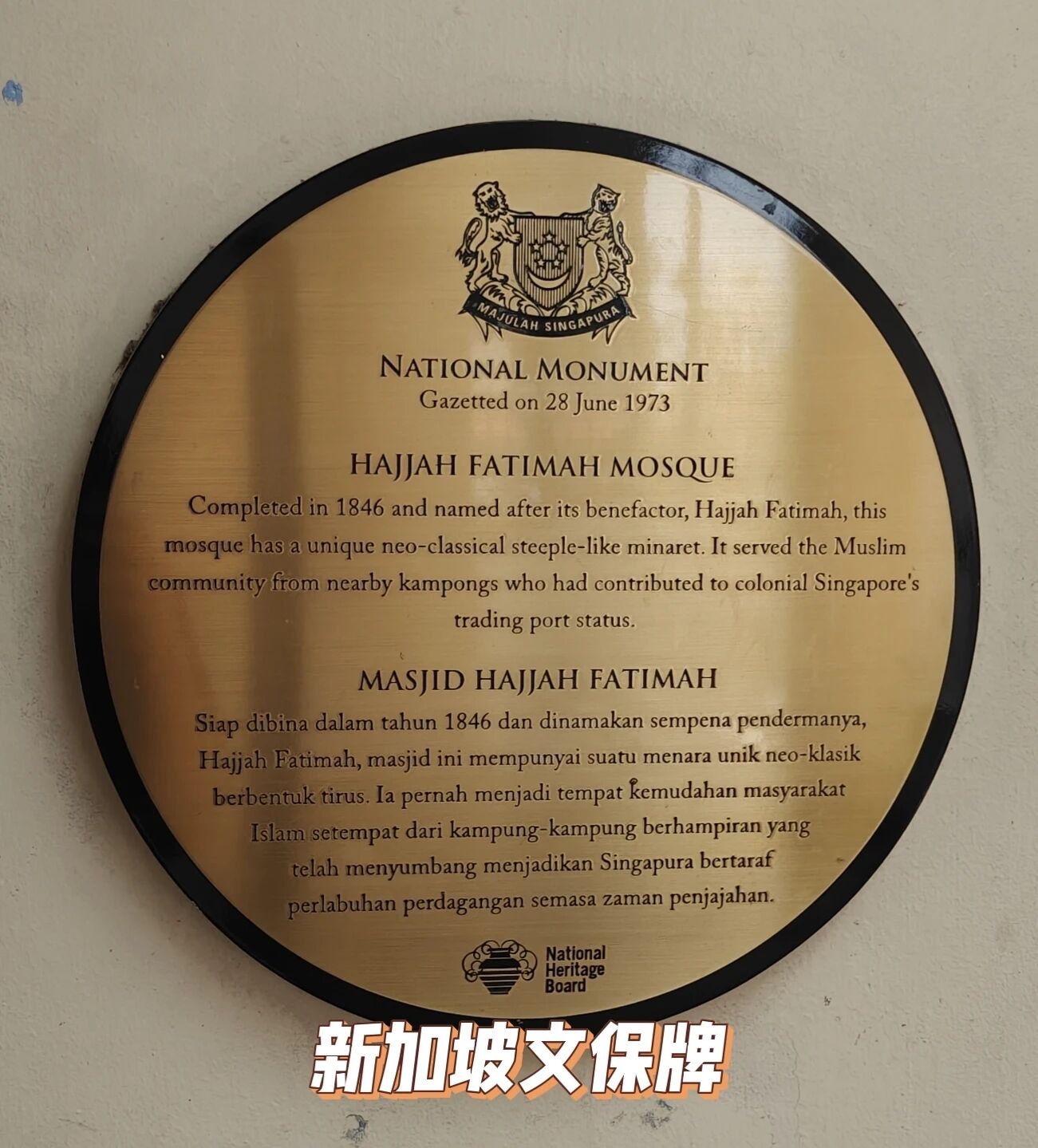
There is an information board at the entrance of the mosque. It says it was built between 1845 and 1846. The site was originally the home of a person named Hajjah Fatimah. Hajjah Fatimah was a wealthy Malay woman from Malacca, Malaysia.
You can see from this that the connection between Singapore and Malaysia is truly very close. The previous Temenggong Mosque in Singapore is actually territory of the state of Johor, Malaysia.
Back to the main topic, in the late 1830s, this generous lady donated her property to build this mosque.
The designer of the mosque was a British architect whose name is no longer known. It is no wonder the mosque's minaret looks a lot like a church steeple.
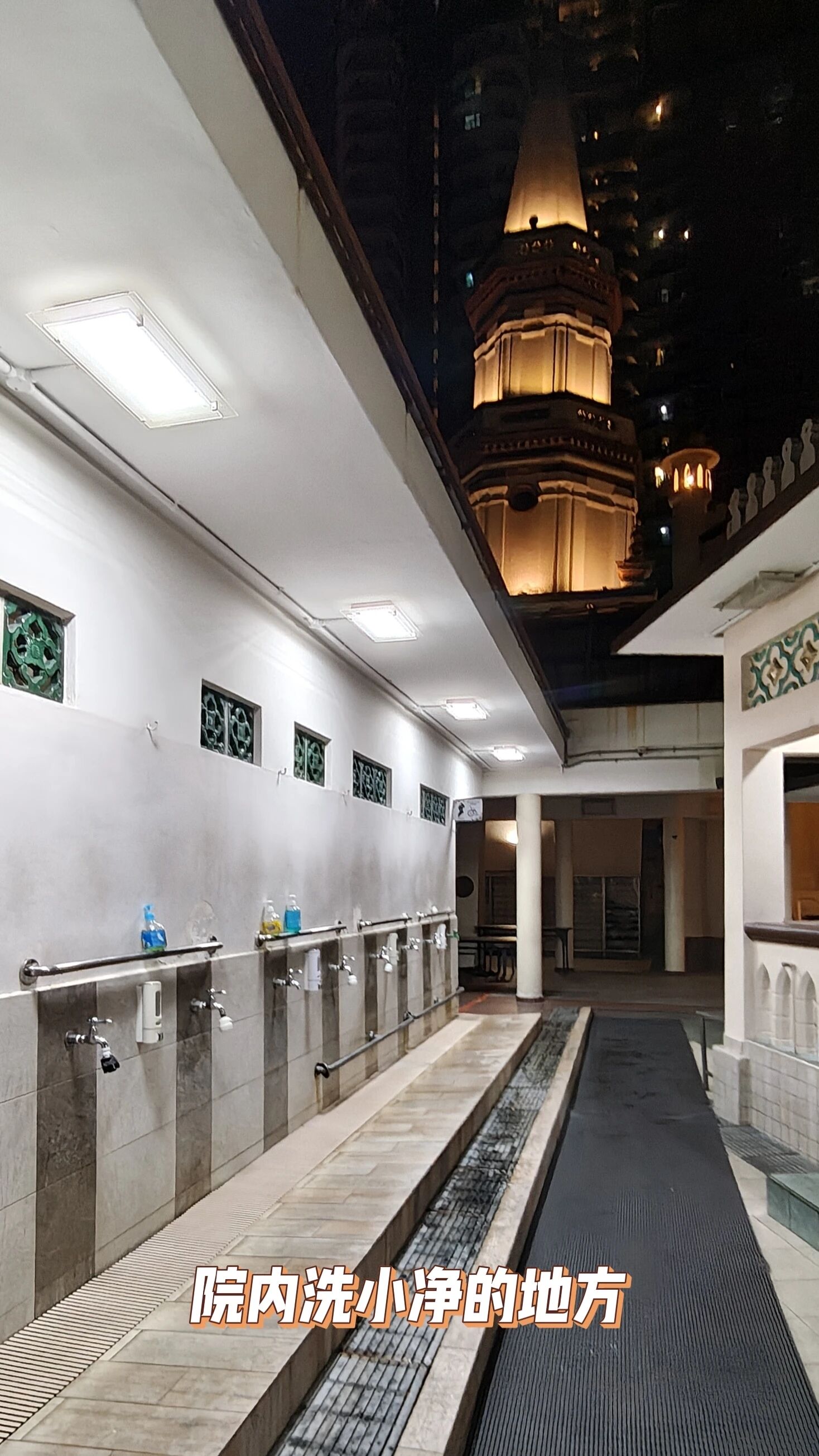
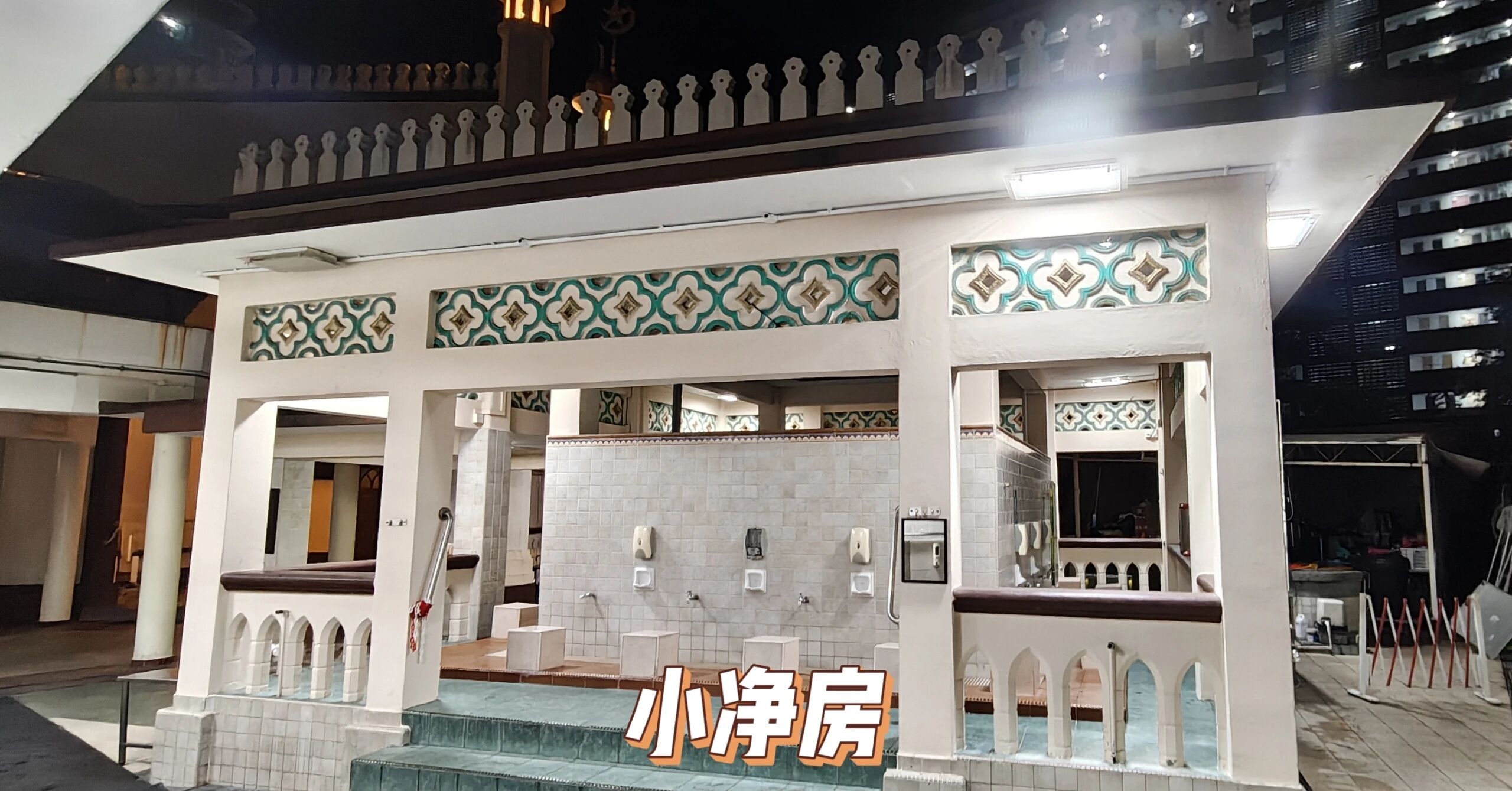
One day after visiting the area near the Flower Dome, I came to this mosque. It was late, past nine o'clock, but the mosque gate was still open. Google Maps shows that this mosque closes at nine o'clock. I was wondering why the mosque was still open after nine o'clock; it seemed like Google Maps was wrong.
But after I finished my wudu, the prayer hall actually closed. I had to leave feeling disappointed and decided to come back the next morning to take photos of the prayer hall. It was not far from where I was staying anyway. I returned the next day and got the photos of the inside of the prayer hall just as I wanted.
A Quran study class was being held in the main hall, where a teacher was teaching children how to recite the Quran. There were also some outside the hall.
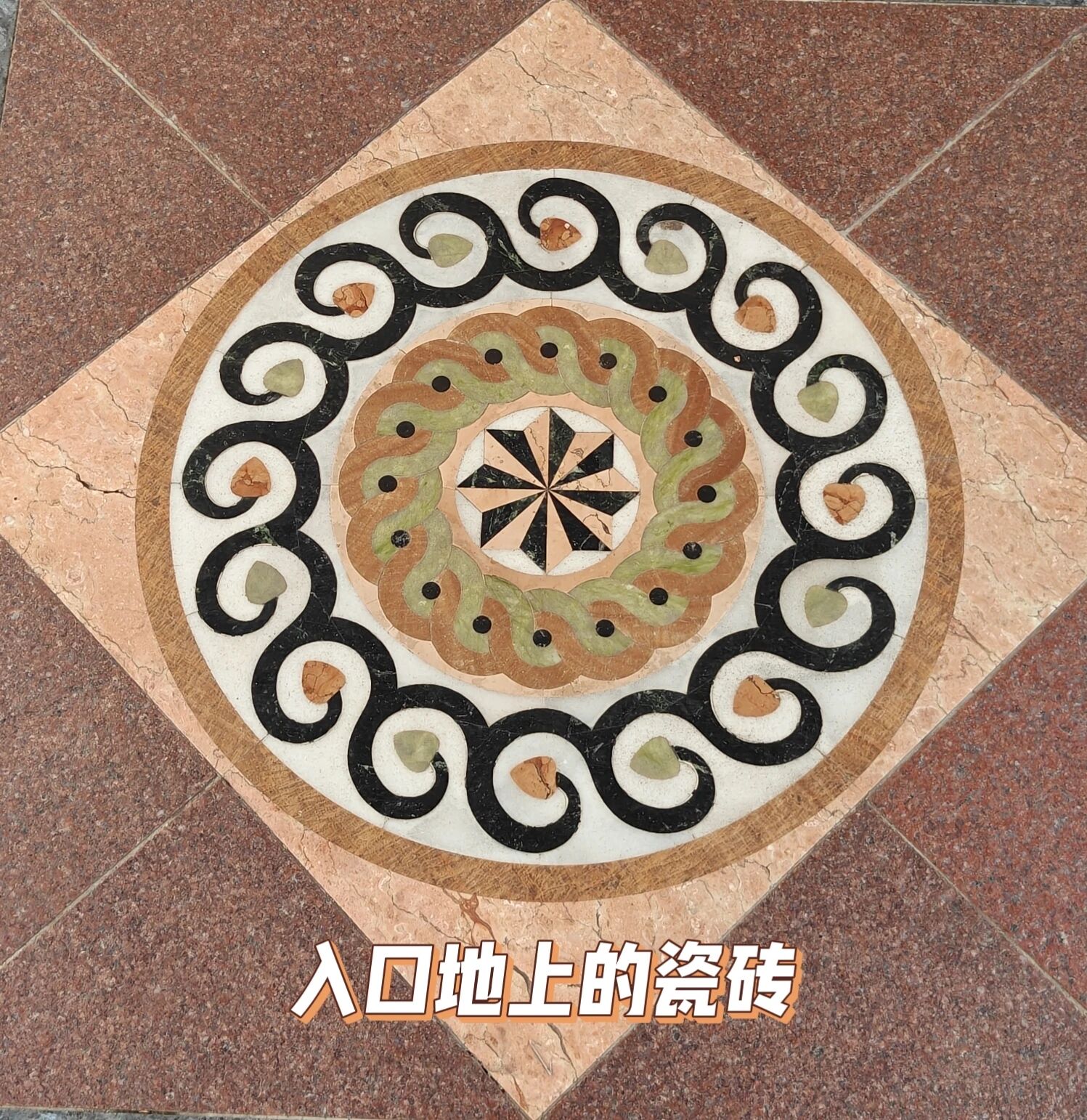
As I put my shoes on to leave, I noticed the floor tiles (Figure 11) were actually quite special; each color block was a separate piece, and the whole pattern had to be pieced together to form the design.
I remember seeing these kinds of tiles only in some old Western-style hotels.
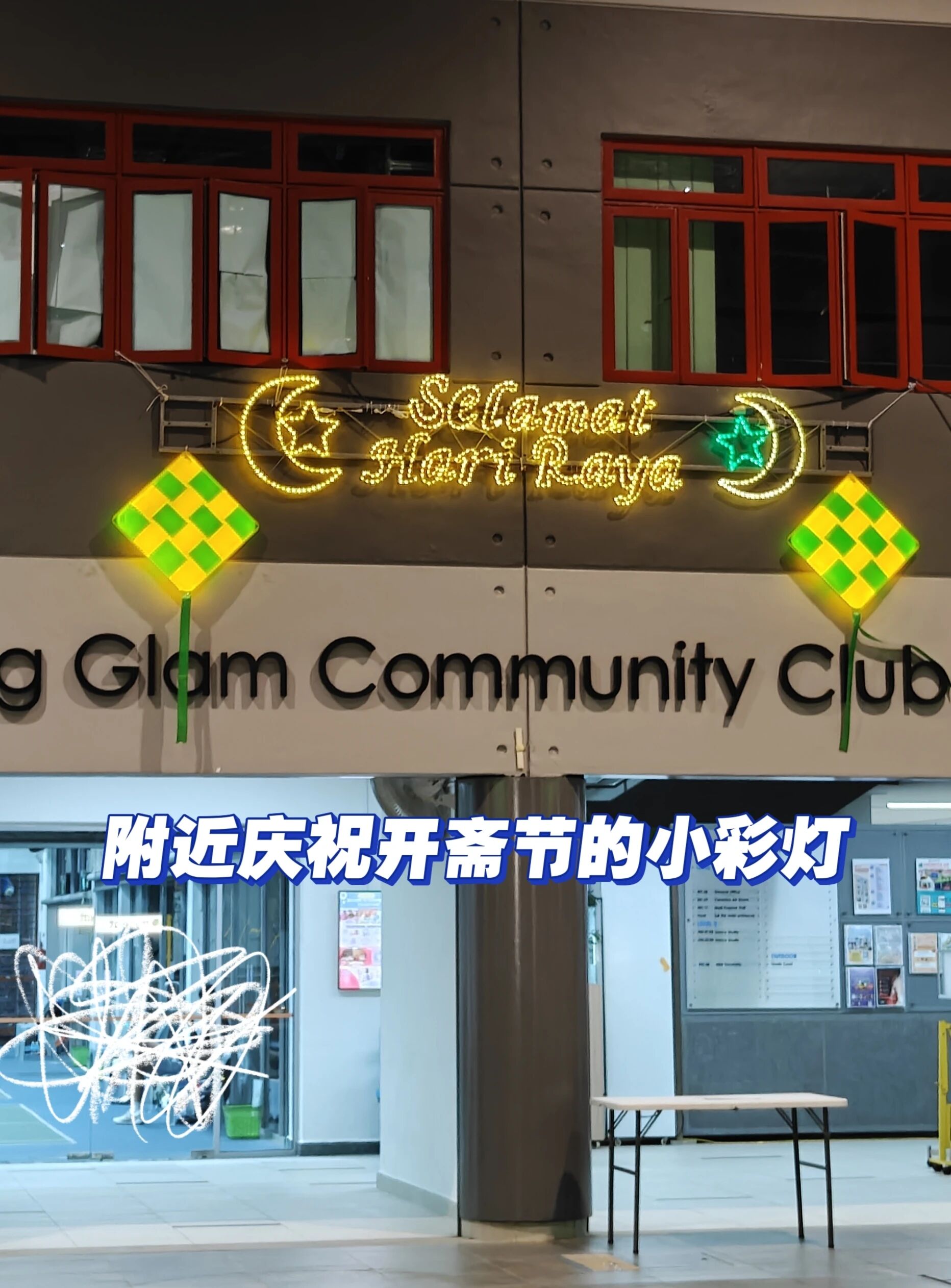
The last photo is what I saw that night at the community activity center next to the mosque. Many people inside were playing badminton or tennis, and the entrance was decorated with colorful lights and a sign that said Selamat Hari Raya, which is Malay for Happy Eid al-Fitr. view all
Summary: This Singapore Muslim travel guide visits Haja Fatimah Mosque, known in the source for its Western-style minaret. It keeps the author's Lion City mosque-series context, mosque details, and historic prayer-hall notes.
This mosque is the last one in my Lion City mosque exploration series. After this update, I will write some summary articles. I hope you all support them.
The most striking feature of this mosque is the style of its minaret, which looks different from the ones I usually see. It clearly borrows from Western architecture. At first glance, I really thought it was a Christian church.
There is an information board at the entrance of the mosque. It says it was built between 1845 and 1846. The site was originally the home of a person named Hajjah Fatimah. Hajjah Fatimah was a wealthy Malay woman from Malacca, Malaysia.
You can see from this that the connection between Singapore and Malaysia is truly very close. The previous Temenggong Mosque in Singapore is actually territory of the state of Johor, Malaysia.
Back to the main topic, in the late 1830s, this generous lady donated her property to build this mosque.
The designer of the mosque was a British architect whose name is no longer known. It is no wonder the mosque's minaret looks a lot like a church steeple.
One day after visiting the area near the Flower Dome, I came to this mosque. It was late, past nine o'clock, but the mosque gate was still open. Google Maps shows that this mosque closes at nine o'clock. I was wondering why the mosque was still open after nine o'clock; it seemed like Google Maps was wrong.
But after I finished my wudu, the prayer hall actually closed. I had to leave feeling disappointed and decided to come back the next morning to take photos of the prayer hall. It was not far from where I was staying anyway. I returned the next day and got the photos of the inside of the prayer hall just as I wanted.
A Quran study class was being held in the main hall, where a teacher was teaching children how to recite the Quran. There were also some outside the hall.
As I put my shoes on to leave, I noticed the floor tiles (Figure 11) were actually quite special; each color block was a separate piece, and the whole pattern had to be pieced together to form the design.
I remember seeing these kinds of tiles only in some old Western-style hotels.
The last photo is what I saw that night at the community activity center next to the mosque. Many people inside were playing badminton or tennis, and the entrance was decorated with colorful lights and a sign that said Selamat Hari Raya, which is Malay for Happy Eid al-Fitr.
Muslim Travel Guide Singapore: Habib Noh Shrine, Gongbei Tomb and Haji Mohamed Salleh Mosque
Articles • Hasan09 posted the article • 0 comments • 342 views • 2026-05-24 01:47
Summary: This Singapore Muslim travel guide visits Habib Noh Shrine beside Haji Mohamed Salleh Mosque. It preserves the route, the 1788-1866 date note, the gongbei tomb description, and the local Muslim heritage details.
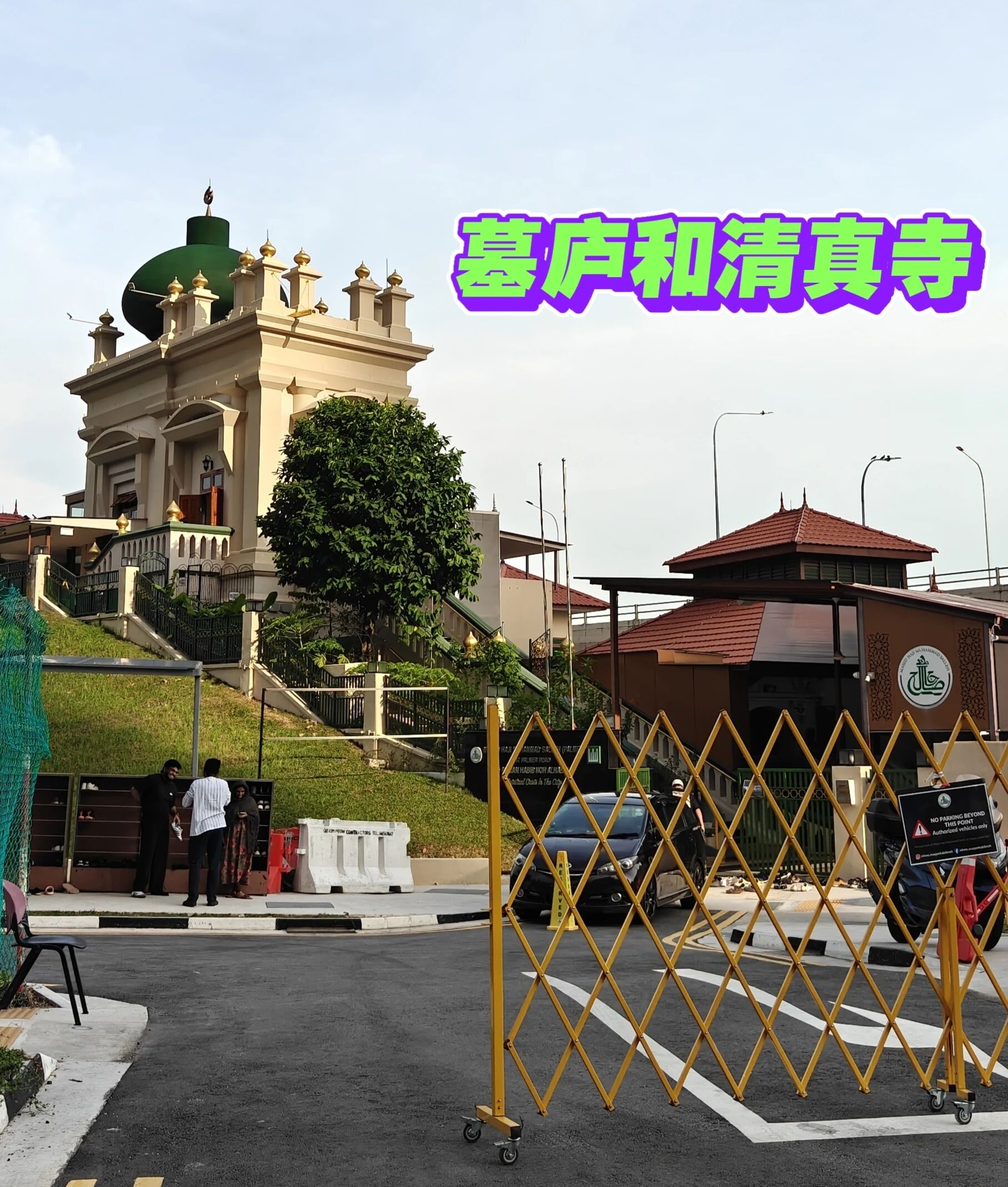
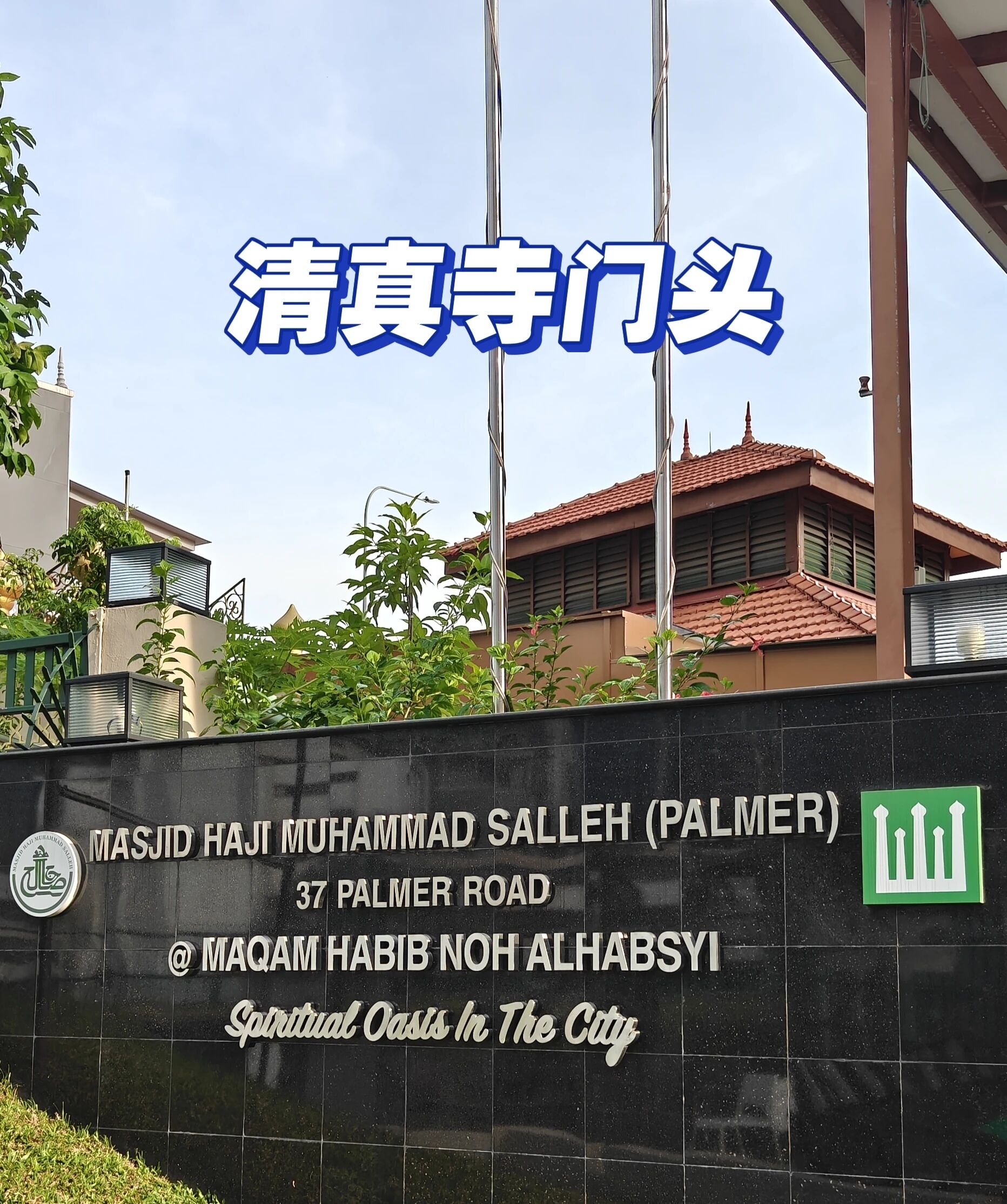
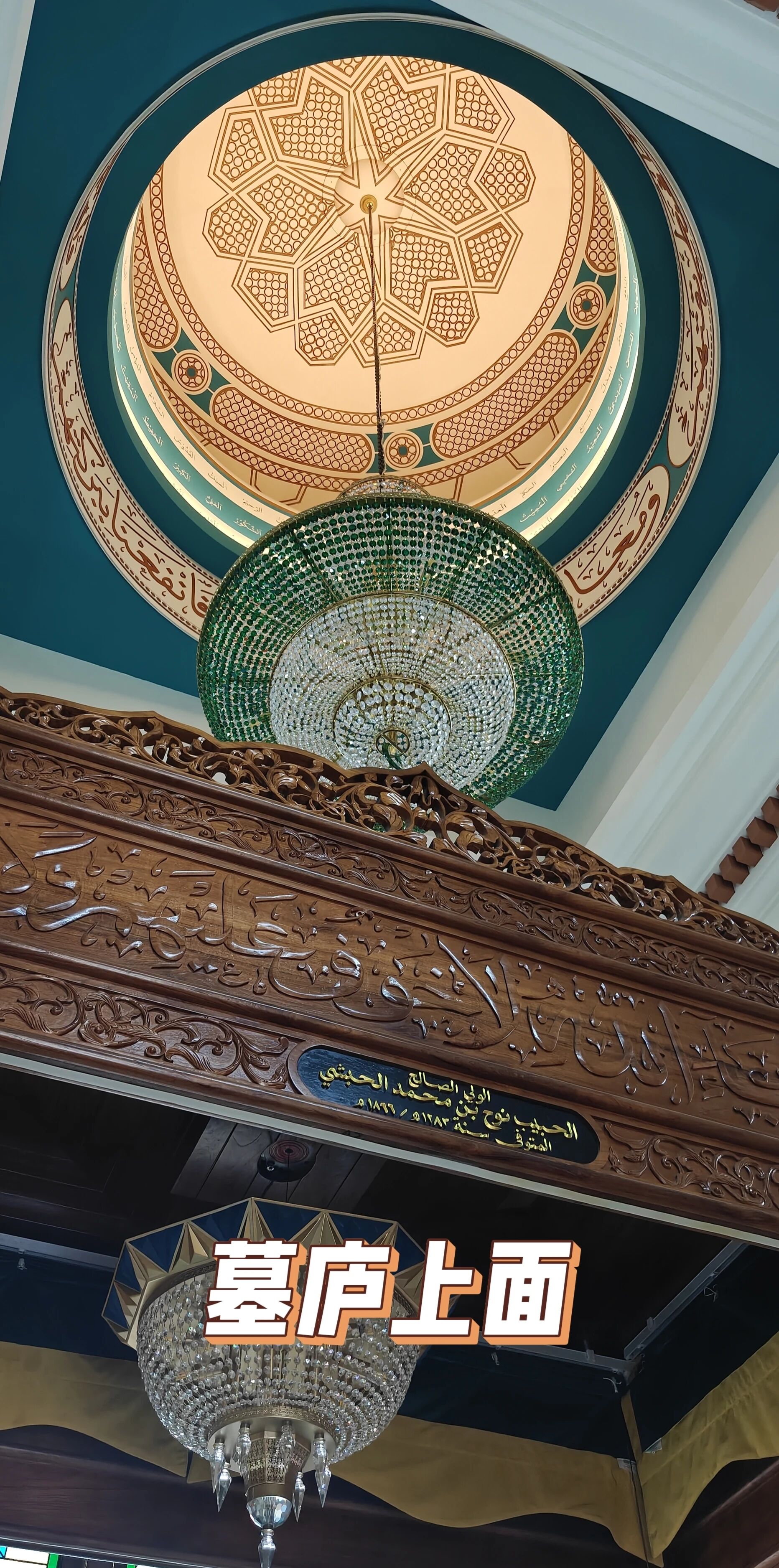
To get here, set your navigation for Haji Muhammad Salleh Mosque. The mosque sits next to a small hill where a Muslim sage named Habib Noh (1788–1866) is buried. The building with the dome is his tomb (gongbei).
Haji Muhammad Salleh, a friend of Habib Noh, originally built a prayer room next to the tomb, which was later expanded into this mosque.
I visited at the end of last year, but the tomb was closed for renovations. So, I only visited the mosque and did not go up to the tomb. This time, the renovations were finished, so I could go up.
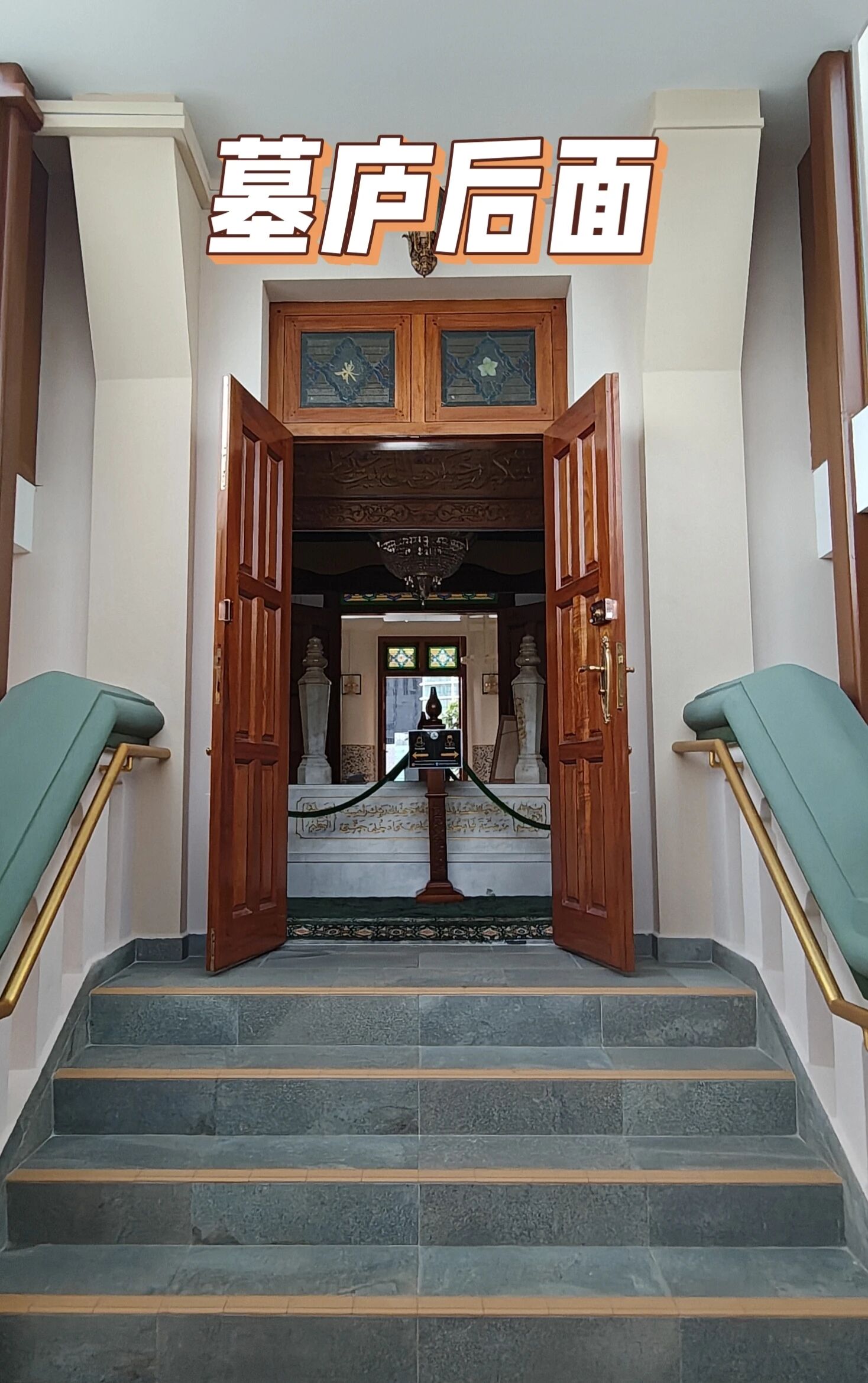
You have to climb a flight of stairs to reach the tomb's front hall. An elderly volunteer who guards the tomb told me that Habib Noh was a descendant of the Prophet and suggested I look up more information about him.
It turns out this sage grew up in Penang, Malaysia, before moving to Singapore. His family was from Yemen, and he was born on a ship heading to Penang. He often spent time meditating on Palmer Hill, the same small hill where he is buried today.
People say that after he passed away, they tried to move his body to a cemetery, but they could not move him at all. At this point, someone remembered he had said before he died that he wanted to be buried on the hills of Parma. Only then were they able to bury him successfully. Everyone can form their own opinion on this story.
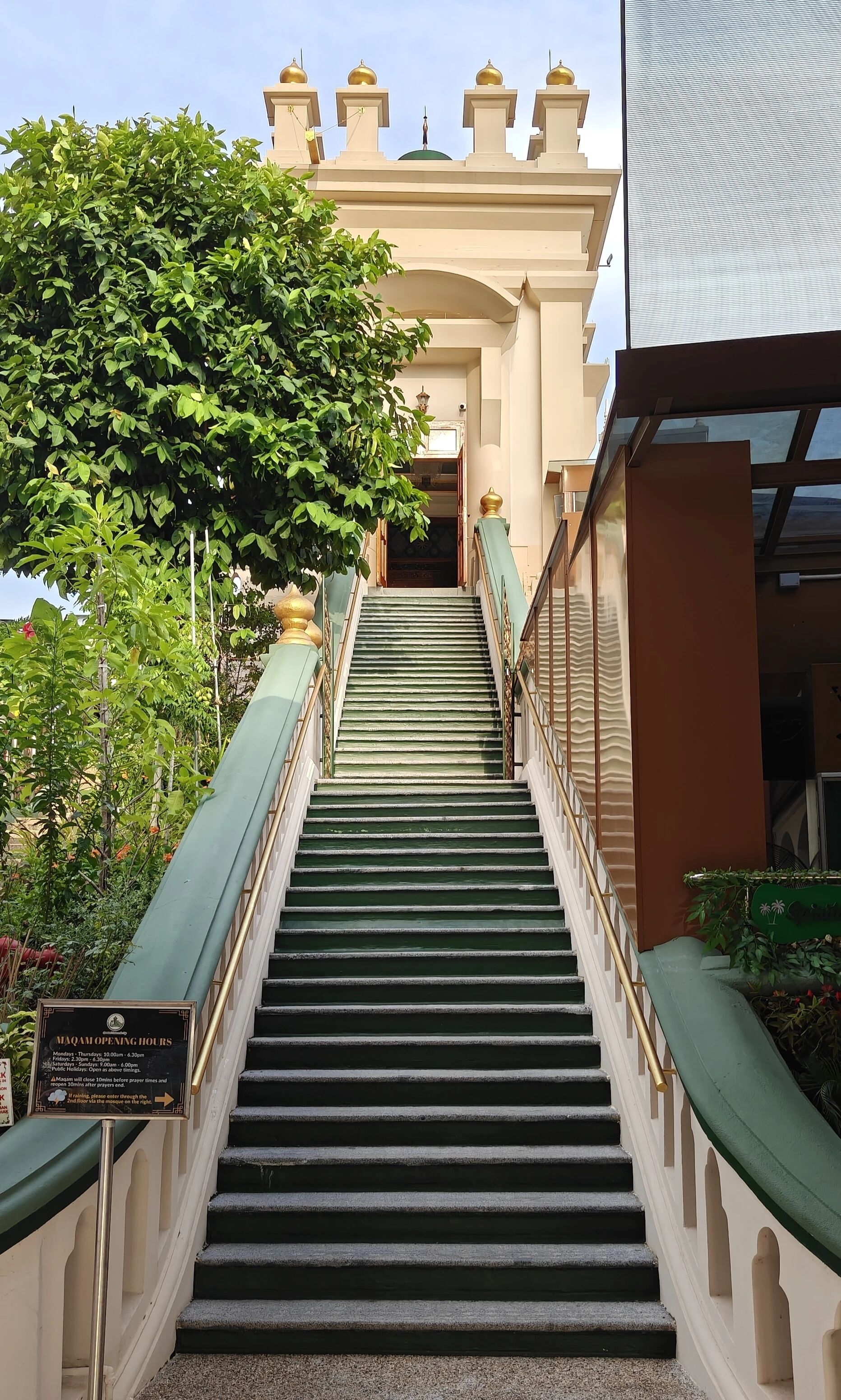
We can enter the tomb chamber by taking the long stairs shown in picture three.
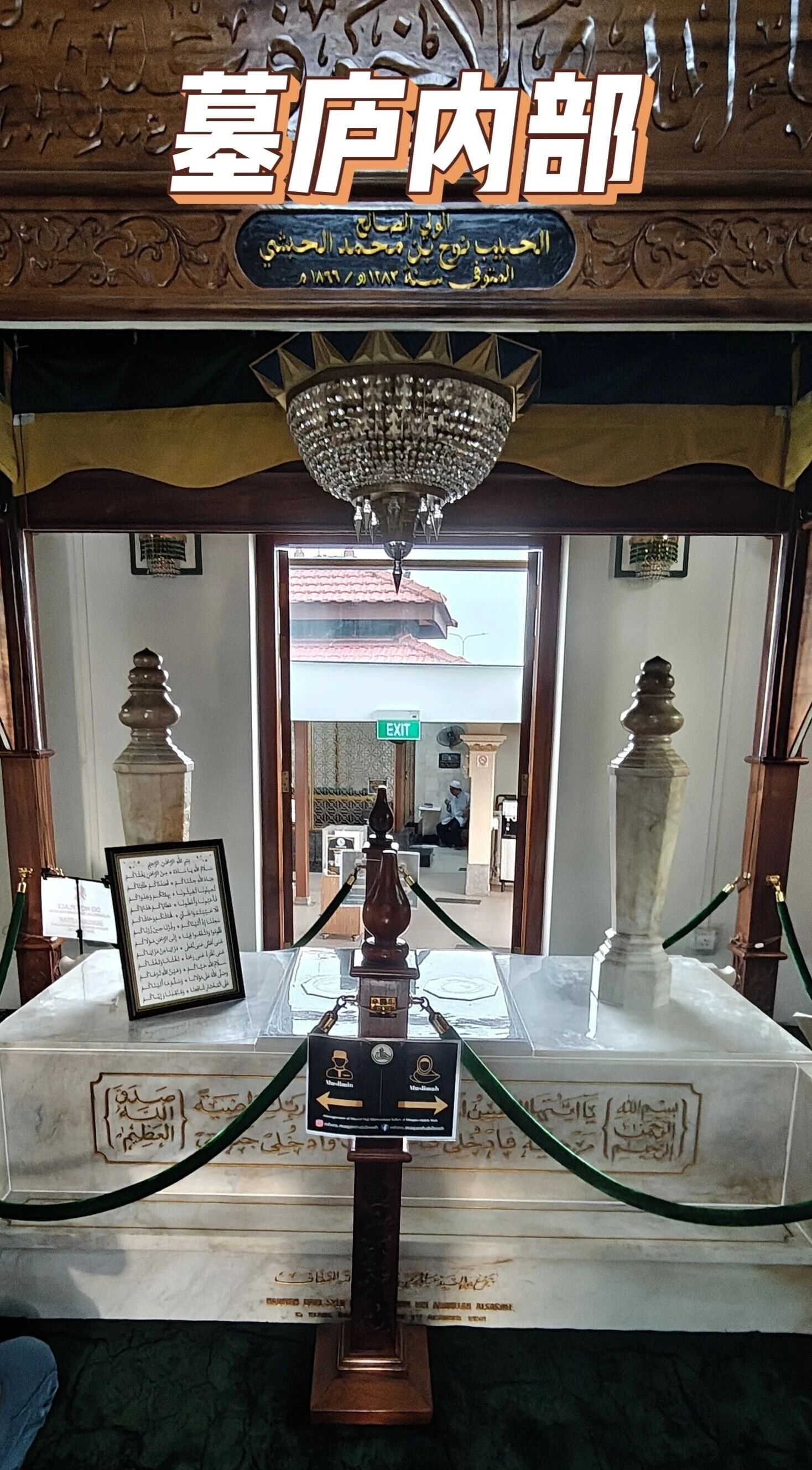
Once inside the tomb chamber, I sat cross-legged. The people around me knelt, whispered prayers, and then raised their hands to make dua.
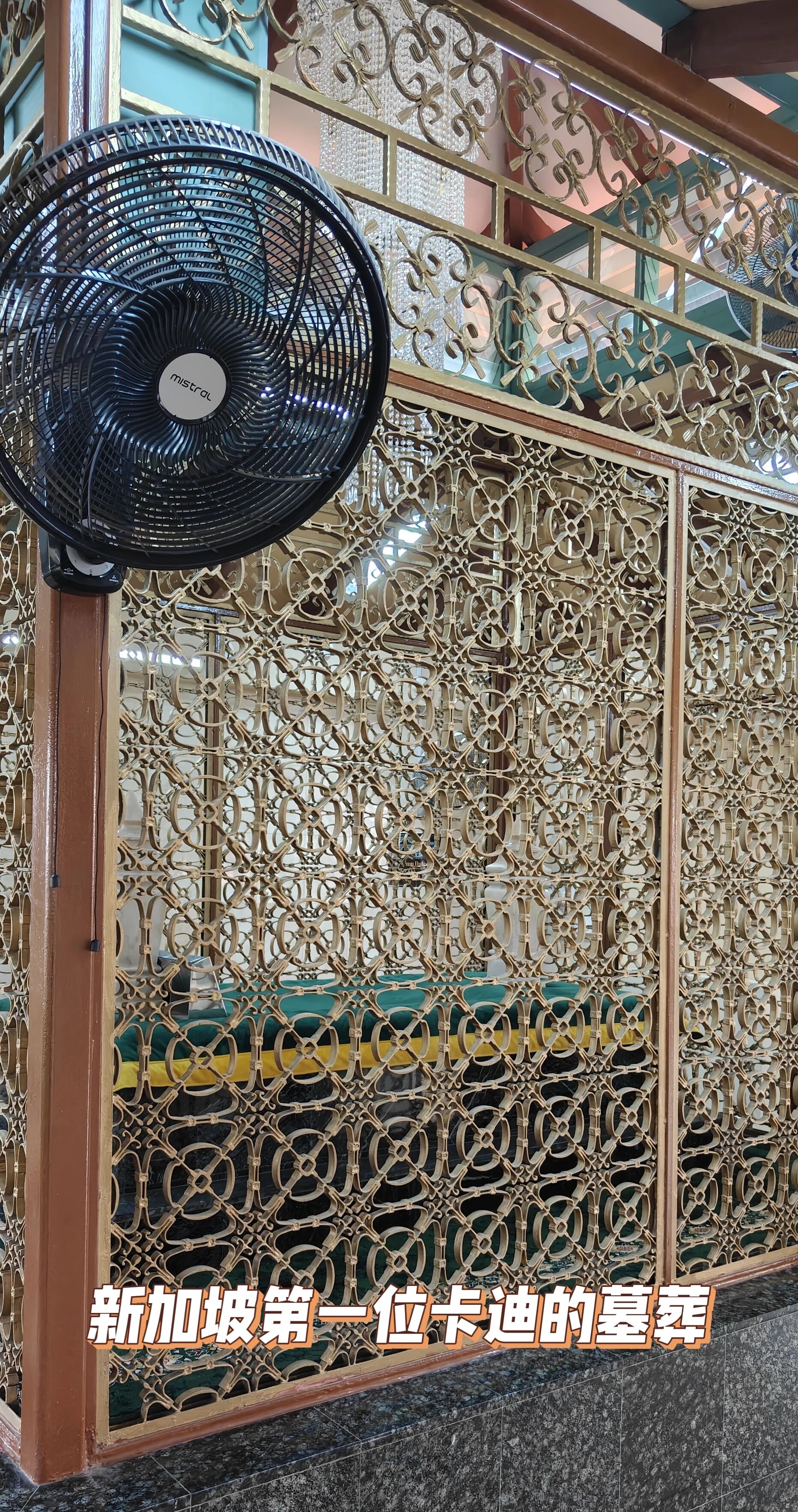
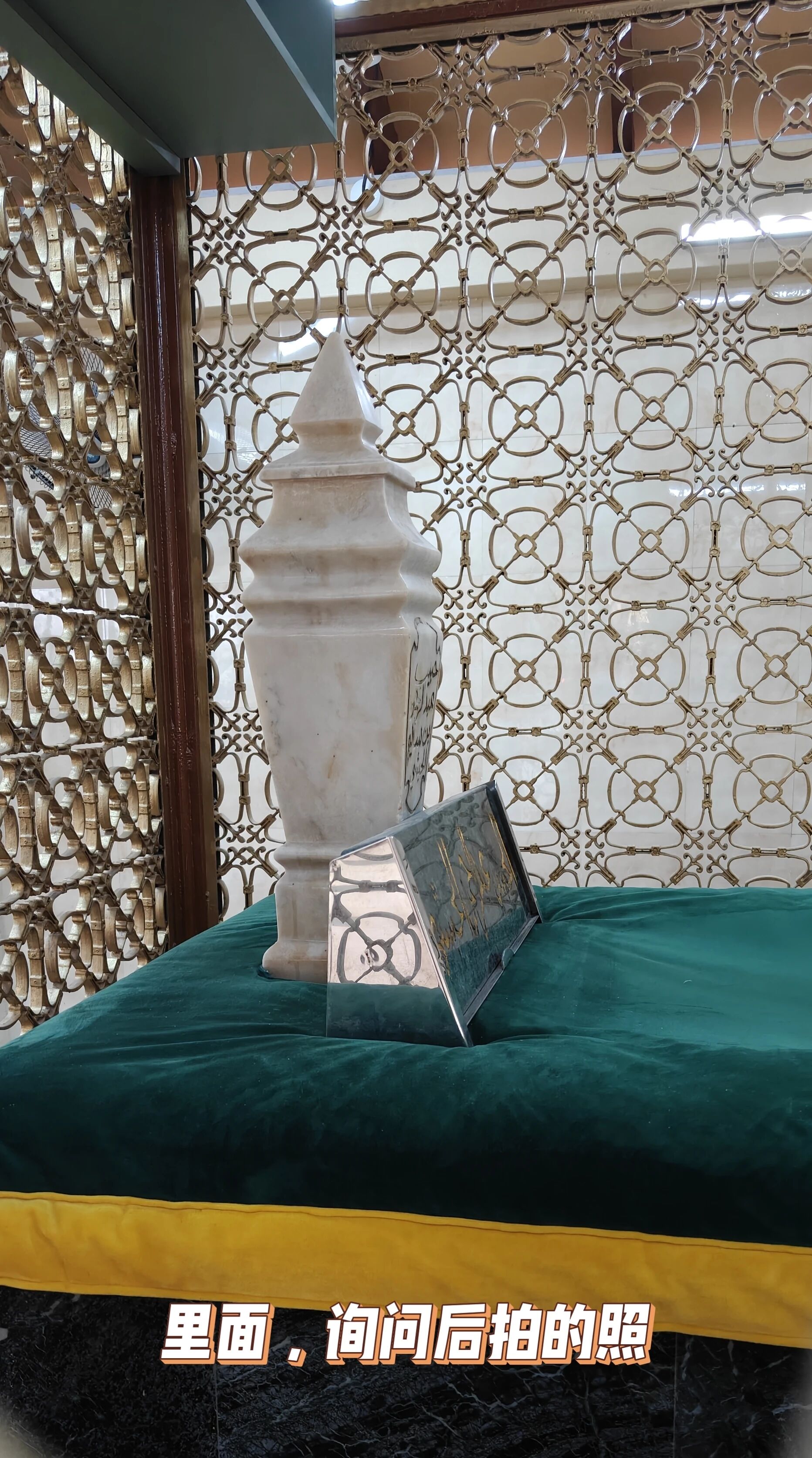
Behind the tomb chamber is another grave covered by a metal grid, where Habib Nuh's cousin, Habib Abdul Rahman, is buried. He was the first kadi (Islamic judge) of Singapore.
We returned to the mosque, where some introductory religious books were displayed at the entrance (picture nine); judging by the covers, the one on the left likely teaches how to perform wudu before namaz.
The book on the right features an elephant and a meteorite on the cover, so it is likely about the story of the Elephant in the Quran, making it a book of Quranic stories.
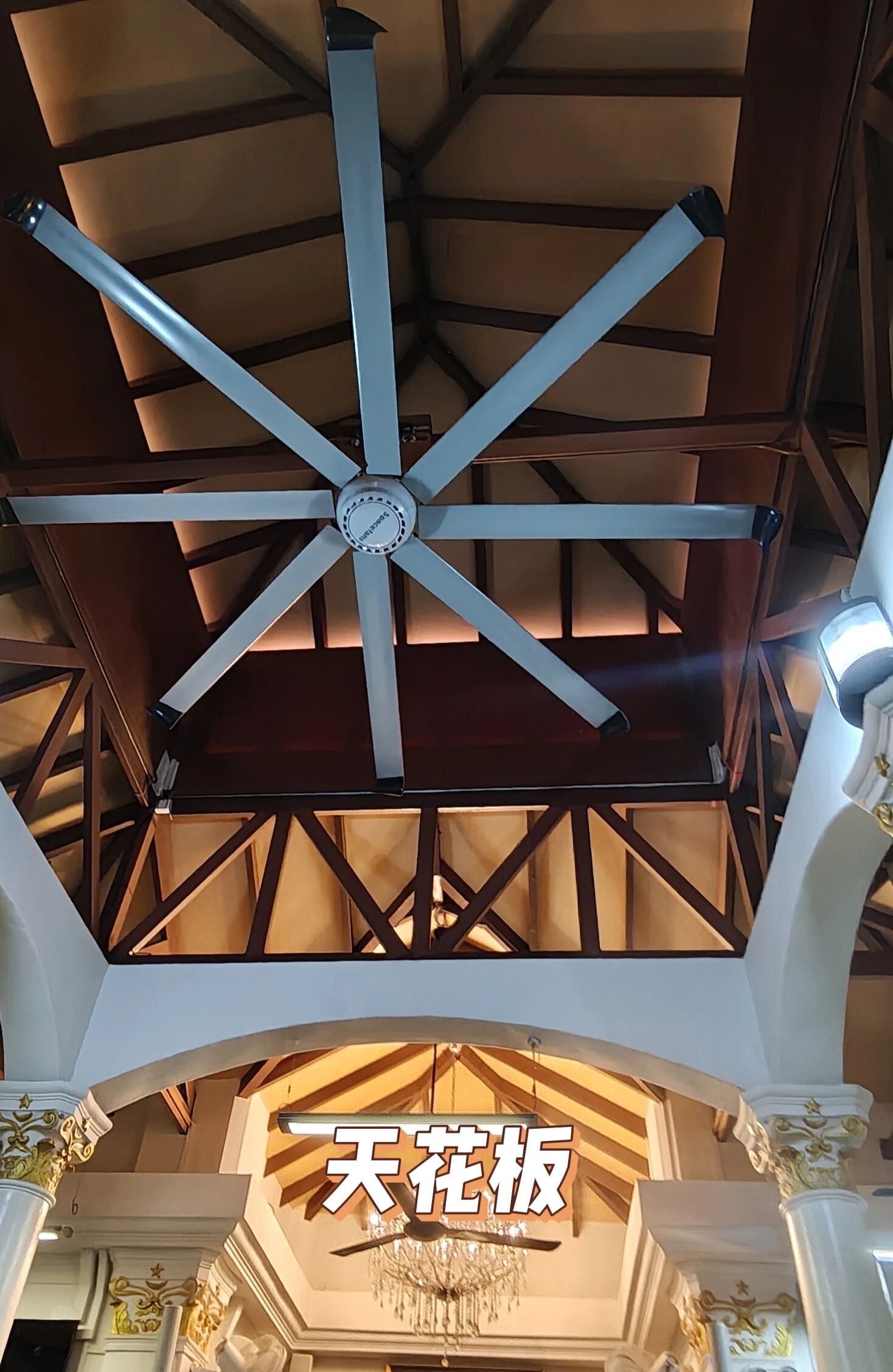
The mosque at the foot of the hill has a distinct Southeast Asian style with a clearly visible roof structure, similar to the huts built by the Malay people. It seems like living in a house like this would be very cool.
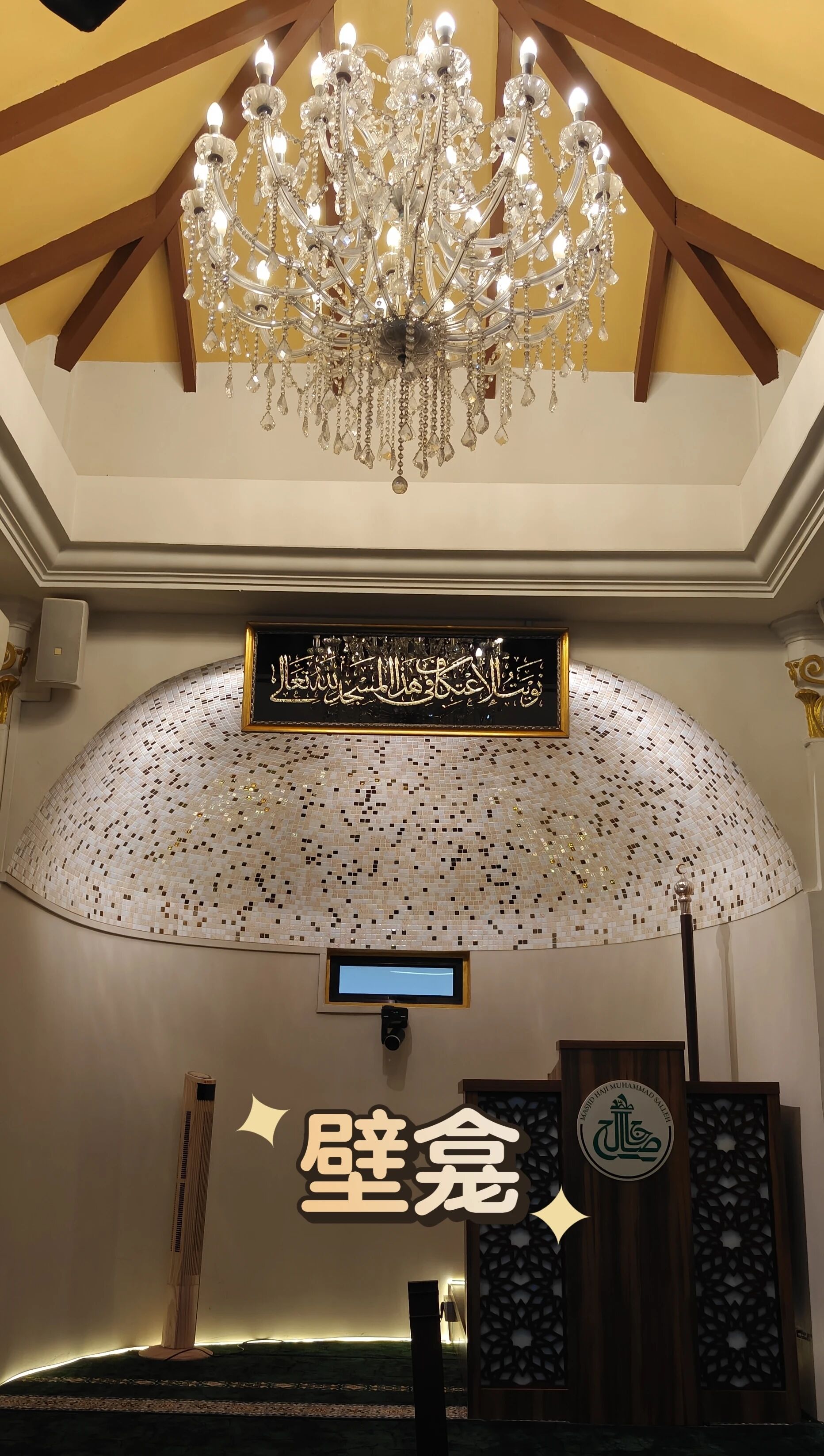
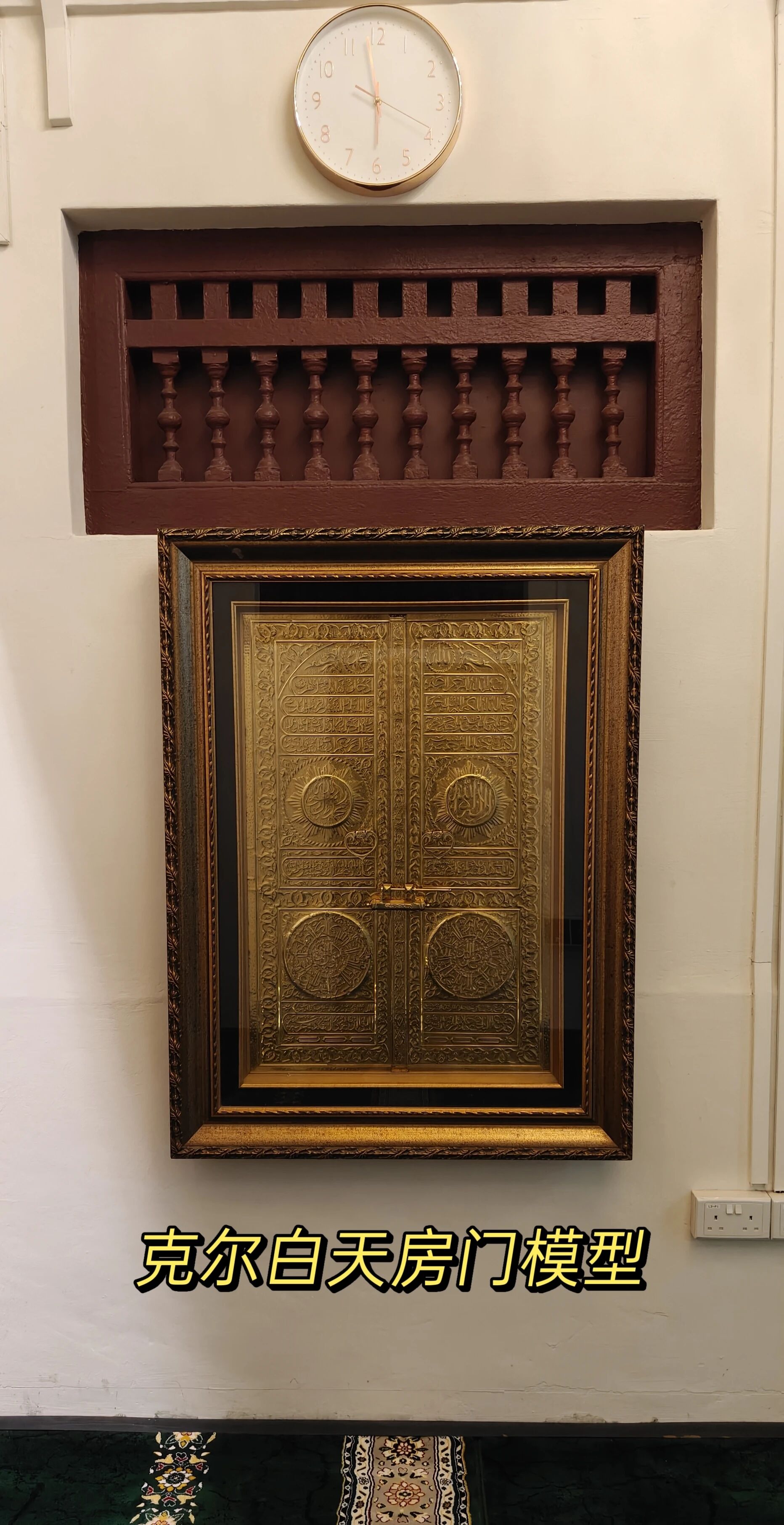
Inside the mihrab niche, there is also a miniature model of the door to the Kaaba in Mecca (Figure 14).
This place is very close to the busy areas of Singapore, so I usually head over to the Flower Dome after visiting here. view all
Summary: This Singapore Muslim travel guide visits Habib Noh Shrine beside Haji Mohamed Salleh Mosque. It preserves the route, the 1788-1866 date note, the gongbei tomb description, and the local Muslim heritage details.
To get here, set your navigation for Haji Muhammad Salleh Mosque. The mosque sits next to a small hill where a Muslim sage named Habib Noh (1788–1866) is buried. The building with the dome is his tomb (gongbei).
Haji Muhammad Salleh, a friend of Habib Noh, originally built a prayer room next to the tomb, which was later expanded into this mosque.
I visited at the end of last year, but the tomb was closed for renovations. So, I only visited the mosque and did not go up to the tomb. This time, the renovations were finished, so I could go up.
You have to climb a flight of stairs to reach the tomb's front hall. An elderly volunteer who guards the tomb told me that Habib Noh was a descendant of the Prophet and suggested I look up more information about him.
It turns out this sage grew up in Penang, Malaysia, before moving to Singapore. His family was from Yemen, and he was born on a ship heading to Penang. He often spent time meditating on Palmer Hill, the same small hill where he is buried today.
People say that after he passed away, they tried to move his body to a cemetery, but they could not move him at all. At this point, someone remembered he had said before he died that he wanted to be buried on the hills of Parma. Only then were they able to bury him successfully. Everyone can form their own opinion on this story.
We can enter the tomb chamber by taking the long stairs shown in picture three.
Once inside the tomb chamber, I sat cross-legged. The people around me knelt, whispered prayers, and then raised their hands to make dua.
Behind the tomb chamber is another grave covered by a metal grid, where Habib Nuh's cousin, Habib Abdul Rahman, is buried. He was the first kadi (Islamic judge) of Singapore.
We returned to the mosque, where some introductory religious books were displayed at the entrance (picture nine); judging by the covers, the one on the left likely teaches how to perform wudu before namaz.
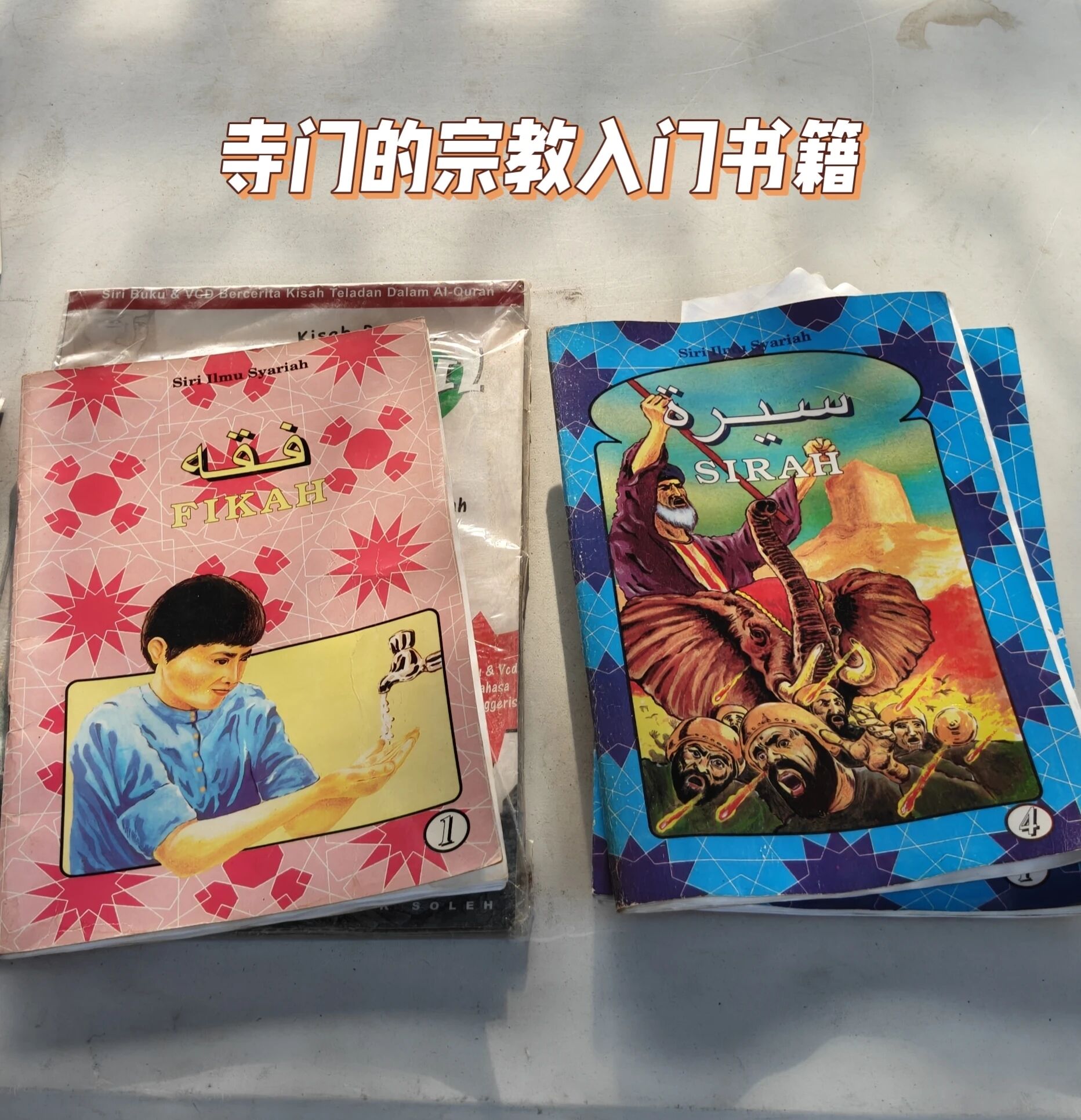
The book on the right features an elephant and a meteorite on the cover, so it is likely about the story of the Elephant in the Quran, making it a book of Quranic stories.
The mosque at the foot of the hill has a distinct Southeast Asian style with a clearly visible roof structure, similar to the huts built by the Malay people. It seems like living in a house like this would be very cool.
Inside the mihrab niche, there is also a miniature model of the door to the Kaaba in Mecca (Figure 14).
This place is very close to the busy areas of Singapore, so I usually head over to the Flower Dome after visiting here.
Prayer Room Singapore Sentosa: Resort Musalla, Beach Area and Muslim Visitor Notes
Articles • Hasan09 posted the article • 0 comments • 329 views • 2026-05-24 01:47
Summary: This Singapore Sentosa prayer room guide follows the author after leaving Temenggong Mosque and entering the resort area. It keeps the aquarium, beach, cable-car context, and practical Muslim visitor notes intact.
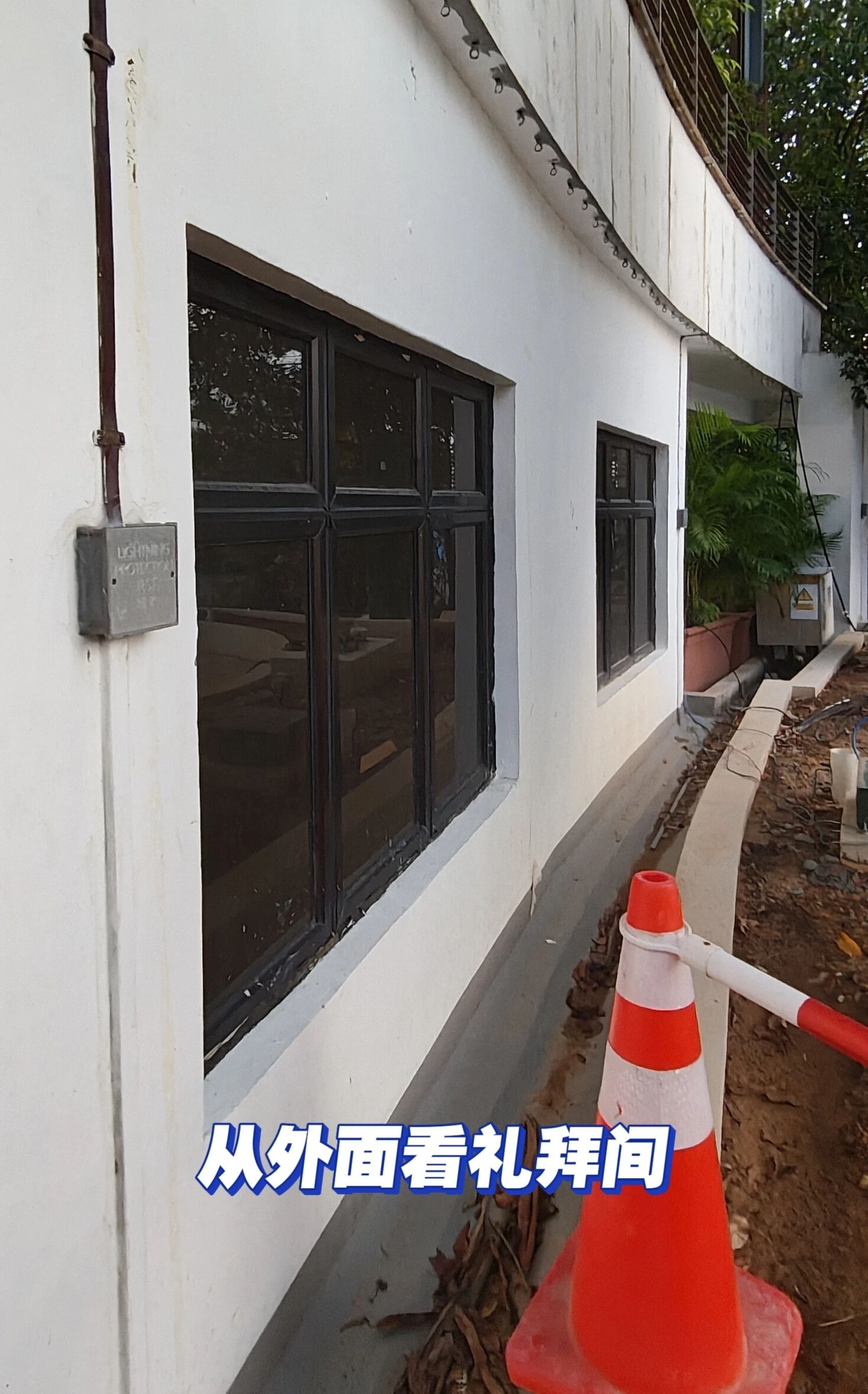
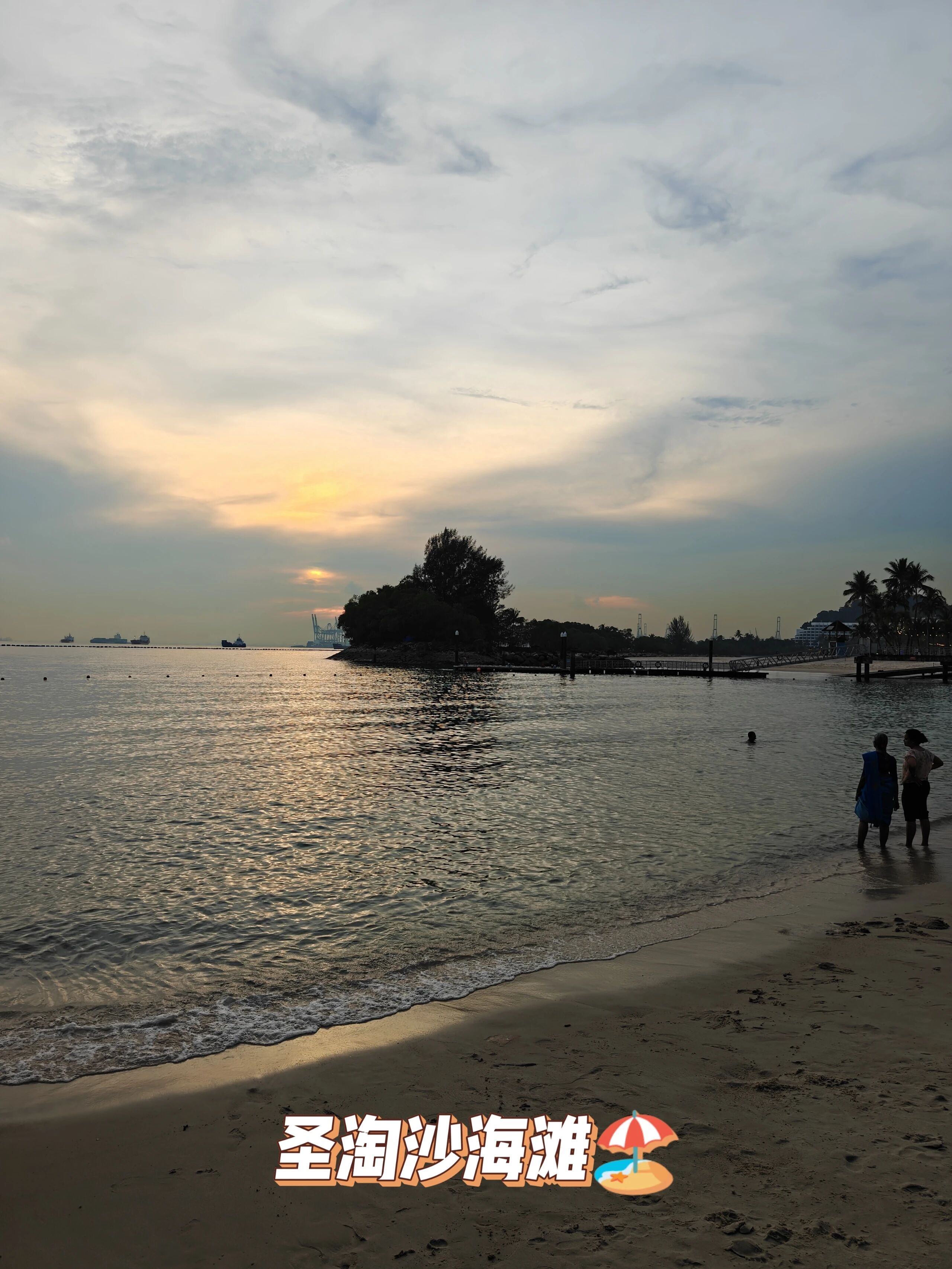
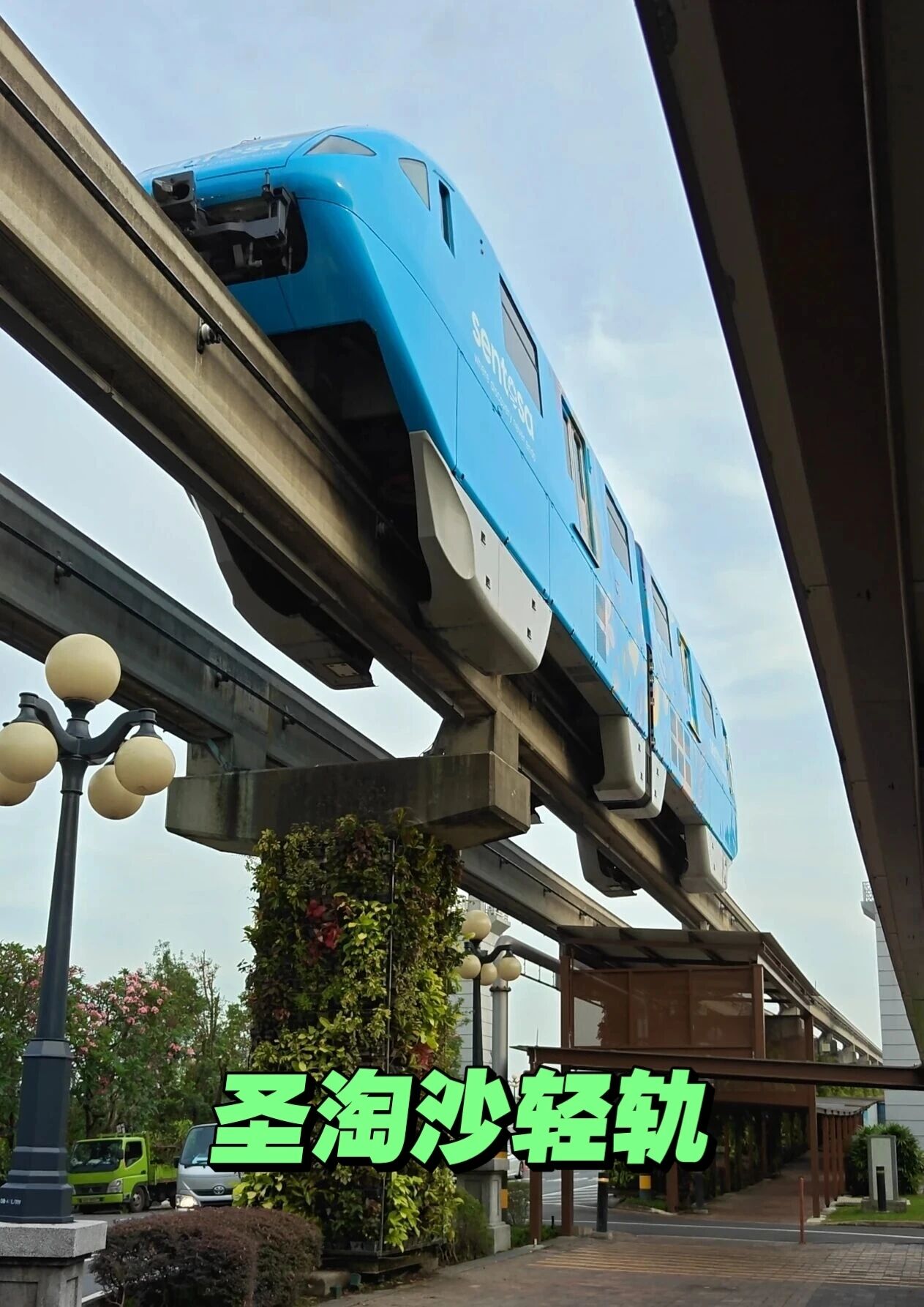
After leaving the Temenggong Mosque, I headed toward the Sentosa area. Sentosa has an aquarium, beaches, restaurants, and a cable car, making it a great spot for leisure and fun. Google Maps shows there is a prayer room here, right by the light rail station.
In Singapore, they call this light rail the MRT, which is the same term they use in Taiwan.
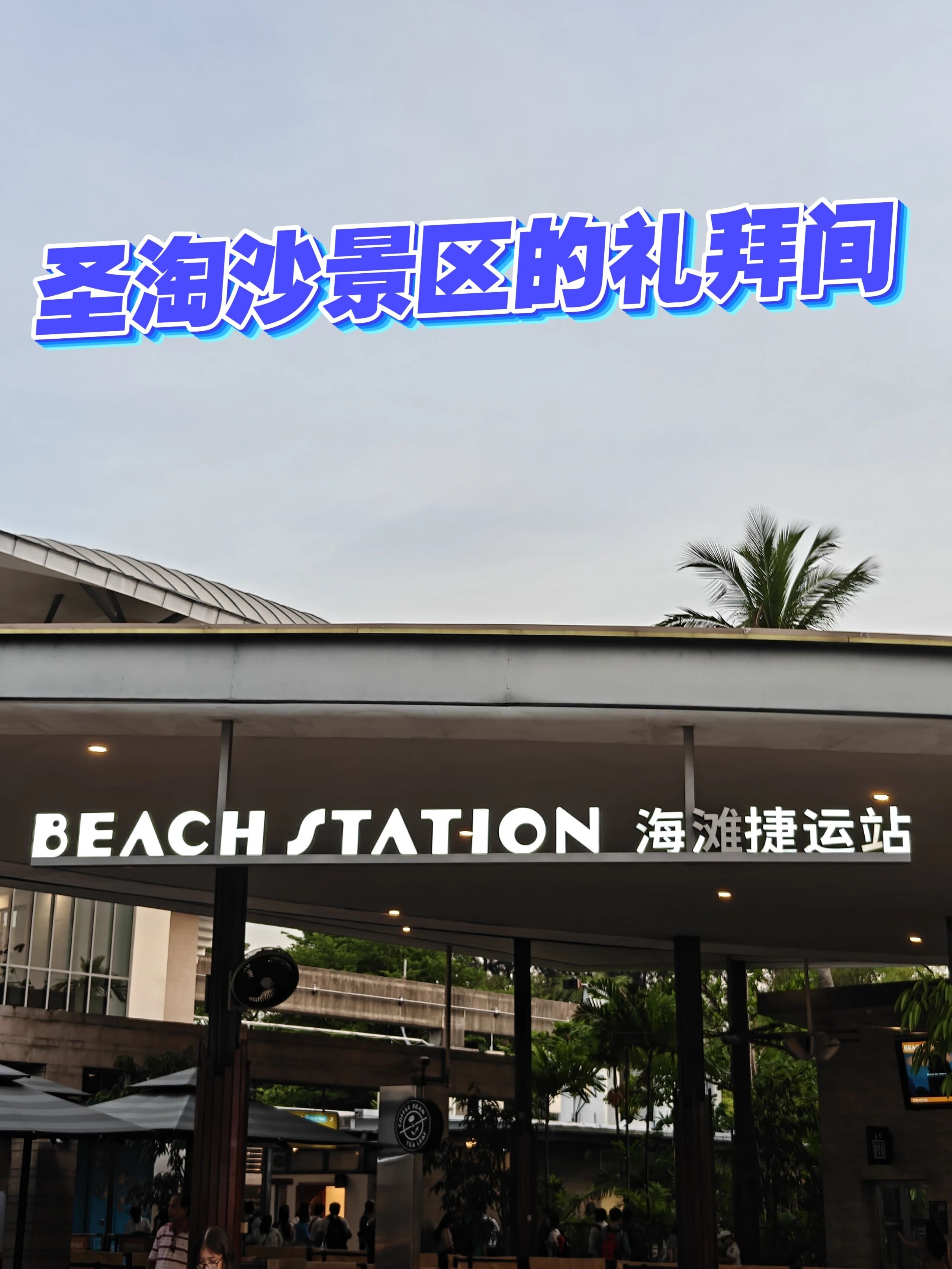
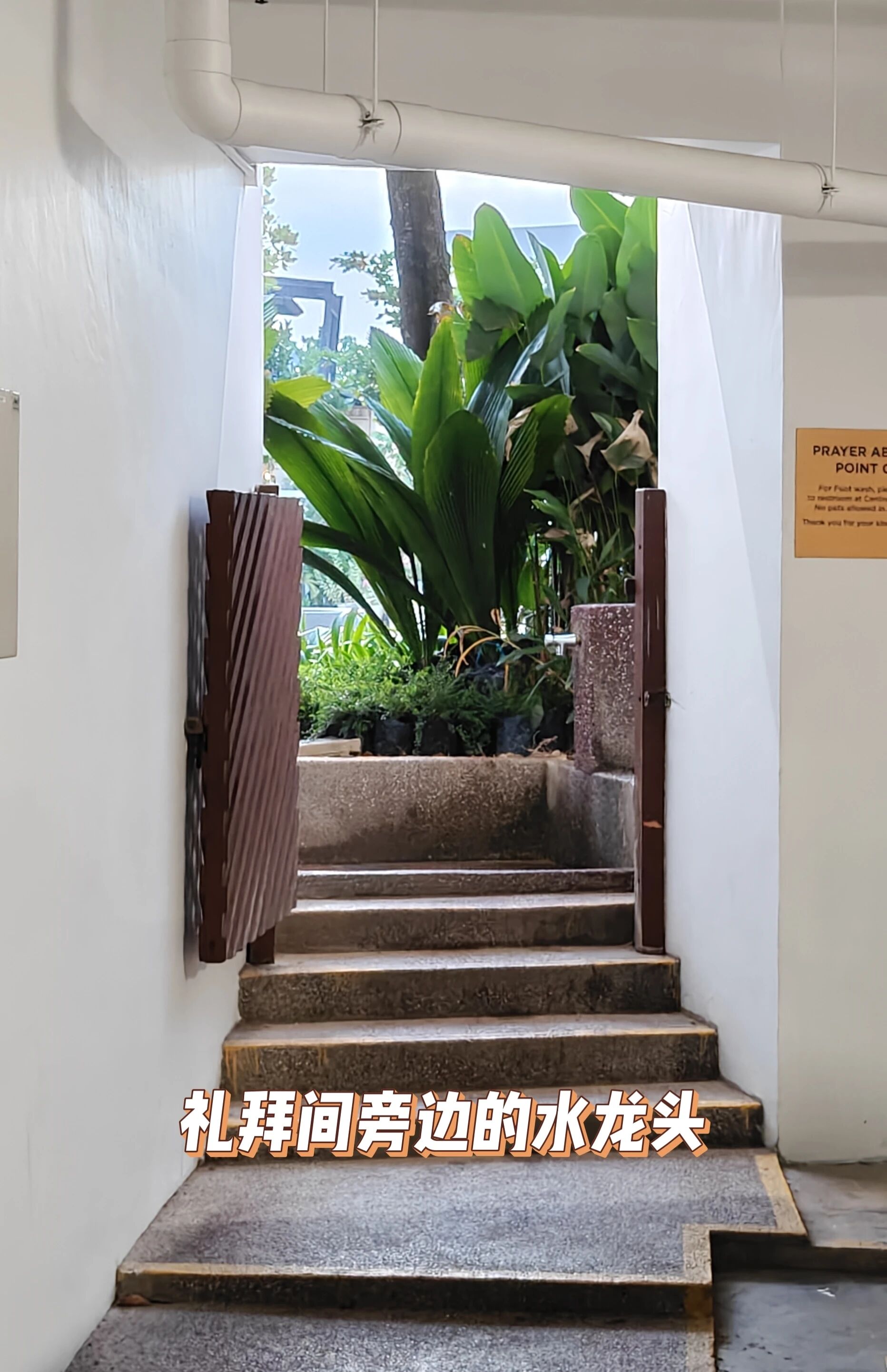
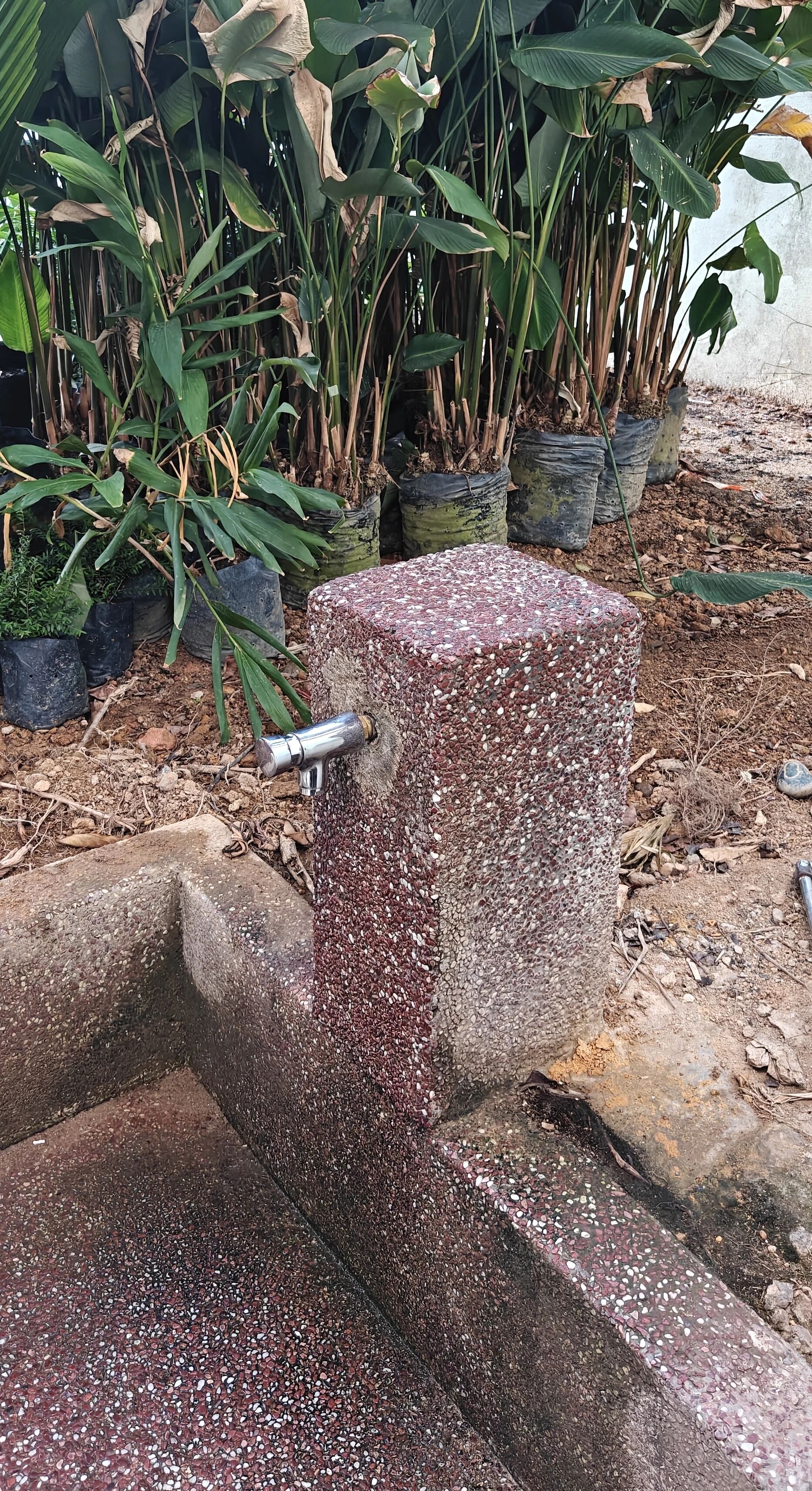
The prayer room is right below the Beach Station. There are water taps next to it, so you can wash your feet after playing in the sand.
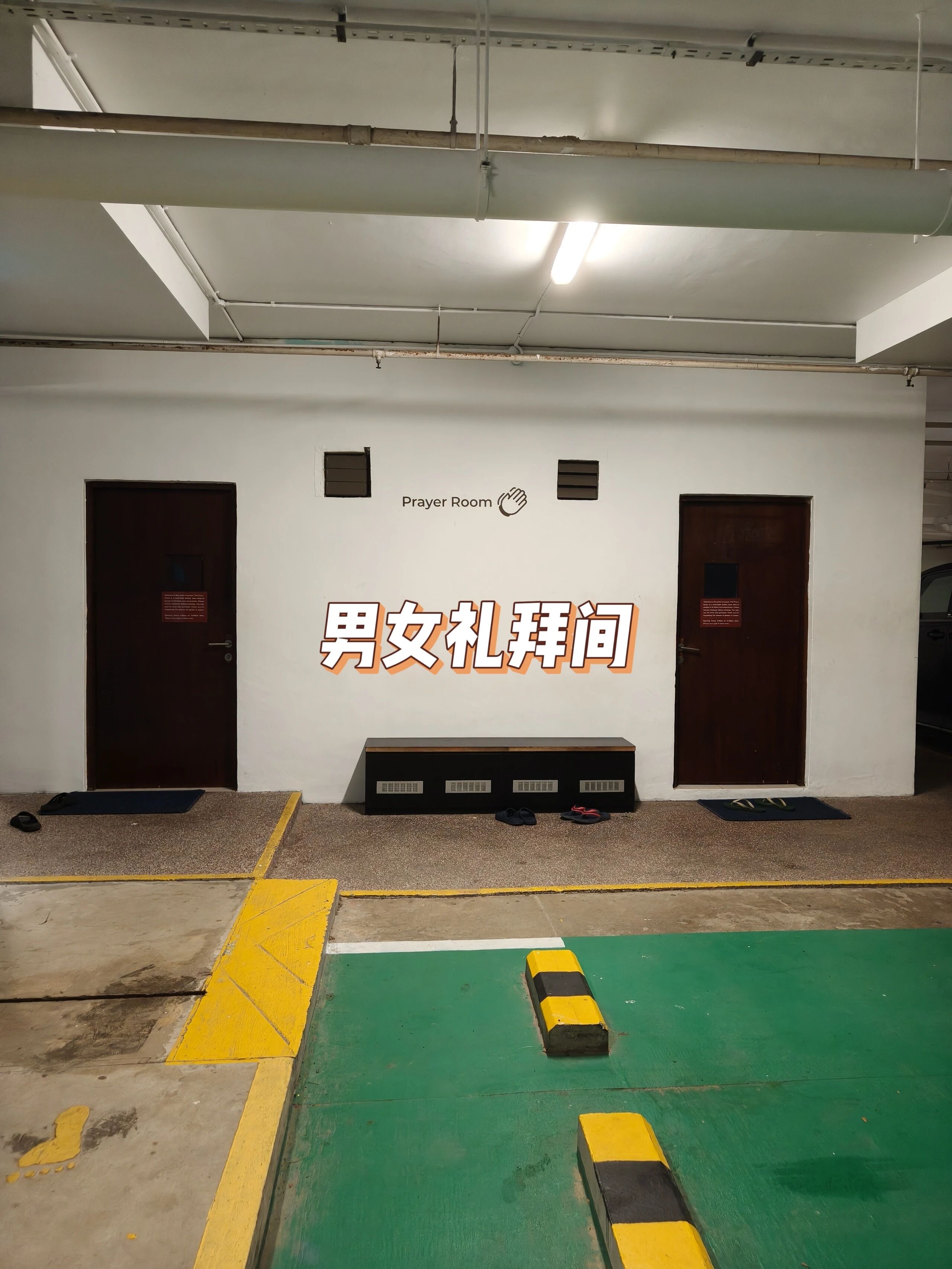
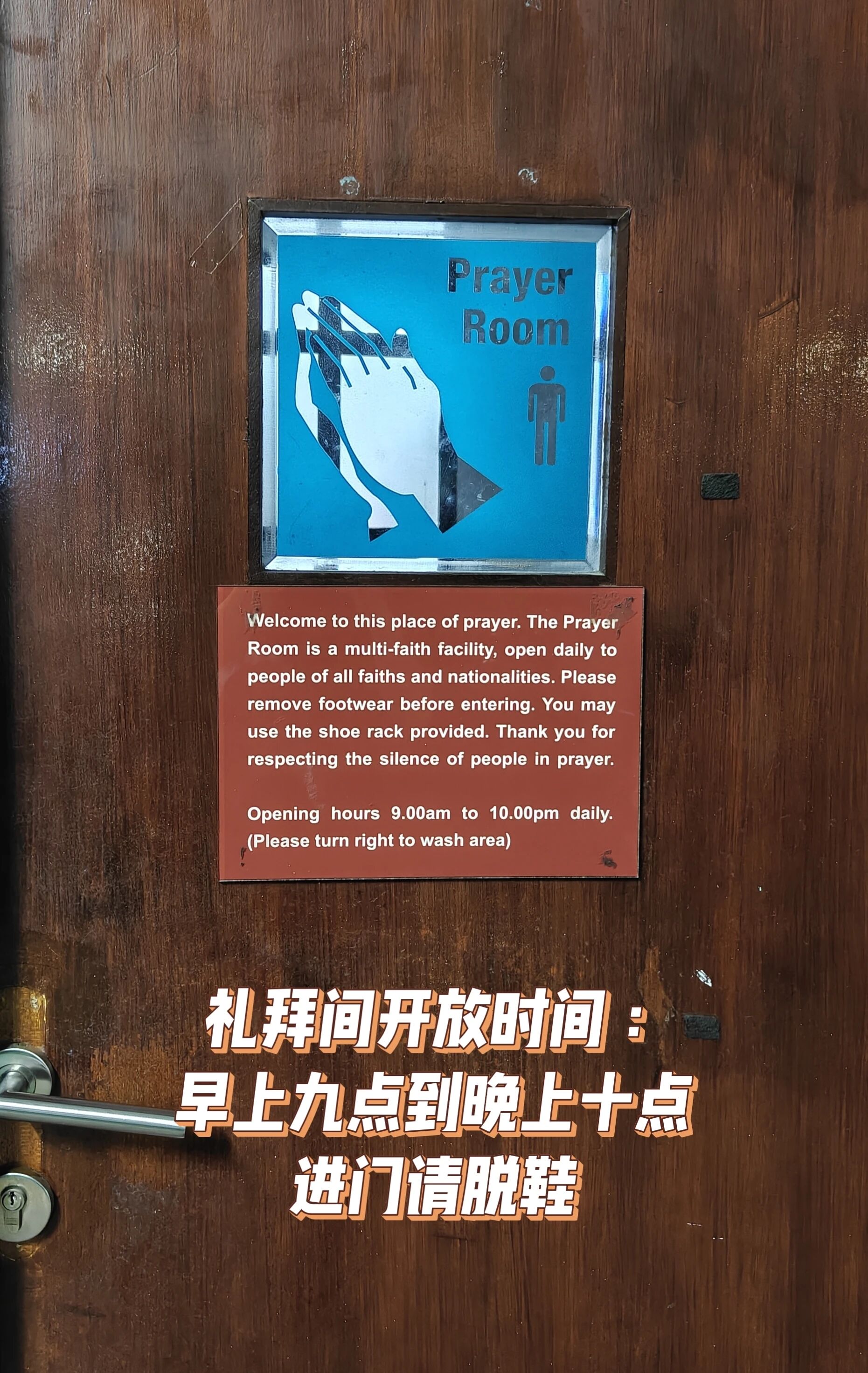
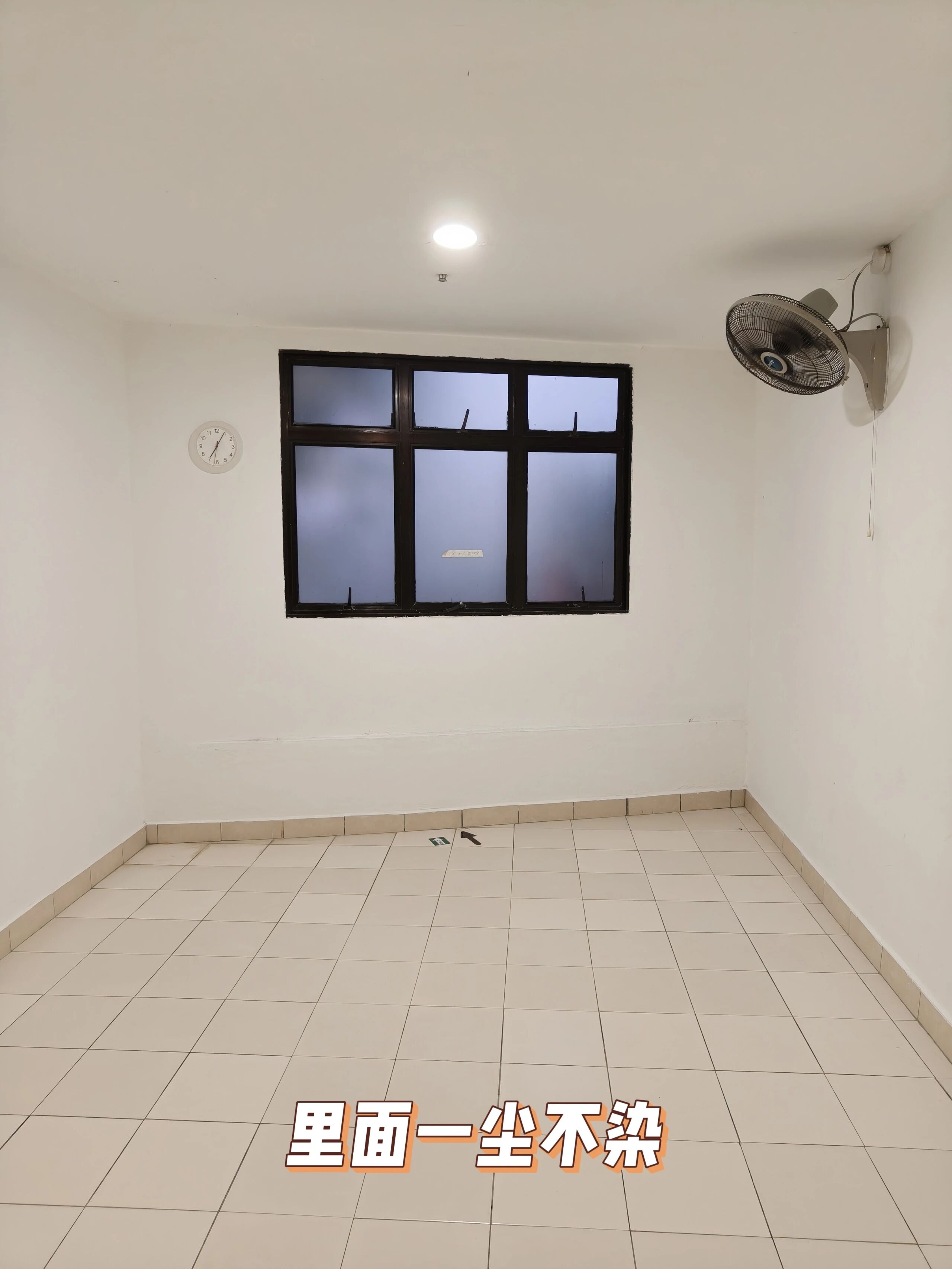
The prayer room is divided for men and women, with the men's side on the right. I took off my shoes on the bench by the door and opened it. The lights and fans turned on automatically. The prayer room was very clean. Keeping it that way depends entirely on the people who come to pray, and I couldn't help but admire how high the standards of the people here are.
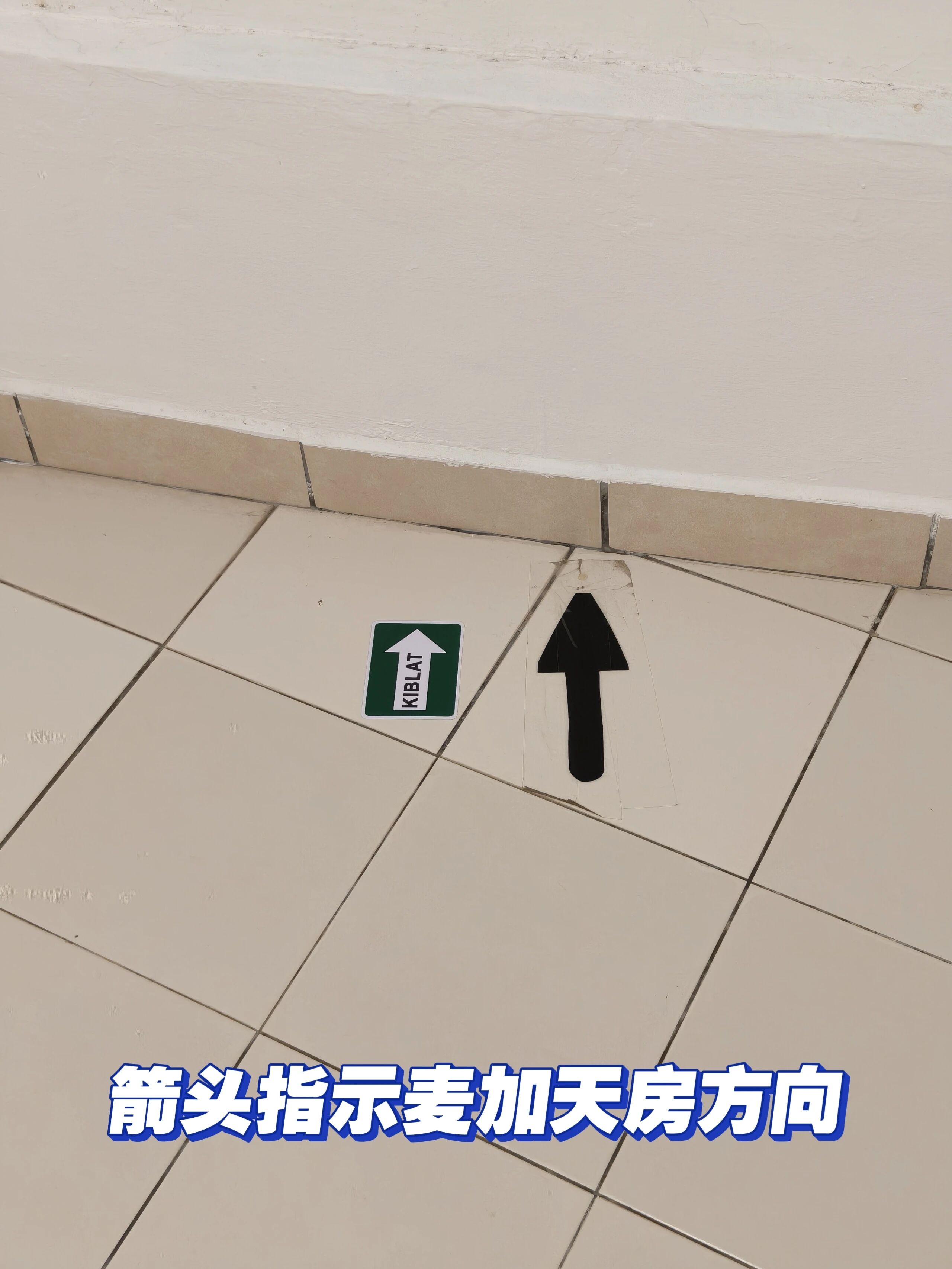
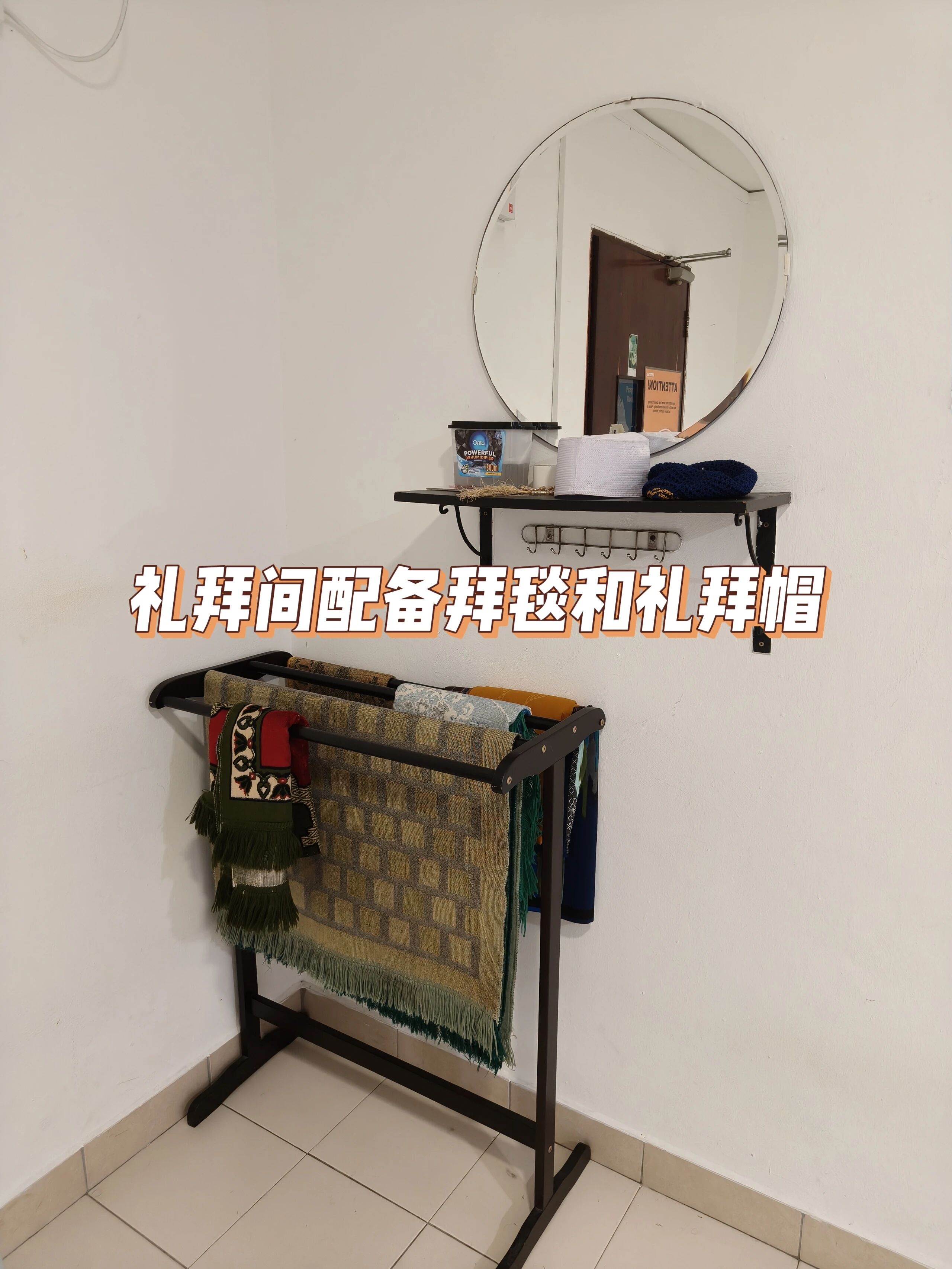
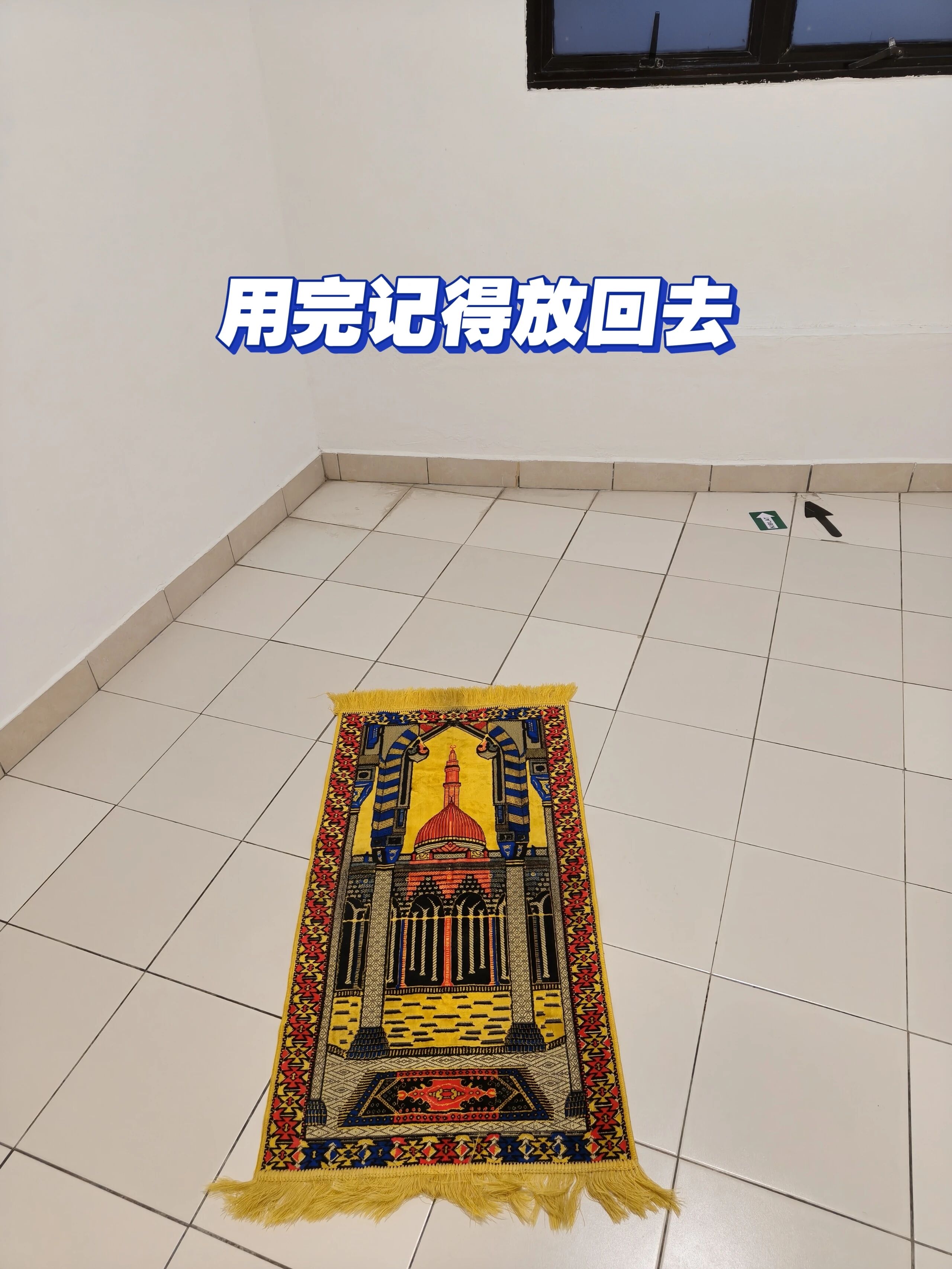
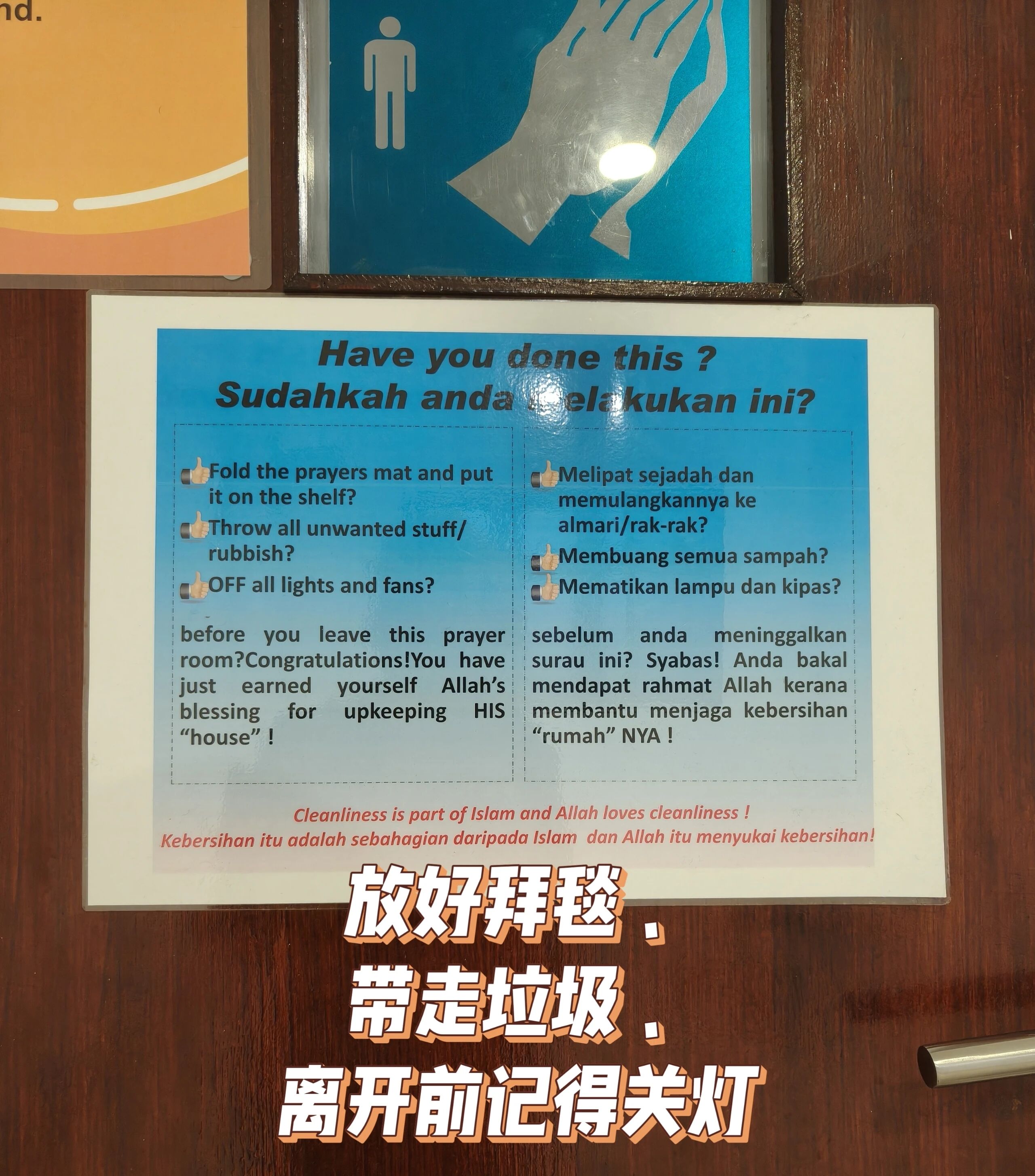
There is an arrow on the floor of the prayer room pointing toward the Kaaba in Mecca (Figure 8). By the entrance, there is a rack (Figure 9) with prayer mats hanging on it. You lay one on the floor when you use it and are expected to hang it back up when you are finished.
During my first visit, I met a local Malay Singaporean and an African man who lives and does business in the United States. His English accent was still different from that of Black Americans. We chatted for a while and then said goodbye.
When I came here a second time, I met two more Malay people and a Muslim from sub-Saharan Africa who greeted me. It was quite a coincidence to run into Malay and African people both times.
After namaz ended, it was time for me to head back to the hotel to sleep. I took the light rail to leave Sentosa Island and got ready to travel quite far the next day to attend the Friday congregational prayer. I will post an update on the Friday prayer scene soon. view all
Summary: This Singapore Sentosa prayer room guide follows the author after leaving Temenggong Mosque and entering the resort area. It keeps the aquarium, beach, cable-car context, and practical Muslim visitor notes intact.
After leaving the Temenggong Mosque, I headed toward the Sentosa area. Sentosa has an aquarium, beaches, restaurants, and a cable car, making it a great spot for leisure and fun. Google Maps shows there is a prayer room here, right by the light rail station.
In Singapore, they call this light rail the MRT, which is the same term they use in Taiwan.
The prayer room is right below the Beach Station. There are water taps next to it, so you can wash your feet after playing in the sand.
The prayer room is divided for men and women, with the men's side on the right. I took off my shoes on the bench by the door and opened it. The lights and fans turned on automatically. The prayer room was very clean. Keeping it that way depends entirely on the people who come to pray, and I couldn't help but admire how high the standards of the people here are.
There is an arrow on the floor of the prayer room pointing toward the Kaaba in Mecca (Figure 8). By the entrance, there is a rack (Figure 9) with prayer mats hanging on it. You lay one on the floor when you use it and are expected to hang it back up when you are finished.
During my first visit, I met a local Malay Singaporean and an African man who lives and does business in the United States. His English accent was still different from that of Black Americans. We chatted for a while and then said goodbye.
When I came here a second time, I met two more Malay people and a Muslim from sub-Saharan Africa who greeted me. It was quite a coincidence to run into Malay and African people both times.
After namaz ended, it was time for me to head back to the hotel to sleep. I took the light rail to leave Sentosa Island and got ready to travel quite far the next day to attend the Friday congregational prayer. I will post an update on the Friday prayer scene soon.
Muslim Travel Guide Singapore: Underground Mosque, Bencoolen Area and Hidden Prayer Space
Articles • Hasan09 posted the article • 0 comments • 332 views • 2026-05-24 01:47
Summary: This Singapore Muslim travel guide explains the author's visit to an underground mosque and why such a mosque exists in the city. It preserves the personal opening, site details, and hidden prayer-space context from the source.
When I hear about underground mosques, I immediately think of a magazine I read as a kid. It talked about a country in Central Asia during the Soviet era where people dug a hole in the ground and propped it up with a few wooden beams to escape religious suppression.
People would sneak inside to perform namaz. But this mosque in Singapore is different. The mosque owned property in the business district. After signing an agreement with United Overseas Bank (UOB), both sides decided the mosque would trade its above-ground property for part of the space on the first basement level of the UOB building to use as a mosque.
The brief history of the mosque (Image 7) shows a bit of pride, saying that I probably haven't seen many mosques built underground.
After visiting the South Indian gongbei, Thian Hock Keng Mosque, and Al-Abrar Mosque, I walked toward Boat Quay. Before long, I saw the entrance to the underground mosque (Image 1). Honestly, it looks a bit like a subway entrance or an underground parking garage for an apartment complex.
But there is a sign for the mosque next to it, so it is not easy to mistake.
The first time I went there, I almost walked straight into the entrance for the women's prayer hall. That is because this mosque has separate entrances for men and women. The entrance on Boat Quay leads to the men's prayer hall, and the entrance on Chulia Street leads to the women's prayer hall.
I went to the men's prayer hall. After walking down the stairs, there is a place to perform wudu in the entryway, and there are also restrooms. Performing wudu is very convenient.
After finishing wudu and entering the prayer hall, I found that the space is actually quite large and can hold a lot of people. The facilities are complete, and the interior decor is simple and elegant, making the space look clean and tidy.
The front wall features the first chapter of the Quran, known as the Opening (Al-Fatiha). Interestingly, the wall of the Al-Abrar Mosque I visited last time also displayed this same chapter.
The prayer hall is well air-conditioned and even equipped with a defibrillator (Image 12) to help patients suffering from cardiac arrest. This is the first time I have seen a mosque equipped with a heart defibrillator.
Once you leave, you are right at Boat Quay, where you can enjoy the waterfront view. Across the river is the Asian Civilisations Museum, which has a floor dedicated to religious exhibits, including a separate section for Islam.
I took photos of this last time, but unfortunately, they were lost. I wanted to take them again, but parts of the museum are currently under renovation, so the Islamic exhibit is temporarily closed. I will have to wait for another chance to show it to you all. view all
Summary: This Singapore Muslim travel guide explains the author's visit to an underground mosque and why such a mosque exists in the city. It preserves the personal opening, site details, and hidden prayer-space context from the source.
When I hear about underground mosques, I immediately think of a magazine I read as a kid. It talked about a country in Central Asia during the Soviet era where people dug a hole in the ground and propped it up with a few wooden beams to escape religious suppression.
People would sneak inside to perform namaz. But this mosque in Singapore is different. The mosque owned property in the business district. After signing an agreement with United Overseas Bank (UOB), both sides decided the mosque would trade its above-ground property for part of the space on the first basement level of the UOB building to use as a mosque.
The brief history of the mosque (Image 7) shows a bit of pride, saying that I probably haven't seen many mosques built underground.
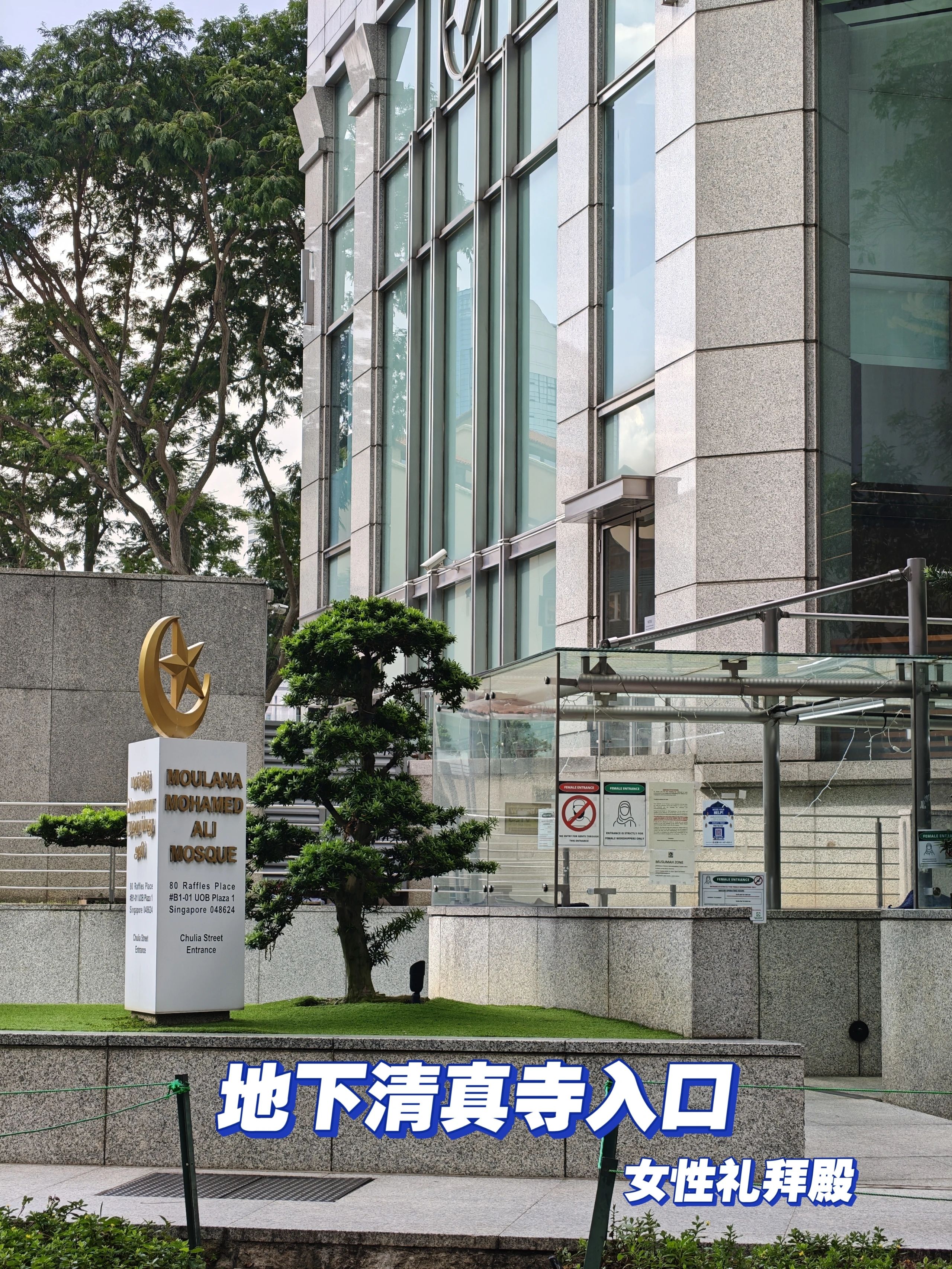
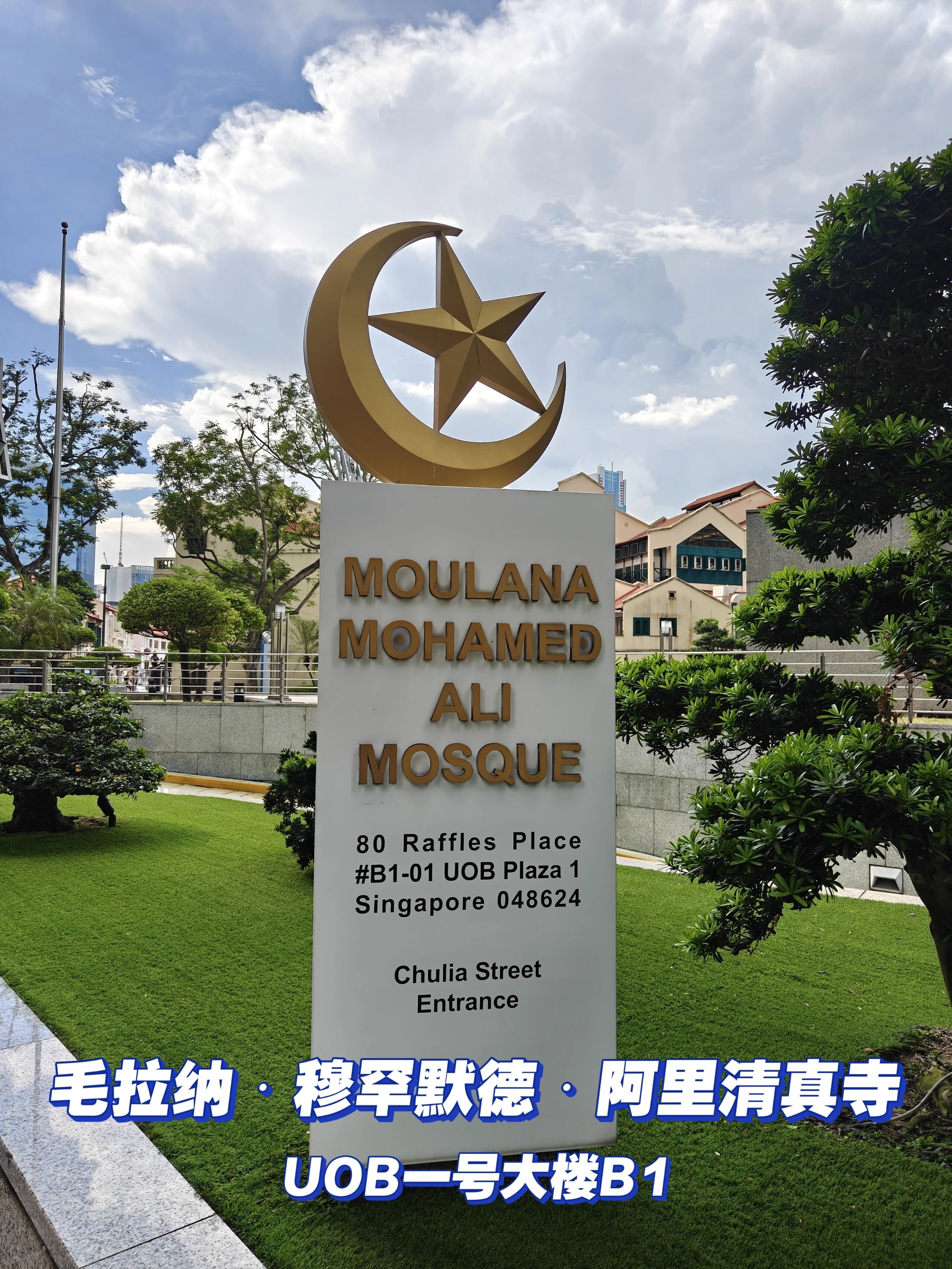
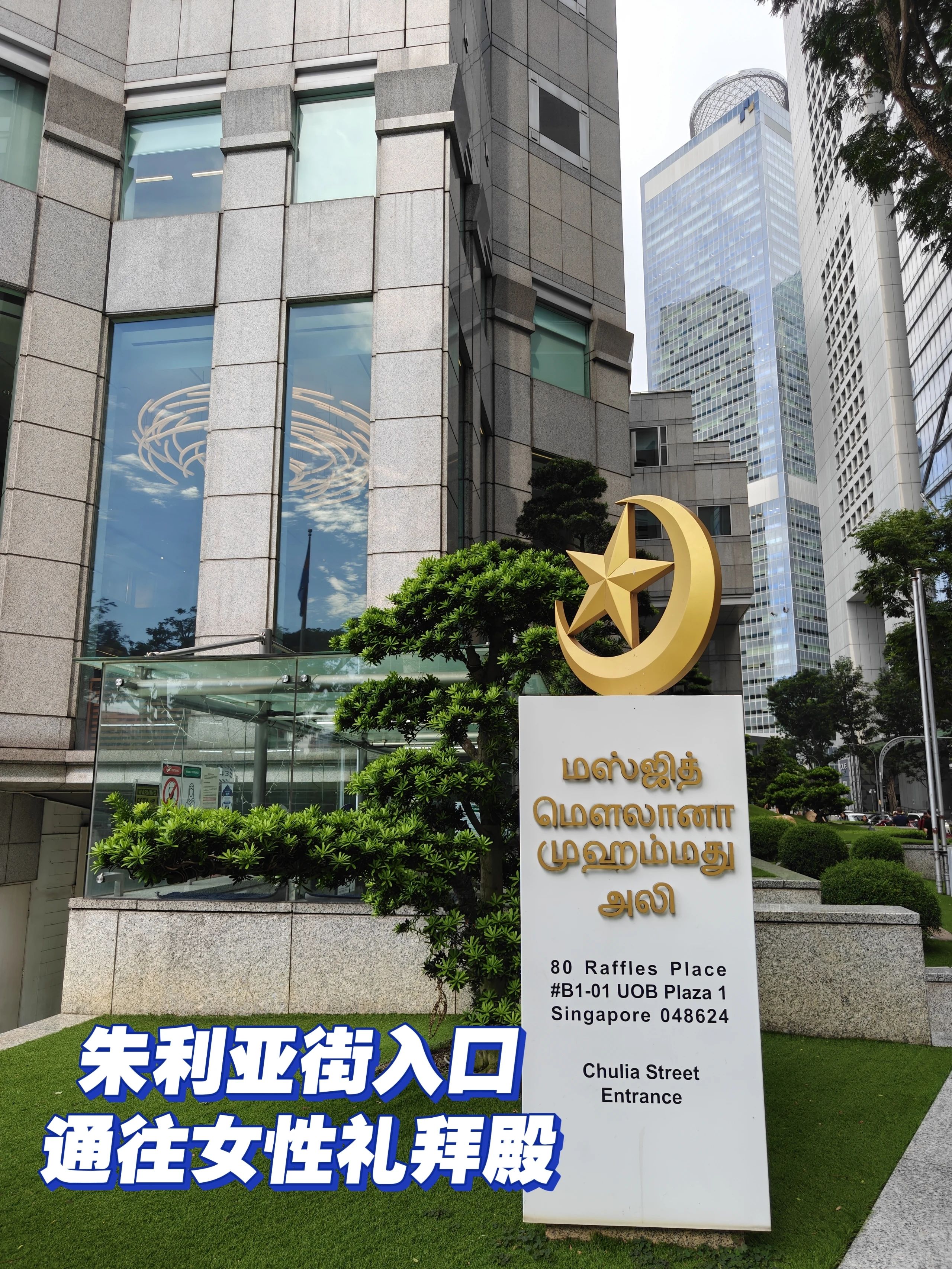
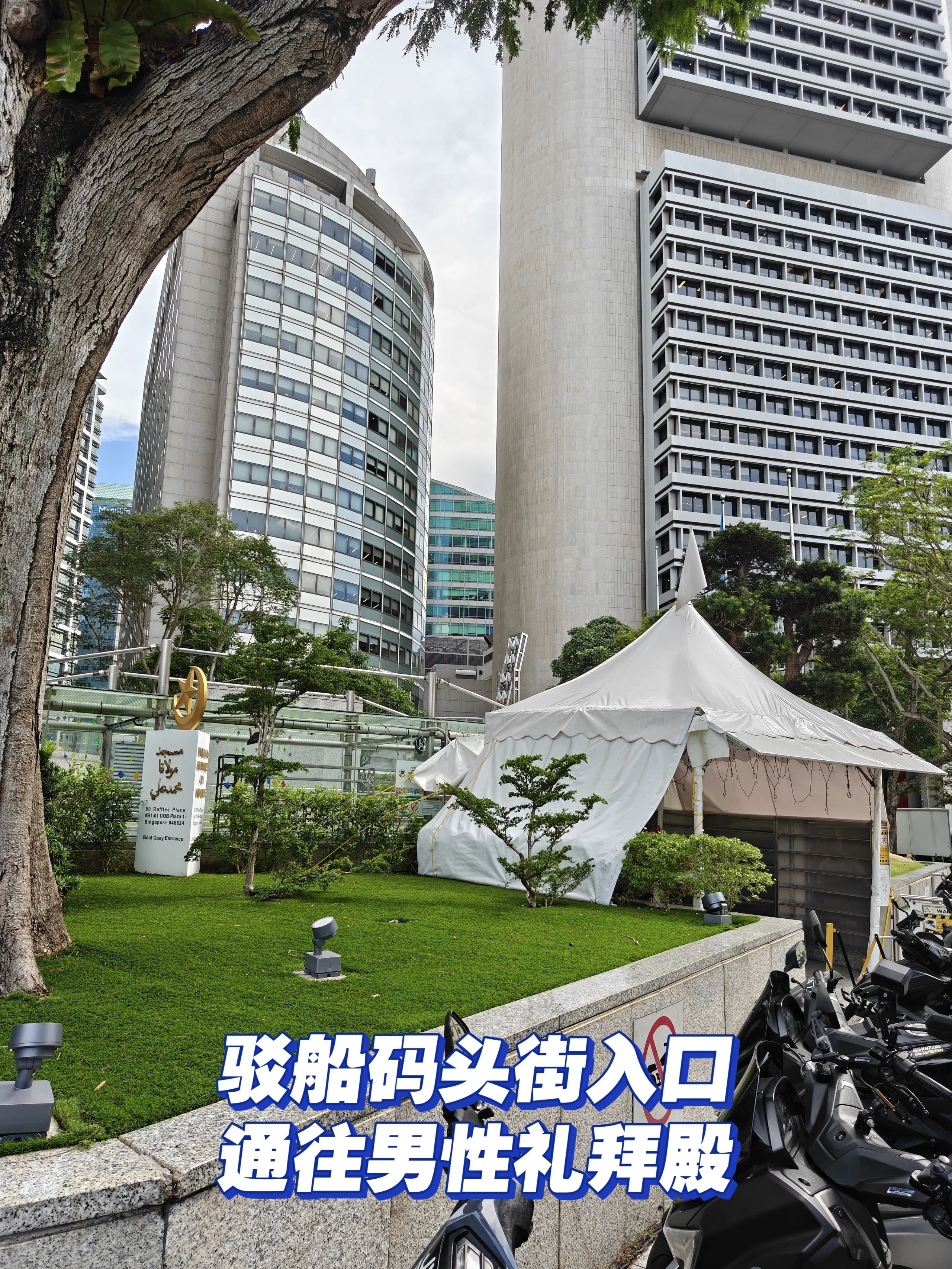
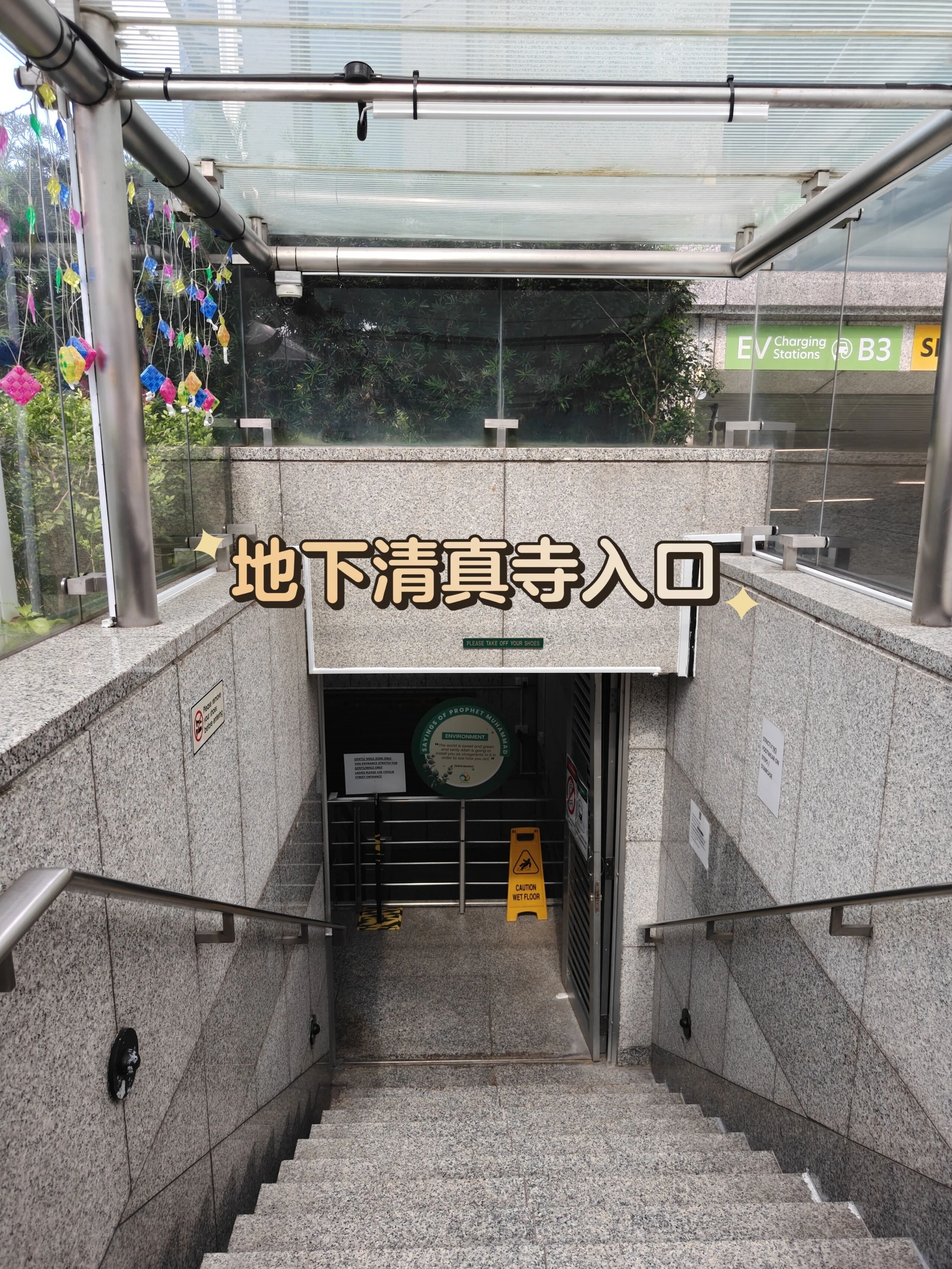
After visiting the South Indian gongbei, Thian Hock Keng Mosque, and Al-Abrar Mosque, I walked toward Boat Quay. Before long, I saw the entrance to the underground mosque (Image 1). Honestly, it looks a bit like a subway entrance or an underground parking garage for an apartment complex.
But there is a sign for the mosque next to it, so it is not easy to mistake.
The first time I went there, I almost walked straight into the entrance for the women's prayer hall. That is because this mosque has separate entrances for men and women. The entrance on Boat Quay leads to the men's prayer hall, and the entrance on Chulia Street leads to the women's prayer hall.
I went to the men's prayer hall. After walking down the stairs, there is a place to perform wudu in the entryway, and there are also restrooms. Performing wudu is very convenient.
After finishing wudu and entering the prayer hall, I found that the space is actually quite large and can hold a lot of people. The facilities are complete, and the interior decor is simple and elegant, making the space look clean and tidy.
The front wall features the first chapter of the Quran, known as the Opening (Al-Fatiha). Interestingly, the wall of the Al-Abrar Mosque I visited last time also displayed this same chapter.
The prayer hall is well air-conditioned and even equipped with a defibrillator (Image 12) to help patients suffering from cardiac arrest. This is the first time I have seen a mosque equipped with a heart defibrillator.
Once you leave, you are right at Boat Quay, where you can enjoy the waterfront view. Across the river is the Asian Civilisations Museum, which has a floor dedicated to religious exhibits, including a separate section for Islam.
I took photos of this last time, but unfortunately, they were lost. I wanted to take them again, but parts of the museum are currently under renovation, so the Islamic exhibit is temporarily closed. I will have to wait for another chance to show it to you all.
Prayer Room Singapore Marina One: CBD Mall Musalla, Wudu Access and Muslim Travel Notes
Articles • Hasan09 posted the article • 0 comments • 318 views • 2026-05-24 01:46
Summary: This Singapore prayer room guide visits the Muslim prayer space inside Marina One in the Central Business District. It keeps the mall setting, restaurant and supermarket context, musalla details, and travel notes intact.
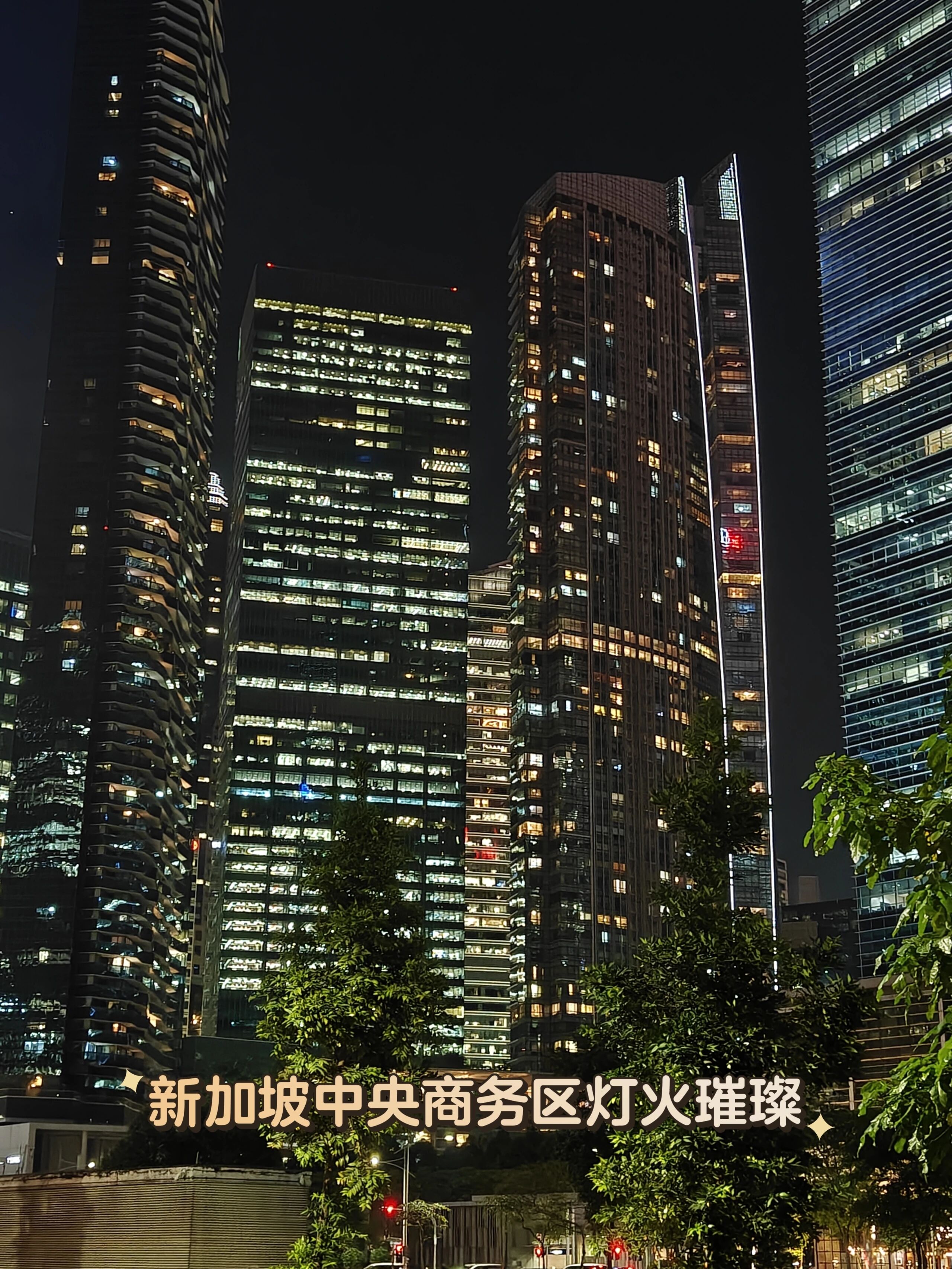
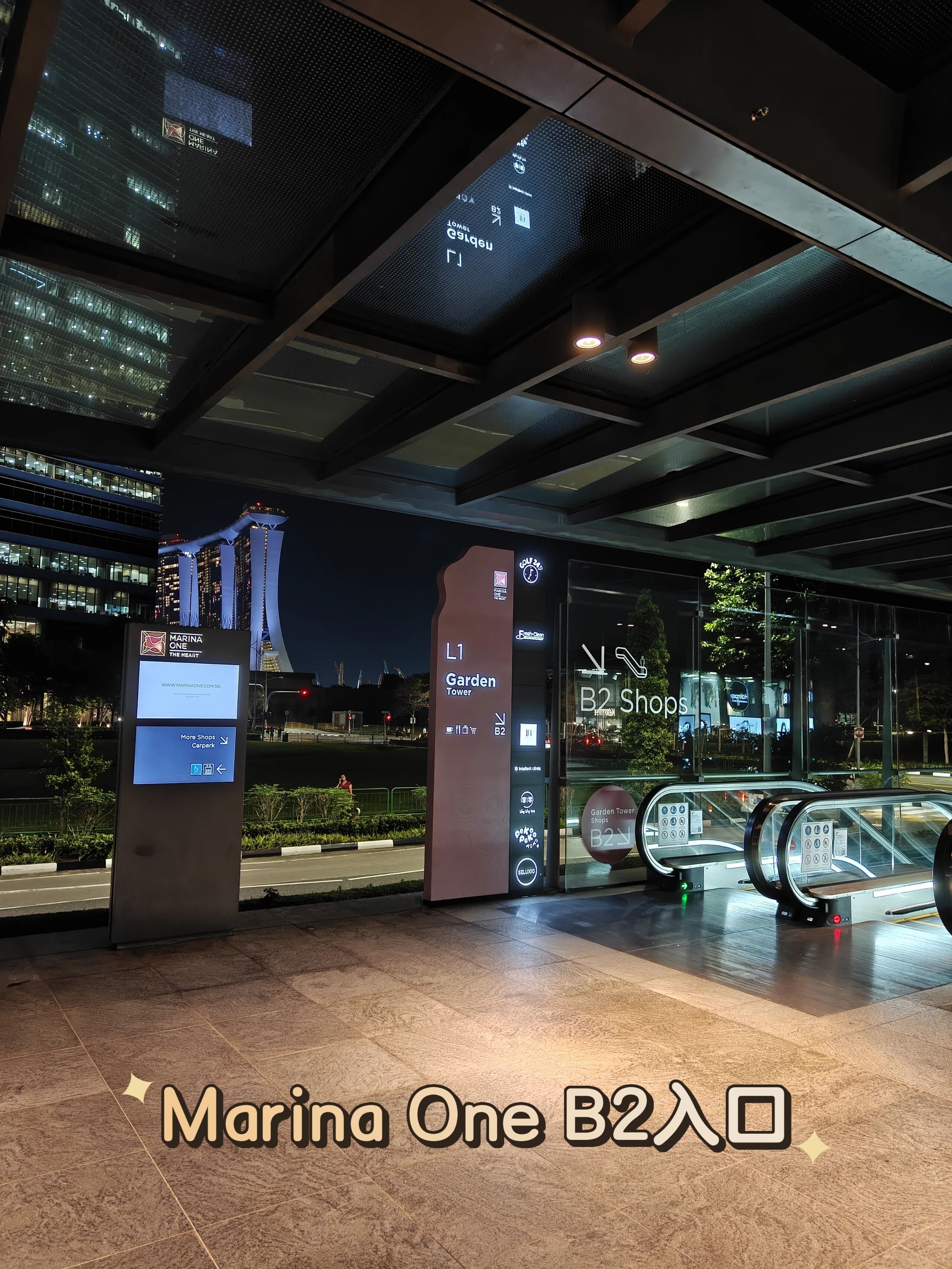
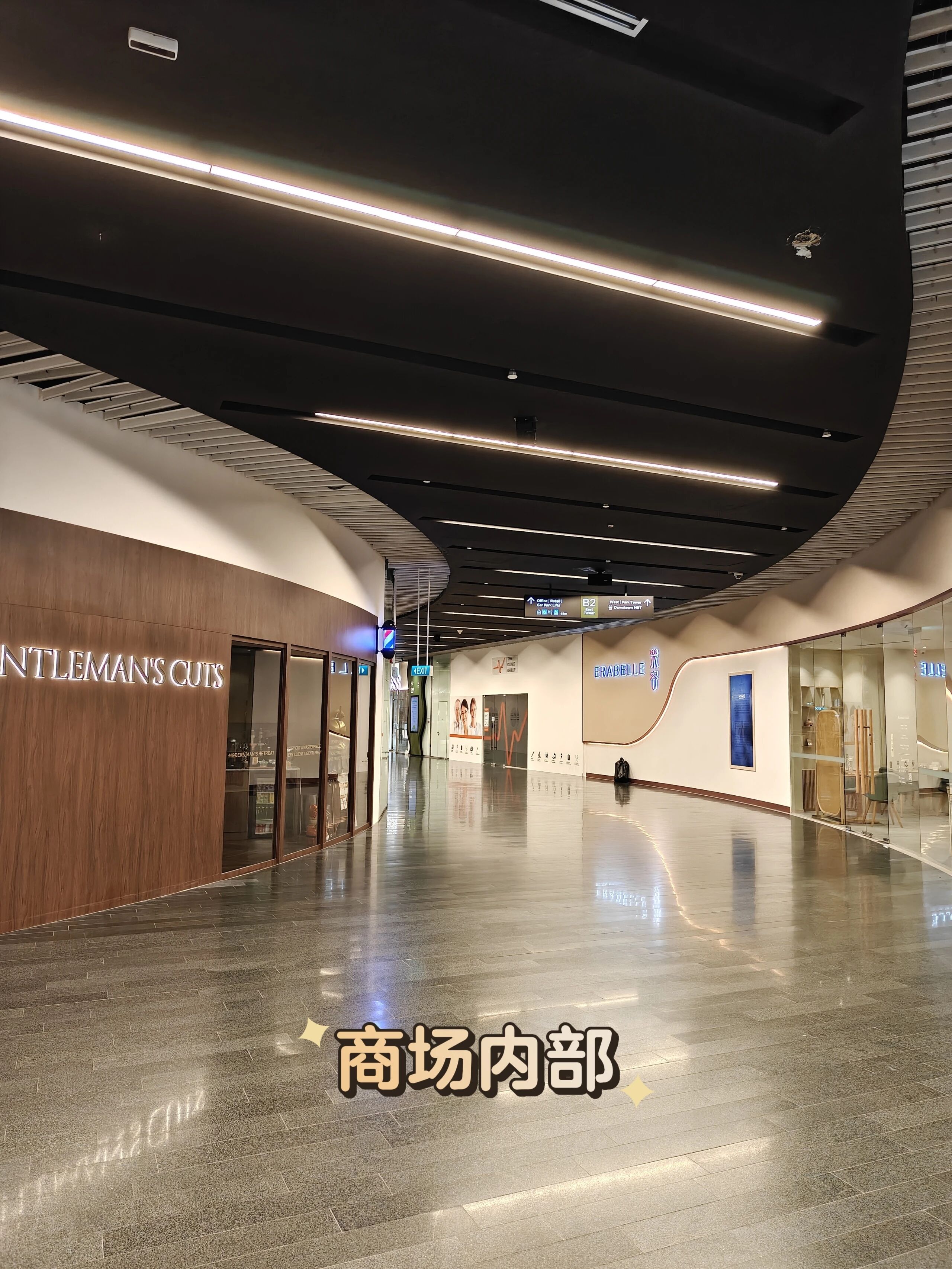
There is a shopping mall in Singapore's Central Business District called Marina One. It mostly has restaurants, supermarkets, and therapy centers. The mall has a prayer room for Muslim guests to perform namaz.
It was my first time here and I spent a long time looking for it. I even ended up in the parking lot, and only found the right place after an Indian security guard helped me. Actually, it is quite easy to find. Go down the escalator, turn right into the mall, and you will see the prayer room at a glance.
There is a round window right next to the prayer room, so it is easy to spot.
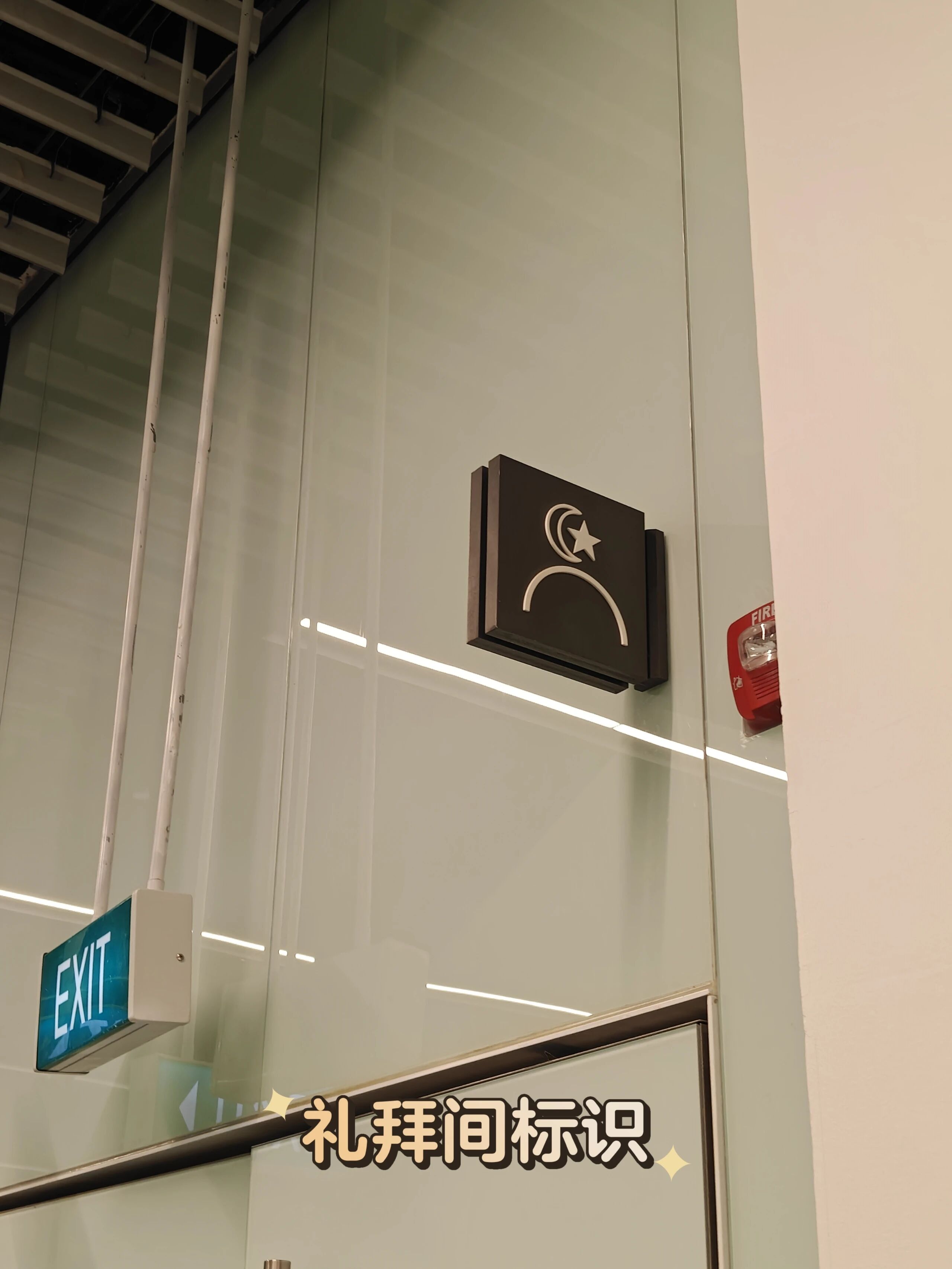
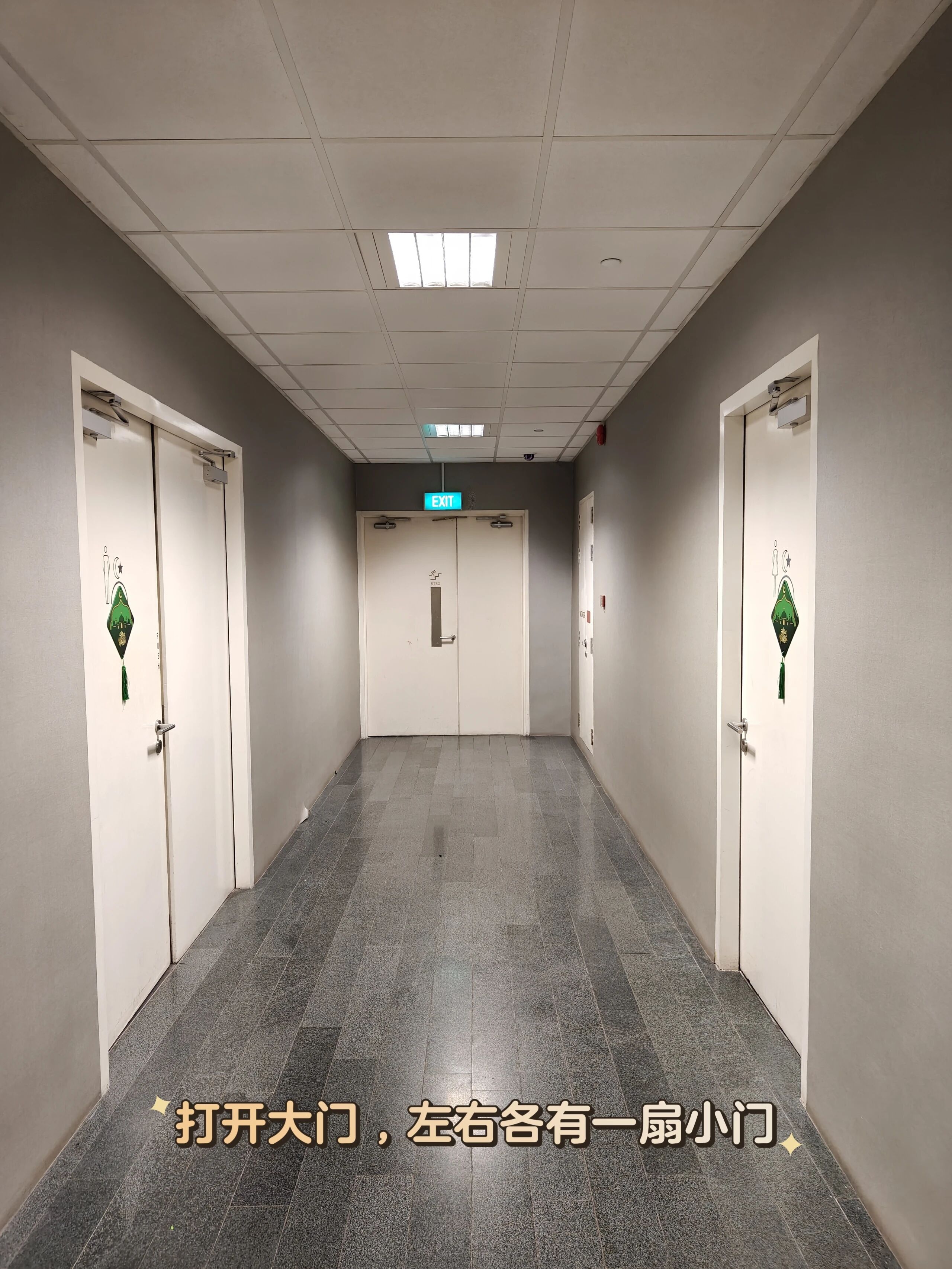
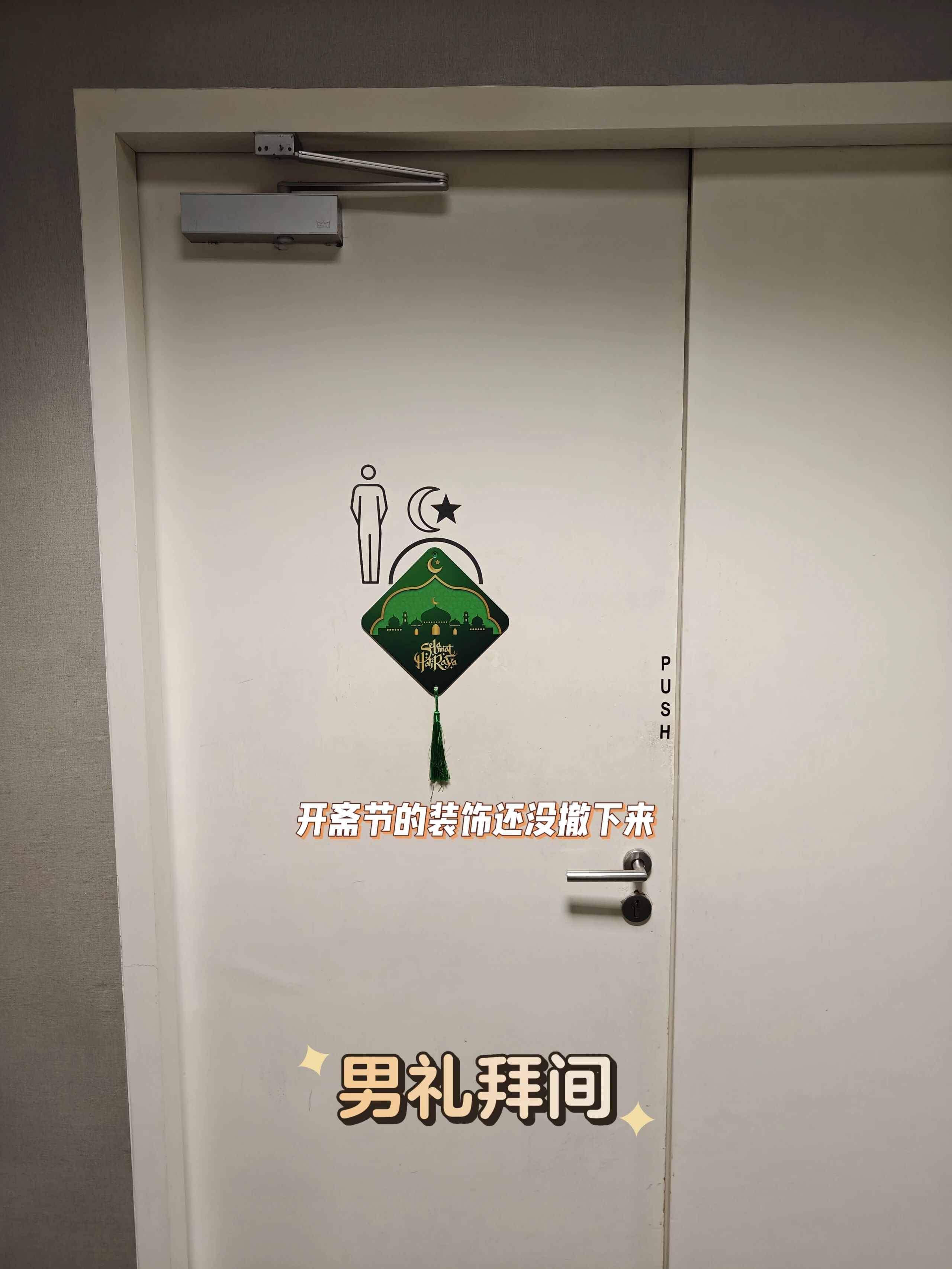
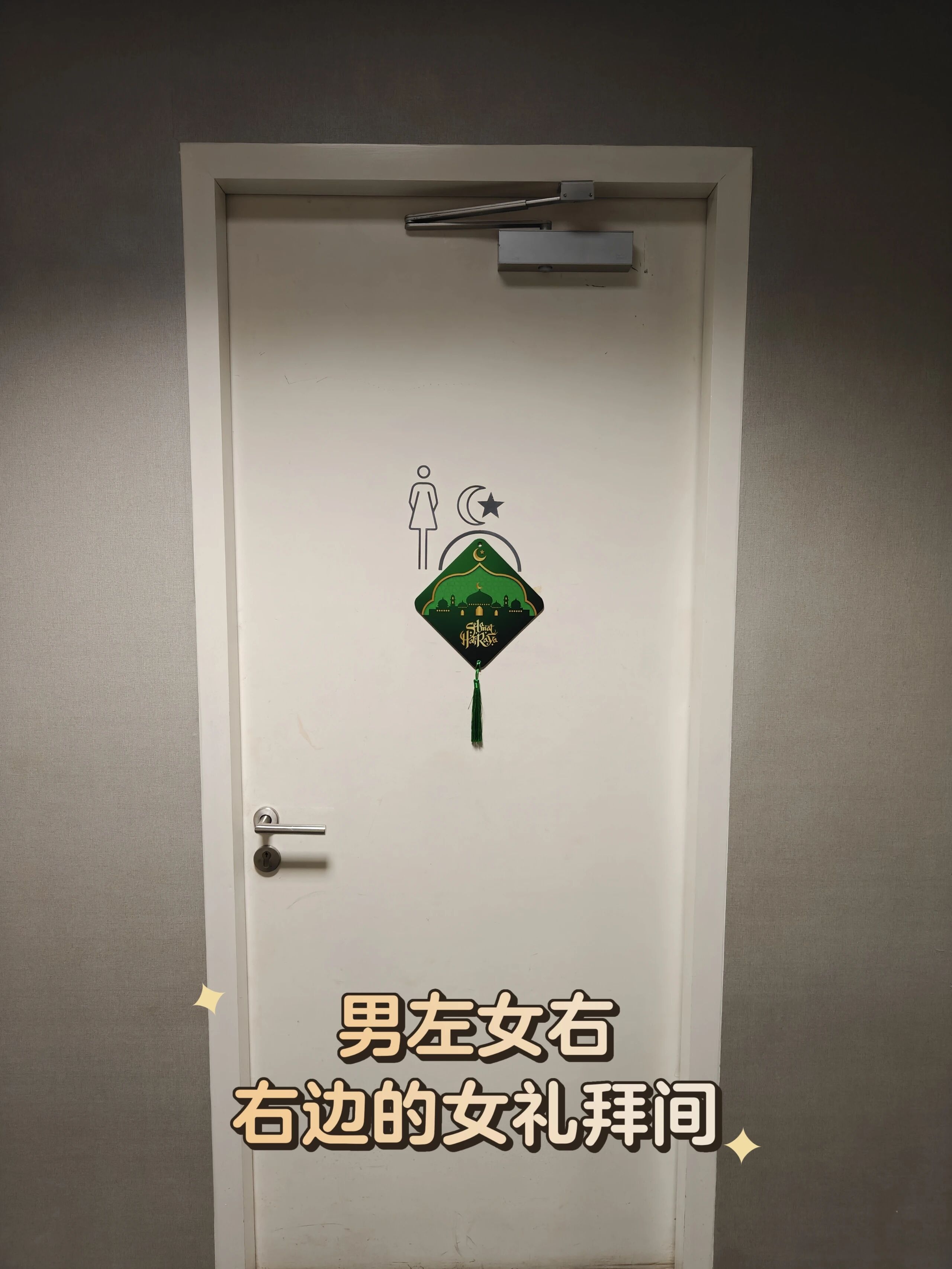
The sign for the prayer room is a simple drawing of a mosque dome with a star and crescent symbol. Push the door open and you will see two doors, one on the left and one on the right. It has been a while since Eid al-Fitr (Kai Zhai Jie), but the decorations are still up.
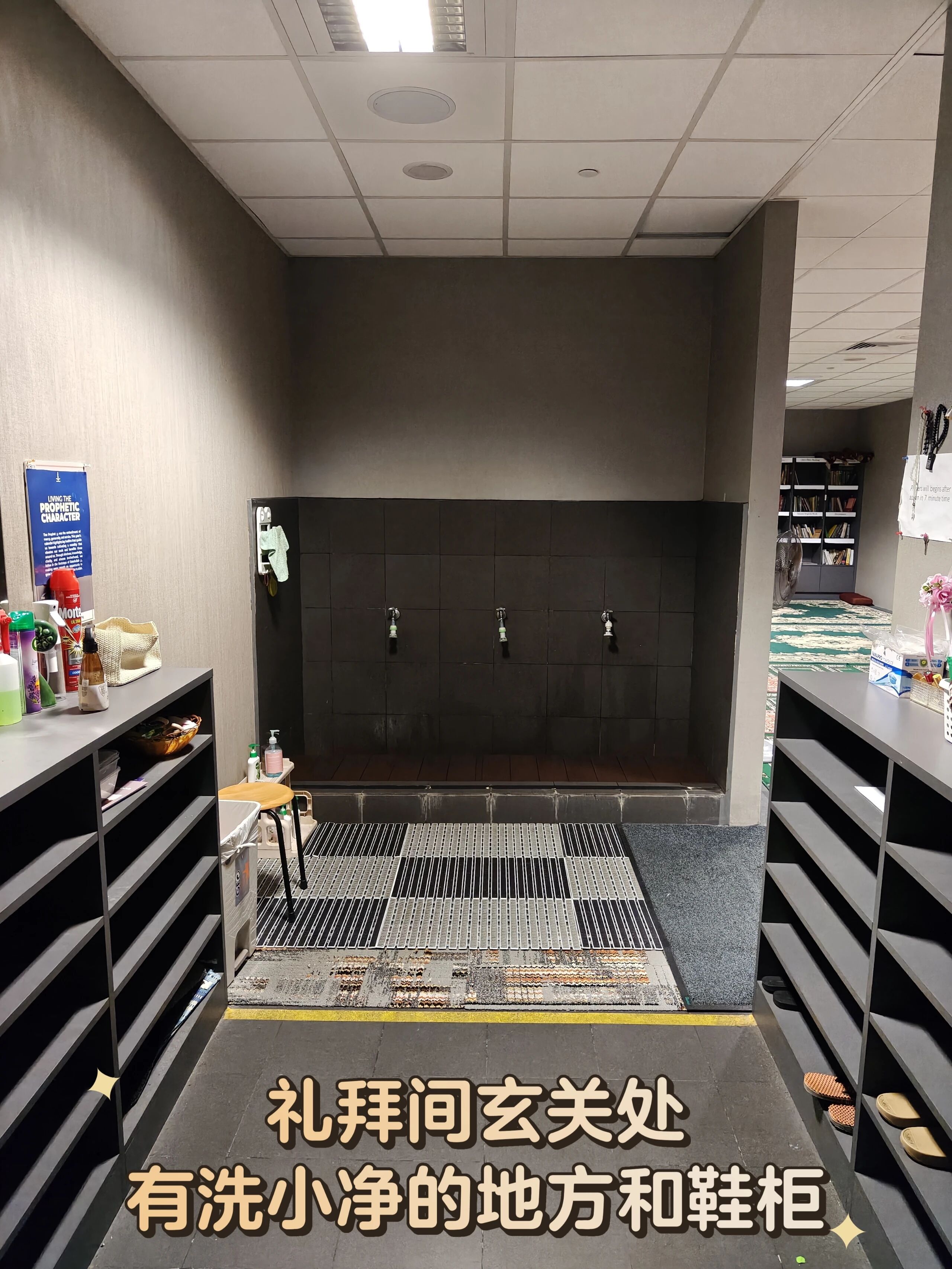
The door on the right is for women, and the one on the left is for men. I pushed open the men's prayer room and found a shoe cabinet and a simple washing area to perform wudu. There is a restroom near the prayer room, so it is very convenient to perform wudu.
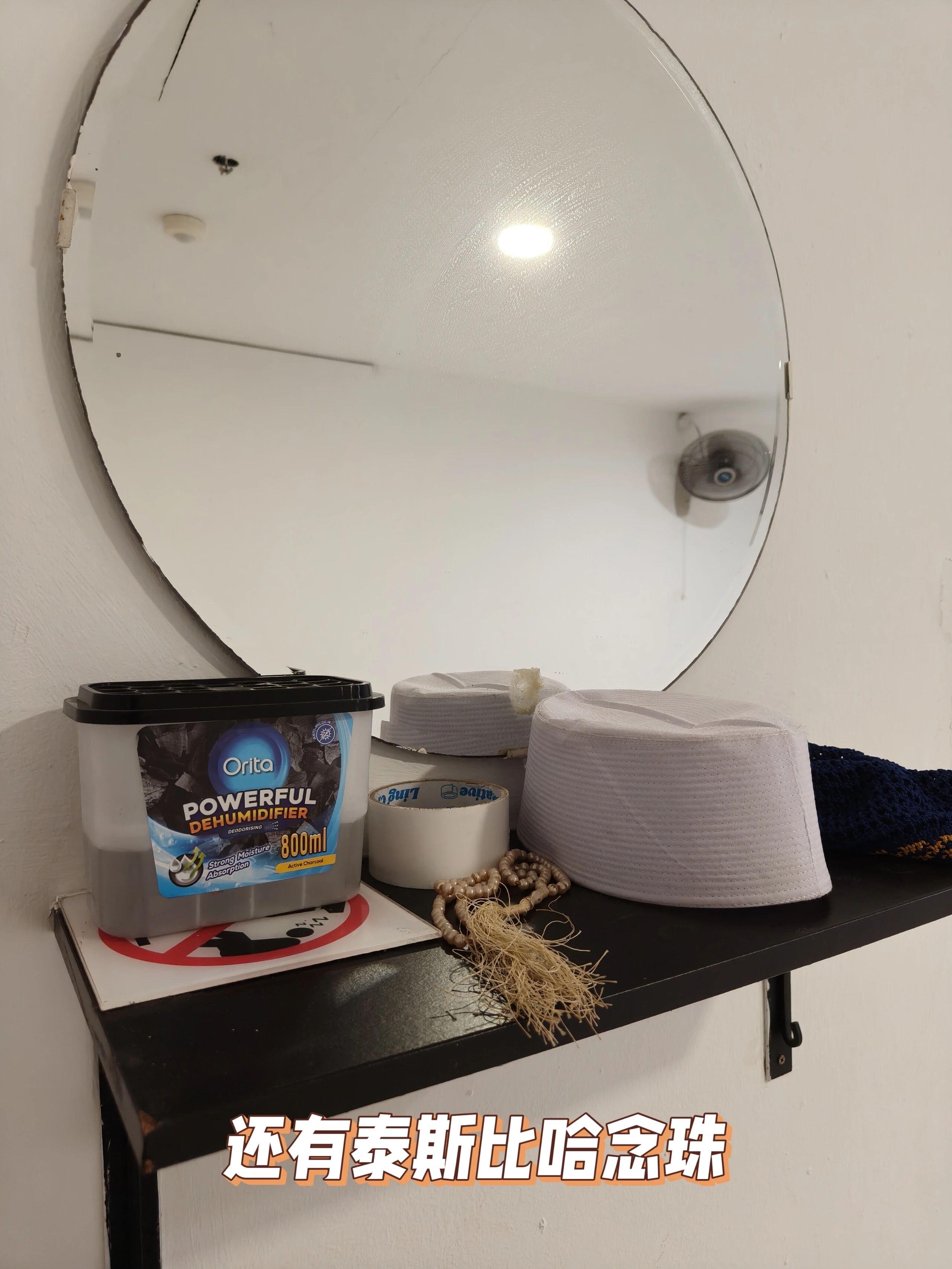
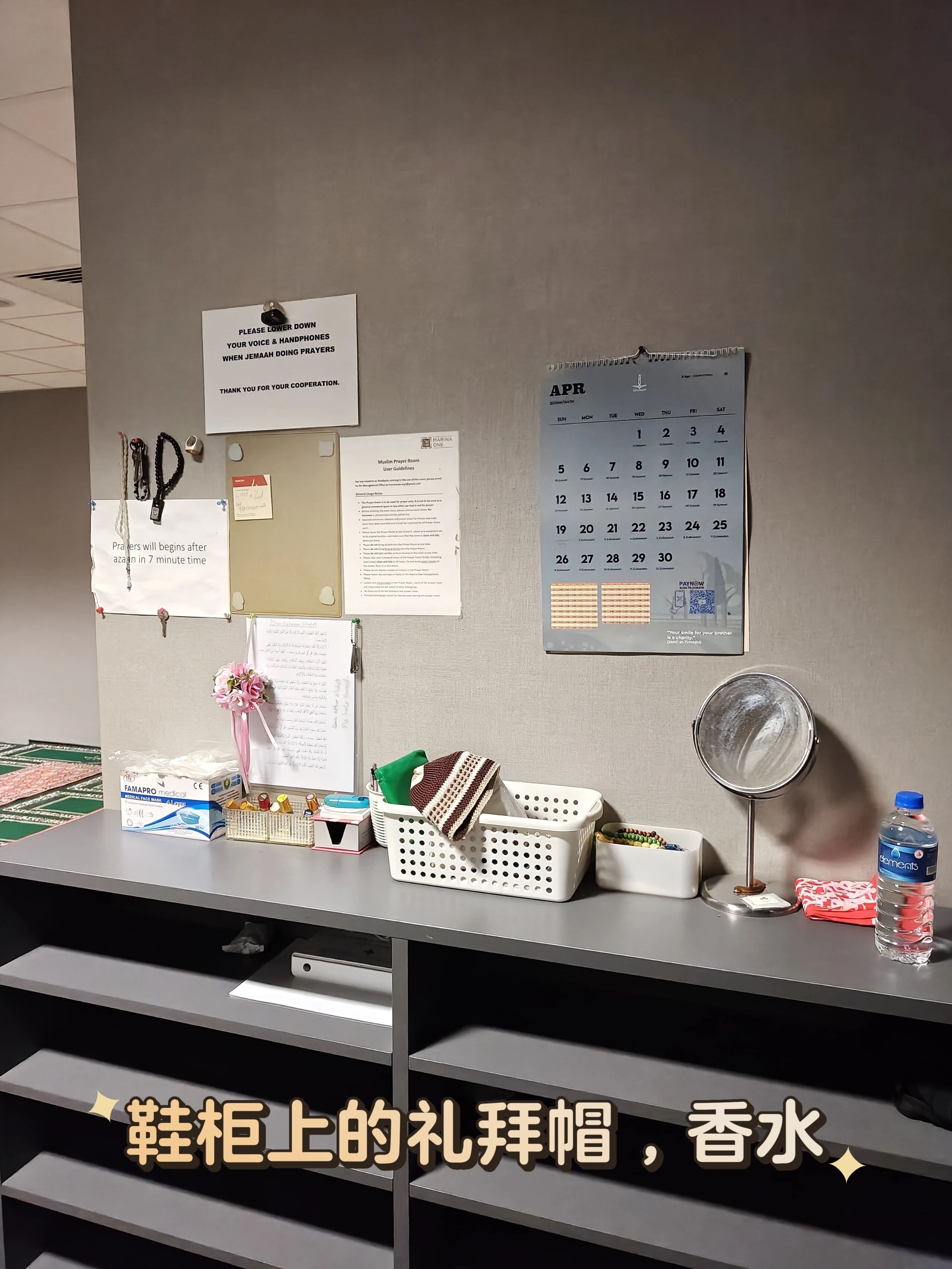
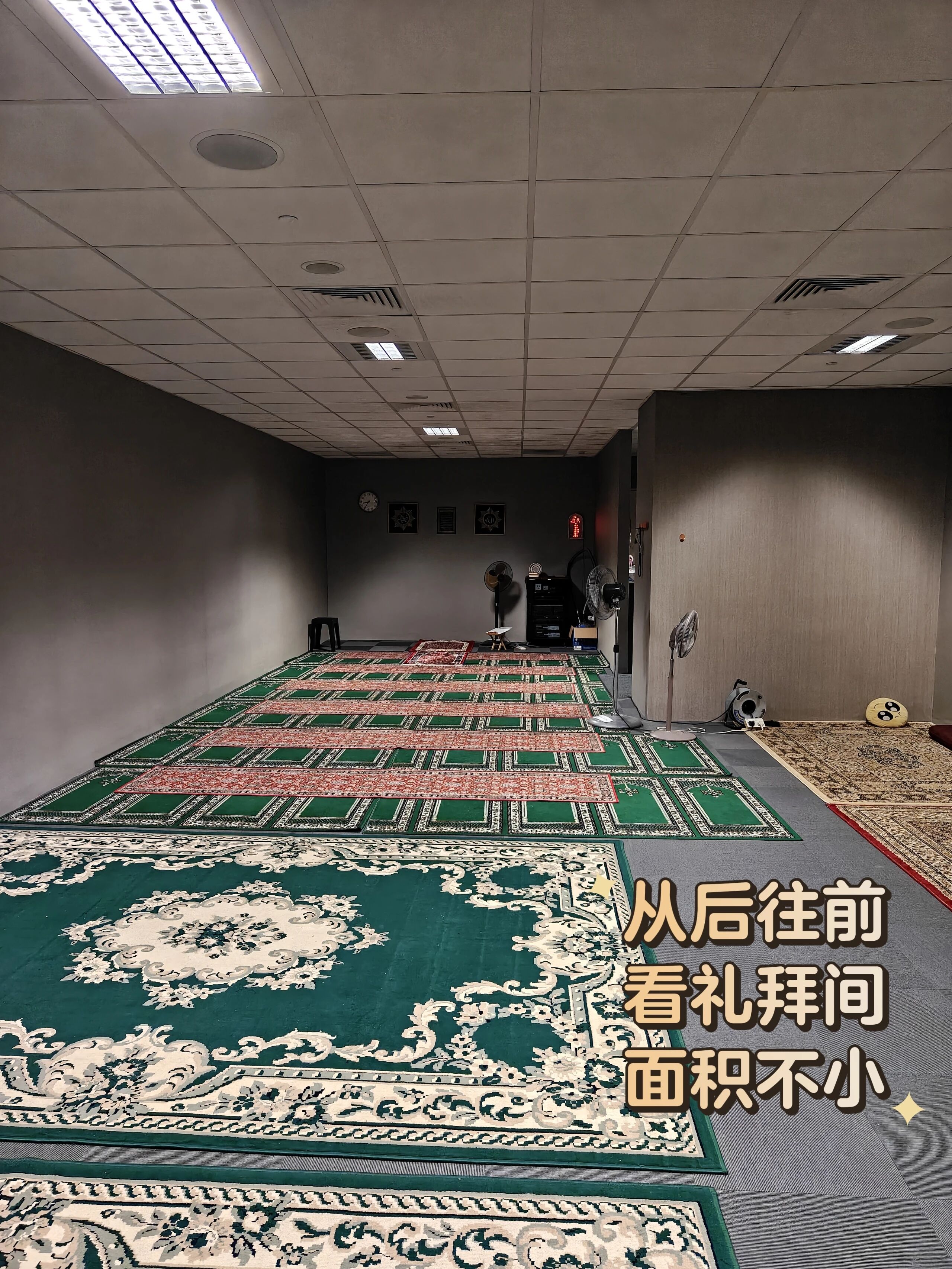
On top of the shoe cabinet, there are perfumes, prayer caps, and a mirror. It is quite thoughtful. I entered the prayer room and found it very clean. Everyone is quite disciplined, and the environment is well-maintained. It is quite spacious inside and can hold many people.
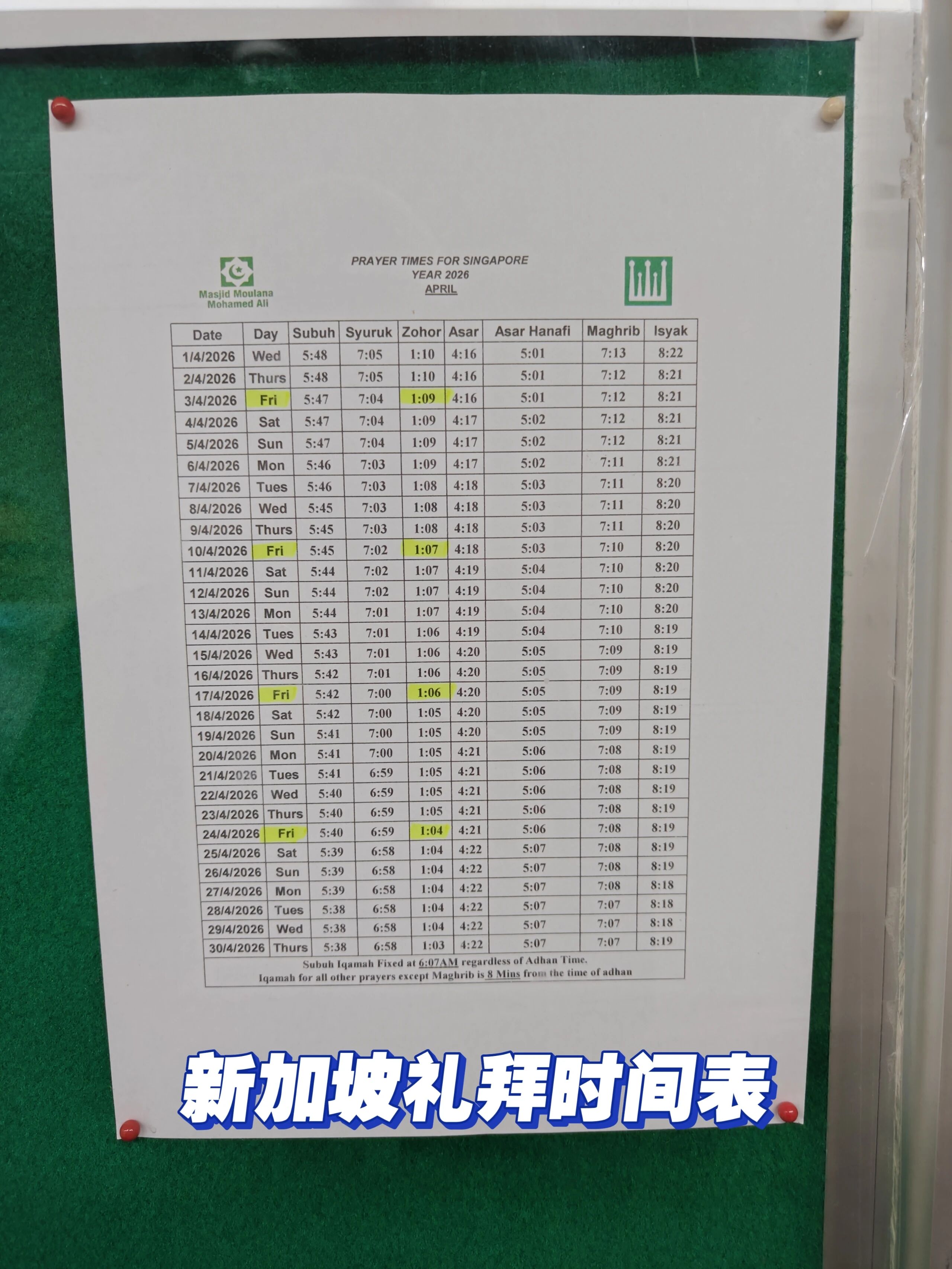
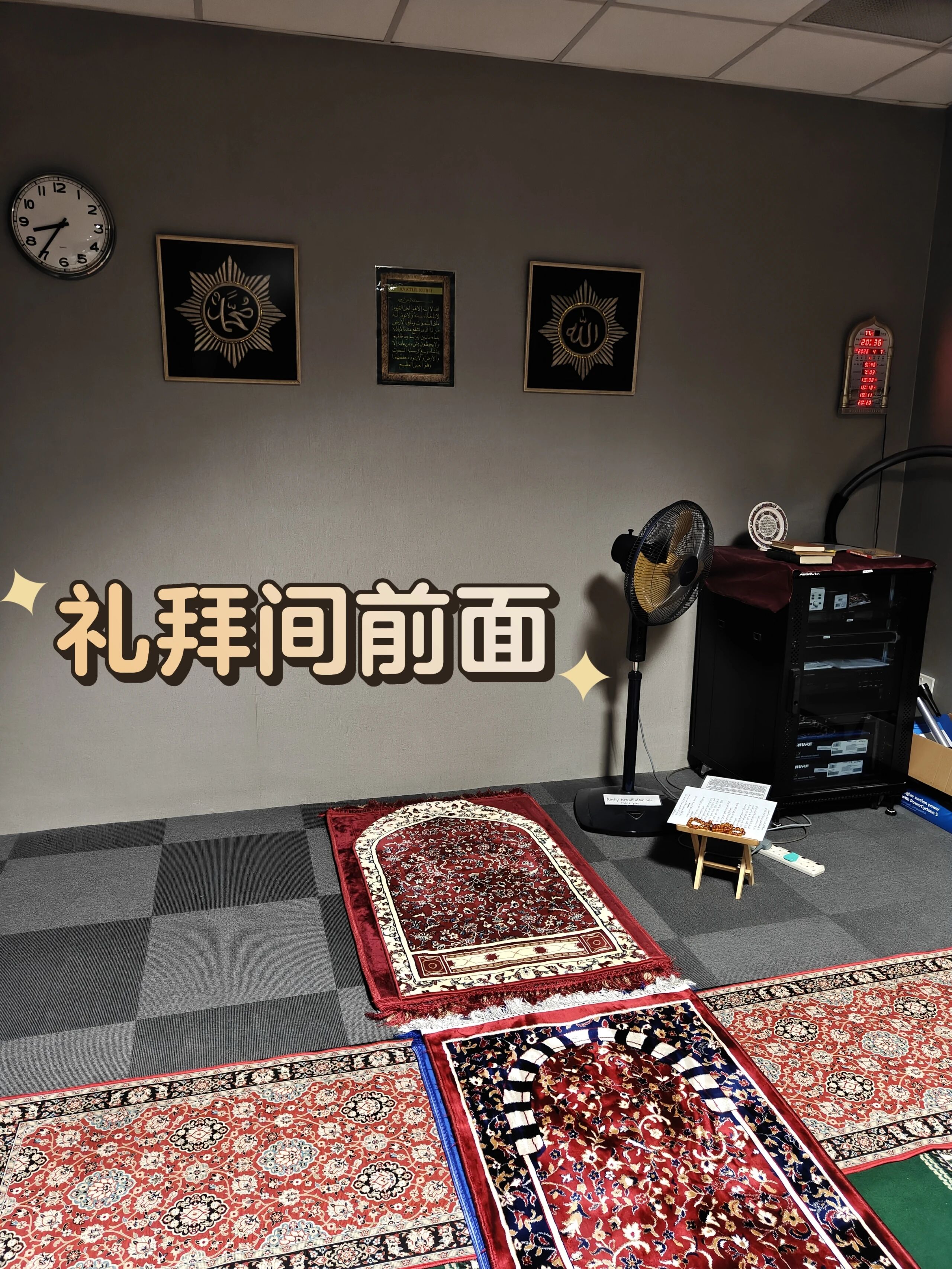
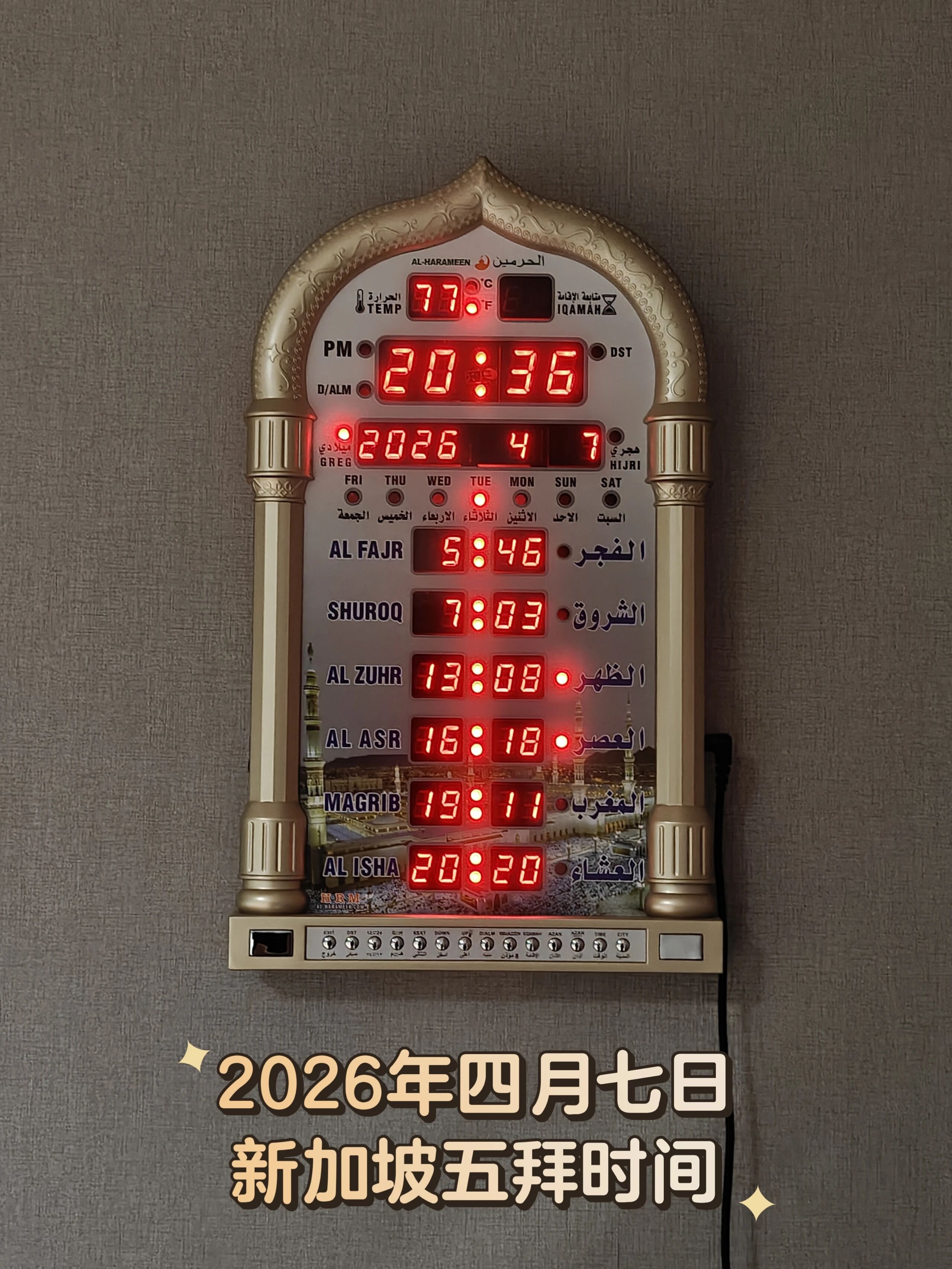
The prayer room is simply furnished. It is just a basic place for namaz, so there are no decorations, no minbar, and no mihrab. There are some simple decorations on the wall, along with a prayer schedule. You can see this in the various airport prayer rooms I have shared before.
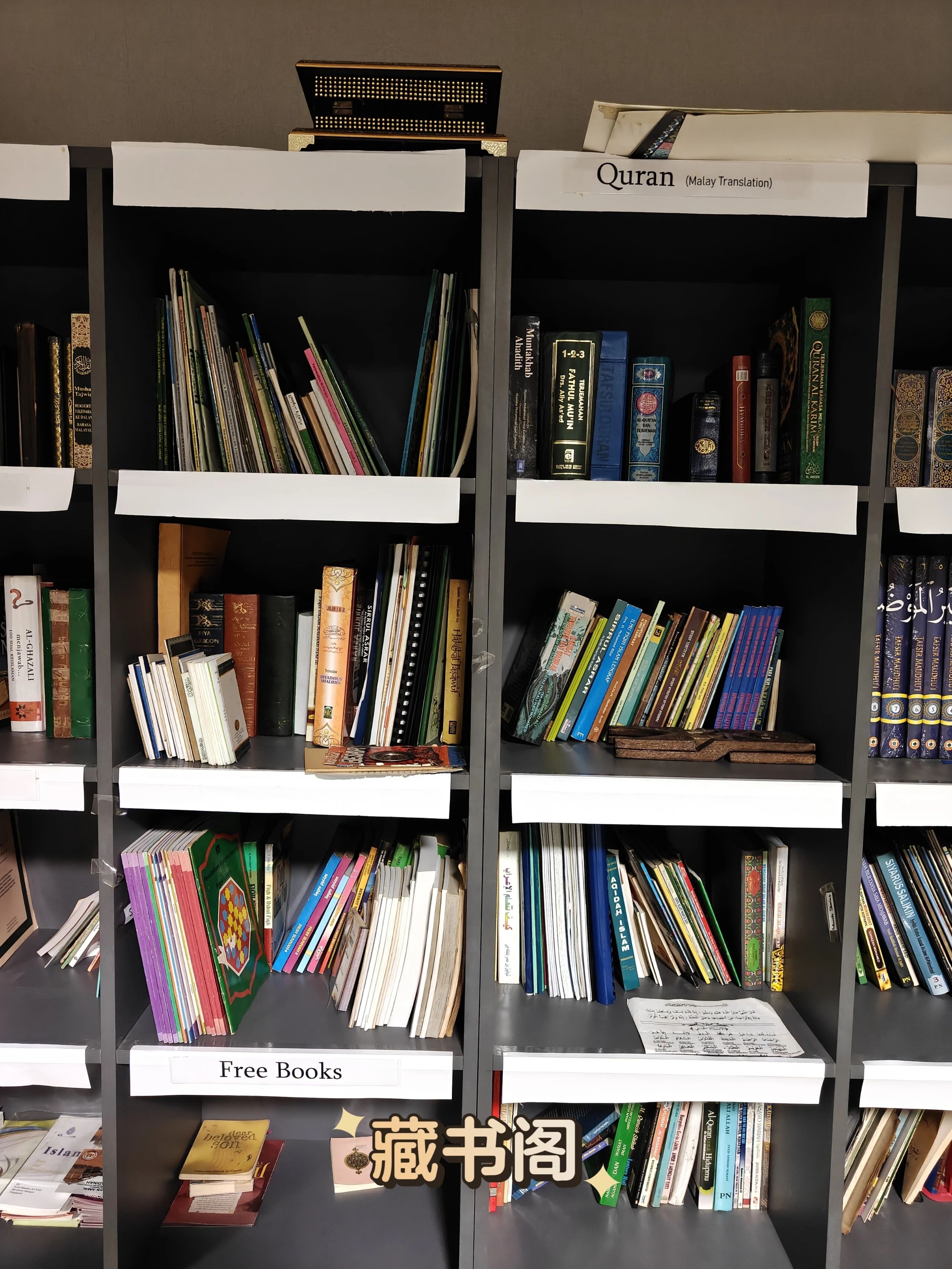
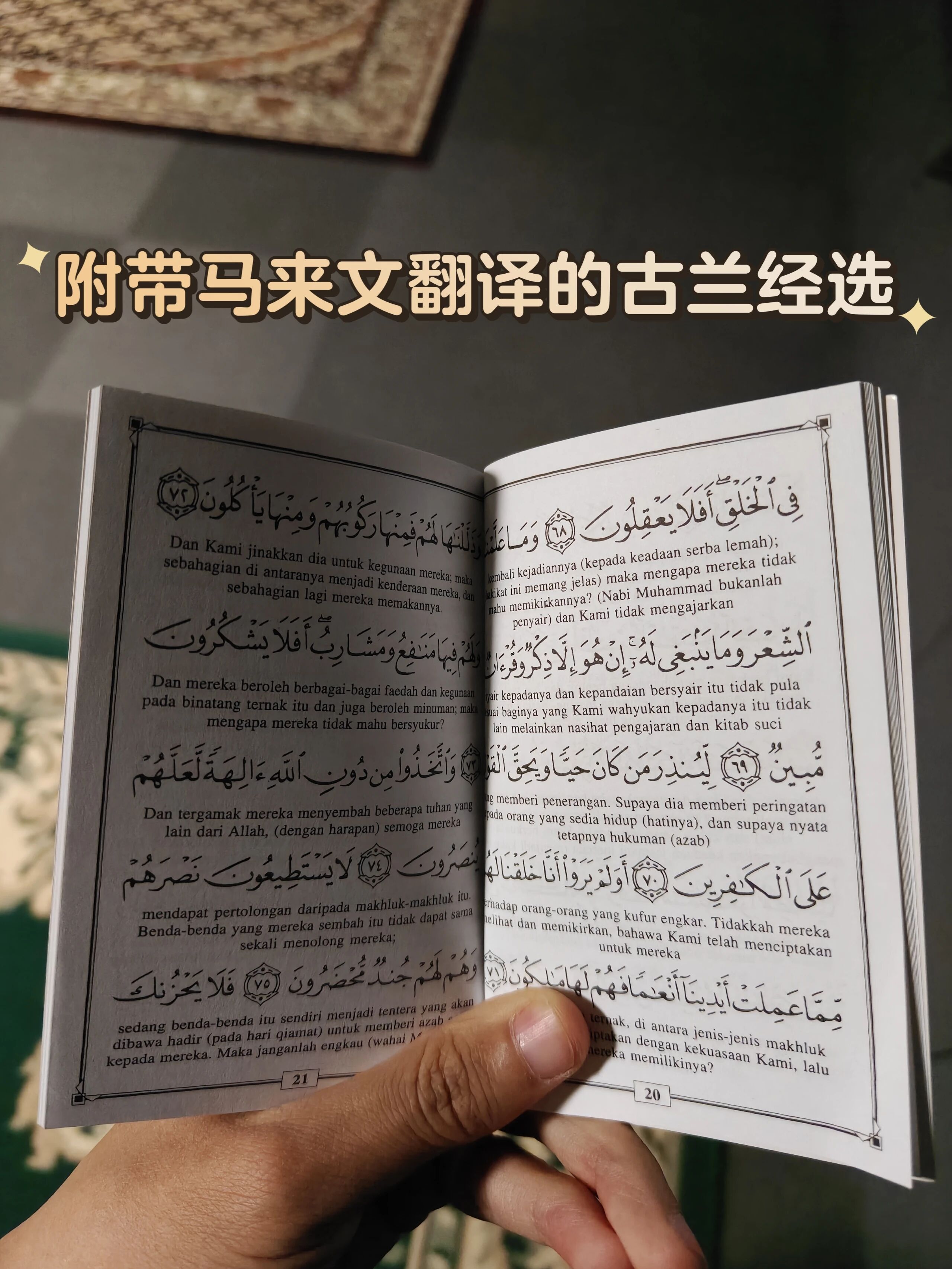
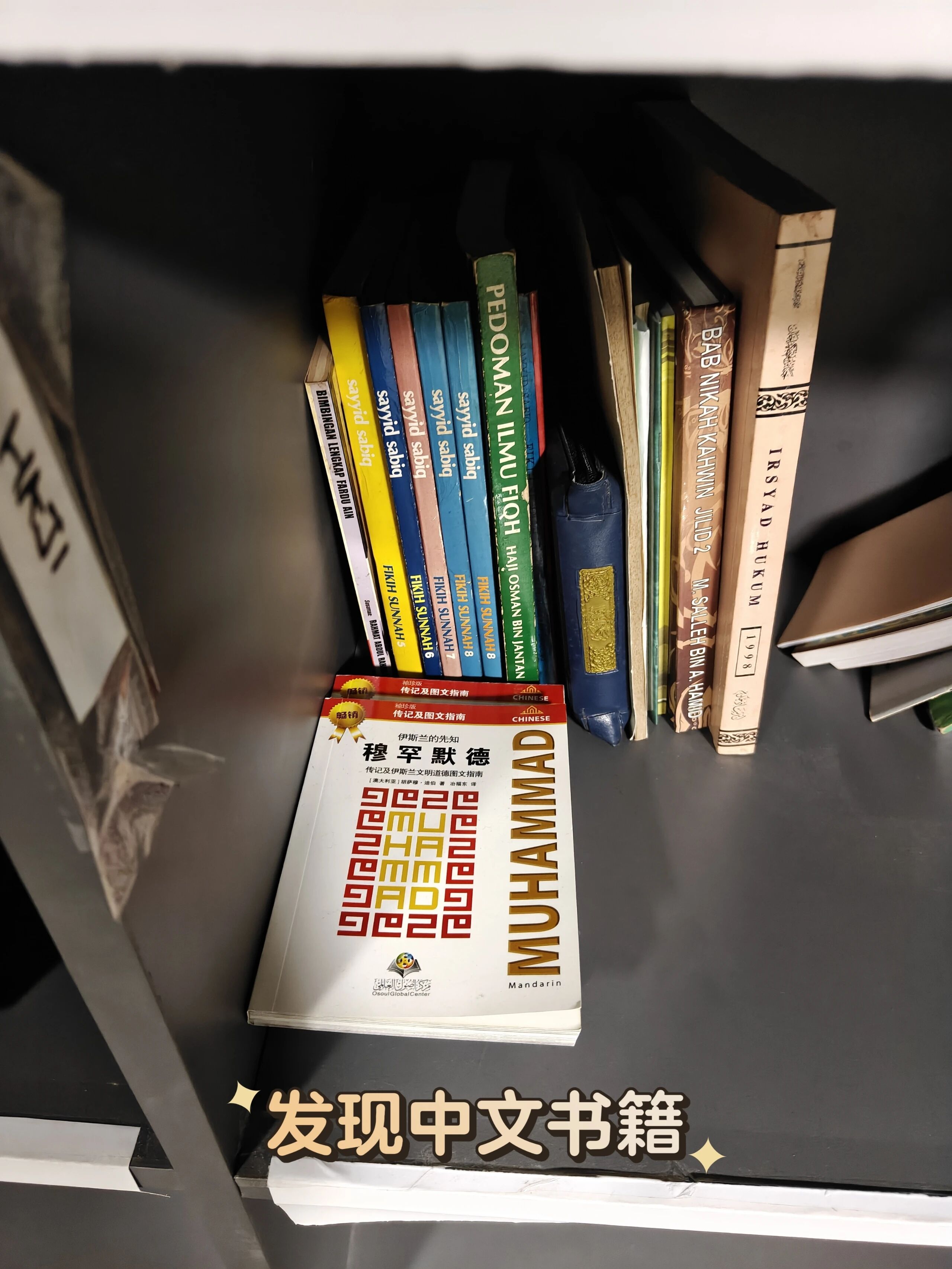
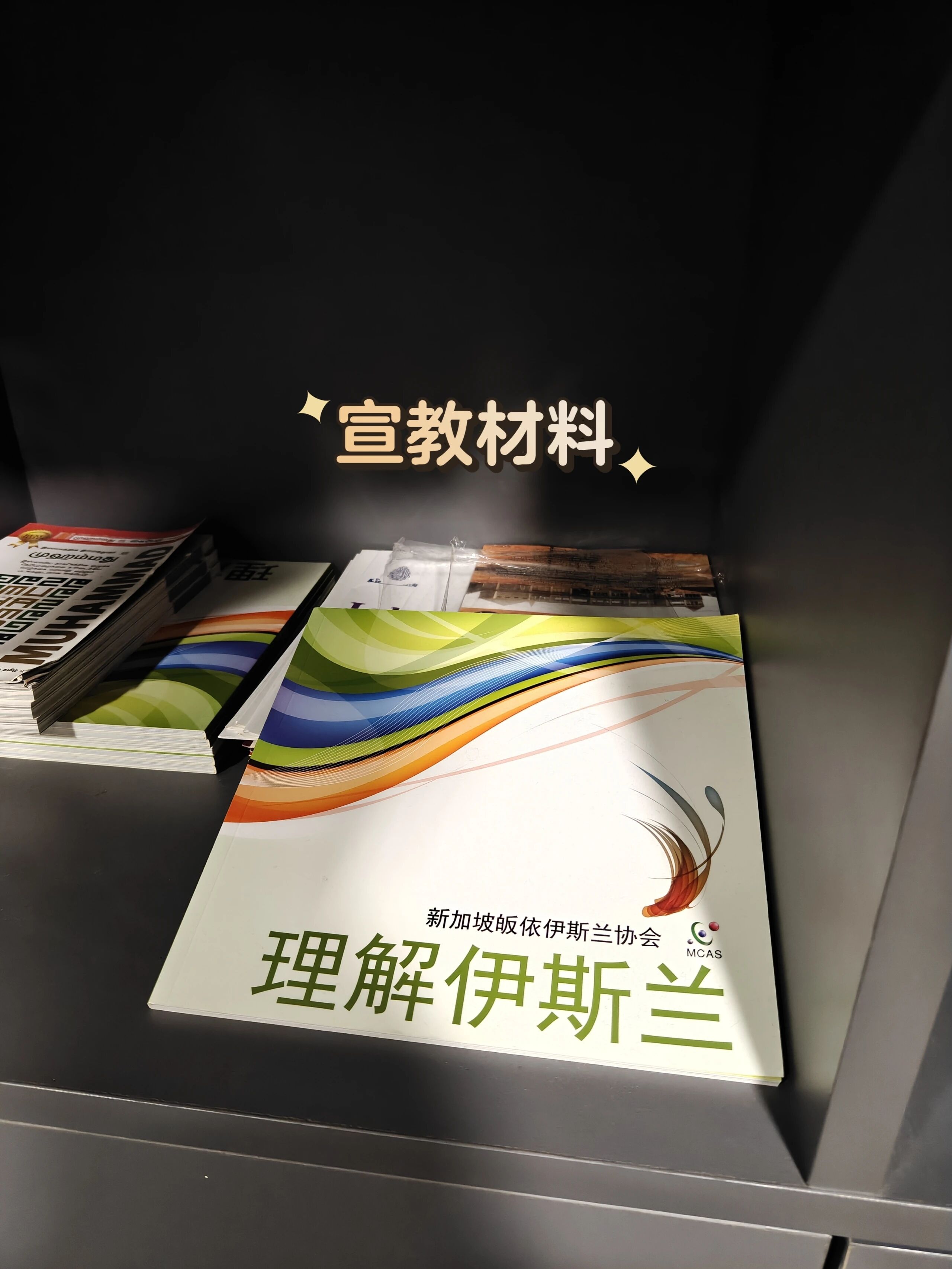
Let's look back at the book corner at the back of the prayer room. There are many books, including a booklet that is a selection of the Quran translated into Malay. Some books are free to take. These are actually prepared as dawah materials.
I found Chinese books among the dawah materials. One was produced by the Muslim Converts Association of Singapore. I did not know Singapore had such an organization. I will definitely go visit them if I have the chance next time. view all
Summary: This Singapore prayer room guide visits the Muslim prayer space inside Marina One in the Central Business District. It keeps the mall setting, restaurant and supermarket context, musalla details, and travel notes intact.
There is a shopping mall in Singapore's Central Business District called Marina One. It mostly has restaurants, supermarkets, and therapy centers. The mall has a prayer room for Muslim guests to perform namaz.
It was my first time here and I spent a long time looking for it. I even ended up in the parking lot, and only found the right place after an Indian security guard helped me. Actually, it is quite easy to find. Go down the escalator, turn right into the mall, and you will see the prayer room at a glance.
There is a round window right next to the prayer room, so it is easy to spot.
The sign for the prayer room is a simple drawing of a mosque dome with a star and crescent symbol. Push the door open and you will see two doors, one on the left and one on the right. It has been a while since Eid al-Fitr (Kai Zhai Jie), but the decorations are still up.
The door on the right is for women, and the one on the left is for men. I pushed open the men's prayer room and found a shoe cabinet and a simple washing area to perform wudu. There is a restroom near the prayer room, so it is very convenient to perform wudu.
On top of the shoe cabinet, there are perfumes, prayer caps, and a mirror. It is quite thoughtful. I entered the prayer room and found it very clean. Everyone is quite disciplined, and the environment is well-maintained. It is quite spacious inside and can hold many people.
The prayer room is simply furnished. It is just a basic place for namaz, so there are no decorations, no minbar, and no mihrab. There are some simple decorations on the wall, along with a prayer schedule. You can see this in the various airport prayer rooms I have shared before.
Let's look back at the book corner at the back of the prayer room. There are many books, including a booklet that is a selection of the Quran translated into Malay. Some books are free to take. These are actually prepared as dawah materials.
I found Chinese books among the dawah materials. One was produced by the Muslim Converts Association of Singapore. I did not know Singapore had such an organization. I will definitely go visit them if I have the chance next time.
Muslim Travel Guide Singapore: Sultan Mosque, Kampong Glam Landmark and Historic Prayer Hall
Articles • Hasan09 posted the article • 0 comments • 325 views • 2026-05-24 01:46
Summary: This Singapore Muslim travel guide revisits Sultan Mosque, one of the city's best-known mosque landmarks. It keeps the author's update note, mosque visit details, and historic prayer-hall context from the original article.
I have posted about this place before, but this is an update to my previous content.
In Chinese, both the African country Sudan (which has a flag that looks like Palestine's) and the Islamic royal title Sultan are transliterated using the same two characters, 'Sudan'.
Although Sudan is a Muslim-majority country, Sudan and sultan are actually two different words. Would it be better to use a different character for the latter when transliterating?
The Sultan in Sultan Mosque has no direct connection to the country of Sudan thousands of miles away; this Sultan refers to the Sultan of Johor, whose name was Tengku Hussein.
In 1819, British colonial official Stamford Raffles landed in Singapore and signed a treaty with the local ruler Temenggong Abdul Rahman and Sultan Hussein of Johor. In exchange for an annual payment and the allocation of the Kampong Glam area, the British were granted permission to establish a base on the island.
Following this, a large number of Muslims from the Malay Archipelago moved here to follow the Sultan and the Temenggong. Between 1824 and 1826, Sultan Tengku Hussein built a mosque within the palace grounds with funding from the British. As Singapore became a center for Islamic commerce and culture, the old mosque gradually became too small to meet the needs of the community.
In 1924, the authorities approved the reconstruction of the mosque on the original site, and the new building was completed in 1928. Sultan Mosque has remained largely unchanged since then and was designated a Singapore national monument in 1975.
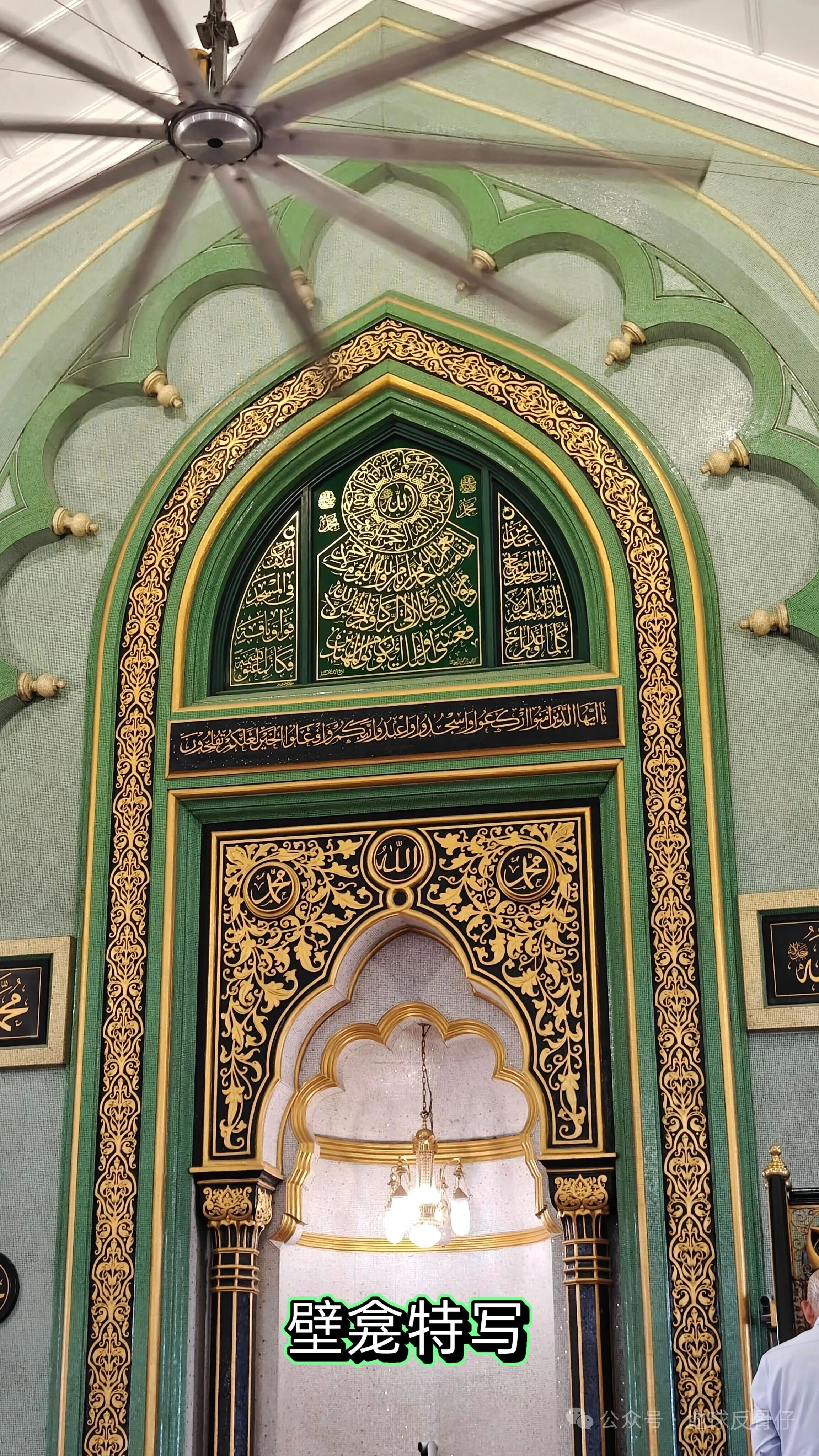
When I visited this mosque, I found they had set visiting hours for tourists and even seemed to have people there to explain things. I didn't follow the tourist route, though. I went straight to the ablution room (wudu room) and then into the prayer hall.
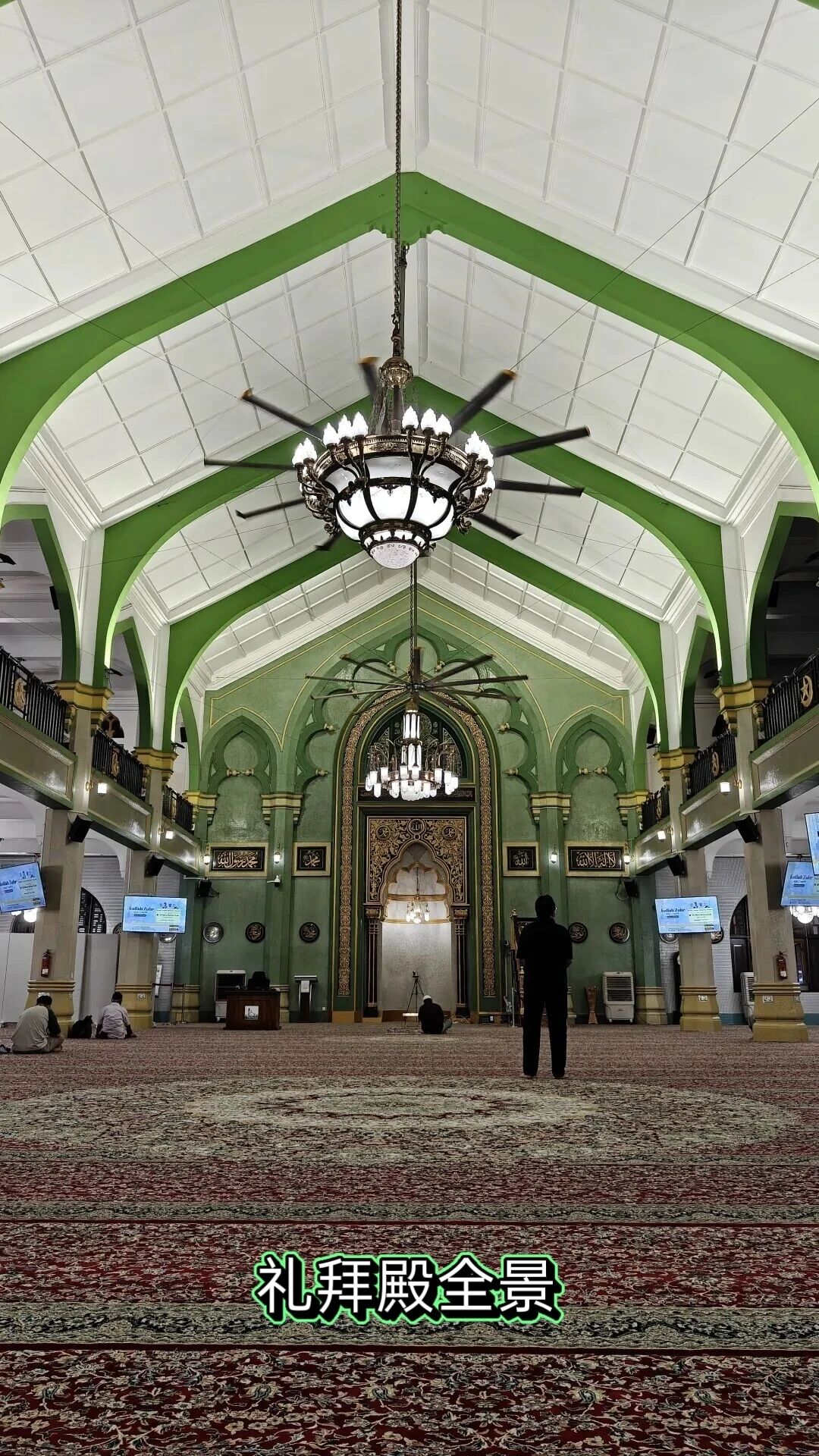
The prayer hall has a high ceiling, which makes sense for a tropical area to help with cooling. It is different from our hometown in the Northwest, where buildings need to keep the cold out. I feel like the mosques in the Northwest usually have very cramped, low ceilings.
I also noticed this place is clearly well-funded. There is a row of LCD TVs playing lectures and announcements for upcoming public events on a loop. Big fans were blowing hard, but they only pushed around hot air. It was already the end of the year, yet it was still so hot.
I actually saw another mosque in Singapore called the Temenggong Mosque, which is connected to the person who founded this one. I didn't have time to visit it, though. I will take you all to see it next time I am in Singapore. view all
Summary: This Singapore Muslim travel guide revisits Sultan Mosque, one of the city's best-known mosque landmarks. It keeps the author's update note, mosque visit details, and historic prayer-hall context from the original article.
I have posted about this place before, but this is an update to my previous content.
In Chinese, both the African country Sudan (which has a flag that looks like Palestine's) and the Islamic royal title Sultan are transliterated using the same two characters, 'Sudan'.
Although Sudan is a Muslim-majority country, Sudan and sultan are actually two different words. Would it be better to use a different character for the latter when transliterating?
The Sultan in Sultan Mosque has no direct connection to the country of Sudan thousands of miles away; this Sultan refers to the Sultan of Johor, whose name was Tengku Hussein.
In 1819, British colonial official Stamford Raffles landed in Singapore and signed a treaty with the local ruler Temenggong Abdul Rahman and Sultan Hussein of Johor. In exchange for an annual payment and the allocation of the Kampong Glam area, the British were granted permission to establish a base on the island.
Following this, a large number of Muslims from the Malay Archipelago moved here to follow the Sultan and the Temenggong. Between 1824 and 1826, Sultan Tengku Hussein built a mosque within the palace grounds with funding from the British. As Singapore became a center for Islamic commerce and culture, the old mosque gradually became too small to meet the needs of the community.
In 1924, the authorities approved the reconstruction of the mosque on the original site, and the new building was completed in 1928. Sultan Mosque has remained largely unchanged since then and was designated a Singapore national monument in 1975.
When I visited this mosque, I found they had set visiting hours for tourists and even seemed to have people there to explain things. I didn't follow the tourist route, though. I went straight to the ablution room (wudu room) and then into the prayer hall.
The prayer hall has a high ceiling, which makes sense for a tropical area to help with cooling. It is different from our hometown in the Northwest, where buildings need to keep the cold out. I feel like the mosques in the Northwest usually have very cramped, low ceilings.
I also noticed this place is clearly well-funded. There is a row of LCD TVs playing lectures and announcements for upcoming public events on a loop. Big fans were blowing hard, but they only pushed around hot air. It was already the end of the year, yet it was still so hot.
I actually saw another mosque in Singapore called the Temenggong Mosque, which is connected to the person who founded this one. I didn't have time to visit it, though. I will take you all to see it next time I am in Singapore.
Muslim Travel Guide Singapore: Al-Amin Mosque, Malay-Style Architecture and Prayer Hall
Articles • Hasan09 posted the article • 0 comments • 252 views • 2026-05-24 01:46
Summary: This Muslim travel guide visits Al-Amin Mosque in Singapore and its Malay-style design. It preserves the source notes on the main building, minaret, prayer hall, and local mosque atmosphere.
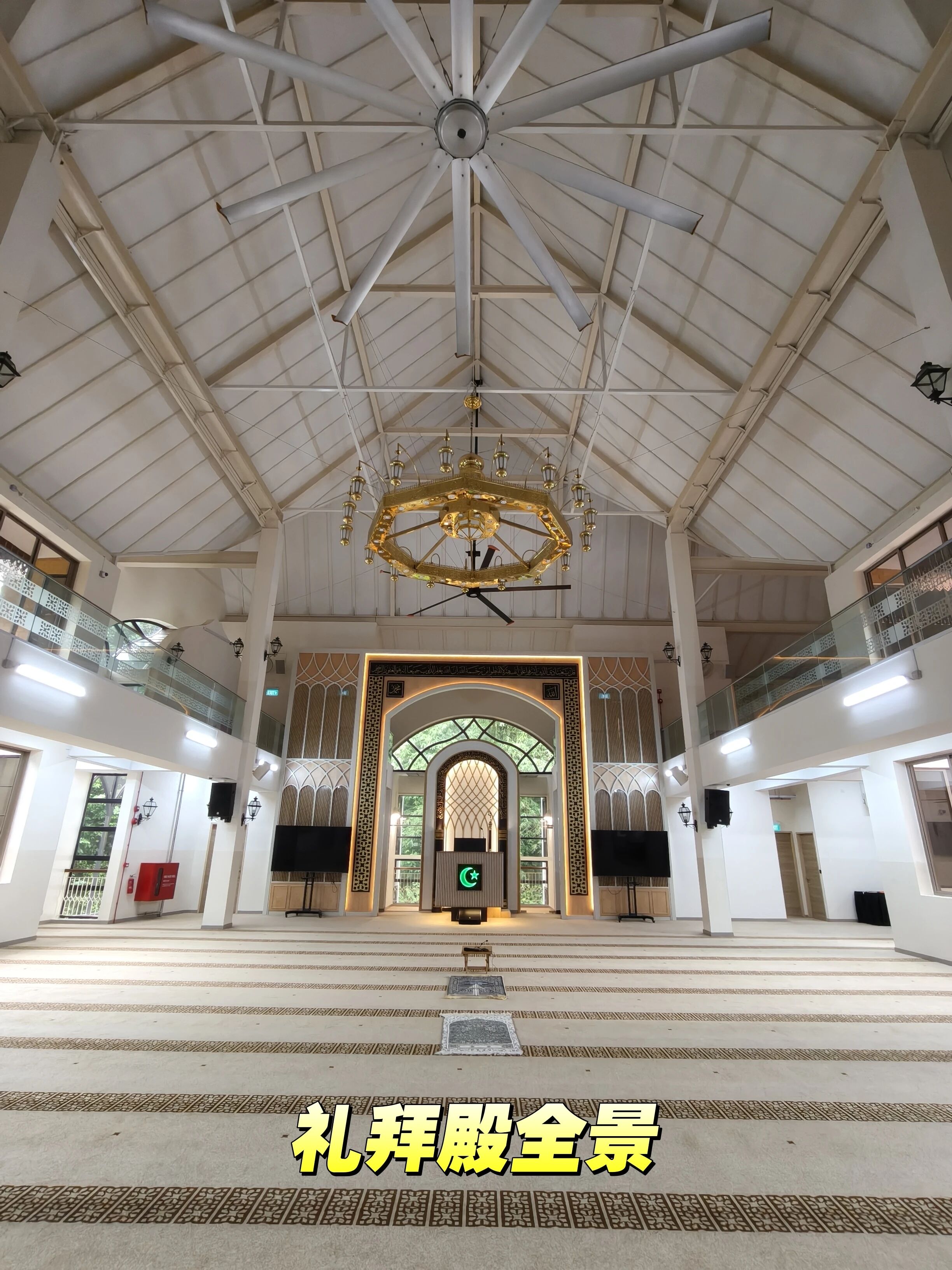
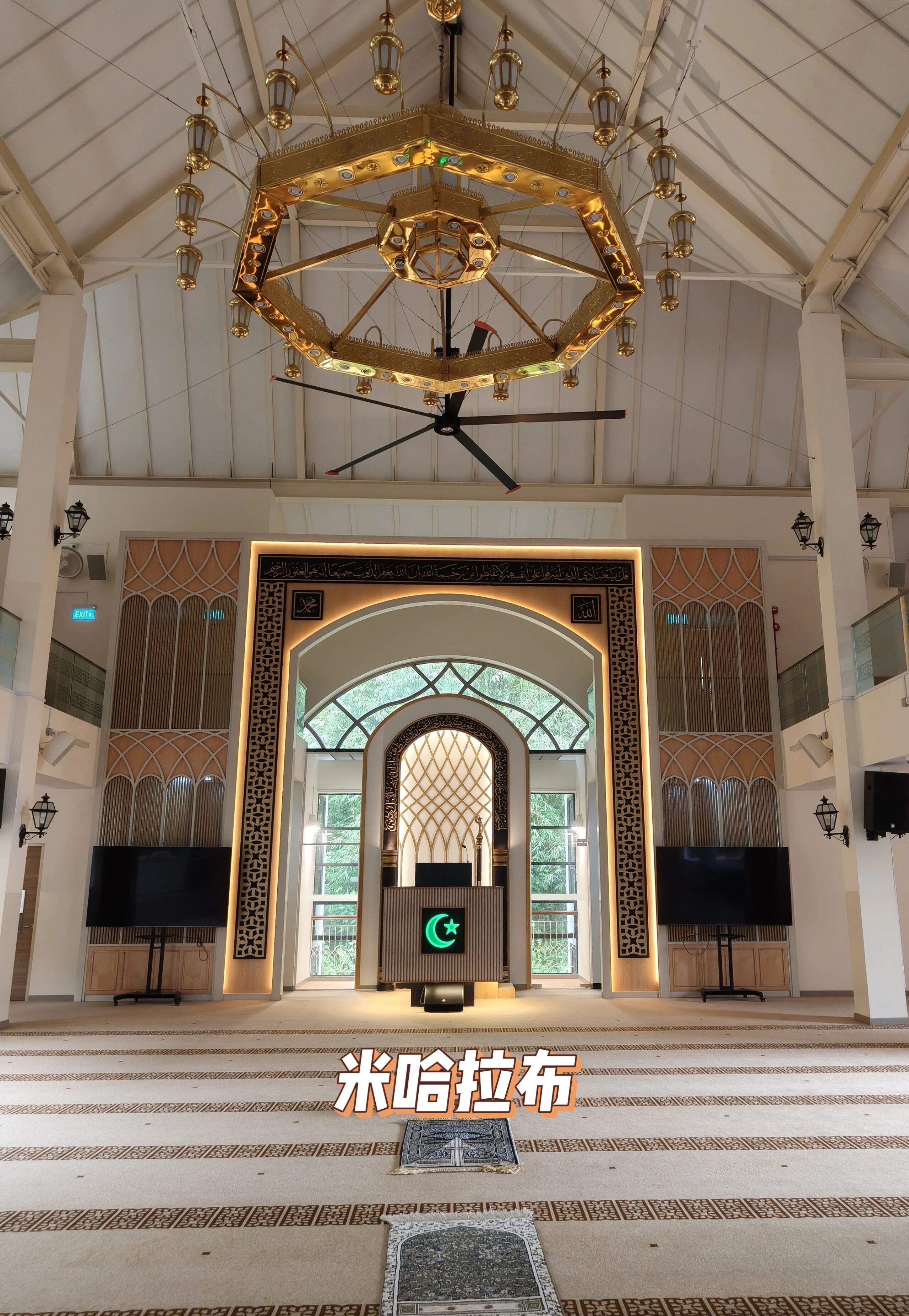
Al-Amin Mosque is built in a Malay style, with both the main building and the minaret showing distinct Malay features.
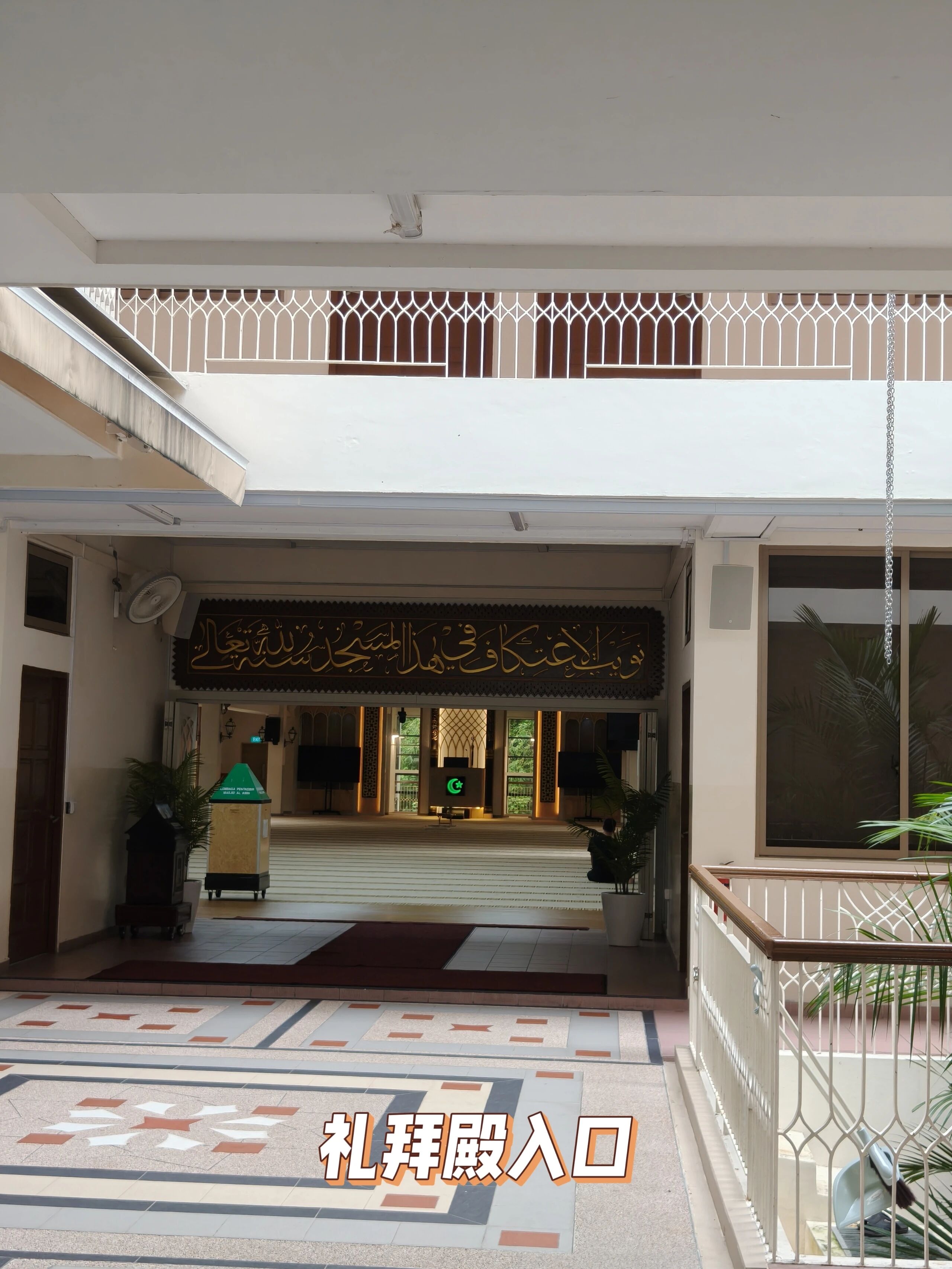
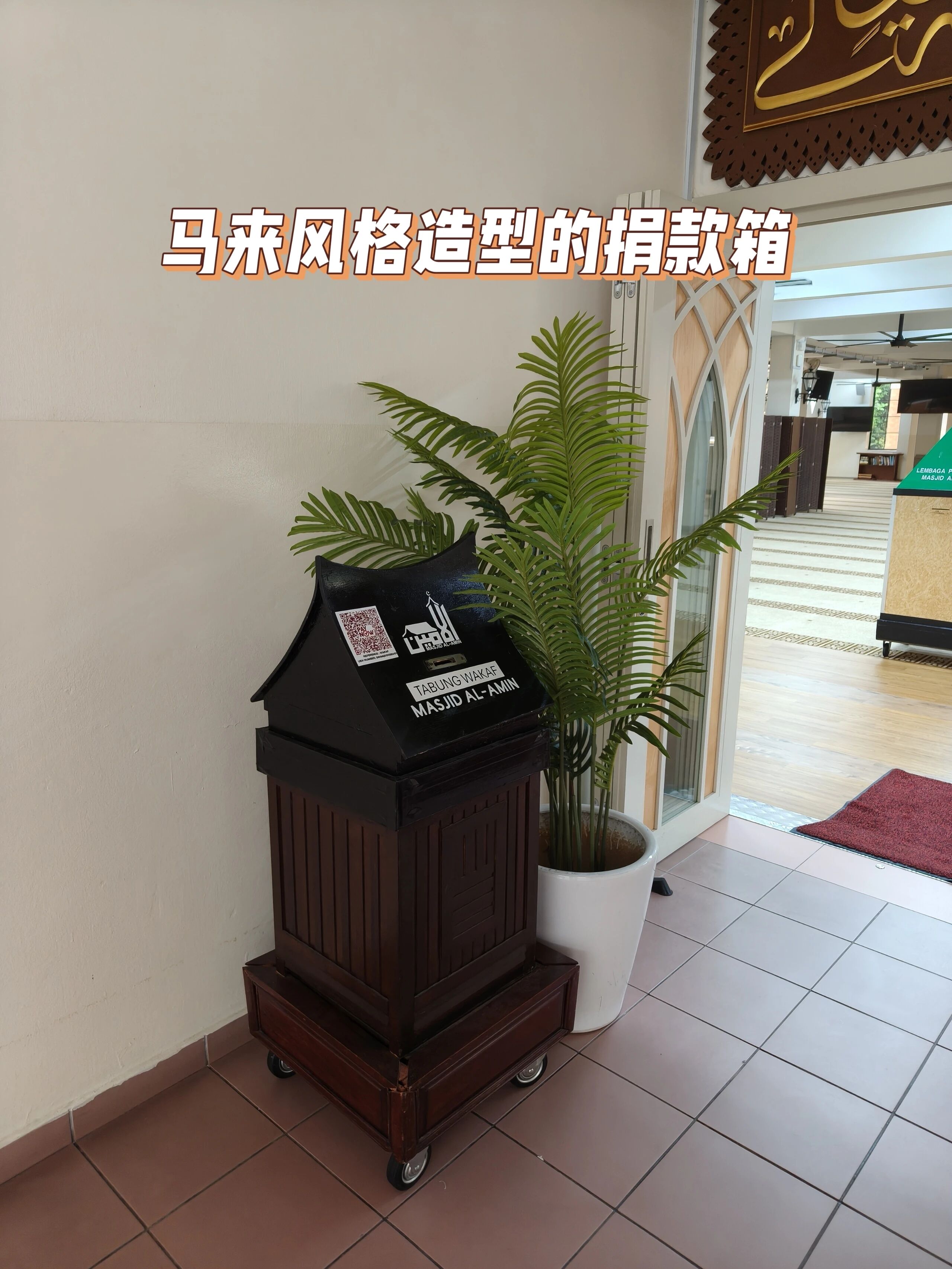
Near the elevator shaft of the mosque, there is a sign written in Jawi script (Figure 3).
At first, I thought it was Arabic, but looking closely, I saw some letters that do not exist in the Arabic alphabet. It is reasonable to conclude that this is Jawi, which uses Arabic letters to write the Malay language, fitting for a Malay-style mosque.
I took the elevator to the second floor and found a small garden (Figure 7). There is a tea dispenser nearby, and the tea tastes similar to Assam milk tea.
Sitting on a chair in the garden to have a drink helped me recover from the fatigue of my journey. When I entered the prayer hall and got ready to take photos, the elderly caretaker saw me holding my phone and turned on the lights so I could get a clearer shot.
I took photos twice, and both times, the man turned on the lights as soon as he saw me.
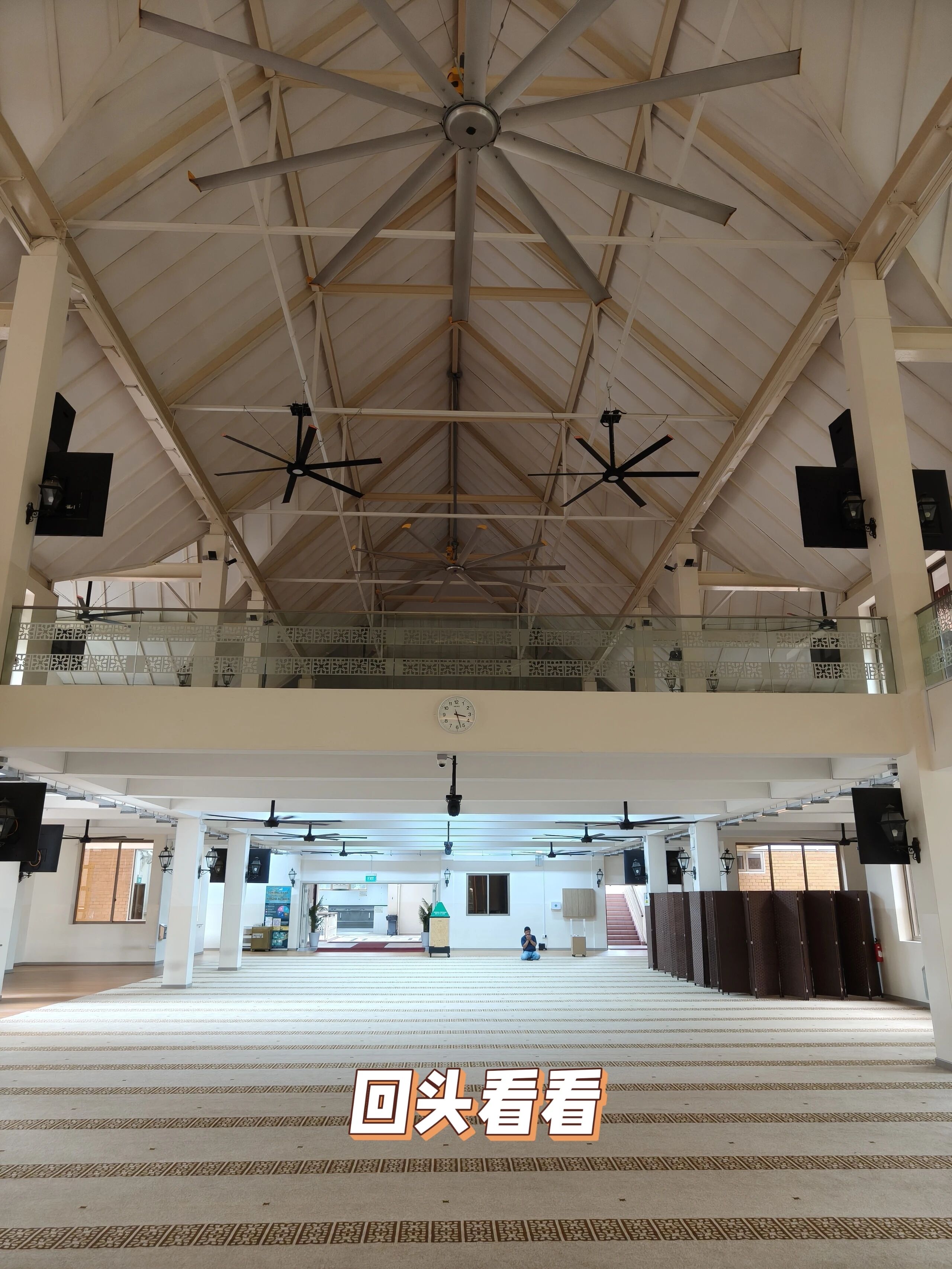
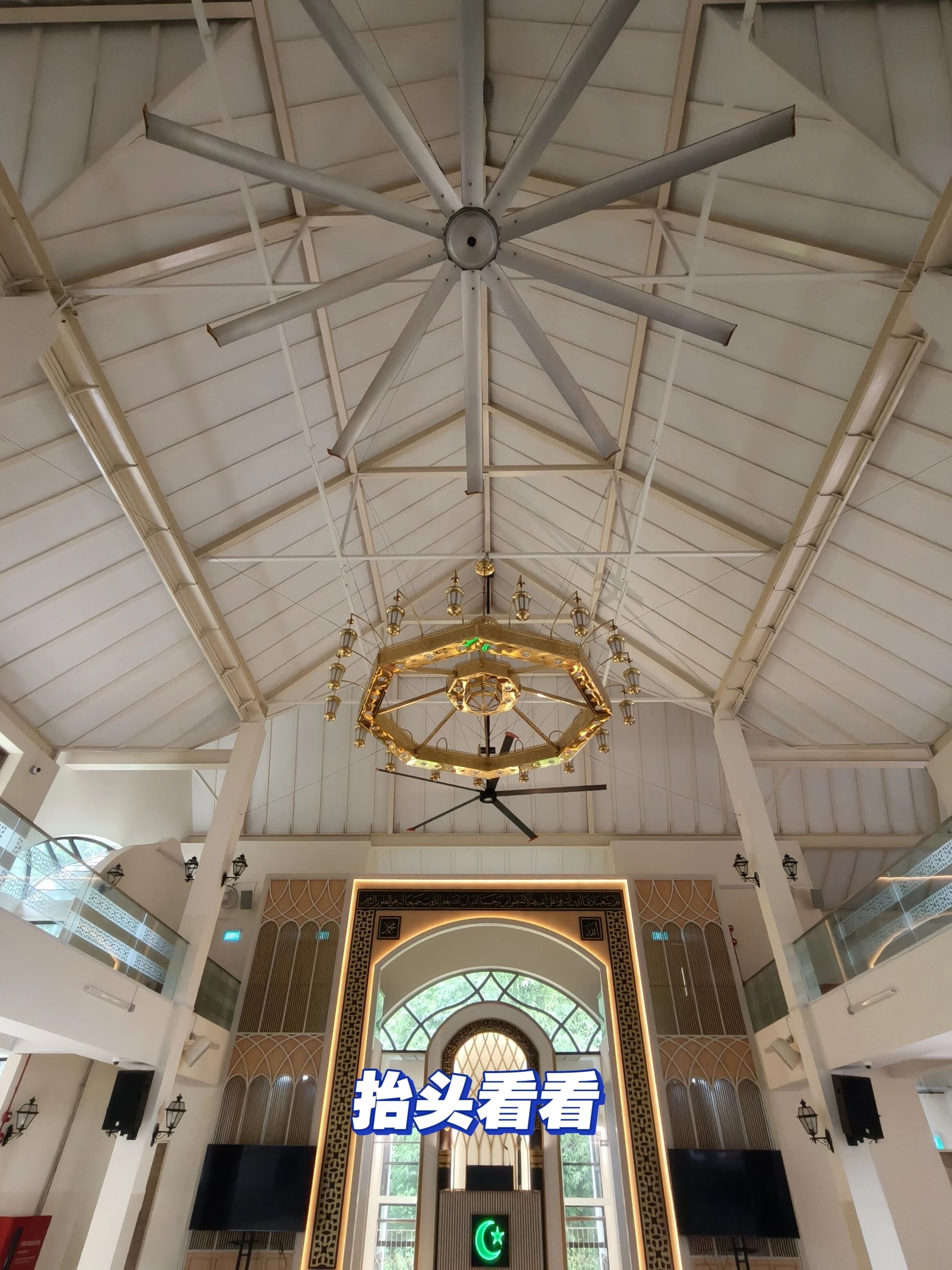
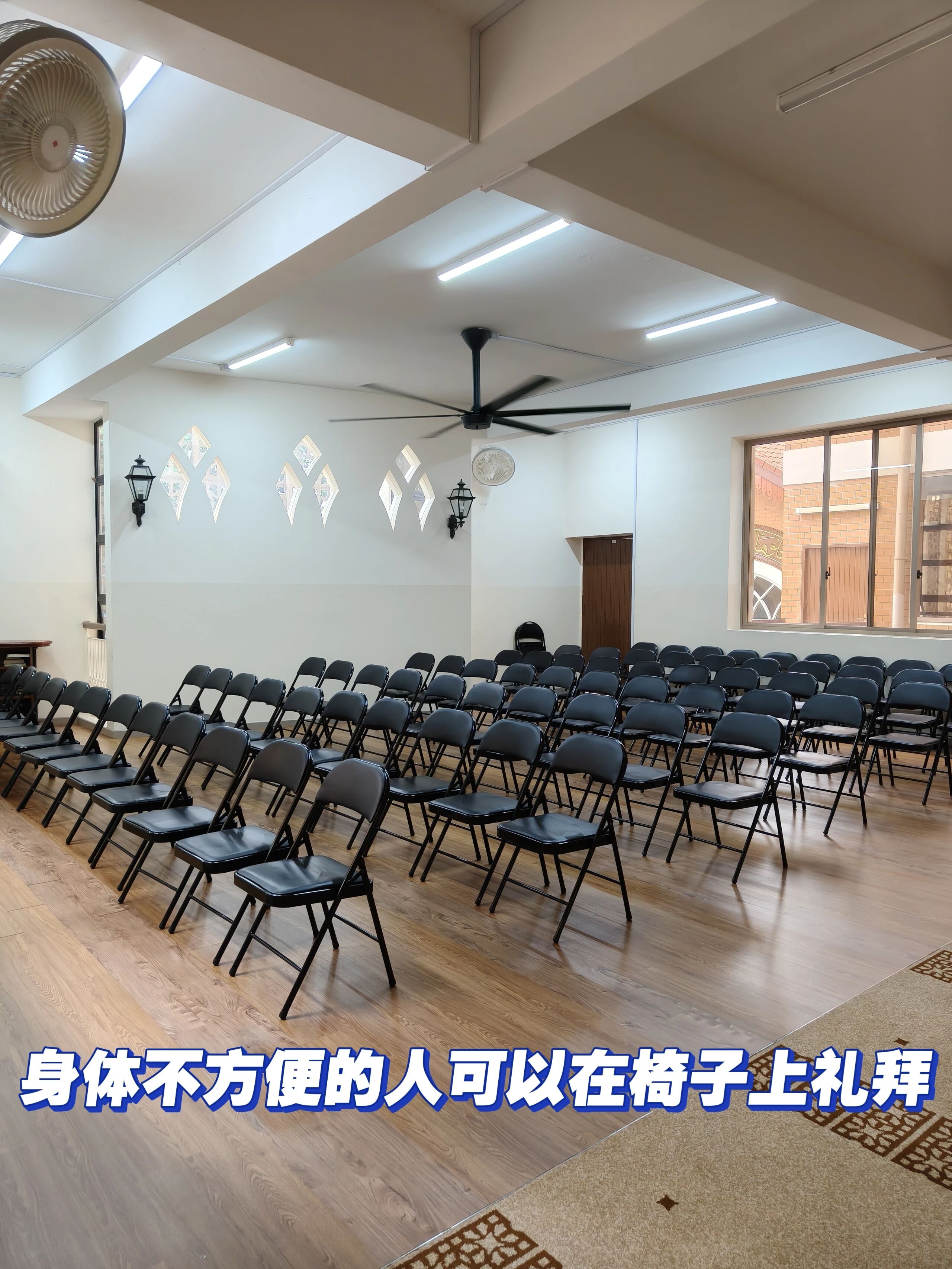
As you can see, the roof of this main hall looks like a shed, and there is an upper level that serves as a prayer area, likely for women.
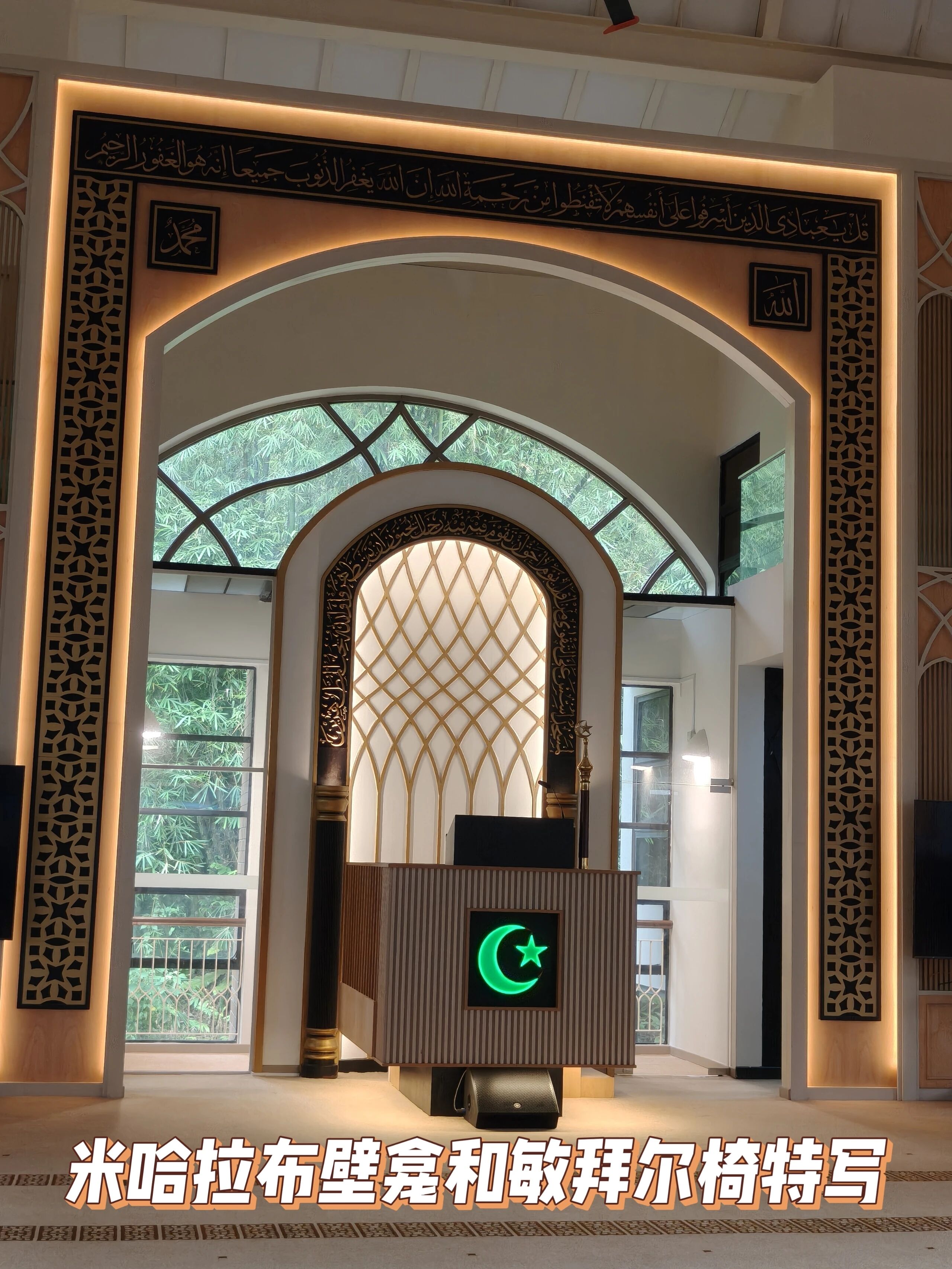
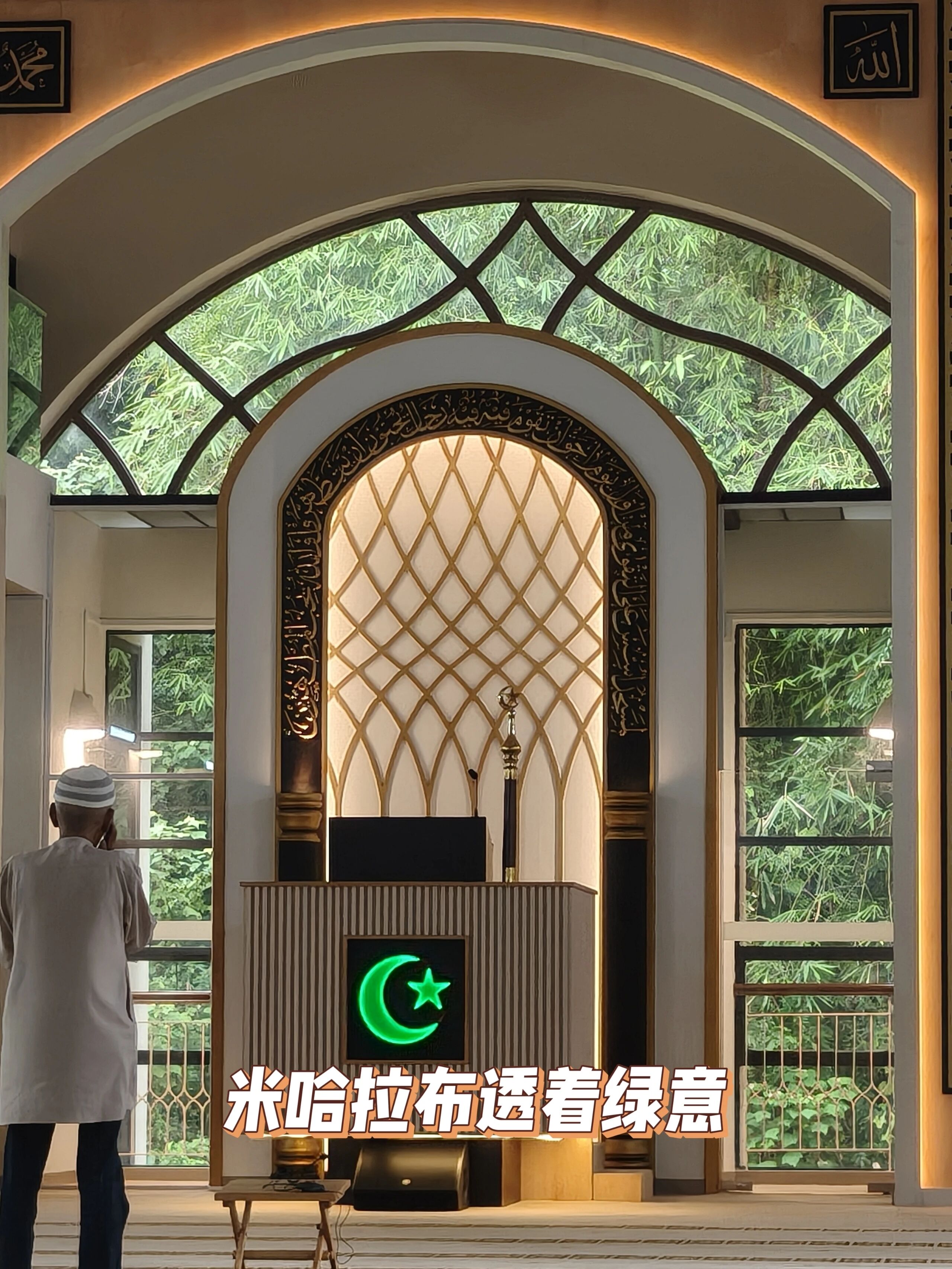
The mihrab is quite unique because it is transparent (Figure 17), allowing you to see the lush rainforest on the mountain outside.
There really is a small hill behind this mosque. It seems Singaporeans have plenty of places to go for weekend outings and camping.
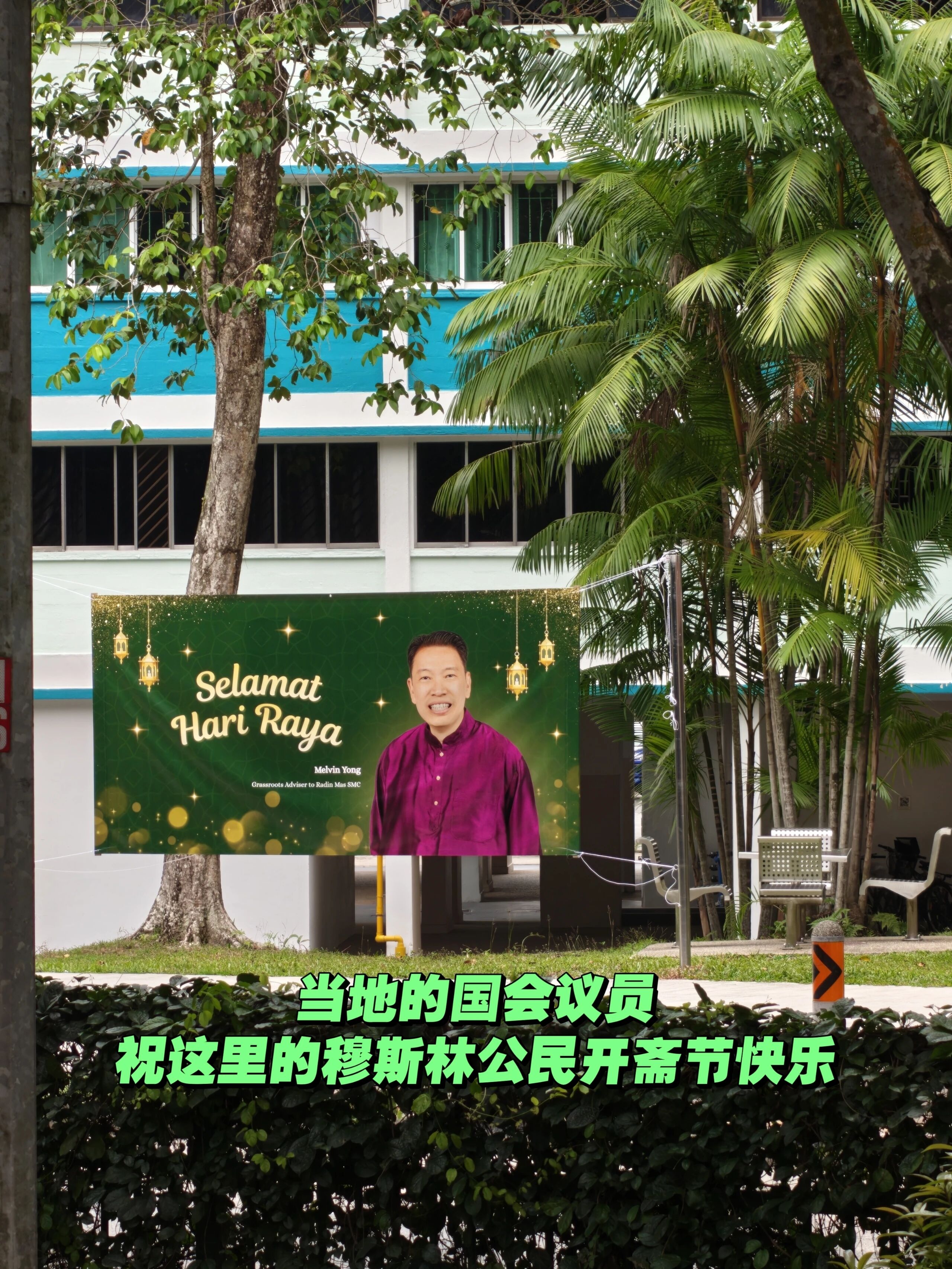
Walking out of the mosque, you can see a poster across the street (Image 18). It says Happy Eid al-Fitr in Malay. Singapore has many electoral districts, and the person on the poster is the representative for the district where this mosque is located. Judging by the name, they appear to be Chinese.
When I last visited Singapore, the Indian festival of Diwali had just ended. Officials from different ethnic groups wore traditional Indian clothing on posters to wish the Indian community a happy Diwali.
In the next article, I will take you to see the Temenggong Mosque in Singapore. Who exactly was Temenggong? Why is there a mosque named after him? I will reveal the answer in the next article. view all
Summary: This Muslim travel guide visits Al-Amin Mosque in Singapore and its Malay-style design. It preserves the source notes on the main building, minaret, prayer hall, and local mosque atmosphere.
Al-Amin Mosque is built in a Malay style, with both the main building and the minaret showing distinct Malay features.
Near the elevator shaft of the mosque, there is a sign written in Jawi script (Figure 3).
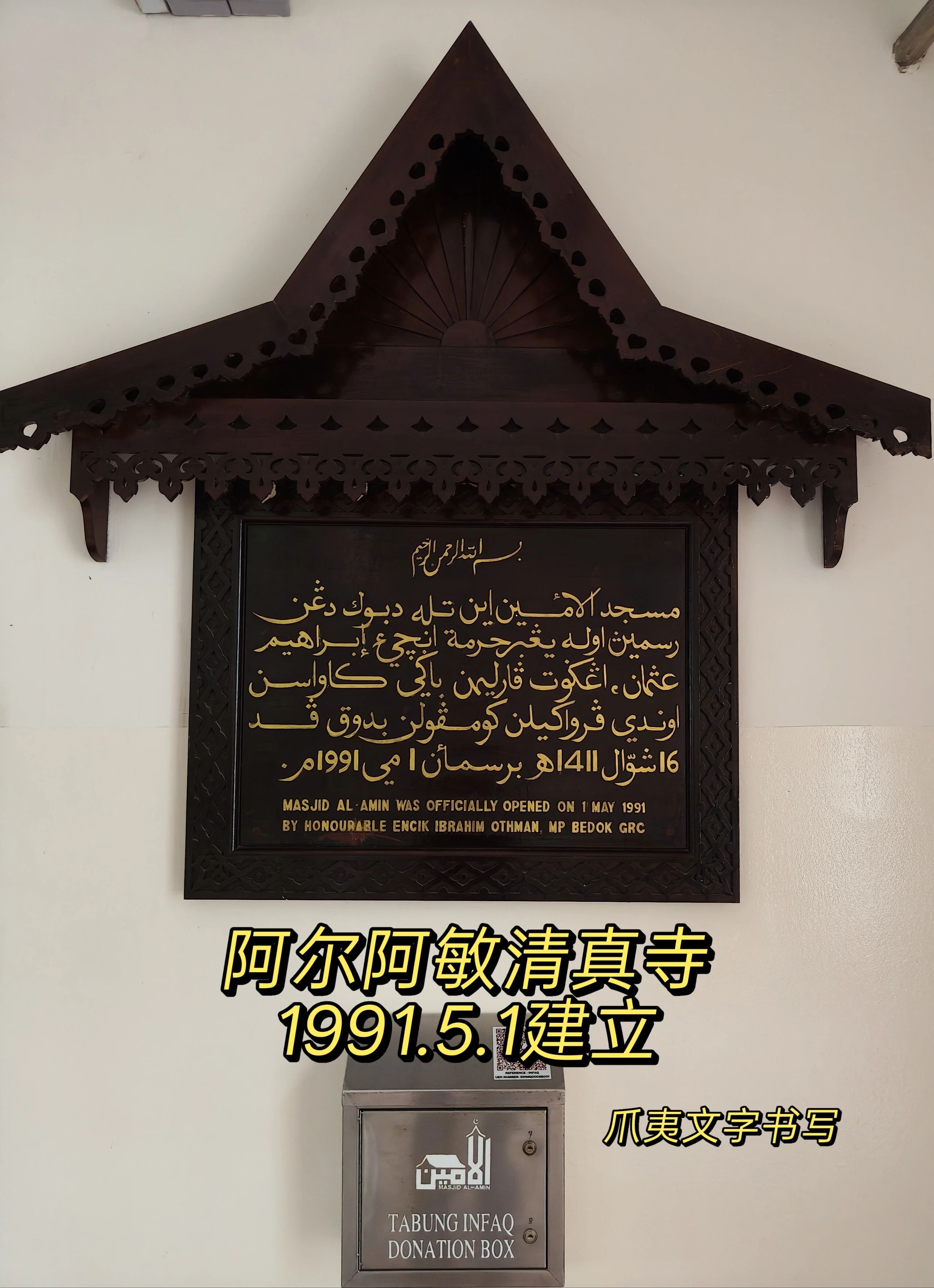
At first, I thought it was Arabic, but looking closely, I saw some letters that do not exist in the Arabic alphabet. It is reasonable to conclude that this is Jawi, which uses Arabic letters to write the Malay language, fitting for a Malay-style mosque.
I took the elevator to the second floor and found a small garden (Figure 7). There is a tea dispenser nearby, and the tea tastes similar to Assam milk tea.
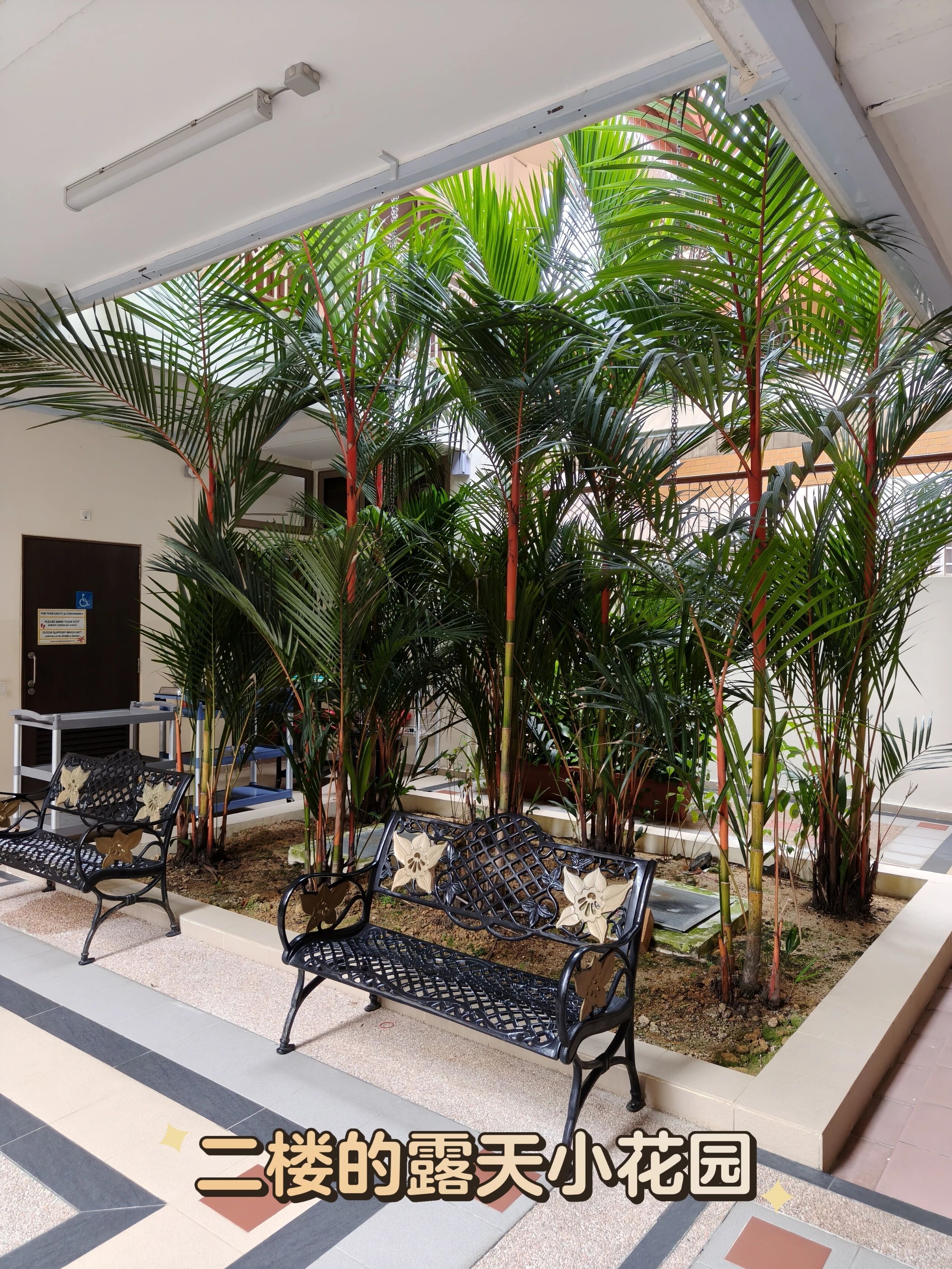
Sitting on a chair in the garden to have a drink helped me recover from the fatigue of my journey. When I entered the prayer hall and got ready to take photos, the elderly caretaker saw me holding my phone and turned on the lights so I could get a clearer shot.
I took photos twice, and both times, the man turned on the lights as soon as he saw me.
As you can see, the roof of this main hall looks like a shed, and there is an upper level that serves as a prayer area, likely for women.
The mihrab is quite unique because it is transparent (Figure 17), allowing you to see the lush rainforest on the mountain outside.
There really is a small hill behind this mosque. It seems Singaporeans have plenty of places to go for weekend outings and camping.
Walking out of the mosque, you can see a poster across the street (Image 18). It says Happy Eid al-Fitr in Malay. Singapore has many electoral districts, and the person on the poster is the representative for the district where this mosque is located. Judging by the name, they appear to be Chinese.
When I last visited Singapore, the Indian festival of Diwali had just ended. Officials from different ethnic groups wore traditional Indian clothing on posters to wish the Indian community a happy Diwali.
In the next article, I will take you to see the Temenggong Mosque in Singapore. Who exactly was Temenggong? Why is there a mosque named after him? I will reveal the answer in the next article.
Muslim Travel Guide Singapore Little India: Angullia Mosque, Gujarati Muslim Heritage and Prayer Hall
Articles • yusuf908 posted the article • 0 comments • 168 views • 2026-05-23 22:47
Summary: This Singapore Muslim travel guide visits Angullia Mosque in Little India, built by a Gujarati Muslim family in the 1890s, with its red exterior, upper-floor prayer hall, glass dome light, mihrab, minbar, wudu areas, and the South Asian street scene nearby.
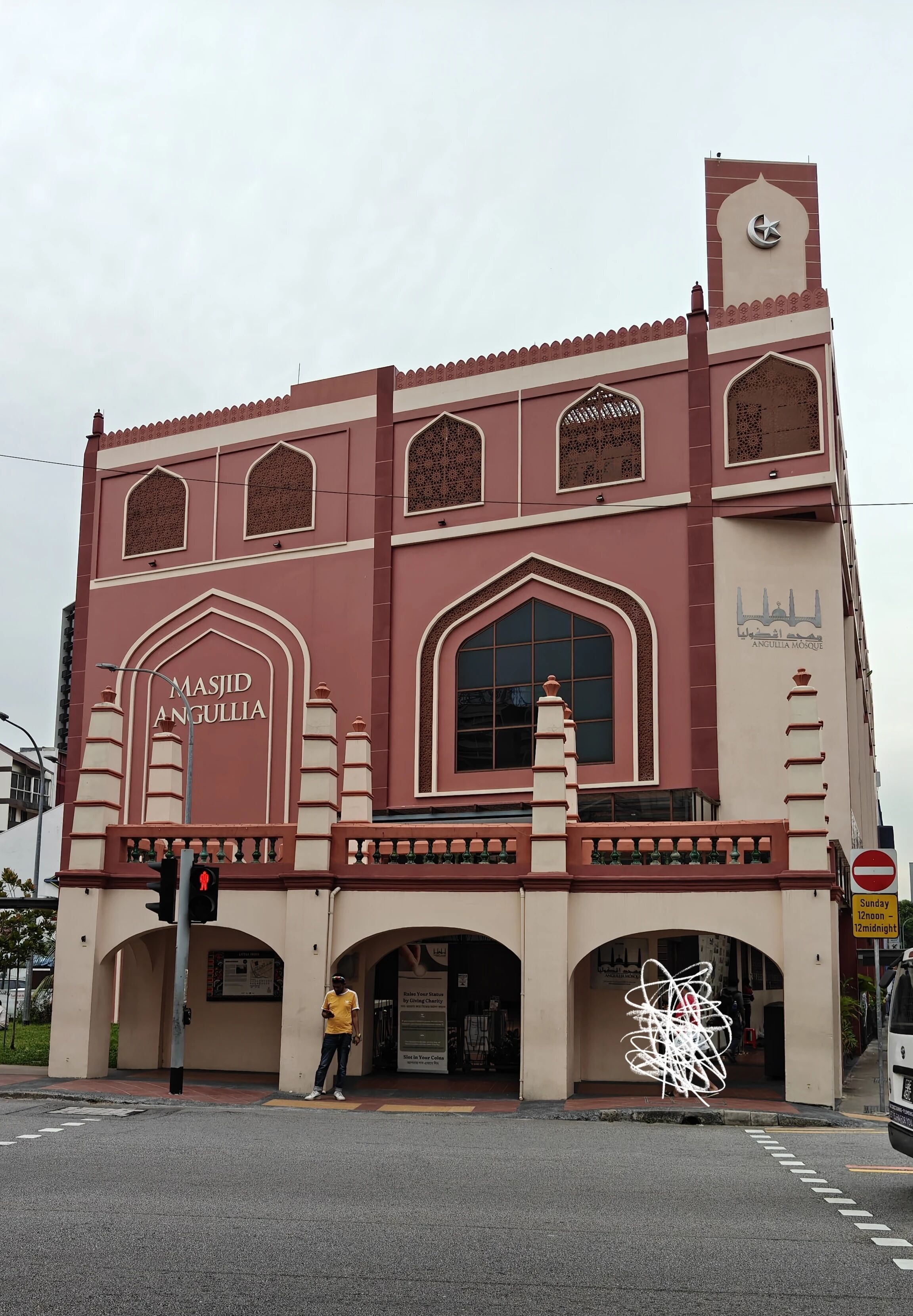
The mosque I am introducing today was built in the 1890s by the Angullia family, who came from Gujarat, India. Gujarat is the home state of India's current Prime Minister, Modi.
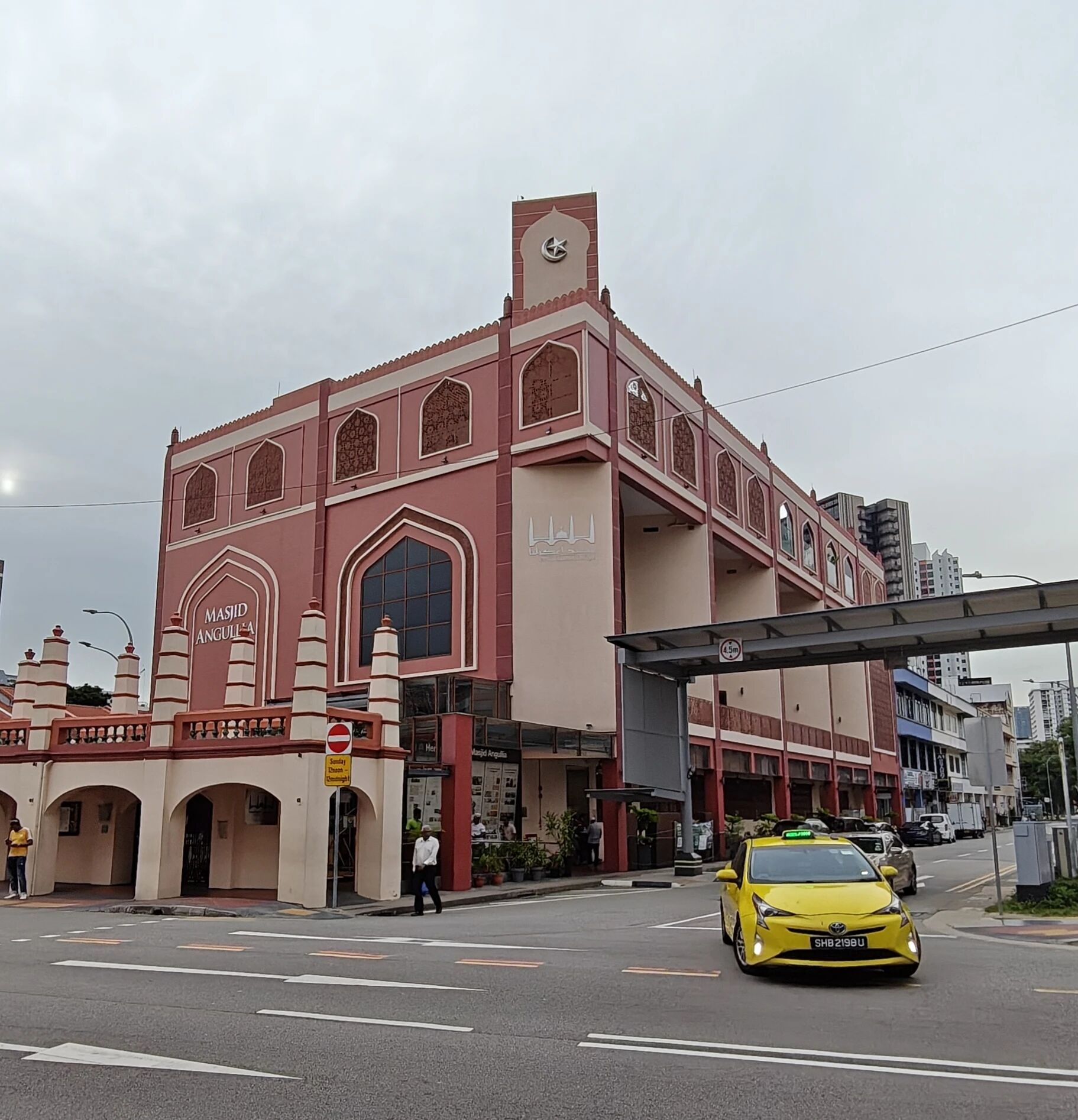
The Angullia Mosque and the Hindu temple shown in the previous post are both in the Little India neighborhood on the same street. Many South Asians walk by, and the shops along the street have a distinct Indian style. The road is full of Diwali decorations, so walking here really feels like being in India.
From the outside, the ochre-red color of the mosque reminds people of iconic Indian buildings like the Red Fort.
The first floor of the mosque is a parking lot. The prayer hall and the area for wudu (ablution) are on the second floor for men and the third floor for women.
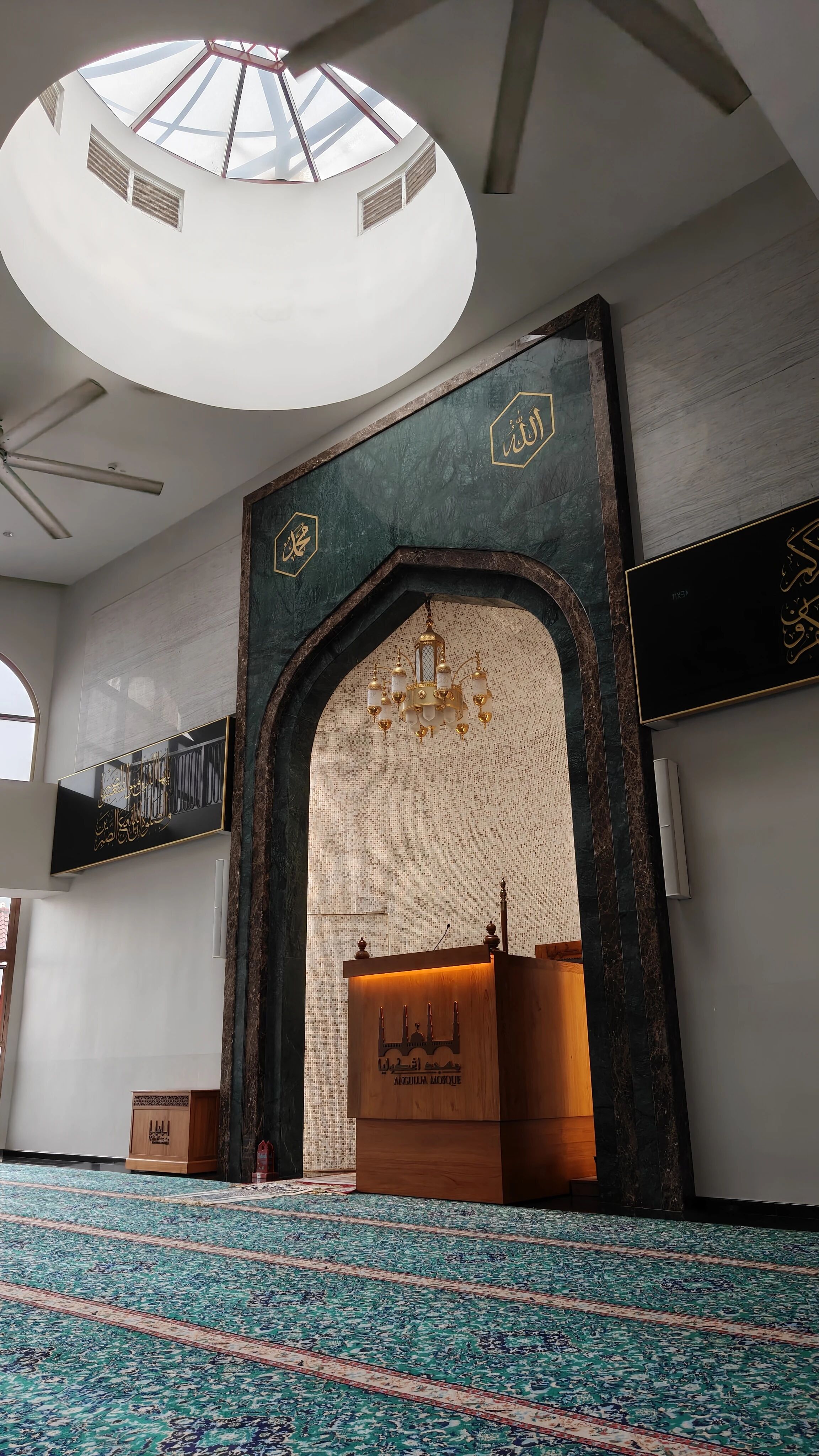
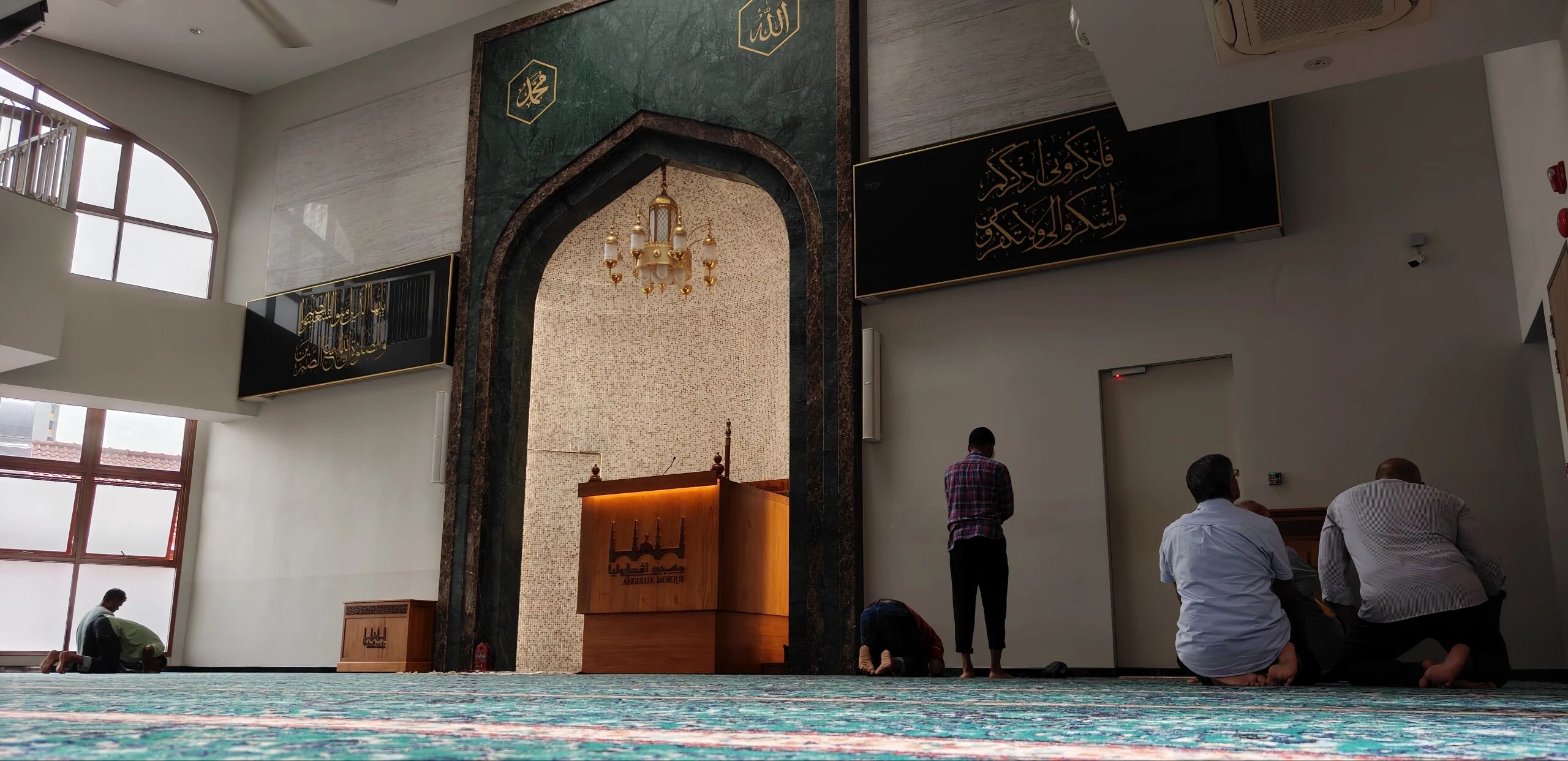
Entering the second floor, the mihrab niche connects the second and third floors vertically. The third-floor floorboards have an opening so that the glass dome on the roof can bring natural light directly down to the second floor. (Photo 3, Photo 4)
There is an Angullia Mosque logo on the minbar (Photo 5). The silhouette on this logo actually shows what the building looked like originally. In 2014, a large influx of foreign workers exceeded the capacity of the Angullia Mosque.
Because of this, demolition and expansion work began here in 2018. However, the iconic entrance hall with its eight pillars was preserved.
There are many copies of the Qur'an behind the prayer hall. I picked one up at random and found it was published in Bangladesh, so it had a lot of Bengali text inside. At first glance, I have to say that this dense Brahmi script really looks like the calligraphy of another world religion. (Photo 7)
There is a miniature model of the place on the second-floor porch. (Photo 8)
The entrance on the first floor has some old items on display, which serves as a simple exhibition (I think the mosque management committee is very thoughtful). They are:
1. Bricks used for building walls in the 1890s, which still have the brick factory's name, Alexandra, printed on them. They were specifically kept during the renovation (Photo 10).
2. A donation box used for over forty years (Photo 11).
3. A copper pot used for cooking porridge during Ramadan in the past (Photo 12).
Another feature of this mosque is the large number of information boards. You can see what it looked like before the 2018 expansion on the display boards (Photo 13). They even used the outer porch.
The porch is mainly used to exhibit the family history of the Angullia family (Photo 18), as well as the architectural heritage left by the Angullia family in Singapore and other countries like Malaysia and the Philippines (Photos 19 and 20).
After leaving the mosque, I had dinner and went back to my accommodation to rest. I had previously heard at the Abdul Gafoor Mosque that there is also a Shia mosque in Singapore, which immediately sparked my interest, so I decided to go and see it.
In our next post, we will visit the only Shia mosque in Singapore. view all
Summary: This Singapore Muslim travel guide visits Angullia Mosque in Little India, built by a Gujarati Muslim family in the 1890s, with its red exterior, upper-floor prayer hall, glass dome light, mihrab, minbar, wudu areas, and the South Asian street scene nearby.
The mosque I am introducing today was built in the 1890s by the Angullia family, who came from Gujarat, India. Gujarat is the home state of India's current Prime Minister, Modi.
The Angullia Mosque and the Hindu temple shown in the previous post are both in the Little India neighborhood on the same street. Many South Asians walk by, and the shops along the street have a distinct Indian style. The road is full of Diwali decorations, so walking here really feels like being in India.
From the outside, the ochre-red color of the mosque reminds people of iconic Indian buildings like the Red Fort.
The first floor of the mosque is a parking lot. The prayer hall and the area for wudu (ablution) are on the second floor for men and the third floor for women.
Entering the second floor, the mihrab niche connects the second and third floors vertically. The third-floor floorboards have an opening so that the glass dome on the roof can bring natural light directly down to the second floor. (Photo 3, Photo 4)
There is an Angullia Mosque logo on the minbar (Photo 5). The silhouette on this logo actually shows what the building looked like originally. In 2014, a large influx of foreign workers exceeded the capacity of the Angullia Mosque.
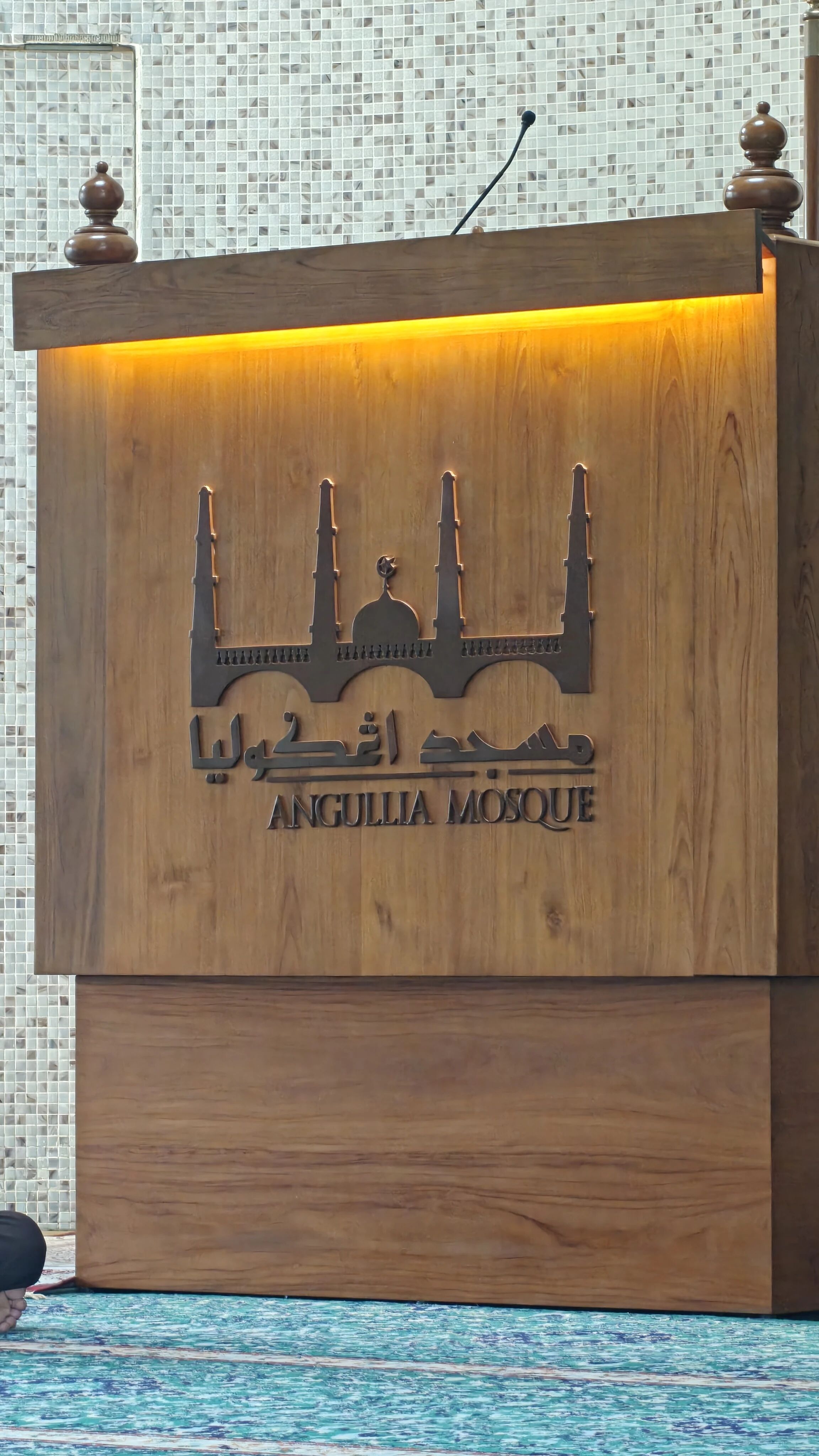
Because of this, demolition and expansion work began here in 2018. However, the iconic entrance hall with its eight pillars was preserved.
There are many copies of the Qur'an behind the prayer hall. I picked one up at random and found it was published in Bangladesh, so it had a lot of Bengali text inside. At first glance, I have to say that this dense Brahmi script really looks like the calligraphy of another world religion. (Photo 7)
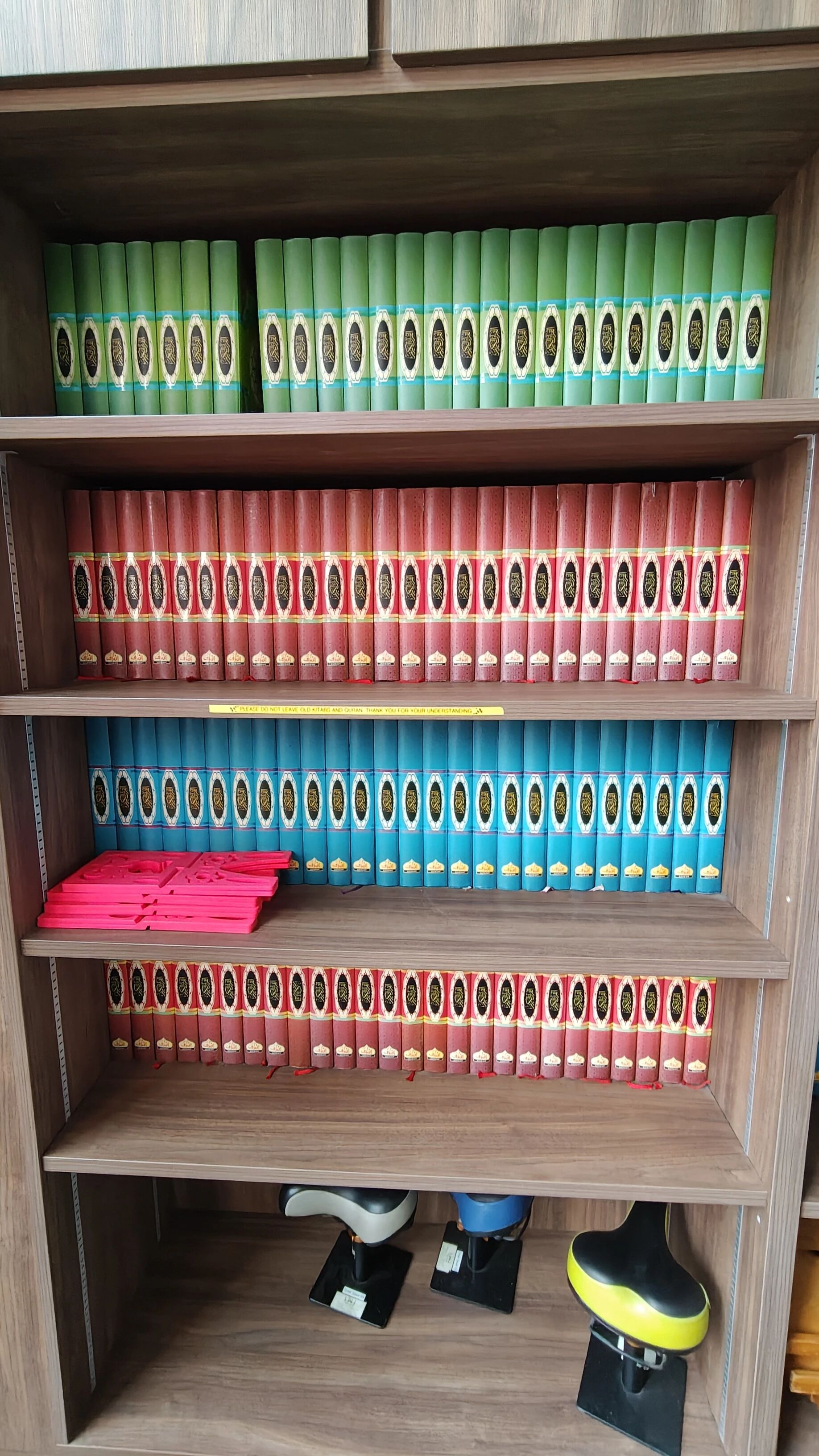
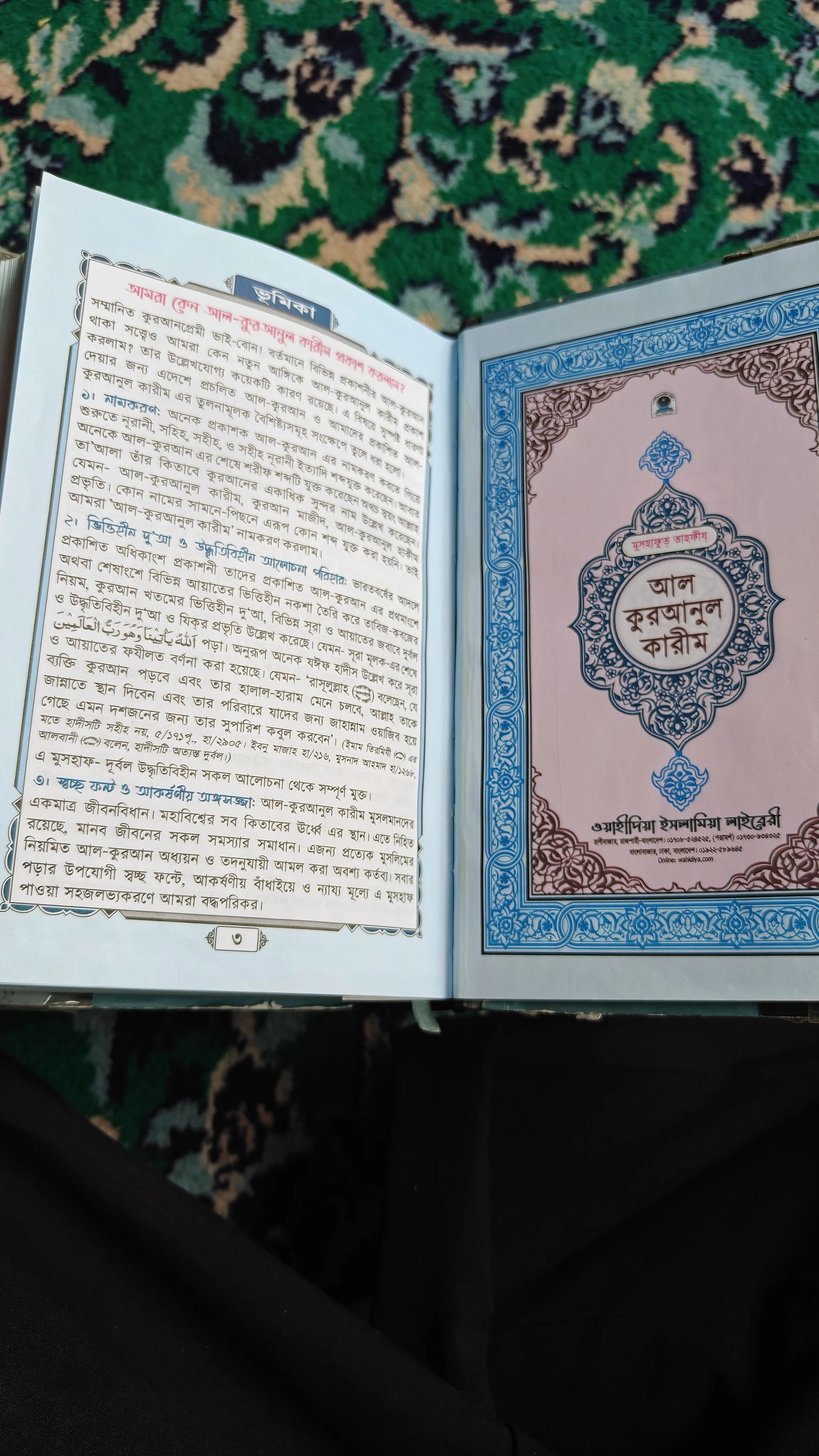
There is a miniature model of the place on the second-floor porch. (Photo 8)
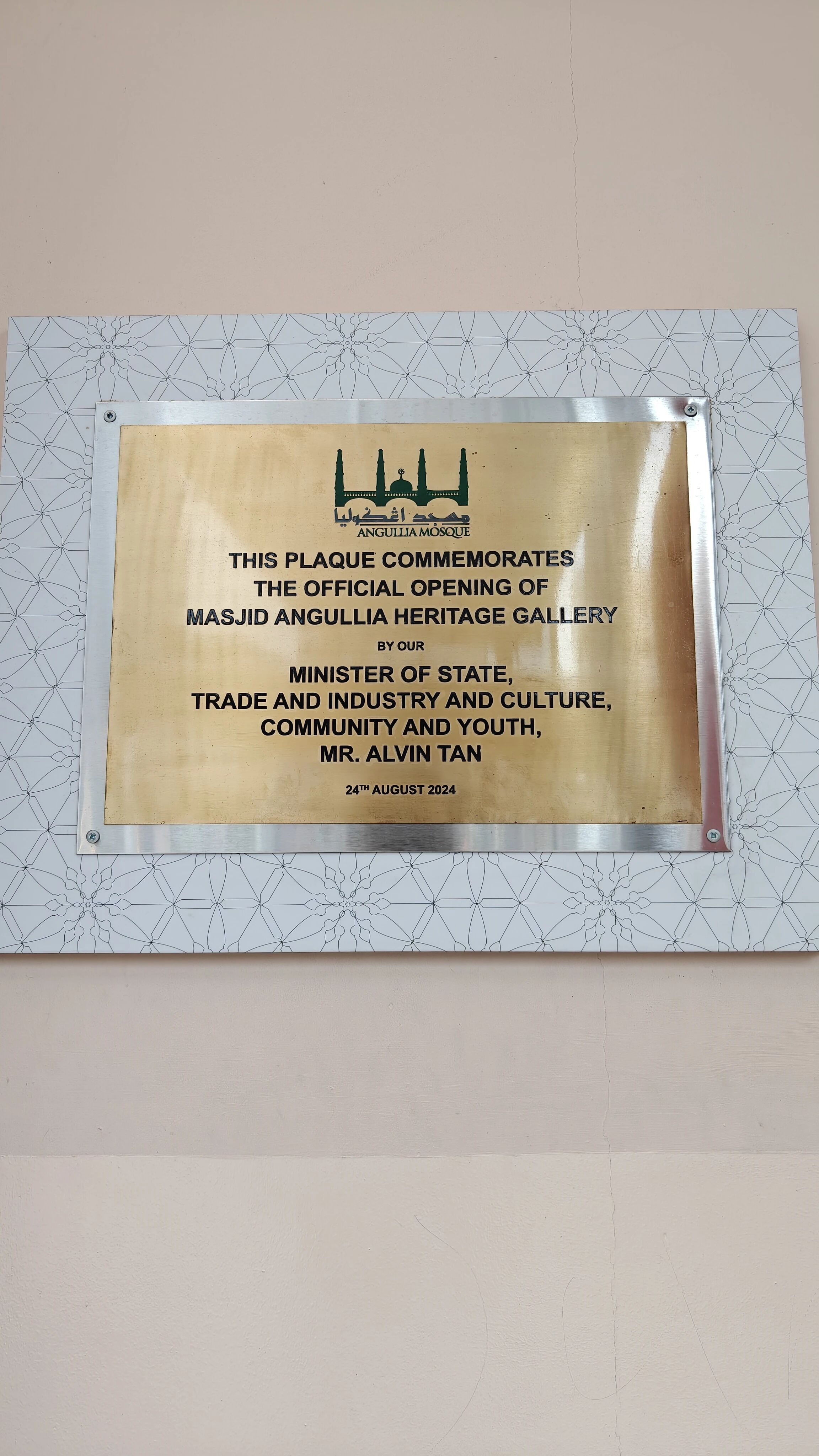
The entrance on the first floor has some old items on display, which serves as a simple exhibition (I think the mosque management committee is very thoughtful). They are:
1. Bricks used for building walls in the 1890s, which still have the brick factory's name, Alexandra, printed on them. They were specifically kept during the renovation (Photo 10).
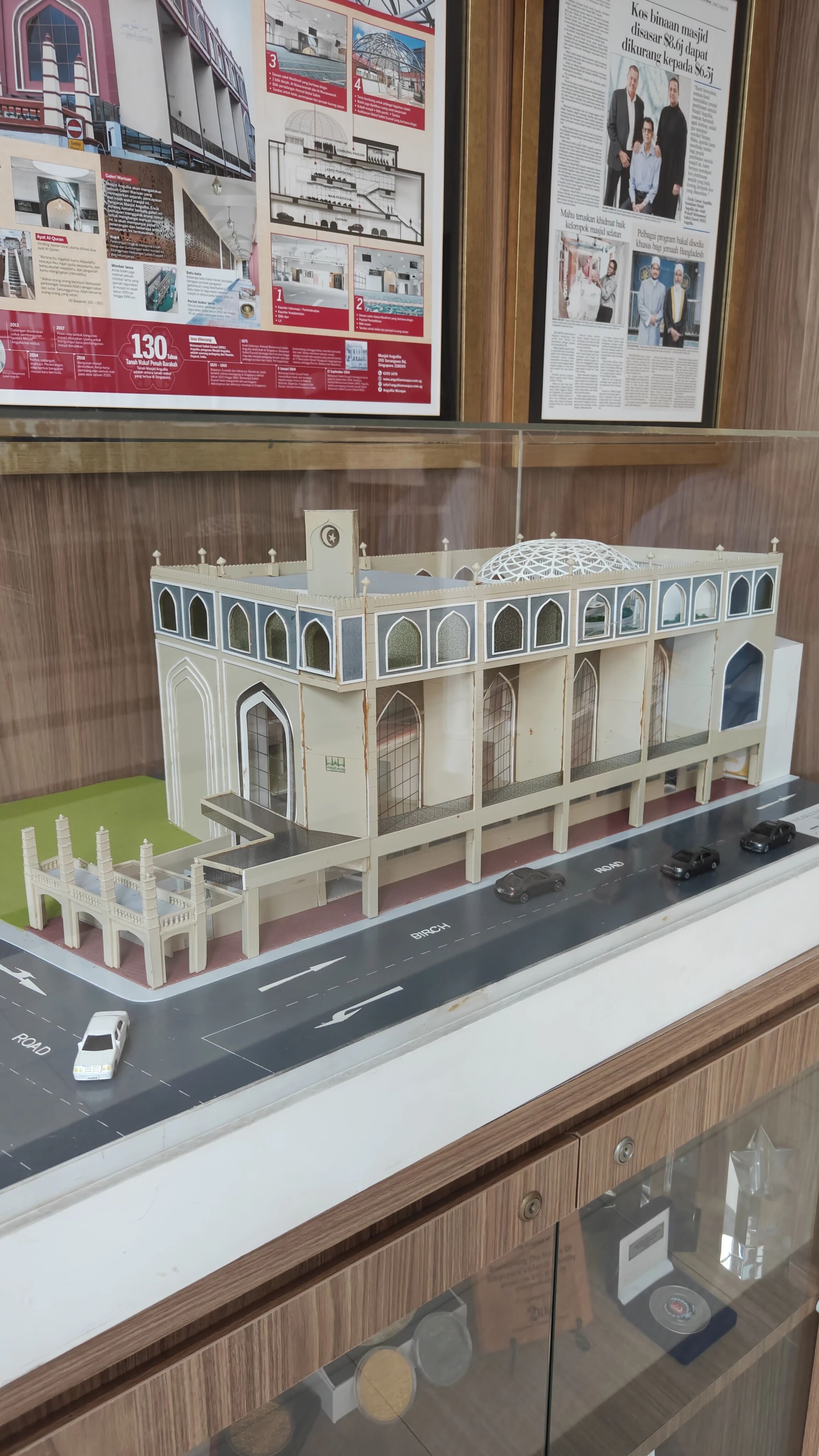
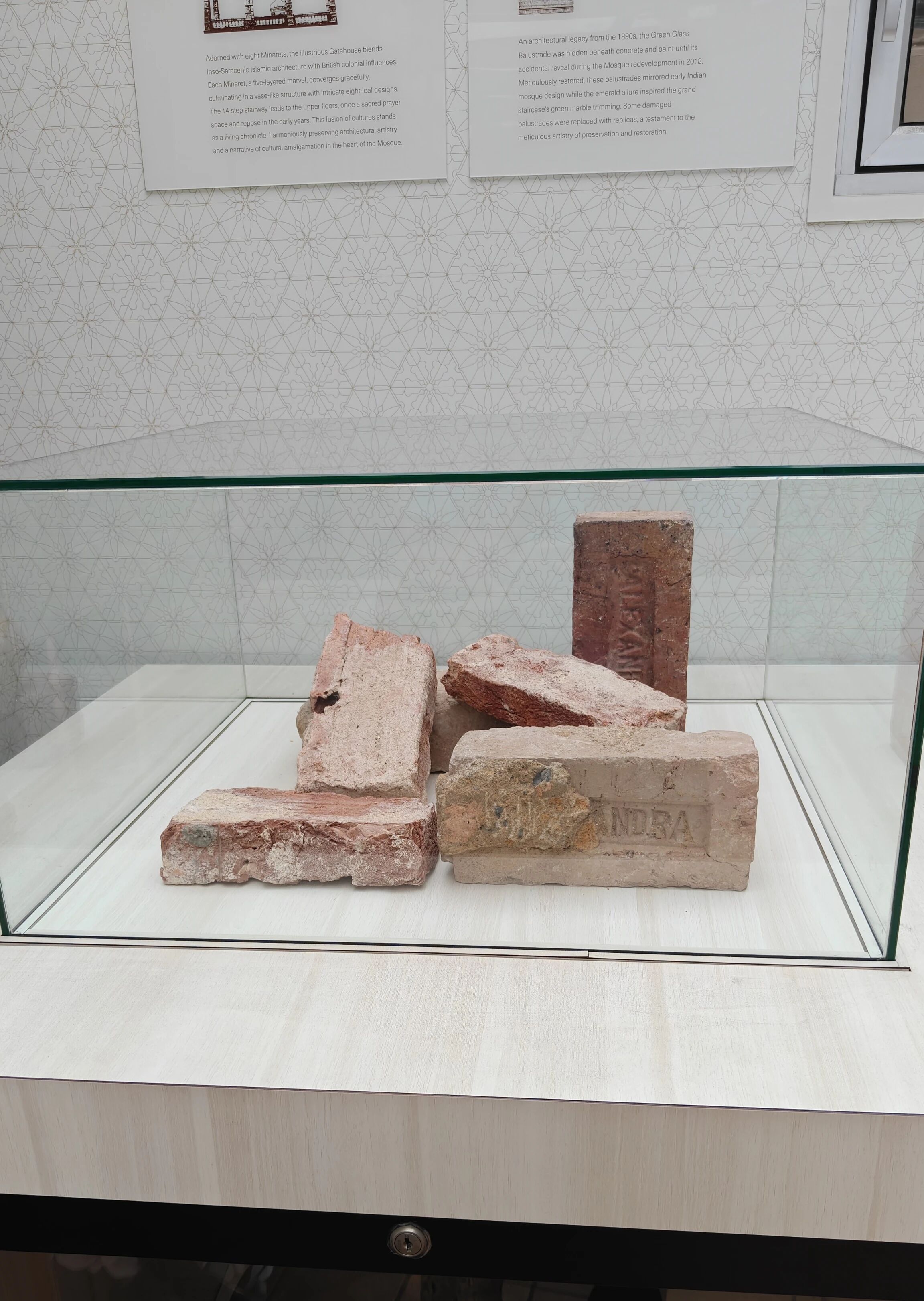
2. A donation box used for over forty years (Photo 11).
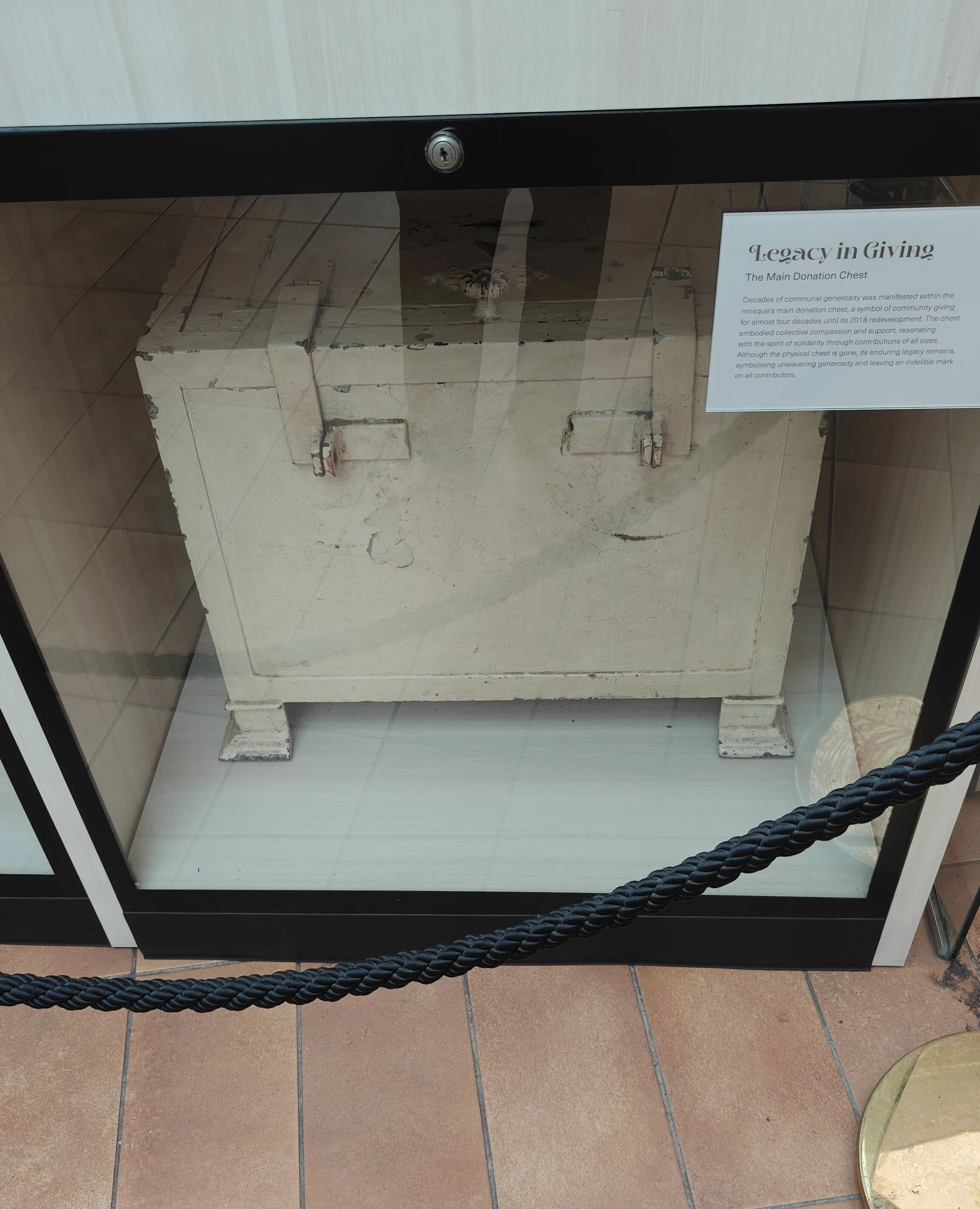
3. A copper pot used for cooking porridge during Ramadan in the past (Photo 12).
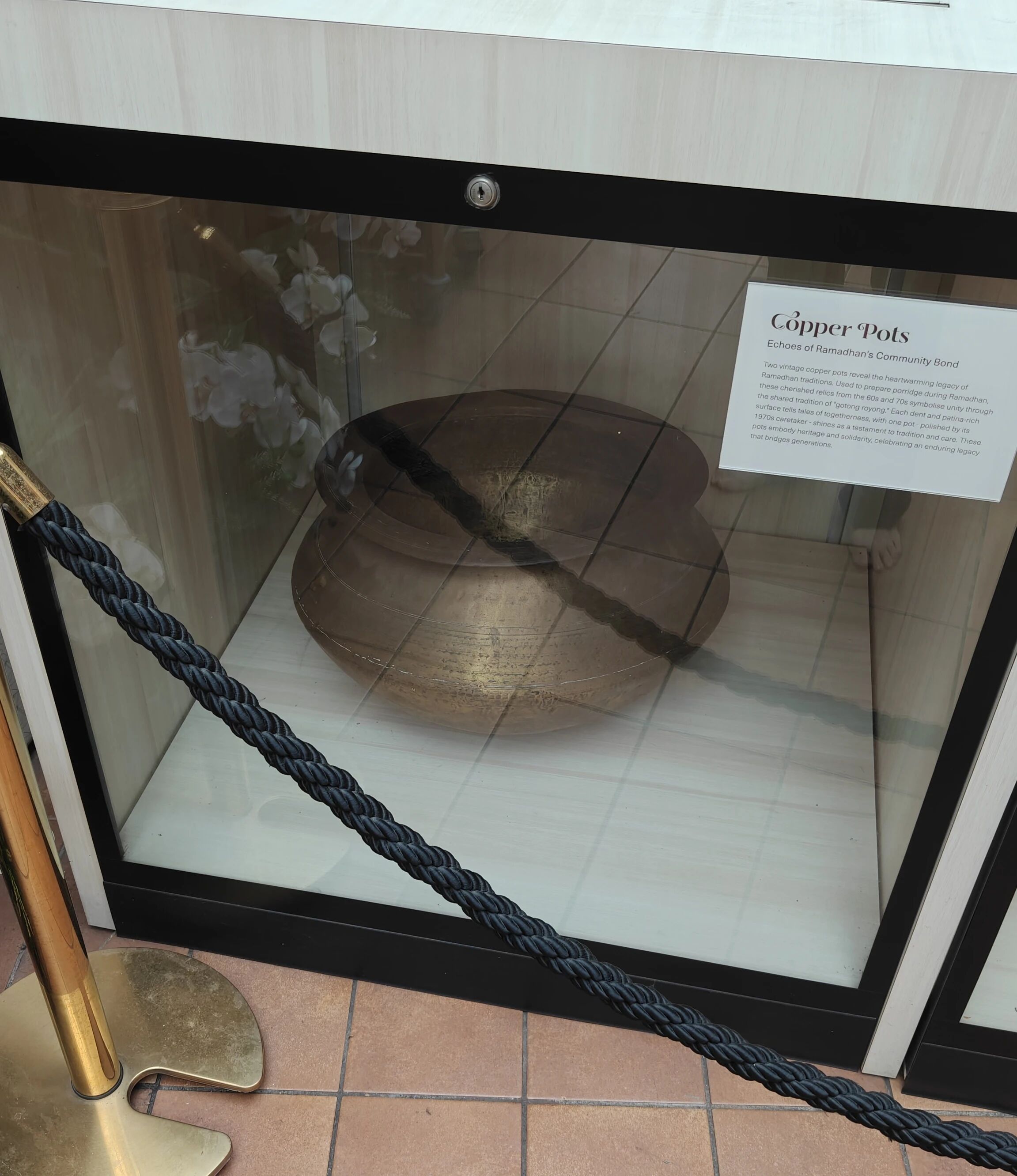
Another feature of this mosque is the large number of information boards. You can see what it looked like before the 2018 expansion on the display boards (Photo 13). They even used the outer porch.
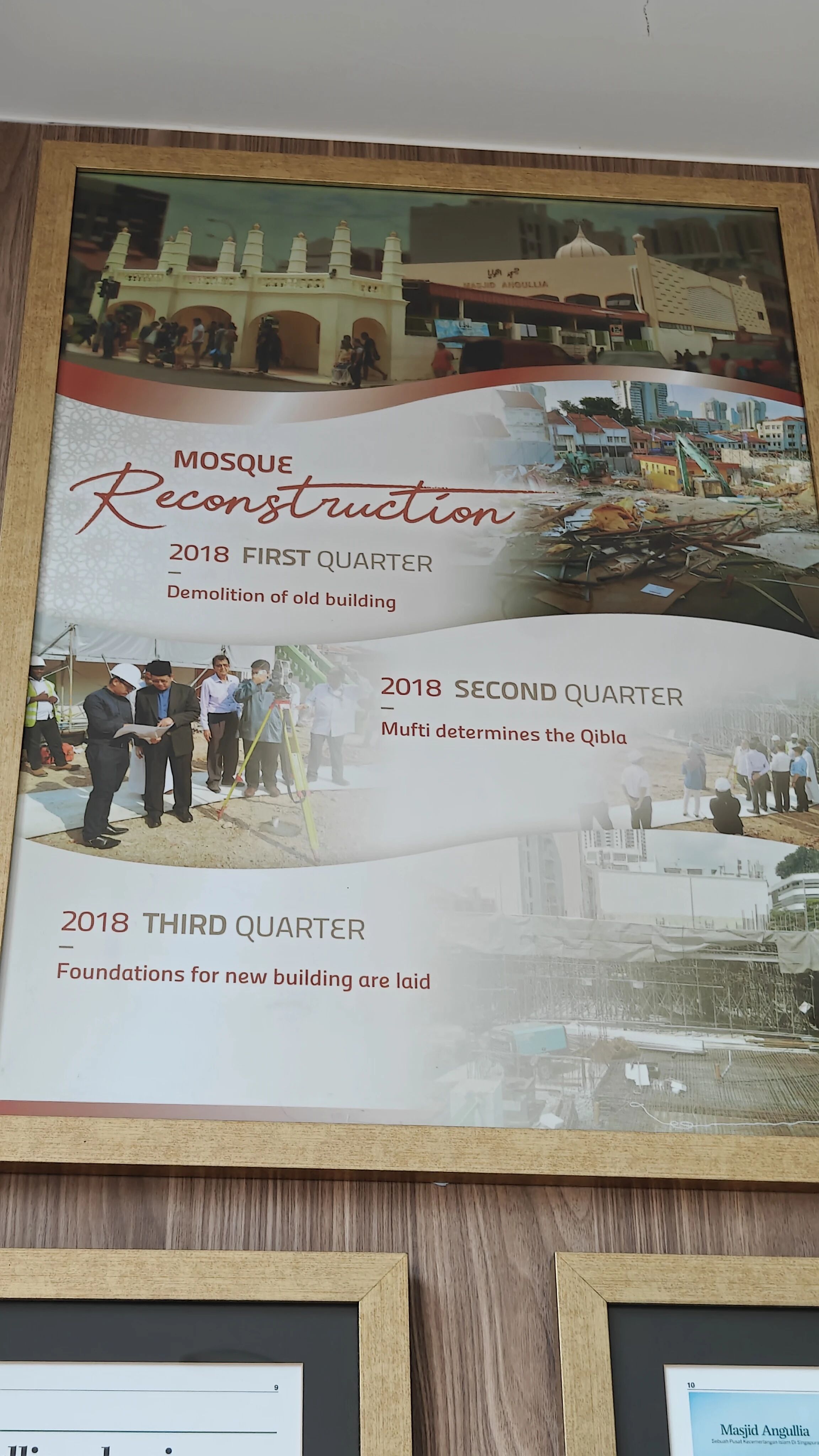
The porch is mainly used to exhibit the family history of the Angullia family (Photo 18), as well as the architectural heritage left by the Angullia family in Singapore and other countries like Malaysia and the Philippines (Photos 19 and 20).
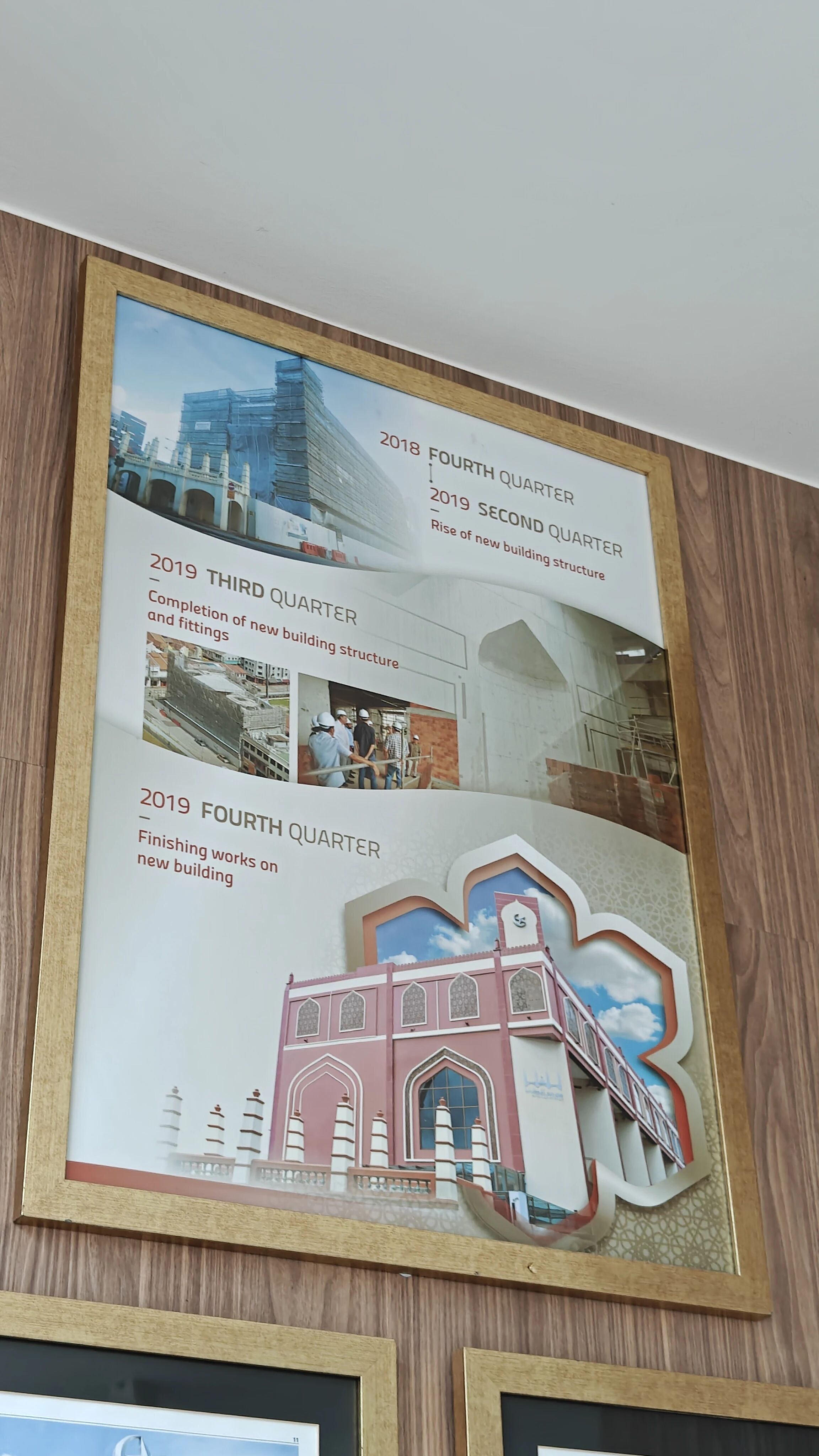
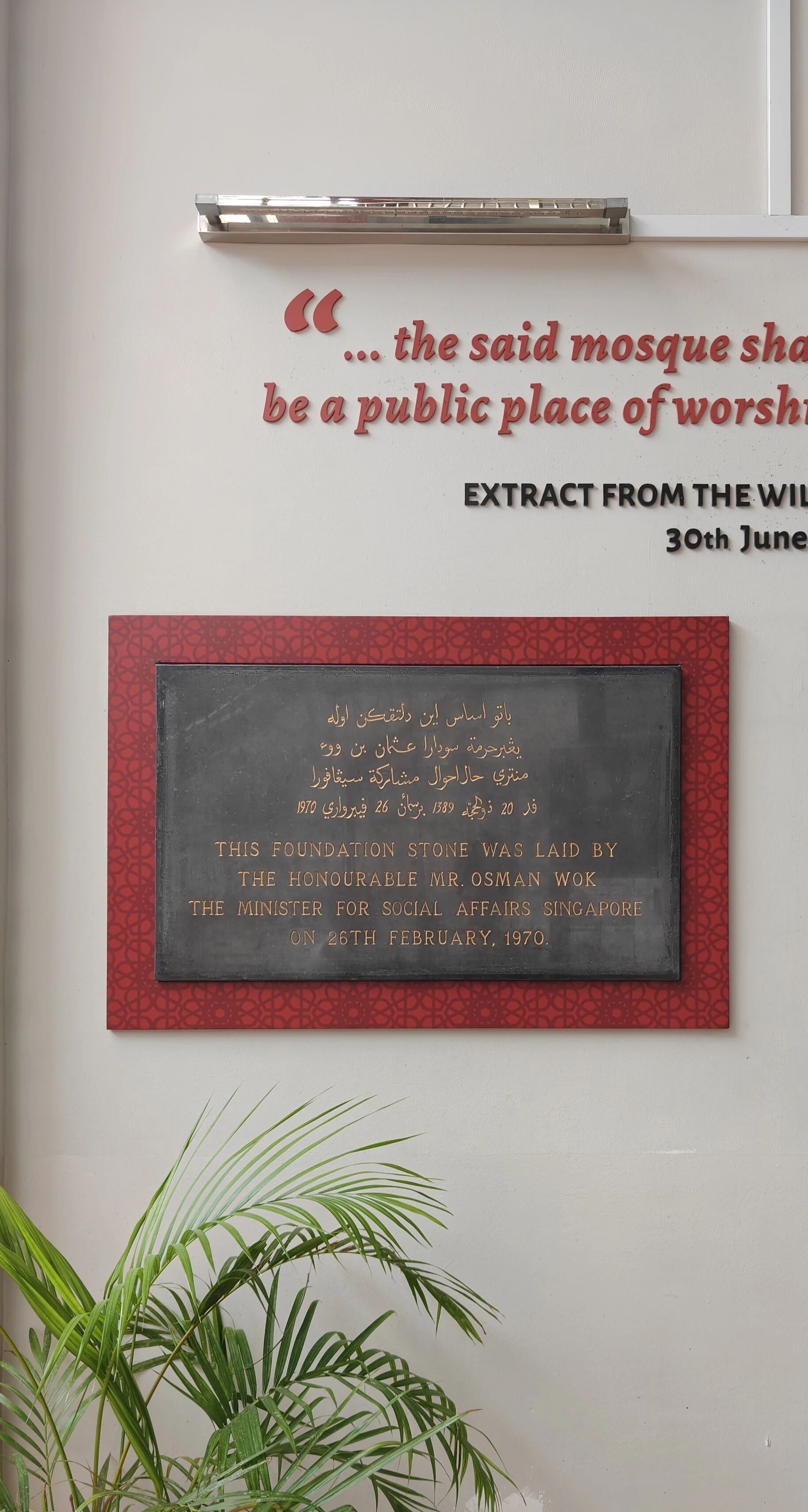
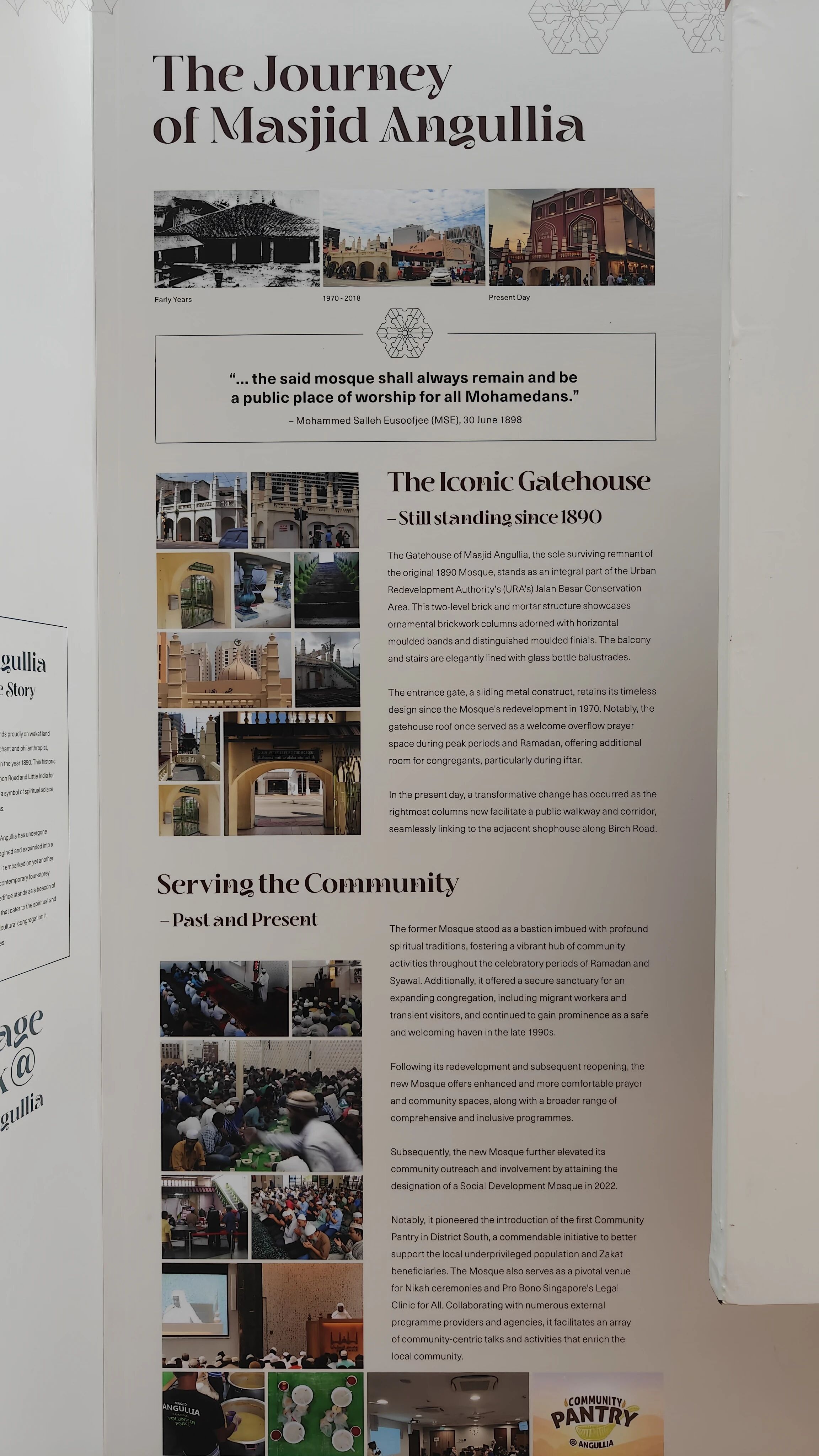
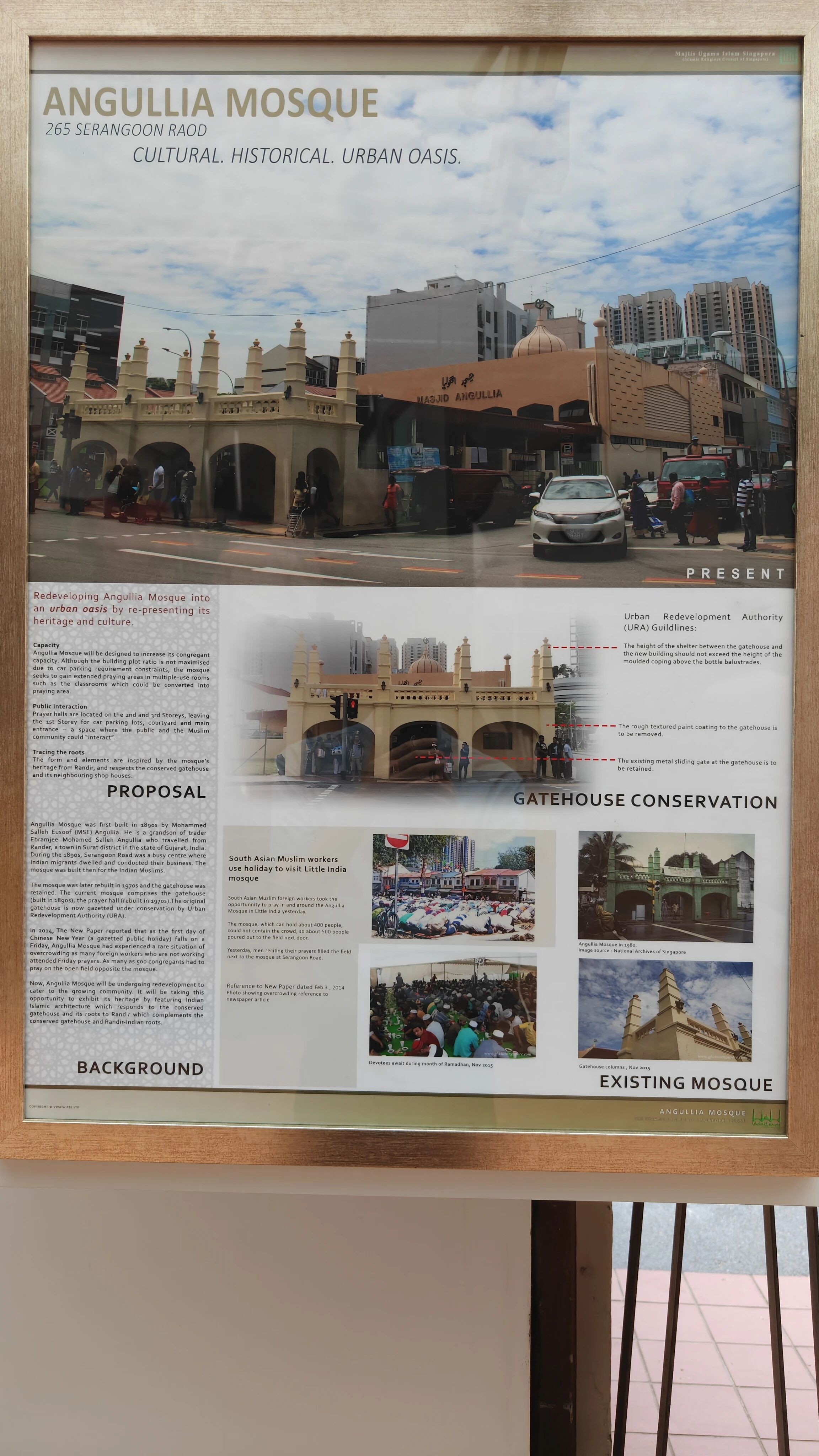
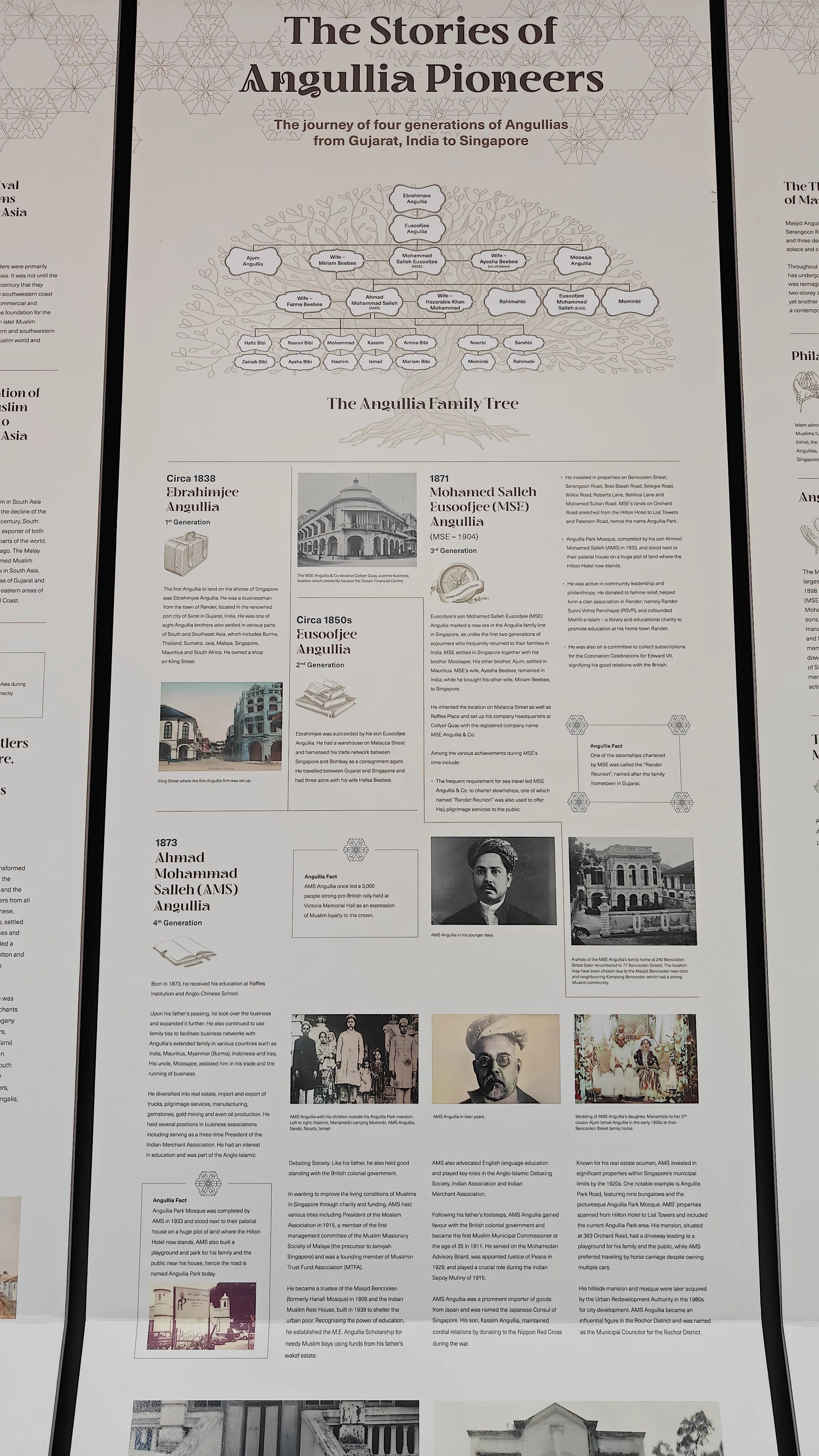
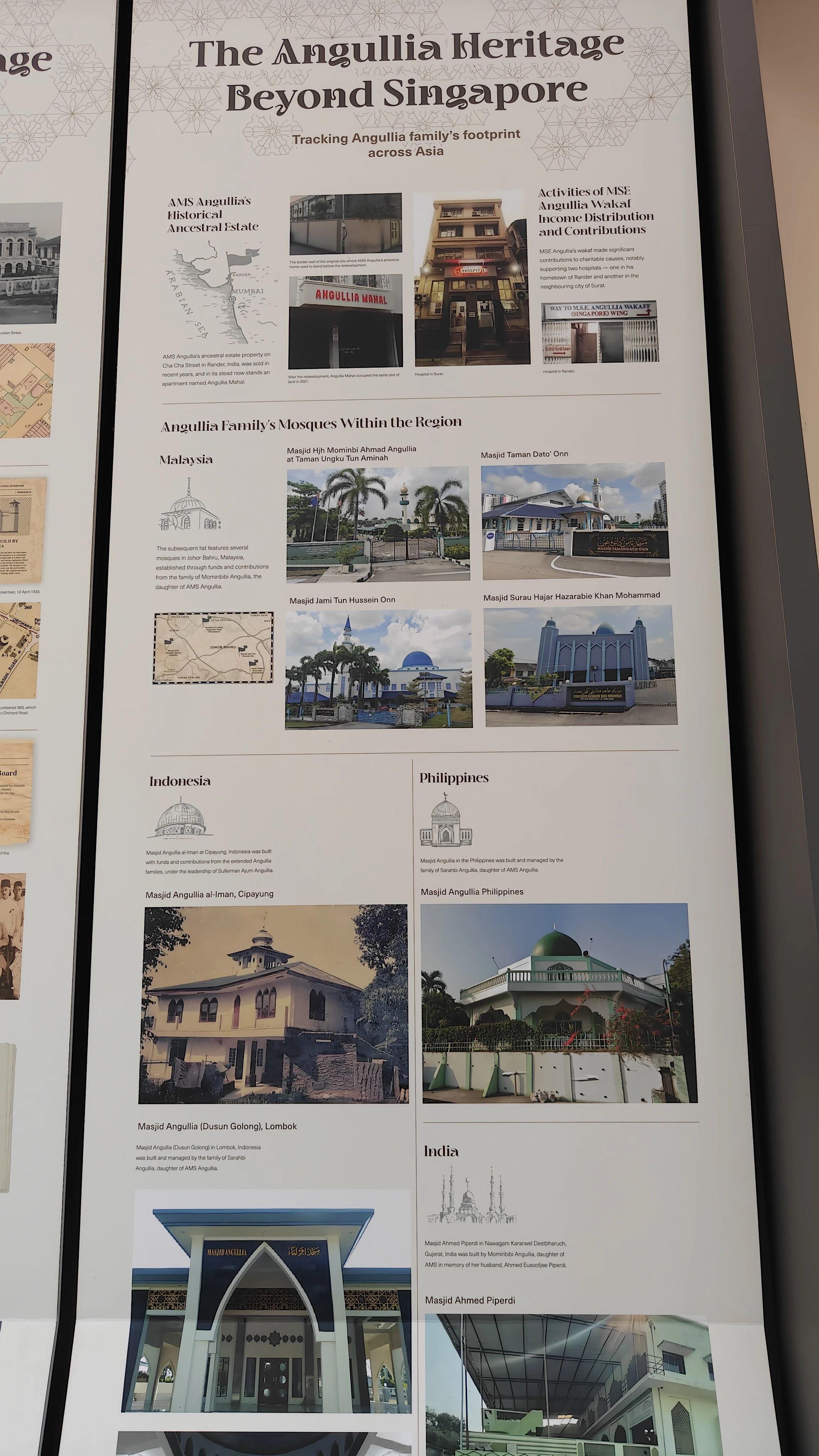
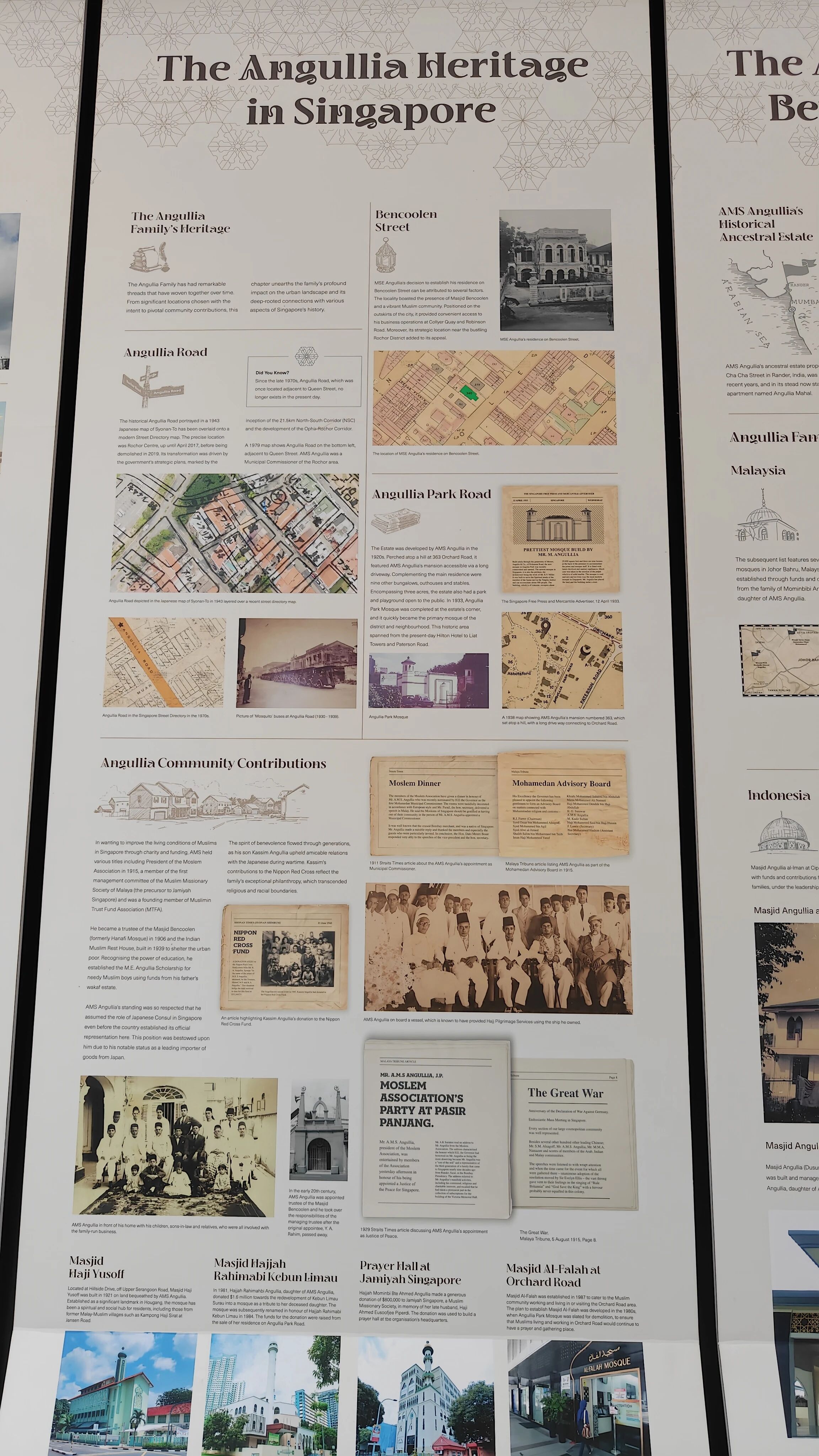
After leaving the mosque, I had dinner and went back to my accommodation to rest. I had previously heard at the Abdul Gafoor Mosque that there is also a Shia mosque in Singapore, which immediately sparked my interest, so I decided to go and see it.
In our next post, we will visit the only Shia mosque in Singapore.
Muslim Travel Guide Singapore Little India: Abdul Gafoor Mosque, Tamil Muslim Heritage and Prayer Hall
Articles • yusuf908 posted the article • 0 comments • 165 views • 2026-05-23 22:47
Summary: This Singapore Muslim travel guide visits Abdul Gafoor Mosque in Little India, a Tamil Muslim mosque first built in 1859, with its prayer hall, skylight design, Tamil writing, small museum, 99 names of Allah display, Qur'an manuscripts, and the Indian street life around the mosque.
Little India is the main area for the Indian community in Singapore. Besides Hindu temples, you can also find mosques built by Indians here. Many people think everyone in India is Buddhist, but the Buddhist population there is actually very small today.
Most people follow Hinduism, but India is also home to over 100 million Muslims. So, it is not strange to find mosques wherever there are people of Indian descent.
There is a mosque in the Little India neighborhood called Abdul Gafoor Mosque. The plaque at the entrance has a short introduction in both English and Tamil. This mosque was first built in 1859, and the current building was constructed between 1907 and 1920.
When I walked to the entrance, a staff member noticed me and invited me inside to show me the mosque's museum.
I told him I would look later, then I went to the prayer hall. Above the entrance to the prayer hall are the names of the 25 prophets mentioned in the Qur'an, including Adam (Adam), Ibrahim (Abraham), Musa (Moses), and Isa (Jesus).
Entering the prayer hall, I noticed a skylight in the middle of the floor directly under the dome, which brings light down into the prayer area below. This is a unique feature of this mosque. (Photos 4 to 6)
Another feature is the Tamil writing found throughout the mosque, as it was built by the Tamil people. (Photo 9)
The twisted columns, which look like braided dough (mahua), are another unique feature here. (Photo 10)
I followed other visitors into the small museum inside the mosque. It details the history of the site, which started as a wooden building for immigrants before being rebuilt into its current form. (Photo 11)
There is also a miniature model of the prayer hall here (Photo 12).
One wall displays the 99 names of Allah. The front shows the Arabic original, and you can flip the tiles to see the English meaning on the back. (Photo 13)
A display case holds handwritten copies of the Qur'an and various translations, including the Chinese version by Mr. Ma Jian. (Photo 14)
Next is a newly built stone tablet carved with the Hundred-Word Eulogy written by ancient Chinese people, which you can read for yourselves. (Photo 15)
I asked the guide if he was an imam. He said he was not, as he works specifically in publicity. The guide spoke fluent English, but as a Tamil, he spoke very fast without any pauses, so I still found it a bit difficult to follow. Still, I appreciate his effort in explaining things.
Finally, let me show you the Indian style of the neighborhood. Diwali has just passed, so there are many Indian-style decorative lights here (Photo 17). You can buy Tamil newspapers at convenience stores (Photo 18), and the streets are full of Indian restaurants, posters of Indian stars, and a South Indian-style Hindu temple.
(Photo 19)
The last photo is the dessert I ordered at an Indian restaurant, jalebi (jialebei), which is a deep-fried sweet made from flour and sugar batter. Please enjoy it with me. view all
Summary: This Singapore Muslim travel guide visits Abdul Gafoor Mosque in Little India, a Tamil Muslim mosque first built in 1859, with its prayer hall, skylight design, Tamil writing, small museum, 99 names of Allah display, Qur'an manuscripts, and the Indian street life around the mosque.
Little India is the main area for the Indian community in Singapore. Besides Hindu temples, you can also find mosques built by Indians here. Many people think everyone in India is Buddhist, but the Buddhist population there is actually very small today.
Most people follow Hinduism, but India is also home to over 100 million Muslims. So, it is not strange to find mosques wherever there are people of Indian descent.
There is a mosque in the Little India neighborhood called Abdul Gafoor Mosque. The plaque at the entrance has a short introduction in both English and Tamil. This mosque was first built in 1859, and the current building was constructed between 1907 and 1920.
When I walked to the entrance, a staff member noticed me and invited me inside to show me the mosque's museum.
I told him I would look later, then I went to the prayer hall. Above the entrance to the prayer hall are the names of the 25 prophets mentioned in the Qur'an, including Adam (Adam), Ibrahim (Abraham), Musa (Moses), and Isa (Jesus).
Entering the prayer hall, I noticed a skylight in the middle of the floor directly under the dome, which brings light down into the prayer area below. This is a unique feature of this mosque. (Photos 4 to 6)
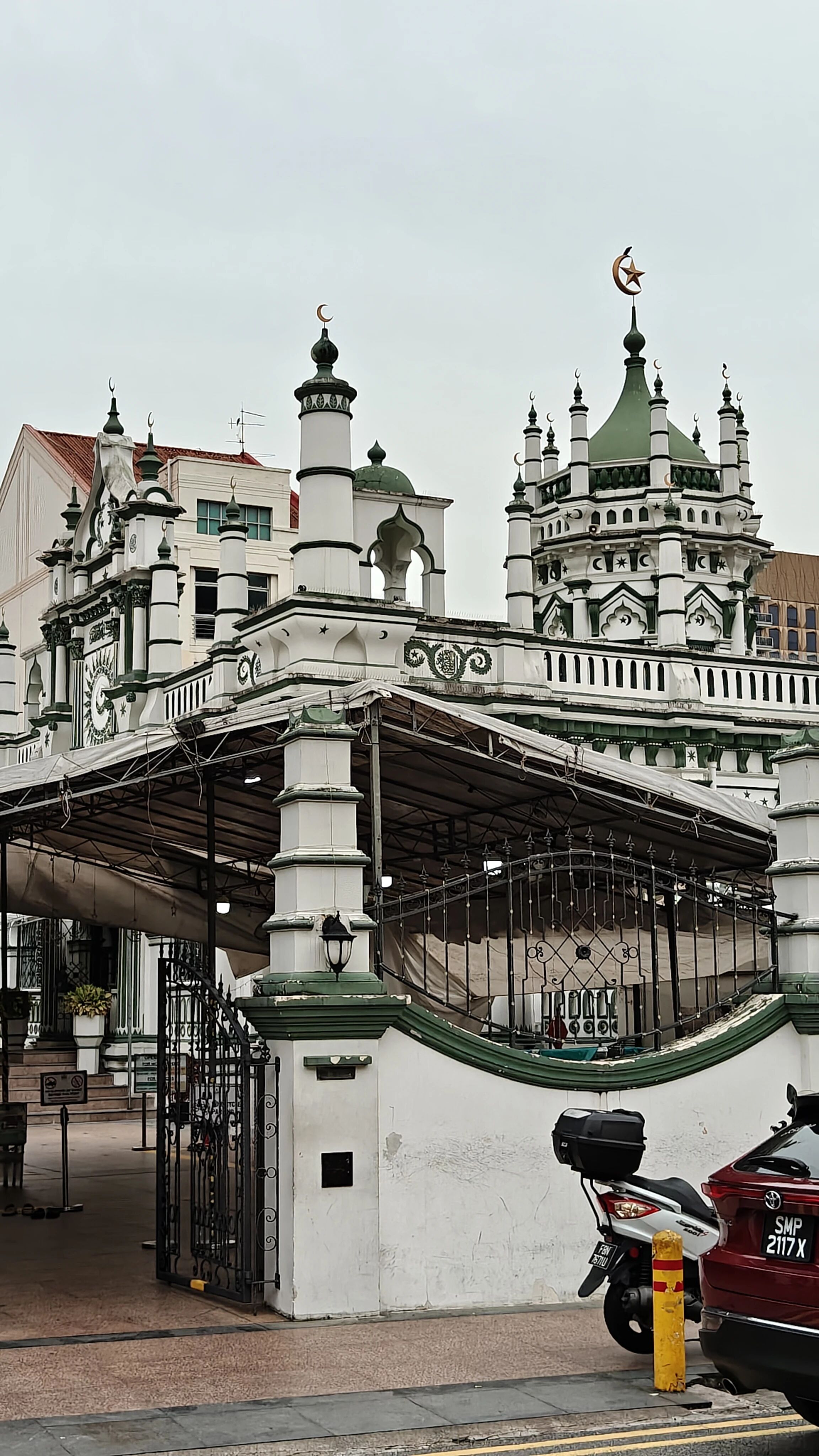
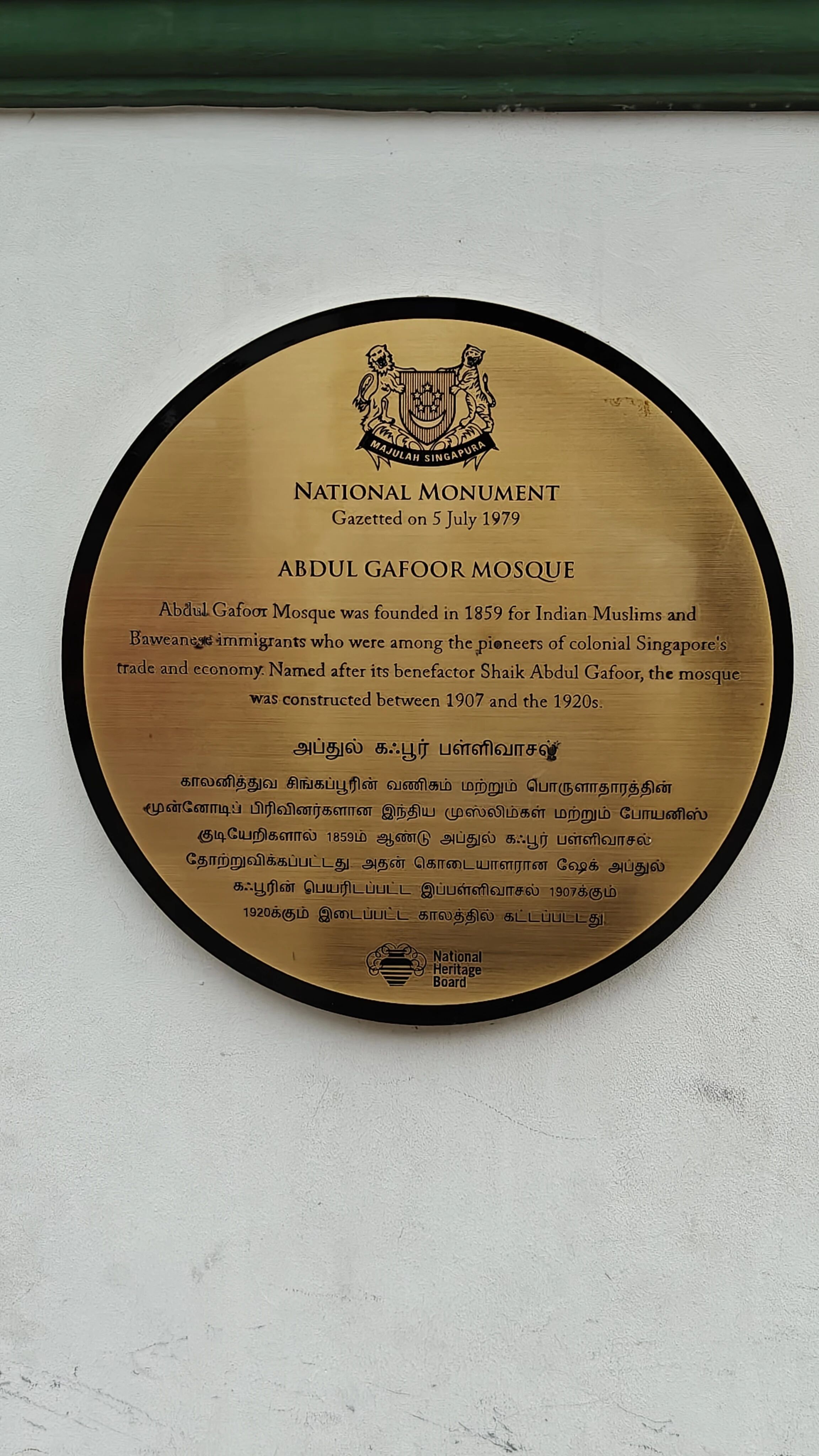
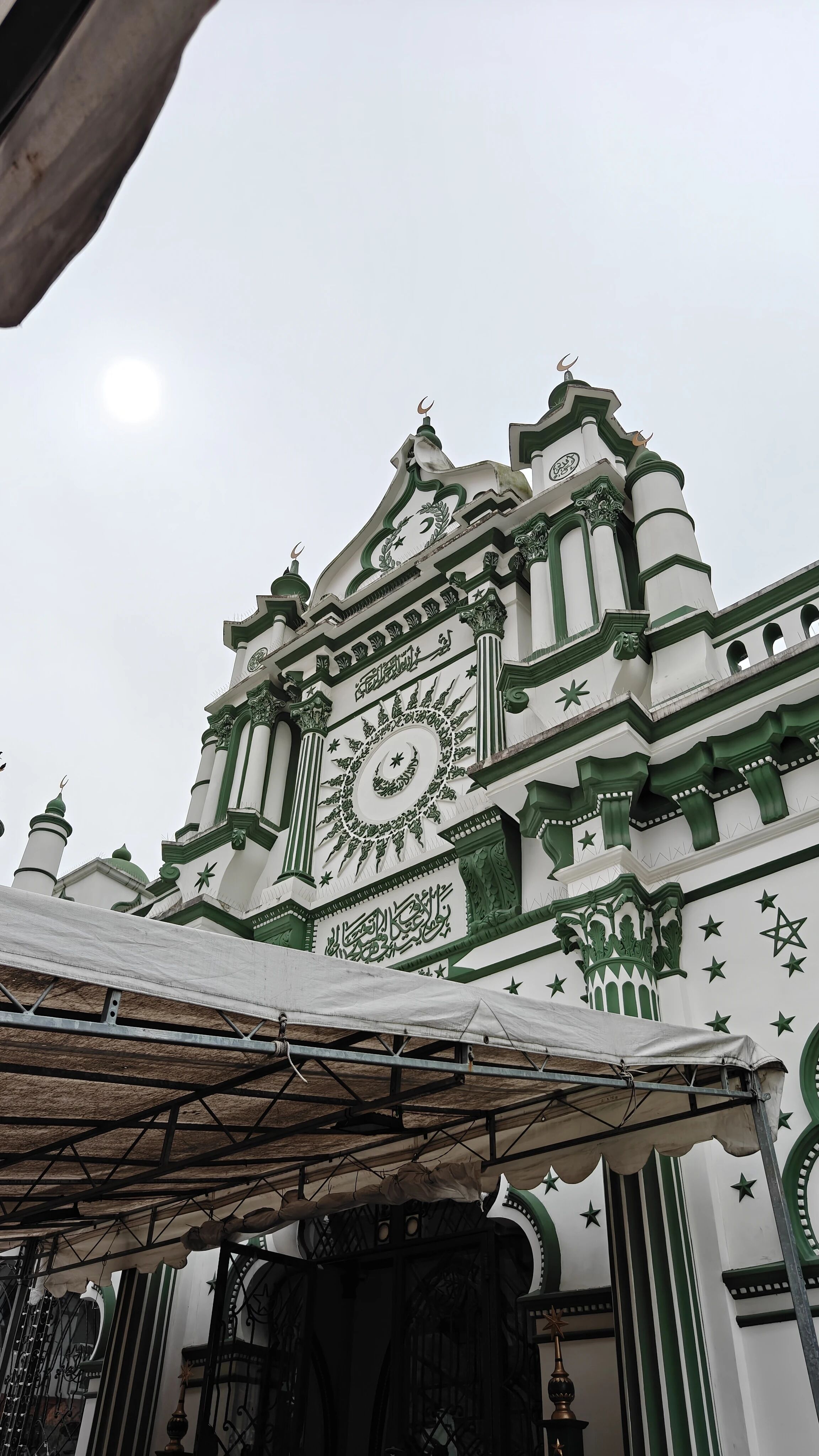
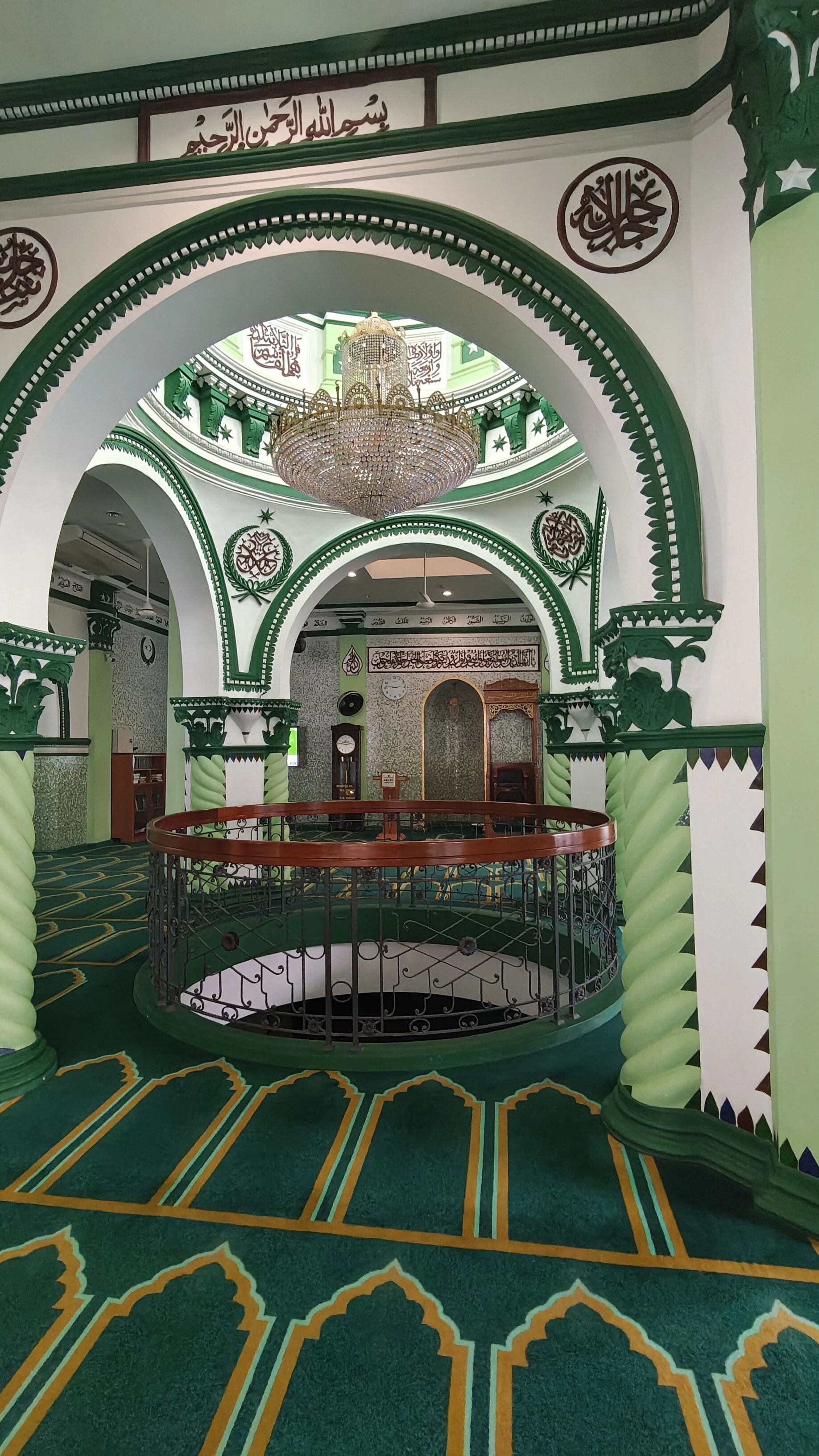
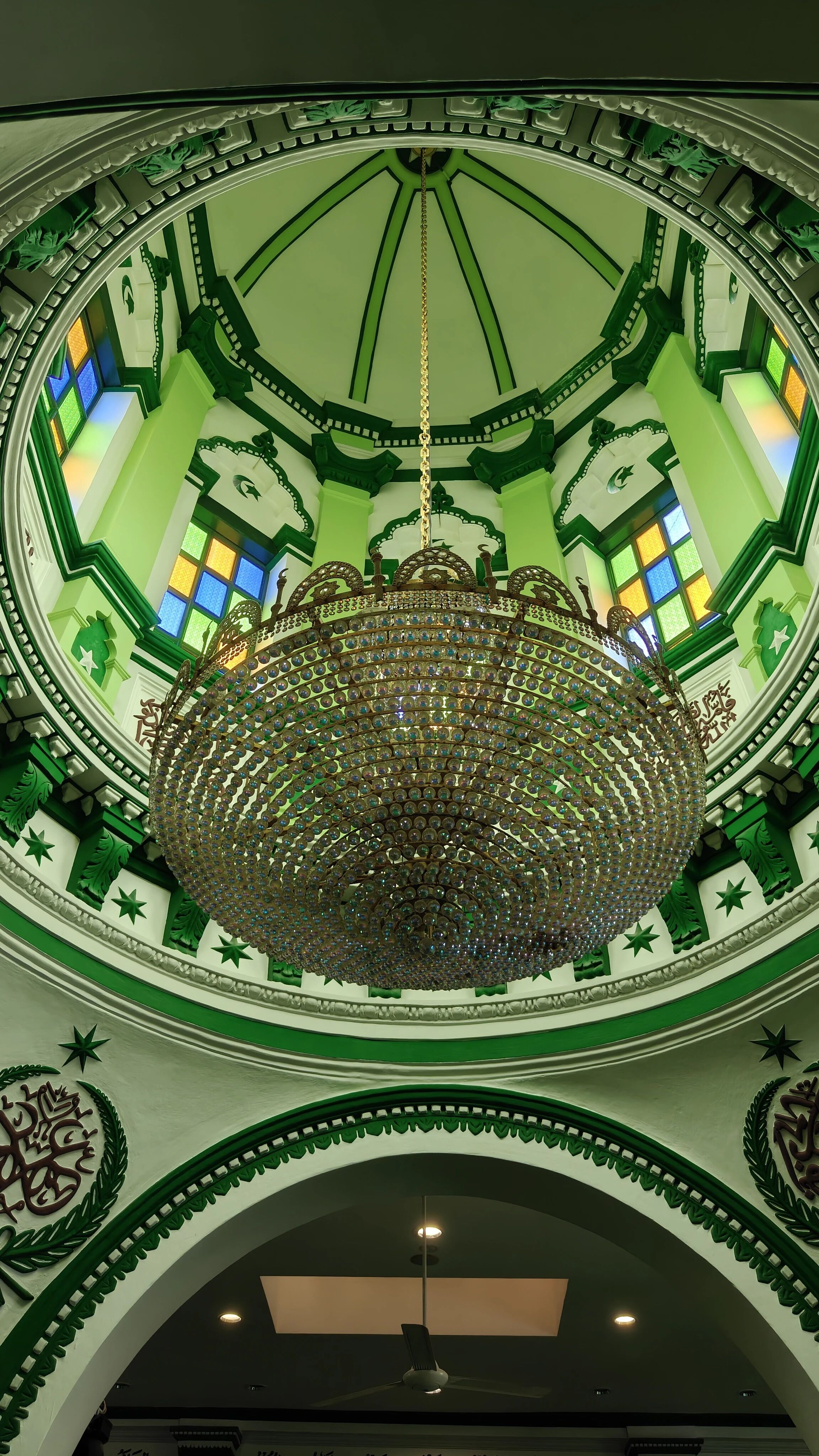
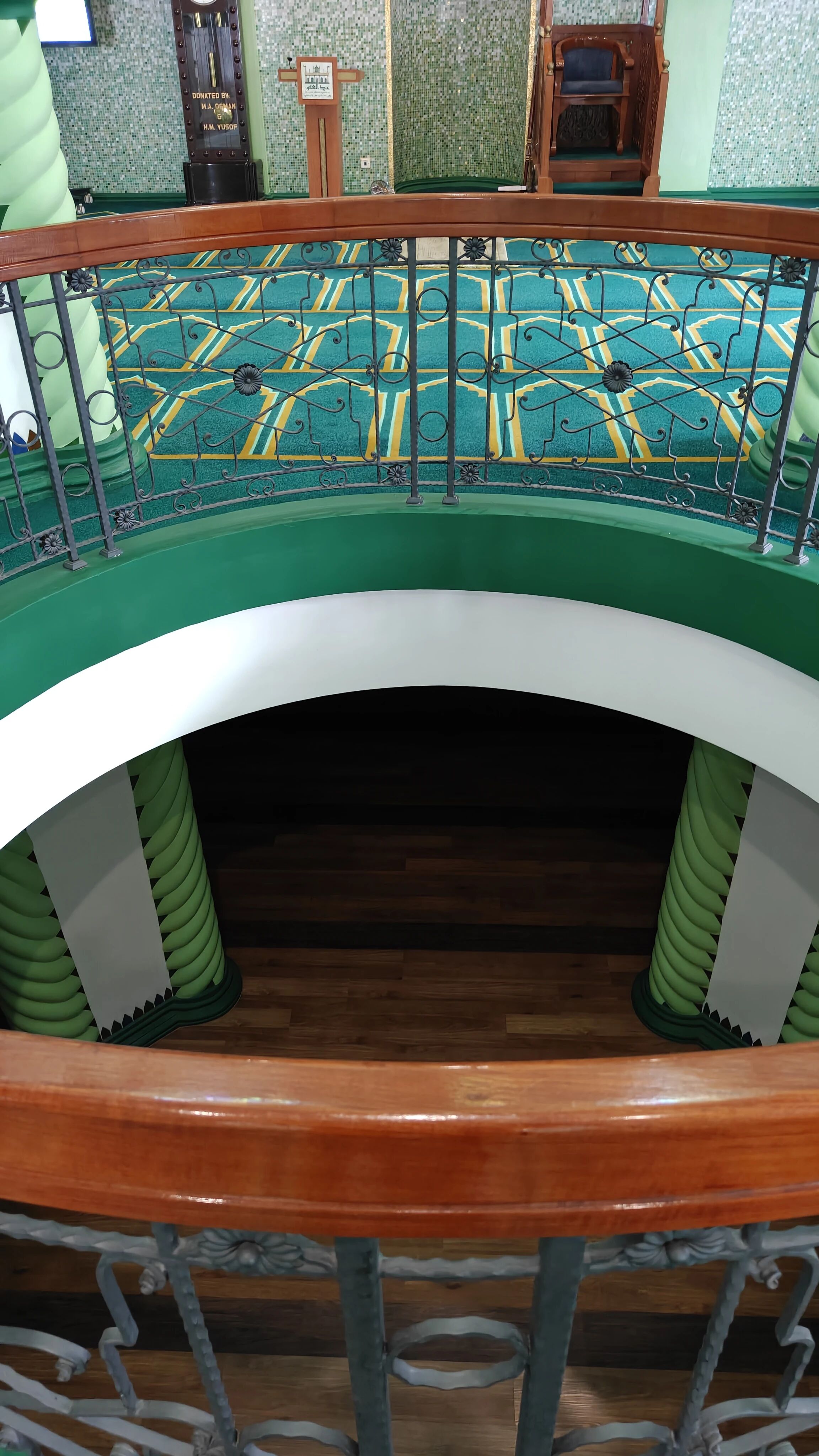
Another feature is the Tamil writing found throughout the mosque, as it was built by the Tamil people. (Photo 9)
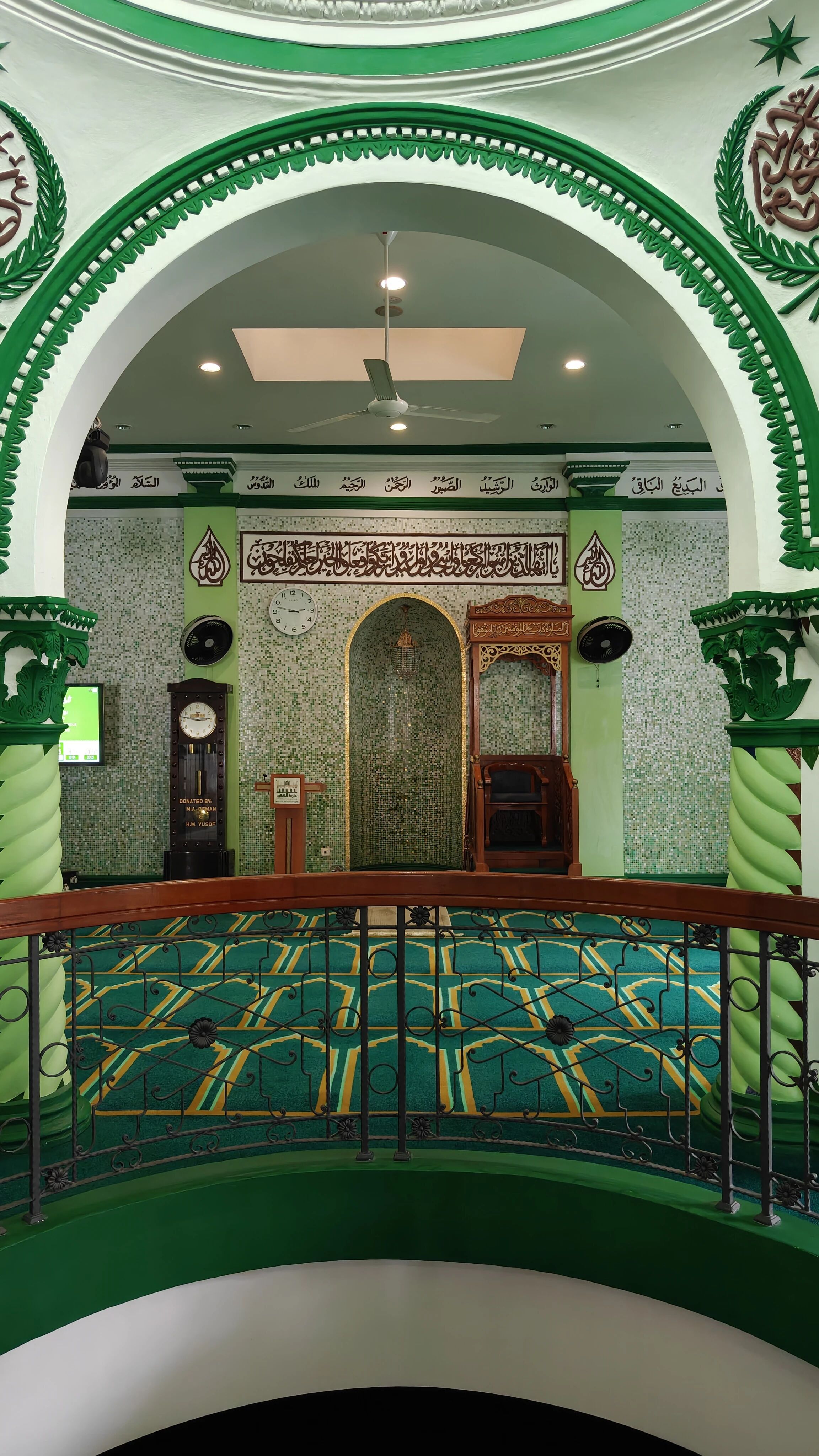
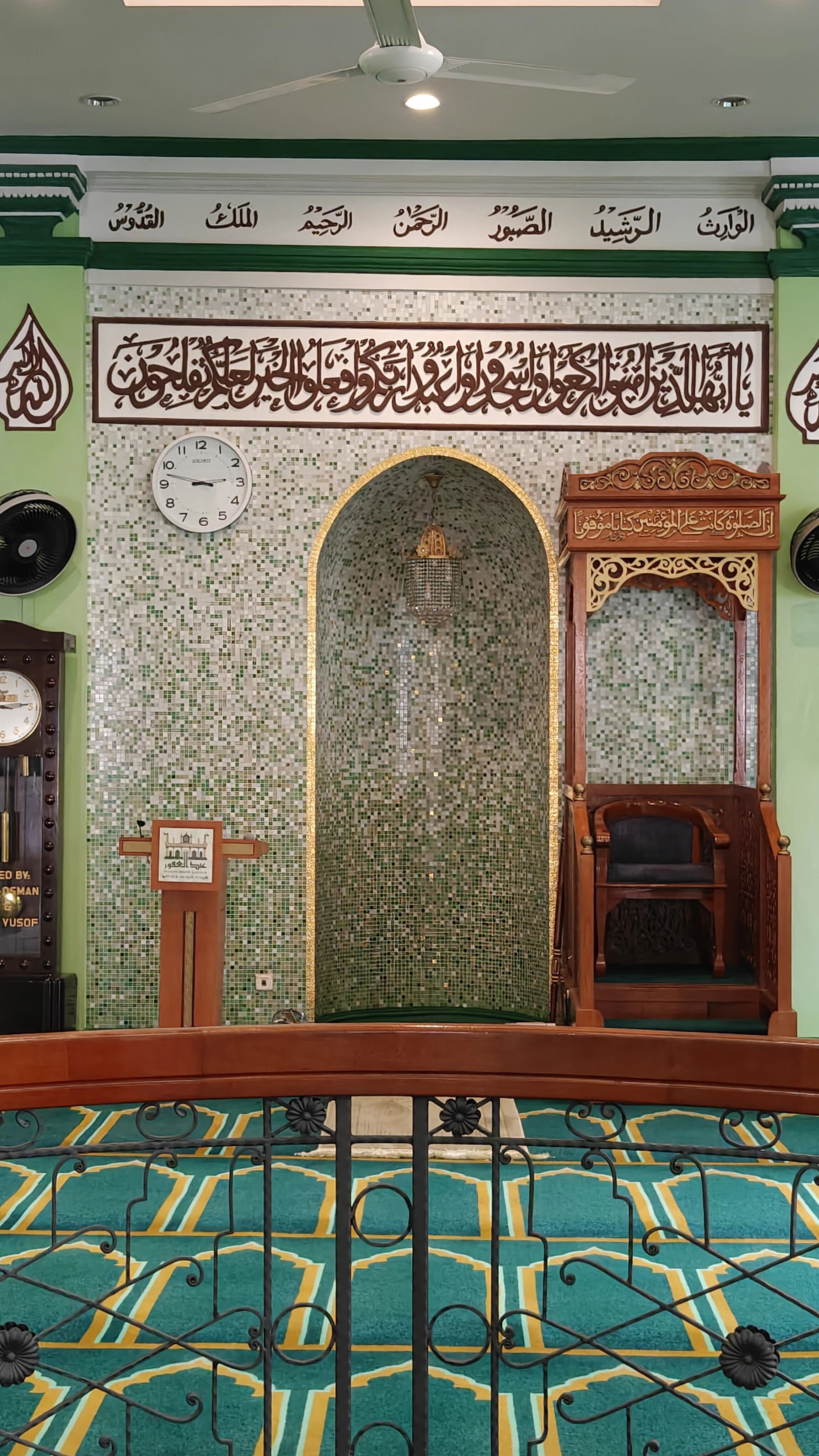
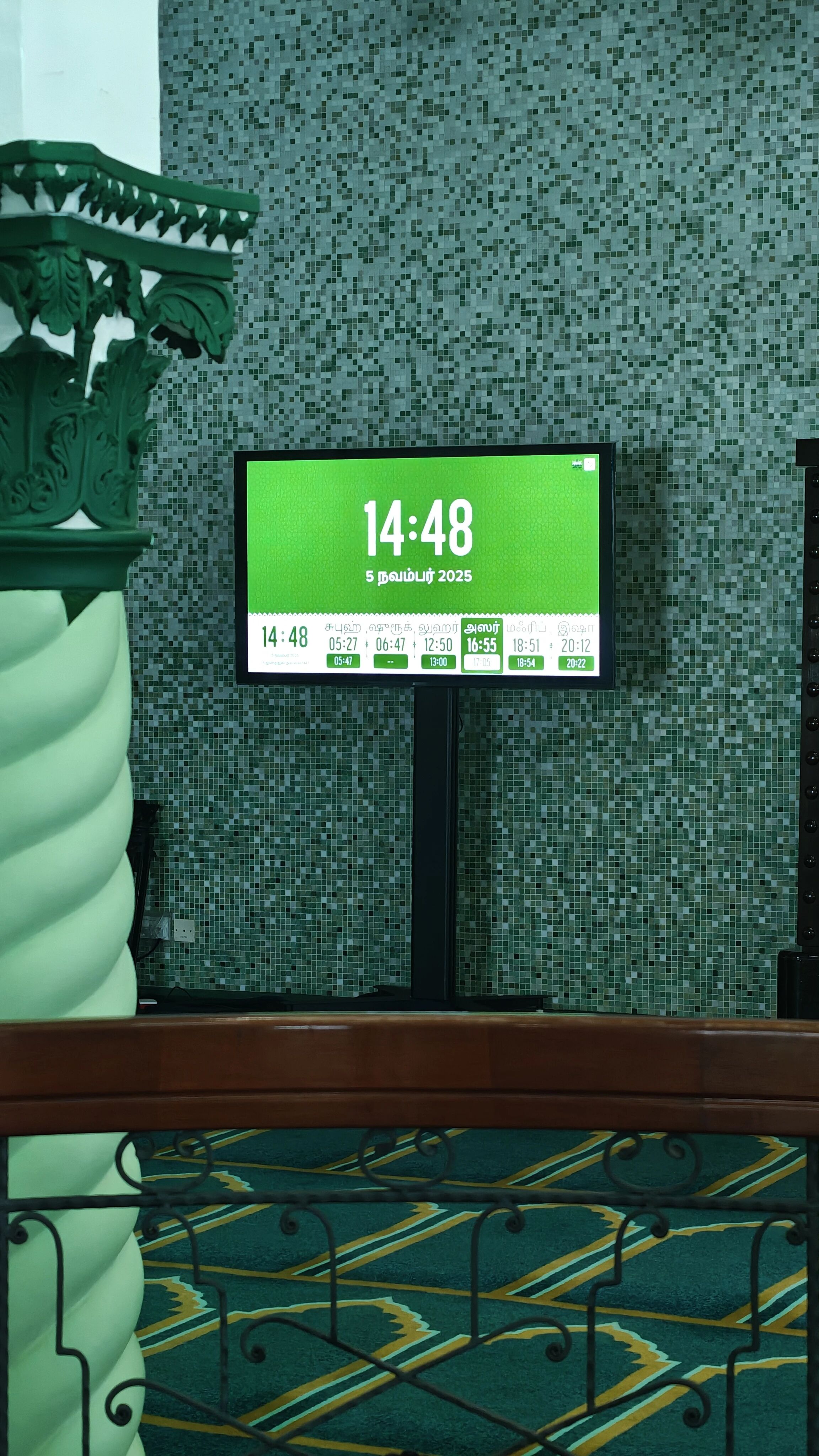
The twisted columns, which look like braided dough (mahua), are another unique feature here. (Photo 10)
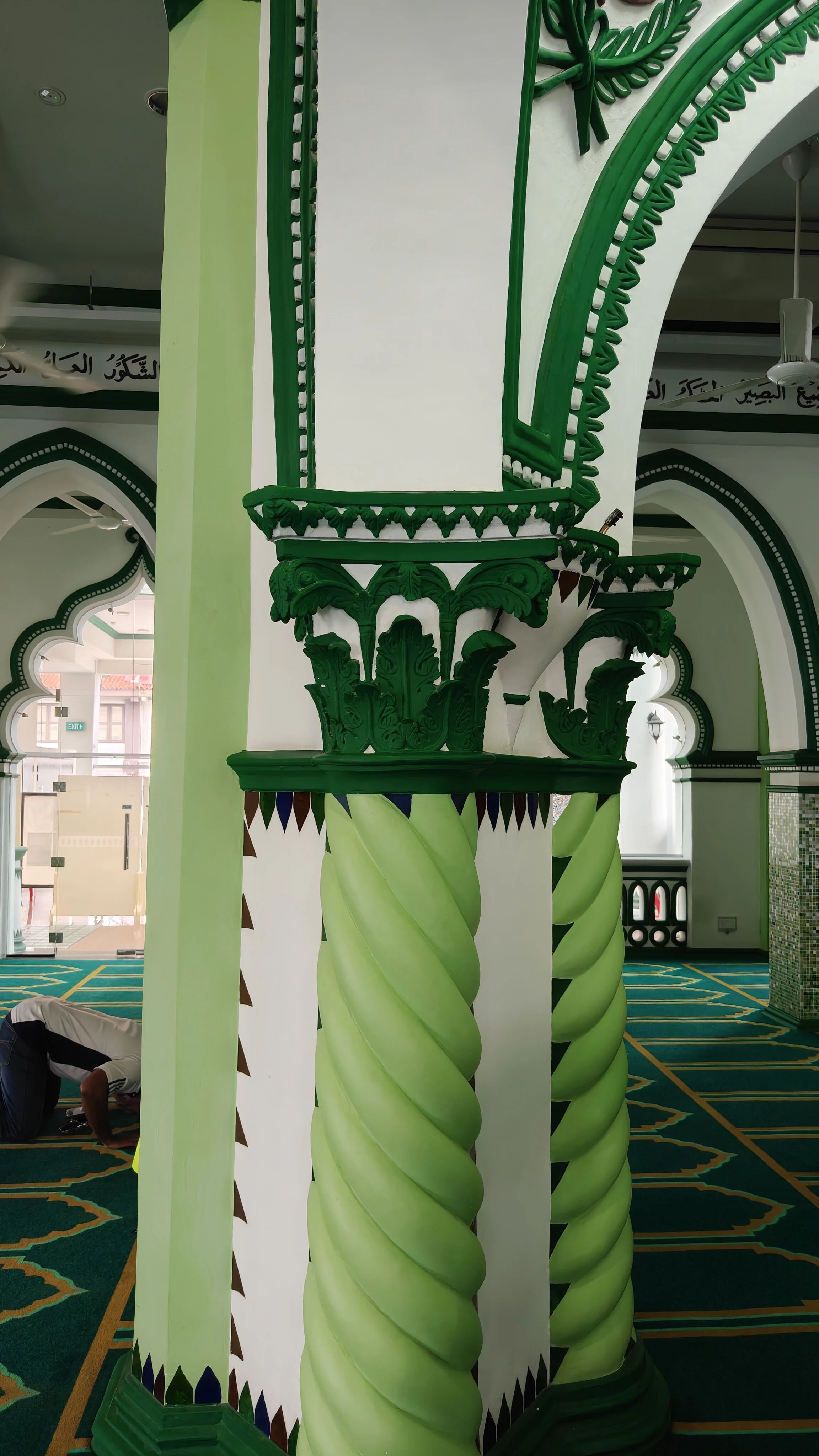
I followed other visitors into the small museum inside the mosque. It details the history of the site, which started as a wooden building for immigrants before being rebuilt into its current form. (Photo 11)
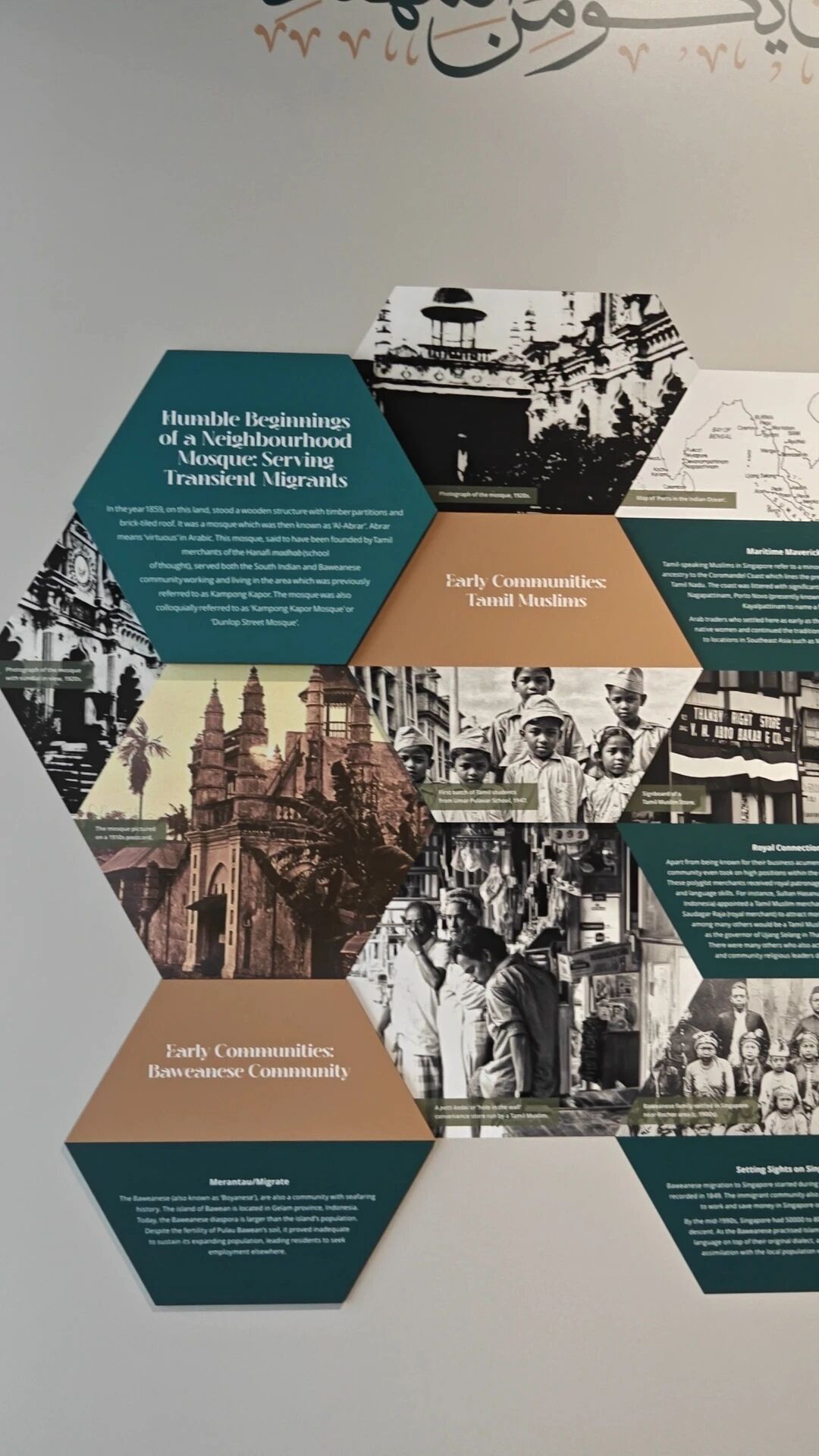
There is also a miniature model of the prayer hall here (Photo 12).
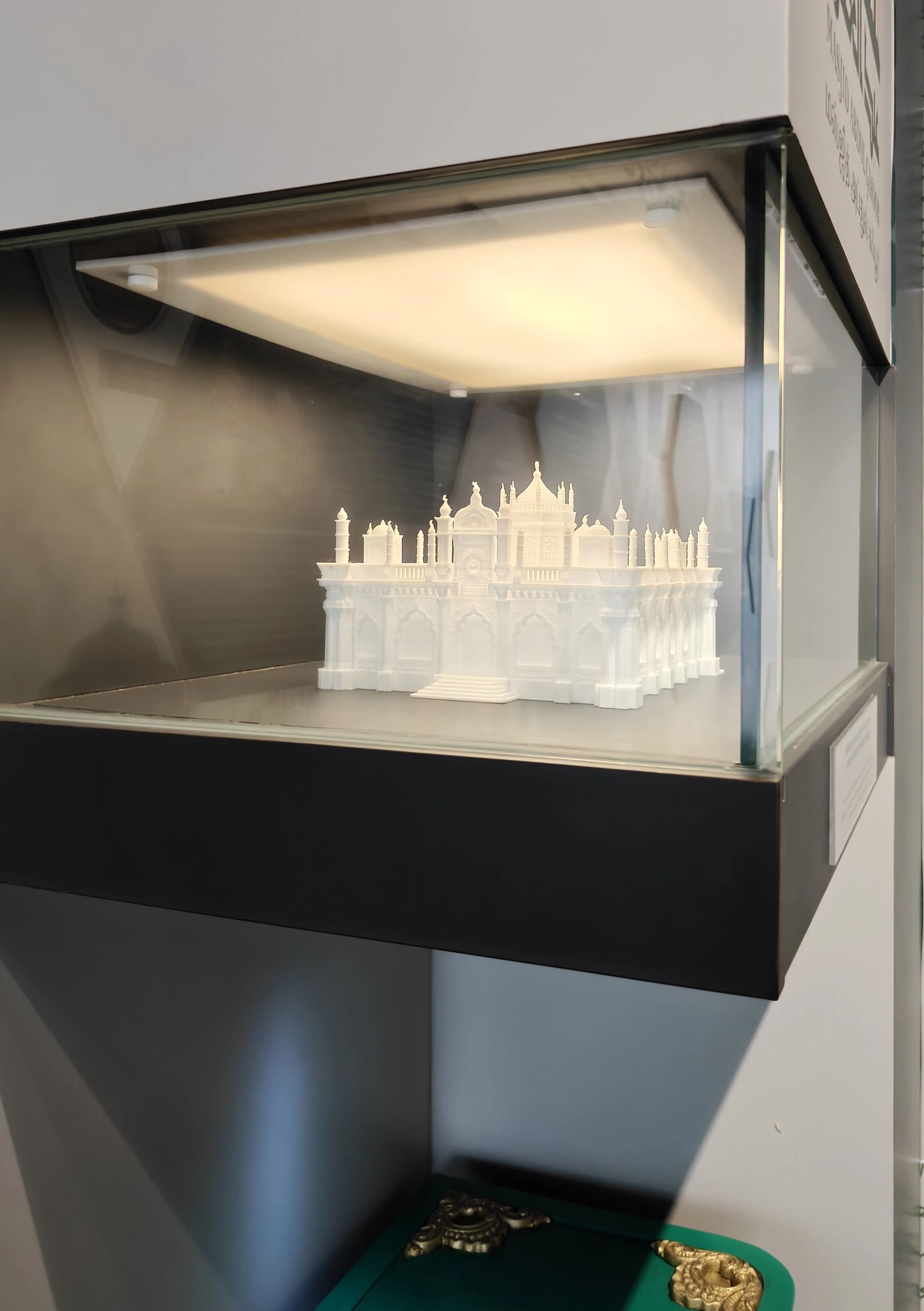
One wall displays the 99 names of Allah. The front shows the Arabic original, and you can flip the tiles to see the English meaning on the back. (Photo 13)
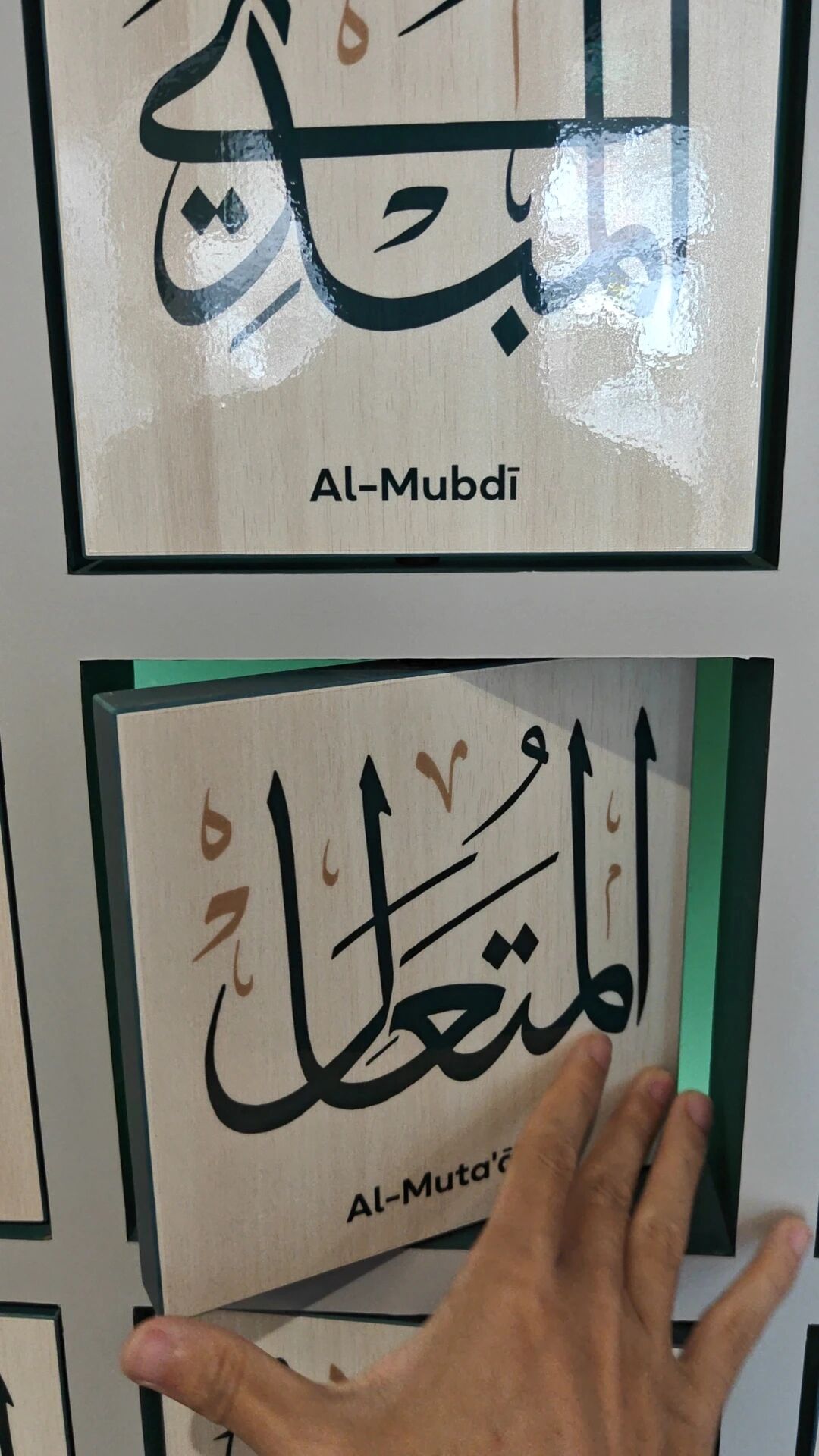
A display case holds handwritten copies of the Qur'an and various translations, including the Chinese version by Mr. Ma Jian. (Photo 14)
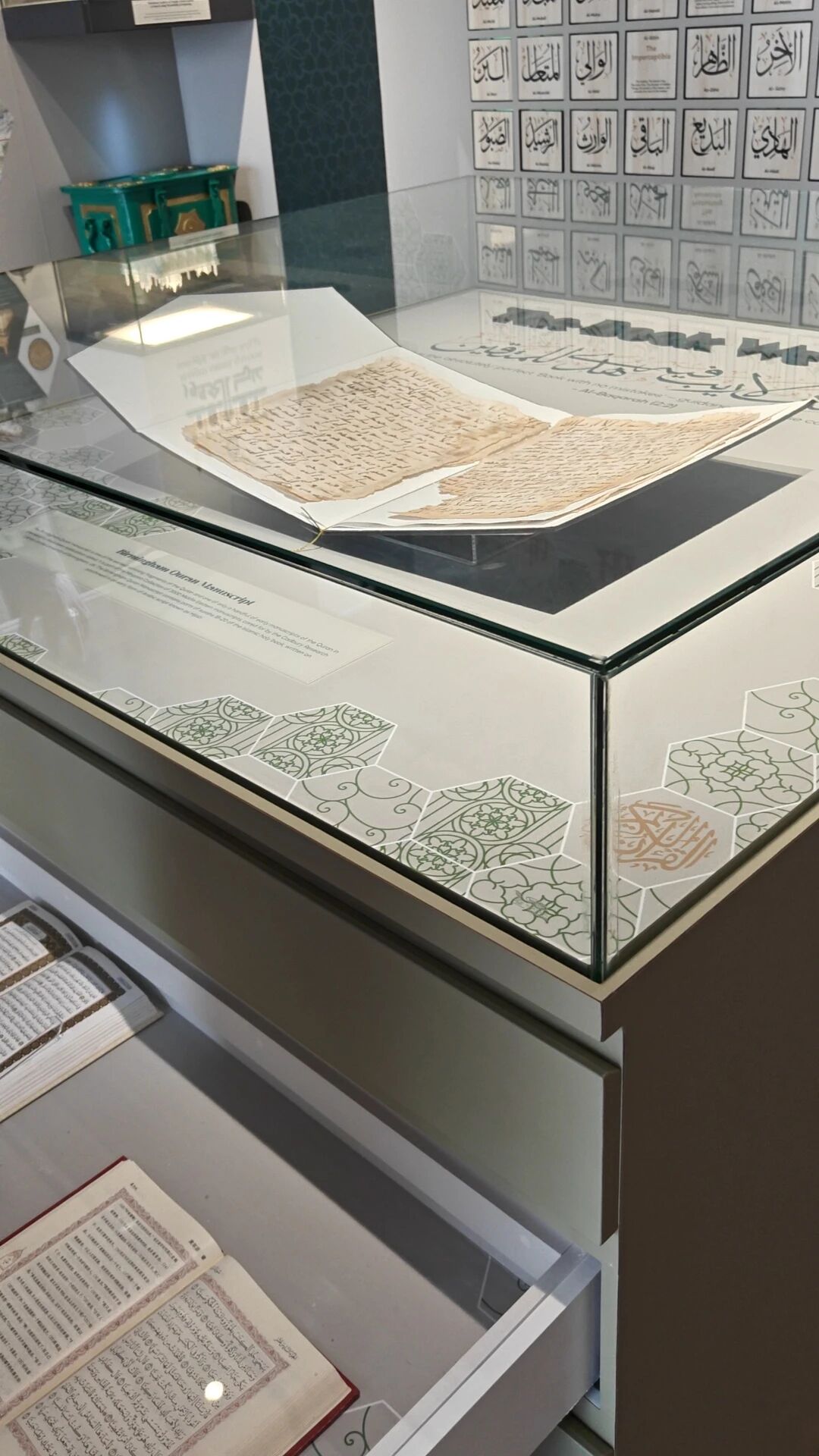
Next is a newly built stone tablet carved with the Hundred-Word Eulogy written by ancient Chinese people, which you can read for yourselves. (Photo 15)
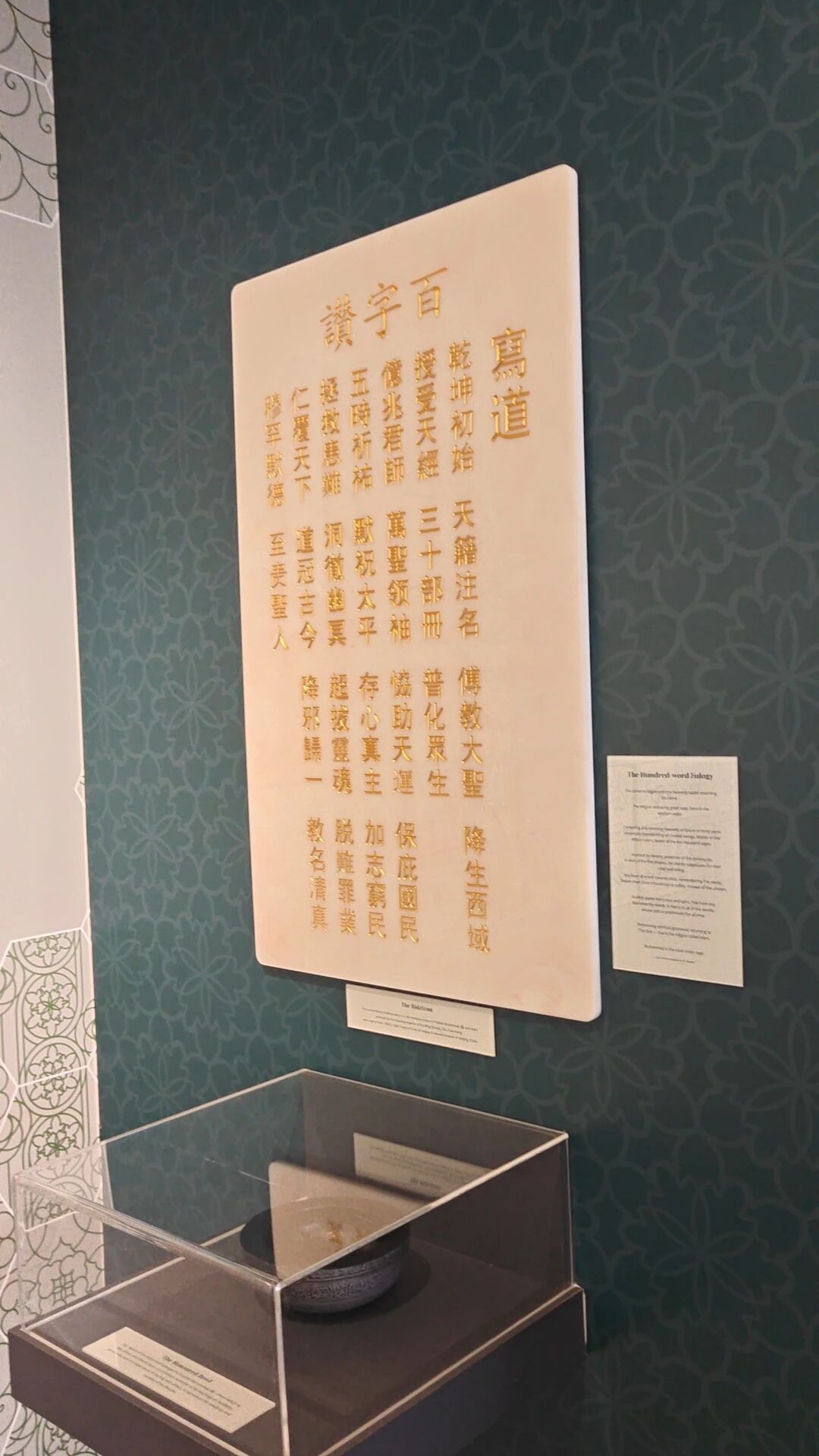
I asked the guide if he was an imam. He said he was not, as he works specifically in publicity. The guide spoke fluent English, but as a Tamil, he spoke very fast without any pauses, so I still found it a bit difficult to follow. Still, I appreciate his effort in explaining things.
Finally, let me show you the Indian style of the neighborhood. Diwali has just passed, so there are many Indian-style decorative lights here (Photo 17). You can buy Tamil newspapers at convenience stores (Photo 18), and the streets are full of Indian restaurants, posters of Indian stars, and a South Indian-style Hindu temple.
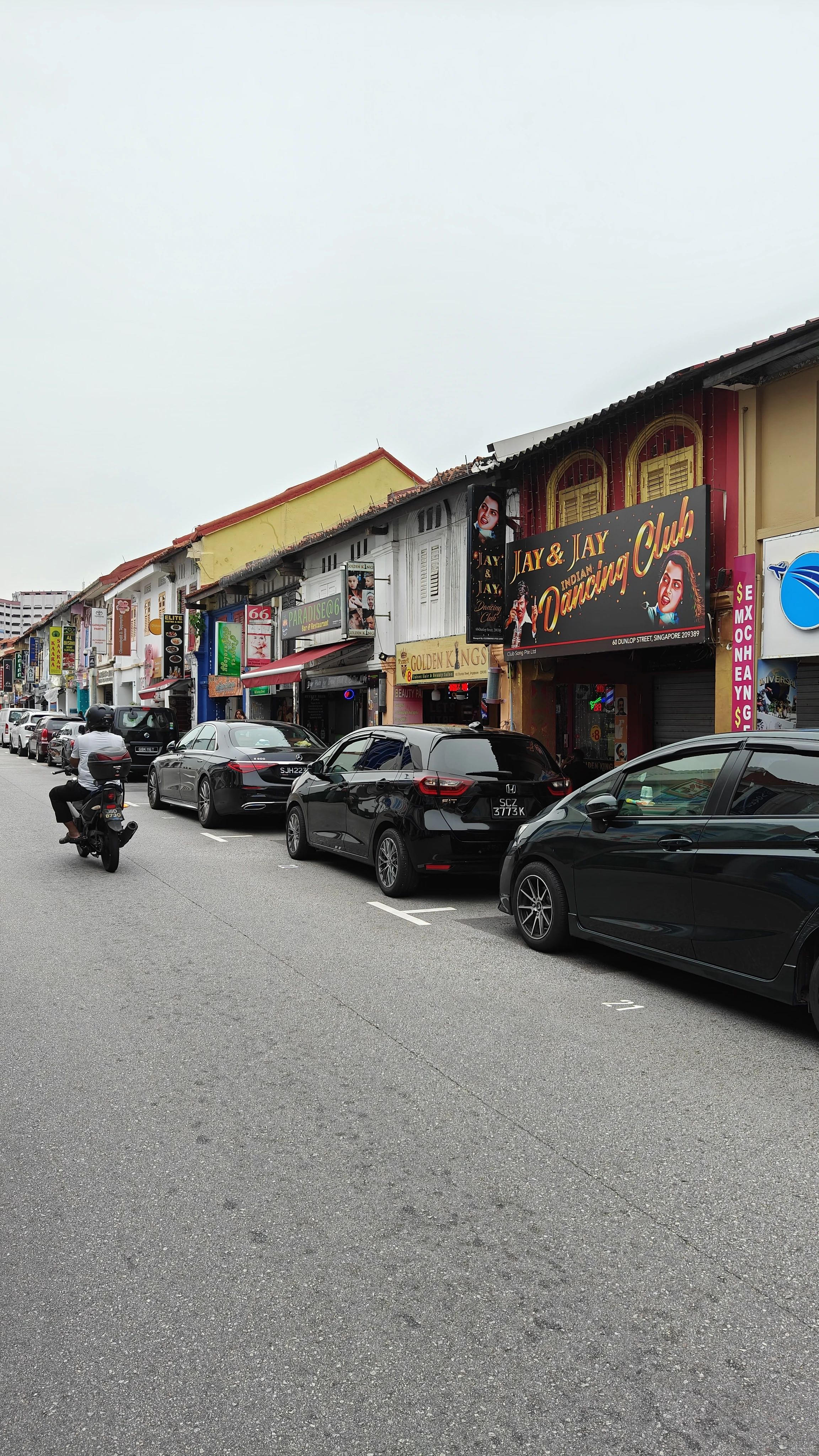
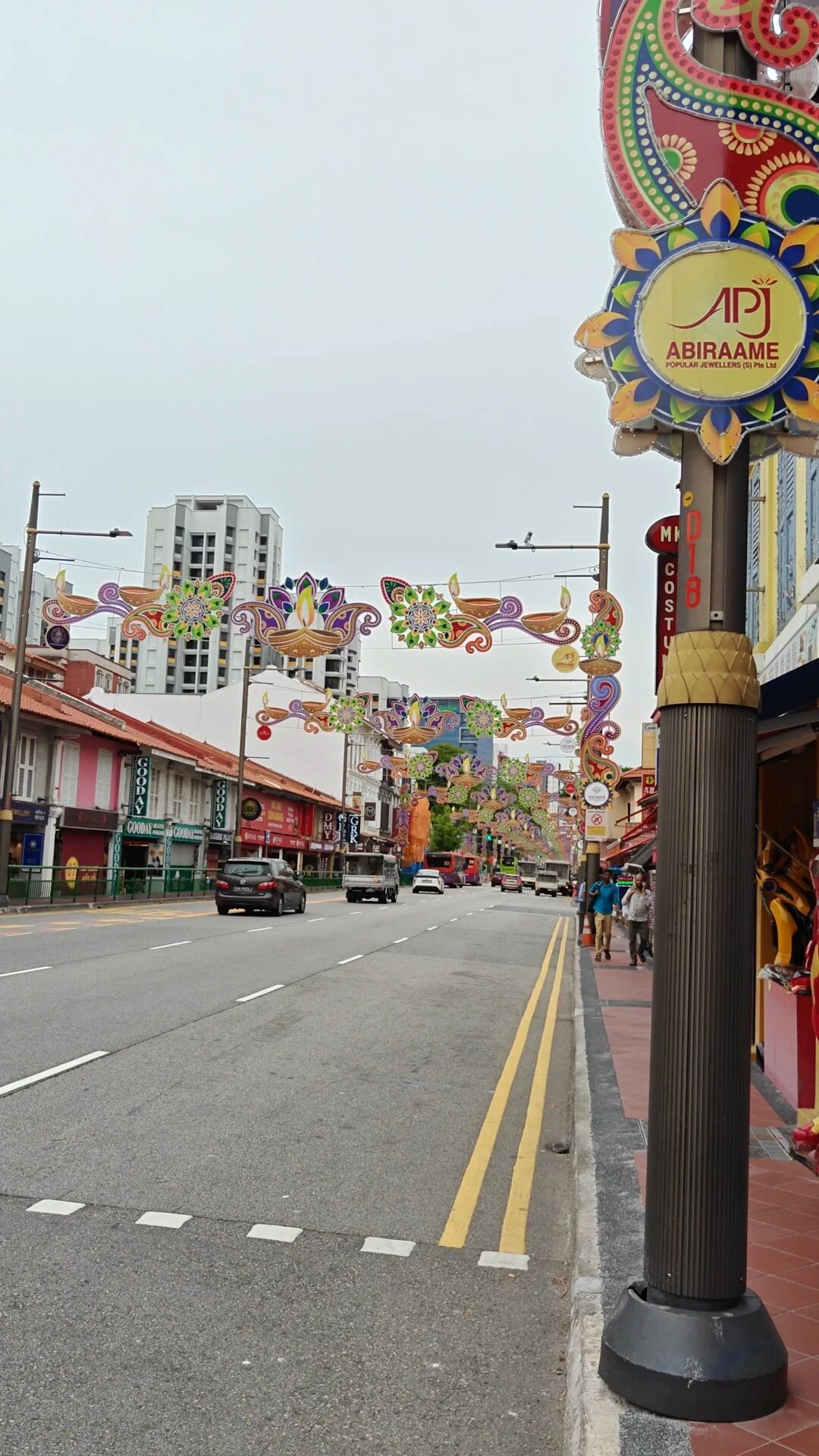
(Photo 19)
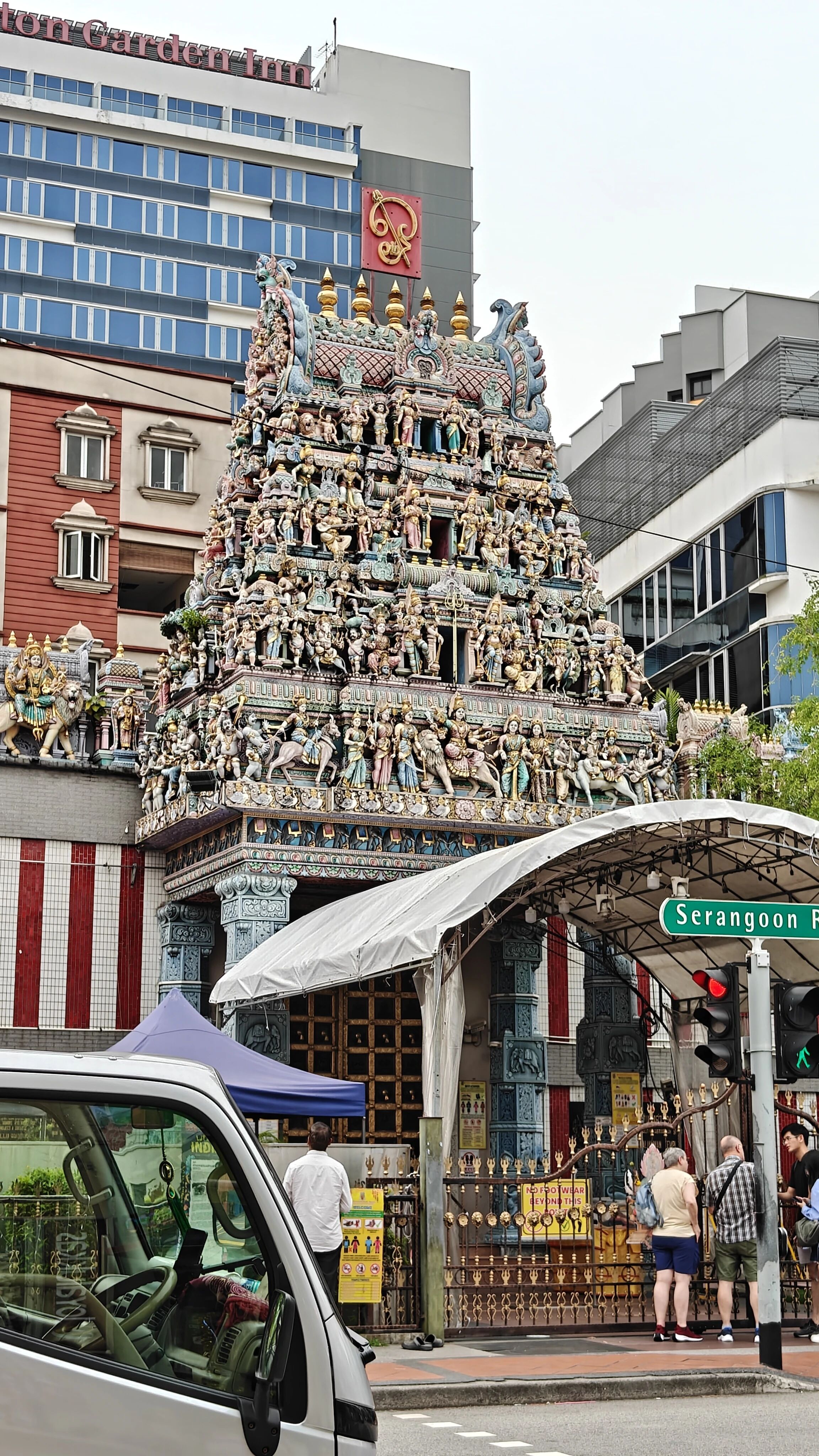
The last photo is the dessert I ordered at an Indian restaurant, jalebi (jialebei), which is a deep-fried sweet made from flour and sugar batter. Please enjoy it with me.

Muslim Travel Guide Singapore: Malabar Mosque, South Indian Muslim Community and Little India Heritage
Articles • yusuf908 posted the article • 0 comments • 272 views • 2026-05-23 22:24
Summary: This Singapore Muslim travel guide visits Malabar Mosque, the blue mosque built by South Indian Muslims from Kerala, with Malayalam on the wall, the women's prayer room, Indian-style architecture, graves, community history, and a nearby historic seminary.
Not far from the Sultan Mosque, there is a small blue mosque called the Malabar Mosque. On its outer wall, beside Arabic, there is also a South Indian script called Malayalam (Picture 2).
This is because the mosque itself was founded by the Malabar Muslim community in the South Indian state of Kerala.
There is an explanation of the origin of this mosque at the door of the mosque (Picture 4). Here is a summary of the translation for you: "The Malabar Mosque on Victoria Street was built and managed by the Malabar Muslim Community. Malabar Muslims come from the southern Indian state of Kerala.
At the beginning of the 20th century, they came to Singapore to work and earn a living. Later, they started a catering business and sold food here. In 1927, in order to keep each other warm, they formed the Malabar Muslim Community Association. In 1950, they began to raise funds to build the mosque.
In 1963, Singapore's first president Yusuf bin Ishaq officially opened the mosque. In 1995, the facade of the mosque was paved with blue tiles, turning it into what we see today.
This mosque has a women's prayer room and a prayer room on the third floor of the mosque.
Although it is a mosque for South Indian Muslims, the designer is a North Indian, so the overall mosque is still in the North Indian style with a rounded onion dome + rain-shielding eaves. South Indian style mosques can also be found in Singapore, I will update this soon.
Let's take a look at the prayer hall. The interior area of the prayer hall is not small, and it is also high. Most of the worshippers in the mosque are of Indian origin, and there are also some Malays. There is a tomb pavilion next to the prayer hall, where their community leaders should be buried.
There is a large open space outside the mosque with many graves (Pictures 13 and 14), which are densely packed. The people buried here are probably the first people who came to Singapore to make a living.
After walking a few steps, I came across an Islamic seminary with an English introduction at the door: This seminary was founded in 1927 and is one of the earliest Islamic seminaries in Singapore.
In the 1920s, after the British colonial government no longer used this land as a cemetery, some people began to propose the establishment of a seminary here, which mainly taught Malay, Arabic and religious knowledge.
In the 1950s, new subjects such as English, mathematics, science, history, and geography were added to the seminary. Today, the seminary can accommodate 1,000 students and attracts students from Singapore and surrounding countries.
Leaving here, I walked towards the Little India neighborhood, where there was another mosque built by Muslims from South India waiting for me. view all
Summary: This Singapore Muslim travel guide visits Malabar Mosque, the blue mosque built by South Indian Muslims from Kerala, with Malayalam on the wall, the women's prayer room, Indian-style architecture, graves, community history, and a nearby historic seminary.
Not far from the Sultan Mosque, there is a small blue mosque called the Malabar Mosque. On its outer wall, beside Arabic, there is also a South Indian script called Malayalam (Picture 2).
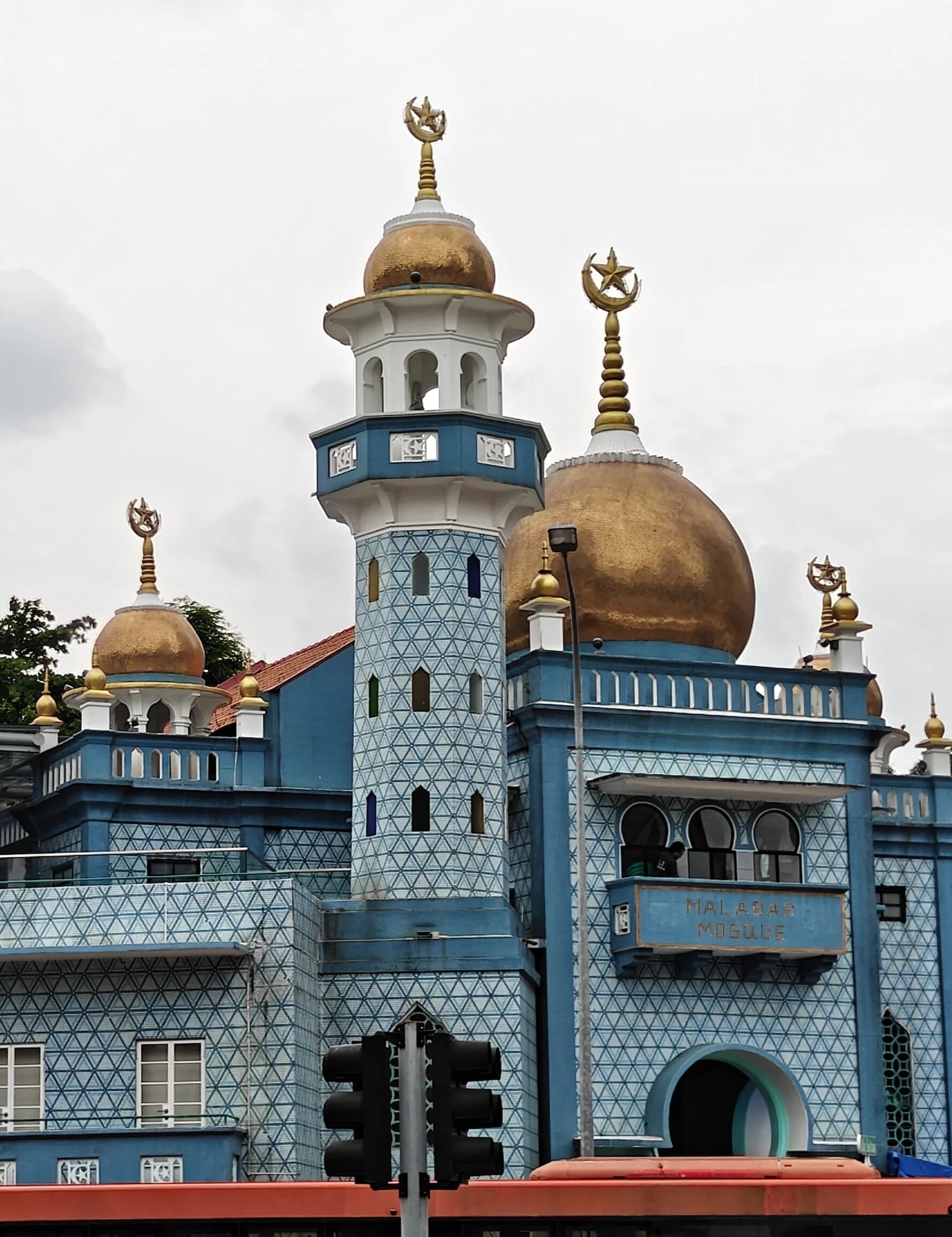
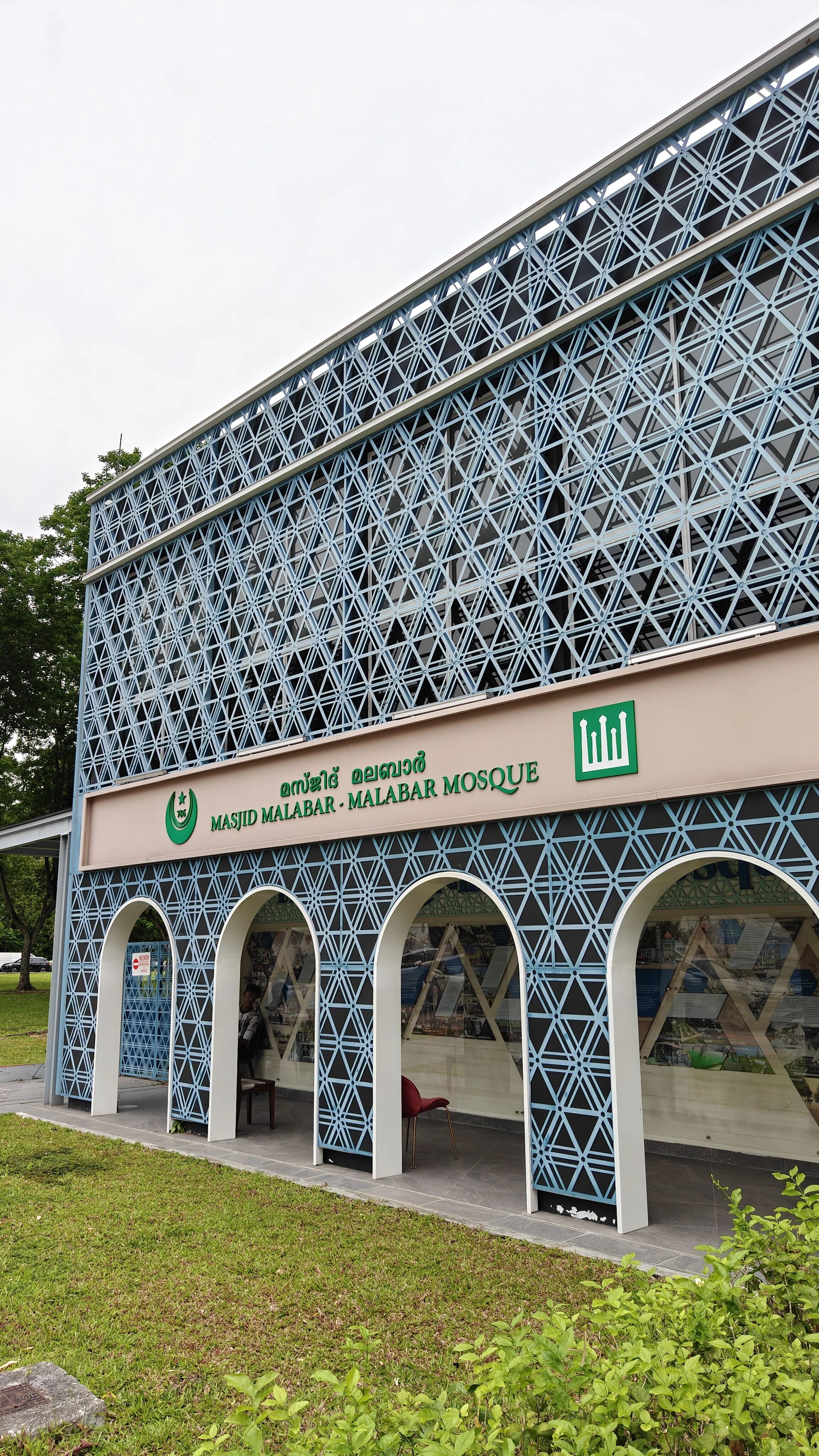
This is because the mosque itself was founded by the Malabar Muslim community in the South Indian state of Kerala.
There is an explanation of the origin of this mosque at the door of the mosque (Picture 4). Here is a summary of the translation for you: "The Malabar Mosque on Victoria Street was built and managed by the Malabar Muslim Community. Malabar Muslims come from the southern Indian state of Kerala.
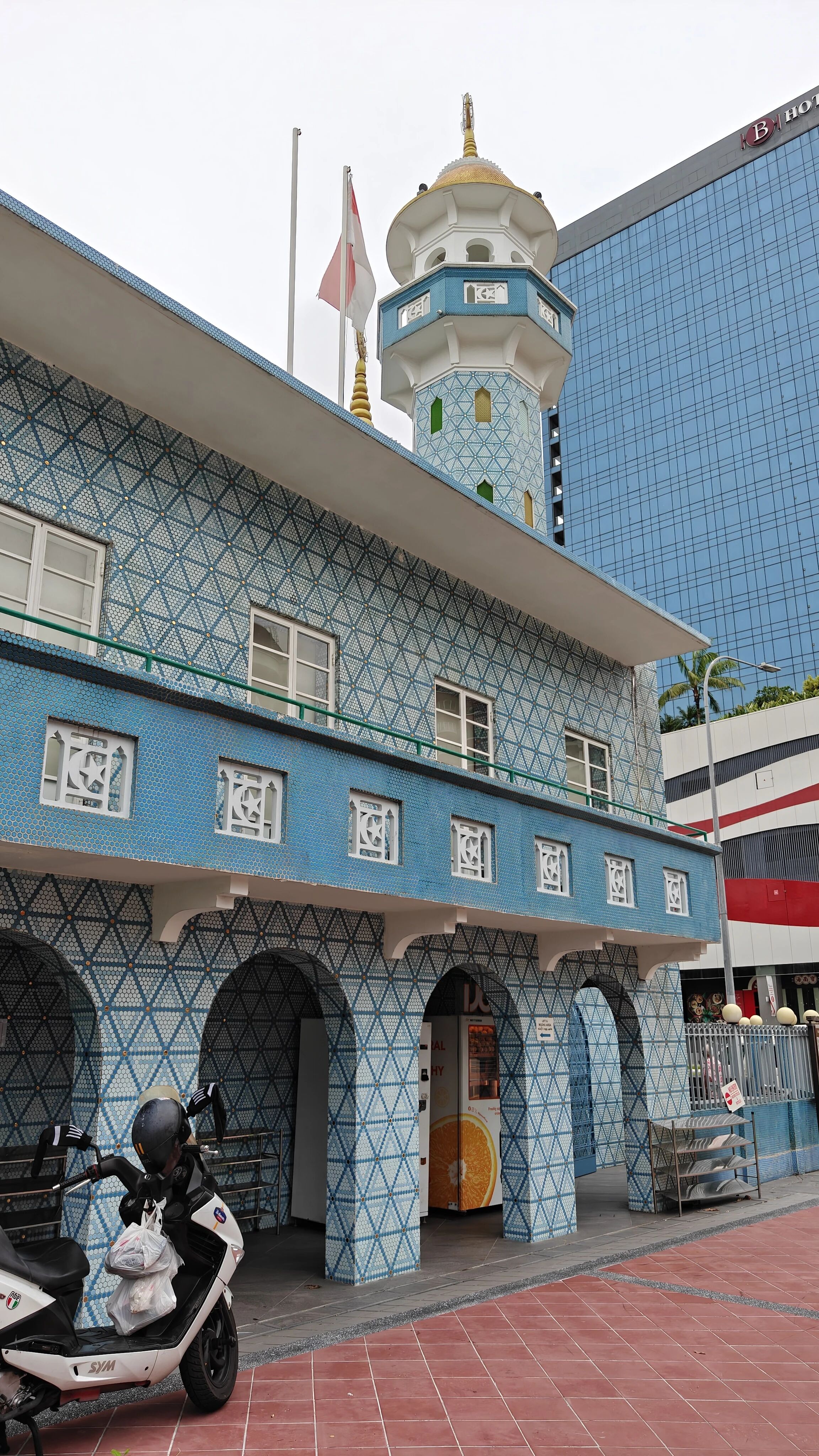
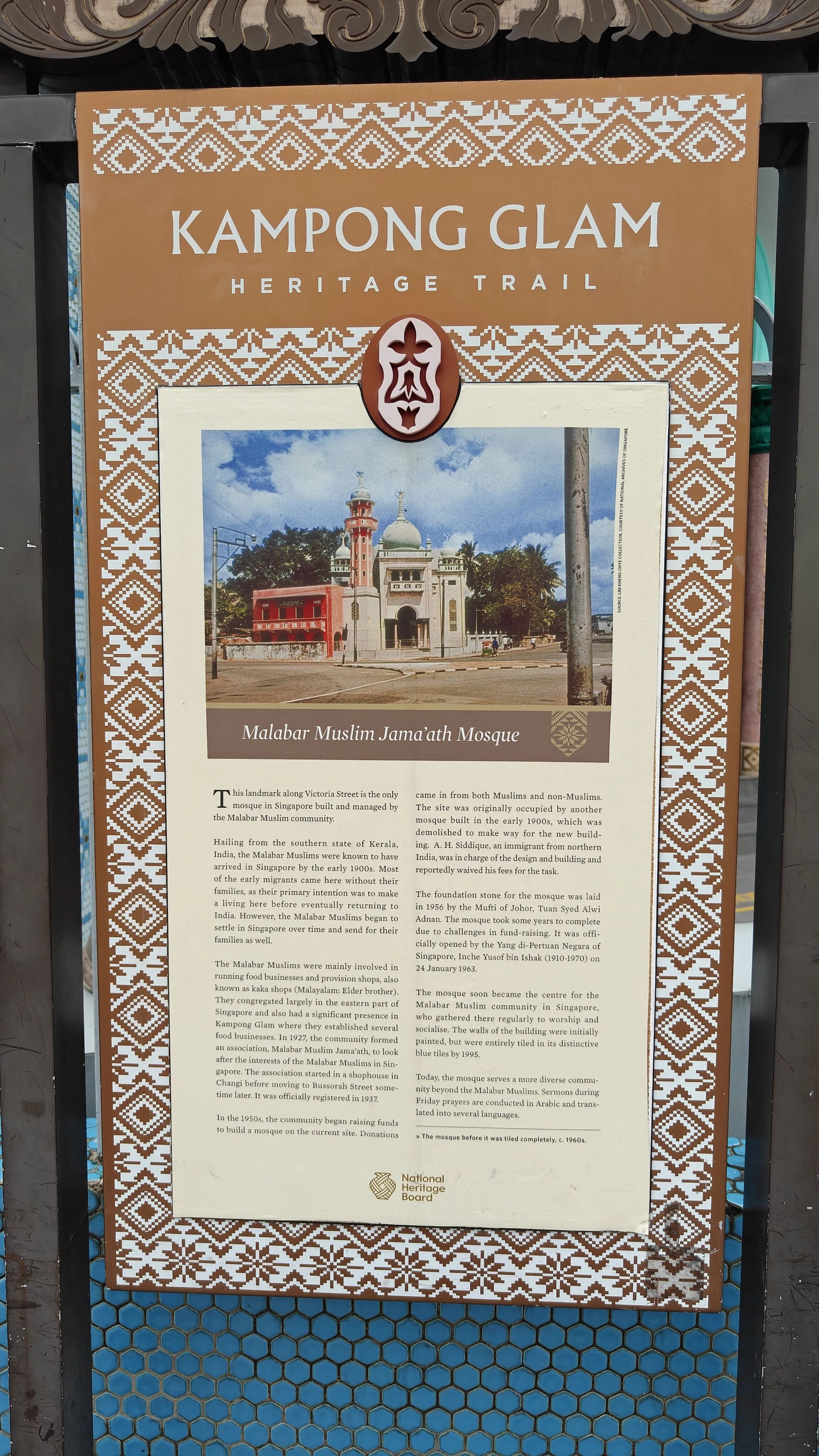
At the beginning of the 20th century, they came to Singapore to work and earn a living. Later, they started a catering business and sold food here. In 1927, in order to keep each other warm, they formed the Malabar Muslim Community Association. In 1950, they began to raise funds to build the mosque.
In 1963, Singapore's first president Yusuf bin Ishaq officially opened the mosque. In 1995, the facade of the mosque was paved with blue tiles, turning it into what we see today.
This mosque has a women's prayer room and a prayer room on the third floor of the mosque.
Although it is a mosque for South Indian Muslims, the designer is a North Indian, so the overall mosque is still in the North Indian style with a rounded onion dome + rain-shielding eaves. South Indian style mosques can also be found in Singapore, I will update this soon.
Let's take a look at the prayer hall. The interior area of the prayer hall is not small, and it is also high. Most of the worshippers in the mosque are of Indian origin, and there are also some Malays. There is a tomb pavilion next to the prayer hall, where their community leaders should be buried.
There is a large open space outside the mosque with many graves (Pictures 13 and 14), which are densely packed. The people buried here are probably the first people who came to Singapore to make a living.
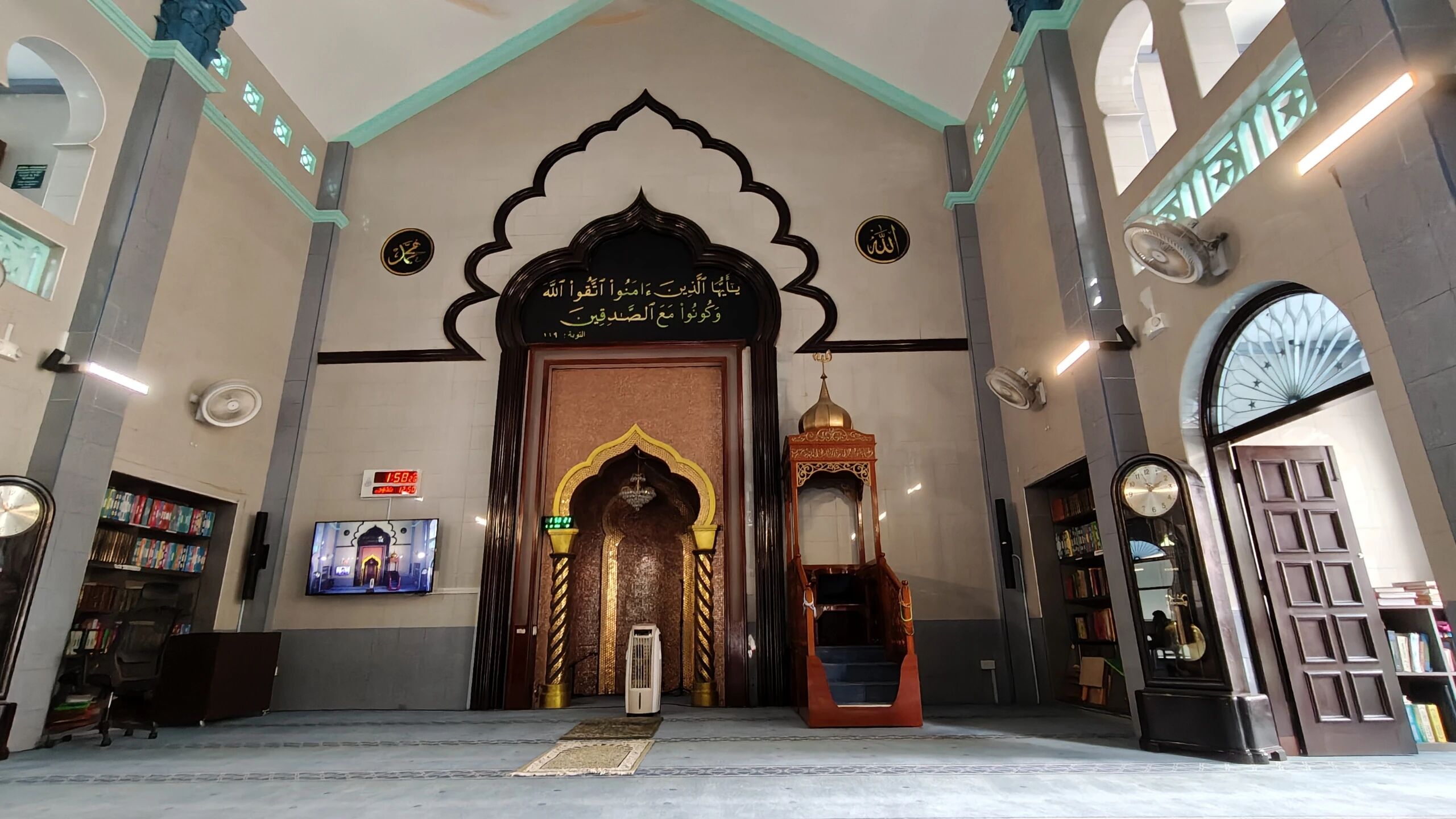
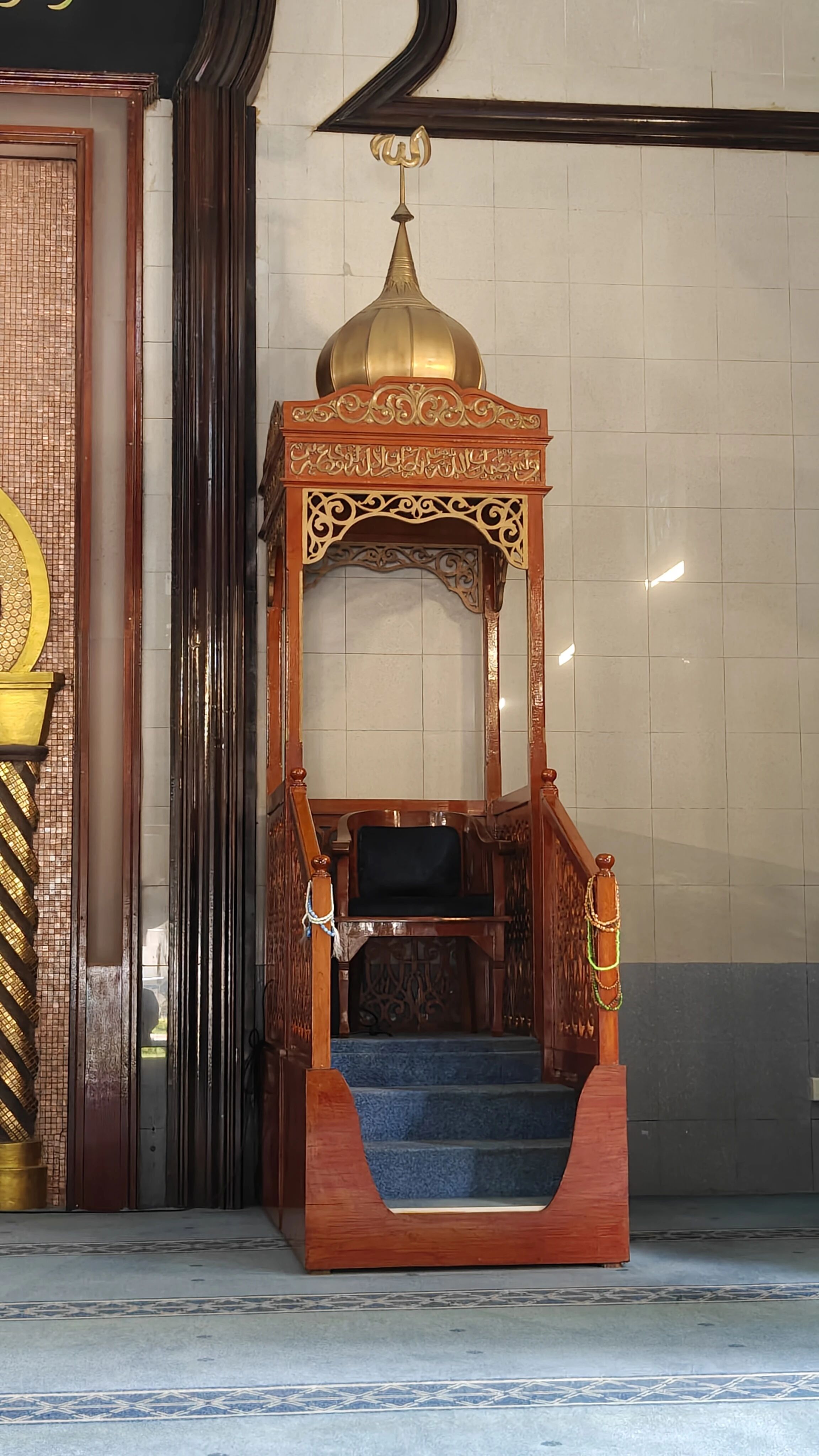
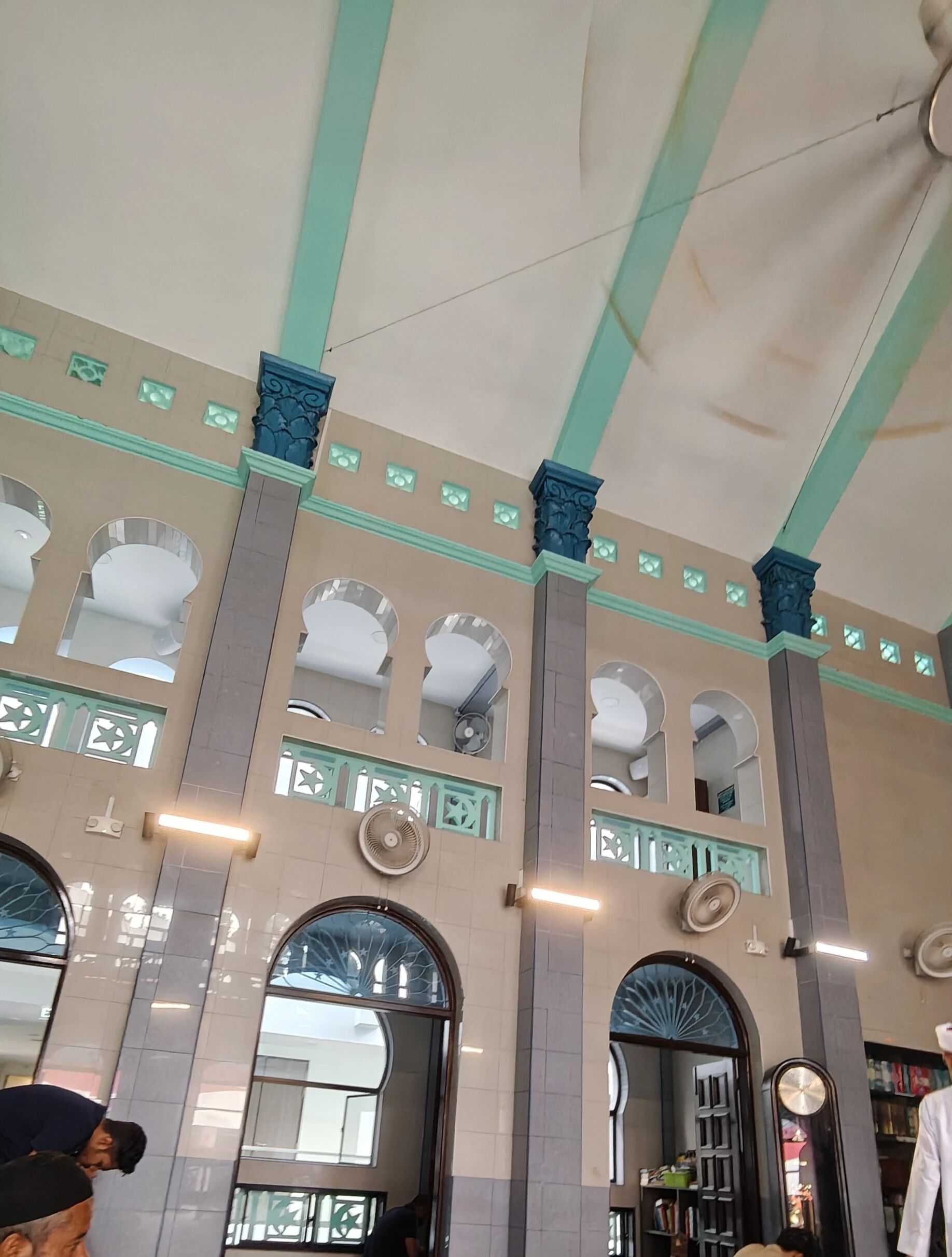
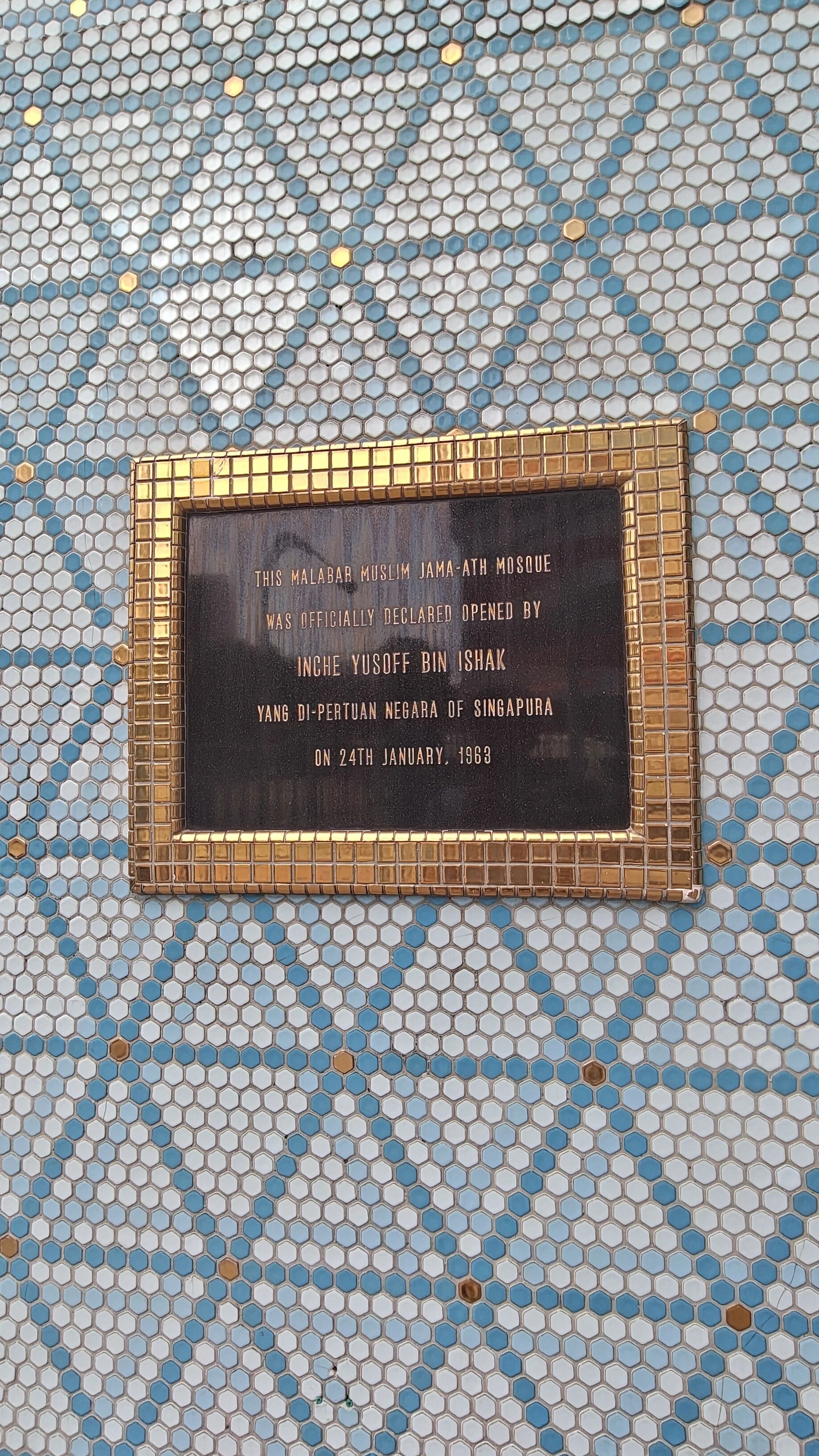
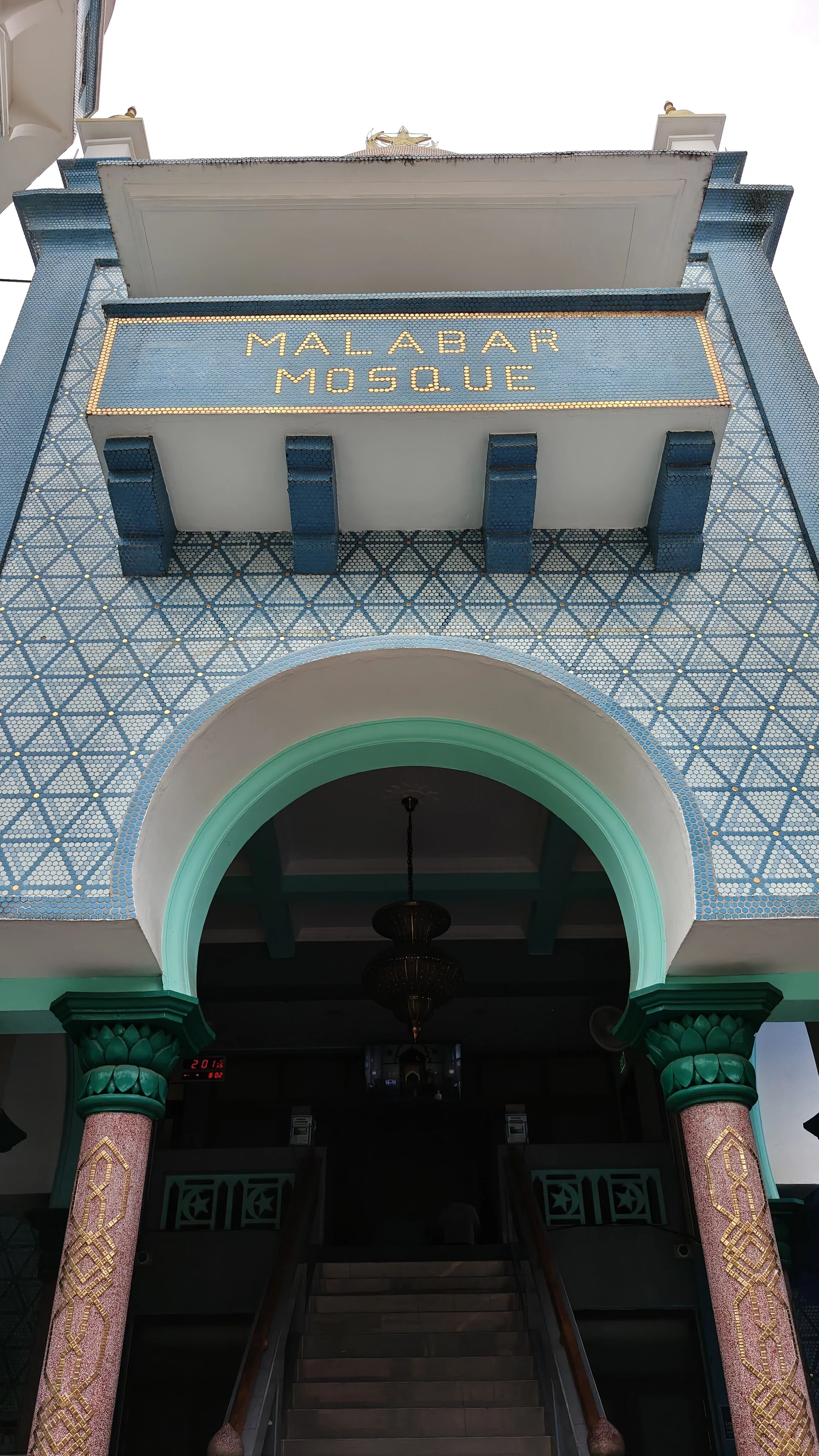
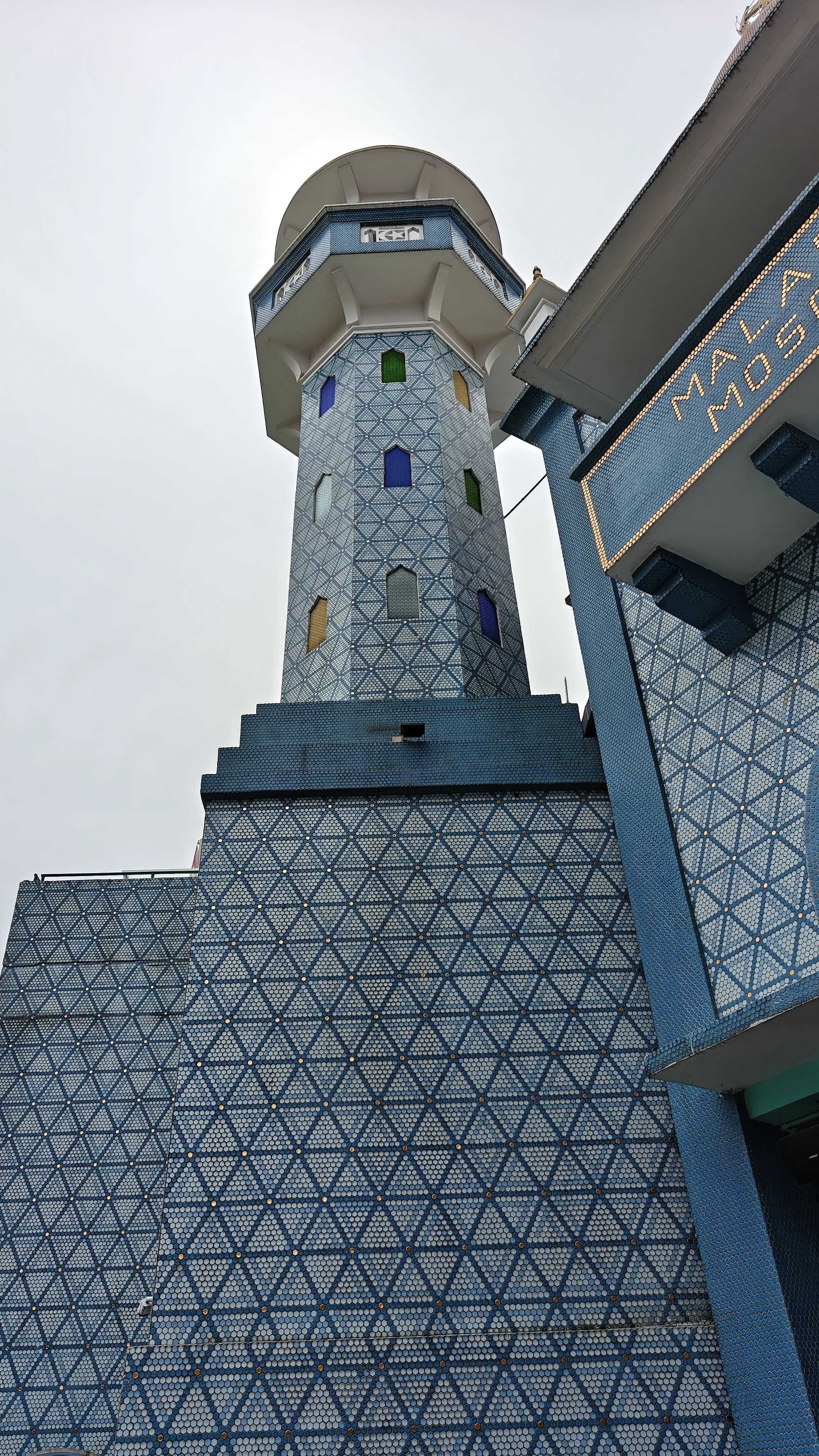
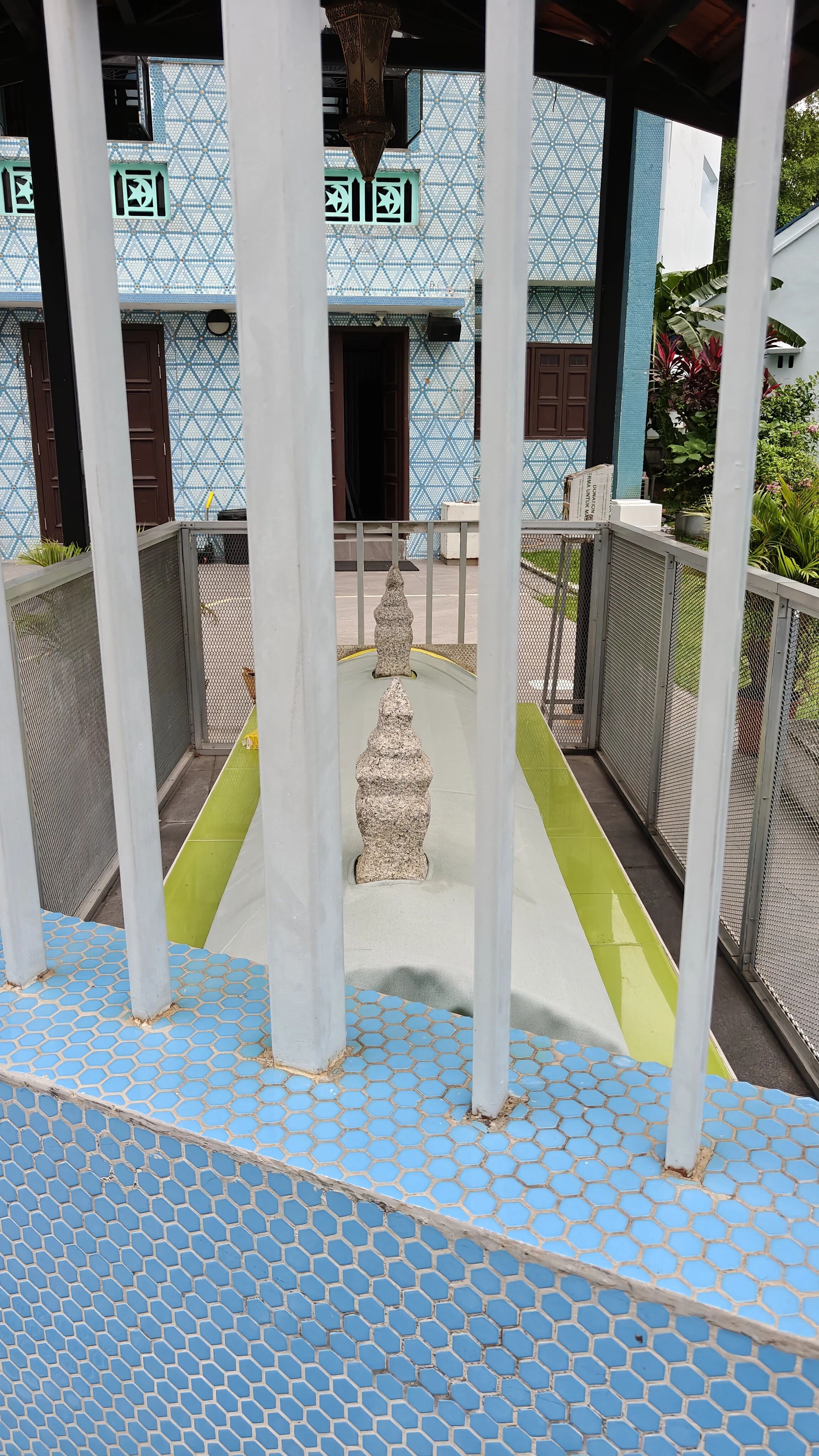
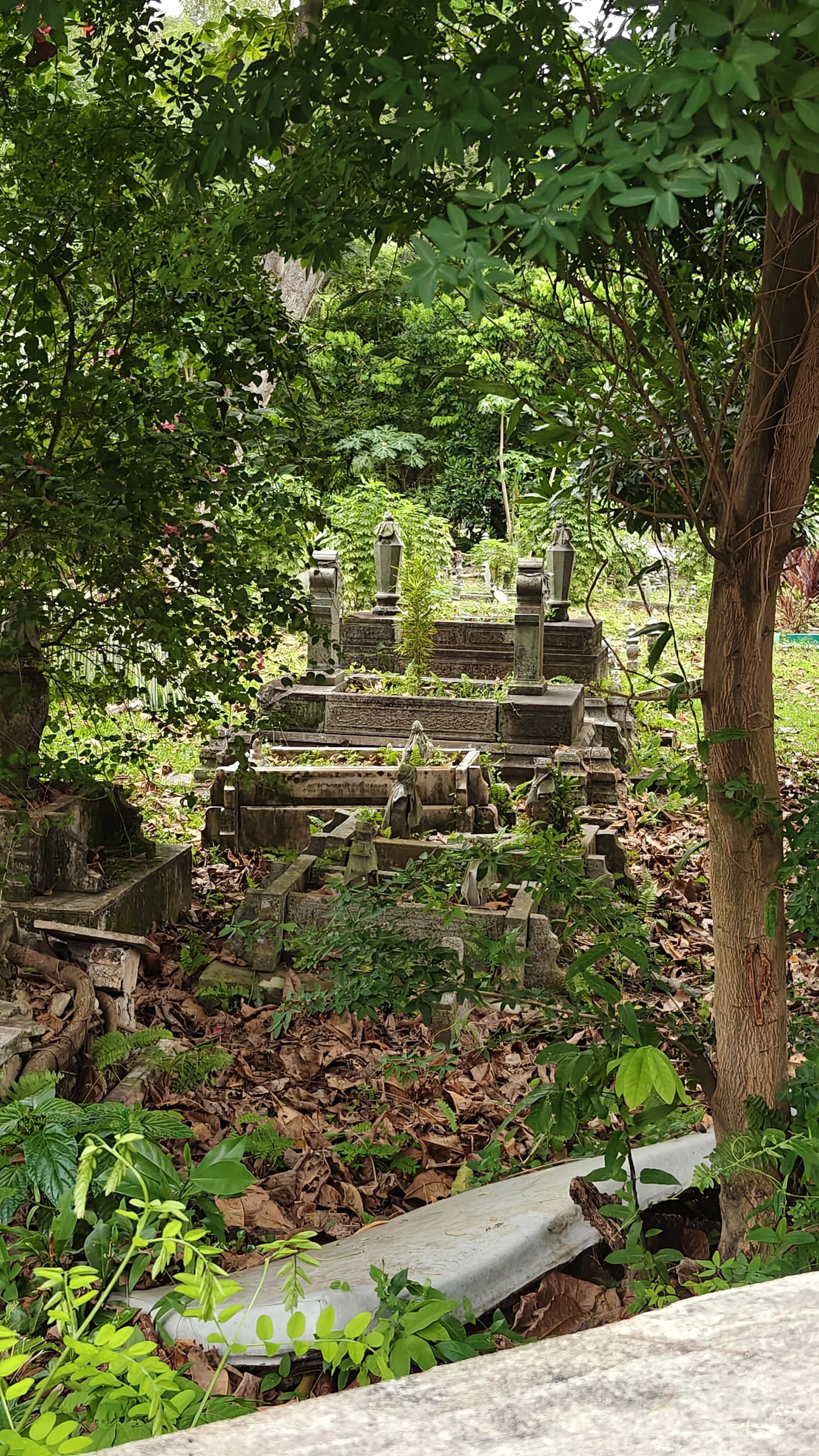
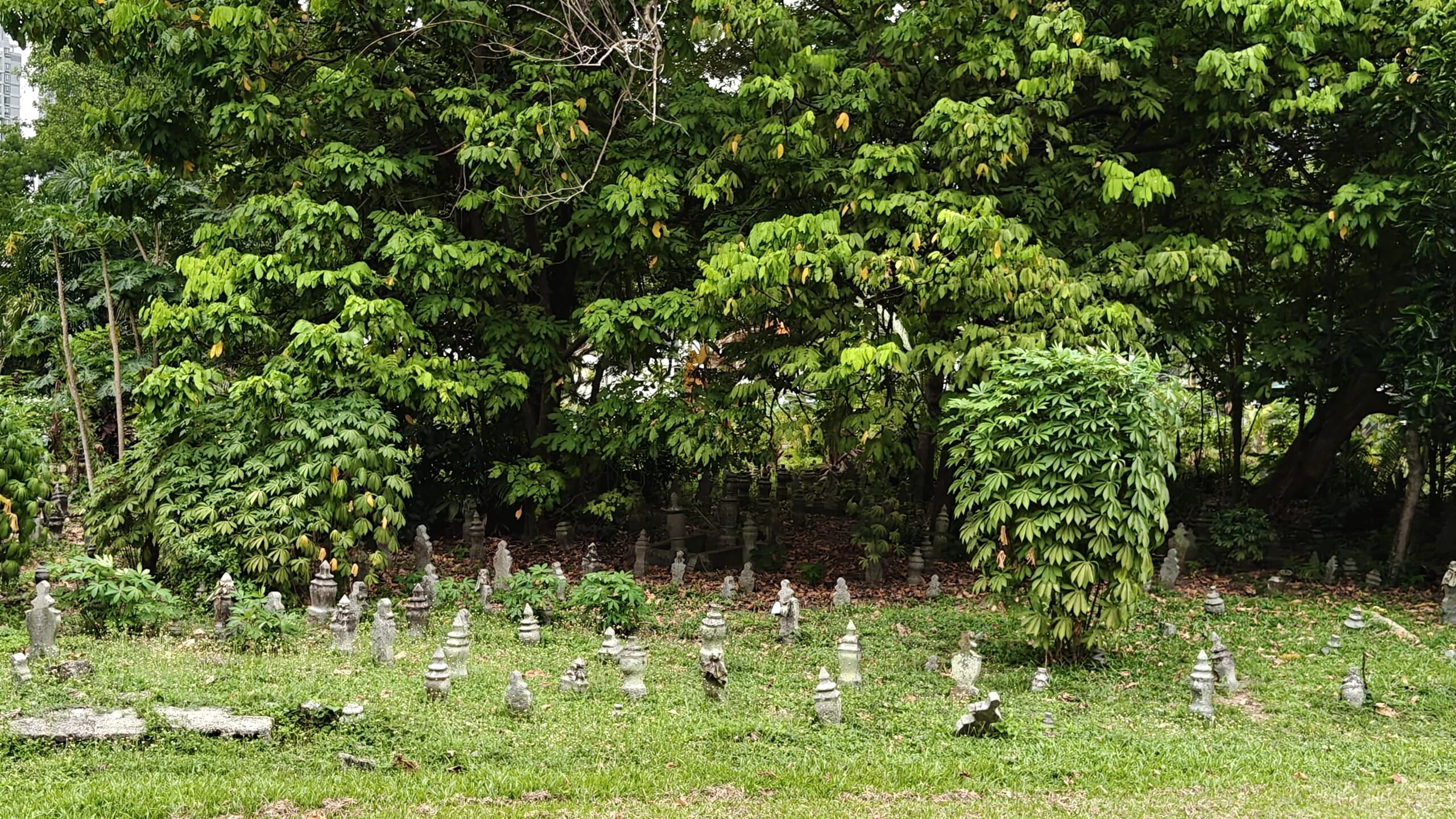
After walking a few steps, I came across an Islamic seminary with an English introduction at the door: This seminary was founded in 1927 and is one of the earliest Islamic seminaries in Singapore.
In the 1920s, after the British colonial government no longer used this land as a cemetery, some people began to propose the establishment of a seminary here, which mainly taught Malay, Arabic and religious knowledge.
In the 1950s, new subjects such as English, mathematics, science, history, and geography were added to the seminary. Today, the seminary can accommodate 1,000 students and attracts students from Singapore and surrounding countries.
Leaving here, I walked towards the Little India neighborhood, where there was another mosque built by Muslims from South India waiting for me.
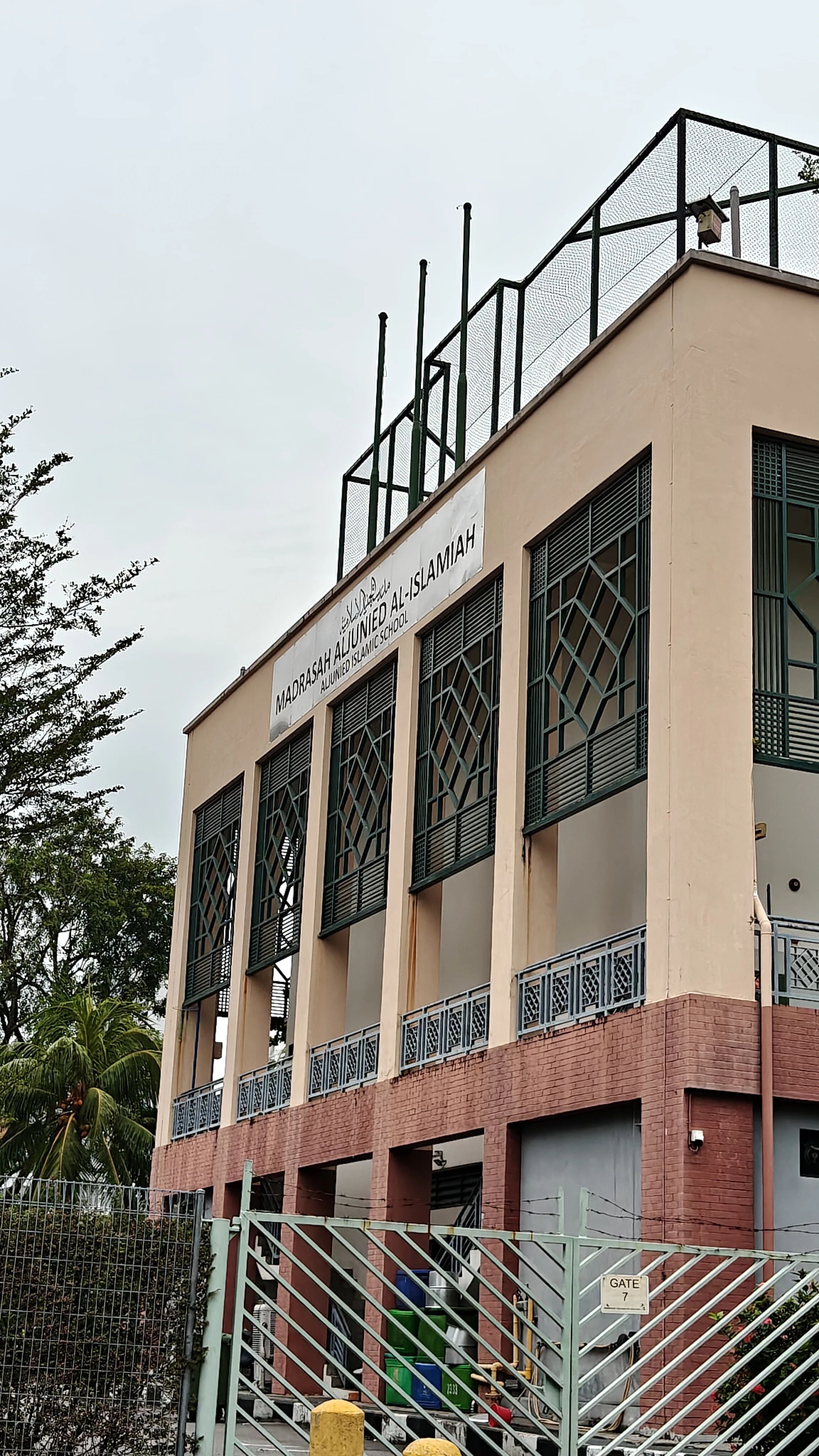
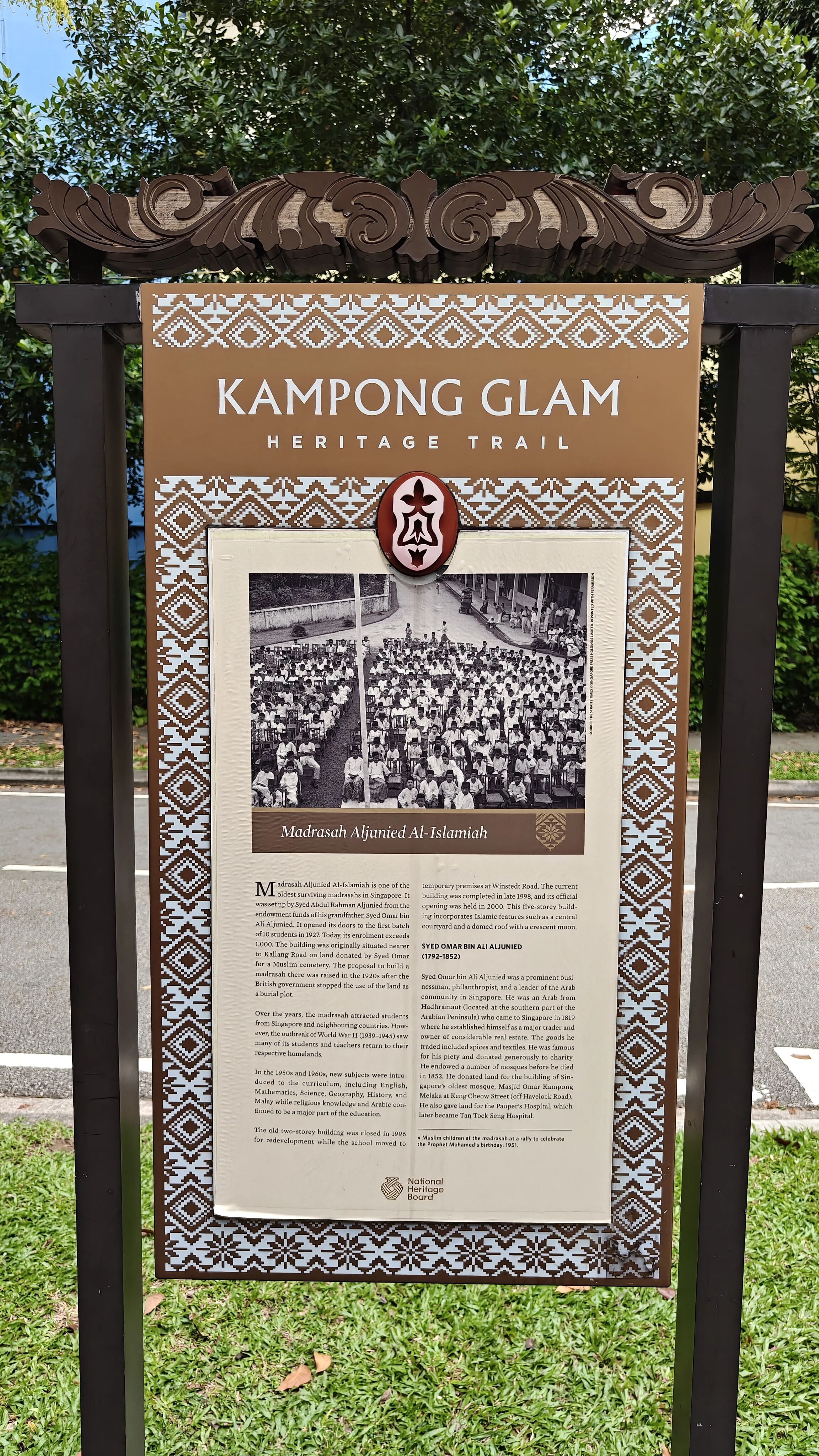
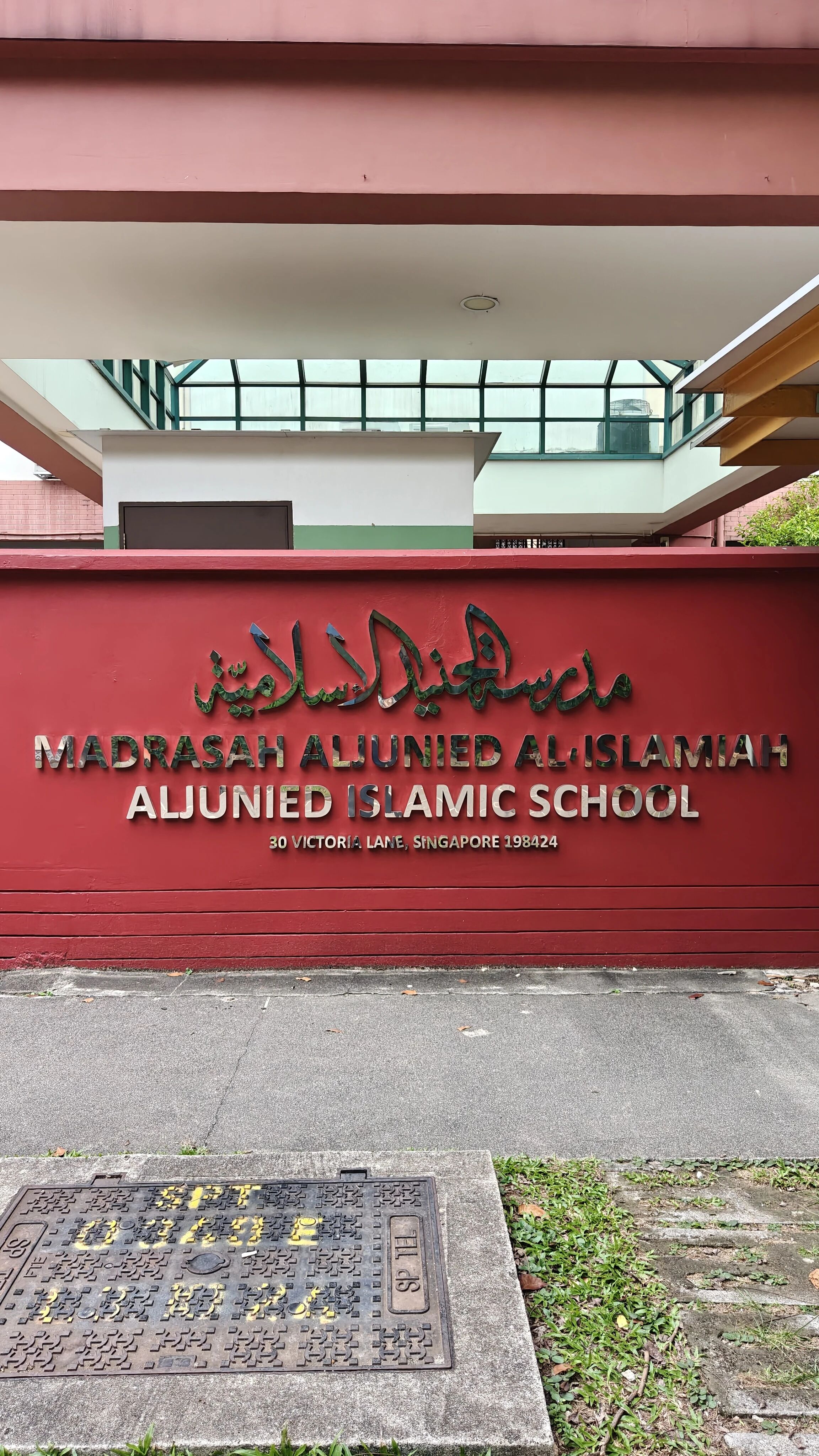
Muslim Travel Guide Singapore: Sultan Mosque, Kampong Glam, Prayer Hall and Muslim Heritage
Articles • yusuf908 posted the article • 0 comments • 235 views • 2026-05-23 22:23
Summary: This Singapore Muslim travel guide visits Sultan Mosque around Arab Street and Kampong Glam, covering the golden domes, Turkish halal restaurants nearby, the prayer hall, mihrab design, prayer time screens, humility reminders, and visible signs of daily worship.
The Sultan Mosque is a symbol of Singapore's multiculturalism, and this mosque is indispensable in tourist brochures. So I went here on the first day I landed in Singapore.
From the main road, you can see that the Sultan Mosque actually has two exaggeratedly large golden domes (Picture 4), one in front of the other and about the same size. There is a minaret on the left and right of the two large domes, a total of four.
Before I came here, I thought there was only one dome, because it couldn’t be clearly seen from the photos in the travel guide. Seeing it in person really matters.
The entrance to the mosque (Picture 6) is not on the side of the road, but in a pedestrian street called Arab Street. There are murals depicting Malay family life at the entrance (Picture 7). There are many Turkish halal restaurants on the street (Picture 8), as well as souvenir shops. You can buy a refrigerator magnet with two Singapore dollars (10 yuan).
As dusk approached, I found an Indonesian restaurant and ordered a portion of fish balls, a piece of fish, a portion of rice, and a bottle of herbal tea, which cost about fifty yuan in total (Picture 9). In Singapore, you have to put away your tableware and put it in the designated area after eating (Picture 10).
Picture 11 shows the front of the mosque, which is very similar to the back. When entering the prayer hall, you have to enter from the right side. The interior of the prayer hall is quite large and the ceiling is very good. The mihrab niche is also decorated with Malay-style mosaic and leaf patterns, which looks very distinctive (Figures 13 and 14).
The shape of minbar is relatively simple (Picture 15).
There is also a prayer space on the second floor (Figures 16 and 17).
In Singapore's prayer halls, you can often see a display screen, which loops through some notices, recent activities, prayer times, etc. (Figures 18 and 19). The English notices in Picture 19 explain the importance of humility in faith and advocate that believers should be humble.
When I left the prayer hall, I noticed that the paint on the handrail on the right hand side had been worn down by worshippers (Picture 20). view all
Summary: This Singapore Muslim travel guide visits Sultan Mosque around Arab Street and Kampong Glam, covering the golden domes, Turkish halal restaurants nearby, the prayer hall, mihrab design, prayer time screens, humility reminders, and visible signs of daily worship.
The Sultan Mosque is a symbol of Singapore's multiculturalism, and this mosque is indispensable in tourist brochures. So I went here on the first day I landed in Singapore.
From the main road, you can see that the Sultan Mosque actually has two exaggeratedly large golden domes (Picture 4), one in front of the other and about the same size. There is a minaret on the left and right of the two large domes, a total of four.
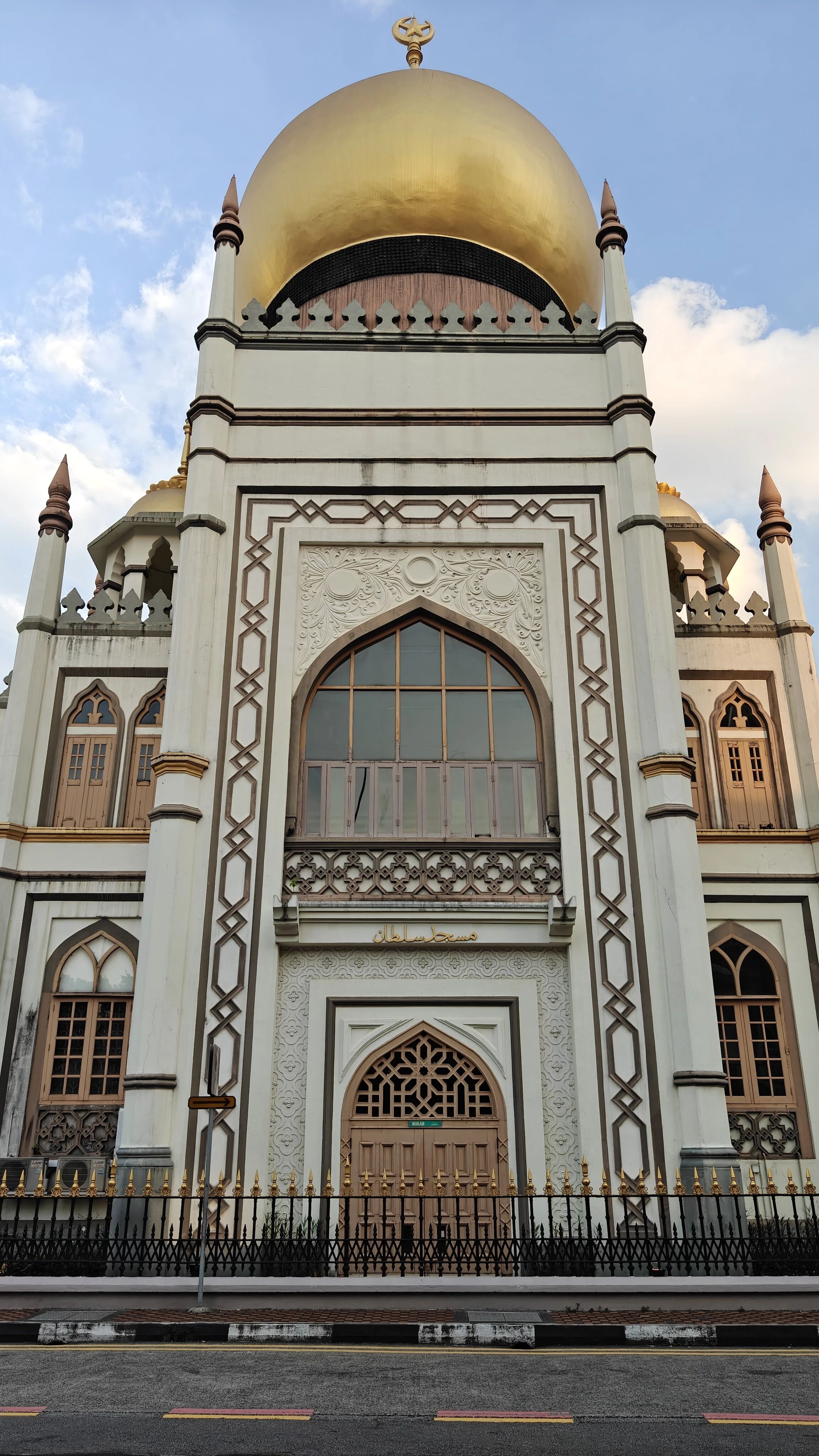
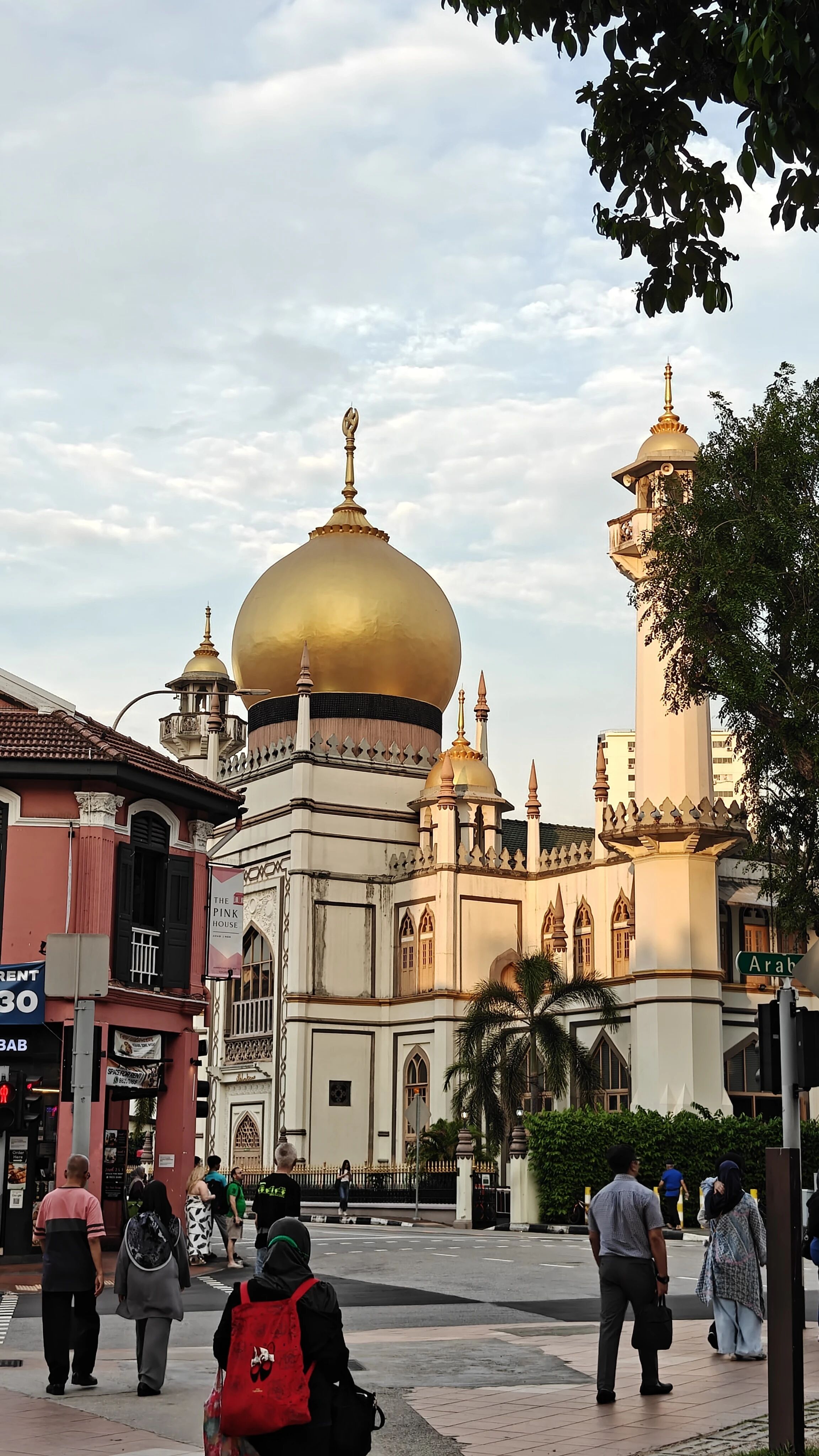
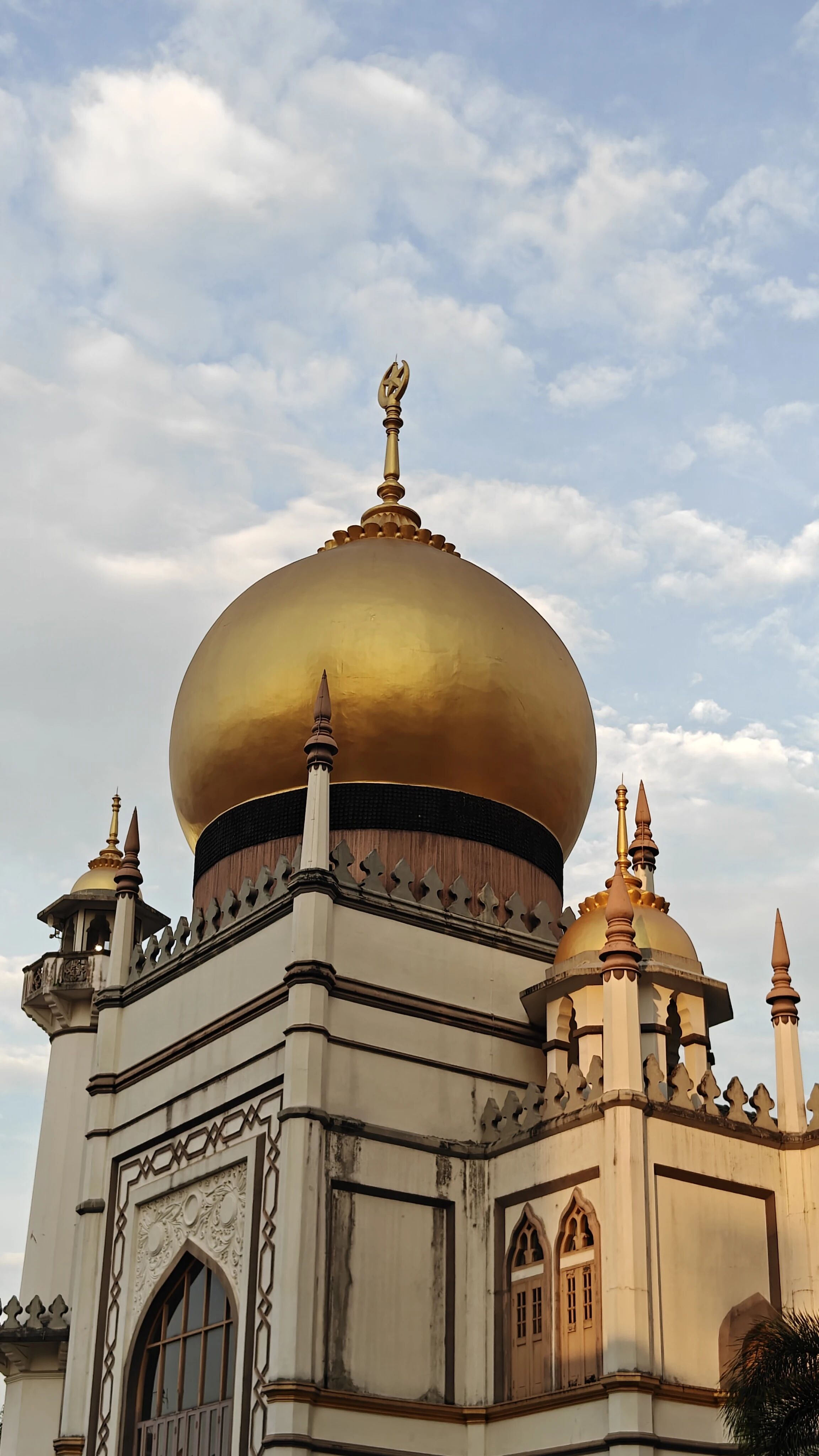
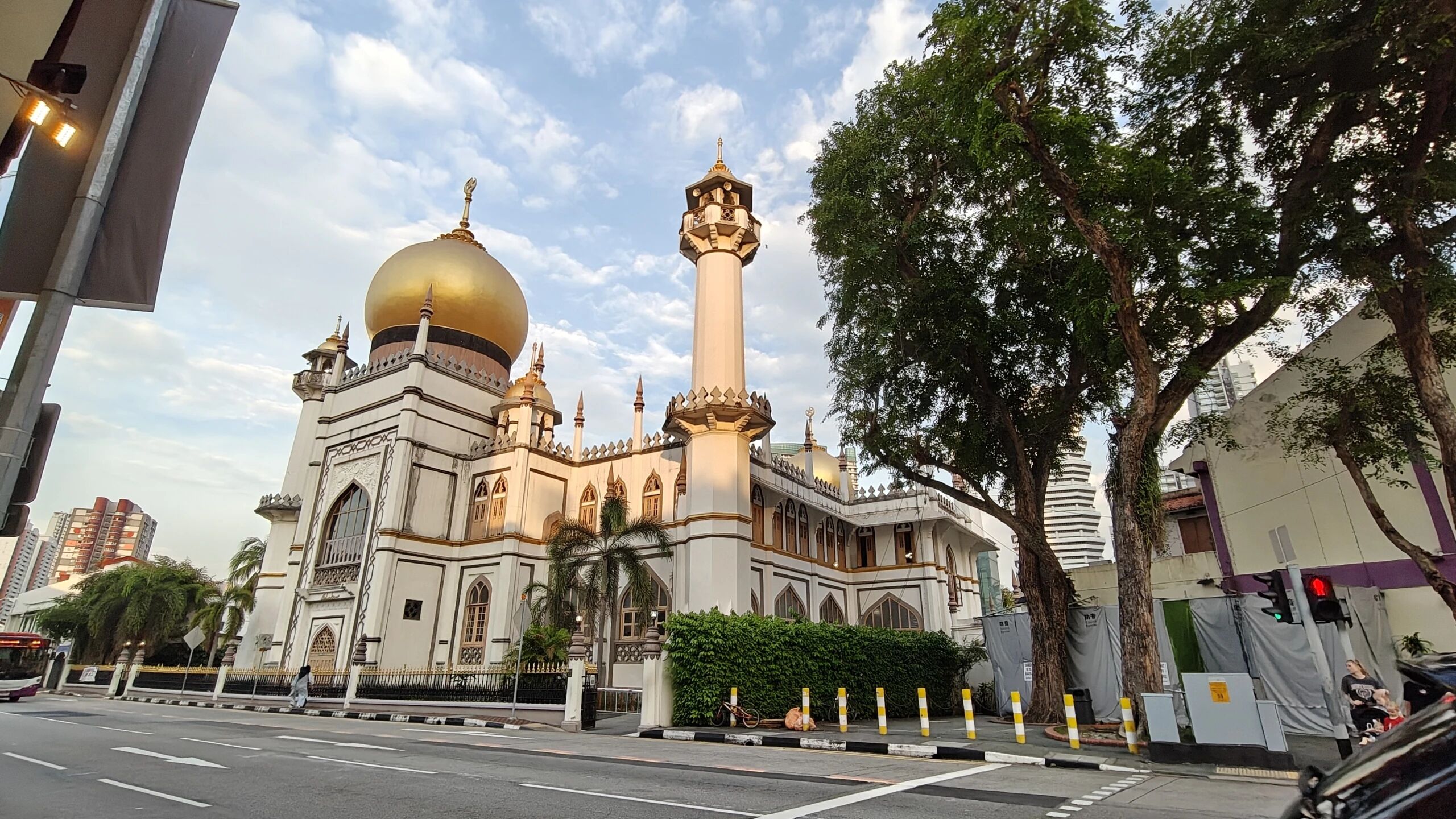
Before I came here, I thought there was only one dome, because it couldn’t be clearly seen from the photos in the travel guide. Seeing it in person really matters.
The entrance to the mosque (Picture 6) is not on the side of the road, but in a pedestrian street called Arab Street. There are murals depicting Malay family life at the entrance (Picture 7). There are many Turkish halal restaurants on the street (Picture 8), as well as souvenir shops. You can buy a refrigerator magnet with two Singapore dollars (10 yuan).
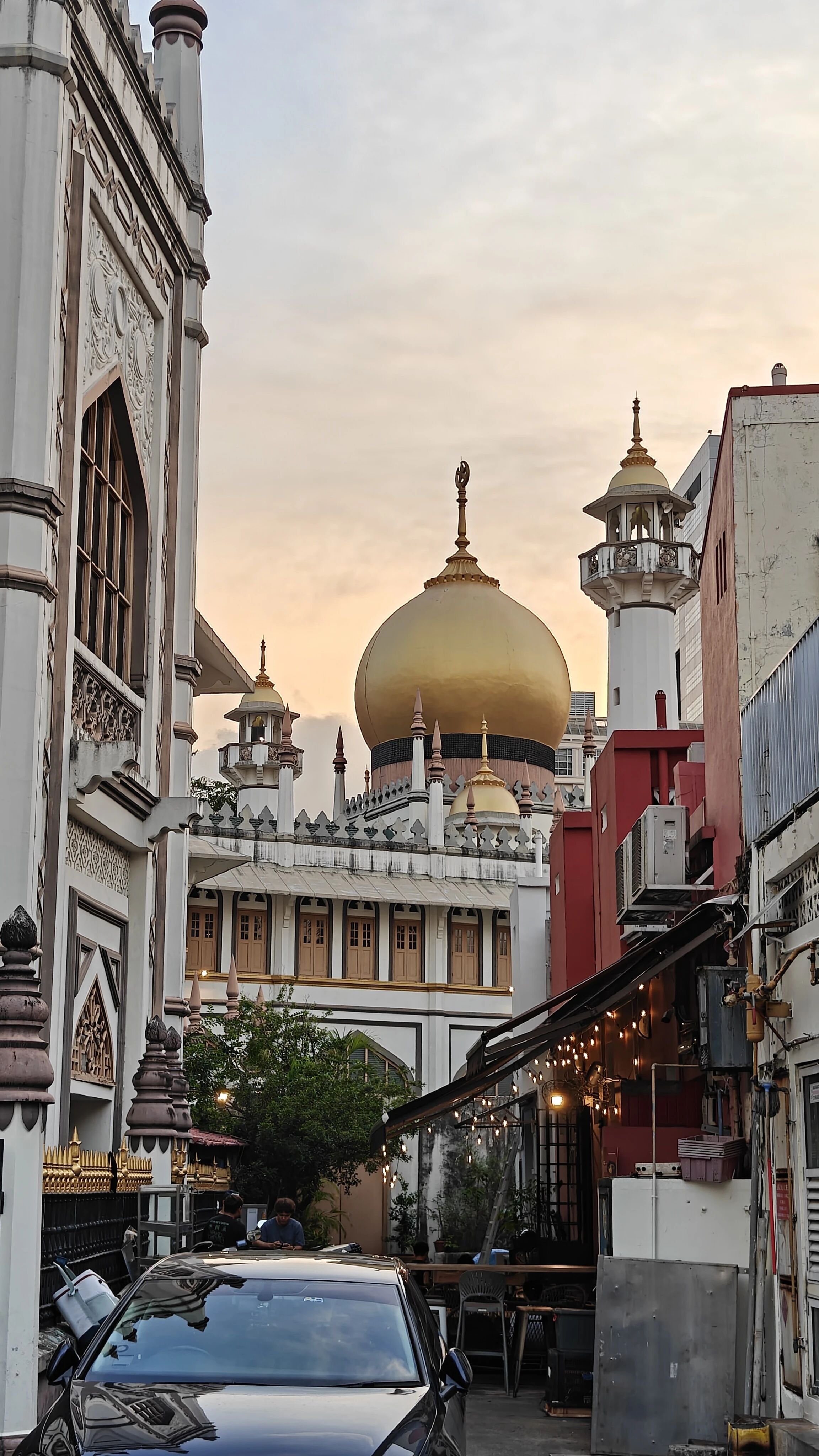
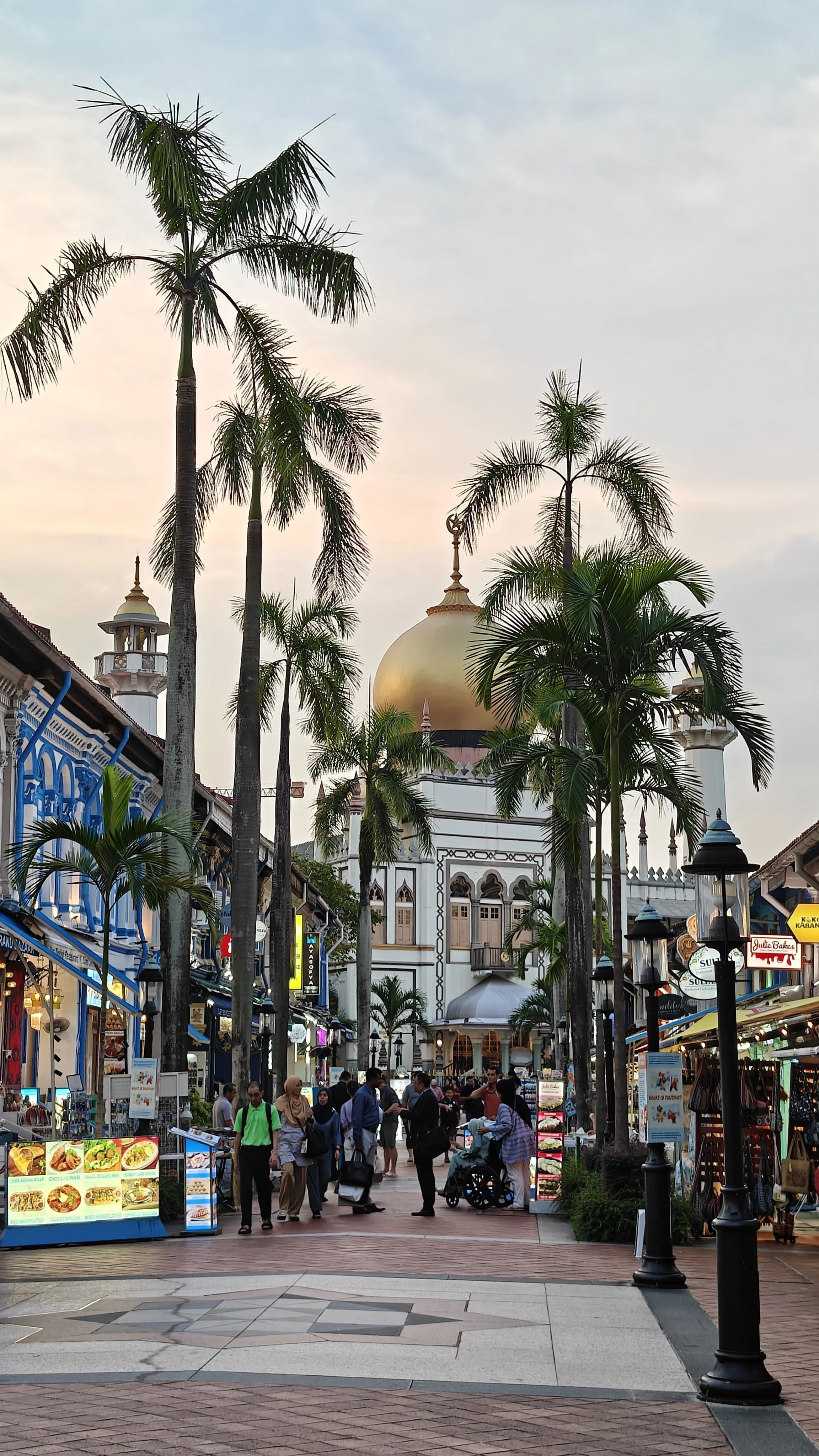
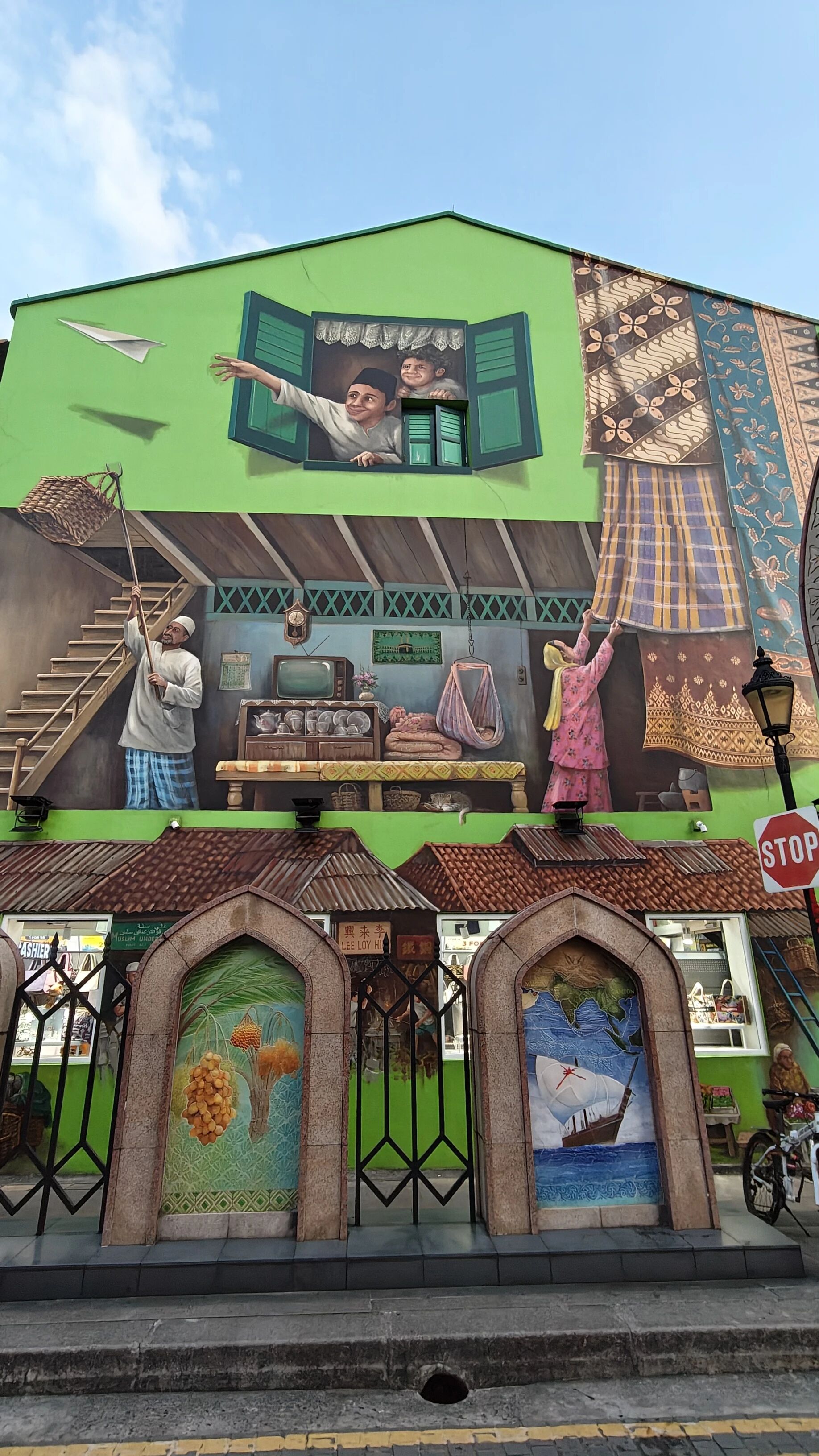
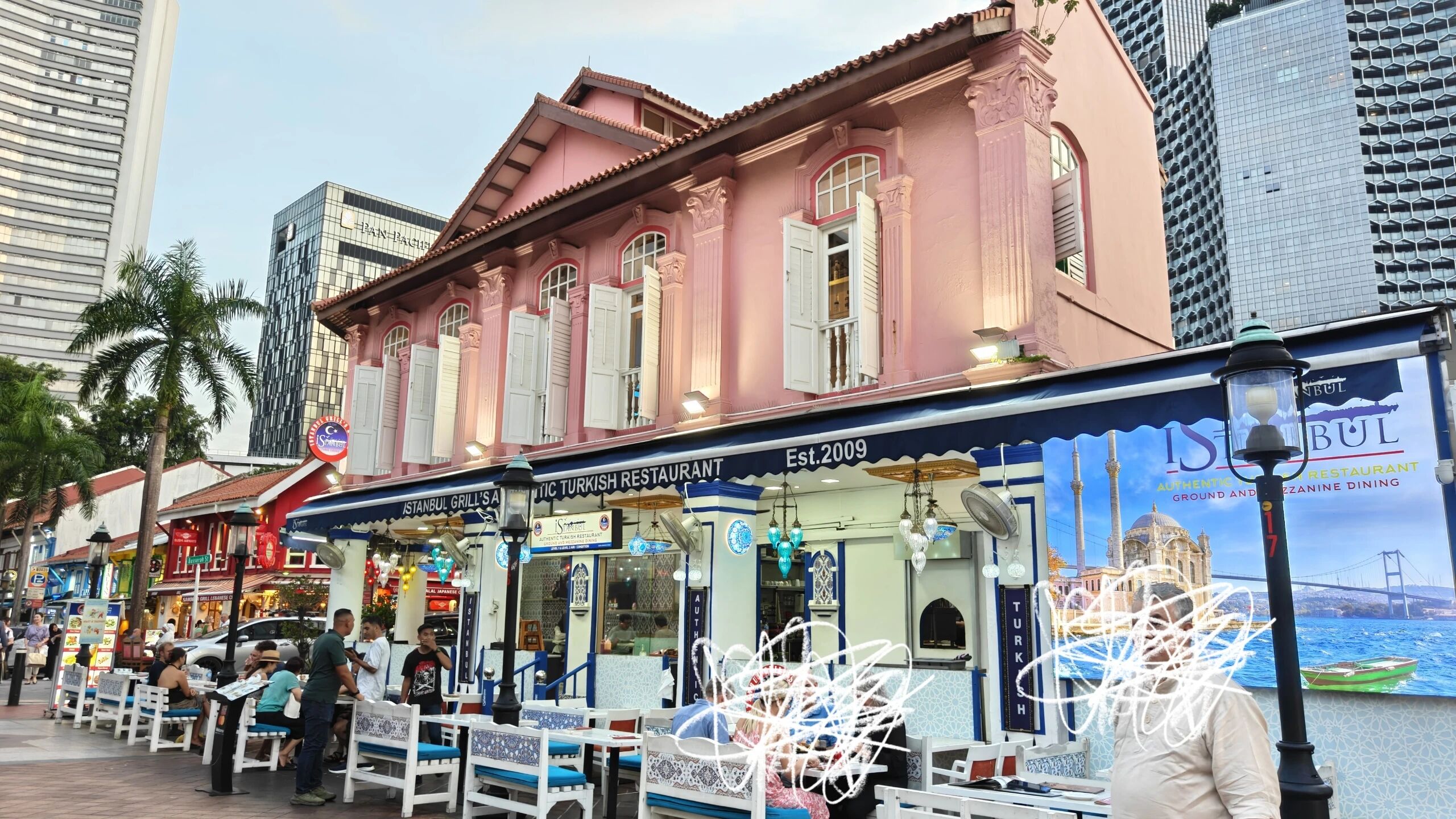
As dusk approached, I found an Indonesian restaurant and ordered a portion of fish balls, a piece of fish, a portion of rice, and a bottle of herbal tea, which cost about fifty yuan in total (Picture 9). In Singapore, you have to put away your tableware and put it in the designated area after eating (Picture 10).
Picture 11 shows the front of the mosque, which is very similar to the back. When entering the prayer hall, you have to enter from the right side. The interior of the prayer hall is quite large and the ceiling is very good. The mihrab niche is also decorated with Malay-style mosaic and leaf patterns, which looks very distinctive (Figures 13 and 14).
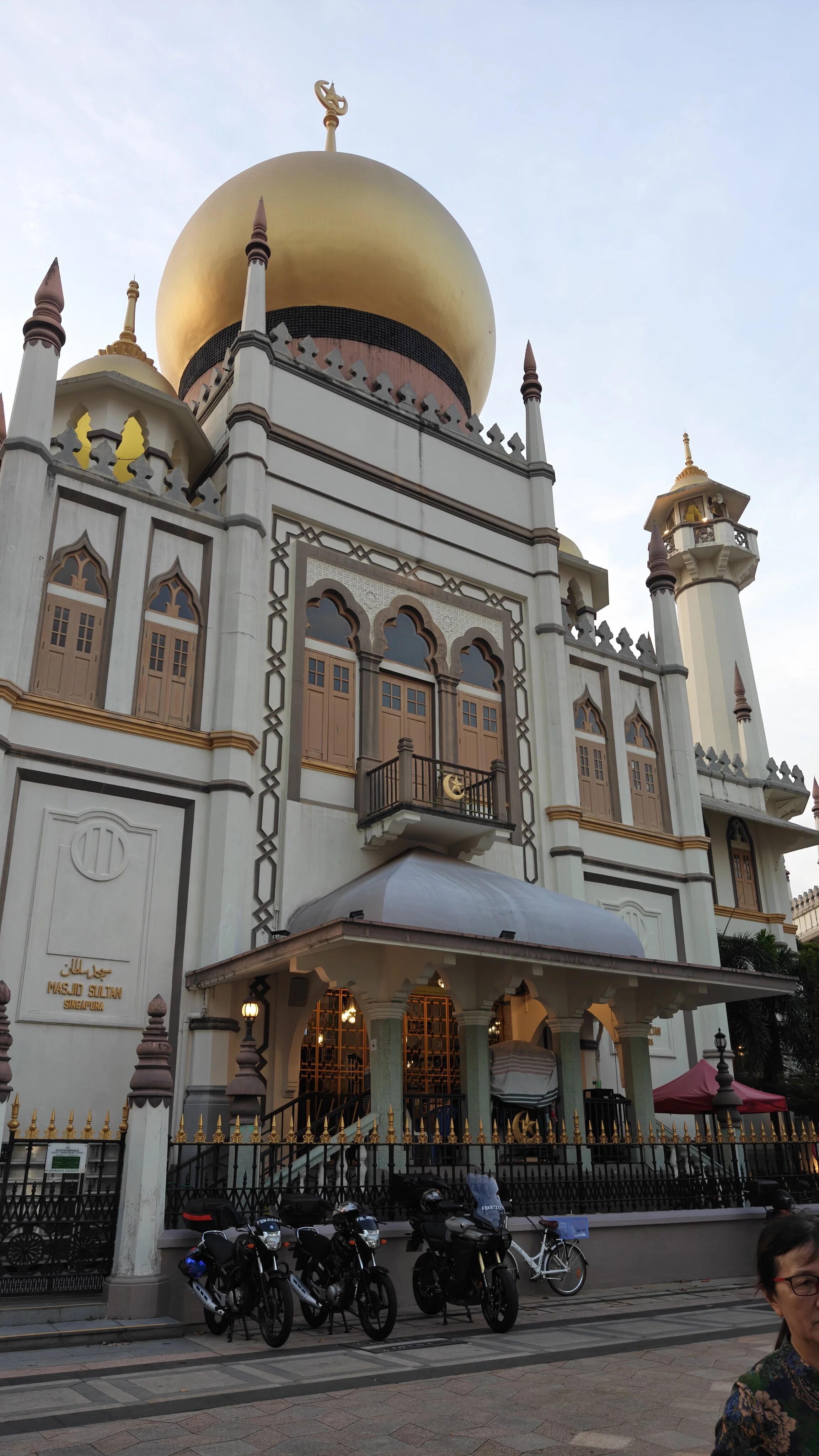
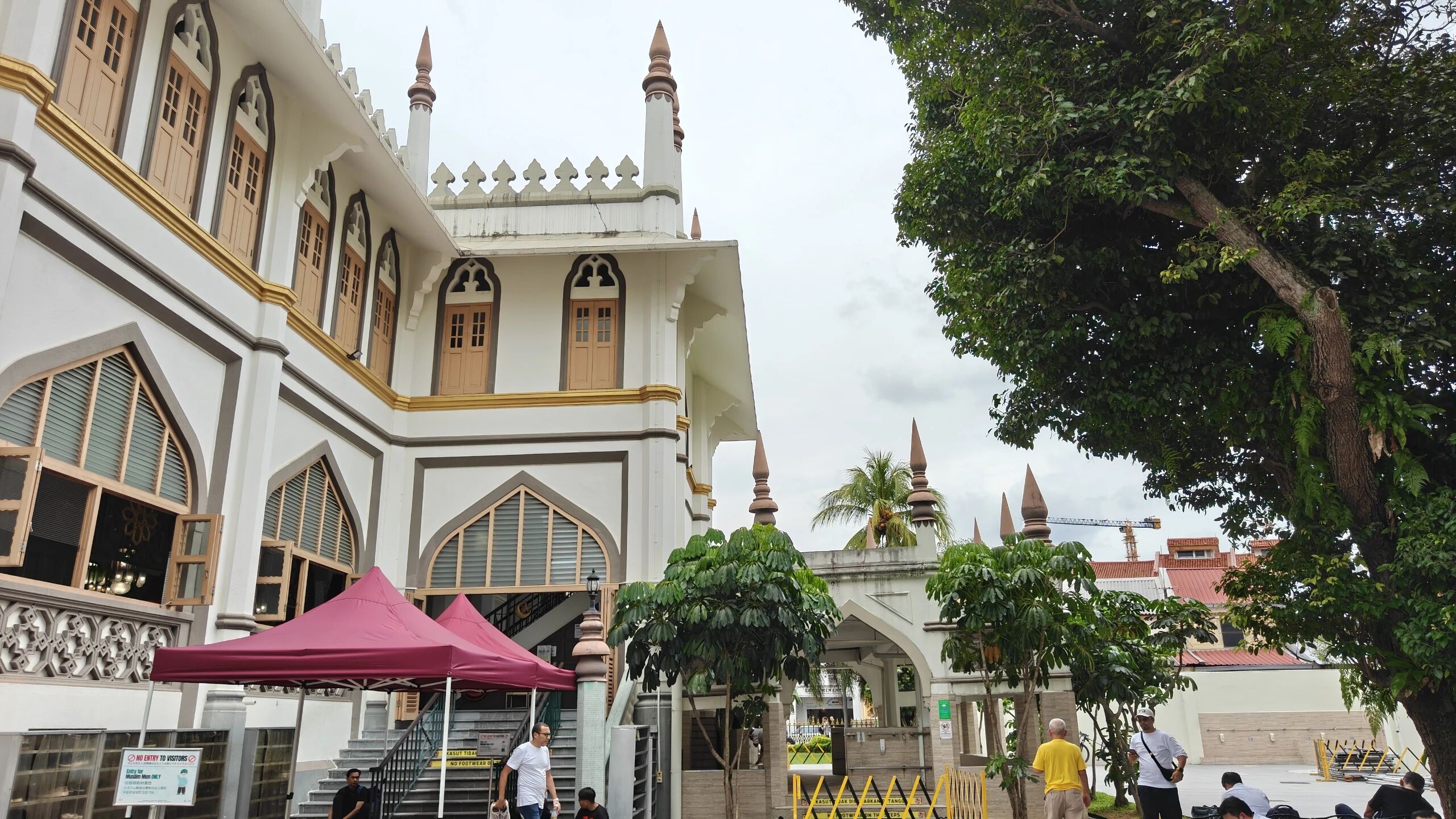
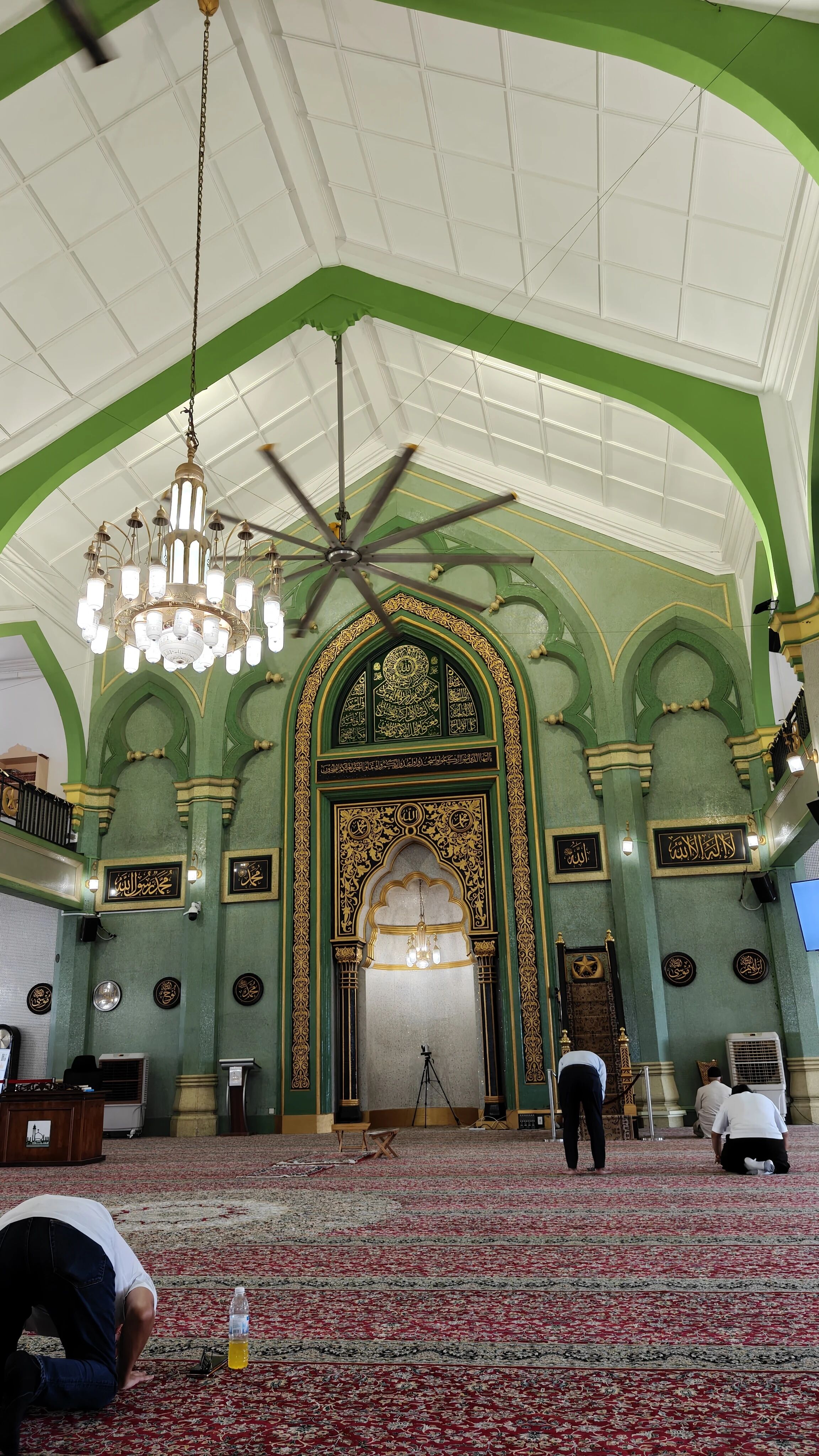
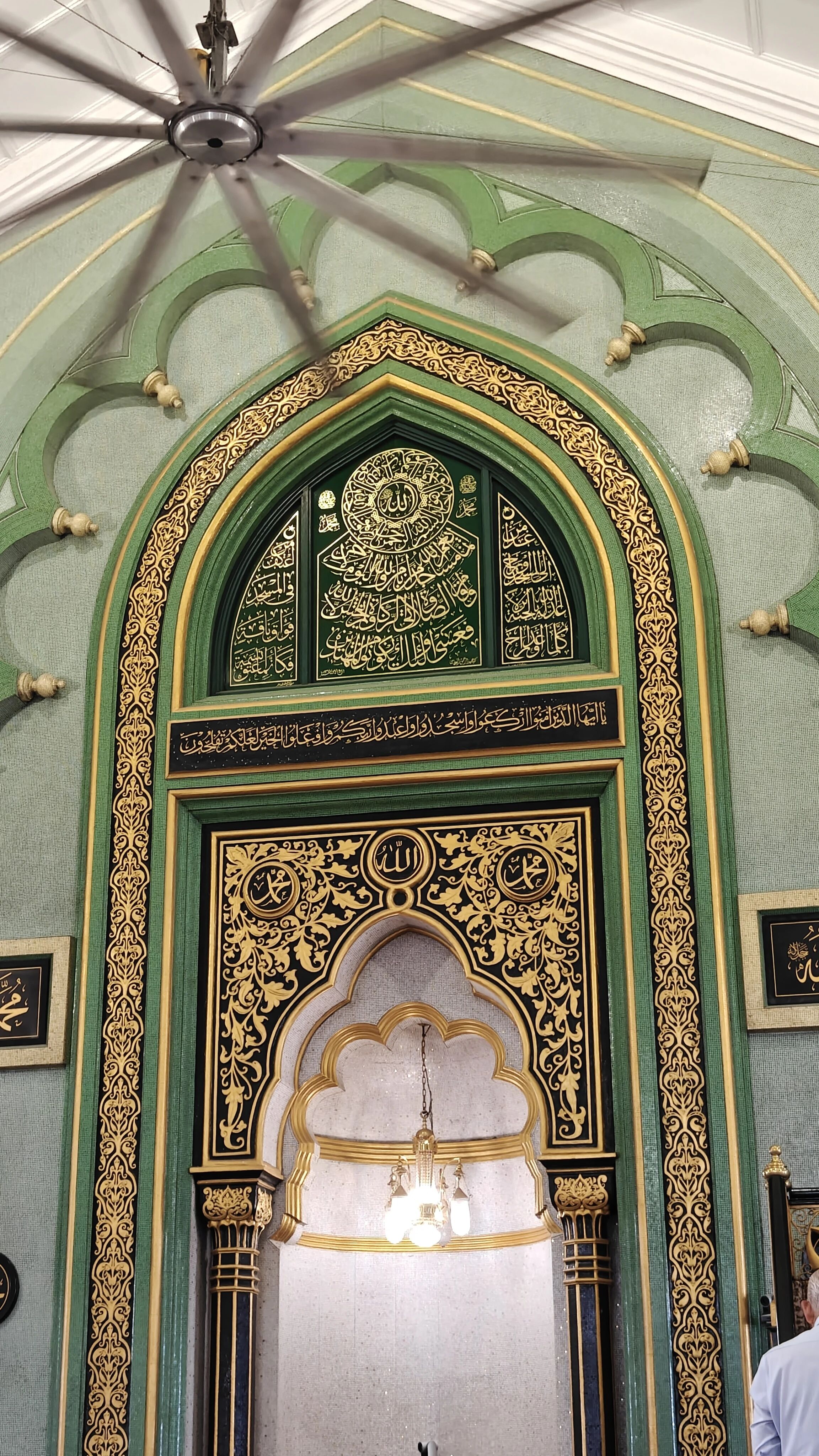
The shape of minbar is relatively simple (Picture 15).
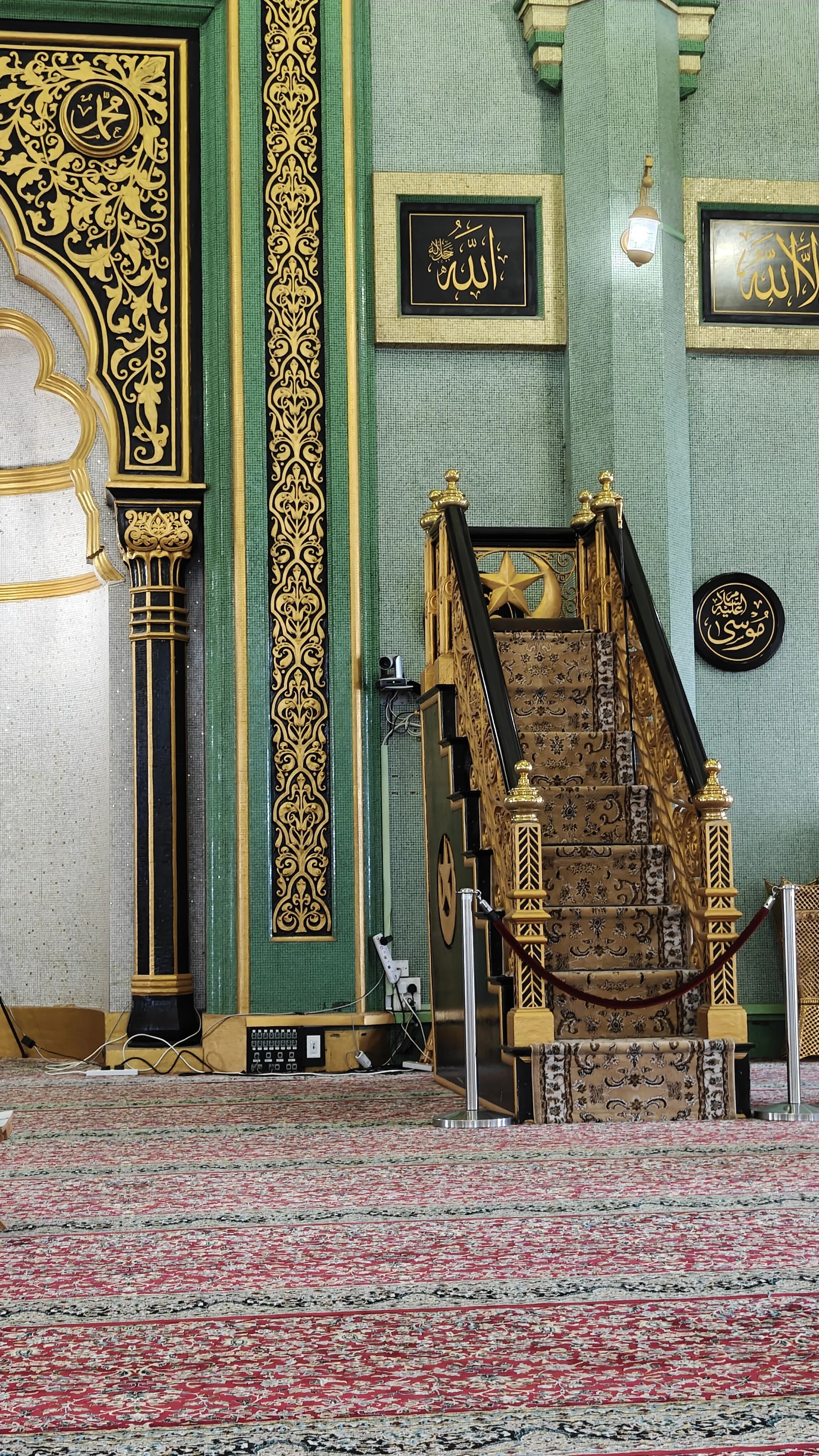
There is also a prayer space on the second floor (Figures 16 and 17).
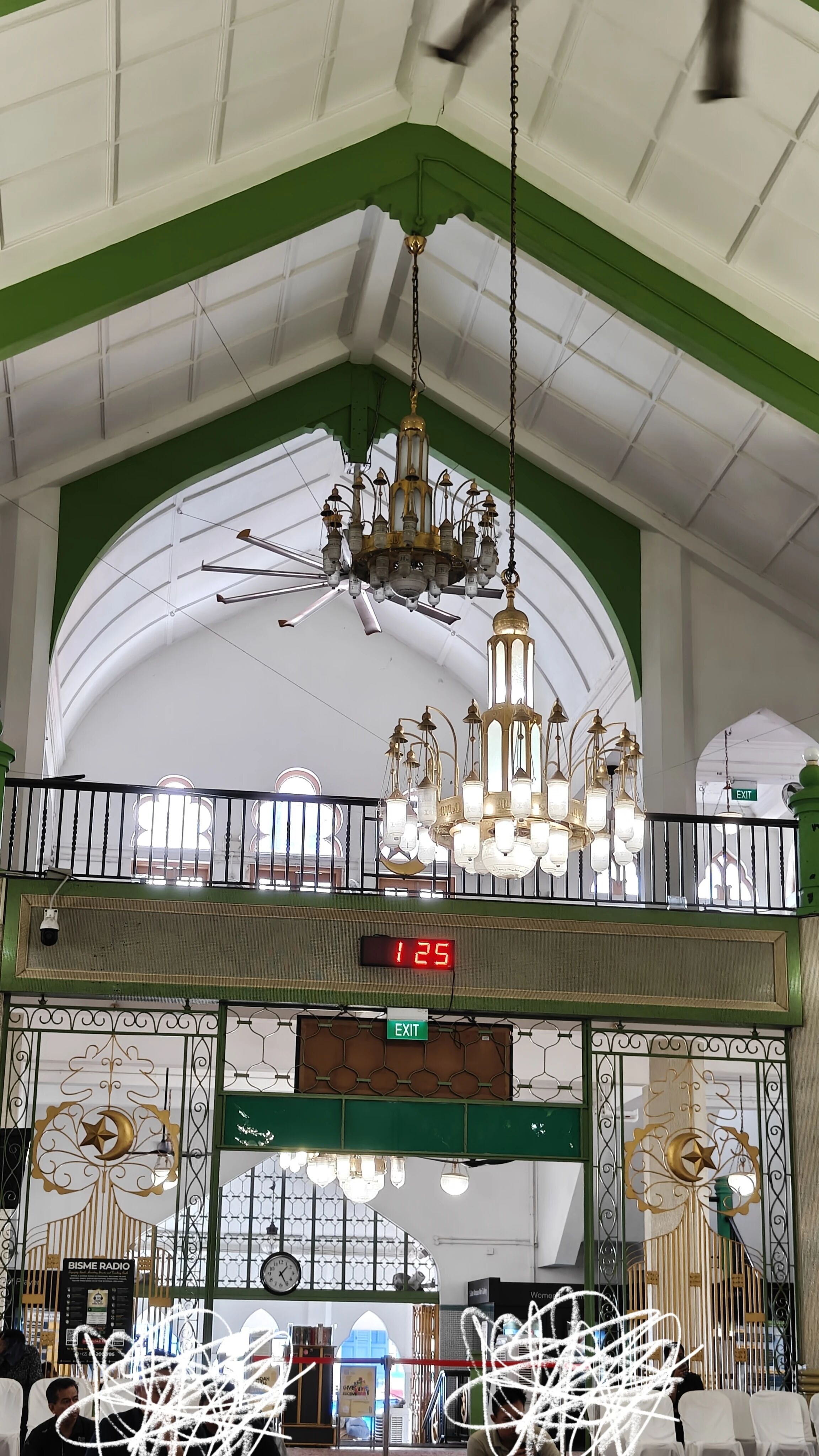
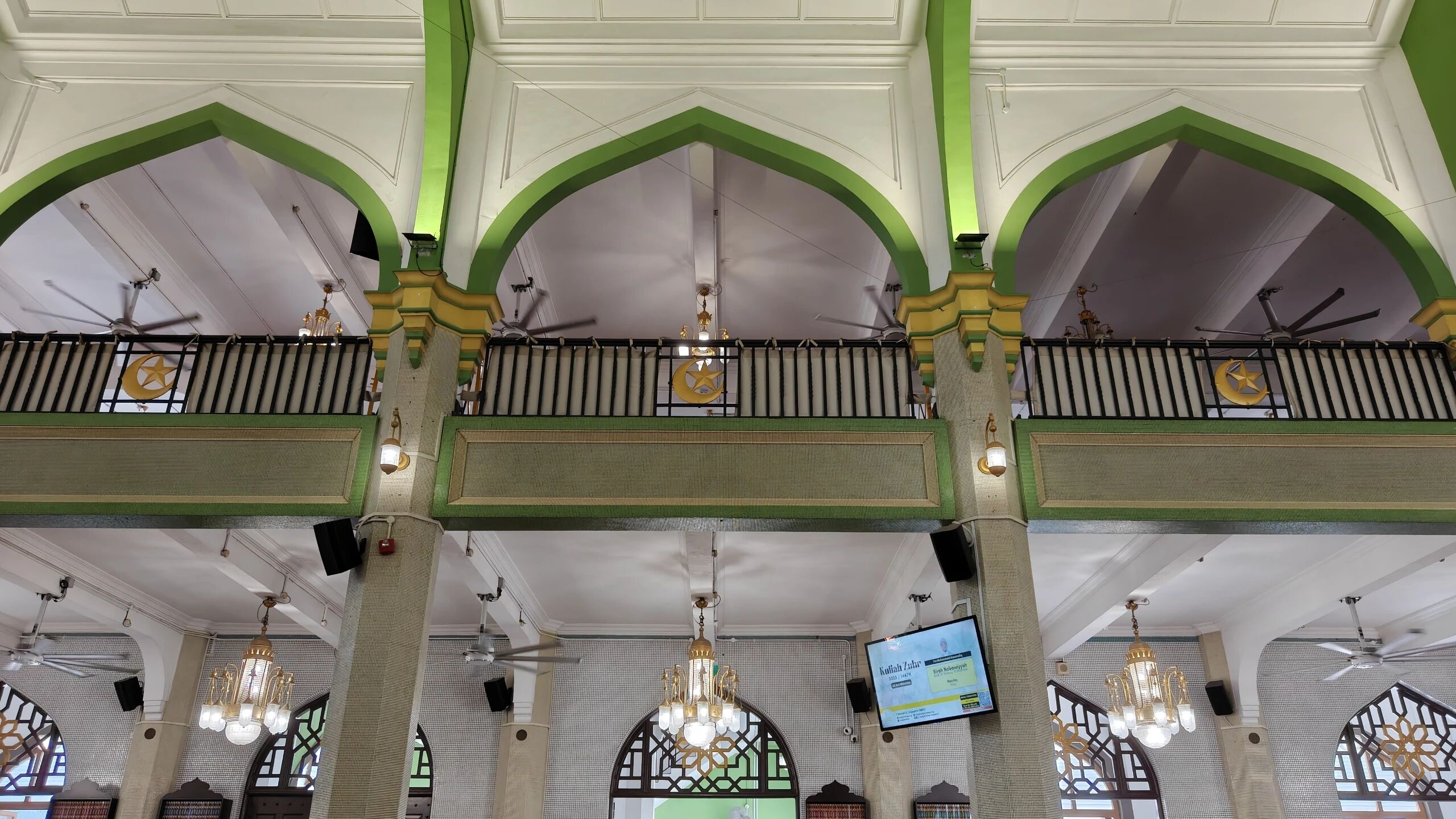
In Singapore's prayer halls, you can often see a display screen, which loops through some notices, recent activities, prayer times, etc. (Figures 18 and 19). The English notices in Picture 19 explain the importance of humility in faith and advocate that believers should be humble.
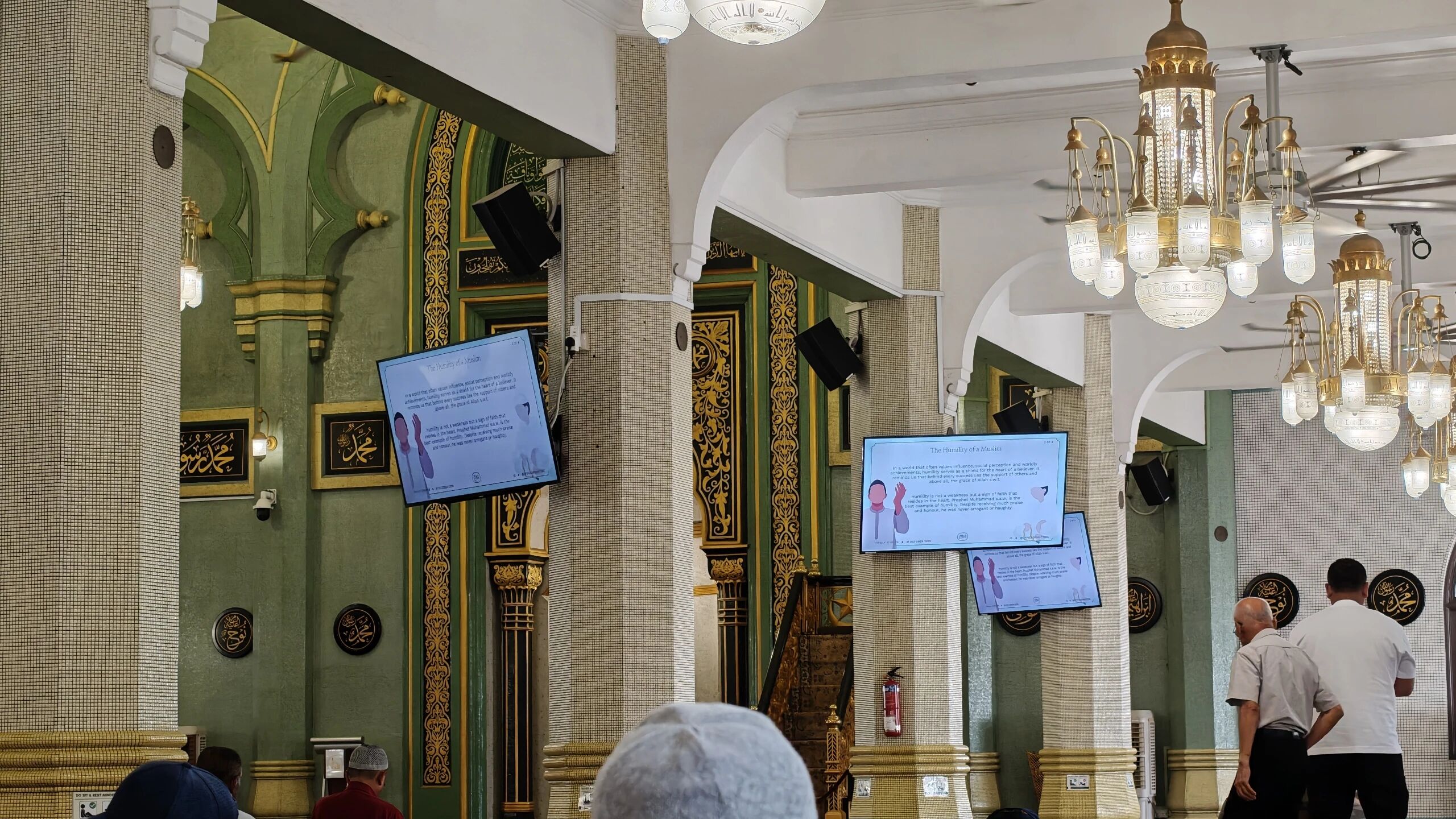
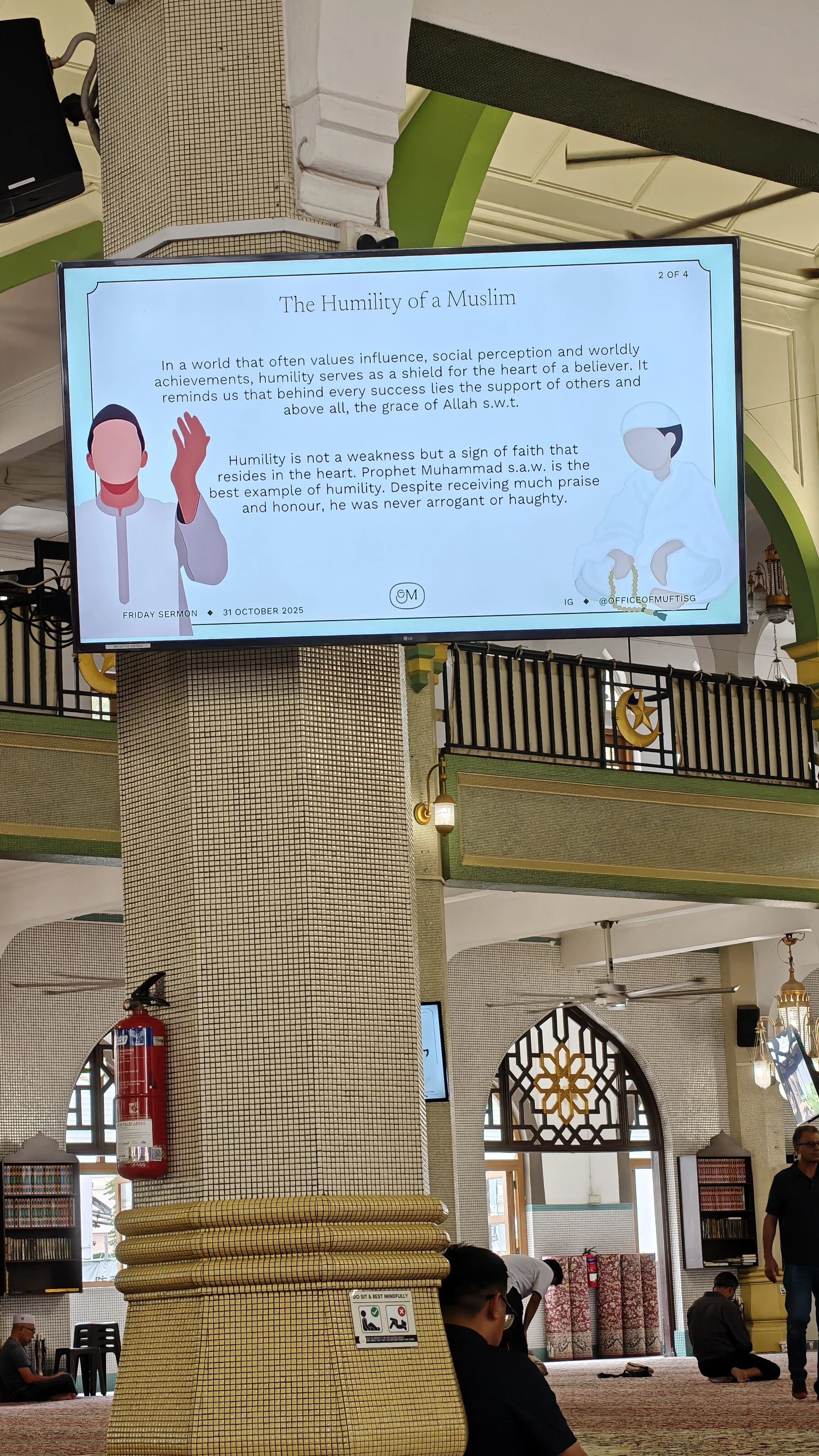
When I left the prayer hall, I noticed that the paint on the handrail on the right hand side had been worn down by worshippers (Picture 20).
Muslim Travel Guide Singapore: Temenggong Mosque, Malaysian Links and Mosque Heritage
Articles • Hasan09 posted the article • 0 comments • 325 views • 2026-05-24 01:59
Summary: This Singapore Muslim travel guide visits Temenggong Mosque and its complex ties to Malaysia. It keeps the source route, mosque setting, heritage notes, and Malay historical context in the same order.
This mosque is called the Temenggong Mosque, and it is not far from the Malay-style mosque I visited last time. This mosque has deep, complex ties to Malaysia.
The most unique thing about this mosque is that even though it is in Singapore, the land and sovereignty still belong to the Sultan of Johor, Malaysia. That is why two flags fly at the entrance of the prayer hall: the Singapore national flag and the flag of the Malaysian state of Johor.
This mosque was reportedly once the audience hall of the Temenggong's palace before it was converted into a mosque.
The mosque is a single-story octagonal building, as you can see in picture six.
There is a large fan in the center that spins constantly to keep the prayer hall just barely cool.
Under the fan is a small incense burner (picture seven). This is my first time seeing an incense burner placed in the middle of a main prayer hall.
The mosque's porch is pure white, and the doors have shutters to help with heat dissipation. Singapore does not need to worry about keeping warm or protecting against the cold at all. That is why the area for performing wudu (small ablution) is outdoors. Of course, the area for performing ghusl (major ablution) is still indoors.
Right next to the mosque is a museum with a sign that says Johor Royal Museum, but unfortunately, it was not open when I visited. I did see the Muslim cemetery behind the mosque, which seems to be on the same plot of land as the museum.
As I mentioned, this mosque is near Sentosa Island, so I headed straight there after leaving. In the next post, I will show you the prayer room on Sentosa Island. view all
Summary: This Singapore Muslim travel guide visits Temenggong Mosque and its complex ties to Malaysia. It keeps the source route, mosque setting, heritage notes, and Malay historical context in the same order.
This mosque is called the Temenggong Mosque, and it is not far from the Malay-style mosque I visited last time. This mosque has deep, complex ties to Malaysia.
The most unique thing about this mosque is that even though it is in Singapore, the land and sovereignty still belong to the Sultan of Johor, Malaysia. That is why two flags fly at the entrance of the prayer hall: the Singapore national flag and the flag of the Malaysian state of Johor.
This mosque was reportedly once the audience hall of the Temenggong's palace before it was converted into a mosque.
The mosque is a single-story octagonal building, as you can see in picture six.
There is a large fan in the center that spins constantly to keep the prayer hall just barely cool.
Under the fan is a small incense burner (picture seven). This is my first time seeing an incense burner placed in the middle of a main prayer hall.
The mosque's porch is pure white, and the doors have shutters to help with heat dissipation. Singapore does not need to worry about keeping warm or protecting against the cold at all. That is why the area for performing wudu (small ablution) is outdoors. Of course, the area for performing ghusl (major ablution) is still indoors.
Right next to the mosque is a museum with a sign that says Johor Royal Museum, but unfortunately, it was not open when I visited. I did see the Muslim cemetery behind the mosque, which seems to be on the same plot of land as the museum.
As I mentioned, this mosque is near Sentosa Island, so I headed straight there after leaving. In the next post, I will show you the prayer room on Sentosa Island.
Muslim Travel Guide Singapore: Nagore Dargah, Sufi Gongbei and South Indian Muslim Heritage
Articles • Hasan09 posted the article • 0 comments • 328 views • 2026-05-24 01:59
Summary: This Singapore Muslim travel guide visits Nagore Dargah, described as a South Indian-style Sufi shrine or gongbei. It keeps the source comparison with Jamae Mosque, local Muslim heritage, and site observations.
Singapore has more than just the South Indian-style mosque (Jamae Mosque) we introduced last time; it also has this South Indian-style shrine (Nagore Dargah).
This shrine is right next to Thian Hock Keng Temple and is easy to find. It has been turned into the Indian Muslim Heritage Centre. You need to register before entering, and admission is free. Actually, there were never any graves inside, which I find quite strange. If a shrine has no grave, can it still be called a shrine?
Of course, they call it a dargah, which is the term used in South India for a shrine.
So, where is the real grave?
It is in Nagapattinam, Tamil Nadu, South India (Image 13). It was built to honor the Sufi saint Shahul Hamid. That shrine is very grand and has many white towers.
Inside the museum, you can see many old items from that time and some information about early Indian Muslim immigrants.
Walking straight from the entrance, you can see a symbolic tomb chamber. The walls inside the chamber feature photos, paintings, and models of that Nagore Dargah in Tamil Nadu. If I have the chance in the future, I really want to go to South India to see that place.
There is a detail in the tomb chamber that interests me: the small wall niches on the left and right (Image 16). These niches were used to hold candles or oil lamps for lighting.
This design is very common in India, so it is quite a distinct Indian feature.
Tourists from all over the world keep coming into the museum. I remember last time, a Korean tourist asked the Indian staff member about the ethnic composition of Muslims in Singapore. The Indian staff member explained that Malays are Muslims and there are also Indian Muslims.
I don't quite remember exactly what was said.
This time, I ran into two Singaporean Chinese asking a similar question to a Malay person nearby. The Malay person replied that there are also Muslims among Indians.
I guess everyone assumes Indians have a single faith, but while most Indians are Hindu, there are actually many Muslims. Besides that, India also has long-standing Christian communities, Sikhs, Buddhists, Jains, and so on.
The manager here told me there is no place to pray, but I can go to a nearby mosque for namaz. This mosque does not refer to the Jamae Mosque, but the closer Al-Abrar Mosque. So, in the next post, I will take you to see this Al-Abrar Mosque. view all
Summary: This Singapore Muslim travel guide visits Nagore Dargah, described as a South Indian-style Sufi shrine or gongbei. It keeps the source comparison with Jamae Mosque, local Muslim heritage, and site observations.
Singapore has more than just the South Indian-style mosque (Jamae Mosque) we introduced last time; it also has this South Indian-style shrine (Nagore Dargah).
This shrine is right next to Thian Hock Keng Temple and is easy to find. It has been turned into the Indian Muslim Heritage Centre. You need to register before entering, and admission is free. Actually, there were never any graves inside, which I find quite strange. If a shrine has no grave, can it still be called a shrine?
Of course, they call it a dargah, which is the term used in South India for a shrine.
So, where is the real grave?
It is in Nagapattinam, Tamil Nadu, South India (Image 13). It was built to honor the Sufi saint Shahul Hamid. That shrine is very grand and has many white towers.
Inside the museum, you can see many old items from that time and some information about early Indian Muslim immigrants.
Walking straight from the entrance, you can see a symbolic tomb chamber. The walls inside the chamber feature photos, paintings, and models of that Nagore Dargah in Tamil Nadu. If I have the chance in the future, I really want to go to South India to see that place.
There is a detail in the tomb chamber that interests me: the small wall niches on the left and right (Image 16). These niches were used to hold candles or oil lamps for lighting.
This design is very common in India, so it is quite a distinct Indian feature.
Tourists from all over the world keep coming into the museum. I remember last time, a Korean tourist asked the Indian staff member about the ethnic composition of Muslims in Singapore. The Indian staff member explained that Malays are Muslims and there are also Indian Muslims.
I don't quite remember exactly what was said.
This time, I ran into two Singaporean Chinese asking a similar question to a Malay person nearby. The Malay person replied that there are also Muslims among Indians.
I guess everyone assumes Indians have a single faith, but while most Indians are Hindu, there are actually many Muslims. Besides that, India also has long-standing Christian communities, Sikhs, Buddhists, Jains, and so on.
The manager here told me there is no place to pray, but I can go to a nearby mosque for namaz. This mosque does not refer to the Jamae Mosque, but the closer Al-Abrar Mosque. So, in the next post, I will take you to see this Al-Abrar Mosque.
Muslim Travel Guide Singapore 2026: Underground Mosque, Zakat Machine and Local Muslim Life
Articles • Hasan09 posted the article • 0 comments • 350 views • 2026-05-24 01:48
Summary: This Singapore Muslim travel guide continues the city route through underground mosques, local prayer spaces, and a self-service zakat machine. It preserves the source's guide structure, site order, and local Muslim life details.
In this issue:
8. Jamae Mosque, which features minarets in a South Indian style.
9. The South Indian gongbei of Singapore, Nagore Dargah.
10. Al-Abrar Mosque.
11. Underground Mosque.
12. Omar Kampong Melaka Mosque, the oldest mosque in Singapore.
13. Al-Amin Mosque.
14. Temenggong Mosque.
15. Sentosa prayer room.
16. Singapore Islamic Centre Mosque.
17. Islamic Religious Council of Singapore.
To be updated:
18. Tomb of Habib Nuh (Habib Nuh Lingmu)
19. Haji Muhammad Salleh Mosque
20. Hajjah Fatimah Mosque
21. Changi Airport Prayer Room
Main text starts:
8. Jamae Mosque
I find this Jamae Mosque very special. Everyone knows what North Indian mosques look like. The Badshahi Mosque in Pakistan, the Jama Masjid in Delhi, and even the Taj Mahal are all classic examples of North Indian mosque architecture.
These mosques are very famous and pop up on your feed all the time, but I bet you haven't seen many of the lesser-known South Indian mosques.
Look at its minaret; it is square. If you made this tower wider and added bright colors, it would look just like a South Indian Hindu temple.
I think this style of tower has a lot of local character.
Jamae Mosque, the Buddha Tooth Relic Mosque, and a Hindu mosque are all on the same street.
This mosque welcomes visitors and has a dedicated tourist area. There are many information boards there to explain the basics to visitors.
The mosque's minaret is in a South Indian style, but the prayer hall area instantly brings back memories of the South Seas. The doors and windows especially have a strong colonial-era South Seas feel.
Inside the prayer hall, the mihrab and the minbar are very simple.
This mosque was established by Tamil people from South India, so there is also Tamil script inside the prayer hall.
As I left, I noticed there were actually steps by the minaret. It seems at least the entrance area can be climbed.
9. South Indian gongbei, Nagore Dargah
The actual Nagore Dargah is in the Indian state of Tamil Nadu, which is the ancestral home of the Tamil people.
To me, the Tamil people are a bit like the people from Fujian in our country.
Tamil Nadu is in southeastern India, facing the island of Sri Lanka across the sea.
People from Fujian are also on the southeast coast of China, with Taiwan island just across the strait.
Tamil people like to go to sea to do business, and so do Fujian people, running businesses all over the world.
Back to the topic, the Nagore Dargah in Tamil Nadu is a real gongbei, containing the graves of Muslim saints.
But this Nagore Dargah in Singapore is empty and only has a symbolic tomb.
This was my first time seeing something like this. I went inside and asked the manager where the tomb was. He said the tomb is back home in India. I was shocked!
This Dargah (a term used in South India for a gongbei) also has a South Indian style with a square tower.
It is no longer a religious site but has been turned into a museum. It displays many items used by the older generation of Indian immigrants who came to Singapore.
At the very back of the main hall, you can see a symbolic tomb chamber.
So, my trip was not a waste after all.
I think the highlight of the tomb chamber is the oil lamp placed in the small wall niche.
These niches are very common in India and are used to hold oil lamps for lighting.
On the wall of the tomb chamber hangs a photo of the Nagore Dargah in India. Looking at it, the place covers a very large area.
I really want to go to India to see it in person, but it is a pity that India is very strict with Chinese citizens right now, and tourist visas are hard to get.
10. Al-Abrar Mosque.
When I visited the Nagore Dargah, I asked the manager if there was a place to perform namaz. He told me that everyone goes to a nearby mosque for namaz now.
The mosque he mentioned is the Al-Abrar Mosque located on this same street.
There is an inner hall inside the prayer hall of this mosque.
Directly above the inner hall, there is a piece of blue glass with the opening chapter of the Quran written on it.
The fan-shaped stained glass on the mosque's doors and windows is also very cute.
At the very back of the main hall, you can see a symbolic tomb chamber.
So, my trip was not a waste after all.
I think the highlight of the tomb chamber is the oil lamp placed in the small wall niche.
These niches are very common in India and are used to hold oil lamps for lighting.
On the wall of the tomb chamber hangs a photo of the Nagore Dargah in India. Looking at it, the place covers a very large area.
I really want to go to India to see it in person, but it is a pity that India is very strict with Chinese citizens right now, and tourist visas are hard to get.
At the very back of the main hall, you can see a symbolic tomb chamber.
So, my trip was not a waste after all.
I think the highlight of the tomb chamber is the oil lamp placed in the small wall niche.
These niches are very common in India and are used to hold oil lamps for lighting.
On the wall of the tomb chamber hangs a photo of the Nagore Dargah in India. Looking at it, the place covers a very large area.
I really want to go to India to see it in person, but it is a pity that India is very strict with Chinese citizens right now, and tourist visas are hard to get.
I think the highlight of the tomb chamber is the oil lamp placed in the small wall niche.
These niches are very common in India and are used to hold oil lamps for lighting.
On the wall of the tomb chamber hangs a photo of the Nagore Dargah in India. Looking at it, the place covers a very large area.
I really want to go to India to see it in person, but it is a pity that India is very strict with Chinese citizens right now, and tourist visas are hard to get.
On the wall of the tomb chamber hangs a photo of the Nagore Dargah in India. Looking at it, the place covers a very large area.
I really want to go to India to see it in person, but it is a pity that India is very strict with Chinese citizens right now, and tourist visas are hard to get.
10. Al-Abrar Mosque.
When I visited the Nagore Dargah, I asked the manager if there was a place to perform namaz. He told me that everyone goes to a nearby mosque for namaz now.
The mosque he mentioned is the Al-Abrar Mosque located on this same street.
There is an inner hall inside the prayer hall of this mosque.
Directly above the inner hall, there is a piece of blue glass with the opening chapter of the Quran written on it.
The fan-shaped stained glass on the mosque's doors and windows is also very cute.
There is an inner hall inside the prayer hall of this mosque.
Directly above the inner hall, there is a piece of blue glass with the opening chapter of the Quran written on it.
The fan-shaped stained glass on the mosque's doors and windows is also very cute.
Just before leaving, I noticed a machine at the mosque entrance with the word Zakat written on it.
Zakat is the mandatory charity for Muslims. I was surprised to see a self-service Zakat machine here in Singapore, where you can pay using a bank card. The funds are managed by the Islamic Religious Council of Singapore.
This is the first time I have ever seen this way of paying.
11. Underground Mosque.
A self-service Zakat machine is novel enough, but even more surprising is Singapore's underground mosque.
This mosque is located in the basement of the UOB Plaza 1 building in Singapore.
At the time, the bank wanted this land, which had shops owned by the mosque. The mosque and the bank reached an agreement where the mosque traded its shop space for part of the bank's basement.
That is how this underground mosque came to be.
A brief introduction to the mosque is on the wall by the stairs leading down to the basement.
To be honest, the mosque is easy to find. Just follow your GPS to the UOB building and you will see the entrance.
There is a sign for the mosque near the entrance.
Be careful not to go to the wrong one, as this mosque has two entrances: one for men and one for women.
I almost went to the wrong one the first time I visited.
The men's entrance is on the side closer to the pier.
When I went a second time, they had added a white canopy to the men's entrance.
The mosque is quite spacious, much bigger than I imagined.
It has all the necessary facilities, though it does not have a minaret.
Inside, there are restrooms and a place for wudu.
There is an office for the imam.
To the left and right of the mihrab niche are the opening chapter of the Quran and its English translation.
That is right, just like at the Al-Abrar Mosque mentioned above, it is also the opening chapter.
The opening chapter is very important. Everyone who performs namaz must know how to recite it because it is used in every prayer.
Singapore's mosques really feel modern. First, in the prayer hall of the Sultan Mosque, there are two full rows of LCD screens looping information about hadith and upcoming lectures.
Then, there are the self-service zakat machines seen at the Al-Abrar Mosque and the Al-Falah Mosque on Orchard Road.
Now, I have found a heart defibrillator in the underground mosque, used to save patients who have sudden heart attacks.
12. Omar Kampong Melaka Mosque, the oldest mosque in Singapore.
Next, I will introduce the earliest mosque built in Singapore.
This mosque was built in 1820 by a Middle Eastern merchant named Syed Omar.
In 1820, twenty years later, the First Opium War would break out in China.
This shows how late this part of Singapore was developed.
The family members of this Sayyid Omar are buried right next to the minaret.
You can still see the graveyard when you visit the tower today.
At first, I thought this mosque might be exaggerating about being the oldest.
Sultan Mosque, Temenggong Mosque, and Jamae Mosque are also quite old.
But once I went inside, I saw it was built in 1820, which is indeed a few years earlier than Jamae Mosque, built in 1826.
You can see the mosque is built with solid materials. Even though you do not need thick walls in such a hot place, the railings and wall thickness show this building was not thrown together.
The imam at the mosque is very young, and he seems even younger than me.
He looks like he is in his early twenties.
When he found out I was a tourist, he gave me his contact information and told me to reach out if I had any trouble.
When I went to the mosque a second time, the imam had changed, but it was still a young man.
I do not know where the first imam went.
There are some long tables and chairs in the front courtyard of the mosque, and there is a vending machine nearby that sells halal boxed meals.
There is also a microwave nearby.
You can buy food, heat it up in the mosque, and eat it there, which is quite convenient.
13. Al-Amin Mosque.
We have introduced many South Indian-style mosques built by Indians, but I think the core of the Muslim population in Singapore is still the Malay community.
The Al-Amin Mosque I am about to introduce is a Malaysian-style mosque.
This type of roof has a very Southeast Asian feel, and you have probably seen similar buildings in other Southeast Asian countries.
The minaret also looks like this:
Take the elevator to the second floor to reach the prayer hall, which looks very cool and well-ventilated.
Sitting inside, you do not feel hot at all.
On the first floor of this mosque, I found a sign with writing that looks like Arabic.
But if you look closely, it is actually not Arabic.
It has a few letters that do not exist in Arabic, with two extra dots compared to Arabic letters.
Given the Malay style of the mosque, this must be Jawi script, which uses Arabic letters plus some extra characters to write the Malay language.
The sign says this mosque officially opened on May 1, 1991.
Not far from this mosque is another one called the Temenggong Mosque.
14. Temenggong Mosque.
The Temenggong Mosque was originally the reception hall for the Sultan of Johor, but it was later turned into a mosque. In fact, the mosque still belongs to the Sultan of Johor in Malaysia today.
In that case, does this count as a piece of Malaysian territory inside Singapore?
One thing worth seeing at this mosque is the two flags flying in front of the prayer hall, one of which is the Singapore national flag. view all
Summary: This Singapore Muslim travel guide continues the city route through underground mosques, local prayer spaces, and a self-service zakat machine. It preserves the source's guide structure, site order, and local Muslim life details.
In this issue:
8. Jamae Mosque, which features minarets in a South Indian style.
9. The South Indian gongbei of Singapore, Nagore Dargah.
10. Al-Abrar Mosque.
11. Underground Mosque.
12. Omar Kampong Melaka Mosque, the oldest mosque in Singapore.
13. Al-Amin Mosque.
14. Temenggong Mosque.
15. Sentosa prayer room.
16. Singapore Islamic Centre Mosque.
17. Islamic Religious Council of Singapore.
To be updated:
18. Tomb of Habib Nuh (Habib Nuh Lingmu)
19. Haji Muhammad Salleh Mosque
20. Hajjah Fatimah Mosque
21. Changi Airport Prayer Room
Main text starts:
8. Jamae Mosque
I find this Jamae Mosque very special. Everyone knows what North Indian mosques look like. The Badshahi Mosque in Pakistan, the Jama Masjid in Delhi, and even the Taj Mahal are all classic examples of North Indian mosque architecture.
These mosques are very famous and pop up on your feed all the time, but I bet you haven't seen many of the lesser-known South Indian mosques.
Look at its minaret; it is square. If you made this tower wider and added bright colors, it would look just like a South Indian Hindu temple.
I think this style of tower has a lot of local character.
Jamae Mosque, the Buddha Tooth Relic Mosque, and a Hindu mosque are all on the same street.
This mosque welcomes visitors and has a dedicated tourist area. There are many information boards there to explain the basics to visitors.
The mosque's minaret is in a South Indian style, but the prayer hall area instantly brings back memories of the South Seas. The doors and windows especially have a strong colonial-era South Seas feel.
Inside the prayer hall, the mihrab and the minbar are very simple.
This mosque was established by Tamil people from South India, so there is also Tamil script inside the prayer hall.
As I left, I noticed there were actually steps by the minaret. It seems at least the entrance area can be climbed.
9. South Indian gongbei, Nagore Dargah
The actual Nagore Dargah is in the Indian state of Tamil Nadu, which is the ancestral home of the Tamil people.
To me, the Tamil people are a bit like the people from Fujian in our country.
Tamil Nadu is in southeastern India, facing the island of Sri Lanka across the sea.
People from Fujian are also on the southeast coast of China, with Taiwan island just across the strait.
Tamil people like to go to sea to do business, and so do Fujian people, running businesses all over the world.
Back to the topic, the Nagore Dargah in Tamil Nadu is a real gongbei, containing the graves of Muslim saints.
But this Nagore Dargah in Singapore is empty and only has a symbolic tomb.
This was my first time seeing something like this. I went inside and asked the manager where the tomb was. He said the tomb is back home in India. I was shocked!
This Dargah (a term used in South India for a gongbei) also has a South Indian style with a square tower.
It is no longer a religious site but has been turned into a museum. It displays many items used by the older generation of Indian immigrants who came to Singapore.
At the very back of the main hall, you can see a symbolic tomb chamber.
So, my trip was not a waste after all.
I think the highlight of the tomb chamber is the oil lamp placed in the small wall niche.
These niches are very common in India and are used to hold oil lamps for lighting.
On the wall of the tomb chamber hangs a photo of the Nagore Dargah in India. Looking at it, the place covers a very large area.
I really want to go to India to see it in person, but it is a pity that India is very strict with Chinese citizens right now, and tourist visas are hard to get.
10. Al-Abrar Mosque.
When I visited the Nagore Dargah, I asked the manager if there was a place to perform namaz. He told me that everyone goes to a nearby mosque for namaz now.
The mosque he mentioned is the Al-Abrar Mosque located on this same street.
There is an inner hall inside the prayer hall of this mosque.
Directly above the inner hall, there is a piece of blue glass with the opening chapter of the Quran written on it.
The fan-shaped stained glass on the mosque's doors and windows is also very cute.
At the very back of the main hall, you can see a symbolic tomb chamber.
So, my trip was not a waste after all.
I think the highlight of the tomb chamber is the oil lamp placed in the small wall niche.
These niches are very common in India and are used to hold oil lamps for lighting.
On the wall of the tomb chamber hangs a photo of the Nagore Dargah in India. Looking at it, the place covers a very large area.
I really want to go to India to see it in person, but it is a pity that India is very strict with Chinese citizens right now, and tourist visas are hard to get.
At the very back of the main hall, you can see a symbolic tomb chamber.
So, my trip was not a waste after all.
I think the highlight of the tomb chamber is the oil lamp placed in the small wall niche.
These niches are very common in India and are used to hold oil lamps for lighting.
On the wall of the tomb chamber hangs a photo of the Nagore Dargah in India. Looking at it, the place covers a very large area.
I really want to go to India to see it in person, but it is a pity that India is very strict with Chinese citizens right now, and tourist visas are hard to get.
I think the highlight of the tomb chamber is the oil lamp placed in the small wall niche.
These niches are very common in India and are used to hold oil lamps for lighting.
On the wall of the tomb chamber hangs a photo of the Nagore Dargah in India. Looking at it, the place covers a very large area.
I really want to go to India to see it in person, but it is a pity that India is very strict with Chinese citizens right now, and tourist visas are hard to get.
On the wall of the tomb chamber hangs a photo of the Nagore Dargah in India. Looking at it, the place covers a very large area.
I really want to go to India to see it in person, but it is a pity that India is very strict with Chinese citizens right now, and tourist visas are hard to get.
10. Al-Abrar Mosque.
When I visited the Nagore Dargah, I asked the manager if there was a place to perform namaz. He told me that everyone goes to a nearby mosque for namaz now.
The mosque he mentioned is the Al-Abrar Mosque located on this same street.
There is an inner hall inside the prayer hall of this mosque.
Directly above the inner hall, there is a piece of blue glass with the opening chapter of the Quran written on it.
The fan-shaped stained glass on the mosque's doors and windows is also very cute.
There is an inner hall inside the prayer hall of this mosque.
Directly above the inner hall, there is a piece of blue glass with the opening chapter of the Quran written on it.
The fan-shaped stained glass on the mosque's doors and windows is also very cute.
Just before leaving, I noticed a machine at the mosque entrance with the word Zakat written on it.
Zakat is the mandatory charity for Muslims. I was surprised to see a self-service Zakat machine here in Singapore, where you can pay using a bank card. The funds are managed by the Islamic Religious Council of Singapore.
This is the first time I have ever seen this way of paying.
11. Underground Mosque.
A self-service Zakat machine is novel enough, but even more surprising is Singapore's underground mosque.
This mosque is located in the basement of the UOB Plaza 1 building in Singapore.
At the time, the bank wanted this land, which had shops owned by the mosque. The mosque and the bank reached an agreement where the mosque traded its shop space for part of the bank's basement.
That is how this underground mosque came to be.
A brief introduction to the mosque is on the wall by the stairs leading down to the basement.
To be honest, the mosque is easy to find. Just follow your GPS to the UOB building and you will see the entrance.
There is a sign for the mosque near the entrance.
Be careful not to go to the wrong one, as this mosque has two entrances: one for men and one for women.
I almost went to the wrong one the first time I visited.
The men's entrance is on the side closer to the pier.
When I went a second time, they had added a white canopy to the men's entrance.
The mosque is quite spacious, much bigger than I imagined.
It has all the necessary facilities, though it does not have a minaret.
Inside, there are restrooms and a place for wudu.
There is an office for the imam.
To the left and right of the mihrab niche are the opening chapter of the Quran and its English translation.
That is right, just like at the Al-Abrar Mosque mentioned above, it is also the opening chapter.
The opening chapter is very important. Everyone who performs namaz must know how to recite it because it is used in every prayer.
Singapore's mosques really feel modern. First, in the prayer hall of the Sultan Mosque, there are two full rows of LCD screens looping information about hadith and upcoming lectures.
Then, there are the self-service zakat machines seen at the Al-Abrar Mosque and the Al-Falah Mosque on Orchard Road.
Now, I have found a heart defibrillator in the underground mosque, used to save patients who have sudden heart attacks.
12. Omar Kampong Melaka Mosque, the oldest mosque in Singapore.
Next, I will introduce the earliest mosque built in Singapore.
This mosque was built in 1820 by a Middle Eastern merchant named Syed Omar.
In 1820, twenty years later, the First Opium War would break out in China.
This shows how late this part of Singapore was developed.
The family members of this Sayyid Omar are buried right next to the minaret.
You can still see the graveyard when you visit the tower today.
At first, I thought this mosque might be exaggerating about being the oldest.
Sultan Mosque, Temenggong Mosque, and Jamae Mosque are also quite old.
But once I went inside, I saw it was built in 1820, which is indeed a few years earlier than Jamae Mosque, built in 1826.
You can see the mosque is built with solid materials. Even though you do not need thick walls in such a hot place, the railings and wall thickness show this building was not thrown together.
The imam at the mosque is very young, and he seems even younger than me.
He looks like he is in his early twenties.
When he found out I was a tourist, he gave me his contact information and told me to reach out if I had any trouble.
When I went to the mosque a second time, the imam had changed, but it was still a young man.
I do not know where the first imam went.
There are some long tables and chairs in the front courtyard of the mosque, and there is a vending machine nearby that sells halal boxed meals.
There is also a microwave nearby.
You can buy food, heat it up in the mosque, and eat it there, which is quite convenient.
13. Al-Amin Mosque.
We have introduced many South Indian-style mosques built by Indians, but I think the core of the Muslim population in Singapore is still the Malay community.
The Al-Amin Mosque I am about to introduce is a Malaysian-style mosque.
This type of roof has a very Southeast Asian feel, and you have probably seen similar buildings in other Southeast Asian countries.
The minaret also looks like this:
Take the elevator to the second floor to reach the prayer hall, which looks very cool and well-ventilated.
Sitting inside, you do not feel hot at all.
On the first floor of this mosque, I found a sign with writing that looks like Arabic.
But if you look closely, it is actually not Arabic.
It has a few letters that do not exist in Arabic, with two extra dots compared to Arabic letters.
Given the Malay style of the mosque, this must be Jawi script, which uses Arabic letters plus some extra characters to write the Malay language.
The sign says this mosque officially opened on May 1, 1991.
Not far from this mosque is another one called the Temenggong Mosque.
14. Temenggong Mosque.
The Temenggong Mosque was originally the reception hall for the Sultan of Johor, but it was later turned into a mosque. In fact, the mosque still belongs to the Sultan of Johor in Malaysia today.
In that case, does this count as a piece of Malaysian territory inside Singapore?
One thing worth seeing at this mosque is the two flags flying in front of the prayer hall, one of which is the Singapore national flag.
Muslim Travel Guide Singapore: Haja Fatimah Mosque, Western Minaret and Historic Prayer Hall
Articles • Hasan09 posted the article • 0 comments • 331 views • 2026-05-24 01:47
Summary: This Singapore Muslim travel guide visits Haja Fatimah Mosque, known in the source for its Western-style minaret. It keeps the author's Lion City mosque-series context, mosque details, and historic prayer-hall notes.
This mosque is the last one in my Lion City mosque exploration series. After this update, I will write some summary articles. I hope you all support them.
The most striking feature of this mosque is the style of its minaret, which looks different from the ones I usually see. It clearly borrows from Western architecture. At first glance, I really thought it was a Christian church.
There is an information board at the entrance of the mosque. It says it was built between 1845 and 1846. The site was originally the home of a person named Hajjah Fatimah. Hajjah Fatimah was a wealthy Malay woman from Malacca, Malaysia.
You can see from this that the connection between Singapore and Malaysia is truly very close. The previous Temenggong Mosque in Singapore is actually territory of the state of Johor, Malaysia.
Back to the main topic, in the late 1830s, this generous lady donated her property to build this mosque.
The designer of the mosque was a British architect whose name is no longer known. It is no wonder the mosque's minaret looks a lot like a church steeple.
One day after visiting the area near the Flower Dome, I came to this mosque. It was late, past nine o'clock, but the mosque gate was still open. Google Maps shows that this mosque closes at nine o'clock. I was wondering why the mosque was still open after nine o'clock; it seemed like Google Maps was wrong.
But after I finished my wudu, the prayer hall actually closed. I had to leave feeling disappointed and decided to come back the next morning to take photos of the prayer hall. It was not far from where I was staying anyway. I returned the next day and got the photos of the inside of the prayer hall just as I wanted.
A Quran study class was being held in the main hall, where a teacher was teaching children how to recite the Quran. There were also some outside the hall.
As I put my shoes on to leave, I noticed the floor tiles (Figure 11) were actually quite special; each color block was a separate piece, and the whole pattern had to be pieced together to form the design.
I remember seeing these kinds of tiles only in some old Western-style hotels.
The last photo is what I saw that night at the community activity center next to the mosque. Many people inside were playing badminton or tennis, and the entrance was decorated with colorful lights and a sign that said Selamat Hari Raya, which is Malay for Happy Eid al-Fitr. view all
Summary: This Singapore Muslim travel guide visits Haja Fatimah Mosque, known in the source for its Western-style minaret. It keeps the author's Lion City mosque-series context, mosque details, and historic prayer-hall notes.
This mosque is the last one in my Lion City mosque exploration series. After this update, I will write some summary articles. I hope you all support them.
The most striking feature of this mosque is the style of its minaret, which looks different from the ones I usually see. It clearly borrows from Western architecture. At first glance, I really thought it was a Christian church.
There is an information board at the entrance of the mosque. It says it was built between 1845 and 1846. The site was originally the home of a person named Hajjah Fatimah. Hajjah Fatimah was a wealthy Malay woman from Malacca, Malaysia.
You can see from this that the connection between Singapore and Malaysia is truly very close. The previous Temenggong Mosque in Singapore is actually territory of the state of Johor, Malaysia.
Back to the main topic, in the late 1830s, this generous lady donated her property to build this mosque.
The designer of the mosque was a British architect whose name is no longer known. It is no wonder the mosque's minaret looks a lot like a church steeple.
One day after visiting the area near the Flower Dome, I came to this mosque. It was late, past nine o'clock, but the mosque gate was still open. Google Maps shows that this mosque closes at nine o'clock. I was wondering why the mosque was still open after nine o'clock; it seemed like Google Maps was wrong.
But after I finished my wudu, the prayer hall actually closed. I had to leave feeling disappointed and decided to come back the next morning to take photos of the prayer hall. It was not far from where I was staying anyway. I returned the next day and got the photos of the inside of the prayer hall just as I wanted.
A Quran study class was being held in the main hall, where a teacher was teaching children how to recite the Quran. There were also some outside the hall.
As I put my shoes on to leave, I noticed the floor tiles (Figure 11) were actually quite special; each color block was a separate piece, and the whole pattern had to be pieced together to form the design.
I remember seeing these kinds of tiles only in some old Western-style hotels.
The last photo is what I saw that night at the community activity center next to the mosque. Many people inside were playing badminton or tennis, and the entrance was decorated with colorful lights and a sign that said Selamat Hari Raya, which is Malay for Happy Eid al-Fitr.
Muslim Travel Guide Singapore: Habib Noh Shrine, Gongbei Tomb and Haji Mohamed Salleh Mosque
Articles • Hasan09 posted the article • 0 comments • 342 views • 2026-05-24 01:47
Summary: This Singapore Muslim travel guide visits Habib Noh Shrine beside Haji Mohamed Salleh Mosque. It preserves the route, the 1788-1866 date note, the gongbei tomb description, and the local Muslim heritage details.
To get here, set your navigation for Haji Muhammad Salleh Mosque. The mosque sits next to a small hill where a Muslim sage named Habib Noh (1788–1866) is buried. The building with the dome is his tomb (gongbei).
Haji Muhammad Salleh, a friend of Habib Noh, originally built a prayer room next to the tomb, which was later expanded into this mosque.
I visited at the end of last year, but the tomb was closed for renovations. So, I only visited the mosque and did not go up to the tomb. This time, the renovations were finished, so I could go up.
You have to climb a flight of stairs to reach the tomb's front hall. An elderly volunteer who guards the tomb told me that Habib Noh was a descendant of the Prophet and suggested I look up more information about him.
It turns out this sage grew up in Penang, Malaysia, before moving to Singapore. His family was from Yemen, and he was born on a ship heading to Penang. He often spent time meditating on Palmer Hill, the same small hill where he is buried today.
People say that after he passed away, they tried to move his body to a cemetery, but they could not move him at all. At this point, someone remembered he had said before he died that he wanted to be buried on the hills of Parma. Only then were they able to bury him successfully. Everyone can form their own opinion on this story.
We can enter the tomb chamber by taking the long stairs shown in picture three.
Once inside the tomb chamber, I sat cross-legged. The people around me knelt, whispered prayers, and then raised their hands to make dua.
Behind the tomb chamber is another grave covered by a metal grid, where Habib Nuh's cousin, Habib Abdul Rahman, is buried. He was the first kadi (Islamic judge) of Singapore.
We returned to the mosque, where some introductory religious books were displayed at the entrance (picture nine); judging by the covers, the one on the left likely teaches how to perform wudu before namaz.
The book on the right features an elephant and a meteorite on the cover, so it is likely about the story of the Elephant in the Quran, making it a book of Quranic stories.
The mosque at the foot of the hill has a distinct Southeast Asian style with a clearly visible roof structure, similar to the huts built by the Malay people. It seems like living in a house like this would be very cool.
Inside the mihrab niche, there is also a miniature model of the door to the Kaaba in Mecca (Figure 14).
This place is very close to the busy areas of Singapore, so I usually head over to the Flower Dome after visiting here. view all
Summary: This Singapore Muslim travel guide visits Habib Noh Shrine beside Haji Mohamed Salleh Mosque. It preserves the route, the 1788-1866 date note, the gongbei tomb description, and the local Muslim heritage details.
To get here, set your navigation for Haji Muhammad Salleh Mosque. The mosque sits next to a small hill where a Muslim sage named Habib Noh (1788–1866) is buried. The building with the dome is his tomb (gongbei).
Haji Muhammad Salleh, a friend of Habib Noh, originally built a prayer room next to the tomb, which was later expanded into this mosque.
I visited at the end of last year, but the tomb was closed for renovations. So, I only visited the mosque and did not go up to the tomb. This time, the renovations were finished, so I could go up.
You have to climb a flight of stairs to reach the tomb's front hall. An elderly volunteer who guards the tomb told me that Habib Noh was a descendant of the Prophet and suggested I look up more information about him.
It turns out this sage grew up in Penang, Malaysia, before moving to Singapore. His family was from Yemen, and he was born on a ship heading to Penang. He often spent time meditating on Palmer Hill, the same small hill where he is buried today.
People say that after he passed away, they tried to move his body to a cemetery, but they could not move him at all. At this point, someone remembered he had said before he died that he wanted to be buried on the hills of Parma. Only then were they able to bury him successfully. Everyone can form their own opinion on this story.
We can enter the tomb chamber by taking the long stairs shown in picture three.
Once inside the tomb chamber, I sat cross-legged. The people around me knelt, whispered prayers, and then raised their hands to make dua.
Behind the tomb chamber is another grave covered by a metal grid, where Habib Nuh's cousin, Habib Abdul Rahman, is buried. He was the first kadi (Islamic judge) of Singapore.
We returned to the mosque, where some introductory religious books were displayed at the entrance (picture nine); judging by the covers, the one on the left likely teaches how to perform wudu before namaz.
The book on the right features an elephant and a meteorite on the cover, so it is likely about the story of the Elephant in the Quran, making it a book of Quranic stories.
The mosque at the foot of the hill has a distinct Southeast Asian style with a clearly visible roof structure, similar to the huts built by the Malay people. It seems like living in a house like this would be very cool.
Inside the mihrab niche, there is also a miniature model of the door to the Kaaba in Mecca (Figure 14).
This place is very close to the busy areas of Singapore, so I usually head over to the Flower Dome after visiting here.
Prayer Room Singapore Sentosa: Resort Musalla, Beach Area and Muslim Visitor Notes
Articles • Hasan09 posted the article • 0 comments • 329 views • 2026-05-24 01:47
Summary: This Singapore Sentosa prayer room guide follows the author after leaving Temenggong Mosque and entering the resort area. It keeps the aquarium, beach, cable-car context, and practical Muslim visitor notes intact.
After leaving the Temenggong Mosque, I headed toward the Sentosa area. Sentosa has an aquarium, beaches, restaurants, and a cable car, making it a great spot for leisure and fun. Google Maps shows there is a prayer room here, right by the light rail station.
In Singapore, they call this light rail the MRT, which is the same term they use in Taiwan.
The prayer room is right below the Beach Station. There are water taps next to it, so you can wash your feet after playing in the sand.
The prayer room is divided for men and women, with the men's side on the right. I took off my shoes on the bench by the door and opened it. The lights and fans turned on automatically. The prayer room was very clean. Keeping it that way depends entirely on the people who come to pray, and I couldn't help but admire how high the standards of the people here are.
There is an arrow on the floor of the prayer room pointing toward the Kaaba in Mecca (Figure 8). By the entrance, there is a rack (Figure 9) with prayer mats hanging on it. You lay one on the floor when you use it and are expected to hang it back up when you are finished.
During my first visit, I met a local Malay Singaporean and an African man who lives and does business in the United States. His English accent was still different from that of Black Americans. We chatted for a while and then said goodbye.
When I came here a second time, I met two more Malay people and a Muslim from sub-Saharan Africa who greeted me. It was quite a coincidence to run into Malay and African people both times.
After namaz ended, it was time for me to head back to the hotel to sleep. I took the light rail to leave Sentosa Island and got ready to travel quite far the next day to attend the Friday congregational prayer. I will post an update on the Friday prayer scene soon. view all
Summary: This Singapore Sentosa prayer room guide follows the author after leaving Temenggong Mosque and entering the resort area. It keeps the aquarium, beach, cable-car context, and practical Muslim visitor notes intact.
After leaving the Temenggong Mosque, I headed toward the Sentosa area. Sentosa has an aquarium, beaches, restaurants, and a cable car, making it a great spot for leisure and fun. Google Maps shows there is a prayer room here, right by the light rail station.
In Singapore, they call this light rail the MRT, which is the same term they use in Taiwan.
The prayer room is right below the Beach Station. There are water taps next to it, so you can wash your feet after playing in the sand.
The prayer room is divided for men and women, with the men's side on the right. I took off my shoes on the bench by the door and opened it. The lights and fans turned on automatically. The prayer room was very clean. Keeping it that way depends entirely on the people who come to pray, and I couldn't help but admire how high the standards of the people here are.
There is an arrow on the floor of the prayer room pointing toward the Kaaba in Mecca (Figure 8). By the entrance, there is a rack (Figure 9) with prayer mats hanging on it. You lay one on the floor when you use it and are expected to hang it back up when you are finished.
During my first visit, I met a local Malay Singaporean and an African man who lives and does business in the United States. His English accent was still different from that of Black Americans. We chatted for a while and then said goodbye.
When I came here a second time, I met two more Malay people and a Muslim from sub-Saharan Africa who greeted me. It was quite a coincidence to run into Malay and African people both times.
After namaz ended, it was time for me to head back to the hotel to sleep. I took the light rail to leave Sentosa Island and got ready to travel quite far the next day to attend the Friday congregational prayer. I will post an update on the Friday prayer scene soon.
Muslim Travel Guide Singapore: Underground Mosque, Bencoolen Area and Hidden Prayer Space
Articles • Hasan09 posted the article • 0 comments • 332 views • 2026-05-24 01:47
Summary: This Singapore Muslim travel guide explains the author's visit to an underground mosque and why such a mosque exists in the city. It preserves the personal opening, site details, and hidden prayer-space context from the source.
When I hear about underground mosques, I immediately think of a magazine I read as a kid. It talked about a country in Central Asia during the Soviet era where people dug a hole in the ground and propped it up with a few wooden beams to escape religious suppression.
People would sneak inside to perform namaz. But this mosque in Singapore is different. The mosque owned property in the business district. After signing an agreement with United Overseas Bank (UOB), both sides decided the mosque would trade its above-ground property for part of the space on the first basement level of the UOB building to use as a mosque.
The brief history of the mosque (Image 7) shows a bit of pride, saying that I probably haven't seen many mosques built underground.
After visiting the South Indian gongbei, Thian Hock Keng Mosque, and Al-Abrar Mosque, I walked toward Boat Quay. Before long, I saw the entrance to the underground mosque (Image 1). Honestly, it looks a bit like a subway entrance or an underground parking garage for an apartment complex.
But there is a sign for the mosque next to it, so it is not easy to mistake.
The first time I went there, I almost walked straight into the entrance for the women's prayer hall. That is because this mosque has separate entrances for men and women. The entrance on Boat Quay leads to the men's prayer hall, and the entrance on Chulia Street leads to the women's prayer hall.
I went to the men's prayer hall. After walking down the stairs, there is a place to perform wudu in the entryway, and there are also restrooms. Performing wudu is very convenient.
After finishing wudu and entering the prayer hall, I found that the space is actually quite large and can hold a lot of people. The facilities are complete, and the interior decor is simple and elegant, making the space look clean and tidy.
The front wall features the first chapter of the Quran, known as the Opening (Al-Fatiha). Interestingly, the wall of the Al-Abrar Mosque I visited last time also displayed this same chapter.
The prayer hall is well air-conditioned and even equipped with a defibrillator (Image 12) to help patients suffering from cardiac arrest. This is the first time I have seen a mosque equipped with a heart defibrillator.
Once you leave, you are right at Boat Quay, where you can enjoy the waterfront view. Across the river is the Asian Civilisations Museum, which has a floor dedicated to religious exhibits, including a separate section for Islam.
I took photos of this last time, but unfortunately, they were lost. I wanted to take them again, but parts of the museum are currently under renovation, so the Islamic exhibit is temporarily closed. I will have to wait for another chance to show it to you all. view all
Summary: This Singapore Muslim travel guide explains the author's visit to an underground mosque and why such a mosque exists in the city. It preserves the personal opening, site details, and hidden prayer-space context from the source.
When I hear about underground mosques, I immediately think of a magazine I read as a kid. It talked about a country in Central Asia during the Soviet era where people dug a hole in the ground and propped it up with a few wooden beams to escape religious suppression.
People would sneak inside to perform namaz. But this mosque in Singapore is different. The mosque owned property in the business district. After signing an agreement with United Overseas Bank (UOB), both sides decided the mosque would trade its above-ground property for part of the space on the first basement level of the UOB building to use as a mosque.
The brief history of the mosque (Image 7) shows a bit of pride, saying that I probably haven't seen many mosques built underground.
After visiting the South Indian gongbei, Thian Hock Keng Mosque, and Al-Abrar Mosque, I walked toward Boat Quay. Before long, I saw the entrance to the underground mosque (Image 1). Honestly, it looks a bit like a subway entrance or an underground parking garage for an apartment complex.
But there is a sign for the mosque next to it, so it is not easy to mistake.
The first time I went there, I almost walked straight into the entrance for the women's prayer hall. That is because this mosque has separate entrances for men and women. The entrance on Boat Quay leads to the men's prayer hall, and the entrance on Chulia Street leads to the women's prayer hall.
I went to the men's prayer hall. After walking down the stairs, there is a place to perform wudu in the entryway, and there are also restrooms. Performing wudu is very convenient.
After finishing wudu and entering the prayer hall, I found that the space is actually quite large and can hold a lot of people. The facilities are complete, and the interior decor is simple and elegant, making the space look clean and tidy.
The front wall features the first chapter of the Quran, known as the Opening (Al-Fatiha). Interestingly, the wall of the Al-Abrar Mosque I visited last time also displayed this same chapter.
The prayer hall is well air-conditioned and even equipped with a defibrillator (Image 12) to help patients suffering from cardiac arrest. This is the first time I have seen a mosque equipped with a heart defibrillator.
Once you leave, you are right at Boat Quay, where you can enjoy the waterfront view. Across the river is the Asian Civilisations Museum, which has a floor dedicated to religious exhibits, including a separate section for Islam.
I took photos of this last time, but unfortunately, they were lost. I wanted to take them again, but parts of the museum are currently under renovation, so the Islamic exhibit is temporarily closed. I will have to wait for another chance to show it to you all.
Prayer Room Singapore Marina One: CBD Mall Musalla, Wudu Access and Muslim Travel Notes
Articles • Hasan09 posted the article • 0 comments • 318 views • 2026-05-24 01:46
Summary: This Singapore prayer room guide visits the Muslim prayer space inside Marina One in the Central Business District. It keeps the mall setting, restaurant and supermarket context, musalla details, and travel notes intact.
There is a shopping mall in Singapore's Central Business District called Marina One. It mostly has restaurants, supermarkets, and therapy centers. The mall has a prayer room for Muslim guests to perform namaz.
It was my first time here and I spent a long time looking for it. I even ended up in the parking lot, and only found the right place after an Indian security guard helped me. Actually, it is quite easy to find. Go down the escalator, turn right into the mall, and you will see the prayer room at a glance.
There is a round window right next to the prayer room, so it is easy to spot.
The sign for the prayer room is a simple drawing of a mosque dome with a star and crescent symbol. Push the door open and you will see two doors, one on the left and one on the right. It has been a while since Eid al-Fitr (Kai Zhai Jie), but the decorations are still up.
The door on the right is for women, and the one on the left is for men. I pushed open the men's prayer room and found a shoe cabinet and a simple washing area to perform wudu. There is a restroom near the prayer room, so it is very convenient to perform wudu.
On top of the shoe cabinet, there are perfumes, prayer caps, and a mirror. It is quite thoughtful. I entered the prayer room and found it very clean. Everyone is quite disciplined, and the environment is well-maintained. It is quite spacious inside and can hold many people.
The prayer room is simply furnished. It is just a basic place for namaz, so there are no decorations, no minbar, and no mihrab. There are some simple decorations on the wall, along with a prayer schedule. You can see this in the various airport prayer rooms I have shared before.
Let's look back at the book corner at the back of the prayer room. There are many books, including a booklet that is a selection of the Quran translated into Malay. Some books are free to take. These are actually prepared as dawah materials.
I found Chinese books among the dawah materials. One was produced by the Muslim Converts Association of Singapore. I did not know Singapore had such an organization. I will definitely go visit them if I have the chance next time. view all
Summary: This Singapore prayer room guide visits the Muslim prayer space inside Marina One in the Central Business District. It keeps the mall setting, restaurant and supermarket context, musalla details, and travel notes intact.
There is a shopping mall in Singapore's Central Business District called Marina One. It mostly has restaurants, supermarkets, and therapy centers. The mall has a prayer room for Muslim guests to perform namaz.
It was my first time here and I spent a long time looking for it. I even ended up in the parking lot, and only found the right place after an Indian security guard helped me. Actually, it is quite easy to find. Go down the escalator, turn right into the mall, and you will see the prayer room at a glance.
There is a round window right next to the prayer room, so it is easy to spot.
The sign for the prayer room is a simple drawing of a mosque dome with a star and crescent symbol. Push the door open and you will see two doors, one on the left and one on the right. It has been a while since Eid al-Fitr (Kai Zhai Jie), but the decorations are still up.
The door on the right is for women, and the one on the left is for men. I pushed open the men's prayer room and found a shoe cabinet and a simple washing area to perform wudu. There is a restroom near the prayer room, so it is very convenient to perform wudu.
On top of the shoe cabinet, there are perfumes, prayer caps, and a mirror. It is quite thoughtful. I entered the prayer room and found it very clean. Everyone is quite disciplined, and the environment is well-maintained. It is quite spacious inside and can hold many people.
The prayer room is simply furnished. It is just a basic place for namaz, so there are no decorations, no minbar, and no mihrab. There are some simple decorations on the wall, along with a prayer schedule. You can see this in the various airport prayer rooms I have shared before.
Let's look back at the book corner at the back of the prayer room. There are many books, including a booklet that is a selection of the Quran translated into Malay. Some books are free to take. These are actually prepared as dawah materials.
I found Chinese books among the dawah materials. One was produced by the Muslim Converts Association of Singapore. I did not know Singapore had such an organization. I will definitely go visit them if I have the chance next time.
Muslim Travel Guide Singapore: Sultan Mosque, Kampong Glam Landmark and Historic Prayer Hall
Articles • Hasan09 posted the article • 0 comments • 325 views • 2026-05-24 01:46
Summary: This Singapore Muslim travel guide revisits Sultan Mosque, one of the city's best-known mosque landmarks. It keeps the author's update note, mosque visit details, and historic prayer-hall context from the original article.
I have posted about this place before, but this is an update to my previous content.
In Chinese, both the African country Sudan (which has a flag that looks like Palestine's) and the Islamic royal title Sultan are transliterated using the same two characters, 'Sudan'.
Although Sudan is a Muslim-majority country, Sudan and sultan are actually two different words. Would it be better to use a different character for the latter when transliterating?
The Sultan in Sultan Mosque has no direct connection to the country of Sudan thousands of miles away; this Sultan refers to the Sultan of Johor, whose name was Tengku Hussein.
In 1819, British colonial official Stamford Raffles landed in Singapore and signed a treaty with the local ruler Temenggong Abdul Rahman and Sultan Hussein of Johor. In exchange for an annual payment and the allocation of the Kampong Glam area, the British were granted permission to establish a base on the island.
Following this, a large number of Muslims from the Malay Archipelago moved here to follow the Sultan and the Temenggong. Between 1824 and 1826, Sultan Tengku Hussein built a mosque within the palace grounds with funding from the British. As Singapore became a center for Islamic commerce and culture, the old mosque gradually became too small to meet the needs of the community.
In 1924, the authorities approved the reconstruction of the mosque on the original site, and the new building was completed in 1928. Sultan Mosque has remained largely unchanged since then and was designated a Singapore national monument in 1975.
When I visited this mosque, I found they had set visiting hours for tourists and even seemed to have people there to explain things. I didn't follow the tourist route, though. I went straight to the ablution room (wudu room) and then into the prayer hall.
The prayer hall has a high ceiling, which makes sense for a tropical area to help with cooling. It is different from our hometown in the Northwest, where buildings need to keep the cold out. I feel like the mosques in the Northwest usually have very cramped, low ceilings.
I also noticed this place is clearly well-funded. There is a row of LCD TVs playing lectures and announcements for upcoming public events on a loop. Big fans were blowing hard, but they only pushed around hot air. It was already the end of the year, yet it was still so hot.
I actually saw another mosque in Singapore called the Temenggong Mosque, which is connected to the person who founded this one. I didn't have time to visit it, though. I will take you all to see it next time I am in Singapore. view all
Summary: This Singapore Muslim travel guide revisits Sultan Mosque, one of the city's best-known mosque landmarks. It keeps the author's update note, mosque visit details, and historic prayer-hall context from the original article.
I have posted about this place before, but this is an update to my previous content.
In Chinese, both the African country Sudan (which has a flag that looks like Palestine's) and the Islamic royal title Sultan are transliterated using the same two characters, 'Sudan'.
Although Sudan is a Muslim-majority country, Sudan and sultan are actually two different words. Would it be better to use a different character for the latter when transliterating?
The Sultan in Sultan Mosque has no direct connection to the country of Sudan thousands of miles away; this Sultan refers to the Sultan of Johor, whose name was Tengku Hussein.
In 1819, British colonial official Stamford Raffles landed in Singapore and signed a treaty with the local ruler Temenggong Abdul Rahman and Sultan Hussein of Johor. In exchange for an annual payment and the allocation of the Kampong Glam area, the British were granted permission to establish a base on the island.
Following this, a large number of Muslims from the Malay Archipelago moved here to follow the Sultan and the Temenggong. Between 1824 and 1826, Sultan Tengku Hussein built a mosque within the palace grounds with funding from the British. As Singapore became a center for Islamic commerce and culture, the old mosque gradually became too small to meet the needs of the community.
In 1924, the authorities approved the reconstruction of the mosque on the original site, and the new building was completed in 1928. Sultan Mosque has remained largely unchanged since then and was designated a Singapore national monument in 1975.
When I visited this mosque, I found they had set visiting hours for tourists and even seemed to have people there to explain things. I didn't follow the tourist route, though. I went straight to the ablution room (wudu room) and then into the prayer hall.
The prayer hall has a high ceiling, which makes sense for a tropical area to help with cooling. It is different from our hometown in the Northwest, where buildings need to keep the cold out. I feel like the mosques in the Northwest usually have very cramped, low ceilings.
I also noticed this place is clearly well-funded. There is a row of LCD TVs playing lectures and announcements for upcoming public events on a loop. Big fans were blowing hard, but they only pushed around hot air. It was already the end of the year, yet it was still so hot.
I actually saw another mosque in Singapore called the Temenggong Mosque, which is connected to the person who founded this one. I didn't have time to visit it, though. I will take you all to see it next time I am in Singapore.
Muslim Travel Guide Singapore: Al-Amin Mosque, Malay-Style Architecture and Prayer Hall
Articles • Hasan09 posted the article • 0 comments • 252 views • 2026-05-24 01:46
Summary: This Muslim travel guide visits Al-Amin Mosque in Singapore and its Malay-style design. It preserves the source notes on the main building, minaret, prayer hall, and local mosque atmosphere.
Al-Amin Mosque is built in a Malay style, with both the main building and the minaret showing distinct Malay features.
Near the elevator shaft of the mosque, there is a sign written in Jawi script (Figure 3).
At first, I thought it was Arabic, but looking closely, I saw some letters that do not exist in the Arabic alphabet. It is reasonable to conclude that this is Jawi, which uses Arabic letters to write the Malay language, fitting for a Malay-style mosque.
I took the elevator to the second floor and found a small garden (Figure 7). There is a tea dispenser nearby, and the tea tastes similar to Assam milk tea.
Sitting on a chair in the garden to have a drink helped me recover from the fatigue of my journey. When I entered the prayer hall and got ready to take photos, the elderly caretaker saw me holding my phone and turned on the lights so I could get a clearer shot.
I took photos twice, and both times, the man turned on the lights as soon as he saw me.
As you can see, the roof of this main hall looks like a shed, and there is an upper level that serves as a prayer area, likely for women.
The mihrab is quite unique because it is transparent (Figure 17), allowing you to see the lush rainforest on the mountain outside.
There really is a small hill behind this mosque. It seems Singaporeans have plenty of places to go for weekend outings and camping.
Walking out of the mosque, you can see a poster across the street (Image 18). It says Happy Eid al-Fitr in Malay. Singapore has many electoral districts, and the person on the poster is the representative for the district where this mosque is located. Judging by the name, they appear to be Chinese.
When I last visited Singapore, the Indian festival of Diwali had just ended. Officials from different ethnic groups wore traditional Indian clothing on posters to wish the Indian community a happy Diwali.
In the next article, I will take you to see the Temenggong Mosque in Singapore. Who exactly was Temenggong? Why is there a mosque named after him? I will reveal the answer in the next article. view all
Summary: This Muslim travel guide visits Al-Amin Mosque in Singapore and its Malay-style design. It preserves the source notes on the main building, minaret, prayer hall, and local mosque atmosphere.
Al-Amin Mosque is built in a Malay style, with both the main building and the minaret showing distinct Malay features.
Near the elevator shaft of the mosque, there is a sign written in Jawi script (Figure 3).
At first, I thought it was Arabic, but looking closely, I saw some letters that do not exist in the Arabic alphabet. It is reasonable to conclude that this is Jawi, which uses Arabic letters to write the Malay language, fitting for a Malay-style mosque.
I took the elevator to the second floor and found a small garden (Figure 7). There is a tea dispenser nearby, and the tea tastes similar to Assam milk tea.
Sitting on a chair in the garden to have a drink helped me recover from the fatigue of my journey. When I entered the prayer hall and got ready to take photos, the elderly caretaker saw me holding my phone and turned on the lights so I could get a clearer shot.
I took photos twice, and both times, the man turned on the lights as soon as he saw me.
As you can see, the roof of this main hall looks like a shed, and there is an upper level that serves as a prayer area, likely for women.
The mihrab is quite unique because it is transparent (Figure 17), allowing you to see the lush rainforest on the mountain outside.
There really is a small hill behind this mosque. It seems Singaporeans have plenty of places to go for weekend outings and camping.
Walking out of the mosque, you can see a poster across the street (Image 18). It says Happy Eid al-Fitr in Malay. Singapore has many electoral districts, and the person on the poster is the representative for the district where this mosque is located. Judging by the name, they appear to be Chinese.
When I last visited Singapore, the Indian festival of Diwali had just ended. Officials from different ethnic groups wore traditional Indian clothing on posters to wish the Indian community a happy Diwali.
In the next article, I will take you to see the Temenggong Mosque in Singapore. Who exactly was Temenggong? Why is there a mosque named after him? I will reveal the answer in the next article.
Muslim Travel Guide Singapore Little India: Angullia Mosque, Gujarati Muslim Heritage and Prayer Hall
Articles • yusuf908 posted the article • 0 comments • 168 views • 2026-05-23 22:47
Summary: This Singapore Muslim travel guide visits Angullia Mosque in Little India, built by a Gujarati Muslim family in the 1890s, with its red exterior, upper-floor prayer hall, glass dome light, mihrab, minbar, wudu areas, and the South Asian street scene nearby.
The mosque I am introducing today was built in the 1890s by the Angullia family, who came from Gujarat, India. Gujarat is the home state of India's current Prime Minister, Modi.
The Angullia Mosque and the Hindu temple shown in the previous post are both in the Little India neighborhood on the same street. Many South Asians walk by, and the shops along the street have a distinct Indian style. The road is full of Diwali decorations, so walking here really feels like being in India.
From the outside, the ochre-red color of the mosque reminds people of iconic Indian buildings like the Red Fort.
The first floor of the mosque is a parking lot. The prayer hall and the area for wudu (ablution) are on the second floor for men and the third floor for women.
Entering the second floor, the mihrab niche connects the second and third floors vertically. The third-floor floorboards have an opening so that the glass dome on the roof can bring natural light directly down to the second floor. (Photo 3, Photo 4)
There is an Angullia Mosque logo on the minbar (Photo 5). The silhouette on this logo actually shows what the building looked like originally. In 2014, a large influx of foreign workers exceeded the capacity of the Angullia Mosque.
Because of this, demolition and expansion work began here in 2018. However, the iconic entrance hall with its eight pillars was preserved.
There are many copies of the Qur'an behind the prayer hall. I picked one up at random and found it was published in Bangladesh, so it had a lot of Bengali text inside. At first glance, I have to say that this dense Brahmi script really looks like the calligraphy of another world religion. (Photo 7)
There is a miniature model of the place on the second-floor porch. (Photo 8)
The entrance on the first floor has some old items on display, which serves as a simple exhibition (I think the mosque management committee is very thoughtful). They are:
1. Bricks used for building walls in the 1890s, which still have the brick factory's name, Alexandra, printed on them. They were specifically kept during the renovation (Photo 10).
2. A donation box used for over forty years (Photo 11).
3. A copper pot used for cooking porridge during Ramadan in the past (Photo 12).
Another feature of this mosque is the large number of information boards. You can see what it looked like before the 2018 expansion on the display boards (Photo 13). They even used the outer porch.
The porch is mainly used to exhibit the family history of the Angullia family (Photo 18), as well as the architectural heritage left by the Angullia family in Singapore and other countries like Malaysia and the Philippines (Photos 19 and 20).
After leaving the mosque, I had dinner and went back to my accommodation to rest. I had previously heard at the Abdul Gafoor Mosque that there is also a Shia mosque in Singapore, which immediately sparked my interest, so I decided to go and see it.
In our next post, we will visit the only Shia mosque in Singapore. view all
Summary: This Singapore Muslim travel guide visits Angullia Mosque in Little India, built by a Gujarati Muslim family in the 1890s, with its red exterior, upper-floor prayer hall, glass dome light, mihrab, minbar, wudu areas, and the South Asian street scene nearby.
The mosque I am introducing today was built in the 1890s by the Angullia family, who came from Gujarat, India. Gujarat is the home state of India's current Prime Minister, Modi.
The Angullia Mosque and the Hindu temple shown in the previous post are both in the Little India neighborhood on the same street. Many South Asians walk by, and the shops along the street have a distinct Indian style. The road is full of Diwali decorations, so walking here really feels like being in India.
From the outside, the ochre-red color of the mosque reminds people of iconic Indian buildings like the Red Fort.
The first floor of the mosque is a parking lot. The prayer hall and the area for wudu (ablution) are on the second floor for men and the third floor for women.
Entering the second floor, the mihrab niche connects the second and third floors vertically. The third-floor floorboards have an opening so that the glass dome on the roof can bring natural light directly down to the second floor. (Photo 3, Photo 4)
There is an Angullia Mosque logo on the minbar (Photo 5). The silhouette on this logo actually shows what the building looked like originally. In 2014, a large influx of foreign workers exceeded the capacity of the Angullia Mosque.
Because of this, demolition and expansion work began here in 2018. However, the iconic entrance hall with its eight pillars was preserved.
There are many copies of the Qur'an behind the prayer hall. I picked one up at random and found it was published in Bangladesh, so it had a lot of Bengali text inside. At first glance, I have to say that this dense Brahmi script really looks like the calligraphy of another world religion. (Photo 7)
There is a miniature model of the place on the second-floor porch. (Photo 8)
The entrance on the first floor has some old items on display, which serves as a simple exhibition (I think the mosque management committee is very thoughtful). They are:
1. Bricks used for building walls in the 1890s, which still have the brick factory's name, Alexandra, printed on them. They were specifically kept during the renovation (Photo 10).
2. A donation box used for over forty years (Photo 11).
3. A copper pot used for cooking porridge during Ramadan in the past (Photo 12).
Another feature of this mosque is the large number of information boards. You can see what it looked like before the 2018 expansion on the display boards (Photo 13). They even used the outer porch.
The porch is mainly used to exhibit the family history of the Angullia family (Photo 18), as well as the architectural heritage left by the Angullia family in Singapore and other countries like Malaysia and the Philippines (Photos 19 and 20).
After leaving the mosque, I had dinner and went back to my accommodation to rest. I had previously heard at the Abdul Gafoor Mosque that there is also a Shia mosque in Singapore, which immediately sparked my interest, so I decided to go and see it.
In our next post, we will visit the only Shia mosque in Singapore.
Muslim Travel Guide Singapore Little India: Abdul Gafoor Mosque, Tamil Muslim Heritage and Prayer Hall
Articles • yusuf908 posted the article • 0 comments • 165 views • 2026-05-23 22:47
Summary: This Singapore Muslim travel guide visits Abdul Gafoor Mosque in Little India, a Tamil Muslim mosque first built in 1859, with its prayer hall, skylight design, Tamil writing, small museum, 99 names of Allah display, Qur'an manuscripts, and the Indian street life around the mosque.
Little India is the main area for the Indian community in Singapore. Besides Hindu temples, you can also find mosques built by Indians here. Many people think everyone in India is Buddhist, but the Buddhist population there is actually very small today.
Most people follow Hinduism, but India is also home to over 100 million Muslims. So, it is not strange to find mosques wherever there are people of Indian descent.
There is a mosque in the Little India neighborhood called Abdul Gafoor Mosque. The plaque at the entrance has a short introduction in both English and Tamil. This mosque was first built in 1859, and the current building was constructed between 1907 and 1920.
When I walked to the entrance, a staff member noticed me and invited me inside to show me the mosque's museum.
I told him I would look later, then I went to the prayer hall. Above the entrance to the prayer hall are the names of the 25 prophets mentioned in the Qur'an, including Adam (Adam), Ibrahim (Abraham), Musa (Moses), and Isa (Jesus).
Entering the prayer hall, I noticed a skylight in the middle of the floor directly under the dome, which brings light down into the prayer area below. This is a unique feature of this mosque. (Photos 4 to 6)
Another feature is the Tamil writing found throughout the mosque, as it was built by the Tamil people. (Photo 9)
The twisted columns, which look like braided dough (mahua), are another unique feature here. (Photo 10)
I followed other visitors into the small museum inside the mosque. It details the history of the site, which started as a wooden building for immigrants before being rebuilt into its current form. (Photo 11)
There is also a miniature model of the prayer hall here (Photo 12).
One wall displays the 99 names of Allah. The front shows the Arabic original, and you can flip the tiles to see the English meaning on the back. (Photo 13)
A display case holds handwritten copies of the Qur'an and various translations, including the Chinese version by Mr. Ma Jian. (Photo 14)
Next is a newly built stone tablet carved with the Hundred-Word Eulogy written by ancient Chinese people, which you can read for yourselves. (Photo 15)
I asked the guide if he was an imam. He said he was not, as he works specifically in publicity. The guide spoke fluent English, but as a Tamil, he spoke very fast without any pauses, so I still found it a bit difficult to follow. Still, I appreciate his effort in explaining things.
Finally, let me show you the Indian style of the neighborhood. Diwali has just passed, so there are many Indian-style decorative lights here (Photo 17). You can buy Tamil newspapers at convenience stores (Photo 18), and the streets are full of Indian restaurants, posters of Indian stars, and a South Indian-style Hindu temple.
(Photo 19)
The last photo is the dessert I ordered at an Indian restaurant, jalebi (jialebei), which is a deep-fried sweet made from flour and sugar batter. Please enjoy it with me. view all
Summary: This Singapore Muslim travel guide visits Abdul Gafoor Mosque in Little India, a Tamil Muslim mosque first built in 1859, with its prayer hall, skylight design, Tamil writing, small museum, 99 names of Allah display, Qur'an manuscripts, and the Indian street life around the mosque.
Little India is the main area for the Indian community in Singapore. Besides Hindu temples, you can also find mosques built by Indians here. Many people think everyone in India is Buddhist, but the Buddhist population there is actually very small today.
Most people follow Hinduism, but India is also home to over 100 million Muslims. So, it is not strange to find mosques wherever there are people of Indian descent.
There is a mosque in the Little India neighborhood called Abdul Gafoor Mosque. The plaque at the entrance has a short introduction in both English and Tamil. This mosque was first built in 1859, and the current building was constructed between 1907 and 1920.
When I walked to the entrance, a staff member noticed me and invited me inside to show me the mosque's museum.
I told him I would look later, then I went to the prayer hall. Above the entrance to the prayer hall are the names of the 25 prophets mentioned in the Qur'an, including Adam (Adam), Ibrahim (Abraham), Musa (Moses), and Isa (Jesus).
Entering the prayer hall, I noticed a skylight in the middle of the floor directly under the dome, which brings light down into the prayer area below. This is a unique feature of this mosque. (Photos 4 to 6)
Another feature is the Tamil writing found throughout the mosque, as it was built by the Tamil people. (Photo 9)
The twisted columns, which look like braided dough (mahua), are another unique feature here. (Photo 10)
I followed other visitors into the small museum inside the mosque. It details the history of the site, which started as a wooden building for immigrants before being rebuilt into its current form. (Photo 11)
There is also a miniature model of the prayer hall here (Photo 12).
One wall displays the 99 names of Allah. The front shows the Arabic original, and you can flip the tiles to see the English meaning on the back. (Photo 13)
A display case holds handwritten copies of the Qur'an and various translations, including the Chinese version by Mr. Ma Jian. (Photo 14)
Next is a newly built stone tablet carved with the Hundred-Word Eulogy written by ancient Chinese people, which you can read for yourselves. (Photo 15)
I asked the guide if he was an imam. He said he was not, as he works specifically in publicity. The guide spoke fluent English, but as a Tamil, he spoke very fast without any pauses, so I still found it a bit difficult to follow. Still, I appreciate his effort in explaining things.
Finally, let me show you the Indian style of the neighborhood. Diwali has just passed, so there are many Indian-style decorative lights here (Photo 17). You can buy Tamil newspapers at convenience stores (Photo 18), and the streets are full of Indian restaurants, posters of Indian stars, and a South Indian-style Hindu temple.
(Photo 19)
The last photo is the dessert I ordered at an Indian restaurant, jalebi (jialebei), which is a deep-fried sweet made from flour and sugar batter. Please enjoy it with me.
Muslim Travel Guide Singapore: Malabar Mosque, South Indian Muslim Community and Little India Heritage
Articles • yusuf908 posted the article • 0 comments • 272 views • 2026-05-23 22:24
Summary: This Singapore Muslim travel guide visits Malabar Mosque, the blue mosque built by South Indian Muslims from Kerala, with Malayalam on the wall, the women's prayer room, Indian-style architecture, graves, community history, and a nearby historic seminary.
Not far from the Sultan Mosque, there is a small blue mosque called the Malabar Mosque. On its outer wall, beside Arabic, there is also a South Indian script called Malayalam (Picture 2).
This is because the mosque itself was founded by the Malabar Muslim community in the South Indian state of Kerala.
There is an explanation of the origin of this mosque at the door of the mosque (Picture 4). Here is a summary of the translation for you: "The Malabar Mosque on Victoria Street was built and managed by the Malabar Muslim Community. Malabar Muslims come from the southern Indian state of Kerala.
At the beginning of the 20th century, they came to Singapore to work and earn a living. Later, they started a catering business and sold food here. In 1927, in order to keep each other warm, they formed the Malabar Muslim Community Association. In 1950, they began to raise funds to build the mosque.
In 1963, Singapore's first president Yusuf bin Ishaq officially opened the mosque. In 1995, the facade of the mosque was paved with blue tiles, turning it into what we see today.
This mosque has a women's prayer room and a prayer room on the third floor of the mosque.
Although it is a mosque for South Indian Muslims, the designer is a North Indian, so the overall mosque is still in the North Indian style with a rounded onion dome + rain-shielding eaves. South Indian style mosques can also be found in Singapore, I will update this soon.
Let's take a look at the prayer hall. The interior area of the prayer hall is not small, and it is also high. Most of the worshippers in the mosque are of Indian origin, and there are also some Malays. There is a tomb pavilion next to the prayer hall, where their community leaders should be buried.
There is a large open space outside the mosque with many graves (Pictures 13 and 14), which are densely packed. The people buried here are probably the first people who came to Singapore to make a living.
After walking a few steps, I came across an Islamic seminary with an English introduction at the door: This seminary was founded in 1927 and is one of the earliest Islamic seminaries in Singapore.
In the 1920s, after the British colonial government no longer used this land as a cemetery, some people began to propose the establishment of a seminary here, which mainly taught Malay, Arabic and religious knowledge.
In the 1950s, new subjects such as English, mathematics, science, history, and geography were added to the seminary. Today, the seminary can accommodate 1,000 students and attracts students from Singapore and surrounding countries.
Leaving here, I walked towards the Little India neighborhood, where there was another mosque built by Muslims from South India waiting for me. view all
Summary: This Singapore Muslim travel guide visits Malabar Mosque, the blue mosque built by South Indian Muslims from Kerala, with Malayalam on the wall, the women's prayer room, Indian-style architecture, graves, community history, and a nearby historic seminary.
Not far from the Sultan Mosque, there is a small blue mosque called the Malabar Mosque. On its outer wall, beside Arabic, there is also a South Indian script called Malayalam (Picture 2).
This is because the mosque itself was founded by the Malabar Muslim community in the South Indian state of Kerala.
There is an explanation of the origin of this mosque at the door of the mosque (Picture 4). Here is a summary of the translation for you: "The Malabar Mosque on Victoria Street was built and managed by the Malabar Muslim Community. Malabar Muslims come from the southern Indian state of Kerala.
At the beginning of the 20th century, they came to Singapore to work and earn a living. Later, they started a catering business and sold food here. In 1927, in order to keep each other warm, they formed the Malabar Muslim Community Association. In 1950, they began to raise funds to build the mosque.
In 1963, Singapore's first president Yusuf bin Ishaq officially opened the mosque. In 1995, the facade of the mosque was paved with blue tiles, turning it into what we see today.
This mosque has a women's prayer room and a prayer room on the third floor of the mosque.
Although it is a mosque for South Indian Muslims, the designer is a North Indian, so the overall mosque is still in the North Indian style with a rounded onion dome + rain-shielding eaves. South Indian style mosques can also be found in Singapore, I will update this soon.
Let's take a look at the prayer hall. The interior area of the prayer hall is not small, and it is also high. Most of the worshippers in the mosque are of Indian origin, and there are also some Malays. There is a tomb pavilion next to the prayer hall, where their community leaders should be buried.
There is a large open space outside the mosque with many graves (Pictures 13 and 14), which are densely packed. The people buried here are probably the first people who came to Singapore to make a living.
After walking a few steps, I came across an Islamic seminary with an English introduction at the door: This seminary was founded in 1927 and is one of the earliest Islamic seminaries in Singapore.
In the 1920s, after the British colonial government no longer used this land as a cemetery, some people began to propose the establishment of a seminary here, which mainly taught Malay, Arabic and religious knowledge.
In the 1950s, new subjects such as English, mathematics, science, history, and geography were added to the seminary. Today, the seminary can accommodate 1,000 students and attracts students from Singapore and surrounding countries.
Leaving here, I walked towards the Little India neighborhood, where there was another mosque built by Muslims from South India waiting for me.
Muslim Travel Guide Singapore: Sultan Mosque, Kampong Glam, Prayer Hall and Muslim Heritage
Articles • yusuf908 posted the article • 0 comments • 235 views • 2026-05-23 22:23
Summary: This Singapore Muslim travel guide visits Sultan Mosque around Arab Street and Kampong Glam, covering the golden domes, Turkish halal restaurants nearby, the prayer hall, mihrab design, prayer time screens, humility reminders, and visible signs of daily worship.
The Sultan Mosque is a symbol of Singapore's multiculturalism, and this mosque is indispensable in tourist brochures. So I went here on the first day I landed in Singapore.
From the main road, you can see that the Sultan Mosque actually has two exaggeratedly large golden domes (Picture 4), one in front of the other and about the same size. There is a minaret on the left and right of the two large domes, a total of four.
Before I came here, I thought there was only one dome, because it couldn’t be clearly seen from the photos in the travel guide. Seeing it in person really matters.
The entrance to the mosque (Picture 6) is not on the side of the road, but in a pedestrian street called Arab Street. There are murals depicting Malay family life at the entrance (Picture 7). There are many Turkish halal restaurants on the street (Picture 8), as well as souvenir shops. You can buy a refrigerator magnet with two Singapore dollars (10 yuan).
As dusk approached, I found an Indonesian restaurant and ordered a portion of fish balls, a piece of fish, a portion of rice, and a bottle of herbal tea, which cost about fifty yuan in total (Picture 9). In Singapore, you have to put away your tableware and put it in the designated area after eating (Picture 10).
Picture 11 shows the front of the mosque, which is very similar to the back. When entering the prayer hall, you have to enter from the right side. The interior of the prayer hall is quite large and the ceiling is very good. The mihrab niche is also decorated with Malay-style mosaic and leaf patterns, which looks very distinctive (Figures 13 and 14).
The shape of minbar is relatively simple (Picture 15).
There is also a prayer space on the second floor (Figures 16 and 17).
In Singapore's prayer halls, you can often see a display screen, which loops through some notices, recent activities, prayer times, etc. (Figures 18 and 19). The English notices in Picture 19 explain the importance of humility in faith and advocate that believers should be humble.
When I left the prayer hall, I noticed that the paint on the handrail on the right hand side had been worn down by worshippers (Picture 20). view all
Summary: This Singapore Muslim travel guide visits Sultan Mosque around Arab Street and Kampong Glam, covering the golden domes, Turkish halal restaurants nearby, the prayer hall, mihrab design, prayer time screens, humility reminders, and visible signs of daily worship.
The Sultan Mosque is a symbol of Singapore's multiculturalism, and this mosque is indispensable in tourist brochures. So I went here on the first day I landed in Singapore.
From the main road, you can see that the Sultan Mosque actually has two exaggeratedly large golden domes (Picture 4), one in front of the other and about the same size. There is a minaret on the left and right of the two large domes, a total of four.
Before I came here, I thought there was only one dome, because it couldn’t be clearly seen from the photos in the travel guide. Seeing it in person really matters.
The entrance to the mosque (Picture 6) is not on the side of the road, but in a pedestrian street called Arab Street. There are murals depicting Malay family life at the entrance (Picture 7). There are many Turkish halal restaurants on the street (Picture 8), as well as souvenir shops. You can buy a refrigerator magnet with two Singapore dollars (10 yuan).
As dusk approached, I found an Indonesian restaurant and ordered a portion of fish balls, a piece of fish, a portion of rice, and a bottle of herbal tea, which cost about fifty yuan in total (Picture 9). In Singapore, you have to put away your tableware and put it in the designated area after eating (Picture 10).
Picture 11 shows the front of the mosque, which is very similar to the back. When entering the prayer hall, you have to enter from the right side. The interior of the prayer hall is quite large and the ceiling is very good. The mihrab niche is also decorated with Malay-style mosaic and leaf patterns, which looks very distinctive (Figures 13 and 14).
The shape of minbar is relatively simple (Picture 15).
There is also a prayer space on the second floor (Figures 16 and 17).
In Singapore's prayer halls, you can often see a display screen, which loops through some notices, recent activities, prayer times, etc. (Figures 18 and 19). The English notices in Picture 19 explain the importance of humility in faith and advocate that believers should be humble.
When I left the prayer hall, I noticed that the paint on the handrail on the right hand side had been worn down by worshippers (Picture 20).