
Tracing the Lost History of Hangzhou's Three Yuan Dynasty Mosques & Muslim Heritage
[Internet Repost]
Tracing the History and Evolution of the Three Hui Muslim Mosques in Hangzhou During the Yuan Dynasty: A Documentary Record of Jiangnan Muslim Masjids and Cultural Relics in the Song and Yuan Dynasties
Abstract:
This study examines and organizes the historical origins, rise, and fall of the three important masjids within the city of Hangzhou during the Yuan Dynasty. By combining historical local gazetteers and epigraphic records, it reveals the religious life, social status, and historical and cultural heritage value of the Muslim community in the Jiangnan metropolis during the Song and Yuan dynasties.
The growth of the Muslim population during the Yuan Dynasty led to the widespread construction of masjids as places for Islamic religious activities. The Yuan government gave explicit recognition to this phenomenon, and historical literature shifted from calling these prayer sites 'halls' (tang) to 'temples/masjids' (si). As recorded in the 'Records of Rebuilding the Masjid in Dingzhou': 'Today, near the capital and far across various circuits, there are over ten thousand masjids, all facing west to perform the ritual of prostrating and praying to Allah.' Hangzhou was no exception. Hui Muslims built masjids while strictly adhering to religious doctrines and fulfilling religious duties: 'Reciting scriptures and keeping the fast, returning to tranquility, with their elders leading them, called mullahs (manla). All scriptures are in foreign scripts, bowing and prostrating facing the wall, without setting up Buddha statues, simply using religious titles to praise and bless the deities.' Tian Rucheng's 'Travels and Sights of the West Lake' states: 'Zhenjiao Mosque was built south of Wenjin Lane by the Hui Muslim Grand Master Alaoding during the Yuan Zhida/Yanyou era (1314–1320).' [1]
Hui Muslims lived in communities surrounding their masjids, and the construction of a masjid actually marked the formation of local Muslim neighborhoods. A great number of Hui Muslims lived in Hangzhou during the Yuan Dynasty; building upon the Song Dynasty fanfang (foreign quarters), they naturally expanded into three major communities and built masjids, resulting in three masjids in Hangzhou at that time: Zhenjiao Mosque (True Teaching Mosque), the Hui Muslim Prayer Hall, and the Hui Clan Masjid. The Moroccan traveler Ibn Battuta described Hangzhou's third Muslim residential district, noting that 'the city is beautiful, and the street layout is like that of Islamic regions. Inside, there are a masjid and muezzins; when entering the city, it happened to be the time for the Dhuhr prayer, and their voices could be heard far and near.' [2] From this perspective, the Hui Muslim population residing in Hangzhou during the Yuan Dynasty was indeed quite substantial. Ibn Battuta also mentioned a wealthy merchant from Egypt named Othman ibn Anfani, stating that 'he also built a large congregational masjid in the city and endowed the masjid and the Sufi lodge with generous charitable funds.' 'The Muslims in this city are numerous. We stayed in this city for fifteen days, and we were invited every day and night. They were also very particular about their food and cuisine, and every day they accompanied us on horseback to tour the entire city.' [3] This account perfectly corroborates the historical facts reflected in Chinese-language literature, namely that there were two masjids and one Sufi lodge within the city of Hangzhou. It seems credible that Hangzhou had three masjids during the Yuan Dynasty.
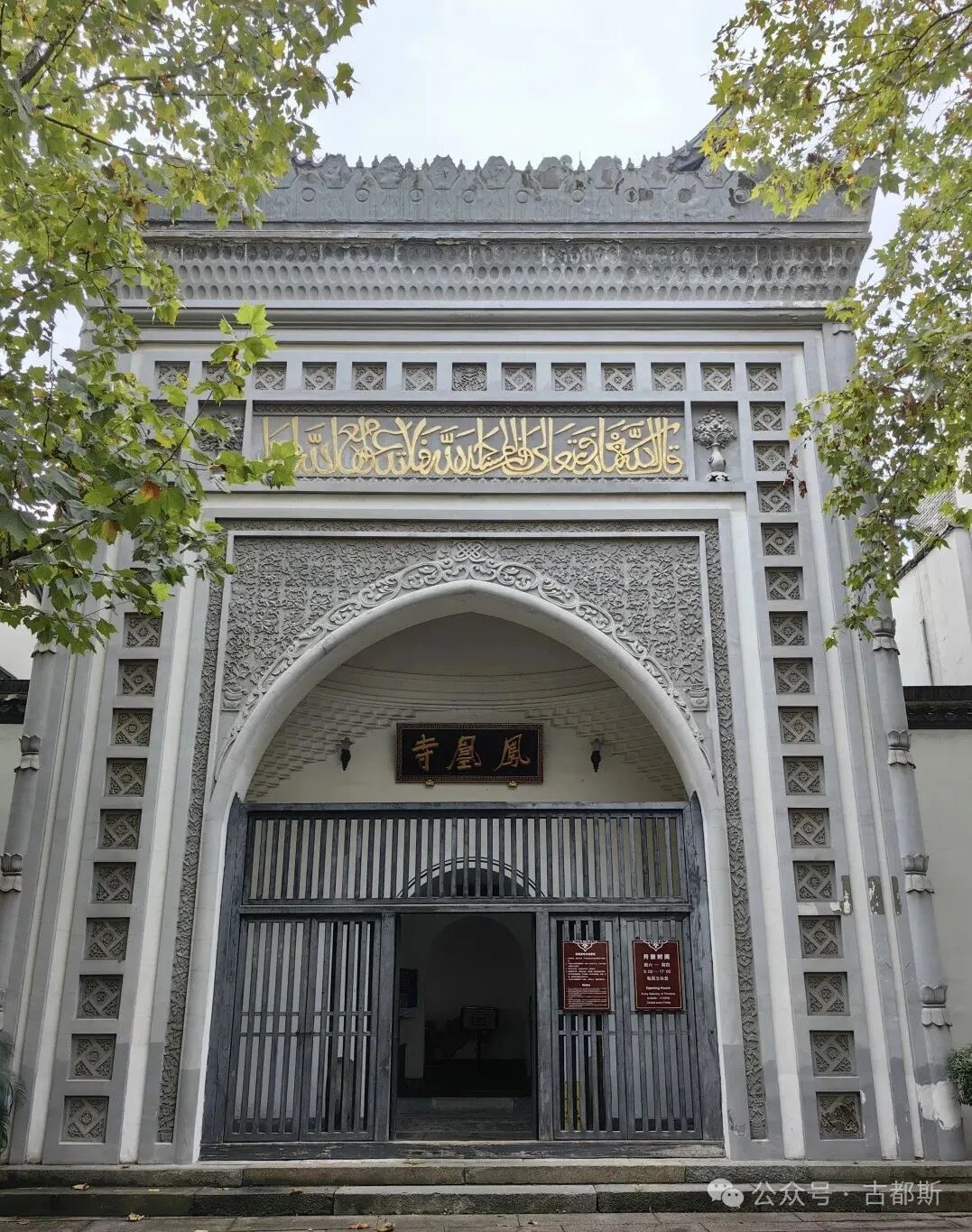
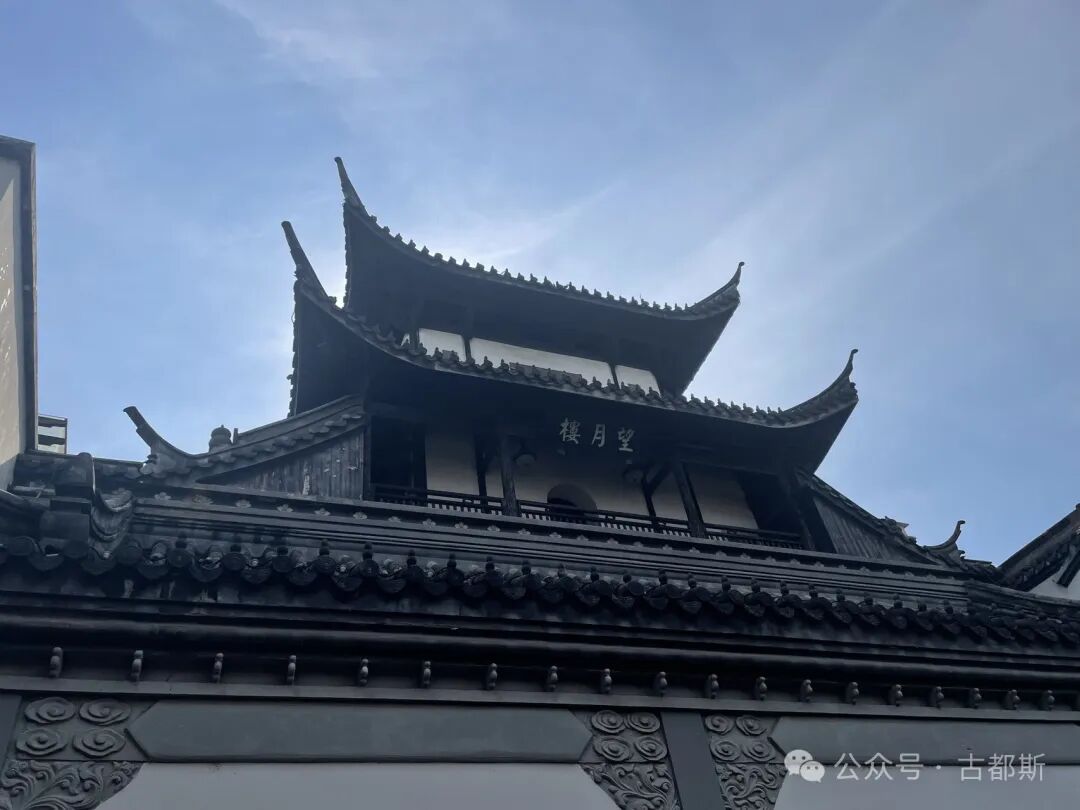
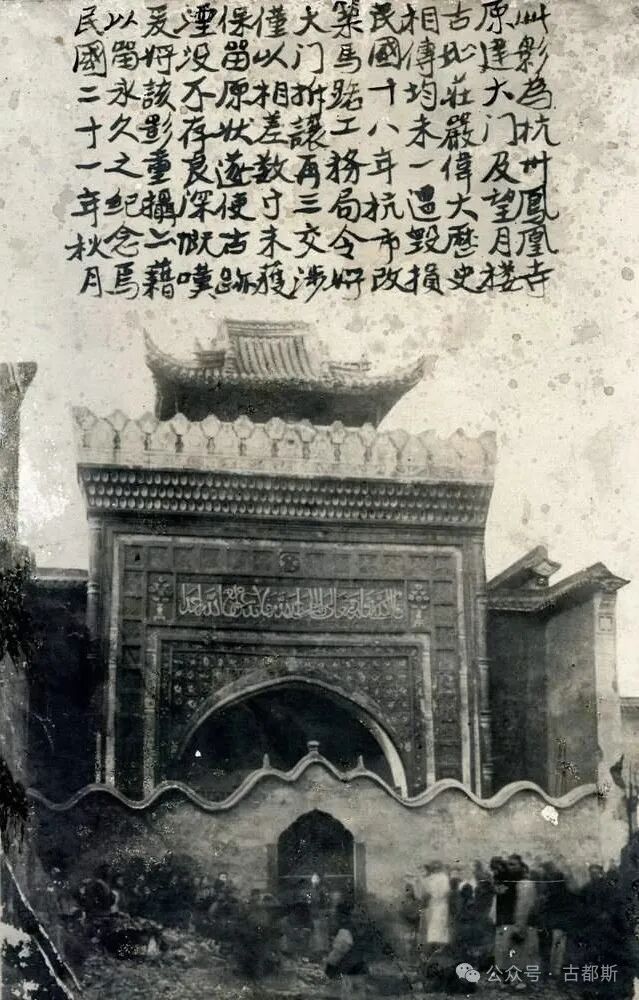
Hangzhou's Zhenjiao Mosque appears frequently in historical records. The 'Records of Rebuilding the Masjid in Hangzhou Prefecture' from the sixth year of the Hongzhi reign in the Ming Dynasty (1493) records that a man named Alaoding during the Yuan Dynasty presided over the rebuilding of the masjid in the eighteenth year of the Shizu Zhiyuan reign (1281). Meanwhile, Tian Rucheng's 'Travels and Sights of the West Lake' states that Zhenjiao Mosque was built during 'the Yuan Yanyou era (1314–1320).' Originally built in the Song Dynasty, Zhenjiao Mosque may have fallen into disrepair by the end of the Song and suffered from the ravages of war, leaving it quite dilapidated. It was rebuilt in the early Yuan Dynasty by the Hui Muslim Grand Master Alaoding, becoming a famous masjid in Hangzhou. The exact date of the reconstruction remains difficult to pinpoint, though it may have been repaired during the Zhiyuan, Yanyou, or even Zhizheng periods. It is worth noting that Alaoding clearly played a major role in the reconstruction of Zhenjiao Mosque during the Yuan Dynasty. Today, Fenghuang Mosque (Phoenix Mosque) preserves a Yuan Dynasty Persian and Arabic inscription for the rebuilding of the masjid, though the exact date is untraced; it explicitly states that the masjid was 'built by Fakhr al-Din ibn Shihab al-Din ibn Alaoding Tarmati' [4]—the very same person known as the Hui Muslim Grand Master Alaoding in Chinese historical records. After its reconstruction, Zhenjiao Mosque stood tall; its 'foundation alone was five to six feet high, with tightly secured gates that few could casually enter, commonly known as the Masjid.' [5]
The Hui Muslim Prayer Hall went by various names in successive local gazetteers, including 'Hui Muslim Worship Hall', 'Western Regions Worship Hall', 'Western Regions Prayer Hall', and 'Hui Muslim New Bridge Prayer Hall'. It likely evolved from the Sufi lodge funded and built by the wealthy Egyptian merchant Othman ibn Anfani. Historical records show that the location of the Hui Muslim Prayer Hall was always closely linked to an adjacent 'bridge', distinguishing it from Zhenjiao Mosque.
This bridge was once called Daoming Bridge, Jishan Bridge, and later known as Hui Muslim New Bridge. The bridge ran east-west, and the street segment was once named 'Hui Muslim New Bridge Straight Street'. This bridge is located right between the present-day Fengle South Bridge and Jianqiao Bridge. Fengle South Bridge was built in recent years, with Fengle Bridge lying just to its north, perfectly matching the historical records. East of Hui Muslim New Bridge is Zhubao Lane (Jewelry Lane), running north-south, which divides the street into Upper Zhubao Lane and Lower Zhubao Lane. Today, the 'Hui Muslim Prayer Hall' no longer exists, but the Hui Muslim New Bridge still stands proudly over Hangzhou's Central Grand Canal (Zhonghe Canal).
Regarding the Hui Clan Masjid, according to the Ming Dynasty Chenghua edition of the 'Hangzhou Prefecture Gazetteer': 'Temurles, style name Zhouxian, was a native of Kangli. In the thirteenth year of the Zhizheng reign, as prefect of Hangzhou, when the Qihuang rebels invaded the prefecture, the Confucian school was reduced to rubble. Temurles argued that because the school was tied to moral education, he could not use hard times as an excuse, and thus planned its reconstruction. The original foundation was cramped, so he purchased the land of the Hui Clan Masjid to expand it.' [6] This indicates that it was an Islamic masjid built during the Yuan Dynasty. At the end of the Yuan Dynasty, due to military turmoil, many Hui Muslims suffered calamities. Coinciding with the destruction of the Confucian school, Temurles purchased the site to serve as the school grounds. The Hui Clan Masjid was likely its Yuan and Ming dynasty designation, while the Yongzheng edition of the 'Zhejiang General Gazetteer' and the Qianlong edition of the 'Hangzhou Prefecture Gazetteer' both simply referred to it as the 'Masjid'. The exact site of the Hui Clan Masjid is not recorded in historical gazetteers. However, because its site was converted into the prefectural Confucian school (known as the Fuxue), the location of the Hui Clan Masjid can still be determined based on the address of the prefectural school. The Yongzheng edition of the 'Zhejiang General Gazetteer' states that the prefectural school 'is located east of the prefecture, formerly outside Tongyue Gate. In the first year of Shaoxing, it was initially built at Lingjia Bridge, now known as the former site of Hui'an Temple west of Lingyun Bridge' [7]. Lingjia Bridge, as recorded in the 'Xianchun Lin'an Gazetteer', is located on the West River at
'Lingjia Bridge, Fengyu Lane entrance' [8]. Zhong Yulong wrote in 'Tales of Hangzhou': 'Under the Transport Office River, during the Southern Song dynasty, it was Fengyu Lane Prefecture School Lane, where the Hangzhou Prefectural School was established. In the Ming dynasty, it was called Confucian Temple Street, and the prefectural school was converted into the Confucian Temple.' The Transport Office River
was filled in in 1936 and renamed Laodong Road (Labor Road). 'The Prefectural School is on today's Laodong Road, which is Confucius Temple.' [9] Meanwhile, the Southern Song 'Capital Map' drawn in the sixth year of the Tongzhi reign in the Qing Dynasty (1867) [10] marks 'Houshi Street' between 'Fengle Bridge' and 'Jianqiao Bridge'. If one marks the respective locations of Fenghuang Mosque, the Hui Muslim Prayer Hall, and the Hui Clan Masjid around the 'Prefectural School' on the map, it becomes clear that all three masjids basically lie on the same east-west main axis.
Fenghuang Mosque sits in the middle, with the Hui Muslim Prayer Hall to the east and the Hui Clan Masjid to the west. The distances from Fenghuang Mosque to the other two masjids are nearly equal, and the distribution of the three masjids in Hangzhou during the Yuan Dynasty closely matches the residential patterns of Hui Muslims living around their masjids, as well as their commercial markets.
Furthermore, according to the Chenghua edition of the 'Hangzhou Prefecture Gazetteer': 'Xia Sizhong, style name Zhongyan, was a native of Gaoyou. In his youth, he served as a clerk. When Zhang's forces occupied Gaoyou, Sizhong followed them. When Zhang surrendered and pledged allegiance, his subordinates were appointed to various posts, and Sizhong was appointed as a counselor in the Jiangsu-Zhejiang Branch Secretariat, later reassigned as the Prefecture Administrator of Hangzhou. Sizhong was open-minded, quick, and unhindered, courageous and proactive when encountering matters, winning the respect of superiors and subordinates alike. After the Hangzhou school was devastated by the fires of war, the former prefect Temurles had just finished its reconstruction when the temple keeper was careless with fire, burning the whole complex down. Sizhong boldly took reconstruction upon himself. Previously, although Temurles had purchased the land of the masjid for expansion, he had not acquired all of it. Sizhong purchased the remainder in full, making the foundations vast and the temple buildings solemn and orderly. From then on, the Hangzhou school became the crown of western Zhejiang.' [11] The 'Complete Library of the Four Branches of Literature' (Gujin Tushu Jicheng) contains the exact same record: 'Xia Sizhong served as the Prefecture Administrator of Hangzhou. After the Hangzhou school was ravaged by war and fire, the former prefect Temurles had just finished rebuilding it when it was subsequently destroyed by fire. Sizhong took the restoration upon himself, building upon Temurles' legacy by purchasing all the land of the masjid to expand the school grounds. The buildings were solemn and orderly, making the Hangzhou school the crown of western Zhejiang.' [12] It appears that the Hui Clan Masjid during the Yuan Dynasty occupied quite a large area and scale. When Temurles built the prefectural school in the thirteenth year of the Zhizheng reign (1353), it did not occupy all the land of the masjid. Just as the school's reconstruction was 'newly completed', a fire broke out and reduced it to ashes.
Later, Hangzhou Prefect Xia Sizhong purchased all the remaining land belonging to the Hui Clan Masjid and heavily expanded the prefectural school, making 'the Hangzhou school the crown of western Zhejiang.' This also demonstrates that the Hui Muslims living in Hangzhou at that time were not only numerous in number but also possessed immense financial resources.
From this, it is clear that Hangzhou during the Yuan Dynasty indeed housed three masjids: Zhenjiao Mosque, the Hui Clan Masjid, and the Hui Muslim Prayer Hall. It was only during the Zhizheng period at the end of the Yuan Dynasty that the Hui Clan Masjid was abandoned due to military turmoil, and its site was acquired by the government to be used as land for the prefectural school [13].
[1] Tian Rucheng: 'Travels and Sights of the West Lake', Volume 18, 'Scenic Spots in the City Along the Southern Mountain Branch: Zhenjiao Mosque', Chinese Local Gazetteers Series edition.
[2] 'The Travels of Ibn Battuta', Ningxia People's Publishing House, 1985 edition, p. 557.
[3] Same as above.
[4] Cheng Tong: 'Persian and Arabic Inscriptions at Hangzhou Fenghuang Mosque - Also Discussing the Footsteps of Muslims in Hangzhou During the Yuan Dynasty', published in 'Shanghai Cultural Heritage', Issue 1, 2006.
[5] Tian Rucheng: 'Travels and Sights of the West Lake', Volume 18, 'Scenic Spots in the City Along the Southern Mountain Branch: Zhenjiao Mosque', Chinese Local Gazetteers Series edition.
[6] Chenghua 'Hangzhou Prefecture Gazetteer', 'Siku Quanshu Cunmu Congshu - Historical Works Collection', Qilu Publishing House, 1996 edition.
[7] Yongzheng 'Zhejiang General Gazetteer', Zhejiang Publishing House block-printed edition, 25th year of the Guangxu reign of the Qing Dynasty (1899).
[8] 'Xianchun Lin'an Gazetteer', included in 'Song and Yuan Local Gazetteers Collection', Zhonghua Book Company, 1990 edition.
[9] Zhong Yulong: 'Tales of Hangzhou', found in 'West Lake Historical Documents Integration' (Vol. 11), Hangzhou Publishing House, 2004 edition.
[10] 'Xianchun Lin'an Gazetteer', included in 'Song and Yuan Local Gazetteers Collection', Zhonghua Book Company, 1990 edition.
[11] Chenghua 'Hangzhou Prefecture Gazetteer', 'Siku Quanshu Cunmu Congshu - Historical Works Collection', Qilu Publishing House, 1996 edition.
[12] 'Gujin Tushu Jicheng - Economic Compilation, Electoral Canon', Volume 26, 'School Section Historical Events Part 2', Shanghai Zhonghua Book Company, 1934 edition.
[13] Guo Chengmei: 'The Hui Clan Masjid - Another Yuan Dynasty Masjid in Hangzhou', published in 'Islamic Culture Studies' (Xi'an), Issue 3, 2008.
Selected from 'History of Islam in Hangzhou'
Authored by Ma Jianchun
Tracing the History and Evolution of the Three Hui Muslim Mosques in Hangzhou During the Yuan Dynasty: A Documentary Record of Jiangnan Muslim Masjids and Cultural Relics in the Song and Yuan Dynasties
Abstract:
This study examines and organizes the historical origins, rise, and fall of the three important masjids within the city of Hangzhou during the Yuan Dynasty. By combining historical local gazetteers and epigraphic records, it reveals the religious life, social status, and historical and cultural heritage value of the Muslim community in the Jiangnan metropolis during the Song and Yuan dynasties.
The growth of the Muslim population during the Yuan Dynasty led to the widespread construction of masjids as places for Islamic religious activities. The Yuan government gave explicit recognition to this phenomenon, and historical literature shifted from calling these prayer sites 'halls' (tang) to 'temples/masjids' (si). As recorded in the 'Records of Rebuilding the Masjid in Dingzhou': 'Today, near the capital and far across various circuits, there are over ten thousand masjids, all facing west to perform the ritual of prostrating and praying to Allah.' Hangzhou was no exception. Hui Muslims built masjids while strictly adhering to religious doctrines and fulfilling religious duties: 'Reciting scriptures and keeping the fast, returning to tranquility, with their elders leading them, called mullahs (manla). All scriptures are in foreign scripts, bowing and prostrating facing the wall, without setting up Buddha statues, simply using religious titles to praise and bless the deities.' Tian Rucheng's 'Travels and Sights of the West Lake' states: 'Zhenjiao Mosque was built south of Wenjin Lane by the Hui Muslim Grand Master Alaoding during the Yuan Zhida/Yanyou era (1314–1320).' [1]
Hui Muslims lived in communities surrounding their masjids, and the construction of a masjid actually marked the formation of local Muslim neighborhoods. A great number of Hui Muslims lived in Hangzhou during the Yuan Dynasty; building upon the Song Dynasty fanfang (foreign quarters), they naturally expanded into three major communities and built masjids, resulting in three masjids in Hangzhou at that time: Zhenjiao Mosque (True Teaching Mosque), the Hui Muslim Prayer Hall, and the Hui Clan Masjid. The Moroccan traveler Ibn Battuta described Hangzhou's third Muslim residential district, noting that 'the city is beautiful, and the street layout is like that of Islamic regions. Inside, there are a masjid and muezzins; when entering the city, it happened to be the time for the Dhuhr prayer, and their voices could be heard far and near.' [2] From this perspective, the Hui Muslim population residing in Hangzhou during the Yuan Dynasty was indeed quite substantial. Ibn Battuta also mentioned a wealthy merchant from Egypt named Othman ibn Anfani, stating that 'he also built a large congregational masjid in the city and endowed the masjid and the Sufi lodge with generous charitable funds.' 'The Muslims in this city are numerous. We stayed in this city for fifteen days, and we were invited every day and night. They were also very particular about their food and cuisine, and every day they accompanied us on horseback to tour the entire city.' [3] This account perfectly corroborates the historical facts reflected in Chinese-language literature, namely that there were two masjids and one Sufi lodge within the city of Hangzhou. It seems credible that Hangzhou had three masjids during the Yuan Dynasty.
Hangzhou's Zhenjiao Mosque appears frequently in historical records. The 'Records of Rebuilding the Masjid in Hangzhou Prefecture' from the sixth year of the Hongzhi reign in the Ming Dynasty (1493) records that a man named Alaoding during the Yuan Dynasty presided over the rebuilding of the masjid in the eighteenth year of the Shizu Zhiyuan reign (1281). Meanwhile, Tian Rucheng's 'Travels and Sights of the West Lake' states that Zhenjiao Mosque was built during 'the Yuan Yanyou era (1314–1320).' Originally built in the Song Dynasty, Zhenjiao Mosque may have fallen into disrepair by the end of the Song and suffered from the ravages of war, leaving it quite dilapidated. It was rebuilt in the early Yuan Dynasty by the Hui Muslim Grand Master Alaoding, becoming a famous masjid in Hangzhou. The exact date of the reconstruction remains difficult to pinpoint, though it may have been repaired during the Zhiyuan, Yanyou, or even Zhizheng periods. It is worth noting that Alaoding clearly played a major role in the reconstruction of Zhenjiao Mosque during the Yuan Dynasty. Today, Fenghuang Mosque (Phoenix Mosque) preserves a Yuan Dynasty Persian and Arabic inscription for the rebuilding of the masjid, though the exact date is untraced; it explicitly states that the masjid was 'built by Fakhr al-Din ibn Shihab al-Din ibn Alaoding Tarmati' [4]—the very same person known as the Hui Muslim Grand Master Alaoding in Chinese historical records. After its reconstruction, Zhenjiao Mosque stood tall; its 'foundation alone was five to six feet high, with tightly secured gates that few could casually enter, commonly known as the Masjid.' [5]
The Hui Muslim Prayer Hall went by various names in successive local gazetteers, including 'Hui Muslim Worship Hall', 'Western Regions Worship Hall', 'Western Regions Prayer Hall', and 'Hui Muslim New Bridge Prayer Hall'. It likely evolved from the Sufi lodge funded and built by the wealthy Egyptian merchant Othman ibn Anfani. Historical records show that the location of the Hui Muslim Prayer Hall was always closely linked to an adjacent 'bridge', distinguishing it from Zhenjiao Mosque.
This bridge was once called Daoming Bridge, Jishan Bridge, and later known as Hui Muslim New Bridge. The bridge ran east-west, and the street segment was once named 'Hui Muslim New Bridge Straight Street'. This bridge is located right between the present-day Fengle South Bridge and Jianqiao Bridge. Fengle South Bridge was built in recent years, with Fengle Bridge lying just to its north, perfectly matching the historical records. East of Hui Muslim New Bridge is Zhubao Lane (Jewelry Lane), running north-south, which divides the street into Upper Zhubao Lane and Lower Zhubao Lane. Today, the 'Hui Muslim Prayer Hall' no longer exists, but the Hui Muslim New Bridge still stands proudly over Hangzhou's Central Grand Canal (Zhonghe Canal).
Regarding the Hui Clan Masjid, according to the Ming Dynasty Chenghua edition of the 'Hangzhou Prefecture Gazetteer': 'Temurles, style name Zhouxian, was a native of Kangli. In the thirteenth year of the Zhizheng reign, as prefect of Hangzhou, when the Qihuang rebels invaded the prefecture, the Confucian school was reduced to rubble. Temurles argued that because the school was tied to moral education, he could not use hard times as an excuse, and thus planned its reconstruction. The original foundation was cramped, so he purchased the land of the Hui Clan Masjid to expand it.' [6] This indicates that it was an Islamic masjid built during the Yuan Dynasty. At the end of the Yuan Dynasty, due to military turmoil, many Hui Muslims suffered calamities. Coinciding with the destruction of the Confucian school, Temurles purchased the site to serve as the school grounds. The Hui Clan Masjid was likely its Yuan and Ming dynasty designation, while the Yongzheng edition of the 'Zhejiang General Gazetteer' and the Qianlong edition of the 'Hangzhou Prefecture Gazetteer' both simply referred to it as the 'Masjid'. The exact site of the Hui Clan Masjid is not recorded in historical gazetteers. However, because its site was converted into the prefectural Confucian school (known as the Fuxue), the location of the Hui Clan Masjid can still be determined based on the address of the prefectural school. The Yongzheng edition of the 'Zhejiang General Gazetteer' states that the prefectural school 'is located east of the prefecture, formerly outside Tongyue Gate. In the first year of Shaoxing, it was initially built at Lingjia Bridge, now known as the former site of Hui'an Temple west of Lingyun Bridge' [7]. Lingjia Bridge, as recorded in the 'Xianchun Lin'an Gazetteer', is located on the West River at
'Lingjia Bridge, Fengyu Lane entrance' [8]. Zhong Yulong wrote in 'Tales of Hangzhou': 'Under the Transport Office River, during the Southern Song dynasty, it was Fengyu Lane Prefecture School Lane, where the Hangzhou Prefectural School was established. In the Ming dynasty, it was called Confucian Temple Street, and the prefectural school was converted into the Confucian Temple.' The Transport Office River
was filled in in 1936 and renamed Laodong Road (Labor Road). 'The Prefectural School is on today's Laodong Road, which is Confucius Temple.' [9] Meanwhile, the Southern Song 'Capital Map' drawn in the sixth year of the Tongzhi reign in the Qing Dynasty (1867) [10] marks 'Houshi Street' between 'Fengle Bridge' and 'Jianqiao Bridge'. If one marks the respective locations of Fenghuang Mosque, the Hui Muslim Prayer Hall, and the Hui Clan Masjid around the 'Prefectural School' on the map, it becomes clear that all three masjids basically lie on the same east-west main axis.
Fenghuang Mosque sits in the middle, with the Hui Muslim Prayer Hall to the east and the Hui Clan Masjid to the west. The distances from Fenghuang Mosque to the other two masjids are nearly equal, and the distribution of the three masjids in Hangzhou during the Yuan Dynasty closely matches the residential patterns of Hui Muslims living around their masjids, as well as their commercial markets.
Furthermore, according to the Chenghua edition of the 'Hangzhou Prefecture Gazetteer': 'Xia Sizhong, style name Zhongyan, was a native of Gaoyou. In his youth, he served as a clerk. When Zhang's forces occupied Gaoyou, Sizhong followed them. When Zhang surrendered and pledged allegiance, his subordinates were appointed to various posts, and Sizhong was appointed as a counselor in the Jiangsu-Zhejiang Branch Secretariat, later reassigned as the Prefecture Administrator of Hangzhou. Sizhong was open-minded, quick, and unhindered, courageous and proactive when encountering matters, winning the respect of superiors and subordinates alike. After the Hangzhou school was devastated by the fires of war, the former prefect Temurles had just finished its reconstruction when the temple keeper was careless with fire, burning the whole complex down. Sizhong boldly took reconstruction upon himself. Previously, although Temurles had purchased the land of the masjid for expansion, he had not acquired all of it. Sizhong purchased the remainder in full, making the foundations vast and the temple buildings solemn and orderly. From then on, the Hangzhou school became the crown of western Zhejiang.' [11] The 'Complete Library of the Four Branches of Literature' (Gujin Tushu Jicheng) contains the exact same record: 'Xia Sizhong served as the Prefecture Administrator of Hangzhou. After the Hangzhou school was ravaged by war and fire, the former prefect Temurles had just finished rebuilding it when it was subsequently destroyed by fire. Sizhong took the restoration upon himself, building upon Temurles' legacy by purchasing all the land of the masjid to expand the school grounds. The buildings were solemn and orderly, making the Hangzhou school the crown of western Zhejiang.' [12] It appears that the Hui Clan Masjid during the Yuan Dynasty occupied quite a large area and scale. When Temurles built the prefectural school in the thirteenth year of the Zhizheng reign (1353), it did not occupy all the land of the masjid. Just as the school's reconstruction was 'newly completed', a fire broke out and reduced it to ashes.
Later, Hangzhou Prefect Xia Sizhong purchased all the remaining land belonging to the Hui Clan Masjid and heavily expanded the prefectural school, making 'the Hangzhou school the crown of western Zhejiang.' This also demonstrates that the Hui Muslims living in Hangzhou at that time were not only numerous in number but also possessed immense financial resources.
From this, it is clear that Hangzhou during the Yuan Dynasty indeed housed three masjids: Zhenjiao Mosque, the Hui Clan Masjid, and the Hui Muslim Prayer Hall. It was only during the Zhizheng period at the end of the Yuan Dynasty that the Hui Clan Masjid was abandoned due to military turmoil, and its site was acquired by the government to be used as land for the prefectural school [13].
[1] Tian Rucheng: 'Travels and Sights of the West Lake', Volume 18, 'Scenic Spots in the City Along the Southern Mountain Branch: Zhenjiao Mosque', Chinese Local Gazetteers Series edition.
[2] 'The Travels of Ibn Battuta', Ningxia People's Publishing House, 1985 edition, p. 557.
[3] Same as above.
[4] Cheng Tong: 'Persian and Arabic Inscriptions at Hangzhou Fenghuang Mosque - Also Discussing the Footsteps of Muslims in Hangzhou During the Yuan Dynasty', published in 'Shanghai Cultural Heritage', Issue 1, 2006.
[5] Tian Rucheng: 'Travels and Sights of the West Lake', Volume 18, 'Scenic Spots in the City Along the Southern Mountain Branch: Zhenjiao Mosque', Chinese Local Gazetteers Series edition.
[6] Chenghua 'Hangzhou Prefecture Gazetteer', 'Siku Quanshu Cunmu Congshu - Historical Works Collection', Qilu Publishing House, 1996 edition.
[7] Yongzheng 'Zhejiang General Gazetteer', Zhejiang Publishing House block-printed edition, 25th year of the Guangxu reign of the Qing Dynasty (1899).
[8] 'Xianchun Lin'an Gazetteer', included in 'Song and Yuan Local Gazetteers Collection', Zhonghua Book Company, 1990 edition.
[9] Zhong Yulong: 'Tales of Hangzhou', found in 'West Lake Historical Documents Integration' (Vol. 11), Hangzhou Publishing House, 2004 edition.
[10] 'Xianchun Lin'an Gazetteer', included in 'Song and Yuan Local Gazetteers Collection', Zhonghua Book Company, 1990 edition.
[11] Chenghua 'Hangzhou Prefecture Gazetteer', 'Siku Quanshu Cunmu Congshu - Historical Works Collection', Qilu Publishing House, 1996 edition.
[12] 'Gujin Tushu Jicheng - Economic Compilation, Electoral Canon', Volume 26, 'School Section Historical Events Part 2', Shanghai Zhonghua Book Company, 1934 edition.
[13] Guo Chengmei: 'The Hui Clan Masjid - Another Yuan Dynasty Masjid in Hangzhou', published in 'Islamic Culture Studies' (Xi'an), Issue 3, 2008.
Selected from 'History of Islam in Hangzhou'
Authored by Ma Jianchun
