
Decoding Hangzhou's Muslim Heritage: Rare Mosque Steles & Halal History
[Internet Repost]
Academic Research: Deciphering Newly Discovered Imam Tombstones at Hangzhou's Yong'an Muslim Cemetery: New Evidence on Islamic History and the Fenghuang Mosque's Imam System
Abstract:
Through detailed textual research on newly discovered tombstones of imams dating from the Daoguang, Xianfeng, and Republican periods at Hangzhou's Yong'an Muslim Cemetery, this study fills a historical gap in the lineage of Hangzhou's Islamic leaders and provides precious first-hand physical evidence for the three-imam system historically practiced at Fenghuang Mosque (Phoenix Mosque).
Academic Research:
Discovery of Imam Tombstones at Hangzhou's Yong'an Muslim Cemetery
Guo Chengmei, Yang Hua
Abstract
Three tombstones respectively bearing the titles of "Grand Imam" and "Third Imam" have been discovered at the Yong'an Muslim Cemetery in Hangzhou. Dating to the Daoguang, Xianfeng, and Republican eras, these stones provide concrete evidence that Fenghuang Mosque once practiced a three-imam system. The subjects of these three tombstones have rarely been mentioned in academic circles, and their indisputable roles as religious leaders offer fresh content and fertile ground for researching late Qing and Republican-era Islam in Hangzhou. This article offers a preliminary decipherment of the inscriptions on these three steles. Around the 1930s, titles like "Grand Imam" disappeared from Yong'an Cemetery, replaced by terms such as "Ahong (Islamic teacher/imam)" and "Jiaozhang (chief imam/dean)", indicating that the Fenghuang Mosque's three-imam system was no longer in practice. This historical shift was linked to the rising status of community elders, the gradual dilution of the imams' administrative powers, and external influences.
Keywords
Fenghuang Mosque (Phoenix Mosque); Three-Imam System; Tombstones
1. The Discovery of Grand Imam, Third Imam, and Imam Tombstones in Hangzhou
Historically, the three-imam system was one of the organizational structures used in inland China's mosques, also known as the "Three-Path System." Emerging among Hui Muslims in interior China in the late 14th century, it was a mosque organization system composed of three religious roles: the Imam, the Khatib, and the Mu'adhdhin. In Ma Zhu's Qingzhen Zhinhai (Guide to Islam), the Imam, Khatib, and Mu'adhdhin are referred to sequentially as the "Grand Imam," "Second Imam," and "Third Imam," and are collectively called "religious leaders." Liu Zhi's Tianfang Dianli (Islamic Rites) refers to the Khatib as "Yujiao" (instructor of teachings) and the Mu'adhdhin as "Zangjiao" (praiser of teachings). Within the three-imam system, the Imam led the congregation in prayer and presided over public religious rituals and activities; the Khatib preached and admonished; and the Mu'adhdhin served as the muezzin, specifically calling the faithful to the mosque for prayer when the time arrived. This system was widely prevalent in Hui Muslim communities during the Ming and Qing dynasties and formed a hereditary practice. With social development, aside from a few religious communities that formally retained the "three-imam system," it gradually faded away by the mid-Republican period, and the institution ceased to exist.
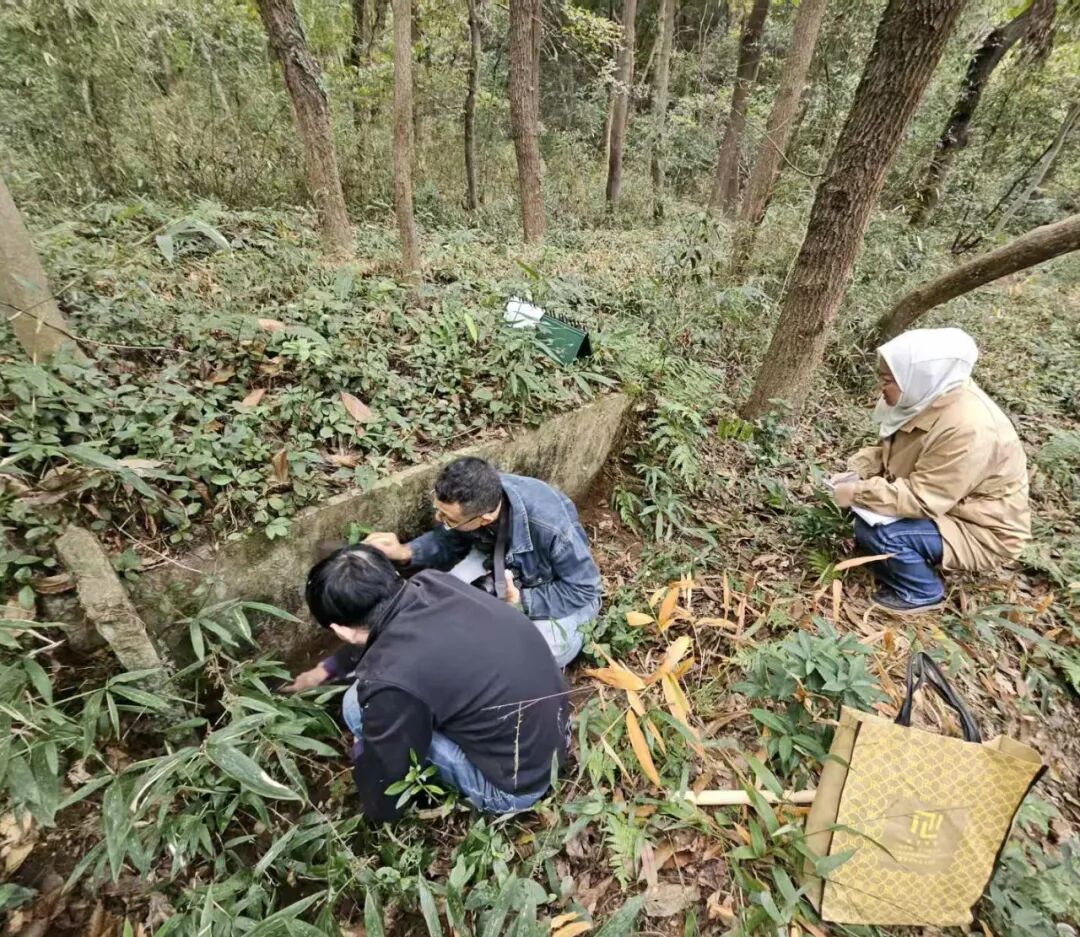
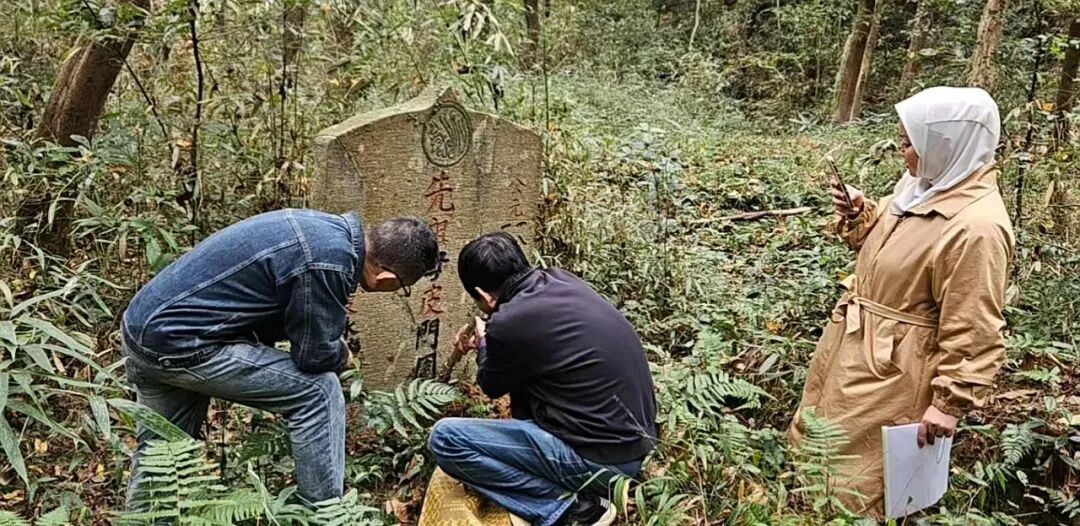
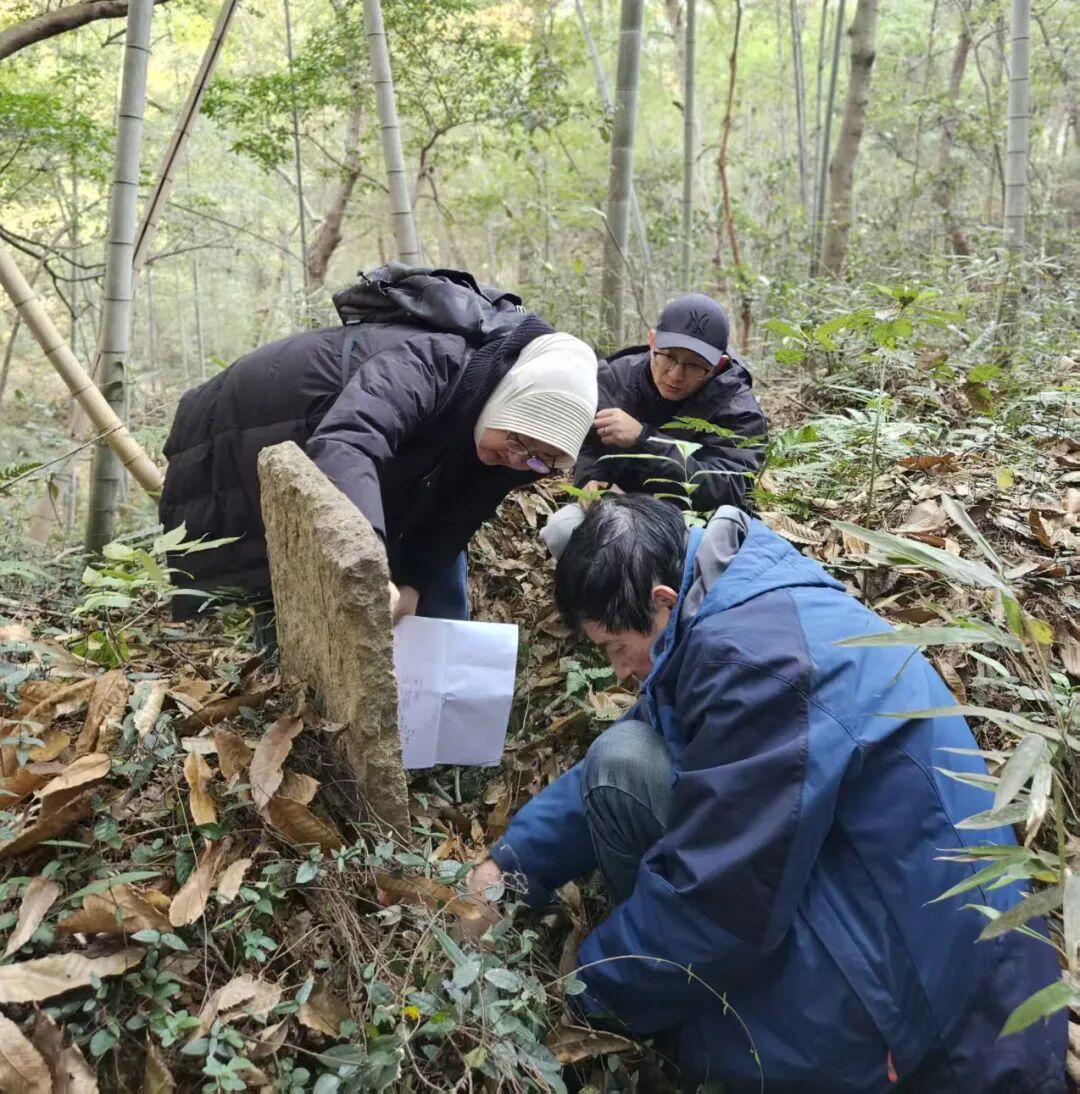
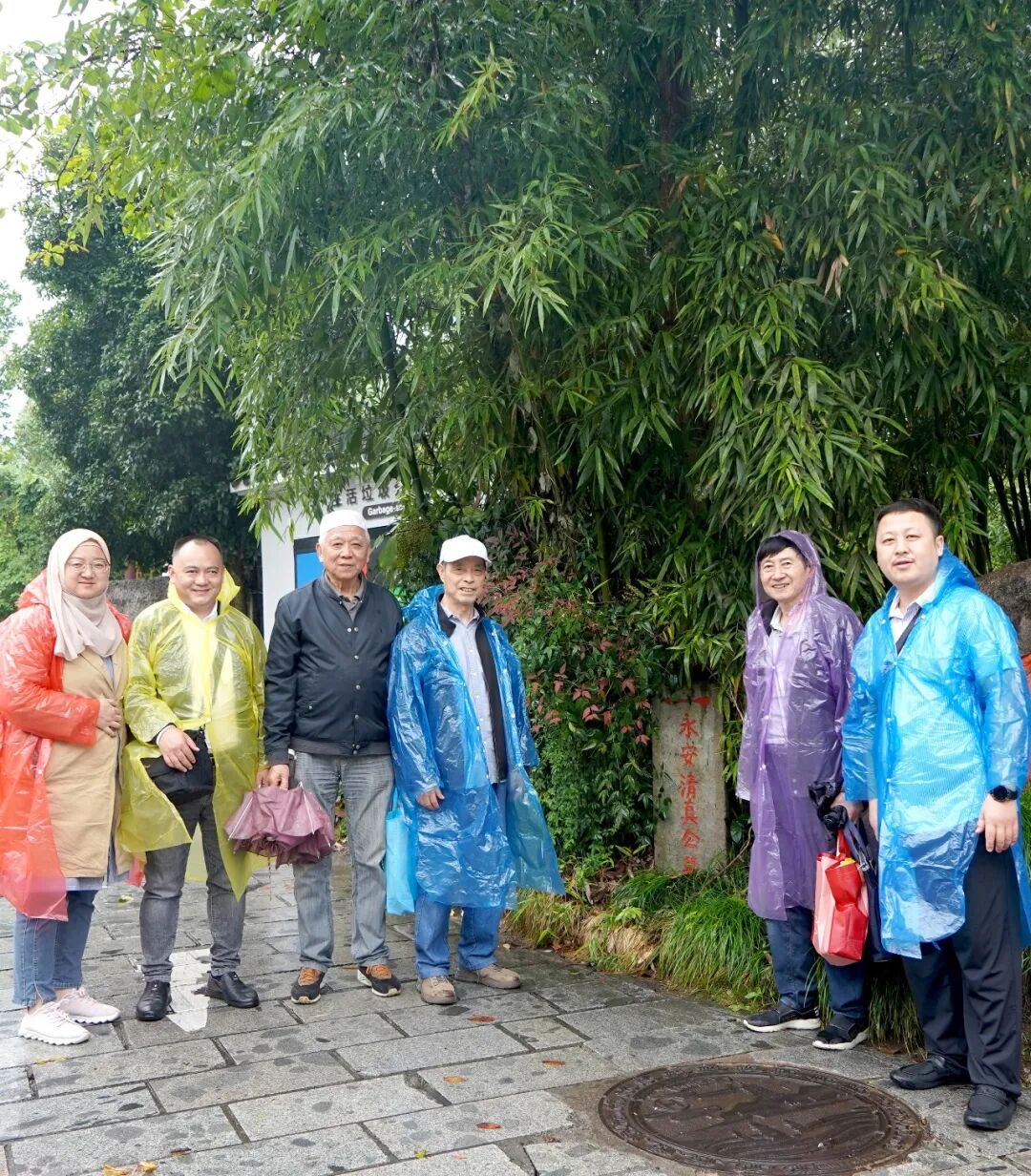
Whether the historic Fenghuang Mosque (Phoenix Mosque) in Hangzhou practiced the three-imam system of mosque management is a question worthy of attention and study. Due to a scarcity of sources, it has remained unaddressed. Since 2017, and particularly starting two years ago, with the support of the Zhejiang Islamic Association, we have gained a general understanding of the Yong'an Muslim Cemetery through multiple field surveys. By numbering, registering, and photographing the tombs and steles, and by transcribing inscriptions and measuring stones for key monuments, we have gathered a wealth of precious first-hand material and achieved preliminary research results. Among them, several tombstones related to Fenghuang Mosque particularly caught our attention. Upon research, we discovered that the sparse words carved on these few stones actually pertain to the implementation of the three-imam system at Fenghuang Mosque. Below, this paper will focus on introducing the evidence found on these steles at the Yong'an Muslim Cemetery concerning the practice of the three-imam system at Fenghuang Mosque in the late Qing and early Republican periods.
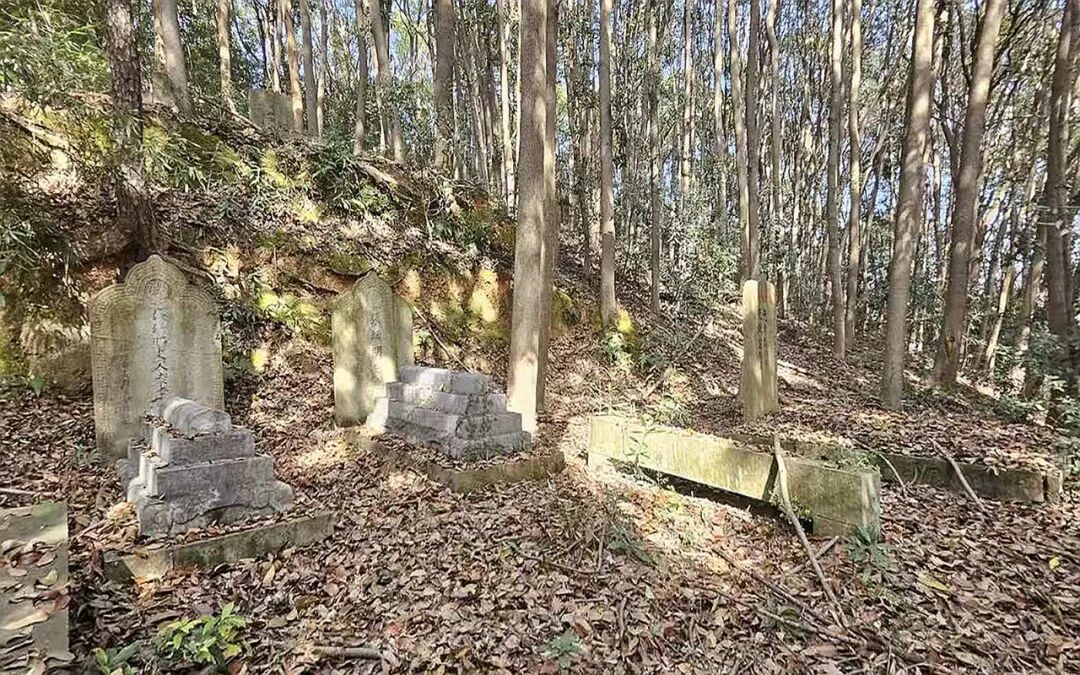
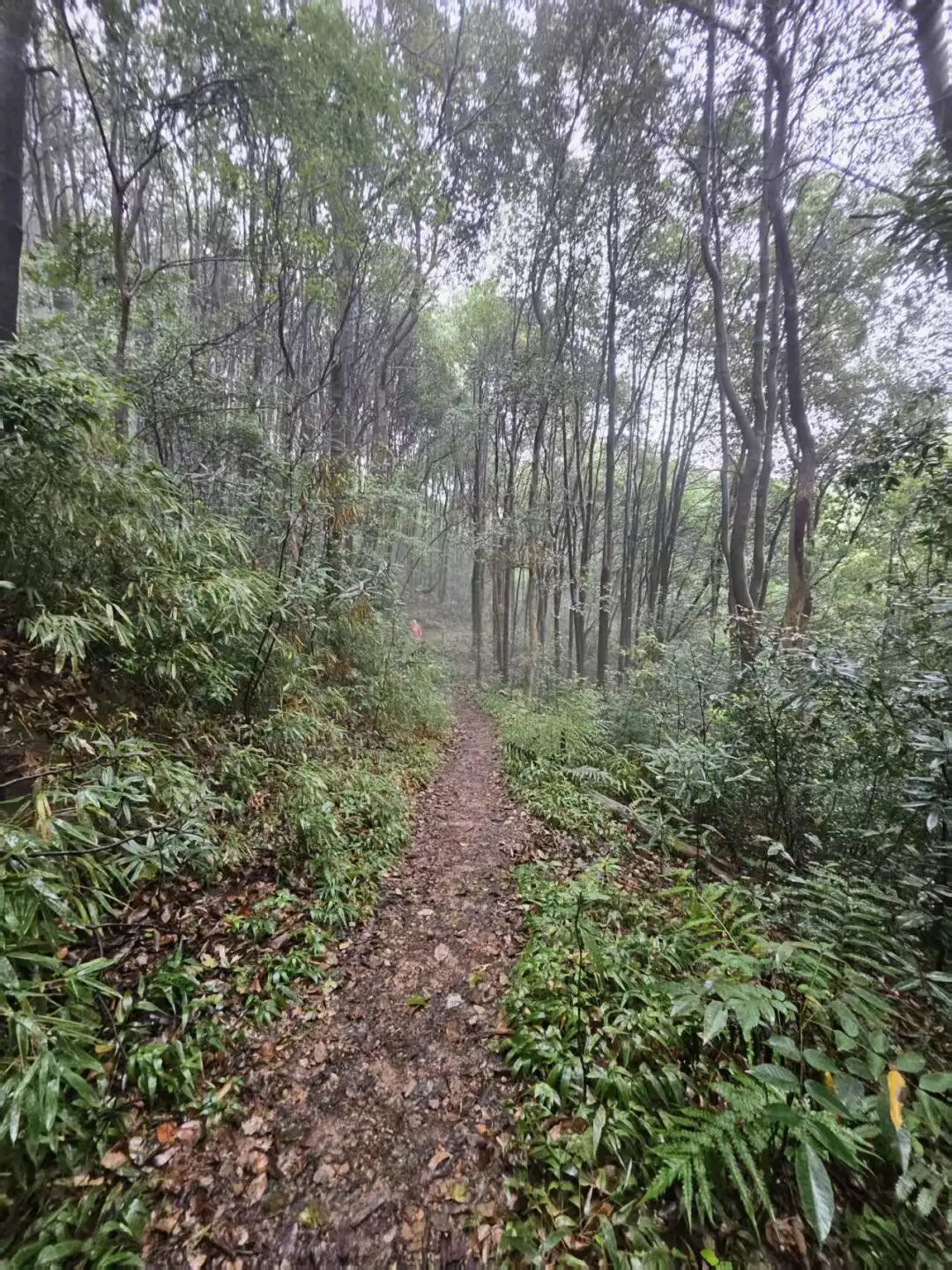
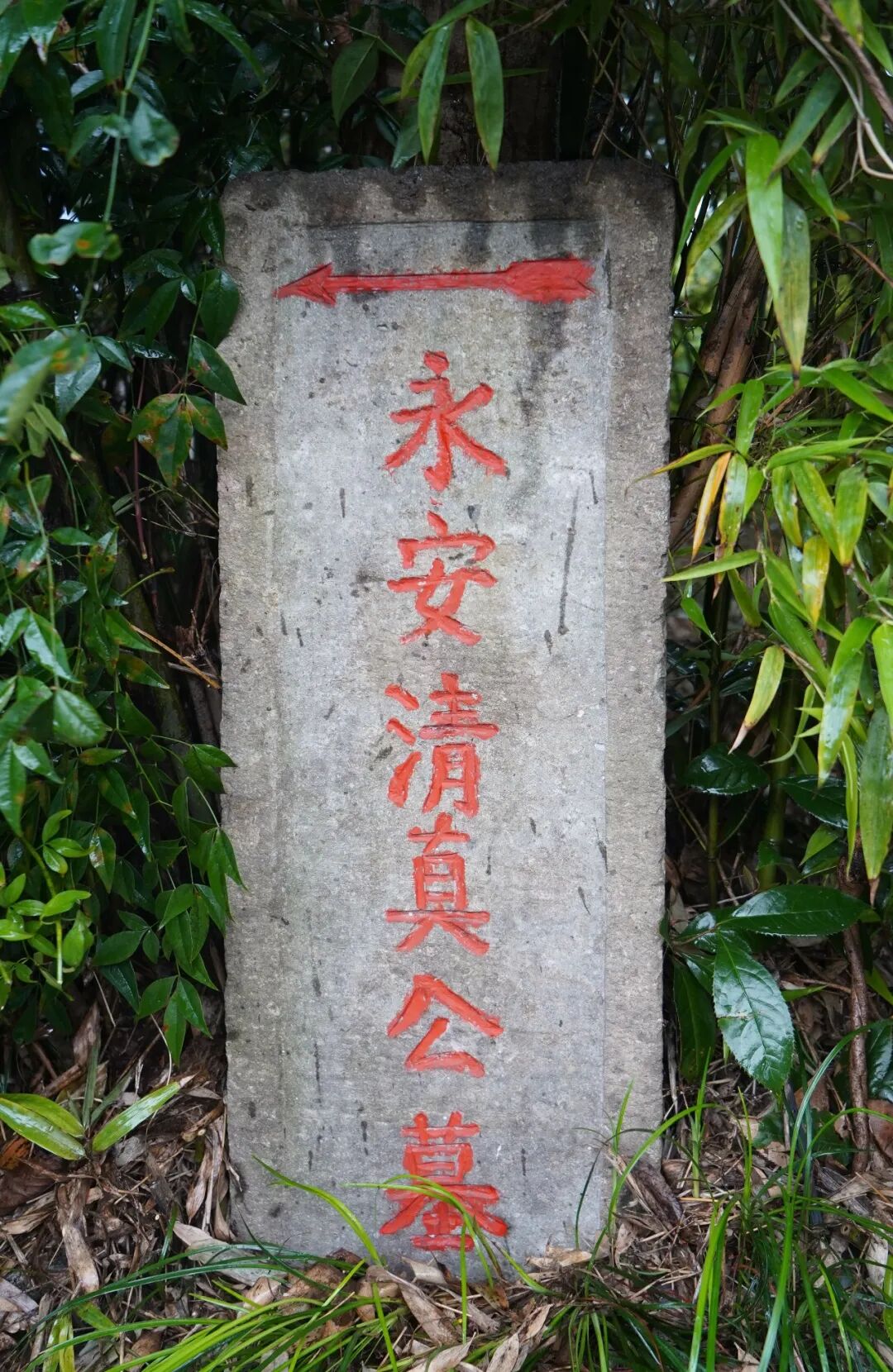
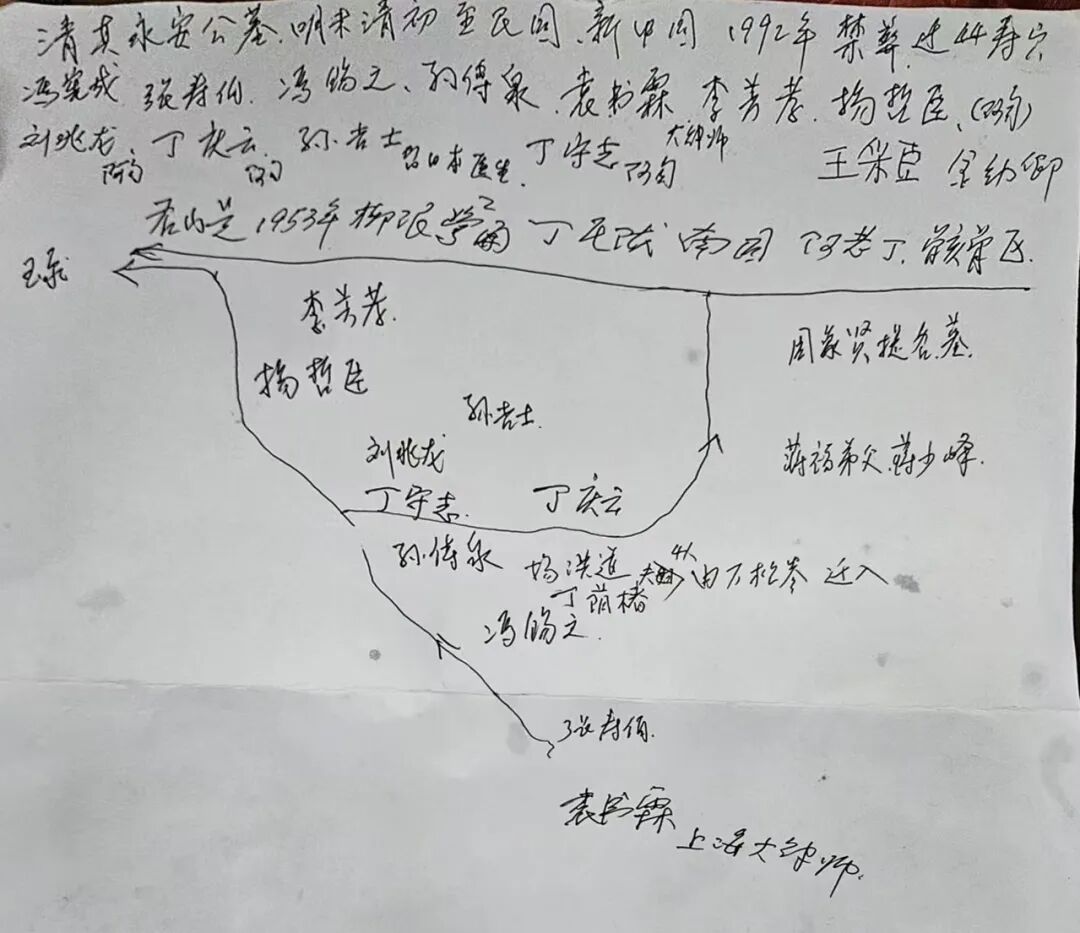
The Yong'an Muslim Cemetery is located within the Yuquan Scenic Area in Hangzhou. Because Muslim cemeteries such as the one in the West Lake South Garden fell into ruin over time and left no space for burials, clan members raised funds in 1934 to purchase 99 mu of land at Lingfeng, Yuquan, West Lake, establishing the Yong'an Cemetery. In 1991, to beautify the West Lake scenic area, the Hangzhou municipal government banned further burials at the "Yong'an Cemetery" in the Yuquan scenic zone, designating the site as a permanent area for ancient Hui Muslim tombs. The original 44 burial plots were funded by the government and relocated to the Liuxia Hui Muslim Cemetery in the nearby suburbs.
The burial grounds of the Yong'an Muslim Cemetery currently contain roughly three categories of Muslim graves. The first consists of original burials from various dynasties prior to 1934 that were already located within the Yong'an graveyard, such as the 55th year of the Qianlong era (1790) "Tomb of Aunt Ding," the Daoguang-era (1838) "Joint Tomb of Wang Chunhui and Madam Liu," the Tongzhi-era (1867) "Tomb of Madam Wang and Madam Ding," and the Guangxu-era (1877) "Tomb of Ma Ermei." The second category comprises graves added as a public cemetery for Hangzhou's Muslims between the establishment of the cemetery in 1934 and 1991, when the Hangzhou municipal government prohibited further burials at Yong'an and designated it as ancient Hui Muslim graves. The third category includes a certain number of relocated tombs. After 1949, as Hangzhou accelerated urban construction and development, many ancient Muslim graves and modern burials originally located in development zones were relocated, and Yong'an Cemetery took in a portion of them. Because the cemetery is nestled in a tranquil mountain scenic area, the Hangzhou municipal government preserved it in its original state permanently. The 1991 government burial ban took effect in 1992, after which the Yong'an Cemetery distanced itself from urban clamor and settled into natural serenity. These ancient tombs and steles within the cemetery grounds have thus been preserved before us in their original locations and appearances.
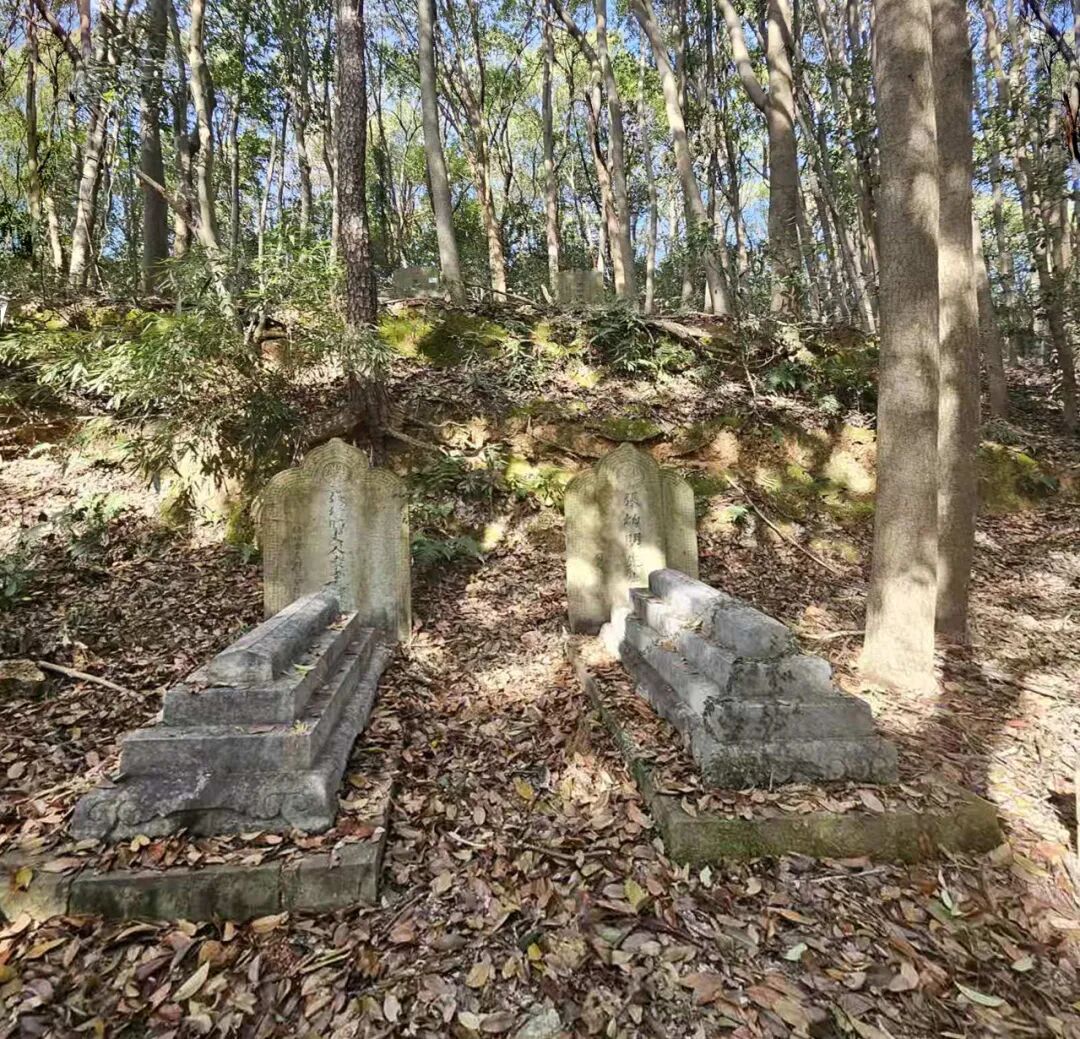
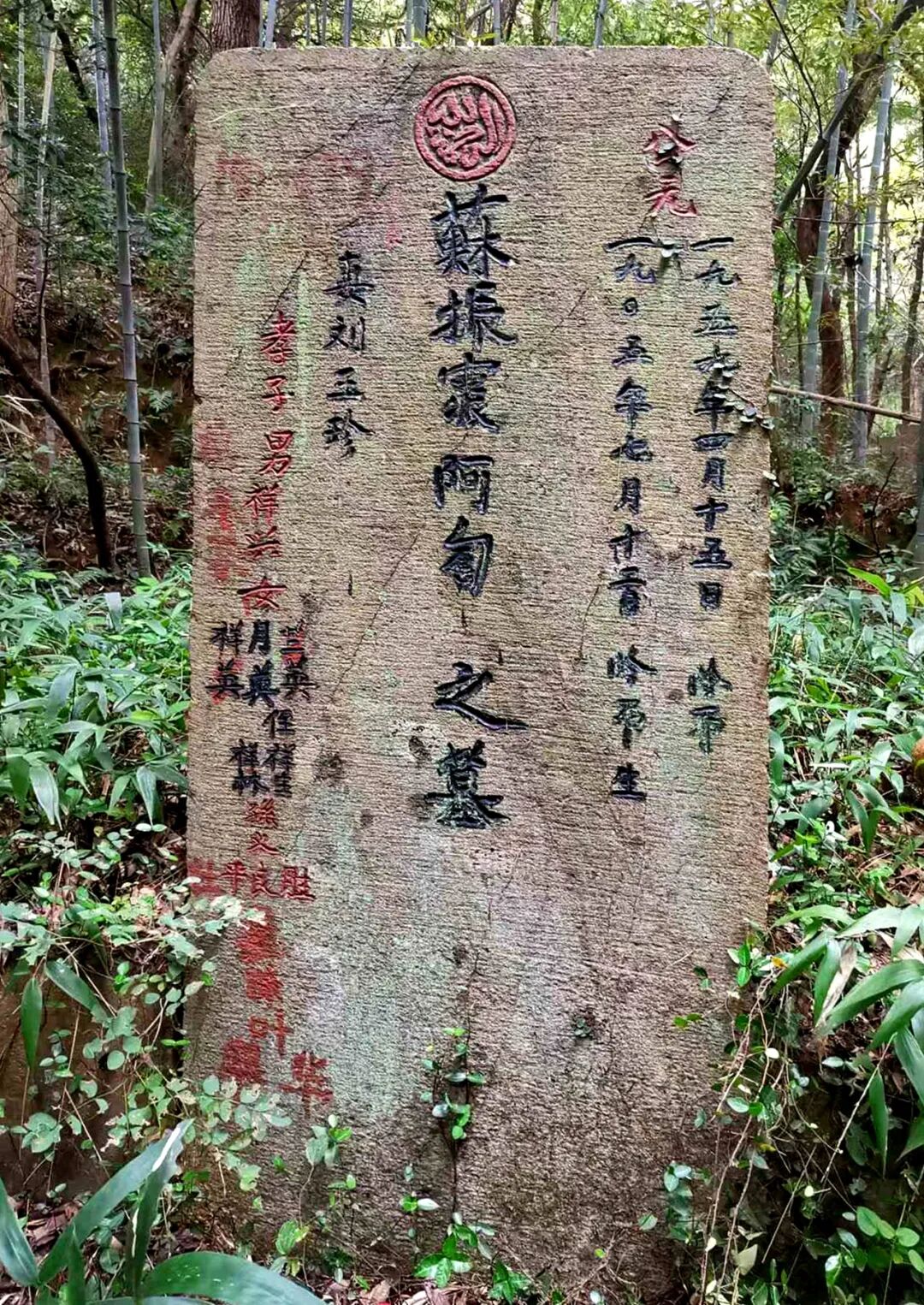
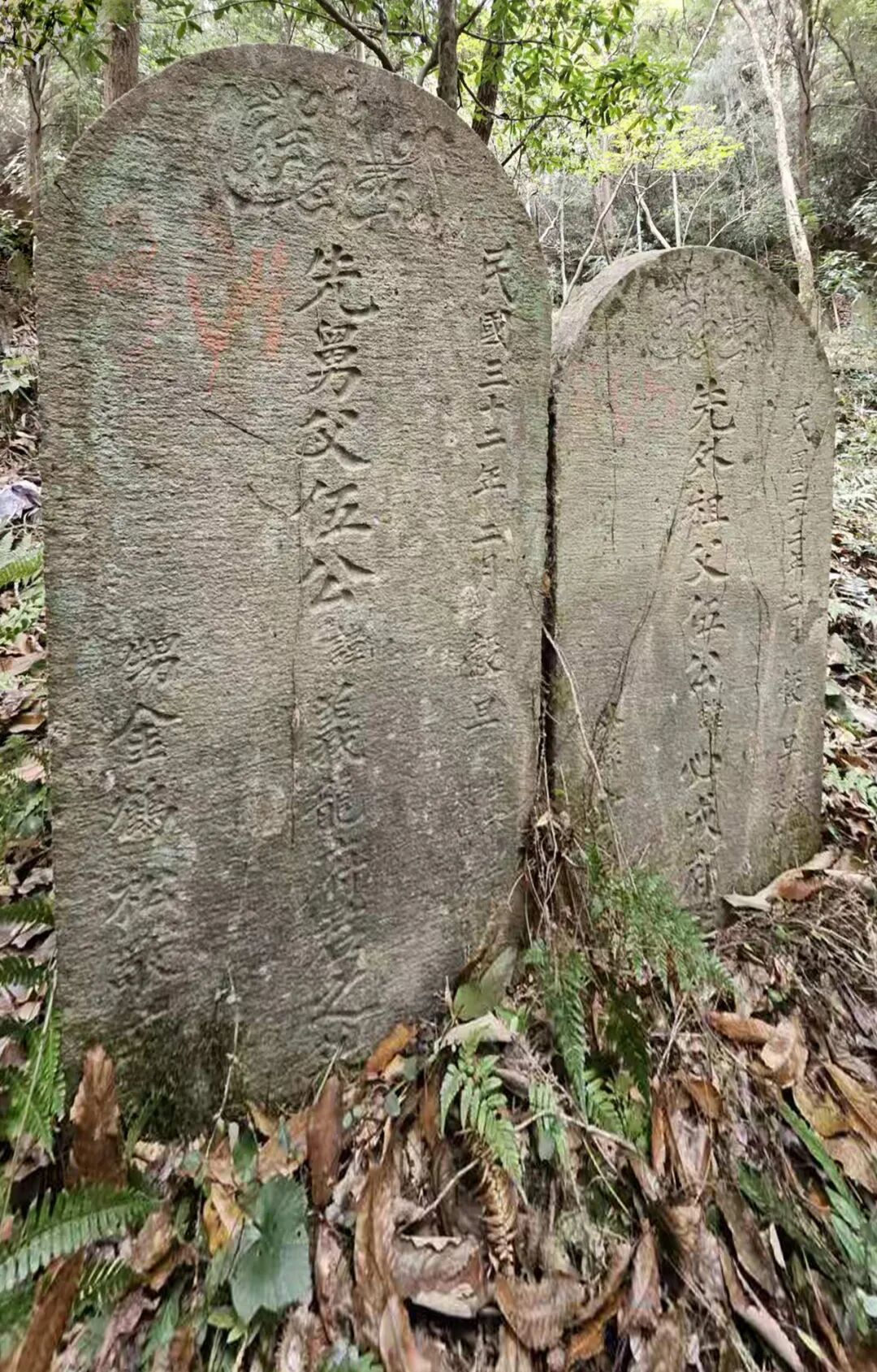
The Yong'an Cemetery currently holds two tombstones bearing the title "Grand Imam" and one bearing the title "Third Imam." These three graves lie side by side in the southwest corner of the cemetery; from right to left, they are Er Zhiru the Third Imam, Tan Zhongling the Grand Imam, and Xiyuan the Grand Imam. Another tombstone bearing the title "Imam" is located on the southern side of the cemetery. Due to years of rainwater erosion on the hillside, mountain moisture, and sparse human traffic, the lower halves of the two "Grand Imam" tombstones have been buried in mountain mud, with moss clinging to the surface above ground. We conducted tentative preliminary excavations, leading to new discoveries regarding the inscriptions. For instance, on the tombstone of Grand Imam Xiyuan, originally only lines such as "Summer of the 12th year of the Republic of China, ninth month" and "Grand Imam of Fenghuang Mosque" were visible. After excavation, important information such as "Lord Xiyuan" and "Filial son Bai" was successively identified. Further excavation to read characters deeper down proved too difficult, so work was regretfully halted.
2. Inscriptions and Decipherment
The four tombstones recording the "Grand Imam," "Third Imam," and "Imam" are arranged in chronological order by their erection dates: the tombstone of Third Imam Er Zhiru, the tombstone of Grand Imam Tan Zhongling, the tombstone of Grand Imam Bai Xiyuan, and the joint tombstone of Imams Ding Yinchun and Yang Hongdao.
(1) Tombstone of Third Imam Er Zhiru and His Wife
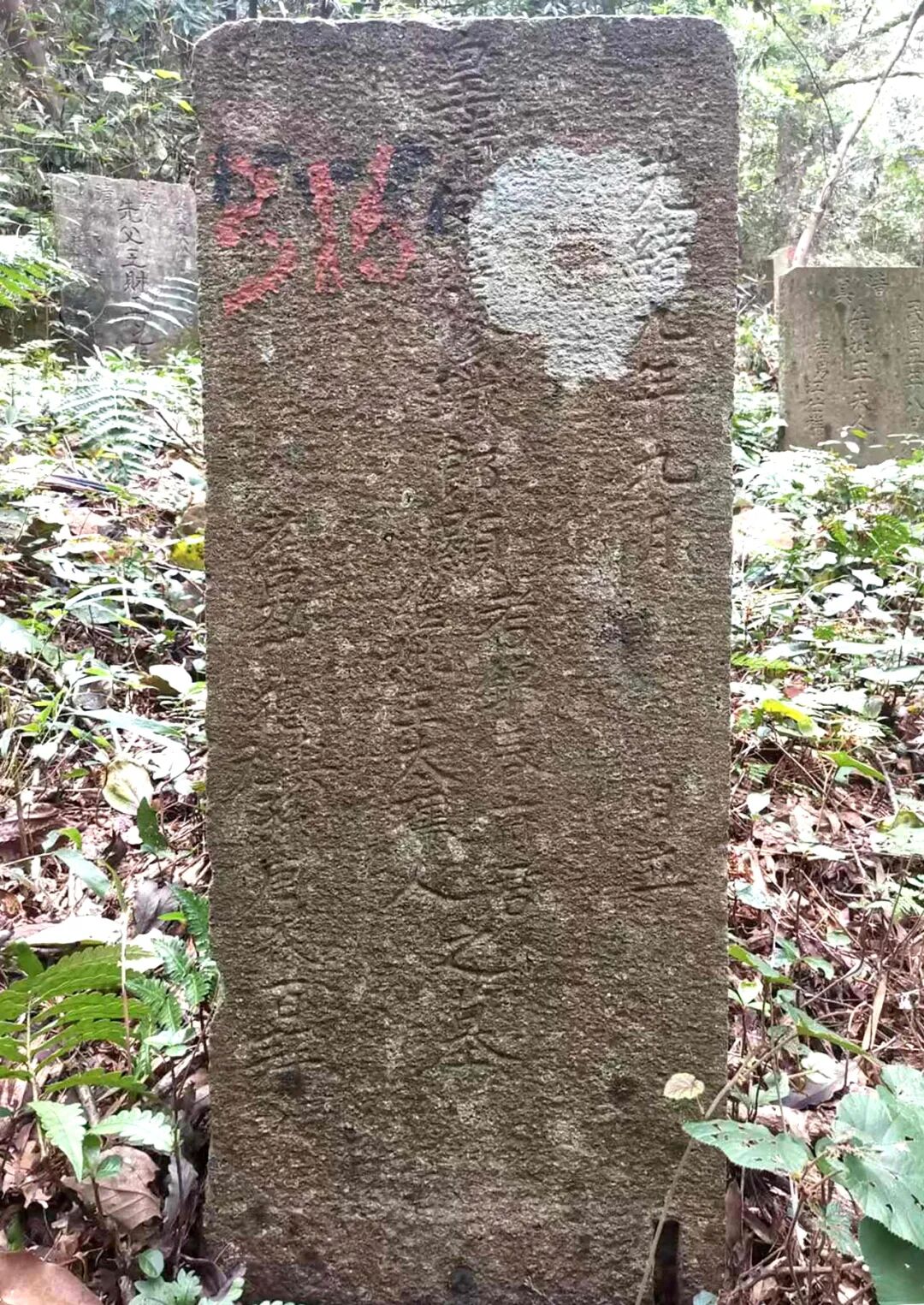
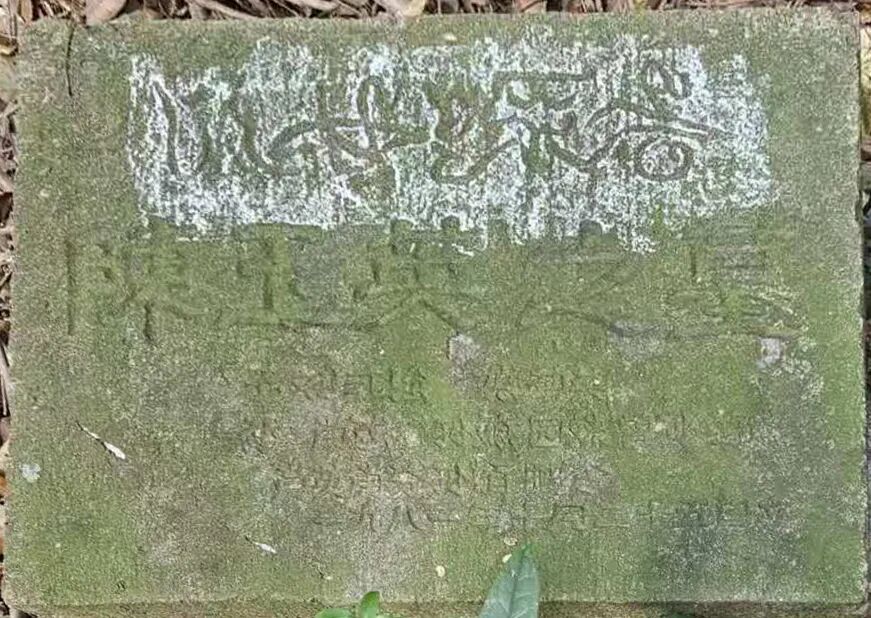
Inscription: Joint tomb of the late Third Imam Er Gong of the Great Mosque and his surviving wife, Madam Ma. Erected in the sixth month of the seventh year of Daoguang. Filial sons Fuchang, Furui, Rongqing, Ronggui, and Rongchang bow a hundred times.
Decipherment: Carved from granite, the stele measures 125 cm in height, 65 cm in width, and 10 cm in thickness, in a rectangular shape. Erected in the seventh year of Daoguang (1827). The top is outlined with simple lines forming a pointed arch, a commonly used decorative shape in Islam. Below this are the horizontally arranged characters "Qing Gu" (the late Qing...), written in larger font. Eight vertical lines of text record the erection date, the identity of the tomb occupants, and information about the sponsors.
"Great Mosque" was a designation for Fenghuang Mosque in the late Qing period; academic research shows this usage first appears in the Tongzhi Xinyin edition of Wugong Yaoyao (Essentials of the Five Duties). The discovery of this stele pushes back the recorded use of "Great Mosque" by 44 years from existing historical sources.
The tomb occupant, Er Zhiru, served as the Third Imam of the Great Mosque. The surname Er is relatively rare, and history does not directly mention any famous Islamic figures with the surname Er. Among the donor lists in the surviving Qianlong 8th year (1743) stele "Inscription on the Reconstruction of the Zhenjiao Temple" at Fenghuang Mosque, individuals with the surname Er include: Er, instructor at Liuhe Cangzhou; Er Shengyong; Er Tongwen; Er Tai-nu; Er Yushu; Er Dezhang; Er Qianzhi; Er Bixian; Er Tianwei; and "Guangyu Hall Er." Among the existing tombstones in Yong'an Cemetery, this is the only one bearing the Er surname. The 8th year of Qianlong (1743) was only 84 years away from the 7th year of Daoguang (1827), and nearly two hundred years have passed since then. The number of Muslims with the surname Er in Hangzhou has undergone significant shifts and rapid decline, nearly vanishing entirely.
We believe that Third Imam Er Zhiru was a local religious scholar born in Hangzhou. Out-of-towners buried at Yong'an Cemetery usually have notations on their tombstones, such as: "Tomb of Chen Wenzhi of Kaifeng Prefecture, Henan" on Chen Wenzhi's tombstone; "Native of Nanshan County, Nansxiang, Yizhou Prefecture, Shandong" on Wang Shiqi's tombstone; and "Huaiyin Hall, Jinling" carved on Wang Hongtai's tombstone. These details clearly mark the ancestral homes and identities of the deceased. Tombstones lacking such information typically belong to locals, requiring no special explanatory inscription.
(2) Tombstone of Grand Imam Tan Zhongling
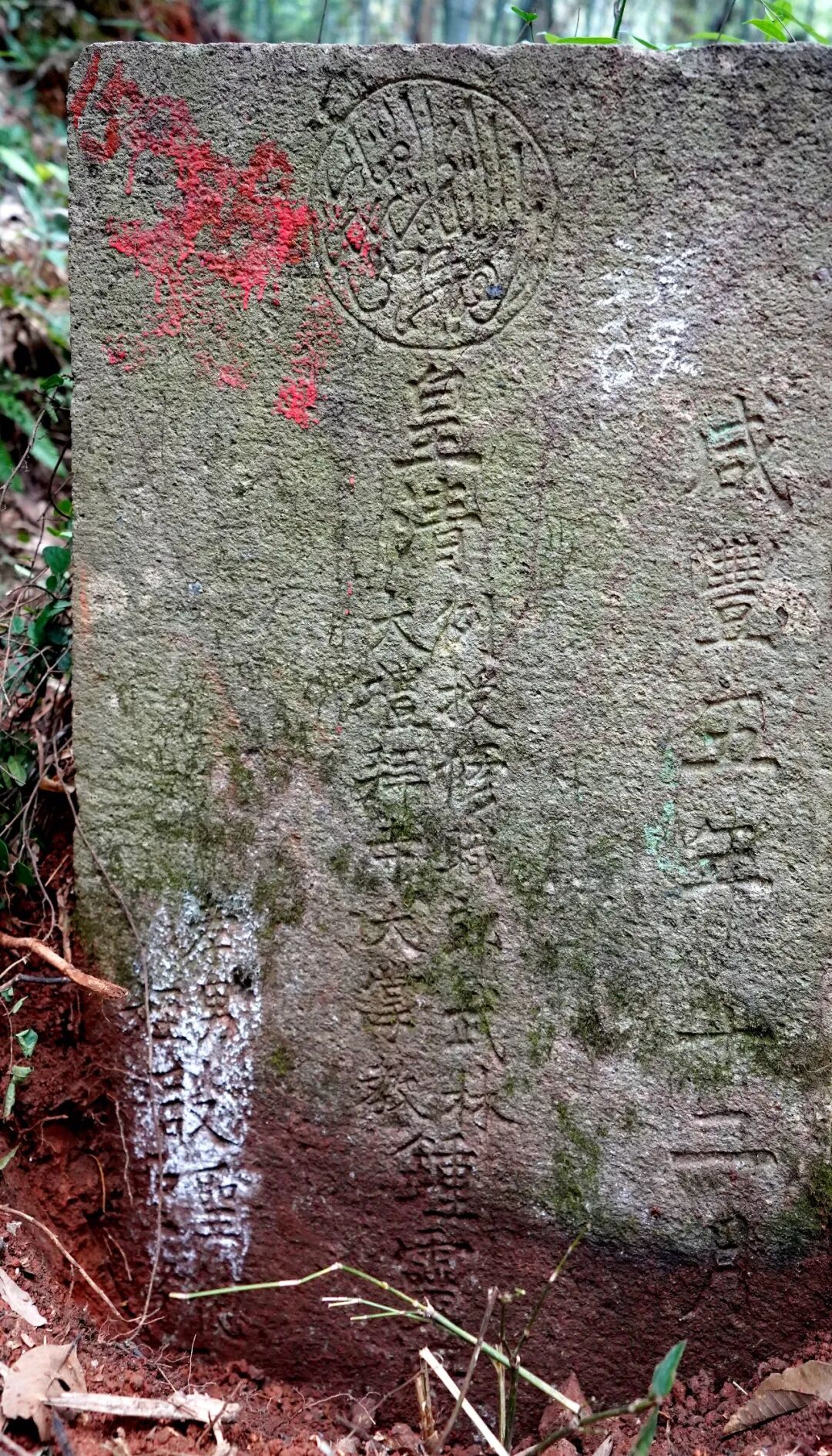
Inscription: (Arabic text) Bismillah al-Rahman al-Rahim. Imperial Qing bestowed the scholarly rank of Xiuzhiguo, Grand Imam of the Wulin Great Mosque, Lord Zhongling... Twelfth month of the fifth year of Xianfeng. Filial son Tan Shengxian, filial nephew Tan Shengde...
Decipherment: Carved from granite, the stele measures 100 cm in height, 65 cm in width, and 10 cm in thickness, in a rectangular shape. Erected in the fifth year of Xianfeng (1855). The upper portion features a circular design enclosing the Quranic text Bismillah al-Rahman al-Rahim, translated into Chinese as "In the name of Allah, the Most Gracious, the Most Merciful." The bottom of the tombstone is submerged in the ground, and the text at the lower end is buried and illegible. Based on typical tombstone layouts, we estimate that the buried text is brief and contains no critical information. Directly below "Lord" are likely the characters "Zhi Mu" (Tomb of); below "Shengxian and Shengde" are likely phrases like "Respectfully erected / jointly erected" or "bowing a hundred times / weeping a hundred times."
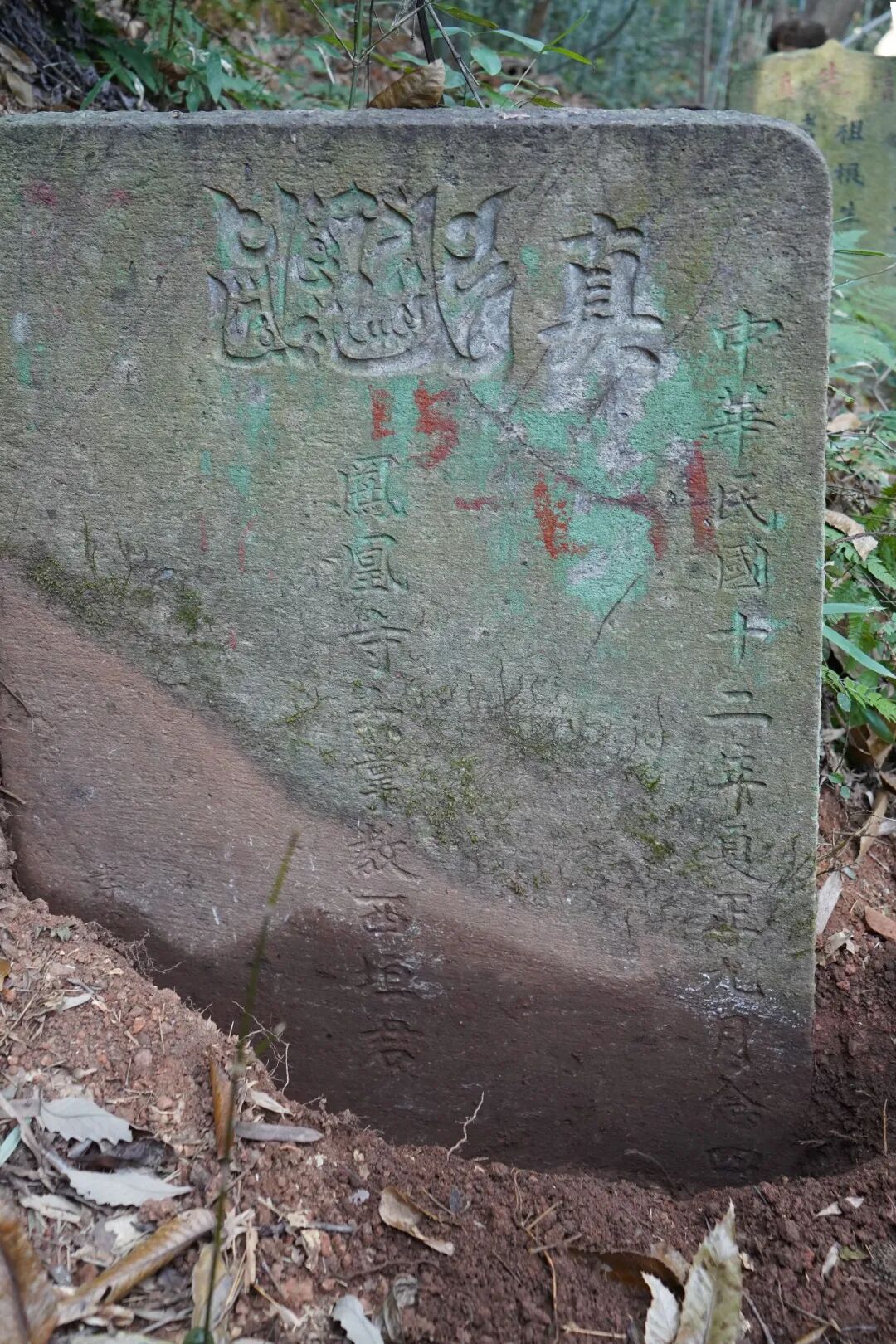
This is the second tombstone discovered at the Yong'an Muslim Cemetery inscribed with the name "Great Mosque." Wulin is an alternative name for Hangzhou. The Wulin Great Mosque is thus Hangzhou's Fenghuang Mosque.
The tombstone is engraved with the Arabic Quranic "Basmala." The Qing-era rank of Xiuzhiguo was a titular rank for civil officials of the eighth lower grade—a nominal official title without real power, roughly equivalent to a deputy staff member in modern civil service hierarchies. Several officials and their wives buried at Yong'an Cemetery who bear the designation "Imperial Qing" lack Arabic scriptures and terms like "Qingzhen" (Islamic/Halal) or "Hui Muslim." Examples include Liu Caizhang, a candidate prefectural judge in the 8th year of Guangxu; Ding Jinchun, bestowed the rank of Xiuzhiguo in the 9th year of Guangxu; Madam Chen in the guisi year of Guangxu; Zhang Zhizheng, bestowed the rank of official in the 19th year of Guangxu; and Madam Wang, bestowed a title in the 6th year of Tongzhi. Tan Zhongling is the only person in Yong'an Cemetery who held both an imperial court title and the position of Grand Imam.
Muslims with the surname Tan are scarce in Hangzhou. The 1743 Qianlong-era "Stele on the Reconstruction of the Zhenjiao Temple" at Fenghuang Mosque lists no local Hangzhou Muslims with the surname Tan. Aside from the tombstone of Grand Imam Tan Zhongling, Yong'an Muslim Cemetery contains only five tombstones bearing the Tan surname: the first is the tombstone of "Late Ancestral Grandmother Madam Tan," erected in the 27th year of the Republic (1938); the second is the tombstone of "Tan Liansheng and Madam Zhao," erected in 1955; the third is for "Tan Shunyuan," erected in 1973; the fourth is for "Tan Yunsun," erected in 1979; and the fifth is for "Hua Hanzhi and Tan Quanyun," erected in 1980. The occupants of these four post-liberation tombstones appear to be two generations of the same family.
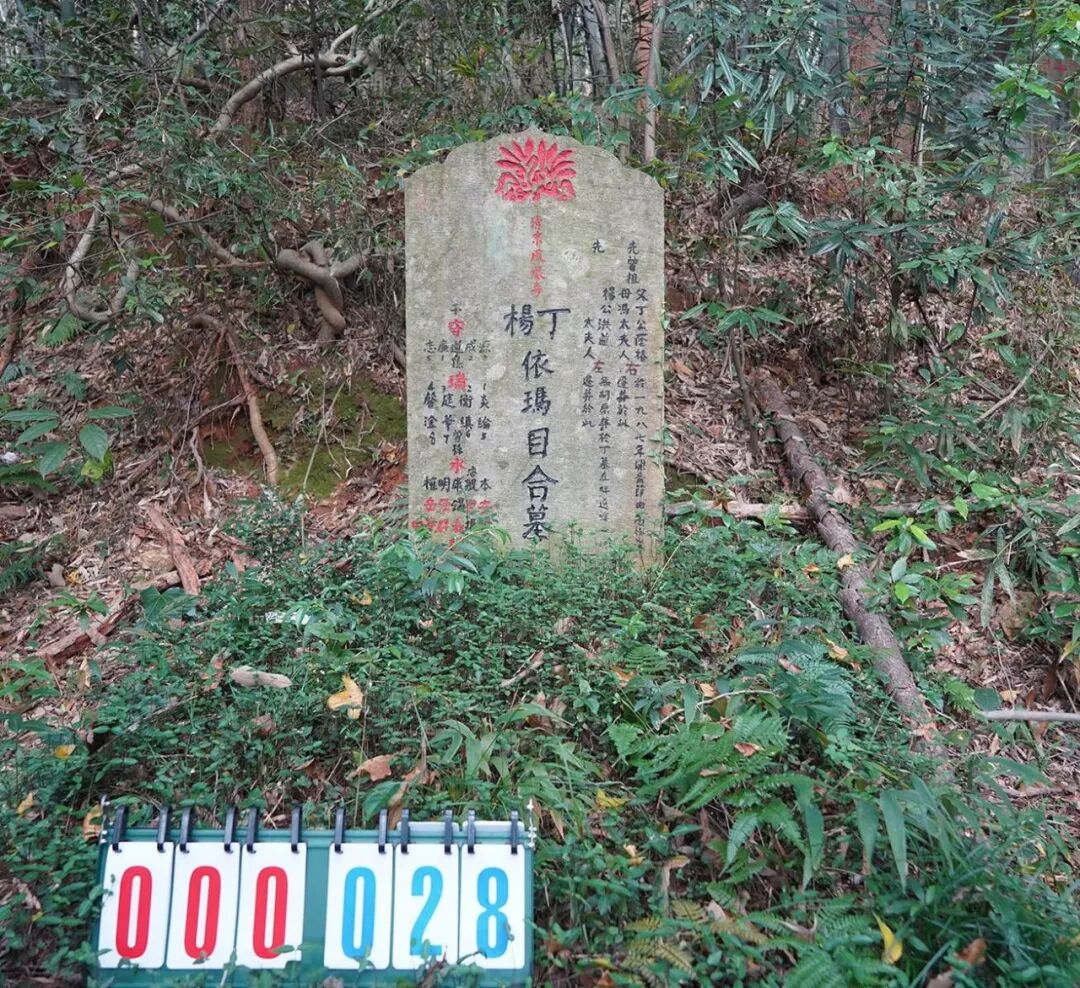
The tomb occupant "Lord Xiyuan" has an uncertain surname. Referring to the sponsor at the lower left, "Filial son Bai," it is possible his name was Bai Xiyuan. However, a "filial son Bai" would not refer to Xiyuan as "Lord" (Jun); he should have used "Lord Father" (Fujun) or "Late Father." Consulting the 1743 Qianlong-era "Stele Inscription on the Reconstruction of the Zhenjiao Temple" by gentry member Ding Shishen of Hangzhou's Fenghuang Mosque, the text records two individuals with the surname Bai: one is "Bai, military commander of the Jiangsu Governor's central garrison," and the other is "Baba Bai." Baba, also called Papa, signifies an elder or a figure of prestige. Hangzhou's Buhetiy'er Tomb is popularly known as the Baba Tomb. Imams and religious leaders were also called Baba. Among the more than two hundred donors listed on that Qianlong stele are four Babas: Baba Bai, Baba Suo of Zhenjiang, Baba Ningbo, and Baba Wang.
The life deeds of Grand Imam Lord Xiyuan, Third Imam Er Zhiru, and Grand Imam Tan Zhongling mentioned above remain unknown.
(3) Tombstone of Grand Imam Bai Xiyuan
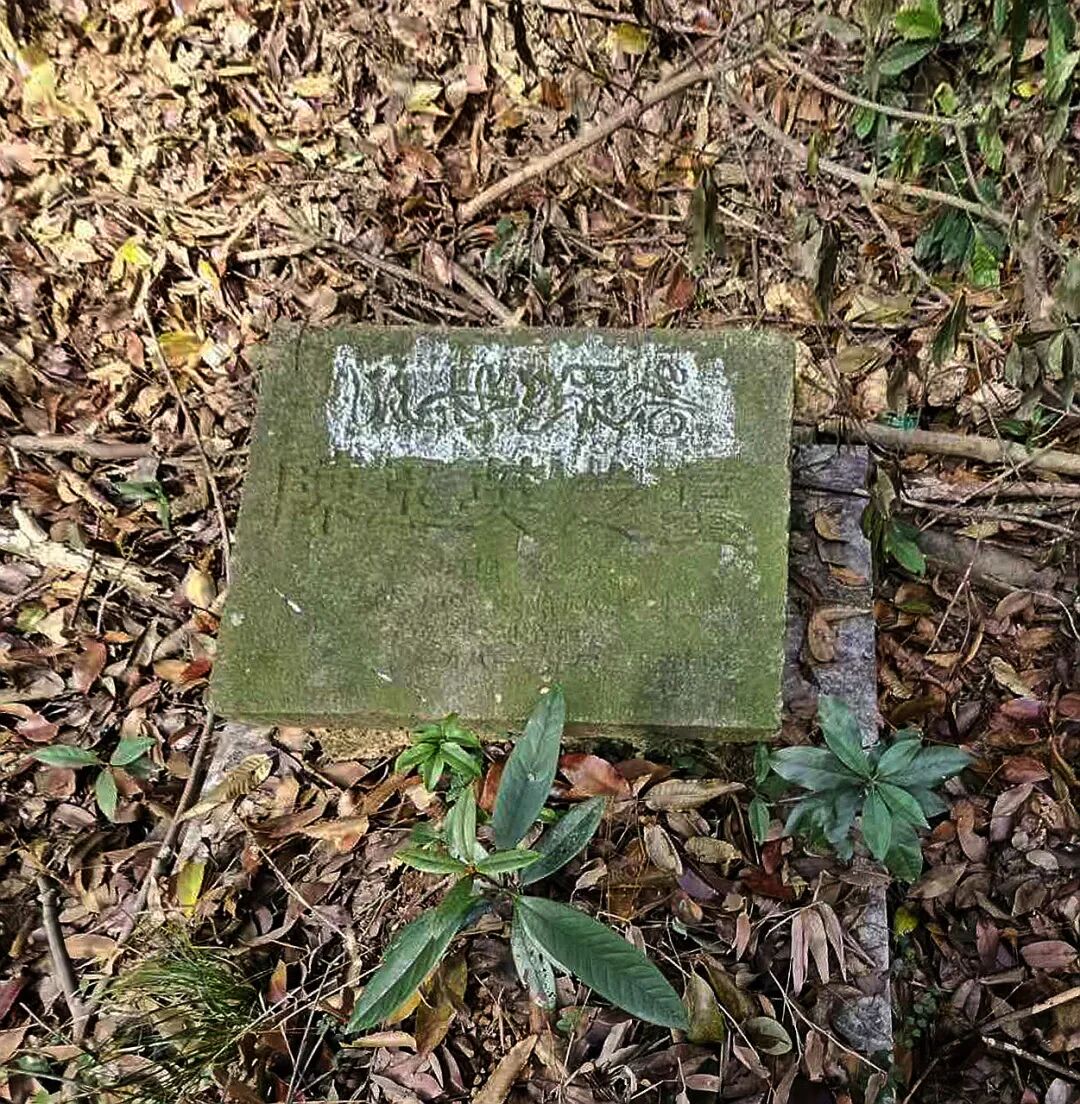
Inscription: (Arabic text) Bismillah al-Rahman al-Rahim. True Fenghuang Mosque Grand Imam Lord Xiyuan... Summer of the 12th year of the Republic of China, ninth month... Filial son Bai...
Decipherment: Carved from granite, the stele measures 125 cm in height, 80 cm in width, and 6 cm in thickness, in a square shape. Erected in the 12th year of the Republic of China (1923). The upper portion is engraved with a square design enclosing the Quranic text Bismillah al-Rahman al-Rahim, translated into Chinese as "In the name of Allah, the Most Gracious, the Most Merciful." To the right is the character "Zhen" (True), a spelling style also found on other steles at Yong'an Cemetery. "Zhen" seems to refer to "Qingzhen" (Islamic), a simplified writing convention of the time used to highlight the Muslim identity of the deceased. The face of the stele features two vertical lines of text, rendered in a font relatively smaller than the Arabic Basmala and the character "Zhen." The characters at the bottom of the tombstone are obscured, preventing further deep excavation and identification.
(4) Joint Tombstone of Imams Ding Yinchun and Yang Hongdao
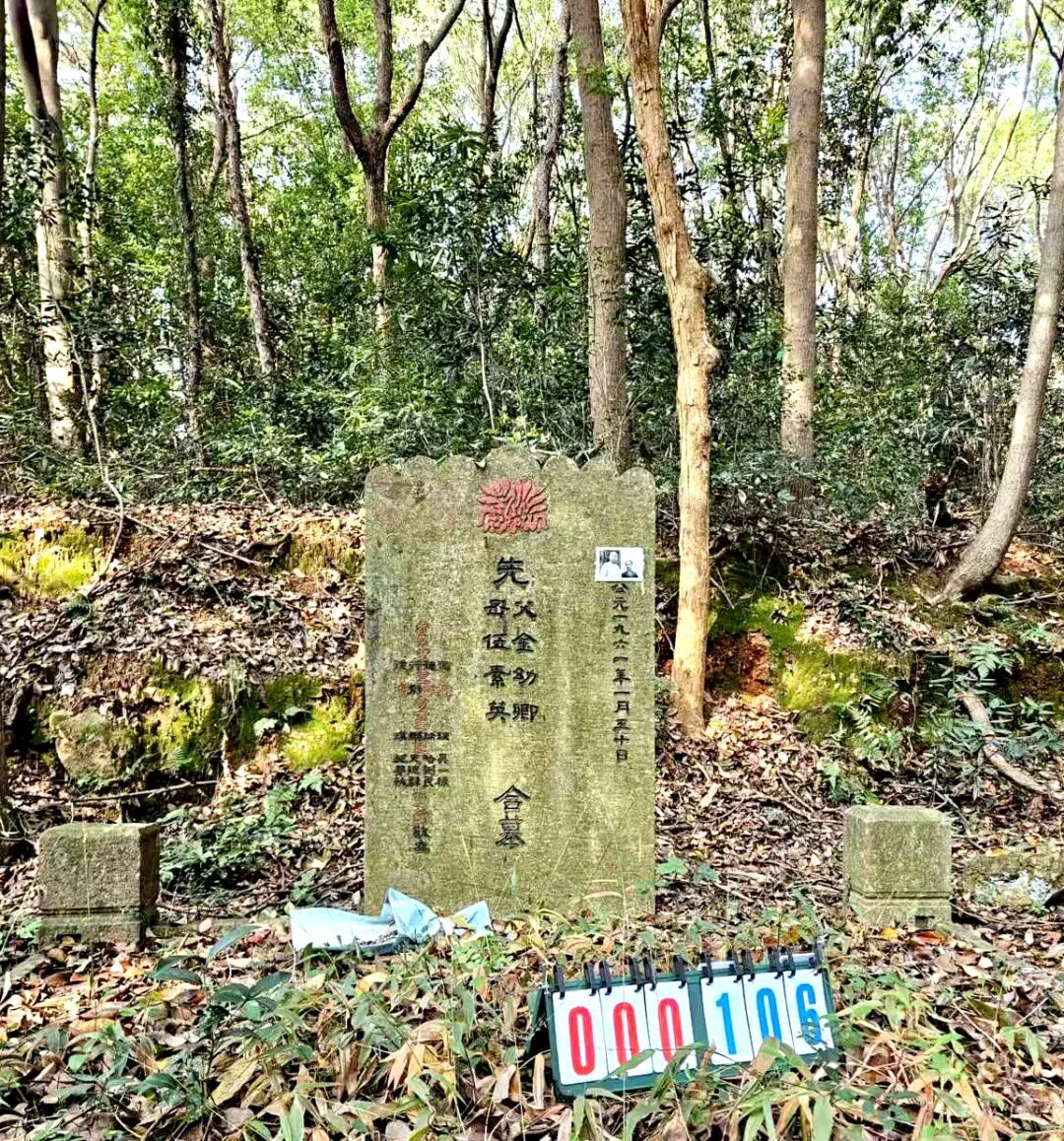
Inscription: (Arabic text) Bismillah al-Rahman al-Rahim. Joint tomb of late Qing Fenghuang Mosque Imam Ding and Imam Yang. Right: Late great-grandfather Ding Gong Yinchun, great-grandmother Madam Feng. Left: Late Yang Gong Hongdao, Madam. Having no direct heirs, originally buried to the left of the Ding tomb, per instructions they were relocated here together for convenience. Sons Shouyuan, Shoucheng, Shoudao, Shoulian, Shouzhi; grandsons Ruiyan, Ruiheng, Ruiting, Ruixin, Ruilun, Ruizhen, Ruihua, Ruigan; great-grandsons Yongben, Wu Qianguan, Yongkang, Yongming, Yongquan, Yong'an, Yongkun, Yongxi, Yongqiang, Yongyue, Yongkou, Yongzhen, Yongjia, Yongqun, Yongning, Yongzhong respectfully erect this. Relocated here from Wansongling during Eid al-Fitr in 1987.
Decipherment: Carved from granite, the stele measures 163 cm in height, 76 cm in width, and 10 cm in thickness, square with an arched top. The upper portion features a floral decorative pattern formed by the Quranic text Bismillah al-Rahman al-Rahim, translated as "In the name of Allah, the Most Gracious, the Most Merciful." Twelve vertical lines of text are carved into the stone.
The inscription indicates that this is a joint relocation tomb for Imams Ding Yinchun and his wife, and Imam Yang Hongdao and his wife. The inscription states that the tombs were "relocated here from Wansongling." Wansongling stretches from the lake shore in the west to Jianggan in the east, formerly crossed by the Hangzhou city wall, thus serving as the boundary between the urban area and the mountain forests. In past times, this was the base of the imperial city. Wansongling is an ancient Muslim graveyard, and three Yuan-dynasty tomb covers still survive there. A bilingual commemorative monument reading "Site of the Wansongling Foreign Guests' Tombs" stands there, stating: "Since the Tang dynasty, Muslims from the Western Regions have traveled along the Maritime Silk Road to Hangzhou to propagate Islam. According to historical records, Islamic heritage sites in Hangzhou include Fenghuang Mosque, Huihui New Bridge, and the Foreign Guests' Tombs. The Wansongling Foreign Guests' Tomb cluster is one of the ancient Muslim cemeteries in Hangzhou, primarily interring early Western Region Muslims who stayed as guests in Hangzhou. Due to their great antiquity, most of the foreign guests' tombs are deeply buried underground. These three tombs are relatively representative, exhibiting the typical style of Western Region Muslim tombs. From the Tang dynasty down to the present, passed down through generations, Muslims in Hangzhou visit this site during Islamic festivals to recite scriptures and pay homage to the Muslim ancestors within the tombs—they were messengers of early Sino-Western economic exchange and pioneers in spreading Islam, Western Region culture, medicine, architecture, and art. We pray that Allah bestows His blessings upon them."
According to the tombstone inscription, the tomb of Yang Hongdao and his wife was originally located on the "left flank" of Ding Yinchun and his wife's tomb. Because the Yang family had "no surviving heirs," the descendants of the Ding family followed Yang Hongdao's dying wish when relocating Ding Yinchun's tomb, moving the Yang tomb alongside it and reburying them jointly with the Dings. The relocation took place during Eid al-Fitr in 1987. The author surmises that prior to the relocation, they each had their own separate tombstones, and when the relocation occurred, the Ding descendants newly fashioned this joint Imam tombstone.
Yang Hongdao participated in the translation and compilation of Wugong Yaoyao (Essentials of the Five Duties) during the Tongzhi reign. The 1871 "Preface to Wugong Yaoyao" by members of the Zhejiang Fenghuang Grand Mosque states: "We earnestly requested Teacher Yang Hongdao, who holds the position of Zhangjiao (religious leader), collaborating with Teacher Jingshan, to translate and explain the true scriptures and compile them into a volume. Gathering the essentials of all scriptures, they authored the regulations of the five daily duties, separating and analyzing them in detail, translating scriptural texts into Chinese characters. While pronunciations often relied on loan words, the principles were rendered with utmost precision and detail. The completed compilation and textual research focus exclusively on the five duties, recording without omission the heavenly commands, the Prophet's practices, and the routine habits of daily life down to the finest detail." This shows that Yang Hongdao held the status of a religious leader (Zhangjiao). "Teacher" (Shi) denotes a scriptural teacher. An appendix to the 1892 Fenghuang Mosque "Stele on the Reconstruction of the Zhenjiao Temple" records: "Received twenty-five silver dollars from Ahong Yang Hongdao," placing him at the very top of the list of donors and organizations. This reflects respect for the mosque's religious leader and also indicates that Yang Hongdao was at the helm of Fenghuang Mosque's religious affairs in the 18th year of Guangxu (1892). Since Fenghuang Mosque practiced the three-imam system during the Guangxu era, Yang Hongdao was undoubtedly the Grand Imam.
The tombstones of Ding Yinchun and Yang Hongdao bear the words "Late Qing," indicating that Ding and Yang lived in the late Qing period and also served as Imams during that time. The inscription refers to tomb occupant Ding Yinchun as "late great-grandfather" and notes that both Ding and Yang served as Imams. Imam is an Arabic transliteration meaning "prayer leader," "role model," or "leader." It refers to the prayer leader within a mosque who guides the Muslim congregation in performing ritual prayers and presides over public religious rituals and activities. The Imam is equivalent to the Grand Imam. The appearance of "Late Qing Fenghuang Mosque" and "Imams Ding and Yang" on the tombstone provides yet another piece of evidence supporting the practice of the three-imam system at Fenghuang Mosque during the late Qing and early Republican periods, following the tombstones of Third Imam Er Zhiru, Grand Imam Tan Zhongling, and Grand Imam Bai Xiyuan.
3. The Exit of the Three-Imam System from the Historical Stage
From the tombstone of Third Imam Er Zhiru, we know that Fenghuang Mosque practiced the three-imam management system no later than the sixth year of Daoguang (1827), though historical sources do not yet prove when this system was first instituted at the mosque. Steles at the Yong'an Muslim Cemetery show that after the tombstone of Grand Imam Bai Xiyuan in the 12th year of the Republic of China (1923), no further tombstones appeared bearing titles such as Grand Imam, Second Imam, or Third Imam. Aside from Ding Qingyun's tombstone from the 25th year of the Republic (1936), which addressed him as "Zhangjiao of the West Lake Mosque," contemporary and subsequent tombstones uniformly addressed the deceased as "Ahong" or "Jiaozhang." Examples include the 1933 tombstone of "Ahong Yang Hexuan," the 1934 tombstones of "Ahong Ma Jianting," "Ahong Li Fangxiao," and "Ahong Ding Changqing," the 1958 tombstone of "Chief Imam Liu Shihua" relocated from outside Qingbomen Ershixiang, the 1959 tombstone of "Ahong Su Zhenhuan," and the 1960 tombstone of "Chief Imam Yang Zhexhen."
The 1871 preface to Wugong Yaoyao states, "We earnestly request Teacher Yang Hongdao, who holds the position of Zhangjiao...", addressing Yang Hongdao with the title "Zhangjiao." This "Zhangjiao" is likely an abbreviation for "Grand Imam," because Fenghuang Mosque was already practicing the three-imam system during the Tongzhi era. Although we have no way of knowing what titles were inscribed on the pre-relocation tombstones of Ding and Yang, the new stele erected during the 1987 relocation bears the titles "Imam Ding" and "Imam Yang." Perhaps the Ding descendants saw records similar to "Imam" of Fenghuang Mosque on the original stones, though unfortunately the originals no longer survive. The shifts in titles used for the Ahongs who administered mosque affairs across different periods not only demonstrate that Hangzhou's Fenghuang Mosque practiced the three-imam management system during the late Qing and early Republican eras, but also indicate that around the 1930s, the three-imam system exited the historical stage, as titles like Grand Imam vanished and were gradually replaced by Jiaozhang (chief imam) and Ahong.
The transformation of the three-imam system in Hangzhou was closely tied to the rising status of community elders and the gradual weakening of the imams' administrative powers during the late Qing and early Republican periods. Fenghuang Mosque's temple affairs and social activities were managed by village elders (xianglao), while the imams (Ahongs and Jiaozhang) handled religious affairs. The main text of the 1743 Qianlong-era "Stele on the Reconstruction of the Zhenjiao Temple" at Fenghuang Mosque specifically praises four elders: "Now elders Lu Yehou, Wang Shushun, Mu Xiucang, Ma Chengyu and others have once again imitated past regulations, accumulating meager funds, sparing no effort in management, gathering workers and gathering materials, painting pillars and carving beams, reapplying white plaster, and in less than half a year making it magnificent and thoroughly renewed." It also records the names of 19 board elders and directors such as Wang Zhiping and Ma Congjing. The term "xianglao" (elder) generally referred to the Muslim masses of the mosque community in Chinese Islamic contexts, though in some regions it specifically designated members of the mosque's administrative body. The elders mentioned in the stele refer to mosque managers, a meaning previously reinforced by the prefix "director" (dongshi). The stele states: "Now the elders reconstruct, and directors assist in praise—this is a grand event of the times, truly a painstaking effort," emphasizing the importance of the elder directors in this mosque reconstruction.
Guo Chengmei published the full text of the Qianlong stele in 1999 under the title "Five Chinese Steles of Fenghuang Mosque," noting that the stele lists the names of 23 director-elders and surmising that "by then Fenghuang Mosque already possessed a management organization resembling a board of directors." The stele inscription makes no mention of imams. About thirty years later, Fenghuang Mosque welcomed an incoming "administering imam" named Ma Shifang (styled Huachuan) from Xianyang, Shaanxi, who made notable contributions to the translation and annotation of Islamic classics into Chinese, successively writing prefaces for Jin Tianzhu's Qingzhen Shiyi (Resolving Doubts on Islam) and Liu Zhi's Tianfang Zhisheng Shilu (True Records of the Ultimate Sage of Islam). One preface is dated: "Midsummer day of the intercalary month in thegui-si year, the 38th year of Qianlong, respectfully written by Ma Shifang of Longxi, Zhangjiao of the Wulin Zhenjiao Temple." Another preface is dated: "First day of the winter month in the bing-shen year, the 41st year of Qianlong, respectfully composed with ablutions and bows by the late student Ma Shifang Huachuan, administering Zhangjiao of the Wulin Qingzhen Temple." The Wulin Zhenjiao Temple and Qingzhen Temple refer to Hangzhou's Fenghuang Mosque. Ma Shifang participated in re-engraving Wu Zunqi's Xiuzhen Mengyin (Introduction to Cultivating Truth) and invited Jiang Yuanlong of Jiaxing to write a re-engraving preface. Ma Shifang's signing as "administering Zhangjiao" reflects his self-assurance and the power of his religious office. The 1892 "Stele on the Reconstruction of the Zhenjiao Temple" at Fenghuang Mosque records: "As for directing the affairs of scriptural study and repairs, gentlemen Zhu Zhengsu and Wang Xingsheng shared in the labor," praising the directors who repaired the temple. At the same time, the stele appendix records: "Received twenty-five silver dollars from Ahong Yang Hongdao," placing him at the very front of the donors and organizations. This honors the mosque's religious leader and shows that Yang Hongdao was directing the religious affairs of Fenghuang Mosque in 1892. The inscription accommodates both the elders and the Ahong, representing a balance in their relationship: one "directed scriptural study and repair affairs," while the other was the "Ahong"; one "had labor" in temple repairs, while the other donated 25 silver dollars; one appeared in the main text of the stele, the other in the appendix. Comparing them, the relative weight is clear at a glance. In the early Republican period, Ahongs rarely stepped forward in Fenghuang Mosque's external communications. For instance, Ma Zhaolong submitted a petition to protect ancient tombs in the 9th year of the Republic (1920); in 1925, Fenghuang Mosque board directors Zhang Qi, Jin Rudong, Sun Jialin, Sun Songting, Sun Zhongwei, Feng Yanbang, Feng Erxiao, and Jin Jingen submitted a petition to protect ancient tombs. In 1925, the China Islamic Association founded in Shanghai published a "Directory of Members" listing as many as 14 prominent figures from Hangzhou's business and academic circles, yet not a single Ahong was included. This situation indicates that religious leader and Ahong roles were gradually stepping back from social affairs, while directors and elders began to shine brightly.
The transformation of Hangzhou's three-imam system was also driven by external influences, appearing closely connected to the reforms of the three-imam system then underway in Shanghai's Islamic community. In 1922, voices emerged within Shanghai's Islamic community suggesting the abolition of the second imam and a change to the three-imam system. In the summer of 1925, elder Jin Zhian wrote a letter to the board of directors proposing that the leadership of prayer and the recitation of the Khutbah be performed by a single person, which in substance demanded the abolition of the second imam position. In May 1926, the China Islamic Association Monthly published a piece titled "Correspondence Exchanged with Mr. Yuan Hanchen," formally issued under the signature of "Respectfully written by the China Islamic Association." It formally proposed that every mosque should hire "principal and deputy imams (namely the Imam and the Mu'adhdhin)," expressing the hope that "our country's religious affairs everywhere should appropriately follow this system." The text stated: "Teachers at mosques in foreign countries have no practice of reciting scriptures and replacing people for compensation, yet they all receive stipends... In our Association's view, co-religionists across our country should urgently and appropriately adopt this system. Each mosque should raise public funds locally, engaging two individuals of superior character and learning as principal and deputy imams (namely the Imam and the Mu'adhdhin) to preside over religious affairs and preach doctrine, provided that the salaries offered are benchmarked against local conditions and sufficient to support their households." These reforms won the approval of the China Islamic Association. In 1940, approval was obtained from the Ministry of the Interior to formulate the "Measures for Mosque Management," which were circulated to all mosques nationwide for compliance and implementation. "However, during the War of Resistance, mosques in occupied areas were unable to implement them. Consequently, the Association revised the "Interim Measures for Mosque Management of the China Islamic Association," which was approved by the Ministry of the Interior for implementation in July 1947. In March 1948, the China Islamic Association Bulletin published the "Interim Measures" along with the "General Rules for the Organization of Mosque Boards of Directors" and "Precautions." These reaffirmed the adoption of the title "Jiaozhang" (chief imam/dean) and the management of all mosque affairs by the board of directors. The hiring or dismissal of the chief imam, the purchase or sale of mosque property, the income and expenditure of mosque funds, and various religious innovations and reforms could not be undertaken without the approval of the mosque board of directors.
Shanghai's reform of the three-imam system was relatively thorough: the second imam was abolished, the titles of the imams were changed, the Grand Imam (Imam) was renamed Jiaozhang (chief imam/dean), and the third imam (Mu'adhdhin) was renamed Deputy Jiaozhang (deputy dean). Shanghai's reform of the three-imam system exerted a major influence on neighboring Hangzhou's Muslims, who maintained close ties and also practiced the three-imam system. In the 1920s and 1930s, Hangzhou Muslims must have been aware of the events unfolding within Shanghai's religious circles regarding the three-imam system. With as many as 14 members of the China Islamic Association hailing from Hangzhou, they could not have turned a blind eye to the articles published in the China Islamic Association Monthly or the calls to abolish the second imam and adopt the principal-deputy imam system. Hangzhou was close at hand, and Fenghuang Mosque would naturally follow the trend; its reform of the three-imam system would not have been delayed until the China Islamic Association's 1940 nationwide circular, but would have been implemented earlier. Judging by the changes in Ahong titles on tombstones, titles like "Grand Imam" vanished after 1923, replaced by "Jiaozhang" and "Ahong," indicating that Fenghuang Mosque abandoned the three-imam system around the 1930s.
References
1. Ma Jian, trans., The Quran, Chinese Social Sciences Press, 1981.
2. Guo Chengmei, "Five Chinese Steles of Fenghuang Mosque," published in Islamic Culture Studies, Xi'an, 1999, No. 2.
3. Jiang Yuanlong, "Preface to the Re-engraving," 40th year of Qianlong, in Wu Zunqi, Xiuzhen Mengyin, Qingzhen Daodian, 2005, Vol. 15, p. 5.
4. Shanghai Mosque Board of Directors Meeting Motions, Republican period, 4 volumes, preserved at the Shanghai Islamic Association.
5. China Islamic Association, Directory of Members, 1925, preserved at the Shanghai Library.
6. China Islamic Association, China Islamic Association Bulletin, 1948, National Library of China Reader Website.
Notes
¹ Guo Chengmei (1949–), male, native of Jiaxing, Zhejiang, council member of the China Hui Muslim Association. Primarily engaged in local cultural and historical research on Hui Islam.
Yang Hua (1981–), female, native of Xi'an, Shaanxi, residing in Zhejiang, primarily engaged in local history research on Hui Islam.
² Ma Jian, trans., The Quran, Chapter 1, Verse 1, Chinese Social Sciences Press, 1981. Same below.
³ Ding Shishen, "Stele on the Reconstruction of the Zhenjiao Temple," 8th year of Qianlong (1743), preserved in the stele corridor of Fenghuang Mosque.
⁴ According to Ding descendant Ding Yongzhong, "Qianguan" was the son of Ding Ruiyuan by name, not biological, named Wu Qianguan (with the traditional Chinese character for guan). He was extremely filial, becoming a model for their generation.
⁵ 1871 "Preface to Wugong Yaoyao" by members of the Zhejiang Fenghuang Grand Mosque, found in Jingshan and Yang Hongdao, Wugong Yaoyao, preserved in the Dalian Library.
⁶ Ma Zhaolong, "Stele on the Reconstruction of the Zhenjiao Temple," 18th year of Guangxu, Qing dynasty, preserved at Fenghuang Mosque.
⁷ Ding Shishen: 1743 "Stele on the Reconstruction of the Zhenjiao Temple," preserved at Fenghuang Mosque.
⁸ Guo Chengmei, "Five Chinese Steles of Fenghuang Mosque," published in Islamic Culture Studies, Xi'an, 1999, No. 2.
⁹ Jiang Yuanlong stated: "Yanshan Yang Gong cherished the canon of our co-religionists, seeing how few understand this Path, and discussed it with Wulin Zhangjiao Teacher Huachuan Ma, urging several comrades to jointly plan a re-engraving and asking me to write a preface." See "Preface to the Re-engraving," 40th year of Qianlong, in Wu Zunqi, Xiuzhen Mengyin, Qingzhen Daodian, 2005, Vol. 15, p. 5.
¹⁰ The 1920 "Zhejiang Provincial Capital Police Department Proclamation No. 54 Stele" states: "According to Ma Zhaolong, President of the Zhejiang Branch of the China Islamic Progressive Association." The stele does not survive; a rubbing is kept at Fenghuang Mosque. "Petition to the Governor of Zhejiang Xia to Protect Ancient Muslim Tombs," published in Huiguang, Vol. 2, No. 2, Shanghai, 1925.
¹¹ China Islamic Association, Directory of Members, 1925, preserved at the Shanghai Library.
¹² Shanghai Mosque Board of Directors, Board Meeting Motions, 1922, Vol. 1, pp. 17, 19, 21, 32; Board Meeting Motions, 1925, Vol. 2, p. 31.
¹³ "Correspondence Exchanged with Mr. Yuan Hanchen," China Islamic Association Monthly, 1926, Vol. 1, No. 5, p. 45.
¹⁴ China Islamic Association Bulletin, combined issue of Vol. 7, Nos. 8 to 12, p. 21, March 1948.
Academic Research: Deciphering Newly Discovered Imam Tombstones at Hangzhou's Yong'an Muslim Cemetery: New Evidence on Islamic History and the Fenghuang Mosque's Imam System
Abstract:
Through detailed textual research on newly discovered tombstones of imams dating from the Daoguang, Xianfeng, and Republican periods at Hangzhou's Yong'an Muslim Cemetery, this study fills a historical gap in the lineage of Hangzhou's Islamic leaders and provides precious first-hand physical evidence for the three-imam system historically practiced at Fenghuang Mosque (Phoenix Mosque).
Academic Research:
Discovery of Imam Tombstones at Hangzhou's Yong'an Muslim Cemetery
Guo Chengmei, Yang Hua
Abstract
Three tombstones respectively bearing the titles of "Grand Imam" and "Third Imam" have been discovered at the Yong'an Muslim Cemetery in Hangzhou. Dating to the Daoguang, Xianfeng, and Republican eras, these stones provide concrete evidence that Fenghuang Mosque once practiced a three-imam system. The subjects of these three tombstones have rarely been mentioned in academic circles, and their indisputable roles as religious leaders offer fresh content and fertile ground for researching late Qing and Republican-era Islam in Hangzhou. This article offers a preliminary decipherment of the inscriptions on these three steles. Around the 1930s, titles like "Grand Imam" disappeared from Yong'an Cemetery, replaced by terms such as "Ahong (Islamic teacher/imam)" and "Jiaozhang (chief imam/dean)", indicating that the Fenghuang Mosque's three-imam system was no longer in practice. This historical shift was linked to the rising status of community elders, the gradual dilution of the imams' administrative powers, and external influences.
Keywords
Fenghuang Mosque (Phoenix Mosque); Three-Imam System; Tombstones
1. The Discovery of Grand Imam, Third Imam, and Imam Tombstones in Hangzhou
Historically, the three-imam system was one of the organizational structures used in inland China's mosques, also known as the "Three-Path System." Emerging among Hui Muslims in interior China in the late 14th century, it was a mosque organization system composed of three religious roles: the Imam, the Khatib, and the Mu'adhdhin. In Ma Zhu's Qingzhen Zhinhai (Guide to Islam), the Imam, Khatib, and Mu'adhdhin are referred to sequentially as the "Grand Imam," "Second Imam," and "Third Imam," and are collectively called "religious leaders." Liu Zhi's Tianfang Dianli (Islamic Rites) refers to the Khatib as "Yujiao" (instructor of teachings) and the Mu'adhdhin as "Zangjiao" (praiser of teachings). Within the three-imam system, the Imam led the congregation in prayer and presided over public religious rituals and activities; the Khatib preached and admonished; and the Mu'adhdhin served as the muezzin, specifically calling the faithful to the mosque for prayer when the time arrived. This system was widely prevalent in Hui Muslim communities during the Ming and Qing dynasties and formed a hereditary practice. With social development, aside from a few religious communities that formally retained the "three-imam system," it gradually faded away by the mid-Republican period, and the institution ceased to exist.
Whether the historic Fenghuang Mosque (Phoenix Mosque) in Hangzhou practiced the three-imam system of mosque management is a question worthy of attention and study. Due to a scarcity of sources, it has remained unaddressed. Since 2017, and particularly starting two years ago, with the support of the Zhejiang Islamic Association, we have gained a general understanding of the Yong'an Muslim Cemetery through multiple field surveys. By numbering, registering, and photographing the tombs and steles, and by transcribing inscriptions and measuring stones for key monuments, we have gathered a wealth of precious first-hand material and achieved preliminary research results. Among them, several tombstones related to Fenghuang Mosque particularly caught our attention. Upon research, we discovered that the sparse words carved on these few stones actually pertain to the implementation of the three-imam system at Fenghuang Mosque. Below, this paper will focus on introducing the evidence found on these steles at the Yong'an Muslim Cemetery concerning the practice of the three-imam system at Fenghuang Mosque in the late Qing and early Republican periods.
The Yong'an Muslim Cemetery is located within the Yuquan Scenic Area in Hangzhou. Because Muslim cemeteries such as the one in the West Lake South Garden fell into ruin over time and left no space for burials, clan members raised funds in 1934 to purchase 99 mu of land at Lingfeng, Yuquan, West Lake, establishing the Yong'an Cemetery. In 1991, to beautify the West Lake scenic area, the Hangzhou municipal government banned further burials at the "Yong'an Cemetery" in the Yuquan scenic zone, designating the site as a permanent area for ancient Hui Muslim tombs. The original 44 burial plots were funded by the government and relocated to the Liuxia Hui Muslim Cemetery in the nearby suburbs.
The burial grounds of the Yong'an Muslim Cemetery currently contain roughly three categories of Muslim graves. The first consists of original burials from various dynasties prior to 1934 that were already located within the Yong'an graveyard, such as the 55th year of the Qianlong era (1790) "Tomb of Aunt Ding," the Daoguang-era (1838) "Joint Tomb of Wang Chunhui and Madam Liu," the Tongzhi-era (1867) "Tomb of Madam Wang and Madam Ding," and the Guangxu-era (1877) "Tomb of Ma Ermei." The second category comprises graves added as a public cemetery for Hangzhou's Muslims between the establishment of the cemetery in 1934 and 1991, when the Hangzhou municipal government prohibited further burials at Yong'an and designated it as ancient Hui Muslim graves. The third category includes a certain number of relocated tombs. After 1949, as Hangzhou accelerated urban construction and development, many ancient Muslim graves and modern burials originally located in development zones were relocated, and Yong'an Cemetery took in a portion of them. Because the cemetery is nestled in a tranquil mountain scenic area, the Hangzhou municipal government preserved it in its original state permanently. The 1991 government burial ban took effect in 1992, after which the Yong'an Cemetery distanced itself from urban clamor and settled into natural serenity. These ancient tombs and steles within the cemetery grounds have thus been preserved before us in their original locations and appearances.
The Yong'an Cemetery currently holds two tombstones bearing the title "Grand Imam" and one bearing the title "Third Imam." These three graves lie side by side in the southwest corner of the cemetery; from right to left, they are Er Zhiru the Third Imam, Tan Zhongling the Grand Imam, and Xiyuan the Grand Imam. Another tombstone bearing the title "Imam" is located on the southern side of the cemetery. Due to years of rainwater erosion on the hillside, mountain moisture, and sparse human traffic, the lower halves of the two "Grand Imam" tombstones have been buried in mountain mud, with moss clinging to the surface above ground. We conducted tentative preliminary excavations, leading to new discoveries regarding the inscriptions. For instance, on the tombstone of Grand Imam Xiyuan, originally only lines such as "Summer of the 12th year of the Republic of China, ninth month" and "Grand Imam of Fenghuang Mosque" were visible. After excavation, important information such as "Lord Xiyuan" and "Filial son Bai" was successively identified. Further excavation to read characters deeper down proved too difficult, so work was regretfully halted.
2. Inscriptions and Decipherment
The four tombstones recording the "Grand Imam," "Third Imam," and "Imam" are arranged in chronological order by their erection dates: the tombstone of Third Imam Er Zhiru, the tombstone of Grand Imam Tan Zhongling, the tombstone of Grand Imam Bai Xiyuan, and the joint tombstone of Imams Ding Yinchun and Yang Hongdao.
(1) Tombstone of Third Imam Er Zhiru and His Wife
Inscription: Joint tomb of the late Third Imam Er Gong of the Great Mosque and his surviving wife, Madam Ma. Erected in the sixth month of the seventh year of Daoguang. Filial sons Fuchang, Furui, Rongqing, Ronggui, and Rongchang bow a hundred times.
Decipherment: Carved from granite, the stele measures 125 cm in height, 65 cm in width, and 10 cm in thickness, in a rectangular shape. Erected in the seventh year of Daoguang (1827). The top is outlined with simple lines forming a pointed arch, a commonly used decorative shape in Islam. Below this are the horizontally arranged characters "Qing Gu" (the late Qing...), written in larger font. Eight vertical lines of text record the erection date, the identity of the tomb occupants, and information about the sponsors.
"Great Mosque" was a designation for Fenghuang Mosque in the late Qing period; academic research shows this usage first appears in the Tongzhi Xinyin edition of Wugong Yaoyao (Essentials of the Five Duties). The discovery of this stele pushes back the recorded use of "Great Mosque" by 44 years from existing historical sources.
The tomb occupant, Er Zhiru, served as the Third Imam of the Great Mosque. The surname Er is relatively rare, and history does not directly mention any famous Islamic figures with the surname Er. Among the donor lists in the surviving Qianlong 8th year (1743) stele "Inscription on the Reconstruction of the Zhenjiao Temple" at Fenghuang Mosque, individuals with the surname Er include: Er, instructor at Liuhe Cangzhou; Er Shengyong; Er Tongwen; Er Tai-nu; Er Yushu; Er Dezhang; Er Qianzhi; Er Bixian; Er Tianwei; and "Guangyu Hall Er." Among the existing tombstones in Yong'an Cemetery, this is the only one bearing the Er surname. The 8th year of Qianlong (1743) was only 84 years away from the 7th year of Daoguang (1827), and nearly two hundred years have passed since then. The number of Muslims with the surname Er in Hangzhou has undergone significant shifts and rapid decline, nearly vanishing entirely.
We believe that Third Imam Er Zhiru was a local religious scholar born in Hangzhou. Out-of-towners buried at Yong'an Cemetery usually have notations on their tombstones, such as: "Tomb of Chen Wenzhi of Kaifeng Prefecture, Henan" on Chen Wenzhi's tombstone; "Native of Nanshan County, Nansxiang, Yizhou Prefecture, Shandong" on Wang Shiqi's tombstone; and "Huaiyin Hall, Jinling" carved on Wang Hongtai's tombstone. These details clearly mark the ancestral homes and identities of the deceased. Tombstones lacking such information typically belong to locals, requiring no special explanatory inscription.
(2) Tombstone of Grand Imam Tan Zhongling
Inscription: (Arabic text) Bismillah al-Rahman al-Rahim. Imperial Qing bestowed the scholarly rank of Xiuzhiguo, Grand Imam of the Wulin Great Mosque, Lord Zhongling... Twelfth month of the fifth year of Xianfeng. Filial son Tan Shengxian, filial nephew Tan Shengde...
Decipherment: Carved from granite, the stele measures 100 cm in height, 65 cm in width, and 10 cm in thickness, in a rectangular shape. Erected in the fifth year of Xianfeng (1855). The upper portion features a circular design enclosing the Quranic text Bismillah al-Rahman al-Rahim, translated into Chinese as "In the name of Allah, the Most Gracious, the Most Merciful." The bottom of the tombstone is submerged in the ground, and the text at the lower end is buried and illegible. Based on typical tombstone layouts, we estimate that the buried text is brief and contains no critical information. Directly below "Lord" are likely the characters "Zhi Mu" (Tomb of); below "Shengxian and Shengde" are likely phrases like "Respectfully erected / jointly erected" or "bowing a hundred times / weeping a hundred times."
This is the second tombstone discovered at the Yong'an Muslim Cemetery inscribed with the name "Great Mosque." Wulin is an alternative name for Hangzhou. The Wulin Great Mosque is thus Hangzhou's Fenghuang Mosque.
The tombstone is engraved with the Arabic Quranic "Basmala." The Qing-era rank of Xiuzhiguo was a titular rank for civil officials of the eighth lower grade—a nominal official title without real power, roughly equivalent to a deputy staff member in modern civil service hierarchies. Several officials and their wives buried at Yong'an Cemetery who bear the designation "Imperial Qing" lack Arabic scriptures and terms like "Qingzhen" (Islamic/Halal) or "Hui Muslim." Examples include Liu Caizhang, a candidate prefectural judge in the 8th year of Guangxu; Ding Jinchun, bestowed the rank of Xiuzhiguo in the 9th year of Guangxu; Madam Chen in the guisi year of Guangxu; Zhang Zhizheng, bestowed the rank of official in the 19th year of Guangxu; and Madam Wang, bestowed a title in the 6th year of Tongzhi. Tan Zhongling is the only person in Yong'an Cemetery who held both an imperial court title and the position of Grand Imam.
Muslims with the surname Tan are scarce in Hangzhou. The 1743 Qianlong-era "Stele on the Reconstruction of the Zhenjiao Temple" at Fenghuang Mosque lists no local Hangzhou Muslims with the surname Tan. Aside from the tombstone of Grand Imam Tan Zhongling, Yong'an Muslim Cemetery contains only five tombstones bearing the Tan surname: the first is the tombstone of "Late Ancestral Grandmother Madam Tan," erected in the 27th year of the Republic (1938); the second is the tombstone of "Tan Liansheng and Madam Zhao," erected in 1955; the third is for "Tan Shunyuan," erected in 1973; the fourth is for "Tan Yunsun," erected in 1979; and the fifth is for "Hua Hanzhi and Tan Quanyun," erected in 1980. The occupants of these four post-liberation tombstones appear to be two generations of the same family.
The tomb occupant "Lord Xiyuan" has an uncertain surname. Referring to the sponsor at the lower left, "Filial son Bai," it is possible his name was Bai Xiyuan. However, a "filial son Bai" would not refer to Xiyuan as "Lord" (Jun); he should have used "Lord Father" (Fujun) or "Late Father." Consulting the 1743 Qianlong-era "Stele Inscription on the Reconstruction of the Zhenjiao Temple" by gentry member Ding Shishen of Hangzhou's Fenghuang Mosque, the text records two individuals with the surname Bai: one is "Bai, military commander of the Jiangsu Governor's central garrison," and the other is "Baba Bai." Baba, also called Papa, signifies an elder or a figure of prestige. Hangzhou's Buhetiy'er Tomb is popularly known as the Baba Tomb. Imams and religious leaders were also called Baba. Among the more than two hundred donors listed on that Qianlong stele are four Babas: Baba Bai, Baba Suo of Zhenjiang, Baba Ningbo, and Baba Wang.
The life deeds of Grand Imam Lord Xiyuan, Third Imam Er Zhiru, and Grand Imam Tan Zhongling mentioned above remain unknown.
(3) Tombstone of Grand Imam Bai Xiyuan
Inscription: (Arabic text) Bismillah al-Rahman al-Rahim. True Fenghuang Mosque Grand Imam Lord Xiyuan... Summer of the 12th year of the Republic of China, ninth month... Filial son Bai...
Decipherment: Carved from granite, the stele measures 125 cm in height, 80 cm in width, and 6 cm in thickness, in a square shape. Erected in the 12th year of the Republic of China (1923). The upper portion is engraved with a square design enclosing the Quranic text Bismillah al-Rahman al-Rahim, translated into Chinese as "In the name of Allah, the Most Gracious, the Most Merciful." To the right is the character "Zhen" (True), a spelling style also found on other steles at Yong'an Cemetery. "Zhen" seems to refer to "Qingzhen" (Islamic), a simplified writing convention of the time used to highlight the Muslim identity of the deceased. The face of the stele features two vertical lines of text, rendered in a font relatively smaller than the Arabic Basmala and the character "Zhen." The characters at the bottom of the tombstone are obscured, preventing further deep excavation and identification.
(4) Joint Tombstone of Imams Ding Yinchun and Yang Hongdao
Inscription: (Arabic text) Bismillah al-Rahman al-Rahim. Joint tomb of late Qing Fenghuang Mosque Imam Ding and Imam Yang. Right: Late great-grandfather Ding Gong Yinchun, great-grandmother Madam Feng. Left: Late Yang Gong Hongdao, Madam. Having no direct heirs, originally buried to the left of the Ding tomb, per instructions they were relocated here together for convenience. Sons Shouyuan, Shoucheng, Shoudao, Shoulian, Shouzhi; grandsons Ruiyan, Ruiheng, Ruiting, Ruixin, Ruilun, Ruizhen, Ruihua, Ruigan; great-grandsons Yongben, Wu Qianguan, Yongkang, Yongming, Yongquan, Yong'an, Yongkun, Yongxi, Yongqiang, Yongyue, Yongkou, Yongzhen, Yongjia, Yongqun, Yongning, Yongzhong respectfully erect this. Relocated here from Wansongling during Eid al-Fitr in 1987.
Decipherment: Carved from granite, the stele measures 163 cm in height, 76 cm in width, and 10 cm in thickness, square with an arched top. The upper portion features a floral decorative pattern formed by the Quranic text Bismillah al-Rahman al-Rahim, translated as "In the name of Allah, the Most Gracious, the Most Merciful." Twelve vertical lines of text are carved into the stone.
The inscription indicates that this is a joint relocation tomb for Imams Ding Yinchun and his wife, and Imam Yang Hongdao and his wife. The inscription states that the tombs were "relocated here from Wansongling." Wansongling stretches from the lake shore in the west to Jianggan in the east, formerly crossed by the Hangzhou city wall, thus serving as the boundary between the urban area and the mountain forests. In past times, this was the base of the imperial city. Wansongling is an ancient Muslim graveyard, and three Yuan-dynasty tomb covers still survive there. A bilingual commemorative monument reading "Site of the Wansongling Foreign Guests' Tombs" stands there, stating: "Since the Tang dynasty, Muslims from the Western Regions have traveled along the Maritime Silk Road to Hangzhou to propagate Islam. According to historical records, Islamic heritage sites in Hangzhou include Fenghuang Mosque, Huihui New Bridge, and the Foreign Guests' Tombs. The Wansongling Foreign Guests' Tomb cluster is one of the ancient Muslim cemeteries in Hangzhou, primarily interring early Western Region Muslims who stayed as guests in Hangzhou. Due to their great antiquity, most of the foreign guests' tombs are deeply buried underground. These three tombs are relatively representative, exhibiting the typical style of Western Region Muslim tombs. From the Tang dynasty down to the present, passed down through generations, Muslims in Hangzhou visit this site during Islamic festivals to recite scriptures and pay homage to the Muslim ancestors within the tombs—they were messengers of early Sino-Western economic exchange and pioneers in spreading Islam, Western Region culture, medicine, architecture, and art. We pray that Allah bestows His blessings upon them."
According to the tombstone inscription, the tomb of Yang Hongdao and his wife was originally located on the "left flank" of Ding Yinchun and his wife's tomb. Because the Yang family had "no surviving heirs," the descendants of the Ding family followed Yang Hongdao's dying wish when relocating Ding Yinchun's tomb, moving the Yang tomb alongside it and reburying them jointly with the Dings. The relocation took place during Eid al-Fitr in 1987. The author surmises that prior to the relocation, they each had their own separate tombstones, and when the relocation occurred, the Ding descendants newly fashioned this joint Imam tombstone.
Yang Hongdao participated in the translation and compilation of Wugong Yaoyao (Essentials of the Five Duties) during the Tongzhi reign. The 1871 "Preface to Wugong Yaoyao" by members of the Zhejiang Fenghuang Grand Mosque states: "We earnestly requested Teacher Yang Hongdao, who holds the position of Zhangjiao (religious leader), collaborating with Teacher Jingshan, to translate and explain the true scriptures and compile them into a volume. Gathering the essentials of all scriptures, they authored the regulations of the five daily duties, separating and analyzing them in detail, translating scriptural texts into Chinese characters. While pronunciations often relied on loan words, the principles were rendered with utmost precision and detail. The completed compilation and textual research focus exclusively on the five duties, recording without omission the heavenly commands, the Prophet's practices, and the routine habits of daily life down to the finest detail." This shows that Yang Hongdao held the status of a religious leader (Zhangjiao). "Teacher" (Shi) denotes a scriptural teacher. An appendix to the 1892 Fenghuang Mosque "Stele on the Reconstruction of the Zhenjiao Temple" records: "Received twenty-five silver dollars from Ahong Yang Hongdao," placing him at the very top of the list of donors and organizations. This reflects respect for the mosque's religious leader and also indicates that Yang Hongdao was at the helm of Fenghuang Mosque's religious affairs in the 18th year of Guangxu (1892). Since Fenghuang Mosque practiced the three-imam system during the Guangxu era, Yang Hongdao was undoubtedly the Grand Imam.
The tombstones of Ding Yinchun and Yang Hongdao bear the words "Late Qing," indicating that Ding and Yang lived in the late Qing period and also served as Imams during that time. The inscription refers to tomb occupant Ding Yinchun as "late great-grandfather" and notes that both Ding and Yang served as Imams. Imam is an Arabic transliteration meaning "prayer leader," "role model," or "leader." It refers to the prayer leader within a mosque who guides the Muslim congregation in performing ritual prayers and presides over public religious rituals and activities. The Imam is equivalent to the Grand Imam. The appearance of "Late Qing Fenghuang Mosque" and "Imams Ding and Yang" on the tombstone provides yet another piece of evidence supporting the practice of the three-imam system at Fenghuang Mosque during the late Qing and early Republican periods, following the tombstones of Third Imam Er Zhiru, Grand Imam Tan Zhongling, and Grand Imam Bai Xiyuan.
3. The Exit of the Three-Imam System from the Historical Stage
From the tombstone of Third Imam Er Zhiru, we know that Fenghuang Mosque practiced the three-imam management system no later than the sixth year of Daoguang (1827), though historical sources do not yet prove when this system was first instituted at the mosque. Steles at the Yong'an Muslim Cemetery show that after the tombstone of Grand Imam Bai Xiyuan in the 12th year of the Republic of China (1923), no further tombstones appeared bearing titles such as Grand Imam, Second Imam, or Third Imam. Aside from Ding Qingyun's tombstone from the 25th year of the Republic (1936), which addressed him as "Zhangjiao of the West Lake Mosque," contemporary and subsequent tombstones uniformly addressed the deceased as "Ahong" or "Jiaozhang." Examples include the 1933 tombstone of "Ahong Yang Hexuan," the 1934 tombstones of "Ahong Ma Jianting," "Ahong Li Fangxiao," and "Ahong Ding Changqing," the 1958 tombstone of "Chief Imam Liu Shihua" relocated from outside Qingbomen Ershixiang, the 1959 tombstone of "Ahong Su Zhenhuan," and the 1960 tombstone of "Chief Imam Yang Zhexhen."
The 1871 preface to Wugong Yaoyao states, "We earnestly request Teacher Yang Hongdao, who holds the position of Zhangjiao...", addressing Yang Hongdao with the title "Zhangjiao." This "Zhangjiao" is likely an abbreviation for "Grand Imam," because Fenghuang Mosque was already practicing the three-imam system during the Tongzhi era. Although we have no way of knowing what titles were inscribed on the pre-relocation tombstones of Ding and Yang, the new stele erected during the 1987 relocation bears the titles "Imam Ding" and "Imam Yang." Perhaps the Ding descendants saw records similar to "Imam" of Fenghuang Mosque on the original stones, though unfortunately the originals no longer survive. The shifts in titles used for the Ahongs who administered mosque affairs across different periods not only demonstrate that Hangzhou's Fenghuang Mosque practiced the three-imam management system during the late Qing and early Republican eras, but also indicate that around the 1930s, the three-imam system exited the historical stage, as titles like Grand Imam vanished and were gradually replaced by Jiaozhang (chief imam) and Ahong.
The transformation of the three-imam system in Hangzhou was closely tied to the rising status of community elders and the gradual weakening of the imams' administrative powers during the late Qing and early Republican periods. Fenghuang Mosque's temple affairs and social activities were managed by village elders (xianglao), while the imams (Ahongs and Jiaozhang) handled religious affairs. The main text of the 1743 Qianlong-era "Stele on the Reconstruction of the Zhenjiao Temple" at Fenghuang Mosque specifically praises four elders: "Now elders Lu Yehou, Wang Shushun, Mu Xiucang, Ma Chengyu and others have once again imitated past regulations, accumulating meager funds, sparing no effort in management, gathering workers and gathering materials, painting pillars and carving beams, reapplying white plaster, and in less than half a year making it magnificent and thoroughly renewed." It also records the names of 19 board elders and directors such as Wang Zhiping and Ma Congjing. The term "xianglao" (elder) generally referred to the Muslim masses of the mosque community in Chinese Islamic contexts, though in some regions it specifically designated members of the mosque's administrative body. The elders mentioned in the stele refer to mosque managers, a meaning previously reinforced by the prefix "director" (dongshi). The stele states: "Now the elders reconstruct, and directors assist in praise—this is a grand event of the times, truly a painstaking effort," emphasizing the importance of the elder directors in this mosque reconstruction.
Guo Chengmei published the full text of the Qianlong stele in 1999 under the title "Five Chinese Steles of Fenghuang Mosque," noting that the stele lists the names of 23 director-elders and surmising that "by then Fenghuang Mosque already possessed a management organization resembling a board of directors." The stele inscription makes no mention of imams. About thirty years later, Fenghuang Mosque welcomed an incoming "administering imam" named Ma Shifang (styled Huachuan) from Xianyang, Shaanxi, who made notable contributions to the translation and annotation of Islamic classics into Chinese, successively writing prefaces for Jin Tianzhu's Qingzhen Shiyi (Resolving Doubts on Islam) and Liu Zhi's Tianfang Zhisheng Shilu (True Records of the Ultimate Sage of Islam). One preface is dated: "Midsummer day of the intercalary month in thegui-si year, the 38th year of Qianlong, respectfully written by Ma Shifang of Longxi, Zhangjiao of the Wulin Zhenjiao Temple." Another preface is dated: "First day of the winter month in the bing-shen year, the 41st year of Qianlong, respectfully composed with ablutions and bows by the late student Ma Shifang Huachuan, administering Zhangjiao of the Wulin Qingzhen Temple." The Wulin Zhenjiao Temple and Qingzhen Temple refer to Hangzhou's Fenghuang Mosque. Ma Shifang participated in re-engraving Wu Zunqi's Xiuzhen Mengyin (Introduction to Cultivating Truth) and invited Jiang Yuanlong of Jiaxing to write a re-engraving preface. Ma Shifang's signing as "administering Zhangjiao" reflects his self-assurance and the power of his religious office. The 1892 "Stele on the Reconstruction of the Zhenjiao Temple" at Fenghuang Mosque records: "As for directing the affairs of scriptural study and repairs, gentlemen Zhu Zhengsu and Wang Xingsheng shared in the labor," praising the directors who repaired the temple. At the same time, the stele appendix records: "Received twenty-five silver dollars from Ahong Yang Hongdao," placing him at the very front of the donors and organizations. This honors the mosque's religious leader and shows that Yang Hongdao was directing the religious affairs of Fenghuang Mosque in 1892. The inscription accommodates both the elders and the Ahong, representing a balance in their relationship: one "directed scriptural study and repair affairs," while the other was the "Ahong"; one "had labor" in temple repairs, while the other donated 25 silver dollars; one appeared in the main text of the stele, the other in the appendix. Comparing them, the relative weight is clear at a glance. In the early Republican period, Ahongs rarely stepped forward in Fenghuang Mosque's external communications. For instance, Ma Zhaolong submitted a petition to protect ancient tombs in the 9th year of the Republic (1920); in 1925, Fenghuang Mosque board directors Zhang Qi, Jin Rudong, Sun Jialin, Sun Songting, Sun Zhongwei, Feng Yanbang, Feng Erxiao, and Jin Jingen submitted a petition to protect ancient tombs. In 1925, the China Islamic Association founded in Shanghai published a "Directory of Members" listing as many as 14 prominent figures from Hangzhou's business and academic circles, yet not a single Ahong was included. This situation indicates that religious leader and Ahong roles were gradually stepping back from social affairs, while directors and elders began to shine brightly.
The transformation of Hangzhou's three-imam system was also driven by external influences, appearing closely connected to the reforms of the three-imam system then underway in Shanghai's Islamic community. In 1922, voices emerged within Shanghai's Islamic community suggesting the abolition of the second imam and a change to the three-imam system. In the summer of 1925, elder Jin Zhian wrote a letter to the board of directors proposing that the leadership of prayer and the recitation of the Khutbah be performed by a single person, which in substance demanded the abolition of the second imam position. In May 1926, the China Islamic Association Monthly published a piece titled "Correspondence Exchanged with Mr. Yuan Hanchen," formally issued under the signature of "Respectfully written by the China Islamic Association." It formally proposed that every mosque should hire "principal and deputy imams (namely the Imam and the Mu'adhdhin)," expressing the hope that "our country's religious affairs everywhere should appropriately follow this system." The text stated: "Teachers at mosques in foreign countries have no practice of reciting scriptures and replacing people for compensation, yet they all receive stipends... In our Association's view, co-religionists across our country should urgently and appropriately adopt this system. Each mosque should raise public funds locally, engaging two individuals of superior character and learning as principal and deputy imams (namely the Imam and the Mu'adhdhin) to preside over religious affairs and preach doctrine, provided that the salaries offered are benchmarked against local conditions and sufficient to support their households." These reforms won the approval of the China Islamic Association. In 1940, approval was obtained from the Ministry of the Interior to formulate the "Measures for Mosque Management," which were circulated to all mosques nationwide for compliance and implementation. "However, during the War of Resistance, mosques in occupied areas were unable to implement them. Consequently, the Association revised the "Interim Measures for Mosque Management of the China Islamic Association," which was approved by the Ministry of the Interior for implementation in July 1947. In March 1948, the China Islamic Association Bulletin published the "Interim Measures" along with the "General Rules for the Organization of Mosque Boards of Directors" and "Precautions." These reaffirmed the adoption of the title "Jiaozhang" (chief imam/dean) and the management of all mosque affairs by the board of directors. The hiring or dismissal of the chief imam, the purchase or sale of mosque property, the income and expenditure of mosque funds, and various religious innovations and reforms could not be undertaken without the approval of the mosque board of directors.
Shanghai's reform of the three-imam system was relatively thorough: the second imam was abolished, the titles of the imams were changed, the Grand Imam (Imam) was renamed Jiaozhang (chief imam/dean), and the third imam (Mu'adhdhin) was renamed Deputy Jiaozhang (deputy dean). Shanghai's reform of the three-imam system exerted a major influence on neighboring Hangzhou's Muslims, who maintained close ties and also practiced the three-imam system. In the 1920s and 1930s, Hangzhou Muslims must have been aware of the events unfolding within Shanghai's religious circles regarding the three-imam system. With as many as 14 members of the China Islamic Association hailing from Hangzhou, they could not have turned a blind eye to the articles published in the China Islamic Association Monthly or the calls to abolish the second imam and adopt the principal-deputy imam system. Hangzhou was close at hand, and Fenghuang Mosque would naturally follow the trend; its reform of the three-imam system would not have been delayed until the China Islamic Association's 1940 nationwide circular, but would have been implemented earlier. Judging by the changes in Ahong titles on tombstones, titles like "Grand Imam" vanished after 1923, replaced by "Jiaozhang" and "Ahong," indicating that Fenghuang Mosque abandoned the three-imam system around the 1930s.
References
1. Ma Jian, trans., The Quran, Chinese Social Sciences Press, 1981.
2. Guo Chengmei, "Five Chinese Steles of Fenghuang Mosque," published in Islamic Culture Studies, Xi'an, 1999, No. 2.
3. Jiang Yuanlong, "Preface to the Re-engraving," 40th year of Qianlong, in Wu Zunqi, Xiuzhen Mengyin, Qingzhen Daodian, 2005, Vol. 15, p. 5.
4. Shanghai Mosque Board of Directors Meeting Motions, Republican period, 4 volumes, preserved at the Shanghai Islamic Association.
5. China Islamic Association, Directory of Members, 1925, preserved at the Shanghai Library.
6. China Islamic Association, China Islamic Association Bulletin, 1948, National Library of China Reader Website.
Notes
¹ Guo Chengmei (1949–), male, native of Jiaxing, Zhejiang, council member of the China Hui Muslim Association. Primarily engaged in local cultural and historical research on Hui Islam.
Yang Hua (1981–), female, native of Xi'an, Shaanxi, residing in Zhejiang, primarily engaged in local history research on Hui Islam.
² Ma Jian, trans., The Quran, Chapter 1, Verse 1, Chinese Social Sciences Press, 1981. Same below.
³ Ding Shishen, "Stele on the Reconstruction of the Zhenjiao Temple," 8th year of Qianlong (1743), preserved in the stele corridor of Fenghuang Mosque.
⁴ According to Ding descendant Ding Yongzhong, "Qianguan" was the son of Ding Ruiyuan by name, not biological, named Wu Qianguan (with the traditional Chinese character for guan). He was extremely filial, becoming a model for their generation.
⁵ 1871 "Preface to Wugong Yaoyao" by members of the Zhejiang Fenghuang Grand Mosque, found in Jingshan and Yang Hongdao, Wugong Yaoyao, preserved in the Dalian Library.
⁶ Ma Zhaolong, "Stele on the Reconstruction of the Zhenjiao Temple," 18th year of Guangxu, Qing dynasty, preserved at Fenghuang Mosque.
⁷ Ding Shishen: 1743 "Stele on the Reconstruction of the Zhenjiao Temple," preserved at Fenghuang Mosque.
⁸ Guo Chengmei, "Five Chinese Steles of Fenghuang Mosque," published in Islamic Culture Studies, Xi'an, 1999, No. 2.
⁹ Jiang Yuanlong stated: "Yanshan Yang Gong cherished the canon of our co-religionists, seeing how few understand this Path, and discussed it with Wulin Zhangjiao Teacher Huachuan Ma, urging several comrades to jointly plan a re-engraving and asking me to write a preface." See "Preface to the Re-engraving," 40th year of Qianlong, in Wu Zunqi, Xiuzhen Mengyin, Qingzhen Daodian, 2005, Vol. 15, p. 5.
¹⁰ The 1920 "Zhejiang Provincial Capital Police Department Proclamation No. 54 Stele" states: "According to Ma Zhaolong, President of the Zhejiang Branch of the China Islamic Progressive Association." The stele does not survive; a rubbing is kept at Fenghuang Mosque. "Petition to the Governor of Zhejiang Xia to Protect Ancient Muslim Tombs," published in Huiguang, Vol. 2, No. 2, Shanghai, 1925.
¹¹ China Islamic Association, Directory of Members, 1925, preserved at the Shanghai Library.
¹² Shanghai Mosque Board of Directors, Board Meeting Motions, 1922, Vol. 1, pp. 17, 19, 21, 32; Board Meeting Motions, 1925, Vol. 2, p. 31.
¹³ "Correspondence Exchanged with Mr. Yuan Hanchen," China Islamic Association Monthly, 1926, Vol. 1, No. 5, p. 45.
¹⁴ China Islamic Association Bulletin, combined issue of Vol. 7, Nos. 8 to 12, p. 21, March 1948.
