
Senior Snowbird Life in Sanya: Elderly Chinese Muslims in Hainan for Retirement, Prayer & Community
[Internet Repost]
Senior Snowbird Life in Sanya: Elderly Chinese Muslims in Hainan for Retirement, Prayer & Community
Abstract:
A deep dive into the winter retirement lifestyle of Muslim 'snowbird' seniors from northern and northwestern China living in Sanya. We explore how the comfortable tropical climate, robust network of mosques, and tightly-knit mutual-aid community provide these elders with a warm, secure living environment.
This is a fascinating social observation topic touching on multiple dimensions such as population migration, religious culture, and retirement models.
1. White Caps and Headscarves Deep Inside the Coconut Groves
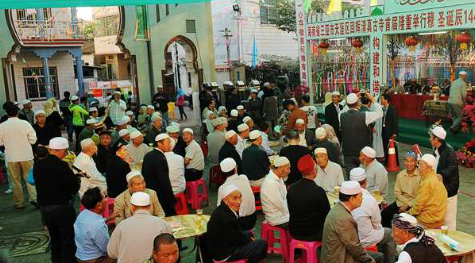
Every October, when snow starts falling in the north, the arrival hall at Sanya Phoenix International Airport welcomes a special group of travelers. Among them are elderly men wearing white caps and women wrapped in headscarves of various colors. Packed inside their suitcases aren't swimsuits and sunscreen, but prayer rugs and copies of the Quran. These Muslim elders hailing from Northwest and North China make up the most distinctive contingent of Sanya's 'snowbird retirement' wave.
Sanya's Muslim retiree demographic shows clear regional clustering. License plates from Ningxia, Gansu, Qinghai, Xinjiang, Henan, and Hebei—China's primary Muslim-concentrated regions—can be seen everywhere on the streets of Sanya during the winter. Unlike regular tourists chasing the turquoise waters and blue skies of Yalong Bay, these elders care more about whether there is a mosque near their apartment complex, if the local wet market sells halal beef and mutton, and if there are fellow hometown folks speaking their dialect in the community.
This migration isn't just a vacation; it's a complete transplantation of a lifestyle.
2. From Northwest Cave Dwellings to Tropical Apartments
Sixty-five-year-old Old Ma is from Wuzhong, Ningxia, and this is his eighth winter spending the season in Sanya. In a residential compound along Sanya Bay, he rents a two-bedroom apartment for 3,500 RMB a month—barely more expensive than the heating bills back in his hometown. 'Here in the winter, you don't have to burn coal or shovel snow, your joints don't ache, and you can breathe smoothly,' Old Ma says, sitting on a stone bench in the garden soaking up the sun while spinning prayer beads in his hand.

But the climate is only the surface reason. The deeper driving force comes from the unique mutual-aid traditions of the Muslim community. In Sanya, several Muslim 'snowbird' residential clusters have formed: the older urban areas around Huixin Village (Huixin Muslim Village) and Huihui Village (Huihui Muslim Village), along with newly built housing complexes near Sanya Bay and Haiyue Square. The elders connect through mosques, hometown associations, and family networks to build a complete social support system.
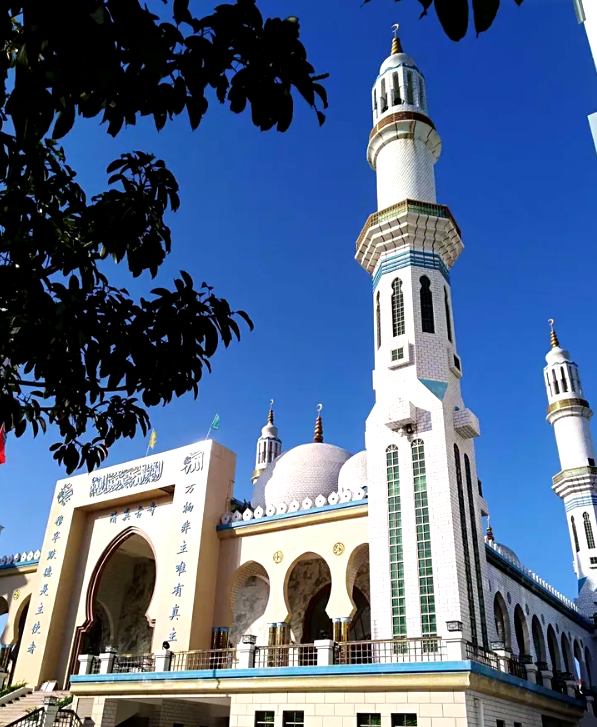
Here, the mosque is not only a religious venue but also an information hub and social center. The call to the five daily prayers gathers elders scattered across various residential compounds. Whose children are coming to visit, whose health is acting up and needs looking after, who found a more cost-effective rental apartment—these details flow rapidly through conversations after prayer. For elders far away from their homeland, this community network built on faith and geography is far more effective at warding off loneliness than Sanya's sunshine.
3. The Supply Chain War for Halal Food
The biggest challenge Muslim retirees face isn't climate adaptation; it's food security.
Strict halal dietary regulations mean Muslim seniors cannot simply live in Hainan casually like ordinary 'snowbirds.' The absolute taboo against pork and its derivatives, along with specific slaughter requirements for beef and mutton, turn 'what to eat' into a concrete daily dilemma.
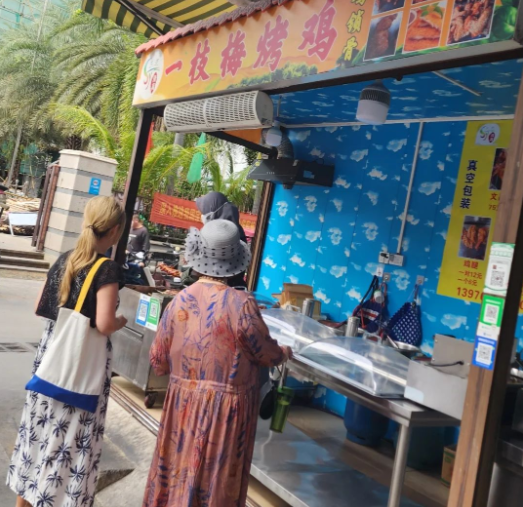
This has birthed a unique supply chain. In Sanya's Muslim residential areas, specialized halal butcher shops, halal restaurants, and even halal delivery services have popped up. Clever northwestern merchants head south every winter to rent temporary storefronts in Sanya, catering exclusively to snowbird seniors. They fly in beef and mutton by air cargo from Ningxia and Gansu, ensuring Islamic slaughter by an ahong (imam) and cold-chain transport. Even though prices are thirty percent higher than back inland, demand outstrips supply.
An even more common practice is 'bringing your own rations.' Many elders stuff their suitcases with youxiang (fried flour flatbreads), sanzi (crispy fried dough twists), and dried beef and mutton brought from home. They cook for themselves in rented apartments, teaming up with a few other households to take turns cooking. This guarantees dietary compliance while cutting down living costs. This 'cooperative canteen' model has become an essential organizational form for Muslim snowbird retirement.
The wet market is another battleground. Sanya's local population is predominantly Han and Li, meaning halal ingredient supplies are limited. Elders must spend a great deal of time hunting down suitable shopping spots, even forming specialized 'procurement routes'—which market stall sells compliant chicken, and which supermarket carries halal frozen foods. This information is meticulously shared across the elders' WeChat groups.
4. The Spatial Politics of Religious Life
Being a Muslim in Sanya means carving out space for religious life within a secular tourist city.
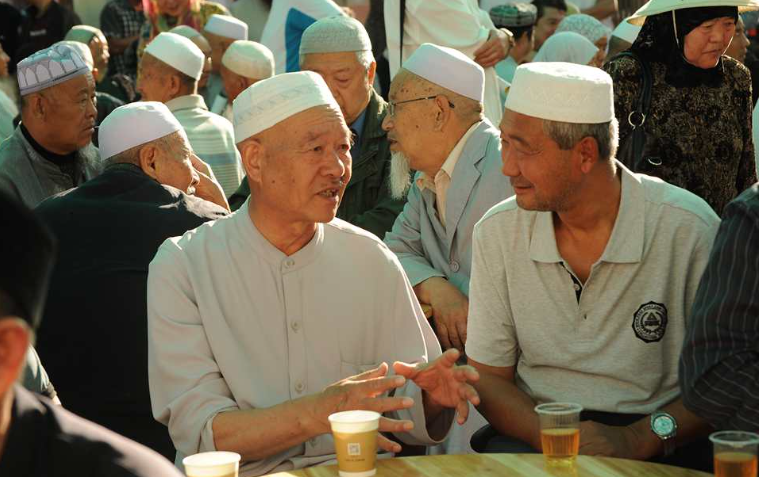
The number of mosques in Sanya falls far short of accommodating the winter surge in the Muslim population. Jummah (Friday congregational prayer) often requires arriving an hour early just to find standing room. Some elders are forced to complete their prayers in open spaces around their housing compounds or even inside their rooms, sparking friction with property management and neighbors. The direction faced during prayer, the placement of prayer rugs, and the volume of the adhan (call to prayer)—things taken for granted in Muslim enclaves—become topics requiring negotiation or even conflict in Sanya's commercial housing developments.
Funerals present an even more sensitive issue. According to Islamic law, a deceased Muslim should be buried within three days rather than cremated. However, Sanya's funeral facilities are primarily geared toward cremation, and the dedicated Muslim cemetery is tens of kilometers away and quite expensive. For aged snowbird seniors, 'What if I pass away here?' is an inescapable anxiety. Some elders reach out to their hometown mosques in advance, leaving wills instructing their children to ship their bodies back home for burial. This obsession with 'falling leaves returning to their roots' creates a profound tension with the fluid nature of snowbird retirement.
5. The Intergenerational Restructuring of Family Ties
Snowbird retirement has altered traditional family intergenerational dynamics. For Muslim families, this change is especially complex.
In rural Northwest China, elders are usually the core of family religious life, responsible for teaching grandchildren to recite the Quran and supervising family religious practices. When elders head south for the winter, this intergenerational transmission breaks. Video calls can pass along greetings, but they can't replace face-to-face religious education. Because of this, some elders shorten their stays in Sanya or insist on having their grandchildren visit Sanya during winter break to maintain the continuity of religious heritage in the tropics.
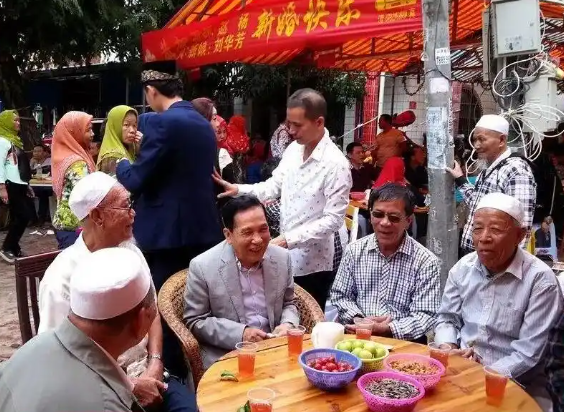
Economic relationships are also being restructured. Sanya's cost of living is higher than rural Northwest China, requiring expenses for rent, food, and medical care. Snowbird retirement demands a certain economic foundation, which usually relies on children's financial support. Yet support itself becomes a chip in intergenerational bargaining—children support their parents heading south in exchange for the convenience of not having to care for them during the winter, while elders accepting support means relinquishing some control over where they live.
More subtly, the marriage market is shifting. Among Sanya's Muslim seniors, a popular side hustle is 'matchmaking for the kids.' Elders from different regions chat with each other, setting up blind dates for eligible young adults back home. Sanya's sunny beaches have unexpectedly become a matchmaking information exchange hub for northwestern Muslim youth. This cross-regional marriage networking is quietly transforming the traditionally relatively closed Muslim marital circle.
6. The Fluidity and Defense of Identity
In Sanya, the identity of Muslim elders presents an intriguing contradiction.
On one hand, they are 'outsiders.' In the eyes of locals, they are snowbirds hogging medical resources and driving up rent; in the eyes of other tourists, their clothing and customs are merely exotic local color. This gaze of otherness reinforces their sense of marginalization.
On the flip side, they've found a real sense of belonging within Sanya's tight-knit Muslim circles. Traditional sub-networks based on specific Islamic sects, hometown regions, and extended families have completely reorganized in Sanya into a much broader "Muslim snowbird" community. An elderly Ihhwan elder from Qinghai might end up living next door to and sharing dua and daily prayers with a Gedimu elder from Ningxia—something totally unimaginable back home in their home provinces. Their shared "snowbird" status effortlessly bridges old-school sectarian and geographic divides.
Yet, this constant movement brings along its own identity anxiety. As these seniors spend more and more time living in Sanya—some even staying year-round and only heading back north briefly during the brutal summer heat—are they still truly considered "Northwesterners"? And when their grandkids are born and raised right here in Sanya, speaking Mandarin with a distinct Hainan accent and having zero memories of the ancestral village back home, how on earth is the family's religious and cultural heritage going to survive?
Some of the older folks have started trying to build more permanent religious communities right here in Sanya. They've pooled their money to buy properties specifically designated as co-living spaces for elderly Muslims; they've petitioned the government hoping to set up official Muslim eldercare facilities; and they've set up social media group chats to share practical tips for daily life in Sanya, creating a totally digital mutual-aid network. All these efforts show that snowbird retirement living is shifting away from a temporary seasonal migration into a much more stable lifestyle.
VII. Conclusion: Offering Prayers Amidst the Coconut Palms and Ocean Breezes
Sanya's elderly Muslim snowbirds are a perfect snapshot of China's rapidly aging society, as well as a fascinating case study of how religious communities adapt under the pressures of modernity. They weave social networks using their faith, fight off loneliness with community support, and hold tight to the core values of their tradition amidst a shifting, transient modern world.
As the sunset hits the waters of Sanya Bay, the adhan (call to prayer) rings out from the mosque, and white taqiyah caps and hijabs start streaming in from every direction. In that exact moment, the tropical ocean breeze meets the loess soil of Northwest China in a shared bowing of prayer, blending the migration of snowbirds with the absolute devotion of believers as the sun goes down.
They might never truly put down permanent roots in Sanya—strict Islamic burial regulations, worries about keeping the family genealogy going, and an ultimate, deep-seated longing for the old hometown all guarantee a certain impermanence to this lifestyle. But in the winter of their lives, being able to complete their five daily prayers in a warm climate and waiting for the sunset Iftar surrounded by folks from back home is, in its own right, a deeply respected way to live.
Sanya's coconut groves won't remember these migrating elders, but Allah remembers every single believer who keeps up their daily prayers far from home. For a Muslim, that's more than enough.
Senior Snowbird Life in Sanya: Elderly Chinese Muslims in Hainan for Retirement, Prayer & Community
Abstract:
A deep dive into the winter retirement lifestyle of Muslim 'snowbird' seniors from northern and northwestern China living in Sanya. We explore how the comfortable tropical climate, robust network of mosques, and tightly-knit mutual-aid community provide these elders with a warm, secure living environment.
This is a fascinating social observation topic touching on multiple dimensions such as population migration, religious culture, and retirement models.
1. White Caps and Headscarves Deep Inside the Coconut Groves
Every October, when snow starts falling in the north, the arrival hall at Sanya Phoenix International Airport welcomes a special group of travelers. Among them are elderly men wearing white caps and women wrapped in headscarves of various colors. Packed inside their suitcases aren't swimsuits and sunscreen, but prayer rugs and copies of the Quran. These Muslim elders hailing from Northwest and North China make up the most distinctive contingent of Sanya's 'snowbird retirement' wave.
Sanya's Muslim retiree demographic shows clear regional clustering. License plates from Ningxia, Gansu, Qinghai, Xinjiang, Henan, and Hebei—China's primary Muslim-concentrated regions—can be seen everywhere on the streets of Sanya during the winter. Unlike regular tourists chasing the turquoise waters and blue skies of Yalong Bay, these elders care more about whether there is a mosque near their apartment complex, if the local wet market sells halal beef and mutton, and if there are fellow hometown folks speaking their dialect in the community.
This migration isn't just a vacation; it's a complete transplantation of a lifestyle.
2. From Northwest Cave Dwellings to Tropical Apartments
Sixty-five-year-old Old Ma is from Wuzhong, Ningxia, and this is his eighth winter spending the season in Sanya. In a residential compound along Sanya Bay, he rents a two-bedroom apartment for 3,500 RMB a month—barely more expensive than the heating bills back in his hometown. 'Here in the winter, you don't have to burn coal or shovel snow, your joints don't ache, and you can breathe smoothly,' Old Ma says, sitting on a stone bench in the garden soaking up the sun while spinning prayer beads in his hand.
But the climate is only the surface reason. The deeper driving force comes from the unique mutual-aid traditions of the Muslim community. In Sanya, several Muslim 'snowbird' residential clusters have formed: the older urban areas around Huixin Village (Huixin Muslim Village) and Huihui Village (Huihui Muslim Village), along with newly built housing complexes near Sanya Bay and Haiyue Square. The elders connect through mosques, hometown associations, and family networks to build a complete social support system.
Here, the mosque is not only a religious venue but also an information hub and social center. The call to the five daily prayers gathers elders scattered across various residential compounds. Whose children are coming to visit, whose health is acting up and needs looking after, who found a more cost-effective rental apartment—these details flow rapidly through conversations after prayer. For elders far away from their homeland, this community network built on faith and geography is far more effective at warding off loneliness than Sanya's sunshine.
3. The Supply Chain War for Halal Food
The biggest challenge Muslim retirees face isn't climate adaptation; it's food security.
Strict halal dietary regulations mean Muslim seniors cannot simply live in Hainan casually like ordinary 'snowbirds.' The absolute taboo against pork and its derivatives, along with specific slaughter requirements for beef and mutton, turn 'what to eat' into a concrete daily dilemma.
This has birthed a unique supply chain. In Sanya's Muslim residential areas, specialized halal butcher shops, halal restaurants, and even halal delivery services have popped up. Clever northwestern merchants head south every winter to rent temporary storefronts in Sanya, catering exclusively to snowbird seniors. They fly in beef and mutton by air cargo from Ningxia and Gansu, ensuring Islamic slaughter by an ahong (imam) and cold-chain transport. Even though prices are thirty percent higher than back inland, demand outstrips supply.
An even more common practice is 'bringing your own rations.' Many elders stuff their suitcases with youxiang (fried flour flatbreads), sanzi (crispy fried dough twists), and dried beef and mutton brought from home. They cook for themselves in rented apartments, teaming up with a few other households to take turns cooking. This guarantees dietary compliance while cutting down living costs. This 'cooperative canteen' model has become an essential organizational form for Muslim snowbird retirement.
The wet market is another battleground. Sanya's local population is predominantly Han and Li, meaning halal ingredient supplies are limited. Elders must spend a great deal of time hunting down suitable shopping spots, even forming specialized 'procurement routes'—which market stall sells compliant chicken, and which supermarket carries halal frozen foods. This information is meticulously shared across the elders' WeChat groups.
4. The Spatial Politics of Religious Life
Being a Muslim in Sanya means carving out space for religious life within a secular tourist city.
The number of mosques in Sanya falls far short of accommodating the winter surge in the Muslim population. Jummah (Friday congregational prayer) often requires arriving an hour early just to find standing room. Some elders are forced to complete their prayers in open spaces around their housing compounds or even inside their rooms, sparking friction with property management and neighbors. The direction faced during prayer, the placement of prayer rugs, and the volume of the adhan (call to prayer)—things taken for granted in Muslim enclaves—become topics requiring negotiation or even conflict in Sanya's commercial housing developments.
Funerals present an even more sensitive issue. According to Islamic law, a deceased Muslim should be buried within three days rather than cremated. However, Sanya's funeral facilities are primarily geared toward cremation, and the dedicated Muslim cemetery is tens of kilometers away and quite expensive. For aged snowbird seniors, 'What if I pass away here?' is an inescapable anxiety. Some elders reach out to their hometown mosques in advance, leaving wills instructing their children to ship their bodies back home for burial. This obsession with 'falling leaves returning to their roots' creates a profound tension with the fluid nature of snowbird retirement.
5. The Intergenerational Restructuring of Family Ties
Snowbird retirement has altered traditional family intergenerational dynamics. For Muslim families, this change is especially complex.
In rural Northwest China, elders are usually the core of family religious life, responsible for teaching grandchildren to recite the Quran and supervising family religious practices. When elders head south for the winter, this intergenerational transmission breaks. Video calls can pass along greetings, but they can't replace face-to-face religious education. Because of this, some elders shorten their stays in Sanya or insist on having their grandchildren visit Sanya during winter break to maintain the continuity of religious heritage in the tropics.
Economic relationships are also being restructured. Sanya's cost of living is higher than rural Northwest China, requiring expenses for rent, food, and medical care. Snowbird retirement demands a certain economic foundation, which usually relies on children's financial support. Yet support itself becomes a chip in intergenerational bargaining—children support their parents heading south in exchange for the convenience of not having to care for them during the winter, while elders accepting support means relinquishing some control over where they live.
More subtly, the marriage market is shifting. Among Sanya's Muslim seniors, a popular side hustle is 'matchmaking for the kids.' Elders from different regions chat with each other, setting up blind dates for eligible young adults back home. Sanya's sunny beaches have unexpectedly become a matchmaking information exchange hub for northwestern Muslim youth. This cross-regional marriage networking is quietly transforming the traditionally relatively closed Muslim marital circle.
6. The Fluidity and Defense of Identity
In Sanya, the identity of Muslim elders presents an intriguing contradiction.
On one hand, they are 'outsiders.' In the eyes of locals, they are snowbirds hogging medical resources and driving up rent; in the eyes of other tourists, their clothing and customs are merely exotic local color. This gaze of otherness reinforces their sense of marginalization.
On the flip side, they've found a real sense of belonging within Sanya's tight-knit Muslim circles. Traditional sub-networks based on specific Islamic sects, hometown regions, and extended families have completely reorganized in Sanya into a much broader "Muslim snowbird" community. An elderly Ihhwan elder from Qinghai might end up living next door to and sharing dua and daily prayers with a Gedimu elder from Ningxia—something totally unimaginable back home in their home provinces. Their shared "snowbird" status effortlessly bridges old-school sectarian and geographic divides.
Yet, this constant movement brings along its own identity anxiety. As these seniors spend more and more time living in Sanya—some even staying year-round and only heading back north briefly during the brutal summer heat—are they still truly considered "Northwesterners"? And when their grandkids are born and raised right here in Sanya, speaking Mandarin with a distinct Hainan accent and having zero memories of the ancestral village back home, how on earth is the family's religious and cultural heritage going to survive?
Some of the older folks have started trying to build more permanent religious communities right here in Sanya. They've pooled their money to buy properties specifically designated as co-living spaces for elderly Muslims; they've petitioned the government hoping to set up official Muslim eldercare facilities; and they've set up social media group chats to share practical tips for daily life in Sanya, creating a totally digital mutual-aid network. All these efforts show that snowbird retirement living is shifting away from a temporary seasonal migration into a much more stable lifestyle.
VII. Conclusion: Offering Prayers Amidst the Coconut Palms and Ocean Breezes
Sanya's elderly Muslim snowbirds are a perfect snapshot of China's rapidly aging society, as well as a fascinating case study of how religious communities adapt under the pressures of modernity. They weave social networks using their faith, fight off loneliness with community support, and hold tight to the core values of their tradition amidst a shifting, transient modern world.
As the sunset hits the waters of Sanya Bay, the adhan (call to prayer) rings out from the mosque, and white taqiyah caps and hijabs start streaming in from every direction. In that exact moment, the tropical ocean breeze meets the loess soil of Northwest China in a shared bowing of prayer, blending the migration of snowbirds with the absolute devotion of believers as the sun goes down.
They might never truly put down permanent roots in Sanya—strict Islamic burial regulations, worries about keeping the family genealogy going, and an ultimate, deep-seated longing for the old hometown all guarantee a certain impermanence to this lifestyle. But in the winter of their lives, being able to complete their five daily prayers in a warm climate and waiting for the sunset Iftar surrounded by folks from back home is, in its own right, a deeply respected way to live.
Sanya's coconut groves won't remember these migrating elders, but Allah remembers every single believer who keeps up their daily prayers far from home. For a Muslim, that's more than enough.
