
Tracing Maritime Silk Road History & Halal Food in Sanya's Utsul Muslim Villages
[Internet Repost]
Tracing the Maritime Silk Road Descendants in Sanya's Tianya District: The Legend of Tang Dynasty Arab and Persian Merchant Ships and the Modern Continuation of Hui Muslim Trading Traditions
Abstract:
An on-the-ground exploration of the ancient Silk Road bloodline flowing through Sanya's Tianya District Hui Muslim communities. Unraveling the historical context of Arab and Persian merchants doing business and settling down in Yazhou during the flourishing Tang Dynasty, and investigating the cultural roots behind why Sanya Hui Muslim women excel at commerce and trade while running industrious households.
A Fascinating Historical Trace: The Lingering Echoes of the Silk Road
Are there Hui Muslims in Sanya? Where did they come from? And why is it always the women running the businesses in Sanya's Hui communities?
In Sanya, Hainan, they are heavily concentrated in two villages within Tianya District: Huihui Village (Huihui Muslim Village) and Huixin Village (Huixin Muslim Village). So how did these Hui Muslim compatriots end up migrating and settling down in Sanya, a city otherwise dominated by Han, Miao, and Li ethnic groups?
First, back in the Tang Dynasty, Hainan Island was a mandatory stop along the maritime spice and silk trade routes. Along the long coastline at the southern tip of Hainan Island, there was already active Muslim presence. At the time, Muslim merchants traveling from Persian and Arab regions into China via the islands—heading toward ports like Guangzhou and Quanzhou—had a portion of their members come ashore and settle in Sanya.
Second, by the Song and Yuan dynasties, Muslims from Vietnam successively migrated to Sanya.
Third, Muslims migrated down from the Chinese mainland and established villages.
Within China's big family of Hui Muslims, the Hainan Hui Muslims are a uniquely distinct sub-group.
In terms of surnames, language, attire, art, and facial features, they differ quite a bit from mainland Hui Muslims. Surnames like Pu and Hai trace their roots back to Persia, while others originate from Arabia. Linguistically, the Sanya Hui dialect is also known as the Huihui language, and it doesn't sound like any other language in China.
Tracing back a millennium, the men used to head out to sea to fish while the women stayed home to manage business. That's how the tradition of Hui Muslim women taking charge and running trade operations was formed and preserved to this day.
Let's recite a poem to set the mood:
Heading all the way south into the distance
Right to the edge of the world at Tianya Haijiao
It's not just about ocean breezes and coconut vibes
There are also lingering echoes of the Tang Dynasty
As if stepping back onto the Silk Road once again
And experiencing a joyful, surprising reunion with the descendants of Arabs and Persians
Right here
Is Huihui Village and Huixin Village in Sanya's Tianya District...
Photo by Zheng Chunlai (Tea House); Poem by Andre. On the way to Nanshan Mosque
Morning in Sanya
Bustling, lively, and full of energy
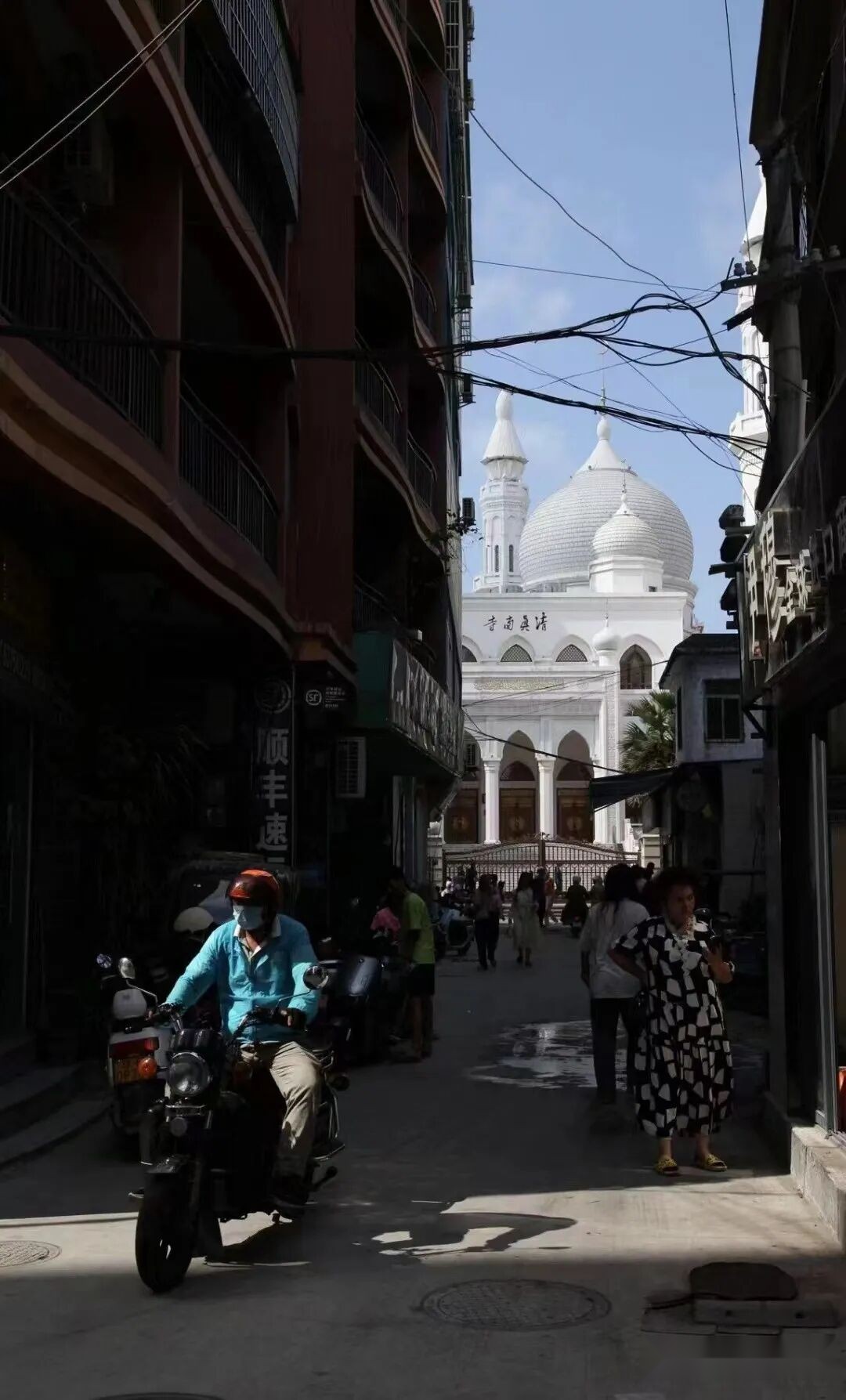
Along the stretch of road leading to Nanshan Mosque
The moment you step in here
The light and shadows shift, time and space transform
It's like walking right into another era
Into another world
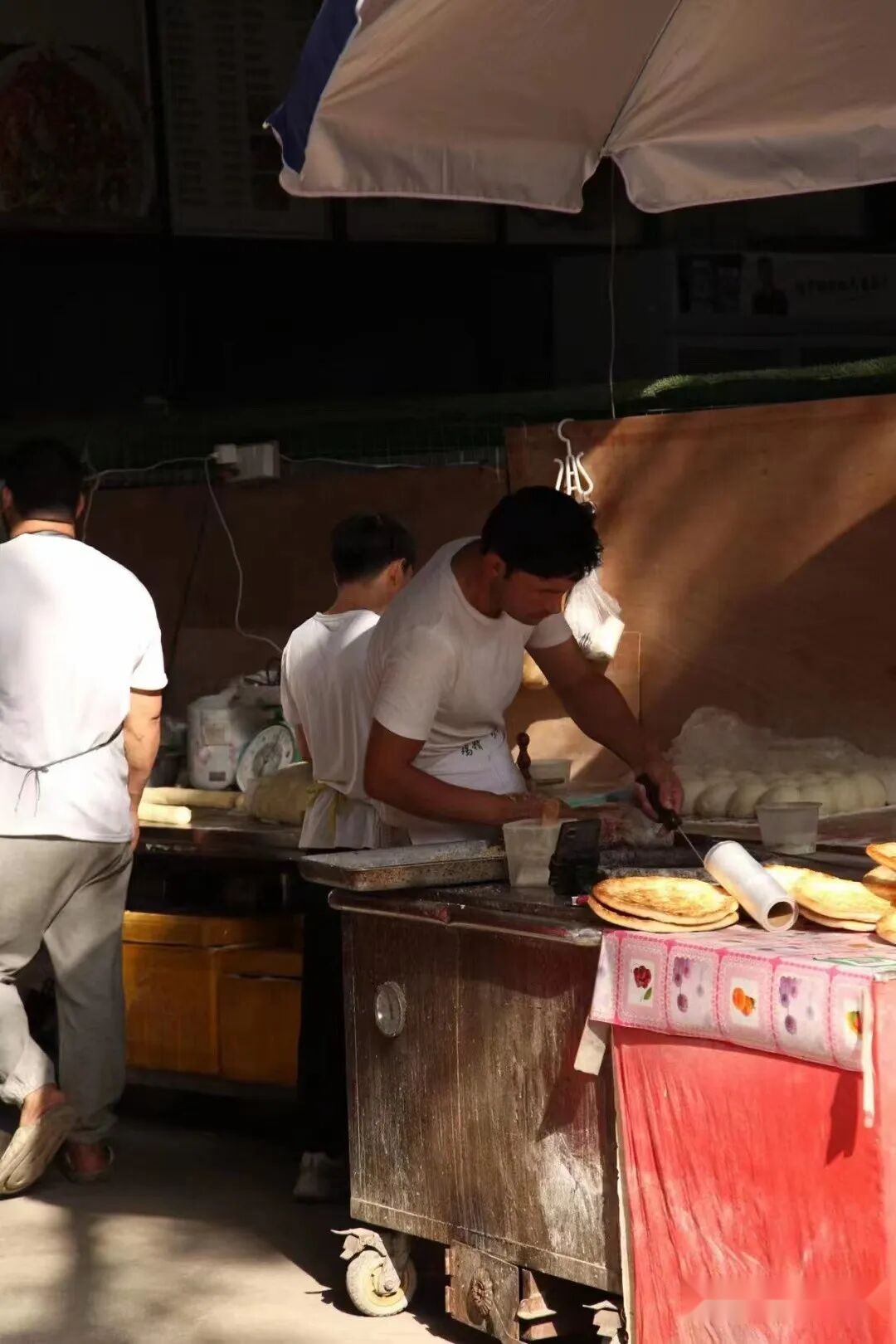
With naan flatbreads carrying a subtle hint of coconut flavor
Step onto a certain street in Huihui Village (Huihui Muslim Village) in Sanya's Tianya District,
and it feels like you've suddenly teleported to Xinjiang.
Nang (traditional Xinjiang flatbread) vendors are set up everywhere,
with eye-catching signs and booming businesses,
though they've got their own unique local twist—
these nang are packed with rich, aromatic coconut milk flavor.
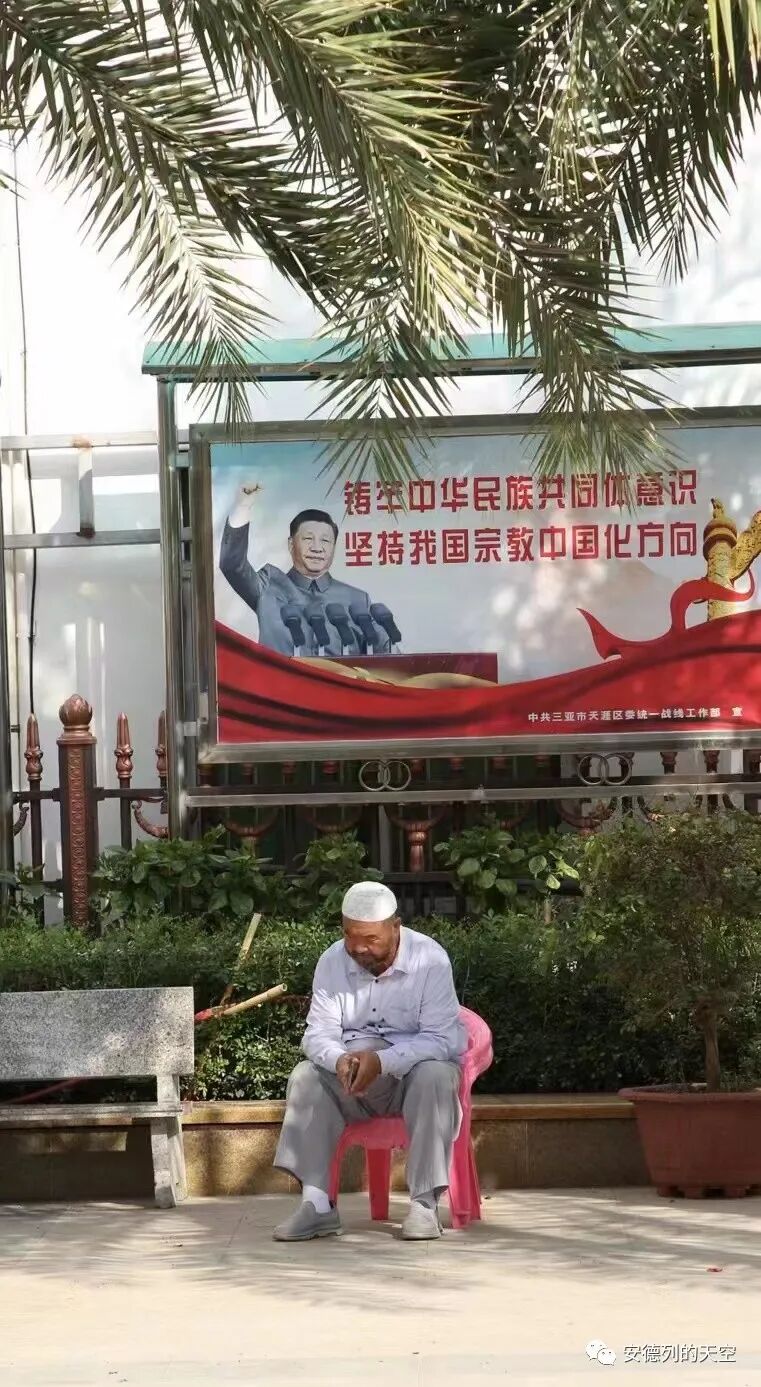
Lost in deep contemplation,
with banners and signs right behind him,
he knows these carry profound meaning.
Amidst the ocean breeze and coconut vibes, he sinks into deep personal prayer,
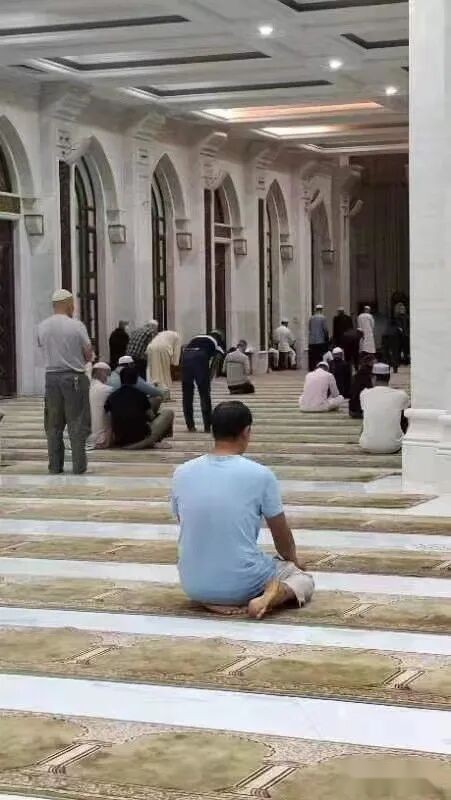
asking his own heart:
Can you hear what Allah is saying?
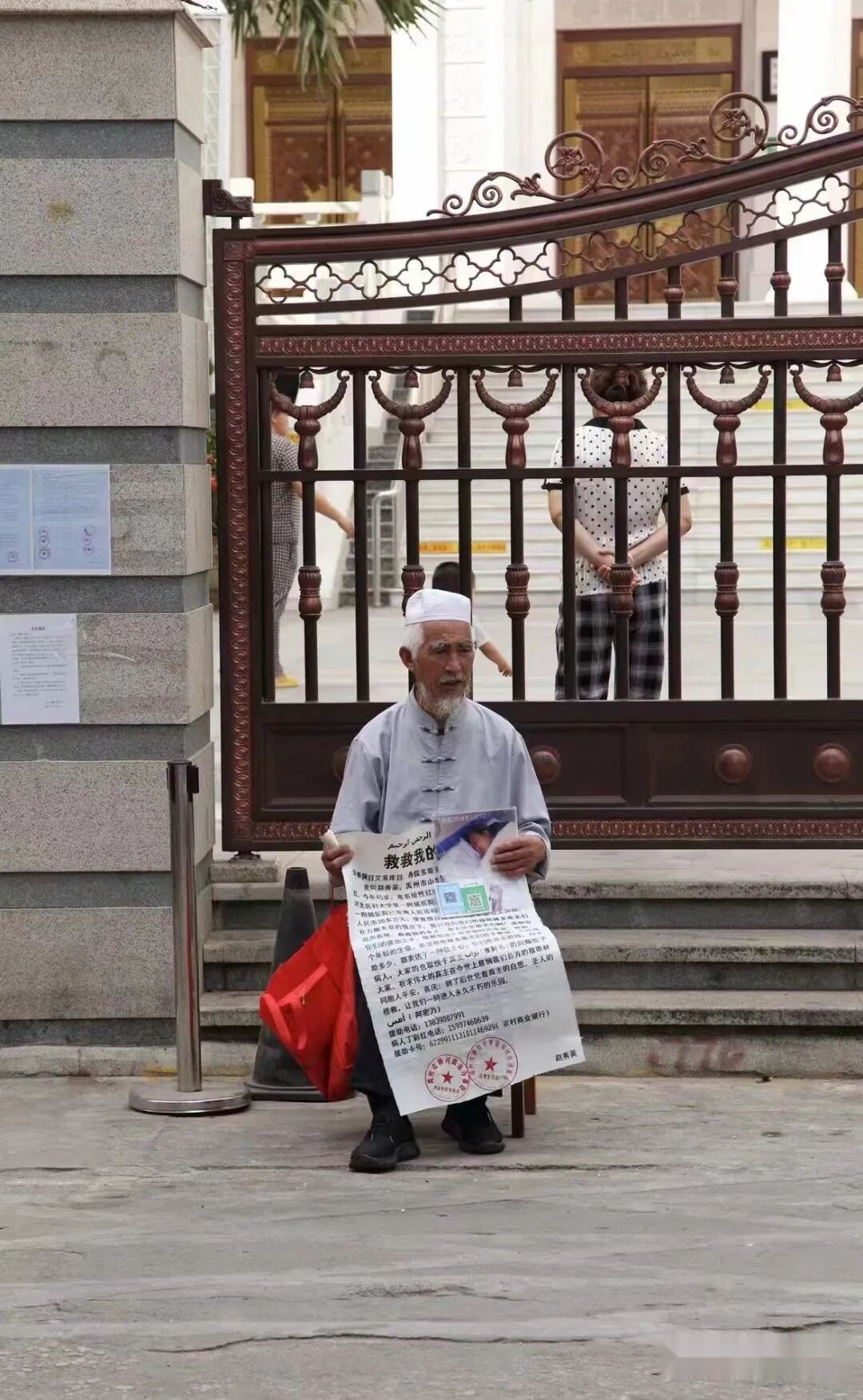
An elder offering dua,
wearing a white taqiyah cap, with white sideburns and a white beard, looking fresh and full of vitality.
This respected elder sits at the entrance of Nanshan Mosque (Sanya's largest masjid) making dua,
not praying for himself,
but wholeheartedly dedicating his supplications to helping community members going through hard times.
A pious silhouette,
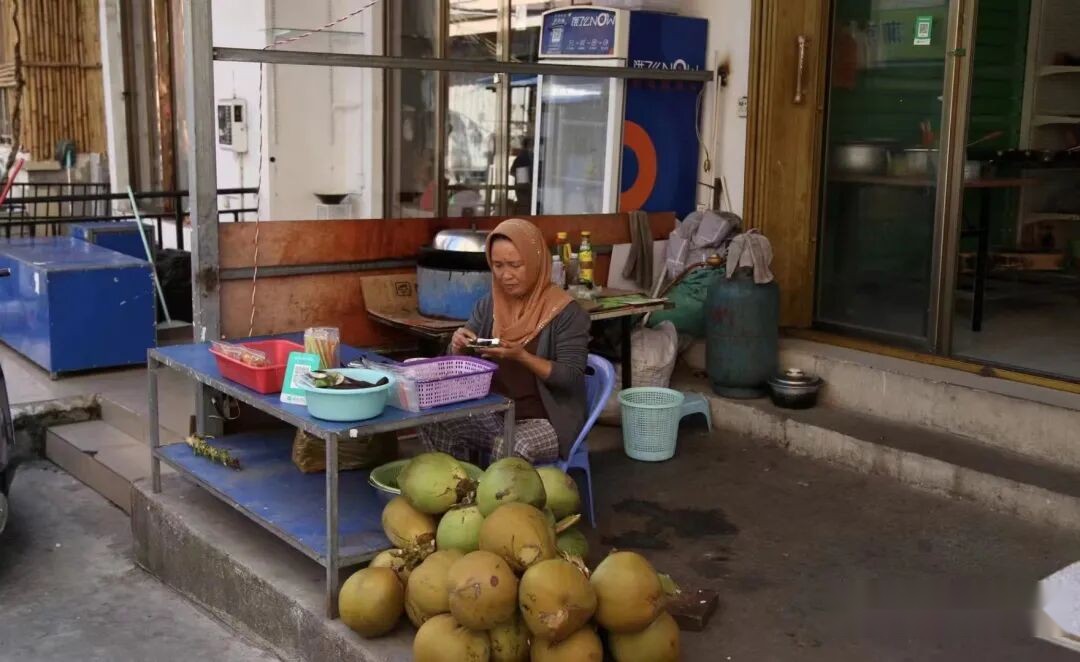
ever since he was a kid,
he heads to the mosque every single day,
performing salah five times a day,
washing up barefoot for ritual purity, overflowing with sincere devotion.
Hui Muslim women run the household economies,
an age-old tradition passed down all the way from the Tang Dynasty Silk Road.
Hui Muslim women hold up more than half the sky here, totally crushing it at business.
This female vendor makes her living selling betel nuts and coconuts,
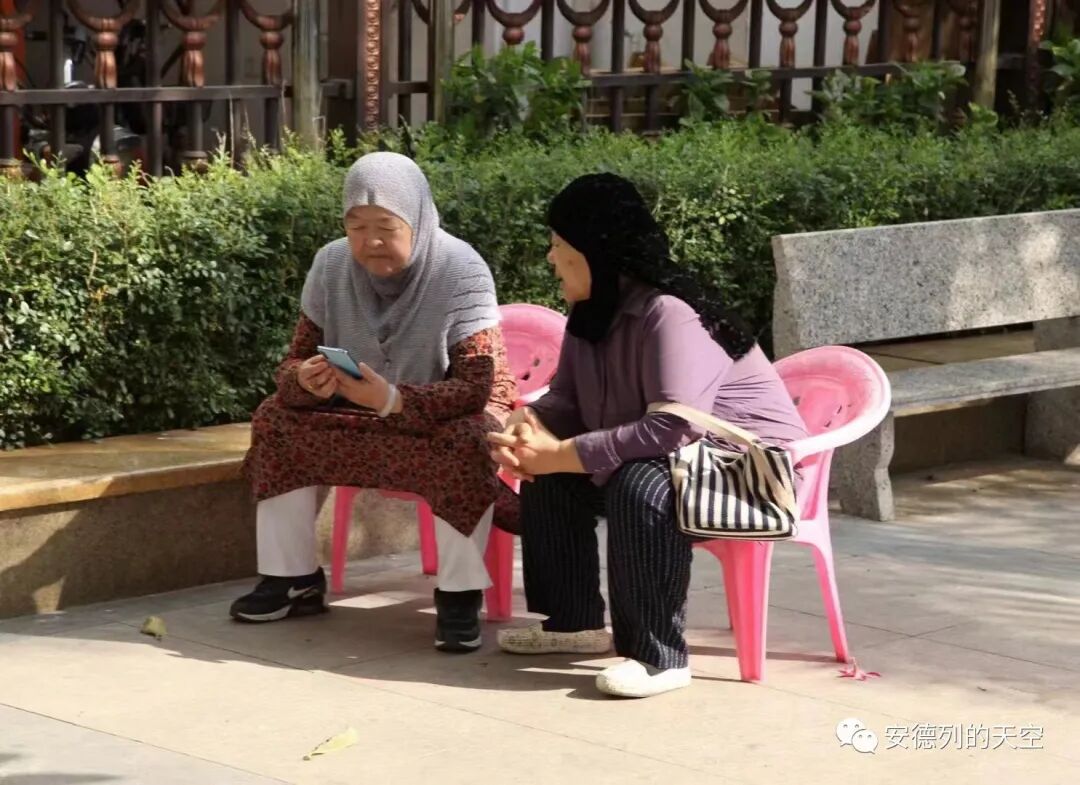
her deft hands wrapping betel nuts in green leaves.
This Hui Muslim grandma, somewhere in her seventies or eighties, has the sunniest disposition.
Living life at total ease, with a heart full of joy,
when she smiles, her eyes still sparkle with the vibrant energy of a youth.
Never for our age, never for our health
Do we need to worry or stress.
Let me share a little wisdom with you:
Darling, please don't ever fret about tomorrow.
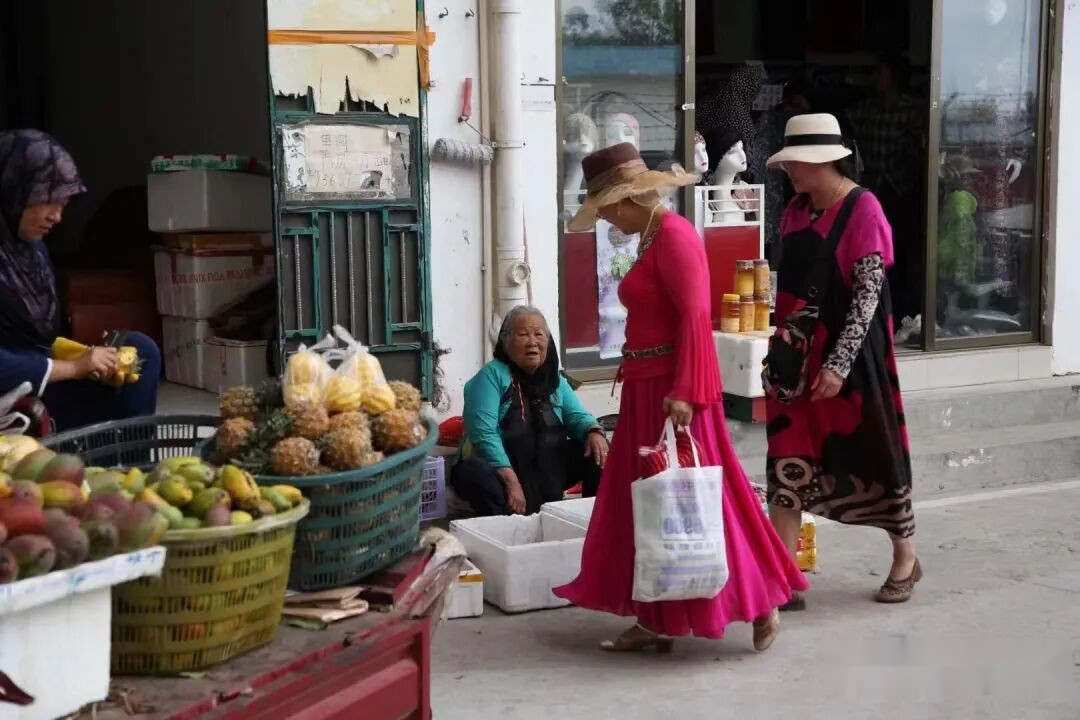
Look at these two dear elderly sisters, taking their sweet time,
Comparing notes on their smartphones,
Carefully picking out a catchy title for their digital photo album.
Setting up a street stall just for the joy of active aging,
They couldn't care less about how much money they make,
Or whether anyone even stops by to buy.
Honestly, they truly don't care at all.
An octogenarian Hui Muslim grandma
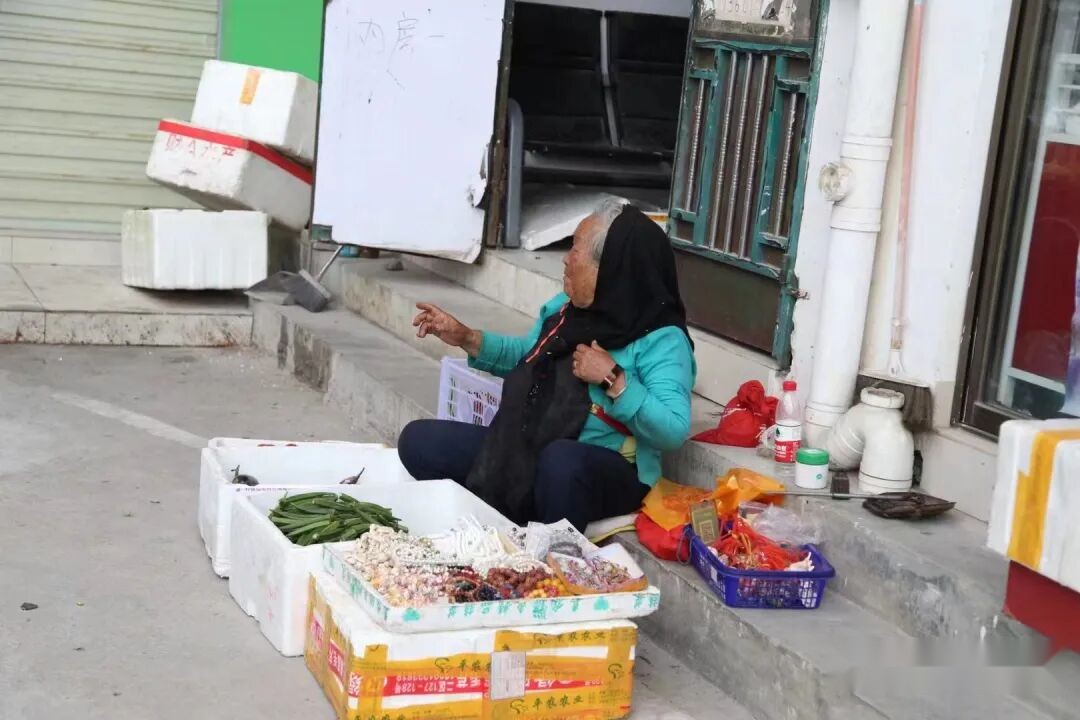
Running a little stall purely for the joy of retirement life.
Grandma says:
Alhamdulillah, everything is in Allah's best hands.
Photographer Profile
Zheng Chunlai, Member of the China Workers' Photographers Association
Member of the Shanghai Art Photography Association
Member of the China Senior Photographers Association
Member of the Shanghai Senior Photographers Association
Special Contributor Photographer for Travel World magazine
Former reporter for Labor Daily's "Shanghai Labor Movement"
END
______________________________________________
Tracing the Maritime Silk Road Descendants in Sanya's Tianya District: The Legend of Tang Dynasty Arab and Persian Merchant Ships and the Modern Continuation of Hui Muslim Trading Traditions
Abstract:
An on-the-ground exploration of the ancient Silk Road bloodline flowing through Sanya's Tianya District Hui Muslim communities. Unraveling the historical context of Arab and Persian merchants doing business and settling down in Yazhou during the flourishing Tang Dynasty, and investigating the cultural roots behind why Sanya Hui Muslim women excel at commerce and trade while running industrious households.
A Fascinating Historical Trace: The Lingering Echoes of the Silk Road
Are there Hui Muslims in Sanya? Where did they come from? And why is it always the women running the businesses in Sanya's Hui communities?
In Sanya, Hainan, they are heavily concentrated in two villages within Tianya District: Huihui Village (Huihui Muslim Village) and Huixin Village (Huixin Muslim Village). So how did these Hui Muslim compatriots end up migrating and settling down in Sanya, a city otherwise dominated by Han, Miao, and Li ethnic groups?
First, back in the Tang Dynasty, Hainan Island was a mandatory stop along the maritime spice and silk trade routes. Along the long coastline at the southern tip of Hainan Island, there was already active Muslim presence. At the time, Muslim merchants traveling from Persian and Arab regions into China via the islands—heading toward ports like Guangzhou and Quanzhou—had a portion of their members come ashore and settle in Sanya.
Second, by the Song and Yuan dynasties, Muslims from Vietnam successively migrated to Sanya.
Third, Muslims migrated down from the Chinese mainland and established villages.
Within China's big family of Hui Muslims, the Hainan Hui Muslims are a uniquely distinct sub-group.
In terms of surnames, language, attire, art, and facial features, they differ quite a bit from mainland Hui Muslims. Surnames like Pu and Hai trace their roots back to Persia, while others originate from Arabia. Linguistically, the Sanya Hui dialect is also known as the Huihui language, and it doesn't sound like any other language in China.
Tracing back a millennium, the men used to head out to sea to fish while the women stayed home to manage business. That's how the tradition of Hui Muslim women taking charge and running trade operations was formed and preserved to this day.
Let's recite a poem to set the mood:
Heading all the way south into the distance
Right to the edge of the world at Tianya Haijiao
It's not just about ocean breezes and coconut vibes
There are also lingering echoes of the Tang Dynasty
As if stepping back onto the Silk Road once again
And experiencing a joyful, surprising reunion with the descendants of Arabs and Persians
Right here
Is Huihui Village and Huixin Village in Sanya's Tianya District...
Photo by Zheng Chunlai (Tea House); Poem by Andre. On the way to Nanshan Mosque
Morning in Sanya
Bustling, lively, and full of energy
Along the stretch of road leading to Nanshan Mosque
The moment you step in here
The light and shadows shift, time and space transform
It's like walking right into another era
Into another world
With naan flatbreads carrying a subtle hint of coconut flavor
Step onto a certain street in Huihui Village (Huihui Muslim Village) in Sanya's Tianya District,
and it feels like you've suddenly teleported to Xinjiang.
Nang (traditional Xinjiang flatbread) vendors are set up everywhere,
with eye-catching signs and booming businesses,
though they've got their own unique local twist—
these nang are packed with rich, aromatic coconut milk flavor.
Lost in deep contemplation,
with banners and signs right behind him,
he knows these carry profound meaning.
Amidst the ocean breeze and coconut vibes, he sinks into deep personal prayer,
asking his own heart:
Can you hear what Allah is saying?
An elder offering dua,
wearing a white taqiyah cap, with white sideburns and a white beard, looking fresh and full of vitality.
This respected elder sits at the entrance of Nanshan Mosque (Sanya's largest masjid) making dua,
not praying for himself,
but wholeheartedly dedicating his supplications to helping community members going through hard times.
A pious silhouette,
ever since he was a kid,
he heads to the mosque every single day,
performing salah five times a day,
washing up barefoot for ritual purity, overflowing with sincere devotion.
Hui Muslim women run the household economies,
an age-old tradition passed down all the way from the Tang Dynasty Silk Road.
Hui Muslim women hold up more than half the sky here, totally crushing it at business.
This female vendor makes her living selling betel nuts and coconuts,
her deft hands wrapping betel nuts in green leaves.
This Hui Muslim grandma, somewhere in her seventies or eighties, has the sunniest disposition.
Living life at total ease, with a heart full of joy,
when she smiles, her eyes still sparkle with the vibrant energy of a youth.
Never for our age, never for our health
Do we need to worry or stress.
Let me share a little wisdom with you:
Darling, please don't ever fret about tomorrow.
Look at these two dear elderly sisters, taking their sweet time,
Comparing notes on their smartphones,
Carefully picking out a catchy title for their digital photo album.
Setting up a street stall just for the joy of active aging,
They couldn't care less about how much money they make,
Or whether anyone even stops by to buy.
Honestly, they truly don't care at all.
An octogenarian Hui Muslim grandma
Running a little stall purely for the joy of retirement life.
Grandma says:
Alhamdulillah, everything is in Allah's best hands.
Photographer Profile
Zheng Chunlai, Member of the China Workers' Photographers Association
Member of the Shanghai Art Photography Association
Member of the China Senior Photographers Association
Member of the Shanghai Senior Photographers Association
Special Contributor Photographer for Travel World magazine
Former reporter for Labor Daily's "Shanghai Labor Movement"
END
______________________________________________
