
Exploring Ningxia Muslim Culture: Siqiliangzi Gongbei Shrines & Hui Heritage
[Internet Repost]
Tracking Sacred Relics Above the Yellow River: A Panoramic Look at the Siqiliangzi Gongbei and the Spiritual Homeland of Hui Muslims
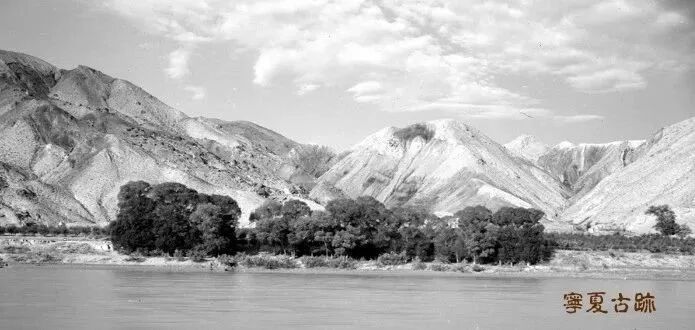
Abstract:

27 real-life photos and write-ups showcase the magnificent aura of the Siqiliangzi gongbei (Sufi shrine / mausoleum complex) in Wuzhong. From the grand hexagonal archways and towering main hall domes to the blue-brick reliefs and engraved Quranic verses, we take a heartfelt look back at the historical scroll of Hui Muslim forebears who sacrificed everything for their faith and people.

Selected from The orchard's 'Pir Sultan Abdal'dan Aşık Veysel' e 1000 Yılın Türküleri Thousand Years Of Anatolia' (Anatolian Millennia): 'Karşıki Karlı Dağda Bülbül' (The Nightingale on the Opposite Snowy Mountain). Aşık Veysel was a representative Turkish minstrel, baglama (traditional stringed instrument) player, and folk music master who lost his sight at age 7 and passed away at 79 (in 1973). This is the source of muqam (classical Islamic musical tradition). Turkey's Âsiklik (minstrelsy) tradition is listed on the UNESCO Intangible Cultural Heritage list.

The word gongbei is a transliteration of the Arabic 'Qubbah', originally referring to religious architectural styles in Arabia, Persia, and Central Asia. In Central Asia, Persia, and China's Xinjiang region, they are called 'mazars'. Gongbei architecture in Ningxia is mainly divided into three types: Qutubu gongbei, where 'Qutubu' means axis, pole, or leader, considered a special 'wali' hidden among humanity and a VIP in the eyes of Allah; menhuan (Sufi order / brotherhood) elders' and Murshid gongbei, where Sufi order founders and spiritual guides are generally called 'Elder', 'Daozu', or 'Murshid'; and Halifan gongbei, where 'Halifan' means successor, referring to the senior disciples, successors, or deputies of a Murshid. There are also several other types of gongbei. Gongbei are the primary religious feature of Ningxia's Sufi orders and an important cultural heritage of the Hui Muslims in Ningxia.

Located at the intersection of Kaiyuan Avenue and Wenwei North Street in Litong District, Wuzhong City, Ningxia, this is the site of martyrdom and final resting place of Ma Hualong (reverenced in the religious community as 'Thirteenth Grandfather'), the fifth-generation spiritual guide of the Jahriyya menhuan (Sufi order / brotherhood). Following the failure of the Jinjibao Hui Muslim uprising, on the 13th day of the first lunar month in the tenth year of the Tongzhi Emperor's reign (1871), Ma Hualong and his son, among many others, were subjected to death by a thousand cuts at Siqiliangzi. Belonging to the Jahriyya gongbei, it covers nearly 3 mu of land, features an overall bluish-gray tone, and follows the classic Chinese hexagonal gongbei style. The hexagonal tower shape holds deep symbolic meaning, stands 24 meters tall, and is inlaid with white marble on the inside. It was rebuilt in 1984 and listed as a county-level key cultural relic protection unit by the Wuzhong Municipal People's Government in 1994.

Shot using a Mamiya C330 Sekor camera lens, with self-developed film scanned directly into digital files.

Note: Traditional photography refers to using a camera lens to focus external light rays to form a clear image on the film plane inside a sealed camera back. After exposure, the image turns into a silver halide latent image. Developing chemicals then wash and rinse the film to clear the silver halide grains, reducing the latent image back into silver particles on the negative, creating the master negative. To make prints, an enlarger projects the film's silver salt particles onto photographic paper in a darkroom.

The charm of black-and-white film has remained irreplaceable by any digital equipment since the birth of photography. The wide exposure latitude of black-and-white film is clearly superior to color film, and using different darkroom printing techniques allows for silver-gelatin works with rich tonal ranges, soft contrast, and crisp details. Today's large-format black-and-white prints produced via digital output still lag significantly behind traditional silver-gelatin works when it comes to fine details. Darkroom craftsmanship is unrepeatable—every single print made is unique, and that is precisely where its magic lies.


Tracking Sacred Relics Above the Yellow River: A Panoramic Look at the Siqiliangzi Gongbei and the Spiritual Homeland of Hui Muslims
Abstract:
27 real-life photos and write-ups showcase the magnificent aura of the Siqiliangzi gongbei (Sufi shrine / mausoleum complex) in Wuzhong. From the grand hexagonal archways and towering main hall domes to the blue-brick reliefs and engraved Quranic verses, we take a heartfelt look back at the historical scroll of Hui Muslim forebears who sacrificed everything for their faith and people.
Selected from The orchard's 'Pir Sultan Abdal'dan Aşık Veysel' e 1000 Yılın Türküleri Thousand Years Of Anatolia' (Anatolian Millennia): 'Karşıki Karlı Dağda Bülbül' (The Nightingale on the Opposite Snowy Mountain). Aşık Veysel was a representative Turkish minstrel, baglama (traditional stringed instrument) player, and folk music master who lost his sight at age 7 and passed away at 79 (in 1973). This is the source of muqam (classical Islamic musical tradition). Turkey's Âsiklik (minstrelsy) tradition is listed on the UNESCO Intangible Cultural Heritage list.
The word gongbei is a transliteration of the Arabic 'Qubbah', originally referring to religious architectural styles in Arabia, Persia, and Central Asia. In Central Asia, Persia, and China's Xinjiang region, they are called 'mazars'. Gongbei architecture in Ningxia is mainly divided into three types: Qutubu gongbei, where 'Qutubu' means axis, pole, or leader, considered a special 'wali' hidden among humanity and a VIP in the eyes of Allah; menhuan (Sufi order / brotherhood) elders' and Murshid gongbei, where Sufi order founders and spiritual guides are generally called 'Elder', 'Daozu', or 'Murshid'; and Halifan gongbei, where 'Halifan' means successor, referring to the senior disciples, successors, or deputies of a Murshid. There are also several other types of gongbei. Gongbei are the primary religious feature of Ningxia's Sufi orders and an important cultural heritage of the Hui Muslims in Ningxia.
Located at the intersection of Kaiyuan Avenue and Wenwei North Street in Litong District, Wuzhong City, Ningxia, this is the site of martyrdom and final resting place of Ma Hualong (reverenced in the religious community as 'Thirteenth Grandfather'), the fifth-generation spiritual guide of the Jahriyya menhuan (Sufi order / brotherhood). Following the failure of the Jinjibao Hui Muslim uprising, on the 13th day of the first lunar month in the tenth year of the Tongzhi Emperor's reign (1871), Ma Hualong and his son, among many others, were subjected to death by a thousand cuts at Siqiliangzi. Belonging to the Jahriyya gongbei, it covers nearly 3 mu of land, features an overall bluish-gray tone, and follows the classic Chinese hexagonal gongbei style. The hexagonal tower shape holds deep symbolic meaning, stands 24 meters tall, and is inlaid with white marble on the inside. It was rebuilt in 1984 and listed as a county-level key cultural relic protection unit by the Wuzhong Municipal People's Government in 1994.
Shot using a Mamiya C330 Sekor camera lens, with self-developed film scanned directly into digital files.
Note: Traditional photography refers to using a camera lens to focus external light rays to form a clear image on the film plane inside a sealed camera back. After exposure, the image turns into a silver halide latent image. Developing chemicals then wash and rinse the film to clear the silver halide grains, reducing the latent image back into silver particles on the negative, creating the master negative. To make prints, an enlarger projects the film's silver salt particles onto photographic paper in a darkroom.
The charm of black-and-white film has remained irreplaceable by any digital equipment since the birth of photography. The wide exposure latitude of black-and-white film is clearly superior to color film, and using different darkroom printing techniques allows for silver-gelatin works with rich tonal ranges, soft contrast, and crisp details. Today's large-format black-and-white prints produced via digital output still lag significantly behind traditional silver-gelatin works when it comes to fine details. Darkroom craftsmanship is unrepeatable—every single print made is unique, and that is precisely where its magic lies.
