

Sufi Gongbei Shrines
Exploring Ningxia Muslim Culture, Historic Mosques, Sufi Shrines & Halal Heritage in Northwest China
Articles • Hasan09 posted the article • 0 comments • 4 views • 3 hours ago
Travel Notes from Southern Ningxia, Part 3: Stepping into the Jiangnan of the Saibei Frontier and the Folk Customs of the Ancient Liupan Mountains
Abstract:
A visual and written field report crossing provincial borders into the Muslim heartland of southern Ningxia. Capturing the striking initial impressions of northwestern Islamic culture and plateau landscapes, with detailed portraits of minarets and the peaceful everyday rhythm of Hui Muslim villages.
丨Guamagou丨
-
A Landscape Like an Oil Painting
-
Passing through the Liupan Mountains, you officially enter Ningxia. The Liupan Mountains are steeped in stories. Growing up, I heard Gansu referred to as Long (陇), but I never knew where Long Mountain was. Later, I learned that Long Mountain is actually the Liupan Range, stretching all the way north to the southern Guanshan, forming a major geographical divide. You have to respect how geography shapes culture: taking Long Mountain as the boundary, the Hui Muslims of Longxi (western Gansu) and east of Long Mountain differ vastly in temperament and culture.
To a certain extent, the Hehuang region can also be considered part of Longxi, yet it retains its own distinct uniqueness. When I saw Hui Muslims from Ningxia, Pingliang, and Zhangchuan in Xining as a child, I always found it fascinating that such Hui communities existed—not because of linguistic differences, but because their demeanor, posture, and aura were so vastly different from yours, making you feel the world is truly incredible. Thus, for many years, I never had the chance to step into Ningxia, visiting Yinchuan only once years ago in a perfunctory, hurried work trip. To a cultural traditionalist, Yinchuan doesn't quite feel like the 'real' Ningxia.
Stepping past the foot of the Liupan Mountains felt like truly entering the Ningxia that had seemed so magical to me in childhood. Spotting an earthen fortress by the road, I initially thought it was an old farming redoubt. A large roadside sign read 'Xiaoguan Pass' (萧关), and memories of Tang dynasty poetry instantly came alive: 'In the cold autumn of the eighth month on the Xiaoguan road,' 'Ever since smoke of war rose from Xiaoguan,' 'Dangerous are the roads of Huizhong, and beacon fires are frequent at Xiaoguan,' 'Meeting scout riders at Xiaoguan, the grand protector is in Yanran.' The character 'xiao' (萧) itself evokes an autumnal desolation, and coupled with the martial travel imagery of Tang poetry, reciting 'Xiaoguan' makes you shiver. Yet the real Xiaoguan is not grim or cold; its vegetation and weather are fresh and bright.
The standard route into Ningxia usually heads straight north to Guyuan, but my first stop this time was to branch east from Qingshizui. Heading east brought me into present-day Pengyang County, but before reaching the county seat, I turned south into the mountains, arriving at a place called Guamagou. Even today, this spot is deeply secluded, perhaps known to very few locals in Guyuan. Yet this tiny place is a crucial point on the Sufi map of Ningxia, a must-visit because of the Guamagou gongbei (Sufi shrine / mausoleum complex). The master interred at Guamagou Gongbei is named Hai Hu. Due to today's rigid sectarian boundaries and the rise of emerging orders, Hai Hu's name is known primarily only within the inner circles of the Xianzun lineage.
The Sufi orders in Ningxia today are complex and branching, but essentially boil down to three major ones: Khufiyya (虎夫耶), Qadiriyya (嘎德仁耶), and Jahriyya (哲合忍耶). Among the first two, there are further new and old branches. Today, the Khufiyya in Ningxia is most dominated by the lineage passed down from the Old Master of Liangzhou Zhuang in Qinghai, which has become almost synonymous with Ningxia Khufiyya. In reality, the Liangzhou Zhuang lineage—represented by Hongmen and others—is a neo-Khufiyya, which we in Qinghai call the 'Minor Khufiyya' (小虎夫耶), whereas ancient lineages like the Xianzun (鲜门) are known as the 'Major Khufiyya' (大虎夫耶). When studying Ningxia's Khufiyya, one must never overlook the Xianzun branch. As for the differences and connections between the Major and Minor Khufiyya, or the old and new branches of the Qadiriyya, we will dive into them as our written journey takes us to the right places.
Speaking of the Xianzun lineage, I must tiresomely mention Apak Khoja. In the early Kangxi era, Apak Khoja traveled east to Xining, propagating his teachings to several key disciples. Among them, Xian Meizhen of Xining propagated the most vigorously, reaching as far as Yangzhou—marking the first time the Sufi map expanded beyond the Hehuang basin. Ningxia, in particular, became an important testing ground for the Xianzun lineage. Xian Meizhen conducted his first trial in Ningxia during the Kangxi reign, and it was a resounding success. The primary reason was likely that he cultivated fine stock in Guyuan—Hai Hu. True to Xian Meizhen's expectations, Hai Hu grew into a towering tree and became Xian Meizhen's vanguard in Ningxia.
From the perspective of Ningxia's Sufi history, the Xianzun lineage was the earliest Sufi order to enter Ningxia. It is even possible that Xian Meizhen, Hai Hu, and others were the very ones to systematically introduce Sufism to Ningxia. Hai Hu's contribution is indelible. Before the Tongzhi Hui revolts, the Xianzun lineage—as Ningxia's sole Khufiyya and oldest Sufi order—shared the region almost equally with the Jahriyya.
No one knows how Hai Hu from Guyuan and Xian Meizhen from Xining came to cross paths, and the Xianzun lineage has lost the historical records of this connection. The interactions between Xian and Hai that I wrote in my book *Legends of Hehuang Heroes* were entirely a product of my imagination, crafted to keep the narrative flowing. Therefore, *Legends of Hehuang Heroes* should be read as a story, not as history, which I have stated long ago. That is why I was so eager to come to Guamagou and witness the spiritual presence of Hai Hu.
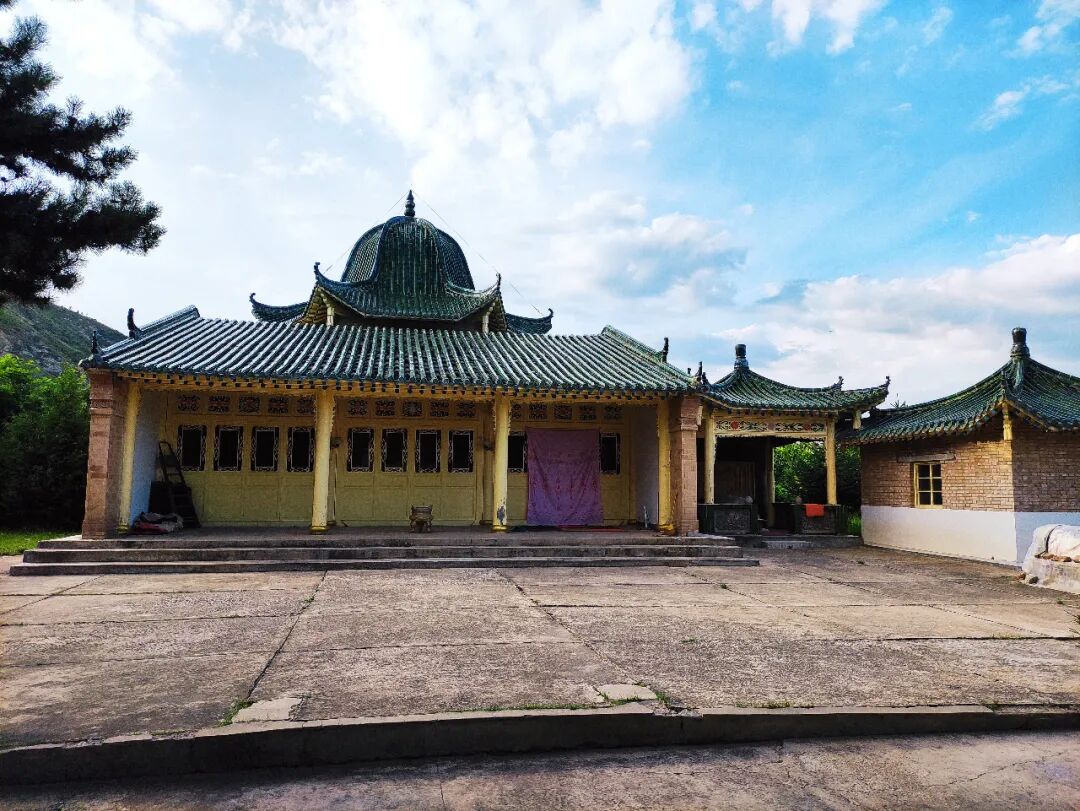
△ Interior view of Guamagou Gongbei
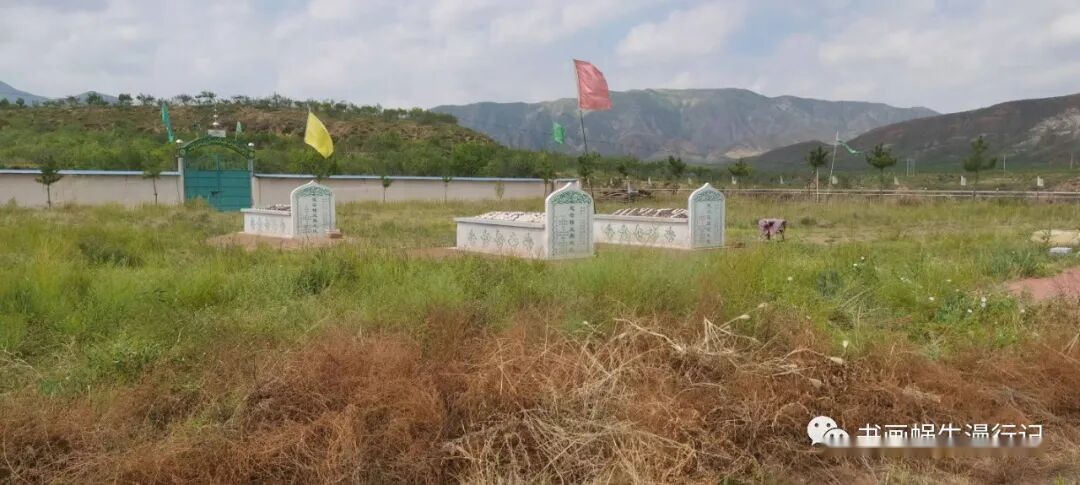
If I am not mistaken, the name Guamagou (Hanging Horse Gully) likely comes from the days when the vegetation was so dense and overgrown that horses would get tangled or caught in it, hence the name. Lying beneath the Liupan Mountains, the gully fits my guess. Guamagou is somewhat similar to Bazang Gully in Qinghai—the resting place of the second-generation Xianzun leaders. Both follow a dry riverbed deep southward into a canyon, though Bazang Gully runs deeper than Guamagou. There is only this one gongbei in the gully. Whenever you ask locals for directions, they point you straight to the shrine. I assumed most people in the gully were followers of the Xianzun order, but after chatting with the elder guarding the gongbei, I learned they are actually all Jahriyya and Ikhwan, with not a single Xianzun follower left—only this single Xianzun family guarding the shrine across generations.
Inside the pavilion at Guamagou Gongbei, there are four identical graves. With an unshakeable intuition, I recognized Master Hai Hu's tomb among the identical four. Stepping down to cross-reference with the elder guarding the shrine confirmed my certainty. The elder explained that the central grave is the memorial tomb of Master Xian Meizhen; to the left is Master Xinbei, the great-grandson of Master Xian; to the right is Master Hai; and at Master Xinbei's feet lies his son, Xian Linbai.
The elder was dark-skinned and lean, just like the honest farmers of this gully, and warmly invited us into his home. I originally thought his surname would be Hai, but it turned out to be Xian—he is a descendant of Xian Meizhen. Emerging from the gongbei, in the distance on an earthen slope outside the gate, I saw an elderly man with a flowing white beard leaning on a staff, standing tall and gazing right at us beneath a stunning old apricot tree. He looked magnificent, just like an oil painting. I couldn't help walking up to greet him with a *Salam* (peace be upon you). The elder said that was his father.
Walking up the slope toward the apricot tree, I thought to myself: Hey, isn't this my grandfather? Isn't this the old Sufis I've met? Aren't these living men of the past? He, too, was a living man of the past. His demeanor was completely different from his son's. Without being told, no one would guess they were father and son. The old man radiated a sense of cleanliness and elegance from inside out, as if the muddy, dusty life of the loess hills had nothing to do with him, whereas his son clearly appeared deeply intertwined with the soil.
The old man's conversational style also retained an archaic charm—he asked few questions, but every sentence was steeped in etiquette. Propriety and restraint are truly intertwined. The old man was 89 years old. Judging by his brow and facial contours, he indeed strongly resembled the Xian family descendants in Qinghai—a textbook portrait of a descendant of Master Xian. Back in Qinghai, when I spoke with Elder Xian Fuxing of the Xianzun Gongbei, he said the old man was his paternal uncle's generation and an ordained *akhund* (Islamic scholar). That being the case, if I am not mistaken, the old man should be Xian Peizhi, son of Xian Yulin (who belonged to the eldest household of Xian Linbai), making him a seventh-generation descendant of the Xianzun forefather.
△ Archaic charm and the elder
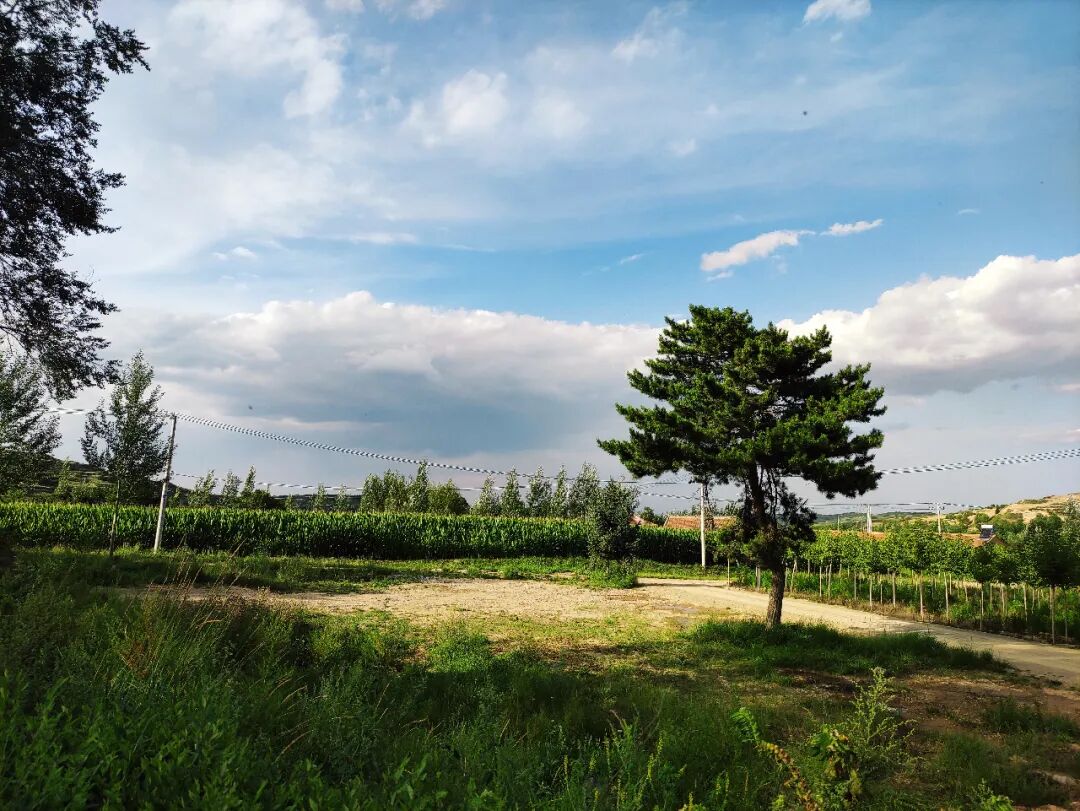
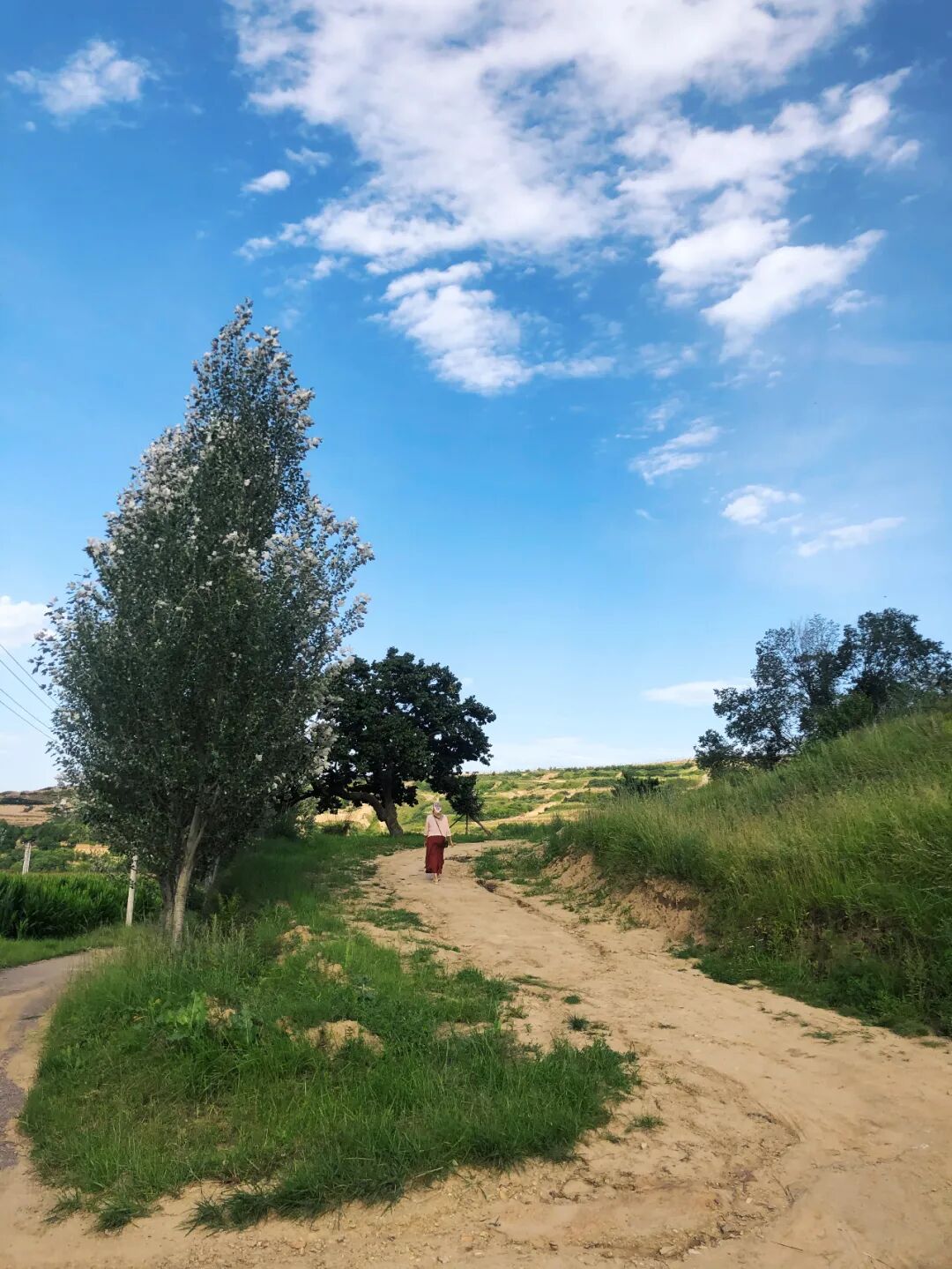
The sky over Guamagou was so pure that white clouds were simply white clouds and blue skies were blue skies—the conceptualized blue sky and white clouds of children's drawings. The crops and artemisia weeds in the fields stood out in vibrant, distinct lines. There was no trash, no dust; the loess earth beneath your feet invited you to sit or lie down without hesitation, and apricots dripping from the branches could be popped into your mouth effortlessly. The households here were poor yet un destitute; the earthen courtyards were swept impeccably clean, and the old man beneath the tree was as pristine as an ancient painting.
Master Hai Hu was not originally buried in Guamagou; he was buried at Haijiadaping in Tianziniao, and was moved to Guamagou during the turmoil of the Tongzhi Hui revolts. The Xianzun order holds Master Hai Hu in the highest regard, describing him as 'half sovereign, half subject.' The Major Khufiyya has a strict hierarchy of sovereign and subject: the spiritual guide is the sovereign, and all *murids* (disciples) are subjects. Master Xian Meizhen once made an exception by bestowing upon Master Hai Hu a seal of authority, tacitly allowing him independent proselytizing rights. Thus, the Xianzun order calls him 'half sovereign, half subject,' which speaks volumes about Hai Hu's standing in the hearts of the Xian family.
The importance of Guamagou within the Xianzun gongbei system lies not only in being Master Hai Hu's burial site, but also in the fact that the Xianzun missionary system split into two branches—Ningxia and Qinghai—starting from the fifth generation, Xian Linbai. After migrating to Ningxia, Xian Linbai lived in seclusion at Guamagou, farming and studying part-time, established a *daotang* (Sufi hall/school), relocated the remains of his father, Master Xinbei, from Qinghai to the Guamagou Gongbei, and spent the remainder of his life there.
You could say that Guamagou, much like Bazang Gully in Qinghai, nurtured the Xian family and serves as the umbilical cradle of the Ningxia Xianzun lineage. Although later descendants stepped out of Guamagou to establish *daotang* in Xiji, Guamagou remains an eternal, mother-like presence. All the households surrounding Guamagou Gongbei responded to the government's call and migrated down the mountain to settle in the Yellow River agricultural plains, leaving the area around the gongbei desolate. Yet only the family of the elderly Xian man refused to descend the mountain, continuing to meticulously tend this pure and immaculate courtyard. The younger members of the Xian family went down the mountain just like everyone else in the village; only these two generations of father and son stood firm. I asked the old man: Given your advanced age, why haven't you moved down the mountain into the city? The white-bearded elder turned serious, pointing his walking stick toward the gongbei: 'Ah, I just can't bear to leave this behind!'
△ Cannot bear to leave this behind
The eldest branch of Xian Linbai never left Guamagou, while the second branch stepped out of Guamagou to inherit religious authority. To briefly outline the Xianzun lineage: Master Zhuzi (Xian Meizhen) — Master Huazhe — Master Chuanli (Xian Chengzhen) — Master Xinbei (Xian Xianghui) — Xian Linbai (after whom the Ningxia and Qinghai missions split). Other important Xianzun gongbei in Ningxia include Qiganliang and Qiancha, both located in Xiji. Qiganliang is the tomb of Xian Yuzhen (son of Xian Linbai), while Qiancha holds the tombs of Ma Cang, Ma Ji, and Ma Ping—three brothers who were *murids* of Xian Meizhen in Ningxia and are also featured in *Legends of Hehuang Heroes*.
The sun was setting, and the fields were as silent as a mystery. All the way back on the road, I kept pondering the old man's words: 'Ah, I just can't bear to leave this behind!' Looking back at Guamagou, everything had already become antiquity.
—END— view all
Travel Notes from Southern Ningxia, Part 3: Stepping into the Jiangnan of the Saibei Frontier and the Folk Customs of the Ancient Liupan Mountains
Abstract:
A visual and written field report crossing provincial borders into the Muslim heartland of southern Ningxia. Capturing the striking initial impressions of northwestern Islamic culture and plateau landscapes, with detailed portraits of minarets and the peaceful everyday rhythm of Hui Muslim villages.
丨Guamagou丨
-
A Landscape Like an Oil Painting
-
Passing through the Liupan Mountains, you officially enter Ningxia. The Liupan Mountains are steeped in stories. Growing up, I heard Gansu referred to as Long (陇), but I never knew where Long Mountain was. Later, I learned that Long Mountain is actually the Liupan Range, stretching all the way north to the southern Guanshan, forming a major geographical divide. You have to respect how geography shapes culture: taking Long Mountain as the boundary, the Hui Muslims of Longxi (western Gansu) and east of Long Mountain differ vastly in temperament and culture.
To a certain extent, the Hehuang region can also be considered part of Longxi, yet it retains its own distinct uniqueness. When I saw Hui Muslims from Ningxia, Pingliang, and Zhangchuan in Xining as a child, I always found it fascinating that such Hui communities existed—not because of linguistic differences, but because their demeanor, posture, and aura were so vastly different from yours, making you feel the world is truly incredible. Thus, for many years, I never had the chance to step into Ningxia, visiting Yinchuan only once years ago in a perfunctory, hurried work trip. To a cultural traditionalist, Yinchuan doesn't quite feel like the 'real' Ningxia.
Stepping past the foot of the Liupan Mountains felt like truly entering the Ningxia that had seemed so magical to me in childhood. Spotting an earthen fortress by the road, I initially thought it was an old farming redoubt. A large roadside sign read 'Xiaoguan Pass' (萧关), and memories of Tang dynasty poetry instantly came alive: 'In the cold autumn of the eighth month on the Xiaoguan road,' 'Ever since smoke of war rose from Xiaoguan,' 'Dangerous are the roads of Huizhong, and beacon fires are frequent at Xiaoguan,' 'Meeting scout riders at Xiaoguan, the grand protector is in Yanran.' The character 'xiao' (萧) itself evokes an autumnal desolation, and coupled with the martial travel imagery of Tang poetry, reciting 'Xiaoguan' makes you shiver. Yet the real Xiaoguan is not grim or cold; its vegetation and weather are fresh and bright.
The standard route into Ningxia usually heads straight north to Guyuan, but my first stop this time was to branch east from Qingshizui. Heading east brought me into present-day Pengyang County, but before reaching the county seat, I turned south into the mountains, arriving at a place called Guamagou. Even today, this spot is deeply secluded, perhaps known to very few locals in Guyuan. Yet this tiny place is a crucial point on the Sufi map of Ningxia, a must-visit because of the Guamagou gongbei (Sufi shrine / mausoleum complex). The master interred at Guamagou Gongbei is named Hai Hu. Due to today's rigid sectarian boundaries and the rise of emerging orders, Hai Hu's name is known primarily only within the inner circles of the Xianzun lineage.
The Sufi orders in Ningxia today are complex and branching, but essentially boil down to three major ones: Khufiyya (虎夫耶), Qadiriyya (嘎德仁耶), and Jahriyya (哲合忍耶). Among the first two, there are further new and old branches. Today, the Khufiyya in Ningxia is most dominated by the lineage passed down from the Old Master of Liangzhou Zhuang in Qinghai, which has become almost synonymous with Ningxia Khufiyya. In reality, the Liangzhou Zhuang lineage—represented by Hongmen and others—is a neo-Khufiyya, which we in Qinghai call the 'Minor Khufiyya' (小虎夫耶), whereas ancient lineages like the Xianzun (鲜门) are known as the 'Major Khufiyya' (大虎夫耶). When studying Ningxia's Khufiyya, one must never overlook the Xianzun branch. As for the differences and connections between the Major and Minor Khufiyya, or the old and new branches of the Qadiriyya, we will dive into them as our written journey takes us to the right places.
Speaking of the Xianzun lineage, I must tiresomely mention Apak Khoja. In the early Kangxi era, Apak Khoja traveled east to Xining, propagating his teachings to several key disciples. Among them, Xian Meizhen of Xining propagated the most vigorously, reaching as far as Yangzhou—marking the first time the Sufi map expanded beyond the Hehuang basin. Ningxia, in particular, became an important testing ground for the Xianzun lineage. Xian Meizhen conducted his first trial in Ningxia during the Kangxi reign, and it was a resounding success. The primary reason was likely that he cultivated fine stock in Guyuan—Hai Hu. True to Xian Meizhen's expectations, Hai Hu grew into a towering tree and became Xian Meizhen's vanguard in Ningxia.
From the perspective of Ningxia's Sufi history, the Xianzun lineage was the earliest Sufi order to enter Ningxia. It is even possible that Xian Meizhen, Hai Hu, and others were the very ones to systematically introduce Sufism to Ningxia. Hai Hu's contribution is indelible. Before the Tongzhi Hui revolts, the Xianzun lineage—as Ningxia's sole Khufiyya and oldest Sufi order—shared the region almost equally with the Jahriyya.
No one knows how Hai Hu from Guyuan and Xian Meizhen from Xining came to cross paths, and the Xianzun lineage has lost the historical records of this connection. The interactions between Xian and Hai that I wrote in my book *Legends of Hehuang Heroes* were entirely a product of my imagination, crafted to keep the narrative flowing. Therefore, *Legends of Hehuang Heroes* should be read as a story, not as history, which I have stated long ago. That is why I was so eager to come to Guamagou and witness the spiritual presence of Hai Hu.
△ Interior view of Guamagou Gongbei
If I am not mistaken, the name Guamagou (Hanging Horse Gully) likely comes from the days when the vegetation was so dense and overgrown that horses would get tangled or caught in it, hence the name. Lying beneath the Liupan Mountains, the gully fits my guess. Guamagou is somewhat similar to Bazang Gully in Qinghai—the resting place of the second-generation Xianzun leaders. Both follow a dry riverbed deep southward into a canyon, though Bazang Gully runs deeper than Guamagou. There is only this one gongbei in the gully. Whenever you ask locals for directions, they point you straight to the shrine. I assumed most people in the gully were followers of the Xianzun order, but after chatting with the elder guarding the gongbei, I learned they are actually all Jahriyya and Ikhwan, with not a single Xianzun follower left—only this single Xianzun family guarding the shrine across generations.
Inside the pavilion at Guamagou Gongbei, there are four identical graves. With an unshakeable intuition, I recognized Master Hai Hu's tomb among the identical four. Stepping down to cross-reference with the elder guarding the shrine confirmed my certainty. The elder explained that the central grave is the memorial tomb of Master Xian Meizhen; to the left is Master Xinbei, the great-grandson of Master Xian; to the right is Master Hai; and at Master Xinbei's feet lies his son, Xian Linbai.
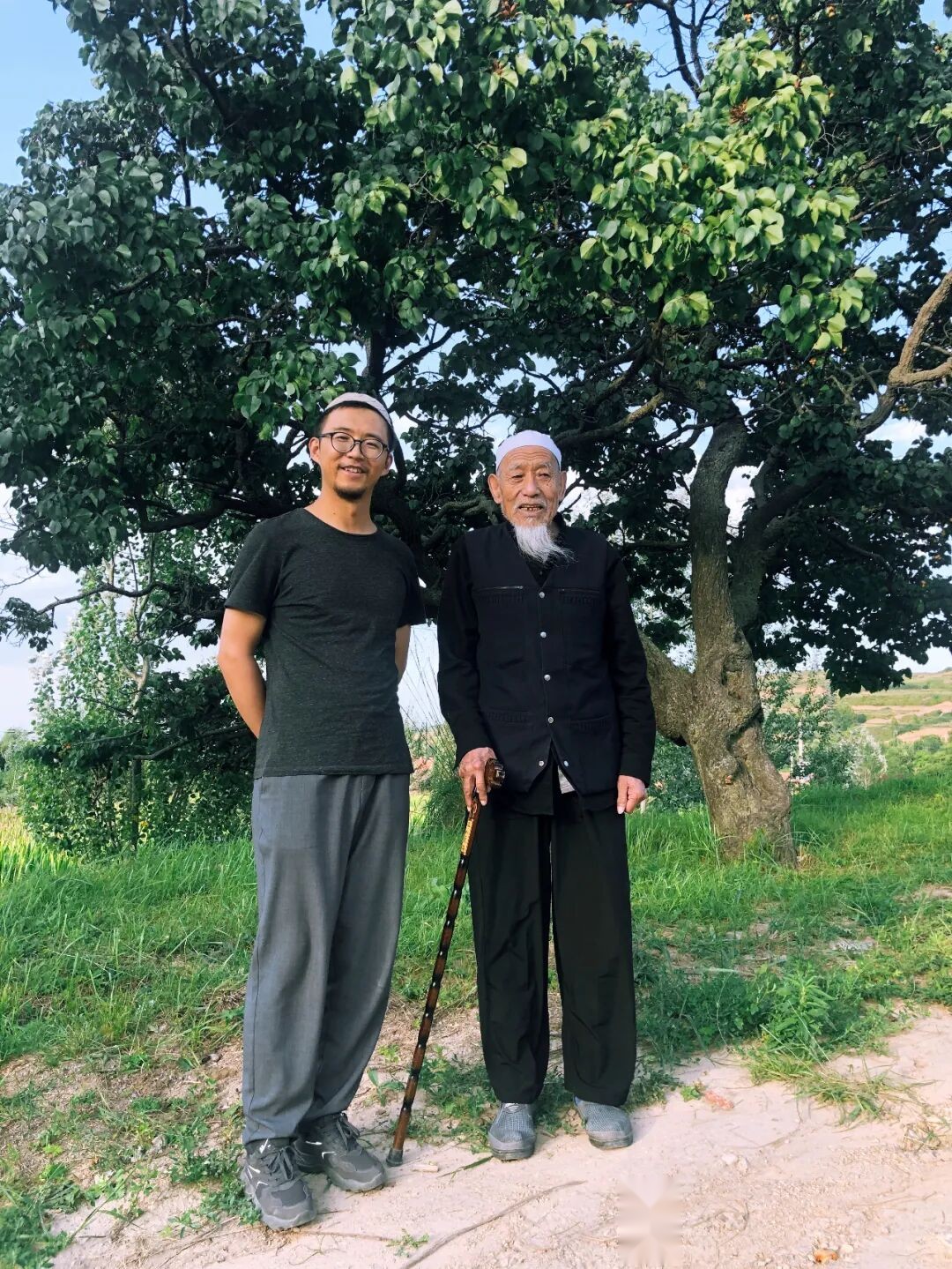
The elder was dark-skinned and lean, just like the honest farmers of this gully, and warmly invited us into his home. I originally thought his surname would be Hai, but it turned out to be Xian—he is a descendant of Xian Meizhen. Emerging from the gongbei, in the distance on an earthen slope outside the gate, I saw an elderly man with a flowing white beard leaning on a staff, standing tall and gazing right at us beneath a stunning old apricot tree. He looked magnificent, just like an oil painting. I couldn't help walking up to greet him with a *Salam* (peace be upon you). The elder said that was his father.
Walking up the slope toward the apricot tree, I thought to myself: Hey, isn't this my grandfather? Isn't this the old Sufis I've met? Aren't these living men of the past? He, too, was a living man of the past. His demeanor was completely different from his son's. Without being told, no one would guess they were father and son. The old man radiated a sense of cleanliness and elegance from inside out, as if the muddy, dusty life of the loess hills had nothing to do with him, whereas his son clearly appeared deeply intertwined with the soil.
The old man's conversational style also retained an archaic charm—he asked few questions, but every sentence was steeped in etiquette. Propriety and restraint are truly intertwined. The old man was 89 years old. Judging by his brow and facial contours, he indeed strongly resembled the Xian family descendants in Qinghai—a textbook portrait of a descendant of Master Xian. Back in Qinghai, when I spoke with Elder Xian Fuxing of the Xianzun Gongbei, he said the old man was his paternal uncle's generation and an ordained *akhund* (Islamic scholar). That being the case, if I am not mistaken, the old man should be Xian Peizhi, son of Xian Yulin (who belonged to the eldest household of Xian Linbai), making him a seventh-generation descendant of the Xianzun forefather.
△ Archaic charm and the elder
The sky over Guamagou was so pure that white clouds were simply white clouds and blue skies were blue skies—the conceptualized blue sky and white clouds of children's drawings. The crops and artemisia weeds in the fields stood out in vibrant, distinct lines. There was no trash, no dust; the loess earth beneath your feet invited you to sit or lie down without hesitation, and apricots dripping from the branches could be popped into your mouth effortlessly. The households here were poor yet un destitute; the earthen courtyards were swept impeccably clean, and the old man beneath the tree was as pristine as an ancient painting.
Master Hai Hu was not originally buried in Guamagou; he was buried at Haijiadaping in Tianziniao, and was moved to Guamagou during the turmoil of the Tongzhi Hui revolts. The Xianzun order holds Master Hai Hu in the highest regard, describing him as 'half sovereign, half subject.' The Major Khufiyya has a strict hierarchy of sovereign and subject: the spiritual guide is the sovereign, and all *murids* (disciples) are subjects. Master Xian Meizhen once made an exception by bestowing upon Master Hai Hu a seal of authority, tacitly allowing him independent proselytizing rights. Thus, the Xianzun order calls him 'half sovereign, half subject,' which speaks volumes about Hai Hu's standing in the hearts of the Xian family.
The importance of Guamagou within the Xianzun gongbei system lies not only in being Master Hai Hu's burial site, but also in the fact that the Xianzun missionary system split into two branches—Ningxia and Qinghai—starting from the fifth generation, Xian Linbai. After migrating to Ningxia, Xian Linbai lived in seclusion at Guamagou, farming and studying part-time, established a *daotang* (Sufi hall/school), relocated the remains of his father, Master Xinbei, from Qinghai to the Guamagou Gongbei, and spent the remainder of his life there.
You could say that Guamagou, much like Bazang Gully in Qinghai, nurtured the Xian family and serves as the umbilical cradle of the Ningxia Xianzun lineage. Although later descendants stepped out of Guamagou to establish *daotang* in Xiji, Guamagou remains an eternal, mother-like presence. All the households surrounding Guamagou Gongbei responded to the government's call and migrated down the mountain to settle in the Yellow River agricultural plains, leaving the area around the gongbei desolate. Yet only the family of the elderly Xian man refused to descend the mountain, continuing to meticulously tend this pure and immaculate courtyard. The younger members of the Xian family went down the mountain just like everyone else in the village; only these two generations of father and son stood firm. I asked the old man: Given your advanced age, why haven't you moved down the mountain into the city? The white-bearded elder turned serious, pointing his walking stick toward the gongbei: 'Ah, I just can't bear to leave this behind!'
△ Cannot bear to leave this behind
The eldest branch of Xian Linbai never left Guamagou, while the second branch stepped out of Guamagou to inherit religious authority. To briefly outline the Xianzun lineage: Master Zhuzi (Xian Meizhen) — Master Huazhe — Master Chuanli (Xian Chengzhen) — Master Xinbei (Xian Xianghui) — Xian Linbai (after whom the Ningxia and Qinghai missions split). Other important Xianzun gongbei in Ningxia include Qiganliang and Qiancha, both located in Xiji. Qiganliang is the tomb of Xian Yuzhen (son of Xian Linbai), while Qiancha holds the tombs of Ma Cang, Ma Ji, and Ma Ping—three brothers who were *murids* of Xian Meizhen in Ningxia and are also featured in *Legends of Hehuang Heroes*.
The sun was setting, and the fields were as silent as a mystery. All the way back on the road, I kept pondering the old man's words: 'Ah, I just can't bear to leave this behind!' Looking back at Guamagou, everything had already become antiquity.
—END—
Exploring Ningxia Muslim Heritage: Ancient Mosques, Sufi Gongbei & Hui Culture
Articles • Hasan09 posted the article • 0 comments • 4 views • 3 hours ago
Tracing Muslim Roots in Northern China: The Traditional Architecture and Mountain Retreat Memories of Laorengou Gongbei
Abstract:
Visiting Laorengou Gongbei, hidden deep within the mountain canyons of Ningxia. Set to the evocative tunes of classical silk-and-bamboo melodies, we capture the traditional blue-brick and gray-tile mausoleum architecture against vast, earthy loess mountain ranges, documenting the tranquil atmosphere of the spiritual legacies and ascetic hermitages left by Northwest China's Muslim forebears.
Selected from Minoru Miki's 'Koto Ballads Collection Vol. 4 - Autumn / Akemi Yamada': Coming from the East (Live Recording, Performed by Suzuko Kimura). Minoru Miki: Japanese composer and master of Japanese traditional music, born on March 16, 1930, in Tokushima City, Tokushima Prefecture. He studied composition under seniors like Tomojiro Ikeuchi and Akira Ifukube, co-founded Pro Musica Nipponia with fourteen members in 1964, and dedicated his life to developing and spreading Japanese traditional music until his passing in 2011 in Mitaka City, Tokyo. Japanese Koto: An important traditional instrument of Japanese music, originating from the guzheng of China's Sui and Tang dynasties. Early koto players were predominantly blind monks, branching into the Yamada and Ikuta schools. In modern times, koto players are mainly professional artists........
The term 'gongbei' is a transliteration of the Arabic word Qubbah, originally referring to religious architectural styles in Arab, Persian, and Central Asian regions. In Central Asia, Persia, and China's Xinjiang region, they are known as 'mazar'. Ningxia gongbei architecture mainly falls into three categories: Gutubu gongbei, where 'Gutubu' means axis, extreme point, or leader, considered a special 'Wali' hidden among humanity and an important figure beloved by Allah; Menhuan Laorenjia and Murshed gongbei, where the founders and spiritual guides of Sufi orders are generally called 'Laorenjia' (Elder), 'Daozu' (Patriarch), or 'Murshed' (Guide); and Hailifan gongbei, where 'Hailifan' means successor, referring to the senior disciples, successors, or deputies of the Murshed. There are also a few other types of gongbei. The gongbei is a primary religious characteristic of Ningxia's Sufi orders and an important cultural heritage of the Hui people in Ningxia.
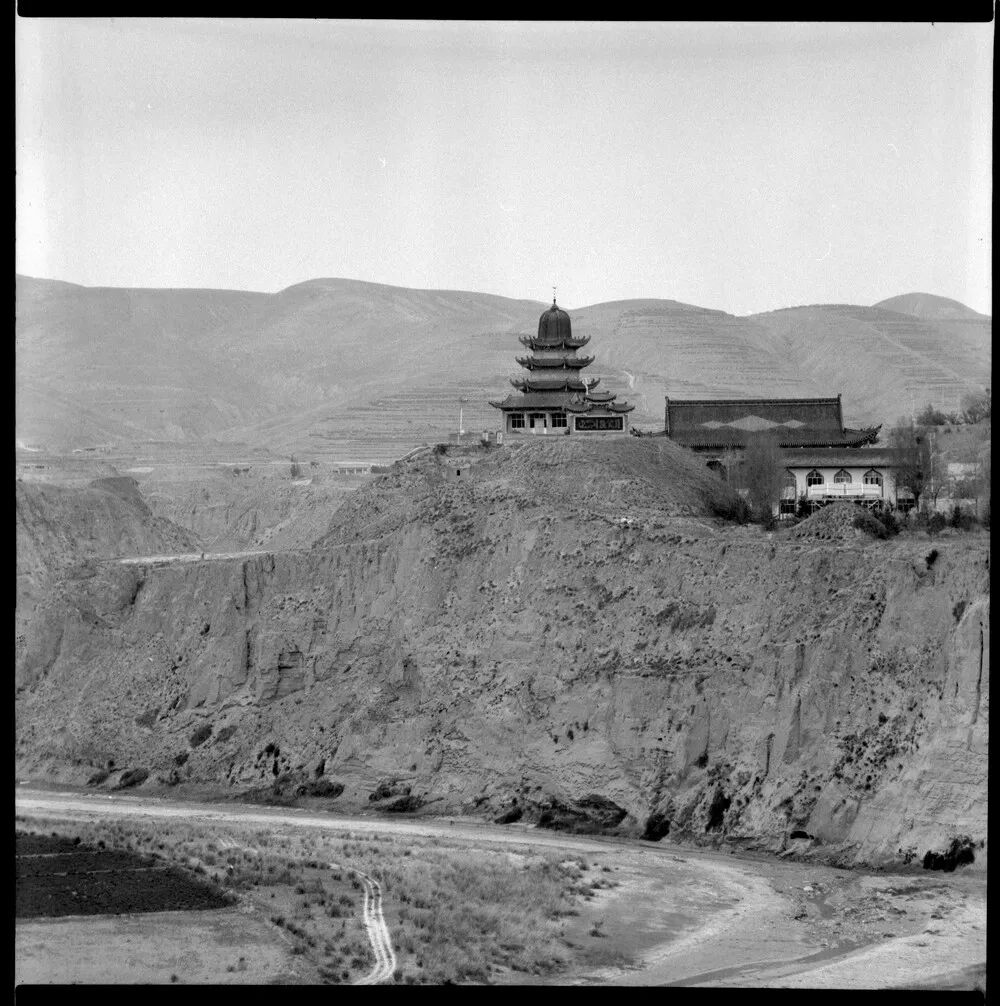
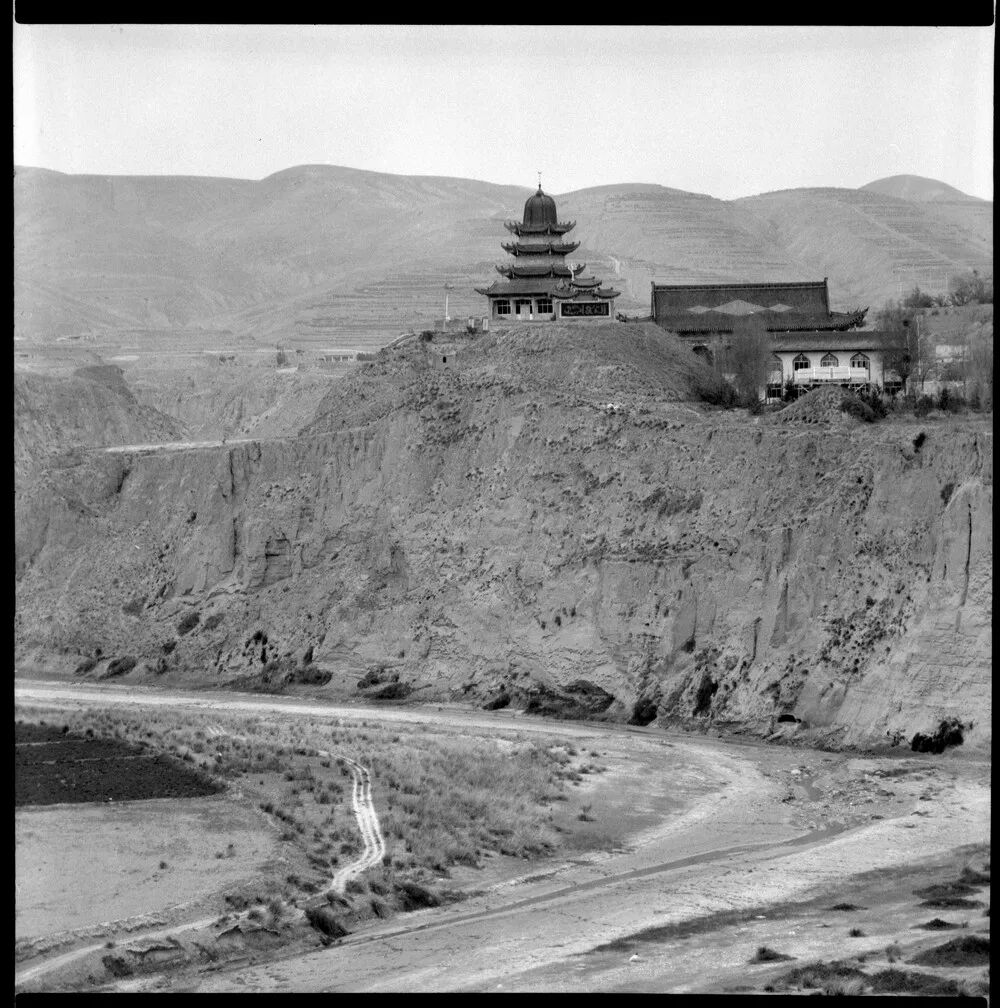
Laorengou Gongbei is located near Nanping Village, alongside National Highway 203 in Yuanzhou District, Guyuan City, Ningxia. With a long and ancient history, it is very likely the oldest gongbei in Ningxia, and was rebuilt in the 1990s.
Excerpts from the stele inscription at the ancient Gutubu Gongbei in Laorengou are recorded by hand as follows:
......
II. Spiritual Trajectory
Through the changing tides of time, the ancient Gutubu Gongbei at Laorengou has weathered immense hardships, with devoted 'dostans' (companions/followers) performing moving stories to protect this sacred spiritual sanctuary. Once upon a time, countless dedicated individuals tirelessly worked to repair and purify this holy ground, with Ding Sheh standing out foremost among the most meritorious contributors. Sheh, whose surname was Ding and personal name Yonghai, was born in 1947 and passed away on the 25th day of the 11th lunar month in 2004. Since childhood, Sheh studied religious texts, and by his teens, he devoted himself wholeheartedly to the faith, working day and night without sleep. He journeyed to the tombs of numerous sages and repeatedly sought out renowned masters to absorb the essence of their teachings. Guided by religious teachers, he underwent multiple sessions of 'zuojing' (silent meditation and retreat), clearing his mind, sharpening his resolve, wisdom, and insight to truly grasp the divine truths. He constantly sought to transcend the mundane and undergo a profound spiritual rebirth. Throughout his self-cultivation, he especially benefited from the spiritual guidance of the elder masters, holding them in lifelong reverence and guarding them like the apples of his eyes. He spent forty years repeatedly repairing the gongbei, often single-handedly undertaking difficult tasks in pursuit of perfection. Hauling stones up steep, isolated hills to build walls was a staggering challenge; carrying construction materials to the top of Yangjiao Mountain to pave roads required superhuman willpower. Yet even more demanding was the construction of the present gongbei, carried out during times of extreme shortage of funds and food; working at dangerous heights with his life hanging on the scaffolding beams; Sheh stood alone and carried the burden through grueling days and nights. Finally, on the 19th day of the 9th lunar month in 2004, the grand project was successfully completed, bringing immense relief to his heart. Having exhausted his physical and mental energy, Sheh fell seriously ill from overwork. Just over two months after the completion of his monumental work, he passed away to join the forebears, his heart returning to Allah.
......
Shot using a Mamaiya C330 Sekor lens on black-and-white film, with self-developed negatives scanned directly into digital files
Note: Traditional photography captures clear images by letting external light pass through a lens onto the flat film surface inside a sealed camera back. When exposed, the image transforms into a silver halide latent image. Developing chemicals are then used to wash and clear the silver halide particles, reducing the latent image back into silver particles on the film, creating the original negative. To produce a print, the silver salt particles on the negative are projected via an enlarger system onto photographic paper in a darkroom.
The charm of black-and-white film remains irreplaceable by any digital equipment since the birth of photography. The wide exposure latitude of black-and-white film is significantly superior to color film. Using different darkroom techniques, silver-salt works with rich tonal ranges, soft contrasts, and sharp details can be created. Today's digitally output large-format black-and-white photos still fall quite short in detail compared to traditional silver-salt works. Darkroom craftsmanship is unrepeatable, and every single photograph made is unique—which is precisely where its magic lies. view all
Tracing Muslim Roots in Northern China: The Traditional Architecture and Mountain Retreat Memories of Laorengou Gongbei
Abstract:
Visiting Laorengou Gongbei, hidden deep within the mountain canyons of Ningxia. Set to the evocative tunes of classical silk-and-bamboo melodies, we capture the traditional blue-brick and gray-tile mausoleum architecture against vast, earthy loess mountain ranges, documenting the tranquil atmosphere of the spiritual legacies and ascetic hermitages left by Northwest China's Muslim forebears.
Selected from Minoru Miki's 'Koto Ballads Collection Vol. 4 - Autumn / Akemi Yamada': Coming from the East (Live Recording, Performed by Suzuko Kimura). Minoru Miki: Japanese composer and master of Japanese traditional music, born on March 16, 1930, in Tokushima City, Tokushima Prefecture. He studied composition under seniors like Tomojiro Ikeuchi and Akira Ifukube, co-founded Pro Musica Nipponia with fourteen members in 1964, and dedicated his life to developing and spreading Japanese traditional music until his passing in 2011 in Mitaka City, Tokyo. Japanese Koto: An important traditional instrument of Japanese music, originating from the guzheng of China's Sui and Tang dynasties. Early koto players were predominantly blind monks, branching into the Yamada and Ikuta schools. In modern times, koto players are mainly professional artists........
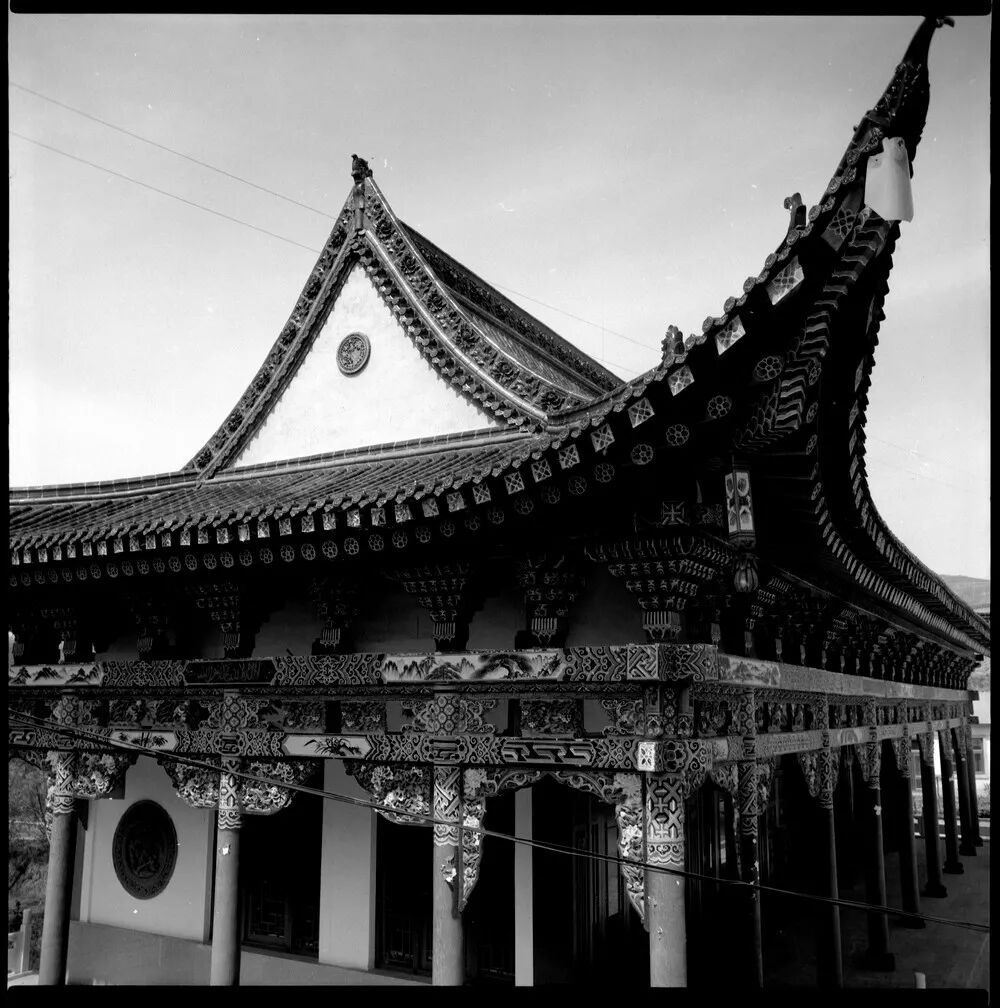
The term 'gongbei' is a transliteration of the Arabic word Qubbah, originally referring to religious architectural styles in Arab, Persian, and Central Asian regions. In Central Asia, Persia, and China's Xinjiang region, they are known as 'mazar'. Ningxia gongbei architecture mainly falls into three categories: Gutubu gongbei, where 'Gutubu' means axis, extreme point, or leader, considered a special 'Wali' hidden among humanity and an important figure beloved by Allah; Menhuan Laorenjia and Murshed gongbei, where the founders and spiritual guides of Sufi orders are generally called 'Laorenjia' (Elder), 'Daozu' (Patriarch), or 'Murshed' (Guide); and Hailifan gongbei, where 'Hailifan' means successor, referring to the senior disciples, successors, or deputies of the Murshed. There are also a few other types of gongbei. The gongbei is a primary religious characteristic of Ningxia's Sufi orders and an important cultural heritage of the Hui people in Ningxia.
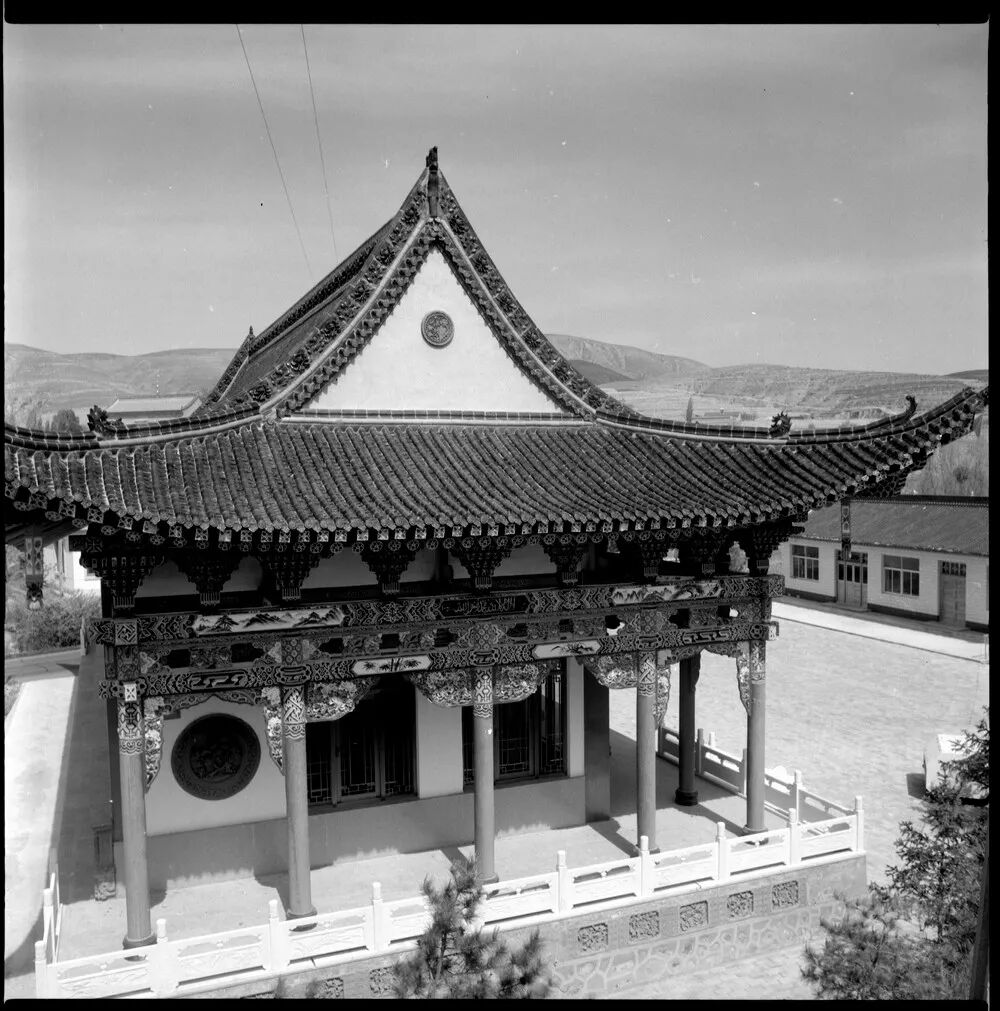
Laorengou Gongbei is located near Nanping Village, alongside National Highway 203 in Yuanzhou District, Guyuan City, Ningxia. With a long and ancient history, it is very likely the oldest gongbei in Ningxia, and was rebuilt in the 1990s.
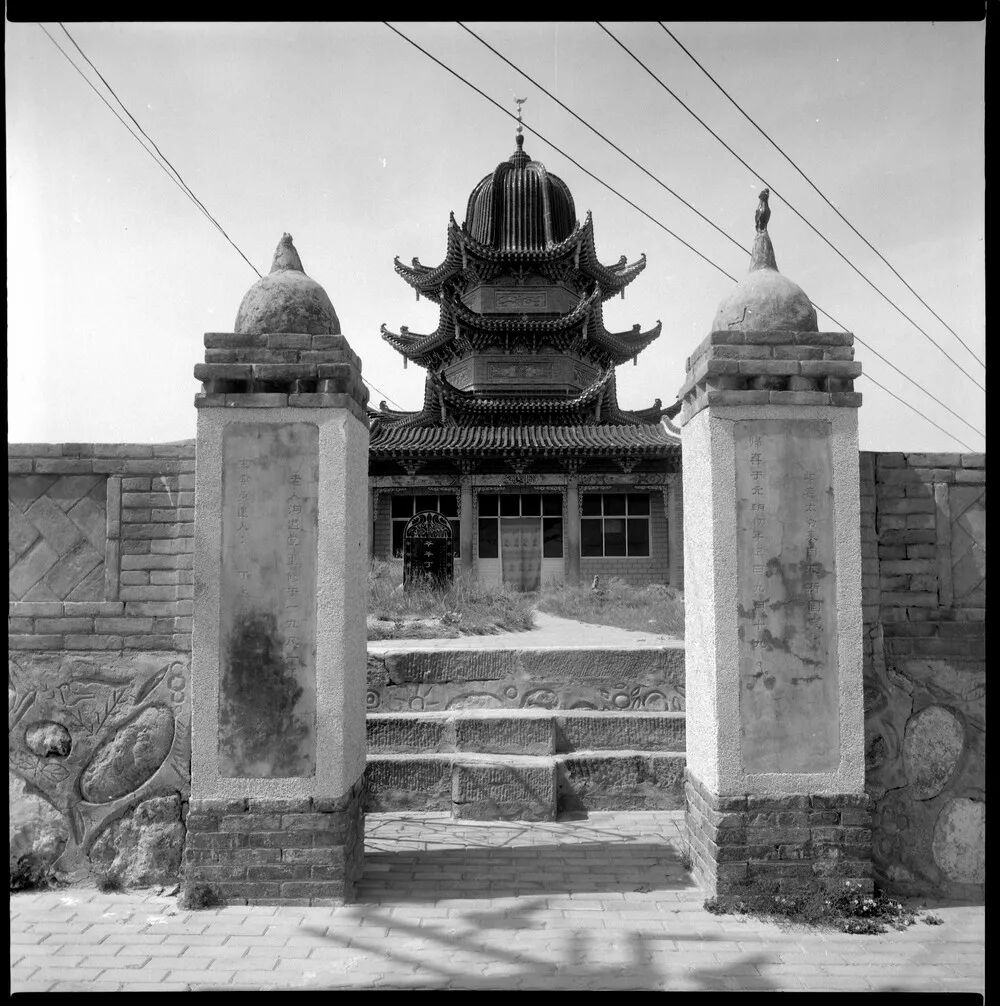
Excerpts from the stele inscription at the ancient Gutubu Gongbei in Laorengou are recorded by hand as follows:
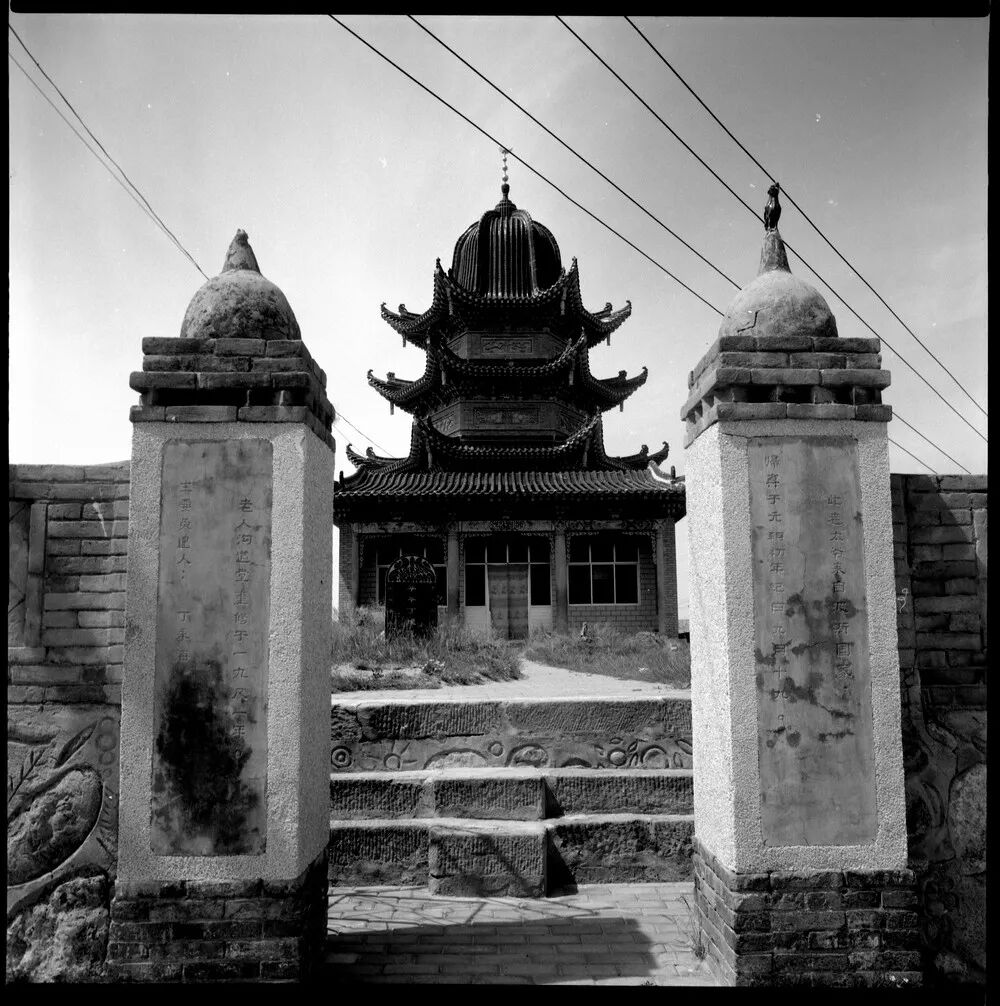
......
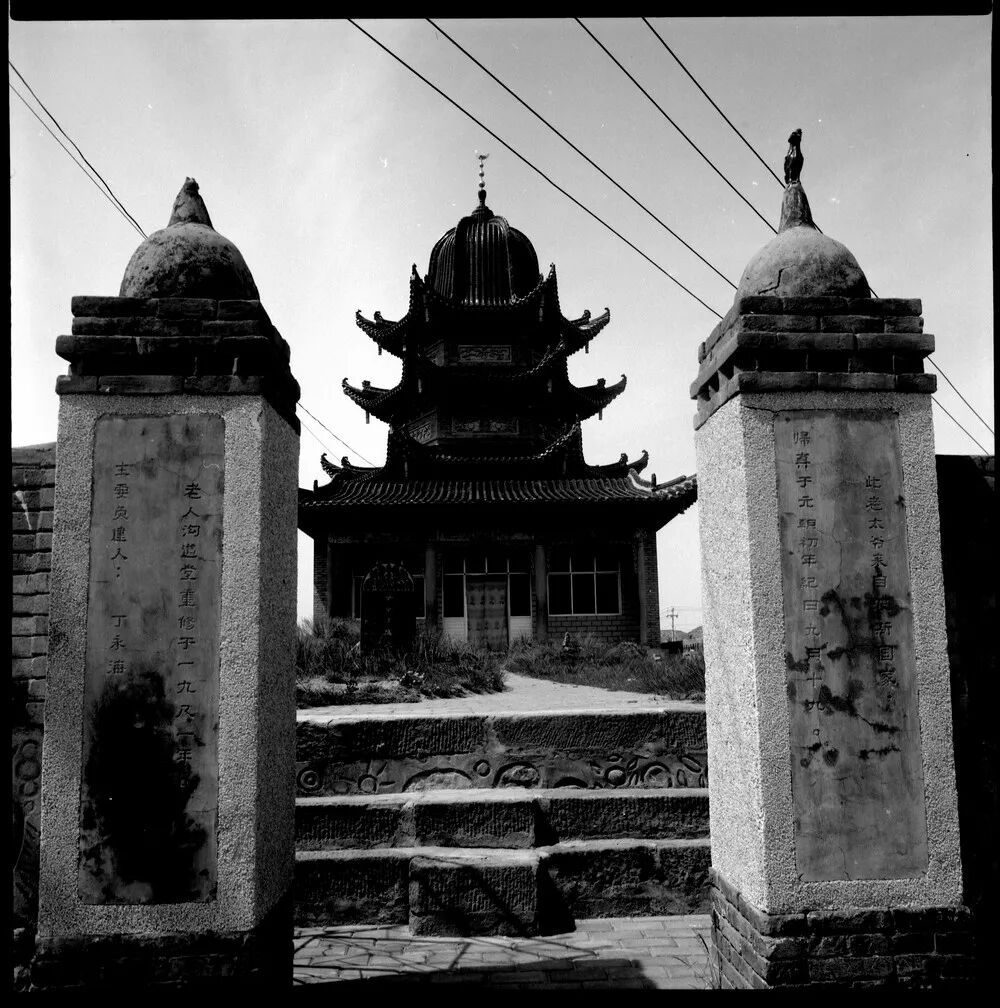
II. Spiritual Trajectory
Through the changing tides of time, the ancient Gutubu Gongbei at Laorengou has weathered immense hardships, with devoted 'dostans' (companions/followers) performing moving stories to protect this sacred spiritual sanctuary. Once upon a time, countless dedicated individuals tirelessly worked to repair and purify this holy ground, with Ding Sheh standing out foremost among the most meritorious contributors. Sheh, whose surname was Ding and personal name Yonghai, was born in 1947 and passed away on the 25th day of the 11th lunar month in 2004. Since childhood, Sheh studied religious texts, and by his teens, he devoted himself wholeheartedly to the faith, working day and night without sleep. He journeyed to the tombs of numerous sages and repeatedly sought out renowned masters to absorb the essence of their teachings. Guided by religious teachers, he underwent multiple sessions of 'zuojing' (silent meditation and retreat), clearing his mind, sharpening his resolve, wisdom, and insight to truly grasp the divine truths. He constantly sought to transcend the mundane and undergo a profound spiritual rebirth. Throughout his self-cultivation, he especially benefited from the spiritual guidance of the elder masters, holding them in lifelong reverence and guarding them like the apples of his eyes. He spent forty years repeatedly repairing the gongbei, often single-handedly undertaking difficult tasks in pursuit of perfection. Hauling stones up steep, isolated hills to build walls was a staggering challenge; carrying construction materials to the top of Yangjiao Mountain to pave roads required superhuman willpower. Yet even more demanding was the construction of the present gongbei, carried out during times of extreme shortage of funds and food; working at dangerous heights with his life hanging on the scaffolding beams; Sheh stood alone and carried the burden through grueling days and nights. Finally, on the 19th day of the 9th lunar month in 2004, the grand project was successfully completed, bringing immense relief to his heart. Having exhausted his physical and mental energy, Sheh fell seriously ill from overwork. Just over two months after the completion of his monumental work, he passed away to join the forebears, his heart returning to Allah.
......
Shot using a Mamaiya C330 Sekor lens on black-and-white film, with self-developed negatives scanned directly into digital files
Note: Traditional photography captures clear images by letting external light pass through a lens onto the flat film surface inside a sealed camera back. When exposed, the image transforms into a silver halide latent image. Developing chemicals are then used to wash and clear the silver halide particles, reducing the latent image back into silver particles on the film, creating the original negative. To produce a print, the silver salt particles on the negative are projected via an enlarger system onto photographic paper in a darkroom.
The charm of black-and-white film remains irreplaceable by any digital equipment since the birth of photography. The wide exposure latitude of black-and-white film is significantly superior to color film. Using different darkroom techniques, silver-salt works with rich tonal ranges, soft contrasts, and sharp details can be created. Today's digitally output large-format black-and-white photos still fall quite short in detail compared to traditional silver-salt works. Darkroom craftsmanship is unrepeatable, and every single photograph made is unique—which is precisely where its magic lies.
Exploring Ningxia Muslim Culture: Siqiliangzi Gongbei Shrines & Hui Heritage
Articles • Hasan09 posted the article • 0 comments • 3 views • 3 hours ago
Tracking Sacred Relics Above the Yellow River: A Panoramic Look at the Siqiliangzi Gongbei and the Spiritual Homeland of Hui Muslims
Abstract:
27 real-life photos and write-ups showcase the magnificent aura of the Siqiliangzi gongbei (Sufi shrine / mausoleum complex) in Wuzhong. From the grand hexagonal archways and towering main hall domes to the blue-brick reliefs and engraved Quranic verses, we take a heartfelt look back at the historical scroll of Hui Muslim forebears who sacrificed everything for their faith and people.
Selected from The orchard's 'Pir Sultan Abdal'dan Aşık Veysel' e 1000 Yılın Türküleri Thousand Years Of Anatolia' (Anatolian Millennia): 'Karşıki Karlı Dağda Bülbül' (The Nightingale on the Opposite Snowy Mountain). Aşık Veysel was a representative Turkish minstrel, baglama (traditional stringed instrument) player, and folk music master who lost his sight at age 7 and passed away at 79 (in 1973). This is the source of muqam (classical Islamic musical tradition). Turkey's Âsiklik (minstrelsy) tradition is listed on the UNESCO Intangible Cultural Heritage list.
The word gongbei is a transliteration of the Arabic 'Qubbah', originally referring to religious architectural styles in Arabia, Persia, and Central Asia. In Central Asia, Persia, and China's Xinjiang region, they are called 'mazars'. Gongbei architecture in Ningxia is mainly divided into three types: Qutubu gongbei, where 'Qutubu' means axis, pole, or leader, considered a special 'wali' hidden among humanity and a VIP in the eyes of Allah; menhuan (Sufi order / brotherhood) elders' and Murshid gongbei, where Sufi order founders and spiritual guides are generally called 'Elder', 'Daozu', or 'Murshid'; and Halifan gongbei, where 'Halifan' means successor, referring to the senior disciples, successors, or deputies of a Murshid. There are also several other types of gongbei. Gongbei are the primary religious feature of Ningxia's Sufi orders and an important cultural heritage of the Hui Muslims in Ningxia.
Located at the intersection of Kaiyuan Avenue and Wenwei North Street in Litong District, Wuzhong City, Ningxia, this is the site of martyrdom and final resting place of Ma Hualong (reverenced in the religious community as 'Thirteenth Grandfather'), the fifth-generation spiritual guide of the Jahriyya menhuan (Sufi order / brotherhood). Following the failure of the Jinjibao Hui Muslim uprising, on the 13th day of the first lunar month in the tenth year of the Tongzhi Emperor's reign (1871), Ma Hualong and his son, among many others, were subjected to death by a thousand cuts at Siqiliangzi. Belonging to the Jahriyya gongbei, it covers nearly 3 mu of land, features an overall bluish-gray tone, and follows the classic Chinese hexagonal gongbei style. The hexagonal tower shape holds deep symbolic meaning, stands 24 meters tall, and is inlaid with white marble on the inside. It was rebuilt in 1984 and listed as a county-level key cultural relic protection unit by the Wuzhong Municipal People's Government in 1994.
Shot using a Mamiya C330 Sekor camera lens, with self-developed film scanned directly into digital files.
Note: Traditional photography refers to using a camera lens to focus external light rays to form a clear image on the film plane inside a sealed camera back. After exposure, the image turns into a silver halide latent image. Developing chemicals then wash and rinse the film to clear the silver halide grains, reducing the latent image back into silver particles on the negative, creating the master negative. To make prints, an enlarger projects the film's silver salt particles onto photographic paper in a darkroom.
The charm of black-and-white film has remained irreplaceable by any digital equipment since the birth of photography. The wide exposure latitude of black-and-white film is clearly superior to color film, and using different darkroom printing techniques allows for silver-gelatin works with rich tonal ranges, soft contrast, and crisp details. Today's large-format black-and-white prints produced via digital output still lag significantly behind traditional silver-gelatin works when it comes to fine details. Darkroom craftsmanship is unrepeatable—every single print made is unique, and that is precisely where its magic lies. view all
Tracking Sacred Relics Above the Yellow River: A Panoramic Look at the Siqiliangzi Gongbei and the Spiritual Homeland of Hui Muslims
Abstract:

27 real-life photos and write-ups showcase the magnificent aura of the Siqiliangzi gongbei (Sufi shrine / mausoleum complex) in Wuzhong. From the grand hexagonal archways and towering main hall domes to the blue-brick reliefs and engraved Quranic verses, we take a heartfelt look back at the historical scroll of Hui Muslim forebears who sacrificed everything for their faith and people.

Selected from The orchard's 'Pir Sultan Abdal'dan Aşık Veysel' e 1000 Yılın Türküleri Thousand Years Of Anatolia' (Anatolian Millennia): 'Karşıki Karlı Dağda Bülbül' (The Nightingale on the Opposite Snowy Mountain). Aşık Veysel was a representative Turkish minstrel, baglama (traditional stringed instrument) player, and folk music master who lost his sight at age 7 and passed away at 79 (in 1973). This is the source of muqam (classical Islamic musical tradition). Turkey's Âsiklik (minstrelsy) tradition is listed on the UNESCO Intangible Cultural Heritage list.

The word gongbei is a transliteration of the Arabic 'Qubbah', originally referring to religious architectural styles in Arabia, Persia, and Central Asia. In Central Asia, Persia, and China's Xinjiang region, they are called 'mazars'. Gongbei architecture in Ningxia is mainly divided into three types: Qutubu gongbei, where 'Qutubu' means axis, pole, or leader, considered a special 'wali' hidden among humanity and a VIP in the eyes of Allah; menhuan (Sufi order / brotherhood) elders' and Murshid gongbei, where Sufi order founders and spiritual guides are generally called 'Elder', 'Daozu', or 'Murshid'; and Halifan gongbei, where 'Halifan' means successor, referring to the senior disciples, successors, or deputies of a Murshid. There are also several other types of gongbei. Gongbei are the primary religious feature of Ningxia's Sufi orders and an important cultural heritage of the Hui Muslims in Ningxia.

Located at the intersection of Kaiyuan Avenue and Wenwei North Street in Litong District, Wuzhong City, Ningxia, this is the site of martyrdom and final resting place of Ma Hualong (reverenced in the religious community as 'Thirteenth Grandfather'), the fifth-generation spiritual guide of the Jahriyya menhuan (Sufi order / brotherhood). Following the failure of the Jinjibao Hui Muslim uprising, on the 13th day of the first lunar month in the tenth year of the Tongzhi Emperor's reign (1871), Ma Hualong and his son, among many others, were subjected to death by a thousand cuts at Siqiliangzi. Belonging to the Jahriyya gongbei, it covers nearly 3 mu of land, features an overall bluish-gray tone, and follows the classic Chinese hexagonal gongbei style. The hexagonal tower shape holds deep symbolic meaning, stands 24 meters tall, and is inlaid with white marble on the inside. It was rebuilt in 1984 and listed as a county-level key cultural relic protection unit by the Wuzhong Municipal People's Government in 1994.

Shot using a Mamiya C330 Sekor camera lens, with self-developed film scanned directly into digital files.

Note: Traditional photography refers to using a camera lens to focus external light rays to form a clear image on the film plane inside a sealed camera back. After exposure, the image turns into a silver halide latent image. Developing chemicals then wash and rinse the film to clear the silver halide grains, reducing the latent image back into silver particles on the negative, creating the master negative. To make prints, an enlarger projects the film's silver salt particles onto photographic paper in a darkroom.

The charm of black-and-white film has remained irreplaceable by any digital equipment since the birth of photography. The wide exposure latitude of black-and-white film is clearly superior to color film, and using different darkroom printing techniques allows for silver-gelatin works with rich tonal ranges, soft contrast, and crisp details. Today's large-format black-and-white prints produced via digital output still lag significantly behind traditional silver-gelatin works when it comes to fine details. Darkroom craftsmanship is unrepeatable—every single print made is unique, and that is precisely where its magic lies.


Exploring Jiucaiping Gongbei: Sufi Shrines, Great Wall Ruins & Hui Muslim Heritage in Haiyuan, Ningxia
Articles • Hasan09 posted the article • 0 comments • 4 views • 3 hours ago
Wandering Through Jiucaiping Gongbei in Haiyuan County: Sufi Domes and Northwest Vibes Beneath the Ming Great Wall Beacons
Abstract:
A visual and travel diary documenting a journey to Jiucaiping Gongbei in Haiyuan County, Ningxia. Explore Islamic domed architecture set against the vast Loess Plateau and ancient Ming Great Wall ruins, while diving into the architectural design of gongbei (Sufi shrine / mausoleum complex) and the deep-rooted devotion of Hui Muslims honoring their spiritual ancestors.
August 20, 2022 | Jiucaiping Gongbei, Haiyuan County
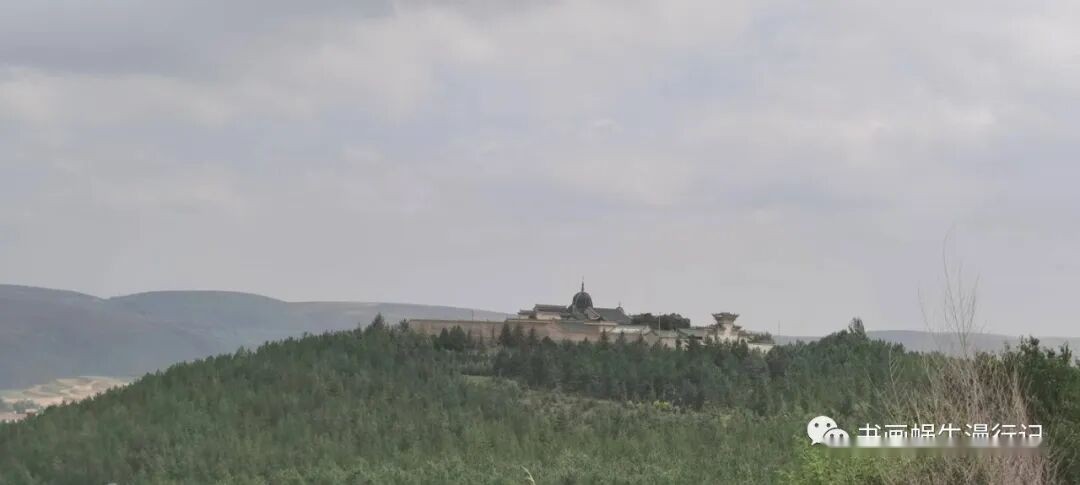
The word gongbei comes from the Arabic for "dome," and over time it came to refer to the round structures built over mosques or the tombs of Sufi masters.
In Ningxia, gongbei refers specifically to the mausoleums of masters from the Qadiriyya and Jahriyya menhuan (Sufi orders / brotherhoods), serving as sacred spaces where Hui Muslims gather to honor ancestors and practice their faith.
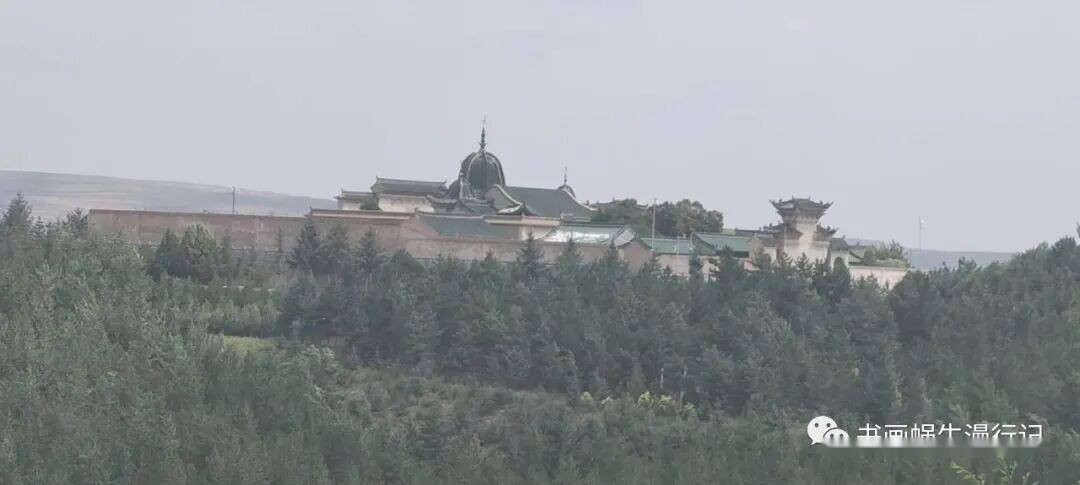
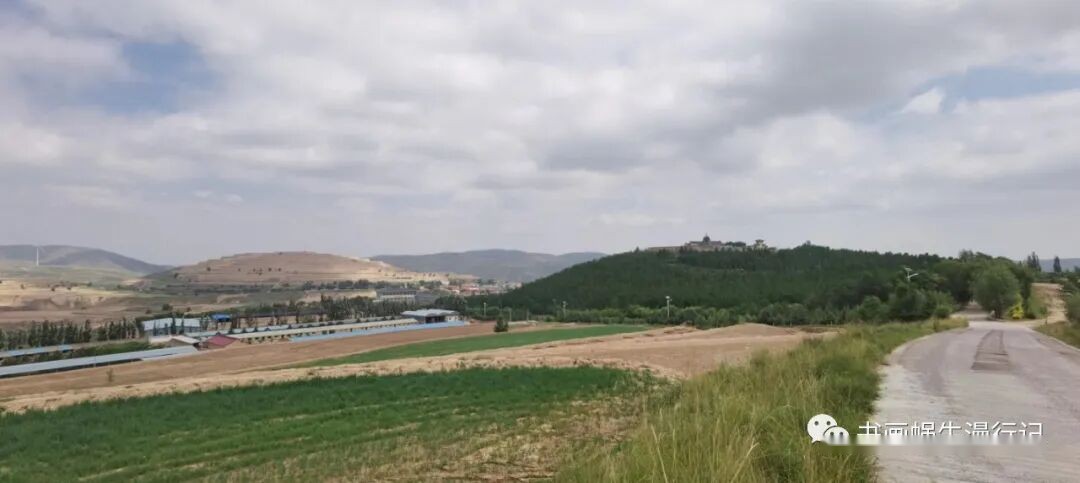
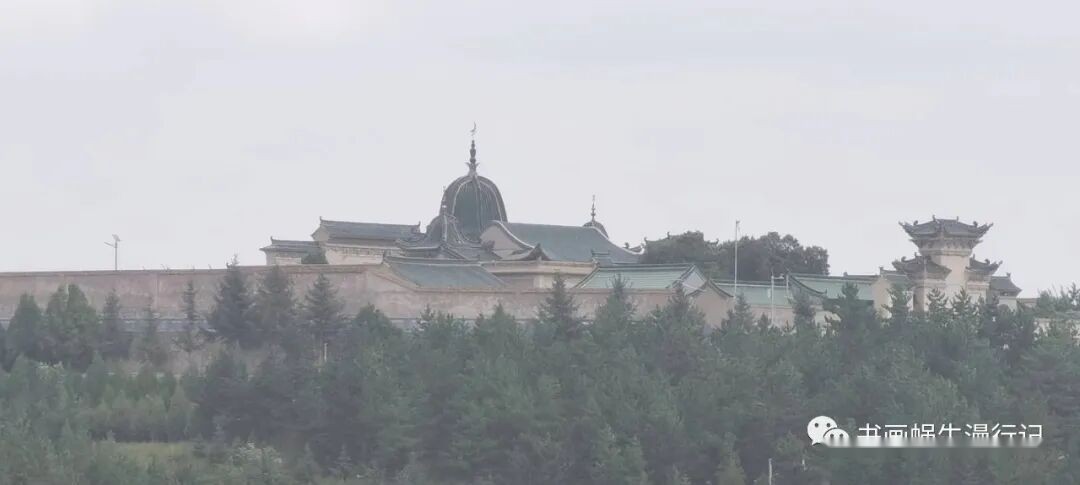
Perched on a small hill in Haiyuan County, Jiucaiping Gongbei is a majestic mausoleum complex housing sixteen Sufi masters. According to local Hui Muslims, it boasts a history spanning a thousand years. The name "Jiucaiping" (Nine Colors Terrace) comes from the legend that the site was surveyed nine times before the final resting place was chosen.
The architecture of the gongbei is breathtakingly ornate, featuring emerald-green tiled domes and exquisite craftsmanship, all tucked away amidst lush groves of trees.
Along the way, we also stumbled upon a smaller shrine: the Yangquanbao Gongbei. Though modest in size, it boasts striking and distinct architectural details.
Dislike view all
Wandering Through Jiucaiping Gongbei in Haiyuan County: Sufi Domes and Northwest Vibes Beneath the Ming Great Wall Beacons
Abstract:
A visual and travel diary documenting a journey to Jiucaiping Gongbei in Haiyuan County, Ningxia. Explore Islamic domed architecture set against the vast Loess Plateau and ancient Ming Great Wall ruins, while diving into the architectural design of gongbei (Sufi shrine / mausoleum complex) and the deep-rooted devotion of Hui Muslims honoring their spiritual ancestors.
August 20, 2022 | Jiucaiping Gongbei, Haiyuan County
The word gongbei comes from the Arabic for "dome," and over time it came to refer to the round structures built over mosques or the tombs of Sufi masters.

In Ningxia, gongbei refers specifically to the mausoleums of masters from the Qadiriyya and Jahriyya menhuan (Sufi orders / brotherhoods), serving as sacred spaces where Hui Muslims gather to honor ancestors and practice their faith.
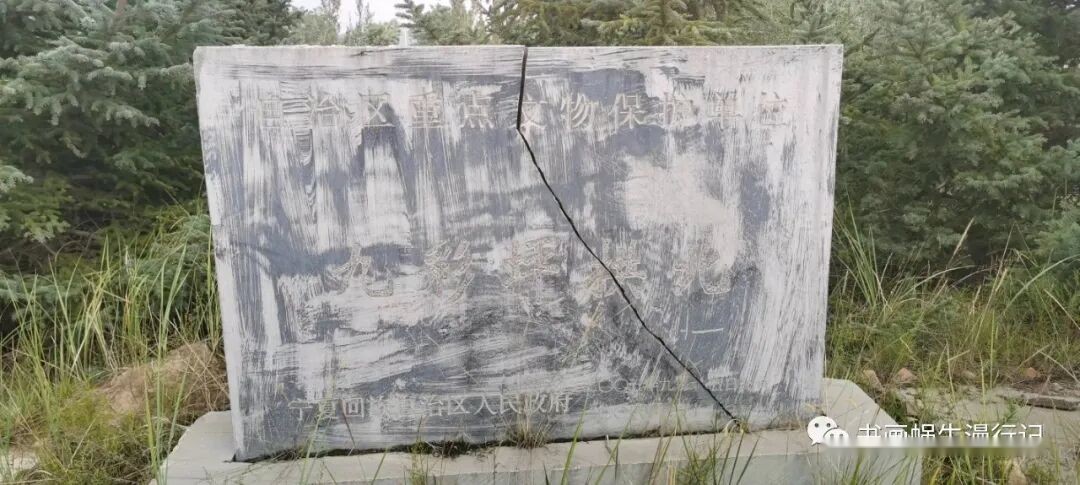
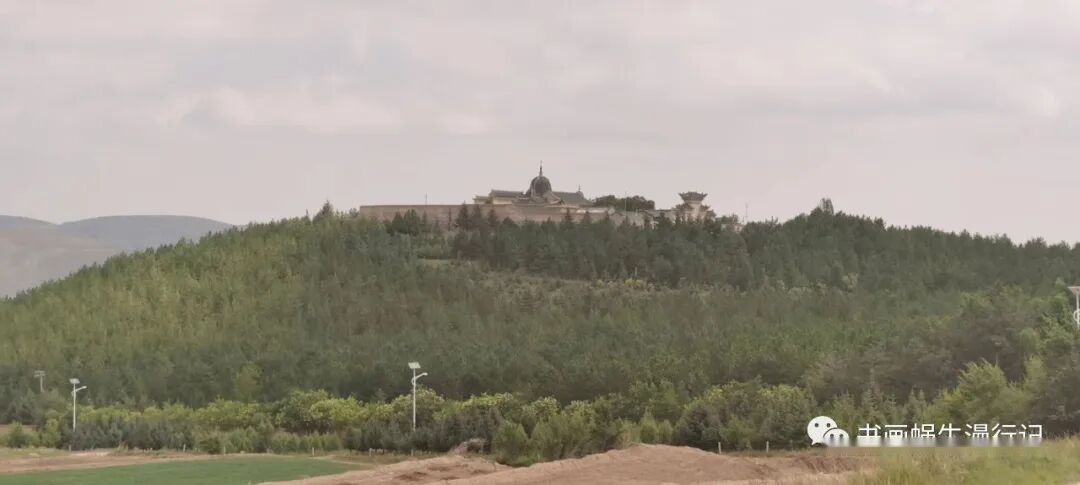
Perched on a small hill in Haiyuan County, Jiucaiping Gongbei is a majestic mausoleum complex housing sixteen Sufi masters. According to local Hui Muslims, it boasts a history spanning a thousand years. The name "Jiucaiping" (Nine Colors Terrace) comes from the legend that the site was surveyed nine times before the final resting place was chosen.
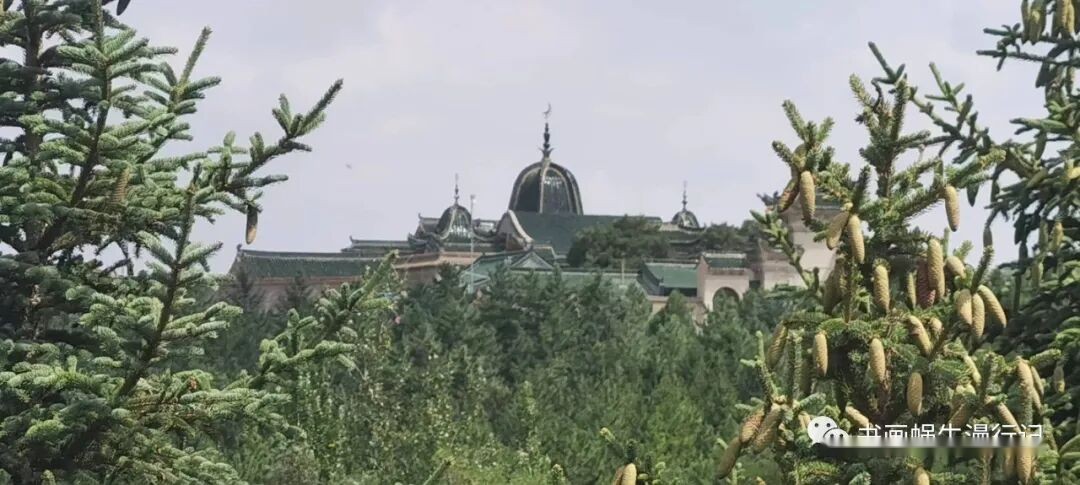
The architecture of the gongbei is breathtakingly ornate, featuring emerald-green tiled domes and exquisite craftsmanship, all tucked away amidst lush groves of trees.
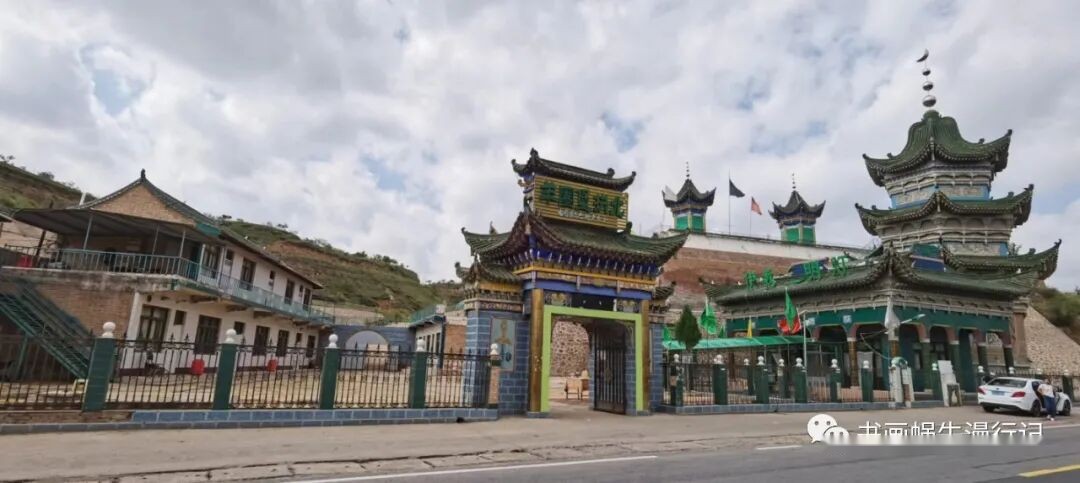
Along the way, we also stumbled upon a smaller shrine: the Yangquanbao Gongbei. Though modest in size, it boasts striking and distinct architectural details.
Dislike
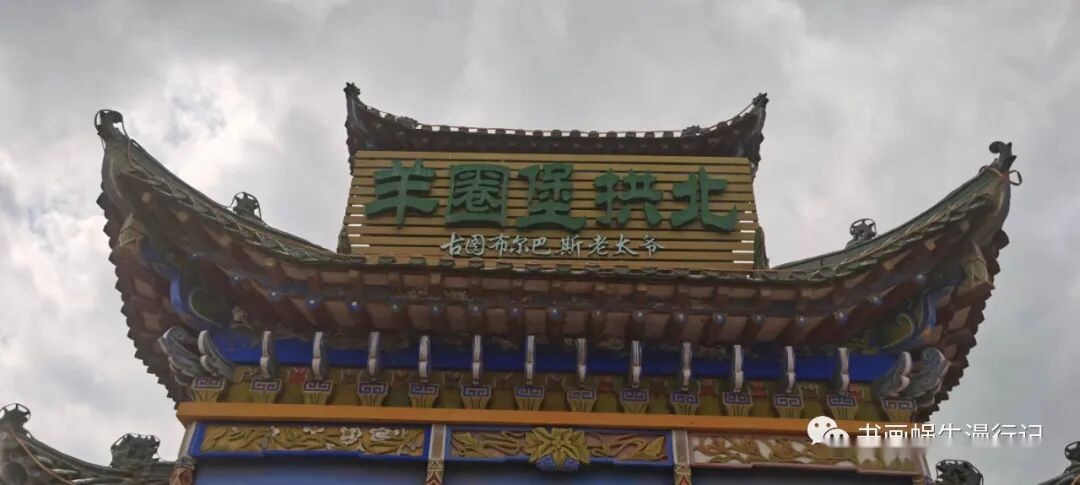
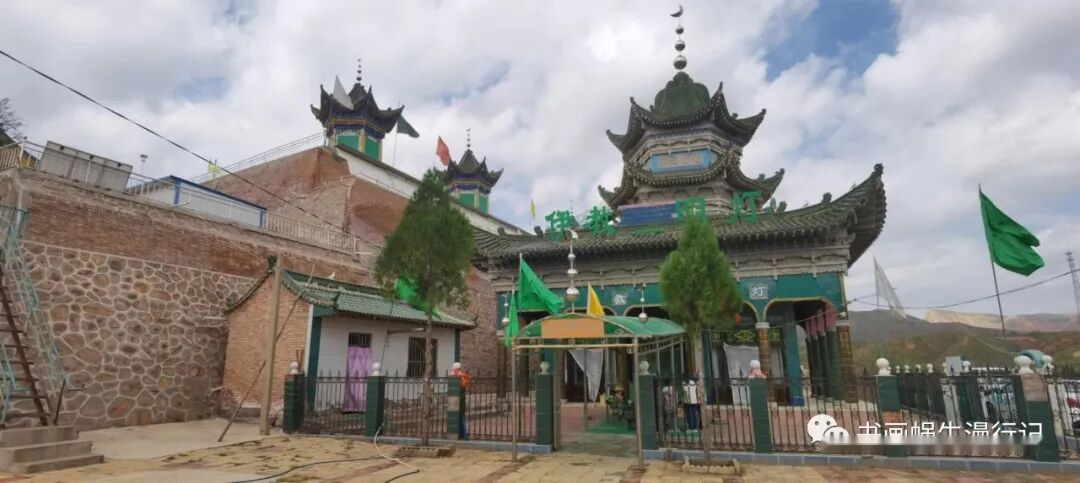
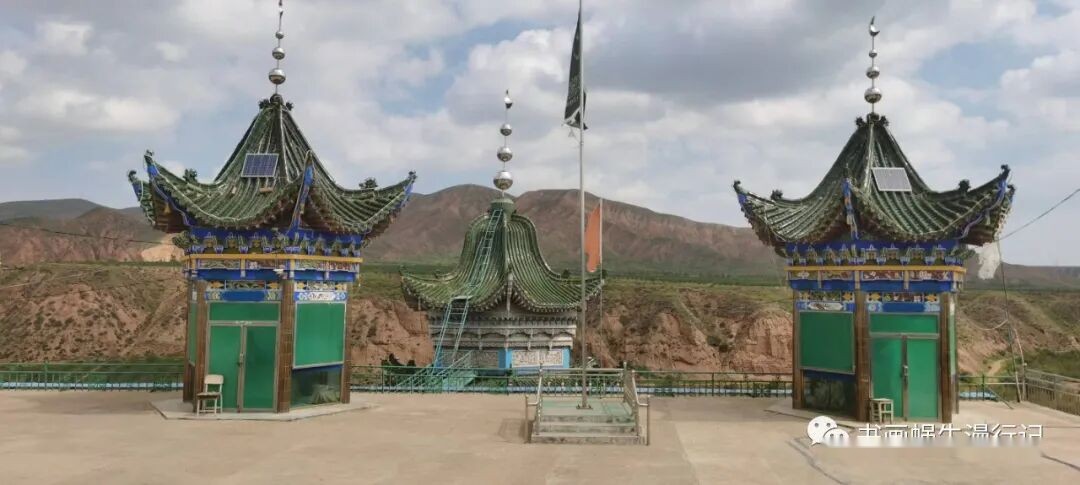
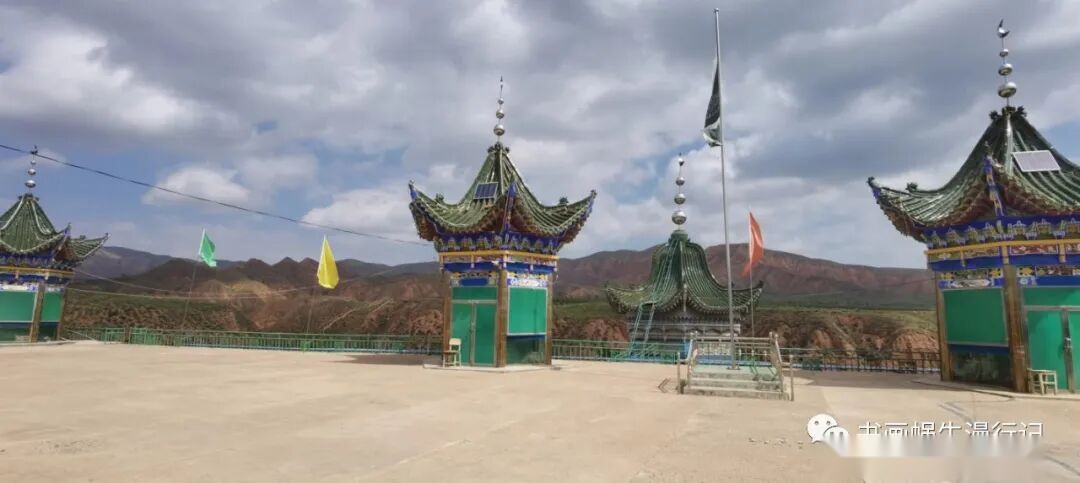

Exploring Ningxia Muslim Culture, Historic Mosques, Sufi Shrines & Halal Heritage in Northwest China
Articles • Hasan09 posted the article • 0 comments • 4 views • 3 hours ago
Travel Notes from Southern Ningxia, Part 3: Stepping into the Jiangnan of the Saibei Frontier and the Folk Customs of the Ancient Liupan Mountains
Abstract:
A visual and written field report crossing provincial borders into the Muslim heartland of southern Ningxia. Capturing the striking initial impressions of northwestern Islamic culture and plateau landscapes, with detailed portraits of minarets and the peaceful everyday rhythm of Hui Muslim villages.
丨Guamagou丨
-
A Landscape Like an Oil Painting
-
Passing through the Liupan Mountains, you officially enter Ningxia. The Liupan Mountains are steeped in stories. Growing up, I heard Gansu referred to as Long (陇), but I never knew where Long Mountain was. Later, I learned that Long Mountain is actually the Liupan Range, stretching all the way north to the southern Guanshan, forming a major geographical divide. You have to respect how geography shapes culture: taking Long Mountain as the boundary, the Hui Muslims of Longxi (western Gansu) and east of Long Mountain differ vastly in temperament and culture.
To a certain extent, the Hehuang region can also be considered part of Longxi, yet it retains its own distinct uniqueness. When I saw Hui Muslims from Ningxia, Pingliang, and Zhangchuan in Xining as a child, I always found it fascinating that such Hui communities existed—not because of linguistic differences, but because their demeanor, posture, and aura were so vastly different from yours, making you feel the world is truly incredible. Thus, for many years, I never had the chance to step into Ningxia, visiting Yinchuan only once years ago in a perfunctory, hurried work trip. To a cultural traditionalist, Yinchuan doesn't quite feel like the 'real' Ningxia.
Stepping past the foot of the Liupan Mountains felt like truly entering the Ningxia that had seemed so magical to me in childhood. Spotting an earthen fortress by the road, I initially thought it was an old farming redoubt. A large roadside sign read 'Xiaoguan Pass' (萧关), and memories of Tang dynasty poetry instantly came alive: 'In the cold autumn of the eighth month on the Xiaoguan road,' 'Ever since smoke of war rose from Xiaoguan,' 'Dangerous are the roads of Huizhong, and beacon fires are frequent at Xiaoguan,' 'Meeting scout riders at Xiaoguan, the grand protector is in Yanran.' The character 'xiao' (萧) itself evokes an autumnal desolation, and coupled with the martial travel imagery of Tang poetry, reciting 'Xiaoguan' makes you shiver. Yet the real Xiaoguan is not grim or cold; its vegetation and weather are fresh and bright.
The standard route into Ningxia usually heads straight north to Guyuan, but my first stop this time was to branch east from Qingshizui. Heading east brought me into present-day Pengyang County, but before reaching the county seat, I turned south into the mountains, arriving at a place called Guamagou. Even today, this spot is deeply secluded, perhaps known to very few locals in Guyuan. Yet this tiny place is a crucial point on the Sufi map of Ningxia, a must-visit because of the Guamagou gongbei (Sufi shrine / mausoleum complex). The master interred at Guamagou Gongbei is named Hai Hu. Due to today's rigid sectarian boundaries and the rise of emerging orders, Hai Hu's name is known primarily only within the inner circles of the Xianzun lineage.
The Sufi orders in Ningxia today are complex and branching, but essentially boil down to three major ones: Khufiyya (虎夫耶), Qadiriyya (嘎德仁耶), and Jahriyya (哲合忍耶). Among the first two, there are further new and old branches. Today, the Khufiyya in Ningxia is most dominated by the lineage passed down from the Old Master of Liangzhou Zhuang in Qinghai, which has become almost synonymous with Ningxia Khufiyya. In reality, the Liangzhou Zhuang lineage—represented by Hongmen and others—is a neo-Khufiyya, which we in Qinghai call the 'Minor Khufiyya' (小虎夫耶), whereas ancient lineages like the Xianzun (鲜门) are known as the 'Major Khufiyya' (大虎夫耶). When studying Ningxia's Khufiyya, one must never overlook the Xianzun branch. As for the differences and connections between the Major and Minor Khufiyya, or the old and new branches of the Qadiriyya, we will dive into them as our written journey takes us to the right places.
Speaking of the Xianzun lineage, I must tiresomely mention Apak Khoja. In the early Kangxi era, Apak Khoja traveled east to Xining, propagating his teachings to several key disciples. Among them, Xian Meizhen of Xining propagated the most vigorously, reaching as far as Yangzhou—marking the first time the Sufi map expanded beyond the Hehuang basin. Ningxia, in particular, became an important testing ground for the Xianzun lineage. Xian Meizhen conducted his first trial in Ningxia during the Kangxi reign, and it was a resounding success. The primary reason was likely that he cultivated fine stock in Guyuan—Hai Hu. True to Xian Meizhen's expectations, Hai Hu grew into a towering tree and became Xian Meizhen's vanguard in Ningxia.
From the perspective of Ningxia's Sufi history, the Xianzun lineage was the earliest Sufi order to enter Ningxia. It is even possible that Xian Meizhen, Hai Hu, and others were the very ones to systematically introduce Sufism to Ningxia. Hai Hu's contribution is indelible. Before the Tongzhi Hui revolts, the Xianzun lineage—as Ningxia's sole Khufiyya and oldest Sufi order—shared the region almost equally with the Jahriyya.
No one knows how Hai Hu from Guyuan and Xian Meizhen from Xining came to cross paths, and the Xianzun lineage has lost the historical records of this connection. The interactions between Xian and Hai that I wrote in my book *Legends of Hehuang Heroes* were entirely a product of my imagination, crafted to keep the narrative flowing. Therefore, *Legends of Hehuang Heroes* should be read as a story, not as history, which I have stated long ago. That is why I was so eager to come to Guamagou and witness the spiritual presence of Hai Hu.
△ Interior view of Guamagou Gongbei
If I am not mistaken, the name Guamagou (Hanging Horse Gully) likely comes from the days when the vegetation was so dense and overgrown that horses would get tangled or caught in it, hence the name. Lying beneath the Liupan Mountains, the gully fits my guess. Guamagou is somewhat similar to Bazang Gully in Qinghai—the resting place of the second-generation Xianzun leaders. Both follow a dry riverbed deep southward into a canyon, though Bazang Gully runs deeper than Guamagou. There is only this one gongbei in the gully. Whenever you ask locals for directions, they point you straight to the shrine. I assumed most people in the gully were followers of the Xianzun order, but after chatting with the elder guarding the gongbei, I learned they are actually all Jahriyya and Ikhwan, with not a single Xianzun follower left—only this single Xianzun family guarding the shrine across generations.
Inside the pavilion at Guamagou Gongbei, there are four identical graves. With an unshakeable intuition, I recognized Master Hai Hu's tomb among the identical four. Stepping down to cross-reference with the elder guarding the shrine confirmed my certainty. The elder explained that the central grave is the memorial tomb of Master Xian Meizhen; to the left is Master Xinbei, the great-grandson of Master Xian; to the right is Master Hai; and at Master Xinbei's feet lies his son, Xian Linbai.
The elder was dark-skinned and lean, just like the honest farmers of this gully, and warmly invited us into his home. I originally thought his surname would be Hai, but it turned out to be Xian—he is a descendant of Xian Meizhen. Emerging from the gongbei, in the distance on an earthen slope outside the gate, I saw an elderly man with a flowing white beard leaning on a staff, standing tall and gazing right at us beneath a stunning old apricot tree. He looked magnificent, just like an oil painting. I couldn't help walking up to greet him with a *Salam* (peace be upon you). The elder said that was his father.
Walking up the slope toward the apricot tree, I thought to myself: Hey, isn't this my grandfather? Isn't this the old Sufis I've met? Aren't these living men of the past? He, too, was a living man of the past. His demeanor was completely different from his son's. Without being told, no one would guess they were father and son. The old man radiated a sense of cleanliness and elegance from inside out, as if the muddy, dusty life of the loess hills had nothing to do with him, whereas his son clearly appeared deeply intertwined with the soil.
The old man's conversational style also retained an archaic charm—he asked few questions, but every sentence was steeped in etiquette. Propriety and restraint are truly intertwined. The old man was 89 years old. Judging by his brow and facial contours, he indeed strongly resembled the Xian family descendants in Qinghai—a textbook portrait of a descendant of Master Xian. Back in Qinghai, when I spoke with Elder Xian Fuxing of the Xianzun Gongbei, he said the old man was his paternal uncle's generation and an ordained *akhund* (Islamic scholar). That being the case, if I am not mistaken, the old man should be Xian Peizhi, son of Xian Yulin (who belonged to the eldest household of Xian Linbai), making him a seventh-generation descendant of the Xianzun forefather.
△ Archaic charm and the elder
The sky over Guamagou was so pure that white clouds were simply white clouds and blue skies were blue skies—the conceptualized blue sky and white clouds of children's drawings. The crops and artemisia weeds in the fields stood out in vibrant, distinct lines. There was no trash, no dust; the loess earth beneath your feet invited you to sit or lie down without hesitation, and apricots dripping from the branches could be popped into your mouth effortlessly. The households here were poor yet un destitute; the earthen courtyards were swept impeccably clean, and the old man beneath the tree was as pristine as an ancient painting.
Master Hai Hu was not originally buried in Guamagou; he was buried at Haijiadaping in Tianziniao, and was moved to Guamagou during the turmoil of the Tongzhi Hui revolts. The Xianzun order holds Master Hai Hu in the highest regard, describing him as 'half sovereign, half subject.' The Major Khufiyya has a strict hierarchy of sovereign and subject: the spiritual guide is the sovereign, and all *murids* (disciples) are subjects. Master Xian Meizhen once made an exception by bestowing upon Master Hai Hu a seal of authority, tacitly allowing him independent proselytizing rights. Thus, the Xianzun order calls him 'half sovereign, half subject,' which speaks volumes about Hai Hu's standing in the hearts of the Xian family.
The importance of Guamagou within the Xianzun gongbei system lies not only in being Master Hai Hu's burial site, but also in the fact that the Xianzun missionary system split into two branches—Ningxia and Qinghai—starting from the fifth generation, Xian Linbai. After migrating to Ningxia, Xian Linbai lived in seclusion at Guamagou, farming and studying part-time, established a *daotang* (Sufi hall/school), relocated the remains of his father, Master Xinbei, from Qinghai to the Guamagou Gongbei, and spent the remainder of his life there.
You could say that Guamagou, much like Bazang Gully in Qinghai, nurtured the Xian family and serves as the umbilical cradle of the Ningxia Xianzun lineage. Although later descendants stepped out of Guamagou to establish *daotang* in Xiji, Guamagou remains an eternal, mother-like presence. All the households surrounding Guamagou Gongbei responded to the government's call and migrated down the mountain to settle in the Yellow River agricultural plains, leaving the area around the gongbei desolate. Yet only the family of the elderly Xian man refused to descend the mountain, continuing to meticulously tend this pure and immaculate courtyard. The younger members of the Xian family went down the mountain just like everyone else in the village; only these two generations of father and son stood firm. I asked the old man: Given your advanced age, why haven't you moved down the mountain into the city? The white-bearded elder turned serious, pointing his walking stick toward the gongbei: 'Ah, I just can't bear to leave this behind!'
△ Cannot bear to leave this behind
The eldest branch of Xian Linbai never left Guamagou, while the second branch stepped out of Guamagou to inherit religious authority. To briefly outline the Xianzun lineage: Master Zhuzi (Xian Meizhen) — Master Huazhe — Master Chuanli (Xian Chengzhen) — Master Xinbei (Xian Xianghui) — Xian Linbai (after whom the Ningxia and Qinghai missions split). Other important Xianzun gongbei in Ningxia include Qiganliang and Qiancha, both located in Xiji. Qiganliang is the tomb of Xian Yuzhen (son of Xian Linbai), while Qiancha holds the tombs of Ma Cang, Ma Ji, and Ma Ping—three brothers who were *murids* of Xian Meizhen in Ningxia and are also featured in *Legends of Hehuang Heroes*.
The sun was setting, and the fields were as silent as a mystery. All the way back on the road, I kept pondering the old man's words: 'Ah, I just can't bear to leave this behind!' Looking back at Guamagou, everything had already become antiquity.
—END— view all
Travel Notes from Southern Ningxia, Part 3: Stepping into the Jiangnan of the Saibei Frontier and the Folk Customs of the Ancient Liupan Mountains
Abstract:
A visual and written field report crossing provincial borders into the Muslim heartland of southern Ningxia. Capturing the striking initial impressions of northwestern Islamic culture and plateau landscapes, with detailed portraits of minarets and the peaceful everyday rhythm of Hui Muslim villages.
丨Guamagou丨
-
A Landscape Like an Oil Painting
-
Passing through the Liupan Mountains, you officially enter Ningxia. The Liupan Mountains are steeped in stories. Growing up, I heard Gansu referred to as Long (陇), but I never knew where Long Mountain was. Later, I learned that Long Mountain is actually the Liupan Range, stretching all the way north to the southern Guanshan, forming a major geographical divide. You have to respect how geography shapes culture: taking Long Mountain as the boundary, the Hui Muslims of Longxi (western Gansu) and east of Long Mountain differ vastly in temperament and culture.
To a certain extent, the Hehuang region can also be considered part of Longxi, yet it retains its own distinct uniqueness. When I saw Hui Muslims from Ningxia, Pingliang, and Zhangchuan in Xining as a child, I always found it fascinating that such Hui communities existed—not because of linguistic differences, but because their demeanor, posture, and aura were so vastly different from yours, making you feel the world is truly incredible. Thus, for many years, I never had the chance to step into Ningxia, visiting Yinchuan only once years ago in a perfunctory, hurried work trip. To a cultural traditionalist, Yinchuan doesn't quite feel like the 'real' Ningxia.
Stepping past the foot of the Liupan Mountains felt like truly entering the Ningxia that had seemed so magical to me in childhood. Spotting an earthen fortress by the road, I initially thought it was an old farming redoubt. A large roadside sign read 'Xiaoguan Pass' (萧关), and memories of Tang dynasty poetry instantly came alive: 'In the cold autumn of the eighth month on the Xiaoguan road,' 'Ever since smoke of war rose from Xiaoguan,' 'Dangerous are the roads of Huizhong, and beacon fires are frequent at Xiaoguan,' 'Meeting scout riders at Xiaoguan, the grand protector is in Yanran.' The character 'xiao' (萧) itself evokes an autumnal desolation, and coupled with the martial travel imagery of Tang poetry, reciting 'Xiaoguan' makes you shiver. Yet the real Xiaoguan is not grim or cold; its vegetation and weather are fresh and bright.
The standard route into Ningxia usually heads straight north to Guyuan, but my first stop this time was to branch east from Qingshizui. Heading east brought me into present-day Pengyang County, but before reaching the county seat, I turned south into the mountains, arriving at a place called Guamagou. Even today, this spot is deeply secluded, perhaps known to very few locals in Guyuan. Yet this tiny place is a crucial point on the Sufi map of Ningxia, a must-visit because of the Guamagou gongbei (Sufi shrine / mausoleum complex). The master interred at Guamagou Gongbei is named Hai Hu. Due to today's rigid sectarian boundaries and the rise of emerging orders, Hai Hu's name is known primarily only within the inner circles of the Xianzun lineage.
The Sufi orders in Ningxia today are complex and branching, but essentially boil down to three major ones: Khufiyya (虎夫耶), Qadiriyya (嘎德仁耶), and Jahriyya (哲合忍耶). Among the first two, there are further new and old branches. Today, the Khufiyya in Ningxia is most dominated by the lineage passed down from the Old Master of Liangzhou Zhuang in Qinghai, which has become almost synonymous with Ningxia Khufiyya. In reality, the Liangzhou Zhuang lineage—represented by Hongmen and others—is a neo-Khufiyya, which we in Qinghai call the 'Minor Khufiyya' (小虎夫耶), whereas ancient lineages like the Xianzun (鲜门) are known as the 'Major Khufiyya' (大虎夫耶). When studying Ningxia's Khufiyya, one must never overlook the Xianzun branch. As for the differences and connections between the Major and Minor Khufiyya, or the old and new branches of the Qadiriyya, we will dive into them as our written journey takes us to the right places.
Speaking of the Xianzun lineage, I must tiresomely mention Apak Khoja. In the early Kangxi era, Apak Khoja traveled east to Xining, propagating his teachings to several key disciples. Among them, Xian Meizhen of Xining propagated the most vigorously, reaching as far as Yangzhou—marking the first time the Sufi map expanded beyond the Hehuang basin. Ningxia, in particular, became an important testing ground for the Xianzun lineage. Xian Meizhen conducted his first trial in Ningxia during the Kangxi reign, and it was a resounding success. The primary reason was likely that he cultivated fine stock in Guyuan—Hai Hu. True to Xian Meizhen's expectations, Hai Hu grew into a towering tree and became Xian Meizhen's vanguard in Ningxia.
From the perspective of Ningxia's Sufi history, the Xianzun lineage was the earliest Sufi order to enter Ningxia. It is even possible that Xian Meizhen, Hai Hu, and others were the very ones to systematically introduce Sufism to Ningxia. Hai Hu's contribution is indelible. Before the Tongzhi Hui revolts, the Xianzun lineage—as Ningxia's sole Khufiyya and oldest Sufi order—shared the region almost equally with the Jahriyya.
No one knows how Hai Hu from Guyuan and Xian Meizhen from Xining came to cross paths, and the Xianzun lineage has lost the historical records of this connection. The interactions between Xian and Hai that I wrote in my book *Legends of Hehuang Heroes* were entirely a product of my imagination, crafted to keep the narrative flowing. Therefore, *Legends of Hehuang Heroes* should be read as a story, not as history, which I have stated long ago. That is why I was so eager to come to Guamagou and witness the spiritual presence of Hai Hu.
△ Interior view of Guamagou Gongbei
If I am not mistaken, the name Guamagou (Hanging Horse Gully) likely comes from the days when the vegetation was so dense and overgrown that horses would get tangled or caught in it, hence the name. Lying beneath the Liupan Mountains, the gully fits my guess. Guamagou is somewhat similar to Bazang Gully in Qinghai—the resting place of the second-generation Xianzun leaders. Both follow a dry riverbed deep southward into a canyon, though Bazang Gully runs deeper than Guamagou. There is only this one gongbei in the gully. Whenever you ask locals for directions, they point you straight to the shrine. I assumed most people in the gully were followers of the Xianzun order, but after chatting with the elder guarding the gongbei, I learned they are actually all Jahriyya and Ikhwan, with not a single Xianzun follower left—only this single Xianzun family guarding the shrine across generations.
Inside the pavilion at Guamagou Gongbei, there are four identical graves. With an unshakeable intuition, I recognized Master Hai Hu's tomb among the identical four. Stepping down to cross-reference with the elder guarding the shrine confirmed my certainty. The elder explained that the central grave is the memorial tomb of Master Xian Meizhen; to the left is Master Xinbei, the great-grandson of Master Xian; to the right is Master Hai; and at Master Xinbei's feet lies his son, Xian Linbai.
The elder was dark-skinned and lean, just like the honest farmers of this gully, and warmly invited us into his home. I originally thought his surname would be Hai, but it turned out to be Xian—he is a descendant of Xian Meizhen. Emerging from the gongbei, in the distance on an earthen slope outside the gate, I saw an elderly man with a flowing white beard leaning on a staff, standing tall and gazing right at us beneath a stunning old apricot tree. He looked magnificent, just like an oil painting. I couldn't help walking up to greet him with a *Salam* (peace be upon you). The elder said that was his father.
Walking up the slope toward the apricot tree, I thought to myself: Hey, isn't this my grandfather? Isn't this the old Sufis I've met? Aren't these living men of the past? He, too, was a living man of the past. His demeanor was completely different from his son's. Without being told, no one would guess they were father and son. The old man radiated a sense of cleanliness and elegance from inside out, as if the muddy, dusty life of the loess hills had nothing to do with him, whereas his son clearly appeared deeply intertwined with the soil.
The old man's conversational style also retained an archaic charm—he asked few questions, but every sentence was steeped in etiquette. Propriety and restraint are truly intertwined. The old man was 89 years old. Judging by his brow and facial contours, he indeed strongly resembled the Xian family descendants in Qinghai—a textbook portrait of a descendant of Master Xian. Back in Qinghai, when I spoke with Elder Xian Fuxing of the Xianzun Gongbei, he said the old man was his paternal uncle's generation and an ordained *akhund* (Islamic scholar). That being the case, if I am not mistaken, the old man should be Xian Peizhi, son of Xian Yulin (who belonged to the eldest household of Xian Linbai), making him a seventh-generation descendant of the Xianzun forefather.
△ Archaic charm and the elder
The sky over Guamagou was so pure that white clouds were simply white clouds and blue skies were blue skies—the conceptualized blue sky and white clouds of children's drawings. The crops and artemisia weeds in the fields stood out in vibrant, distinct lines. There was no trash, no dust; the loess earth beneath your feet invited you to sit or lie down without hesitation, and apricots dripping from the branches could be popped into your mouth effortlessly. The households here were poor yet un destitute; the earthen courtyards were swept impeccably clean, and the old man beneath the tree was as pristine as an ancient painting.
Master Hai Hu was not originally buried in Guamagou; he was buried at Haijiadaping in Tianziniao, and was moved to Guamagou during the turmoil of the Tongzhi Hui revolts. The Xianzun order holds Master Hai Hu in the highest regard, describing him as 'half sovereign, half subject.' The Major Khufiyya has a strict hierarchy of sovereign and subject: the spiritual guide is the sovereign, and all *murids* (disciples) are subjects. Master Xian Meizhen once made an exception by bestowing upon Master Hai Hu a seal of authority, tacitly allowing him independent proselytizing rights. Thus, the Xianzun order calls him 'half sovereign, half subject,' which speaks volumes about Hai Hu's standing in the hearts of the Xian family.
The importance of Guamagou within the Xianzun gongbei system lies not only in being Master Hai Hu's burial site, but also in the fact that the Xianzun missionary system split into two branches—Ningxia and Qinghai—starting from the fifth generation, Xian Linbai. After migrating to Ningxia, Xian Linbai lived in seclusion at Guamagou, farming and studying part-time, established a *daotang* (Sufi hall/school), relocated the remains of his father, Master Xinbei, from Qinghai to the Guamagou Gongbei, and spent the remainder of his life there.
You could say that Guamagou, much like Bazang Gully in Qinghai, nurtured the Xian family and serves as the umbilical cradle of the Ningxia Xianzun lineage. Although later descendants stepped out of Guamagou to establish *daotang* in Xiji, Guamagou remains an eternal, mother-like presence. All the households surrounding Guamagou Gongbei responded to the government's call and migrated down the mountain to settle in the Yellow River agricultural plains, leaving the area around the gongbei desolate. Yet only the family of the elderly Xian man refused to descend the mountain, continuing to meticulously tend this pure and immaculate courtyard. The younger members of the Xian family went down the mountain just like everyone else in the village; only these two generations of father and son stood firm. I asked the old man: Given your advanced age, why haven't you moved down the mountain into the city? The white-bearded elder turned serious, pointing his walking stick toward the gongbei: 'Ah, I just can't bear to leave this behind!'
△ Cannot bear to leave this behind
The eldest branch of Xian Linbai never left Guamagou, while the second branch stepped out of Guamagou to inherit religious authority. To briefly outline the Xianzun lineage: Master Zhuzi (Xian Meizhen) — Master Huazhe — Master Chuanli (Xian Chengzhen) — Master Xinbei (Xian Xianghui) — Xian Linbai (after whom the Ningxia and Qinghai missions split). Other important Xianzun gongbei in Ningxia include Qiganliang and Qiancha, both located in Xiji. Qiganliang is the tomb of Xian Yuzhen (son of Xian Linbai), while Qiancha holds the tombs of Ma Cang, Ma Ji, and Ma Ping—three brothers who were *murids* of Xian Meizhen in Ningxia and are also featured in *Legends of Hehuang Heroes*.
The sun was setting, and the fields were as silent as a mystery. All the way back on the road, I kept pondering the old man's words: 'Ah, I just can't bear to leave this behind!' Looking back at Guamagou, everything had already become antiquity.
—END—
Exploring Ningxia Muslim Heritage: Ancient Mosques, Sufi Gongbei & Hui Culture
Articles • Hasan09 posted the article • 0 comments • 4 views • 3 hours ago
Tracing Muslim Roots in Northern China: The Traditional Architecture and Mountain Retreat Memories of Laorengou Gongbei
Abstract:
Visiting Laorengou Gongbei, hidden deep within the mountain canyons of Ningxia. Set to the evocative tunes of classical silk-and-bamboo melodies, we capture the traditional blue-brick and gray-tile mausoleum architecture against vast, earthy loess mountain ranges, documenting the tranquil atmosphere of the spiritual legacies and ascetic hermitages left by Northwest China's Muslim forebears.
Selected from Minoru Miki's 'Koto Ballads Collection Vol. 4 - Autumn / Akemi Yamada': Coming from the East (Live Recording, Performed by Suzuko Kimura). Minoru Miki: Japanese composer and master of Japanese traditional music, born on March 16, 1930, in Tokushima City, Tokushima Prefecture. He studied composition under seniors like Tomojiro Ikeuchi and Akira Ifukube, co-founded Pro Musica Nipponia with fourteen members in 1964, and dedicated his life to developing and spreading Japanese traditional music until his passing in 2011 in Mitaka City, Tokyo. Japanese Koto: An important traditional instrument of Japanese music, originating from the guzheng of China's Sui and Tang dynasties. Early koto players were predominantly blind monks, branching into the Yamada and Ikuta schools. In modern times, koto players are mainly professional artists........
The term 'gongbei' is a transliteration of the Arabic word Qubbah, originally referring to religious architectural styles in Arab, Persian, and Central Asian regions. In Central Asia, Persia, and China's Xinjiang region, they are known as 'mazar'. Ningxia gongbei architecture mainly falls into three categories: Gutubu gongbei, where 'Gutubu' means axis, extreme point, or leader, considered a special 'Wali' hidden among humanity and an important figure beloved by Allah; Menhuan Laorenjia and Murshed gongbei, where the founders and spiritual guides of Sufi orders are generally called 'Laorenjia' (Elder), 'Daozu' (Patriarch), or 'Murshed' (Guide); and Hailifan gongbei, where 'Hailifan' means successor, referring to the senior disciples, successors, or deputies of the Murshed. There are also a few other types of gongbei. The gongbei is a primary religious characteristic of Ningxia's Sufi orders and an important cultural heritage of the Hui people in Ningxia.
Laorengou Gongbei is located near Nanping Village, alongside National Highway 203 in Yuanzhou District, Guyuan City, Ningxia. With a long and ancient history, it is very likely the oldest gongbei in Ningxia, and was rebuilt in the 1990s.
Excerpts from the stele inscription at the ancient Gutubu Gongbei in Laorengou are recorded by hand as follows:
......
II. Spiritual Trajectory
Through the changing tides of time, the ancient Gutubu Gongbei at Laorengou has weathered immense hardships, with devoted 'dostans' (companions/followers) performing moving stories to protect this sacred spiritual sanctuary. Once upon a time, countless dedicated individuals tirelessly worked to repair and purify this holy ground, with Ding Sheh standing out foremost among the most meritorious contributors. Sheh, whose surname was Ding and personal name Yonghai, was born in 1947 and passed away on the 25th day of the 11th lunar month in 2004. Since childhood, Sheh studied religious texts, and by his teens, he devoted himself wholeheartedly to the faith, working day and night without sleep. He journeyed to the tombs of numerous sages and repeatedly sought out renowned masters to absorb the essence of their teachings. Guided by religious teachers, he underwent multiple sessions of 'zuojing' (silent meditation and retreat), clearing his mind, sharpening his resolve, wisdom, and insight to truly grasp the divine truths. He constantly sought to transcend the mundane and undergo a profound spiritual rebirth. Throughout his self-cultivation, he especially benefited from the spiritual guidance of the elder masters, holding them in lifelong reverence and guarding them like the apples of his eyes. He spent forty years repeatedly repairing the gongbei, often single-handedly undertaking difficult tasks in pursuit of perfection. Hauling stones up steep, isolated hills to build walls was a staggering challenge; carrying construction materials to the top of Yangjiao Mountain to pave roads required superhuman willpower. Yet even more demanding was the construction of the present gongbei, carried out during times of extreme shortage of funds and food; working at dangerous heights with his life hanging on the scaffolding beams; Sheh stood alone and carried the burden through grueling days and nights. Finally, on the 19th day of the 9th lunar month in 2004, the grand project was successfully completed, bringing immense relief to his heart. Having exhausted his physical and mental energy, Sheh fell seriously ill from overwork. Just over two months after the completion of his monumental work, he passed away to join the forebears, his heart returning to Allah.
......
Shot using a Mamaiya C330 Sekor lens on black-and-white film, with self-developed negatives scanned directly into digital files
Note: Traditional photography captures clear images by letting external light pass through a lens onto the flat film surface inside a sealed camera back. When exposed, the image transforms into a silver halide latent image. Developing chemicals are then used to wash and clear the silver halide particles, reducing the latent image back into silver particles on the film, creating the original negative. To produce a print, the silver salt particles on the negative are projected via an enlarger system onto photographic paper in a darkroom.
The charm of black-and-white film remains irreplaceable by any digital equipment since the birth of photography. The wide exposure latitude of black-and-white film is significantly superior to color film. Using different darkroom techniques, silver-salt works with rich tonal ranges, soft contrasts, and sharp details can be created. Today's digitally output large-format black-and-white photos still fall quite short in detail compared to traditional silver-salt works. Darkroom craftsmanship is unrepeatable, and every single photograph made is unique—which is precisely where its magic lies. view all
Tracing Muslim Roots in Northern China: The Traditional Architecture and Mountain Retreat Memories of Laorengou Gongbei
Abstract:
Visiting Laorengou Gongbei, hidden deep within the mountain canyons of Ningxia. Set to the evocative tunes of classical silk-and-bamboo melodies, we capture the traditional blue-brick and gray-tile mausoleum architecture against vast, earthy loess mountain ranges, documenting the tranquil atmosphere of the spiritual legacies and ascetic hermitages left by Northwest China's Muslim forebears.
Selected from Minoru Miki's 'Koto Ballads Collection Vol. 4 - Autumn / Akemi Yamada': Coming from the East (Live Recording, Performed by Suzuko Kimura). Minoru Miki: Japanese composer and master of Japanese traditional music, born on March 16, 1930, in Tokushima City, Tokushima Prefecture. He studied composition under seniors like Tomojiro Ikeuchi and Akira Ifukube, co-founded Pro Musica Nipponia with fourteen members in 1964, and dedicated his life to developing and spreading Japanese traditional music until his passing in 2011 in Mitaka City, Tokyo. Japanese Koto: An important traditional instrument of Japanese music, originating from the guzheng of China's Sui and Tang dynasties. Early koto players were predominantly blind monks, branching into the Yamada and Ikuta schools. In modern times, koto players are mainly professional artists........
The term 'gongbei' is a transliteration of the Arabic word Qubbah, originally referring to religious architectural styles in Arab, Persian, and Central Asian regions. In Central Asia, Persia, and China's Xinjiang region, they are known as 'mazar'. Ningxia gongbei architecture mainly falls into three categories: Gutubu gongbei, where 'Gutubu' means axis, extreme point, or leader, considered a special 'Wali' hidden among humanity and an important figure beloved by Allah; Menhuan Laorenjia and Murshed gongbei, where the founders and spiritual guides of Sufi orders are generally called 'Laorenjia' (Elder), 'Daozu' (Patriarch), or 'Murshed' (Guide); and Hailifan gongbei, where 'Hailifan' means successor, referring to the senior disciples, successors, or deputies of the Murshed. There are also a few other types of gongbei. The gongbei is a primary religious characteristic of Ningxia's Sufi orders and an important cultural heritage of the Hui people in Ningxia.
Laorengou Gongbei is located near Nanping Village, alongside National Highway 203 in Yuanzhou District, Guyuan City, Ningxia. With a long and ancient history, it is very likely the oldest gongbei in Ningxia, and was rebuilt in the 1990s.
Excerpts from the stele inscription at the ancient Gutubu Gongbei in Laorengou are recorded by hand as follows:
......
II. Spiritual Trajectory
Through the changing tides of time, the ancient Gutubu Gongbei at Laorengou has weathered immense hardships, with devoted 'dostans' (companions/followers) performing moving stories to protect this sacred spiritual sanctuary. Once upon a time, countless dedicated individuals tirelessly worked to repair and purify this holy ground, with Ding Sheh standing out foremost among the most meritorious contributors. Sheh, whose surname was Ding and personal name Yonghai, was born in 1947 and passed away on the 25th day of the 11th lunar month in 2004. Since childhood, Sheh studied religious texts, and by his teens, he devoted himself wholeheartedly to the faith, working day and night without sleep. He journeyed to the tombs of numerous sages and repeatedly sought out renowned masters to absorb the essence of their teachings. Guided by religious teachers, he underwent multiple sessions of 'zuojing' (silent meditation and retreat), clearing his mind, sharpening his resolve, wisdom, and insight to truly grasp the divine truths. He constantly sought to transcend the mundane and undergo a profound spiritual rebirth. Throughout his self-cultivation, he especially benefited from the spiritual guidance of the elder masters, holding them in lifelong reverence and guarding them like the apples of his eyes. He spent forty years repeatedly repairing the gongbei, often single-handedly undertaking difficult tasks in pursuit of perfection. Hauling stones up steep, isolated hills to build walls was a staggering challenge; carrying construction materials to the top of Yangjiao Mountain to pave roads required superhuman willpower. Yet even more demanding was the construction of the present gongbei, carried out during times of extreme shortage of funds and food; working at dangerous heights with his life hanging on the scaffolding beams; Sheh stood alone and carried the burden through grueling days and nights. Finally, on the 19th day of the 9th lunar month in 2004, the grand project was successfully completed, bringing immense relief to his heart. Having exhausted his physical and mental energy, Sheh fell seriously ill from overwork. Just over two months after the completion of his monumental work, he passed away to join the forebears, his heart returning to Allah.
......
Shot using a Mamaiya C330 Sekor lens on black-and-white film, with self-developed negatives scanned directly into digital files
Note: Traditional photography captures clear images by letting external light pass through a lens onto the flat film surface inside a sealed camera back. When exposed, the image transforms into a silver halide latent image. Developing chemicals are then used to wash and clear the silver halide particles, reducing the latent image back into silver particles on the film, creating the original negative. To produce a print, the silver salt particles on the negative are projected via an enlarger system onto photographic paper in a darkroom.
The charm of black-and-white film remains irreplaceable by any digital equipment since the birth of photography. The wide exposure latitude of black-and-white film is significantly superior to color film. Using different darkroom techniques, silver-salt works with rich tonal ranges, soft contrasts, and sharp details can be created. Today's digitally output large-format black-and-white photos still fall quite short in detail compared to traditional silver-salt works. Darkroom craftsmanship is unrepeatable, and every single photograph made is unique—which is precisely where its magic lies.
Exploring Ningxia Muslim Culture: Siqiliangzi Gongbei Shrines & Hui Heritage
Articles • Hasan09 posted the article • 0 comments • 3 views • 3 hours ago
Tracking Sacred Relics Above the Yellow River: A Panoramic Look at the Siqiliangzi Gongbei and the Spiritual Homeland of Hui Muslims
Abstract:
27 real-life photos and write-ups showcase the magnificent aura of the Siqiliangzi gongbei (Sufi shrine / mausoleum complex) in Wuzhong. From the grand hexagonal archways and towering main hall domes to the blue-brick reliefs and engraved Quranic verses, we take a heartfelt look back at the historical scroll of Hui Muslim forebears who sacrificed everything for their faith and people.
Selected from The orchard's 'Pir Sultan Abdal'dan Aşık Veysel' e 1000 Yılın Türküleri Thousand Years Of Anatolia' (Anatolian Millennia): 'Karşıki Karlı Dağda Bülbül' (The Nightingale on the Opposite Snowy Mountain). Aşık Veysel was a representative Turkish minstrel, baglama (traditional stringed instrument) player, and folk music master who lost his sight at age 7 and passed away at 79 (in 1973). This is the source of muqam (classical Islamic musical tradition). Turkey's Âsiklik (minstrelsy) tradition is listed on the UNESCO Intangible Cultural Heritage list.
The word gongbei is a transliteration of the Arabic 'Qubbah', originally referring to religious architectural styles in Arabia, Persia, and Central Asia. In Central Asia, Persia, and China's Xinjiang region, they are called 'mazars'. Gongbei architecture in Ningxia is mainly divided into three types: Qutubu gongbei, where 'Qutubu' means axis, pole, or leader, considered a special 'wali' hidden among humanity and a VIP in the eyes of Allah; menhuan (Sufi order / brotherhood) elders' and Murshid gongbei, where Sufi order founders and spiritual guides are generally called 'Elder', 'Daozu', or 'Murshid'; and Halifan gongbei, where 'Halifan' means successor, referring to the senior disciples, successors, or deputies of a Murshid. There are also several other types of gongbei. Gongbei are the primary religious feature of Ningxia's Sufi orders and an important cultural heritage of the Hui Muslims in Ningxia.
Located at the intersection of Kaiyuan Avenue and Wenwei North Street in Litong District, Wuzhong City, Ningxia, this is the site of martyrdom and final resting place of Ma Hualong (reverenced in the religious community as 'Thirteenth Grandfather'), the fifth-generation spiritual guide of the Jahriyya menhuan (Sufi order / brotherhood). Following the failure of the Jinjibao Hui Muslim uprising, on the 13th day of the first lunar month in the tenth year of the Tongzhi Emperor's reign (1871), Ma Hualong and his son, among many others, were subjected to death by a thousand cuts at Siqiliangzi. Belonging to the Jahriyya gongbei, it covers nearly 3 mu of land, features an overall bluish-gray tone, and follows the classic Chinese hexagonal gongbei style. The hexagonal tower shape holds deep symbolic meaning, stands 24 meters tall, and is inlaid with white marble on the inside. It was rebuilt in 1984 and listed as a county-level key cultural relic protection unit by the Wuzhong Municipal People's Government in 1994.
Shot using a Mamiya C330 Sekor camera lens, with self-developed film scanned directly into digital files.
Note: Traditional photography refers to using a camera lens to focus external light rays to form a clear image on the film plane inside a sealed camera back. After exposure, the image turns into a silver halide latent image. Developing chemicals then wash and rinse the film to clear the silver halide grains, reducing the latent image back into silver particles on the negative, creating the master negative. To make prints, an enlarger projects the film's silver salt particles onto photographic paper in a darkroom.
The charm of black-and-white film has remained irreplaceable by any digital equipment since the birth of photography. The wide exposure latitude of black-and-white film is clearly superior to color film, and using different darkroom printing techniques allows for silver-gelatin works with rich tonal ranges, soft contrast, and crisp details. Today's large-format black-and-white prints produced via digital output still lag significantly behind traditional silver-gelatin works when it comes to fine details. Darkroom craftsmanship is unrepeatable—every single print made is unique, and that is precisely where its magic lies. view all
Tracking Sacred Relics Above the Yellow River: A Panoramic Look at the Siqiliangzi Gongbei and the Spiritual Homeland of Hui Muslims
Abstract:
27 real-life photos and write-ups showcase the magnificent aura of the Siqiliangzi gongbei (Sufi shrine / mausoleum complex) in Wuzhong. From the grand hexagonal archways and towering main hall domes to the blue-brick reliefs and engraved Quranic verses, we take a heartfelt look back at the historical scroll of Hui Muslim forebears who sacrificed everything for their faith and people.
Selected from The orchard's 'Pir Sultan Abdal'dan Aşık Veysel' e 1000 Yılın Türküleri Thousand Years Of Anatolia' (Anatolian Millennia): 'Karşıki Karlı Dağda Bülbül' (The Nightingale on the Opposite Snowy Mountain). Aşık Veysel was a representative Turkish minstrel, baglama (traditional stringed instrument) player, and folk music master who lost his sight at age 7 and passed away at 79 (in 1973). This is the source of muqam (classical Islamic musical tradition). Turkey's Âsiklik (minstrelsy) tradition is listed on the UNESCO Intangible Cultural Heritage list.
The word gongbei is a transliteration of the Arabic 'Qubbah', originally referring to religious architectural styles in Arabia, Persia, and Central Asia. In Central Asia, Persia, and China's Xinjiang region, they are called 'mazars'. Gongbei architecture in Ningxia is mainly divided into three types: Qutubu gongbei, where 'Qutubu' means axis, pole, or leader, considered a special 'wali' hidden among humanity and a VIP in the eyes of Allah; menhuan (Sufi order / brotherhood) elders' and Murshid gongbei, where Sufi order founders and spiritual guides are generally called 'Elder', 'Daozu', or 'Murshid'; and Halifan gongbei, where 'Halifan' means successor, referring to the senior disciples, successors, or deputies of a Murshid. There are also several other types of gongbei. Gongbei are the primary religious feature of Ningxia's Sufi orders and an important cultural heritage of the Hui Muslims in Ningxia.
Located at the intersection of Kaiyuan Avenue and Wenwei North Street in Litong District, Wuzhong City, Ningxia, this is the site of martyrdom and final resting place of Ma Hualong (reverenced in the religious community as 'Thirteenth Grandfather'), the fifth-generation spiritual guide of the Jahriyya menhuan (Sufi order / brotherhood). Following the failure of the Jinjibao Hui Muslim uprising, on the 13th day of the first lunar month in the tenth year of the Tongzhi Emperor's reign (1871), Ma Hualong and his son, among many others, were subjected to death by a thousand cuts at Siqiliangzi. Belonging to the Jahriyya gongbei, it covers nearly 3 mu of land, features an overall bluish-gray tone, and follows the classic Chinese hexagonal gongbei style. The hexagonal tower shape holds deep symbolic meaning, stands 24 meters tall, and is inlaid with white marble on the inside. It was rebuilt in 1984 and listed as a county-level key cultural relic protection unit by the Wuzhong Municipal People's Government in 1994.
Shot using a Mamiya C330 Sekor camera lens, with self-developed film scanned directly into digital files.
Note: Traditional photography refers to using a camera lens to focus external light rays to form a clear image on the film plane inside a sealed camera back. After exposure, the image turns into a silver halide latent image. Developing chemicals then wash and rinse the film to clear the silver halide grains, reducing the latent image back into silver particles on the negative, creating the master negative. To make prints, an enlarger projects the film's silver salt particles onto photographic paper in a darkroom.
The charm of black-and-white film has remained irreplaceable by any digital equipment since the birth of photography. The wide exposure latitude of black-and-white film is clearly superior to color film, and using different darkroom printing techniques allows for silver-gelatin works with rich tonal ranges, soft contrast, and crisp details. Today's large-format black-and-white prints produced via digital output still lag significantly behind traditional silver-gelatin works when it comes to fine details. Darkroom craftsmanship is unrepeatable—every single print made is unique, and that is precisely where its magic lies.
Exploring Jiucaiping Gongbei: Sufi Shrines, Great Wall Ruins & Hui Muslim Heritage in Haiyuan, Ningxia
Articles • Hasan09 posted the article • 0 comments • 4 views • 3 hours ago
Wandering Through Jiucaiping Gongbei in Haiyuan County: Sufi Domes and Northwest Vibes Beneath the Ming Great Wall Beacons
Abstract:
A visual and travel diary documenting a journey to Jiucaiping Gongbei in Haiyuan County, Ningxia. Explore Islamic domed architecture set against the vast Loess Plateau and ancient Ming Great Wall ruins, while diving into the architectural design of gongbei (Sufi shrine / mausoleum complex) and the deep-rooted devotion of Hui Muslims honoring their spiritual ancestors.
August 20, 2022 | Jiucaiping Gongbei, Haiyuan County
The word gongbei comes from the Arabic for "dome," and over time it came to refer to the round structures built over mosques or the tombs of Sufi masters.
In Ningxia, gongbei refers specifically to the mausoleums of masters from the Qadiriyya and Jahriyya menhuan (Sufi orders / brotherhoods), serving as sacred spaces where Hui Muslims gather to honor ancestors and practice their faith.
Perched on a small hill in Haiyuan County, Jiucaiping Gongbei is a majestic mausoleum complex housing sixteen Sufi masters. According to local Hui Muslims, it boasts a history spanning a thousand years. The name "Jiucaiping" (Nine Colors Terrace) comes from the legend that the site was surveyed nine times before the final resting place was chosen.
The architecture of the gongbei is breathtakingly ornate, featuring emerald-green tiled domes and exquisite craftsmanship, all tucked away amidst lush groves of trees.
Along the way, we also stumbled upon a smaller shrine: the Yangquanbao Gongbei. Though modest in size, it boasts striking and distinct architectural details.
Dislike view all
Wandering Through Jiucaiping Gongbei in Haiyuan County: Sufi Domes and Northwest Vibes Beneath the Ming Great Wall Beacons
Abstract:
A visual and travel diary documenting a journey to Jiucaiping Gongbei in Haiyuan County, Ningxia. Explore Islamic domed architecture set against the vast Loess Plateau and ancient Ming Great Wall ruins, while diving into the architectural design of gongbei (Sufi shrine / mausoleum complex) and the deep-rooted devotion of Hui Muslims honoring their spiritual ancestors.
August 20, 2022 | Jiucaiping Gongbei, Haiyuan County
The word gongbei comes from the Arabic for "dome," and over time it came to refer to the round structures built over mosques or the tombs of Sufi masters.
In Ningxia, gongbei refers specifically to the mausoleums of masters from the Qadiriyya and Jahriyya menhuan (Sufi orders / brotherhoods), serving as sacred spaces where Hui Muslims gather to honor ancestors and practice their faith.
Perched on a small hill in Haiyuan County, Jiucaiping Gongbei is a majestic mausoleum complex housing sixteen Sufi masters. According to local Hui Muslims, it boasts a history spanning a thousand years. The name "Jiucaiping" (Nine Colors Terrace) comes from the legend that the site was surveyed nine times before the final resting place was chosen.
The architecture of the gongbei is breathtakingly ornate, featuring emerald-green tiled domes and exquisite craftsmanship, all tucked away amidst lush groves of trees.
Along the way, we also stumbled upon a smaller shrine: the Yangquanbao Gongbei. Though modest in size, it boasts striking and distinct architectural details.
Dislike