

Ningxia Mosques
The Rise and Fall of China's World Muslim City: Halal Culture, Mosques, and Sufi Shrines in Ningxia (Part 2)
Articles • Hasan09 posted the article • 0 comments • 1 views • 2 hours ago
One of the highest-profile champions of this development strategy was Wang Zhengwei, who served as deputy party secretary and chairman of the government of the Ningxia Hui Autonomous Region from 2008 to 2013. A Hui himself, Wang was later promoted to head the State Ethnic Affairs Commission in Beijing. In a 2008 interview, Wang explained that when developing Ningxia’s economy, it made sense to promote its "unique advantages," particularly its distinct Hui identity and culture (Wang and Lian 2008). These advantages included Muslim dietary taboos. During his tenure in Ningxia and beyond, Wang heavily pushed for the standardization and internationalization of the region's halal food processing and certification industry.
Official backing for a Muslim-focused development strategy was noteworthy because, as Wai-Yip Ho points out, Ningxia leadership had long been "hesitant to emphasize its Islamic heritage and build ties with the Muslim ummah" (2013: 84). By the 2000s, however, officials were "keen to reemphasize [Ningxia's] Islamic past and rediscover connections with the Muslim world." Leaders had started viewing the relatively assimilated Hui—the Chinese "good Muslims" described by Yuting Wang (2018)—and their identity and culture as soft power assets for China in its engagements with Muslim nations. This view was backed by think tanks and university researchers who organized conferences and published monographs detailing how Ningxia's unique cultural, geographic, and economic traits could serve China's diplomatic and development goals (Fang 2017; Zhuo and Jiang 2016). One of the recurring themes emphasized in these conferences and publications was the transnational hybridity of the Hui. The Hui minority featured in these narratives is invariably modern, if not postmodern—a globalized people adept at navigating two worlds (the Chinese world and the Islamic world) at once.
For proponents of this development strategy, what made the Hui an asset for China's global ambitions was not just their ethnicity or culture, but their indelible Muslim attributes, which embedded them within the global ummah. Cong Enlin, then vice president of the Islamic Association of China, highlighted this in a 2016 article. A Hui himself, Cong asserted that given the massive Muslim populations residing in countries along the Belt and Road, Chinese Muslims were uniquely positioned to help realize Xi Jinping's Belt and Road Initiative. He described the BRI as "not merely a road of trade," but a "road of religious and cultural exchange," and argued that "Muslim talent" should "play an active role" within it (Enlin 2016: 270–71). Government support for the hajj was also essential because it was through the pilgrimage that "friendships between Chinese Muslims and Muslims around the world are strengthened, and friendly government-to-government relations are established" (ibid.: 269). Cong explained that fully tapping into "religious resources" would allow Chinese Muslim citizens to "spread Chinese wisdom, tell China stories well, amplify China's voice, and make China's public diplomacy more vivid and deeply rooted in people's hearts."
Cong's remarks underscore the enduring nature of "communist multiculturalist" narratives and ideals, which for decades have shaped, to varying degrees, China's governance of diverse peoples across its vast lands (McCarthy 2009). The notion of a multi-ethnic Chinese state—the Chinese nation (*Zhonghua minzu*), a harmonious blend of the Han majority and various minorities—first emerged in the late 19th and early 20th centuries to counter Han supremacist arguments underpinning anti-Manchu and anti-Qing nationalism (Jenco 2019; Jin 2022; Leibold 2007; Tam 2023). The multicultural narrative became more prominent during the communist revolution as the CCP courted the support of non-Han peoples living across vast Chinese territories. David Stroup writes that the party's desire to maintain the "vast and diverse... geographical entity of the former Qing empire" led it to "invoke a grander concept of Chineseness, one that implied multiculturalism, harmony, and equality under the party's leadership" (2022: 37).
Following the Maoist era, the regime encouraged ethnic minorities to restore their distinct cultural practices and identities, even as it remained wary of what it deemed separatism and extremism. This encouragement went beyond mere tolerance, as officials actively promoted the revival of minority cultures—either as a legitimation strategy to boost economic development, or because they were minority members themselves. Ethnic cultural revival could and did function as a mode of resistance, for instance by enabling minorities to reshape collective identities and shed the stigma and trauma suffered under Maoist socialism (Litzinger 1998; Mueggler 2001; Makley 2005). For many minority peoples, however, the expression of ethnic and religious differences constituted a declaration of membership in the Chinese state. In other words, "to be a minority [became]... a way of being a national" (McCarthy 2009: 10).
Although Ningxia’s development strategy and the World Muslim City borrowed from this multicultural national narrative, their articulation disrupted its plot and characterization. In the *Bildungsroman* of the Chinese national story—a tale of past glory, humiliation, struggle, and ultimate triumph—the Han are positioned as the primary protagonists. Inclusive though communist multiculturalism is—and it is quite inclusive, creating space within the national imagination for diverse groups—minorities are cast as supporting actors, if not plot devices, on China's journey toward self-realization. A core trope of this narrative is the notion of the Han as the "big brother" nation who rescues minority brothers and sisters from backwardness by providing civilizational and technical knowledge (Harrell 1996; Jin 2022). With the help of the more advanced Han, minorities are pushed through stages of development, moving from "primitive" and "semi-feudal" stagnation into socialism with Chinese characteristics. Yet in the development vision articulated in Ningxia, the Hui were treated not as bit players, but as protagonists indispensable to the plot’s development and China's global ambitions.
The Role of Entrepreneurs and Local Officials in Crafting the World Muslim City
Despite backing from Beijing leadership, the World Muslim City was in many ways a local venture spearheaded by local entrepreneurs and municipal and county officials. The former included Yu Zhiyi, a Yinchuan businessman and informal diplomat with extensive connections in the Middle East (Cao 2009). For a time, Yu served as head of the World Muslim City's parent company and held a substantial stake. A Ningxia native with an MBA from Renmin University of China, Yu was the founder and principal of the Ningxia Muslim International Language School, a private vocational school that served as one of the World Muslim City's initial subprojects (Liu, Wang, and Tang 2011: 92). He served on the Ningxia Hui Autonomous Region's Committee of the Chinese People’s Political Consultative Conference, representing the education sector. In 2016, he used his position on that advisory body to advocate for increased government funding for Arabic-language education.
Yu also co-founded and led the Ningxia Muslim Welfare Association, a charity that played an outsized role as the World Muslim City got off the ground. Established in 2001 and overseen by the Ningxia Ethnic Affairs Commission, the association channeled tens of millions of RMB in foreign Muslim aid funds toward humanitarian causes in Ningxia over some 15 years. In 2007, it helped broker a 2 million RMB donation from Kuwait's House of Zakat and the International Islamic Charitable Organization's Asian Muslim Committee to establish the Ningxia Muslim Orphanage (Wu 2012). Thanks to the association's efforts, both the orphanage and Yu's vocational school were folded into the planning for World Muslim City 1.0. As a result, these entities secured millions of dollars in additional donations from foreign Muslim aid organizations, both state-backed and private.
The roles played by Yu Zhiyi and the Ningxia Muslim Welfare Association highlight the philanthropic and diplomatic dimensions of the World Muslim City in its early stages. Philanthropy served as an important vehicle for wealthier Muslim and Arab nations to build relations with the PRC. Due to its massive Muslim population and status as a Hui autonomous region, Ningxia has long been the focal point of this philanthropic diplomacy, as well as a stage for the PRC to project goodwill toward Muslims and tolerance for Islam. Operating under the watchful eyes of the Ningxia Foreign Affairs Office and the Ethnic Affairs Commission, the Ningxia Muslim Welfare Association helped coordinate these efforts (Liu, Wang, and Tang 2011: 105–6). It leveraged Yu's extensive Middle Eastern connections to identify Hui communities in Ningxia in need of help, distributing funds from foreign Muslim organizations to support community projects: installing water wells, renovating dilapidated homes, building mosques, and so on. The association also facilitated informal meetings between Ningxia officials and visiting Muslim dignitaries, often with Yu serving as host and translator. It was through these diplomatic and philanthropic interactions that planning for the World Muslim City began to take shape (ibid.: 101–3).
Local Communist Party officials also pushed the World Muslim City forward. Xia Xiyun, the Han county party secretary of Yong宁 [Yongning] when the World Muslim City was launched, published an article in *The Communist Party Member* magazine (2009) detailing the county's plans to "build a famous Hui cultural tourism city" (quoted in Jiang 2013: 50–51). In an interview, Xia predicted the World Muslim City would "establish [Yongning] as a Muslim brand," "realize a leap forward in the Hui cultural industry," and transform the county into a "tourist destination for Muslims from around the world" (Wang et al. 2009: 2). Xia was promoted in 2010 to party secretary of Yinchuan's Jinfeng District, home to the Yuehaiwan Central Business District. In that role, Xia oversaw the committee tasked with building the China-Arab axis (Miu 2018).
Realizing the vision of the World Muslim City depended not just on party backing, but on state support—government officials and bureaucracies at municipal, county, and township levels. Subprojects required various permits and approvals from land resources, finance, construction, and housing and urban-rural development departments. This was especially true for subprojects slated for rural land, which under Chinese law is owned by rural collectives (i.e., villages). State approval was necessary both to transfer land-use rights to entities outside the collective and to convert agricultural land to non-agricultural uses like tourism and industry. In Yongning, local officials were also responsible for providing compensation and relocation assistance to rural villagers who were induced to give up their homes and land to support World Muslim City projects (Jiang 2013; Zhang 2014b).
Even with hefty backing from powerful Ningxia officials, World Muslim City Phase 1 ran into roadblocks pretty much right out of the gate. Out of an estimated 800 million RMB budget, only a fraction came from foreign Muslim donors; the rest relied on the parent company hustling for financing in the Middle East. Unfortunately, the firm hit delays securing the official national certificates proving their right to develop certain plots in Yongning, meaning they didn't have the collateral needed to lock down loans. By mid-2010, World Muslim City was bleeding cash and struggling to pay suppliers and contractors. At that point, only one of the vocational school buildings had actually been finished (Zhao 2015).
In 2011, World Muslim City got a new lease on life when a majority stake in the parent company was sold off to Beijing-based Sanxian Group—an investment outfit heavily into real estate development and cultural tourism. Sanxian Group was linked to Liu Yimiao (Liu "One-Second"), a charismatic and controversial business guru who founded the Sparta Education Group, a "business wisdom consulting firm" charging up to 300,000 RMB (over $42,000) for its hit training courses (English China News 2011). Once the buyout went through, World Muslim City's budget blew up to a massive 23 billion RMB, and the number of sub-projects jumped from 13 to 23. In August 2012, World Muslim City 2.0 threw a huge grand (re)opening ceremony with over 500 people in attendance, including Wang Zhengwei and other major Ningxia bigwigs (Zou jin Shijie 2014).
Even with the sub-projects multiplying, Sanxian Group insisted they were sticking to World Muslim City's original Muslim-centric vision. At the 2012 ceremony, the company's CEO hyped up their commitment to "showcasing Ningxia's unique Hui Muslim culture and rich ethnic vibes to the world," while building a "demonstration city that harmoniously blends Chinese and Muslim cultures" (ibid.: 2014). Still, the buyout shifted World Muslim City's focus away from charity and education toward real estate and leisure, expanding its footprint from Yongning County straight into downtown Yinchuan's central business district. Sanxian Group rolled out flashy new plans including the China-Arab Axis, the Ningxia International Hall, luxury resort developments, and an "urban sports park." Some unbuilt Phase 1 sub-projects got rolled into Sanxian's master plan, like the "One Thousand and One Nights" theme park and a Silk Road Museum concept. Others got totally scrapped, including the Quran Mosque. Acres of unfinished rural exhibition halls were bulldozed to clear space for high-end housing.
On paper, this eclectic mix of World Muslim City projects was supposed to create some serious synergy. Once built, the sub-projects would act as cultural and entertainment perks to pitch financial and industrial projects to Middle Eastern investors. High-rollers from Kuwait or Dubai could hit up trade expos at the Ningxia International Hall, with Arabic translation assistance provided by grads from the World Muslim City-funded vocational school. Afterward, they could kick back with World Muslim City's leisure lineup—museums, light shows, halal restaurants, golf, and more—before heading back to crash at their villas in Sanxian's Smart Bay resort community in Yongning. Thanks to Ningxia's Hui Muslim cultural and religious resources, these execs could enjoy all these amenities knowing their Islamic spiritual and dietary obligations were fully covered.
The End of World Muslim City
World Muslim City's troubles didn't vanish just because Sanxian Group took over. The sub-projects ran into even more regulatory headaches—some of them totally self-inflicted by Sanxian. The company and local officials tangled the whole venture up in legal messes, getting major projects slapped with stop-work orders. In 2013, after breaking ground on the luxury resort development and neighboring sports park in Yongning, the projects were flagged for violating national land-use laws that ban building standalone villas and converting farmland for non-agricultural use without approval. Investigative reports also exposed that Sanxian had started work on both projects before securing land transfer certificates from the state—a major legal violation that the county's construction, finance, and land-and-resources departments either facilitated or totally turned a blind eye to (Zhang 2014a). The "urban sports park" (Yi 2014), which Sanxian's promo materials painted as a healthy, eco-friendly green space, turned out to be a full 36-hole golf course—a direct violation of a 2004 nationwide ban on building new courses. When reporters asked about it, the head of the county land and resources bureau denied the golf course even existed, claiming the agency had checked out the property and "didn't find a single hole" (Zhang 2014b).
To make matters worse, some of the rural land illegally repurposed for the course and resort was forcibly seized from farmers who were already leasing it. When the farmers fought back, officials signed off on aggressively snatching the leased land and bulldozing their crops and greenhouses. In 2013, China's Ministry of Land and Resources ordered its Yongning bureau to confiscate the golf course property and slap Sanxian Group with a fine of over 17 million RMB. Yet, shortly after, the county bureau (illegally) handed the course property right back to Sanxian, ostensibly so the company could maintain it and keep it from falling apart. Golf course construction kicked back up, though it was eventually shut down again and the property re-confiscated by the state (Zhang 2014b). Other sub-projects met a similar fate. Construction on a government office building in Yongning got frozen after it was discovered that neither Sanxian nor county officials had scored the mandatory planning clearance from the National Development and Reform Commission (required for all new government buildings) (Shengye Construction v. Yongning County 2019). Today, World Muslim City sits mostly abandoned, limping along through endless court battles.
Whether due to its outsized ambitions or in spite of them, the heavy-handed tactics of World Muslim City's backers dragged the sub-projects into endless controversy, leading to suspension and shutdown. Barely any sub-projects were finished, and plenty never even got off the ground. As one observer put it, the root problem was that World Muslim City's "grand blueprint" was completely disconnected from reality, and Sanxian Group's tens of billions of RMB investment was just an "economic bubble" existing purely on paper (Zhao 2015). Still, looking at the big picture, World Muslim City's ultimate fate was sealed by events at the very top—specifically Xi Jinping's policies and pronouncements. In 2018, Ningxia officials cranked up their "Sinicization" efforts, scrubbing so-called "Saudi" and "Arabian" architectural elements from buildings across the entire autonomous region to make the built environment "fit the spirit of Chinese culture and the progress of the times" (Central Committee 2018). Public Muslim projects that had mostly avoided controversy until then suddenly became casualties of the campaign—like the China-Arab Axis. The Hui Culture Park got the Sinicization treatment too: its name was changed to the Ningxia Folk Customs Park in 2018, and in 2020, the domes and minarets capping the park's buildings were torn down (see Fig. 6). Stripped of its main draw—exotic architecture—the park slid into decay and bankruptcy. By 2022, the Ningxia Department of Culture and Tourism officially stripped it of its certification as a "Cultural Industry Demonstration Unit" (Er Shuai Xiong 2022).
World Muslim City wasn't a total wash, though. A few major sub-projects did get finished, including the Ningxia International Hall, though its mesh exterior was later tweaked to look a lot less like a Muslim headscarf. The former China-Arab Axis, now renamed Solidarity Road, is still an avenue lined with fountains, plazas, and Xi Jinping-approved sculptures and pavilions. Sanxian's Ningxia subsidiary held onto a sliver of the golf course, rebranding it as "Happy Base Camp"—a recreational spot for camping, BBQs, and corporate team-building events (Yongning County Radio and Television Station 2021). One partial success story is the vocational school started by Yu Zhiyi. Back in 2014, rebranded as the Ningxia International Language School, it relocated to a more modern, spacious campus in Yinchuan built partially with World Muslim City funds. The following year, the chairman of Kuwait Investment Bank dropped a 22 million RMB donation to set up an Arabic language teacher training center at the school (Wu 2016). By 2023, the school was renamed yet again as the Ningxia Business Vocational School. While it once aspired to be "China's largest talent training base for the Arabic language" (Han 2013), the emphasis on Arabic has dialed back significantly today. Business Arabic is still taught, but otherwise, the curriculum is pretty standard for a vocational high school in the People's Republic of China.
Despite Sinicization at home, partnerships between the PRC and Muslim nation-states have actually ramped up in recent years. Under the banner of the Belt and Road Initiative, China and Arab nations have "implemented over 200 major cooperation projects in energy and infrastructure, with the fruits of cooperation benefiting nearly 2 billion people on both sides" (Ministry of Foreign Affairs 2023). China continues hosting a steady rotation of China-Arab summits and conferences. Beyond trade, tech, and energy, culture remains a huge focus of these events. In 2022, the 5th Arab Arts Festival went down in Jingdezhen, a city in eastern Jiangsu province, bringing a touch of "exotic flair" to China's traditional porcelain capital (Yang 2023).
Yet, under Xi Jinping, Ningxia or China's Hui Muslim culture doesn't seem to be up for discussion at these forums and conferences, let alone serving as a focal point for diplomatic or economic mobilization. Instead, it's China's five-thousand-year (or is it six-thousand?) civilization that gets praised for driving international cooperation. As the PRC Ministry of Foreign Affairs explains, "Chinese and Arabic civilizations each have their own systems and characteristics," and China and the Arab world "actively draw wisdom and nourishment from each other's civilizations" (2023). To showcase China-Arab friendship and a shared commitment to mutual tolerance, the PRC backed a 2022 UN resolution designating March 15 as the "International Day to Combat Islamophobia."
Conclusion
The push and defense for World Muslim City were framed around a national mission to develop China's western regions and forge tighter bonds with the Muslim world. It was fueled by a multicultural state narrative that encouraged Hui identity and traditional economic mobilization. The project also got a push from the fragmented nature of China's massive governance apparatus—a system that for decades allowed for policy improvisation and local-level deviations. Even with a nod from top leaders in Beijing, World Muslim City was largely a local hustle spearheaded by city and county officials alongside private entrepreneurs. This case lays bare how regional development schemes are dreamed up and executed in China, and how official narratives and policies carved out space for people to chase local agendas—or at least used to. It also shows how rolling out official narratives can mask the "real" dirt: greed, hype, and illegal land grabs, which are all too familiar themes in China's relentless chase for growth.
The collapse of World Muslim City highlights the increasingly narrow vision of nation and tradition under Xi Jinping. For ethnic minorities like the Hui, official rhetoric painting China as a bounded, cohesive civilizational entity slaps strict limits on any cultural, religious, or even commercial activities straying from the secular, Han-dominated mainstream. The wiggle room for local policy improvisation has shrunk right along with it. Xi's drive for control involves tightening party discipline and making sure policies are executed in lockstep with Beijing's direct orders. Backing up this agenda is an anti-corruption campaign now in its second decade, which has dragged down tens of thousands of party and government officials. That included World Muslim City supporter Xia Xiyun, the former party secretary of Yongning County. Investigated for corruption in 2015, Xia was booted from the Party, slapped with bribery and other criminal convictions, and is currently serving a 13-year prison sentence (Shen 2017). In 2022, Wang Zhengwei, former deputy secretary of the Ningxia Hui Autonomous Region Party Committee, became the target of a corruption probe (Chin 2022). Back in 2016, Wang had already been stripped of his post as head of the State Ethnic Affairs Commission after just three years on the job, reportedly for advocating halal standardization and other minority Muslim concerns.
These punitive moves highlight a key angle of Sinicization: its targets aren't just religious orgs and brick-and-mortar buildings—they include party and government officials too. The campaign leans heavily on officials expected to faithfully execute directives, proving their absolute loyalty to the CCP and Xi Jinping himself. Breaking down the campaign to rip down church crosses in Zhejiang—an early testing ground for nationwide Sinicization—Cao Nanlai noted that Zhejiang's push "developed in parallel with top-down nationwide party-building campaigns" (2017:35). Cao argued that even if the campaign fell short of "curbing the massive growth of Christianity in China," it totally succeeded in establishing "political discipline and a coercive environment to build secular state morality across society" (ibid.: 45). Through spatial rectifications, "the state successfully reasserted its ideological power and modernist vision in local communities…" He argues that the Zhejiang events show how, under Xi Jinping, "religious work has become an inseparable part of party-building work." The exact same goes for the push to advance the Sinicization of religious and secular spaces all across the PRC. This campaign is just another link in the long chain of China's state-building (and rebuilding) projects—an effort to stack up or restock symbolic power meant to discipline and instill virtue in the regime's cadres.
As we saw with the makeover of the China-Arab Axis, the tactics of Sinicization highlight the CCP's ongoing reliance on spatial cultural governance. Cultural governance usually steers clear of brute force, instead trying to coax consent by wrapping power in culturally resonant packaging. Yet, Sinicization barely hides the regime's coercive muscle. If anything, it broadcasts that power loud and clear, no matter how vague the actual directives are. The campaign proves a corollary to Bourdieu's (1994:12) classic maxim that "the most brutal relations of force are always simultaneously symbolic relations": it shows that symbolic relations can double as tools to wield force, or as a way to show off the capacity to use it. Whether Sinicization actually wins over hearts and minds among targeted groups remains up in the air. But there's no doubt it has whipped up compliance.
Bringing it back to Lefebvre, Sinicization is essentially a "discourse on social space" pushing a ruling ideology—not revolutionary socialism, but Xi Jinping Thought, nationalism, and strict party control. Its spatial practices force Xi Jinping Thought's "representations of space" onto the lived "spaces of representation," from mosques and theme parks down to spots like the China-Arab Axis. The built environment is the medium used to make abstract concepts—Xi's authority, traditional Chinese culture, national rejuvenation—concrete. The spatial practices of Sinicization operate a lot like political rituals: repetitive, stylized, symbolic actions that channel power and reinforce the moral-political order. These sync up with other moves designed to whip officials and the private sector into line, pushing not just ideological orthodoxy, but orthodox behavior—doing things the approved way within China's political machine. Whether Sinicization's architecture, rituals, and spaces are genuinely "Chinese" doesn't matter much. What counts is that the rituals of Sinicization are performed: domes are torn down, rooflines are altered, and the national flag goes up outside the mosque right before Friday Jum'ah prayers. Repeated across sites all over China, these practices project and amplify the regime's power.
Appendix
References
1. Althusser, L. (2001[1970]). Ideology and Ideological State Apparatuses. In Lenin and Philosophy and Other Essays.
2. Yang, D. (2017). The Rejuvenation of the Chinese Nation.
3. McCarthy, K. (2009). Communist Multiculturalism.
4. Buckley, C. (2021). Xi Jinping’s Historical Nihilism.
5. Glasserman, A. (2023). Ethnic Fusion.
6. Leibold, J. (2012). Ethnic Clashes in Tibet and Xinjiang.
7. Miao, Q. (2020). Core Socialist Values.
8. Stokols, D. (2023). Spatial Governance.
9. Heilmann, S. (2016). CCP Control.
10. Koss, N. (2021). Party Control.
11. Wang, Y., & Mou, X. (2021). Party-State Actors.
12. Ho, P. (2013). Party-State Projects.
13. Ptáčková, J. (2020). World Muslim City Analysis.
14. Malzer, K. (2020a). WMC Development.
15. Sun, S. (2022). WMC Fate.
16. Lieberthal, K., & Oksenberg, M. (1988). Fragmented Authoritarianism.
17. Mertha, A. (2009). Policy Improvisation.
18. Cao, N. (2017). Rectifying Local Governance.
19. Lefebvre, H. (1991). The Production of Space.
20. Sing Tao (2018). Rectification of Sino-Arab Axis.
21. Ma, J., Bai, X., & Peng, K. (2014). Strategic Fulcrum.
22. Ai, F., Fang, N., & Xie, J. (2020). Xihaigu Region.
23. Esherick, J. (2022). CCP’s Accidental Holy Land.
24. Ningxia People’s Government (2013). Development Initiatives.
25. Ningxia People’s Government (2011). Going Out Strategy.
26. Malzer, K. (2020b). Urban Redevelopment.
27. Bai, X. (2009). WMC Groundbreaking.
28. Zhao, Z. (2015). Charitable Subprojects.
29. Liu, P., Wang, X., Tang, L., & Haiding (2011). WMC Construction.
30. Zhou, Z., & Luo, L. (2010). World Islamic History Museum.
31. Tan (2010). Cooperation Platform.
32. Childs-Johnson, E. (2012). State Authority Symbols.
33. Haddad-F
11. This view is supported by think-tank and university researchers who organize conferences and publish monographs detailing how Ningxia’s unique cultural, geographic, and economic traits serve China’s diplomatic and development goals (Fang 2017; Zhuo and Jiang 2016).
12. In 2016, leveraging his position within the advisory body, he advocated for increased government funding for Arabic language education.
13. State approval is necessary both for transferring use rights to entities outside the collective and for converting agricultural land to non-agricultural uses, such as tourism and industry.
14. This view is supported by think-tank and university researchers who organize conferences and publish monographs detailing how Ningxia’s unique cultural, geographic, and economic traits serve China’s diplomatic and development goals (Fang 2017; Zhuo and Jiang 2016).
15. Business Arabic remains an area of study, but beyond that, the curriculum is fairly typical of a secondary vocational college in the People's Republic of China.
16. These measures, coinciding with efforts to discipline officials and the private sector, advance not only ideological orthodoxy but also orthodox behavior—that is, the correct way of doing things within the governance of China’s political system. view all
One of the highest-profile champions of this development strategy was Wang Zhengwei, who served as deputy party secretary and chairman of the government of the Ningxia Hui Autonomous Region from 2008 to 2013. A Hui himself, Wang was later promoted to head the State Ethnic Affairs Commission in Beijing. In a 2008 interview, Wang explained that when developing Ningxia’s economy, it made sense to promote its "unique advantages," particularly its distinct Hui identity and culture (Wang and Lian 2008). These advantages included Muslim dietary taboos. During his tenure in Ningxia and beyond, Wang heavily pushed for the standardization and internationalization of the region's halal food processing and certification industry.
Official backing for a Muslim-focused development strategy was noteworthy because, as Wai-Yip Ho points out, Ningxia leadership had long been "hesitant to emphasize its Islamic heritage and build ties with the Muslim ummah" (2013: 84). By the 2000s, however, officials were "keen to reemphasize [Ningxia's] Islamic past and rediscover connections with the Muslim world." Leaders had started viewing the relatively assimilated Hui—the Chinese "good Muslims" described by Yuting Wang (2018)—and their identity and culture as soft power assets for China in its engagements with Muslim nations. This view was backed by think tanks and university researchers who organized conferences and published monographs detailing how Ningxia's unique cultural, geographic, and economic traits could serve China's diplomatic and development goals (Fang 2017; Zhuo and Jiang 2016). One of the recurring themes emphasized in these conferences and publications was the transnational hybridity of the Hui. The Hui minority featured in these narratives is invariably modern, if not postmodern—a globalized people adept at navigating two worlds (the Chinese world and the Islamic world) at once.
For proponents of this development strategy, what made the Hui an asset for China's global ambitions was not just their ethnicity or culture, but their indelible Muslim attributes, which embedded them within the global ummah. Cong Enlin, then vice president of the Islamic Association of China, highlighted this in a 2016 article. A Hui himself, Cong asserted that given the massive Muslim populations residing in countries along the Belt and Road, Chinese Muslims were uniquely positioned to help realize Xi Jinping's Belt and Road Initiative. He described the BRI as "not merely a road of trade," but a "road of religious and cultural exchange," and argued that "Muslim talent" should "play an active role" within it (Enlin 2016: 270–71). Government support for the hajj was also essential because it was through the pilgrimage that "friendships between Chinese Muslims and Muslims around the world are strengthened, and friendly government-to-government relations are established" (ibid.: 269). Cong explained that fully tapping into "religious resources" would allow Chinese Muslim citizens to "spread Chinese wisdom, tell China stories well, amplify China's voice, and make China's public diplomacy more vivid and deeply rooted in people's hearts."
Cong's remarks underscore the enduring nature of "communist multiculturalist" narratives and ideals, which for decades have shaped, to varying degrees, China's governance of diverse peoples across its vast lands (McCarthy 2009). The notion of a multi-ethnic Chinese state—the Chinese nation (*Zhonghua minzu*), a harmonious blend of the Han majority and various minorities—first emerged in the late 19th and early 20th centuries to counter Han supremacist arguments underpinning anti-Manchu and anti-Qing nationalism (Jenco 2019; Jin 2022; Leibold 2007; Tam 2023). The multicultural narrative became more prominent during the communist revolution as the CCP courted the support of non-Han peoples living across vast Chinese territories. David Stroup writes that the party's desire to maintain the "vast and diverse... geographical entity of the former Qing empire" led it to "invoke a grander concept of Chineseness, one that implied multiculturalism, harmony, and equality under the party's leadership" (2022: 37).
Following the Maoist era, the regime encouraged ethnic minorities to restore their distinct cultural practices and identities, even as it remained wary of what it deemed separatism and extremism. This encouragement went beyond mere tolerance, as officials actively promoted the revival of minority cultures—either as a legitimation strategy to boost economic development, or because they were minority members themselves. Ethnic cultural revival could and did function as a mode of resistance, for instance by enabling minorities to reshape collective identities and shed the stigma and trauma suffered under Maoist socialism (Litzinger 1998; Mueggler 2001; Makley 2005). For many minority peoples, however, the expression of ethnic and religious differences constituted a declaration of membership in the Chinese state. In other words, "to be a minority [became]... a way of being a national" (McCarthy 2009: 10).
Although Ningxia’s development strategy and the World Muslim City borrowed from this multicultural national narrative, their articulation disrupted its plot and characterization. In the *Bildungsroman* of the Chinese national story—a tale of past glory, humiliation, struggle, and ultimate triumph—the Han are positioned as the primary protagonists. Inclusive though communist multiculturalism is—and it is quite inclusive, creating space within the national imagination for diverse groups—minorities are cast as supporting actors, if not plot devices, on China's journey toward self-realization. A core trope of this narrative is the notion of the Han as the "big brother" nation who rescues minority brothers and sisters from backwardness by providing civilizational and technical knowledge (Harrell 1996; Jin 2022). With the help of the more advanced Han, minorities are pushed through stages of development, moving from "primitive" and "semi-feudal" stagnation into socialism with Chinese characteristics. Yet in the development vision articulated in Ningxia, the Hui were treated not as bit players, but as protagonists indispensable to the plot’s development and China's global ambitions.
The Role of Entrepreneurs and Local Officials in Crafting the World Muslim City
Despite backing from Beijing leadership, the World Muslim City was in many ways a local venture spearheaded by local entrepreneurs and municipal and county officials. The former included Yu Zhiyi, a Yinchuan businessman and informal diplomat with extensive connections in the Middle East (Cao 2009). For a time, Yu served as head of the World Muslim City's parent company and held a substantial stake. A Ningxia native with an MBA from Renmin University of China, Yu was the founder and principal of the Ningxia Muslim International Language School, a private vocational school that served as one of the World Muslim City's initial subprojects (Liu, Wang, and Tang 2011: 92). He served on the Ningxia Hui Autonomous Region's Committee of the Chinese People’s Political Consultative Conference, representing the education sector. In 2016, he used his position on that advisory body to advocate for increased government funding for Arabic-language education.
Yu also co-founded and led the Ningxia Muslim Welfare Association, a charity that played an outsized role as the World Muslim City got off the ground. Established in 2001 and overseen by the Ningxia Ethnic Affairs Commission, the association channeled tens of millions of RMB in foreign Muslim aid funds toward humanitarian causes in Ningxia over some 15 years. In 2007, it helped broker a 2 million RMB donation from Kuwait's House of Zakat and the International Islamic Charitable Organization's Asian Muslim Committee to establish the Ningxia Muslim Orphanage (Wu 2012). Thanks to the association's efforts, both the orphanage and Yu's vocational school were folded into the planning for World Muslim City 1.0. As a result, these entities secured millions of dollars in additional donations from foreign Muslim aid organizations, both state-backed and private.
The roles played by Yu Zhiyi and the Ningxia Muslim Welfare Association highlight the philanthropic and diplomatic dimensions of the World Muslim City in its early stages. Philanthropy served as an important vehicle for wealthier Muslim and Arab nations to build relations with the PRC. Due to its massive Muslim population and status as a Hui autonomous region, Ningxia has long been the focal point of this philanthropic diplomacy, as well as a stage for the PRC to project goodwill toward Muslims and tolerance for Islam. Operating under the watchful eyes of the Ningxia Foreign Affairs Office and the Ethnic Affairs Commission, the Ningxia Muslim Welfare Association helped coordinate these efforts (Liu, Wang, and Tang 2011: 105–6). It leveraged Yu's extensive Middle Eastern connections to identify Hui communities in Ningxia in need of help, distributing funds from foreign Muslim organizations to support community projects: installing water wells, renovating dilapidated homes, building mosques, and so on. The association also facilitated informal meetings between Ningxia officials and visiting Muslim dignitaries, often with Yu serving as host and translator. It was through these diplomatic and philanthropic interactions that planning for the World Muslim City began to take shape (ibid.: 101–3).
Local Communist Party officials also pushed the World Muslim City forward. Xia Xiyun, the Han county party secretary of Yong宁 [Yongning] when the World Muslim City was launched, published an article in *The Communist Party Member* magazine (2009) detailing the county's plans to "build a famous Hui cultural tourism city" (quoted in Jiang 2013: 50–51). In an interview, Xia predicted the World Muslim City would "establish [Yongning] as a Muslim brand," "realize a leap forward in the Hui cultural industry," and transform the county into a "tourist destination for Muslims from around the world" (Wang et al. 2009: 2). Xia was promoted in 2010 to party secretary of Yinchuan's Jinfeng District, home to the Yuehaiwan Central Business District. In that role, Xia oversaw the committee tasked with building the China-Arab axis (Miu 2018).
Realizing the vision of the World Muslim City depended not just on party backing, but on state support—government officials and bureaucracies at municipal, county, and township levels. Subprojects required various permits and approvals from land resources, finance, construction, and housing and urban-rural development departments. This was especially true for subprojects slated for rural land, which under Chinese law is owned by rural collectives (i.e., villages). State approval was necessary both to transfer land-use rights to entities outside the collective and to convert agricultural land to non-agricultural uses like tourism and industry. In Yongning, local officials were also responsible for providing compensation and relocation assistance to rural villagers who were induced to give up their homes and land to support World Muslim City projects (Jiang 2013; Zhang 2014b).
Even with hefty backing from powerful Ningxia officials, World Muslim City Phase 1 ran into roadblocks pretty much right out of the gate. Out of an estimated 800 million RMB budget, only a fraction came from foreign Muslim donors; the rest relied on the parent company hustling for financing in the Middle East. Unfortunately, the firm hit delays securing the official national certificates proving their right to develop certain plots in Yongning, meaning they didn't have the collateral needed to lock down loans. By mid-2010, World Muslim City was bleeding cash and struggling to pay suppliers and contractors. At that point, only one of the vocational school buildings had actually been finished (Zhao 2015).
In 2011, World Muslim City got a new lease on life when a majority stake in the parent company was sold off to Beijing-based Sanxian Group—an investment outfit heavily into real estate development and cultural tourism. Sanxian Group was linked to Liu Yimiao (Liu "One-Second"), a charismatic and controversial business guru who founded the Sparta Education Group, a "business wisdom consulting firm" charging up to 300,000 RMB (over $42,000) for its hit training courses (English China News 2011). Once the buyout went through, World Muslim City's budget blew up to a massive 23 billion RMB, and the number of sub-projects jumped from 13 to 23. In August 2012, World Muslim City 2.0 threw a huge grand (re)opening ceremony with over 500 people in attendance, including Wang Zhengwei and other major Ningxia bigwigs (Zou jin Shijie 2014).
Even with the sub-projects multiplying, Sanxian Group insisted they were sticking to World Muslim City's original Muslim-centric vision. At the 2012 ceremony, the company's CEO hyped up their commitment to "showcasing Ningxia's unique Hui Muslim culture and rich ethnic vibes to the world," while building a "demonstration city that harmoniously blends Chinese and Muslim cultures" (ibid.: 2014). Still, the buyout shifted World Muslim City's focus away from charity and education toward real estate and leisure, expanding its footprint from Yongning County straight into downtown Yinchuan's central business district. Sanxian Group rolled out flashy new plans including the China-Arab Axis, the Ningxia International Hall, luxury resort developments, and an "urban sports park." Some unbuilt Phase 1 sub-projects got rolled into Sanxian's master plan, like the "One Thousand and One Nights" theme park and a Silk Road Museum concept. Others got totally scrapped, including the Quran Mosque. Acres of unfinished rural exhibition halls were bulldozed to clear space for high-end housing.
On paper, this eclectic mix of World Muslim City projects was supposed to create some serious synergy. Once built, the sub-projects would act as cultural and entertainment perks to pitch financial and industrial projects to Middle Eastern investors. High-rollers from Kuwait or Dubai could hit up trade expos at the Ningxia International Hall, with Arabic translation assistance provided by grads from the World Muslim City-funded vocational school. Afterward, they could kick back with World Muslim City's leisure lineup—museums, light shows, halal restaurants, golf, and more—before heading back to crash at their villas in Sanxian's Smart Bay resort community in Yongning. Thanks to Ningxia's Hui Muslim cultural and religious resources, these execs could enjoy all these amenities knowing their Islamic spiritual and dietary obligations were fully covered.
The End of World Muslim City
World Muslim City's troubles didn't vanish just because Sanxian Group took over. The sub-projects ran into even more regulatory headaches—some of them totally self-inflicted by Sanxian. The company and local officials tangled the whole venture up in legal messes, getting major projects slapped with stop-work orders. In 2013, after breaking ground on the luxury resort development and neighboring sports park in Yongning, the projects were flagged for violating national land-use laws that ban building standalone villas and converting farmland for non-agricultural use without approval. Investigative reports also exposed that Sanxian had started work on both projects before securing land transfer certificates from the state—a major legal violation that the county's construction, finance, and land-and-resources departments either facilitated or totally turned a blind eye to (Zhang 2014a). The "urban sports park" (Yi 2014), which Sanxian's promo materials painted as a healthy, eco-friendly green space, turned out to be a full 36-hole golf course—a direct violation of a 2004 nationwide ban on building new courses. When reporters asked about it, the head of the county land and resources bureau denied the golf course even existed, claiming the agency had checked out the property and "didn't find a single hole" (Zhang 2014b).
To make matters worse, some of the rural land illegally repurposed for the course and resort was forcibly seized from farmers who were already leasing it. When the farmers fought back, officials signed off on aggressively snatching the leased land and bulldozing their crops and greenhouses. In 2013, China's Ministry of Land and Resources ordered its Yongning bureau to confiscate the golf course property and slap Sanxian Group with a fine of over 17 million RMB. Yet, shortly after, the county bureau (illegally) handed the course property right back to Sanxian, ostensibly so the company could maintain it and keep it from falling apart. Golf course construction kicked back up, though it was eventually shut down again and the property re-confiscated by the state (Zhang 2014b). Other sub-projects met a similar fate. Construction on a government office building in Yongning got frozen after it was discovered that neither Sanxian nor county officials had scored the mandatory planning clearance from the National Development and Reform Commission (required for all new government buildings) (Shengye Construction v. Yongning County 2019). Today, World Muslim City sits mostly abandoned, limping along through endless court battles.
Whether due to its outsized ambitions or in spite of them, the heavy-handed tactics of World Muslim City's backers dragged the sub-projects into endless controversy, leading to suspension and shutdown. Barely any sub-projects were finished, and plenty never even got off the ground. As one observer put it, the root problem was that World Muslim City's "grand blueprint" was completely disconnected from reality, and Sanxian Group's tens of billions of RMB investment was just an "economic bubble" existing purely on paper (Zhao 2015). Still, looking at the big picture, World Muslim City's ultimate fate was sealed by events at the very top—specifically Xi Jinping's policies and pronouncements. In 2018, Ningxia officials cranked up their "Sinicization" efforts, scrubbing so-called "Saudi" and "Arabian" architectural elements from buildings across the entire autonomous region to make the built environment "fit the spirit of Chinese culture and the progress of the times" (Central Committee 2018). Public Muslim projects that had mostly avoided controversy until then suddenly became casualties of the campaign—like the China-Arab Axis. The Hui Culture Park got the Sinicization treatment too: its name was changed to the Ningxia Folk Customs Park in 2018, and in 2020, the domes and minarets capping the park's buildings were torn down (see Fig. 6). Stripped of its main draw—exotic architecture—the park slid into decay and bankruptcy. By 2022, the Ningxia Department of Culture and Tourism officially stripped it of its certification as a "Cultural Industry Demonstration Unit" (Er Shuai Xiong 2022).
World Muslim City wasn't a total wash, though. A few major sub-projects did get finished, including the Ningxia International Hall, though its mesh exterior was later tweaked to look a lot less like a Muslim headscarf. The former China-Arab Axis, now renamed Solidarity Road, is still an avenue lined with fountains, plazas, and Xi Jinping-approved sculptures and pavilions. Sanxian's Ningxia subsidiary held onto a sliver of the golf course, rebranding it as "Happy Base Camp"—a recreational spot for camping, BBQs, and corporate team-building events (Yongning County Radio and Television Station 2021). One partial success story is the vocational school started by Yu Zhiyi. Back in 2014, rebranded as the Ningxia International Language School, it relocated to a more modern, spacious campus in Yinchuan built partially with World Muslim City funds. The following year, the chairman of Kuwait Investment Bank dropped a 22 million RMB donation to set up an Arabic language teacher training center at the school (Wu 2016). By 2023, the school was renamed yet again as the Ningxia Business Vocational School. While it once aspired to be "China's largest talent training base for the Arabic language" (Han 2013), the emphasis on Arabic has dialed back significantly today. Business Arabic is still taught, but otherwise, the curriculum is pretty standard for a vocational high school in the People's Republic of China.
Despite Sinicization at home, partnerships between the PRC and Muslim nation-states have actually ramped up in recent years. Under the banner of the Belt and Road Initiative, China and Arab nations have "implemented over 200 major cooperation projects in energy and infrastructure, with the fruits of cooperation benefiting nearly 2 billion people on both sides" (Ministry of Foreign Affairs 2023). China continues hosting a steady rotation of China-Arab summits and conferences. Beyond trade, tech, and energy, culture remains a huge focus of these events. In 2022, the 5th Arab Arts Festival went down in Jingdezhen, a city in eastern Jiangsu province, bringing a touch of "exotic flair" to China's traditional porcelain capital (Yang 2023).
Yet, under Xi Jinping, Ningxia or China's Hui Muslim culture doesn't seem to be up for discussion at these forums and conferences, let alone serving as a focal point for diplomatic or economic mobilization. Instead, it's China's five-thousand-year (or is it six-thousand?) civilization that gets praised for driving international cooperation. As the PRC Ministry of Foreign Affairs explains, "Chinese and Arabic civilizations each have their own systems and characteristics," and China and the Arab world "actively draw wisdom and nourishment from each other's civilizations" (2023). To showcase China-Arab friendship and a shared commitment to mutual tolerance, the PRC backed a 2022 UN resolution designating March 15 as the "International Day to Combat Islamophobia."
Conclusion
The push and defense for World Muslim City were framed around a national mission to develop China's western regions and forge tighter bonds with the Muslim world. It was fueled by a multicultural state narrative that encouraged Hui identity and traditional economic mobilization. The project also got a push from the fragmented nature of China's massive governance apparatus—a system that for decades allowed for policy improvisation and local-level deviations. Even with a nod from top leaders in Beijing, World Muslim City was largely a local hustle spearheaded by city and county officials alongside private entrepreneurs. This case lays bare how regional development schemes are dreamed up and executed in China, and how official narratives and policies carved out space for people to chase local agendas—or at least used to. It also shows how rolling out official narratives can mask the "real" dirt: greed, hype, and illegal land grabs, which are all too familiar themes in China's relentless chase for growth.
The collapse of World Muslim City highlights the increasingly narrow vision of nation and tradition under Xi Jinping. For ethnic minorities like the Hui, official rhetoric painting China as a bounded, cohesive civilizational entity slaps strict limits on any cultural, religious, or even commercial activities straying from the secular, Han-dominated mainstream. The wiggle room for local policy improvisation has shrunk right along with it. Xi's drive for control involves tightening party discipline and making sure policies are executed in lockstep with Beijing's direct orders. Backing up this agenda is an anti-corruption campaign now in its second decade, which has dragged down tens of thousands of party and government officials. That included World Muslim City supporter Xia Xiyun, the former party secretary of Yongning County. Investigated for corruption in 2015, Xia was booted from the Party, slapped with bribery and other criminal convictions, and is currently serving a 13-year prison sentence (Shen 2017). In 2022, Wang Zhengwei, former deputy secretary of the Ningxia Hui Autonomous Region Party Committee, became the target of a corruption probe (Chin 2022). Back in 2016, Wang had already been stripped of his post as head of the State Ethnic Affairs Commission after just three years on the job, reportedly for advocating halal standardization and other minority Muslim concerns.
These punitive moves highlight a key angle of Sinicization: its targets aren't just religious orgs and brick-and-mortar buildings—they include party and government officials too. The campaign leans heavily on officials expected to faithfully execute directives, proving their absolute loyalty to the CCP and Xi Jinping himself. Breaking down the campaign to rip down church crosses in Zhejiang—an early testing ground for nationwide Sinicization—Cao Nanlai noted that Zhejiang's push "developed in parallel with top-down nationwide party-building campaigns" (2017:35). Cao argued that even if the campaign fell short of "curbing the massive growth of Christianity in China," it totally succeeded in establishing "political discipline and a coercive environment to build secular state morality across society" (ibid.: 45). Through spatial rectifications, "the state successfully reasserted its ideological power and modernist vision in local communities…" He argues that the Zhejiang events show how, under Xi Jinping, "religious work has become an inseparable part of party-building work." The exact same goes for the push to advance the Sinicization of religious and secular spaces all across the PRC. This campaign is just another link in the long chain of China's state-building (and rebuilding) projects—an effort to stack up or restock symbolic power meant to discipline and instill virtue in the regime's cadres.
As we saw with the makeover of the China-Arab Axis, the tactics of Sinicization highlight the CCP's ongoing reliance on spatial cultural governance. Cultural governance usually steers clear of brute force, instead trying to coax consent by wrapping power in culturally resonant packaging. Yet, Sinicization barely hides the regime's coercive muscle. If anything, it broadcasts that power loud and clear, no matter how vague the actual directives are. The campaign proves a corollary to Bourdieu's (1994:12) classic maxim that "the most brutal relations of force are always simultaneously symbolic relations": it shows that symbolic relations can double as tools to wield force, or as a way to show off the capacity to use it. Whether Sinicization actually wins over hearts and minds among targeted groups remains up in the air. But there's no doubt it has whipped up compliance.
Bringing it back to Lefebvre, Sinicization is essentially a "discourse on social space" pushing a ruling ideology—not revolutionary socialism, but Xi Jinping Thought, nationalism, and strict party control. Its spatial practices force Xi Jinping Thought's "representations of space" onto the lived "spaces of representation," from mosques and theme parks down to spots like the China-Arab Axis. The built environment is the medium used to make abstract concepts—Xi's authority, traditional Chinese culture, national rejuvenation—concrete. The spatial practices of Sinicization operate a lot like political rituals: repetitive, stylized, symbolic actions that channel power and reinforce the moral-political order. These sync up with other moves designed to whip officials and the private sector into line, pushing not just ideological orthodoxy, but orthodox behavior—doing things the approved way within China's political machine. Whether Sinicization's architecture, rituals, and spaces are genuinely "Chinese" doesn't matter much. What counts is that the rituals of Sinicization are performed: domes are torn down, rooflines are altered, and the national flag goes up outside the mosque right before Friday Jum'ah prayers. Repeated across sites all over China, these practices project and amplify the regime's power.
Appendix
References
1. Althusser, L. (2001[1970]). Ideology and Ideological State Apparatuses. In Lenin and Philosophy and Other Essays.
2. Yang, D. (2017). The Rejuvenation of the Chinese Nation.
3. McCarthy, K. (2009). Communist Multiculturalism.
4. Buckley, C. (2021). Xi Jinping’s Historical Nihilism.
5. Glasserman, A. (2023). Ethnic Fusion.
6. Leibold, J. (2012). Ethnic Clashes in Tibet and Xinjiang.
7. Miao, Q. (2020). Core Socialist Values.
8. Stokols, D. (2023). Spatial Governance.
9. Heilmann, S. (2016). CCP Control.
10. Koss, N. (2021). Party Control.
11. Wang, Y., & Mou, X. (2021). Party-State Actors.
12. Ho, P. (2013). Party-State Projects.
13. Ptáčková, J. (2020). World Muslim City Analysis.
14. Malzer, K. (2020a). WMC Development.
15. Sun, S. (2022). WMC Fate.
16. Lieberthal, K., & Oksenberg, M. (1988). Fragmented Authoritarianism.
17. Mertha, A. (2009). Policy Improvisation.
18. Cao, N. (2017). Rectifying Local Governance.
19. Lefebvre, H. (1991). The Production of Space.
20. Sing Tao (2018). Rectification of Sino-Arab Axis.
21. Ma, J., Bai, X., & Peng, K. (2014). Strategic Fulcrum.
22. Ai, F., Fang, N., & Xie, J. (2020). Xihaigu Region.
23. Esherick, J. (2022). CCP’s Accidental Holy Land.
24. Ningxia People’s Government (2013). Development Initiatives.
25. Ningxia People’s Government (2011). Going Out Strategy.
26. Malzer, K. (2020b). Urban Redevelopment.
27. Bai, X. (2009). WMC Groundbreaking.
28. Zhao, Z. (2015). Charitable Subprojects.
29. Liu, P., Wang, X., Tang, L., & Haiding (2011). WMC Construction.
30. Zhou, Z., & Luo, L. (2010). World Islamic History Museum.
31. Tan (2010). Cooperation Platform.
32. Childs-Johnson, E. (2012). State Authority Symbols.
33. Haddad-F
11. This view is supported by think-tank and university researchers who organize conferences and publish monographs detailing how Ningxia’s unique cultural, geographic, and economic traits serve China’s diplomatic and development goals (Fang 2017; Zhuo and Jiang 2016).
12. In 2016, leveraging his position within the advisory body, he advocated for increased government funding for Arabic language education.
13. State approval is necessary both for transferring use rights to entities outside the collective and for converting agricultural land to non-agricultural uses, such as tourism and industry.
14. This view is supported by think-tank and university researchers who organize conferences and publish monographs detailing how Ningxia’s unique cultural, geographic, and economic traits serve China’s diplomatic and development goals (Fang 2017; Zhuo and Jiang 2016).
15. Business Arabic remains an area of study, but beyond that, the curriculum is fairly typical of a secondary vocational college in the People's Republic of China.
16. These measures, coinciding with efforts to discipline officials and the private sector, advance not only ideological orthodoxy but also orthodox behavior—that is, the correct way of doing things within the governance of China’s political system.
Exploring Ningxia’s Historic Mosques, Sufi Gongbei Shrines, and Hui Muslim Heritage
Articles • Hasan09 posted the article • 0 comments • 0 views • 2 hours ago
Southern Ningxia Travel Series Part 6: Trekking Through Barren, Arid Mountains to Uncover Hidden Islamic Sanctuaries
Abstract:
A chronicle of firsthand observations and insights deep within the mountains of southern Ningxia. Across the gullied loess highlands, we explore proud, isolated mosques and ancient Sufi halls, experiencing both the stark harshness of the natural geography and the unwavering, resilient spiritual world of our Hui Muslim ancestors.
| Shitangling |
-
Captured on Canvas
-
We spent only half a day and a night in Haiyuan. The next morning, we headed to the Liye Gongbei (Sufi shrine / mausoleum complex) and briefly caught up with a reader friend named Luo. Even though he warmly insisted we stay for lunch, our schedule was too tight, so we had to apologize and head out. Heading north out of the mountain pass from Haiyuan, you hit the flat, wide-open expanse of Tongxin, where you truly start to feel the rugged character of the southern mountainous region known as Haigu. Formerly known as Pingyuan, Tongxin carries a classic frontier name. The area is packed with strategic passes (like Xiamaguan), forts (like Yuwangbao), and walled towns (like Weizhou City), all tied to wartime history.
We didn't linger in modern Tongxin County seat, but pushed further east to a place called Shitangling. Locals in Tongxin refer to this area as the East Mountain. The East Mountain is where I finally felt that the Ningxia portrayed in movies and literature actually exists. Throughout our journey across Xihaihu, we hadn't seen scenery quite this heartbreaking—it was intensely bitter and barren! And that harshness reaches its absolute peak right here in Shitangling.
Ningxia has a very unique Sufi order called the Jahriyya, and one distinct branch is named right after Shitangling. I first heard about Shitangling back in college. A classmate of mine from Sanying in Guyuan mentioned he belonged to the Jahriyya. I assumed he was from the Yangmen order, but he told me he was from the Shitangling Jahriyya, which I found fascinating. I later learned a lot about Shitangling from him. Of course, when he heard I was from the Ahadiyyah branch of the Jahriyya, he was probably pretty surprised too. Chatting back and forth, it seemed we both traced our religious roots back to the same era in Yarkant (Shache).
My classmate's vibe was the absolute embodiment of Shitangling: sheer hardship. He poured all his energy into studying the religious path, and his emotional devotion was fiercely intense. His personality was as silent as the loess soil of Xihaihu, wandering the campus almost like an ascetic monk. I never imagined that Shitangling would still look the same today. Its isolated geographical location and harsh environment reminded me of Dongxiang in Gansu, which I visited as a kid—though nowadays, you rarely find a place as desolate as this even in Dongxiang. Just how harsh is it? Wherever you cast your gaze, there is only one color: loess earth. The soil is so dried out that even a torrential downpour acts like nothing more than a quick lip balm, and the dry wind seems determined to suck every drop of moisture out of the air. If you pick up a chunk of earth and crumble it, it instantly turns into billowing dust. The bricks of the buildings and the rammed-earth walls possess zero softness or charm—they look like strips of sun-dried meat.
△ The landscape of Shitangling
The Shitangling Gongbei sits there so strangely and abruptly on the edge of a gully cliff. How abrupt? It has none of the picturesque mountain settings you’d expect from ancient architecture; there's no auspicious backing behind it, no protective slope in front, and no embrace from hills on either side. You walk to the end of the road, and right there in the middle of the yellow earth stands an isolated gongbei, looking both lonely and stubborn. This is the gongbei of the founding master known as "Horse-Bearded Daozu" (Master Ma Huzi), the ancestral center of this Sufi order (menhuan).
The ancestral center has been newly rebuilt, looking completely different from the old gongbei I'd seen in photographs. In such a withered, desolate environment, things that are too new stick out like a sore thumb—just like the luxury car with Zhejiang license plates parked outside the shrine's hall. A woman stepped out of the hall and proudly took the initiative to introduce it to us: "This is my son's car; he works as a translator in Yiwu." As she spoke, her glamorously dressed daughter-in-law walked out of the hall carrying a baby, her high heels clacking loudly against the ground, as if the dust of Zhejiang hadn't yet been blown away by the Ningxia wind. I know Tongxin is famous for producing Arabic translators. I don't know where such fierce winds come from out here—they were even strong enough to blow around the shoes left outside the prayer hall.
The abrupt, harsh environment of Shitangling embodies the original spirit of this Sufi order. Leave aside the fact that it conceals such a gongbei; just staying alive in an environment like this feels too abrupt, and daily life is unimaginably hard. Without even going back too far, just imagine what kind of despair life here must have held thirty years ago—despair so deep that people had zero expectations left for this mundane world, leaving their only hope in the spiritual realm. Perhaps harsh mountains and wicked waters breed tough rebels, but harsh mountains and wicked waters also breed spiritual masters.
△ Real people once lived ordinary lives right here
Master Ma Huzi rose abruptly from these harsh, unforgiving mountains, carving out a path in the spiritual realm. It was a spirit as truly great as that of the Prophet Moses (Musa). Just like the young people in this region today who learn Arabic and go abroad to work as translators, the very first person who stepped out to become a translator is truly worthy of our respect—they forged a path through the edge of the abyss. Take a trip to Shitangling, and you'll immediately understand why the Ningxia plateau is such a fertile ground for Sufism.
Master Ma Huzi wasn't born into any aristocratic or prominent family; he had no miraculous birth legends surrounding his dormitory (wuliwen), and he was so poor he couldn't even clearly trace his ancestors. According to legend, Master Ma Huzi made the pilgrimage to Mecca on foot three times, taking twelve years in total, and finally obtained the Jahriyya path in Yarkant, Xinjiang—known today as Shache. Master Ma Huzi and the founding grandfather of the Ahadiyyah lived in the exact same era and traveled to the very same place, receiving the same Jahriyya order. Whether they came from the same spiritual hall, I cannot say for sure, but their doctrines and philosophies clearly show noticeable differences. In Shitangling, Master Ma Huzi's Shache mentor is called Shah Wuzhongding (Shah Wuzhourongding), but the lineage above Shah Wuzhongding has been lost to them; otherwise, we could compare it against our own lineage tree.
△ The newly rebuilt Shitangling Gongbei
△ Old photograph of the Shitangling Gongbei
Although Shitangling identifies with the Jahriyya, its style carries a heavy Naqshbandi-Mujaddidi school influence. It is actually quite close to their neighboring branch, the minor Khufiyya. Indeed, legend says that three men traveled together to Shache alongside Master Ma Huzi, and the other two received the Khufiyya order. This ties into what I mentioned in Part 3: the Jahriyya also has old and new branches. The New Jahriyya refers to branches influenced by the Mujaddidi school, with Shitangling and Wenquan Hall in the Hehuang region serving as prime examples. Why would the Naqshbandi-Mujaddidi school influence the Jahriyya? Because Mujaddidi thought was a sweeping wave at the time, and various Sufi orders were influenced by it to varying degrees. Meanwhile, orders like the Great Gongbei and Yangmen represent Classical Jahriyya.
After returning, Master Ma Huzi continued to establish his teachings through extraordinary asceticism. Through three generations of succession, he quickly won over the Hui Muslims of Pingyuan and the Yancha Mountains who had lost hope in worldly life, offering them a lifeline. Today, Shitangling still holds significant influence in the mountainous regions of southern Ningxia. You can see this from the endless stream of visitors paying respects at the gravesites in Shitangling Gongbei—a testament to the enduring allure of this shrine nestled deep in the desolate wilderness.
The history of Shitangling was actually written down some time ago by a member of their order named Ma Jun in a book titled *Silent History*. However, the book leans a bit too heavily into imitating the form, tone, and style of *Tears of Life* (Xinling Shi)—something even the author himself openly admits. Personally, I don't think that was necessary. Shitangling has its own unique character and such incredible stories that it deserves its own historical style rather than imitation. Of course, the book's value as historical source material remains unmatched.
Not far from the gongbei sits an abandoned ancient fort and a mosque right next to it. That mosque and fort look straight out of a classic *Dragon Gate Inn* film set—the quintessential, conceptualized impression of the Northwest. The mosque possesses a desolate, lonely, and proud beauty. I've seen countless ancient and gorgeous mosques, and in terms of craftsmanship, this one isn't top-tier, nor is it big enough to speak of scale. Yet, it holds a strange aesthetic tension that builds a powerful sense of beauty across the loess plateau. From the meticulous water-ground bricks to the carefully polished couplets, you can tell how much blood, sweat, passion, and enthusiasm the people of the past squeezed out of the loess earth to pour into this mosque. Legend has it that this mosque was overseen and built by Master Ma Huzi’s only son, Ma Sanxiu.
△ The old fort and the mosque
△ Every single brick and tile reminds us how hard-won our lives are today
Leaving Shitangling, the road slumps downward as we transition from the mountainous region to another river valley basin—Weizhou. Separated from Tongxin County seat by Luoshan Mountain, Weizhou today feels like a geographical dead end. Yet in the past, it was an ancient route leading to Lingzhou—a frontline corridor shadowed by war and peace. Yuwangbao, Xiamaguan, and Weizhou City line up sequentially from south to north.
Our trip to Weizhou today was simply to pay respects at the grave of an elder. I have two or three friends in Weizhou: one is shooting a film in the fields of Weizhou, and another just returned from the U.S. and is currently quarantining in Nanjing, so I didn't want to disturb them. But once Shi Yanwei found out about my movements, it inevitably reached them. Gu Bai, the younger brother of the American Ph.D. holder, finished a long day of driving and still came out to host me. Gu Bai is a shuttle bus driver who runs the regular route between Yinchuan and Weizhou. Back when we filmed the Grand Canal documentary, Gu Bai drove the crew all the way from Beijing to Hangzhou, making us old colleagues and friends.
Gu Bai belongs to the Su family, a prominent clan in Weizhou. He has a very Weizhou vibe: much like how we people from Xining carry an inexplicable self-confidence, Gu Bai is fiercely proud of Weizhou and its culture. Having him as a guide meant absorbing the richest information about Weizhou in the shortest time. This came not only from his passion for his hometown culture, but also from the long hours he spent hanging out with his maternal grandfather, who is great at telling stories of the past and present. Gu Bai proudly mentioned that even his Ph.D. brother probably doesn't know some of the things his grandpa taught him.
Weizhou isn't a very large place, but its fame spans from ancient times to the present. The recent controversy surrounding the Weizhou Great Mosque pushed this small town on the edge of Tongxin right back into the spotlight of public opinion. Weizhou is really just the size of a town, yet it dares to call itself a "city." Looking at the remnants of the Weizhou city wall, it never really matched the grand scale of a major city in the past, but it has everything a proper city should have—including a moat. Daring to call itself a city naturally comes with confidence: geographically speaking, Weizhou is the forward outpost guarding the gateway to Lingzhou (Wuzhong). If you can't take Weizhou, you can't enter Lingzhou; it was the ultimate, most stubborn line of defense along this entire historical chain of beacon fires. From the mountain pass at Suojiacha all the way down to Weizhou, every few miles you spot an isolated beacon tower, letting you picture the former glory of this interconnected defense system.
Local legend says the people of Weizhou were originally assigned to raise horses for the Prince of Qing during the Ming dynasty. Whether that's true or not, Weizhou's original residents were undoubtedly military garrison households serving military defense needs. People from Weizhou have valued commerce and education since ancient times, and the two go hand in hand: without money, you can't fund education, and an education broadens your commercial horizons. If the people of Weizhou hadn't been prosperous, could they have ever built such a massive mosque? Traveling this whole way through prefectures, commanderies, and counties, we've never seen a mosque this large. Yet a single town like Weizhou was able to build one on this scale. Do you think this was the masterpiece of upstart nouveau riche? No, Weizhou's mosques were already crowning achievements across Ningxia as early as the Qing dynasty. The sheer scale of it forced me to carve out a section in my book *Hehuang Heroes* just to write about it. The genetic code of Weizhou people valuing education was planted early on, all the way back at the end of the Ming dynasty when they traveled thousands of miles to invite Hai Taishi—a disciple of Hu Dengzhou—to set up camp here and spread scholarly teachings. My trip to Weizhou this time was to pay homage to this beacon of Islamic law and spirituality. It’s a promise I made years ago and finally kept.
—END— view all
Southern Ningxia Travel Series Part 6: Trekking Through Barren, Arid Mountains to Uncover Hidden Islamic Sanctuaries
Abstract:
A chronicle of firsthand observations and insights deep within the mountains of southern Ningxia. Across the gullied loess highlands, we explore proud, isolated mosques and ancient Sufi halls, experiencing both the stark harshness of the natural geography and the unwavering, resilient spiritual world of our Hui Muslim ancestors.
| Shitangling |

-
Captured on Canvas
-
We spent only half a day and a night in Haiyuan. The next morning, we headed to the Liye Gongbei (Sufi shrine / mausoleum complex) and briefly caught up with a reader friend named Luo. Even though he warmly insisted we stay for lunch, our schedule was too tight, so we had to apologize and head out. Heading north out of the mountain pass from Haiyuan, you hit the flat, wide-open expanse of Tongxin, where you truly start to feel the rugged character of the southern mountainous region known as Haigu. Formerly known as Pingyuan, Tongxin carries a classic frontier name. The area is packed with strategic passes (like Xiamaguan), forts (like Yuwangbao), and walled towns (like Weizhou City), all tied to wartime history.

We didn't linger in modern Tongxin County seat, but pushed further east to a place called Shitangling. Locals in Tongxin refer to this area as the East Mountain. The East Mountain is where I finally felt that the Ningxia portrayed in movies and literature actually exists. Throughout our journey across Xihaihu, we hadn't seen scenery quite this heartbreaking—it was intensely bitter and barren! And that harshness reaches its absolute peak right here in Shitangling.
Ningxia has a very unique Sufi order called the Jahriyya, and one distinct branch is named right after Shitangling. I first heard about Shitangling back in college. A classmate of mine from Sanying in Guyuan mentioned he belonged to the Jahriyya. I assumed he was from the Yangmen order, but he told me he was from the Shitangling Jahriyya, which I found fascinating. I later learned a lot about Shitangling from him. Of course, when he heard I was from the Ahadiyyah branch of the Jahriyya, he was probably pretty surprised too. Chatting back and forth, it seemed we both traced our religious roots back to the same era in Yarkant (Shache).
My classmate's vibe was the absolute embodiment of Shitangling: sheer hardship. He poured all his energy into studying the religious path, and his emotional devotion was fiercely intense. His personality was as silent as the loess soil of Xihaihu, wandering the campus almost like an ascetic monk. I never imagined that Shitangling would still look the same today. Its isolated geographical location and harsh environment reminded me of Dongxiang in Gansu, which I visited as a kid—though nowadays, you rarely find a place as desolate as this even in Dongxiang. Just how harsh is it? Wherever you cast your gaze, there is only one color: loess earth. The soil is so dried out that even a torrential downpour acts like nothing more than a quick lip balm, and the dry wind seems determined to suck every drop of moisture out of the air. If you pick up a chunk of earth and crumble it, it instantly turns into billowing dust. The bricks of the buildings and the rammed-earth walls possess zero softness or charm—they look like strips of sun-dried meat.
△ The landscape of Shitangling

The Shitangling Gongbei sits there so strangely and abruptly on the edge of a gully cliff. How abrupt? It has none of the picturesque mountain settings you’d expect from ancient architecture; there's no auspicious backing behind it, no protective slope in front, and no embrace from hills on either side. You walk to the end of the road, and right there in the middle of the yellow earth stands an isolated gongbei, looking both lonely and stubborn. This is the gongbei of the founding master known as "Horse-Bearded Daozu" (Master Ma Huzi), the ancestral center of this Sufi order (menhuan).
The ancestral center has been newly rebuilt, looking completely different from the old gongbei I'd seen in photographs. In such a withered, desolate environment, things that are too new stick out like a sore thumb—just like the luxury car with Zhejiang license plates parked outside the shrine's hall. A woman stepped out of the hall and proudly took the initiative to introduce it to us: "This is my son's car; he works as a translator in Yiwu." As she spoke, her glamorously dressed daughter-in-law walked out of the hall carrying a baby, her high heels clacking loudly against the ground, as if the dust of Zhejiang hadn't yet been blown away by the Ningxia wind. I know Tongxin is famous for producing Arabic translators. I don't know where such fierce winds come from out here—they were even strong enough to blow around the shoes left outside the prayer hall.
The abrupt, harsh environment of Shitangling embodies the original spirit of this Sufi order. Leave aside the fact that it conceals such a gongbei; just staying alive in an environment like this feels too abrupt, and daily life is unimaginably hard. Without even going back too far, just imagine what kind of despair life here must have held thirty years ago—despair so deep that people had zero expectations left for this mundane world, leaving their only hope in the spiritual realm. Perhaps harsh mountains and wicked waters breed tough rebels, but harsh mountains and wicked waters also breed spiritual masters.
△ Real people once lived ordinary lives right here

Master Ma Huzi rose abruptly from these harsh, unforgiving mountains, carving out a path in the spiritual realm. It was a spirit as truly great as that of the Prophet Moses (Musa). Just like the young people in this region today who learn Arabic and go abroad to work as translators, the very first person who stepped out to become a translator is truly worthy of our respect—they forged a path through the edge of the abyss. Take a trip to Shitangling, and you'll immediately understand why the Ningxia plateau is such a fertile ground for Sufism.
Master Ma Huzi wasn't born into any aristocratic or prominent family; he had no miraculous birth legends surrounding his dormitory (wuliwen), and he was so poor he couldn't even clearly trace his ancestors. According to legend, Master Ma Huzi made the pilgrimage to Mecca on foot three times, taking twelve years in total, and finally obtained the Jahriyya path in Yarkant, Xinjiang—known today as Shache. Master Ma Huzi and the founding grandfather of the Ahadiyyah lived in the exact same era and traveled to the very same place, receiving the same Jahriyya order. Whether they came from the same spiritual hall, I cannot say for sure, but their doctrines and philosophies clearly show noticeable differences. In Shitangling, Master Ma Huzi's Shache mentor is called Shah Wuzhongding (Shah Wuzhourongding), but the lineage above Shah Wuzhongding has been lost to them; otherwise, we could compare it against our own lineage tree.
△ The newly rebuilt Shitangling Gongbei
△ Old photograph of the Shitangling Gongbei

Although Shitangling identifies with the Jahriyya, its style carries a heavy Naqshbandi-Mujaddidi school influence. It is actually quite close to their neighboring branch, the minor Khufiyya. Indeed, legend says that three men traveled together to Shache alongside Master Ma Huzi, and the other two received the Khufiyya order. This ties into what I mentioned in Part 3: the Jahriyya also has old and new branches. The New Jahriyya refers to branches influenced by the Mujaddidi school, with Shitangling and Wenquan Hall in the Hehuang region serving as prime examples. Why would the Naqshbandi-Mujaddidi school influence the Jahriyya? Because Mujaddidi thought was a sweeping wave at the time, and various Sufi orders were influenced by it to varying degrees. Meanwhile, orders like the Great Gongbei and Yangmen represent Classical Jahriyya.
After returning, Master Ma Huzi continued to establish his teachings through extraordinary asceticism. Through three generations of succession, he quickly won over the Hui Muslims of Pingyuan and the Yancha Mountains who had lost hope in worldly life, offering them a lifeline. Today, Shitangling still holds significant influence in the mountainous regions of southern Ningxia. You can see this from the endless stream of visitors paying respects at the gravesites in Shitangling Gongbei—a testament to the enduring allure of this shrine nestled deep in the desolate wilderness.
The history of Shitangling was actually written down some time ago by a member of their order named Ma Jun in a book titled *Silent History*. However, the book leans a bit too heavily into imitating the form, tone, and style of *Tears of Life* (Xinling Shi)—something even the author himself openly admits. Personally, I don't think that was necessary. Shitangling has its own unique character and such incredible stories that it deserves its own historical style rather than imitation. Of course, the book's value as historical source material remains unmatched.
Not far from the gongbei sits an abandoned ancient fort and a mosque right next to it. That mosque and fort look straight out of a classic *Dragon Gate Inn* film set—the quintessential, conceptualized impression of the Northwest. The mosque possesses a desolate, lonely, and proud beauty. I've seen countless ancient and gorgeous mosques, and in terms of craftsmanship, this one isn't top-tier, nor is it big enough to speak of scale. Yet, it holds a strange aesthetic tension that builds a powerful sense of beauty across the loess plateau. From the meticulous water-ground bricks to the carefully polished couplets, you can tell how much blood, sweat, passion, and enthusiasm the people of the past squeezed out of the loess earth to pour into this mosque. Legend has it that this mosque was overseen and built by Master Ma Huzi’s only son, Ma Sanxiu.

△ The old fort and the mosque
△ Every single brick and tile reminds us how hard-won our lives are today
Leaving Shitangling, the road slumps downward as we transition from the mountainous region to another river valley basin—Weizhou. Separated from Tongxin County seat by Luoshan Mountain, Weizhou today feels like a geographical dead end. Yet in the past, it was an ancient route leading to Lingzhou—a frontline corridor shadowed by war and peace. Yuwangbao, Xiamaguan, and Weizhou City line up sequentially from south to north.
Our trip to Weizhou today was simply to pay respects at the grave of an elder. I have two or three friends in Weizhou: one is shooting a film in the fields of Weizhou, and another just returned from the U.S. and is currently quarantining in Nanjing, so I didn't want to disturb them. But once Shi Yanwei found out about my movements, it inevitably reached them. Gu Bai, the younger brother of the American Ph.D. holder, finished a long day of driving and still came out to host me. Gu Bai is a shuttle bus driver who runs the regular route between Yinchuan and Weizhou. Back when we filmed the Grand Canal documentary, Gu Bai drove the crew all the way from Beijing to Hangzhou, making us old colleagues and friends.

Gu Bai belongs to the Su family, a prominent clan in Weizhou. He has a very Weizhou vibe: much like how we people from Xining carry an inexplicable self-confidence, Gu Bai is fiercely proud of Weizhou and its culture. Having him as a guide meant absorbing the richest information about Weizhou in the shortest time. This came not only from his passion for his hometown culture, but also from the long hours he spent hanging out with his maternal grandfather, who is great at telling stories of the past and present. Gu Bai proudly mentioned that even his Ph.D. brother probably doesn't know some of the things his grandpa taught him.
Weizhou isn't a very large place, but its fame spans from ancient times to the present. The recent controversy surrounding the Weizhou Great Mosque pushed this small town on the edge of Tongxin right back into the spotlight of public opinion. Weizhou is really just the size of a town, yet it dares to call itself a "city." Looking at the remnants of the Weizhou city wall, it never really matched the grand scale of a major city in the past, but it has everything a proper city should have—including a moat. Daring to call itself a city naturally comes with confidence: geographically speaking, Weizhou is the forward outpost guarding the gateway to Lingzhou (Wuzhong). If you can't take Weizhou, you can't enter Lingzhou; it was the ultimate, most stubborn line of defense along this entire historical chain of beacon fires. From the mountain pass at Suojiacha all the way down to Weizhou, every few miles you spot an isolated beacon tower, letting you picture the former glory of this interconnected defense system.
Local legend says the people of Weizhou were originally assigned to raise horses for the Prince of Qing during the Ming dynasty. Whether that's true or not, Weizhou's original residents were undoubtedly military garrison households serving military defense needs. People from Weizhou have valued commerce and education since ancient times, and the two go hand in hand: without money, you can't fund education, and an education broadens your commercial horizons. If the people of Weizhou hadn't been prosperous, could they have ever built such a massive mosque? Traveling this whole way through prefectures, commanderies, and counties, we've never seen a mosque this large. Yet a single town like Weizhou was able to build one on this scale. Do you think this was the masterpiece of upstart nouveau riche? No, Weizhou's mosques were already crowning achievements across Ningxia as early as the Qing dynasty. The sheer scale of it forced me to carve out a section in my book *Hehuang Heroes* just to write about it. The genetic code of Weizhou people valuing education was planted early on, all the way back at the end of the Ming dynasty when they traveled thousands of miles to invite Hai Taishi—a disciple of Hu Dengzhou—to set up camp here and spread scholarly teachings. My trip to Weizhou this time was to pay homage to this beacon of Islamic law and spirituality. It’s a promise I made years ago and finally kept.
—END—
Exploring Ningxia Muslim Culture: Historic Mosques, Sufi Shrines & Halal Food in Northwest China
Articles • Hasan09 posted the article • 0 comments • 0 views • 2 hours ago
Part 8 of the Southern Ningxia Travel Series: Wandering Through the Hui Heritage and Landscapes of Xiji and Haiyuan, and the Final Chapter of Our Journey Across the Northern Frontier
Abstract:
The concluding chapter of our travels through the mountainous regions of southern Ningxia. Journeying across the plateau mountains, Hui villages, and ancient gongbei (Sufi shrines) of Haiyuan and Xiji, this essay captures the resilient and profound daily lives of our Hui Muslim brothers and sisters across the loess hills through authentic, vivid stories and photography.
丨Half a City丨
-
Thoughts in the Wilderness
-
Master Hai studied under the direct tutelage of Master Hu, eventually mastering his craft to the point of being praised with the saying, "Hu's teachings return to Hai." In the late Ming dynasty, when official academies held a monopoly and religious offices were passed down by heredity, a figure like this—no matter how talented—struggled to get ahead. In the bustling and prosperous Guanzhong region, Master Hai was like someone today with true learning but no diploma; unable to enter the establishment, he likely would have ended up running private tutoring classes to pass the time until old age in the marketplace. But the people of Weizhou recognized true talent. They possessed incredible vision and extended an invitation to Master Hai. Though Weizhou grandly called itself a "city," compared to the great markets of Guanzhong, it was little more than a frontier military garrison. Yet, Master Hai accepted the invitation, traveled north, and settled in Weizhou. Alin received the respect he deserved, and overnight his reputation skyrocketed. Scholars even traveled from Yunnan, Shandong, and Zhejiang with their book satchels just to study at his doorstep. For the first time, private education stepped into the spotlight, eclipsing official schooling with genuine knowledge and real scholarship. Master Hai ultimately spent the rest of his life in Weizhou, and the locals built a gongbei (Sufi shrine) in his honor.
Like Master Hu, Master Hai possessed an exceptionally high level of Sufi spiritual attainment, achieving the rank of the true realm. A stele stands by Master Hai's tomb: the front side features a Chinese inscription titled "Stele Inscription on the Propagation of the Sage by the Pure True Religion," while the back side bears an Arabic inscription. The Arabic text opens with: "Master Hai Baba, also known as Ahmad, is a renowned scholar of our era. Profound in learning and well-versed in the sacred teachings, he accepted and studied Sufi philosophy, serving as a spiritual guide who ascended from the correct Sharia (religious law) and Tariqa (spiritual path) to the third path of inspiring others." In Confucian orthodoxy, "Shusheng" (the Transmitter of the Sage) is the rank bestowed upon Zisi, who carried forward the teachings of Zengzi and paved the way for Mencius, transmitting the Way of Confucius. Calling Master Hai the "Transmitter of the Sage of the Pure True Religion" shows just how lofty a position he held in people's hearts at the time.
Today, however, Master Hai is gradually being forgotten. The gongbei over his grave has long since vanished without a trace, leaving only a low, unadorned blue-stone grave arch that looks shabby and utterly out of place. Because of its immense documentary value, the stele was moved inside the Haifenzi Mosque and locked away. Gubei insisted on taking me to see it, but we were never able to get the mosque doors open. Fortunately, I had already read the stele inscription years ago.
The religious tradition of the Weizhou people has flourished ever since Master Hai took root and promoted his teachings here. This is still thanks to the visionary outlook of the Weizhou people, their ability to keep pace with the times, and their courage to be trailblazers. Amidst the massive, turbulent waves of change during the Republic of China era, Weizhou locals invited Salar Muslims from Qinghai, led by Ma Denghai, to reform and adopt the Yihewani (Ikhwan) movement, discarding the centuries-old, Sufi-leaning Ghedim tradition inherited from Master Hai. This was simply the way the tides turned. Today, the vast majority of Weizhou follows Yihewani. Standing behind me, Gubei pointed to the tomb cover (shmandan) over Master Hai's grave and said, "We Weizhou people never mess with these things; all of this was brought in by outsiders. We don't visit Master Hai's tomb either—we only visit the graves of our own ancestors." His religious stance was crystal clear.
Still, the Yihewani of Weizhou is far more gentle and tolerant than that of the Hehuang region: even though I may not follow the ancient ways, I respect and understand you. That is why an ancient brick, hexagonal little gongbei still stands proudly to this day inside Gubei family's ancestral graveyard, without anyone finding it an eyesore or feeling the urge to tear it down. Gubei couldn't quite explain the history of this gongbei, saying only that his late maternal grandfather would have known. Legend has it that this was a woli (Sufi saint/holy figure) from the Jingkou branch of the Beizhuang Menhuan (Sufi order), who was once invited by the Su family as a spiritual guide. Clearly, people still respect this gongbei today; when we opened the door, the fragrance of freshly burned incense was still lingering in the air.
△ Master Hai's tomb, with a distant pagoda and mosque
Over on the eastern terrace of Yuanyang Lake, there is another small gongbei. Gubei told me it is a miracle-working (xianji) gongbei. Even though Gubei doesn't visit gongbei himself, he takes the miracle stories of Sufism seriously and believes in them. Viewed from the perspective of Yuanyang Lake, Weizhou is truly gorgeous. The grand mosque rises like a cloud- pavilion, and while the nearby Western Xia Kangji Temple Pagoda isn't quite as tall as the mosque, it still commands a heaven-piercing majesty. The lake waters shimmer a brilliant blue, like a giant cat's-eye gemstone. Fueled by Gubei's generous, Weizhou-style hospitality, we sampled the local steamed lamb and chao hubo (stir-fried dough pieces). Chao hubo was heavily recommended by Gubei's older brother, Dr. Su. Dr. Su, let's put the food talk aside for a moment—I'm really hoping you'll write a local gazetteer about Weizhou; this little town that proudly calls itself a city has way too many good stories to tell.
Driving straight through the twilight-shrouded wilderness toward Luoshan Mountain, on the other side of Luoshan lies "Half a City."
The county seat of Tongxin is historically known as "Half a City" (Bancheng). Legend has it that when the city was first built, half of its city walls were washed away by a massive flood, hence the name Half a City. Located about thirty kilometers away from Half a City is Hanjiashu, the ancestral hub of Ningxia's Lesser Khufiyya (Xiaohufuyya) Humen order. Because the place is called Hongganggangzi—essentially Honggang, a loess ridge named after the Hong family—the Lanyin dialect loves adding reduplicated syllables, like diediezi (plates) or suizizizi (little children). I don't know what got into me that morning; I had originally planned to head to Honggang, but I felt this sudden, anxious urge to rush back. Where was I actually rushing to? The next day was Eid al-Adha (Gu'erbang Jie), and when you're traveling away from home, it doesn't matter where you celebrate. But that inner urgency made me skip visiting the Honggang gongbei. Perhaps the spiritual call of the Ilahis was summoning me to rush to the passing of the elders. I had zero interest in the Tongxin Great Mosque either, and instead plunged straight into the vast cemetery next to the mosque. I checked out three gongbei. The one on the far east—a small, delicate, hexagonal blue-brick gongbei—clearly had some serious age to it. Judging by the cleanliness and upkeep outside the door, someone was still carefully tending to it, though sadly, it's unknown which venerable sage rests there. Right beside the gongbei stood a grave with a stele, which turned out to be the resting place of the legendary Imam Hu Songshan.
△ Imam Hu Songshan's tomb beside the small gongbei on the eastern side of the grand cemetery
Imam Hu Songshan was truly a legendary figure of his generation. His father was the direct transmitter of the mantle of the Liangzhou Zhuang Taoye (Grand Master of Liangzhou), affectionately known as Master Hu. Judging by his talent and executive ability, Hu Songshan was fully equipped to inherit his father's seal and found a new lineage. Yet, with his fierce and unyielding temperament, he personally tore down his father's gongbei and resolutely embarked on the path of Yihewani reform, causing one of the four Sufi spiritual lineages of the Liangzhou Zhuang Grand Master in Ningxia to be cut short. Amidst the monumental upheavals of the Republican era, Imam Hu Songshan was a towering figure. His forward-thinking mindset and broad vision were unmatched by any contemporary imam, drawing brilliant young scholars like Ma Jian all the way from southern Yunnan to seek him out as a teacher. A man like this, even without holding the title of an elder, was bound to set the tone for an entire era.
Fairly speaking, Hu Songshan was a passionate individual. Although he embarked on the path of reform, it was not the radical, revolutionary path seen in the Hehuang region—revolution and reform are worlds apart. In his later years, Hu Songshan's fiery passion cooled. Residing as an expatriate in Pingyang, he still recognized the traditional Ghedim practices. The people of Pingyang said, "Master Hu has grown old," which had a double meaning: he was advanced in years, and his path had also returned to the old teachings. Hu Songshan deliberately remarked, "That's right, I'm over seventy now, how can I not be old?" This generation of scriptural master was finally laid to rest in his native soil. I wonder if this was his ancestral graveyard, and if so, where his father's demolished gongbei might be? To this day, I can fully understand why the young Hu Songshan chose to tear down his own father's gongbei. There were far too many unspeakable complexities involved. To completely negate Sufism because of this would be overcorrecting with heavy medicine—completely unnecessary. Didn't you notice how Master Hu returned to the old ways in his twilight years?
Not far to the west of the grand cemetery stood two small gongbei. The westernmost one was newly built, though its architectural style closely followed the other two. The other gongbei was extremely ancient, bearing a stele inscription from the ninth year of the Qianlong Emperor's reign (1744). Sadly, the inscription is weathered and blurred, requiring a tremendous amount of effort to decipher. But the spiritual energy (qichang) of this gongbei is phenomenal—it is the quintessential gongbei of my imagination. Standing alone in the boundless wilderness like an isolated pavilion, it serves as a spiritual landmark where people can bring their secret troubles, pour out their hearts, and leave knowing that the wilderness remains the wilderness, and the gentle breeze returns to the breeze.
△ The Qianlong 9th-year gongbei, with the new gongbei and Tongxin Great Mosque visible in the distance
The gongbei we see today are actually integrated complexes combining the shrine and the daotang (prayer hall), but many have become excessively extravagant. In past eras, everything done had a sense of measured restraint. A three-eaved gongbei was considered the highest tier; nowadays, never mind three eaves, you even see seven-eaved ones. Did a woli ever need you to build a gongbei for them? Building a gongbei is merely for the descendants to pour out their private confidences. Countless Kamils and Mukammils (accomplished Sufi masters) never even had a grave mound left on this earth. If anyone knows the background of these three gongbei in the Tongxin Great Mosque cemetery, please enlighten me.
After a quick du'a (supplication), I hurried off toward Wangtuan. Wangtuan sits on the road from Half a City to Guyuan, not far from Half a City. The name Wangtuan likely refers to a Wang family military garrison, as it was originally a site for stationed troops. Wangtuan is also a small town with a rich cultural fabric. Nearly everyone in Wangtuan shares the surname Wang, tracing their roots back to a single ancestor. In modern times, it has produced several prominent figures, with Wang Zhengwei, Wang Zhengru, and Wang Zhengpeng being the most notable representatives of Wangtuan. Back during the Tongzhi and Guangxu reigns, the town also produced a great woli named Wang Dagui, who was an ancestor of the Wang family. Wang Dagui and Master Ma Huzi of Shitangling journeyed together to the Western Regions to study, receiving the Khufiyya teachings and bringing them back—an era even earlier than when the Liangzhou Zhuang Grand Master introduced the Lesser Khufiyya from Qinghai to Ningxia. Grand Master Wang Dagui achieved the status of a shahid (martyr), laying down his life for the faith during the turmoil of the Tongzhi Rebellion.
Grand Master Wang Dagui's era coincided with that of Grand Master Ah Hadiao. Both sought the teachings from the same place, and ultimately met the same final resting fate. Grand Master Wang Dagui fell in martyrdom in the second year of Tongzhi (1863), while Grand Master Ah Hadiao fell in the third year of Tongzhi (1864). What on earth happened during that era? So many woli suffered such tragic bloodshed. Grand Master Wang Dagui's gongbei stands like a lighthouse, firmly guarding the center of Wangtuan Town—or perhaps it is the people of Wangtuan who are firmly guarding Grand Master Wang's gongbei. This interplay between the ancient and the modern, the surface and the essence, gives this small place called Wangtuan an extraordinary character, continually producing remarkable individuals. On the eastern side of Grand Master Wang's gongbei, there is also the gongbei of Wang Hailifan, a religious leader produced by Wangtuan in modern times. I do not know whether the Khufiyya branch received by Wang Dagui was passed down after him, but judging by appearances today, the Khufiyya practiced in Wangtuan seems to have no direct connection to the Khufiyya brought back by Wang Dagui.
△ Grand Master Wang's gongbei in Wangtuan Town, boasting an extraordinary presence
Professor Wang Zhengpeng wrote a book titled The Sufi Orchard, which is essentially about his hometown of Wangtuan. His writing on Wangtuan can be viewed as a spiritual homecoming to the Sufi villages of Ningxia. He looks back at Wangtuan with a stance that is both detached and engaged—at times stepping outside the culture, and at other times dissolving right into it. Using a post-modern Habermas-style approach, he mystically communes with deep-seated rural experiences. It is a captivating piece of local ethnography, and the writing is simply stellar. I read it and beat my desk in admiration, because those were my childhood experiences too. Yet, The Sufi Orchard simultaneously issues a warning and an elegy: experiences like these are growing increasingly blurred, if not outright endangered. Yes, we can never truly go back. I believe that if local gazetteers could break away from traditional writing styles and be written like this, they would be massively successful. Most of my interest in Wangtuan and the wealth of information I gathered came from this book. Sadly, the book lacked sufficient marketing, and many people have yet to read it.
Saturated with the influences of the Humen Khufiyya and the Shitangling Gadiriyya orders, this town is steeped in a heavy, archaic charm. The newly built Grand Master Wang gongbei is, without a doubt, the most elegant piece of gongbei architecture I've seen along this entire trip. To be honest, Ningxia gongbei architecture tends to be somewhat rugged and unpolished, lacking finesse and elegance, but Grand Master Wang's gongbei could easily hold its own even if placed in the Hehuang region. Rumor has it that the chief designer was Professor Wang Zhengpeng's own elderly father. Inside the courtyard stands a stele authored by Professor Wang Zhengpeng, serving as a dutiful testament to the filial honoring of ancestors.
Leaving Wangtuan, I rushed anxiously toward Ershilipu in Guyuan. As soon as I left Ershilipu, I received the news that my grandfather had passed away (yin'guang). With that, our investigative journey across Ningxia came to a close. Special thanks to Yagub for all his tireless legwork, and to Yagub's family car—which was really only suited for city driving—for somehow braving the highlands of Ningxia without breaking down.
Written on August 21, 2020 (Gregorian calendar)
Completed on Jumu'ah (Friday), Muharram 2, 1442 (Islamic calendar)
—END— view all
Part 8 of the Southern Ningxia Travel Series: Wandering Through the Hui Heritage and Landscapes of Xiji and Haiyuan, and the Final Chapter of Our Journey Across the Northern Frontier
Abstract:
The concluding chapter of our travels through the mountainous regions of southern Ningxia. Journeying across the plateau mountains, Hui villages, and ancient gongbei (Sufi shrines) of Haiyuan and Xiji, this essay captures the resilient and profound daily lives of our Hui Muslim brothers and sisters across the loess hills through authentic, vivid stories and photography.

丨Half a City丨
-
Thoughts in the Wilderness

-
Master Hai studied under the direct tutelage of Master Hu, eventually mastering his craft to the point of being praised with the saying, "Hu's teachings return to Hai." In the late Ming dynasty, when official academies held a monopoly and religious offices were passed down by heredity, a figure like this—no matter how talented—struggled to get ahead. In the bustling and prosperous Guanzhong region, Master Hai was like someone today with true learning but no diploma; unable to enter the establishment, he likely would have ended up running private tutoring classes to pass the time until old age in the marketplace. But the people of Weizhou recognized true talent. They possessed incredible vision and extended an invitation to Master Hai. Though Weizhou grandly called itself a "city," compared to the great markets of Guanzhong, it was little more than a frontier military garrison. Yet, Master Hai accepted the invitation, traveled north, and settled in Weizhou. Alin received the respect he deserved, and overnight his reputation skyrocketed. Scholars even traveled from Yunnan, Shandong, and Zhejiang with their book satchels just to study at his doorstep. For the first time, private education stepped into the spotlight, eclipsing official schooling with genuine knowledge and real scholarship. Master Hai ultimately spent the rest of his life in Weizhou, and the locals built a gongbei (Sufi shrine) in his honor.
Like Master Hu, Master Hai possessed an exceptionally high level of Sufi spiritual attainment, achieving the rank of the true realm. A stele stands by Master Hai's tomb: the front side features a Chinese inscription titled "Stele Inscription on the Propagation of the Sage by the Pure True Religion," while the back side bears an Arabic inscription. The Arabic text opens with: "Master Hai Baba, also known as Ahmad, is a renowned scholar of our era. Profound in learning and well-versed in the sacred teachings, he accepted and studied Sufi philosophy, serving as a spiritual guide who ascended from the correct Sharia (religious law) and Tariqa (spiritual path) to the third path of inspiring others." In Confucian orthodoxy, "Shusheng" (the Transmitter of the Sage) is the rank bestowed upon Zisi, who carried forward the teachings of Zengzi and paved the way for Mencius, transmitting the Way of Confucius. Calling Master Hai the "Transmitter of the Sage of the Pure True Religion" shows just how lofty a position he held in people's hearts at the time.

Today, however, Master Hai is gradually being forgotten. The gongbei over his grave has long since vanished without a trace, leaving only a low, unadorned blue-stone grave arch that looks shabby and utterly out of place. Because of its immense documentary value, the stele was moved inside the Haifenzi Mosque and locked away. Gubei insisted on taking me to see it, but we were never able to get the mosque doors open. Fortunately, I had already read the stele inscription years ago.
The religious tradition of the Weizhou people has flourished ever since Master Hai took root and promoted his teachings here. This is still thanks to the visionary outlook of the Weizhou people, their ability to keep pace with the times, and their courage to be trailblazers. Amidst the massive, turbulent waves of change during the Republic of China era, Weizhou locals invited Salar Muslims from Qinghai, led by Ma Denghai, to reform and adopt the Yihewani (Ikhwan) movement, discarding the centuries-old, Sufi-leaning Ghedim tradition inherited from Master Hai. This was simply the way the tides turned. Today, the vast majority of Weizhou follows Yihewani. Standing behind me, Gubei pointed to the tomb cover (shmandan) over Master Hai's grave and said, "We Weizhou people never mess with these things; all of this was brought in by outsiders. We don't visit Master Hai's tomb either—we only visit the graves of our own ancestors." His religious stance was crystal clear.
Still, the Yihewani of Weizhou is far more gentle and tolerant than that of the Hehuang region: even though I may not follow the ancient ways, I respect and understand you. That is why an ancient brick, hexagonal little gongbei still stands proudly to this day inside Gubei family's ancestral graveyard, without anyone finding it an eyesore or feeling the urge to tear it down. Gubei couldn't quite explain the history of this gongbei, saying only that his late maternal grandfather would have known. Legend has it that this was a woli (Sufi saint/holy figure) from the Jingkou branch of the Beizhuang Menhuan (Sufi order), who was once invited by the Su family as a spiritual guide. Clearly, people still respect this gongbei today; when we opened the door, the fragrance of freshly burned incense was still lingering in the air.

△ Master Hai's tomb, with a distant pagoda and mosque
Over on the eastern terrace of Yuanyang Lake, there is another small gongbei. Gubei told me it is a miracle-working (xianji) gongbei. Even though Gubei doesn't visit gongbei himself, he takes the miracle stories of Sufism seriously and believes in them. Viewed from the perspective of Yuanyang Lake, Weizhou is truly gorgeous. The grand mosque rises like a cloud- pavilion, and while the nearby Western Xia Kangji Temple Pagoda isn't quite as tall as the mosque, it still commands a heaven-piercing majesty. The lake waters shimmer a brilliant blue, like a giant cat's-eye gemstone. Fueled by Gubei's generous, Weizhou-style hospitality, we sampled the local steamed lamb and chao hubo (stir-fried dough pieces). Chao hubo was heavily recommended by Gubei's older brother, Dr. Su. Dr. Su, let's put the food talk aside for a moment—I'm really hoping you'll write a local gazetteer about Weizhou; this little town that proudly calls itself a city has way too many good stories to tell.
Driving straight through the twilight-shrouded wilderness toward Luoshan Mountain, on the other side of Luoshan lies "Half a City."

The county seat of Tongxin is historically known as "Half a City" (Bancheng). Legend has it that when the city was first built, half of its city walls were washed away by a massive flood, hence the name Half a City. Located about thirty kilometers away from Half a City is Hanjiashu, the ancestral hub of Ningxia's Lesser Khufiyya (Xiaohufuyya) Humen order. Because the place is called Hongganggangzi—essentially Honggang, a loess ridge named after the Hong family—the Lanyin dialect loves adding reduplicated syllables, like diediezi (plates) or suizizizi (little children). I don't know what got into me that morning; I had originally planned to head to Honggang, but I felt this sudden, anxious urge to rush back. Where was I actually rushing to? The next day was Eid al-Adha (Gu'erbang Jie), and when you're traveling away from home, it doesn't matter where you celebrate. But that inner urgency made me skip visiting the Honggang gongbei. Perhaps the spiritual call of the Ilahis was summoning me to rush to the passing of the elders. I had zero interest in the Tongxin Great Mosque either, and instead plunged straight into the vast cemetery next to the mosque. I checked out three gongbei. The one on the far east—a small, delicate, hexagonal blue-brick gongbei—clearly had some serious age to it. Judging by the cleanliness and upkeep outside the door, someone was still carefully tending to it, though sadly, it's unknown which venerable sage rests there. Right beside the gongbei stood a grave with a stele, which turned out to be the resting place of the legendary Imam Hu Songshan.
△ Imam Hu Songshan's tomb beside the small gongbei on the eastern side of the grand cemetery
Imam Hu Songshan was truly a legendary figure of his generation. His father was the direct transmitter of the mantle of the Liangzhou Zhuang Taoye (Grand Master of Liangzhou), affectionately known as Master Hu. Judging by his talent and executive ability, Hu Songshan was fully equipped to inherit his father's seal and found a new lineage. Yet, with his fierce and unyielding temperament, he personally tore down his father's gongbei and resolutely embarked on the path of Yihewani reform, causing one of the four Sufi spiritual lineages of the Liangzhou Zhuang Grand Master in Ningxia to be cut short. Amidst the monumental upheavals of the Republican era, Imam Hu Songshan was a towering figure. His forward-thinking mindset and broad vision were unmatched by any contemporary imam, drawing brilliant young scholars like Ma Jian all the way from southern Yunnan to seek him out as a teacher. A man like this, even without holding the title of an elder, was bound to set the tone for an entire era.

Fairly speaking, Hu Songshan was a passionate individual. Although he embarked on the path of reform, it was not the radical, revolutionary path seen in the Hehuang region—revolution and reform are worlds apart. In his later years, Hu Songshan's fiery passion cooled. Residing as an expatriate in Pingyang, he still recognized the traditional Ghedim practices. The people of Pingyang said, "Master Hu has grown old," which had a double meaning: he was advanced in years, and his path had also returned to the old teachings. Hu Songshan deliberately remarked, "That's right, I'm over seventy now, how can I not be old?" This generation of scriptural master was finally laid to rest in his native soil. I wonder if this was his ancestral graveyard, and if so, where his father's demolished gongbei might be? To this day, I can fully understand why the young Hu Songshan chose to tear down his own father's gongbei. There were far too many unspeakable complexities involved. To completely negate Sufism because of this would be overcorrecting with heavy medicine—completely unnecessary. Didn't you notice how Master Hu returned to the old ways in his twilight years?
Not far to the west of the grand cemetery stood two small gongbei. The westernmost one was newly built, though its architectural style closely followed the other two. The other gongbei was extremely ancient, bearing a stele inscription from the ninth year of the Qianlong Emperor's reign (1744). Sadly, the inscription is weathered and blurred, requiring a tremendous amount of effort to decipher. But the spiritual energy (qichang) of this gongbei is phenomenal—it is the quintessential gongbei of my imagination. Standing alone in the boundless wilderness like an isolated pavilion, it serves as a spiritual landmark where people can bring their secret troubles, pour out their hearts, and leave knowing that the wilderness remains the wilderness, and the gentle breeze returns to the breeze.
△ The Qianlong 9th-year gongbei, with the new gongbei and Tongxin Great Mosque visible in the distance

The gongbei we see today are actually integrated complexes combining the shrine and the daotang (prayer hall), but many have become excessively extravagant. In past eras, everything done had a sense of measured restraint. A three-eaved gongbei was considered the highest tier; nowadays, never mind three eaves, you even see seven-eaved ones. Did a woli ever need you to build a gongbei for them? Building a gongbei is merely for the descendants to pour out their private confidences. Countless Kamils and Mukammils (accomplished Sufi masters) never even had a grave mound left on this earth. If anyone knows the background of these three gongbei in the Tongxin Great Mosque cemetery, please enlighten me.
After a quick du'a (supplication), I hurried off toward Wangtuan. Wangtuan sits on the road from Half a City to Guyuan, not far from Half a City. The name Wangtuan likely refers to a Wang family military garrison, as it was originally a site for stationed troops. Wangtuan is also a small town with a rich cultural fabric. Nearly everyone in Wangtuan shares the surname Wang, tracing their roots back to a single ancestor. In modern times, it has produced several prominent figures, with Wang Zhengwei, Wang Zhengru, and Wang Zhengpeng being the most notable representatives of Wangtuan. Back during the Tongzhi and Guangxu reigns, the town also produced a great woli named Wang Dagui, who was an ancestor of the Wang family. Wang Dagui and Master Ma Huzi of Shitangling journeyed together to the Western Regions to study, receiving the Khufiyya teachings and bringing them back—an era even earlier than when the Liangzhou Zhuang Grand Master introduced the Lesser Khufiyya from Qinghai to Ningxia. Grand Master Wang Dagui achieved the status of a shahid (martyr), laying down his life for the faith during the turmoil of the Tongzhi Rebellion.
Grand Master Wang Dagui's era coincided with that of Grand Master Ah Hadiao. Both sought the teachings from the same place, and ultimately met the same final resting fate. Grand Master Wang Dagui fell in martyrdom in the second year of Tongzhi (1863), while Grand Master Ah Hadiao fell in the third year of Tongzhi (1864). What on earth happened during that era? So many woli suffered such tragic bloodshed. Grand Master Wang Dagui's gongbei stands like a lighthouse, firmly guarding the center of Wangtuan Town—or perhaps it is the people of Wangtuan who are firmly guarding Grand Master Wang's gongbei. This interplay between the ancient and the modern, the surface and the essence, gives this small place called Wangtuan an extraordinary character, continually producing remarkable individuals. On the eastern side of Grand Master Wang's gongbei, there is also the gongbei of Wang Hailifan, a religious leader produced by Wangtuan in modern times. I do not know whether the Khufiyya branch received by Wang Dagui was passed down after him, but judging by appearances today, the Khufiyya practiced in Wangtuan seems to have no direct connection to the Khufiyya brought back by Wang Dagui.
△ Grand Master Wang's gongbei in Wangtuan Town, boasting an extraordinary presence
Professor Wang Zhengpeng wrote a book titled The Sufi Orchard, which is essentially about his hometown of Wangtuan. His writing on Wangtuan can be viewed as a spiritual homecoming to the Sufi villages of Ningxia. He looks back at Wangtuan with a stance that is both detached and engaged—at times stepping outside the culture, and at other times dissolving right into it. Using a post-modern Habermas-style approach, he mystically communes with deep-seated rural experiences. It is a captivating piece of local ethnography, and the writing is simply stellar. I read it and beat my desk in admiration, because those were my childhood experiences too. Yet, The Sufi Orchard simultaneously issues a warning and an elegy: experiences like these are growing increasingly blurred, if not outright endangered. Yes, we can never truly go back. I believe that if local gazetteers could break away from traditional writing styles and be written like this, they would be massively successful. Most of my interest in Wangtuan and the wealth of information I gathered came from this book. Sadly, the book lacked sufficient marketing, and many people have yet to read it.
Saturated with the influences of the Humen Khufiyya and the Shitangling Gadiriyya orders, this town is steeped in a heavy, archaic charm. The newly built Grand Master Wang gongbei is, without a doubt, the most elegant piece of gongbei architecture I've seen along this entire trip. To be honest, Ningxia gongbei architecture tends to be somewhat rugged and unpolished, lacking finesse and elegance, but Grand Master Wang's gongbei could easily hold its own even if placed in the Hehuang region. Rumor has it that the chief designer was Professor Wang Zhengpeng's own elderly father. Inside the courtyard stands a stele authored by Professor Wang Zhengpeng, serving as a dutiful testament to the filial honoring of ancestors.
Leaving Wangtuan, I rushed anxiously toward Ershilipu in Guyuan. As soon as I left Ershilipu, I received the news that my grandfather had passed away (yin'guang). With that, our investigative journey across Ningxia came to a close. Special thanks to Yagub for all his tireless legwork, and to Yagub's family car—which was really only suited for city driving—for somehow braving the highlands of Ningxia without breaking down.
Written on August 21, 2020 (Gregorian calendar)
Completed on Jumu'ah (Friday), Muharram 2, 1442 (Islamic calendar)
—END—
Exploring Ningxia Muslim Culture: History, Sufi Shrines & Historic Mosques in Northwest China
Articles • Hasan09 posted the article • 0 comments • 1 views • 2 hours ago
Biography of Yinchuan's "Second Master": A Look at Hui Muslim Sages, Spiritual Transmission, and Sufi Brotherhood History
Abstract:
Chronicling the life journey and historical contributions of Ma Zhenwu, known as the "Second Master"—a revered sage of the Jahriyya Sufi order (menhuan) in Northwest China. Reviewing his years of spiritual cultivation, teaching, and reviving the daotang (Sufi spiritual hall), this provides a precious humanistic perspective for studying modern and contemporary Hui Muslim society in Northwest China.
1. Passing the faith to future generations; eight generations of wise sages have returned to Allah.
Guarding the faith can only respect one person; do not hastily insist on being a sage.
2. Heaven-born sages are destined for great use; tribulations and trials temper them for the task.
Genuinely repenting of sins to seek the Lord's forgiveness, earnestly supplicating and praying (dua) for the Lord's aid.
Along the Wei River, the light of the path shines brightly once more; crossing the Han River again, religious education and civilization are practiced.
3. Sages and heroes still require assistance; how can ordinary and foolish mortals travel alone?
When time and fortune arrive, spiritual beings and heroes gather; dragons in the clouds and tigers in the wind have been paired since ancient times.
In January 1928 (the 27th day of the 12th lunar month in 1927), in the eighth year after the passing (returning to Allah) of the Shagou Taoye (Grand Master of Shagou), the Second Master was born to his esteemed father, Guangyin Taoye, at the age of 33, at the Xijitan Daotang in Ningxia. He was given the Arabic name Shamsuddin Ma Liesun (the Sun of the Faith, the Glorious Grandson of Light), and his religious name was Sainiyi. From a young age, the Second Master was exceptionally intelligent in studying scriptures and books. By the miraculous foresight of our great Mawla, Guangyin Taoye, the Second Master was not sent to work for the religious administration, but was instead allowed to pursue his studies. Many senior imams in the community urged Guangyin Taoye to let the Second Master travel to local mosques (fang) to work for the faith, but Guangyin Taoye refused, sending him to Beijing to study instead, as he foresaw early on that if the Second Master worked in the mosques, the political movements of 1958 would inevitably implicate him.
After the founding of the People's Republic of China, following the verbal instructions (kouhuan) of Guangyin Taoye, the Second Master went to Beijing to study at the Central University for Nationalities and enrolled in university courses. After traveling to the Soviet Union for an inspection tour in 1954, he returned to China and served as the Deputy Governor of Guyuan Autonomous Prefecture. Later, he served as the Deputy Director of the Communications Department of the Ningxia Hui Autonomous Region, Deputy Director of the Ethnic Affairs Commission, member of the Standing Committee of the People's Congress, Vice Chairman of the 4th and 5th CPPCC (Chinese People's Political Consultative Conference), member of the 5th and 6th National People's Congress, member of the Ethnic Affairs Commission of the National People's Congress, member of the 7th National Committee of the CPPCC, and Standing Committee member of the 8th National Committee of the CPPCC.
The Second Master was well-versed in national history and geography, keenly aware of political current events, and knowledgeable about everything he discussed. In particular, his far-sighted vision and sharp insight compelled listeners to believe in him.
In 1981, marking the 200th anniversary of the passing of the Daozu Taoye (Grand Ancestor), Dostani (Sufi disciples/brethren) from all over the country flocked to Lanzhou, demanding the return of the lands belonging to the gongbei (Sufi shrine / mausoleum complex). Scum of the religious community reported to the government that the Jahriyya were gathering to cause a stir and even claimed they were rebelling. Over a hundred fully armed military trucks drove onto Taoshuping Mountain and set up cannons. The central government sent representatives to ask the Second Master how to resolve the situation. The Second Master replied: "Our Dostani are here for the irmali (religious gathering / remembrance ceremony), not making trouble for ulterior motives as others claim. The irmali will conclude, and people will leave in half an hour." After the irmali ended, the people naturally dispersed and went home. Only then did the government realize the true purpose of the Dostani's visit to Lanzhou.
(Photo from the Xuanyuanang Annals)
Dostani, in that era, who would dare withstand immense pressure to hold a large-scale irmali at such a moment? Only the Second Master dared to do it; no one else who ate from the rice bowl of the Daozu Taoye had the courage. Through the Second Master's tireless efforts and strong support, the Dostani gathered in the bitter, freezing, harsh environment of ice, snow, wind, and sand. With two months of sheer perseverance, the Dongchuan Great Gongbei was finally restored.
The restoration of the Dongchuan Gongbei was like launching the first signal flare across the land of China. Indeed, the Jahriyya order is the backbone and pillar of strength for Chinese Muslims. If the green flag of the Jahriyya were knocked down by the kafir (disbelievers), the faith of Muslims nationwide would fall with it. The raising of the Jahriyya's green flag signaled the revival of the banner of Chinese Muslims nationwide.
Gongbei, daotang, and mosques everywhere were gradually restored. To rebuild these various gongbei and cultivate talent, the Second Master sold everything in his home that could be sold, including all of his second wife's dowry. He even entrusted people in Tongxin to take out a bank loan to fund charitable schools (yixue), eventually cultivating thousands of outstanding imams for the faith.
During the construction of the Siqiliangzi Gongbei, the government provided no funding. The Second Master took the initiative to consult with Shiban's Shiye (Master of Banqiao) regarding the matter. The Shiye proposed that both sides split the construction funds equally. Later, the Shiye only contributed 50,000 yuan. Even under these circumstances, the Second Master had no hesitation; he used every possible means to secure a bank loan. Master Ma Huan took the lead, other imams began fundraising, and local believers actively responded. In the end, they successfully built an elegant, solemn pagoda resembling a pearl in the city of Saishang.
After the pavilion of the Honglefu Gongbei was established, the Malian Canal and a highway still cut straight through the pavilion grounds. His elder remarked: "Within the Honglefu cemetery grounds lie the sacred bodies of several generations of elders and generations of ra'is (leaders), as well as the remains of Dostani from all over. They can no longer remain submerged in water; we must reclaim the original cemetery to give an account to our ancestors." With the Second Master's support and the relentless efforts of the Dostani, two years of running about finally brought a resolution. The arrogant highway was rerouted around it, and the straight-flowing canal waters were curved to protect the site. During this period, however, the government repeatedly pressured the Second Master. The central government sent representatives to speak with the Second Master, saying: "Chairman Ma, you must consider your future and your outcome." The Second Master replied resolutely and decisively: "For generations, our ancestors have faced blades, scraping, imprisonment, and persecution—what worse outcome could I possibly have?" With this single sentence of righteous truth and unyielding stance, he rebuffed the government's countermeasures; with this single philosophical statement, he successfully reclaimed the original site of Honglefu.
The Second Master's actions and deeds consistently upheld the poverty-alleviation path of his ancestors. Since the reform and opening up, motivated by his pious devotion to the faith, whenever the mountainous regions faced hardship, he took the white rice and flour from his own home to relieve poor believers in the mountain areas. Just imagine, at the time, the Second Master's monthly salary was only 208 yuan. Aside from supporting his children's schooling, he also had to provide food and drink for the visiting Dostani. He would rather go hungry himself than fail to give his Dostani bags of rice and flour to take home when they visited. His care and affection for the Dostani surpassed that of parents. The Second Master's noble character of living in poverty for the sake of the faith is, I believe, witnessed by all the Dostani. He acted as a poverty-alleviation role model, following the teachings of his ancestors and sages. Those who go against the teachings and rules of the ancestral sages will inevitably lose the respect and observance of the faith.
The Second Master always admonished the community: The country must prioritize stability and unity, farmers must prioritize grain, and the faith must prioritize the observance of knowledge as its standard. The questions raised by his elder sounded ordinary and simple, yet no one could answer them, which shows how profound his knowledge truly was. He frequently reminded imams and mullahs that no matter what religious knowledge was discussed, one must have sufficient evidence.
One day in 1992, I went with several senior imams to the Second Master's home. Speaking about the custom of dressing new mullahs (mulla chuanyi), his elder stated: "Dressing the mullahs is a joyous occasion for the faith. If they can be dressed now, let's do it! I'm afraid there won't be time later." At the time, none of us understood the meaning of those words. When the disaster struck, I finally realized the truth.
As scriptures record: Calamities are sent down to the righteous and pure people of the saints and shaykhs. Indeed, Allah is Most Merciful, just as Pharaoh slandered the Prophet Musa (Moses).
Due to the Second Master's immense prestige and the community's profound respect for him, he incurred the jealousy and dissatisfaction of petty individuals. Some dabbani (troublemakers/heretics) emerged, claiming to be sages, and incited young, ignorant individuals who lacked a clear understanding of religious history. Leveraging superficial power, they tricked people into following them, resulting in a severe bloodshed disaster.
(Some content has been redacted as it is not suitable for publication)
To learn more, please consult the Jahriyya Biographies.
When Guangyin Taoye was 66 years old, he handed over the affairs of the faith to the 33-year-old Second Master of Yinchuan. When the Second Master was 66 years old, he handed over the affairs of the faith to the 33-year-old Third Uncle (Guangyin Taoye was 33 when he fathered the Second Master, and the Second Master was 33 when he fathered the Third Uncle. Is this a coincidence, or is it the preordainment of Allah?). Before going to prison, under the will and choice of Allah, the Second Master entrusted the faith to his young third son, affectionately known as Sanhu Ba (the Third Tiger Master) taking charge. This also fulfilled the dying prophecy of the Shagou Taoye: "Dragons in the clouds and tigers in the wind have been paired since ancient times." Allah's choice and the insight of saints always transcend ordinary human speculation and empirical judgment. At that time, having just passed thirty, the Third Uncle used calm, wit, and wisdom far exceeding ordinary people to manage religious affairs flawlessly. Right out of internal and external predicaments, he forged a broad path, shattering the illusions of those petty individuals and executors who wanted to split the faith and control religion. While in prison, the Second Master penned these verses:
A backbone of unyielding pride dedicated to Sufism, sleeves washed clean of worldly greed for the sake of the faith;
Enduring humiliation and heavy burdens through dozens of generations, majestic authority remains amidst the mortal world.
Shattered to pieces for the faith, following the call into this world;
Smilingly facing the sacrifice for the deen, three celestial beings fly off separately.
Hard to leave, hard to return, longing to head back, a flock of white cranes trusts the cloudy sky;
Hard to part, bound by a single thread of the dragon, a single high chant of the *Qurrat al-Ain*.
Reflections on returning to Allah: Over fifty years old, youth has flown by in the snap of a finger, white geese pass by the temples, sounds rise from the great plate deep within the soul, a hundred-foot sheet of ice is a smooth path in life, the waters of the Yellow River at the age of knowing destiny, returning home with nothing accomplished, full of shame to face our Lord. May 2, 1997, the 27th day of the 3rd lunar month.
In 2003, after Erye (Second Master) was released from prison, *dustani* (Sufi followers/friends) from all over the country came to Yinchuan to visit the revered elder. High Imam and Xuejun from the Guanchuan Daotang (Sufi community hall) went to see Erye, and in conversation, they heard that the main hall of the daotang had not yet been built. Erye immediately handed the ten thousand yuan that the dustani had given him during their visit over to the Imam and Xuejun to build the main hall as soon as possible. Erye said, 'My body is very valuable; if only it could turn into a lump of black gold, then we wouldn't lack money for anything we do.'
That is just how Erye was: everywhere putting the dustani first, constantly working hard for the faith by building gongbei (Sufi shrine / mausoleum complex) and mosques, supporting charity schools, and dedicating his entire life to the deen. Yet some descendants of the righteous only think of their own children, putting on robes to lead *dhikr*, performing *du'a* ceremonies for others, and even slaughtering cattle and sheep. They use the banners of the Ancestral Master Taoye and the Thirteenth Taoye to enjoy the privileges of the faith and exploit the deen. Eating off the faith without working for the faith—can they earn people's respect? Can they develop the faith? Erye, through all his magnificent, shifting storms, bridging the past and future, bore humiliation and hardship to make extraordinary contributions to the deen.
On May 30, 2012, at 12:45 PM (the 10th day of the leap 4th lunar month), the focal point of contemporary Chinese Islam, the leader of the Hui Muslims, the peaceful elder devoted to peace throughout his life, and the spiritual guide of the dustani returned to Allah in Yinchuan. Sanba (Third Master) and the funeral committee decided to bury the deceased at Honglefu Gongbei at 7:00 PM. In just six hours, dustani swarmed in like bees without a hive, arriving by airplane, train, bus, truck, agricultural vehicle, motorcycle, bicycle, and on foot. As long as they could move, the dustani came spontaneously. By the afternoon, nearly 300,000 people had gathered in the Yinchuan-Honglefu area, white prayer caps merging into an ocean of rolling waves, with over 10,000 police officers directing traffic and dispersing the crowds. The sheer scale made it the largest religious gathering in Chinese history.
Just imagine: when you are like a single drop of water cast into this white ocean, what kind of feeling surges in your heart? Truly, when you are there in person, weaving through that massive army of mourners, that excitement and emotion are simply beyond words. The mountains and rivers are moved by it, the vault of heaven weeps for it, and the stray lambs and fawns speak their soul's isolation to you in a pure white ocean of hearts. As dusk fell, the lingering, soaring, mournful chants echoed up to the heavens.
What is religion? When we return to our primal state to inquire and explore, we might bitterly discover that, purely from surface reality, believing in religion is not as sweet as milk and honey. Religious belief is heavy and solemn like pitch black; religious belief is synonymous with sacrifice and giving; religious belief is also a process of human sublimation in following and being followed.
Though Erye has returned to Allah, the hearts of the dustani—thanks to Sanba's far-sighted vision, broad-mindedness, and unpretentious humility—did not drift away; instead, they are even more filled with confidence in the revival of the faith.
Couplet of condolences by Lin Song: In deep mourning for the return of Mr. Liesun to his Lord.
Horizontal scroll: A high seat in paradise
First line: Iron bones and unyielding spine, bearing humiliation to endure hardship, passing on the principles of the righteous faith.
Second line: Majestic and awe-inspiring spirit, cultivating the self to pacify the soul, displaying the legacy of ancient sages.
I also wrote two poems: In deep mourning for the return of Yinchuan's Erye to his Lord
A lifetime dedicated to the faith, never stopping, enduring humiliation and heavy burdens for decades;
Now the star has fallen and the world grows cold, upon whom shall our living souls depend?
Today our sage is taken from us, a great star suddenly falls and hearts are shattered;
How many sages are left in this world? Where shall a million souls cast their reliance?
Erye's Hundred-Day Memorial:
White caps scattered like the ocean,
Incense smoke drifting like clouds,
Praising Allah and the Prophet up to the skies,
Tens of thousands mourning to make the faith flourish.
September 7, 2012 (the 21st day of the 7th lunar month)
Note: Content sourced from *Biographies of Jahriyya Figures* view all
Biography of Yinchuan's "Second Master": A Look at Hui Muslim Sages, Spiritual Transmission, and Sufi Brotherhood History
Abstract:
Chronicling the life journey and historical contributions of Ma Zhenwu, known as the "Second Master"—a revered sage of the Jahriyya Sufi order (menhuan) in Northwest China. Reviewing his years of spiritual cultivation, teaching, and reviving the daotang (Sufi spiritual hall), this provides a precious humanistic perspective for studying modern and contemporary Hui Muslim society in Northwest China.
1. Passing the faith to future generations; eight generations of wise sages have returned to Allah.
Guarding the faith can only respect one person; do not hastily insist on being a sage.
2. Heaven-born sages are destined for great use; tribulations and trials temper them for the task.
Genuinely repenting of sins to seek the Lord's forgiveness, earnestly supplicating and praying (dua) for the Lord's aid.
Along the Wei River, the light of the path shines brightly once more; crossing the Han River again, religious education and civilization are practiced.
3. Sages and heroes still require assistance; how can ordinary and foolish mortals travel alone?
When time and fortune arrive, spiritual beings and heroes gather; dragons in the clouds and tigers in the wind have been paired since ancient times.
In January 1928 (the 27th day of the 12th lunar month in 1927), in the eighth year after the passing (returning to Allah) of the Shagou Taoye (Grand Master of Shagou), the Second Master was born to his esteemed father, Guangyin Taoye, at the age of 33, at the Xijitan Daotang in Ningxia. He was given the Arabic name Shamsuddin Ma Liesun (the Sun of the Faith, the Glorious Grandson of Light), and his religious name was Sainiyi. From a young age, the Second Master was exceptionally intelligent in studying scriptures and books. By the miraculous foresight of our great Mawla, Guangyin Taoye, the Second Master was not sent to work for the religious administration, but was instead allowed to pursue his studies. Many senior imams in the community urged Guangyin Taoye to let the Second Master travel to local mosques (fang) to work for the faith, but Guangyin Taoye refused, sending him to Beijing to study instead, as he foresaw early on that if the Second Master worked in the mosques, the political movements of 1958 would inevitably implicate him.
After the founding of the People's Republic of China, following the verbal instructions (kouhuan) of Guangyin Taoye, the Second Master went to Beijing to study at the Central University for Nationalities and enrolled in university courses. After traveling to the Soviet Union for an inspection tour in 1954, he returned to China and served as the Deputy Governor of Guyuan Autonomous Prefecture. Later, he served as the Deputy Director of the Communications Department of the Ningxia Hui Autonomous Region, Deputy Director of the Ethnic Affairs Commission, member of the Standing Committee of the People's Congress, Vice Chairman of the 4th and 5th CPPCC (Chinese People's Political Consultative Conference), member of the 5th and 6th National People's Congress, member of the Ethnic Affairs Commission of the National People's Congress, member of the 7th National Committee of the CPPCC, and Standing Committee member of the 8th National Committee of the CPPCC.
The Second Master was well-versed in national history and geography, keenly aware of political current events, and knowledgeable about everything he discussed. In particular, his far-sighted vision and sharp insight compelled listeners to believe in him.
In 1981, marking the 200th anniversary of the passing of the Daozu Taoye (Grand Ancestor), Dostani (Sufi disciples/brethren) from all over the country flocked to Lanzhou, demanding the return of the lands belonging to the gongbei (Sufi shrine / mausoleum complex). Scum of the religious community reported to the government that the Jahriyya were gathering to cause a stir and even claimed they were rebelling. Over a hundred fully armed military trucks drove onto Taoshuping Mountain and set up cannons. The central government sent representatives to ask the Second Master how to resolve the situation. The Second Master replied: "Our Dostani are here for the irmali (religious gathering / remembrance ceremony), not making trouble for ulterior motives as others claim. The irmali will conclude, and people will leave in half an hour." After the irmali ended, the people naturally dispersed and went home. Only then did the government realize the true purpose of the Dostani's visit to Lanzhou.
(Photo from the Xuanyuanang Annals)
Dostani, in that era, who would dare withstand immense pressure to hold a large-scale irmali at such a moment? Only the Second Master dared to do it; no one else who ate from the rice bowl of the Daozu Taoye had the courage. Through the Second Master's tireless efforts and strong support, the Dostani gathered in the bitter, freezing, harsh environment of ice, snow, wind, and sand. With two months of sheer perseverance, the Dongchuan Great Gongbei was finally restored.
The restoration of the Dongchuan Gongbei was like launching the first signal flare across the land of China. Indeed, the Jahriyya order is the backbone and pillar of strength for Chinese Muslims. If the green flag of the Jahriyya were knocked down by the kafir (disbelievers), the faith of Muslims nationwide would fall with it. The raising of the Jahriyya's green flag signaled the revival of the banner of Chinese Muslims nationwide.
Gongbei, daotang, and mosques everywhere were gradually restored. To rebuild these various gongbei and cultivate talent, the Second Master sold everything in his home that could be sold, including all of his second wife's dowry. He even entrusted people in Tongxin to take out a bank loan to fund charitable schools (yixue), eventually cultivating thousands of outstanding imams for the faith.
During the construction of the Siqiliangzi Gongbei, the government provided no funding. The Second Master took the initiative to consult with Shiban's Shiye (Master of Banqiao) regarding the matter. The Shiye proposed that both sides split the construction funds equally. Later, the Shiye only contributed 50,000 yuan. Even under these circumstances, the Second Master had no hesitation; he used every possible means to secure a bank loan. Master Ma Huan took the lead, other imams began fundraising, and local believers actively responded. In the end, they successfully built an elegant, solemn pagoda resembling a pearl in the city of Saishang.

After the pavilion of the Honglefu Gongbei was established, the Malian Canal and a highway still cut straight through the pavilion grounds. His elder remarked: "Within the Honglefu cemetery grounds lie the sacred bodies of several generations of elders and generations of ra'is (leaders), as well as the remains of Dostani from all over. They can no longer remain submerged in water; we must reclaim the original cemetery to give an account to our ancestors." With the Second Master's support and the relentless efforts of the Dostani, two years of running about finally brought a resolution. The arrogant highway was rerouted around it, and the straight-flowing canal waters were curved to protect the site. During this period, however, the government repeatedly pressured the Second Master. The central government sent representatives to speak with the Second Master, saying: "Chairman Ma, you must consider your future and your outcome." The Second Master replied resolutely and decisively: "For generations, our ancestors have faced blades, scraping, imprisonment, and persecution—what worse outcome could I possibly have?" With this single sentence of righteous truth and unyielding stance, he rebuffed the government's countermeasures; with this single philosophical statement, he successfully reclaimed the original site of Honglefu.
The Second Master's actions and deeds consistently upheld the poverty-alleviation path of his ancestors. Since the reform and opening up, motivated by his pious devotion to the faith, whenever the mountainous regions faced hardship, he took the white rice and flour from his own home to relieve poor believers in the mountain areas. Just imagine, at the time, the Second Master's monthly salary was only 208 yuan. Aside from supporting his children's schooling, he also had to provide food and drink for the visiting Dostani. He would rather go hungry himself than fail to give his Dostani bags of rice and flour to take home when they visited. His care and affection for the Dostani surpassed that of parents. The Second Master's noble character of living in poverty for the sake of the faith is, I believe, witnessed by all the Dostani. He acted as a poverty-alleviation role model, following the teachings of his ancestors and sages. Those who go against the teachings and rules of the ancestral sages will inevitably lose the respect and observance of the faith.
The Second Master always admonished the community: The country must prioritize stability and unity, farmers must prioritize grain, and the faith must prioritize the observance of knowledge as its standard. The questions raised by his elder sounded ordinary and simple, yet no one could answer them, which shows how profound his knowledge truly was. He frequently reminded imams and mullahs that no matter what religious knowledge was discussed, one must have sufficient evidence.
One day in 1992, I went with several senior imams to the Second Master's home. Speaking about the custom of dressing new mullahs (mulla chuanyi), his elder stated: "Dressing the mullahs is a joyous occasion for the faith. If they can be dressed now, let's do it! I'm afraid there won't be time later." At the time, none of us understood the meaning of those words. When the disaster struck, I finally realized the truth.
As scriptures record: Calamities are sent down to the righteous and pure people of the saints and shaykhs. Indeed, Allah is Most Merciful, just as Pharaoh slandered the Prophet Musa (Moses).
Due to the Second Master's immense prestige and the community's profound respect for him, he incurred the jealousy and dissatisfaction of petty individuals. Some dabbani (troublemakers/heretics) emerged, claiming to be sages, and incited young, ignorant individuals who lacked a clear understanding of religious history. Leveraging superficial power, they tricked people into following them, resulting in a severe bloodshed disaster.
(Some content has been redacted as it is not suitable for publication)
To learn more, please consult the Jahriyya Biographies.
When Guangyin Taoye was 66 years old, he handed over the affairs of the faith to the 33-year-old Second Master of Yinchuan. When the Second Master was 66 years old, he handed over the affairs of the faith to the 33-year-old Third Uncle (Guangyin Taoye was 33 when he fathered the Second Master, and the Second Master was 33 when he fathered the Third Uncle. Is this a coincidence, or is it the preordainment of Allah?). Before going to prison, under the will and choice of Allah, the Second Master entrusted the faith to his young third son, affectionately known as Sanhu Ba (the Third Tiger Master) taking charge. This also fulfilled the dying prophecy of the Shagou Taoye: "Dragons in the clouds and tigers in the wind have been paired since ancient times." Allah's choice and the insight of saints always transcend ordinary human speculation and empirical judgment. At that time, having just passed thirty, the Third Uncle used calm, wit, and wisdom far exceeding ordinary people to manage religious affairs flawlessly. Right out of internal and external predicaments, he forged a broad path, shattering the illusions of those petty individuals and executors who wanted to split the faith and control religion. While in prison, the Second Master penned these verses:
A backbone of unyielding pride dedicated to Sufism, sleeves washed clean of worldly greed for the sake of the faith;
Enduring humiliation and heavy burdens through dozens of generations, majestic authority remains amidst the mortal world.
Shattered to pieces for the faith, following the call into this world;
Smilingly facing the sacrifice for the deen, three celestial beings fly off separately.
Hard to leave, hard to return, longing to head back, a flock of white cranes trusts the cloudy sky;
Hard to part, bound by a single thread of the dragon, a single high chant of the *Qurrat al-Ain*.
Reflections on returning to Allah: Over fifty years old, youth has flown by in the snap of a finger, white geese pass by the temples, sounds rise from the great plate deep within the soul, a hundred-foot sheet of ice is a smooth path in life, the waters of the Yellow River at the age of knowing destiny, returning home with nothing accomplished, full of shame to face our Lord. May 2, 1997, the 27th day of the 3rd lunar month.
In 2003, after Erye (Second Master) was released from prison, *dustani* (Sufi followers/friends) from all over the country came to Yinchuan to visit the revered elder. High Imam and Xuejun from the Guanchuan Daotang (Sufi community hall) went to see Erye, and in conversation, they heard that the main hall of the daotang had not yet been built. Erye immediately handed the ten thousand yuan that the dustani had given him during their visit over to the Imam and Xuejun to build the main hall as soon as possible. Erye said, 'My body is very valuable; if only it could turn into a lump of black gold, then we wouldn't lack money for anything we do.'
That is just how Erye was: everywhere putting the dustani first, constantly working hard for the faith by building gongbei (Sufi shrine / mausoleum complex) and mosques, supporting charity schools, and dedicating his entire life to the deen. Yet some descendants of the righteous only think of their own children, putting on robes to lead *dhikr*, performing *du'a* ceremonies for others, and even slaughtering cattle and sheep. They use the banners of the Ancestral Master Taoye and the Thirteenth Taoye to enjoy the privileges of the faith and exploit the deen. Eating off the faith without working for the faith—can they earn people's respect? Can they develop the faith? Erye, through all his magnificent, shifting storms, bridging the past and future, bore humiliation and hardship to make extraordinary contributions to the deen.
On May 30, 2012, at 12:45 PM (the 10th day of the leap 4th lunar month), the focal point of contemporary Chinese Islam, the leader of the Hui Muslims, the peaceful elder devoted to peace throughout his life, and the spiritual guide of the dustani returned to Allah in Yinchuan. Sanba (Third Master) and the funeral committee decided to bury the deceased at Honglefu Gongbei at 7:00 PM. In just six hours, dustani swarmed in like bees without a hive, arriving by airplane, train, bus, truck, agricultural vehicle, motorcycle, bicycle, and on foot. As long as they could move, the dustani came spontaneously. By the afternoon, nearly 300,000 people had gathered in the Yinchuan-Honglefu area, white prayer caps merging into an ocean of rolling waves, with over 10,000 police officers directing traffic and dispersing the crowds. The sheer scale made it the largest religious gathering in Chinese history.

Just imagine: when you are like a single drop of water cast into this white ocean, what kind of feeling surges in your heart? Truly, when you are there in person, weaving through that massive army of mourners, that excitement and emotion are simply beyond words. The mountains and rivers are moved by it, the vault of heaven weeps for it, and the stray lambs and fawns speak their soul's isolation to you in a pure white ocean of hearts. As dusk fell, the lingering, soaring, mournful chants echoed up to the heavens.
What is religion? When we return to our primal state to inquire and explore, we might bitterly discover that, purely from surface reality, believing in religion is not as sweet as milk and honey. Religious belief is heavy and solemn like pitch black; religious belief is synonymous with sacrifice and giving; religious belief is also a process of human sublimation in following and being followed.
Though Erye has returned to Allah, the hearts of the dustani—thanks to Sanba's far-sighted vision, broad-mindedness, and unpretentious humility—did not drift away; instead, they are even more filled with confidence in the revival of the faith.
Couplet of condolences by Lin Song: In deep mourning for the return of Mr. Liesun to his Lord.
Horizontal scroll: A high seat in paradise
First line: Iron bones and unyielding spine, bearing humiliation to endure hardship, passing on the principles of the righteous faith.
Second line: Majestic and awe-inspiring spirit, cultivating the self to pacify the soul, displaying the legacy of ancient sages.
I also wrote two poems: In deep mourning for the return of Yinchuan's Erye to his Lord
A lifetime dedicated to the faith, never stopping, enduring humiliation and heavy burdens for decades;
Now the star has fallen and the world grows cold, upon whom shall our living souls depend?
Today our sage is taken from us, a great star suddenly falls and hearts are shattered;
How many sages are left in this world? Where shall a million souls cast their reliance?
Erye's Hundred-Day Memorial:
White caps scattered like the ocean,
Incense smoke drifting like clouds,
Praising Allah and the Prophet up to the skies,
Tens of thousands mourning to make the faith flourish.
September 7, 2012 (the 21st day of the 7th lunar month)
Note: Content sourced from *Biographies of Jahriyya Figures*
Exploring Ningxia: Mosques, Hui Muslim Culture, & Halal Food in Yinchuan
Articles • Hasan09 posted the article • 0 comments • 0 views • 2 hours ago
Urban Landscape Essay: Wandering Through the Multi-Ethnic Spaces Where Tradition and Modernity Intertwine in Yinchuan
Abstract:
An observational journey into the evolution of Yinchuan's urban spatial morphology. We document the urban fabric where traditional Hui Muslim neighborhoods, Western Xia ancient aesthetics, Islamic architectural forms, and modern commercial spaces intersect and weave together, showcasing the multifaceted and inclusive charm of this famous oasis city in China's northwest.
If I were to indulge my inner unfiltered brat, I'd honestly say Yinchuan is a pretty boring city.
Boring doesn't mean the city isn't beautiful, nor does it mean it lacks character. On the contrary, with the Helan Mountains as its companion and the northern winds as its soundtrack, this epic landscape is the perfect place for a solitary wanderer like me to rest his traveling heart. Yet the vibe it puts out always strikes me as a bit jarring. When I first came here on a solo long-distance trip back in 2017, hunting for echoes of the Tang Dynasty, I already felt a sense of dissonance beneath the city's pretty exterior—though I couldn't quite put my finger on where that dissonance came from. It wasn't until seven years later, when I turned my focus toward the world of Islam in China, that I finally found the source of that jarring feeling: the Hui Muslims.
The Western Xia Imperial Tombs at the foot of the Helan Mountains
Today, Yinchuan is the capital of Ningxia, and the name of the Ningxia Hui Autonomous Region is inseparable from the Hui people. I think this is precisely why Yinchuan feels so jarring and out of place to me. As the capital of a Hui autonomous region, it's bound to highlight ethnic characteristics. But in reality—at least in my historical and geographical worldview—Yinchuan and the Hui people don't have a strong, inherent connection.
Historically, Yinchuan didn't rise to prominence because of the Hui. The earliest center of this Yellow River irrigation basin was located within present-day Lingwu, which it administers; Yinchuan was originally just a frontier garrison town built to defend Lingzhou. It was only because the nomadic Tangut people fell in love with the lush pastures of the Helan Mountains, choosing this place as their capital and imperial ancestral burial grounds, that Yinchuan's status eventually surpassed Lingwu's. The ancestors of the Hui Muslims migrated here much later, during the Yuan and Ming dynasties, bringing new vitality to this land as frontier soldiers and mobile merchants. Yet when we talk about the historical imagery Yinchuan leaves with the world—those northern winds, autumn moons, and the Han and Tang frontier memories of barbarian flutes—they have almost nothing to do with the Hui people.
The Lingzhou Gao Miao Temple, photographed by me in 2017
Now let's talk about the imagery of the Hui. What should the cultural appearance of the Hui people actually look like? That in itself is a hard question to answer, because many of the cultural traits the Hui display to the general public were actually fabricated after the founding of the People's Republic. For instance, the so-called traditional Hui ethnic attire: aside from headscarves and white skullcaps, many elements of their clothing design were actually 'borrowed' back then from the traditional costumes of Muslim ethnic groups in Eastern Europe and the Caucasus within the Soviet sphere. After the reform and opening up, as Chinese people's horizons broadened, new elements were 'borrowed' from the Arab world and integrated into the mix, such as architecture featuring domes.
With all due sympathy for the original intentions, you could call this creating new folkways. But if you look at the facts, you could also call it inventing a fake folk tradition.
From the perspective of the Hui people, Ningxia has historically not been the place where Hui culture is most prominent, and Yinchuan certainly isn't either. From the perspective of Yinchuan, you can't say the city has nothing to do with the Hui, but its most prominent historical cultural imagery really doesn't have much to do with them either—especially since most of these Hui motifs were newly concocted over the past few decades. This is why the external image presented by Yinchuan, from history to reality, feels so jarring and mismatched to me.
The Drum Tower of Yinchuan
I admit that as someone overly obsessed with the past, I sometimes have a habit of nitpicking new things, acting like an old man who grew old before his time. But I also believe that the sensitivity bestowed upon me by history gives me an insightful perspective for observing the world in reality. The jarring dissonance of Yinchuan in my eyes precisely mirrors the inner struggles, awkward contortions, and bumpy road the Chinese Hui community faces today when trying to define its own identity.
The Yuhuang Pavilion in Yinchuan
Ever since the Yuan Dynasty, the land of Ningxia belonged administratively to Gansu. It was only because of its geographic proximity to the revolutionary holy land (northern Shaanxi) during that turbulent period of emulating the Soviet Union (in setting up ethnic autonomous regions) that this area was carved out separately as a Hui autonomous region. To be entirely truthful, Ningxia's binding to the Hui people is purely a historical product of a special era—much like pairing traditional Eastern European and Caucasian Muslim clothing elements with the white skullcaps of Chinese Hui to create a Hui 'traditional costume.' While it looks decent enough on the outside, it can't disguise the fact that underneath, it's a bit of a Frankenstein monster.
Do the Hui people have their own unique culture? Of course they do, but it's mainly reflected not in concrete cultural elements like clothing and architecture, but hidden deep within their spiritual mindset and core values. Living in a flashy modern capitalist era, most people lack the patience and spiritual clarity to see through the fleeting illusions of *dunya* (this worldly life). Therefore, a visual external image is necessary for an ethnic group to shape its self-awareness, even if it inevitably gets mixed up with fabricated folk customs. But then again, let's not be too hard on our Hui compatriots: how many of the 'well-known' Han Chinese traditions and cultural concepts we have today—like hanging red decorations for Chinese New Year, eating mooncakes for the Mid-Autumn Festival, celebrating the Dragon Boat Festival to commemorate Qu Yuan (and calling him a patriotic poet, no less), or even saying that Qingming Festival shouldn't be greeted with 'Happy Qingming'—how many of these are also fake folk customs invented for deliberate reasons over the past few decades?
When I first came here seven years ago, Arabic-style domes and arched decorations were peppered everywhere, from residential housing estates to public buildings. Revisiting it now, after being scoured by the wave of rectification against the 'Three-Isms' (Saudiization, Arabization, and Pan-Islamization), what's left behind on the shores are either buildings with chopped-off necks or weird, awkward mutant heads. It's given the city a new kind of 'Frankenstein scar' in a totally different look. You could say it succeeded because of ethnic autonomy, and failed because of ethnic autonomy.
The main hall of the Nanguan Mosque in Yinchuan as I first saw it on November 7, 2017
Visiting old haunts, if not for these big characters, I genuinely wouldn't have recognized I'd ever been here. The inner main hall has been replaced with a traditional Chinese roof, and after removing the dome on the outer gate, it looks remarkably like a vegetable market entrance from the old socialist era.
History proves that whenever any group or region is treated specially, it always pays a corresponding price. A civilized society truly heading toward the future must be built on a foundation of equality and universality.
However, my experience studying frontier history also tells me that swaying, tentative beginnings are precisely where the creativity for transformation is most easily nurtured. In the words of Owen Lattimore, this is the 'marginal advantage' of civilizations. For instance, the rise of the Khitans and Mongols—they neither came from the absolute core regions of agrarian civilization, nor were they the tribes deep in the forests and grasslands that most strictly adhered to traditional nomadic and hunting-and-gathering ways. Precisely because they happened to straddle the borderlands between two civilizations, they maintained a tolerant acceptance of anything new. When fortune favored them, they stood out and created great deeds.
Today's Ningxia and Yinchuan may find themselves in the most awkward of predicaments, repeatedly running into walls during decades of searching for self-definition. But after all, it has broken free from Gansu's embrace, and through bold experimentation and bumping its head, it might indeed carve out a new path of renaissance for the Chinese Hui. A renaissance isn't about returning to tradition—regardless of whether that tradition hails from ancient China or Arabia—but rather about 'borrowing antiquity to reform institutions' (*tuogu gaizhi*) after deconstructing tradition.
When Europeans back then spliced classical Greek and Roman architectural elements onto new buildings, it was essentially nothing more than a Frankenstein mix, yet it birthed the intricate and refined artistic styles of Rococo and Baroque. Perhaps those bizarre architectural decorations all over Yinchuan's streets today—neither Hui nor Han, neither Chinese nor Arabic—will one day become the hallmark of this Renaissance era, and the scars might even turn into tattoos worth showing off. It's just going to take wisdom and time. view all
Urban Landscape Essay: Wandering Through the Multi-Ethnic Spaces Where Tradition and Modernity Intertwine in Yinchuan
Abstract:
An observational journey into the evolution of Yinchuan's urban spatial morphology. We document the urban fabric where traditional Hui Muslim neighborhoods, Western Xia ancient aesthetics, Islamic architectural forms, and modern commercial spaces intersect and weave together, showcasing the multifaceted and inclusive charm of this famous oasis city in China's northwest.

If I were to indulge my inner unfiltered brat, I'd honestly say Yinchuan is a pretty boring city.
Boring doesn't mean the city isn't beautiful, nor does it mean it lacks character. On the contrary, with the Helan Mountains as its companion and the northern winds as its soundtrack, this epic landscape is the perfect place for a solitary wanderer like me to rest his traveling heart. Yet the vibe it puts out always strikes me as a bit jarring. When I first came here on a solo long-distance trip back in 2017, hunting for echoes of the Tang Dynasty, I already felt a sense of dissonance beneath the city's pretty exterior—though I couldn't quite put my finger on where that dissonance came from. It wasn't until seven years later, when I turned my focus toward the world of Islam in China, that I finally found the source of that jarring feeling: the Hui Muslims.
The Western Xia Imperial Tombs at the foot of the Helan Mountains

Today, Yinchuan is the capital of Ningxia, and the name of the Ningxia Hui Autonomous Region is inseparable from the Hui people. I think this is precisely why Yinchuan feels so jarring and out of place to me. As the capital of a Hui autonomous region, it's bound to highlight ethnic characteristics. But in reality—at least in my historical and geographical worldview—Yinchuan and the Hui people don't have a strong, inherent connection.
Historically, Yinchuan didn't rise to prominence because of the Hui. The earliest center of this Yellow River irrigation basin was located within present-day Lingwu, which it administers; Yinchuan was originally just a frontier garrison town built to defend Lingzhou. It was only because the nomadic Tangut people fell in love with the lush pastures of the Helan Mountains, choosing this place as their capital and imperial ancestral burial grounds, that Yinchuan's status eventually surpassed Lingwu's. The ancestors of the Hui Muslims migrated here much later, during the Yuan and Ming dynasties, bringing new vitality to this land as frontier soldiers and mobile merchants. Yet when we talk about the historical imagery Yinchuan leaves with the world—those northern winds, autumn moons, and the Han and Tang frontier memories of barbarian flutes—they have almost nothing to do with the Hui people.
The Lingzhou Gao Miao Temple, photographed by me in 2017

Now let's talk about the imagery of the Hui. What should the cultural appearance of the Hui people actually look like? That in itself is a hard question to answer, because many of the cultural traits the Hui display to the general public were actually fabricated after the founding of the People's Republic. For instance, the so-called traditional Hui ethnic attire: aside from headscarves and white skullcaps, many elements of their clothing design were actually 'borrowed' back then from the traditional costumes of Muslim ethnic groups in Eastern Europe and the Caucasus within the Soviet sphere. After the reform and opening up, as Chinese people's horizons broadened, new elements were 'borrowed' from the Arab world and integrated into the mix, such as architecture featuring domes.
With all due sympathy for the original intentions, you could call this creating new folkways. But if you look at the facts, you could also call it inventing a fake folk tradition.
From the perspective of the Hui people, Ningxia has historically not been the place where Hui culture is most prominent, and Yinchuan certainly isn't either. From the perspective of Yinchuan, you can't say the city has nothing to do with the Hui, but its most prominent historical cultural imagery really doesn't have much to do with them either—especially since most of these Hui motifs were newly concocted over the past few decades. This is why the external image presented by Yinchuan, from history to reality, feels so jarring and mismatched to me.

The Drum Tower of Yinchuan
I admit that as someone overly obsessed with the past, I sometimes have a habit of nitpicking new things, acting like an old man who grew old before his time. But I also believe that the sensitivity bestowed upon me by history gives me an insightful perspective for observing the world in reality. The jarring dissonance of Yinchuan in my eyes precisely mirrors the inner struggles, awkward contortions, and bumpy road the Chinese Hui community faces today when trying to define its own identity.
The Yuhuang Pavilion in Yinchuan

Ever since the Yuan Dynasty, the land of Ningxia belonged administratively to Gansu. It was only because of its geographic proximity to the revolutionary holy land (northern Shaanxi) during that turbulent period of emulating the Soviet Union (in setting up ethnic autonomous regions) that this area was carved out separately as a Hui autonomous region. To be entirely truthful, Ningxia's binding to the Hui people is purely a historical product of a special era—much like pairing traditional Eastern European and Caucasian Muslim clothing elements with the white skullcaps of Chinese Hui to create a Hui 'traditional costume.' While it looks decent enough on the outside, it can't disguise the fact that underneath, it's a bit of a Frankenstein monster.
Do the Hui people have their own unique culture? Of course they do, but it's mainly reflected not in concrete cultural elements like clothing and architecture, but hidden deep within their spiritual mindset and core values. Living in a flashy modern capitalist era, most people lack the patience and spiritual clarity to see through the fleeting illusions of *dunya* (this worldly life). Therefore, a visual external image is necessary for an ethnic group to shape its self-awareness, even if it inevitably gets mixed up with fabricated folk customs. But then again, let's not be too hard on our Hui compatriots: how many of the 'well-known' Han Chinese traditions and cultural concepts we have today—like hanging red decorations for Chinese New Year, eating mooncakes for the Mid-Autumn Festival, celebrating the Dragon Boat Festival to commemorate Qu Yuan (and calling him a patriotic poet, no less), or even saying that Qingming Festival shouldn't be greeted with 'Happy Qingming'—how many of these are also fake folk customs invented for deliberate reasons over the past few decades?
When I first came here seven years ago, Arabic-style domes and arched decorations were peppered everywhere, from residential housing estates to public buildings. Revisiting it now, after being scoured by the wave of rectification against the 'Three-Isms' (Saudiization, Arabization, and Pan-Islamization), what's left behind on the shores are either buildings with chopped-off necks or weird, awkward mutant heads. It's given the city a new kind of 'Frankenstein scar' in a totally different look. You could say it succeeded because of ethnic autonomy, and failed because of ethnic autonomy.

The main hall of the Nanguan Mosque in Yinchuan as I first saw it on November 7, 2017
Visiting old haunts, if not for these big characters, I genuinely wouldn't have recognized I'd ever been here. The inner main hall has been replaced with a traditional Chinese roof, and after removing the dome on the outer gate, it looks remarkably like a vegetable market entrance from the old socialist era.
History proves that whenever any group or region is treated specially, it always pays a corresponding price. A civilized society truly heading toward the future must be built on a foundation of equality and universality.
However, my experience studying frontier history also tells me that swaying, tentative beginnings are precisely where the creativity for transformation is most easily nurtured. In the words of Owen Lattimore, this is the 'marginal advantage' of civilizations. For instance, the rise of the Khitans and Mongols—they neither came from the absolute core regions of agrarian civilization, nor were they the tribes deep in the forests and grasslands that most strictly adhered to traditional nomadic and hunting-and-gathering ways. Precisely because they happened to straddle the borderlands between two civilizations, they maintained a tolerant acceptance of anything new. When fortune favored them, they stood out and created great deeds.
Today's Ningxia and Yinchuan may find themselves in the most awkward of predicaments, repeatedly running into walls during decades of searching for self-definition. But after all, it has broken free from Gansu's embrace, and through bold experimentation and bumping its head, it might indeed carve out a new path of renaissance for the Chinese Hui. A renaissance isn't about returning to tradition—regardless of whether that tradition hails from ancient China or Arabia—but rather about 'borrowing antiquity to reform institutions' (*tuogu gaizhi*) after deconstructing tradition.
When Europeans back then spliced classical Greek and Roman architectural elements onto new buildings, it was essentially nothing more than a Frankenstein mix, yet it birthed the intricate and refined artistic styles of Rococo and Baroque. Perhaps those bizarre architectural decorations all over Yinchuan's streets today—neither Hui nor Han, neither Chinese nor Arabic—will one day become the hallmark of this Renaissance era, and the scars might even turn into tattoos worth showing off. It's just going to take wisdom and time.
Exploring Ningxia Muslim Culture: Historic Mosques, Sufi Shrines & Halal Heritage in Northwest China
Articles • Hasan09 posted the article • 0 comments • 0 views • 2 hours ago
A Mosque That Purifies the Heart and Embraces Truth: The Architectural Spatial Order and Islamic Aesthetics of Najahu Mosque
Abstract:
A deep dive into the Najahu Mosque through the lens of architectural aesthetics and religious culture. We explore how its axially symmetrical, traditional Chinese double-eaved Xieshan-style roof and brick carvings embody the pure faith of Northwest China's Muslims in submitting to Allah and loving humanity.
Downtown Yinchuan doesn't have many historic landmarks left, and most of its mosques are modern constructions. After a quick stroll past the Drum Tower and Jade Emperor Pavilion, and a brief look at the empty Xinhua Mosque, I hopped in a car and headed south.
Reportedly, it's a mosque primarily serving Ikhwan Muslims, though unfortunately no one was around.
On the outskirts near the Tanglai Canal stands Minxin Mosque, the only mosque in Yinchuan centered around Jahriyya Sufi Muslims. According to the mosque's ahong (imam), the name comes from the phrase 'enlightening the heart to perceive one's true nature.' At the main entrance hangs a pair of plaques inscribed with: 'Spreading the Way to the East to carry on the past and usher in the future' and 'Propagating the teachings to the West, uniting the three vehicles.' The 'three vehicles' here aren't the Buddhist Sravakayana, Pratyekabuddayana, and Bodhisattvayana; instead, they refer to the three stages in Islamic Sufism: Sharia (the ritual path), Tariqah (the spiritual path), and Haqiqa (ultimate Truth).
Visually, this young mosque opted for a fully Sinicized design from the start. While the interior features modern decor, the exterior carries a distinct Han-Tang aesthetic. Compared to those awkward, forced buildings in the city center where Arab-style domes were chopped off and replaced with Chinese roofs, this one actually respects the viewer's sense of aesthetics.
Yinchuan during the National Day holiday felt completely devoid of festive spirit. Most people had likely migrated south like wintering birds, leaving this mosque far from the city center utterly quiet and undisturbed. Since there were no ancient steles or classic texts to examine, I didn't linger long and continued further south into remote Yongning County. There stands Yinchuan's only surviving ancient, traditional-style mosque—the Najahu Mosque.
Najahu is a village in Yongning's Yanghe Town, where eighty percent of the residents share the surname Na. Their ancestors trace back to Saiyid Shams al-Din (also known as Sayyid Ajall Shams al-Din), a prominent Muslim official from the early Yuan dynasty. According to the History of Yuan, Saiyid Ajall was a nobleman from Transoxiana who surrendered during Genghis Khan's western campaigns—though this is certainly a historical error by chroniclers, because his primary historical achievements took place long after Kublai Khan established the Yuan dynasty. Over forty years separated Genghis Khan's conquest of Transoxiana and Saiyid Ajall's governorship in Shaanxi and Yunnan. By the time he passed away in the sixteenth year of Zhiyuan (1279), more than half a century had elapsed. Moreover, the historical texts explicitly state he was '69 years old,' meaning he would have been a child under ten if he had 'led a thousand cavalry with leopards and falcons to surrender.' It is far more likely that his father was the one who surrendered to the Mongols, and that his father held the honorific title of Saiyid (signifying descent from Ali and Husayn, though later often falsely claimed by those cozying up to prestigious lineages). Careless Ming dynasty historians likely mistook the two.
Saiyid Ajall's eldest son was named Nasr al-Din, a very common Central and West Asian Muslim name. Like his father, he served as a provincial chancellor and was posthumously granted the title of Prince after his death. Interestingly, the sons of this Prince of Yan each took a character from the Chinese transliteration of his name to use as their surname, which is why his descendants split into surnames like Na, Su (or Suo), La, and Ding. The village of Najahu was formed by Hui Muslims bearing the Na surname migrating and settling here.
Perhaps precisely because this is Yinchuan's only traditional ancient Chinese-style mosque, a Huixiang (Hui Homeland) Cultural Park was built nearby many years ago. But as I mentioned earlier, that folklore park—operating under the banner of 'Hui culture'—showed off the most cliché, fictionalized fake Hui folk customs tailored for mass appeal, brimming with One Thousand and One Nights exoticism and used mainly as a backdrop for young couples' wedding photos. During the recent crackdown on the 'Threeizations' (Arabization, etc.), it was demolished. This also left the shops outside the Najahu Mosque plaza completely desolate and dilapidated, plunging this promising new village right back to its rural starting point.
Facing this scene, my feelings were complicated. From a long-term perspective, I've always supported the inheritance and development of traditions rooted in local soil and history. Aesthetically, I've never had any patience for those ultra-plastic, Thousand and One Nights-style movie-set buildings. Yet when political campaigns and reforms always come at the expense of ordinary working-class folks, I find it hard to stand on the lofty heights of grand narratives and turn a deaf ear to the humble cries of the powerless. Because facing an unpredictable destiny, at our core, we are no different from them.
There are very few well-preserved ancient Chinese mosques left in Ningxia today, and in terms of architecture, the two most representative ones are the Najahu Mosque in Yongning County, Yinchuan, and the Tongxin Great Mosque (Tongxin Mosque) in Tongxin County, Wuzhong.
Much like the Tongxin Great Mosque, the entrance of the Najahu Mosque resembles a city gate tower, with the minaret (bunker tower) built in the style of defensive watchtowers on city walls. Personally, I suspect the resemblance between these two mosques isn't a coincidence; it's likely a leftover trace of the military culture in Ningxia during the Ming dynasty. At the time, the area constantly faced the threat of Mongol cavalry raids, and the local Hui people were largely hereditary garrison soldiers. Consequently, even public buildings like mosques had to incorporate certain military defense functions, serving as temporary fortresses to protect the local community during wartime.
Standing atop the towering bunker tower, the entire panorama of the mosque unfolds before your eyes. The mosque is grand in scale, which contrasts sharply with the village's current poverty and decline, hinting that this place must have once been a thriving, renowned major Hui settlement. The ancient pagoda trees inside the courtyard are lush and green; tapping the trunks to ask about history takes us all the way back to the early Ming dynasty, aligning with the temple plaque record stating the mosque was built in the third year of Jiajing (1524).
I wonder what the specific function was for this structure composed of roll-eaved, Xieshan, and Yingshan (hard-mountain) roofs.
Outside the main prayer hall hang several inscribed plaques presented by famous figures from past dynasties—a rarity among Ningxia's mosques. Examining the signatures one by one, I recognized three of them: one was Yang Yuchun, a famous Northwest military commander from the Qianlong and Jiaqing eras; another was Dong Fuxiang, commander of the Gansu Army in the late Qing dynasty; and the third was Ma Fuxiang, one of the 'Three Ma' warlords who dominated the Northwest in the Republican era. These three Hui and Han military men are well worth discussing, as they neatly connect the bloody history between the Hui and Han peoples in the Northwest since the Qianlong era.
Yang Yuchun was a celebrated general who rose to prominence during the mid-to-late Qianlong period, alongside a Han Chinese military general of the same surname, Yang Fang. Both men participated in multiple military campaigns during Qianlong's 'Ten Great Campaigns,' and were known at the time as the 'Two Yangs.' They both took part in suppressing rebellions in the Northwest—for instance, Yang Yuchun accompanied Fikanggan (Fukangcan) to suppress the Jahriyya's second uprising, known as the Tianwu Rebellion. In his later years, his greatest achievement was teaming up with Yang Fang to quell the rebellion of Jahangir (Zhangge'er), a descendant of the southern Xinjiang Khojas. In my personal view, these 'Two Yangs' were both blessed and cursed by their times.
They were blessed by their times because they caught the tail end of the Manchu Banner troops' total military decline, yet didn't miss the relatively frequent foreign wars of the late Qianlong era, giving these Han Chinese military officers the chance to rise to prominence and achieve greatness. They were a new breed of Han military commanders who emerged after renowned Manchu generals like Fukangcan and Hailancha had passed from the scene. Had they been born a few decades earlier, under the Manchu-supremacist military doctrine, they would have merely been sidekicks to Manchu and Mongol generals, never rising to command armies.
A portrait of Yang Yuchun hanging in the Ziguangge (Hall of Purple Light)
Yet they were also cursed by their times, because while the first half of their lives caught a faint glimmer of the Old Man's (Emperor Qianlong's) military glory, the second half forced them to act as firefighters, cleaning up burning messes across a crumbling empire. Yang Yuchun, in particular, fought against Lin Shuangwen in Taiwan, campaigned against the Gorkhas (Nepalese) across the Himalayas, suppressed the White Lotus Rebellion in Sichuan and Hubei as well as the Miao uprisings in Hunan and Guizhou, and finally swept through southern Xinjiang to crush Jahangir. His military career touched nearly every extreme frontier of the Qing dynasty. Yet all it bought him was a head of white hair in the Ziguangge, nursing old ambitions with lingering resentment, ultimately unable to prop up the falling heavenly dynasty. Still, he was relatively lucky to step away in time. Yang Fang, who belonged to a younger generation, lived long enough to witness the Opium War, deploying the ancestral 'Yinmen Array' (you can look up what kind of formation this was if you're curious) against the British 'foreign devils' atop the city walls of Guangzhou, leaving future generations to sneer at the dynasty's ignorance and ruining his hard-earned reputation in his twilight years—a case of living long enough to bring disgrace upon oneself.
Shaanxi-Gansu Governor-General Yang Yuchun's inscription plaque for the Najahu Mosque
Dong Fuxiang hardly needs an introduction; anyone familiar with the Northwest's Hui history knows him well. Originally a leader of the Gelaohui (Elder Brothers Society) uprising in northern Shaanxi during the Tongzhi era, he was defeated and pacified by Zuo Zongxiang, subsequently becoming a vanguard in pacifying the Hui uprisings. His militia—composed of Han vagrants known as the 'Dong Three Battalions'—became a chess piece used to balance the surrendered Hui armies. After Zuo Zongxiang's death, during the pacification of the Hehuang disturbances, Dong rose to prominence through military merit. His Gansu Army (by then expanded beyond his original Han vagrant base to incorporate many surrendered Hui troops) skyrocketed in power after the Huai Army lost its prestige following the First Sino-Japanese War, becoming a military pillar the Qing court relied upon and incorporating into the newly established imperial guard: the Wowei Army (Guard Corps).
Dong Fuxiang
Yet this Rear Guard of the Wowei Corps retained its rough-and-tumble bandit origins: while perhaps the worst-equipped division in the Wowei Army, they were fiercely rebellious and hard to tame. During the Boxer Rebellion, they were among the most active participants in joining the Boxers, brutally murdering foreign diplomats—an action that directly triggered the military intervention of the Eight-Nation Alliance.
Wowei Rear Army Commander Dong Fuxiang's inscription plaque for the Najahu Mosque. For some reason, his signature reads 'Commander of the Wowei District Army,' though his Gansu Army unit designation should have been the Wowei Rear Army.
Ma Fuxiang's rise to power was also closely tied to Dong Fuxiang's Gansu Army. His father, Ma Qianling, had close ties with the rebel Huasi Menhuan faction that dominated Hehuang during the Tongzhi Hui Rebellion, though he wasn't part of the direct lineage of Huasi Menhuan leader Ma Guiyuan. After the Battle of Taizisi thwarted Zuo Zongxiang's military campaigns, Ma Qianling very pragmatically persuaded leader Ma Zong'ao (who was also Ma Qianling's nephew) to take the win while they were ahead and voluntarily surrender. Zuo Zongxiang logically supported Ma Zong'ao as a proxy to replace the old Huasi Menhuan forces, and Ma Qianling's family leveraged this momentum to rise to prominence.
Originally, the family patriarch after Ma Qianling was Ma Fuxiang's older brother, Ma Fulu. He was a fiercely brave military man who passed the military imperial examinations, though legend has it that Emperor Guangzong denied him the top 'zhuangyuan' scholar spot because his manners were too crude. Still, he was a loyal subject deeply devoted to the emperor and actively participated in Dong Fuxiang's campaigns to suppress the Hehuang Hui uprisings. Because of his loyalty to the imperial house, his troops were the most active in fighting foreigners during the Boxer Rebellion, suffering the heaviest casualties and ultimately shedding their blood at Zhengyangmen Gate. Because of his death, Ma Fuxiang became the new family head, emerging as a prominent figure during the Republican era. His Ningxia Hui army gradually rose to become one of the 'Three Ma' factions of the Northwest, standing alongside the Gansu Ma and Qinghai Ma cliques.
Ma Fuxiang
Ma Fuxiang, much like his older brother, was fundamentally a military man, yet he was fiercely passionate about Islamic scholarly causes. Many ancient Islamic texts were published thanks to his financial sponsorship, making an immense contribution to the preservation and continuation of Chinese Islamic culture. When examining these classic texts, I often come across his preface inscriptions; his sincere pursuit of Iman (faith) shines through every single stroke of ink, clearly not just affected or pretentious prose. It always fills me with deep admiration—even an ordinary man of action can keep his word, and his steadfast resolve cannot be shaken.
A plaque inscribed for the Najahu Mosque (Najahu Mosque) by Ma Fuxiang, the military governor of Ningxia.
Examining its architectural style, this mosque isn't regular in structure, and it completely throws out basic symmetry. If you take a central pavilion as the axis, one side features a main prayer hall consisting of five hip-and-gable or gable roofs interspersed with four connected roll-vault sheds, with a towering hip-and-gable roof on the front porch. On the other side sits a slightly smaller building made up of three hip-and-gable or gable roofs interspersed with three roll-vault sheds (since I couldn't go inside, I'm not sure what this building's exact function is; it looks like another prayer hall, though I've never heard of a single mosque having two prayer halls), and its front porch features a roll-vault style. Both large structures are linked by covered corridors—one big, one small; one rigid, one fluid. Even though it's asymmetrical, it feels like it embodies the Taoist principle of yin and yang.
The main prayer hall.
The mihrab at the back of the main prayer hall isn't housed in a massive vaulted alcove like the ones you see in mosques across North China.
Rules equal order, but they also mean constraint. The lack of strict rules shows just how far this place is from the core of traditional Chinese civilization, yet that's exactly what makes it so fascinating. Precisely because of this, there was room for creativity. Out in a remote, turbulent military frontier, people could freely mix and match hip-and-gable, gable, and roll-vault roofs, wildly sketching out their devotion to an unnameable faith.
Whenever I look at ancient architecture and hear people confidently pointing at roof ridges and tile ends, explaining what structural style it is, which social class it represents, or what it says about the status of the temple, I just shrug and brush it off. People whose brains are totally wired to the ancient architectural manuals seem even more rigid than the craftsmen of the imperial era, insisting not a single mortise and tenon can be missing. The world in their eyes is neatly lined up like brackets in dougong, with everyone in their exact place—above or below, rigid and tightly interlocked. People with such veils over their eyes fail to see the true and wondrous essence within worldly laws.
"Allah has set a seal upon their hearts and their hearing, and over their vision is a veil."
As the ancient saying goes: "Seek knowledge, even if you must go as far as China."
If hidden gems are found in remote places, why not seek truth outside the mainstream centers?
After publishing this article yesterday, a staff member at the Mingxin Mosque reached out to me privately to point out some errors in my introduction to the temple, so I've made some minor revisions and am reposting it. Also, thanks to two readers who added context in the comments yesterday, I now know that the secondary building at the Najahu Mosque whose purpose I wasn't sure about is actually a women's prayer hall built 12 years ago. Word has it that after a devoted single mother who endured great hardship to raise her children while keeping the mosque in her heart passed away, her children donated funds during a mosque renovation to build this new hall exclusively for female Muslims to offer their prayers. It was precisely that renovation and expansion to the south that made the mosque asymmetrical.
Looks like my observation was spot on after all—it really is one large and one small structure, organically echoing the balance of yin and swang. At the same time, I never expected a newly built hall could be designed with such rustic charm and creativity. Not only did it avoid breaking the vibe of the original architecture, but it actually added a fresh, playful dynamic through the blend of rigidity and fluidity. This completely shattered my prejudices regarding the design and aesthetics of newly built mosques in Ningxia. It just goes to show that true talent and wisdom can be found tucked away in the countryside—they really weren't kidding. view all
A Mosque That Purifies the Heart and Embraces Truth: The Architectural Spatial Order and Islamic Aesthetics of Najahu Mosque
Abstract:

A deep dive into the Najahu Mosque through the lens of architectural aesthetics and religious culture. We explore how its axially symmetrical, traditional Chinese double-eaved Xieshan-style roof and brick carvings embody the pure faith of Northwest China's Muslims in submitting to Allah and loving humanity.
Downtown Yinchuan doesn't have many historic landmarks left, and most of its mosques are modern constructions. After a quick stroll past the Drum Tower and Jade Emperor Pavilion, and a brief look at the empty Xinhua Mosque, I hopped in a car and headed south.

Reportedly, it's a mosque primarily serving Ikhwan Muslims, though unfortunately no one was around.
On the outskirts near the Tanglai Canal stands Minxin Mosque, the only mosque in Yinchuan centered around Jahriyya Sufi Muslims. According to the mosque's ahong (imam), the name comes from the phrase 'enlightening the heart to perceive one's true nature.' At the main entrance hangs a pair of plaques inscribed with: 'Spreading the Way to the East to carry on the past and usher in the future' and 'Propagating the teachings to the West, uniting the three vehicles.' The 'three vehicles' here aren't the Buddhist Sravakayana, Pratyekabuddayana, and Bodhisattvayana; instead, they refer to the three stages in Islamic Sufism: Sharia (the ritual path), Tariqah (the spiritual path), and Haqiqa (ultimate Truth).

Visually, this young mosque opted for a fully Sinicized design from the start. While the interior features modern decor, the exterior carries a distinct Han-Tang aesthetic. Compared to those awkward, forced buildings in the city center where Arab-style domes were chopped off and replaced with Chinese roofs, this one actually respects the viewer's sense of aesthetics.
Yinchuan during the National Day holiday felt completely devoid of festive spirit. Most people had likely migrated south like wintering birds, leaving this mosque far from the city center utterly quiet and undisturbed. Since there were no ancient steles or classic texts to examine, I didn't linger long and continued further south into remote Yongning County. There stands Yinchuan's only surviving ancient, traditional-style mosque—the Najahu Mosque.

Najahu is a village in Yongning's Yanghe Town, where eighty percent of the residents share the surname Na. Their ancestors trace back to Saiyid Shams al-Din (also known as Sayyid Ajall Shams al-Din), a prominent Muslim official from the early Yuan dynasty. According to the History of Yuan, Saiyid Ajall was a nobleman from Transoxiana who surrendered during Genghis Khan's western campaigns—though this is certainly a historical error by chroniclers, because his primary historical achievements took place long after Kublai Khan established the Yuan dynasty. Over forty years separated Genghis Khan's conquest of Transoxiana and Saiyid Ajall's governorship in Shaanxi and Yunnan. By the time he passed away in the sixteenth year of Zhiyuan (1279), more than half a century had elapsed. Moreover, the historical texts explicitly state he was '69 years old,' meaning he would have been a child under ten if he had 'led a thousand cavalry with leopards and falcons to surrender.' It is far more likely that his father was the one who surrendered to the Mongols, and that his father held the honorific title of Saiyid (signifying descent from Ali and Husayn, though later often falsely claimed by those cozying up to prestigious lineages). Careless Ming dynasty historians likely mistook the two.
Saiyid Ajall's eldest son was named Nasr al-Din, a very common Central and West Asian Muslim name. Like his father, he served as a provincial chancellor and was posthumously granted the title of Prince after his death. Interestingly, the sons of this Prince of Yan each took a character from the Chinese transliteration of his name to use as their surname, which is why his descendants split into surnames like Na, Su (or Suo), La, and Ding. The village of Najahu was formed by Hui Muslims bearing the Na surname migrating and settling here.

Perhaps precisely because this is Yinchuan's only traditional ancient Chinese-style mosque, a Huixiang (Hui Homeland) Cultural Park was built nearby many years ago. But as I mentioned earlier, that folklore park—operating under the banner of 'Hui culture'—showed off the most cliché, fictionalized fake Hui folk customs tailored for mass appeal, brimming with One Thousand and One Nights exoticism and used mainly as a backdrop for young couples' wedding photos. During the recent crackdown on the 'Threeizations' (Arabization, etc.), it was demolished. This also left the shops outside the Najahu Mosque plaza completely desolate and dilapidated, plunging this promising new village right back to its rural starting point.
Facing this scene, my feelings were complicated. From a long-term perspective, I've always supported the inheritance and development of traditions rooted in local soil and history. Aesthetically, I've never had any patience for those ultra-plastic, Thousand and One Nights-style movie-set buildings. Yet when political campaigns and reforms always come at the expense of ordinary working-class folks, I find it hard to stand on the lofty heights of grand narratives and turn a deaf ear to the humble cries of the powerless. Because facing an unpredictable destiny, at our core, we are no different from them.

There are very few well-preserved ancient Chinese mosques left in Ningxia today, and in terms of architecture, the two most representative ones are the Najahu Mosque in Yongning County, Yinchuan, and the Tongxin Great Mosque (Tongxin Mosque) in Tongxin County, Wuzhong.
Much like the Tongxin Great Mosque, the entrance of the Najahu Mosque resembles a city gate tower, with the minaret (bunker tower) built in the style of defensive watchtowers on city walls. Personally, I suspect the resemblance between these two mosques isn't a coincidence; it's likely a leftover trace of the military culture in Ningxia during the Ming dynasty. At the time, the area constantly faced the threat of Mongol cavalry raids, and the local Hui people were largely hereditary garrison soldiers. Consequently, even public buildings like mosques had to incorporate certain military defense functions, serving as temporary fortresses to protect the local community during wartime.

Standing atop the towering bunker tower, the entire panorama of the mosque unfolds before your eyes. The mosque is grand in scale, which contrasts sharply with the village's current poverty and decline, hinting that this place must have once been a thriving, renowned major Hui settlement. The ancient pagoda trees inside the courtyard are lush and green; tapping the trunks to ask about history takes us all the way back to the early Ming dynasty, aligning with the temple plaque record stating the mosque was built in the third year of Jiajing (1524).
I wonder what the specific function was for this structure composed of roll-eaved, Xieshan, and Yingshan (hard-mountain) roofs.

Outside the main prayer hall hang several inscribed plaques presented by famous figures from past dynasties—a rarity among Ningxia's mosques. Examining the signatures one by one, I recognized three of them: one was Yang Yuchun, a famous Northwest military commander from the Qianlong and Jiaqing eras; another was Dong Fuxiang, commander of the Gansu Army in the late Qing dynasty; and the third was Ma Fuxiang, one of the 'Three Ma' warlords who dominated the Northwest in the Republican era. These three Hui and Han military men are well worth discussing, as they neatly connect the bloody history between the Hui and Han peoples in the Northwest since the Qianlong era.
Yang Yuchun was a celebrated general who rose to prominence during the mid-to-late Qianlong period, alongside a Han Chinese military general of the same surname, Yang Fang. Both men participated in multiple military campaigns during Qianlong's 'Ten Great Campaigns,' and were known at the time as the 'Two Yangs.' They both took part in suppressing rebellions in the Northwest—for instance, Yang Yuchun accompanied Fikanggan (Fukangcan) to suppress the Jahriyya's second uprising, known as the Tianwu Rebellion. In his later years, his greatest achievement was teaming up with Yang Fang to quell the rebellion of Jahangir (Zhangge'er), a descendant of the southern Xinjiang Khojas. In my personal view, these 'Two Yangs' were both blessed and cursed by their times.

They were blessed by their times because they caught the tail end of the Manchu Banner troops' total military decline, yet didn't miss the relatively frequent foreign wars of the late Qianlong era, giving these Han Chinese military officers the chance to rise to prominence and achieve greatness. They were a new breed of Han military commanders who emerged after renowned Manchu generals like Fukangcan and Hailancha had passed from the scene. Had they been born a few decades earlier, under the Manchu-supremacist military doctrine, they would have merely been sidekicks to Manchu and Mongol generals, never rising to command armies.
A portrait of Yang Yuchun hanging in the Ziguangge (Hall of Purple Light)

Yet they were also cursed by their times, because while the first half of their lives caught a faint glimmer of the Old Man's (Emperor Qianlong's) military glory, the second half forced them to act as firefighters, cleaning up burning messes across a crumbling empire. Yang Yuchun, in particular, fought against Lin Shuangwen in Taiwan, campaigned against the Gorkhas (Nepalese) across the Himalayas, suppressed the White Lotus Rebellion in Sichuan and Hubei as well as the Miao uprisings in Hunan and Guizhou, and finally swept through southern Xinjiang to crush Jahangir. His military career touched nearly every extreme frontier of the Qing dynasty. Yet all it bought him was a head of white hair in the Ziguangge, nursing old ambitions with lingering resentment, ultimately unable to prop up the falling heavenly dynasty. Still, he was relatively lucky to step away in time. Yang Fang, who belonged to a younger generation, lived long enough to witness the Opium War, deploying the ancestral 'Yinmen Array' (you can look up what kind of formation this was if you're curious) against the British 'foreign devils' atop the city walls of Guangzhou, leaving future generations to sneer at the dynasty's ignorance and ruining his hard-earned reputation in his twilight years—a case of living long enough to bring disgrace upon oneself.
Shaanxi-Gansu Governor-General Yang Yuchun's inscription plaque for the Najahu Mosque
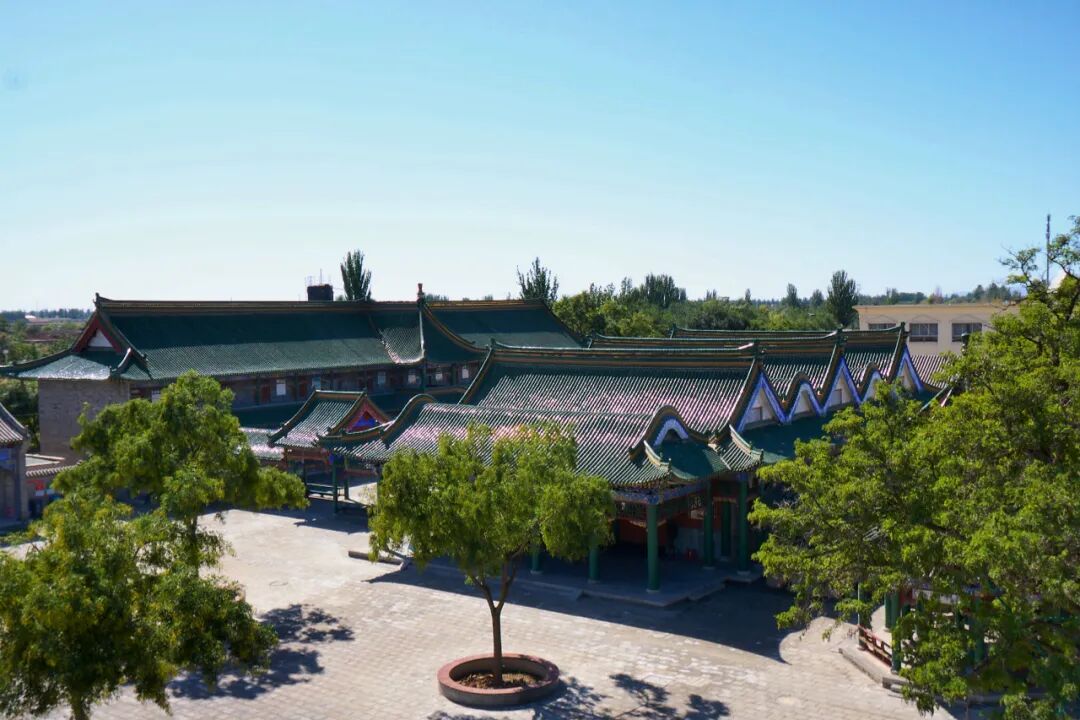
Dong Fuxiang hardly needs an introduction; anyone familiar with the Northwest's Hui history knows him well. Originally a leader of the Gelaohui (Elder Brothers Society) uprising in northern Shaanxi during the Tongzhi era, he was defeated and pacified by Zuo Zongxiang, subsequently becoming a vanguard in pacifying the Hui uprisings. His militia—composed of Han vagrants known as the 'Dong Three Battalions'—became a chess piece used to balance the surrendered Hui armies. After Zuo Zongxiang's death, during the pacification of the Hehuang disturbances, Dong rose to prominence through military merit. His Gansu Army (by then expanded beyond his original Han vagrant base to incorporate many surrendered Hui troops) skyrocketed in power after the Huai Army lost its prestige following the First Sino-Japanese War, becoming a military pillar the Qing court relied upon and incorporating into the newly established imperial guard: the Wowei Army (Guard Corps).
Dong Fuxiang

Yet this Rear Guard of the Wowei Corps retained its rough-and-tumble bandit origins: while perhaps the worst-equipped division in the Wowei Army, they were fiercely rebellious and hard to tame. During the Boxer Rebellion, they were among the most active participants in joining the Boxers, brutally murdering foreign diplomats—an action that directly triggered the military intervention of the Eight-Nation Alliance.
Wowei Rear Army Commander Dong Fuxiang's inscription plaque for the Najahu Mosque. For some reason, his signature reads 'Commander of the Wowei District Army,' though his Gansu Army unit designation should have been the Wowei Rear Army.

Ma Fuxiang's rise to power was also closely tied to Dong Fuxiang's Gansu Army. His father, Ma Qianling, had close ties with the rebel Huasi Menhuan faction that dominated Hehuang during the Tongzhi Hui Rebellion, though he wasn't part of the direct lineage of Huasi Menhuan leader Ma Guiyuan. After the Battle of Taizisi thwarted Zuo Zongxiang's military campaigns, Ma Qianling very pragmatically persuaded leader Ma Zong'ao (who was also Ma Qianling's nephew) to take the win while they were ahead and voluntarily surrender. Zuo Zongxiang logically supported Ma Zong'ao as a proxy to replace the old Huasi Menhuan forces, and Ma Qianling's family leveraged this momentum to rise to prominence.
Originally, the family patriarch after Ma Qianling was Ma Fuxiang's older brother, Ma Fulu. He was a fiercely brave military man who passed the military imperial examinations, though legend has it that Emperor Guangzong denied him the top 'zhuangyuan' scholar spot because his manners were too crude. Still, he was a loyal subject deeply devoted to the emperor and actively participated in Dong Fuxiang's campaigns to suppress the Hehuang Hui uprisings. Because of his loyalty to the imperial house, his troops were the most active in fighting foreigners during the Boxer Rebellion, suffering the heaviest casualties and ultimately shedding their blood at Zhengyangmen Gate. Because of his death, Ma Fuxiang became the new family head, emerging as a prominent figure during the Republican era. His Ningxia Hui army gradually rose to become one of the 'Three Ma' factions of the Northwest, standing alongside the Gansu Ma and Qinghai Ma cliques.
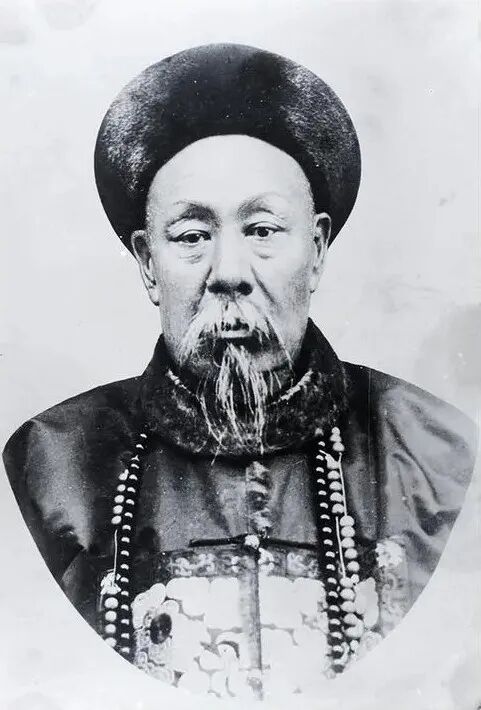
Ma Fuxiang
Ma Fuxiang, much like his older brother, was fundamentally a military man, yet he was fiercely passionate about Islamic scholarly causes. Many ancient Islamic texts were published thanks to his financial sponsorship, making an immense contribution to the preservation and continuation of Chinese Islamic culture. When examining these classic texts, I often come across his preface inscriptions; his sincere pursuit of Iman (faith) shines through every single stroke of ink, clearly not just affected or pretentious prose. It always fills me with deep admiration—even an ordinary man of action can keep his word, and his steadfast resolve cannot be shaken.

A plaque inscribed for the Najahu Mosque (Najahu Mosque) by Ma Fuxiang, the military governor of Ningxia.
Examining its architectural style, this mosque isn't regular in structure, and it completely throws out basic symmetry. If you take a central pavilion as the axis, one side features a main prayer hall consisting of five hip-and-gable or gable roofs interspersed with four connected roll-vault sheds, with a towering hip-and-gable roof on the front porch. On the other side sits a slightly smaller building made up of three hip-and-gable or gable roofs interspersed with three roll-vault sheds (since I couldn't go inside, I'm not sure what this building's exact function is; it looks like another prayer hall, though I've never heard of a single mosque having two prayer halls), and its front porch features a roll-vault style. Both large structures are linked by covered corridors—one big, one small; one rigid, one fluid. Even though it's asymmetrical, it feels like it embodies the Taoist principle of yin and yang.

The main prayer hall.
The mihrab at the back of the main prayer hall isn't housed in a massive vaulted alcove like the ones you see in mosques across North China.

Rules equal order, but they also mean constraint. The lack of strict rules shows just how far this place is from the core of traditional Chinese civilization, yet that's exactly what makes it so fascinating. Precisely because of this, there was room for creativity. Out in a remote, turbulent military frontier, people could freely mix and match hip-and-gable, gable, and roll-vault roofs, wildly sketching out their devotion to an unnameable faith.
Whenever I look at ancient architecture and hear people confidently pointing at roof ridges and tile ends, explaining what structural style it is, which social class it represents, or what it says about the status of the temple, I just shrug and brush it off. People whose brains are totally wired to the ancient architectural manuals seem even more rigid than the craftsmen of the imperial era, insisting not a single mortise and tenon can be missing. The world in their eyes is neatly lined up like brackets in dougong, with everyone in their exact place—above or below, rigid and tightly interlocked. People with such veils over their eyes fail to see the true and wondrous essence within worldly laws.

"Allah has set a seal upon their hearts and their hearing, and over their vision is a veil."
As the ancient saying goes: "Seek knowledge, even if you must go as far as China."

If hidden gems are found in remote places, why not seek truth outside the mainstream centers?
After publishing this article yesterday, a staff member at the Mingxin Mosque reached out to me privately to point out some errors in my introduction to the temple, so I've made some minor revisions and am reposting it. Also, thanks to two readers who added context in the comments yesterday, I now know that the secondary building at the Najahu Mosque whose purpose I wasn't sure about is actually a women's prayer hall built 12 years ago. Word has it that after a devoted single mother who endured great hardship to raise her children while keeping the mosque in her heart passed away, her children donated funds during a mosque renovation to build this new hall exclusively for female Muslims to offer their prayers. It was precisely that renovation and expansion to the south that made the mosque asymmetrical.
Looks like my observation was spot on after all—it really is one large and one small structure, organically echoing the balance of yin and swang. At the same time, I never expected a newly built hall could be designed with such rustic charm and creativity. Not only did it avoid breaking the vibe of the original architecture, but it actually added a fresh, playful dynamic through the blend of rigidity and fluidity. This completely shattered my prejudices regarding the design and aesthetics of newly built mosques in Ningxia. It just goes to show that true talent and wisdom can be found tucked away in the countryside—they really weren't kidding.
Exploring Shizuishan, Ningxia: The Ultimate Halal Food and Cultural Guide to The Welcome Restaurant Filming Location
Articles • Hasan09 posted the article • 0 comments • 1 views • 2 hours ago
Stepping into Shizuishan, Ningxia—The Filming Location of 'The Welcome Restaurant': Your Ultimate Guide to Authentic Halal Cuisine Along the Yellow River
Summary:
The hit movie 'The Welcome Restaurant' reminds us of the soul-soothing power of food, and its filming location, Shizuishan in Ningxia, is a hidden vault of Northwest China's Halal culinary tradition. This guide dives deep into Shizuishan's Dawukou cold rice noodles (liangpi), minced mutton noodle soup (yangrou saozmian), Huangquqiao hand-grabbed mutton (shouzhua yangrou), skewered lamb kebabs, and traditional pastries, unlocking the unique, comforting flavor of the Jiangnan beyond the Great Wall.
Walking out of the theater after watching 'The Welcome Restaurant,' my eyes were red with tears. The line from the movie, 'Once the food is cooked, people stop panicking,' echoed in my mind over and over.
In a land torn apart by turmoil, 'eating a proper meal' feels like an impossible luxury—it's that single shred of certainty you can hold onto amidst chaos.
The film uses food to reflect the harsh realities of war, bringing a bit of comfort to the children (the Middle Eastern kids in the movie). In that moment, food transcends borders, carrying kindness and warmth that slowly dilutes the pain of war.
'Eating a proper meal' is a life philosophy deeply rooted in the blood of Chinese people. As the saying goes, 'The hustle and bustle of everyday life is the greatest comfort to the human heart.' In our daily lives, food is a soothing medicine for the soul; in times of war, it's a primal yearning for life itself.
Coming back from the movie to real life, I often feel so blessed to find healing in every single meal~
And among the filming locations of 'The Welcome Restaurant' is a low-key little city famous precisely for its 'food,' tucked right here in Ningxia.
When people think of Ningxia, Yinchuan and Zhongwei usually come to mind first. But Ningxia is also home to this understated little town that's packed with endless food, stunning landscapes, and a deeply soothing human vibe~
That place is Shizuishan, Ningxia—a healing little city that transformed from a rugged 'frontier coal city' into an 'idyllic oasis beyond the Great Wall.'
Flanked by the Yellow River to the east and the Helan Mountains to the west, Shizuishan is the only place in Ningxia named a 'National Forest City.'
@Xiaohongshu JupiterBoBo
From ancient frontier beacon fires and its days as China's premier coal industrial base to serving as the backdrop for over 40 films like 'The Welcome Restaurant,' 'Minning Town' (Shanhaiqing), and 'Flame in the Wind,' this place brings together people from all walks of life alongside a melting pot of regional flavors.
Returning to Shizuishan this time through the lens of the film, I've gotten to experience a totally different side of it: the 'millennial chants beneath the Helan Mountains' are enough to quiet any restless soul; the garden spectacle of Xinghai Lake carries a deeply restorative, healing energy; and the azure waters and golden sand dunes of Shahu Lake leave you feeling serene and completely clear of mind. view all
Stepping into Shizuishan, Ningxia—The Filming Location of 'The Welcome Restaurant': Your Ultimate Guide to Authentic Halal Cuisine Along the Yellow River

Summary:

The hit movie 'The Welcome Restaurant' reminds us of the soul-soothing power of food, and its filming location, Shizuishan in Ningxia, is a hidden vault of Northwest China's Halal culinary tradition. This guide dives deep into Shizuishan's Dawukou cold rice noodles (liangpi), minced mutton noodle soup (yangrou saozmian), Huangquqiao hand-grabbed mutton (shouzhua yangrou), skewered lamb kebabs, and traditional pastries, unlocking the unique, comforting flavor of the Jiangnan beyond the Great Wall.

Walking out of the theater after watching 'The Welcome Restaurant,' my eyes were red with tears. The line from the movie, 'Once the food is cooked, people stop panicking,' echoed in my mind over and over.

In a land torn apart by turmoil, 'eating a proper meal' feels like an impossible luxury—it's that single shred of certainty you can hold onto amidst chaos.

The film uses food to reflect the harsh realities of war, bringing a bit of comfort to the children (the Middle Eastern kids in the movie). In that moment, food transcends borders, carrying kindness and warmth that slowly dilutes the pain of war.

'Eating a proper meal' is a life philosophy deeply rooted in the blood of Chinese people. As the saying goes, 'The hustle and bustle of everyday life is the greatest comfort to the human heart.' In our daily lives, food is a soothing medicine for the soul; in times of war, it's a primal yearning for life itself.

Coming back from the movie to real life, I often feel so blessed to find healing in every single meal~

And among the filming locations of 'The Welcome Restaurant' is a low-key little city famous precisely for its 'food,' tucked right here in Ningxia.

When people think of Ningxia, Yinchuan and Zhongwei usually come to mind first. But Ningxia is also home to this understated little town that's packed with endless food, stunning landscapes, and a deeply soothing human vibe~

That place is Shizuishan, Ningxia—a healing little city that transformed from a rugged 'frontier coal city' into an 'idyllic oasis beyond the Great Wall.'
Flanked by the Yellow River to the east and the Helan Mountains to the west, Shizuishan is the only place in Ningxia named a 'National Forest City.'
@Xiaohongshu JupiterBoBo
From ancient frontier beacon fires and its days as China's premier coal industrial base to serving as the backdrop for over 40 films like 'The Welcome Restaurant,' 'Minning Town' (Shanhaiqing), and 'Flame in the Wind,' this place brings together people from all walks of life alongside a melting pot of regional flavors.
Returning to Shizuishan this time through the lens of the film, I've gotten to experience a totally different side of it: the 'millennial chants beneath the Helan Mountains' are enough to quiet any restless soul; the garden spectacle of Xinghai Lake carries a deeply restorative, healing energy; and the azure waters and golden sand dunes of Shahu Lake leave you feeling serene and completely clear of mind.
The Rise and Fall of China's World Muslim City: Halal Culture, Mosques, and Sufi Shrines in Ningxia (Part 1)
Articles • Hasan09 posted the article • 0 comments • 1 views • 2 hours ago
Translation & Repost
Original Source: https://www.cambridge.org/core ... 93833
Why Did the World Muslim City Disappear? Spatial Restructuring Under the Sinicization of Religion
The World Muslim City (WMC) was a major development project in Ningxia once built to boost the economy and China-Arab diplomatic ties. Following Xi Jinping's "Sinicization of religion" policy, the project was forced to undergo rectifications and shutdowns after 2018 because it was seen as carrying "non-Chinese" elements. This marked a major shift in China's ethnic policies away from multiculturalism and toward assimilation.
Background: What is the Sinicization of Religion?
The "Sinicization of religion" is a policy direction rolled out in recent years by the People's Republic of China. It demands that all religions align their doctrines, rituals, architecture, and organizations with traditional Chinese culture, core socialist values, and the Party-state narrative. It strips away religious symbols officially deemed "un-Chinese" to tighten the Party's total control over the religious sector.
Abstract
A nation-state is as much a project of narratives and ideas as it is of space and territory. In the People's Republic of China, Xi Jinping’s calls to "revive" traditional Chinese culture, "sinicize religion," and "achieve the great rejuvenation of the Chinese nation" reflect a broader effort to reshape national narratives and tighten Communist Party control. This article explores the impact of Xi’s revisionist nationalism on China's 55 ethnic minority groups, focusing particularly on the Hui Muslims, one of the ten Muslim minority groups. The paper traces this through the rise and fall of the "World Muslim City" (WMC)—a development project in western China that once mobilized Hui identity and traditions for economic and diplomatic ends. The construction of the WMC was made possible by a multicultural state narrative and a fragmented authoritarian political system that long encouraged local policy flexibilities and deviations. The shutdown of the project highlights the growing anti-Muslim and anti-religious bias in PRC policies, with the "Sinicization of religion" campaign acting as the direct cause of the WMC's demise. Its demise also underscores the regime's current drive to tighten Party control over government, business, and personnel at all levels. Furthermore, the fate of the WMC reveals the spatial dimensions of religious sinicization and China's past and present cultural governance. Borrowing from theorist Henri Lefebvre, the sinicization of religion encompasses a series of "spatial practices" that impose Xi-style "representations of space" onto the "representational spaces" of everyday life, stretching from mosques and commercial areas all the way to theme parks and luxury resorts.
A nation-state is both a narrative and conceptual project, as well as a spatial and territorial one. Potential builders of nation-states leverage narratives and collective identity categories to legitimize their rule over diverse peoples and territories. Through crafted myths, histories, and laws, regimes question and shape their citizens to secure obedience (Althusser, 2001 [1970]). When shifting environments weaken the coherence of the national story, these projects become vulnerable to revision. In the People's Republic of China, the Communist Party abandoned revolutionary socialism in the post-Mao era, forcing it to reconstruct its reason for being—a process that continues today. The diversification brought by economic reforms raised new questions regarding the ethnic and cultural standards of Chinese citizenship. Xi Jinping’s call to "rejuvenate" the nation by "revitalizing" its "fine traditional culture" aims to address these issues in explicit terms (Yang, 2017).
This article looks at the impact of Xi's revisionist project on China's 55 ethnic minorities, especially the Hui Muslims. The Hui are generally considered the most heavily Han-integrated and Chinese-speaking group among the PRC's ten Muslim minorities. The article explores this by analyzing the World Muslim City, a development project in the Ningxia Hui Autonomous Region that once mobilized Hui identity and culture (pronounced hway) for economic and diplomatic purposes. Launched in 2009, the World Muslim City (hereafter WMC) enjoyed years of backing from top officials in Beijing and Ningxia. In its rhetoric and ambitions, the WMC echoed central government initiatives to develop China's impoverished west and build closer ties with the Muslim world. These initiatives created discursive and strategic spaces for the WMC's Muslim-centric agenda. The project also gained legitimacy through what I have termed in previous research "communist multiculturalism"—an authoritative narrative defining China as a "multi-ethnic, multi-group nation-state" where "diversity is celebrated" and "so-called 'ethnic issues' have been resolved" (McCarthy, 2009: 4). Supporters of the WMC pitched a complementary narrative portraying Ningxia and its large Hui population as central protagonists in China's growth story, indispensable to the country's diplomatic and economic future. Today, the WMC is practically gone. Its major sub-projects have either been shut down or left in limbo.
The demise of the WMC highlights the growing anti-Muslim and anti-religious trends in PRC policies and discourse. Over the past decade, communist multiculturalism has been replaced by the pursuit of "ethnic integration" (minzu ronghe) (Glaesserman, 2023). Calls for a more assimilationist minority policy predated Xi's tenure and intensified after violent ethnic clashes in Tibet and East Turkestan in the late 2000s (Leibold, 2012). Under Xi, however, the shift toward ethnic integration has gone hand in hand with a reinterpretation of Chinese history. Unlike other post-Mao leaders, Xi is heavily invested in reshaping the narrative of Chinese history, including the history of the CCP, which has been rewritten to place Xi alongside Mao Zedong and Deng小平 in the "official constellation of era-defining leaders" (Buckley, 2021). He denounces "historical nihilism"—historical interpretations that focus on the Party's mistakes and run counter to the officially approved narrative. Xi's revisionist nationalism is also reflected in the "Sinicization of religion" campaign, the direct cause of the WMC's demise. Sinicization has affected all five state-approved religions, including Daoism, the only one of the five native to China. Yet it has specifically targeted Muslims and Islam.
Sinicization is a spatial project: symbolic spaces and spatial symbols are the mediums for its nationalist message. Among other measures, it demands the stripping of overt "un-Chinese" elements from religious and some secular architecture, the eradication of religious symbols from the public sphere, and the incorporation of Party-centric imagery and rituals into activities at religious sites. This campaign reveals how discourse and space converge in the (re)building of a nation-state. In China, space—the built environment and its mapped zones—has long served as a tool for broadcasting regime-approved norms and narratives. In the post-Mao era, the Party's control over space and its meaning waned as urban planning and property allocation powers were decentralized and partially privatized. Today, space once again takes center stage in the Party's efforts to define national identity and propagate "core socialist values" (Miao, 2020; Stokols, 2023). A revived China has been materialized in a mix of sand, gravel, and cement.
The impact of Sinicization extends beyond ethnic minorities and religion, curbing regional development strategies, provincial diplomacy, and private capital. The closure of the WMC not only highlights the regime's shifting ethno-religious priorities but also mirrors the push to expand Party control over government, business, and personnel at all levels (Heilmann, 2016; Koss, 2021; Wang and Mou, 2021). Previous accounts of the WMC tended to portray it as a project of the Party-state (He, 2013; Ptáčková, 2020; Malzer, 2020a; Sun, 2022); however, this article emphasizes the role of private and sub-provincial Party-state actors in advancing the initiative—as well as bringing about its demise. Several WMC sub-projects violated land-use laws, and local authorities sometimes resisted efforts to enforce those laws. In this way, the WMC exposes "fragmented authoritarianism," a system that for decades encouraged local policy flexibilities while frustrating Beijing's efforts to ensure local loyalty to its directives (Lieberthal and Oksenberg, 1988; Mertha, 2009). As Nian Lai Cao wrote regarding early campaigns against Christian symbols in Zhejiang province, understanding events in Ningxia requires "taking into account the national context of systematic and comprehensive rectifications of local governance by the central government" (2017: 35). The demise of the WMC can be read as an episode in Xi's quest to consolidate the Party-state.
In the following sections, I first outline the WMC and place it within the context of Ningxia's developmental ambitions before the launch of the Sinicization campaign. Next, I examine the goals and methods of Sinicization and the reactions of Hui Muslims. Along the way, I draw on insights from Henri Lefebvre and other theorists of the built environment to analyze how space and ideological narratives intersect in Sinicization and past Chinese nation-building efforts. I then dive into the case of the WMC, shedding light on the narratives used to promote it, its problematic trajectory, and its ultimate fate. The final section returns to Xi's revisionist state project and its ethno-religious impacts. My arguments and findings are based on qualitative, interpretive analysis of Chinese government documents, published interviews, news reports, press releases, videos, photos, satellite imagery, websites, social media posts, court cases, and academic publications. These materials reveal that Sinicization is a set of "spatial practices" through which Xi-style "representations of space" are imposed upon the "representational spaces" of everyday life, ranging from mosques and communities all the way to theme parks and luxury resorts (Lefebvre, 1991: 38–40).
The World Muslim City and Ningxia's Development Agenda
In March 2018, workers in Yinchuan, capital of the Ningxia Hui Autonomous Region, began dismantling the domed roof of a large pavilion in the downtown business district. The pavilion sat at the heart of the China-Arab Axis, a grand avenue built to celebrate trade and diplomatic ties between China and the Arab world. After tearing down the bulbous top of the structure, workers spent the following weeks building a replacement: a recessed octagonal double-layer roof curving downward from a center point before rising at the eaves. They also straightened the pavilion's support columns to eliminate the pointed arches between them. A few hundred meters to the east, arched metal pergolas were replaced with pitched-roof versions in the traditional "xuanshan" style. Nearby, a crescent moon sculpture was swapped for a giant jade bi—a doughnut-shaped jade disk tied to ancient Chinese burial rituals (see Figure 1). Thousands of such jade disks have been unearthed from burial sites dating back to the Neolithic period at the dawn of Chinese civilization (Sun, 1993). When asked why these structures were "rectified" just years after installation, city officials explained that "transforming the original Arab-style landscape into one reflecting Chinese cultural elements" would foster a more "festive, peaceful, united, and harmonious atmosphere" (Sing Tao, 2018).
Comparison of the China-Arab Axis architecture before and after rectification. Left photo by HT Kou Shi Xin Fei, April 2017, Huitu. Right photo by Zheng Jue, December 2018, Huitu.
These modifications to the China-Arab Axis—subsequently renamed "Unity Road"—signaled the pause of the WMC, a $3.6 billion development project of which the Axis was just one component. Promoted by state and private actors in Ningxia, the WMC was part of a broader effort to capitalize on China's growing ties with the Muslim world. Through clever framing, Hui "entrepreneurs of the national past" (Zhang, 2021) pitched the development plan as a way to transform a backward province into a "strategic pivot" for the Silk Road Economic Belt and a "bridgehead" for China-Arab cooperation (Ma, Bai, and Peng, 2014). The WMC illustrates the long-standing latitude granted to provinces and localities to bend rules and mobilize all available resources to spur growth within broad policy parameters set by Beijing. In Ningxia, for years that meant mobilizing Hui Muslim identity and traditions.
Ningxia (pronounced ning-hsia) is a provincial "autonomous region for ethnic minorities" located near the geographical center of the People's Republic of China. Its geography resembles South Dakota, and like South Dakota, parts of Ningxia are wasteland—arid, sun-baked, and barely arable (see Figure 2). In terms of size, Ningxia is mainland China's smallest province, and its population of seven million is small by PRC standards. By comparison, neighboring Shaanxi province boasts nearly forty million people. Just over a third of Ningxia's population is Hui. Being designated an autonomous minority region offers Ningxia's Hui residents some limited benefits, though this falls far short of true autonomy.
Map of China highlighting Ningxia. Source: TUBS, CC BY-SA 3.0, https://creativecommons.org/licenses/by-sa/3.0, via Wikimedia Commons.
Despite its central position on the map, Ningxia is unquestionably marginalized. It is viewed as a gateway to China's northwest, a region known for drought and underdevelopment. Like the rest of the northwest, Ningxia is poor. The climate is to blame: a 1970s UN report described the Xihaigu region in southern Ningxia as "uninhabitable," even though hundreds of thousands of people lived there (Ai, Fang, and Xie, 2020). Over the past four decades, the government has relocated more than a million Xihaigu residents to new settlements with better water supplies and economic opportunities. Due to its isolation and sparse population, Ningxia proved advantageous to the Chinese Communist Party during its revolutionary struggles in the 1930s and 1940s. Parts of Ningxia overlap with what Joseph Esherick (2022) calls the CCP's "accidental holy land"—the Shaan-Gan-Ning Border Region, where the Party retreated at the end of the Long March and thoroughly overhauled its revolutionary methods.
From the start, the WMC was touted as a way to alleviate Ningxia's backwardness and isolation. Proponents from government, business, and non-profit sectors claimed it would "strengthen cultural exchange and economic cooperation between Ningxia, China, and Muslim countries" and elevate the autonomous region's standing in "China's opening up to the west" (People's Government of the Ningxia Hui Autonomous Region, 2013: 26–27). In this way, the WMC aligned with early 21st-century national development initiatives, notably the "Go Out" strategy aimed at internationalizing China's economy; the "Go West" campaign of massive infrastructure projects across China's interior and west; and the Belt and Road Initiative. Ningxia's own "Go Out" strategy called for "building a frontier open to the Muslim world," partly by encouraging governments and businesses from Muslim countries to "come in" and invest in the region (People's Government of the Ningxia Hui Autonomous Region, 2011: 32–34, 75–79). Yinchuan's urban overhaul, spurred by the "Go West" campaign, reflected these goals (Malzer, 2020b). In 2011, Yinchuan officials approved plans to build a new Central Business District (CBD) in the rural outskirts about 8 kilometers north of the old city center. As envisioned, the Yuehaiwan CBD would feature sleek skyscrapers and artistic public spaces where residents and visitors could kick back and enjoy the city's cutting-edge skyline. The China-Arab Axis and several other WMC ventures were designed to be key elements of the district and among the first CBD projects completed. Like other Yuehaiwan buildings, these were built on converted rural land; the China-Arab Axis slices straight through an area that was still a village in 2010.
The WMC was not a single city, but a multi-site venture with sub-projects scattered across Yinchuan and Yongning County just south of the urban core. In fact, there were two iterations of the WMC, for reasons I will discuss later in the article. The initial version, referred to here as WMC 1.0, launched in 2009 with 13 sub-projects and a price tag of 800 million RMB ($117 million). WMC 2.0 launched in 2012, promising 23 sub-projects and a budget of 23 billion RMB, roughly $3.6 billion. A formal groundbreaking ceremony was held in July 2009, attended by a throng of Ningxia officials along with dignitaries from Bahrain, Turkey, Oman, and Kuwait (Bai, 2009). The presence of these dignitaries highlighted the WMC's early reliance on foreign Muslim backing. Funding for parts of the 13 original sub-projects came from donors and investors in Kuwait, the United Arab Emirates, Saudi Arabia, and other Muslim nations. Kuwait, in particular, was a major capital source. Funds for educational and charitable sub-projects came from the Kuwaiti Ministry of Awqaf and Islamic Affairs, its Zakat House, and the Asian Muslim Committee of the Kuwait-based International Islamic Charitable Organization. The Yongning County government provided land for the charitable and educational sub-projects free of charge (Zhao, 2015).
As this list of funding sources suggests, the WMC in its initial incarnation sought to combine profit-seeking with charitable benevolence. The 13 original sub-projects emphasized culture, education, and charity alongside retail and leisure. They included plans for a "World Muslim Folk Culture Street," a pedestrian strip of retail shops and exhibition halls showcasing arts, architecture, and crafts from dozens of Muslim-majority countries; a "One Thousand and One Nights" theme park; a "Muslim Folk Village" to house Hui villagers displaced by urban renewal; a vocational school specializing in Arabic language instruction; and new facilities for the Ningxia Muslim Orphanage. There were also plans for a World Islamic History Museum featuring a mosque on its second floor (Zhou and Luo, 2010). With a few exceptions, these sub-projects were slated for 3,000 mu of land in Yongning County (Liu, Wang, and Tang, 2011: 101). Stylized renderings of the completed WMC 1.0 depicted a tree-lined enclave surrounded on three sides by artificial lakes, featuring shops, museums, parks, residences, academies, and an orphanage—with a towering mosque at the very heart of the enclave.
With its eclectic mix of ventures, the WMC promised to "create a friendly cooperative platform for trade and cultural exchange between... Chinese Muslims and Muslims from other countries and regions around the world" (Tan, 2010). Showcasing Islamic identity and tradition was integral to this goal, with sub-projects drawing on various aesthetic themes and styles. No single version of Islam or Islamic aesthetics dominated; expressions ranged from the (pseudo-)traditional and overtly literal (e.g., faux minarets adorning shopping malls) to the modern and abstract. Some structures tried to convey overt religious significance. For instance, the exterior facades of the (never-built) Quran Mosque and the World Islamic History Museum were supposed to be shaped into "four open Qurans," with 114 decorative windows on their domed roofs symbolizing the 114 chapters of the Quran. The entire structure would be supported by five pillars, an architectural nod to the Five Pillars of Islam.
The Ningxia International Convention Center, serving as the permanent venue for the China-Arab Expo, embodied a more abstract approach to Islamic aesthetics (see Figure 3). Located at the western end of the China-Arab Axis in the Yuehaiwan CBD, the center opened in 2015, featuring geometric designs typical of Islamic art alongside Chinese-flavored elements like dragon motifs and a heavy splash of red. The exterior of the center was wrapped in an asymmetrical, gauze-like steel mesh designed to evoke "the hats and veils of the Hui people" and the checkered keffiyeh worn across the Arab world (Ningxia International Convention Center, 2015). The China-Arab Axis likewise combined Chinese and Islamic elements, though in a more literal way. Stretching over 2 kilometers long and 90 meters wide, the avenue runs east-west through the middle of the Yuehaiwan CBD. Between the roads on its northern and southern edges lie pedestrian walkways and plazas dotted with fountains, sculpture gardens, and decorative pavilions. Sections of the China-Arab Axis showcased Chinese culture with oversized replicas of porcelain vases and bronze dings—ritual vessels that served in ancient China as "prominent symbols of state authority and divine power" (Childs-Johnson, 2012: 164). Other sections displayed various Muslim cultural forms and items: Mughal domes, Moroccan arches, and a giant oil lamp straight out of Disney's Aladdin, to name a few.
Ningxia International Convention Center, Yinchuan, September 2017. Xinhua/Alamy.
In its borrowing of aesthetics and themes, the WMC followed in the footsteps of a standalone venture, the China Hui Culture Park, a Muslim-themed park also located in Yongning County. The original WMC site was practically across the street from the theme park in the same township. Launched in 2002 in the Hui village of Najahu, the park gained attention for its striking Islamic architecture (see Figure 4). Structures inside the park evoked global Muslim landmarks like the Taj Mahal. Other exhibits highlighted the undeniable Chineness of the Hui, which Kyle Haddad-Fonda (2016) observed served as proof that "the Hui have always been integrated into Chinese society." For years, the theme park was practically a mandatory stop for foreign Muslim delegations visiting Ningxia. A stop at the park was usually paired with a visit to the historic Najahu Mosque, a brick-and-wood structure famous for its brightly colored tile roofs and upturned eaves (see Figure 5). In 2009, China's State Council designated the China Hui Culture Park a "National Model Unit for Ethnic Unity and Progress" (Yin, 2015).
Golden-domed ceremonial hall, Hui Culture Park, Yongning. Photo by Takeafancytoraining, December 2019, Huitu.
Main gate of the Najahu Mosque. Photo by Wu Daosheng, 2015, Wikimedia Commons. Accessed February 14, 2024, CC BY-SA 4.0, https://commons.wikimedia.org/wiki/File:.jpg.
The Sinicization of Space and Ideological Practice
In the first half of the 2010s, Ningxia’s Muslim-centric development strategy seemed to be paying off for the autonomous region. During this period, thousands of dignitaries and investors from Muslim nations visited Ningxia to attend trade forums and do business. Ningxia’s global ambitions got a major boost in 2012 when the State Council approved the creation of the Ningxia Inland Open Economy Experimental Zone and the Yinchuan Comprehensive Bonded Zone, offering tax breaks for foreign trade and export-oriented industries. The Ningxia Halal Food International Trade Certification Center opened in Wuzhong in 2014, part of an effort to ramp up the region's food exports to the Muslim world. In 2013 and 2015, Yinchuan hosted the first and second China-Arab States Expos, each drawing over 7,000 attendees. The 2015 expo saw the signing of 163 cooperation projects between Chinese and foreign enterprises, valued at over $25 billion (Li & Zhu, 2016).
Given these trends, the demise of the World Muslim City a few years later seems puzzling. Yet when placed in the context of the Sinicization campaign announced in 2016, it starts to make sense. Sinicization—*zhongguo hua* in Chinese—is a nationwide policy primarily targeting religion, though it also impacts other endeavors from architecture to social work. As Xi Jinping explained, the policy aims to "blend religious doctrines with Chinese culture... [and] contribute to realizing the Chinese Dream of the great rejuvenation of the Chinese nation" (Xinhua, 2016). To this end, Xi has exhorted party-state officials and religious leaders to "adhere to the direction of Sinicizing religion in our country and actively guide religion to adapt to socialist society" (quoted in Madsen, 2021: 1). Religious groups have been asked to incorporate party-centric rituals and symbols, including images of Xi, into their liturgical practices and places of worship. In theory, "basic beliefs, core doctrines, and liturgical systems" can be kept as long as they "adapt to socialist society, comply with Chinese cultural spirit, and accord with the progress of the times" (Central Committee of the CCP, 2018). The goal of Sinicization is not to wipe out religion, but to ensure it is subordinated to its *summum bonum*, the Chinese Communist Party.
Without a doubt, though, Sinicization aims to suppress various trends and practices. The campaign specifically targets outwardly "foreign" religious markers that had become increasingly visible in public spaces across the PRC in recent decades. For Islam, these include "signs of 'Saudiization' and 'Arabization' in architecture, attire, religious rituals, scriptural interpretation, and the use of Arabic in Islamic venues," which party leaders insist "must be resolutely curbed and actively and correctly guided" (Central Committee of the CCP, 2018). Expressions of personal piety have come under fire, with Muslims facing harassment for wearing headscarves, growing beards, and fasting during Ramadan. In this way, the Sinicization of Islam is intertwined with "de-Halalization" (*qu qingzhenhua*), an Islamophobic, social media-driven effort to slash halal-branded practices and pressure Muslim citizens to act in a properly "Chinese" fashion (Eley, 2016b; Yusupov, 2021).
In Ningxia and elsewhere, the most visible impact of Sinicization has been architectural. Local governments across the country have forcefully removed domes, minarets, and Arabic script from the facades of mosques, schools, and businesses (Stroup, 2019; Yusupov, 2023). Cadres in planning, construction, and religious affairs departments have been tasked with "strictly supervising" the construction and renovation of Muslim religious sites to ensure they "highlight Chinese style" (Central Committee of the CCP, 2018). One challenge facing officials and believers alike is the lack of clarity over what terms like "Chinese style" and "Chinese cultural spirit" actually refer to. This ambiguity is less a bug than a feature; much like the zero-COVID policy, it can intensify local officials' tendencies to go to extremes in enforcing policies, lest they appear insufficiently firm on the target. Weishan Huang (2021) argues that this lack of clarity shows Sinicization is less about tradition than it is about "traditionalism." Drawing on Edward Shils's distinction between the two, Huang explains that while tradition is malleable and open to interpretation, "traditionalism" turns cultural heritage into something "sacred, and therefore unalterable and exclusive" (ibid.: 65). Fidelity to actual Chinese traditions is largely beside the point. Instead, Huang argues, Sinicization is a "political campaign to designate Chinese traditions as a modern nationalist identity." In the words of the Central Committee of the CCP (2018), the campaign aims to "guide" believers to "establish a correct view of the motherland, ethnicity, religion, history, and culture, and enhance their identification with... the Chinese nation, Chinese culture, and the Chinese Communist Party."
So far, Sinicization has been nowhere near as brutal as the state terror inflicted on Uyghurs in East Turkistan, which seems aimed at eradicating Uyghur identity and culture (Roberts, 2020; Zenz, 2019). Sinicization implies that for Chinese Catholics, Protestants, Buddhists, Daoists, and (some) Muslims who follow its rules, there is a possibility of being included in the political community. Many mosques and churches remain open even after their roofs have been retrofitted. Even so, the campaign remains painful for believers whose places of worship have been vandalized or destroyed by a state that previously approved their construction. For many Hui people, Sinicization is seen as a betrayal by a regime that had long encouraged them to forge ties with the global ummah.
Some Hui people have openly resisted the campaign. In August 2018, hundreds of Hui residents in Ningxia protested for weeks against plans to demolish the Weizhou Grand Mosque, which had been completed only two years prior (Stroup, 2019). Their protests were partially successful: the mosque still stands, though in 2019 its domes were removed and replaced with round, recessed roofs. In Yunnan province in Southwest China, protests erupted in May 2003 [sic] in Najahu village in response to plans to alter its main mosque. Tensions also heated up when word got out about plans to Sinicize the Grand Mosque in Shadian, a massive domed building that has long been a source of tourism revenue and local pride. Due to the "tense" nature of relations between Shadian Hui and the state—described by Ruslan Yusupov (2023)—retrofits to the mosque were delayed for years. The community was the site of the 1975 Shadian Incident, a Cultural Revolution-era military assault that left over 1,400 Hui villagers dead. In 1979, the party-state officially apologized for the "incident" and initiated reparations involving the rebuilding of the Shadian Mosque and support for its Islamic religious life (Yusupov, 2021; 2023).
Space, Ideology, and State Power
The architectural obsession of Sinicization demonstrates that under Xi Jinping, building a "correct view of the motherland" requires a proper sorting of religious and secular spaces. In China and elsewhere, the built environment has long served as a medium for communicating political ideals and narratives. Amos Rapoport argued that the communicative capacity of space is the result of the human tendency to "impose meaning on the world by using cognitive taxonomies, categories, and schemata," and that "built form, like other aspects of material culture, is the physical expression of these schemata and domains" (1982: 15). Denise Lawrence and Setha Low note that places, spaces, and the structures they contain are symbols in their own right because they "condense powerful meanings" and "constitute key elements in the communication systems used to express social relations" (1990: 466). Chinese thinkers have long recognized the importance of an ordered spatial environment for conveying and instilling norms and values. As Confucius put it, "If the mat was not straight, he would not sit" (Analects 10:7) (2021).
The idea that space "expresses social relations" is a core insight of Henri Lefebvre’s *The Production of Space* (1991). In that work, Lefebvre proposed that social space is best understood as a dialectical triad of three "moments": "spatial practice," the conceptual "representations of space," and lived "representational spaces" (ibid.: 38–40). The first, "spatial practice," refers to top-down, authoritative efforts to demarcate and create space, such as urban planning, cartography, surveying, and enclosure. Such practices are influenced by similarly authoritative normative concepts of how space ought to be organized and what purposes it should serve (i.e., "representations"). Authoritative spatial practices and representations place constraints on, but are also shaped by, the lived world and the "representational spaces" of everyday activities carried out within it—labor, consumption, socialization, worship, and so on. Lefebvre’s formulation allows us to understand a range of efforts as spatial practices, including the de-Halalization campaign mentioned above. Although de-Halalization primarily targets Muslim bodies and behavior, it remains spatial in its focus and impact. In disciplining the dress, demeanor, and consumption habits of Chinese Muslims, de-Halalization imposes Han-centric Chineseness as a "representation" onto Muslims’ "representational spaces" and the secular pursuits carried out within them. After all, what good is a Sinicized built environment if the bodies and items filling those spaces continue to mark "foreign" Muslim identity and belief?
For Lefebvre, space is neither neutral nor inert, but rather "fraught with" ideology (ibid.: 41). At the same time, ideology relies on space. Lefebvre asks: "What is an ideology without a space to which it refers, a space which it describes, a space which it uses as the vocabulary and the connections, a space which it codifies? What would remain of a religious ideology—for example, Judaeo-Christianity—if it were not based on places and their names: churches, confessionals, altars, sanctuaries, tabernacles?... An ideology only achieves consistency by intervening in social space and its production, and thereby acquiring a body. Ideology itself may be said to consist primarily of discourse about social space" (ibid.: 44). Lefebvre further argues that the articulation of "discourse about social space" involves the exercise of power. For the modern state, space "has become... a political tool of paramount importance. The state uses space in such a way as to ensure its control of places, its strict hierarchy, overall homogeneity, and partial segregation" (1979: 288).
The spatial dimension of state power is obvious in our thinking about sovereignty, which today is synonymous with control over territory (i.e., state space). Beyond that, regimes deploy spatial strategies to extract obedience from their subjects. Political space is configured to make its inhabitants visible, and thus governable (Foucault, 1979; Scott, 1999). In other instances, spatial configurations render invisible those whose existence complicates the regime's preferred narratives (Wacquant, 2000). Alternatively, spatial practices seek to sacralize or naturalize political authority, both to enhance state power and to mask its contingent origins—as Pierre Bourdieu put it, "making us forget [the state's] origin in a long series of acts of institutionalization (in the active sense)" and thereby endowing it with "all the appearance of the natural" (1994: 4). While some measures aim to coerce and control, others seek to infuse space with political meaning and craft the built environment to express and reinforce those meanings. Such practices can be categorized as "spatial cultural governance": the use of symbolic space and spatialized symbols to advance state-preferred narratives, norms, and values (McCarthy, 2022; Oakes, 2019; Perry, 2013). Yet even coercive spatial practices can be expressive. In East Turkistan, camps and checkpoints restricting Muslim minorities also communicate the regime's terrifying power.
In China, the establishment and exercise of state power have long relied on symbolic spatial strategies. Dating back to the Qin dynasty (221–206 BCE), the emperor’s sacrificial tours, erection of steles, and personal inspections were means of imbuing remote territories with the signs and aura of imperial authority (Chang 2007; Sanft 2008). While these strategies served practical political and military goals, they also fostered what Mara Loveman (2005) calls the "primary accumulation of symbolic power"; that is, state builders acquired the power to "dominate social life" through efforts that "present the products of historical struggle and human creation as natural, inevitable, and therefore nonpolitical" (ibid.: 1654–55). These strategies were driven not only by military and territorial considerations, but by moral and ideological ones as well. Patricia Thornton emphasizes that China's state-building has long been a "profoundly normative and normalizing process that seeks not only to impose a specific moral order enabling the state to claim its preeminence, but also to make the state's presence at the center of this overarching vision seem both natural and necessary" (2007: 4). Thornton argues that the success of these projects hinges on the "state's boundary-setting capacity: the regime's ability to construct itself as an autonomous moral agent, at once apart from and embedded within the imagined political community."
The power of space to shape political identity and behavior was recognized early on by the Chinese Communist Party. Mao Zedong’s 1927 "Report on an Investigation of the Peasant Movement in Hunan" praised Hunan peasants for seizing or destroying temples, ancestral halls, and other spaces of gentry power that embodied "the whole feudal-patriarchal system and ideology" (the "Fourteen Great Accomplishments"). In their place, communist revolutionaries established poor peasant associations, production cooperatives, and other havens of peasant power. To secure the resources needed to launch a revolution, these spaces and the activities born from them habituated ordinary people to the concepts and practices of Maoism, such as class struggle and the mass line. After the founding of the PRC in 1949, many of the new regime's most ambitious (and notorious) policies were explicitly spatial in their methodology, including land reform, the establishment of the urban work unit (*danwei*), and the people's communes. As Chang-tai Hung notes, the CCP's spatial practices generated both grand spectacles and everyday routines, with monumental architectural projects serving as "powerful manifestations of the party expressing its grand vision in grand architecture" (2011: 258). To paraphrase Lefebvre, the party deployed "spatial practices" that fused socialist "representations of space" with the lived "representational spaces" of everyday experience. The goal was nothing less than the ideological remaking of the Chinese people.
Following the Maoist era, the central government's control over public space waned with reforms that decentralized planning powers to localities and birthed a real estate market. As a result, apart from a commitment to growth, the regime lost some of its capacity to shape the built environment in ways that reflected its ideological commitments. Spatial cultural mobilization was preserved, though in a highly decentralized form through attempts to develop local economies. This mobilization often tended to foster rather than restrict plural cultural identities and traditions, especially in ethnic minority regions that viewed the commercialization of ethnic heritage as a pathway to economic growth.
A fundamental tension exists between mobilization and control in the PRC's spatial cultural governance, particularly when religion is involved. Given the regime's overt atheism and what Nanlai Cao calls the "secular imaginary of spatial modernity" (2017: 36), promoting religion poses problems. Given this tension, it is unsurprising that the economic mobilization of minority religion frequently generated alternative cultural forms and ethno-religious kitsch. As Donald Sutton and Xiaofei Kang argue, the regime prioritized "interethnic harmony" over "accurate and complete restoration of religious sites" or other "objects of identification that might divide or weaken patriotic loyalty to the state" (2010: 115). The strategy has been to "harness the market forces of [religion], but stay at the physical surface—reducing religion to folklore" (ibid.: 122). Under Xi Jinping, however, even the physical surface can become a problem, as the retrofitting of the China-Arab axis clearly illustrates.
Mobilizing Hui Identity as Soft Power Politics view all
Translation & Repost
Original Source: https://www.cambridge.org/core ... 93833
Why Did the World Muslim City Disappear? Spatial Restructuring Under the Sinicization of Religion
The World Muslim City (WMC) was a major development project in Ningxia once built to boost the economy and China-Arab diplomatic ties. Following Xi Jinping's "Sinicization of religion" policy, the project was forced to undergo rectifications and shutdowns after 2018 because it was seen as carrying "non-Chinese" elements. This marked a major shift in China's ethnic policies away from multiculturalism and toward assimilation.
Background: What is the Sinicization of Religion?
The "Sinicization of religion" is a policy direction rolled out in recent years by the People's Republic of China. It demands that all religions align their doctrines, rituals, architecture, and organizations with traditional Chinese culture, core socialist values, and the Party-state narrative. It strips away religious symbols officially deemed "un-Chinese" to tighten the Party's total control over the religious sector.
Abstract
A nation-state is as much a project of narratives and ideas as it is of space and territory. In the People's Republic of China, Xi Jinping’s calls to "revive" traditional Chinese culture, "sinicize religion," and "achieve the great rejuvenation of the Chinese nation" reflect a broader effort to reshape national narratives and tighten Communist Party control. This article explores the impact of Xi’s revisionist nationalism on China's 55 ethnic minority groups, focusing particularly on the Hui Muslims, one of the ten Muslim minority groups. The paper traces this through the rise and fall of the "World Muslim City" (WMC)—a development project in western China that once mobilized Hui identity and traditions for economic and diplomatic ends. The construction of the WMC was made possible by a multicultural state narrative and a fragmented authoritarian political system that long encouraged local policy flexibilities and deviations. The shutdown of the project highlights the growing anti-Muslim and anti-religious bias in PRC policies, with the "Sinicization of religion" campaign acting as the direct cause of the WMC's demise. Its demise also underscores the regime's current drive to tighten Party control over government, business, and personnel at all levels. Furthermore, the fate of the WMC reveals the spatial dimensions of religious sinicization and China's past and present cultural governance. Borrowing from theorist Henri Lefebvre, the sinicization of religion encompasses a series of "spatial practices" that impose Xi-style "representations of space" onto the "representational spaces" of everyday life, stretching from mosques and commercial areas all the way to theme parks and luxury resorts.
A nation-state is both a narrative and conceptual project, as well as a spatial and territorial one. Potential builders of nation-states leverage narratives and collective identity categories to legitimize their rule over diverse peoples and territories. Through crafted myths, histories, and laws, regimes question and shape their citizens to secure obedience (Althusser, 2001 [1970]). When shifting environments weaken the coherence of the national story, these projects become vulnerable to revision. In the People's Republic of China, the Communist Party abandoned revolutionary socialism in the post-Mao era, forcing it to reconstruct its reason for being—a process that continues today. The diversification brought by economic reforms raised new questions regarding the ethnic and cultural standards of Chinese citizenship. Xi Jinping’s call to "rejuvenate" the nation by "revitalizing" its "fine traditional culture" aims to address these issues in explicit terms (Yang, 2017).
This article looks at the impact of Xi's revisionist project on China's 55 ethnic minorities, especially the Hui Muslims. The Hui are generally considered the most heavily Han-integrated and Chinese-speaking group among the PRC's ten Muslim minorities. The article explores this by analyzing the World Muslim City, a development project in the Ningxia Hui Autonomous Region that once mobilized Hui identity and culture (pronounced hway) for economic and diplomatic purposes. Launched in 2009, the World Muslim City (hereafter WMC) enjoyed years of backing from top officials in Beijing and Ningxia. In its rhetoric and ambitions, the WMC echoed central government initiatives to develop China's impoverished west and build closer ties with the Muslim world. These initiatives created discursive and strategic spaces for the WMC's Muslim-centric agenda. The project also gained legitimacy through what I have termed in previous research "communist multiculturalism"—an authoritative narrative defining China as a "multi-ethnic, multi-group nation-state" where "diversity is celebrated" and "so-called 'ethnic issues' have been resolved" (McCarthy, 2009: 4). Supporters of the WMC pitched a complementary narrative portraying Ningxia and its large Hui population as central protagonists in China's growth story, indispensable to the country's diplomatic and economic future. Today, the WMC is practically gone. Its major sub-projects have either been shut down or left in limbo.
The demise of the WMC highlights the growing anti-Muslim and anti-religious trends in PRC policies and discourse. Over the past decade, communist multiculturalism has been replaced by the pursuit of "ethnic integration" (minzu ronghe) (Glaesserman, 2023). Calls for a more assimilationist minority policy predated Xi's tenure and intensified after violent ethnic clashes in Tibet and East Turkestan in the late 2000s (Leibold, 2012). Under Xi, however, the shift toward ethnic integration has gone hand in hand with a reinterpretation of Chinese history. Unlike other post-Mao leaders, Xi is heavily invested in reshaping the narrative of Chinese history, including the history of the CCP, which has been rewritten to place Xi alongside Mao Zedong and Deng小平 in the "official constellation of era-defining leaders" (Buckley, 2021). He denounces "historical nihilism"—historical interpretations that focus on the Party's mistakes and run counter to the officially approved narrative. Xi's revisionist nationalism is also reflected in the "Sinicization of religion" campaign, the direct cause of the WMC's demise. Sinicization has affected all five state-approved religions, including Daoism, the only one of the five native to China. Yet it has specifically targeted Muslims and Islam.
Sinicization is a spatial project: symbolic spaces and spatial symbols are the mediums for its nationalist message. Among other measures, it demands the stripping of overt "un-Chinese" elements from religious and some secular architecture, the eradication of religious symbols from the public sphere, and the incorporation of Party-centric imagery and rituals into activities at religious sites. This campaign reveals how discourse and space converge in the (re)building of a nation-state. In China, space—the built environment and its mapped zones—has long served as a tool for broadcasting regime-approved norms and narratives. In the post-Mao era, the Party's control over space and its meaning waned as urban planning and property allocation powers were decentralized and partially privatized. Today, space once again takes center stage in the Party's efforts to define national identity and propagate "core socialist values" (Miao, 2020; Stokols, 2023). A revived China has been materialized in a mix of sand, gravel, and cement.
The impact of Sinicization extends beyond ethnic minorities and religion, curbing regional development strategies, provincial diplomacy, and private capital. The closure of the WMC not only highlights the regime's shifting ethno-religious priorities but also mirrors the push to expand Party control over government, business, and personnel at all levels (Heilmann, 2016; Koss, 2021; Wang and Mou, 2021). Previous accounts of the WMC tended to portray it as a project of the Party-state (He, 2013; Ptáčková, 2020; Malzer, 2020a; Sun, 2022); however, this article emphasizes the role of private and sub-provincial Party-state actors in advancing the initiative—as well as bringing about its demise. Several WMC sub-projects violated land-use laws, and local authorities sometimes resisted efforts to enforce those laws. In this way, the WMC exposes "fragmented authoritarianism," a system that for decades encouraged local policy flexibilities while frustrating Beijing's efforts to ensure local loyalty to its directives (Lieberthal and Oksenberg, 1988; Mertha, 2009). As Nian Lai Cao wrote regarding early campaigns against Christian symbols in Zhejiang province, understanding events in Ningxia requires "taking into account the national context of systematic and comprehensive rectifications of local governance by the central government" (2017: 35). The demise of the WMC can be read as an episode in Xi's quest to consolidate the Party-state.
In the following sections, I first outline the WMC and place it within the context of Ningxia's developmental ambitions before the launch of the Sinicization campaign. Next, I examine the goals and methods of Sinicization and the reactions of Hui Muslims. Along the way, I draw on insights from Henri Lefebvre and other theorists of the built environment to analyze how space and ideological narratives intersect in Sinicization and past Chinese nation-building efforts. I then dive into the case of the WMC, shedding light on the narratives used to promote it, its problematic trajectory, and its ultimate fate. The final section returns to Xi's revisionist state project and its ethno-religious impacts. My arguments and findings are based on qualitative, interpretive analysis of Chinese government documents, published interviews, news reports, press releases, videos, photos, satellite imagery, websites, social media posts, court cases, and academic publications. These materials reveal that Sinicization is a set of "spatial practices" through which Xi-style "representations of space" are imposed upon the "representational spaces" of everyday life, ranging from mosques and communities all the way to theme parks and luxury resorts (Lefebvre, 1991: 38–40).
The World Muslim City and Ningxia's Development Agenda
In March 2018, workers in Yinchuan, capital of the Ningxia Hui Autonomous Region, began dismantling the domed roof of a large pavilion in the downtown business district. The pavilion sat at the heart of the China-Arab Axis, a grand avenue built to celebrate trade and diplomatic ties between China and the Arab world. After tearing down the bulbous top of the structure, workers spent the following weeks building a replacement: a recessed octagonal double-layer roof curving downward from a center point before rising at the eaves. They also straightened the pavilion's support columns to eliminate the pointed arches between them. A few hundred meters to the east, arched metal pergolas were replaced with pitched-roof versions in the traditional "xuanshan" style. Nearby, a crescent moon sculpture was swapped for a giant jade bi—a doughnut-shaped jade disk tied to ancient Chinese burial rituals (see Figure 1). Thousands of such jade disks have been unearthed from burial sites dating back to the Neolithic period at the dawn of Chinese civilization (Sun, 1993). When asked why these structures were "rectified" just years after installation, city officials explained that "transforming the original Arab-style landscape into one reflecting Chinese cultural elements" would foster a more "festive, peaceful, united, and harmonious atmosphere" (Sing Tao, 2018).
Comparison of the China-Arab Axis architecture before and after rectification. Left photo by HT Kou Shi Xin Fei, April 2017, Huitu. Right photo by Zheng Jue, December 2018, Huitu.
These modifications to the China-Arab Axis—subsequently renamed "Unity Road"—signaled the pause of the WMC, a $3.6 billion development project of which the Axis was just one component. Promoted by state and private actors in Ningxia, the WMC was part of a broader effort to capitalize on China's growing ties with the Muslim world. Through clever framing, Hui "entrepreneurs of the national past" (Zhang, 2021) pitched the development plan as a way to transform a backward province into a "strategic pivot" for the Silk Road Economic Belt and a "bridgehead" for China-Arab cooperation (Ma, Bai, and Peng, 2014). The WMC illustrates the long-standing latitude granted to provinces and localities to bend rules and mobilize all available resources to spur growth within broad policy parameters set by Beijing. In Ningxia, for years that meant mobilizing Hui Muslim identity and traditions.
Ningxia (pronounced ning-hsia) is a provincial "autonomous region for ethnic minorities" located near the geographical center of the People's Republic of China. Its geography resembles South Dakota, and like South Dakota, parts of Ningxia are wasteland—arid, sun-baked, and barely arable (see Figure 2). In terms of size, Ningxia is mainland China's smallest province, and its population of seven million is small by PRC standards. By comparison, neighboring Shaanxi province boasts nearly forty million people. Just over a third of Ningxia's population is Hui. Being designated an autonomous minority region offers Ningxia's Hui residents some limited benefits, though this falls far short of true autonomy.
Map of China highlighting Ningxia. Source: TUBS, CC BY-SA 3.0, https://creativecommons.org/licenses/by-sa/3.0, via Wikimedia Commons.
Despite its central position on the map, Ningxia is unquestionably marginalized. It is viewed as a gateway to China's northwest, a region known for drought and underdevelopment. Like the rest of the northwest, Ningxia is poor. The climate is to blame: a 1970s UN report described the Xihaigu region in southern Ningxia as "uninhabitable," even though hundreds of thousands of people lived there (Ai, Fang, and Xie, 2020). Over the past four decades, the government has relocated more than a million Xihaigu residents to new settlements with better water supplies and economic opportunities. Due to its isolation and sparse population, Ningxia proved advantageous to the Chinese Communist Party during its revolutionary struggles in the 1930s and 1940s. Parts of Ningxia overlap with what Joseph Esherick (2022) calls the CCP's "accidental holy land"—the Shaan-Gan-Ning Border Region, where the Party retreated at the end of the Long March and thoroughly overhauled its revolutionary methods.
From the start, the WMC was touted as a way to alleviate Ningxia's backwardness and isolation. Proponents from government, business, and non-profit sectors claimed it would "strengthen cultural exchange and economic cooperation between Ningxia, China, and Muslim countries" and elevate the autonomous region's standing in "China's opening up to the west" (People's Government of the Ningxia Hui Autonomous Region, 2013: 26–27). In this way, the WMC aligned with early 21st-century national development initiatives, notably the "Go Out" strategy aimed at internationalizing China's economy; the "Go West" campaign of massive infrastructure projects across China's interior and west; and the Belt and Road Initiative. Ningxia's own "Go Out" strategy called for "building a frontier open to the Muslim world," partly by encouraging governments and businesses from Muslim countries to "come in" and invest in the region (People's Government of the Ningxia Hui Autonomous Region, 2011: 32–34, 75–79). Yinchuan's urban overhaul, spurred by the "Go West" campaign, reflected these goals (Malzer, 2020b). In 2011, Yinchuan officials approved plans to build a new Central Business District (CBD) in the rural outskirts about 8 kilometers north of the old city center. As envisioned, the Yuehaiwan CBD would feature sleek skyscrapers and artistic public spaces where residents and visitors could kick back and enjoy the city's cutting-edge skyline. The China-Arab Axis and several other WMC ventures were designed to be key elements of the district and among the first CBD projects completed. Like other Yuehaiwan buildings, these were built on converted rural land; the China-Arab Axis slices straight through an area that was still a village in 2010.
The WMC was not a single city, but a multi-site venture with sub-projects scattered across Yinchuan and Yongning County just south of the urban core. In fact, there were two iterations of the WMC, for reasons I will discuss later in the article. The initial version, referred to here as WMC 1.0, launched in 2009 with 13 sub-projects and a price tag of 800 million RMB ($117 million). WMC 2.0 launched in 2012, promising 23 sub-projects and a budget of 23 billion RMB, roughly $3.6 billion. A formal groundbreaking ceremony was held in July 2009, attended by a throng of Ningxia officials along with dignitaries from Bahrain, Turkey, Oman, and Kuwait (Bai, 2009). The presence of these dignitaries highlighted the WMC's early reliance on foreign Muslim backing. Funding for parts of the 13 original sub-projects came from donors and investors in Kuwait, the United Arab Emirates, Saudi Arabia, and other Muslim nations. Kuwait, in particular, was a major capital source. Funds for educational and charitable sub-projects came from the Kuwaiti Ministry of Awqaf and Islamic Affairs, its Zakat House, and the Asian Muslim Committee of the Kuwait-based International Islamic Charitable Organization. The Yongning County government provided land for the charitable and educational sub-projects free of charge (Zhao, 2015).
As this list of funding sources suggests, the WMC in its initial incarnation sought to combine profit-seeking with charitable benevolence. The 13 original sub-projects emphasized culture, education, and charity alongside retail and leisure. They included plans for a "World Muslim Folk Culture Street," a pedestrian strip of retail shops and exhibition halls showcasing arts, architecture, and crafts from dozens of Muslim-majority countries; a "One Thousand and One Nights" theme park; a "Muslim Folk Village" to house Hui villagers displaced by urban renewal; a vocational school specializing in Arabic language instruction; and new facilities for the Ningxia Muslim Orphanage. There were also plans for a World Islamic History Museum featuring a mosque on its second floor (Zhou and Luo, 2010). With a few exceptions, these sub-projects were slated for 3,000 mu of land in Yongning County (Liu, Wang, and Tang, 2011: 101). Stylized renderings of the completed WMC 1.0 depicted a tree-lined enclave surrounded on three sides by artificial lakes, featuring shops, museums, parks, residences, academies, and an orphanage—with a towering mosque at the very heart of the enclave.
With its eclectic mix of ventures, the WMC promised to "create a friendly cooperative platform for trade and cultural exchange between... Chinese Muslims and Muslims from other countries and regions around the world" (Tan, 2010). Showcasing Islamic identity and tradition was integral to this goal, with sub-projects drawing on various aesthetic themes and styles. No single version of Islam or Islamic aesthetics dominated; expressions ranged from the (pseudo-)traditional and overtly literal (e.g., faux minarets adorning shopping malls) to the modern and abstract. Some structures tried to convey overt religious significance. For instance, the exterior facades of the (never-built) Quran Mosque and the World Islamic History Museum were supposed to be shaped into "four open Qurans," with 114 decorative windows on their domed roofs symbolizing the 114 chapters of the Quran. The entire structure would be supported by five pillars, an architectural nod to the Five Pillars of Islam.
The Ningxia International Convention Center, serving as the permanent venue for the China-Arab Expo, embodied a more abstract approach to Islamic aesthetics (see Figure 3). Located at the western end of the China-Arab Axis in the Yuehaiwan CBD, the center opened in 2015, featuring geometric designs typical of Islamic art alongside Chinese-flavored elements like dragon motifs and a heavy splash of red. The exterior of the center was wrapped in an asymmetrical, gauze-like steel mesh designed to evoke "the hats and veils of the Hui people" and the checkered keffiyeh worn across the Arab world (Ningxia International Convention Center, 2015). The China-Arab Axis likewise combined Chinese and Islamic elements, though in a more literal way. Stretching over 2 kilometers long and 90 meters wide, the avenue runs east-west through the middle of the Yuehaiwan CBD. Between the roads on its northern and southern edges lie pedestrian walkways and plazas dotted with fountains, sculpture gardens, and decorative pavilions. Sections of the China-Arab Axis showcased Chinese culture with oversized replicas of porcelain vases and bronze dings—ritual vessels that served in ancient China as "prominent symbols of state authority and divine power" (Childs-Johnson, 2012: 164). Other sections displayed various Muslim cultural forms and items: Mughal domes, Moroccan arches, and a giant oil lamp straight out of Disney's Aladdin, to name a few.
Ningxia International Convention Center, Yinchuan, September 2017. Xinhua/Alamy.
In its borrowing of aesthetics and themes, the WMC followed in the footsteps of a standalone venture, the China Hui Culture Park, a Muslim-themed park also located in Yongning County. The original WMC site was practically across the street from the theme park in the same township. Launched in 2002 in the Hui village of Najahu, the park gained attention for its striking Islamic architecture (see Figure 4). Structures inside the park evoked global Muslim landmarks like the Taj Mahal. Other exhibits highlighted the undeniable Chineness of the Hui, which Kyle Haddad-Fonda (2016) observed served as proof that "the Hui have always been integrated into Chinese society." For years, the theme park was practically a mandatory stop for foreign Muslim delegations visiting Ningxia. A stop at the park was usually paired with a visit to the historic Najahu Mosque, a brick-and-wood structure famous for its brightly colored tile roofs and upturned eaves (see Figure 5). In 2009, China's State Council designated the China Hui Culture Park a "National Model Unit for Ethnic Unity and Progress" (Yin, 2015).
Golden-domed ceremonial hall, Hui Culture Park, Yongning. Photo by Takeafancytoraining, December 2019, Huitu.
Main gate of the Najahu Mosque. Photo by Wu Daosheng, 2015, Wikimedia Commons. Accessed February 14, 2024, CC BY-SA 4.0, https://commons.wikimedia.org/wiki/File:.jpg.
The Sinicization of Space and Ideological Practice
In the first half of the 2010s, Ningxia’s Muslim-centric development strategy seemed to be paying off for the autonomous region. During this period, thousands of dignitaries and investors from Muslim nations visited Ningxia to attend trade forums and do business. Ningxia’s global ambitions got a major boost in 2012 when the State Council approved the creation of the Ningxia Inland Open Economy Experimental Zone and the Yinchuan Comprehensive Bonded Zone, offering tax breaks for foreign trade and export-oriented industries. The Ningxia Halal Food International Trade Certification Center opened in Wuzhong in 2014, part of an effort to ramp up the region's food exports to the Muslim world. In 2013 and 2015, Yinchuan hosted the first and second China-Arab States Expos, each drawing over 7,000 attendees. The 2015 expo saw the signing of 163 cooperation projects between Chinese and foreign enterprises, valued at over $25 billion (Li & Zhu, 2016).
Given these trends, the demise of the World Muslim City a few years later seems puzzling. Yet when placed in the context of the Sinicization campaign announced in 2016, it starts to make sense. Sinicization—*zhongguo hua* in Chinese—is a nationwide policy primarily targeting religion, though it also impacts other endeavors from architecture to social work. As Xi Jinping explained, the policy aims to "blend religious doctrines with Chinese culture... [and] contribute to realizing the Chinese Dream of the great rejuvenation of the Chinese nation" (Xinhua, 2016). To this end, Xi has exhorted party-state officials and religious leaders to "adhere to the direction of Sinicizing religion in our country and actively guide religion to adapt to socialist society" (quoted in Madsen, 2021: 1). Religious groups have been asked to incorporate party-centric rituals and symbols, including images of Xi, into their liturgical practices and places of worship. In theory, "basic beliefs, core doctrines, and liturgical systems" can be kept as long as they "adapt to socialist society, comply with Chinese cultural spirit, and accord with the progress of the times" (Central Committee of the CCP, 2018). The goal of Sinicization is not to wipe out religion, but to ensure it is subordinated to its *summum bonum*, the Chinese Communist Party.
Without a doubt, though, Sinicization aims to suppress various trends and practices. The campaign specifically targets outwardly "foreign" religious markers that had become increasingly visible in public spaces across the PRC in recent decades. For Islam, these include "signs of 'Saudiization' and 'Arabization' in architecture, attire, religious rituals, scriptural interpretation, and the use of Arabic in Islamic venues," which party leaders insist "must be resolutely curbed and actively and correctly guided" (Central Committee of the CCP, 2018). Expressions of personal piety have come under fire, with Muslims facing harassment for wearing headscarves, growing beards, and fasting during Ramadan. In this way, the Sinicization of Islam is intertwined with "de-Halalization" (*qu qingzhenhua*), an Islamophobic, social media-driven effort to slash halal-branded practices and pressure Muslim citizens to act in a properly "Chinese" fashion (Eley, 2016b; Yusupov, 2021).
In Ningxia and elsewhere, the most visible impact of Sinicization has been architectural. Local governments across the country have forcefully removed domes, minarets, and Arabic script from the facades of mosques, schools, and businesses (Stroup, 2019; Yusupov, 2023). Cadres in planning, construction, and religious affairs departments have been tasked with "strictly supervising" the construction and renovation of Muslim religious sites to ensure they "highlight Chinese style" (Central Committee of the CCP, 2018). One challenge facing officials and believers alike is the lack of clarity over what terms like "Chinese style" and "Chinese cultural spirit" actually refer to. This ambiguity is less a bug than a feature; much like the zero-COVID policy, it can intensify local officials' tendencies to go to extremes in enforcing policies, lest they appear insufficiently firm on the target. Weishan Huang (2021) argues that this lack of clarity shows Sinicization is less about tradition than it is about "traditionalism." Drawing on Edward Shils's distinction between the two, Huang explains that while tradition is malleable and open to interpretation, "traditionalism" turns cultural heritage into something "sacred, and therefore unalterable and exclusive" (ibid.: 65). Fidelity to actual Chinese traditions is largely beside the point. Instead, Huang argues, Sinicization is a "political campaign to designate Chinese traditions as a modern nationalist identity." In the words of the Central Committee of the CCP (2018), the campaign aims to "guide" believers to "establish a correct view of the motherland, ethnicity, religion, history, and culture, and enhance their identification with... the Chinese nation, Chinese culture, and the Chinese Communist Party."
So far, Sinicization has been nowhere near as brutal as the state terror inflicted on Uyghurs in East Turkistan, which seems aimed at eradicating Uyghur identity and culture (Roberts, 2020; Zenz, 2019). Sinicization implies that for Chinese Catholics, Protestants, Buddhists, Daoists, and (some) Muslims who follow its rules, there is a possibility of being included in the political community. Many mosques and churches remain open even after their roofs have been retrofitted. Even so, the campaign remains painful for believers whose places of worship have been vandalized or destroyed by a state that previously approved their construction. For many Hui people, Sinicization is seen as a betrayal by a regime that had long encouraged them to forge ties with the global ummah.
Some Hui people have openly resisted the campaign. In August 2018, hundreds of Hui residents in Ningxia protested for weeks against plans to demolish the Weizhou Grand Mosque, which had been completed only two years prior (Stroup, 2019). Their protests were partially successful: the mosque still stands, though in 2019 its domes were removed and replaced with round, recessed roofs. In Yunnan province in Southwest China, protests erupted in May 2003 [sic] in Najahu village in response to plans to alter its main mosque. Tensions also heated up when word got out about plans to Sinicize the Grand Mosque in Shadian, a massive domed building that has long been a source of tourism revenue and local pride. Due to the "tense" nature of relations between Shadian Hui and the state—described by Ruslan Yusupov (2023)—retrofits to the mosque were delayed for years. The community was the site of the 1975 Shadian Incident, a Cultural Revolution-era military assault that left over 1,400 Hui villagers dead. In 1979, the party-state officially apologized for the "incident" and initiated reparations involving the rebuilding of the Shadian Mosque and support for its Islamic religious life (Yusupov, 2021; 2023).
Space, Ideology, and State Power
The architectural obsession of Sinicization demonstrates that under Xi Jinping, building a "correct view of the motherland" requires a proper sorting of religious and secular spaces. In China and elsewhere, the built environment has long served as a medium for communicating political ideals and narratives. Amos Rapoport argued that the communicative capacity of space is the result of the human tendency to "impose meaning on the world by using cognitive taxonomies, categories, and schemata," and that "built form, like other aspects of material culture, is the physical expression of these schemata and domains" (1982: 15). Denise Lawrence and Setha Low note that places, spaces, and the structures they contain are symbols in their own right because they "condense powerful meanings" and "constitute key elements in the communication systems used to express social relations" (1990: 466). Chinese thinkers have long recognized the importance of an ordered spatial environment for conveying and instilling norms and values. As Confucius put it, "If the mat was not straight, he would not sit" (Analects 10:7) (2021).
The idea that space "expresses social relations" is a core insight of Henri Lefebvre’s *The Production of Space* (1991). In that work, Lefebvre proposed that social space is best understood as a dialectical triad of three "moments": "spatial practice," the conceptual "representations of space," and lived "representational spaces" (ibid.: 38–40). The first, "spatial practice," refers to top-down, authoritative efforts to demarcate and create space, such as urban planning, cartography, surveying, and enclosure. Such practices are influenced by similarly authoritative normative concepts of how space ought to be organized and what purposes it should serve (i.e., "representations"). Authoritative spatial practices and representations place constraints on, but are also shaped by, the lived world and the "representational spaces" of everyday activities carried out within it—labor, consumption, socialization, worship, and so on. Lefebvre’s formulation allows us to understand a range of efforts as spatial practices, including the de-Halalization campaign mentioned above. Although de-Halalization primarily targets Muslim bodies and behavior, it remains spatial in its focus and impact. In disciplining the dress, demeanor, and consumption habits of Chinese Muslims, de-Halalization imposes Han-centric Chineseness as a "representation" onto Muslims’ "representational spaces" and the secular pursuits carried out within them. After all, what good is a Sinicized built environment if the bodies and items filling those spaces continue to mark "foreign" Muslim identity and belief?
For Lefebvre, space is neither neutral nor inert, but rather "fraught with" ideology (ibid.: 41). At the same time, ideology relies on space. Lefebvre asks: "What is an ideology without a space to which it refers, a space which it describes, a space which it uses as the vocabulary and the connections, a space which it codifies? What would remain of a religious ideology—for example, Judaeo-Christianity—if it were not based on places and their names: churches, confessionals, altars, sanctuaries, tabernacles?... An ideology only achieves consistency by intervening in social space and its production, and thereby acquiring a body. Ideology itself may be said to consist primarily of discourse about social space" (ibid.: 44). Lefebvre further argues that the articulation of "discourse about social space" involves the exercise of power. For the modern state, space "has become... a political tool of paramount importance. The state uses space in such a way as to ensure its control of places, its strict hierarchy, overall homogeneity, and partial segregation" (1979: 288).
The spatial dimension of state power is obvious in our thinking about sovereignty, which today is synonymous with control over territory (i.e., state space). Beyond that, regimes deploy spatial strategies to extract obedience from their subjects. Political space is configured to make its inhabitants visible, and thus governable (Foucault, 1979; Scott, 1999). In other instances, spatial configurations render invisible those whose existence complicates the regime's preferred narratives (Wacquant, 2000). Alternatively, spatial practices seek to sacralize or naturalize political authority, both to enhance state power and to mask its contingent origins—as Pierre Bourdieu put it, "making us forget [the state's] origin in a long series of acts of institutionalization (in the active sense)" and thereby endowing it with "all the appearance of the natural" (1994: 4). While some measures aim to coerce and control, others seek to infuse space with political meaning and craft the built environment to express and reinforce those meanings. Such practices can be categorized as "spatial cultural governance": the use of symbolic space and spatialized symbols to advance state-preferred narratives, norms, and values (McCarthy, 2022; Oakes, 2019; Perry, 2013). Yet even coercive spatial practices can be expressive. In East Turkistan, camps and checkpoints restricting Muslim minorities also communicate the regime's terrifying power.
In China, the establishment and exercise of state power have long relied on symbolic spatial strategies. Dating back to the Qin dynasty (221–206 BCE), the emperor’s sacrificial tours, erection of steles, and personal inspections were means of imbuing remote territories with the signs and aura of imperial authority (Chang 2007; Sanft 2008). While these strategies served practical political and military goals, they also fostered what Mara Loveman (2005) calls the "primary accumulation of symbolic power"; that is, state builders acquired the power to "dominate social life" through efforts that "present the products of historical struggle and human creation as natural, inevitable, and therefore nonpolitical" (ibid.: 1654–55). These strategies were driven not only by military and territorial considerations, but by moral and ideological ones as well. Patricia Thornton emphasizes that China's state-building has long been a "profoundly normative and normalizing process that seeks not only to impose a specific moral order enabling the state to claim its preeminence, but also to make the state's presence at the center of this overarching vision seem both natural and necessary" (2007: 4). Thornton argues that the success of these projects hinges on the "state's boundary-setting capacity: the regime's ability to construct itself as an autonomous moral agent, at once apart from and embedded within the imagined political community."
The power of space to shape political identity and behavior was recognized early on by the Chinese Communist Party. Mao Zedong’s 1927 "Report on an Investigation of the Peasant Movement in Hunan" praised Hunan peasants for seizing or destroying temples, ancestral halls, and other spaces of gentry power that embodied "the whole feudal-patriarchal system and ideology" (the "Fourteen Great Accomplishments"). In their place, communist revolutionaries established poor peasant associations, production cooperatives, and other havens of peasant power. To secure the resources needed to launch a revolution, these spaces and the activities born from them habituated ordinary people to the concepts and practices of Maoism, such as class struggle and the mass line. After the founding of the PRC in 1949, many of the new regime's most ambitious (and notorious) policies were explicitly spatial in their methodology, including land reform, the establishment of the urban work unit (*danwei*), and the people's communes. As Chang-tai Hung notes, the CCP's spatial practices generated both grand spectacles and everyday routines, with monumental architectural projects serving as "powerful manifestations of the party expressing its grand vision in grand architecture" (2011: 258). To paraphrase Lefebvre, the party deployed "spatial practices" that fused socialist "representations of space" with the lived "representational spaces" of everyday experience. The goal was nothing less than the ideological remaking of the Chinese people.
Following the Maoist era, the central government's control over public space waned with reforms that decentralized planning powers to localities and birthed a real estate market. As a result, apart from a commitment to growth, the regime lost some of its capacity to shape the built environment in ways that reflected its ideological commitments. Spatial cultural mobilization was preserved, though in a highly decentralized form through attempts to develop local economies. This mobilization often tended to foster rather than restrict plural cultural identities and traditions, especially in ethnic minority regions that viewed the commercialization of ethnic heritage as a pathway to economic growth.
A fundamental tension exists between mobilization and control in the PRC's spatial cultural governance, particularly when religion is involved. Given the regime's overt atheism and what Nanlai Cao calls the "secular imaginary of spatial modernity" (2017: 36), promoting religion poses problems. Given this tension, it is unsurprising that the economic mobilization of minority religion frequently generated alternative cultural forms and ethno-religious kitsch. As Donald Sutton and Xiaofei Kang argue, the regime prioritized "interethnic harmony" over "accurate and complete restoration of religious sites" or other "objects of identification that might divide or weaken patriotic loyalty to the state" (2010: 115). The strategy has been to "harness the market forces of [religion], but stay at the physical surface—reducing religion to folklore" (ibid.: 122). Under Xi Jinping, however, even the physical surface can become a problem, as the retrofitting of the China-Arab axis clearly illustrates.
Mobilizing Hui Identity as Soft Power Politics
Ningxia Liupan Mountain Mosque Renovations and Minaret Demolition Spark Concerns
Articles • Hasan09 posted the article • 0 comments • 4 views • 3 hours ago
In the Ningxia Hui Autonomous Region of Northwest China, even though the "Sinicization" campaign targeting mosques has been underway for years, the latest signs indicate that religious sites that have already undergone initial exterior "renovations" are still facing the fate of further demolition or even complete disappearance.
Recently, video footage emerged from an iconic mosque in Ningxia's Liupan Mountain region, showing heavy construction cranes inside the courtyard. Eyewitnesses reported that the mosque's traditional Islamic-style minaret was being hoisted down and dismantled.
From "Renovation" to "Dismantling"
This mosque, located in a Hui Muslim-populated area, had previously completed "de-religiosization" rectifications in accordance with official policies. To comply with so-called architectural aesthetics and "Sinicization" requirements, the mosque had already removed its domes and replaced original religious elements with more Chinese-style architectural components.
However, local worshippers found that temporary compromises did not buy long-term preservation. Analysts point out that this latest minaret demolition marks a shift in regional policy focus from "style adjustments" to a more thorough "structural removal."
The Extension of Official Policy
Since 2016, Beijing has pushed forward a nationwide "Sinicization of religion" policy aimed at making the architectural styles, decorations, and internal rituals of religious sites better align with traditional Chinese culture. In Ningxia and Gansu, thousands of mosques have had their domes and minarets removed.
Human Rights Watch and several independent scholars point out that this phased approach is highly representative. Earlier reports revealed that religious sites in some regions were converted into cultural stations or exhibition centers, but the latest developments in the Liupan Mountain area show that even for buildings where "renovations" are complete, their religious symbols are still targeted for rectification.
"This Is Just a Transition"
"So-called 'renovations' are not about preservation; they are a transitional step," said a researcher on religious issues who spoke on condition of anonymity. "First, social sensitivity is lowered through 'style rectifications,' followed by the use of more covert administrative measures for physical demolition, ultimately achieving the goal of 'zeroing out' or completely changing the building's use."
For the worshippers living in the Liupan Mountain region, the mosque is not only a religious center but also the soul of their community culture. The disappearance of the minaret is viewed by locals as a heavy signal of the further shrinking of religious freedom space.
At present, the local government in Ningxia has not yet issued an official explanation regarding the specific demolition work at the mosque. view all
In the Ningxia Hui Autonomous Region of Northwest China, even though the "Sinicization" campaign targeting mosques has been underway for years, the latest signs indicate that religious sites that have already undergone initial exterior "renovations" are still facing the fate of further demolition or even complete disappearance.
Recently, video footage emerged from an iconic mosque in Ningxia's Liupan Mountain region, showing heavy construction cranes inside the courtyard. Eyewitnesses reported that the mosque's traditional Islamic-style minaret was being hoisted down and dismantled.
From "Renovation" to "Dismantling"
This mosque, located in a Hui Muslim-populated area, had previously completed "de-religiosization" rectifications in accordance with official policies. To comply with so-called architectural aesthetics and "Sinicization" requirements, the mosque had already removed its domes and replaced original religious elements with more Chinese-style architectural components.
However, local worshippers found that temporary compromises did not buy long-term preservation. Analysts point out that this latest minaret demolition marks a shift in regional policy focus from "style adjustments" to a more thorough "structural removal."
The Extension of Official Policy
Since 2016, Beijing has pushed forward a nationwide "Sinicization of religion" policy aimed at making the architectural styles, decorations, and internal rituals of religious sites better align with traditional Chinese culture. In Ningxia and Gansu, thousands of mosques have had their domes and minarets removed.
Human Rights Watch and several independent scholars point out that this phased approach is highly representative. Earlier reports revealed that religious sites in some regions were converted into cultural stations or exhibition centers, but the latest developments in the Liupan Mountain area show that even for buildings where "renovations" are complete, their religious symbols are still targeted for rectification.
"This Is Just a Transition"
"So-called 'renovations' are not about preservation; they are a transitional step," said a researcher on religious issues who spoke on condition of anonymity. "First, social sensitivity is lowered through 'style rectifications,' followed by the use of more covert administrative measures for physical demolition, ultimately achieving the goal of 'zeroing out' or completely changing the building's use."
For the worshippers living in the Liupan Mountain region, the mosque is not only a religious center but also the soul of their community culture. The disappearance of the minaret is viewed by locals as a heavy signal of the further shrinking of religious freedom space.
At present, the local government in Ningxia has not yet issued an official explanation regarding the specific demolition work at the mosque.
Ultimate Ningxia Halal Food & Culture Guide: Exploring Yinchuan's Niujie & Historic Mosques
Articles • Hasan09 posted the article • 0 comments • 4 views • 3 hours ago
Hunting for Flavors on Yinchuan's Niujie Hui Halal Food Street: Strolling Through the Vibrant Muslim Neighborhood Right Next to Nanguan Mosque
Summary:
Take a stroll down Niujie, the vibrant halal food street located right next to Nanguan Mosque in Yinchuan's Xingqing District. Explore this bustling hub packed with traditional Hui halal snacks, authentic beef and lamb specialties, and unique regional pastries, capturing the rich tapestry of Ningxia's Hui culinary culture.
Ningxia's Niujie is located on the west side of Nanguan Mosque in Xingqing District, Yinchuan City, Ningxia.
Ningxia Niujie is a famous street known for its special Hui halal culinary traditions.
Historically, this area has been a Hui Muslim residential community. Because the local Hui residents are experts at cooking beef and lamb, the name 'Niujie' (Ox Street) naturally grew out of its bustling, market-vibe identity as a halal food destination. The name 'Niujie' is widely popular among locals.
Beijing's Niujie and Yinchuan's Niujie are completely independent locations with no connection to each other. However, both serve as iconic neighborhoods for Hui culture and halal food. While Beijing's Niujie leans into its heavy historical weight, Yinchuan's Niujie shines with its vibrant, modern street life.
The Origins of Niujie
Historically a Hui settlement in Yinchuan, Ningxia Niujie has evolved over the years into one of the city's most iconic halal food streets. Though the street isn't super long, halal eateries line both sides, preserving an authentic Hui neighborhood vibe. Famous for its Hui specialties, the street mainly serves up signatures like shouzhua yangrou (tender hand-grabbed lamb), Northwest-style BBQ, and beef and lamb lamian noodles. view all
Hunting for Flavors on Yinchuan's Niujie Hui Halal Food Street: Strolling Through the Vibrant Muslim Neighborhood Right Next to Nanguan Mosque
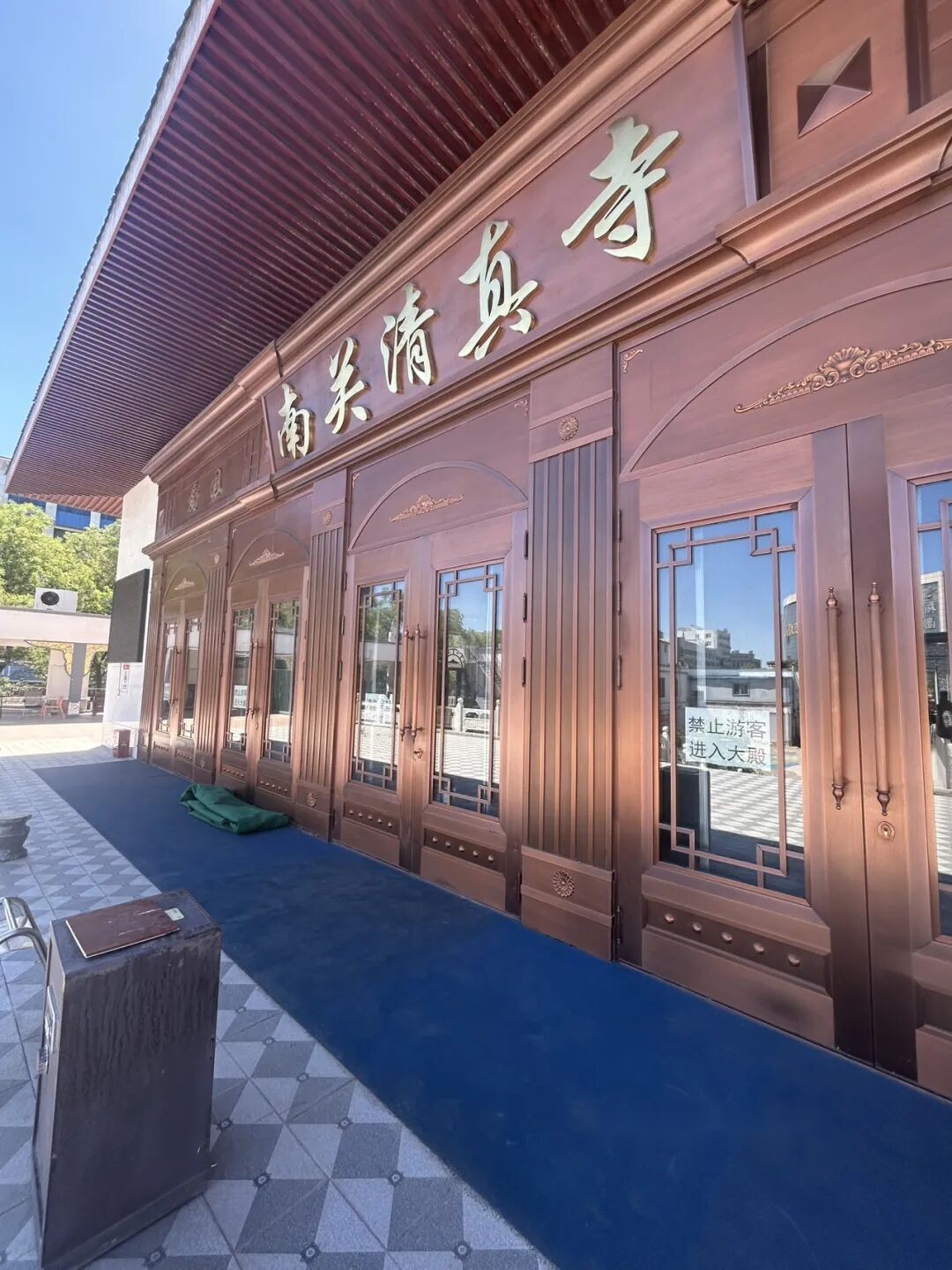
Summary:
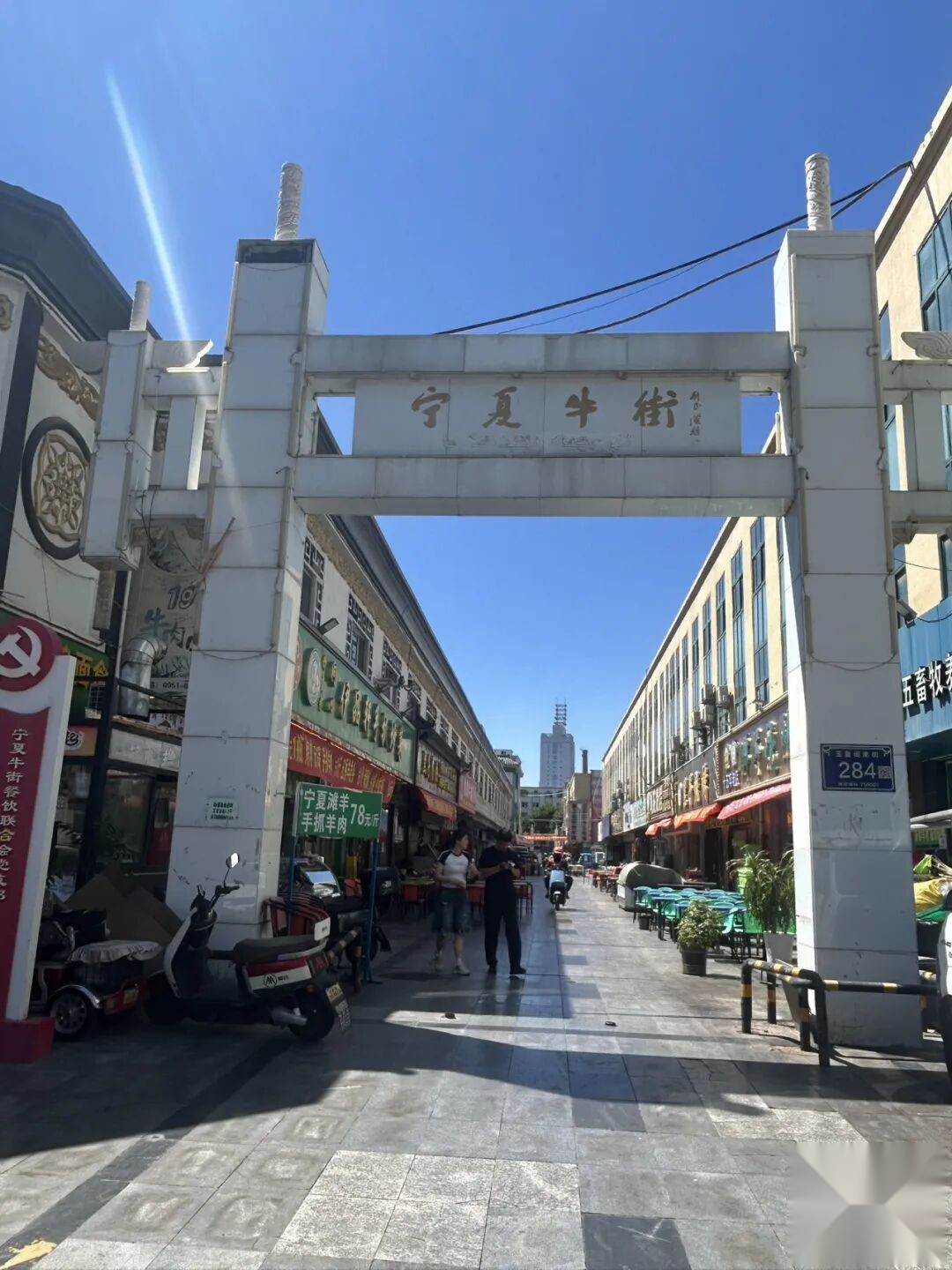
Take a stroll down Niujie, the vibrant halal food street located right next to Nanguan Mosque in Yinchuan's Xingqing District. Explore this bustling hub packed with traditional Hui halal snacks, authentic beef and lamb specialties, and unique regional pastries, capturing the rich tapestry of Ningxia's Hui culinary culture.
Ningxia's Niujie is located on the west side of Nanguan Mosque in Xingqing District, Yinchuan City, Ningxia.
Ningxia Niujie is a famous street known for its special Hui halal culinary traditions.

Historically, this area has been a Hui Muslim residential community. Because the local Hui residents are experts at cooking beef and lamb, the name 'Niujie' (Ox Street) naturally grew out of its bustling, market-vibe identity as a halal food destination. The name 'Niujie' is widely popular among locals.

Beijing's Niujie and Yinchuan's Niujie are completely independent locations with no connection to each other. However, both serve as iconic neighborhoods for Hui culture and halal food. While Beijing's Niujie leans into its heavy historical weight, Yinchuan's Niujie shines with its vibrant, modern street life.
The Origins of Niujie
Historically a Hui settlement in Yinchuan, Ningxia Niujie has evolved over the years into one of the city's most iconic halal food streets. Though the street isn't super long, halal eateries line both sides, preserving an authentic Hui neighborhood vibe. Famous for its Hui specialties, the street mainly serves up signatures like shouzhua yangrou (tender hand-grabbed lamb), Northwest-style BBQ, and beef and lamb lamian noodles.
Exploring Najahu Mosque in Ningxia: Centuries-Old Ming Dynasty Heritage & Hui Muslim Culture
Articles • Hasan09 posted the article • 0 comments • 4 views • 3 hours ago
Exploring the Najahu Mosque in Yinchuan: A Centuries-Old Ming Dynasty Masjid in a Historic Hui Muslim Village
Abstract:
A field visit to the Ming Dynasty Najahu Mosque located in Najahu Village, Yongning County, Yinchuan City. Discovering a solemn ancient masjid that blends traditional classical Chinese halls with Islamic architectural styles, and diving deep into the rich historical and cultural heritage of the Najahu Hui Muslim village.
Ningxia Trip Day 1 (Part 3) Najahu Mosque
Najahu Village, Xingqing District, Yinchuan City, Ningxia Hui Autonomous Region, is home to one of the most representative mosques in Ningxia combining traditional Chinese and Islamic styles, as well as a major religious and cultural heritage site with centuries of history. Legend has it that its origins date back to the Hongwu period of the Ming Dynasty (late 14th century),
initially built by the Hui Muslim ancestors who migrated to Ningxia. It underwent multiple expansions and renovations during the Qing Dynasty, gradually growing in scale. It has also been repaired in modern times, yet its overall layout and traditional architectural character remain remarkably well-preserved.
Today is Saturday, and the mosque's Asr prayer (Asr) starts at 5:45 PM. None of us on this family trip have ever visited a mosque before, so we gladly hopped in the car and headed over.
The Najahu Great Mosque is a traditional medieval-style masjid.
The gate tower features a tunnel-style passageway.
Facing east with its back to the west, the courtyard is rectangular and consists of a gate tower, main prayer hall, side rooms, and ablution facilities, forming a classic ancient Chinese courtyard layout. It is gorgeous.
Many Muslim believers have already arrived inside the complex.
The prayer space inside the mosque. (Captured after taking off our shoes and stepping inside, right before prayer time began.) An Imam was inside the prayer hall.
Inside the prayer hall.
Since we aren't Muslim, we couldn't go inside the hall to watch the Asr prayer rituals, so we had to head back a bit disappointed. view all
Exploring the Najahu Mosque in Yinchuan: A Centuries-Old Ming Dynasty Masjid in a Historic Hui Muslim Village

Abstract:
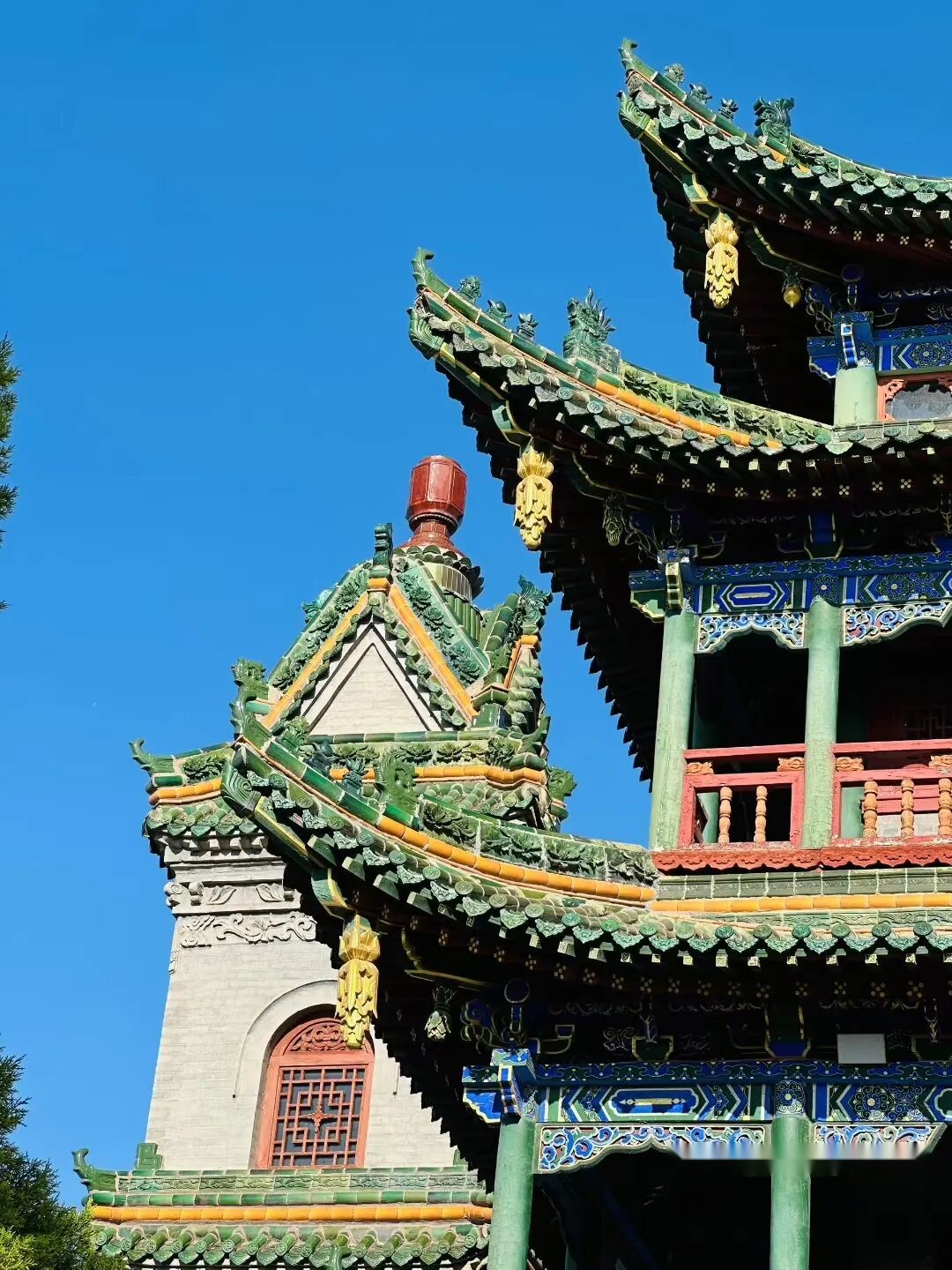
A field visit to the Ming Dynasty Najahu Mosque located in Najahu Village, Yongning County, Yinchuan City. Discovering a solemn ancient masjid that blends traditional classical Chinese halls with Islamic architectural styles, and diving deep into the rich historical and cultural heritage of the Najahu Hui Muslim village.
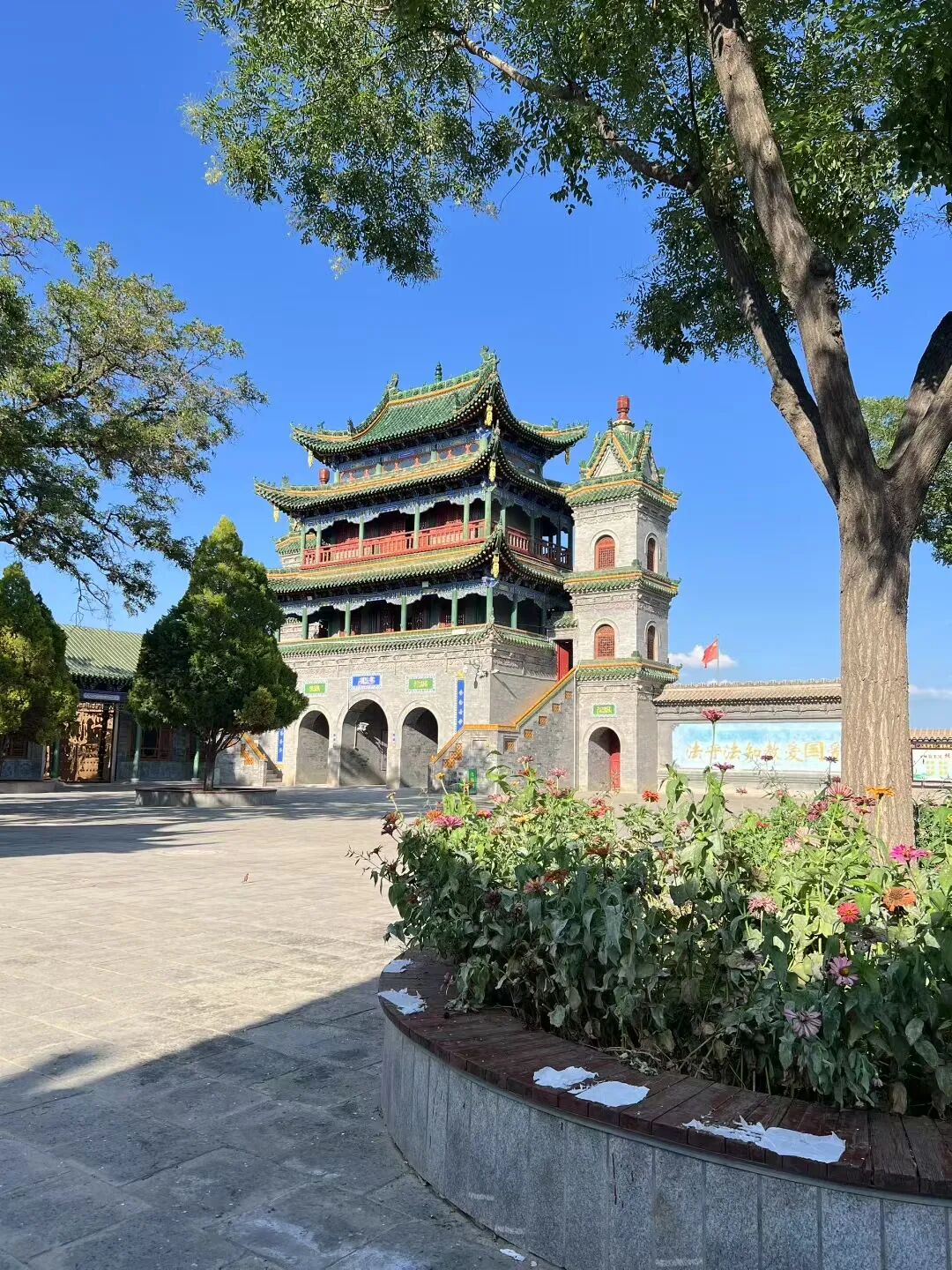
Ningxia Trip Day 1 (Part 3) Najahu Mosque
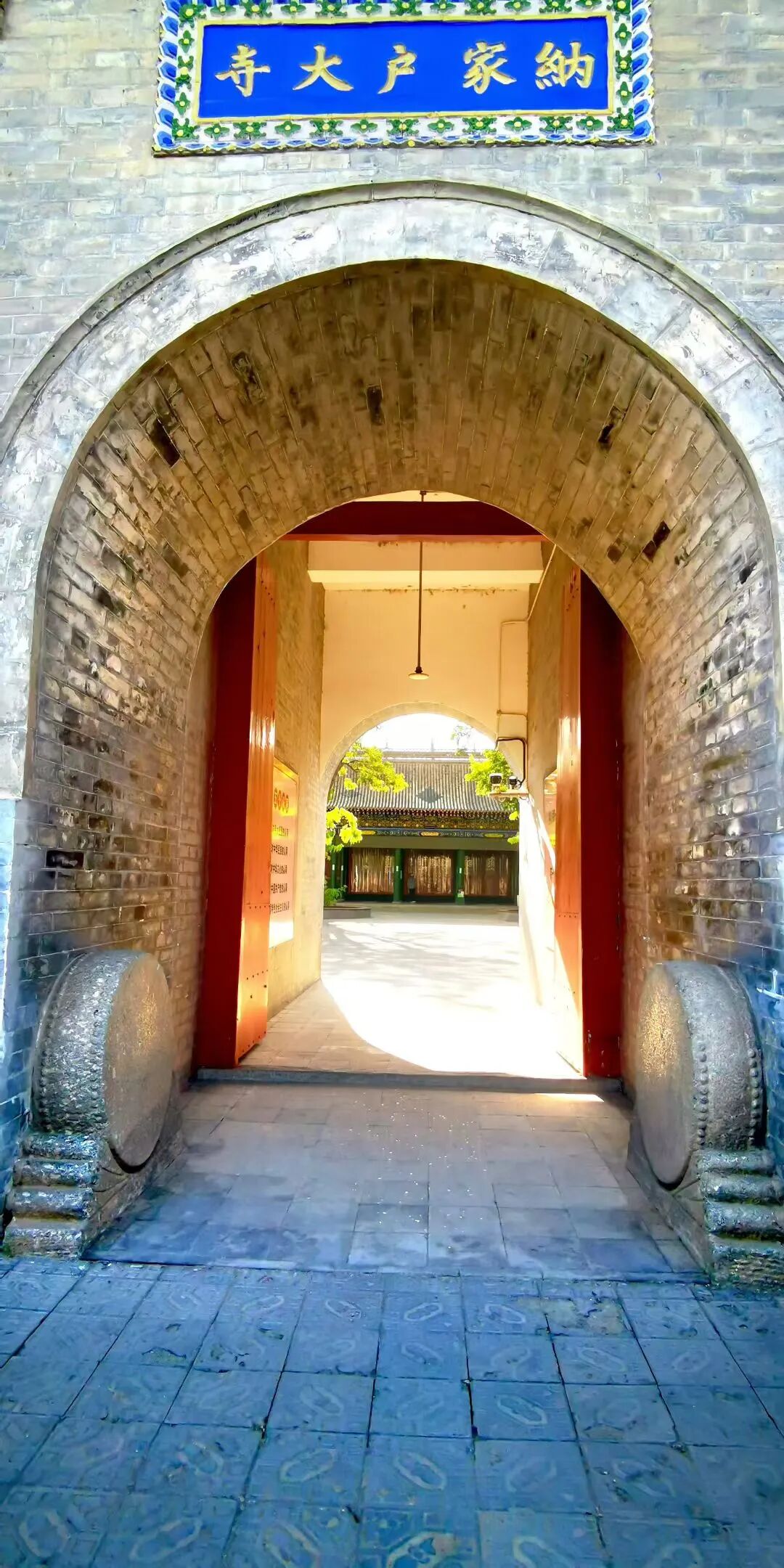
Najahu Village, Xingqing District, Yinchuan City, Ningxia Hui Autonomous Region, is home to one of the most representative mosques in Ningxia combining traditional Chinese and Islamic styles, as well as a major religious and cultural heritage site with centuries of history. Legend has it that its origins date back to the Hongwu period of the Ming Dynasty (late 14th century),
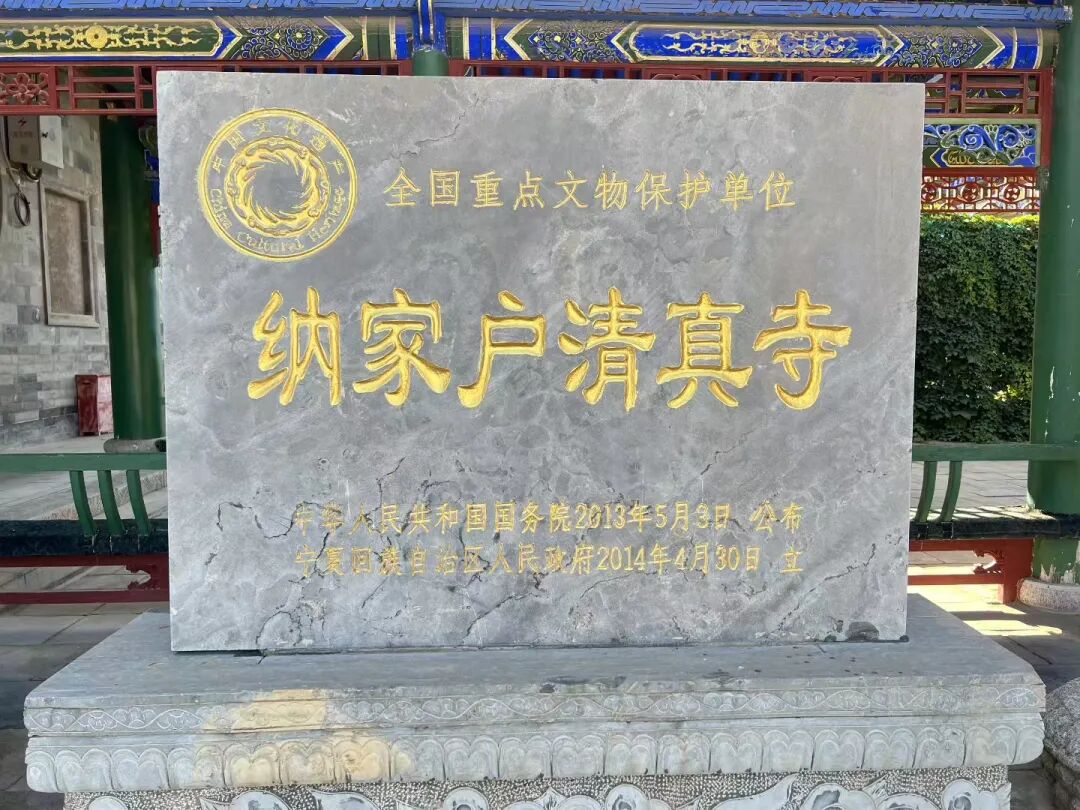
initially built by the Hui Muslim ancestors who migrated to Ningxia. It underwent multiple expansions and renovations during the Qing Dynasty, gradually growing in scale. It has also been repaired in modern times, yet its overall layout and traditional architectural character remain remarkably well-preserved.
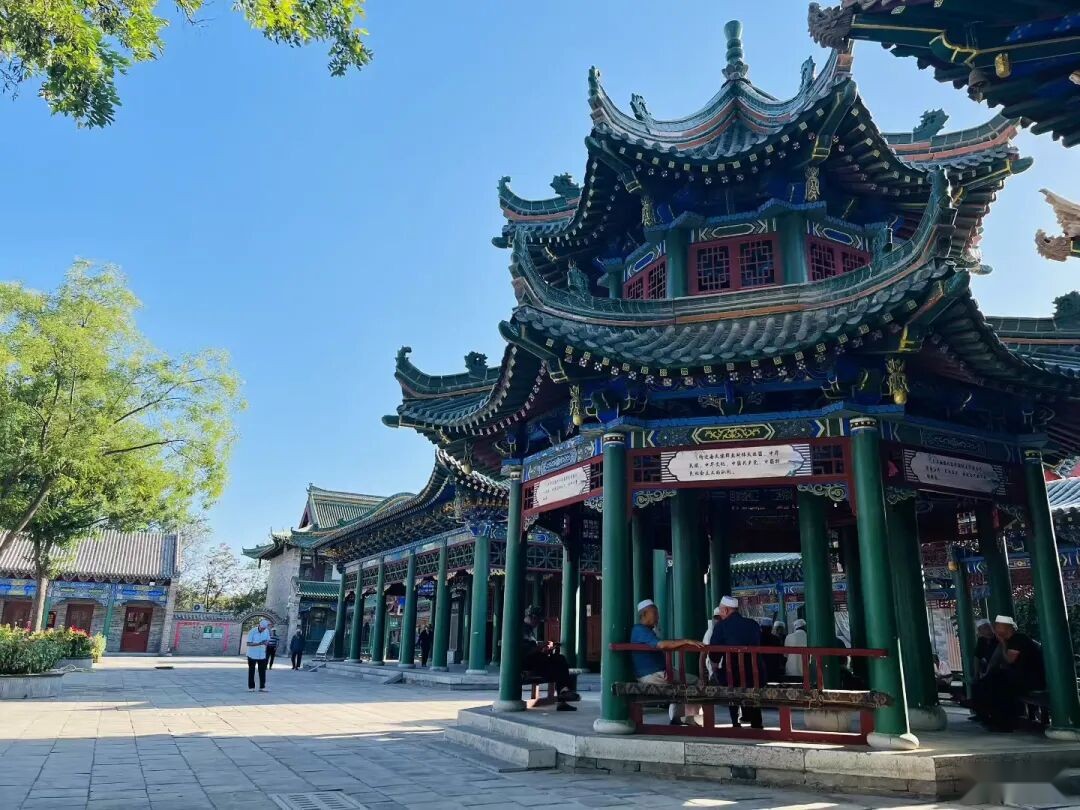
Today is Saturday, and the mosque's Asr prayer (Asr) starts at 5:45 PM. None of us on this family trip have ever visited a mosque before, so we gladly hopped in the car and headed over.
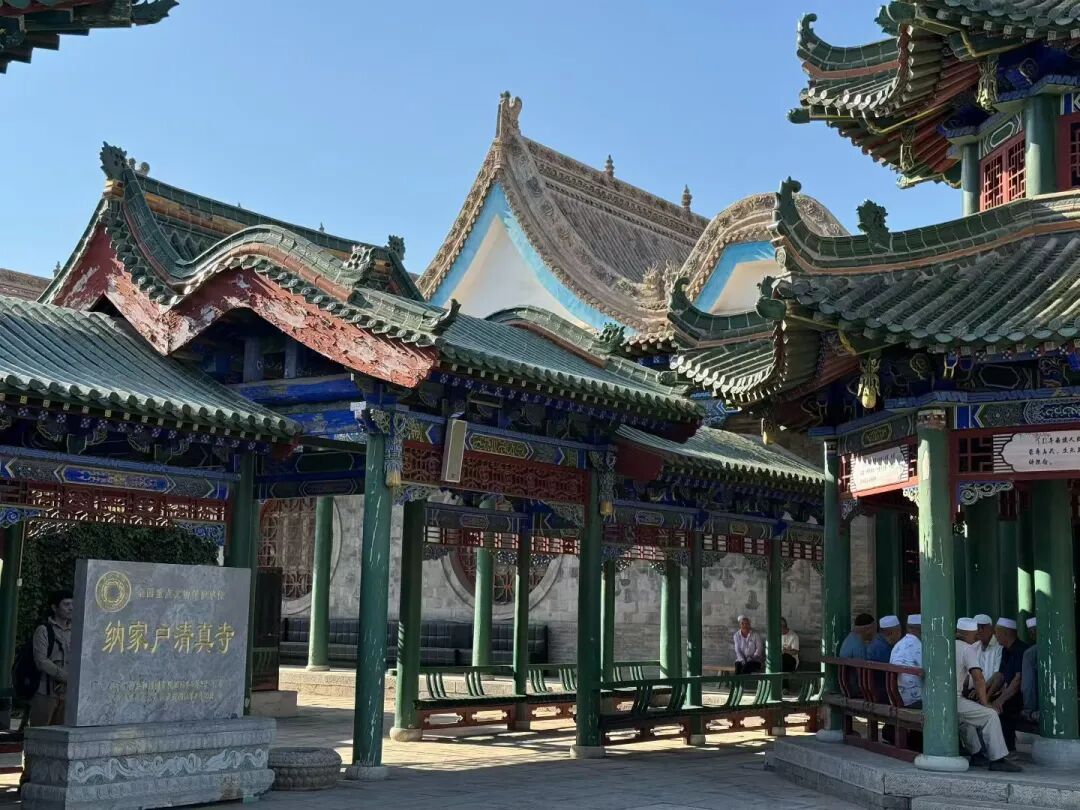
The Najahu Great Mosque is a traditional medieval-style masjid.
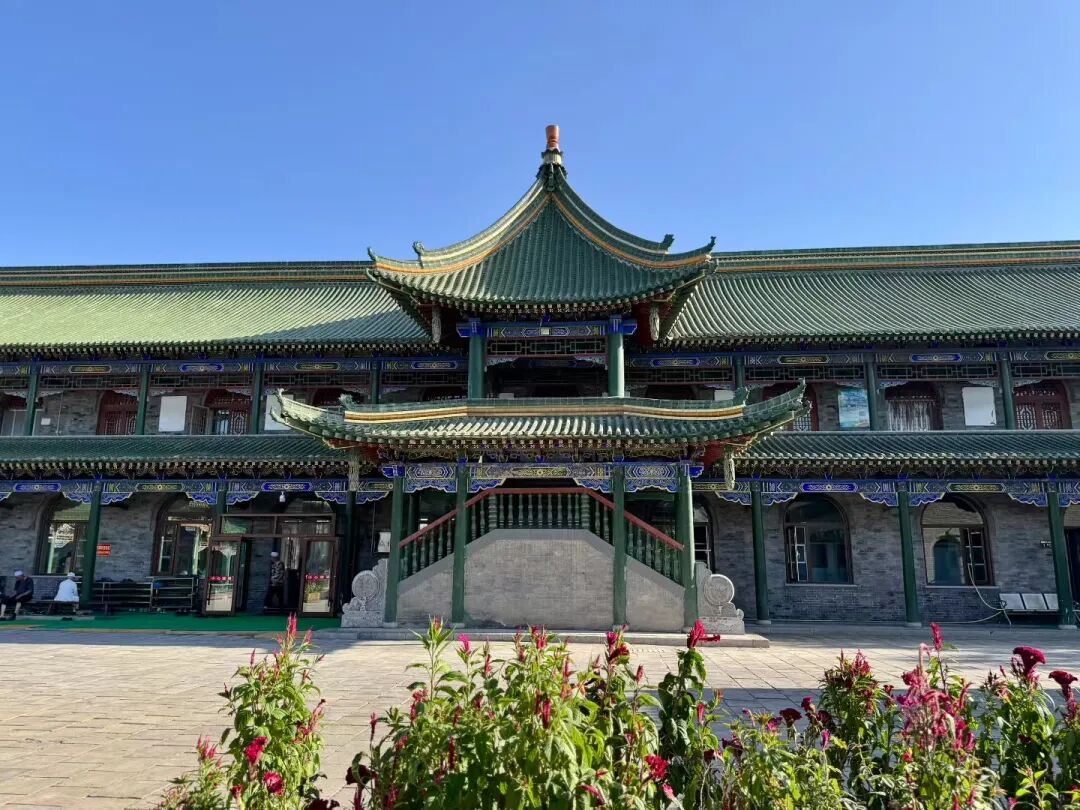
The gate tower features a tunnel-style passageway.
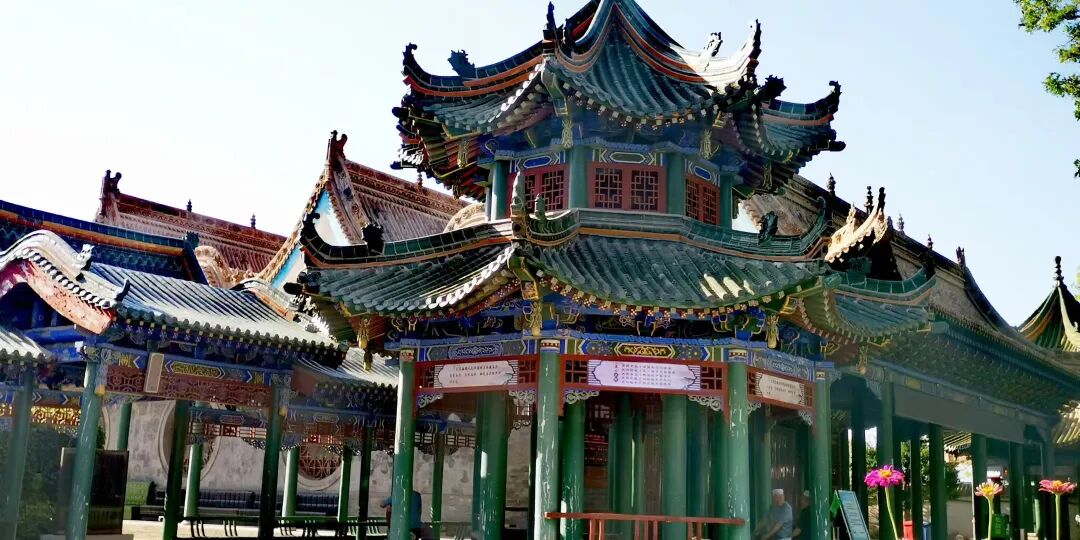
Facing east with its back to the west, the courtyard is rectangular and consists of a gate tower, main prayer hall, side rooms, and ablution facilities, forming a classic ancient Chinese courtyard layout. It is gorgeous.
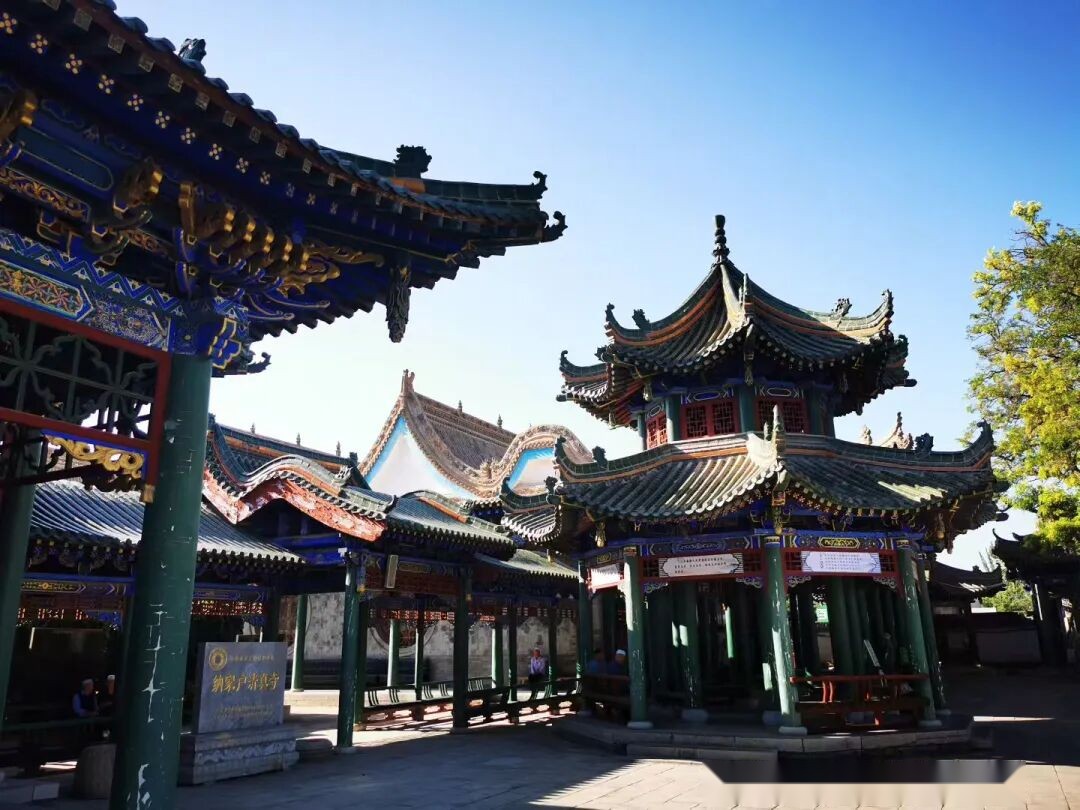
Many Muslim believers have already arrived inside the complex.
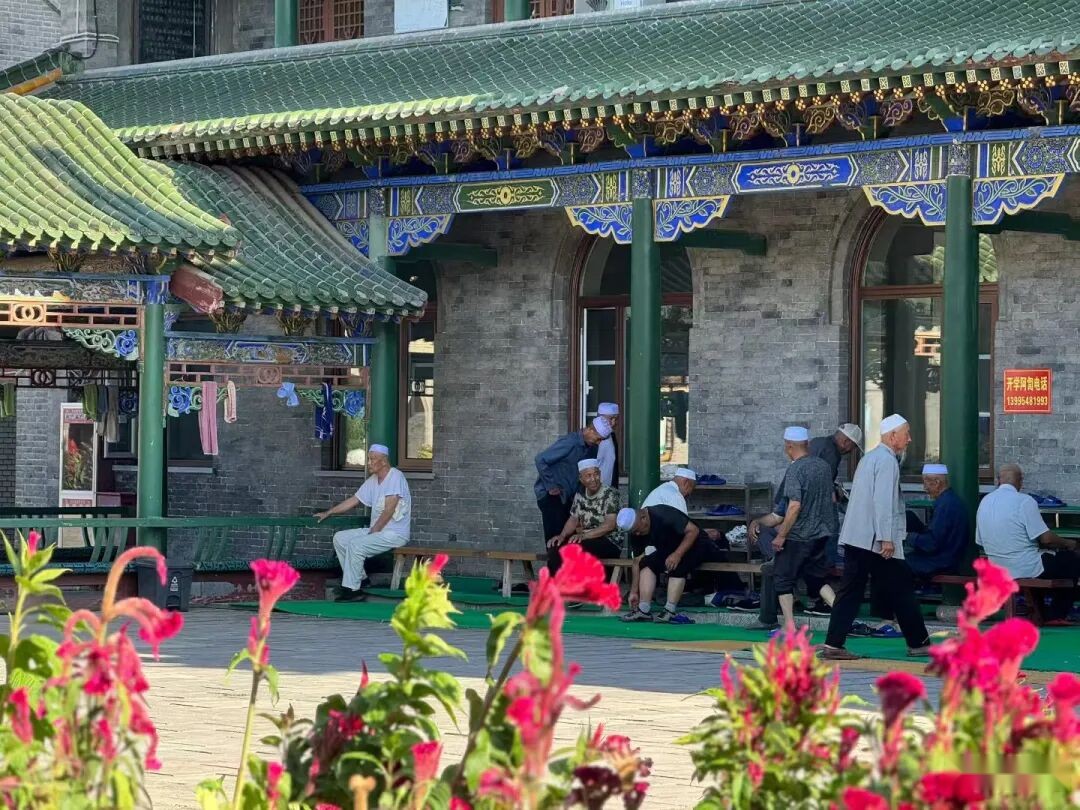
The prayer space inside the mosque. (Captured after taking off our shoes and stepping inside, right before prayer time began.) An Imam was inside the prayer hall.
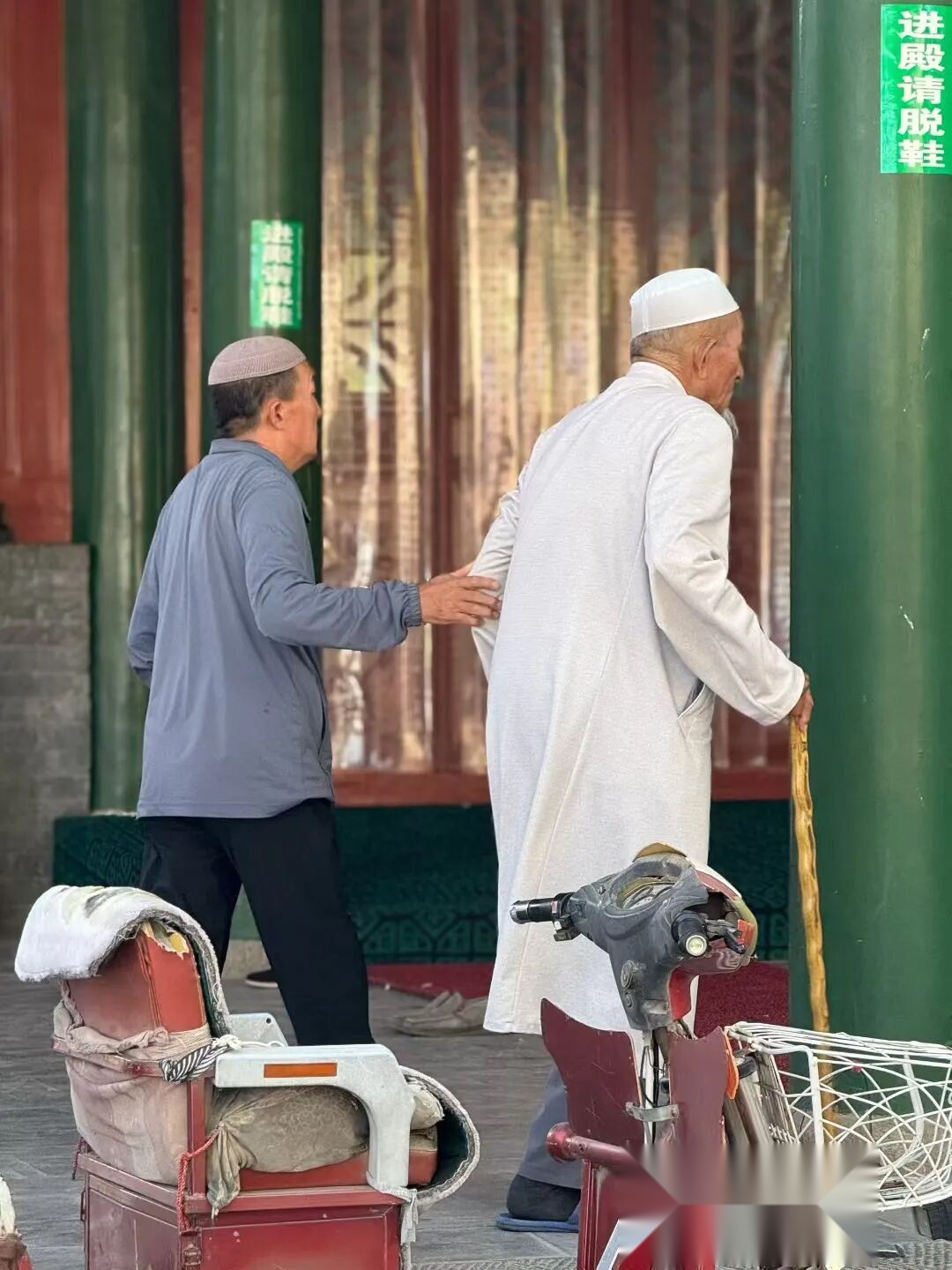
Inside the prayer hall.
Since we aren't Muslim, we couldn't go inside the hall to watch the Asr prayer rituals, so we had to head back a bit disappointed.
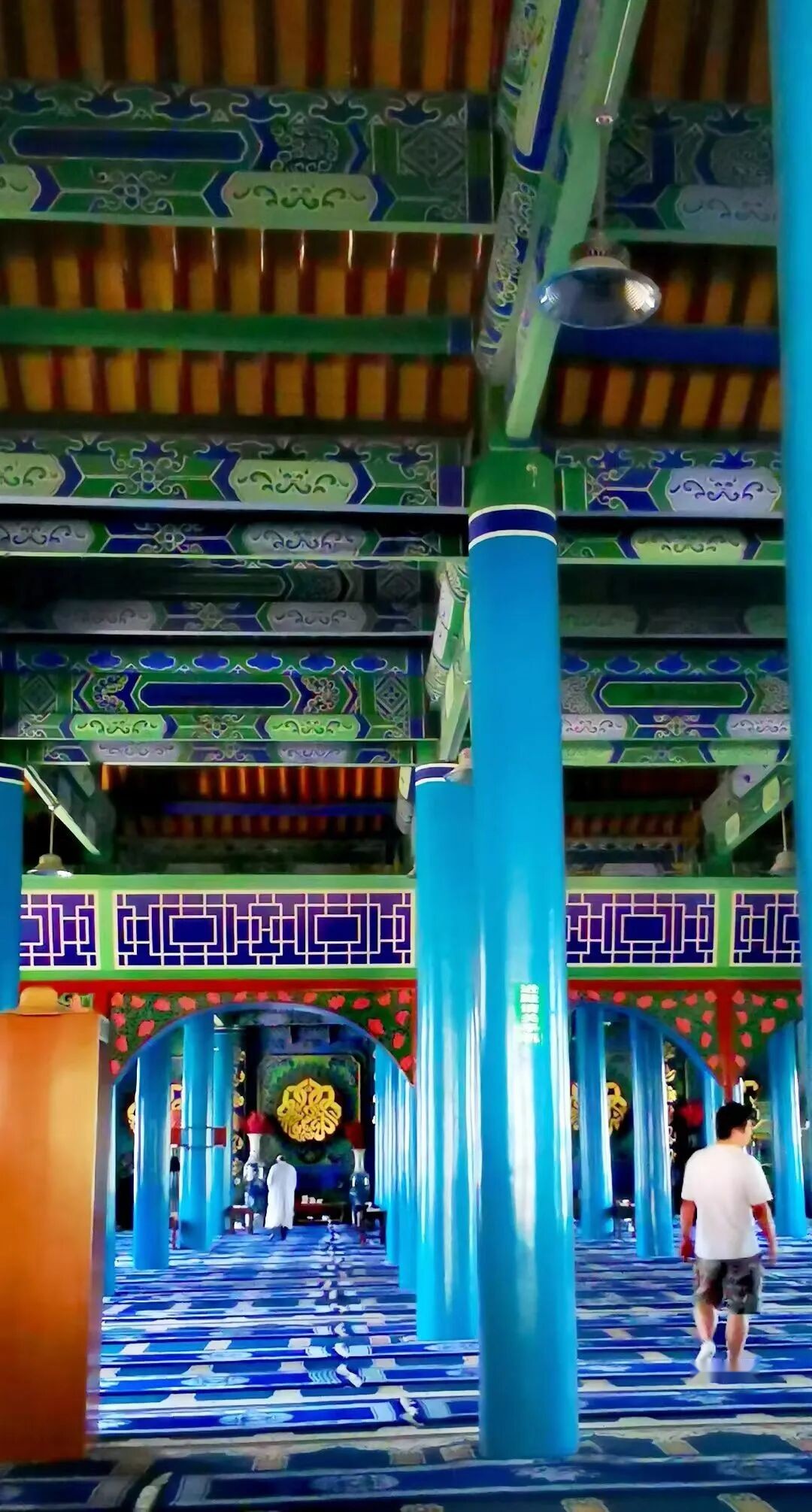
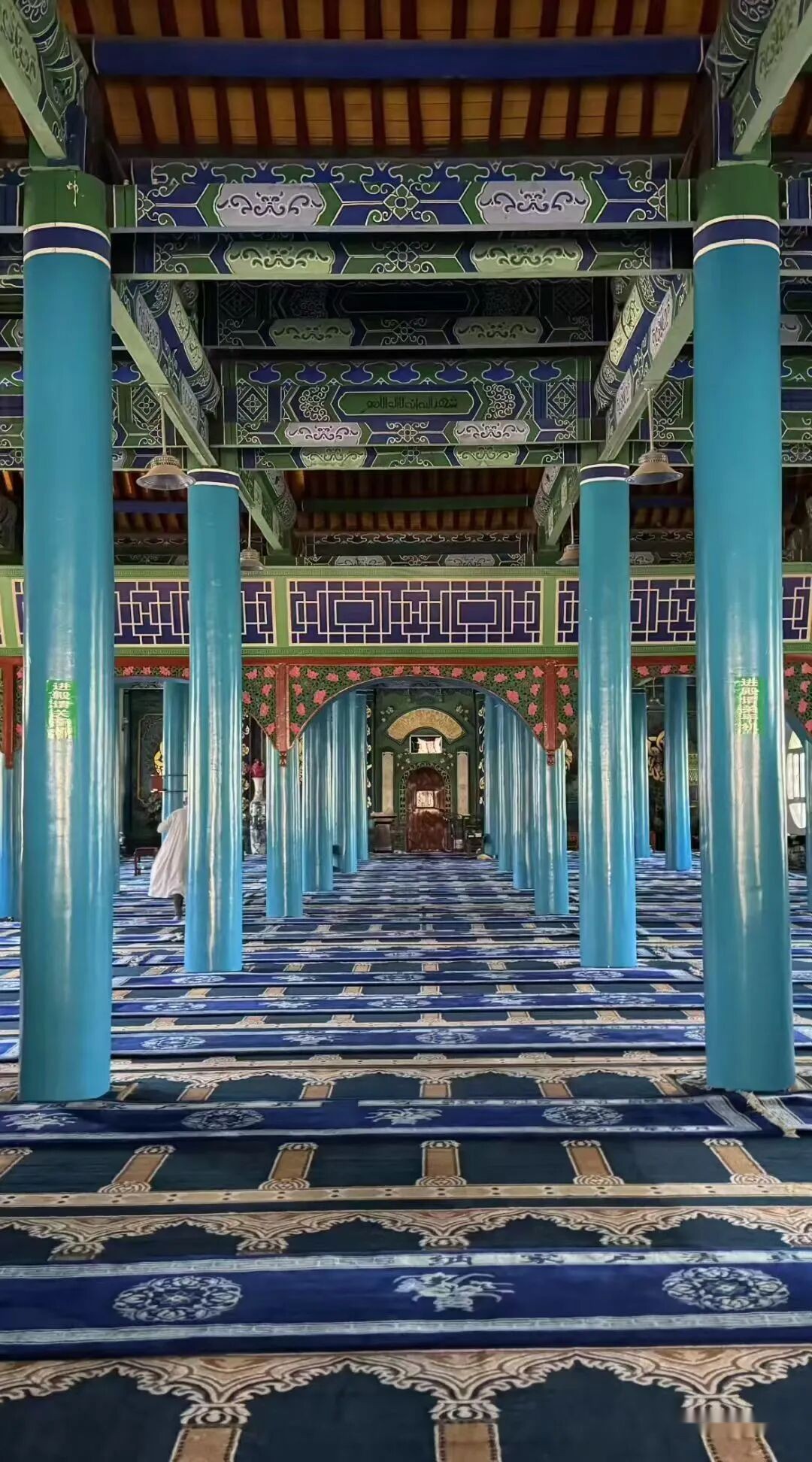
Exploring Yinchuan’s Historic Mosques: A Cultural Journey Through Ningxia’s Hui Muslim Communities
Articles • Hasan09 posted the article • 0 comments • 4 views • 3 hours ago
Exploring Yinchuan’s Urban Mosques: Historic Sanctuaries and Hui Muslim Community Memories Amidst the Bustling City
Abstract:
A walking tour of the urban mosques in Yinchuan. Documenting solemn prayer halls and quiet courtyards tucked away amidst bustling commercial streets, exploring the historic evolution of these ancient mosques, and examining their role in serving the daily religious and spiritual lives of local Hui Muslim communities.
Ningxia is home to 2.4 million Hui Muslims and over 3,000 mosques—averaging roughly one mosque for every 800 people, a ratio that is even higher in rural townships.
As Yinchuan is the capital of the Ningxia Hui Autonomous Region, visiting its mosques is an absolute must.
According to online sources, downtown Yinchuan is home to over a dozen mosques, so I mapped out a walking tour of four major ones: the South, East, North, and West mosques (Nanguan, Dongguan, Beiguan, and Xiguan mosques).
The Nanguan Mosque in Yinchuan is one of the oldest and largest mosques in northern China, with historical records dating back to the late Ming dynasty. Originally built in traditional Chinese architectural style, it was torn down during the Cultural Revolution and rebuilt on its original site after 1981. Online videos described the Nanguan Mosque as an architectural masterpiece, a deeply influential landmark, and the largest mosque in the city. The videos showcased its striking Arabic architectural style, complete with a dome-topped minaret bearing a prominent crescent moon emblem and vibrant glazed tiles. It can hold up to 1,300 worshippers at once and remains an open tourist attraction.
After finishing the Yinchuan Marathon, I stayed at a chain hotel in the South Gate (Nanguan) neighborhood, just 600 meters from the Nanguan Mosque. In the afternoon, once the temperature cooled down a bit, I set off on foot.
I arrived within minutes, but at first glance, it looked completely different from the videos online. The Nanguan Mosque faces west with its entrance to the east (most mosques east of Mecca, Medina, and Jerusalem share this orientation, meaning worshippers always face the holy sanctuaries). The main entrance is a three-dimensional square structure featuring a porch; the door pillars are painted white with green trim, and the lintel boasts a golden plaque inscribed with "Yinchuan Nanguan Mosque." On both sides of the entrance are rooms resembling a guard station and security office. Right in the center of the courtyard stands a flagpole bearing the national flag. Climbing a double flight of stairs leads to the prayer hall (liubaidian), which is currently closed to visitors. Inside, there is bound to be a mihrab (prayer niche) facing Mecca. The minaret and green crescent-topped spire featured in the videos are no longer visible. The current prayer hall features a traditional Chinese hip-and-gable roof (xieshan style), with Chinese characters painted on the east-facing windows reading "Patriotism" and "Peace," while the middle window simply reads "Nanguan Mosque." Just then, a bearded Muslim man asked me, "Are you here for prayer?" "I’m just visiting," I replied. "You can leave now," the Hui man said coldly. Wearing a white brimless Hui cap and a full beard, he looked quite stern. Just as I was about to say something, he strode into the prayer hall. Turning to look at the sides, I noticed five large characters on the second-floor north wing reading "Faith, Prayer, Fasting, Alms, Pilgrimage" (Shahada, Salah, Sawm, Zakat, Hajj), arranged from east to west across the rooms. On the east side of the second floor, another structure was undergoing renovations, also featuring a traditional Chinese hip-and-gable roof with painted dougong brackets and beamed ceilings.
Though it was getting late, the nearby ancient Bell Tower and Yuhuang Pavilion (Jade Emperor Pavilion) were still within walking distance, so I strolled over slowly. By dusk, the gates were locked—I couldn't tell if visitors are allowed to climb up for the view during the day. Within just a few steps, historic architecture from various traditions has been remarkably well-preserved. Truly, you can find a "Shangri-La" anywhere in China.
The next morning, I headed to Qinglian Square (formerly known as Crescent Square) to catch a ride, passing by the Dongguan Mosque along the way. The Dongguan Mosque also sits right by the busy street, facing west with its entrance to the east. It features an entrance hall, a courtyard, and a prayer hall. The prayer hall is a two-story building with a traditional Chinese roof; the porch under the eaves is decorated in the style of Islamic domes, and banners hang along the railings from south to north bearing the words "Equality," "Solidarity," "Mutual Aid," and "Harmony." Right in the center of the first floor, a prominent electronic digital display shows the times for the five daily prayers down to the minute.
Returning to Crescent Square by dusk, I walked less than 2 kilometers to the Beiguan Mosque. This mosque is also nestled right along a bustling street, with its main entrance facing east and commercial storefronts lining both sides. On either side of the entrance hall were seemingly unmanned guard stations. The prayer hall is a two-story structure with a traditional Chinese-style roof. Electronic signs listed the daily prayers—Fajr, Dhuhr, Asr, Maghrib, and Isha—sequentially down to the minute, with Jumu'ah (Friday congregational prayer) listed at 12:45 PM. Not a single soul was around. I had hoped to ask a few questions, such as: "Since these city mosques are located so close to one another, why are the prayer times different?" or "Why aren't Islamic teachings explained more to non-Muslims?" But since I couldn't find anyone, I had to let it go.
On the following day—my third day in Yinchuan—I took a morning bus to the Xiguan Mosque. The main structure remains the prayer hall, featuring a three-dimensional sign on the roof reading "Xiguan Mosque." A plaque on the first-floor roof reads "Patriotism and Love for Religion, Promoting Ethnic Harmony." The building features a green roof, red pillars, and white walls, creating a very harmonious and comforting aesthetic. The flagpole stands in the center of the courtyard on a two-story high terrace—unlike the other three mosques, where the flagpoles are either placed on flat ground or set atop the roof. Among the four urban mosques, the Xiguan Mosque is by far the neatest and most aesthetically pleasing. While the prayer halls of all four mosques are two-story pseudo-classic buildings, each has its own distinct character. The Xiguan Mosque is the cleanest, with no commercial shops outside the courtyard and no haphazardly parked cars inside. Once again, the courtyard was completely empty. Stepping up to the prayer hall, I peered in through the glass: the interior was completely deserted, with carpets laid out at uniform intervals across the wooden floor, and the mihrab set against the western wall. Like the other three mosques, the sides of the prayer hall house a library, meeting room, kitchen, utility room, and study classrooms.
Online recommendations often point to the Tongxin Great Mosque (Tongxin Mosque) in Wuzhong City and the Najahu Mosque (Najahu Mosque) in Yongning County—both grand in scale and deeply influential—but I couldn't visit them due to time constraints. Still, as the saying goes, "If there is a Peach Blossom Spring in your heart, anywhere can be a realm of water and clouds."
With one mosque for every 800 people in Ningxia, this density is far higher than the proportion of religious sites for the Han Chinese. Religion has existed since ancient times, born alongside communal social life to remind people of the rules they ought to follow. With mosques so densely packed across Ningxia, I couldn't help worrying about ideological rigidity, and I really wanted to ask the Prophet: as eras change, can new teachings be added to the doctrine?
To a certain extent, religion is simply a "set of rules." Broadly speaking, insects, fish, and social animals all have their own "rules." Could we therefore say that these animals also have "gods" of their own, and by extension, their own "religions," since all of these arise from the necessity of order?
Over three days, during four distinct time slots, I visited all four urban mosques in Yinchuan—East, West, North, and South—while mentally picturing Istanbul’s Sultan Ahmed Mosque, Jerusalem’s Dome of the Rock (Omar Mosque), and the Great Mosque of Mecca. I had so many questions and desperately wanted to consult an Imam for some guidance, but alas, the opportunity didn't arise. In the end, after pondering it myself, I concluded that while the mosques differ, the Way is one. Since the Way resides within the heart, why must one pray five times a day? It reminded me of Sun Wukong, the Monkey King, who wore a tight-fitting golden headband throughout his journey to fetch the scriptures, only for it to instantly vanish the moment he attained Buddhahood. Did it truly disappear, or did it become embedded within his heart? And if it embedded itself in his heart, wouldn't that mean the golden headband became even tighter and more inescapable?
I still haven't quite figured it out.
Recorded by Langyue on May 26, 2025 view all
Exploring Yinchuan’s Urban Mosques: Historic Sanctuaries and Hui Muslim Community Memories Amidst the Bustling City
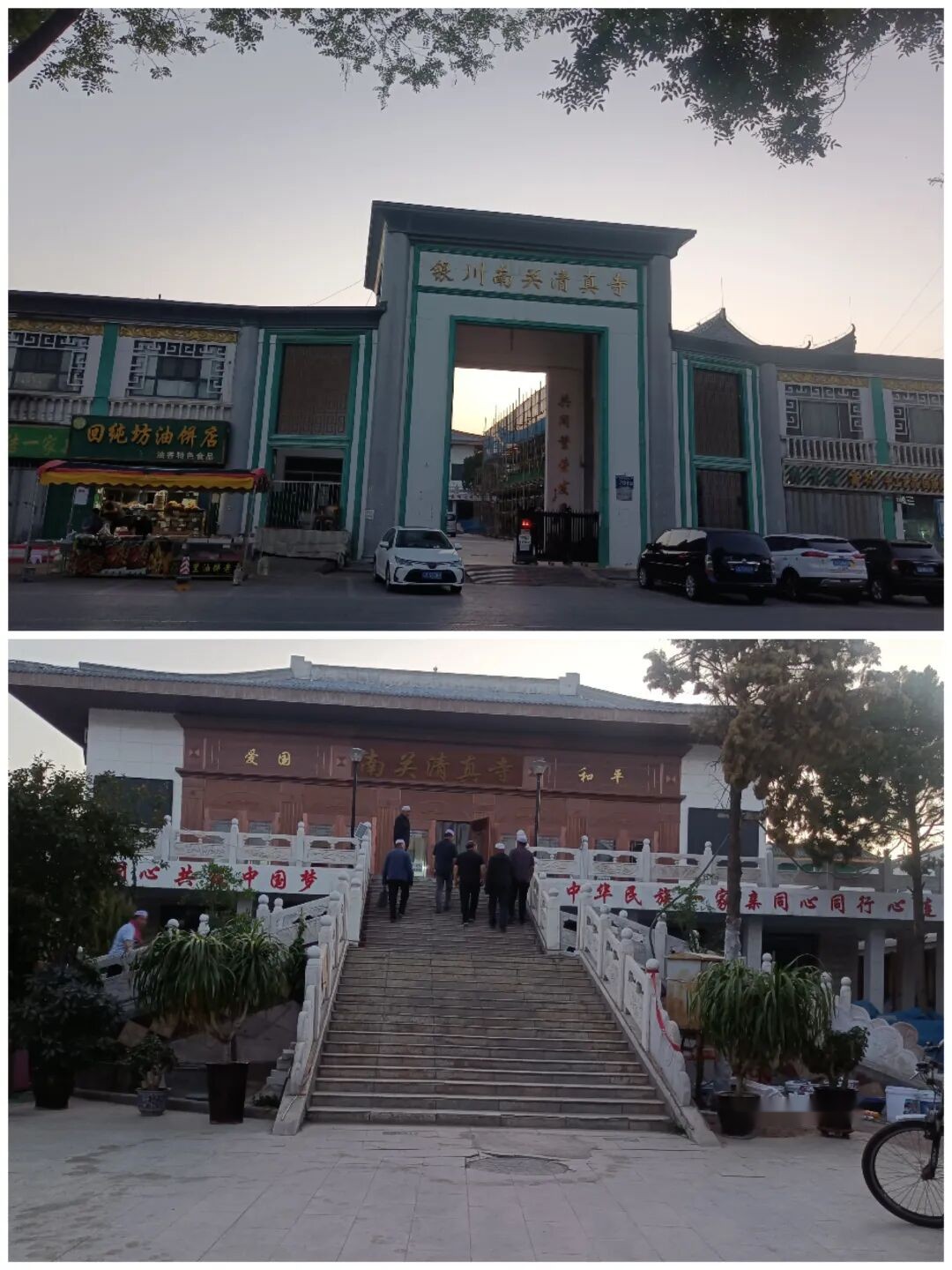
Abstract:
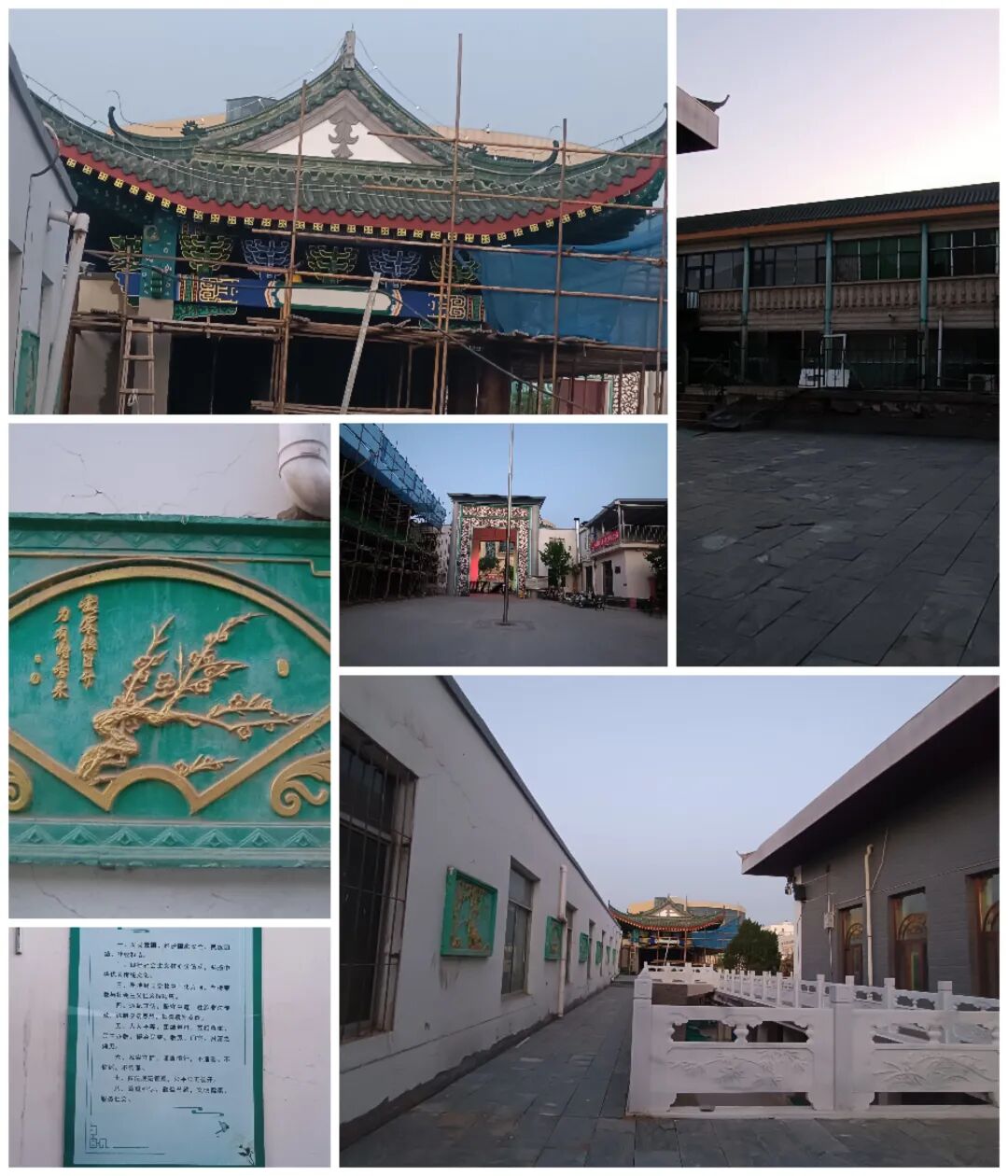
A walking tour of the urban mosques in Yinchuan. Documenting solemn prayer halls and quiet courtyards tucked away amidst bustling commercial streets, exploring the historic evolution of these ancient mosques, and examining their role in serving the daily religious and spiritual lives of local Hui Muslim communities.
Ningxia is home to 2.4 million Hui Muslims and over 3,000 mosques—averaging roughly one mosque for every 800 people, a ratio that is even higher in rural townships.

As Yinchuan is the capital of the Ningxia Hui Autonomous Region, visiting its mosques is an absolute must.
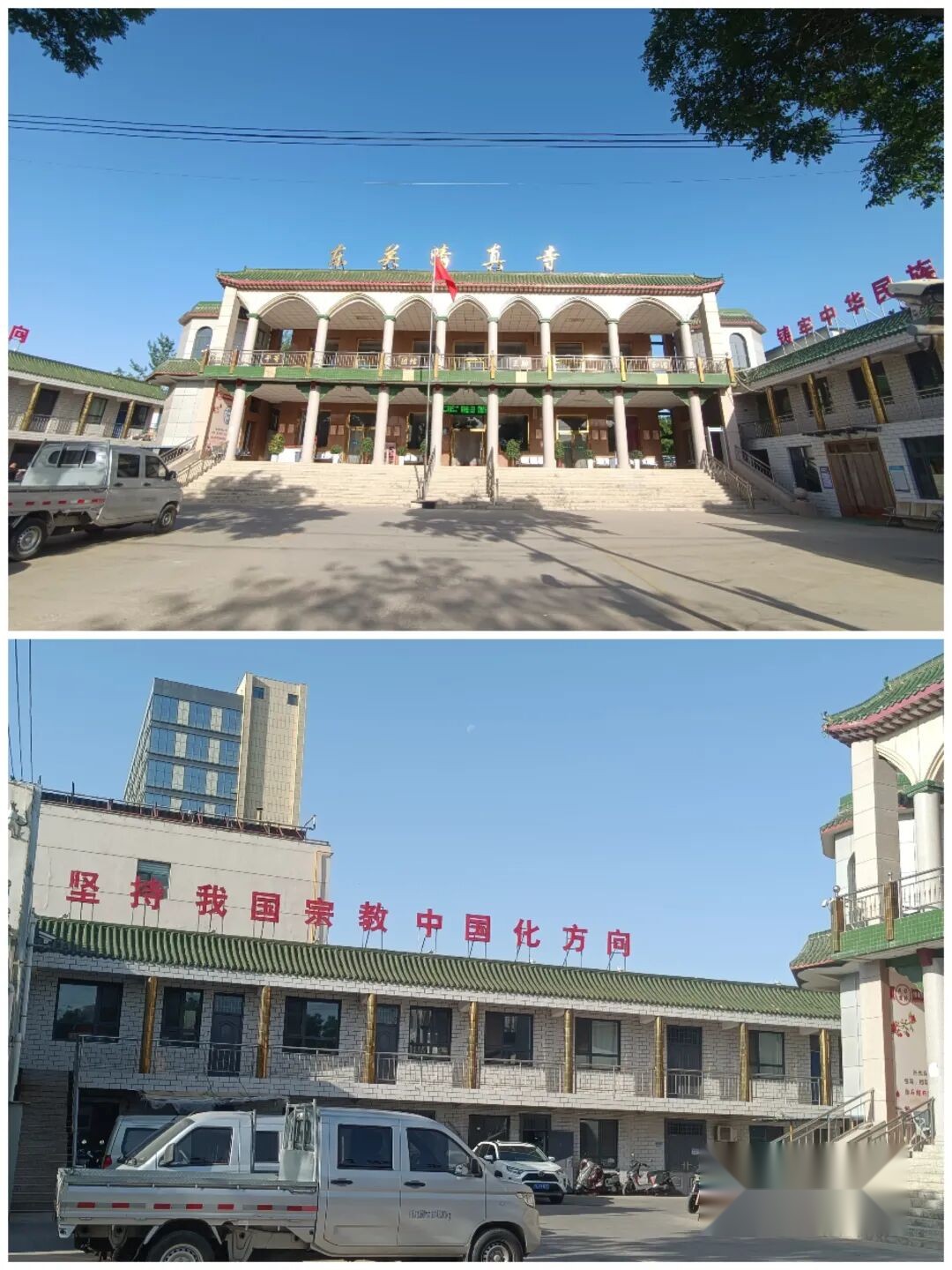
According to online sources, downtown Yinchuan is home to over a dozen mosques, so I mapped out a walking tour of four major ones: the South, East, North, and West mosques (Nanguan, Dongguan, Beiguan, and Xiguan mosques).
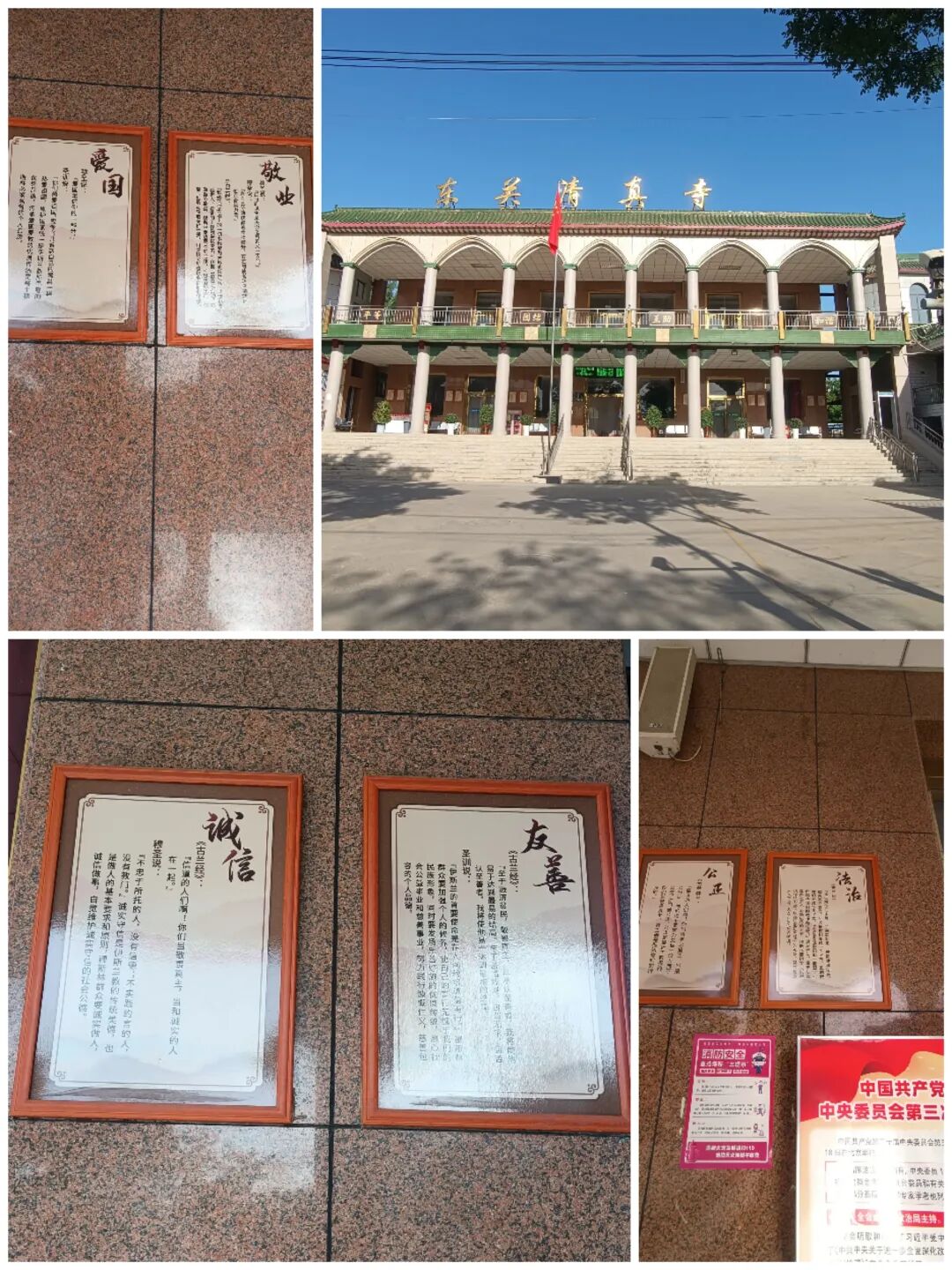
The Nanguan Mosque in Yinchuan is one of the oldest and largest mosques in northern China, with historical records dating back to the late Ming dynasty. Originally built in traditional Chinese architectural style, it was torn down during the Cultural Revolution and rebuilt on its original site after 1981. Online videos described the Nanguan Mosque as an architectural masterpiece, a deeply influential landmark, and the largest mosque in the city. The videos showcased its striking Arabic architectural style, complete with a dome-topped minaret bearing a prominent crescent moon emblem and vibrant glazed tiles. It can hold up to 1,300 worshippers at once and remains an open tourist attraction.

After finishing the Yinchuan Marathon, I stayed at a chain hotel in the South Gate (Nanguan) neighborhood, just 600 meters from the Nanguan Mosque. In the afternoon, once the temperature cooled down a bit, I set off on foot.
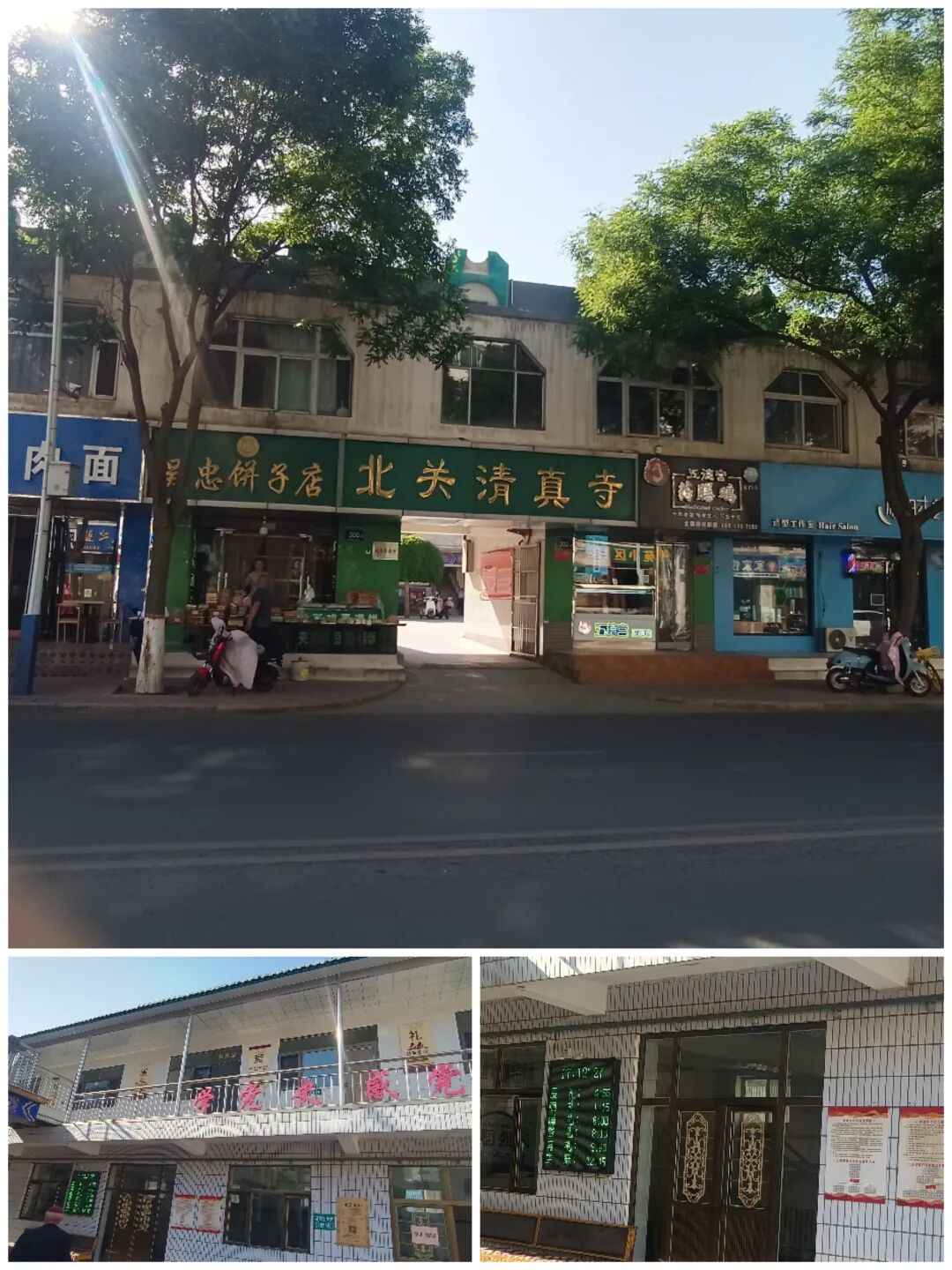
I arrived within minutes, but at first glance, it looked completely different from the videos online. The Nanguan Mosque faces west with its entrance to the east (most mosques east of Mecca, Medina, and Jerusalem share this orientation, meaning worshippers always face the holy sanctuaries). The main entrance is a three-dimensional square structure featuring a porch; the door pillars are painted white with green trim, and the lintel boasts a golden plaque inscribed with "Yinchuan Nanguan Mosque." On both sides of the entrance are rooms resembling a guard station and security office. Right in the center of the courtyard stands a flagpole bearing the national flag. Climbing a double flight of stairs leads to the prayer hall (liubaidian), which is currently closed to visitors. Inside, there is bound to be a mihrab (prayer niche) facing Mecca. The minaret and green crescent-topped spire featured in the videos are no longer visible. The current prayer hall features a traditional Chinese hip-and-gable roof (xieshan style), with Chinese characters painted on the east-facing windows reading "Patriotism" and "Peace," while the middle window simply reads "Nanguan Mosque." Just then, a bearded Muslim man asked me, "Are you here for prayer?" "I’m just visiting," I replied. "You can leave now," the Hui man said coldly. Wearing a white brimless Hui cap and a full beard, he looked quite stern. Just as I was about to say something, he strode into the prayer hall. Turning to look at the sides, I noticed five large characters on the second-floor north wing reading "Faith, Prayer, Fasting, Alms, Pilgrimage" (Shahada, Salah, Sawm, Zakat, Hajj), arranged from east to west across the rooms. On the east side of the second floor, another structure was undergoing renovations, also featuring a traditional Chinese hip-and-gable roof with painted dougong brackets and beamed ceilings.
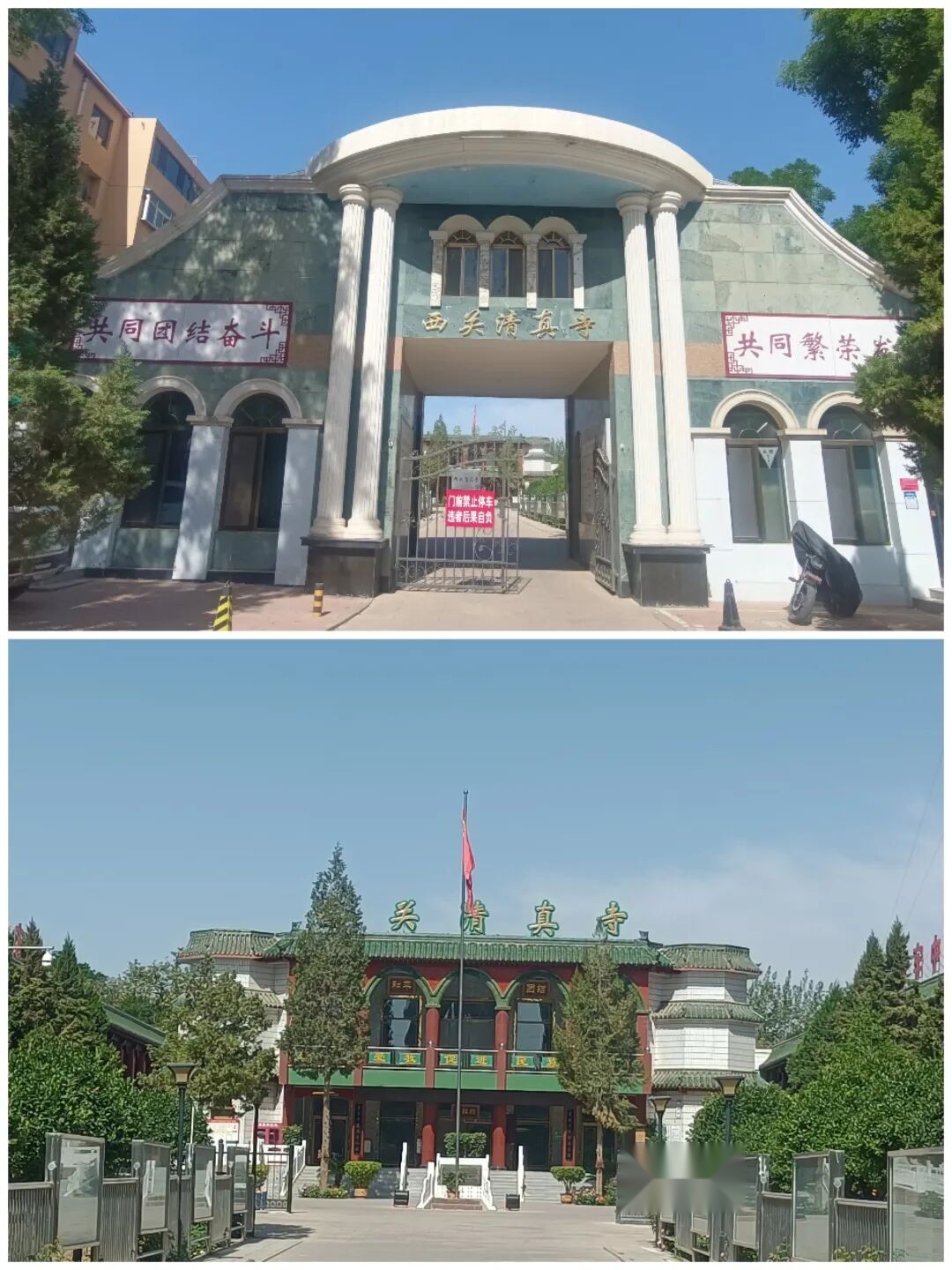
Though it was getting late, the nearby ancient Bell Tower and Yuhuang Pavilion (Jade Emperor Pavilion) were still within walking distance, so I strolled over slowly. By dusk, the gates were locked—I couldn't tell if visitors are allowed to climb up for the view during the day. Within just a few steps, historic architecture from various traditions has been remarkably well-preserved. Truly, you can find a "Shangri-La" anywhere in China.
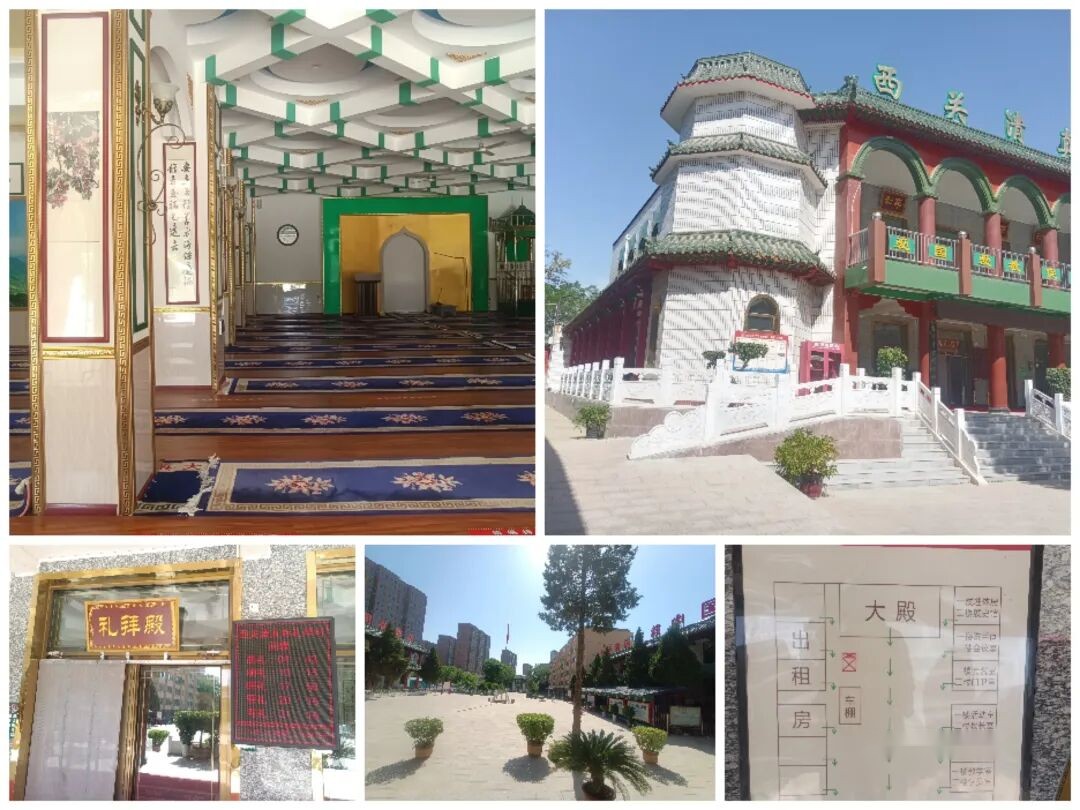
The next morning, I headed to Qinglian Square (formerly known as Crescent Square) to catch a ride, passing by the Dongguan Mosque along the way. The Dongguan Mosque also sits right by the busy street, facing west with its entrance to the east. It features an entrance hall, a courtyard, and a prayer hall. The prayer hall is a two-story building with a traditional Chinese roof; the porch under the eaves is decorated in the style of Islamic domes, and banners hang along the railings from south to north bearing the words "Equality," "Solidarity," "Mutual Aid," and "Harmony." Right in the center of the first floor, a prominent electronic digital display shows the times for the five daily prayers down to the minute.

Returning to Crescent Square by dusk, I walked less than 2 kilometers to the Beiguan Mosque. This mosque is also nestled right along a bustling street, with its main entrance facing east and commercial storefronts lining both sides. On either side of the entrance hall were seemingly unmanned guard stations. The prayer hall is a two-story structure with a traditional Chinese-style roof. Electronic signs listed the daily prayers—Fajr, Dhuhr, Asr, Maghrib, and Isha—sequentially down to the minute, with Jumu'ah (Friday congregational prayer) listed at 12:45 PM. Not a single soul was around. I had hoped to ask a few questions, such as: "Since these city mosques are located so close to one another, why are the prayer times different?" or "Why aren't Islamic teachings explained more to non-Muslims?" But since I couldn't find anyone, I had to let it go.
On the following day—my third day in Yinchuan—I took a morning bus to the Xiguan Mosque. The main structure remains the prayer hall, featuring a three-dimensional sign on the roof reading "Xiguan Mosque." A plaque on the first-floor roof reads "Patriotism and Love for Religion, Promoting Ethnic Harmony." The building features a green roof, red pillars, and white walls, creating a very harmonious and comforting aesthetic. The flagpole stands in the center of the courtyard on a two-story high terrace—unlike the other three mosques, where the flagpoles are either placed on flat ground or set atop the roof. Among the four urban mosques, the Xiguan Mosque is by far the neatest and most aesthetically pleasing. While the prayer halls of all four mosques are two-story pseudo-classic buildings, each has its own distinct character. The Xiguan Mosque is the cleanest, with no commercial shops outside the courtyard and no haphazardly parked cars inside. Once again, the courtyard was completely empty. Stepping up to the prayer hall, I peered in through the glass: the interior was completely deserted, with carpets laid out at uniform intervals across the wooden floor, and the mihrab set against the western wall. Like the other three mosques, the sides of the prayer hall house a library, meeting room, kitchen, utility room, and study classrooms.
Online recommendations often point to the Tongxin Great Mosque (Tongxin Mosque) in Wuzhong City and the Najahu Mosque (Najahu Mosque) in Yongning County—both grand in scale and deeply influential—but I couldn't visit them due to time constraints. Still, as the saying goes, "If there is a Peach Blossom Spring in your heart, anywhere can be a realm of water and clouds."
With one mosque for every 800 people in Ningxia, this density is far higher than the proportion of religious sites for the Han Chinese. Religion has existed since ancient times, born alongside communal social life to remind people of the rules they ought to follow. With mosques so densely packed across Ningxia, I couldn't help worrying about ideological rigidity, and I really wanted to ask the Prophet: as eras change, can new teachings be added to the doctrine?
To a certain extent, religion is simply a "set of rules." Broadly speaking, insects, fish, and social animals all have their own "rules." Could we therefore say that these animals also have "gods" of their own, and by extension, their own "religions," since all of these arise from the necessity of order?
Over three days, during four distinct time slots, I visited all four urban mosques in Yinchuan—East, West, North, and South—while mentally picturing Istanbul’s Sultan Ahmed Mosque, Jerusalem’s Dome of the Rock (Omar Mosque), and the Great Mosque of Mecca. I had so many questions and desperately wanted to consult an Imam for some guidance, but alas, the opportunity didn't arise. In the end, after pondering it myself, I concluded that while the mosques differ, the Way is one. Since the Way resides within the heart, why must one pray five times a day? It reminded me of Sun Wukong, the Monkey King, who wore a tight-fitting golden headband throughout his journey to fetch the scriptures, only for it to instantly vanish the moment he attained Buddhahood. Did it truly disappear, or did it become embedded within his heart? And if it embedded itself in his heart, wouldn't that mean the golden headband became even tighter and more inescapable?
I still haven't quite figured it out.
Recorded by Langyue on May 26, 2025
Exploring Tongxin Great Mosque & Ningxia Hui Muslim Heritage: Architecture, Brick Carvings, and History
Articles • Hasan09 posted the article • 0 comments • 5 views • 3 hours ago
A Pearl of Ancient Architecture on the Frontier: A Journey Through the Brick Carvings and Hui History of Tongxin Great Mosque
Abstract:
Step into the Tongxin Great Mosque, located in Yuhai Town, Tongxin County, Ningxia. Check out its towering, classical Chinese wooden main hall and mind-blowing openwork brick carvings on the spirit wall, and soak in the deep historical weight of Ningxia's oldest and largest surviving masjid.
After grabbing a bite in Alxa, we kept moving and stayed overnight in Qingtongxia. That geographic name from the textbook finally came to life. Outside the hotel, I spotted a pear-leaf crabapple tree—a familiar tree from my childhood that I hadn't seen in years.
Time to fuel up and hit the road again.
This spot is also a National Key Cultural Relic Protection Unit.
Tongxin Great Mosque (Former Site of the Founding Conference of the Yuhai County Hui Autonomous Government of Shaanxi-Gansu-Ningxia)
Right here in Tongxin County, Ningxia, it's a super unique, traditional Chinese pavilion-style masjid. There are no domes here—just flying eaves and wooden structures that look like an ancient fortress, as well as a site tied to revolutionary red history.
Walking up to the Tongxin Great Mosque, classic Chinese flying eaves and multi-tiered pavilions replace the usual masjid dome, while thick loess walls give it a rugged, historic vibe. This place isn't just an ancient house of worship; it's also where the Yuhai Hui Autonomous Government was born, blending religious heritage and revolutionary history right here on the northwest frontier.
Tongxin Great Mosque Mountain Gate: Three blue-brick archways featuring stunning brick carvings. They're engraved with Chinese characters reading 'Purify the Heart' and 'Endurance' alongside Arabic script, showing a gorgeous fusion of Han Chinese and Hui architectural styles.
Tongxin Great Mosque Moon-Sighting Tower: A double-eaved, resting-mountain-roof Chinese wooden pavilion with upturned eaves. Without an Islamic dome, it blends Hui and Han architecture, using old loess soil and blue bricks for a rugged, imposing look.
Tongxin Great Mosque Walls: Blue bricks laid in a diagonal diamond pattern, featuring iron tie-rods (wall anchors) that serve double duty for structural reinforcement and decoration. Forged into star and petal shapes, they combine structural engineering with aesthetics—a rare sight in Northwest ancient architecture.
An ancient goji berry tree inside the courtyard of Tongxin Great Mosque. Over a century old and protected by a wooden fence, it grows resiliently right on the high platform of the ancient masjid.
Brick Carvings: Bamboo and rock relief carvings inscribed with the Confucian phrases 'Treat righteousness and duty as friends, treat morality as your teacher.' Confucian literary motifs blend right into the masjid's Chinese brickwork.
'The Emperor sent Tang troops to move into the Western Regions': An inscription recounting past events of the Western Regions from the Tang Dynasty, carved in Chinese characters directly onto the brick walls of the masjid.
Tongxin Great Mosque Prayer Hall: A double-eaved Chinese wooden main hall that served as the former site of the Yuhai County Hui Autonomous Government of the Shaanxi-Gansu-Ningxia border region. Featuring grand flying eaves and ancient, weathered beams and pillars.
Inside, you'll find super detailed exhibits explaining its architecture and history.
The ancient hall has weathered centuries of wind and rain, leading to some rotting wooden components. During major renovations from 1982 to 1983, a specialized crew of craftsmen from Hancheng, Shaanxi, was brought in to lead the project. The skill of these veteran Guanzhong artisans was put to work on this northwest ancient masjid, repairing beam frameworks and restoring dougong bracket sets. They preserved the original architectural form and vibe to the absolute max, helping this ancient hall on its high platform survive to this day. Standing in front of the hall, you can appreciate both the heavy craftsmanship of Ming and Qing woodwork and the heartfelt dedication of cross-regional artisans passing the torch to protect our cultural relics. view all
A Pearl of Ancient Architecture on the Frontier: A Journey Through the Brick Carvings and Hui History of Tongxin Great Mosque
Abstract:
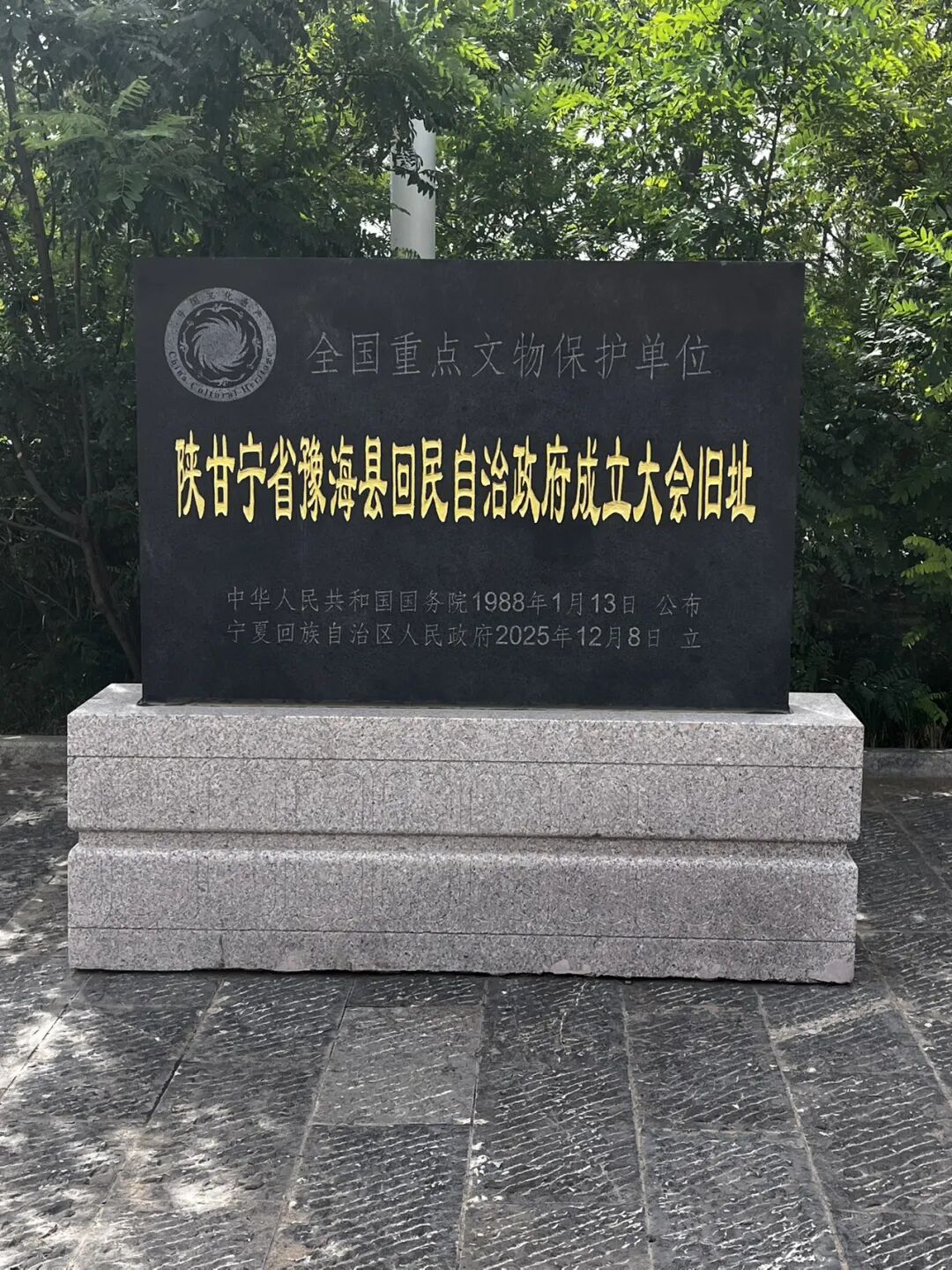
Step into the Tongxin Great Mosque, located in Yuhai Town, Tongxin County, Ningxia. Check out its towering, classical Chinese wooden main hall and mind-blowing openwork brick carvings on the spirit wall, and soak in the deep historical weight of Ningxia's oldest and largest surviving masjid.
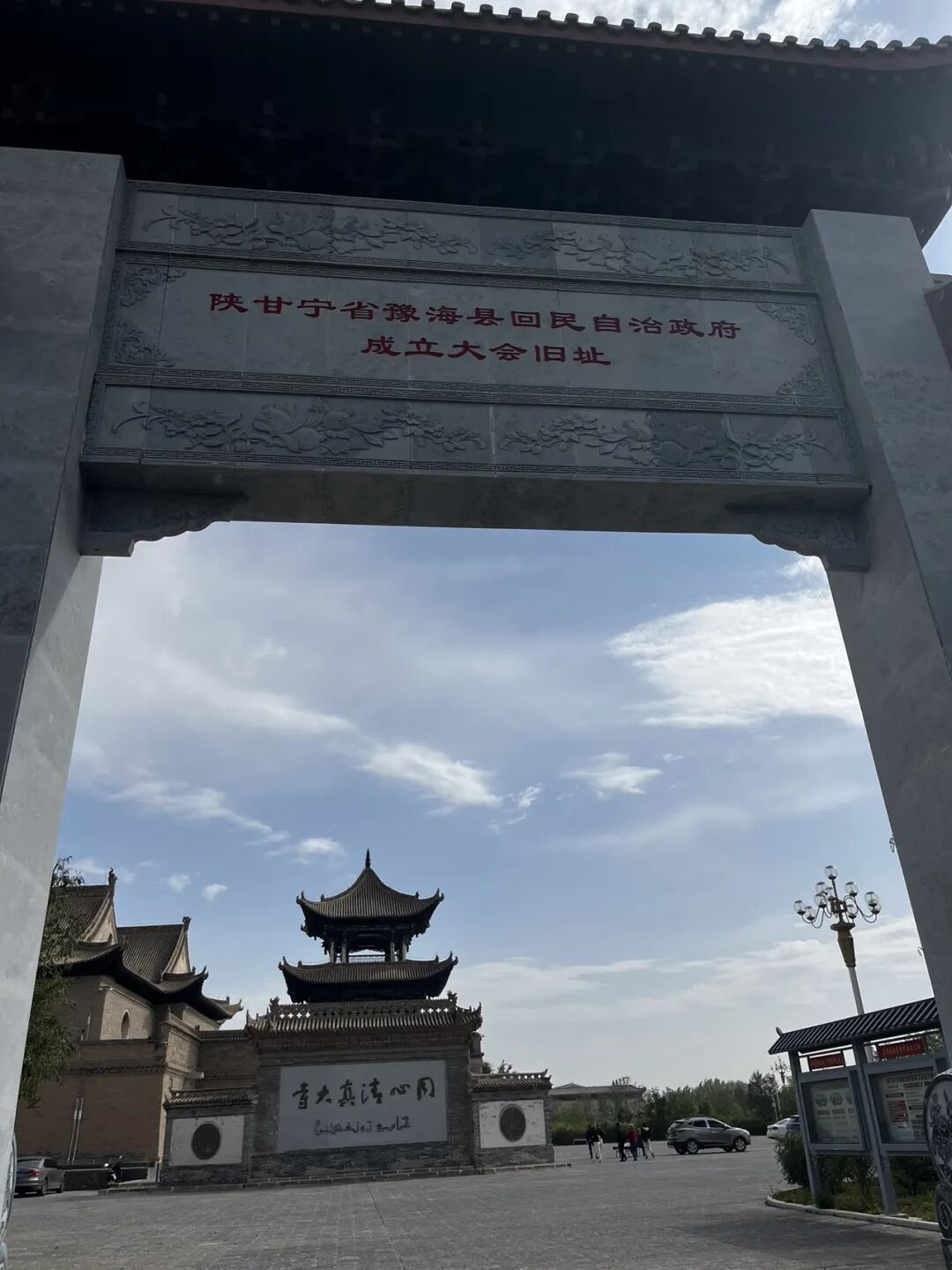
After grabbing a bite in Alxa, we kept moving and stayed overnight in Qingtongxia. That geographic name from the textbook finally came to life. Outside the hotel, I spotted a pear-leaf crabapple tree—a familiar tree from my childhood that I hadn't seen in years.
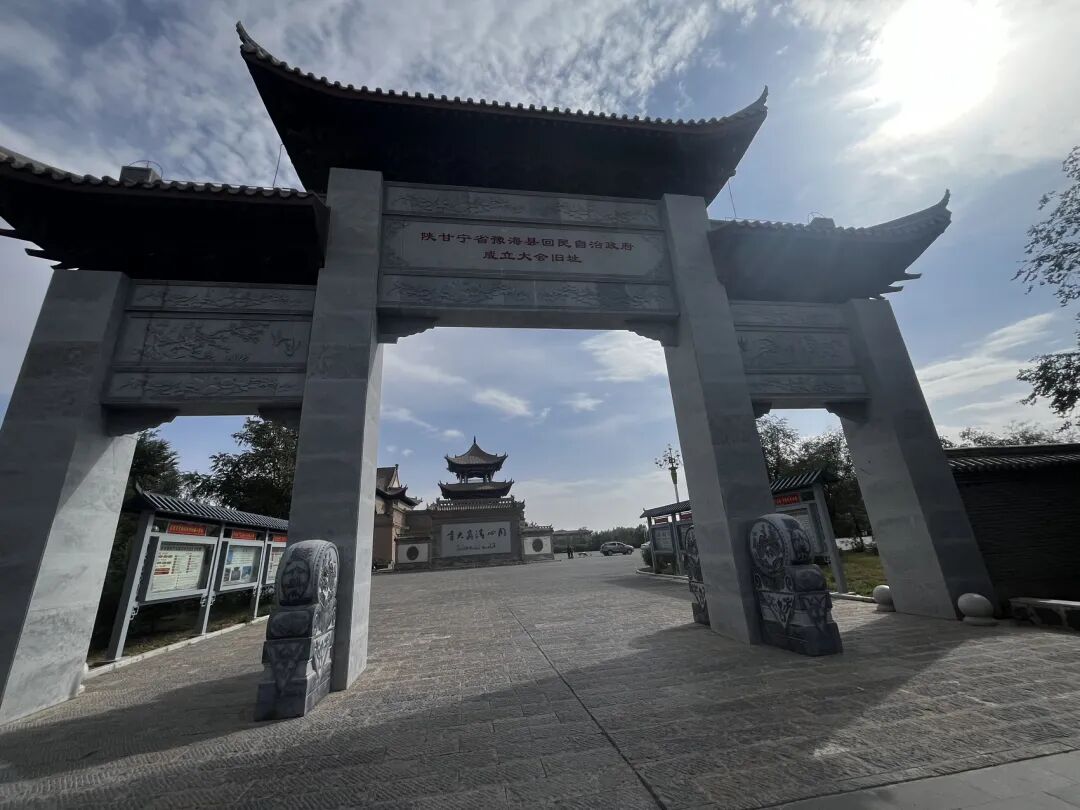
Time to fuel up and hit the road again.
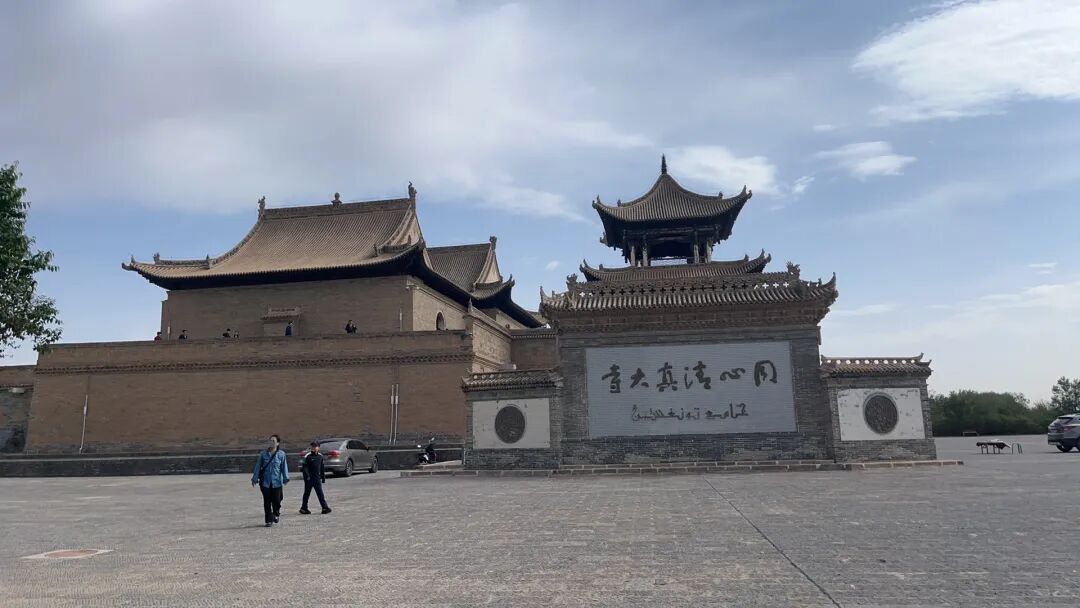
This spot is also a National Key Cultural Relic Protection Unit.
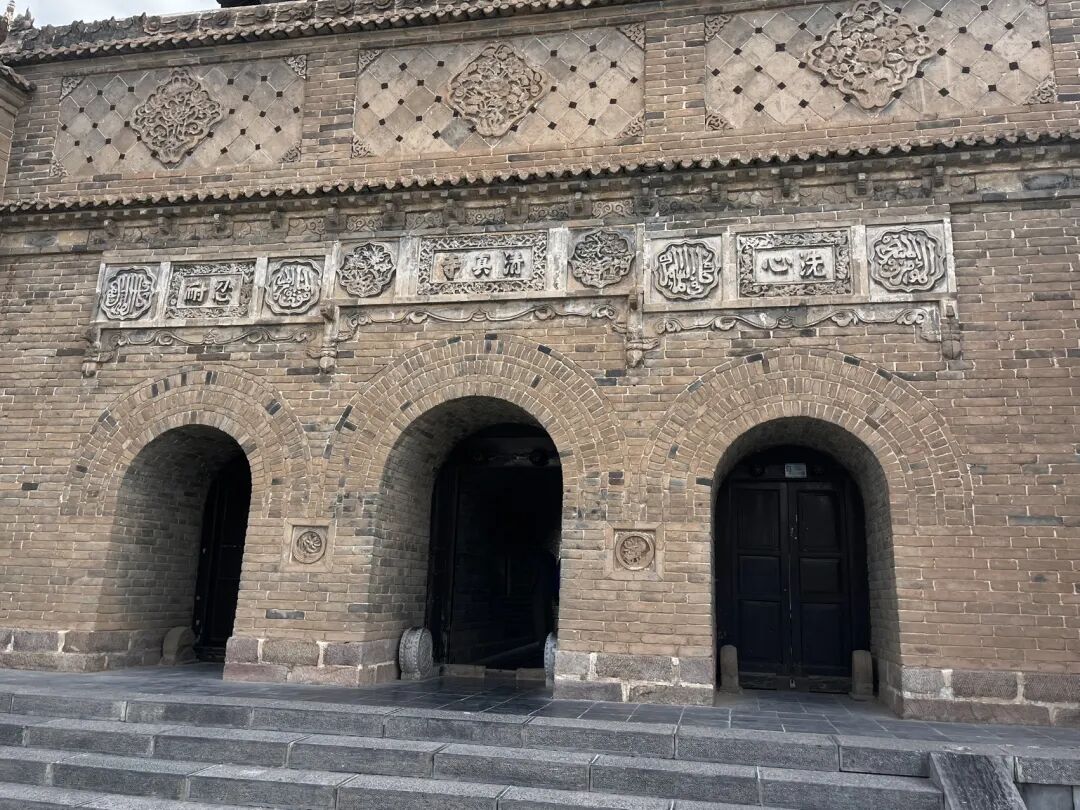
Tongxin Great Mosque (Former Site of the Founding Conference of the Yuhai County Hui Autonomous Government of Shaanxi-Gansu-Ningxia)
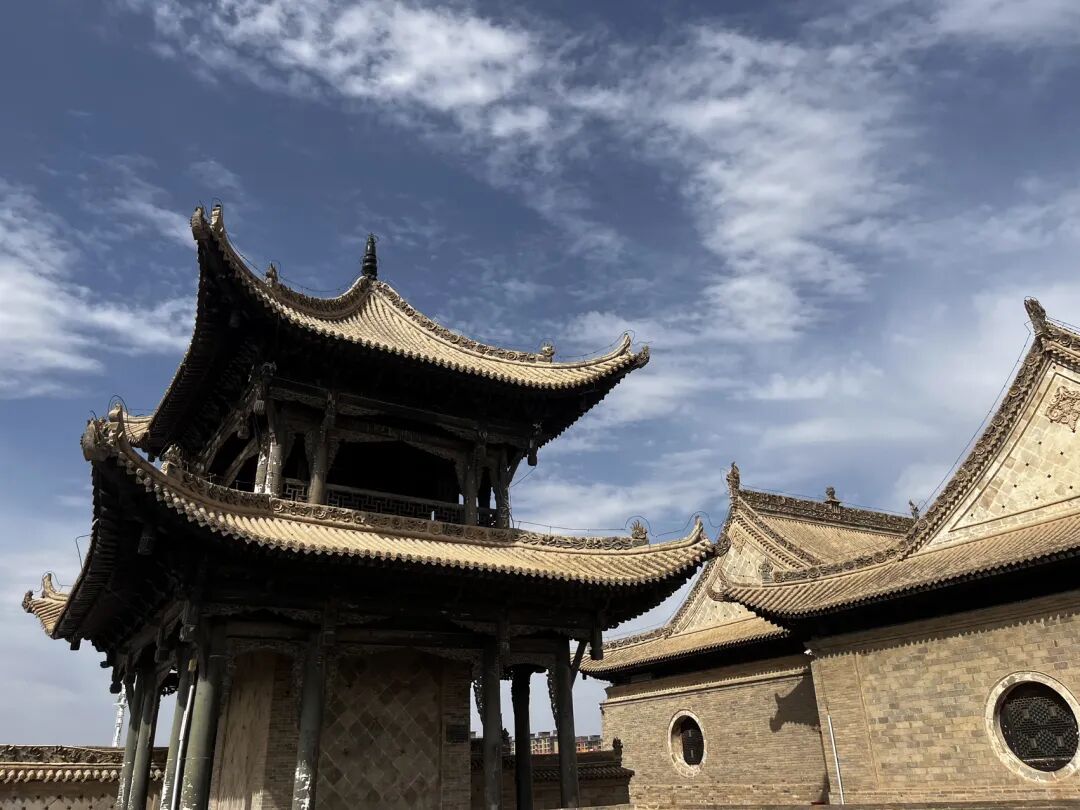
Right here in Tongxin County, Ningxia, it's a super unique, traditional Chinese pavilion-style masjid. There are no domes here—just flying eaves and wooden structures that look like an ancient fortress, as well as a site tied to revolutionary red history.
Walking up to the Tongxin Great Mosque, classic Chinese flying eaves and multi-tiered pavilions replace the usual masjid dome, while thick loess walls give it a rugged, historic vibe. This place isn't just an ancient house of worship; it's also where the Yuhai Hui Autonomous Government was born, blending religious heritage and revolutionary history right here on the northwest frontier.
Tongxin Great Mosque Mountain Gate: Three blue-brick archways featuring stunning brick carvings. They're engraved with Chinese characters reading 'Purify the Heart' and 'Endurance' alongside Arabic script, showing a gorgeous fusion of Han Chinese and Hui architectural styles.
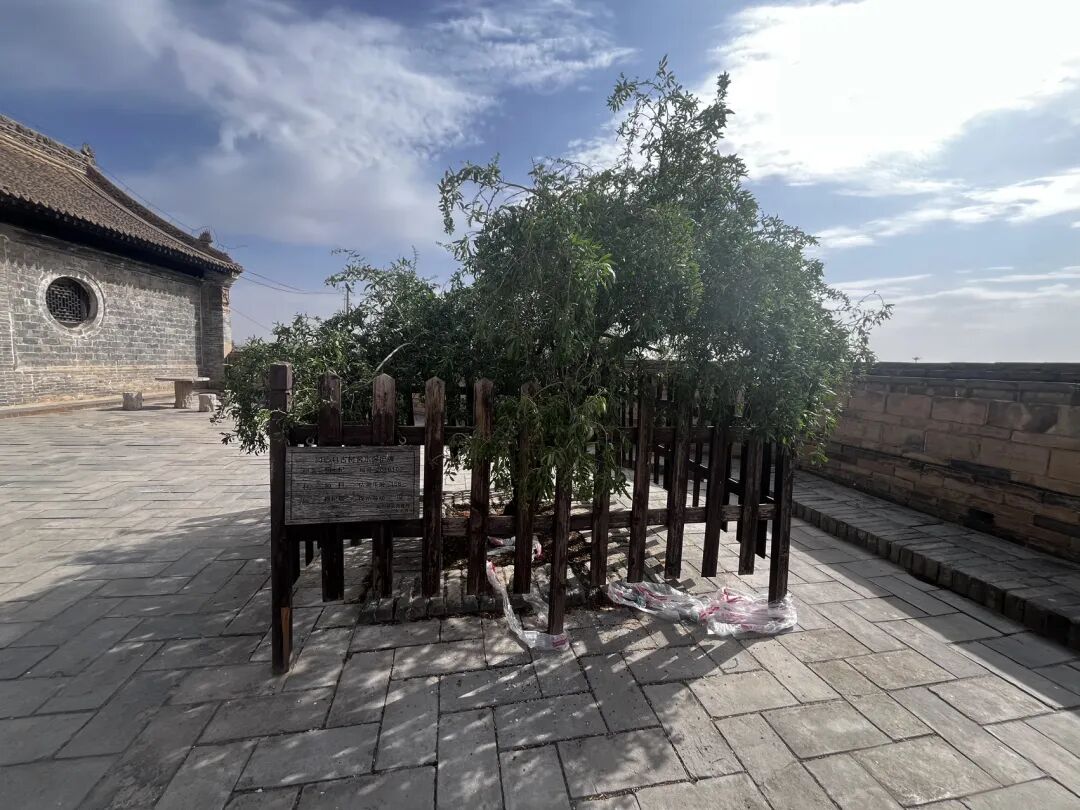
Tongxin Great Mosque Moon-Sighting Tower: A double-eaved, resting-mountain-roof Chinese wooden pavilion with upturned eaves. Without an Islamic dome, it blends Hui and Han architecture, using old loess soil and blue bricks for a rugged, imposing look.
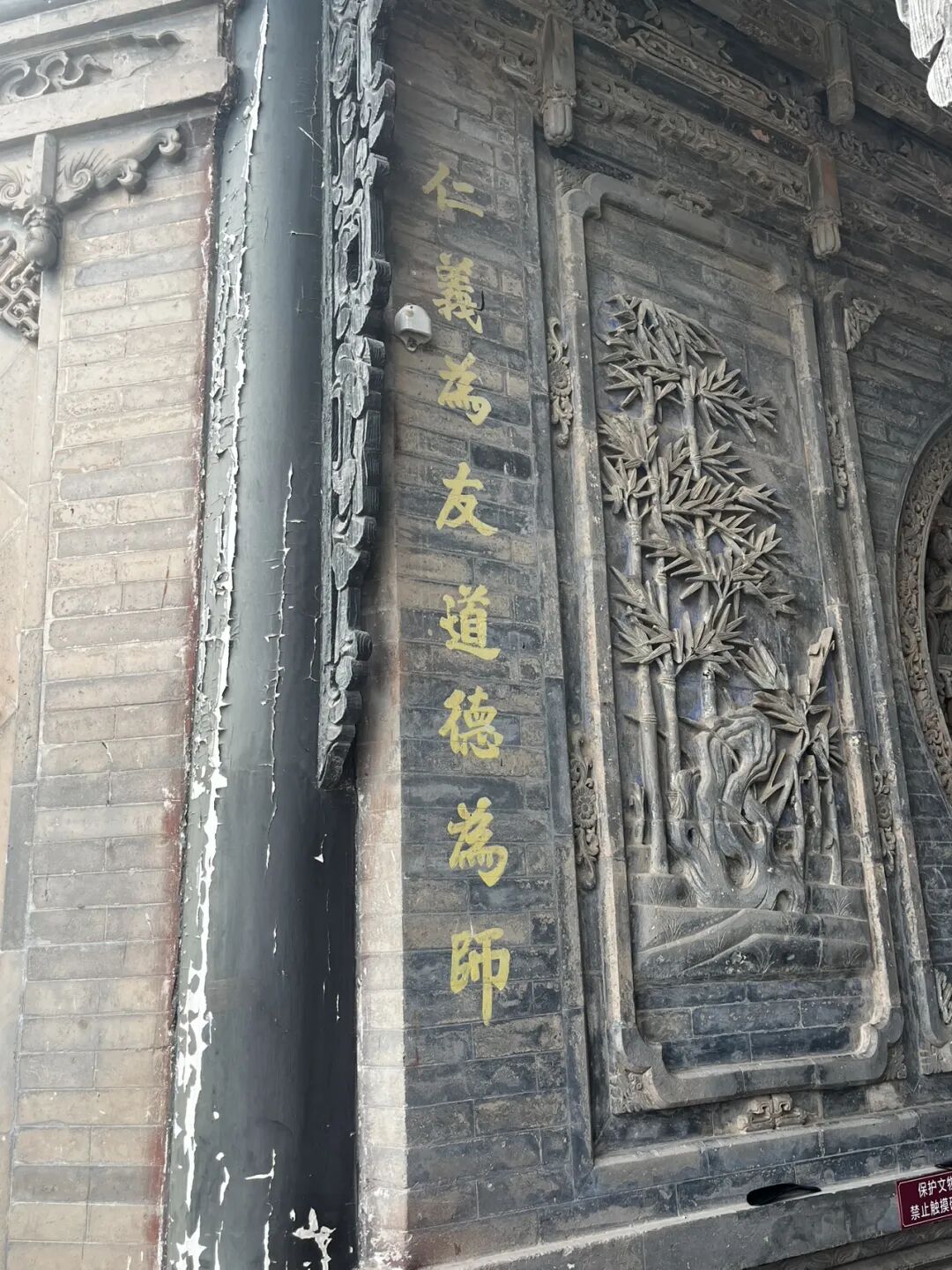
Tongxin Great Mosque Walls: Blue bricks laid in a diagonal diamond pattern, featuring iron tie-rods (wall anchors) that serve double duty for structural reinforcement and decoration. Forged into star and petal shapes, they combine structural engineering with aesthetics—a rare sight in Northwest ancient architecture.
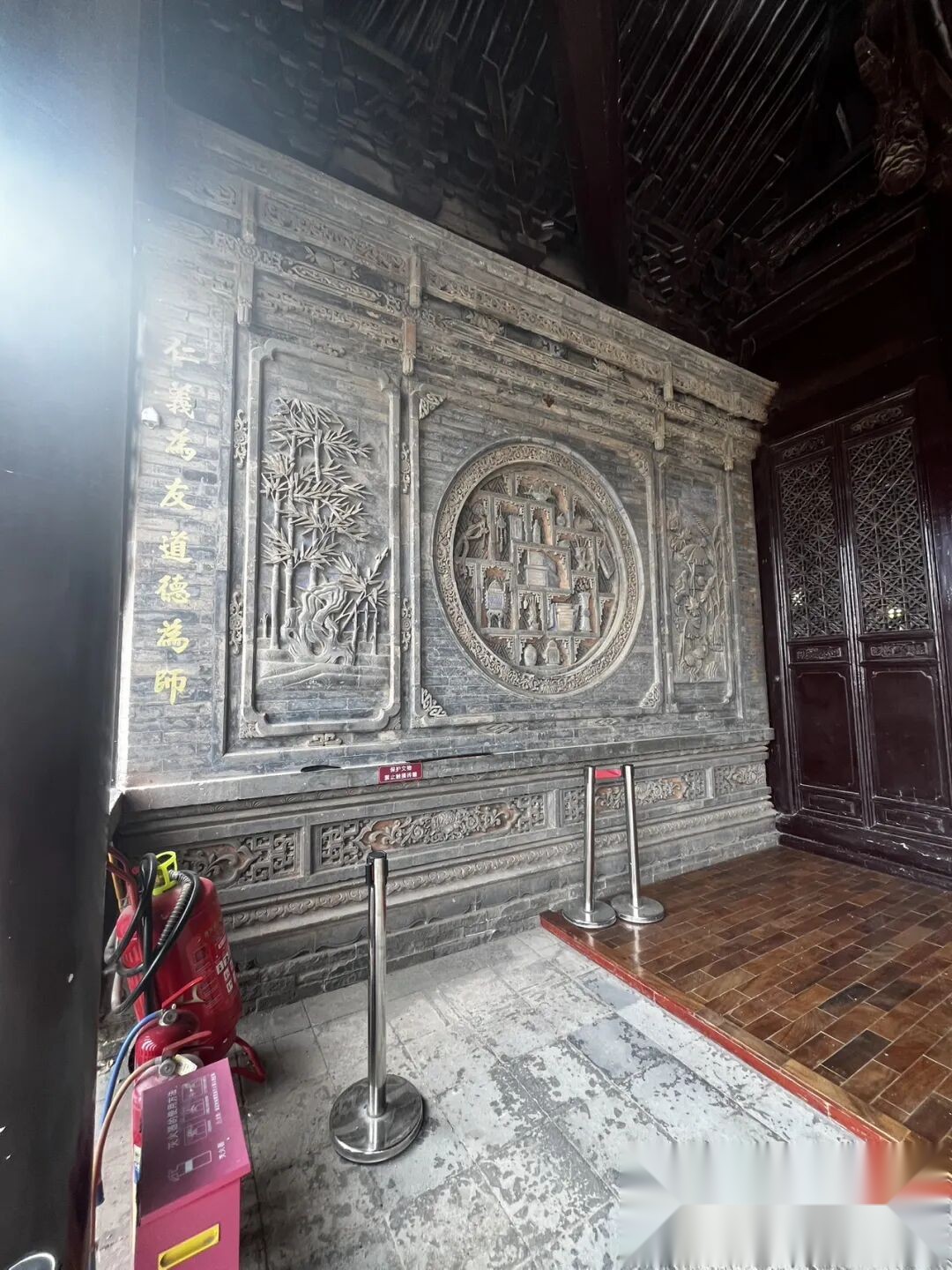
An ancient goji berry tree inside the courtyard of Tongxin Great Mosque. Over a century old and protected by a wooden fence, it grows resiliently right on the high platform of the ancient masjid.
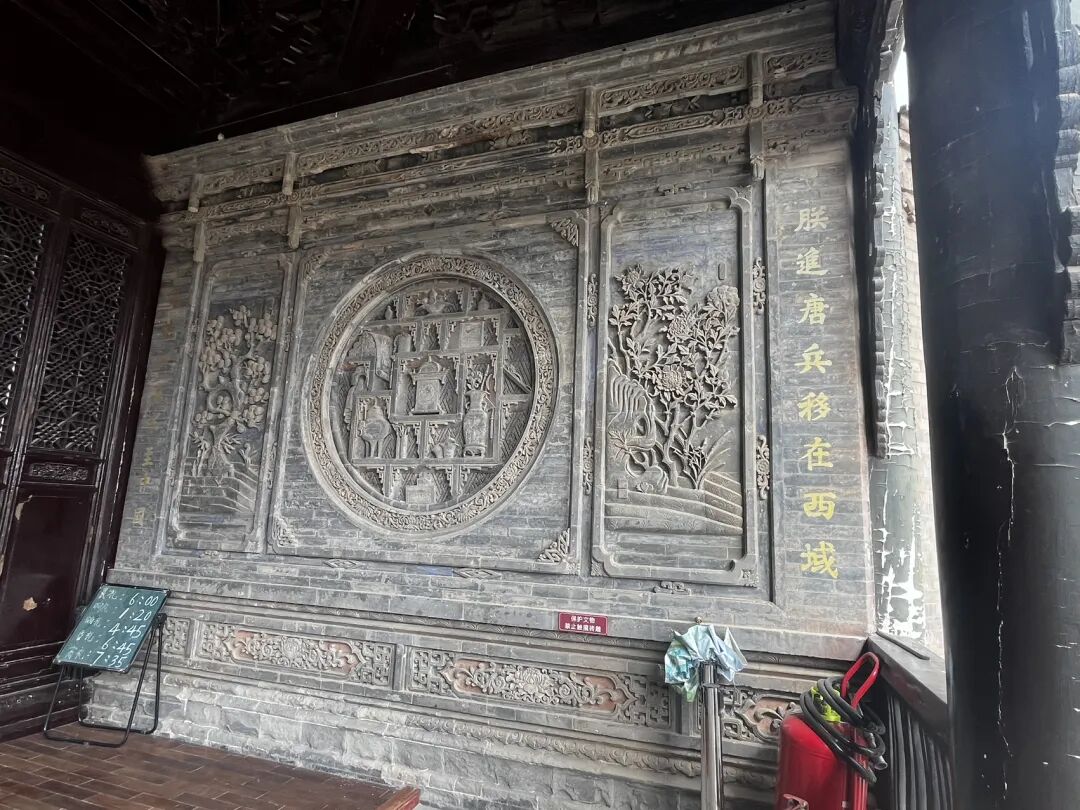
Brick Carvings: Bamboo and rock relief carvings inscribed with the Confucian phrases 'Treat righteousness and duty as friends, treat morality as your teacher.' Confucian literary motifs blend right into the masjid's Chinese brickwork.
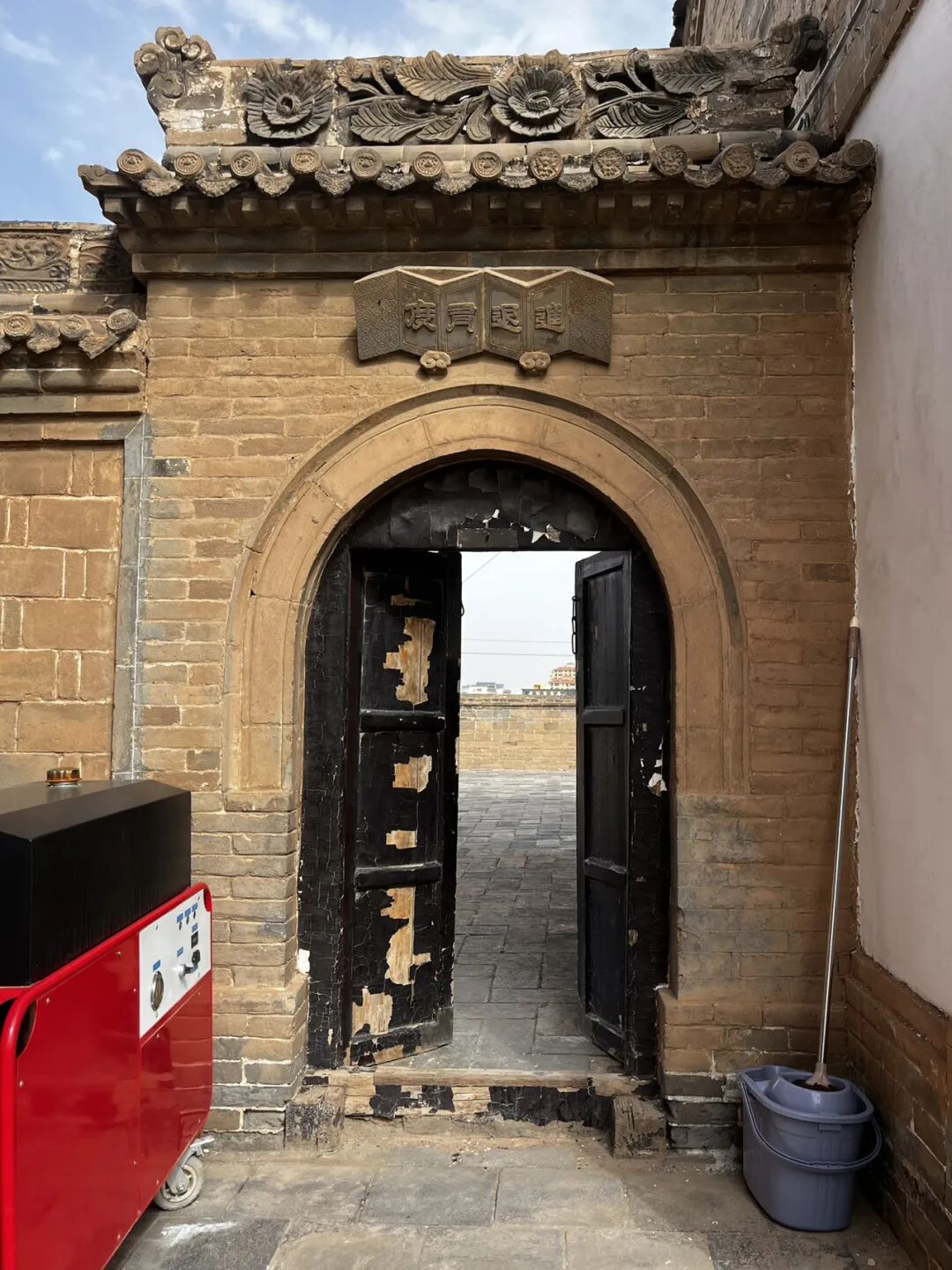
'The Emperor sent Tang troops to move into the Western Regions': An inscription recounting past events of the Western Regions from the Tang Dynasty, carved in Chinese characters directly onto the brick walls of the masjid.
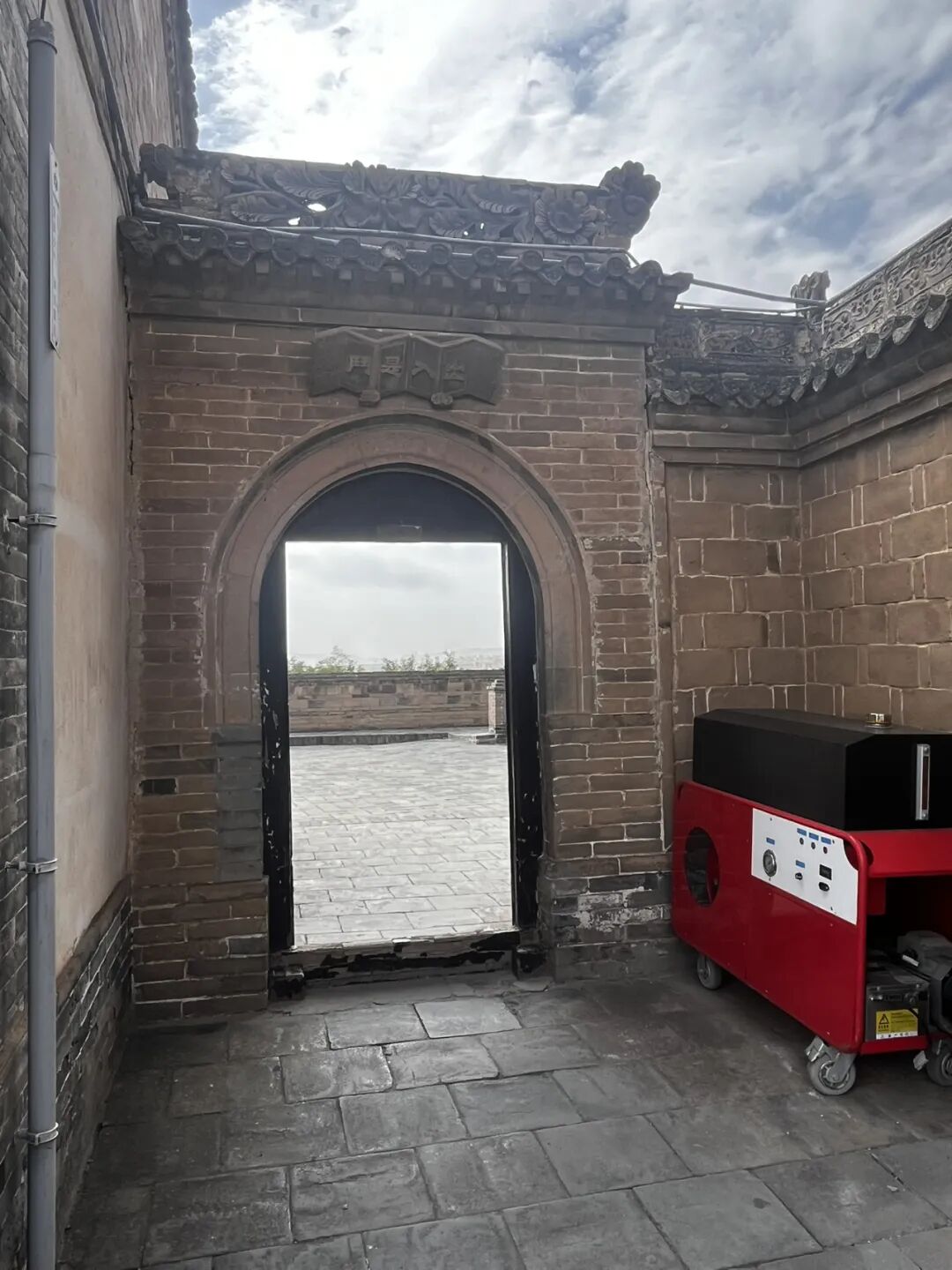
Tongxin Great Mosque Prayer Hall: A double-eaved Chinese wooden main hall that served as the former site of the Yuhai County Hui Autonomous Government of the Shaanxi-Gansu-Ningxia border region. Featuring grand flying eaves and ancient, weathered beams and pillars.
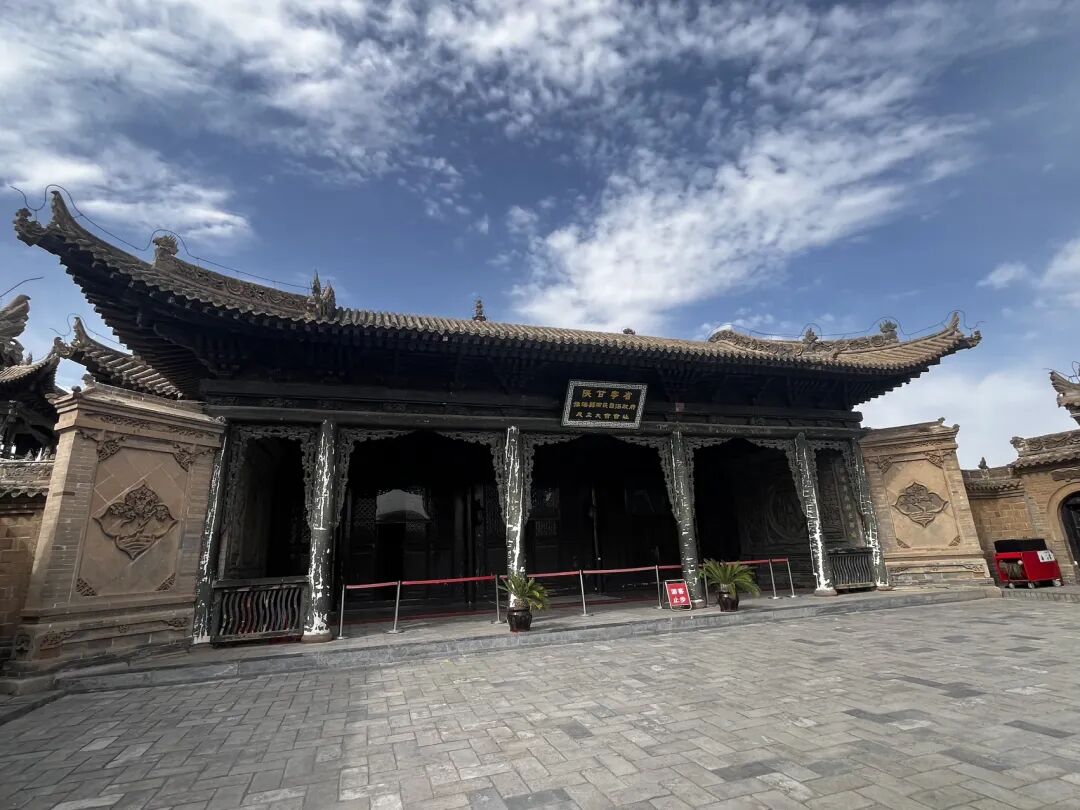
Inside, you'll find super detailed exhibits explaining its architecture and history.
The ancient hall has weathered centuries of wind and rain, leading to some rotting wooden components. During major renovations from 1982 to 1983, a specialized crew of craftsmen from Hancheng, Shaanxi, was brought in to lead the project. The skill of these veteran Guanzhong artisans was put to work on this northwest ancient masjid, repairing beam frameworks and restoring dougong bracket sets. They preserved the original architectural form and vibe to the absolute max, helping this ancient hall on its high platform survive to this day. Standing in front of the hall, you can appreciate both the heavy craftsmanship of Ming and Qing woodwork and the heartfelt dedication of cross-regional artisans passing the torch to protect our cultural relics.

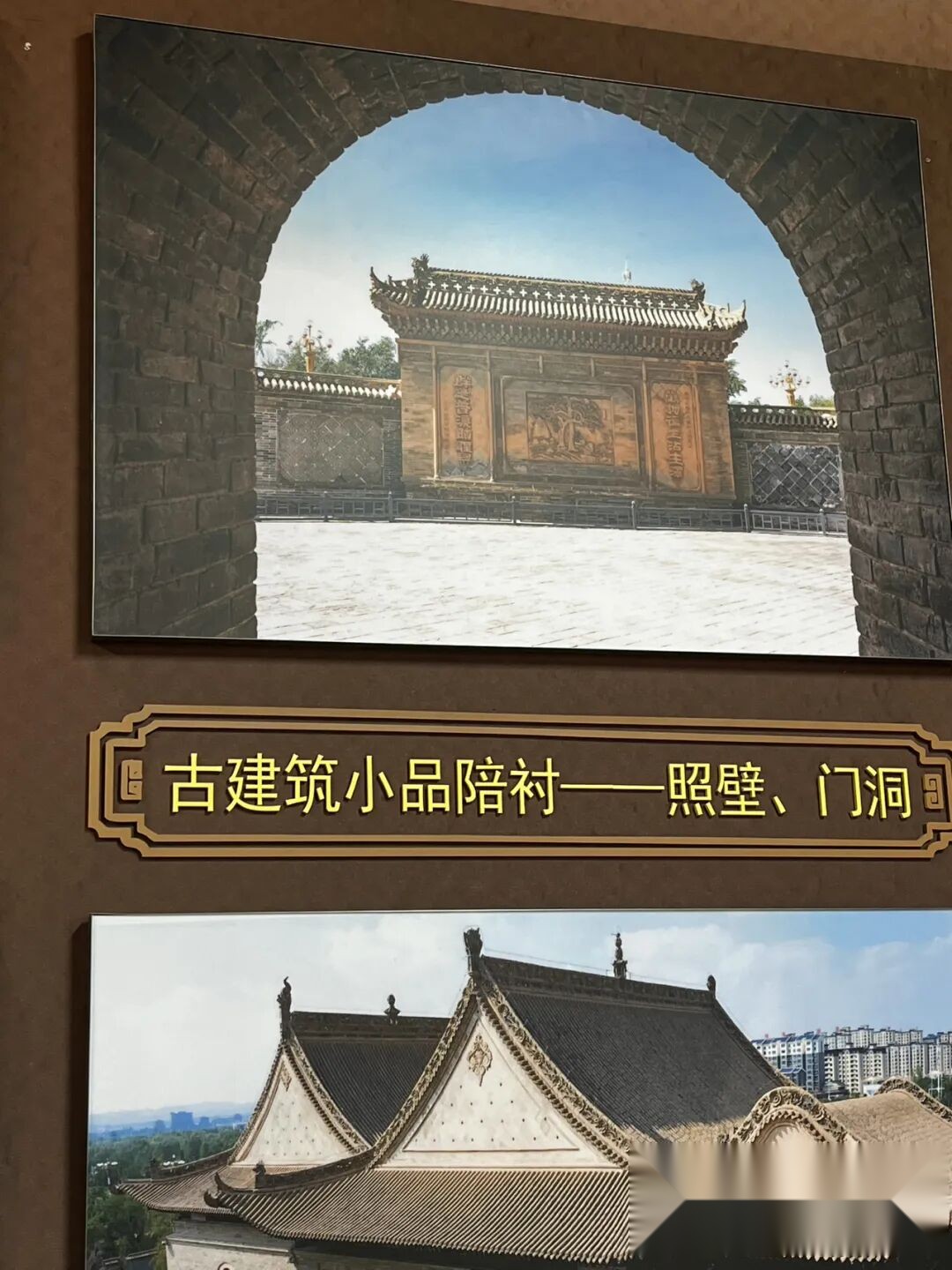
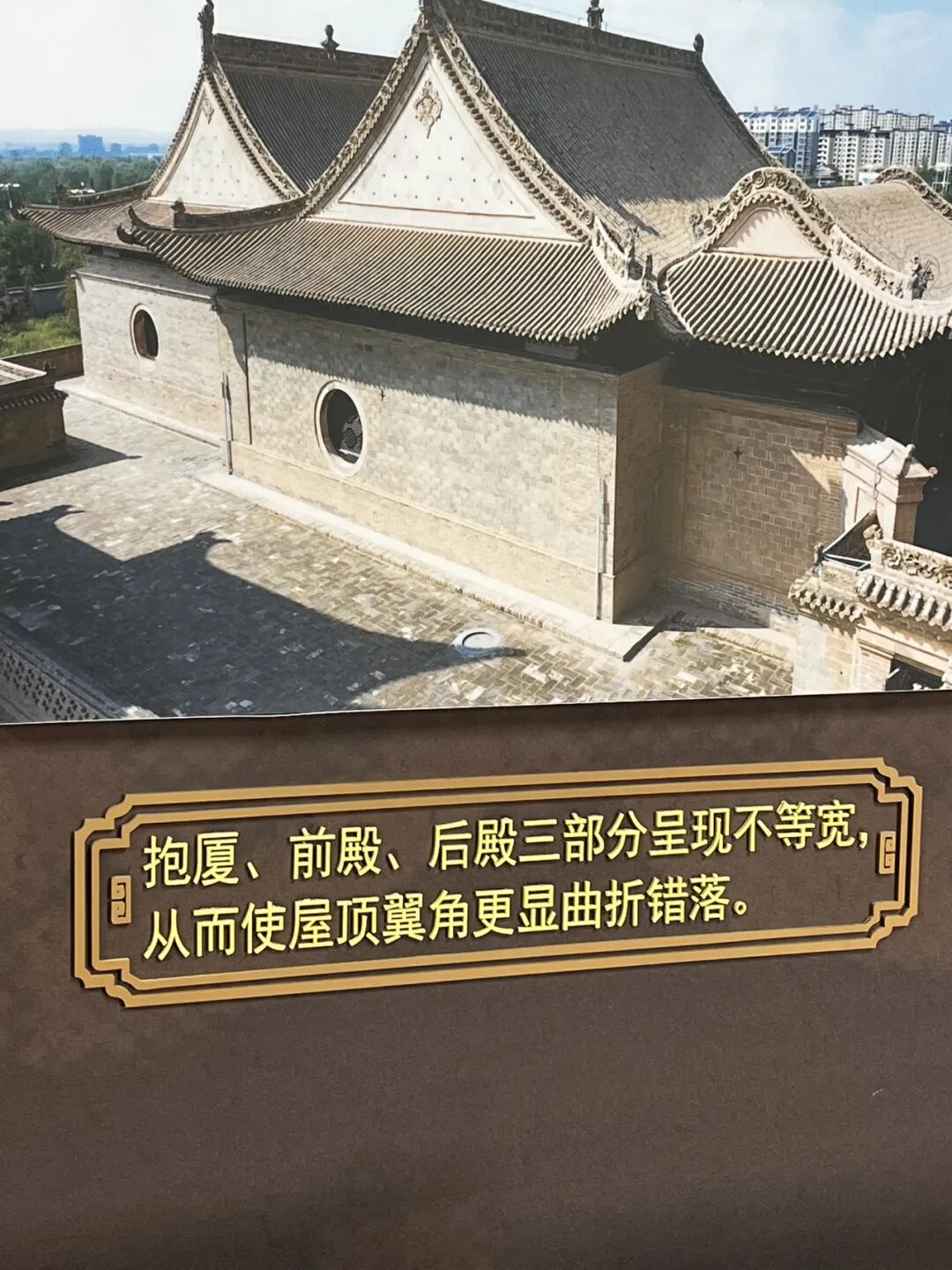
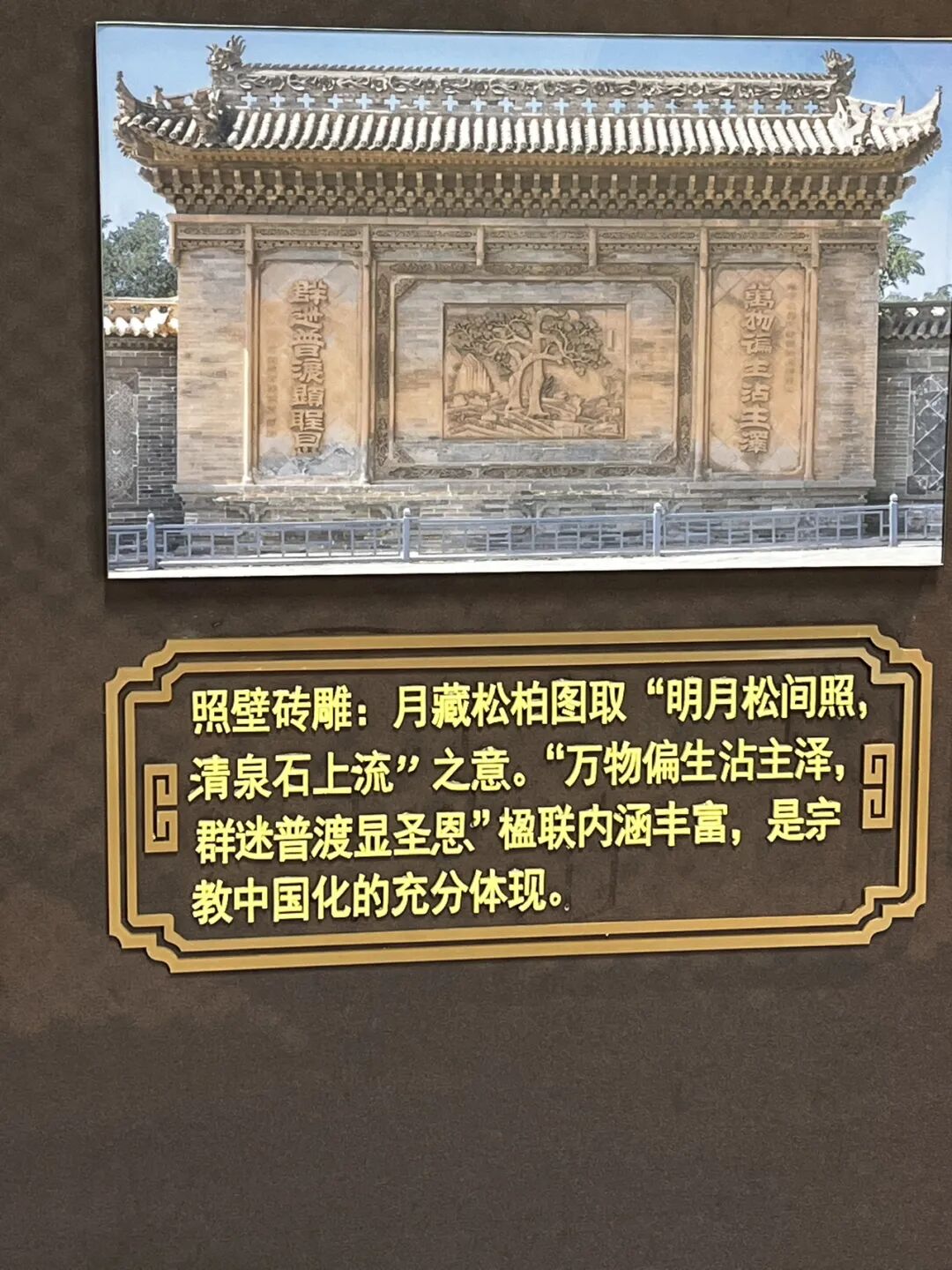
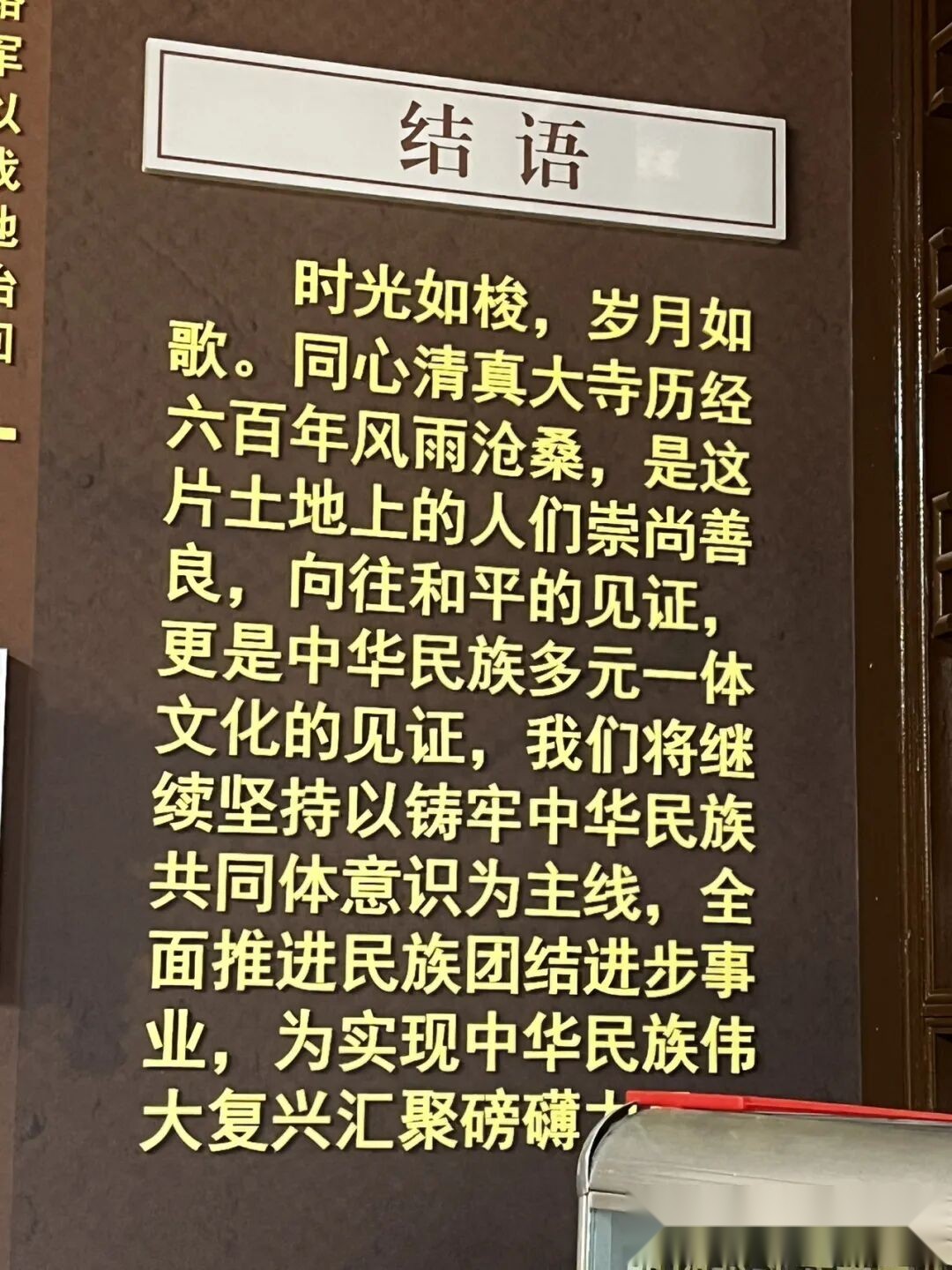
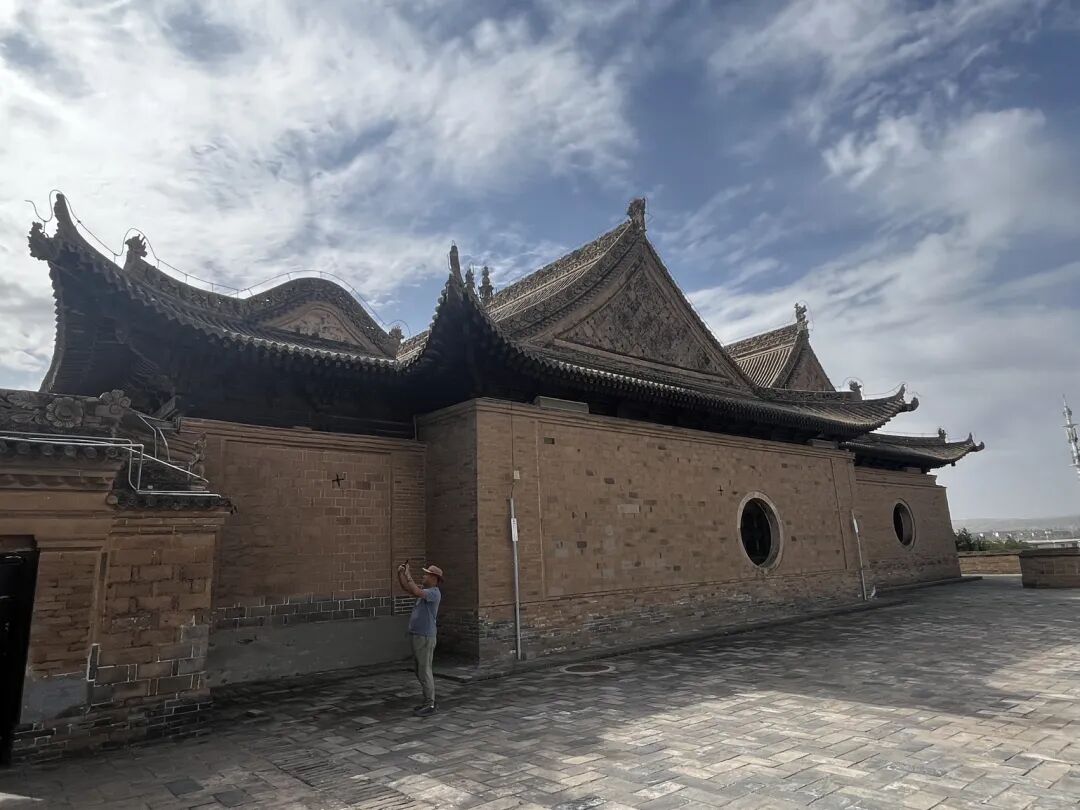
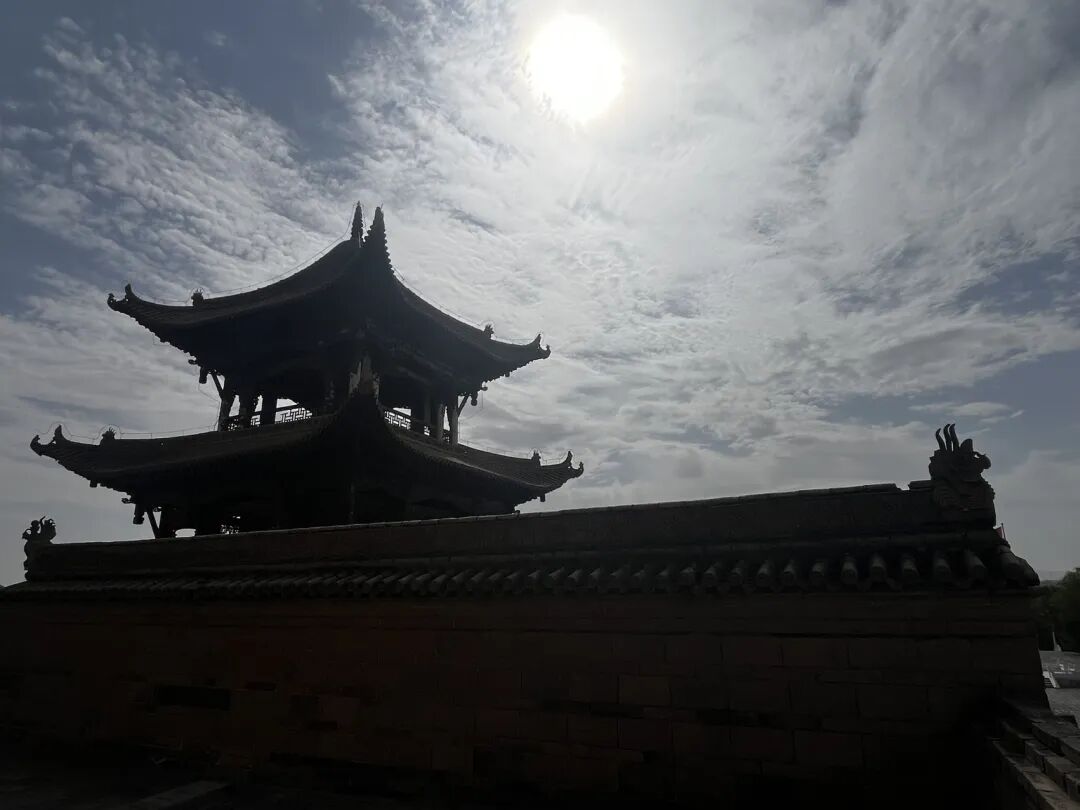
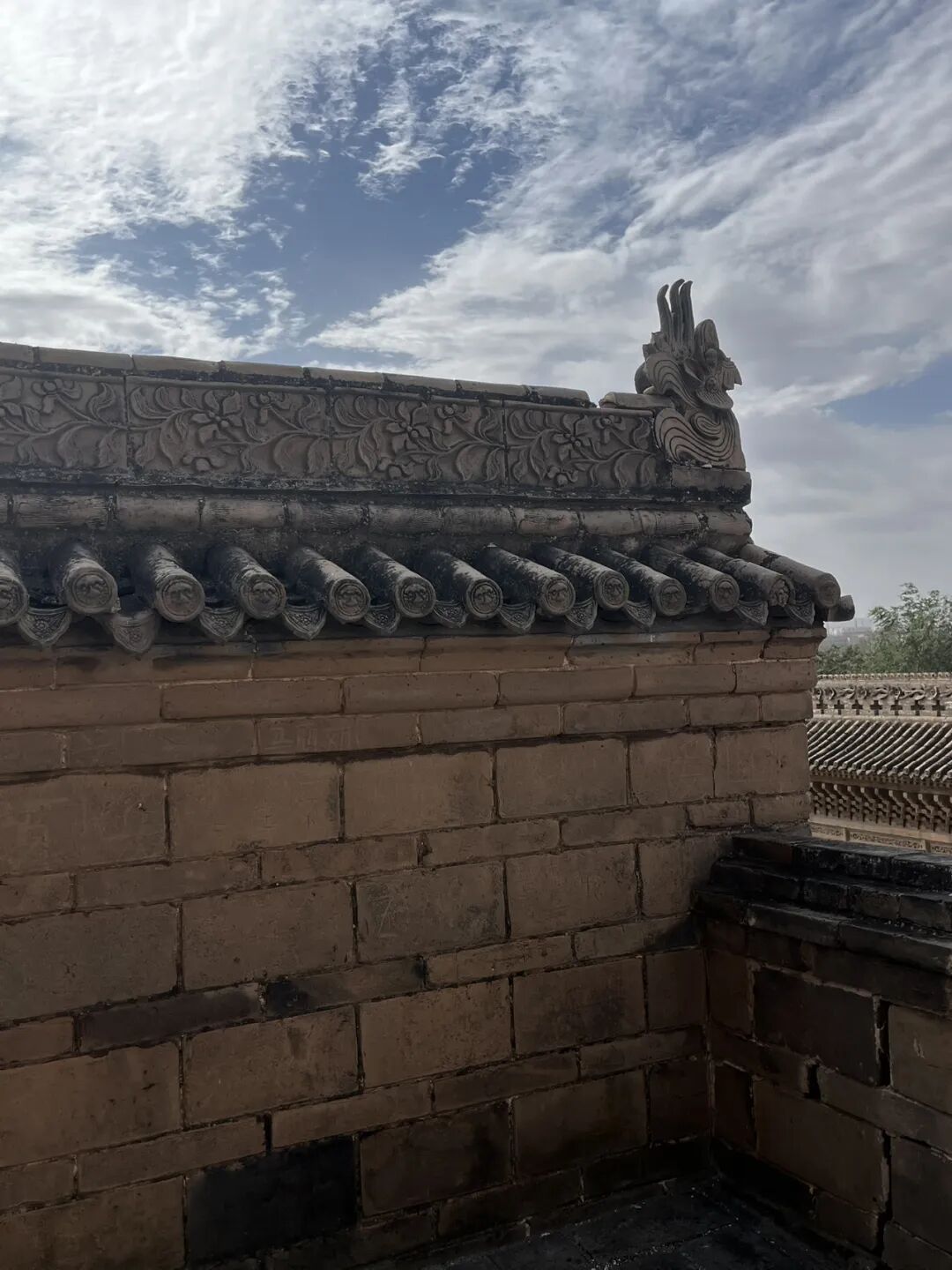

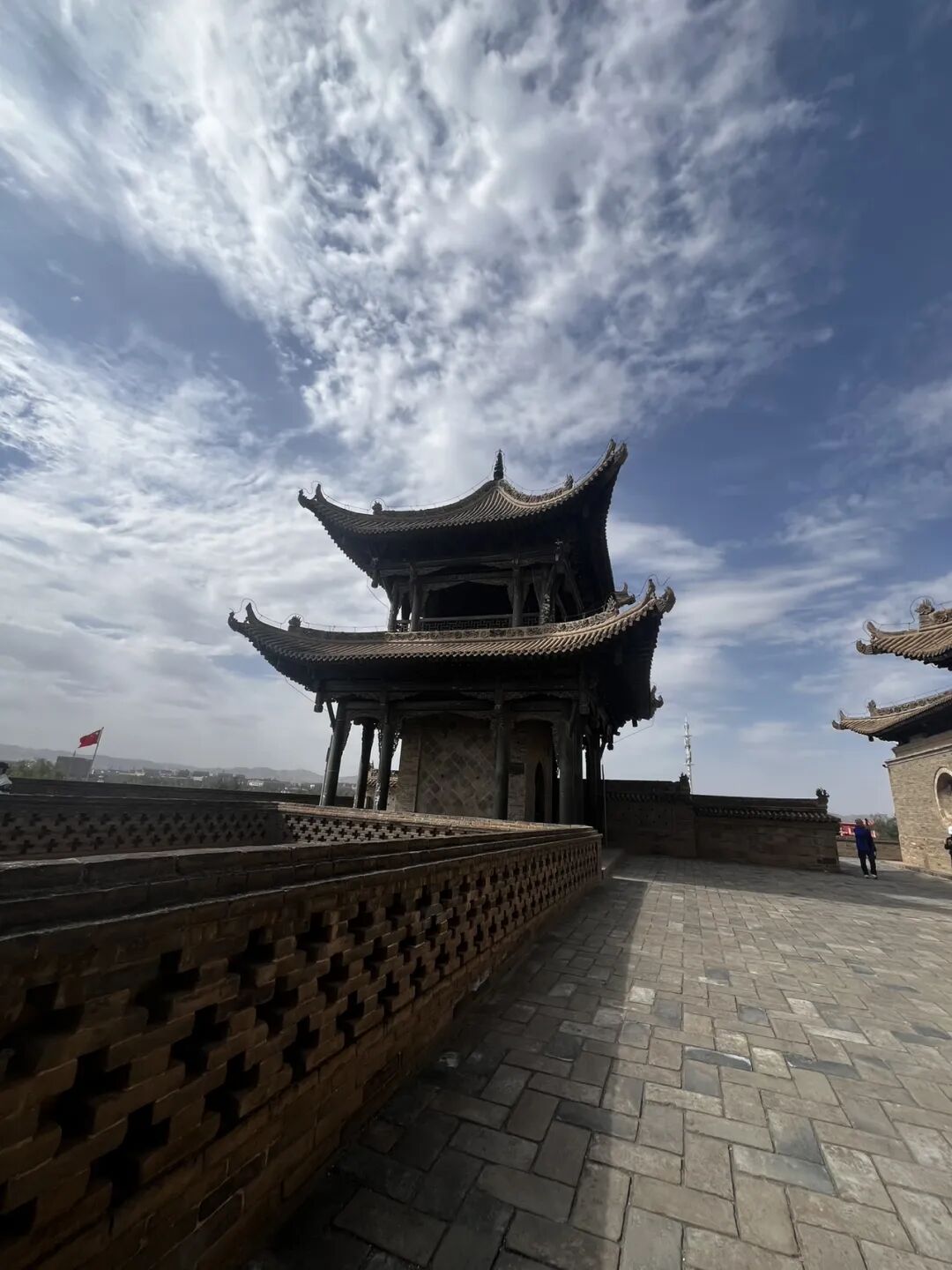
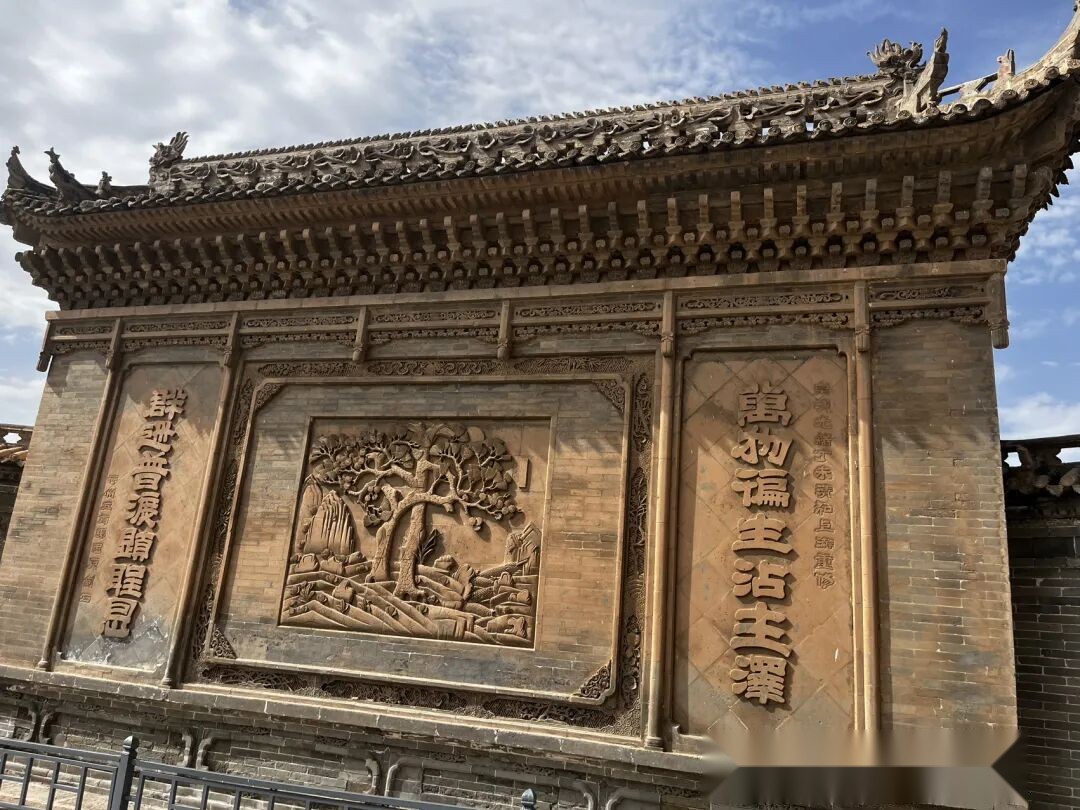
Exploring Tongxin Great Mosque: A Masterpiece of Chinese Timberwork and Islamic Heritage in Ningxia
Articles • Hasan09 posted the article • 0 comments • 4 views • 3 hours ago
Exploring Tongxin Great Mosque: A National-Level Historic Monument Blending Song-Ming Timber Architecture with Islamic Spirit
Abstract:
A firsthand look inside the Tongxin Great Mosque, a hidden gem tucked away in the mountainous southern region of Ningxia. We're breaking down its unique architecture—dating back to the late Yuan and early Ming dynasties, where traditional Chinese timber-framing meets Islamic arches and domes—giving you a taste of an uncrowded, highly sophisticated Northwest architectural treasure.
If you're looking for the oldest and best-preserved ancient mosque in the Ningxia Hui Autonomous Region, it's definitely the Tongxin Great Mosque in Tongxin County, Wuzhong City.
It was originally founded during the Yuan dynasty, starting out as a Tibetan Buddhist monastery. During the Yuan, Prince Anxi Anada (grandson of Kublai Khan) was raised by Muslim foster parents as a child and converted to Islam as an adult. When he was stationed in Ningxia, he led a massive following to convert to Islam as well. As a result, the original monastery gradually fell into disuse, and some parts were converted into a mosque.
On October 20, 1936, during the Red Army's Long March, the Shaan-Gan-Ning Yuhai County Hui Autonomous Representative Conference was held at the Tongxin Great Mosque, where the Shaan-Gan-Ning Yuhai County Hui Autonomous Government was elected and established. This site also serves as the former location of the founding assembly of that Hui autonomous government.
The Tongxin Great Mosque is built on a 7-meter-high platform enclosed by dark grey bricks, utilizing traditional Chinese timber-framing techniques while incorporating Islamic-style decorations, making it a stellar example of two cultures coming together.
The dark brick spirit wall (zhaobi) in front of the mosque is a classic case in point. The front features the name 'Tongxin Great Mosque' written in both Chinese and Arabic script. The center of the back features a brick-carved 'Moon Hiding in the Pines' motif, flanked by couplets carved in official script (lishi) dating back to the Guangxu reign.
Next up are the arched gates: the lintel of the main central gate is brick-carved with the three characters for 'Mosque' (Qingzhensi), while the side gates feature the words 'Purify the Heart' (Xixin) and 'Patience' (Rennai), topped off with intricate Arabic calligraphy and floral brick carvings.
What makes the entire complex super unique is its 'reverse-curtain' layout. To walk inside, visitors first have to pass through three brick-arched gates (facing east) and a dark underground passage, then climb the stairs up onto the grey-brick high platform. You’ll spot the minaret (bangkelou) before stepping into the main courtyard, where you'll finally see the prayer hall facing west toward Mecca.
That right there is the mosque's reverse-curtain layout.
The bangkelou (minaret / prayer tower). Its second floor features a four-sided pyramidal roof in a classic Chinese pavilion style, complete with gorgeous brick and wood carvings. Built high up on the terrace, you can spot it from miles away.
The prayer hall is the beating heart of the entire complex, sitting on the west side and facing east. The roof utilizes a connected-ridge technique, linking a rolled-shed roof (juanshan) and two hip-and-gable roofs (xieshan) end-to-end to form one massive hall. The interior of the prayer hall is currently closed to non-Muslim visitors.
The most striking takeaway from hanging out here is the insane amount of detailed brick carving everywhere you look. Aside from the spirit wall, arched gates, and minaret we just mentioned, you'll spot brick carvings all over the main roof ridges, ridge terminals, gable walls, tie-beams (fang), and the walls flanking both sides of the corridors.
For example, on the walls flanking the front porch of the prayer hall, the south wall's center brick carving features a 'bogu' antique display rack alongside sutras, paired with bamboo and lotus motifs. The north wall features another bogu rack and a clock, paired with pine and chrysanthemum motifs.
The plaques on the side gates leading in and out of the main prayer courtyard are also super unique, featuring book-page-style brick plaques inscribed with 'Entering and Leaving is a Gate' on one side, and 'Advance and Retreat with Propriety' on the other.
Bathed in blue skies and fluffy white clouds, the Tongxin Great Mosque oozes ancient vibes, making it the ultimate spot for moody, storytelling travel shots.
A few photography tips and takeaways:
You can snag a sweeping panoramic shot of the entire mosque from the side of the spirit wall, and a full shot of the back of the spirit wall from up on the high platform.
Use a telephoto lens at the arched gates to capture that atmospheric, stepping-into-the-mosque vibe.
Sit on the steps with the minaret in the background for a cinematic, storytelling portrait—the shot below was taken by setting up our own tripod.
Snapping candid walking shots along the walls of the prayer courtyard keeps the frame super clean and looks amazing.
✅ Travel Guide:
Address: Beside Provincial Highway 101, near the Red Army Long March Memorial Museum – Tongxin Great Mosque, Tongxin County, Wuzhong City, Ningxia
Hours: 8:00 AM – 6:00 PM
Admission: Free view all
Exploring Tongxin Great Mosque: A National-Level Historic Monument Blending Song-Ming Timber Architecture with Islamic Spirit

Abstract:
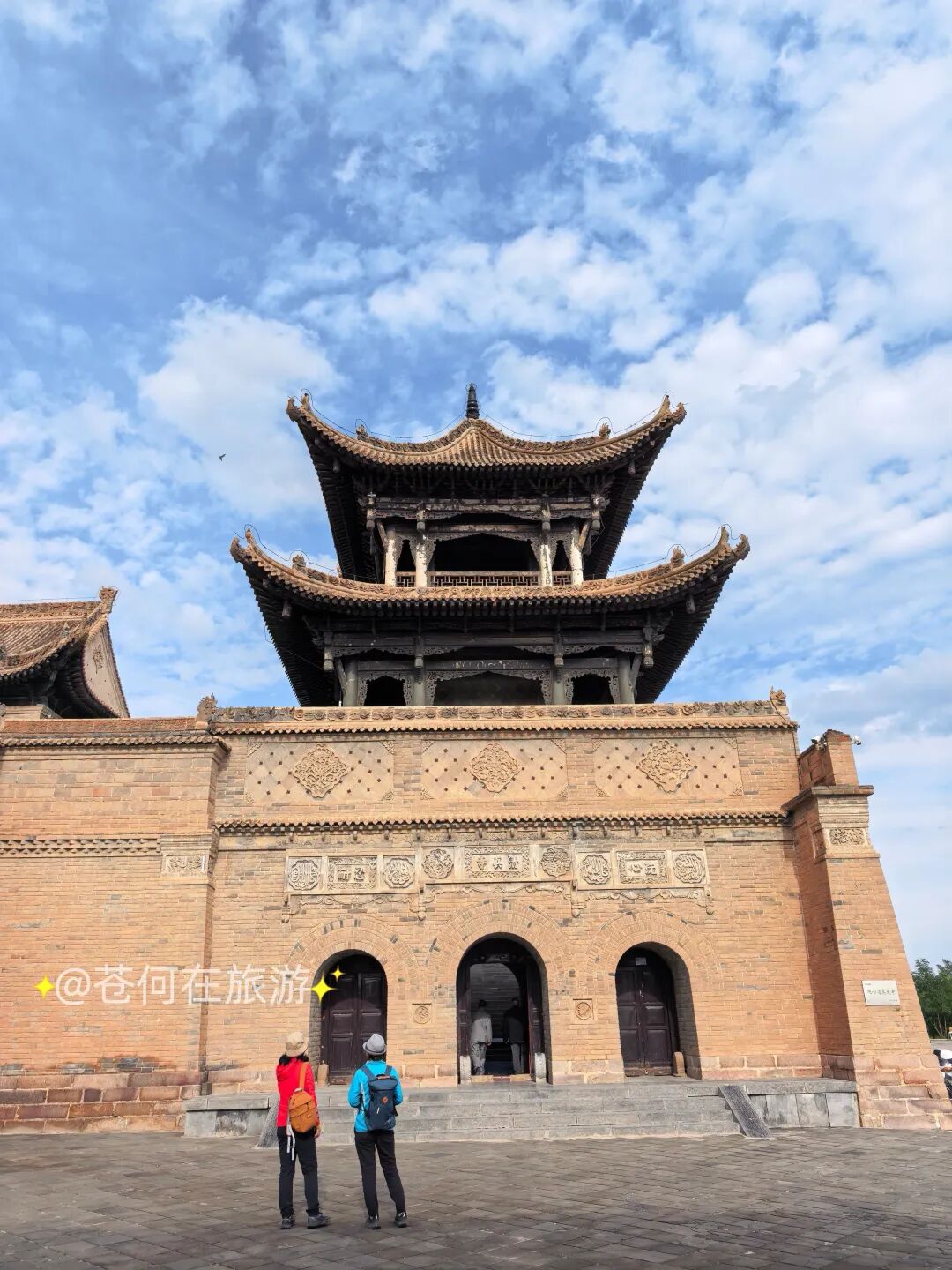
A firsthand look inside the Tongxin Great Mosque, a hidden gem tucked away in the mountainous southern region of Ningxia. We're breaking down its unique architecture—dating back to the late Yuan and early Ming dynasties, where traditional Chinese timber-framing meets Islamic arches and domes—giving you a taste of an uncrowded, highly sophisticated Northwest architectural treasure.
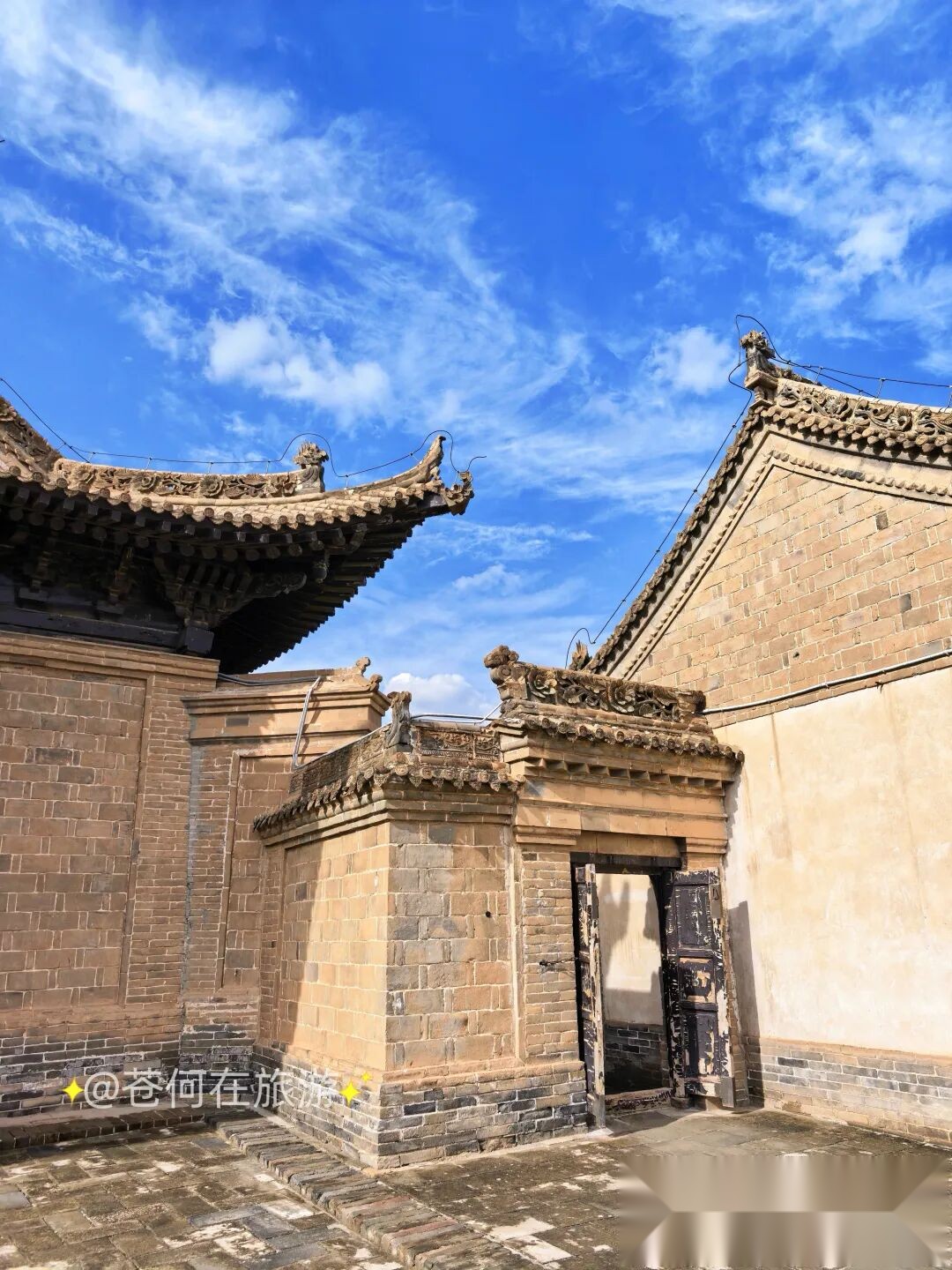
If you're looking for the oldest and best-preserved ancient mosque in the Ningxia Hui Autonomous Region, it's definitely the Tongxin Great Mosque in Tongxin County, Wuzhong City.
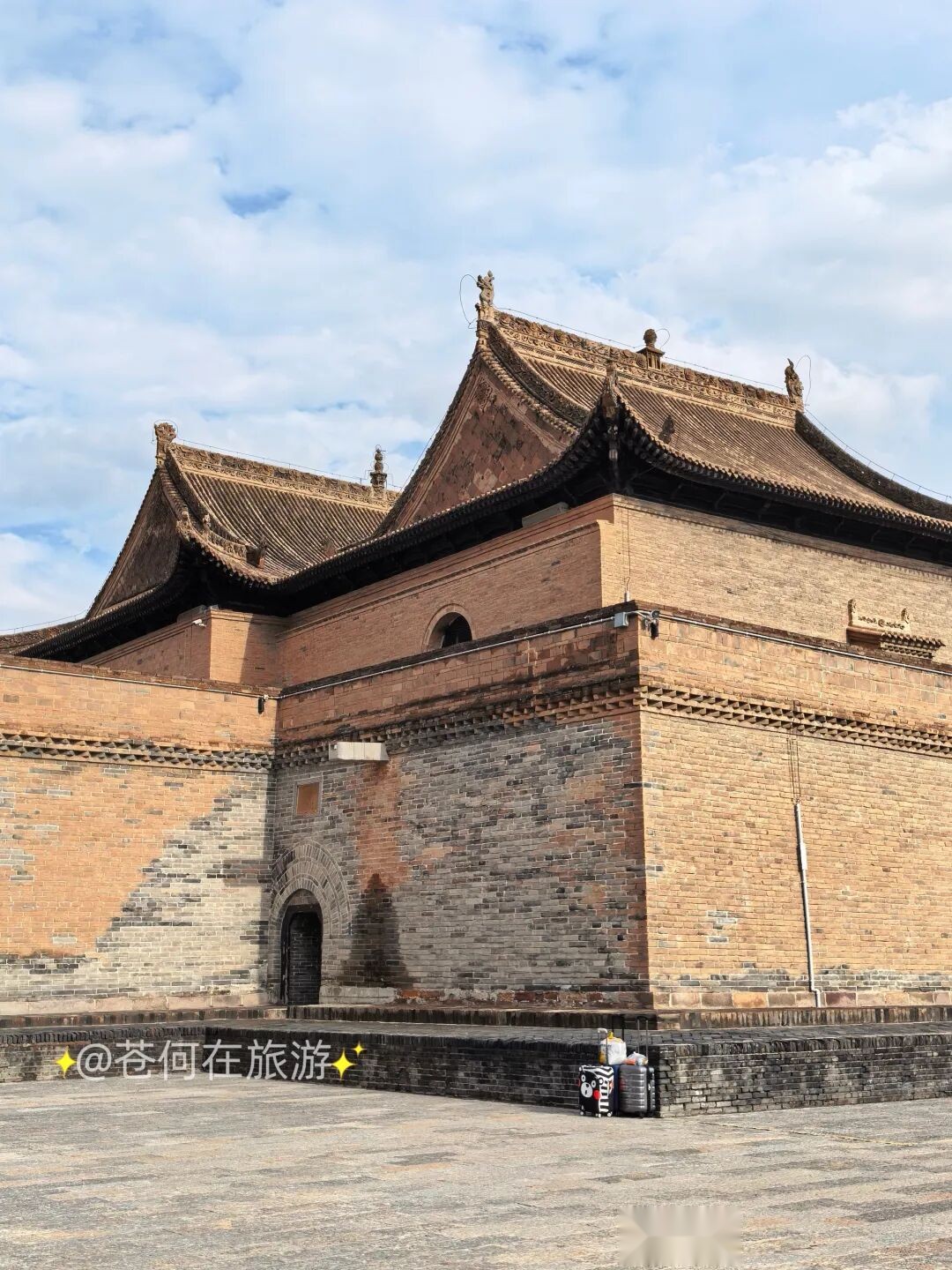
It was originally founded during the Yuan dynasty, starting out as a Tibetan Buddhist monastery. During the Yuan, Prince Anxi Anada (grandson of Kublai Khan) was raised by Muslim foster parents as a child and converted to Islam as an adult. When he was stationed in Ningxia, he led a massive following to convert to Islam as well. As a result, the original monastery gradually fell into disuse, and some parts were converted into a mosque.
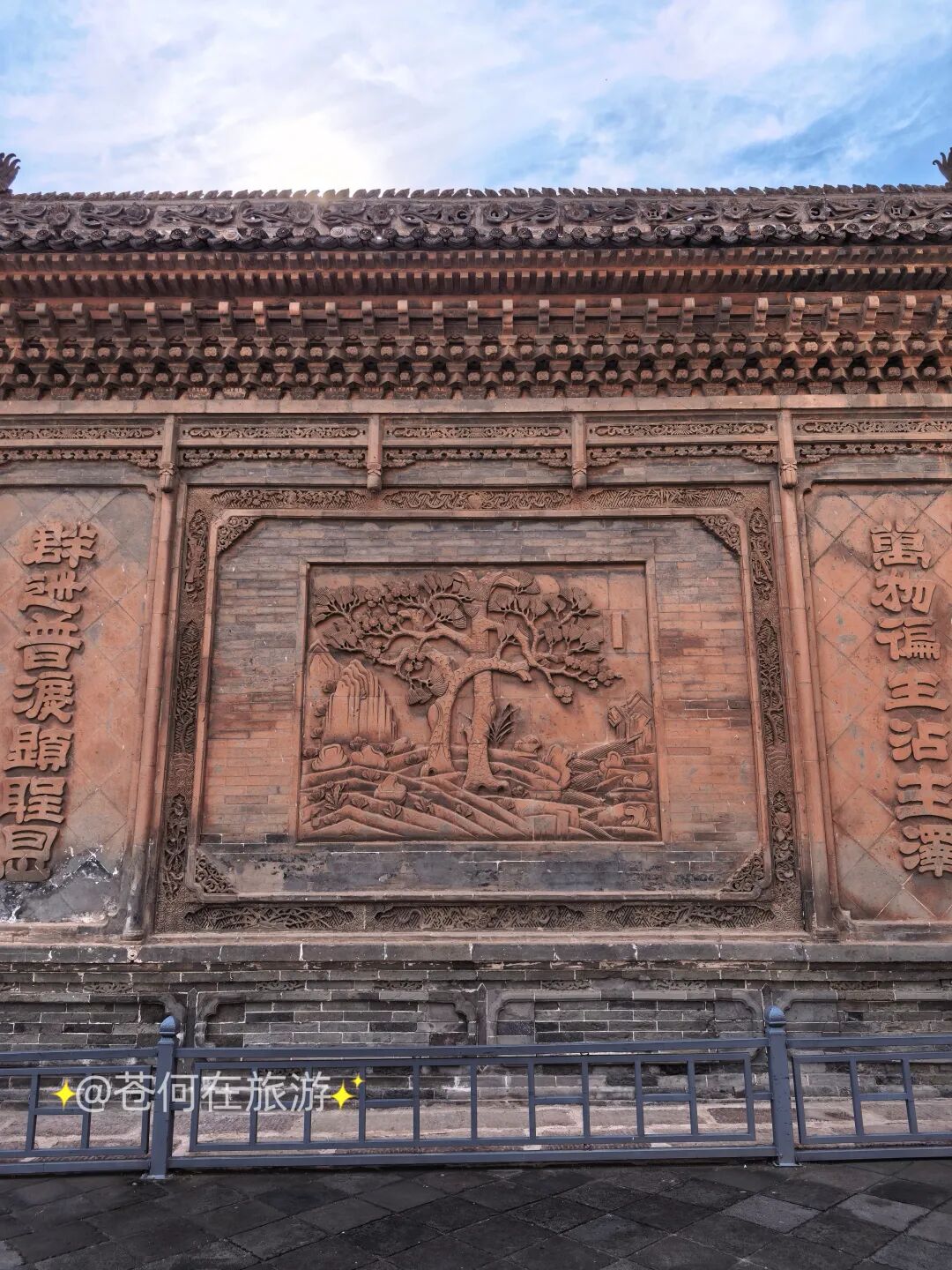
On October 20, 1936, during the Red Army's Long March, the Shaan-Gan-Ning Yuhai County Hui Autonomous Representative Conference was held at the Tongxin Great Mosque, where the Shaan-Gan-Ning Yuhai County Hui Autonomous Government was elected and established. This site also serves as the former location of the founding assembly of that Hui autonomous government.
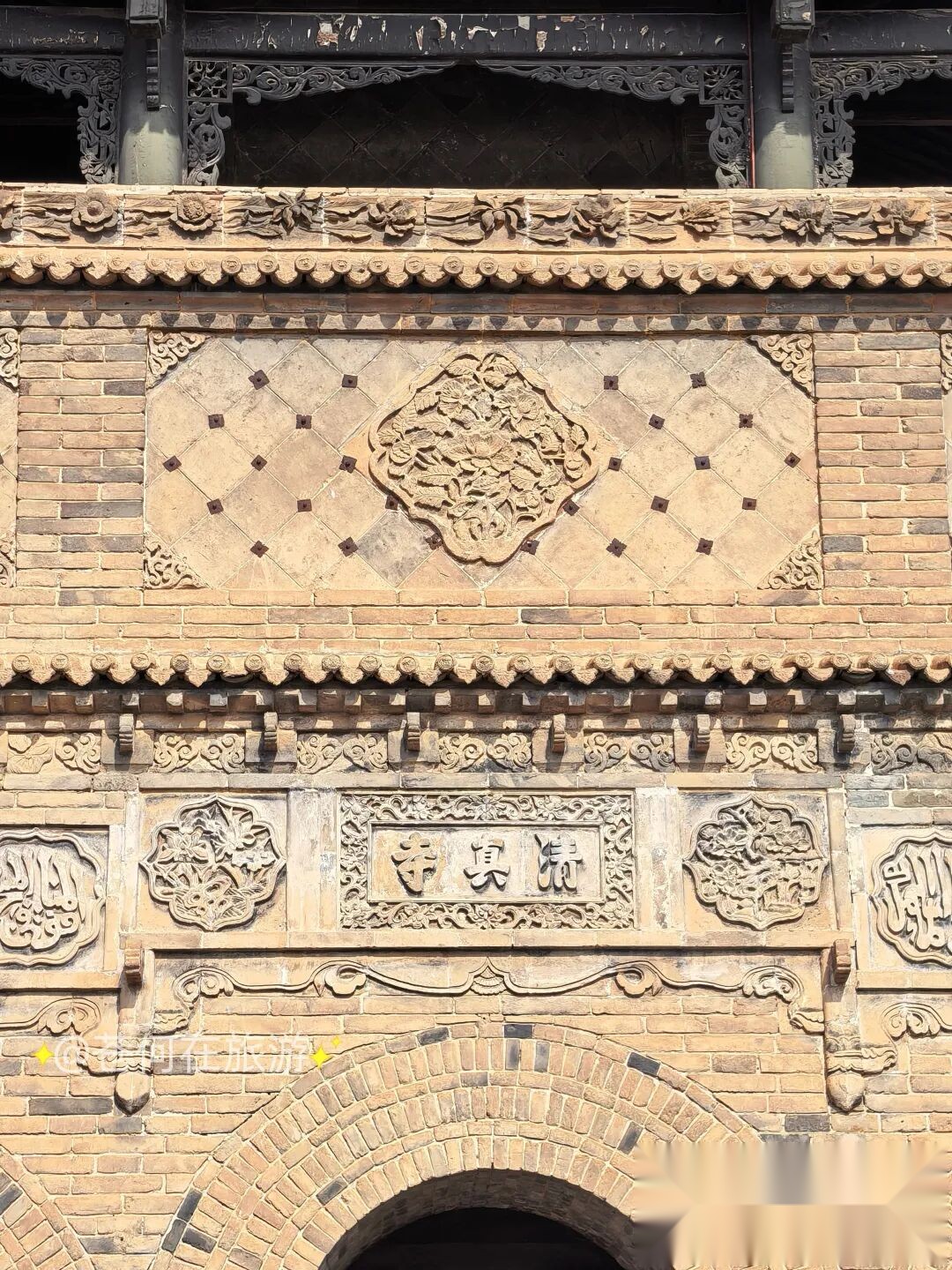
The Tongxin Great Mosque is built on a 7-meter-high platform enclosed by dark grey bricks, utilizing traditional Chinese timber-framing techniques while incorporating Islamic-style decorations, making it a stellar example of two cultures coming together.
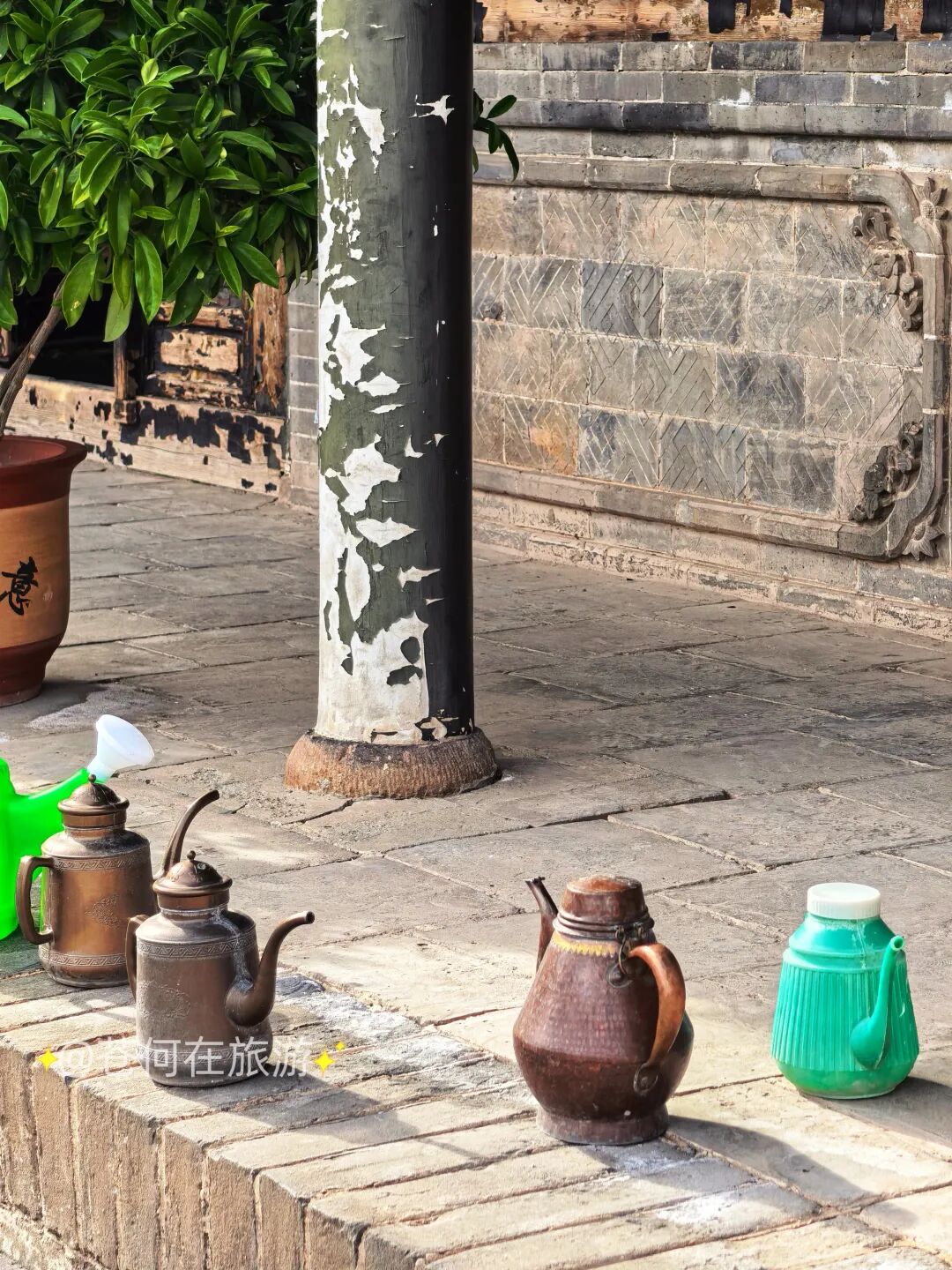
The dark brick spirit wall (zhaobi) in front of the mosque is a classic case in point. The front features the name 'Tongxin Great Mosque' written in both Chinese and Arabic script. The center of the back features a brick-carved 'Moon Hiding in the Pines' motif, flanked by couplets carved in official script (lishi) dating back to the Guangxu reign.
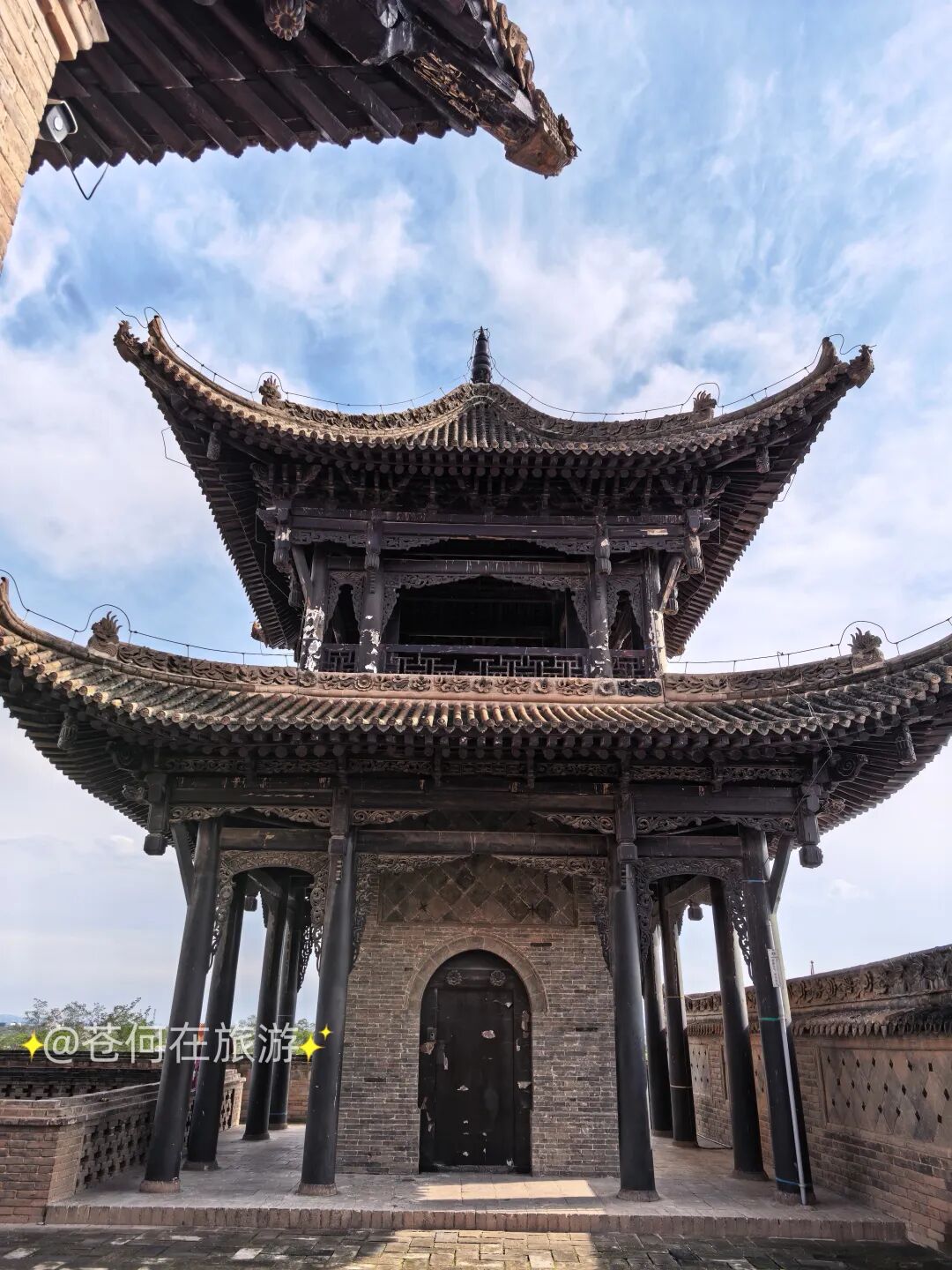
Next up are the arched gates: the lintel of the main central gate is brick-carved with the three characters for 'Mosque' (Qingzhensi), while the side gates feature the words 'Purify the Heart' (Xixin) and 'Patience' (Rennai), topped off with intricate Arabic calligraphy and floral brick carvings.

What makes the entire complex super unique is its 'reverse-curtain' layout. To walk inside, visitors first have to pass through three brick-arched gates (facing east) and a dark underground passage, then climb the stairs up onto the grey-brick high platform. You’ll spot the minaret (bangkelou) before stepping into the main courtyard, where you'll finally see the prayer hall facing west toward Mecca.
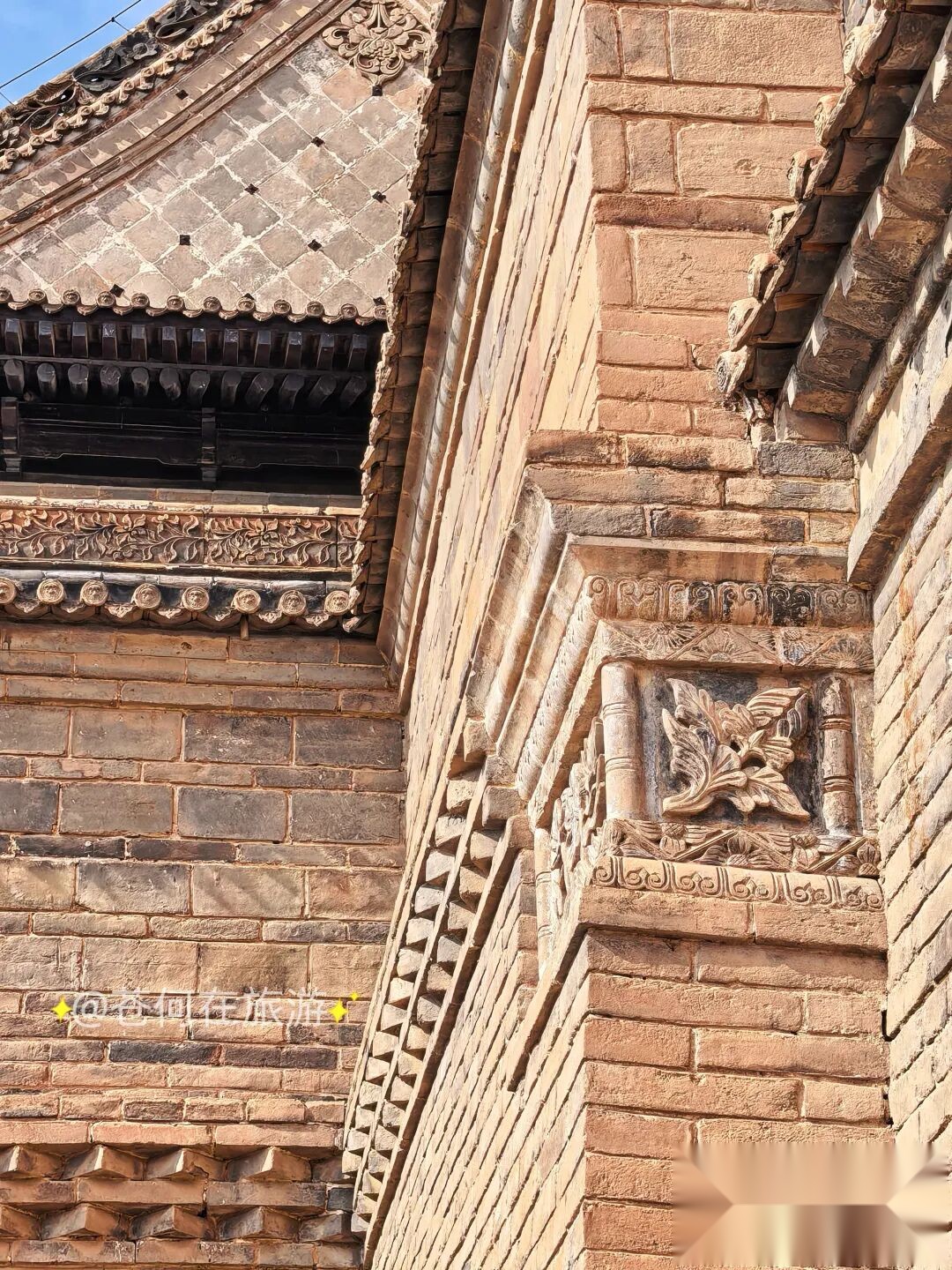
That right there is the mosque's reverse-curtain layout.
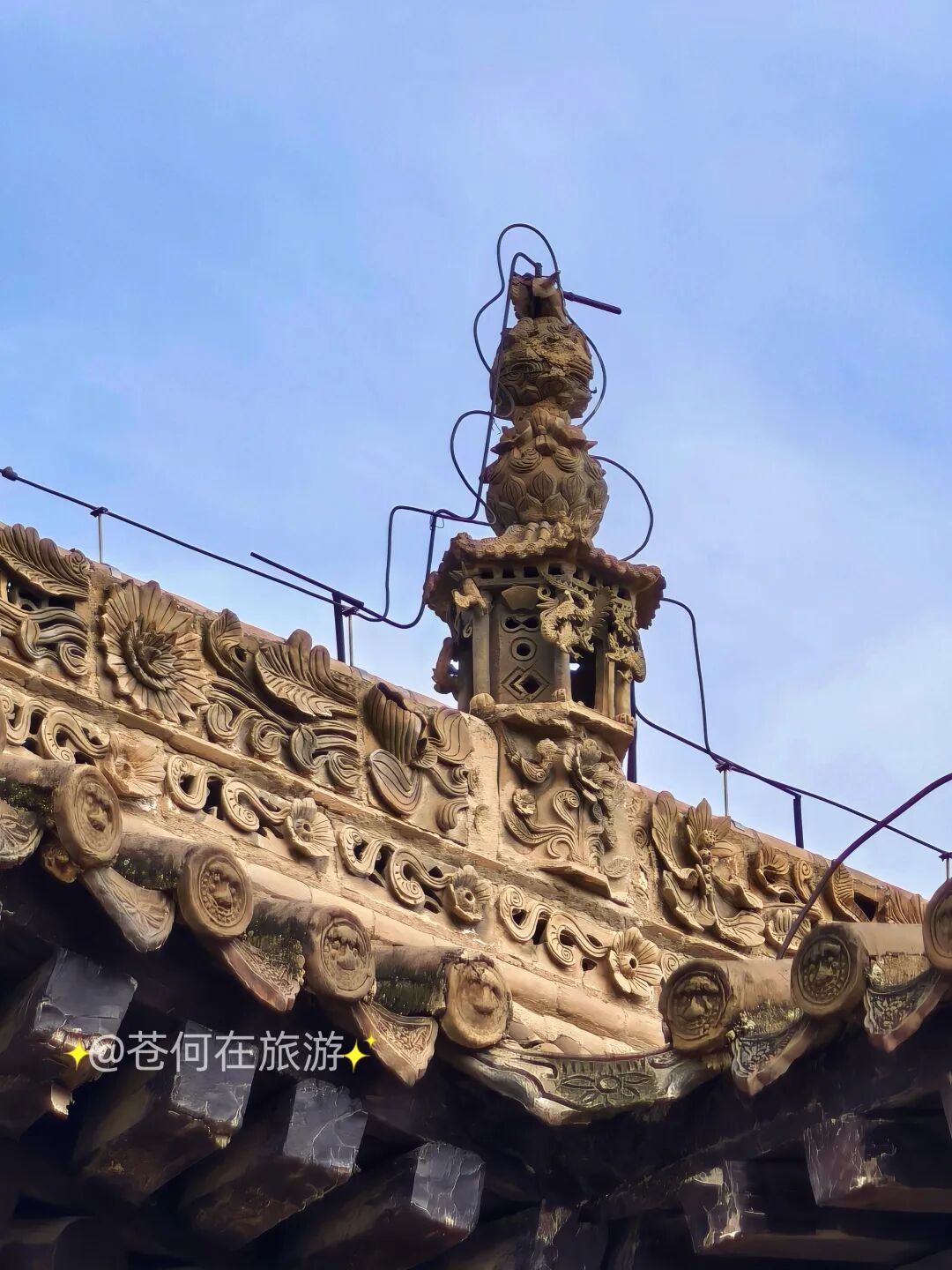
The bangkelou (minaret / prayer tower). Its second floor features a four-sided pyramidal roof in a classic Chinese pavilion style, complete with gorgeous brick and wood carvings. Built high up on the terrace, you can spot it from miles away.
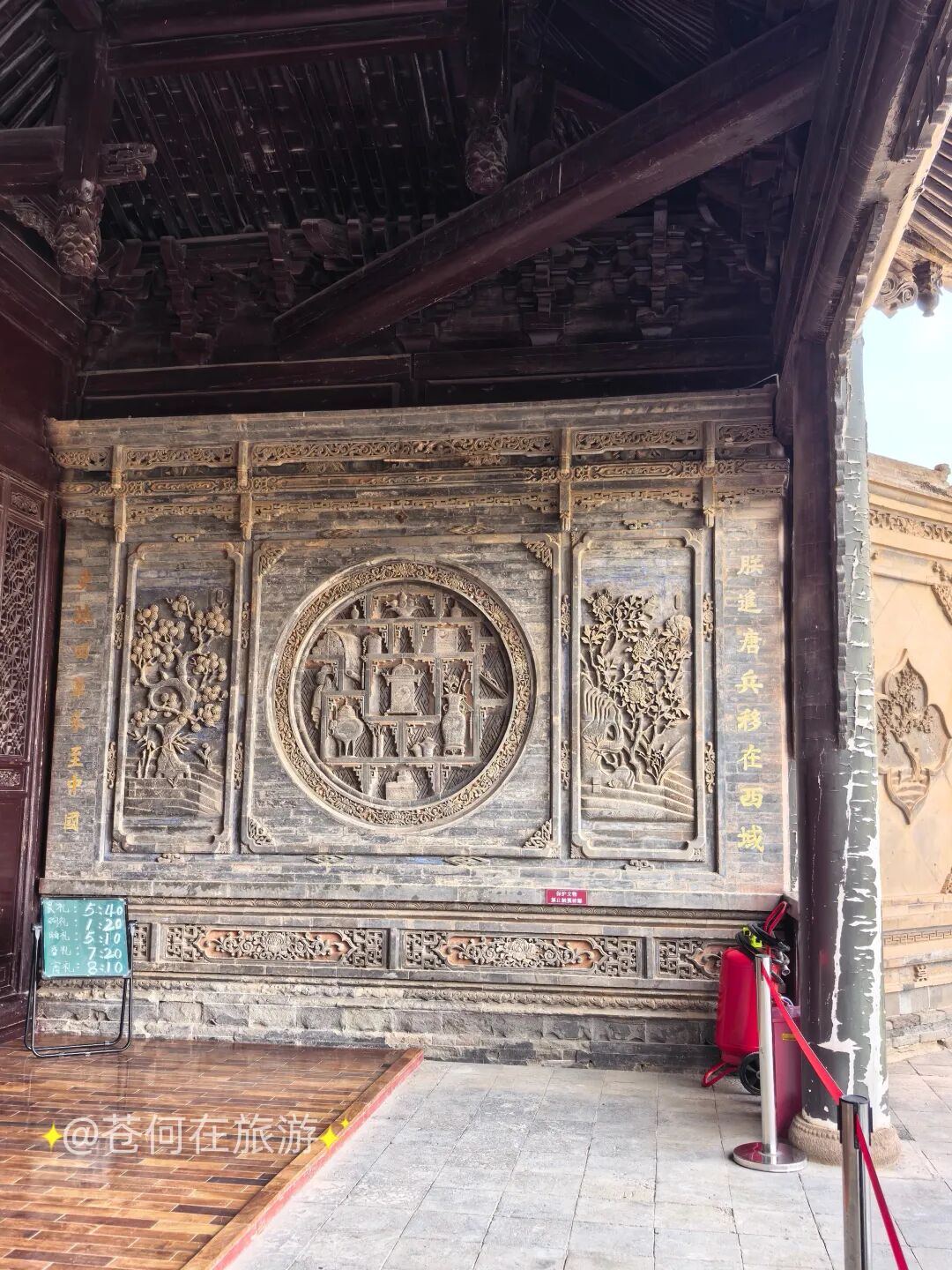
The prayer hall is the beating heart of the entire complex, sitting on the west side and facing east. The roof utilizes a connected-ridge technique, linking a rolled-shed roof (juanshan) and two hip-and-gable roofs (xieshan) end-to-end to form one massive hall. The interior of the prayer hall is currently closed to non-Muslim visitors.
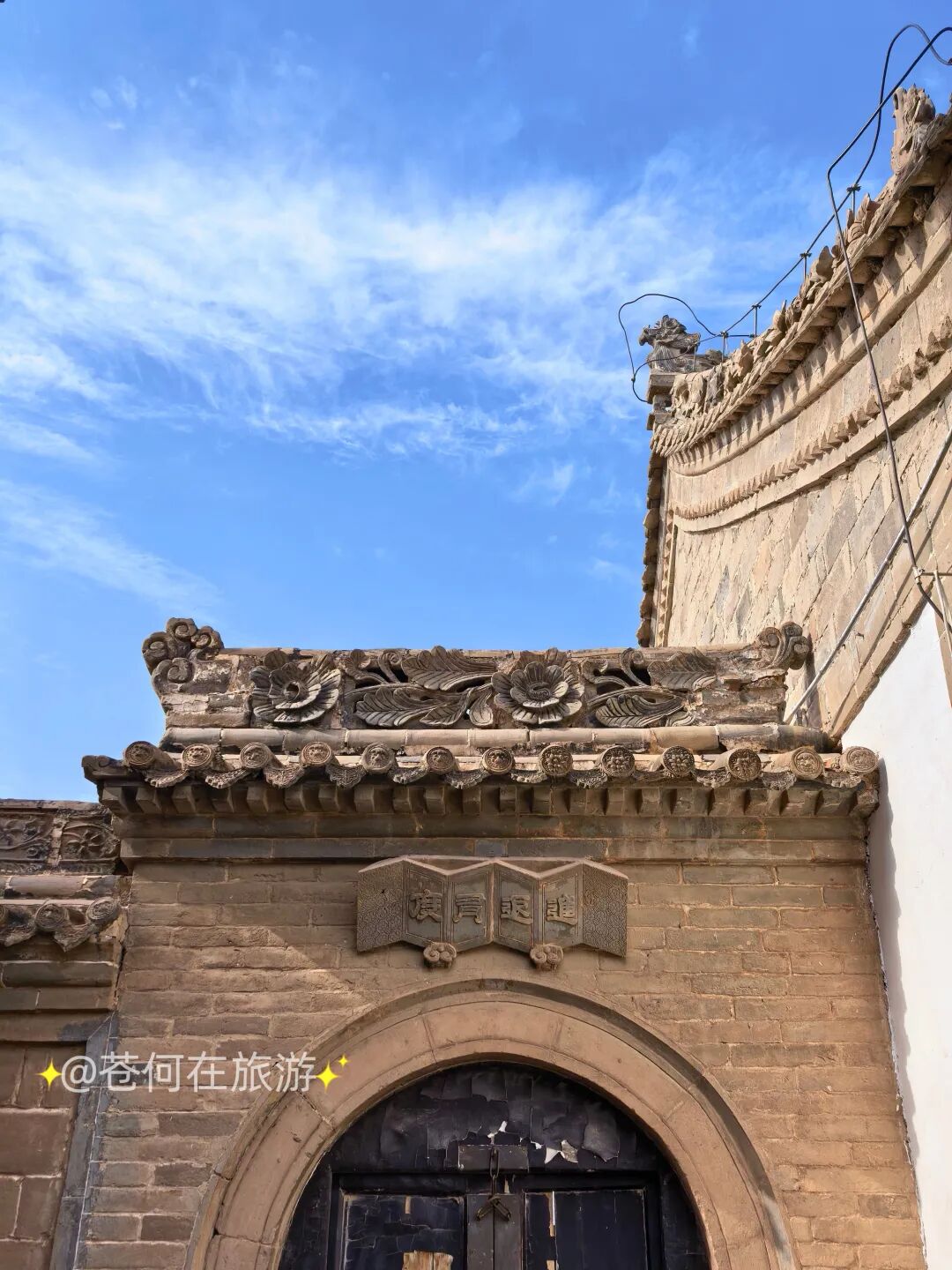
The most striking takeaway from hanging out here is the insane amount of detailed brick carving everywhere you look. Aside from the spirit wall, arched gates, and minaret we just mentioned, you'll spot brick carvings all over the main roof ridges, ridge terminals, gable walls, tie-beams (fang), and the walls flanking both sides of the corridors.
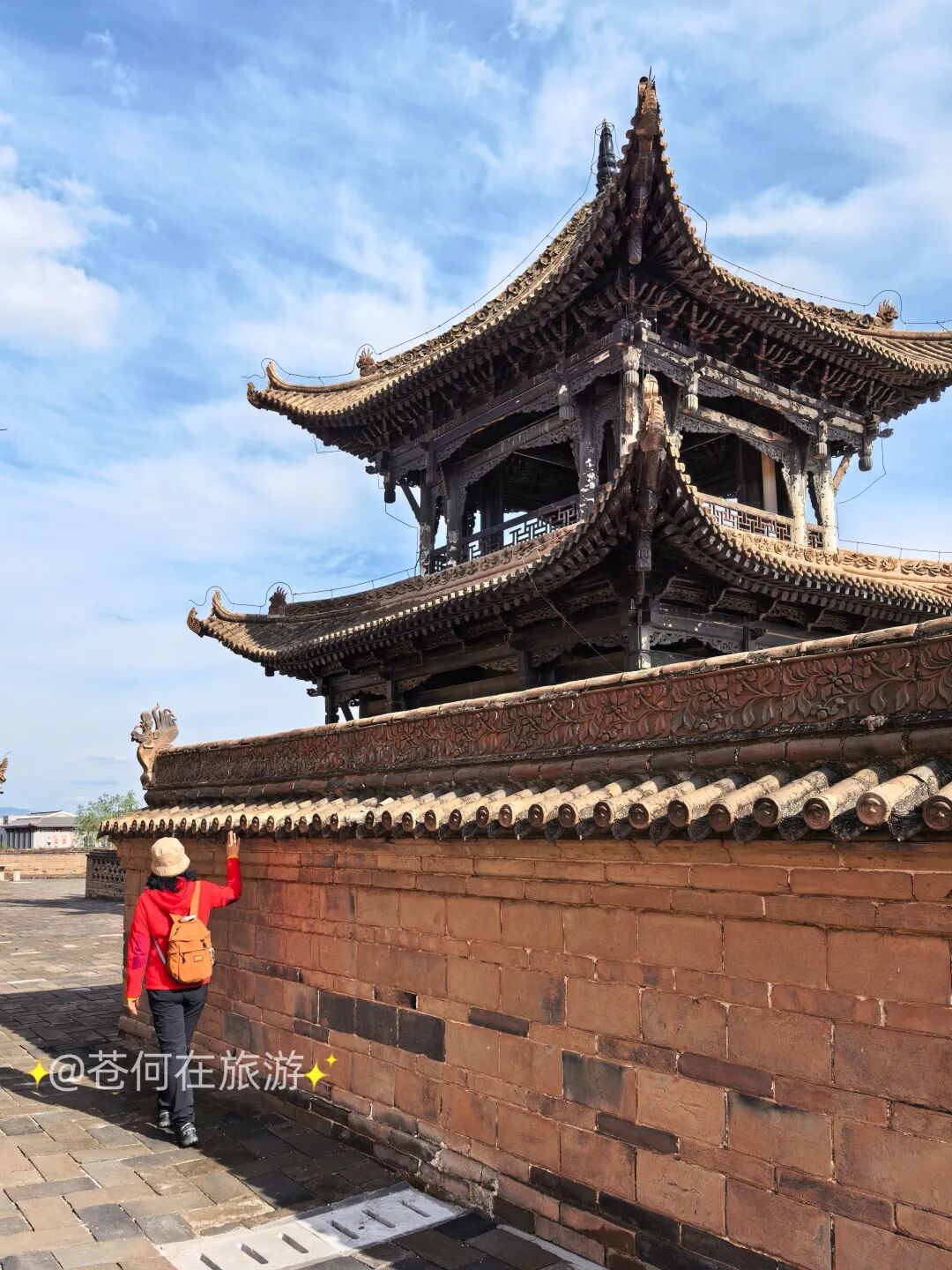
For example, on the walls flanking the front porch of the prayer hall, the south wall's center brick carving features a 'bogu' antique display rack alongside sutras, paired with bamboo and lotus motifs. The north wall features another bogu rack and a clock, paired with pine and chrysanthemum motifs.
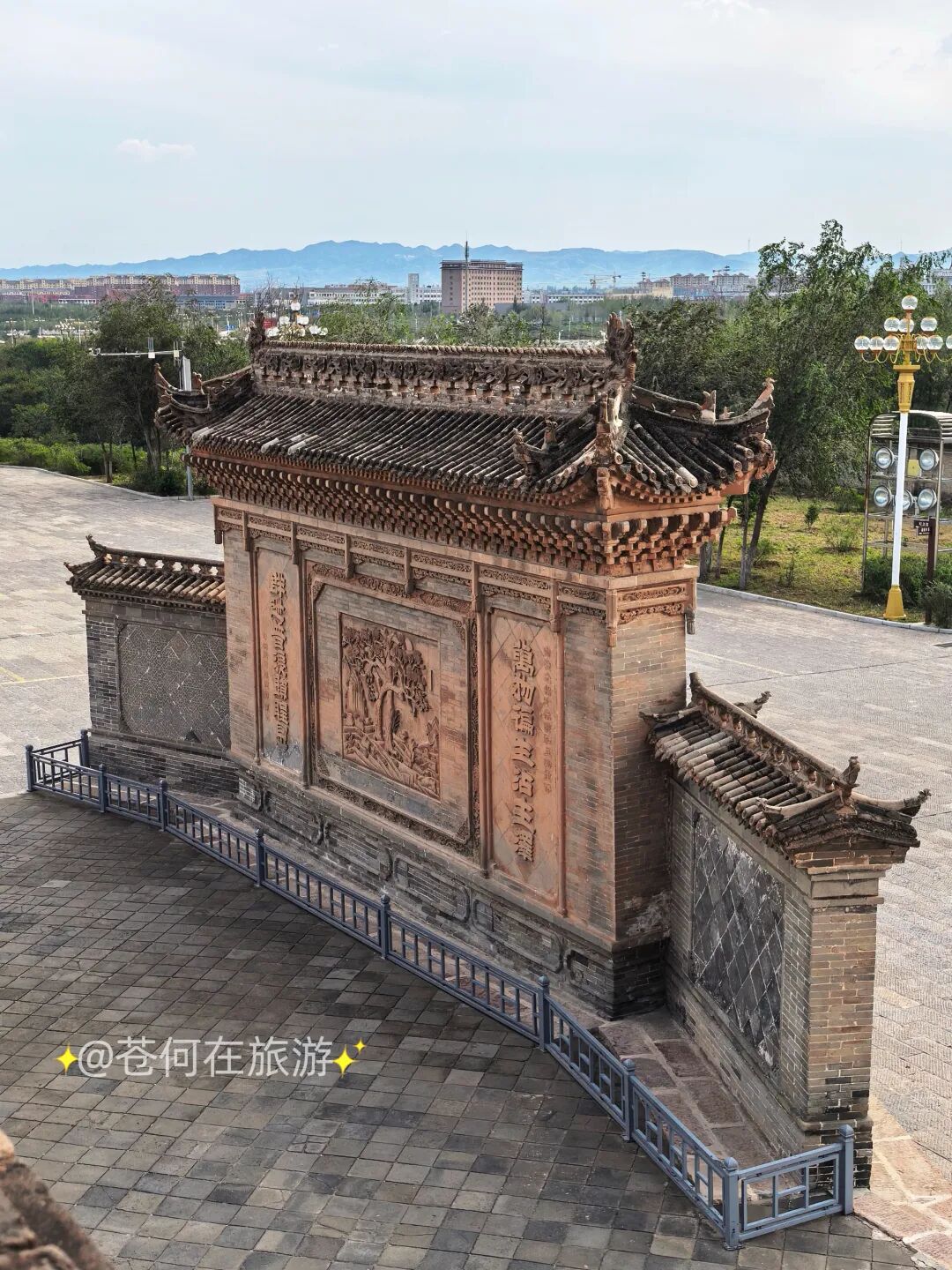
The plaques on the side gates leading in and out of the main prayer courtyard are also super unique, featuring book-page-style brick plaques inscribed with 'Entering and Leaving is a Gate' on one side, and 'Advance and Retreat with Propriety' on the other.
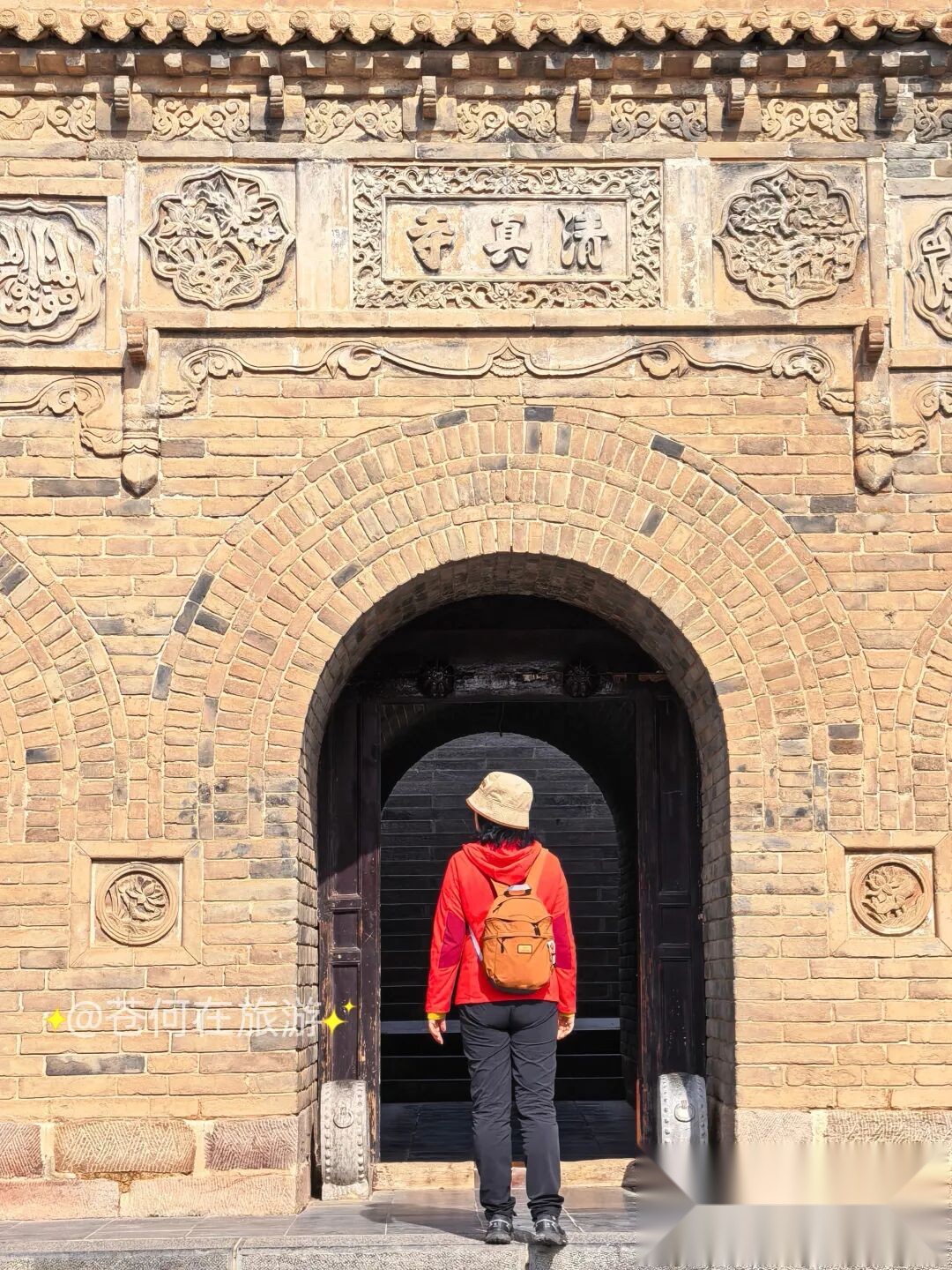
Bathed in blue skies and fluffy white clouds, the Tongxin Great Mosque oozes ancient vibes, making it the ultimate spot for moody, storytelling travel shots.
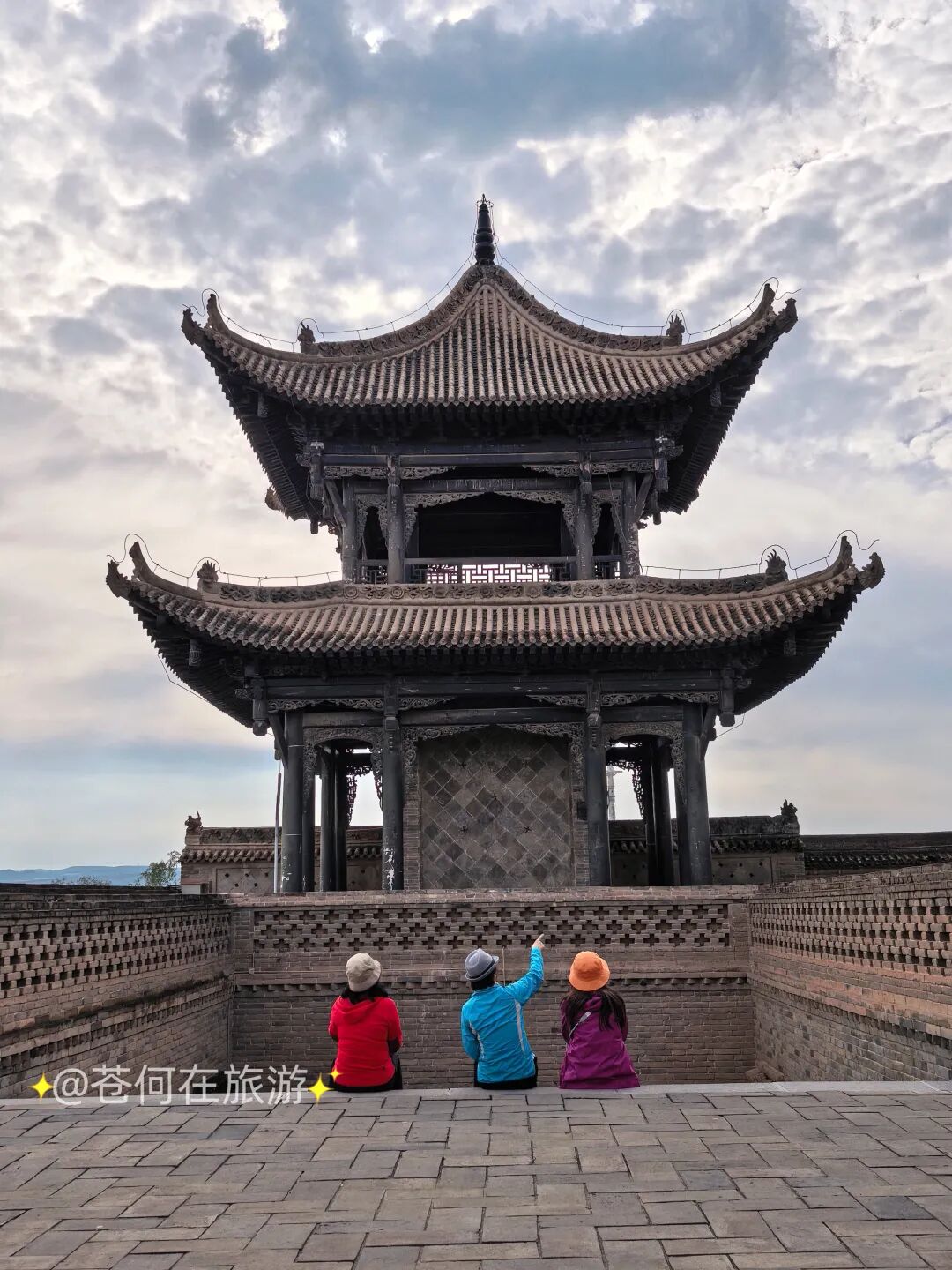
A few photography tips and takeaways:
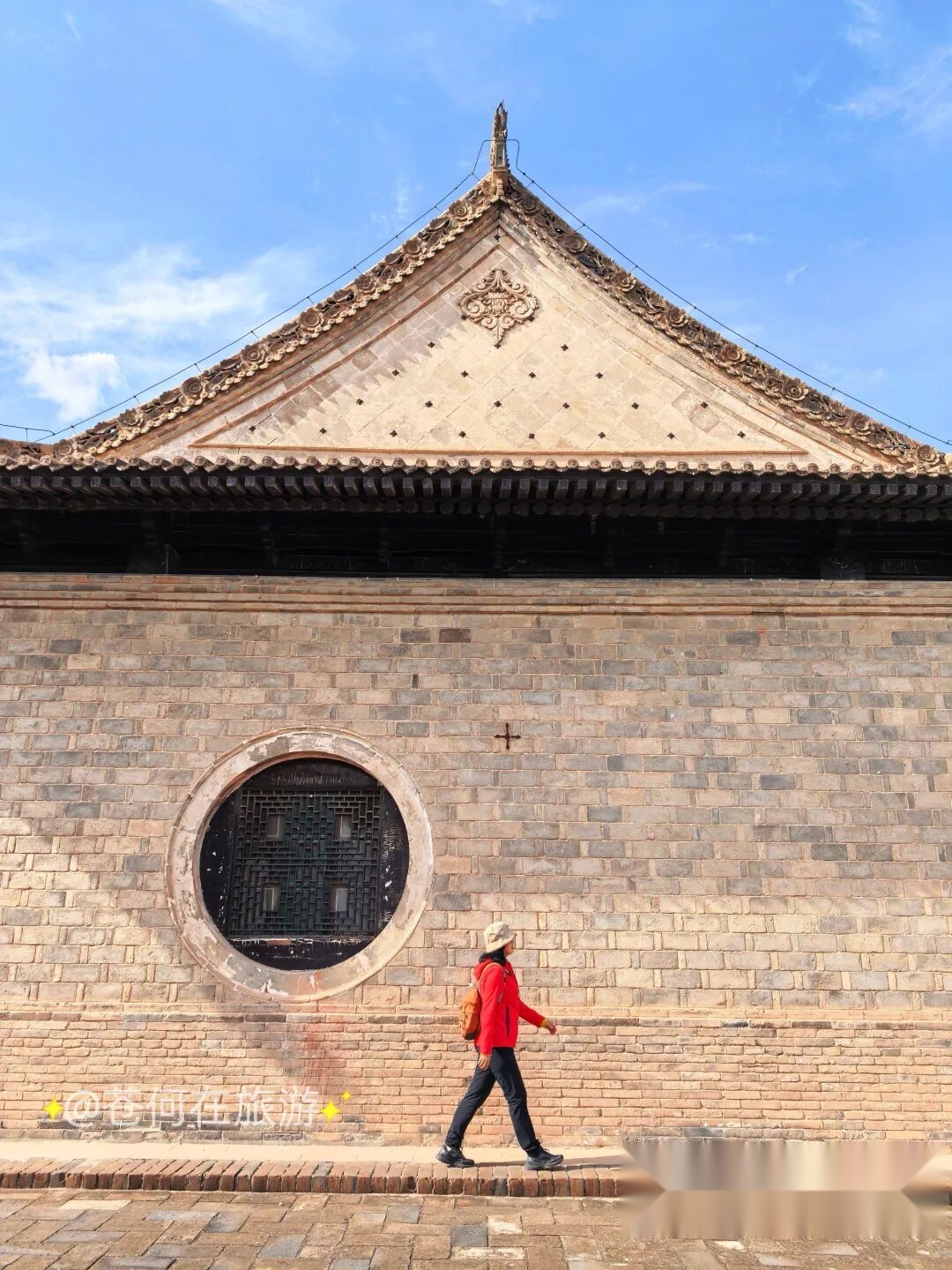
You can snag a sweeping panoramic shot of the entire mosque from the side of the spirit wall, and a full shot of the back of the spirit wall from up on the high platform.

Use a telephoto lens at the arched gates to capture that atmospheric, stepping-into-the-mosque vibe.
Sit on the steps with the minaret in the background for a cinematic, storytelling portrait—the shot below was taken by setting up our own tripod.
Snapping candid walking shots along the walls of the prayer courtyard keeps the frame super clean and looks amazing.
✅ Travel Guide:
Address: Beside Provincial Highway 101, near the Red Army Long March Memorial Museum – Tongxin Great Mosque, Tongxin County, Wuzhong City, Ningxia
Hours: 8:00 AM – 6:00 PM
Admission: Free
Exploring Ningxia's Islamic Heritage: Tongxin Great Mosque & Hui Muslim Culture
Articles • Hasan09 posted the article • 0 comments • 6 views • 3 hours ago
Echoes of Faith in Northwest China: Strolling Through the Historic Tongxin Great Mosque and Capturing Traditional Chinese-Islamic Architecture
Summary:
Photo-story capturing the grand spirit of the Tongxin Great Mosque. Through a close-up lens, we explore the mosque's classical hip-and-gable double-eaves roofs, the delicate minaret, and the elevated prayer hall, showcasing the exquisite craftsmanship and serene spiritual sanctuary of the Hui Muslims in Northwest China.
Located in Tongxin County, Wuzhong City, Ningxia, the Tongxin Great Mosque is one of the oldest and largest surviving mosques in the region, recognized as a Major Historical and Cultural Site Protected at the National Level. Its exact founding date is unknown, but the existing structures date back to the Ming dynasty, built over the foundations of an older late-Yuan dynasty mosque. It underwent major renovations during the Wanli reign of the Ming dynasty, as well as the Qianlong and Guangxu reigns of the Qing dynasty. During the late 1960s, the mosque's structures suffered varying degrees of damage. After reopening in 1979, the national and autonomous regional governments allocated funds for comprehensive repairs. Especially between 1982 and 1985, additional funds were invested to completely overhaul the main structures and officially demarcate the surrounding heritage protection zone.
Architectural Style: A classic 'high-platform' structure built atop a 7-meter-tall blue brick terrace. It seamlessly blends traditional Chinese wooden architecture with Islamic brick carving decoration, featuring an inverted 'rolling blind' layout. In front of the mosque stands an exquisite brick-carved screen wall, while the upper terrace features a two-story, four-corner pyramidal minaret and interconnected prayer halls that can accommodate up to 800 worshippers for congregational prayer. view all
Echoes of Faith in Northwest China: Strolling Through the Historic Tongxin Great Mosque and Capturing Traditional Chinese-Islamic Architecture

Summary:
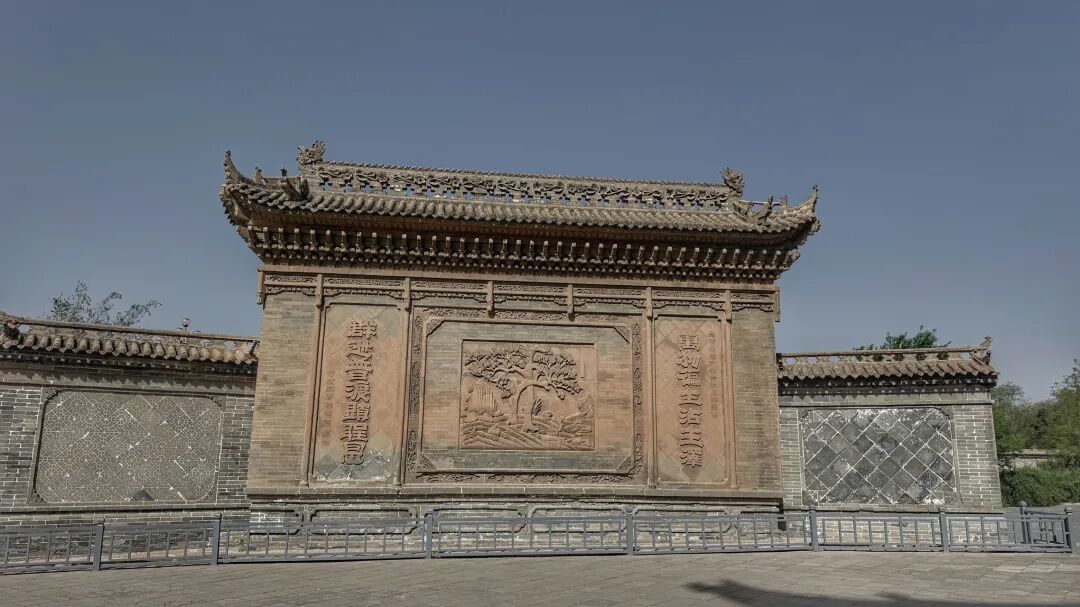
Photo-story capturing the grand spirit of the Tongxin Great Mosque. Through a close-up lens, we explore the mosque's classical hip-and-gable double-eaves roofs, the delicate minaret, and the elevated prayer hall, showcasing the exquisite craftsmanship and serene spiritual sanctuary of the Hui Muslims in Northwest China.
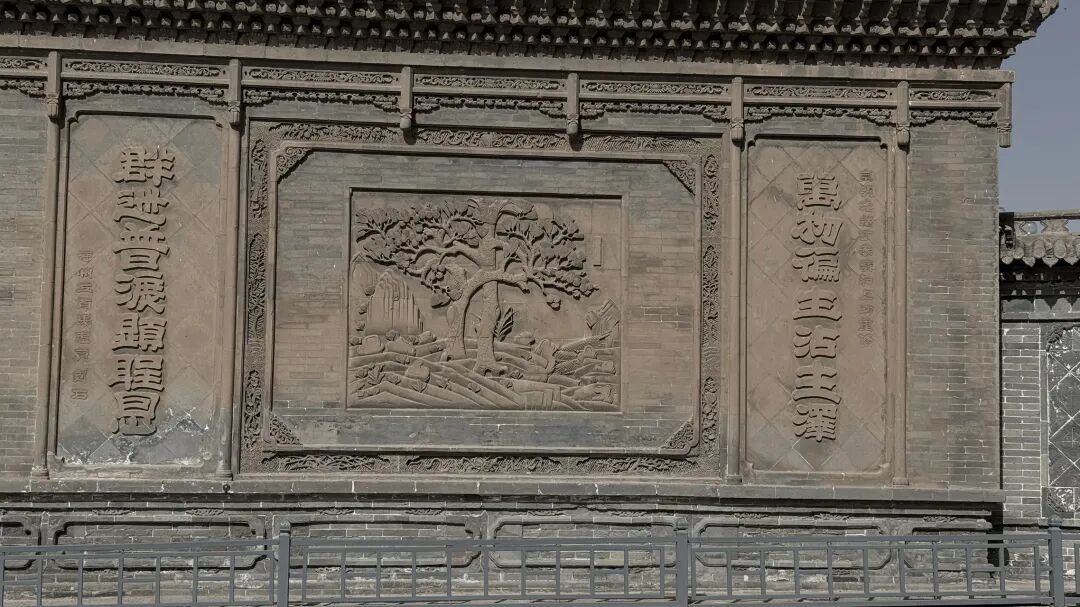
Located in Tongxin County, Wuzhong City, Ningxia, the Tongxin Great Mosque is one of the oldest and largest surviving mosques in the region, recognized as a Major Historical and Cultural Site Protected at the National Level. Its exact founding date is unknown, but the existing structures date back to the Ming dynasty, built over the foundations of an older late-Yuan dynasty mosque. It underwent major renovations during the Wanli reign of the Ming dynasty, as well as the Qianlong and Guangxu reigns of the Qing dynasty. During the late 1960s, the mosque's structures suffered varying degrees of damage. After reopening in 1979, the national and autonomous regional governments allocated funds for comprehensive repairs. Especially between 1982 and 1985, additional funds were invested to completely overhaul the main structures and officially demarcate the surrounding heritage protection zone.

Architectural Style: A classic 'high-platform' structure built atop a 7-meter-tall blue brick terrace. It seamlessly blends traditional Chinese wooden architecture with Islamic brick carving decoration, featuring an inverted 'rolling blind' layout. In front of the mosque stands an exquisite brick-carved screen wall, while the upper terrace features a two-story, four-corner pyramidal minaret and interconnected prayer halls that can accommodate up to 800 worshippers for congregational prayer.
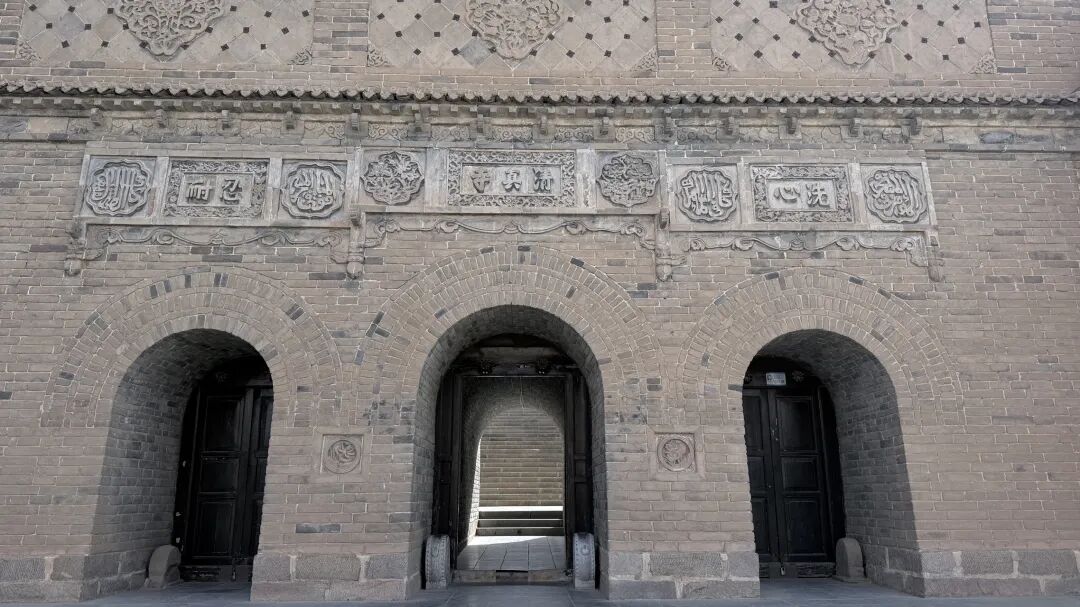
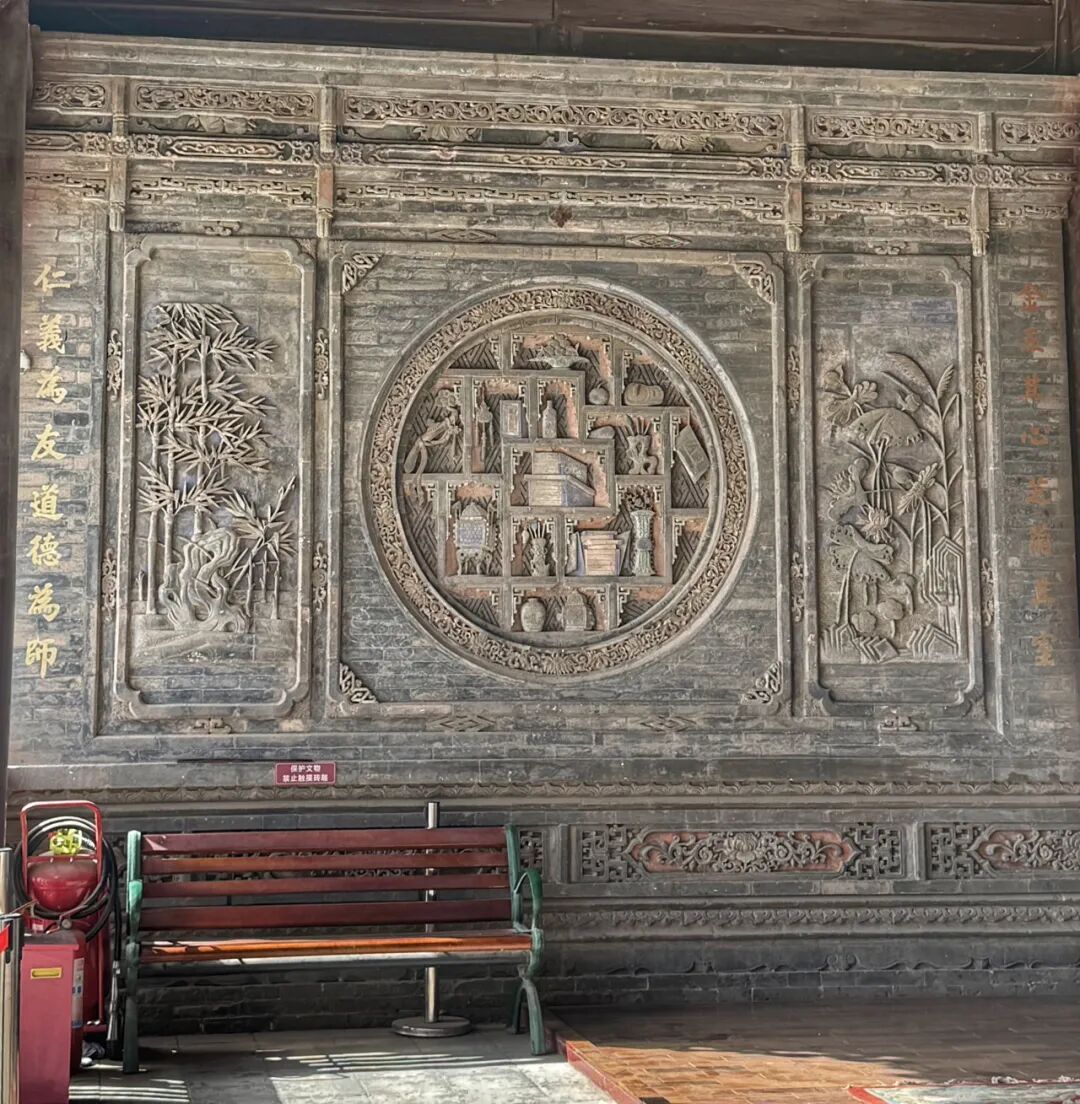
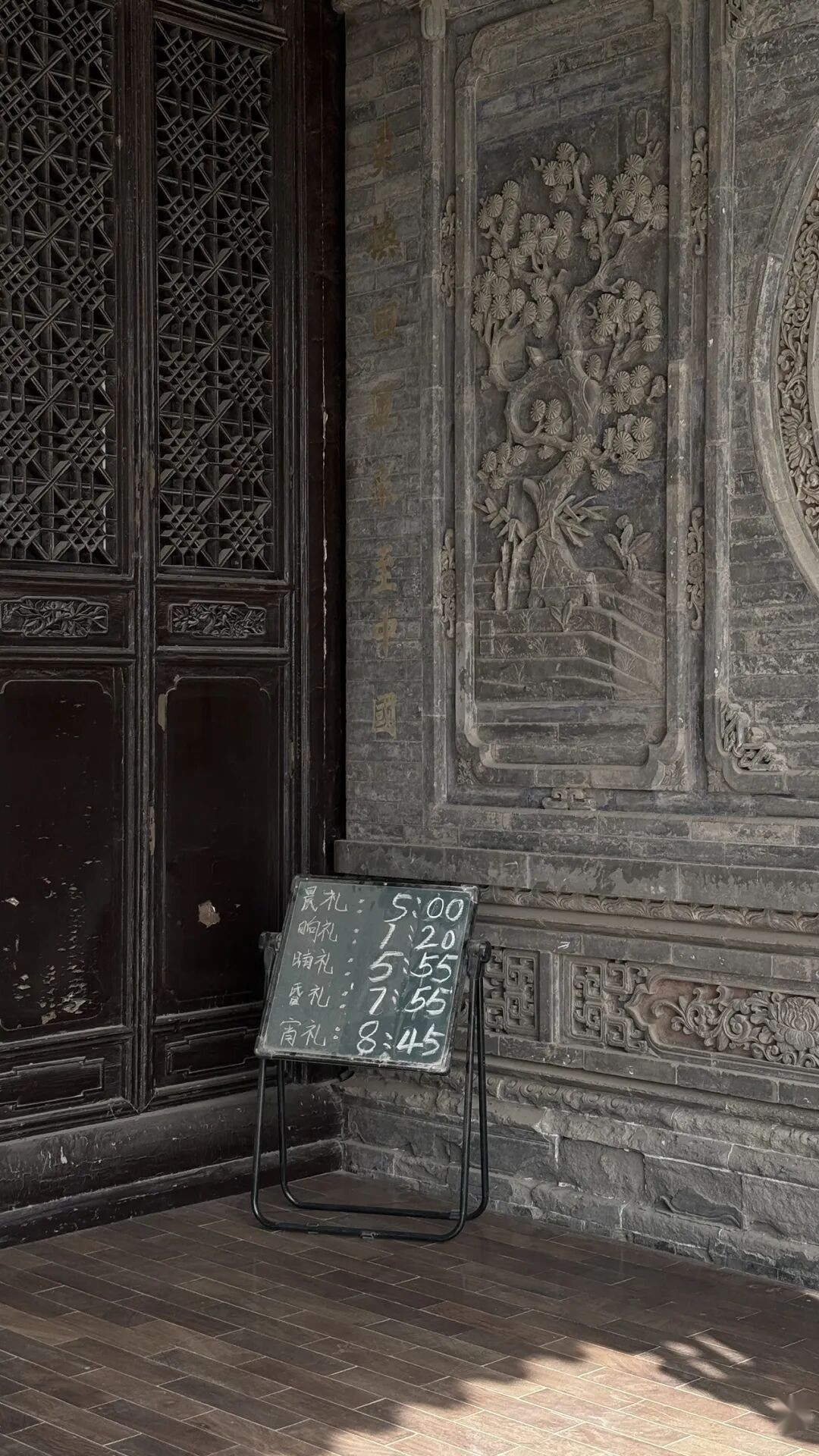
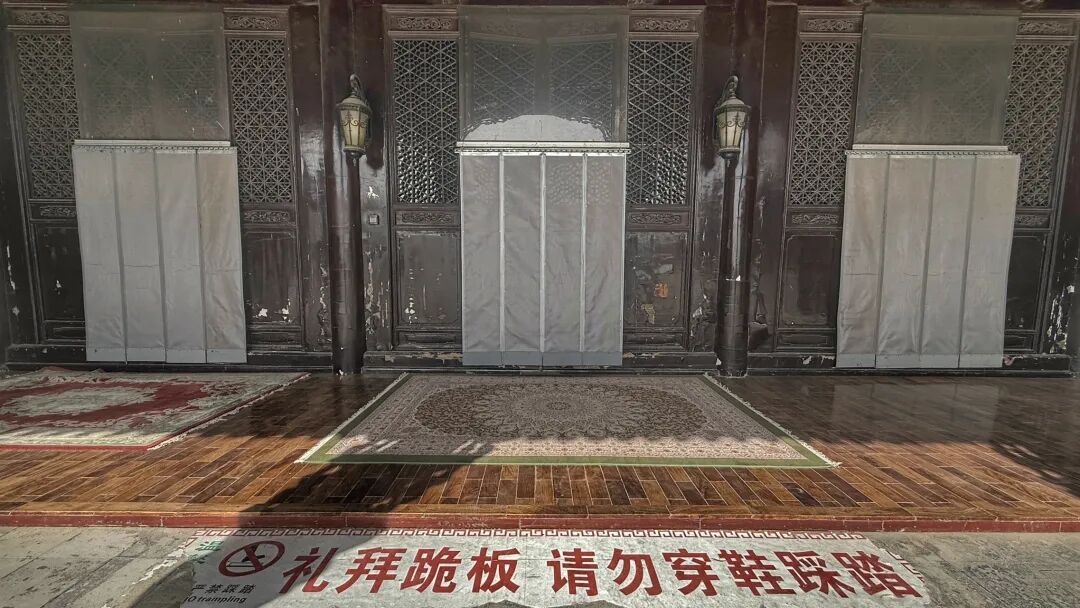
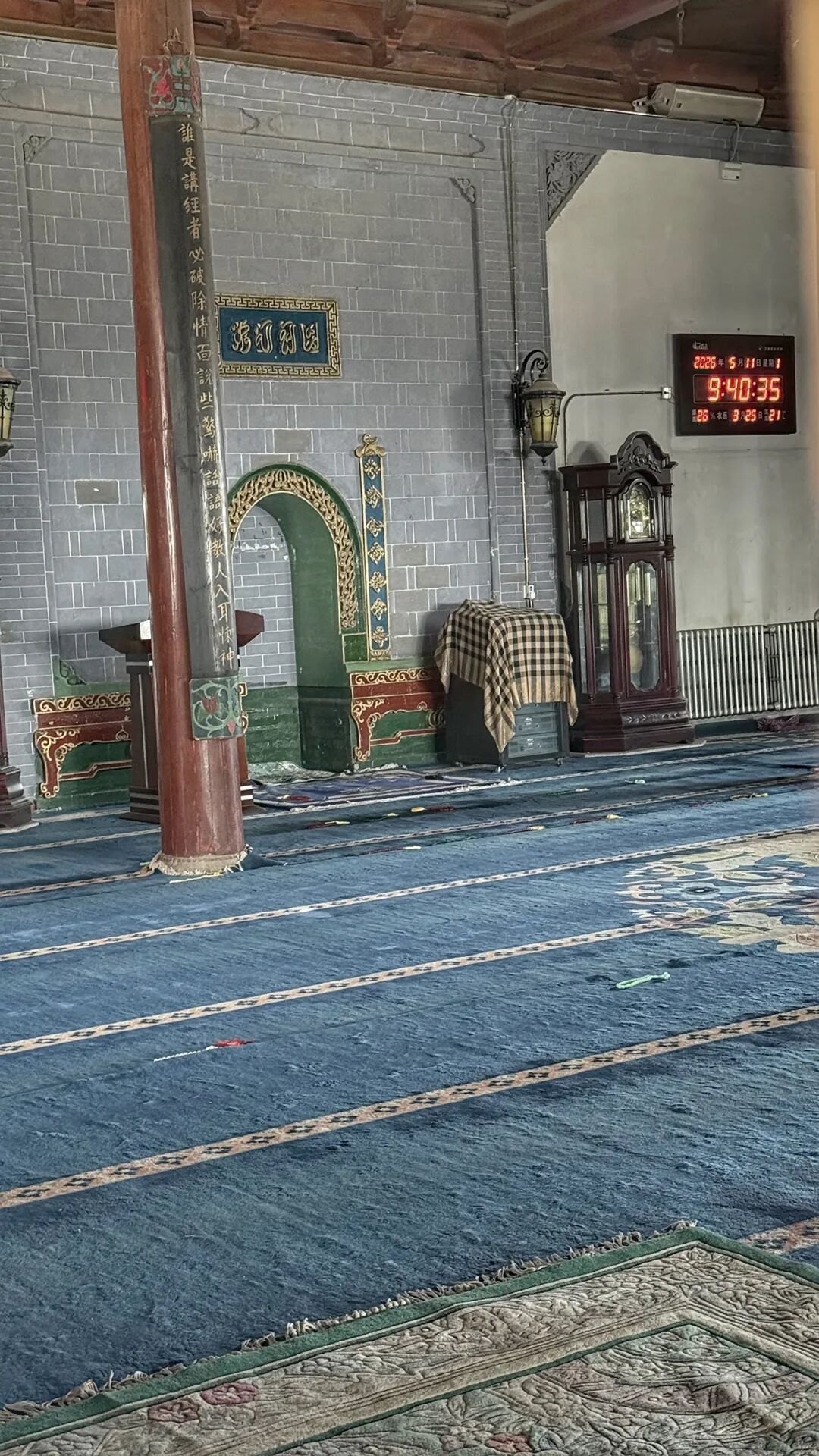
Exploring Ningxia's Hui Muslim Heritage: Tongxin Great Mosque & Halal Food Guide
Articles • Hasan09 posted the article • 0 comments • 4 views • 3 hours ago
A Jewel Scattered Across the Frontier: A Panoramic Visual and Classic Brick Carving Masterpiece Tour of Tongxin Great Mosque
Abstract:
Eighty-seven panoramic and close-up documentary photos systematically capture the Tongxin Great Mosque. Every fine detail is vividly rendered, from the exquisite floral brick carvings like 'Yuefang Pine and Cypress' on the spirit wall to the deep, luminous main prayer hall and century-old scholar trees—truly a visual feast of frontier Islamic ancient architecture.
▲ Click to follow for non-stop content
The Tongxin Great Mosque is the oldest and largest mosque in the Ningxia Hui Autonomous Region. It holds profound influence among Muslims in southern Ningxia's mountainous areas. Historically, its Quranic education (madrasa) was exceptionally advanced, serving as the region's hub for religious and academic activities where numerous renowned Muslim scholars studied and taught.
Legend has it that Tongxin Great Mosque was first built in the early Ming Dynasty, boasting a history of about 600 years. It underwent three major renovations during the Ming and Qing dynasties. In 1936, during the Red Army's Long March (Western Expedition), the Shaan-Gan-Ning Yuhai County Hui Autonomous Government was established right here.
The mosque's standout feature is its blend of traditional Chinese and Islamic architectural styles, dominated by timber framing, brick carvings, and hip-and-gable roofs (xieshan), with decorations incorporating Arabic geometric patterns and Quranic verses. The 'Pine and Moon' brick carving on the spirit wall out front holds immense artistic value. Grand and impeccably decorated, it was designated as a Major Historical and Cultural Site Protected at the National Level in 1988. Following multiple restorations, it still preserves its historic appearance to this day and stands as an important witness to the cultural fusion of the Hui and Han peoples.
(Wikipedia) view all
A Jewel Scattered Across the Frontier: A Panoramic Visual and Classic Brick Carving Masterpiece Tour of Tongxin Great Mosque

Abstract:
Eighty-seven panoramic and close-up documentary photos systematically capture the Tongxin Great Mosque. Every fine detail is vividly rendered, from the exquisite floral brick carvings like 'Yuefang Pine and Cypress' on the spirit wall to the deep, luminous main prayer hall and century-old scholar trees—truly a visual feast of frontier Islamic ancient architecture.
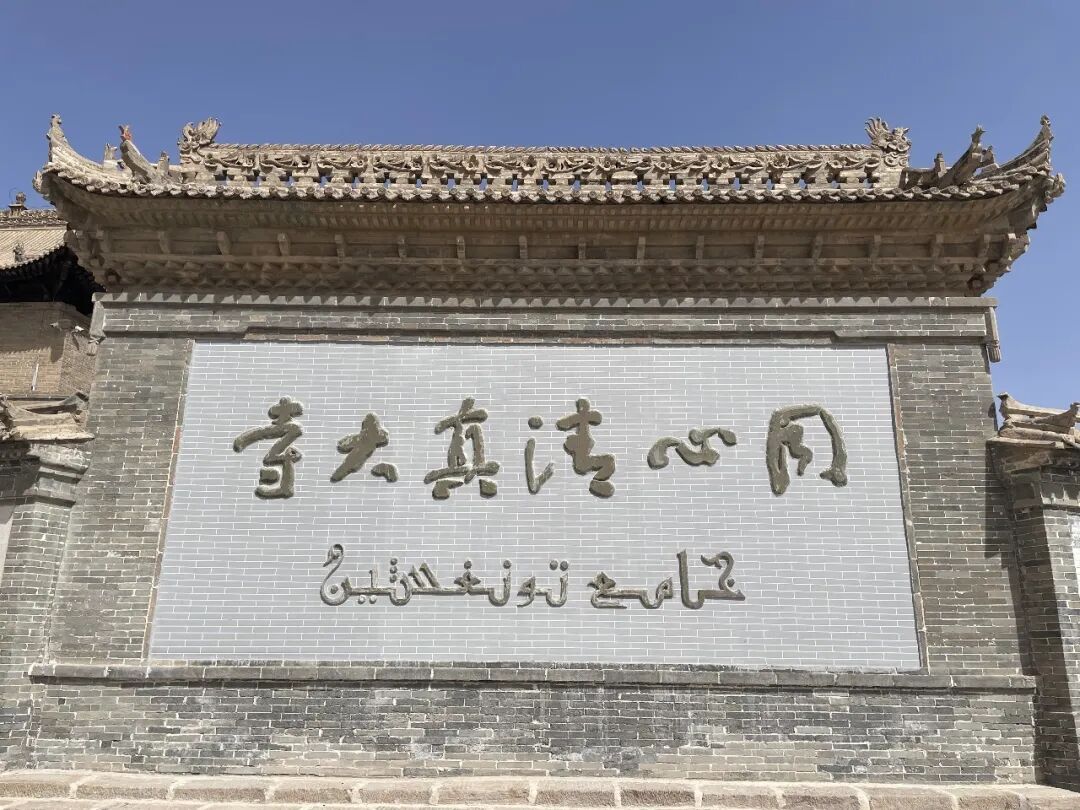
▲ Click to follow for non-stop content
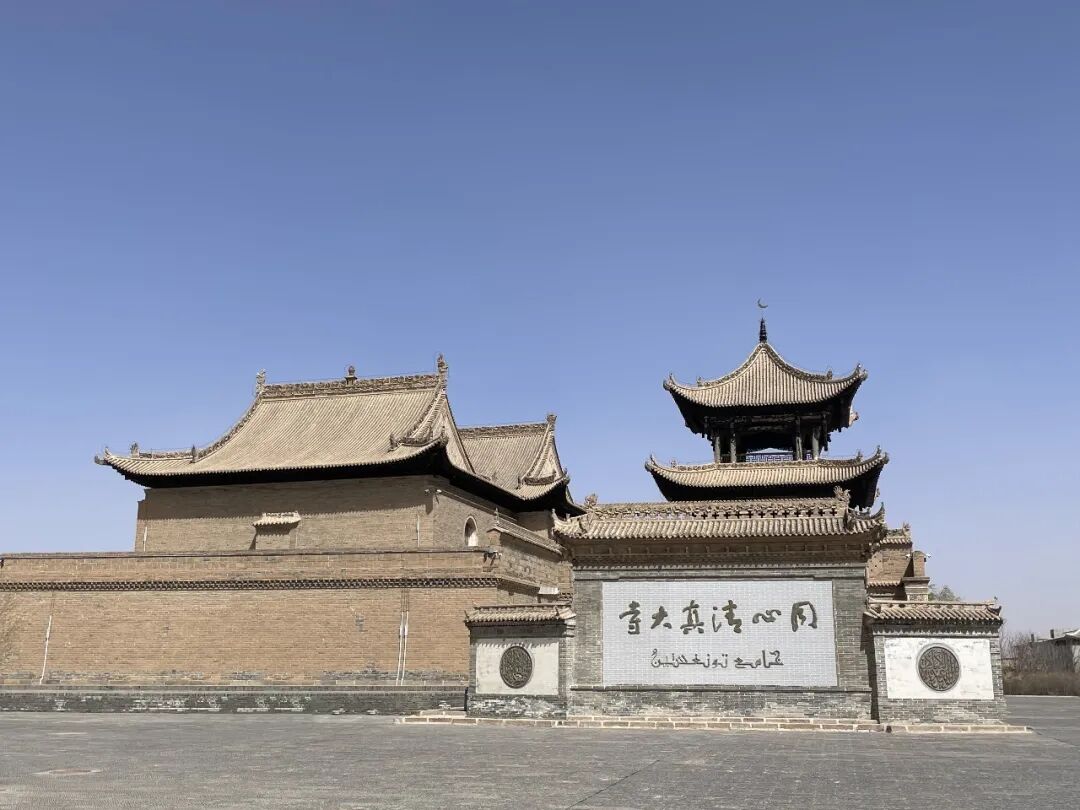
The Tongxin Great Mosque is the oldest and largest mosque in the Ningxia Hui Autonomous Region. It holds profound influence among Muslims in southern Ningxia's mountainous areas. Historically, its Quranic education (madrasa) was exceptionally advanced, serving as the region's hub for religious and academic activities where numerous renowned Muslim scholars studied and taught.
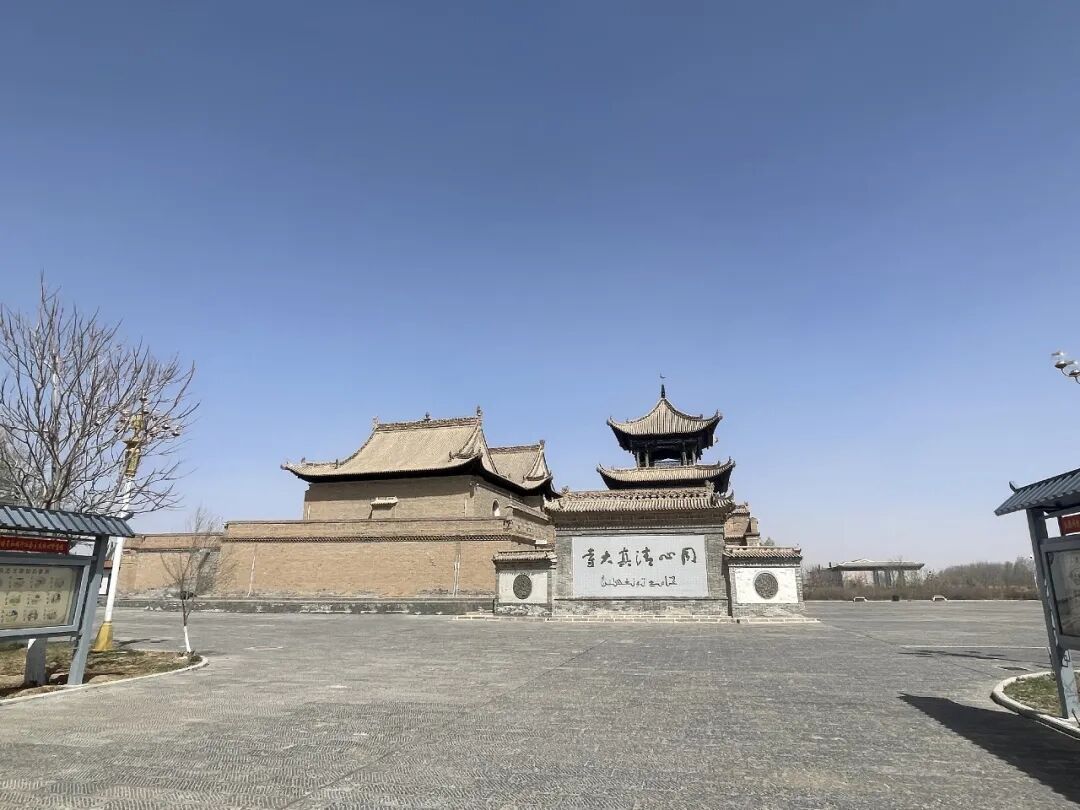
Legend has it that Tongxin Great Mosque was first built in the early Ming Dynasty, boasting a history of about 600 years. It underwent three major renovations during the Ming and Qing dynasties. In 1936, during the Red Army's Long March (Western Expedition), the Shaan-Gan-Ning Yuhai County Hui Autonomous Government was established right here.
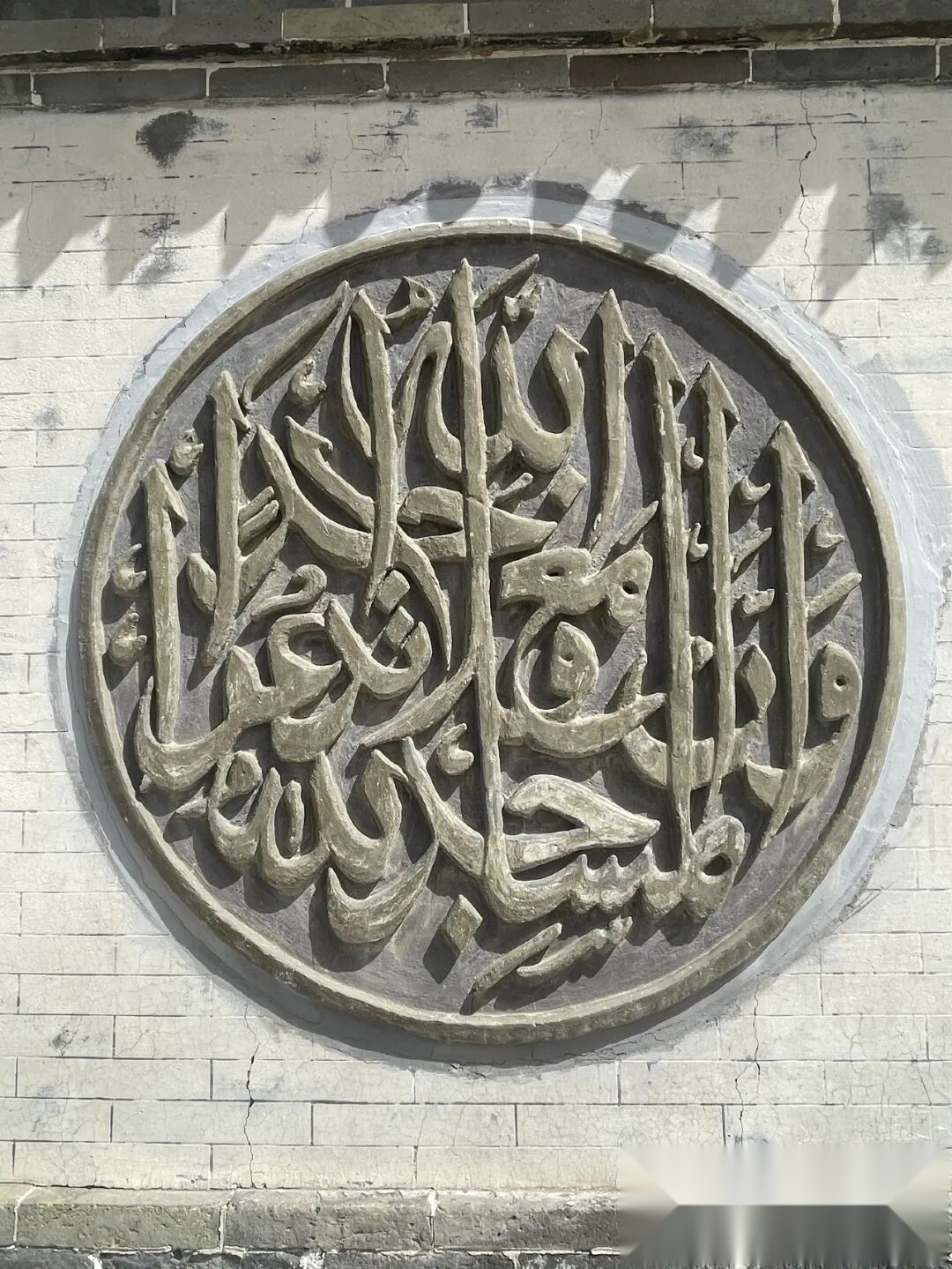
The mosque's standout feature is its blend of traditional Chinese and Islamic architectural styles, dominated by timber framing, brick carvings, and hip-and-gable roofs (xieshan), with decorations incorporating Arabic geometric patterns and Quranic verses. The 'Pine and Moon' brick carving on the spirit wall out front holds immense artistic value. Grand and impeccably decorated, it was designated as a Major Historical and Cultural Site Protected at the National Level in 1988. Following multiple restorations, it still preserves its historic appearance to this day and stands as an important witness to the cultural fusion of the Hui and Han peoples.
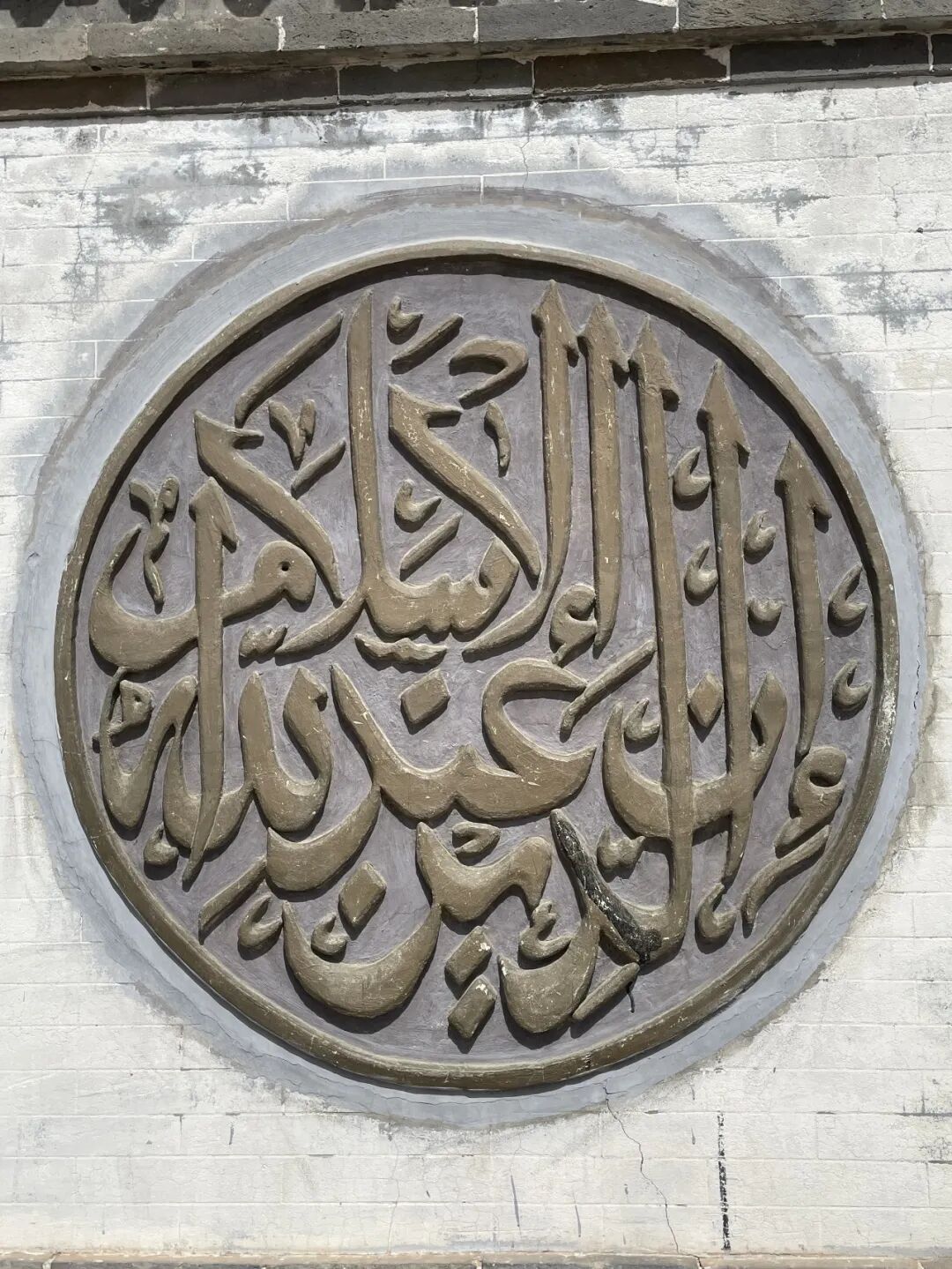
(Wikipedia)
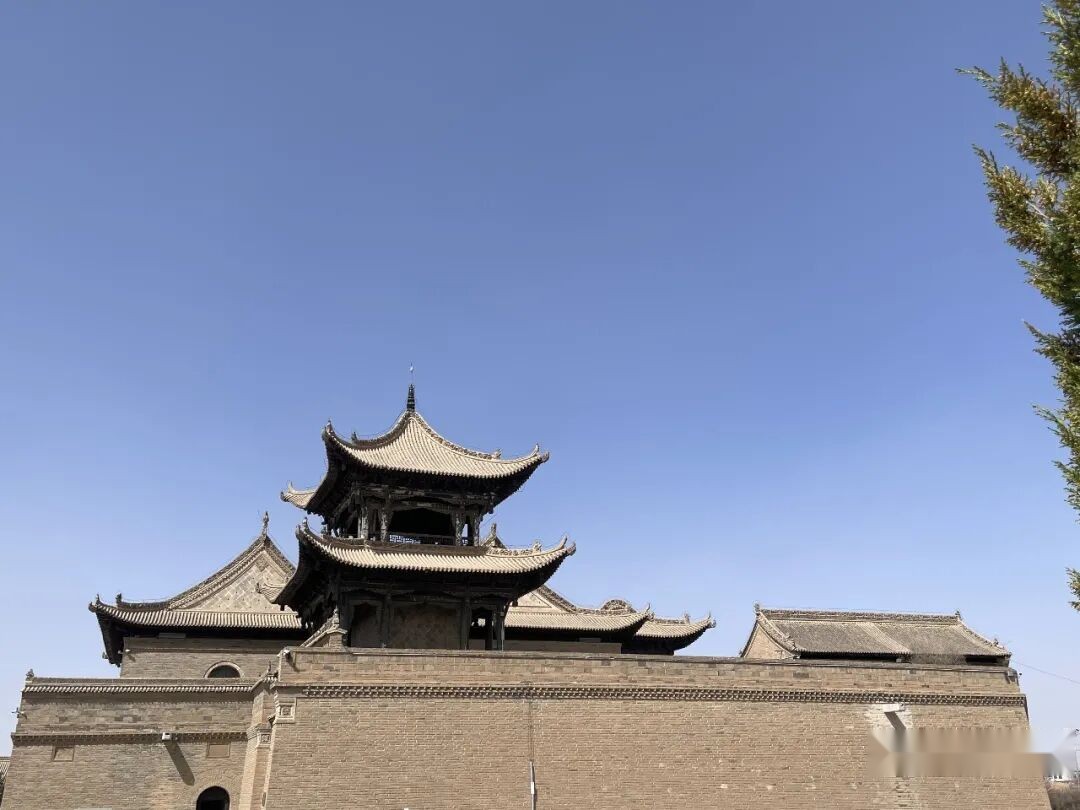
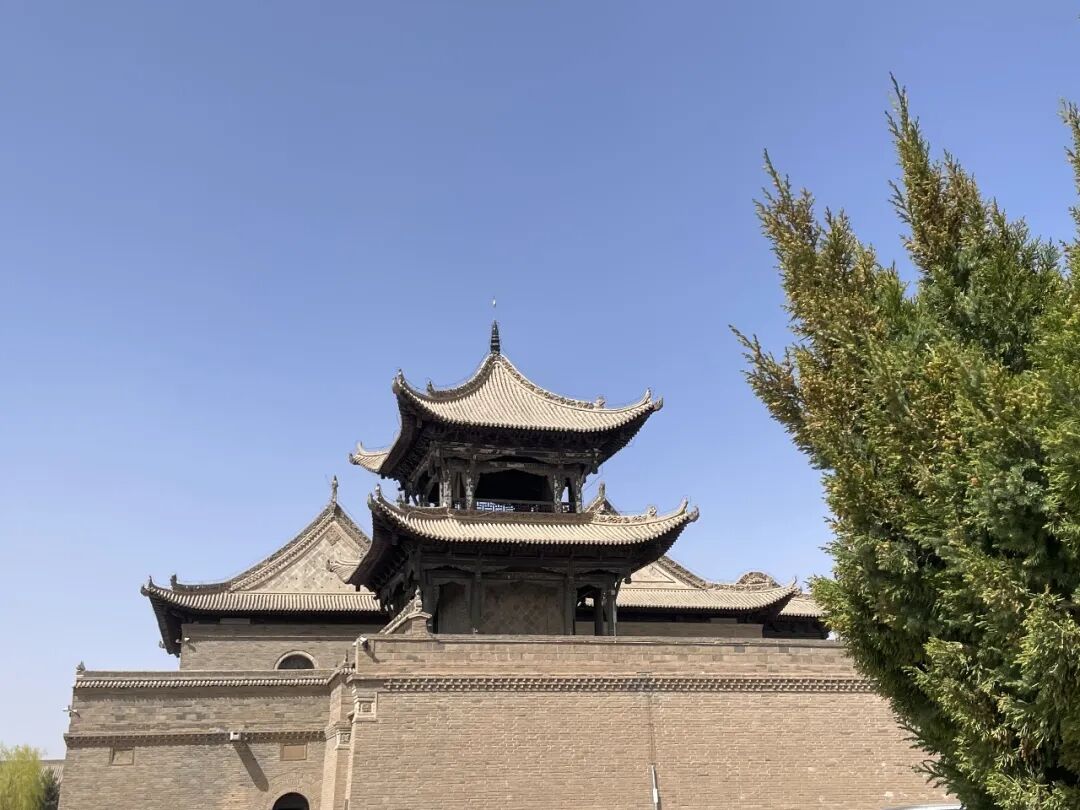
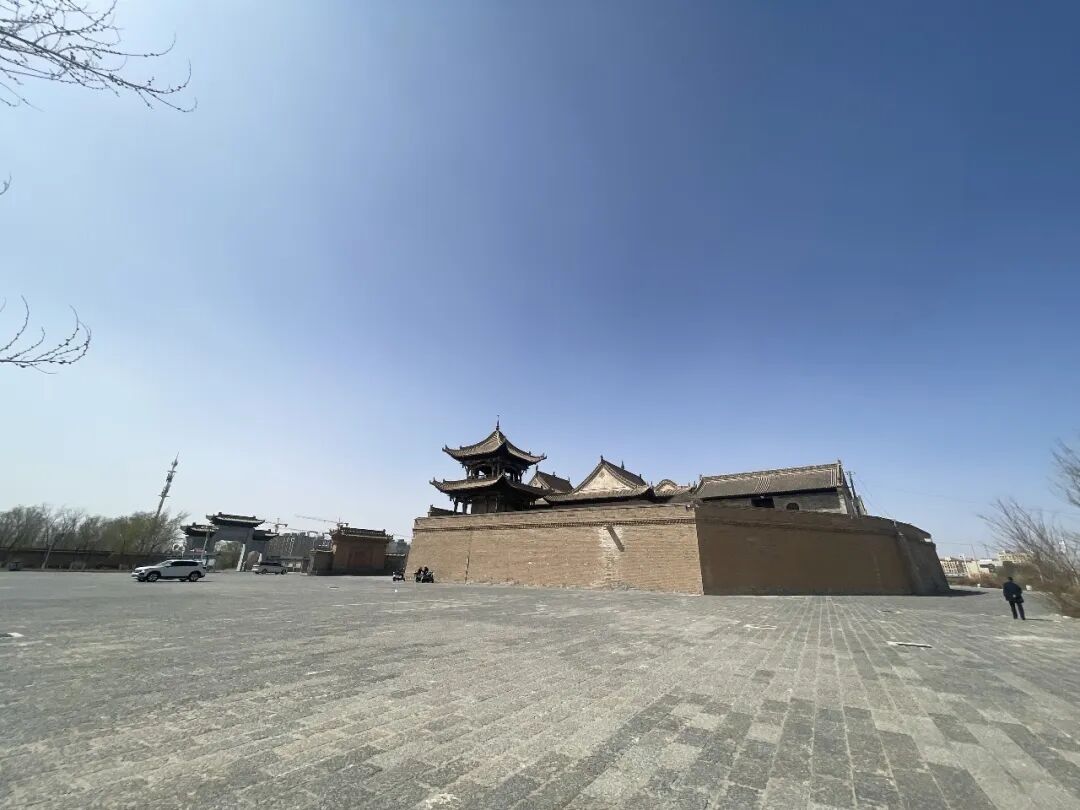

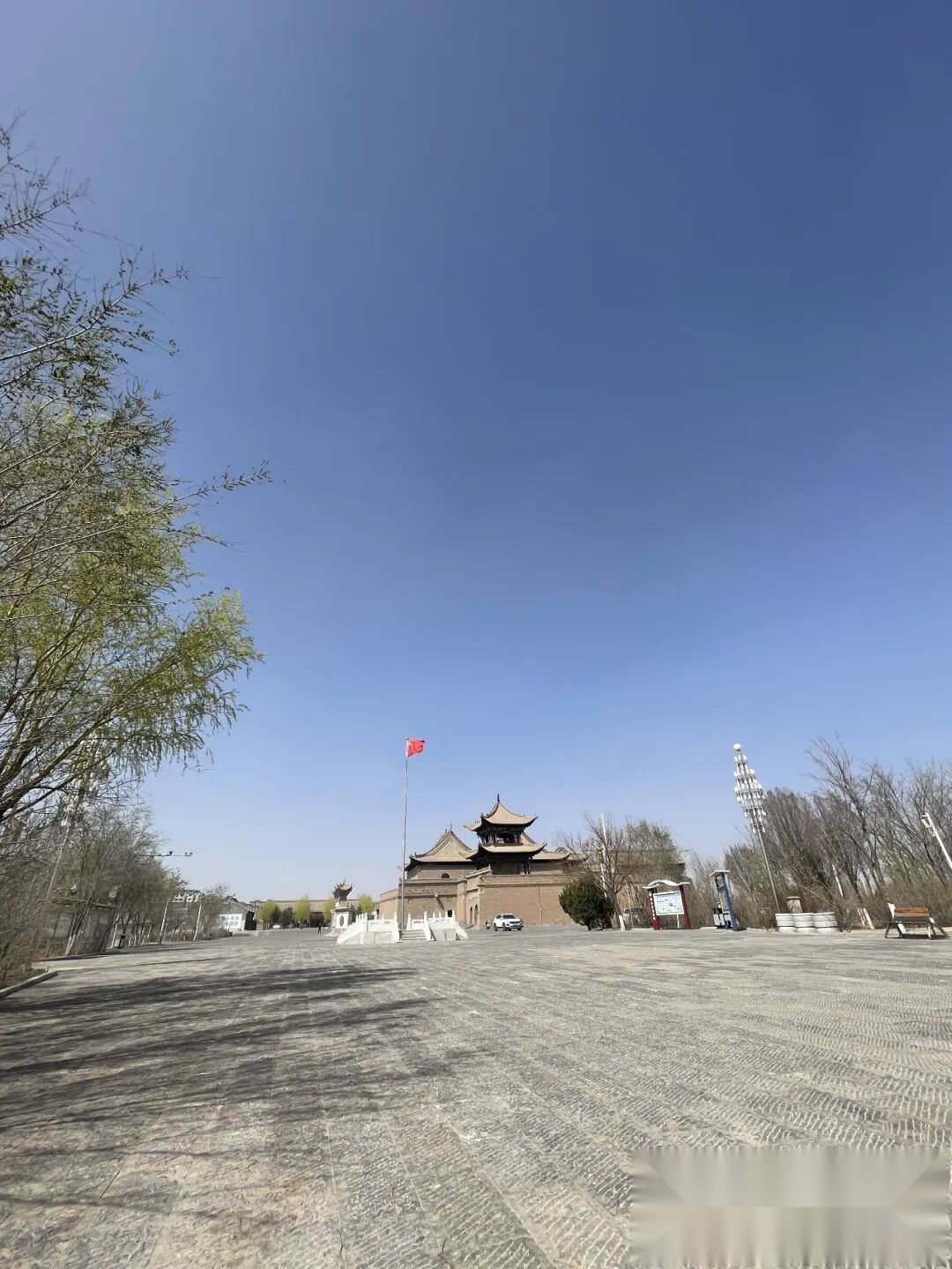
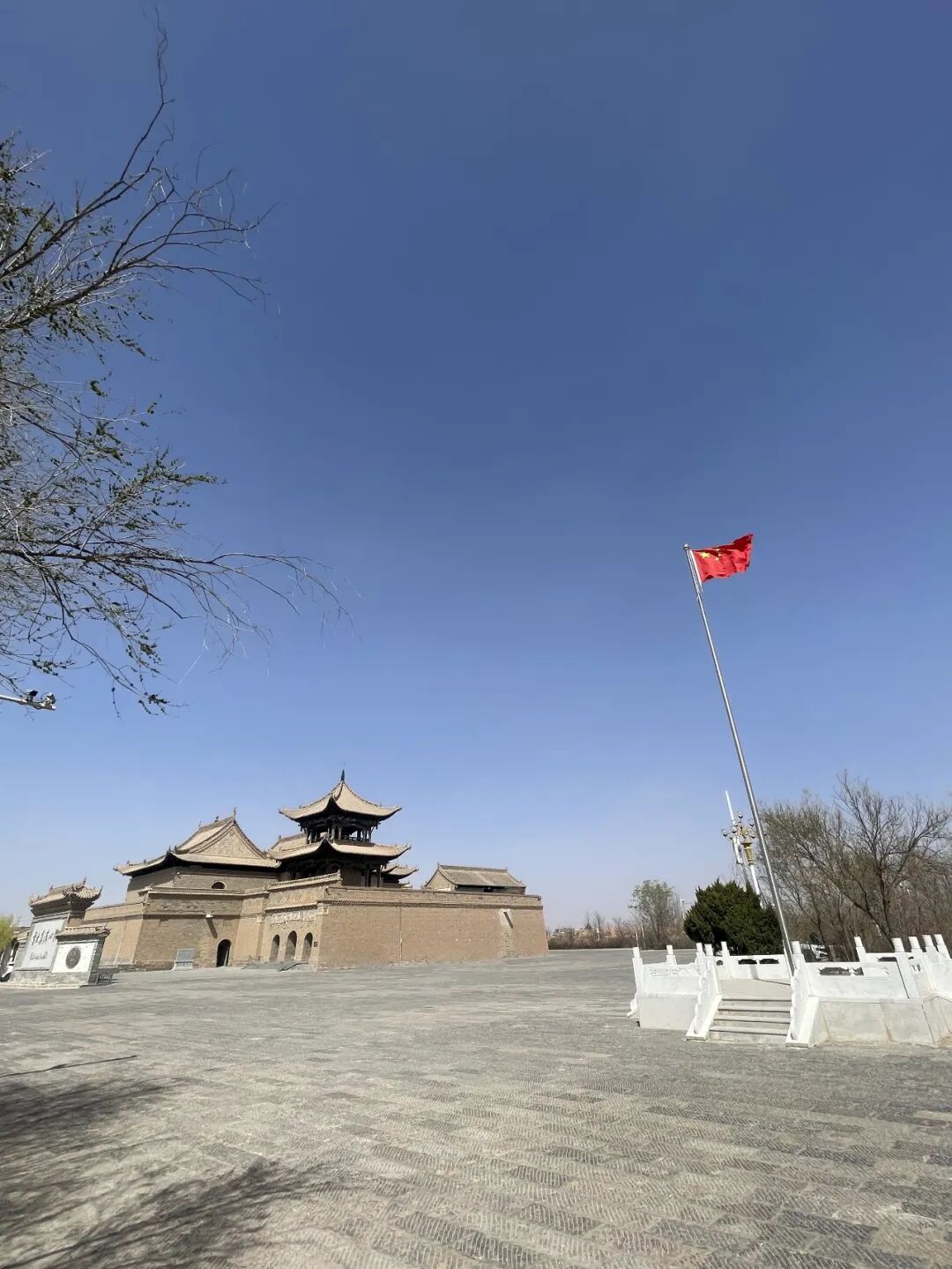

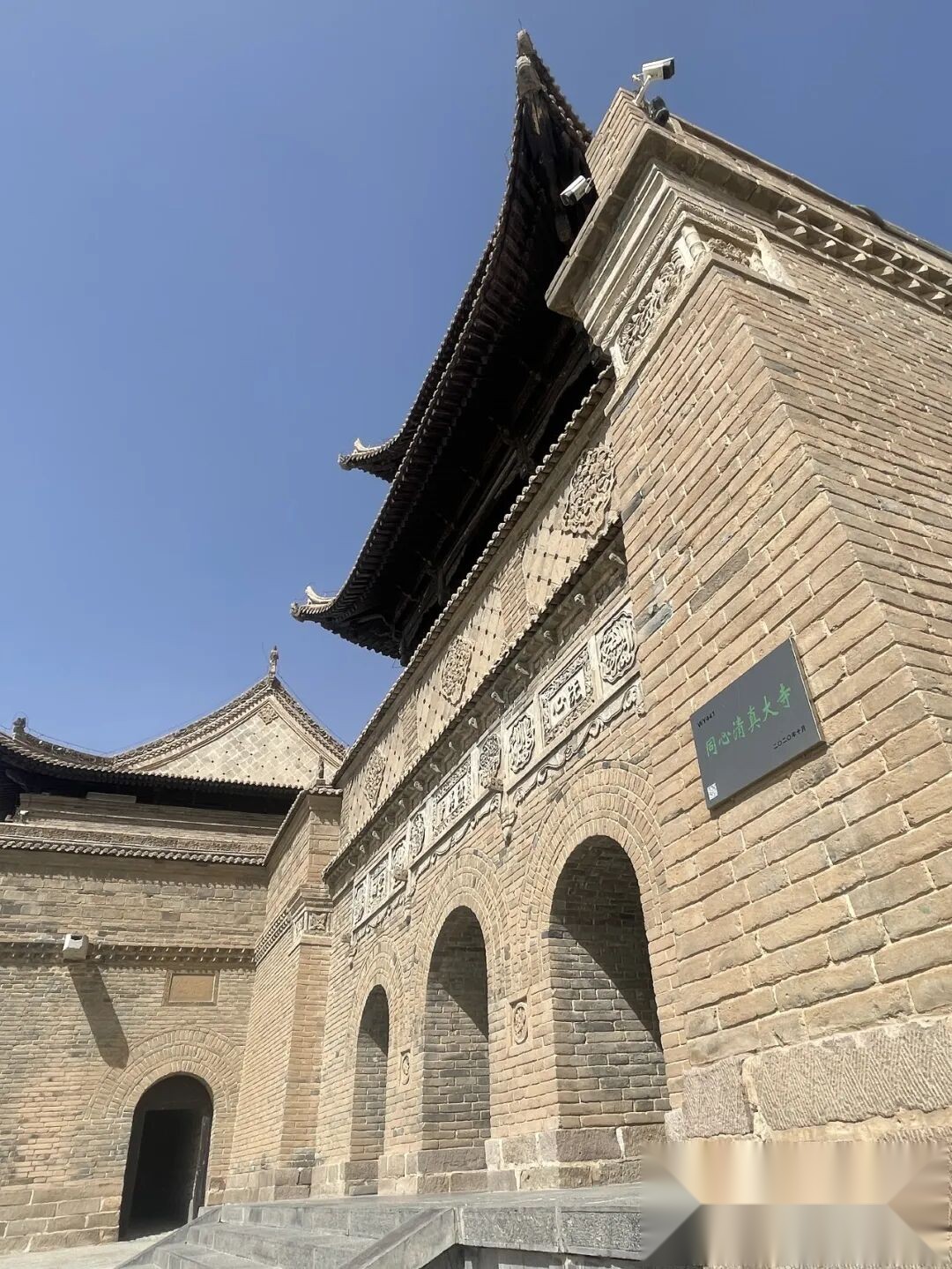
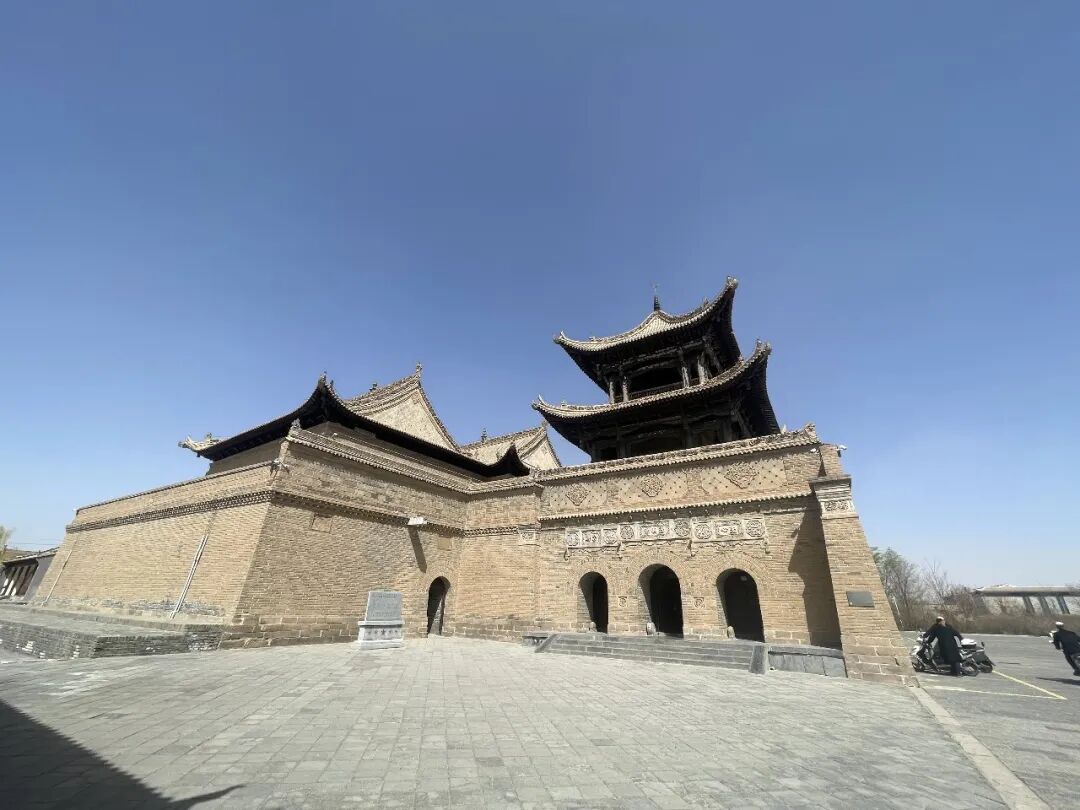
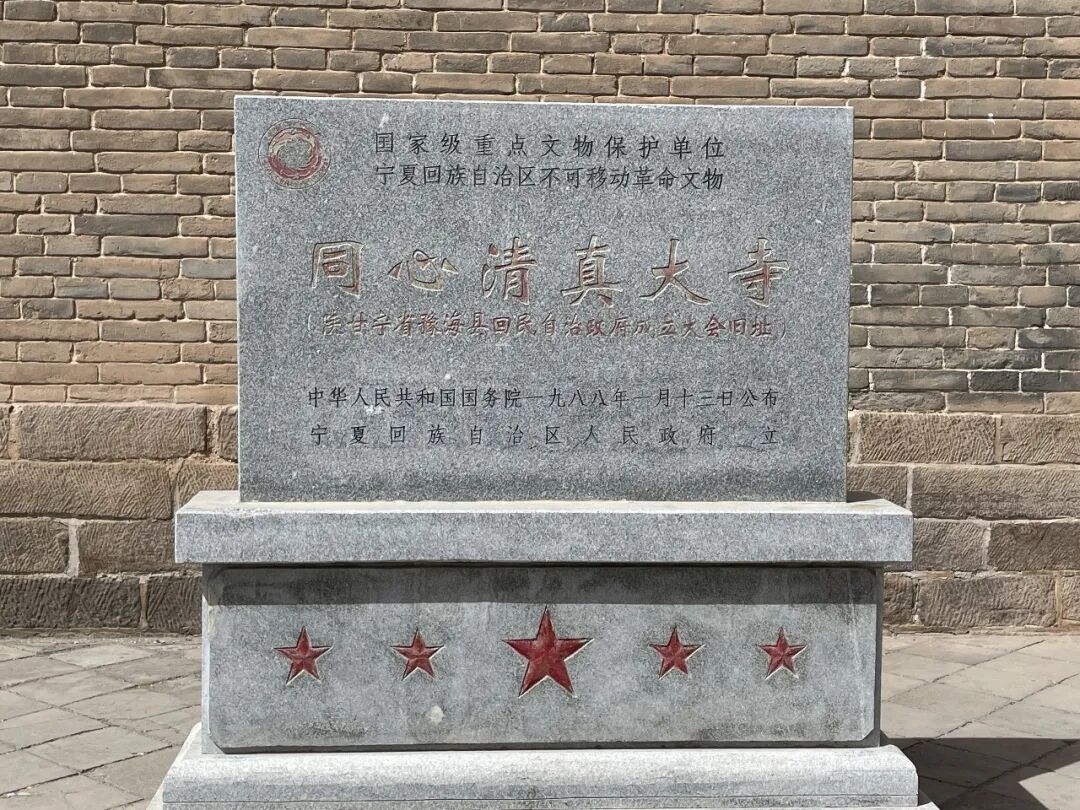

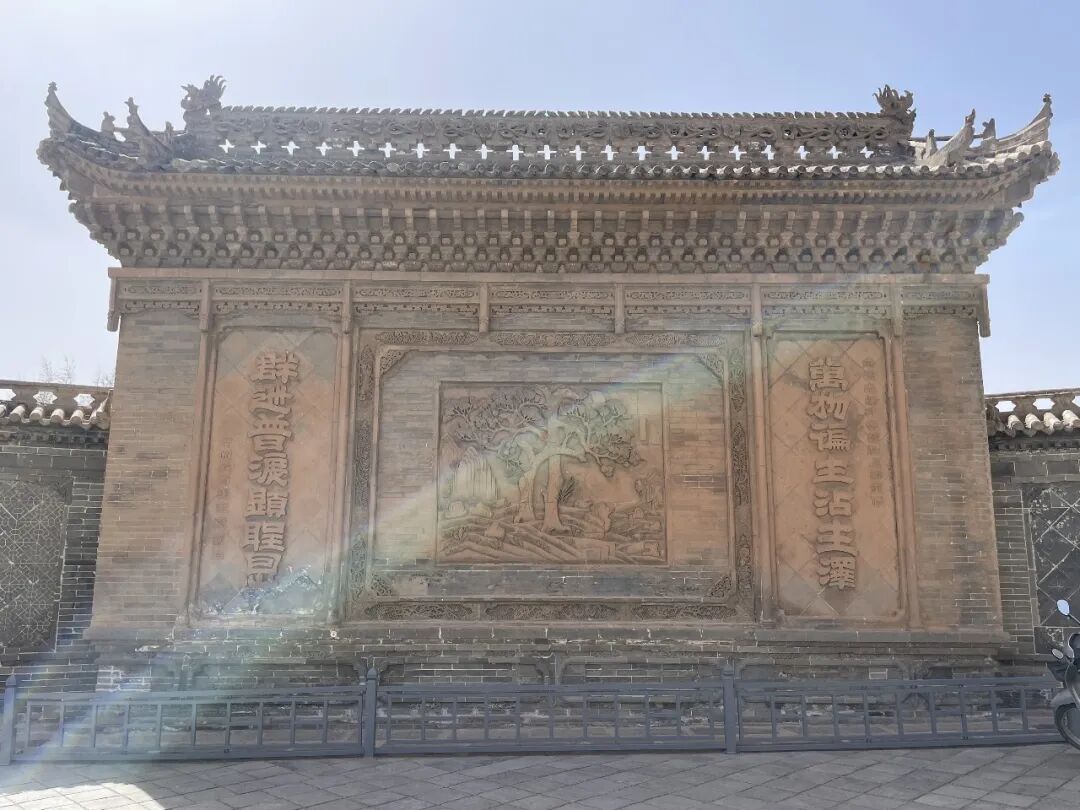

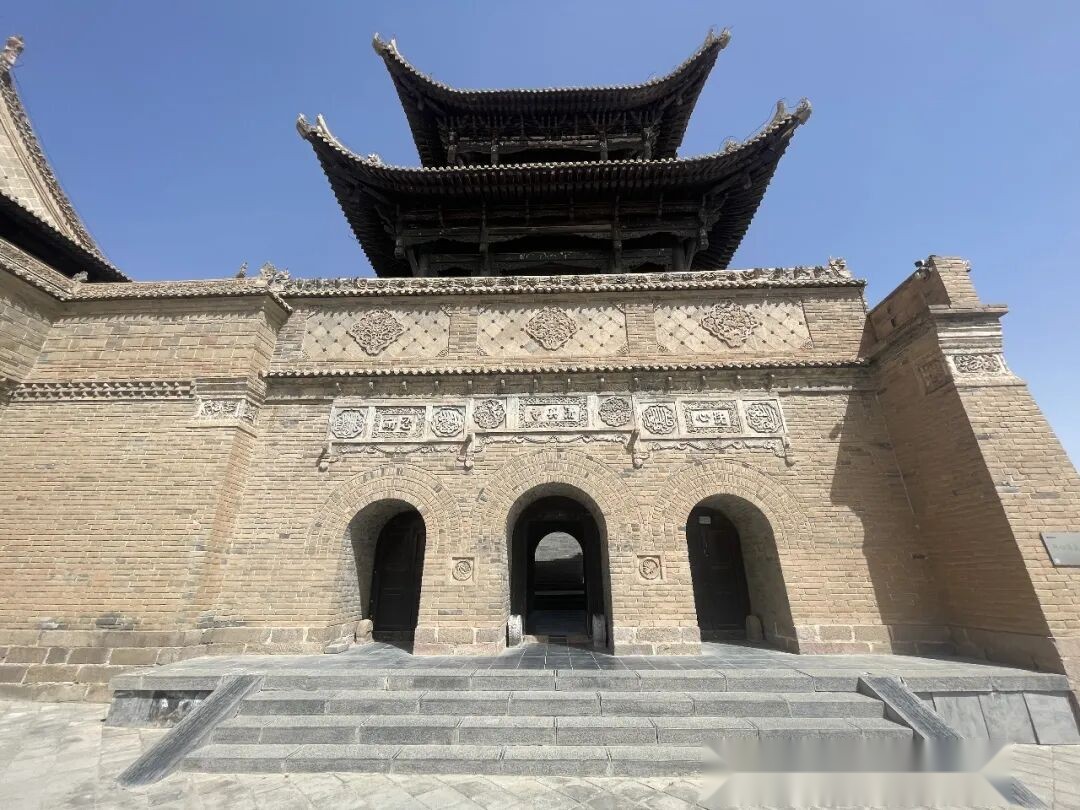
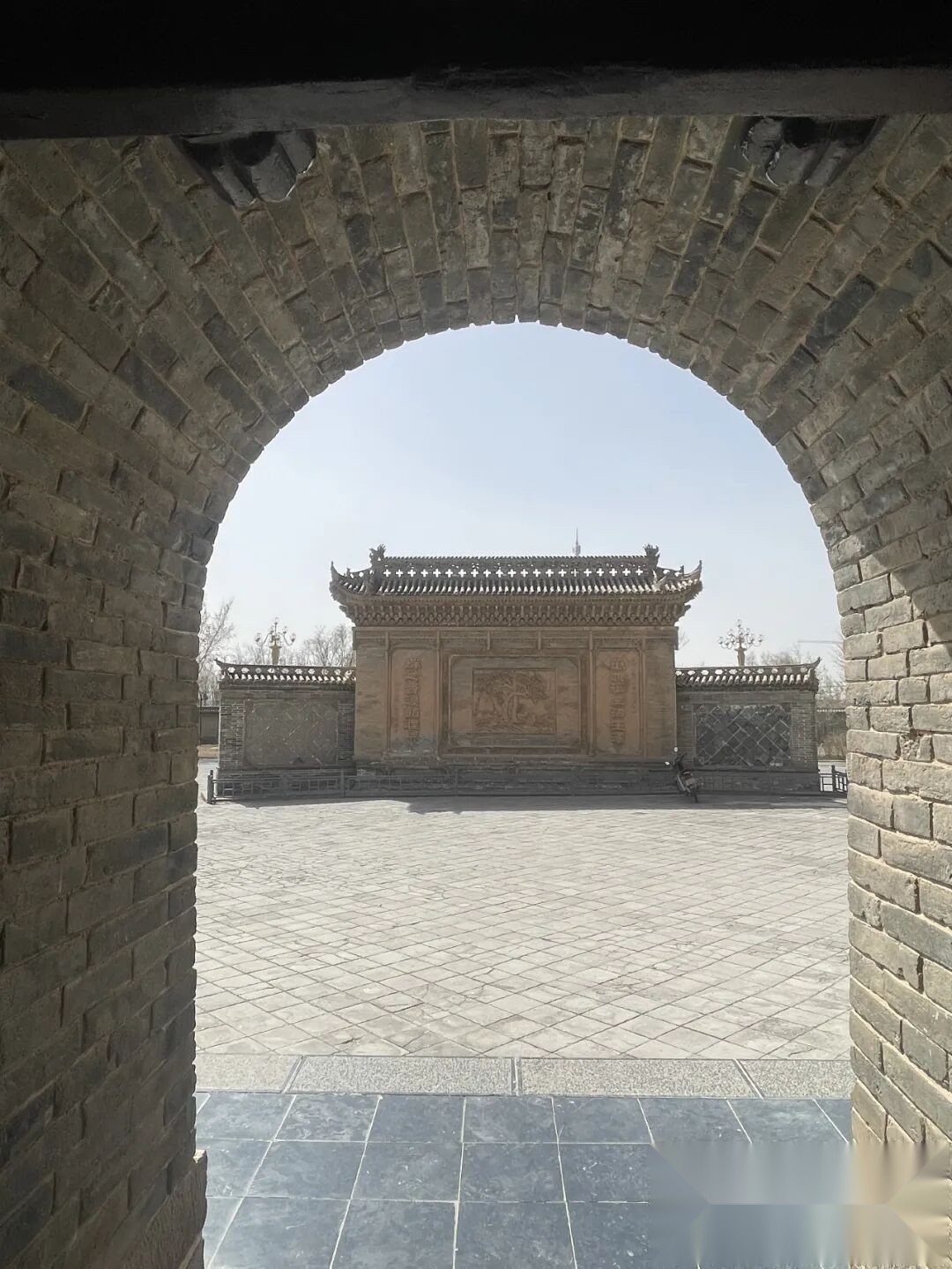
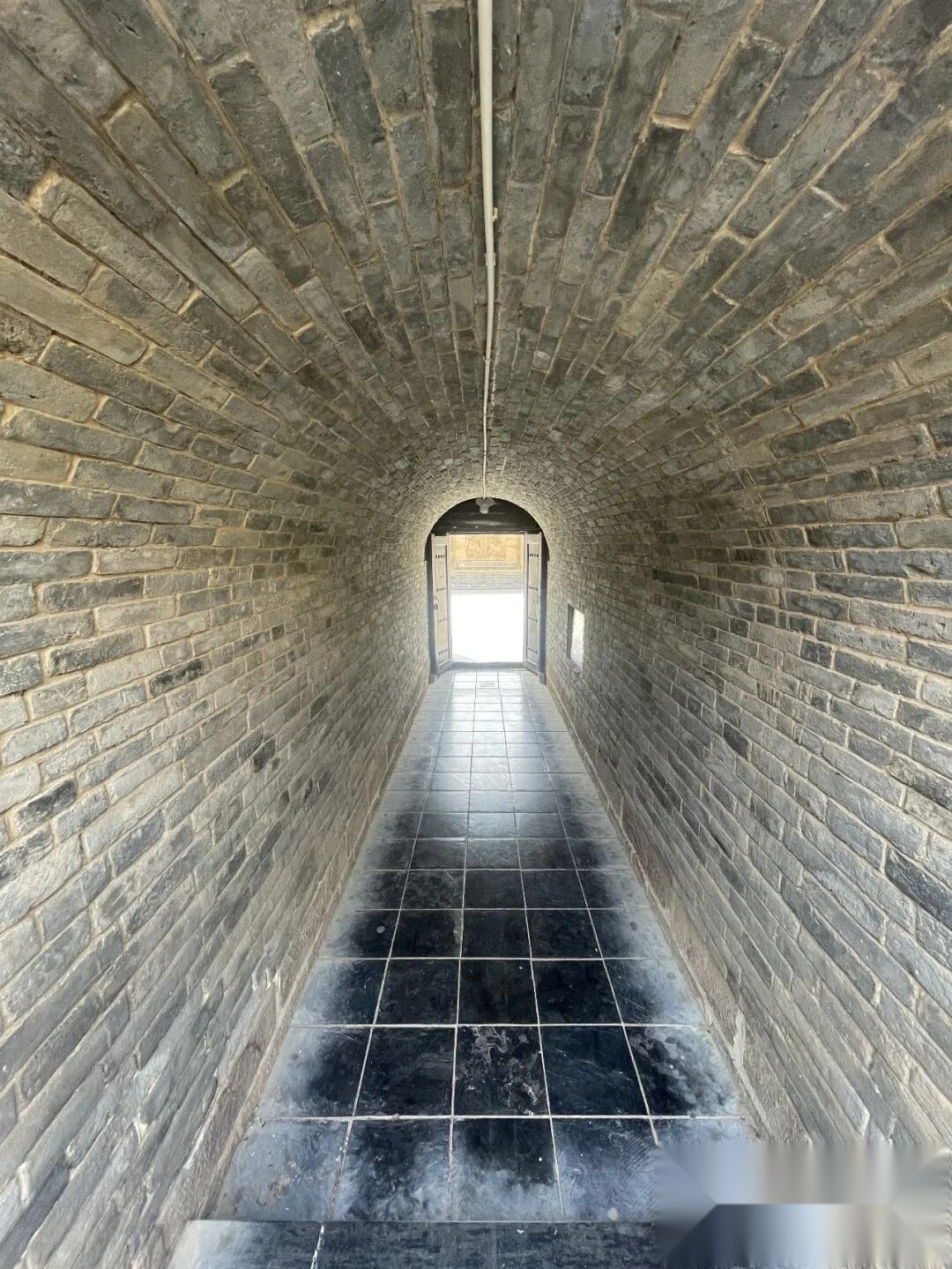
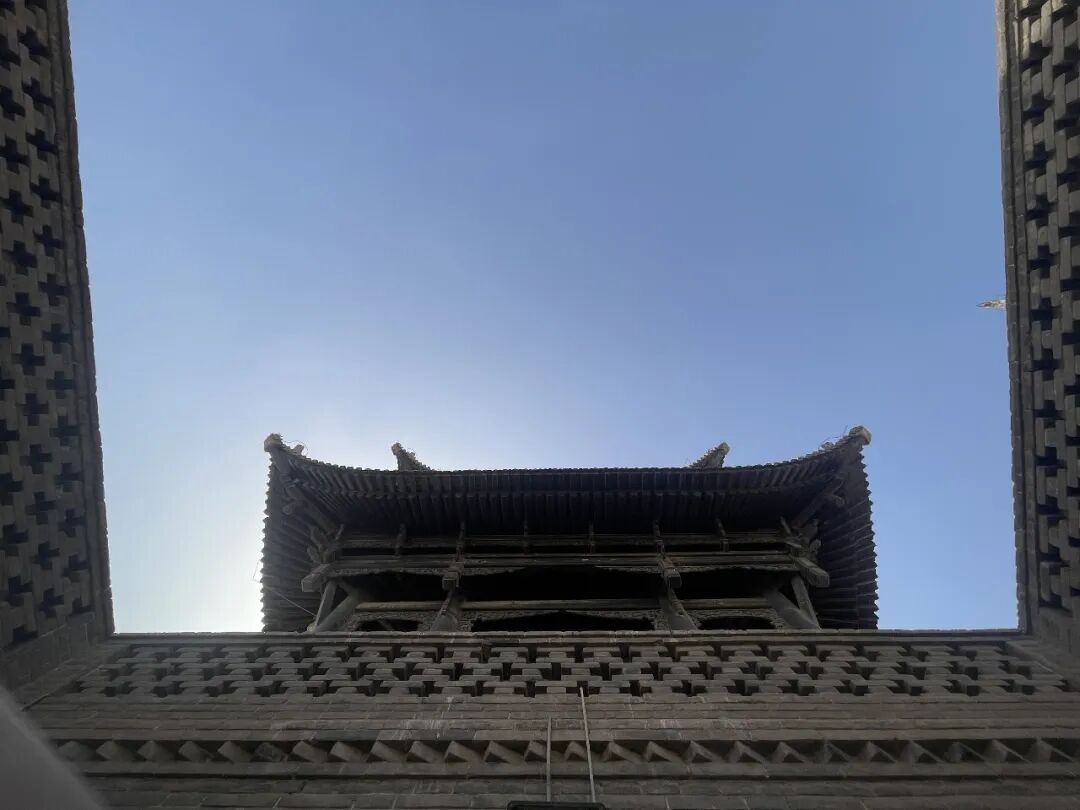
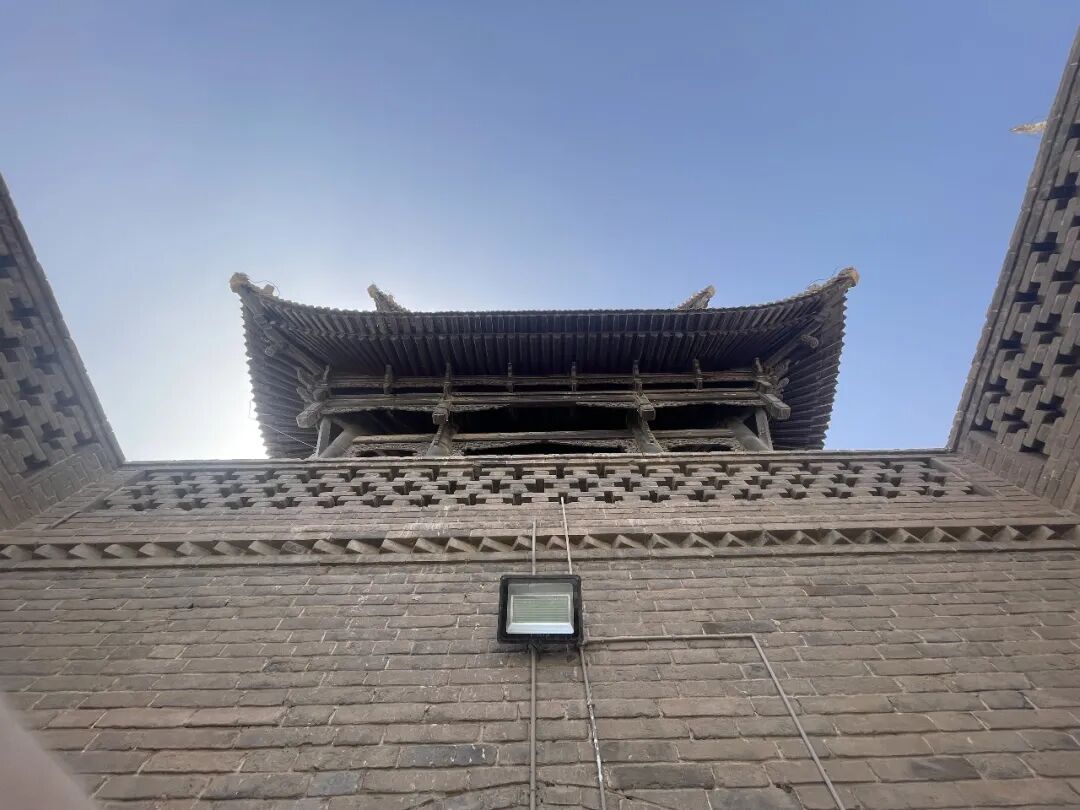
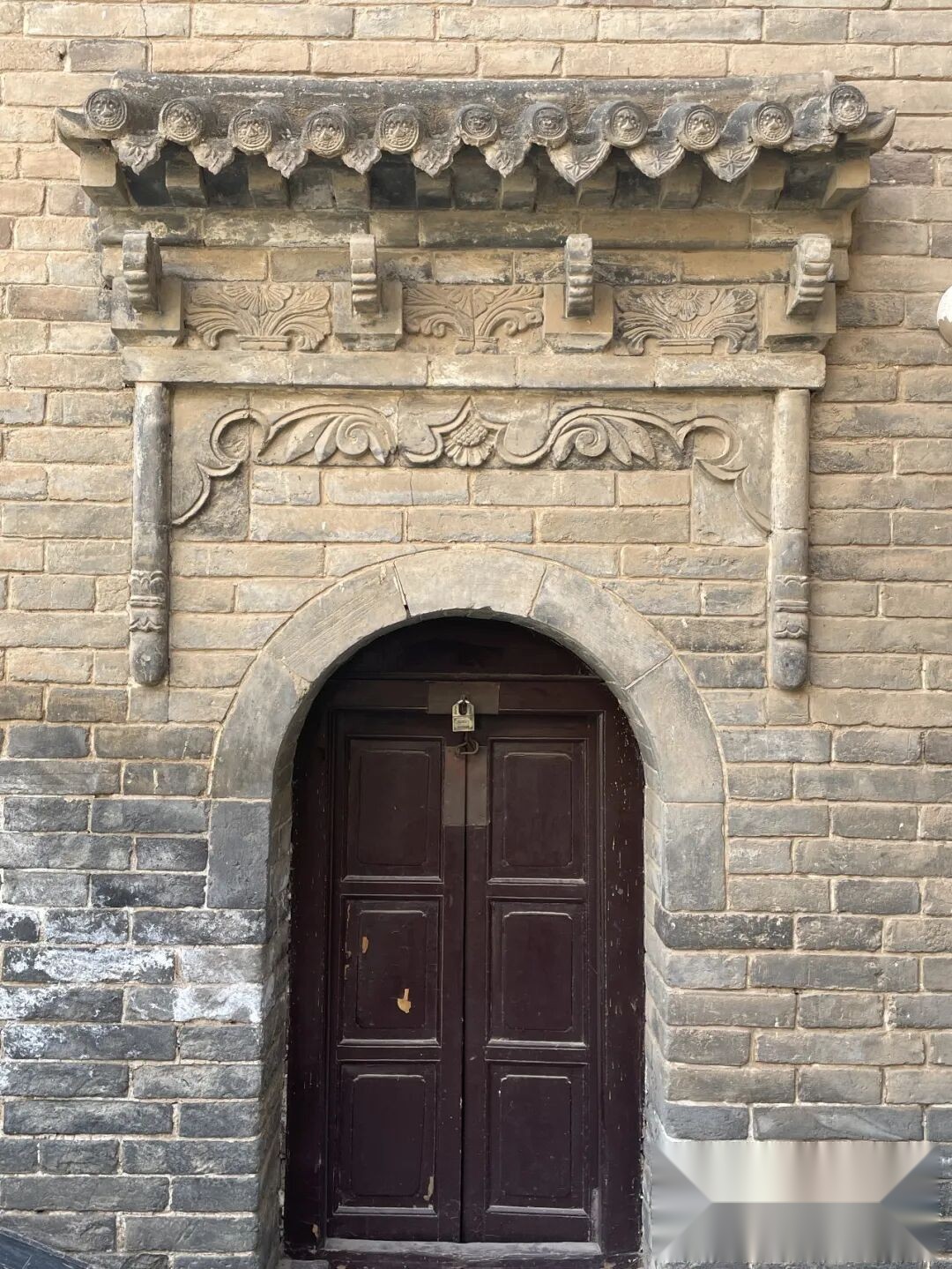
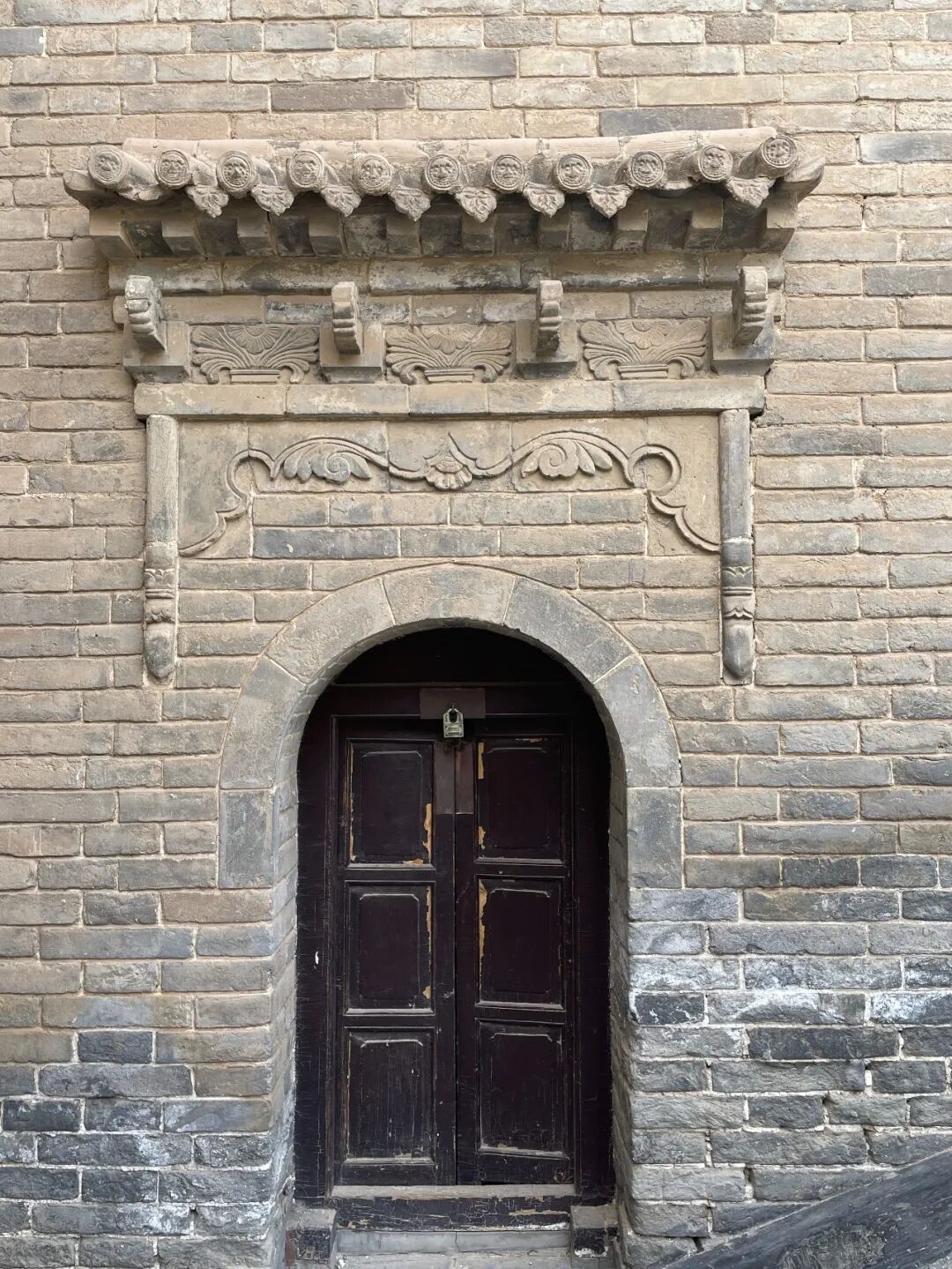
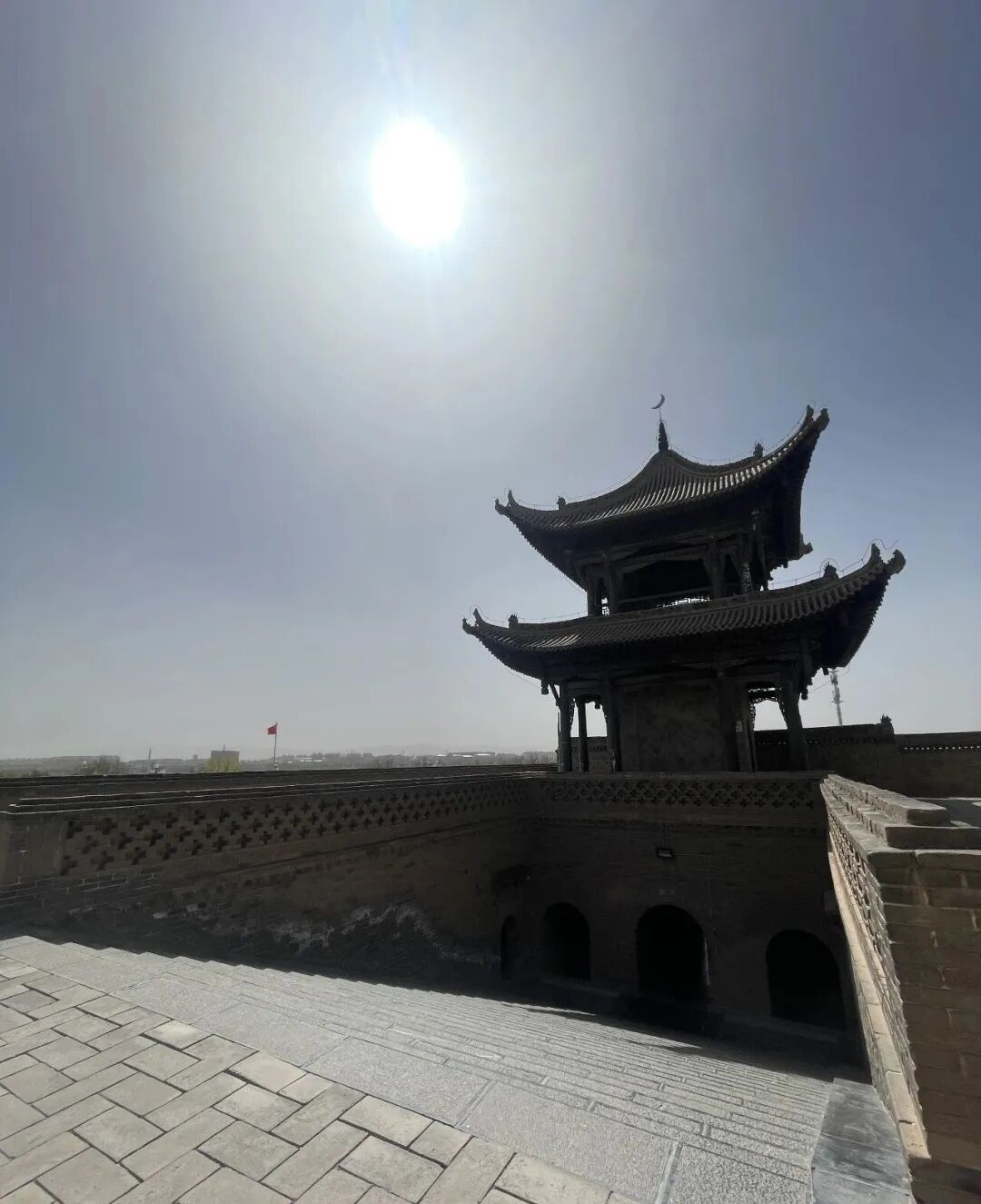

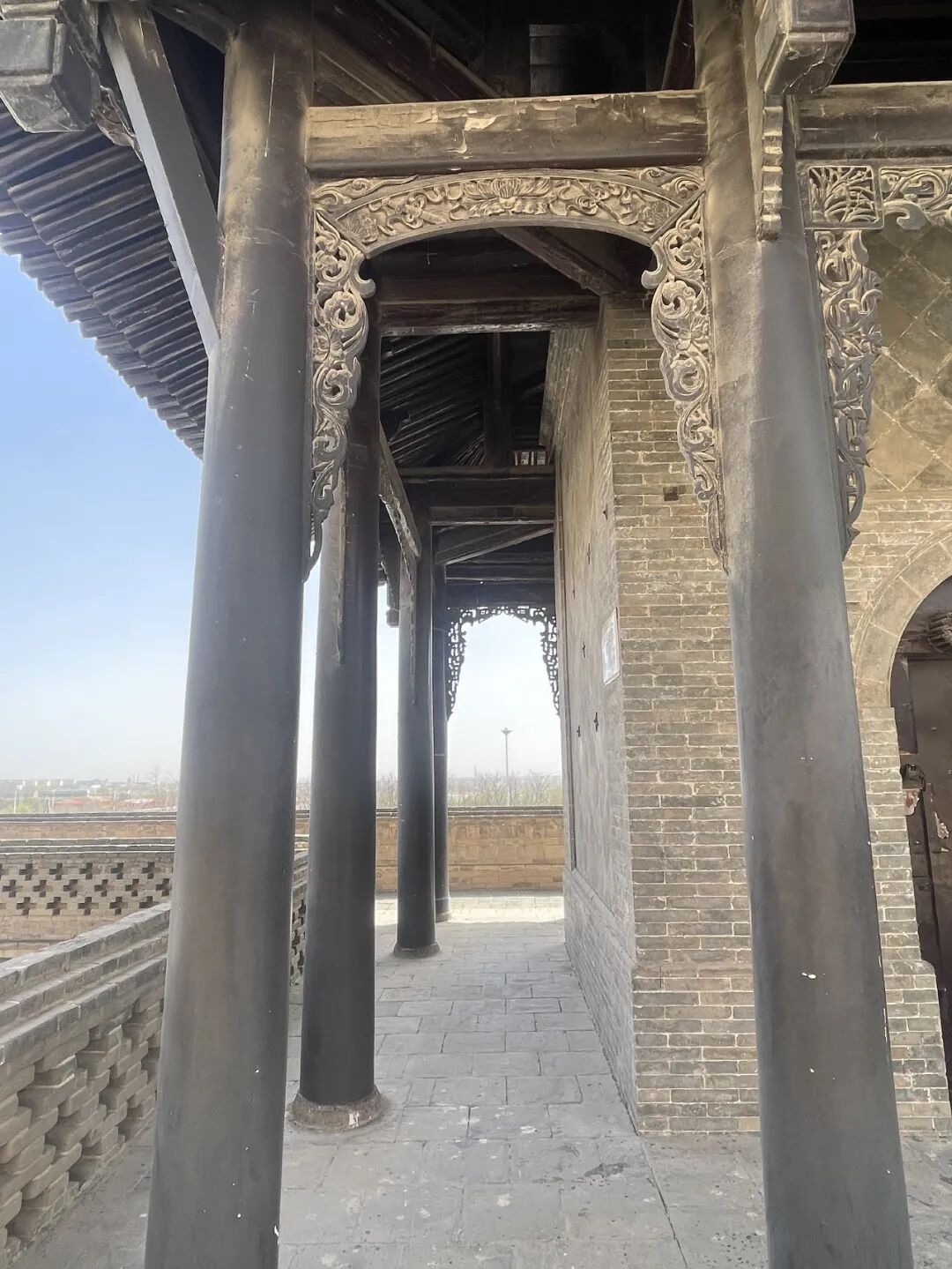
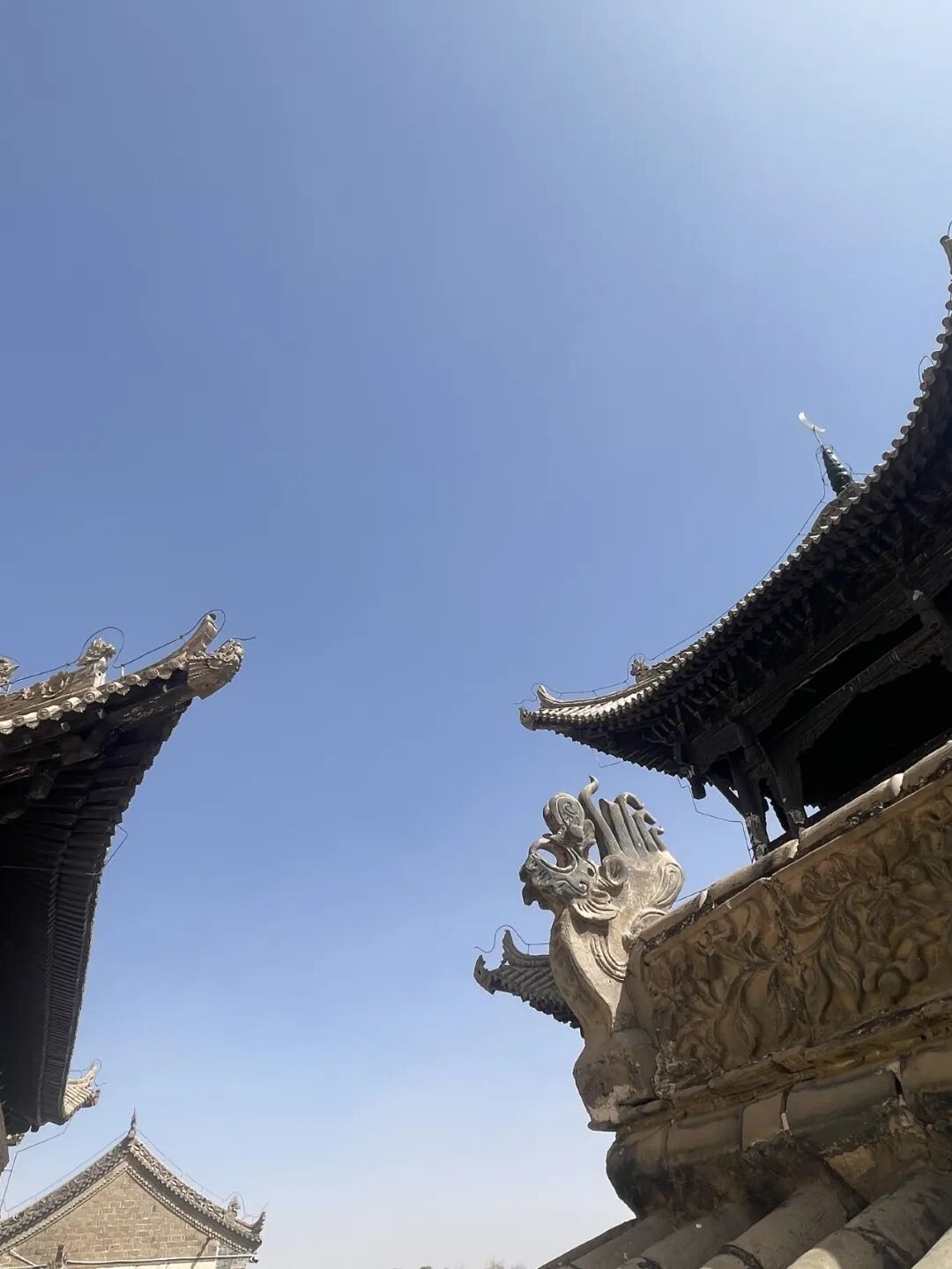
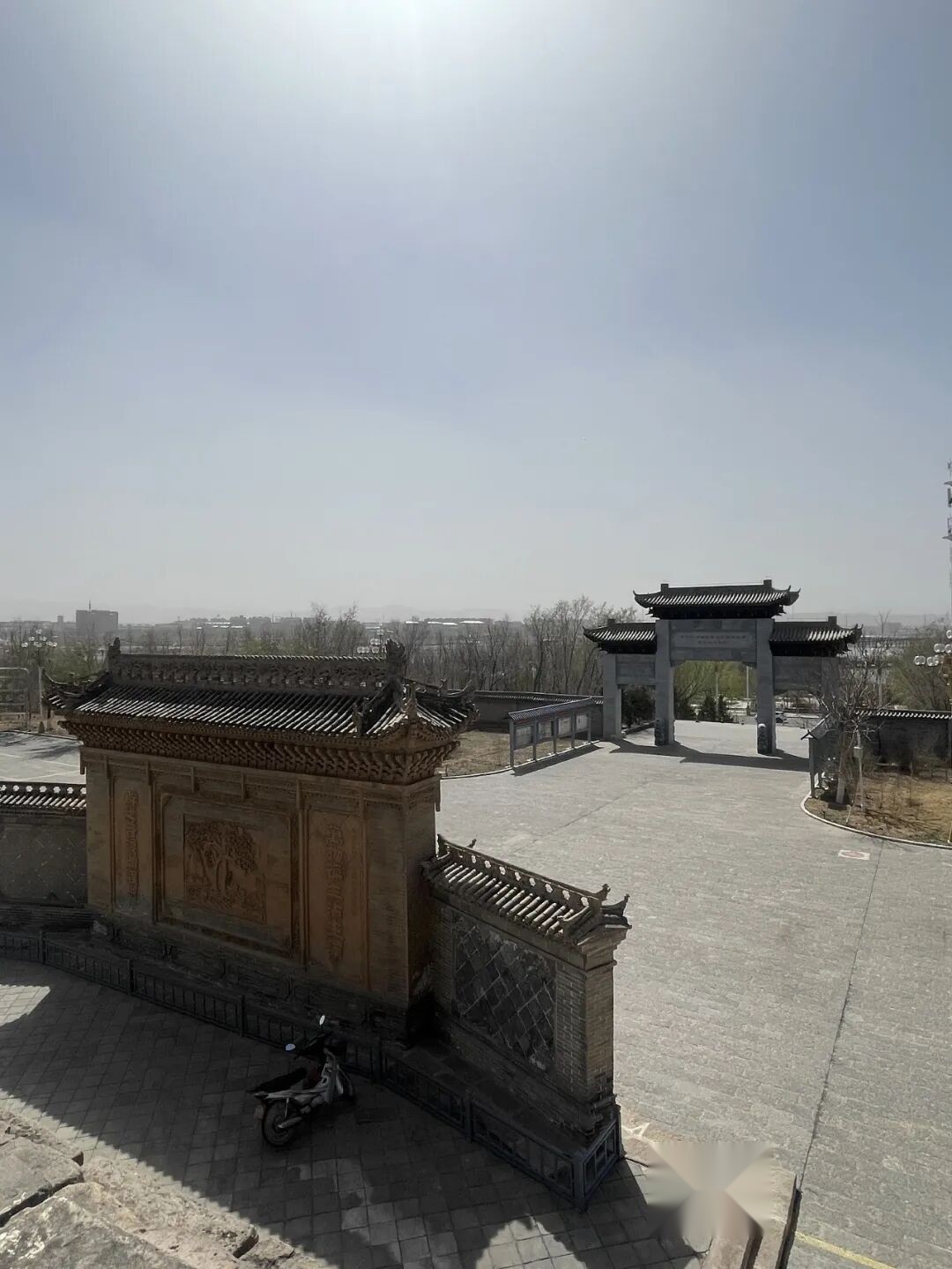
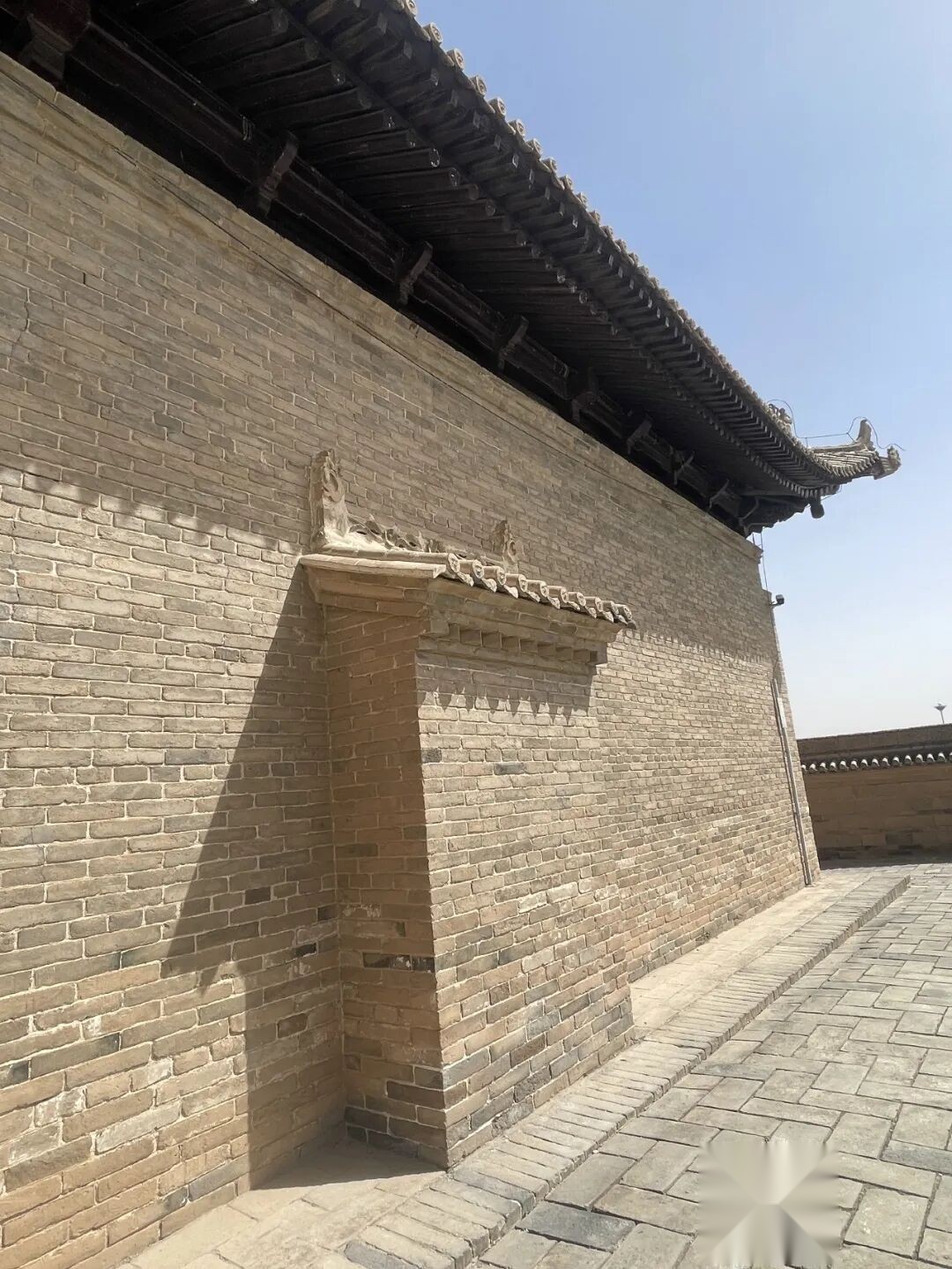
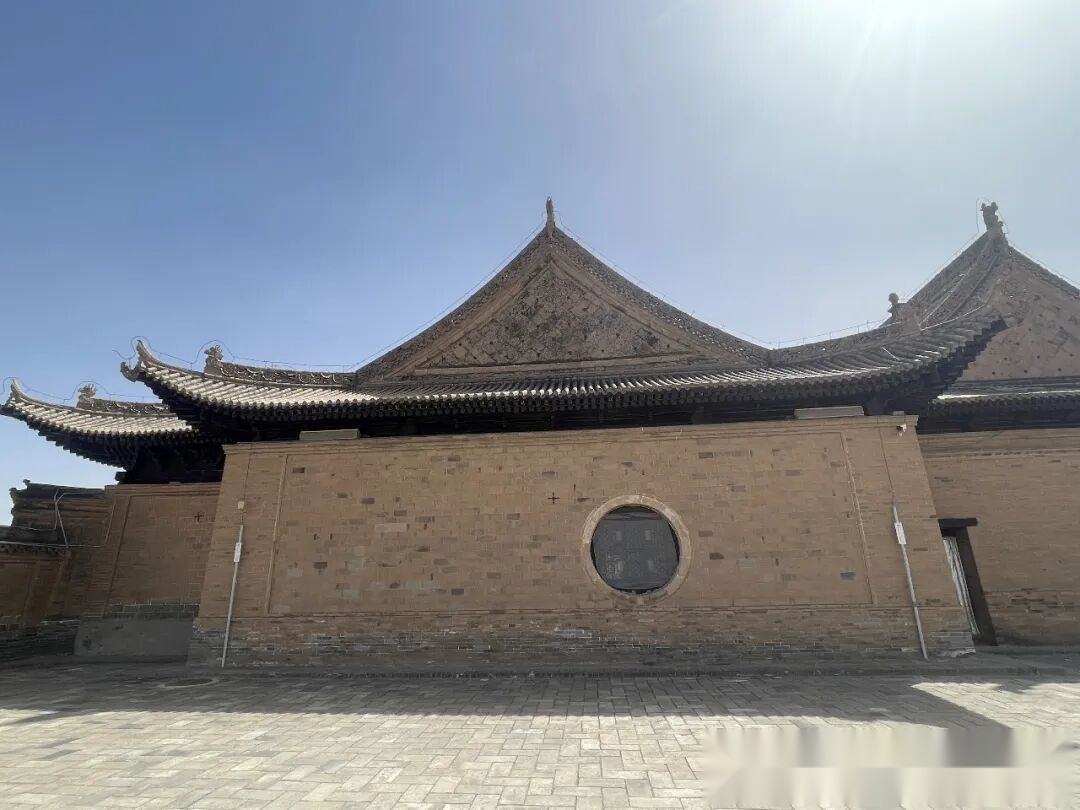
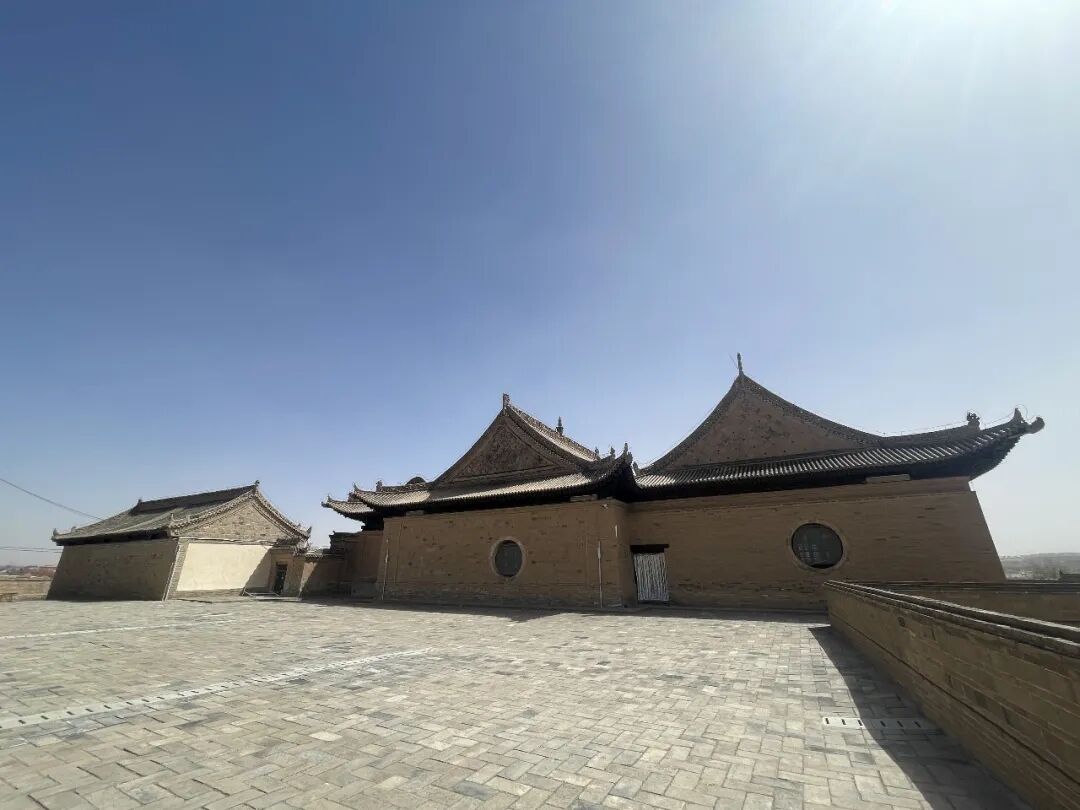
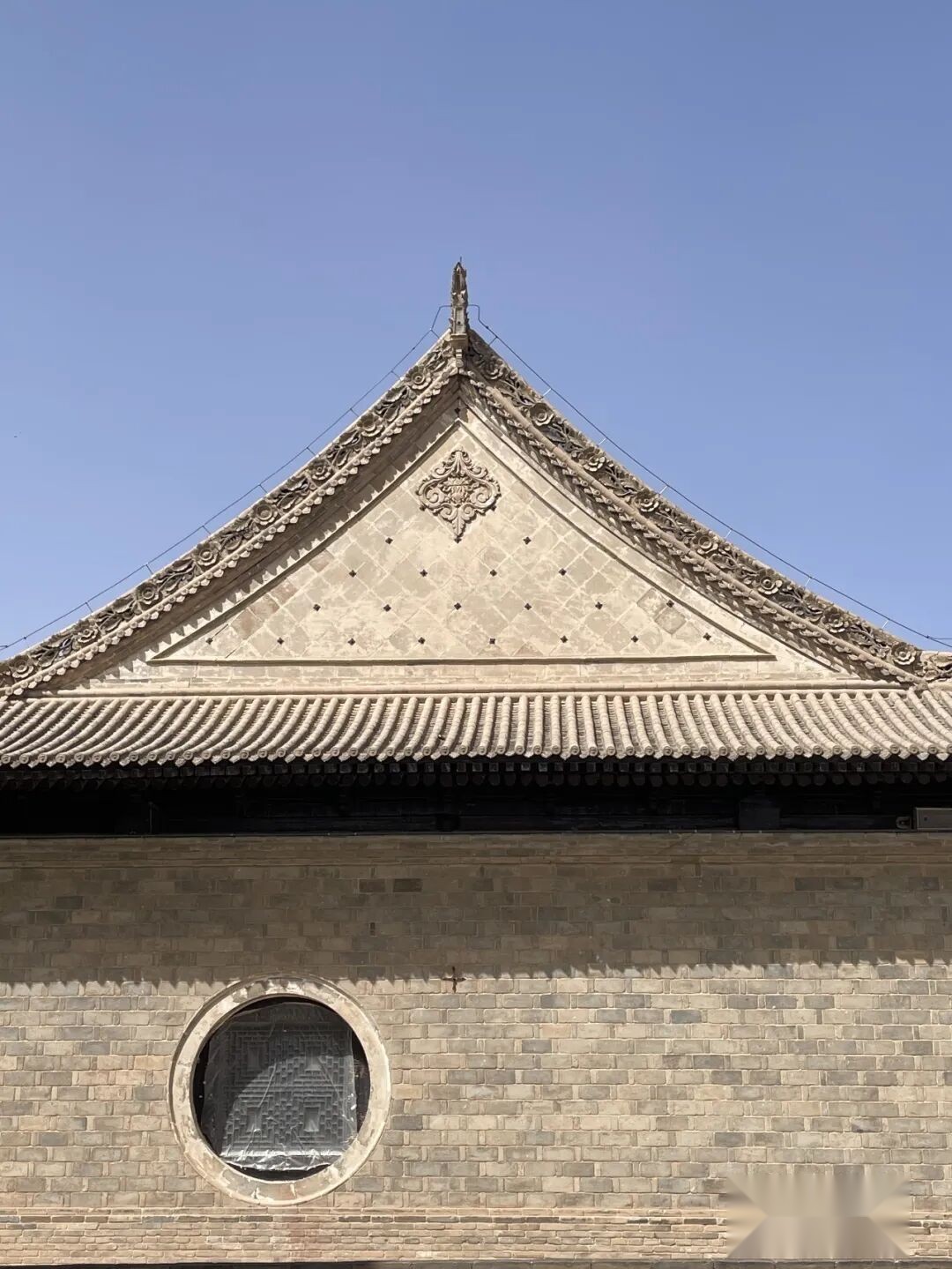
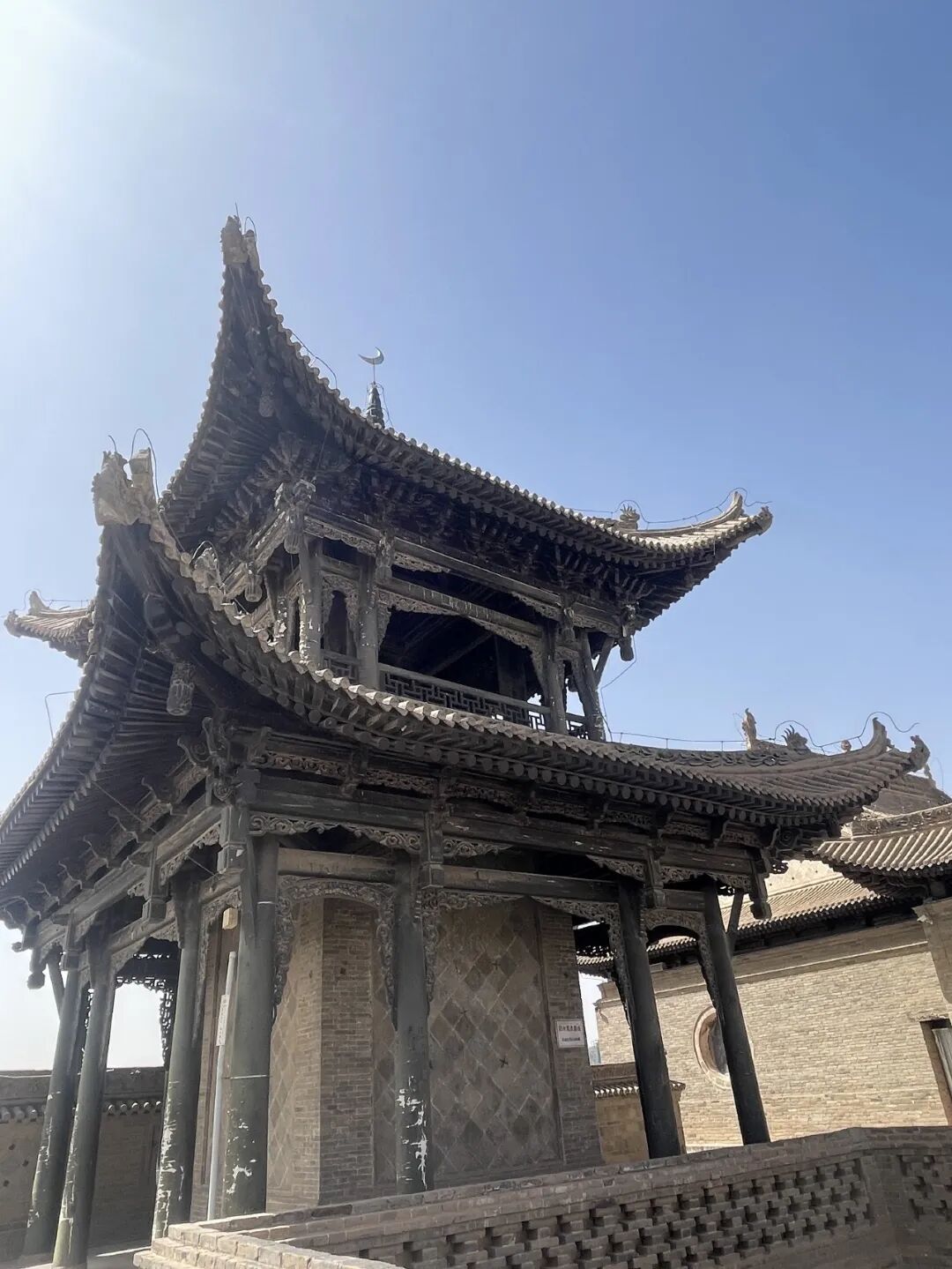
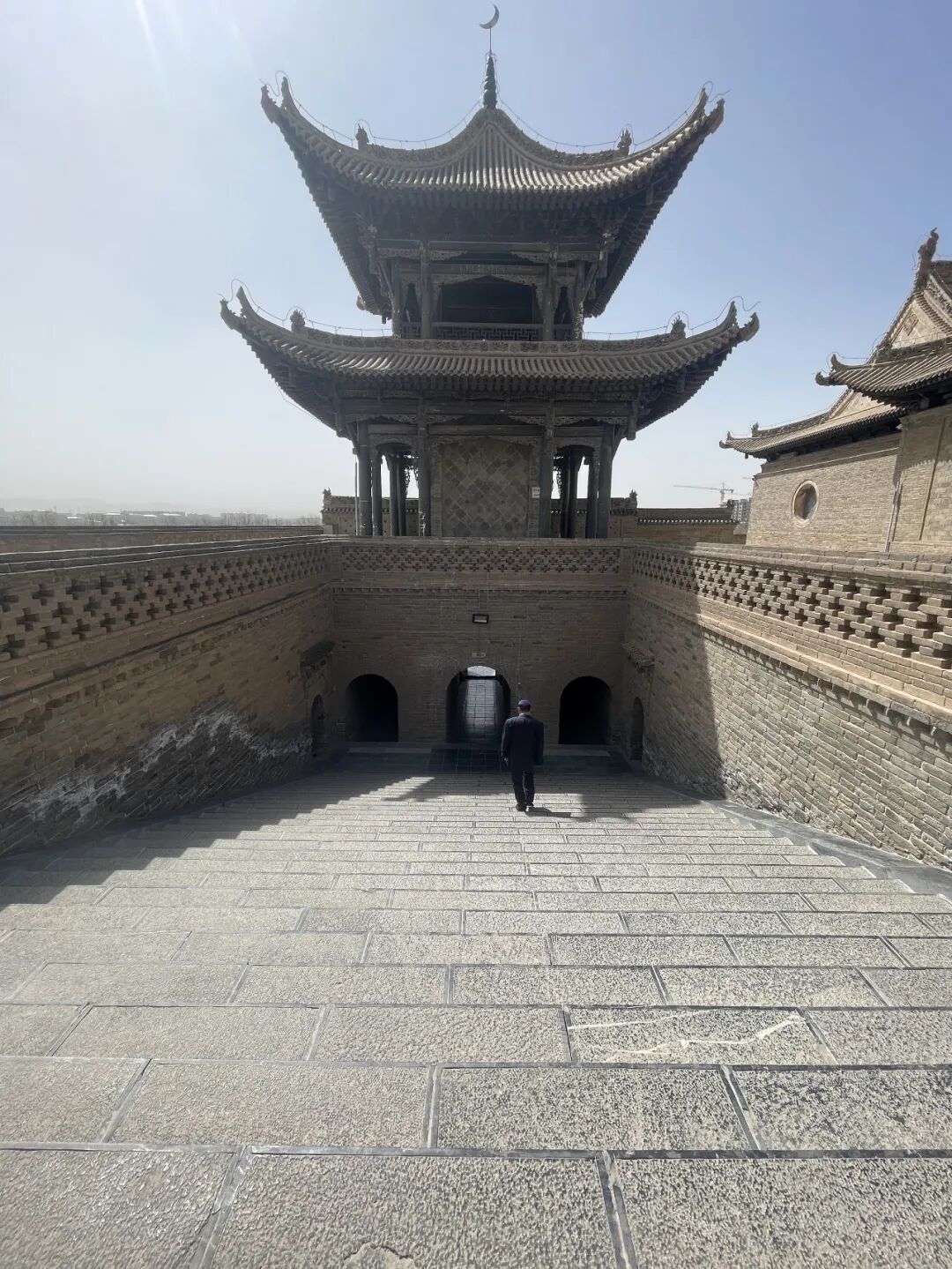
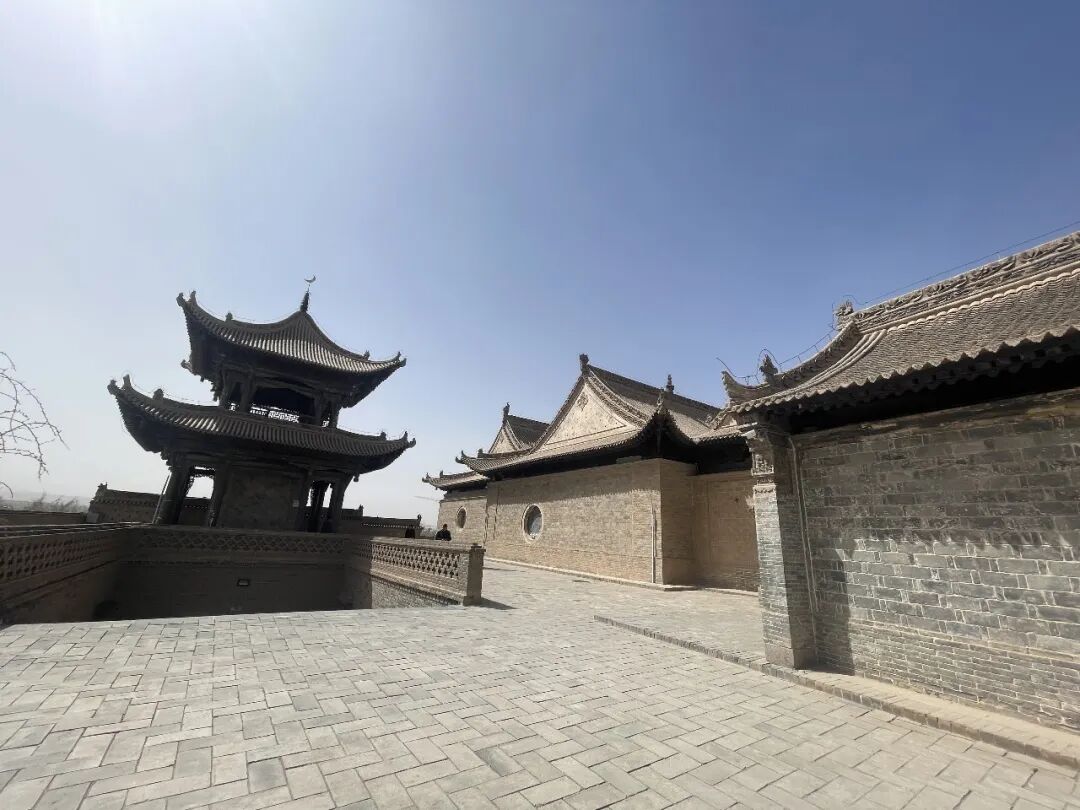
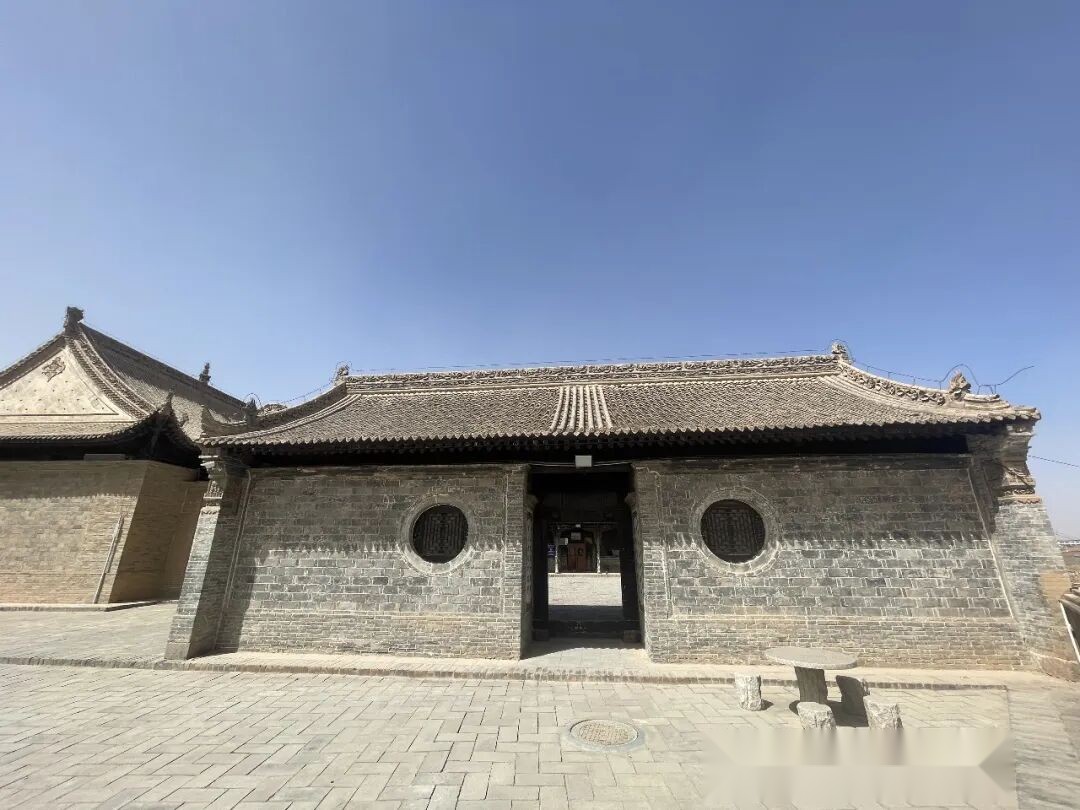
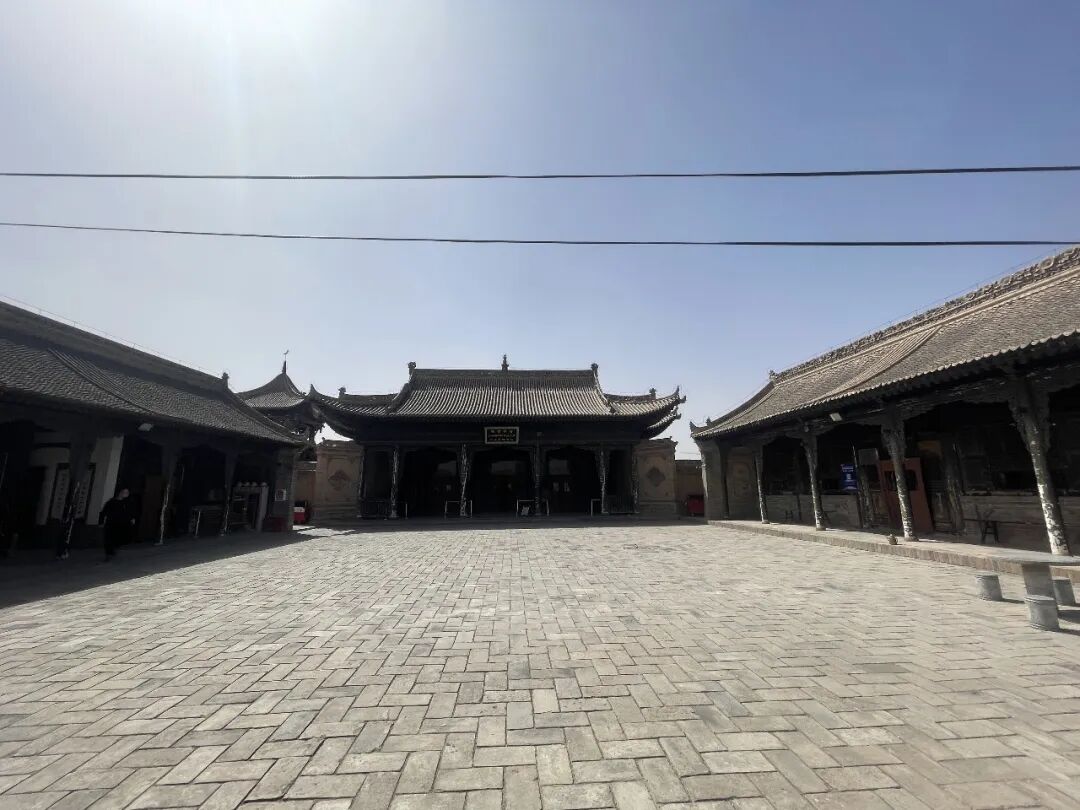
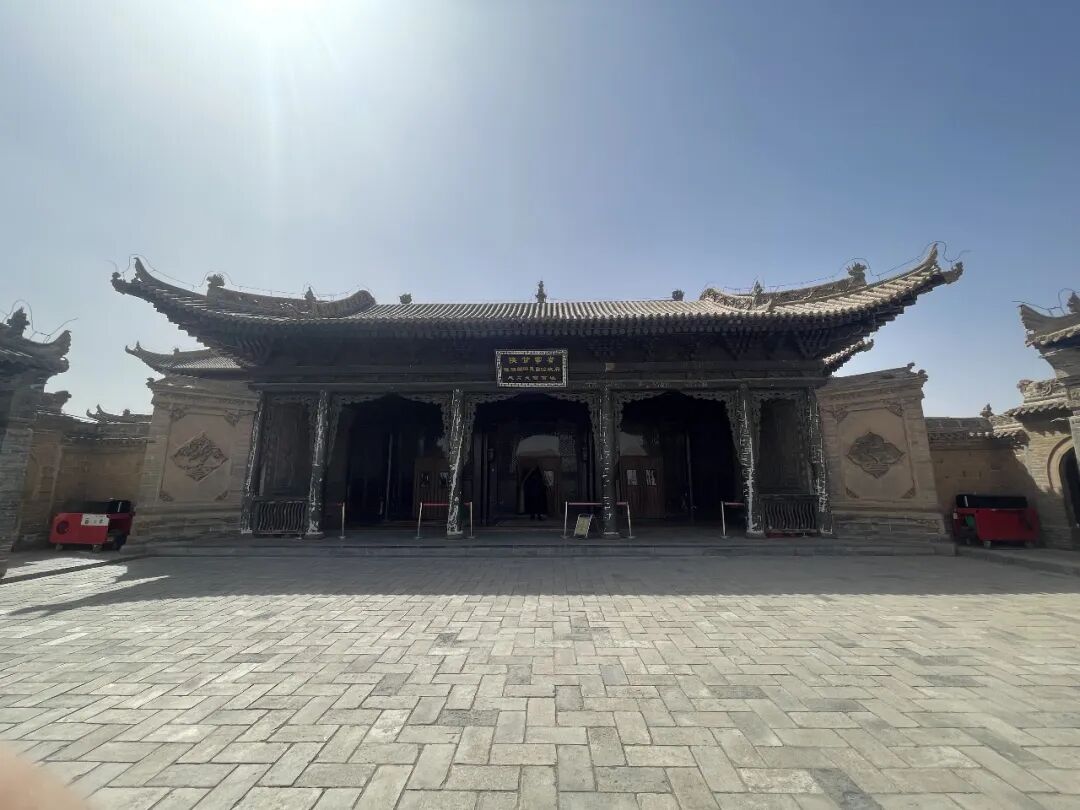
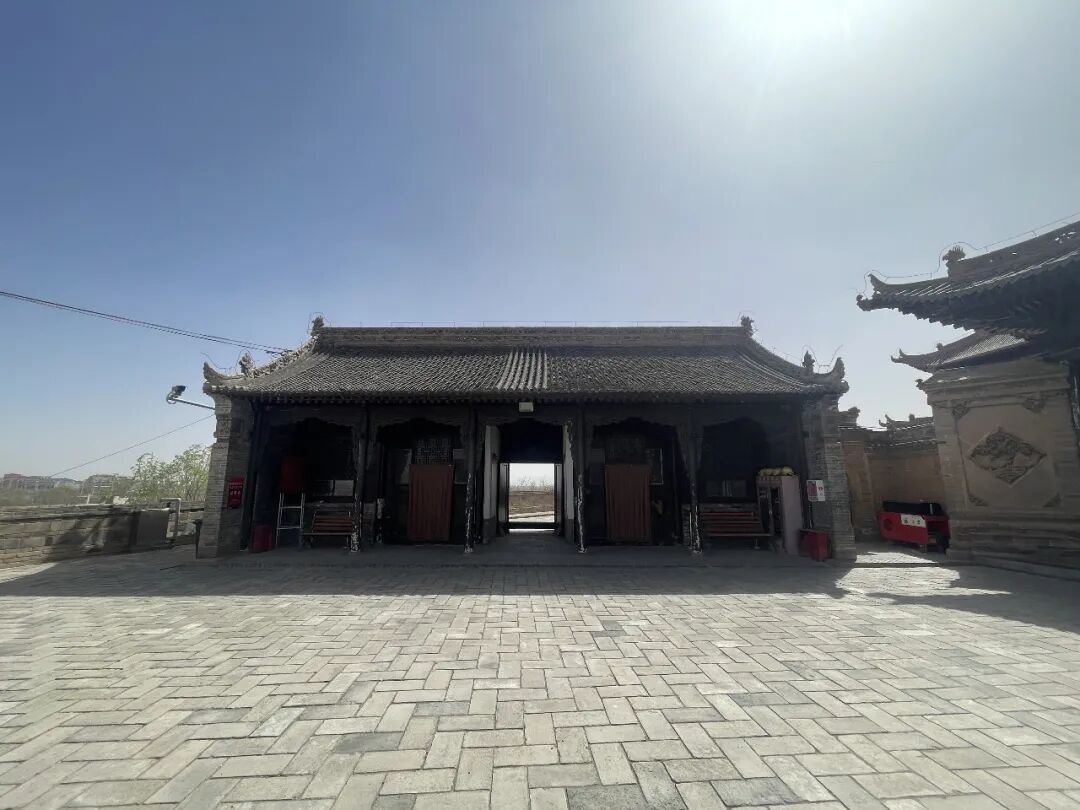
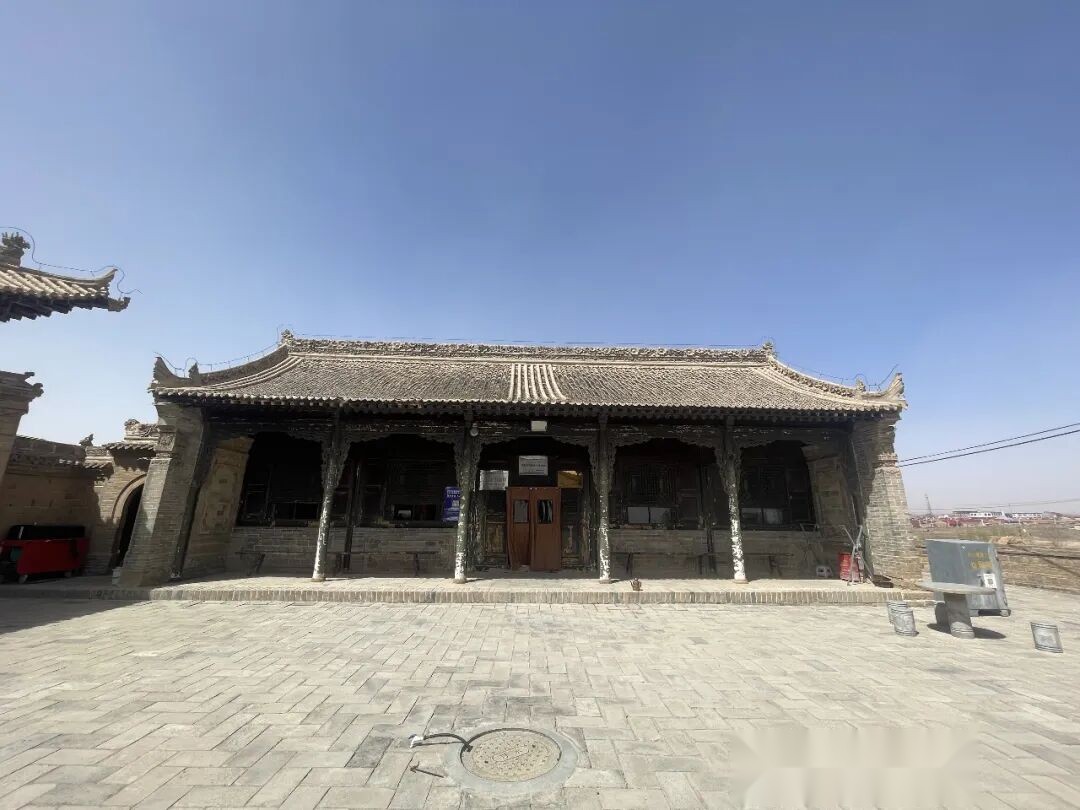
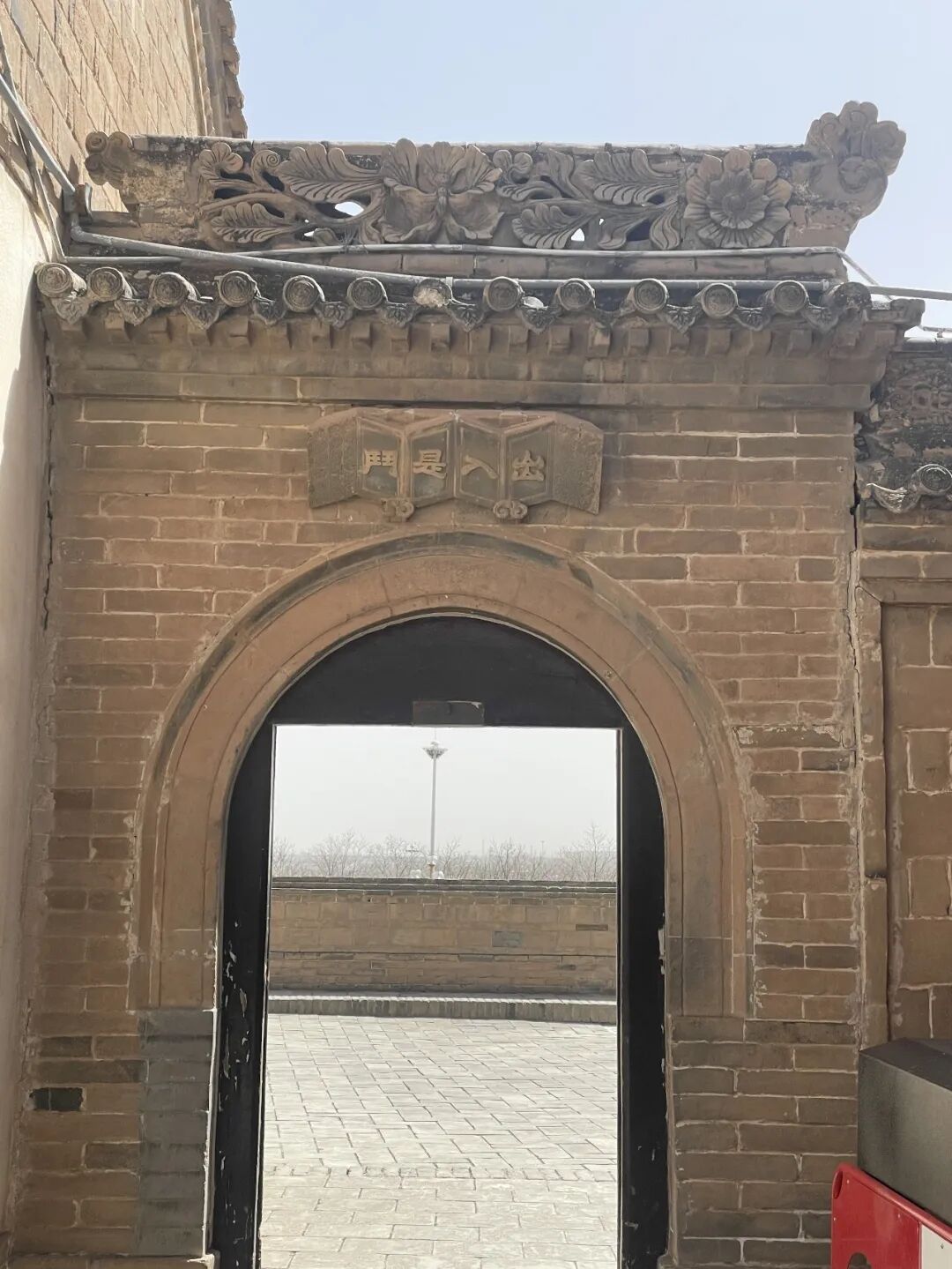
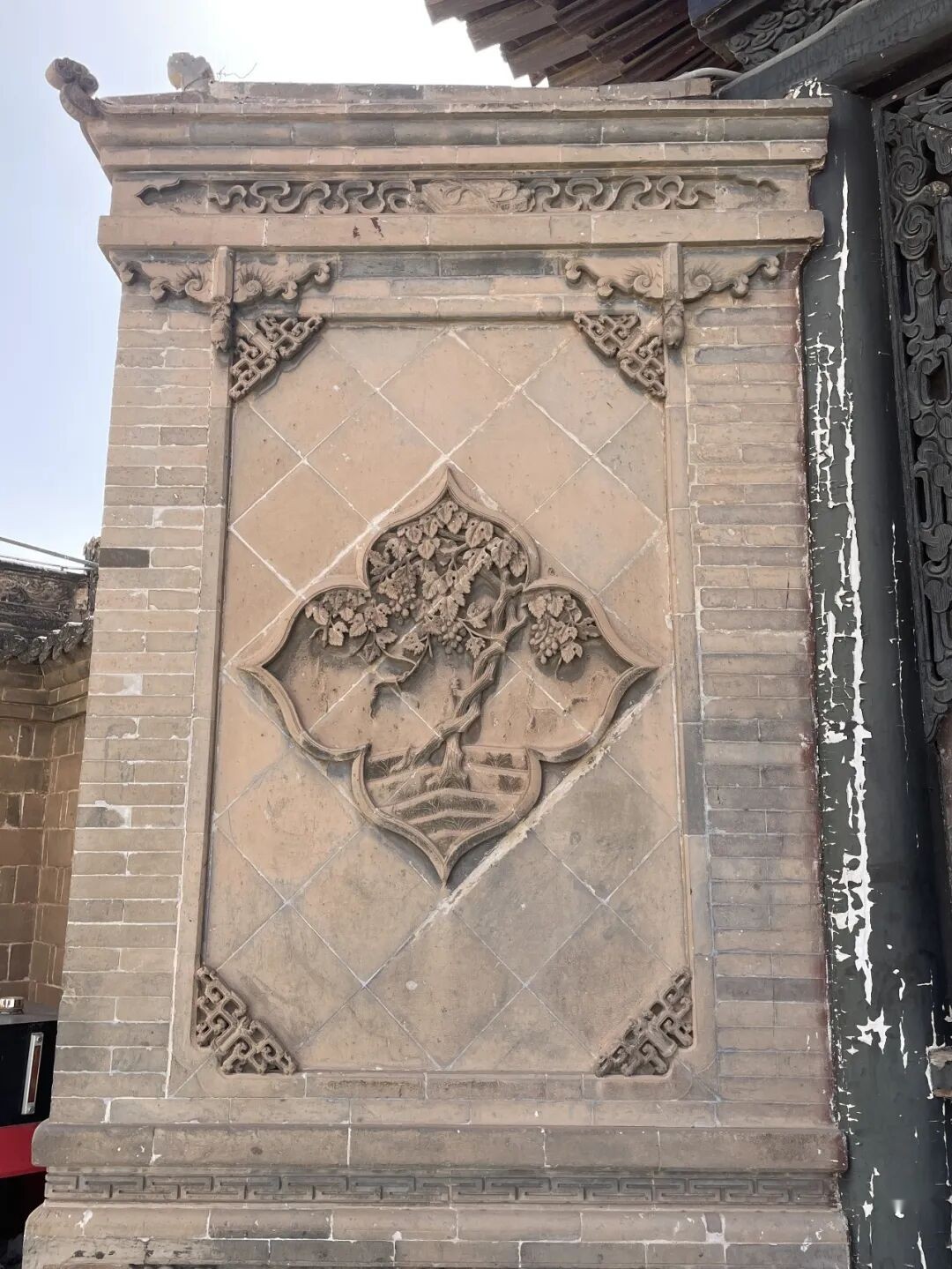
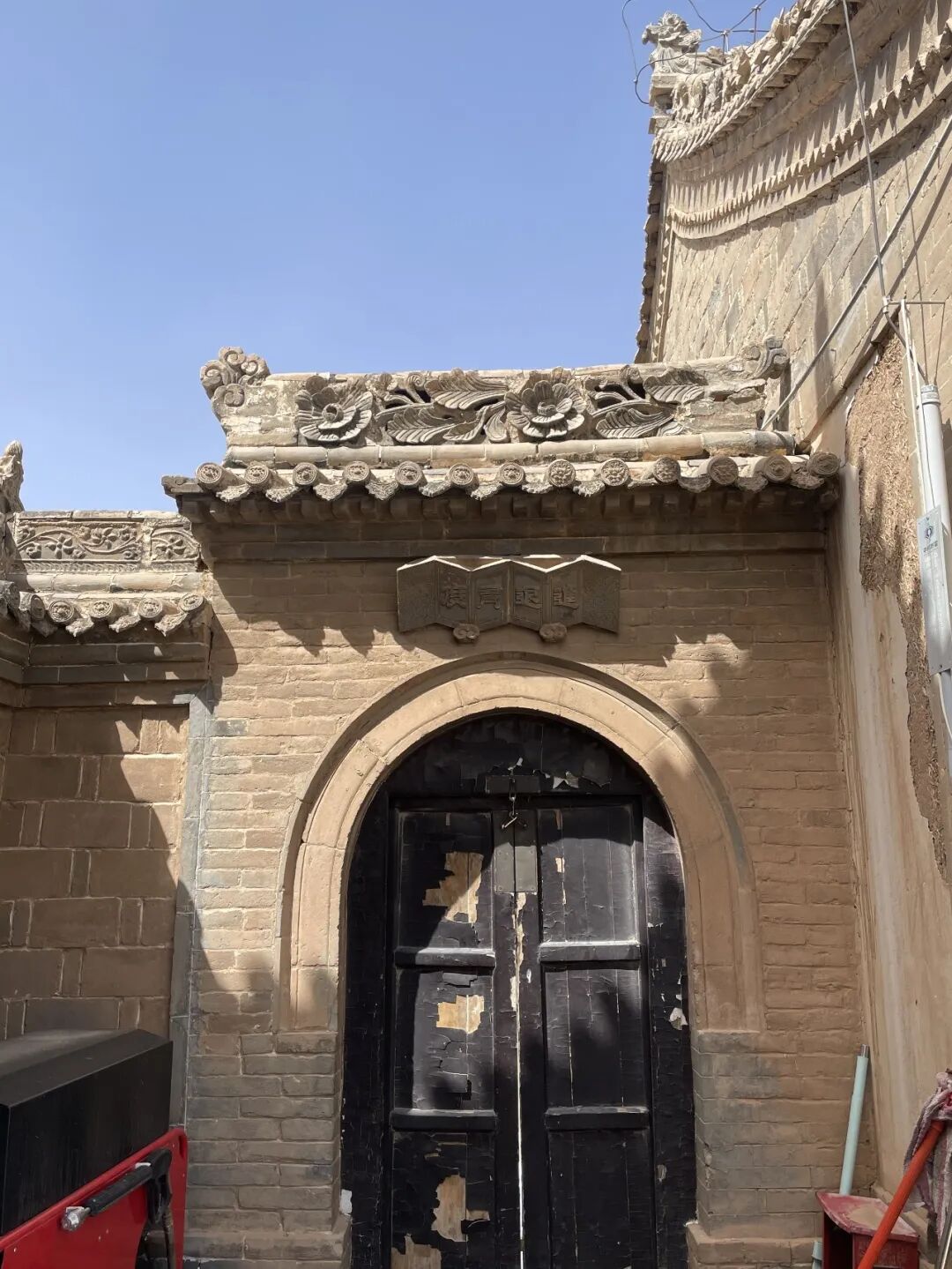

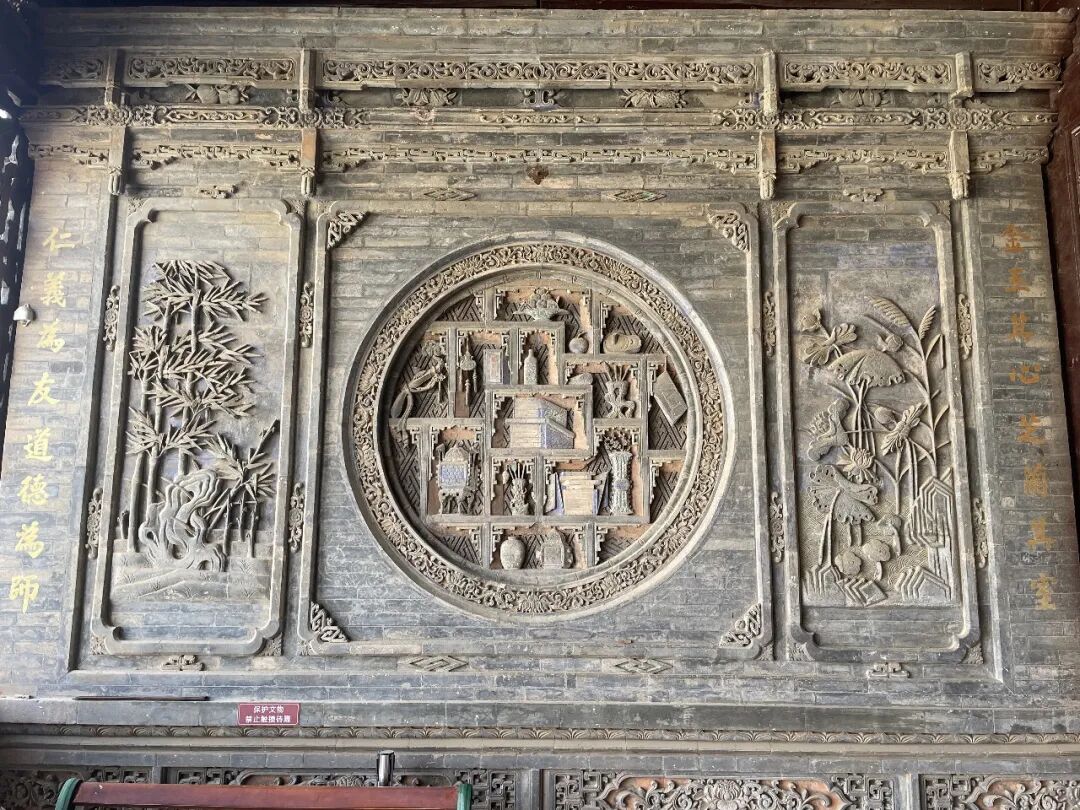
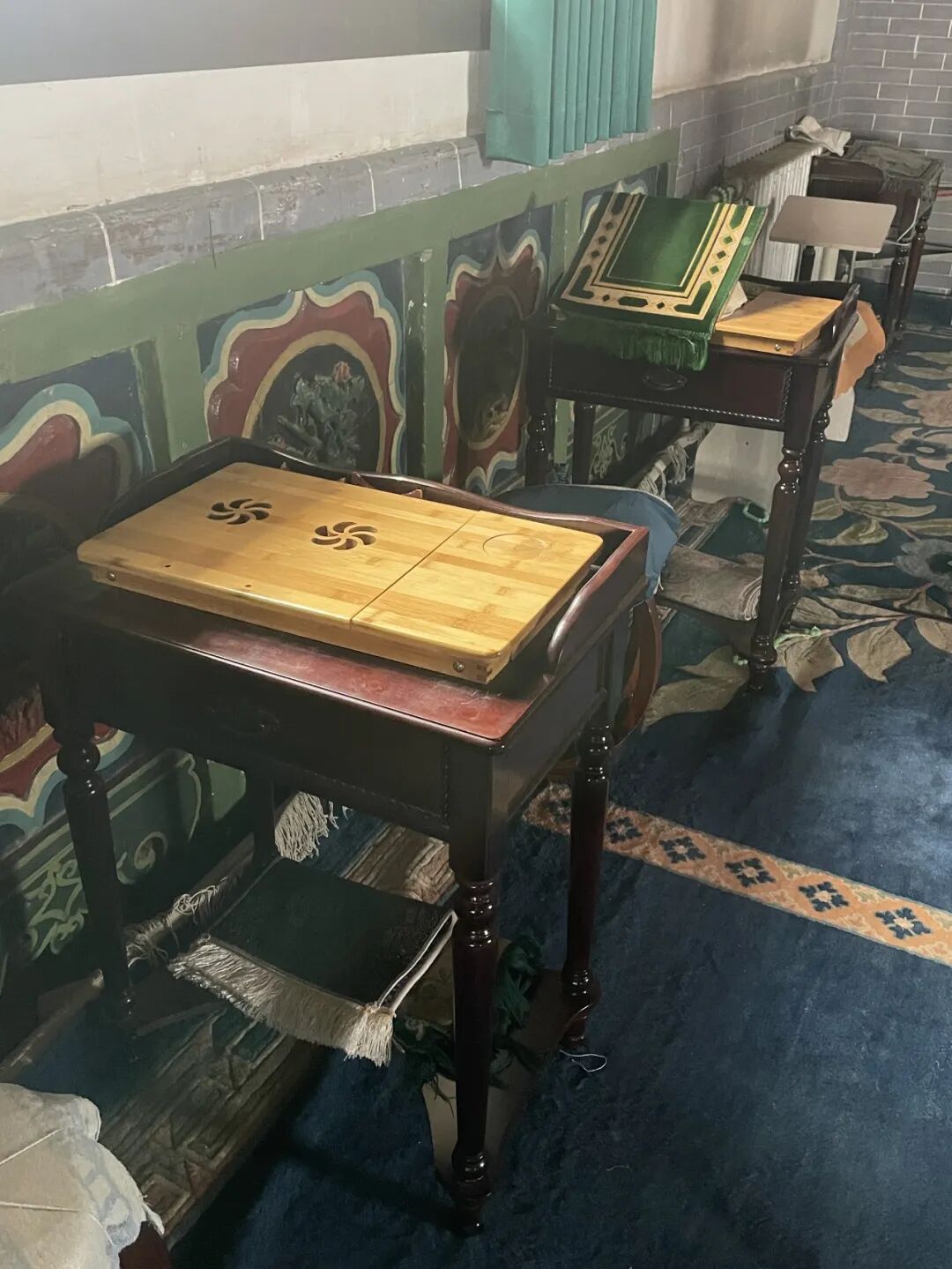
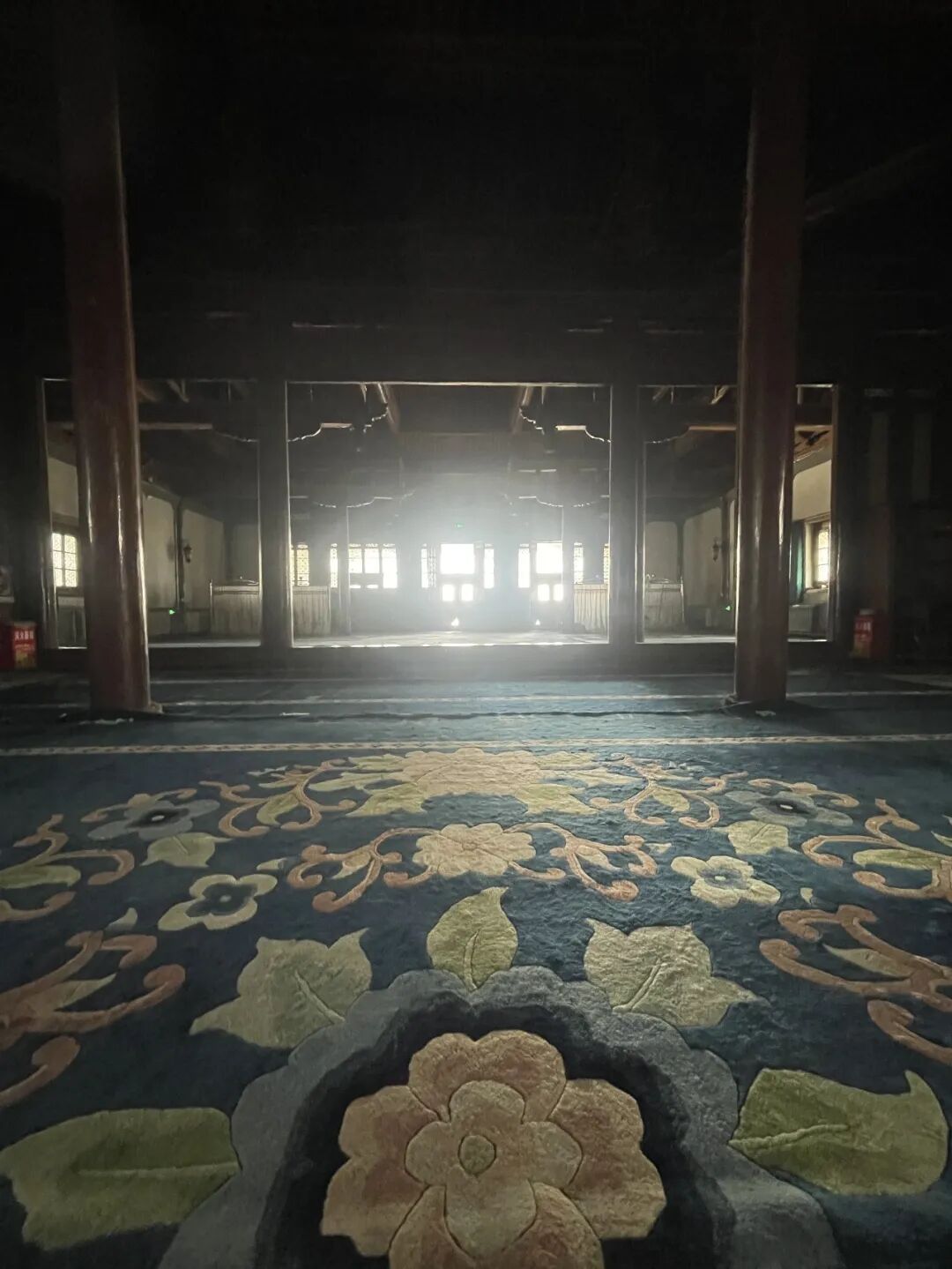

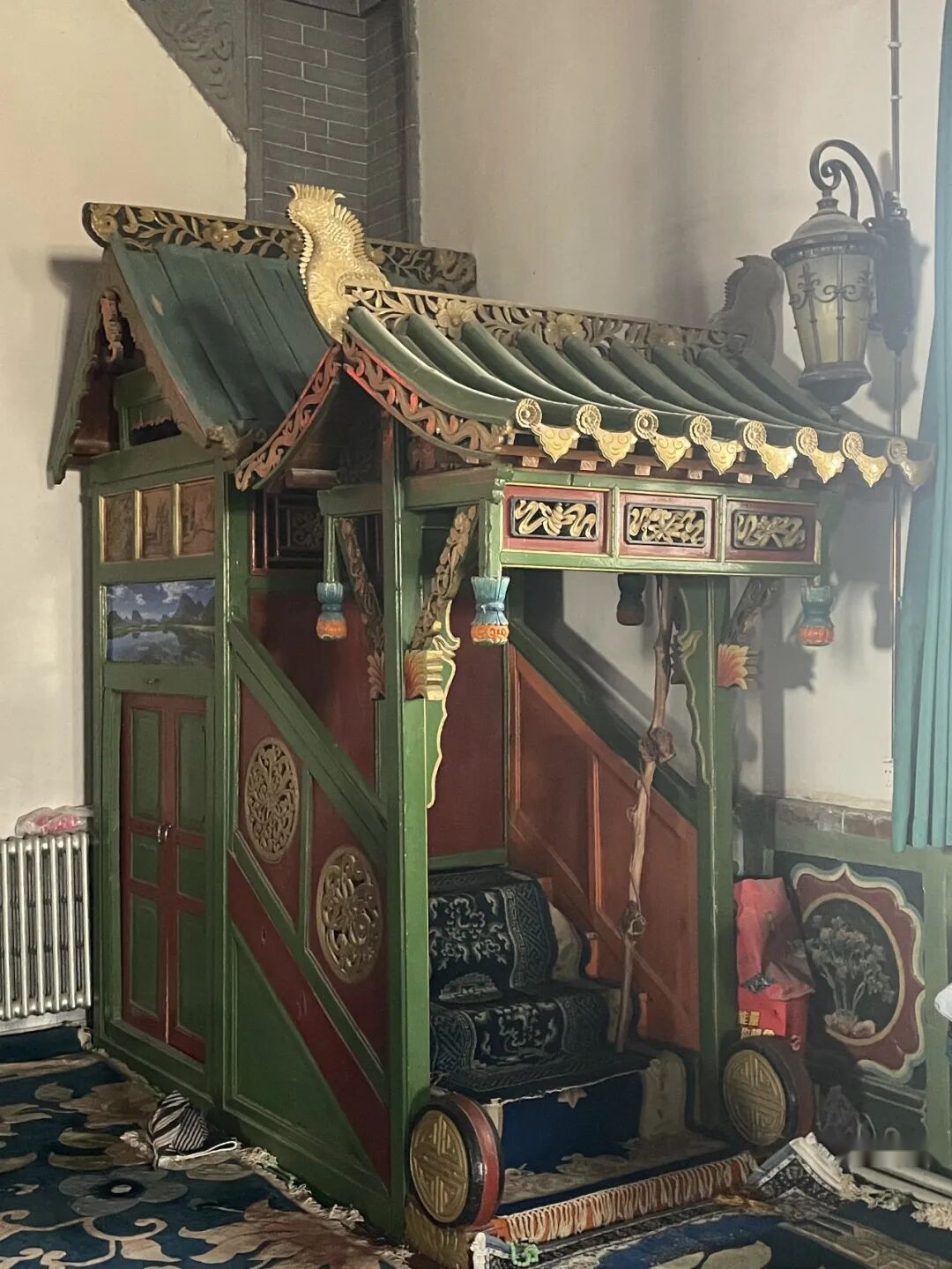
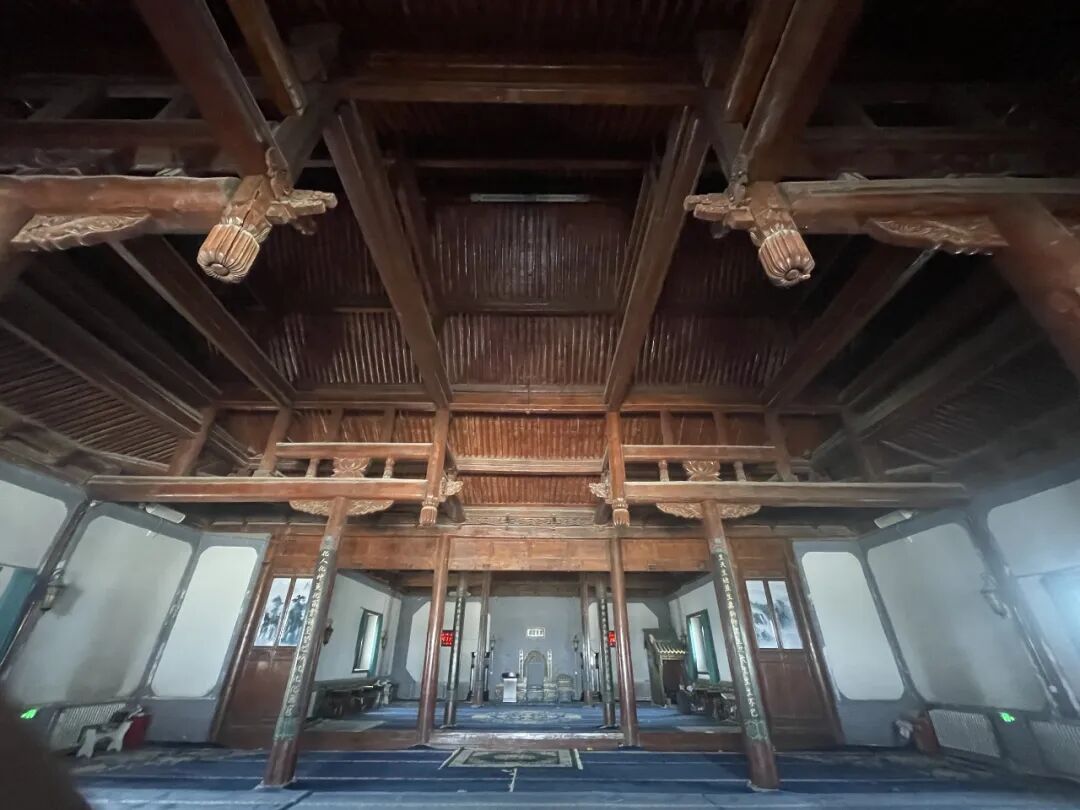
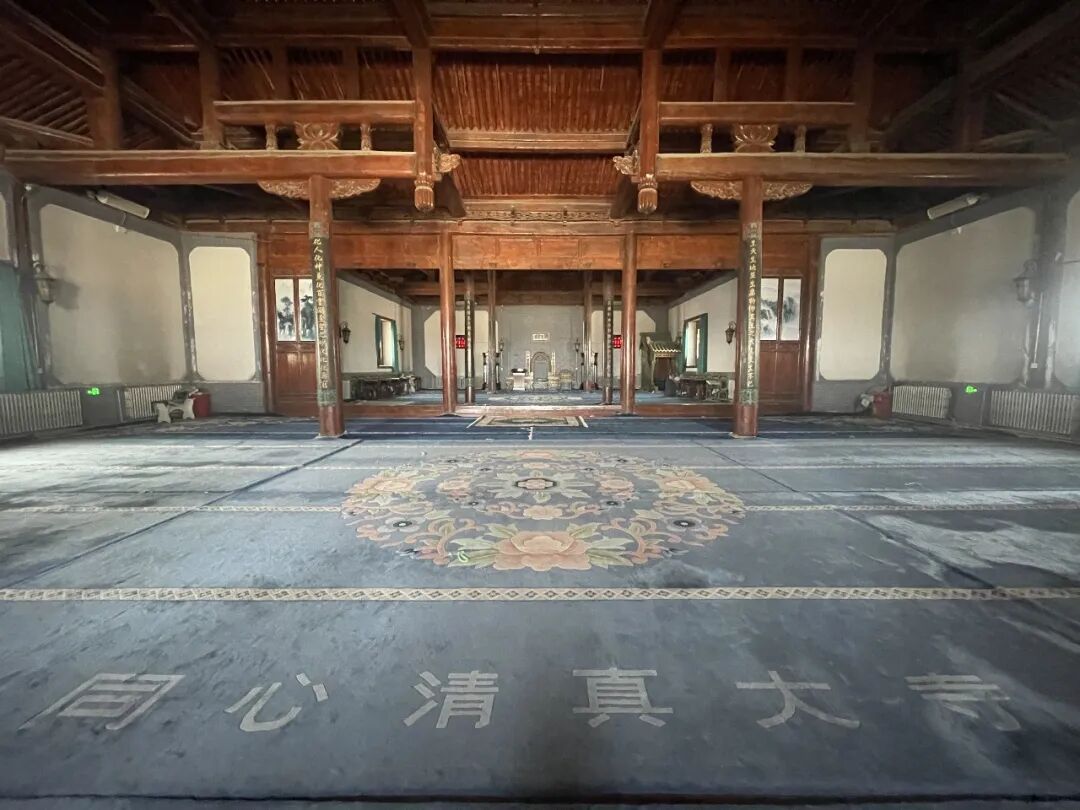
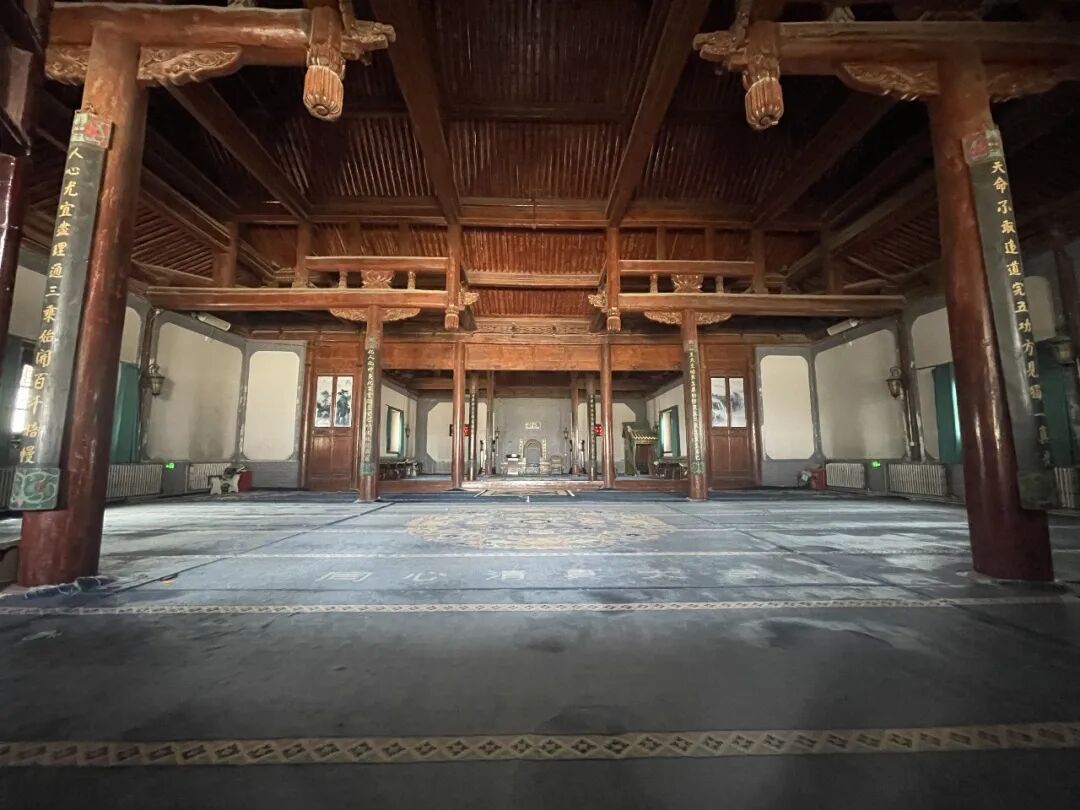
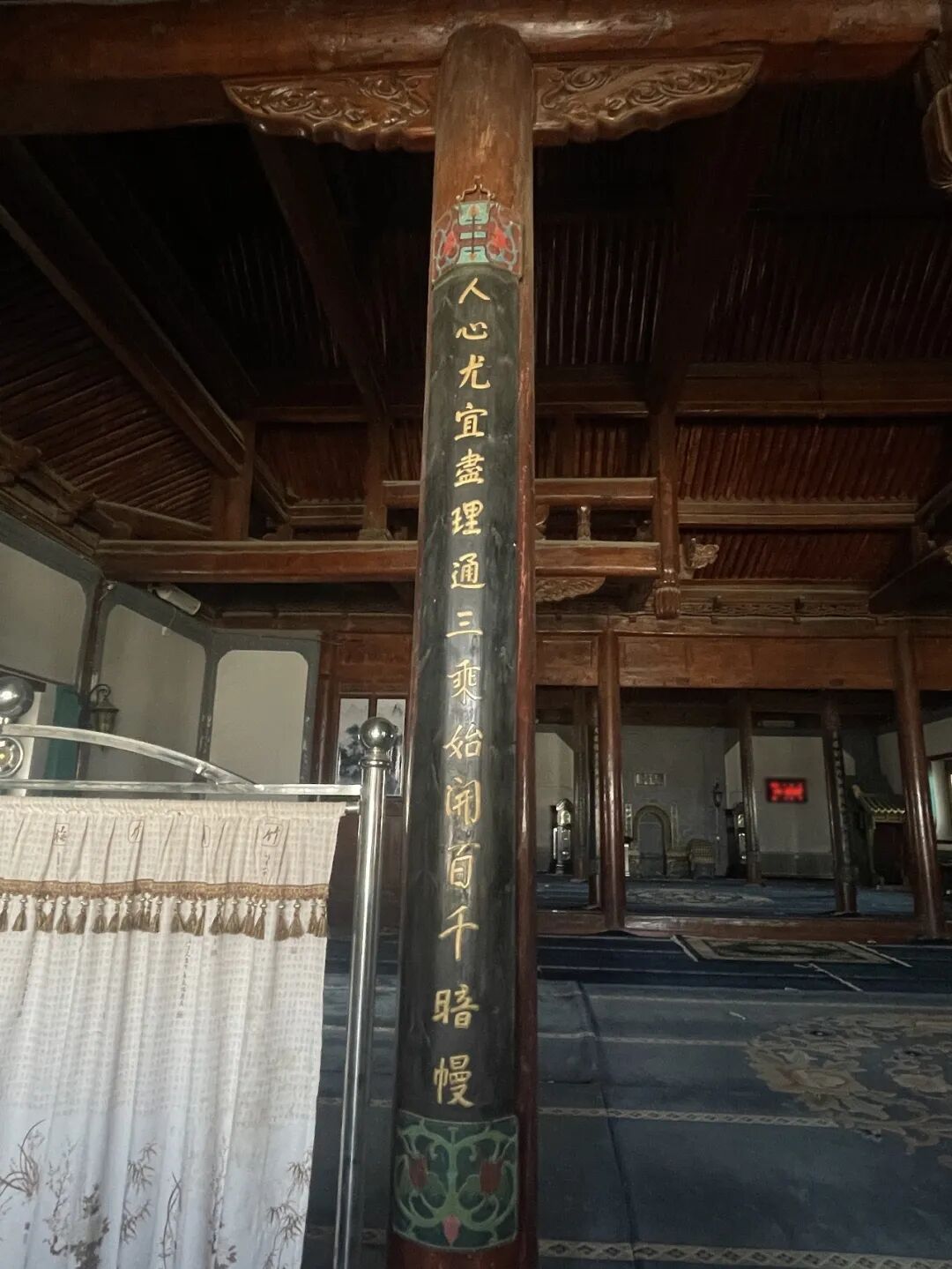
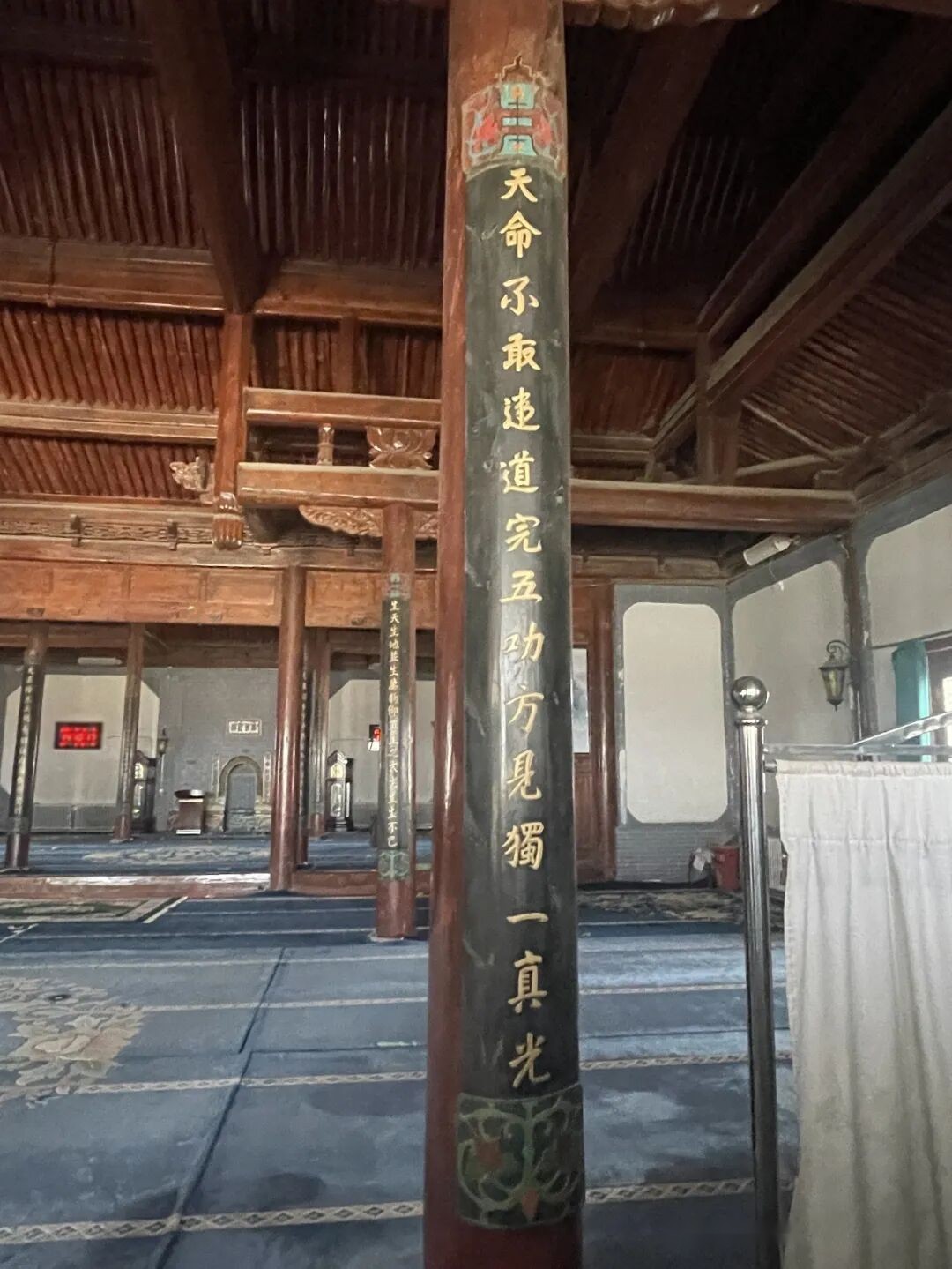
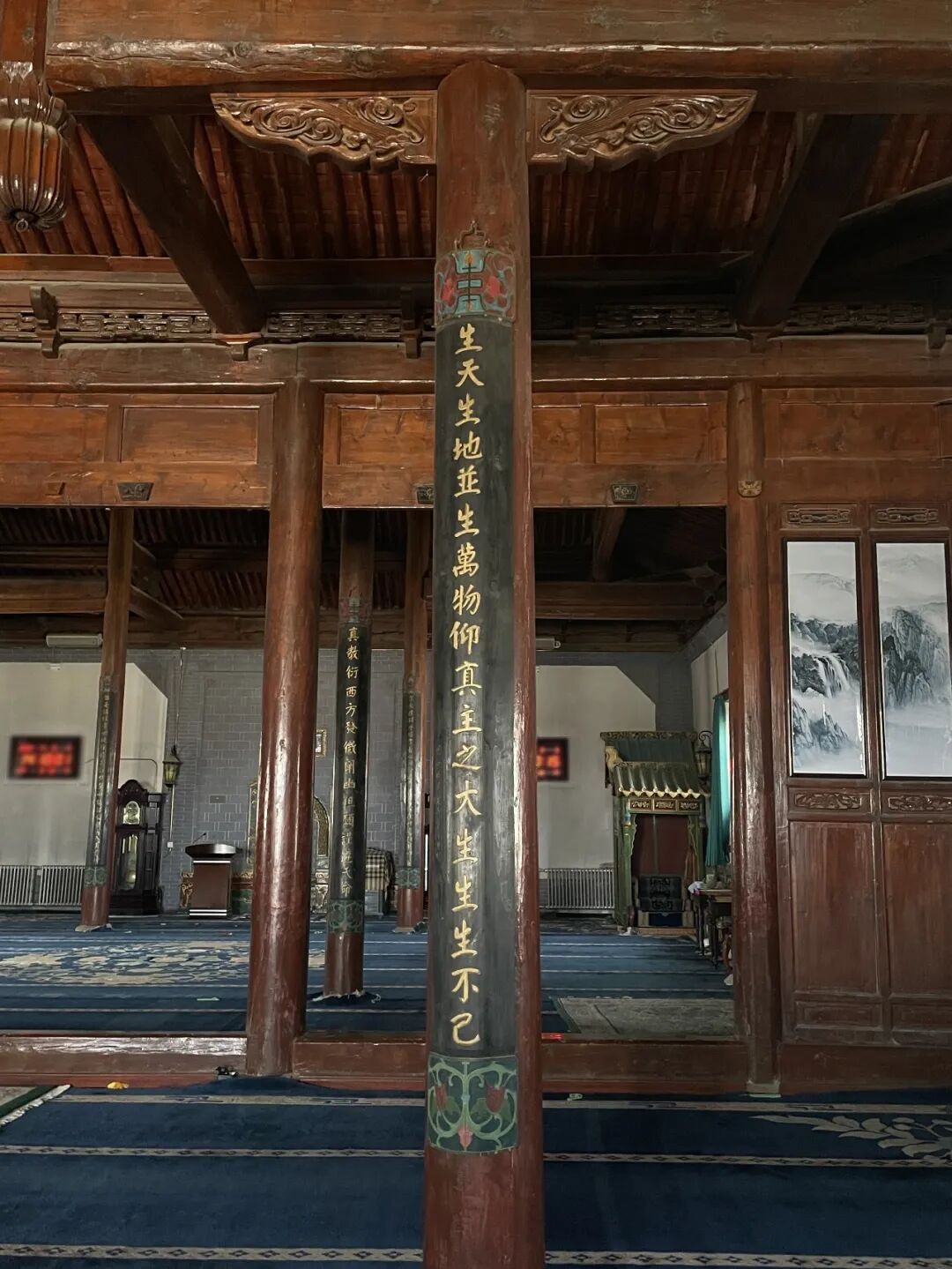
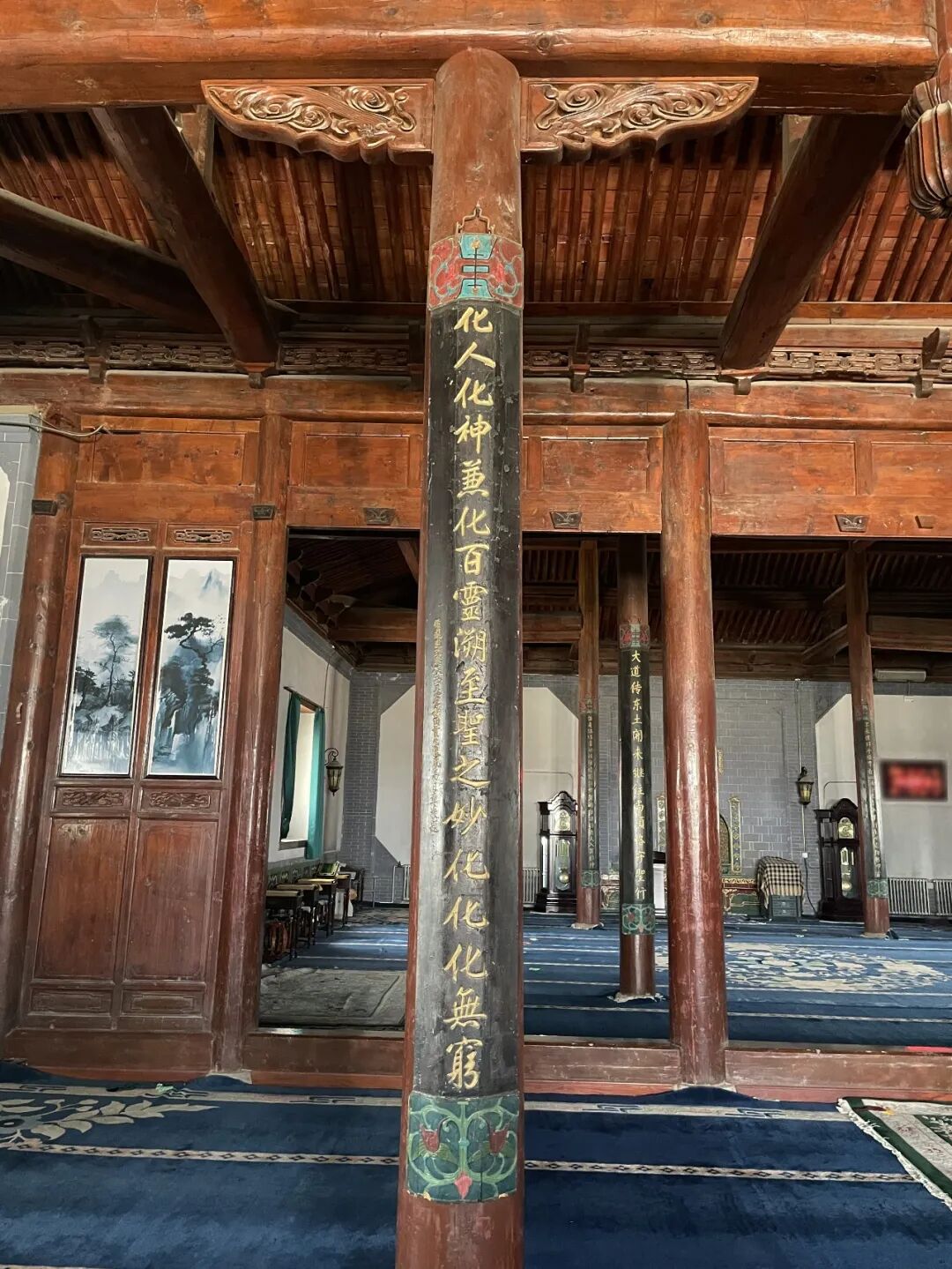
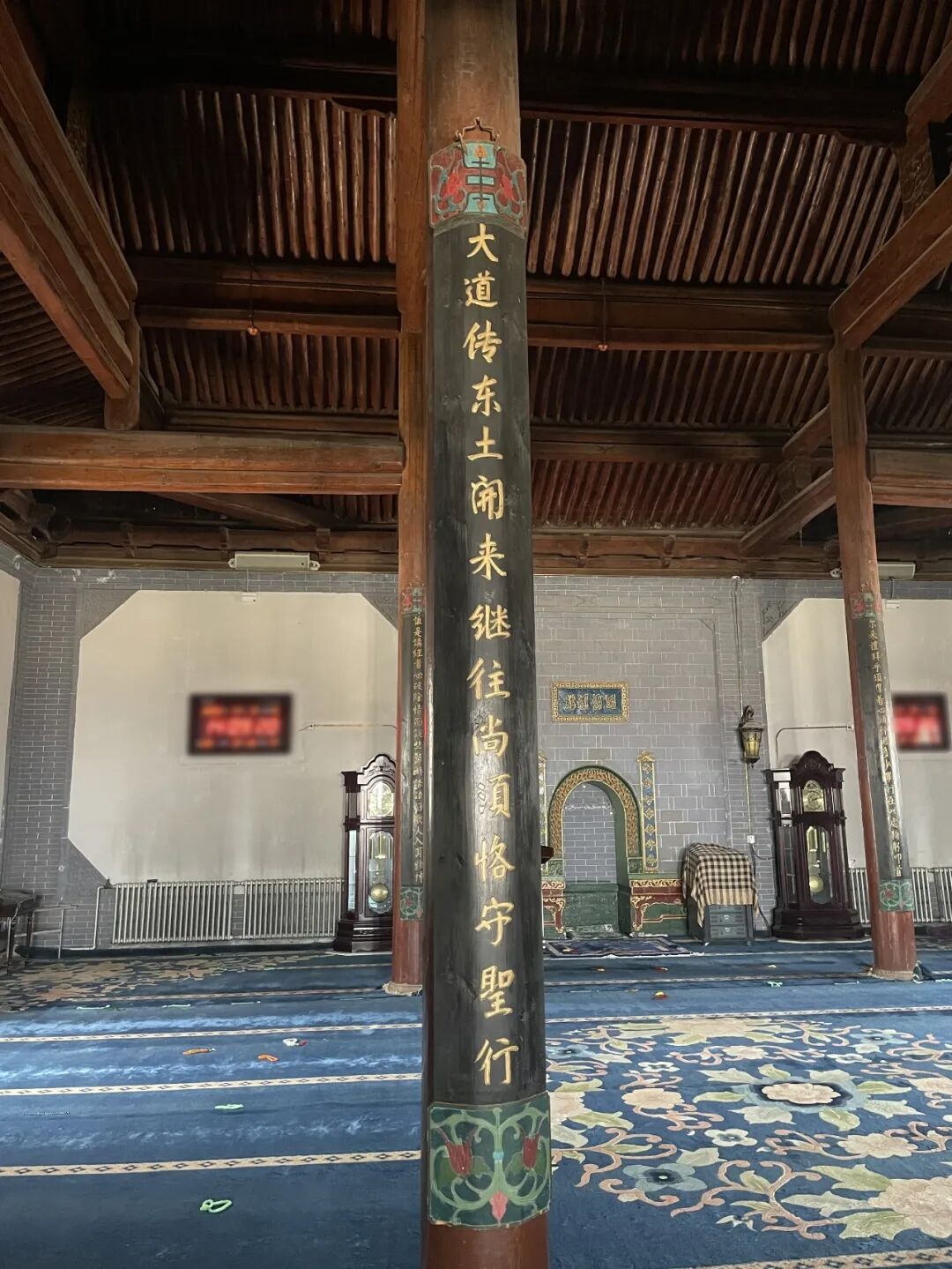
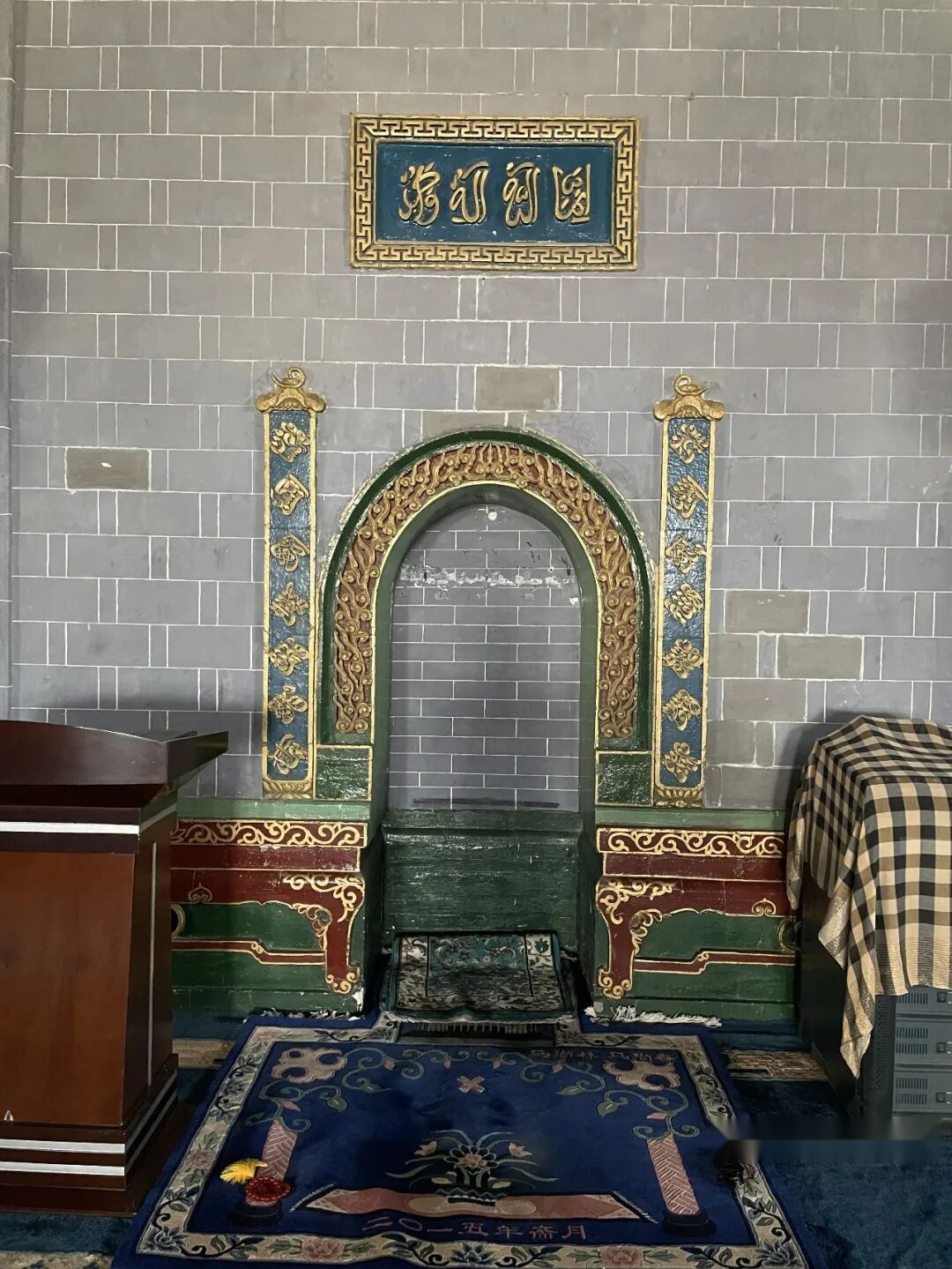


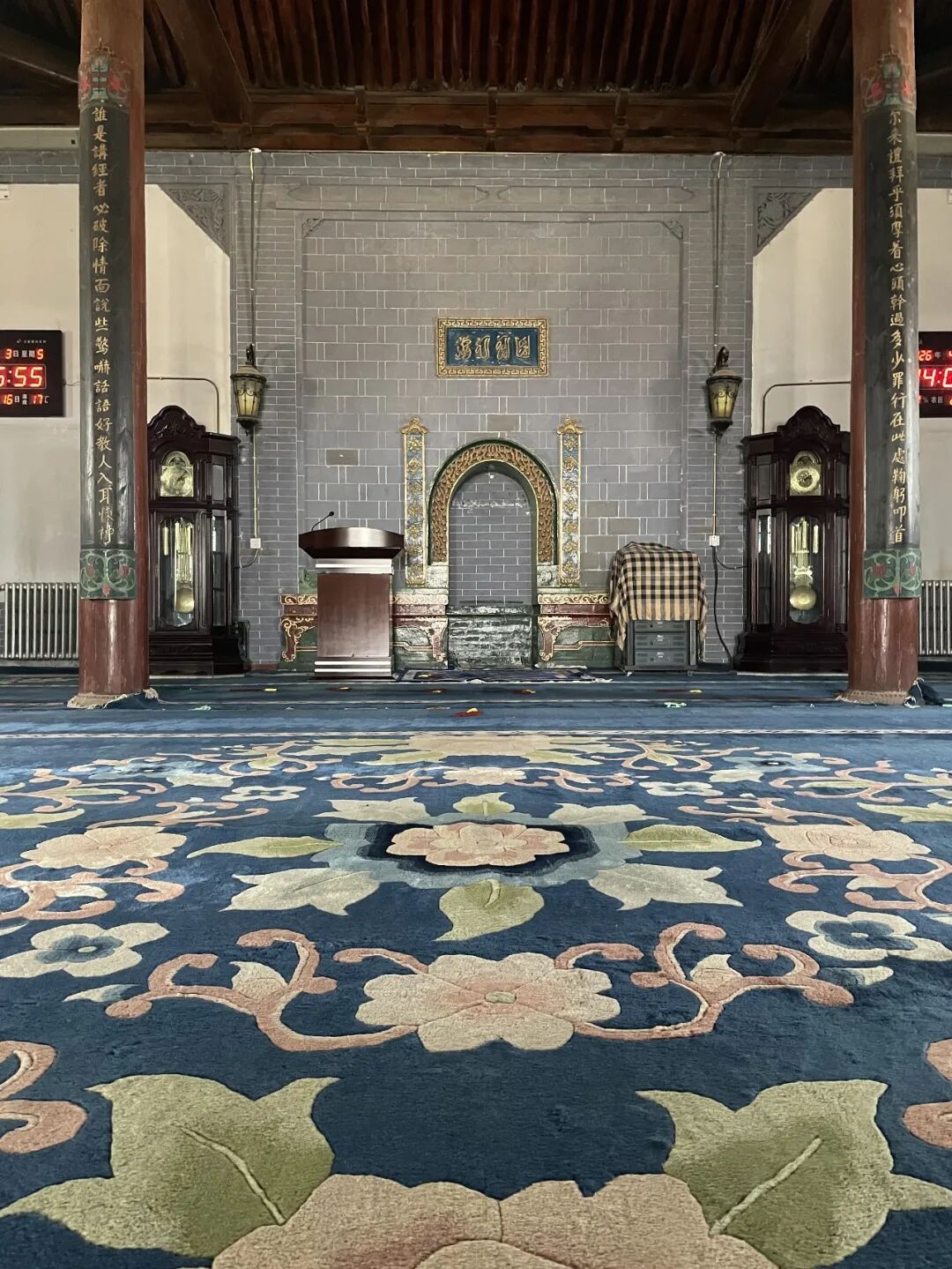
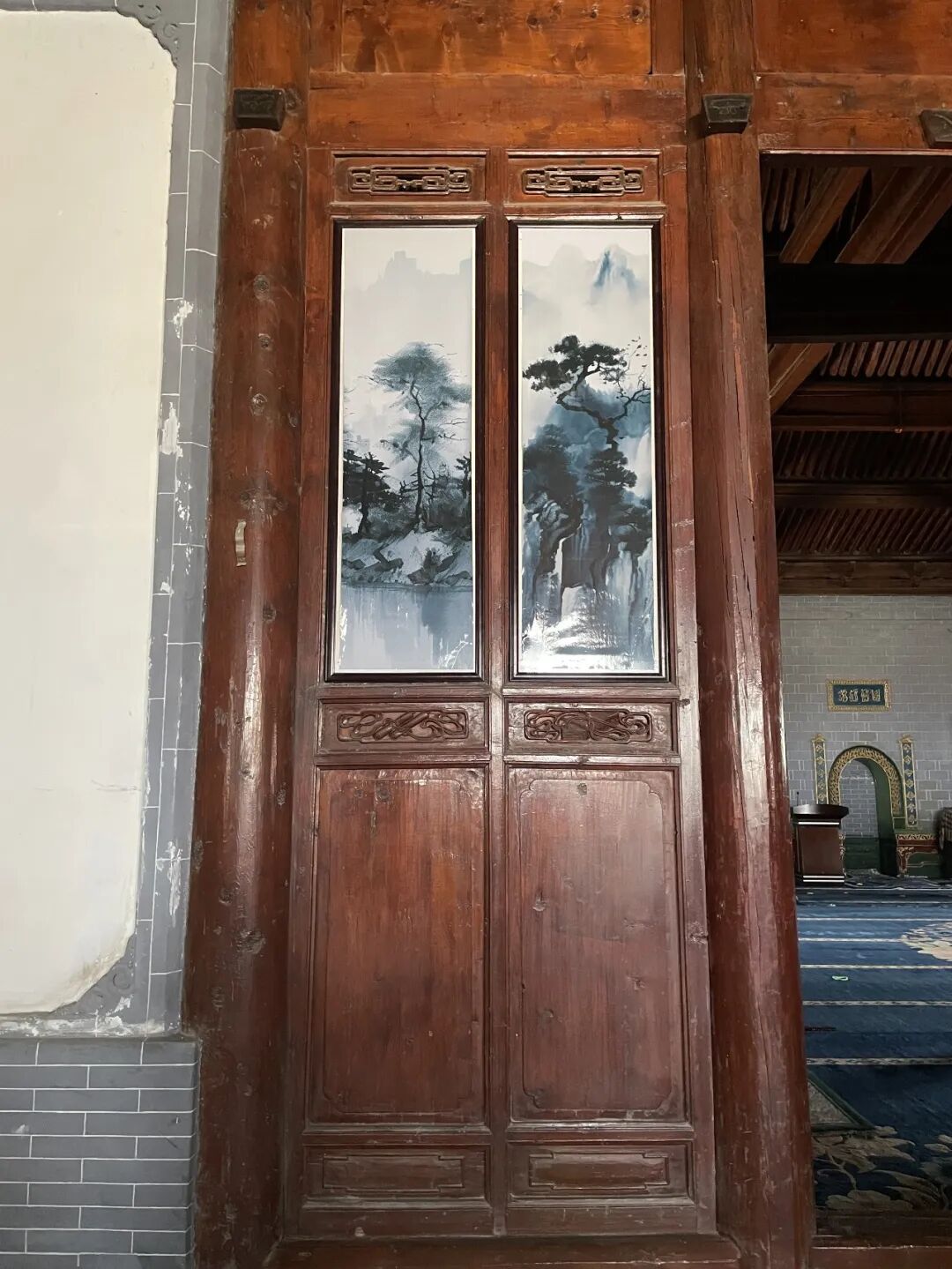
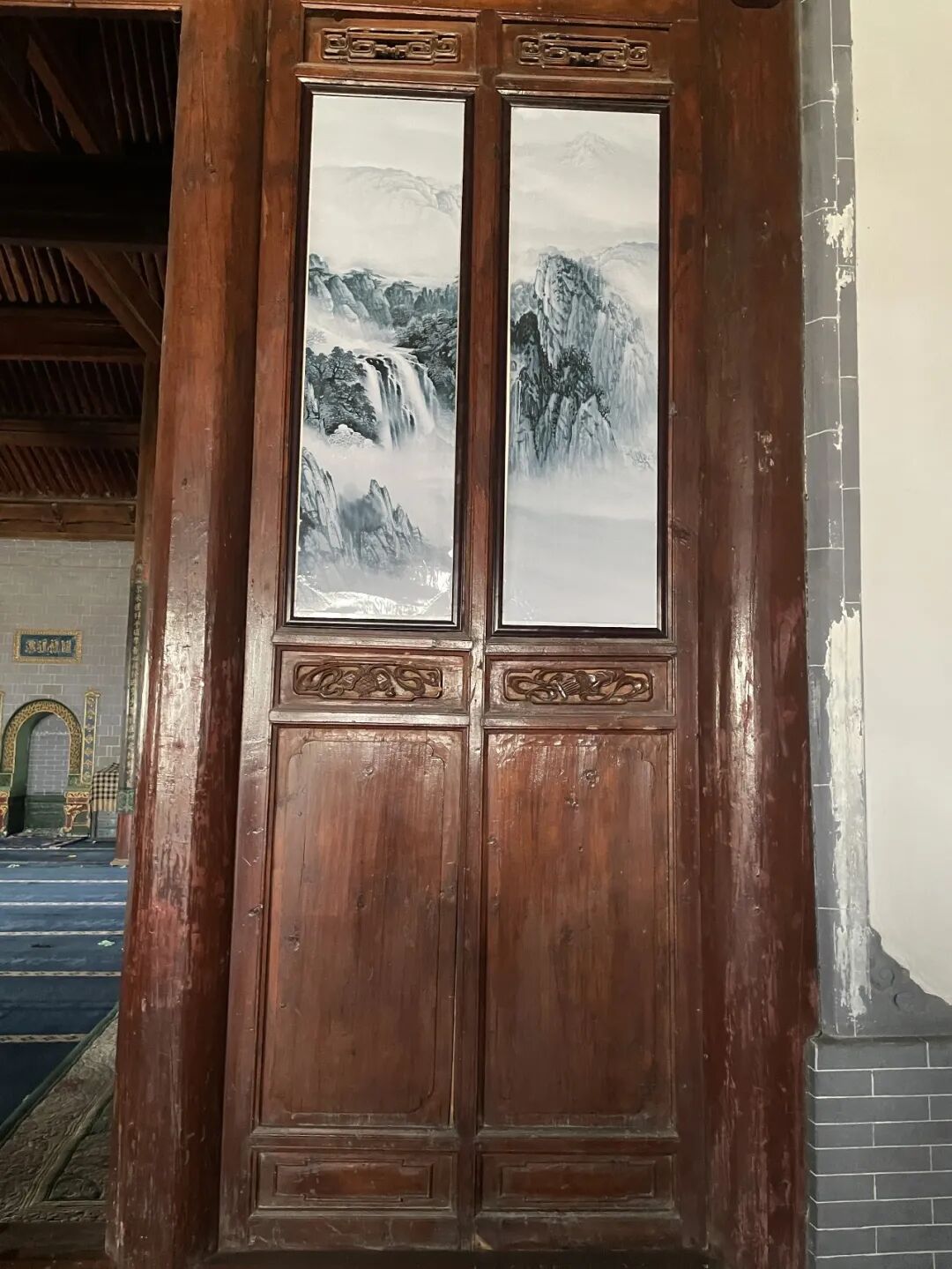
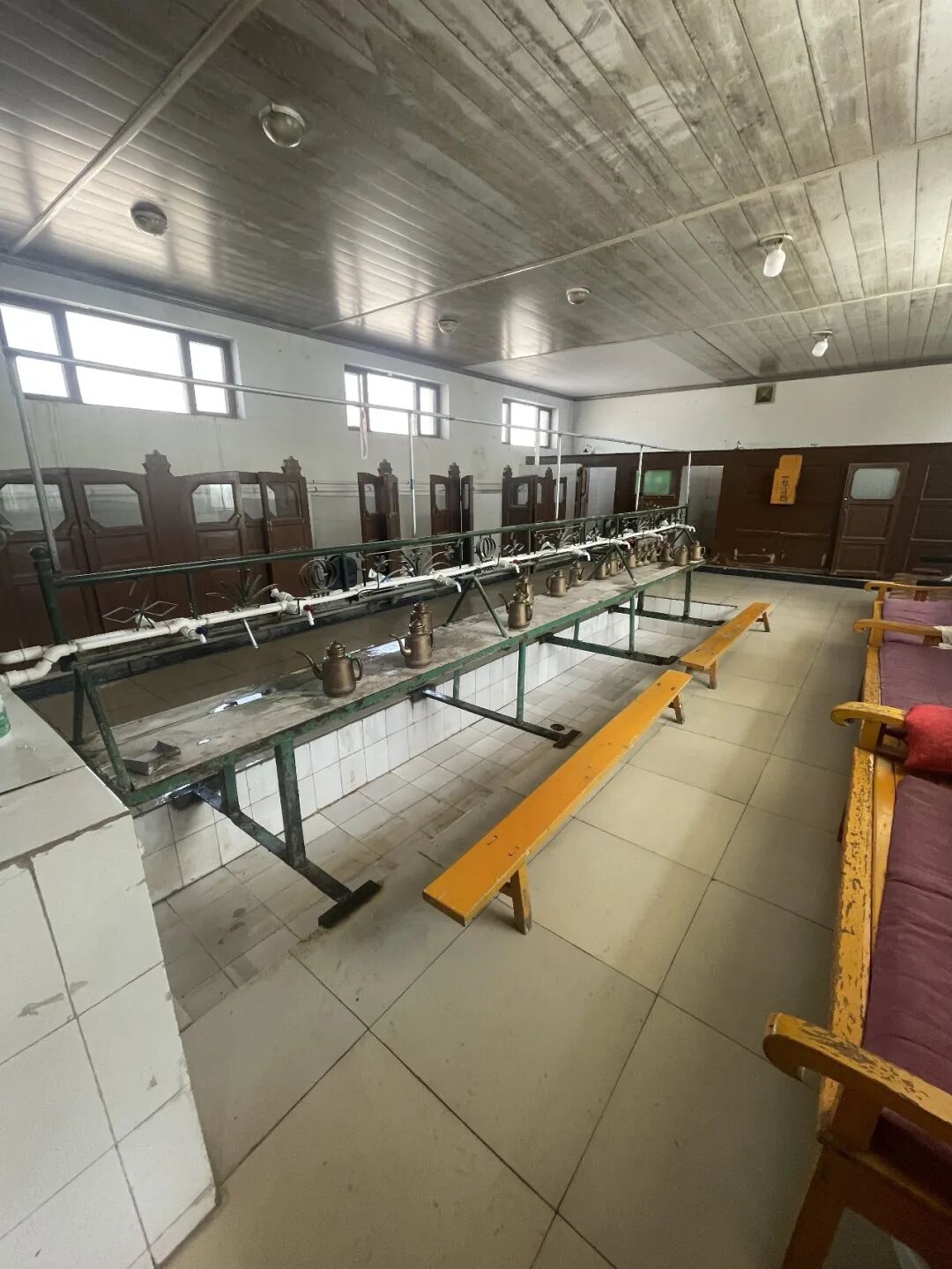
Exploring Ningxia's Oldest and Largest Mosque: A Visit to Tongxin Great Mosque
Articles • Hasan09 posted the article • 0 comments • 5 views • 3 hours ago
Visiting Ningxia's Oldest and Largest Mosque: A Field Journey to Tongxin Great Mosque
Abstract:
A field exploration of the architectural layout and historical environment of Tongxin Great Mosque. Documenting an ancient sanctuary that has stood tall through multiple major renovations since the Ming dynasty, and experiencing the solemnity and devotion of Muslims in Northwest China as they generation after generation safeguard their spiritual home.
As an autonomous region for Hui Muslims, Ningxia is dotted with mosques everywhere. But do you know which mosque in Ningxia is the oldest, largest, a national key cultural relic protection unit, and a famous revolutionary heritage site? That's right, it's the Tongxin Great Mosque (Tongxin Mosque).
Tongxin Great Mosque is located on a highland in the northern part of the old city of Tongxin County. Legend has it that it was built during the Wanli reign of the Ming dynasty (1573–1620), boasting a history of over 600 years, and has undergone three large-scale renovations and expansions. Its architectural style is unique, seamlessly blending ancient Chinese traditional wooden architecture with Islamic culture. Despite weathering the vicissitudes of time, it still stands tall, majestic, rustic, and elegant.
On the wall near the entrance of the mosque courtyard, there are two stone-carved horizontal plaques bearing the inscriptions: "Renovated during the Wanli reign of the Ming dynasty" and "Renovated in the fifth month of the Xinhai year during the 56th year of the Qianlong reign," indicating that the current site of Tongxin Great Mosque has a history of at least over four hundred years. The mosque features a traditional Chinese classical architectural style with a building area of 2,870 square meters. The entire temple is divided into inner and outer courtyards. The outer courtyard is relatively spacious, where Muslims often gather for congregational prayers during major festivals. In front of the mosque gate stands a 9-meter-long and 6-meter-high spirit wall (zhaobi) featuring a brick-carved pattern of "Cypress Hidden in the Moon." Matching the spirit wall are three brick-built arched gates engraved with Arabic brick carvings and floral patterns, executed with exquisite and lifelike craftsmanship. The central gate is inscribed with the three large characters "Mosque" (Qingzhensi), while the left and right arched gates bear the lintel inscriptions "Endurance of Heart" (Renxin) and "Patience" (Rennai) respectively. The outer courtyard also houses a 102-year-old Chinese wolfberry (goji berry) tree. The inner courtyard features a prayer hall on a high platform, flanked by 5-room lecture halls on the north and south, forming a three-sided courtyard layout with the main hall. The prayer hall is spacious, capable of accommodating over a thousand people for congregational prayer simultaneously. The exterior of the hall is exquisitely decorated with upturned eaves and dougong (interlocking wooden brackets), maintaining a solemn yet understated aesthetic.
Tongxin Great Mosque is famous not only for its unique architectural style, but also as a symbol of unity and cooperation between the Hui and Han ethnic groups. In 1936, during the Western Expedition of the Chinese Workers' and Peasants' Red Army, the founding assembly of the "Yuhai County Hui People's Autonomous Government of the Shaan-Gan-Ning Border Region" was held at this very mosque.
According to staff inside the mosque, a mosque with such a long history was almost destroyed during the Cultural Revolution. At the time, Red Guards were preparing to demolish the mosque the very next day. Fortunately, perhaps due to the mosque's status as a revolutionary cultural relic, instructions came down from higher authorities that same day dictating that this mosque must not be demolished and had to be preserved. Thus, Tongxin Great Mosque narrowly escaped disaster and was very fortunately preserved. view all
Visiting Ningxia's Oldest and Largest Mosque: A Field Journey to Tongxin Great Mosque
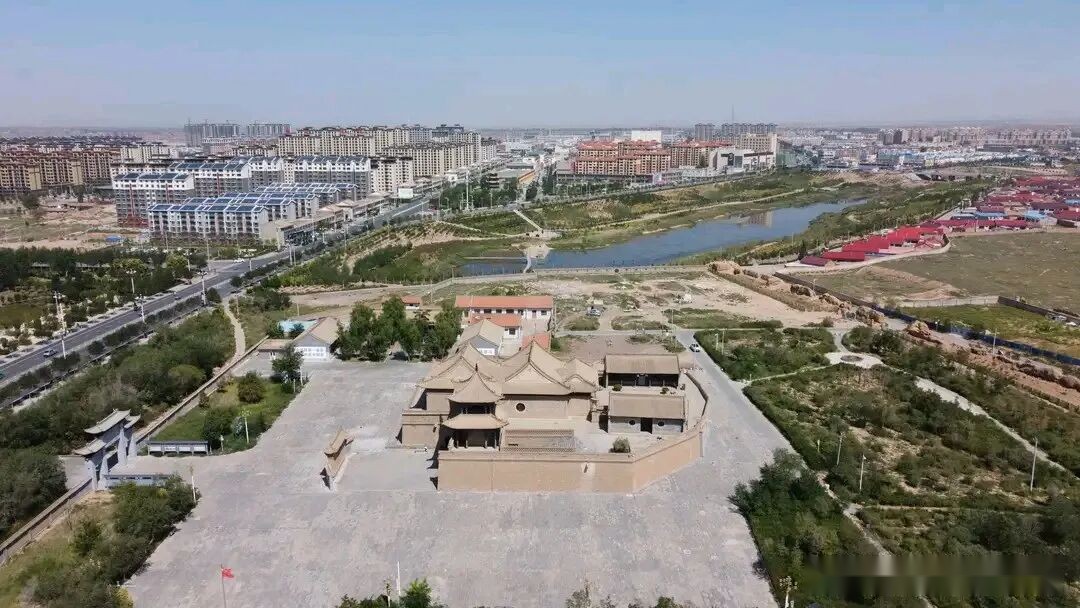
Abstract:
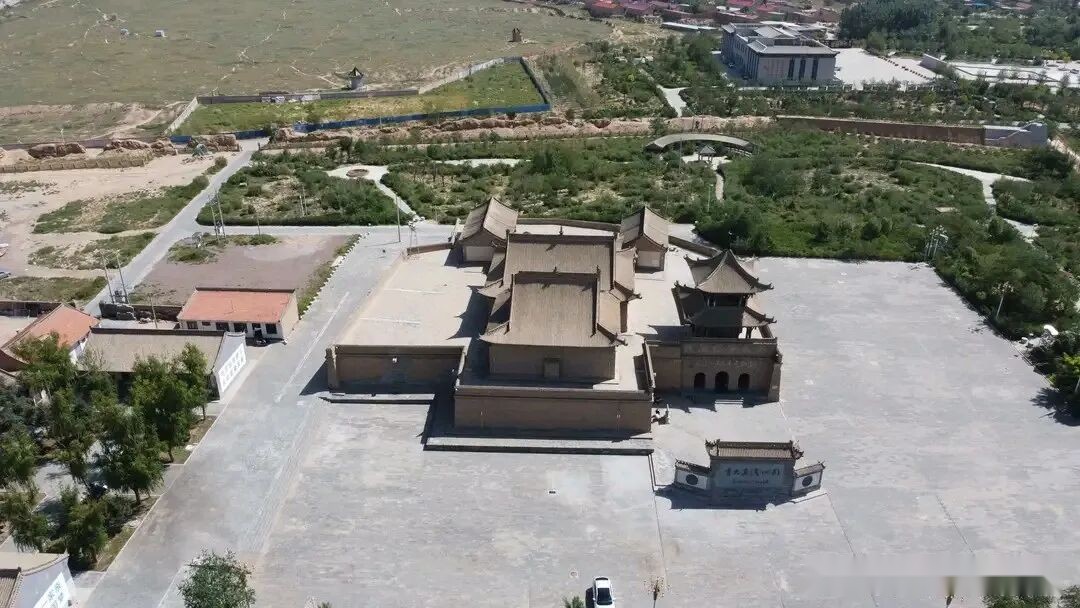
A field exploration of the architectural layout and historical environment of Tongxin Great Mosque. Documenting an ancient sanctuary that has stood tall through multiple major renovations since the Ming dynasty, and experiencing the solemnity and devotion of Muslims in Northwest China as they generation after generation safeguard their spiritual home.
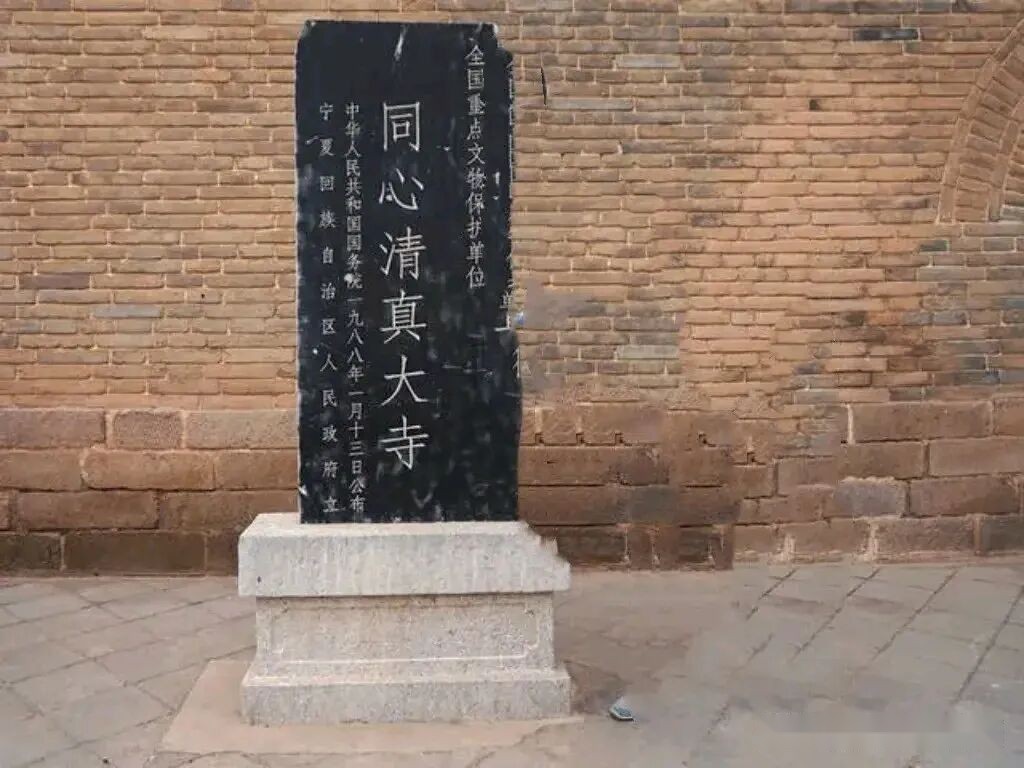
As an autonomous region for Hui Muslims, Ningxia is dotted with mosques everywhere. But do you know which mosque in Ningxia is the oldest, largest, a national key cultural relic protection unit, and a famous revolutionary heritage site? That's right, it's the Tongxin Great Mosque (Tongxin Mosque).

Tongxin Great Mosque is located on a highland in the northern part of the old city of Tongxin County. Legend has it that it was built during the Wanli reign of the Ming dynasty (1573–1620), boasting a history of over 600 years, and has undergone three large-scale renovations and expansions. Its architectural style is unique, seamlessly blending ancient Chinese traditional wooden architecture with Islamic culture. Despite weathering the vicissitudes of time, it still stands tall, majestic, rustic, and elegant.
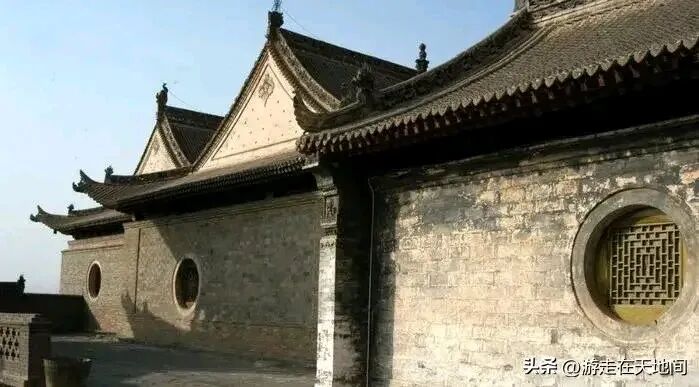
On the wall near the entrance of the mosque courtyard, there are two stone-carved horizontal plaques bearing the inscriptions: "Renovated during the Wanli reign of the Ming dynasty" and "Renovated in the fifth month of the Xinhai year during the 56th year of the Qianlong reign," indicating that the current site of Tongxin Great Mosque has a history of at least over four hundred years. The mosque features a traditional Chinese classical architectural style with a building area of 2,870 square meters. The entire temple is divided into inner and outer courtyards. The outer courtyard is relatively spacious, where Muslims often gather for congregational prayers during major festivals. In front of the mosque gate stands a 9-meter-long and 6-meter-high spirit wall (zhaobi) featuring a brick-carved pattern of "Cypress Hidden in the Moon." Matching the spirit wall are three brick-built arched gates engraved with Arabic brick carvings and floral patterns, executed with exquisite and lifelike craftsmanship. The central gate is inscribed with the three large characters "Mosque" (Qingzhensi), while the left and right arched gates bear the lintel inscriptions "Endurance of Heart" (Renxin) and "Patience" (Rennai) respectively. The outer courtyard also houses a 102-year-old Chinese wolfberry (goji berry) tree. The inner courtyard features a prayer hall on a high platform, flanked by 5-room lecture halls on the north and south, forming a three-sided courtyard layout with the main hall. The prayer hall is spacious, capable of accommodating over a thousand people for congregational prayer simultaneously. The exterior of the hall is exquisitely decorated with upturned eaves and dougong (interlocking wooden brackets), maintaining a solemn yet understated aesthetic.
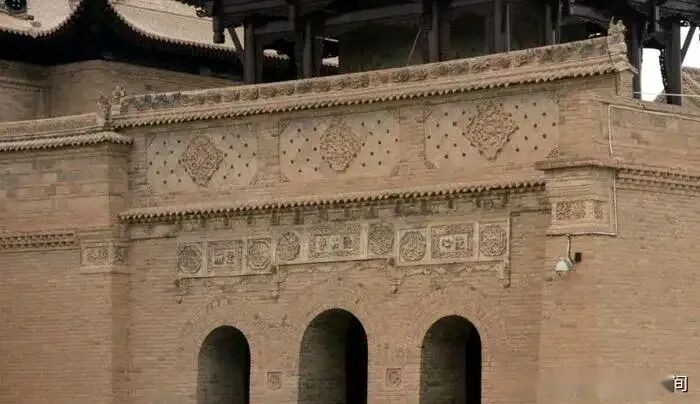
Tongxin Great Mosque is famous not only for its unique architectural style, but also as a symbol of unity and cooperation between the Hui and Han ethnic groups. In 1936, during the Western Expedition of the Chinese Workers' and Peasants' Red Army, the founding assembly of the "Yuhai County Hui People's Autonomous Government of the Shaan-Gan-Ning Border Region" was held at this very mosque.
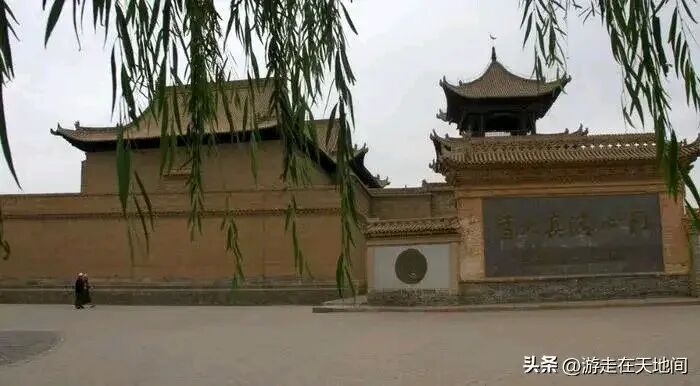
According to staff inside the mosque, a mosque with such a long history was almost destroyed during the Cultural Revolution. At the time, Red Guards were preparing to demolish the mosque the very next day. Fortunately, perhaps due to the mosque's status as a revolutionary cultural relic, instructions came down from higher authorities that same day dictating that this mosque must not be demolished and had to be preserved. Thus, Tongxin Great Mosque narrowly escaped disaster and was very fortunately preserved.
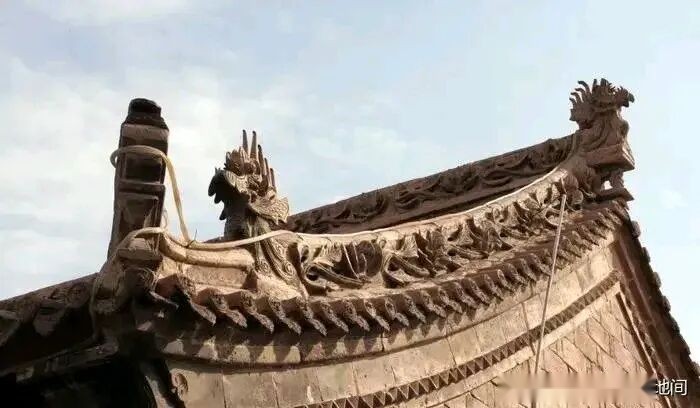

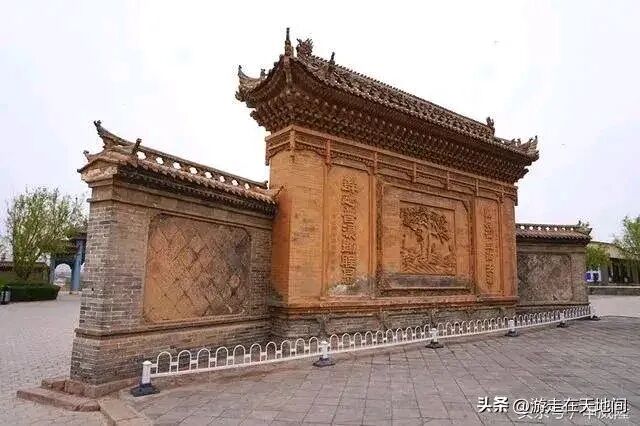
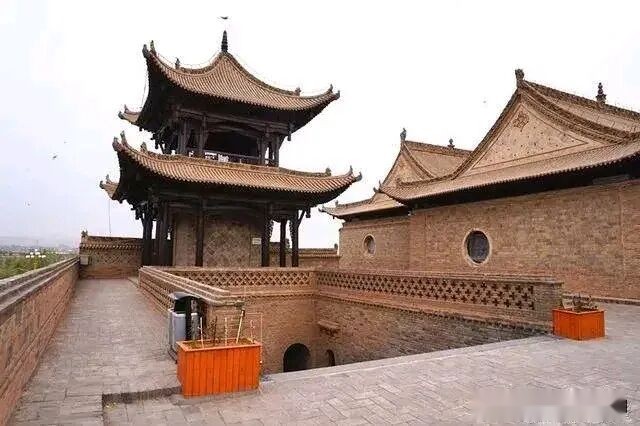

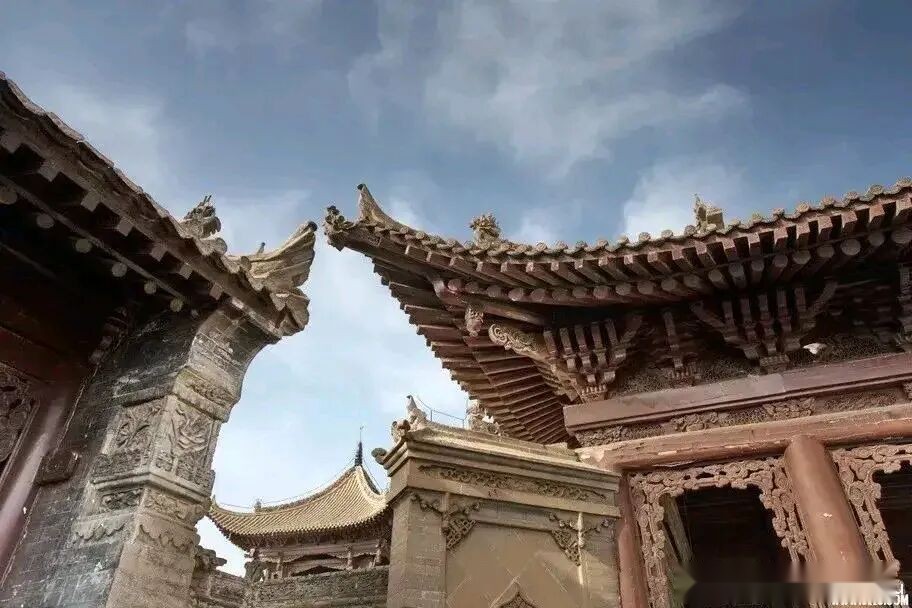

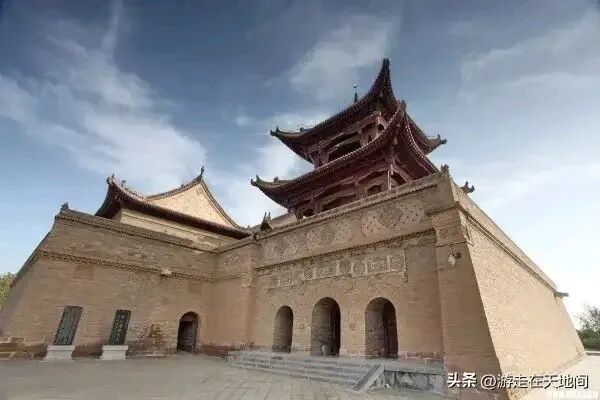
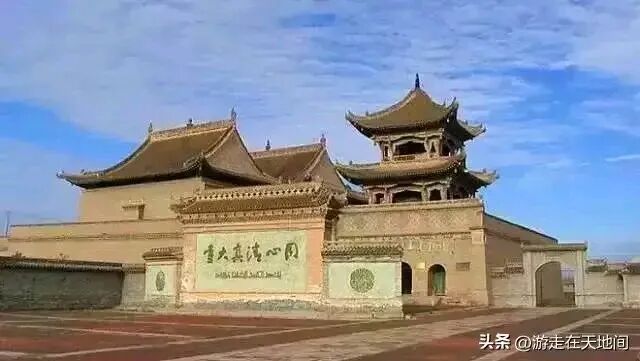
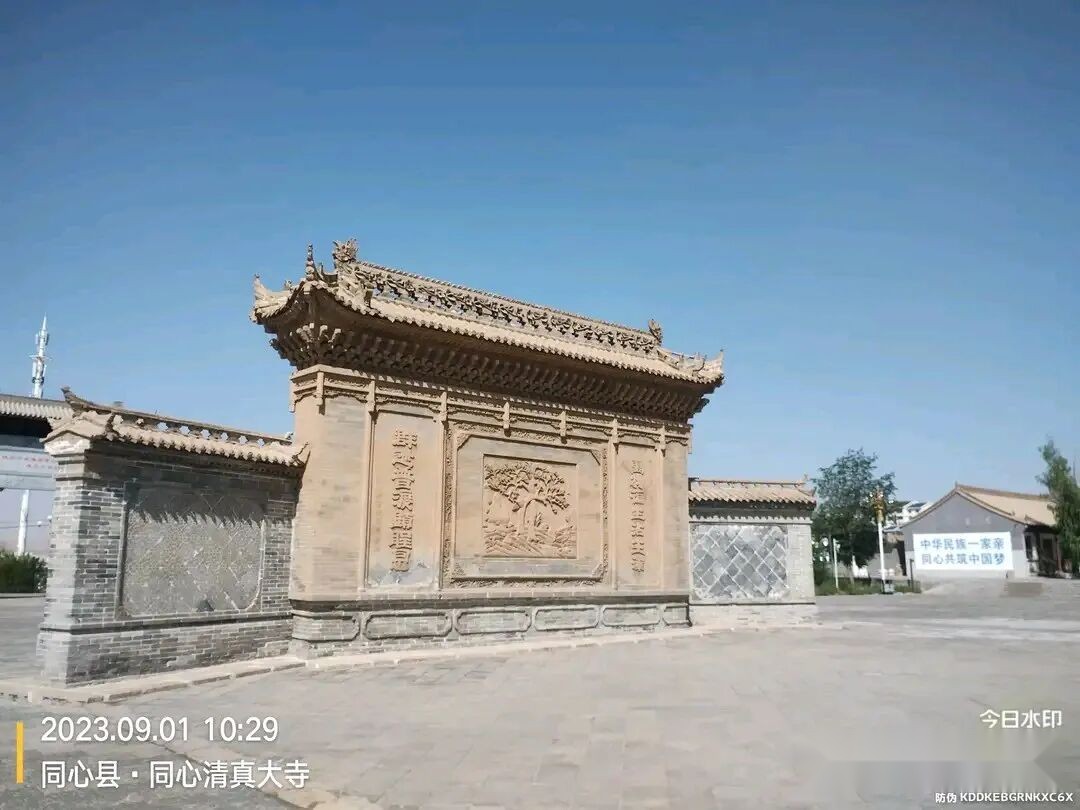
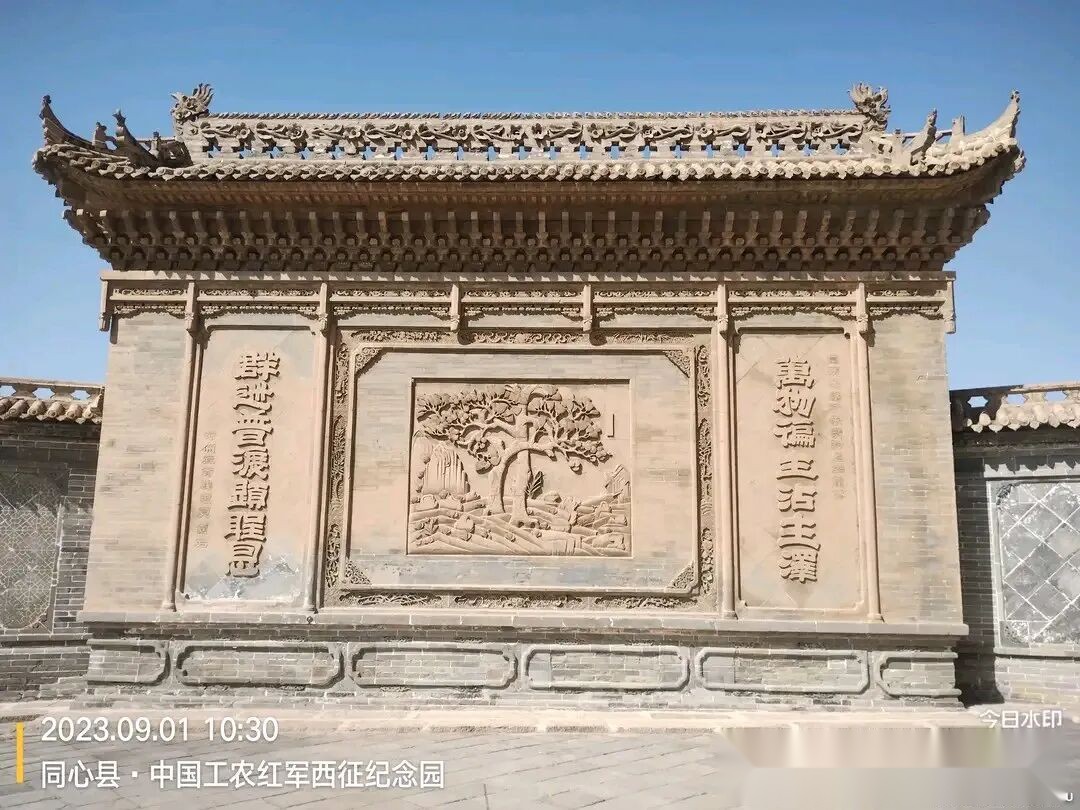
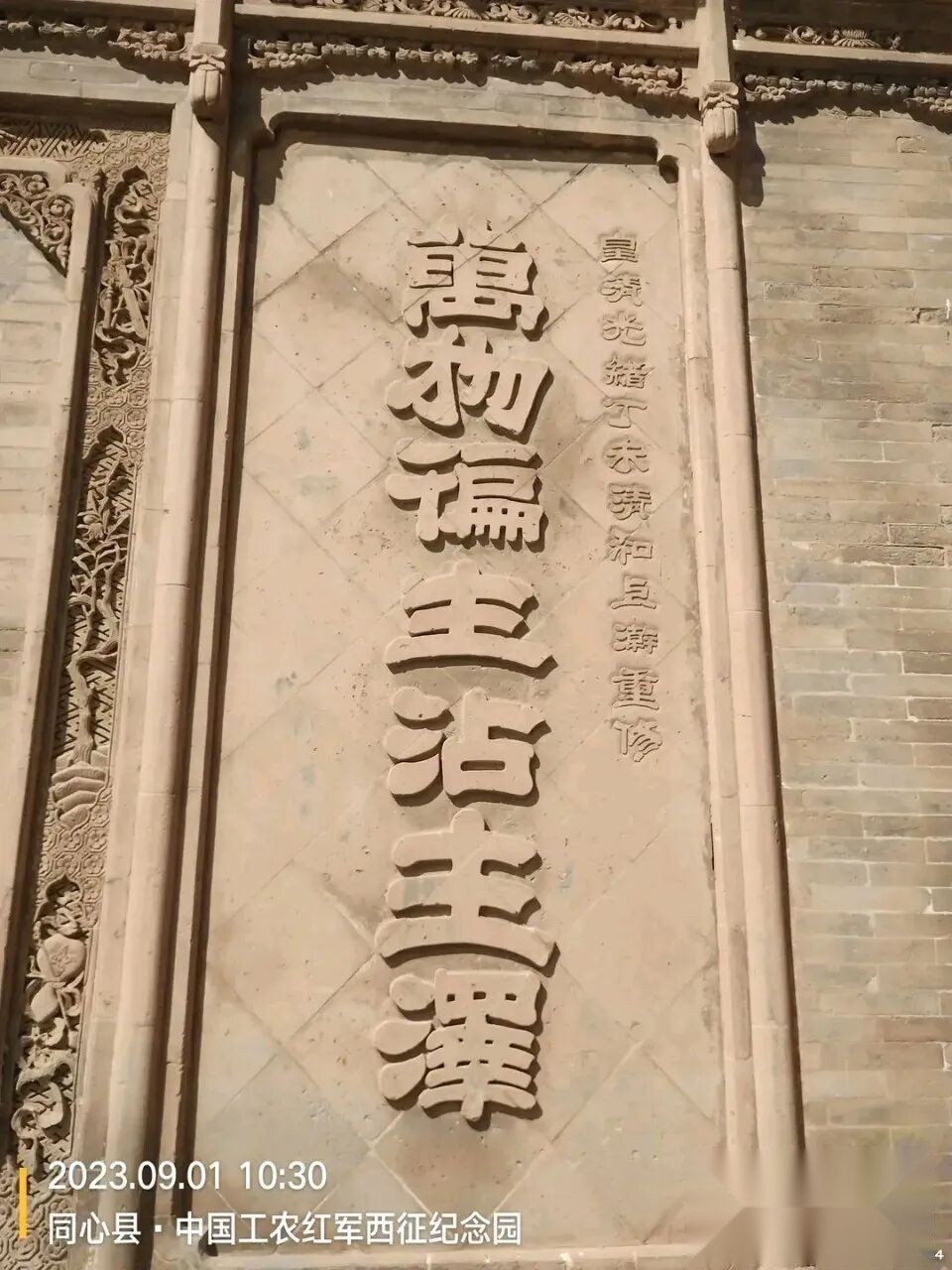


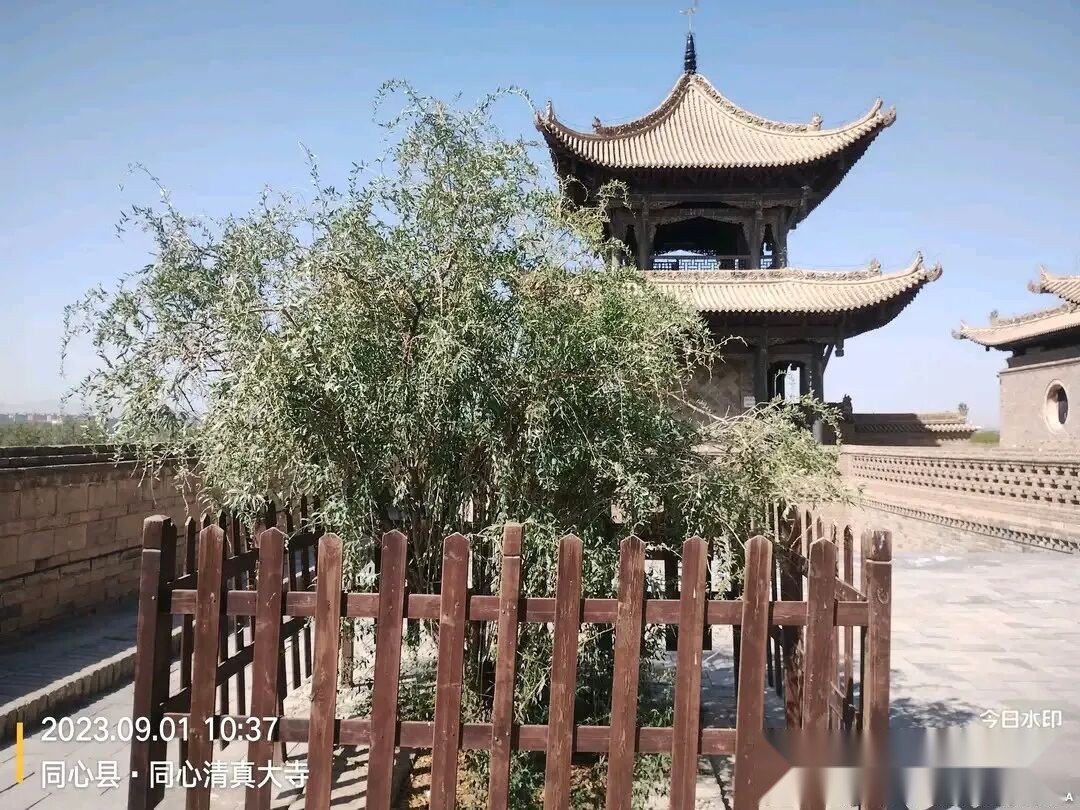
Exploring the Lingmingtang Gongbei in Sanying, Guyuan: Architecture and Origins of a Sufi Sanctuary in Southern Ningxia
Articles • Hasan09 posted the article • 0 comments • 5 views • 3 hours ago
A Visual and Historical Dive into the Sanying Lingmingtang Gongbei in Guyuan: Architectural Style and Origins of a Southern Ningxia Sufi Sanctuary
Abstract:
A detailed look at the Lingmingtang Gongbei located in Sanying Town, Guyuan City, Ningxia. Exploring its history—originally known as the 'Mingyue Hall' and founded by the revered elder Ma Renpu—and showcasing its serene, contemplative retreat space featuring classical Chinese architectural elements with green tiles, red pillars, and multi-layered flying eaves.
The Sanying Lingmingtang Gongbei in Guyuan, Ningxia, was originally called Mingyue Hall (Bright Moon Hall). It was founded by Ma Renpu, a disciple of the second-generation Sufi master Shan Jiujiu from the Lanzhou Lingmingtang.
The revered elder Ma Renpu, also known by his Arabic name Sufi, was originally from Matun Village, Gouzhi Town, Yanshi City, Henan Province. Born in 1910, he started elementary school at age eight, where he was remarkably bright with a photographic memory. Due to financial hardship, he eventually had to drop out and continued studying academics and religious knowledge alongside his father. Although his formal schooling was limited, he taught himself both Islamic texts and Chinese, eventually authoring the book 'Huayu Dianzhen' (Illuminating Truth to Overcome Ignorance). In 1932, he moved to Guyuan, Ningxia, to start a small business, later specializing in the fur trade, which meant frequent travels between Guyuan and Lanzhou. During this time, he connected with followers of the Lanzhou Lingmingtang and developed a deep interest in its doctrines and mission. In 1936, introduced by Yang Baoguo from Lijun, Haiyuan County, he became a disciple of the second-generation Lingmingtang master Shan Jiujiu, officially becoming a devoted follower of the Lingmingtang order.
During the War of Resistance Against Japanese Aggression, persistent warfare and famines in Henan forced many Muslims to migrate westward to escape the turmoil. Over 300 households fled and settled in the Sanying area of Guyuan, Ningxia. Ma Renpu, who had arrived earlier, offered wholehearted support and assistance to his fellow hometown folks. In 1942, he purchased 28 mu of land in Xishaliang, Sanying, and built a south-facing courtyard complex featuring a five-bay brick-and-wood main prayer hall. He also constructed 21 auxiliary rooms, including scripture study rooms, dormitories for imams and madrasa students (mallas), a wudu (ablution) water room, and a kitchen, transforming it into a fully equipped, well-rounded masjid. Shortly after the mosque was completed, the community unanimously elected Ma Renpu as its first imam. Right after taking office, Ma traveled to Lanzhou Lingmingtang to study Arabic and religious sciences while engaging in rigorous spiritual practice under the guidance of his master, Shan Jiujiu. In 1944, commissioned by Elder Shan, he returned to Guyuan Sanying to propagate the faith, dedicating himself to spreading the teachings of the Lingmingtang menhuan (Sufi order). His efforts led the entire congregation of the 'Sanying Xiliang Henan Mosque' to join the Lingmingtang. The Henan Mosque was subsequently renamed Mingyue Hall and served as a center for teaching the Sufi path. When the Guyuan Hui Autonomous Prefecture was established in 1955, elder Ma Renpu was appointed as a member of the prefecture's political consultative committee. In August 1958, caught up in the overextensions of the anti-feudal 'religious reforms,' Ma Renpu was wrongfully labeled a counterrevolutionary and imprisoned. He passed away (returned to Allah) on the 2nd day of the 4th lunar month in 1960 at the age of 51.
Following his passing in 1960, the revered elder Ma Renpu was initially buried in the local Muslim cemetery. On the 24th day of the 7th lunar month in 1986, led by Imam Wang Shouetian of the Lanzhou Lingmingtang Gongbei, Ma Renpu's remains were relocated from the public cemetery to the center of the original dao tang (Sufi hall) courtyard, where a double-layered hexagonal domed tomb pavilion (gongbei shrine) was built for him. Over time, additional structures were gradually added, including a front porch (baosha), dormitories for imams and mallas, study rooms, a water room, and a kitchen. In 1910—[Note: referring to 2010 renovation]—the original imam and malla dormitories and water rooms were renovated and expanded, replacing the single-story brick-and-wood structures with flat-roofed brick-concrete buildings, alongside a magnificent, towering, traditional-style brick-carved triple gate (sanhuamen). In 2012, a new main prayer hall was built on the west side of the dao tang, fronted by 13 bays of traditional-style brick-and-wood verandas and a circular gate. Behind the octagonal pavilion, a large brick-carved spirit wall (zhaobi) was erected, connected on both ends to the front guest rooms by brick-carved courtyard walls, turning the octagonal shrine courtyard into a 'courtyard within a courtyard' and giving the entire gongbei complex the outline of the Chinese character 'hui' (回).
Today, this auspicious sanctuary and its gongbei architecture stand as a stunning landmark across the landscape of Ningxia and along the Baotou-Zhongwei Railway corridor. view all
A Visual and Historical Dive into the Sanying Lingmingtang Gongbei in Guyuan: Architectural Style and Origins of a Southern Ningxia Sufi Sanctuary
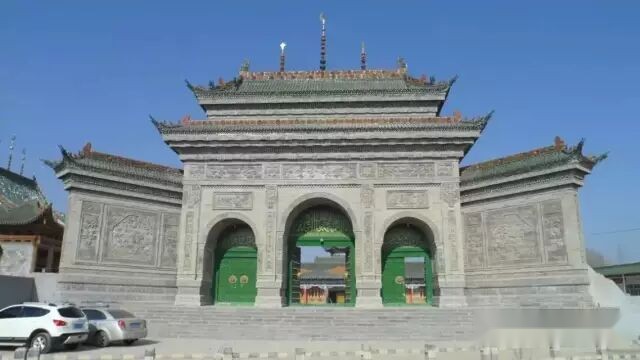
Abstract:
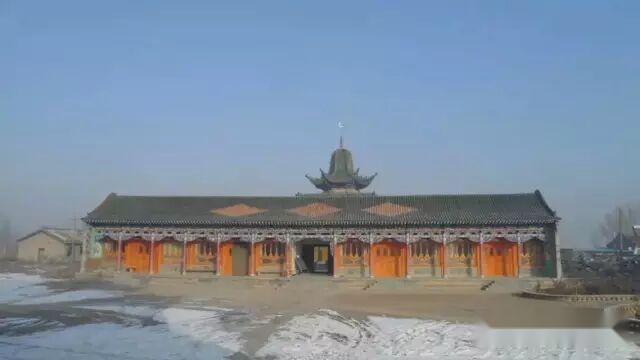
A detailed look at the Lingmingtang Gongbei located in Sanying Town, Guyuan City, Ningxia. Exploring its history—originally known as the 'Mingyue Hall' and founded by the revered elder Ma Renpu—and showcasing its serene, contemplative retreat space featuring classical Chinese architectural elements with green tiles, red pillars, and multi-layered flying eaves.
The Sanying Lingmingtang Gongbei in Guyuan, Ningxia, was originally called Mingyue Hall (Bright Moon Hall). It was founded by Ma Renpu, a disciple of the second-generation Sufi master Shan Jiujiu from the Lanzhou Lingmingtang.
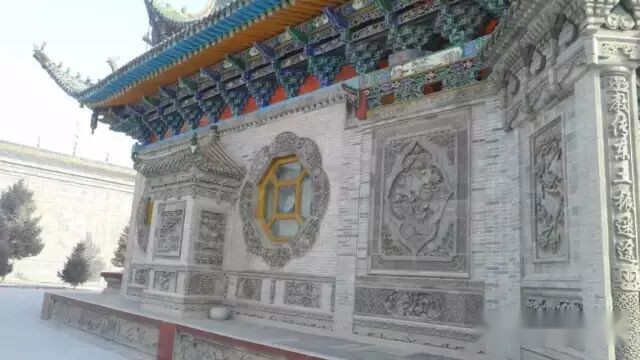
The revered elder Ma Renpu, also known by his Arabic name Sufi, was originally from Matun Village, Gouzhi Town, Yanshi City, Henan Province. Born in 1910, he started elementary school at age eight, where he was remarkably bright with a photographic memory. Due to financial hardship, he eventually had to drop out and continued studying academics and religious knowledge alongside his father. Although his formal schooling was limited, he taught himself both Islamic texts and Chinese, eventually authoring the book 'Huayu Dianzhen' (Illuminating Truth to Overcome Ignorance). In 1932, he moved to Guyuan, Ningxia, to start a small business, later specializing in the fur trade, which meant frequent travels between Guyuan and Lanzhou. During this time, he connected with followers of the Lanzhou Lingmingtang and developed a deep interest in its doctrines and mission. In 1936, introduced by Yang Baoguo from Lijun, Haiyuan County, he became a disciple of the second-generation Lingmingtang master Shan Jiujiu, officially becoming a devoted follower of the Lingmingtang order.
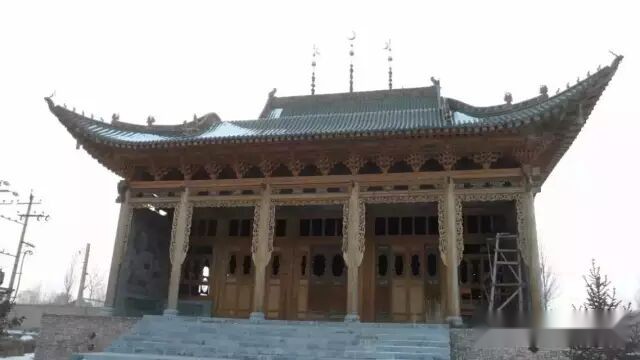
During the War of Resistance Against Japanese Aggression, persistent warfare and famines in Henan forced many Muslims to migrate westward to escape the turmoil. Over 300 households fled and settled in the Sanying area of Guyuan, Ningxia. Ma Renpu, who had arrived earlier, offered wholehearted support and assistance to his fellow hometown folks. In 1942, he purchased 28 mu of land in Xishaliang, Sanying, and built a south-facing courtyard complex featuring a five-bay brick-and-wood main prayer hall. He also constructed 21 auxiliary rooms, including scripture study rooms, dormitories for imams and madrasa students (mallas), a wudu (ablution) water room, and a kitchen, transforming it into a fully equipped, well-rounded masjid. Shortly after the mosque was completed, the community unanimously elected Ma Renpu as its first imam. Right after taking office, Ma traveled to Lanzhou Lingmingtang to study Arabic and religious sciences while engaging in rigorous spiritual practice under the guidance of his master, Shan Jiujiu. In 1944, commissioned by Elder Shan, he returned to Guyuan Sanying to propagate the faith, dedicating himself to spreading the teachings of the Lingmingtang menhuan (Sufi order). His efforts led the entire congregation of the 'Sanying Xiliang Henan Mosque' to join the Lingmingtang. The Henan Mosque was subsequently renamed Mingyue Hall and served as a center for teaching the Sufi path. When the Guyuan Hui Autonomous Prefecture was established in 1955, elder Ma Renpu was appointed as a member of the prefecture's political consultative committee. In August 1958, caught up in the overextensions of the anti-feudal 'religious reforms,' Ma Renpu was wrongfully labeled a counterrevolutionary and imprisoned. He passed away (returned to Allah) on the 2nd day of the 4th lunar month in 1960 at the age of 51.
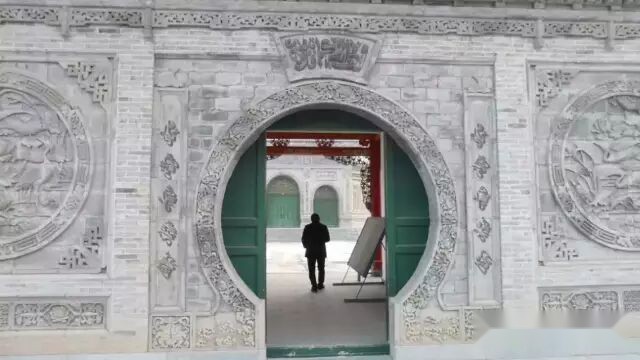
Following his passing in 1960, the revered elder Ma Renpu was initially buried in the local Muslim cemetery. On the 24th day of the 7th lunar month in 1986, led by Imam Wang Shouetian of the Lanzhou Lingmingtang Gongbei, Ma Renpu's remains were relocated from the public cemetery to the center of the original dao tang (Sufi hall) courtyard, where a double-layered hexagonal domed tomb pavilion (gongbei shrine) was built for him. Over time, additional structures were gradually added, including a front porch (baosha), dormitories for imams and mallas, study rooms, a water room, and a kitchen. In 1910—[Note: referring to 2010 renovation]—the original imam and malla dormitories and water rooms were renovated and expanded, replacing the single-story brick-and-wood structures with flat-roofed brick-concrete buildings, alongside a magnificent, towering, traditional-style brick-carved triple gate (sanhuamen). In 2012, a new main prayer hall was built on the west side of the dao tang, fronted by 13 bays of traditional-style brick-and-wood verandas and a circular gate. Behind the octagonal pavilion, a large brick-carved spirit wall (zhaobi) was erected, connected on both ends to the front guest rooms by brick-carved courtyard walls, turning the octagonal shrine courtyard into a 'courtyard within a courtyard' and giving the entire gongbei complex the outline of the Chinese character 'hui' (回).
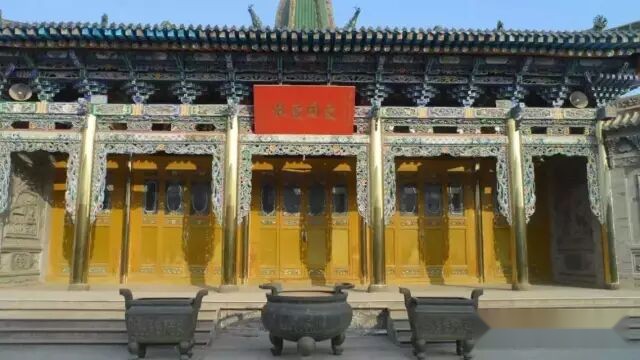
Today, this auspicious sanctuary and its gongbei architecture stand as a stunning landmark across the landscape of Ningxia and along the Baotou-Zhongwei Railway corridor.

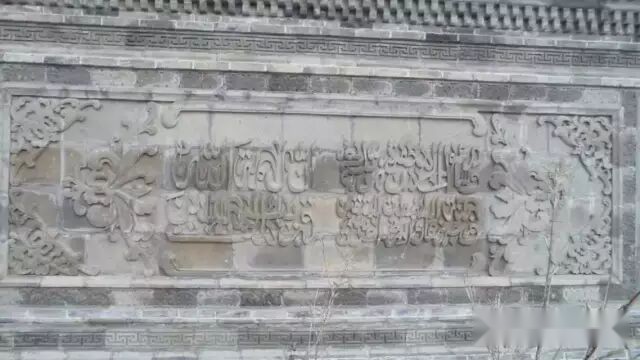
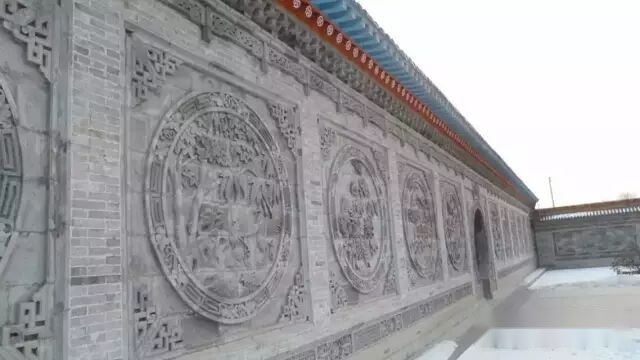
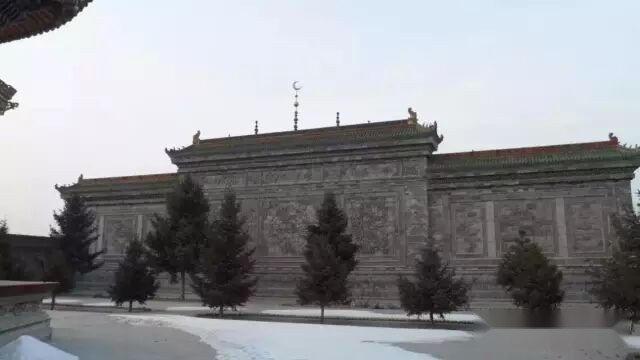
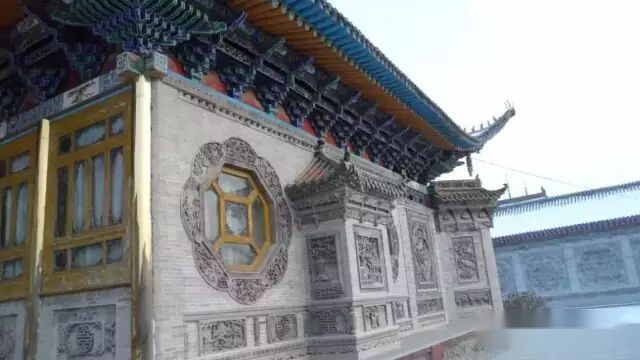
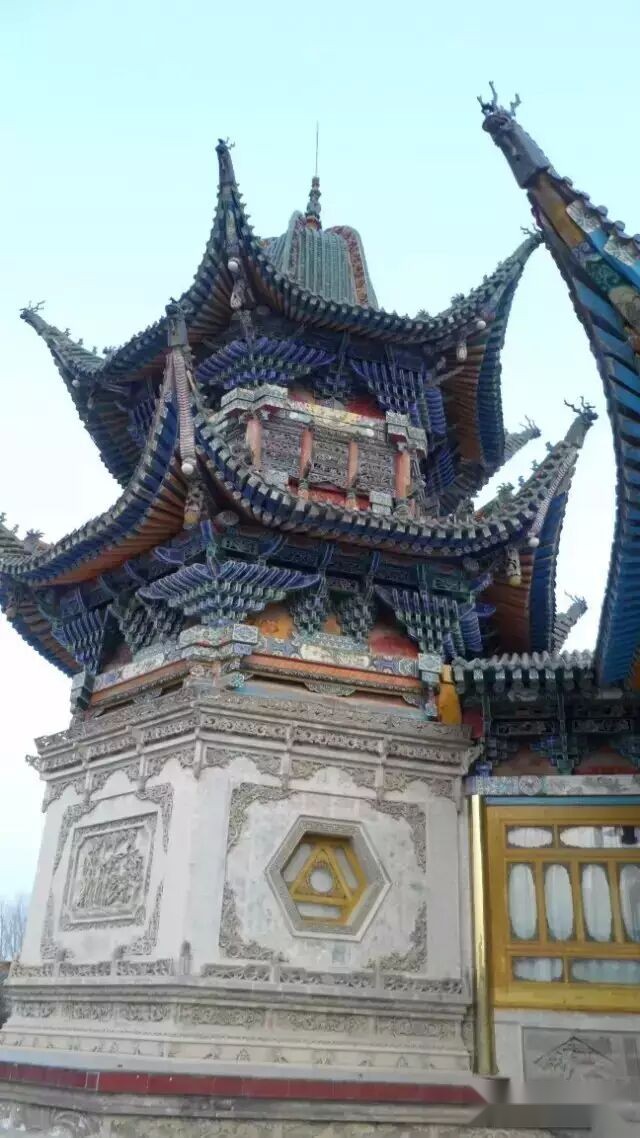
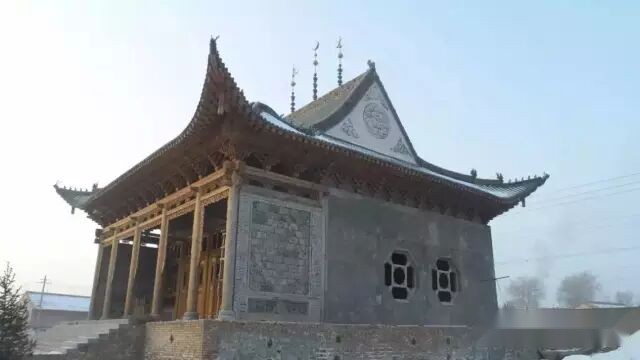
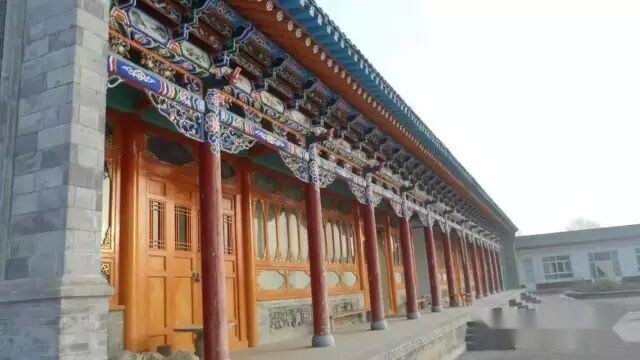
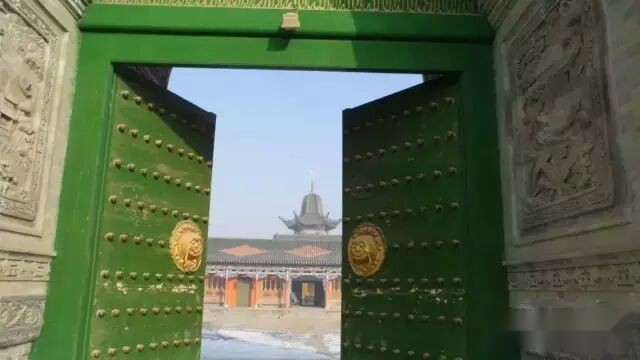
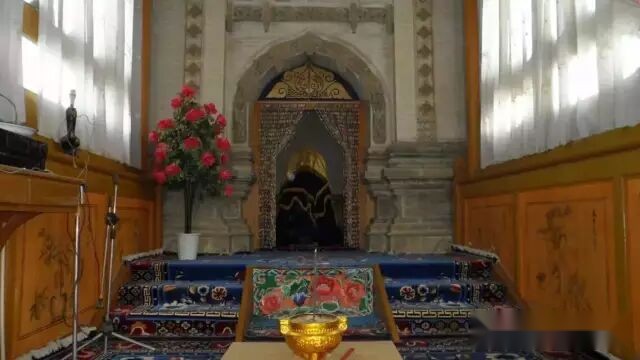
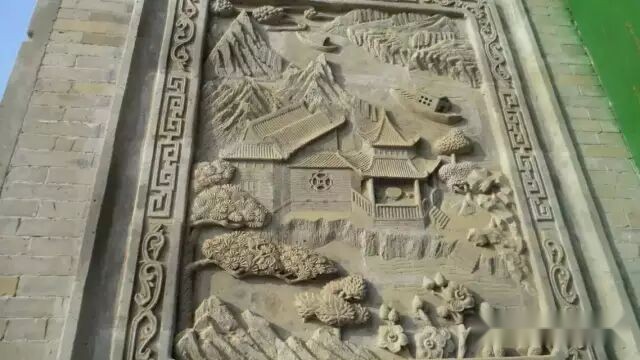
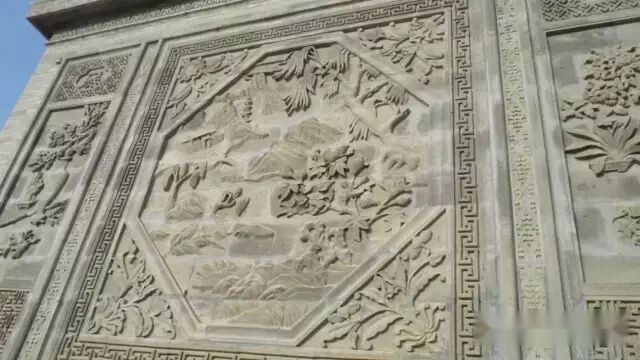
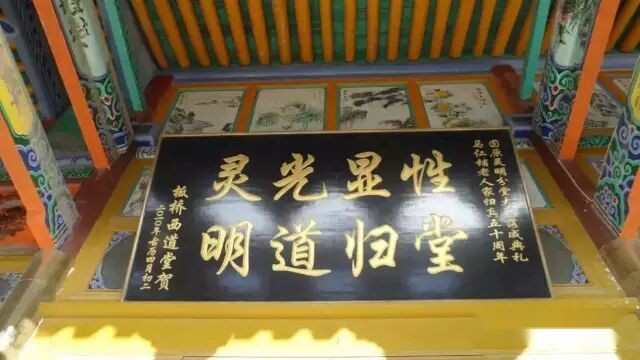
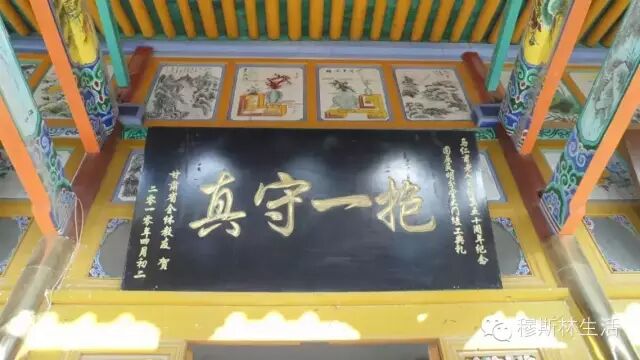
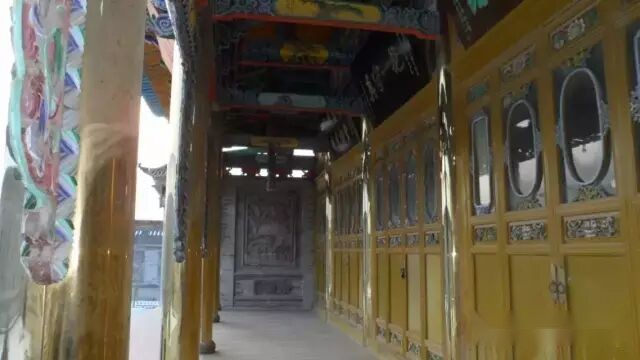
Exploring Ningxia Muslim Culture: Wuzhong, Jahriyya Sufi Shrines & Hui Heritage
Articles • Hasan09 posted the article • 0 comments • 4 views • 3 hours ago
Road-Tripping Through Ningxia: Exploring the Siqiliangzi Gongbei and the 13th Master of the Jahriyya in Wuzhong
Abstract:
A road trip to visit the famous 13th Master Ma Hualong gongbei (Sufi shrine / mausoleum complex) at the northern gate of Wuzhong City, Ningxia. Documenting the iconic hexagonal pyramidal mausoleum architecture and courtyard atmosphere, while reflecting on the historical ups and downs of Northwest China's Hui Muslims and the devoted reverence of believers for their forebears.
"Road-Tripping Ningxia: The Jahriyya 13th Master Gongbei in Wuzhong"
Remember that mention of the Jahriyya Banqiao Daotang in the article about Zheng Banqiao's calligraphy and paintings?
Jahriyya is one of the four major menhuan (Sufi orders / brotherhoods) in Islam.
The Banqiao Daotang is an important missionary center for the Jahriyya, located in Wuzhong, Ningxia.
I visited Wuzhong, Ningxia, eight years ago—it had such a rich West Asian vibe; but I didn't make it to Banqiao Daotang.
However, I made a dedicated trip to the Siqiliangzi 13th Master Gongbei in Wuzhong, another sacred Jahriyya site.
A gongbei (Sufi shrine / mausoleum complex) refers to the tomb of a saint in Islam.
The 13th Master, Ma Hualong, was the leader of the Northwest Hui Muslim Jahriyya order during the Xianfeng and Tongji reigns of the late Qing dynasty.
During the Xianfeng and Tongji eras, Hui Muslims everywhere suffered extreme oppression and discrimination from the imperial officials. As the common saying went, "Right or wrong, you still get forty heavy strokes." If Hui Muslims had a dispute and took it to court, regardless of whether you were right or wrong, the officials would beat you with forty strokes of the heavy paddle first before even asking questions.
The righteous anger of a spirited ethnic group finally erupted in the first year of Tongji. Hui Muslims across the Northwest gathered in revolt, and the single spark ignited half the Northwest.
The 13th Master Ma Hualong was the fifth-generation leader of the Jahriyya order. In the second year of Tongji, he led the Hui Muslims around Jinji to resolutely join the uprising. Jinji Fortress, the religious center of the Jahriyya, consequently became the command center for the Northwest Hui Muslim uprising.
The Qing court dispatched Zuo Zongtang with military force to suppress them.
Ma Hualong and Zuo Zongtang each held their own ideals and beliefs, and both were heroes of their respective peoples.
In the tenth year of Tongji, Zuo Zongtang's army besieged Jinji Fortress. To save the lives of everyone in the fortress, Ma Hualong went in person to the Qing military camp, declaring that he was willing to offer his own body to take the blame and redeem the death sentence for the Hui Muslims of the Jinji region.
The Qing military flatly refused.
On the 13th day of the first lunar month in the tenth year of Tongji, after subjecting him to 53 days of brutal torture, the Qing military executed Ma Hualong by lingchi (death by a thousand cuts) at Siqiliangzi in Wuzhong. Three hundred and two members of his household heroically martyred themselves for their faith, and over a thousand relatives were killed. Because of this, believers honor Ma Hualong as the 13th Master.
When the 13th Master met his martyrdom, "though subjected to lingchi, he made not a sound." He was 63 years old at the time.
One man walking into the enemy camp, willingly offering his own life to ransom the thousands of lives behind him—the Taiping Heavenly Kingdom had the Wing King Shi Dakai, the Hui Muslims had the 13th Master Ma Hualong of Jinji Fortress, and Dali in Yunnan had commander Du Wenxiu. Such heroic spirit cuts straight across the firmament.
Hui and Han communities have been tangled in endless disputes since ancient times, which is closely tied to the officials' habitual mistreatment of Hui Muslims and their bias toward the Han.
The Han population had already lost the spirited drive for freedom, autonomy, and self-strengthening; in many matters, their lack of understanding toward the actions of Hui Muslims left them bristling with suspicion.
That year, I was fortunate enough to enter the Siqiliangzi 13th Master Gongbei in Wuzhong, and with a complex mix of emotions, I paid my respects at the mausoleum.
Usually, outsiders and casual passersby are not allowed to enter the Wuzhong Jahriyya 13th Master Gongbei. Even though I came prepared and was mentally ready to be turned away, fortune smiled on me due to a stroke of good karma, finally satisfying a curious outsider's heartfelt wonder and reverence.
Because it was an unexpected entry, there was no tour guide, and I didn't know much about everything inside the grounds. So I won't add commentary to the photos—let's keep a bit of the order's inner mystery intact.
Tips:
A few extra thoughts:
The 13th Master Ma Hualong was the fifth-generation leader of the Jahriyya. His grandfather, Ma Datian, was the third-generation leader of the Jahriyya, who was exiled by the officials to the Jilin Shipyard and is honored within the order as the Shipyard Master. The Jahriyya Shipyard Mosque still stands in Jilin City; I once commissioned my outdoor buddy "Lhasa" to go take photos of it, and a big shoutout and thanks to Lhasa here! The 13th Master's father, Ma Yide, was the fourth-generation leader of the Jahriyya order, honored within the order as the April 8th Master, and is buried at Honglefu in Qingtongxia. That year, before heading to the 13th Master's gongbei, we first stopped by Honglefu to visit and pay our respects. Teacher Ma of the Qingyin Islamic School gave us a warm and detailed explanation, which I still remember vividly to this day. Huge thanks to Teacher Ma!
When it comes to the Northwest Hui Muslims, most people are more familiar with Ma Bufang and Ma Buqing of Qinghai, who intercepted and massacred the Red Army's Western Route Army. The Ma Bufang and Ma Buqing warlord clique were actually the descendants of Ma Haiyan, a traitor under Ma Hualong. Meanwhile, the Ma Hongkui warlord clique of Ningxia were the descendants of Ma Zhan'ao, who was likewise a traitorous general among the Northwest Hui.
Today, there is a surviving Hui Muslim community residing within Russia—the Dungans. They are the descendants of the uprising Hui Muslims led by Bai Yanhu, a leader of the Northwest Hui uprising who, after the rebellion failed and in search of a way to survive, desperately crossed the Tianshan Mountains in a snowy winter to flee far away to a foreign land. To this day, in a foreign country, this branch of Hui Muslims still preserves the strong, nostalgic atmosphere of Xi'an Hui Muslim daily life. view all
Road-Tripping Through Ningxia: Exploring the Siqiliangzi Gongbei and the 13th Master of the Jahriyya in Wuzhong

Abstract:

A road trip to visit the famous 13th Master Ma Hualong gongbei (Sufi shrine / mausoleum complex) at the northern gate of Wuzhong City, Ningxia. Documenting the iconic hexagonal pyramidal mausoleum architecture and courtyard atmosphere, while reflecting on the historical ups and downs of Northwest China's Hui Muslims and the devoted reverence of believers for their forebears.

"Road-Tripping Ningxia: The Jahriyya 13th Master Gongbei in Wuzhong"
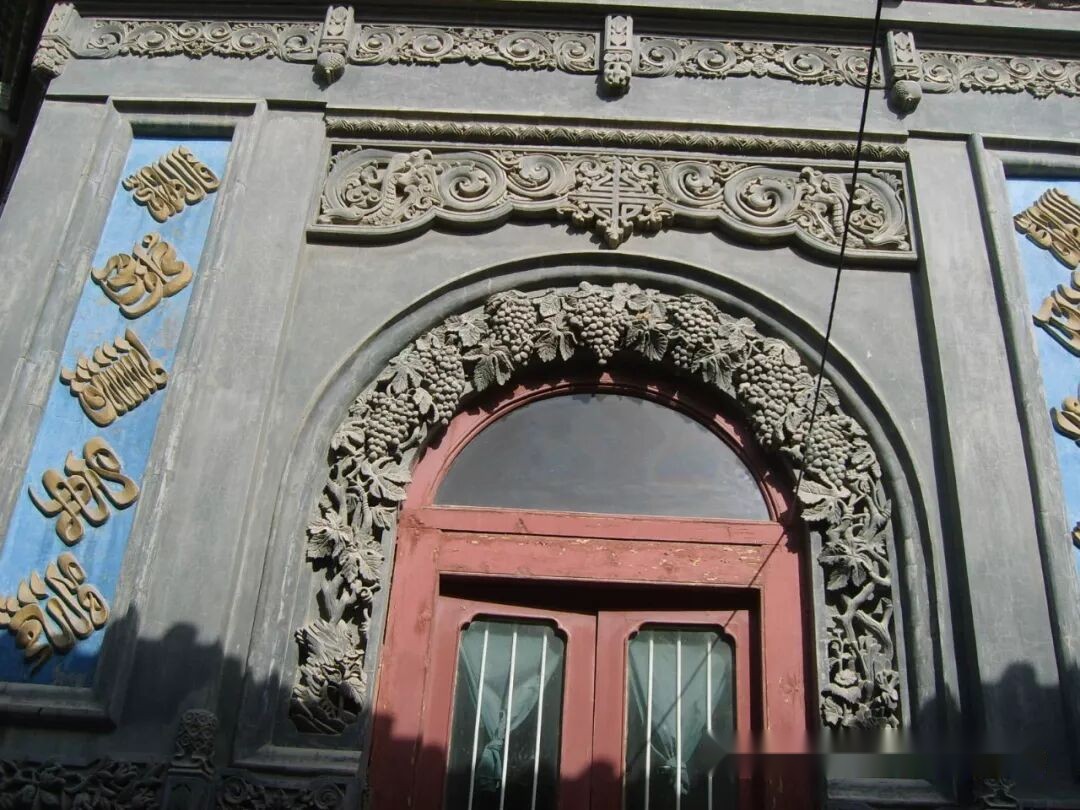
Remember that mention of the Jahriyya Banqiao Daotang in the article about Zheng Banqiao's calligraphy and paintings?
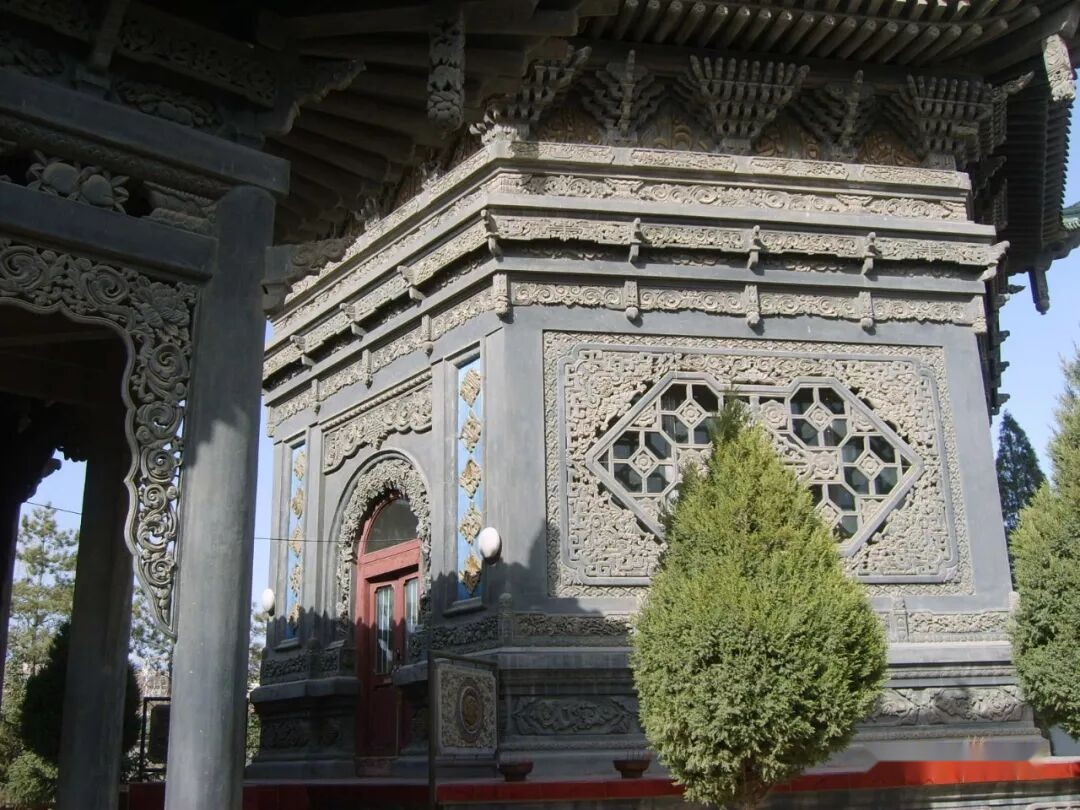
Jahriyya is one of the four major menhuan (Sufi orders / brotherhoods) in Islam.
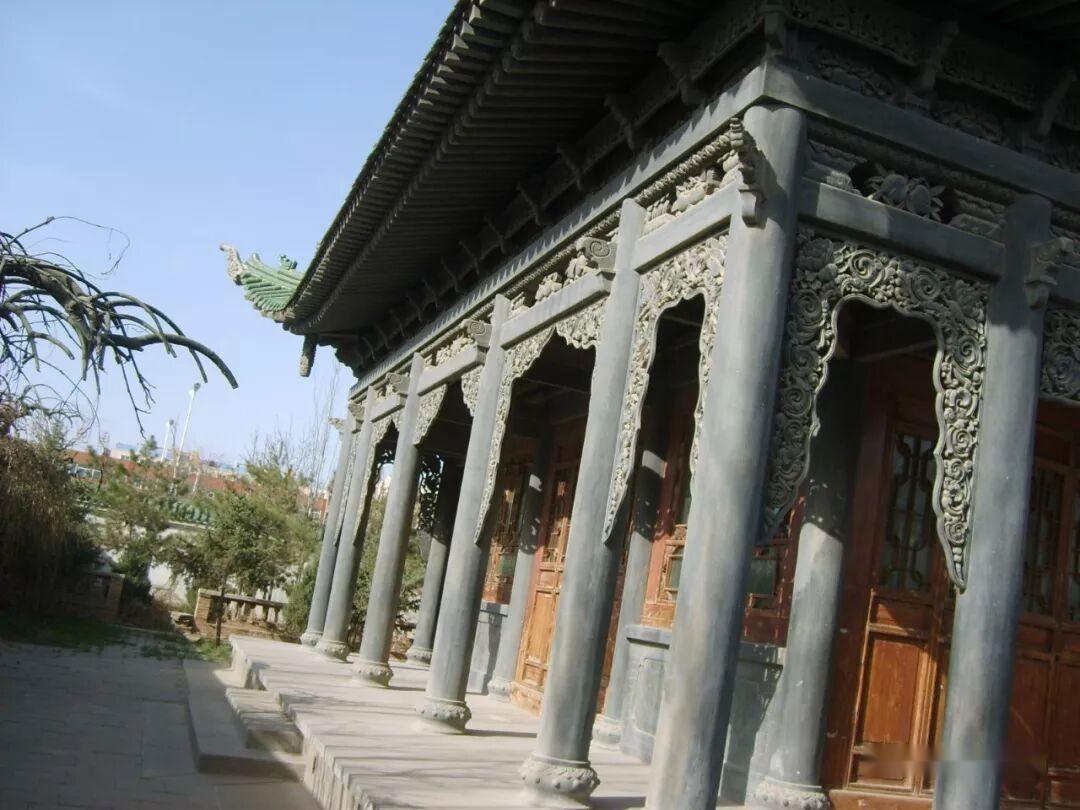
The Banqiao Daotang is an important missionary center for the Jahriyya, located in Wuzhong, Ningxia.
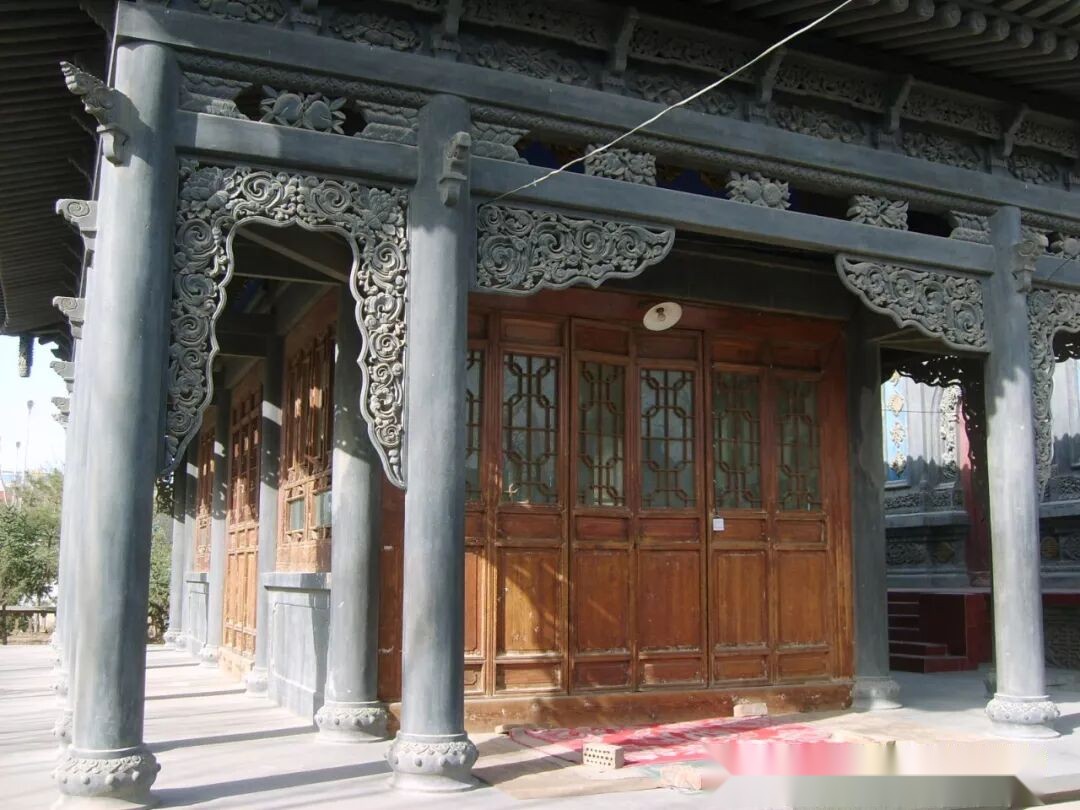
I visited Wuzhong, Ningxia, eight years ago—it had such a rich West Asian vibe; but I didn't make it to Banqiao Daotang.
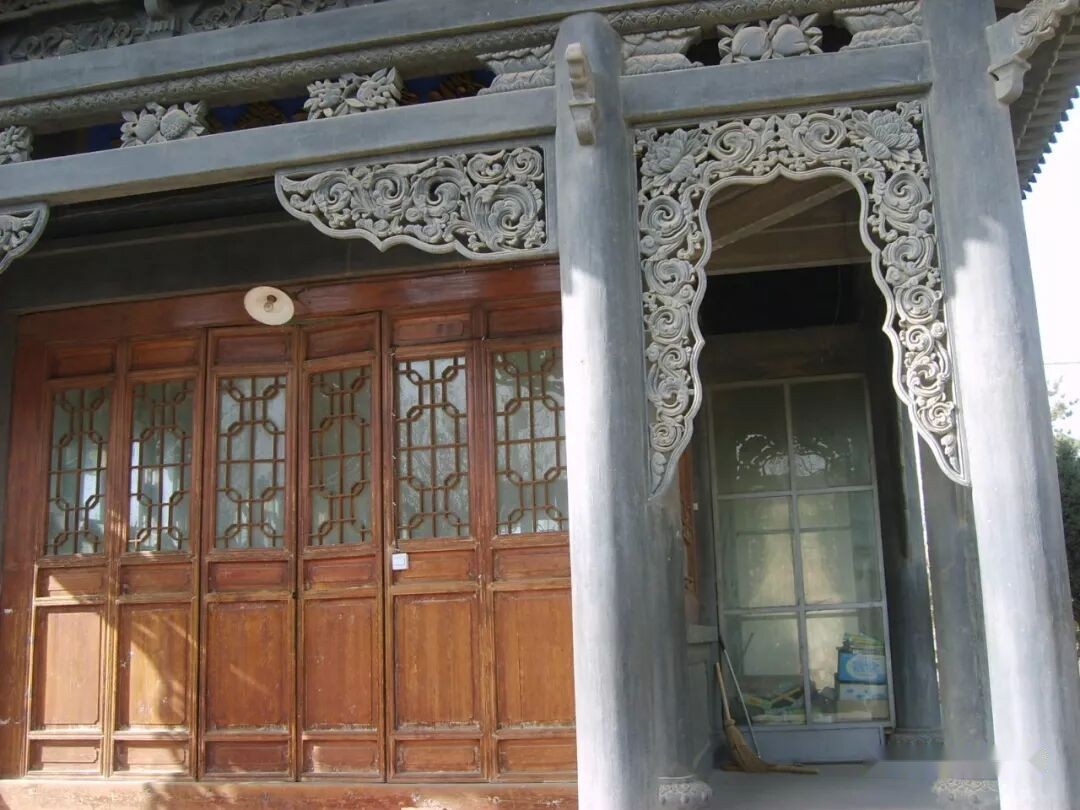
However, I made a dedicated trip to the Siqiliangzi 13th Master Gongbei in Wuzhong, another sacred Jahriyya site.
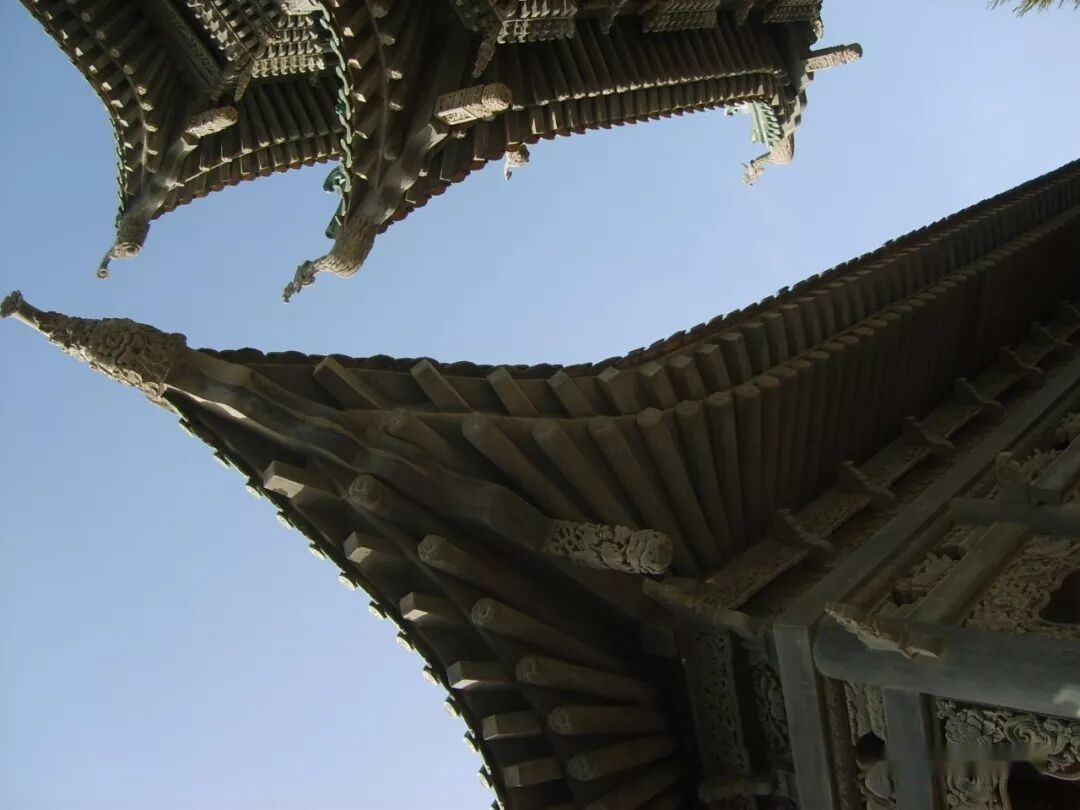
A gongbei (Sufi shrine / mausoleum complex) refers to the tomb of a saint in Islam.
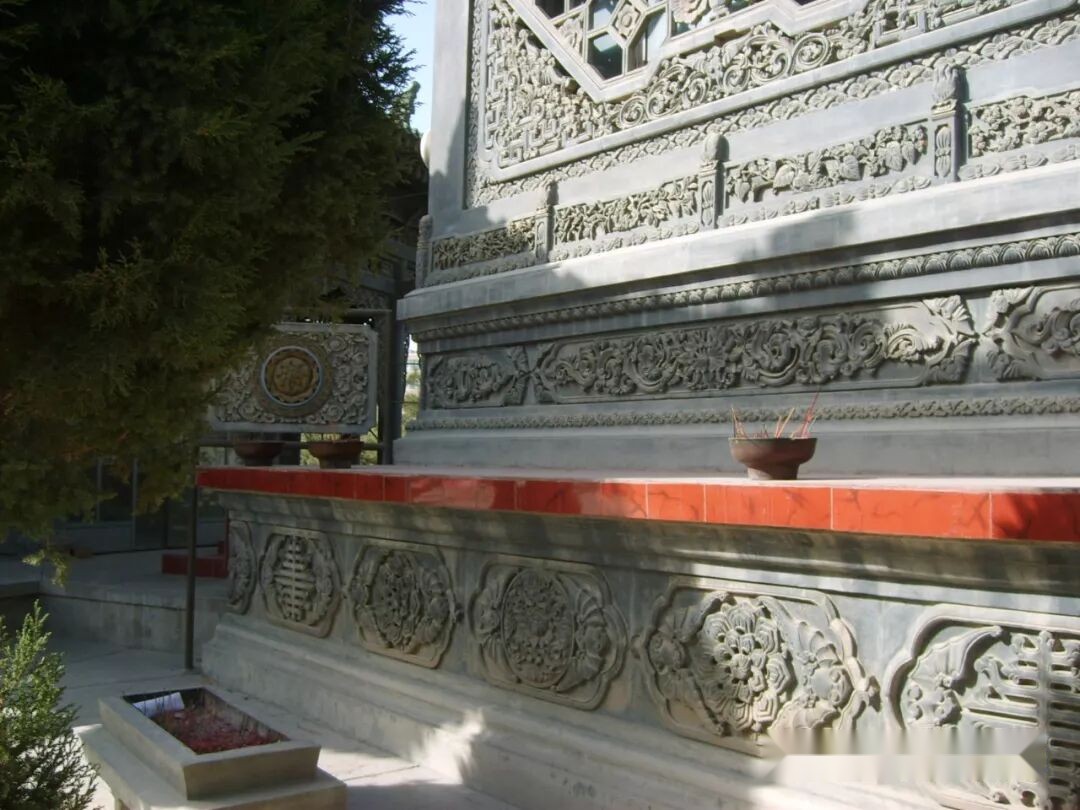
The 13th Master, Ma Hualong, was the leader of the Northwest Hui Muslim Jahriyya order during the Xianfeng and Tongji reigns of the late Qing dynasty.
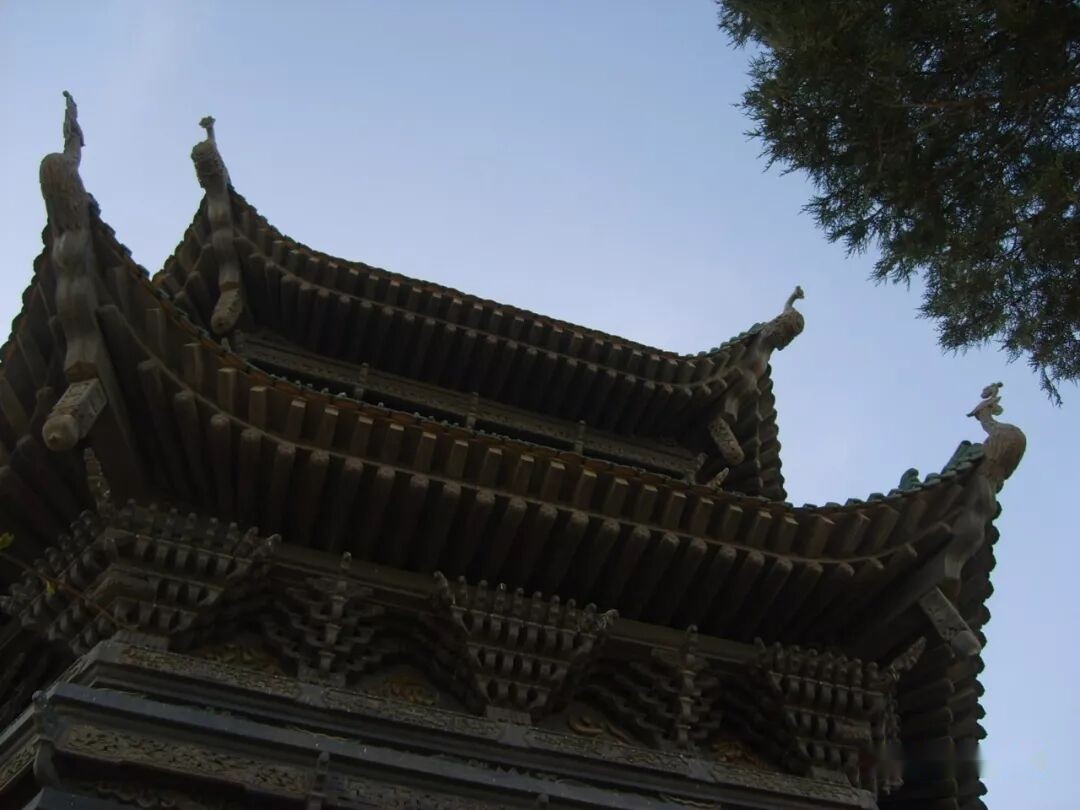
During the Xianfeng and Tongji eras, Hui Muslims everywhere suffered extreme oppression and discrimination from the imperial officials. As the common saying went, "Right or wrong, you still get forty heavy strokes." If Hui Muslims had a dispute and took it to court, regardless of whether you were right or wrong, the officials would beat you with forty strokes of the heavy paddle first before even asking questions.

The righteous anger of a spirited ethnic group finally erupted in the first year of Tongji. Hui Muslims across the Northwest gathered in revolt, and the single spark ignited half the Northwest.
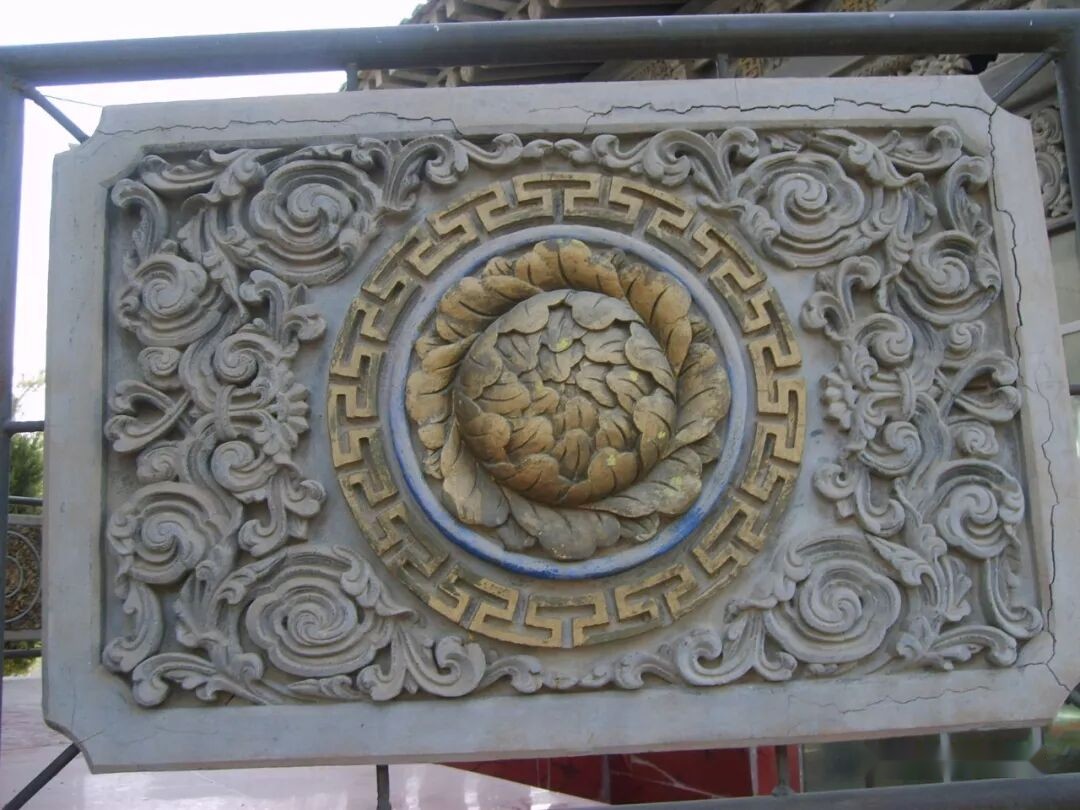
The 13th Master Ma Hualong was the fifth-generation leader of the Jahriyya order. In the second year of Tongji, he led the Hui Muslims around Jinji to resolutely join the uprising. Jinji Fortress, the religious center of the Jahriyya, consequently became the command center for the Northwest Hui Muslim uprising.
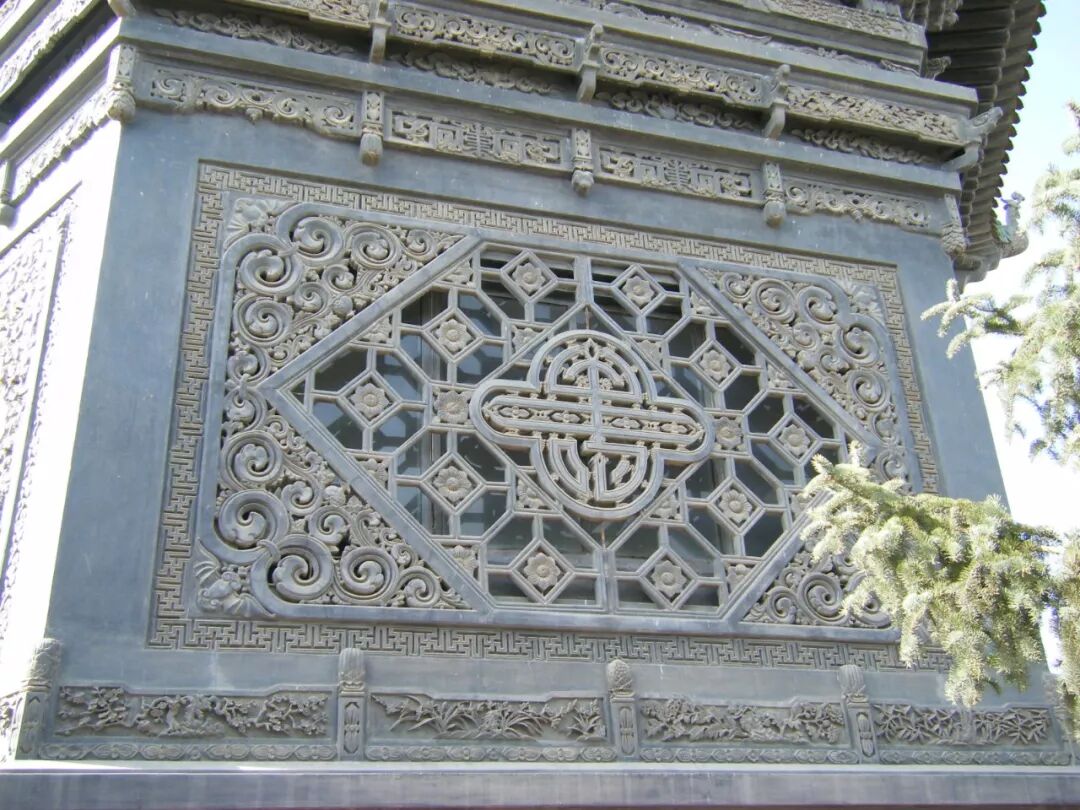
The Qing court dispatched Zuo Zongtang with military force to suppress them.
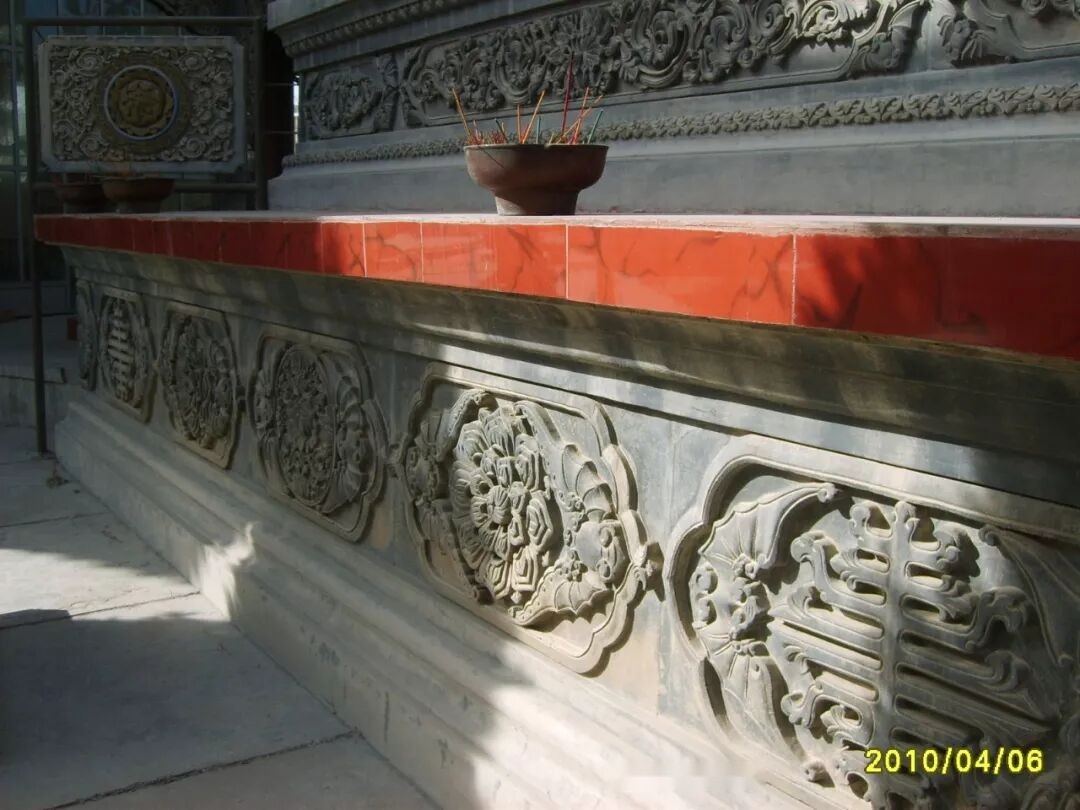
Ma Hualong and Zuo Zongtang each held their own ideals and beliefs, and both were heroes of their respective peoples.
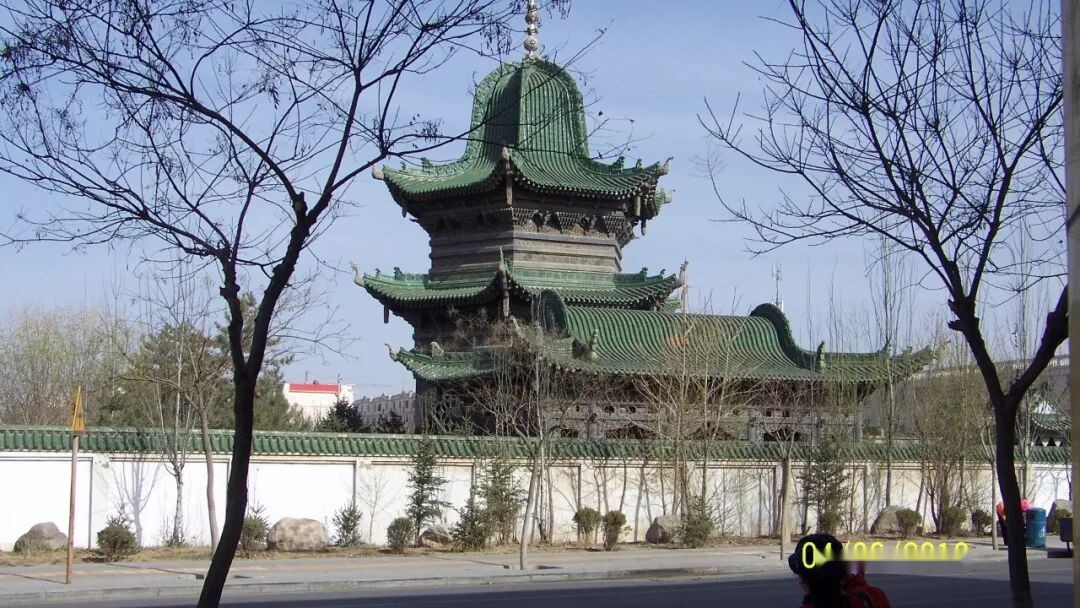
In the tenth year of Tongji, Zuo Zongtang's army besieged Jinji Fortress. To save the lives of everyone in the fortress, Ma Hualong went in person to the Qing military camp, declaring that he was willing to offer his own body to take the blame and redeem the death sentence for the Hui Muslims of the Jinji region.
The Qing military flatly refused.
On the 13th day of the first lunar month in the tenth year of Tongji, after subjecting him to 53 days of brutal torture, the Qing military executed Ma Hualong by lingchi (death by a thousand cuts) at Siqiliangzi in Wuzhong. Three hundred and two members of his household heroically martyred themselves for their faith, and over a thousand relatives were killed. Because of this, believers honor Ma Hualong as the 13th Master.
When the 13th Master met his martyrdom, "though subjected to lingchi, he made not a sound." He was 63 years old at the time.
One man walking into the enemy camp, willingly offering his own life to ransom the thousands of lives behind him—the Taiping Heavenly Kingdom had the Wing King Shi Dakai, the Hui Muslims had the 13th Master Ma Hualong of Jinji Fortress, and Dali in Yunnan had commander Du Wenxiu. Such heroic spirit cuts straight across the firmament.
Hui and Han communities have been tangled in endless disputes since ancient times, which is closely tied to the officials' habitual mistreatment of Hui Muslims and their bias toward the Han.
The Han population had already lost the spirited drive for freedom, autonomy, and self-strengthening; in many matters, their lack of understanding toward the actions of Hui Muslims left them bristling with suspicion.
That year, I was fortunate enough to enter the Siqiliangzi 13th Master Gongbei in Wuzhong, and with a complex mix of emotions, I paid my respects at the mausoleum.
Usually, outsiders and casual passersby are not allowed to enter the Wuzhong Jahriyya 13th Master Gongbei. Even though I came prepared and was mentally ready to be turned away, fortune smiled on me due to a stroke of good karma, finally satisfying a curious outsider's heartfelt wonder and reverence.
Because it was an unexpected entry, there was no tour guide, and I didn't know much about everything inside the grounds. So I won't add commentary to the photos—let's keep a bit of the order's inner mystery intact.
Tips:
A few extra thoughts:
The 13th Master Ma Hualong was the fifth-generation leader of the Jahriyya. His grandfather, Ma Datian, was the third-generation leader of the Jahriyya, who was exiled by the officials to the Jilin Shipyard and is honored within the order as the Shipyard Master. The Jahriyya Shipyard Mosque still stands in Jilin City; I once commissioned my outdoor buddy "Lhasa" to go take photos of it, and a big shoutout and thanks to Lhasa here! The 13th Master's father, Ma Yide, was the fourth-generation leader of the Jahriyya order, honored within the order as the April 8th Master, and is buried at Honglefu in Qingtongxia. That year, before heading to the 13th Master's gongbei, we first stopped by Honglefu to visit and pay our respects. Teacher Ma of the Qingyin Islamic School gave us a warm and detailed explanation, which I still remember vividly to this day. Huge thanks to Teacher Ma!
When it comes to the Northwest Hui Muslims, most people are more familiar with Ma Bufang and Ma Buqing of Qinghai, who intercepted and massacred the Red Army's Western Route Army. The Ma Bufang and Ma Buqing warlord clique were actually the descendants of Ma Haiyan, a traitor under Ma Hualong. Meanwhile, the Ma Hongkui warlord clique of Ningxia were the descendants of Ma Zhan'ao, who was likewise a traitorous general among the Northwest Hui.
Today, there is a surviving Hui Muslim community residing within Russia—the Dungans. They are the descendants of the uprising Hui Muslims led by Bai Yanhu, a leader of the Northwest Hui uprising who, after the rebellion failed and in search of a way to survive, desperately crossed the Tianshan Mountains in a snowy winter to flee far away to a foreign land. To this day, in a foreign country, this branch of Hui Muslims still preserves the strong, nostalgic atmosphere of Xi'an Hui Muslim daily life.
Wuzhong Siliangzi Gongbei: Exploring Ningxia's Sino-Arabic Sufi Shrine
Articles • Hasan09 posted the article • 0 comments • 3 views • 3 hours ago
Visual Documentation of Siliangzi Gongbei in Wuzhong: A Municipal-Level Protected Sufi Shrine Blending Chinese and Arabic Styles
Abstract:
Documenting the elegant style of the Siliangzi Gongbei in Wuzhong, Ningxia. Showcasing its unique double-eaved hexagonal architecture, green-tiled flying eaves, and intricate reliefs, it reveals the perfect fusion of traditional Chinese pavilion craftsmanship and Islamic aesthetics in a Northwest sacred site.
Ningxia • Wuzhong
The Siliangzi Gongbei is the final resting place of Ma Hualong, a revered elder of the Jahriyya menhuan (Sufi order). The original gongbei was first built in 1915 and later destroyed, while the structure you see today was rebuilt in 1992 and is now a Wuzhong municipal-level cultural heritage site. The architecture features a distinctive double-eaved hexagonal design, blending traditional Chinese pavilion styles with Islamic aesthetics. With its green tiles, flying eaves, and delicate reliefs, it carries the heavy modern history of the Northwest alongside a unique Hui Muslim religious culture, all set in a serene and solemn environment. view all
Visual Documentation of Siliangzi Gongbei in Wuzhong: A Municipal-Level Protected Sufi Shrine Blending Chinese and Arabic Styles

Abstract:

Documenting the elegant style of the Siliangzi Gongbei in Wuzhong, Ningxia. Showcasing its unique double-eaved hexagonal architecture, green-tiled flying eaves, and intricate reliefs, it reveals the perfect fusion of traditional Chinese pavilion craftsmanship and Islamic aesthetics in a Northwest sacred site.

Ningxia • Wuzhong

The Siliangzi Gongbei is the final resting place of Ma Hualong, a revered elder of the Jahriyya menhuan (Sufi order). The original gongbei was first built in 1915 and later destroyed, while the structure you see today was rebuilt in 1992 and is now a Wuzhong municipal-level cultural heritage site. The architecture features a distinctive double-eaved hexagonal design, blending traditional Chinese pavilion styles with Islamic aesthetics. With its green tiles, flying eaves, and delicate reliefs, it carries the heavy modern history of the Northwest alongside a unique Hui Muslim religious culture, all set in a serene and solemn environment.
Exploring Helan Mountain's Hidden Gongbei and Mosque: A Unique Oasis of Three Faiths in Ningxia
Articles • Hasan09 posted the article • 0 comments • 3 views • 3 hours ago
Exploring the Hidden Mosque and Gongbei in Helan Mountain's Gungzhongkou: A Historic Tale of Three Religions Coexisting in a Scenic Canyon
Abstract:
A field visit to the serene mosque tucked inside the Gungzhongkou (Xiaokouzi) scenic area in Yinchuan's Helan Mountain. We explore the unique origin story of 'the gongbei first, followed by the mosque,' showcasing a harmonious model where Buddhism, Taoism, and Islam share the same mountain.
Tucked away in the Helan Mountains, this mosque holds a history that many people don't know.
1. Location and Vibe
The Gungzhongkou Mosque is located inside the Gungzhongkou (also known as Xiaokouzi) scenic area in Yinchuan's Helan Mountain. The courtyard is modest in size, serene, and quiet, serving as one of the landmark structures where Buddhism, Taoism, and Islam peacefully coexist on the same mountain.
2. The Gongbei Came First, Followed by the Mosque
The most unique thing about this mosque: it wasn't built as a standalone masjid first; rather, the holy figure's gongbei (Sufi shrine / mausoleum complex) came first. Legend has it that in the late Ming dynasty, a Yemeni Islamic missionary named Kemarenting came to China to spread Islam, preaching in the Yinchuan area for over thirty years. After his passing (return to Allah), he was buried in the mountains of Gungzhongkou, and local believers built a gongbei in his honor.
3. History of Construction
According to tradition, in the first year of the Shunzhi reign of the Qing dynasty (1644), a masjid was built right next to the gongbei. During the Guangxu reign of the Qing dynasty, the main prayer hall was expanded, creating a traditional Chinese siheyuan (quadrangle courtyard) layout. After surviving wars and undergoing reconstructions, it was thoroughly renovated in 1980 to become the structure we see today.
4. The Mosque Today
Spanning about one mu (roughly one-sixth of an acre), the complex features a three-bay main prayer hall built in traditional Chinese classical architectural style. While it lacks elaborate carvings or wall murals, it has gained a quiet reputation thanks to its tranquil mountain setting and deep historical roots.
5. Commemorative Events
Around the 13th day of the seventh lunar month each year—marking the anniversary of the elder's return to Allah—local Hui Muslims gather here to hold commemorative services.
Travel Tips: The mosque is located inside the scenic area, so you will need to buy a ticket to enter the mountain; please keep quiet when visiting and respect local customs. view all
Exploring the Hidden Mosque and Gongbei in Helan Mountain's Gungzhongkou: A Historic Tale of Three Religions Coexisting in a Scenic Canyon

Abstract:

A field visit to the serene mosque tucked inside the Gungzhongkou (Xiaokouzi) scenic area in Yinchuan's Helan Mountain. We explore the unique origin story of 'the gongbei first, followed by the mosque,' showcasing a harmonious model where Buddhism, Taoism, and Islam share the same mountain.

Tucked away in the Helan Mountains, this mosque holds a history that many people don't know.

1. Location and Vibe

The Gungzhongkou Mosque is located inside the Gungzhongkou (also known as Xiaokouzi) scenic area in Yinchuan's Helan Mountain. The courtyard is modest in size, serene, and quiet, serving as one of the landmark structures where Buddhism, Taoism, and Islam peacefully coexist on the same mountain.

2. The Gongbei Came First, Followed by the Mosque

The most unique thing about this mosque: it wasn't built as a standalone masjid first; rather, the holy figure's gongbei (Sufi shrine / mausoleum complex) came first. Legend has it that in the late Ming dynasty, a Yemeni Islamic missionary named Kemarenting came to China to spread Islam, preaching in the Yinchuan area for over thirty years. After his passing (return to Allah), he was buried in the mountains of Gungzhongkou, and local believers built a gongbei in his honor.

3. History of Construction

According to tradition, in the first year of the Shunzhi reign of the Qing dynasty (1644), a masjid was built right next to the gongbei. During the Guangxu reign of the Qing dynasty, the main prayer hall was expanded, creating a traditional Chinese siheyuan (quadrangle courtyard) layout. After surviving wars and undergoing reconstructions, it was thoroughly renovated in 1980 to become the structure we see today.
4. The Mosque Today
Spanning about one mu (roughly one-sixth of an acre), the complex features a three-bay main prayer hall built in traditional Chinese classical architectural style. While it lacks elaborate carvings or wall murals, it has gained a quiet reputation thanks to its tranquil mountain setting and deep historical roots.
5. Commemorative Events
Around the 13th day of the seventh lunar month each year—marking the anniversary of the elder's return to Allah—local Hui Muslims gather here to hold commemorative services.
Travel Tips: The mosque is located inside the scenic area, so you will need to buy a ticket to enter the mountain; please keep quiet when visiting and respect local customs.
Exploring Ningxia Muslim Heritage: Ancient Mosques, Sufi Gongbei & Hui Culture
Articles • Hasan09 posted the article • 0 comments • 4 views • 3 hours ago
Tracing Muslim Roots in Northern China: The Traditional Architecture and Mountain Retreat Memories of Laorengou Gongbei
Abstract:
Visiting Laorengou Gongbei, hidden deep within the mountain canyons of Ningxia. Set to the evocative tunes of classical silk-and-bamboo melodies, we capture the traditional blue-brick and gray-tile mausoleum architecture against vast, earthy loess mountain ranges, documenting the tranquil atmosphere of the spiritual legacies and ascetic hermitages left by Northwest China's Muslim forebears.
Selected from Minoru Miki's 'Koto Ballads Collection Vol. 4 - Autumn / Akemi Yamada': Coming from the East (Live Recording, Performed by Suzuko Kimura). Minoru Miki: Japanese composer and master of Japanese traditional music, born on March 16, 1930, in Tokushima City, Tokushima Prefecture. He studied composition under seniors like Tomojiro Ikeuchi and Akira Ifukube, co-founded Pro Musica Nipponia with fourteen members in 1964, and dedicated his life to developing and spreading Japanese traditional music until his passing in 2011 in Mitaka City, Tokyo. Japanese Koto: An important traditional instrument of Japanese music, originating from the guzheng of China's Sui and Tang dynasties. Early koto players were predominantly blind monks, branching into the Yamada and Ikuta schools. In modern times, koto players are mainly professional artists........
The term 'gongbei' is a transliteration of the Arabic word Qubbah, originally referring to religious architectural styles in Arab, Persian, and Central Asian regions. In Central Asia, Persia, and China's Xinjiang region, they are known as 'mazar'. Ningxia gongbei architecture mainly falls into three categories: Gutubu gongbei, where 'Gutubu' means axis, extreme point, or leader, considered a special 'Wali' hidden among humanity and an important figure beloved by Allah; Menhuan Laorenjia and Murshed gongbei, where the founders and spiritual guides of Sufi orders are generally called 'Laorenjia' (Elder), 'Daozu' (Patriarch), or 'Murshed' (Guide); and Hailifan gongbei, where 'Hailifan' means successor, referring to the senior disciples, successors, or deputies of the Murshed. There are also a few other types of gongbei. The gongbei is a primary religious characteristic of Ningxia's Sufi orders and an important cultural heritage of the Hui people in Ningxia.
Laorengou Gongbei is located near Nanping Village, alongside National Highway 203 in Yuanzhou District, Guyuan City, Ningxia. With a long and ancient history, it is very likely the oldest gongbei in Ningxia, and was rebuilt in the 1990s.
Excerpts from the stele inscription at the ancient Gutubu Gongbei in Laorengou are recorded by hand as follows:
......
II. Spiritual Trajectory
Through the changing tides of time, the ancient Gutubu Gongbei at Laorengou has weathered immense hardships, with devoted 'dostans' (companions/followers) performing moving stories to protect this sacred spiritual sanctuary. Once upon a time, countless dedicated individuals tirelessly worked to repair and purify this holy ground, with Ding Sheh standing out foremost among the most meritorious contributors. Sheh, whose surname was Ding and personal name Yonghai, was born in 1947 and passed away on the 25th day of the 11th lunar month in 2004. Since childhood, Sheh studied religious texts, and by his teens, he devoted himself wholeheartedly to the faith, working day and night without sleep. He journeyed to the tombs of numerous sages and repeatedly sought out renowned masters to absorb the essence of their teachings. Guided by religious teachers, he underwent multiple sessions of 'zuojing' (silent meditation and retreat), clearing his mind, sharpening his resolve, wisdom, and insight to truly grasp the divine truths. He constantly sought to transcend the mundane and undergo a profound spiritual rebirth. Throughout his self-cultivation, he especially benefited from the spiritual guidance of the elder masters, holding them in lifelong reverence and guarding them like the apples of his eyes. He spent forty years repeatedly repairing the gongbei, often single-handedly undertaking difficult tasks in pursuit of perfection. Hauling stones up steep, isolated hills to build walls was a staggering challenge; carrying construction materials to the top of Yangjiao Mountain to pave roads required superhuman willpower. Yet even more demanding was the construction of the present gongbei, carried out during times of extreme shortage of funds and food; working at dangerous heights with his life hanging on the scaffolding beams; Sheh stood alone and carried the burden through grueling days and nights. Finally, on the 19th day of the 9th lunar month in 2004, the grand project was successfully completed, bringing immense relief to his heart. Having exhausted his physical and mental energy, Sheh fell seriously ill from overwork. Just over two months after the completion of his monumental work, he passed away to join the forebears, his heart returning to Allah.
......
Shot using a Mamaiya C330 Sekor lens on black-and-white film, with self-developed negatives scanned directly into digital files
Note: Traditional photography captures clear images by letting external light pass through a lens onto the flat film surface inside a sealed camera back. When exposed, the image transforms into a silver halide latent image. Developing chemicals are then used to wash and clear the silver halide particles, reducing the latent image back into silver particles on the film, creating the original negative. To produce a print, the silver salt particles on the negative are projected via an enlarger system onto photographic paper in a darkroom.
The charm of black-and-white film remains irreplaceable by any digital equipment since the birth of photography. The wide exposure latitude of black-and-white film is significantly superior to color film. Using different darkroom techniques, silver-salt works with rich tonal ranges, soft contrasts, and sharp details can be created. Today's digitally output large-format black-and-white photos still fall quite short in detail compared to traditional silver-salt works. Darkroom craftsmanship is unrepeatable, and every single photograph made is unique—which is precisely where its magic lies. view all
Tracing Muslim Roots in Northern China: The Traditional Architecture and Mountain Retreat Memories of Laorengou Gongbei
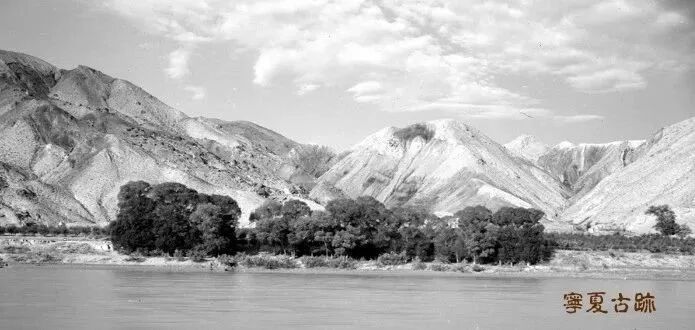
Abstract:
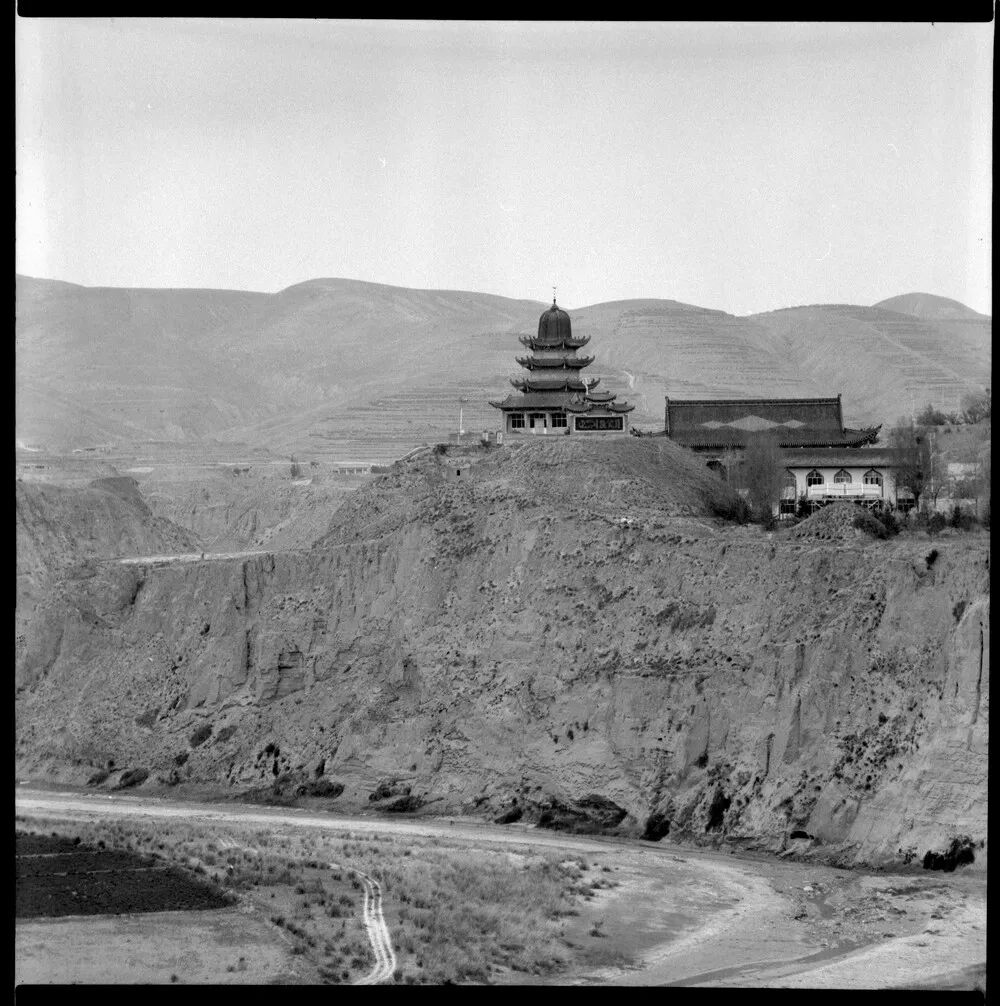
Visiting Laorengou Gongbei, hidden deep within the mountain canyons of Ningxia. Set to the evocative tunes of classical silk-and-bamboo melodies, we capture the traditional blue-brick and gray-tile mausoleum architecture against vast, earthy loess mountain ranges, documenting the tranquil atmosphere of the spiritual legacies and ascetic hermitages left by Northwest China's Muslim forebears.
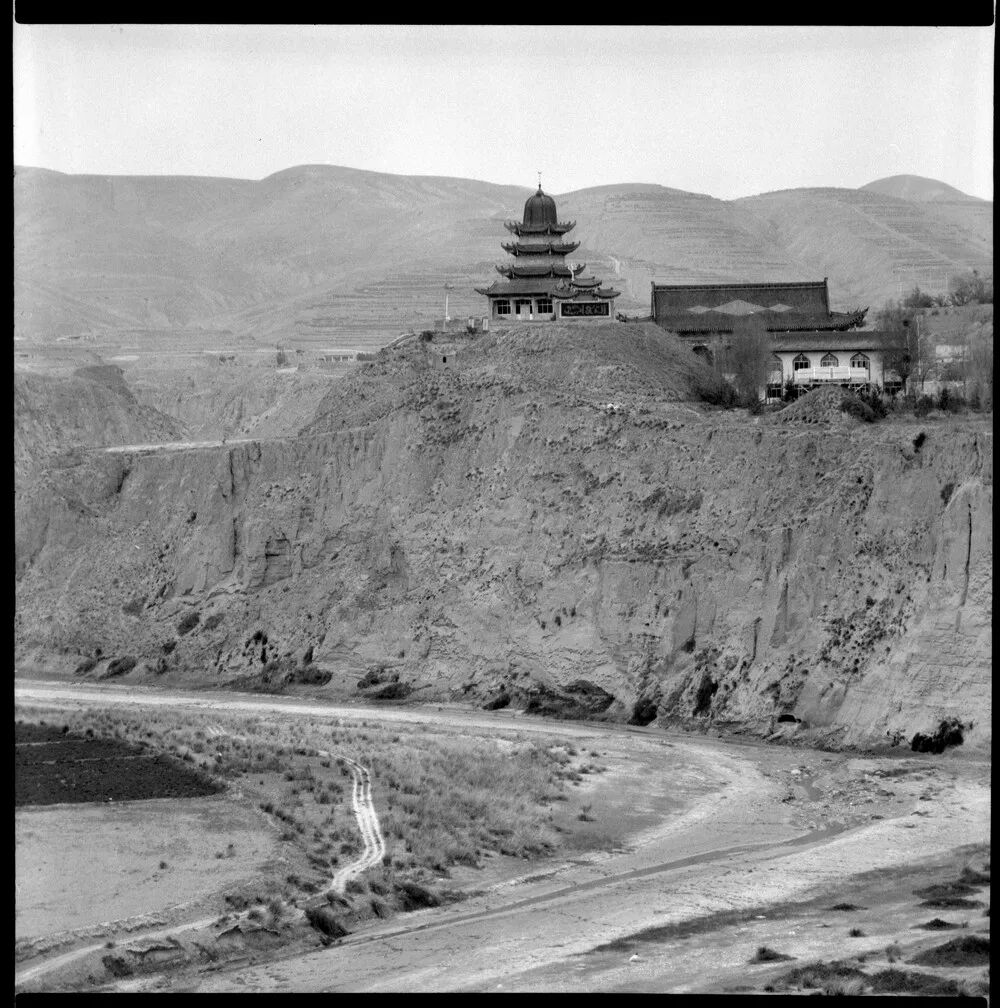
Selected from Minoru Miki's 'Koto Ballads Collection Vol. 4 - Autumn / Akemi Yamada': Coming from the East (Live Recording, Performed by Suzuko Kimura). Minoru Miki: Japanese composer and master of Japanese traditional music, born on March 16, 1930, in Tokushima City, Tokushima Prefecture. He studied composition under seniors like Tomojiro Ikeuchi and Akira Ifukube, co-founded Pro Musica Nipponia with fourteen members in 1964, and dedicated his life to developing and spreading Japanese traditional music until his passing in 2011 in Mitaka City, Tokyo. Japanese Koto: An important traditional instrument of Japanese music, originating from the guzheng of China's Sui and Tang dynasties. Early koto players were predominantly blind monks, branching into the Yamada and Ikuta schools. In modern times, koto players are mainly professional artists........
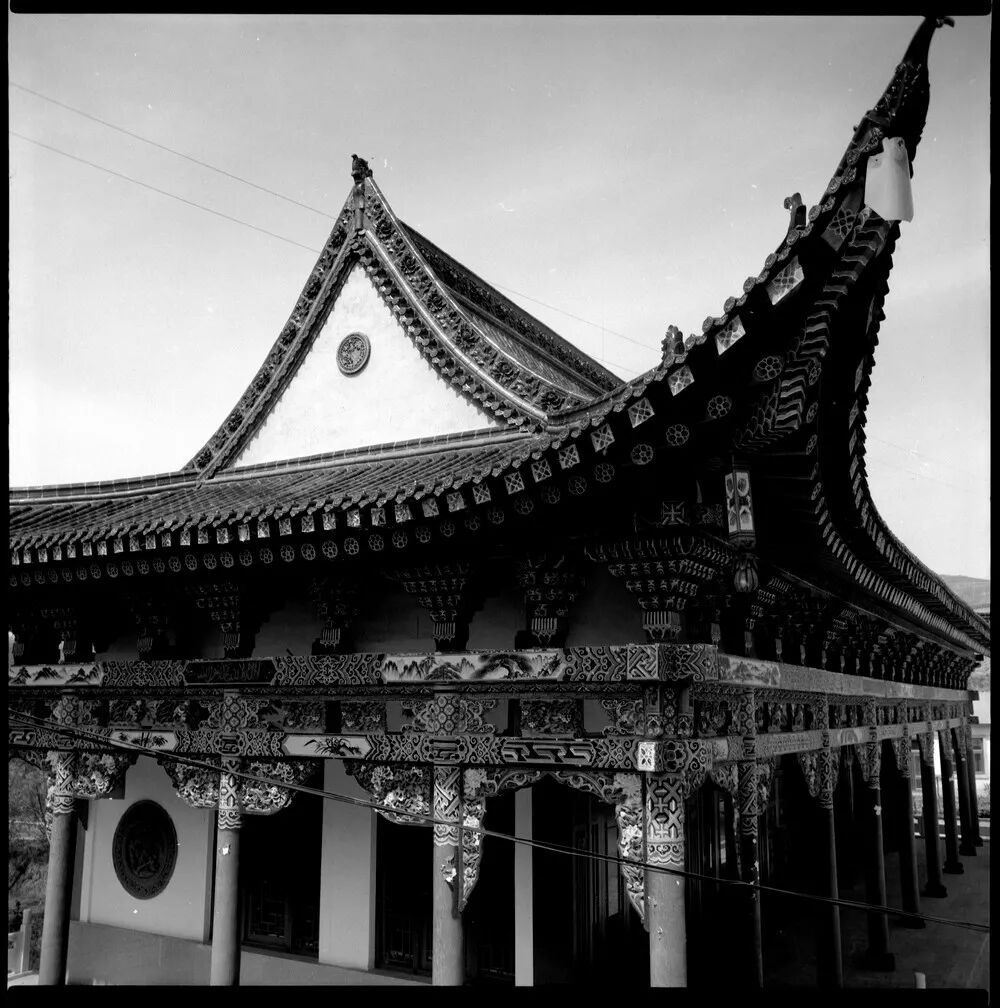
The term 'gongbei' is a transliteration of the Arabic word Qubbah, originally referring to religious architectural styles in Arab, Persian, and Central Asian regions. In Central Asia, Persia, and China's Xinjiang region, they are known as 'mazar'. Ningxia gongbei architecture mainly falls into three categories: Gutubu gongbei, where 'Gutubu' means axis, extreme point, or leader, considered a special 'Wali' hidden among humanity and an important figure beloved by Allah; Menhuan Laorenjia and Murshed gongbei, where the founders and spiritual guides of Sufi orders are generally called 'Laorenjia' (Elder), 'Daozu' (Patriarch), or 'Murshed' (Guide); and Hailifan gongbei, where 'Hailifan' means successor, referring to the senior disciples, successors, or deputies of the Murshed. There are also a few other types of gongbei. The gongbei is a primary religious characteristic of Ningxia's Sufi orders and an important cultural heritage of the Hui people in Ningxia.
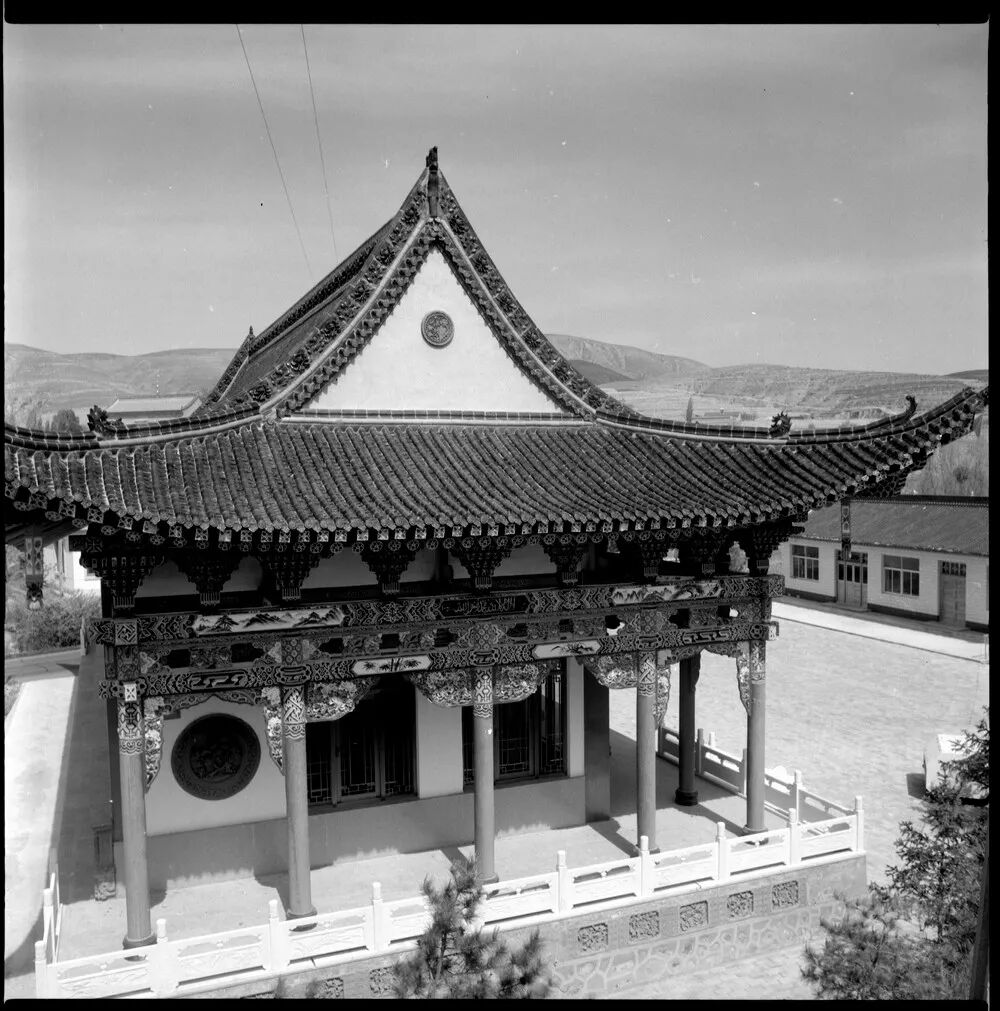
Laorengou Gongbei is located near Nanping Village, alongside National Highway 203 in Yuanzhou District, Guyuan City, Ningxia. With a long and ancient history, it is very likely the oldest gongbei in Ningxia, and was rebuilt in the 1990s.
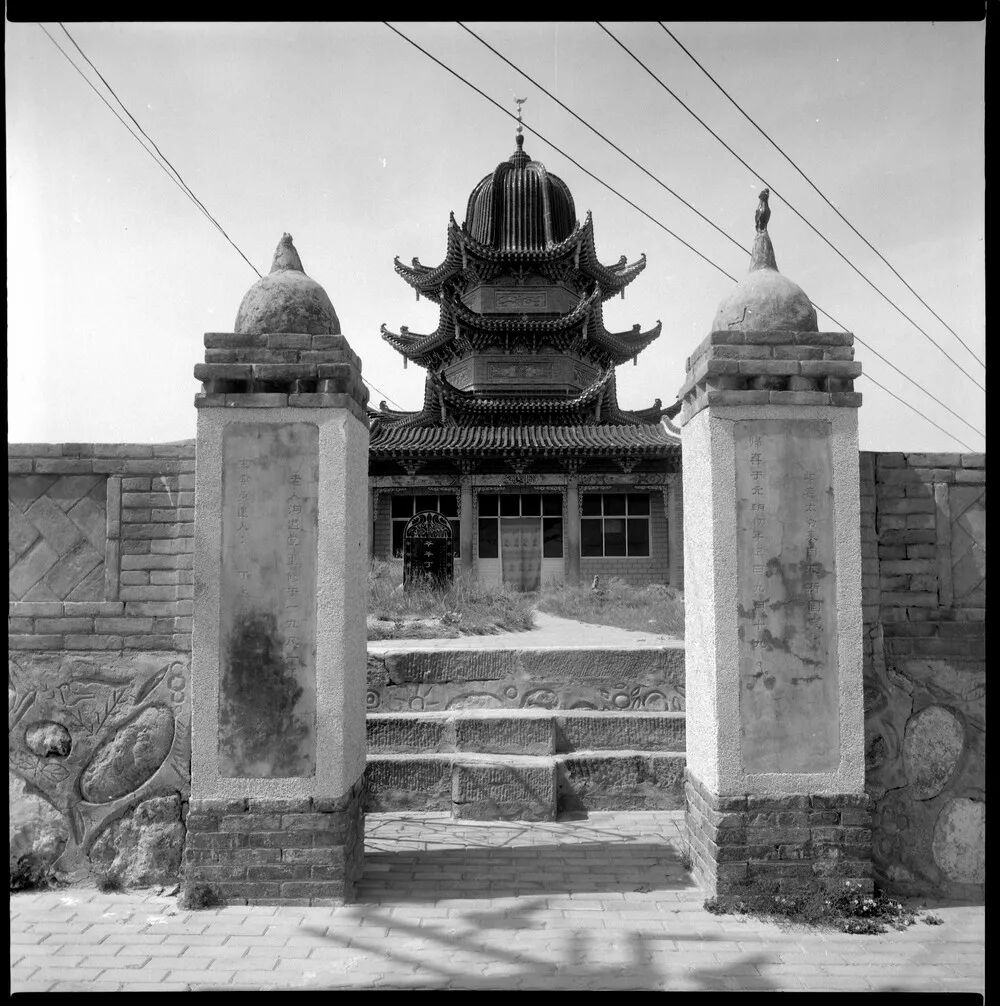
Excerpts from the stele inscription at the ancient Gutubu Gongbei in Laorengou are recorded by hand as follows:
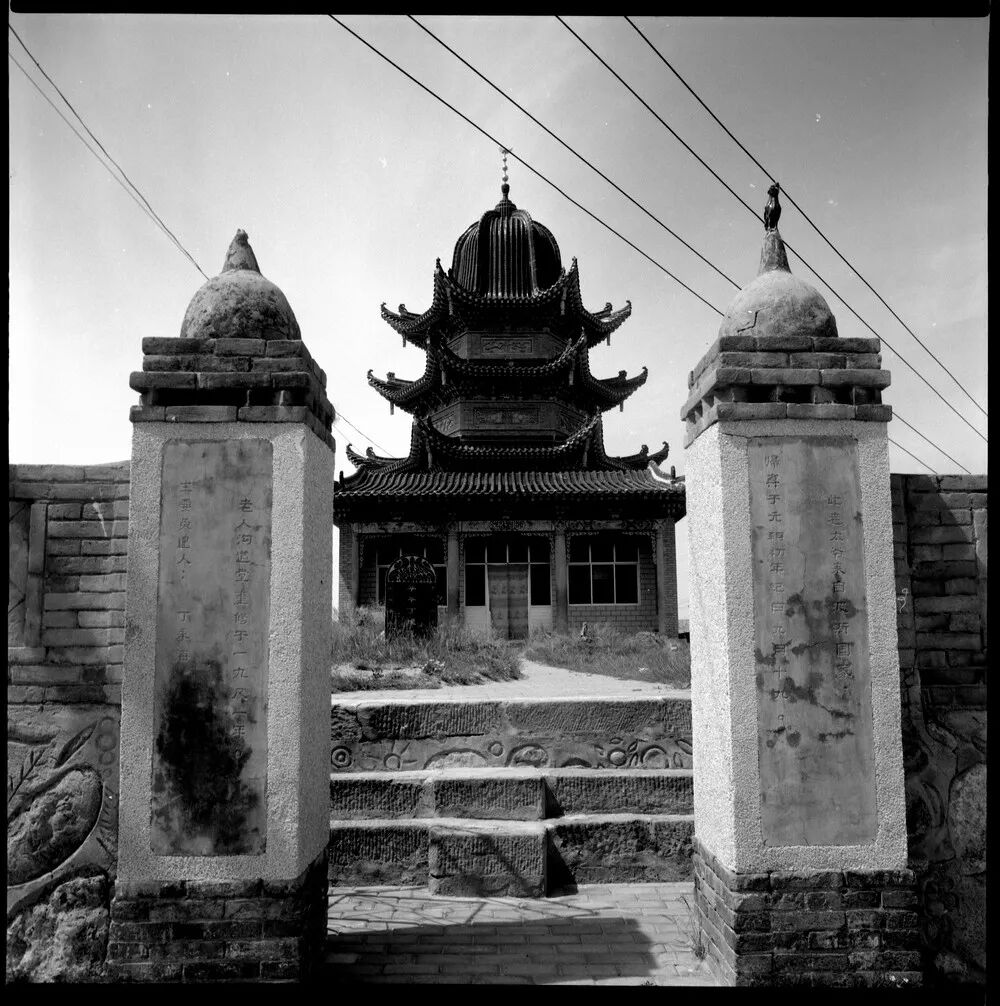
......
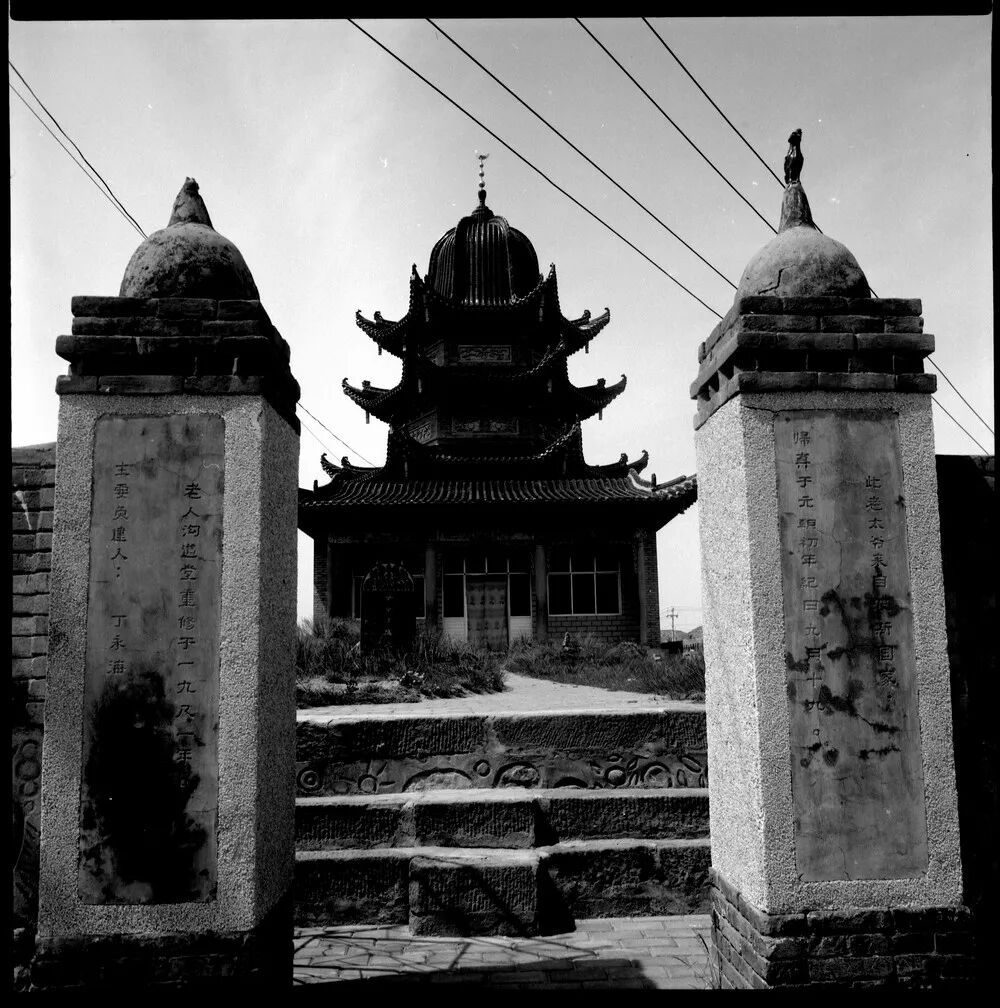
II. Spiritual Trajectory
Through the changing tides of time, the ancient Gutubu Gongbei at Laorengou has weathered immense hardships, with devoted 'dostans' (companions/followers) performing moving stories to protect this sacred spiritual sanctuary. Once upon a time, countless dedicated individuals tirelessly worked to repair and purify this holy ground, with Ding Sheh standing out foremost among the most meritorious contributors. Sheh, whose surname was Ding and personal name Yonghai, was born in 1947 and passed away on the 25th day of the 11th lunar month in 2004. Since childhood, Sheh studied religious texts, and by his teens, he devoted himself wholeheartedly to the faith, working day and night without sleep. He journeyed to the tombs of numerous sages and repeatedly sought out renowned masters to absorb the essence of their teachings. Guided by religious teachers, he underwent multiple sessions of 'zuojing' (silent meditation and retreat), clearing his mind, sharpening his resolve, wisdom, and insight to truly grasp the divine truths. He constantly sought to transcend the mundane and undergo a profound spiritual rebirth. Throughout his self-cultivation, he especially benefited from the spiritual guidance of the elder masters, holding them in lifelong reverence and guarding them like the apples of his eyes. He spent forty years repeatedly repairing the gongbei, often single-handedly undertaking difficult tasks in pursuit of perfection. Hauling stones up steep, isolated hills to build walls was a staggering challenge; carrying construction materials to the top of Yangjiao Mountain to pave roads required superhuman willpower. Yet even more demanding was the construction of the present gongbei, carried out during times of extreme shortage of funds and food; working at dangerous heights with his life hanging on the scaffolding beams; Sheh stood alone and carried the burden through grueling days and nights. Finally, on the 19th day of the 9th lunar month in 2004, the grand project was successfully completed, bringing immense relief to his heart. Having exhausted his physical and mental energy, Sheh fell seriously ill from overwork. Just over two months after the completion of his monumental work, he passed away to join the forebears, his heart returning to Allah.
......
Shot using a Mamaiya C330 Sekor lens on black-and-white film, with self-developed negatives scanned directly into digital files
Note: Traditional photography captures clear images by letting external light pass through a lens onto the flat film surface inside a sealed camera back. When exposed, the image transforms into a silver halide latent image. Developing chemicals are then used to wash and clear the silver halide particles, reducing the latent image back into silver particles on the film, creating the original negative. To produce a print, the silver salt particles on the negative are projected via an enlarger system onto photographic paper in a darkroom.
The charm of black-and-white film remains irreplaceable by any digital equipment since the birth of photography. The wide exposure latitude of black-and-white film is significantly superior to color film. Using different darkroom techniques, silver-salt works with rich tonal ranges, soft contrasts, and sharp details can be created. Today's digitally output large-format black-and-white photos still fall quite short in detail compared to traditional silver-salt works. Darkroom craftsmanship is unrepeatable, and every single photograph made is unique—which is precisely where its magic lies.
Exploring Ningxia Muslim Culture: Siqiliangzi Gongbei Shrines & Hui Heritage
Articles • Hasan09 posted the article • 0 comments • 3 views • 3 hours ago
Tracking Sacred Relics Above the Yellow River: A Panoramic Look at the Siqiliangzi Gongbei and the Spiritual Homeland of Hui Muslims
Abstract:
27 real-life photos and write-ups showcase the magnificent aura of the Siqiliangzi gongbei (Sufi shrine / mausoleum complex) in Wuzhong. From the grand hexagonal archways and towering main hall domes to the blue-brick reliefs and engraved Quranic verses, we take a heartfelt look back at the historical scroll of Hui Muslim forebears who sacrificed everything for their faith and people.
Selected from The orchard's 'Pir Sultan Abdal'dan Aşık Veysel' e 1000 Yılın Türküleri Thousand Years Of Anatolia' (Anatolian Millennia): 'Karşıki Karlı Dağda Bülbül' (The Nightingale on the Opposite Snowy Mountain). Aşık Veysel was a representative Turkish minstrel, baglama (traditional stringed instrument) player, and folk music master who lost his sight at age 7 and passed away at 79 (in 1973). This is the source of muqam (classical Islamic musical tradition). Turkey's Âsiklik (minstrelsy) tradition is listed on the UNESCO Intangible Cultural Heritage list.
The word gongbei is a transliteration of the Arabic 'Qubbah', originally referring to religious architectural styles in Arabia, Persia, and Central Asia. In Central Asia, Persia, and China's Xinjiang region, they are called 'mazars'. Gongbei architecture in Ningxia is mainly divided into three types: Qutubu gongbei, where 'Qutubu' means axis, pole, or leader, considered a special 'wali' hidden among humanity and a VIP in the eyes of Allah; menhuan (Sufi order / brotherhood) elders' and Murshid gongbei, where Sufi order founders and spiritual guides are generally called 'Elder', 'Daozu', or 'Murshid'; and Halifan gongbei, where 'Halifan' means successor, referring to the senior disciples, successors, or deputies of a Murshid. There are also several other types of gongbei. Gongbei are the primary religious feature of Ningxia's Sufi orders and an important cultural heritage of the Hui Muslims in Ningxia.
Located at the intersection of Kaiyuan Avenue and Wenwei North Street in Litong District, Wuzhong City, Ningxia, this is the site of martyrdom and final resting place of Ma Hualong (reverenced in the religious community as 'Thirteenth Grandfather'), the fifth-generation spiritual guide of the Jahriyya menhuan (Sufi order / brotherhood). Following the failure of the Jinjibao Hui Muslim uprising, on the 13th day of the first lunar month in the tenth year of the Tongzhi Emperor's reign (1871), Ma Hualong and his son, among many others, were subjected to death by a thousand cuts at Siqiliangzi. Belonging to the Jahriyya gongbei, it covers nearly 3 mu of land, features an overall bluish-gray tone, and follows the classic Chinese hexagonal gongbei style. The hexagonal tower shape holds deep symbolic meaning, stands 24 meters tall, and is inlaid with white marble on the inside. It was rebuilt in 1984 and listed as a county-level key cultural relic protection unit by the Wuzhong Municipal People's Government in 1994.
Shot using a Mamiya C330 Sekor camera lens, with self-developed film scanned directly into digital files.
Note: Traditional photography refers to using a camera lens to focus external light rays to form a clear image on the film plane inside a sealed camera back. After exposure, the image turns into a silver halide latent image. Developing chemicals then wash and rinse the film to clear the silver halide grains, reducing the latent image back into silver particles on the negative, creating the master negative. To make prints, an enlarger projects the film's silver salt particles onto photographic paper in a darkroom.
The charm of black-and-white film has remained irreplaceable by any digital equipment since the birth of photography. The wide exposure latitude of black-and-white film is clearly superior to color film, and using different darkroom printing techniques allows for silver-gelatin works with rich tonal ranges, soft contrast, and crisp details. Today's large-format black-and-white prints produced via digital output still lag significantly behind traditional silver-gelatin works when it comes to fine details. Darkroom craftsmanship is unrepeatable—every single print made is unique, and that is precisely where its magic lies. view all
Tracking Sacred Relics Above the Yellow River: A Panoramic Look at the Siqiliangzi Gongbei and the Spiritual Homeland of Hui Muslims
Abstract:

27 real-life photos and write-ups showcase the magnificent aura of the Siqiliangzi gongbei (Sufi shrine / mausoleum complex) in Wuzhong. From the grand hexagonal archways and towering main hall domes to the blue-brick reliefs and engraved Quranic verses, we take a heartfelt look back at the historical scroll of Hui Muslim forebears who sacrificed everything for their faith and people.

Selected from The orchard's 'Pir Sultan Abdal'dan Aşık Veysel' e 1000 Yılın Türküleri Thousand Years Of Anatolia' (Anatolian Millennia): 'Karşıki Karlı Dağda Bülbül' (The Nightingale on the Opposite Snowy Mountain). Aşık Veysel was a representative Turkish minstrel, baglama (traditional stringed instrument) player, and folk music master who lost his sight at age 7 and passed away at 79 (in 1973). This is the source of muqam (classical Islamic musical tradition). Turkey's Âsiklik (minstrelsy) tradition is listed on the UNESCO Intangible Cultural Heritage list.

The word gongbei is a transliteration of the Arabic 'Qubbah', originally referring to religious architectural styles in Arabia, Persia, and Central Asia. In Central Asia, Persia, and China's Xinjiang region, they are called 'mazars'. Gongbei architecture in Ningxia is mainly divided into three types: Qutubu gongbei, where 'Qutubu' means axis, pole, or leader, considered a special 'wali' hidden among humanity and a VIP in the eyes of Allah; menhuan (Sufi order / brotherhood) elders' and Murshid gongbei, where Sufi order founders and spiritual guides are generally called 'Elder', 'Daozu', or 'Murshid'; and Halifan gongbei, where 'Halifan' means successor, referring to the senior disciples, successors, or deputies of a Murshid. There are also several other types of gongbei. Gongbei are the primary religious feature of Ningxia's Sufi orders and an important cultural heritage of the Hui Muslims in Ningxia.

Located at the intersection of Kaiyuan Avenue and Wenwei North Street in Litong District, Wuzhong City, Ningxia, this is the site of martyrdom and final resting place of Ma Hualong (reverenced in the religious community as 'Thirteenth Grandfather'), the fifth-generation spiritual guide of the Jahriyya menhuan (Sufi order / brotherhood). Following the failure of the Jinjibao Hui Muslim uprising, on the 13th day of the first lunar month in the tenth year of the Tongzhi Emperor's reign (1871), Ma Hualong and his son, among many others, were subjected to death by a thousand cuts at Siqiliangzi. Belonging to the Jahriyya gongbei, it covers nearly 3 mu of land, features an overall bluish-gray tone, and follows the classic Chinese hexagonal gongbei style. The hexagonal tower shape holds deep symbolic meaning, stands 24 meters tall, and is inlaid with white marble on the inside. It was rebuilt in 1984 and listed as a county-level key cultural relic protection unit by the Wuzhong Municipal People's Government in 1994.

Shot using a Mamiya C330 Sekor camera lens, with self-developed film scanned directly into digital files.

Note: Traditional photography refers to using a camera lens to focus external light rays to form a clear image on the film plane inside a sealed camera back. After exposure, the image turns into a silver halide latent image. Developing chemicals then wash and rinse the film to clear the silver halide grains, reducing the latent image back into silver particles on the negative, creating the master negative. To make prints, an enlarger projects the film's silver salt particles onto photographic paper in a darkroom.

The charm of black-and-white film has remained irreplaceable by any digital equipment since the birth of photography. The wide exposure latitude of black-and-white film is clearly superior to color film, and using different darkroom printing techniques allows for silver-gelatin works with rich tonal ranges, soft contrast, and crisp details. Today's large-format black-and-white prints produced via digital output still lag significantly behind traditional silver-gelatin works when it comes to fine details. Darkroom craftsmanship is unrepeatable—every single print made is unique, and that is precisely where its magic lies.


Exploring Jiucaiping Gongbei: Sufi Shrines, Great Wall Ruins & Hui Muslim Heritage in Haiyuan, Ningxia
Articles • Hasan09 posted the article • 0 comments • 4 views • 3 hours ago
Wandering Through Jiucaiping Gongbei in Haiyuan County: Sufi Domes and Northwest Vibes Beneath the Ming Great Wall Beacons
Abstract:
A visual and travel diary documenting a journey to Jiucaiping Gongbei in Haiyuan County, Ningxia. Explore Islamic domed architecture set against the vast Loess Plateau and ancient Ming Great Wall ruins, while diving into the architectural design of gongbei (Sufi shrine / mausoleum complex) and the deep-rooted devotion of Hui Muslims honoring their spiritual ancestors.
August 20, 2022 | Jiucaiping Gongbei, Haiyuan County
The word gongbei comes from the Arabic for "dome," and over time it came to refer to the round structures built over mosques or the tombs of Sufi masters.
In Ningxia, gongbei refers specifically to the mausoleums of masters from the Qadiriyya and Jahriyya menhuan (Sufi orders / brotherhoods), serving as sacred spaces where Hui Muslims gather to honor ancestors and practice their faith.
Perched on a small hill in Haiyuan County, Jiucaiping Gongbei is a majestic mausoleum complex housing sixteen Sufi masters. According to local Hui Muslims, it boasts a history spanning a thousand years. The name "Jiucaiping" (Nine Colors Terrace) comes from the legend that the site was surveyed nine times before the final resting place was chosen.
The architecture of the gongbei is breathtakingly ornate, featuring emerald-green tiled domes and exquisite craftsmanship, all tucked away amidst lush groves of trees.
Along the way, we also stumbled upon a smaller shrine: the Yangquanbao Gongbei. Though modest in size, it boasts striking and distinct architectural details.
Dislike view all
Wandering Through Jiucaiping Gongbei in Haiyuan County: Sufi Domes and Northwest Vibes Beneath the Ming Great Wall Beacons
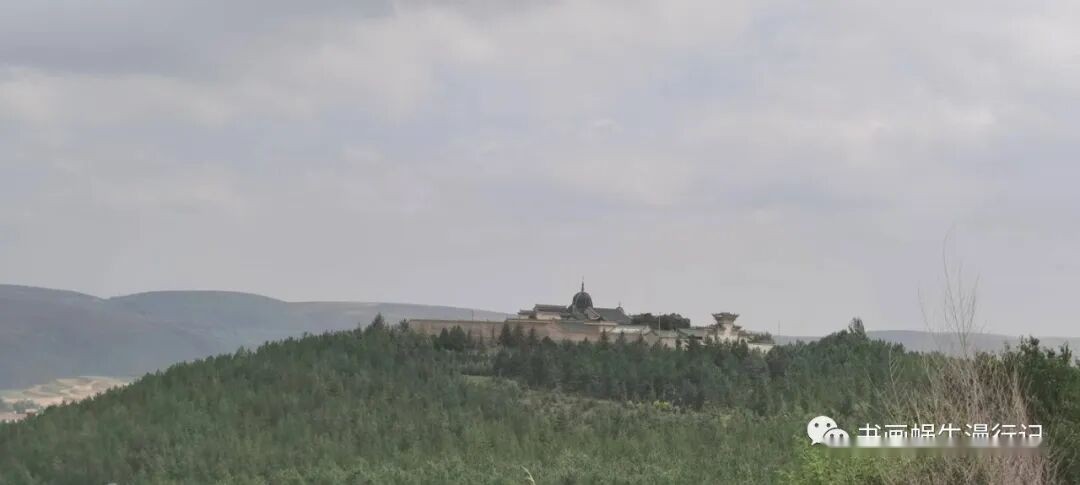
Abstract:
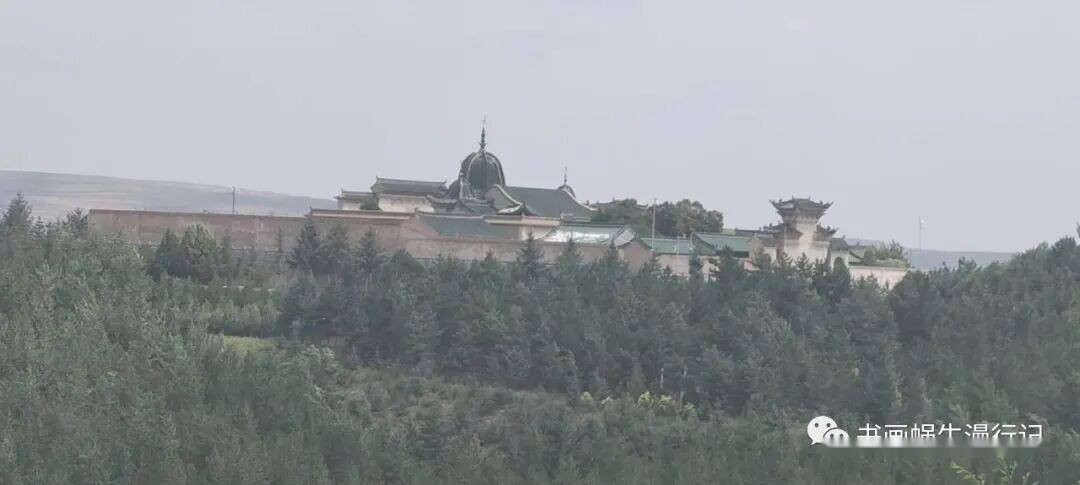
A visual and travel diary documenting a journey to Jiucaiping Gongbei in Haiyuan County, Ningxia. Explore Islamic domed architecture set against the vast Loess Plateau and ancient Ming Great Wall ruins, while diving into the architectural design of gongbei (Sufi shrine / mausoleum complex) and the deep-rooted devotion of Hui Muslims honoring their spiritual ancestors.
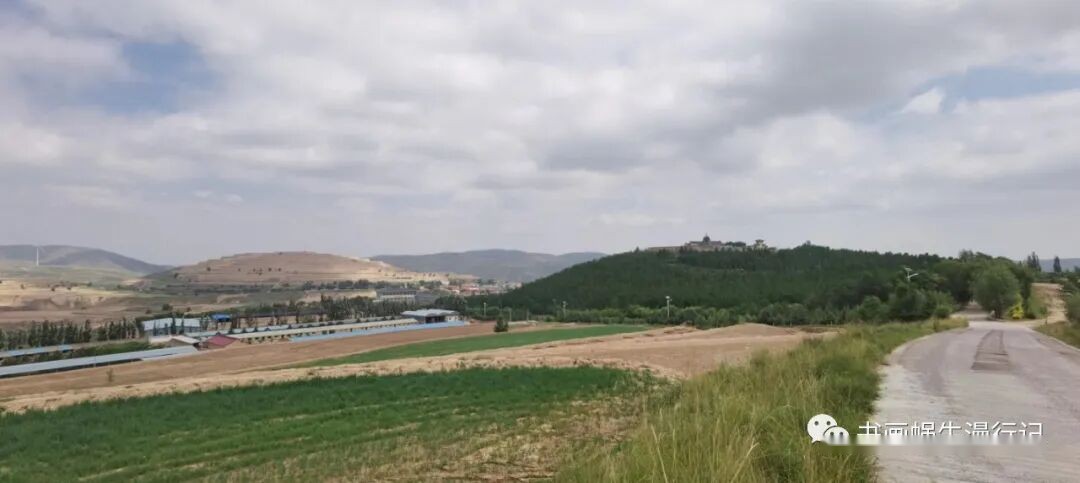
August 20, 2022 | Jiucaiping Gongbei, Haiyuan County
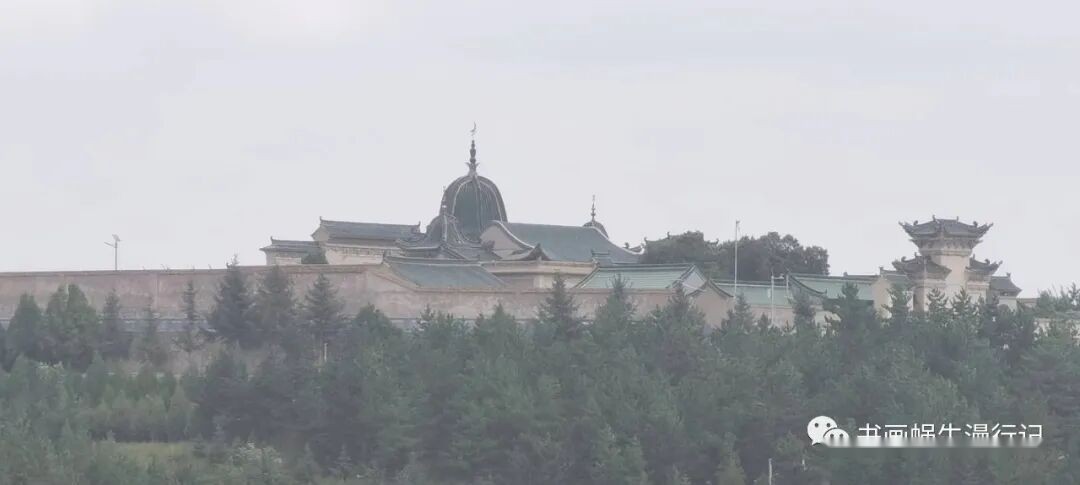
The word gongbei comes from the Arabic for "dome," and over time it came to refer to the round structures built over mosques or the tombs of Sufi masters.

In Ningxia, gongbei refers specifically to the mausoleums of masters from the Qadiriyya and Jahriyya menhuan (Sufi orders / brotherhoods), serving as sacred spaces where Hui Muslims gather to honor ancestors and practice their faith.
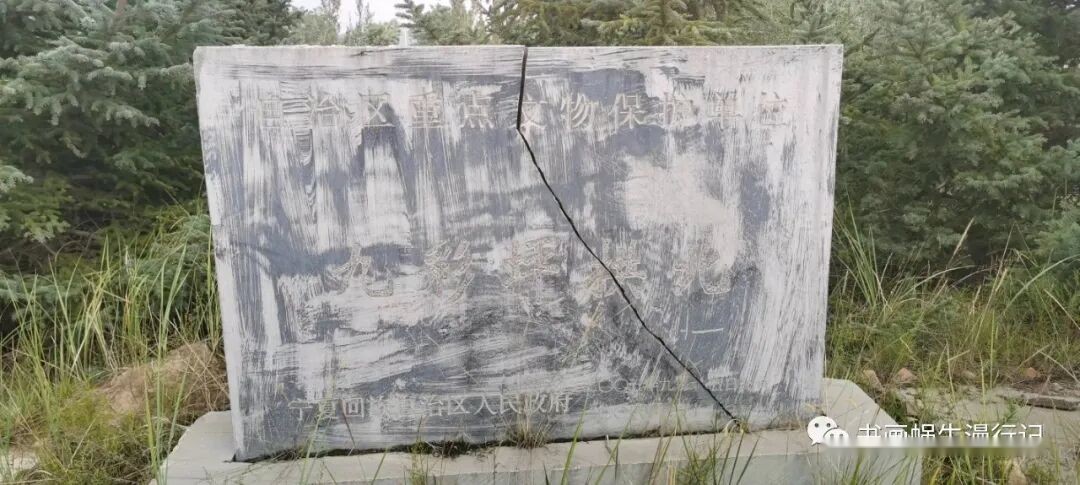
Perched on a small hill in Haiyuan County, Jiucaiping Gongbei is a majestic mausoleum complex housing sixteen Sufi masters. According to local Hui Muslims, it boasts a history spanning a thousand years. The name "Jiucaiping" (Nine Colors Terrace) comes from the legend that the site was surveyed nine times before the final resting place was chosen.
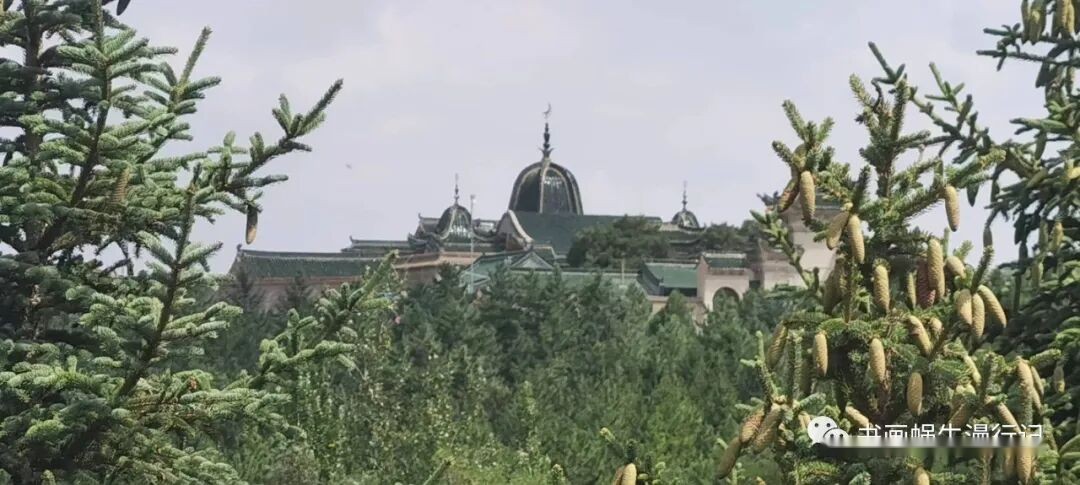
The architecture of the gongbei is breathtakingly ornate, featuring emerald-green tiled domes and exquisite craftsmanship, all tucked away amidst lush groves of trees.
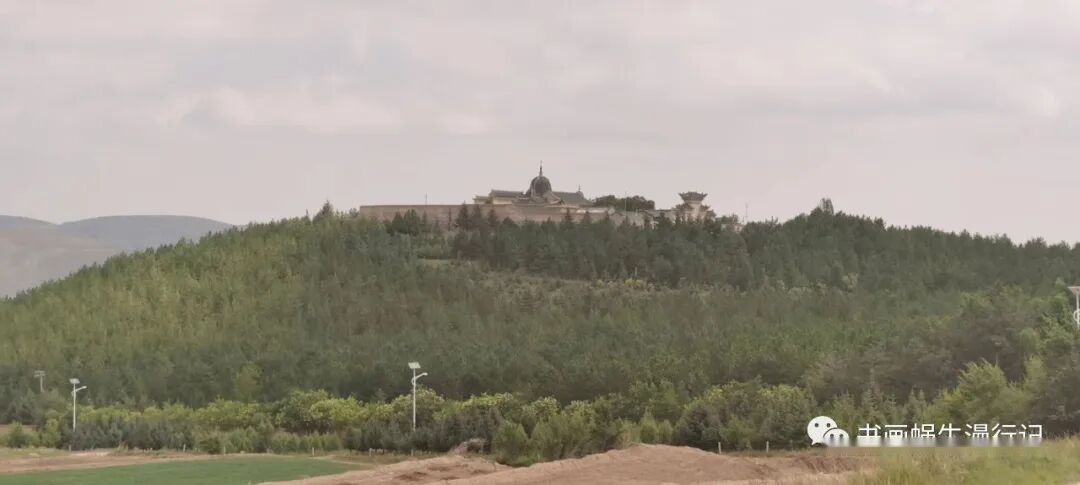
Along the way, we also stumbled upon a smaller shrine: the Yangquanbao Gongbei. Though modest in size, it boasts striking and distinct architectural details.
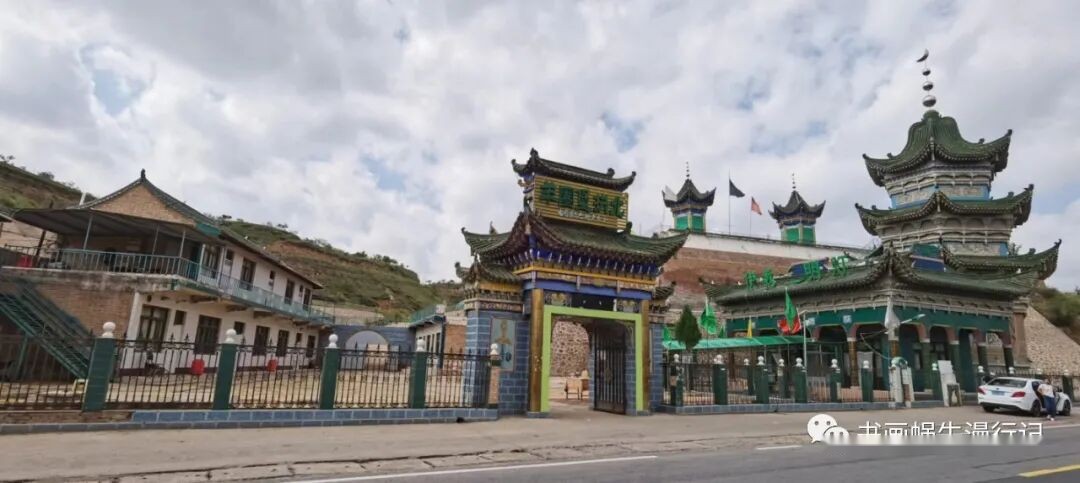
Dislike
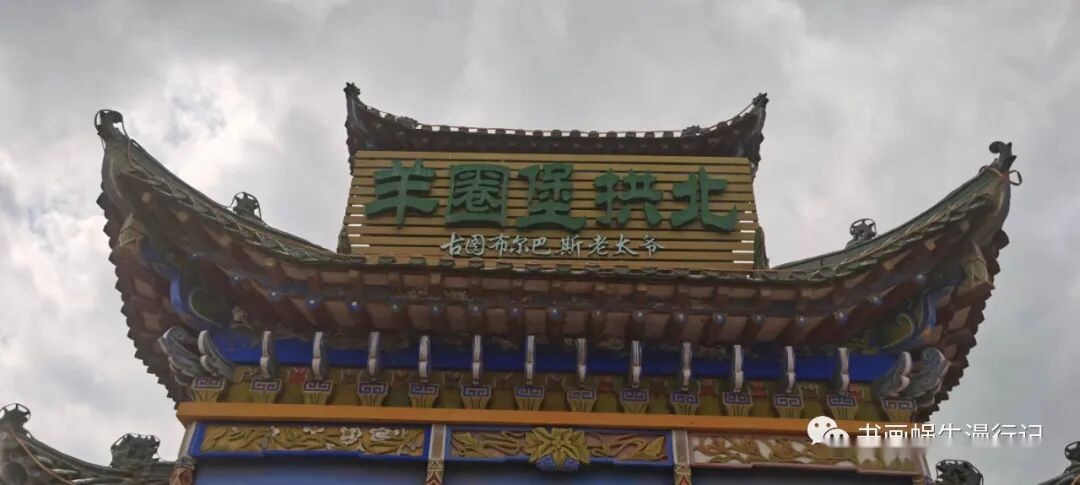
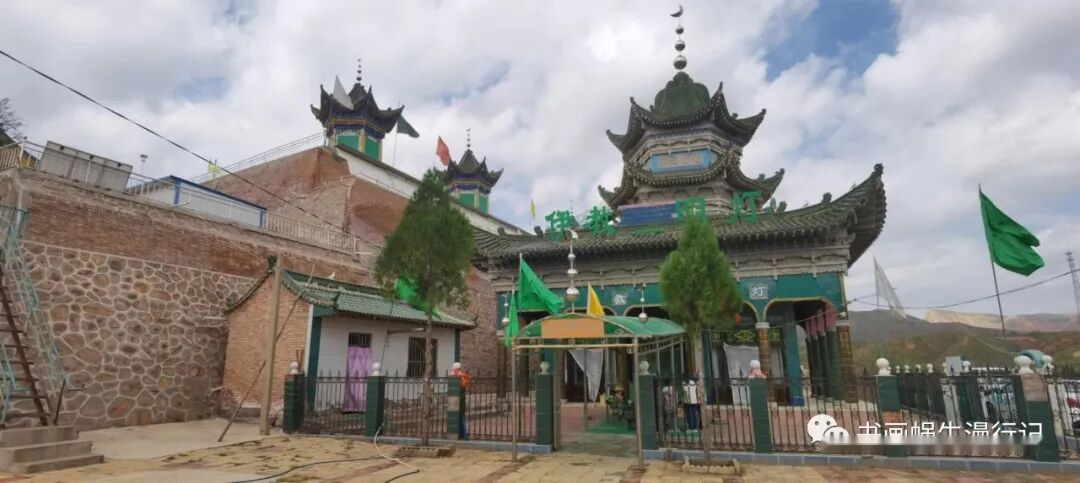
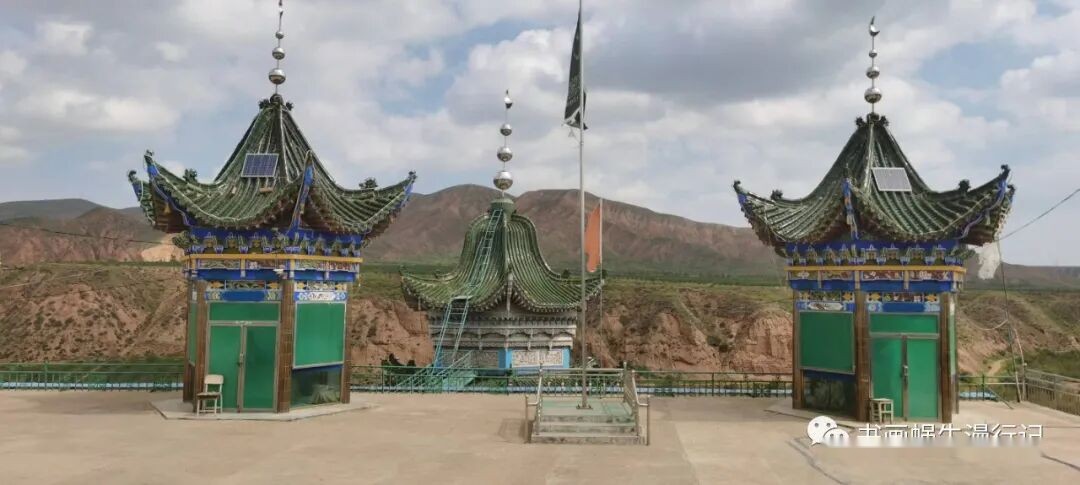
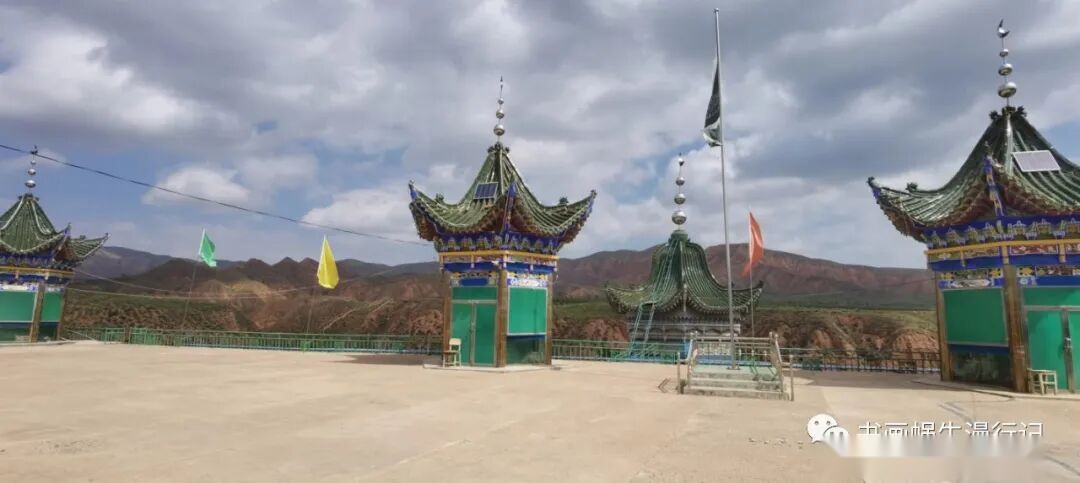

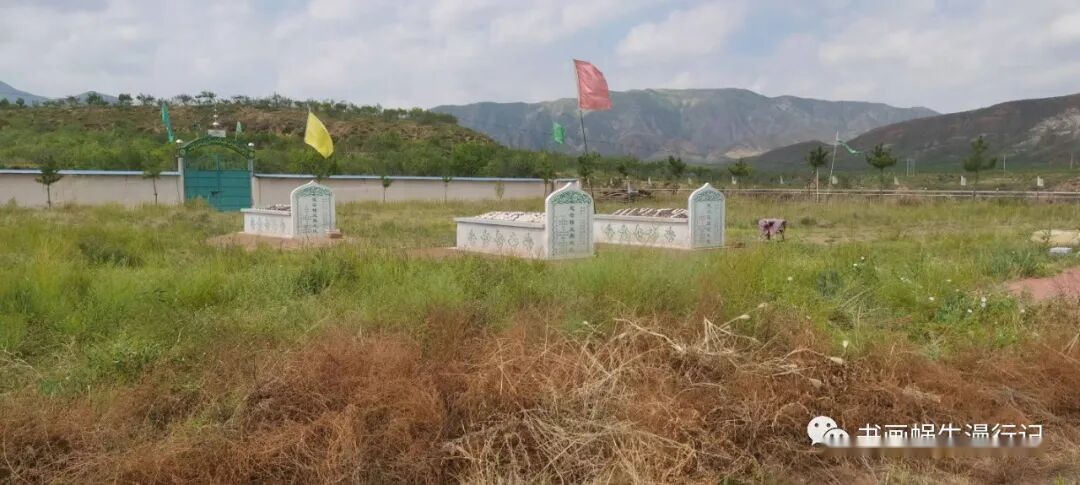
The Rise and Fall of China's World Muslim City: Halal Culture, Mosques, and Sufi Shrines in Ningxia (Part 2)
Articles • Hasan09 posted the article • 0 comments • 1 views • 2 hours ago
One of the highest-profile champions of this development strategy was Wang Zhengwei, who served as deputy party secretary and chairman of the government of the Ningxia Hui Autonomous Region from 2008 to 2013. A Hui himself, Wang was later promoted to head the State Ethnic Affairs Commission in Beijing. In a 2008 interview, Wang explained that when developing Ningxia’s economy, it made sense to promote its "unique advantages," particularly its distinct Hui identity and culture (Wang and Lian 2008). These advantages included Muslim dietary taboos. During his tenure in Ningxia and beyond, Wang heavily pushed for the standardization and internationalization of the region's halal food processing and certification industry.
Official backing for a Muslim-focused development strategy was noteworthy because, as Wai-Yip Ho points out, Ningxia leadership had long been "hesitant to emphasize its Islamic heritage and build ties with the Muslim ummah" (2013: 84). By the 2000s, however, officials were "keen to reemphasize [Ningxia's] Islamic past and rediscover connections with the Muslim world." Leaders had started viewing the relatively assimilated Hui—the Chinese "good Muslims" described by Yuting Wang (2018)—and their identity and culture as soft power assets for China in its engagements with Muslim nations. This view was backed by think tanks and university researchers who organized conferences and published monographs detailing how Ningxia's unique cultural, geographic, and economic traits could serve China's diplomatic and development goals (Fang 2017; Zhuo and Jiang 2016). One of the recurring themes emphasized in these conferences and publications was the transnational hybridity of the Hui. The Hui minority featured in these narratives is invariably modern, if not postmodern—a globalized people adept at navigating two worlds (the Chinese world and the Islamic world) at once.
For proponents of this development strategy, what made the Hui an asset for China's global ambitions was not just their ethnicity or culture, but their indelible Muslim attributes, which embedded them within the global ummah. Cong Enlin, then vice president of the Islamic Association of China, highlighted this in a 2016 article. A Hui himself, Cong asserted that given the massive Muslim populations residing in countries along the Belt and Road, Chinese Muslims were uniquely positioned to help realize Xi Jinping's Belt and Road Initiative. He described the BRI as "not merely a road of trade," but a "road of religious and cultural exchange," and argued that "Muslim talent" should "play an active role" within it (Enlin 2016: 270–71). Government support for the hajj was also essential because it was through the pilgrimage that "friendships between Chinese Muslims and Muslims around the world are strengthened, and friendly government-to-government relations are established" (ibid.: 269). Cong explained that fully tapping into "religious resources" would allow Chinese Muslim citizens to "spread Chinese wisdom, tell China stories well, amplify China's voice, and make China's public diplomacy more vivid and deeply rooted in people's hearts."
Cong's remarks underscore the enduring nature of "communist multiculturalist" narratives and ideals, which for decades have shaped, to varying degrees, China's governance of diverse peoples across its vast lands (McCarthy 2009). The notion of a multi-ethnic Chinese state—the Chinese nation (*Zhonghua minzu*), a harmonious blend of the Han majority and various minorities—first emerged in the late 19th and early 20th centuries to counter Han supremacist arguments underpinning anti-Manchu and anti-Qing nationalism (Jenco 2019; Jin 2022; Leibold 2007; Tam 2023). The multicultural narrative became more prominent during the communist revolution as the CCP courted the support of non-Han peoples living across vast Chinese territories. David Stroup writes that the party's desire to maintain the "vast and diverse... geographical entity of the former Qing empire" led it to "invoke a grander concept of Chineseness, one that implied multiculturalism, harmony, and equality under the party's leadership" (2022: 37).
Following the Maoist era, the regime encouraged ethnic minorities to restore their distinct cultural practices and identities, even as it remained wary of what it deemed separatism and extremism. This encouragement went beyond mere tolerance, as officials actively promoted the revival of minority cultures—either as a legitimation strategy to boost economic development, or because they were minority members themselves. Ethnic cultural revival could and did function as a mode of resistance, for instance by enabling minorities to reshape collective identities and shed the stigma and trauma suffered under Maoist socialism (Litzinger 1998; Mueggler 2001; Makley 2005). For many minority peoples, however, the expression of ethnic and religious differences constituted a declaration of membership in the Chinese state. In other words, "to be a minority [became]... a way of being a national" (McCarthy 2009: 10).
Although Ningxia’s development strategy and the World Muslim City borrowed from this multicultural national narrative, their articulation disrupted its plot and characterization. In the *Bildungsroman* of the Chinese national story—a tale of past glory, humiliation, struggle, and ultimate triumph—the Han are positioned as the primary protagonists. Inclusive though communist multiculturalism is—and it is quite inclusive, creating space within the national imagination for diverse groups—minorities are cast as supporting actors, if not plot devices, on China's journey toward self-realization. A core trope of this narrative is the notion of the Han as the "big brother" nation who rescues minority brothers and sisters from backwardness by providing civilizational and technical knowledge (Harrell 1996; Jin 2022). With the help of the more advanced Han, minorities are pushed through stages of development, moving from "primitive" and "semi-feudal" stagnation into socialism with Chinese characteristics. Yet in the development vision articulated in Ningxia, the Hui were treated not as bit players, but as protagonists indispensable to the plot’s development and China's global ambitions.
The Role of Entrepreneurs and Local Officials in Crafting the World Muslim City
Despite backing from Beijing leadership, the World Muslim City was in many ways a local venture spearheaded by local entrepreneurs and municipal and county officials. The former included Yu Zhiyi, a Yinchuan businessman and informal diplomat with extensive connections in the Middle East (Cao 2009). For a time, Yu served as head of the World Muslim City's parent company and held a substantial stake. A Ningxia native with an MBA from Renmin University of China, Yu was the founder and principal of the Ningxia Muslim International Language School, a private vocational school that served as one of the World Muslim City's initial subprojects (Liu, Wang, and Tang 2011: 92). He served on the Ningxia Hui Autonomous Region's Committee of the Chinese People’s Political Consultative Conference, representing the education sector. In 2016, he used his position on that advisory body to advocate for increased government funding for Arabic-language education.
Yu also co-founded and led the Ningxia Muslim Welfare Association, a charity that played an outsized role as the World Muslim City got off the ground. Established in 2001 and overseen by the Ningxia Ethnic Affairs Commission, the association channeled tens of millions of RMB in foreign Muslim aid funds toward humanitarian causes in Ningxia over some 15 years. In 2007, it helped broker a 2 million RMB donation from Kuwait's House of Zakat and the International Islamic Charitable Organization's Asian Muslim Committee to establish the Ningxia Muslim Orphanage (Wu 2012). Thanks to the association's efforts, both the orphanage and Yu's vocational school were folded into the planning for World Muslim City 1.0. As a result, these entities secured millions of dollars in additional donations from foreign Muslim aid organizations, both state-backed and private.
The roles played by Yu Zhiyi and the Ningxia Muslim Welfare Association highlight the philanthropic and diplomatic dimensions of the World Muslim City in its early stages. Philanthropy served as an important vehicle for wealthier Muslim and Arab nations to build relations with the PRC. Due to its massive Muslim population and status as a Hui autonomous region, Ningxia has long been the focal point of this philanthropic diplomacy, as well as a stage for the PRC to project goodwill toward Muslims and tolerance for Islam. Operating under the watchful eyes of the Ningxia Foreign Affairs Office and the Ethnic Affairs Commission, the Ningxia Muslim Welfare Association helped coordinate these efforts (Liu, Wang, and Tang 2011: 105–6). It leveraged Yu's extensive Middle Eastern connections to identify Hui communities in Ningxia in need of help, distributing funds from foreign Muslim organizations to support community projects: installing water wells, renovating dilapidated homes, building mosques, and so on. The association also facilitated informal meetings between Ningxia officials and visiting Muslim dignitaries, often with Yu serving as host and translator. It was through these diplomatic and philanthropic interactions that planning for the World Muslim City began to take shape (ibid.: 101–3).
Local Communist Party officials also pushed the World Muslim City forward. Xia Xiyun, the Han county party secretary of Yong宁 [Yongning] when the World Muslim City was launched, published an article in *The Communist Party Member* magazine (2009) detailing the county's plans to "build a famous Hui cultural tourism city" (quoted in Jiang 2013: 50–51). In an interview, Xia predicted the World Muslim City would "establish [Yongning] as a Muslim brand," "realize a leap forward in the Hui cultural industry," and transform the county into a "tourist destination for Muslims from around the world" (Wang et al. 2009: 2). Xia was promoted in 2010 to party secretary of Yinchuan's Jinfeng District, home to the Yuehaiwan Central Business District. In that role, Xia oversaw the committee tasked with building the China-Arab axis (Miu 2018).
Realizing the vision of the World Muslim City depended not just on party backing, but on state support—government officials and bureaucracies at municipal, county, and township levels. Subprojects required various permits and approvals from land resources, finance, construction, and housing and urban-rural development departments. This was especially true for subprojects slated for rural land, which under Chinese law is owned by rural collectives (i.e., villages). State approval was necessary both to transfer land-use rights to entities outside the collective and to convert agricultural land to non-agricultural uses like tourism and industry. In Yongning, local officials were also responsible for providing compensation and relocation assistance to rural villagers who were induced to give up their homes and land to support World Muslim City projects (Jiang 2013; Zhang 2014b).
Even with hefty backing from powerful Ningxia officials, World Muslim City Phase 1 ran into roadblocks pretty much right out of the gate. Out of an estimated 800 million RMB budget, only a fraction came from foreign Muslim donors; the rest relied on the parent company hustling for financing in the Middle East. Unfortunately, the firm hit delays securing the official national certificates proving their right to develop certain plots in Yongning, meaning they didn't have the collateral needed to lock down loans. By mid-2010, World Muslim City was bleeding cash and struggling to pay suppliers and contractors. At that point, only one of the vocational school buildings had actually been finished (Zhao 2015).
In 2011, World Muslim City got a new lease on life when a majority stake in the parent company was sold off to Beijing-based Sanxian Group—an investment outfit heavily into real estate development and cultural tourism. Sanxian Group was linked to Liu Yimiao (Liu "One-Second"), a charismatic and controversial business guru who founded the Sparta Education Group, a "business wisdom consulting firm" charging up to 300,000 RMB (over $42,000) for its hit training courses (English China News 2011). Once the buyout went through, World Muslim City's budget blew up to a massive 23 billion RMB, and the number of sub-projects jumped from 13 to 23. In August 2012, World Muslim City 2.0 threw a huge grand (re)opening ceremony with over 500 people in attendance, including Wang Zhengwei and other major Ningxia bigwigs (Zou jin Shijie 2014).
Even with the sub-projects multiplying, Sanxian Group insisted they were sticking to World Muslim City's original Muslim-centric vision. At the 2012 ceremony, the company's CEO hyped up their commitment to "showcasing Ningxia's unique Hui Muslim culture and rich ethnic vibes to the world," while building a "demonstration city that harmoniously blends Chinese and Muslim cultures" (ibid.: 2014). Still, the buyout shifted World Muslim City's focus away from charity and education toward real estate and leisure, expanding its footprint from Yongning County straight into downtown Yinchuan's central business district. Sanxian Group rolled out flashy new plans including the China-Arab Axis, the Ningxia International Hall, luxury resort developments, and an "urban sports park." Some unbuilt Phase 1 sub-projects got rolled into Sanxian's master plan, like the "One Thousand and One Nights" theme park and a Silk Road Museum concept. Others got totally scrapped, including the Quran Mosque. Acres of unfinished rural exhibition halls were bulldozed to clear space for high-end housing.
On paper, this eclectic mix of World Muslim City projects was supposed to create some serious synergy. Once built, the sub-projects would act as cultural and entertainment perks to pitch financial and industrial projects to Middle Eastern investors. High-rollers from Kuwait or Dubai could hit up trade expos at the Ningxia International Hall, with Arabic translation assistance provided by grads from the World Muslim City-funded vocational school. Afterward, they could kick back with World Muslim City's leisure lineup—museums, light shows, halal restaurants, golf, and more—before heading back to crash at their villas in Sanxian's Smart Bay resort community in Yongning. Thanks to Ningxia's Hui Muslim cultural and religious resources, these execs could enjoy all these amenities knowing their Islamic spiritual and dietary obligations were fully covered.
The End of World Muslim City
World Muslim City's troubles didn't vanish just because Sanxian Group took over. The sub-projects ran into even more regulatory headaches—some of them totally self-inflicted by Sanxian. The company and local officials tangled the whole venture up in legal messes, getting major projects slapped with stop-work orders. In 2013, after breaking ground on the luxury resort development and neighboring sports park in Yongning, the projects were flagged for violating national land-use laws that ban building standalone villas and converting farmland for non-agricultural use without approval. Investigative reports also exposed that Sanxian had started work on both projects before securing land transfer certificates from the state—a major legal violation that the county's construction, finance, and land-and-resources departments either facilitated or totally turned a blind eye to (Zhang 2014a). The "urban sports park" (Yi 2014), which Sanxian's promo materials painted as a healthy, eco-friendly green space, turned out to be a full 36-hole golf course—a direct violation of a 2004 nationwide ban on building new courses. When reporters asked about it, the head of the county land and resources bureau denied the golf course even existed, claiming the agency had checked out the property and "didn't find a single hole" (Zhang 2014b).
To make matters worse, some of the rural land illegally repurposed for the course and resort was forcibly seized from farmers who were already leasing it. When the farmers fought back, officials signed off on aggressively snatching the leased land and bulldozing their crops and greenhouses. In 2013, China's Ministry of Land and Resources ordered its Yongning bureau to confiscate the golf course property and slap Sanxian Group with a fine of over 17 million RMB. Yet, shortly after, the county bureau (illegally) handed the course property right back to Sanxian, ostensibly so the company could maintain it and keep it from falling apart. Golf course construction kicked back up, though it was eventually shut down again and the property re-confiscated by the state (Zhang 2014b). Other sub-projects met a similar fate. Construction on a government office building in Yongning got frozen after it was discovered that neither Sanxian nor county officials had scored the mandatory planning clearance from the National Development and Reform Commission (required for all new government buildings) (Shengye Construction v. Yongning County 2019). Today, World Muslim City sits mostly abandoned, limping along through endless court battles.
Whether due to its outsized ambitions or in spite of them, the heavy-handed tactics of World Muslim City's backers dragged the sub-projects into endless controversy, leading to suspension and shutdown. Barely any sub-projects were finished, and plenty never even got off the ground. As one observer put it, the root problem was that World Muslim City's "grand blueprint" was completely disconnected from reality, and Sanxian Group's tens of billions of RMB investment was just an "economic bubble" existing purely on paper (Zhao 2015). Still, looking at the big picture, World Muslim City's ultimate fate was sealed by events at the very top—specifically Xi Jinping's policies and pronouncements. In 2018, Ningxia officials cranked up their "Sinicization" efforts, scrubbing so-called "Saudi" and "Arabian" architectural elements from buildings across the entire autonomous region to make the built environment "fit the spirit of Chinese culture and the progress of the times" (Central Committee 2018). Public Muslim projects that had mostly avoided controversy until then suddenly became casualties of the campaign—like the China-Arab Axis. The Hui Culture Park got the Sinicization treatment too: its name was changed to the Ningxia Folk Customs Park in 2018, and in 2020, the domes and minarets capping the park's buildings were torn down (see Fig. 6). Stripped of its main draw—exotic architecture—the park slid into decay and bankruptcy. By 2022, the Ningxia Department of Culture and Tourism officially stripped it of its certification as a "Cultural Industry Demonstration Unit" (Er Shuai Xiong 2022).
World Muslim City wasn't a total wash, though. A few major sub-projects did get finished, including the Ningxia International Hall, though its mesh exterior was later tweaked to look a lot less like a Muslim headscarf. The former China-Arab Axis, now renamed Solidarity Road, is still an avenue lined with fountains, plazas, and Xi Jinping-approved sculptures and pavilions. Sanxian's Ningxia subsidiary held onto a sliver of the golf course, rebranding it as "Happy Base Camp"—a recreational spot for camping, BBQs, and corporate team-building events (Yongning County Radio and Television Station 2021). One partial success story is the vocational school started by Yu Zhiyi. Back in 2014, rebranded as the Ningxia International Language School, it relocated to a more modern, spacious campus in Yinchuan built partially with World Muslim City funds. The following year, the chairman of Kuwait Investment Bank dropped a 22 million RMB donation to set up an Arabic language teacher training center at the school (Wu 2016). By 2023, the school was renamed yet again as the Ningxia Business Vocational School. While it once aspired to be "China's largest talent training base for the Arabic language" (Han 2013), the emphasis on Arabic has dialed back significantly today. Business Arabic is still taught, but otherwise, the curriculum is pretty standard for a vocational high school in the People's Republic of China.
Despite Sinicization at home, partnerships between the PRC and Muslim nation-states have actually ramped up in recent years. Under the banner of the Belt and Road Initiative, China and Arab nations have "implemented over 200 major cooperation projects in energy and infrastructure, with the fruits of cooperation benefiting nearly 2 billion people on both sides" (Ministry of Foreign Affairs 2023). China continues hosting a steady rotation of China-Arab summits and conferences. Beyond trade, tech, and energy, culture remains a huge focus of these events. In 2022, the 5th Arab Arts Festival went down in Jingdezhen, a city in eastern Jiangsu province, bringing a touch of "exotic flair" to China's traditional porcelain capital (Yang 2023).
Yet, under Xi Jinping, Ningxia or China's Hui Muslim culture doesn't seem to be up for discussion at these forums and conferences, let alone serving as a focal point for diplomatic or economic mobilization. Instead, it's China's five-thousand-year (or is it six-thousand?) civilization that gets praised for driving international cooperation. As the PRC Ministry of Foreign Affairs explains, "Chinese and Arabic civilizations each have their own systems and characteristics," and China and the Arab world "actively draw wisdom and nourishment from each other's civilizations" (2023). To showcase China-Arab friendship and a shared commitment to mutual tolerance, the PRC backed a 2022 UN resolution designating March 15 as the "International Day to Combat Islamophobia."
Conclusion
The push and defense for World Muslim City were framed around a national mission to develop China's western regions and forge tighter bonds with the Muslim world. It was fueled by a multicultural state narrative that encouraged Hui identity and traditional economic mobilization. The project also got a push from the fragmented nature of China's massive governance apparatus—a system that for decades allowed for policy improvisation and local-level deviations. Even with a nod from top leaders in Beijing, World Muslim City was largely a local hustle spearheaded by city and county officials alongside private entrepreneurs. This case lays bare how regional development schemes are dreamed up and executed in China, and how official narratives and policies carved out space for people to chase local agendas—or at least used to. It also shows how rolling out official narratives can mask the "real" dirt: greed, hype, and illegal land grabs, which are all too familiar themes in China's relentless chase for growth.
The collapse of World Muslim City highlights the increasingly narrow vision of nation and tradition under Xi Jinping. For ethnic minorities like the Hui, official rhetoric painting China as a bounded, cohesive civilizational entity slaps strict limits on any cultural, religious, or even commercial activities straying from the secular, Han-dominated mainstream. The wiggle room for local policy improvisation has shrunk right along with it. Xi's drive for control involves tightening party discipline and making sure policies are executed in lockstep with Beijing's direct orders. Backing up this agenda is an anti-corruption campaign now in its second decade, which has dragged down tens of thousands of party and government officials. That included World Muslim City supporter Xia Xiyun, the former party secretary of Yongning County. Investigated for corruption in 2015, Xia was booted from the Party, slapped with bribery and other criminal convictions, and is currently serving a 13-year prison sentence (Shen 2017). In 2022, Wang Zhengwei, former deputy secretary of the Ningxia Hui Autonomous Region Party Committee, became the target of a corruption probe (Chin 2022). Back in 2016, Wang had already been stripped of his post as head of the State Ethnic Affairs Commission after just three years on the job, reportedly for advocating halal standardization and other minority Muslim concerns.
These punitive moves highlight a key angle of Sinicization: its targets aren't just religious orgs and brick-and-mortar buildings—they include party and government officials too. The campaign leans heavily on officials expected to faithfully execute directives, proving their absolute loyalty to the CCP and Xi Jinping himself. Breaking down the campaign to rip down church crosses in Zhejiang—an early testing ground for nationwide Sinicization—Cao Nanlai noted that Zhejiang's push "developed in parallel with top-down nationwide party-building campaigns" (2017:35). Cao argued that even if the campaign fell short of "curbing the massive growth of Christianity in China," it totally succeeded in establishing "political discipline and a coercive environment to build secular state morality across society" (ibid.: 45). Through spatial rectifications, "the state successfully reasserted its ideological power and modernist vision in local communities…" He argues that the Zhejiang events show how, under Xi Jinping, "religious work has become an inseparable part of party-building work." The exact same goes for the push to advance the Sinicization of religious and secular spaces all across the PRC. This campaign is just another link in the long chain of China's state-building (and rebuilding) projects—an effort to stack up or restock symbolic power meant to discipline and instill virtue in the regime's cadres.
As we saw with the makeover of the China-Arab Axis, the tactics of Sinicization highlight the CCP's ongoing reliance on spatial cultural governance. Cultural governance usually steers clear of brute force, instead trying to coax consent by wrapping power in culturally resonant packaging. Yet, Sinicization barely hides the regime's coercive muscle. If anything, it broadcasts that power loud and clear, no matter how vague the actual directives are. The campaign proves a corollary to Bourdieu's (1994:12) classic maxim that "the most brutal relations of force are always simultaneously symbolic relations": it shows that symbolic relations can double as tools to wield force, or as a way to show off the capacity to use it. Whether Sinicization actually wins over hearts and minds among targeted groups remains up in the air. But there's no doubt it has whipped up compliance.
Bringing it back to Lefebvre, Sinicization is essentially a "discourse on social space" pushing a ruling ideology—not revolutionary socialism, but Xi Jinping Thought, nationalism, and strict party control. Its spatial practices force Xi Jinping Thought's "representations of space" onto the lived "spaces of representation," from mosques and theme parks down to spots like the China-Arab Axis. The built environment is the medium used to make abstract concepts—Xi's authority, traditional Chinese culture, national rejuvenation—concrete. The spatial practices of Sinicization operate a lot like political rituals: repetitive, stylized, symbolic actions that channel power and reinforce the moral-political order. These sync up with other moves designed to whip officials and the private sector into line, pushing not just ideological orthodoxy, but orthodox behavior—doing things the approved way within China's political machine. Whether Sinicization's architecture, rituals, and spaces are genuinely "Chinese" doesn't matter much. What counts is that the rituals of Sinicization are performed: domes are torn down, rooflines are altered, and the national flag goes up outside the mosque right before Friday Jum'ah prayers. Repeated across sites all over China, these practices project and amplify the regime's power.
Appendix
References
1. Althusser, L. (2001[1970]). Ideology and Ideological State Apparatuses. In Lenin and Philosophy and Other Essays.
2. Yang, D. (2017). The Rejuvenation of the Chinese Nation.
3. McCarthy, K. (2009). Communist Multiculturalism.
4. Buckley, C. (2021). Xi Jinping’s Historical Nihilism.
5. Glasserman, A. (2023). Ethnic Fusion.
6. Leibold, J. (2012). Ethnic Clashes in Tibet and Xinjiang.
7. Miao, Q. (2020). Core Socialist Values.
8. Stokols, D. (2023). Spatial Governance.
9. Heilmann, S. (2016). CCP Control.
10. Koss, N. (2021). Party Control.
11. Wang, Y., & Mou, X. (2021). Party-State Actors.
12. Ho, P. (2013). Party-State Projects.
13. Ptáčková, J. (2020). World Muslim City Analysis.
14. Malzer, K. (2020a). WMC Development.
15. Sun, S. (2022). WMC Fate.
16. Lieberthal, K., & Oksenberg, M. (1988). Fragmented Authoritarianism.
17. Mertha, A. (2009). Policy Improvisation.
18. Cao, N. (2017). Rectifying Local Governance.
19. Lefebvre, H. (1991). The Production of Space.
20. Sing Tao (2018). Rectification of Sino-Arab Axis.
21. Ma, J., Bai, X., & Peng, K. (2014). Strategic Fulcrum.
22. Ai, F., Fang, N., & Xie, J. (2020). Xihaigu Region.
23. Esherick, J. (2022). CCP’s Accidental Holy Land.
24. Ningxia People’s Government (2013). Development Initiatives.
25. Ningxia People’s Government (2011). Going Out Strategy.
26. Malzer, K. (2020b). Urban Redevelopment.
27. Bai, X. (2009). WMC Groundbreaking.
28. Zhao, Z. (2015). Charitable Subprojects.
29. Liu, P., Wang, X., Tang, L., & Haiding (2011). WMC Construction.
30. Zhou, Z., & Luo, L. (2010). World Islamic History Museum.
31. Tan (2010). Cooperation Platform.
32. Childs-Johnson, E. (2012). State Authority Symbols.
33. Haddad-F
11. This view is supported by think-tank and university researchers who organize conferences and publish monographs detailing how Ningxia’s unique cultural, geographic, and economic traits serve China’s diplomatic and development goals (Fang 2017; Zhuo and Jiang 2016).
12. In 2016, leveraging his position within the advisory body, he advocated for increased government funding for Arabic language education.
13. State approval is necessary both for transferring use rights to entities outside the collective and for converting agricultural land to non-agricultural uses, such as tourism and industry.
14. This view is supported by think-tank and university researchers who organize conferences and publish monographs detailing how Ningxia’s unique cultural, geographic, and economic traits serve China’s diplomatic and development goals (Fang 2017; Zhuo and Jiang 2016).
15. Business Arabic remains an area of study, but beyond that, the curriculum is fairly typical of a secondary vocational college in the People's Republic of China.
16. These measures, coinciding with efforts to discipline officials and the private sector, advance not only ideological orthodoxy but also orthodox behavior—that is, the correct way of doing things within the governance of China’s political system. view all
One of the highest-profile champions of this development strategy was Wang Zhengwei, who served as deputy party secretary and chairman of the government of the Ningxia Hui Autonomous Region from 2008 to 2013. A Hui himself, Wang was later promoted to head the State Ethnic Affairs Commission in Beijing. In a 2008 interview, Wang explained that when developing Ningxia’s economy, it made sense to promote its "unique advantages," particularly its distinct Hui identity and culture (Wang and Lian 2008). These advantages included Muslim dietary taboos. During his tenure in Ningxia and beyond, Wang heavily pushed for the standardization and internationalization of the region's halal food processing and certification industry.
Official backing for a Muslim-focused development strategy was noteworthy because, as Wai-Yip Ho points out, Ningxia leadership had long been "hesitant to emphasize its Islamic heritage and build ties with the Muslim ummah" (2013: 84). By the 2000s, however, officials were "keen to reemphasize [Ningxia's] Islamic past and rediscover connections with the Muslim world." Leaders had started viewing the relatively assimilated Hui—the Chinese "good Muslims" described by Yuting Wang (2018)—and their identity and culture as soft power assets for China in its engagements with Muslim nations. This view was backed by think tanks and university researchers who organized conferences and published monographs detailing how Ningxia's unique cultural, geographic, and economic traits could serve China's diplomatic and development goals (Fang 2017; Zhuo and Jiang 2016). One of the recurring themes emphasized in these conferences and publications was the transnational hybridity of the Hui. The Hui minority featured in these narratives is invariably modern, if not postmodern—a globalized people adept at navigating two worlds (the Chinese world and the Islamic world) at once.
For proponents of this development strategy, what made the Hui an asset for China's global ambitions was not just their ethnicity or culture, but their indelible Muslim attributes, which embedded them within the global ummah. Cong Enlin, then vice president of the Islamic Association of China, highlighted this in a 2016 article. A Hui himself, Cong asserted that given the massive Muslim populations residing in countries along the Belt and Road, Chinese Muslims were uniquely positioned to help realize Xi Jinping's Belt and Road Initiative. He described the BRI as "not merely a road of trade," but a "road of religious and cultural exchange," and argued that "Muslim talent" should "play an active role" within it (Enlin 2016: 270–71). Government support for the hajj was also essential because it was through the pilgrimage that "friendships between Chinese Muslims and Muslims around the world are strengthened, and friendly government-to-government relations are established" (ibid.: 269). Cong explained that fully tapping into "religious resources" would allow Chinese Muslim citizens to "spread Chinese wisdom, tell China stories well, amplify China's voice, and make China's public diplomacy more vivid and deeply rooted in people's hearts."
Cong's remarks underscore the enduring nature of "communist multiculturalist" narratives and ideals, which for decades have shaped, to varying degrees, China's governance of diverse peoples across its vast lands (McCarthy 2009). The notion of a multi-ethnic Chinese state—the Chinese nation (*Zhonghua minzu*), a harmonious blend of the Han majority and various minorities—first emerged in the late 19th and early 20th centuries to counter Han supremacist arguments underpinning anti-Manchu and anti-Qing nationalism (Jenco 2019; Jin 2022; Leibold 2007; Tam 2023). The multicultural narrative became more prominent during the communist revolution as the CCP courted the support of non-Han peoples living across vast Chinese territories. David Stroup writes that the party's desire to maintain the "vast and diverse... geographical entity of the former Qing empire" led it to "invoke a grander concept of Chineseness, one that implied multiculturalism, harmony, and equality under the party's leadership" (2022: 37).
Following the Maoist era, the regime encouraged ethnic minorities to restore their distinct cultural practices and identities, even as it remained wary of what it deemed separatism and extremism. This encouragement went beyond mere tolerance, as officials actively promoted the revival of minority cultures—either as a legitimation strategy to boost economic development, or because they were minority members themselves. Ethnic cultural revival could and did function as a mode of resistance, for instance by enabling minorities to reshape collective identities and shed the stigma and trauma suffered under Maoist socialism (Litzinger 1998; Mueggler 2001; Makley 2005). For many minority peoples, however, the expression of ethnic and religious differences constituted a declaration of membership in the Chinese state. In other words, "to be a minority [became]... a way of being a national" (McCarthy 2009: 10).
Although Ningxia’s development strategy and the World Muslim City borrowed from this multicultural national narrative, their articulation disrupted its plot and characterization. In the *Bildungsroman* of the Chinese national story—a tale of past glory, humiliation, struggle, and ultimate triumph—the Han are positioned as the primary protagonists. Inclusive though communist multiculturalism is—and it is quite inclusive, creating space within the national imagination for diverse groups—minorities are cast as supporting actors, if not plot devices, on China's journey toward self-realization. A core trope of this narrative is the notion of the Han as the "big brother" nation who rescues minority brothers and sisters from backwardness by providing civilizational and technical knowledge (Harrell 1996; Jin 2022). With the help of the more advanced Han, minorities are pushed through stages of development, moving from "primitive" and "semi-feudal" stagnation into socialism with Chinese characteristics. Yet in the development vision articulated in Ningxia, the Hui were treated not as bit players, but as protagonists indispensable to the plot’s development and China's global ambitions.
The Role of Entrepreneurs and Local Officials in Crafting the World Muslim City
Despite backing from Beijing leadership, the World Muslim City was in many ways a local venture spearheaded by local entrepreneurs and municipal and county officials. The former included Yu Zhiyi, a Yinchuan businessman and informal diplomat with extensive connections in the Middle East (Cao 2009). For a time, Yu served as head of the World Muslim City's parent company and held a substantial stake. A Ningxia native with an MBA from Renmin University of China, Yu was the founder and principal of the Ningxia Muslim International Language School, a private vocational school that served as one of the World Muslim City's initial subprojects (Liu, Wang, and Tang 2011: 92). He served on the Ningxia Hui Autonomous Region's Committee of the Chinese People’s Political Consultative Conference, representing the education sector. In 2016, he used his position on that advisory body to advocate for increased government funding for Arabic-language education.
Yu also co-founded and led the Ningxia Muslim Welfare Association, a charity that played an outsized role as the World Muslim City got off the ground. Established in 2001 and overseen by the Ningxia Ethnic Affairs Commission, the association channeled tens of millions of RMB in foreign Muslim aid funds toward humanitarian causes in Ningxia over some 15 years. In 2007, it helped broker a 2 million RMB donation from Kuwait's House of Zakat and the International Islamic Charitable Organization's Asian Muslim Committee to establish the Ningxia Muslim Orphanage (Wu 2012). Thanks to the association's efforts, both the orphanage and Yu's vocational school were folded into the planning for World Muslim City 1.0. As a result, these entities secured millions of dollars in additional donations from foreign Muslim aid organizations, both state-backed and private.
The roles played by Yu Zhiyi and the Ningxia Muslim Welfare Association highlight the philanthropic and diplomatic dimensions of the World Muslim City in its early stages. Philanthropy served as an important vehicle for wealthier Muslim and Arab nations to build relations with the PRC. Due to its massive Muslim population and status as a Hui autonomous region, Ningxia has long been the focal point of this philanthropic diplomacy, as well as a stage for the PRC to project goodwill toward Muslims and tolerance for Islam. Operating under the watchful eyes of the Ningxia Foreign Affairs Office and the Ethnic Affairs Commission, the Ningxia Muslim Welfare Association helped coordinate these efforts (Liu, Wang, and Tang 2011: 105–6). It leveraged Yu's extensive Middle Eastern connections to identify Hui communities in Ningxia in need of help, distributing funds from foreign Muslim organizations to support community projects: installing water wells, renovating dilapidated homes, building mosques, and so on. The association also facilitated informal meetings between Ningxia officials and visiting Muslim dignitaries, often with Yu serving as host and translator. It was through these diplomatic and philanthropic interactions that planning for the World Muslim City began to take shape (ibid.: 101–3).
Local Communist Party officials also pushed the World Muslim City forward. Xia Xiyun, the Han county party secretary of Yong宁 [Yongning] when the World Muslim City was launched, published an article in *The Communist Party Member* magazine (2009) detailing the county's plans to "build a famous Hui cultural tourism city" (quoted in Jiang 2013: 50–51). In an interview, Xia predicted the World Muslim City would "establish [Yongning] as a Muslim brand," "realize a leap forward in the Hui cultural industry," and transform the county into a "tourist destination for Muslims from around the world" (Wang et al. 2009: 2). Xia was promoted in 2010 to party secretary of Yinchuan's Jinfeng District, home to the Yuehaiwan Central Business District. In that role, Xia oversaw the committee tasked with building the China-Arab axis (Miu 2018).
Realizing the vision of the World Muslim City depended not just on party backing, but on state support—government officials and bureaucracies at municipal, county, and township levels. Subprojects required various permits and approvals from land resources, finance, construction, and housing and urban-rural development departments. This was especially true for subprojects slated for rural land, which under Chinese law is owned by rural collectives (i.e., villages). State approval was necessary both to transfer land-use rights to entities outside the collective and to convert agricultural land to non-agricultural uses like tourism and industry. In Yongning, local officials were also responsible for providing compensation and relocation assistance to rural villagers who were induced to give up their homes and land to support World Muslim City projects (Jiang 2013; Zhang 2014b).
Even with hefty backing from powerful Ningxia officials, World Muslim City Phase 1 ran into roadblocks pretty much right out of the gate. Out of an estimated 800 million RMB budget, only a fraction came from foreign Muslim donors; the rest relied on the parent company hustling for financing in the Middle East. Unfortunately, the firm hit delays securing the official national certificates proving their right to develop certain plots in Yongning, meaning they didn't have the collateral needed to lock down loans. By mid-2010, World Muslim City was bleeding cash and struggling to pay suppliers and contractors. At that point, only one of the vocational school buildings had actually been finished (Zhao 2015).
In 2011, World Muslim City got a new lease on life when a majority stake in the parent company was sold off to Beijing-based Sanxian Group—an investment outfit heavily into real estate development and cultural tourism. Sanxian Group was linked to Liu Yimiao (Liu "One-Second"), a charismatic and controversial business guru who founded the Sparta Education Group, a "business wisdom consulting firm" charging up to 300,000 RMB (over $42,000) for its hit training courses (English China News 2011). Once the buyout went through, World Muslim City's budget blew up to a massive 23 billion RMB, and the number of sub-projects jumped from 13 to 23. In August 2012, World Muslim City 2.0 threw a huge grand (re)opening ceremony with over 500 people in attendance, including Wang Zhengwei and other major Ningxia bigwigs (Zou jin Shijie 2014).
Even with the sub-projects multiplying, Sanxian Group insisted they were sticking to World Muslim City's original Muslim-centric vision. At the 2012 ceremony, the company's CEO hyped up their commitment to "showcasing Ningxia's unique Hui Muslim culture and rich ethnic vibes to the world," while building a "demonstration city that harmoniously blends Chinese and Muslim cultures" (ibid.: 2014). Still, the buyout shifted World Muslim City's focus away from charity and education toward real estate and leisure, expanding its footprint from Yongning County straight into downtown Yinchuan's central business district. Sanxian Group rolled out flashy new plans including the China-Arab Axis, the Ningxia International Hall, luxury resort developments, and an "urban sports park." Some unbuilt Phase 1 sub-projects got rolled into Sanxian's master plan, like the "One Thousand and One Nights" theme park and a Silk Road Museum concept. Others got totally scrapped, including the Quran Mosque. Acres of unfinished rural exhibition halls were bulldozed to clear space for high-end housing.
On paper, this eclectic mix of World Muslim City projects was supposed to create some serious synergy. Once built, the sub-projects would act as cultural and entertainment perks to pitch financial and industrial projects to Middle Eastern investors. High-rollers from Kuwait or Dubai could hit up trade expos at the Ningxia International Hall, with Arabic translation assistance provided by grads from the World Muslim City-funded vocational school. Afterward, they could kick back with World Muslim City's leisure lineup—museums, light shows, halal restaurants, golf, and more—before heading back to crash at their villas in Sanxian's Smart Bay resort community in Yongning. Thanks to Ningxia's Hui Muslim cultural and religious resources, these execs could enjoy all these amenities knowing their Islamic spiritual and dietary obligations were fully covered.
The End of World Muslim City
World Muslim City's troubles didn't vanish just because Sanxian Group took over. The sub-projects ran into even more regulatory headaches—some of them totally self-inflicted by Sanxian. The company and local officials tangled the whole venture up in legal messes, getting major projects slapped with stop-work orders. In 2013, after breaking ground on the luxury resort development and neighboring sports park in Yongning, the projects were flagged for violating national land-use laws that ban building standalone villas and converting farmland for non-agricultural use without approval. Investigative reports also exposed that Sanxian had started work on both projects before securing land transfer certificates from the state—a major legal violation that the county's construction, finance, and land-and-resources departments either facilitated or totally turned a blind eye to (Zhang 2014a). The "urban sports park" (Yi 2014), which Sanxian's promo materials painted as a healthy, eco-friendly green space, turned out to be a full 36-hole golf course—a direct violation of a 2004 nationwide ban on building new courses. When reporters asked about it, the head of the county land and resources bureau denied the golf course even existed, claiming the agency had checked out the property and "didn't find a single hole" (Zhang 2014b).
To make matters worse, some of the rural land illegally repurposed for the course and resort was forcibly seized from farmers who were already leasing it. When the farmers fought back, officials signed off on aggressively snatching the leased land and bulldozing their crops and greenhouses. In 2013, China's Ministry of Land and Resources ordered its Yongning bureau to confiscate the golf course property and slap Sanxian Group with a fine of over 17 million RMB. Yet, shortly after, the county bureau (illegally) handed the course property right back to Sanxian, ostensibly so the company could maintain it and keep it from falling apart. Golf course construction kicked back up, though it was eventually shut down again and the property re-confiscated by the state (Zhang 2014b). Other sub-projects met a similar fate. Construction on a government office building in Yongning got frozen after it was discovered that neither Sanxian nor county officials had scored the mandatory planning clearance from the National Development and Reform Commission (required for all new government buildings) (Shengye Construction v. Yongning County 2019). Today, World Muslim City sits mostly abandoned, limping along through endless court battles.
Whether due to its outsized ambitions or in spite of them, the heavy-handed tactics of World Muslim City's backers dragged the sub-projects into endless controversy, leading to suspension and shutdown. Barely any sub-projects were finished, and plenty never even got off the ground. As one observer put it, the root problem was that World Muslim City's "grand blueprint" was completely disconnected from reality, and Sanxian Group's tens of billions of RMB investment was just an "economic bubble" existing purely on paper (Zhao 2015). Still, looking at the big picture, World Muslim City's ultimate fate was sealed by events at the very top—specifically Xi Jinping's policies and pronouncements. In 2018, Ningxia officials cranked up their "Sinicization" efforts, scrubbing so-called "Saudi" and "Arabian" architectural elements from buildings across the entire autonomous region to make the built environment "fit the spirit of Chinese culture and the progress of the times" (Central Committee 2018). Public Muslim projects that had mostly avoided controversy until then suddenly became casualties of the campaign—like the China-Arab Axis. The Hui Culture Park got the Sinicization treatment too: its name was changed to the Ningxia Folk Customs Park in 2018, and in 2020, the domes and minarets capping the park's buildings were torn down (see Fig. 6). Stripped of its main draw—exotic architecture—the park slid into decay and bankruptcy. By 2022, the Ningxia Department of Culture and Tourism officially stripped it of its certification as a "Cultural Industry Demonstration Unit" (Er Shuai Xiong 2022).
World Muslim City wasn't a total wash, though. A few major sub-projects did get finished, including the Ningxia International Hall, though its mesh exterior was later tweaked to look a lot less like a Muslim headscarf. The former China-Arab Axis, now renamed Solidarity Road, is still an avenue lined with fountains, plazas, and Xi Jinping-approved sculptures and pavilions. Sanxian's Ningxia subsidiary held onto a sliver of the golf course, rebranding it as "Happy Base Camp"—a recreational spot for camping, BBQs, and corporate team-building events (Yongning County Radio and Television Station 2021). One partial success story is the vocational school started by Yu Zhiyi. Back in 2014, rebranded as the Ningxia International Language School, it relocated to a more modern, spacious campus in Yinchuan built partially with World Muslim City funds. The following year, the chairman of Kuwait Investment Bank dropped a 22 million RMB donation to set up an Arabic language teacher training center at the school (Wu 2016). By 2023, the school was renamed yet again as the Ningxia Business Vocational School. While it once aspired to be "China's largest talent training base for the Arabic language" (Han 2013), the emphasis on Arabic has dialed back significantly today. Business Arabic is still taught, but otherwise, the curriculum is pretty standard for a vocational high school in the People's Republic of China.
Despite Sinicization at home, partnerships between the PRC and Muslim nation-states have actually ramped up in recent years. Under the banner of the Belt and Road Initiative, China and Arab nations have "implemented over 200 major cooperation projects in energy and infrastructure, with the fruits of cooperation benefiting nearly 2 billion people on both sides" (Ministry of Foreign Affairs 2023). China continues hosting a steady rotation of China-Arab summits and conferences. Beyond trade, tech, and energy, culture remains a huge focus of these events. In 2022, the 5th Arab Arts Festival went down in Jingdezhen, a city in eastern Jiangsu province, bringing a touch of "exotic flair" to China's traditional porcelain capital (Yang 2023).
Yet, under Xi Jinping, Ningxia or China's Hui Muslim culture doesn't seem to be up for discussion at these forums and conferences, let alone serving as a focal point for diplomatic or economic mobilization. Instead, it's China's five-thousand-year (or is it six-thousand?) civilization that gets praised for driving international cooperation. As the PRC Ministry of Foreign Affairs explains, "Chinese and Arabic civilizations each have their own systems and characteristics," and China and the Arab world "actively draw wisdom and nourishment from each other's civilizations" (2023). To showcase China-Arab friendship and a shared commitment to mutual tolerance, the PRC backed a 2022 UN resolution designating March 15 as the "International Day to Combat Islamophobia."
Conclusion
The push and defense for World Muslim City were framed around a national mission to develop China's western regions and forge tighter bonds with the Muslim world. It was fueled by a multicultural state narrative that encouraged Hui identity and traditional economic mobilization. The project also got a push from the fragmented nature of China's massive governance apparatus—a system that for decades allowed for policy improvisation and local-level deviations. Even with a nod from top leaders in Beijing, World Muslim City was largely a local hustle spearheaded by city and county officials alongside private entrepreneurs. This case lays bare how regional development schemes are dreamed up and executed in China, and how official narratives and policies carved out space for people to chase local agendas—or at least used to. It also shows how rolling out official narratives can mask the "real" dirt: greed, hype, and illegal land grabs, which are all too familiar themes in China's relentless chase for growth.
The collapse of World Muslim City highlights the increasingly narrow vision of nation and tradition under Xi Jinping. For ethnic minorities like the Hui, official rhetoric painting China as a bounded, cohesive civilizational entity slaps strict limits on any cultural, religious, or even commercial activities straying from the secular, Han-dominated mainstream. The wiggle room for local policy improvisation has shrunk right along with it. Xi's drive for control involves tightening party discipline and making sure policies are executed in lockstep with Beijing's direct orders. Backing up this agenda is an anti-corruption campaign now in its second decade, which has dragged down tens of thousands of party and government officials. That included World Muslim City supporter Xia Xiyun, the former party secretary of Yongning County. Investigated for corruption in 2015, Xia was booted from the Party, slapped with bribery and other criminal convictions, and is currently serving a 13-year prison sentence (Shen 2017). In 2022, Wang Zhengwei, former deputy secretary of the Ningxia Hui Autonomous Region Party Committee, became the target of a corruption probe (Chin 2022). Back in 2016, Wang had already been stripped of his post as head of the State Ethnic Affairs Commission after just three years on the job, reportedly for advocating halal standardization and other minority Muslim concerns.
These punitive moves highlight a key angle of Sinicization: its targets aren't just religious orgs and brick-and-mortar buildings—they include party and government officials too. The campaign leans heavily on officials expected to faithfully execute directives, proving their absolute loyalty to the CCP and Xi Jinping himself. Breaking down the campaign to rip down church crosses in Zhejiang—an early testing ground for nationwide Sinicization—Cao Nanlai noted that Zhejiang's push "developed in parallel with top-down nationwide party-building campaigns" (2017:35). Cao argued that even if the campaign fell short of "curbing the massive growth of Christianity in China," it totally succeeded in establishing "political discipline and a coercive environment to build secular state morality across society" (ibid.: 45). Through spatial rectifications, "the state successfully reasserted its ideological power and modernist vision in local communities…" He argues that the Zhejiang events show how, under Xi Jinping, "religious work has become an inseparable part of party-building work." The exact same goes for the push to advance the Sinicization of religious and secular spaces all across the PRC. This campaign is just another link in the long chain of China's state-building (and rebuilding) projects—an effort to stack up or restock symbolic power meant to discipline and instill virtue in the regime's cadres.
As we saw with the makeover of the China-Arab Axis, the tactics of Sinicization highlight the CCP's ongoing reliance on spatial cultural governance. Cultural governance usually steers clear of brute force, instead trying to coax consent by wrapping power in culturally resonant packaging. Yet, Sinicization barely hides the regime's coercive muscle. If anything, it broadcasts that power loud and clear, no matter how vague the actual directives are. The campaign proves a corollary to Bourdieu's (1994:12) classic maxim that "the most brutal relations of force are always simultaneously symbolic relations": it shows that symbolic relations can double as tools to wield force, or as a way to show off the capacity to use it. Whether Sinicization actually wins over hearts and minds among targeted groups remains up in the air. But there's no doubt it has whipped up compliance.
Bringing it back to Lefebvre, Sinicization is essentially a "discourse on social space" pushing a ruling ideology—not revolutionary socialism, but Xi Jinping Thought, nationalism, and strict party control. Its spatial practices force Xi Jinping Thought's "representations of space" onto the lived "spaces of representation," from mosques and theme parks down to spots like the China-Arab Axis. The built environment is the medium used to make abstract concepts—Xi's authority, traditional Chinese culture, national rejuvenation—concrete. The spatial practices of Sinicization operate a lot like political rituals: repetitive, stylized, symbolic actions that channel power and reinforce the moral-political order. These sync up with other moves designed to whip officials and the private sector into line, pushing not just ideological orthodoxy, but orthodox behavior—doing things the approved way within China's political machine. Whether Sinicization's architecture, rituals, and spaces are genuinely "Chinese" doesn't matter much. What counts is that the rituals of Sinicization are performed: domes are torn down, rooflines are altered, and the national flag goes up outside the mosque right before Friday Jum'ah prayers. Repeated across sites all over China, these practices project and amplify the regime's power.
Appendix
References
1. Althusser, L. (2001[1970]). Ideology and Ideological State Apparatuses. In Lenin and Philosophy and Other Essays.
2. Yang, D. (2017). The Rejuvenation of the Chinese Nation.
3. McCarthy, K. (2009). Communist Multiculturalism.
4. Buckley, C. (2021). Xi Jinping’s Historical Nihilism.
5. Glasserman, A. (2023). Ethnic Fusion.
6. Leibold, J. (2012). Ethnic Clashes in Tibet and Xinjiang.
7. Miao, Q. (2020). Core Socialist Values.
8. Stokols, D. (2023). Spatial Governance.
9. Heilmann, S. (2016). CCP Control.
10. Koss, N. (2021). Party Control.
11. Wang, Y., & Mou, X. (2021). Party-State Actors.
12. Ho, P. (2013). Party-State Projects.
13. Ptáčková, J. (2020). World Muslim City Analysis.
14. Malzer, K. (2020a). WMC Development.
15. Sun, S. (2022). WMC Fate.
16. Lieberthal, K., & Oksenberg, M. (1988). Fragmented Authoritarianism.
17. Mertha, A. (2009). Policy Improvisation.
18. Cao, N. (2017). Rectifying Local Governance.
19. Lefebvre, H. (1991). The Production of Space.
20. Sing Tao (2018). Rectification of Sino-Arab Axis.
21. Ma, J., Bai, X., & Peng, K. (2014). Strategic Fulcrum.
22. Ai, F., Fang, N., & Xie, J. (2020). Xihaigu Region.
23. Esherick, J. (2022). CCP’s Accidental Holy Land.
24. Ningxia People’s Government (2013). Development Initiatives.
25. Ningxia People’s Government (2011). Going Out Strategy.
26. Malzer, K. (2020b). Urban Redevelopment.
27. Bai, X. (2009). WMC Groundbreaking.
28. Zhao, Z. (2015). Charitable Subprojects.
29. Liu, P., Wang, X., Tang, L., & Haiding (2011). WMC Construction.
30. Zhou, Z., & Luo, L. (2010). World Islamic History Museum.
31. Tan (2010). Cooperation Platform.
32. Childs-Johnson, E. (2012). State Authority Symbols.
33. Haddad-F
11. This view is supported by think-tank and university researchers who organize conferences and publish monographs detailing how Ningxia’s unique cultural, geographic, and economic traits serve China’s diplomatic and development goals (Fang 2017; Zhuo and Jiang 2016).
12. In 2016, leveraging his position within the advisory body, he advocated for increased government funding for Arabic language education.
13. State approval is necessary both for transferring use rights to entities outside the collective and for converting agricultural land to non-agricultural uses, such as tourism and industry.
14. This view is supported by think-tank and university researchers who organize conferences and publish monographs detailing how Ningxia’s unique cultural, geographic, and economic traits serve China’s diplomatic and development goals (Fang 2017; Zhuo and Jiang 2016).
15. Business Arabic remains an area of study, but beyond that, the curriculum is fairly typical of a secondary vocational college in the People's Republic of China.
16. These measures, coinciding with efforts to discipline officials and the private sector, advance not only ideological orthodoxy but also orthodox behavior—that is, the correct way of doing things within the governance of China’s political system.
Exploring Ningxia’s Historic Mosques, Sufi Gongbei Shrines, and Hui Muslim Heritage
Articles • Hasan09 posted the article • 0 comments • 0 views • 2 hours ago
Southern Ningxia Travel Series Part 6: Trekking Through Barren, Arid Mountains to Uncover Hidden Islamic Sanctuaries
Abstract:
A chronicle of firsthand observations and insights deep within the mountains of southern Ningxia. Across the gullied loess highlands, we explore proud, isolated mosques and ancient Sufi halls, experiencing both the stark harshness of the natural geography and the unwavering, resilient spiritual world of our Hui Muslim ancestors.
| Shitangling |
-
Captured on Canvas
-
We spent only half a day and a night in Haiyuan. The next morning, we headed to the Liye Gongbei (Sufi shrine / mausoleum complex) and briefly caught up with a reader friend named Luo. Even though he warmly insisted we stay for lunch, our schedule was too tight, so we had to apologize and head out. Heading north out of the mountain pass from Haiyuan, you hit the flat, wide-open expanse of Tongxin, where you truly start to feel the rugged character of the southern mountainous region known as Haigu. Formerly known as Pingyuan, Tongxin carries a classic frontier name. The area is packed with strategic passes (like Xiamaguan), forts (like Yuwangbao), and walled towns (like Weizhou City), all tied to wartime history.
We didn't linger in modern Tongxin County seat, but pushed further east to a place called Shitangling. Locals in Tongxin refer to this area as the East Mountain. The East Mountain is where I finally felt that the Ningxia portrayed in movies and literature actually exists. Throughout our journey across Xihaihu, we hadn't seen scenery quite this heartbreaking—it was intensely bitter and barren! And that harshness reaches its absolute peak right here in Shitangling.
Ningxia has a very unique Sufi order called the Jahriyya, and one distinct branch is named right after Shitangling. I first heard about Shitangling back in college. A classmate of mine from Sanying in Guyuan mentioned he belonged to the Jahriyya. I assumed he was from the Yangmen order, but he told me he was from the Shitangling Jahriyya, which I found fascinating. I later learned a lot about Shitangling from him. Of course, when he heard I was from the Ahadiyyah branch of the Jahriyya, he was probably pretty surprised too. Chatting back and forth, it seemed we both traced our religious roots back to the same era in Yarkant (Shache).
My classmate's vibe was the absolute embodiment of Shitangling: sheer hardship. He poured all his energy into studying the religious path, and his emotional devotion was fiercely intense. His personality was as silent as the loess soil of Xihaihu, wandering the campus almost like an ascetic monk. I never imagined that Shitangling would still look the same today. Its isolated geographical location and harsh environment reminded me of Dongxiang in Gansu, which I visited as a kid—though nowadays, you rarely find a place as desolate as this even in Dongxiang. Just how harsh is it? Wherever you cast your gaze, there is only one color: loess earth. The soil is so dried out that even a torrential downpour acts like nothing more than a quick lip balm, and the dry wind seems determined to suck every drop of moisture out of the air. If you pick up a chunk of earth and crumble it, it instantly turns into billowing dust. The bricks of the buildings and the rammed-earth walls possess zero softness or charm—they look like strips of sun-dried meat.
△ The landscape of Shitangling
The Shitangling Gongbei sits there so strangely and abruptly on the edge of a gully cliff. How abrupt? It has none of the picturesque mountain settings you’d expect from ancient architecture; there's no auspicious backing behind it, no protective slope in front, and no embrace from hills on either side. You walk to the end of the road, and right there in the middle of the yellow earth stands an isolated gongbei, looking both lonely and stubborn. This is the gongbei of the founding master known as "Horse-Bearded Daozu" (Master Ma Huzi), the ancestral center of this Sufi order (menhuan).
The ancestral center has been newly rebuilt, looking completely different from the old gongbei I'd seen in photographs. In such a withered, desolate environment, things that are too new stick out like a sore thumb—just like the luxury car with Zhejiang license plates parked outside the shrine's hall. A woman stepped out of the hall and proudly took the initiative to introduce it to us: "This is my son's car; he works as a translator in Yiwu." As she spoke, her glamorously dressed daughter-in-law walked out of the hall carrying a baby, her high heels clacking loudly against the ground, as if the dust of Zhejiang hadn't yet been blown away by the Ningxia wind. I know Tongxin is famous for producing Arabic translators. I don't know where such fierce winds come from out here—they were even strong enough to blow around the shoes left outside the prayer hall.
The abrupt, harsh environment of Shitangling embodies the original spirit of this Sufi order. Leave aside the fact that it conceals such a gongbei; just staying alive in an environment like this feels too abrupt, and daily life is unimaginably hard. Without even going back too far, just imagine what kind of despair life here must have held thirty years ago—despair so deep that people had zero expectations left for this mundane world, leaving their only hope in the spiritual realm. Perhaps harsh mountains and wicked waters breed tough rebels, but harsh mountains and wicked waters also breed spiritual masters.
△ Real people once lived ordinary lives right here
Master Ma Huzi rose abruptly from these harsh, unforgiving mountains, carving out a path in the spiritual realm. It was a spirit as truly great as that of the Prophet Moses (Musa). Just like the young people in this region today who learn Arabic and go abroad to work as translators, the very first person who stepped out to become a translator is truly worthy of our respect—they forged a path through the edge of the abyss. Take a trip to Shitangling, and you'll immediately understand why the Ningxia plateau is such a fertile ground for Sufism.
Master Ma Huzi wasn't born into any aristocratic or prominent family; he had no miraculous birth legends surrounding his dormitory (wuliwen), and he was so poor he couldn't even clearly trace his ancestors. According to legend, Master Ma Huzi made the pilgrimage to Mecca on foot three times, taking twelve years in total, and finally obtained the Jahriyya path in Yarkant, Xinjiang—known today as Shache. Master Ma Huzi and the founding grandfather of the Ahadiyyah lived in the exact same era and traveled to the very same place, receiving the same Jahriyya order. Whether they came from the same spiritual hall, I cannot say for sure, but their doctrines and philosophies clearly show noticeable differences. In Shitangling, Master Ma Huzi's Shache mentor is called Shah Wuzhongding (Shah Wuzhourongding), but the lineage above Shah Wuzhongding has been lost to them; otherwise, we could compare it against our own lineage tree.
△ The newly rebuilt Shitangling Gongbei
△ Old photograph of the Shitangling Gongbei
Although Shitangling identifies with the Jahriyya, its style carries a heavy Naqshbandi-Mujaddidi school influence. It is actually quite close to their neighboring branch, the minor Khufiyya. Indeed, legend says that three men traveled together to Shache alongside Master Ma Huzi, and the other two received the Khufiyya order. This ties into what I mentioned in Part 3: the Jahriyya also has old and new branches. The New Jahriyya refers to branches influenced by the Mujaddidi school, with Shitangling and Wenquan Hall in the Hehuang region serving as prime examples. Why would the Naqshbandi-Mujaddidi school influence the Jahriyya? Because Mujaddidi thought was a sweeping wave at the time, and various Sufi orders were influenced by it to varying degrees. Meanwhile, orders like the Great Gongbei and Yangmen represent Classical Jahriyya.
After returning, Master Ma Huzi continued to establish his teachings through extraordinary asceticism. Through three generations of succession, he quickly won over the Hui Muslims of Pingyuan and the Yancha Mountains who had lost hope in worldly life, offering them a lifeline. Today, Shitangling still holds significant influence in the mountainous regions of southern Ningxia. You can see this from the endless stream of visitors paying respects at the gravesites in Shitangling Gongbei—a testament to the enduring allure of this shrine nestled deep in the desolate wilderness.
The history of Shitangling was actually written down some time ago by a member of their order named Ma Jun in a book titled *Silent History*. However, the book leans a bit too heavily into imitating the form, tone, and style of *Tears of Life* (Xinling Shi)—something even the author himself openly admits. Personally, I don't think that was necessary. Shitangling has its own unique character and such incredible stories that it deserves its own historical style rather than imitation. Of course, the book's value as historical source material remains unmatched.
Not far from the gongbei sits an abandoned ancient fort and a mosque right next to it. That mosque and fort look straight out of a classic *Dragon Gate Inn* film set—the quintessential, conceptualized impression of the Northwest. The mosque possesses a desolate, lonely, and proud beauty. I've seen countless ancient and gorgeous mosques, and in terms of craftsmanship, this one isn't top-tier, nor is it big enough to speak of scale. Yet, it holds a strange aesthetic tension that builds a powerful sense of beauty across the loess plateau. From the meticulous water-ground bricks to the carefully polished couplets, you can tell how much blood, sweat, passion, and enthusiasm the people of the past squeezed out of the loess earth to pour into this mosque. Legend has it that this mosque was overseen and built by Master Ma Huzi’s only son, Ma Sanxiu.
△ The old fort and the mosque
△ Every single brick and tile reminds us how hard-won our lives are today
Leaving Shitangling, the road slumps downward as we transition from the mountainous region to another river valley basin—Weizhou. Separated from Tongxin County seat by Luoshan Mountain, Weizhou today feels like a geographical dead end. Yet in the past, it was an ancient route leading to Lingzhou—a frontline corridor shadowed by war and peace. Yuwangbao, Xiamaguan, and Weizhou City line up sequentially from south to north.
Our trip to Weizhou today was simply to pay respects at the grave of an elder. I have two or three friends in Weizhou: one is shooting a film in the fields of Weizhou, and another just returned from the U.S. and is currently quarantining in Nanjing, so I didn't want to disturb them. But once Shi Yanwei found out about my movements, it inevitably reached them. Gu Bai, the younger brother of the American Ph.D. holder, finished a long day of driving and still came out to host me. Gu Bai is a shuttle bus driver who runs the regular route between Yinchuan and Weizhou. Back when we filmed the Grand Canal documentary, Gu Bai drove the crew all the way from Beijing to Hangzhou, making us old colleagues and friends.
Gu Bai belongs to the Su family, a prominent clan in Weizhou. He has a very Weizhou vibe: much like how we people from Xining carry an inexplicable self-confidence, Gu Bai is fiercely proud of Weizhou and its culture. Having him as a guide meant absorbing the richest information about Weizhou in the shortest time. This came not only from his passion for his hometown culture, but also from the long hours he spent hanging out with his maternal grandfather, who is great at telling stories of the past and present. Gu Bai proudly mentioned that even his Ph.D. brother probably doesn't know some of the things his grandpa taught him.
Weizhou isn't a very large place, but its fame spans from ancient times to the present. The recent controversy surrounding the Weizhou Great Mosque pushed this small town on the edge of Tongxin right back into the spotlight of public opinion. Weizhou is really just the size of a town, yet it dares to call itself a "city." Looking at the remnants of the Weizhou city wall, it never really matched the grand scale of a major city in the past, but it has everything a proper city should have—including a moat. Daring to call itself a city naturally comes with confidence: geographically speaking, Weizhou is the forward outpost guarding the gateway to Lingzhou (Wuzhong). If you can't take Weizhou, you can't enter Lingzhou; it was the ultimate, most stubborn line of defense along this entire historical chain of beacon fires. From the mountain pass at Suojiacha all the way down to Weizhou, every few miles you spot an isolated beacon tower, letting you picture the former glory of this interconnected defense system.
Local legend says the people of Weizhou were originally assigned to raise horses for the Prince of Qing during the Ming dynasty. Whether that's true or not, Weizhou's original residents were undoubtedly military garrison households serving military defense needs. People from Weizhou have valued commerce and education since ancient times, and the two go hand in hand: without money, you can't fund education, and an education broadens your commercial horizons. If the people of Weizhou hadn't been prosperous, could they have ever built such a massive mosque? Traveling this whole way through prefectures, commanderies, and counties, we've never seen a mosque this large. Yet a single town like Weizhou was able to build one on this scale. Do you think this was the masterpiece of upstart nouveau riche? No, Weizhou's mosques were already crowning achievements across Ningxia as early as the Qing dynasty. The sheer scale of it forced me to carve out a section in my book *Hehuang Heroes* just to write about it. The genetic code of Weizhou people valuing education was planted early on, all the way back at the end of the Ming dynasty when they traveled thousands of miles to invite Hai Taishi—a disciple of Hu Dengzhou—to set up camp here and spread scholarly teachings. My trip to Weizhou this time was to pay homage to this beacon of Islamic law and spirituality. It’s a promise I made years ago and finally kept.
—END— view all
Southern Ningxia Travel Series Part 6: Trekking Through Barren, Arid Mountains to Uncover Hidden Islamic Sanctuaries
Abstract:
A chronicle of firsthand observations and insights deep within the mountains of southern Ningxia. Across the gullied loess highlands, we explore proud, isolated mosques and ancient Sufi halls, experiencing both the stark harshness of the natural geography and the unwavering, resilient spiritual world of our Hui Muslim ancestors.
| Shitangling |
-
Captured on Canvas
-
We spent only half a day and a night in Haiyuan. The next morning, we headed to the Liye Gongbei (Sufi shrine / mausoleum complex) and briefly caught up with a reader friend named Luo. Even though he warmly insisted we stay for lunch, our schedule was too tight, so we had to apologize and head out. Heading north out of the mountain pass from Haiyuan, you hit the flat, wide-open expanse of Tongxin, where you truly start to feel the rugged character of the southern mountainous region known as Haigu. Formerly known as Pingyuan, Tongxin carries a classic frontier name. The area is packed with strategic passes (like Xiamaguan), forts (like Yuwangbao), and walled towns (like Weizhou City), all tied to wartime history.
We didn't linger in modern Tongxin County seat, but pushed further east to a place called Shitangling. Locals in Tongxin refer to this area as the East Mountain. The East Mountain is where I finally felt that the Ningxia portrayed in movies and literature actually exists. Throughout our journey across Xihaihu, we hadn't seen scenery quite this heartbreaking—it was intensely bitter and barren! And that harshness reaches its absolute peak right here in Shitangling.
Ningxia has a very unique Sufi order called the Jahriyya, and one distinct branch is named right after Shitangling. I first heard about Shitangling back in college. A classmate of mine from Sanying in Guyuan mentioned he belonged to the Jahriyya. I assumed he was from the Yangmen order, but he told me he was from the Shitangling Jahriyya, which I found fascinating. I later learned a lot about Shitangling from him. Of course, when he heard I was from the Ahadiyyah branch of the Jahriyya, he was probably pretty surprised too. Chatting back and forth, it seemed we both traced our religious roots back to the same era in Yarkant (Shache).
My classmate's vibe was the absolute embodiment of Shitangling: sheer hardship. He poured all his energy into studying the religious path, and his emotional devotion was fiercely intense. His personality was as silent as the loess soil of Xihaihu, wandering the campus almost like an ascetic monk. I never imagined that Shitangling would still look the same today. Its isolated geographical location and harsh environment reminded me of Dongxiang in Gansu, which I visited as a kid—though nowadays, you rarely find a place as desolate as this even in Dongxiang. Just how harsh is it? Wherever you cast your gaze, there is only one color: loess earth. The soil is so dried out that even a torrential downpour acts like nothing more than a quick lip balm, and the dry wind seems determined to suck every drop of moisture out of the air. If you pick up a chunk of earth and crumble it, it instantly turns into billowing dust. The bricks of the buildings and the rammed-earth walls possess zero softness or charm—they look like strips of sun-dried meat.
△ The landscape of Shitangling
The Shitangling Gongbei sits there so strangely and abruptly on the edge of a gully cliff. How abrupt? It has none of the picturesque mountain settings you’d expect from ancient architecture; there's no auspicious backing behind it, no protective slope in front, and no embrace from hills on either side. You walk to the end of the road, and right there in the middle of the yellow earth stands an isolated gongbei, looking both lonely and stubborn. This is the gongbei of the founding master known as "Horse-Bearded Daozu" (Master Ma Huzi), the ancestral center of this Sufi order (menhuan).
The ancestral center has been newly rebuilt, looking completely different from the old gongbei I'd seen in photographs. In such a withered, desolate environment, things that are too new stick out like a sore thumb—just like the luxury car with Zhejiang license plates parked outside the shrine's hall. A woman stepped out of the hall and proudly took the initiative to introduce it to us: "This is my son's car; he works as a translator in Yiwu." As she spoke, her glamorously dressed daughter-in-law walked out of the hall carrying a baby, her high heels clacking loudly against the ground, as if the dust of Zhejiang hadn't yet been blown away by the Ningxia wind. I know Tongxin is famous for producing Arabic translators. I don't know where such fierce winds come from out here—they were even strong enough to blow around the shoes left outside the prayer hall.
The abrupt, harsh environment of Shitangling embodies the original spirit of this Sufi order. Leave aside the fact that it conceals such a gongbei; just staying alive in an environment like this feels too abrupt, and daily life is unimaginably hard. Without even going back too far, just imagine what kind of despair life here must have held thirty years ago—despair so deep that people had zero expectations left for this mundane world, leaving their only hope in the spiritual realm. Perhaps harsh mountains and wicked waters breed tough rebels, but harsh mountains and wicked waters also breed spiritual masters.
△ Real people once lived ordinary lives right here
Master Ma Huzi rose abruptly from these harsh, unforgiving mountains, carving out a path in the spiritual realm. It was a spirit as truly great as that of the Prophet Moses (Musa). Just like the young people in this region today who learn Arabic and go abroad to work as translators, the very first person who stepped out to become a translator is truly worthy of our respect—they forged a path through the edge of the abyss. Take a trip to Shitangling, and you'll immediately understand why the Ningxia plateau is such a fertile ground for Sufism.
Master Ma Huzi wasn't born into any aristocratic or prominent family; he had no miraculous birth legends surrounding his dormitory (wuliwen), and he was so poor he couldn't even clearly trace his ancestors. According to legend, Master Ma Huzi made the pilgrimage to Mecca on foot three times, taking twelve years in total, and finally obtained the Jahriyya path in Yarkant, Xinjiang—known today as Shache. Master Ma Huzi and the founding grandfather of the Ahadiyyah lived in the exact same era and traveled to the very same place, receiving the same Jahriyya order. Whether they came from the same spiritual hall, I cannot say for sure, but their doctrines and philosophies clearly show noticeable differences. In Shitangling, Master Ma Huzi's Shache mentor is called Shah Wuzhongding (Shah Wuzhourongding), but the lineage above Shah Wuzhongding has been lost to them; otherwise, we could compare it against our own lineage tree.
△ The newly rebuilt Shitangling Gongbei
△ Old photograph of the Shitangling Gongbei
Although Shitangling identifies with the Jahriyya, its style carries a heavy Naqshbandi-Mujaddidi school influence. It is actually quite close to their neighboring branch, the minor Khufiyya. Indeed, legend says that three men traveled together to Shache alongside Master Ma Huzi, and the other two received the Khufiyya order. This ties into what I mentioned in Part 3: the Jahriyya also has old and new branches. The New Jahriyya refers to branches influenced by the Mujaddidi school, with Shitangling and Wenquan Hall in the Hehuang region serving as prime examples. Why would the Naqshbandi-Mujaddidi school influence the Jahriyya? Because Mujaddidi thought was a sweeping wave at the time, and various Sufi orders were influenced by it to varying degrees. Meanwhile, orders like the Great Gongbei and Yangmen represent Classical Jahriyya.
After returning, Master Ma Huzi continued to establish his teachings through extraordinary asceticism. Through three generations of succession, he quickly won over the Hui Muslims of Pingyuan and the Yancha Mountains who had lost hope in worldly life, offering them a lifeline. Today, Shitangling still holds significant influence in the mountainous regions of southern Ningxia. You can see this from the endless stream of visitors paying respects at the gravesites in Shitangling Gongbei—a testament to the enduring allure of this shrine nestled deep in the desolate wilderness.
The history of Shitangling was actually written down some time ago by a member of their order named Ma Jun in a book titled *Silent History*. However, the book leans a bit too heavily into imitating the form, tone, and style of *Tears of Life* (Xinling Shi)—something even the author himself openly admits. Personally, I don't think that was necessary. Shitangling has its own unique character and such incredible stories that it deserves its own historical style rather than imitation. Of course, the book's value as historical source material remains unmatched.
Not far from the gongbei sits an abandoned ancient fort and a mosque right next to it. That mosque and fort look straight out of a classic *Dragon Gate Inn* film set—the quintessential, conceptualized impression of the Northwest. The mosque possesses a desolate, lonely, and proud beauty. I've seen countless ancient and gorgeous mosques, and in terms of craftsmanship, this one isn't top-tier, nor is it big enough to speak of scale. Yet, it holds a strange aesthetic tension that builds a powerful sense of beauty across the loess plateau. From the meticulous water-ground bricks to the carefully polished couplets, you can tell how much blood, sweat, passion, and enthusiasm the people of the past squeezed out of the loess earth to pour into this mosque. Legend has it that this mosque was overseen and built by Master Ma Huzi’s only son, Ma Sanxiu.
△ The old fort and the mosque
△ Every single brick and tile reminds us how hard-won our lives are today
Leaving Shitangling, the road slumps downward as we transition from the mountainous region to another river valley basin—Weizhou. Separated from Tongxin County seat by Luoshan Mountain, Weizhou today feels like a geographical dead end. Yet in the past, it was an ancient route leading to Lingzhou—a frontline corridor shadowed by war and peace. Yuwangbao, Xiamaguan, and Weizhou City line up sequentially from south to north.
Our trip to Weizhou today was simply to pay respects at the grave of an elder. I have two or three friends in Weizhou: one is shooting a film in the fields of Weizhou, and another just returned from the U.S. and is currently quarantining in Nanjing, so I didn't want to disturb them. But once Shi Yanwei found out about my movements, it inevitably reached them. Gu Bai, the younger brother of the American Ph.D. holder, finished a long day of driving and still came out to host me. Gu Bai is a shuttle bus driver who runs the regular route between Yinchuan and Weizhou. Back when we filmed the Grand Canal documentary, Gu Bai drove the crew all the way from Beijing to Hangzhou, making us old colleagues and friends.
Gu Bai belongs to the Su family, a prominent clan in Weizhou. He has a very Weizhou vibe: much like how we people from Xining carry an inexplicable self-confidence, Gu Bai is fiercely proud of Weizhou and its culture. Having him as a guide meant absorbing the richest information about Weizhou in the shortest time. This came not only from his passion for his hometown culture, but also from the long hours he spent hanging out with his maternal grandfather, who is great at telling stories of the past and present. Gu Bai proudly mentioned that even his Ph.D. brother probably doesn't know some of the things his grandpa taught him.
Weizhou isn't a very large place, but its fame spans from ancient times to the present. The recent controversy surrounding the Weizhou Great Mosque pushed this small town on the edge of Tongxin right back into the spotlight of public opinion. Weizhou is really just the size of a town, yet it dares to call itself a "city." Looking at the remnants of the Weizhou city wall, it never really matched the grand scale of a major city in the past, but it has everything a proper city should have—including a moat. Daring to call itself a city naturally comes with confidence: geographically speaking, Weizhou is the forward outpost guarding the gateway to Lingzhou (Wuzhong). If you can't take Weizhou, you can't enter Lingzhou; it was the ultimate, most stubborn line of defense along this entire historical chain of beacon fires. From the mountain pass at Suojiacha all the way down to Weizhou, every few miles you spot an isolated beacon tower, letting you picture the former glory of this interconnected defense system.
Local legend says the people of Weizhou were originally assigned to raise horses for the Prince of Qing during the Ming dynasty. Whether that's true or not, Weizhou's original residents were undoubtedly military garrison households serving military defense needs. People from Weizhou have valued commerce and education since ancient times, and the two go hand in hand: without money, you can't fund education, and an education broadens your commercial horizons. If the people of Weizhou hadn't been prosperous, could they have ever built such a massive mosque? Traveling this whole way through prefectures, commanderies, and counties, we've never seen a mosque this large. Yet a single town like Weizhou was able to build one on this scale. Do you think this was the masterpiece of upstart nouveau riche? No, Weizhou's mosques were already crowning achievements across Ningxia as early as the Qing dynasty. The sheer scale of it forced me to carve out a section in my book *Hehuang Heroes* just to write about it. The genetic code of Weizhou people valuing education was planted early on, all the way back at the end of the Ming dynasty when they traveled thousands of miles to invite Hai Taishi—a disciple of Hu Dengzhou—to set up camp here and spread scholarly teachings. My trip to Weizhou this time was to pay homage to this beacon of Islamic law and spirituality. It’s a promise I made years ago and finally kept.
—END—
Exploring Ningxia Muslim Culture: Historic Mosques, Sufi Shrines & Halal Food in Northwest China
Articles • Hasan09 posted the article • 0 comments • 0 views • 2 hours ago
Part 8 of the Southern Ningxia Travel Series: Wandering Through the Hui Heritage and Landscapes of Xiji and Haiyuan, and the Final Chapter of Our Journey Across the Northern Frontier
Abstract:
The concluding chapter of our travels through the mountainous regions of southern Ningxia. Journeying across the plateau mountains, Hui villages, and ancient gongbei (Sufi shrines) of Haiyuan and Xiji, this essay captures the resilient and profound daily lives of our Hui Muslim brothers and sisters across the loess hills through authentic, vivid stories and photography.
丨Half a City丨
-
Thoughts in the Wilderness
-
Master Hai studied under the direct tutelage of Master Hu, eventually mastering his craft to the point of being praised with the saying, "Hu's teachings return to Hai." In the late Ming dynasty, when official academies held a monopoly and religious offices were passed down by heredity, a figure like this—no matter how talented—struggled to get ahead. In the bustling and prosperous Guanzhong region, Master Hai was like someone today with true learning but no diploma; unable to enter the establishment, he likely would have ended up running private tutoring classes to pass the time until old age in the marketplace. But the people of Weizhou recognized true talent. They possessed incredible vision and extended an invitation to Master Hai. Though Weizhou grandly called itself a "city," compared to the great markets of Guanzhong, it was little more than a frontier military garrison. Yet, Master Hai accepted the invitation, traveled north, and settled in Weizhou. Alin received the respect he deserved, and overnight his reputation skyrocketed. Scholars even traveled from Yunnan, Shandong, and Zhejiang with their book satchels just to study at his doorstep. For the first time, private education stepped into the spotlight, eclipsing official schooling with genuine knowledge and real scholarship. Master Hai ultimately spent the rest of his life in Weizhou, and the locals built a gongbei (Sufi shrine) in his honor.
Like Master Hu, Master Hai possessed an exceptionally high level of Sufi spiritual attainment, achieving the rank of the true realm. A stele stands by Master Hai's tomb: the front side features a Chinese inscription titled "Stele Inscription on the Propagation of the Sage by the Pure True Religion," while the back side bears an Arabic inscription. The Arabic text opens with: "Master Hai Baba, also known as Ahmad, is a renowned scholar of our era. Profound in learning and well-versed in the sacred teachings, he accepted and studied Sufi philosophy, serving as a spiritual guide who ascended from the correct Sharia (religious law) and Tariqa (spiritual path) to the third path of inspiring others." In Confucian orthodoxy, "Shusheng" (the Transmitter of the Sage) is the rank bestowed upon Zisi, who carried forward the teachings of Zengzi and paved the way for Mencius, transmitting the Way of Confucius. Calling Master Hai the "Transmitter of the Sage of the Pure True Religion" shows just how lofty a position he held in people's hearts at the time.
Today, however, Master Hai is gradually being forgotten. The gongbei over his grave has long since vanished without a trace, leaving only a low, unadorned blue-stone grave arch that looks shabby and utterly out of place. Because of its immense documentary value, the stele was moved inside the Haifenzi Mosque and locked away. Gubei insisted on taking me to see it, but we were never able to get the mosque doors open. Fortunately, I had already read the stele inscription years ago.
The religious tradition of the Weizhou people has flourished ever since Master Hai took root and promoted his teachings here. This is still thanks to the visionary outlook of the Weizhou people, their ability to keep pace with the times, and their courage to be trailblazers. Amidst the massive, turbulent waves of change during the Republic of China era, Weizhou locals invited Salar Muslims from Qinghai, led by Ma Denghai, to reform and adopt the Yihewani (Ikhwan) movement, discarding the centuries-old, Sufi-leaning Ghedim tradition inherited from Master Hai. This was simply the way the tides turned. Today, the vast majority of Weizhou follows Yihewani. Standing behind me, Gubei pointed to the tomb cover (shmandan) over Master Hai's grave and said, "We Weizhou people never mess with these things; all of this was brought in by outsiders. We don't visit Master Hai's tomb either—we only visit the graves of our own ancestors." His religious stance was crystal clear.
Still, the Yihewani of Weizhou is far more gentle and tolerant than that of the Hehuang region: even though I may not follow the ancient ways, I respect and understand you. That is why an ancient brick, hexagonal little gongbei still stands proudly to this day inside Gubei family's ancestral graveyard, without anyone finding it an eyesore or feeling the urge to tear it down. Gubei couldn't quite explain the history of this gongbei, saying only that his late maternal grandfather would have known. Legend has it that this was a woli (Sufi saint/holy figure) from the Jingkou branch of the Beizhuang Menhuan (Sufi order), who was once invited by the Su family as a spiritual guide. Clearly, people still respect this gongbei today; when we opened the door, the fragrance of freshly burned incense was still lingering in the air.
△ Master Hai's tomb, with a distant pagoda and mosque
Over on the eastern terrace of Yuanyang Lake, there is another small gongbei. Gubei told me it is a miracle-working (xianji) gongbei. Even though Gubei doesn't visit gongbei himself, he takes the miracle stories of Sufism seriously and believes in them. Viewed from the perspective of Yuanyang Lake, Weizhou is truly gorgeous. The grand mosque rises like a cloud- pavilion, and while the nearby Western Xia Kangji Temple Pagoda isn't quite as tall as the mosque, it still commands a heaven-piercing majesty. The lake waters shimmer a brilliant blue, like a giant cat's-eye gemstone. Fueled by Gubei's generous, Weizhou-style hospitality, we sampled the local steamed lamb and chao hubo (stir-fried dough pieces). Chao hubo was heavily recommended by Gubei's older brother, Dr. Su. Dr. Su, let's put the food talk aside for a moment—I'm really hoping you'll write a local gazetteer about Weizhou; this little town that proudly calls itself a city has way too many good stories to tell.
Driving straight through the twilight-shrouded wilderness toward Luoshan Mountain, on the other side of Luoshan lies "Half a City."
The county seat of Tongxin is historically known as "Half a City" (Bancheng). Legend has it that when the city was first built, half of its city walls were washed away by a massive flood, hence the name Half a City. Located about thirty kilometers away from Half a City is Hanjiashu, the ancestral hub of Ningxia's Lesser Khufiyya (Xiaohufuyya) Humen order. Because the place is called Hongganggangzi—essentially Honggang, a loess ridge named after the Hong family—the Lanyin dialect loves adding reduplicated syllables, like diediezi (plates) or suizizizi (little children). I don't know what got into me that morning; I had originally planned to head to Honggang, but I felt this sudden, anxious urge to rush back. Where was I actually rushing to? The next day was Eid al-Adha (Gu'erbang Jie), and when you're traveling away from home, it doesn't matter where you celebrate. But that inner urgency made me skip visiting the Honggang gongbei. Perhaps the spiritual call of the Ilahis was summoning me to rush to the passing of the elders. I had zero interest in the Tongxin Great Mosque either, and instead plunged straight into the vast cemetery next to the mosque. I checked out three gongbei. The one on the far east—a small, delicate, hexagonal blue-brick gongbei—clearly had some serious age to it. Judging by the cleanliness and upkeep outside the door, someone was still carefully tending to it, though sadly, it's unknown which venerable sage rests there. Right beside the gongbei stood a grave with a stele, which turned out to be the resting place of the legendary Imam Hu Songshan.
△ Imam Hu Songshan's tomb beside the small gongbei on the eastern side of the grand cemetery
Imam Hu Songshan was truly a legendary figure of his generation. His father was the direct transmitter of the mantle of the Liangzhou Zhuang Taoye (Grand Master of Liangzhou), affectionately known as Master Hu. Judging by his talent and executive ability, Hu Songshan was fully equipped to inherit his father's seal and found a new lineage. Yet, with his fierce and unyielding temperament, he personally tore down his father's gongbei and resolutely embarked on the path of Yihewani reform, causing one of the four Sufi spiritual lineages of the Liangzhou Zhuang Grand Master in Ningxia to be cut short. Amidst the monumental upheavals of the Republican era, Imam Hu Songshan was a towering figure. His forward-thinking mindset and broad vision were unmatched by any contemporary imam, drawing brilliant young scholars like Ma Jian all the way from southern Yunnan to seek him out as a teacher. A man like this, even without holding the title of an elder, was bound to set the tone for an entire era.
Fairly speaking, Hu Songshan was a passionate individual. Although he embarked on the path of reform, it was not the radical, revolutionary path seen in the Hehuang region—revolution and reform are worlds apart. In his later years, Hu Songshan's fiery passion cooled. Residing as an expatriate in Pingyang, he still recognized the traditional Ghedim practices. The people of Pingyang said, "Master Hu has grown old," which had a double meaning: he was advanced in years, and his path had also returned to the old teachings. Hu Songshan deliberately remarked, "That's right, I'm over seventy now, how can I not be old?" This generation of scriptural master was finally laid to rest in his native soil. I wonder if this was his ancestral graveyard, and if so, where his father's demolished gongbei might be? To this day, I can fully understand why the young Hu Songshan chose to tear down his own father's gongbei. There were far too many unspeakable complexities involved. To completely negate Sufism because of this would be overcorrecting with heavy medicine—completely unnecessary. Didn't you notice how Master Hu returned to the old ways in his twilight years?
Not far to the west of the grand cemetery stood two small gongbei. The westernmost one was newly built, though its architectural style closely followed the other two. The other gongbei was extremely ancient, bearing a stele inscription from the ninth year of the Qianlong Emperor's reign (1744). Sadly, the inscription is weathered and blurred, requiring a tremendous amount of effort to decipher. But the spiritual energy (qichang) of this gongbei is phenomenal—it is the quintessential gongbei of my imagination. Standing alone in the boundless wilderness like an isolated pavilion, it serves as a spiritual landmark where people can bring their secret troubles, pour out their hearts, and leave knowing that the wilderness remains the wilderness, and the gentle breeze returns to the breeze.
△ The Qianlong 9th-year gongbei, with the new gongbei and Tongxin Great Mosque visible in the distance
The gongbei we see today are actually integrated complexes combining the shrine and the daotang (prayer hall), but many have become excessively extravagant. In past eras, everything done had a sense of measured restraint. A three-eaved gongbei was considered the highest tier; nowadays, never mind three eaves, you even see seven-eaved ones. Did a woli ever need you to build a gongbei for them? Building a gongbei is merely for the descendants to pour out their private confidences. Countless Kamils and Mukammils (accomplished Sufi masters) never even had a grave mound left on this earth. If anyone knows the background of these three gongbei in the Tongxin Great Mosque cemetery, please enlighten me.
After a quick du'a (supplication), I hurried off toward Wangtuan. Wangtuan sits on the road from Half a City to Guyuan, not far from Half a City. The name Wangtuan likely refers to a Wang family military garrison, as it was originally a site for stationed troops. Wangtuan is also a small town with a rich cultural fabric. Nearly everyone in Wangtuan shares the surname Wang, tracing their roots back to a single ancestor. In modern times, it has produced several prominent figures, with Wang Zhengwei, Wang Zhengru, and Wang Zhengpeng being the most notable representatives of Wangtuan. Back during the Tongzhi and Guangxu reigns, the town also produced a great woli named Wang Dagui, who was an ancestor of the Wang family. Wang Dagui and Master Ma Huzi of Shitangling journeyed together to the Western Regions to study, receiving the Khufiyya teachings and bringing them back—an era even earlier than when the Liangzhou Zhuang Grand Master introduced the Lesser Khufiyya from Qinghai to Ningxia. Grand Master Wang Dagui achieved the status of a shahid (martyr), laying down his life for the faith during the turmoil of the Tongzhi Rebellion.
Grand Master Wang Dagui's era coincided with that of Grand Master Ah Hadiao. Both sought the teachings from the same place, and ultimately met the same final resting fate. Grand Master Wang Dagui fell in martyrdom in the second year of Tongzhi (1863), while Grand Master Ah Hadiao fell in the third year of Tongzhi (1864). What on earth happened during that era? So many woli suffered such tragic bloodshed. Grand Master Wang Dagui's gongbei stands like a lighthouse, firmly guarding the center of Wangtuan Town—or perhaps it is the people of Wangtuan who are firmly guarding Grand Master Wang's gongbei. This interplay between the ancient and the modern, the surface and the essence, gives this small place called Wangtuan an extraordinary character, continually producing remarkable individuals. On the eastern side of Grand Master Wang's gongbei, there is also the gongbei of Wang Hailifan, a religious leader produced by Wangtuan in modern times. I do not know whether the Khufiyya branch received by Wang Dagui was passed down after him, but judging by appearances today, the Khufiyya practiced in Wangtuan seems to have no direct connection to the Khufiyya brought back by Wang Dagui.
△ Grand Master Wang's gongbei in Wangtuan Town, boasting an extraordinary presence
Professor Wang Zhengpeng wrote a book titled The Sufi Orchard, which is essentially about his hometown of Wangtuan. His writing on Wangtuan can be viewed as a spiritual homecoming to the Sufi villages of Ningxia. He looks back at Wangtuan with a stance that is both detached and engaged—at times stepping outside the culture, and at other times dissolving right into it. Using a post-modern Habermas-style approach, he mystically communes with deep-seated rural experiences. It is a captivating piece of local ethnography, and the writing is simply stellar. I read it and beat my desk in admiration, because those were my childhood experiences too. Yet, The Sufi Orchard simultaneously issues a warning and an elegy: experiences like these are growing increasingly blurred, if not outright endangered. Yes, we can never truly go back. I believe that if local gazetteers could break away from traditional writing styles and be written like this, they would be massively successful. Most of my interest in Wangtuan and the wealth of information I gathered came from this book. Sadly, the book lacked sufficient marketing, and many people have yet to read it.
Saturated with the influences of the Humen Khufiyya and the Shitangling Gadiriyya orders, this town is steeped in a heavy, archaic charm. The newly built Grand Master Wang gongbei is, without a doubt, the most elegant piece of gongbei architecture I've seen along this entire trip. To be honest, Ningxia gongbei architecture tends to be somewhat rugged and unpolished, lacking finesse and elegance, but Grand Master Wang's gongbei could easily hold its own even if placed in the Hehuang region. Rumor has it that the chief designer was Professor Wang Zhengpeng's own elderly father. Inside the courtyard stands a stele authored by Professor Wang Zhengpeng, serving as a dutiful testament to the filial honoring of ancestors.
Leaving Wangtuan, I rushed anxiously toward Ershilipu in Guyuan. As soon as I left Ershilipu, I received the news that my grandfather had passed away (yin'guang). With that, our investigative journey across Ningxia came to a close. Special thanks to Yagub for all his tireless legwork, and to Yagub's family car—which was really only suited for city driving—for somehow braving the highlands of Ningxia without breaking down.
Written on August 21, 2020 (Gregorian calendar)
Completed on Jumu'ah (Friday), Muharram 2, 1442 (Islamic calendar)
—END— view all
Part 8 of the Southern Ningxia Travel Series: Wandering Through the Hui Heritage and Landscapes of Xiji and Haiyuan, and the Final Chapter of Our Journey Across the Northern Frontier
Abstract:
The concluding chapter of our travels through the mountainous regions of southern Ningxia. Journeying across the plateau mountains, Hui villages, and ancient gongbei (Sufi shrines) of Haiyuan and Xiji, this essay captures the resilient and profound daily lives of our Hui Muslim brothers and sisters across the loess hills through authentic, vivid stories and photography.
丨Half a City丨
-
Thoughts in the Wilderness
-
Master Hai studied under the direct tutelage of Master Hu, eventually mastering his craft to the point of being praised with the saying, "Hu's teachings return to Hai." In the late Ming dynasty, when official academies held a monopoly and religious offices were passed down by heredity, a figure like this—no matter how talented—struggled to get ahead. In the bustling and prosperous Guanzhong region, Master Hai was like someone today with true learning but no diploma; unable to enter the establishment, he likely would have ended up running private tutoring classes to pass the time until old age in the marketplace. But the people of Weizhou recognized true talent. They possessed incredible vision and extended an invitation to Master Hai. Though Weizhou grandly called itself a "city," compared to the great markets of Guanzhong, it was little more than a frontier military garrison. Yet, Master Hai accepted the invitation, traveled north, and settled in Weizhou. Alin received the respect he deserved, and overnight his reputation skyrocketed. Scholars even traveled from Yunnan, Shandong, and Zhejiang with their book satchels just to study at his doorstep. For the first time, private education stepped into the spotlight, eclipsing official schooling with genuine knowledge and real scholarship. Master Hai ultimately spent the rest of his life in Weizhou, and the locals built a gongbei (Sufi shrine) in his honor.
Like Master Hu, Master Hai possessed an exceptionally high level of Sufi spiritual attainment, achieving the rank of the true realm. A stele stands by Master Hai's tomb: the front side features a Chinese inscription titled "Stele Inscription on the Propagation of the Sage by the Pure True Religion," while the back side bears an Arabic inscription. The Arabic text opens with: "Master Hai Baba, also known as Ahmad, is a renowned scholar of our era. Profound in learning and well-versed in the sacred teachings, he accepted and studied Sufi philosophy, serving as a spiritual guide who ascended from the correct Sharia (religious law) and Tariqa (spiritual path) to the third path of inspiring others." In Confucian orthodoxy, "Shusheng" (the Transmitter of the Sage) is the rank bestowed upon Zisi, who carried forward the teachings of Zengzi and paved the way for Mencius, transmitting the Way of Confucius. Calling Master Hai the "Transmitter of the Sage of the Pure True Religion" shows just how lofty a position he held in people's hearts at the time.
Today, however, Master Hai is gradually being forgotten. The gongbei over his grave has long since vanished without a trace, leaving only a low, unadorned blue-stone grave arch that looks shabby and utterly out of place. Because of its immense documentary value, the stele was moved inside the Haifenzi Mosque and locked away. Gubei insisted on taking me to see it, but we were never able to get the mosque doors open. Fortunately, I had already read the stele inscription years ago.
The religious tradition of the Weizhou people has flourished ever since Master Hai took root and promoted his teachings here. This is still thanks to the visionary outlook of the Weizhou people, their ability to keep pace with the times, and their courage to be trailblazers. Amidst the massive, turbulent waves of change during the Republic of China era, Weizhou locals invited Salar Muslims from Qinghai, led by Ma Denghai, to reform and adopt the Yihewani (Ikhwan) movement, discarding the centuries-old, Sufi-leaning Ghedim tradition inherited from Master Hai. This was simply the way the tides turned. Today, the vast majority of Weizhou follows Yihewani. Standing behind me, Gubei pointed to the tomb cover (shmandan) over Master Hai's grave and said, "We Weizhou people never mess with these things; all of this was brought in by outsiders. We don't visit Master Hai's tomb either—we only visit the graves of our own ancestors." His religious stance was crystal clear.
Still, the Yihewani of Weizhou is far more gentle and tolerant than that of the Hehuang region: even though I may not follow the ancient ways, I respect and understand you. That is why an ancient brick, hexagonal little gongbei still stands proudly to this day inside Gubei family's ancestral graveyard, without anyone finding it an eyesore or feeling the urge to tear it down. Gubei couldn't quite explain the history of this gongbei, saying only that his late maternal grandfather would have known. Legend has it that this was a woli (Sufi saint/holy figure) from the Jingkou branch of the Beizhuang Menhuan (Sufi order), who was once invited by the Su family as a spiritual guide. Clearly, people still respect this gongbei today; when we opened the door, the fragrance of freshly burned incense was still lingering in the air.
△ Master Hai's tomb, with a distant pagoda and mosque
Over on the eastern terrace of Yuanyang Lake, there is another small gongbei. Gubei told me it is a miracle-working (xianji) gongbei. Even though Gubei doesn't visit gongbei himself, he takes the miracle stories of Sufism seriously and believes in them. Viewed from the perspective of Yuanyang Lake, Weizhou is truly gorgeous. The grand mosque rises like a cloud- pavilion, and while the nearby Western Xia Kangji Temple Pagoda isn't quite as tall as the mosque, it still commands a heaven-piercing majesty. The lake waters shimmer a brilliant blue, like a giant cat's-eye gemstone. Fueled by Gubei's generous, Weizhou-style hospitality, we sampled the local steamed lamb and chao hubo (stir-fried dough pieces). Chao hubo was heavily recommended by Gubei's older brother, Dr. Su. Dr. Su, let's put the food talk aside for a moment—I'm really hoping you'll write a local gazetteer about Weizhou; this little town that proudly calls itself a city has way too many good stories to tell.
Driving straight through the twilight-shrouded wilderness toward Luoshan Mountain, on the other side of Luoshan lies "Half a City."
The county seat of Tongxin is historically known as "Half a City" (Bancheng). Legend has it that when the city was first built, half of its city walls were washed away by a massive flood, hence the name Half a City. Located about thirty kilometers away from Half a City is Hanjiashu, the ancestral hub of Ningxia's Lesser Khufiyya (Xiaohufuyya) Humen order. Because the place is called Hongganggangzi—essentially Honggang, a loess ridge named after the Hong family—the Lanyin dialect loves adding reduplicated syllables, like diediezi (plates) or suizizizi (little children). I don't know what got into me that morning; I had originally planned to head to Honggang, but I felt this sudden, anxious urge to rush back. Where was I actually rushing to? The next day was Eid al-Adha (Gu'erbang Jie), and when you're traveling away from home, it doesn't matter where you celebrate. But that inner urgency made me skip visiting the Honggang gongbei. Perhaps the spiritual call of the Ilahis was summoning me to rush to the passing of the elders. I had zero interest in the Tongxin Great Mosque either, and instead plunged straight into the vast cemetery next to the mosque. I checked out three gongbei. The one on the far east—a small, delicate, hexagonal blue-brick gongbei—clearly had some serious age to it. Judging by the cleanliness and upkeep outside the door, someone was still carefully tending to it, though sadly, it's unknown which venerable sage rests there. Right beside the gongbei stood a grave with a stele, which turned out to be the resting place of the legendary Imam Hu Songshan.
△ Imam Hu Songshan's tomb beside the small gongbei on the eastern side of the grand cemetery
Imam Hu Songshan was truly a legendary figure of his generation. His father was the direct transmitter of the mantle of the Liangzhou Zhuang Taoye (Grand Master of Liangzhou), affectionately known as Master Hu. Judging by his talent and executive ability, Hu Songshan was fully equipped to inherit his father's seal and found a new lineage. Yet, with his fierce and unyielding temperament, he personally tore down his father's gongbei and resolutely embarked on the path of Yihewani reform, causing one of the four Sufi spiritual lineages of the Liangzhou Zhuang Grand Master in Ningxia to be cut short. Amidst the monumental upheavals of the Republican era, Imam Hu Songshan was a towering figure. His forward-thinking mindset and broad vision were unmatched by any contemporary imam, drawing brilliant young scholars like Ma Jian all the way from southern Yunnan to seek him out as a teacher. A man like this, even without holding the title of an elder, was bound to set the tone for an entire era.
Fairly speaking, Hu Songshan was a passionate individual. Although he embarked on the path of reform, it was not the radical, revolutionary path seen in the Hehuang region—revolution and reform are worlds apart. In his later years, Hu Songshan's fiery passion cooled. Residing as an expatriate in Pingyang, he still recognized the traditional Ghedim practices. The people of Pingyang said, "Master Hu has grown old," which had a double meaning: he was advanced in years, and his path had also returned to the old teachings. Hu Songshan deliberately remarked, "That's right, I'm over seventy now, how can I not be old?" This generation of scriptural master was finally laid to rest in his native soil. I wonder if this was his ancestral graveyard, and if so, where his father's demolished gongbei might be? To this day, I can fully understand why the young Hu Songshan chose to tear down his own father's gongbei. There were far too many unspeakable complexities involved. To completely negate Sufism because of this would be overcorrecting with heavy medicine—completely unnecessary. Didn't you notice how Master Hu returned to the old ways in his twilight years?
Not far to the west of the grand cemetery stood two small gongbei. The westernmost one was newly built, though its architectural style closely followed the other two. The other gongbei was extremely ancient, bearing a stele inscription from the ninth year of the Qianlong Emperor's reign (1744). Sadly, the inscription is weathered and blurred, requiring a tremendous amount of effort to decipher. But the spiritual energy (qichang) of this gongbei is phenomenal—it is the quintessential gongbei of my imagination. Standing alone in the boundless wilderness like an isolated pavilion, it serves as a spiritual landmark where people can bring their secret troubles, pour out their hearts, and leave knowing that the wilderness remains the wilderness, and the gentle breeze returns to the breeze.
△ The Qianlong 9th-year gongbei, with the new gongbei and Tongxin Great Mosque visible in the distance
The gongbei we see today are actually integrated complexes combining the shrine and the daotang (prayer hall), but many have become excessively extravagant. In past eras, everything done had a sense of measured restraint. A three-eaved gongbei was considered the highest tier; nowadays, never mind three eaves, you even see seven-eaved ones. Did a woli ever need you to build a gongbei for them? Building a gongbei is merely for the descendants to pour out their private confidences. Countless Kamils and Mukammils (accomplished Sufi masters) never even had a grave mound left on this earth. If anyone knows the background of these three gongbei in the Tongxin Great Mosque cemetery, please enlighten me.
After a quick du'a (supplication), I hurried off toward Wangtuan. Wangtuan sits on the road from Half a City to Guyuan, not far from Half a City. The name Wangtuan likely refers to a Wang family military garrison, as it was originally a site for stationed troops. Wangtuan is also a small town with a rich cultural fabric. Nearly everyone in Wangtuan shares the surname Wang, tracing their roots back to a single ancestor. In modern times, it has produced several prominent figures, with Wang Zhengwei, Wang Zhengru, and Wang Zhengpeng being the most notable representatives of Wangtuan. Back during the Tongzhi and Guangxu reigns, the town also produced a great woli named Wang Dagui, who was an ancestor of the Wang family. Wang Dagui and Master Ma Huzi of Shitangling journeyed together to the Western Regions to study, receiving the Khufiyya teachings and bringing them back—an era even earlier than when the Liangzhou Zhuang Grand Master introduced the Lesser Khufiyya from Qinghai to Ningxia. Grand Master Wang Dagui achieved the status of a shahid (martyr), laying down his life for the faith during the turmoil of the Tongzhi Rebellion.
Grand Master Wang Dagui's era coincided with that of Grand Master Ah Hadiao. Both sought the teachings from the same place, and ultimately met the same final resting fate. Grand Master Wang Dagui fell in martyrdom in the second year of Tongzhi (1863), while Grand Master Ah Hadiao fell in the third year of Tongzhi (1864). What on earth happened during that era? So many woli suffered such tragic bloodshed. Grand Master Wang Dagui's gongbei stands like a lighthouse, firmly guarding the center of Wangtuan Town—or perhaps it is the people of Wangtuan who are firmly guarding Grand Master Wang's gongbei. This interplay between the ancient and the modern, the surface and the essence, gives this small place called Wangtuan an extraordinary character, continually producing remarkable individuals. On the eastern side of Grand Master Wang's gongbei, there is also the gongbei of Wang Hailifan, a religious leader produced by Wangtuan in modern times. I do not know whether the Khufiyya branch received by Wang Dagui was passed down after him, but judging by appearances today, the Khufiyya practiced in Wangtuan seems to have no direct connection to the Khufiyya brought back by Wang Dagui.
△ Grand Master Wang's gongbei in Wangtuan Town, boasting an extraordinary presence
Professor Wang Zhengpeng wrote a book titled The Sufi Orchard, which is essentially about his hometown of Wangtuan. His writing on Wangtuan can be viewed as a spiritual homecoming to the Sufi villages of Ningxia. He looks back at Wangtuan with a stance that is both detached and engaged—at times stepping outside the culture, and at other times dissolving right into it. Using a post-modern Habermas-style approach, he mystically communes with deep-seated rural experiences. It is a captivating piece of local ethnography, and the writing is simply stellar. I read it and beat my desk in admiration, because those were my childhood experiences too. Yet, The Sufi Orchard simultaneously issues a warning and an elegy: experiences like these are growing increasingly blurred, if not outright endangered. Yes, we can never truly go back. I believe that if local gazetteers could break away from traditional writing styles and be written like this, they would be massively successful. Most of my interest in Wangtuan and the wealth of information I gathered came from this book. Sadly, the book lacked sufficient marketing, and many people have yet to read it.
Saturated with the influences of the Humen Khufiyya and the Shitangling Gadiriyya orders, this town is steeped in a heavy, archaic charm. The newly built Grand Master Wang gongbei is, without a doubt, the most elegant piece of gongbei architecture I've seen along this entire trip. To be honest, Ningxia gongbei architecture tends to be somewhat rugged and unpolished, lacking finesse and elegance, but Grand Master Wang's gongbei could easily hold its own even if placed in the Hehuang region. Rumor has it that the chief designer was Professor Wang Zhengpeng's own elderly father. Inside the courtyard stands a stele authored by Professor Wang Zhengpeng, serving as a dutiful testament to the filial honoring of ancestors.
Leaving Wangtuan, I rushed anxiously toward Ershilipu in Guyuan. As soon as I left Ershilipu, I received the news that my grandfather had passed away (yin'guang). With that, our investigative journey across Ningxia came to a close. Special thanks to Yagub for all his tireless legwork, and to Yagub's family car—which was really only suited for city driving—for somehow braving the highlands of Ningxia without breaking down.
Written on August 21, 2020 (Gregorian calendar)
Completed on Jumu'ah (Friday), Muharram 2, 1442 (Islamic calendar)
—END—
Exploring Ningxia Muslim Culture: History, Sufi Shrines & Historic Mosques in Northwest China
Articles • Hasan09 posted the article • 0 comments • 1 views • 2 hours ago
Biography of Yinchuan's "Second Master": A Look at Hui Muslim Sages, Spiritual Transmission, and Sufi Brotherhood History
Abstract:
Chronicling the life journey and historical contributions of Ma Zhenwu, known as the "Second Master"—a revered sage of the Jahriyya Sufi order (menhuan) in Northwest China. Reviewing his years of spiritual cultivation, teaching, and reviving the daotang (Sufi spiritual hall), this provides a precious humanistic perspective for studying modern and contemporary Hui Muslim society in Northwest China.
1. Passing the faith to future generations; eight generations of wise sages have returned to Allah.
Guarding the faith can only respect one person; do not hastily insist on being a sage.
2. Heaven-born sages are destined for great use; tribulations and trials temper them for the task.
Genuinely repenting of sins to seek the Lord's forgiveness, earnestly supplicating and praying (dua) for the Lord's aid.
Along the Wei River, the light of the path shines brightly once more; crossing the Han River again, religious education and civilization are practiced.
3. Sages and heroes still require assistance; how can ordinary and foolish mortals travel alone?
When time and fortune arrive, spiritual beings and heroes gather; dragons in the clouds and tigers in the wind have been paired since ancient times.
In January 1928 (the 27th day of the 12th lunar month in 1927), in the eighth year after the passing (returning to Allah) of the Shagou Taoye (Grand Master of Shagou), the Second Master was born to his esteemed father, Guangyin Taoye, at the age of 33, at the Xijitan Daotang in Ningxia. He was given the Arabic name Shamsuddin Ma Liesun (the Sun of the Faith, the Glorious Grandson of Light), and his religious name was Sainiyi. From a young age, the Second Master was exceptionally intelligent in studying scriptures and books. By the miraculous foresight of our great Mawla, Guangyin Taoye, the Second Master was not sent to work for the religious administration, but was instead allowed to pursue his studies. Many senior imams in the community urged Guangyin Taoye to let the Second Master travel to local mosques (fang) to work for the faith, but Guangyin Taoye refused, sending him to Beijing to study instead, as he foresaw early on that if the Second Master worked in the mosques, the political movements of 1958 would inevitably implicate him.
After the founding of the People's Republic of China, following the verbal instructions (kouhuan) of Guangyin Taoye, the Second Master went to Beijing to study at the Central University for Nationalities and enrolled in university courses. After traveling to the Soviet Union for an inspection tour in 1954, he returned to China and served as the Deputy Governor of Guyuan Autonomous Prefecture. Later, he served as the Deputy Director of the Communications Department of the Ningxia Hui Autonomous Region, Deputy Director of the Ethnic Affairs Commission, member of the Standing Committee of the People's Congress, Vice Chairman of the 4th and 5th CPPCC (Chinese People's Political Consultative Conference), member of the 5th and 6th National People's Congress, member of the Ethnic Affairs Commission of the National People's Congress, member of the 7th National Committee of the CPPCC, and Standing Committee member of the 8th National Committee of the CPPCC.
The Second Master was well-versed in national history and geography, keenly aware of political current events, and knowledgeable about everything he discussed. In particular, his far-sighted vision and sharp insight compelled listeners to believe in him.
In 1981, marking the 200th anniversary of the passing of the Daozu Taoye (Grand Ancestor), Dostani (Sufi disciples/brethren) from all over the country flocked to Lanzhou, demanding the return of the lands belonging to the gongbei (Sufi shrine / mausoleum complex). Scum of the religious community reported to the government that the Jahriyya were gathering to cause a stir and even claimed they were rebelling. Over a hundred fully armed military trucks drove onto Taoshuping Mountain and set up cannons. The central government sent representatives to ask the Second Master how to resolve the situation. The Second Master replied: "Our Dostani are here for the irmali (religious gathering / remembrance ceremony), not making trouble for ulterior motives as others claim. The irmali will conclude, and people will leave in half an hour." After the irmali ended, the people naturally dispersed and went home. Only then did the government realize the true purpose of the Dostani's visit to Lanzhou.
(Photo from the Xuanyuanang Annals)
Dostani, in that era, who would dare withstand immense pressure to hold a large-scale irmali at such a moment? Only the Second Master dared to do it; no one else who ate from the rice bowl of the Daozu Taoye had the courage. Through the Second Master's tireless efforts and strong support, the Dostani gathered in the bitter, freezing, harsh environment of ice, snow, wind, and sand. With two months of sheer perseverance, the Dongchuan Great Gongbei was finally restored.
The restoration of the Dongchuan Gongbei was like launching the first signal flare across the land of China. Indeed, the Jahriyya order is the backbone and pillar of strength for Chinese Muslims. If the green flag of the Jahriyya were knocked down by the kafir (disbelievers), the faith of Muslims nationwide would fall with it. The raising of the Jahriyya's green flag signaled the revival of the banner of Chinese Muslims nationwide.
Gongbei, daotang, and mosques everywhere were gradually restored. To rebuild these various gongbei and cultivate talent, the Second Master sold everything in his home that could be sold, including all of his second wife's dowry. He even entrusted people in Tongxin to take out a bank loan to fund charitable schools (yixue), eventually cultivating thousands of outstanding imams for the faith.
During the construction of the Siqiliangzi Gongbei, the government provided no funding. The Second Master took the initiative to consult with Shiban's Shiye (Master of Banqiao) regarding the matter. The Shiye proposed that both sides split the construction funds equally. Later, the Shiye only contributed 50,000 yuan. Even under these circumstances, the Second Master had no hesitation; he used every possible means to secure a bank loan. Master Ma Huan took the lead, other imams began fundraising, and local believers actively responded. In the end, they successfully built an elegant, solemn pagoda resembling a pearl in the city of Saishang.
After the pavilion of the Honglefu Gongbei was established, the Malian Canal and a highway still cut straight through the pavilion grounds. His elder remarked: "Within the Honglefu cemetery grounds lie the sacred bodies of several generations of elders and generations of ra'is (leaders), as well as the remains of Dostani from all over. They can no longer remain submerged in water; we must reclaim the original cemetery to give an account to our ancestors." With the Second Master's support and the relentless efforts of the Dostani, two years of running about finally brought a resolution. The arrogant highway was rerouted around it, and the straight-flowing canal waters were curved to protect the site. During this period, however, the government repeatedly pressured the Second Master. The central government sent representatives to speak with the Second Master, saying: "Chairman Ma, you must consider your future and your outcome." The Second Master replied resolutely and decisively: "For generations, our ancestors have faced blades, scraping, imprisonment, and persecution—what worse outcome could I possibly have?" With this single sentence of righteous truth and unyielding stance, he rebuffed the government's countermeasures; with this single philosophical statement, he successfully reclaimed the original site of Honglefu.
The Second Master's actions and deeds consistently upheld the poverty-alleviation path of his ancestors. Since the reform and opening up, motivated by his pious devotion to the faith, whenever the mountainous regions faced hardship, he took the white rice and flour from his own home to relieve poor believers in the mountain areas. Just imagine, at the time, the Second Master's monthly salary was only 208 yuan. Aside from supporting his children's schooling, he also had to provide food and drink for the visiting Dostani. He would rather go hungry himself than fail to give his Dostani bags of rice and flour to take home when they visited. His care and affection for the Dostani surpassed that of parents. The Second Master's noble character of living in poverty for the sake of the faith is, I believe, witnessed by all the Dostani. He acted as a poverty-alleviation role model, following the teachings of his ancestors and sages. Those who go against the teachings and rules of the ancestral sages will inevitably lose the respect and observance of the faith.
The Second Master always admonished the community: The country must prioritize stability and unity, farmers must prioritize grain, and the faith must prioritize the observance of knowledge as its standard. The questions raised by his elder sounded ordinary and simple, yet no one could answer them, which shows how profound his knowledge truly was. He frequently reminded imams and mullahs that no matter what religious knowledge was discussed, one must have sufficient evidence.
One day in 1992, I went with several senior imams to the Second Master's home. Speaking about the custom of dressing new mullahs (mulla chuanyi), his elder stated: "Dressing the mullahs is a joyous occasion for the faith. If they can be dressed now, let's do it! I'm afraid there won't be time later." At the time, none of us understood the meaning of those words. When the disaster struck, I finally realized the truth.
As scriptures record: Calamities are sent down to the righteous and pure people of the saints and shaykhs. Indeed, Allah is Most Merciful, just as Pharaoh slandered the Prophet Musa (Moses).
Due to the Second Master's immense prestige and the community's profound respect for him, he incurred the jealousy and dissatisfaction of petty individuals. Some dabbani (troublemakers/heretics) emerged, claiming to be sages, and incited young, ignorant individuals who lacked a clear understanding of religious history. Leveraging superficial power, they tricked people into following them, resulting in a severe bloodshed disaster.
(Some content has been redacted as it is not suitable for publication)
To learn more, please consult the Jahriyya Biographies.
When Guangyin Taoye was 66 years old, he handed over the affairs of the faith to the 33-year-old Second Master of Yinchuan. When the Second Master was 66 years old, he handed over the affairs of the faith to the 33-year-old Third Uncle (Guangyin Taoye was 33 when he fathered the Second Master, and the Second Master was 33 when he fathered the Third Uncle. Is this a coincidence, or is it the preordainment of Allah?). Before going to prison, under the will and choice of Allah, the Second Master entrusted the faith to his young third son, affectionately known as Sanhu Ba (the Third Tiger Master) taking charge. This also fulfilled the dying prophecy of the Shagou Taoye: "Dragons in the clouds and tigers in the wind have been paired since ancient times." Allah's choice and the insight of saints always transcend ordinary human speculation and empirical judgment. At that time, having just passed thirty, the Third Uncle used calm, wit, and wisdom far exceeding ordinary people to manage religious affairs flawlessly. Right out of internal and external predicaments, he forged a broad path, shattering the illusions of those petty individuals and executors who wanted to split the faith and control religion. While in prison, the Second Master penned these verses:
A backbone of unyielding pride dedicated to Sufism, sleeves washed clean of worldly greed for the sake of the faith;
Enduring humiliation and heavy burdens through dozens of generations, majestic authority remains amidst the mortal world.
Shattered to pieces for the faith, following the call into this world;
Smilingly facing the sacrifice for the deen, three celestial beings fly off separately.
Hard to leave, hard to return, longing to head back, a flock of white cranes trusts the cloudy sky;
Hard to part, bound by a single thread of the dragon, a single high chant of the *Qurrat al-Ain*.
Reflections on returning to Allah: Over fifty years old, youth has flown by in the snap of a finger, white geese pass by the temples, sounds rise from the great plate deep within the soul, a hundred-foot sheet of ice is a smooth path in life, the waters of the Yellow River at the age of knowing destiny, returning home with nothing accomplished, full of shame to face our Lord. May 2, 1997, the 27th day of the 3rd lunar month.
In 2003, after Erye (Second Master) was released from prison, *dustani* (Sufi followers/friends) from all over the country came to Yinchuan to visit the revered elder. High Imam and Xuejun from the Guanchuan Daotang (Sufi community hall) went to see Erye, and in conversation, they heard that the main hall of the daotang had not yet been built. Erye immediately handed the ten thousand yuan that the dustani had given him during their visit over to the Imam and Xuejun to build the main hall as soon as possible. Erye said, 'My body is very valuable; if only it could turn into a lump of black gold, then we wouldn't lack money for anything we do.'
That is just how Erye was: everywhere putting the dustani first, constantly working hard for the faith by building gongbei (Sufi shrine / mausoleum complex) and mosques, supporting charity schools, and dedicating his entire life to the deen. Yet some descendants of the righteous only think of their own children, putting on robes to lead *dhikr*, performing *du'a* ceremonies for others, and even slaughtering cattle and sheep. They use the banners of the Ancestral Master Taoye and the Thirteenth Taoye to enjoy the privileges of the faith and exploit the deen. Eating off the faith without working for the faith—can they earn people's respect? Can they develop the faith? Erye, through all his magnificent, shifting storms, bridging the past and future, bore humiliation and hardship to make extraordinary contributions to the deen.
On May 30, 2012, at 12:45 PM (the 10th day of the leap 4th lunar month), the focal point of contemporary Chinese Islam, the leader of the Hui Muslims, the peaceful elder devoted to peace throughout his life, and the spiritual guide of the dustani returned to Allah in Yinchuan. Sanba (Third Master) and the funeral committee decided to bury the deceased at Honglefu Gongbei at 7:00 PM. In just six hours, dustani swarmed in like bees without a hive, arriving by airplane, train, bus, truck, agricultural vehicle, motorcycle, bicycle, and on foot. As long as they could move, the dustani came spontaneously. By the afternoon, nearly 300,000 people had gathered in the Yinchuan-Honglefu area, white prayer caps merging into an ocean of rolling waves, with over 10,000 police officers directing traffic and dispersing the crowds. The sheer scale made it the largest religious gathering in Chinese history.
Just imagine: when you are like a single drop of water cast into this white ocean, what kind of feeling surges in your heart? Truly, when you are there in person, weaving through that massive army of mourners, that excitement and emotion are simply beyond words. The mountains and rivers are moved by it, the vault of heaven weeps for it, and the stray lambs and fawns speak their soul's isolation to you in a pure white ocean of hearts. As dusk fell, the lingering, soaring, mournful chants echoed up to the heavens.
What is religion? When we return to our primal state to inquire and explore, we might bitterly discover that, purely from surface reality, believing in religion is not as sweet as milk and honey. Religious belief is heavy and solemn like pitch black; religious belief is synonymous with sacrifice and giving; religious belief is also a process of human sublimation in following and being followed.
Though Erye has returned to Allah, the hearts of the dustani—thanks to Sanba's far-sighted vision, broad-mindedness, and unpretentious humility—did not drift away; instead, they are even more filled with confidence in the revival of the faith.
Couplet of condolences by Lin Song: In deep mourning for the return of Mr. Liesun to his Lord.
Horizontal scroll: A high seat in paradise
First line: Iron bones and unyielding spine, bearing humiliation to endure hardship, passing on the principles of the righteous faith.
Second line: Majestic and awe-inspiring spirit, cultivating the self to pacify the soul, displaying the legacy of ancient sages.
I also wrote two poems: In deep mourning for the return of Yinchuan's Erye to his Lord
A lifetime dedicated to the faith, never stopping, enduring humiliation and heavy burdens for decades;
Now the star has fallen and the world grows cold, upon whom shall our living souls depend?
Today our sage is taken from us, a great star suddenly falls and hearts are shattered;
How many sages are left in this world? Where shall a million souls cast their reliance?
Erye's Hundred-Day Memorial:
White caps scattered like the ocean,
Incense smoke drifting like clouds,
Praising Allah and the Prophet up to the skies,
Tens of thousands mourning to make the faith flourish.
September 7, 2012 (the 21st day of the 7th lunar month)
Note: Content sourced from *Biographies of Jahriyya Figures* view all
Biography of Yinchuan's "Second Master": A Look at Hui Muslim Sages, Spiritual Transmission, and Sufi Brotherhood History
Abstract:
Chronicling the life journey and historical contributions of Ma Zhenwu, known as the "Second Master"—a revered sage of the Jahriyya Sufi order (menhuan) in Northwest China. Reviewing his years of spiritual cultivation, teaching, and reviving the daotang (Sufi spiritual hall), this provides a precious humanistic perspective for studying modern and contemporary Hui Muslim society in Northwest China.
1. Passing the faith to future generations; eight generations of wise sages have returned to Allah.
Guarding the faith can only respect one person; do not hastily insist on being a sage.
2. Heaven-born sages are destined for great use; tribulations and trials temper them for the task.
Genuinely repenting of sins to seek the Lord's forgiveness, earnestly supplicating and praying (dua) for the Lord's aid.
Along the Wei River, the light of the path shines brightly once more; crossing the Han River again, religious education and civilization are practiced.
3. Sages and heroes still require assistance; how can ordinary and foolish mortals travel alone?
When time and fortune arrive, spiritual beings and heroes gather; dragons in the clouds and tigers in the wind have been paired since ancient times.
In January 1928 (the 27th day of the 12th lunar month in 1927), in the eighth year after the passing (returning to Allah) of the Shagou Taoye (Grand Master of Shagou), the Second Master was born to his esteemed father, Guangyin Taoye, at the age of 33, at the Xijitan Daotang in Ningxia. He was given the Arabic name Shamsuddin Ma Liesun (the Sun of the Faith, the Glorious Grandson of Light), and his religious name was Sainiyi. From a young age, the Second Master was exceptionally intelligent in studying scriptures and books. By the miraculous foresight of our great Mawla, Guangyin Taoye, the Second Master was not sent to work for the religious administration, but was instead allowed to pursue his studies. Many senior imams in the community urged Guangyin Taoye to let the Second Master travel to local mosques (fang) to work for the faith, but Guangyin Taoye refused, sending him to Beijing to study instead, as he foresaw early on that if the Second Master worked in the mosques, the political movements of 1958 would inevitably implicate him.
After the founding of the People's Republic of China, following the verbal instructions (kouhuan) of Guangyin Taoye, the Second Master went to Beijing to study at the Central University for Nationalities and enrolled in university courses. After traveling to the Soviet Union for an inspection tour in 1954, he returned to China and served as the Deputy Governor of Guyuan Autonomous Prefecture. Later, he served as the Deputy Director of the Communications Department of the Ningxia Hui Autonomous Region, Deputy Director of the Ethnic Affairs Commission, member of the Standing Committee of the People's Congress, Vice Chairman of the 4th and 5th CPPCC (Chinese People's Political Consultative Conference), member of the 5th and 6th National People's Congress, member of the Ethnic Affairs Commission of the National People's Congress, member of the 7th National Committee of the CPPCC, and Standing Committee member of the 8th National Committee of the CPPCC.
The Second Master was well-versed in national history and geography, keenly aware of political current events, and knowledgeable about everything he discussed. In particular, his far-sighted vision and sharp insight compelled listeners to believe in him.
In 1981, marking the 200th anniversary of the passing of the Daozu Taoye (Grand Ancestor), Dostani (Sufi disciples/brethren) from all over the country flocked to Lanzhou, demanding the return of the lands belonging to the gongbei (Sufi shrine / mausoleum complex). Scum of the religious community reported to the government that the Jahriyya were gathering to cause a stir and even claimed they were rebelling. Over a hundred fully armed military trucks drove onto Taoshuping Mountain and set up cannons. The central government sent representatives to ask the Second Master how to resolve the situation. The Second Master replied: "Our Dostani are here for the irmali (religious gathering / remembrance ceremony), not making trouble for ulterior motives as others claim. The irmali will conclude, and people will leave in half an hour." After the irmali ended, the people naturally dispersed and went home. Only then did the government realize the true purpose of the Dostani's visit to Lanzhou.
(Photo from the Xuanyuanang Annals)
Dostani, in that era, who would dare withstand immense pressure to hold a large-scale irmali at such a moment? Only the Second Master dared to do it; no one else who ate from the rice bowl of the Daozu Taoye had the courage. Through the Second Master's tireless efforts and strong support, the Dostani gathered in the bitter, freezing, harsh environment of ice, snow, wind, and sand. With two months of sheer perseverance, the Dongchuan Great Gongbei was finally restored.
The restoration of the Dongchuan Gongbei was like launching the first signal flare across the land of China. Indeed, the Jahriyya order is the backbone and pillar of strength for Chinese Muslims. If the green flag of the Jahriyya were knocked down by the kafir (disbelievers), the faith of Muslims nationwide would fall with it. The raising of the Jahriyya's green flag signaled the revival of the banner of Chinese Muslims nationwide.
Gongbei, daotang, and mosques everywhere were gradually restored. To rebuild these various gongbei and cultivate talent, the Second Master sold everything in his home that could be sold, including all of his second wife's dowry. He even entrusted people in Tongxin to take out a bank loan to fund charitable schools (yixue), eventually cultivating thousands of outstanding imams for the faith.
During the construction of the Siqiliangzi Gongbei, the government provided no funding. The Second Master took the initiative to consult with Shiban's Shiye (Master of Banqiao) regarding the matter. The Shiye proposed that both sides split the construction funds equally. Later, the Shiye only contributed 50,000 yuan. Even under these circumstances, the Second Master had no hesitation; he used every possible means to secure a bank loan. Master Ma Huan took the lead, other imams began fundraising, and local believers actively responded. In the end, they successfully built an elegant, solemn pagoda resembling a pearl in the city of Saishang.
After the pavilion of the Honglefu Gongbei was established, the Malian Canal and a highway still cut straight through the pavilion grounds. His elder remarked: "Within the Honglefu cemetery grounds lie the sacred bodies of several generations of elders and generations of ra'is (leaders), as well as the remains of Dostani from all over. They can no longer remain submerged in water; we must reclaim the original cemetery to give an account to our ancestors." With the Second Master's support and the relentless efforts of the Dostani, two years of running about finally brought a resolution. The arrogant highway was rerouted around it, and the straight-flowing canal waters were curved to protect the site. During this period, however, the government repeatedly pressured the Second Master. The central government sent representatives to speak with the Second Master, saying: "Chairman Ma, you must consider your future and your outcome." The Second Master replied resolutely and decisively: "For generations, our ancestors have faced blades, scraping, imprisonment, and persecution—what worse outcome could I possibly have?" With this single sentence of righteous truth and unyielding stance, he rebuffed the government's countermeasures; with this single philosophical statement, he successfully reclaimed the original site of Honglefu.
The Second Master's actions and deeds consistently upheld the poverty-alleviation path of his ancestors. Since the reform and opening up, motivated by his pious devotion to the faith, whenever the mountainous regions faced hardship, he took the white rice and flour from his own home to relieve poor believers in the mountain areas. Just imagine, at the time, the Second Master's monthly salary was only 208 yuan. Aside from supporting his children's schooling, he also had to provide food and drink for the visiting Dostani. He would rather go hungry himself than fail to give his Dostani bags of rice and flour to take home when they visited. His care and affection for the Dostani surpassed that of parents. The Second Master's noble character of living in poverty for the sake of the faith is, I believe, witnessed by all the Dostani. He acted as a poverty-alleviation role model, following the teachings of his ancestors and sages. Those who go against the teachings and rules of the ancestral sages will inevitably lose the respect and observance of the faith.
The Second Master always admonished the community: The country must prioritize stability and unity, farmers must prioritize grain, and the faith must prioritize the observance of knowledge as its standard. The questions raised by his elder sounded ordinary and simple, yet no one could answer them, which shows how profound his knowledge truly was. He frequently reminded imams and mullahs that no matter what religious knowledge was discussed, one must have sufficient evidence.
One day in 1992, I went with several senior imams to the Second Master's home. Speaking about the custom of dressing new mullahs (mulla chuanyi), his elder stated: "Dressing the mullahs is a joyous occasion for the faith. If they can be dressed now, let's do it! I'm afraid there won't be time later." At the time, none of us understood the meaning of those words. When the disaster struck, I finally realized the truth.
As scriptures record: Calamities are sent down to the righteous and pure people of the saints and shaykhs. Indeed, Allah is Most Merciful, just as Pharaoh slandered the Prophet Musa (Moses).
Due to the Second Master's immense prestige and the community's profound respect for him, he incurred the jealousy and dissatisfaction of petty individuals. Some dabbani (troublemakers/heretics) emerged, claiming to be sages, and incited young, ignorant individuals who lacked a clear understanding of religious history. Leveraging superficial power, they tricked people into following them, resulting in a severe bloodshed disaster.
(Some content has been redacted as it is not suitable for publication)
To learn more, please consult the Jahriyya Biographies.
When Guangyin Taoye was 66 years old, he handed over the affairs of the faith to the 33-year-old Second Master of Yinchuan. When the Second Master was 66 years old, he handed over the affairs of the faith to the 33-year-old Third Uncle (Guangyin Taoye was 33 when he fathered the Second Master, and the Second Master was 33 when he fathered the Third Uncle. Is this a coincidence, or is it the preordainment of Allah?). Before going to prison, under the will and choice of Allah, the Second Master entrusted the faith to his young third son, affectionately known as Sanhu Ba (the Third Tiger Master) taking charge. This also fulfilled the dying prophecy of the Shagou Taoye: "Dragons in the clouds and tigers in the wind have been paired since ancient times." Allah's choice and the insight of saints always transcend ordinary human speculation and empirical judgment. At that time, having just passed thirty, the Third Uncle used calm, wit, and wisdom far exceeding ordinary people to manage religious affairs flawlessly. Right out of internal and external predicaments, he forged a broad path, shattering the illusions of those petty individuals and executors who wanted to split the faith and control religion. While in prison, the Second Master penned these verses:
A backbone of unyielding pride dedicated to Sufism, sleeves washed clean of worldly greed for the sake of the faith;
Enduring humiliation and heavy burdens through dozens of generations, majestic authority remains amidst the mortal world.
Shattered to pieces for the faith, following the call into this world;
Smilingly facing the sacrifice for the deen, three celestial beings fly off separately.
Hard to leave, hard to return, longing to head back, a flock of white cranes trusts the cloudy sky;
Hard to part, bound by a single thread of the dragon, a single high chant of the *Qurrat al-Ain*.
Reflections on returning to Allah: Over fifty years old, youth has flown by in the snap of a finger, white geese pass by the temples, sounds rise from the great plate deep within the soul, a hundred-foot sheet of ice is a smooth path in life, the waters of the Yellow River at the age of knowing destiny, returning home with nothing accomplished, full of shame to face our Lord. May 2, 1997, the 27th day of the 3rd lunar month.
In 2003, after Erye (Second Master) was released from prison, *dustani* (Sufi followers/friends) from all over the country came to Yinchuan to visit the revered elder. High Imam and Xuejun from the Guanchuan Daotang (Sufi community hall) went to see Erye, and in conversation, they heard that the main hall of the daotang had not yet been built. Erye immediately handed the ten thousand yuan that the dustani had given him during their visit over to the Imam and Xuejun to build the main hall as soon as possible. Erye said, 'My body is very valuable; if only it could turn into a lump of black gold, then we wouldn't lack money for anything we do.'
That is just how Erye was: everywhere putting the dustani first, constantly working hard for the faith by building gongbei (Sufi shrine / mausoleum complex) and mosques, supporting charity schools, and dedicating his entire life to the deen. Yet some descendants of the righteous only think of their own children, putting on robes to lead *dhikr*, performing *du'a* ceremonies for others, and even slaughtering cattle and sheep. They use the banners of the Ancestral Master Taoye and the Thirteenth Taoye to enjoy the privileges of the faith and exploit the deen. Eating off the faith without working for the faith—can they earn people's respect? Can they develop the faith? Erye, through all his magnificent, shifting storms, bridging the past and future, bore humiliation and hardship to make extraordinary contributions to the deen.
On May 30, 2012, at 12:45 PM (the 10th day of the leap 4th lunar month), the focal point of contemporary Chinese Islam, the leader of the Hui Muslims, the peaceful elder devoted to peace throughout his life, and the spiritual guide of the dustani returned to Allah in Yinchuan. Sanba (Third Master) and the funeral committee decided to bury the deceased at Honglefu Gongbei at 7:00 PM. In just six hours, dustani swarmed in like bees without a hive, arriving by airplane, train, bus, truck, agricultural vehicle, motorcycle, bicycle, and on foot. As long as they could move, the dustani came spontaneously. By the afternoon, nearly 300,000 people had gathered in the Yinchuan-Honglefu area, white prayer caps merging into an ocean of rolling waves, with over 10,000 police officers directing traffic and dispersing the crowds. The sheer scale made it the largest religious gathering in Chinese history.
Just imagine: when you are like a single drop of water cast into this white ocean, what kind of feeling surges in your heart? Truly, when you are there in person, weaving through that massive army of mourners, that excitement and emotion are simply beyond words. The mountains and rivers are moved by it, the vault of heaven weeps for it, and the stray lambs and fawns speak their soul's isolation to you in a pure white ocean of hearts. As dusk fell, the lingering, soaring, mournful chants echoed up to the heavens.
What is religion? When we return to our primal state to inquire and explore, we might bitterly discover that, purely from surface reality, believing in religion is not as sweet as milk and honey. Religious belief is heavy and solemn like pitch black; religious belief is synonymous with sacrifice and giving; religious belief is also a process of human sublimation in following and being followed.
Though Erye has returned to Allah, the hearts of the dustani—thanks to Sanba's far-sighted vision, broad-mindedness, and unpretentious humility—did not drift away; instead, they are even more filled with confidence in the revival of the faith.
Couplet of condolences by Lin Song: In deep mourning for the return of Mr. Liesun to his Lord.
Horizontal scroll: A high seat in paradise
First line: Iron bones and unyielding spine, bearing humiliation to endure hardship, passing on the principles of the righteous faith.
Second line: Majestic and awe-inspiring spirit, cultivating the self to pacify the soul, displaying the legacy of ancient sages.
I also wrote two poems: In deep mourning for the return of Yinchuan's Erye to his Lord
A lifetime dedicated to the faith, never stopping, enduring humiliation and heavy burdens for decades;
Now the star has fallen and the world grows cold, upon whom shall our living souls depend?
Today our sage is taken from us, a great star suddenly falls and hearts are shattered;
How many sages are left in this world? Where shall a million souls cast their reliance?
Erye's Hundred-Day Memorial:
White caps scattered like the ocean,
Incense smoke drifting like clouds,
Praising Allah and the Prophet up to the skies,
Tens of thousands mourning to make the faith flourish.
September 7, 2012 (the 21st day of the 7th lunar month)
Note: Content sourced from *Biographies of Jahriyya Figures*
Exploring Ningxia: Mosques, Hui Muslim Culture, & Halal Food in Yinchuan
Articles • Hasan09 posted the article • 0 comments • 0 views • 2 hours ago
Urban Landscape Essay: Wandering Through the Multi-Ethnic Spaces Where Tradition and Modernity Intertwine in Yinchuan
Abstract:
An observational journey into the evolution of Yinchuan's urban spatial morphology. We document the urban fabric where traditional Hui Muslim neighborhoods, Western Xia ancient aesthetics, Islamic architectural forms, and modern commercial spaces intersect and weave together, showcasing the multifaceted and inclusive charm of this famous oasis city in China's northwest.
If I were to indulge my inner unfiltered brat, I'd honestly say Yinchuan is a pretty boring city.
Boring doesn't mean the city isn't beautiful, nor does it mean it lacks character. On the contrary, with the Helan Mountains as its companion and the northern winds as its soundtrack, this epic landscape is the perfect place for a solitary wanderer like me to rest his traveling heart. Yet the vibe it puts out always strikes me as a bit jarring. When I first came here on a solo long-distance trip back in 2017, hunting for echoes of the Tang Dynasty, I already felt a sense of dissonance beneath the city's pretty exterior—though I couldn't quite put my finger on where that dissonance came from. It wasn't until seven years later, when I turned my focus toward the world of Islam in China, that I finally found the source of that jarring feeling: the Hui Muslims.
The Western Xia Imperial Tombs at the foot of the Helan Mountains
Today, Yinchuan is the capital of Ningxia, and the name of the Ningxia Hui Autonomous Region is inseparable from the Hui people. I think this is precisely why Yinchuan feels so jarring and out of place to me. As the capital of a Hui autonomous region, it's bound to highlight ethnic characteristics. But in reality—at least in my historical and geographical worldview—Yinchuan and the Hui people don't have a strong, inherent connection.
Historically, Yinchuan didn't rise to prominence because of the Hui. The earliest center of this Yellow River irrigation basin was located within present-day Lingwu, which it administers; Yinchuan was originally just a frontier garrison town built to defend Lingzhou. It was only because the nomadic Tangut people fell in love with the lush pastures of the Helan Mountains, choosing this place as their capital and imperial ancestral burial grounds, that Yinchuan's status eventually surpassed Lingwu's. The ancestors of the Hui Muslims migrated here much later, during the Yuan and Ming dynasties, bringing new vitality to this land as frontier soldiers and mobile merchants. Yet when we talk about the historical imagery Yinchuan leaves with the world—those northern winds, autumn moons, and the Han and Tang frontier memories of barbarian flutes—they have almost nothing to do with the Hui people.
The Lingzhou Gao Miao Temple, photographed by me in 2017
Now let's talk about the imagery of the Hui. What should the cultural appearance of the Hui people actually look like? That in itself is a hard question to answer, because many of the cultural traits the Hui display to the general public were actually fabricated after the founding of the People's Republic. For instance, the so-called traditional Hui ethnic attire: aside from headscarves and white skullcaps, many elements of their clothing design were actually 'borrowed' back then from the traditional costumes of Muslim ethnic groups in Eastern Europe and the Caucasus within the Soviet sphere. After the reform and opening up, as Chinese people's horizons broadened, new elements were 'borrowed' from the Arab world and integrated into the mix, such as architecture featuring domes.
With all due sympathy for the original intentions, you could call this creating new folkways. But if you look at the facts, you could also call it inventing a fake folk tradition.
From the perspective of the Hui people, Ningxia has historically not been the place where Hui culture is most prominent, and Yinchuan certainly isn't either. From the perspective of Yinchuan, you can't say the city has nothing to do with the Hui, but its most prominent historical cultural imagery really doesn't have much to do with them either—especially since most of these Hui motifs were newly concocted over the past few decades. This is why the external image presented by Yinchuan, from history to reality, feels so jarring and mismatched to me.
The Drum Tower of Yinchuan
I admit that as someone overly obsessed with the past, I sometimes have a habit of nitpicking new things, acting like an old man who grew old before his time. But I also believe that the sensitivity bestowed upon me by history gives me an insightful perspective for observing the world in reality. The jarring dissonance of Yinchuan in my eyes precisely mirrors the inner struggles, awkward contortions, and bumpy road the Chinese Hui community faces today when trying to define its own identity.
The Yuhuang Pavilion in Yinchuan
Ever since the Yuan Dynasty, the land of Ningxia belonged administratively to Gansu. It was only because of its geographic proximity to the revolutionary holy land (northern Shaanxi) during that turbulent period of emulating the Soviet Union (in setting up ethnic autonomous regions) that this area was carved out separately as a Hui autonomous region. To be entirely truthful, Ningxia's binding to the Hui people is purely a historical product of a special era—much like pairing traditional Eastern European and Caucasian Muslim clothing elements with the white skullcaps of Chinese Hui to create a Hui 'traditional costume.' While it looks decent enough on the outside, it can't disguise the fact that underneath, it's a bit of a Frankenstein monster.
Do the Hui people have their own unique culture? Of course they do, but it's mainly reflected not in concrete cultural elements like clothing and architecture, but hidden deep within their spiritual mindset and core values. Living in a flashy modern capitalist era, most people lack the patience and spiritual clarity to see through the fleeting illusions of *dunya* (this worldly life). Therefore, a visual external image is necessary for an ethnic group to shape its self-awareness, even if it inevitably gets mixed up with fabricated folk customs. But then again, let's not be too hard on our Hui compatriots: how many of the 'well-known' Han Chinese traditions and cultural concepts we have today—like hanging red decorations for Chinese New Year, eating mooncakes for the Mid-Autumn Festival, celebrating the Dragon Boat Festival to commemorate Qu Yuan (and calling him a patriotic poet, no less), or even saying that Qingming Festival shouldn't be greeted with 'Happy Qingming'—how many of these are also fake folk customs invented for deliberate reasons over the past few decades?
When I first came here seven years ago, Arabic-style domes and arched decorations were peppered everywhere, from residential housing estates to public buildings. Revisiting it now, after being scoured by the wave of rectification against the 'Three-Isms' (Saudiization, Arabization, and Pan-Islamization), what's left behind on the shores are either buildings with chopped-off necks or weird, awkward mutant heads. It's given the city a new kind of 'Frankenstein scar' in a totally different look. You could say it succeeded because of ethnic autonomy, and failed because of ethnic autonomy.
The main hall of the Nanguan Mosque in Yinchuan as I first saw it on November 7, 2017
Visiting old haunts, if not for these big characters, I genuinely wouldn't have recognized I'd ever been here. The inner main hall has been replaced with a traditional Chinese roof, and after removing the dome on the outer gate, it looks remarkably like a vegetable market entrance from the old socialist era.
History proves that whenever any group or region is treated specially, it always pays a corresponding price. A civilized society truly heading toward the future must be built on a foundation of equality and universality.
However, my experience studying frontier history also tells me that swaying, tentative beginnings are precisely where the creativity for transformation is most easily nurtured. In the words of Owen Lattimore, this is the 'marginal advantage' of civilizations. For instance, the rise of the Khitans and Mongols—they neither came from the absolute core regions of agrarian civilization, nor were they the tribes deep in the forests and grasslands that most strictly adhered to traditional nomadic and hunting-and-gathering ways. Precisely because they happened to straddle the borderlands between two civilizations, they maintained a tolerant acceptance of anything new. When fortune favored them, they stood out and created great deeds.
Today's Ningxia and Yinchuan may find themselves in the most awkward of predicaments, repeatedly running into walls during decades of searching for self-definition. But after all, it has broken free from Gansu's embrace, and through bold experimentation and bumping its head, it might indeed carve out a new path of renaissance for the Chinese Hui. A renaissance isn't about returning to tradition—regardless of whether that tradition hails from ancient China or Arabia—but rather about 'borrowing antiquity to reform institutions' (*tuogu gaizhi*) after deconstructing tradition.
When Europeans back then spliced classical Greek and Roman architectural elements onto new buildings, it was essentially nothing more than a Frankenstein mix, yet it birthed the intricate and refined artistic styles of Rococo and Baroque. Perhaps those bizarre architectural decorations all over Yinchuan's streets today—neither Hui nor Han, neither Chinese nor Arabic—will one day become the hallmark of this Renaissance era, and the scars might even turn into tattoos worth showing off. It's just going to take wisdom and time. view all
Urban Landscape Essay: Wandering Through the Multi-Ethnic Spaces Where Tradition and Modernity Intertwine in Yinchuan
Abstract:
An observational journey into the evolution of Yinchuan's urban spatial morphology. We document the urban fabric where traditional Hui Muslim neighborhoods, Western Xia ancient aesthetics, Islamic architectural forms, and modern commercial spaces intersect and weave together, showcasing the multifaceted and inclusive charm of this famous oasis city in China's northwest.
If I were to indulge my inner unfiltered brat, I'd honestly say Yinchuan is a pretty boring city.
Boring doesn't mean the city isn't beautiful, nor does it mean it lacks character. On the contrary, with the Helan Mountains as its companion and the northern winds as its soundtrack, this epic landscape is the perfect place for a solitary wanderer like me to rest his traveling heart. Yet the vibe it puts out always strikes me as a bit jarring. When I first came here on a solo long-distance trip back in 2017, hunting for echoes of the Tang Dynasty, I already felt a sense of dissonance beneath the city's pretty exterior—though I couldn't quite put my finger on where that dissonance came from. It wasn't until seven years later, when I turned my focus toward the world of Islam in China, that I finally found the source of that jarring feeling: the Hui Muslims.
The Western Xia Imperial Tombs at the foot of the Helan Mountains
Today, Yinchuan is the capital of Ningxia, and the name of the Ningxia Hui Autonomous Region is inseparable from the Hui people. I think this is precisely why Yinchuan feels so jarring and out of place to me. As the capital of a Hui autonomous region, it's bound to highlight ethnic characteristics. But in reality—at least in my historical and geographical worldview—Yinchuan and the Hui people don't have a strong, inherent connection.
Historically, Yinchuan didn't rise to prominence because of the Hui. The earliest center of this Yellow River irrigation basin was located within present-day Lingwu, which it administers; Yinchuan was originally just a frontier garrison town built to defend Lingzhou. It was only because the nomadic Tangut people fell in love with the lush pastures of the Helan Mountains, choosing this place as their capital and imperial ancestral burial grounds, that Yinchuan's status eventually surpassed Lingwu's. The ancestors of the Hui Muslims migrated here much later, during the Yuan and Ming dynasties, bringing new vitality to this land as frontier soldiers and mobile merchants. Yet when we talk about the historical imagery Yinchuan leaves with the world—those northern winds, autumn moons, and the Han and Tang frontier memories of barbarian flutes—they have almost nothing to do with the Hui people.
The Lingzhou Gao Miao Temple, photographed by me in 2017
Now let's talk about the imagery of the Hui. What should the cultural appearance of the Hui people actually look like? That in itself is a hard question to answer, because many of the cultural traits the Hui display to the general public were actually fabricated after the founding of the People's Republic. For instance, the so-called traditional Hui ethnic attire: aside from headscarves and white skullcaps, many elements of their clothing design were actually 'borrowed' back then from the traditional costumes of Muslim ethnic groups in Eastern Europe and the Caucasus within the Soviet sphere. After the reform and opening up, as Chinese people's horizons broadened, new elements were 'borrowed' from the Arab world and integrated into the mix, such as architecture featuring domes.
With all due sympathy for the original intentions, you could call this creating new folkways. But if you look at the facts, you could also call it inventing a fake folk tradition.
From the perspective of the Hui people, Ningxia has historically not been the place where Hui culture is most prominent, and Yinchuan certainly isn't either. From the perspective of Yinchuan, you can't say the city has nothing to do with the Hui, but its most prominent historical cultural imagery really doesn't have much to do with them either—especially since most of these Hui motifs were newly concocted over the past few decades. This is why the external image presented by Yinchuan, from history to reality, feels so jarring and mismatched to me.
The Drum Tower of Yinchuan
I admit that as someone overly obsessed with the past, I sometimes have a habit of nitpicking new things, acting like an old man who grew old before his time. But I also believe that the sensitivity bestowed upon me by history gives me an insightful perspective for observing the world in reality. The jarring dissonance of Yinchuan in my eyes precisely mirrors the inner struggles, awkward contortions, and bumpy road the Chinese Hui community faces today when trying to define its own identity.
The Yuhuang Pavilion in Yinchuan
Ever since the Yuan Dynasty, the land of Ningxia belonged administratively to Gansu. It was only because of its geographic proximity to the revolutionary holy land (northern Shaanxi) during that turbulent period of emulating the Soviet Union (in setting up ethnic autonomous regions) that this area was carved out separately as a Hui autonomous region. To be entirely truthful, Ningxia's binding to the Hui people is purely a historical product of a special era—much like pairing traditional Eastern European and Caucasian Muslim clothing elements with the white skullcaps of Chinese Hui to create a Hui 'traditional costume.' While it looks decent enough on the outside, it can't disguise the fact that underneath, it's a bit of a Frankenstein monster.
Do the Hui people have their own unique culture? Of course they do, but it's mainly reflected not in concrete cultural elements like clothing and architecture, but hidden deep within their spiritual mindset and core values. Living in a flashy modern capitalist era, most people lack the patience and spiritual clarity to see through the fleeting illusions of *dunya* (this worldly life). Therefore, a visual external image is necessary for an ethnic group to shape its self-awareness, even if it inevitably gets mixed up with fabricated folk customs. But then again, let's not be too hard on our Hui compatriots: how many of the 'well-known' Han Chinese traditions and cultural concepts we have today—like hanging red decorations for Chinese New Year, eating mooncakes for the Mid-Autumn Festival, celebrating the Dragon Boat Festival to commemorate Qu Yuan (and calling him a patriotic poet, no less), or even saying that Qingming Festival shouldn't be greeted with 'Happy Qingming'—how many of these are also fake folk customs invented for deliberate reasons over the past few decades?
When I first came here seven years ago, Arabic-style domes and arched decorations were peppered everywhere, from residential housing estates to public buildings. Revisiting it now, after being scoured by the wave of rectification against the 'Three-Isms' (Saudiization, Arabization, and Pan-Islamization), what's left behind on the shores are either buildings with chopped-off necks or weird, awkward mutant heads. It's given the city a new kind of 'Frankenstein scar' in a totally different look. You could say it succeeded because of ethnic autonomy, and failed because of ethnic autonomy.
The main hall of the Nanguan Mosque in Yinchuan as I first saw it on November 7, 2017
Visiting old haunts, if not for these big characters, I genuinely wouldn't have recognized I'd ever been here. The inner main hall has been replaced with a traditional Chinese roof, and after removing the dome on the outer gate, it looks remarkably like a vegetable market entrance from the old socialist era.
History proves that whenever any group or region is treated specially, it always pays a corresponding price. A civilized society truly heading toward the future must be built on a foundation of equality and universality.
However, my experience studying frontier history also tells me that swaying, tentative beginnings are precisely where the creativity for transformation is most easily nurtured. In the words of Owen Lattimore, this is the 'marginal advantage' of civilizations. For instance, the rise of the Khitans and Mongols—they neither came from the absolute core regions of agrarian civilization, nor were they the tribes deep in the forests and grasslands that most strictly adhered to traditional nomadic and hunting-and-gathering ways. Precisely because they happened to straddle the borderlands between two civilizations, they maintained a tolerant acceptance of anything new. When fortune favored them, they stood out and created great deeds.
Today's Ningxia and Yinchuan may find themselves in the most awkward of predicaments, repeatedly running into walls during decades of searching for self-definition. But after all, it has broken free from Gansu's embrace, and through bold experimentation and bumping its head, it might indeed carve out a new path of renaissance for the Chinese Hui. A renaissance isn't about returning to tradition—regardless of whether that tradition hails from ancient China or Arabia—but rather about 'borrowing antiquity to reform institutions' (*tuogu gaizhi*) after deconstructing tradition.
When Europeans back then spliced classical Greek and Roman architectural elements onto new buildings, it was essentially nothing more than a Frankenstein mix, yet it birthed the intricate and refined artistic styles of Rococo and Baroque. Perhaps those bizarre architectural decorations all over Yinchuan's streets today—neither Hui nor Han, neither Chinese nor Arabic—will one day become the hallmark of this Renaissance era, and the scars might even turn into tattoos worth showing off. It's just going to take wisdom and time.
Exploring Ningxia Muslim Culture: Historic Mosques, Sufi Shrines & Halal Heritage in Northwest China
Articles • Hasan09 posted the article • 0 comments • 0 views • 2 hours ago
A Mosque That Purifies the Heart and Embraces Truth: The Architectural Spatial Order and Islamic Aesthetics of Najahu Mosque
Abstract:
A deep dive into the Najahu Mosque through the lens of architectural aesthetics and religious culture. We explore how its axially symmetrical, traditional Chinese double-eaved Xieshan-style roof and brick carvings embody the pure faith of Northwest China's Muslims in submitting to Allah and loving humanity.
Downtown Yinchuan doesn't have many historic landmarks left, and most of its mosques are modern constructions. After a quick stroll past the Drum Tower and Jade Emperor Pavilion, and a brief look at the empty Xinhua Mosque, I hopped in a car and headed south.
Reportedly, it's a mosque primarily serving Ikhwan Muslims, though unfortunately no one was around.
On the outskirts near the Tanglai Canal stands Minxin Mosque, the only mosque in Yinchuan centered around Jahriyya Sufi Muslims. According to the mosque's ahong (imam), the name comes from the phrase 'enlightening the heart to perceive one's true nature.' At the main entrance hangs a pair of plaques inscribed with: 'Spreading the Way to the East to carry on the past and usher in the future' and 'Propagating the teachings to the West, uniting the three vehicles.' The 'three vehicles' here aren't the Buddhist Sravakayana, Pratyekabuddayana, and Bodhisattvayana; instead, they refer to the three stages in Islamic Sufism: Sharia (the ritual path), Tariqah (the spiritual path), and Haqiqa (ultimate Truth).
Visually, this young mosque opted for a fully Sinicized design from the start. While the interior features modern decor, the exterior carries a distinct Han-Tang aesthetic. Compared to those awkward, forced buildings in the city center where Arab-style domes were chopped off and replaced with Chinese roofs, this one actually respects the viewer's sense of aesthetics.
Yinchuan during the National Day holiday felt completely devoid of festive spirit. Most people had likely migrated south like wintering birds, leaving this mosque far from the city center utterly quiet and undisturbed. Since there were no ancient steles or classic texts to examine, I didn't linger long and continued further south into remote Yongning County. There stands Yinchuan's only surviving ancient, traditional-style mosque—the Najahu Mosque.
Najahu is a village in Yongning's Yanghe Town, where eighty percent of the residents share the surname Na. Their ancestors trace back to Saiyid Shams al-Din (also known as Sayyid Ajall Shams al-Din), a prominent Muslim official from the early Yuan dynasty. According to the History of Yuan, Saiyid Ajall was a nobleman from Transoxiana who surrendered during Genghis Khan's western campaigns—though this is certainly a historical error by chroniclers, because his primary historical achievements took place long after Kublai Khan established the Yuan dynasty. Over forty years separated Genghis Khan's conquest of Transoxiana and Saiyid Ajall's governorship in Shaanxi and Yunnan. By the time he passed away in the sixteenth year of Zhiyuan (1279), more than half a century had elapsed. Moreover, the historical texts explicitly state he was '69 years old,' meaning he would have been a child under ten if he had 'led a thousand cavalry with leopards and falcons to surrender.' It is far more likely that his father was the one who surrendered to the Mongols, and that his father held the honorific title of Saiyid (signifying descent from Ali and Husayn, though later often falsely claimed by those cozying up to prestigious lineages). Careless Ming dynasty historians likely mistook the two.
Saiyid Ajall's eldest son was named Nasr al-Din, a very common Central and West Asian Muslim name. Like his father, he served as a provincial chancellor and was posthumously granted the title of Prince after his death. Interestingly, the sons of this Prince of Yan each took a character from the Chinese transliteration of his name to use as their surname, which is why his descendants split into surnames like Na, Su (or Suo), La, and Ding. The village of Najahu was formed by Hui Muslims bearing the Na surname migrating and settling here.
Perhaps precisely because this is Yinchuan's only traditional ancient Chinese-style mosque, a Huixiang (Hui Homeland) Cultural Park was built nearby many years ago. But as I mentioned earlier, that folklore park—operating under the banner of 'Hui culture'—showed off the most cliché, fictionalized fake Hui folk customs tailored for mass appeal, brimming with One Thousand and One Nights exoticism and used mainly as a backdrop for young couples' wedding photos. During the recent crackdown on the 'Threeizations' (Arabization, etc.), it was demolished. This also left the shops outside the Najahu Mosque plaza completely desolate and dilapidated, plunging this promising new village right back to its rural starting point.
Facing this scene, my feelings were complicated. From a long-term perspective, I've always supported the inheritance and development of traditions rooted in local soil and history. Aesthetically, I've never had any patience for those ultra-plastic, Thousand and One Nights-style movie-set buildings. Yet when political campaigns and reforms always come at the expense of ordinary working-class folks, I find it hard to stand on the lofty heights of grand narratives and turn a deaf ear to the humble cries of the powerless. Because facing an unpredictable destiny, at our core, we are no different from them.
There are very few well-preserved ancient Chinese mosques left in Ningxia today, and in terms of architecture, the two most representative ones are the Najahu Mosque in Yongning County, Yinchuan, and the Tongxin Great Mosque (Tongxin Mosque) in Tongxin County, Wuzhong.
Much like the Tongxin Great Mosque, the entrance of the Najahu Mosque resembles a city gate tower, with the minaret (bunker tower) built in the style of defensive watchtowers on city walls. Personally, I suspect the resemblance between these two mosques isn't a coincidence; it's likely a leftover trace of the military culture in Ningxia during the Ming dynasty. At the time, the area constantly faced the threat of Mongol cavalry raids, and the local Hui people were largely hereditary garrison soldiers. Consequently, even public buildings like mosques had to incorporate certain military defense functions, serving as temporary fortresses to protect the local community during wartime.
Standing atop the towering bunker tower, the entire panorama of the mosque unfolds before your eyes. The mosque is grand in scale, which contrasts sharply with the village's current poverty and decline, hinting that this place must have once been a thriving, renowned major Hui settlement. The ancient pagoda trees inside the courtyard are lush and green; tapping the trunks to ask about history takes us all the way back to the early Ming dynasty, aligning with the temple plaque record stating the mosque was built in the third year of Jiajing (1524).
I wonder what the specific function was for this structure composed of roll-eaved, Xieshan, and Yingshan (hard-mountain) roofs.
Outside the main prayer hall hang several inscribed plaques presented by famous figures from past dynasties—a rarity among Ningxia's mosques. Examining the signatures one by one, I recognized three of them: one was Yang Yuchun, a famous Northwest military commander from the Qianlong and Jiaqing eras; another was Dong Fuxiang, commander of the Gansu Army in the late Qing dynasty; and the third was Ma Fuxiang, one of the 'Three Ma' warlords who dominated the Northwest in the Republican era. These three Hui and Han military men are well worth discussing, as they neatly connect the bloody history between the Hui and Han peoples in the Northwest since the Qianlong era.
Yang Yuchun was a celebrated general who rose to prominence during the mid-to-late Qianlong period, alongside a Han Chinese military general of the same surname, Yang Fang. Both men participated in multiple military campaigns during Qianlong's 'Ten Great Campaigns,' and were known at the time as the 'Two Yangs.' They both took part in suppressing rebellions in the Northwest—for instance, Yang Yuchun accompanied Fikanggan (Fukangcan) to suppress the Jahriyya's second uprising, known as the Tianwu Rebellion. In his later years, his greatest achievement was teaming up with Yang Fang to quell the rebellion of Jahangir (Zhangge'er), a descendant of the southern Xinjiang Khojas. In my personal view, these 'Two Yangs' were both blessed and cursed by their times.
They were blessed by their times because they caught the tail end of the Manchu Banner troops' total military decline, yet didn't miss the relatively frequent foreign wars of the late Qianlong era, giving these Han Chinese military officers the chance to rise to prominence and achieve greatness. They were a new breed of Han military commanders who emerged after renowned Manchu generals like Fukangcan and Hailancha had passed from the scene. Had they been born a few decades earlier, under the Manchu-supremacist military doctrine, they would have merely been sidekicks to Manchu and Mongol generals, never rising to command armies.
A portrait of Yang Yuchun hanging in the Ziguangge (Hall of Purple Light)
Yet they were also cursed by their times, because while the first half of their lives caught a faint glimmer of the Old Man's (Emperor Qianlong's) military glory, the second half forced them to act as firefighters, cleaning up burning messes across a crumbling empire. Yang Yuchun, in particular, fought against Lin Shuangwen in Taiwan, campaigned against the Gorkhas (Nepalese) across the Himalayas, suppressed the White Lotus Rebellion in Sichuan and Hubei as well as the Miao uprisings in Hunan and Guizhou, and finally swept through southern Xinjiang to crush Jahangir. His military career touched nearly every extreme frontier of the Qing dynasty. Yet all it bought him was a head of white hair in the Ziguangge, nursing old ambitions with lingering resentment, ultimately unable to prop up the falling heavenly dynasty. Still, he was relatively lucky to step away in time. Yang Fang, who belonged to a younger generation, lived long enough to witness the Opium War, deploying the ancestral 'Yinmen Array' (you can look up what kind of formation this was if you're curious) against the British 'foreign devils' atop the city walls of Guangzhou, leaving future generations to sneer at the dynasty's ignorance and ruining his hard-earned reputation in his twilight years—a case of living long enough to bring disgrace upon oneself.
Shaanxi-Gansu Governor-General Yang Yuchun's inscription plaque for the Najahu Mosque
Dong Fuxiang hardly needs an introduction; anyone familiar with the Northwest's Hui history knows him well. Originally a leader of the Gelaohui (Elder Brothers Society) uprising in northern Shaanxi during the Tongzhi era, he was defeated and pacified by Zuo Zongxiang, subsequently becoming a vanguard in pacifying the Hui uprisings. His militia—composed of Han vagrants known as the 'Dong Three Battalions'—became a chess piece used to balance the surrendered Hui armies. After Zuo Zongxiang's death, during the pacification of the Hehuang disturbances, Dong rose to prominence through military merit. His Gansu Army (by then expanded beyond his original Han vagrant base to incorporate many surrendered Hui troops) skyrocketed in power after the Huai Army lost its prestige following the First Sino-Japanese War, becoming a military pillar the Qing court relied upon and incorporating into the newly established imperial guard: the Wowei Army (Guard Corps).
Dong Fuxiang
Yet this Rear Guard of the Wowei Corps retained its rough-and-tumble bandit origins: while perhaps the worst-equipped division in the Wowei Army, they were fiercely rebellious and hard to tame. During the Boxer Rebellion, they were among the most active participants in joining the Boxers, brutally murdering foreign diplomats—an action that directly triggered the military intervention of the Eight-Nation Alliance.
Wowei Rear Army Commander Dong Fuxiang's inscription plaque for the Najahu Mosque. For some reason, his signature reads 'Commander of the Wowei District Army,' though his Gansu Army unit designation should have been the Wowei Rear Army.
Ma Fuxiang's rise to power was also closely tied to Dong Fuxiang's Gansu Army. His father, Ma Qianling, had close ties with the rebel Huasi Menhuan faction that dominated Hehuang during the Tongzhi Hui Rebellion, though he wasn't part of the direct lineage of Huasi Menhuan leader Ma Guiyuan. After the Battle of Taizisi thwarted Zuo Zongxiang's military campaigns, Ma Qianling very pragmatically persuaded leader Ma Zong'ao (who was also Ma Qianling's nephew) to take the win while they were ahead and voluntarily surrender. Zuo Zongxiang logically supported Ma Zong'ao as a proxy to replace the old Huasi Menhuan forces, and Ma Qianling's family leveraged this momentum to rise to prominence.
Originally, the family patriarch after Ma Qianling was Ma Fuxiang's older brother, Ma Fulu. He was a fiercely brave military man who passed the military imperial examinations, though legend has it that Emperor Guangzong denied him the top 'zhuangyuan' scholar spot because his manners were too crude. Still, he was a loyal subject deeply devoted to the emperor and actively participated in Dong Fuxiang's campaigns to suppress the Hehuang Hui uprisings. Because of his loyalty to the imperial house, his troops were the most active in fighting foreigners during the Boxer Rebellion, suffering the heaviest casualties and ultimately shedding their blood at Zhengyangmen Gate. Because of his death, Ma Fuxiang became the new family head, emerging as a prominent figure during the Republican era. His Ningxia Hui army gradually rose to become one of the 'Three Ma' factions of the Northwest, standing alongside the Gansu Ma and Qinghai Ma cliques.
Ma Fuxiang
Ma Fuxiang, much like his older brother, was fundamentally a military man, yet he was fiercely passionate about Islamic scholarly causes. Many ancient Islamic texts were published thanks to his financial sponsorship, making an immense contribution to the preservation and continuation of Chinese Islamic culture. When examining these classic texts, I often come across his preface inscriptions; his sincere pursuit of Iman (faith) shines through every single stroke of ink, clearly not just affected or pretentious prose. It always fills me with deep admiration—even an ordinary man of action can keep his word, and his steadfast resolve cannot be shaken.
A plaque inscribed for the Najahu Mosque (Najahu Mosque) by Ma Fuxiang, the military governor of Ningxia.
Examining its architectural style, this mosque isn't regular in structure, and it completely throws out basic symmetry. If you take a central pavilion as the axis, one side features a main prayer hall consisting of five hip-and-gable or gable roofs interspersed with four connected roll-vault sheds, with a towering hip-and-gable roof on the front porch. On the other side sits a slightly smaller building made up of three hip-and-gable or gable roofs interspersed with three roll-vault sheds (since I couldn't go inside, I'm not sure what this building's exact function is; it looks like another prayer hall, though I've never heard of a single mosque having two prayer halls), and its front porch features a roll-vault style. Both large structures are linked by covered corridors—one big, one small; one rigid, one fluid. Even though it's asymmetrical, it feels like it embodies the Taoist principle of yin and yang.
The main prayer hall.
The mihrab at the back of the main prayer hall isn't housed in a massive vaulted alcove like the ones you see in mosques across North China.
Rules equal order, but they also mean constraint. The lack of strict rules shows just how far this place is from the core of traditional Chinese civilization, yet that's exactly what makes it so fascinating. Precisely because of this, there was room for creativity. Out in a remote, turbulent military frontier, people could freely mix and match hip-and-gable, gable, and roll-vault roofs, wildly sketching out their devotion to an unnameable faith.
Whenever I look at ancient architecture and hear people confidently pointing at roof ridges and tile ends, explaining what structural style it is, which social class it represents, or what it says about the status of the temple, I just shrug and brush it off. People whose brains are totally wired to the ancient architectural manuals seem even more rigid than the craftsmen of the imperial era, insisting not a single mortise and tenon can be missing. The world in their eyes is neatly lined up like brackets in dougong, with everyone in their exact place—above or below, rigid and tightly interlocked. People with such veils over their eyes fail to see the true and wondrous essence within worldly laws.
"Allah has set a seal upon their hearts and their hearing, and over their vision is a veil."
As the ancient saying goes: "Seek knowledge, even if you must go as far as China."
If hidden gems are found in remote places, why not seek truth outside the mainstream centers?
After publishing this article yesterday, a staff member at the Mingxin Mosque reached out to me privately to point out some errors in my introduction to the temple, so I've made some minor revisions and am reposting it. Also, thanks to two readers who added context in the comments yesterday, I now know that the secondary building at the Najahu Mosque whose purpose I wasn't sure about is actually a women's prayer hall built 12 years ago. Word has it that after a devoted single mother who endured great hardship to raise her children while keeping the mosque in her heart passed away, her children donated funds during a mosque renovation to build this new hall exclusively for female Muslims to offer their prayers. It was precisely that renovation and expansion to the south that made the mosque asymmetrical.
Looks like my observation was spot on after all—it really is one large and one small structure, organically echoing the balance of yin and swang. At the same time, I never expected a newly built hall could be designed with such rustic charm and creativity. Not only did it avoid breaking the vibe of the original architecture, but it actually added a fresh, playful dynamic through the blend of rigidity and fluidity. This completely shattered my prejudices regarding the design and aesthetics of newly built mosques in Ningxia. It just goes to show that true talent and wisdom can be found tucked away in the countryside—they really weren't kidding. view all
A Mosque That Purifies the Heart and Embraces Truth: The Architectural Spatial Order and Islamic Aesthetics of Najahu Mosque
Abstract:
A deep dive into the Najahu Mosque through the lens of architectural aesthetics and religious culture. We explore how its axially symmetrical, traditional Chinese double-eaved Xieshan-style roof and brick carvings embody the pure faith of Northwest China's Muslims in submitting to Allah and loving humanity.
Downtown Yinchuan doesn't have many historic landmarks left, and most of its mosques are modern constructions. After a quick stroll past the Drum Tower and Jade Emperor Pavilion, and a brief look at the empty Xinhua Mosque, I hopped in a car and headed south.
Reportedly, it's a mosque primarily serving Ikhwan Muslims, though unfortunately no one was around.
On the outskirts near the Tanglai Canal stands Minxin Mosque, the only mosque in Yinchuan centered around Jahriyya Sufi Muslims. According to the mosque's ahong (imam), the name comes from the phrase 'enlightening the heart to perceive one's true nature.' At the main entrance hangs a pair of plaques inscribed with: 'Spreading the Way to the East to carry on the past and usher in the future' and 'Propagating the teachings to the West, uniting the three vehicles.' The 'three vehicles' here aren't the Buddhist Sravakayana, Pratyekabuddayana, and Bodhisattvayana; instead, they refer to the three stages in Islamic Sufism: Sharia (the ritual path), Tariqah (the spiritual path), and Haqiqa (ultimate Truth).
Visually, this young mosque opted for a fully Sinicized design from the start. While the interior features modern decor, the exterior carries a distinct Han-Tang aesthetic. Compared to those awkward, forced buildings in the city center where Arab-style domes were chopped off and replaced with Chinese roofs, this one actually respects the viewer's sense of aesthetics.
Yinchuan during the National Day holiday felt completely devoid of festive spirit. Most people had likely migrated south like wintering birds, leaving this mosque far from the city center utterly quiet and undisturbed. Since there were no ancient steles or classic texts to examine, I didn't linger long and continued further south into remote Yongning County. There stands Yinchuan's only surviving ancient, traditional-style mosque—the Najahu Mosque.
Najahu is a village in Yongning's Yanghe Town, where eighty percent of the residents share the surname Na. Their ancestors trace back to Saiyid Shams al-Din (also known as Sayyid Ajall Shams al-Din), a prominent Muslim official from the early Yuan dynasty. According to the History of Yuan, Saiyid Ajall was a nobleman from Transoxiana who surrendered during Genghis Khan's western campaigns—though this is certainly a historical error by chroniclers, because his primary historical achievements took place long after Kublai Khan established the Yuan dynasty. Over forty years separated Genghis Khan's conquest of Transoxiana and Saiyid Ajall's governorship in Shaanxi and Yunnan. By the time he passed away in the sixteenth year of Zhiyuan (1279), more than half a century had elapsed. Moreover, the historical texts explicitly state he was '69 years old,' meaning he would have been a child under ten if he had 'led a thousand cavalry with leopards and falcons to surrender.' It is far more likely that his father was the one who surrendered to the Mongols, and that his father held the honorific title of Saiyid (signifying descent from Ali and Husayn, though later often falsely claimed by those cozying up to prestigious lineages). Careless Ming dynasty historians likely mistook the two.
Saiyid Ajall's eldest son was named Nasr al-Din, a very common Central and West Asian Muslim name. Like his father, he served as a provincial chancellor and was posthumously granted the title of Prince after his death. Interestingly, the sons of this Prince of Yan each took a character from the Chinese transliteration of his name to use as their surname, which is why his descendants split into surnames like Na, Su (or Suo), La, and Ding. The village of Najahu was formed by Hui Muslims bearing the Na surname migrating and settling here.
Perhaps precisely because this is Yinchuan's only traditional ancient Chinese-style mosque, a Huixiang (Hui Homeland) Cultural Park was built nearby many years ago. But as I mentioned earlier, that folklore park—operating under the banner of 'Hui culture'—showed off the most cliché, fictionalized fake Hui folk customs tailored for mass appeal, brimming with One Thousand and One Nights exoticism and used mainly as a backdrop for young couples' wedding photos. During the recent crackdown on the 'Threeizations' (Arabization, etc.), it was demolished. This also left the shops outside the Najahu Mosque plaza completely desolate and dilapidated, plunging this promising new village right back to its rural starting point.
Facing this scene, my feelings were complicated. From a long-term perspective, I've always supported the inheritance and development of traditions rooted in local soil and history. Aesthetically, I've never had any patience for those ultra-plastic, Thousand and One Nights-style movie-set buildings. Yet when political campaigns and reforms always come at the expense of ordinary working-class folks, I find it hard to stand on the lofty heights of grand narratives and turn a deaf ear to the humble cries of the powerless. Because facing an unpredictable destiny, at our core, we are no different from them.
There are very few well-preserved ancient Chinese mosques left in Ningxia today, and in terms of architecture, the two most representative ones are the Najahu Mosque in Yongning County, Yinchuan, and the Tongxin Great Mosque (Tongxin Mosque) in Tongxin County, Wuzhong.
Much like the Tongxin Great Mosque, the entrance of the Najahu Mosque resembles a city gate tower, with the minaret (bunker tower) built in the style of defensive watchtowers on city walls. Personally, I suspect the resemblance between these two mosques isn't a coincidence; it's likely a leftover trace of the military culture in Ningxia during the Ming dynasty. At the time, the area constantly faced the threat of Mongol cavalry raids, and the local Hui people were largely hereditary garrison soldiers. Consequently, even public buildings like mosques had to incorporate certain military defense functions, serving as temporary fortresses to protect the local community during wartime.
Standing atop the towering bunker tower, the entire panorama of the mosque unfolds before your eyes. The mosque is grand in scale, which contrasts sharply with the village's current poverty and decline, hinting that this place must have once been a thriving, renowned major Hui settlement. The ancient pagoda trees inside the courtyard are lush and green; tapping the trunks to ask about history takes us all the way back to the early Ming dynasty, aligning with the temple plaque record stating the mosque was built in the third year of Jiajing (1524).
I wonder what the specific function was for this structure composed of roll-eaved, Xieshan, and Yingshan (hard-mountain) roofs.
Outside the main prayer hall hang several inscribed plaques presented by famous figures from past dynasties—a rarity among Ningxia's mosques. Examining the signatures one by one, I recognized three of them: one was Yang Yuchun, a famous Northwest military commander from the Qianlong and Jiaqing eras; another was Dong Fuxiang, commander of the Gansu Army in the late Qing dynasty; and the third was Ma Fuxiang, one of the 'Three Ma' warlords who dominated the Northwest in the Republican era. These three Hui and Han military men are well worth discussing, as they neatly connect the bloody history between the Hui and Han peoples in the Northwest since the Qianlong era.
Yang Yuchun was a celebrated general who rose to prominence during the mid-to-late Qianlong period, alongside a Han Chinese military general of the same surname, Yang Fang. Both men participated in multiple military campaigns during Qianlong's 'Ten Great Campaigns,' and were known at the time as the 'Two Yangs.' They both took part in suppressing rebellions in the Northwest—for instance, Yang Yuchun accompanied Fikanggan (Fukangcan) to suppress the Jahriyya's second uprising, known as the Tianwu Rebellion. In his later years, his greatest achievement was teaming up with Yang Fang to quell the rebellion of Jahangir (Zhangge'er), a descendant of the southern Xinjiang Khojas. In my personal view, these 'Two Yangs' were both blessed and cursed by their times.
They were blessed by their times because they caught the tail end of the Manchu Banner troops' total military decline, yet didn't miss the relatively frequent foreign wars of the late Qianlong era, giving these Han Chinese military officers the chance to rise to prominence and achieve greatness. They were a new breed of Han military commanders who emerged after renowned Manchu generals like Fukangcan and Hailancha had passed from the scene. Had they been born a few decades earlier, under the Manchu-supremacist military doctrine, they would have merely been sidekicks to Manchu and Mongol generals, never rising to command armies.
A portrait of Yang Yuchun hanging in the Ziguangge (Hall of Purple Light)
Yet they were also cursed by their times, because while the first half of their lives caught a faint glimmer of the Old Man's (Emperor Qianlong's) military glory, the second half forced them to act as firefighters, cleaning up burning messes across a crumbling empire. Yang Yuchun, in particular, fought against Lin Shuangwen in Taiwan, campaigned against the Gorkhas (Nepalese) across the Himalayas, suppressed the White Lotus Rebellion in Sichuan and Hubei as well as the Miao uprisings in Hunan and Guizhou, and finally swept through southern Xinjiang to crush Jahangir. His military career touched nearly every extreme frontier of the Qing dynasty. Yet all it bought him was a head of white hair in the Ziguangge, nursing old ambitions with lingering resentment, ultimately unable to prop up the falling heavenly dynasty. Still, he was relatively lucky to step away in time. Yang Fang, who belonged to a younger generation, lived long enough to witness the Opium War, deploying the ancestral 'Yinmen Array' (you can look up what kind of formation this was if you're curious) against the British 'foreign devils' atop the city walls of Guangzhou, leaving future generations to sneer at the dynasty's ignorance and ruining his hard-earned reputation in his twilight years—a case of living long enough to bring disgrace upon oneself.
Shaanxi-Gansu Governor-General Yang Yuchun's inscription plaque for the Najahu Mosque
Dong Fuxiang hardly needs an introduction; anyone familiar with the Northwest's Hui history knows him well. Originally a leader of the Gelaohui (Elder Brothers Society) uprising in northern Shaanxi during the Tongzhi era, he was defeated and pacified by Zuo Zongxiang, subsequently becoming a vanguard in pacifying the Hui uprisings. His militia—composed of Han vagrants known as the 'Dong Three Battalions'—became a chess piece used to balance the surrendered Hui armies. After Zuo Zongxiang's death, during the pacification of the Hehuang disturbances, Dong rose to prominence through military merit. His Gansu Army (by then expanded beyond his original Han vagrant base to incorporate many surrendered Hui troops) skyrocketed in power after the Huai Army lost its prestige following the First Sino-Japanese War, becoming a military pillar the Qing court relied upon and incorporating into the newly established imperial guard: the Wowei Army (Guard Corps).
Dong Fuxiang
Yet this Rear Guard of the Wowei Corps retained its rough-and-tumble bandit origins: while perhaps the worst-equipped division in the Wowei Army, they were fiercely rebellious and hard to tame. During the Boxer Rebellion, they were among the most active participants in joining the Boxers, brutally murdering foreign diplomats—an action that directly triggered the military intervention of the Eight-Nation Alliance.
Wowei Rear Army Commander Dong Fuxiang's inscription plaque for the Najahu Mosque. For some reason, his signature reads 'Commander of the Wowei District Army,' though his Gansu Army unit designation should have been the Wowei Rear Army.
Ma Fuxiang's rise to power was also closely tied to Dong Fuxiang's Gansu Army. His father, Ma Qianling, had close ties with the rebel Huasi Menhuan faction that dominated Hehuang during the Tongzhi Hui Rebellion, though he wasn't part of the direct lineage of Huasi Menhuan leader Ma Guiyuan. After the Battle of Taizisi thwarted Zuo Zongxiang's military campaigns, Ma Qianling very pragmatically persuaded leader Ma Zong'ao (who was also Ma Qianling's nephew) to take the win while they were ahead and voluntarily surrender. Zuo Zongxiang logically supported Ma Zong'ao as a proxy to replace the old Huasi Menhuan forces, and Ma Qianling's family leveraged this momentum to rise to prominence.
Originally, the family patriarch after Ma Qianling was Ma Fuxiang's older brother, Ma Fulu. He was a fiercely brave military man who passed the military imperial examinations, though legend has it that Emperor Guangzong denied him the top 'zhuangyuan' scholar spot because his manners were too crude. Still, he was a loyal subject deeply devoted to the emperor and actively participated in Dong Fuxiang's campaigns to suppress the Hehuang Hui uprisings. Because of his loyalty to the imperial house, his troops were the most active in fighting foreigners during the Boxer Rebellion, suffering the heaviest casualties and ultimately shedding their blood at Zhengyangmen Gate. Because of his death, Ma Fuxiang became the new family head, emerging as a prominent figure during the Republican era. His Ningxia Hui army gradually rose to become one of the 'Three Ma' factions of the Northwest, standing alongside the Gansu Ma and Qinghai Ma cliques.
Ma Fuxiang
Ma Fuxiang, much like his older brother, was fundamentally a military man, yet he was fiercely passionate about Islamic scholarly causes. Many ancient Islamic texts were published thanks to his financial sponsorship, making an immense contribution to the preservation and continuation of Chinese Islamic culture. When examining these classic texts, I often come across his preface inscriptions; his sincere pursuit of Iman (faith) shines through every single stroke of ink, clearly not just affected or pretentious prose. It always fills me with deep admiration—even an ordinary man of action can keep his word, and his steadfast resolve cannot be shaken.
A plaque inscribed for the Najahu Mosque (Najahu Mosque) by Ma Fuxiang, the military governor of Ningxia.
Examining its architectural style, this mosque isn't regular in structure, and it completely throws out basic symmetry. If you take a central pavilion as the axis, one side features a main prayer hall consisting of five hip-and-gable or gable roofs interspersed with four connected roll-vault sheds, with a towering hip-and-gable roof on the front porch. On the other side sits a slightly smaller building made up of three hip-and-gable or gable roofs interspersed with three roll-vault sheds (since I couldn't go inside, I'm not sure what this building's exact function is; it looks like another prayer hall, though I've never heard of a single mosque having two prayer halls), and its front porch features a roll-vault style. Both large structures are linked by covered corridors—one big, one small; one rigid, one fluid. Even though it's asymmetrical, it feels like it embodies the Taoist principle of yin and yang.
The main prayer hall.
The mihrab at the back of the main prayer hall isn't housed in a massive vaulted alcove like the ones you see in mosques across North China.
Rules equal order, but they also mean constraint. The lack of strict rules shows just how far this place is from the core of traditional Chinese civilization, yet that's exactly what makes it so fascinating. Precisely because of this, there was room for creativity. Out in a remote, turbulent military frontier, people could freely mix and match hip-and-gable, gable, and roll-vault roofs, wildly sketching out their devotion to an unnameable faith.
Whenever I look at ancient architecture and hear people confidently pointing at roof ridges and tile ends, explaining what structural style it is, which social class it represents, or what it says about the status of the temple, I just shrug and brush it off. People whose brains are totally wired to the ancient architectural manuals seem even more rigid than the craftsmen of the imperial era, insisting not a single mortise and tenon can be missing. The world in their eyes is neatly lined up like brackets in dougong, with everyone in their exact place—above or below, rigid and tightly interlocked. People with such veils over their eyes fail to see the true and wondrous essence within worldly laws.
"Allah has set a seal upon their hearts and their hearing, and over their vision is a veil."
As the ancient saying goes: "Seek knowledge, even if you must go as far as China."
If hidden gems are found in remote places, why not seek truth outside the mainstream centers?
After publishing this article yesterday, a staff member at the Mingxin Mosque reached out to me privately to point out some errors in my introduction to the temple, so I've made some minor revisions and am reposting it. Also, thanks to two readers who added context in the comments yesterday, I now know that the secondary building at the Najahu Mosque whose purpose I wasn't sure about is actually a women's prayer hall built 12 years ago. Word has it that after a devoted single mother who endured great hardship to raise her children while keeping the mosque in her heart passed away, her children donated funds during a mosque renovation to build this new hall exclusively for female Muslims to offer their prayers. It was precisely that renovation and expansion to the south that made the mosque asymmetrical.
Looks like my observation was spot on after all—it really is one large and one small structure, organically echoing the balance of yin and swang. At the same time, I never expected a newly built hall could be designed with such rustic charm and creativity. Not only did it avoid breaking the vibe of the original architecture, but it actually added a fresh, playful dynamic through the blend of rigidity and fluidity. This completely shattered my prejudices regarding the design and aesthetics of newly built mosques in Ningxia. It just goes to show that true talent and wisdom can be found tucked away in the countryside—they really weren't kidding.
Exploring Shizuishan, Ningxia: The Ultimate Halal Food and Cultural Guide to The Welcome Restaurant Filming Location
Articles • Hasan09 posted the article • 0 comments • 1 views • 2 hours ago
Stepping into Shizuishan, Ningxia—The Filming Location of 'The Welcome Restaurant': Your Ultimate Guide to Authentic Halal Cuisine Along the Yellow River
Summary:
The hit movie 'The Welcome Restaurant' reminds us of the soul-soothing power of food, and its filming location, Shizuishan in Ningxia, is a hidden vault of Northwest China's Halal culinary tradition. This guide dives deep into Shizuishan's Dawukou cold rice noodles (liangpi), minced mutton noodle soup (yangrou saozmian), Huangquqiao hand-grabbed mutton (shouzhua yangrou), skewered lamb kebabs, and traditional pastries, unlocking the unique, comforting flavor of the Jiangnan beyond the Great Wall.
Walking out of the theater after watching 'The Welcome Restaurant,' my eyes were red with tears. The line from the movie, 'Once the food is cooked, people stop panicking,' echoed in my mind over and over.
In a land torn apart by turmoil, 'eating a proper meal' feels like an impossible luxury—it's that single shred of certainty you can hold onto amidst chaos.
The film uses food to reflect the harsh realities of war, bringing a bit of comfort to the children (the Middle Eastern kids in the movie). In that moment, food transcends borders, carrying kindness and warmth that slowly dilutes the pain of war.
'Eating a proper meal' is a life philosophy deeply rooted in the blood of Chinese people. As the saying goes, 'The hustle and bustle of everyday life is the greatest comfort to the human heart.' In our daily lives, food is a soothing medicine for the soul; in times of war, it's a primal yearning for life itself.
Coming back from the movie to real life, I often feel so blessed to find healing in every single meal~
And among the filming locations of 'The Welcome Restaurant' is a low-key little city famous precisely for its 'food,' tucked right here in Ningxia.
When people think of Ningxia, Yinchuan and Zhongwei usually come to mind first. But Ningxia is also home to this understated little town that's packed with endless food, stunning landscapes, and a deeply soothing human vibe~
That place is Shizuishan, Ningxia—a healing little city that transformed from a rugged 'frontier coal city' into an 'idyllic oasis beyond the Great Wall.'
Flanked by the Yellow River to the east and the Helan Mountains to the west, Shizuishan is the only place in Ningxia named a 'National Forest City.'
@Xiaohongshu JupiterBoBo
From ancient frontier beacon fires and its days as China's premier coal industrial base to serving as the backdrop for over 40 films like 'The Welcome Restaurant,' 'Minning Town' (Shanhaiqing), and 'Flame in the Wind,' this place brings together people from all walks of life alongside a melting pot of regional flavors.
Returning to Shizuishan this time through the lens of the film, I've gotten to experience a totally different side of it: the 'millennial chants beneath the Helan Mountains' are enough to quiet any restless soul; the garden spectacle of Xinghai Lake carries a deeply restorative, healing energy; and the azure waters and golden sand dunes of Shahu Lake leave you feeling serene and completely clear of mind. view all
Stepping into Shizuishan, Ningxia—The Filming Location of 'The Welcome Restaurant': Your Ultimate Guide to Authentic Halal Cuisine Along the Yellow River
Summary:
The hit movie 'The Welcome Restaurant' reminds us of the soul-soothing power of food, and its filming location, Shizuishan in Ningxia, is a hidden vault of Northwest China's Halal culinary tradition. This guide dives deep into Shizuishan's Dawukou cold rice noodles (liangpi), minced mutton noodle soup (yangrou saozmian), Huangquqiao hand-grabbed mutton (shouzhua yangrou), skewered lamb kebabs, and traditional pastries, unlocking the unique, comforting flavor of the Jiangnan beyond the Great Wall.
Walking out of the theater after watching 'The Welcome Restaurant,' my eyes were red with tears. The line from the movie, 'Once the food is cooked, people stop panicking,' echoed in my mind over and over.
In a land torn apart by turmoil, 'eating a proper meal' feels like an impossible luxury—it's that single shred of certainty you can hold onto amidst chaos.
The film uses food to reflect the harsh realities of war, bringing a bit of comfort to the children (the Middle Eastern kids in the movie). In that moment, food transcends borders, carrying kindness and warmth that slowly dilutes the pain of war.
'Eating a proper meal' is a life philosophy deeply rooted in the blood of Chinese people. As the saying goes, 'The hustle and bustle of everyday life is the greatest comfort to the human heart.' In our daily lives, food is a soothing medicine for the soul; in times of war, it's a primal yearning for life itself.
Coming back from the movie to real life, I often feel so blessed to find healing in every single meal~
And among the filming locations of 'The Welcome Restaurant' is a low-key little city famous precisely for its 'food,' tucked right here in Ningxia.
When people think of Ningxia, Yinchuan and Zhongwei usually come to mind first. But Ningxia is also home to this understated little town that's packed with endless food, stunning landscapes, and a deeply soothing human vibe~
That place is Shizuishan, Ningxia—a healing little city that transformed from a rugged 'frontier coal city' into an 'idyllic oasis beyond the Great Wall.'
Flanked by the Yellow River to the east and the Helan Mountains to the west, Shizuishan is the only place in Ningxia named a 'National Forest City.'
@Xiaohongshu JupiterBoBo
From ancient frontier beacon fires and its days as China's premier coal industrial base to serving as the backdrop for over 40 films like 'The Welcome Restaurant,' 'Minning Town' (Shanhaiqing), and 'Flame in the Wind,' this place brings together people from all walks of life alongside a melting pot of regional flavors.
Returning to Shizuishan this time through the lens of the film, I've gotten to experience a totally different side of it: the 'millennial chants beneath the Helan Mountains' are enough to quiet any restless soul; the garden spectacle of Xinghai Lake carries a deeply restorative, healing energy; and the azure waters and golden sand dunes of Shahu Lake leave you feeling serene and completely clear of mind.
The Rise and Fall of China's World Muslim City: Halal Culture, Mosques, and Sufi Shrines in Ningxia (Part 1)
Articles • Hasan09 posted the article • 0 comments • 1 views • 2 hours ago
Translation & Repost
Original Source: https://www.cambridge.org/core ... 93833
Why Did the World Muslim City Disappear? Spatial Restructuring Under the Sinicization of Religion
The World Muslim City (WMC) was a major development project in Ningxia once built to boost the economy and China-Arab diplomatic ties. Following Xi Jinping's "Sinicization of religion" policy, the project was forced to undergo rectifications and shutdowns after 2018 because it was seen as carrying "non-Chinese" elements. This marked a major shift in China's ethnic policies away from multiculturalism and toward assimilation.
Background: What is the Sinicization of Religion?
The "Sinicization of religion" is a policy direction rolled out in recent years by the People's Republic of China. It demands that all religions align their doctrines, rituals, architecture, and organizations with traditional Chinese culture, core socialist values, and the Party-state narrative. It strips away religious symbols officially deemed "un-Chinese" to tighten the Party's total control over the religious sector.
Abstract
A nation-state is as much a project of narratives and ideas as it is of space and territory. In the People's Republic of China, Xi Jinping’s calls to "revive" traditional Chinese culture, "sinicize religion," and "achieve the great rejuvenation of the Chinese nation" reflect a broader effort to reshape national narratives and tighten Communist Party control. This article explores the impact of Xi’s revisionist nationalism on China's 55 ethnic minority groups, focusing particularly on the Hui Muslims, one of the ten Muslim minority groups. The paper traces this through the rise and fall of the "World Muslim City" (WMC)—a development project in western China that once mobilized Hui identity and traditions for economic and diplomatic ends. The construction of the WMC was made possible by a multicultural state narrative and a fragmented authoritarian political system that long encouraged local policy flexibilities and deviations. The shutdown of the project highlights the growing anti-Muslim and anti-religious bias in PRC policies, with the "Sinicization of religion" campaign acting as the direct cause of the WMC's demise. Its demise also underscores the regime's current drive to tighten Party control over government, business, and personnel at all levels. Furthermore, the fate of the WMC reveals the spatial dimensions of religious sinicization and China's past and present cultural governance. Borrowing from theorist Henri Lefebvre, the sinicization of religion encompasses a series of "spatial practices" that impose Xi-style "representations of space" onto the "representational spaces" of everyday life, stretching from mosques and commercial areas all the way to theme parks and luxury resorts.
A nation-state is both a narrative and conceptual project, as well as a spatial and territorial one. Potential builders of nation-states leverage narratives and collective identity categories to legitimize their rule over diverse peoples and territories. Through crafted myths, histories, and laws, regimes question and shape their citizens to secure obedience (Althusser, 2001 [1970]). When shifting environments weaken the coherence of the national story, these projects become vulnerable to revision. In the People's Republic of China, the Communist Party abandoned revolutionary socialism in the post-Mao era, forcing it to reconstruct its reason for being—a process that continues today. The diversification brought by economic reforms raised new questions regarding the ethnic and cultural standards of Chinese citizenship. Xi Jinping’s call to "rejuvenate" the nation by "revitalizing" its "fine traditional culture" aims to address these issues in explicit terms (Yang, 2017).
This article looks at the impact of Xi's revisionist project on China's 55 ethnic minorities, especially the Hui Muslims. The Hui are generally considered the most heavily Han-integrated and Chinese-speaking group among the PRC's ten Muslim minorities. The article explores this by analyzing the World Muslim City, a development project in the Ningxia Hui Autonomous Region that once mobilized Hui identity and culture (pronounced hway) for economic and diplomatic purposes. Launched in 2009, the World Muslim City (hereafter WMC) enjoyed years of backing from top officials in Beijing and Ningxia. In its rhetoric and ambitions, the WMC echoed central government initiatives to develop China's impoverished west and build closer ties with the Muslim world. These initiatives created discursive and strategic spaces for the WMC's Muslim-centric agenda. The project also gained legitimacy through what I have termed in previous research "communist multiculturalism"—an authoritative narrative defining China as a "multi-ethnic, multi-group nation-state" where "diversity is celebrated" and "so-called 'ethnic issues' have been resolved" (McCarthy, 2009: 4). Supporters of the WMC pitched a complementary narrative portraying Ningxia and its large Hui population as central protagonists in China's growth story, indispensable to the country's diplomatic and economic future. Today, the WMC is practically gone. Its major sub-projects have either been shut down or left in limbo.
The demise of the WMC highlights the growing anti-Muslim and anti-religious trends in PRC policies and discourse. Over the past decade, communist multiculturalism has been replaced by the pursuit of "ethnic integration" (minzu ronghe) (Glaesserman, 2023). Calls for a more assimilationist minority policy predated Xi's tenure and intensified after violent ethnic clashes in Tibet and East Turkestan in the late 2000s (Leibold, 2012). Under Xi, however, the shift toward ethnic integration has gone hand in hand with a reinterpretation of Chinese history. Unlike other post-Mao leaders, Xi is heavily invested in reshaping the narrative of Chinese history, including the history of the CCP, which has been rewritten to place Xi alongside Mao Zedong and Deng小平 in the "official constellation of era-defining leaders" (Buckley, 2021). He denounces "historical nihilism"—historical interpretations that focus on the Party's mistakes and run counter to the officially approved narrative. Xi's revisionist nationalism is also reflected in the "Sinicization of religion" campaign, the direct cause of the WMC's demise. Sinicization has affected all five state-approved religions, including Daoism, the only one of the five native to China. Yet it has specifically targeted Muslims and Islam.
Sinicization is a spatial project: symbolic spaces and spatial symbols are the mediums for its nationalist message. Among other measures, it demands the stripping of overt "un-Chinese" elements from religious and some secular architecture, the eradication of religious symbols from the public sphere, and the incorporation of Party-centric imagery and rituals into activities at religious sites. This campaign reveals how discourse and space converge in the (re)building of a nation-state. In China, space—the built environment and its mapped zones—has long served as a tool for broadcasting regime-approved norms and narratives. In the post-Mao era, the Party's control over space and its meaning waned as urban planning and property allocation powers were decentralized and partially privatized. Today, space once again takes center stage in the Party's efforts to define national identity and propagate "core socialist values" (Miao, 2020; Stokols, 2023). A revived China has been materialized in a mix of sand, gravel, and cement.
The impact of Sinicization extends beyond ethnic minorities and religion, curbing regional development strategies, provincial diplomacy, and private capital. The closure of the WMC not only highlights the regime's shifting ethno-religious priorities but also mirrors the push to expand Party control over government, business, and personnel at all levels (Heilmann, 2016; Koss, 2021; Wang and Mou, 2021). Previous accounts of the WMC tended to portray it as a project of the Party-state (He, 2013; Ptáčková, 2020; Malzer, 2020a; Sun, 2022); however, this article emphasizes the role of private and sub-provincial Party-state actors in advancing the initiative—as well as bringing about its demise. Several WMC sub-projects violated land-use laws, and local authorities sometimes resisted efforts to enforce those laws. In this way, the WMC exposes "fragmented authoritarianism," a system that for decades encouraged local policy flexibilities while frustrating Beijing's efforts to ensure local loyalty to its directives (Lieberthal and Oksenberg, 1988; Mertha, 2009). As Nian Lai Cao wrote regarding early campaigns against Christian symbols in Zhejiang province, understanding events in Ningxia requires "taking into account the national context of systematic and comprehensive rectifications of local governance by the central government" (2017: 35). The demise of the WMC can be read as an episode in Xi's quest to consolidate the Party-state.
In the following sections, I first outline the WMC and place it within the context of Ningxia's developmental ambitions before the launch of the Sinicization campaign. Next, I examine the goals and methods of Sinicization and the reactions of Hui Muslims. Along the way, I draw on insights from Henri Lefebvre and other theorists of the built environment to analyze how space and ideological narratives intersect in Sinicization and past Chinese nation-building efforts. I then dive into the case of the WMC, shedding light on the narratives used to promote it, its problematic trajectory, and its ultimate fate. The final section returns to Xi's revisionist state project and its ethno-religious impacts. My arguments and findings are based on qualitative, interpretive analysis of Chinese government documents, published interviews, news reports, press releases, videos, photos, satellite imagery, websites, social media posts, court cases, and academic publications. These materials reveal that Sinicization is a set of "spatial practices" through which Xi-style "representations of space" are imposed upon the "representational spaces" of everyday life, ranging from mosques and communities all the way to theme parks and luxury resorts (Lefebvre, 1991: 38–40).
The World Muslim City and Ningxia's Development Agenda
In March 2018, workers in Yinchuan, capital of the Ningxia Hui Autonomous Region, began dismantling the domed roof of a large pavilion in the downtown business district. The pavilion sat at the heart of the China-Arab Axis, a grand avenue built to celebrate trade and diplomatic ties between China and the Arab world. After tearing down the bulbous top of the structure, workers spent the following weeks building a replacement: a recessed octagonal double-layer roof curving downward from a center point before rising at the eaves. They also straightened the pavilion's support columns to eliminate the pointed arches between them. A few hundred meters to the east, arched metal pergolas were replaced with pitched-roof versions in the traditional "xuanshan" style. Nearby, a crescent moon sculpture was swapped for a giant jade bi—a doughnut-shaped jade disk tied to ancient Chinese burial rituals (see Figure 1). Thousands of such jade disks have been unearthed from burial sites dating back to the Neolithic period at the dawn of Chinese civilization (Sun, 1993). When asked why these structures were "rectified" just years after installation, city officials explained that "transforming the original Arab-style landscape into one reflecting Chinese cultural elements" would foster a more "festive, peaceful, united, and harmonious atmosphere" (Sing Tao, 2018).
Comparison of the China-Arab Axis architecture before and after rectification. Left photo by HT Kou Shi Xin Fei, April 2017, Huitu. Right photo by Zheng Jue, December 2018, Huitu.
These modifications to the China-Arab Axis—subsequently renamed "Unity Road"—signaled the pause of the WMC, a $3.6 billion development project of which the Axis was just one component. Promoted by state and private actors in Ningxia, the WMC was part of a broader effort to capitalize on China's growing ties with the Muslim world. Through clever framing, Hui "entrepreneurs of the national past" (Zhang, 2021) pitched the development plan as a way to transform a backward province into a "strategic pivot" for the Silk Road Economic Belt and a "bridgehead" for China-Arab cooperation (Ma, Bai, and Peng, 2014). The WMC illustrates the long-standing latitude granted to provinces and localities to bend rules and mobilize all available resources to spur growth within broad policy parameters set by Beijing. In Ningxia, for years that meant mobilizing Hui Muslim identity and traditions.
Ningxia (pronounced ning-hsia) is a provincial "autonomous region for ethnic minorities" located near the geographical center of the People's Republic of China. Its geography resembles South Dakota, and like South Dakota, parts of Ningxia are wasteland—arid, sun-baked, and barely arable (see Figure 2). In terms of size, Ningxia is mainland China's smallest province, and its population of seven million is small by PRC standards. By comparison, neighboring Shaanxi province boasts nearly forty million people. Just over a third of Ningxia's population is Hui. Being designated an autonomous minority region offers Ningxia's Hui residents some limited benefits, though this falls far short of true autonomy.
Map of China highlighting Ningxia. Source: TUBS, CC BY-SA 3.0, https://creativecommons.org/licenses/by-sa/3.0, via Wikimedia Commons.
Despite its central position on the map, Ningxia is unquestionably marginalized. It is viewed as a gateway to China's northwest, a region known for drought and underdevelopment. Like the rest of the northwest, Ningxia is poor. The climate is to blame: a 1970s UN report described the Xihaigu region in southern Ningxia as "uninhabitable," even though hundreds of thousands of people lived there (Ai, Fang, and Xie, 2020). Over the past four decades, the government has relocated more than a million Xihaigu residents to new settlements with better water supplies and economic opportunities. Due to its isolation and sparse population, Ningxia proved advantageous to the Chinese Communist Party during its revolutionary struggles in the 1930s and 1940s. Parts of Ningxia overlap with what Joseph Esherick (2022) calls the CCP's "accidental holy land"—the Shaan-Gan-Ning Border Region, where the Party retreated at the end of the Long March and thoroughly overhauled its revolutionary methods.
From the start, the WMC was touted as a way to alleviate Ningxia's backwardness and isolation. Proponents from government, business, and non-profit sectors claimed it would "strengthen cultural exchange and economic cooperation between Ningxia, China, and Muslim countries" and elevate the autonomous region's standing in "China's opening up to the west" (People's Government of the Ningxia Hui Autonomous Region, 2013: 26–27). In this way, the WMC aligned with early 21st-century national development initiatives, notably the "Go Out" strategy aimed at internationalizing China's economy; the "Go West" campaign of massive infrastructure projects across China's interior and west; and the Belt and Road Initiative. Ningxia's own "Go Out" strategy called for "building a frontier open to the Muslim world," partly by encouraging governments and businesses from Muslim countries to "come in" and invest in the region (People's Government of the Ningxia Hui Autonomous Region, 2011: 32–34, 75–79). Yinchuan's urban overhaul, spurred by the "Go West" campaign, reflected these goals (Malzer, 2020b). In 2011, Yinchuan officials approved plans to build a new Central Business District (CBD) in the rural outskirts about 8 kilometers north of the old city center. As envisioned, the Yuehaiwan CBD would feature sleek skyscrapers and artistic public spaces where residents and visitors could kick back and enjoy the city's cutting-edge skyline. The China-Arab Axis and several other WMC ventures were designed to be key elements of the district and among the first CBD projects completed. Like other Yuehaiwan buildings, these were built on converted rural land; the China-Arab Axis slices straight through an area that was still a village in 2010.
The WMC was not a single city, but a multi-site venture with sub-projects scattered across Yinchuan and Yongning County just south of the urban core. In fact, there were two iterations of the WMC, for reasons I will discuss later in the article. The initial version, referred to here as WMC 1.0, launched in 2009 with 13 sub-projects and a price tag of 800 million RMB ($117 million). WMC 2.0 launched in 2012, promising 23 sub-projects and a budget of 23 billion RMB, roughly $3.6 billion. A formal groundbreaking ceremony was held in July 2009, attended by a throng of Ningxia officials along with dignitaries from Bahrain, Turkey, Oman, and Kuwait (Bai, 2009). The presence of these dignitaries highlighted the WMC's early reliance on foreign Muslim backing. Funding for parts of the 13 original sub-projects came from donors and investors in Kuwait, the United Arab Emirates, Saudi Arabia, and other Muslim nations. Kuwait, in particular, was a major capital source. Funds for educational and charitable sub-projects came from the Kuwaiti Ministry of Awqaf and Islamic Affairs, its Zakat House, and the Asian Muslim Committee of the Kuwait-based International Islamic Charitable Organization. The Yongning County government provided land for the charitable and educational sub-projects free of charge (Zhao, 2015).
As this list of funding sources suggests, the WMC in its initial incarnation sought to combine profit-seeking with charitable benevolence. The 13 original sub-projects emphasized culture, education, and charity alongside retail and leisure. They included plans for a "World Muslim Folk Culture Street," a pedestrian strip of retail shops and exhibition halls showcasing arts, architecture, and crafts from dozens of Muslim-majority countries; a "One Thousand and One Nights" theme park; a "Muslim Folk Village" to house Hui villagers displaced by urban renewal; a vocational school specializing in Arabic language instruction; and new facilities for the Ningxia Muslim Orphanage. There were also plans for a World Islamic History Museum featuring a mosque on its second floor (Zhou and Luo, 2010). With a few exceptions, these sub-projects were slated for 3,000 mu of land in Yongning County (Liu, Wang, and Tang, 2011: 101). Stylized renderings of the completed WMC 1.0 depicted a tree-lined enclave surrounded on three sides by artificial lakes, featuring shops, museums, parks, residences, academies, and an orphanage—with a towering mosque at the very heart of the enclave.
With its eclectic mix of ventures, the WMC promised to "create a friendly cooperative platform for trade and cultural exchange between... Chinese Muslims and Muslims from other countries and regions around the world" (Tan, 2010). Showcasing Islamic identity and tradition was integral to this goal, with sub-projects drawing on various aesthetic themes and styles. No single version of Islam or Islamic aesthetics dominated; expressions ranged from the (pseudo-)traditional and overtly literal (e.g., faux minarets adorning shopping malls) to the modern and abstract. Some structures tried to convey overt religious significance. For instance, the exterior facades of the (never-built) Quran Mosque and the World Islamic History Museum were supposed to be shaped into "four open Qurans," with 114 decorative windows on their domed roofs symbolizing the 114 chapters of the Quran. The entire structure would be supported by five pillars, an architectural nod to the Five Pillars of Islam.
The Ningxia International Convention Center, serving as the permanent venue for the China-Arab Expo, embodied a more abstract approach to Islamic aesthetics (see Figure 3). Located at the western end of the China-Arab Axis in the Yuehaiwan CBD, the center opened in 2015, featuring geometric designs typical of Islamic art alongside Chinese-flavored elements like dragon motifs and a heavy splash of red. The exterior of the center was wrapped in an asymmetrical, gauze-like steel mesh designed to evoke "the hats and veils of the Hui people" and the checkered keffiyeh worn across the Arab world (Ningxia International Convention Center, 2015). The China-Arab Axis likewise combined Chinese and Islamic elements, though in a more literal way. Stretching over 2 kilometers long and 90 meters wide, the avenue runs east-west through the middle of the Yuehaiwan CBD. Between the roads on its northern and southern edges lie pedestrian walkways and plazas dotted with fountains, sculpture gardens, and decorative pavilions. Sections of the China-Arab Axis showcased Chinese culture with oversized replicas of porcelain vases and bronze dings—ritual vessels that served in ancient China as "prominent symbols of state authority and divine power" (Childs-Johnson, 2012: 164). Other sections displayed various Muslim cultural forms and items: Mughal domes, Moroccan arches, and a giant oil lamp straight out of Disney's Aladdin, to name a few.
Ningxia International Convention Center, Yinchuan, September 2017. Xinhua/Alamy.
In its borrowing of aesthetics and themes, the WMC followed in the footsteps of a standalone venture, the China Hui Culture Park, a Muslim-themed park also located in Yongning County. The original WMC site was practically across the street from the theme park in the same township. Launched in 2002 in the Hui village of Najahu, the park gained attention for its striking Islamic architecture (see Figure 4). Structures inside the park evoked global Muslim landmarks like the Taj Mahal. Other exhibits highlighted the undeniable Chineness of the Hui, which Kyle Haddad-Fonda (2016) observed served as proof that "the Hui have always been integrated into Chinese society." For years, the theme park was practically a mandatory stop for foreign Muslim delegations visiting Ningxia. A stop at the park was usually paired with a visit to the historic Najahu Mosque, a brick-and-wood structure famous for its brightly colored tile roofs and upturned eaves (see Figure 5). In 2009, China's State Council designated the China Hui Culture Park a "National Model Unit for Ethnic Unity and Progress" (Yin, 2015).
Golden-domed ceremonial hall, Hui Culture Park, Yongning. Photo by Takeafancytoraining, December 2019, Huitu.
Main gate of the Najahu Mosque. Photo by Wu Daosheng, 2015, Wikimedia Commons. Accessed February 14, 2024, CC BY-SA 4.0, https://commons.wikimedia.org/wiki/File:.jpg.
The Sinicization of Space and Ideological Practice
In the first half of the 2010s, Ningxia’s Muslim-centric development strategy seemed to be paying off for the autonomous region. During this period, thousands of dignitaries and investors from Muslim nations visited Ningxia to attend trade forums and do business. Ningxia’s global ambitions got a major boost in 2012 when the State Council approved the creation of the Ningxia Inland Open Economy Experimental Zone and the Yinchuan Comprehensive Bonded Zone, offering tax breaks for foreign trade and export-oriented industries. The Ningxia Halal Food International Trade Certification Center opened in Wuzhong in 2014, part of an effort to ramp up the region's food exports to the Muslim world. In 2013 and 2015, Yinchuan hosted the first and second China-Arab States Expos, each drawing over 7,000 attendees. The 2015 expo saw the signing of 163 cooperation projects between Chinese and foreign enterprises, valued at over $25 billion (Li & Zhu, 2016).
Given these trends, the demise of the World Muslim City a few years later seems puzzling. Yet when placed in the context of the Sinicization campaign announced in 2016, it starts to make sense. Sinicization—*zhongguo hua* in Chinese—is a nationwide policy primarily targeting religion, though it also impacts other endeavors from architecture to social work. As Xi Jinping explained, the policy aims to "blend religious doctrines with Chinese culture... [and] contribute to realizing the Chinese Dream of the great rejuvenation of the Chinese nation" (Xinhua, 2016). To this end, Xi has exhorted party-state officials and religious leaders to "adhere to the direction of Sinicizing religion in our country and actively guide religion to adapt to socialist society" (quoted in Madsen, 2021: 1). Religious groups have been asked to incorporate party-centric rituals and symbols, including images of Xi, into their liturgical practices and places of worship. In theory, "basic beliefs, core doctrines, and liturgical systems" can be kept as long as they "adapt to socialist society, comply with Chinese cultural spirit, and accord with the progress of the times" (Central Committee of the CCP, 2018). The goal of Sinicization is not to wipe out religion, but to ensure it is subordinated to its *summum bonum*, the Chinese Communist Party.
Without a doubt, though, Sinicization aims to suppress various trends and practices. The campaign specifically targets outwardly "foreign" religious markers that had become increasingly visible in public spaces across the PRC in recent decades. For Islam, these include "signs of 'Saudiization' and 'Arabization' in architecture, attire, religious rituals, scriptural interpretation, and the use of Arabic in Islamic venues," which party leaders insist "must be resolutely curbed and actively and correctly guided" (Central Committee of the CCP, 2018). Expressions of personal piety have come under fire, with Muslims facing harassment for wearing headscarves, growing beards, and fasting during Ramadan. In this way, the Sinicization of Islam is intertwined with "de-Halalization" (*qu qingzhenhua*), an Islamophobic, social media-driven effort to slash halal-branded practices and pressure Muslim citizens to act in a properly "Chinese" fashion (Eley, 2016b; Yusupov, 2021).
In Ningxia and elsewhere, the most visible impact of Sinicization has been architectural. Local governments across the country have forcefully removed domes, minarets, and Arabic script from the facades of mosques, schools, and businesses (Stroup, 2019; Yusupov, 2023). Cadres in planning, construction, and religious affairs departments have been tasked with "strictly supervising" the construction and renovation of Muslim religious sites to ensure they "highlight Chinese style" (Central Committee of the CCP, 2018). One challenge facing officials and believers alike is the lack of clarity over what terms like "Chinese style" and "Chinese cultural spirit" actually refer to. This ambiguity is less a bug than a feature; much like the zero-COVID policy, it can intensify local officials' tendencies to go to extremes in enforcing policies, lest they appear insufficiently firm on the target. Weishan Huang (2021) argues that this lack of clarity shows Sinicization is less about tradition than it is about "traditionalism." Drawing on Edward Shils's distinction between the two, Huang explains that while tradition is malleable and open to interpretation, "traditionalism" turns cultural heritage into something "sacred, and therefore unalterable and exclusive" (ibid.: 65). Fidelity to actual Chinese traditions is largely beside the point. Instead, Huang argues, Sinicization is a "political campaign to designate Chinese traditions as a modern nationalist identity." In the words of the Central Committee of the CCP (2018), the campaign aims to "guide" believers to "establish a correct view of the motherland, ethnicity, religion, history, and culture, and enhance their identification with... the Chinese nation, Chinese culture, and the Chinese Communist Party."
So far, Sinicization has been nowhere near as brutal as the state terror inflicted on Uyghurs in East Turkistan, which seems aimed at eradicating Uyghur identity and culture (Roberts, 2020; Zenz, 2019). Sinicization implies that for Chinese Catholics, Protestants, Buddhists, Daoists, and (some) Muslims who follow its rules, there is a possibility of being included in the political community. Many mosques and churches remain open even after their roofs have been retrofitted. Even so, the campaign remains painful for believers whose places of worship have been vandalized or destroyed by a state that previously approved their construction. For many Hui people, Sinicization is seen as a betrayal by a regime that had long encouraged them to forge ties with the global ummah.
Some Hui people have openly resisted the campaign. In August 2018, hundreds of Hui residents in Ningxia protested for weeks against plans to demolish the Weizhou Grand Mosque, which had been completed only two years prior (Stroup, 2019). Their protests were partially successful: the mosque still stands, though in 2019 its domes were removed and replaced with round, recessed roofs. In Yunnan province in Southwest China, protests erupted in May 2003 [sic] in Najahu village in response to plans to alter its main mosque. Tensions also heated up when word got out about plans to Sinicize the Grand Mosque in Shadian, a massive domed building that has long been a source of tourism revenue and local pride. Due to the "tense" nature of relations between Shadian Hui and the state—described by Ruslan Yusupov (2023)—retrofits to the mosque were delayed for years. The community was the site of the 1975 Shadian Incident, a Cultural Revolution-era military assault that left over 1,400 Hui villagers dead. In 1979, the party-state officially apologized for the "incident" and initiated reparations involving the rebuilding of the Shadian Mosque and support for its Islamic religious life (Yusupov, 2021; 2023).
Space, Ideology, and State Power
The architectural obsession of Sinicization demonstrates that under Xi Jinping, building a "correct view of the motherland" requires a proper sorting of religious and secular spaces. In China and elsewhere, the built environment has long served as a medium for communicating political ideals and narratives. Amos Rapoport argued that the communicative capacity of space is the result of the human tendency to "impose meaning on the world by using cognitive taxonomies, categories, and schemata," and that "built form, like other aspects of material culture, is the physical expression of these schemata and domains" (1982: 15). Denise Lawrence and Setha Low note that places, spaces, and the structures they contain are symbols in their own right because they "condense powerful meanings" and "constitute key elements in the communication systems used to express social relations" (1990: 466). Chinese thinkers have long recognized the importance of an ordered spatial environment for conveying and instilling norms and values. As Confucius put it, "If the mat was not straight, he would not sit" (Analects 10:7) (2021).
The idea that space "expresses social relations" is a core insight of Henri Lefebvre’s *The Production of Space* (1991). In that work, Lefebvre proposed that social space is best understood as a dialectical triad of three "moments": "spatial practice," the conceptual "representations of space," and lived "representational spaces" (ibid.: 38–40). The first, "spatial practice," refers to top-down, authoritative efforts to demarcate and create space, such as urban planning, cartography, surveying, and enclosure. Such practices are influenced by similarly authoritative normative concepts of how space ought to be organized and what purposes it should serve (i.e., "representations"). Authoritative spatial practices and representations place constraints on, but are also shaped by, the lived world and the "representational spaces" of everyday activities carried out within it—labor, consumption, socialization, worship, and so on. Lefebvre’s formulation allows us to understand a range of efforts as spatial practices, including the de-Halalization campaign mentioned above. Although de-Halalization primarily targets Muslim bodies and behavior, it remains spatial in its focus and impact. In disciplining the dress, demeanor, and consumption habits of Chinese Muslims, de-Halalization imposes Han-centric Chineseness as a "representation" onto Muslims’ "representational spaces" and the secular pursuits carried out within them. After all, what good is a Sinicized built environment if the bodies and items filling those spaces continue to mark "foreign" Muslim identity and belief?
For Lefebvre, space is neither neutral nor inert, but rather "fraught with" ideology (ibid.: 41). At the same time, ideology relies on space. Lefebvre asks: "What is an ideology without a space to which it refers, a space which it describes, a space which it uses as the vocabulary and the connections, a space which it codifies? What would remain of a religious ideology—for example, Judaeo-Christianity—if it were not based on places and their names: churches, confessionals, altars, sanctuaries, tabernacles?... An ideology only achieves consistency by intervening in social space and its production, and thereby acquiring a body. Ideology itself may be said to consist primarily of discourse about social space" (ibid.: 44). Lefebvre further argues that the articulation of "discourse about social space" involves the exercise of power. For the modern state, space "has become... a political tool of paramount importance. The state uses space in such a way as to ensure its control of places, its strict hierarchy, overall homogeneity, and partial segregation" (1979: 288).
The spatial dimension of state power is obvious in our thinking about sovereignty, which today is synonymous with control over territory (i.e., state space). Beyond that, regimes deploy spatial strategies to extract obedience from their subjects. Political space is configured to make its inhabitants visible, and thus governable (Foucault, 1979; Scott, 1999). In other instances, spatial configurations render invisible those whose existence complicates the regime's preferred narratives (Wacquant, 2000). Alternatively, spatial practices seek to sacralize or naturalize political authority, both to enhance state power and to mask its contingent origins—as Pierre Bourdieu put it, "making us forget [the state's] origin in a long series of acts of institutionalization (in the active sense)" and thereby endowing it with "all the appearance of the natural" (1994: 4). While some measures aim to coerce and control, others seek to infuse space with political meaning and craft the built environment to express and reinforce those meanings. Such practices can be categorized as "spatial cultural governance": the use of symbolic space and spatialized symbols to advance state-preferred narratives, norms, and values (McCarthy, 2022; Oakes, 2019; Perry, 2013). Yet even coercive spatial practices can be expressive. In East Turkistan, camps and checkpoints restricting Muslim minorities also communicate the regime's terrifying power.
In China, the establishment and exercise of state power have long relied on symbolic spatial strategies. Dating back to the Qin dynasty (221–206 BCE), the emperor’s sacrificial tours, erection of steles, and personal inspections were means of imbuing remote territories with the signs and aura of imperial authority (Chang 2007; Sanft 2008). While these strategies served practical political and military goals, they also fostered what Mara Loveman (2005) calls the "primary accumulation of symbolic power"; that is, state builders acquired the power to "dominate social life" through efforts that "present the products of historical struggle and human creation as natural, inevitable, and therefore nonpolitical" (ibid.: 1654–55). These strategies were driven not only by military and territorial considerations, but by moral and ideological ones as well. Patricia Thornton emphasizes that China's state-building has long been a "profoundly normative and normalizing process that seeks not only to impose a specific moral order enabling the state to claim its preeminence, but also to make the state's presence at the center of this overarching vision seem both natural and necessary" (2007: 4). Thornton argues that the success of these projects hinges on the "state's boundary-setting capacity: the regime's ability to construct itself as an autonomous moral agent, at once apart from and embedded within the imagined political community."
The power of space to shape political identity and behavior was recognized early on by the Chinese Communist Party. Mao Zedong’s 1927 "Report on an Investigation of the Peasant Movement in Hunan" praised Hunan peasants for seizing or destroying temples, ancestral halls, and other spaces of gentry power that embodied "the whole feudal-patriarchal system and ideology" (the "Fourteen Great Accomplishments"). In their place, communist revolutionaries established poor peasant associations, production cooperatives, and other havens of peasant power. To secure the resources needed to launch a revolution, these spaces and the activities born from them habituated ordinary people to the concepts and practices of Maoism, such as class struggle and the mass line. After the founding of the PRC in 1949, many of the new regime's most ambitious (and notorious) policies were explicitly spatial in their methodology, including land reform, the establishment of the urban work unit (*danwei*), and the people's communes. As Chang-tai Hung notes, the CCP's spatial practices generated both grand spectacles and everyday routines, with monumental architectural projects serving as "powerful manifestations of the party expressing its grand vision in grand architecture" (2011: 258). To paraphrase Lefebvre, the party deployed "spatial practices" that fused socialist "representations of space" with the lived "representational spaces" of everyday experience. The goal was nothing less than the ideological remaking of the Chinese people.
Following the Maoist era, the central government's control over public space waned with reforms that decentralized planning powers to localities and birthed a real estate market. As a result, apart from a commitment to growth, the regime lost some of its capacity to shape the built environment in ways that reflected its ideological commitments. Spatial cultural mobilization was preserved, though in a highly decentralized form through attempts to develop local economies. This mobilization often tended to foster rather than restrict plural cultural identities and traditions, especially in ethnic minority regions that viewed the commercialization of ethnic heritage as a pathway to economic growth.
A fundamental tension exists between mobilization and control in the PRC's spatial cultural governance, particularly when religion is involved. Given the regime's overt atheism and what Nanlai Cao calls the "secular imaginary of spatial modernity" (2017: 36), promoting religion poses problems. Given this tension, it is unsurprising that the economic mobilization of minority religion frequently generated alternative cultural forms and ethno-religious kitsch. As Donald Sutton and Xiaofei Kang argue, the regime prioritized "interethnic harmony" over "accurate and complete restoration of religious sites" or other "objects of identification that might divide or weaken patriotic loyalty to the state" (2010: 115). The strategy has been to "harness the market forces of [religion], but stay at the physical surface—reducing religion to folklore" (ibid.: 122). Under Xi Jinping, however, even the physical surface can become a problem, as the retrofitting of the China-Arab axis clearly illustrates.
Mobilizing Hui Identity as Soft Power Politics view all
Translation & Repost
Original Source: https://www.cambridge.org/core ... 93833
Why Did the World Muslim City Disappear? Spatial Restructuring Under the Sinicization of Religion
The World Muslim City (WMC) was a major development project in Ningxia once built to boost the economy and China-Arab diplomatic ties. Following Xi Jinping's "Sinicization of religion" policy, the project was forced to undergo rectifications and shutdowns after 2018 because it was seen as carrying "non-Chinese" elements. This marked a major shift in China's ethnic policies away from multiculturalism and toward assimilation.
Background: What is the Sinicization of Religion?
The "Sinicization of religion" is a policy direction rolled out in recent years by the People's Republic of China. It demands that all religions align their doctrines, rituals, architecture, and organizations with traditional Chinese culture, core socialist values, and the Party-state narrative. It strips away religious symbols officially deemed "un-Chinese" to tighten the Party's total control over the religious sector.
Abstract
A nation-state is as much a project of narratives and ideas as it is of space and territory. In the People's Republic of China, Xi Jinping’s calls to "revive" traditional Chinese culture, "sinicize religion," and "achieve the great rejuvenation of the Chinese nation" reflect a broader effort to reshape national narratives and tighten Communist Party control. This article explores the impact of Xi’s revisionist nationalism on China's 55 ethnic minority groups, focusing particularly on the Hui Muslims, one of the ten Muslim minority groups. The paper traces this through the rise and fall of the "World Muslim City" (WMC)—a development project in western China that once mobilized Hui identity and traditions for economic and diplomatic ends. The construction of the WMC was made possible by a multicultural state narrative and a fragmented authoritarian political system that long encouraged local policy flexibilities and deviations. The shutdown of the project highlights the growing anti-Muslim and anti-religious bias in PRC policies, with the "Sinicization of religion" campaign acting as the direct cause of the WMC's demise. Its demise also underscores the regime's current drive to tighten Party control over government, business, and personnel at all levels. Furthermore, the fate of the WMC reveals the spatial dimensions of religious sinicization and China's past and present cultural governance. Borrowing from theorist Henri Lefebvre, the sinicization of religion encompasses a series of "spatial practices" that impose Xi-style "representations of space" onto the "representational spaces" of everyday life, stretching from mosques and commercial areas all the way to theme parks and luxury resorts.
A nation-state is both a narrative and conceptual project, as well as a spatial and territorial one. Potential builders of nation-states leverage narratives and collective identity categories to legitimize their rule over diverse peoples and territories. Through crafted myths, histories, and laws, regimes question and shape their citizens to secure obedience (Althusser, 2001 [1970]). When shifting environments weaken the coherence of the national story, these projects become vulnerable to revision. In the People's Republic of China, the Communist Party abandoned revolutionary socialism in the post-Mao era, forcing it to reconstruct its reason for being—a process that continues today. The diversification brought by economic reforms raised new questions regarding the ethnic and cultural standards of Chinese citizenship. Xi Jinping’s call to "rejuvenate" the nation by "revitalizing" its "fine traditional culture" aims to address these issues in explicit terms (Yang, 2017).
This article looks at the impact of Xi's revisionist project on China's 55 ethnic minorities, especially the Hui Muslims. The Hui are generally considered the most heavily Han-integrated and Chinese-speaking group among the PRC's ten Muslim minorities. The article explores this by analyzing the World Muslim City, a development project in the Ningxia Hui Autonomous Region that once mobilized Hui identity and culture (pronounced hway) for economic and diplomatic purposes. Launched in 2009, the World Muslim City (hereafter WMC) enjoyed years of backing from top officials in Beijing and Ningxia. In its rhetoric and ambitions, the WMC echoed central government initiatives to develop China's impoverished west and build closer ties with the Muslim world. These initiatives created discursive and strategic spaces for the WMC's Muslim-centric agenda. The project also gained legitimacy through what I have termed in previous research "communist multiculturalism"—an authoritative narrative defining China as a "multi-ethnic, multi-group nation-state" where "diversity is celebrated" and "so-called 'ethnic issues' have been resolved" (McCarthy, 2009: 4). Supporters of the WMC pitched a complementary narrative portraying Ningxia and its large Hui population as central protagonists in China's growth story, indispensable to the country's diplomatic and economic future. Today, the WMC is practically gone. Its major sub-projects have either been shut down or left in limbo.
The demise of the WMC highlights the growing anti-Muslim and anti-religious trends in PRC policies and discourse. Over the past decade, communist multiculturalism has been replaced by the pursuit of "ethnic integration" (minzu ronghe) (Glaesserman, 2023). Calls for a more assimilationist minority policy predated Xi's tenure and intensified after violent ethnic clashes in Tibet and East Turkestan in the late 2000s (Leibold, 2012). Under Xi, however, the shift toward ethnic integration has gone hand in hand with a reinterpretation of Chinese history. Unlike other post-Mao leaders, Xi is heavily invested in reshaping the narrative of Chinese history, including the history of the CCP, which has been rewritten to place Xi alongside Mao Zedong and Deng小平 in the "official constellation of era-defining leaders" (Buckley, 2021). He denounces "historical nihilism"—historical interpretations that focus on the Party's mistakes and run counter to the officially approved narrative. Xi's revisionist nationalism is also reflected in the "Sinicization of religion" campaign, the direct cause of the WMC's demise. Sinicization has affected all five state-approved religions, including Daoism, the only one of the five native to China. Yet it has specifically targeted Muslims and Islam.
Sinicization is a spatial project: symbolic spaces and spatial symbols are the mediums for its nationalist message. Among other measures, it demands the stripping of overt "un-Chinese" elements from religious and some secular architecture, the eradication of religious symbols from the public sphere, and the incorporation of Party-centric imagery and rituals into activities at religious sites. This campaign reveals how discourse and space converge in the (re)building of a nation-state. In China, space—the built environment and its mapped zones—has long served as a tool for broadcasting regime-approved norms and narratives. In the post-Mao era, the Party's control over space and its meaning waned as urban planning and property allocation powers were decentralized and partially privatized. Today, space once again takes center stage in the Party's efforts to define national identity and propagate "core socialist values" (Miao, 2020; Stokols, 2023). A revived China has been materialized in a mix of sand, gravel, and cement.
The impact of Sinicization extends beyond ethnic minorities and religion, curbing regional development strategies, provincial diplomacy, and private capital. The closure of the WMC not only highlights the regime's shifting ethno-religious priorities but also mirrors the push to expand Party control over government, business, and personnel at all levels (Heilmann, 2016; Koss, 2021; Wang and Mou, 2021). Previous accounts of the WMC tended to portray it as a project of the Party-state (He, 2013; Ptáčková, 2020; Malzer, 2020a; Sun, 2022); however, this article emphasizes the role of private and sub-provincial Party-state actors in advancing the initiative—as well as bringing about its demise. Several WMC sub-projects violated land-use laws, and local authorities sometimes resisted efforts to enforce those laws. In this way, the WMC exposes "fragmented authoritarianism," a system that for decades encouraged local policy flexibilities while frustrating Beijing's efforts to ensure local loyalty to its directives (Lieberthal and Oksenberg, 1988; Mertha, 2009). As Nian Lai Cao wrote regarding early campaigns against Christian symbols in Zhejiang province, understanding events in Ningxia requires "taking into account the national context of systematic and comprehensive rectifications of local governance by the central government" (2017: 35). The demise of the WMC can be read as an episode in Xi's quest to consolidate the Party-state.
In the following sections, I first outline the WMC and place it within the context of Ningxia's developmental ambitions before the launch of the Sinicization campaign. Next, I examine the goals and methods of Sinicization and the reactions of Hui Muslims. Along the way, I draw on insights from Henri Lefebvre and other theorists of the built environment to analyze how space and ideological narratives intersect in Sinicization and past Chinese nation-building efforts. I then dive into the case of the WMC, shedding light on the narratives used to promote it, its problematic trajectory, and its ultimate fate. The final section returns to Xi's revisionist state project and its ethno-religious impacts. My arguments and findings are based on qualitative, interpretive analysis of Chinese government documents, published interviews, news reports, press releases, videos, photos, satellite imagery, websites, social media posts, court cases, and academic publications. These materials reveal that Sinicization is a set of "spatial practices" through which Xi-style "representations of space" are imposed upon the "representational spaces" of everyday life, ranging from mosques and communities all the way to theme parks and luxury resorts (Lefebvre, 1991: 38–40).
The World Muslim City and Ningxia's Development Agenda
In March 2018, workers in Yinchuan, capital of the Ningxia Hui Autonomous Region, began dismantling the domed roof of a large pavilion in the downtown business district. The pavilion sat at the heart of the China-Arab Axis, a grand avenue built to celebrate trade and diplomatic ties between China and the Arab world. After tearing down the bulbous top of the structure, workers spent the following weeks building a replacement: a recessed octagonal double-layer roof curving downward from a center point before rising at the eaves. They also straightened the pavilion's support columns to eliminate the pointed arches between them. A few hundred meters to the east, arched metal pergolas were replaced with pitched-roof versions in the traditional "xuanshan" style. Nearby, a crescent moon sculpture was swapped for a giant jade bi—a doughnut-shaped jade disk tied to ancient Chinese burial rituals (see Figure 1). Thousands of such jade disks have been unearthed from burial sites dating back to the Neolithic period at the dawn of Chinese civilization (Sun, 1993). When asked why these structures were "rectified" just years after installation, city officials explained that "transforming the original Arab-style landscape into one reflecting Chinese cultural elements" would foster a more "festive, peaceful, united, and harmonious atmosphere" (Sing Tao, 2018).
Comparison of the China-Arab Axis architecture before and after rectification. Left photo by HT Kou Shi Xin Fei, April 2017, Huitu. Right photo by Zheng Jue, December 2018, Huitu.
These modifications to the China-Arab Axis—subsequently renamed "Unity Road"—signaled the pause of the WMC, a $3.6 billion development project of which the Axis was just one component. Promoted by state and private actors in Ningxia, the WMC was part of a broader effort to capitalize on China's growing ties with the Muslim world. Through clever framing, Hui "entrepreneurs of the national past" (Zhang, 2021) pitched the development plan as a way to transform a backward province into a "strategic pivot" for the Silk Road Economic Belt and a "bridgehead" for China-Arab cooperation (Ma, Bai, and Peng, 2014). The WMC illustrates the long-standing latitude granted to provinces and localities to bend rules and mobilize all available resources to spur growth within broad policy parameters set by Beijing. In Ningxia, for years that meant mobilizing Hui Muslim identity and traditions.
Ningxia (pronounced ning-hsia) is a provincial "autonomous region for ethnic minorities" located near the geographical center of the People's Republic of China. Its geography resembles South Dakota, and like South Dakota, parts of Ningxia are wasteland—arid, sun-baked, and barely arable (see Figure 2). In terms of size, Ningxia is mainland China's smallest province, and its population of seven million is small by PRC standards. By comparison, neighboring Shaanxi province boasts nearly forty million people. Just over a third of Ningxia's population is Hui. Being designated an autonomous minority region offers Ningxia's Hui residents some limited benefits, though this falls far short of true autonomy.
Map of China highlighting Ningxia. Source: TUBS, CC BY-SA 3.0, https://creativecommons.org/licenses/by-sa/3.0, via Wikimedia Commons.
Despite its central position on the map, Ningxia is unquestionably marginalized. It is viewed as a gateway to China's northwest, a region known for drought and underdevelopment. Like the rest of the northwest, Ningxia is poor. The climate is to blame: a 1970s UN report described the Xihaigu region in southern Ningxia as "uninhabitable," even though hundreds of thousands of people lived there (Ai, Fang, and Xie, 2020). Over the past four decades, the government has relocated more than a million Xihaigu residents to new settlements with better water supplies and economic opportunities. Due to its isolation and sparse population, Ningxia proved advantageous to the Chinese Communist Party during its revolutionary struggles in the 1930s and 1940s. Parts of Ningxia overlap with what Joseph Esherick (2022) calls the CCP's "accidental holy land"—the Shaan-Gan-Ning Border Region, where the Party retreated at the end of the Long March and thoroughly overhauled its revolutionary methods.
From the start, the WMC was touted as a way to alleviate Ningxia's backwardness and isolation. Proponents from government, business, and non-profit sectors claimed it would "strengthen cultural exchange and economic cooperation between Ningxia, China, and Muslim countries" and elevate the autonomous region's standing in "China's opening up to the west" (People's Government of the Ningxia Hui Autonomous Region, 2013: 26–27). In this way, the WMC aligned with early 21st-century national development initiatives, notably the "Go Out" strategy aimed at internationalizing China's economy; the "Go West" campaign of massive infrastructure projects across China's interior and west; and the Belt and Road Initiative. Ningxia's own "Go Out" strategy called for "building a frontier open to the Muslim world," partly by encouraging governments and businesses from Muslim countries to "come in" and invest in the region (People's Government of the Ningxia Hui Autonomous Region, 2011: 32–34, 75–79). Yinchuan's urban overhaul, spurred by the "Go West" campaign, reflected these goals (Malzer, 2020b). In 2011, Yinchuan officials approved plans to build a new Central Business District (CBD) in the rural outskirts about 8 kilometers north of the old city center. As envisioned, the Yuehaiwan CBD would feature sleek skyscrapers and artistic public spaces where residents and visitors could kick back and enjoy the city's cutting-edge skyline. The China-Arab Axis and several other WMC ventures were designed to be key elements of the district and among the first CBD projects completed. Like other Yuehaiwan buildings, these were built on converted rural land; the China-Arab Axis slices straight through an area that was still a village in 2010.
The WMC was not a single city, but a multi-site venture with sub-projects scattered across Yinchuan and Yongning County just south of the urban core. In fact, there were two iterations of the WMC, for reasons I will discuss later in the article. The initial version, referred to here as WMC 1.0, launched in 2009 with 13 sub-projects and a price tag of 800 million RMB ($117 million). WMC 2.0 launched in 2012, promising 23 sub-projects and a budget of 23 billion RMB, roughly $3.6 billion. A formal groundbreaking ceremony was held in July 2009, attended by a throng of Ningxia officials along with dignitaries from Bahrain, Turkey, Oman, and Kuwait (Bai, 2009). The presence of these dignitaries highlighted the WMC's early reliance on foreign Muslim backing. Funding for parts of the 13 original sub-projects came from donors and investors in Kuwait, the United Arab Emirates, Saudi Arabia, and other Muslim nations. Kuwait, in particular, was a major capital source. Funds for educational and charitable sub-projects came from the Kuwaiti Ministry of Awqaf and Islamic Affairs, its Zakat House, and the Asian Muslim Committee of the Kuwait-based International Islamic Charitable Organization. The Yongning County government provided land for the charitable and educational sub-projects free of charge (Zhao, 2015).
As this list of funding sources suggests, the WMC in its initial incarnation sought to combine profit-seeking with charitable benevolence. The 13 original sub-projects emphasized culture, education, and charity alongside retail and leisure. They included plans for a "World Muslim Folk Culture Street," a pedestrian strip of retail shops and exhibition halls showcasing arts, architecture, and crafts from dozens of Muslim-majority countries; a "One Thousand and One Nights" theme park; a "Muslim Folk Village" to house Hui villagers displaced by urban renewal; a vocational school specializing in Arabic language instruction; and new facilities for the Ningxia Muslim Orphanage. There were also plans for a World Islamic History Museum featuring a mosque on its second floor (Zhou and Luo, 2010). With a few exceptions, these sub-projects were slated for 3,000 mu of land in Yongning County (Liu, Wang, and Tang, 2011: 101). Stylized renderings of the completed WMC 1.0 depicted a tree-lined enclave surrounded on three sides by artificial lakes, featuring shops, museums, parks, residences, academies, and an orphanage—with a towering mosque at the very heart of the enclave.
With its eclectic mix of ventures, the WMC promised to "create a friendly cooperative platform for trade and cultural exchange between... Chinese Muslims and Muslims from other countries and regions around the world" (Tan, 2010). Showcasing Islamic identity and tradition was integral to this goal, with sub-projects drawing on various aesthetic themes and styles. No single version of Islam or Islamic aesthetics dominated; expressions ranged from the (pseudo-)traditional and overtly literal (e.g., faux minarets adorning shopping malls) to the modern and abstract. Some structures tried to convey overt religious significance. For instance, the exterior facades of the (never-built) Quran Mosque and the World Islamic History Museum were supposed to be shaped into "four open Qurans," with 114 decorative windows on their domed roofs symbolizing the 114 chapters of the Quran. The entire structure would be supported by five pillars, an architectural nod to the Five Pillars of Islam.
The Ningxia International Convention Center, serving as the permanent venue for the China-Arab Expo, embodied a more abstract approach to Islamic aesthetics (see Figure 3). Located at the western end of the China-Arab Axis in the Yuehaiwan CBD, the center opened in 2015, featuring geometric designs typical of Islamic art alongside Chinese-flavored elements like dragon motifs and a heavy splash of red. The exterior of the center was wrapped in an asymmetrical, gauze-like steel mesh designed to evoke "the hats and veils of the Hui people" and the checkered keffiyeh worn across the Arab world (Ningxia International Convention Center, 2015). The China-Arab Axis likewise combined Chinese and Islamic elements, though in a more literal way. Stretching over 2 kilometers long and 90 meters wide, the avenue runs east-west through the middle of the Yuehaiwan CBD. Between the roads on its northern and southern edges lie pedestrian walkways and plazas dotted with fountains, sculpture gardens, and decorative pavilions. Sections of the China-Arab Axis showcased Chinese culture with oversized replicas of porcelain vases and bronze dings—ritual vessels that served in ancient China as "prominent symbols of state authority and divine power" (Childs-Johnson, 2012: 164). Other sections displayed various Muslim cultural forms and items: Mughal domes, Moroccan arches, and a giant oil lamp straight out of Disney's Aladdin, to name a few.
Ningxia International Convention Center, Yinchuan, September 2017. Xinhua/Alamy.
In its borrowing of aesthetics and themes, the WMC followed in the footsteps of a standalone venture, the China Hui Culture Park, a Muslim-themed park also located in Yongning County. The original WMC site was practically across the street from the theme park in the same township. Launched in 2002 in the Hui village of Najahu, the park gained attention for its striking Islamic architecture (see Figure 4). Structures inside the park evoked global Muslim landmarks like the Taj Mahal. Other exhibits highlighted the undeniable Chineness of the Hui, which Kyle Haddad-Fonda (2016) observed served as proof that "the Hui have always been integrated into Chinese society." For years, the theme park was practically a mandatory stop for foreign Muslim delegations visiting Ningxia. A stop at the park was usually paired with a visit to the historic Najahu Mosque, a brick-and-wood structure famous for its brightly colored tile roofs and upturned eaves (see Figure 5). In 2009, China's State Council designated the China Hui Culture Park a "National Model Unit for Ethnic Unity and Progress" (Yin, 2015).
Golden-domed ceremonial hall, Hui Culture Park, Yongning. Photo by Takeafancytoraining, December 2019, Huitu.
Main gate of the Najahu Mosque. Photo by Wu Daosheng, 2015, Wikimedia Commons. Accessed February 14, 2024, CC BY-SA 4.0, https://commons.wikimedia.org/wiki/File:.jpg.
The Sinicization of Space and Ideological Practice
In the first half of the 2010s, Ningxia’s Muslim-centric development strategy seemed to be paying off for the autonomous region. During this period, thousands of dignitaries and investors from Muslim nations visited Ningxia to attend trade forums and do business. Ningxia’s global ambitions got a major boost in 2012 when the State Council approved the creation of the Ningxia Inland Open Economy Experimental Zone and the Yinchuan Comprehensive Bonded Zone, offering tax breaks for foreign trade and export-oriented industries. The Ningxia Halal Food International Trade Certification Center opened in Wuzhong in 2014, part of an effort to ramp up the region's food exports to the Muslim world. In 2013 and 2015, Yinchuan hosted the first and second China-Arab States Expos, each drawing over 7,000 attendees. The 2015 expo saw the signing of 163 cooperation projects between Chinese and foreign enterprises, valued at over $25 billion (Li & Zhu, 2016).
Given these trends, the demise of the World Muslim City a few years later seems puzzling. Yet when placed in the context of the Sinicization campaign announced in 2016, it starts to make sense. Sinicization—*zhongguo hua* in Chinese—is a nationwide policy primarily targeting religion, though it also impacts other endeavors from architecture to social work. As Xi Jinping explained, the policy aims to "blend religious doctrines with Chinese culture... [and] contribute to realizing the Chinese Dream of the great rejuvenation of the Chinese nation" (Xinhua, 2016). To this end, Xi has exhorted party-state officials and religious leaders to "adhere to the direction of Sinicizing religion in our country and actively guide religion to adapt to socialist society" (quoted in Madsen, 2021: 1). Religious groups have been asked to incorporate party-centric rituals and symbols, including images of Xi, into their liturgical practices and places of worship. In theory, "basic beliefs, core doctrines, and liturgical systems" can be kept as long as they "adapt to socialist society, comply with Chinese cultural spirit, and accord with the progress of the times" (Central Committee of the CCP, 2018). The goal of Sinicization is not to wipe out religion, but to ensure it is subordinated to its *summum bonum*, the Chinese Communist Party.
Without a doubt, though, Sinicization aims to suppress various trends and practices. The campaign specifically targets outwardly "foreign" religious markers that had become increasingly visible in public spaces across the PRC in recent decades. For Islam, these include "signs of 'Saudiization' and 'Arabization' in architecture, attire, religious rituals, scriptural interpretation, and the use of Arabic in Islamic venues," which party leaders insist "must be resolutely curbed and actively and correctly guided" (Central Committee of the CCP, 2018). Expressions of personal piety have come under fire, with Muslims facing harassment for wearing headscarves, growing beards, and fasting during Ramadan. In this way, the Sinicization of Islam is intertwined with "de-Halalization" (*qu qingzhenhua*), an Islamophobic, social media-driven effort to slash halal-branded practices and pressure Muslim citizens to act in a properly "Chinese" fashion (Eley, 2016b; Yusupov, 2021).
In Ningxia and elsewhere, the most visible impact of Sinicization has been architectural. Local governments across the country have forcefully removed domes, minarets, and Arabic script from the facades of mosques, schools, and businesses (Stroup, 2019; Yusupov, 2023). Cadres in planning, construction, and religious affairs departments have been tasked with "strictly supervising" the construction and renovation of Muslim religious sites to ensure they "highlight Chinese style" (Central Committee of the CCP, 2018). One challenge facing officials and believers alike is the lack of clarity over what terms like "Chinese style" and "Chinese cultural spirit" actually refer to. This ambiguity is less a bug than a feature; much like the zero-COVID policy, it can intensify local officials' tendencies to go to extremes in enforcing policies, lest they appear insufficiently firm on the target. Weishan Huang (2021) argues that this lack of clarity shows Sinicization is less about tradition than it is about "traditionalism." Drawing on Edward Shils's distinction between the two, Huang explains that while tradition is malleable and open to interpretation, "traditionalism" turns cultural heritage into something "sacred, and therefore unalterable and exclusive" (ibid.: 65). Fidelity to actual Chinese traditions is largely beside the point. Instead, Huang argues, Sinicization is a "political campaign to designate Chinese traditions as a modern nationalist identity." In the words of the Central Committee of the CCP (2018), the campaign aims to "guide" believers to "establish a correct view of the motherland, ethnicity, religion, history, and culture, and enhance their identification with... the Chinese nation, Chinese culture, and the Chinese Communist Party."
So far, Sinicization has been nowhere near as brutal as the state terror inflicted on Uyghurs in East Turkistan, which seems aimed at eradicating Uyghur identity and culture (Roberts, 2020; Zenz, 2019). Sinicization implies that for Chinese Catholics, Protestants, Buddhists, Daoists, and (some) Muslims who follow its rules, there is a possibility of being included in the political community. Many mosques and churches remain open even after their roofs have been retrofitted. Even so, the campaign remains painful for believers whose places of worship have been vandalized or destroyed by a state that previously approved their construction. For many Hui people, Sinicization is seen as a betrayal by a regime that had long encouraged them to forge ties with the global ummah.
Some Hui people have openly resisted the campaign. In August 2018, hundreds of Hui residents in Ningxia protested for weeks against plans to demolish the Weizhou Grand Mosque, which had been completed only two years prior (Stroup, 2019). Their protests were partially successful: the mosque still stands, though in 2019 its domes were removed and replaced with round, recessed roofs. In Yunnan province in Southwest China, protests erupted in May 2003 [sic] in Najahu village in response to plans to alter its main mosque. Tensions also heated up when word got out about plans to Sinicize the Grand Mosque in Shadian, a massive domed building that has long been a source of tourism revenue and local pride. Due to the "tense" nature of relations between Shadian Hui and the state—described by Ruslan Yusupov (2023)—retrofits to the mosque were delayed for years. The community was the site of the 1975 Shadian Incident, a Cultural Revolution-era military assault that left over 1,400 Hui villagers dead. In 1979, the party-state officially apologized for the "incident" and initiated reparations involving the rebuilding of the Shadian Mosque and support for its Islamic religious life (Yusupov, 2021; 2023).
Space, Ideology, and State Power
The architectural obsession of Sinicization demonstrates that under Xi Jinping, building a "correct view of the motherland" requires a proper sorting of religious and secular spaces. In China and elsewhere, the built environment has long served as a medium for communicating political ideals and narratives. Amos Rapoport argued that the communicative capacity of space is the result of the human tendency to "impose meaning on the world by using cognitive taxonomies, categories, and schemata," and that "built form, like other aspects of material culture, is the physical expression of these schemata and domains" (1982: 15). Denise Lawrence and Setha Low note that places, spaces, and the structures they contain are symbols in their own right because they "condense powerful meanings" and "constitute key elements in the communication systems used to express social relations" (1990: 466). Chinese thinkers have long recognized the importance of an ordered spatial environment for conveying and instilling norms and values. As Confucius put it, "If the mat was not straight, he would not sit" (Analects 10:7) (2021).
The idea that space "expresses social relations" is a core insight of Henri Lefebvre’s *The Production of Space* (1991). In that work, Lefebvre proposed that social space is best understood as a dialectical triad of three "moments": "spatial practice," the conceptual "representations of space," and lived "representational spaces" (ibid.: 38–40). The first, "spatial practice," refers to top-down, authoritative efforts to demarcate and create space, such as urban planning, cartography, surveying, and enclosure. Such practices are influenced by similarly authoritative normative concepts of how space ought to be organized and what purposes it should serve (i.e., "representations"). Authoritative spatial practices and representations place constraints on, but are also shaped by, the lived world and the "representational spaces" of everyday activities carried out within it—labor, consumption, socialization, worship, and so on. Lefebvre’s formulation allows us to understand a range of efforts as spatial practices, including the de-Halalization campaign mentioned above. Although de-Halalization primarily targets Muslim bodies and behavior, it remains spatial in its focus and impact. In disciplining the dress, demeanor, and consumption habits of Chinese Muslims, de-Halalization imposes Han-centric Chineseness as a "representation" onto Muslims’ "representational spaces" and the secular pursuits carried out within them. After all, what good is a Sinicized built environment if the bodies and items filling those spaces continue to mark "foreign" Muslim identity and belief?
For Lefebvre, space is neither neutral nor inert, but rather "fraught with" ideology (ibid.: 41). At the same time, ideology relies on space. Lefebvre asks: "What is an ideology without a space to which it refers, a space which it describes, a space which it uses as the vocabulary and the connections, a space which it codifies? What would remain of a religious ideology—for example, Judaeo-Christianity—if it were not based on places and their names: churches, confessionals, altars, sanctuaries, tabernacles?... An ideology only achieves consistency by intervening in social space and its production, and thereby acquiring a body. Ideology itself may be said to consist primarily of discourse about social space" (ibid.: 44). Lefebvre further argues that the articulation of "discourse about social space" involves the exercise of power. For the modern state, space "has become... a political tool of paramount importance. The state uses space in such a way as to ensure its control of places, its strict hierarchy, overall homogeneity, and partial segregation" (1979: 288).
The spatial dimension of state power is obvious in our thinking about sovereignty, which today is synonymous with control over territory (i.e., state space). Beyond that, regimes deploy spatial strategies to extract obedience from their subjects. Political space is configured to make its inhabitants visible, and thus governable (Foucault, 1979; Scott, 1999). In other instances, spatial configurations render invisible those whose existence complicates the regime's preferred narratives (Wacquant, 2000). Alternatively, spatial practices seek to sacralize or naturalize political authority, both to enhance state power and to mask its contingent origins—as Pierre Bourdieu put it, "making us forget [the state's] origin in a long series of acts of institutionalization (in the active sense)" and thereby endowing it with "all the appearance of the natural" (1994: 4). While some measures aim to coerce and control, others seek to infuse space with political meaning and craft the built environment to express and reinforce those meanings. Such practices can be categorized as "spatial cultural governance": the use of symbolic space and spatialized symbols to advance state-preferred narratives, norms, and values (McCarthy, 2022; Oakes, 2019; Perry, 2013). Yet even coercive spatial practices can be expressive. In East Turkistan, camps and checkpoints restricting Muslim minorities also communicate the regime's terrifying power.
In China, the establishment and exercise of state power have long relied on symbolic spatial strategies. Dating back to the Qin dynasty (221–206 BCE), the emperor’s sacrificial tours, erection of steles, and personal inspections were means of imbuing remote territories with the signs and aura of imperial authority (Chang 2007; Sanft 2008). While these strategies served practical political and military goals, they also fostered what Mara Loveman (2005) calls the "primary accumulation of symbolic power"; that is, state builders acquired the power to "dominate social life" through efforts that "present the products of historical struggle and human creation as natural, inevitable, and therefore nonpolitical" (ibid.: 1654–55). These strategies were driven not only by military and territorial considerations, but by moral and ideological ones as well. Patricia Thornton emphasizes that China's state-building has long been a "profoundly normative and normalizing process that seeks not only to impose a specific moral order enabling the state to claim its preeminence, but also to make the state's presence at the center of this overarching vision seem both natural and necessary" (2007: 4). Thornton argues that the success of these projects hinges on the "state's boundary-setting capacity: the regime's ability to construct itself as an autonomous moral agent, at once apart from and embedded within the imagined political community."
The power of space to shape political identity and behavior was recognized early on by the Chinese Communist Party. Mao Zedong’s 1927 "Report on an Investigation of the Peasant Movement in Hunan" praised Hunan peasants for seizing or destroying temples, ancestral halls, and other spaces of gentry power that embodied "the whole feudal-patriarchal system and ideology" (the "Fourteen Great Accomplishments"). In their place, communist revolutionaries established poor peasant associations, production cooperatives, and other havens of peasant power. To secure the resources needed to launch a revolution, these spaces and the activities born from them habituated ordinary people to the concepts and practices of Maoism, such as class struggle and the mass line. After the founding of the PRC in 1949, many of the new regime's most ambitious (and notorious) policies were explicitly spatial in their methodology, including land reform, the establishment of the urban work unit (*danwei*), and the people's communes. As Chang-tai Hung notes, the CCP's spatial practices generated both grand spectacles and everyday routines, with monumental architectural projects serving as "powerful manifestations of the party expressing its grand vision in grand architecture" (2011: 258). To paraphrase Lefebvre, the party deployed "spatial practices" that fused socialist "representations of space" with the lived "representational spaces" of everyday experience. The goal was nothing less than the ideological remaking of the Chinese people.
Following the Maoist era, the central government's control over public space waned with reforms that decentralized planning powers to localities and birthed a real estate market. As a result, apart from a commitment to growth, the regime lost some of its capacity to shape the built environment in ways that reflected its ideological commitments. Spatial cultural mobilization was preserved, though in a highly decentralized form through attempts to develop local economies. This mobilization often tended to foster rather than restrict plural cultural identities and traditions, especially in ethnic minority regions that viewed the commercialization of ethnic heritage as a pathway to economic growth.
A fundamental tension exists between mobilization and control in the PRC's spatial cultural governance, particularly when religion is involved. Given the regime's overt atheism and what Nanlai Cao calls the "secular imaginary of spatial modernity" (2017: 36), promoting religion poses problems. Given this tension, it is unsurprising that the economic mobilization of minority religion frequently generated alternative cultural forms and ethno-religious kitsch. As Donald Sutton and Xiaofei Kang argue, the regime prioritized "interethnic harmony" over "accurate and complete restoration of religious sites" or other "objects of identification that might divide or weaken patriotic loyalty to the state" (2010: 115). The strategy has been to "harness the market forces of [religion], but stay at the physical surface—reducing religion to folklore" (ibid.: 122). Under Xi Jinping, however, even the physical surface can become a problem, as the retrofitting of the China-Arab axis clearly illustrates.
Mobilizing Hui Identity as Soft Power Politics
Ningxia Liupan Mountain Mosque Renovations and Minaret Demolition Spark Concerns
Articles • Hasan09 posted the article • 0 comments • 4 views • 3 hours ago
In the Ningxia Hui Autonomous Region of Northwest China, even though the "Sinicization" campaign targeting mosques has been underway for years, the latest signs indicate that religious sites that have already undergone initial exterior "renovations" are still facing the fate of further demolition or even complete disappearance.
Recently, video footage emerged from an iconic mosque in Ningxia's Liupan Mountain region, showing heavy construction cranes inside the courtyard. Eyewitnesses reported that the mosque's traditional Islamic-style minaret was being hoisted down and dismantled.
From "Renovation" to "Dismantling"
This mosque, located in a Hui Muslim-populated area, had previously completed "de-religiosization" rectifications in accordance with official policies. To comply with so-called architectural aesthetics and "Sinicization" requirements, the mosque had already removed its domes and replaced original religious elements with more Chinese-style architectural components.
However, local worshippers found that temporary compromises did not buy long-term preservation. Analysts point out that this latest minaret demolition marks a shift in regional policy focus from "style adjustments" to a more thorough "structural removal."
The Extension of Official Policy
Since 2016, Beijing has pushed forward a nationwide "Sinicization of religion" policy aimed at making the architectural styles, decorations, and internal rituals of religious sites better align with traditional Chinese culture. In Ningxia and Gansu, thousands of mosques have had their domes and minarets removed.
Human Rights Watch and several independent scholars point out that this phased approach is highly representative. Earlier reports revealed that religious sites in some regions were converted into cultural stations or exhibition centers, but the latest developments in the Liupan Mountain area show that even for buildings where "renovations" are complete, their religious symbols are still targeted for rectification.
"This Is Just a Transition"
"So-called 'renovations' are not about preservation; they are a transitional step," said a researcher on religious issues who spoke on condition of anonymity. "First, social sensitivity is lowered through 'style rectifications,' followed by the use of more covert administrative measures for physical demolition, ultimately achieving the goal of 'zeroing out' or completely changing the building's use."
For the worshippers living in the Liupan Mountain region, the mosque is not only a religious center but also the soul of their community culture. The disappearance of the minaret is viewed by locals as a heavy signal of the further shrinking of religious freedom space.
At present, the local government in Ningxia has not yet issued an official explanation regarding the specific demolition work at the mosque. view all
In the Ningxia Hui Autonomous Region of Northwest China, even though the "Sinicization" campaign targeting mosques has been underway for years, the latest signs indicate that religious sites that have already undergone initial exterior "renovations" are still facing the fate of further demolition or even complete disappearance.
Recently, video footage emerged from an iconic mosque in Ningxia's Liupan Mountain region, showing heavy construction cranes inside the courtyard. Eyewitnesses reported that the mosque's traditional Islamic-style minaret was being hoisted down and dismantled.
From "Renovation" to "Dismantling"
This mosque, located in a Hui Muslim-populated area, had previously completed "de-religiosization" rectifications in accordance with official policies. To comply with so-called architectural aesthetics and "Sinicization" requirements, the mosque had already removed its domes and replaced original religious elements with more Chinese-style architectural components.
However, local worshippers found that temporary compromises did not buy long-term preservation. Analysts point out that this latest minaret demolition marks a shift in regional policy focus from "style adjustments" to a more thorough "structural removal."
The Extension of Official Policy
Since 2016, Beijing has pushed forward a nationwide "Sinicization of religion" policy aimed at making the architectural styles, decorations, and internal rituals of religious sites better align with traditional Chinese culture. In Ningxia and Gansu, thousands of mosques have had their domes and minarets removed.
Human Rights Watch and several independent scholars point out that this phased approach is highly representative. Earlier reports revealed that religious sites in some regions were converted into cultural stations or exhibition centers, but the latest developments in the Liupan Mountain area show that even for buildings where "renovations" are complete, their religious symbols are still targeted for rectification.
"This Is Just a Transition"
"So-called 'renovations' are not about preservation; they are a transitional step," said a researcher on religious issues who spoke on condition of anonymity. "First, social sensitivity is lowered through 'style rectifications,' followed by the use of more covert administrative measures for physical demolition, ultimately achieving the goal of 'zeroing out' or completely changing the building's use."
For the worshippers living in the Liupan Mountain region, the mosque is not only a religious center but also the soul of their community culture. The disappearance of the minaret is viewed by locals as a heavy signal of the further shrinking of religious freedom space.
At present, the local government in Ningxia has not yet issued an official explanation regarding the specific demolition work at the mosque.
Ultimate Ningxia Halal Food & Culture Guide: Exploring Yinchuan's Niujie & Historic Mosques
Articles • Hasan09 posted the article • 0 comments • 4 views • 3 hours ago
Hunting for Flavors on Yinchuan's Niujie Hui Halal Food Street: Strolling Through the Vibrant Muslim Neighborhood Right Next to Nanguan Mosque
Summary:
Take a stroll down Niujie, the vibrant halal food street located right next to Nanguan Mosque in Yinchuan's Xingqing District. Explore this bustling hub packed with traditional Hui halal snacks, authentic beef and lamb specialties, and unique regional pastries, capturing the rich tapestry of Ningxia's Hui culinary culture.
Ningxia's Niujie is located on the west side of Nanguan Mosque in Xingqing District, Yinchuan City, Ningxia.
Ningxia Niujie is a famous street known for its special Hui halal culinary traditions.
Historically, this area has been a Hui Muslim residential community. Because the local Hui residents are experts at cooking beef and lamb, the name 'Niujie' (Ox Street) naturally grew out of its bustling, market-vibe identity as a halal food destination. The name 'Niujie' is widely popular among locals.
Beijing's Niujie and Yinchuan's Niujie are completely independent locations with no connection to each other. However, both serve as iconic neighborhoods for Hui culture and halal food. While Beijing's Niujie leans into its heavy historical weight, Yinchuan's Niujie shines with its vibrant, modern street life.
The Origins of Niujie
Historically a Hui settlement in Yinchuan, Ningxia Niujie has evolved over the years into one of the city's most iconic halal food streets. Though the street isn't super long, halal eateries line both sides, preserving an authentic Hui neighborhood vibe. Famous for its Hui specialties, the street mainly serves up signatures like shouzhua yangrou (tender hand-grabbed lamb), Northwest-style BBQ, and beef and lamb lamian noodles. view all
Hunting for Flavors on Yinchuan's Niujie Hui Halal Food Street: Strolling Through the Vibrant Muslim Neighborhood Right Next to Nanguan Mosque
Summary:
Take a stroll down Niujie, the vibrant halal food street located right next to Nanguan Mosque in Yinchuan's Xingqing District. Explore this bustling hub packed with traditional Hui halal snacks, authentic beef and lamb specialties, and unique regional pastries, capturing the rich tapestry of Ningxia's Hui culinary culture.
Ningxia's Niujie is located on the west side of Nanguan Mosque in Xingqing District, Yinchuan City, Ningxia.
Ningxia Niujie is a famous street known for its special Hui halal culinary traditions.
Historically, this area has been a Hui Muslim residential community. Because the local Hui residents are experts at cooking beef and lamb, the name 'Niujie' (Ox Street) naturally grew out of its bustling, market-vibe identity as a halal food destination. The name 'Niujie' is widely popular among locals.
Beijing's Niujie and Yinchuan's Niujie are completely independent locations with no connection to each other. However, both serve as iconic neighborhoods for Hui culture and halal food. While Beijing's Niujie leans into its heavy historical weight, Yinchuan's Niujie shines with its vibrant, modern street life.
The Origins of Niujie
Historically a Hui settlement in Yinchuan, Ningxia Niujie has evolved over the years into one of the city's most iconic halal food streets. Though the street isn't super long, halal eateries line both sides, preserving an authentic Hui neighborhood vibe. Famous for its Hui specialties, the street mainly serves up signatures like shouzhua yangrou (tender hand-grabbed lamb), Northwest-style BBQ, and beef and lamb lamian noodles.
Exploring Najahu Mosque in Ningxia: Centuries-Old Ming Dynasty Heritage & Hui Muslim Culture
Articles • Hasan09 posted the article • 0 comments • 4 views • 3 hours ago
Exploring the Najahu Mosque in Yinchuan: A Centuries-Old Ming Dynasty Masjid in a Historic Hui Muslim Village
Abstract:
A field visit to the Ming Dynasty Najahu Mosque located in Najahu Village, Yongning County, Yinchuan City. Discovering a solemn ancient masjid that blends traditional classical Chinese halls with Islamic architectural styles, and diving deep into the rich historical and cultural heritage of the Najahu Hui Muslim village.
Ningxia Trip Day 1 (Part 3) Najahu Mosque
Najahu Village, Xingqing District, Yinchuan City, Ningxia Hui Autonomous Region, is home to one of the most representative mosques in Ningxia combining traditional Chinese and Islamic styles, as well as a major religious and cultural heritage site with centuries of history. Legend has it that its origins date back to the Hongwu period of the Ming Dynasty (late 14th century),
initially built by the Hui Muslim ancestors who migrated to Ningxia. It underwent multiple expansions and renovations during the Qing Dynasty, gradually growing in scale. It has also been repaired in modern times, yet its overall layout and traditional architectural character remain remarkably well-preserved.
Today is Saturday, and the mosque's Asr prayer (Asr) starts at 5:45 PM. None of us on this family trip have ever visited a mosque before, so we gladly hopped in the car and headed over.
The Najahu Great Mosque is a traditional medieval-style masjid.
The gate tower features a tunnel-style passageway.
Facing east with its back to the west, the courtyard is rectangular and consists of a gate tower, main prayer hall, side rooms, and ablution facilities, forming a classic ancient Chinese courtyard layout. It is gorgeous.
Many Muslim believers have already arrived inside the complex.
The prayer space inside the mosque. (Captured after taking off our shoes and stepping inside, right before prayer time began.) An Imam was inside the prayer hall.
Inside the prayer hall.
Since we aren't Muslim, we couldn't go inside the hall to watch the Asr prayer rituals, so we had to head back a bit disappointed. view all
Exploring the Najahu Mosque in Yinchuan: A Centuries-Old Ming Dynasty Masjid in a Historic Hui Muslim Village
Abstract:
A field visit to the Ming Dynasty Najahu Mosque located in Najahu Village, Yongning County, Yinchuan City. Discovering a solemn ancient masjid that blends traditional classical Chinese halls with Islamic architectural styles, and diving deep into the rich historical and cultural heritage of the Najahu Hui Muslim village.
Ningxia Trip Day 1 (Part 3) Najahu Mosque
Najahu Village, Xingqing District, Yinchuan City, Ningxia Hui Autonomous Region, is home to one of the most representative mosques in Ningxia combining traditional Chinese and Islamic styles, as well as a major religious and cultural heritage site with centuries of history. Legend has it that its origins date back to the Hongwu period of the Ming Dynasty (late 14th century),
initially built by the Hui Muslim ancestors who migrated to Ningxia. It underwent multiple expansions and renovations during the Qing Dynasty, gradually growing in scale. It has also been repaired in modern times, yet its overall layout and traditional architectural character remain remarkably well-preserved.
Today is Saturday, and the mosque's Asr prayer (Asr) starts at 5:45 PM. None of us on this family trip have ever visited a mosque before, so we gladly hopped in the car and headed over.
The Najahu Great Mosque is a traditional medieval-style masjid.
The gate tower features a tunnel-style passageway.
Facing east with its back to the west, the courtyard is rectangular and consists of a gate tower, main prayer hall, side rooms, and ablution facilities, forming a classic ancient Chinese courtyard layout. It is gorgeous.
Many Muslim believers have already arrived inside the complex.
The prayer space inside the mosque. (Captured after taking off our shoes and stepping inside, right before prayer time began.) An Imam was inside the prayer hall.
Inside the prayer hall.
Since we aren't Muslim, we couldn't go inside the hall to watch the Asr prayer rituals, so we had to head back a bit disappointed.
Exploring Yinchuan’s Historic Mosques: A Cultural Journey Through Ningxia’s Hui Muslim Communities
Articles • Hasan09 posted the article • 0 comments • 4 views • 3 hours ago
Exploring Yinchuan’s Urban Mosques: Historic Sanctuaries and Hui Muslim Community Memories Amidst the Bustling City
Abstract:
A walking tour of the urban mosques in Yinchuan. Documenting solemn prayer halls and quiet courtyards tucked away amidst bustling commercial streets, exploring the historic evolution of these ancient mosques, and examining their role in serving the daily religious and spiritual lives of local Hui Muslim communities.
Ningxia is home to 2.4 million Hui Muslims and over 3,000 mosques—averaging roughly one mosque for every 800 people, a ratio that is even higher in rural townships.
As Yinchuan is the capital of the Ningxia Hui Autonomous Region, visiting its mosques is an absolute must.
According to online sources, downtown Yinchuan is home to over a dozen mosques, so I mapped out a walking tour of four major ones: the South, East, North, and West mosques (Nanguan, Dongguan, Beiguan, and Xiguan mosques).
The Nanguan Mosque in Yinchuan is one of the oldest and largest mosques in northern China, with historical records dating back to the late Ming dynasty. Originally built in traditional Chinese architectural style, it was torn down during the Cultural Revolution and rebuilt on its original site after 1981. Online videos described the Nanguan Mosque as an architectural masterpiece, a deeply influential landmark, and the largest mosque in the city. The videos showcased its striking Arabic architectural style, complete with a dome-topped minaret bearing a prominent crescent moon emblem and vibrant glazed tiles. It can hold up to 1,300 worshippers at once and remains an open tourist attraction.
After finishing the Yinchuan Marathon, I stayed at a chain hotel in the South Gate (Nanguan) neighborhood, just 600 meters from the Nanguan Mosque. In the afternoon, once the temperature cooled down a bit, I set off on foot.
I arrived within minutes, but at first glance, it looked completely different from the videos online. The Nanguan Mosque faces west with its entrance to the east (most mosques east of Mecca, Medina, and Jerusalem share this orientation, meaning worshippers always face the holy sanctuaries). The main entrance is a three-dimensional square structure featuring a porch; the door pillars are painted white with green trim, and the lintel boasts a golden plaque inscribed with "Yinchuan Nanguan Mosque." On both sides of the entrance are rooms resembling a guard station and security office. Right in the center of the courtyard stands a flagpole bearing the national flag. Climbing a double flight of stairs leads to the prayer hall (liubaidian), which is currently closed to visitors. Inside, there is bound to be a mihrab (prayer niche) facing Mecca. The minaret and green crescent-topped spire featured in the videos are no longer visible. The current prayer hall features a traditional Chinese hip-and-gable roof (xieshan style), with Chinese characters painted on the east-facing windows reading "Patriotism" and "Peace," while the middle window simply reads "Nanguan Mosque." Just then, a bearded Muslim man asked me, "Are you here for prayer?" "I’m just visiting," I replied. "You can leave now," the Hui man said coldly. Wearing a white brimless Hui cap and a full beard, he looked quite stern. Just as I was about to say something, he strode into the prayer hall. Turning to look at the sides, I noticed five large characters on the second-floor north wing reading "Faith, Prayer, Fasting, Alms, Pilgrimage" (Shahada, Salah, Sawm, Zakat, Hajj), arranged from east to west across the rooms. On the east side of the second floor, another structure was undergoing renovations, also featuring a traditional Chinese hip-and-gable roof with painted dougong brackets and beamed ceilings.
Though it was getting late, the nearby ancient Bell Tower and Yuhuang Pavilion (Jade Emperor Pavilion) were still within walking distance, so I strolled over slowly. By dusk, the gates were locked—I couldn't tell if visitors are allowed to climb up for the view during the day. Within just a few steps, historic architecture from various traditions has been remarkably well-preserved. Truly, you can find a "Shangri-La" anywhere in China.
The next morning, I headed to Qinglian Square (formerly known as Crescent Square) to catch a ride, passing by the Dongguan Mosque along the way. The Dongguan Mosque also sits right by the busy street, facing west with its entrance to the east. It features an entrance hall, a courtyard, and a prayer hall. The prayer hall is a two-story building with a traditional Chinese roof; the porch under the eaves is decorated in the style of Islamic domes, and banners hang along the railings from south to north bearing the words "Equality," "Solidarity," "Mutual Aid," and "Harmony." Right in the center of the first floor, a prominent electronic digital display shows the times for the five daily prayers down to the minute.
Returning to Crescent Square by dusk, I walked less than 2 kilometers to the Beiguan Mosque. This mosque is also nestled right along a bustling street, with its main entrance facing east and commercial storefronts lining both sides. On either side of the entrance hall were seemingly unmanned guard stations. The prayer hall is a two-story structure with a traditional Chinese-style roof. Electronic signs listed the daily prayers—Fajr, Dhuhr, Asr, Maghrib, and Isha—sequentially down to the minute, with Jumu'ah (Friday congregational prayer) listed at 12:45 PM. Not a single soul was around. I had hoped to ask a few questions, such as: "Since these city mosques are located so close to one another, why are the prayer times different?" or "Why aren't Islamic teachings explained more to non-Muslims?" But since I couldn't find anyone, I had to let it go.
On the following day—my third day in Yinchuan—I took a morning bus to the Xiguan Mosque. The main structure remains the prayer hall, featuring a three-dimensional sign on the roof reading "Xiguan Mosque." A plaque on the first-floor roof reads "Patriotism and Love for Religion, Promoting Ethnic Harmony." The building features a green roof, red pillars, and white walls, creating a very harmonious and comforting aesthetic. The flagpole stands in the center of the courtyard on a two-story high terrace—unlike the other three mosques, where the flagpoles are either placed on flat ground or set atop the roof. Among the four urban mosques, the Xiguan Mosque is by far the neatest and most aesthetically pleasing. While the prayer halls of all four mosques are two-story pseudo-classic buildings, each has its own distinct character. The Xiguan Mosque is the cleanest, with no commercial shops outside the courtyard and no haphazardly parked cars inside. Once again, the courtyard was completely empty. Stepping up to the prayer hall, I peered in through the glass: the interior was completely deserted, with carpets laid out at uniform intervals across the wooden floor, and the mihrab set against the western wall. Like the other three mosques, the sides of the prayer hall house a library, meeting room, kitchen, utility room, and study classrooms.
Online recommendations often point to the Tongxin Great Mosque (Tongxin Mosque) in Wuzhong City and the Najahu Mosque (Najahu Mosque) in Yongning County—both grand in scale and deeply influential—but I couldn't visit them due to time constraints. Still, as the saying goes, "If there is a Peach Blossom Spring in your heart, anywhere can be a realm of water and clouds."
With one mosque for every 800 people in Ningxia, this density is far higher than the proportion of religious sites for the Han Chinese. Religion has existed since ancient times, born alongside communal social life to remind people of the rules they ought to follow. With mosques so densely packed across Ningxia, I couldn't help worrying about ideological rigidity, and I really wanted to ask the Prophet: as eras change, can new teachings be added to the doctrine?
To a certain extent, religion is simply a "set of rules." Broadly speaking, insects, fish, and social animals all have their own "rules." Could we therefore say that these animals also have "gods" of their own, and by extension, their own "religions," since all of these arise from the necessity of order?
Over three days, during four distinct time slots, I visited all four urban mosques in Yinchuan—East, West, North, and South—while mentally picturing Istanbul’s Sultan Ahmed Mosque, Jerusalem’s Dome of the Rock (Omar Mosque), and the Great Mosque of Mecca. I had so many questions and desperately wanted to consult an Imam for some guidance, but alas, the opportunity didn't arise. In the end, after pondering it myself, I concluded that while the mosques differ, the Way is one. Since the Way resides within the heart, why must one pray five times a day? It reminded me of Sun Wukong, the Monkey King, who wore a tight-fitting golden headband throughout his journey to fetch the scriptures, only for it to instantly vanish the moment he attained Buddhahood. Did it truly disappear, or did it become embedded within his heart? And if it embedded itself in his heart, wouldn't that mean the golden headband became even tighter and more inescapable?
I still haven't quite figured it out.
Recorded by Langyue on May 26, 2025 view all
Exploring Yinchuan’s Urban Mosques: Historic Sanctuaries and Hui Muslim Community Memories Amidst the Bustling City
Abstract:
A walking tour of the urban mosques in Yinchuan. Documenting solemn prayer halls and quiet courtyards tucked away amidst bustling commercial streets, exploring the historic evolution of these ancient mosques, and examining their role in serving the daily religious and spiritual lives of local Hui Muslim communities.
Ningxia is home to 2.4 million Hui Muslims and over 3,000 mosques—averaging roughly one mosque for every 800 people, a ratio that is even higher in rural townships.
As Yinchuan is the capital of the Ningxia Hui Autonomous Region, visiting its mosques is an absolute must.
According to online sources, downtown Yinchuan is home to over a dozen mosques, so I mapped out a walking tour of four major ones: the South, East, North, and West mosques (Nanguan, Dongguan, Beiguan, and Xiguan mosques).
The Nanguan Mosque in Yinchuan is one of the oldest and largest mosques in northern China, with historical records dating back to the late Ming dynasty. Originally built in traditional Chinese architectural style, it was torn down during the Cultural Revolution and rebuilt on its original site after 1981. Online videos described the Nanguan Mosque as an architectural masterpiece, a deeply influential landmark, and the largest mosque in the city. The videos showcased its striking Arabic architectural style, complete with a dome-topped minaret bearing a prominent crescent moon emblem and vibrant glazed tiles. It can hold up to 1,300 worshippers at once and remains an open tourist attraction.
After finishing the Yinchuan Marathon, I stayed at a chain hotel in the South Gate (Nanguan) neighborhood, just 600 meters from the Nanguan Mosque. In the afternoon, once the temperature cooled down a bit, I set off on foot.
I arrived within minutes, but at first glance, it looked completely different from the videos online. The Nanguan Mosque faces west with its entrance to the east (most mosques east of Mecca, Medina, and Jerusalem share this orientation, meaning worshippers always face the holy sanctuaries). The main entrance is a three-dimensional square structure featuring a porch; the door pillars are painted white with green trim, and the lintel boasts a golden plaque inscribed with "Yinchuan Nanguan Mosque." On both sides of the entrance are rooms resembling a guard station and security office. Right in the center of the courtyard stands a flagpole bearing the national flag. Climbing a double flight of stairs leads to the prayer hall (liubaidian), which is currently closed to visitors. Inside, there is bound to be a mihrab (prayer niche) facing Mecca. The minaret and green crescent-topped spire featured in the videos are no longer visible. The current prayer hall features a traditional Chinese hip-and-gable roof (xieshan style), with Chinese characters painted on the east-facing windows reading "Patriotism" and "Peace," while the middle window simply reads "Nanguan Mosque." Just then, a bearded Muslim man asked me, "Are you here for prayer?" "I’m just visiting," I replied. "You can leave now," the Hui man said coldly. Wearing a white brimless Hui cap and a full beard, he looked quite stern. Just as I was about to say something, he strode into the prayer hall. Turning to look at the sides, I noticed five large characters on the second-floor north wing reading "Faith, Prayer, Fasting, Alms, Pilgrimage" (Shahada, Salah, Sawm, Zakat, Hajj), arranged from east to west across the rooms. On the east side of the second floor, another structure was undergoing renovations, also featuring a traditional Chinese hip-and-gable roof with painted dougong brackets and beamed ceilings.
Though it was getting late, the nearby ancient Bell Tower and Yuhuang Pavilion (Jade Emperor Pavilion) were still within walking distance, so I strolled over slowly. By dusk, the gates were locked—I couldn't tell if visitors are allowed to climb up for the view during the day. Within just a few steps, historic architecture from various traditions has been remarkably well-preserved. Truly, you can find a "Shangri-La" anywhere in China.
The next morning, I headed to Qinglian Square (formerly known as Crescent Square) to catch a ride, passing by the Dongguan Mosque along the way. The Dongguan Mosque also sits right by the busy street, facing west with its entrance to the east. It features an entrance hall, a courtyard, and a prayer hall. The prayer hall is a two-story building with a traditional Chinese roof; the porch under the eaves is decorated in the style of Islamic domes, and banners hang along the railings from south to north bearing the words "Equality," "Solidarity," "Mutual Aid," and "Harmony." Right in the center of the first floor, a prominent electronic digital display shows the times for the five daily prayers down to the minute.
Returning to Crescent Square by dusk, I walked less than 2 kilometers to the Beiguan Mosque. This mosque is also nestled right along a bustling street, with its main entrance facing east and commercial storefronts lining both sides. On either side of the entrance hall were seemingly unmanned guard stations. The prayer hall is a two-story structure with a traditional Chinese-style roof. Electronic signs listed the daily prayers—Fajr, Dhuhr, Asr, Maghrib, and Isha—sequentially down to the minute, with Jumu'ah (Friday congregational prayer) listed at 12:45 PM. Not a single soul was around. I had hoped to ask a few questions, such as: "Since these city mosques are located so close to one another, why are the prayer times different?" or "Why aren't Islamic teachings explained more to non-Muslims?" But since I couldn't find anyone, I had to let it go.
On the following day—my third day in Yinchuan—I took a morning bus to the Xiguan Mosque. The main structure remains the prayer hall, featuring a three-dimensional sign on the roof reading "Xiguan Mosque." A plaque on the first-floor roof reads "Patriotism and Love for Religion, Promoting Ethnic Harmony." The building features a green roof, red pillars, and white walls, creating a very harmonious and comforting aesthetic. The flagpole stands in the center of the courtyard on a two-story high terrace—unlike the other three mosques, where the flagpoles are either placed on flat ground or set atop the roof. Among the four urban mosques, the Xiguan Mosque is by far the neatest and most aesthetically pleasing. While the prayer halls of all four mosques are two-story pseudo-classic buildings, each has its own distinct character. The Xiguan Mosque is the cleanest, with no commercial shops outside the courtyard and no haphazardly parked cars inside. Once again, the courtyard was completely empty. Stepping up to the prayer hall, I peered in through the glass: the interior was completely deserted, with carpets laid out at uniform intervals across the wooden floor, and the mihrab set against the western wall. Like the other three mosques, the sides of the prayer hall house a library, meeting room, kitchen, utility room, and study classrooms.
Online recommendations often point to the Tongxin Great Mosque (Tongxin Mosque) in Wuzhong City and the Najahu Mosque (Najahu Mosque) in Yongning County—both grand in scale and deeply influential—but I couldn't visit them due to time constraints. Still, as the saying goes, "If there is a Peach Blossom Spring in your heart, anywhere can be a realm of water and clouds."
With one mosque for every 800 people in Ningxia, this density is far higher than the proportion of religious sites for the Han Chinese. Religion has existed since ancient times, born alongside communal social life to remind people of the rules they ought to follow. With mosques so densely packed across Ningxia, I couldn't help worrying about ideological rigidity, and I really wanted to ask the Prophet: as eras change, can new teachings be added to the doctrine?
To a certain extent, religion is simply a "set of rules." Broadly speaking, insects, fish, and social animals all have their own "rules." Could we therefore say that these animals also have "gods" of their own, and by extension, their own "religions," since all of these arise from the necessity of order?
Over three days, during four distinct time slots, I visited all four urban mosques in Yinchuan—East, West, North, and South—while mentally picturing Istanbul’s Sultan Ahmed Mosque, Jerusalem’s Dome of the Rock (Omar Mosque), and the Great Mosque of Mecca. I had so many questions and desperately wanted to consult an Imam for some guidance, but alas, the opportunity didn't arise. In the end, after pondering it myself, I concluded that while the mosques differ, the Way is one. Since the Way resides within the heart, why must one pray five times a day? It reminded me of Sun Wukong, the Monkey King, who wore a tight-fitting golden headband throughout his journey to fetch the scriptures, only for it to instantly vanish the moment he attained Buddhahood. Did it truly disappear, or did it become embedded within his heart? And if it embedded itself in his heart, wouldn't that mean the golden headband became even tighter and more inescapable?
I still haven't quite figured it out.
Recorded by Langyue on May 26, 2025
Exploring Tongxin Great Mosque & Ningxia Hui Muslim Heritage: Architecture, Brick Carvings, and History
Articles • Hasan09 posted the article • 0 comments • 5 views • 3 hours ago
A Pearl of Ancient Architecture on the Frontier: A Journey Through the Brick Carvings and Hui History of Tongxin Great Mosque
Abstract:
Step into the Tongxin Great Mosque, located in Yuhai Town, Tongxin County, Ningxia. Check out its towering, classical Chinese wooden main hall and mind-blowing openwork brick carvings on the spirit wall, and soak in the deep historical weight of Ningxia's oldest and largest surviving masjid.
After grabbing a bite in Alxa, we kept moving and stayed overnight in Qingtongxia. That geographic name from the textbook finally came to life. Outside the hotel, I spotted a pear-leaf crabapple tree—a familiar tree from my childhood that I hadn't seen in years.
Time to fuel up and hit the road again.
This spot is also a National Key Cultural Relic Protection Unit.
Tongxin Great Mosque (Former Site of the Founding Conference of the Yuhai County Hui Autonomous Government of Shaanxi-Gansu-Ningxia)
Right here in Tongxin County, Ningxia, it's a super unique, traditional Chinese pavilion-style masjid. There are no domes here—just flying eaves and wooden structures that look like an ancient fortress, as well as a site tied to revolutionary red history.
Walking up to the Tongxin Great Mosque, classic Chinese flying eaves and multi-tiered pavilions replace the usual masjid dome, while thick loess walls give it a rugged, historic vibe. This place isn't just an ancient house of worship; it's also where the Yuhai Hui Autonomous Government was born, blending religious heritage and revolutionary history right here on the northwest frontier.
Tongxin Great Mosque Mountain Gate: Three blue-brick archways featuring stunning brick carvings. They're engraved with Chinese characters reading 'Purify the Heart' and 'Endurance' alongside Arabic script, showing a gorgeous fusion of Han Chinese and Hui architectural styles.
Tongxin Great Mosque Moon-Sighting Tower: A double-eaved, resting-mountain-roof Chinese wooden pavilion with upturned eaves. Without an Islamic dome, it blends Hui and Han architecture, using old loess soil and blue bricks for a rugged, imposing look.
Tongxin Great Mosque Walls: Blue bricks laid in a diagonal diamond pattern, featuring iron tie-rods (wall anchors) that serve double duty for structural reinforcement and decoration. Forged into star and petal shapes, they combine structural engineering with aesthetics—a rare sight in Northwest ancient architecture.
An ancient goji berry tree inside the courtyard of Tongxin Great Mosque. Over a century old and protected by a wooden fence, it grows resiliently right on the high platform of the ancient masjid.
Brick Carvings: Bamboo and rock relief carvings inscribed with the Confucian phrases 'Treat righteousness and duty as friends, treat morality as your teacher.' Confucian literary motifs blend right into the masjid's Chinese brickwork.
'The Emperor sent Tang troops to move into the Western Regions': An inscription recounting past events of the Western Regions from the Tang Dynasty, carved in Chinese characters directly onto the brick walls of the masjid.
Tongxin Great Mosque Prayer Hall: A double-eaved Chinese wooden main hall that served as the former site of the Yuhai County Hui Autonomous Government of the Shaanxi-Gansu-Ningxia border region. Featuring grand flying eaves and ancient, weathered beams and pillars.
Inside, you'll find super detailed exhibits explaining its architecture and history.
The ancient hall has weathered centuries of wind and rain, leading to some rotting wooden components. During major renovations from 1982 to 1983, a specialized crew of craftsmen from Hancheng, Shaanxi, was brought in to lead the project. The skill of these veteran Guanzhong artisans was put to work on this northwest ancient masjid, repairing beam frameworks and restoring dougong bracket sets. They preserved the original architectural form and vibe to the absolute max, helping this ancient hall on its high platform survive to this day. Standing in front of the hall, you can appreciate both the heavy craftsmanship of Ming and Qing woodwork and the heartfelt dedication of cross-regional artisans passing the torch to protect our cultural relics. view all
A Pearl of Ancient Architecture on the Frontier: A Journey Through the Brick Carvings and Hui History of Tongxin Great Mosque
Abstract:
Step into the Tongxin Great Mosque, located in Yuhai Town, Tongxin County, Ningxia. Check out its towering, classical Chinese wooden main hall and mind-blowing openwork brick carvings on the spirit wall, and soak in the deep historical weight of Ningxia's oldest and largest surviving masjid.
After grabbing a bite in Alxa, we kept moving and stayed overnight in Qingtongxia. That geographic name from the textbook finally came to life. Outside the hotel, I spotted a pear-leaf crabapple tree—a familiar tree from my childhood that I hadn't seen in years.
Time to fuel up and hit the road again.
This spot is also a National Key Cultural Relic Protection Unit.
Tongxin Great Mosque (Former Site of the Founding Conference of the Yuhai County Hui Autonomous Government of Shaanxi-Gansu-Ningxia)
Right here in Tongxin County, Ningxia, it's a super unique, traditional Chinese pavilion-style masjid. There are no domes here—just flying eaves and wooden structures that look like an ancient fortress, as well as a site tied to revolutionary red history.
Walking up to the Tongxin Great Mosque, classic Chinese flying eaves and multi-tiered pavilions replace the usual masjid dome, while thick loess walls give it a rugged, historic vibe. This place isn't just an ancient house of worship; it's also where the Yuhai Hui Autonomous Government was born, blending religious heritage and revolutionary history right here on the northwest frontier.
Tongxin Great Mosque Mountain Gate: Three blue-brick archways featuring stunning brick carvings. They're engraved with Chinese characters reading 'Purify the Heart' and 'Endurance' alongside Arabic script, showing a gorgeous fusion of Han Chinese and Hui architectural styles.
Tongxin Great Mosque Moon-Sighting Tower: A double-eaved, resting-mountain-roof Chinese wooden pavilion with upturned eaves. Without an Islamic dome, it blends Hui and Han architecture, using old loess soil and blue bricks for a rugged, imposing look.
Tongxin Great Mosque Walls: Blue bricks laid in a diagonal diamond pattern, featuring iron tie-rods (wall anchors) that serve double duty for structural reinforcement and decoration. Forged into star and petal shapes, they combine structural engineering with aesthetics—a rare sight in Northwest ancient architecture.
An ancient goji berry tree inside the courtyard of Tongxin Great Mosque. Over a century old and protected by a wooden fence, it grows resiliently right on the high platform of the ancient masjid.
Brick Carvings: Bamboo and rock relief carvings inscribed with the Confucian phrases 'Treat righteousness and duty as friends, treat morality as your teacher.' Confucian literary motifs blend right into the masjid's Chinese brickwork.
'The Emperor sent Tang troops to move into the Western Regions': An inscription recounting past events of the Western Regions from the Tang Dynasty, carved in Chinese characters directly onto the brick walls of the masjid.
Tongxin Great Mosque Prayer Hall: A double-eaved Chinese wooden main hall that served as the former site of the Yuhai County Hui Autonomous Government of the Shaanxi-Gansu-Ningxia border region. Featuring grand flying eaves and ancient, weathered beams and pillars.
Inside, you'll find super detailed exhibits explaining its architecture and history.
The ancient hall has weathered centuries of wind and rain, leading to some rotting wooden components. During major renovations from 1982 to 1983, a specialized crew of craftsmen from Hancheng, Shaanxi, was brought in to lead the project. The skill of these veteran Guanzhong artisans was put to work on this northwest ancient masjid, repairing beam frameworks and restoring dougong bracket sets. They preserved the original architectural form and vibe to the absolute max, helping this ancient hall on its high platform survive to this day. Standing in front of the hall, you can appreciate both the heavy craftsmanship of Ming and Qing woodwork and the heartfelt dedication of cross-regional artisans passing the torch to protect our cultural relics.
Exploring Tongxin Great Mosque: A Masterpiece of Chinese Timberwork and Islamic Heritage in Ningxia
Articles • Hasan09 posted the article • 0 comments • 4 views • 3 hours ago
Exploring Tongxin Great Mosque: A National-Level Historic Monument Blending Song-Ming Timber Architecture with Islamic Spirit
Abstract:
A firsthand look inside the Tongxin Great Mosque, a hidden gem tucked away in the mountainous southern region of Ningxia. We're breaking down its unique architecture—dating back to the late Yuan and early Ming dynasties, where traditional Chinese timber-framing meets Islamic arches and domes—giving you a taste of an uncrowded, highly sophisticated Northwest architectural treasure.
If you're looking for the oldest and best-preserved ancient mosque in the Ningxia Hui Autonomous Region, it's definitely the Tongxin Great Mosque in Tongxin County, Wuzhong City.
It was originally founded during the Yuan dynasty, starting out as a Tibetan Buddhist monastery. During the Yuan, Prince Anxi Anada (grandson of Kublai Khan) was raised by Muslim foster parents as a child and converted to Islam as an adult. When he was stationed in Ningxia, he led a massive following to convert to Islam as well. As a result, the original monastery gradually fell into disuse, and some parts were converted into a mosque.
On October 20, 1936, during the Red Army's Long March, the Shaan-Gan-Ning Yuhai County Hui Autonomous Representative Conference was held at the Tongxin Great Mosque, where the Shaan-Gan-Ning Yuhai County Hui Autonomous Government was elected and established. This site also serves as the former location of the founding assembly of that Hui autonomous government.
The Tongxin Great Mosque is built on a 7-meter-high platform enclosed by dark grey bricks, utilizing traditional Chinese timber-framing techniques while incorporating Islamic-style decorations, making it a stellar example of two cultures coming together.
The dark brick spirit wall (zhaobi) in front of the mosque is a classic case in point. The front features the name 'Tongxin Great Mosque' written in both Chinese and Arabic script. The center of the back features a brick-carved 'Moon Hiding in the Pines' motif, flanked by couplets carved in official script (lishi) dating back to the Guangxu reign.
Next up are the arched gates: the lintel of the main central gate is brick-carved with the three characters for 'Mosque' (Qingzhensi), while the side gates feature the words 'Purify the Heart' (Xixin) and 'Patience' (Rennai), topped off with intricate Arabic calligraphy and floral brick carvings.
What makes the entire complex super unique is its 'reverse-curtain' layout. To walk inside, visitors first have to pass through three brick-arched gates (facing east) and a dark underground passage, then climb the stairs up onto the grey-brick high platform. You’ll spot the minaret (bangkelou) before stepping into the main courtyard, where you'll finally see the prayer hall facing west toward Mecca.
That right there is the mosque's reverse-curtain layout.
The bangkelou (minaret / prayer tower). Its second floor features a four-sided pyramidal roof in a classic Chinese pavilion style, complete with gorgeous brick and wood carvings. Built high up on the terrace, you can spot it from miles away.
The prayer hall is the beating heart of the entire complex, sitting on the west side and facing east. The roof utilizes a connected-ridge technique, linking a rolled-shed roof (juanshan) and two hip-and-gable roofs (xieshan) end-to-end to form one massive hall. The interior of the prayer hall is currently closed to non-Muslim visitors.
The most striking takeaway from hanging out here is the insane amount of detailed brick carving everywhere you look. Aside from the spirit wall, arched gates, and minaret we just mentioned, you'll spot brick carvings all over the main roof ridges, ridge terminals, gable walls, tie-beams (fang), and the walls flanking both sides of the corridors.
For example, on the walls flanking the front porch of the prayer hall, the south wall's center brick carving features a 'bogu' antique display rack alongside sutras, paired with bamboo and lotus motifs. The north wall features another bogu rack and a clock, paired with pine and chrysanthemum motifs.
The plaques on the side gates leading in and out of the main prayer courtyard are also super unique, featuring book-page-style brick plaques inscribed with 'Entering and Leaving is a Gate' on one side, and 'Advance and Retreat with Propriety' on the other.
Bathed in blue skies and fluffy white clouds, the Tongxin Great Mosque oozes ancient vibes, making it the ultimate spot for moody, storytelling travel shots.
A few photography tips and takeaways:
You can snag a sweeping panoramic shot of the entire mosque from the side of the spirit wall, and a full shot of the back of the spirit wall from up on the high platform.
Use a telephoto lens at the arched gates to capture that atmospheric, stepping-into-the-mosque vibe.
Sit on the steps with the minaret in the background for a cinematic, storytelling portrait—the shot below was taken by setting up our own tripod.
Snapping candid walking shots along the walls of the prayer courtyard keeps the frame super clean and looks amazing.
✅ Travel Guide:
Address: Beside Provincial Highway 101, near the Red Army Long March Memorial Museum – Tongxin Great Mosque, Tongxin County, Wuzhong City, Ningxia
Hours: 8:00 AM – 6:00 PM
Admission: Free view all
Exploring Tongxin Great Mosque: A National-Level Historic Monument Blending Song-Ming Timber Architecture with Islamic Spirit
Abstract:
A firsthand look inside the Tongxin Great Mosque, a hidden gem tucked away in the mountainous southern region of Ningxia. We're breaking down its unique architecture—dating back to the late Yuan and early Ming dynasties, where traditional Chinese timber-framing meets Islamic arches and domes—giving you a taste of an uncrowded, highly sophisticated Northwest architectural treasure.
If you're looking for the oldest and best-preserved ancient mosque in the Ningxia Hui Autonomous Region, it's definitely the Tongxin Great Mosque in Tongxin County, Wuzhong City.
It was originally founded during the Yuan dynasty, starting out as a Tibetan Buddhist monastery. During the Yuan, Prince Anxi Anada (grandson of Kublai Khan) was raised by Muslim foster parents as a child and converted to Islam as an adult. When he was stationed in Ningxia, he led a massive following to convert to Islam as well. As a result, the original monastery gradually fell into disuse, and some parts were converted into a mosque.
On October 20, 1936, during the Red Army's Long March, the Shaan-Gan-Ning Yuhai County Hui Autonomous Representative Conference was held at the Tongxin Great Mosque, where the Shaan-Gan-Ning Yuhai County Hui Autonomous Government was elected and established. This site also serves as the former location of the founding assembly of that Hui autonomous government.
The Tongxin Great Mosque is built on a 7-meter-high platform enclosed by dark grey bricks, utilizing traditional Chinese timber-framing techniques while incorporating Islamic-style decorations, making it a stellar example of two cultures coming together.
The dark brick spirit wall (zhaobi) in front of the mosque is a classic case in point. The front features the name 'Tongxin Great Mosque' written in both Chinese and Arabic script. The center of the back features a brick-carved 'Moon Hiding in the Pines' motif, flanked by couplets carved in official script (lishi) dating back to the Guangxu reign.
Next up are the arched gates: the lintel of the main central gate is brick-carved with the three characters for 'Mosque' (Qingzhensi), while the side gates feature the words 'Purify the Heart' (Xixin) and 'Patience' (Rennai), topped off with intricate Arabic calligraphy and floral brick carvings.
What makes the entire complex super unique is its 'reverse-curtain' layout. To walk inside, visitors first have to pass through three brick-arched gates (facing east) and a dark underground passage, then climb the stairs up onto the grey-brick high platform. You’ll spot the minaret (bangkelou) before stepping into the main courtyard, where you'll finally see the prayer hall facing west toward Mecca.
That right there is the mosque's reverse-curtain layout.
The bangkelou (minaret / prayer tower). Its second floor features a four-sided pyramidal roof in a classic Chinese pavilion style, complete with gorgeous brick and wood carvings. Built high up on the terrace, you can spot it from miles away.
The prayer hall is the beating heart of the entire complex, sitting on the west side and facing east. The roof utilizes a connected-ridge technique, linking a rolled-shed roof (juanshan) and two hip-and-gable roofs (xieshan) end-to-end to form one massive hall. The interior of the prayer hall is currently closed to non-Muslim visitors.
The most striking takeaway from hanging out here is the insane amount of detailed brick carving everywhere you look. Aside from the spirit wall, arched gates, and minaret we just mentioned, you'll spot brick carvings all over the main roof ridges, ridge terminals, gable walls, tie-beams (fang), and the walls flanking both sides of the corridors.
For example, on the walls flanking the front porch of the prayer hall, the south wall's center brick carving features a 'bogu' antique display rack alongside sutras, paired with bamboo and lotus motifs. The north wall features another bogu rack and a clock, paired with pine and chrysanthemum motifs.
The plaques on the side gates leading in and out of the main prayer courtyard are also super unique, featuring book-page-style brick plaques inscribed with 'Entering and Leaving is a Gate' on one side, and 'Advance and Retreat with Propriety' on the other.
Bathed in blue skies and fluffy white clouds, the Tongxin Great Mosque oozes ancient vibes, making it the ultimate spot for moody, storytelling travel shots.
A few photography tips and takeaways:
You can snag a sweeping panoramic shot of the entire mosque from the side of the spirit wall, and a full shot of the back of the spirit wall from up on the high platform.
Use a telephoto lens at the arched gates to capture that atmospheric, stepping-into-the-mosque vibe.
Sit on the steps with the minaret in the background for a cinematic, storytelling portrait—the shot below was taken by setting up our own tripod.
Snapping candid walking shots along the walls of the prayer courtyard keeps the frame super clean and looks amazing.
✅ Travel Guide:
Address: Beside Provincial Highway 101, near the Red Army Long March Memorial Museum – Tongxin Great Mosque, Tongxin County, Wuzhong City, Ningxia
Hours: 8:00 AM – 6:00 PM
Admission: Free
Exploring Ningxia's Islamic Heritage: Tongxin Great Mosque & Hui Muslim Culture
Articles • Hasan09 posted the article • 0 comments • 6 views • 3 hours ago
Echoes of Faith in Northwest China: Strolling Through the Historic Tongxin Great Mosque and Capturing Traditional Chinese-Islamic Architecture
Summary:
Photo-story capturing the grand spirit of the Tongxin Great Mosque. Through a close-up lens, we explore the mosque's classical hip-and-gable double-eaves roofs, the delicate minaret, and the elevated prayer hall, showcasing the exquisite craftsmanship and serene spiritual sanctuary of the Hui Muslims in Northwest China.
Located in Tongxin County, Wuzhong City, Ningxia, the Tongxin Great Mosque is one of the oldest and largest surviving mosques in the region, recognized as a Major Historical and Cultural Site Protected at the National Level. Its exact founding date is unknown, but the existing structures date back to the Ming dynasty, built over the foundations of an older late-Yuan dynasty mosque. It underwent major renovations during the Wanli reign of the Ming dynasty, as well as the Qianlong and Guangxu reigns of the Qing dynasty. During the late 1960s, the mosque's structures suffered varying degrees of damage. After reopening in 1979, the national and autonomous regional governments allocated funds for comprehensive repairs. Especially between 1982 and 1985, additional funds were invested to completely overhaul the main structures and officially demarcate the surrounding heritage protection zone.
Architectural Style: A classic 'high-platform' structure built atop a 7-meter-tall blue brick terrace. It seamlessly blends traditional Chinese wooden architecture with Islamic brick carving decoration, featuring an inverted 'rolling blind' layout. In front of the mosque stands an exquisite brick-carved screen wall, while the upper terrace features a two-story, four-corner pyramidal minaret and interconnected prayer halls that can accommodate up to 800 worshippers for congregational prayer. view all
Echoes of Faith in Northwest China: Strolling Through the Historic Tongxin Great Mosque and Capturing Traditional Chinese-Islamic Architecture
Summary:
Photo-story capturing the grand spirit of the Tongxin Great Mosque. Through a close-up lens, we explore the mosque's classical hip-and-gable double-eaves roofs, the delicate minaret, and the elevated prayer hall, showcasing the exquisite craftsmanship and serene spiritual sanctuary of the Hui Muslims in Northwest China.
Located in Tongxin County, Wuzhong City, Ningxia, the Tongxin Great Mosque is one of the oldest and largest surviving mosques in the region, recognized as a Major Historical and Cultural Site Protected at the National Level. Its exact founding date is unknown, but the existing structures date back to the Ming dynasty, built over the foundations of an older late-Yuan dynasty mosque. It underwent major renovations during the Wanli reign of the Ming dynasty, as well as the Qianlong and Guangxu reigns of the Qing dynasty. During the late 1960s, the mosque's structures suffered varying degrees of damage. After reopening in 1979, the national and autonomous regional governments allocated funds for comprehensive repairs. Especially between 1982 and 1985, additional funds were invested to completely overhaul the main structures and officially demarcate the surrounding heritage protection zone.
Architectural Style: A classic 'high-platform' structure built atop a 7-meter-tall blue brick terrace. It seamlessly blends traditional Chinese wooden architecture with Islamic brick carving decoration, featuring an inverted 'rolling blind' layout. In front of the mosque stands an exquisite brick-carved screen wall, while the upper terrace features a two-story, four-corner pyramidal minaret and interconnected prayer halls that can accommodate up to 800 worshippers for congregational prayer.
Exploring Ningxia's Hui Muslim Heritage: Tongxin Great Mosque & Halal Food Guide
Articles • Hasan09 posted the article • 0 comments • 4 views • 3 hours ago
A Jewel Scattered Across the Frontier: A Panoramic Visual and Classic Brick Carving Masterpiece Tour of Tongxin Great Mosque
Abstract:
Eighty-seven panoramic and close-up documentary photos systematically capture the Tongxin Great Mosque. Every fine detail is vividly rendered, from the exquisite floral brick carvings like 'Yuefang Pine and Cypress' on the spirit wall to the deep, luminous main prayer hall and century-old scholar trees—truly a visual feast of frontier Islamic ancient architecture.
▲ Click to follow for non-stop content
The Tongxin Great Mosque is the oldest and largest mosque in the Ningxia Hui Autonomous Region. It holds profound influence among Muslims in southern Ningxia's mountainous areas. Historically, its Quranic education (madrasa) was exceptionally advanced, serving as the region's hub for religious and academic activities where numerous renowned Muslim scholars studied and taught.
Legend has it that Tongxin Great Mosque was first built in the early Ming Dynasty, boasting a history of about 600 years. It underwent three major renovations during the Ming and Qing dynasties. In 1936, during the Red Army's Long March (Western Expedition), the Shaan-Gan-Ning Yuhai County Hui Autonomous Government was established right here.
The mosque's standout feature is its blend of traditional Chinese and Islamic architectural styles, dominated by timber framing, brick carvings, and hip-and-gable roofs (xieshan), with decorations incorporating Arabic geometric patterns and Quranic verses. The 'Pine and Moon' brick carving on the spirit wall out front holds immense artistic value. Grand and impeccably decorated, it was designated as a Major Historical and Cultural Site Protected at the National Level in 1988. Following multiple restorations, it still preserves its historic appearance to this day and stands as an important witness to the cultural fusion of the Hui and Han peoples.
(Wikipedia) view all
A Jewel Scattered Across the Frontier: A Panoramic Visual and Classic Brick Carving Masterpiece Tour of Tongxin Great Mosque
Abstract:
Eighty-seven panoramic and close-up documentary photos systematically capture the Tongxin Great Mosque. Every fine detail is vividly rendered, from the exquisite floral brick carvings like 'Yuefang Pine and Cypress' on the spirit wall to the deep, luminous main prayer hall and century-old scholar trees—truly a visual feast of frontier Islamic ancient architecture.
▲ Click to follow for non-stop content
The Tongxin Great Mosque is the oldest and largest mosque in the Ningxia Hui Autonomous Region. It holds profound influence among Muslims in southern Ningxia's mountainous areas. Historically, its Quranic education (madrasa) was exceptionally advanced, serving as the region's hub for religious and academic activities where numerous renowned Muslim scholars studied and taught.
Legend has it that Tongxin Great Mosque was first built in the early Ming Dynasty, boasting a history of about 600 years. It underwent three major renovations during the Ming and Qing dynasties. In 1936, during the Red Army's Long March (Western Expedition), the Shaan-Gan-Ning Yuhai County Hui Autonomous Government was established right here.
The mosque's standout feature is its blend of traditional Chinese and Islamic architectural styles, dominated by timber framing, brick carvings, and hip-and-gable roofs (xieshan), with decorations incorporating Arabic geometric patterns and Quranic verses. The 'Pine and Moon' brick carving on the spirit wall out front holds immense artistic value. Grand and impeccably decorated, it was designated as a Major Historical and Cultural Site Protected at the National Level in 1988. Following multiple restorations, it still preserves its historic appearance to this day and stands as an important witness to the cultural fusion of the Hui and Han peoples.
(Wikipedia)
Exploring Ningxia's Oldest and Largest Mosque: A Visit to Tongxin Great Mosque
Articles • Hasan09 posted the article • 0 comments • 5 views • 3 hours ago
Visiting Ningxia's Oldest and Largest Mosque: A Field Journey to Tongxin Great Mosque
Abstract:
A field exploration of the architectural layout and historical environment of Tongxin Great Mosque. Documenting an ancient sanctuary that has stood tall through multiple major renovations since the Ming dynasty, and experiencing the solemnity and devotion of Muslims in Northwest China as they generation after generation safeguard their spiritual home.
As an autonomous region for Hui Muslims, Ningxia is dotted with mosques everywhere. But do you know which mosque in Ningxia is the oldest, largest, a national key cultural relic protection unit, and a famous revolutionary heritage site? That's right, it's the Tongxin Great Mosque (Tongxin Mosque).
Tongxin Great Mosque is located on a highland in the northern part of the old city of Tongxin County. Legend has it that it was built during the Wanli reign of the Ming dynasty (1573–1620), boasting a history of over 600 years, and has undergone three large-scale renovations and expansions. Its architectural style is unique, seamlessly blending ancient Chinese traditional wooden architecture with Islamic culture. Despite weathering the vicissitudes of time, it still stands tall, majestic, rustic, and elegant.
On the wall near the entrance of the mosque courtyard, there are two stone-carved horizontal plaques bearing the inscriptions: "Renovated during the Wanli reign of the Ming dynasty" and "Renovated in the fifth month of the Xinhai year during the 56th year of the Qianlong reign," indicating that the current site of Tongxin Great Mosque has a history of at least over four hundred years. The mosque features a traditional Chinese classical architectural style with a building area of 2,870 square meters. The entire temple is divided into inner and outer courtyards. The outer courtyard is relatively spacious, where Muslims often gather for congregational prayers during major festivals. In front of the mosque gate stands a 9-meter-long and 6-meter-high spirit wall (zhaobi) featuring a brick-carved pattern of "Cypress Hidden in the Moon." Matching the spirit wall are three brick-built arched gates engraved with Arabic brick carvings and floral patterns, executed with exquisite and lifelike craftsmanship. The central gate is inscribed with the three large characters "Mosque" (Qingzhensi), while the left and right arched gates bear the lintel inscriptions "Endurance of Heart" (Renxin) and "Patience" (Rennai) respectively. The outer courtyard also houses a 102-year-old Chinese wolfberry (goji berry) tree. The inner courtyard features a prayer hall on a high platform, flanked by 5-room lecture halls on the north and south, forming a three-sided courtyard layout with the main hall. The prayer hall is spacious, capable of accommodating over a thousand people for congregational prayer simultaneously. The exterior of the hall is exquisitely decorated with upturned eaves and dougong (interlocking wooden brackets), maintaining a solemn yet understated aesthetic.
Tongxin Great Mosque is famous not only for its unique architectural style, but also as a symbol of unity and cooperation between the Hui and Han ethnic groups. In 1936, during the Western Expedition of the Chinese Workers' and Peasants' Red Army, the founding assembly of the "Yuhai County Hui People's Autonomous Government of the Shaan-Gan-Ning Border Region" was held at this very mosque.
According to staff inside the mosque, a mosque with such a long history was almost destroyed during the Cultural Revolution. At the time, Red Guards were preparing to demolish the mosque the very next day. Fortunately, perhaps due to the mosque's status as a revolutionary cultural relic, instructions came down from higher authorities that same day dictating that this mosque must not be demolished and had to be preserved. Thus, Tongxin Great Mosque narrowly escaped disaster and was very fortunately preserved. view all
Visiting Ningxia's Oldest and Largest Mosque: A Field Journey to Tongxin Great Mosque
Abstract:
A field exploration of the architectural layout and historical environment of Tongxin Great Mosque. Documenting an ancient sanctuary that has stood tall through multiple major renovations since the Ming dynasty, and experiencing the solemnity and devotion of Muslims in Northwest China as they generation after generation safeguard their spiritual home.
As an autonomous region for Hui Muslims, Ningxia is dotted with mosques everywhere. But do you know which mosque in Ningxia is the oldest, largest, a national key cultural relic protection unit, and a famous revolutionary heritage site? That's right, it's the Tongxin Great Mosque (Tongxin Mosque).
Tongxin Great Mosque is located on a highland in the northern part of the old city of Tongxin County. Legend has it that it was built during the Wanli reign of the Ming dynasty (1573–1620), boasting a history of over 600 years, and has undergone three large-scale renovations and expansions. Its architectural style is unique, seamlessly blending ancient Chinese traditional wooden architecture with Islamic culture. Despite weathering the vicissitudes of time, it still stands tall, majestic, rustic, and elegant.
On the wall near the entrance of the mosque courtyard, there are two stone-carved horizontal plaques bearing the inscriptions: "Renovated during the Wanli reign of the Ming dynasty" and "Renovated in the fifth month of the Xinhai year during the 56th year of the Qianlong reign," indicating that the current site of Tongxin Great Mosque has a history of at least over four hundred years. The mosque features a traditional Chinese classical architectural style with a building area of 2,870 square meters. The entire temple is divided into inner and outer courtyards. The outer courtyard is relatively spacious, where Muslims often gather for congregational prayers during major festivals. In front of the mosque gate stands a 9-meter-long and 6-meter-high spirit wall (zhaobi) featuring a brick-carved pattern of "Cypress Hidden in the Moon." Matching the spirit wall are three brick-built arched gates engraved with Arabic brick carvings and floral patterns, executed with exquisite and lifelike craftsmanship. The central gate is inscribed with the three large characters "Mosque" (Qingzhensi), while the left and right arched gates bear the lintel inscriptions "Endurance of Heart" (Renxin) and "Patience" (Rennai) respectively. The outer courtyard also houses a 102-year-old Chinese wolfberry (goji berry) tree. The inner courtyard features a prayer hall on a high platform, flanked by 5-room lecture halls on the north and south, forming a three-sided courtyard layout with the main hall. The prayer hall is spacious, capable of accommodating over a thousand people for congregational prayer simultaneously. The exterior of the hall is exquisitely decorated with upturned eaves and dougong (interlocking wooden brackets), maintaining a solemn yet understated aesthetic.
Tongxin Great Mosque is famous not only for its unique architectural style, but also as a symbol of unity and cooperation between the Hui and Han ethnic groups. In 1936, during the Western Expedition of the Chinese Workers' and Peasants' Red Army, the founding assembly of the "Yuhai County Hui People's Autonomous Government of the Shaan-Gan-Ning Border Region" was held at this very mosque.
According to staff inside the mosque, a mosque with such a long history was almost destroyed during the Cultural Revolution. At the time, Red Guards were preparing to demolish the mosque the very next day. Fortunately, perhaps due to the mosque's status as a revolutionary cultural relic, instructions came down from higher authorities that same day dictating that this mosque must not be demolished and had to be preserved. Thus, Tongxin Great Mosque narrowly escaped disaster and was very fortunately preserved.
Exploring the Lingmingtang Gongbei in Sanying, Guyuan: Architecture and Origins of a Sufi Sanctuary in Southern Ningxia
Articles • Hasan09 posted the article • 0 comments • 5 views • 3 hours ago
A Visual and Historical Dive into the Sanying Lingmingtang Gongbei in Guyuan: Architectural Style and Origins of a Southern Ningxia Sufi Sanctuary
Abstract:
A detailed look at the Lingmingtang Gongbei located in Sanying Town, Guyuan City, Ningxia. Exploring its history—originally known as the 'Mingyue Hall' and founded by the revered elder Ma Renpu—and showcasing its serene, contemplative retreat space featuring classical Chinese architectural elements with green tiles, red pillars, and multi-layered flying eaves.
The Sanying Lingmingtang Gongbei in Guyuan, Ningxia, was originally called Mingyue Hall (Bright Moon Hall). It was founded by Ma Renpu, a disciple of the second-generation Sufi master Shan Jiujiu from the Lanzhou Lingmingtang.
The revered elder Ma Renpu, also known by his Arabic name Sufi, was originally from Matun Village, Gouzhi Town, Yanshi City, Henan Province. Born in 1910, he started elementary school at age eight, where he was remarkably bright with a photographic memory. Due to financial hardship, he eventually had to drop out and continued studying academics and religious knowledge alongside his father. Although his formal schooling was limited, he taught himself both Islamic texts and Chinese, eventually authoring the book 'Huayu Dianzhen' (Illuminating Truth to Overcome Ignorance). In 1932, he moved to Guyuan, Ningxia, to start a small business, later specializing in the fur trade, which meant frequent travels between Guyuan and Lanzhou. During this time, he connected with followers of the Lanzhou Lingmingtang and developed a deep interest in its doctrines and mission. In 1936, introduced by Yang Baoguo from Lijun, Haiyuan County, he became a disciple of the second-generation Lingmingtang master Shan Jiujiu, officially becoming a devoted follower of the Lingmingtang order.
During the War of Resistance Against Japanese Aggression, persistent warfare and famines in Henan forced many Muslims to migrate westward to escape the turmoil. Over 300 households fled and settled in the Sanying area of Guyuan, Ningxia. Ma Renpu, who had arrived earlier, offered wholehearted support and assistance to his fellow hometown folks. In 1942, he purchased 28 mu of land in Xishaliang, Sanying, and built a south-facing courtyard complex featuring a five-bay brick-and-wood main prayer hall. He also constructed 21 auxiliary rooms, including scripture study rooms, dormitories for imams and madrasa students (mallas), a wudu (ablution) water room, and a kitchen, transforming it into a fully equipped, well-rounded masjid. Shortly after the mosque was completed, the community unanimously elected Ma Renpu as its first imam. Right after taking office, Ma traveled to Lanzhou Lingmingtang to study Arabic and religious sciences while engaging in rigorous spiritual practice under the guidance of his master, Shan Jiujiu. In 1944, commissioned by Elder Shan, he returned to Guyuan Sanying to propagate the faith, dedicating himself to spreading the teachings of the Lingmingtang menhuan (Sufi order). His efforts led the entire congregation of the 'Sanying Xiliang Henan Mosque' to join the Lingmingtang. The Henan Mosque was subsequently renamed Mingyue Hall and served as a center for teaching the Sufi path. When the Guyuan Hui Autonomous Prefecture was established in 1955, elder Ma Renpu was appointed as a member of the prefecture's political consultative committee. In August 1958, caught up in the overextensions of the anti-feudal 'religious reforms,' Ma Renpu was wrongfully labeled a counterrevolutionary and imprisoned. He passed away (returned to Allah) on the 2nd day of the 4th lunar month in 1960 at the age of 51.
Following his passing in 1960, the revered elder Ma Renpu was initially buried in the local Muslim cemetery. On the 24th day of the 7th lunar month in 1986, led by Imam Wang Shouetian of the Lanzhou Lingmingtang Gongbei, Ma Renpu's remains were relocated from the public cemetery to the center of the original dao tang (Sufi hall) courtyard, where a double-layered hexagonal domed tomb pavilion (gongbei shrine) was built for him. Over time, additional structures were gradually added, including a front porch (baosha), dormitories for imams and mallas, study rooms, a water room, and a kitchen. In 1910—[Note: referring to 2010 renovation]—the original imam and malla dormitories and water rooms were renovated and expanded, replacing the single-story brick-and-wood structures with flat-roofed brick-concrete buildings, alongside a magnificent, towering, traditional-style brick-carved triple gate (sanhuamen). In 2012, a new main prayer hall was built on the west side of the dao tang, fronted by 13 bays of traditional-style brick-and-wood verandas and a circular gate. Behind the octagonal pavilion, a large brick-carved spirit wall (zhaobi) was erected, connected on both ends to the front guest rooms by brick-carved courtyard walls, turning the octagonal shrine courtyard into a 'courtyard within a courtyard' and giving the entire gongbei complex the outline of the Chinese character 'hui' (回).
Today, this auspicious sanctuary and its gongbei architecture stand as a stunning landmark across the landscape of Ningxia and along the Baotou-Zhongwei Railway corridor. view all
A Visual and Historical Dive into the Sanying Lingmingtang Gongbei in Guyuan: Architectural Style and Origins of a Southern Ningxia Sufi Sanctuary
Abstract:
A detailed look at the Lingmingtang Gongbei located in Sanying Town, Guyuan City, Ningxia. Exploring its history—originally known as the 'Mingyue Hall' and founded by the revered elder Ma Renpu—and showcasing its serene, contemplative retreat space featuring classical Chinese architectural elements with green tiles, red pillars, and multi-layered flying eaves.
The Sanying Lingmingtang Gongbei in Guyuan, Ningxia, was originally called Mingyue Hall (Bright Moon Hall). It was founded by Ma Renpu, a disciple of the second-generation Sufi master Shan Jiujiu from the Lanzhou Lingmingtang.
The revered elder Ma Renpu, also known by his Arabic name Sufi, was originally from Matun Village, Gouzhi Town, Yanshi City, Henan Province. Born in 1910, he started elementary school at age eight, where he was remarkably bright with a photographic memory. Due to financial hardship, he eventually had to drop out and continued studying academics and religious knowledge alongside his father. Although his formal schooling was limited, he taught himself both Islamic texts and Chinese, eventually authoring the book 'Huayu Dianzhen' (Illuminating Truth to Overcome Ignorance). In 1932, he moved to Guyuan, Ningxia, to start a small business, later specializing in the fur trade, which meant frequent travels between Guyuan and Lanzhou. During this time, he connected with followers of the Lanzhou Lingmingtang and developed a deep interest in its doctrines and mission. In 1936, introduced by Yang Baoguo from Lijun, Haiyuan County, he became a disciple of the second-generation Lingmingtang master Shan Jiujiu, officially becoming a devoted follower of the Lingmingtang order.
During the War of Resistance Against Japanese Aggression, persistent warfare and famines in Henan forced many Muslims to migrate westward to escape the turmoil. Over 300 households fled and settled in the Sanying area of Guyuan, Ningxia. Ma Renpu, who had arrived earlier, offered wholehearted support and assistance to his fellow hometown folks. In 1942, he purchased 28 mu of land in Xishaliang, Sanying, and built a south-facing courtyard complex featuring a five-bay brick-and-wood main prayer hall. He also constructed 21 auxiliary rooms, including scripture study rooms, dormitories for imams and madrasa students (mallas), a wudu (ablution) water room, and a kitchen, transforming it into a fully equipped, well-rounded masjid. Shortly after the mosque was completed, the community unanimously elected Ma Renpu as its first imam. Right after taking office, Ma traveled to Lanzhou Lingmingtang to study Arabic and religious sciences while engaging in rigorous spiritual practice under the guidance of his master, Shan Jiujiu. In 1944, commissioned by Elder Shan, he returned to Guyuan Sanying to propagate the faith, dedicating himself to spreading the teachings of the Lingmingtang menhuan (Sufi order). His efforts led the entire congregation of the 'Sanying Xiliang Henan Mosque' to join the Lingmingtang. The Henan Mosque was subsequently renamed Mingyue Hall and served as a center for teaching the Sufi path. When the Guyuan Hui Autonomous Prefecture was established in 1955, elder Ma Renpu was appointed as a member of the prefecture's political consultative committee. In August 1958, caught up in the overextensions of the anti-feudal 'religious reforms,' Ma Renpu was wrongfully labeled a counterrevolutionary and imprisoned. He passed away (returned to Allah) on the 2nd day of the 4th lunar month in 1960 at the age of 51.
Following his passing in 1960, the revered elder Ma Renpu was initially buried in the local Muslim cemetery. On the 24th day of the 7th lunar month in 1986, led by Imam Wang Shouetian of the Lanzhou Lingmingtang Gongbei, Ma Renpu's remains were relocated from the public cemetery to the center of the original dao tang (Sufi hall) courtyard, where a double-layered hexagonal domed tomb pavilion (gongbei shrine) was built for him. Over time, additional structures were gradually added, including a front porch (baosha), dormitories for imams and mallas, study rooms, a water room, and a kitchen. In 1910—[Note: referring to 2010 renovation]—the original imam and malla dormitories and water rooms were renovated and expanded, replacing the single-story brick-and-wood structures with flat-roofed brick-concrete buildings, alongside a magnificent, towering, traditional-style brick-carved triple gate (sanhuamen). In 2012, a new main prayer hall was built on the west side of the dao tang, fronted by 13 bays of traditional-style brick-and-wood verandas and a circular gate. Behind the octagonal pavilion, a large brick-carved spirit wall (zhaobi) was erected, connected on both ends to the front guest rooms by brick-carved courtyard walls, turning the octagonal shrine courtyard into a 'courtyard within a courtyard' and giving the entire gongbei complex the outline of the Chinese character 'hui' (回).
Today, this auspicious sanctuary and its gongbei architecture stand as a stunning landmark across the landscape of Ningxia and along the Baotou-Zhongwei Railway corridor.
Exploring Ningxia Muslim Culture: Wuzhong, Jahriyya Sufi Shrines & Hui Heritage
Articles • Hasan09 posted the article • 0 comments • 4 views • 3 hours ago
Road-Tripping Through Ningxia: Exploring the Siqiliangzi Gongbei and the 13th Master of the Jahriyya in Wuzhong
Abstract:
A road trip to visit the famous 13th Master Ma Hualong gongbei (Sufi shrine / mausoleum complex) at the northern gate of Wuzhong City, Ningxia. Documenting the iconic hexagonal pyramidal mausoleum architecture and courtyard atmosphere, while reflecting on the historical ups and downs of Northwest China's Hui Muslims and the devoted reverence of believers for their forebears.
"Road-Tripping Ningxia: The Jahriyya 13th Master Gongbei in Wuzhong"
Remember that mention of the Jahriyya Banqiao Daotang in the article about Zheng Banqiao's calligraphy and paintings?
Jahriyya is one of the four major menhuan (Sufi orders / brotherhoods) in Islam.
The Banqiao Daotang is an important missionary center for the Jahriyya, located in Wuzhong, Ningxia.
I visited Wuzhong, Ningxia, eight years ago—it had such a rich West Asian vibe; but I didn't make it to Banqiao Daotang.
However, I made a dedicated trip to the Siqiliangzi 13th Master Gongbei in Wuzhong, another sacred Jahriyya site.
A gongbei (Sufi shrine / mausoleum complex) refers to the tomb of a saint in Islam.
The 13th Master, Ma Hualong, was the leader of the Northwest Hui Muslim Jahriyya order during the Xianfeng and Tongji reigns of the late Qing dynasty.
During the Xianfeng and Tongji eras, Hui Muslims everywhere suffered extreme oppression and discrimination from the imperial officials. As the common saying went, "Right or wrong, you still get forty heavy strokes." If Hui Muslims had a dispute and took it to court, regardless of whether you were right or wrong, the officials would beat you with forty strokes of the heavy paddle first before even asking questions.
The righteous anger of a spirited ethnic group finally erupted in the first year of Tongji. Hui Muslims across the Northwest gathered in revolt, and the single spark ignited half the Northwest.
The 13th Master Ma Hualong was the fifth-generation leader of the Jahriyya order. In the second year of Tongji, he led the Hui Muslims around Jinji to resolutely join the uprising. Jinji Fortress, the religious center of the Jahriyya, consequently became the command center for the Northwest Hui Muslim uprising.
The Qing court dispatched Zuo Zongtang with military force to suppress them.
Ma Hualong and Zuo Zongtang each held their own ideals and beliefs, and both were heroes of their respective peoples.
In the tenth year of Tongji, Zuo Zongtang's army besieged Jinji Fortress. To save the lives of everyone in the fortress, Ma Hualong went in person to the Qing military camp, declaring that he was willing to offer his own body to take the blame and redeem the death sentence for the Hui Muslims of the Jinji region.
The Qing military flatly refused.
On the 13th day of the first lunar month in the tenth year of Tongji, after subjecting him to 53 days of brutal torture, the Qing military executed Ma Hualong by lingchi (death by a thousand cuts) at Siqiliangzi in Wuzhong. Three hundred and two members of his household heroically martyred themselves for their faith, and over a thousand relatives were killed. Because of this, believers honor Ma Hualong as the 13th Master.
When the 13th Master met his martyrdom, "though subjected to lingchi, he made not a sound." He was 63 years old at the time.
One man walking into the enemy camp, willingly offering his own life to ransom the thousands of lives behind him—the Taiping Heavenly Kingdom had the Wing King Shi Dakai, the Hui Muslims had the 13th Master Ma Hualong of Jinji Fortress, and Dali in Yunnan had commander Du Wenxiu. Such heroic spirit cuts straight across the firmament.
Hui and Han communities have been tangled in endless disputes since ancient times, which is closely tied to the officials' habitual mistreatment of Hui Muslims and their bias toward the Han.
The Han population had already lost the spirited drive for freedom, autonomy, and self-strengthening; in many matters, their lack of understanding toward the actions of Hui Muslims left them bristling with suspicion.
That year, I was fortunate enough to enter the Siqiliangzi 13th Master Gongbei in Wuzhong, and with a complex mix of emotions, I paid my respects at the mausoleum.
Usually, outsiders and casual passersby are not allowed to enter the Wuzhong Jahriyya 13th Master Gongbei. Even though I came prepared and was mentally ready to be turned away, fortune smiled on me due to a stroke of good karma, finally satisfying a curious outsider's heartfelt wonder and reverence.
Because it was an unexpected entry, there was no tour guide, and I didn't know much about everything inside the grounds. So I won't add commentary to the photos—let's keep a bit of the order's inner mystery intact.
Tips:
A few extra thoughts:
The 13th Master Ma Hualong was the fifth-generation leader of the Jahriyya. His grandfather, Ma Datian, was the third-generation leader of the Jahriyya, who was exiled by the officials to the Jilin Shipyard and is honored within the order as the Shipyard Master. The Jahriyya Shipyard Mosque still stands in Jilin City; I once commissioned my outdoor buddy "Lhasa" to go take photos of it, and a big shoutout and thanks to Lhasa here! The 13th Master's father, Ma Yide, was the fourth-generation leader of the Jahriyya order, honored within the order as the April 8th Master, and is buried at Honglefu in Qingtongxia. That year, before heading to the 13th Master's gongbei, we first stopped by Honglefu to visit and pay our respects. Teacher Ma of the Qingyin Islamic School gave us a warm and detailed explanation, which I still remember vividly to this day. Huge thanks to Teacher Ma!
When it comes to the Northwest Hui Muslims, most people are more familiar with Ma Bufang and Ma Buqing of Qinghai, who intercepted and massacred the Red Army's Western Route Army. The Ma Bufang and Ma Buqing warlord clique were actually the descendants of Ma Haiyan, a traitor under Ma Hualong. Meanwhile, the Ma Hongkui warlord clique of Ningxia were the descendants of Ma Zhan'ao, who was likewise a traitorous general among the Northwest Hui.
Today, there is a surviving Hui Muslim community residing within Russia—the Dungans. They are the descendants of the uprising Hui Muslims led by Bai Yanhu, a leader of the Northwest Hui uprising who, after the rebellion failed and in search of a way to survive, desperately crossed the Tianshan Mountains in a snowy winter to flee far away to a foreign land. To this day, in a foreign country, this branch of Hui Muslims still preserves the strong, nostalgic atmosphere of Xi'an Hui Muslim daily life. view all
Road-Tripping Through Ningxia: Exploring the Siqiliangzi Gongbei and the 13th Master of the Jahriyya in Wuzhong
Abstract:
A road trip to visit the famous 13th Master Ma Hualong gongbei (Sufi shrine / mausoleum complex) at the northern gate of Wuzhong City, Ningxia. Documenting the iconic hexagonal pyramidal mausoleum architecture and courtyard atmosphere, while reflecting on the historical ups and downs of Northwest China's Hui Muslims and the devoted reverence of believers for their forebears.
"Road-Tripping Ningxia: The Jahriyya 13th Master Gongbei in Wuzhong"
Remember that mention of the Jahriyya Banqiao Daotang in the article about Zheng Banqiao's calligraphy and paintings?
Jahriyya is one of the four major menhuan (Sufi orders / brotherhoods) in Islam.
The Banqiao Daotang is an important missionary center for the Jahriyya, located in Wuzhong, Ningxia.
I visited Wuzhong, Ningxia, eight years ago—it had such a rich West Asian vibe; but I didn't make it to Banqiao Daotang.
However, I made a dedicated trip to the Siqiliangzi 13th Master Gongbei in Wuzhong, another sacred Jahriyya site.
A gongbei (Sufi shrine / mausoleum complex) refers to the tomb of a saint in Islam.
The 13th Master, Ma Hualong, was the leader of the Northwest Hui Muslim Jahriyya order during the Xianfeng and Tongji reigns of the late Qing dynasty.
During the Xianfeng and Tongji eras, Hui Muslims everywhere suffered extreme oppression and discrimination from the imperial officials. As the common saying went, "Right or wrong, you still get forty heavy strokes." If Hui Muslims had a dispute and took it to court, regardless of whether you were right or wrong, the officials would beat you with forty strokes of the heavy paddle first before even asking questions.
The righteous anger of a spirited ethnic group finally erupted in the first year of Tongji. Hui Muslims across the Northwest gathered in revolt, and the single spark ignited half the Northwest.
The 13th Master Ma Hualong was the fifth-generation leader of the Jahriyya order. In the second year of Tongji, he led the Hui Muslims around Jinji to resolutely join the uprising. Jinji Fortress, the religious center of the Jahriyya, consequently became the command center for the Northwest Hui Muslim uprising.
The Qing court dispatched Zuo Zongtang with military force to suppress them.
Ma Hualong and Zuo Zongtang each held their own ideals and beliefs, and both were heroes of their respective peoples.
In the tenth year of Tongji, Zuo Zongtang's army besieged Jinji Fortress. To save the lives of everyone in the fortress, Ma Hualong went in person to the Qing military camp, declaring that he was willing to offer his own body to take the blame and redeem the death sentence for the Hui Muslims of the Jinji region.
The Qing military flatly refused.
On the 13th day of the first lunar month in the tenth year of Tongji, after subjecting him to 53 days of brutal torture, the Qing military executed Ma Hualong by lingchi (death by a thousand cuts) at Siqiliangzi in Wuzhong. Three hundred and two members of his household heroically martyred themselves for their faith, and over a thousand relatives were killed. Because of this, believers honor Ma Hualong as the 13th Master.
When the 13th Master met his martyrdom, "though subjected to lingchi, he made not a sound." He was 63 years old at the time.
One man walking into the enemy camp, willingly offering his own life to ransom the thousands of lives behind him—the Taiping Heavenly Kingdom had the Wing King Shi Dakai, the Hui Muslims had the 13th Master Ma Hualong of Jinji Fortress, and Dali in Yunnan had commander Du Wenxiu. Such heroic spirit cuts straight across the firmament.
Hui and Han communities have been tangled in endless disputes since ancient times, which is closely tied to the officials' habitual mistreatment of Hui Muslims and their bias toward the Han.
The Han population had already lost the spirited drive for freedom, autonomy, and self-strengthening; in many matters, their lack of understanding toward the actions of Hui Muslims left them bristling with suspicion.
That year, I was fortunate enough to enter the Siqiliangzi 13th Master Gongbei in Wuzhong, and with a complex mix of emotions, I paid my respects at the mausoleum.
Usually, outsiders and casual passersby are not allowed to enter the Wuzhong Jahriyya 13th Master Gongbei. Even though I came prepared and was mentally ready to be turned away, fortune smiled on me due to a stroke of good karma, finally satisfying a curious outsider's heartfelt wonder and reverence.
Because it was an unexpected entry, there was no tour guide, and I didn't know much about everything inside the grounds. So I won't add commentary to the photos—let's keep a bit of the order's inner mystery intact.
Tips:
A few extra thoughts:
The 13th Master Ma Hualong was the fifth-generation leader of the Jahriyya. His grandfather, Ma Datian, was the third-generation leader of the Jahriyya, who was exiled by the officials to the Jilin Shipyard and is honored within the order as the Shipyard Master. The Jahriyya Shipyard Mosque still stands in Jilin City; I once commissioned my outdoor buddy "Lhasa" to go take photos of it, and a big shoutout and thanks to Lhasa here! The 13th Master's father, Ma Yide, was the fourth-generation leader of the Jahriyya order, honored within the order as the April 8th Master, and is buried at Honglefu in Qingtongxia. That year, before heading to the 13th Master's gongbei, we first stopped by Honglefu to visit and pay our respects. Teacher Ma of the Qingyin Islamic School gave us a warm and detailed explanation, which I still remember vividly to this day. Huge thanks to Teacher Ma!
When it comes to the Northwest Hui Muslims, most people are more familiar with Ma Bufang and Ma Buqing of Qinghai, who intercepted and massacred the Red Army's Western Route Army. The Ma Bufang and Ma Buqing warlord clique were actually the descendants of Ma Haiyan, a traitor under Ma Hualong. Meanwhile, the Ma Hongkui warlord clique of Ningxia were the descendants of Ma Zhan'ao, who was likewise a traitorous general among the Northwest Hui.
Today, there is a surviving Hui Muslim community residing within Russia—the Dungans. They are the descendants of the uprising Hui Muslims led by Bai Yanhu, a leader of the Northwest Hui uprising who, after the rebellion failed and in search of a way to survive, desperately crossed the Tianshan Mountains in a snowy winter to flee far away to a foreign land. To this day, in a foreign country, this branch of Hui Muslims still preserves the strong, nostalgic atmosphere of Xi'an Hui Muslim daily life.
Wuzhong Siliangzi Gongbei: Exploring Ningxia's Sino-Arabic Sufi Shrine
Articles • Hasan09 posted the article • 0 comments • 3 views • 3 hours ago
Visual Documentation of Siliangzi Gongbei in Wuzhong: A Municipal-Level Protected Sufi Shrine Blending Chinese and Arabic Styles
Abstract:
Documenting the elegant style of the Siliangzi Gongbei in Wuzhong, Ningxia. Showcasing its unique double-eaved hexagonal architecture, green-tiled flying eaves, and intricate reliefs, it reveals the perfect fusion of traditional Chinese pavilion craftsmanship and Islamic aesthetics in a Northwest sacred site.
Ningxia • Wuzhong
The Siliangzi Gongbei is the final resting place of Ma Hualong, a revered elder of the Jahriyya menhuan (Sufi order). The original gongbei was first built in 1915 and later destroyed, while the structure you see today was rebuilt in 1992 and is now a Wuzhong municipal-level cultural heritage site. The architecture features a distinctive double-eaved hexagonal design, blending traditional Chinese pavilion styles with Islamic aesthetics. With its green tiles, flying eaves, and delicate reliefs, it carries the heavy modern history of the Northwest alongside a unique Hui Muslim religious culture, all set in a serene and solemn environment. view all
Visual Documentation of Siliangzi Gongbei in Wuzhong: A Municipal-Level Protected Sufi Shrine Blending Chinese and Arabic Styles
Abstract:
Documenting the elegant style of the Siliangzi Gongbei in Wuzhong, Ningxia. Showcasing its unique double-eaved hexagonal architecture, green-tiled flying eaves, and intricate reliefs, it reveals the perfect fusion of traditional Chinese pavilion craftsmanship and Islamic aesthetics in a Northwest sacred site.
Ningxia • Wuzhong
The Siliangzi Gongbei is the final resting place of Ma Hualong, a revered elder of the Jahriyya menhuan (Sufi order). The original gongbei was first built in 1915 and later destroyed, while the structure you see today was rebuilt in 1992 and is now a Wuzhong municipal-level cultural heritage site. The architecture features a distinctive double-eaved hexagonal design, blending traditional Chinese pavilion styles with Islamic aesthetics. With its green tiles, flying eaves, and delicate reliefs, it carries the heavy modern history of the Northwest alongside a unique Hui Muslim religious culture, all set in a serene and solemn environment.
Exploring Helan Mountain's Hidden Gongbei and Mosque: A Unique Oasis of Three Faiths in Ningxia
Articles • Hasan09 posted the article • 0 comments • 3 views • 3 hours ago
Exploring the Hidden Mosque and Gongbei in Helan Mountain's Gungzhongkou: A Historic Tale of Three Religions Coexisting in a Scenic Canyon
Abstract:
A field visit to the serene mosque tucked inside the Gungzhongkou (Xiaokouzi) scenic area in Yinchuan's Helan Mountain. We explore the unique origin story of 'the gongbei first, followed by the mosque,' showcasing a harmonious model where Buddhism, Taoism, and Islam share the same mountain.
Tucked away in the Helan Mountains, this mosque holds a history that many people don't know.
1. Location and Vibe
The Gungzhongkou Mosque is located inside the Gungzhongkou (also known as Xiaokouzi) scenic area in Yinchuan's Helan Mountain. The courtyard is modest in size, serene, and quiet, serving as one of the landmark structures where Buddhism, Taoism, and Islam peacefully coexist on the same mountain.
2. The Gongbei Came First, Followed by the Mosque
The most unique thing about this mosque: it wasn't built as a standalone masjid first; rather, the holy figure's gongbei (Sufi shrine / mausoleum complex) came first. Legend has it that in the late Ming dynasty, a Yemeni Islamic missionary named Kemarenting came to China to spread Islam, preaching in the Yinchuan area for over thirty years. After his passing (return to Allah), he was buried in the mountains of Gungzhongkou, and local believers built a gongbei in his honor.
3. History of Construction
According to tradition, in the first year of the Shunzhi reign of the Qing dynasty (1644), a masjid was built right next to the gongbei. During the Guangxu reign of the Qing dynasty, the main prayer hall was expanded, creating a traditional Chinese siheyuan (quadrangle courtyard) layout. After surviving wars and undergoing reconstructions, it was thoroughly renovated in 1980 to become the structure we see today.
4. The Mosque Today
Spanning about one mu (roughly one-sixth of an acre), the complex features a three-bay main prayer hall built in traditional Chinese classical architectural style. While it lacks elaborate carvings or wall murals, it has gained a quiet reputation thanks to its tranquil mountain setting and deep historical roots.
5. Commemorative Events
Around the 13th day of the seventh lunar month each year—marking the anniversary of the elder's return to Allah—local Hui Muslims gather here to hold commemorative services.
Travel Tips: The mosque is located inside the scenic area, so you will need to buy a ticket to enter the mountain; please keep quiet when visiting and respect local customs. view all
Exploring the Hidden Mosque and Gongbei in Helan Mountain's Gungzhongkou: A Historic Tale of Three Religions Coexisting in a Scenic Canyon
Abstract:
A field visit to the serene mosque tucked inside the Gungzhongkou (Xiaokouzi) scenic area in Yinchuan's Helan Mountain. We explore the unique origin story of 'the gongbei first, followed by the mosque,' showcasing a harmonious model where Buddhism, Taoism, and Islam share the same mountain.
Tucked away in the Helan Mountains, this mosque holds a history that many people don't know.
1. Location and Vibe
The Gungzhongkou Mosque is located inside the Gungzhongkou (also known as Xiaokouzi) scenic area in Yinchuan's Helan Mountain. The courtyard is modest in size, serene, and quiet, serving as one of the landmark structures where Buddhism, Taoism, and Islam peacefully coexist on the same mountain.
2. The Gongbei Came First, Followed by the Mosque
The most unique thing about this mosque: it wasn't built as a standalone masjid first; rather, the holy figure's gongbei (Sufi shrine / mausoleum complex) came first. Legend has it that in the late Ming dynasty, a Yemeni Islamic missionary named Kemarenting came to China to spread Islam, preaching in the Yinchuan area for over thirty years. After his passing (return to Allah), he was buried in the mountains of Gungzhongkou, and local believers built a gongbei in his honor.
3. History of Construction
According to tradition, in the first year of the Shunzhi reign of the Qing dynasty (1644), a masjid was built right next to the gongbei. During the Guangxu reign of the Qing dynasty, the main prayer hall was expanded, creating a traditional Chinese siheyuan (quadrangle courtyard) layout. After surviving wars and undergoing reconstructions, it was thoroughly renovated in 1980 to become the structure we see today.
4. The Mosque Today
Spanning about one mu (roughly one-sixth of an acre), the complex features a three-bay main prayer hall built in traditional Chinese classical architectural style. While it lacks elaborate carvings or wall murals, it has gained a quiet reputation thanks to its tranquil mountain setting and deep historical roots.
5. Commemorative Events
Around the 13th day of the seventh lunar month each year—marking the anniversary of the elder's return to Allah—local Hui Muslims gather here to hold commemorative services.
Travel Tips: The mosque is located inside the scenic area, so you will need to buy a ticket to enter the mountain; please keep quiet when visiting and respect local customs.
Exploring Ningxia Muslim Heritage: Ancient Mosques, Sufi Gongbei & Hui Culture
Articles • Hasan09 posted the article • 0 comments • 4 views • 3 hours ago
Tracing Muslim Roots in Northern China: The Traditional Architecture and Mountain Retreat Memories of Laorengou Gongbei
Abstract:
Visiting Laorengou Gongbei, hidden deep within the mountain canyons of Ningxia. Set to the evocative tunes of classical silk-and-bamboo melodies, we capture the traditional blue-brick and gray-tile mausoleum architecture against vast, earthy loess mountain ranges, documenting the tranquil atmosphere of the spiritual legacies and ascetic hermitages left by Northwest China's Muslim forebears.
Selected from Minoru Miki's 'Koto Ballads Collection Vol. 4 - Autumn / Akemi Yamada': Coming from the East (Live Recording, Performed by Suzuko Kimura). Minoru Miki: Japanese composer and master of Japanese traditional music, born on March 16, 1930, in Tokushima City, Tokushima Prefecture. He studied composition under seniors like Tomojiro Ikeuchi and Akira Ifukube, co-founded Pro Musica Nipponia with fourteen members in 1964, and dedicated his life to developing and spreading Japanese traditional music until his passing in 2011 in Mitaka City, Tokyo. Japanese Koto: An important traditional instrument of Japanese music, originating from the guzheng of China's Sui and Tang dynasties. Early koto players were predominantly blind monks, branching into the Yamada and Ikuta schools. In modern times, koto players are mainly professional artists........
The term 'gongbei' is a transliteration of the Arabic word Qubbah, originally referring to religious architectural styles in Arab, Persian, and Central Asian regions. In Central Asia, Persia, and China's Xinjiang region, they are known as 'mazar'. Ningxia gongbei architecture mainly falls into three categories: Gutubu gongbei, where 'Gutubu' means axis, extreme point, or leader, considered a special 'Wali' hidden among humanity and an important figure beloved by Allah; Menhuan Laorenjia and Murshed gongbei, where the founders and spiritual guides of Sufi orders are generally called 'Laorenjia' (Elder), 'Daozu' (Patriarch), or 'Murshed' (Guide); and Hailifan gongbei, where 'Hailifan' means successor, referring to the senior disciples, successors, or deputies of the Murshed. There are also a few other types of gongbei. The gongbei is a primary religious characteristic of Ningxia's Sufi orders and an important cultural heritage of the Hui people in Ningxia.
Laorengou Gongbei is located near Nanping Village, alongside National Highway 203 in Yuanzhou District, Guyuan City, Ningxia. With a long and ancient history, it is very likely the oldest gongbei in Ningxia, and was rebuilt in the 1990s.
Excerpts from the stele inscription at the ancient Gutubu Gongbei in Laorengou are recorded by hand as follows:
......
II. Spiritual Trajectory
Through the changing tides of time, the ancient Gutubu Gongbei at Laorengou has weathered immense hardships, with devoted 'dostans' (companions/followers) performing moving stories to protect this sacred spiritual sanctuary. Once upon a time, countless dedicated individuals tirelessly worked to repair and purify this holy ground, with Ding Sheh standing out foremost among the most meritorious contributors. Sheh, whose surname was Ding and personal name Yonghai, was born in 1947 and passed away on the 25th day of the 11th lunar month in 2004. Since childhood, Sheh studied religious texts, and by his teens, he devoted himself wholeheartedly to the faith, working day and night without sleep. He journeyed to the tombs of numerous sages and repeatedly sought out renowned masters to absorb the essence of their teachings. Guided by religious teachers, he underwent multiple sessions of 'zuojing' (silent meditation and retreat), clearing his mind, sharpening his resolve, wisdom, and insight to truly grasp the divine truths. He constantly sought to transcend the mundane and undergo a profound spiritual rebirth. Throughout his self-cultivation, he especially benefited from the spiritual guidance of the elder masters, holding them in lifelong reverence and guarding them like the apples of his eyes. He spent forty years repeatedly repairing the gongbei, often single-handedly undertaking difficult tasks in pursuit of perfection. Hauling stones up steep, isolated hills to build walls was a staggering challenge; carrying construction materials to the top of Yangjiao Mountain to pave roads required superhuman willpower. Yet even more demanding was the construction of the present gongbei, carried out during times of extreme shortage of funds and food; working at dangerous heights with his life hanging on the scaffolding beams; Sheh stood alone and carried the burden through grueling days and nights. Finally, on the 19th day of the 9th lunar month in 2004, the grand project was successfully completed, bringing immense relief to his heart. Having exhausted his physical and mental energy, Sheh fell seriously ill from overwork. Just over two months after the completion of his monumental work, he passed away to join the forebears, his heart returning to Allah.
......
Shot using a Mamaiya C330 Sekor lens on black-and-white film, with self-developed negatives scanned directly into digital files
Note: Traditional photography captures clear images by letting external light pass through a lens onto the flat film surface inside a sealed camera back. When exposed, the image transforms into a silver halide latent image. Developing chemicals are then used to wash and clear the silver halide particles, reducing the latent image back into silver particles on the film, creating the original negative. To produce a print, the silver salt particles on the negative are projected via an enlarger system onto photographic paper in a darkroom.
The charm of black-and-white film remains irreplaceable by any digital equipment since the birth of photography. The wide exposure latitude of black-and-white film is significantly superior to color film. Using different darkroom techniques, silver-salt works with rich tonal ranges, soft contrasts, and sharp details can be created. Today's digitally output large-format black-and-white photos still fall quite short in detail compared to traditional silver-salt works. Darkroom craftsmanship is unrepeatable, and every single photograph made is unique—which is precisely where its magic lies. view all
Tracing Muslim Roots in Northern China: The Traditional Architecture and Mountain Retreat Memories of Laorengou Gongbei
Abstract:
Visiting Laorengou Gongbei, hidden deep within the mountain canyons of Ningxia. Set to the evocative tunes of classical silk-and-bamboo melodies, we capture the traditional blue-brick and gray-tile mausoleum architecture against vast, earthy loess mountain ranges, documenting the tranquil atmosphere of the spiritual legacies and ascetic hermitages left by Northwest China's Muslim forebears.
Selected from Minoru Miki's 'Koto Ballads Collection Vol. 4 - Autumn / Akemi Yamada': Coming from the East (Live Recording, Performed by Suzuko Kimura). Minoru Miki: Japanese composer and master of Japanese traditional music, born on March 16, 1930, in Tokushima City, Tokushima Prefecture. He studied composition under seniors like Tomojiro Ikeuchi and Akira Ifukube, co-founded Pro Musica Nipponia with fourteen members in 1964, and dedicated his life to developing and spreading Japanese traditional music until his passing in 2011 in Mitaka City, Tokyo. Japanese Koto: An important traditional instrument of Japanese music, originating from the guzheng of China's Sui and Tang dynasties. Early koto players were predominantly blind monks, branching into the Yamada and Ikuta schools. In modern times, koto players are mainly professional artists........
The term 'gongbei' is a transliteration of the Arabic word Qubbah, originally referring to religious architectural styles in Arab, Persian, and Central Asian regions. In Central Asia, Persia, and China's Xinjiang region, they are known as 'mazar'. Ningxia gongbei architecture mainly falls into three categories: Gutubu gongbei, where 'Gutubu' means axis, extreme point, or leader, considered a special 'Wali' hidden among humanity and an important figure beloved by Allah; Menhuan Laorenjia and Murshed gongbei, where the founders and spiritual guides of Sufi orders are generally called 'Laorenjia' (Elder), 'Daozu' (Patriarch), or 'Murshed' (Guide); and Hailifan gongbei, where 'Hailifan' means successor, referring to the senior disciples, successors, or deputies of the Murshed. There are also a few other types of gongbei. The gongbei is a primary religious characteristic of Ningxia's Sufi orders and an important cultural heritage of the Hui people in Ningxia.
Laorengou Gongbei is located near Nanping Village, alongside National Highway 203 in Yuanzhou District, Guyuan City, Ningxia. With a long and ancient history, it is very likely the oldest gongbei in Ningxia, and was rebuilt in the 1990s.
Excerpts from the stele inscription at the ancient Gutubu Gongbei in Laorengou are recorded by hand as follows:
......
II. Spiritual Trajectory
Through the changing tides of time, the ancient Gutubu Gongbei at Laorengou has weathered immense hardships, with devoted 'dostans' (companions/followers) performing moving stories to protect this sacred spiritual sanctuary. Once upon a time, countless dedicated individuals tirelessly worked to repair and purify this holy ground, with Ding Sheh standing out foremost among the most meritorious contributors. Sheh, whose surname was Ding and personal name Yonghai, was born in 1947 and passed away on the 25th day of the 11th lunar month in 2004. Since childhood, Sheh studied religious texts, and by his teens, he devoted himself wholeheartedly to the faith, working day and night without sleep. He journeyed to the tombs of numerous sages and repeatedly sought out renowned masters to absorb the essence of their teachings. Guided by religious teachers, he underwent multiple sessions of 'zuojing' (silent meditation and retreat), clearing his mind, sharpening his resolve, wisdom, and insight to truly grasp the divine truths. He constantly sought to transcend the mundane and undergo a profound spiritual rebirth. Throughout his self-cultivation, he especially benefited from the spiritual guidance of the elder masters, holding them in lifelong reverence and guarding them like the apples of his eyes. He spent forty years repeatedly repairing the gongbei, often single-handedly undertaking difficult tasks in pursuit of perfection. Hauling stones up steep, isolated hills to build walls was a staggering challenge; carrying construction materials to the top of Yangjiao Mountain to pave roads required superhuman willpower. Yet even more demanding was the construction of the present gongbei, carried out during times of extreme shortage of funds and food; working at dangerous heights with his life hanging on the scaffolding beams; Sheh stood alone and carried the burden through grueling days and nights. Finally, on the 19th day of the 9th lunar month in 2004, the grand project was successfully completed, bringing immense relief to his heart. Having exhausted his physical and mental energy, Sheh fell seriously ill from overwork. Just over two months after the completion of his monumental work, he passed away to join the forebears, his heart returning to Allah.
......
Shot using a Mamaiya C330 Sekor lens on black-and-white film, with self-developed negatives scanned directly into digital files
Note: Traditional photography captures clear images by letting external light pass through a lens onto the flat film surface inside a sealed camera back. When exposed, the image transforms into a silver halide latent image. Developing chemicals are then used to wash and clear the silver halide particles, reducing the latent image back into silver particles on the film, creating the original negative. To produce a print, the silver salt particles on the negative are projected via an enlarger system onto photographic paper in a darkroom.
The charm of black-and-white film remains irreplaceable by any digital equipment since the birth of photography. The wide exposure latitude of black-and-white film is significantly superior to color film. Using different darkroom techniques, silver-salt works with rich tonal ranges, soft contrasts, and sharp details can be created. Today's digitally output large-format black-and-white photos still fall quite short in detail compared to traditional silver-salt works. Darkroom craftsmanship is unrepeatable, and every single photograph made is unique—which is precisely where its magic lies.
Exploring Ningxia Muslim Culture: Siqiliangzi Gongbei Shrines & Hui Heritage
Articles • Hasan09 posted the article • 0 comments • 3 views • 3 hours ago
Tracking Sacred Relics Above the Yellow River: A Panoramic Look at the Siqiliangzi Gongbei and the Spiritual Homeland of Hui Muslims
Abstract:
27 real-life photos and write-ups showcase the magnificent aura of the Siqiliangzi gongbei (Sufi shrine / mausoleum complex) in Wuzhong. From the grand hexagonal archways and towering main hall domes to the blue-brick reliefs and engraved Quranic verses, we take a heartfelt look back at the historical scroll of Hui Muslim forebears who sacrificed everything for their faith and people.
Selected from The orchard's 'Pir Sultan Abdal'dan Aşık Veysel' e 1000 Yılın Türküleri Thousand Years Of Anatolia' (Anatolian Millennia): 'Karşıki Karlı Dağda Bülbül' (The Nightingale on the Opposite Snowy Mountain). Aşık Veysel was a representative Turkish minstrel, baglama (traditional stringed instrument) player, and folk music master who lost his sight at age 7 and passed away at 79 (in 1973). This is the source of muqam (classical Islamic musical tradition). Turkey's Âsiklik (minstrelsy) tradition is listed on the UNESCO Intangible Cultural Heritage list.
The word gongbei is a transliteration of the Arabic 'Qubbah', originally referring to religious architectural styles in Arabia, Persia, and Central Asia. In Central Asia, Persia, and China's Xinjiang region, they are called 'mazars'. Gongbei architecture in Ningxia is mainly divided into three types: Qutubu gongbei, where 'Qutubu' means axis, pole, or leader, considered a special 'wali' hidden among humanity and a VIP in the eyes of Allah; menhuan (Sufi order / brotherhood) elders' and Murshid gongbei, where Sufi order founders and spiritual guides are generally called 'Elder', 'Daozu', or 'Murshid'; and Halifan gongbei, where 'Halifan' means successor, referring to the senior disciples, successors, or deputies of a Murshid. There are also several other types of gongbei. Gongbei are the primary religious feature of Ningxia's Sufi orders and an important cultural heritage of the Hui Muslims in Ningxia.
Located at the intersection of Kaiyuan Avenue and Wenwei North Street in Litong District, Wuzhong City, Ningxia, this is the site of martyrdom and final resting place of Ma Hualong (reverenced in the religious community as 'Thirteenth Grandfather'), the fifth-generation spiritual guide of the Jahriyya menhuan (Sufi order / brotherhood). Following the failure of the Jinjibao Hui Muslim uprising, on the 13th day of the first lunar month in the tenth year of the Tongzhi Emperor's reign (1871), Ma Hualong and his son, among many others, were subjected to death by a thousand cuts at Siqiliangzi. Belonging to the Jahriyya gongbei, it covers nearly 3 mu of land, features an overall bluish-gray tone, and follows the classic Chinese hexagonal gongbei style. The hexagonal tower shape holds deep symbolic meaning, stands 24 meters tall, and is inlaid with white marble on the inside. It was rebuilt in 1984 and listed as a county-level key cultural relic protection unit by the Wuzhong Municipal People's Government in 1994.
Shot using a Mamiya C330 Sekor camera lens, with self-developed film scanned directly into digital files.
Note: Traditional photography refers to using a camera lens to focus external light rays to form a clear image on the film plane inside a sealed camera back. After exposure, the image turns into a silver halide latent image. Developing chemicals then wash and rinse the film to clear the silver halide grains, reducing the latent image back into silver particles on the negative, creating the master negative. To make prints, an enlarger projects the film's silver salt particles onto photographic paper in a darkroom.
The charm of black-and-white film has remained irreplaceable by any digital equipment since the birth of photography. The wide exposure latitude of black-and-white film is clearly superior to color film, and using different darkroom printing techniques allows for silver-gelatin works with rich tonal ranges, soft contrast, and crisp details. Today's large-format black-and-white prints produced via digital output still lag significantly behind traditional silver-gelatin works when it comes to fine details. Darkroom craftsmanship is unrepeatable—every single print made is unique, and that is precisely where its magic lies. view all
Tracking Sacred Relics Above the Yellow River: A Panoramic Look at the Siqiliangzi Gongbei and the Spiritual Homeland of Hui Muslims
Abstract:
27 real-life photos and write-ups showcase the magnificent aura of the Siqiliangzi gongbei (Sufi shrine / mausoleum complex) in Wuzhong. From the grand hexagonal archways and towering main hall domes to the blue-brick reliefs and engraved Quranic verses, we take a heartfelt look back at the historical scroll of Hui Muslim forebears who sacrificed everything for their faith and people.
Selected from The orchard's 'Pir Sultan Abdal'dan Aşık Veysel' e 1000 Yılın Türküleri Thousand Years Of Anatolia' (Anatolian Millennia): 'Karşıki Karlı Dağda Bülbül' (The Nightingale on the Opposite Snowy Mountain). Aşık Veysel was a representative Turkish minstrel, baglama (traditional stringed instrument) player, and folk music master who lost his sight at age 7 and passed away at 79 (in 1973). This is the source of muqam (classical Islamic musical tradition). Turkey's Âsiklik (minstrelsy) tradition is listed on the UNESCO Intangible Cultural Heritage list.
The word gongbei is a transliteration of the Arabic 'Qubbah', originally referring to religious architectural styles in Arabia, Persia, and Central Asia. In Central Asia, Persia, and China's Xinjiang region, they are called 'mazars'. Gongbei architecture in Ningxia is mainly divided into three types: Qutubu gongbei, where 'Qutubu' means axis, pole, or leader, considered a special 'wali' hidden among humanity and a VIP in the eyes of Allah; menhuan (Sufi order / brotherhood) elders' and Murshid gongbei, where Sufi order founders and spiritual guides are generally called 'Elder', 'Daozu', or 'Murshid'; and Halifan gongbei, where 'Halifan' means successor, referring to the senior disciples, successors, or deputies of a Murshid. There are also several other types of gongbei. Gongbei are the primary religious feature of Ningxia's Sufi orders and an important cultural heritage of the Hui Muslims in Ningxia.
Located at the intersection of Kaiyuan Avenue and Wenwei North Street in Litong District, Wuzhong City, Ningxia, this is the site of martyrdom and final resting place of Ma Hualong (reverenced in the religious community as 'Thirteenth Grandfather'), the fifth-generation spiritual guide of the Jahriyya menhuan (Sufi order / brotherhood). Following the failure of the Jinjibao Hui Muslim uprising, on the 13th day of the first lunar month in the tenth year of the Tongzhi Emperor's reign (1871), Ma Hualong and his son, among many others, were subjected to death by a thousand cuts at Siqiliangzi. Belonging to the Jahriyya gongbei, it covers nearly 3 mu of land, features an overall bluish-gray tone, and follows the classic Chinese hexagonal gongbei style. The hexagonal tower shape holds deep symbolic meaning, stands 24 meters tall, and is inlaid with white marble on the inside. It was rebuilt in 1984 and listed as a county-level key cultural relic protection unit by the Wuzhong Municipal People's Government in 1994.
Shot using a Mamiya C330 Sekor camera lens, with self-developed film scanned directly into digital files.
Note: Traditional photography refers to using a camera lens to focus external light rays to form a clear image on the film plane inside a sealed camera back. After exposure, the image turns into a silver halide latent image. Developing chemicals then wash and rinse the film to clear the silver halide grains, reducing the latent image back into silver particles on the negative, creating the master negative. To make prints, an enlarger projects the film's silver salt particles onto photographic paper in a darkroom.
The charm of black-and-white film has remained irreplaceable by any digital equipment since the birth of photography. The wide exposure latitude of black-and-white film is clearly superior to color film, and using different darkroom printing techniques allows for silver-gelatin works with rich tonal ranges, soft contrast, and crisp details. Today's large-format black-and-white prints produced via digital output still lag significantly behind traditional silver-gelatin works when it comes to fine details. Darkroom craftsmanship is unrepeatable—every single print made is unique, and that is precisely where its magic lies.
Exploring Jiucaiping Gongbei: Sufi Shrines, Great Wall Ruins & Hui Muslim Heritage in Haiyuan, Ningxia
Articles • Hasan09 posted the article • 0 comments • 4 views • 3 hours ago
Wandering Through Jiucaiping Gongbei in Haiyuan County: Sufi Domes and Northwest Vibes Beneath the Ming Great Wall Beacons
Abstract:
A visual and travel diary documenting a journey to Jiucaiping Gongbei in Haiyuan County, Ningxia. Explore Islamic domed architecture set against the vast Loess Plateau and ancient Ming Great Wall ruins, while diving into the architectural design of gongbei (Sufi shrine / mausoleum complex) and the deep-rooted devotion of Hui Muslims honoring their spiritual ancestors.
August 20, 2022 | Jiucaiping Gongbei, Haiyuan County
The word gongbei comes from the Arabic for "dome," and over time it came to refer to the round structures built over mosques or the tombs of Sufi masters.
In Ningxia, gongbei refers specifically to the mausoleums of masters from the Qadiriyya and Jahriyya menhuan (Sufi orders / brotherhoods), serving as sacred spaces where Hui Muslims gather to honor ancestors and practice their faith.
Perched on a small hill in Haiyuan County, Jiucaiping Gongbei is a majestic mausoleum complex housing sixteen Sufi masters. According to local Hui Muslims, it boasts a history spanning a thousand years. The name "Jiucaiping" (Nine Colors Terrace) comes from the legend that the site was surveyed nine times before the final resting place was chosen.
The architecture of the gongbei is breathtakingly ornate, featuring emerald-green tiled domes and exquisite craftsmanship, all tucked away amidst lush groves of trees.
Along the way, we also stumbled upon a smaller shrine: the Yangquanbao Gongbei. Though modest in size, it boasts striking and distinct architectural details.
Dislike view all
Wandering Through Jiucaiping Gongbei in Haiyuan County: Sufi Domes and Northwest Vibes Beneath the Ming Great Wall Beacons
Abstract:
A visual and travel diary documenting a journey to Jiucaiping Gongbei in Haiyuan County, Ningxia. Explore Islamic domed architecture set against the vast Loess Plateau and ancient Ming Great Wall ruins, while diving into the architectural design of gongbei (Sufi shrine / mausoleum complex) and the deep-rooted devotion of Hui Muslims honoring their spiritual ancestors.
August 20, 2022 | Jiucaiping Gongbei, Haiyuan County
The word gongbei comes from the Arabic for "dome," and over time it came to refer to the round structures built over mosques or the tombs of Sufi masters.
In Ningxia, gongbei refers specifically to the mausoleums of masters from the Qadiriyya and Jahriyya menhuan (Sufi orders / brotherhoods), serving as sacred spaces where Hui Muslims gather to honor ancestors and practice their faith.
Perched on a small hill in Haiyuan County, Jiucaiping Gongbei is a majestic mausoleum complex housing sixteen Sufi masters. According to local Hui Muslims, it boasts a history spanning a thousand years. The name "Jiucaiping" (Nine Colors Terrace) comes from the legend that the site was surveyed nine times before the final resting place was chosen.
The architecture of the gongbei is breathtakingly ornate, featuring emerald-green tiled domes and exquisite craftsmanship, all tucked away amidst lush groves of trees.
Along the way, we also stumbled upon a smaller shrine: the Yangquanbao Gongbei. Though modest in size, it boasts striking and distinct architectural details.
Dislike