
Exploring Yinchuan’s Historic Mosques: A Cultural Journey Through Ningxia’s Hui Muslim Communities
[Internet Repost]
Exploring Yinchuan’s Urban Mosques: Historic Sanctuaries and Hui Muslim Community Memories Amidst the Bustling City
Abstract:
A walking tour of the urban mosques in Yinchuan. Documenting solemn prayer halls and quiet courtyards tucked away amidst bustling commercial streets, exploring the historic evolution of these ancient mosques, and examining their role in serving the daily religious and spiritual lives of local Hui Muslim communities.
Ningxia is home to 2.4 million Hui Muslims and over 3,000 mosques—averaging roughly one mosque for every 800 people, a ratio that is even higher in rural townships.

As Yinchuan is the capital of the Ningxia Hui Autonomous Region, visiting its mosques is an absolute must.
According to online sources, downtown Yinchuan is home to over a dozen mosques, so I mapped out a walking tour of four major ones: the South, East, North, and West mosques (Nanguan, Dongguan, Beiguan, and Xiguan mosques).
The Nanguan Mosque in Yinchuan is one of the oldest and largest mosques in northern China, with historical records dating back to the late Ming dynasty. Originally built in traditional Chinese architectural style, it was torn down during the Cultural Revolution and rebuilt on its original site after 1981. Online videos described the Nanguan Mosque as an architectural masterpiece, a deeply influential landmark, and the largest mosque in the city. The videos showcased its striking Arabic architectural style, complete with a dome-topped minaret bearing a prominent crescent moon emblem and vibrant glazed tiles. It can hold up to 1,300 worshippers at once and remains an open tourist attraction.

After finishing the Yinchuan Marathon, I stayed at a chain hotel in the South Gate (Nanguan) neighborhood, just 600 meters from the Nanguan Mosque. In the afternoon, once the temperature cooled down a bit, I set off on foot.
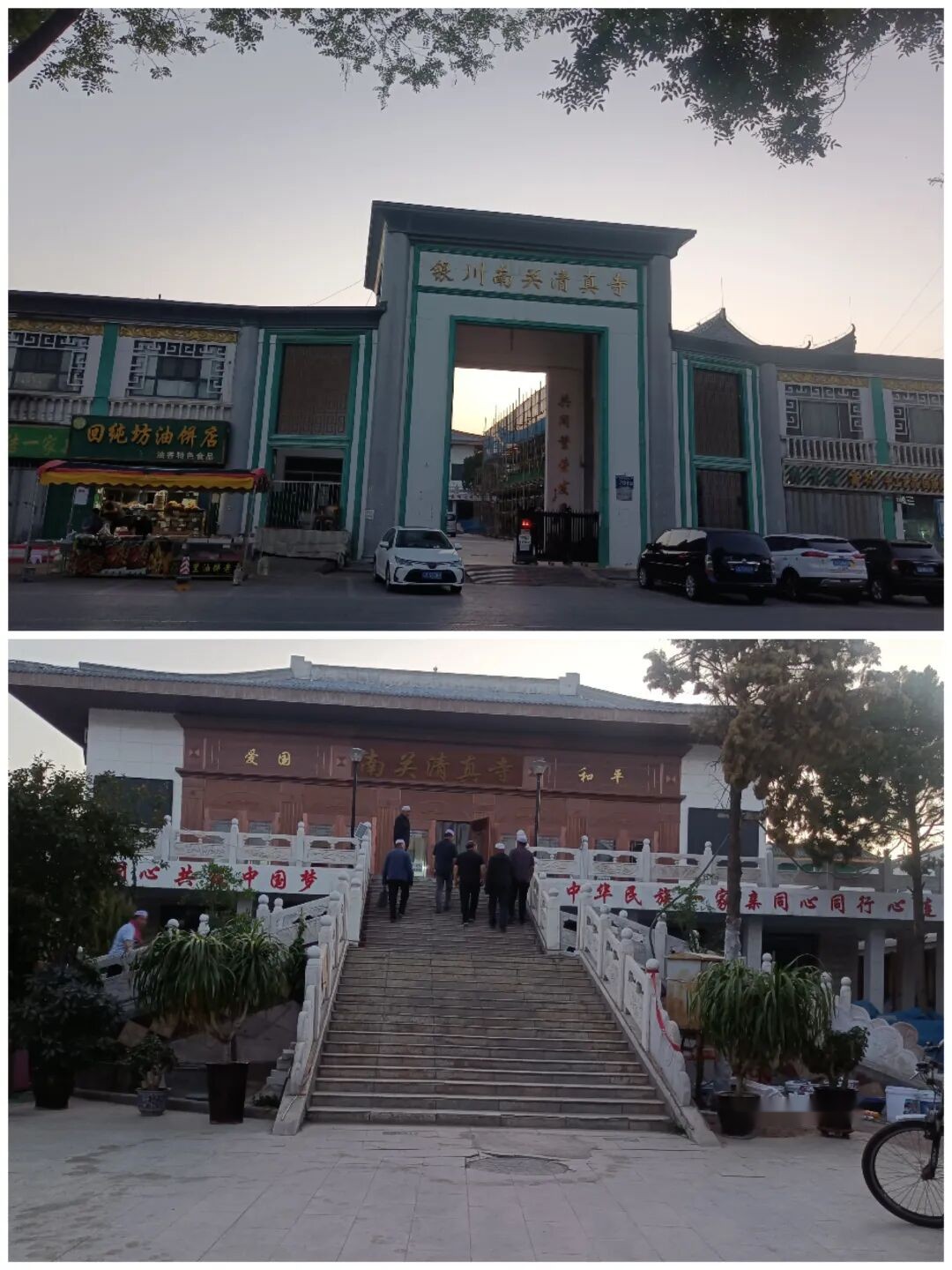
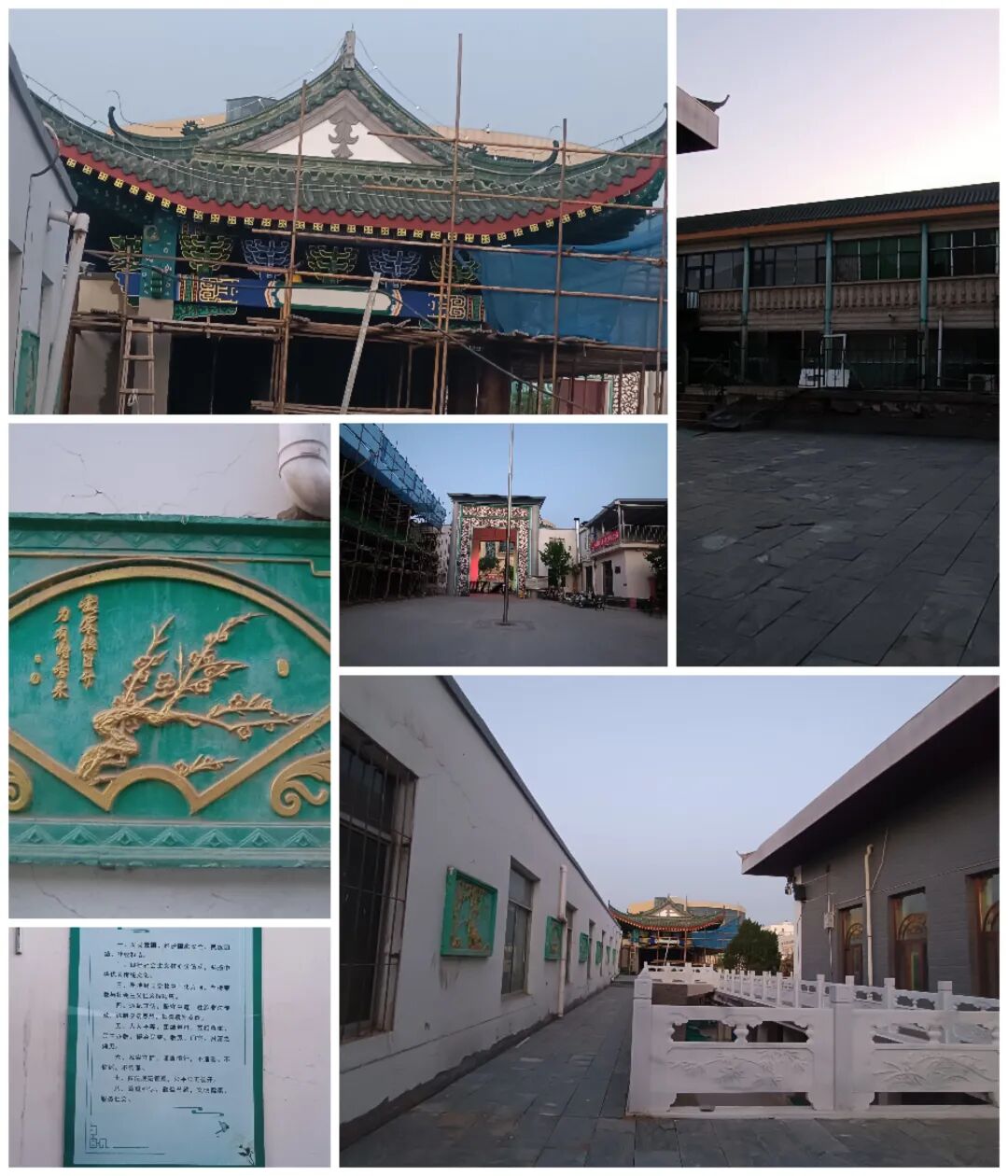
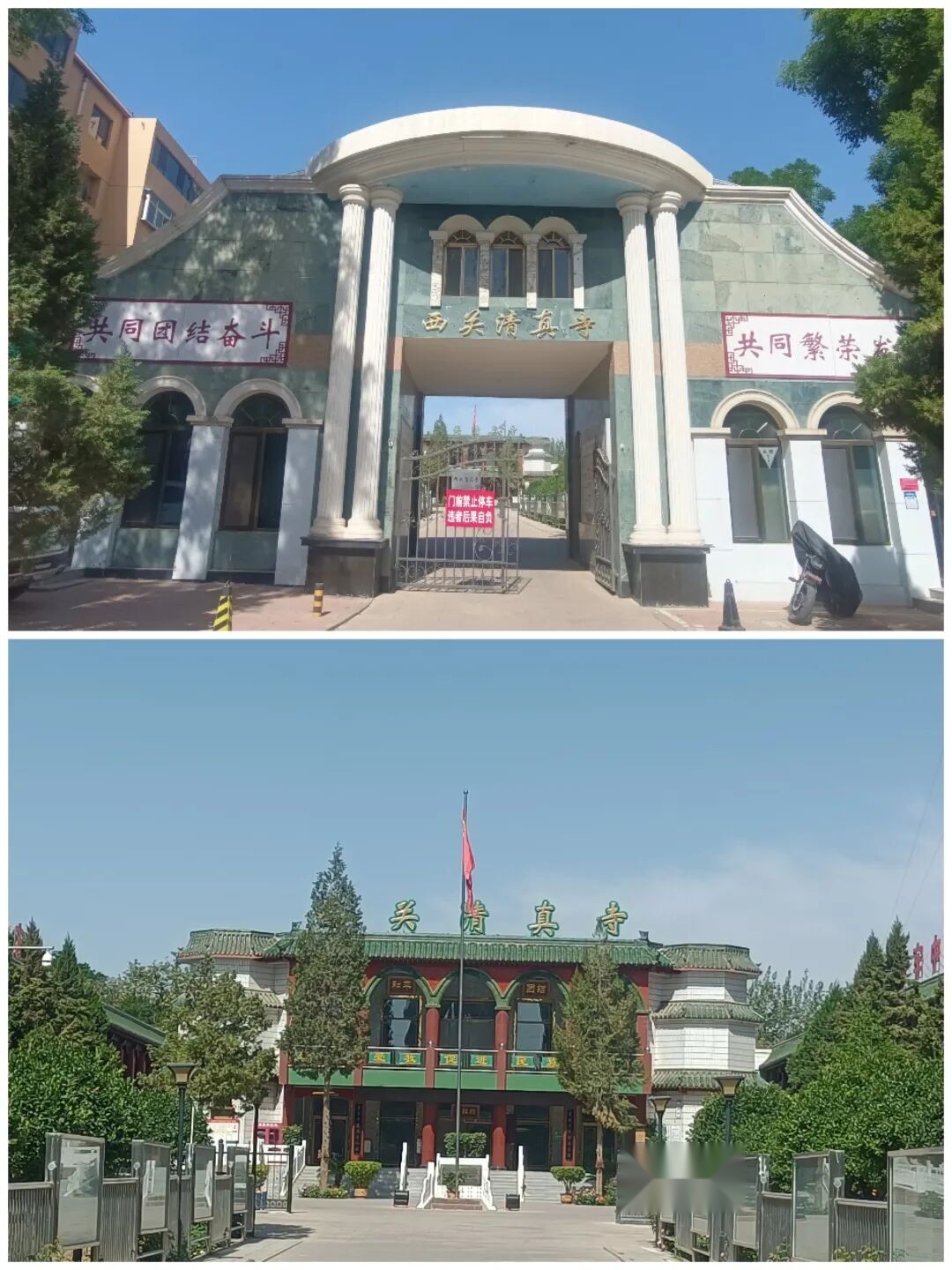
I arrived within minutes, but at first glance, it looked completely different from the videos online. The Nanguan Mosque faces west with its entrance to the east (most mosques east of Mecca, Medina, and Jerusalem share this orientation, meaning worshippers always face the holy sanctuaries). The main entrance is a three-dimensional square structure featuring a porch; the door pillars are painted white with green trim, and the lintel boasts a golden plaque inscribed with "Yinchuan Nanguan Mosque." On both sides of the entrance are rooms resembling a guard station and security office. Right in the center of the courtyard stands a flagpole bearing the national flag. Climbing a double flight of stairs leads to the prayer hall (liubaidian), which is currently closed to visitors. Inside, there is bound to be a mihrab (prayer niche) facing Mecca. The minaret and green crescent-topped spire featured in the videos are no longer visible. The current prayer hall features a traditional Chinese hip-and-gable roof (xieshan style), with Chinese characters painted on the east-facing windows reading "Patriotism" and "Peace," while the middle window simply reads "Nanguan Mosque." Just then, a bearded Muslim man asked me, "Are you here for prayer?" "I’m just visiting," I replied. "You can leave now," the Hui man said coldly. Wearing a white brimless Hui cap and a full beard, he looked quite stern. Just as I was about to say something, he strode into the prayer hall. Turning to look at the sides, I noticed five large characters on the second-floor north wing reading "Faith, Prayer, Fasting, Alms, Pilgrimage" (Shahada, Salah, Sawm, Zakat, Hajj), arranged from east to west across the rooms. On the east side of the second floor, another structure was undergoing renovations, also featuring a traditional Chinese hip-and-gable roof with painted dougong brackets and beamed ceilings.
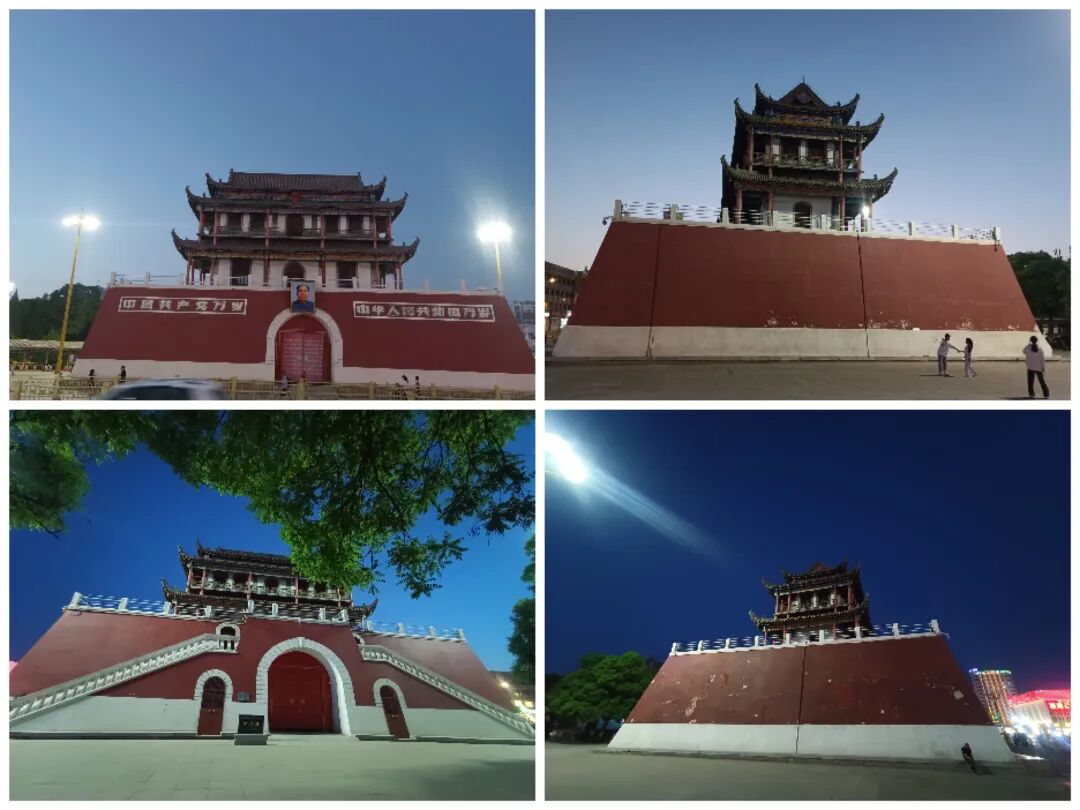
Though it was getting late, the nearby ancient Bell Tower and Yuhuang Pavilion (Jade Emperor Pavilion) were still within walking distance, so I strolled over slowly. By dusk, the gates were locked—I couldn't tell if visitors are allowed to climb up for the view during the day. Within just a few steps, historic architecture from various traditions has been remarkably well-preserved. Truly, you can find a "Shangri-La" anywhere in China.
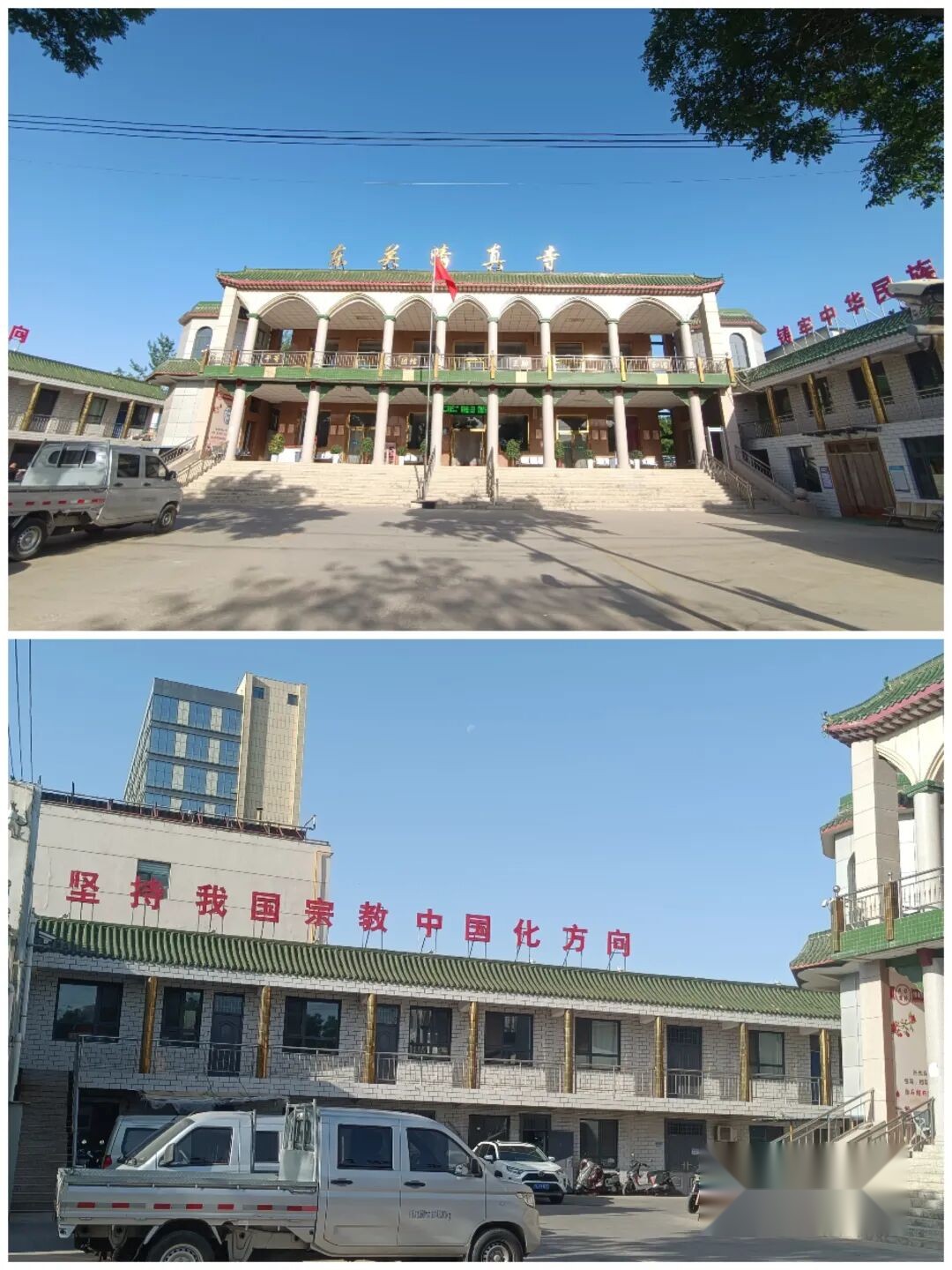
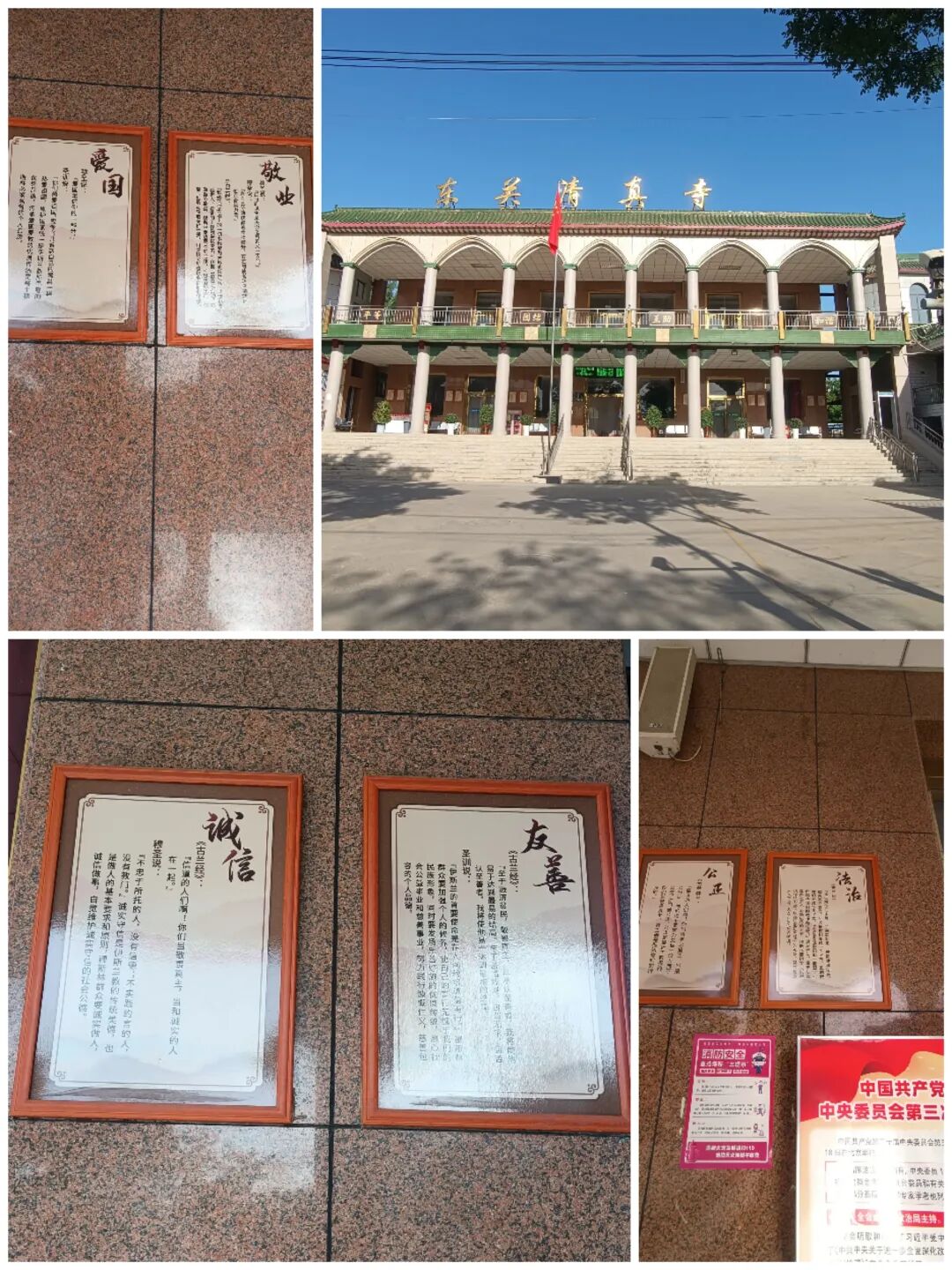
The next morning, I headed to Qinglian Square (formerly known as Crescent Square) to catch a ride, passing by the Dongguan Mosque along the way. The Dongguan Mosque also sits right by the busy street, facing west with its entrance to the east. It features an entrance hall, a courtyard, and a prayer hall. The prayer hall is a two-story building with a traditional Chinese roof; the porch under the eaves is decorated in the style of Islamic domes, and banners hang along the railings from south to north bearing the words "Equality," "Solidarity," "Mutual Aid," and "Harmony." Right in the center of the first floor, a prominent electronic digital display shows the times for the five daily prayers down to the minute.

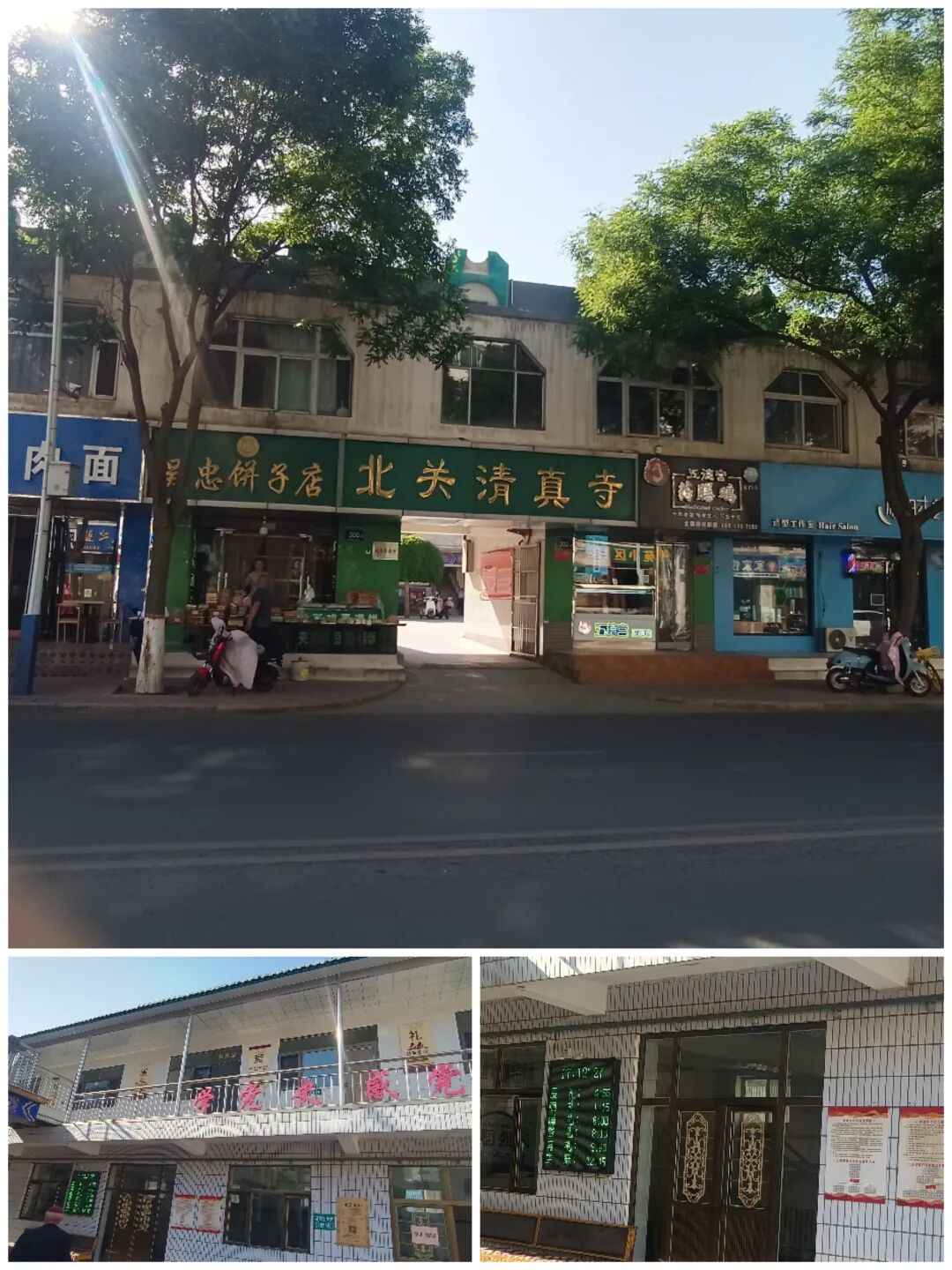
Returning to Crescent Square by dusk, I walked less than 2 kilometers to the Beiguan Mosque. This mosque is also nestled right along a bustling street, with its main entrance facing east and commercial storefronts lining both sides. On either side of the entrance hall were seemingly unmanned guard stations. The prayer hall is a two-story structure with a traditional Chinese-style roof. Electronic signs listed the daily prayers—Fajr, Dhuhr, Asr, Maghrib, and Isha—sequentially down to the minute, with Jumu'ah (Friday congregational prayer) listed at 12:45 PM. Not a single soul was around. I had hoped to ask a few questions, such as: "Since these city mosques are located so close to one another, why are the prayer times different?" or "Why aren't Islamic teachings explained more to non-Muslims?" But since I couldn't find anyone, I had to let it go.
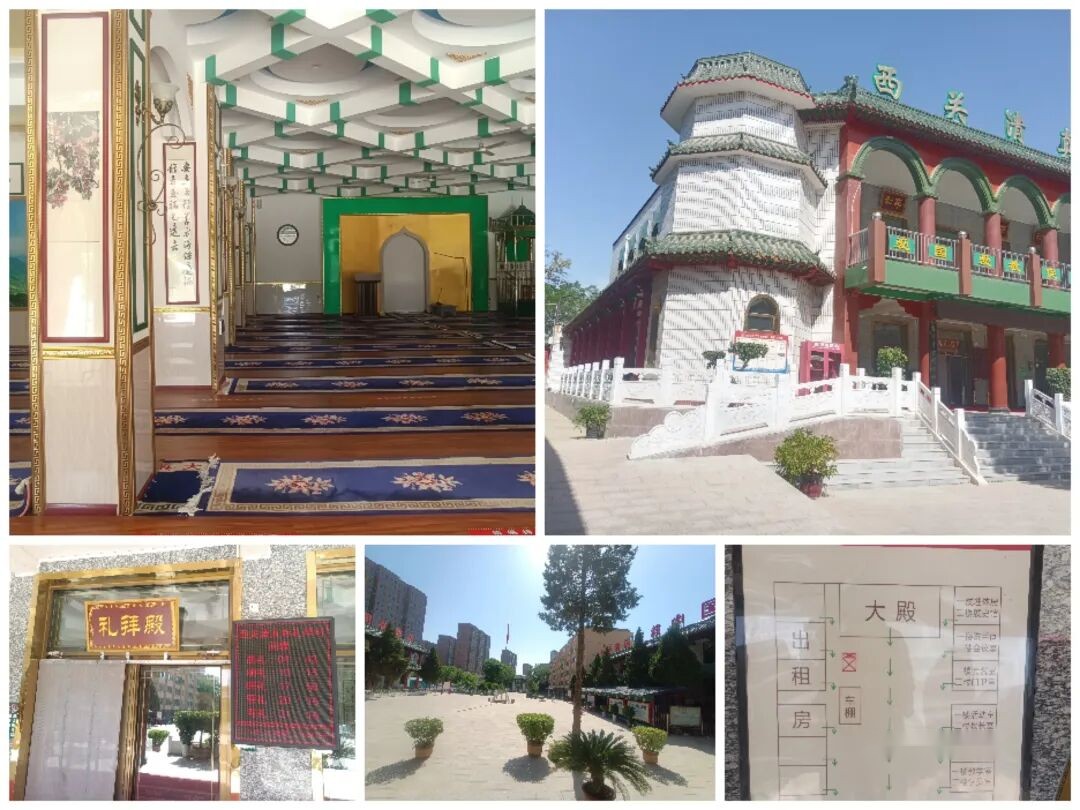
On the following day—my third day in Yinchuan—I took a morning bus to the Xiguan Mosque. The main structure remains the prayer hall, featuring a three-dimensional sign on the roof reading "Xiguan Mosque." A plaque on the first-floor roof reads "Patriotism and Love for Religion, Promoting Ethnic Harmony." The building features a green roof, red pillars, and white walls, creating a very harmonious and comforting aesthetic. The flagpole stands in the center of the courtyard on a two-story high terrace—unlike the other three mosques, where the flagpoles are either placed on flat ground or set atop the roof. Among the four urban mosques, the Xiguan Mosque is by far the neatest and most aesthetically pleasing. While the prayer halls of all four mosques are two-story pseudo-classic buildings, each has its own distinct character. The Xiguan Mosque is the cleanest, with no commercial shops outside the courtyard and no haphazardly parked cars inside. Once again, the courtyard was completely empty. Stepping up to the prayer hall, I peered in through the glass: the interior was completely deserted, with carpets laid out at uniform intervals across the wooden floor, and the mihrab set against the western wall. Like the other three mosques, the sides of the prayer hall house a library, meeting room, kitchen, utility room, and study classrooms.
Online recommendations often point to the Tongxin Great Mosque (Tongxin Mosque) in Wuzhong City and the Najahu Mosque (Najahu Mosque) in Yongning County—both grand in scale and deeply influential—but I couldn't visit them due to time constraints. Still, as the saying goes, "If there is a Peach Blossom Spring in your heart, anywhere can be a realm of water and clouds."
With one mosque for every 800 people in Ningxia, this density is far higher than the proportion of religious sites for the Han Chinese. Religion has existed since ancient times, born alongside communal social life to remind people of the rules they ought to follow. With mosques so densely packed across Ningxia, I couldn't help worrying about ideological rigidity, and I really wanted to ask the Prophet: as eras change, can new teachings be added to the doctrine?
To a certain extent, religion is simply a "set of rules." Broadly speaking, insects, fish, and social animals all have their own "rules." Could we therefore say that these animals also have "gods" of their own, and by extension, their own "religions," since all of these arise from the necessity of order?
Over three days, during four distinct time slots, I visited all four urban mosques in Yinchuan—East, West, North, and South—while mentally picturing Istanbul’s Sultan Ahmed Mosque, Jerusalem’s Dome of the Rock (Omar Mosque), and the Great Mosque of Mecca. I had so many questions and desperately wanted to consult an Imam for some guidance, but alas, the opportunity didn't arise. In the end, after pondering it myself, I concluded that while the mosques differ, the Way is one. Since the Way resides within the heart, why must one pray five times a day? It reminded me of Sun Wukong, the Monkey King, who wore a tight-fitting golden headband throughout his journey to fetch the scriptures, only for it to instantly vanish the moment he attained Buddhahood. Did it truly disappear, or did it become embedded within his heart? And if it embedded itself in his heart, wouldn't that mean the golden headband became even tighter and more inescapable?
I still haven't quite figured it out.
Recorded by Langyue on May 26, 2025
Exploring Yinchuan’s Urban Mosques: Historic Sanctuaries and Hui Muslim Community Memories Amidst the Bustling City
Abstract:
A walking tour of the urban mosques in Yinchuan. Documenting solemn prayer halls and quiet courtyards tucked away amidst bustling commercial streets, exploring the historic evolution of these ancient mosques, and examining their role in serving the daily religious and spiritual lives of local Hui Muslim communities.
Ningxia is home to 2.4 million Hui Muslims and over 3,000 mosques—averaging roughly one mosque for every 800 people, a ratio that is even higher in rural townships.
As Yinchuan is the capital of the Ningxia Hui Autonomous Region, visiting its mosques is an absolute must.
According to online sources, downtown Yinchuan is home to over a dozen mosques, so I mapped out a walking tour of four major ones: the South, East, North, and West mosques (Nanguan, Dongguan, Beiguan, and Xiguan mosques).
The Nanguan Mosque in Yinchuan is one of the oldest and largest mosques in northern China, with historical records dating back to the late Ming dynasty. Originally built in traditional Chinese architectural style, it was torn down during the Cultural Revolution and rebuilt on its original site after 1981. Online videos described the Nanguan Mosque as an architectural masterpiece, a deeply influential landmark, and the largest mosque in the city. The videos showcased its striking Arabic architectural style, complete with a dome-topped minaret bearing a prominent crescent moon emblem and vibrant glazed tiles. It can hold up to 1,300 worshippers at once and remains an open tourist attraction.
After finishing the Yinchuan Marathon, I stayed at a chain hotel in the South Gate (Nanguan) neighborhood, just 600 meters from the Nanguan Mosque. In the afternoon, once the temperature cooled down a bit, I set off on foot.
I arrived within minutes, but at first glance, it looked completely different from the videos online. The Nanguan Mosque faces west with its entrance to the east (most mosques east of Mecca, Medina, and Jerusalem share this orientation, meaning worshippers always face the holy sanctuaries). The main entrance is a three-dimensional square structure featuring a porch; the door pillars are painted white with green trim, and the lintel boasts a golden plaque inscribed with "Yinchuan Nanguan Mosque." On both sides of the entrance are rooms resembling a guard station and security office. Right in the center of the courtyard stands a flagpole bearing the national flag. Climbing a double flight of stairs leads to the prayer hall (liubaidian), which is currently closed to visitors. Inside, there is bound to be a mihrab (prayer niche) facing Mecca. The minaret and green crescent-topped spire featured in the videos are no longer visible. The current prayer hall features a traditional Chinese hip-and-gable roof (xieshan style), with Chinese characters painted on the east-facing windows reading "Patriotism" and "Peace," while the middle window simply reads "Nanguan Mosque." Just then, a bearded Muslim man asked me, "Are you here for prayer?" "I’m just visiting," I replied. "You can leave now," the Hui man said coldly. Wearing a white brimless Hui cap and a full beard, he looked quite stern. Just as I was about to say something, he strode into the prayer hall. Turning to look at the sides, I noticed five large characters on the second-floor north wing reading "Faith, Prayer, Fasting, Alms, Pilgrimage" (Shahada, Salah, Sawm, Zakat, Hajj), arranged from east to west across the rooms. On the east side of the second floor, another structure was undergoing renovations, also featuring a traditional Chinese hip-and-gable roof with painted dougong brackets and beamed ceilings.
Though it was getting late, the nearby ancient Bell Tower and Yuhuang Pavilion (Jade Emperor Pavilion) were still within walking distance, so I strolled over slowly. By dusk, the gates were locked—I couldn't tell if visitors are allowed to climb up for the view during the day. Within just a few steps, historic architecture from various traditions has been remarkably well-preserved. Truly, you can find a "Shangri-La" anywhere in China.
The next morning, I headed to Qinglian Square (formerly known as Crescent Square) to catch a ride, passing by the Dongguan Mosque along the way. The Dongguan Mosque also sits right by the busy street, facing west with its entrance to the east. It features an entrance hall, a courtyard, and a prayer hall. The prayer hall is a two-story building with a traditional Chinese roof; the porch under the eaves is decorated in the style of Islamic domes, and banners hang along the railings from south to north bearing the words "Equality," "Solidarity," "Mutual Aid," and "Harmony." Right in the center of the first floor, a prominent electronic digital display shows the times for the five daily prayers down to the minute.
Returning to Crescent Square by dusk, I walked less than 2 kilometers to the Beiguan Mosque. This mosque is also nestled right along a bustling street, with its main entrance facing east and commercial storefronts lining both sides. On either side of the entrance hall were seemingly unmanned guard stations. The prayer hall is a two-story structure with a traditional Chinese-style roof. Electronic signs listed the daily prayers—Fajr, Dhuhr, Asr, Maghrib, and Isha—sequentially down to the minute, with Jumu'ah (Friday congregational prayer) listed at 12:45 PM. Not a single soul was around. I had hoped to ask a few questions, such as: "Since these city mosques are located so close to one another, why are the prayer times different?" or "Why aren't Islamic teachings explained more to non-Muslims?" But since I couldn't find anyone, I had to let it go.
On the following day—my third day in Yinchuan—I took a morning bus to the Xiguan Mosque. The main structure remains the prayer hall, featuring a three-dimensional sign on the roof reading "Xiguan Mosque." A plaque on the first-floor roof reads "Patriotism and Love for Religion, Promoting Ethnic Harmony." The building features a green roof, red pillars, and white walls, creating a very harmonious and comforting aesthetic. The flagpole stands in the center of the courtyard on a two-story high terrace—unlike the other three mosques, where the flagpoles are either placed on flat ground or set atop the roof. Among the four urban mosques, the Xiguan Mosque is by far the neatest and most aesthetically pleasing. While the prayer halls of all four mosques are two-story pseudo-classic buildings, each has its own distinct character. The Xiguan Mosque is the cleanest, with no commercial shops outside the courtyard and no haphazardly parked cars inside. Once again, the courtyard was completely empty. Stepping up to the prayer hall, I peered in through the glass: the interior was completely deserted, with carpets laid out at uniform intervals across the wooden floor, and the mihrab set against the western wall. Like the other three mosques, the sides of the prayer hall house a library, meeting room, kitchen, utility room, and study classrooms.
Online recommendations often point to the Tongxin Great Mosque (Tongxin Mosque) in Wuzhong City and the Najahu Mosque (Najahu Mosque) in Yongning County—both grand in scale and deeply influential—but I couldn't visit them due to time constraints. Still, as the saying goes, "If there is a Peach Blossom Spring in your heart, anywhere can be a realm of water and clouds."
With one mosque for every 800 people in Ningxia, this density is far higher than the proportion of religious sites for the Han Chinese. Religion has existed since ancient times, born alongside communal social life to remind people of the rules they ought to follow. With mosques so densely packed across Ningxia, I couldn't help worrying about ideological rigidity, and I really wanted to ask the Prophet: as eras change, can new teachings be added to the doctrine?
To a certain extent, religion is simply a "set of rules." Broadly speaking, insects, fish, and social animals all have their own "rules." Could we therefore say that these animals also have "gods" of their own, and by extension, their own "religions," since all of these arise from the necessity of order?
Over three days, during four distinct time slots, I visited all four urban mosques in Yinchuan—East, West, North, and South—while mentally picturing Istanbul’s Sultan Ahmed Mosque, Jerusalem’s Dome of the Rock (Omar Mosque), and the Great Mosque of Mecca. I had so many questions and desperately wanted to consult an Imam for some guidance, but alas, the opportunity didn't arise. In the end, after pondering it myself, I concluded that while the mosques differ, the Way is one. Since the Way resides within the heart, why must one pray five times a day? It reminded me of Sun Wukong, the Monkey King, who wore a tight-fitting golden headband throughout his journey to fetch the scriptures, only for it to instantly vanish the moment he attained Buddhahood. Did it truly disappear, or did it become embedded within his heart? And if it embedded itself in his heart, wouldn't that mean the golden headband became even tighter and more inescapable?
I still haven't quite figured it out.
Recorded by Langyue on May 26, 2025
