

Halal Travel China
Exploring Yinchuan’s Historic Mosques: A Cultural Journey Through Ningxia’s Hui Muslim Communities
Articles • Hasan09 posted the article • 0 comments • 3 views • 1 hours ago
Exploring Yinchuan’s Urban Mosques: Historic Sanctuaries and Hui Muslim Community Memories Amidst the Bustling City
Abstract:
A walking tour of the urban mosques in Yinchuan. Documenting solemn prayer halls and quiet courtyards tucked away amidst bustling commercial streets, exploring the historic evolution of these ancient mosques, and examining their role in serving the daily religious and spiritual lives of local Hui Muslim communities.
Ningxia is home to 2.4 million Hui Muslims and over 3,000 mosques—averaging roughly one mosque for every 800 people, a ratio that is even higher in rural townships.
As Yinchuan is the capital of the Ningxia Hui Autonomous Region, visiting its mosques is an absolute must.
According to online sources, downtown Yinchuan is home to over a dozen mosques, so I mapped out a walking tour of four major ones: the South, East, North, and West mosques (Nanguan, Dongguan, Beiguan, and Xiguan mosques).
The Nanguan Mosque in Yinchuan is one of the oldest and largest mosques in northern China, with historical records dating back to the late Ming dynasty. Originally built in traditional Chinese architectural style, it was torn down during the Cultural Revolution and rebuilt on its original site after 1981. Online videos described the Nanguan Mosque as an architectural masterpiece, a deeply influential landmark, and the largest mosque in the city. The videos showcased its striking Arabic architectural style, complete with a dome-topped minaret bearing a prominent crescent moon emblem and vibrant glazed tiles. It can hold up to 1,300 worshippers at once and remains an open tourist attraction.
After finishing the Yinchuan Marathon, I stayed at a chain hotel in the South Gate (Nanguan) neighborhood, just 600 meters from the Nanguan Mosque. In the afternoon, once the temperature cooled down a bit, I set off on foot.
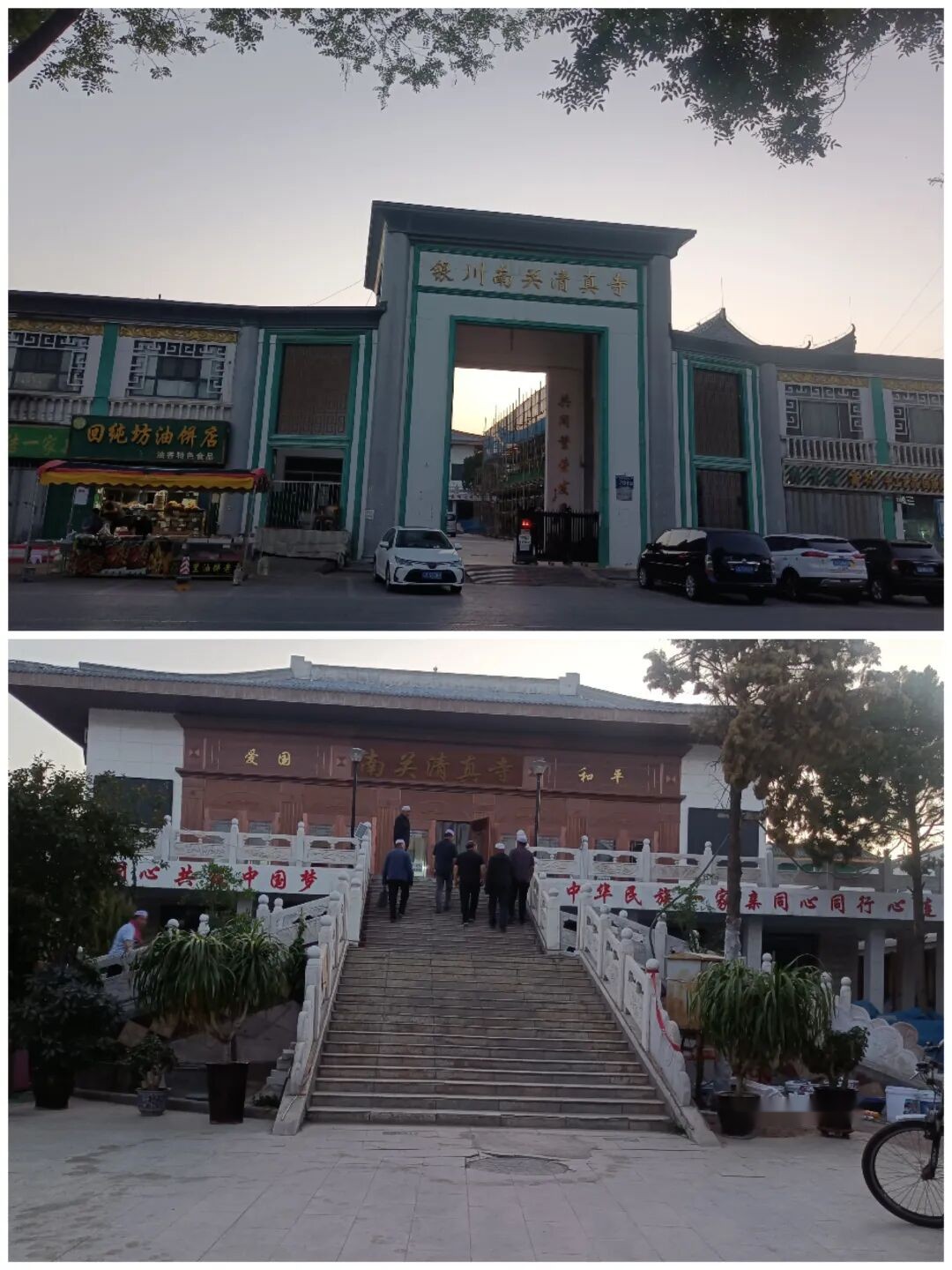
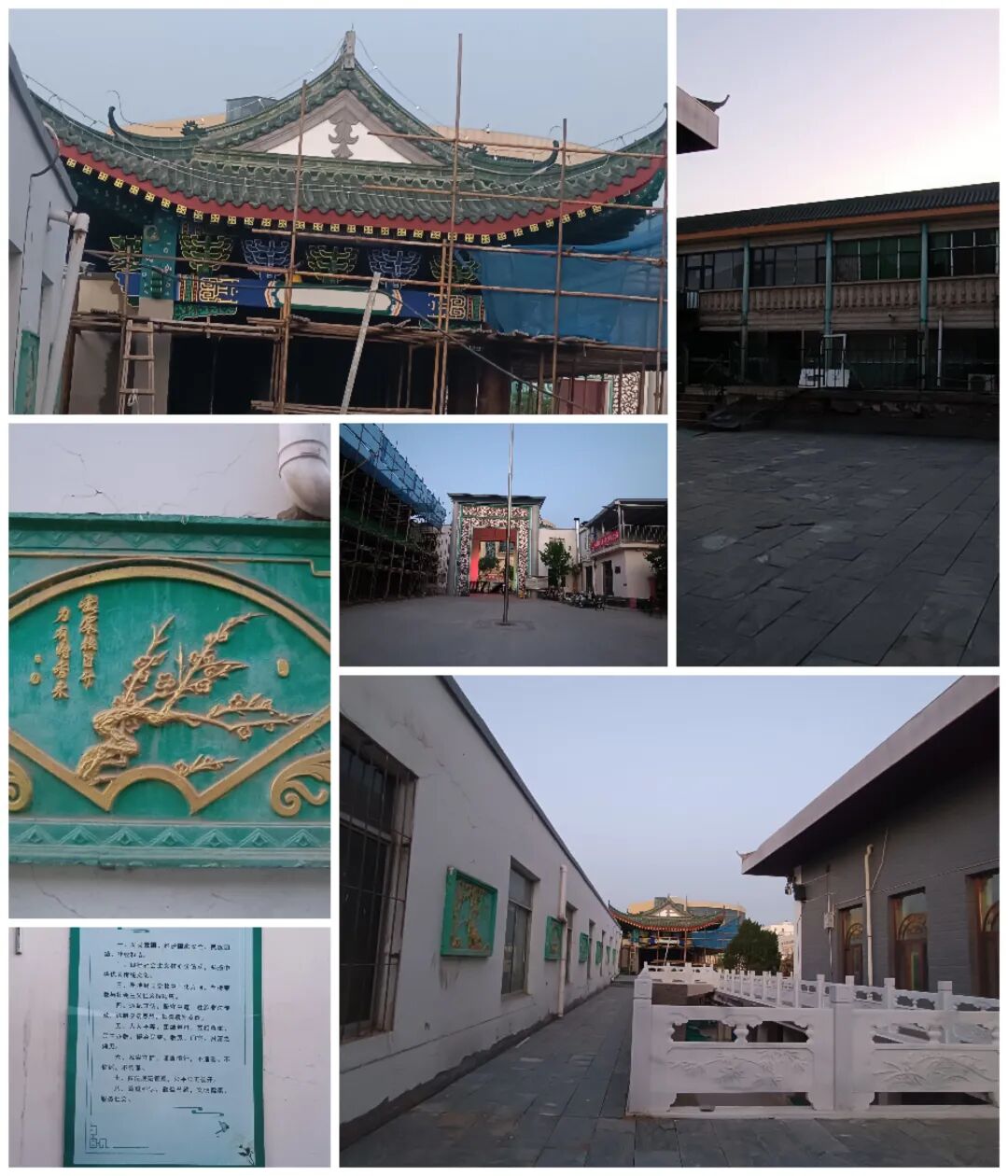
I arrived within minutes, but at first glance, it looked completely different from the videos online. The Nanguan Mosque faces west with its entrance to the east (most mosques east of Mecca, Medina, and Jerusalem share this orientation, meaning worshippers always face the holy sanctuaries). The main entrance is a three-dimensional square structure featuring a porch; the door pillars are painted white with green trim, and the lintel boasts a golden plaque inscribed with "Yinchuan Nanguan Mosque." On both sides of the entrance are rooms resembling a guard station and security office. Right in the center of the courtyard stands a flagpole bearing the national flag. Climbing a double flight of stairs leads to the prayer hall (liubaidian), which is currently closed to visitors. Inside, there is bound to be a mihrab (prayer niche) facing Mecca. The minaret and green crescent-topped spire featured in the videos are no longer visible. The current prayer hall features a traditional Chinese hip-and-gable roof (xieshan style), with Chinese characters painted on the east-facing windows reading "Patriotism" and "Peace," while the middle window simply reads "Nanguan Mosque." Just then, a bearded Muslim man asked me, "Are you here for prayer?" "I’m just visiting," I replied. "You can leave now," the Hui man said coldly. Wearing a white brimless Hui cap and a full beard, he looked quite stern. Just as I was about to say something, he strode into the prayer hall. Turning to look at the sides, I noticed five large characters on the second-floor north wing reading "Faith, Prayer, Fasting, Alms, Pilgrimage" (Shahada, Salah, Sawm, Zakat, Hajj), arranged from east to west across the rooms. On the east side of the second floor, another structure was undergoing renovations, also featuring a traditional Chinese hip-and-gable roof with painted dougong brackets and beamed ceilings.
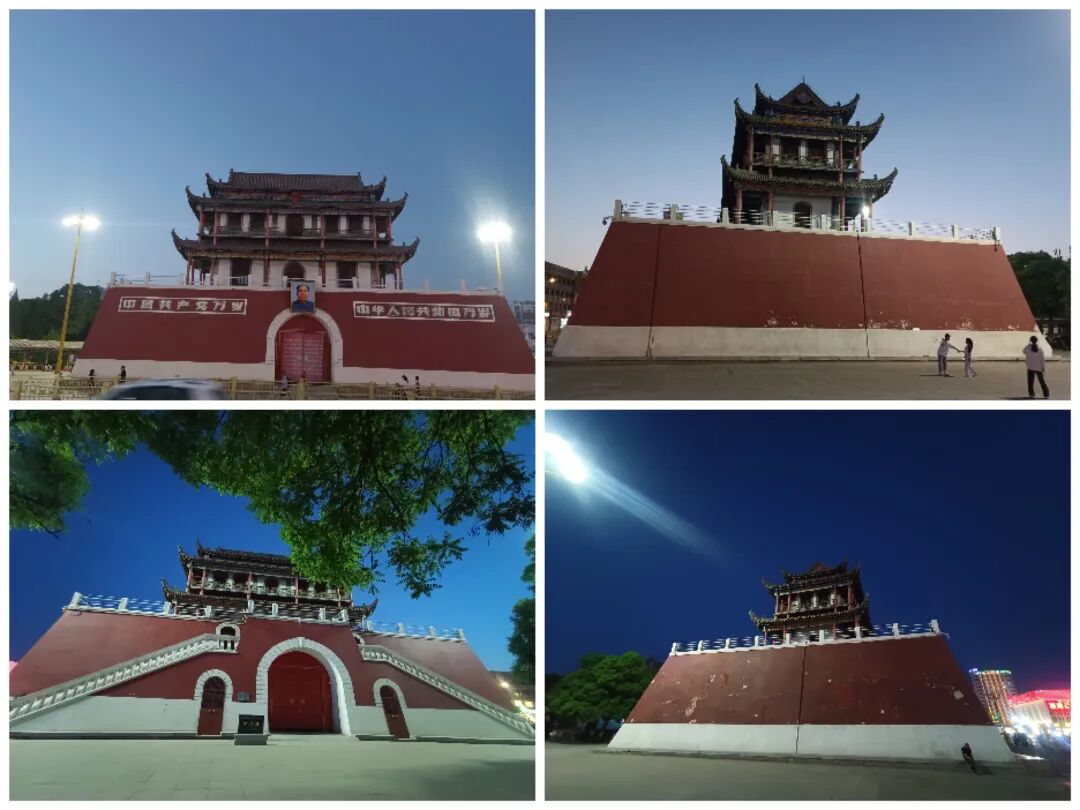
Though it was getting late, the nearby ancient Bell Tower and Yuhuang Pavilion (Jade Emperor Pavilion) were still within walking distance, so I strolled over slowly. By dusk, the gates were locked—I couldn't tell if visitors are allowed to climb up for the view during the day. Within just a few steps, historic architecture from various traditions has been remarkably well-preserved. Truly, you can find a "Shangri-La" anywhere in China.
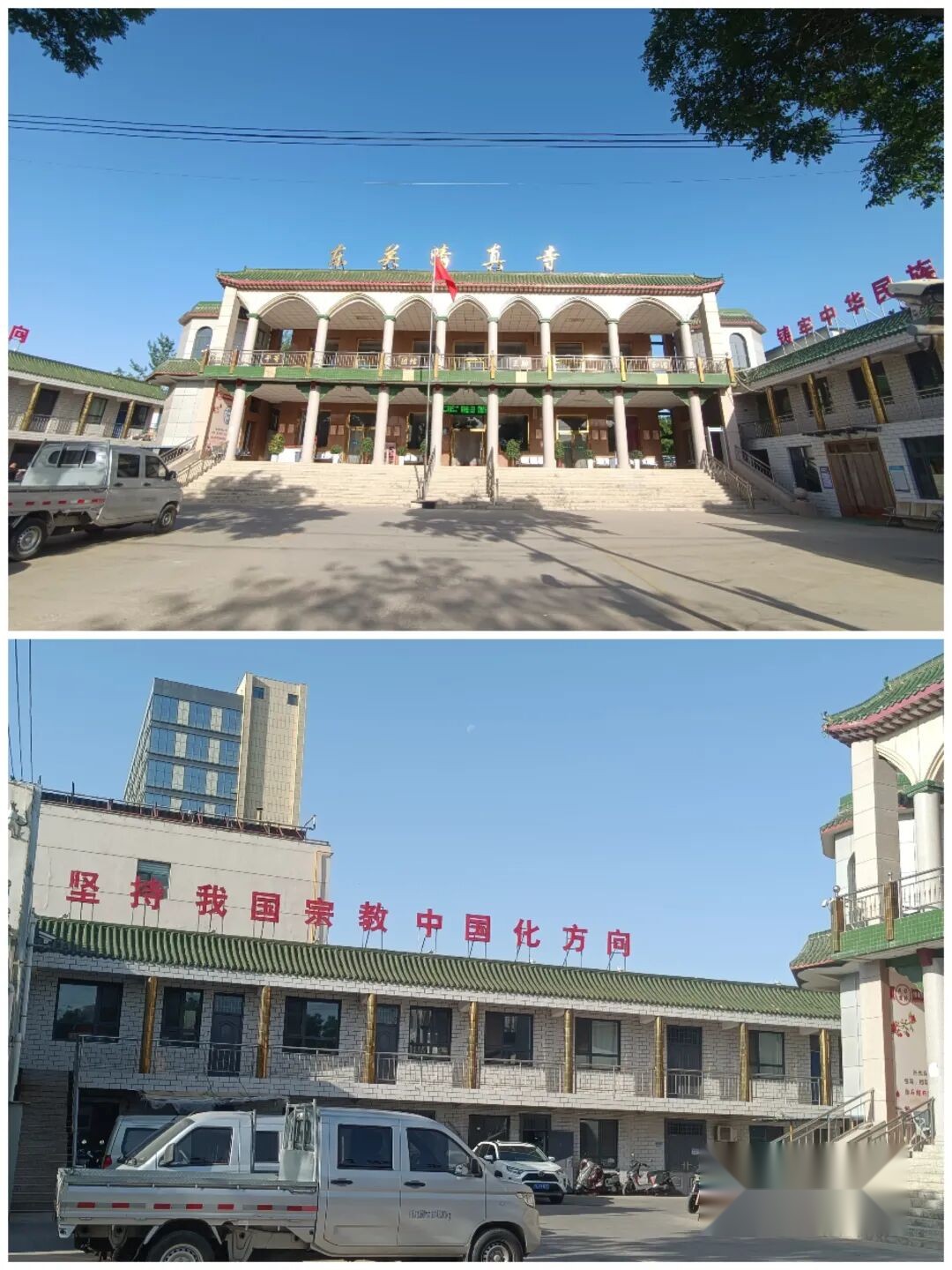
The next morning, I headed to Qinglian Square (formerly known as Crescent Square) to catch a ride, passing by the Dongguan Mosque along the way. The Dongguan Mosque also sits right by the busy street, facing west with its entrance to the east. It features an entrance hall, a courtyard, and a prayer hall. The prayer hall is a two-story building with a traditional Chinese roof; the porch under the eaves is decorated in the style of Islamic domes, and banners hang along the railings from south to north bearing the words "Equality," "Solidarity," "Mutual Aid," and "Harmony." Right in the center of the first floor, a prominent electronic digital display shows the times for the five daily prayers down to the minute.
Returning to Crescent Square by dusk, I walked less than 2 kilometers to the Beiguan Mosque. This mosque is also nestled right along a bustling street, with its main entrance facing east and commercial storefronts lining both sides. On either side of the entrance hall were seemingly unmanned guard stations. The prayer hall is a two-story structure with a traditional Chinese-style roof. Electronic signs listed the daily prayers—Fajr, Dhuhr, Asr, Maghrib, and Isha—sequentially down to the minute, with Jumu'ah (Friday congregational prayer) listed at 12:45 PM. Not a single soul was around. I had hoped to ask a few questions, such as: "Since these city mosques are located so close to one another, why are the prayer times different?" or "Why aren't Islamic teachings explained more to non-Muslims?" But since I couldn't find anyone, I had to let it go.
On the following day—my third day in Yinchuan—I took a morning bus to the Xiguan Mosque. The main structure remains the prayer hall, featuring a three-dimensional sign on the roof reading "Xiguan Mosque." A plaque on the first-floor roof reads "Patriotism and Love for Religion, Promoting Ethnic Harmony." The building features a green roof, red pillars, and white walls, creating a very harmonious and comforting aesthetic. The flagpole stands in the center of the courtyard on a two-story high terrace—unlike the other three mosques, where the flagpoles are either placed on flat ground or set atop the roof. Among the four urban mosques, the Xiguan Mosque is by far the neatest and most aesthetically pleasing. While the prayer halls of all four mosques are two-story pseudo-classic buildings, each has its own distinct character. The Xiguan Mosque is the cleanest, with no commercial shops outside the courtyard and no haphazardly parked cars inside. Once again, the courtyard was completely empty. Stepping up to the prayer hall, I peered in through the glass: the interior was completely deserted, with carpets laid out at uniform intervals across the wooden floor, and the mihrab set against the western wall. Like the other three mosques, the sides of the prayer hall house a library, meeting room, kitchen, utility room, and study classrooms.
Online recommendations often point to the Tongxin Great Mosque (Tongxin Mosque) in Wuzhong City and the Najahu Mosque (Najahu Mosque) in Yongning County—both grand in scale and deeply influential—but I couldn't visit them due to time constraints. Still, as the saying goes, "If there is a Peach Blossom Spring in your heart, anywhere can be a realm of water and clouds."
With one mosque for every 800 people in Ningxia, this density is far higher than the proportion of religious sites for the Han Chinese. Religion has existed since ancient times, born alongside communal social life to remind people of the rules they ought to follow. With mosques so densely packed across Ningxia, I couldn't help worrying about ideological rigidity, and I really wanted to ask the Prophet: as eras change, can new teachings be added to the doctrine?
To a certain extent, religion is simply a "set of rules." Broadly speaking, insects, fish, and social animals all have their own "rules." Could we therefore say that these animals also have "gods" of their own, and by extension, their own "religions," since all of these arise from the necessity of order?
Over three days, during four distinct time slots, I visited all four urban mosques in Yinchuan—East, West, North, and South—while mentally picturing Istanbul’s Sultan Ahmed Mosque, Jerusalem’s Dome of the Rock (Omar Mosque), and the Great Mosque of Mecca. I had so many questions and desperately wanted to consult an Imam for some guidance, but alas, the opportunity didn't arise. In the end, after pondering it myself, I concluded that while the mosques differ, the Way is one. Since the Way resides within the heart, why must one pray five times a day? It reminded me of Sun Wukong, the Monkey King, who wore a tight-fitting golden headband throughout his journey to fetch the scriptures, only for it to instantly vanish the moment he attained Buddhahood. Did it truly disappear, or did it become embedded within his heart? And if it embedded itself in his heart, wouldn't that mean the golden headband became even tighter and more inescapable?
I still haven't quite figured it out.
Recorded by Langyue on May 26, 2025 view all
Exploring Yinchuan’s Urban Mosques: Historic Sanctuaries and Hui Muslim Community Memories Amidst the Bustling City
Abstract:
A walking tour of the urban mosques in Yinchuan. Documenting solemn prayer halls and quiet courtyards tucked away amidst bustling commercial streets, exploring the historic evolution of these ancient mosques, and examining their role in serving the daily religious and spiritual lives of local Hui Muslim communities.
Ningxia is home to 2.4 million Hui Muslims and over 3,000 mosques—averaging roughly one mosque for every 800 people, a ratio that is even higher in rural townships.

As Yinchuan is the capital of the Ningxia Hui Autonomous Region, visiting its mosques is an absolute must.
According to online sources, downtown Yinchuan is home to over a dozen mosques, so I mapped out a walking tour of four major ones: the South, East, North, and West mosques (Nanguan, Dongguan, Beiguan, and Xiguan mosques).
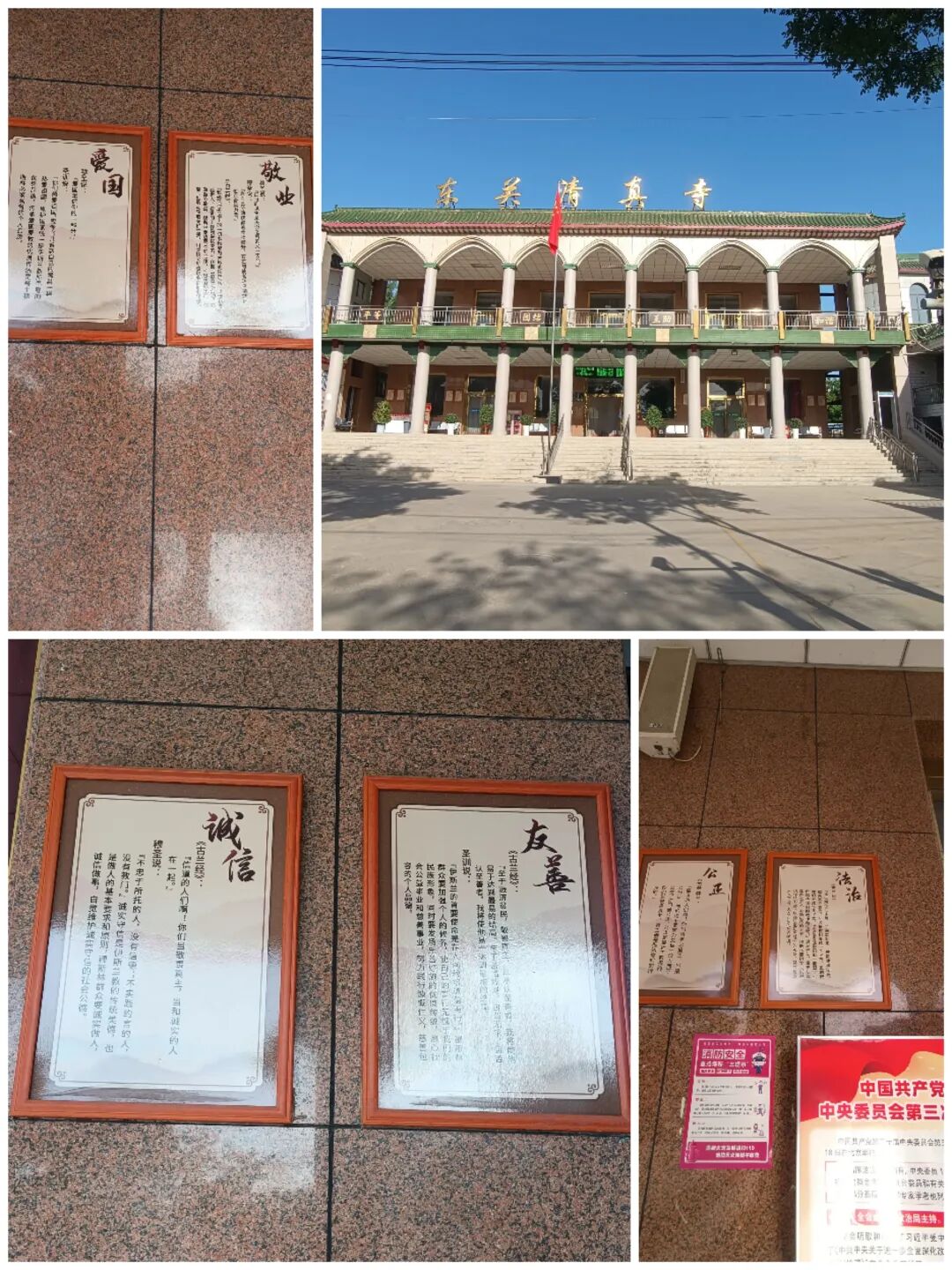
The Nanguan Mosque in Yinchuan is one of the oldest and largest mosques in northern China, with historical records dating back to the late Ming dynasty. Originally built in traditional Chinese architectural style, it was torn down during the Cultural Revolution and rebuilt on its original site after 1981. Online videos described the Nanguan Mosque as an architectural masterpiece, a deeply influential landmark, and the largest mosque in the city. The videos showcased its striking Arabic architectural style, complete with a dome-topped minaret bearing a prominent crescent moon emblem and vibrant glazed tiles. It can hold up to 1,300 worshippers at once and remains an open tourist attraction.

After finishing the Yinchuan Marathon, I stayed at a chain hotel in the South Gate (Nanguan) neighborhood, just 600 meters from the Nanguan Mosque. In the afternoon, once the temperature cooled down a bit, I set off on foot.
I arrived within minutes, but at first glance, it looked completely different from the videos online. The Nanguan Mosque faces west with its entrance to the east (most mosques east of Mecca, Medina, and Jerusalem share this orientation, meaning worshippers always face the holy sanctuaries). The main entrance is a three-dimensional square structure featuring a porch; the door pillars are painted white with green trim, and the lintel boasts a golden plaque inscribed with "Yinchuan Nanguan Mosque." On both sides of the entrance are rooms resembling a guard station and security office. Right in the center of the courtyard stands a flagpole bearing the national flag. Climbing a double flight of stairs leads to the prayer hall (liubaidian), which is currently closed to visitors. Inside, there is bound to be a mihrab (prayer niche) facing Mecca. The minaret and green crescent-topped spire featured in the videos are no longer visible. The current prayer hall features a traditional Chinese hip-and-gable roof (xieshan style), with Chinese characters painted on the east-facing windows reading "Patriotism" and "Peace," while the middle window simply reads "Nanguan Mosque." Just then, a bearded Muslim man asked me, "Are you here for prayer?" "I’m just visiting," I replied. "You can leave now," the Hui man said coldly. Wearing a white brimless Hui cap and a full beard, he looked quite stern. Just as I was about to say something, he strode into the prayer hall. Turning to look at the sides, I noticed five large characters on the second-floor north wing reading "Faith, Prayer, Fasting, Alms, Pilgrimage" (Shahada, Salah, Sawm, Zakat, Hajj), arranged from east to west across the rooms. On the east side of the second floor, another structure was undergoing renovations, also featuring a traditional Chinese hip-and-gable roof with painted dougong brackets and beamed ceilings.
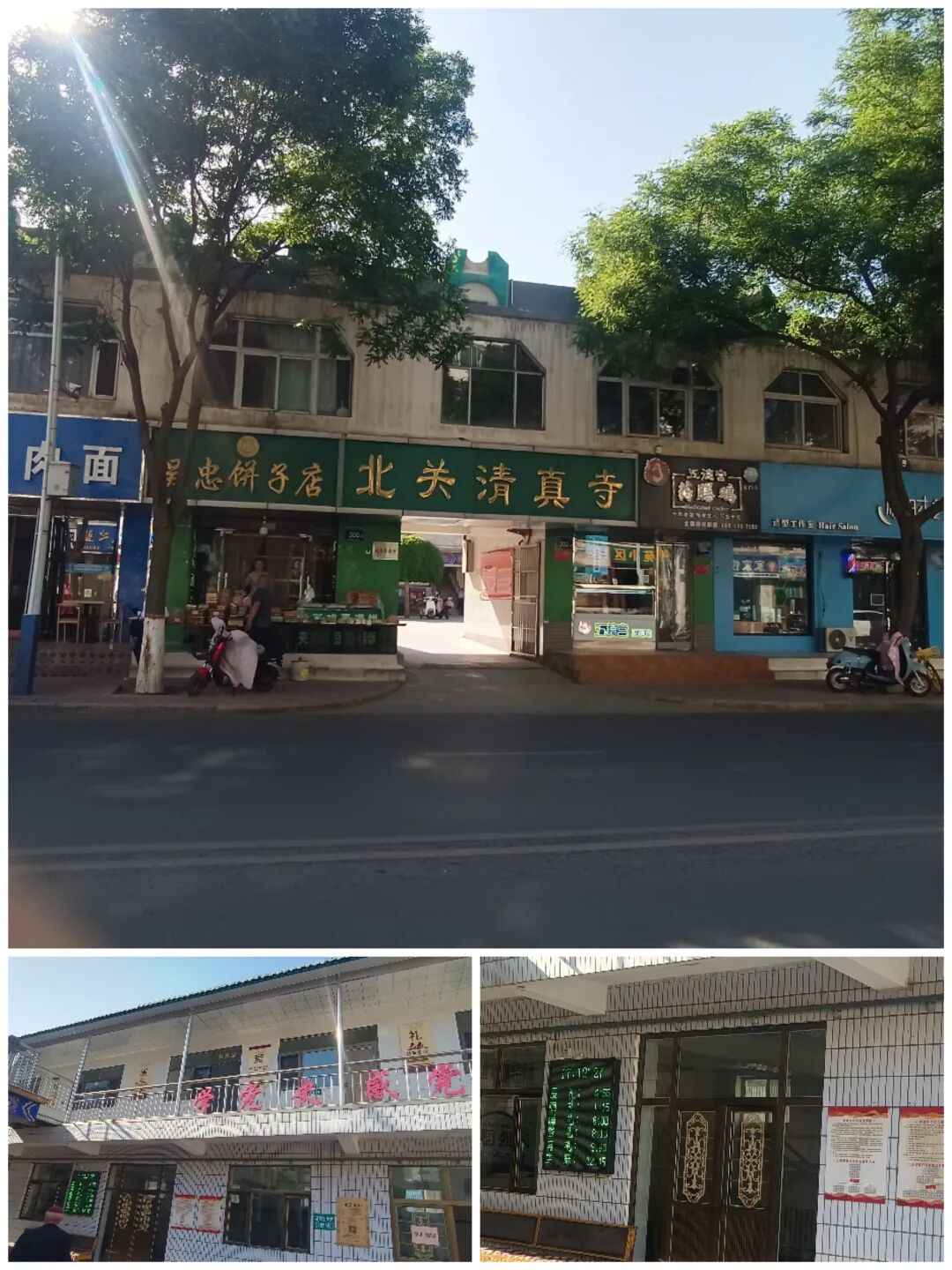
Though it was getting late, the nearby ancient Bell Tower and Yuhuang Pavilion (Jade Emperor Pavilion) were still within walking distance, so I strolled over slowly. By dusk, the gates were locked—I couldn't tell if visitors are allowed to climb up for the view during the day. Within just a few steps, historic architecture from various traditions has been remarkably well-preserved. Truly, you can find a "Shangri-La" anywhere in China.
The next morning, I headed to Qinglian Square (formerly known as Crescent Square) to catch a ride, passing by the Dongguan Mosque along the way. The Dongguan Mosque also sits right by the busy street, facing west with its entrance to the east. It features an entrance hall, a courtyard, and a prayer hall. The prayer hall is a two-story building with a traditional Chinese roof; the porch under the eaves is decorated in the style of Islamic domes, and banners hang along the railings from south to north bearing the words "Equality," "Solidarity," "Mutual Aid," and "Harmony." Right in the center of the first floor, a prominent electronic digital display shows the times for the five daily prayers down to the minute.

Returning to Crescent Square by dusk, I walked less than 2 kilometers to the Beiguan Mosque. This mosque is also nestled right along a bustling street, with its main entrance facing east and commercial storefronts lining both sides. On either side of the entrance hall were seemingly unmanned guard stations. The prayer hall is a two-story structure with a traditional Chinese-style roof. Electronic signs listed the daily prayers—Fajr, Dhuhr, Asr, Maghrib, and Isha—sequentially down to the minute, with Jumu'ah (Friday congregational prayer) listed at 12:45 PM. Not a single soul was around. I had hoped to ask a few questions, such as: "Since these city mosques are located so close to one another, why are the prayer times different?" or "Why aren't Islamic teachings explained more to non-Muslims?" But since I couldn't find anyone, I had to let it go.
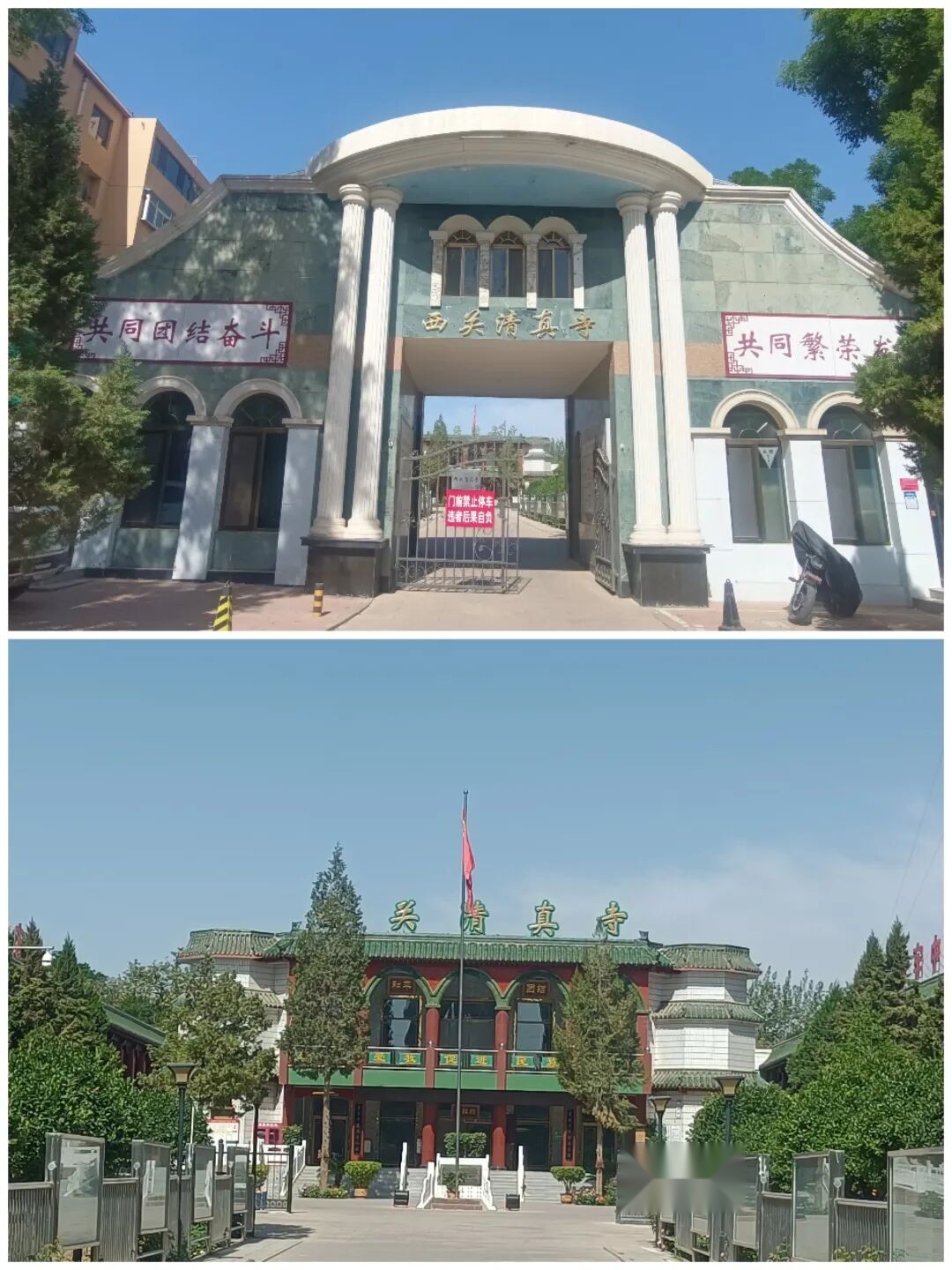
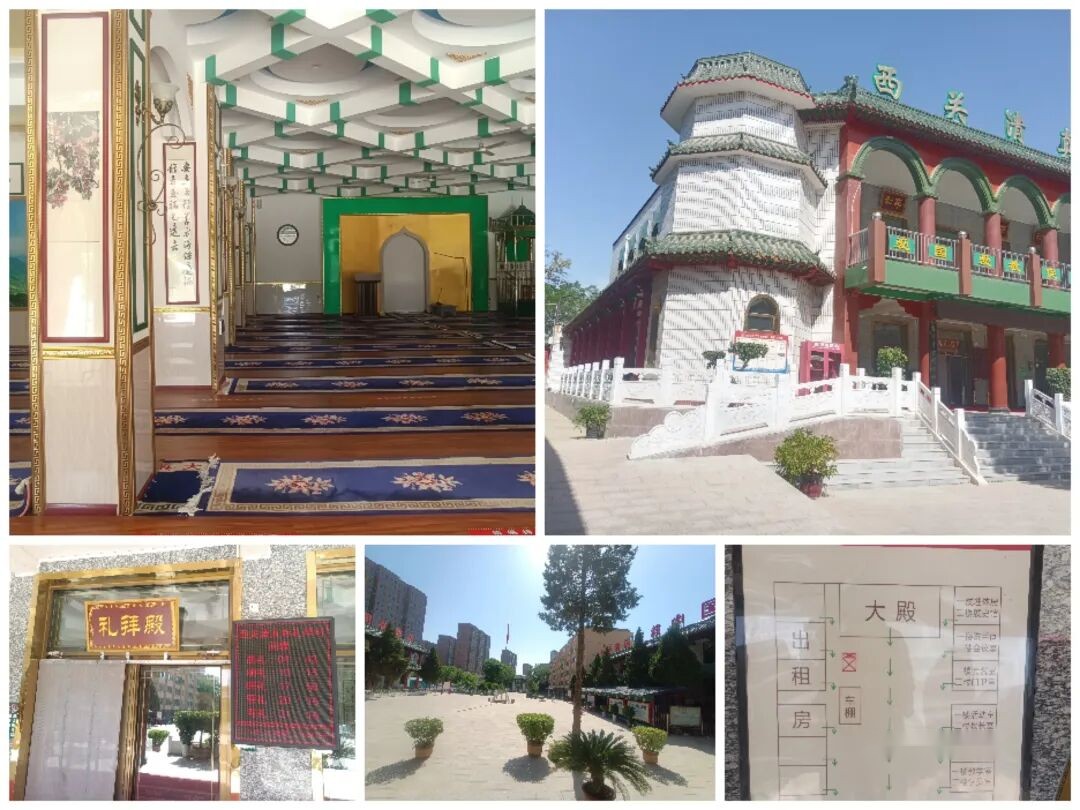
On the following day—my third day in Yinchuan—I took a morning bus to the Xiguan Mosque. The main structure remains the prayer hall, featuring a three-dimensional sign on the roof reading "Xiguan Mosque." A plaque on the first-floor roof reads "Patriotism and Love for Religion, Promoting Ethnic Harmony." The building features a green roof, red pillars, and white walls, creating a very harmonious and comforting aesthetic. The flagpole stands in the center of the courtyard on a two-story high terrace—unlike the other three mosques, where the flagpoles are either placed on flat ground or set atop the roof. Among the four urban mosques, the Xiguan Mosque is by far the neatest and most aesthetically pleasing. While the prayer halls of all four mosques are two-story pseudo-classic buildings, each has its own distinct character. The Xiguan Mosque is the cleanest, with no commercial shops outside the courtyard and no haphazardly parked cars inside. Once again, the courtyard was completely empty. Stepping up to the prayer hall, I peered in through the glass: the interior was completely deserted, with carpets laid out at uniform intervals across the wooden floor, and the mihrab set against the western wall. Like the other three mosques, the sides of the prayer hall house a library, meeting room, kitchen, utility room, and study classrooms.
Online recommendations often point to the Tongxin Great Mosque (Tongxin Mosque) in Wuzhong City and the Najahu Mosque (Najahu Mosque) in Yongning County—both grand in scale and deeply influential—but I couldn't visit them due to time constraints. Still, as the saying goes, "If there is a Peach Blossom Spring in your heart, anywhere can be a realm of water and clouds."
With one mosque for every 800 people in Ningxia, this density is far higher than the proportion of religious sites for the Han Chinese. Religion has existed since ancient times, born alongside communal social life to remind people of the rules they ought to follow. With mosques so densely packed across Ningxia, I couldn't help worrying about ideological rigidity, and I really wanted to ask the Prophet: as eras change, can new teachings be added to the doctrine?
To a certain extent, religion is simply a "set of rules." Broadly speaking, insects, fish, and social animals all have their own "rules." Could we therefore say that these animals also have "gods" of their own, and by extension, their own "religions," since all of these arise from the necessity of order?
Over three days, during four distinct time slots, I visited all four urban mosques in Yinchuan—East, West, North, and South—while mentally picturing Istanbul’s Sultan Ahmed Mosque, Jerusalem’s Dome of the Rock (Omar Mosque), and the Great Mosque of Mecca. I had so many questions and desperately wanted to consult an Imam for some guidance, but alas, the opportunity didn't arise. In the end, after pondering it myself, I concluded that while the mosques differ, the Way is one. Since the Way resides within the heart, why must one pray five times a day? It reminded me of Sun Wukong, the Monkey King, who wore a tight-fitting golden headband throughout his journey to fetch the scriptures, only for it to instantly vanish the moment he attained Buddhahood. Did it truly disappear, or did it become embedded within his heart? And if it embedded itself in his heart, wouldn't that mean the golden headband became even tighter and more inescapable?
I still haven't quite figured it out.
Recorded by Langyue on May 26, 2025
Exploring Tongxin Great Mosque & Ningxia Hui Muslim Heritage: Architecture, Brick Carvings, and History
Articles • Hasan09 posted the article • 0 comments • 3 views • 1 hours ago
A Pearl of Ancient Architecture on the Frontier: A Journey Through the Brick Carvings and Hui History of Tongxin Great Mosque
Abstract:
Step into the Tongxin Great Mosque, located in Yuhai Town, Tongxin County, Ningxia. Check out its towering, classical Chinese wooden main hall and mind-blowing openwork brick carvings on the spirit wall, and soak in the deep historical weight of Ningxia's oldest and largest surviving masjid.
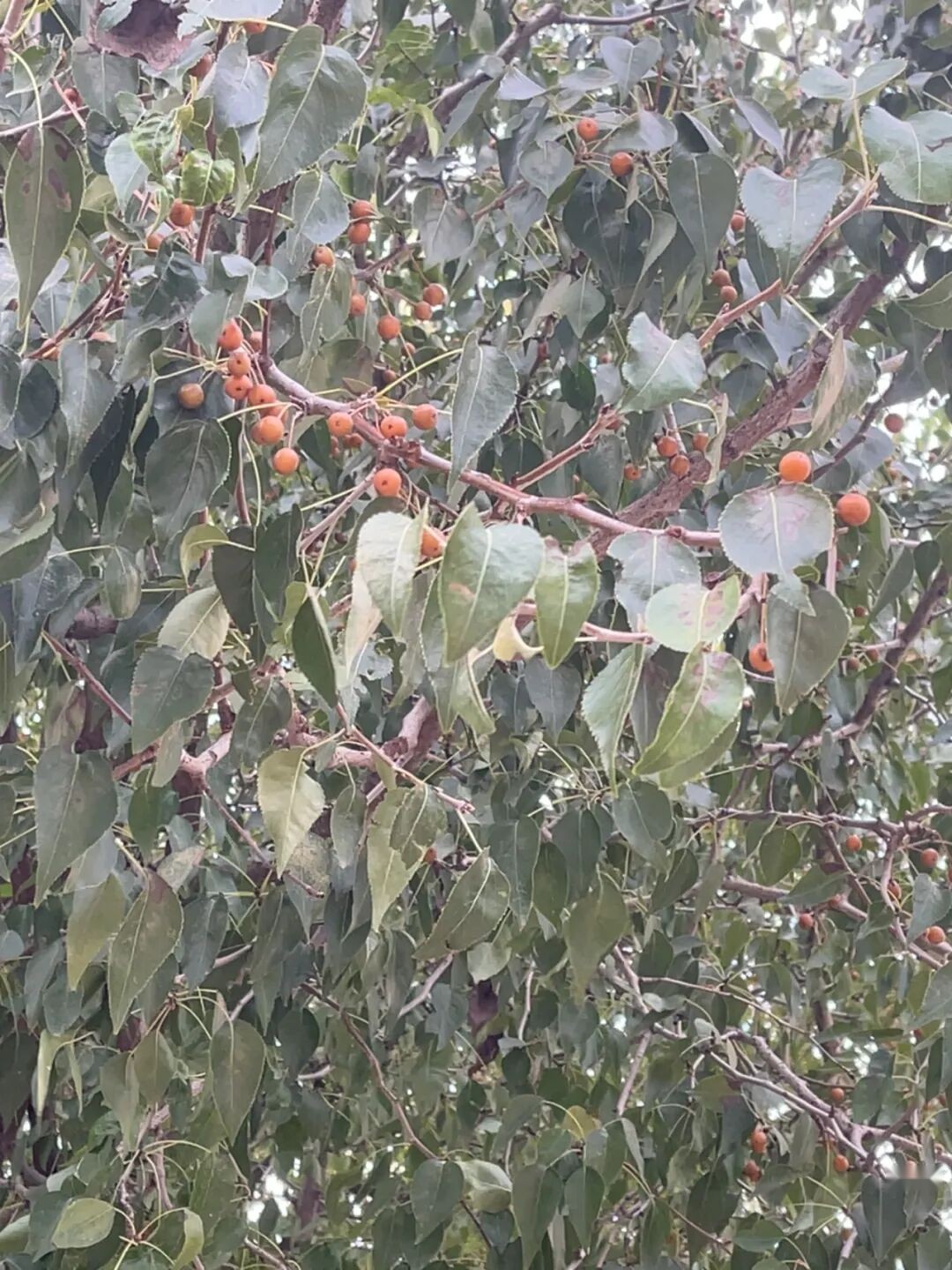
After grabbing a bite in Alxa, we kept moving and stayed overnight in Qingtongxia. That geographic name from the textbook finally came to life. Outside the hotel, I spotted a pear-leaf crabapple tree—a familiar tree from my childhood that I hadn't seen in years.
Time to fuel up and hit the road again.
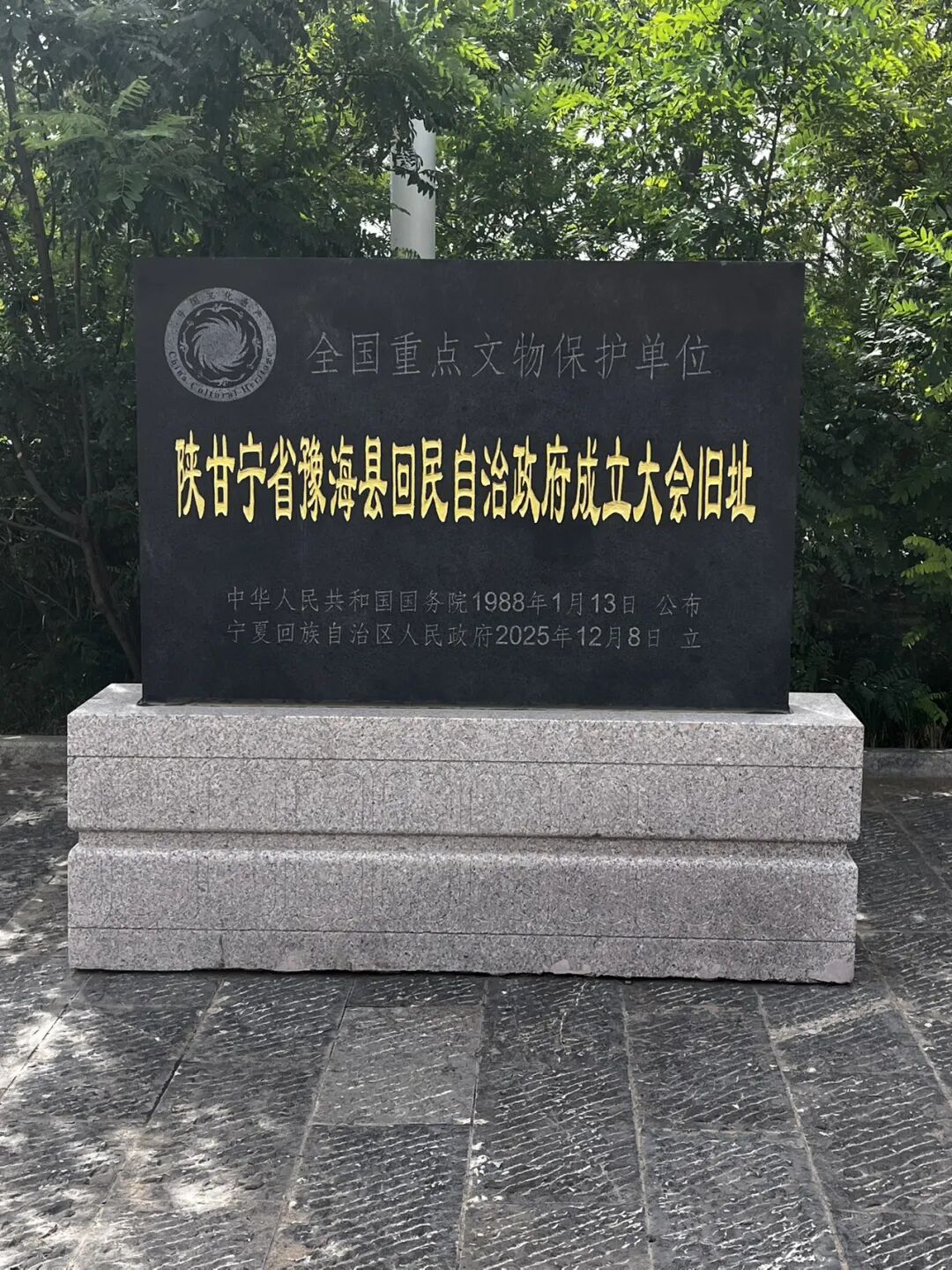
This spot is also a National Key Cultural Relic Protection Unit.
Tongxin Great Mosque (Former Site of the Founding Conference of the Yuhai County Hui Autonomous Government of Shaanxi-Gansu-Ningxia)
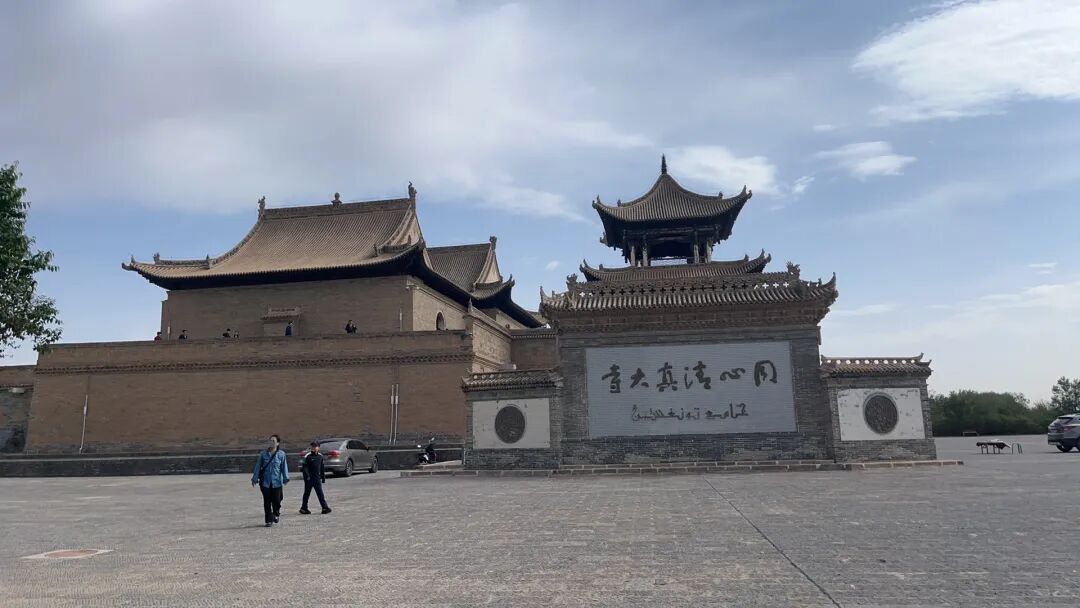
Right here in Tongxin County, Ningxia, it's a super unique, traditional Chinese pavilion-style masjid. There are no domes here—just flying eaves and wooden structures that look like an ancient fortress, as well as a site tied to revolutionary red history.
Walking up to the Tongxin Great Mosque, classic Chinese flying eaves and multi-tiered pavilions replace the usual masjid dome, while thick loess walls give it a rugged, historic vibe. This place isn't just an ancient house of worship; it's also where the Yuhai Hui Autonomous Government was born, blending religious heritage and revolutionary history right here on the northwest frontier.
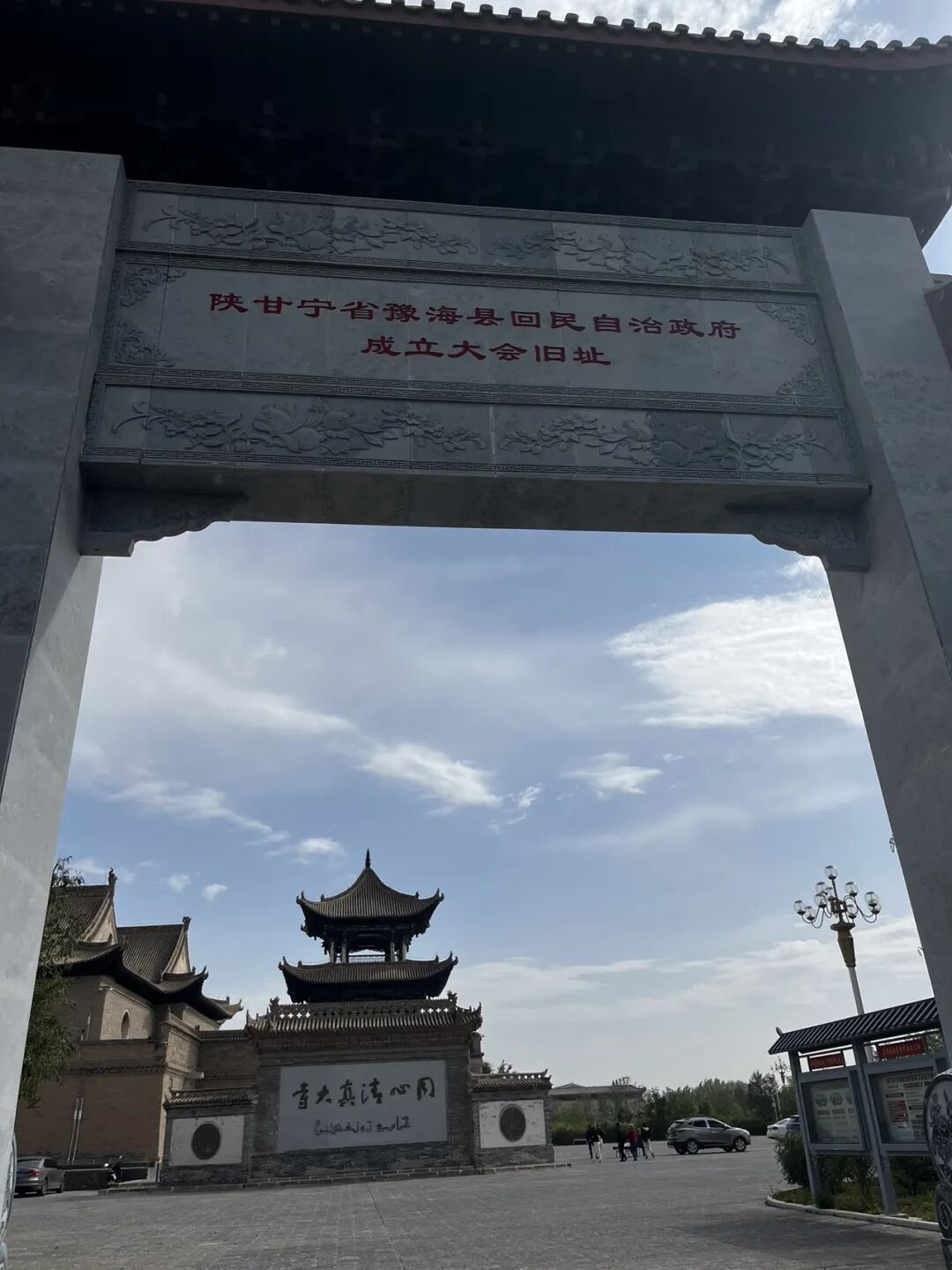
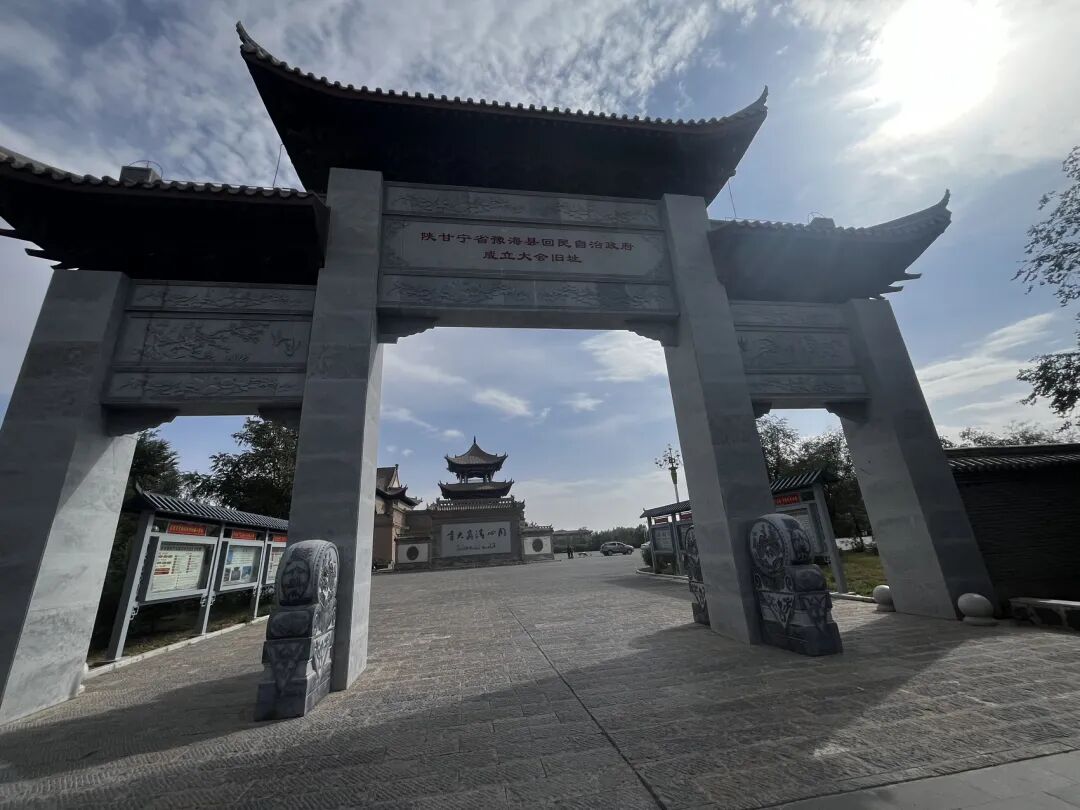
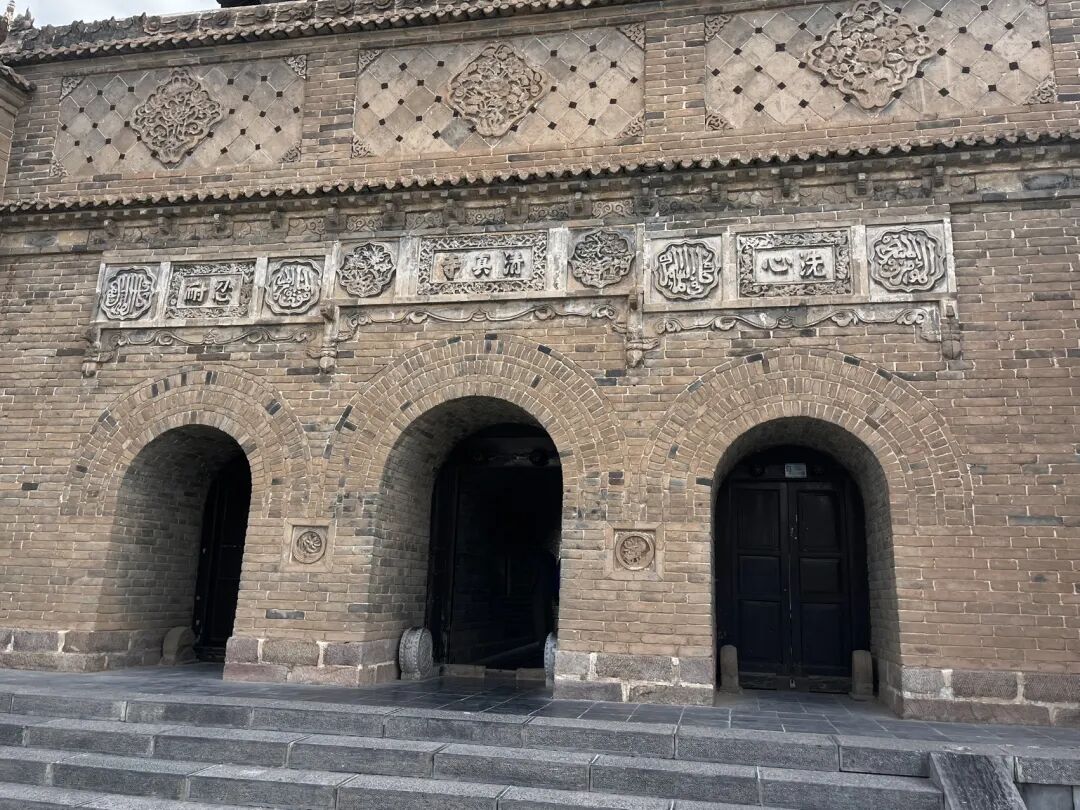
Tongxin Great Mosque Mountain Gate: Three blue-brick archways featuring stunning brick carvings. They're engraved with Chinese characters reading 'Purify the Heart' and 'Endurance' alongside Arabic script, showing a gorgeous fusion of Han Chinese and Hui architectural styles.
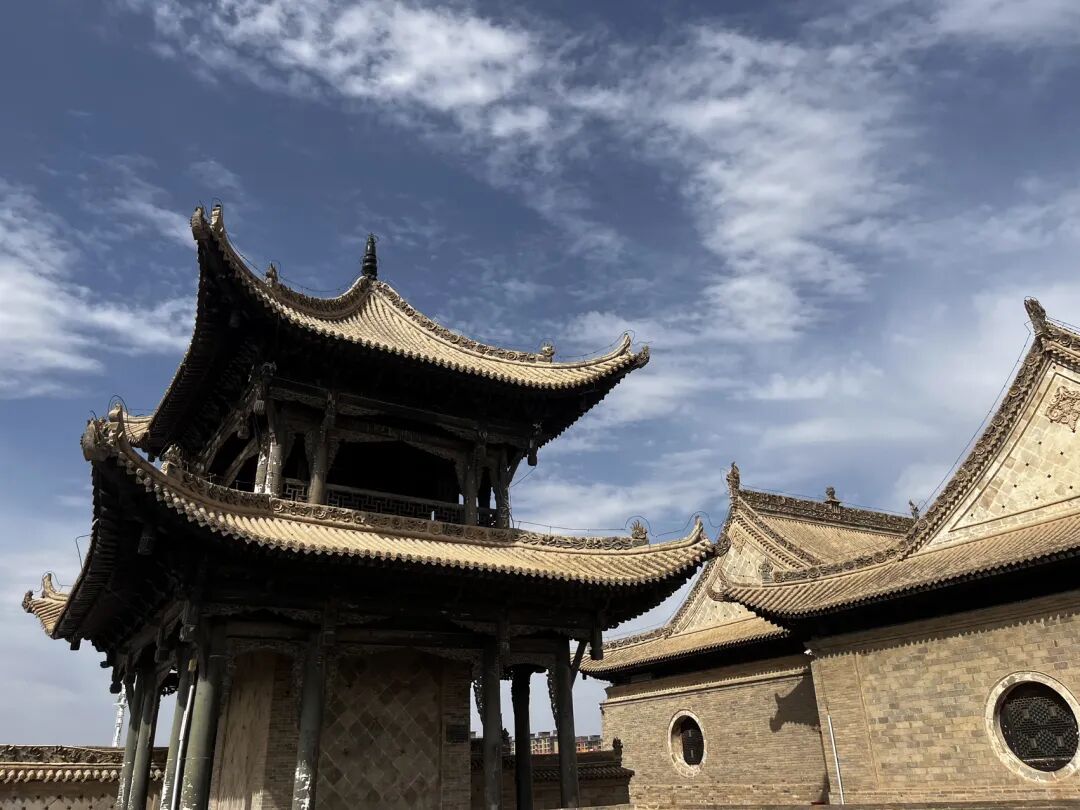
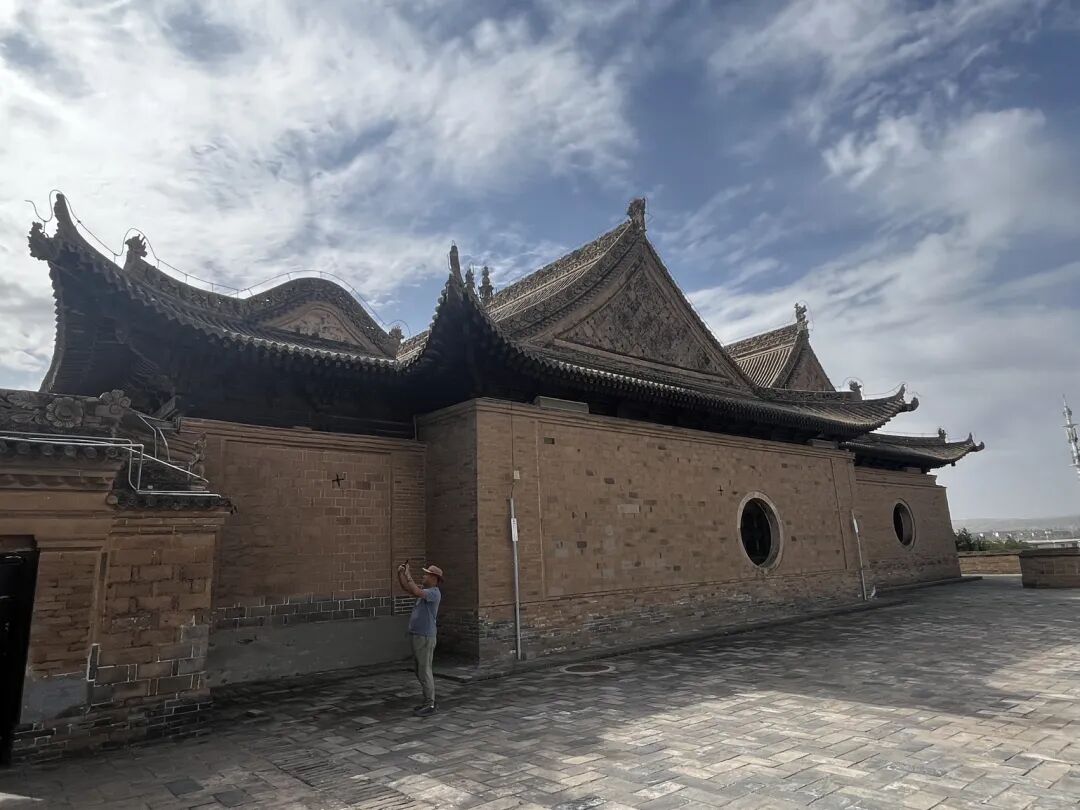
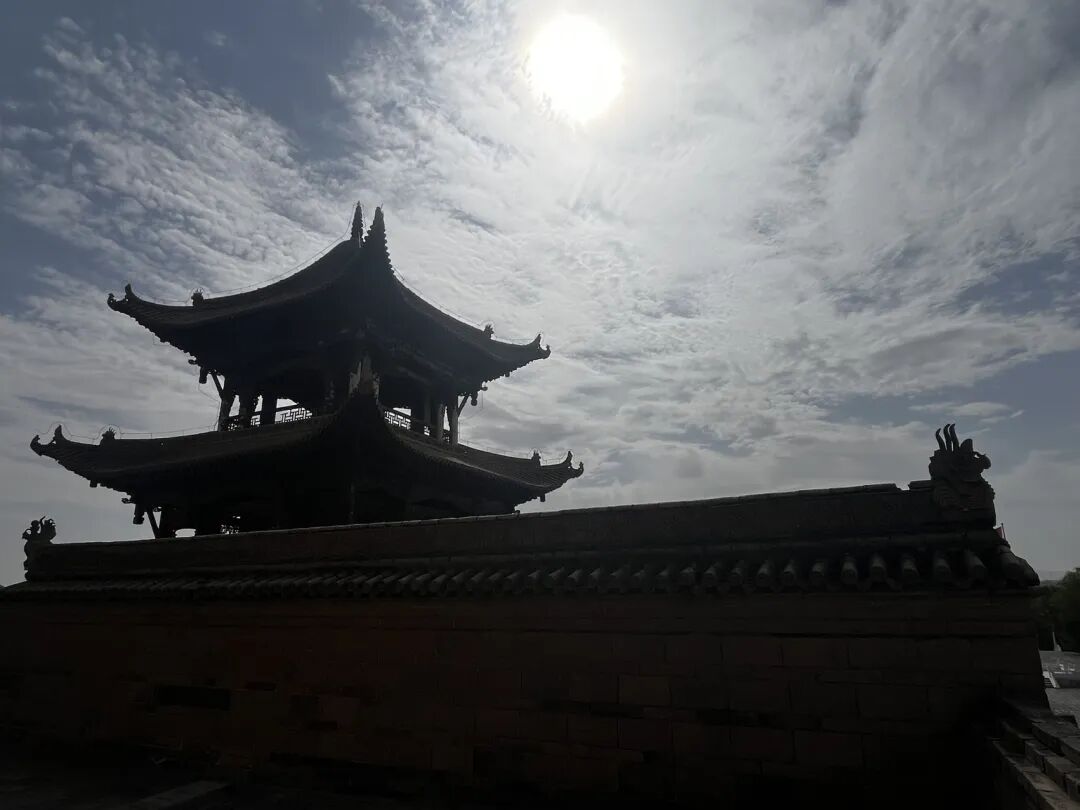
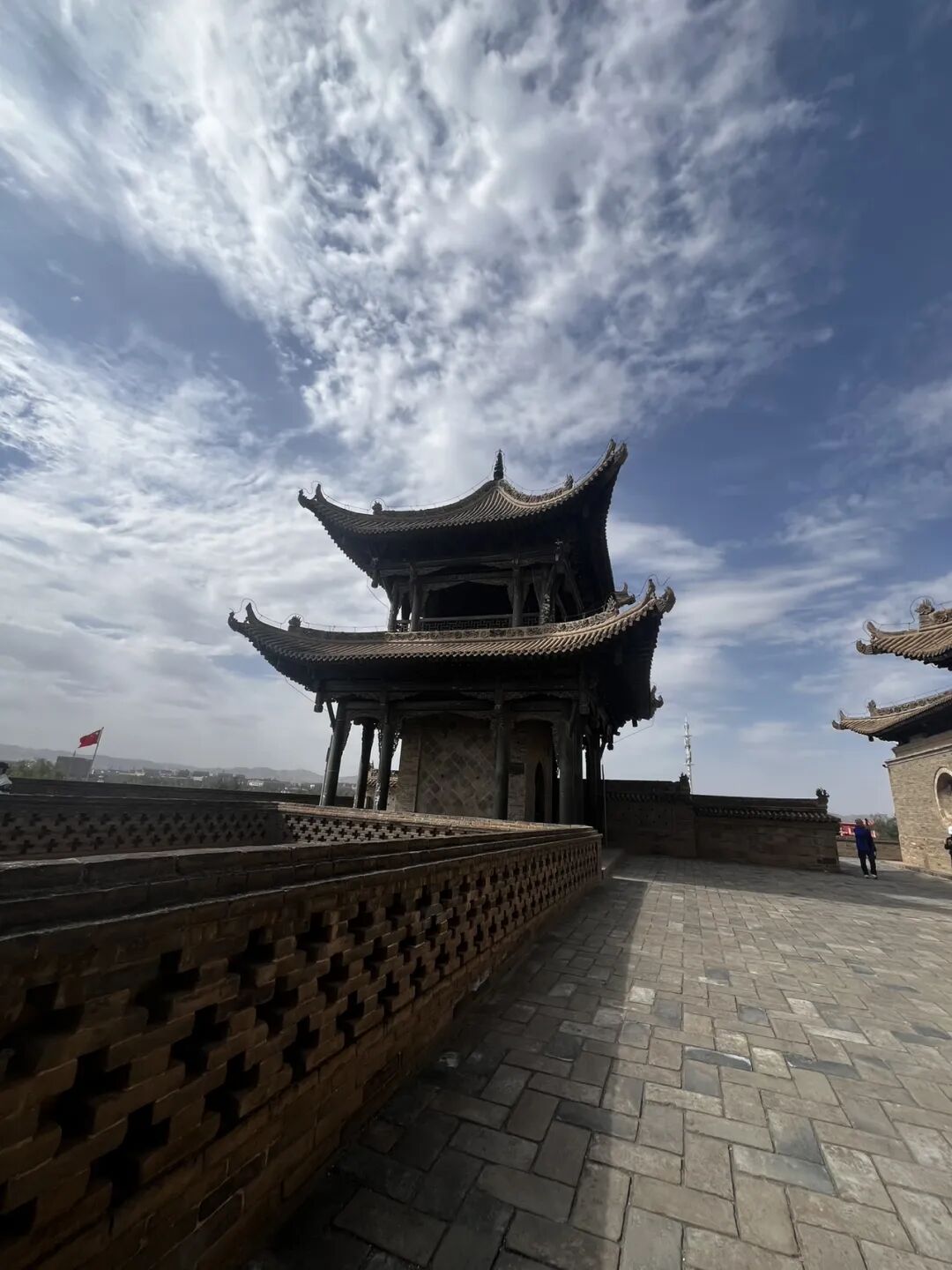
Tongxin Great Mosque Moon-Sighting Tower: A double-eaved, resting-mountain-roof Chinese wooden pavilion with upturned eaves. Without an Islamic dome, it blends Hui and Han architecture, using old loess soil and blue bricks for a rugged, imposing look.
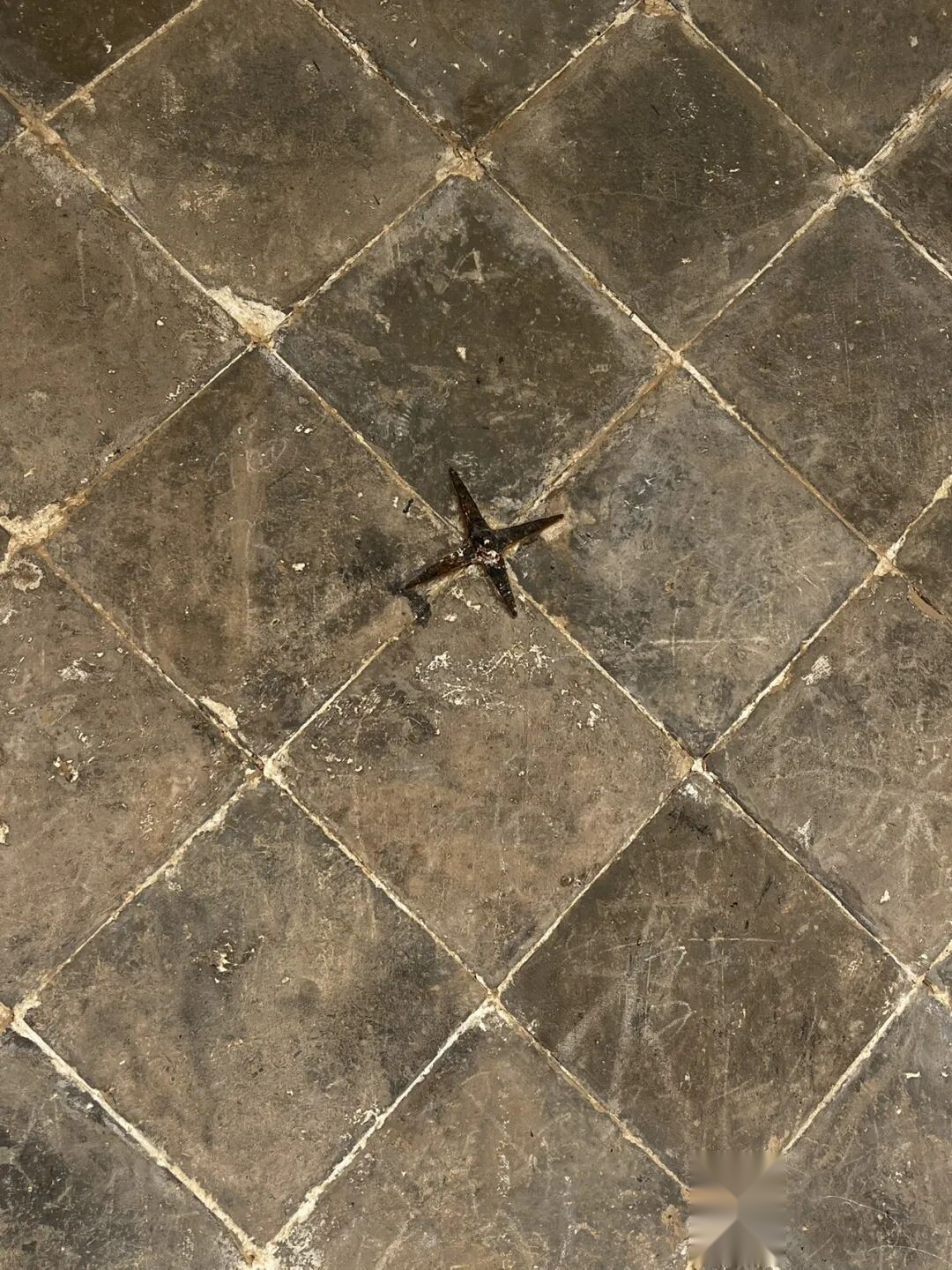
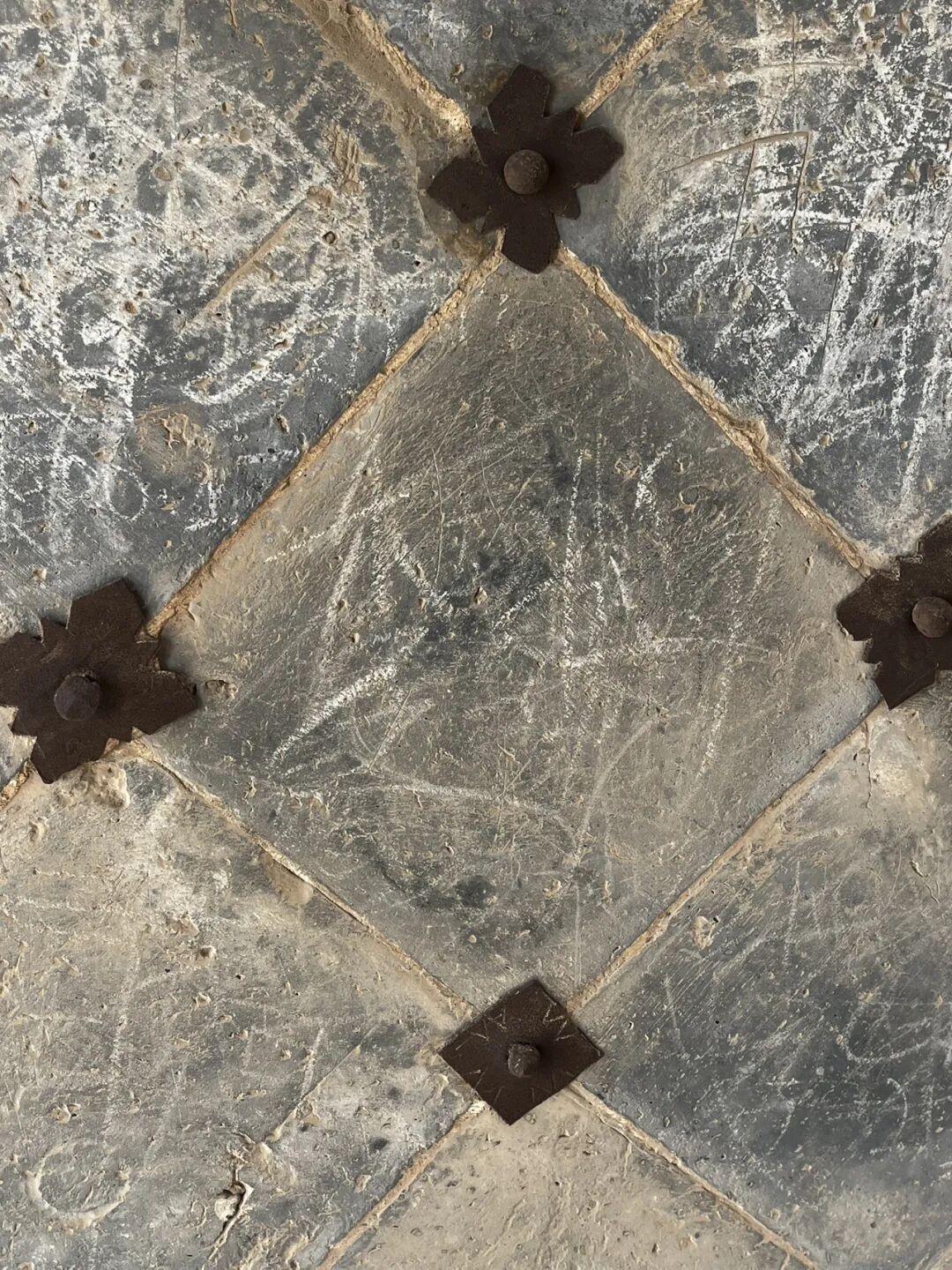
Tongxin Great Mosque Walls: Blue bricks laid in a diagonal diamond pattern, featuring iron tie-rods (wall anchors) that serve double duty for structural reinforcement and decoration. Forged into star and petal shapes, they combine structural engineering with aesthetics—a rare sight in Northwest ancient architecture.
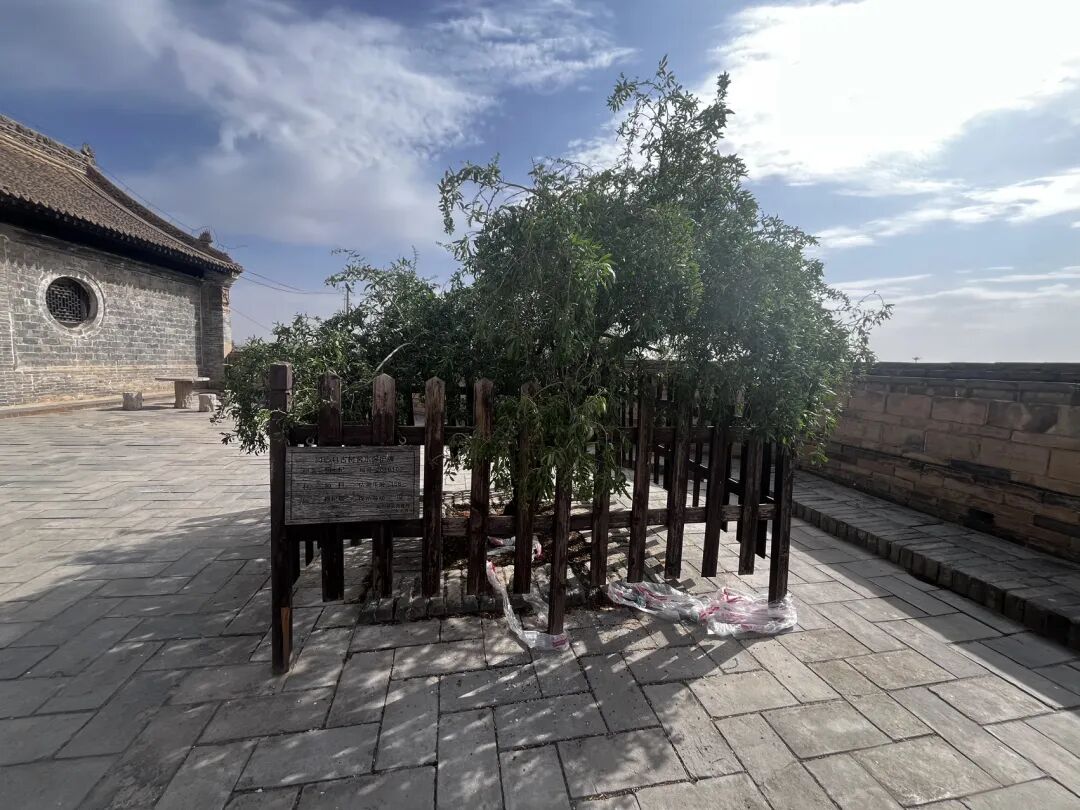
An ancient goji berry tree inside the courtyard of Tongxin Great Mosque. Over a century old and protected by a wooden fence, it grows resiliently right on the high platform of the ancient masjid.
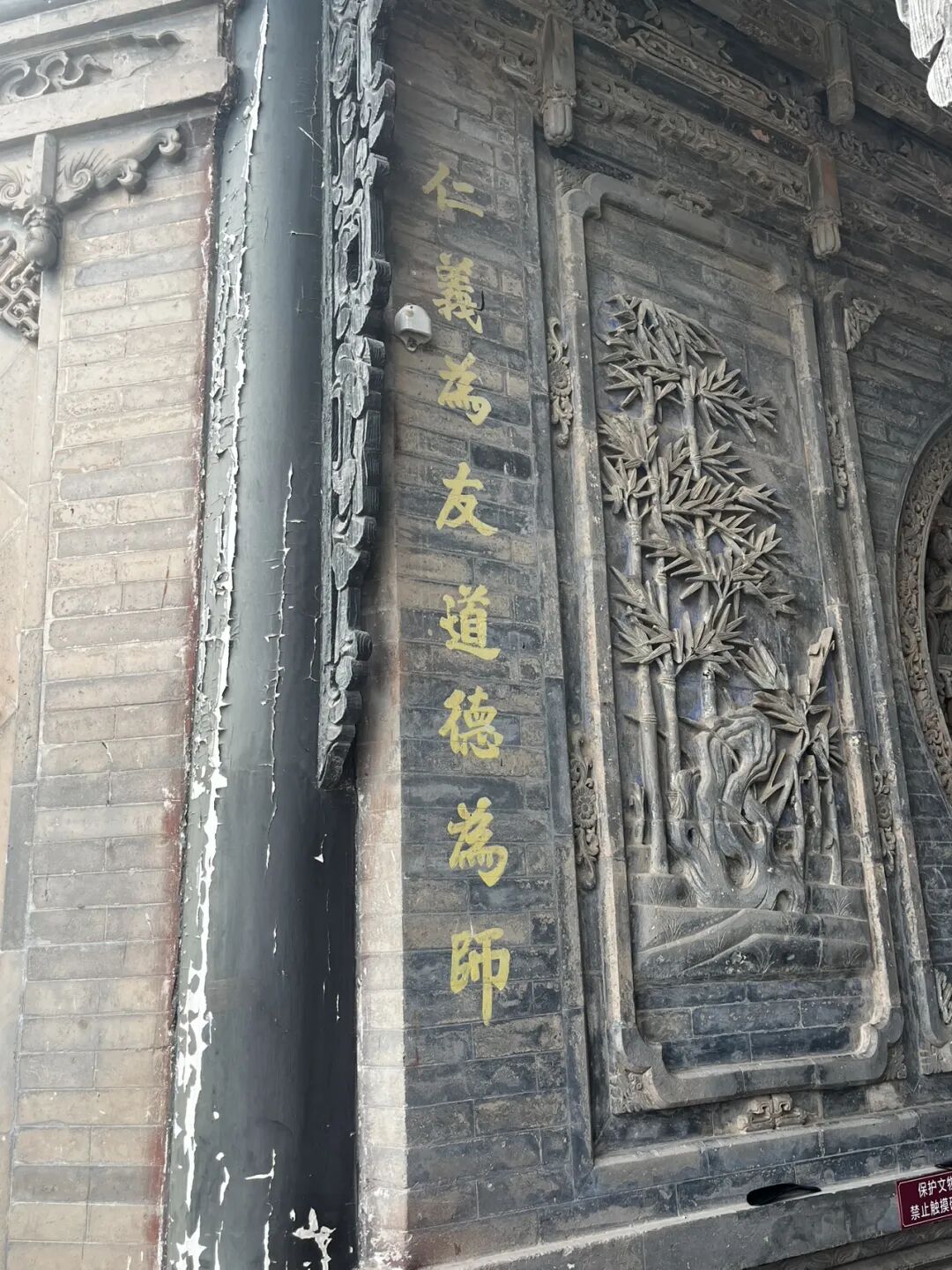
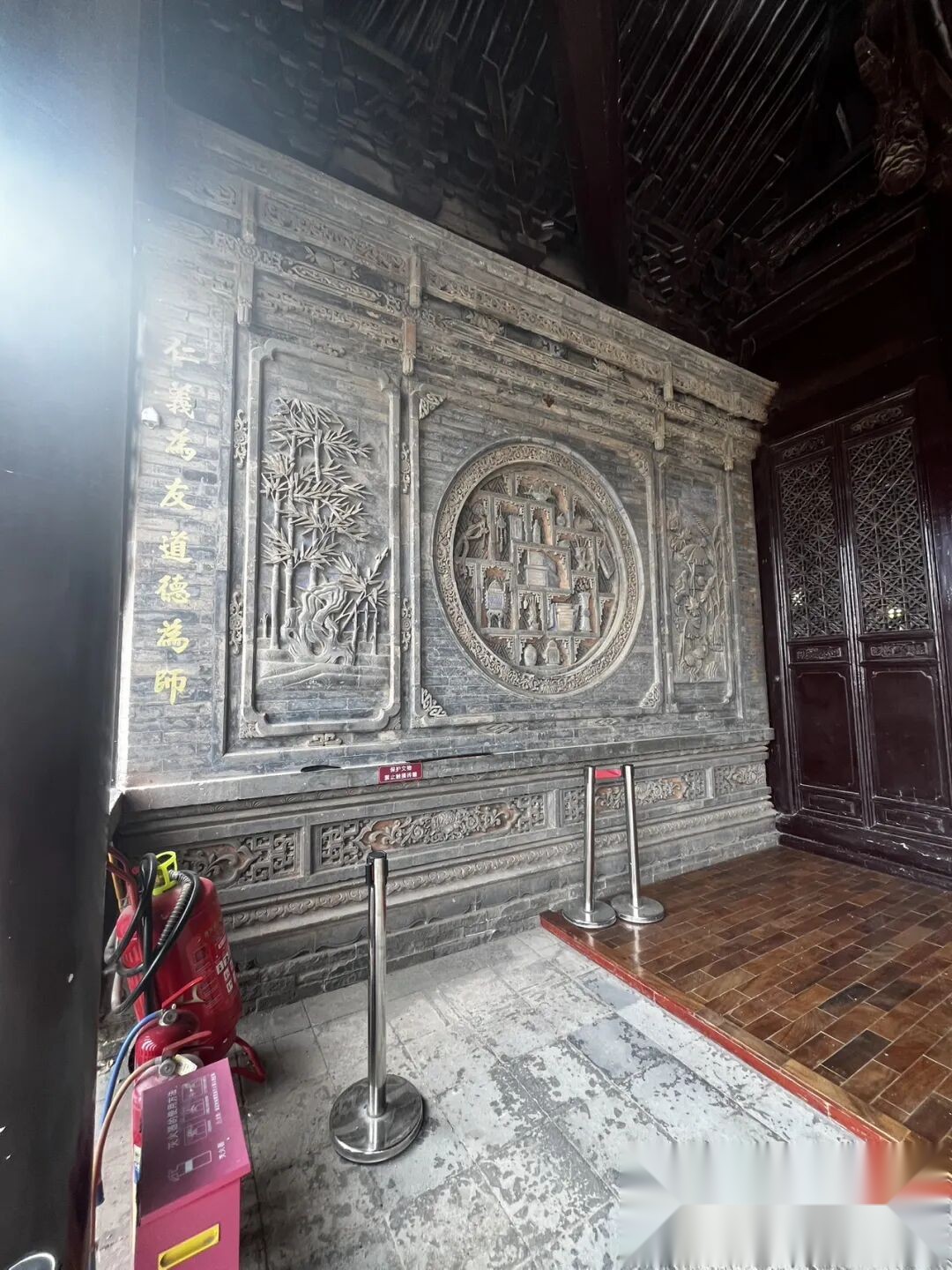
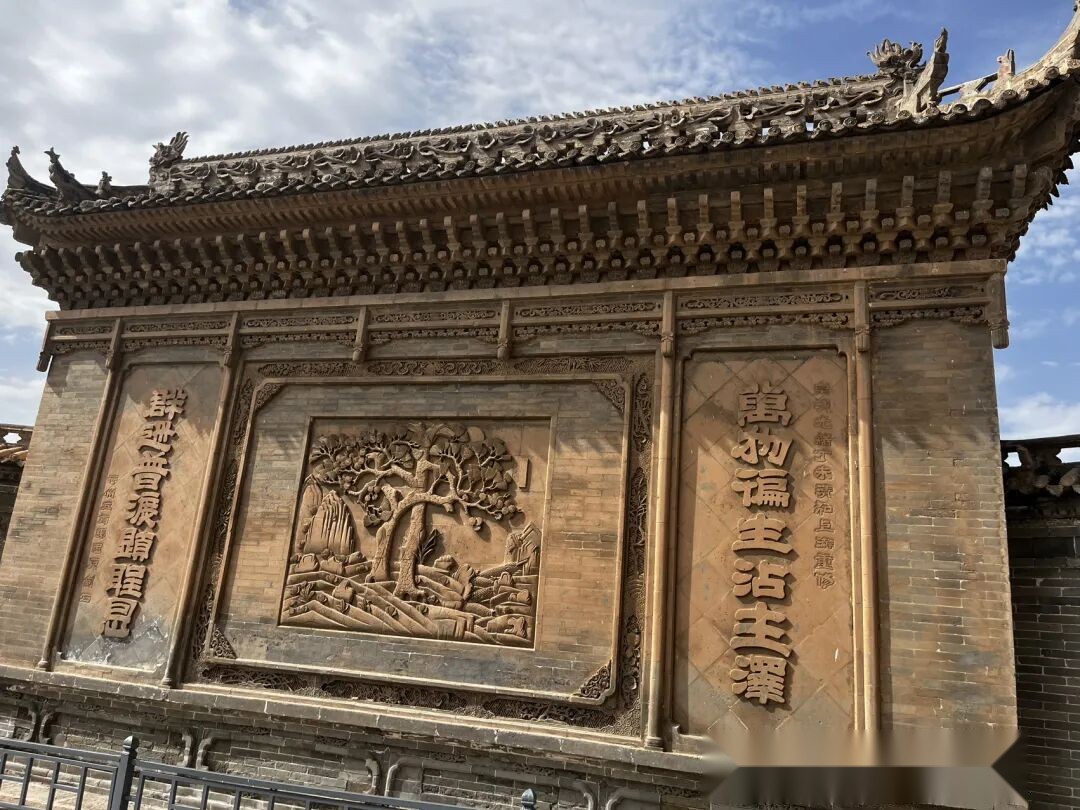
Brick Carvings: Bamboo and rock relief carvings inscribed with the Confucian phrases 'Treat righteousness and duty as friends, treat morality as your teacher.' Confucian literary motifs blend right into the masjid's Chinese brickwork.
'The Emperor sent Tang troops to move into the Western Regions': An inscription recounting past events of the Western Regions from the Tang Dynasty, carved in Chinese characters directly onto the brick walls of the masjid.
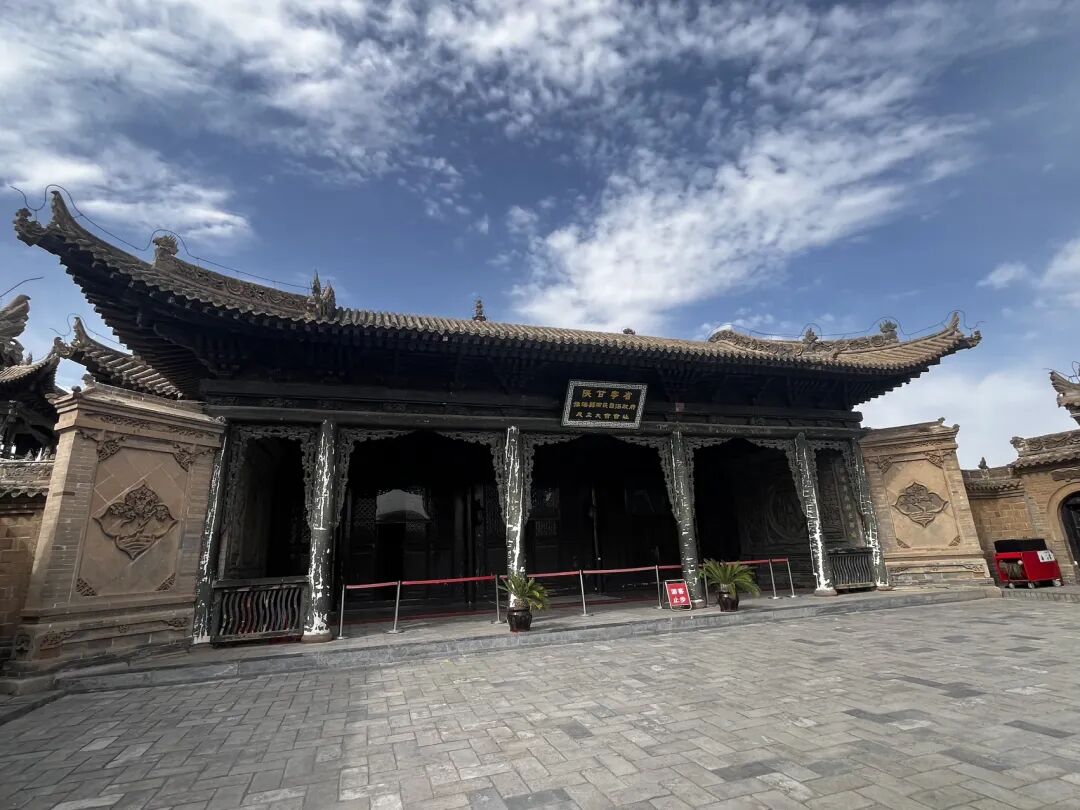
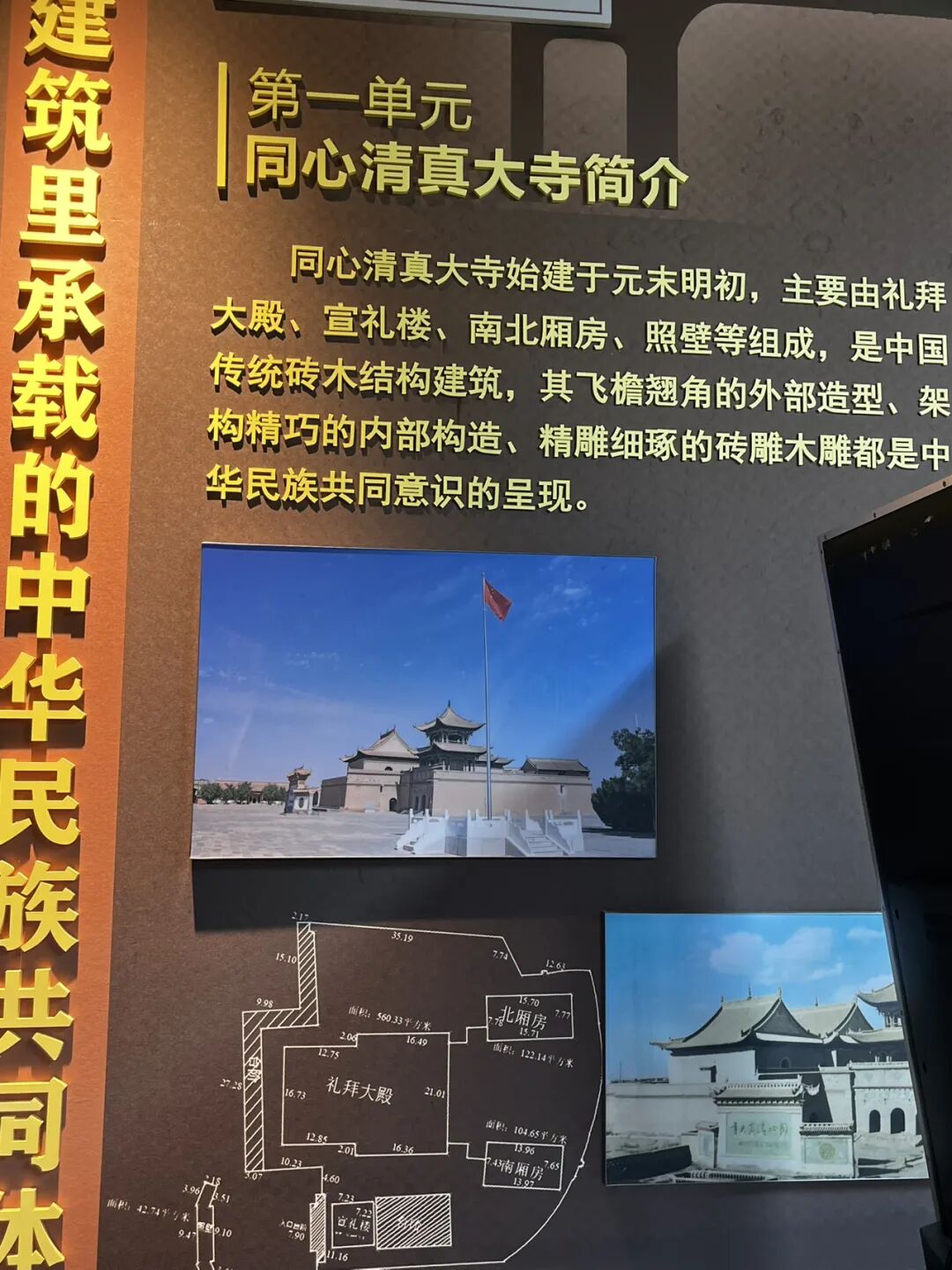
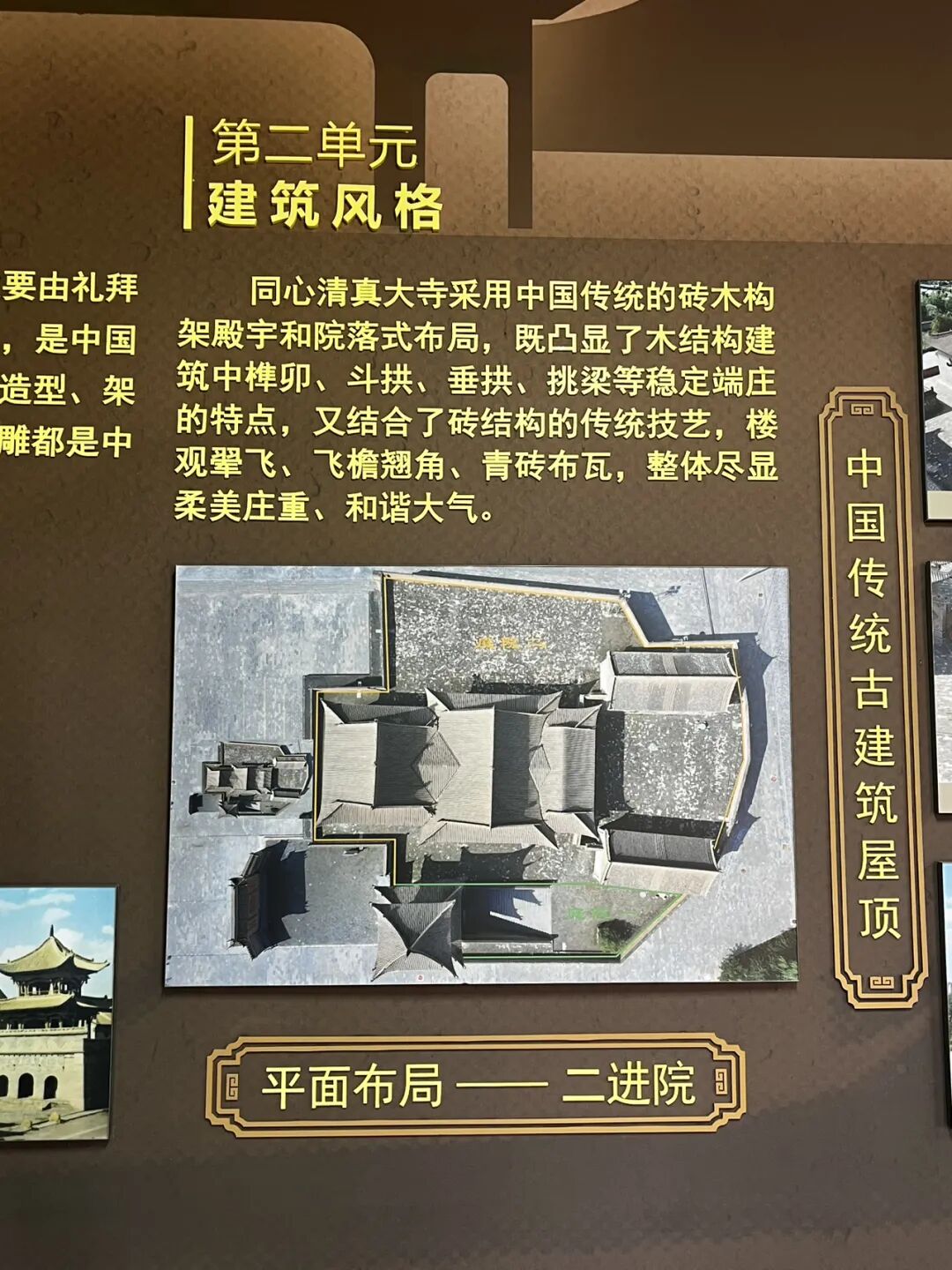
Tongxin Great Mosque Prayer Hall: A double-eaved Chinese wooden main hall that served as the former site of the Yuhai County Hui Autonomous Government of the Shaanxi-Gansu-Ningxia border region. Featuring grand flying eaves and ancient, weathered beams and pillars.
Inside, you'll find super detailed exhibits explaining its architecture and history.
The ancient hall has weathered centuries of wind and rain, leading to some rotting wooden components. During major renovations from 1982 to 1983, a specialized crew of craftsmen from Hancheng, Shaanxi, was brought in to lead the project. The skill of these veteran Guanzhong artisans was put to work on this northwest ancient masjid, repairing beam frameworks and restoring dougong bracket sets. They preserved the original architectural form and vibe to the absolute max, helping this ancient hall on its high platform survive to this day. Standing in front of the hall, you can appreciate both the heavy craftsmanship of Ming and Qing woodwork and the heartfelt dedication of cross-regional artisans passing the torch to protect our cultural relics. view all
A Pearl of Ancient Architecture on the Frontier: A Journey Through the Brick Carvings and Hui History of Tongxin Great Mosque
Abstract:
Step into the Tongxin Great Mosque, located in Yuhai Town, Tongxin County, Ningxia. Check out its towering, classical Chinese wooden main hall and mind-blowing openwork brick carvings on the spirit wall, and soak in the deep historical weight of Ningxia's oldest and largest surviving masjid.
After grabbing a bite in Alxa, we kept moving and stayed overnight in Qingtongxia. That geographic name from the textbook finally came to life. Outside the hotel, I spotted a pear-leaf crabapple tree—a familiar tree from my childhood that I hadn't seen in years.
Time to fuel up and hit the road again.
This spot is also a National Key Cultural Relic Protection Unit.
Tongxin Great Mosque (Former Site of the Founding Conference of the Yuhai County Hui Autonomous Government of Shaanxi-Gansu-Ningxia)
Right here in Tongxin County, Ningxia, it's a super unique, traditional Chinese pavilion-style masjid. There are no domes here—just flying eaves and wooden structures that look like an ancient fortress, as well as a site tied to revolutionary red history.
Walking up to the Tongxin Great Mosque, classic Chinese flying eaves and multi-tiered pavilions replace the usual masjid dome, while thick loess walls give it a rugged, historic vibe. This place isn't just an ancient house of worship; it's also where the Yuhai Hui Autonomous Government was born, blending religious heritage and revolutionary history right here on the northwest frontier.
Tongxin Great Mosque Mountain Gate: Three blue-brick archways featuring stunning brick carvings. They're engraved with Chinese characters reading 'Purify the Heart' and 'Endurance' alongside Arabic script, showing a gorgeous fusion of Han Chinese and Hui architectural styles.
Tongxin Great Mosque Moon-Sighting Tower: A double-eaved, resting-mountain-roof Chinese wooden pavilion with upturned eaves. Without an Islamic dome, it blends Hui and Han architecture, using old loess soil and blue bricks for a rugged, imposing look.
Tongxin Great Mosque Walls: Blue bricks laid in a diagonal diamond pattern, featuring iron tie-rods (wall anchors) that serve double duty for structural reinforcement and decoration. Forged into star and petal shapes, they combine structural engineering with aesthetics—a rare sight in Northwest ancient architecture.
An ancient goji berry tree inside the courtyard of Tongxin Great Mosque. Over a century old and protected by a wooden fence, it grows resiliently right on the high platform of the ancient masjid.
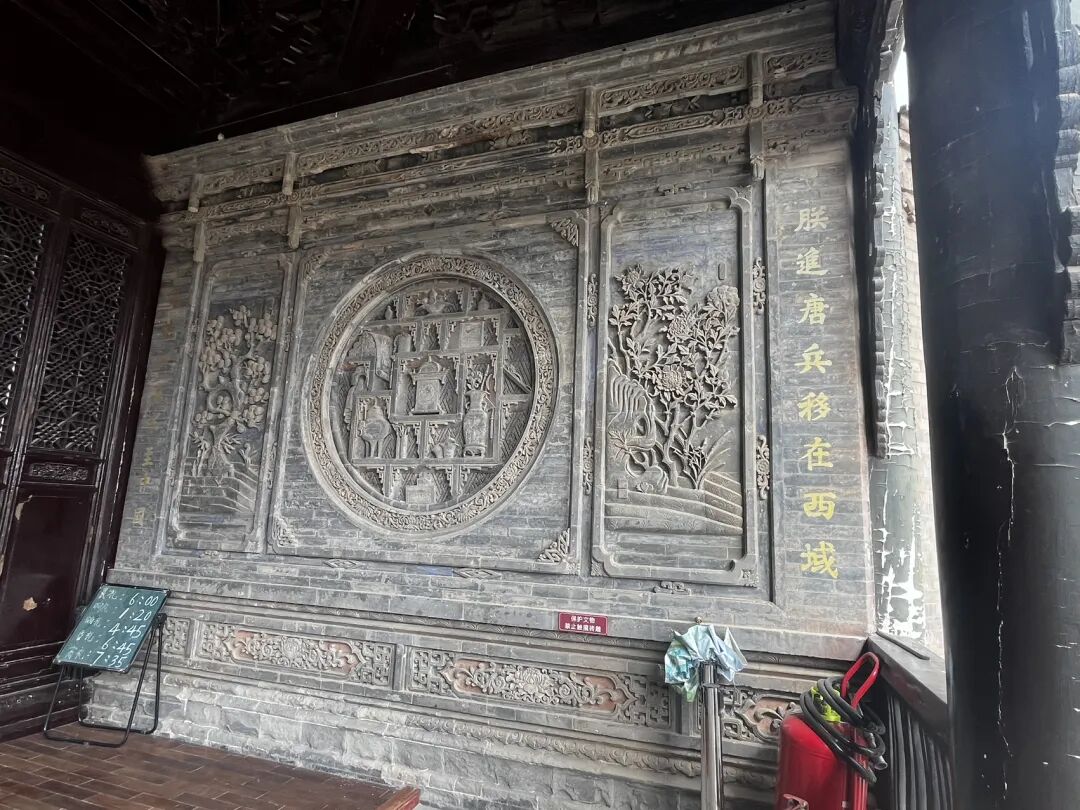
Brick Carvings: Bamboo and rock relief carvings inscribed with the Confucian phrases 'Treat righteousness and duty as friends, treat morality as your teacher.' Confucian literary motifs blend right into the masjid's Chinese brickwork.
'The Emperor sent Tang troops to move into the Western Regions': An inscription recounting past events of the Western Regions from the Tang Dynasty, carved in Chinese characters directly onto the brick walls of the masjid.
Tongxin Great Mosque Prayer Hall: A double-eaved Chinese wooden main hall that served as the former site of the Yuhai County Hui Autonomous Government of the Shaanxi-Gansu-Ningxia border region. Featuring grand flying eaves and ancient, weathered beams and pillars.
Inside, you'll find super detailed exhibits explaining its architecture and history.
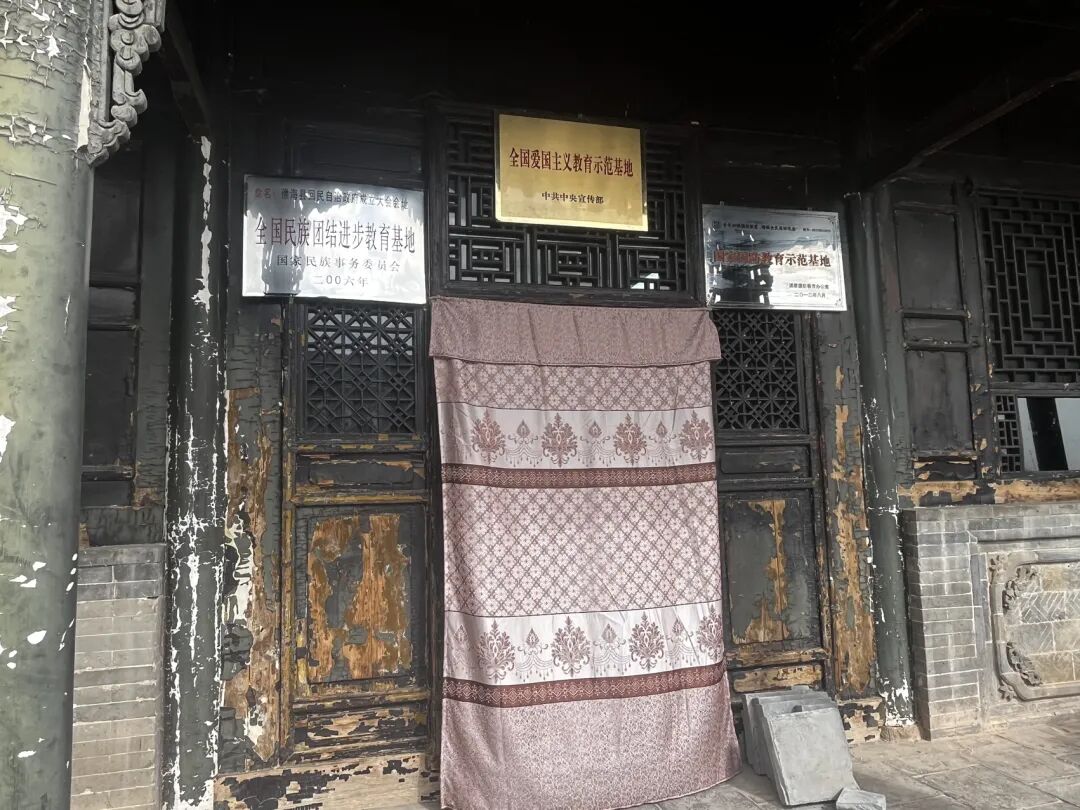
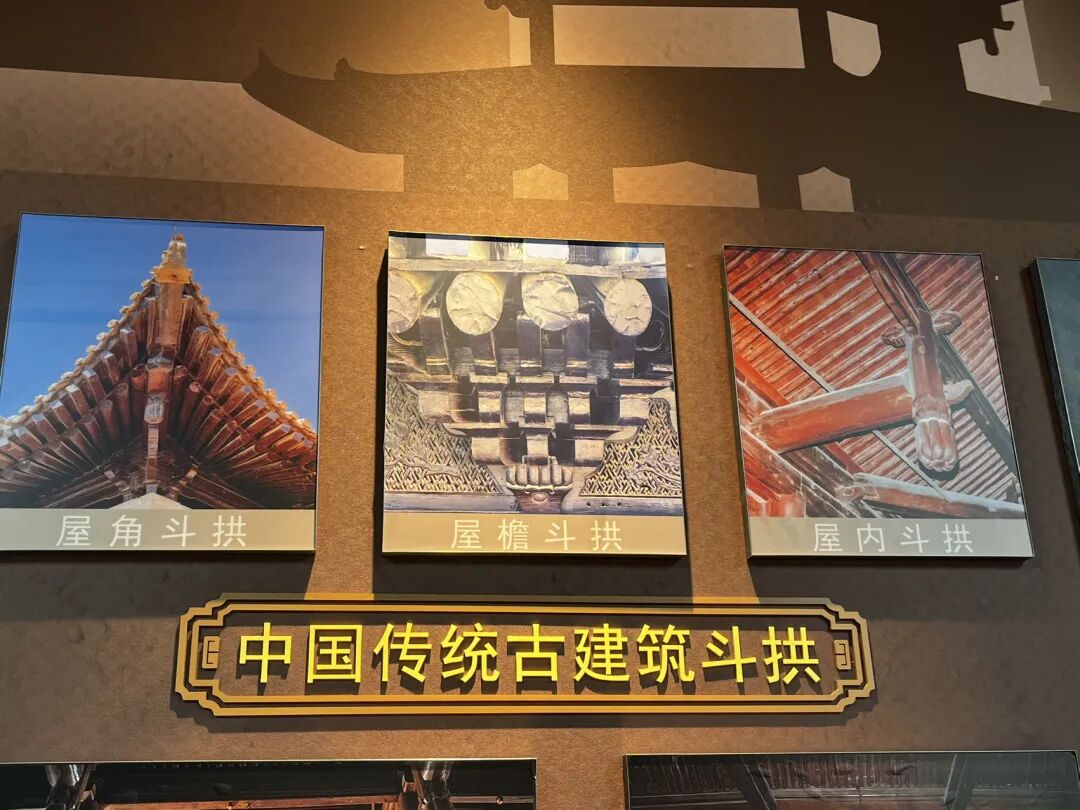
The ancient hall has weathered centuries of wind and rain, leading to some rotting wooden components. During major renovations from 1982 to 1983, a specialized crew of craftsmen from Hancheng, Shaanxi, was brought in to lead the project. The skill of these veteran Guanzhong artisans was put to work on this northwest ancient masjid, repairing beam frameworks and restoring dougong bracket sets. They preserved the original architectural form and vibe to the absolute max, helping this ancient hall on its high platform survive to this day. Standing in front of the hall, you can appreciate both the heavy craftsmanship of Ming and Qing woodwork and the heartfelt dedication of cross-regional artisans passing the torch to protect our cultural relics.


Exploring Tongxin Great Mosque: A Masterpiece of Chinese Timberwork and Islamic Heritage in Ningxia
Articles • Hasan09 posted the article • 0 comments • 3 views • 1 hours ago
Exploring Tongxin Great Mosque: A National-Level Historic Monument Blending Song-Ming Timber Architecture with Islamic Spirit
Abstract:
A firsthand look inside the Tongxin Great Mosque, a hidden gem tucked away in the mountainous southern region of Ningxia. We're breaking down its unique architecture—dating back to the late Yuan and early Ming dynasties, where traditional Chinese timber-framing meets Islamic arches and domes—giving you a taste of an uncrowded, highly sophisticated Northwest architectural treasure.
If you're looking for the oldest and best-preserved ancient mosque in the Ningxia Hui Autonomous Region, it's definitely the Tongxin Great Mosque in Tongxin County, Wuzhong City.
It was originally founded during the Yuan dynasty, starting out as a Tibetan Buddhist monastery. During the Yuan, Prince Anxi Anada (grandson of Kublai Khan) was raised by Muslim foster parents as a child and converted to Islam as an adult. When he was stationed in Ningxia, he led a massive following to convert to Islam as well. As a result, the original monastery gradually fell into disuse, and some parts were converted into a mosque.
On October 20, 1936, during the Red Army's Long March, the Shaan-Gan-Ning Yuhai County Hui Autonomous Representative Conference was held at the Tongxin Great Mosque, where the Shaan-Gan-Ning Yuhai County Hui Autonomous Government was elected and established. This site also serves as the former location of the founding assembly of that Hui autonomous government.
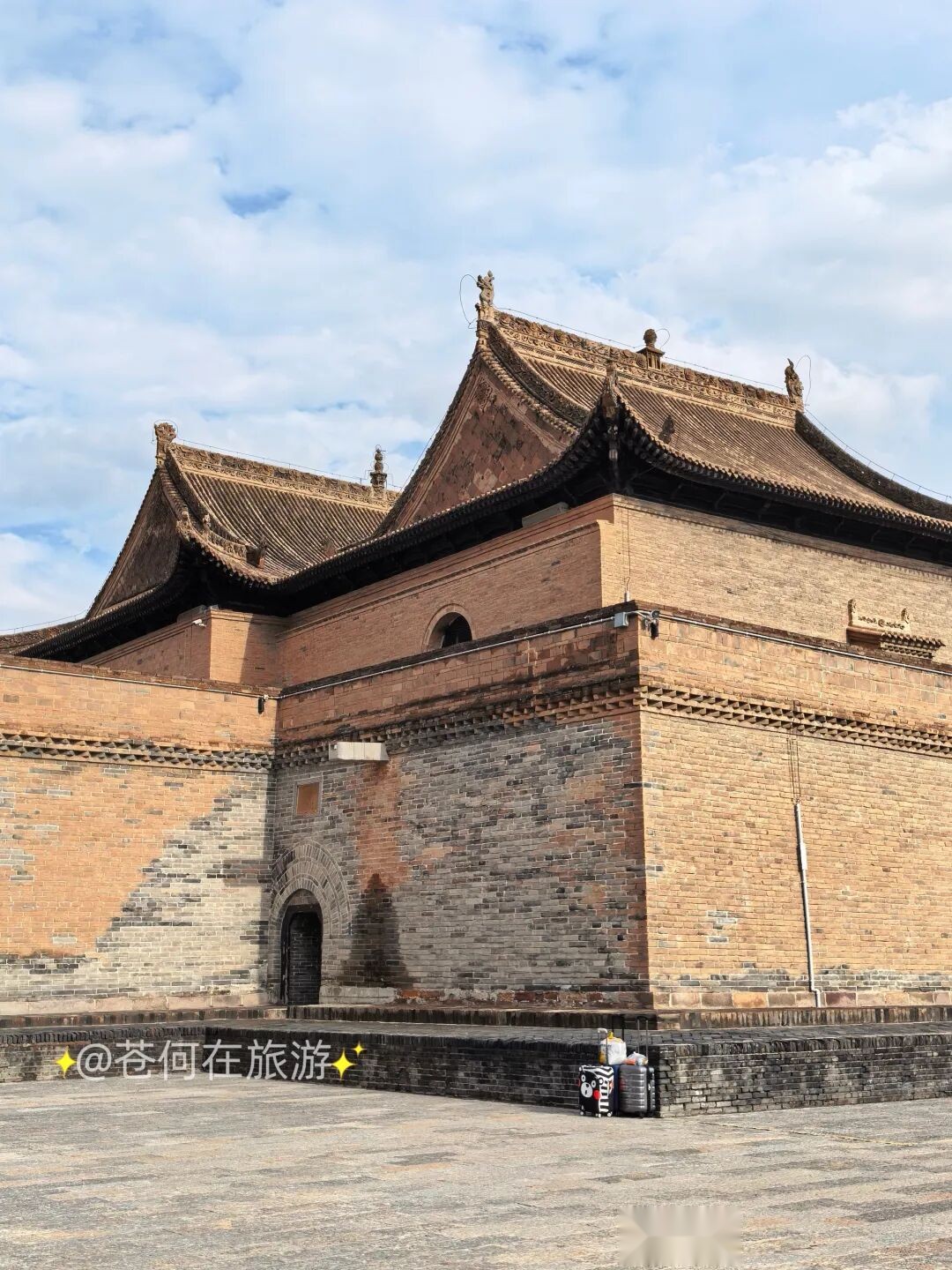
The Tongxin Great Mosque is built on a 7-meter-high platform enclosed by dark grey bricks, utilizing traditional Chinese timber-framing techniques while incorporating Islamic-style decorations, making it a stellar example of two cultures coming together.
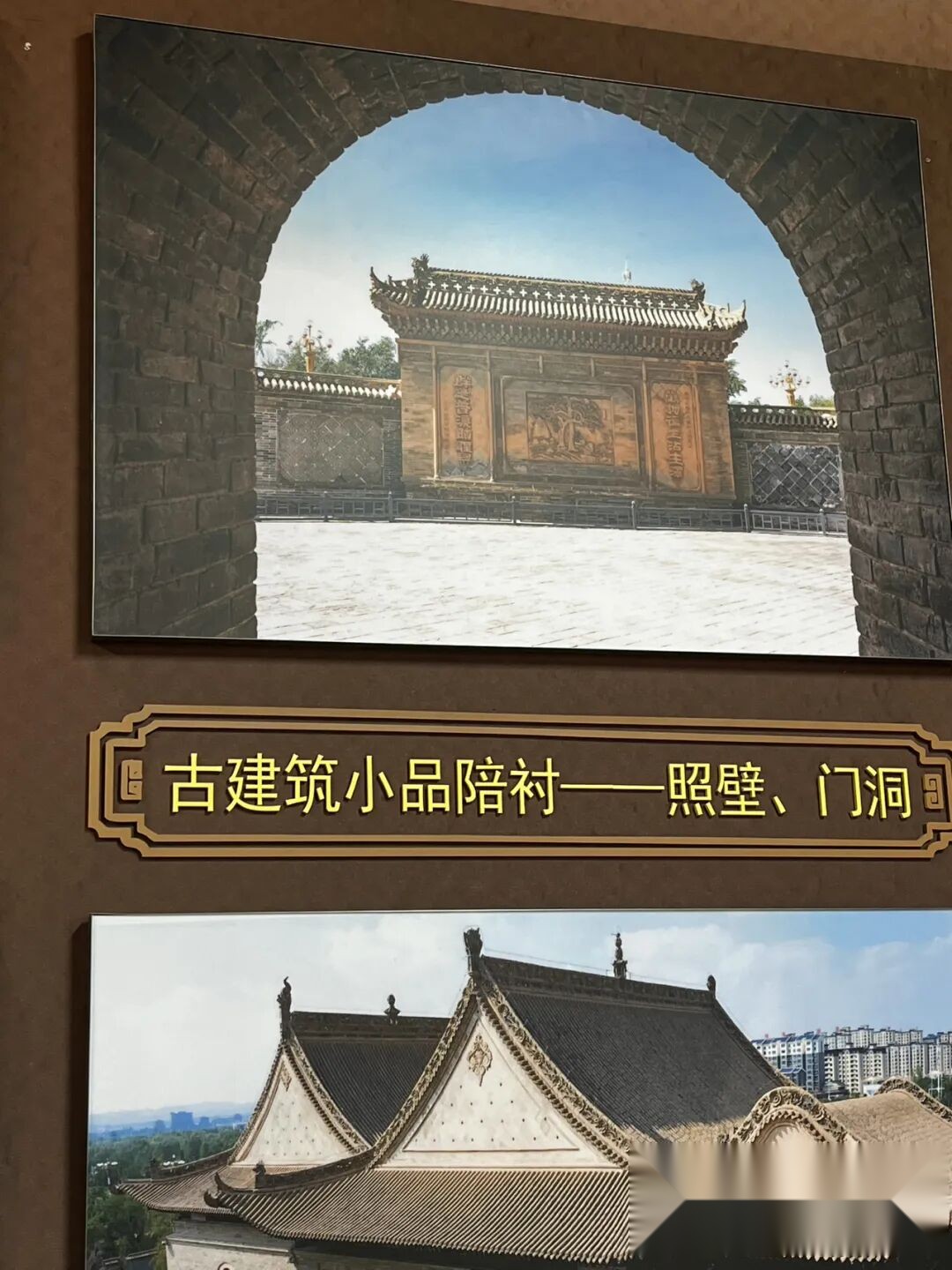
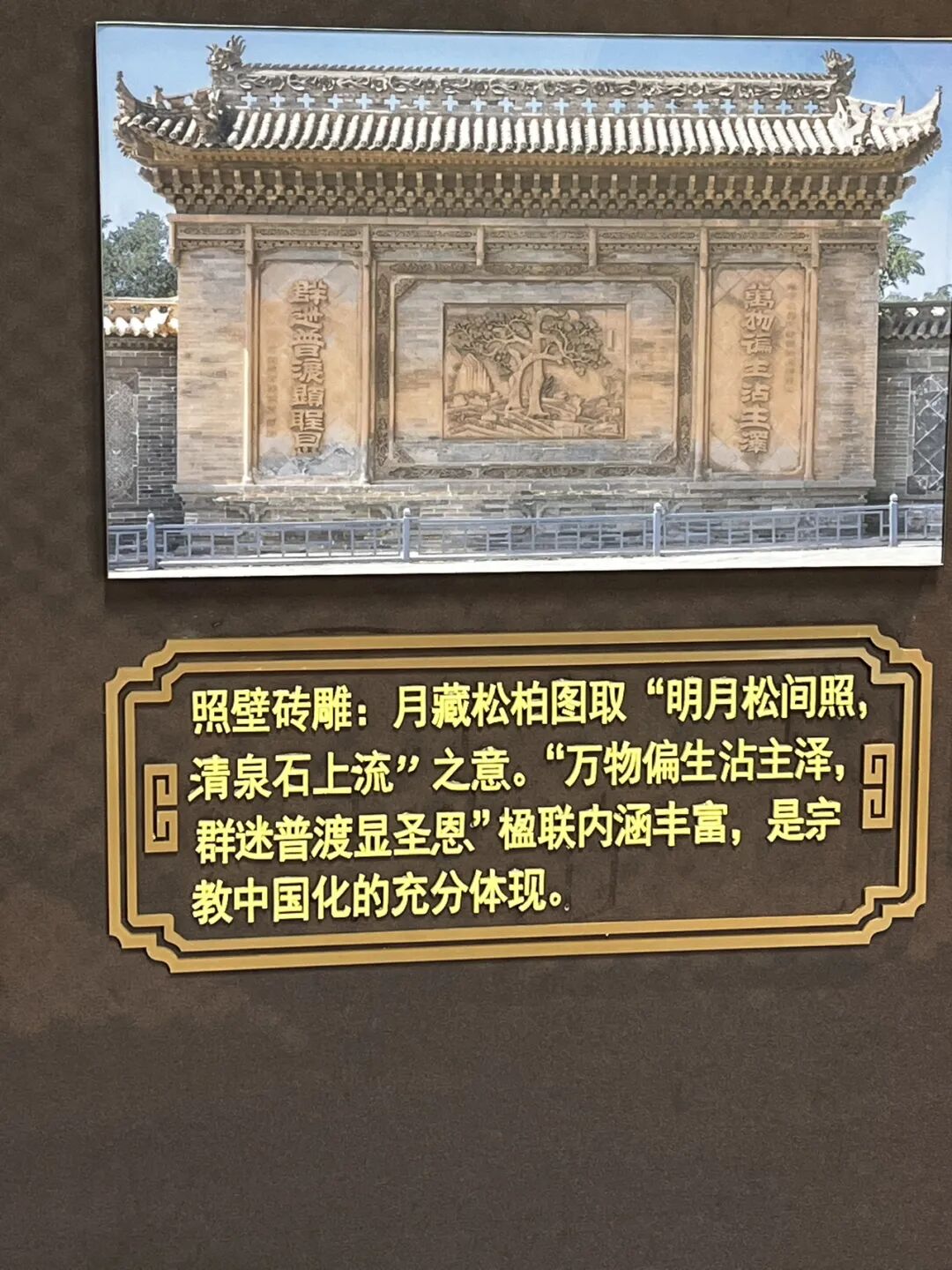
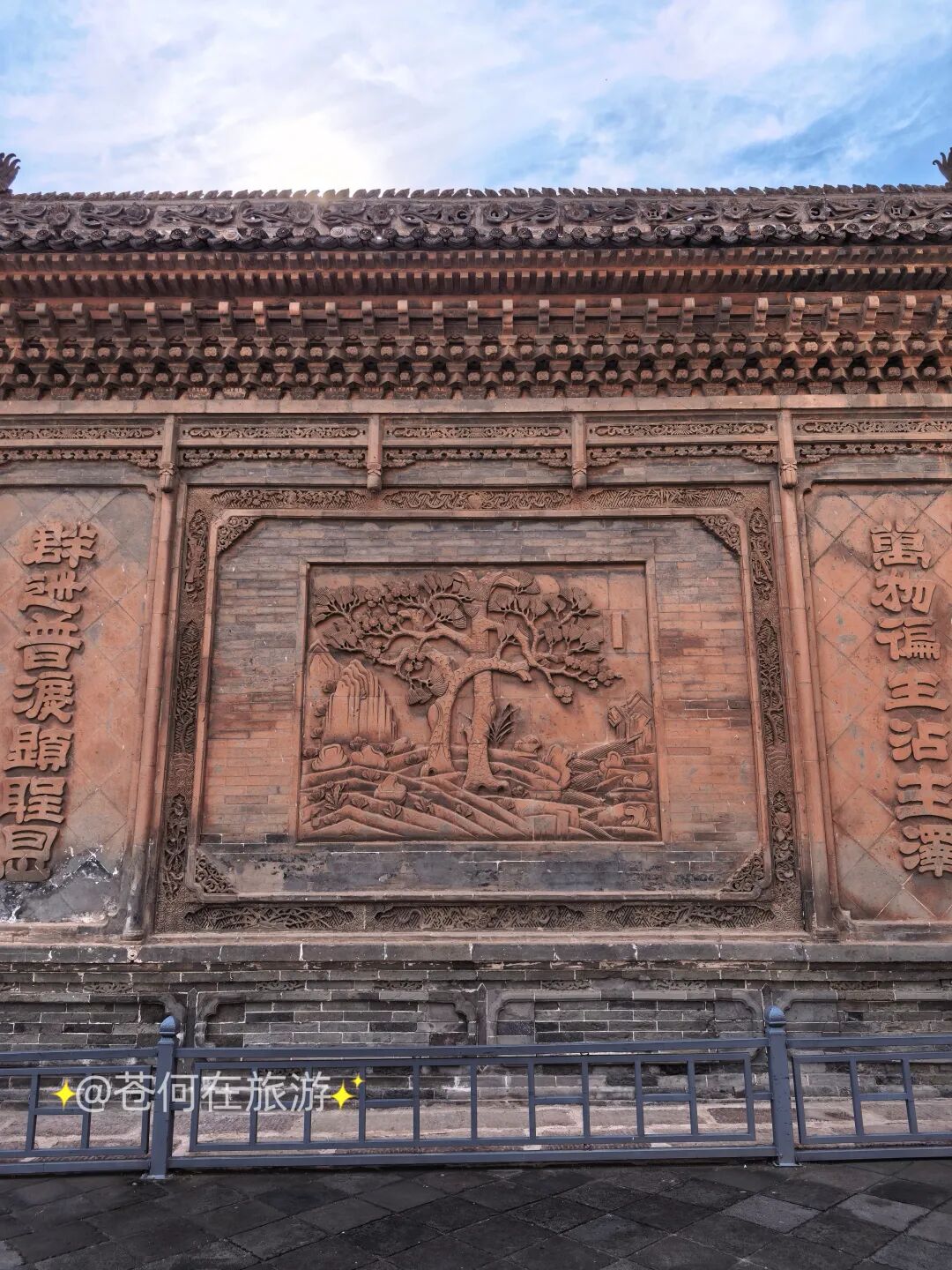
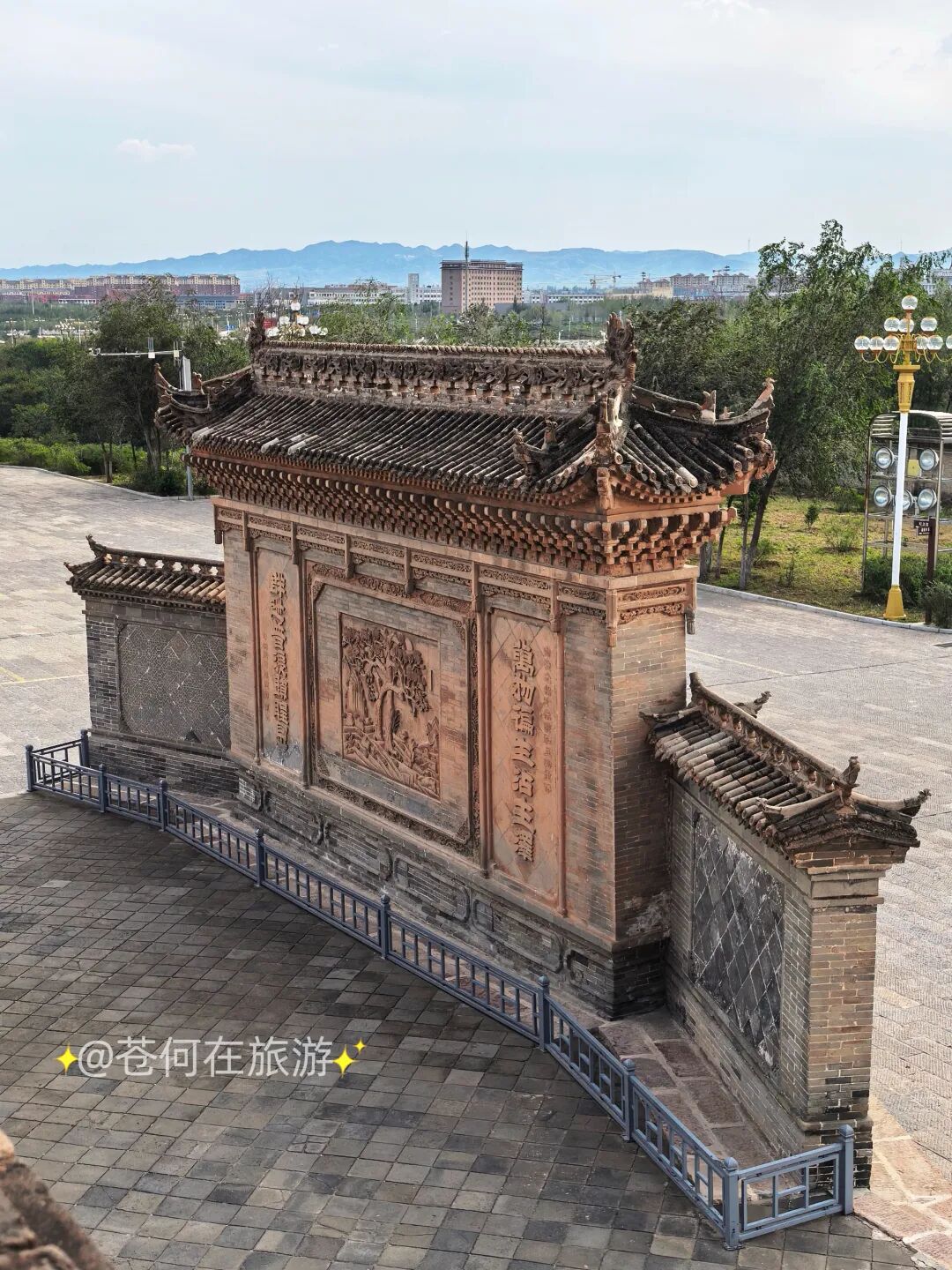
The dark brick spirit wall (zhaobi) in front of the mosque is a classic case in point. The front features the name 'Tongxin Great Mosque' written in both Chinese and Arabic script. The center of the back features a brick-carved 'Moon Hiding in the Pines' motif, flanked by couplets carved in official script (lishi) dating back to the Guangxu reign.
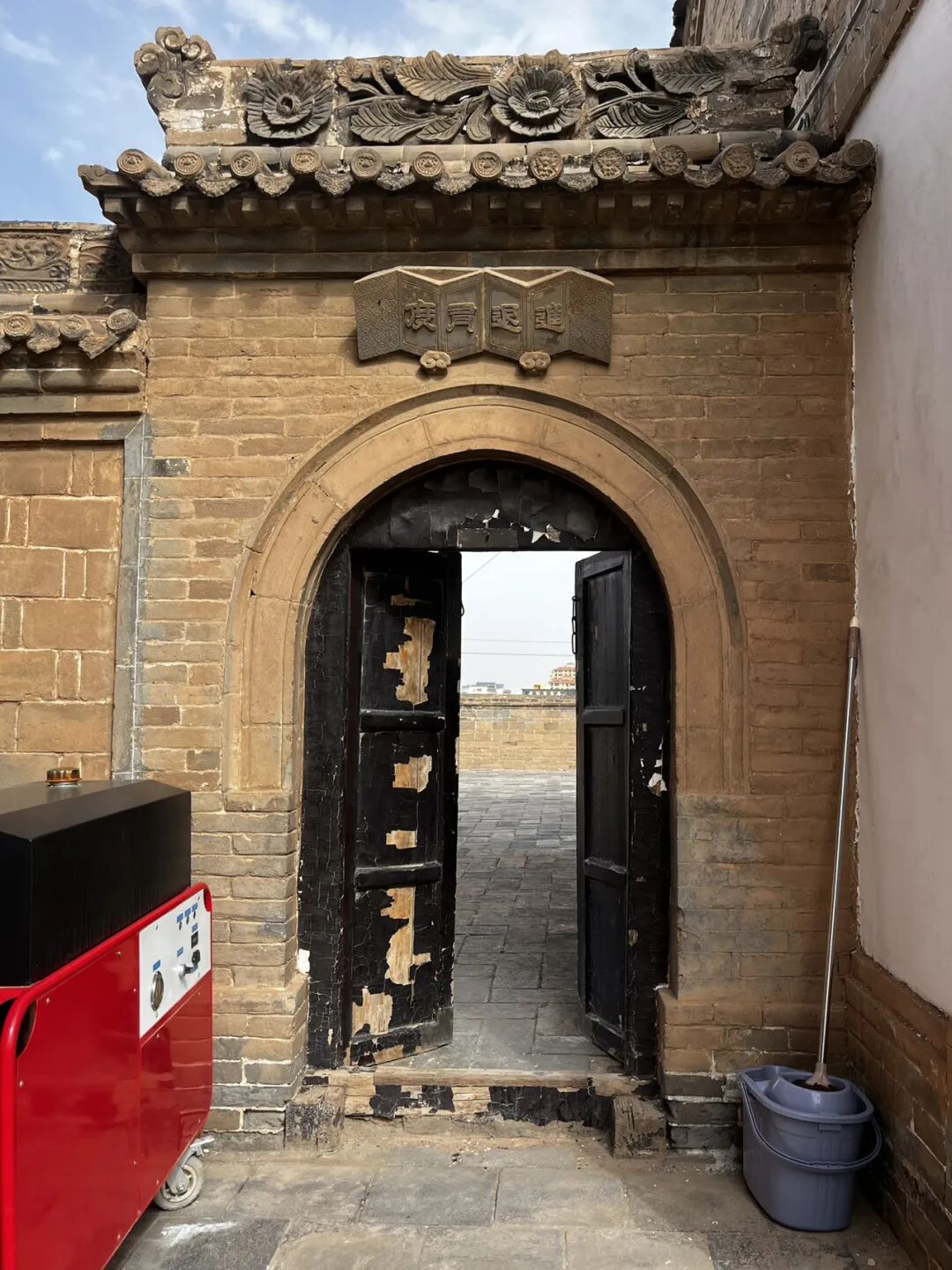
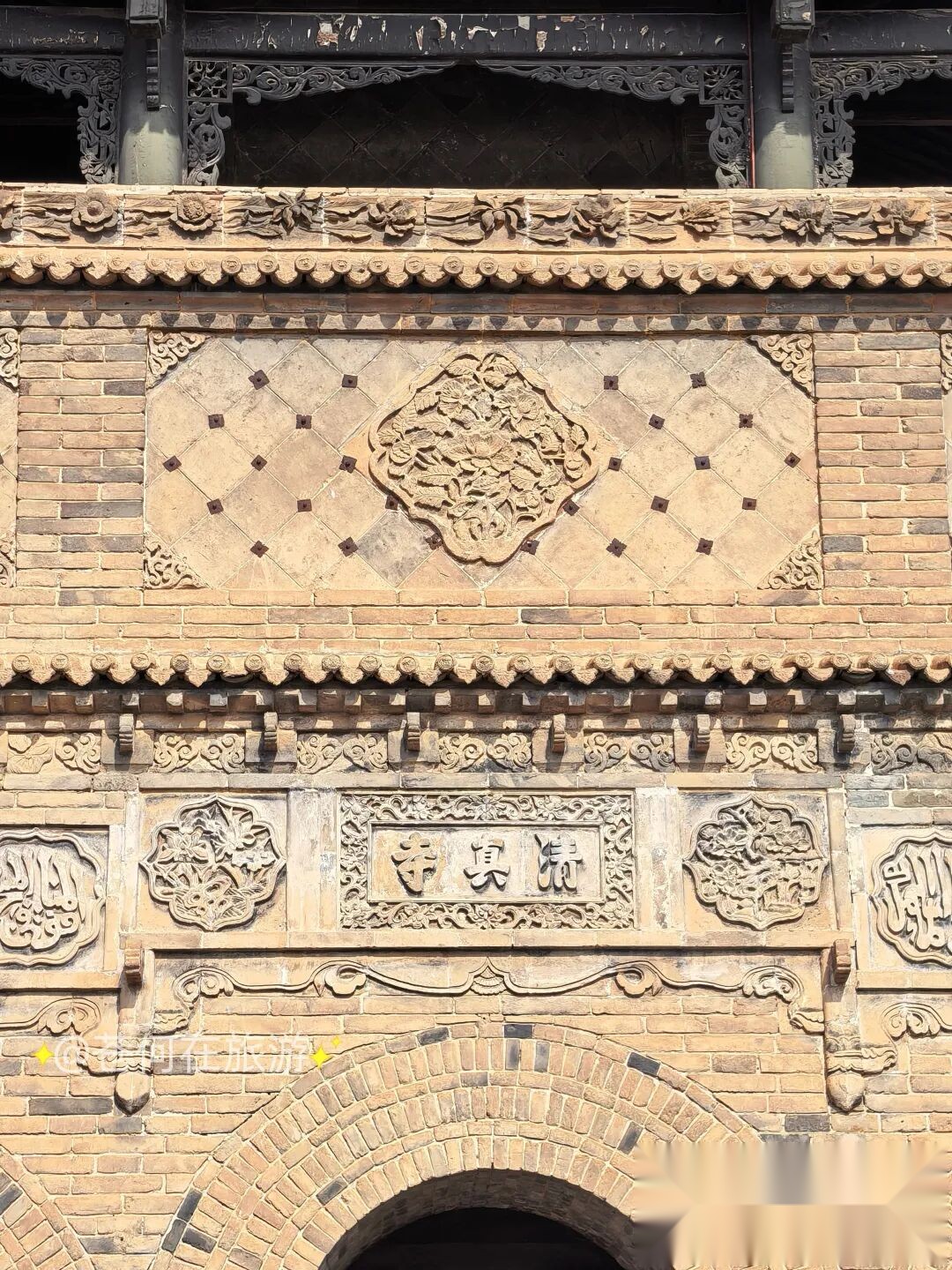
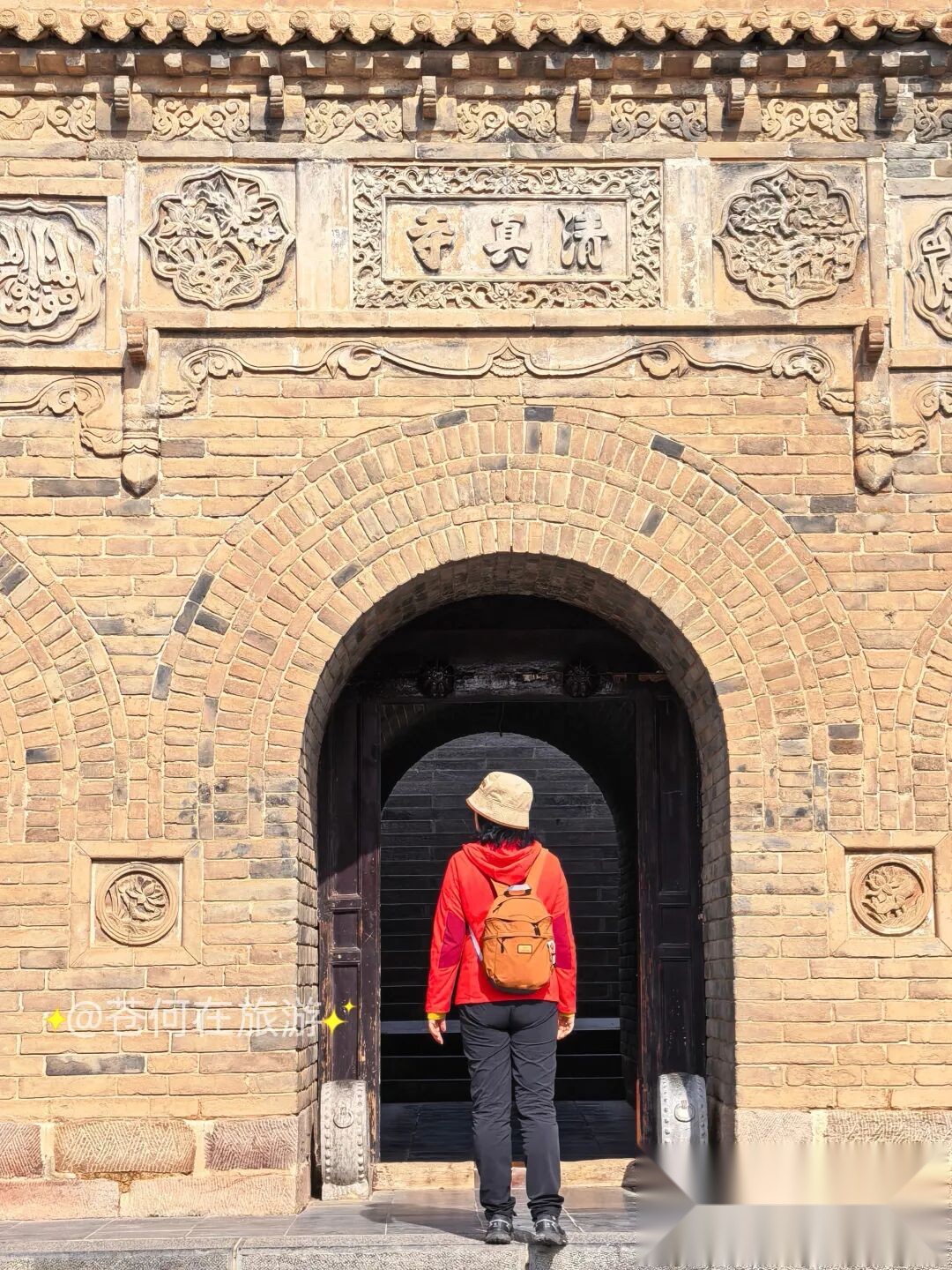
Next up are the arched gates: the lintel of the main central gate is brick-carved with the three characters for 'Mosque' (Qingzhensi), while the side gates feature the words 'Purify the Heart' (Xixin) and 'Patience' (Rennai), topped off with intricate Arabic calligraphy and floral brick carvings.
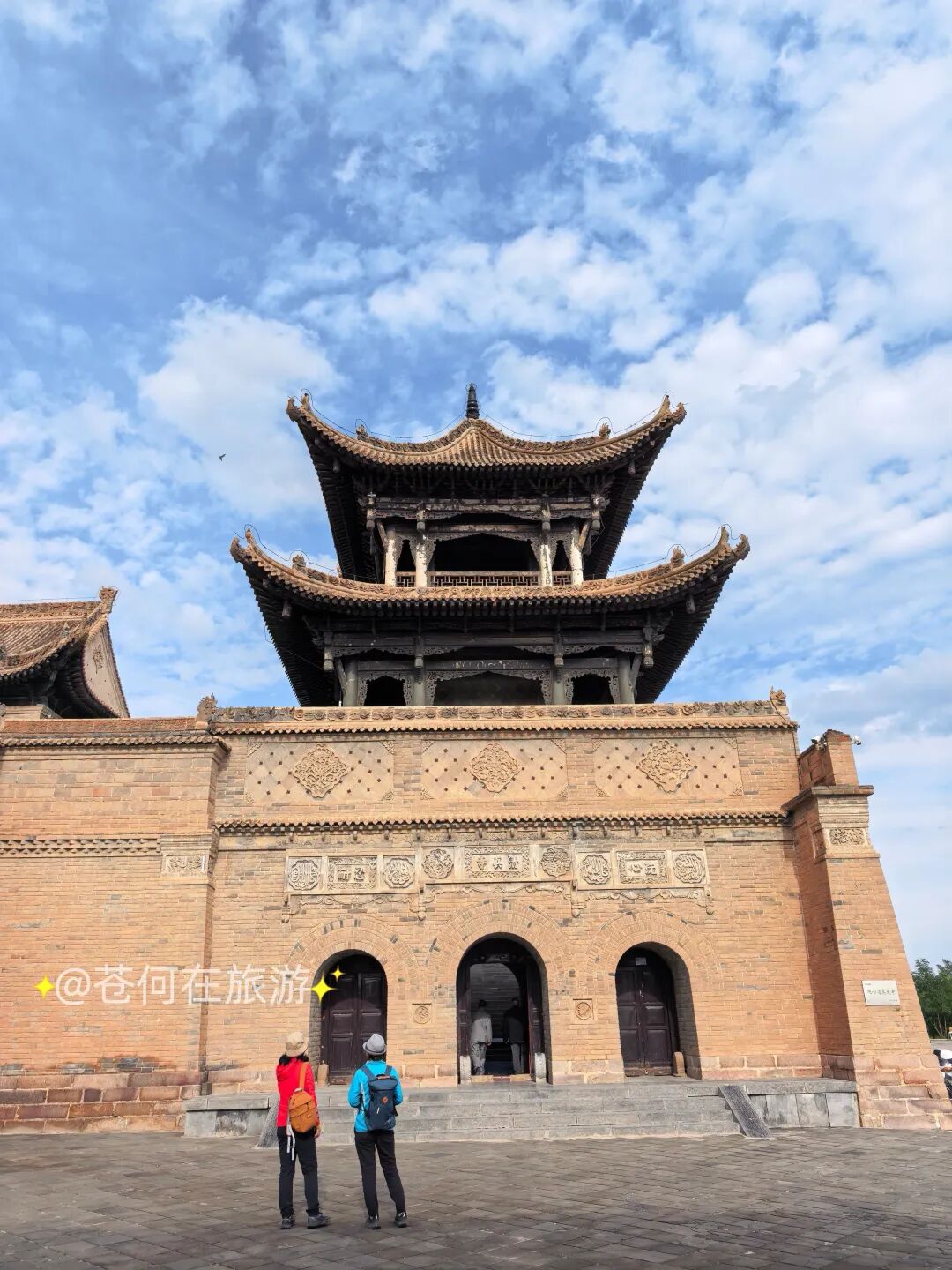
What makes the entire complex super unique is its 'reverse-curtain' layout. To walk inside, visitors first have to pass through three brick-arched gates (facing east) and a dark underground passage, then climb the stairs up onto the grey-brick high platform. You’ll spot the minaret (bangkelou) before stepping into the main courtyard, where you'll finally see the prayer hall facing west toward Mecca.
That right there is the mosque's reverse-curtain layout.
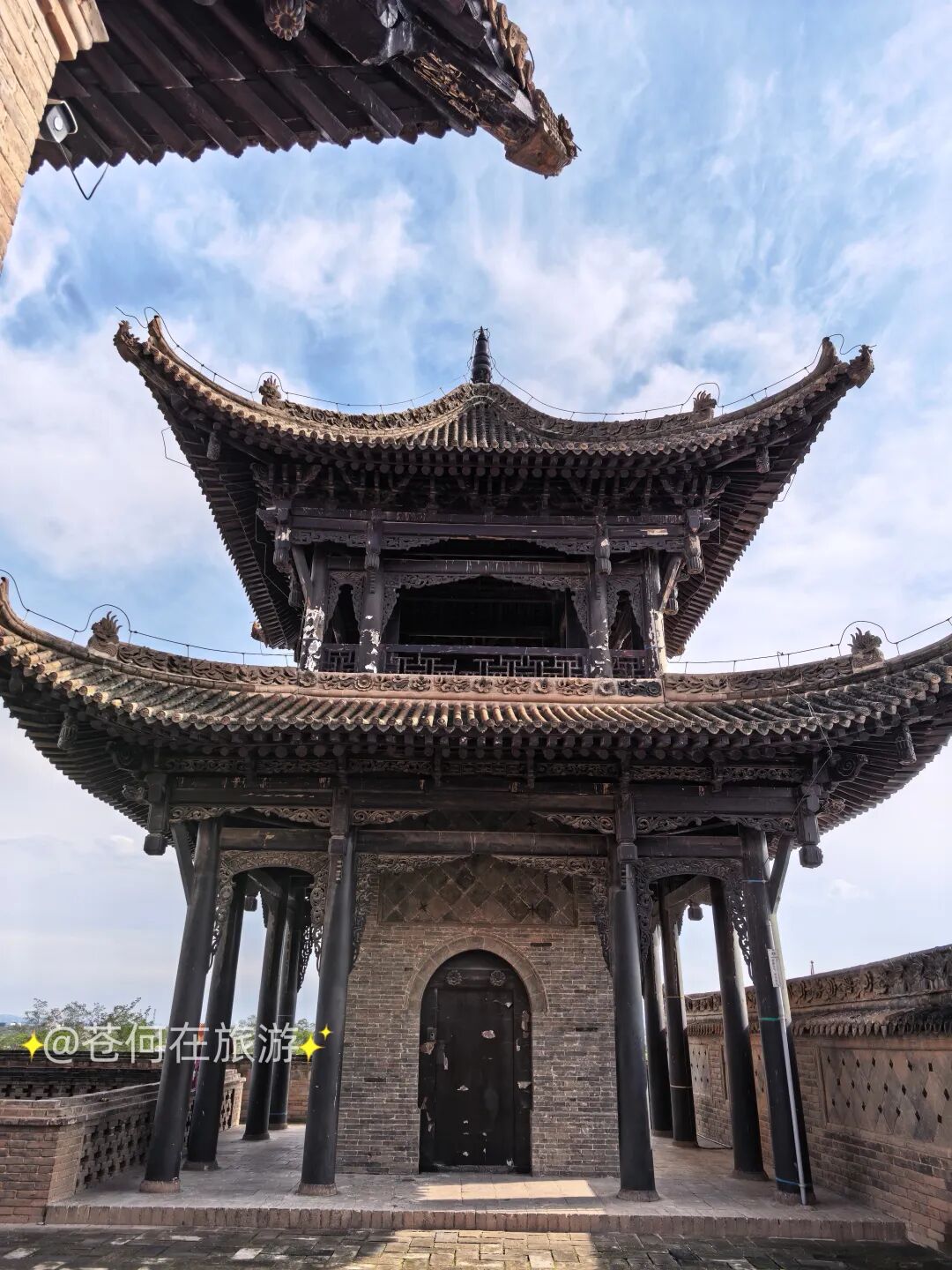
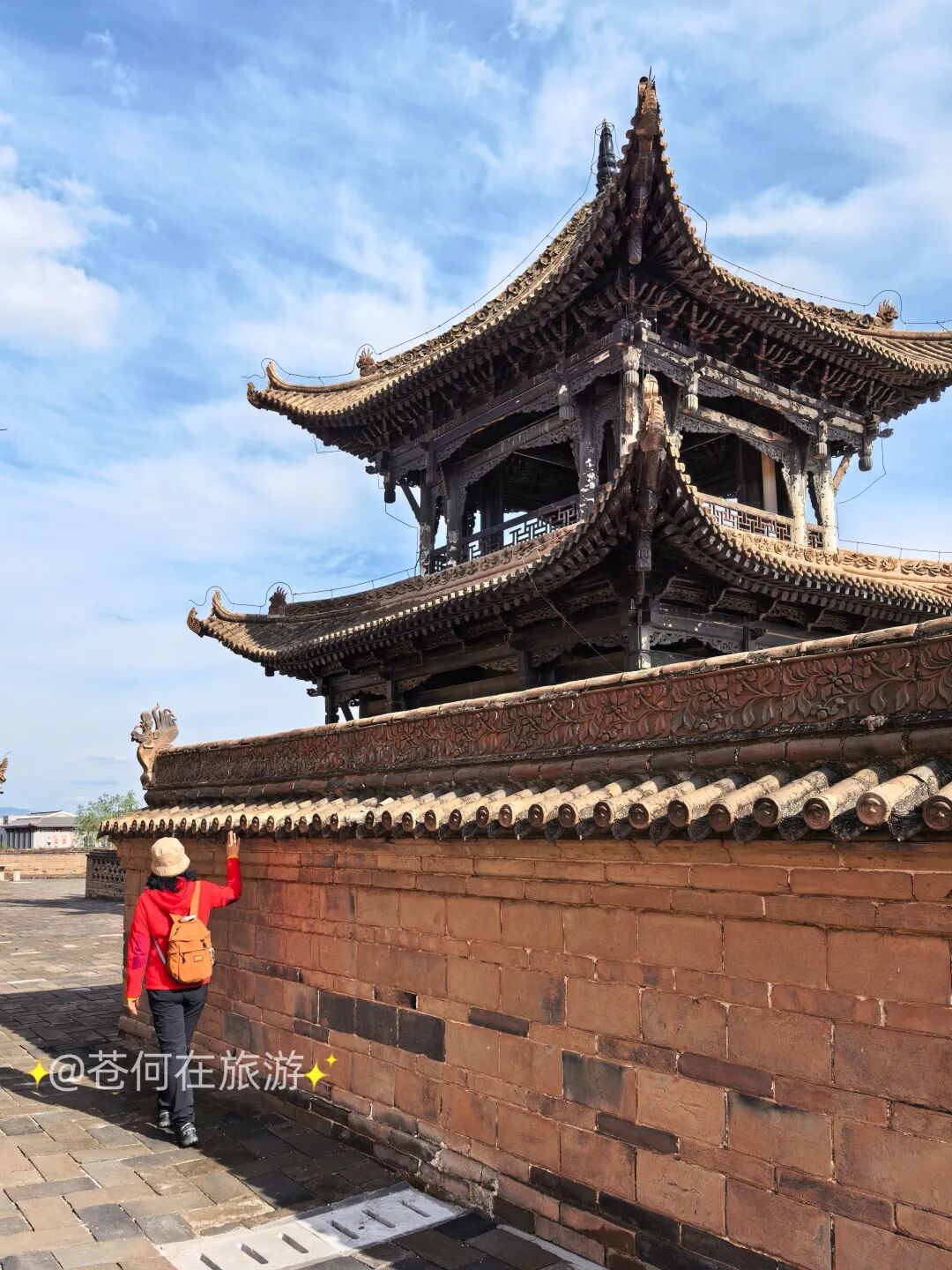
The bangkelou (minaret / prayer tower). Its second floor features a four-sided pyramidal roof in a classic Chinese pavilion style, complete with gorgeous brick and wood carvings. Built high up on the terrace, you can spot it from miles away.
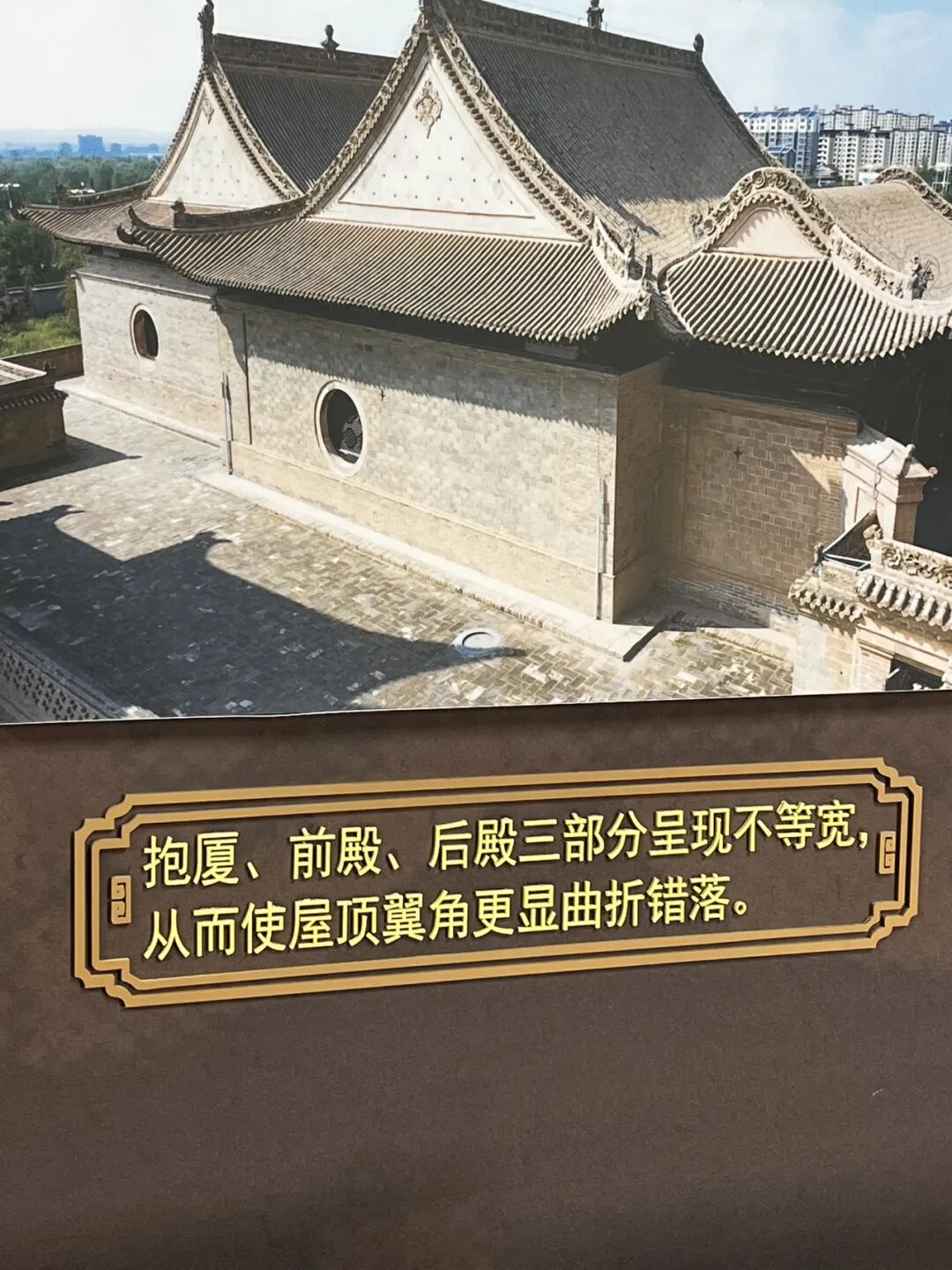
The prayer hall is the beating heart of the entire complex, sitting on the west side and facing east. The roof utilizes a connected-ridge technique, linking a rolled-shed roof (juanshan) and two hip-and-gable roofs (xieshan) end-to-end to form one massive hall. The interior of the prayer hall is currently closed to non-Muslim visitors.
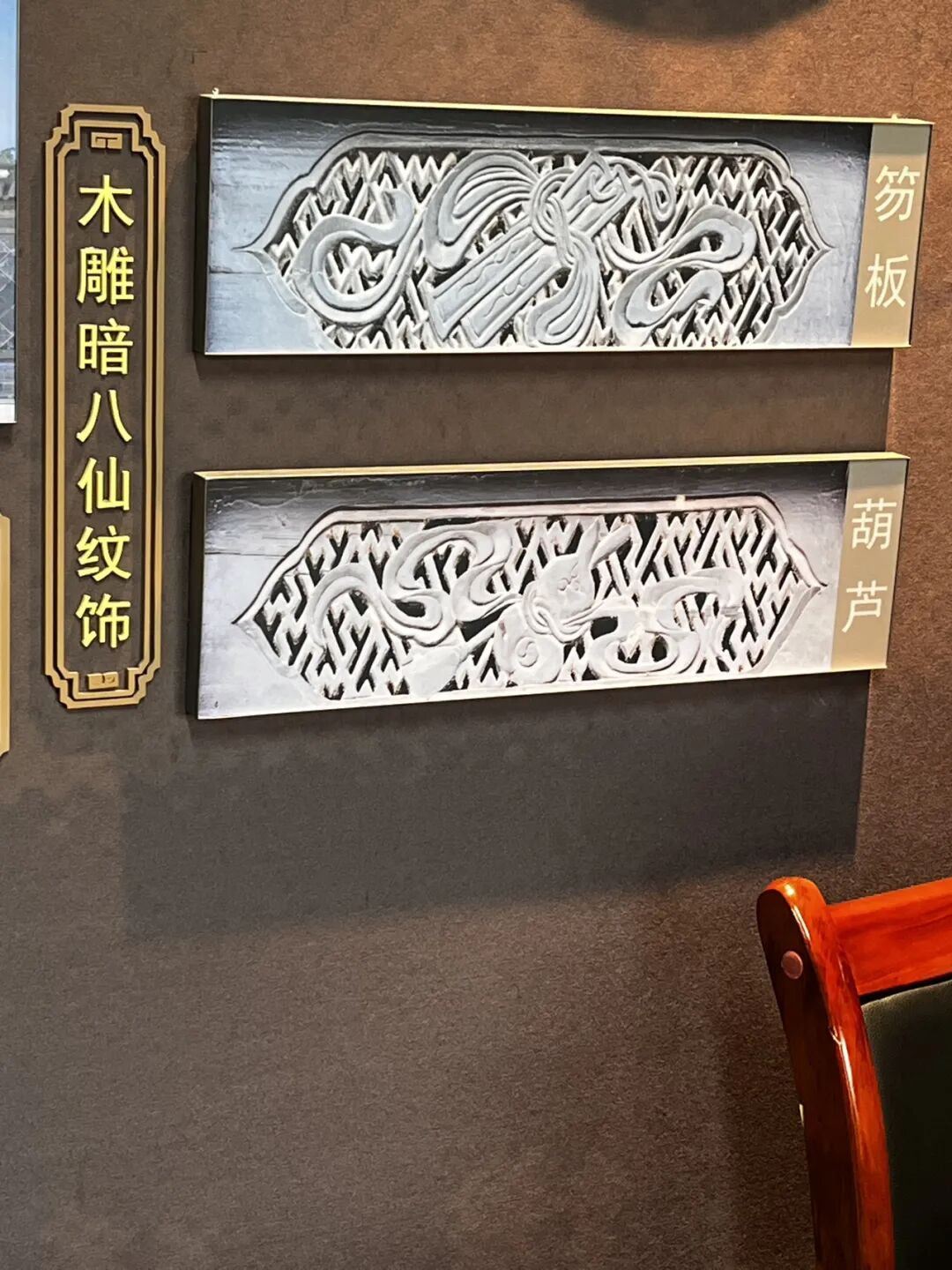
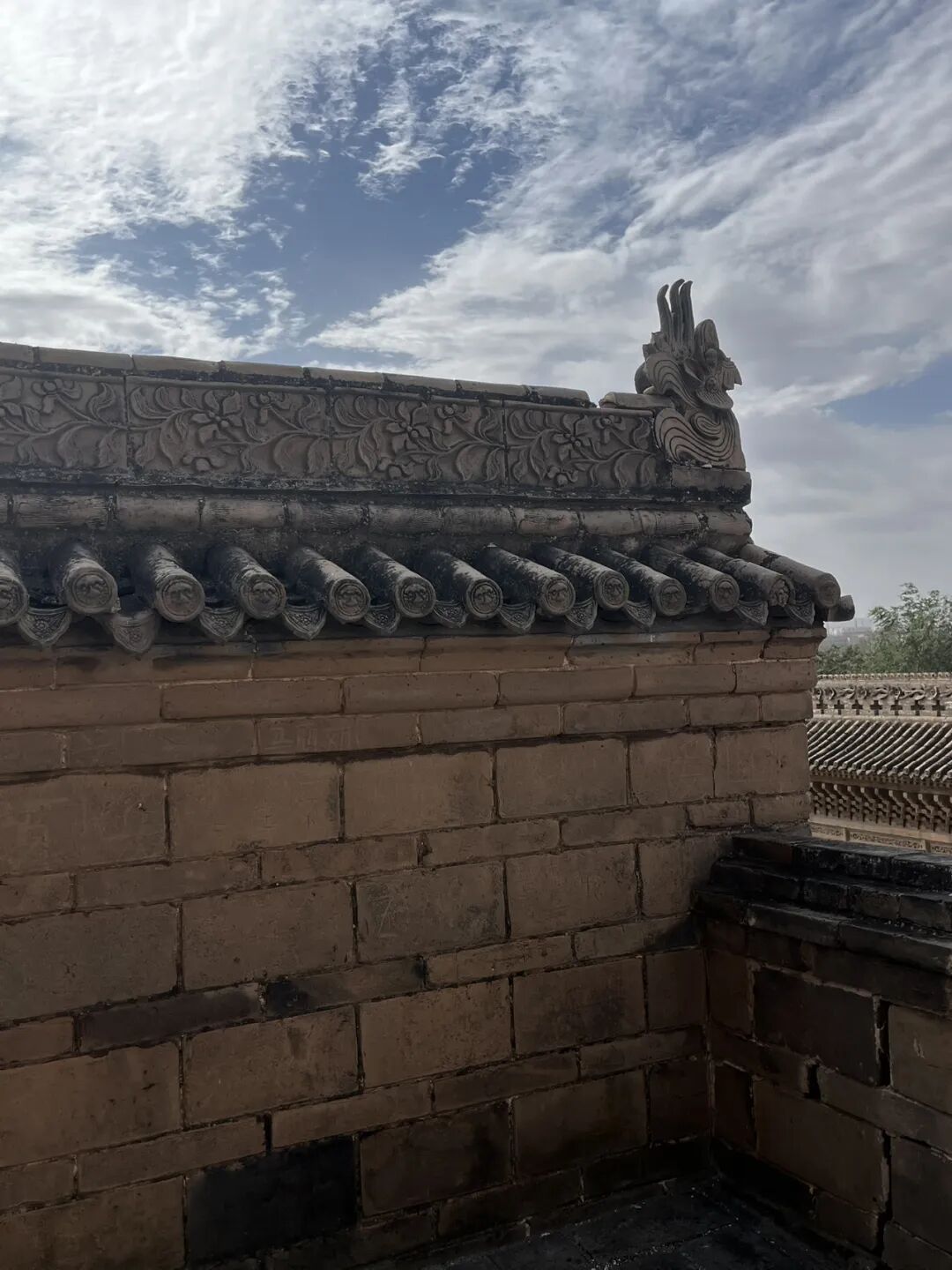
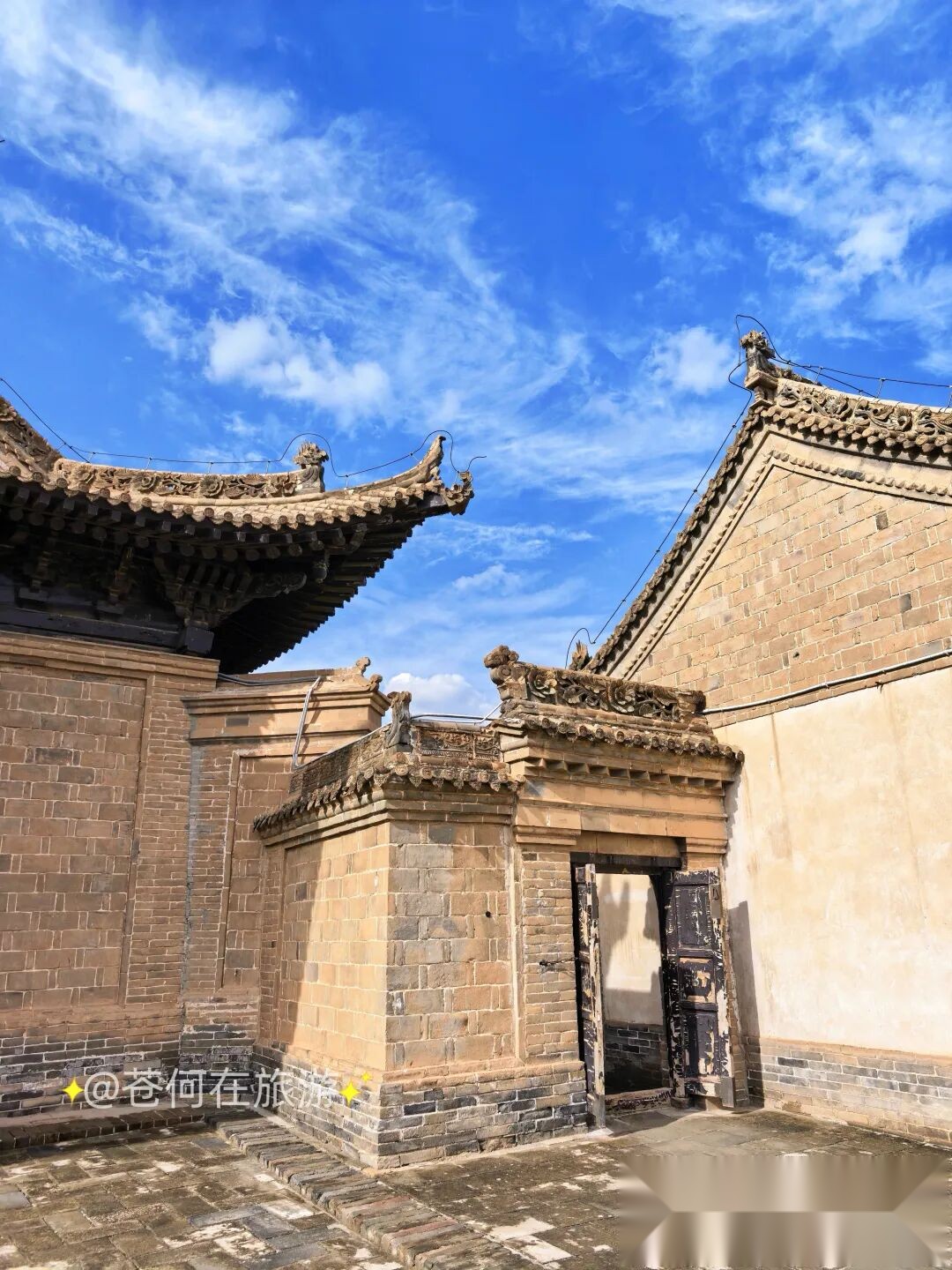
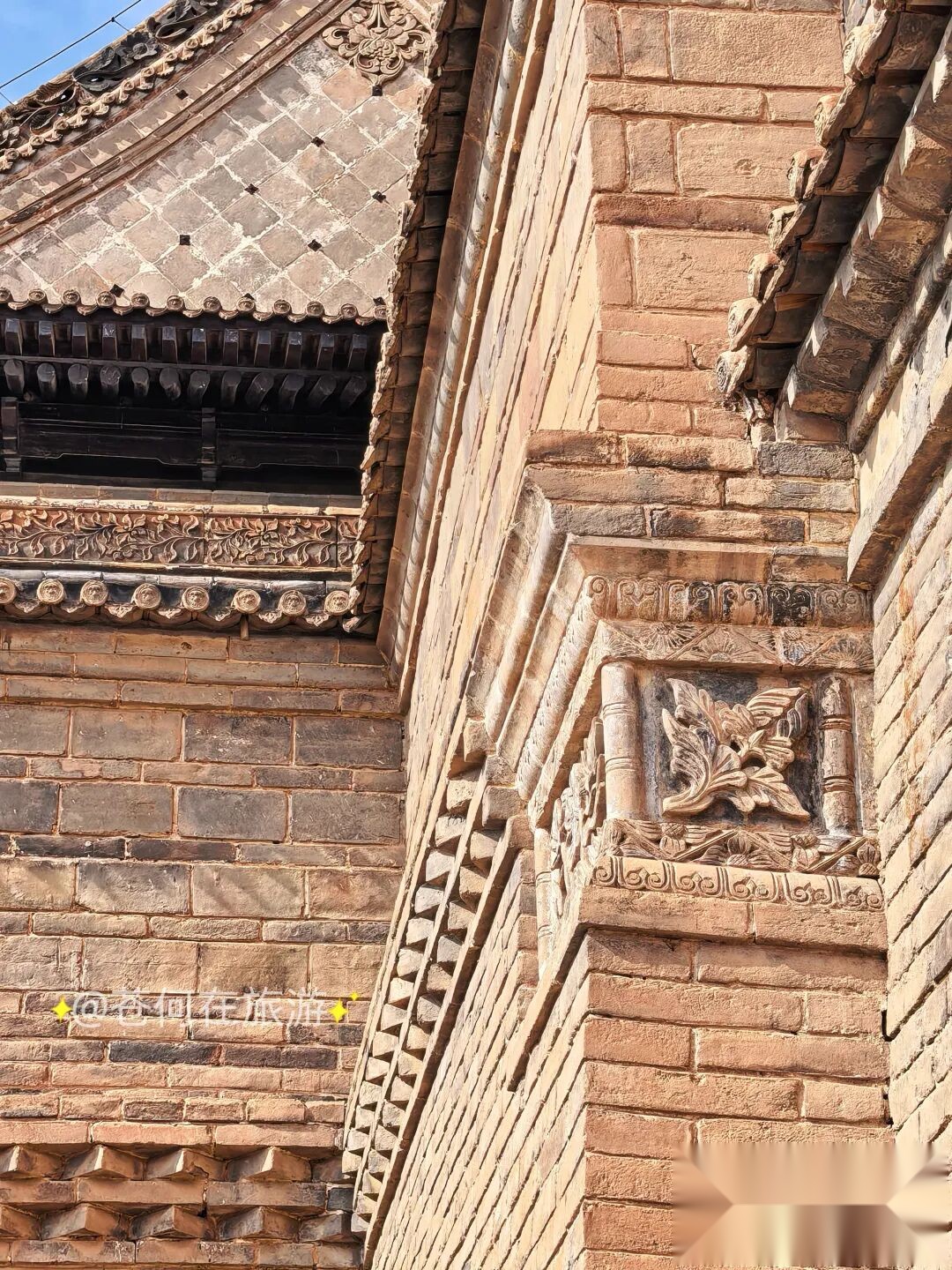
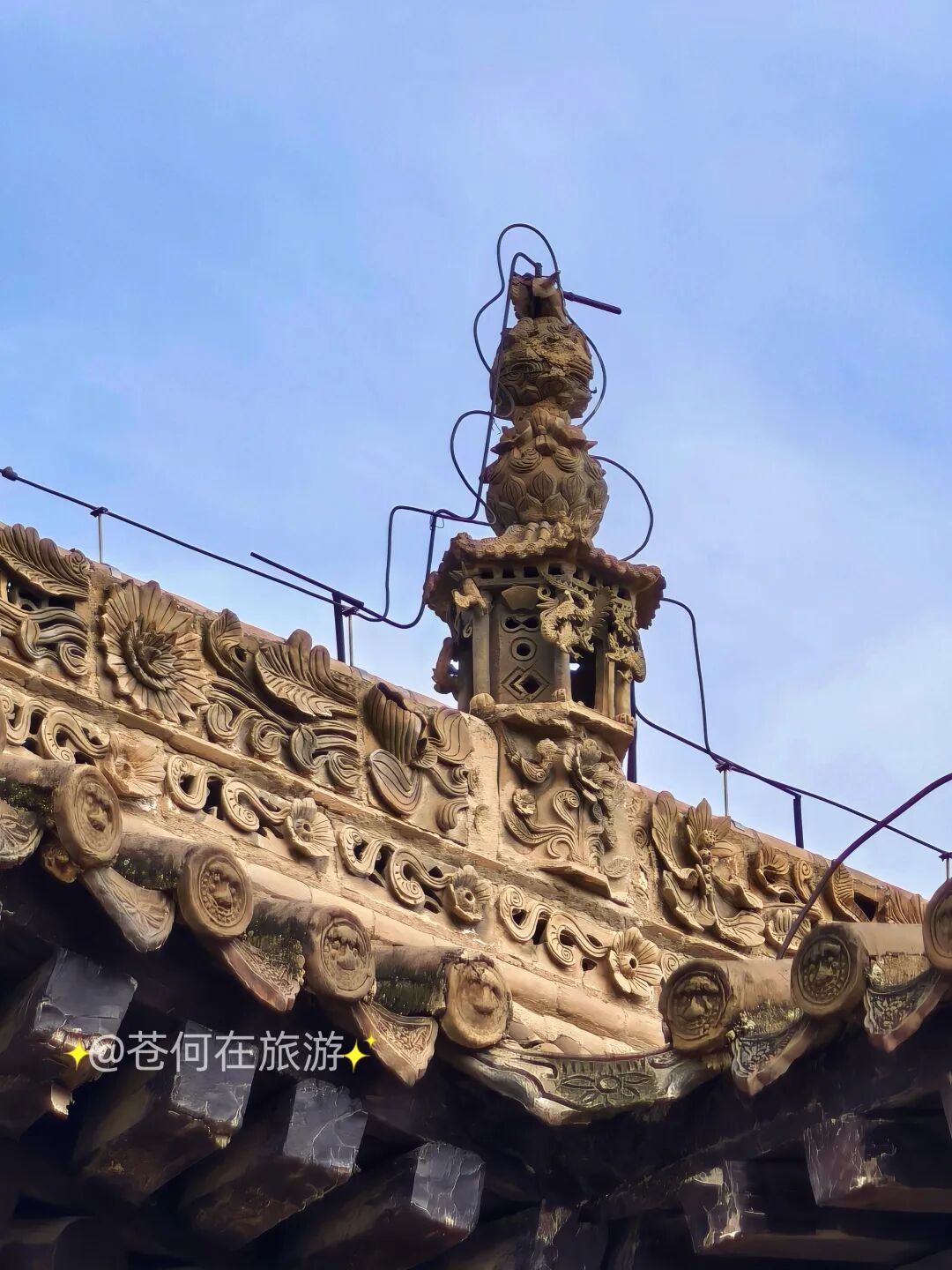
The most striking takeaway from hanging out here is the insane amount of detailed brick carving everywhere you look. Aside from the spirit wall, arched gates, and minaret we just mentioned, you'll spot brick carvings all over the main roof ridges, ridge terminals, gable walls, tie-beams (fang), and the walls flanking both sides of the corridors.
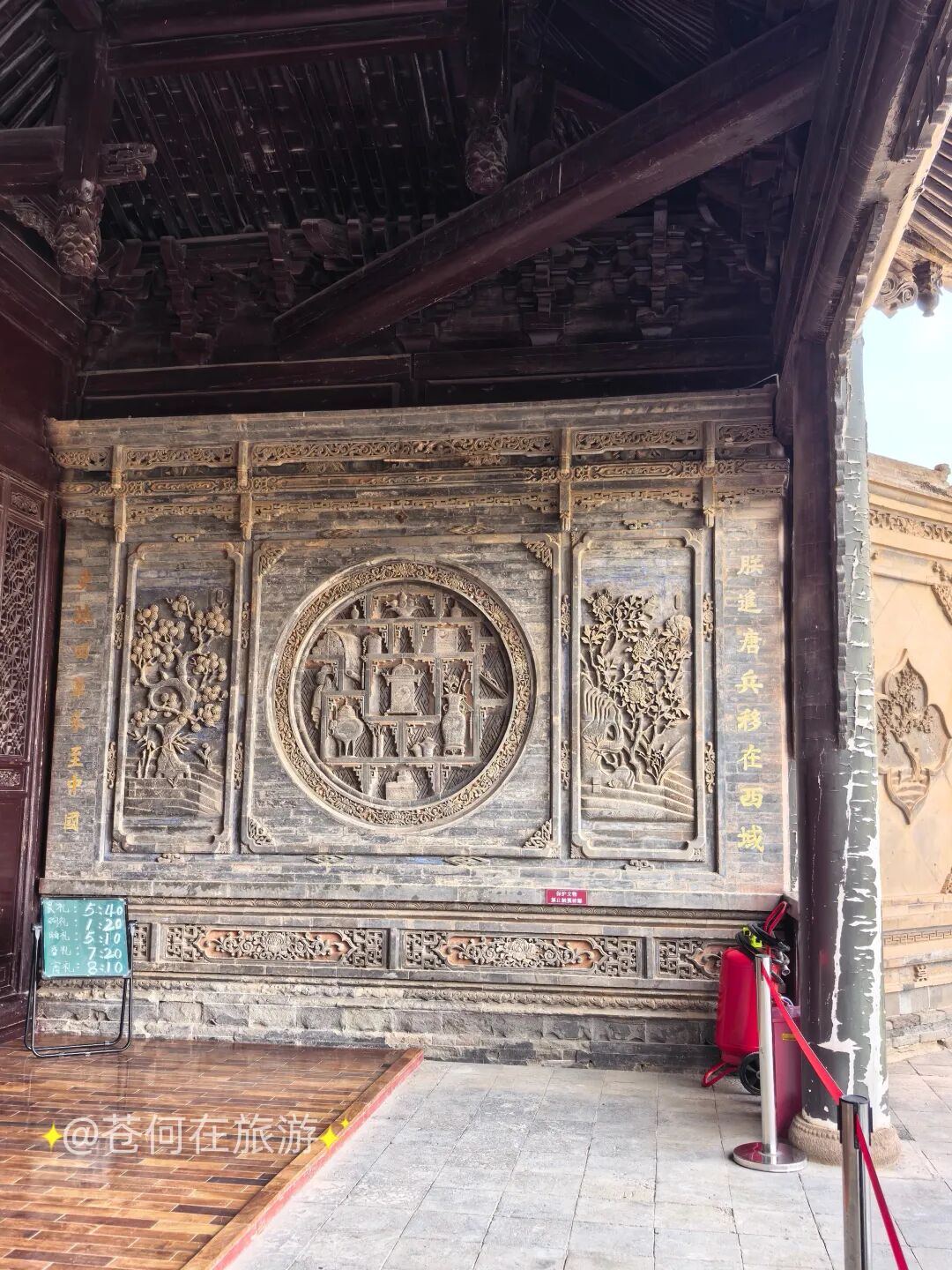
For example, on the walls flanking the front porch of the prayer hall, the south wall's center brick carving features a 'bogu' antique display rack alongside sutras, paired with bamboo and lotus motifs. The north wall features another bogu rack and a clock, paired with pine and chrysanthemum motifs.
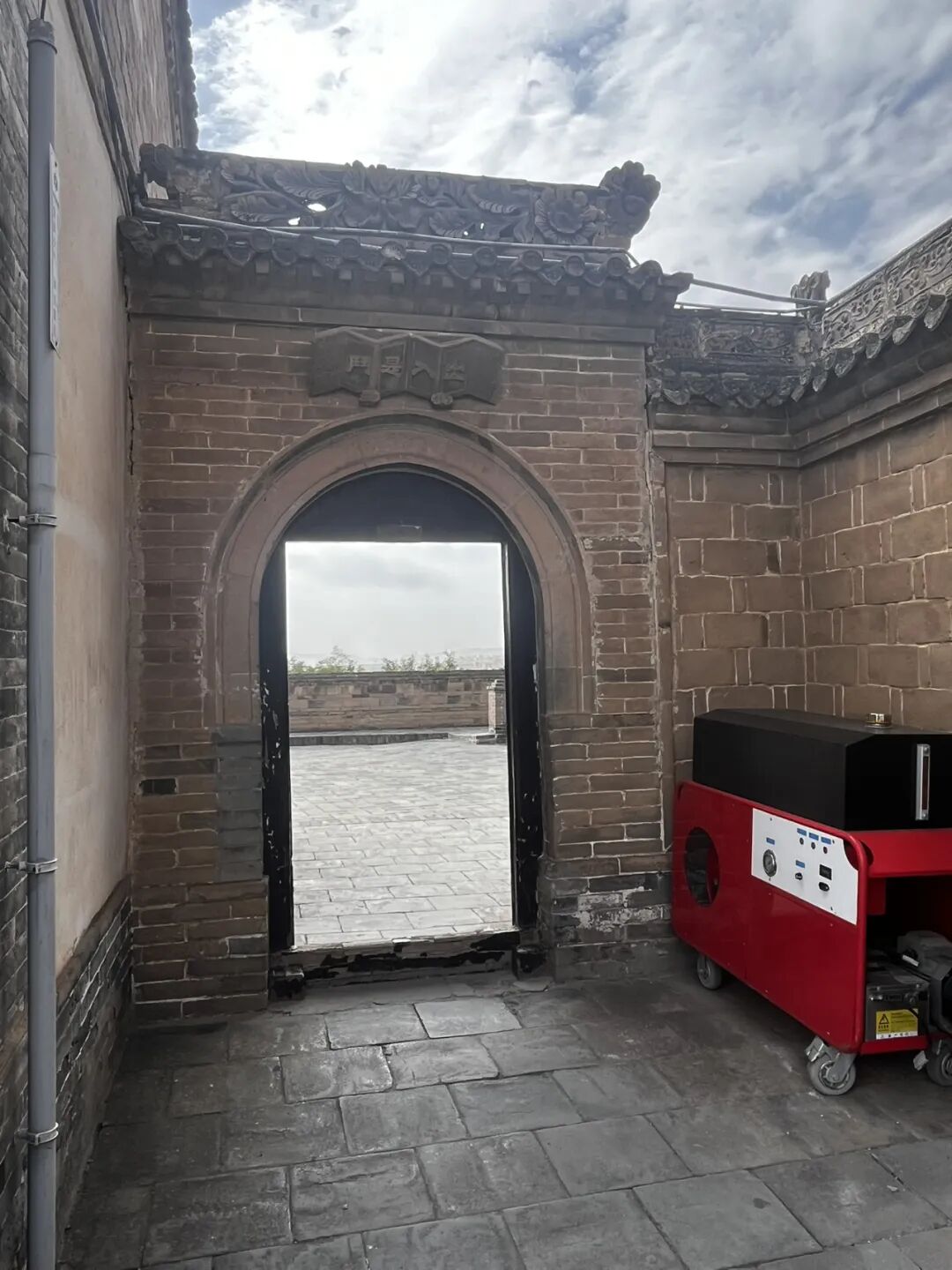
The plaques on the side gates leading in and out of the main prayer courtyard are also super unique, featuring book-page-style brick plaques inscribed with 'Entering and Leaving is a Gate' on one side, and 'Advance and Retreat with Propriety' on the other.
Bathed in blue skies and fluffy white clouds, the Tongxin Great Mosque oozes ancient vibes, making it the ultimate spot for moody, storytelling travel shots.
A few photography tips and takeaways:
You can snag a sweeping panoramic shot of the entire mosque from the side of the spirit wall, and a full shot of the back of the spirit wall from up on the high platform.
Use a telephoto lens at the arched gates to capture that atmospheric, stepping-into-the-mosque vibe.
Sit on the steps with the minaret in the background for a cinematic, storytelling portrait—the shot below was taken by setting up our own tripod.
Snapping candid walking shots along the walls of the prayer courtyard keeps the frame super clean and looks amazing.
✅ Travel Guide:
Address: Beside Provincial Highway 101, near the Red Army Long March Memorial Museum – Tongxin Great Mosque, Tongxin County, Wuzhong City, Ningxia
Hours: 8:00 AM – 6:00 PM
Admission: Free view all
Exploring Tongxin Great Mosque: A National-Level Historic Monument Blending Song-Ming Timber Architecture with Islamic Spirit

Abstract:
A firsthand look inside the Tongxin Great Mosque, a hidden gem tucked away in the mountainous southern region of Ningxia. We're breaking down its unique architecture—dating back to the late Yuan and early Ming dynasties, where traditional Chinese timber-framing meets Islamic arches and domes—giving you a taste of an uncrowded, highly sophisticated Northwest architectural treasure.
If you're looking for the oldest and best-preserved ancient mosque in the Ningxia Hui Autonomous Region, it's definitely the Tongxin Great Mosque in Tongxin County, Wuzhong City.
It was originally founded during the Yuan dynasty, starting out as a Tibetan Buddhist monastery. During the Yuan, Prince Anxi Anada (grandson of Kublai Khan) was raised by Muslim foster parents as a child and converted to Islam as an adult. When he was stationed in Ningxia, he led a massive following to convert to Islam as well. As a result, the original monastery gradually fell into disuse, and some parts were converted into a mosque.
On October 20, 1936, during the Red Army's Long March, the Shaan-Gan-Ning Yuhai County Hui Autonomous Representative Conference was held at the Tongxin Great Mosque, where the Shaan-Gan-Ning Yuhai County Hui Autonomous Government was elected and established. This site also serves as the former location of the founding assembly of that Hui autonomous government.
The Tongxin Great Mosque is built on a 7-meter-high platform enclosed by dark grey bricks, utilizing traditional Chinese timber-framing techniques while incorporating Islamic-style decorations, making it a stellar example of two cultures coming together.
The dark brick spirit wall (zhaobi) in front of the mosque is a classic case in point. The front features the name 'Tongxin Great Mosque' written in both Chinese and Arabic script. The center of the back features a brick-carved 'Moon Hiding in the Pines' motif, flanked by couplets carved in official script (lishi) dating back to the Guangxu reign.
Next up are the arched gates: the lintel of the main central gate is brick-carved with the three characters for 'Mosque' (Qingzhensi), while the side gates feature the words 'Purify the Heart' (Xixin) and 'Patience' (Rennai), topped off with intricate Arabic calligraphy and floral brick carvings.

What makes the entire complex super unique is its 'reverse-curtain' layout. To walk inside, visitors first have to pass through three brick-arched gates (facing east) and a dark underground passage, then climb the stairs up onto the grey-brick high platform. You’ll spot the minaret (bangkelou) before stepping into the main courtyard, where you'll finally see the prayer hall facing west toward Mecca.
That right there is the mosque's reverse-curtain layout.
The bangkelou (minaret / prayer tower). Its second floor features a four-sided pyramidal roof in a classic Chinese pavilion style, complete with gorgeous brick and wood carvings. Built high up on the terrace, you can spot it from miles away.
The prayer hall is the beating heart of the entire complex, sitting on the west side and facing east. The roof utilizes a connected-ridge technique, linking a rolled-shed roof (juanshan) and two hip-and-gable roofs (xieshan) end-to-end to form one massive hall. The interior of the prayer hall is currently closed to non-Muslim visitors.
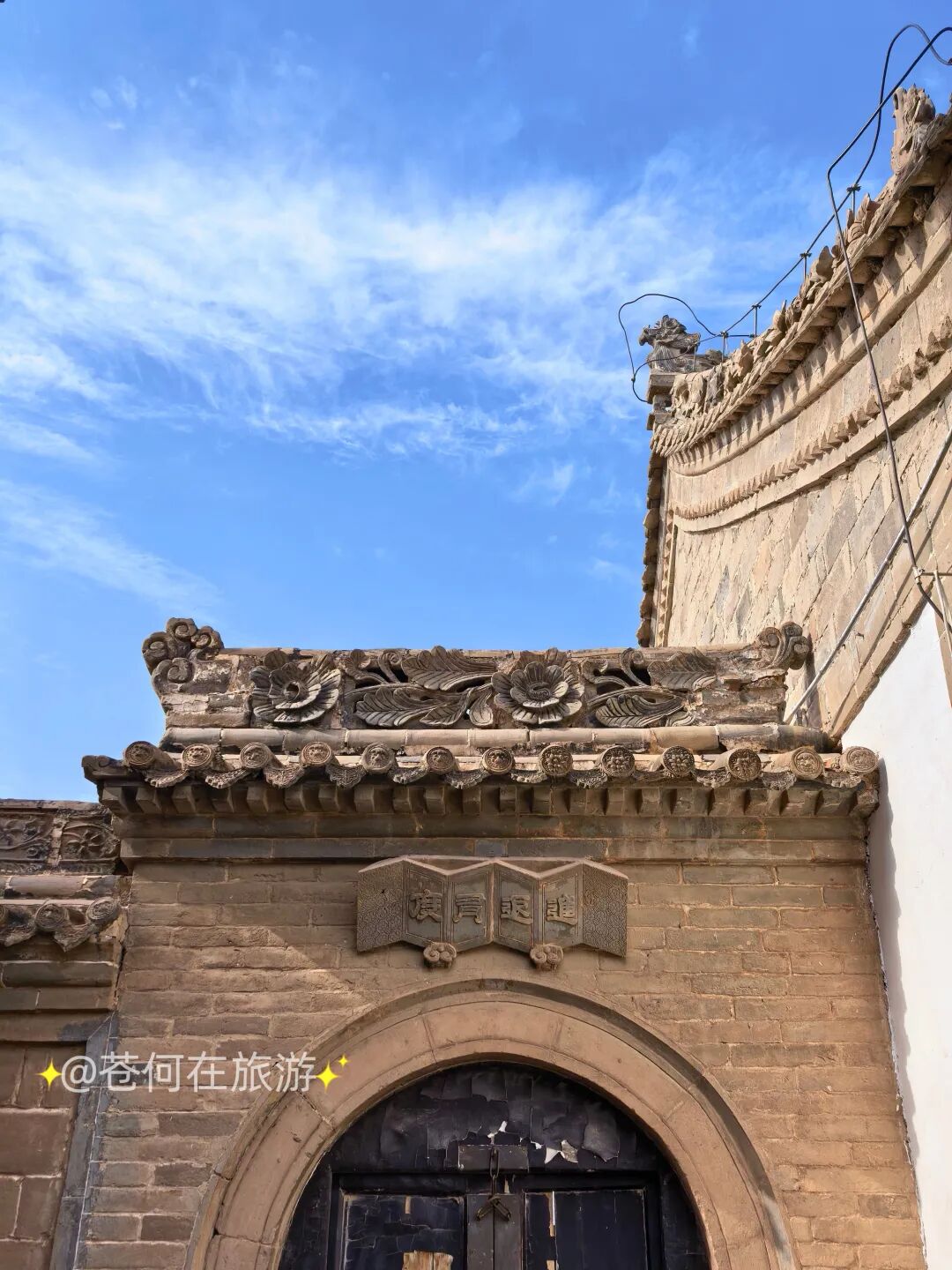
The most striking takeaway from hanging out here is the insane amount of detailed brick carving everywhere you look. Aside from the spirit wall, arched gates, and minaret we just mentioned, you'll spot brick carvings all over the main roof ridges, ridge terminals, gable walls, tie-beams (fang), and the walls flanking both sides of the corridors.
For example, on the walls flanking the front porch of the prayer hall, the south wall's center brick carving features a 'bogu' antique display rack alongside sutras, paired with bamboo and lotus motifs. The north wall features another bogu rack and a clock, paired with pine and chrysanthemum motifs.
The plaques on the side gates leading in and out of the main prayer courtyard are also super unique, featuring book-page-style brick plaques inscribed with 'Entering and Leaving is a Gate' on one side, and 'Advance and Retreat with Propriety' on the other.
Bathed in blue skies and fluffy white clouds, the Tongxin Great Mosque oozes ancient vibes, making it the ultimate spot for moody, storytelling travel shots.
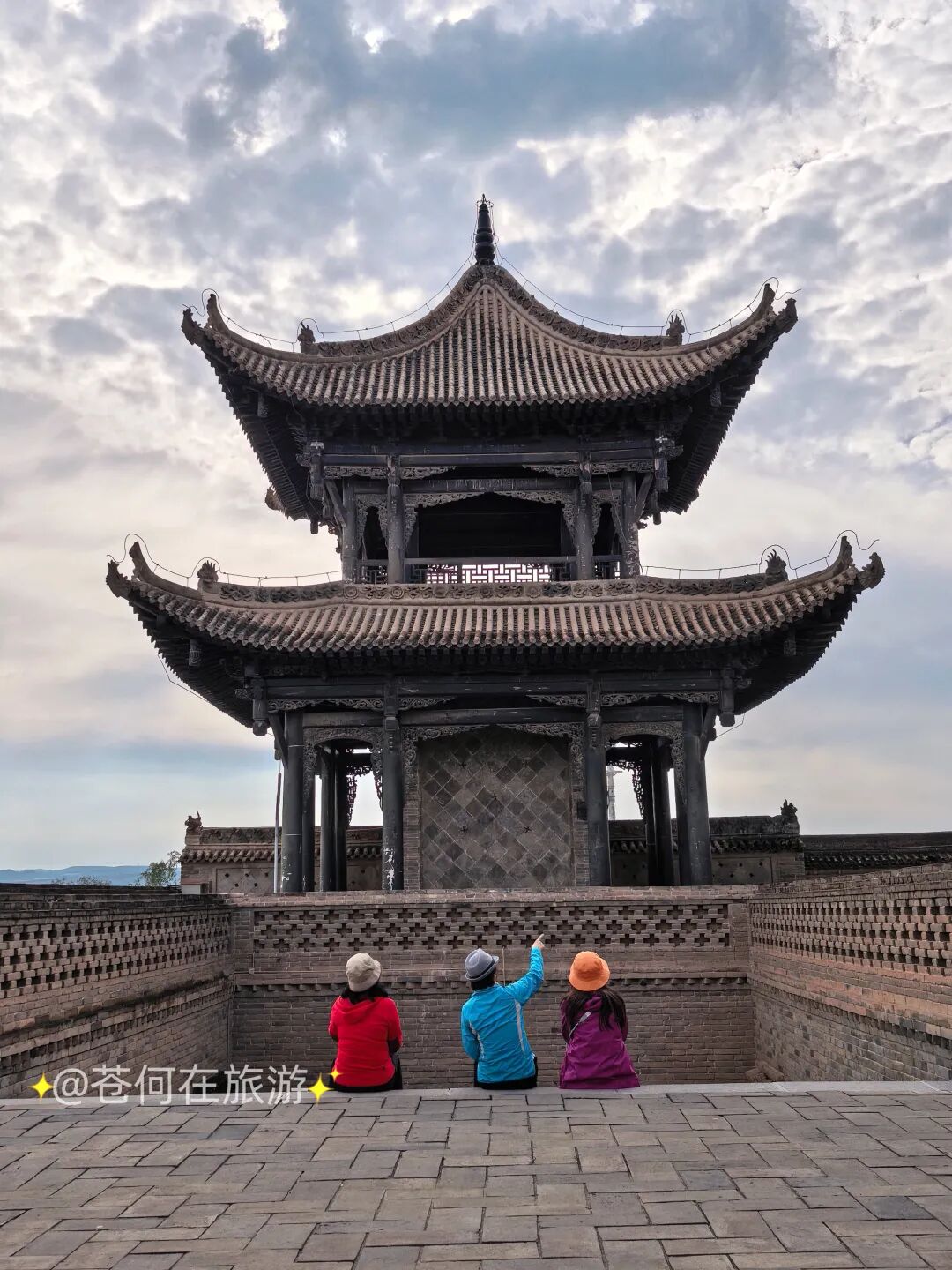
A few photography tips and takeaways:
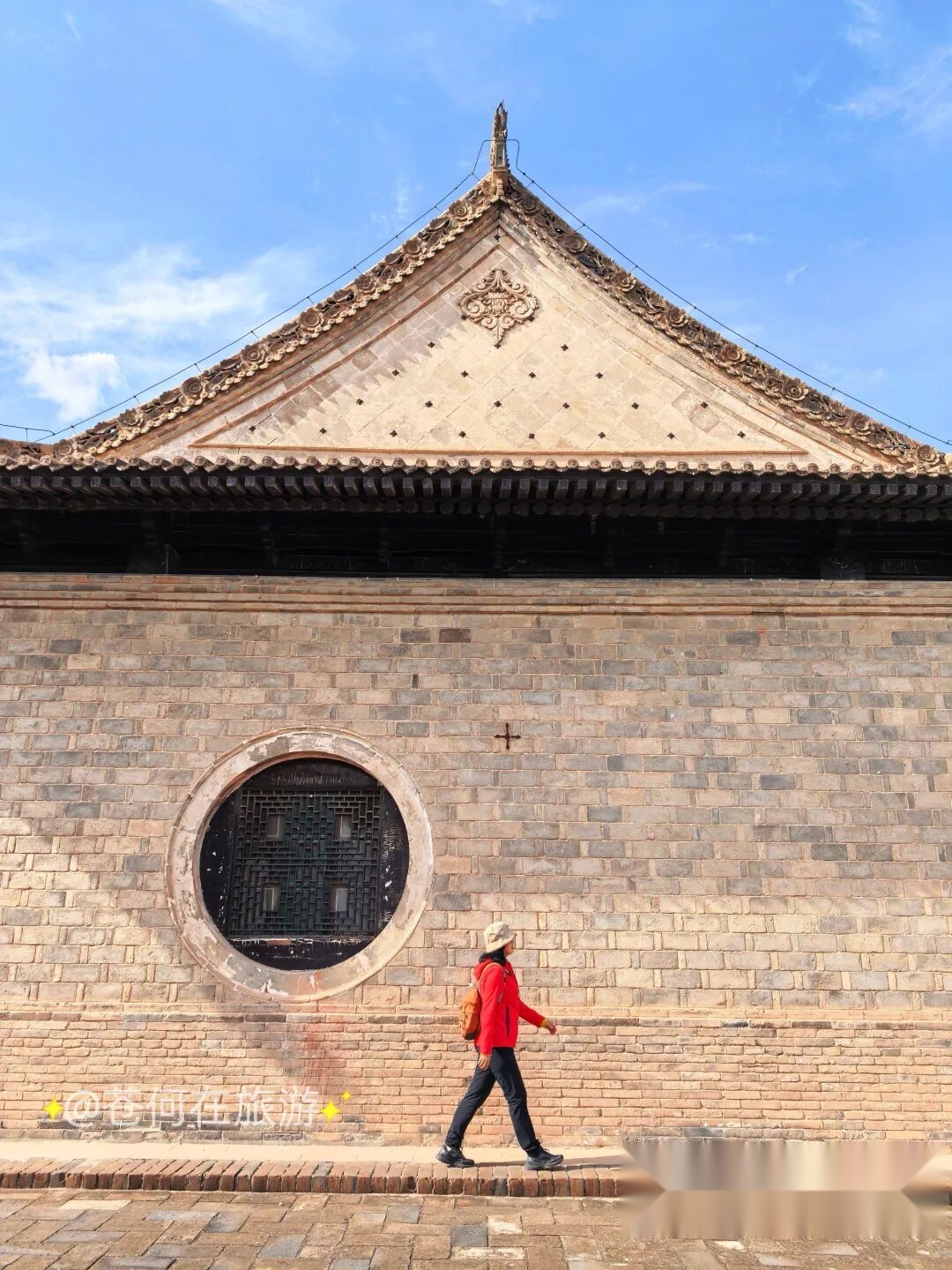
You can snag a sweeping panoramic shot of the entire mosque from the side of the spirit wall, and a full shot of the back of the spirit wall from up on the high platform.

Use a telephoto lens at the arched gates to capture that atmospheric, stepping-into-the-mosque vibe.
Sit on the steps with the minaret in the background for a cinematic, storytelling portrait—the shot below was taken by setting up our own tripod.
Snapping candid walking shots along the walls of the prayer courtyard keeps the frame super clean and looks amazing.
✅ Travel Guide:
Address: Beside Provincial Highway 101, near the Red Army Long March Memorial Museum – Tongxin Great Mosque, Tongxin County, Wuzhong City, Ningxia
Hours: 8:00 AM – 6:00 PM
Admission: Free
Discovering Yunnan's Unique Zhuang-Hui Muslims: Culture, Food & History
Articles • Hasan09 posted the article • 0 comments • 1 views • 1 hours ago
Liping Hu, Yu Feng: A Closer Look at the "Zhuang-Hui" Muslims of Wenshan, Yunnan
Abstract:
The "Zhuang-Hui" are a unique group of Hui Muslims living in Wenshan Prefecture, Yunnan Province. Over the course of history, they have blended elements of Islamic faith with distinct Zhuang cultural traditions, creating a rich, pluralistic ethnic culture.
1. Origins and Overview of the Hui People in Wenshan Prefecture, Yunnan
Wenshan Zhuang and Miao Autonomous Prefecture is home to over 23,000 Hui Muslims, making up about 0.007% of the prefecture's total population of 3.28 million. They are scattered across four counties: Wenshan, Yanshan, Qiubei, and Guangnan. Wenshan city sits at the center, surrounded by Maguan, Xichou, Malipo, Funing, Yanshan, Qiubei, and Guangnan counties. Aside from a few Hui civil servants and temporary residents working in Xichou, Maguan, Malipo, and Funing, those four counties are essentially devoid of resident Hui populations.
The "Zhuang-Hui" are a unique group of Hui Muslims living in Wenshan Prefecture, Yunnan Province. Over the course of history, they have blended elements of Islamic faith with distinct Zhuang cultural traditions, creating a rich, pluralistic ethnic culture.
1. Origins and Overview of the Hui People in Wenshan Prefecture, Yunnan
Wenshan Zhuang and Miao Autonomous Prefecture is home to over 23,000 Hui Muslims, making up about 0.007% of the prefecture's total population of 3.28 million. They are scattered across four counties: Wenshan, Yanshan, Qiubei, and Guangnan. Wenshan city sits at the center, surrounded by Maguan, Xichou, Malipo, Funing, Yanshan, Qiubei, and Guangnan counties. Aside from a few Hui civil servants and temporary residents working in Xichou, Maguan, Malipo, and Funing, those four counties are essentially devoid of resident Hui populations.
Wenshan's Hui population primarily lives along highways or in towns, mostly settled in flat valley basins with a small fraction living in mountainous areas. Hui villages tend to be tightly clustered, creating a settlement pattern of "large dispersion, small concentration." Currently, Yanshan has 19 Hui villages: Pingyuan Town includes Tianxin, Pingyuan, Songmaopo, Maolong, Sanjiacun, Xinzhuang, Xiaoyuan Road, Chebaini, Songshancun, and Shangmao Avenue; Jiayi Town includes Laojiaocheng, Xiaoshiqiao, Zhongzhai, Chengda, and Yanshan urban area; Ameng Town includes Ameng, Mifa, Mifa New Village, and Maodichong. Qiubei County has 9 Hui villages: Qiubei urban area, the Ball Manufacturing Plant, Jinping Town's Matoushan, Xincheng, Hewai, and Jiucheng, as well as Yuezhe Township's Yuezhe, Xinzhai, and Fuxing Village. Wenshan County has 9 Hui villages: Wenshan urban area, Matang Township's Huanglongba, Pingba Town's Pingba, Hongdian Hui Ethnic Township's Moke, Bajiazhai, along with self-declared repatriated ancestral villages Wulu Old Village, Wulu New Village, and Mulubai, plus Dehou Township's Kazuo Zhuang village Muslims. Guangnan County has two Hui residential areas in Guangnan urban area and Zhulin. Across the entire prefecture, there are 39 Hui residential villages and towns, housing a total of 40 mosques. Aside from the older mosques in Yuezhe and Guangnan, all other mosques have been successively renovated, expanded, or rebuilt by local villages and towns in recent times.
Generally speaking, the Hui population in Wenshan originated from migrations out of Dali, Kunming, Jianshui, Luliang, and Luxi during the Yongzheng, Qianlong, and Xianfeng reigns of the Qing Dynasty.
2. The Origins of Wenshan's Zhuang-Hui
Han, Hui, and other ethnic groups in Yunnan had historically lived together in harmony. However, the Qing government adopted a divide-and-rule policy of "using Han to control Hui," manufacturing ethnic divides that heightened tensions and damaged relations between the two communities.
In March 1856 (the 6th year of Xianfeng, Bingchen year), Yunnan Governor Shu Ahxing and Provincial Treasurer Qingsheng (a Manchu), acting on orders from the Qing court, commanded all prefectures, departments, sub-prefectures, and counties to "annihilate the Yunnan Hui and sweep them clean across eight hundred miles" (from Ma Minlin's *Records of the Great Calamity in Yunnan in the Fourteenth Year of Xianfeng*) and "gather mobs to slaughter the Hui," giving authorities a green light to kill Hui people with impunity. On April 16 and May 16, 1856, the Qing rulers carried out another brutal massacre of the Hui. Over 10,000 people in Kunming were slaughtered, leaving "almost no survivors" (from the *Inscribed Monument Marking the Reburial of Kunming's Five-Directional Hui Martyrs of the Bingchen Year of Xianfeng*). Today, the back of Jinjiashan in Kunming city serves as a mass grave (pit) for these massacred Hui people.
Before Du Wenxiu’s uprising broke out in western Yunnan in 1856 (the Bingchen year), the "Four Mountains Yi Rebellion" had already erupted around Wenshan and Qiubei. After Du Wenxiu's uprising began, Ma Zunxiang, a Hui from Moke Village in Wenshan, and Ma Jingju, a Hui from Xishan in Wenshan, also raised the banner of anti-Qing resistance. The anti-Qing struggle of Qiubei's Hui was deeply sympathized with and supported by local ethnic brothers. For instance, Yi people from places like Baima Cao secretly supplied grain to the Hui, highlighting the anti-Qing resistance of Hui in the Yuezhe area. As various ethnic groups united against the Qing, the Qing government—pursuing its policy of "gathering mobs to slaughter the Hui, wiping them straight out for eight hundred miles" and "giving permission to execute on sight any rebellious Hui troublemakers"—rolled out chilling slogans such as "First exterminate the Hui, next exterminate the Yi, and skin the Zhuang (Zhuang people) and Miao (Miao people) alive" to threaten anti-Manchu actions. After Du Wenxiu's uprising failed, almost every Hui village in Wenshan Prefecture was subjected to bloody purges and encirclement. Survivors were left destitute and displaced, fleeing to foreign lands. Afterward, Wenshan's Hui accepted pacification by the Qing court, but were forbidden from living in their ancestral homelands. Some Hui (such as those from the Yuezhe area) were escorted by troops to settle in Dazhang and Shadian in Hongju Prefecture.
During this period, some Hui who escaped by the skin of their teeth fled from various places into Zhuang villages, where they were sheltered by their Zhuang brothers. They began wearing Zhuang clothing, speaking the Zhuang language, intermarrying with local Zhuang, and raising families. Bingle Township's Wulu Old Village, New Village, Mulubai in Hongdian Township, and Kazuo Village in Dehou Township are entirely Zhuang communities, yet the ancestors of Wulu New Village, Old Village, and Mulubai were descendants of Dazhang Hui bearing the surname Ma and others. Today, New Village has 58 households, out of which 18 households adhere to Islam. Among these 18 households, 16 carry the surname Ma, 1 is surnamed Li, and 1 is surnamed Long. Old Village has over 200 households, with 24 households embracing Islam (18 Ma households, 4 Shen households, 1 Long household, and 1 Tian household). Among these Muslim households, while the Ma families trace their ancestry back to the Hui, the other surnames joined Islam after marrying daughters of the Ma family and becoming influenced by their Muslim relatives.
The ancestors of Kazuo Village originally came from Najiaying in Tonghai, belonging to the Na lineage. Legend has it that during the Bingchen incident of the Qing Dynasty, ancestors of the Ma family fled to Wulu and Mulubai, while ancestors of the Na family fled to Kazuo Village. Through intermarriage with other ethnic groups, they settled down, descendants multiplied, and as older generations passed away, the younger generations became assimilated by the local ethnic groups.
For example, in Wulu Village, Bingle Township, Wenshan Prefecture, there are currently two "Zhuang-Hui" villages known as Old Village and New Village, with New Village developing out of Old Village. According to local oral tradition, the shared male ancestor bearing the surname Ma fled from the Dazhang Hui enclave in Honghe Prefecture after the Bingchen incident and hid out in a Zhuang village. The male ancestor surnamed Ma married a local Zhuang woman, and all their descendants now carry the surname Ma. After the male ancestor passed away, his Dazhang Hui relatives would travel to Wulu every year during Eid al-Fitr to visit his grave. However, according to local recollections in Wulu, prior to 1990, Wulu's Ma villagers only knew that their ancestors were surnamed Ma and were Hui; they knew absolutely nothing about Islam or Hui culture and were practically indistinguishable from the local Zhuang. After 1990, Dazhang Hui people successively traveled to Wulu to preach Islam to the villagers, while also providing economic aid such as rice, sesame oil, and daily necessities. Ahong (Imam) Li Zaitang, who still serves as the religious leader at the Dazhang Mosque, was one of the earliest religious figures in the 1990s to help the villagers of Wulu return to Islam. Recalling how eagerly the villagers requested to "return" to the Hui fold, many memories remain vivid for him. Because local economic conditions were extremely harsh—roads were undeveloped and cars couldn't drive into the village—villagers used an ox cart to transport Ahong Li into the village. Both women and men eagerly studied religious knowledge; during the freezing winter without hot water, they used cold water to perform wudu (ablutions) before learning how to pray. Ahong Li described what he saw back then by saying he "was moved to tears multiple times." The Wulu Muslims who experienced this "return" maintain Islamic religious beliefs, yet they retain many cultural elements of both the Hui and Zhuang in their clothing, language, housing, and even their ethnic psychology.
3. Culture of the Wenshan Zhuang-Hui
(1) Language: Language is not only a marker of group identity and a differentiator from others, but also a social construction of the user group through cultural elements, generating cognitive, psychological, and conscious identification and interpretation. The Hui who migrated to the Zhuang areas of Yunnan embraced Zhuang cultural life and adopted the Zhuang language. The use of Zhuang is not limited to communication with Zhuang people; it is also widely used within the Hui community itself. The adoption of Zhuang has become a major hallmark of the "Zhuang-Hui." On their official ID cards, Wenshan Zhuang-Hui are registered as "Zhuang," and their language usage is identical to that of the local Zhuang. They refer to themselves as "Zhuang Muslims." Ma Guoxin, the current Ahong of the Old Village Mosque, is a local. During an evening of fieldwork, two cows belonging to a Zhuang family in Old Village fought and went missing, prompting them to seek help from the Ahong at the mosque. Ma Guoxin used a loudspeaker in the Zhuang language to help them find the cows. Hui men, women, old, and young in the village all speak and understand Zhuang, a practice the Zhuang refer to as "chatting." For instance, Ahong Ma Guoxin's children speak Mandarin at home with their parents, but speak Zhuang when playing with village playmates. Zhuang is a spoken language without a written script.
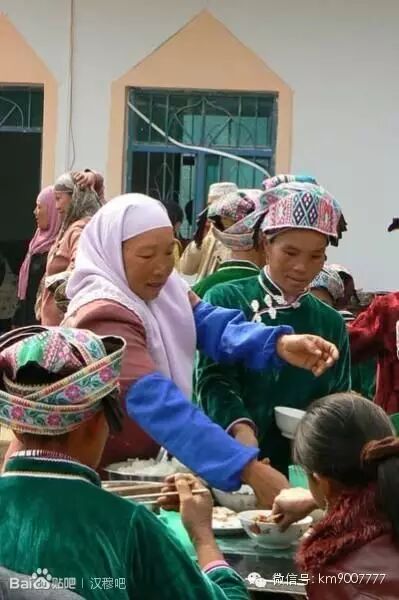
(2) Clothing: The attire of the "Zhuang-Hui" is also distinctive because it mirrors Zhuang dress, which is one reason they are called "Zhuang-Hui." During the historical formation of the Zhuang-Hui, this cultural shift of speaking Zhuang and wearing Zhuang clothing happened rapidly. Because the Hui adopted these two identity-marking traits of language and clothing, acquiring the outward cultural features of the Zhuang, outsiders came to call them "Zhuang-Hui." After returning to Islam, Hui men and women still wear clothing identical to that of the local Zhuang. Some elderly women still wear the traditional Zhuang headwrap at home, only switching to the Hui headscarf (hijab) when going out to attend Hui religious holidays.
(3) Diet: The "Zhuang-Hui" have also transitioned toward Zhuang characteristics in their culinary culture. Every year on the 15th day of the first lunar month, the Zhuang dye rice yellow using various flowers, and on the 24th day of the sixth lunar month, they celebrate the Red Rice Festival by dyeing glutinous rice red. The local Hui have likewise adopted these folk dietary customs while steadfastly upholding traditional Hui dietary habits and taboos.
(4) Funeral Customs: The Zhuang practice polytheism, worshipping mountains, rivers, and various aspects of nature. The Zhuang are extremely particular about choosing the right date for a funeral; if the day is wrong, the burial can be postponed for half a month or even a month after a loved one passes away. Wenshan Zhuang Muslims still retain their Zhuang identity status on their ID cards, referring to themselves as "Zhuang Muslims"—changing their religion without changing their official ethnicity. However, in funeral customs, Zhuang Muslims have inherited Hui traditions, handling the deceased according to Hui burial rites: prompt burial, janazah prayers led by an Ahong, and wrapping the body in white shrouds instead of using a coffin. In many families, some members practice Islam while others practice Zhuang polytheism. When a non-Muslim family member passes away, family members generally attend the funeral together, except that the Zhuang Muslims refrain from rituals that violate Islamic etiquette.
4. Pluralistic Cultural Identity
Cultural identity
refers to the social and psychological process by which an individual internalizes the culture and cultural group to which they belong, generating a sense of belonging, and thereby acquiring, maintaining, and innovating their own culture. Cultural identity encompasses identification with social value norms, religious beliefs, customs, language, and art. Cultural identity is also the process of forming the "self."
Wenshan's "Zhuang-Hui" demonstrate identity with local Zhuang in their daily life, economy, clothing, and customs, while primarily identifying as Hui in terms of their ethnic identity, religion, and communal emotional belonging. In Yunnan, there are similar groups identified by academics as "Yi-Hui" (in Xingping, Yuxi), "Tibetan-Hui" (in Shangri-La), and "Bai-Hui" (in Eryuan, Dali). They practice Islam, yet identify with local ethnic minority groups in their customs, habits, and language. Spiritually, they find their homecoming in Islam, even though their daily life paradigms have converged with local ethnic groups.
Due to historical reasons, the "Zhuang-Hui" group lacked sustained social interaction and demographic mobility with the mainstream Hui population for a long time. Instead, they maintained continuous, frequent interpersonal interactions, social contact, and cultural exchanges with the local Zhuang. However, this social process did not dilute their group belonging and identity regarding Hui traditional culture and mainstream emotional ties. Hui identity has persisted throughout the developmental history of the "Zhuang-Hui." An ancestral stele discovered in Wulu, Wenshan, titled *Stele Inscription of the Ma Progenitor*, records: "...yet the principles of the Islamic faith dare not be abandoned... After the ancestors passed away, there were no Hui teachers to guide us through the scriptures, hence later descendants changed their religion." Consequently, amid today's more open and frequent inter-ethnic interactions, some "Zhuang-Hui" have experienced a strong ethnic consciousness, symbolized by a religious return, sparking a series of social, cultural, and ideological revivals of traditional Hui social culture.
During fieldwork interviews, this pluralistic cultural identity of the Zhuang-Hui constantly shone through. Feng LF (female, 48 years old, wife of Ma KT's older brother, from Xiasheshu Village, a Zhuang who married into the Wulu Ma family and converted to Islam in 1990):
"Back then, Xue BJ (from Zhaotong, living in Dazhang) brought a group of about 20 young students from Dazhang to teach us how to perform wudu, pray, and recite scriptures. They told us our ancestors were Hui and that we needed to return to the Hui identity."
"After I became Hui, visiting my maiden family became a bit inconvenient, but I have my own cooking pots and stove. I still have 3 younger brothers and 2 younger sisters in Xiasheshu, and they are all Zhuang. Since I embraced Islam, I can no longer eat pork. I wash my face (perform wudu—author's note) and pray. Now I am Hui, but on my ID card, I still list my ethnicity as Zhuang. Going to the mosque to wash up and pray makes me feel much cleaner. All my kids love studying scriptures. My eldest son, Ma Mingli, is 22 this year. He's very smart, has a deep grasp of scriptural study, and is currently studying scriptures in Iran, funded by a Hui family in Tianxin Village."
"I feel life is better after embracing Islam than before. I don't feel any different from Hui people elsewhere; all Muslims around the world are one family. Whenever we are with Muslims anywhere, we feel like family, with no fear or awkwardness. Now, I still feel a bit shy around Nong people (Zhuang people—author's note), not daring to speak much, but when I see Muslims wearing hijabs, I feel a warm kinship. We live in a Zhuang area, and I wear a Muslim hijab now, but if there are events like accompanying a bride to a Zhuang village for a wedding, I will put on the traditional Nong headwrap and wear Nong clothing. Because if I went wearing a hijab, people would ask a million questions and feel we are different from them. I do feel there is a difference between us and the Nong; our diets are different, and they are busier than us."
Thus, a pluralistic ethnic culture characterized by Zhuang-Hui blending was formed. The transformation of these cultural traits represents a process of cultural acceptance and adaptation, achieving an adaptive integration of two cultures. After encountering Zhuang culture, the Hui borrowed its cultural elements, adapted to local geographic traits, altered their original lifestyle, and integrated Zhuang cultural elements like language, clothing, and housing into the internal structure of Hui culture. This integration primarily remained at the foundational level of daily life, whereas religious consciousness—the core domain constituting ethnic identity—has remained deeply rooted throughout the historical journey of the Zhuang-Hui.
5. Conclusion
The renowned American anthropologist Clifford Geertz
once brilliantly pointed out: "Ethnic identity is actually a group's strategic adjustment and adaptation when facing a certain type of social experience, and changes in ethnic identity are closely related to the 'boundary of ethnic groups.' And we must pay full attention to social boundary interactions because the two sides possess 'territorial counterparts.' For an ethnic group to maintain its identity, it must take into account the interactions between the people of both sides..."
Based on the above perspective, I think this better explains how the Wenshan Wulu Hui Muslims, as an immigrant ethnic minority upon entering the Wenshan Wulu Zhuang villages, developed an identity with the local Zhuang culture, beautifully reflecting the survival wisdom of Hui ancestors and the harmonious coexistence among different ethnic groups in the historical process.
Islam is not only a religion, but a complete way of life. Under the intersection of "faith and pragmatism," a diverse cultural identity concept of "harmony in diversity" has been formed among the Wenshan Hui Muslims. It embodies an open mindset and an enterprising spirit in the process of dialogue with different cultures. "Harmony" actually means seeking common ground while reserving differences, whereas "sameness" would mean eliminating differences for the sake of uniformity. "Harmony in diversity" advocates pursuing harmonious unity on the premise of respecting differences. The main spirit of "harmony" is to coordinate differences, achieve a new harmonious unity, and enable various different things to attain new development and become new, distinct entities.
[This article is a phased achievement of the National Social Science Fund Project: Research on Yunnan's Special Hui Ethnic Groups and Local Inter-Ethnic Social Harmonious Relations (Project No. 13CMZ027)]
References
1. Zhang Lijian, *Ethnic Identity in the Context of Scattered and Mixed Communities*, Ethnic Publishing House, 2009.
2. Yue Daiyun, "Two Dangers in Multicultural Development and the Contributions Culture Can Make," *Literature and Art Daily*, August 28, 2001.
(Hu Liping is a lecturer at the School of Social Management, Kunming University; Feng Yu is a lecturer at the Research Institute for Southwest China Border Ethnic Minorities, Yunnan University) view all
Liping Hu, Yu Feng: A Closer Look at the "Zhuang-Hui" Muslims of Wenshan, Yunnan
Abstract:
The "Zhuang-Hui" are a unique group of Hui Muslims living in Wenshan Prefecture, Yunnan Province. Over the course of history, they have blended elements of Islamic faith with distinct Zhuang cultural traditions, creating a rich, pluralistic ethnic culture.
1. Origins and Overview of the Hui People in Wenshan Prefecture, Yunnan
Wenshan Zhuang and Miao Autonomous Prefecture is home to over 23,000 Hui Muslims, making up about 0.007% of the prefecture's total population of 3.28 million. They are scattered across four counties: Wenshan, Yanshan, Qiubei, and Guangnan. Wenshan city sits at the center, surrounded by Maguan, Xichou, Malipo, Funing, Yanshan, Qiubei, and Guangnan counties. Aside from a few Hui civil servants and temporary residents working in Xichou, Maguan, Malipo, and Funing, those four counties are essentially devoid of resident Hui populations.
The "Zhuang-Hui" are a unique group of Hui Muslims living in Wenshan Prefecture, Yunnan Province. Over the course of history, they have blended elements of Islamic faith with distinct Zhuang cultural traditions, creating a rich, pluralistic ethnic culture.
1. Origins and Overview of the Hui People in Wenshan Prefecture, Yunnan
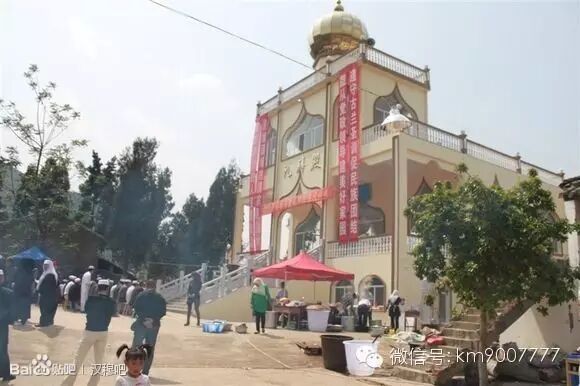
Wenshan Zhuang and Miao Autonomous Prefecture is home to over 23,000 Hui Muslims, making up about 0.007% of the prefecture's total population of 3.28 million. They are scattered across four counties: Wenshan, Yanshan, Qiubei, and Guangnan. Wenshan city sits at the center, surrounded by Maguan, Xichou, Malipo, Funing, Yanshan, Qiubei, and Guangnan counties. Aside from a few Hui civil servants and temporary residents working in Xichou, Maguan, Malipo, and Funing, those four counties are essentially devoid of resident Hui populations.
Wenshan's Hui population primarily lives along highways or in towns, mostly settled in flat valley basins with a small fraction living in mountainous areas. Hui villages tend to be tightly clustered, creating a settlement pattern of "large dispersion, small concentration." Currently, Yanshan has 19 Hui villages: Pingyuan Town includes Tianxin, Pingyuan, Songmaopo, Maolong, Sanjiacun, Xinzhuang, Xiaoyuan Road, Chebaini, Songshancun, and Shangmao Avenue; Jiayi Town includes Laojiaocheng, Xiaoshiqiao, Zhongzhai, Chengda, and Yanshan urban area; Ameng Town includes Ameng, Mifa, Mifa New Village, and Maodichong. Qiubei County has 9 Hui villages: Qiubei urban area, the Ball Manufacturing Plant, Jinping Town's Matoushan, Xincheng, Hewai, and Jiucheng, as well as Yuezhe Township's Yuezhe, Xinzhai, and Fuxing Village. Wenshan County has 9 Hui villages: Wenshan urban area, Matang Township's Huanglongba, Pingba Town's Pingba, Hongdian Hui Ethnic Township's Moke, Bajiazhai, along with self-declared repatriated ancestral villages Wulu Old Village, Wulu New Village, and Mulubai, plus Dehou Township's Kazuo Zhuang village Muslims. Guangnan County has two Hui residential areas in Guangnan urban area and Zhulin. Across the entire prefecture, there are 39 Hui residential villages and towns, housing a total of 40 mosques. Aside from the older mosques in Yuezhe and Guangnan, all other mosques have been successively renovated, expanded, or rebuilt by local villages and towns in recent times.
Generally speaking, the Hui population in Wenshan originated from migrations out of Dali, Kunming, Jianshui, Luliang, and Luxi during the Yongzheng, Qianlong, and Xianfeng reigns of the Qing Dynasty.
2. The Origins of Wenshan's Zhuang-Hui
Han, Hui, and other ethnic groups in Yunnan had historically lived together in harmony. However, the Qing government adopted a divide-and-rule policy of "using Han to control Hui," manufacturing ethnic divides that heightened tensions and damaged relations between the two communities.
In March 1856 (the 6th year of Xianfeng, Bingchen year), Yunnan Governor Shu Ahxing and Provincial Treasurer Qingsheng (a Manchu), acting on orders from the Qing court, commanded all prefectures, departments, sub-prefectures, and counties to "annihilate the Yunnan Hui and sweep them clean across eight hundred miles" (from Ma Minlin's *Records of the Great Calamity in Yunnan in the Fourteenth Year of Xianfeng*) and "gather mobs to slaughter the Hui," giving authorities a green light to kill Hui people with impunity. On April 16 and May 16, 1856, the Qing rulers carried out another brutal massacre of the Hui. Over 10,000 people in Kunming were slaughtered, leaving "almost no survivors" (from the *Inscribed Monument Marking the Reburial of Kunming's Five-Directional Hui Martyrs of the Bingchen Year of Xianfeng*). Today, the back of Jinjiashan in Kunming city serves as a mass grave (pit) for these massacred Hui people.
Before Du Wenxiu’s uprising broke out in western Yunnan in 1856 (the Bingchen year), the "Four Mountains Yi Rebellion" had already erupted around Wenshan and Qiubei. After Du Wenxiu's uprising began, Ma Zunxiang, a Hui from Moke Village in Wenshan, and Ma Jingju, a Hui from Xishan in Wenshan, also raised the banner of anti-Qing resistance. The anti-Qing struggle of Qiubei's Hui was deeply sympathized with and supported by local ethnic brothers. For instance, Yi people from places like Baima Cao secretly supplied grain to the Hui, highlighting the anti-Qing resistance of Hui in the Yuezhe area. As various ethnic groups united against the Qing, the Qing government—pursuing its policy of "gathering mobs to slaughter the Hui, wiping them straight out for eight hundred miles" and "giving permission to execute on sight any rebellious Hui troublemakers"—rolled out chilling slogans such as "First exterminate the Hui, next exterminate the Yi, and skin the Zhuang (Zhuang people) and Miao (Miao people) alive" to threaten anti-Manchu actions. After Du Wenxiu's uprising failed, almost every Hui village in Wenshan Prefecture was subjected to bloody purges and encirclement. Survivors were left destitute and displaced, fleeing to foreign lands. Afterward, Wenshan's Hui accepted pacification by the Qing court, but were forbidden from living in their ancestral homelands. Some Hui (such as those from the Yuezhe area) were escorted by troops to settle in Dazhang and Shadian in Hongju Prefecture.
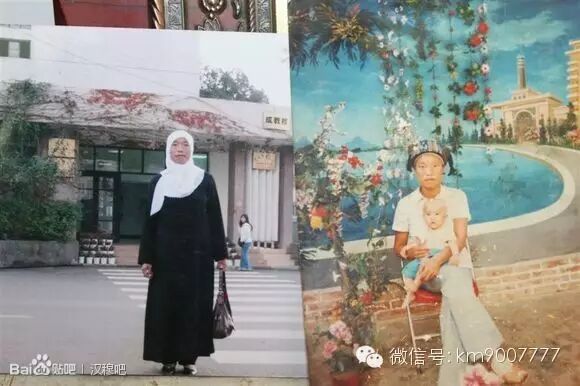
During this period, some Hui who escaped by the skin of their teeth fled from various places into Zhuang villages, where they were sheltered by their Zhuang brothers. They began wearing Zhuang clothing, speaking the Zhuang language, intermarrying with local Zhuang, and raising families. Bingle Township's Wulu Old Village, New Village, Mulubai in Hongdian Township, and Kazuo Village in Dehou Township are entirely Zhuang communities, yet the ancestors of Wulu New Village, Old Village, and Mulubai were descendants of Dazhang Hui bearing the surname Ma and others. Today, New Village has 58 households, out of which 18 households adhere to Islam. Among these 18 households, 16 carry the surname Ma, 1 is surnamed Li, and 1 is surnamed Long. Old Village has over 200 households, with 24 households embracing Islam (18 Ma households, 4 Shen households, 1 Long household, and 1 Tian household). Among these Muslim households, while the Ma families trace their ancestry back to the Hui, the other surnames joined Islam after marrying daughters of the Ma family and becoming influenced by their Muslim relatives.
The ancestors of Kazuo Village originally came from Najiaying in Tonghai, belonging to the Na lineage. Legend has it that during the Bingchen incident of the Qing Dynasty, ancestors of the Ma family fled to Wulu and Mulubai, while ancestors of the Na family fled to Kazuo Village. Through intermarriage with other ethnic groups, they settled down, descendants multiplied, and as older generations passed away, the younger generations became assimilated by the local ethnic groups.
For example, in Wulu Village, Bingle Township, Wenshan Prefecture, there are currently two "Zhuang-Hui" villages known as Old Village and New Village, with New Village developing out of Old Village. According to local oral tradition, the shared male ancestor bearing the surname Ma fled from the Dazhang Hui enclave in Honghe Prefecture after the Bingchen incident and hid out in a Zhuang village. The male ancestor surnamed Ma married a local Zhuang woman, and all their descendants now carry the surname Ma. After the male ancestor passed away, his Dazhang Hui relatives would travel to Wulu every year during Eid al-Fitr to visit his grave. However, according to local recollections in Wulu, prior to 1990, Wulu's Ma villagers only knew that their ancestors were surnamed Ma and were Hui; they knew absolutely nothing about Islam or Hui culture and were practically indistinguishable from the local Zhuang. After 1990, Dazhang Hui people successively traveled to Wulu to preach Islam to the villagers, while also providing economic aid such as rice, sesame oil, and daily necessities. Ahong (Imam) Li Zaitang, who still serves as the religious leader at the Dazhang Mosque, was one of the earliest religious figures in the 1990s to help the villagers of Wulu return to Islam. Recalling how eagerly the villagers requested to "return" to the Hui fold, many memories remain vivid for him. Because local economic conditions were extremely harsh—roads were undeveloped and cars couldn't drive into the village—villagers used an ox cart to transport Ahong Li into the village. Both women and men eagerly studied religious knowledge; during the freezing winter without hot water, they used cold water to perform wudu (ablutions) before learning how to pray. Ahong Li described what he saw back then by saying he "was moved to tears multiple times." The Wulu Muslims who experienced this "return" maintain Islamic religious beliefs, yet they retain many cultural elements of both the Hui and Zhuang in their clothing, language, housing, and even their ethnic psychology.
3. Culture of the Wenshan Zhuang-Hui
(1) Language: Language is not only a marker of group identity and a differentiator from others, but also a social construction of the user group through cultural elements, generating cognitive, psychological, and conscious identification and interpretation. The Hui who migrated to the Zhuang areas of Yunnan embraced Zhuang cultural life and adopted the Zhuang language. The use of Zhuang is not limited to communication with Zhuang people; it is also widely used within the Hui community itself. The adoption of Zhuang has become a major hallmark of the "Zhuang-Hui." On their official ID cards, Wenshan Zhuang-Hui are registered as "Zhuang," and their language usage is identical to that of the local Zhuang. They refer to themselves as "Zhuang Muslims." Ma Guoxin, the current Ahong of the Old Village Mosque, is a local. During an evening of fieldwork, two cows belonging to a Zhuang family in Old Village fought and went missing, prompting them to seek help from the Ahong at the mosque. Ma Guoxin used a loudspeaker in the Zhuang language to help them find the cows. Hui men, women, old, and young in the village all speak and understand Zhuang, a practice the Zhuang refer to as "chatting." For instance, Ahong Ma Guoxin's children speak Mandarin at home with their parents, but speak Zhuang when playing with village playmates. Zhuang is a spoken language without a written script.
(2) Clothing: The attire of the "Zhuang-Hui" is also distinctive because it mirrors Zhuang dress, which is one reason they are called "Zhuang-Hui." During the historical formation of the Zhuang-Hui, this cultural shift of speaking Zhuang and wearing Zhuang clothing happened rapidly. Because the Hui adopted these two identity-marking traits of language and clothing, acquiring the outward cultural features of the Zhuang, outsiders came to call them "Zhuang-Hui." After returning to Islam, Hui men and women still wear clothing identical to that of the local Zhuang. Some elderly women still wear the traditional Zhuang headwrap at home, only switching to the Hui headscarf (hijab) when going out to attend Hui religious holidays.
(3) Diet: The "Zhuang-Hui" have also transitioned toward Zhuang characteristics in their culinary culture. Every year on the 15th day of the first lunar month, the Zhuang dye rice yellow using various flowers, and on the 24th day of the sixth lunar month, they celebrate the Red Rice Festival by dyeing glutinous rice red. The local Hui have likewise adopted these folk dietary customs while steadfastly upholding traditional Hui dietary habits and taboos.
(4) Funeral Customs: The Zhuang practice polytheism, worshipping mountains, rivers, and various aspects of nature. The Zhuang are extremely particular about choosing the right date for a funeral; if the day is wrong, the burial can be postponed for half a month or even a month after a loved one passes away. Wenshan Zhuang Muslims still retain their Zhuang identity status on their ID cards, referring to themselves as "Zhuang Muslims"—changing their religion without changing their official ethnicity. However, in funeral customs, Zhuang Muslims have inherited Hui traditions, handling the deceased according to Hui burial rites: prompt burial, janazah prayers led by an Ahong, and wrapping the body in white shrouds instead of using a coffin. In many families, some members practice Islam while others practice Zhuang polytheism. When a non-Muslim family member passes away, family members generally attend the funeral together, except that the Zhuang Muslims refrain from rituals that violate Islamic etiquette.
4. Pluralistic Cultural Identity
Cultural identity
refers to the social and psychological process by which an individual internalizes the culture and cultural group to which they belong, generating a sense of belonging, and thereby acquiring, maintaining, and innovating their own culture. Cultural identity encompasses identification with social value norms, religious beliefs, customs, language, and art. Cultural identity is also the process of forming the "self."
Wenshan's "Zhuang-Hui" demonstrate identity with local Zhuang in their daily life, economy, clothing, and customs, while primarily identifying as Hui in terms of their ethnic identity, religion, and communal emotional belonging. In Yunnan, there are similar groups identified by academics as "Yi-Hui" (in Xingping, Yuxi), "Tibetan-Hui" (in Shangri-La), and "Bai-Hui" (in Eryuan, Dali). They practice Islam, yet identify with local ethnic minority groups in their customs, habits, and language. Spiritually, they find their homecoming in Islam, even though their daily life paradigms have converged with local ethnic groups.
Due to historical reasons, the "Zhuang-Hui" group lacked sustained social interaction and demographic mobility with the mainstream Hui population for a long time. Instead, they maintained continuous, frequent interpersonal interactions, social contact, and cultural exchanges with the local Zhuang. However, this social process did not dilute their group belonging and identity regarding Hui traditional culture and mainstream emotional ties. Hui identity has persisted throughout the developmental history of the "Zhuang-Hui." An ancestral stele discovered in Wulu, Wenshan, titled *Stele Inscription of the Ma Progenitor*, records: "...yet the principles of the Islamic faith dare not be abandoned... After the ancestors passed away, there were no Hui teachers to guide us through the scriptures, hence later descendants changed their religion." Consequently, amid today's more open and frequent inter-ethnic interactions, some "Zhuang-Hui" have experienced a strong ethnic consciousness, symbolized by a religious return, sparking a series of social, cultural, and ideological revivals of traditional Hui social culture.
During fieldwork interviews, this pluralistic cultural identity of the Zhuang-Hui constantly shone through. Feng LF (female, 48 years old, wife of Ma KT's older brother, from Xiasheshu Village, a Zhuang who married into the Wulu Ma family and converted to Islam in 1990):
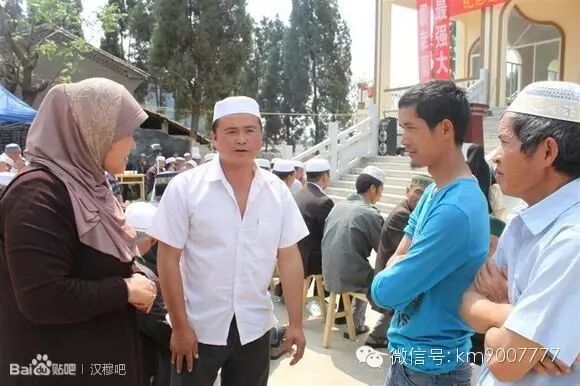
"Back then, Xue BJ (from Zhaotong, living in Dazhang) brought a group of about 20 young students from Dazhang to teach us how to perform wudu, pray, and recite scriptures. They told us our ancestors were Hui and that we needed to return to the Hui identity."
"After I became Hui, visiting my maiden family became a bit inconvenient, but I have my own cooking pots and stove. I still have 3 younger brothers and 2 younger sisters in Xiasheshu, and they are all Zhuang. Since I embraced Islam, I can no longer eat pork. I wash my face (perform wudu—author's note) and pray. Now I am Hui, but on my ID card, I still list my ethnicity as Zhuang. Going to the mosque to wash up and pray makes me feel much cleaner. All my kids love studying scriptures. My eldest son, Ma Mingli, is 22 this year. He's very smart, has a deep grasp of scriptural study, and is currently studying scriptures in Iran, funded by a Hui family in Tianxin Village."
"I feel life is better after embracing Islam than before. I don't feel any different from Hui people elsewhere; all Muslims around the world are one family. Whenever we are with Muslims anywhere, we feel like family, with no fear or awkwardness. Now, I still feel a bit shy around Nong people (Zhuang people—author's note), not daring to speak much, but when I see Muslims wearing hijabs, I feel a warm kinship. We live in a Zhuang area, and I wear a Muslim hijab now, but if there are events like accompanying a bride to a Zhuang village for a wedding, I will put on the traditional Nong headwrap and wear Nong clothing. Because if I went wearing a hijab, people would ask a million questions and feel we are different from them. I do feel there is a difference between us and the Nong; our diets are different, and they are busier than us."
Thus, a pluralistic ethnic culture characterized by Zhuang-Hui blending was formed. The transformation of these cultural traits represents a process of cultural acceptance and adaptation, achieving an adaptive integration of two cultures. After encountering Zhuang culture, the Hui borrowed its cultural elements, adapted to local geographic traits, altered their original lifestyle, and integrated Zhuang cultural elements like language, clothing, and housing into the internal structure of Hui culture. This integration primarily remained at the foundational level of daily life, whereas religious consciousness—the core domain constituting ethnic identity—has remained deeply rooted throughout the historical journey of the Zhuang-Hui.
5. Conclusion
The renowned American anthropologist Clifford Geertz
once brilliantly pointed out: "Ethnic identity is actually a group's strategic adjustment and adaptation when facing a certain type of social experience, and changes in ethnic identity are closely related to the 'boundary of ethnic groups.' And we must pay full attention to social boundary interactions because the two sides possess 'territorial counterparts.' For an ethnic group to maintain its identity, it must take into account the interactions between the people of both sides..."
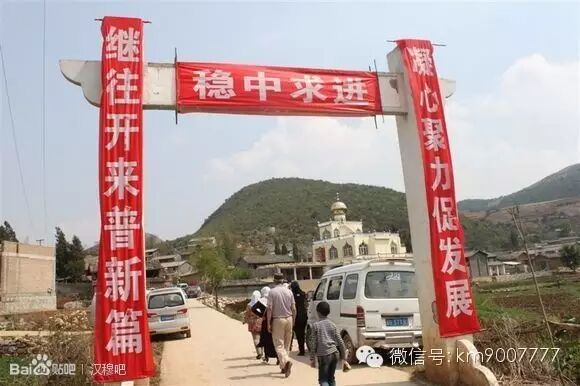
Based on the above perspective, I think this better explains how the Wenshan Wulu Hui Muslims, as an immigrant ethnic minority upon entering the Wenshan Wulu Zhuang villages, developed an identity with the local Zhuang culture, beautifully reflecting the survival wisdom of Hui ancestors and the harmonious coexistence among different ethnic groups in the historical process.
Islam is not only a religion, but a complete way of life. Under the intersection of "faith and pragmatism," a diverse cultural identity concept of "harmony in diversity" has been formed among the Wenshan Hui Muslims. It embodies an open mindset and an enterprising spirit in the process of dialogue with different cultures. "Harmony" actually means seeking common ground while reserving differences, whereas "sameness" would mean eliminating differences for the sake of uniformity. "Harmony in diversity" advocates pursuing harmonious unity on the premise of respecting differences. The main spirit of "harmony" is to coordinate differences, achieve a new harmonious unity, and enable various different things to attain new development and become new, distinct entities.
[This article is a phased achievement of the National Social Science Fund Project: Research on Yunnan's Special Hui Ethnic Groups and Local Inter-Ethnic Social Harmonious Relations (Project No. 13CMZ027)]
References
1. Zhang Lijian, *Ethnic Identity in the Context of Scattered and Mixed Communities*, Ethnic Publishing House, 2009.
2. Yue Daiyun, "Two Dangers in Multicultural Development and the Contributions Culture Can Make," *Literature and Art Daily*, August 28, 2001.
(Hu Liping is a lecturer at the School of Social Management, Kunming University; Feng Yu is a lecturer at the Research Institute for Southwest China Border Ethnic Minorities, Yunnan University)
When Edgar Snow Stayed at QuDong Mosque: Yunnan Hui Muslim History & Red Footprints
Articles • Hasan09 posted the article • 0 comments • 16 views • 23 hours ago
When Edgar Snow Stayed at Qudong Mosque: Yunnan's Hui Muslim History, Red Footprints, and Memories of Dali's Mosques
Abstract: This article compiles the main points of "When Edgar Snow Stayed at Qudong Mosque: Yunnan's Hui Muslim History, Red Footprints, and Memories of Dali's Mosques," preserving the original paragraph and image sequence. It is designed for readers searching for long-tail keywords related to the Qudong Mosque, Yunnan Hui Muslims, and Edgar Snow's footprints.
Edgar Snow (1905–1972) was one of the 20th century's most famous and influential American journalists and writers. Mao Zedong once remarked, "Mr. Snow was the first person to pave the way for establishing friendly relations." Party and state leaders like Zhou Enlai maintained close ties with Snow, utilizing him to broadcast the true conditions of the Red Army in Northern Shaanxi and the New China to the entire world, which played a monumental role in winning over people globally. His book Red Star Over China depicted the deeds of the Workers' and Red Army along with major historical events, opening a window for the entire world to truly understand the Chinese revolution. Under the White Terror, it was renamed Red Dust (published in Chinese as Xixing Miji) and widely circulated to every corner, inspiring a powerful chorus cheering for the Chinese revolution.
Prior to this, in 1931, Snow formed a small caravan consisting of six mules and horses along with three attendants in Dali. In his autobiography, he wrote, "I hoped to walk from China to Burma and then enter India." The copy of Caravan Travel I have on hand is a brilliant essay chronicling this journey, marking an important trajectory in his life. Writer Zhou Liangpei noted in the book's foreword that "it can be said to be a book unknown to many readers."
Perhaps because I am a Muslim, when I read one particular chapter, it sparked my immense interest and excitement. The title was: "The Reason Why I Was Able to Spend the Night in a Mosque Was Largely Due to a Nearly Forgotten Persian Idiom."
On February 22, 1931, following his small caravan into Yongping County, he stayed overnight at the Qudong Mosque (Qudong Mosque). In this article, from a unique perspective and with deep affection, he painted a captivating picture of the solemn, serene, and tranquil Qudong Mosque of that era. With down-to-earth and concise strokes, he sketched the scenery of the Qudong Mosque: "The minaret looked like a Chinese pagoda, except that the top was rectangular, gradually tapering to a point, crowned with a golden globe at the very top." Inside the mosque, it was "very clean, and poppies with pale purple and milky white flowers were planted in the courtyard."
With a reverent and deep affection, Snow vividly described the pious, solemn, and serene Asr prayer of the Qudong Muslims: fifty or sixty people gathered in the hall behind the minaret, "suddenly everyone fell silent, raising their eyes to look upward." A man in a white robe "stood on what should be called the balcony of the minaret," facing the sky dyed fiery red by the setting sun and the direction of Mecca, "raising both hands high and calling out the dua to Allah in a loud, rhythmic voice, repeating it three times." "Everyone followed the Imam in making dua inside the hall, which was fragrant with blooming flowers."
This article meticulously chronicled the dialogue, communication, and mutual understanding between him and the local Muslims—from initial rejection to a warm welcome—and vividly and philosophically described his boundless gratitude for being able to comfortably stay at the Qudong Mosque. The article transports us back to that vivid scene 79 years ago, where every sound and face felt palpable.
"I had just arrived and was already very tired. The inn had no empty rooms, and I wanted to stay here tonight." Yet, "upon seeing a foreigner, they were already shocked, and hearing this unusual request made them even more astonished." The responses he received were "No," "That's impossible," "There is no charcoal for you to make a fire," "This isn't an inn," and "No foreigner has ever stayed here before"... "Right at that critical moment," "I suddenly remembered a sentence I had memorized when I was studying Persian," and so he quickly said: "La ilaha illa Allah, Muhammad rasul Allah!" Obviously, this was a very inaccurate and awkward "Shahada" (Islamic declaration of faith). Yet, it was precisely this noble Shahada—the creed of Islamic faith—that instantly opened up the open-minded mentality of the Qudong Muslims. "They were greatly surprised and overjoyed," and "their attitude changed," becoming extremely friendly. Immediately, "they called a gatekeeper," "immediately brought water and charcoal," and "cleaned up a small attic" to accommodate him. Snow shouted with ecstatic joy, "No pork for dinner tonight!" "Several Imams laughed." Viewed through today's perspective, this was a positive, civilized dialogue of mutual respect, communication, and harmony achieved among people of different countries, ethnicities, faiths, and values. It could also be said to be the practical embodiment of the philosophy of "harmony in diversity" within Hui Muslim culture, while vividly demonstrating that one does not abandon their own faith for the sake of "harmony."
Snow's overnight stay was a culturally significant event in the history of the Qudong Mosque—ordinary yet extraordinary, extraordinary yet ordinary. After experiencing the unique charm and eternal humanistic spirit of an exotic mosque, he passionately wrote this article, which was published in the New York Sun on September 1, 1931. It forever anchors the scene in the space-time of history, becoming an unalterable and un-re-creatable piece of history, leaving us with an understanding and artistic inspiration that will endure forever. view all
When Edgar Snow Stayed at Qudong Mosque: Yunnan's Hui Muslim History, Red Footprints, and Memories of Dali's Mosques
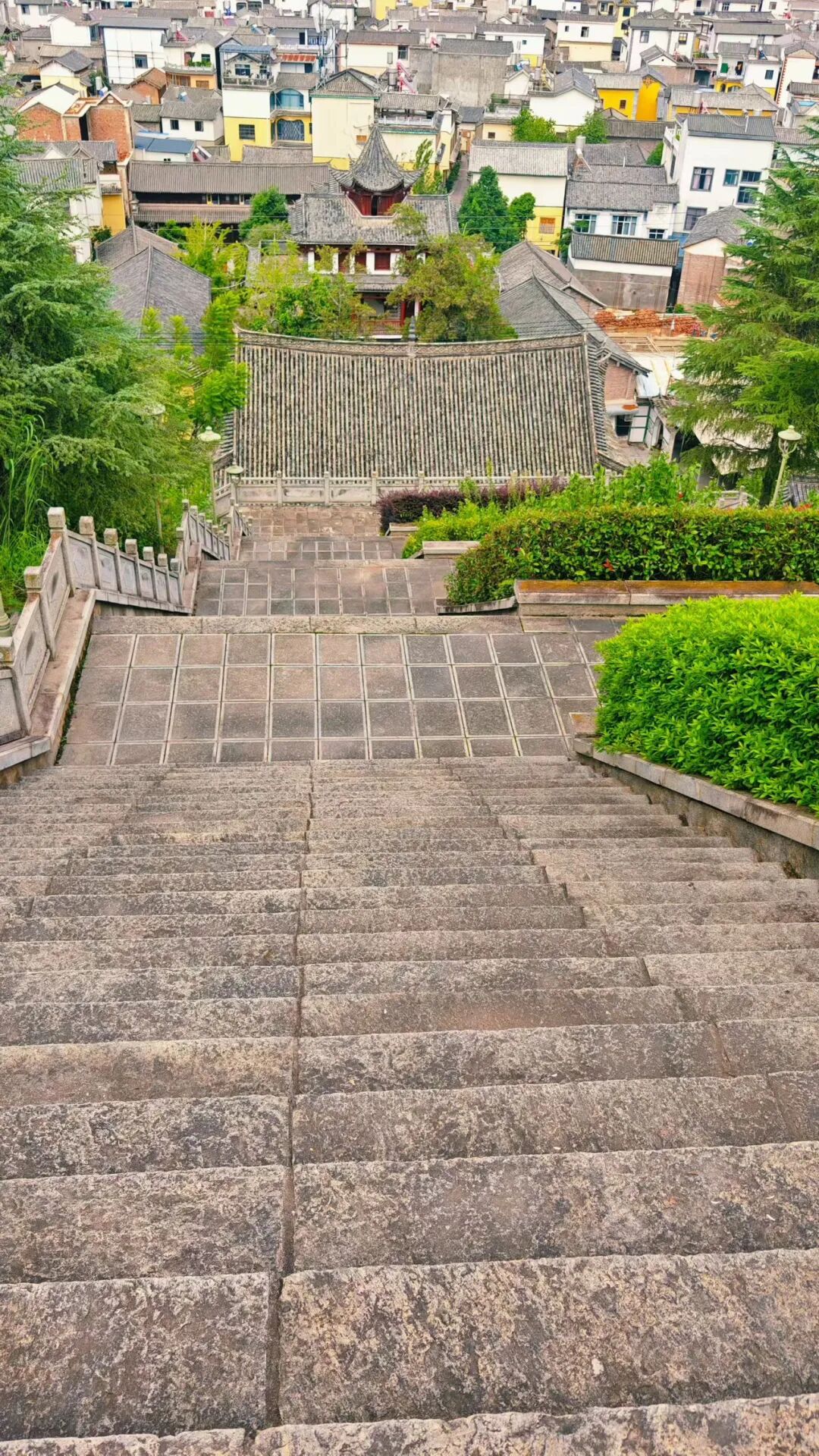
Abstract: This article compiles the main points of "When Edgar Snow Stayed at Qudong Mosque: Yunnan's Hui Muslim History, Red Footprints, and Memories of Dali's Mosques," preserving the original paragraph and image sequence. It is designed for readers searching for long-tail keywords related to the Qudong Mosque, Yunnan Hui Muslims, and Edgar Snow's footprints.
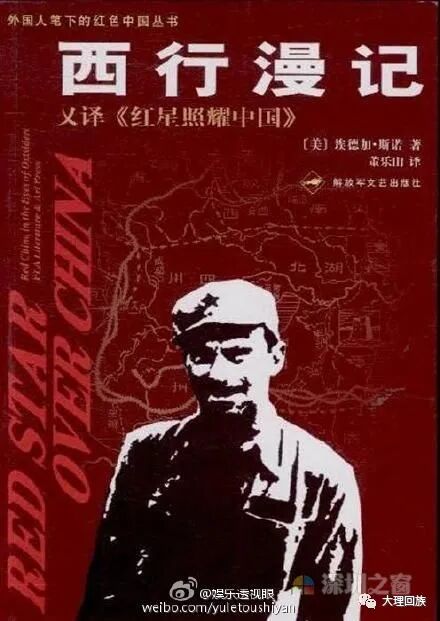
Edgar Snow (1905–1972) was one of the 20th century's most famous and influential American journalists and writers. Mao Zedong once remarked, "Mr. Snow was the first person to pave the way for establishing friendly relations." Party and state leaders like Zhou Enlai maintained close ties with Snow, utilizing him to broadcast the true conditions of the Red Army in Northern Shaanxi and the New China to the entire world, which played a monumental role in winning over people globally. His book Red Star Over China depicted the deeds of the Workers' and Red Army along with major historical events, opening a window for the entire world to truly understand the Chinese revolution. Under the White Terror, it was renamed Red Dust (published in Chinese as Xixing Miji) and widely circulated to every corner, inspiring a powerful chorus cheering for the Chinese revolution.
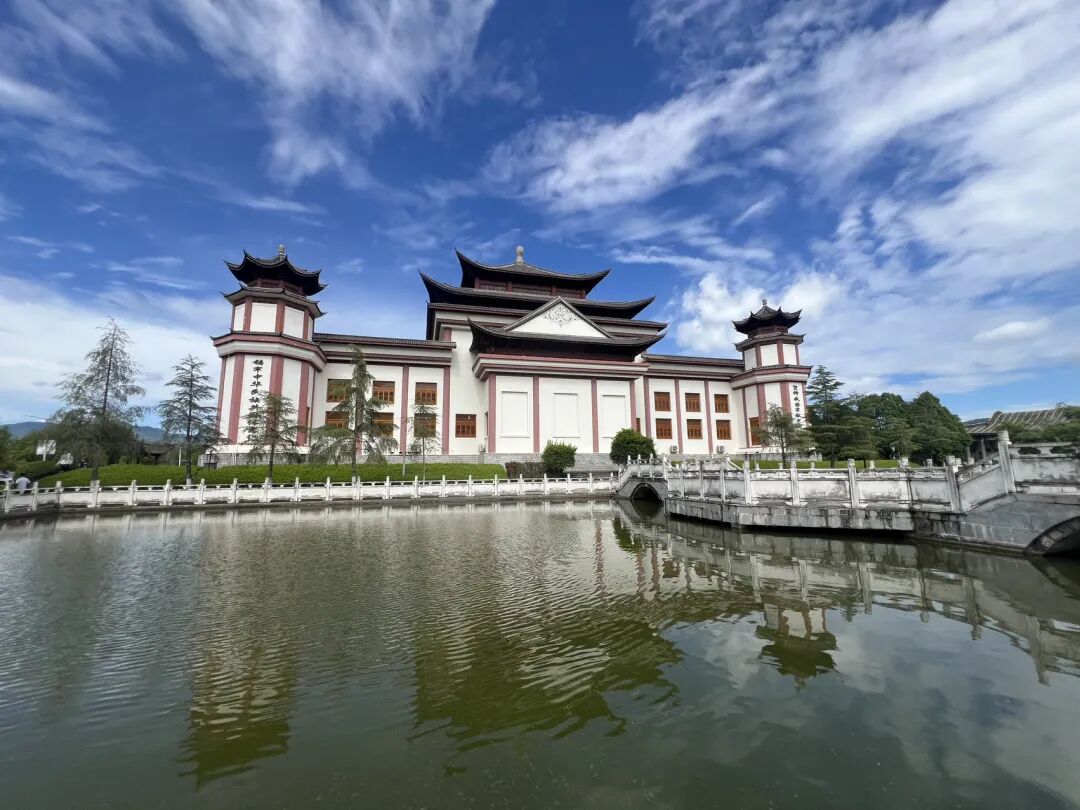
Prior to this, in 1931, Snow formed a small caravan consisting of six mules and horses along with three attendants in Dali. In his autobiography, he wrote, "I hoped to walk from China to Burma and then enter India." The copy of Caravan Travel I have on hand is a brilliant essay chronicling this journey, marking an important trajectory in his life. Writer Zhou Liangpei noted in the book's foreword that "it can be said to be a book unknown to many readers."
Perhaps because I am a Muslim, when I read one particular chapter, it sparked my immense interest and excitement. The title was: "The Reason Why I Was Able to Spend the Night in a Mosque Was Largely Due to a Nearly Forgotten Persian Idiom."
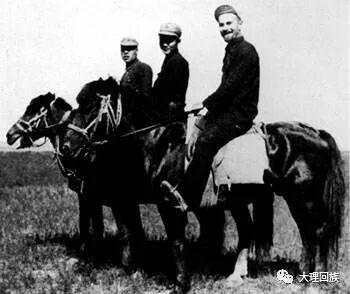
On February 22, 1931, following his small caravan into Yongping County, he stayed overnight at the Qudong Mosque (Qudong Mosque). In this article, from a unique perspective and with deep affection, he painted a captivating picture of the solemn, serene, and tranquil Qudong Mosque of that era. With down-to-earth and concise strokes, he sketched the scenery of the Qudong Mosque: "The minaret looked like a Chinese pagoda, except that the top was rectangular, gradually tapering to a point, crowned with a golden globe at the very top." Inside the mosque, it was "very clean, and poppies with pale purple and milky white flowers were planted in the courtyard."
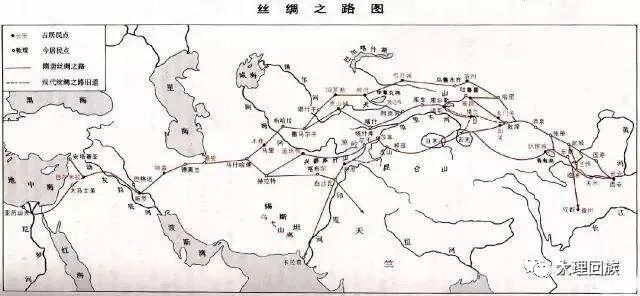
With a reverent and deep affection, Snow vividly described the pious, solemn, and serene Asr prayer of the Qudong Muslims: fifty or sixty people gathered in the hall behind the minaret, "suddenly everyone fell silent, raising their eyes to look upward." A man in a white robe "stood on what should be called the balcony of the minaret," facing the sky dyed fiery red by the setting sun and the direction of Mecca, "raising both hands high and calling out the dua to Allah in a loud, rhythmic voice, repeating it three times." "Everyone followed the Imam in making dua inside the hall, which was fragrant with blooming flowers."
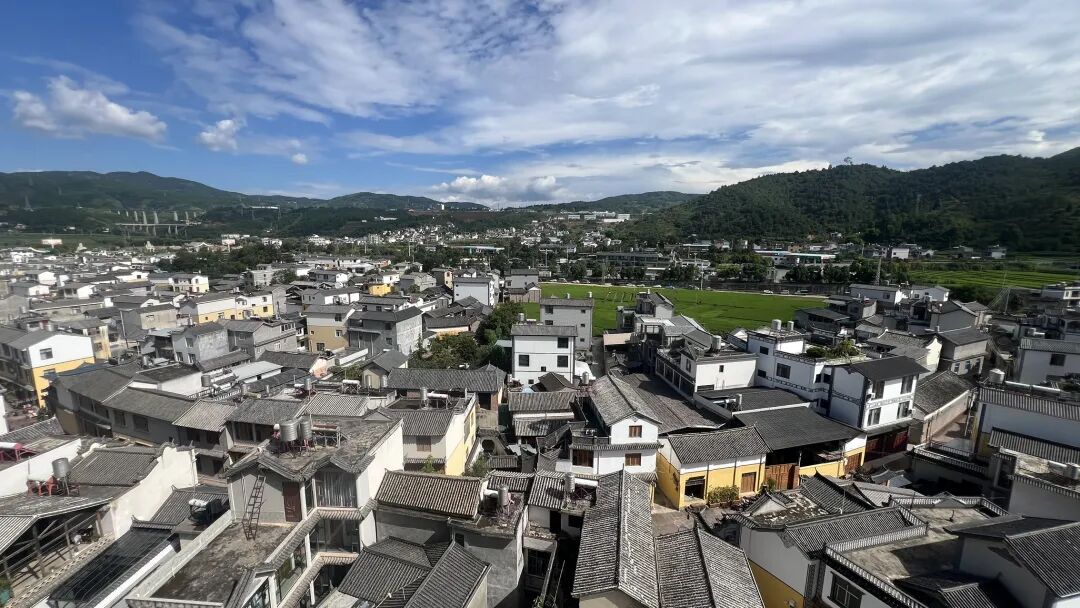
This article meticulously chronicled the dialogue, communication, and mutual understanding between him and the local Muslims—from initial rejection to a warm welcome—and vividly and philosophically described his boundless gratitude for being able to comfortably stay at the Qudong Mosque. The article transports us back to that vivid scene 79 years ago, where every sound and face felt palpable.
"I had just arrived and was already very tired. The inn had no empty rooms, and I wanted to stay here tonight." Yet, "upon seeing a foreigner, they were already shocked, and hearing this unusual request made them even more astonished." The responses he received were "No," "That's impossible," "There is no charcoal for you to make a fire," "This isn't an inn," and "No foreigner has ever stayed here before"... "Right at that critical moment," "I suddenly remembered a sentence I had memorized when I was studying Persian," and so he quickly said: "La ilaha illa Allah, Muhammad rasul Allah!" Obviously, this was a very inaccurate and awkward "Shahada" (Islamic declaration of faith). Yet, it was precisely this noble Shahada—the creed of Islamic faith—that instantly opened up the open-minded mentality of the Qudong Muslims. "They were greatly surprised and overjoyed," and "their attitude changed," becoming extremely friendly. Immediately, "they called a gatekeeper," "immediately brought water and charcoal," and "cleaned up a small attic" to accommodate him. Snow shouted with ecstatic joy, "No pork for dinner tonight!" "Several Imams laughed." Viewed through today's perspective, this was a positive, civilized dialogue of mutual respect, communication, and harmony achieved among people of different countries, ethnicities, faiths, and values. It could also be said to be the practical embodiment of the philosophy of "harmony in diversity" within Hui Muslim culture, while vividly demonstrating that one does not abandon their own faith for the sake of "harmony."
Snow's overnight stay was a culturally significant event in the history of the Qudong Mosque—ordinary yet extraordinary, extraordinary yet ordinary. After experiencing the unique charm and eternal humanistic spirit of an exotic mosque, he passionately wrote this article, which was published in the New York Sun on September 1, 1931. It forever anchors the scene in the space-time of history, becoming an unalterable and un-re-creatable piece of history, leaving us with an understanding and artistic inspiration that will endure forever.
Visiting Shadian Grand Mosque in Yunnan: Southwest China's Stunning Islamic Landmark
Articles • Hasan09 posted the article • 0 comments • 11 views • 23 hours ago
A Pilgrimage to Southwest China's Largest Mosque: A Deep-Dive Visual Tour of the Architectural Layout and Ten-Thousand-Person Prayer Hall at the Shadian Grand Mosque in Gejiu, Honghe
Abstract:
A detailed exploration of the Shadian Grand Mosque, nestled right at the crossroads of Gejiu, Kaiyuan, and Mengzi in Yunnan. This piece offers a comprehensive look at one of China's top one hundred famous mosques, featuring its massive main prayer hall, pristine white marble courtyard, elegant domes, and colorful carved details, allowing you to soak in the majestic spiritual epicenter of southern Yunnan's Muslim community.
Let's jump straight to the essential travel tips first:
If you're driving from Jianshuai to Gejiu, plug Gejiu city into your navigation app, set your route preference to "Expressways First," check the route preview carefully, and look for the [Jian-Ge-Yuan Expressway] signs. This will keep you off the old mountain roads down by Jijie. If you want to check out the Jijie Railway Station and the Shadian Grand Mosque along the way, taking the Jijie route lines up perfectly. We stumbled upon Shadian completely by accident without any advance planning, and it turned out to be an amazing bonus! (Detailed travel tips are attached at the end of the article if you want to screenshot them.)
After staying in Jianshui for a cozy seven days, there were still plenty of sights left to unlock. But when you're out on the road, you always find yourself craving a brand-new city. Bidding farewell to Jianshui's ancient town and pottery culture, we sped toward Gejiu to kick off the next leg of our southern Yunnan journey. At 9:00 AM, after packing our bags, we hit the road toward Gejiu!
Today's drive was under eighty kilometers, but thanks to a few wrong turns and detours, we ended up hopping onto the expressway heading north out of Jianshui, only to loop right back out via the southern exit. We had to turn around and get back on the expressway, and then our GPS directed us to exit early at Jijie. Jijie is a town under Gejiu's jurisdiction, sitting about twenty kilometers away from Gejiu proper. At the time, we were super confused—our destination was Gejiu, so why get off the expressway early at Jijie? It wasn't until we drove it ourselves that we finally understood the difference between the new and old routes. We later figured out the deal: heading to the Tin Capital of Gejiu splits into two routes. One is the newly opened Jian-Ge-Yuan direct expressway, which takes you straight into the downtown area via high-speed roads. The other is the long-used Jijie-Shishi Expressway, which requires you to exit at Jijie and switch to a provincial highway winding through the mountains. Most navigation apps still default to the old route, which can easily leave first-time drivers totally baffled. Weaving back and forth through the mountains actually turned out to be a pretty fun plot twist on the trip.
At first, I felt super annoyed. It was only a few dozen kilometers, and after making a wrong turn, the GPS sent us off the exit at Jijie anyway, making a straightforward drive feel way more complicated than it needed to be. Who would've guessed that this laughable, frustrating detour would turn into such an unexpected blessing?
Our GPS guided us off the Jijie expressway exit. We pulled over temporarily to check our map and accidentally discovered the Shadian Grand Mosque. An off-the-itinerary destination and a totally chance encounter turned into the rarest highlight of this trip.
As we rolled out of the Jijie expressway exit and followed the navigation toward Shadian, the roadside houses looked old and scattered. Rolling past buildings that looked a bit run-down and shabby, I secretly wondered what kind of scenery could possibly be hidden down this road. But the moment our car pulled into the Shadian town area, the view instantly opened up. The streets were spotless, and the cute little deer-shaped street sculptures were delicate and lively. The entire neighborhood was impeccably clean, forming a sharp contrast with the Jijie area.
Once we parked the car and stepped step by step onto the mosque's expansive plaza, the cramped and bumpy feeling from the mountain roads instantly vanished. The sheer, overwhelming majesty hitting us right in the face genuinely took our breath away.
Before heading into the mosque, the two of us stood outside for quite a while looking up info. According to the records, the Shadian Grand Mosque is located in Shadian, Gejiu, sitting right at the intersection of Gejiu, Mengzi, and Kaiyuan. It's the largest mosque in the entire Southwest region. Historical archives trace the mosque's earliest origins back to the Hongzhi reign of the Ming dynasty. After being destroyed and rebuilt several times, the current main structure was finished and expanded in 2005. Four 93-meter-tall minarets stand at the four corners, and the prayer hall spans a massive 17,700 square meters, holding up to ten thousand people praying simultaneously. The architecture brilliantly blends two distinct aesthetics: it follows a traditional Chinese palatial symmetrical central axis layout, while the arches and domes are classic Islamic shapes. It stands as a physical testament to how an imported faith and culture took root in southern Yunnan and blended harmoniously with local aesthetics.
Shadian is a core Hui Muslim community in southern Yunnan. It's not just a place for religious activities, but also the spiritual homeland where locals have lived for generations. The wide open plaza with no walls and the continuous snowy-white arcades exude a grand, solemn vibe. Many travelers passing through here are deeply struck by this breathtaking piece of architecture hidden away in the mountains.
Visitor Quick Tips:
Free admission to the public! Visitors are only allowed to explore the plaza and outdoor arcades; you cannot enter the main prayer hall. Dress respectfully—no shorts or bare shoulders. Keep quiet during prayer times, and please do not take photos of people praying.
Following the rules, the two of us took off our shoes to enter the mosque, and we were so careful we didn't even dare talk out loud!!
Amidst the mountains, we crossed paths with the Shadian Grand Mosque. A single sanctuary blending Eastern and Western architectural aesthetics, featuring white walls, towering minarets, and a serene, solemn aura.
The entire complex emphasizes symmetrical arrangement, with four towering minarets standing at the four corners and long arcades wrapping around the courtyard. On one side, you have Islamic-style domes and interlocking arches; on the other, it keeps the orderly layout of a traditional Chinese courtyard. The white jade pillars and stone-carved scriptures feature exquisite details, with the grand prayer hall sitting at the very end of the central axis. Imported architectural aesthetics merge with local tastes right here. Standing in the courtyard, you can feel the solemnity of faith while reading the layers of history shaped by the coexistence of diverse cultures.
After walking out of the mosque and returning to the car, we dug deeper into the background of Shadian. Shadian has a permanent population of around 13,000 people, with Hui Muslims making up over 90% of the total population, while the rest belong to the Han, Yi, and other ethnic groups. Over a long history, they've formed a tight-knit Hui community where local folk customs, cuisine, and religious culture are completely preserved. It's also a textbook example of a concentrated Hui ethnic enclave in Yunnan.
The Shadian Grand Mosque is top-tier in scale across Southwest China and ranks among the top one hundred famous mosques nationwide. Its prayer hall can hold ten thousand people praying together, and its four 93-meter minarets boast an awe-inspiring presence.
Shadian is the most important Islamic cultural center in southern Yunnan. Historically, traditional mosque-based education (jingtang jiaoyu) flourished here, and in modern times, many students traveled far overseas to study abroad, leaving a profound impact on the development of Yunnan's Hui culture.
The image above is sourced from the internet:
The Shadian Grand Mosque isn't just the spiritual landmark of the Shadian people; it's also a leading, nationally renowned mosque in the Southwest. The architecture blends Chinese and Western aesthetics, looking stunningly grand. Standing under the corridors, I truly felt how this Hui village nestled in the southern Yunnan mountains has long carried a unique ethnic culture and heritage of faith.
Leaving the mosque and wandering around the neighborhood, you run into local Hui folks everywhere. When we popped into a local supermarket to buy some regional specialty niuganba (cured beef jerky), all the clerks were wearing traditional ethnic attire, giving it an intensely rich cultural vibe.
Near the mosque, courtyards styled just like this are everywhere. Word has it that the Hui folks in Shadian are relatively well-off.
After finishing the tour, the lingering impression stayed with me for a long time. The Shadian Grand Mosque is mind-blowing, with layer upon layer of staggered arcades and a breathtakingly grand structure. You don't need to dive deep into complicated architectural theory—just standing beneath the long colonnade is enough to be deeply moved by its unique solemnity and beauty.
The core grand mosque is massive in scale and architecturally stunning. It's not just a tourist check-in spot; it's the daily spiritual homeland for the local community. Getting to cross paths with such a unique Hui village tucked away in the mountains of southeast Yunnan—this accidental encounter was truly rare and special.
Looking at it this way, a lot of the best scenery is never on your preset itinerary list. If GPS hadn't led us astray and made us take a wrong turn halfway, I probably would have driven straight through to Gejiu and completely missed Shadian. This unexpected encounter, seeing the magnificent grand mosque with our own eyes and soaking in the unique vibe of the Hui hometown, made us realize once again: the best rewards on a trip are often the surprises you never saw coming.
My in-depth travel guide for Jianshui isn't even finished yet, but amidst all this awe, I'm dropping a Shadian intermission first! I'll be back in the next post with my check-in experience at the Jijie Railway Station.
Travel Guide Attached:
One-Day Itinerary (Recommended Order)
Depart from Jianshuai → Exit the expressway at Jijie Toll Booth → Jijie Railway Station (30 minutes, century-old narrow-gauge railway hub) → 10-minute drive to Shadian Grand Mosque (Shadian Mosque) (1 to 1.5 hours visit) → Shop for youlin ganba (crispy oil-drenched cured beef jerky) and dig into Halal eats in Shadian → Continue on to Gejiu.
Shadian Grand Mosque (Shadian Mosque) Essential Info
✅ Admission: Free and open to the public
⏰ Visiting hours: 9:00 AM – 6:00 PM, entry stops at 6:00 PM; Fridays are for Jummah prayer, please keep it quiet during midday prayers and don't disturb the worshippers. view all
A Pilgrimage to Southwest China's Largest Mosque: A Deep-Dive Visual Tour of the Architectural Layout and Ten-Thousand-Person Prayer Hall at the Shadian Grand Mosque in Gejiu, Honghe
Abstract:

A detailed exploration of the Shadian Grand Mosque, nestled right at the crossroads of Gejiu, Kaiyuan, and Mengzi in Yunnan. This piece offers a comprehensive look at one of China's top one hundred famous mosques, featuring its massive main prayer hall, pristine white marble courtyard, elegant domes, and colorful carved details, allowing you to soak in the majestic spiritual epicenter of southern Yunnan's Muslim community.
Let's jump straight to the essential travel tips first:

If you're driving from Jianshuai to Gejiu, plug Gejiu city into your navigation app, set your route preference to "Expressways First," check the route preview carefully, and look for the [Jian-Ge-Yuan Expressway] signs. This will keep you off the old mountain roads down by Jijie. If you want to check out the Jijie Railway Station and the Shadian Grand Mosque along the way, taking the Jijie route lines up perfectly. We stumbled upon Shadian completely by accident without any advance planning, and it turned out to be an amazing bonus! (Detailed travel tips are attached at the end of the article if you want to screenshot them.)
After staying in Jianshui for a cozy seven days, there were still plenty of sights left to unlock. But when you're out on the road, you always find yourself craving a brand-new city. Bidding farewell to Jianshui's ancient town and pottery culture, we sped toward Gejiu to kick off the next leg of our southern Yunnan journey. At 9:00 AM, after packing our bags, we hit the road toward Gejiu!

Today's drive was under eighty kilometers, but thanks to a few wrong turns and detours, we ended up hopping onto the expressway heading north out of Jianshui, only to loop right back out via the southern exit. We had to turn around and get back on the expressway, and then our GPS directed us to exit early at Jijie. Jijie is a town under Gejiu's jurisdiction, sitting about twenty kilometers away from Gejiu proper. At the time, we were super confused—our destination was Gejiu, so why get off the expressway early at Jijie? It wasn't until we drove it ourselves that we finally understood the difference between the new and old routes. We later figured out the deal: heading to the Tin Capital of Gejiu splits into two routes. One is the newly opened Jian-Ge-Yuan direct expressway, which takes you straight into the downtown area via high-speed roads. The other is the long-used Jijie-Shishi Expressway, which requires you to exit at Jijie and switch to a provincial highway winding through the mountains. Most navigation apps still default to the old route, which can easily leave first-time drivers totally baffled. Weaving back and forth through the mountains actually turned out to be a pretty fun plot twist on the trip.
At first, I felt super annoyed. It was only a few dozen kilometers, and after making a wrong turn, the GPS sent us off the exit at Jijie anyway, making a straightforward drive feel way more complicated than it needed to be. Who would've guessed that this laughable, frustrating detour would turn into such an unexpected blessing?

Our GPS guided us off the Jijie expressway exit. We pulled over temporarily to check our map and accidentally discovered the Shadian Grand Mosque. An off-the-itinerary destination and a totally chance encounter turned into the rarest highlight of this trip.
As we rolled out of the Jijie expressway exit and followed the navigation toward Shadian, the roadside houses looked old and scattered. Rolling past buildings that looked a bit run-down and shabby, I secretly wondered what kind of scenery could possibly be hidden down this road. But the moment our car pulled into the Shadian town area, the view instantly opened up. The streets were spotless, and the cute little deer-shaped street sculptures were delicate and lively. The entire neighborhood was impeccably clean, forming a sharp contrast with the Jijie area.

Once we parked the car and stepped step by step onto the mosque's expansive plaza, the cramped and bumpy feeling from the mountain roads instantly vanished. The sheer, overwhelming majesty hitting us right in the face genuinely took our breath away.
Before heading into the mosque, the two of us stood outside for quite a while looking up info. According to the records, the Shadian Grand Mosque is located in Shadian, Gejiu, sitting right at the intersection of Gejiu, Mengzi, and Kaiyuan. It's the largest mosque in the entire Southwest region. Historical archives trace the mosque's earliest origins back to the Hongzhi reign of the Ming dynasty. After being destroyed and rebuilt several times, the current main structure was finished and expanded in 2005. Four 93-meter-tall minarets stand at the four corners, and the prayer hall spans a massive 17,700 square meters, holding up to ten thousand people praying simultaneously. The architecture brilliantly blends two distinct aesthetics: it follows a traditional Chinese palatial symmetrical central axis layout, while the arches and domes are classic Islamic shapes. It stands as a physical testament to how an imported faith and culture took root in southern Yunnan and blended harmoniously with local aesthetics.

Shadian is a core Hui Muslim community in southern Yunnan. It's not just a place for religious activities, but also the spiritual homeland where locals have lived for generations. The wide open plaza with no walls and the continuous snowy-white arcades exude a grand, solemn vibe. Many travelers passing through here are deeply struck by this breathtaking piece of architecture hidden away in the mountains.
Visitor Quick Tips:

Free admission to the public! Visitors are only allowed to explore the plaza and outdoor arcades; you cannot enter the main prayer hall. Dress respectfully—no shorts or bare shoulders. Keep quiet during prayer times, and please do not take photos of people praying.
Following the rules, the two of us took off our shoes to enter the mosque, and we were so careful we didn't even dare talk out loud!!

Amidst the mountains, we crossed paths with the Shadian Grand Mosque. A single sanctuary blending Eastern and Western architectural aesthetics, featuring white walls, towering minarets, and a serene, solemn aura.
The entire complex emphasizes symmetrical arrangement, with four towering minarets standing at the four corners and long arcades wrapping around the courtyard. On one side, you have Islamic-style domes and interlocking arches; on the other, it keeps the orderly layout of a traditional Chinese courtyard. The white jade pillars and stone-carved scriptures feature exquisite details, with the grand prayer hall sitting at the very end of the central axis. Imported architectural aesthetics merge with local tastes right here. Standing in the courtyard, you can feel the solemnity of faith while reading the layers of history shaped by the coexistence of diverse cultures.

After walking out of the mosque and returning to the car, we dug deeper into the background of Shadian. Shadian has a permanent population of around 13,000 people, with Hui Muslims making up over 90% of the total population, while the rest belong to the Han, Yi, and other ethnic groups. Over a long history, they've formed a tight-knit Hui community where local folk customs, cuisine, and religious culture are completely preserved. It's also a textbook example of a concentrated Hui ethnic enclave in Yunnan.
The Shadian Grand Mosque is top-tier in scale across Southwest China and ranks among the top one hundred famous mosques nationwide. Its prayer hall can hold ten thousand people praying together, and its four 93-meter minarets boast an awe-inspiring presence.

Shadian is the most important Islamic cultural center in southern Yunnan. Historically, traditional mosque-based education (jingtang jiaoyu) flourished here, and in modern times, many students traveled far overseas to study abroad, leaving a profound impact on the development of Yunnan's Hui culture.
The image above is sourced from the internet:

The Shadian Grand Mosque isn't just the spiritual landmark of the Shadian people; it's also a leading, nationally renowned mosque in the Southwest. The architecture blends Chinese and Western aesthetics, looking stunningly grand. Standing under the corridors, I truly felt how this Hui village nestled in the southern Yunnan mountains has long carried a unique ethnic culture and heritage of faith.
Leaving the mosque and wandering around the neighborhood, you run into local Hui folks everywhere. When we popped into a local supermarket to buy some regional specialty niuganba (cured beef jerky), all the clerks were wearing traditional ethnic attire, giving it an intensely rich cultural vibe.

Near the mosque, courtyards styled just like this are everywhere. Word has it that the Hui folks in Shadian are relatively well-off.
After finishing the tour, the lingering impression stayed with me for a long time. The Shadian Grand Mosque is mind-blowing, with layer upon layer of staggered arcades and a breathtakingly grand structure. You don't need to dive deep into complicated architectural theory—just standing beneath the long colonnade is enough to be deeply moved by its unique solemnity and beauty.

The core grand mosque is massive in scale and architecturally stunning. It's not just a tourist check-in spot; it's the daily spiritual homeland for the local community. Getting to cross paths with such a unique Hui village tucked away in the mountains of southeast Yunnan—this accidental encounter was truly rare and special.
Looking at it this way, a lot of the best scenery is never on your preset itinerary list. If GPS hadn't led us astray and made us take a wrong turn halfway, I probably would have driven straight through to Gejiu and completely missed Shadian. This unexpected encounter, seeing the magnificent grand mosque with our own eyes and soaking in the unique vibe of the Hui hometown, made us realize once again: the best rewards on a trip are often the surprises you never saw coming.

My in-depth travel guide for Jianshui isn't even finished yet, but amidst all this awe, I'm dropping a Shadian intermission first! I'll be back in the next post with my check-in experience at the Jijie Railway Station.
Travel Guide Attached:

One-Day Itinerary (Recommended Order)
Depart from Jianshuai → Exit the expressway at Jijie Toll Booth → Jijie Railway Station (30 minutes, century-old narrow-gauge railway hub) → 10-minute drive to Shadian Grand Mosque (Shadian Mosque) (1 to 1.5 hours visit) → Shop for youlin ganba (crispy oil-drenched cured beef jerky) and dig into Halal eats in Shadian → Continue on to Gejiu.

Shadian Grand Mosque (Shadian Mosque) Essential Info
✅ Admission: Free and open to the public

⏰ Visiting hours: 9:00 AM – 6:00 PM, entry stops at 6:00 PM; Fridays are for Jummah prayer, please keep it quiet during midday prayers and don't disturb the worshippers.
Hangzhou Halal Food Guide: Inside Yifengxiang Halal Butcher & Local Muslim Culture
Articles • Hasan09 posted the article • 0 comments • 8 views • 23 hours ago
Hangzhou Yifengxiang Halal Beef and Mutton Specialty: A Photo Journey of Handpicked Fresh Ingredients and Trusted Halal Meats
Summary:
A real-life look inside Hangzhou Yifengxiang Halal Beef and Mutton Specialty Shop. The shop strictly handpicks premium fresh beef and mutton with exceptionally tender meat quality, strictly adhering to halal slaughter and processing standards. It's the go-to, trusted spot for fellow Hui Muslims and local residents to pick up top-tier halal meat.
#Yifengxiang Halal Beef and Mutton Specialty offers carefully selected fresh ingredients. The beef and mutton sold are of top-tier quality with a super tender texture. Strictly following halal standards to bring you authentic flavors, it's your ideal choice for buying trustworthy halal meat. Enjoy the ultimate fresh and tender taste right here at Yifengxiang.
[Showcase of Specialty Halal Meats and Fresh Ingredients] view all
Hangzhou Yifengxiang Halal Beef and Mutton Specialty: A Photo Journey of Handpicked Fresh Ingredients and Trusted Halal Meats
Summary:
A real-life look inside Hangzhou Yifengxiang Halal Beef and Mutton Specialty Shop. The shop strictly handpicks premium fresh beef and mutton with exceptionally tender meat quality, strictly adhering to halal slaughter and processing standards. It's the go-to, trusted spot for fellow Hui Muslims and local residents to pick up top-tier halal meat.
#Yifengxiang Halal Beef and Mutton Specialty offers carefully selected fresh ingredients. The beef and mutton sold are of top-tier quality with a super tender texture. Strictly following halal standards to bring you authentic flavors, it's your ideal choice for buying trustworthy halal meat. Enjoy the ultimate fresh and tender taste right here at Yifengxiang.

[Showcase of Specialty Halal Meats and Fresh Ingredients]

Exploring Yinchuan’s Historic Mosques: A Cultural Journey Through Ningxia’s Hui Muslim Communities
Articles • Hasan09 posted the article • 0 comments • 3 views • 1 hours ago
Exploring Yinchuan’s Urban Mosques: Historic Sanctuaries and Hui Muslim Community Memories Amidst the Bustling City
Abstract:
A walking tour of the urban mosques in Yinchuan. Documenting solemn prayer halls and quiet courtyards tucked away amidst bustling commercial streets, exploring the historic evolution of these ancient mosques, and examining their role in serving the daily religious and spiritual lives of local Hui Muslim communities.
Ningxia is home to 2.4 million Hui Muslims and over 3,000 mosques—averaging roughly one mosque for every 800 people, a ratio that is even higher in rural townships.
As Yinchuan is the capital of the Ningxia Hui Autonomous Region, visiting its mosques is an absolute must.
According to online sources, downtown Yinchuan is home to over a dozen mosques, so I mapped out a walking tour of four major ones: the South, East, North, and West mosques (Nanguan, Dongguan, Beiguan, and Xiguan mosques).
The Nanguan Mosque in Yinchuan is one of the oldest and largest mosques in northern China, with historical records dating back to the late Ming dynasty. Originally built in traditional Chinese architectural style, it was torn down during the Cultural Revolution and rebuilt on its original site after 1981. Online videos described the Nanguan Mosque as an architectural masterpiece, a deeply influential landmark, and the largest mosque in the city. The videos showcased its striking Arabic architectural style, complete with a dome-topped minaret bearing a prominent crescent moon emblem and vibrant glazed tiles. It can hold up to 1,300 worshippers at once and remains an open tourist attraction.
After finishing the Yinchuan Marathon, I stayed at a chain hotel in the South Gate (Nanguan) neighborhood, just 600 meters from the Nanguan Mosque. In the afternoon, once the temperature cooled down a bit, I set off on foot.
I arrived within minutes, but at first glance, it looked completely different from the videos online. The Nanguan Mosque faces west with its entrance to the east (most mosques east of Mecca, Medina, and Jerusalem share this orientation, meaning worshippers always face the holy sanctuaries). The main entrance is a three-dimensional square structure featuring a porch; the door pillars are painted white with green trim, and the lintel boasts a golden plaque inscribed with "Yinchuan Nanguan Mosque." On both sides of the entrance are rooms resembling a guard station and security office. Right in the center of the courtyard stands a flagpole bearing the national flag. Climbing a double flight of stairs leads to the prayer hall (liubaidian), which is currently closed to visitors. Inside, there is bound to be a mihrab (prayer niche) facing Mecca. The minaret and green crescent-topped spire featured in the videos are no longer visible. The current prayer hall features a traditional Chinese hip-and-gable roof (xieshan style), with Chinese characters painted on the east-facing windows reading "Patriotism" and "Peace," while the middle window simply reads "Nanguan Mosque." Just then, a bearded Muslim man asked me, "Are you here for prayer?" "I’m just visiting," I replied. "You can leave now," the Hui man said coldly. Wearing a white brimless Hui cap and a full beard, he looked quite stern. Just as I was about to say something, he strode into the prayer hall. Turning to look at the sides, I noticed five large characters on the second-floor north wing reading "Faith, Prayer, Fasting, Alms, Pilgrimage" (Shahada, Salah, Sawm, Zakat, Hajj), arranged from east to west across the rooms. On the east side of the second floor, another structure was undergoing renovations, also featuring a traditional Chinese hip-and-gable roof with painted dougong brackets and beamed ceilings.
Though it was getting late, the nearby ancient Bell Tower and Yuhuang Pavilion (Jade Emperor Pavilion) were still within walking distance, so I strolled over slowly. By dusk, the gates were locked—I couldn't tell if visitors are allowed to climb up for the view during the day. Within just a few steps, historic architecture from various traditions has been remarkably well-preserved. Truly, you can find a "Shangri-La" anywhere in China.
The next morning, I headed to Qinglian Square (formerly known as Crescent Square) to catch a ride, passing by the Dongguan Mosque along the way. The Dongguan Mosque also sits right by the busy street, facing west with its entrance to the east. It features an entrance hall, a courtyard, and a prayer hall. The prayer hall is a two-story building with a traditional Chinese roof; the porch under the eaves is decorated in the style of Islamic domes, and banners hang along the railings from south to north bearing the words "Equality," "Solidarity," "Mutual Aid," and "Harmony." Right in the center of the first floor, a prominent electronic digital display shows the times for the five daily prayers down to the minute.
Returning to Crescent Square by dusk, I walked less than 2 kilometers to the Beiguan Mosque. This mosque is also nestled right along a bustling street, with its main entrance facing east and commercial storefronts lining both sides. On either side of the entrance hall were seemingly unmanned guard stations. The prayer hall is a two-story structure with a traditional Chinese-style roof. Electronic signs listed the daily prayers—Fajr, Dhuhr, Asr, Maghrib, and Isha—sequentially down to the minute, with Jumu'ah (Friday congregational prayer) listed at 12:45 PM. Not a single soul was around. I had hoped to ask a few questions, such as: "Since these city mosques are located so close to one another, why are the prayer times different?" or "Why aren't Islamic teachings explained more to non-Muslims?" But since I couldn't find anyone, I had to let it go.
On the following day—my third day in Yinchuan—I took a morning bus to the Xiguan Mosque. The main structure remains the prayer hall, featuring a three-dimensional sign on the roof reading "Xiguan Mosque." A plaque on the first-floor roof reads "Patriotism and Love for Religion, Promoting Ethnic Harmony." The building features a green roof, red pillars, and white walls, creating a very harmonious and comforting aesthetic. The flagpole stands in the center of the courtyard on a two-story high terrace—unlike the other three mosques, where the flagpoles are either placed on flat ground or set atop the roof. Among the four urban mosques, the Xiguan Mosque is by far the neatest and most aesthetically pleasing. While the prayer halls of all four mosques are two-story pseudo-classic buildings, each has its own distinct character. The Xiguan Mosque is the cleanest, with no commercial shops outside the courtyard and no haphazardly parked cars inside. Once again, the courtyard was completely empty. Stepping up to the prayer hall, I peered in through the glass: the interior was completely deserted, with carpets laid out at uniform intervals across the wooden floor, and the mihrab set against the western wall. Like the other three mosques, the sides of the prayer hall house a library, meeting room, kitchen, utility room, and study classrooms.
Online recommendations often point to the Tongxin Great Mosque (Tongxin Mosque) in Wuzhong City and the Najahu Mosque (Najahu Mosque) in Yongning County—both grand in scale and deeply influential—but I couldn't visit them due to time constraints. Still, as the saying goes, "If there is a Peach Blossom Spring in your heart, anywhere can be a realm of water and clouds."
With one mosque for every 800 people in Ningxia, this density is far higher than the proportion of religious sites for the Han Chinese. Religion has existed since ancient times, born alongside communal social life to remind people of the rules they ought to follow. With mosques so densely packed across Ningxia, I couldn't help worrying about ideological rigidity, and I really wanted to ask the Prophet: as eras change, can new teachings be added to the doctrine?
To a certain extent, religion is simply a "set of rules." Broadly speaking, insects, fish, and social animals all have their own "rules." Could we therefore say that these animals also have "gods" of their own, and by extension, their own "religions," since all of these arise from the necessity of order?
Over three days, during four distinct time slots, I visited all four urban mosques in Yinchuan—East, West, North, and South—while mentally picturing Istanbul’s Sultan Ahmed Mosque, Jerusalem’s Dome of the Rock (Omar Mosque), and the Great Mosque of Mecca. I had so many questions and desperately wanted to consult an Imam for some guidance, but alas, the opportunity didn't arise. In the end, after pondering it myself, I concluded that while the mosques differ, the Way is one. Since the Way resides within the heart, why must one pray five times a day? It reminded me of Sun Wukong, the Monkey King, who wore a tight-fitting golden headband throughout his journey to fetch the scriptures, only for it to instantly vanish the moment he attained Buddhahood. Did it truly disappear, or did it become embedded within his heart? And if it embedded itself in his heart, wouldn't that mean the golden headband became even tighter and more inescapable?
I still haven't quite figured it out.
Recorded by Langyue on May 26, 2025 view all
Exploring Yinchuan’s Urban Mosques: Historic Sanctuaries and Hui Muslim Community Memories Amidst the Bustling City
Abstract:
A walking tour of the urban mosques in Yinchuan. Documenting solemn prayer halls and quiet courtyards tucked away amidst bustling commercial streets, exploring the historic evolution of these ancient mosques, and examining their role in serving the daily religious and spiritual lives of local Hui Muslim communities.
Ningxia is home to 2.4 million Hui Muslims and over 3,000 mosques—averaging roughly one mosque for every 800 people, a ratio that is even higher in rural townships.
As Yinchuan is the capital of the Ningxia Hui Autonomous Region, visiting its mosques is an absolute must.
According to online sources, downtown Yinchuan is home to over a dozen mosques, so I mapped out a walking tour of four major ones: the South, East, North, and West mosques (Nanguan, Dongguan, Beiguan, and Xiguan mosques).
The Nanguan Mosque in Yinchuan is one of the oldest and largest mosques in northern China, with historical records dating back to the late Ming dynasty. Originally built in traditional Chinese architectural style, it was torn down during the Cultural Revolution and rebuilt on its original site after 1981. Online videos described the Nanguan Mosque as an architectural masterpiece, a deeply influential landmark, and the largest mosque in the city. The videos showcased its striking Arabic architectural style, complete with a dome-topped minaret bearing a prominent crescent moon emblem and vibrant glazed tiles. It can hold up to 1,300 worshippers at once and remains an open tourist attraction.
After finishing the Yinchuan Marathon, I stayed at a chain hotel in the South Gate (Nanguan) neighborhood, just 600 meters from the Nanguan Mosque. In the afternoon, once the temperature cooled down a bit, I set off on foot.
I arrived within minutes, but at first glance, it looked completely different from the videos online. The Nanguan Mosque faces west with its entrance to the east (most mosques east of Mecca, Medina, and Jerusalem share this orientation, meaning worshippers always face the holy sanctuaries). The main entrance is a three-dimensional square structure featuring a porch; the door pillars are painted white with green trim, and the lintel boasts a golden plaque inscribed with "Yinchuan Nanguan Mosque." On both sides of the entrance are rooms resembling a guard station and security office. Right in the center of the courtyard stands a flagpole bearing the national flag. Climbing a double flight of stairs leads to the prayer hall (liubaidian), which is currently closed to visitors. Inside, there is bound to be a mihrab (prayer niche) facing Mecca. The minaret and green crescent-topped spire featured in the videos are no longer visible. The current prayer hall features a traditional Chinese hip-and-gable roof (xieshan style), with Chinese characters painted on the east-facing windows reading "Patriotism" and "Peace," while the middle window simply reads "Nanguan Mosque." Just then, a bearded Muslim man asked me, "Are you here for prayer?" "I’m just visiting," I replied. "You can leave now," the Hui man said coldly. Wearing a white brimless Hui cap and a full beard, he looked quite stern. Just as I was about to say something, he strode into the prayer hall. Turning to look at the sides, I noticed five large characters on the second-floor north wing reading "Faith, Prayer, Fasting, Alms, Pilgrimage" (Shahada, Salah, Sawm, Zakat, Hajj), arranged from east to west across the rooms. On the east side of the second floor, another structure was undergoing renovations, also featuring a traditional Chinese hip-and-gable roof with painted dougong brackets and beamed ceilings.
Though it was getting late, the nearby ancient Bell Tower and Yuhuang Pavilion (Jade Emperor Pavilion) were still within walking distance, so I strolled over slowly. By dusk, the gates were locked—I couldn't tell if visitors are allowed to climb up for the view during the day. Within just a few steps, historic architecture from various traditions has been remarkably well-preserved. Truly, you can find a "Shangri-La" anywhere in China.
The next morning, I headed to Qinglian Square (formerly known as Crescent Square) to catch a ride, passing by the Dongguan Mosque along the way. The Dongguan Mosque also sits right by the busy street, facing west with its entrance to the east. It features an entrance hall, a courtyard, and a prayer hall. The prayer hall is a two-story building with a traditional Chinese roof; the porch under the eaves is decorated in the style of Islamic domes, and banners hang along the railings from south to north bearing the words "Equality," "Solidarity," "Mutual Aid," and "Harmony." Right in the center of the first floor, a prominent electronic digital display shows the times for the five daily prayers down to the minute.
Returning to Crescent Square by dusk, I walked less than 2 kilometers to the Beiguan Mosque. This mosque is also nestled right along a bustling street, with its main entrance facing east and commercial storefronts lining both sides. On either side of the entrance hall were seemingly unmanned guard stations. The prayer hall is a two-story structure with a traditional Chinese-style roof. Electronic signs listed the daily prayers—Fajr, Dhuhr, Asr, Maghrib, and Isha—sequentially down to the minute, with Jumu'ah (Friday congregational prayer) listed at 12:45 PM. Not a single soul was around. I had hoped to ask a few questions, such as: "Since these city mosques are located so close to one another, why are the prayer times different?" or "Why aren't Islamic teachings explained more to non-Muslims?" But since I couldn't find anyone, I had to let it go.
On the following day—my third day in Yinchuan—I took a morning bus to the Xiguan Mosque. The main structure remains the prayer hall, featuring a three-dimensional sign on the roof reading "Xiguan Mosque." A plaque on the first-floor roof reads "Patriotism and Love for Religion, Promoting Ethnic Harmony." The building features a green roof, red pillars, and white walls, creating a very harmonious and comforting aesthetic. The flagpole stands in the center of the courtyard on a two-story high terrace—unlike the other three mosques, where the flagpoles are either placed on flat ground or set atop the roof. Among the four urban mosques, the Xiguan Mosque is by far the neatest and most aesthetically pleasing. While the prayer halls of all four mosques are two-story pseudo-classic buildings, each has its own distinct character. The Xiguan Mosque is the cleanest, with no commercial shops outside the courtyard and no haphazardly parked cars inside. Once again, the courtyard was completely empty. Stepping up to the prayer hall, I peered in through the glass: the interior was completely deserted, with carpets laid out at uniform intervals across the wooden floor, and the mihrab set against the western wall. Like the other three mosques, the sides of the prayer hall house a library, meeting room, kitchen, utility room, and study classrooms.
Online recommendations often point to the Tongxin Great Mosque (Tongxin Mosque) in Wuzhong City and the Najahu Mosque (Najahu Mosque) in Yongning County—both grand in scale and deeply influential—but I couldn't visit them due to time constraints. Still, as the saying goes, "If there is a Peach Blossom Spring in your heart, anywhere can be a realm of water and clouds."
With one mosque for every 800 people in Ningxia, this density is far higher than the proportion of religious sites for the Han Chinese. Religion has existed since ancient times, born alongside communal social life to remind people of the rules they ought to follow. With mosques so densely packed across Ningxia, I couldn't help worrying about ideological rigidity, and I really wanted to ask the Prophet: as eras change, can new teachings be added to the doctrine?
To a certain extent, religion is simply a "set of rules." Broadly speaking, insects, fish, and social animals all have their own "rules." Could we therefore say that these animals also have "gods" of their own, and by extension, their own "religions," since all of these arise from the necessity of order?
Over three days, during four distinct time slots, I visited all four urban mosques in Yinchuan—East, West, North, and South—while mentally picturing Istanbul’s Sultan Ahmed Mosque, Jerusalem’s Dome of the Rock (Omar Mosque), and the Great Mosque of Mecca. I had so many questions and desperately wanted to consult an Imam for some guidance, but alas, the opportunity didn't arise. In the end, after pondering it myself, I concluded that while the mosques differ, the Way is one. Since the Way resides within the heart, why must one pray five times a day? It reminded me of Sun Wukong, the Monkey King, who wore a tight-fitting golden headband throughout his journey to fetch the scriptures, only for it to instantly vanish the moment he attained Buddhahood. Did it truly disappear, or did it become embedded within his heart? And if it embedded itself in his heart, wouldn't that mean the golden headband became even tighter and more inescapable?
I still haven't quite figured it out.
Recorded by Langyue on May 26, 2025
Exploring Tongxin Great Mosque & Ningxia Hui Muslim Heritage: Architecture, Brick Carvings, and History
Articles • Hasan09 posted the article • 0 comments • 3 views • 1 hours ago
A Pearl of Ancient Architecture on the Frontier: A Journey Through the Brick Carvings and Hui History of Tongxin Great Mosque
Abstract:
Step into the Tongxin Great Mosque, located in Yuhai Town, Tongxin County, Ningxia. Check out its towering, classical Chinese wooden main hall and mind-blowing openwork brick carvings on the spirit wall, and soak in the deep historical weight of Ningxia's oldest and largest surviving masjid.
After grabbing a bite in Alxa, we kept moving and stayed overnight in Qingtongxia. That geographic name from the textbook finally came to life. Outside the hotel, I spotted a pear-leaf crabapple tree—a familiar tree from my childhood that I hadn't seen in years.
Time to fuel up and hit the road again.
This spot is also a National Key Cultural Relic Protection Unit.
Tongxin Great Mosque (Former Site of the Founding Conference of the Yuhai County Hui Autonomous Government of Shaanxi-Gansu-Ningxia)
Right here in Tongxin County, Ningxia, it's a super unique, traditional Chinese pavilion-style masjid. There are no domes here—just flying eaves and wooden structures that look like an ancient fortress, as well as a site tied to revolutionary red history.
Walking up to the Tongxin Great Mosque, classic Chinese flying eaves and multi-tiered pavilions replace the usual masjid dome, while thick loess walls give it a rugged, historic vibe. This place isn't just an ancient house of worship; it's also where the Yuhai Hui Autonomous Government was born, blending religious heritage and revolutionary history right here on the northwest frontier.
Tongxin Great Mosque Mountain Gate: Three blue-brick archways featuring stunning brick carvings. They're engraved with Chinese characters reading 'Purify the Heart' and 'Endurance' alongside Arabic script, showing a gorgeous fusion of Han Chinese and Hui architectural styles.
Tongxin Great Mosque Moon-Sighting Tower: A double-eaved, resting-mountain-roof Chinese wooden pavilion with upturned eaves. Without an Islamic dome, it blends Hui and Han architecture, using old loess soil and blue bricks for a rugged, imposing look.
Tongxin Great Mosque Walls: Blue bricks laid in a diagonal diamond pattern, featuring iron tie-rods (wall anchors) that serve double duty for structural reinforcement and decoration. Forged into star and petal shapes, they combine structural engineering with aesthetics—a rare sight in Northwest ancient architecture.
An ancient goji berry tree inside the courtyard of Tongxin Great Mosque. Over a century old and protected by a wooden fence, it grows resiliently right on the high platform of the ancient masjid.
Brick Carvings: Bamboo and rock relief carvings inscribed with the Confucian phrases 'Treat righteousness and duty as friends, treat morality as your teacher.' Confucian literary motifs blend right into the masjid's Chinese brickwork.
'The Emperor sent Tang troops to move into the Western Regions': An inscription recounting past events of the Western Regions from the Tang Dynasty, carved in Chinese characters directly onto the brick walls of the masjid.
Tongxin Great Mosque Prayer Hall: A double-eaved Chinese wooden main hall that served as the former site of the Yuhai County Hui Autonomous Government of the Shaanxi-Gansu-Ningxia border region. Featuring grand flying eaves and ancient, weathered beams and pillars.
Inside, you'll find super detailed exhibits explaining its architecture and history.
The ancient hall has weathered centuries of wind and rain, leading to some rotting wooden components. During major renovations from 1982 to 1983, a specialized crew of craftsmen from Hancheng, Shaanxi, was brought in to lead the project. The skill of these veteran Guanzhong artisans was put to work on this northwest ancient masjid, repairing beam frameworks and restoring dougong bracket sets. They preserved the original architectural form and vibe to the absolute max, helping this ancient hall on its high platform survive to this day. Standing in front of the hall, you can appreciate both the heavy craftsmanship of Ming and Qing woodwork and the heartfelt dedication of cross-regional artisans passing the torch to protect our cultural relics. view all
A Pearl of Ancient Architecture on the Frontier: A Journey Through the Brick Carvings and Hui History of Tongxin Great Mosque
Abstract:
Step into the Tongxin Great Mosque, located in Yuhai Town, Tongxin County, Ningxia. Check out its towering, classical Chinese wooden main hall and mind-blowing openwork brick carvings on the spirit wall, and soak in the deep historical weight of Ningxia's oldest and largest surviving masjid.
After grabbing a bite in Alxa, we kept moving and stayed overnight in Qingtongxia. That geographic name from the textbook finally came to life. Outside the hotel, I spotted a pear-leaf crabapple tree—a familiar tree from my childhood that I hadn't seen in years.
Time to fuel up and hit the road again.
This spot is also a National Key Cultural Relic Protection Unit.
Tongxin Great Mosque (Former Site of the Founding Conference of the Yuhai County Hui Autonomous Government of Shaanxi-Gansu-Ningxia)
Right here in Tongxin County, Ningxia, it's a super unique, traditional Chinese pavilion-style masjid. There are no domes here—just flying eaves and wooden structures that look like an ancient fortress, as well as a site tied to revolutionary red history.
Walking up to the Tongxin Great Mosque, classic Chinese flying eaves and multi-tiered pavilions replace the usual masjid dome, while thick loess walls give it a rugged, historic vibe. This place isn't just an ancient house of worship; it's also where the Yuhai Hui Autonomous Government was born, blending religious heritage and revolutionary history right here on the northwest frontier.
Tongxin Great Mosque Mountain Gate: Three blue-brick archways featuring stunning brick carvings. They're engraved with Chinese characters reading 'Purify the Heart' and 'Endurance' alongside Arabic script, showing a gorgeous fusion of Han Chinese and Hui architectural styles.
Tongxin Great Mosque Moon-Sighting Tower: A double-eaved, resting-mountain-roof Chinese wooden pavilion with upturned eaves. Without an Islamic dome, it blends Hui and Han architecture, using old loess soil and blue bricks for a rugged, imposing look.
Tongxin Great Mosque Walls: Blue bricks laid in a diagonal diamond pattern, featuring iron tie-rods (wall anchors) that serve double duty for structural reinforcement and decoration. Forged into star and petal shapes, they combine structural engineering with aesthetics—a rare sight in Northwest ancient architecture.
An ancient goji berry tree inside the courtyard of Tongxin Great Mosque. Over a century old and protected by a wooden fence, it grows resiliently right on the high platform of the ancient masjid.
Brick Carvings: Bamboo and rock relief carvings inscribed with the Confucian phrases 'Treat righteousness and duty as friends, treat morality as your teacher.' Confucian literary motifs blend right into the masjid's Chinese brickwork.
'The Emperor sent Tang troops to move into the Western Regions': An inscription recounting past events of the Western Regions from the Tang Dynasty, carved in Chinese characters directly onto the brick walls of the masjid.
Tongxin Great Mosque Prayer Hall: A double-eaved Chinese wooden main hall that served as the former site of the Yuhai County Hui Autonomous Government of the Shaanxi-Gansu-Ningxia border region. Featuring grand flying eaves and ancient, weathered beams and pillars.
Inside, you'll find super detailed exhibits explaining its architecture and history.
The ancient hall has weathered centuries of wind and rain, leading to some rotting wooden components. During major renovations from 1982 to 1983, a specialized crew of craftsmen from Hancheng, Shaanxi, was brought in to lead the project. The skill of these veteran Guanzhong artisans was put to work on this northwest ancient masjid, repairing beam frameworks and restoring dougong bracket sets. They preserved the original architectural form and vibe to the absolute max, helping this ancient hall on its high platform survive to this day. Standing in front of the hall, you can appreciate both the heavy craftsmanship of Ming and Qing woodwork and the heartfelt dedication of cross-regional artisans passing the torch to protect our cultural relics.
Exploring Tongxin Great Mosque: A Masterpiece of Chinese Timberwork and Islamic Heritage in Ningxia
Articles • Hasan09 posted the article • 0 comments • 3 views • 1 hours ago
Exploring Tongxin Great Mosque: A National-Level Historic Monument Blending Song-Ming Timber Architecture with Islamic Spirit
Abstract:
A firsthand look inside the Tongxin Great Mosque, a hidden gem tucked away in the mountainous southern region of Ningxia. We're breaking down its unique architecture—dating back to the late Yuan and early Ming dynasties, where traditional Chinese timber-framing meets Islamic arches and domes—giving you a taste of an uncrowded, highly sophisticated Northwest architectural treasure.
If you're looking for the oldest and best-preserved ancient mosque in the Ningxia Hui Autonomous Region, it's definitely the Tongxin Great Mosque in Tongxin County, Wuzhong City.
It was originally founded during the Yuan dynasty, starting out as a Tibetan Buddhist monastery. During the Yuan, Prince Anxi Anada (grandson of Kublai Khan) was raised by Muslim foster parents as a child and converted to Islam as an adult. When he was stationed in Ningxia, he led a massive following to convert to Islam as well. As a result, the original monastery gradually fell into disuse, and some parts were converted into a mosque.
On October 20, 1936, during the Red Army's Long March, the Shaan-Gan-Ning Yuhai County Hui Autonomous Representative Conference was held at the Tongxin Great Mosque, where the Shaan-Gan-Ning Yuhai County Hui Autonomous Government was elected and established. This site also serves as the former location of the founding assembly of that Hui autonomous government.
The Tongxin Great Mosque is built on a 7-meter-high platform enclosed by dark grey bricks, utilizing traditional Chinese timber-framing techniques while incorporating Islamic-style decorations, making it a stellar example of two cultures coming together.
The dark brick spirit wall (zhaobi) in front of the mosque is a classic case in point. The front features the name 'Tongxin Great Mosque' written in both Chinese and Arabic script. The center of the back features a brick-carved 'Moon Hiding in the Pines' motif, flanked by couplets carved in official script (lishi) dating back to the Guangxu reign.
Next up are the arched gates: the lintel of the main central gate is brick-carved with the three characters for 'Mosque' (Qingzhensi), while the side gates feature the words 'Purify the Heart' (Xixin) and 'Patience' (Rennai), topped off with intricate Arabic calligraphy and floral brick carvings.
What makes the entire complex super unique is its 'reverse-curtain' layout. To walk inside, visitors first have to pass through three brick-arched gates (facing east) and a dark underground passage, then climb the stairs up onto the grey-brick high platform. You’ll spot the minaret (bangkelou) before stepping into the main courtyard, where you'll finally see the prayer hall facing west toward Mecca.
That right there is the mosque's reverse-curtain layout.
The bangkelou (minaret / prayer tower). Its second floor features a four-sided pyramidal roof in a classic Chinese pavilion style, complete with gorgeous brick and wood carvings. Built high up on the terrace, you can spot it from miles away.
The prayer hall is the beating heart of the entire complex, sitting on the west side and facing east. The roof utilizes a connected-ridge technique, linking a rolled-shed roof (juanshan) and two hip-and-gable roofs (xieshan) end-to-end to form one massive hall. The interior of the prayer hall is currently closed to non-Muslim visitors.
The most striking takeaway from hanging out here is the insane amount of detailed brick carving everywhere you look. Aside from the spirit wall, arched gates, and minaret we just mentioned, you'll spot brick carvings all over the main roof ridges, ridge terminals, gable walls, tie-beams (fang), and the walls flanking both sides of the corridors.
For example, on the walls flanking the front porch of the prayer hall, the south wall's center brick carving features a 'bogu' antique display rack alongside sutras, paired with bamboo and lotus motifs. The north wall features another bogu rack and a clock, paired with pine and chrysanthemum motifs.
The plaques on the side gates leading in and out of the main prayer courtyard are also super unique, featuring book-page-style brick plaques inscribed with 'Entering and Leaving is a Gate' on one side, and 'Advance and Retreat with Propriety' on the other.
Bathed in blue skies and fluffy white clouds, the Tongxin Great Mosque oozes ancient vibes, making it the ultimate spot for moody, storytelling travel shots.
A few photography tips and takeaways:
You can snag a sweeping panoramic shot of the entire mosque from the side of the spirit wall, and a full shot of the back of the spirit wall from up on the high platform.
Use a telephoto lens at the arched gates to capture that atmospheric, stepping-into-the-mosque vibe.
Sit on the steps with the minaret in the background for a cinematic, storytelling portrait—the shot below was taken by setting up our own tripod.
Snapping candid walking shots along the walls of the prayer courtyard keeps the frame super clean and looks amazing.
✅ Travel Guide:
Address: Beside Provincial Highway 101, near the Red Army Long March Memorial Museum – Tongxin Great Mosque, Tongxin County, Wuzhong City, Ningxia
Hours: 8:00 AM – 6:00 PM
Admission: Free view all
Exploring Tongxin Great Mosque: A National-Level Historic Monument Blending Song-Ming Timber Architecture with Islamic Spirit
Abstract:
A firsthand look inside the Tongxin Great Mosque, a hidden gem tucked away in the mountainous southern region of Ningxia. We're breaking down its unique architecture—dating back to the late Yuan and early Ming dynasties, where traditional Chinese timber-framing meets Islamic arches and domes—giving you a taste of an uncrowded, highly sophisticated Northwest architectural treasure.
If you're looking for the oldest and best-preserved ancient mosque in the Ningxia Hui Autonomous Region, it's definitely the Tongxin Great Mosque in Tongxin County, Wuzhong City.
It was originally founded during the Yuan dynasty, starting out as a Tibetan Buddhist monastery. During the Yuan, Prince Anxi Anada (grandson of Kublai Khan) was raised by Muslim foster parents as a child and converted to Islam as an adult. When he was stationed in Ningxia, he led a massive following to convert to Islam as well. As a result, the original monastery gradually fell into disuse, and some parts were converted into a mosque.
On October 20, 1936, during the Red Army's Long March, the Shaan-Gan-Ning Yuhai County Hui Autonomous Representative Conference was held at the Tongxin Great Mosque, where the Shaan-Gan-Ning Yuhai County Hui Autonomous Government was elected and established. This site also serves as the former location of the founding assembly of that Hui autonomous government.
The Tongxin Great Mosque is built on a 7-meter-high platform enclosed by dark grey bricks, utilizing traditional Chinese timber-framing techniques while incorporating Islamic-style decorations, making it a stellar example of two cultures coming together.
The dark brick spirit wall (zhaobi) in front of the mosque is a classic case in point. The front features the name 'Tongxin Great Mosque' written in both Chinese and Arabic script. The center of the back features a brick-carved 'Moon Hiding in the Pines' motif, flanked by couplets carved in official script (lishi) dating back to the Guangxu reign.
Next up are the arched gates: the lintel of the main central gate is brick-carved with the three characters for 'Mosque' (Qingzhensi), while the side gates feature the words 'Purify the Heart' (Xixin) and 'Patience' (Rennai), topped off with intricate Arabic calligraphy and floral brick carvings.
What makes the entire complex super unique is its 'reverse-curtain' layout. To walk inside, visitors first have to pass through three brick-arched gates (facing east) and a dark underground passage, then climb the stairs up onto the grey-brick high platform. You’ll spot the minaret (bangkelou) before stepping into the main courtyard, where you'll finally see the prayer hall facing west toward Mecca.
That right there is the mosque's reverse-curtain layout.
The bangkelou (minaret / prayer tower). Its second floor features a four-sided pyramidal roof in a classic Chinese pavilion style, complete with gorgeous brick and wood carvings. Built high up on the terrace, you can spot it from miles away.
The prayer hall is the beating heart of the entire complex, sitting on the west side and facing east. The roof utilizes a connected-ridge technique, linking a rolled-shed roof (juanshan) and two hip-and-gable roofs (xieshan) end-to-end to form one massive hall. The interior of the prayer hall is currently closed to non-Muslim visitors.
The most striking takeaway from hanging out here is the insane amount of detailed brick carving everywhere you look. Aside from the spirit wall, arched gates, and minaret we just mentioned, you'll spot brick carvings all over the main roof ridges, ridge terminals, gable walls, tie-beams (fang), and the walls flanking both sides of the corridors.
For example, on the walls flanking the front porch of the prayer hall, the south wall's center brick carving features a 'bogu' antique display rack alongside sutras, paired with bamboo and lotus motifs. The north wall features another bogu rack and a clock, paired with pine and chrysanthemum motifs.
The plaques on the side gates leading in and out of the main prayer courtyard are also super unique, featuring book-page-style brick plaques inscribed with 'Entering and Leaving is a Gate' on one side, and 'Advance and Retreat with Propriety' on the other.
Bathed in blue skies and fluffy white clouds, the Tongxin Great Mosque oozes ancient vibes, making it the ultimate spot for moody, storytelling travel shots.
A few photography tips and takeaways:
You can snag a sweeping panoramic shot of the entire mosque from the side of the spirit wall, and a full shot of the back of the spirit wall from up on the high platform.
Use a telephoto lens at the arched gates to capture that atmospheric, stepping-into-the-mosque vibe.
Sit on the steps with the minaret in the background for a cinematic, storytelling portrait—the shot below was taken by setting up our own tripod.
Snapping candid walking shots along the walls of the prayer courtyard keeps the frame super clean and looks amazing.
✅ Travel Guide:
Address: Beside Provincial Highway 101, near the Red Army Long March Memorial Museum – Tongxin Great Mosque, Tongxin County, Wuzhong City, Ningxia
Hours: 8:00 AM – 6:00 PM
Admission: Free
Discovering Yunnan's Unique Zhuang-Hui Muslims: Culture, Food & History
Articles • Hasan09 posted the article • 0 comments • 1 views • 1 hours ago
Liping Hu, Yu Feng: A Closer Look at the "Zhuang-Hui" Muslims of Wenshan, Yunnan
Abstract:
The "Zhuang-Hui" are a unique group of Hui Muslims living in Wenshan Prefecture, Yunnan Province. Over the course of history, they have blended elements of Islamic faith with distinct Zhuang cultural traditions, creating a rich, pluralistic ethnic culture.
1. Origins and Overview of the Hui People in Wenshan Prefecture, Yunnan
Wenshan Zhuang and Miao Autonomous Prefecture is home to over 23,000 Hui Muslims, making up about 0.007% of the prefecture's total population of 3.28 million. They are scattered across four counties: Wenshan, Yanshan, Qiubei, and Guangnan. Wenshan city sits at the center, surrounded by Maguan, Xichou, Malipo, Funing, Yanshan, Qiubei, and Guangnan counties. Aside from a few Hui civil servants and temporary residents working in Xichou, Maguan, Malipo, and Funing, those four counties are essentially devoid of resident Hui populations.
The "Zhuang-Hui" are a unique group of Hui Muslims living in Wenshan Prefecture, Yunnan Province. Over the course of history, they have blended elements of Islamic faith with distinct Zhuang cultural traditions, creating a rich, pluralistic ethnic culture.
1. Origins and Overview of the Hui People in Wenshan Prefecture, Yunnan
Wenshan Zhuang and Miao Autonomous Prefecture is home to over 23,000 Hui Muslims, making up about 0.007% of the prefecture's total population of 3.28 million. They are scattered across four counties: Wenshan, Yanshan, Qiubei, and Guangnan. Wenshan city sits at the center, surrounded by Maguan, Xichou, Malipo, Funing, Yanshan, Qiubei, and Guangnan counties. Aside from a few Hui civil servants and temporary residents working in Xichou, Maguan, Malipo, and Funing, those four counties are essentially devoid of resident Hui populations.
Wenshan's Hui population primarily lives along highways or in towns, mostly settled in flat valley basins with a small fraction living in mountainous areas. Hui villages tend to be tightly clustered, creating a settlement pattern of "large dispersion, small concentration." Currently, Yanshan has 19 Hui villages: Pingyuan Town includes Tianxin, Pingyuan, Songmaopo, Maolong, Sanjiacun, Xinzhuang, Xiaoyuan Road, Chebaini, Songshancun, and Shangmao Avenue; Jiayi Town includes Laojiaocheng, Xiaoshiqiao, Zhongzhai, Chengda, and Yanshan urban area; Ameng Town includes Ameng, Mifa, Mifa New Village, and Maodichong. Qiubei County has 9 Hui villages: Qiubei urban area, the Ball Manufacturing Plant, Jinping Town's Matoushan, Xincheng, Hewai, and Jiucheng, as well as Yuezhe Township's Yuezhe, Xinzhai, and Fuxing Village. Wenshan County has 9 Hui villages: Wenshan urban area, Matang Township's Huanglongba, Pingba Town's Pingba, Hongdian Hui Ethnic Township's Moke, Bajiazhai, along with self-declared repatriated ancestral villages Wulu Old Village, Wulu New Village, and Mulubai, plus Dehou Township's Kazuo Zhuang village Muslims. Guangnan County has two Hui residential areas in Guangnan urban area and Zhulin. Across the entire prefecture, there are 39 Hui residential villages and towns, housing a total of 40 mosques. Aside from the older mosques in Yuezhe and Guangnan, all other mosques have been successively renovated, expanded, or rebuilt by local villages and towns in recent times.
Generally speaking, the Hui population in Wenshan originated from migrations out of Dali, Kunming, Jianshui, Luliang, and Luxi during the Yongzheng, Qianlong, and Xianfeng reigns of the Qing Dynasty.
2. The Origins of Wenshan's Zhuang-Hui
Han, Hui, and other ethnic groups in Yunnan had historically lived together in harmony. However, the Qing government adopted a divide-and-rule policy of "using Han to control Hui," manufacturing ethnic divides that heightened tensions and damaged relations between the two communities.
In March 1856 (the 6th year of Xianfeng, Bingchen year), Yunnan Governor Shu Ahxing and Provincial Treasurer Qingsheng (a Manchu), acting on orders from the Qing court, commanded all prefectures, departments, sub-prefectures, and counties to "annihilate the Yunnan Hui and sweep them clean across eight hundred miles" (from Ma Minlin's *Records of the Great Calamity in Yunnan in the Fourteenth Year of Xianfeng*) and "gather mobs to slaughter the Hui," giving authorities a green light to kill Hui people with impunity. On April 16 and May 16, 1856, the Qing rulers carried out another brutal massacre of the Hui. Over 10,000 people in Kunming were slaughtered, leaving "almost no survivors" (from the *Inscribed Monument Marking the Reburial of Kunming's Five-Directional Hui Martyrs of the Bingchen Year of Xianfeng*). Today, the back of Jinjiashan in Kunming city serves as a mass grave (pit) for these massacred Hui people.
Before Du Wenxiu’s uprising broke out in western Yunnan in 1856 (the Bingchen year), the "Four Mountains Yi Rebellion" had already erupted around Wenshan and Qiubei. After Du Wenxiu's uprising began, Ma Zunxiang, a Hui from Moke Village in Wenshan, and Ma Jingju, a Hui from Xishan in Wenshan, also raised the banner of anti-Qing resistance. The anti-Qing struggle of Qiubei's Hui was deeply sympathized with and supported by local ethnic brothers. For instance, Yi people from places like Baima Cao secretly supplied grain to the Hui, highlighting the anti-Qing resistance of Hui in the Yuezhe area. As various ethnic groups united against the Qing, the Qing government—pursuing its policy of "gathering mobs to slaughter the Hui, wiping them straight out for eight hundred miles" and "giving permission to execute on sight any rebellious Hui troublemakers"—rolled out chilling slogans such as "First exterminate the Hui, next exterminate the Yi, and skin the Zhuang (Zhuang people) and Miao (Miao people) alive" to threaten anti-Manchu actions. After Du Wenxiu's uprising failed, almost every Hui village in Wenshan Prefecture was subjected to bloody purges and encirclement. Survivors were left destitute and displaced, fleeing to foreign lands. Afterward, Wenshan's Hui accepted pacification by the Qing court, but were forbidden from living in their ancestral homelands. Some Hui (such as those from the Yuezhe area) were escorted by troops to settle in Dazhang and Shadian in Hongju Prefecture.
During this period, some Hui who escaped by the skin of their teeth fled from various places into Zhuang villages, where they were sheltered by their Zhuang brothers. They began wearing Zhuang clothing, speaking the Zhuang language, intermarrying with local Zhuang, and raising families. Bingle Township's Wulu Old Village, New Village, Mulubai in Hongdian Township, and Kazuo Village in Dehou Township are entirely Zhuang communities, yet the ancestors of Wulu New Village, Old Village, and Mulubai were descendants of Dazhang Hui bearing the surname Ma and others. Today, New Village has 58 households, out of which 18 households adhere to Islam. Among these 18 households, 16 carry the surname Ma, 1 is surnamed Li, and 1 is surnamed Long. Old Village has over 200 households, with 24 households embracing Islam (18 Ma households, 4 Shen households, 1 Long household, and 1 Tian household). Among these Muslim households, while the Ma families trace their ancestry back to the Hui, the other surnames joined Islam after marrying daughters of the Ma family and becoming influenced by their Muslim relatives.
The ancestors of Kazuo Village originally came from Najiaying in Tonghai, belonging to the Na lineage. Legend has it that during the Bingchen incident of the Qing Dynasty, ancestors of the Ma family fled to Wulu and Mulubai, while ancestors of the Na family fled to Kazuo Village. Through intermarriage with other ethnic groups, they settled down, descendants multiplied, and as older generations passed away, the younger generations became assimilated by the local ethnic groups.
For example, in Wulu Village, Bingle Township, Wenshan Prefecture, there are currently two "Zhuang-Hui" villages known as Old Village and New Village, with New Village developing out of Old Village. According to local oral tradition, the shared male ancestor bearing the surname Ma fled from the Dazhang Hui enclave in Honghe Prefecture after the Bingchen incident and hid out in a Zhuang village. The male ancestor surnamed Ma married a local Zhuang woman, and all their descendants now carry the surname Ma. After the male ancestor passed away, his Dazhang Hui relatives would travel to Wulu every year during Eid al-Fitr to visit his grave. However, according to local recollections in Wulu, prior to 1990, Wulu's Ma villagers only knew that their ancestors were surnamed Ma and were Hui; they knew absolutely nothing about Islam or Hui culture and were practically indistinguishable from the local Zhuang. After 1990, Dazhang Hui people successively traveled to Wulu to preach Islam to the villagers, while also providing economic aid such as rice, sesame oil, and daily necessities. Ahong (Imam) Li Zaitang, who still serves as the religious leader at the Dazhang Mosque, was one of the earliest religious figures in the 1990s to help the villagers of Wulu return to Islam. Recalling how eagerly the villagers requested to "return" to the Hui fold, many memories remain vivid for him. Because local economic conditions were extremely harsh—roads were undeveloped and cars couldn't drive into the village—villagers used an ox cart to transport Ahong Li into the village. Both women and men eagerly studied religious knowledge; during the freezing winter without hot water, they used cold water to perform wudu (ablutions) before learning how to pray. Ahong Li described what he saw back then by saying he "was moved to tears multiple times." The Wulu Muslims who experienced this "return" maintain Islamic religious beliefs, yet they retain many cultural elements of both the Hui and Zhuang in their clothing, language, housing, and even their ethnic psychology.
3. Culture of the Wenshan Zhuang-Hui
(1) Language: Language is not only a marker of group identity and a differentiator from others, but also a social construction of the user group through cultural elements, generating cognitive, psychological, and conscious identification and interpretation. The Hui who migrated to the Zhuang areas of Yunnan embraced Zhuang cultural life and adopted the Zhuang language. The use of Zhuang is not limited to communication with Zhuang people; it is also widely used within the Hui community itself. The adoption of Zhuang has become a major hallmark of the "Zhuang-Hui." On their official ID cards, Wenshan Zhuang-Hui are registered as "Zhuang," and their language usage is identical to that of the local Zhuang. They refer to themselves as "Zhuang Muslims." Ma Guoxin, the current Ahong of the Old Village Mosque, is a local. During an evening of fieldwork, two cows belonging to a Zhuang family in Old Village fought and went missing, prompting them to seek help from the Ahong at the mosque. Ma Guoxin used a loudspeaker in the Zhuang language to help them find the cows. Hui men, women, old, and young in the village all speak and understand Zhuang, a practice the Zhuang refer to as "chatting." For instance, Ahong Ma Guoxin's children speak Mandarin at home with their parents, but speak Zhuang when playing with village playmates. Zhuang is a spoken language without a written script.
(2) Clothing: The attire of the "Zhuang-Hui" is also distinctive because it mirrors Zhuang dress, which is one reason they are called "Zhuang-Hui." During the historical formation of the Zhuang-Hui, this cultural shift of speaking Zhuang and wearing Zhuang clothing happened rapidly. Because the Hui adopted these two identity-marking traits of language and clothing, acquiring the outward cultural features of the Zhuang, outsiders came to call them "Zhuang-Hui." After returning to Islam, Hui men and women still wear clothing identical to that of the local Zhuang. Some elderly women still wear the traditional Zhuang headwrap at home, only switching to the Hui headscarf (hijab) when going out to attend Hui religious holidays.
(3) Diet: The "Zhuang-Hui" have also transitioned toward Zhuang characteristics in their culinary culture. Every year on the 15th day of the first lunar month, the Zhuang dye rice yellow using various flowers, and on the 24th day of the sixth lunar month, they celebrate the Red Rice Festival by dyeing glutinous rice red. The local Hui have likewise adopted these folk dietary customs while steadfastly upholding traditional Hui dietary habits and taboos.
(4) Funeral Customs: The Zhuang practice polytheism, worshipping mountains, rivers, and various aspects of nature. The Zhuang are extremely particular about choosing the right date for a funeral; if the day is wrong, the burial can be postponed for half a month or even a month after a loved one passes away. Wenshan Zhuang Muslims still retain their Zhuang identity status on their ID cards, referring to themselves as "Zhuang Muslims"—changing their religion without changing their official ethnicity. However, in funeral customs, Zhuang Muslims have inherited Hui traditions, handling the deceased according to Hui burial rites: prompt burial, janazah prayers led by an Ahong, and wrapping the body in white shrouds instead of using a coffin. In many families, some members practice Islam while others practice Zhuang polytheism. When a non-Muslim family member passes away, family members generally attend the funeral together, except that the Zhuang Muslims refrain from rituals that violate Islamic etiquette.
4. Pluralistic Cultural Identity
Cultural identity
refers to the social and psychological process by which an individual internalizes the culture and cultural group to which they belong, generating a sense of belonging, and thereby acquiring, maintaining, and innovating their own culture. Cultural identity encompasses identification with social value norms, religious beliefs, customs, language, and art. Cultural identity is also the process of forming the "self."
Wenshan's "Zhuang-Hui" demonstrate identity with local Zhuang in their daily life, economy, clothing, and customs, while primarily identifying as Hui in terms of their ethnic identity, religion, and communal emotional belonging. In Yunnan, there are similar groups identified by academics as "Yi-Hui" (in Xingping, Yuxi), "Tibetan-Hui" (in Shangri-La), and "Bai-Hui" (in Eryuan, Dali). They practice Islam, yet identify with local ethnic minority groups in their customs, habits, and language. Spiritually, they find their homecoming in Islam, even though their daily life paradigms have converged with local ethnic groups.
Due to historical reasons, the "Zhuang-Hui" group lacked sustained social interaction and demographic mobility with the mainstream Hui population for a long time. Instead, they maintained continuous, frequent interpersonal interactions, social contact, and cultural exchanges with the local Zhuang. However, this social process did not dilute their group belonging and identity regarding Hui traditional culture and mainstream emotional ties. Hui identity has persisted throughout the developmental history of the "Zhuang-Hui." An ancestral stele discovered in Wulu, Wenshan, titled *Stele Inscription of the Ma Progenitor*, records: "...yet the principles of the Islamic faith dare not be abandoned... After the ancestors passed away, there were no Hui teachers to guide us through the scriptures, hence later descendants changed their religion." Consequently, amid today's more open and frequent inter-ethnic interactions, some "Zhuang-Hui" have experienced a strong ethnic consciousness, symbolized by a religious return, sparking a series of social, cultural, and ideological revivals of traditional Hui social culture.
During fieldwork interviews, this pluralistic cultural identity of the Zhuang-Hui constantly shone through. Feng LF (female, 48 years old, wife of Ma KT's older brother, from Xiasheshu Village, a Zhuang who married into the Wulu Ma family and converted to Islam in 1990):
"Back then, Xue BJ (from Zhaotong, living in Dazhang) brought a group of about 20 young students from Dazhang to teach us how to perform wudu, pray, and recite scriptures. They told us our ancestors were Hui and that we needed to return to the Hui identity."
"After I became Hui, visiting my maiden family became a bit inconvenient, but I have my own cooking pots and stove. I still have 3 younger brothers and 2 younger sisters in Xiasheshu, and they are all Zhuang. Since I embraced Islam, I can no longer eat pork. I wash my face (perform wudu—author's note) and pray. Now I am Hui, but on my ID card, I still list my ethnicity as Zhuang. Going to the mosque to wash up and pray makes me feel much cleaner. All my kids love studying scriptures. My eldest son, Ma Mingli, is 22 this year. He's very smart, has a deep grasp of scriptural study, and is currently studying scriptures in Iran, funded by a Hui family in Tianxin Village."
"I feel life is better after embracing Islam than before. I don't feel any different from Hui people elsewhere; all Muslims around the world are one family. Whenever we are with Muslims anywhere, we feel like family, with no fear or awkwardness. Now, I still feel a bit shy around Nong people (Zhuang people—author's note), not daring to speak much, but when I see Muslims wearing hijabs, I feel a warm kinship. We live in a Zhuang area, and I wear a Muslim hijab now, but if there are events like accompanying a bride to a Zhuang village for a wedding, I will put on the traditional Nong headwrap and wear Nong clothing. Because if I went wearing a hijab, people would ask a million questions and feel we are different from them. I do feel there is a difference between us and the Nong; our diets are different, and they are busier than us."
Thus, a pluralistic ethnic culture characterized by Zhuang-Hui blending was formed. The transformation of these cultural traits represents a process of cultural acceptance and adaptation, achieving an adaptive integration of two cultures. After encountering Zhuang culture, the Hui borrowed its cultural elements, adapted to local geographic traits, altered their original lifestyle, and integrated Zhuang cultural elements like language, clothing, and housing into the internal structure of Hui culture. This integration primarily remained at the foundational level of daily life, whereas religious consciousness—the core domain constituting ethnic identity—has remained deeply rooted throughout the historical journey of the Zhuang-Hui.
5. Conclusion
The renowned American anthropologist Clifford Geertz
once brilliantly pointed out: "Ethnic identity is actually a group's strategic adjustment and adaptation when facing a certain type of social experience, and changes in ethnic identity are closely related to the 'boundary of ethnic groups.' And we must pay full attention to social boundary interactions because the two sides possess 'territorial counterparts.' For an ethnic group to maintain its identity, it must take into account the interactions between the people of both sides..."
Based on the above perspective, I think this better explains how the Wenshan Wulu Hui Muslims, as an immigrant ethnic minority upon entering the Wenshan Wulu Zhuang villages, developed an identity with the local Zhuang culture, beautifully reflecting the survival wisdom of Hui ancestors and the harmonious coexistence among different ethnic groups in the historical process.
Islam is not only a religion, but a complete way of life. Under the intersection of "faith and pragmatism," a diverse cultural identity concept of "harmony in diversity" has been formed among the Wenshan Hui Muslims. It embodies an open mindset and an enterprising spirit in the process of dialogue with different cultures. "Harmony" actually means seeking common ground while reserving differences, whereas "sameness" would mean eliminating differences for the sake of uniformity. "Harmony in diversity" advocates pursuing harmonious unity on the premise of respecting differences. The main spirit of "harmony" is to coordinate differences, achieve a new harmonious unity, and enable various different things to attain new development and become new, distinct entities.
[This article is a phased achievement of the National Social Science Fund Project: Research on Yunnan's Special Hui Ethnic Groups and Local Inter-Ethnic Social Harmonious Relations (Project No. 13CMZ027)]
References
1. Zhang Lijian, *Ethnic Identity in the Context of Scattered and Mixed Communities*, Ethnic Publishing House, 2009.
2. Yue Daiyun, "Two Dangers in Multicultural Development and the Contributions Culture Can Make," *Literature and Art Daily*, August 28, 2001.
(Hu Liping is a lecturer at the School of Social Management, Kunming University; Feng Yu is a lecturer at the Research Institute for Southwest China Border Ethnic Minorities, Yunnan University) view all
Liping Hu, Yu Feng: A Closer Look at the "Zhuang-Hui" Muslims of Wenshan, Yunnan
Abstract:
The "Zhuang-Hui" are a unique group of Hui Muslims living in Wenshan Prefecture, Yunnan Province. Over the course of history, they have blended elements of Islamic faith with distinct Zhuang cultural traditions, creating a rich, pluralistic ethnic culture.
1. Origins and Overview of the Hui People in Wenshan Prefecture, Yunnan
Wenshan Zhuang and Miao Autonomous Prefecture is home to over 23,000 Hui Muslims, making up about 0.007% of the prefecture's total population of 3.28 million. They are scattered across four counties: Wenshan, Yanshan, Qiubei, and Guangnan. Wenshan city sits at the center, surrounded by Maguan, Xichou, Malipo, Funing, Yanshan, Qiubei, and Guangnan counties. Aside from a few Hui civil servants and temporary residents working in Xichou, Maguan, Malipo, and Funing, those four counties are essentially devoid of resident Hui populations.
The "Zhuang-Hui" are a unique group of Hui Muslims living in Wenshan Prefecture, Yunnan Province. Over the course of history, they have blended elements of Islamic faith with distinct Zhuang cultural traditions, creating a rich, pluralistic ethnic culture.
1. Origins and Overview of the Hui People in Wenshan Prefecture, Yunnan
Wenshan Zhuang and Miao Autonomous Prefecture is home to over 23,000 Hui Muslims, making up about 0.007% of the prefecture's total population of 3.28 million. They are scattered across four counties: Wenshan, Yanshan, Qiubei, and Guangnan. Wenshan city sits at the center, surrounded by Maguan, Xichou, Malipo, Funing, Yanshan, Qiubei, and Guangnan counties. Aside from a few Hui civil servants and temporary residents working in Xichou, Maguan, Malipo, and Funing, those four counties are essentially devoid of resident Hui populations.
Wenshan's Hui population primarily lives along highways or in towns, mostly settled in flat valley basins with a small fraction living in mountainous areas. Hui villages tend to be tightly clustered, creating a settlement pattern of "large dispersion, small concentration." Currently, Yanshan has 19 Hui villages: Pingyuan Town includes Tianxin, Pingyuan, Songmaopo, Maolong, Sanjiacun, Xinzhuang, Xiaoyuan Road, Chebaini, Songshancun, and Shangmao Avenue; Jiayi Town includes Laojiaocheng, Xiaoshiqiao, Zhongzhai, Chengda, and Yanshan urban area; Ameng Town includes Ameng, Mifa, Mifa New Village, and Maodichong. Qiubei County has 9 Hui villages: Qiubei urban area, the Ball Manufacturing Plant, Jinping Town's Matoushan, Xincheng, Hewai, and Jiucheng, as well as Yuezhe Township's Yuezhe, Xinzhai, and Fuxing Village. Wenshan County has 9 Hui villages: Wenshan urban area, Matang Township's Huanglongba, Pingba Town's Pingba, Hongdian Hui Ethnic Township's Moke, Bajiazhai, along with self-declared repatriated ancestral villages Wulu Old Village, Wulu New Village, and Mulubai, plus Dehou Township's Kazuo Zhuang village Muslims. Guangnan County has two Hui residential areas in Guangnan urban area and Zhulin. Across the entire prefecture, there are 39 Hui residential villages and towns, housing a total of 40 mosques. Aside from the older mosques in Yuezhe and Guangnan, all other mosques have been successively renovated, expanded, or rebuilt by local villages and towns in recent times.
Generally speaking, the Hui population in Wenshan originated from migrations out of Dali, Kunming, Jianshui, Luliang, and Luxi during the Yongzheng, Qianlong, and Xianfeng reigns of the Qing Dynasty.
2. The Origins of Wenshan's Zhuang-Hui
Han, Hui, and other ethnic groups in Yunnan had historically lived together in harmony. However, the Qing government adopted a divide-and-rule policy of "using Han to control Hui," manufacturing ethnic divides that heightened tensions and damaged relations between the two communities.
In March 1856 (the 6th year of Xianfeng, Bingchen year), Yunnan Governor Shu Ahxing and Provincial Treasurer Qingsheng (a Manchu), acting on orders from the Qing court, commanded all prefectures, departments, sub-prefectures, and counties to "annihilate the Yunnan Hui and sweep them clean across eight hundred miles" (from Ma Minlin's *Records of the Great Calamity in Yunnan in the Fourteenth Year of Xianfeng*) and "gather mobs to slaughter the Hui," giving authorities a green light to kill Hui people with impunity. On April 16 and May 16, 1856, the Qing rulers carried out another brutal massacre of the Hui. Over 10,000 people in Kunming were slaughtered, leaving "almost no survivors" (from the *Inscribed Monument Marking the Reburial of Kunming's Five-Directional Hui Martyrs of the Bingchen Year of Xianfeng*). Today, the back of Jinjiashan in Kunming city serves as a mass grave (pit) for these massacred Hui people.
Before Du Wenxiu’s uprising broke out in western Yunnan in 1856 (the Bingchen year), the "Four Mountains Yi Rebellion" had already erupted around Wenshan and Qiubei. After Du Wenxiu's uprising began, Ma Zunxiang, a Hui from Moke Village in Wenshan, and Ma Jingju, a Hui from Xishan in Wenshan, also raised the banner of anti-Qing resistance. The anti-Qing struggle of Qiubei's Hui was deeply sympathized with and supported by local ethnic brothers. For instance, Yi people from places like Baima Cao secretly supplied grain to the Hui, highlighting the anti-Qing resistance of Hui in the Yuezhe area. As various ethnic groups united against the Qing, the Qing government—pursuing its policy of "gathering mobs to slaughter the Hui, wiping them straight out for eight hundred miles" and "giving permission to execute on sight any rebellious Hui troublemakers"—rolled out chilling slogans such as "First exterminate the Hui, next exterminate the Yi, and skin the Zhuang (Zhuang people) and Miao (Miao people) alive" to threaten anti-Manchu actions. After Du Wenxiu's uprising failed, almost every Hui village in Wenshan Prefecture was subjected to bloody purges and encirclement. Survivors were left destitute and displaced, fleeing to foreign lands. Afterward, Wenshan's Hui accepted pacification by the Qing court, but were forbidden from living in their ancestral homelands. Some Hui (such as those from the Yuezhe area) were escorted by troops to settle in Dazhang and Shadian in Hongju Prefecture.
During this period, some Hui who escaped by the skin of their teeth fled from various places into Zhuang villages, where they were sheltered by their Zhuang brothers. They began wearing Zhuang clothing, speaking the Zhuang language, intermarrying with local Zhuang, and raising families. Bingle Township's Wulu Old Village, New Village, Mulubai in Hongdian Township, and Kazuo Village in Dehou Township are entirely Zhuang communities, yet the ancestors of Wulu New Village, Old Village, and Mulubai were descendants of Dazhang Hui bearing the surname Ma and others. Today, New Village has 58 households, out of which 18 households adhere to Islam. Among these 18 households, 16 carry the surname Ma, 1 is surnamed Li, and 1 is surnamed Long. Old Village has over 200 households, with 24 households embracing Islam (18 Ma households, 4 Shen households, 1 Long household, and 1 Tian household). Among these Muslim households, while the Ma families trace their ancestry back to the Hui, the other surnames joined Islam after marrying daughters of the Ma family and becoming influenced by their Muslim relatives.
The ancestors of Kazuo Village originally came from Najiaying in Tonghai, belonging to the Na lineage. Legend has it that during the Bingchen incident of the Qing Dynasty, ancestors of the Ma family fled to Wulu and Mulubai, while ancestors of the Na family fled to Kazuo Village. Through intermarriage with other ethnic groups, they settled down, descendants multiplied, and as older generations passed away, the younger generations became assimilated by the local ethnic groups.
For example, in Wulu Village, Bingle Township, Wenshan Prefecture, there are currently two "Zhuang-Hui" villages known as Old Village and New Village, with New Village developing out of Old Village. According to local oral tradition, the shared male ancestor bearing the surname Ma fled from the Dazhang Hui enclave in Honghe Prefecture after the Bingchen incident and hid out in a Zhuang village. The male ancestor surnamed Ma married a local Zhuang woman, and all their descendants now carry the surname Ma. After the male ancestor passed away, his Dazhang Hui relatives would travel to Wulu every year during Eid al-Fitr to visit his grave. However, according to local recollections in Wulu, prior to 1990, Wulu's Ma villagers only knew that their ancestors were surnamed Ma and were Hui; they knew absolutely nothing about Islam or Hui culture and were practically indistinguishable from the local Zhuang. After 1990, Dazhang Hui people successively traveled to Wulu to preach Islam to the villagers, while also providing economic aid such as rice, sesame oil, and daily necessities. Ahong (Imam) Li Zaitang, who still serves as the religious leader at the Dazhang Mosque, was one of the earliest religious figures in the 1990s to help the villagers of Wulu return to Islam. Recalling how eagerly the villagers requested to "return" to the Hui fold, many memories remain vivid for him. Because local economic conditions were extremely harsh—roads were undeveloped and cars couldn't drive into the village—villagers used an ox cart to transport Ahong Li into the village. Both women and men eagerly studied religious knowledge; during the freezing winter without hot water, they used cold water to perform wudu (ablutions) before learning how to pray. Ahong Li described what he saw back then by saying he "was moved to tears multiple times." The Wulu Muslims who experienced this "return" maintain Islamic religious beliefs, yet they retain many cultural elements of both the Hui and Zhuang in their clothing, language, housing, and even their ethnic psychology.
3. Culture of the Wenshan Zhuang-Hui
(1) Language: Language is not only a marker of group identity and a differentiator from others, but also a social construction of the user group through cultural elements, generating cognitive, psychological, and conscious identification and interpretation. The Hui who migrated to the Zhuang areas of Yunnan embraced Zhuang cultural life and adopted the Zhuang language. The use of Zhuang is not limited to communication with Zhuang people; it is also widely used within the Hui community itself. The adoption of Zhuang has become a major hallmark of the "Zhuang-Hui." On their official ID cards, Wenshan Zhuang-Hui are registered as "Zhuang," and their language usage is identical to that of the local Zhuang. They refer to themselves as "Zhuang Muslims." Ma Guoxin, the current Ahong of the Old Village Mosque, is a local. During an evening of fieldwork, two cows belonging to a Zhuang family in Old Village fought and went missing, prompting them to seek help from the Ahong at the mosque. Ma Guoxin used a loudspeaker in the Zhuang language to help them find the cows. Hui men, women, old, and young in the village all speak and understand Zhuang, a practice the Zhuang refer to as "chatting." For instance, Ahong Ma Guoxin's children speak Mandarin at home with their parents, but speak Zhuang when playing with village playmates. Zhuang is a spoken language without a written script.
(2) Clothing: The attire of the "Zhuang-Hui" is also distinctive because it mirrors Zhuang dress, which is one reason they are called "Zhuang-Hui." During the historical formation of the Zhuang-Hui, this cultural shift of speaking Zhuang and wearing Zhuang clothing happened rapidly. Because the Hui adopted these two identity-marking traits of language and clothing, acquiring the outward cultural features of the Zhuang, outsiders came to call them "Zhuang-Hui." After returning to Islam, Hui men and women still wear clothing identical to that of the local Zhuang. Some elderly women still wear the traditional Zhuang headwrap at home, only switching to the Hui headscarf (hijab) when going out to attend Hui religious holidays.
(3) Diet: The "Zhuang-Hui" have also transitioned toward Zhuang characteristics in their culinary culture. Every year on the 15th day of the first lunar month, the Zhuang dye rice yellow using various flowers, and on the 24th day of the sixth lunar month, they celebrate the Red Rice Festival by dyeing glutinous rice red. The local Hui have likewise adopted these folk dietary customs while steadfastly upholding traditional Hui dietary habits and taboos.
(4) Funeral Customs: The Zhuang practice polytheism, worshipping mountains, rivers, and various aspects of nature. The Zhuang are extremely particular about choosing the right date for a funeral; if the day is wrong, the burial can be postponed for half a month or even a month after a loved one passes away. Wenshan Zhuang Muslims still retain their Zhuang identity status on their ID cards, referring to themselves as "Zhuang Muslims"—changing their religion without changing their official ethnicity. However, in funeral customs, Zhuang Muslims have inherited Hui traditions, handling the deceased according to Hui burial rites: prompt burial, janazah prayers led by an Ahong, and wrapping the body in white shrouds instead of using a coffin. In many families, some members practice Islam while others practice Zhuang polytheism. When a non-Muslim family member passes away, family members generally attend the funeral together, except that the Zhuang Muslims refrain from rituals that violate Islamic etiquette.
4. Pluralistic Cultural Identity
Cultural identity
refers to the social and psychological process by which an individual internalizes the culture and cultural group to which they belong, generating a sense of belonging, and thereby acquiring, maintaining, and innovating their own culture. Cultural identity encompasses identification with social value norms, religious beliefs, customs, language, and art. Cultural identity is also the process of forming the "self."
Wenshan's "Zhuang-Hui" demonstrate identity with local Zhuang in their daily life, economy, clothing, and customs, while primarily identifying as Hui in terms of their ethnic identity, religion, and communal emotional belonging. In Yunnan, there are similar groups identified by academics as "Yi-Hui" (in Xingping, Yuxi), "Tibetan-Hui" (in Shangri-La), and "Bai-Hui" (in Eryuan, Dali). They practice Islam, yet identify with local ethnic minority groups in their customs, habits, and language. Spiritually, they find their homecoming in Islam, even though their daily life paradigms have converged with local ethnic groups.
Due to historical reasons, the "Zhuang-Hui" group lacked sustained social interaction and demographic mobility with the mainstream Hui population for a long time. Instead, they maintained continuous, frequent interpersonal interactions, social contact, and cultural exchanges with the local Zhuang. However, this social process did not dilute their group belonging and identity regarding Hui traditional culture and mainstream emotional ties. Hui identity has persisted throughout the developmental history of the "Zhuang-Hui." An ancestral stele discovered in Wulu, Wenshan, titled *Stele Inscription of the Ma Progenitor*, records: "...yet the principles of the Islamic faith dare not be abandoned... After the ancestors passed away, there were no Hui teachers to guide us through the scriptures, hence later descendants changed their religion." Consequently, amid today's more open and frequent inter-ethnic interactions, some "Zhuang-Hui" have experienced a strong ethnic consciousness, symbolized by a religious return, sparking a series of social, cultural, and ideological revivals of traditional Hui social culture.
During fieldwork interviews, this pluralistic cultural identity of the Zhuang-Hui constantly shone through. Feng LF (female, 48 years old, wife of Ma KT's older brother, from Xiasheshu Village, a Zhuang who married into the Wulu Ma family and converted to Islam in 1990):
"Back then, Xue BJ (from Zhaotong, living in Dazhang) brought a group of about 20 young students from Dazhang to teach us how to perform wudu, pray, and recite scriptures. They told us our ancestors were Hui and that we needed to return to the Hui identity."
"After I became Hui, visiting my maiden family became a bit inconvenient, but I have my own cooking pots and stove. I still have 3 younger brothers and 2 younger sisters in Xiasheshu, and they are all Zhuang. Since I embraced Islam, I can no longer eat pork. I wash my face (perform wudu—author's note) and pray. Now I am Hui, but on my ID card, I still list my ethnicity as Zhuang. Going to the mosque to wash up and pray makes me feel much cleaner. All my kids love studying scriptures. My eldest son, Ma Mingli, is 22 this year. He's very smart, has a deep grasp of scriptural study, and is currently studying scriptures in Iran, funded by a Hui family in Tianxin Village."
"I feel life is better after embracing Islam than before. I don't feel any different from Hui people elsewhere; all Muslims around the world are one family. Whenever we are with Muslims anywhere, we feel like family, with no fear or awkwardness. Now, I still feel a bit shy around Nong people (Zhuang people—author's note), not daring to speak much, but when I see Muslims wearing hijabs, I feel a warm kinship. We live in a Zhuang area, and I wear a Muslim hijab now, but if there are events like accompanying a bride to a Zhuang village for a wedding, I will put on the traditional Nong headwrap and wear Nong clothing. Because if I went wearing a hijab, people would ask a million questions and feel we are different from them. I do feel there is a difference between us and the Nong; our diets are different, and they are busier than us."
Thus, a pluralistic ethnic culture characterized by Zhuang-Hui blending was formed. The transformation of these cultural traits represents a process of cultural acceptance and adaptation, achieving an adaptive integration of two cultures. After encountering Zhuang culture, the Hui borrowed its cultural elements, adapted to local geographic traits, altered their original lifestyle, and integrated Zhuang cultural elements like language, clothing, and housing into the internal structure of Hui culture. This integration primarily remained at the foundational level of daily life, whereas religious consciousness—the core domain constituting ethnic identity—has remained deeply rooted throughout the historical journey of the Zhuang-Hui.
5. Conclusion
The renowned American anthropologist Clifford Geertz
once brilliantly pointed out: "Ethnic identity is actually a group's strategic adjustment and adaptation when facing a certain type of social experience, and changes in ethnic identity are closely related to the 'boundary of ethnic groups.' And we must pay full attention to social boundary interactions because the two sides possess 'territorial counterparts.' For an ethnic group to maintain its identity, it must take into account the interactions between the people of both sides..."
Based on the above perspective, I think this better explains how the Wenshan Wulu Hui Muslims, as an immigrant ethnic minority upon entering the Wenshan Wulu Zhuang villages, developed an identity with the local Zhuang culture, beautifully reflecting the survival wisdom of Hui ancestors and the harmonious coexistence among different ethnic groups in the historical process.
Islam is not only a religion, but a complete way of life. Under the intersection of "faith and pragmatism," a diverse cultural identity concept of "harmony in diversity" has been formed among the Wenshan Hui Muslims. It embodies an open mindset and an enterprising spirit in the process of dialogue with different cultures. "Harmony" actually means seeking common ground while reserving differences, whereas "sameness" would mean eliminating differences for the sake of uniformity. "Harmony in diversity" advocates pursuing harmonious unity on the premise of respecting differences. The main spirit of "harmony" is to coordinate differences, achieve a new harmonious unity, and enable various different things to attain new development and become new, distinct entities.
[This article is a phased achievement of the National Social Science Fund Project: Research on Yunnan's Special Hui Ethnic Groups and Local Inter-Ethnic Social Harmonious Relations (Project No. 13CMZ027)]
References
1. Zhang Lijian, *Ethnic Identity in the Context of Scattered and Mixed Communities*, Ethnic Publishing House, 2009.
2. Yue Daiyun, "Two Dangers in Multicultural Development and the Contributions Culture Can Make," *Literature and Art Daily*, August 28, 2001.
(Hu Liping is a lecturer at the School of Social Management, Kunming University; Feng Yu is a lecturer at the Research Institute for Southwest China Border Ethnic Minorities, Yunnan University)
When Edgar Snow Stayed at QuDong Mosque: Yunnan Hui Muslim History & Red Footprints
Articles • Hasan09 posted the article • 0 comments • 16 views • 23 hours ago
When Edgar Snow Stayed at Qudong Mosque: Yunnan's Hui Muslim History, Red Footprints, and Memories of Dali's Mosques
Abstract: This article compiles the main points of "When Edgar Snow Stayed at Qudong Mosque: Yunnan's Hui Muslim History, Red Footprints, and Memories of Dali's Mosques," preserving the original paragraph and image sequence. It is designed for readers searching for long-tail keywords related to the Qudong Mosque, Yunnan Hui Muslims, and Edgar Snow's footprints.
Edgar Snow (1905–1972) was one of the 20th century's most famous and influential American journalists and writers. Mao Zedong once remarked, "Mr. Snow was the first person to pave the way for establishing friendly relations." Party and state leaders like Zhou Enlai maintained close ties with Snow, utilizing him to broadcast the true conditions of the Red Army in Northern Shaanxi and the New China to the entire world, which played a monumental role in winning over people globally. His book Red Star Over China depicted the deeds of the Workers' and Red Army along with major historical events, opening a window for the entire world to truly understand the Chinese revolution. Under the White Terror, it was renamed Red Dust (published in Chinese as Xixing Miji) and widely circulated to every corner, inspiring a powerful chorus cheering for the Chinese revolution.
Prior to this, in 1931, Snow formed a small caravan consisting of six mules and horses along with three attendants in Dali. In his autobiography, he wrote, "I hoped to walk from China to Burma and then enter India." The copy of Caravan Travel I have on hand is a brilliant essay chronicling this journey, marking an important trajectory in his life. Writer Zhou Liangpei noted in the book's foreword that "it can be said to be a book unknown to many readers."
Perhaps because I am a Muslim, when I read one particular chapter, it sparked my immense interest and excitement. The title was: "The Reason Why I Was Able to Spend the Night in a Mosque Was Largely Due to a Nearly Forgotten Persian Idiom."
On February 22, 1931, following his small caravan into Yongping County, he stayed overnight at the Qudong Mosque (Qudong Mosque). In this article, from a unique perspective and with deep affection, he painted a captivating picture of the solemn, serene, and tranquil Qudong Mosque of that era. With down-to-earth and concise strokes, he sketched the scenery of the Qudong Mosque: "The minaret looked like a Chinese pagoda, except that the top was rectangular, gradually tapering to a point, crowned with a golden globe at the very top." Inside the mosque, it was "very clean, and poppies with pale purple and milky white flowers were planted in the courtyard."
With a reverent and deep affection, Snow vividly described the pious, solemn, and serene Asr prayer of the Qudong Muslims: fifty or sixty people gathered in the hall behind the minaret, "suddenly everyone fell silent, raising their eyes to look upward." A man in a white robe "stood on what should be called the balcony of the minaret," facing the sky dyed fiery red by the setting sun and the direction of Mecca, "raising both hands high and calling out the dua to Allah in a loud, rhythmic voice, repeating it three times." "Everyone followed the Imam in making dua inside the hall, which was fragrant with blooming flowers."
This article meticulously chronicled the dialogue, communication, and mutual understanding between him and the local Muslims—from initial rejection to a warm welcome—and vividly and philosophically described his boundless gratitude for being able to comfortably stay at the Qudong Mosque. The article transports us back to that vivid scene 79 years ago, where every sound and face felt palpable.
"I had just arrived and was already very tired. The inn had no empty rooms, and I wanted to stay here tonight." Yet, "upon seeing a foreigner, they were already shocked, and hearing this unusual request made them even more astonished." The responses he received were "No," "That's impossible," "There is no charcoal for you to make a fire," "This isn't an inn," and "No foreigner has ever stayed here before"... "Right at that critical moment," "I suddenly remembered a sentence I had memorized when I was studying Persian," and so he quickly said: "La ilaha illa Allah, Muhammad rasul Allah!" Obviously, this was a very inaccurate and awkward "Shahada" (Islamic declaration of faith). Yet, it was precisely this noble Shahada—the creed of Islamic faith—that instantly opened up the open-minded mentality of the Qudong Muslims. "They were greatly surprised and overjoyed," and "their attitude changed," becoming extremely friendly. Immediately, "they called a gatekeeper," "immediately brought water and charcoal," and "cleaned up a small attic" to accommodate him. Snow shouted with ecstatic joy, "No pork for dinner tonight!" "Several Imams laughed." Viewed through today's perspective, this was a positive, civilized dialogue of mutual respect, communication, and harmony achieved among people of different countries, ethnicities, faiths, and values. It could also be said to be the practical embodiment of the philosophy of "harmony in diversity" within Hui Muslim culture, while vividly demonstrating that one does not abandon their own faith for the sake of "harmony."
Snow's overnight stay was a culturally significant event in the history of the Qudong Mosque—ordinary yet extraordinary, extraordinary yet ordinary. After experiencing the unique charm and eternal humanistic spirit of an exotic mosque, he passionately wrote this article, which was published in the New York Sun on September 1, 1931. It forever anchors the scene in the space-time of history, becoming an unalterable and un-re-creatable piece of history, leaving us with an understanding and artistic inspiration that will endure forever. view all
When Edgar Snow Stayed at Qudong Mosque: Yunnan's Hui Muslim History, Red Footprints, and Memories of Dali's Mosques
Abstract: This article compiles the main points of "When Edgar Snow Stayed at Qudong Mosque: Yunnan's Hui Muslim History, Red Footprints, and Memories of Dali's Mosques," preserving the original paragraph and image sequence. It is designed for readers searching for long-tail keywords related to the Qudong Mosque, Yunnan Hui Muslims, and Edgar Snow's footprints.
Edgar Snow (1905–1972) was one of the 20th century's most famous and influential American journalists and writers. Mao Zedong once remarked, "Mr. Snow was the first person to pave the way for establishing friendly relations." Party and state leaders like Zhou Enlai maintained close ties with Snow, utilizing him to broadcast the true conditions of the Red Army in Northern Shaanxi and the New China to the entire world, which played a monumental role in winning over people globally. His book Red Star Over China depicted the deeds of the Workers' and Red Army along with major historical events, opening a window for the entire world to truly understand the Chinese revolution. Under the White Terror, it was renamed Red Dust (published in Chinese as Xixing Miji) and widely circulated to every corner, inspiring a powerful chorus cheering for the Chinese revolution.
Prior to this, in 1931, Snow formed a small caravan consisting of six mules and horses along with three attendants in Dali. In his autobiography, he wrote, "I hoped to walk from China to Burma and then enter India." The copy of Caravan Travel I have on hand is a brilliant essay chronicling this journey, marking an important trajectory in his life. Writer Zhou Liangpei noted in the book's foreword that "it can be said to be a book unknown to many readers."
Perhaps because I am a Muslim, when I read one particular chapter, it sparked my immense interest and excitement. The title was: "The Reason Why I Was Able to Spend the Night in a Mosque Was Largely Due to a Nearly Forgotten Persian Idiom."
On February 22, 1931, following his small caravan into Yongping County, he stayed overnight at the Qudong Mosque (Qudong Mosque). In this article, from a unique perspective and with deep affection, he painted a captivating picture of the solemn, serene, and tranquil Qudong Mosque of that era. With down-to-earth and concise strokes, he sketched the scenery of the Qudong Mosque: "The minaret looked like a Chinese pagoda, except that the top was rectangular, gradually tapering to a point, crowned with a golden globe at the very top." Inside the mosque, it was "very clean, and poppies with pale purple and milky white flowers were planted in the courtyard."
With a reverent and deep affection, Snow vividly described the pious, solemn, and serene Asr prayer of the Qudong Muslims: fifty or sixty people gathered in the hall behind the minaret, "suddenly everyone fell silent, raising their eyes to look upward." A man in a white robe "stood on what should be called the balcony of the minaret," facing the sky dyed fiery red by the setting sun and the direction of Mecca, "raising both hands high and calling out the dua to Allah in a loud, rhythmic voice, repeating it three times." "Everyone followed the Imam in making dua inside the hall, which was fragrant with blooming flowers."
This article meticulously chronicled the dialogue, communication, and mutual understanding between him and the local Muslims—from initial rejection to a warm welcome—and vividly and philosophically described his boundless gratitude for being able to comfortably stay at the Qudong Mosque. The article transports us back to that vivid scene 79 years ago, where every sound and face felt palpable.
"I had just arrived and was already very tired. The inn had no empty rooms, and I wanted to stay here tonight." Yet, "upon seeing a foreigner, they were already shocked, and hearing this unusual request made them even more astonished." The responses he received were "No," "That's impossible," "There is no charcoal for you to make a fire," "This isn't an inn," and "No foreigner has ever stayed here before"... "Right at that critical moment," "I suddenly remembered a sentence I had memorized when I was studying Persian," and so he quickly said: "La ilaha illa Allah, Muhammad rasul Allah!" Obviously, this was a very inaccurate and awkward "Shahada" (Islamic declaration of faith). Yet, it was precisely this noble Shahada—the creed of Islamic faith—that instantly opened up the open-minded mentality of the Qudong Muslims. "They were greatly surprised and overjoyed," and "their attitude changed," becoming extremely friendly. Immediately, "they called a gatekeeper," "immediately brought water and charcoal," and "cleaned up a small attic" to accommodate him. Snow shouted with ecstatic joy, "No pork for dinner tonight!" "Several Imams laughed." Viewed through today's perspective, this was a positive, civilized dialogue of mutual respect, communication, and harmony achieved among people of different countries, ethnicities, faiths, and values. It could also be said to be the practical embodiment of the philosophy of "harmony in diversity" within Hui Muslim culture, while vividly demonstrating that one does not abandon their own faith for the sake of "harmony."
Snow's overnight stay was a culturally significant event in the history of the Qudong Mosque—ordinary yet extraordinary, extraordinary yet ordinary. After experiencing the unique charm and eternal humanistic spirit of an exotic mosque, he passionately wrote this article, which was published in the New York Sun on September 1, 1931. It forever anchors the scene in the space-time of history, becoming an unalterable and un-re-creatable piece of history, leaving us with an understanding and artistic inspiration that will endure forever.
Visiting Shadian Grand Mosque in Yunnan: Southwest China's Stunning Islamic Landmark
Articles • Hasan09 posted the article • 0 comments • 11 views • 23 hours ago
A Pilgrimage to Southwest China's Largest Mosque: A Deep-Dive Visual Tour of the Architectural Layout and Ten-Thousand-Person Prayer Hall at the Shadian Grand Mosque in Gejiu, Honghe
Abstract:
A detailed exploration of the Shadian Grand Mosque, nestled right at the crossroads of Gejiu, Kaiyuan, and Mengzi in Yunnan. This piece offers a comprehensive look at one of China's top one hundred famous mosques, featuring its massive main prayer hall, pristine white marble courtyard, elegant domes, and colorful carved details, allowing you to soak in the majestic spiritual epicenter of southern Yunnan's Muslim community.
Let's jump straight to the essential travel tips first:
If you're driving from Jianshuai to Gejiu, plug Gejiu city into your navigation app, set your route preference to "Expressways First," check the route preview carefully, and look for the [Jian-Ge-Yuan Expressway] signs. This will keep you off the old mountain roads down by Jijie. If you want to check out the Jijie Railway Station and the Shadian Grand Mosque along the way, taking the Jijie route lines up perfectly. We stumbled upon Shadian completely by accident without any advance planning, and it turned out to be an amazing bonus! (Detailed travel tips are attached at the end of the article if you want to screenshot them.)
After staying in Jianshui for a cozy seven days, there were still plenty of sights left to unlock. But when you're out on the road, you always find yourself craving a brand-new city. Bidding farewell to Jianshui's ancient town and pottery culture, we sped toward Gejiu to kick off the next leg of our southern Yunnan journey. At 9:00 AM, after packing our bags, we hit the road toward Gejiu!
Today's drive was under eighty kilometers, but thanks to a few wrong turns and detours, we ended up hopping onto the expressway heading north out of Jianshui, only to loop right back out via the southern exit. We had to turn around and get back on the expressway, and then our GPS directed us to exit early at Jijie. Jijie is a town under Gejiu's jurisdiction, sitting about twenty kilometers away from Gejiu proper. At the time, we were super confused—our destination was Gejiu, so why get off the expressway early at Jijie? It wasn't until we drove it ourselves that we finally understood the difference between the new and old routes. We later figured out the deal: heading to the Tin Capital of Gejiu splits into two routes. One is the newly opened Jian-Ge-Yuan direct expressway, which takes you straight into the downtown area via high-speed roads. The other is the long-used Jijie-Shishi Expressway, which requires you to exit at Jijie and switch to a provincial highway winding through the mountains. Most navigation apps still default to the old route, which can easily leave first-time drivers totally baffled. Weaving back and forth through the mountains actually turned out to be a pretty fun plot twist on the trip.
At first, I felt super annoyed. It was only a few dozen kilometers, and after making a wrong turn, the GPS sent us off the exit at Jijie anyway, making a straightforward drive feel way more complicated than it needed to be. Who would've guessed that this laughable, frustrating detour would turn into such an unexpected blessing?
Our GPS guided us off the Jijie expressway exit. We pulled over temporarily to check our map and accidentally discovered the Shadian Grand Mosque. An off-the-itinerary destination and a totally chance encounter turned into the rarest highlight of this trip.
As we rolled out of the Jijie expressway exit and followed the navigation toward Shadian, the roadside houses looked old and scattered. Rolling past buildings that looked a bit run-down and shabby, I secretly wondered what kind of scenery could possibly be hidden down this road. But the moment our car pulled into the Shadian town area, the view instantly opened up. The streets were spotless, and the cute little deer-shaped street sculptures were delicate and lively. The entire neighborhood was impeccably clean, forming a sharp contrast with the Jijie area.
Once we parked the car and stepped step by step onto the mosque's expansive plaza, the cramped and bumpy feeling from the mountain roads instantly vanished. The sheer, overwhelming majesty hitting us right in the face genuinely took our breath away.
Before heading into the mosque, the two of us stood outside for quite a while looking up info. According to the records, the Shadian Grand Mosque is located in Shadian, Gejiu, sitting right at the intersection of Gejiu, Mengzi, and Kaiyuan. It's the largest mosque in the entire Southwest region. Historical archives trace the mosque's earliest origins back to the Hongzhi reign of the Ming dynasty. After being destroyed and rebuilt several times, the current main structure was finished and expanded in 2005. Four 93-meter-tall minarets stand at the four corners, and the prayer hall spans a massive 17,700 square meters, holding up to ten thousand people praying simultaneously. The architecture brilliantly blends two distinct aesthetics: it follows a traditional Chinese palatial symmetrical central axis layout, while the arches and domes are classic Islamic shapes. It stands as a physical testament to how an imported faith and culture took root in southern Yunnan and blended harmoniously with local aesthetics.
Shadian is a core Hui Muslim community in southern Yunnan. It's not just a place for religious activities, but also the spiritual homeland where locals have lived for generations. The wide open plaza with no walls and the continuous snowy-white arcades exude a grand, solemn vibe. Many travelers passing through here are deeply struck by this breathtaking piece of architecture hidden away in the mountains.
Visitor Quick Tips:
Free admission to the public! Visitors are only allowed to explore the plaza and outdoor arcades; you cannot enter the main prayer hall. Dress respectfully—no shorts or bare shoulders. Keep quiet during prayer times, and please do not take photos of people praying.
Following the rules, the two of us took off our shoes to enter the mosque, and we were so careful we didn't even dare talk out loud!!
Amidst the mountains, we crossed paths with the Shadian Grand Mosque. A single sanctuary blending Eastern and Western architectural aesthetics, featuring white walls, towering minarets, and a serene, solemn aura.
The entire complex emphasizes symmetrical arrangement, with four towering minarets standing at the four corners and long arcades wrapping around the courtyard. On one side, you have Islamic-style domes and interlocking arches; on the other, it keeps the orderly layout of a traditional Chinese courtyard. The white jade pillars and stone-carved scriptures feature exquisite details, with the grand prayer hall sitting at the very end of the central axis. Imported architectural aesthetics merge with local tastes right here. Standing in the courtyard, you can feel the solemnity of faith while reading the layers of history shaped by the coexistence of diverse cultures.
After walking out of the mosque and returning to the car, we dug deeper into the background of Shadian. Shadian has a permanent population of around 13,000 people, with Hui Muslims making up over 90% of the total population, while the rest belong to the Han, Yi, and other ethnic groups. Over a long history, they've formed a tight-knit Hui community where local folk customs, cuisine, and religious culture are completely preserved. It's also a textbook example of a concentrated Hui ethnic enclave in Yunnan.
The Shadian Grand Mosque is top-tier in scale across Southwest China and ranks among the top one hundred famous mosques nationwide. Its prayer hall can hold ten thousand people praying together, and its four 93-meter minarets boast an awe-inspiring presence.
Shadian is the most important Islamic cultural center in southern Yunnan. Historically, traditional mosque-based education (jingtang jiaoyu) flourished here, and in modern times, many students traveled far overseas to study abroad, leaving a profound impact on the development of Yunnan's Hui culture.
The image above is sourced from the internet:
The Shadian Grand Mosque isn't just the spiritual landmark of the Shadian people; it's also a leading, nationally renowned mosque in the Southwest. The architecture blends Chinese and Western aesthetics, looking stunningly grand. Standing under the corridors, I truly felt how this Hui village nestled in the southern Yunnan mountains has long carried a unique ethnic culture and heritage of faith.
Leaving the mosque and wandering around the neighborhood, you run into local Hui folks everywhere. When we popped into a local supermarket to buy some regional specialty niuganba (cured beef jerky), all the clerks were wearing traditional ethnic attire, giving it an intensely rich cultural vibe.
Near the mosque, courtyards styled just like this are everywhere. Word has it that the Hui folks in Shadian are relatively well-off.
After finishing the tour, the lingering impression stayed with me for a long time. The Shadian Grand Mosque is mind-blowing, with layer upon layer of staggered arcades and a breathtakingly grand structure. You don't need to dive deep into complicated architectural theory—just standing beneath the long colonnade is enough to be deeply moved by its unique solemnity and beauty.
The core grand mosque is massive in scale and architecturally stunning. It's not just a tourist check-in spot; it's the daily spiritual homeland for the local community. Getting to cross paths with such a unique Hui village tucked away in the mountains of southeast Yunnan—this accidental encounter was truly rare and special.
Looking at it this way, a lot of the best scenery is never on your preset itinerary list. If GPS hadn't led us astray and made us take a wrong turn halfway, I probably would have driven straight through to Gejiu and completely missed Shadian. This unexpected encounter, seeing the magnificent grand mosque with our own eyes and soaking in the unique vibe of the Hui hometown, made us realize once again: the best rewards on a trip are often the surprises you never saw coming.
My in-depth travel guide for Jianshui isn't even finished yet, but amidst all this awe, I'm dropping a Shadian intermission first! I'll be back in the next post with my check-in experience at the Jijie Railway Station.
Travel Guide Attached:
One-Day Itinerary (Recommended Order)
Depart from Jianshuai → Exit the expressway at Jijie Toll Booth → Jijie Railway Station (30 minutes, century-old narrow-gauge railway hub) → 10-minute drive to Shadian Grand Mosque (Shadian Mosque) (1 to 1.5 hours visit) → Shop for youlin ganba (crispy oil-drenched cured beef jerky) and dig into Halal eats in Shadian → Continue on to Gejiu.
Shadian Grand Mosque (Shadian Mosque) Essential Info
✅ Admission: Free and open to the public
⏰ Visiting hours: 9:00 AM – 6:00 PM, entry stops at 6:00 PM; Fridays are for Jummah prayer, please keep it quiet during midday prayers and don't disturb the worshippers. view all
A Pilgrimage to Southwest China's Largest Mosque: A Deep-Dive Visual Tour of the Architectural Layout and Ten-Thousand-Person Prayer Hall at the Shadian Grand Mosque in Gejiu, Honghe
Abstract:
A detailed exploration of the Shadian Grand Mosque, nestled right at the crossroads of Gejiu, Kaiyuan, and Mengzi in Yunnan. This piece offers a comprehensive look at one of China's top one hundred famous mosques, featuring its massive main prayer hall, pristine white marble courtyard, elegant domes, and colorful carved details, allowing you to soak in the majestic spiritual epicenter of southern Yunnan's Muslim community.
Let's jump straight to the essential travel tips first:
If you're driving from Jianshuai to Gejiu, plug Gejiu city into your navigation app, set your route preference to "Expressways First," check the route preview carefully, and look for the [Jian-Ge-Yuan Expressway] signs. This will keep you off the old mountain roads down by Jijie. If you want to check out the Jijie Railway Station and the Shadian Grand Mosque along the way, taking the Jijie route lines up perfectly. We stumbled upon Shadian completely by accident without any advance planning, and it turned out to be an amazing bonus! (Detailed travel tips are attached at the end of the article if you want to screenshot them.)
After staying in Jianshui for a cozy seven days, there were still plenty of sights left to unlock. But when you're out on the road, you always find yourself craving a brand-new city. Bidding farewell to Jianshui's ancient town and pottery culture, we sped toward Gejiu to kick off the next leg of our southern Yunnan journey. At 9:00 AM, after packing our bags, we hit the road toward Gejiu!
Today's drive was under eighty kilometers, but thanks to a few wrong turns and detours, we ended up hopping onto the expressway heading north out of Jianshui, only to loop right back out via the southern exit. We had to turn around and get back on the expressway, and then our GPS directed us to exit early at Jijie. Jijie is a town under Gejiu's jurisdiction, sitting about twenty kilometers away from Gejiu proper. At the time, we were super confused—our destination was Gejiu, so why get off the expressway early at Jijie? It wasn't until we drove it ourselves that we finally understood the difference between the new and old routes. We later figured out the deal: heading to the Tin Capital of Gejiu splits into two routes. One is the newly opened Jian-Ge-Yuan direct expressway, which takes you straight into the downtown area via high-speed roads. The other is the long-used Jijie-Shishi Expressway, which requires you to exit at Jijie and switch to a provincial highway winding through the mountains. Most navigation apps still default to the old route, which can easily leave first-time drivers totally baffled. Weaving back and forth through the mountains actually turned out to be a pretty fun plot twist on the trip.
At first, I felt super annoyed. It was only a few dozen kilometers, and after making a wrong turn, the GPS sent us off the exit at Jijie anyway, making a straightforward drive feel way more complicated than it needed to be. Who would've guessed that this laughable, frustrating detour would turn into such an unexpected blessing?
Our GPS guided us off the Jijie expressway exit. We pulled over temporarily to check our map and accidentally discovered the Shadian Grand Mosque. An off-the-itinerary destination and a totally chance encounter turned into the rarest highlight of this trip.
As we rolled out of the Jijie expressway exit and followed the navigation toward Shadian, the roadside houses looked old and scattered. Rolling past buildings that looked a bit run-down and shabby, I secretly wondered what kind of scenery could possibly be hidden down this road. But the moment our car pulled into the Shadian town area, the view instantly opened up. The streets were spotless, and the cute little deer-shaped street sculptures were delicate and lively. The entire neighborhood was impeccably clean, forming a sharp contrast with the Jijie area.
Once we parked the car and stepped step by step onto the mosque's expansive plaza, the cramped and bumpy feeling from the mountain roads instantly vanished. The sheer, overwhelming majesty hitting us right in the face genuinely took our breath away.
Before heading into the mosque, the two of us stood outside for quite a while looking up info. According to the records, the Shadian Grand Mosque is located in Shadian, Gejiu, sitting right at the intersection of Gejiu, Mengzi, and Kaiyuan. It's the largest mosque in the entire Southwest region. Historical archives trace the mosque's earliest origins back to the Hongzhi reign of the Ming dynasty. After being destroyed and rebuilt several times, the current main structure was finished and expanded in 2005. Four 93-meter-tall minarets stand at the four corners, and the prayer hall spans a massive 17,700 square meters, holding up to ten thousand people praying simultaneously. The architecture brilliantly blends two distinct aesthetics: it follows a traditional Chinese palatial symmetrical central axis layout, while the arches and domes are classic Islamic shapes. It stands as a physical testament to how an imported faith and culture took root in southern Yunnan and blended harmoniously with local aesthetics.
Shadian is a core Hui Muslim community in southern Yunnan. It's not just a place for religious activities, but also the spiritual homeland where locals have lived for generations. The wide open plaza with no walls and the continuous snowy-white arcades exude a grand, solemn vibe. Many travelers passing through here are deeply struck by this breathtaking piece of architecture hidden away in the mountains.
Visitor Quick Tips:
Free admission to the public! Visitors are only allowed to explore the plaza and outdoor arcades; you cannot enter the main prayer hall. Dress respectfully—no shorts or bare shoulders. Keep quiet during prayer times, and please do not take photos of people praying.
Following the rules, the two of us took off our shoes to enter the mosque, and we were so careful we didn't even dare talk out loud!!
Amidst the mountains, we crossed paths with the Shadian Grand Mosque. A single sanctuary blending Eastern and Western architectural aesthetics, featuring white walls, towering minarets, and a serene, solemn aura.
The entire complex emphasizes symmetrical arrangement, with four towering minarets standing at the four corners and long arcades wrapping around the courtyard. On one side, you have Islamic-style domes and interlocking arches; on the other, it keeps the orderly layout of a traditional Chinese courtyard. The white jade pillars and stone-carved scriptures feature exquisite details, with the grand prayer hall sitting at the very end of the central axis. Imported architectural aesthetics merge with local tastes right here. Standing in the courtyard, you can feel the solemnity of faith while reading the layers of history shaped by the coexistence of diverse cultures.
After walking out of the mosque and returning to the car, we dug deeper into the background of Shadian. Shadian has a permanent population of around 13,000 people, with Hui Muslims making up over 90% of the total population, while the rest belong to the Han, Yi, and other ethnic groups. Over a long history, they've formed a tight-knit Hui community where local folk customs, cuisine, and religious culture are completely preserved. It's also a textbook example of a concentrated Hui ethnic enclave in Yunnan.
The Shadian Grand Mosque is top-tier in scale across Southwest China and ranks among the top one hundred famous mosques nationwide. Its prayer hall can hold ten thousand people praying together, and its four 93-meter minarets boast an awe-inspiring presence.
Shadian is the most important Islamic cultural center in southern Yunnan. Historically, traditional mosque-based education (jingtang jiaoyu) flourished here, and in modern times, many students traveled far overseas to study abroad, leaving a profound impact on the development of Yunnan's Hui culture.
The image above is sourced from the internet:
The Shadian Grand Mosque isn't just the spiritual landmark of the Shadian people; it's also a leading, nationally renowned mosque in the Southwest. The architecture blends Chinese and Western aesthetics, looking stunningly grand. Standing under the corridors, I truly felt how this Hui village nestled in the southern Yunnan mountains has long carried a unique ethnic culture and heritage of faith.
Leaving the mosque and wandering around the neighborhood, you run into local Hui folks everywhere. When we popped into a local supermarket to buy some regional specialty niuganba (cured beef jerky), all the clerks were wearing traditional ethnic attire, giving it an intensely rich cultural vibe.
Near the mosque, courtyards styled just like this are everywhere. Word has it that the Hui folks in Shadian are relatively well-off.
After finishing the tour, the lingering impression stayed with me for a long time. The Shadian Grand Mosque is mind-blowing, with layer upon layer of staggered arcades and a breathtakingly grand structure. You don't need to dive deep into complicated architectural theory—just standing beneath the long colonnade is enough to be deeply moved by its unique solemnity and beauty.
The core grand mosque is massive in scale and architecturally stunning. It's not just a tourist check-in spot; it's the daily spiritual homeland for the local community. Getting to cross paths with such a unique Hui village tucked away in the mountains of southeast Yunnan—this accidental encounter was truly rare and special.
Looking at it this way, a lot of the best scenery is never on your preset itinerary list. If GPS hadn't led us astray and made us take a wrong turn halfway, I probably would have driven straight through to Gejiu and completely missed Shadian. This unexpected encounter, seeing the magnificent grand mosque with our own eyes and soaking in the unique vibe of the Hui hometown, made us realize once again: the best rewards on a trip are often the surprises you never saw coming.
My in-depth travel guide for Jianshui isn't even finished yet, but amidst all this awe, I'm dropping a Shadian intermission first! I'll be back in the next post with my check-in experience at the Jijie Railway Station.
Travel Guide Attached:
One-Day Itinerary (Recommended Order)
Depart from Jianshuai → Exit the expressway at Jijie Toll Booth → Jijie Railway Station (30 minutes, century-old narrow-gauge railway hub) → 10-minute drive to Shadian Grand Mosque (Shadian Mosque) (1 to 1.5 hours visit) → Shop for youlin ganba (crispy oil-drenched cured beef jerky) and dig into Halal eats in Shadian → Continue on to Gejiu.
Shadian Grand Mosque (Shadian Mosque) Essential Info
✅ Admission: Free and open to the public
⏰ Visiting hours: 9:00 AM – 6:00 PM, entry stops at 6:00 PM; Fridays are for Jummah prayer, please keep it quiet during midday prayers and don't disturb the worshippers.
Hangzhou Halal Food Guide: Inside Yifengxiang Halal Butcher & Local Muslim Culture
Articles • Hasan09 posted the article • 0 comments • 8 views • 23 hours ago
Hangzhou Yifengxiang Halal Beef and Mutton Specialty: A Photo Journey of Handpicked Fresh Ingredients and Trusted Halal Meats
Summary:
A real-life look inside Hangzhou Yifengxiang Halal Beef and Mutton Specialty Shop. The shop strictly handpicks premium fresh beef and mutton with exceptionally tender meat quality, strictly adhering to halal slaughter and processing standards. It's the go-to, trusted spot for fellow Hui Muslims and local residents to pick up top-tier halal meat.
#Yifengxiang Halal Beef and Mutton Specialty offers carefully selected fresh ingredients. The beef and mutton sold are of top-tier quality with a super tender texture. Strictly following halal standards to bring you authentic flavors, it's your ideal choice for buying trustworthy halal meat. Enjoy the ultimate fresh and tender taste right here at Yifengxiang.
[Showcase of Specialty Halal Meats and Fresh Ingredients] view all
Hangzhou Yifengxiang Halal Beef and Mutton Specialty: A Photo Journey of Handpicked Fresh Ingredients and Trusted Halal Meats
Summary:
A real-life look inside Hangzhou Yifengxiang Halal Beef and Mutton Specialty Shop. The shop strictly handpicks premium fresh beef and mutton with exceptionally tender meat quality, strictly adhering to halal slaughter and processing standards. It's the go-to, trusted spot for fellow Hui Muslims and local residents to pick up top-tier halal meat.
#Yifengxiang Halal Beef and Mutton Specialty offers carefully selected fresh ingredients. The beef and mutton sold are of top-tier quality with a super tender texture. Strictly following halal standards to bring you authentic flavors, it's your ideal choice for buying trustworthy halal meat. Enjoy the ultimate fresh and tender taste right here at Yifengxiang.
[Showcase of Specialty Halal Meats and Fresh Ingredients]