
Exploring Hohhot Great Mosque: Authentic Inner Mongolia Islamic Heritage and Sino-Islamic Architecture
[Internet Repost]
A journey into the twilight of Hohhot's old town to discover the touching story of running into a century-old mosque. It captures the unique architectural style blending traditional Chinese structures with an Islamic moon-sighting dome, while recording the peaceful, devout prayer atmosphere inside alongside the lively, steam-filled neighborhood vibes outside.
It was a chance encounter in the fading light,
that brought me to the old town of Hohhot,
where I stumbled upon a century-old mosque that blends Eastern and Western styles, balancing everyday life with deep faith.
I. That Crescent Moon Made Me Come Back the Next Day
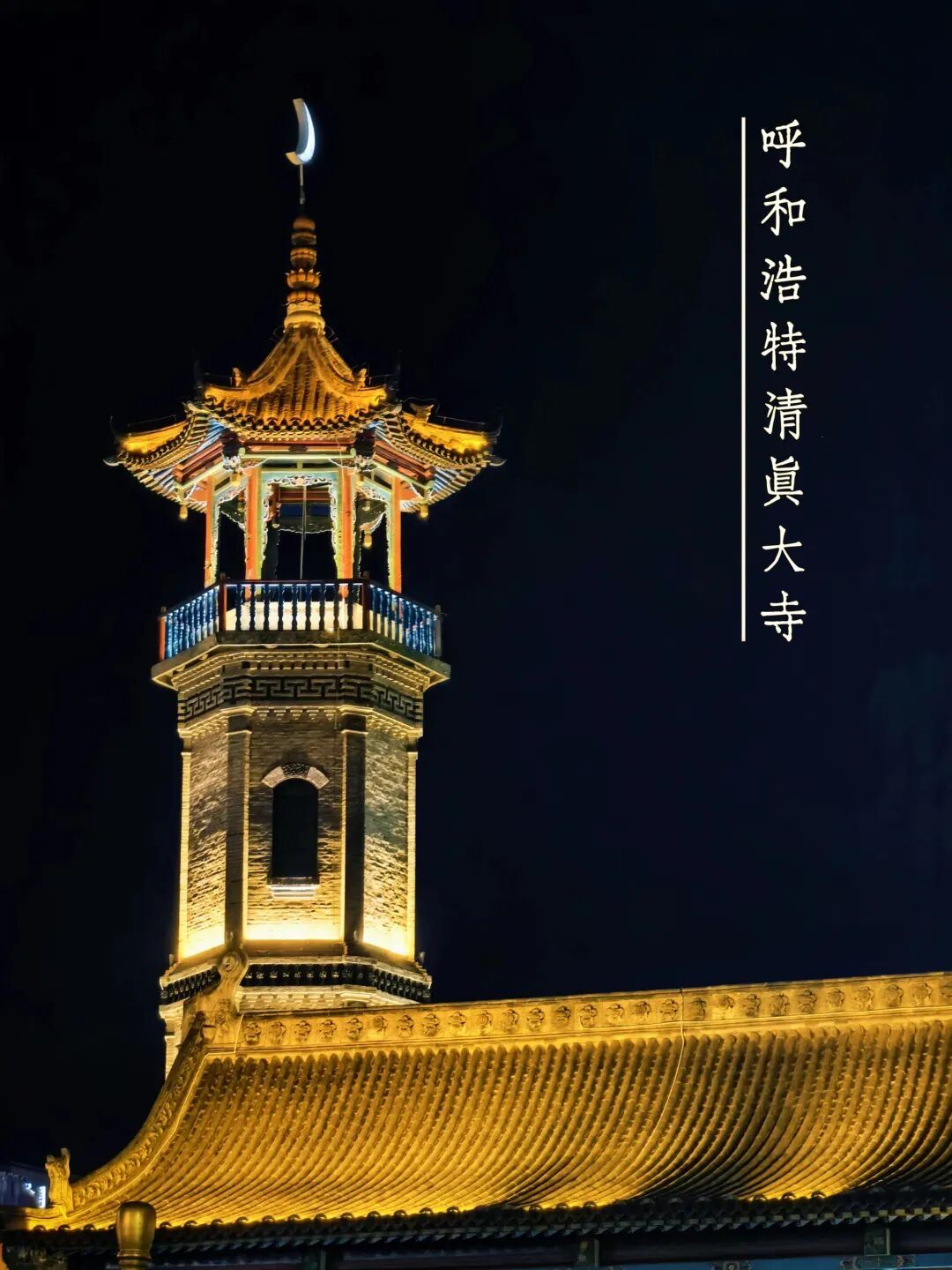
I was wandering through Kuanxiangzi that day. The place was buzzing with noise, and the smell of cooking oil mixed with the aroma of freshly baked naan (flatbread) hit the air—it’s the most vibrant slice of life in the old town. Just walking aimlessly ahead, I suddenly looked up and saw a slender tower poking out from a sea of rooftops at the end of the alley, with a crescent moon perched right on top.
I didn't know the history behind the building; I just raised my camera and snapped a quick photo. Looking back at the pic later, I realized it created its own peaceful little world amidst the noisy streets, like a quiet pause pulled right out of the hustle and bustle of human life.
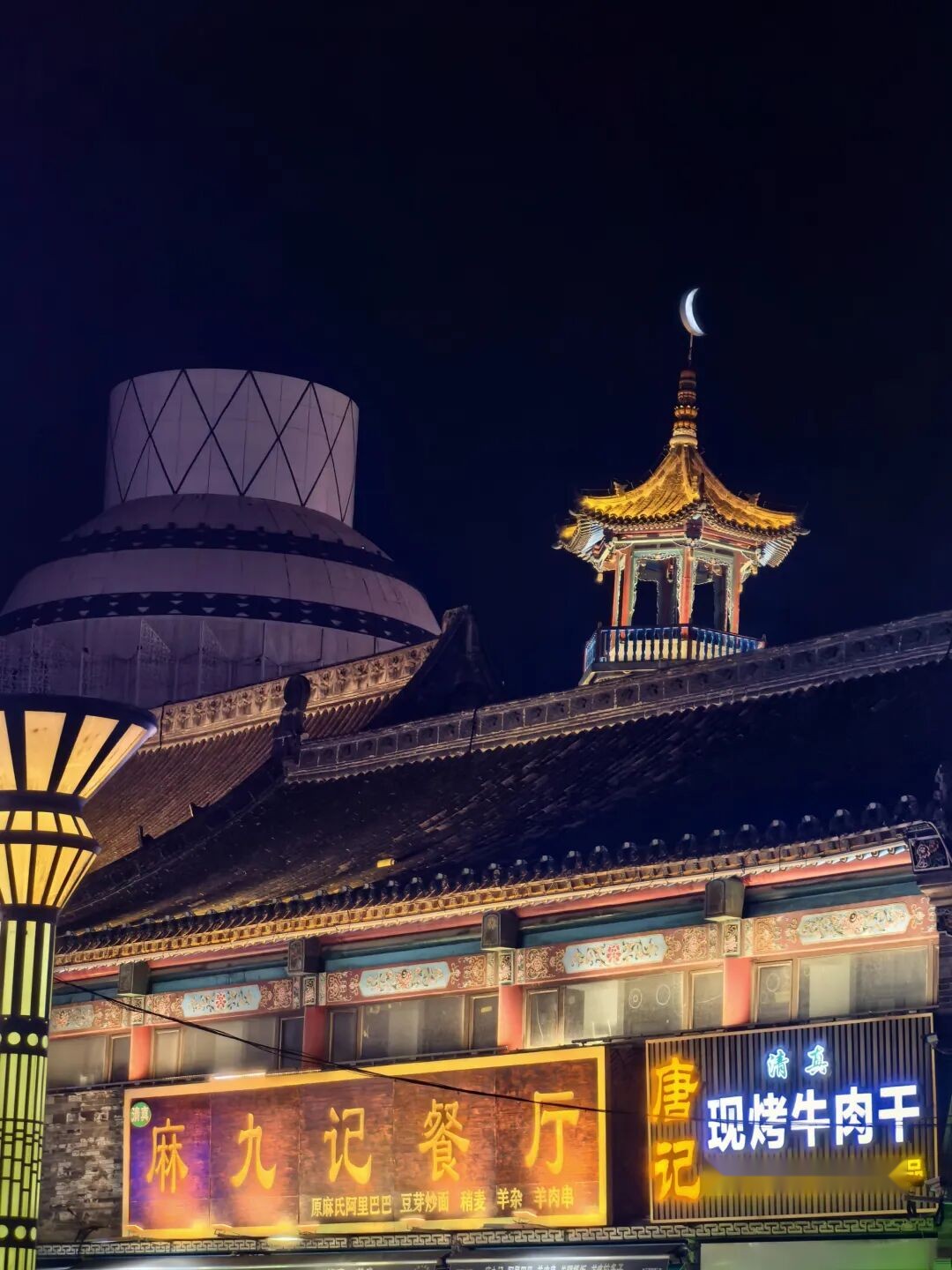
After looking it up later, I found out this was the moon-sighting tower of the Great Mosque, originally built in 1939. Standing 36 meters tall, the lower four stories are built with blue bricks, while the top floor features a traditional Chinese flying eaves pavilion with the crescent moon hanging high above it. By the time I walked up to the mosque entrance, it was already closed, leaving me standing outside the walls with a bit of regret.
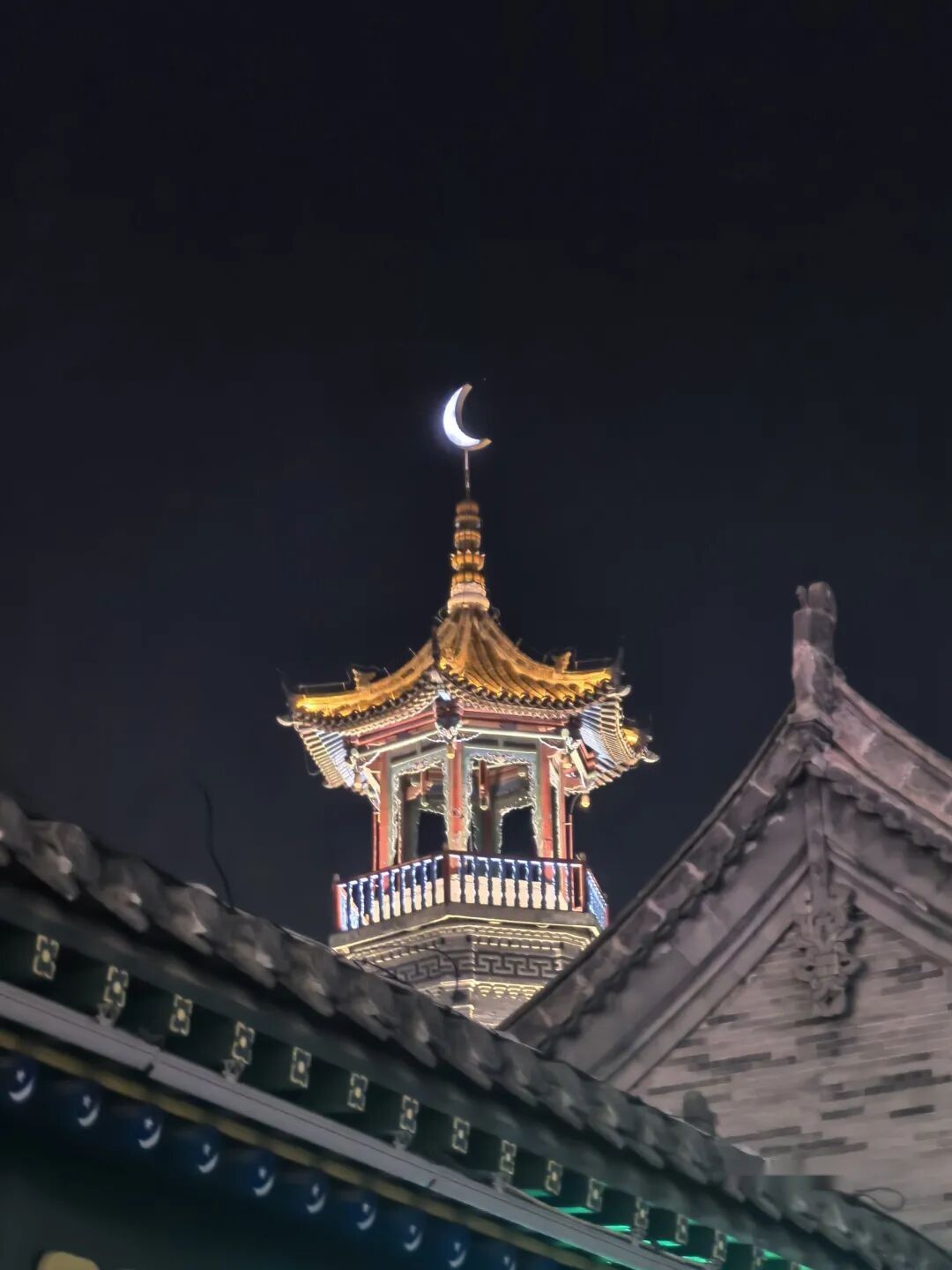
Yet that brief glimpse planted a seed of longing in my heart.
After years of traveling, I've always had a soft spot for totally unexpected encounters on the road. No advance research, no scouting for photo spots—just accidentally lifting my head and getting gently struck by the scene right in front of me.
II. Stepping Inside the Mosque: Every Step is a Mind-Blowing Cultural Blend
Early the next morning, I headed back there. Standing right in front of the main gate, my very first thought was: if nobody told you, you’d never guess this was a mosque.
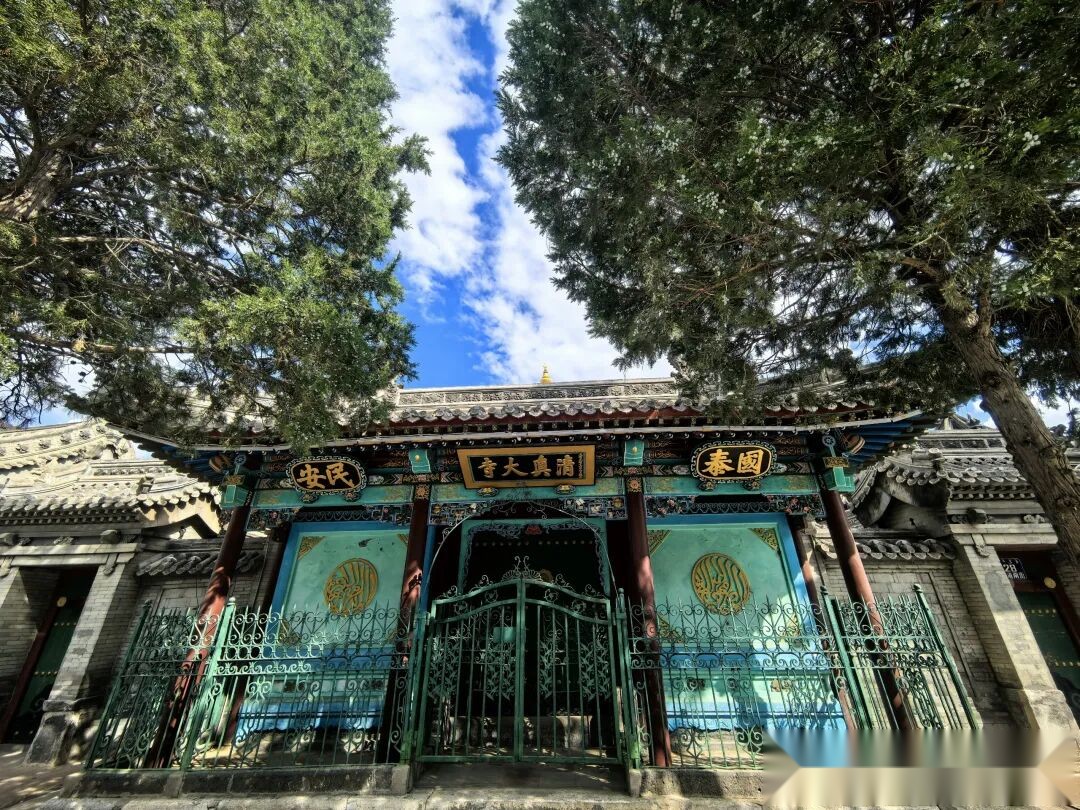
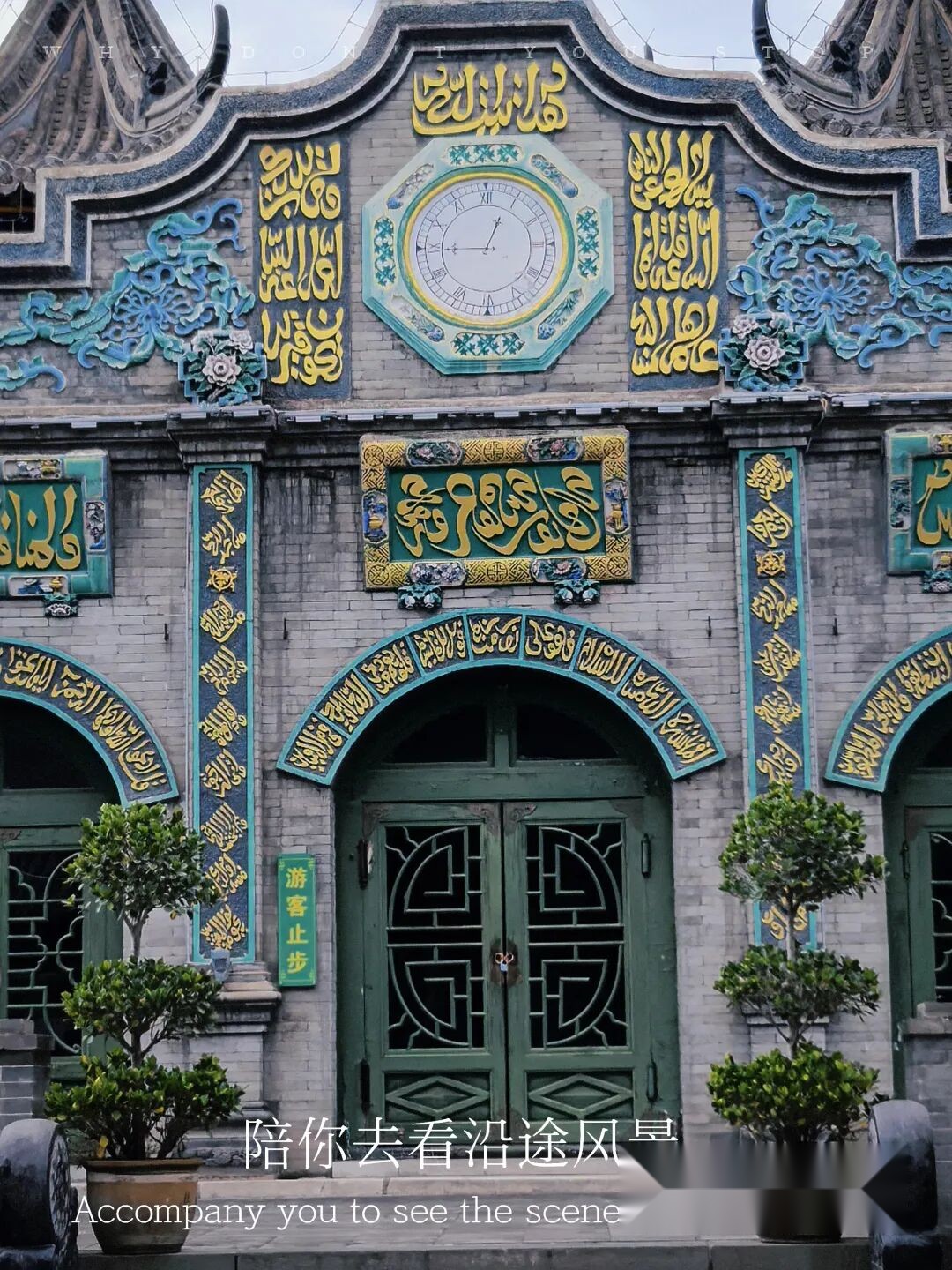
Made entirely of dark blue bricks and dark tiles, with upturned eaves and corners, the small vermilion gate looks solemn and respectful. A plaque reading "Great Mosque" hangs high above the lintel, and the Chinese characters for "National Prosperity" and "People's Peace" flank the two sides of the door. At first glance, this is unmistakably a traditional Chinese courtyard—looking more like an ancestral hall or a temple, with none of the typical domes and white walls you’d expect from an overseas-style mosque.
But once you step inside, surprises await at every turn, showcasing the aesthetic beauty of two cultures colliding.
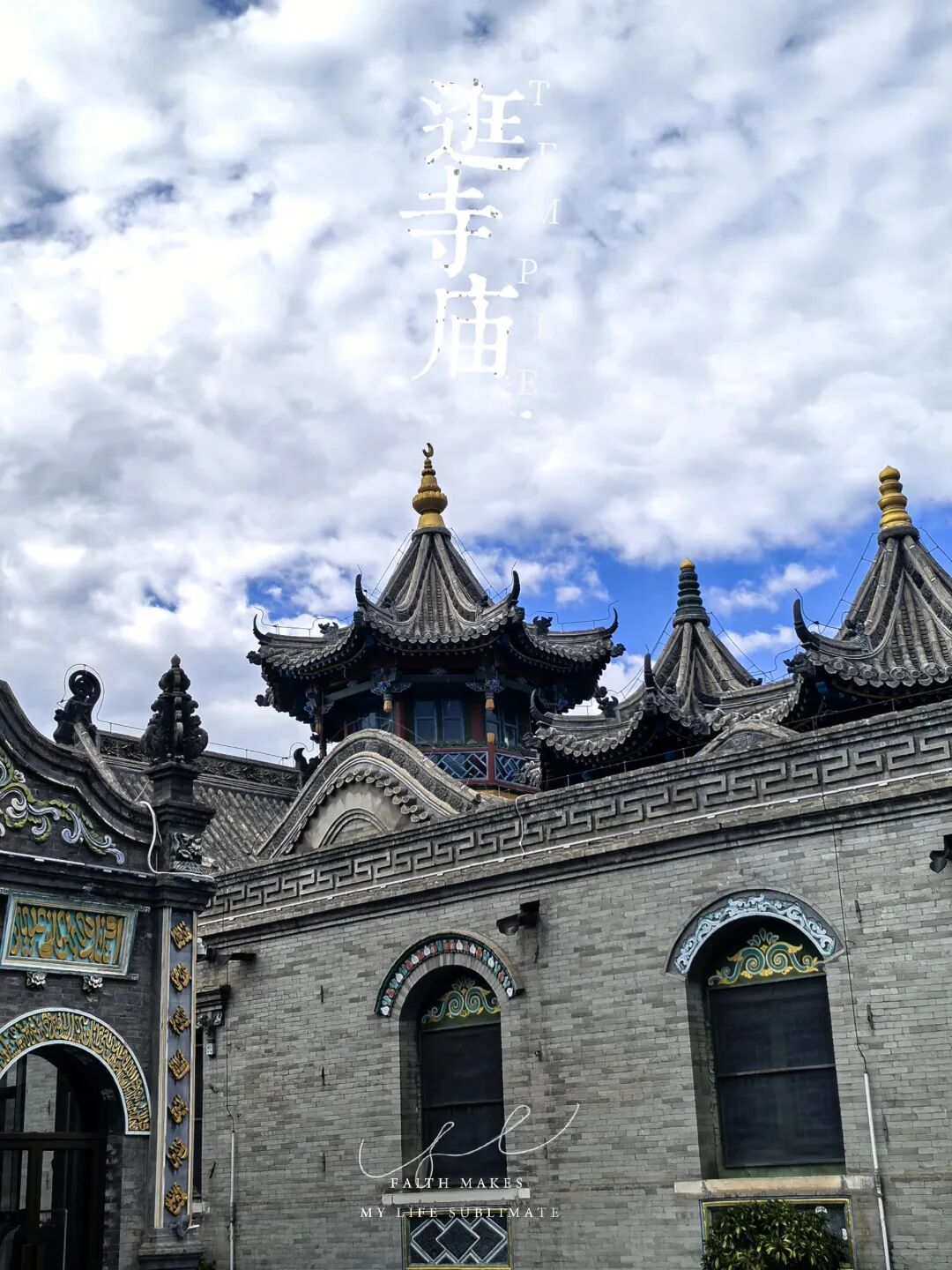
The main prayer hall uses the solid, water-ground blue bricks typical of northern old houses. The roof features a traditional Chinese interlocking hip-and-gable structure, with multiple clustered pyramid roofs arranged gracefully, while the wooden frame is delightfully subtle and refined. The most striking part is the color scheme: the beams, pillars, and walls are covered in rich, vibrant blue-green tones, paired with golden Arabic script reliefs. Floral patterns are carved all around the arches, seamlessly blending Islamic motifs with Chinese mortise-and-tenon joints. Foreign architectural shapes are firmly rooted within the classical Chinese building system.
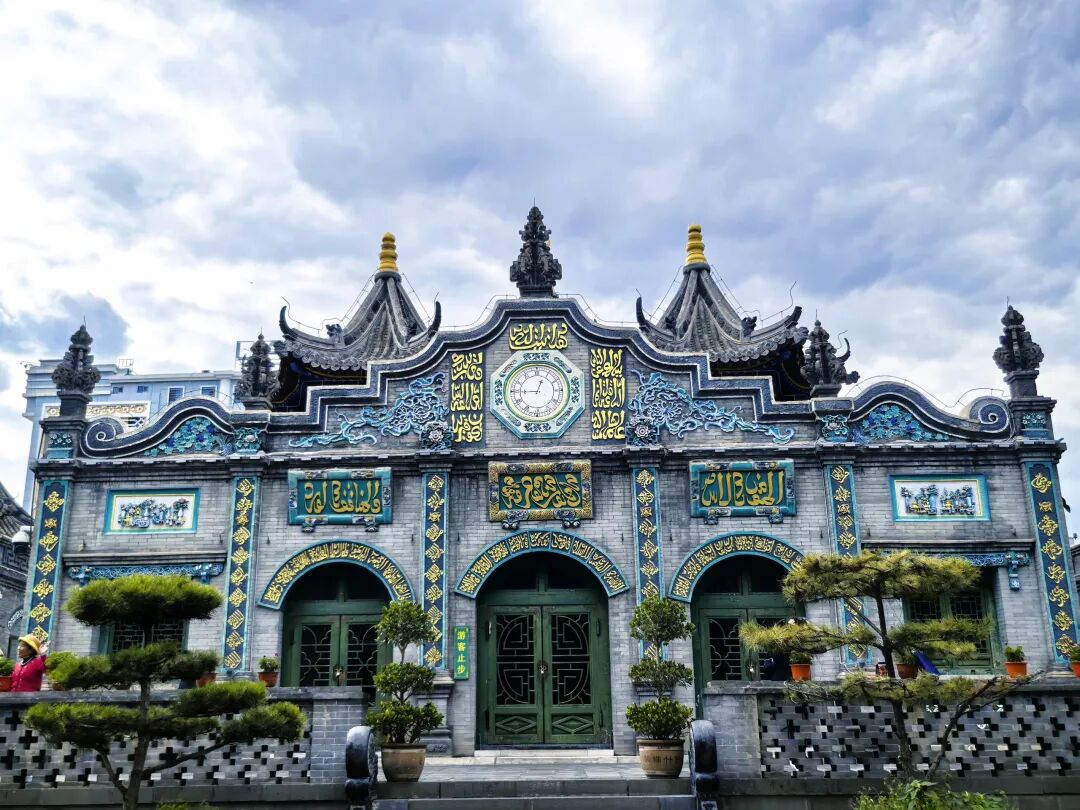
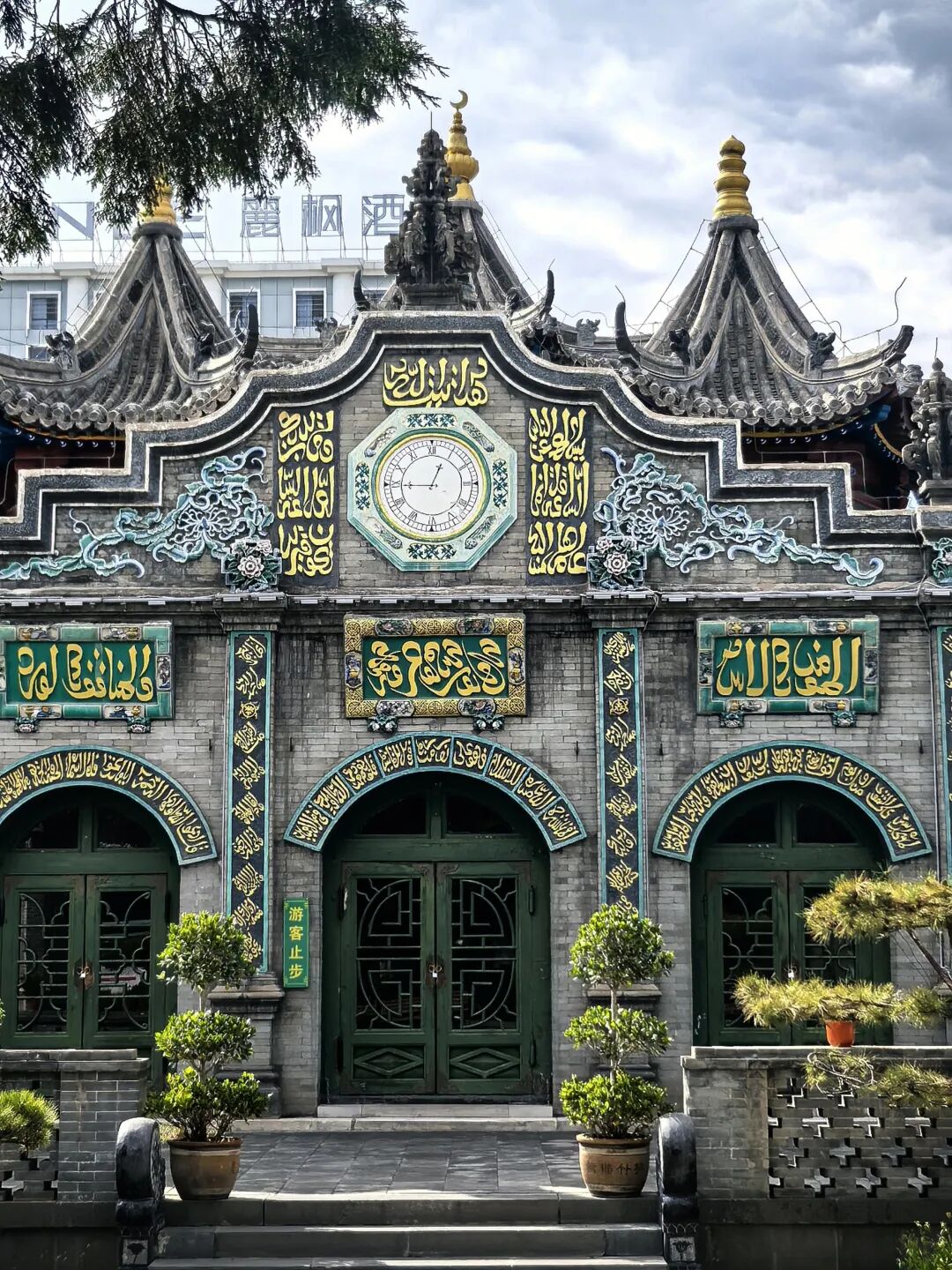
Every single brick, tile, eave, and lintel is packed with hidden details. Looking straight ahead, looking up, or glancing from the side—no matter the angle, your camera will always find endless textures and colors to capture. It’s not the kind of tourist spot you can fully take in at a single glance; layers of historical depth make every detail worth savoring slowly.

What's even better is that it hasn't been turned into a cold, caged-off tourist trap. To this day, it's still an active place of worship. You'll see believers walking along the corridors, flowers and trees planted in the corners, and a lingering sense of everyday peace throughout the courtyard. Faith hasn't detached itself from human life, and historical relics haven't been cut off from worldly living.
Foreign culture and local architecture merge here, with Han-style courtyards and Islamic decorations coexisting side by side. At that moment, I suddenly thought of the Catholic church in Guiyang. In that old church blending East and West in Guiyang, I first understood that "do not worry about tomorrow" is also a faith that traveled from afar, refusing to stay cooped up in its original architectural mold, and instead actively embracing local customs to grow a brand-new look over time.

A mosque is half faith, half human life.
III. The Most Touching Scenery is Hidden in the Little Details of Everyday Life
What really made me stop and linger for a long time wasn't the intricate architectural painting, but the warm, ordinary scenes of human life in the courtyard.
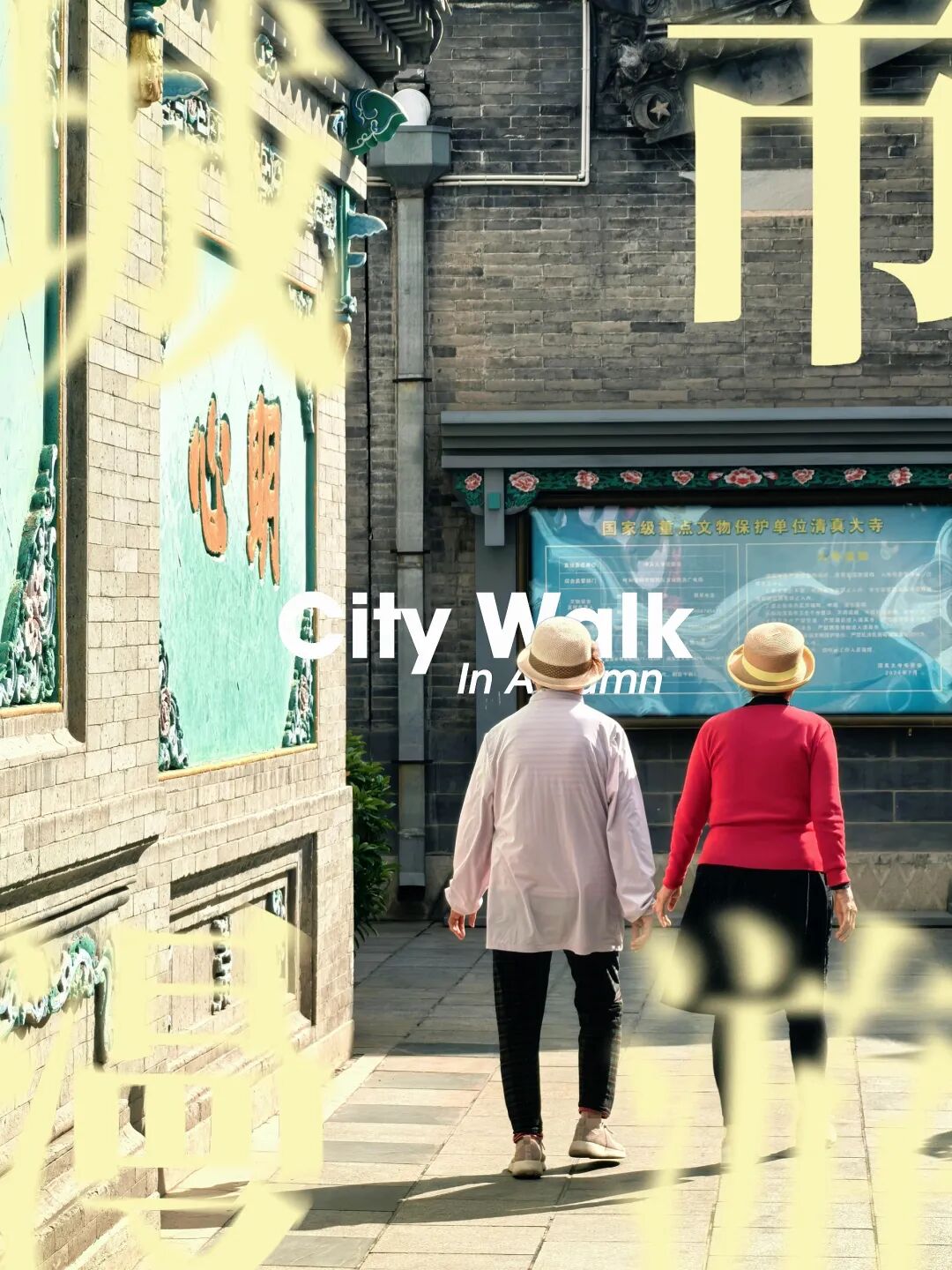
Two grandmothers in their seventies were holding hands, taking a slow, relaxed stroll through the yard. Whenever they spotted a pretty doorway, they’d stop, point out the scenery to each other, and pull out their phones to snap some photos at a leisurely pace. There was no rushed sightseeing, no hurried tour groups—they just looked like they were hanging out in their own backyard, totally at ease and gentle.
Underneath the stele pavilion, a little cat was resting quietly. It stood its ground without being scared of strangers, but didn't beg for attention from visitors either.
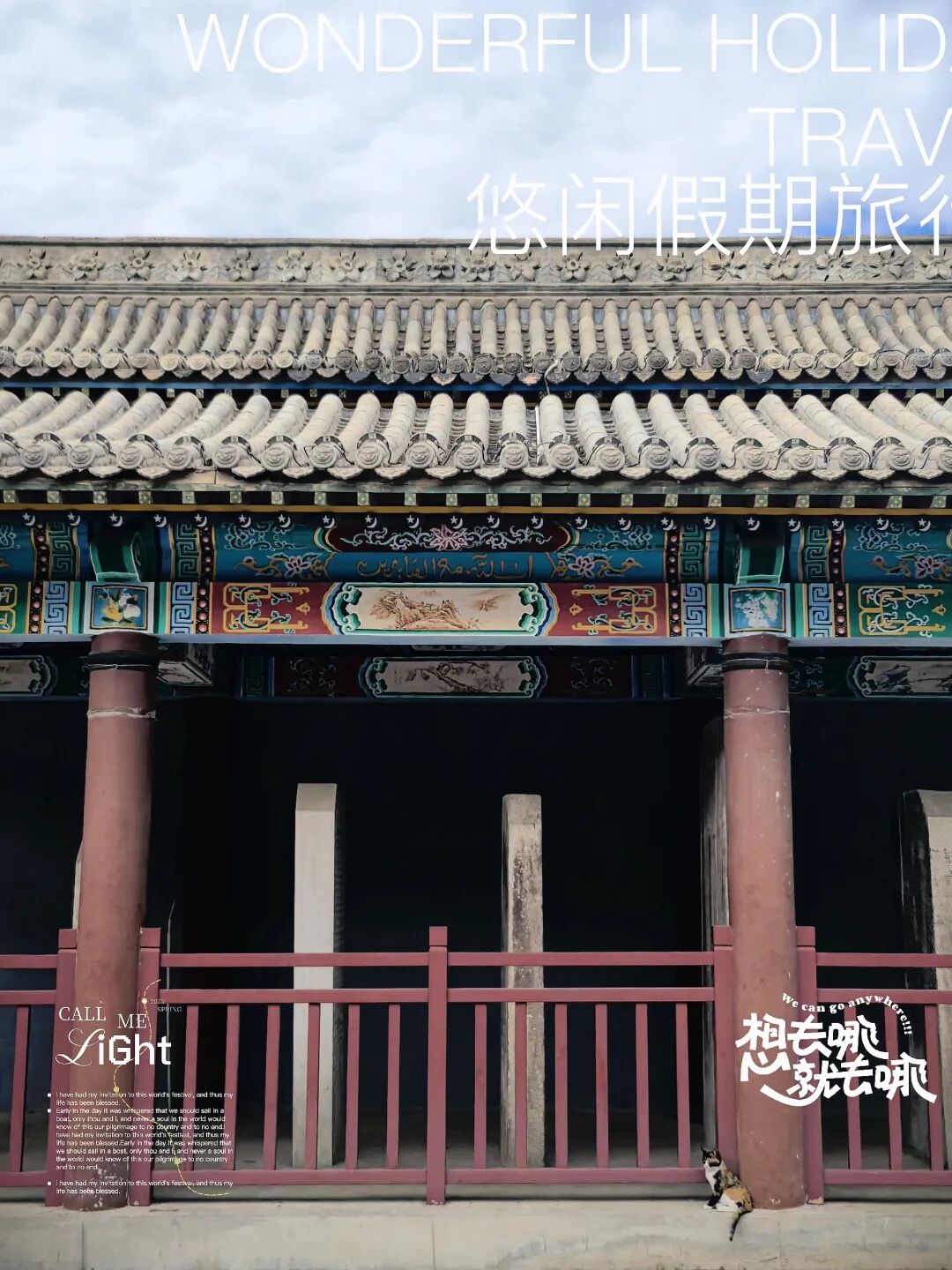
Inside this sacred ancient mosque, you find devoted believers, leisurely seniors, and freely resting animals all at once. Solemnity and triviality, the sacred and the ordinary, reach a perfect balance right here. This is the ultimate proof that an ancient building is truly "alive": it isn't just words on a heritage list, but a little courtyard carrying the daily lives of ordinary people.
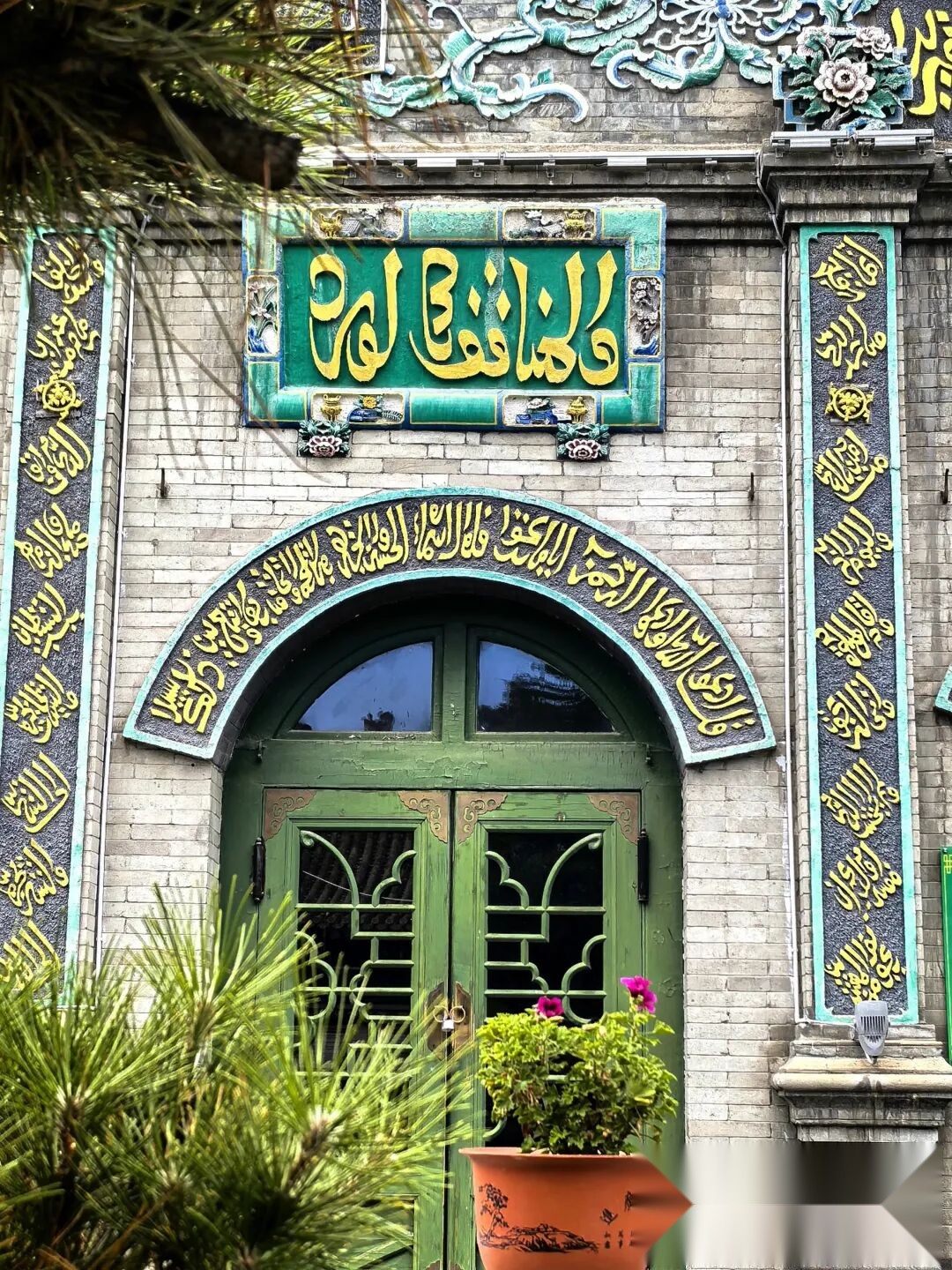
After hanging out for nearly two hours, I took in all the sights and got ready to leave. Turning back for one last look, the four characters for "National Prosperity and People's Peace" on either side of the gate stood quietly under the sunlight.
I suddenly realized that these four words transcend religion itself. It is a humble wish held by all believers and, even more, a shared hope for every Chinese person: that our land remains stable, and our nation finds peace and prosperity.
Part 4: This mosque was built layer by layer over time.
The Great Mosque was originally established in 1693 during the 32nd year of the Kangxi Emperor's reign, starting as just a few simple mud huts. Through expansions and renovations during the Qianlong, Tongzhi, and Guangxu eras, it gradually grew to its current scale. The three-courtyard layout we see today was finalized during major renovations between 1923 and 1925, while the iconic Moon-Watching Tower wasn't completed until 1939.
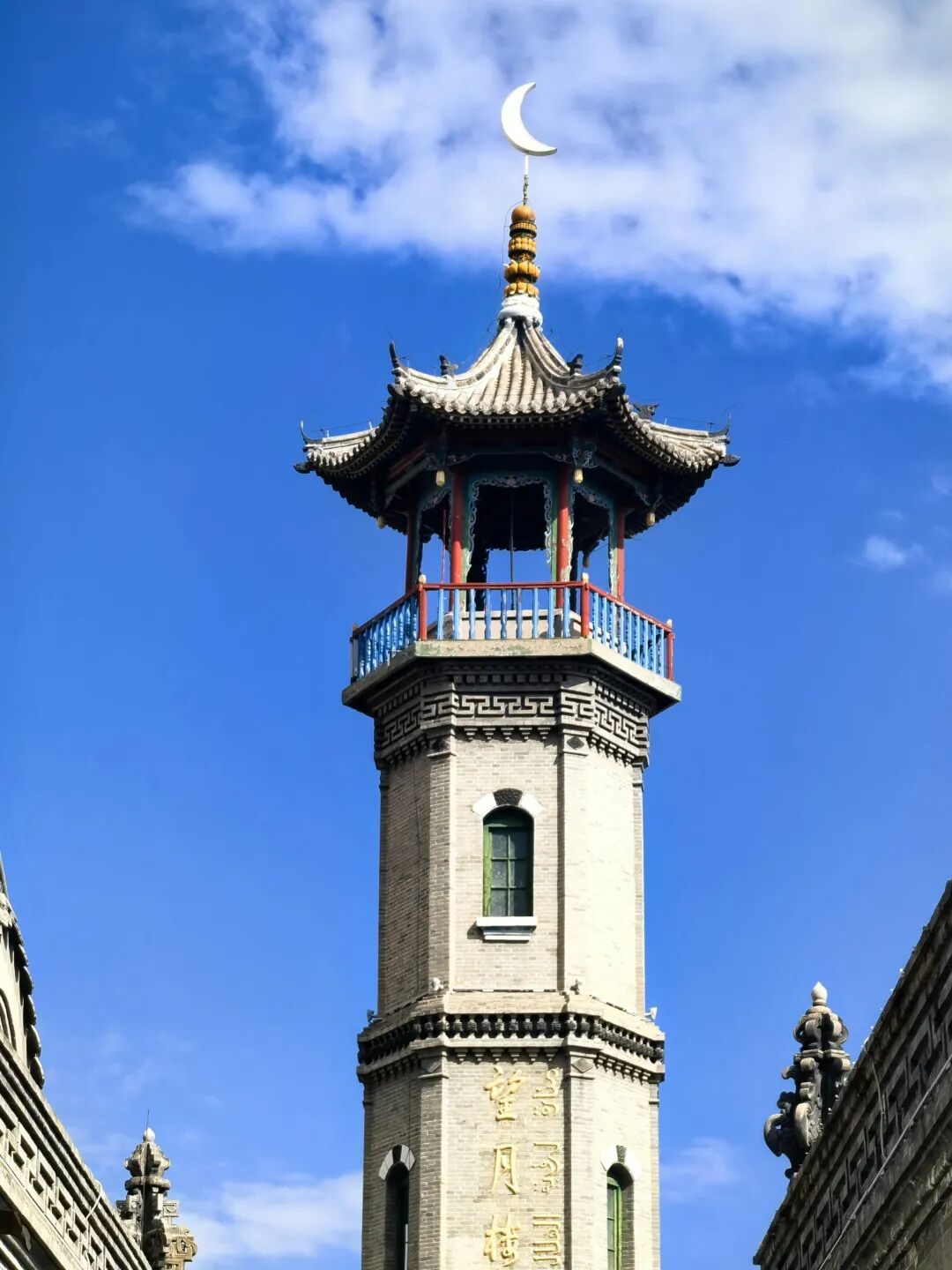
The entire complex wasn't built all at once. The traditional Chinese courtyard framework, Islamic decorative patterns, and the Republic-era tower each carry the marks of their time, layered on top of one another on the same plot of land. This sense of depth, created by the accumulation of history, is far more powerful than any single architectural style.
Throughout history, Guihua City was a vital hub on the Tea Road, and this Great Mosque served as a spiritual landmark for the Muslim merchant caravans traveling those ancient routes. Camels, tea, traders, and faith all converged along this road, eventually settling into this living, breathing historical site that stands quietly in the old city of Hohhot.
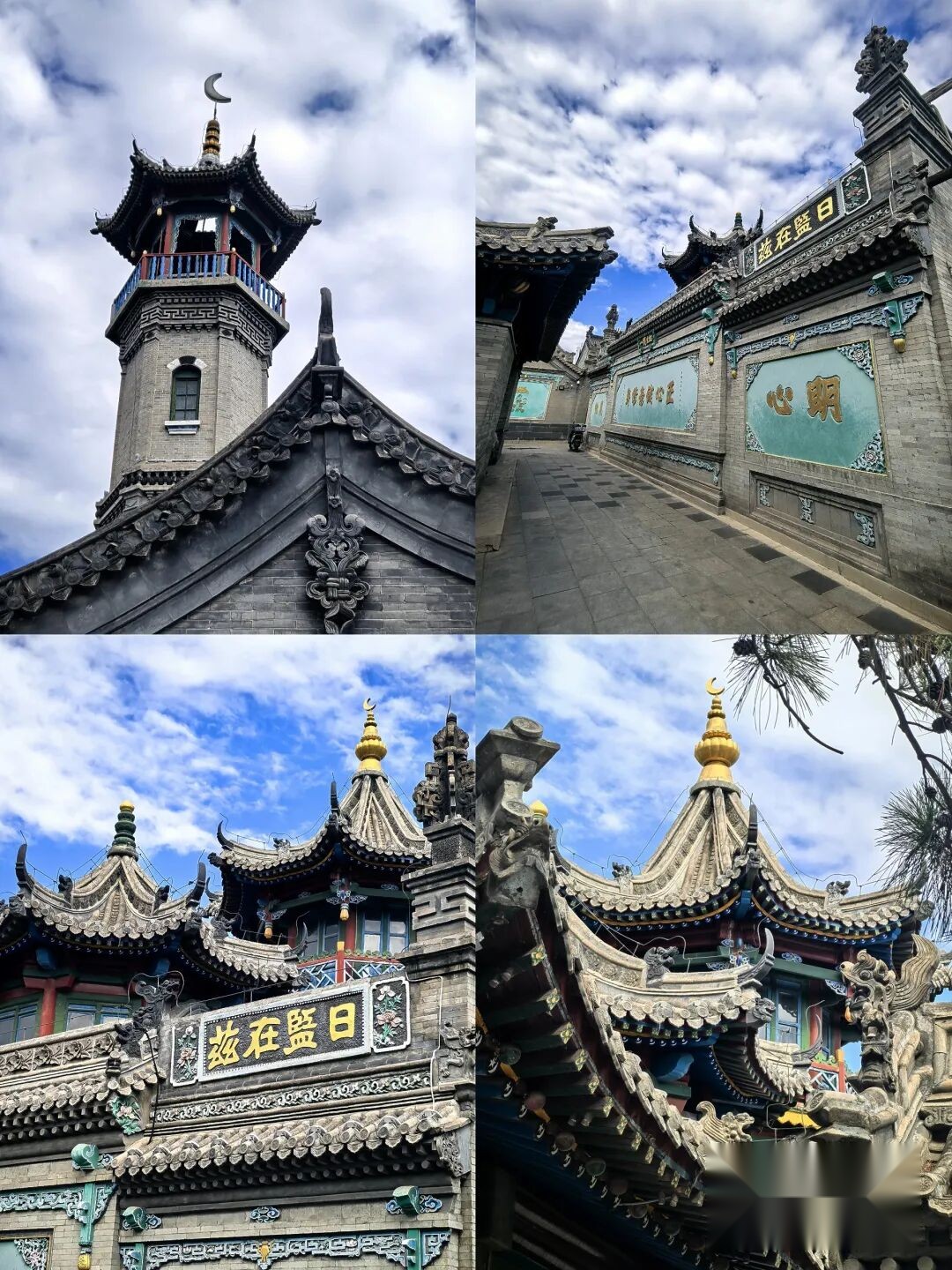
It has been over a month, and I’m still finding it hard to put into words. It is grand enough to hold three hundred years of history as a center for multi-ethnic integration on the frontier, yet it is also humble, deeply rooted in the local streets and woven into the everyday lives of ordinary people.
This chance encounter also made me realize one thing: the most beautiful part of any trip is always the unexpected magic you find along the way.
Part 5: A Minimalist Travel Guide
Basic Info
Address: No. 28 Tongdao South Street, Huimin District, Hohhot, right next to the Kuanxiangzi food street.
Opening Hours: 9:00 AM – 12:00 PM and 3:00 PM – 7:30 PM. The mosque closes at noon, and the last entry is at 6:00 PM, so make sure to plan around the lunch break.
Admission: Free for everyone, no reservation required.
Visitor Etiquette (Must-Read)
Dress modestly; avoid wearing shorts, skirts, or sleeveless tops.
The main prayer hall is for Muslims only; visitors should stick to exploring the outer courtyards.
Keep things quiet, do not step on the thresholds, and please do not take photos of people while they are performing dua (prayer).
Photography Spots & Route Tips
Best photo spots: Shooting up at the Moon-Watching Tower, the blue and green painted walls of the main hall, and the 'Guotai Min'an' (Nation Prospers, People Live in Peace) plaque at the main gate. The lighting is softest and best for photos between 9:00 and 11:00 AM.
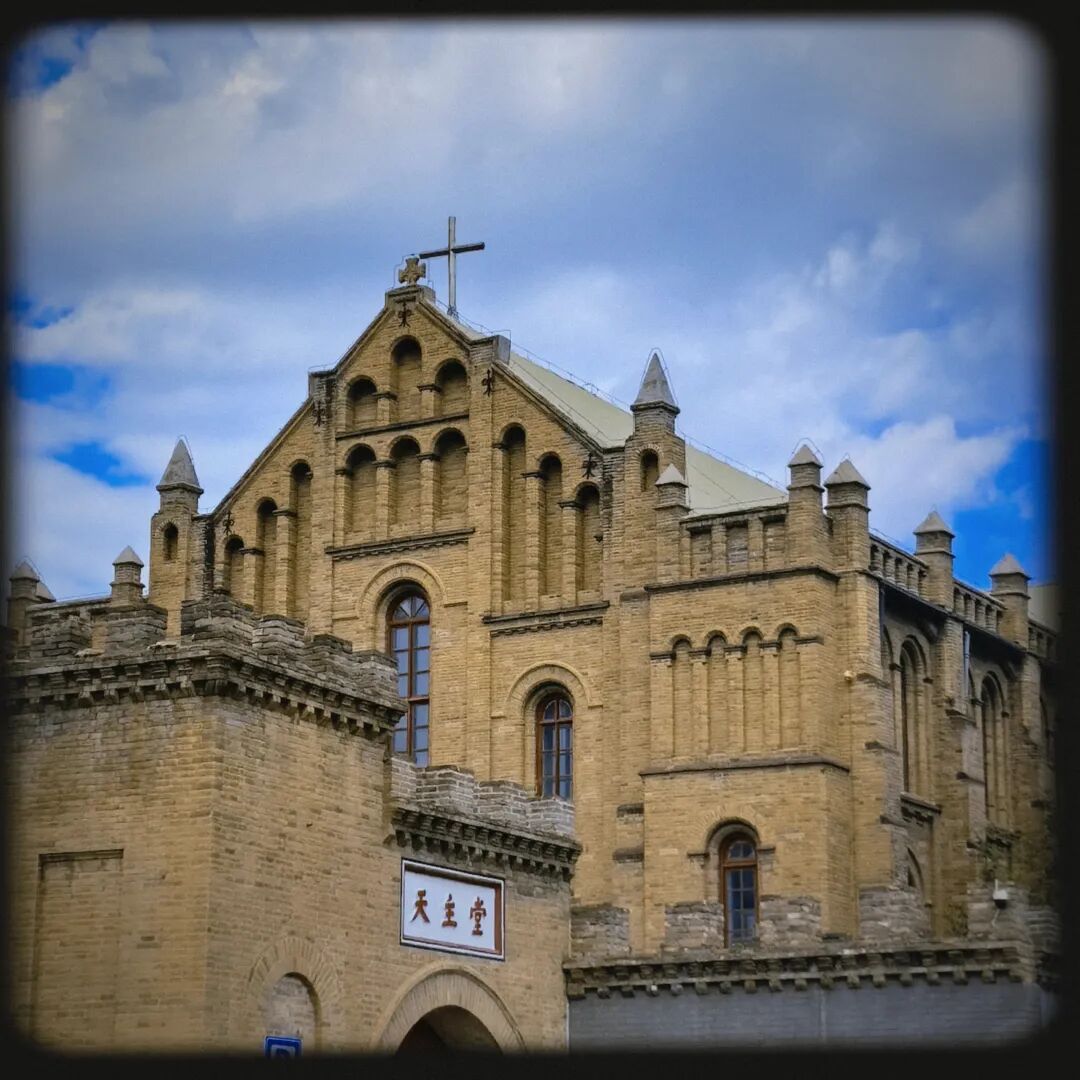
Recommended route: Great Mosque → Kuanxiangzi to try beizi (baked flatbread), naan (flatbread), and xieguogeng (a local fruit-based thick soup) → Catholic Church (for a cultural walk).
Travel Advice
Don't worry about hitting every single spot on a checklist. Give yourself an hour or two to just wander slowly. Take time to soak in the architectural details and feel the atmosphere where faith and daily life merge; that’s the only way to truly understand the charm of this old frontier mosque.
Final thoughts:
Having traveled across mountains and seas and visited countless ancient temples, the Great Mosque of Hohhot will always be a special mark on my journey because:
It is so incredibly grand,
Grand enough to carry three hundred years of history reflecting the integration of frontier cultures,
The Great Mosque of Hohhot stands as a living witness to the history of different ethnic groups living together in harmony across the North.
Yet, it feels incredibly low-key,
so modest that it's tucked away right in the middle of the neighborhood, blending into the everyday hustle and bustle of city life,
becoming a gentle, down-to-earth part of the locals' daily routines.
A journey into the twilight of Hohhot's old town to discover the touching story of running into a century-old mosque. It captures the unique architectural style blending traditional Chinese structures with an Islamic moon-sighting dome, while recording the peaceful, devout prayer atmosphere inside alongside the lively, steam-filled neighborhood vibes outside.
It was a chance encounter in the fading light,
that brought me to the old town of Hohhot,
where I stumbled upon a century-old mosque that blends Eastern and Western styles, balancing everyday life with deep faith.
I. That Crescent Moon Made Me Come Back the Next Day
I was wandering through Kuanxiangzi that day. The place was buzzing with noise, and the smell of cooking oil mixed with the aroma of freshly baked naan (flatbread) hit the air—it’s the most vibrant slice of life in the old town. Just walking aimlessly ahead, I suddenly looked up and saw a slender tower poking out from a sea of rooftops at the end of the alley, with a crescent moon perched right on top.
I didn't know the history behind the building; I just raised my camera and snapped a quick photo. Looking back at the pic later, I realized it created its own peaceful little world amidst the noisy streets, like a quiet pause pulled right out of the hustle and bustle of human life.
After looking it up later, I found out this was the moon-sighting tower of the Great Mosque, originally built in 1939. Standing 36 meters tall, the lower four stories are built with blue bricks, while the top floor features a traditional Chinese flying eaves pavilion with the crescent moon hanging high above it. By the time I walked up to the mosque entrance, it was already closed, leaving me standing outside the walls with a bit of regret.
Yet that brief glimpse planted a seed of longing in my heart.
After years of traveling, I've always had a soft spot for totally unexpected encounters on the road. No advance research, no scouting for photo spots—just accidentally lifting my head and getting gently struck by the scene right in front of me.
II. Stepping Inside the Mosque: Every Step is a Mind-Blowing Cultural Blend
Early the next morning, I headed back there. Standing right in front of the main gate, my very first thought was: if nobody told you, you’d never guess this was a mosque.
Made entirely of dark blue bricks and dark tiles, with upturned eaves and corners, the small vermilion gate looks solemn and respectful. A plaque reading "Great Mosque" hangs high above the lintel, and the Chinese characters for "National Prosperity" and "People's Peace" flank the two sides of the door. At first glance, this is unmistakably a traditional Chinese courtyard—looking more like an ancestral hall or a temple, with none of the typical domes and white walls you’d expect from an overseas-style mosque.
But once you step inside, surprises await at every turn, showcasing the aesthetic beauty of two cultures colliding.
The main prayer hall uses the solid, water-ground blue bricks typical of northern old houses. The roof features a traditional Chinese interlocking hip-and-gable structure, with multiple clustered pyramid roofs arranged gracefully, while the wooden frame is delightfully subtle and refined. The most striking part is the color scheme: the beams, pillars, and walls are covered in rich, vibrant blue-green tones, paired with golden Arabic script reliefs. Floral patterns are carved all around the arches, seamlessly blending Islamic motifs with Chinese mortise-and-tenon joints. Foreign architectural shapes are firmly rooted within the classical Chinese building system.
Every single brick, tile, eave, and lintel is packed with hidden details. Looking straight ahead, looking up, or glancing from the side—no matter the angle, your camera will always find endless textures and colors to capture. It’s not the kind of tourist spot you can fully take in at a single glance; layers of historical depth make every detail worth savoring slowly.
What's even better is that it hasn't been turned into a cold, caged-off tourist trap. To this day, it's still an active place of worship. You'll see believers walking along the corridors, flowers and trees planted in the corners, and a lingering sense of everyday peace throughout the courtyard. Faith hasn't detached itself from human life, and historical relics haven't been cut off from worldly living.
Foreign culture and local architecture merge here, with Han-style courtyards and Islamic decorations coexisting side by side. At that moment, I suddenly thought of the Catholic church in Guiyang. In that old church blending East and West in Guiyang, I first understood that "do not worry about tomorrow" is also a faith that traveled from afar, refusing to stay cooped up in its original architectural mold, and instead actively embracing local customs to grow a brand-new look over time.
A mosque is half faith, half human life.
III. The Most Touching Scenery is Hidden in the Little Details of Everyday Life
What really made me stop and linger for a long time wasn't the intricate architectural painting, but the warm, ordinary scenes of human life in the courtyard.
Two grandmothers in their seventies were holding hands, taking a slow, relaxed stroll through the yard. Whenever they spotted a pretty doorway, they’d stop, point out the scenery to each other, and pull out their phones to snap some photos at a leisurely pace. There was no rushed sightseeing, no hurried tour groups—they just looked like they were hanging out in their own backyard, totally at ease and gentle.
Underneath the stele pavilion, a little cat was resting quietly. It stood its ground without being scared of strangers, but didn't beg for attention from visitors either.
Inside this sacred ancient mosque, you find devoted believers, leisurely seniors, and freely resting animals all at once. Solemnity and triviality, the sacred and the ordinary, reach a perfect balance right here. This is the ultimate proof that an ancient building is truly "alive": it isn't just words on a heritage list, but a little courtyard carrying the daily lives of ordinary people.
After hanging out for nearly two hours, I took in all the sights and got ready to leave. Turning back for one last look, the four characters for "National Prosperity and People's Peace" on either side of the gate stood quietly under the sunlight.
I suddenly realized that these four words transcend religion itself. It is a humble wish held by all believers and, even more, a shared hope for every Chinese person: that our land remains stable, and our nation finds peace and prosperity.
Part 4: This mosque was built layer by layer over time.
The Great Mosque was originally established in 1693 during the 32nd year of the Kangxi Emperor's reign, starting as just a few simple mud huts. Through expansions and renovations during the Qianlong, Tongzhi, and Guangxu eras, it gradually grew to its current scale. The three-courtyard layout we see today was finalized during major renovations between 1923 and 1925, while the iconic Moon-Watching Tower wasn't completed until 1939.
The entire complex wasn't built all at once. The traditional Chinese courtyard framework, Islamic decorative patterns, and the Republic-era tower each carry the marks of their time, layered on top of one another on the same plot of land. This sense of depth, created by the accumulation of history, is far more powerful than any single architectural style.
Throughout history, Guihua City was a vital hub on the Tea Road, and this Great Mosque served as a spiritual landmark for the Muslim merchant caravans traveling those ancient routes. Camels, tea, traders, and faith all converged along this road, eventually settling into this living, breathing historical site that stands quietly in the old city of Hohhot.
It has been over a month, and I’m still finding it hard to put into words. It is grand enough to hold three hundred years of history as a center for multi-ethnic integration on the frontier, yet it is also humble, deeply rooted in the local streets and woven into the everyday lives of ordinary people.
This chance encounter also made me realize one thing: the most beautiful part of any trip is always the unexpected magic you find along the way.
Part 5: A Minimalist Travel Guide
Basic Info
Address: No. 28 Tongdao South Street, Huimin District, Hohhot, right next to the Kuanxiangzi food street.
Opening Hours: 9:00 AM – 12:00 PM and 3:00 PM – 7:30 PM. The mosque closes at noon, and the last entry is at 6:00 PM, so make sure to plan around the lunch break.
Admission: Free for everyone, no reservation required.
Visitor Etiquette (Must-Read)
Dress modestly; avoid wearing shorts, skirts, or sleeveless tops.
The main prayer hall is for Muslims only; visitors should stick to exploring the outer courtyards.
Keep things quiet, do not step on the thresholds, and please do not take photos of people while they are performing dua (prayer).
Photography Spots & Route Tips
Best photo spots: Shooting up at the Moon-Watching Tower, the blue and green painted walls of the main hall, and the 'Guotai Min'an' (Nation Prospers, People Live in Peace) plaque at the main gate. The lighting is softest and best for photos between 9:00 and 11:00 AM.
Recommended route: Great Mosque → Kuanxiangzi to try beizi (baked flatbread), naan (flatbread), and xieguogeng (a local fruit-based thick soup) → Catholic Church (for a cultural walk).
Travel Advice
Don't worry about hitting every single spot on a checklist. Give yourself an hour or two to just wander slowly. Take time to soak in the architectural details and feel the atmosphere where faith and daily life merge; that’s the only way to truly understand the charm of this old frontier mosque.
Final thoughts:
Having traveled across mountains and seas and visited countless ancient temples, the Great Mosque of Hohhot will always be a special mark on my journey because:
It is so incredibly grand,
Grand enough to carry three hundred years of history reflecting the integration of frontier cultures,
The Great Mosque of Hohhot stands as a living witness to the history of different ethnic groups living together in harmony across the North.
Yet, it feels incredibly low-key,
so modest that it's tucked away right in the middle of the neighborhood, blending into the everyday hustle and bustle of city life,
becoming a gentle, down-to-earth part of the locals' daily routines.
