
Historic Beijing Mosque Guide: Exploring the 500-Year-Old Changying Mosque and Authentic Halal Food
[Internet Repost]
Come check out the Changying Mosque in Beijing's Chaoyang District, a historic site dating back to the Ming Dynasty with over 500 years of history. This guide covers everything from its three-courtyard layout, ancient trees, and stone tablets to the intricate architectural paintings, how to register for a free visit, and a look at the surrounding Halal food scene.

While biking over to the Huangqu subway station, I happened to pass by the Changying Mosque and noticed the front gate was open. I decided to try my luck and asked the older gentleman at the entrance if visitors were allowed inside.
The man was super friendly and gave me a smile, telling me I was welcome to look around as long as I signed in at the desk, though he noted I shouldn't go inside the main prayer hall.
I honestly thought mosques were usually closed to the public, so this was a total win. It’s actually the second mosque I’ve visited in Beijing.

01
Overview
The Changying Mosque is located on the north side of Chaoyang North Road, about 700 meters west of the Huangqu subway station.
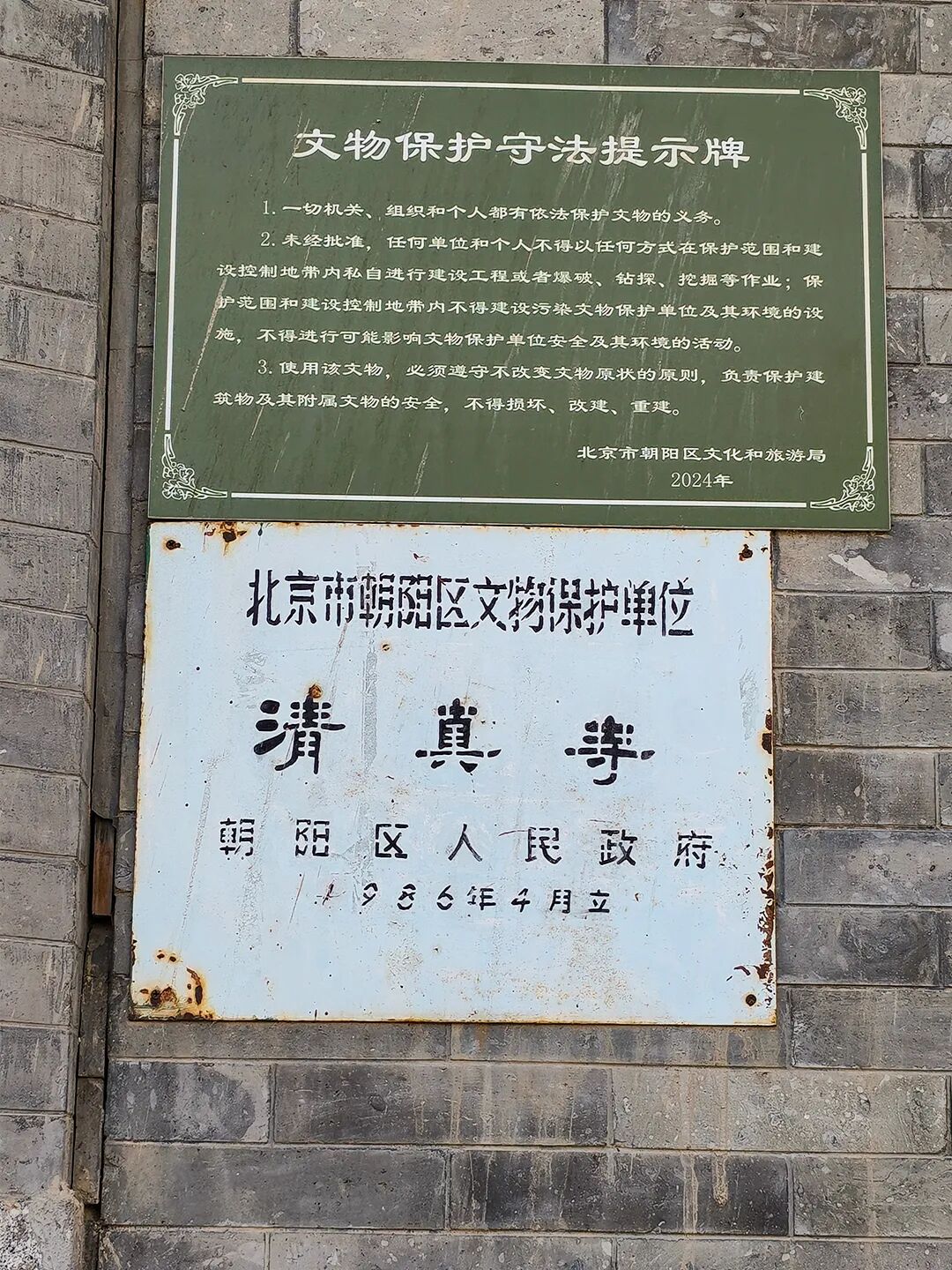
It was first built during the Zhengde period of the Ming Dynasty (1506–1521), making it over five centuries old. It underwent a major renovation during the Jiaqing period of the Qing Dynasty, and the original monument, the 'Record of the Reconstruction of the Changying Village Mosque in Tongzhou,' is still there today. It was designated as a cultural heritage site in Chaoyang District in 1986, and after several rounds of repairs and expansions, it saw a massive renovation in 2002.
Spanning over 8,400 square meters, it is the largest mosque in the suburbs of Beijing.

02
Architectural Layout
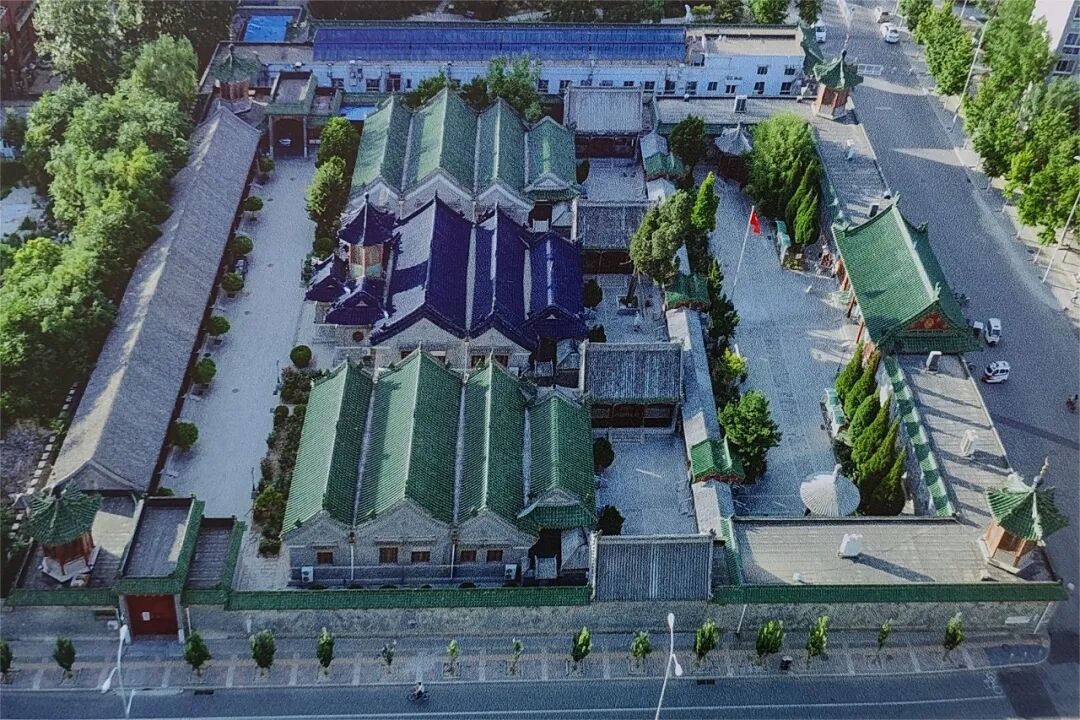
The Changying Mosque is quite spacious and consists of three courtyards. It faces east, and each of the four corners of the perimeter wall features a small hexagonal pavilion with a pointed roof.


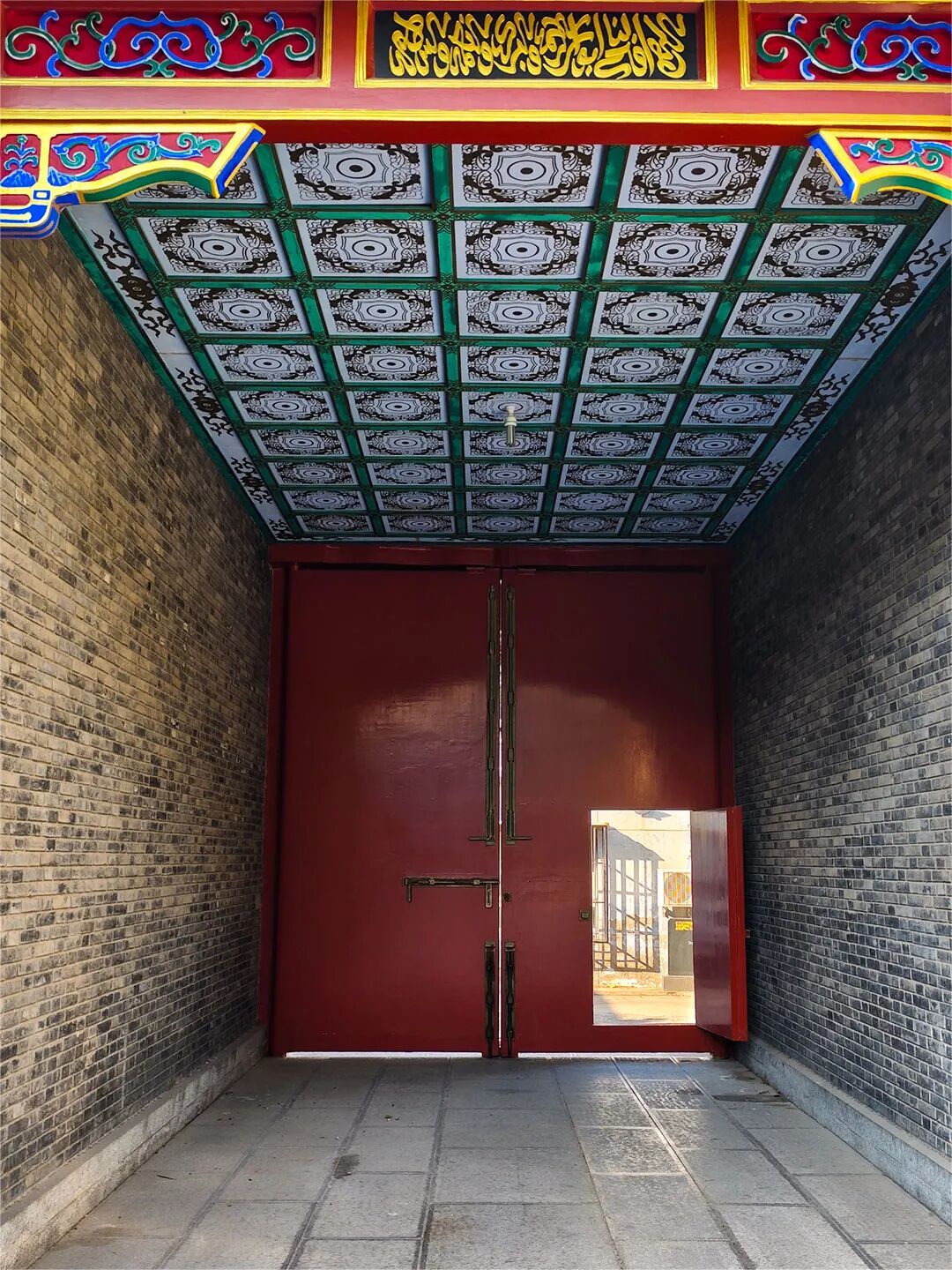
The east-facing front gate is built in a traditional 'Wangfu' (Prince’s Mansion) style with five bays and three doorways, which is really impressive.


Once you walk in, you'll find the washing rooms (wudu areas) on both sides, with prayer schedules and charts explaining the rules for minor and major ablutions posted on the walls.


Inside the front gate, there are two pavilions: one housing stone tablets and the other enclosing a well.
The tablet pavilion mentions that this is the largest mosque in Beijing, but I remember hearing that Niujie Mosque held that title. After checking with Yuanbao, I realized that after the Changying Mosque was renovated, the Niujie Mosque underwent its own expansion in 2005, surpassing Changying in size. So, at the time the monument was carved, this place was indeed the largest.
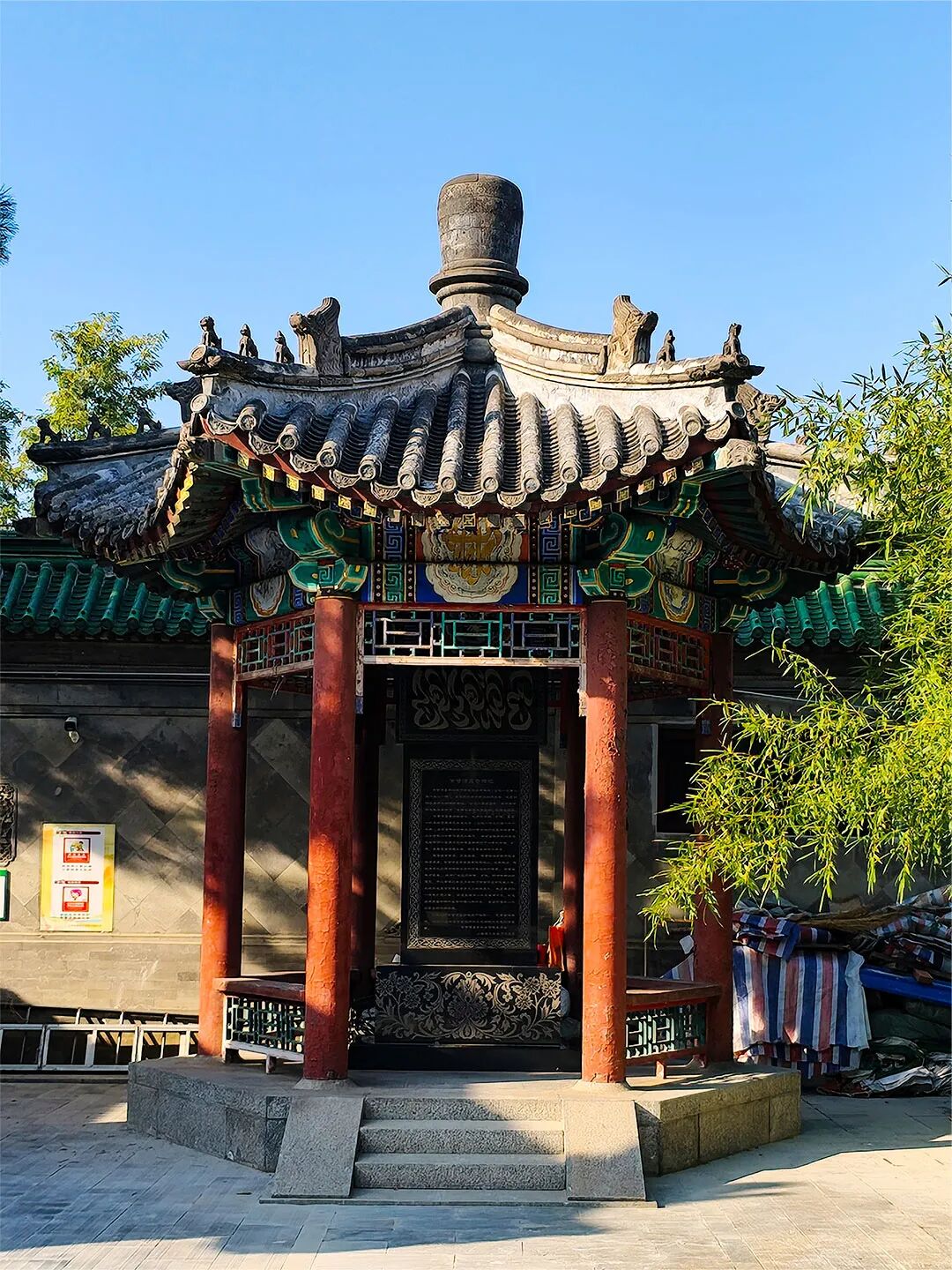
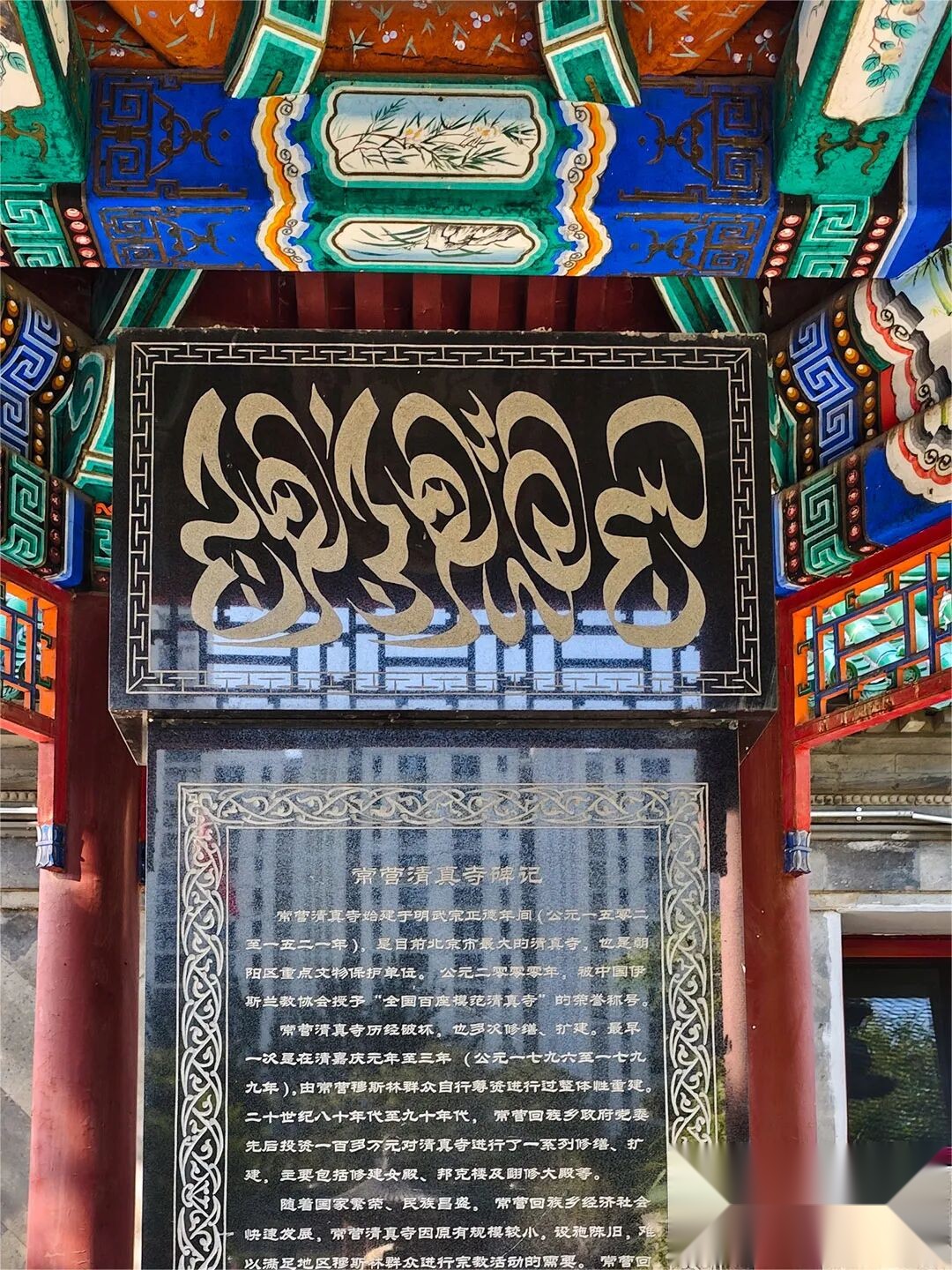
The well inside the well pavilion is over 500 years old.
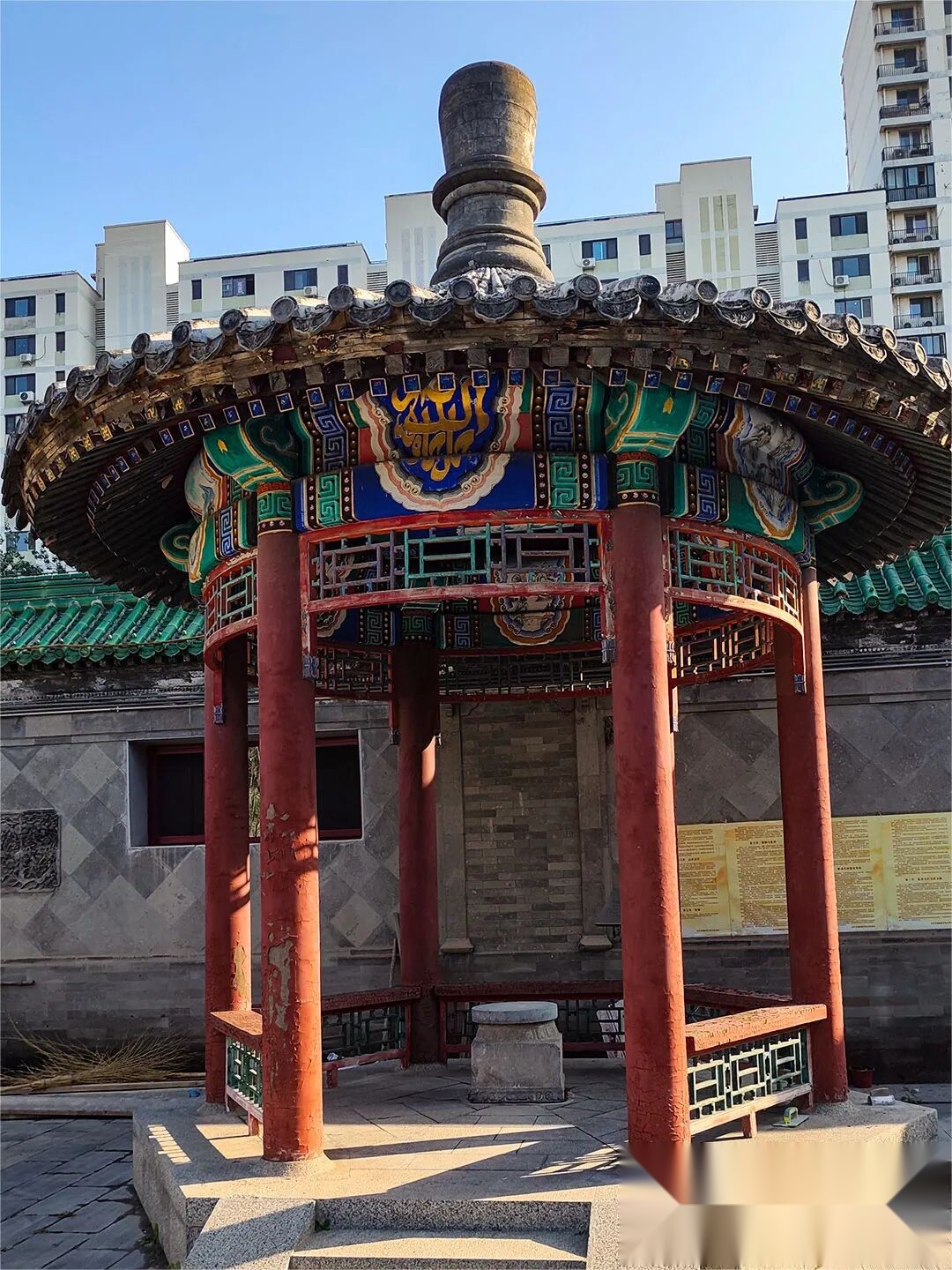

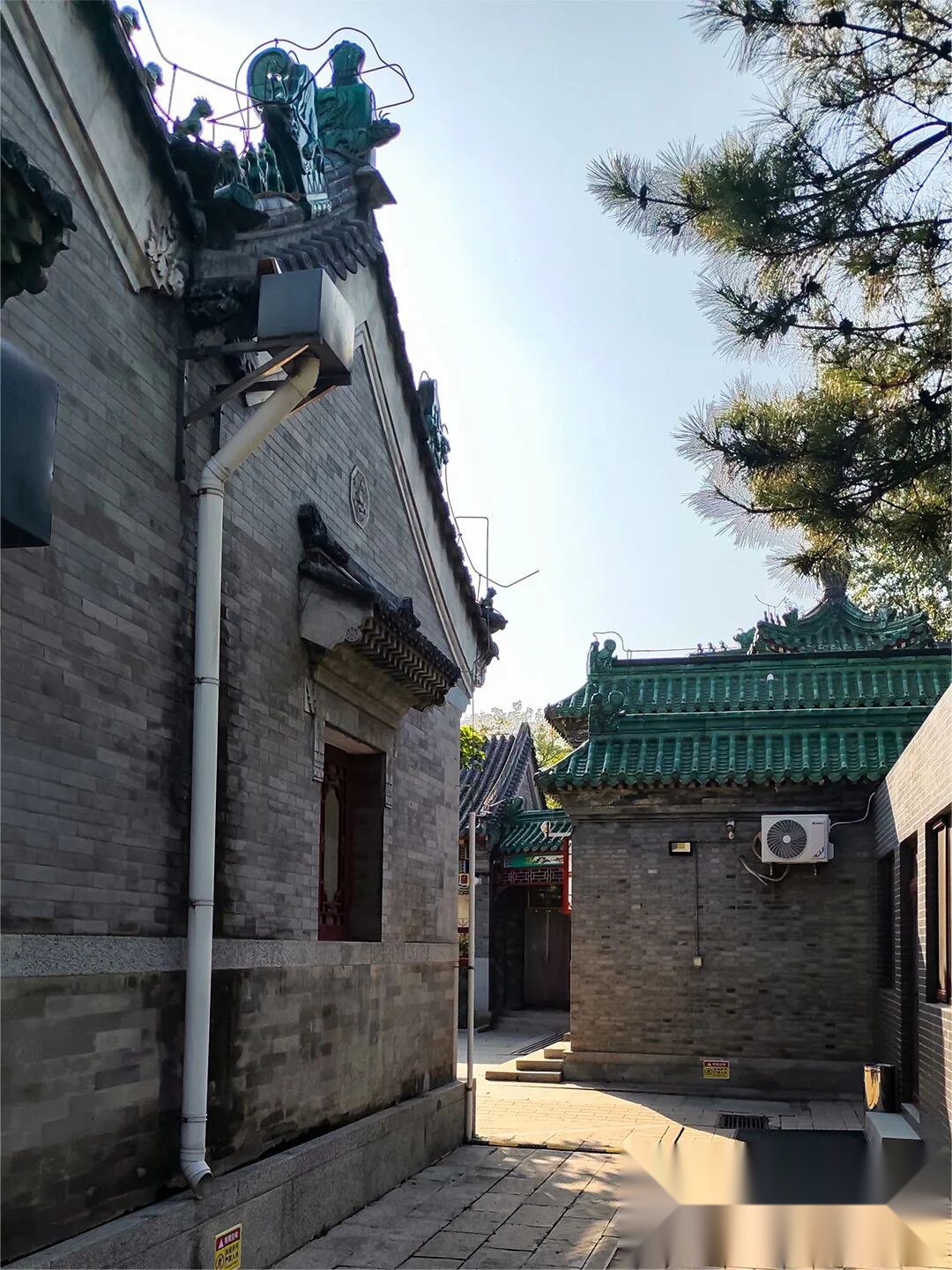
On the west side of the front courtyard, there are three side-by-side 'chuihuamen' (hanging flower gates) that lead to the three main halls and courtyards, all connected by an ornately carved and painted corridor.


The three courtyards are laid out similarly, and the middle one features a 500-year-old ancient tree that is roughly as old as the mosque itself.


From south to north, you have the women’s prayer hall, the main prayer hall, and the men’s prayer hall. They all follow the traditional Ming and Qing dynasty architectural style, consisting of three sections: the front porch, the main hall body, and the rear kiln-style chamber.
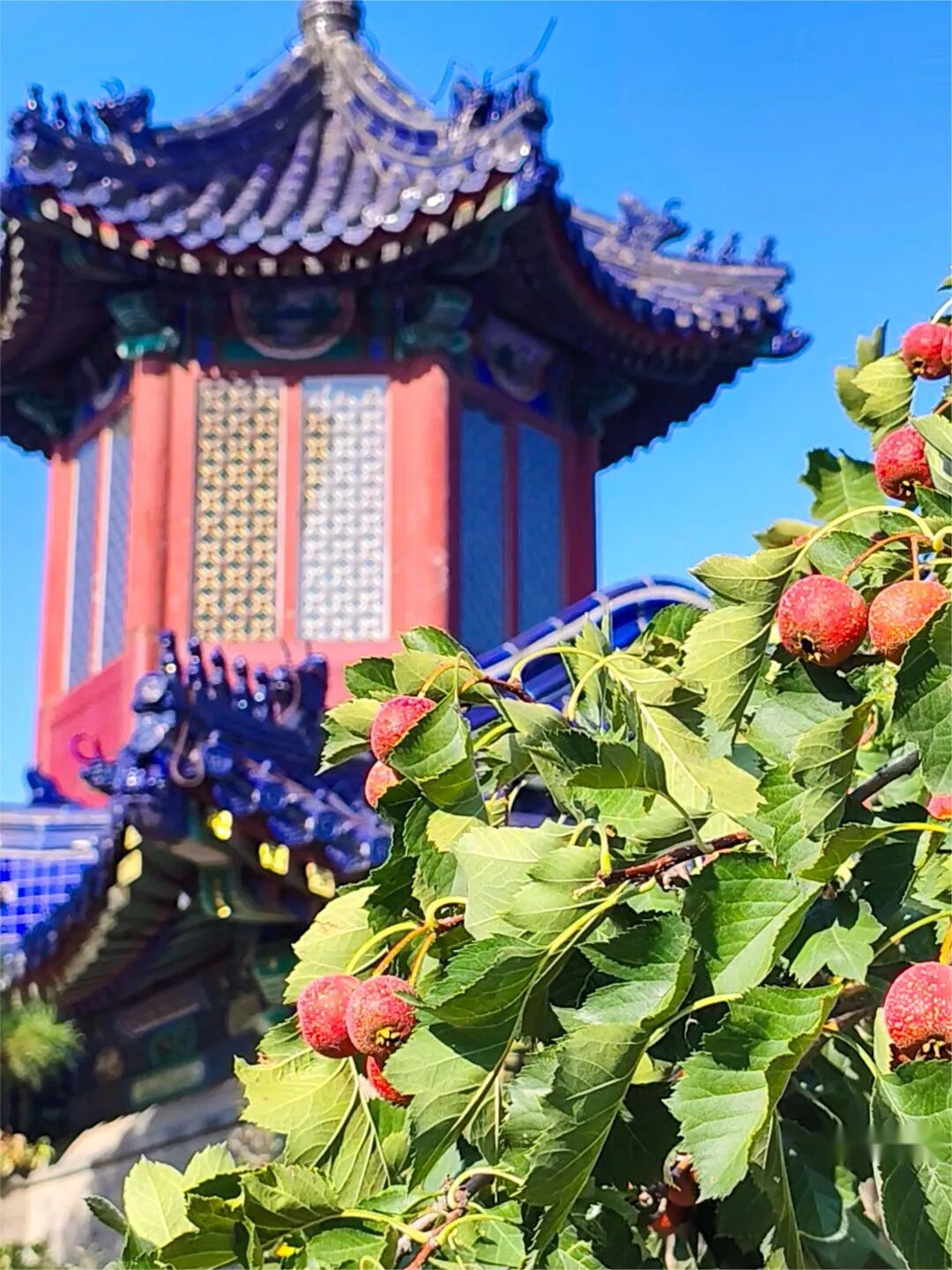
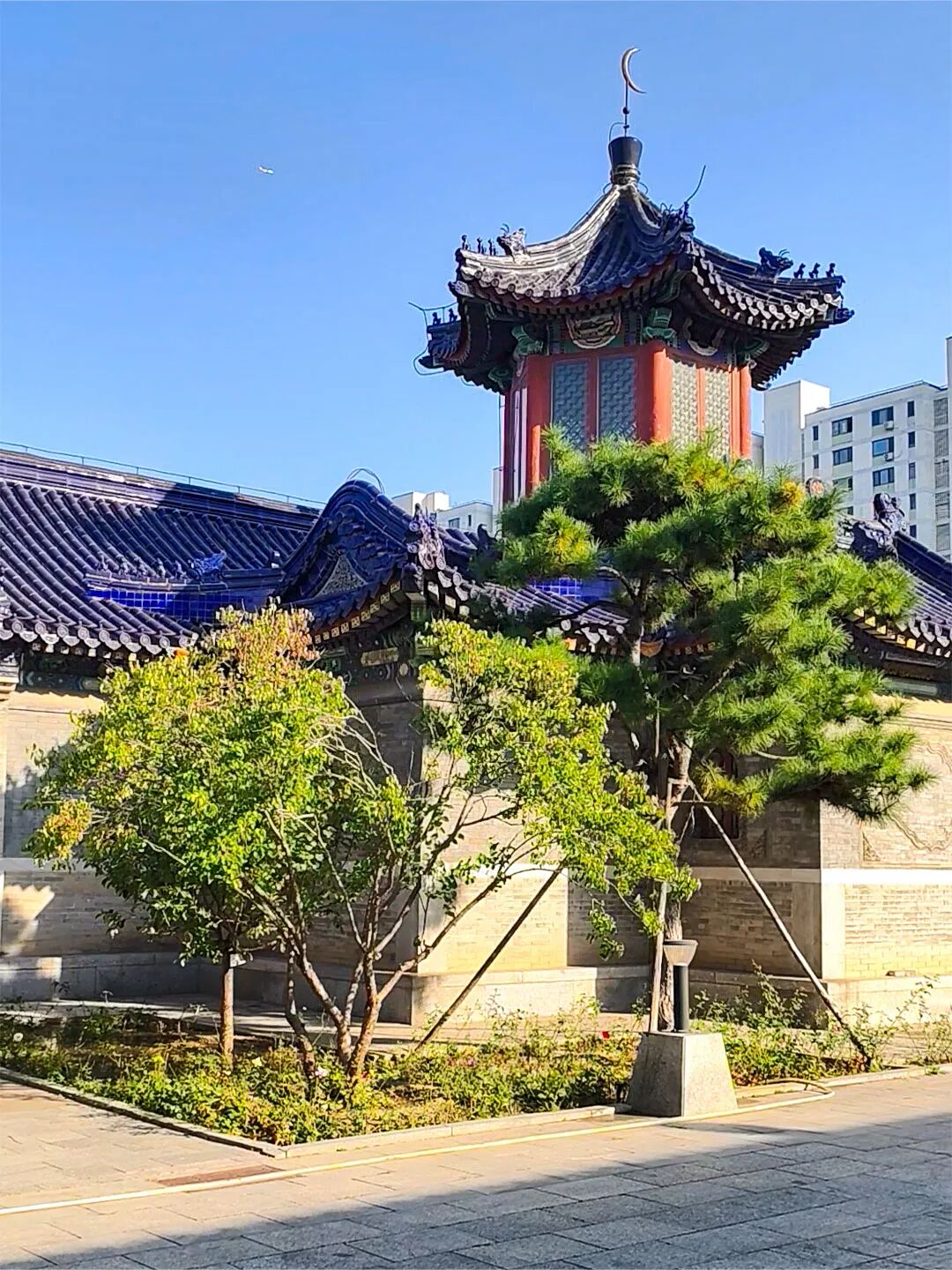
The central main hall is covered in blue glazed tiles, and there is a hexagonal pavilion (bangke lou, or minaret/call to prayer tower) on the roof of the rear chamber.
The two side halls are slightly smaller than the main hall, have no pavilion, and are covered in green glazed tiles.


On the north side of the main hall, there is a stone tablet dedicated to the record of the mosque's reconstruction in Changying, Tongzhou.

The back courtyard seems to be the administrative area for the mosque, and there are several hawthorn trees filled with fruit.
03
The Neighborhood
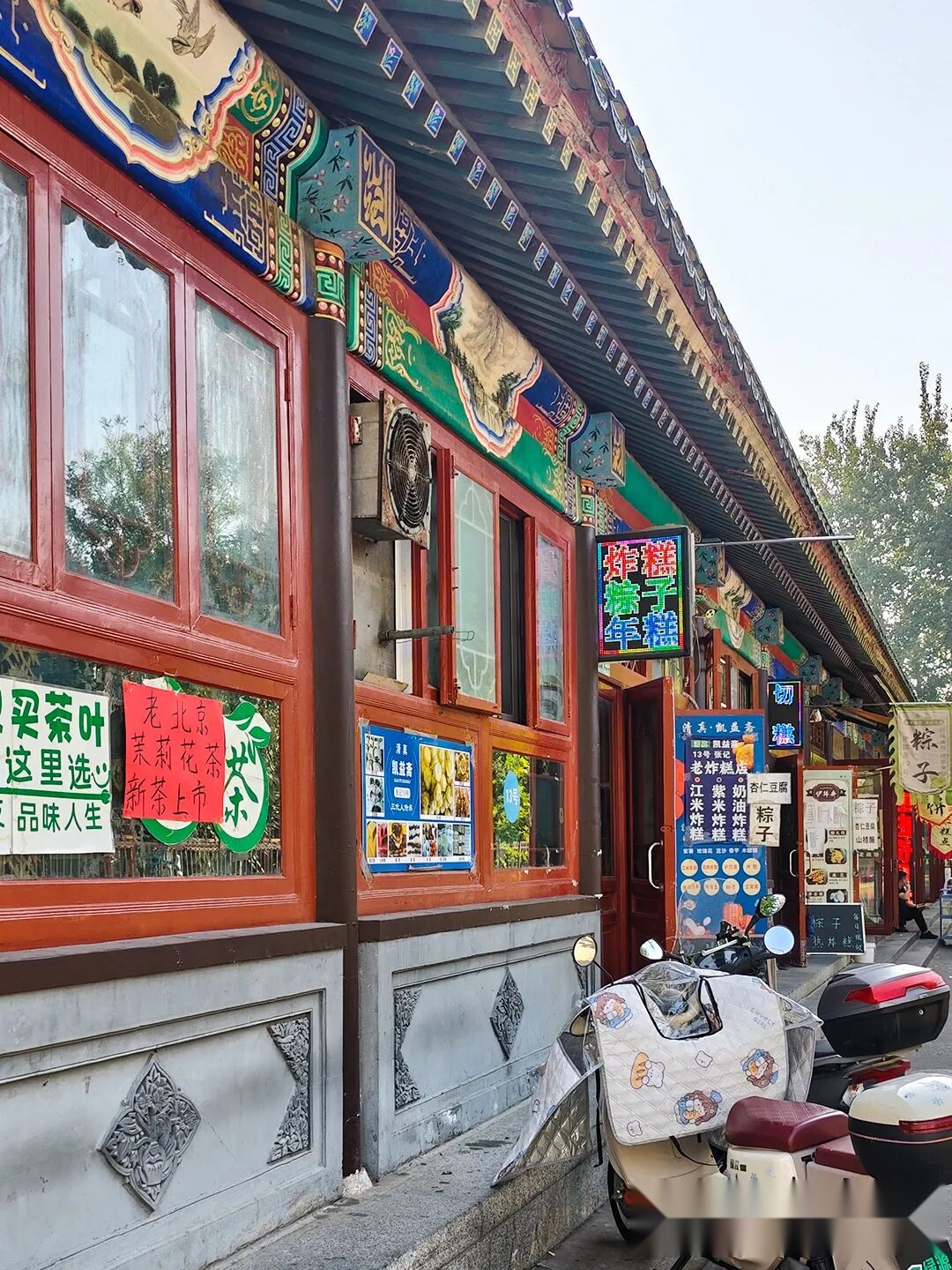
Right outside the mosque's main gate, you'll find a street packed with Halal eats—it's basically known as the 'Little Niujie' (a famous street in Beijing known for its Muslim community and food) of the area. I was in a rush and couldn't check it out myself, but rumor has it the flagship store for the famous Lixiaolao Shaobing (baked sesame flatbread) is located right here.
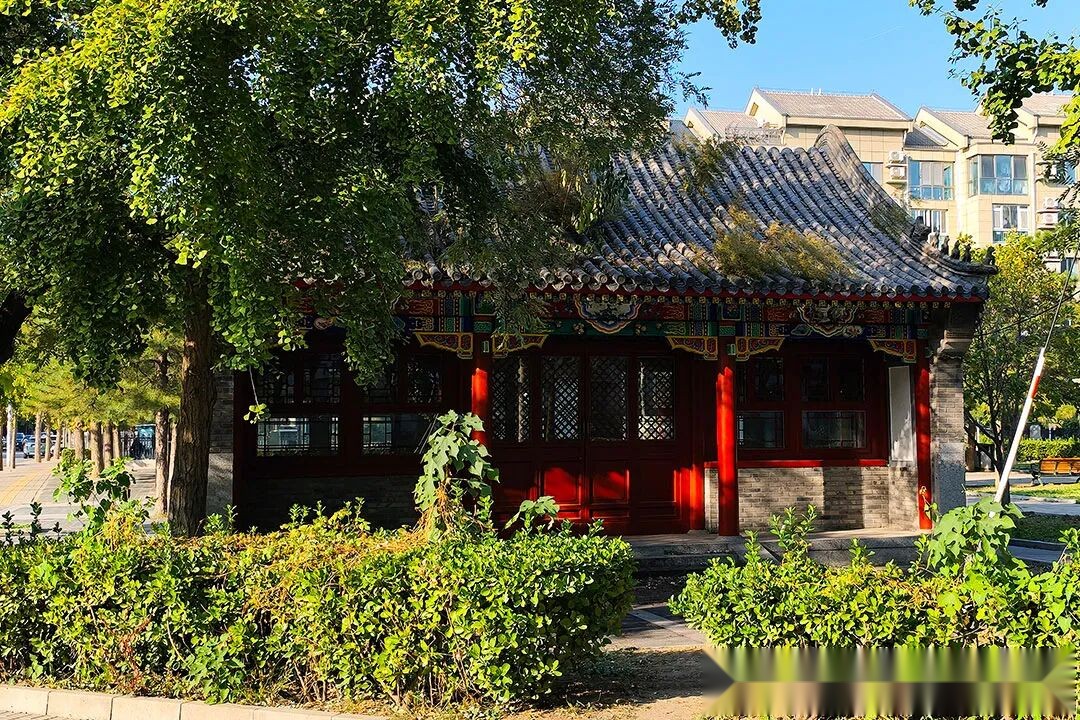
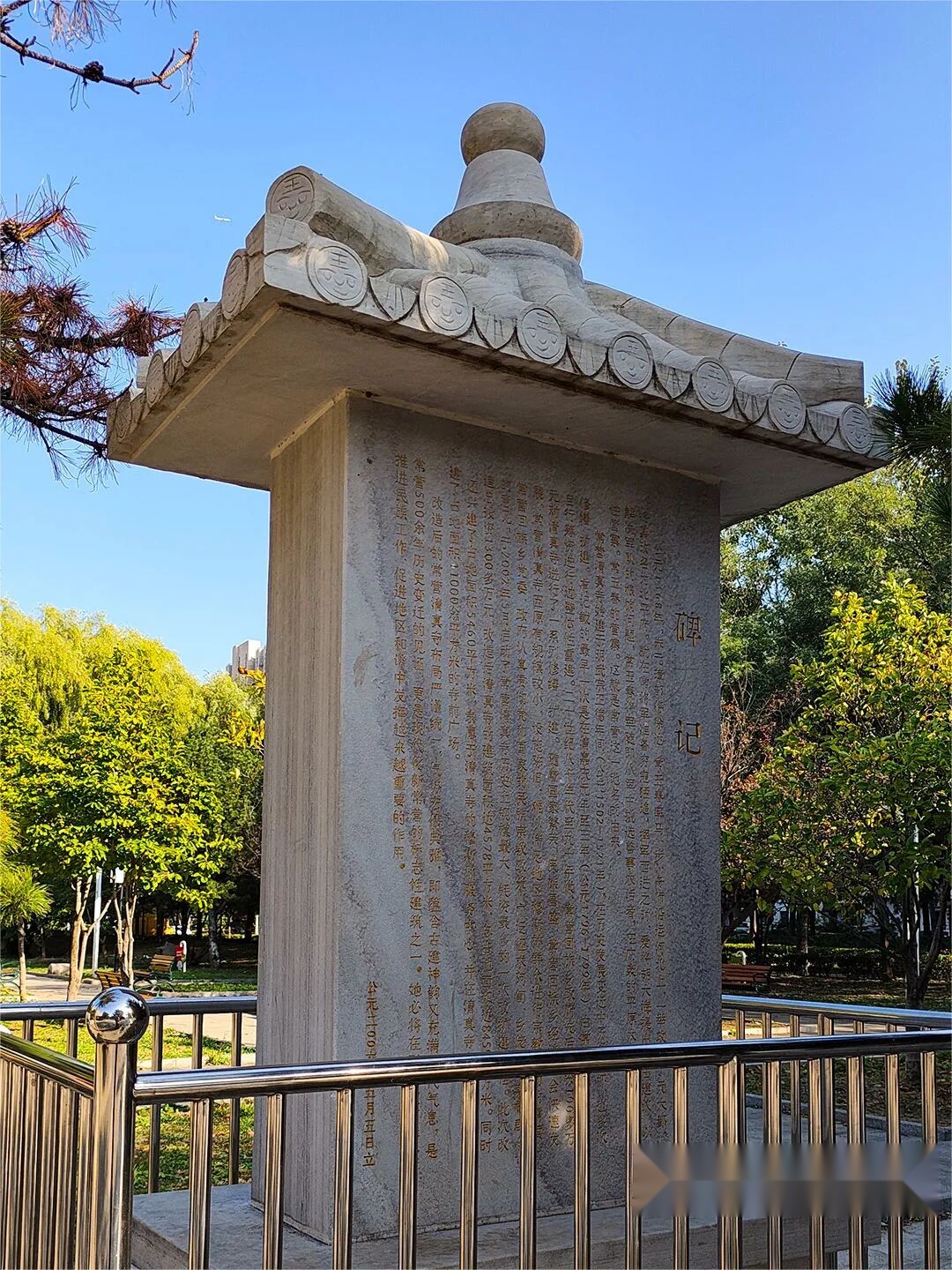
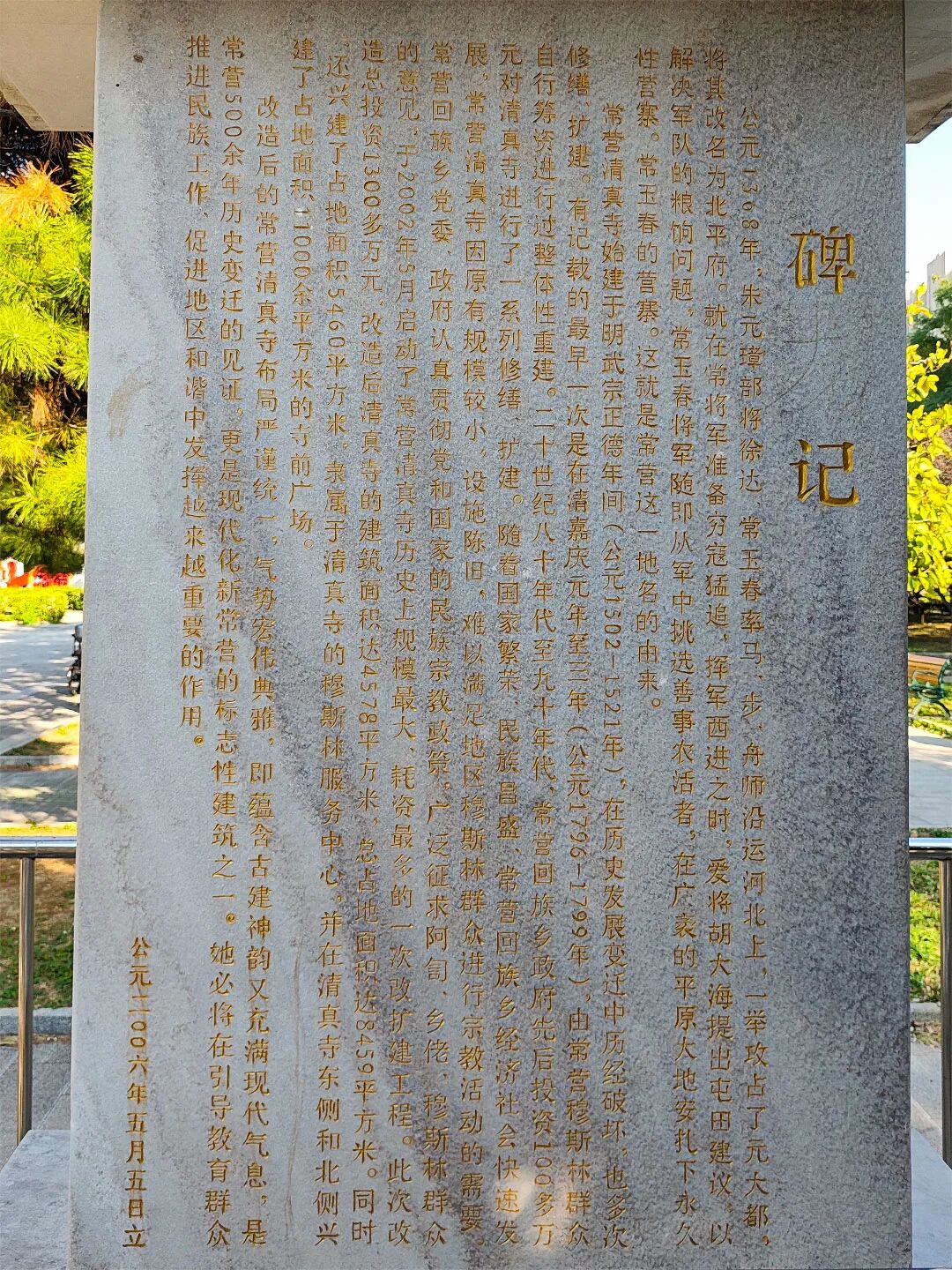
Across from the main entrance, there’s a square featuring a traditional-style building and a stone tablet. The inscription explains the origins of the mosque, noting that Changying was a permanent garrison established by the Ming Dynasty general Chang Yuchun after he captured Beijing—which is exactly how the area got its name, 'Changying' (literally 'Chang's Camp').
I was just biking by when I caught sight of the tablet. I made a habit of stopping to read these kinds of markers, and when I saw it mentioned the Changying Mosque, I turned around and realized this massive mosque was right there across the street.
04
Practical Info
Address: Changying Mosque, Minzu Jiayuan East Road, Chaoyang District, Beijing.
Opening Hours: No set hours, but generally open during the day; just be sure to avoid times when congregants are busy with their salah (obligatory prayer).
Admission: Free and no reservation required; just sign in when you enter.
Public Transport: Huangqu Subway Station or Changying West Bus Stop.
Suggested Itinerary: Changying Mosque to the Three Temples and One Pagoda Scenic Area.
Estimated Time: About two hours to explore the mosque and the surrounding area.
P.S. Since I work outdoors and spend all my time running around Beijing, I've passed by the Niujie Mosque countless times. Thanks to this experience, next time I’m in the area, I’m definitely going to ask if I can go inside for a visit.
The mosque doesn't have official visitor hours, but I’d say visiting between 9:00 AM and 4:00 PM is a safe bet.
Guides for nearby attractions:
Date of visit: October 7, 2026.
Come check out the Changying Mosque in Beijing's Chaoyang District, a historic site dating back to the Ming Dynasty with over 500 years of history. This guide covers everything from its three-courtyard layout, ancient trees, and stone tablets to the intricate architectural paintings, how to register for a free visit, and a look at the surrounding Halal food scene.
While biking over to the Huangqu subway station, I happened to pass by the Changying Mosque and noticed the front gate was open. I decided to try my luck and asked the older gentleman at the entrance if visitors were allowed inside.
The man was super friendly and gave me a smile, telling me I was welcome to look around as long as I signed in at the desk, though he noted I shouldn't go inside the main prayer hall.
I honestly thought mosques were usually closed to the public, so this was a total win. It’s actually the second mosque I’ve visited in Beijing.
01
Overview
The Changying Mosque is located on the north side of Chaoyang North Road, about 700 meters west of the Huangqu subway station.
It was first built during the Zhengde period of the Ming Dynasty (1506–1521), making it over five centuries old. It underwent a major renovation during the Jiaqing period of the Qing Dynasty, and the original monument, the 'Record of the Reconstruction of the Changying Village Mosque in Tongzhou,' is still there today. It was designated as a cultural heritage site in Chaoyang District in 1986, and after several rounds of repairs and expansions, it saw a massive renovation in 2002.
Spanning over 8,400 square meters, it is the largest mosque in the suburbs of Beijing.
02
Architectural Layout
The Changying Mosque is quite spacious and consists of three courtyards. It faces east, and each of the four corners of the perimeter wall features a small hexagonal pavilion with a pointed roof.
The east-facing front gate is built in a traditional 'Wangfu' (Prince’s Mansion) style with five bays and three doorways, which is really impressive.
Once you walk in, you'll find the washing rooms (wudu areas) on both sides, with prayer schedules and charts explaining the rules for minor and major ablutions posted on the walls.
Inside the front gate, there are two pavilions: one housing stone tablets and the other enclosing a well.
The tablet pavilion mentions that this is the largest mosque in Beijing, but I remember hearing that Niujie Mosque held that title. After checking with Yuanbao, I realized that after the Changying Mosque was renovated, the Niujie Mosque underwent its own expansion in 2005, surpassing Changying in size. So, at the time the monument was carved, this place was indeed the largest.
The well inside the well pavilion is over 500 years old.
On the west side of the front courtyard, there are three side-by-side 'chuihuamen' (hanging flower gates) that lead to the three main halls and courtyards, all connected by an ornately carved and painted corridor.
The three courtyards are laid out similarly, and the middle one features a 500-year-old ancient tree that is roughly as old as the mosque itself.
From south to north, you have the women’s prayer hall, the main prayer hall, and the men’s prayer hall. They all follow the traditional Ming and Qing dynasty architectural style, consisting of three sections: the front porch, the main hall body, and the rear kiln-style chamber.
The central main hall is covered in blue glazed tiles, and there is a hexagonal pavilion (bangke lou, or minaret/call to prayer tower) on the roof of the rear chamber.
The two side halls are slightly smaller than the main hall, have no pavilion, and are covered in green glazed tiles.
On the north side of the main hall, there is a stone tablet dedicated to the record of the mosque's reconstruction in Changying, Tongzhou.
The back courtyard seems to be the administrative area for the mosque, and there are several hawthorn trees filled with fruit.
03
The Neighborhood
Right outside the mosque's main gate, you'll find a street packed with Halal eats—it's basically known as the 'Little Niujie' (a famous street in Beijing known for its Muslim community and food) of the area. I was in a rush and couldn't check it out myself, but rumor has it the flagship store for the famous Lixiaolao Shaobing (baked sesame flatbread) is located right here.
Across from the main entrance, there’s a square featuring a traditional-style building and a stone tablet. The inscription explains the origins of the mosque, noting that Changying was a permanent garrison established by the Ming Dynasty general Chang Yuchun after he captured Beijing—which is exactly how the area got its name, 'Changying' (literally 'Chang's Camp').
I was just biking by when I caught sight of the tablet. I made a habit of stopping to read these kinds of markers, and when I saw it mentioned the Changying Mosque, I turned around and realized this massive mosque was right there across the street.
04
Practical Info
Address: Changying Mosque, Minzu Jiayuan East Road, Chaoyang District, Beijing.
Opening Hours: No set hours, but generally open during the day; just be sure to avoid times when congregants are busy with their salah (obligatory prayer).
Admission: Free and no reservation required; just sign in when you enter.
Public Transport: Huangqu Subway Station or Changying West Bus Stop.
Suggested Itinerary: Changying Mosque to the Three Temples and One Pagoda Scenic Area.
Estimated Time: About two hours to explore the mosque and the surrounding area.
P.S. Since I work outdoors and spend all my time running around Beijing, I've passed by the Niujie Mosque countless times. Thanks to this experience, next time I’m in the area, I’m definitely going to ask if I can go inside for a visit.
The mosque doesn't have official visitor hours, but I’d say visiting between 9:00 AM and 4:00 PM is a safe bet.
Guides for nearby attractions:
Date of visit: October 7, 2026.
