

Islamic Architecture
Islamic Architecture Guide: 131 Traditional Mihrabs in China, Part 1
Articles • ali2007fr posted the article • 0 comments • 148 views • 2026-05-20 01:49
Reposted from the web
Summary: This is the first part of a visual record of 131 traditional mihrabs in Chinese mosques. It keeps the source images, place names, captions, and architectural notes in a cleaner English layout.
Beijing.
The Ming dynasty archway-style mihrab at Niujie in Beijing features a beam-column hip roof on top and a Sumeru pedestal (xumizuo) at the bottom. The eight large lotus petal carvings on the Sumeru pedestal show a Ming dynasty style. The upper part is painted with high-grade gold-inlaid swirling patterns (xuanzi caihua), featuring extensive gold leaf. It was expensive to make and shows the characteristics of official architectural paintings from the mid-Qing dynasty.
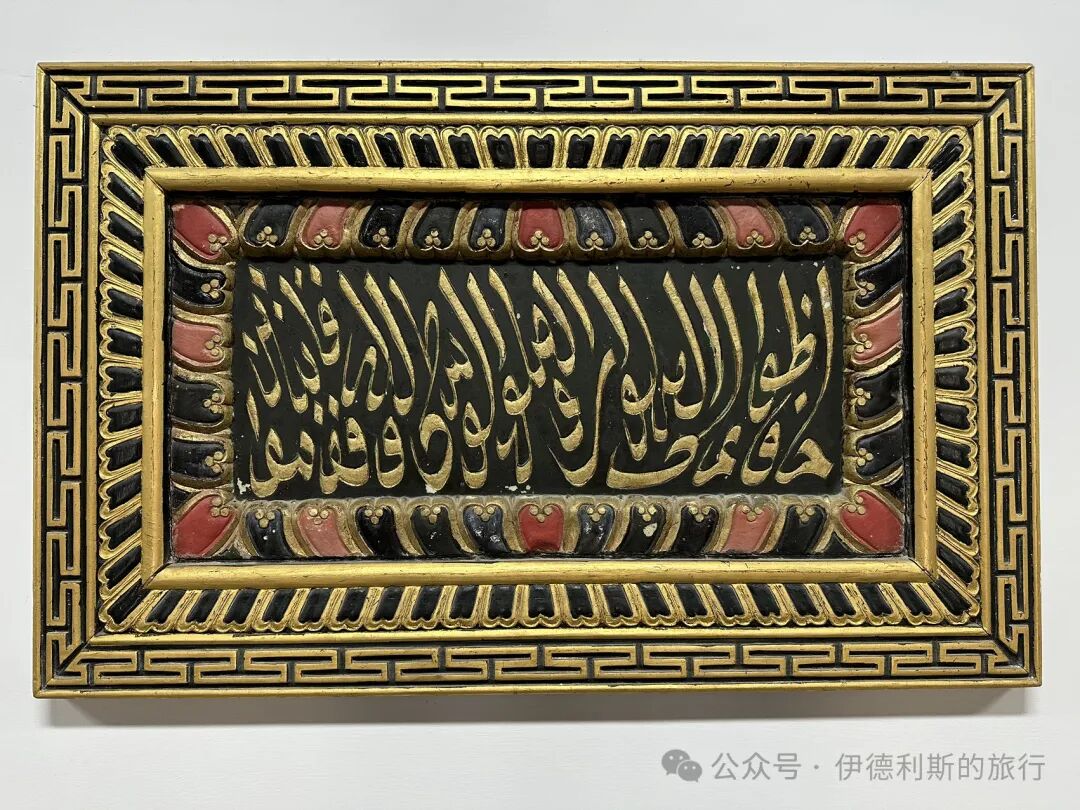
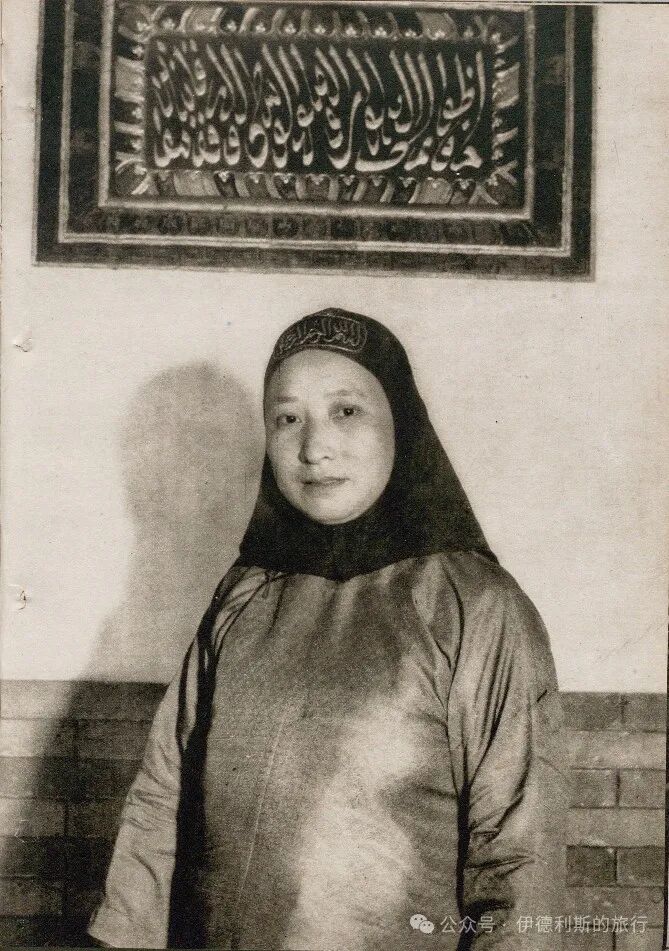
The Beijing Niujie Women's Mosque was built in 1925 as the first women's mosque in Beijing. It was originally located on Shouliu Hutong and was rebuilt on the north side of the Niujie Mosque in 2006. The mihrab is a century-old brick carving of a dua. A September 1942 issue of Beizhi magazine published an old photo of this brick carving.
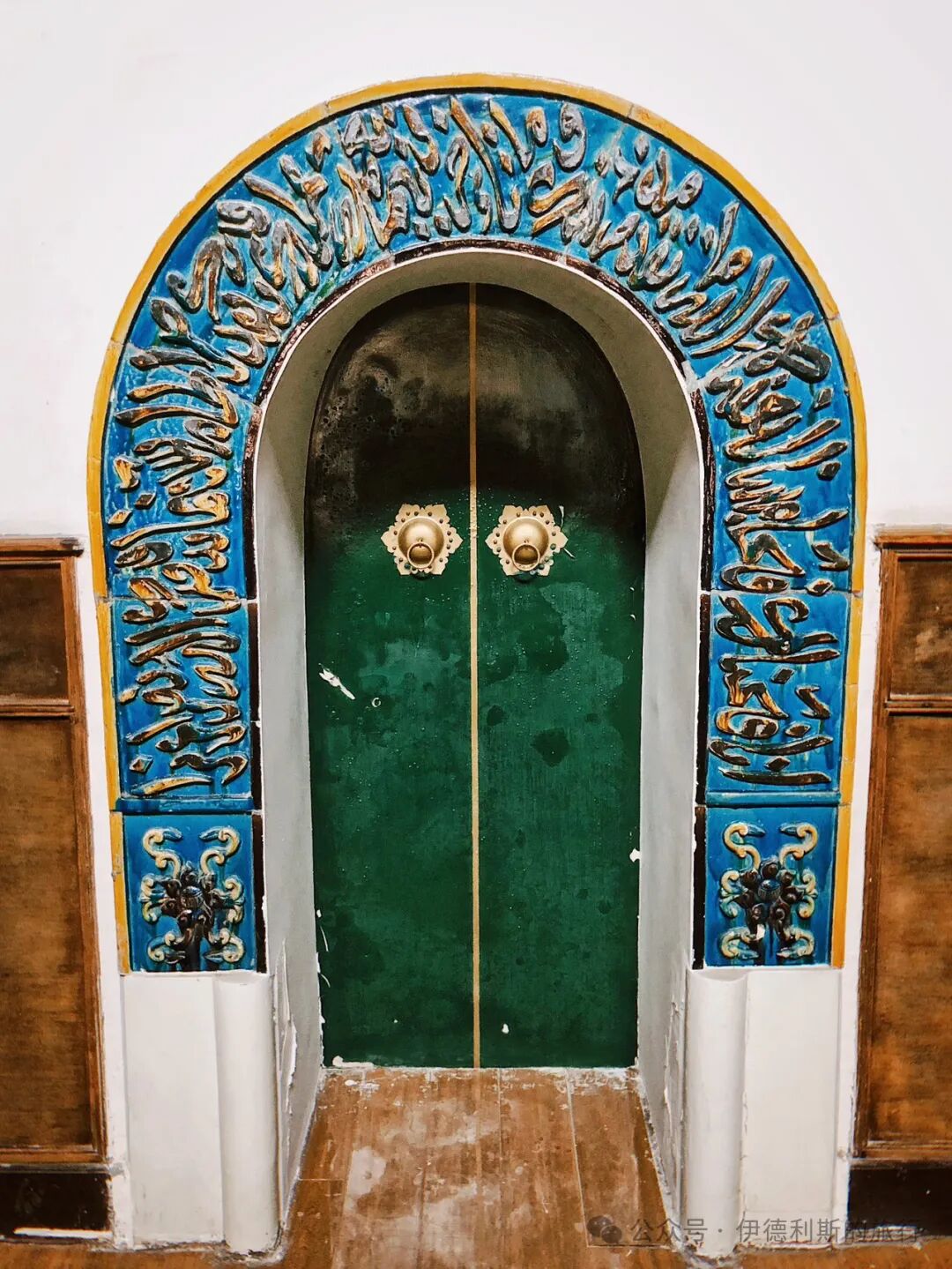
The Beijing Huashi Mosque was built in 1414 (the 12th year of the Yongle reign of the Ming dynasty). The mihrab has a glazed tile archway inscribed with traditional Chinese calligraphy.
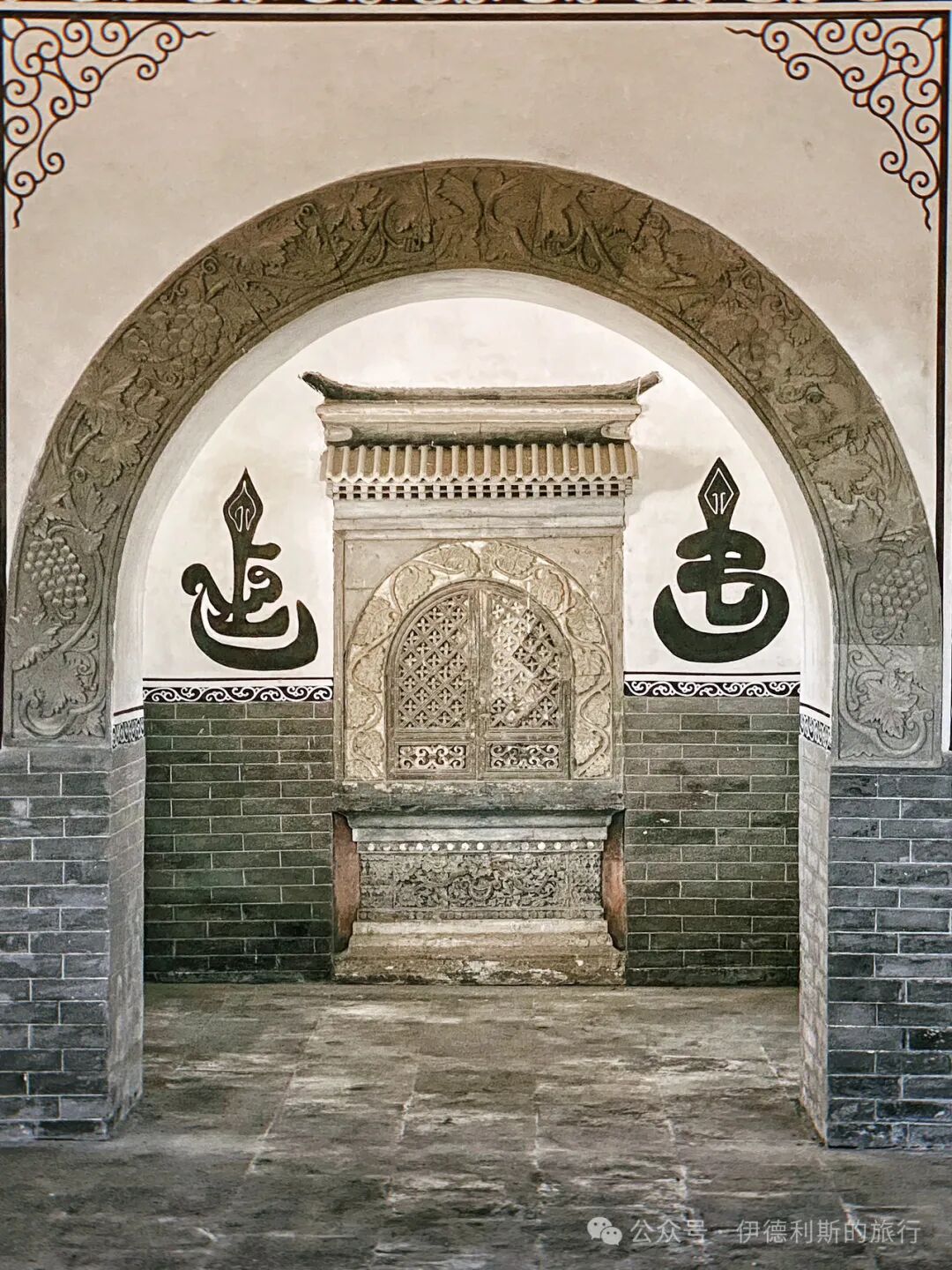
The Beijing Nankou Mosque is believed to have been built in the Ming dynasty and renovated during the Qing dynasty. The mihrab is a blue brick screen wall style with a clear-water ridge and scorpion-tail roof ends on top, and a Sumeru pedestal at the bottom. In the middle, it features exquisite diamond-patterned window shutters and scroll-patterned arched brick carvings.
The construction date of the Beijing Gubeikou Mosque is unknown. It was renovated in 1629 (the 12th year of the Chongzhen reign of the Ming dynasty) and rebuilt to its current appearance by the Zhili regional commander Ma Jinliang during the Kangxi reign of the Qing dynasty. The mihrab is arch-shaped and painted with auspicious cloud patterns, along with traditional calligraphy in the North China style.
The Beijing Dongzhimenwai Mosque, originally called the Erlizhuang Mosque, was built in the Yuan dynasty. The old mosque's mihrab was wooden and shaped like a tablet. After the renovation, it was placed under the eaves of the hall opposite the new mosque, and it is carved with traditional calligraphy.
The Beijing Changying Mosque mihrab is shaped like a stone stele head and features very complex painted calligraphy. According to research by teacher Hui Zongzheng, it may have been moved from elsewhere when the mosque was built during the Zhengde reign of the Ming dynasty.
Tianjin.
The Great Mosque at Xibeijiao in Tianjin has a wooden carved niche (yaokan) with a very high Sumeru pedestal railing, which is quite rare.
The Tianjin Jinjiayao Mosque features traditional calligraphy plaques and couplets, with an arched gate in the middle.
The Tianjin Hexiwu Mosque features a rare painted design of a half-open vermilion door.
The Tianjin Xibeijiao South Mosque features traditional calligraphy plaques and couplets.
The Tianjin Tianmu North Mosque also features a large gate design in the middle.
Hebei.
The Hebei Zhangjiakou Xinhua Street Mosque's winter prayer hall mihrab is decorated with traditional calligraphy plaques and circular couplets.
The Hebei Zhangjiakou Xiguan Mosque is a blue brick screen wall style with a hip roof, a ridged roof, and flying eaves, with a Sumeru pedestal at the bottom. The center features Ming dynasty calligraphy carvings restored in 2020 by the famous calligrapher Wang Qifei based on old photos.
The South Mosque (Nandasi) in Xuanhua, Hebei, is an arched structure carved with calligraphy and floral patterns.
The North Mosque (Beisi) in Xuanhua, Hebei, is an arched structure carved with calligraphy and floral patterns.
Henan
The Shanyitang Mosque in Henan is an arched structure decorated with calligraphy written in 2009 by the famous calligrapher Mi Guangjiang.
The North Mosque (Beisi) in Zhengzhou, Henan, is an arched structure with an exterior carved door hood.
The North Mosque (Beisi) in Qinyang, Henan, is an arched structure decorated with traditional calligraphy.
The Xiguan Mosque in Bo'ai, Henan, is an arched structure decorated with Arabic plaques and couplets.
The West Mosque (Xisi) in Daxinzhuang, Bo'ai, Henan, is an arched structure decorated with Arabic plaques and couplets.
Shandong
The North Mosque (Beisi) in Linqing, Shandong, is a three-room, four-pillar memorial archway style building with bracket sets and flying eaves, decorated with intricate traditional calligraphy.
The East Mosque (Dongsi) in Linqing, Shandong, is a three-room, four-pillar memorial archway style building with bracket sets and flying eaves, decorated with intricate traditional calligraphy.
The South Mosque (Nandasi) in Jinan, Shandong, is an arched structure. According to the mosque's stele record, the calligraphy was written in 1810 (the 15th year of the Jiaqing reign) by Imam Hei Faxiang.
The North Mosque (Beisi) in Jinan, Shandong, is an arched structure featuring calligraphy in the center.
The Zhenjiao Mosque in Qingzhou, Shandong, is an arched structure with a single-eave, hanging-mountain style door hood above.
Inner Mongolia
The Great Mosque in Hohhot, Inner Mongolia, has a door hood with openwork, painted floral and scroll patterns.
The East Mosque (Dongsi) in Hohhot, Inner Mongolia.
The Longshengzhuang Mosque in Feng County, Inner Mongolia, has a door hood with wood-carved calligraphy inside the arch.
The North Mosque (Beisi) in Chifeng, Inner Mongolia, features original wood carvings from 1747 (the 12th year of the Qianlong reign).
Liaoning
The Old City Mosque in Kaiyuan, Liaoning, features a clear-water scorpion-tail roof ridge.
The Luyang Mosque in Jinzhou, Liaoning, has a plaque with large-character calligraphy and traditional brush-style calligraphy on both sides.
The South Mosque (Nandasi) in Shenyang, Liaoning, houses a large spirit tablet.
The Ancient City Mosque in Fuzhou, Dalian, Liaoning, features traditional brush-style calligraphy.
Lingyuan Mosque in Liaoning features carvings of Arabic calligraphy.
Heilongjiang
The winter prayer hall at Bukui West Mosque in Qiqihar, Heilongjiang, has traditional calligraphy carved onto its arches.
The main hall of Bukui West Mosque in Qiqihar, Heilongjiang, is surrounded by carved calligraphy plaques and couplets.
The main hall of Bukui East Mosque in Qiqihar, Heilongjiang, features a clear-water ridge (qingshuiji) roof, a Sumeru pedestal (xumizuo) base, and carved calligraphy plaques and couplets.
Acheng Mosque in Heilongjiang has four floor-to-ceiling pillars (tongtianzhu) in its kiln hall (yaodian) built in 1900 (the 26th year of the Guangxu reign). They were made from giant pine logs hauled from the forests of Yabuli, Heilongjiang, and installed by a carpenter named Sun Yulin from Wula Street, Jilin. Legend says Carpenter Sun's master was worried about his apprentice, so he secretly went to a stone shop and made four 3-foot-tall lotus-shaped pillar bases. When it came time to raise the floor-to-ceiling pillars, they were exactly 3 feet too short. Seeing this, the master immediately told Carpenter Sun to hitch a cart and bring back the four lotus pillar bases from the stone shop, and they fit perfectly.
Shanxi
Taiyuan Great Mosque in Shanxi is a Ming Dynasty treasure. It has a wooden memorial archway-style door hood with a hip roof (wudianding), bracket sets (dougong), and flying eaves. Below are Sumeru pedestal railings, and the pillars are decorated with scrolling lotus patterns and Arabic circular motifs. The center features a wooden carved hanging panel with Arabic script, and a kiln niche (yaokan) is set in the very center.
Shaanxi
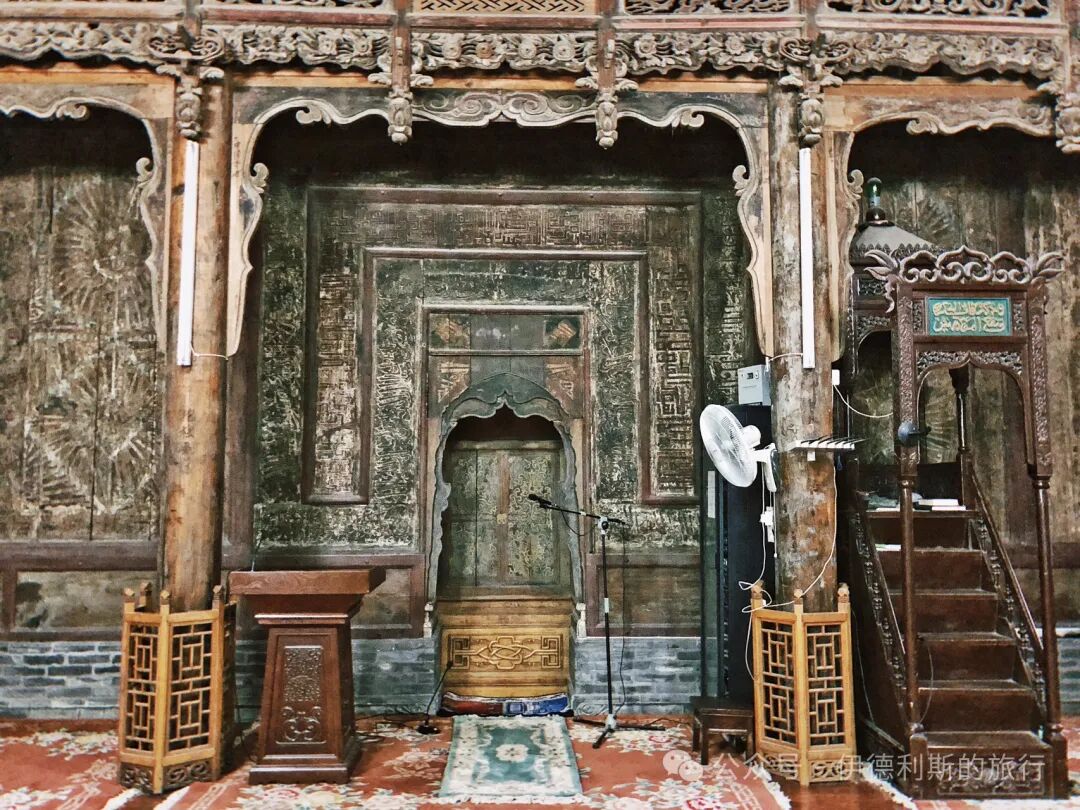
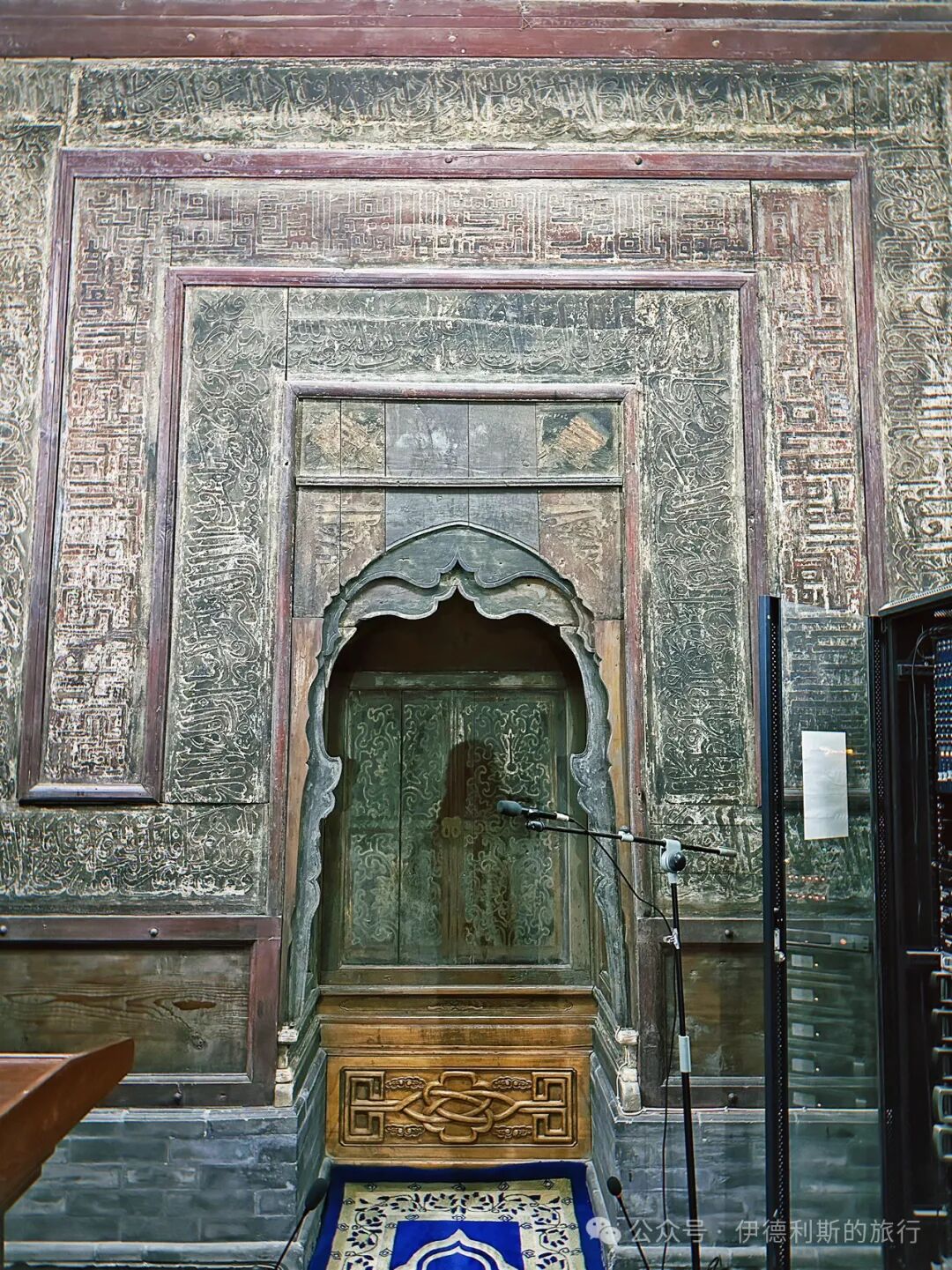
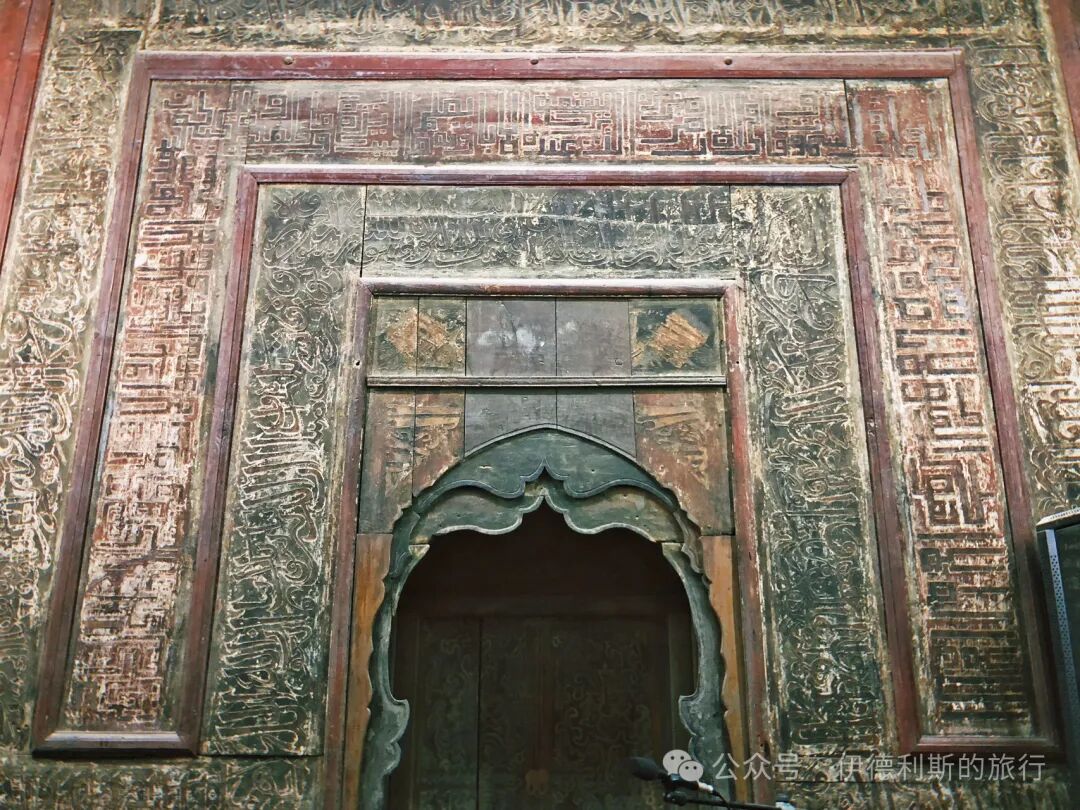
Huajue Lane Great Mosque in Xi'an, Shaanxi, is a Ming Dynasty treasure. It uses wooden board inlays and gold-painted pillars to create door hoods and hanging pillars. The wooden boards are carved with Arabic calligraphy and floral patterns, making them very magnificent. The center has a kiln niche arch supported by prismatic pillars on both sides. This is similar to the mihrab style found in Iran and Turkey during the Yuan and Ming dynasties, making it the only known Ming Dynasty mihrab in China that blends Eastern and Western styles.
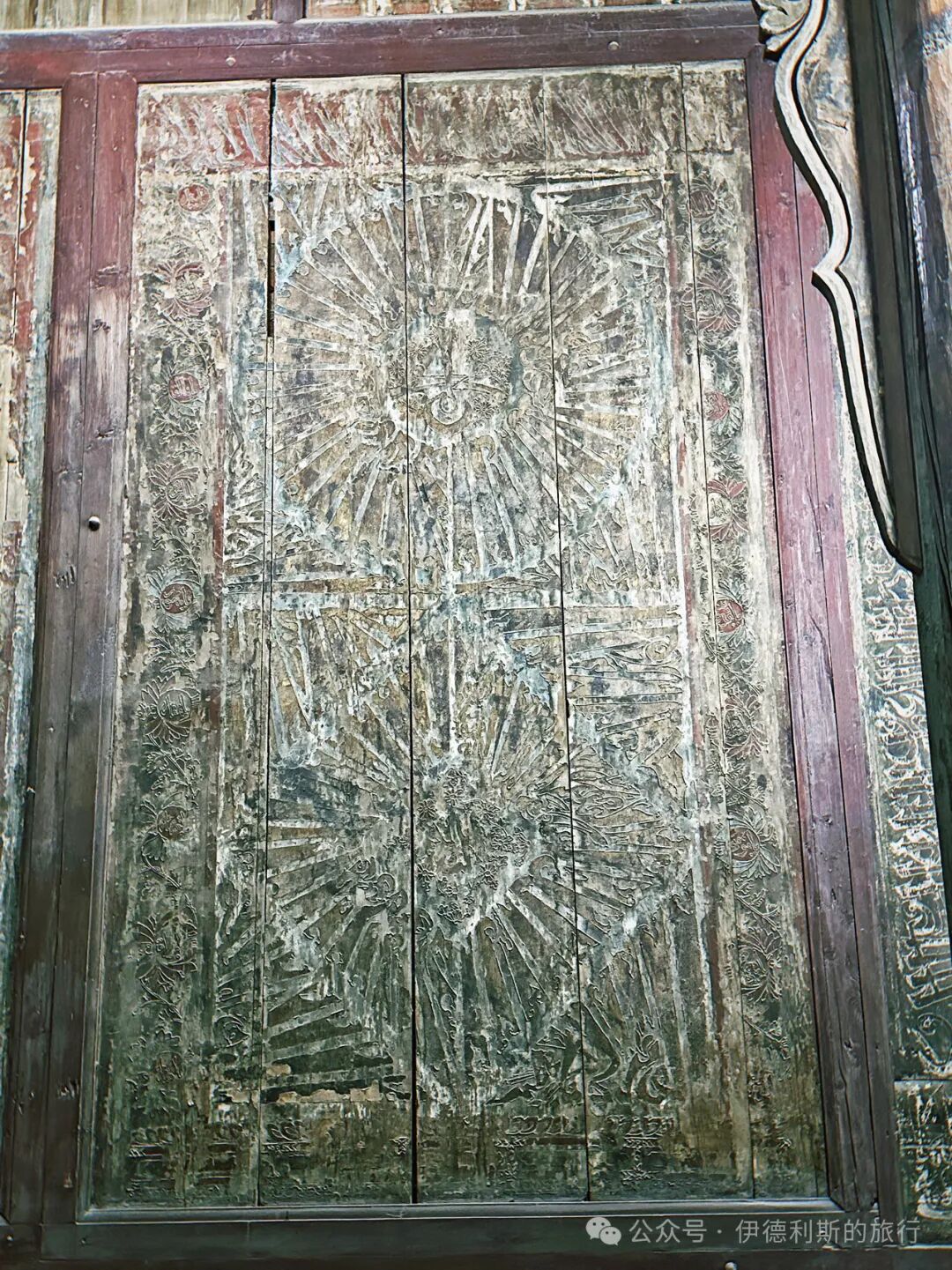
Besides Huajue Lane Great Mosque, the Daxuexi Lane Mosque and Dapiyuan Mosque in Xi'an also have original, unrestored mihrabs. Both mihrabs are made of inlaid wooden boards with a kiln niche in the middle, but their styles differ. Daxuexi Lane Mosque has a wooden carved canopy (feizhao) between its pillars. The craftsmanship is exquisite, and the calligraphy style matches that of Mengda Mosque in Xunhua, Qinghai, suggesting they may have been made by the same group of craftsmen.
Daxuexi Lane Mosque
Dapiyuan Mosque
Some restored and newly built mihrabs in Xi'an, Shaanxi.
Xiaopiyuan North Mosque has had all its paintings redone, though it is said the style remains unchanged. The center is a kiln niche with beautiful wooden floral carvings.
At the North Guangji Street Mosque, the wood carvings on the upper part of the prayer niche (mihrab) look like those at the Great Mosque of Huajue Lane.
The Xiaoxuexi Lane Middle Mosque features wood panel inlays with a prayer niche (mihrab) in the center.
The Xiaoxuexi Lane Yingli Mosque has a wood-carved door canopy decorated with flower and plant patterns.
The Dongmen Cang South City Mosque has a wood-carved door canopy featuring traditional-style calligraphy.
The Sajinqiao Mosque uses wood panel inlays and contains a very rare Chinese-language Yasin chapter.
Prayer niches (mihrab) in the southern Shaanxi region:
The Ankang North Mosque in Shaanxi is built in a memorial archway style with wood-carved flying eaves.
The Ankang Jingning South Mosque in Shaanxi features traditional-style couplets and horizontal inscribed boards.
The Xixiang North Mosque in Shaanxi features traditional-style couplets and horizontal inscribed boards.
The Xixiang Luling Mosque in Shaanxi is built in a wood memorial archway style and has traditional couplets.
The Hanzhong Xianyin Mosque in Shaanxi has traditional-style horizontal inscribed boards and couplets, and the prayer niche (mihrab) is carved with an offering table.
Gansu
The Linxia Old Wang Mosque is arch-shaped and carved with traditional Arabic horizontal inscribed boards and couplets.
The Linxia West Mosque is arch-shaped and carved with traditional Arabic horizontal inscribed boards and couplets.
The Linxia North Mosque is arch-shaped and carved with traditional Arabic horizontal inscribed boards and couplets.
The Tianshui Beiguan Mosque is arch-shaped and carved with traditional Arabic horizontal inscribed boards and couplets.
The Tianshui Qin'an Nanxiaguan Mosque features brick carvings of Zhe school Shagou-style calligraphy and rare brick-carved hanging scrolls.
Qinghai
The Haidong Hongshuiquan Great Mosque features wood panel inlays, a door canopy above, a Sumeru pedestal below, and extremely rare traditional auspicious patterns carved above the prayer niche (mihrab).
The Xunhua Tashapo Mosque has flame patterns and flower designs carved around the prayer niche (mihrab), with a flame pearl carved directly above it, which is also very rare.
The Xunhua Qingshuihe East Mosque has a wood carving style similar to the Tashapo Mosque, but slightly shallower, and also features a flame pearl in the center.
The Xunhua Mengda Dazhuang Mosque features painted wood panels, and the backlight inside the prayer niche (mihrab) is very unique due to Tibetan cultural influence.
The Xunhua Shangkewa Mosque features painted wood panels with traditional calligraphy.
The Xunhua Zhangga Mosque has an arch in the center surrounded by horizontal inscribed boards and couplets.
Xinjiang
The Shaanxi Grand Mosque in Urumqi was built in 1906. It features wood paneling and a central arch.
The South Grand Mosque in Urumqi was built in 1919. It has a decorative gate hood and a central arch.
Tibet
The Lhasa Grand Mosque features wood carvings of flowers, plants, and calligraphy, along with two calligraphic couplets.
The Lhasa Small Mosque features wood carvings of flowers, plants, and calligraphy.
The Lhasa West Suburb Mosque features wood carvings of flowers, plants, and calligraphy.
Sichuan
The Langzhong Mosque has a traditional calligraphic plaque above its arch.
The Langzhong Baba Mosque has a plaque from the fifth year of the Guangxu reign that reads 'Le Shan Ke Feng' at the very top. Below it are traditional calligraphic couplets, and the center features an arch.
The Nanchong Mosque features traditional calligraphy in its center written by the famous calligrapher Wang Qifei.
The Majia Mosque in Yankou, Wusheng, features brush-style calligraphy.
The Xichang City Mosque has traditional calligraphic plaques and couplets, with an arch in the center.
The Xichang East Mosque features unique Xichang-style Arabic calligraphy on its plaque.
The Qing Dynasty wood-carved mihrab at the Miyi Tianba Mosque was damaged by termites, so it has been re-carved to look exactly like the original.
The Dujiangyan Mosque has calligraphic couplets that look like bamboo joints, which is very characteristic of Sichuan.
The Tangjia Mosque in Mimou Town, Chengdu, features clever couplets that start with two-part phonetic letters known as suole. view all
Summary: This is the first part of a visual record of 131 traditional mihrabs in Chinese mosques. It keeps the source images, place names, captions, and architectural notes in a cleaner English layout.
Beijing.
The Ming dynasty archway-style mihrab at Niujie in Beijing features a beam-column hip roof on top and a Sumeru pedestal (xumizuo) at the bottom. The eight large lotus petal carvings on the Sumeru pedestal show a Ming dynasty style. The upper part is painted with high-grade gold-inlaid swirling patterns (xuanzi caihua), featuring extensive gold leaf. It was expensive to make and shows the characteristics of official architectural paintings from the mid-Qing dynasty.
The Beijing Niujie Women's Mosque was built in 1925 as the first women's mosque in Beijing. It was originally located on Shouliu Hutong and was rebuilt on the north side of the Niujie Mosque in 2006. The mihrab is a century-old brick carving of a dua. A September 1942 issue of Beizhi magazine published an old photo of this brick carving.
The Beijing Huashi Mosque was built in 1414 (the 12th year of the Yongle reign of the Ming dynasty). The mihrab has a glazed tile archway inscribed with traditional Chinese calligraphy.
The Beijing Nankou Mosque is believed to have been built in the Ming dynasty and renovated during the Qing dynasty. The mihrab is a blue brick screen wall style with a clear-water ridge and scorpion-tail roof ends on top, and a Sumeru pedestal at the bottom. In the middle, it features exquisite diamond-patterned window shutters and scroll-patterned arched brick carvings.
The construction date of the Beijing Gubeikou Mosque is unknown. It was renovated in 1629 (the 12th year of the Chongzhen reign of the Ming dynasty) and rebuilt to its current appearance by the Zhili regional commander Ma Jinliang during the Kangxi reign of the Qing dynasty. The mihrab is arch-shaped and painted with auspicious cloud patterns, along with traditional calligraphy in the North China style.
The Beijing Dongzhimenwai Mosque, originally called the Erlizhuang Mosque, was built in the Yuan dynasty. The old mosque's mihrab was wooden and shaped like a tablet. After the renovation, it was placed under the eaves of the hall opposite the new mosque, and it is carved with traditional calligraphy.
The Beijing Changying Mosque mihrab is shaped like a stone stele head and features very complex painted calligraphy. According to research by teacher Hui Zongzheng, it may have been moved from elsewhere when the mosque was built during the Zhengde reign of the Ming dynasty.
Tianjin.
The Great Mosque at Xibeijiao in Tianjin has a wooden carved niche (yaokan) with a very high Sumeru pedestal railing, which is quite rare.
The Tianjin Jinjiayao Mosque features traditional calligraphy plaques and couplets, with an arched gate in the middle.
The Tianjin Hexiwu Mosque features a rare painted design of a half-open vermilion door.
The Tianjin Xibeijiao South Mosque features traditional calligraphy plaques and couplets.
The Tianjin Tianmu North Mosque also features a large gate design in the middle.
Hebei.
The Hebei Zhangjiakou Xinhua Street Mosque's winter prayer hall mihrab is decorated with traditional calligraphy plaques and circular couplets.
The Hebei Zhangjiakou Xiguan Mosque is a blue brick screen wall style with a hip roof, a ridged roof, and flying eaves, with a Sumeru pedestal at the bottom. The center features Ming dynasty calligraphy carvings restored in 2020 by the famous calligrapher Wang Qifei based on old photos.
The South Mosque (Nandasi) in Xuanhua, Hebei, is an arched structure carved with calligraphy and floral patterns.
The North Mosque (Beisi) in Xuanhua, Hebei, is an arched structure carved with calligraphy and floral patterns.
Henan
The Shanyitang Mosque in Henan is an arched structure decorated with calligraphy written in 2009 by the famous calligrapher Mi Guangjiang.
The North Mosque (Beisi) in Zhengzhou, Henan, is an arched structure with an exterior carved door hood.
The North Mosque (Beisi) in Qinyang, Henan, is an arched structure decorated with traditional calligraphy.
The Xiguan Mosque in Bo'ai, Henan, is an arched structure decorated with Arabic plaques and couplets.
The West Mosque (Xisi) in Daxinzhuang, Bo'ai, Henan, is an arched structure decorated with Arabic plaques and couplets.
Shandong
The North Mosque (Beisi) in Linqing, Shandong, is a three-room, four-pillar memorial archway style building with bracket sets and flying eaves, decorated with intricate traditional calligraphy.
The East Mosque (Dongsi) in Linqing, Shandong, is a three-room, four-pillar memorial archway style building with bracket sets and flying eaves, decorated with intricate traditional calligraphy.
The South Mosque (Nandasi) in Jinan, Shandong, is an arched structure. According to the mosque's stele record, the calligraphy was written in 1810 (the 15th year of the Jiaqing reign) by Imam Hei Faxiang.
The North Mosque (Beisi) in Jinan, Shandong, is an arched structure featuring calligraphy in the center.
The Zhenjiao Mosque in Qingzhou, Shandong, is an arched structure with a single-eave, hanging-mountain style door hood above.
Inner Mongolia
The Great Mosque in Hohhot, Inner Mongolia, has a door hood with openwork, painted floral and scroll patterns.
The East Mosque (Dongsi) in Hohhot, Inner Mongolia.
The Longshengzhuang Mosque in Feng County, Inner Mongolia, has a door hood with wood-carved calligraphy inside the arch.
The North Mosque (Beisi) in Chifeng, Inner Mongolia, features original wood carvings from 1747 (the 12th year of the Qianlong reign).
Liaoning
The Old City Mosque in Kaiyuan, Liaoning, features a clear-water scorpion-tail roof ridge.
The Luyang Mosque in Jinzhou, Liaoning, has a plaque with large-character calligraphy and traditional brush-style calligraphy on both sides.
The South Mosque (Nandasi) in Shenyang, Liaoning, houses a large spirit tablet.
The Ancient City Mosque in Fuzhou, Dalian, Liaoning, features traditional brush-style calligraphy.
Lingyuan Mosque in Liaoning features carvings of Arabic calligraphy.
Heilongjiang
The winter prayer hall at Bukui West Mosque in Qiqihar, Heilongjiang, has traditional calligraphy carved onto its arches.
The main hall of Bukui West Mosque in Qiqihar, Heilongjiang, is surrounded by carved calligraphy plaques and couplets.
The main hall of Bukui East Mosque in Qiqihar, Heilongjiang, features a clear-water ridge (qingshuiji) roof, a Sumeru pedestal (xumizuo) base, and carved calligraphy plaques and couplets.
Acheng Mosque in Heilongjiang has four floor-to-ceiling pillars (tongtianzhu) in its kiln hall (yaodian) built in 1900 (the 26th year of the Guangxu reign). They were made from giant pine logs hauled from the forests of Yabuli, Heilongjiang, and installed by a carpenter named Sun Yulin from Wula Street, Jilin. Legend says Carpenter Sun's master was worried about his apprentice, so he secretly went to a stone shop and made four 3-foot-tall lotus-shaped pillar bases. When it came time to raise the floor-to-ceiling pillars, they were exactly 3 feet too short. Seeing this, the master immediately told Carpenter Sun to hitch a cart and bring back the four lotus pillar bases from the stone shop, and they fit perfectly.
Shanxi
Taiyuan Great Mosque in Shanxi is a Ming Dynasty treasure. It has a wooden memorial archway-style door hood with a hip roof (wudianding), bracket sets (dougong), and flying eaves. Below are Sumeru pedestal railings, and the pillars are decorated with scrolling lotus patterns and Arabic circular motifs. The center features a wooden carved hanging panel with Arabic script, and a kiln niche (yaokan) is set in the very center.
Shaanxi
Huajue Lane Great Mosque in Xi'an, Shaanxi, is a Ming Dynasty treasure. It uses wooden board inlays and gold-painted pillars to create door hoods and hanging pillars. The wooden boards are carved with Arabic calligraphy and floral patterns, making them very magnificent. The center has a kiln niche arch supported by prismatic pillars on both sides. This is similar to the mihrab style found in Iran and Turkey during the Yuan and Ming dynasties, making it the only known Ming Dynasty mihrab in China that blends Eastern and Western styles.
Besides Huajue Lane Great Mosque, the Daxuexi Lane Mosque and Dapiyuan Mosque in Xi'an also have original, unrestored mihrabs. Both mihrabs are made of inlaid wooden boards with a kiln niche in the middle, but their styles differ. Daxuexi Lane Mosque has a wooden carved canopy (feizhao) between its pillars. The craftsmanship is exquisite, and the calligraphy style matches that of Mengda Mosque in Xunhua, Qinghai, suggesting they may have been made by the same group of craftsmen.
Daxuexi Lane Mosque
Dapiyuan Mosque
Some restored and newly built mihrabs in Xi'an, Shaanxi.
Xiaopiyuan North Mosque has had all its paintings redone, though it is said the style remains unchanged. The center is a kiln niche with beautiful wooden floral carvings.
At the North Guangji Street Mosque, the wood carvings on the upper part of the prayer niche (mihrab) look like those at the Great Mosque of Huajue Lane.
The Xiaoxuexi Lane Middle Mosque features wood panel inlays with a prayer niche (mihrab) in the center.
The Xiaoxuexi Lane Yingli Mosque has a wood-carved door canopy decorated with flower and plant patterns.
The Dongmen Cang South City Mosque has a wood-carved door canopy featuring traditional-style calligraphy.
The Sajinqiao Mosque uses wood panel inlays and contains a very rare Chinese-language Yasin chapter.
Prayer niches (mihrab) in the southern Shaanxi region:
The Ankang North Mosque in Shaanxi is built in a memorial archway style with wood-carved flying eaves.
The Ankang Jingning South Mosque in Shaanxi features traditional-style couplets and horizontal inscribed boards.
The Xixiang North Mosque in Shaanxi features traditional-style couplets and horizontal inscribed boards.
The Xixiang Luling Mosque in Shaanxi is built in a wood memorial archway style and has traditional couplets.
The Hanzhong Xianyin Mosque in Shaanxi has traditional-style horizontal inscribed boards and couplets, and the prayer niche (mihrab) is carved with an offering table.
Gansu
The Linxia Old Wang Mosque is arch-shaped and carved with traditional Arabic horizontal inscribed boards and couplets.
The Linxia West Mosque is arch-shaped and carved with traditional Arabic horizontal inscribed boards and couplets.
The Linxia North Mosque is arch-shaped and carved with traditional Arabic horizontal inscribed boards and couplets.
The Tianshui Beiguan Mosque is arch-shaped and carved with traditional Arabic horizontal inscribed boards and couplets.
The Tianshui Qin'an Nanxiaguan Mosque features brick carvings of Zhe school Shagou-style calligraphy and rare brick-carved hanging scrolls.
Qinghai
The Haidong Hongshuiquan Great Mosque features wood panel inlays, a door canopy above, a Sumeru pedestal below, and extremely rare traditional auspicious patterns carved above the prayer niche (mihrab).
The Xunhua Tashapo Mosque has flame patterns and flower designs carved around the prayer niche (mihrab), with a flame pearl carved directly above it, which is also very rare.
The Xunhua Qingshuihe East Mosque has a wood carving style similar to the Tashapo Mosque, but slightly shallower, and also features a flame pearl in the center.
The Xunhua Mengda Dazhuang Mosque features painted wood panels, and the backlight inside the prayer niche (mihrab) is very unique due to Tibetan cultural influence.
The Xunhua Shangkewa Mosque features painted wood panels with traditional calligraphy.
The Xunhua Zhangga Mosque has an arch in the center surrounded by horizontal inscribed boards and couplets.
Xinjiang
The Shaanxi Grand Mosque in Urumqi was built in 1906. It features wood paneling and a central arch.
The South Grand Mosque in Urumqi was built in 1919. It has a decorative gate hood and a central arch.
Tibet
The Lhasa Grand Mosque features wood carvings of flowers, plants, and calligraphy, along with two calligraphic couplets.
The Lhasa Small Mosque features wood carvings of flowers, plants, and calligraphy.
The Lhasa West Suburb Mosque features wood carvings of flowers, plants, and calligraphy.
Sichuan
The Langzhong Mosque has a traditional calligraphic plaque above its arch.
The Langzhong Baba Mosque has a plaque from the fifth year of the Guangxu reign that reads 'Le Shan Ke Feng' at the very top. Below it are traditional calligraphic couplets, and the center features an arch.
The Nanchong Mosque features traditional calligraphy in its center written by the famous calligrapher Wang Qifei.
The Majia Mosque in Yankou, Wusheng, features brush-style calligraphy.
The Xichang City Mosque has traditional calligraphic plaques and couplets, with an arch in the center.
The Xichang East Mosque features unique Xichang-style Arabic calligraphy on its plaque.
The Qing Dynasty wood-carved mihrab at the Miyi Tianba Mosque was damaged by termites, so it has been re-carved to look exactly like the original.
The Dujiangyan Mosque has calligraphic couplets that look like bamboo joints, which is very characteristic of Sichuan.
The Tangjia Mosque in Mimou Town, Chengdu, features clever couplets that start with two-part phonetic letters known as suole. view all
Reposted from the web
Summary: This is the first part of a visual record of 131 traditional mihrabs in Chinese mosques. It keeps the source images, place names, captions, and architectural notes in a cleaner English layout.
Beijing.
The Ming dynasty archway-style mihrab at Niujie in Beijing features a beam-column hip roof on top and a Sumeru pedestal (xumizuo) at the bottom. The eight large lotus petal carvings on the Sumeru pedestal show a Ming dynasty style. The upper part is painted with high-grade gold-inlaid swirling patterns (xuanzi caihua), featuring extensive gold leaf. It was expensive to make and shows the characteristics of official architectural paintings from the mid-Qing dynasty.
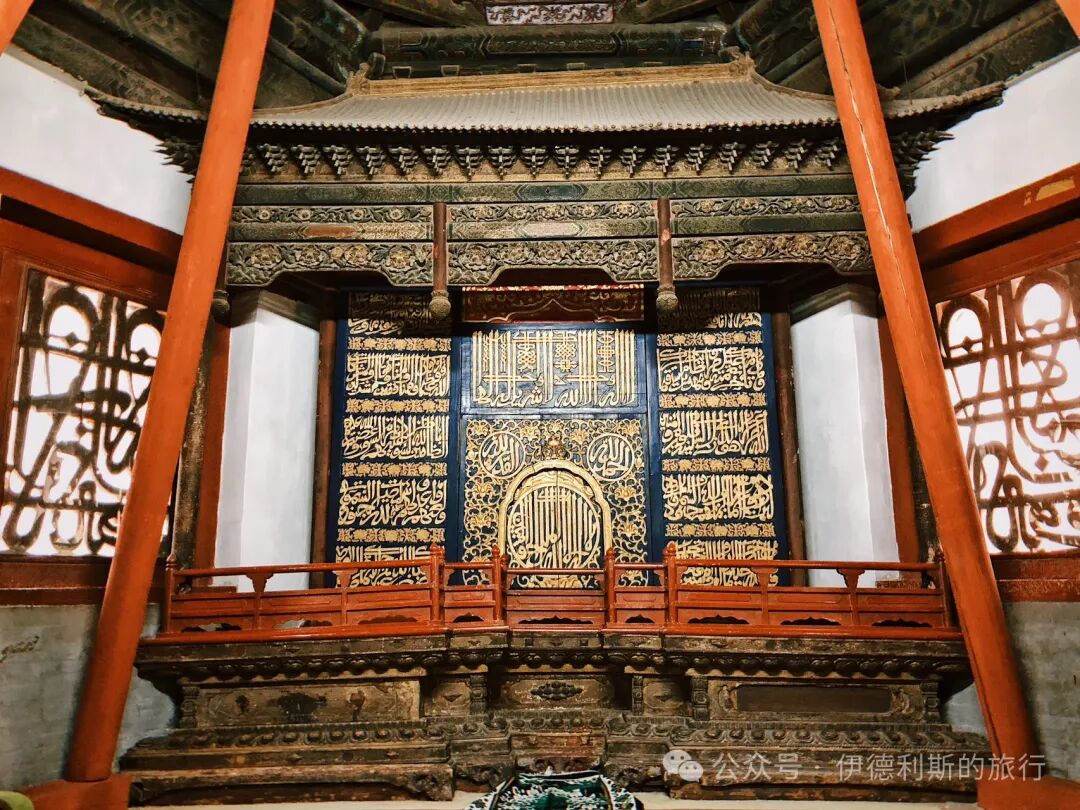
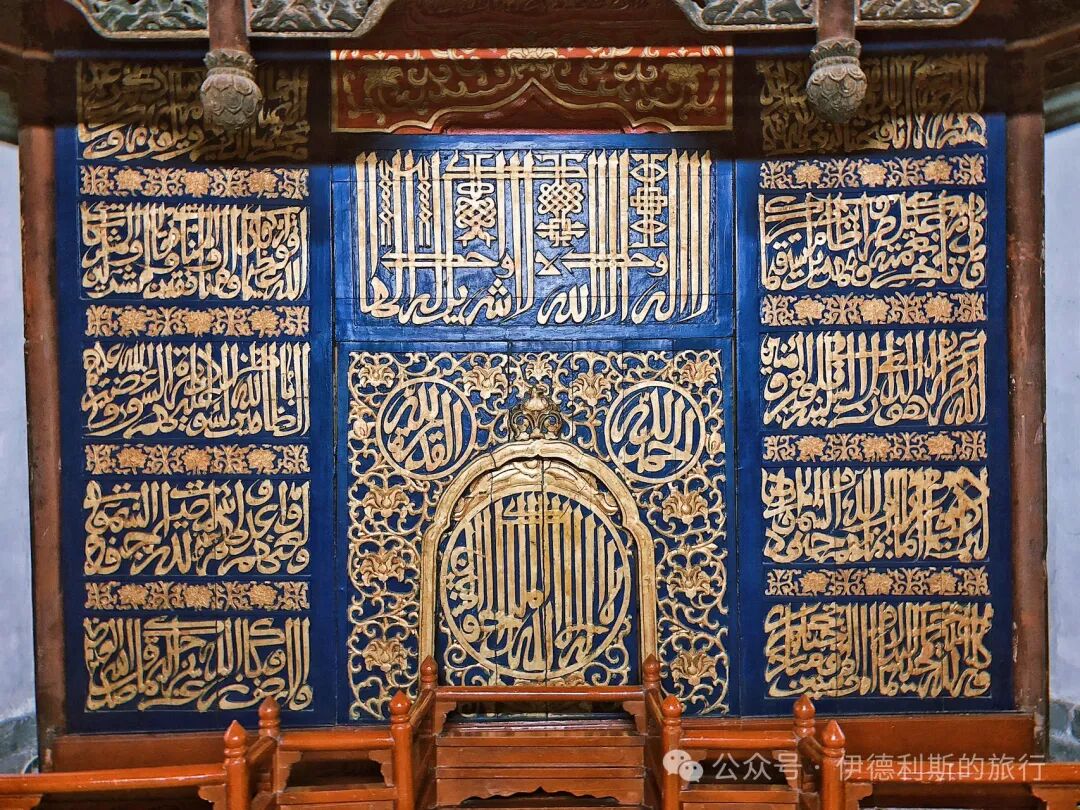
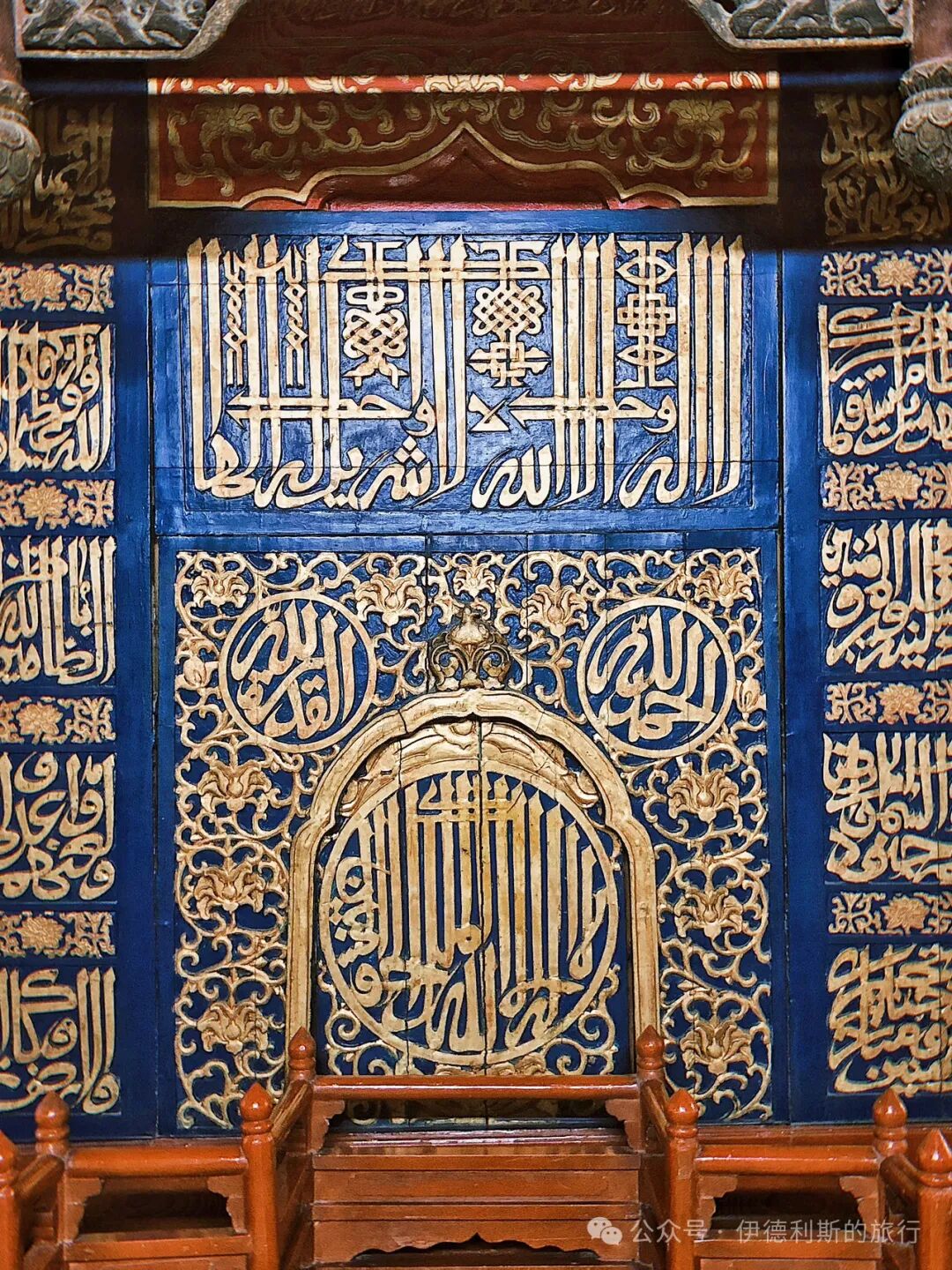
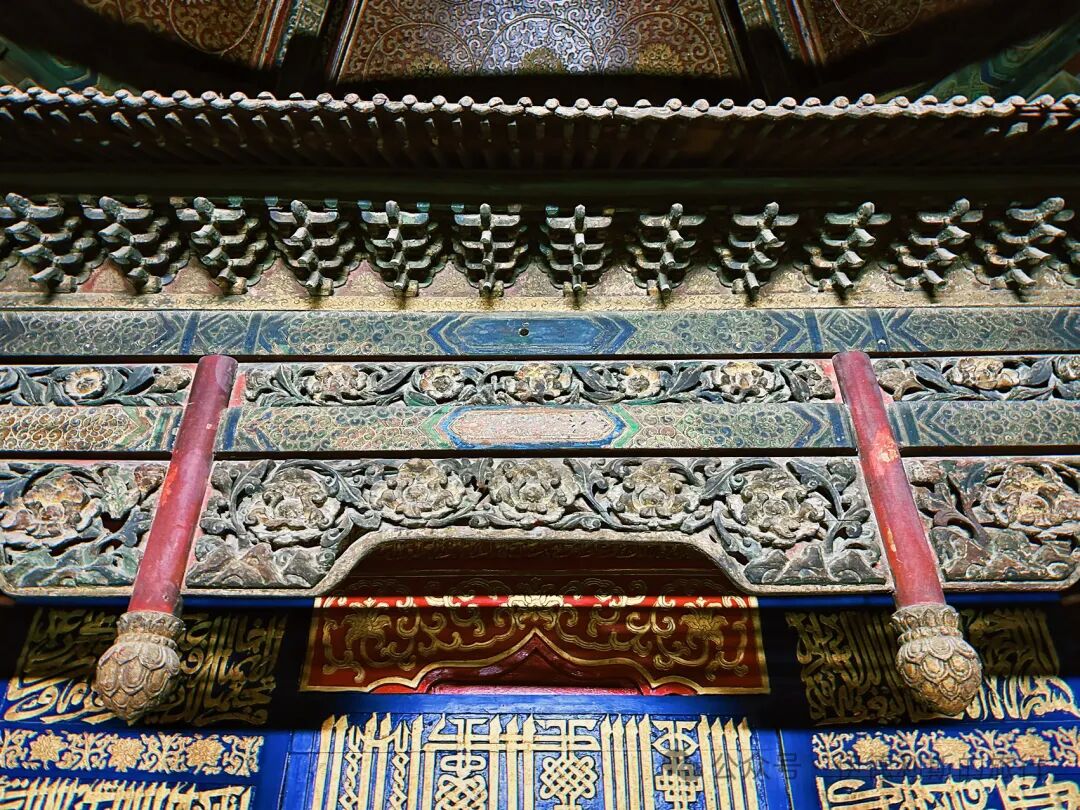
The Beijing Niujie Women's Mosque was built in 1925 as the first women's mosque in Beijing. It was originally located on Shouliu Hutong and was rebuilt on the north side of the Niujie Mosque in 2006. The mihrab is a century-old brick carving of a dua. A September 1942 issue of Beizhi magazine published an old photo of this brick carving.
The Beijing Huashi Mosque was built in 1414 (the 12th year of the Yongle reign of the Ming dynasty). The mihrab has a glazed tile archway inscribed with traditional Chinese calligraphy.
The Beijing Nankou Mosque is believed to have been built in the Ming dynasty and renovated during the Qing dynasty. The mihrab is a blue brick screen wall style with a clear-water ridge and scorpion-tail roof ends on top, and a Sumeru pedestal at the bottom. In the middle, it features exquisite diamond-patterned window shutters and scroll-patterned arched brick carvings.
The construction date of the Beijing Gubeikou Mosque is unknown. It was renovated in 1629 (the 12th year of the Chongzhen reign of the Ming dynasty) and rebuilt to its current appearance by the Zhili regional commander Ma Jinliang during the Kangxi reign of the Qing dynasty. The mihrab is arch-shaped and painted with auspicious cloud patterns, along with traditional calligraphy in the North China style.
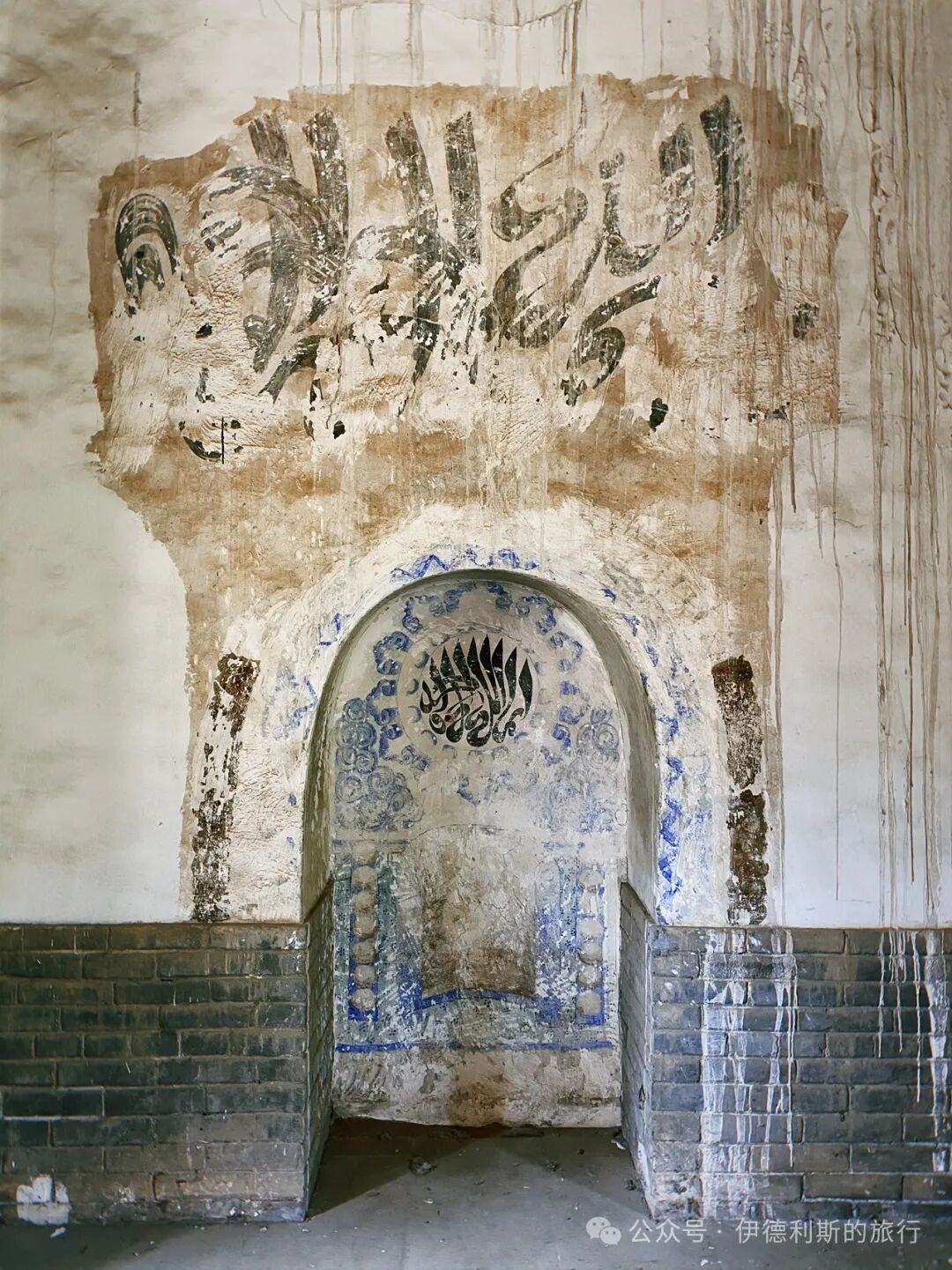
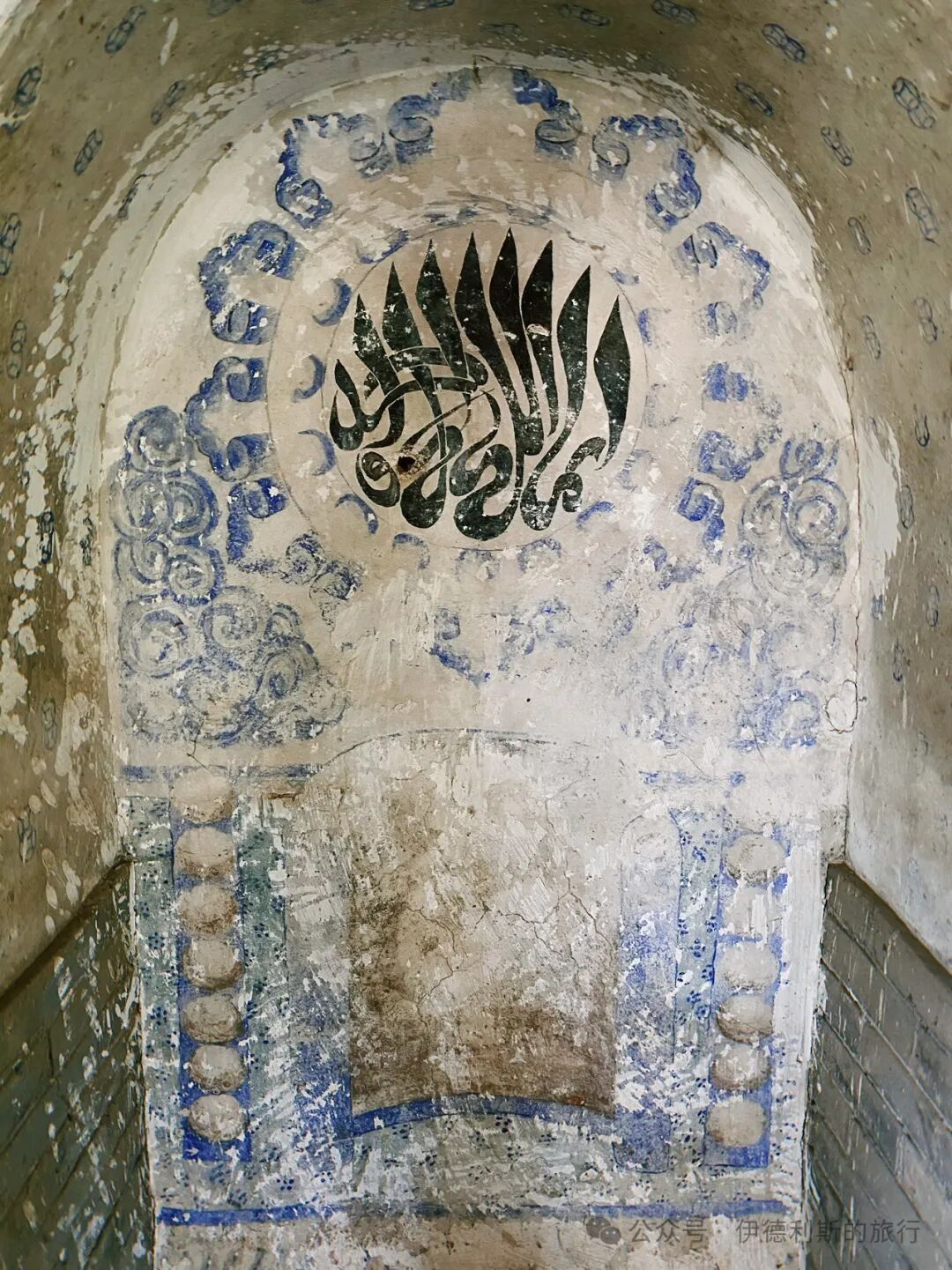
The Beijing Dongzhimenwai Mosque, originally called the Erlizhuang Mosque, was built in the Yuan dynasty. The old mosque's mihrab was wooden and shaped like a tablet. After the renovation, it was placed under the eaves of the hall opposite the new mosque, and it is carved with traditional calligraphy.
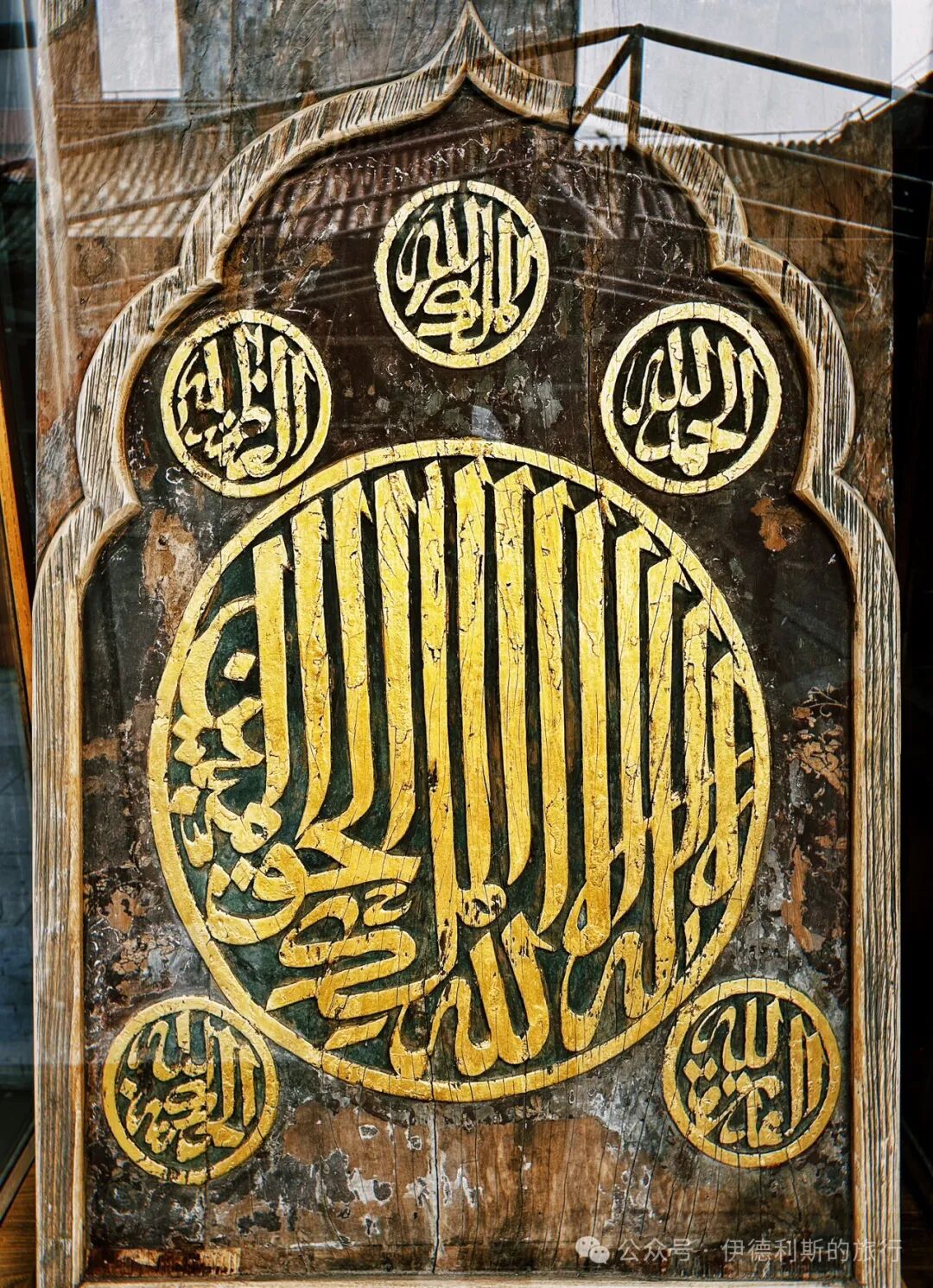
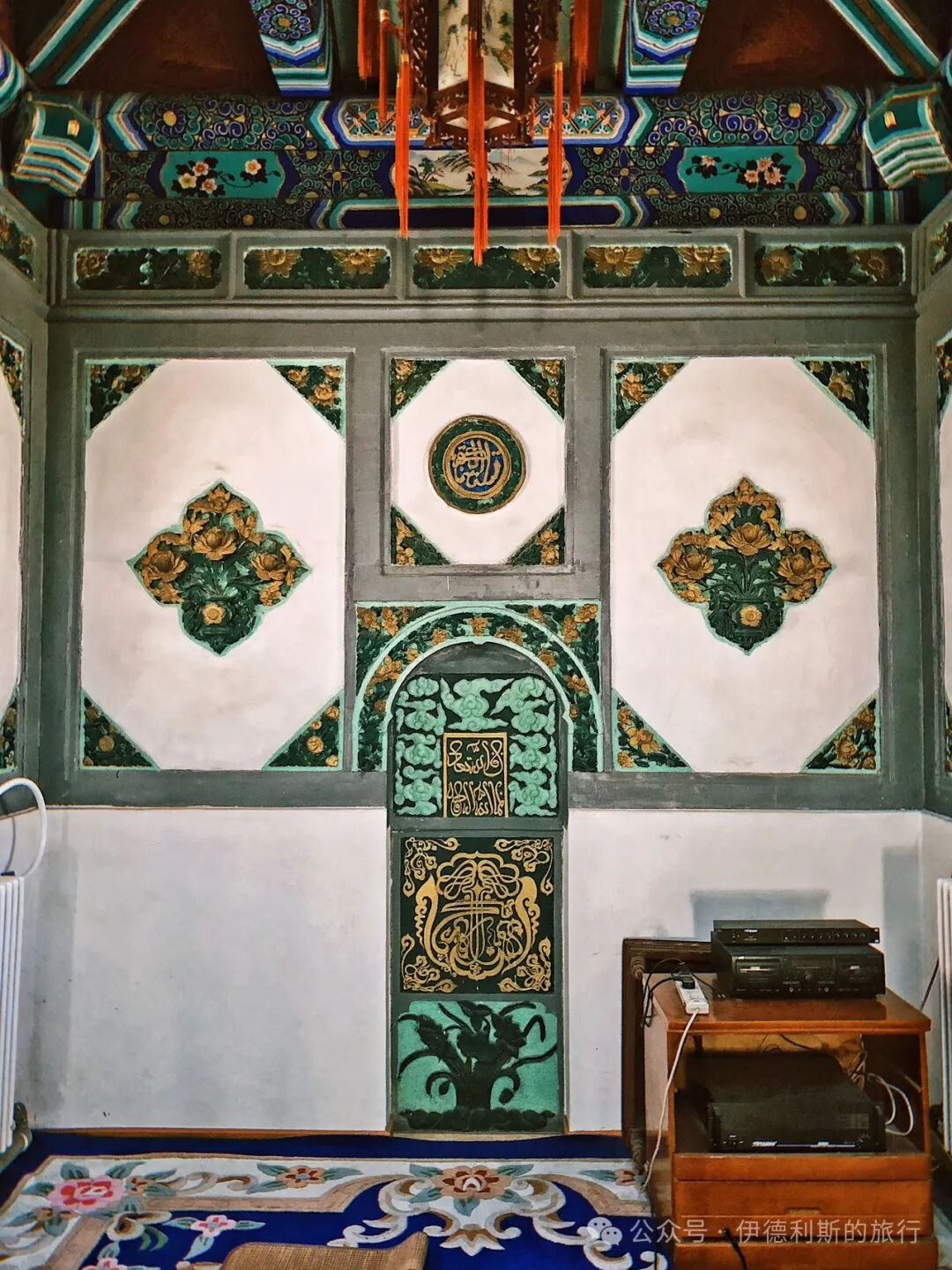
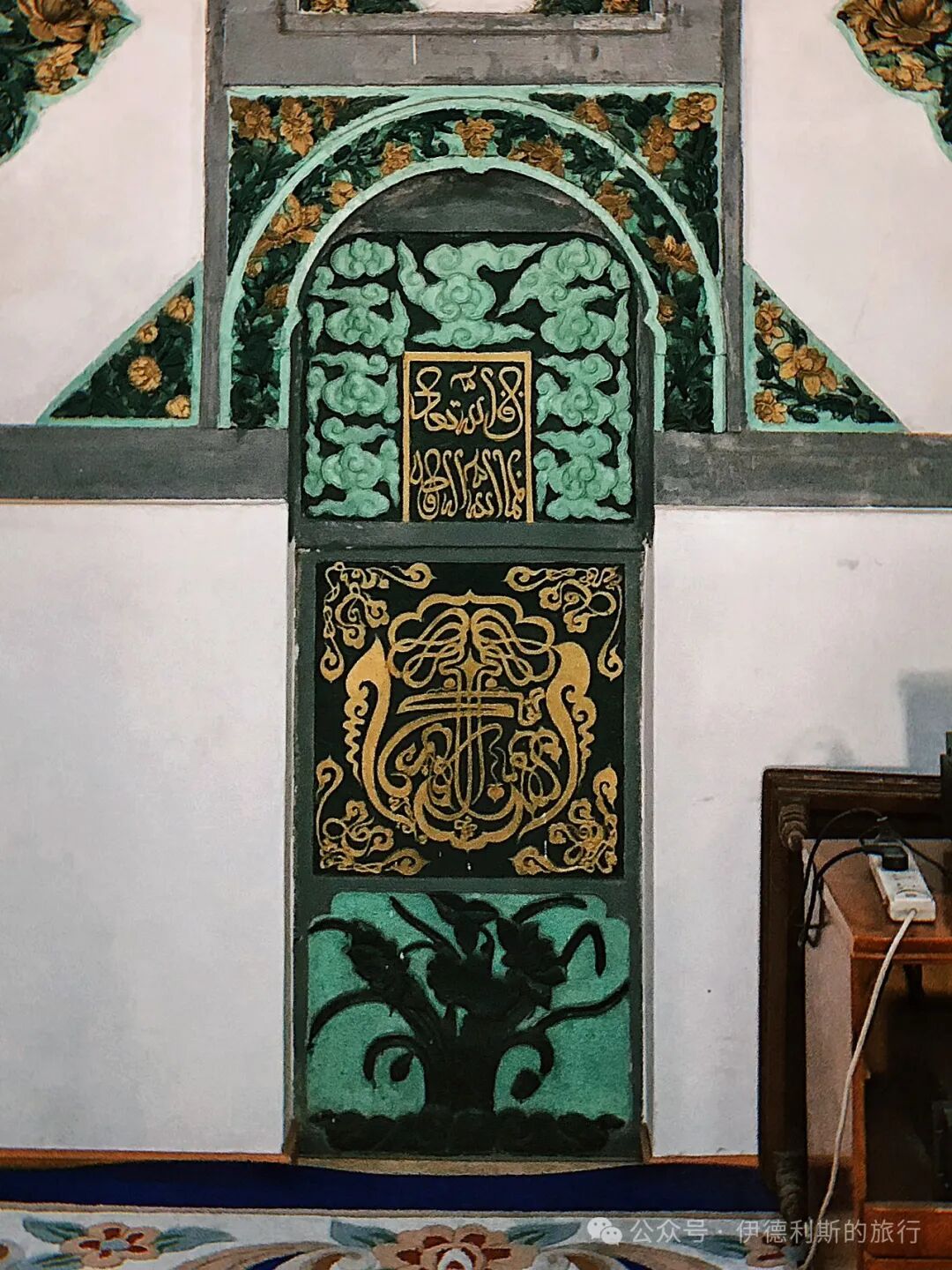
The Beijing Changying Mosque mihrab is shaped like a stone stele head and features very complex painted calligraphy. According to research by teacher Hui Zongzheng, it may have been moved from elsewhere when the mosque was built during the Zhengde reign of the Ming dynasty.
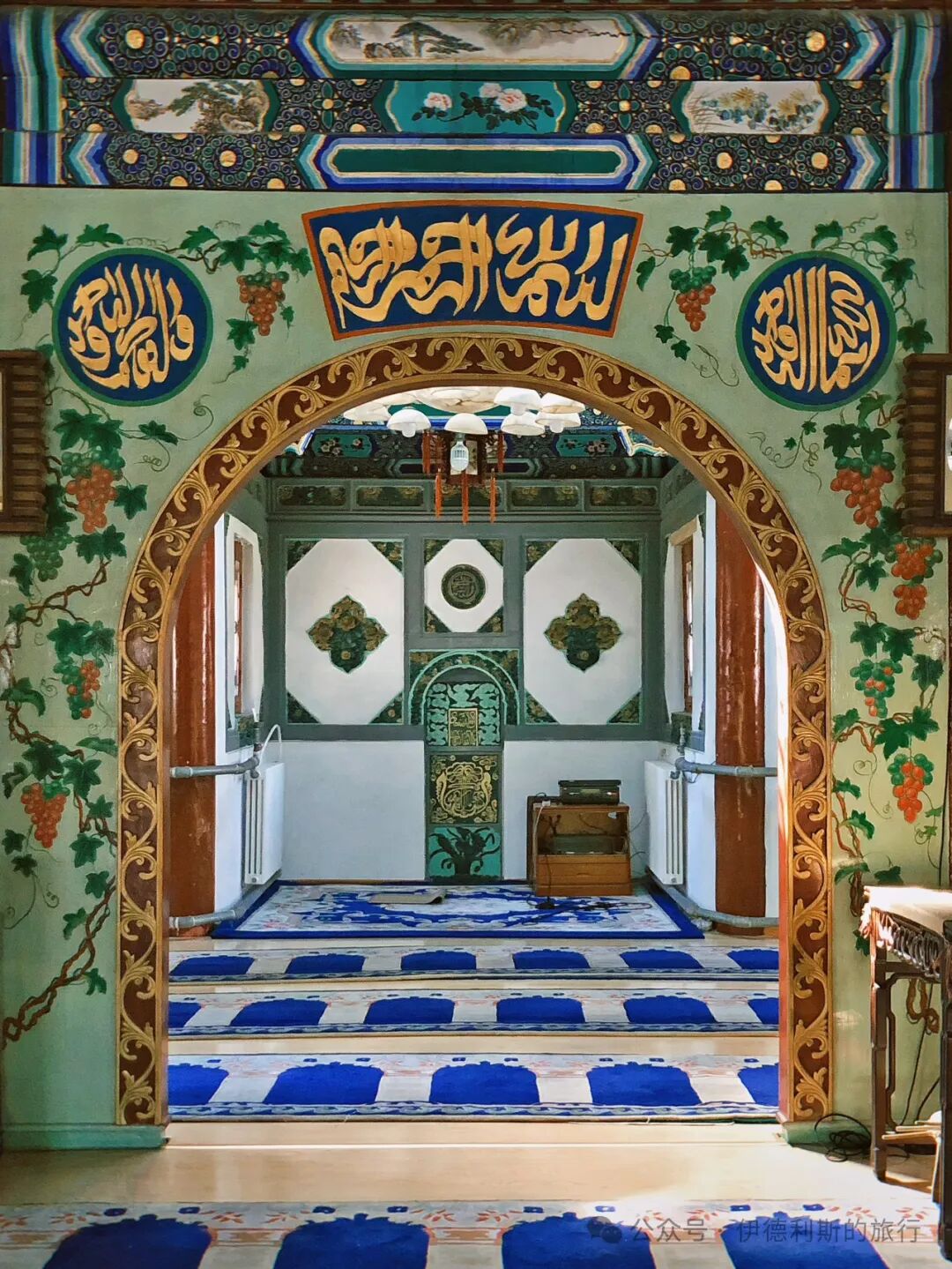
Tianjin.
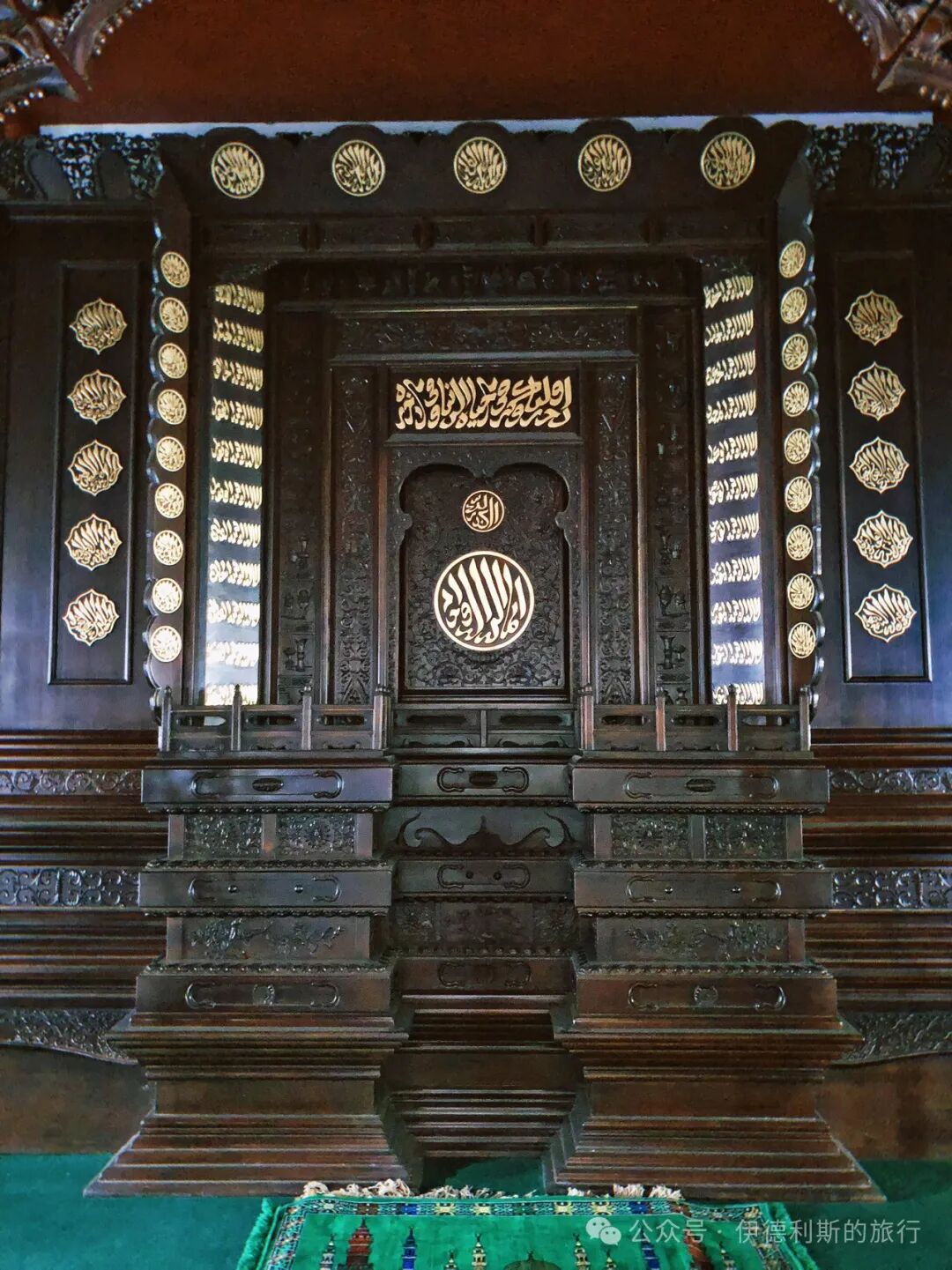
The Great Mosque at Xibeijiao in Tianjin has a wooden carved niche (yaokan) with a very high Sumeru pedestal railing, which is quite rare.
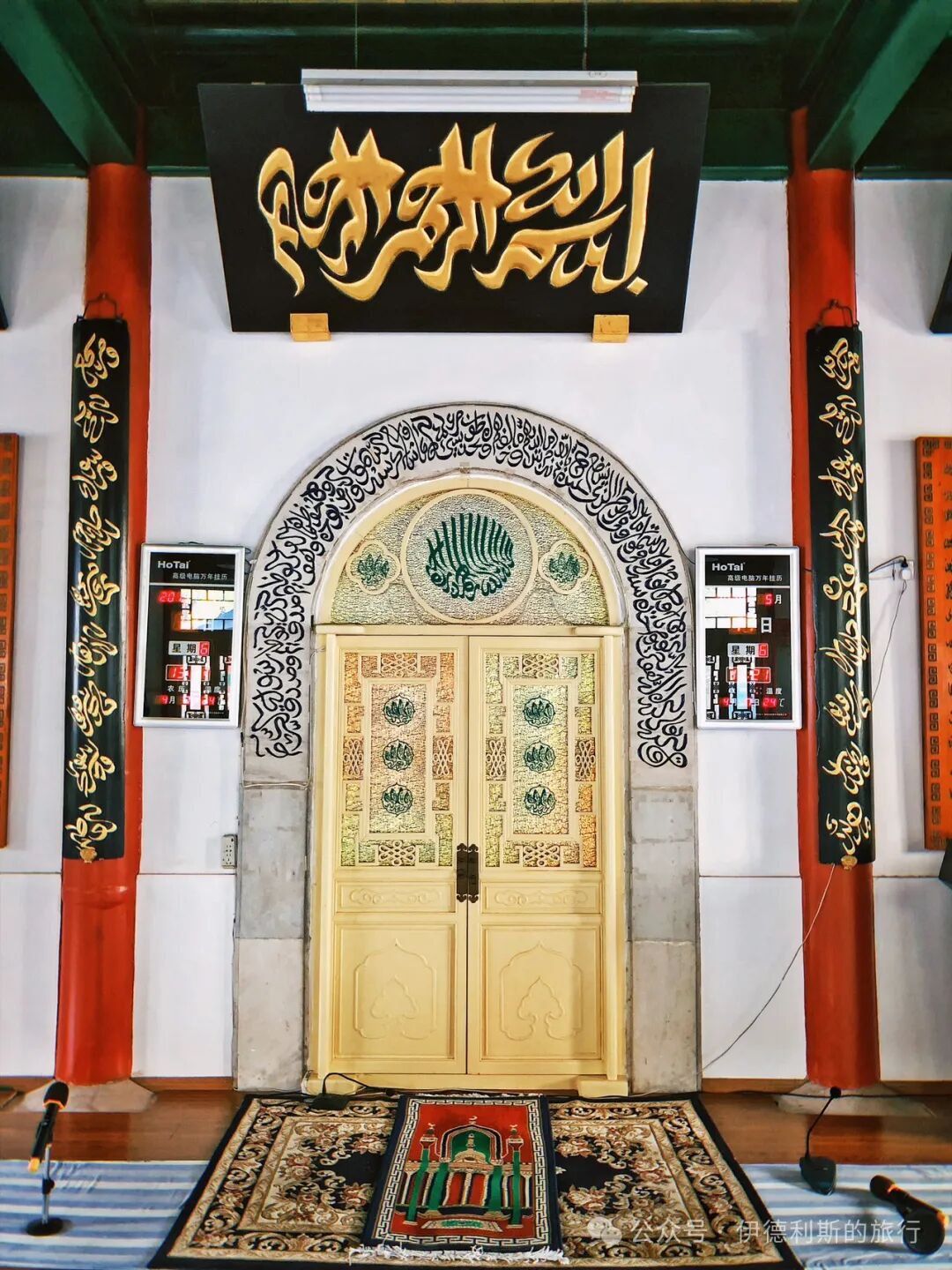
The Tianjin Jinjiayao Mosque features traditional calligraphy plaques and couplets, with an arched gate in the middle.
The Tianjin Hexiwu Mosque features a rare painted design of a half-open vermilion door.
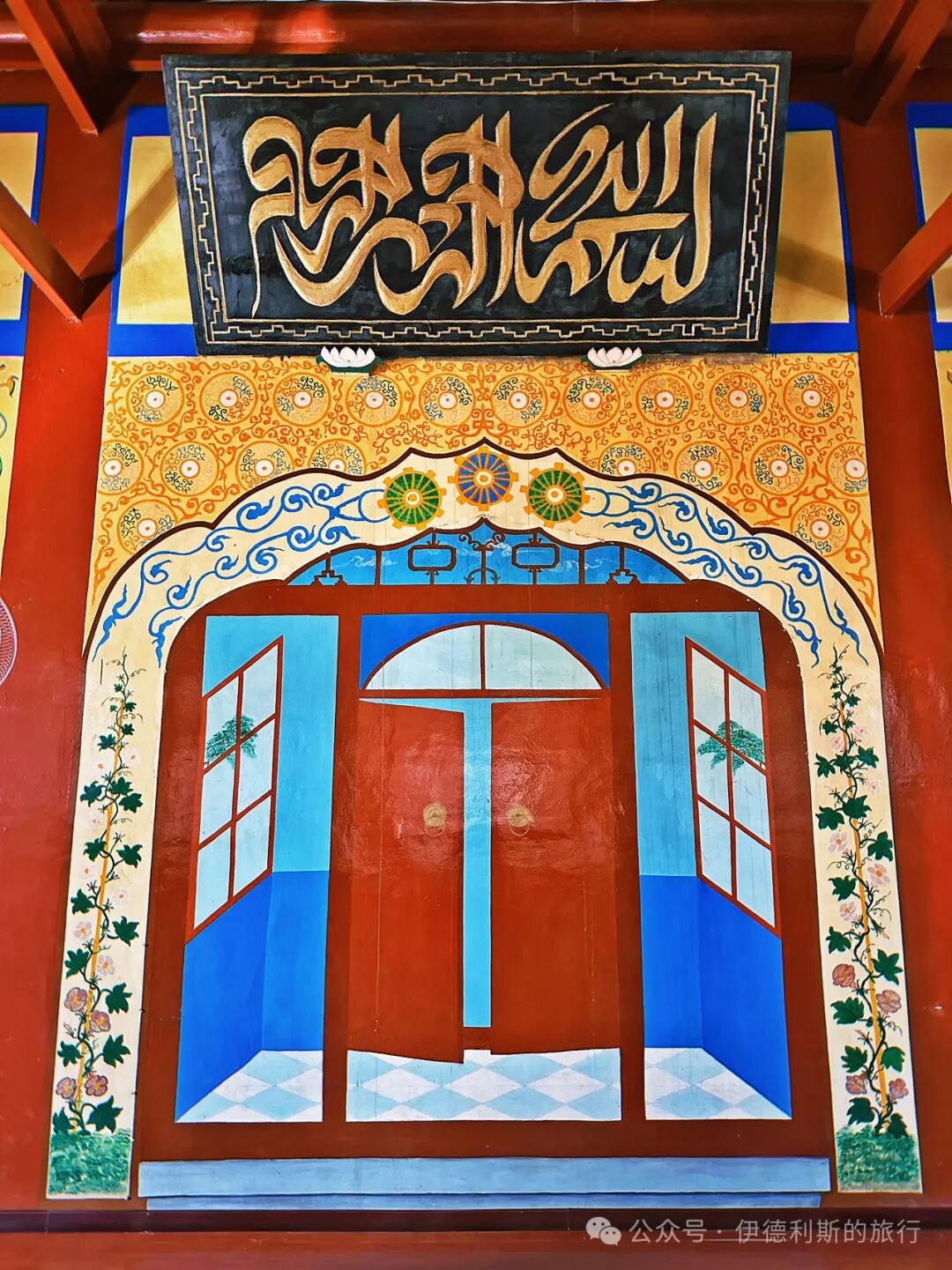
The Tianjin Xibeijiao South Mosque features traditional calligraphy plaques and couplets.
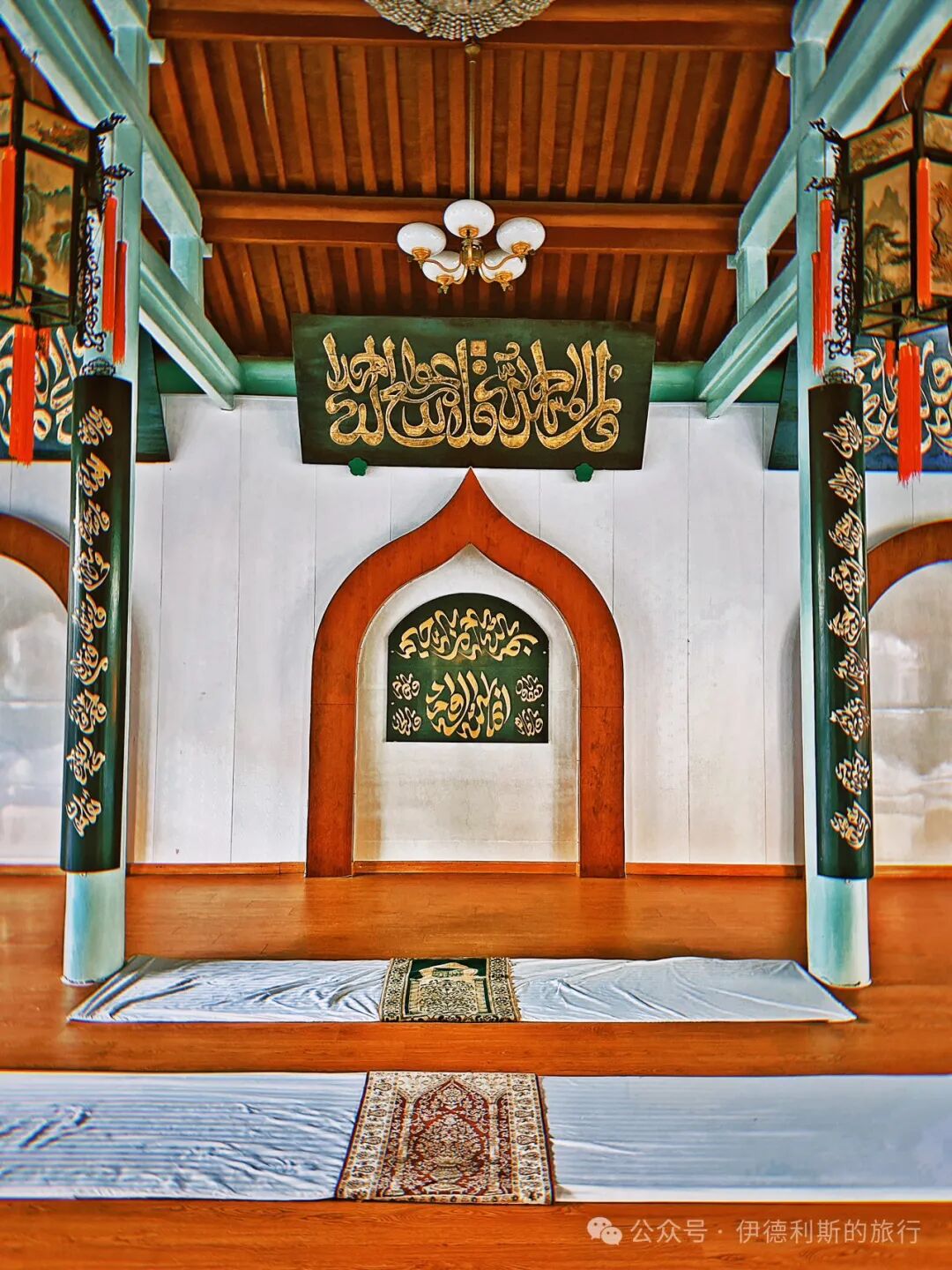
The Tianjin Tianmu North Mosque also features a large gate design in the middle.
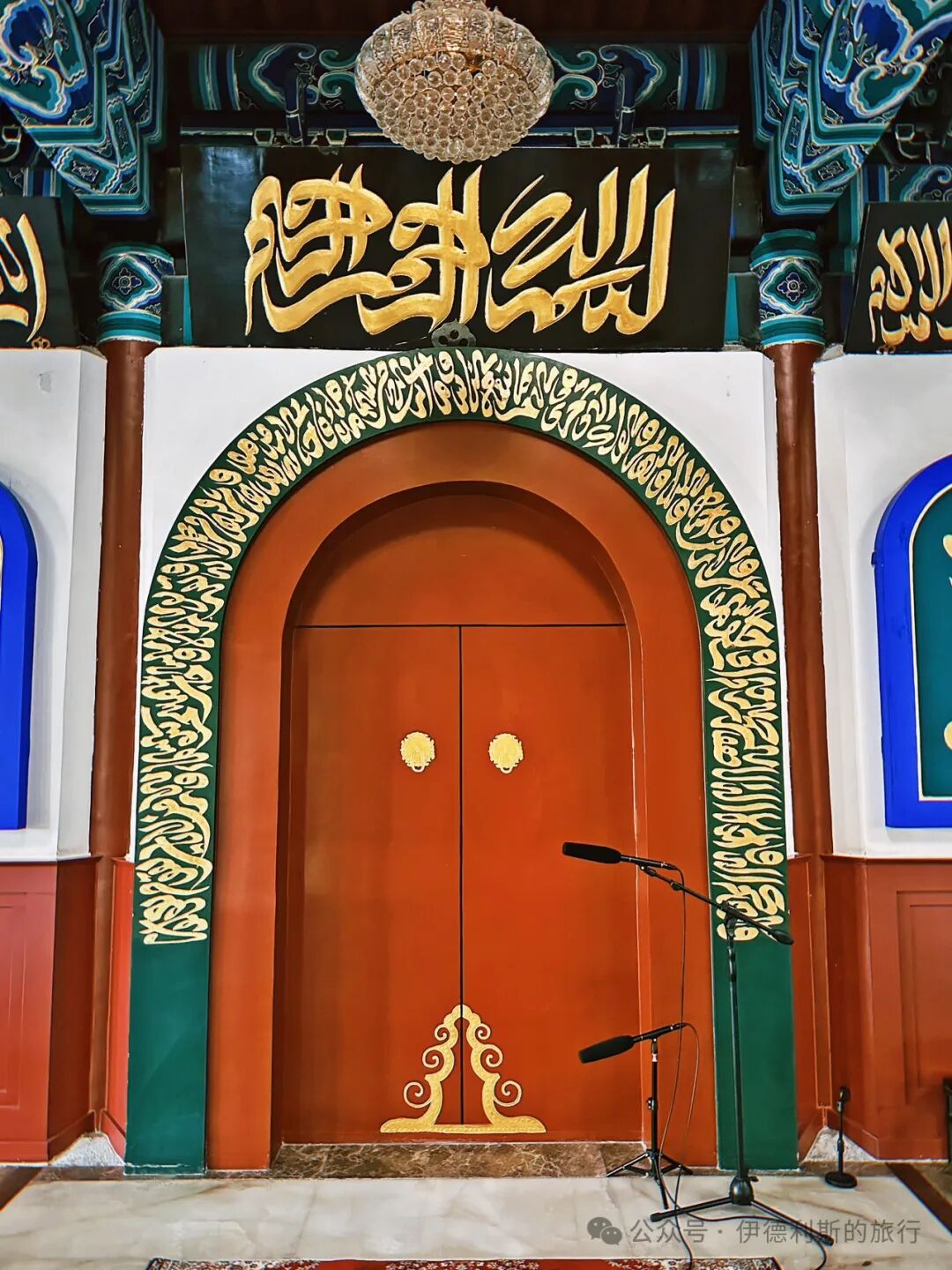
Hebei.
The Hebei Zhangjiakou Xinhua Street Mosque's winter prayer hall mihrab is decorated with traditional calligraphy plaques and circular couplets.
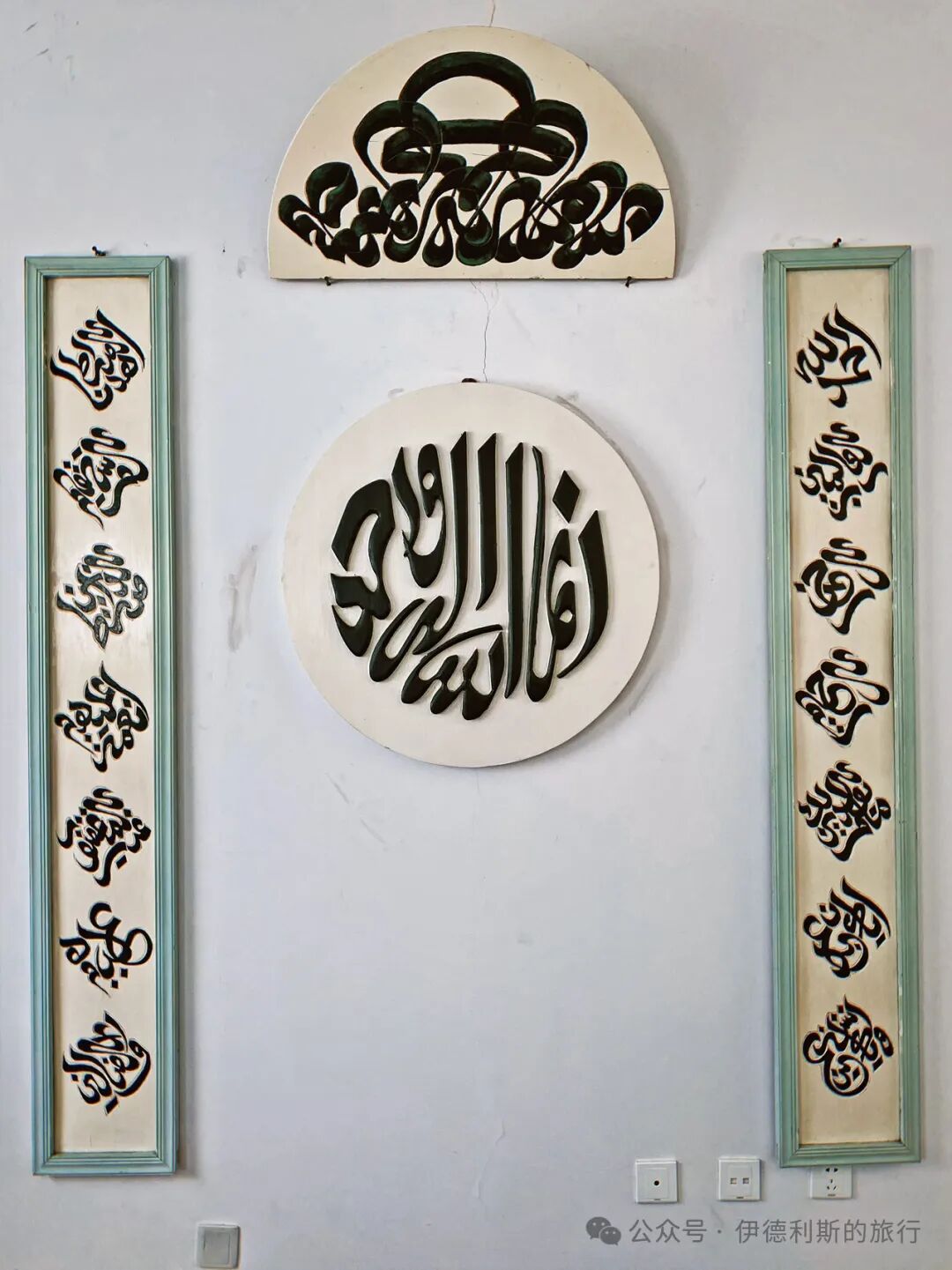
The Hebei Zhangjiakou Xiguan Mosque is a blue brick screen wall style with a hip roof, a ridged roof, and flying eaves, with a Sumeru pedestal at the bottom. The center features Ming dynasty calligraphy carvings restored in 2020 by the famous calligrapher Wang Qifei based on old photos.
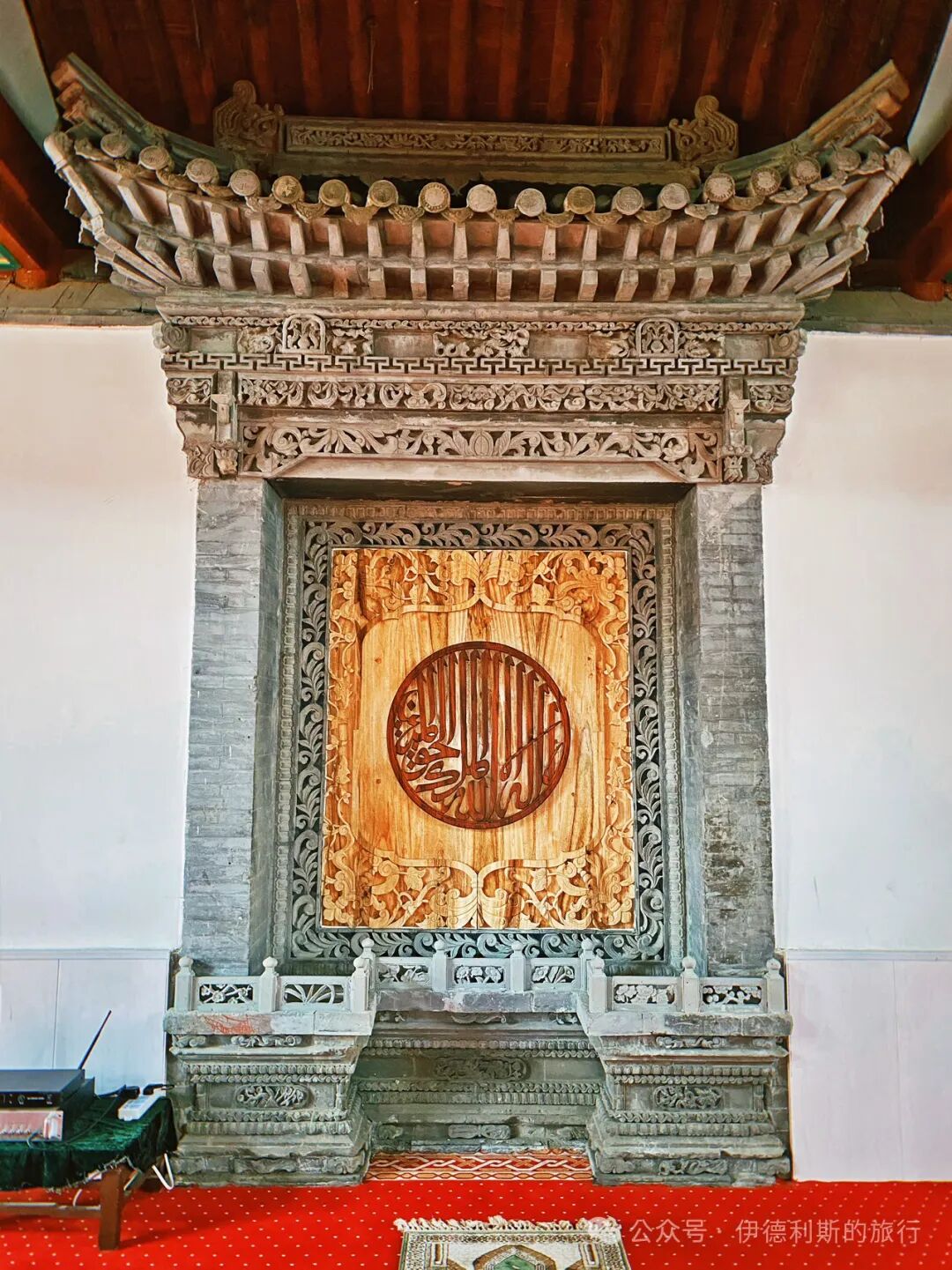
The South Mosque (Nandasi) in Xuanhua, Hebei, is an arched structure carved with calligraphy and floral patterns.
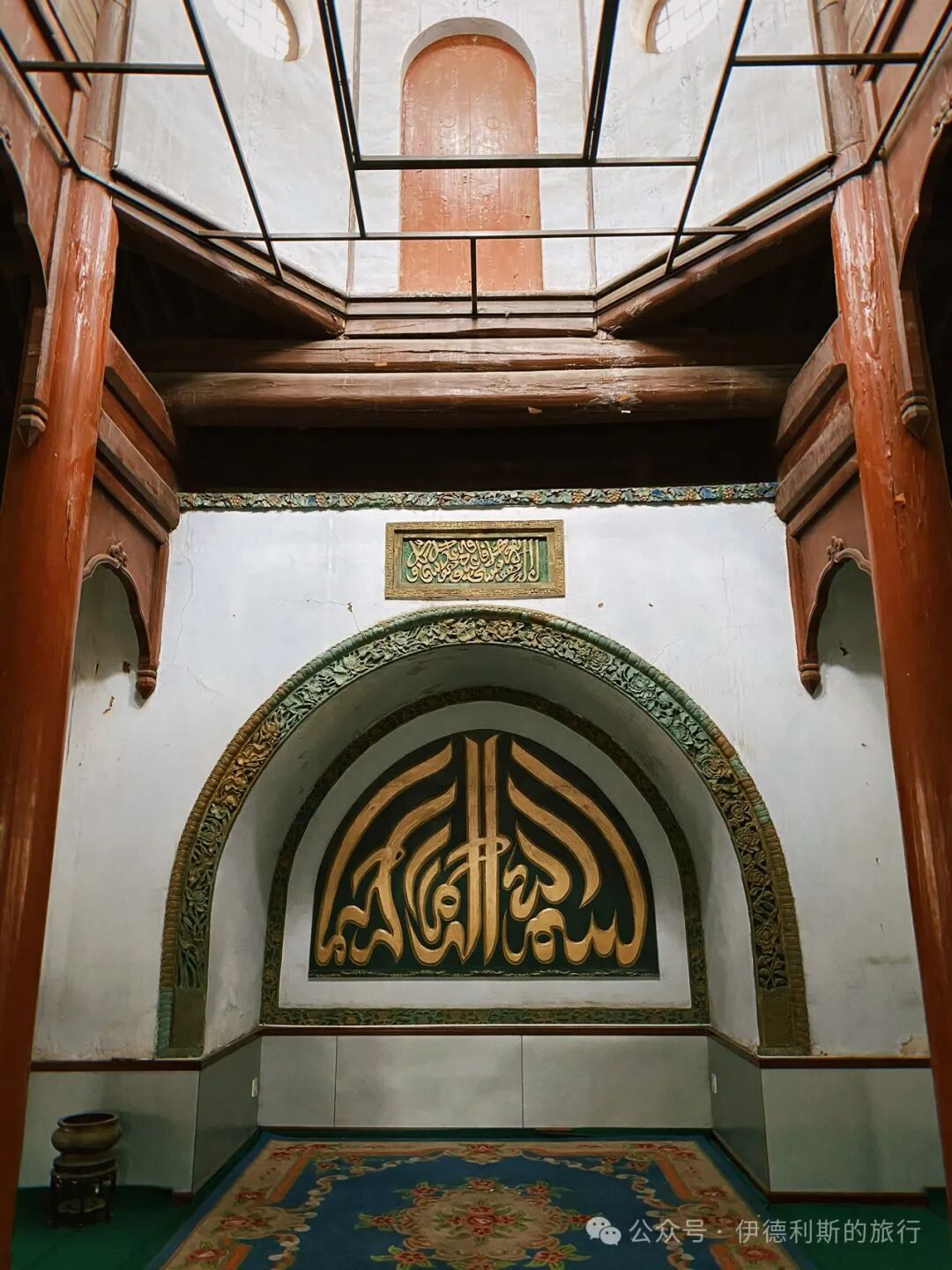
The North Mosque (Beisi) in Xuanhua, Hebei, is an arched structure carved with calligraphy and floral patterns.
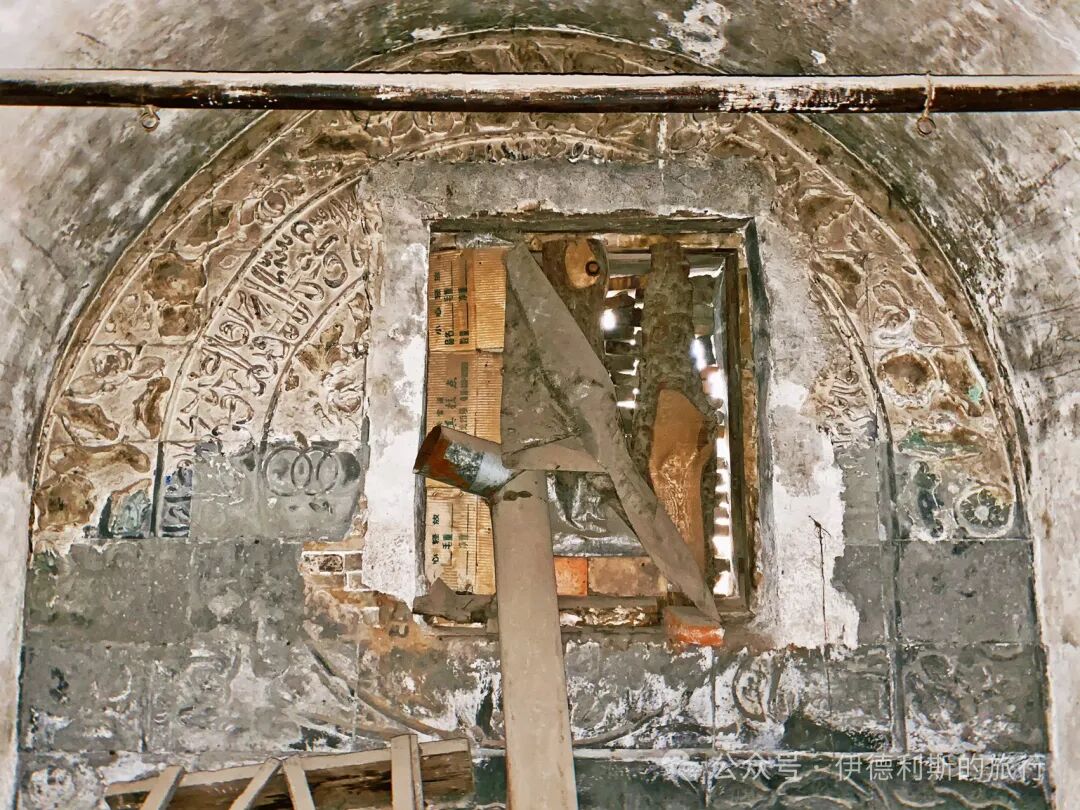
Henan
The Shanyitang Mosque in Henan is an arched structure decorated with calligraphy written in 2009 by the famous calligrapher Mi Guangjiang.
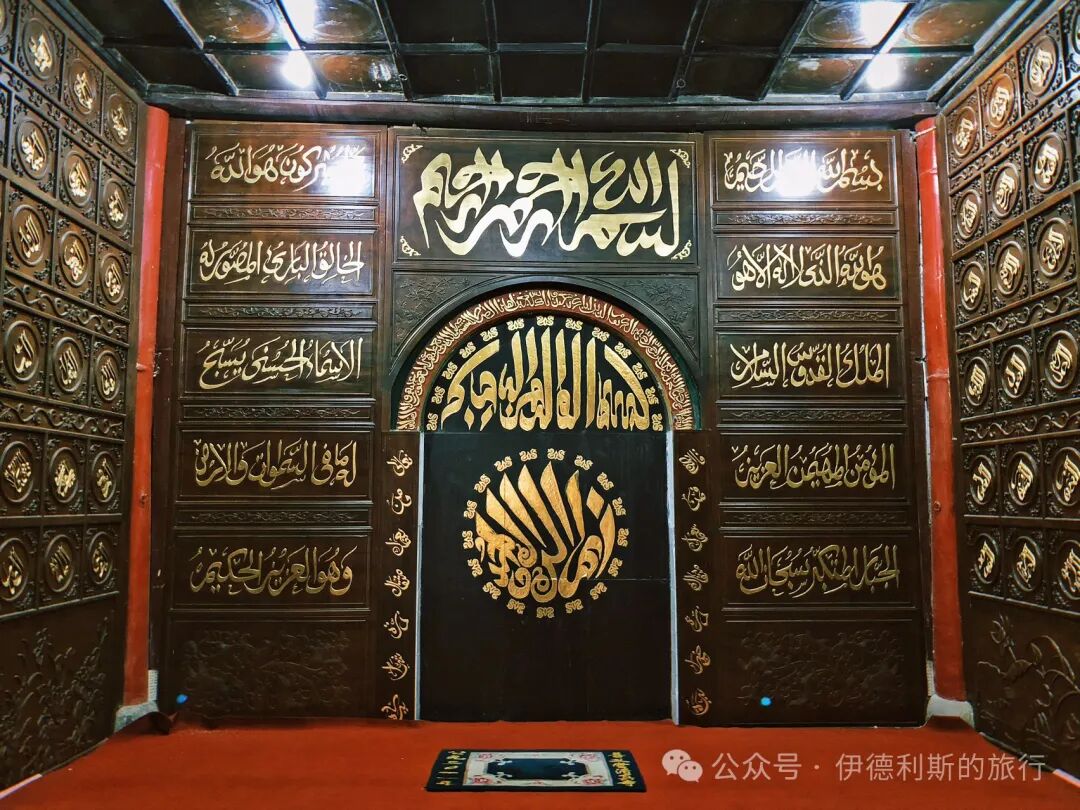
The North Mosque (Beisi) in Zhengzhou, Henan, is an arched structure with an exterior carved door hood.
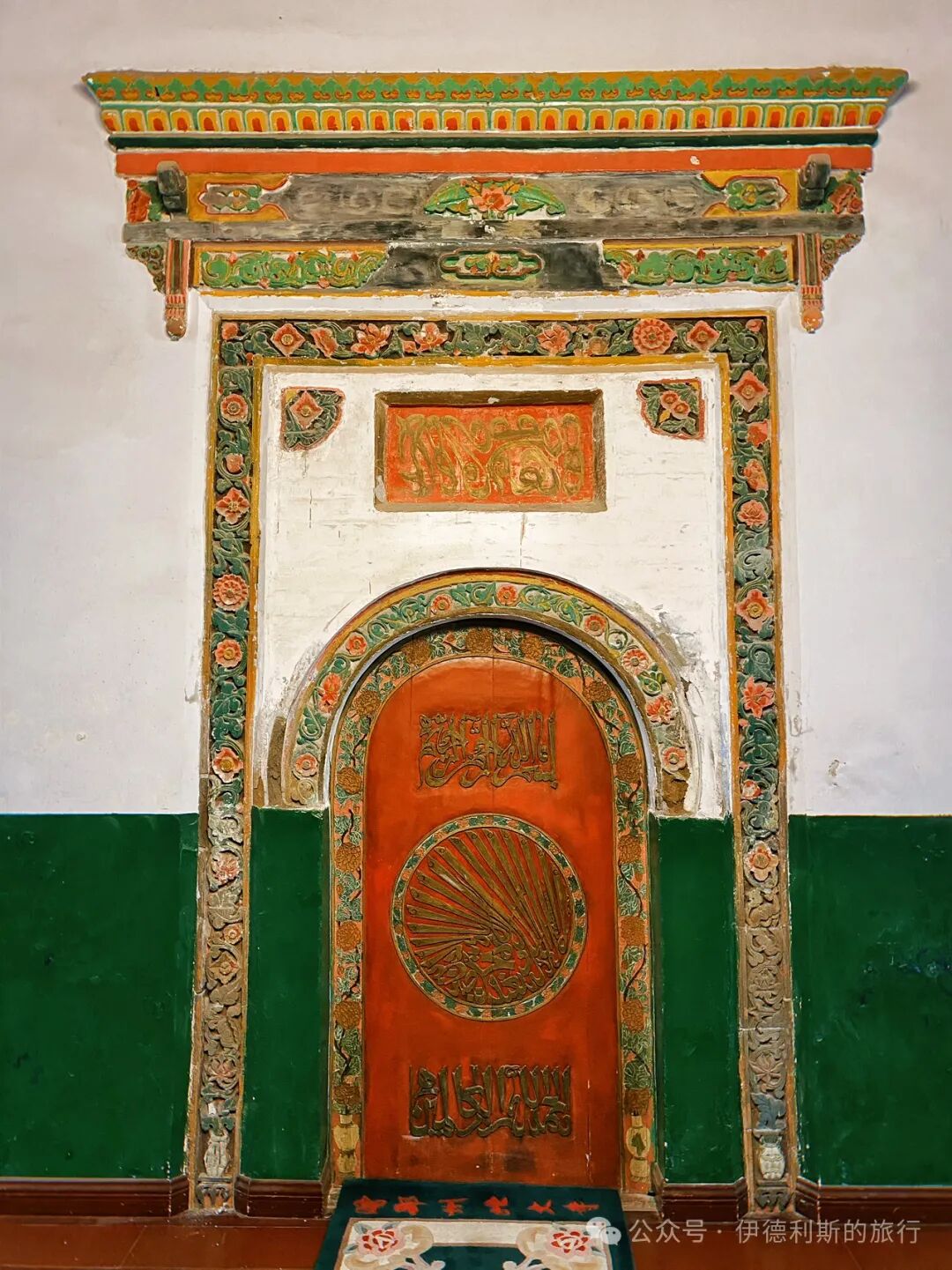
The North Mosque (Beisi) in Qinyang, Henan, is an arched structure decorated with traditional calligraphy.
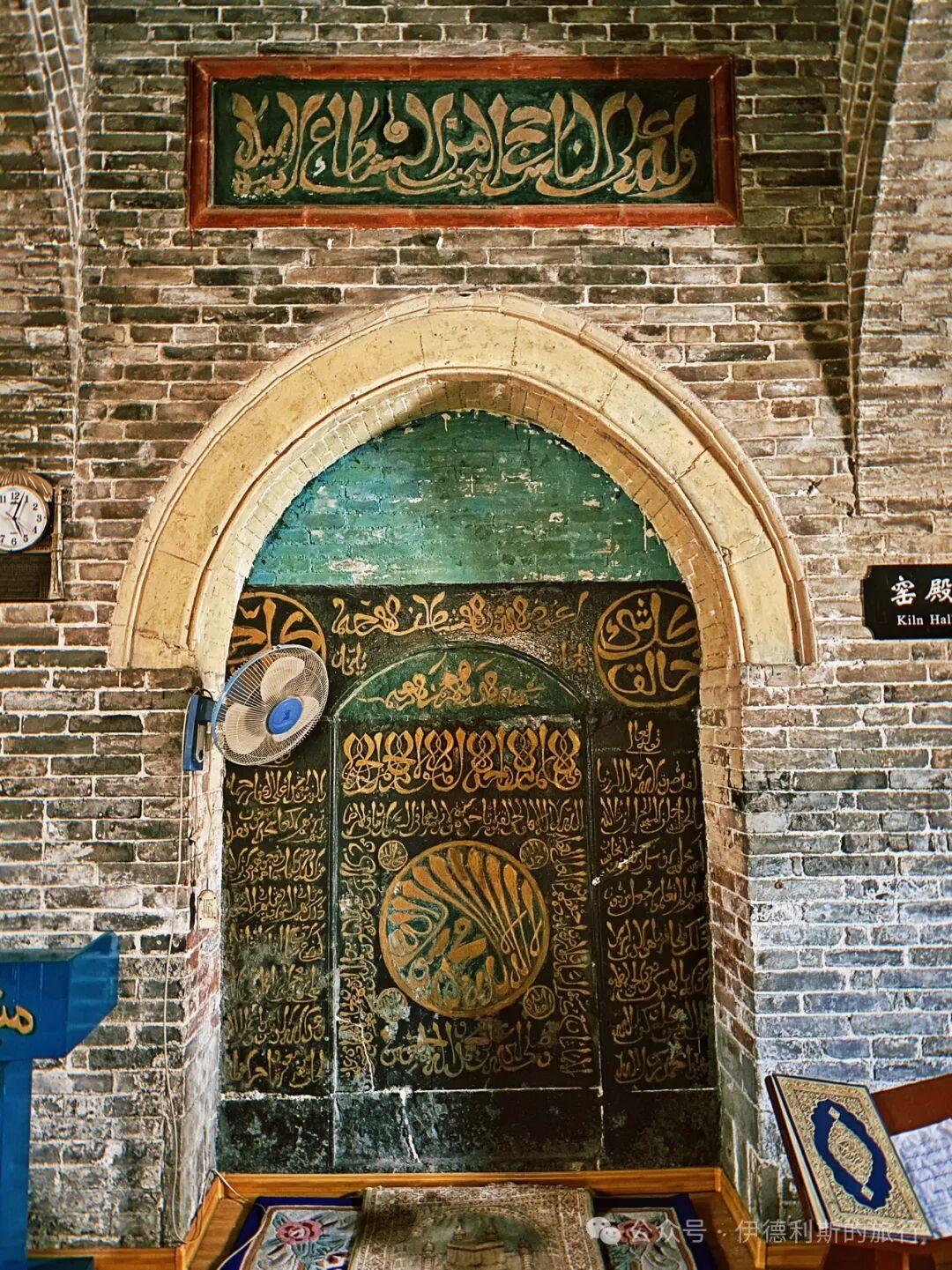
The Xiguan Mosque in Bo'ai, Henan, is an arched structure decorated with Arabic plaques and couplets.
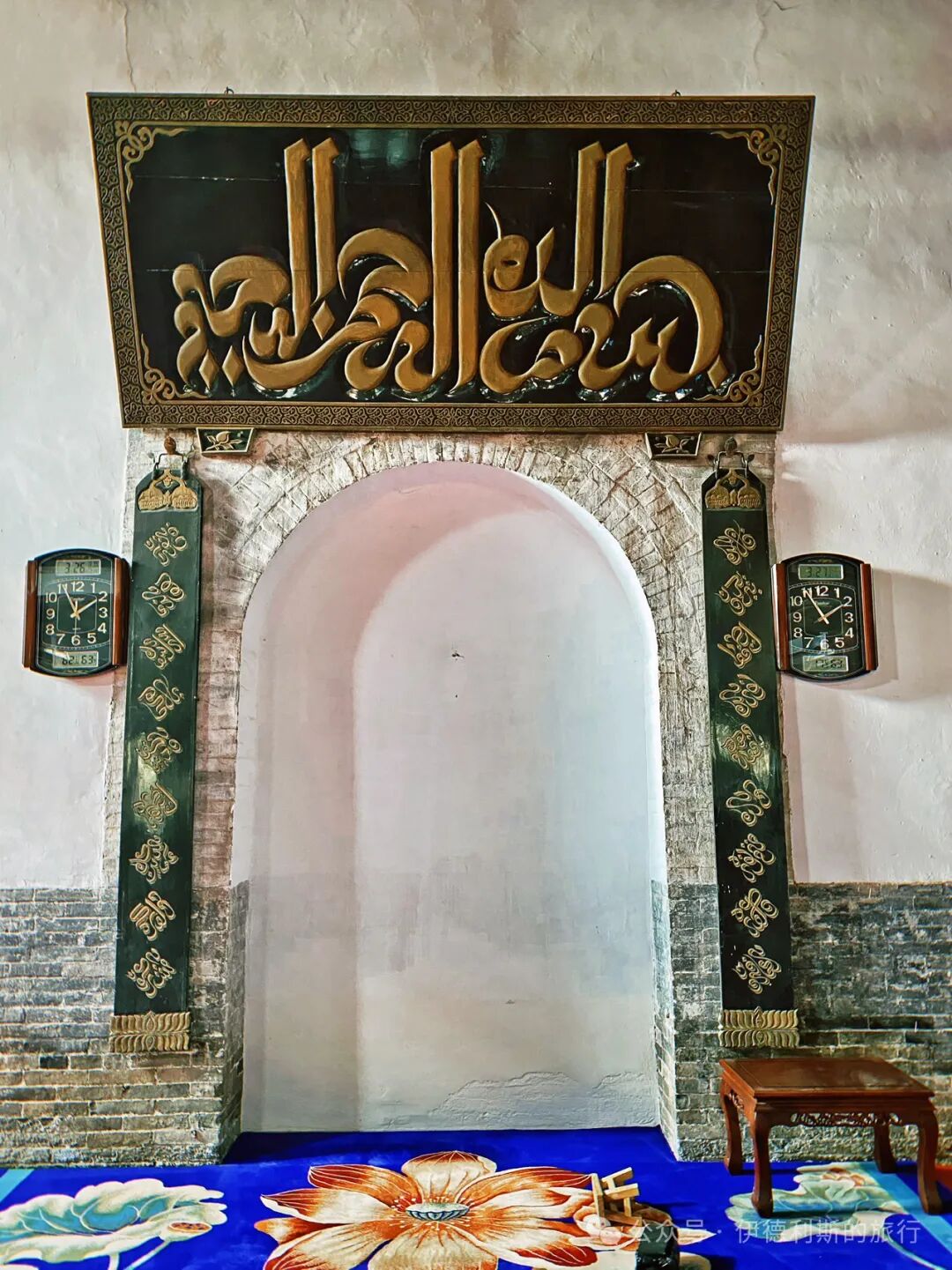
The West Mosque (Xisi) in Daxinzhuang, Bo'ai, Henan, is an arched structure decorated with Arabic plaques and couplets.
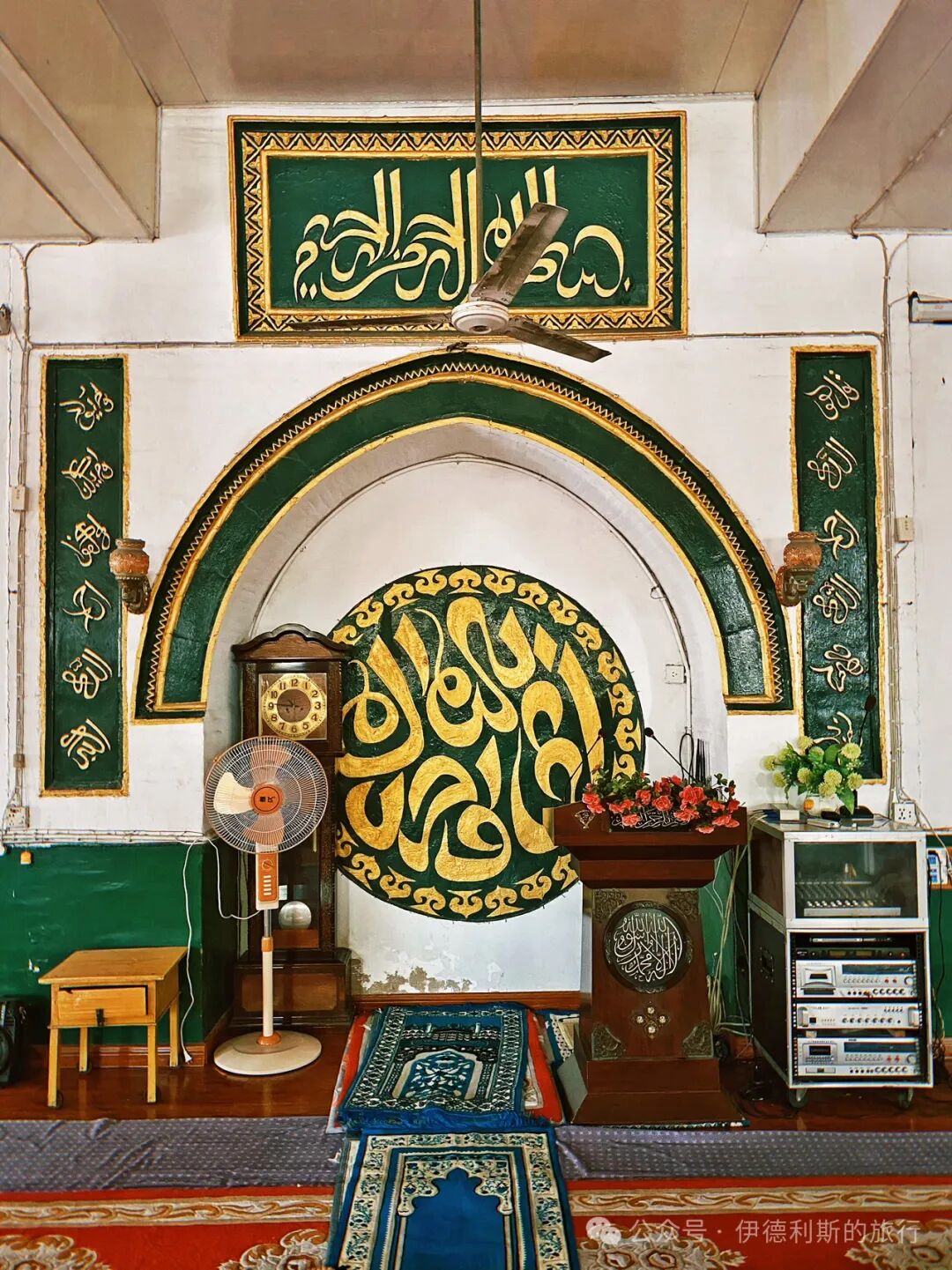
Shandong
The North Mosque (Beisi) in Linqing, Shandong, is a three-room, four-pillar memorial archway style building with bracket sets and flying eaves, decorated with intricate traditional calligraphy.
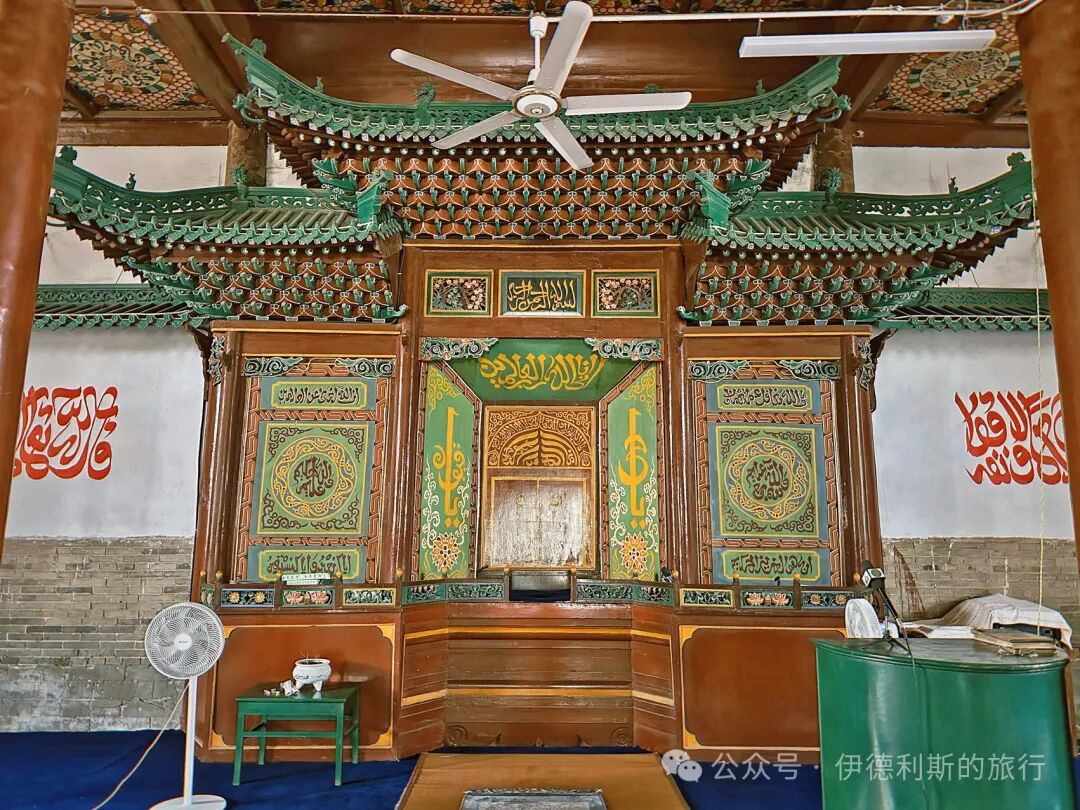
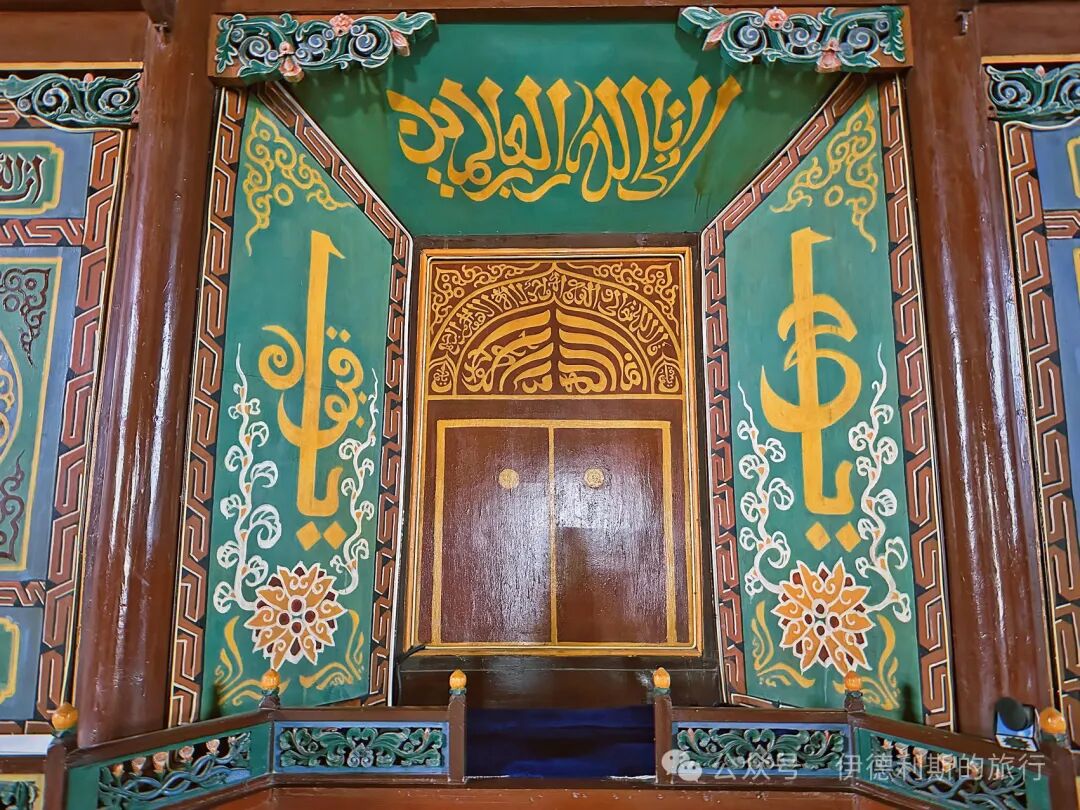
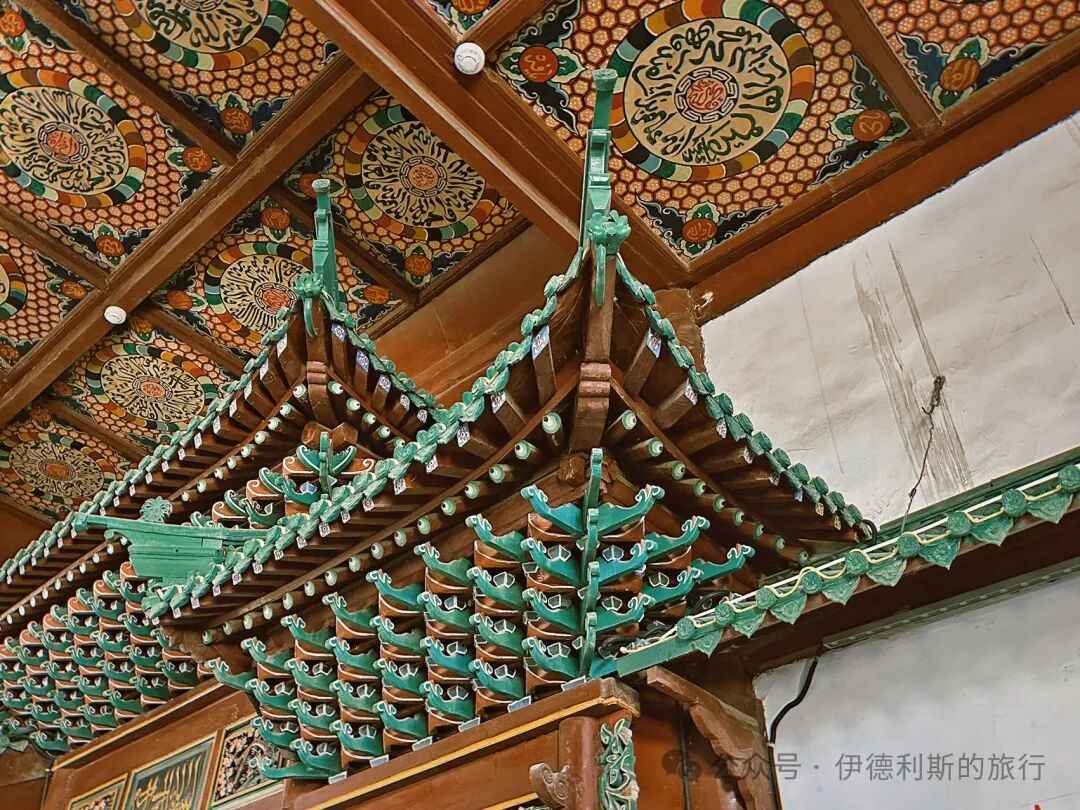
The East Mosque (Dongsi) in Linqing, Shandong, is a three-room, four-pillar memorial archway style building with bracket sets and flying eaves, decorated with intricate traditional calligraphy.
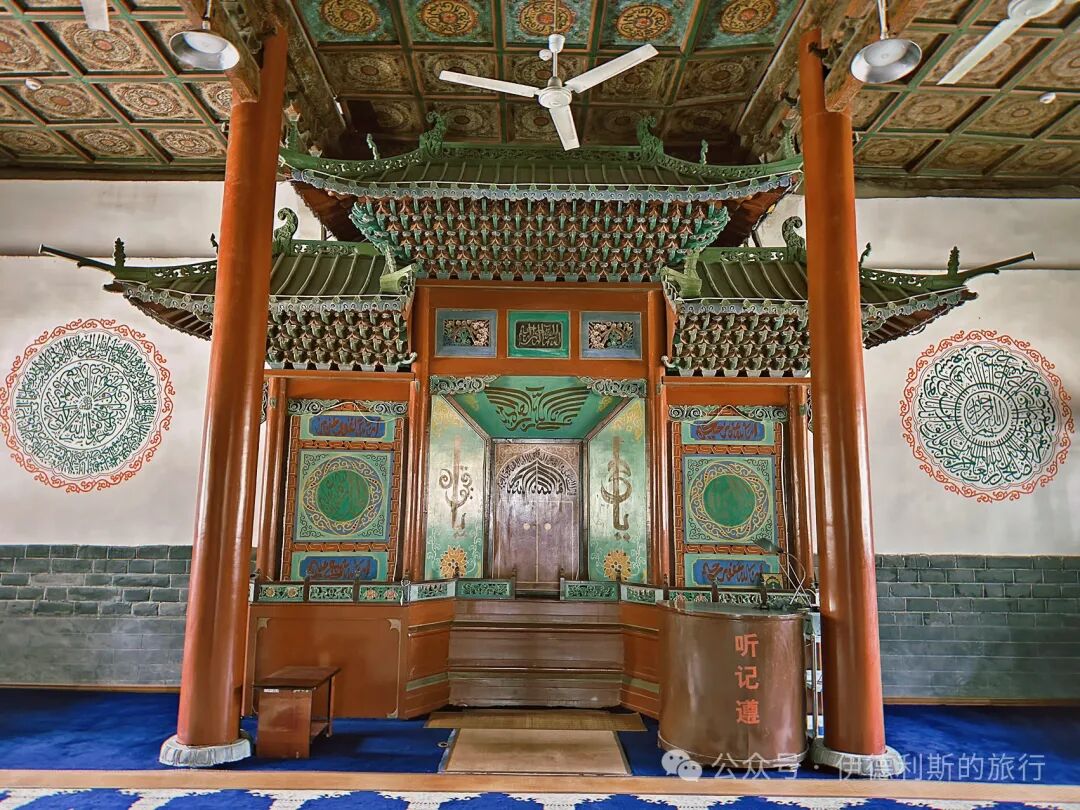
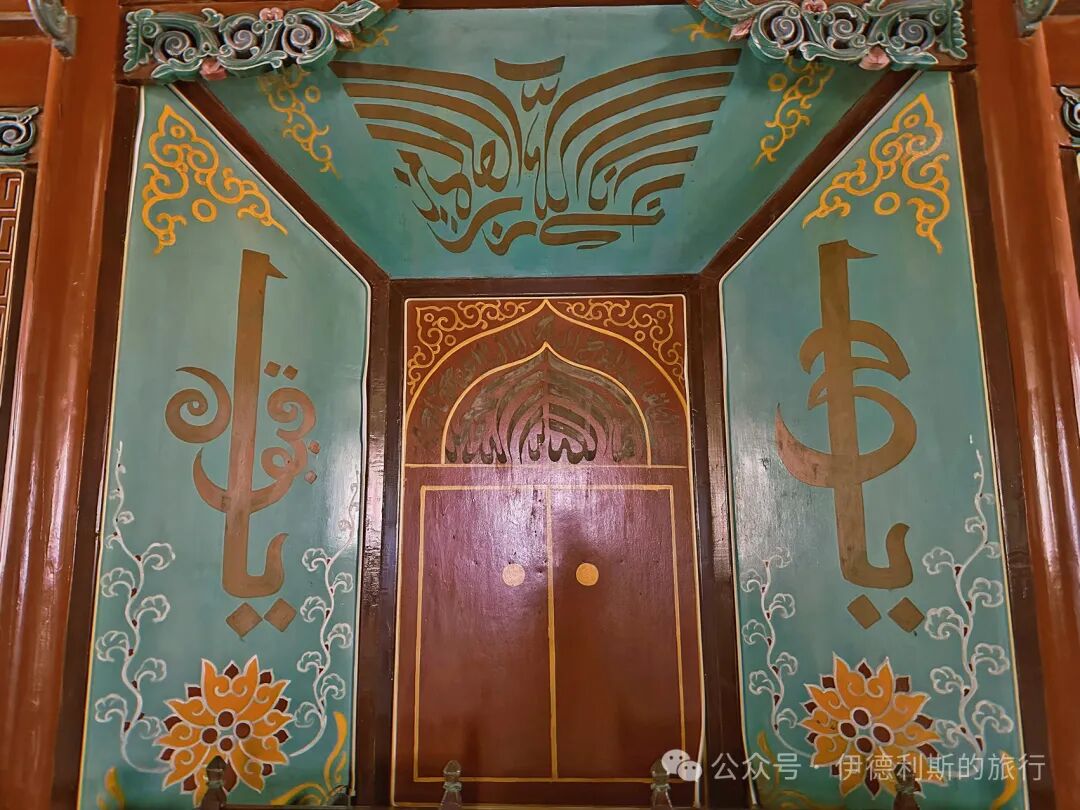
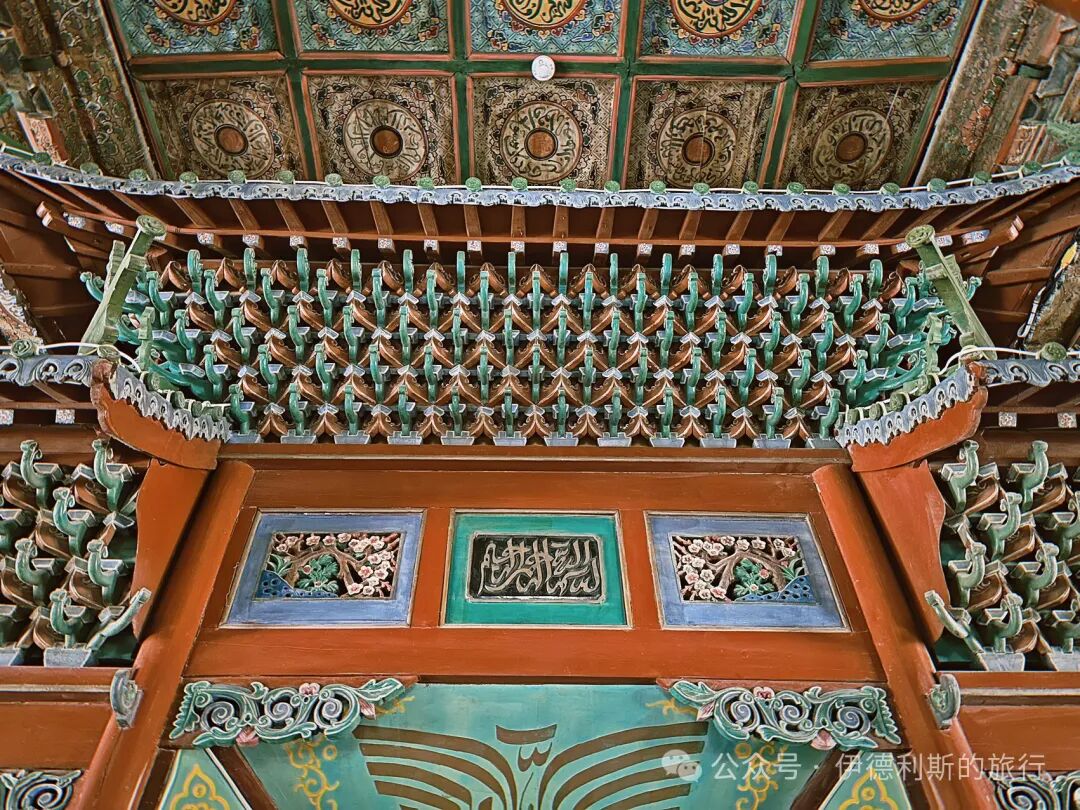
The South Mosque (Nandasi) in Jinan, Shandong, is an arched structure. According to the mosque's stele record, the calligraphy was written in 1810 (the 15th year of the Jiaqing reign) by Imam Hei Faxiang.
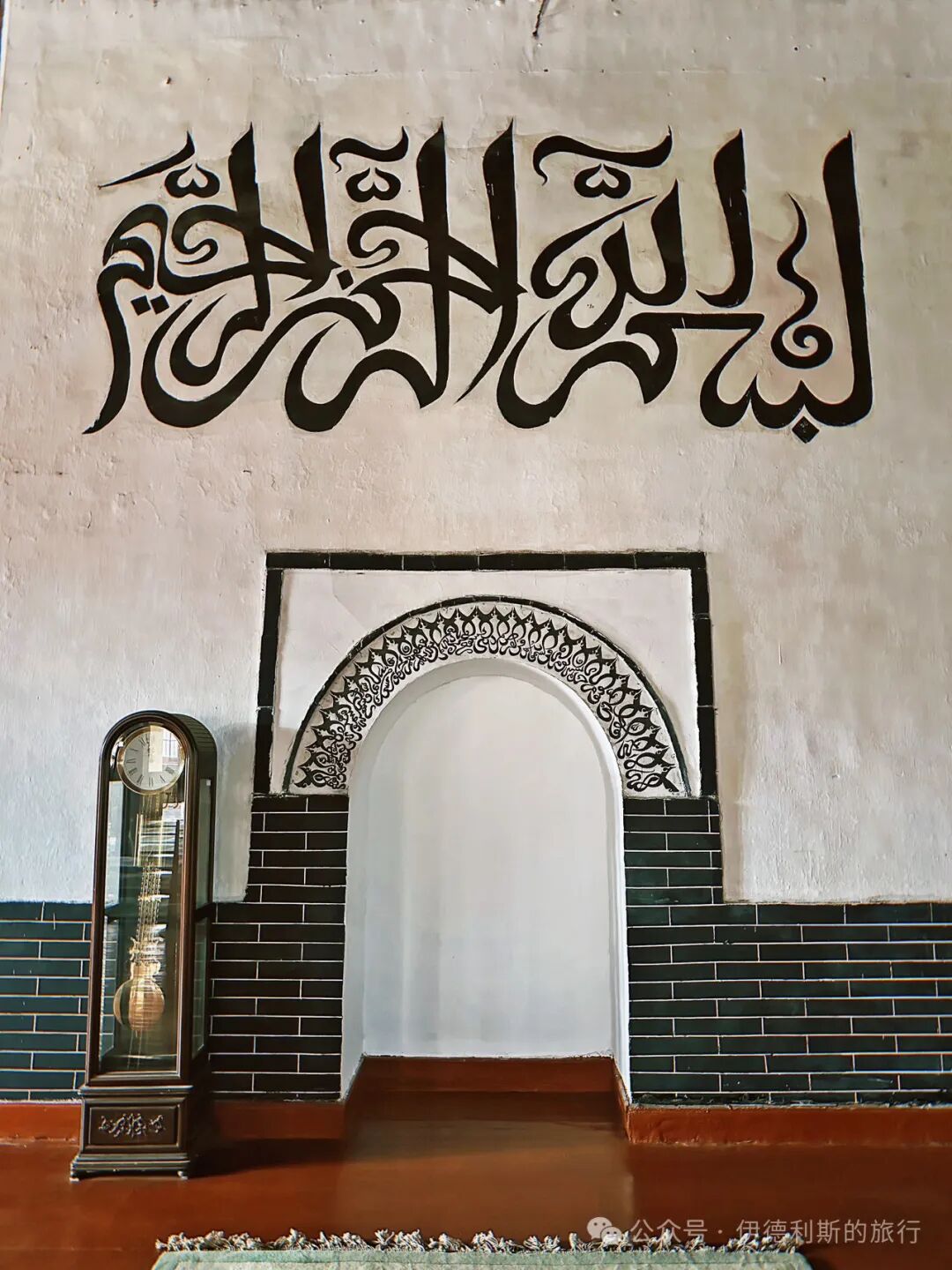
The North Mosque (Beisi) in Jinan, Shandong, is an arched structure featuring calligraphy in the center.
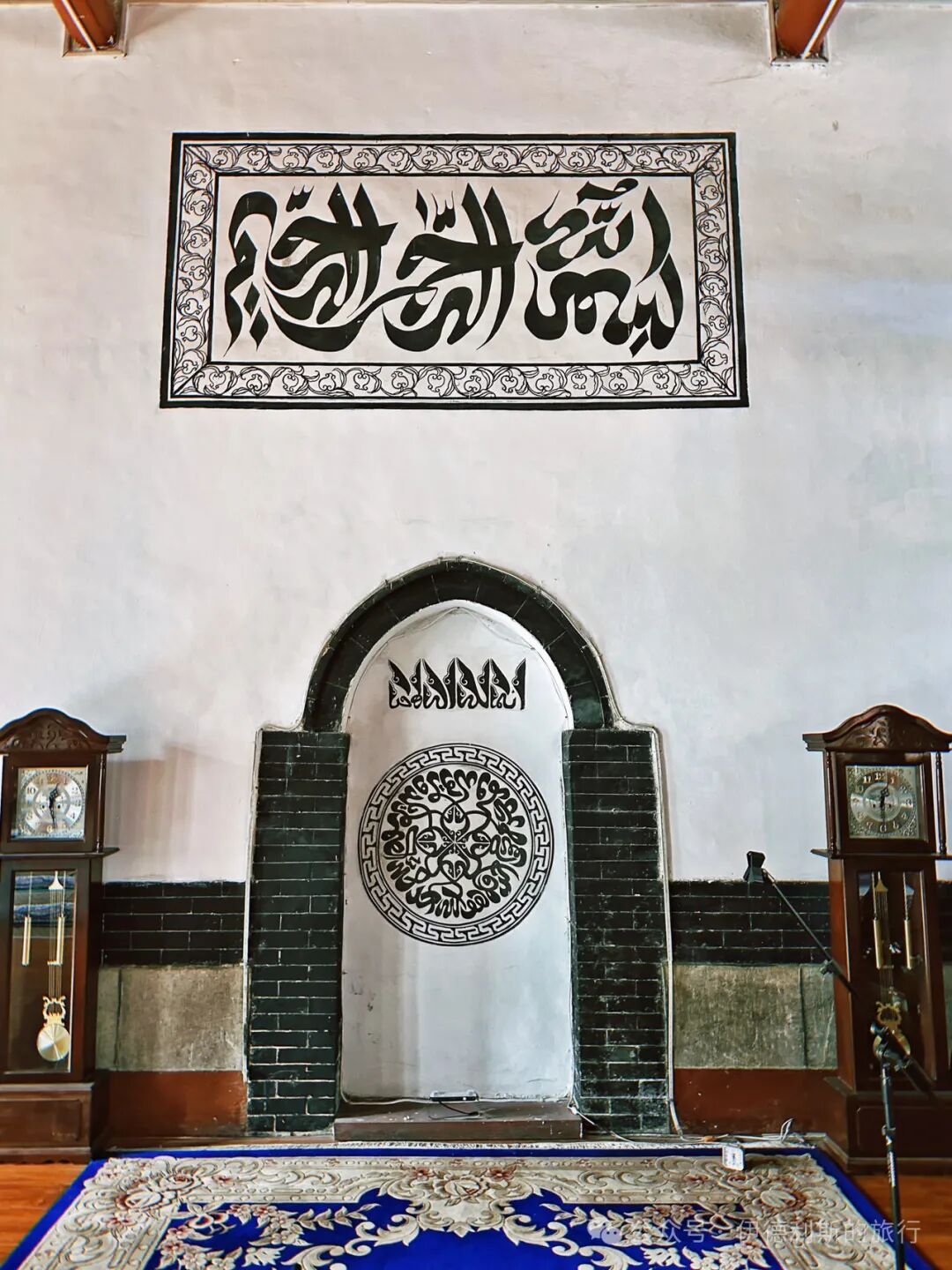
The Zhenjiao Mosque in Qingzhou, Shandong, is an arched structure with a single-eave, hanging-mountain style door hood above.
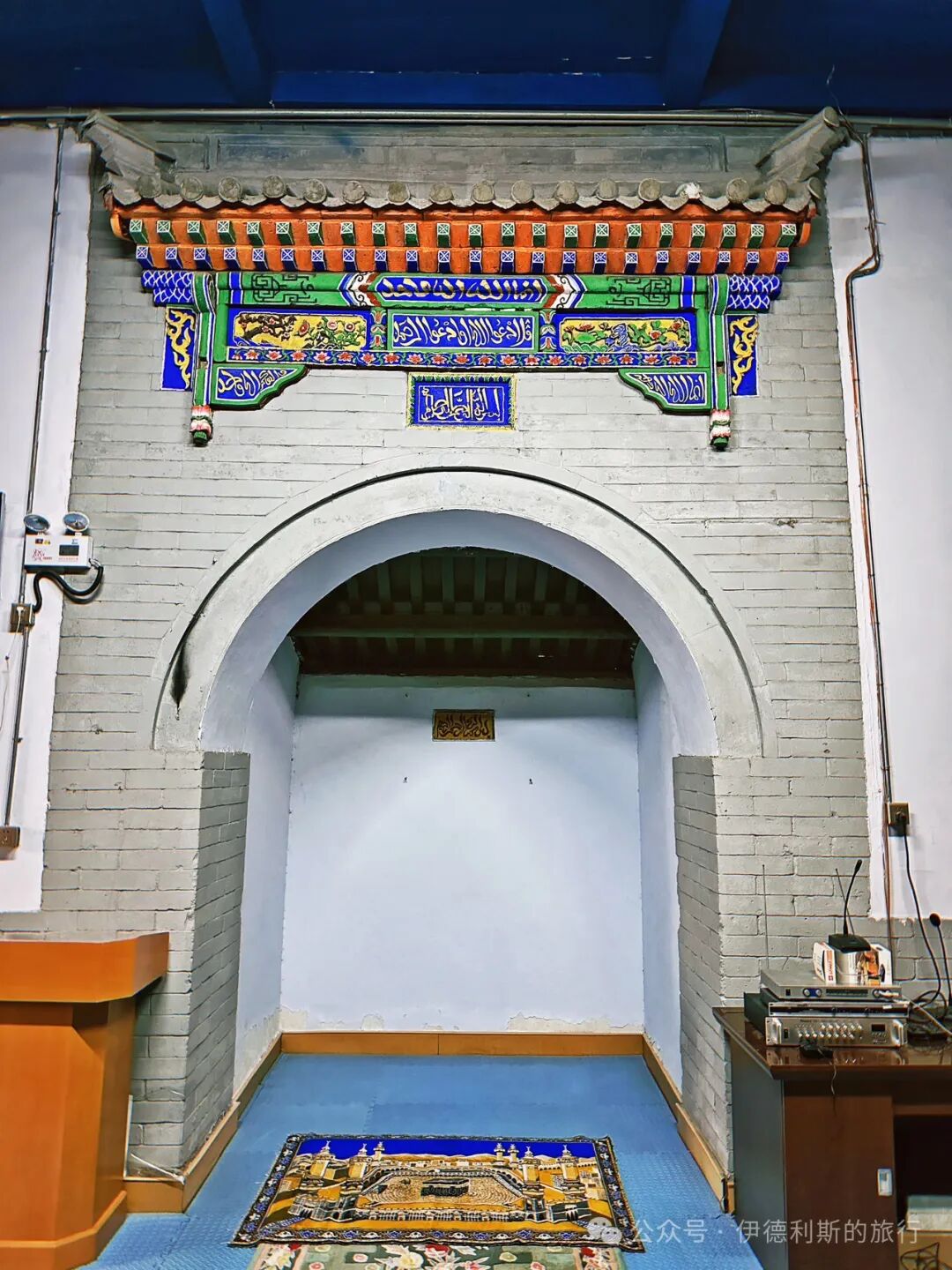
Inner Mongolia
The Great Mosque in Hohhot, Inner Mongolia, has a door hood with openwork, painted floral and scroll patterns.
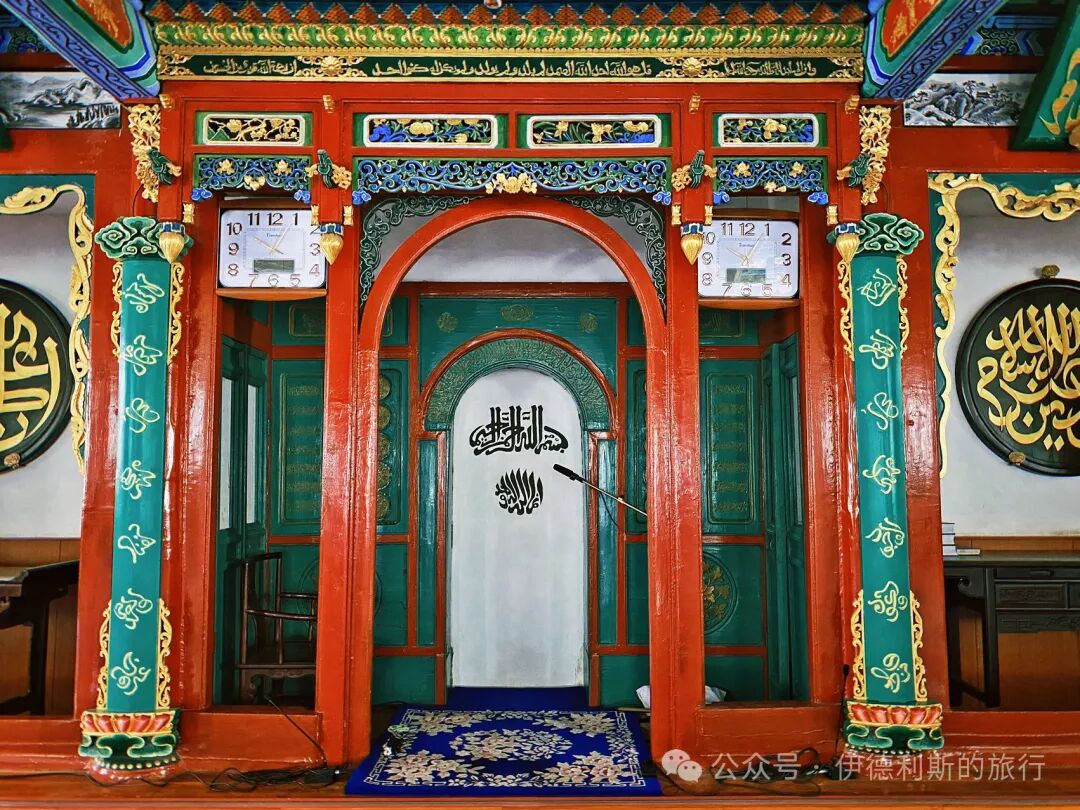
The East Mosque (Dongsi) in Hohhot, Inner Mongolia.
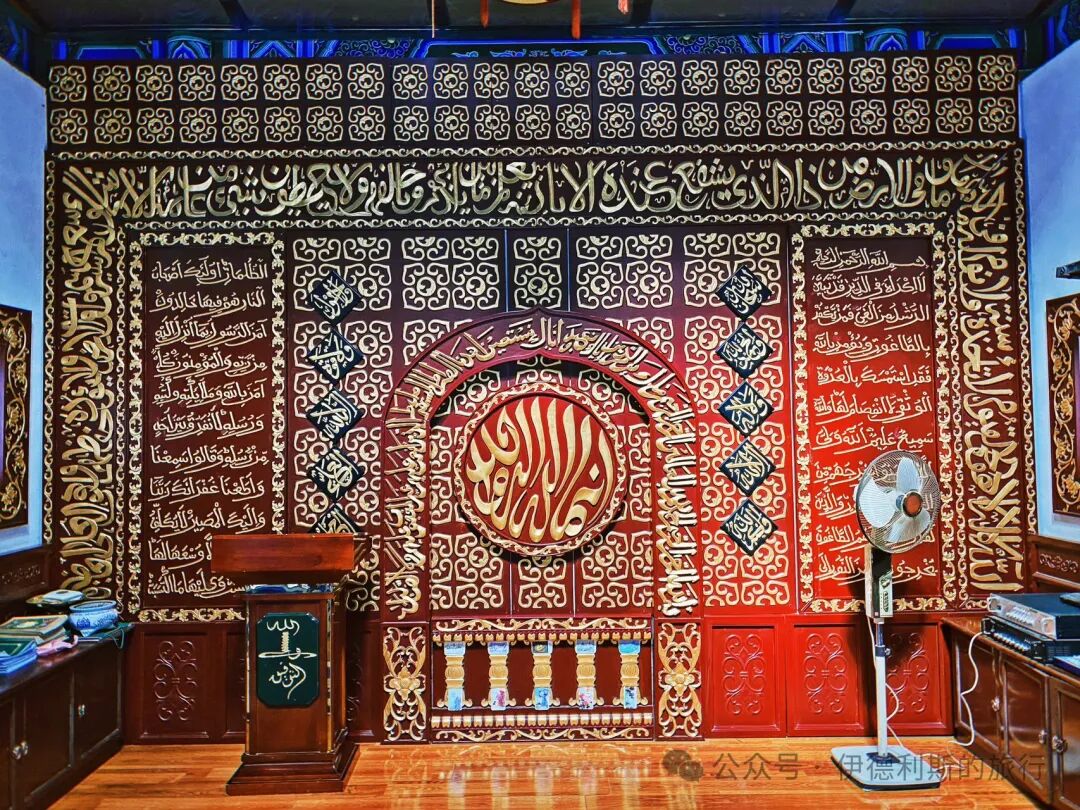
The Longshengzhuang Mosque in Feng County, Inner Mongolia, has a door hood with wood-carved calligraphy inside the arch.
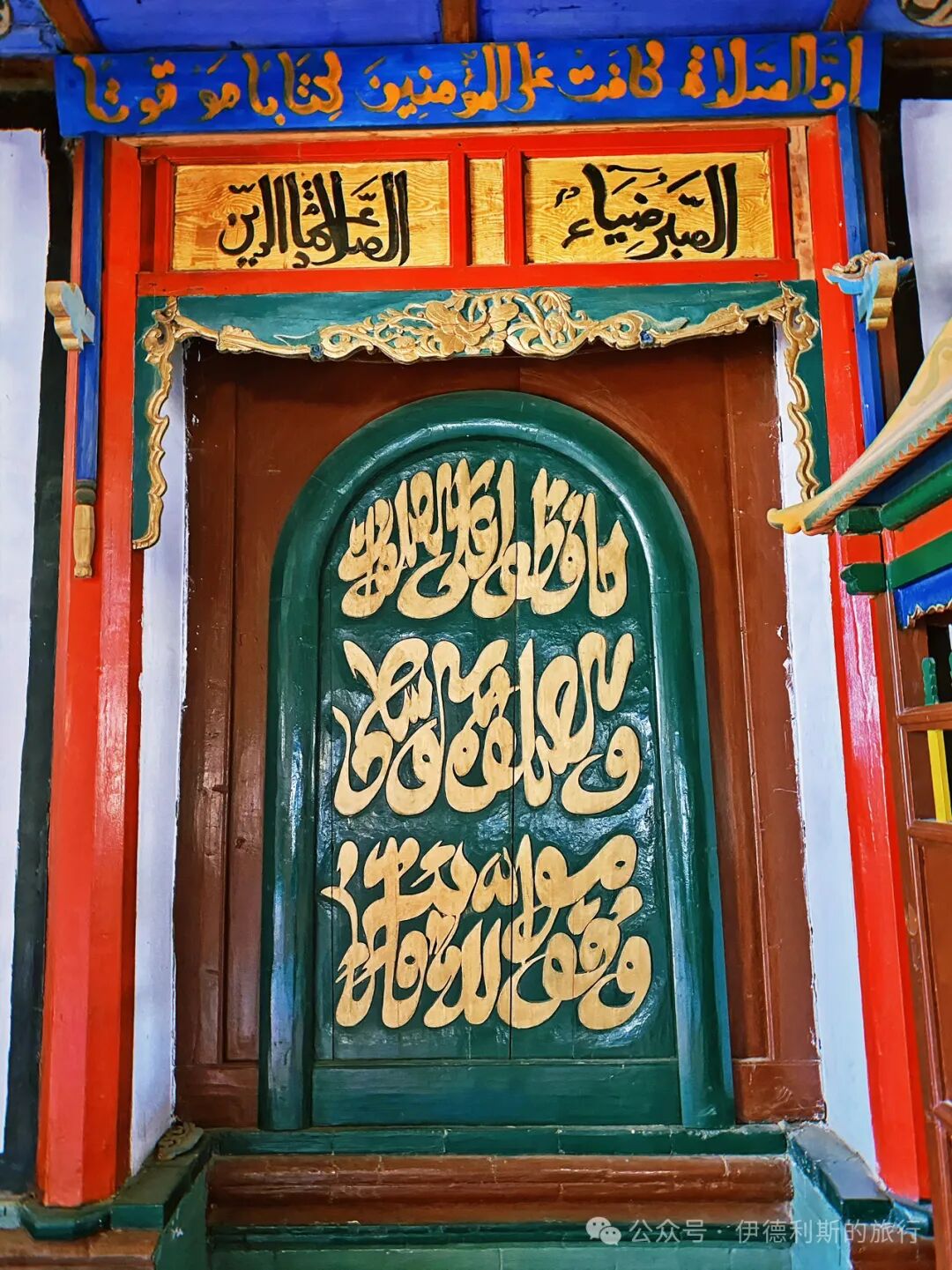
The North Mosque (Beisi) in Chifeng, Inner Mongolia, features original wood carvings from 1747 (the 12th year of the Qianlong reign).
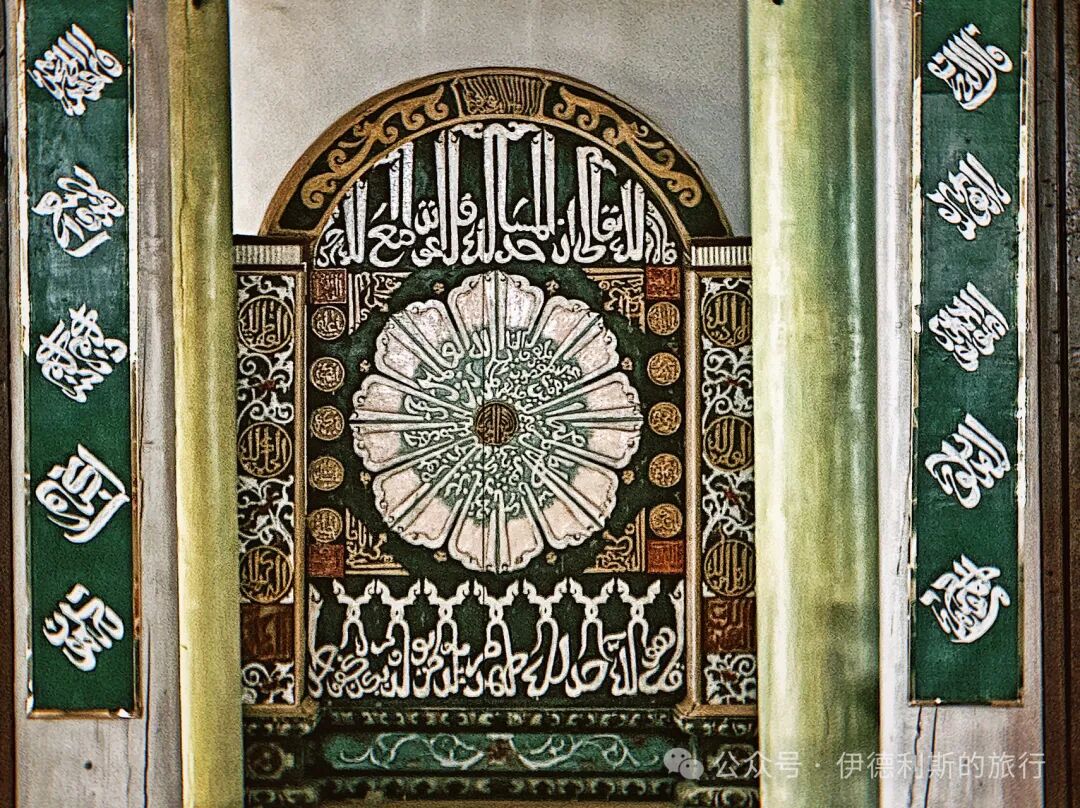
Liaoning
The Old City Mosque in Kaiyuan, Liaoning, features a clear-water scorpion-tail roof ridge.
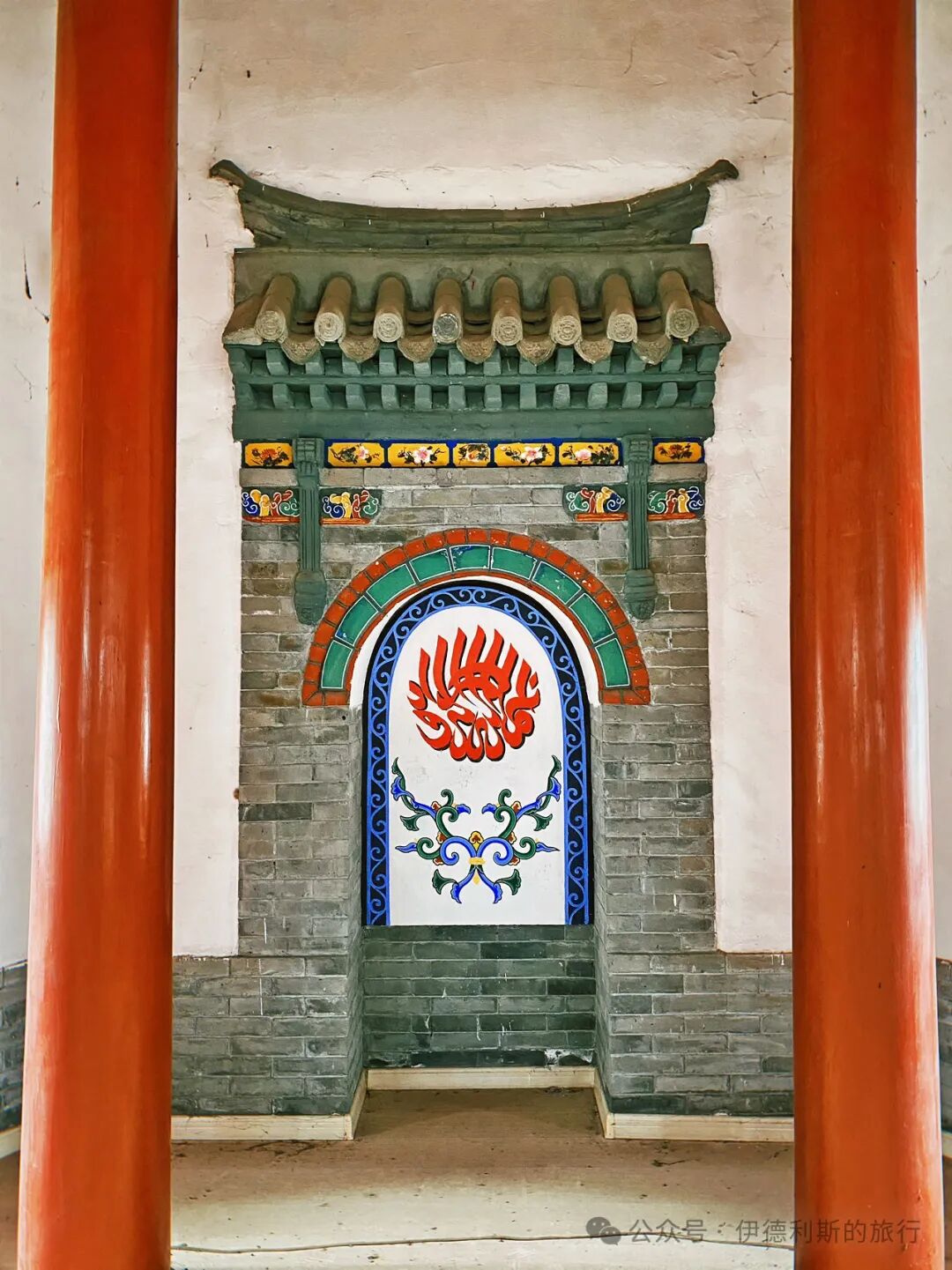
The Luyang Mosque in Jinzhou, Liaoning, has a plaque with large-character calligraphy and traditional brush-style calligraphy on both sides.
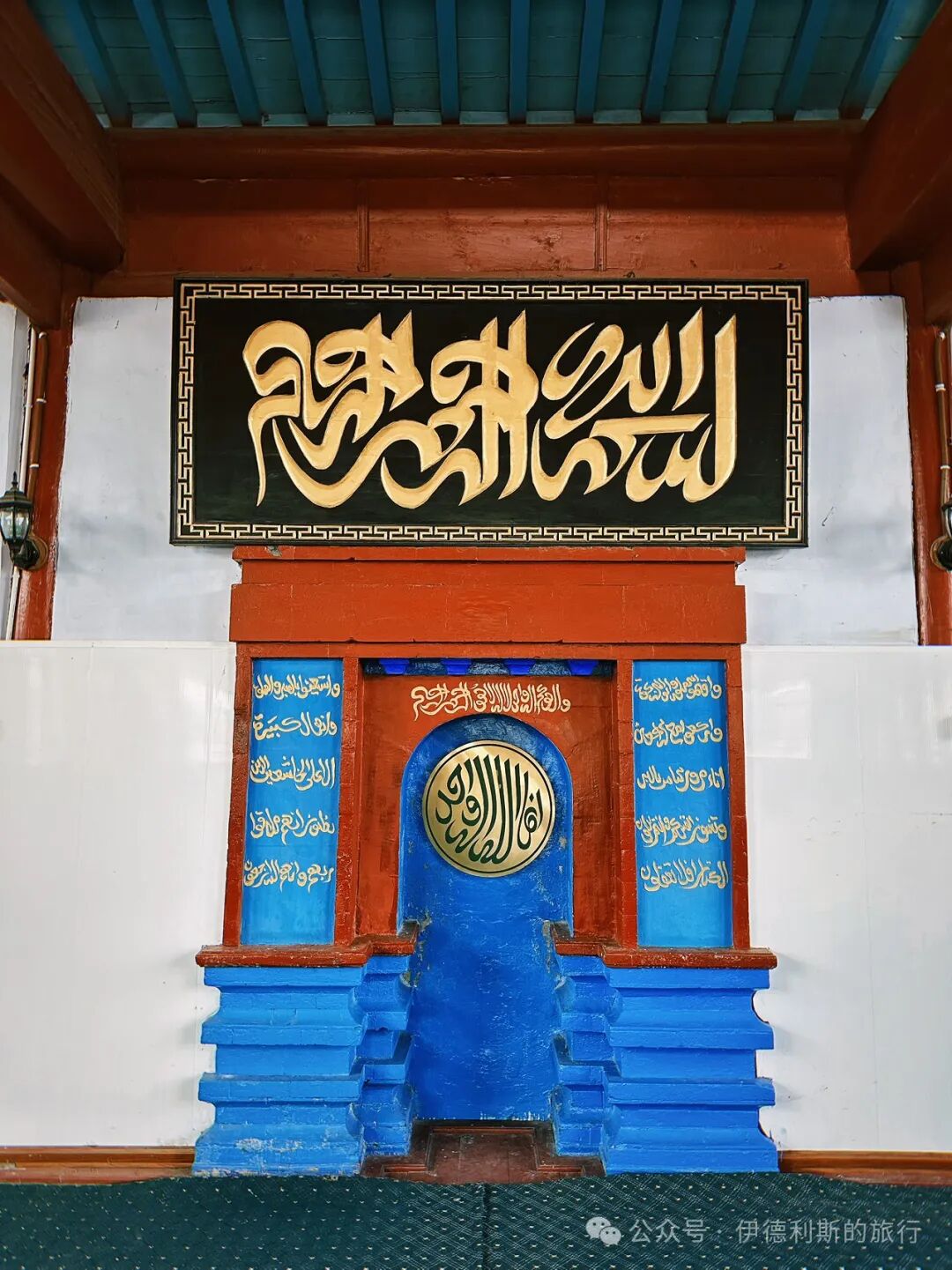
The South Mosque (Nandasi) in Shenyang, Liaoning, houses a large spirit tablet.
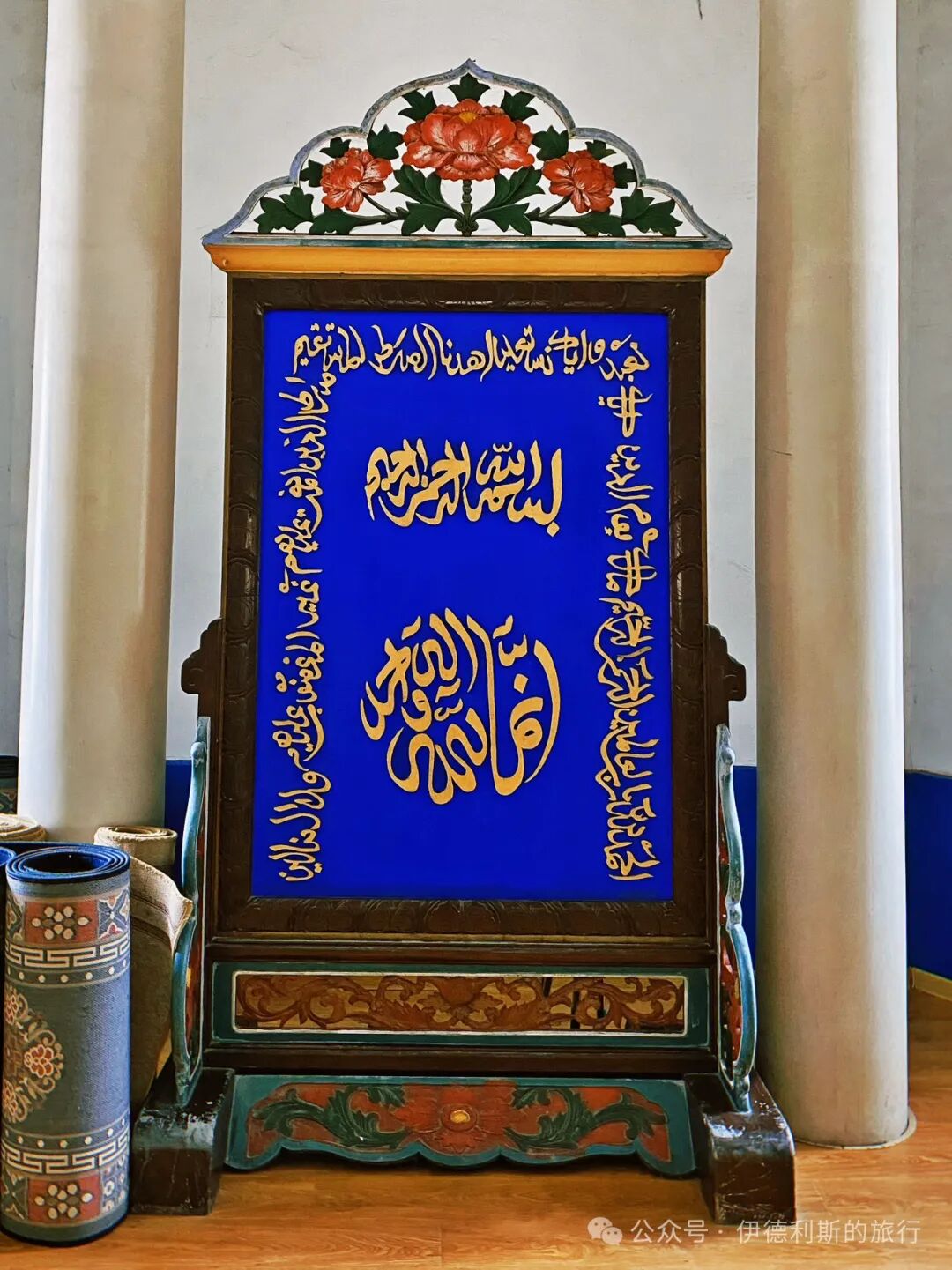
The Ancient City Mosque in Fuzhou, Dalian, Liaoning, features traditional brush-style calligraphy.
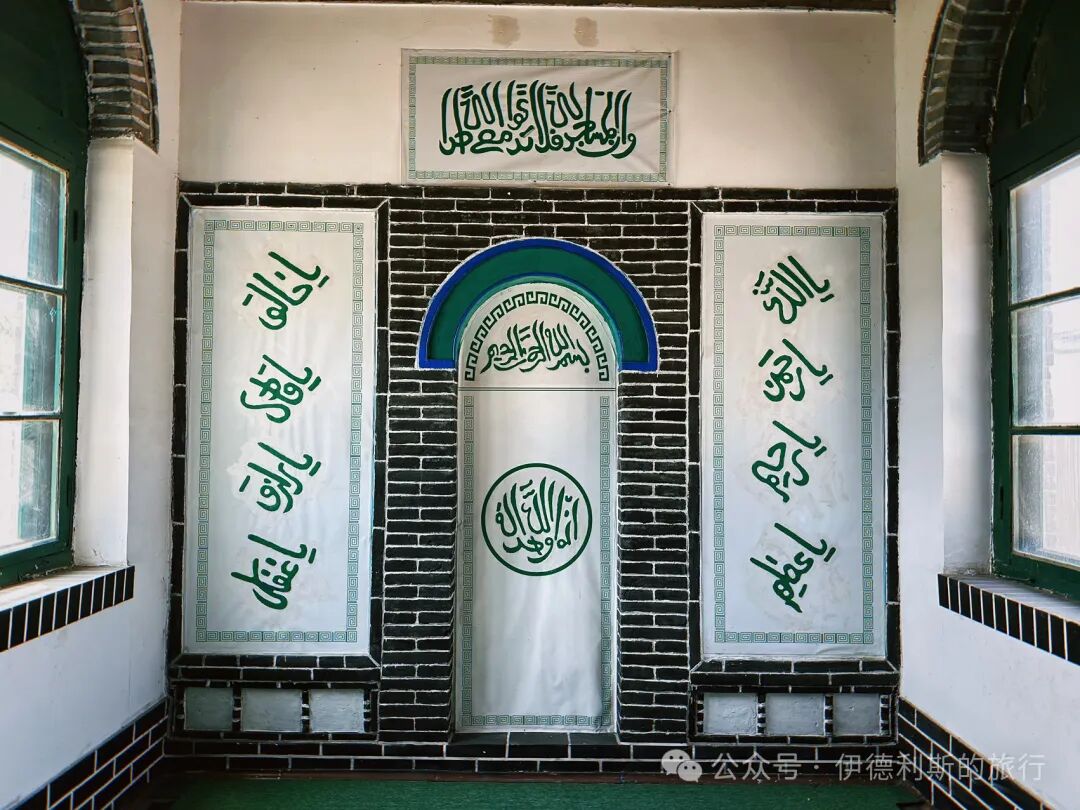
Lingyuan Mosque in Liaoning features carvings of Arabic calligraphy.
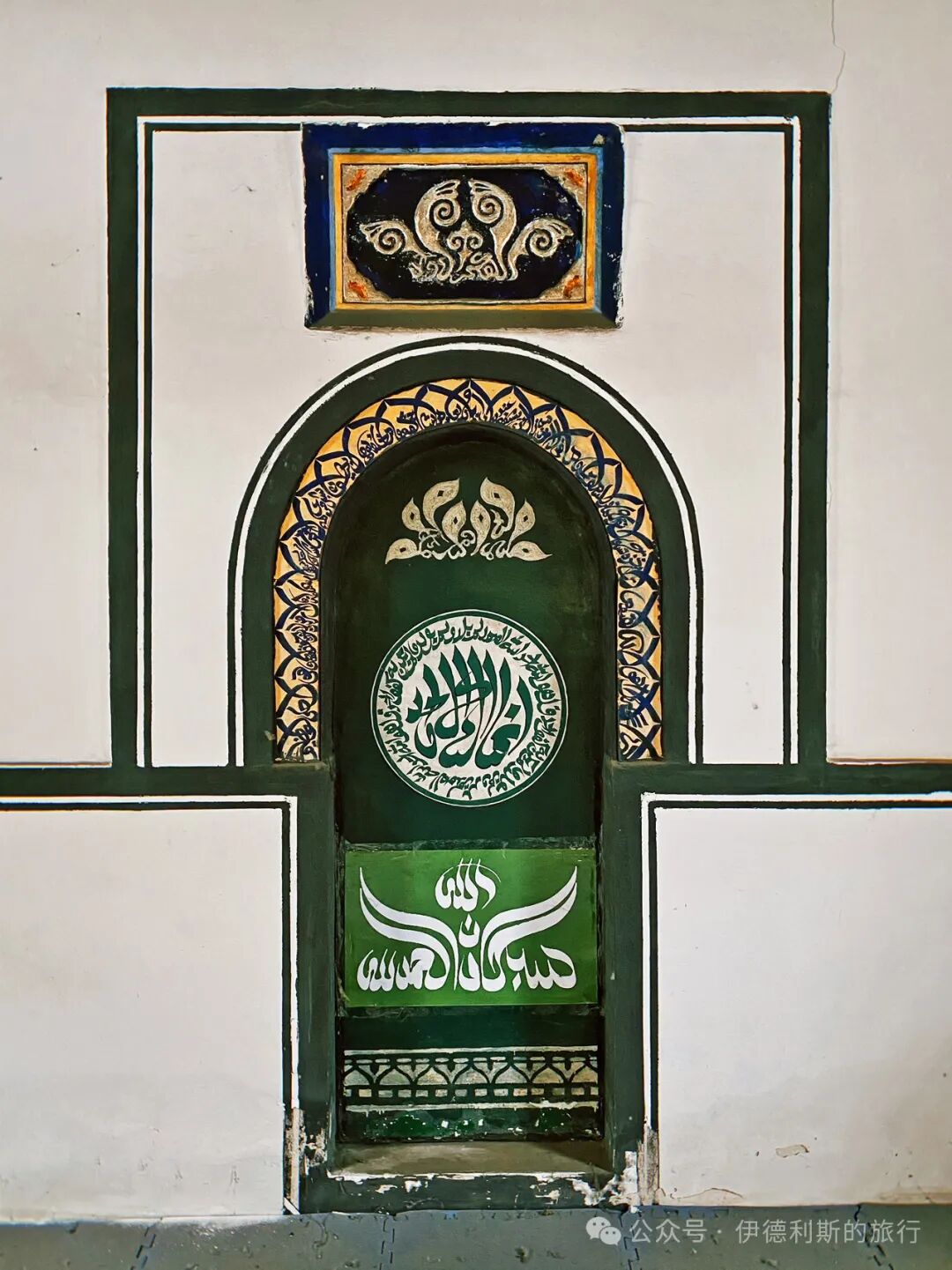
Heilongjiang
The winter prayer hall at Bukui West Mosque in Qiqihar, Heilongjiang, has traditional calligraphy carved onto its arches.
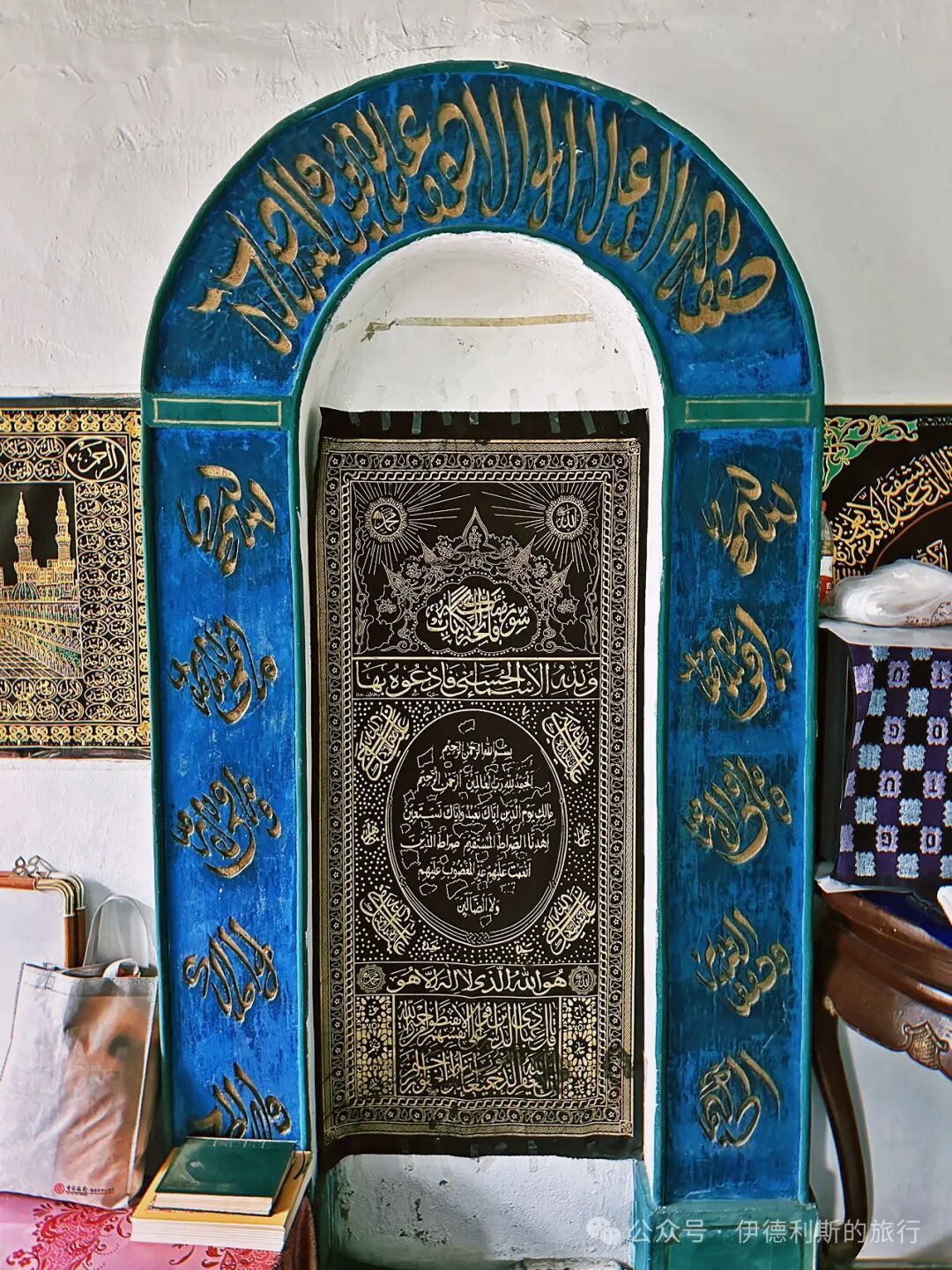
The main hall of Bukui West Mosque in Qiqihar, Heilongjiang, is surrounded by carved calligraphy plaques and couplets.
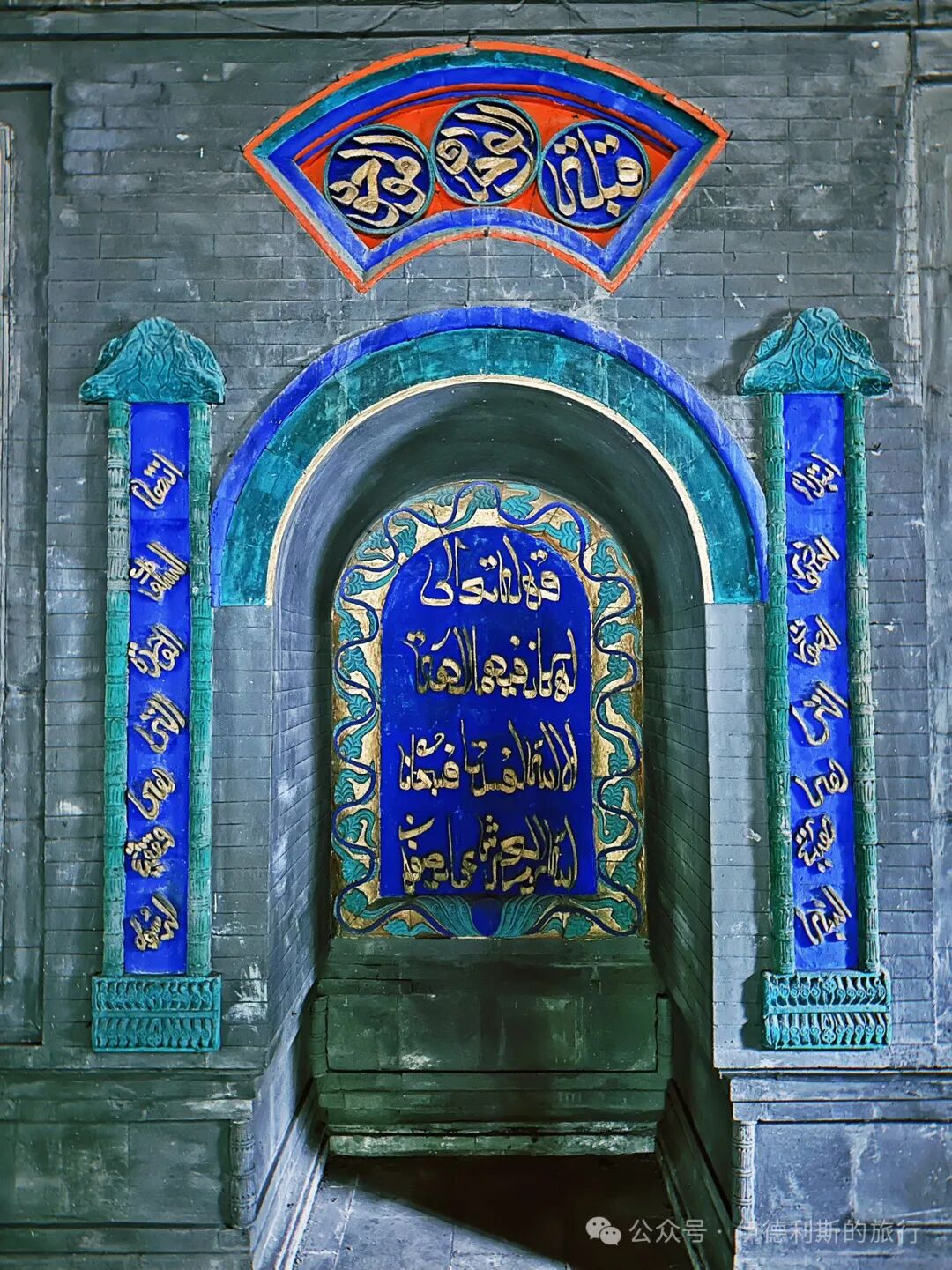
The main hall of Bukui East Mosque in Qiqihar, Heilongjiang, features a clear-water ridge (qingshuiji) roof, a Sumeru pedestal (xumizuo) base, and carved calligraphy plaques and couplets.
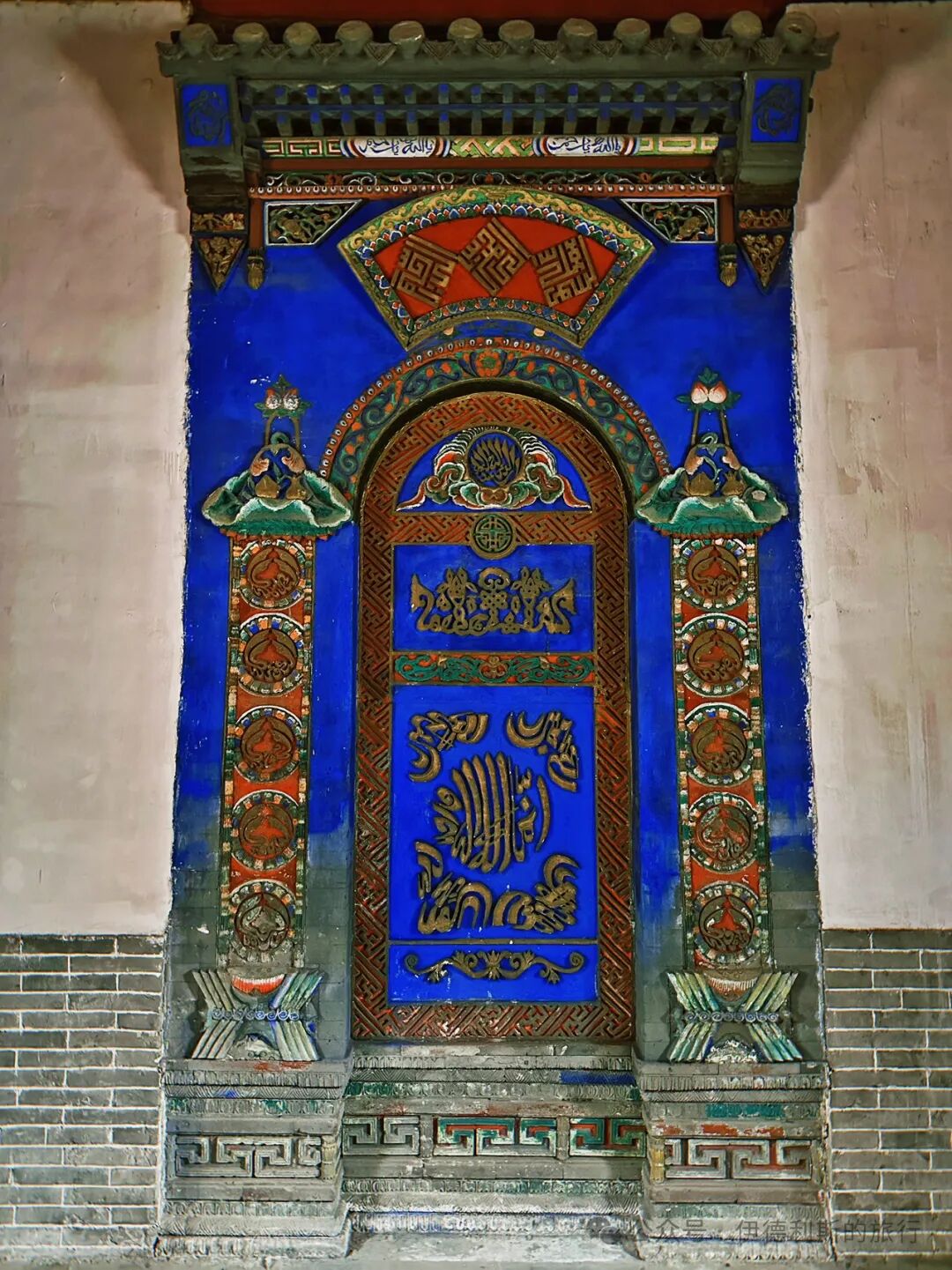
Acheng Mosque in Heilongjiang has four floor-to-ceiling pillars (tongtianzhu) in its kiln hall (yaodian) built in 1900 (the 26th year of the Guangxu reign). They were made from giant pine logs hauled from the forests of Yabuli, Heilongjiang, and installed by a carpenter named Sun Yulin from Wula Street, Jilin. Legend says Carpenter Sun's master was worried about his apprentice, so he secretly went to a stone shop and made four 3-foot-tall lotus-shaped pillar bases. When it came time to raise the floor-to-ceiling pillars, they were exactly 3 feet too short. Seeing this, the master immediately told Carpenter Sun to hitch a cart and bring back the four lotus pillar bases from the stone shop, and they fit perfectly.
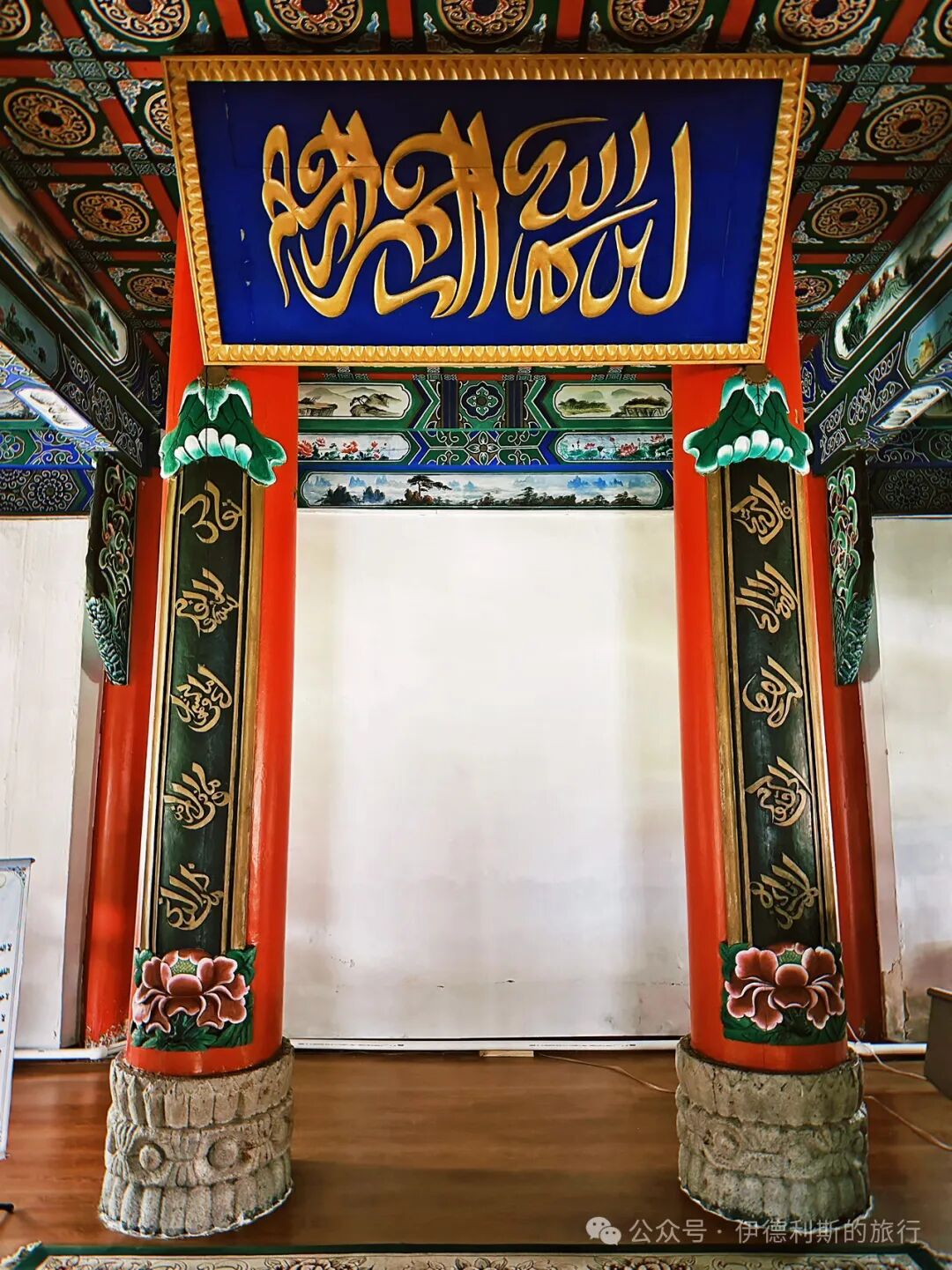
Shanxi
Taiyuan Great Mosque in Shanxi is a Ming Dynasty treasure. It has a wooden memorial archway-style door hood with a hip roof (wudianding), bracket sets (dougong), and flying eaves. Below are Sumeru pedestal railings, and the pillars are decorated with scrolling lotus patterns and Arabic circular motifs. The center features a wooden carved hanging panel with Arabic script, and a kiln niche (yaokan) is set in the very center.
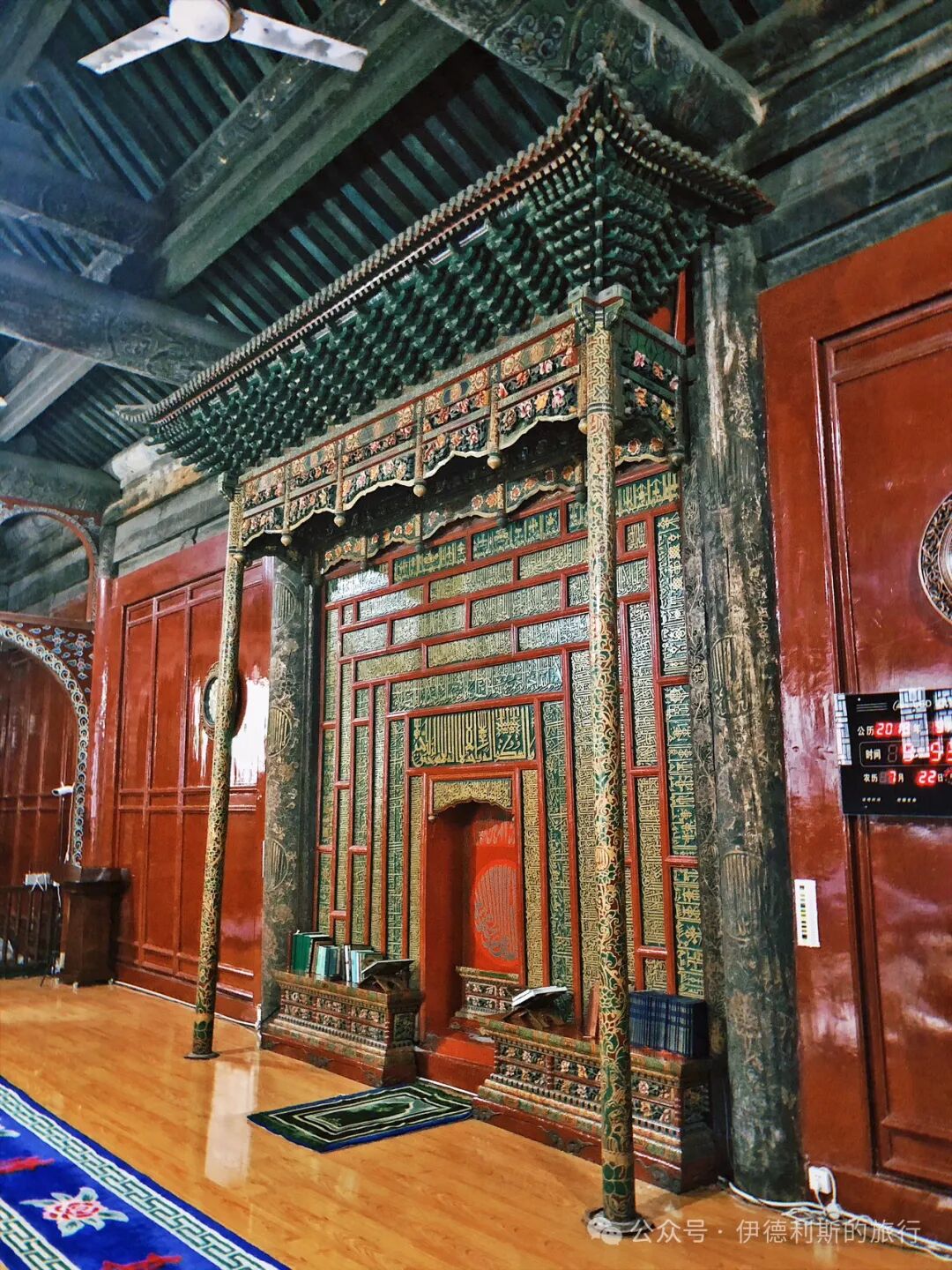
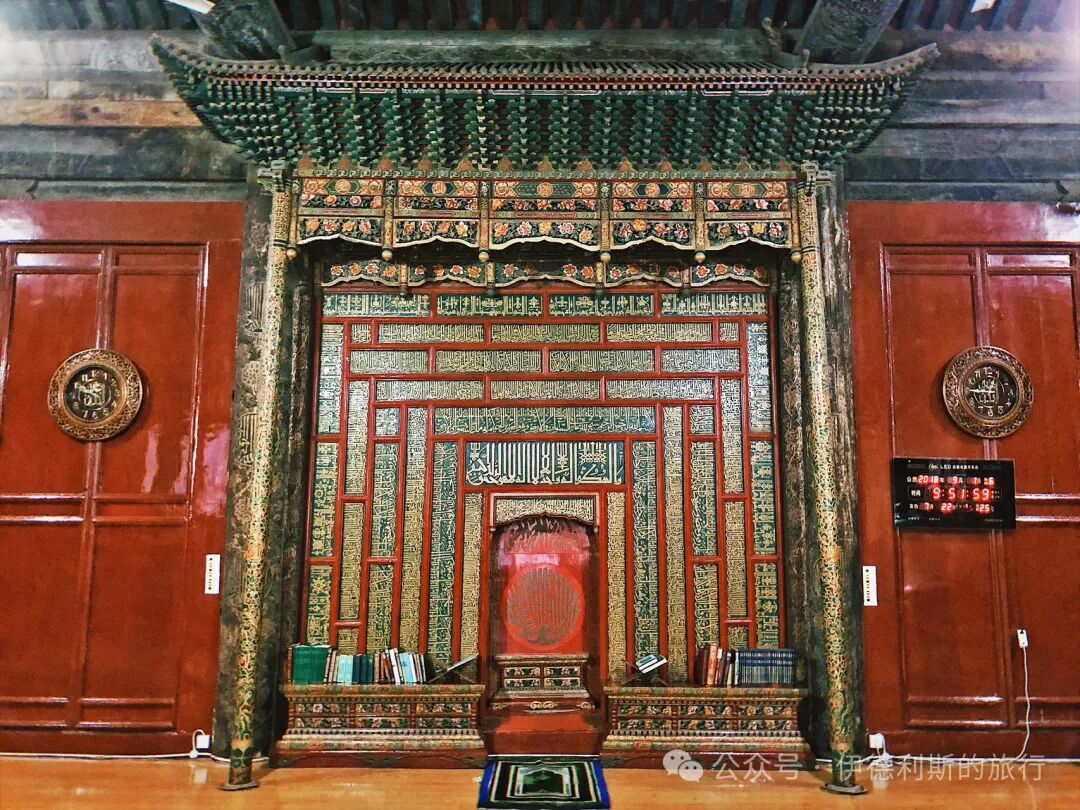
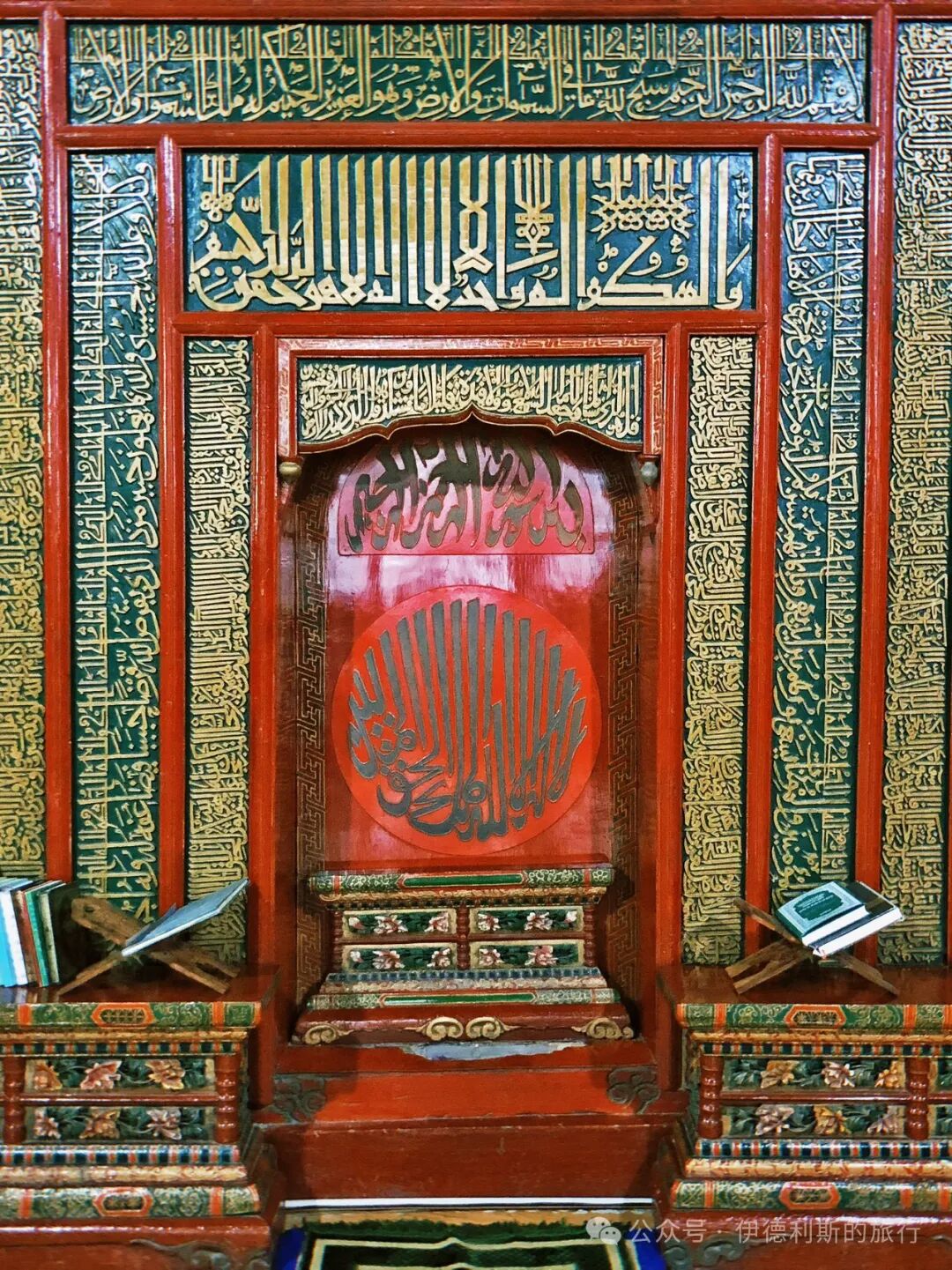
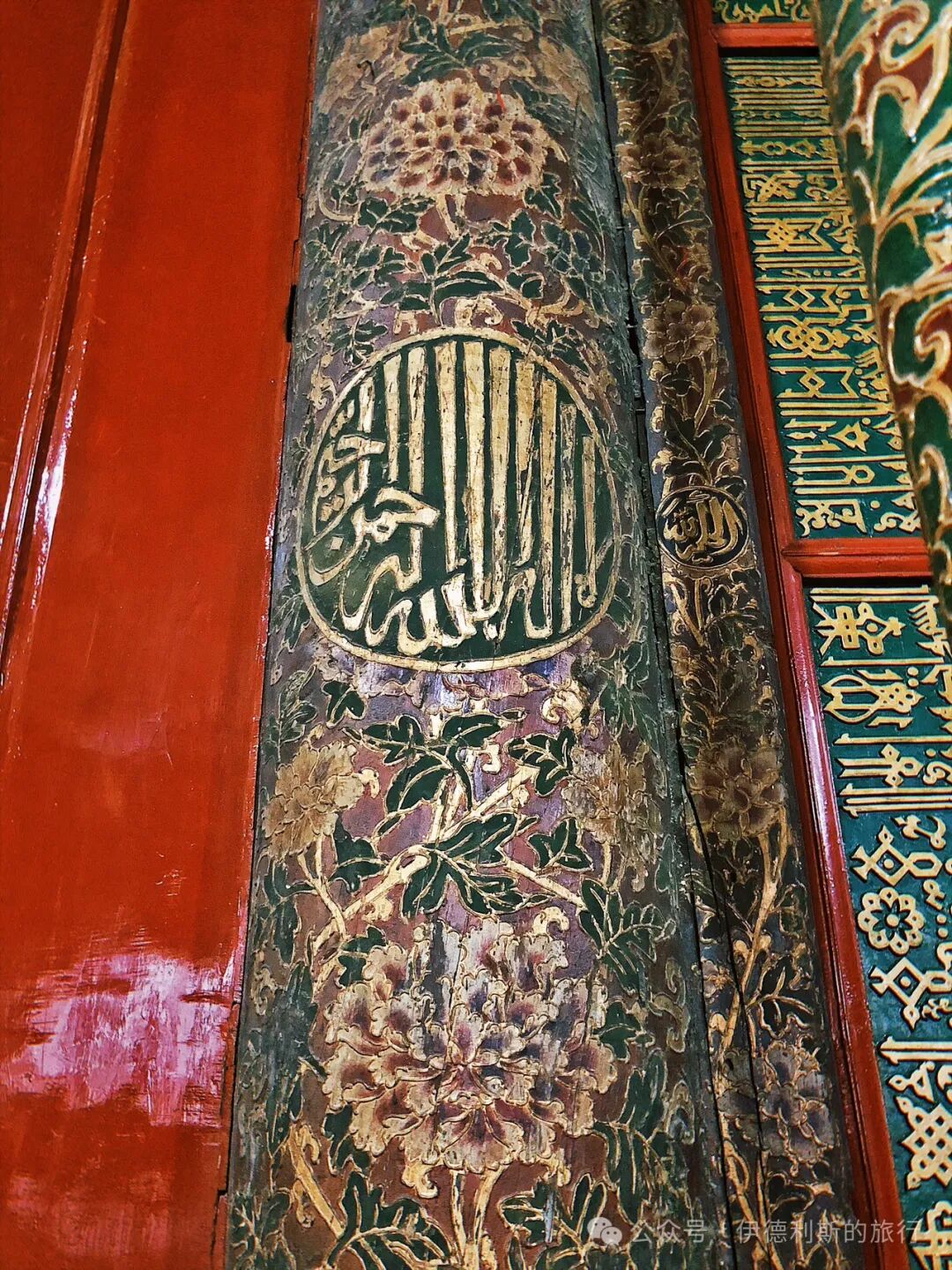
Shaanxi
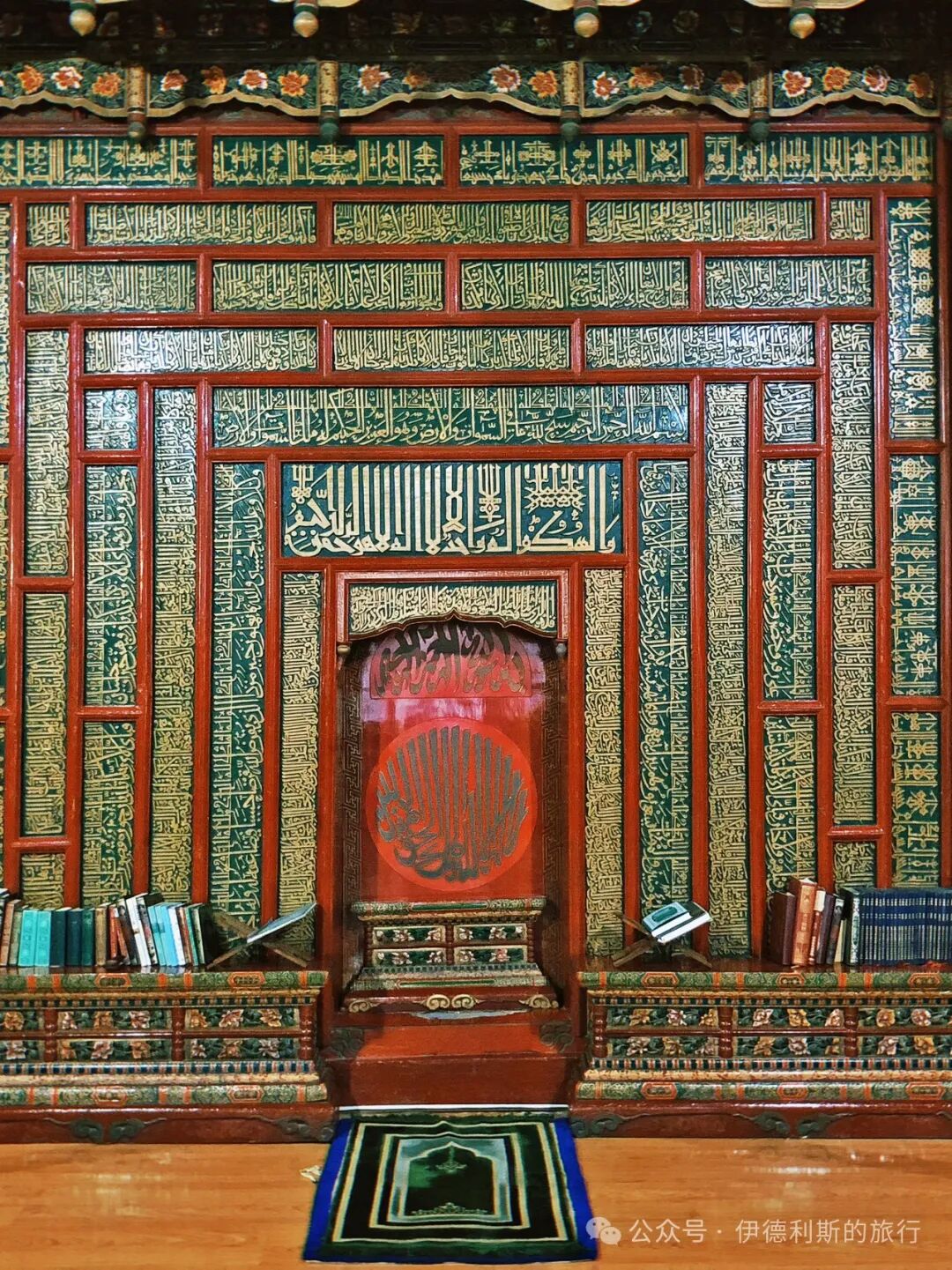
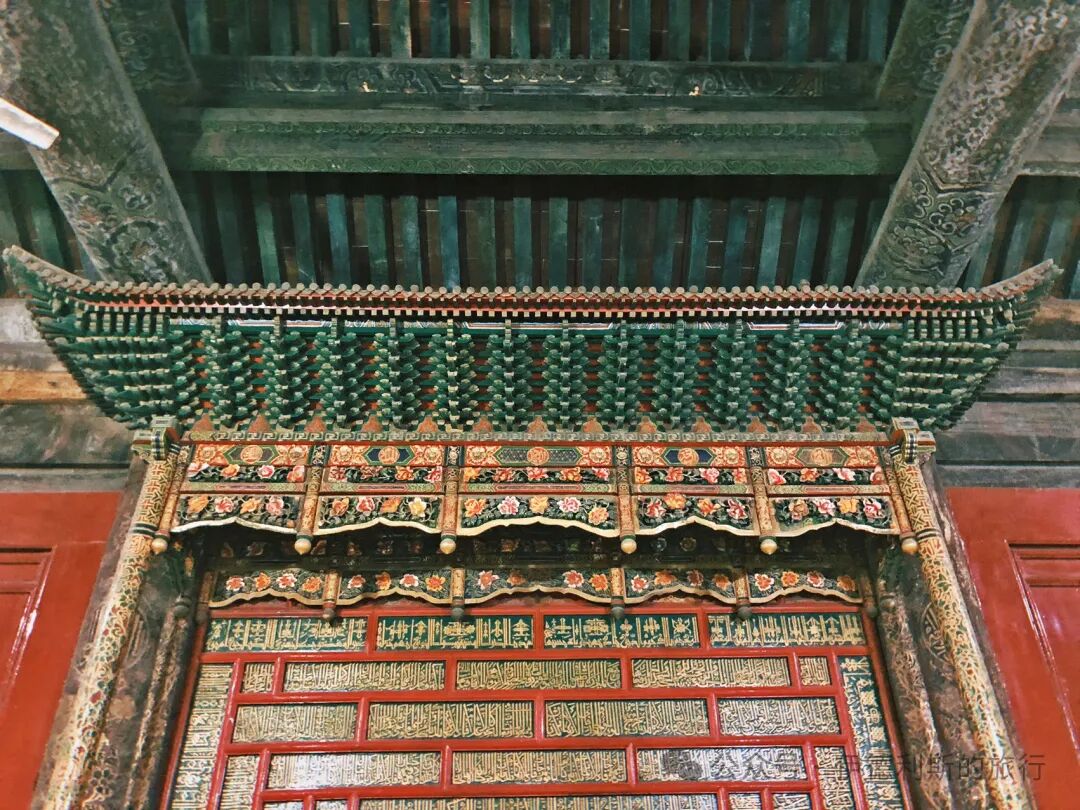
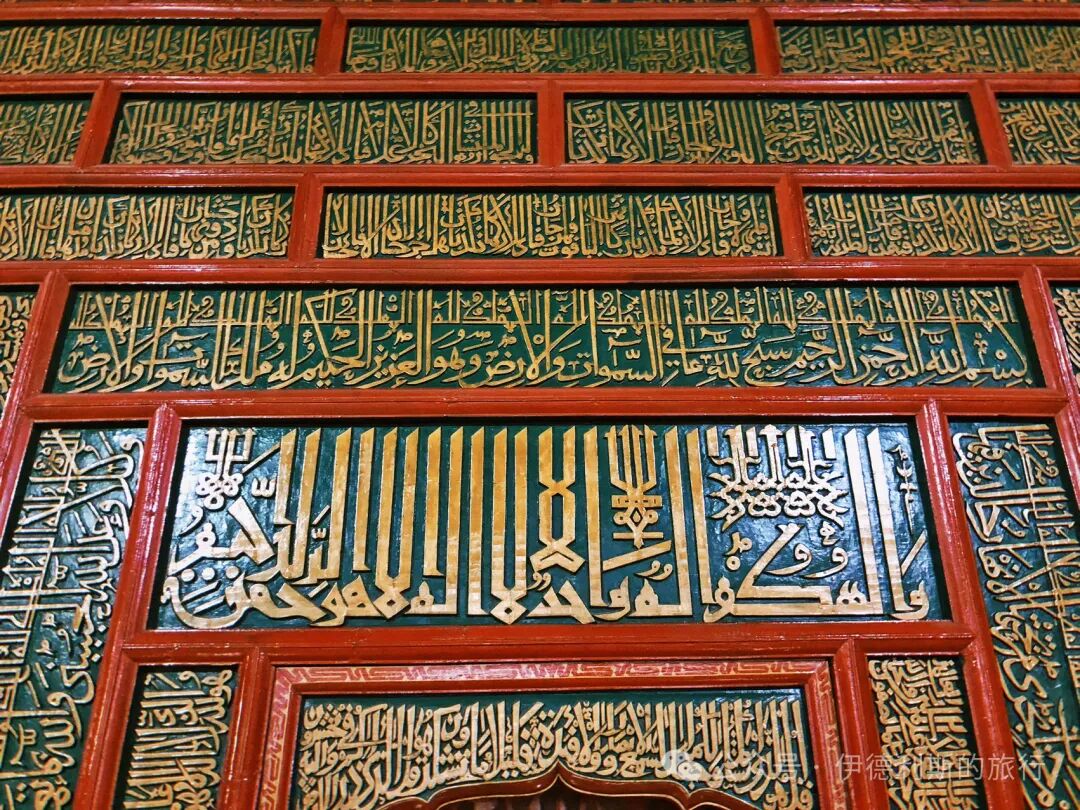
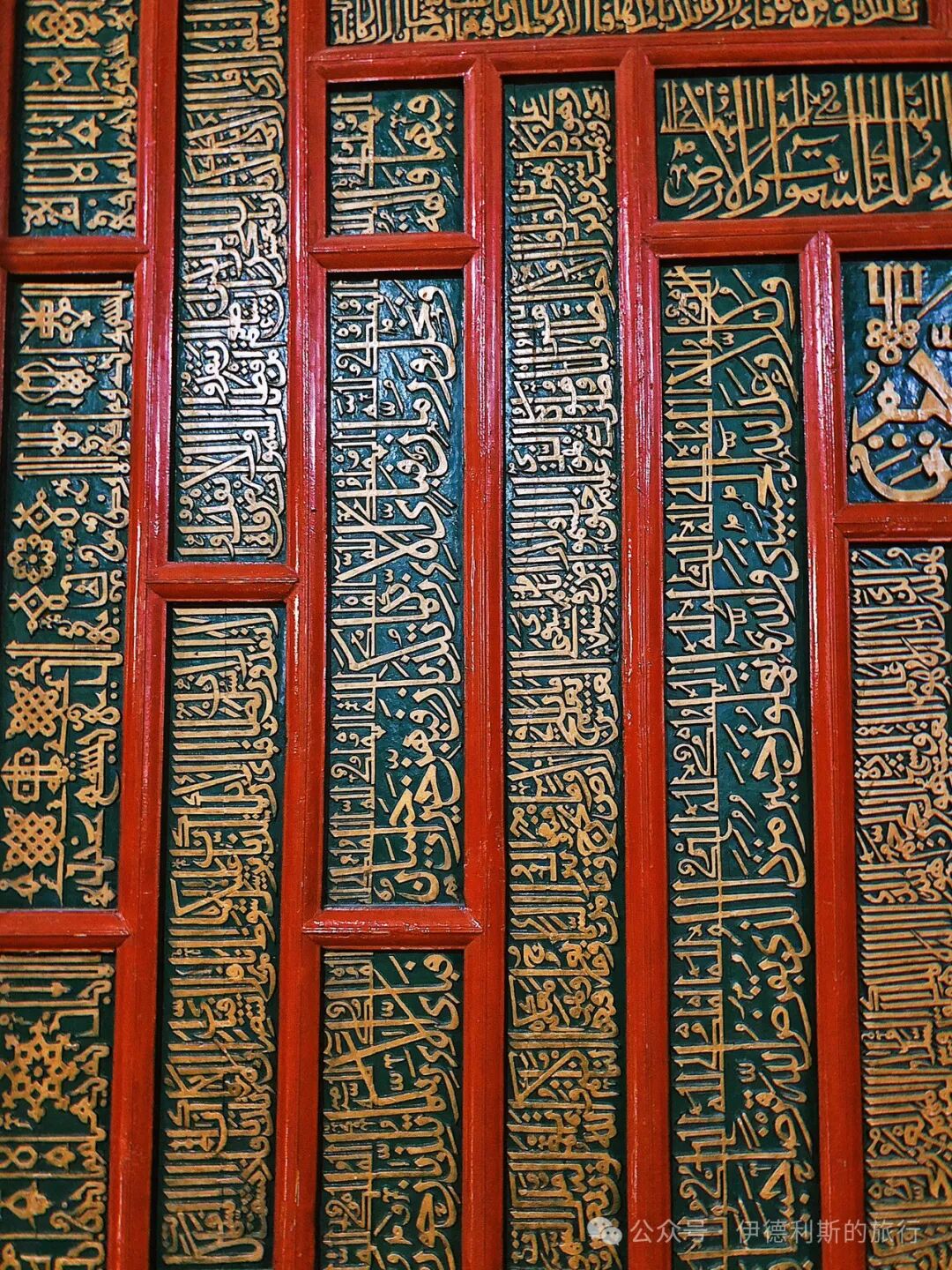
Huajue Lane Great Mosque in Xi'an, Shaanxi, is a Ming Dynasty treasure. It uses wooden board inlays and gold-painted pillars to create door hoods and hanging pillars. The wooden boards are carved with Arabic calligraphy and floral patterns, making them very magnificent. The center has a kiln niche arch supported by prismatic pillars on both sides. This is similar to the mihrab style found in Iran and Turkey during the Yuan and Ming dynasties, making it the only known Ming Dynasty mihrab in China that blends Eastern and Western styles.
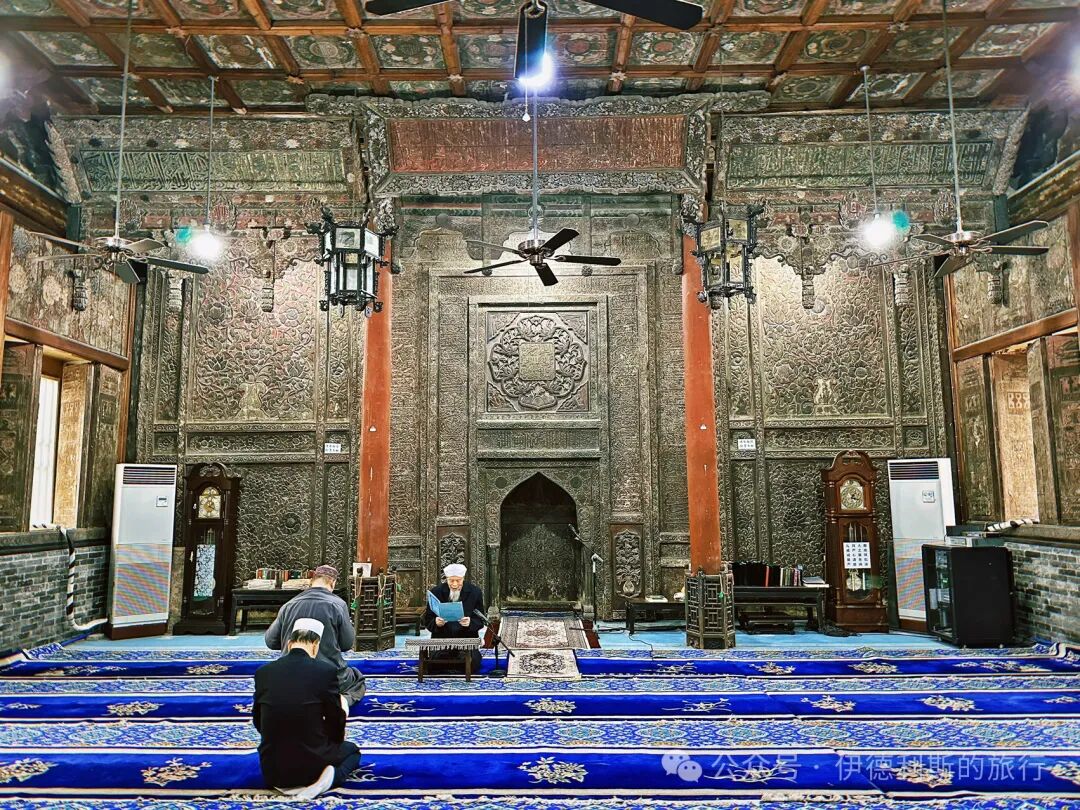
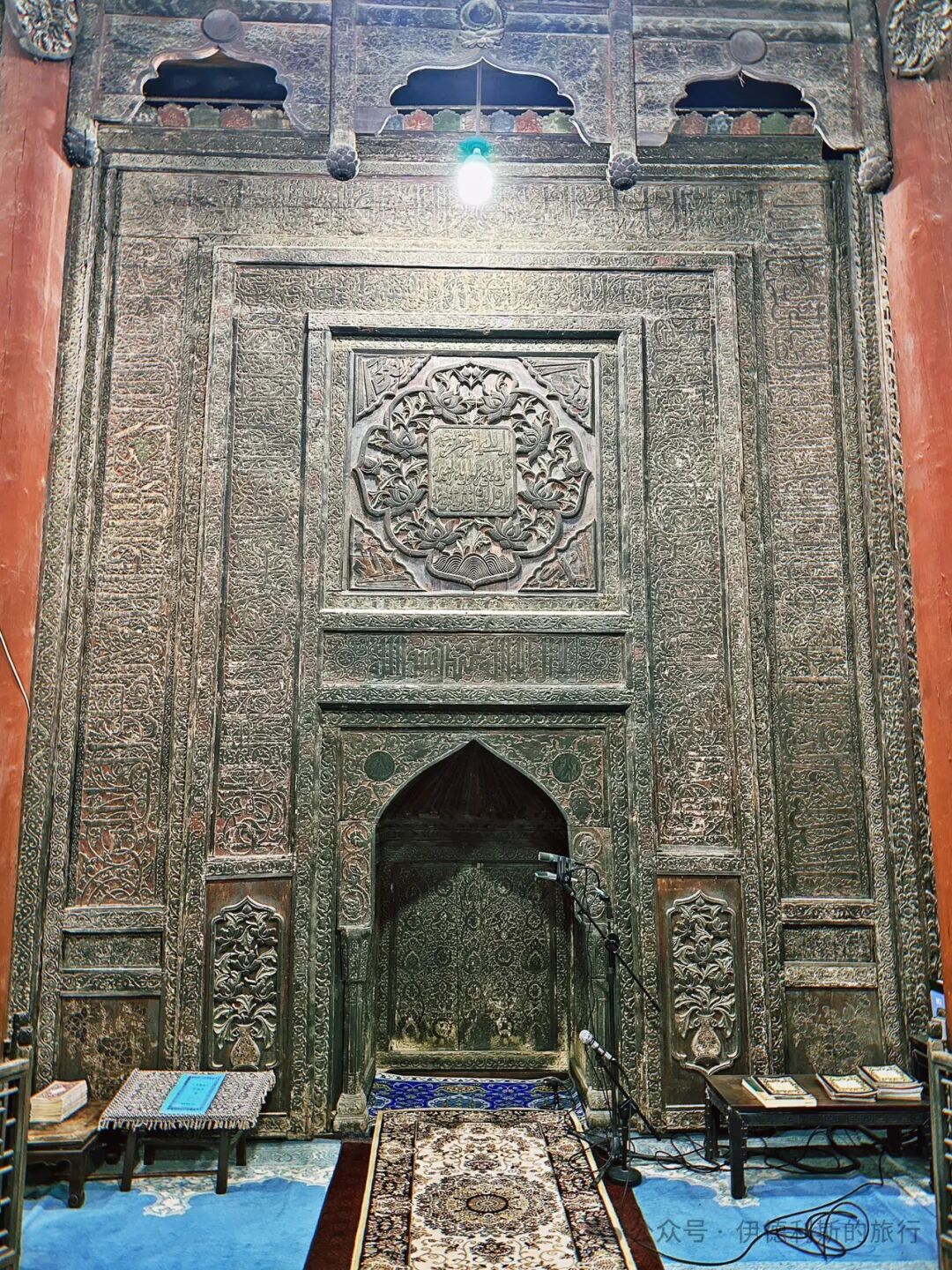
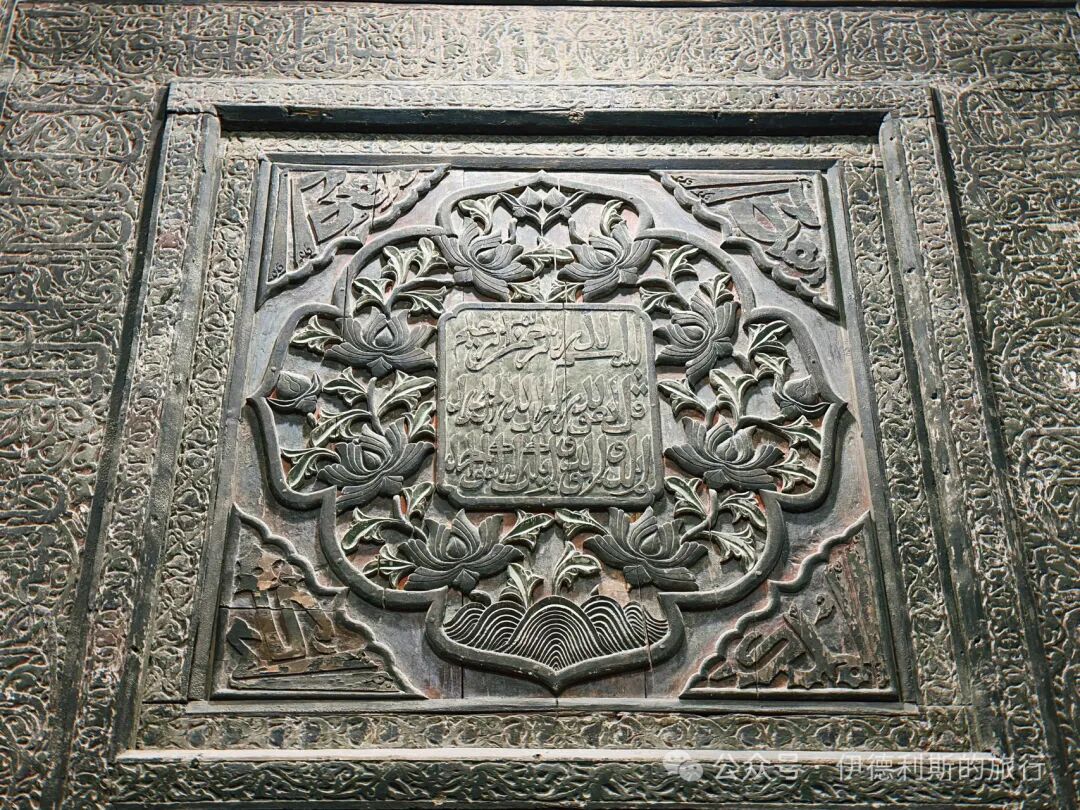
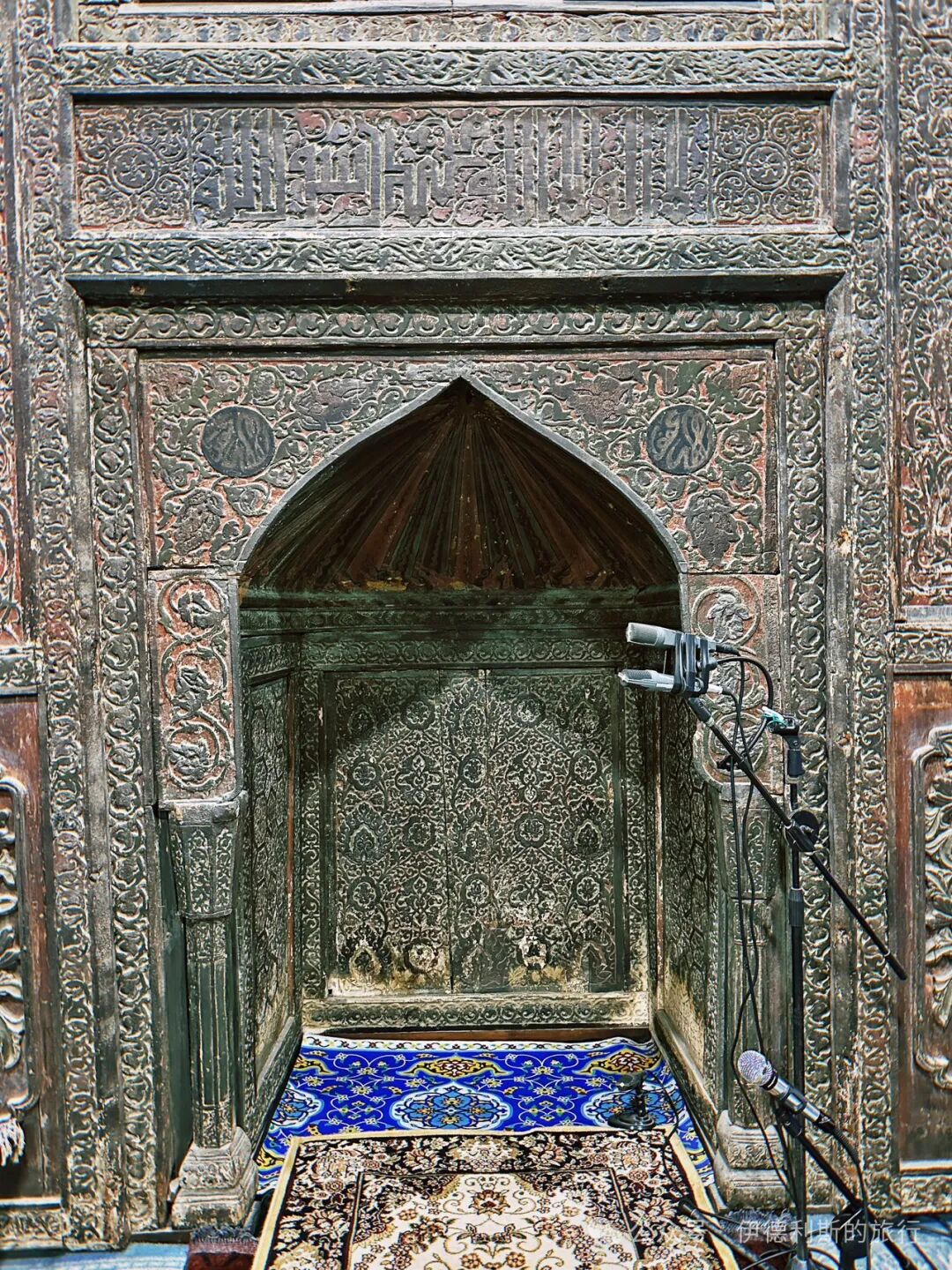
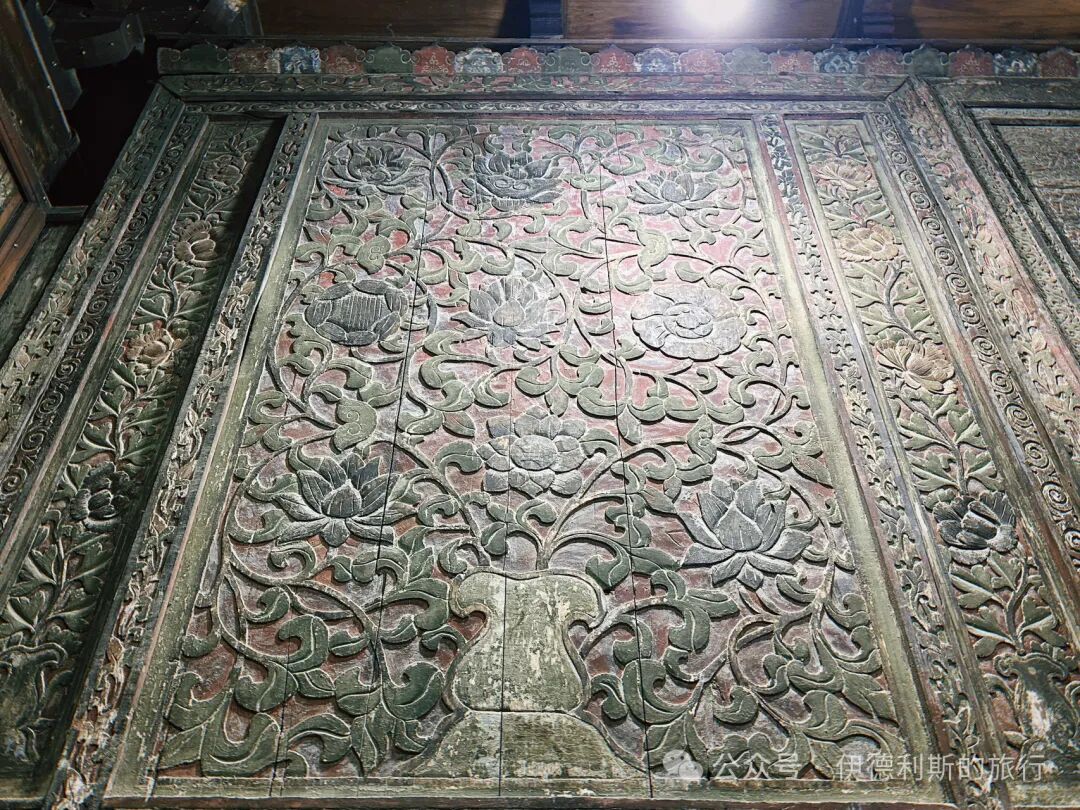
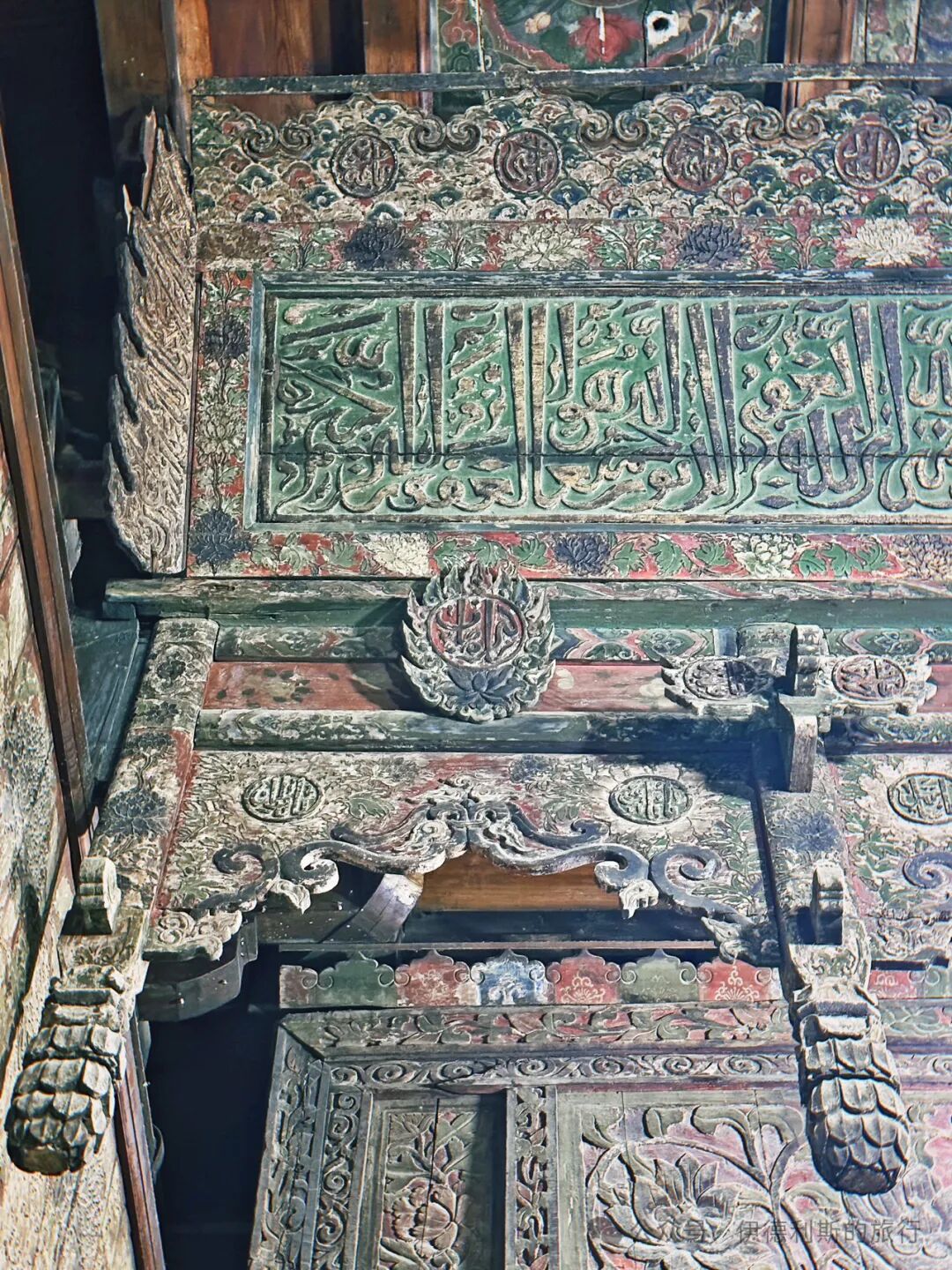
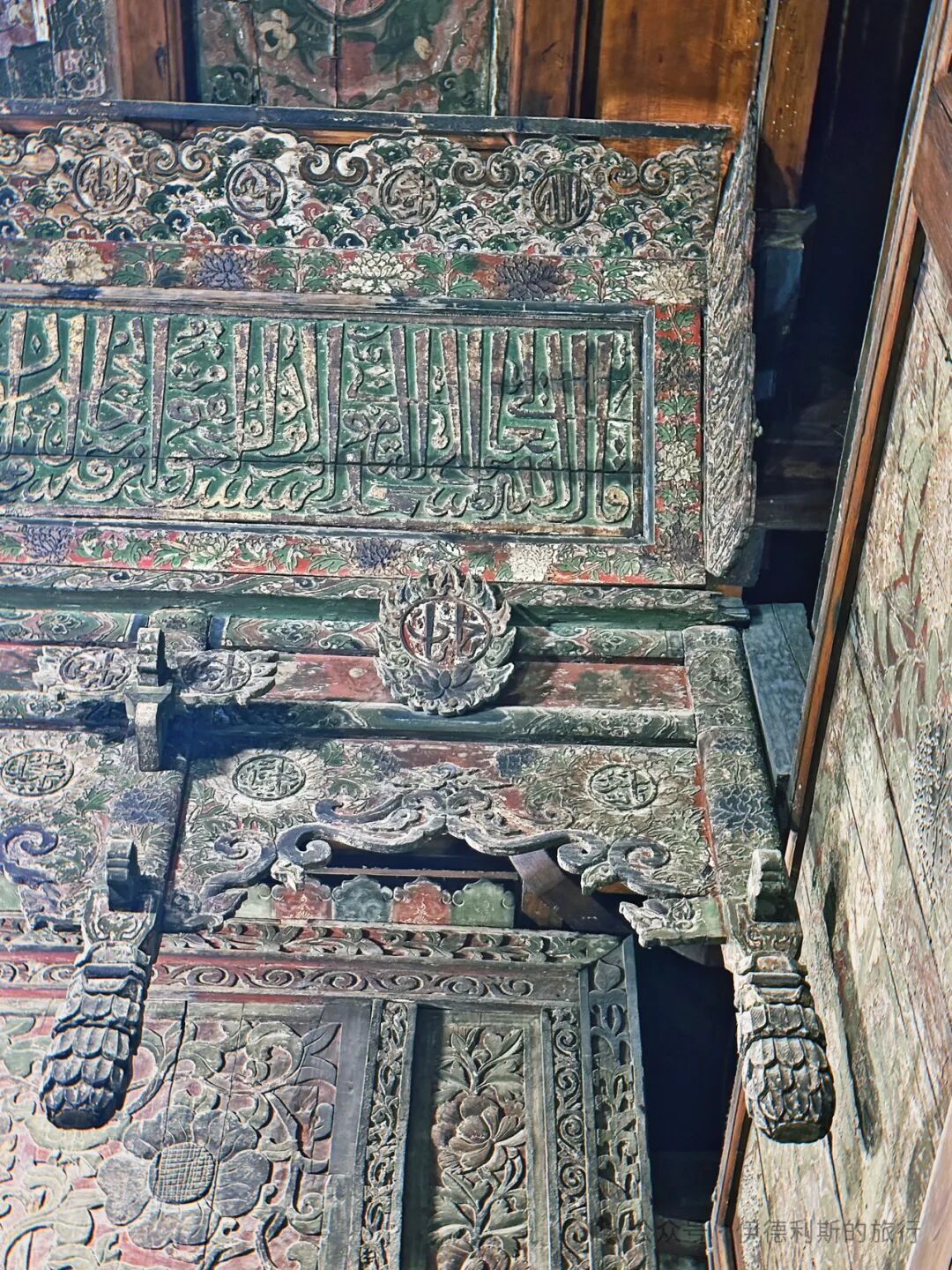
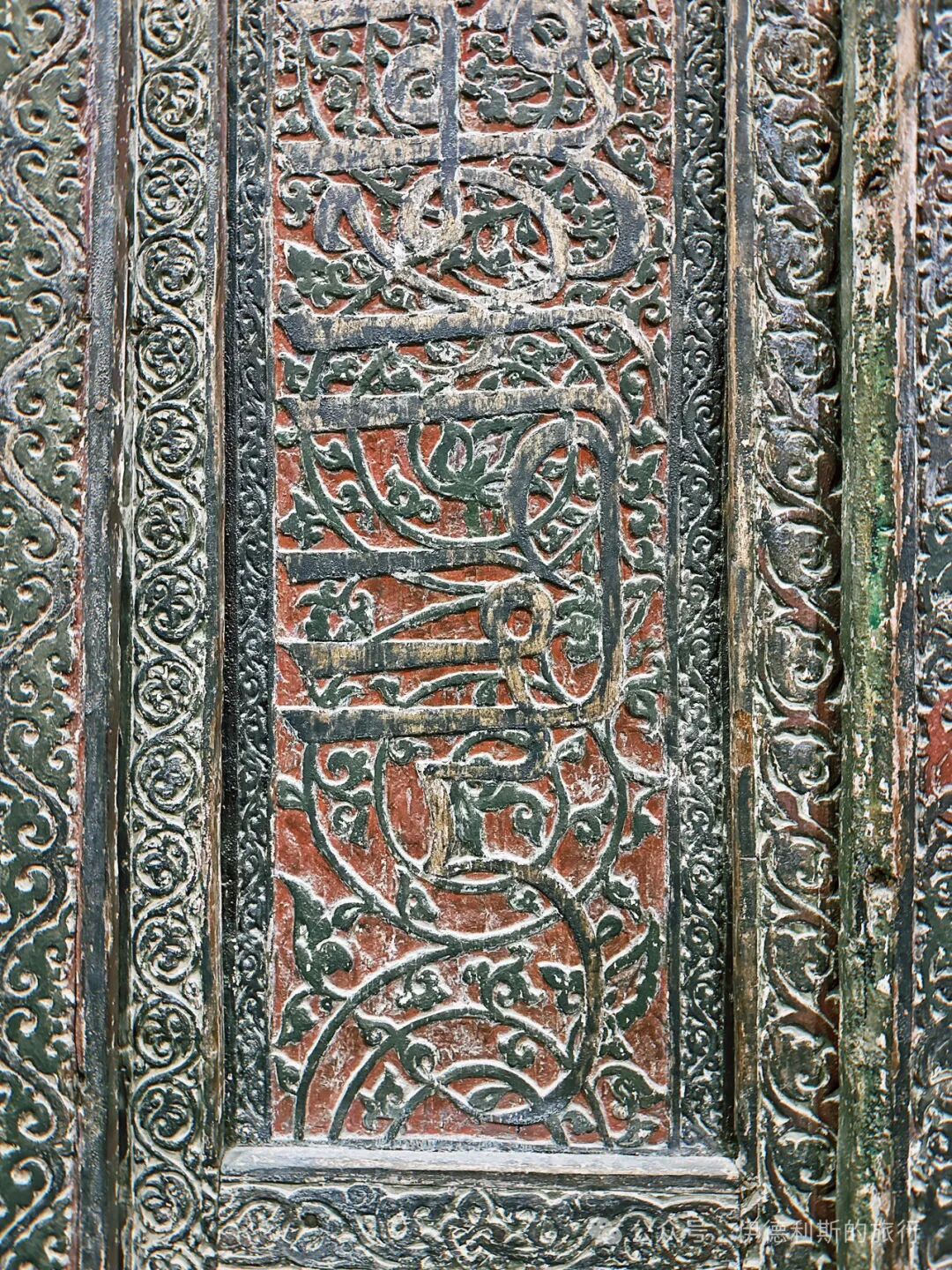
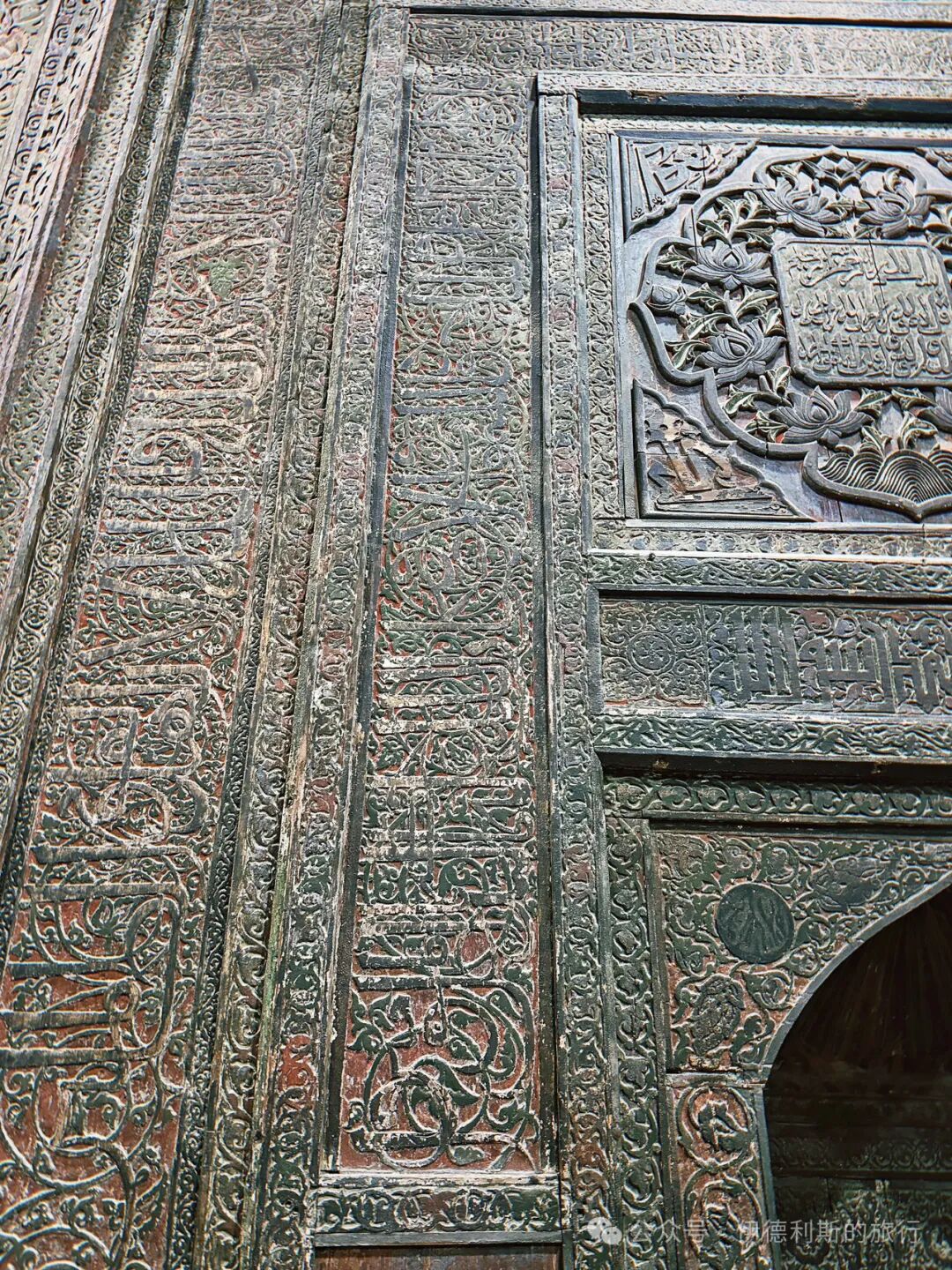
Besides Huajue Lane Great Mosque, the Daxuexi Lane Mosque and Dapiyuan Mosque in Xi'an also have original, unrestored mihrabs. Both mihrabs are made of inlaid wooden boards with a kiln niche in the middle, but their styles differ. Daxuexi Lane Mosque has a wooden carved canopy (feizhao) between its pillars. The craftsmanship is exquisite, and the calligraphy style matches that of Mengda Mosque in Xunhua, Qinghai, suggesting they may have been made by the same group of craftsmen.
Daxuexi Lane Mosque
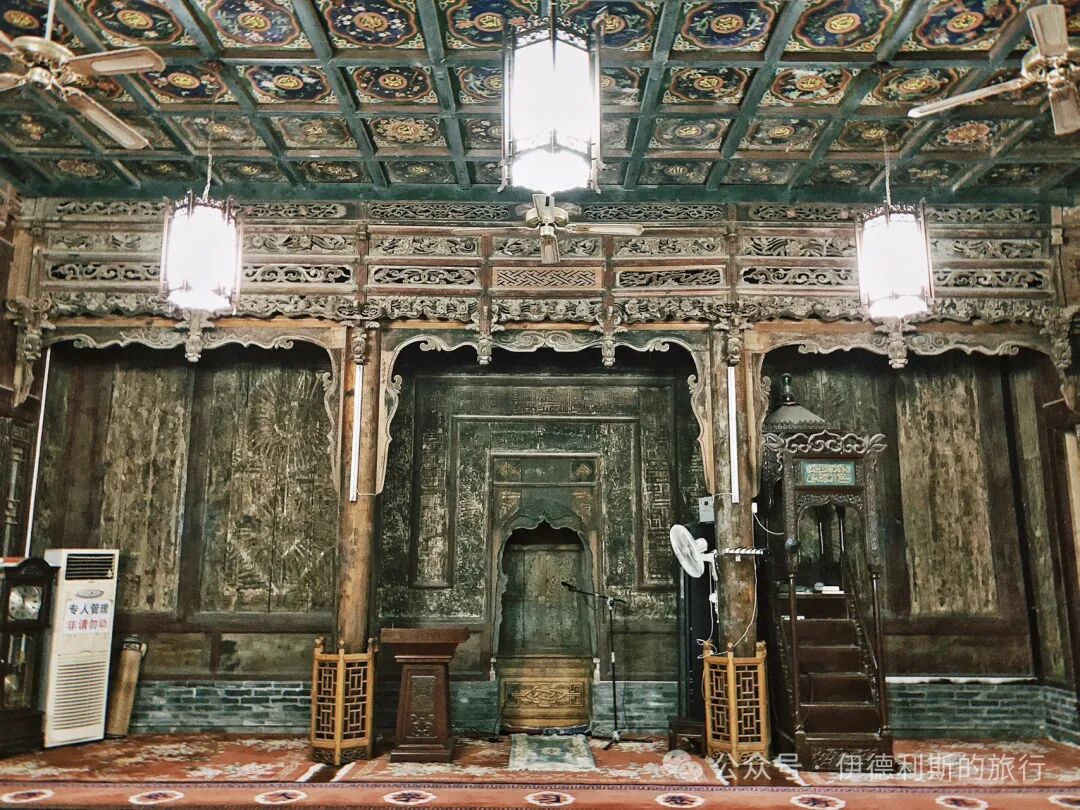
Dapiyuan Mosque
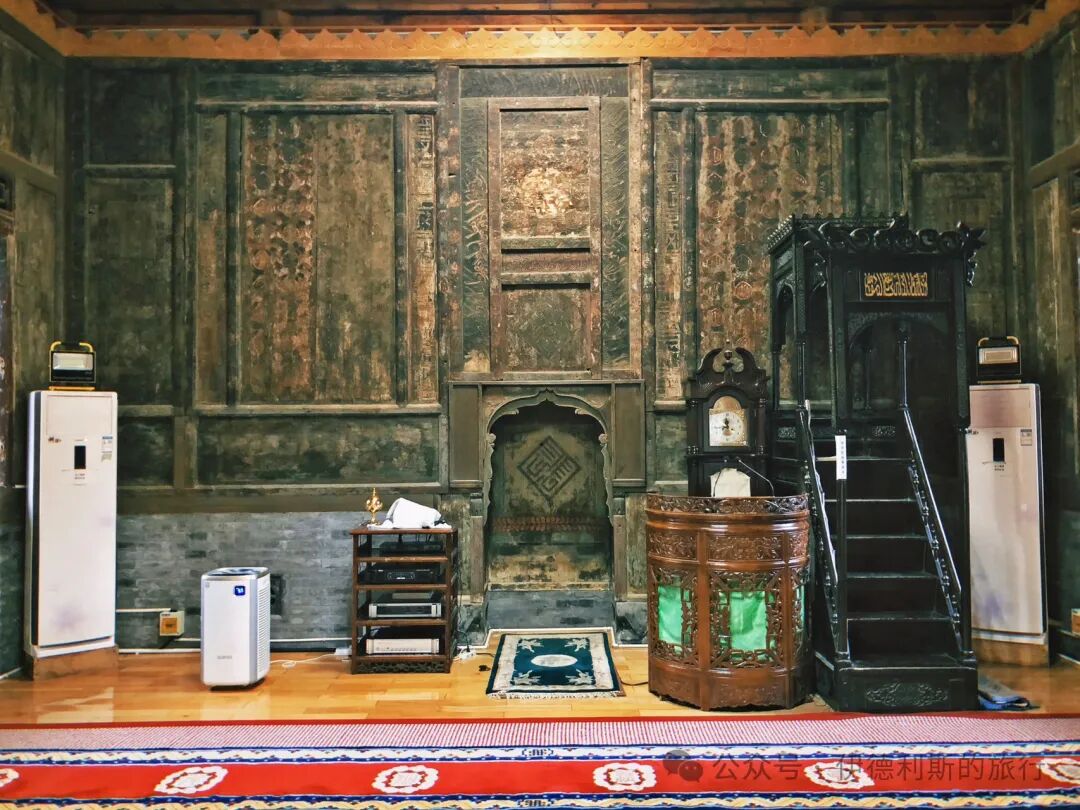
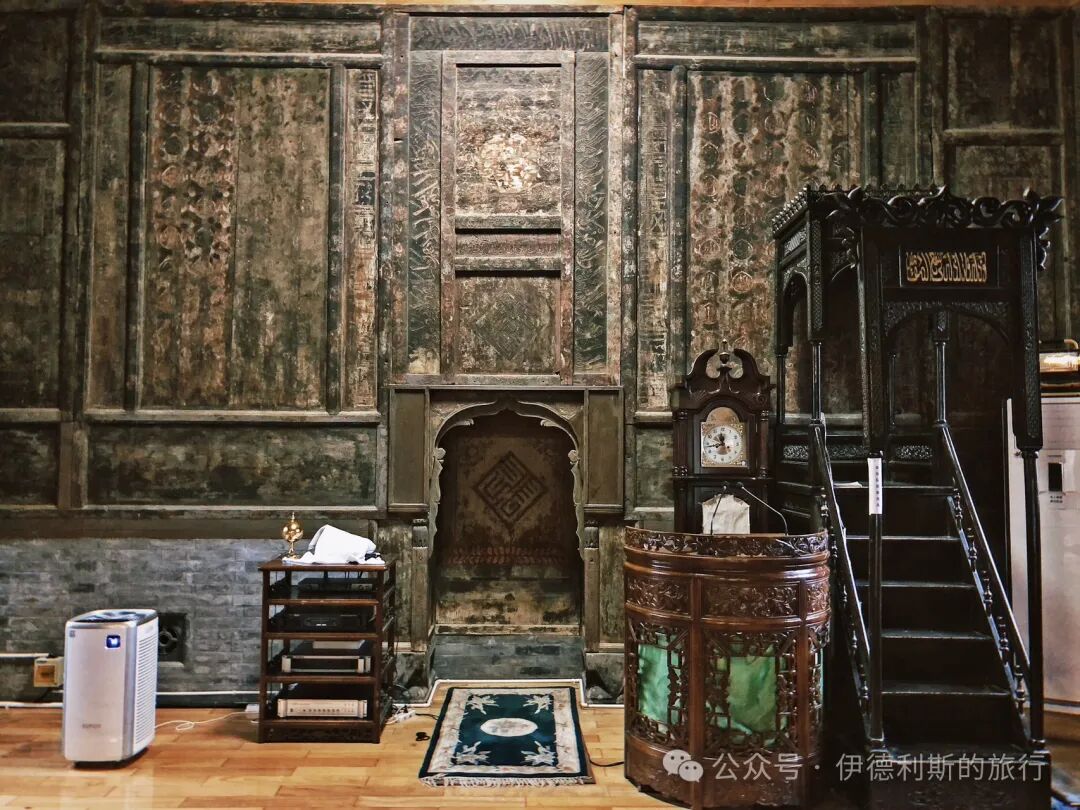
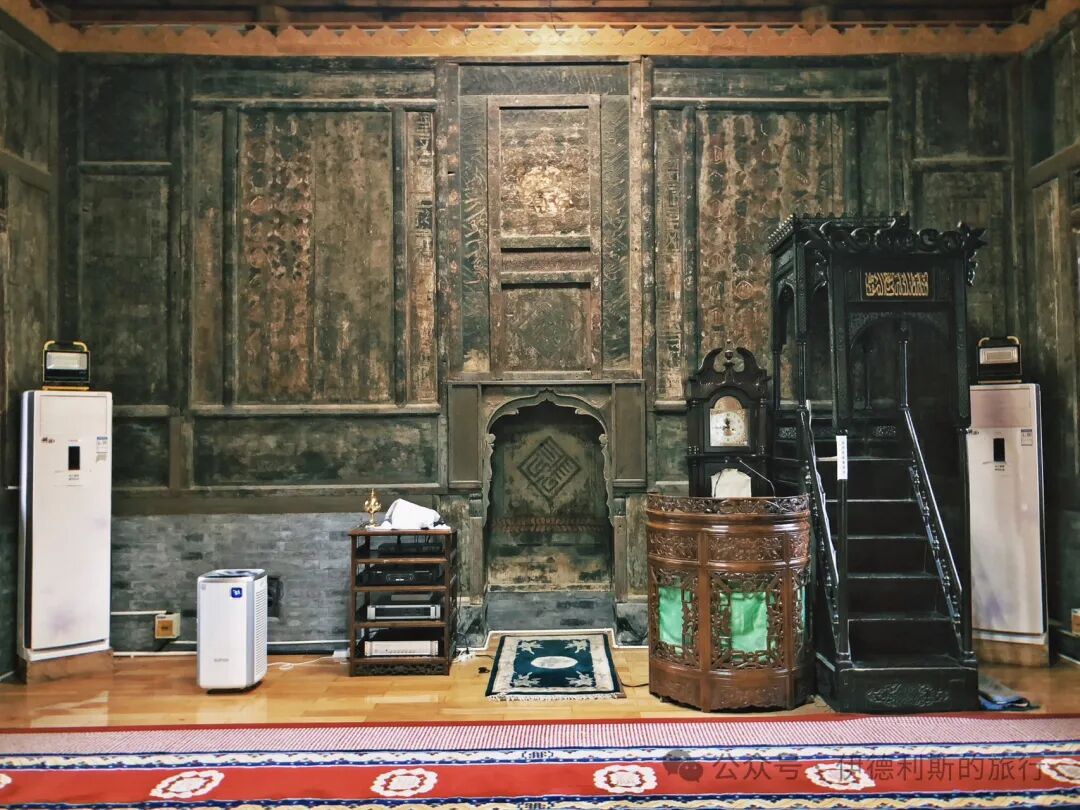
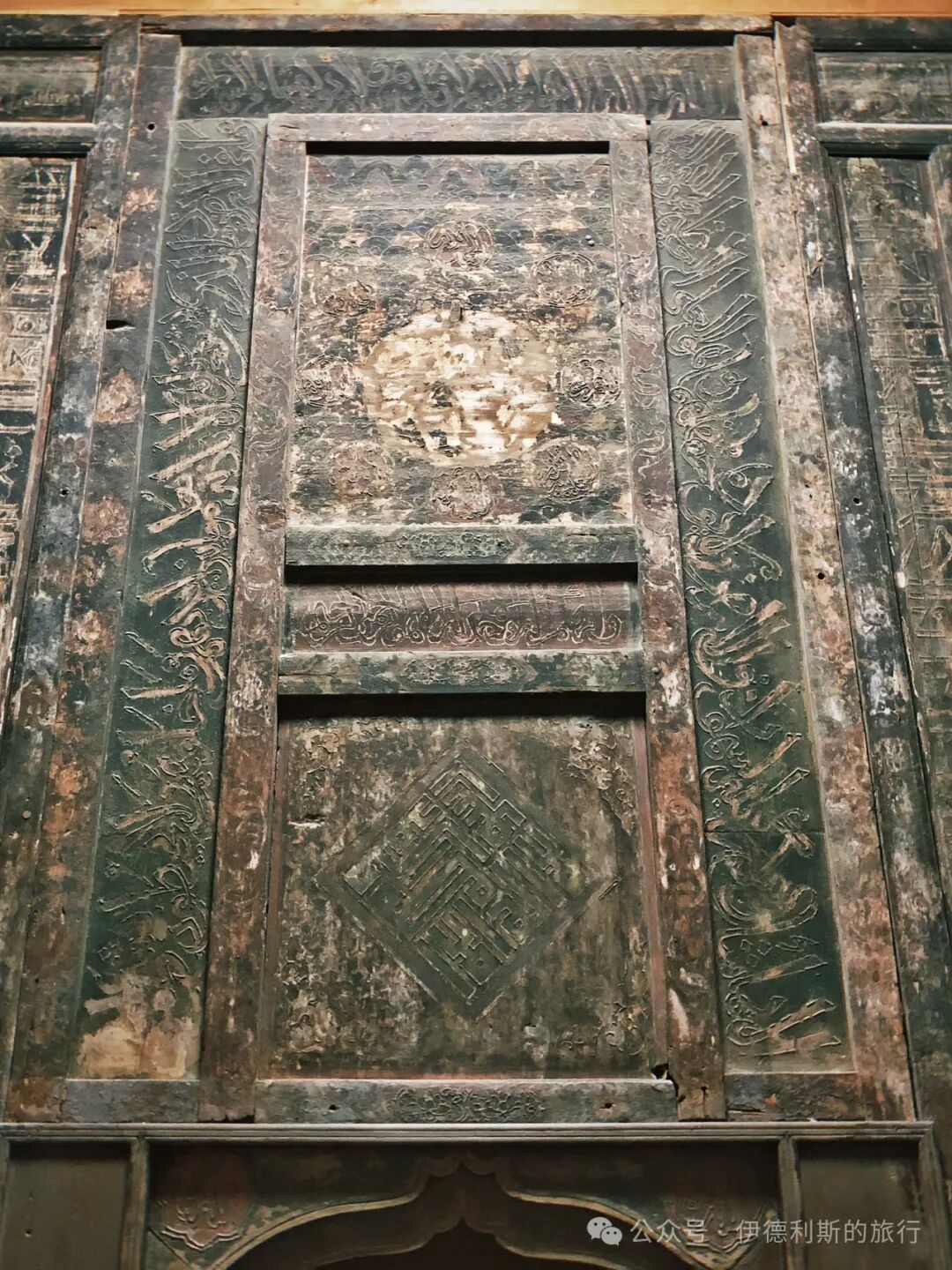
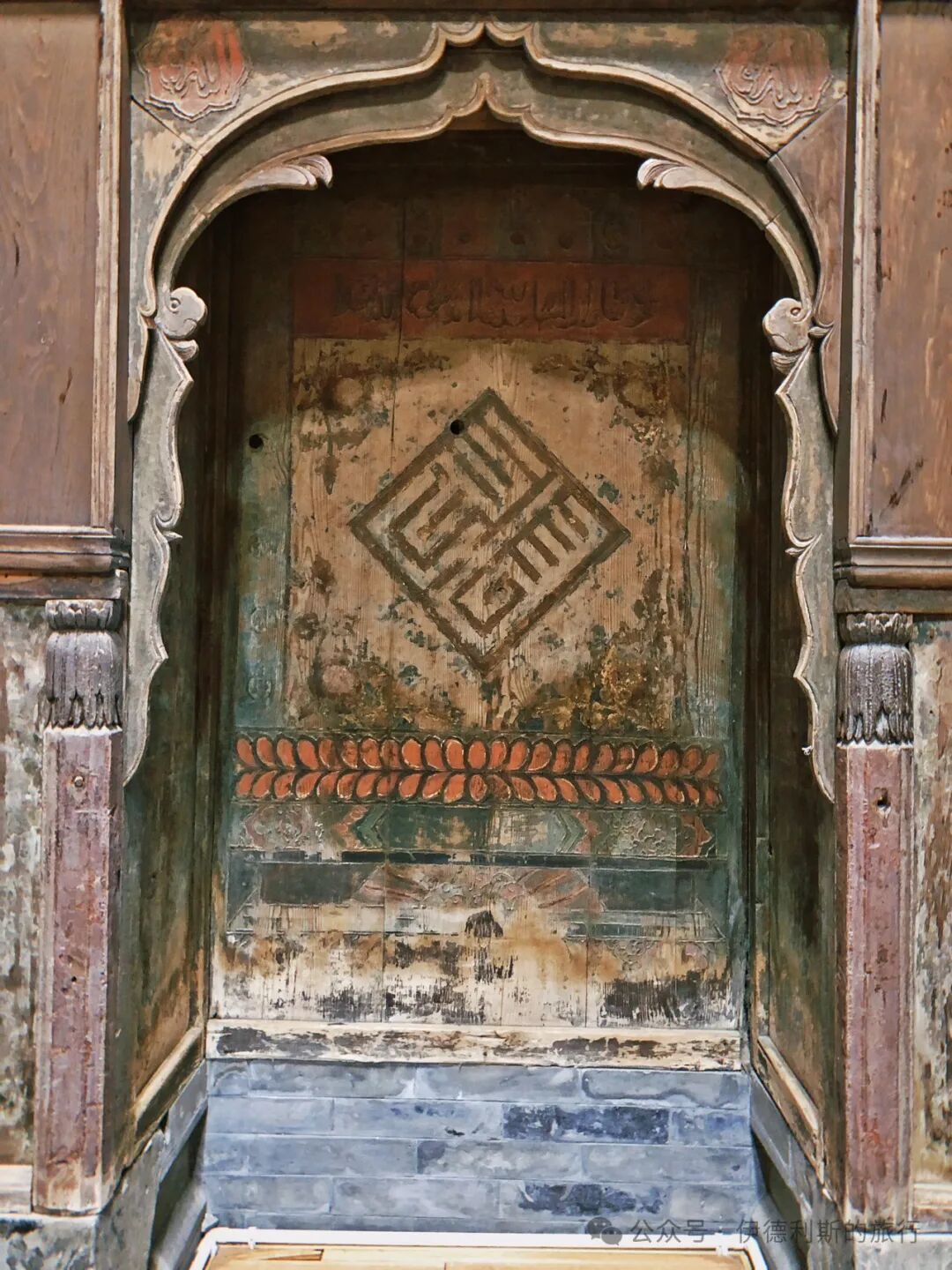
Some restored and newly built mihrabs in Xi'an, Shaanxi.
Xiaopiyuan North Mosque has had all its paintings redone, though it is said the style remains unchanged. The center is a kiln niche with beautiful wooden floral carvings.
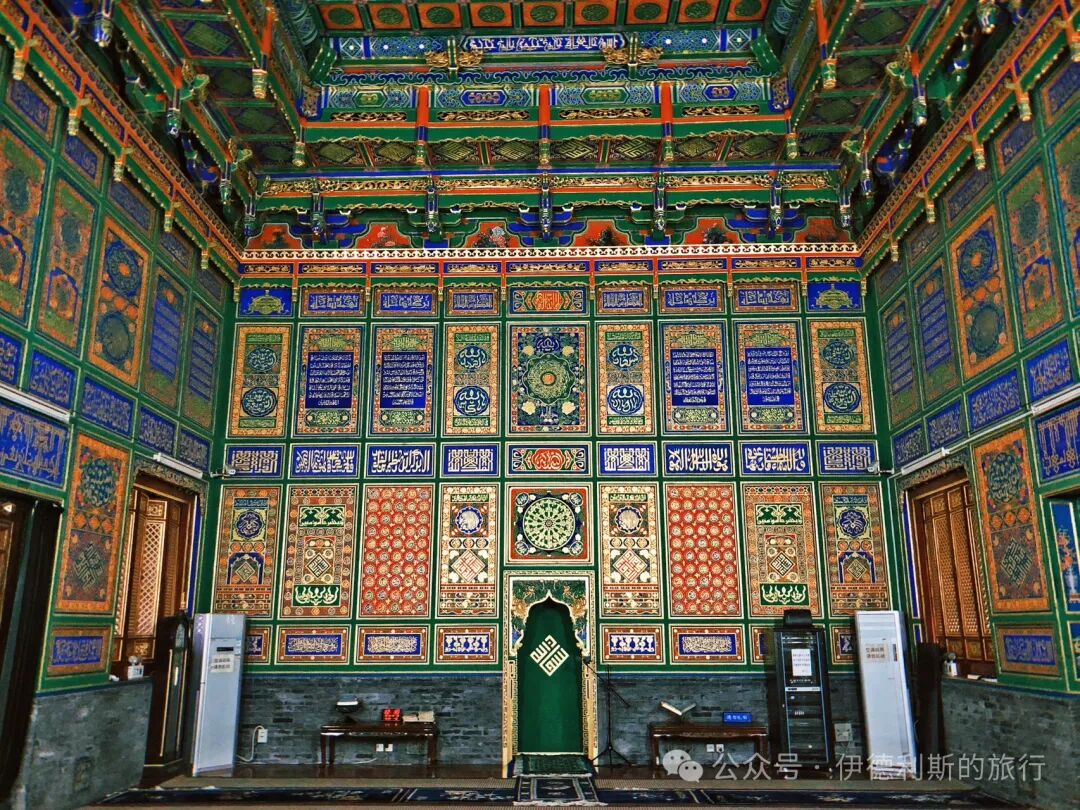
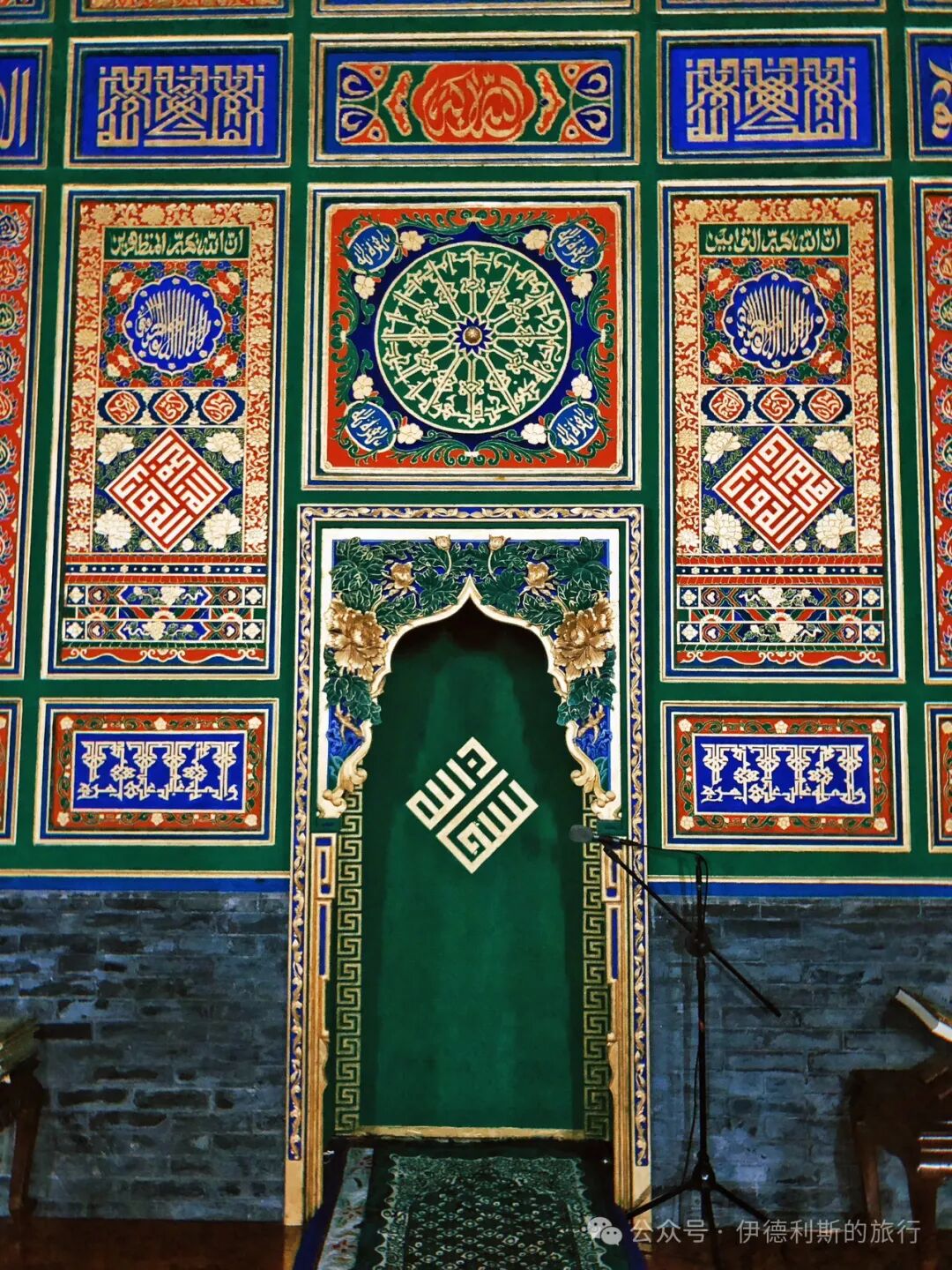
At the North Guangji Street Mosque, the wood carvings on the upper part of the prayer niche (mihrab) look like those at the Great Mosque of Huajue Lane.
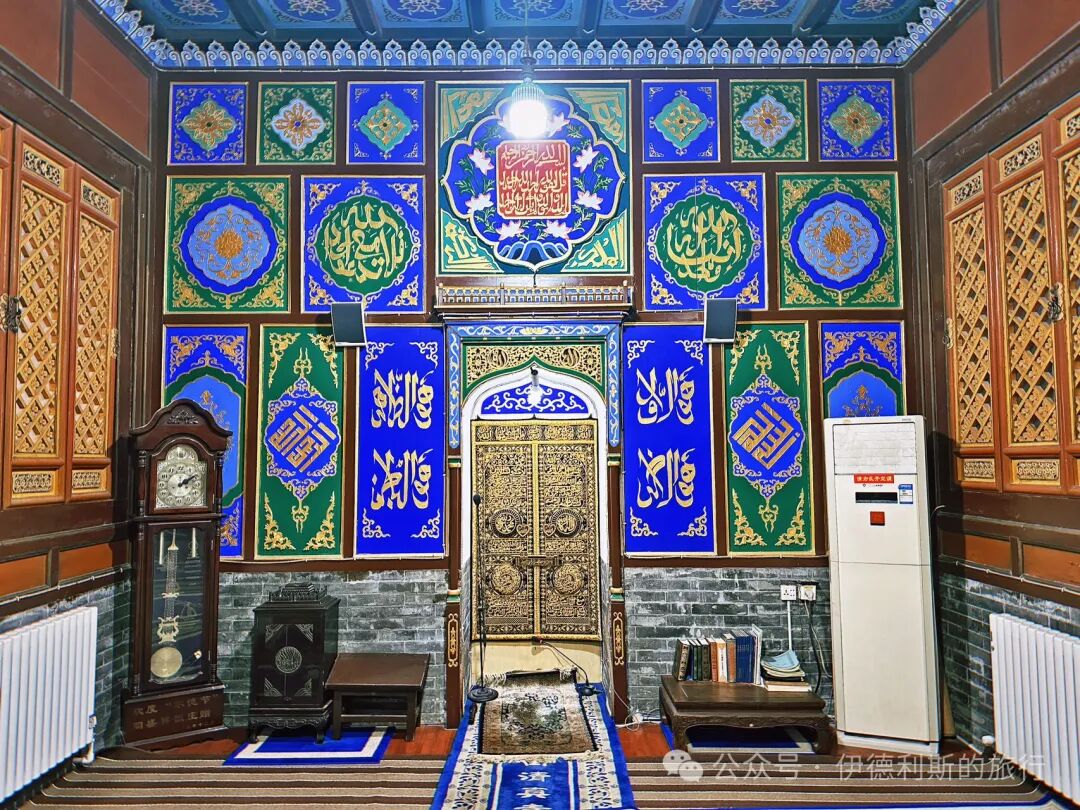
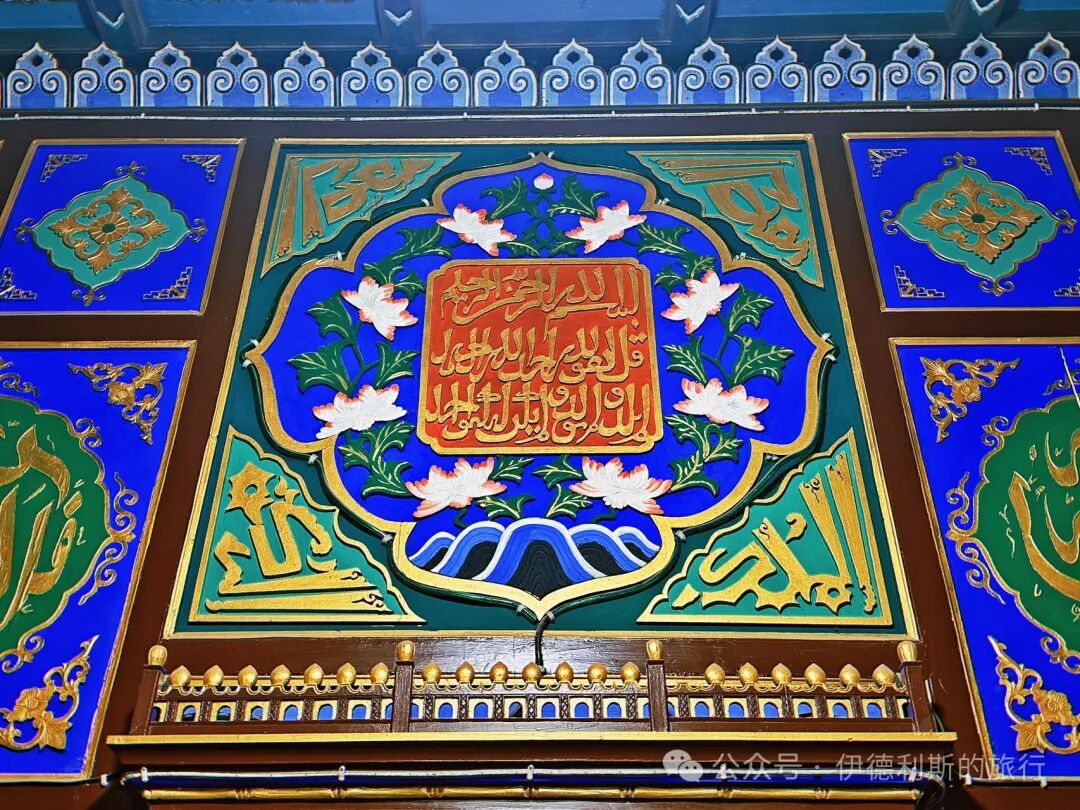
The Xiaoxuexi Lane Middle Mosque features wood panel inlays with a prayer niche (mihrab) in the center.
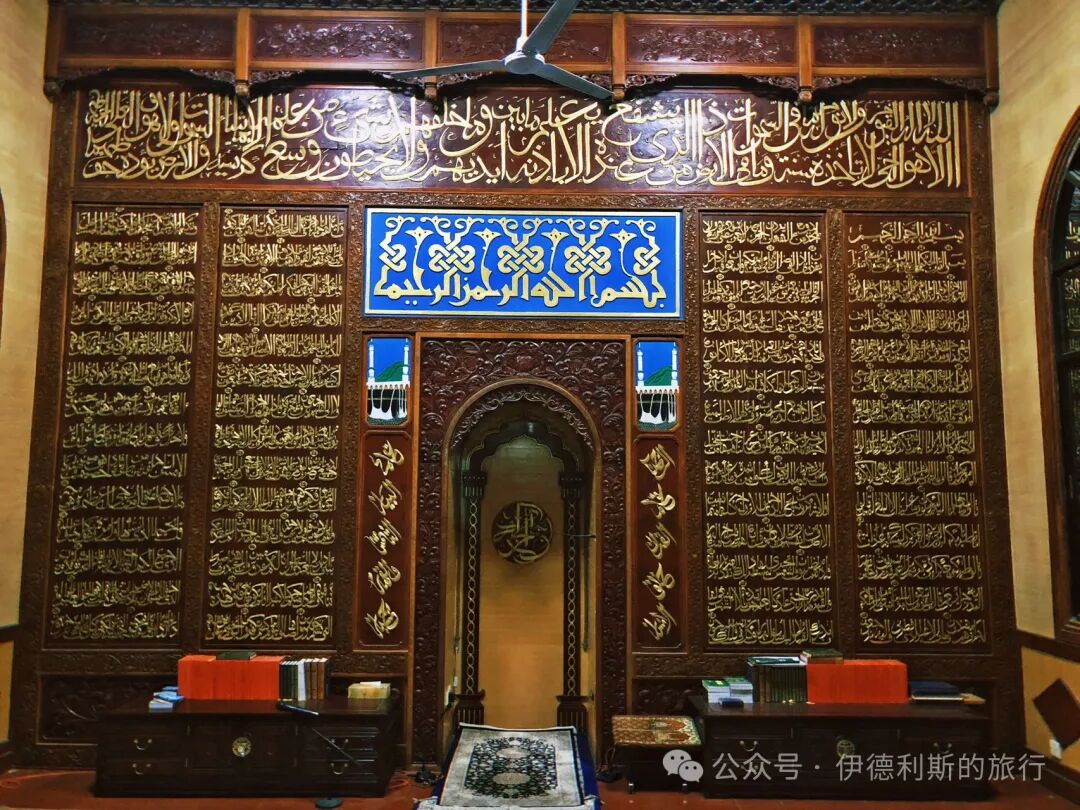
The Xiaoxuexi Lane Yingli Mosque has a wood-carved door canopy decorated with flower and plant patterns.
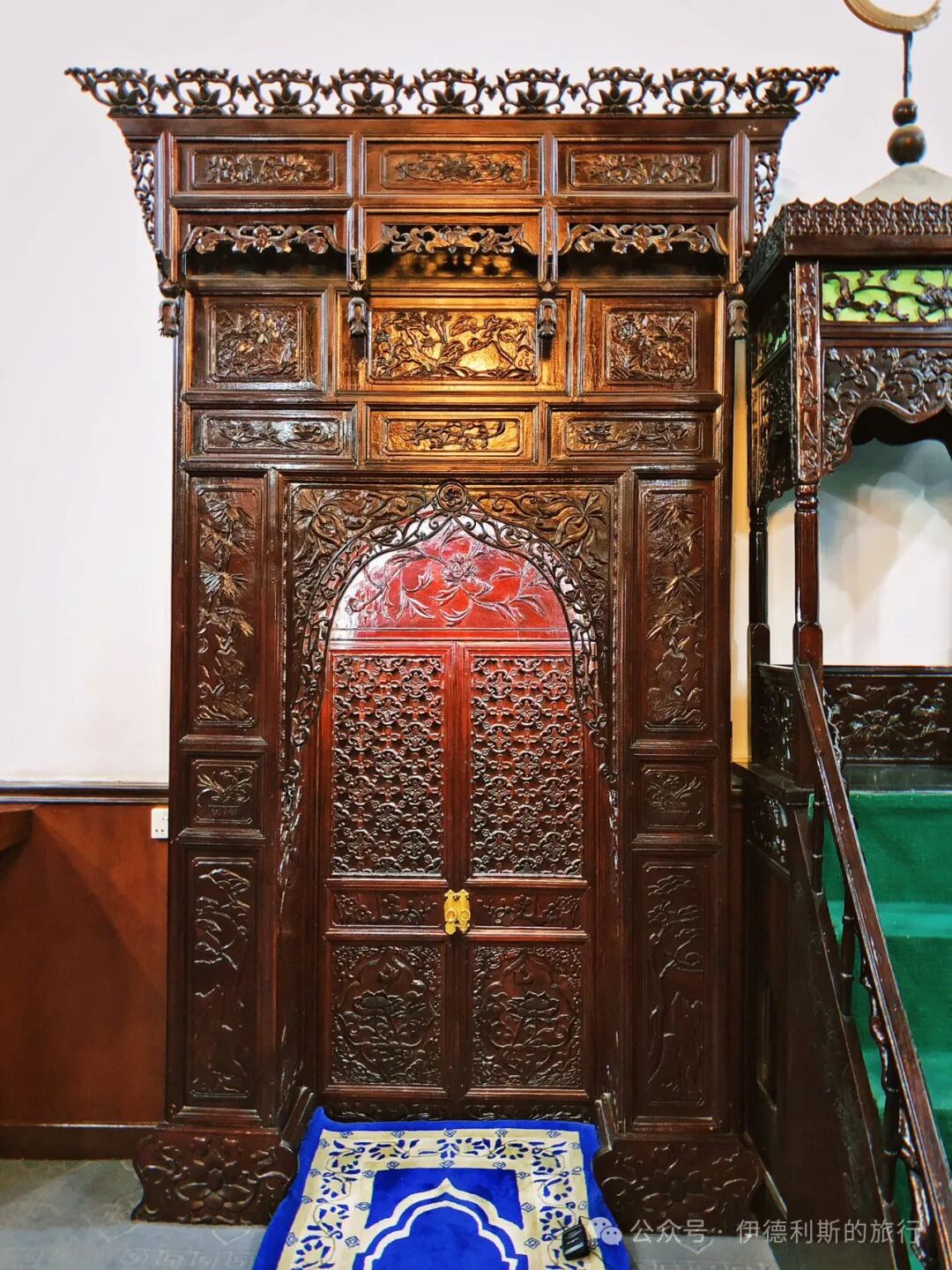
The Dongmen Cang South City Mosque has a wood-carved door canopy featuring traditional-style calligraphy.
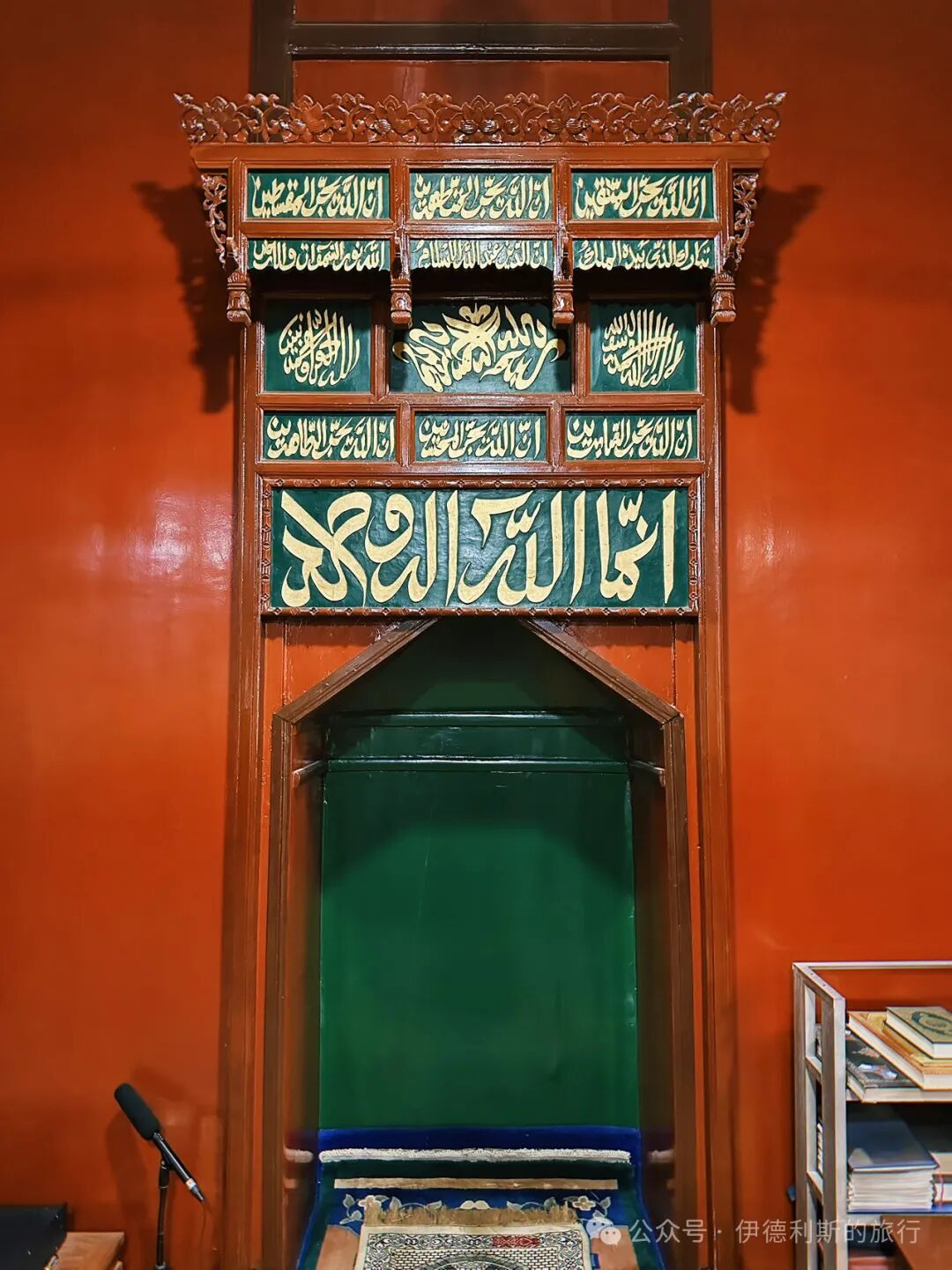
The Sajinqiao Mosque uses wood panel inlays and contains a very rare Chinese-language Yasin chapter.
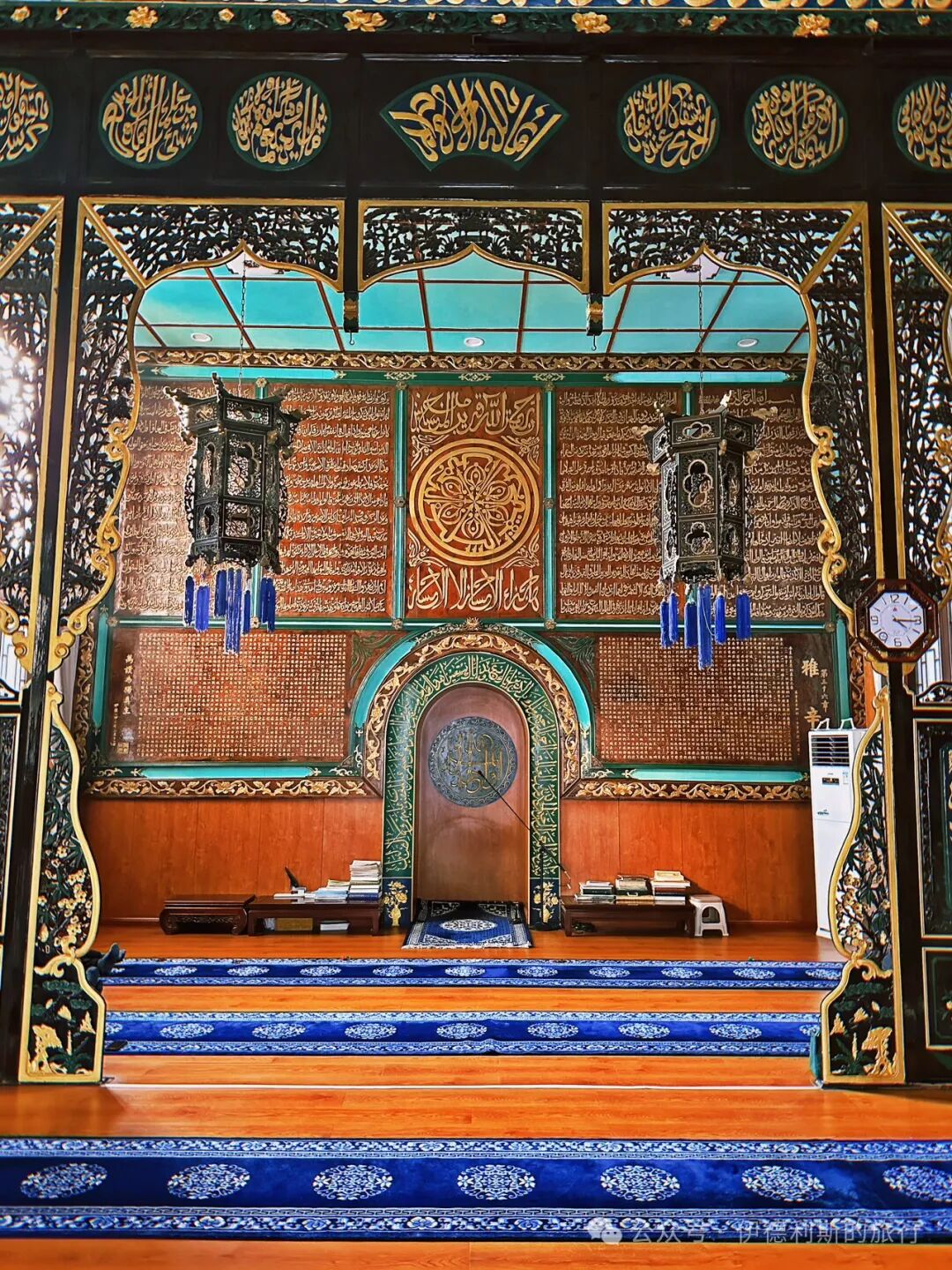
Prayer niches (mihrab) in the southern Shaanxi region:
The Ankang North Mosque in Shaanxi is built in a memorial archway style with wood-carved flying eaves.
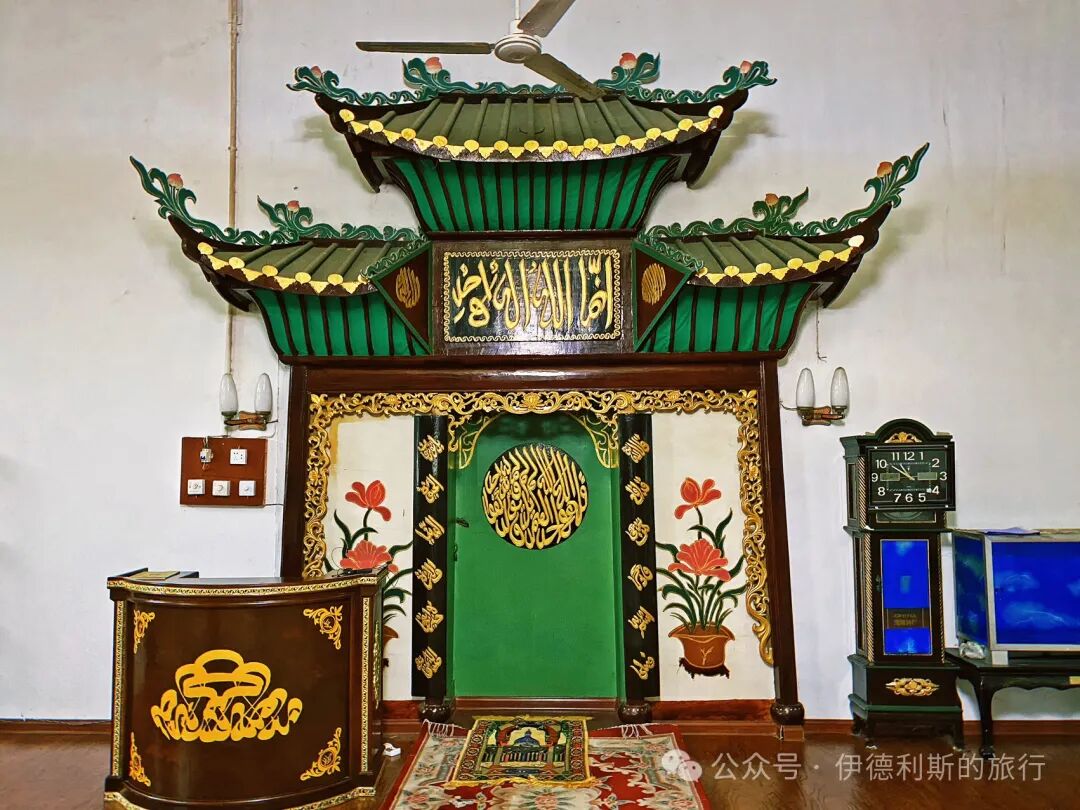
The Ankang Jingning South Mosque in Shaanxi features traditional-style couplets and horizontal inscribed boards.
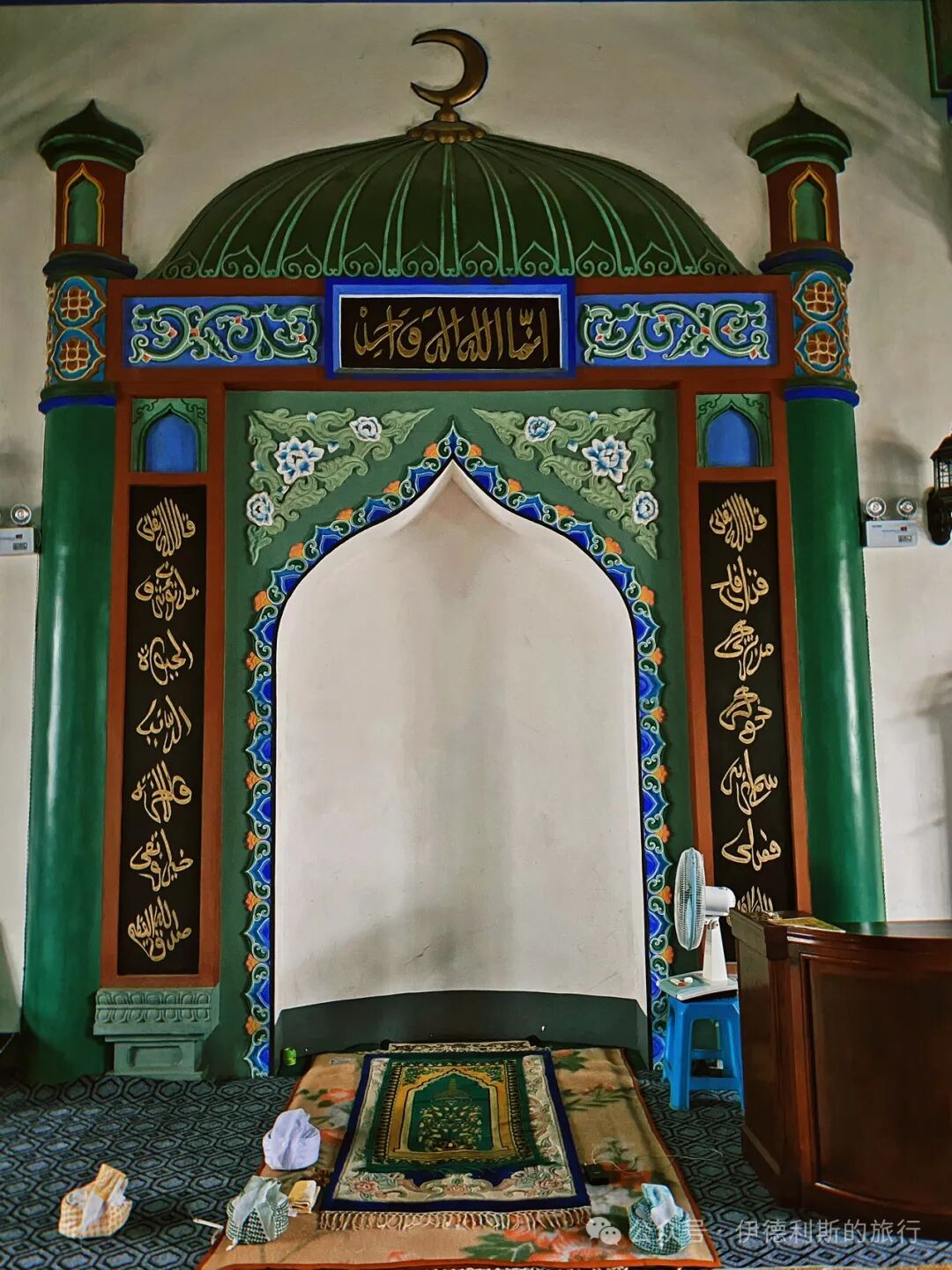
The Xixiang North Mosque in Shaanxi features traditional-style couplets and horizontal inscribed boards.
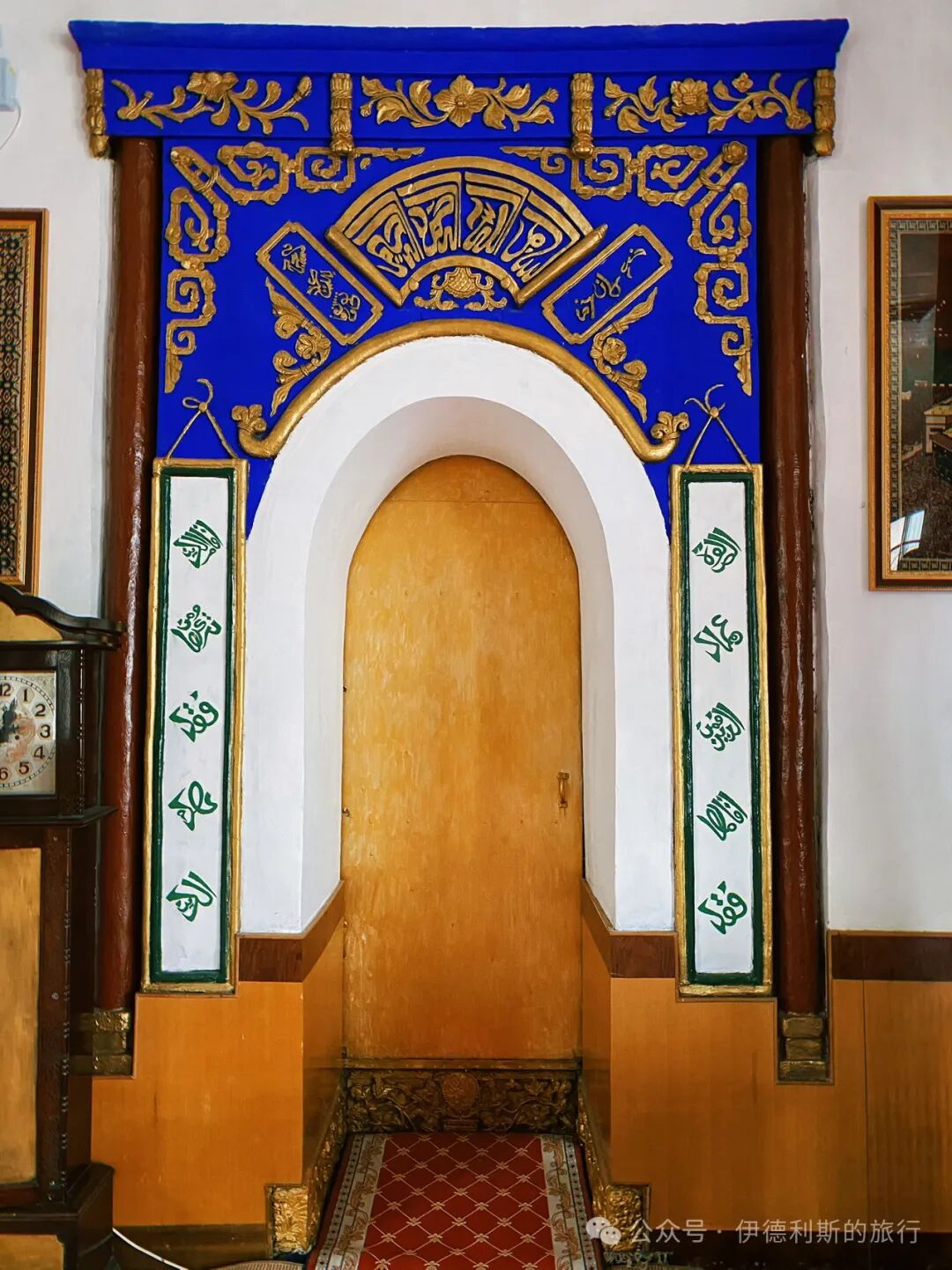
The Xixiang Luling Mosque in Shaanxi is built in a wood memorial archway style and has traditional couplets.
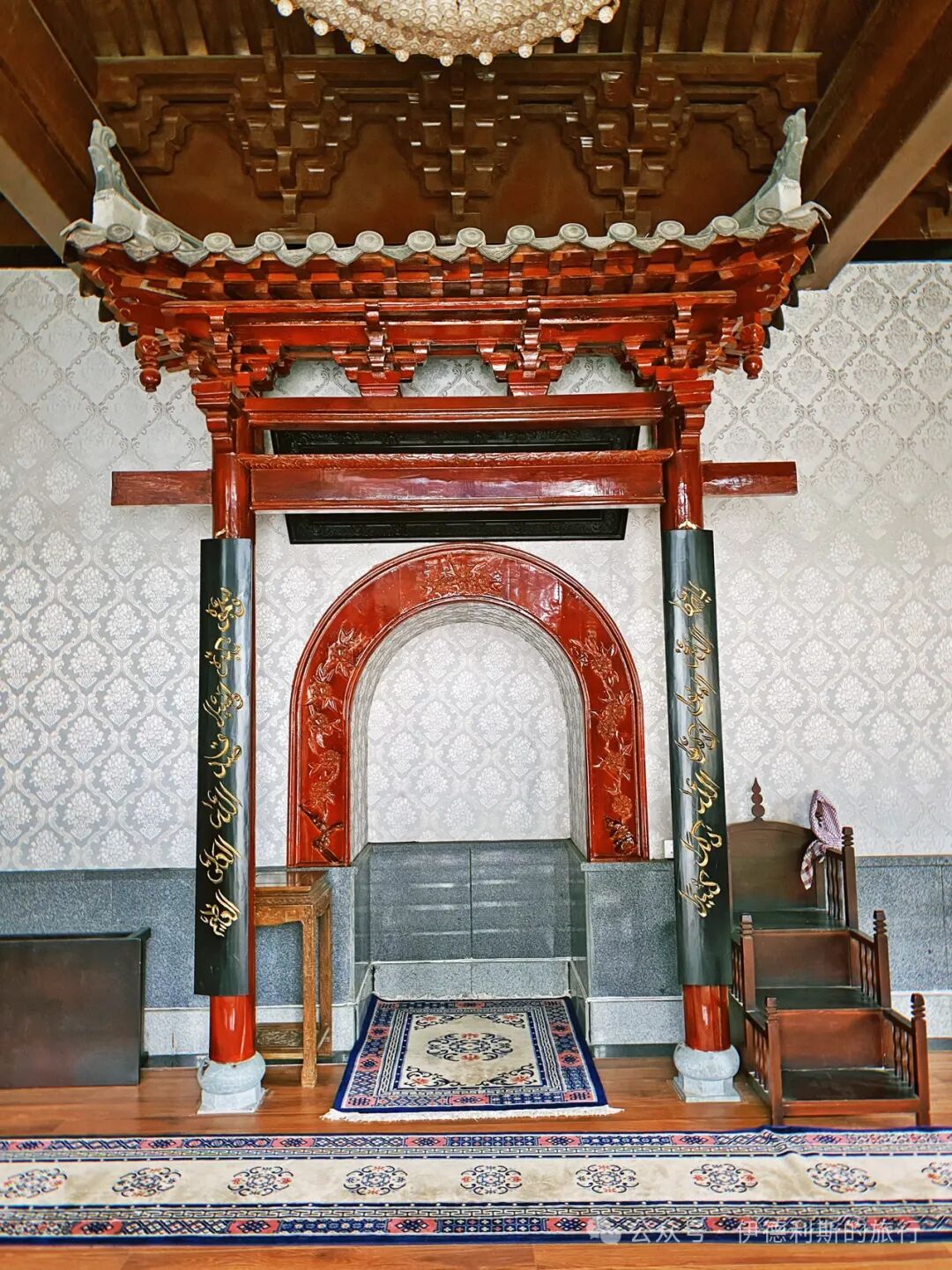
The Hanzhong Xianyin Mosque in Shaanxi has traditional-style horizontal inscribed boards and couplets, and the prayer niche (mihrab) is carved with an offering table.
Gansu
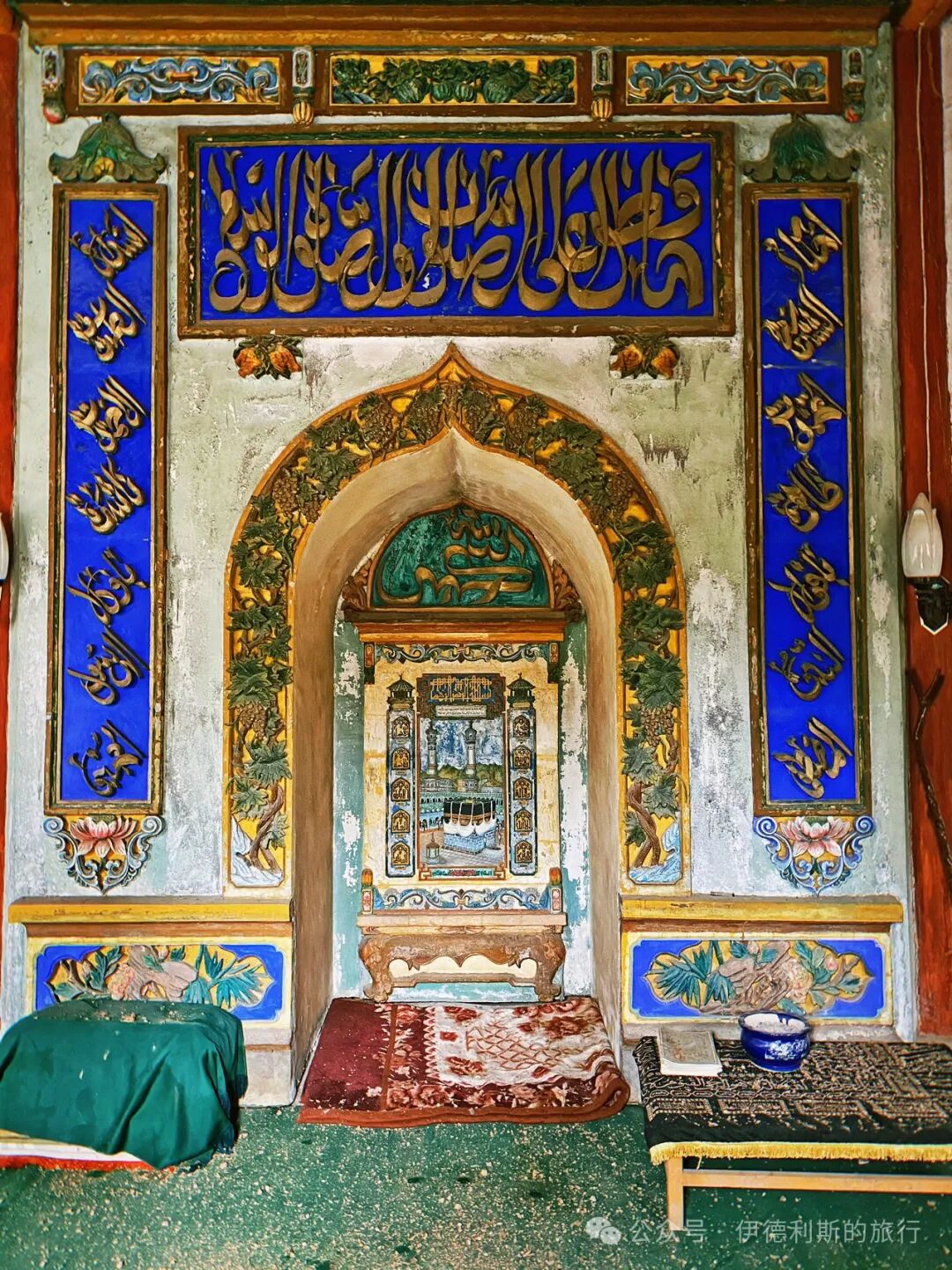
The Linxia Old Wang Mosque is arch-shaped and carved with traditional Arabic horizontal inscribed boards and couplets.
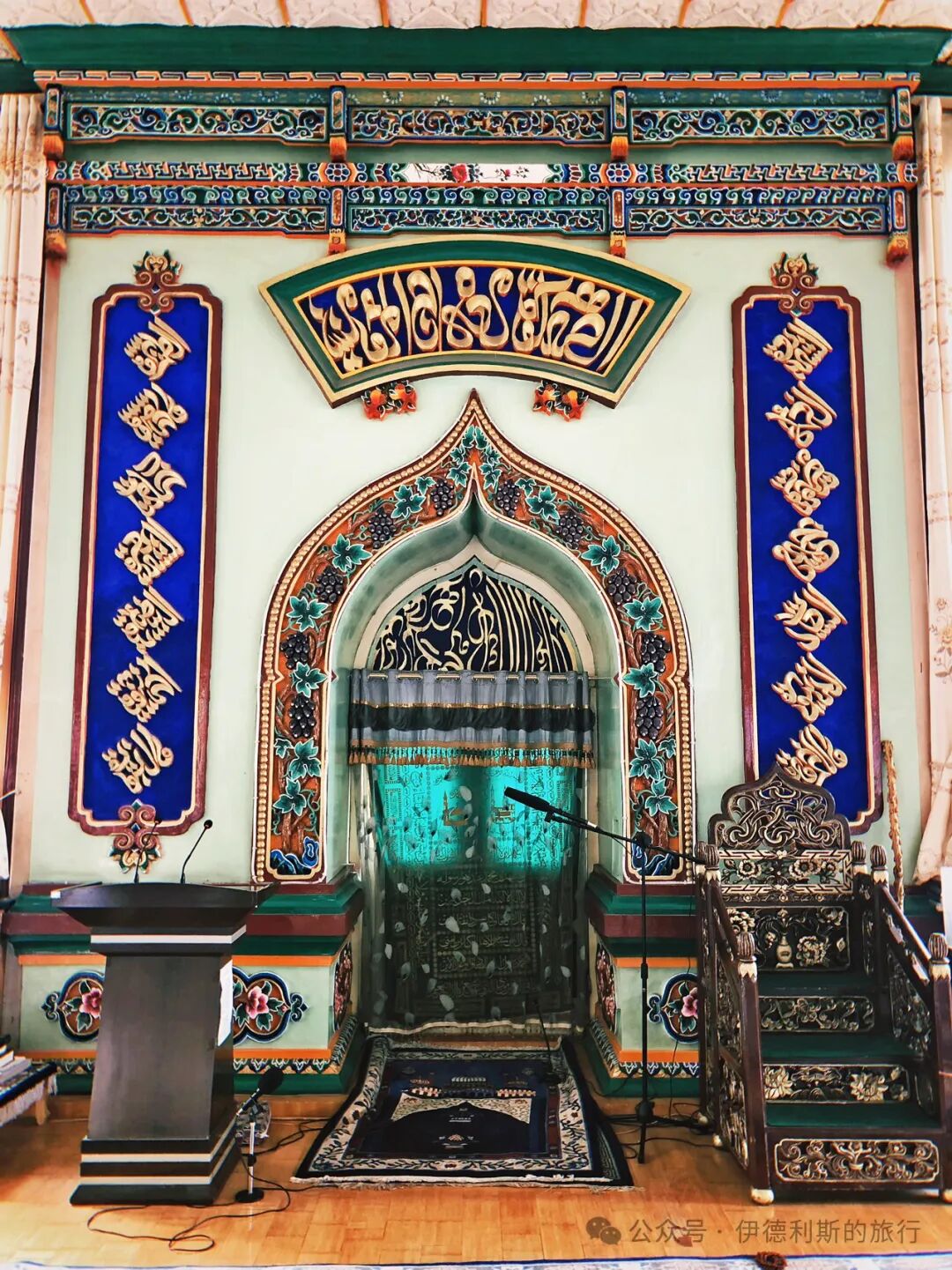
The Linxia West Mosque is arch-shaped and carved with traditional Arabic horizontal inscribed boards and couplets.
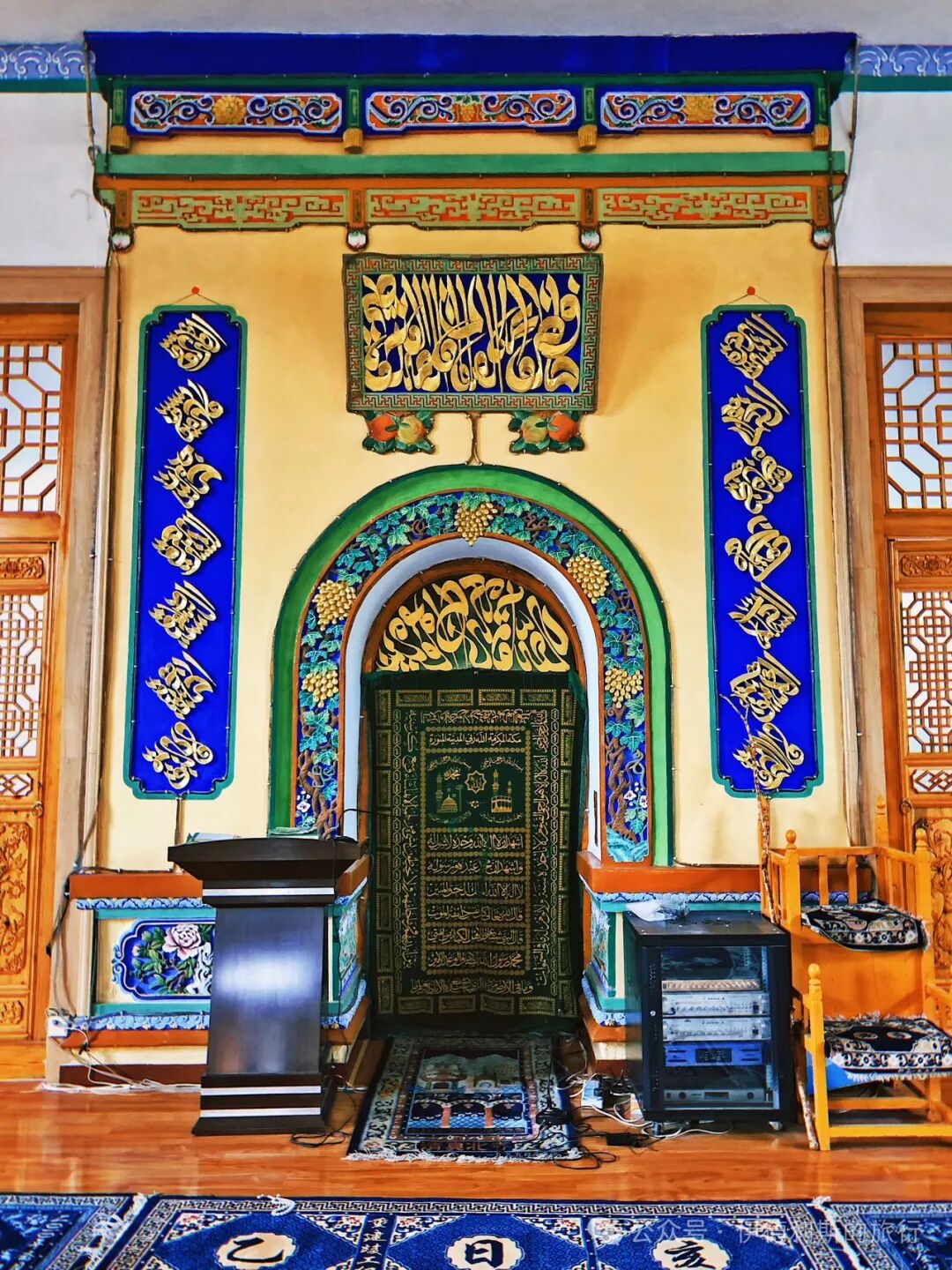
The Linxia North Mosque is arch-shaped and carved with traditional Arabic horizontal inscribed boards and couplets.
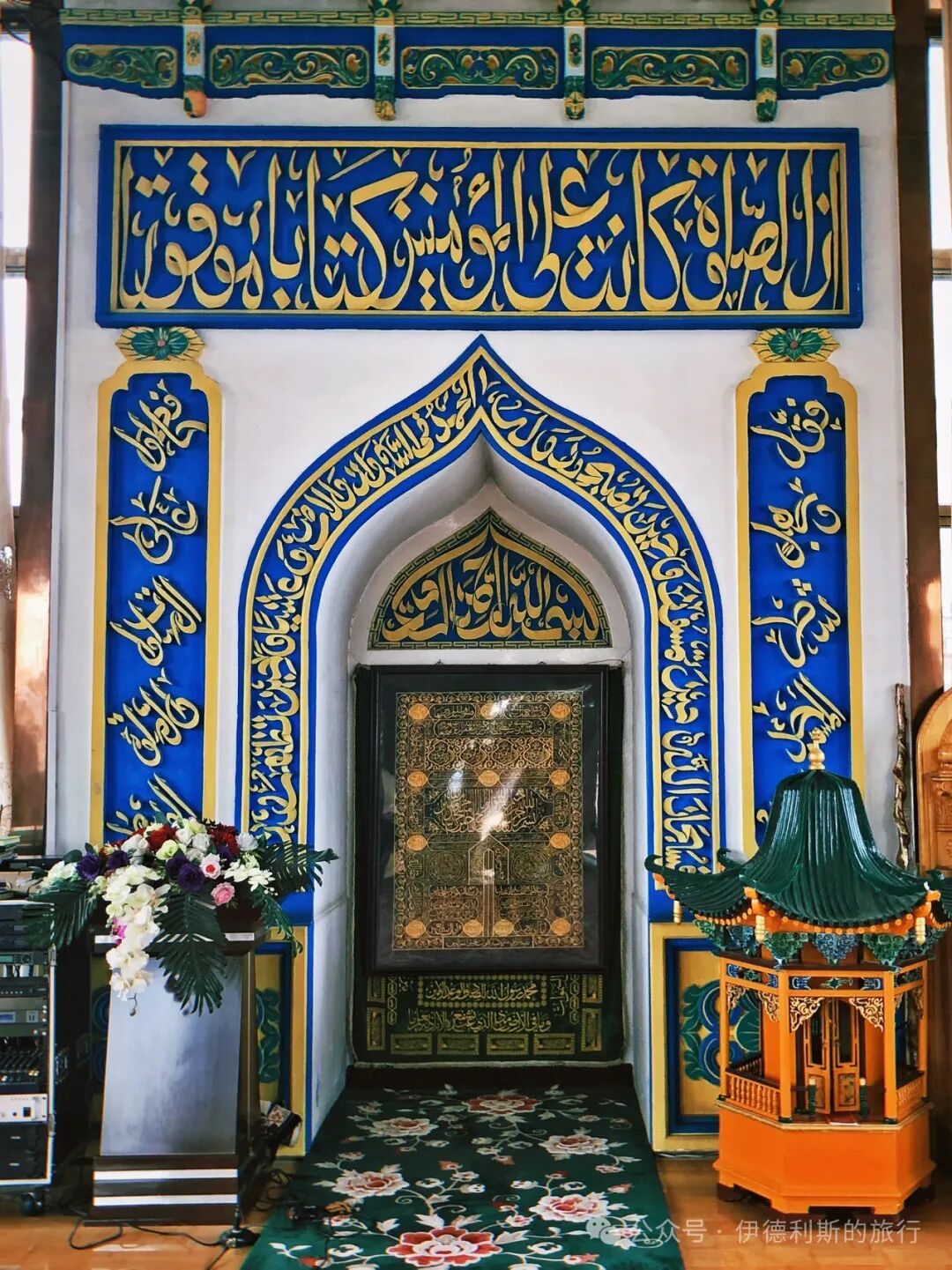
The Tianshui Beiguan Mosque is arch-shaped and carved with traditional Arabic horizontal inscribed boards and couplets.
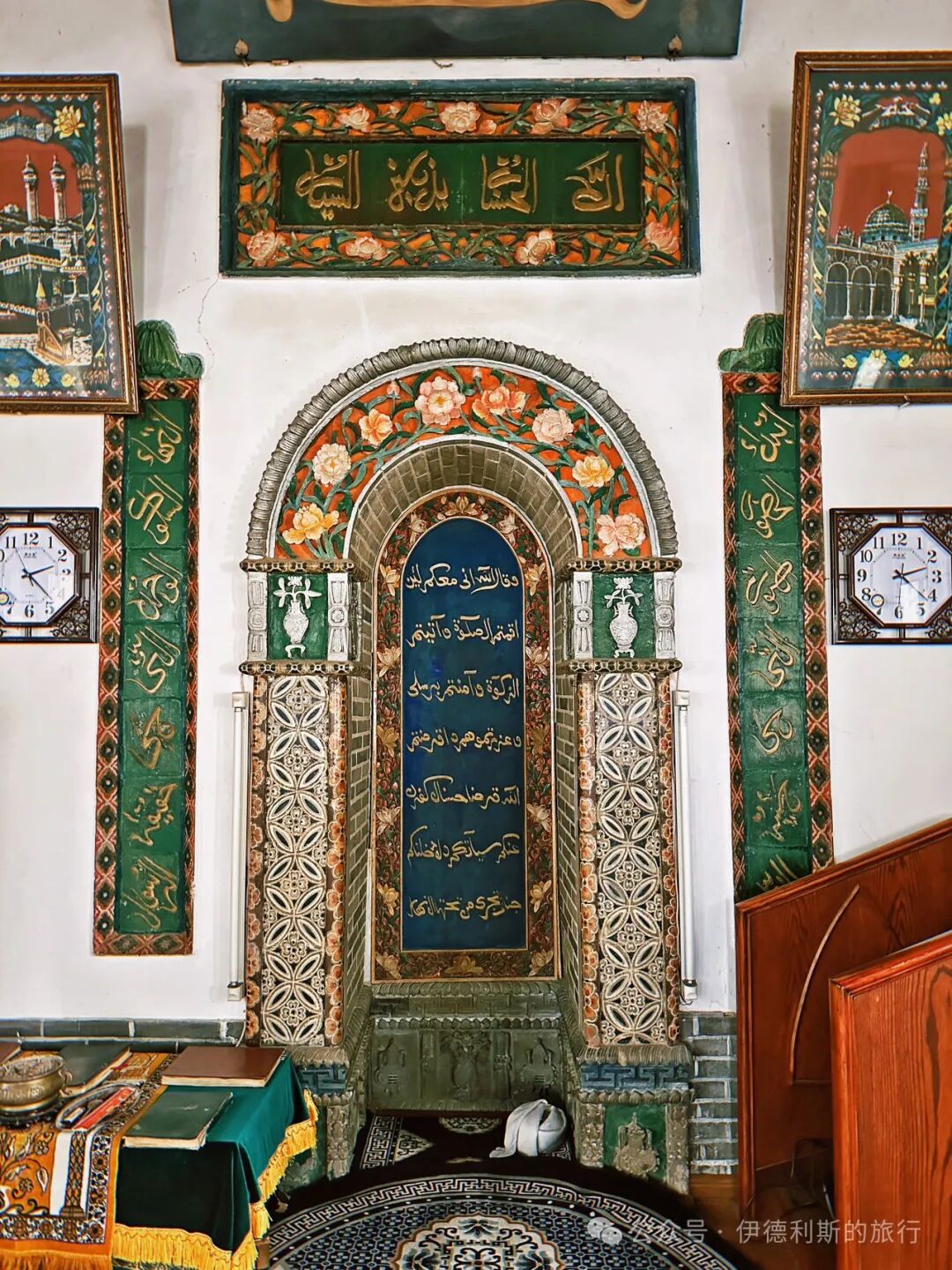
The Tianshui Qin'an Nanxiaguan Mosque features brick carvings of Zhe school Shagou-style calligraphy and rare brick-carved hanging scrolls.
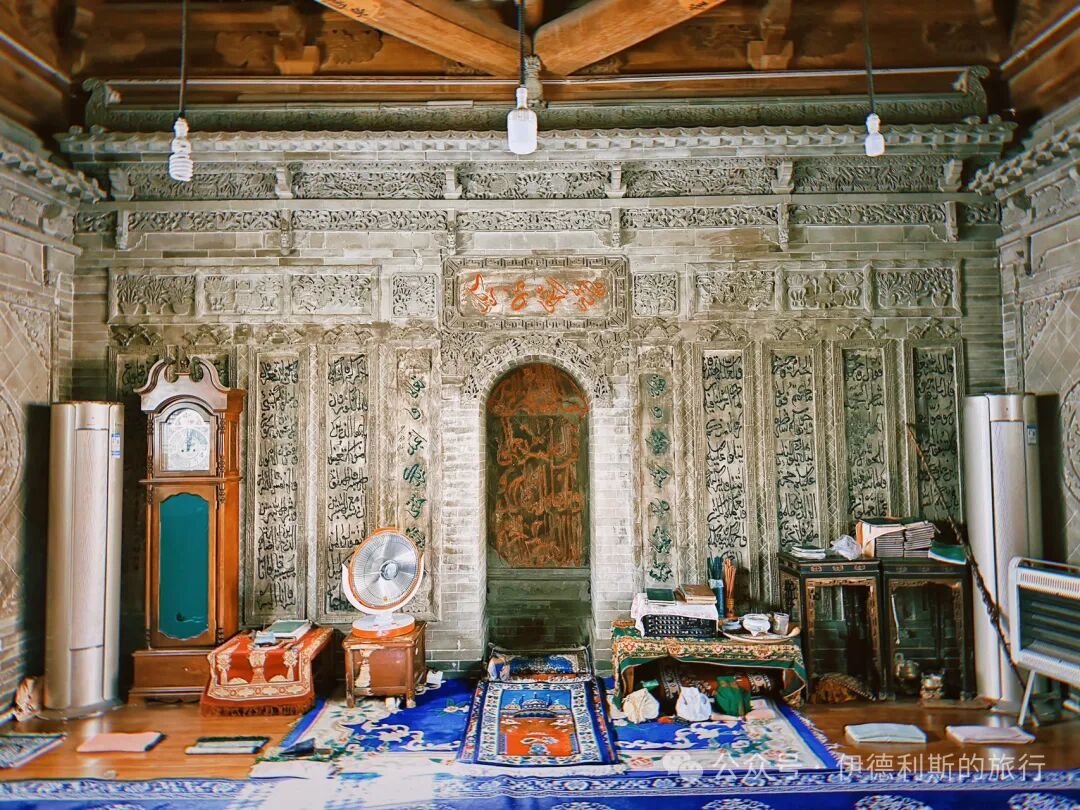
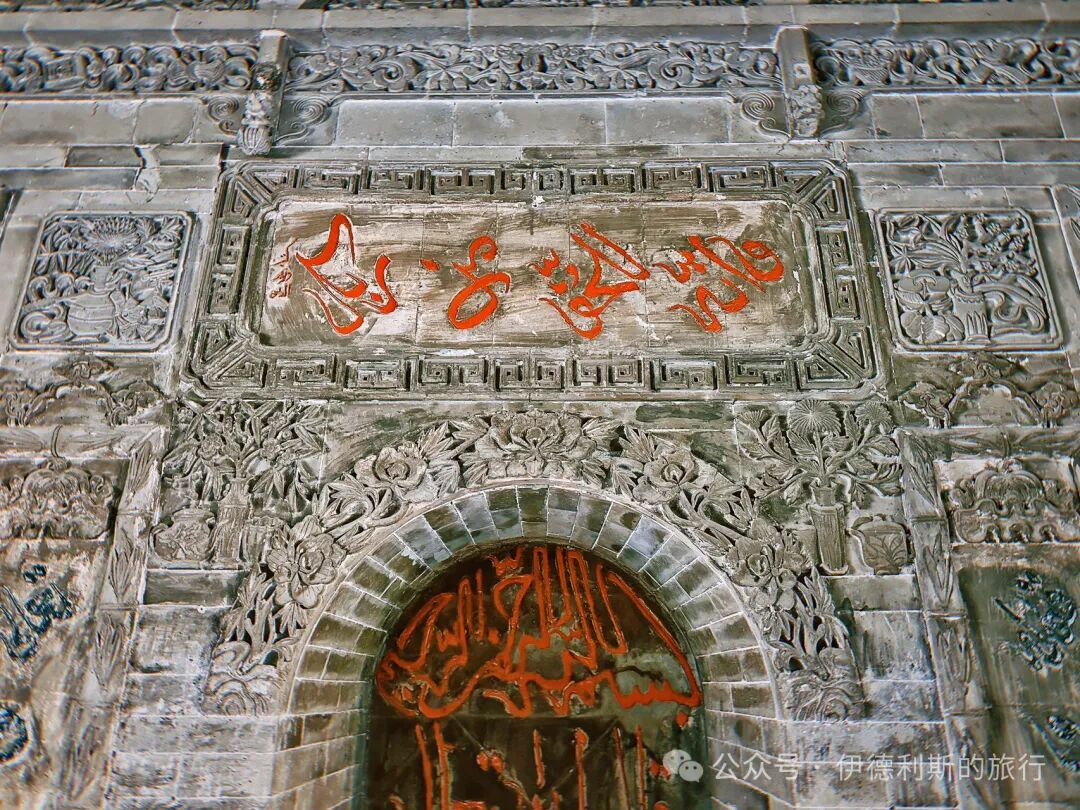
Qinghai
The Haidong Hongshuiquan Great Mosque features wood panel inlays, a door canopy above, a Sumeru pedestal below, and extremely rare traditional auspicious patterns carved above the prayer niche (mihrab).
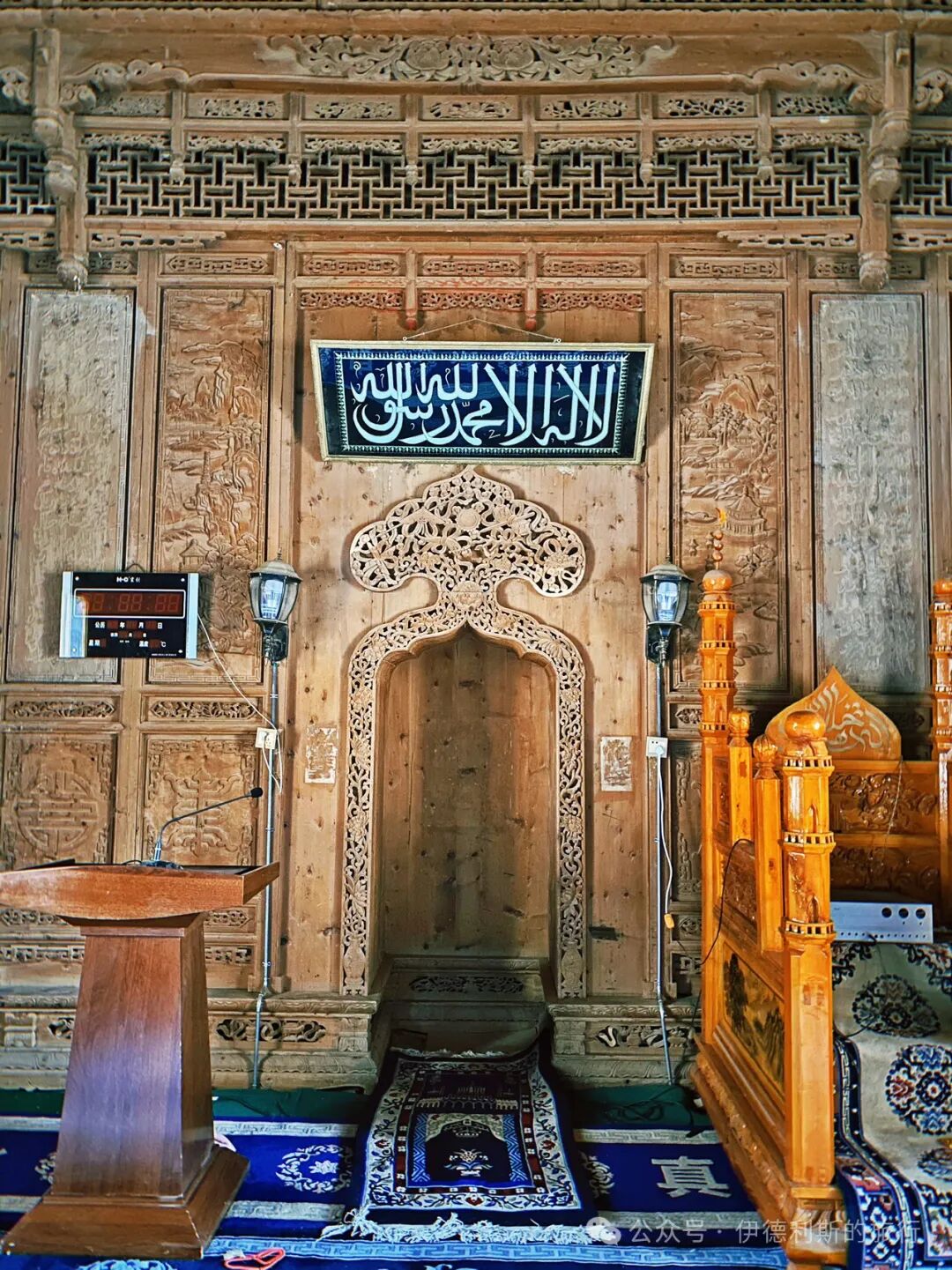
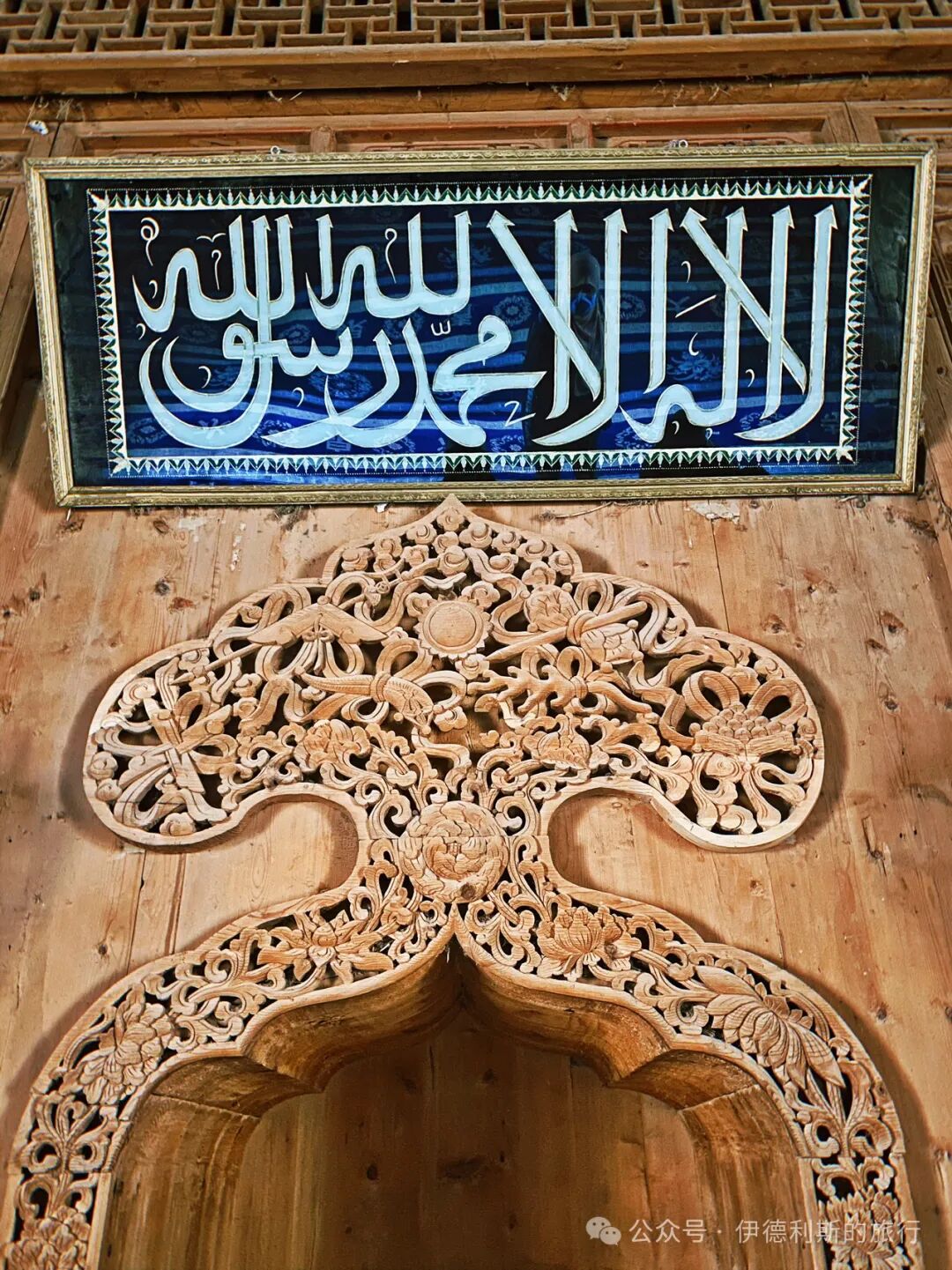
The Xunhua Tashapo Mosque has flame patterns and flower designs carved around the prayer niche (mihrab), with a flame pearl carved directly above it, which is also very rare.
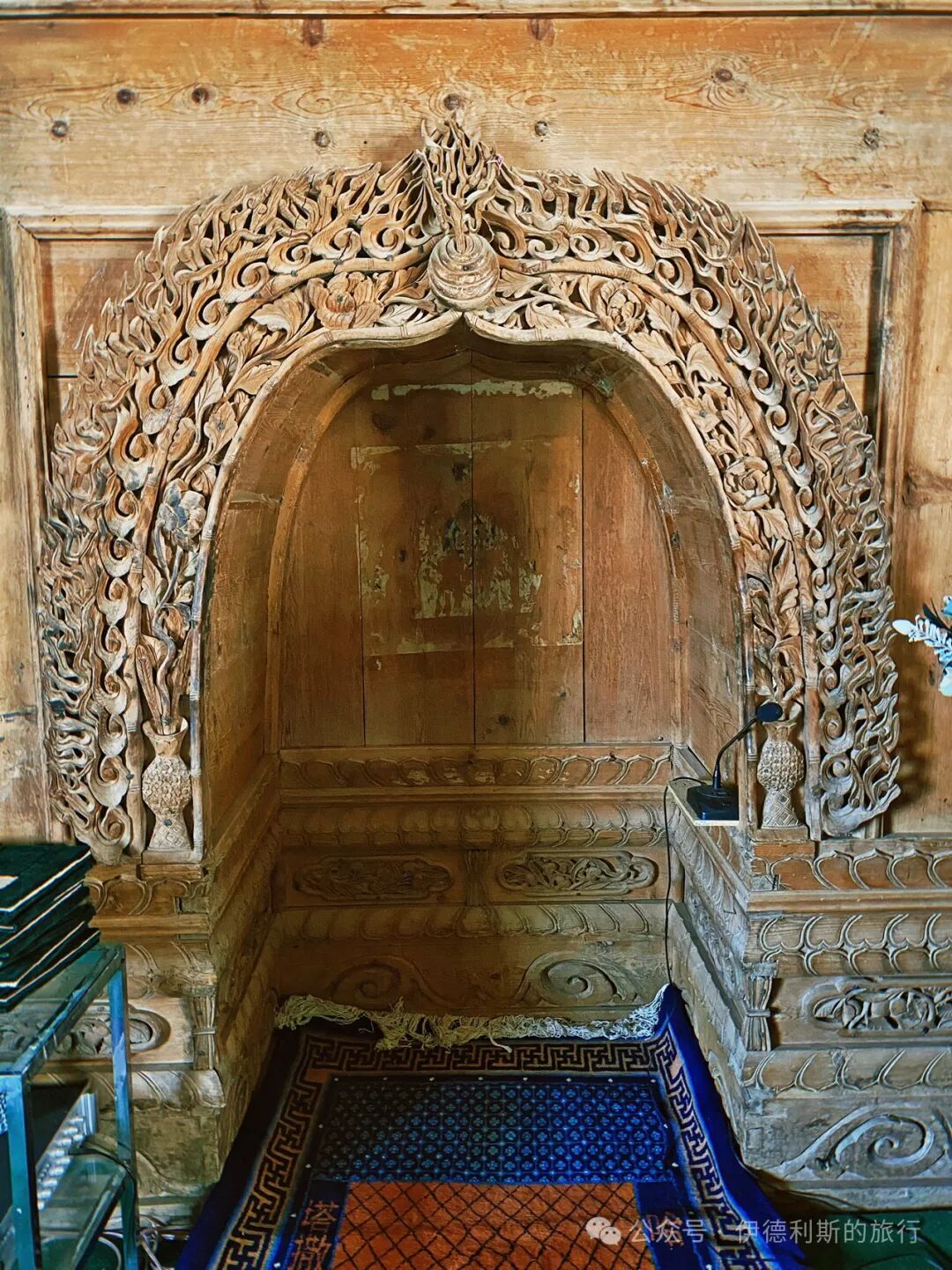
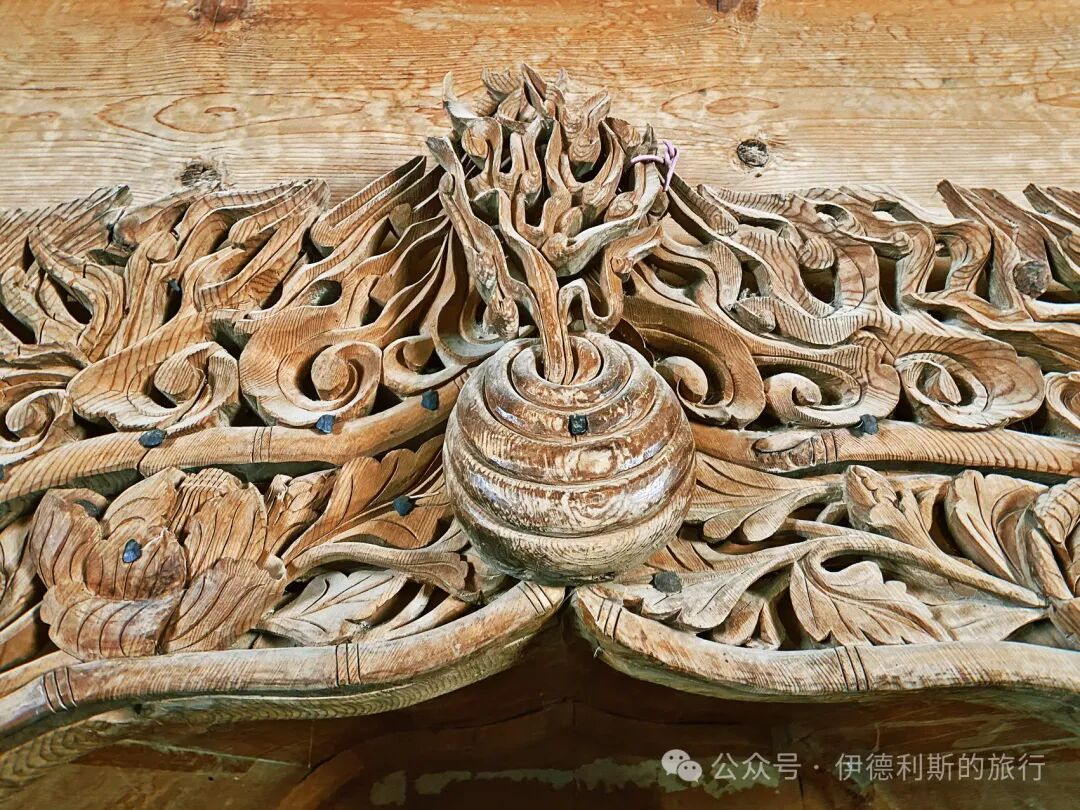
The Xunhua Qingshuihe East Mosque has a wood carving style similar to the Tashapo Mosque, but slightly shallower, and also features a flame pearl in the center.
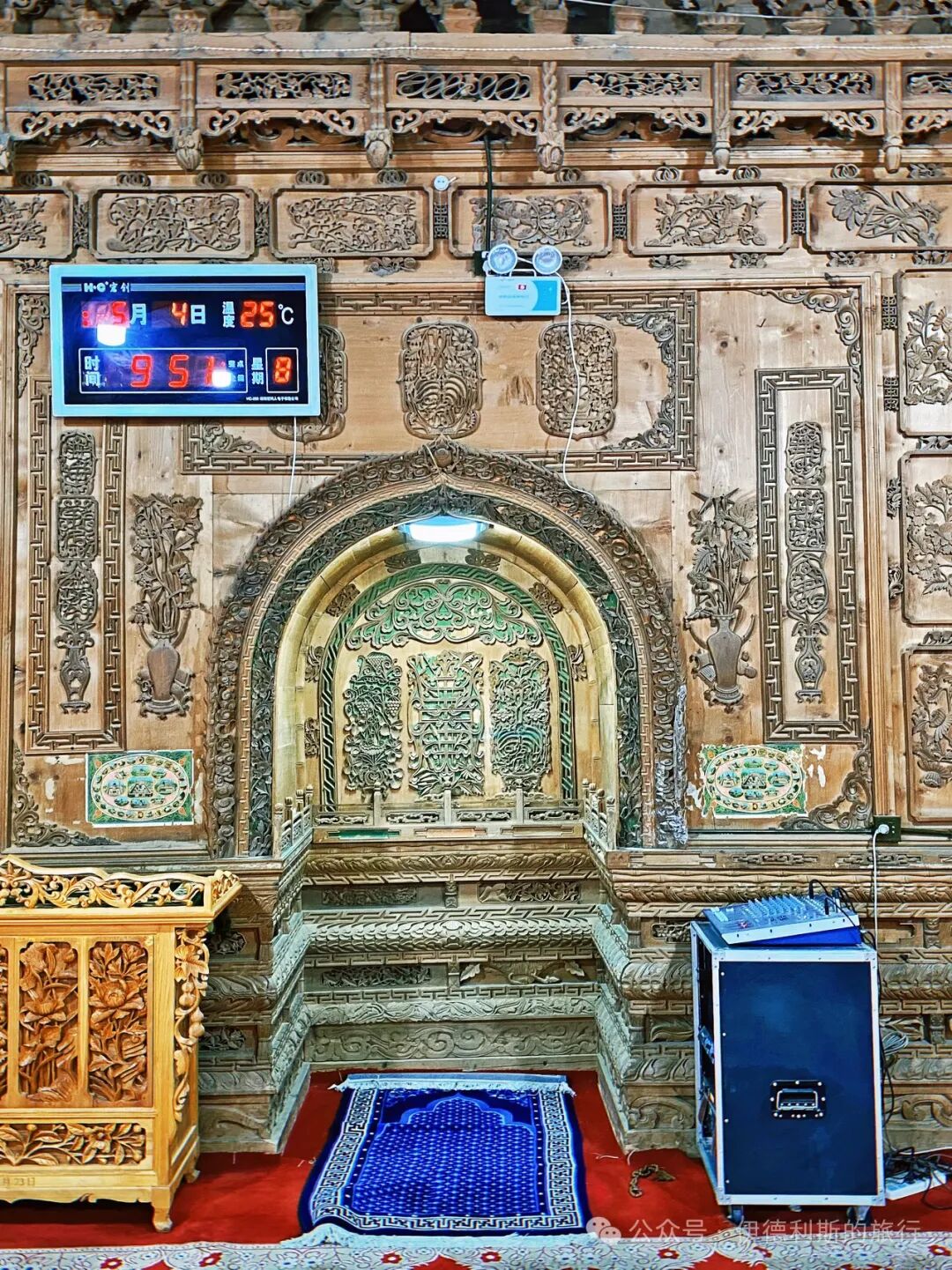
The Xunhua Mengda Dazhuang Mosque features painted wood panels, and the backlight inside the prayer niche (mihrab) is very unique due to Tibetan cultural influence.
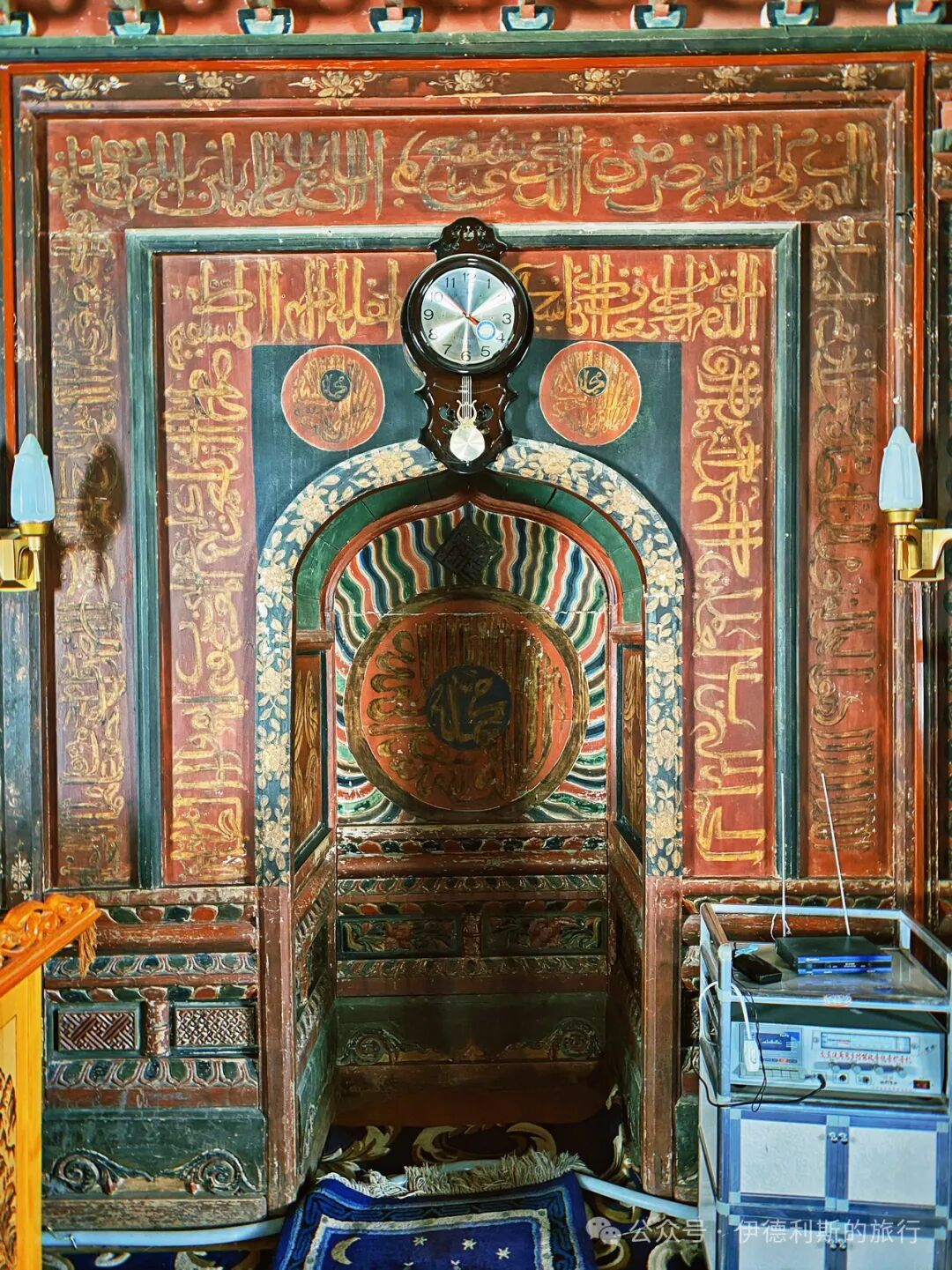
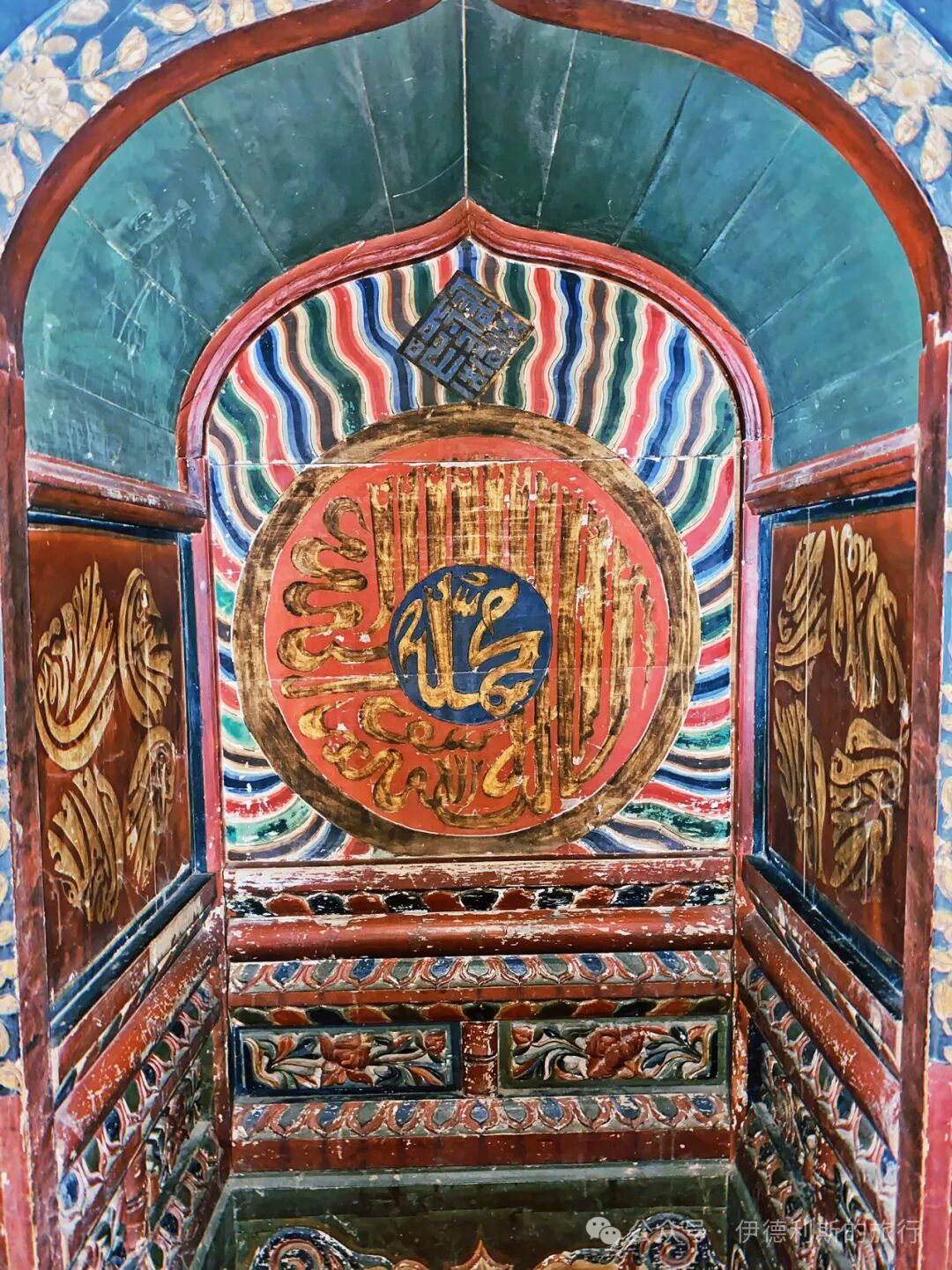
The Xunhua Shangkewa Mosque features painted wood panels with traditional calligraphy.
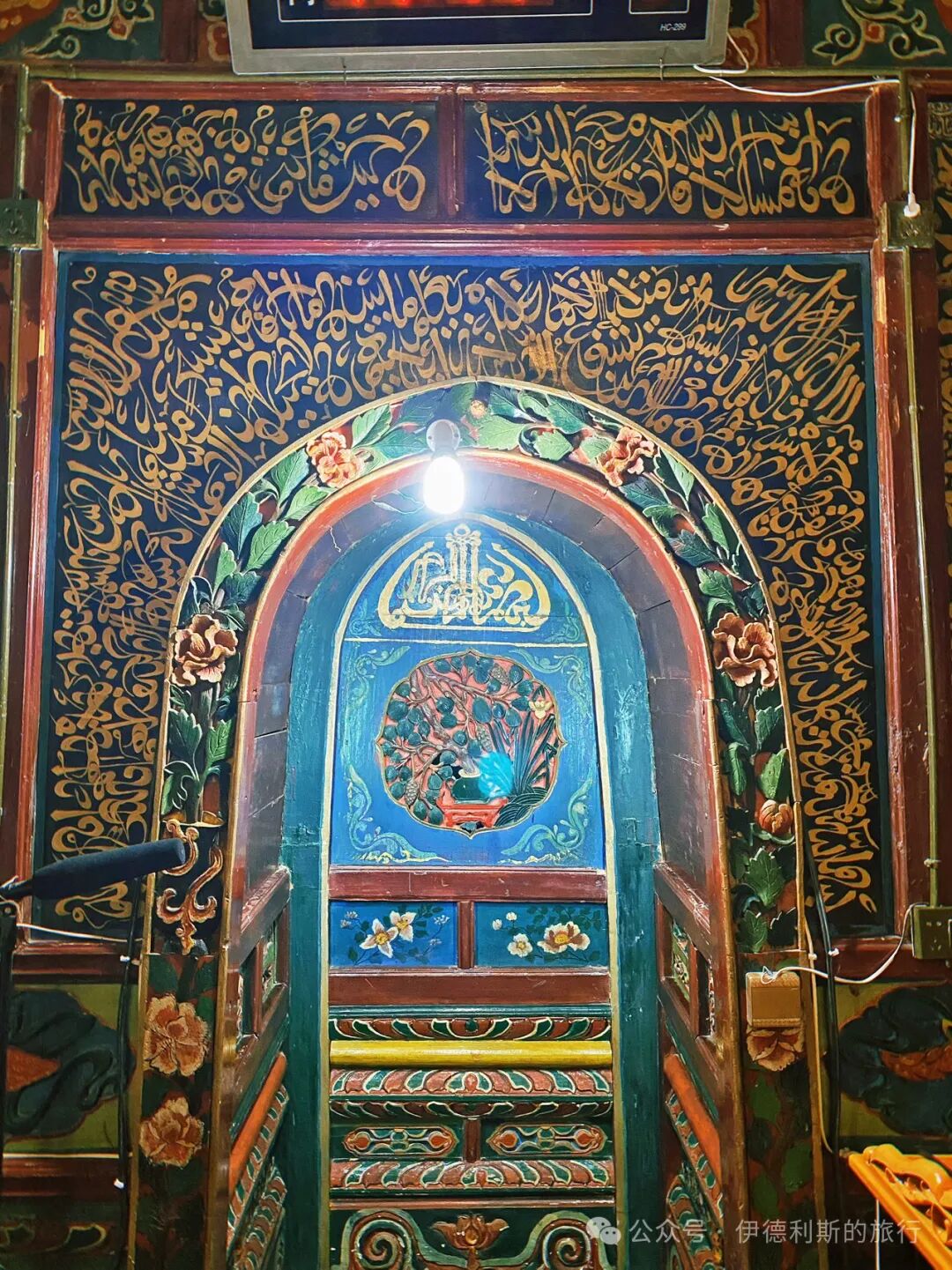
The Xunhua Zhangga Mosque has an arch in the center surrounded by horizontal inscribed boards and couplets.
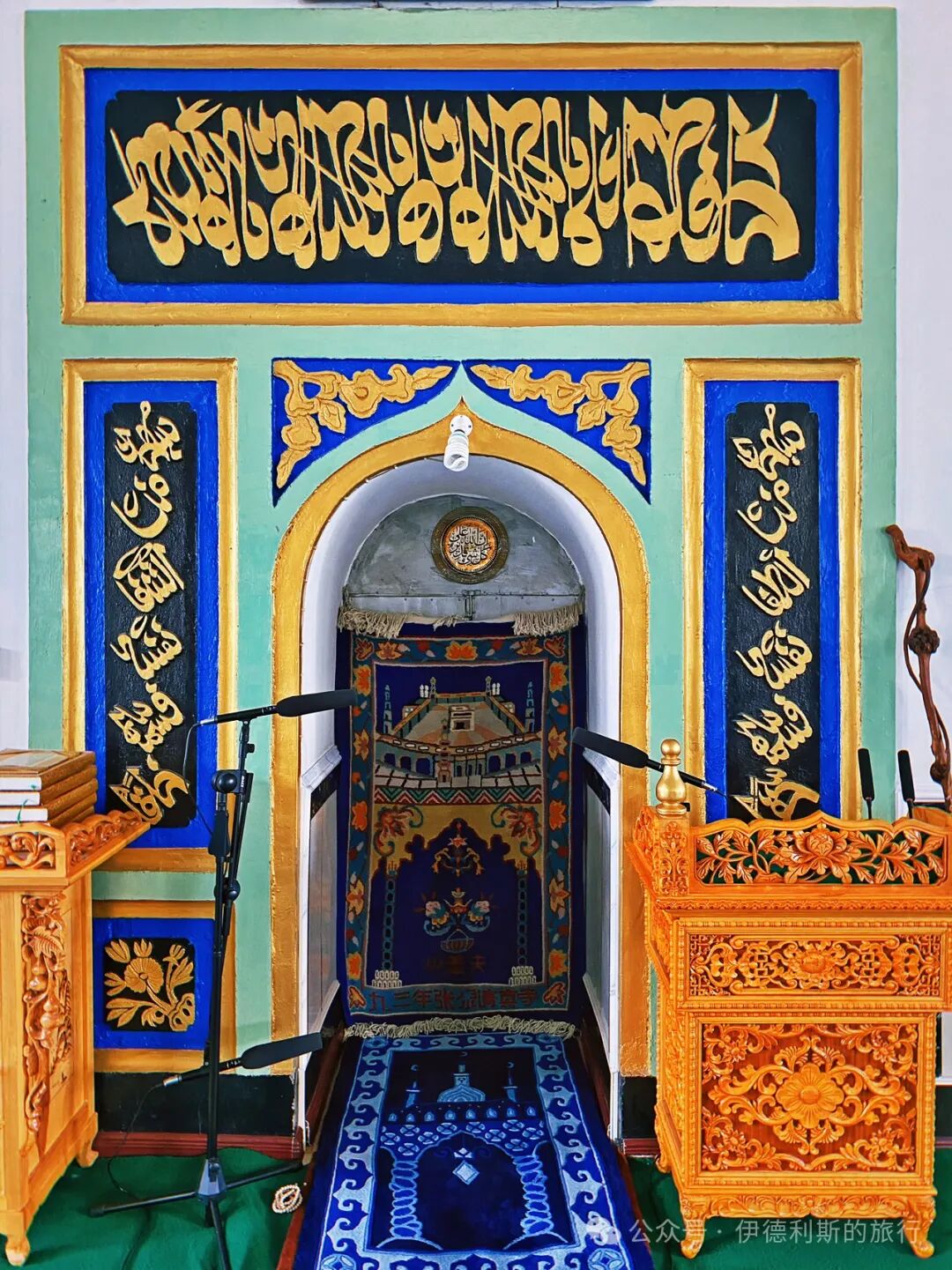
Xinjiang
The Shaanxi Grand Mosque in Urumqi was built in 1906. It features wood paneling and a central arch.
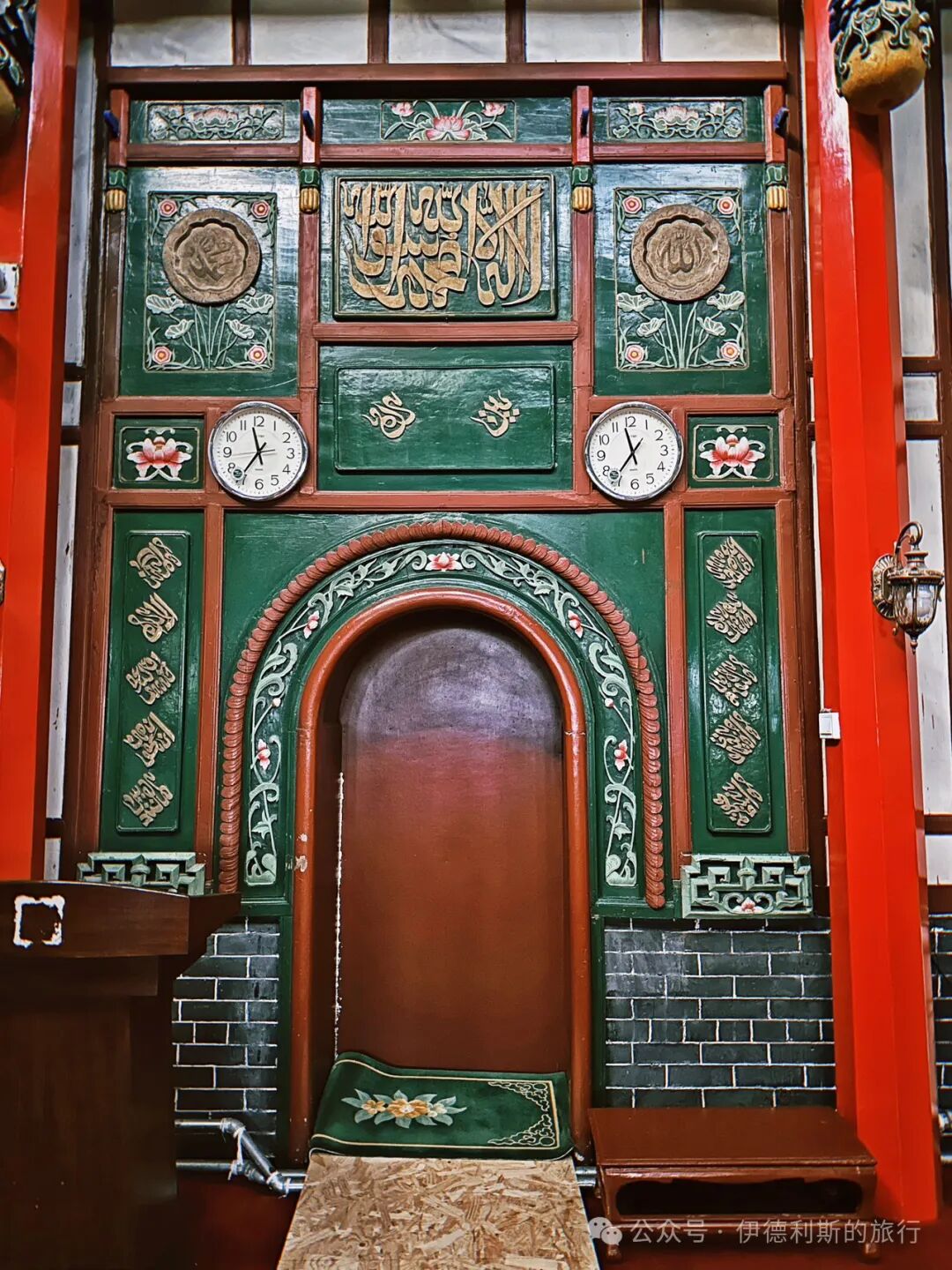
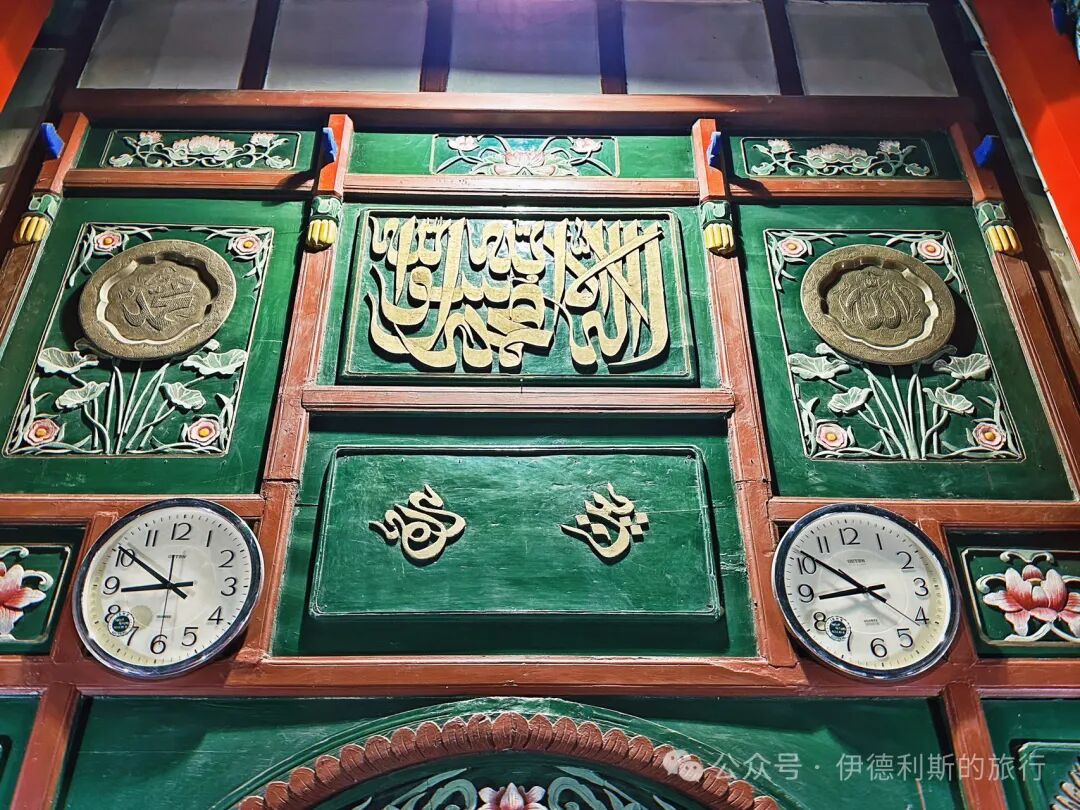
The South Grand Mosque in Urumqi was built in 1919. It has a decorative gate hood and a central arch.
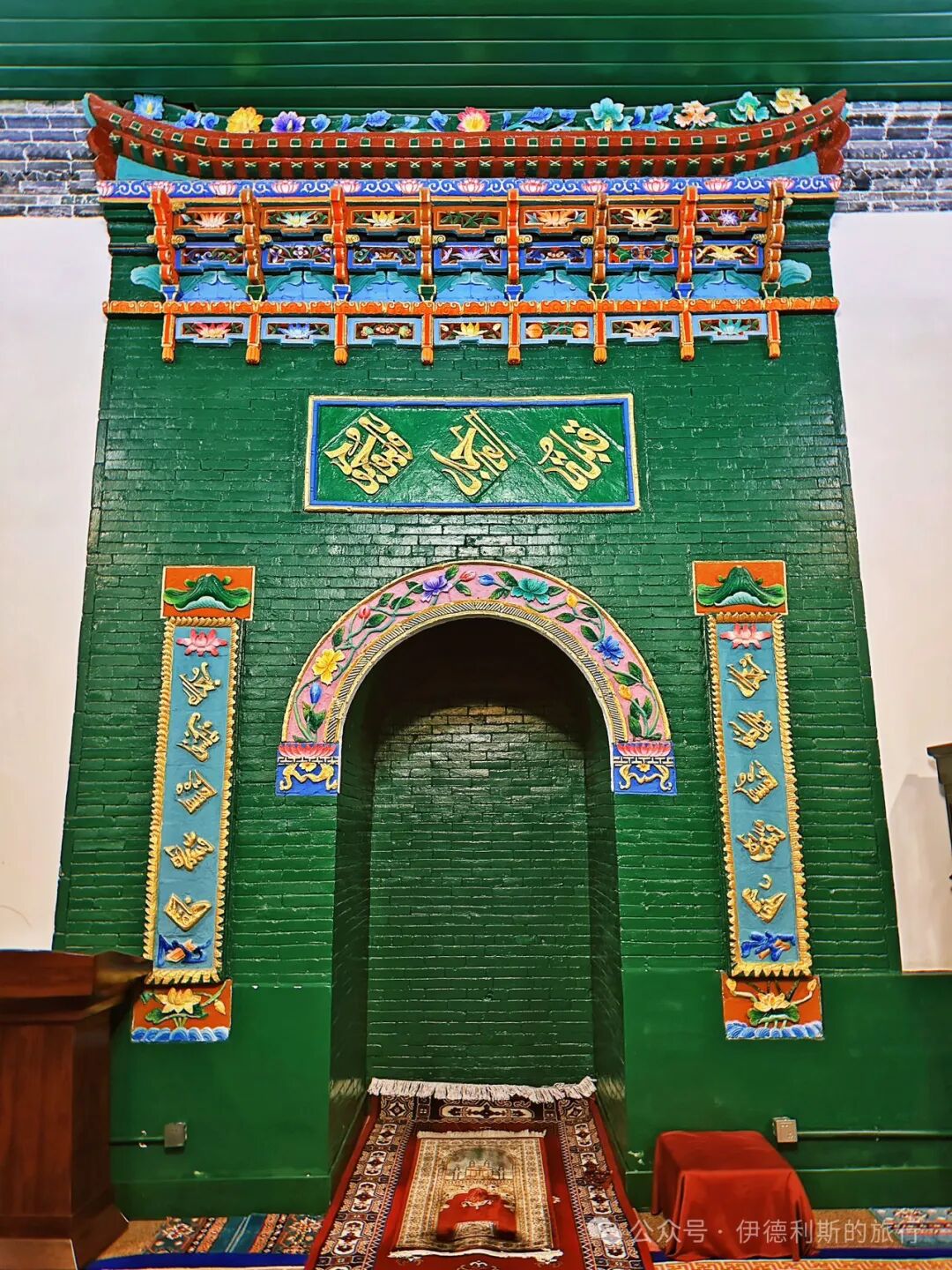
Tibet
The Lhasa Grand Mosque features wood carvings of flowers, plants, and calligraphy, along with two calligraphic couplets.
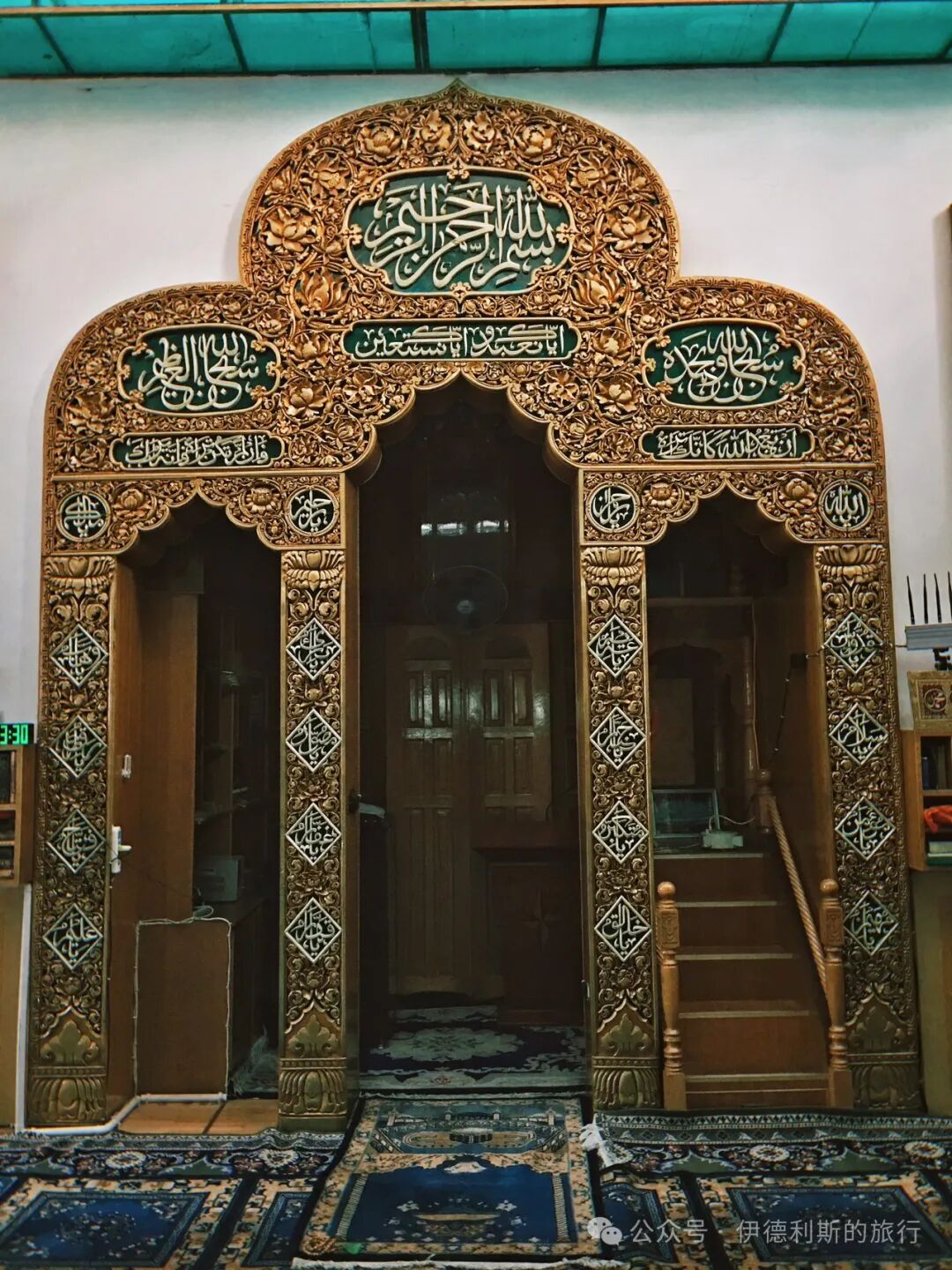
The Lhasa Small Mosque features wood carvings of flowers, plants, and calligraphy.
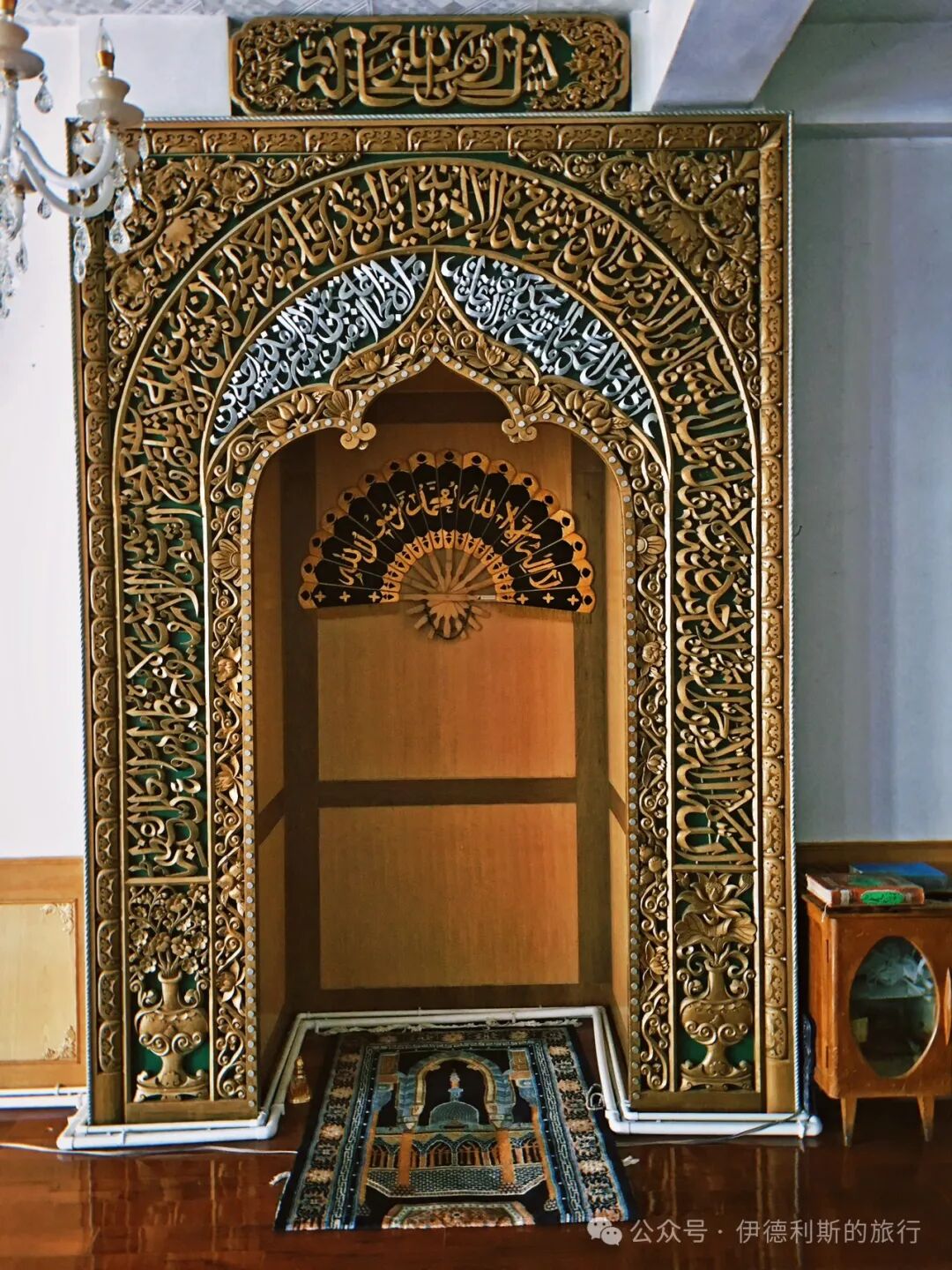
The Lhasa West Suburb Mosque features wood carvings of flowers, plants, and calligraphy.
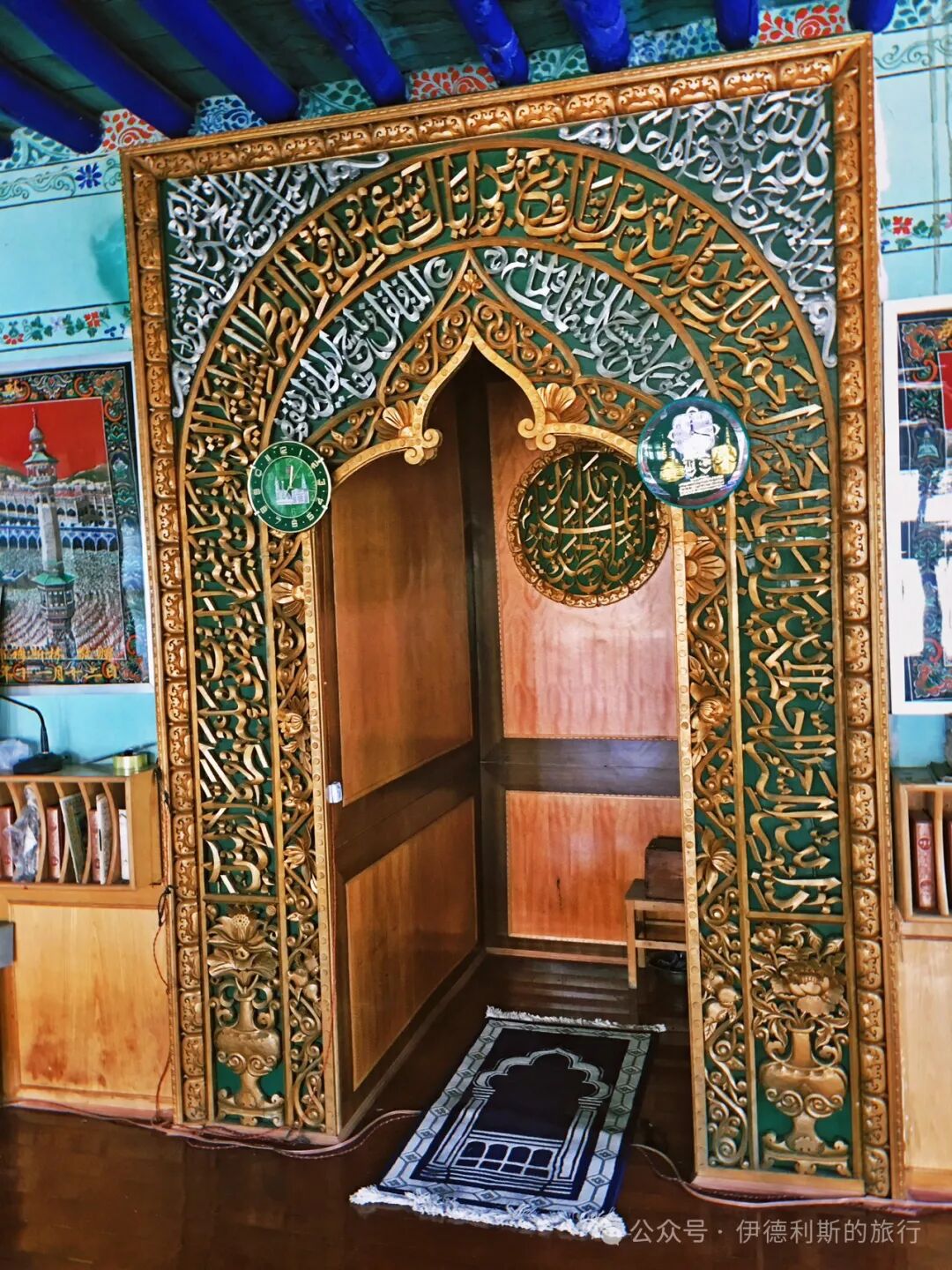
Sichuan
The Langzhong Mosque has a traditional calligraphic plaque above its arch.
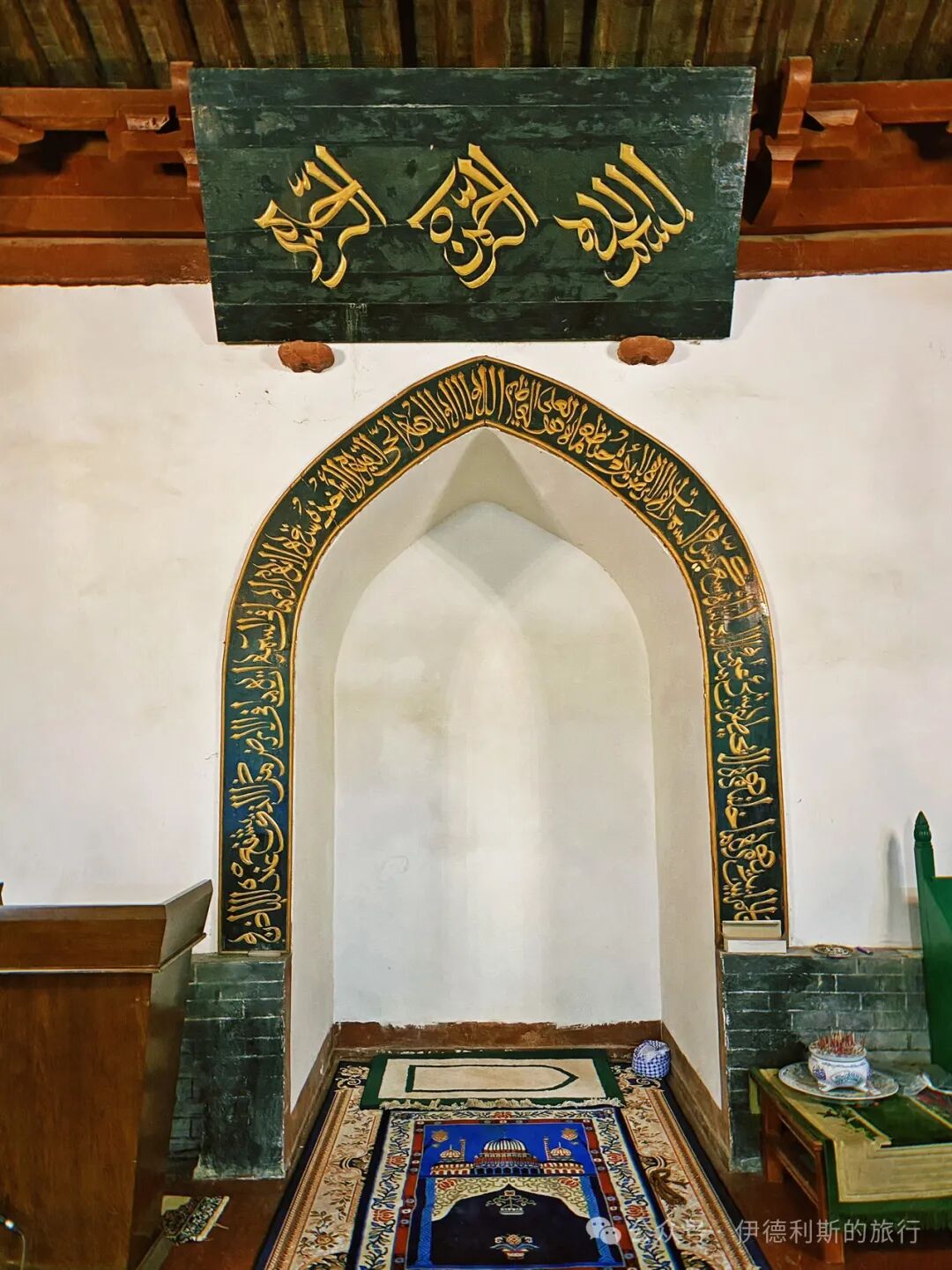
The Langzhong Baba Mosque has a plaque from the fifth year of the Guangxu reign that reads 'Le Shan Ke Feng' at the very top. Below it are traditional calligraphic couplets, and the center features an arch.
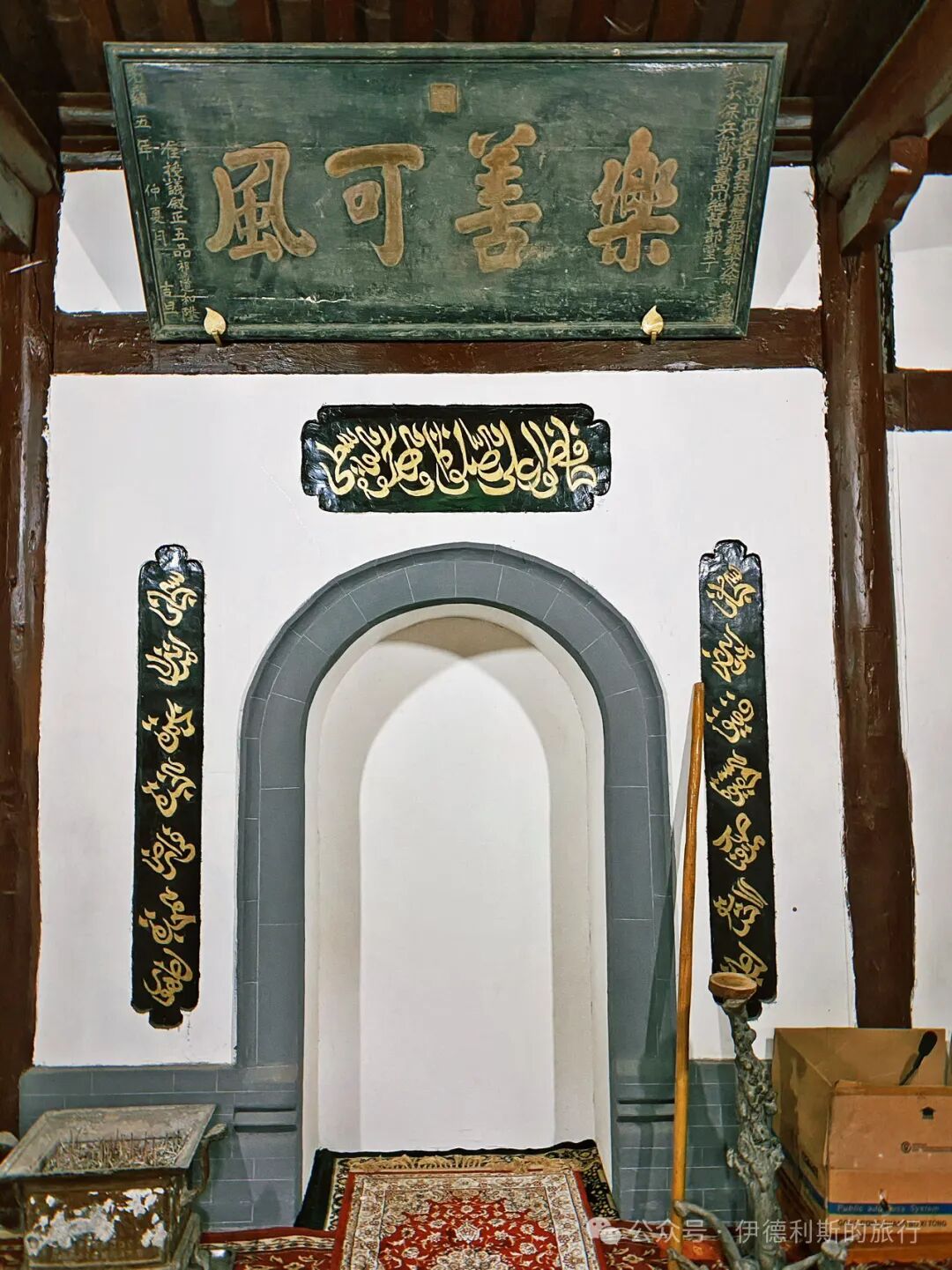
The Nanchong Mosque features traditional calligraphy in its center written by the famous calligrapher Wang Qifei.
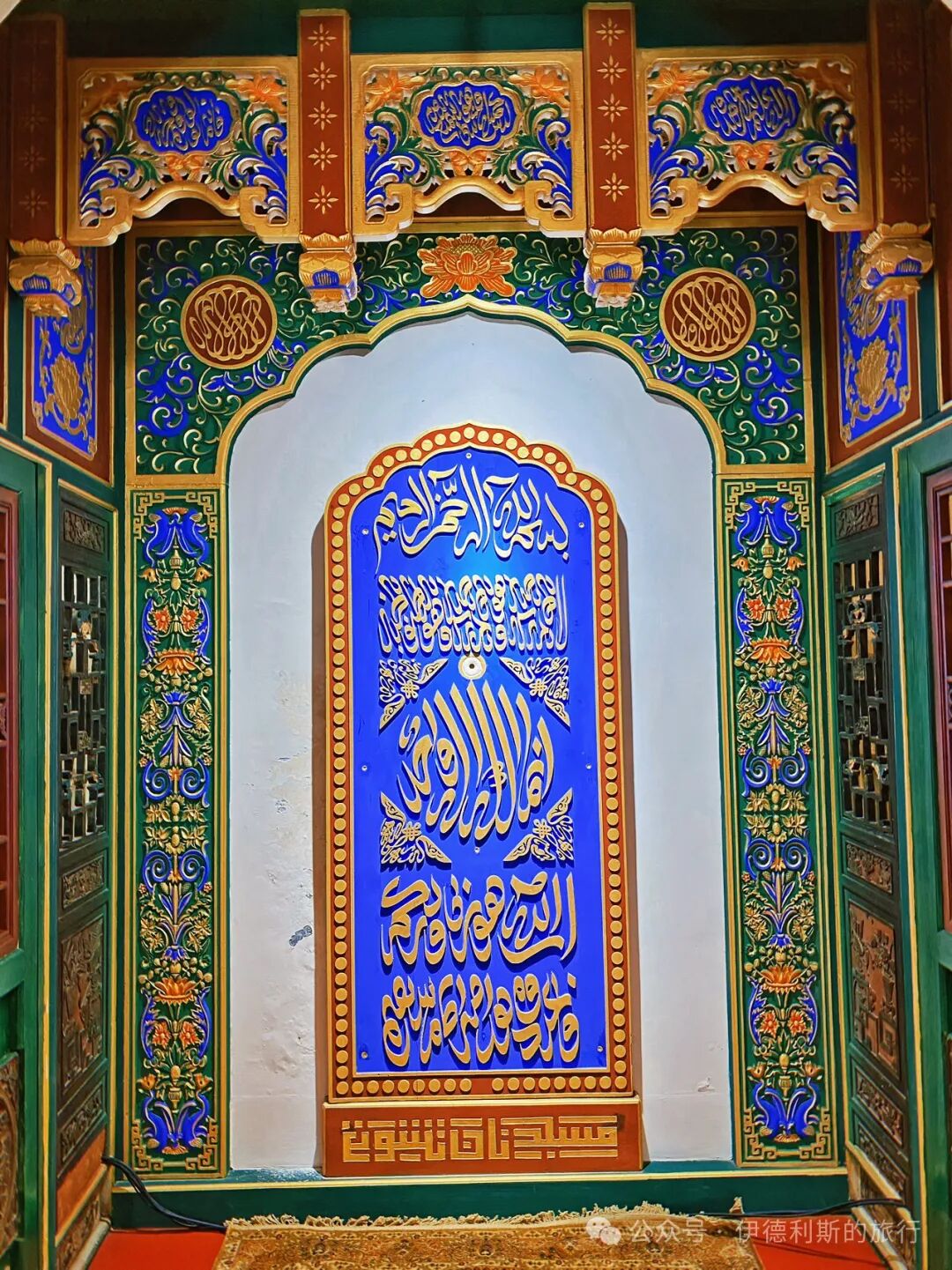
The Majia Mosque in Yankou, Wusheng, features brush-style calligraphy.
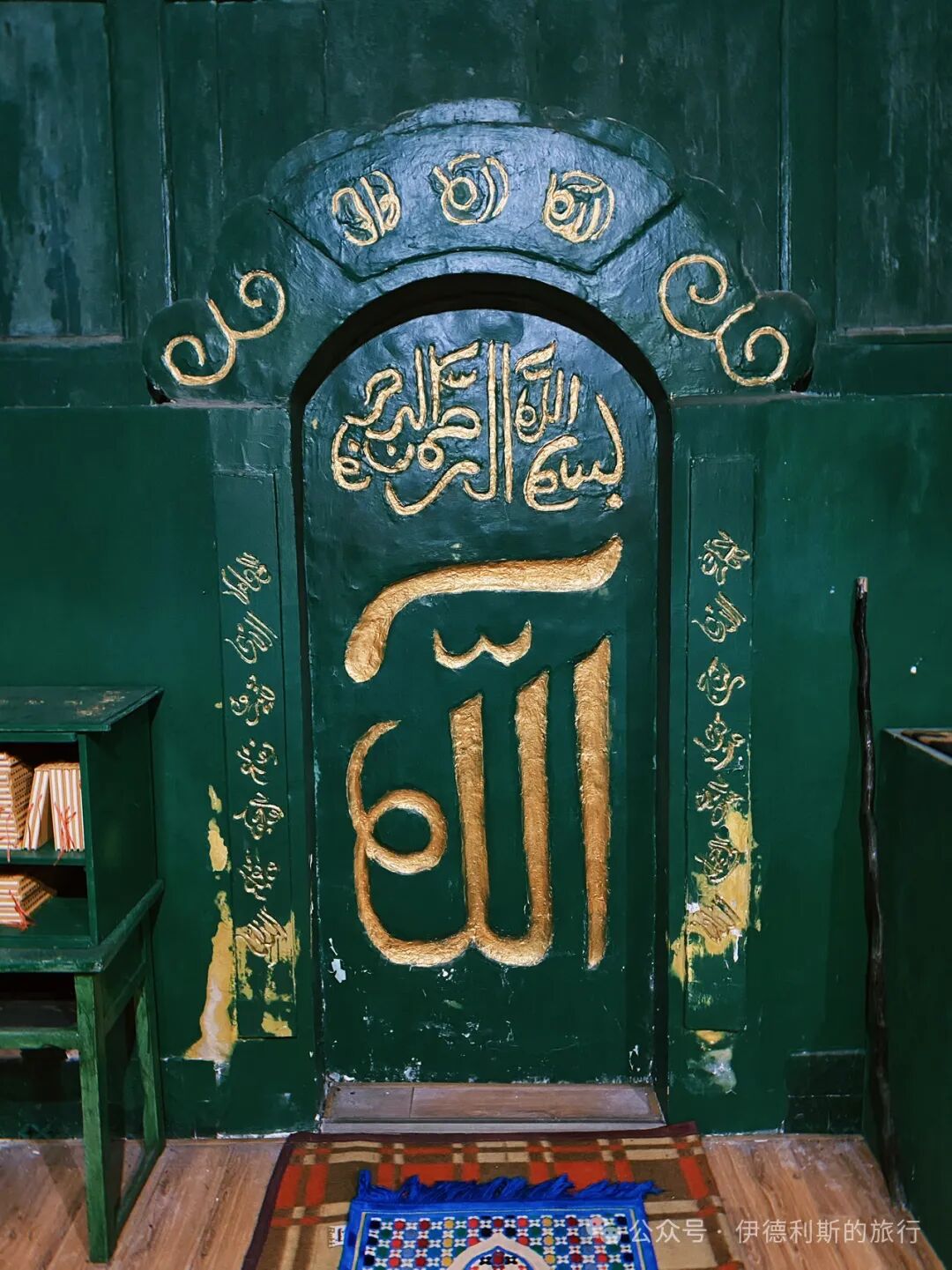
The Xichang City Mosque has traditional calligraphic plaques and couplets, with an arch in the center.
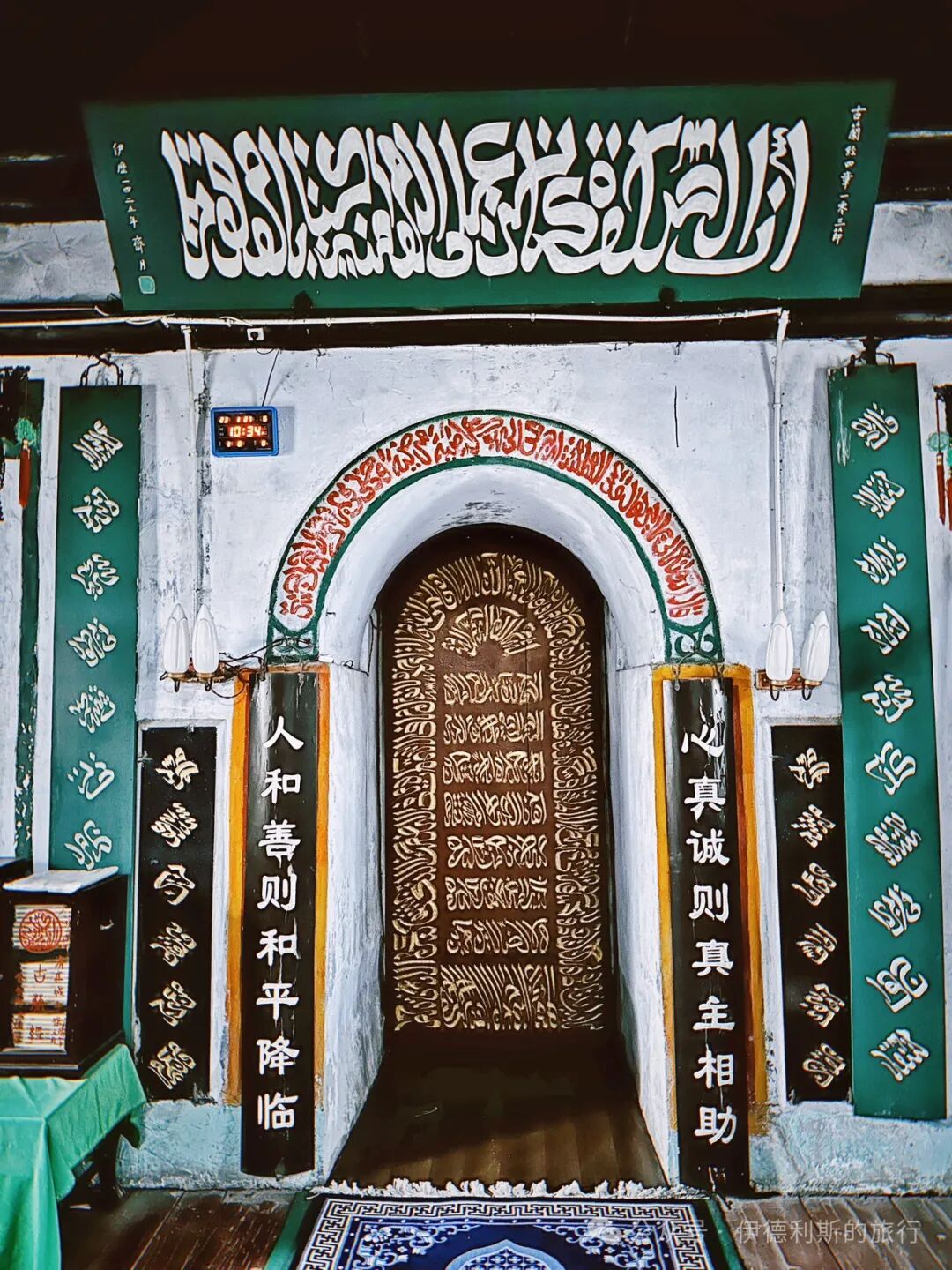
The Xichang East Mosque features unique Xichang-style Arabic calligraphy on its plaque.
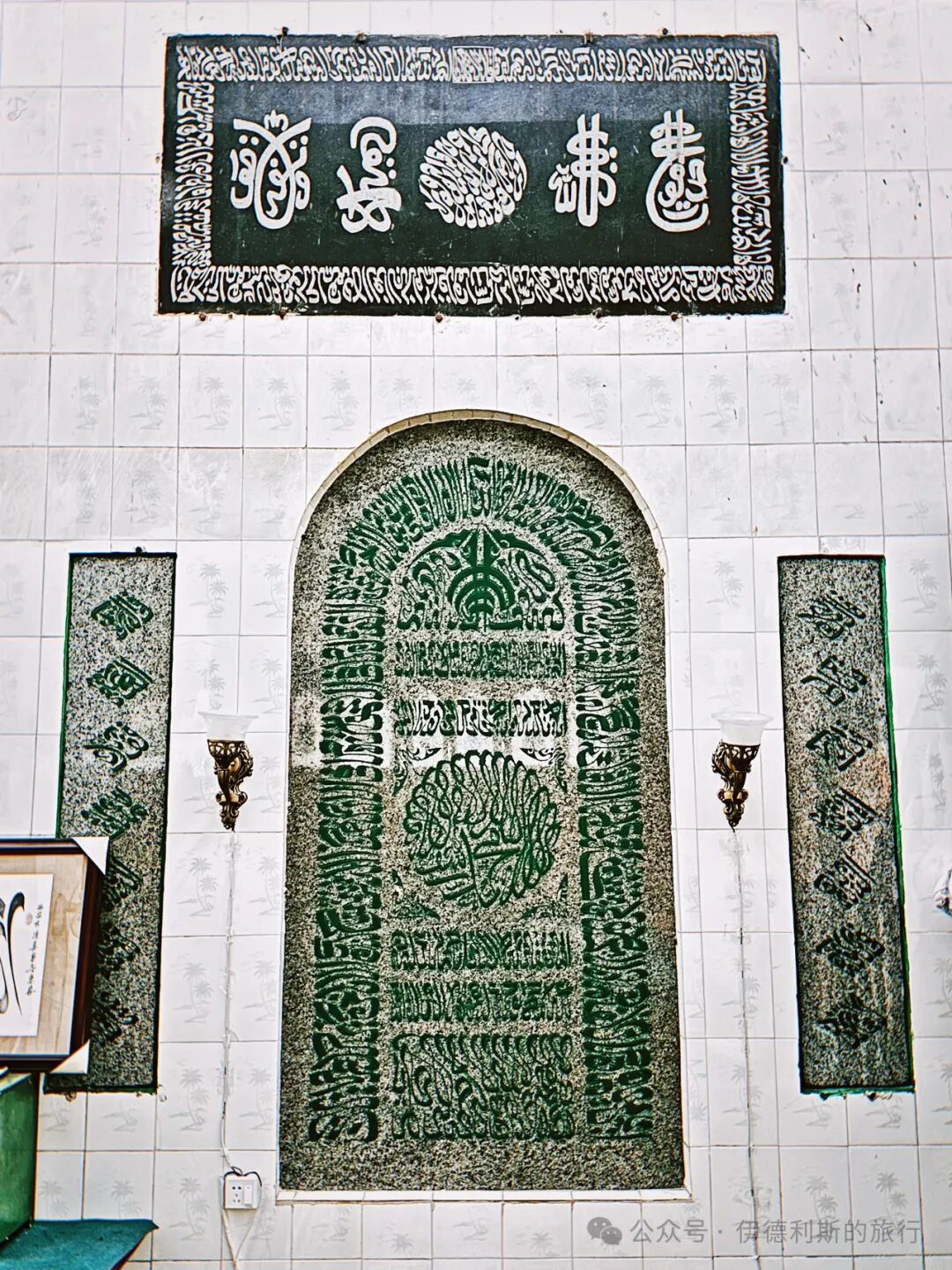
The Qing Dynasty wood-carved mihrab at the Miyi Tianba Mosque was damaged by termites, so it has been re-carved to look exactly like the original.
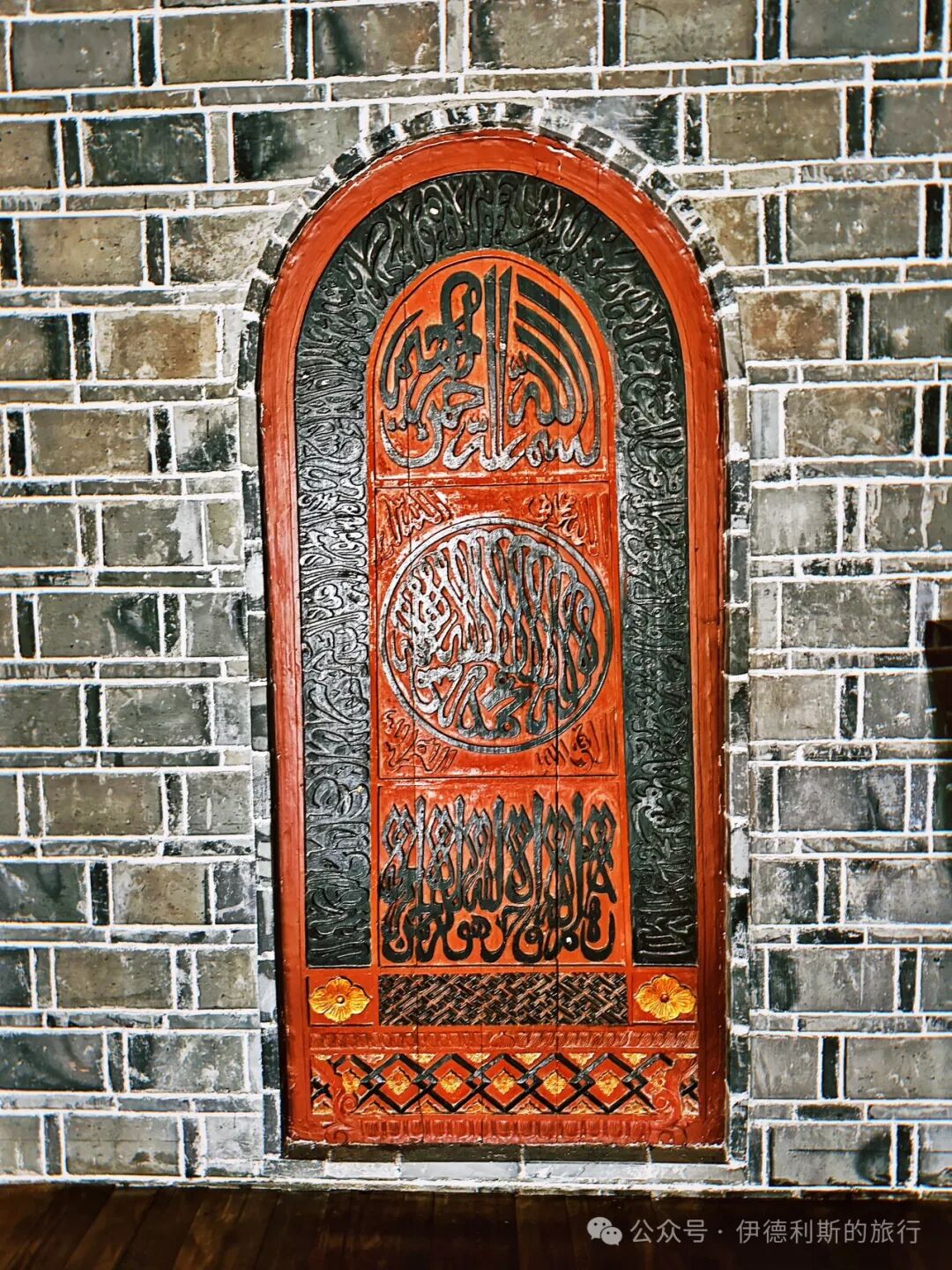
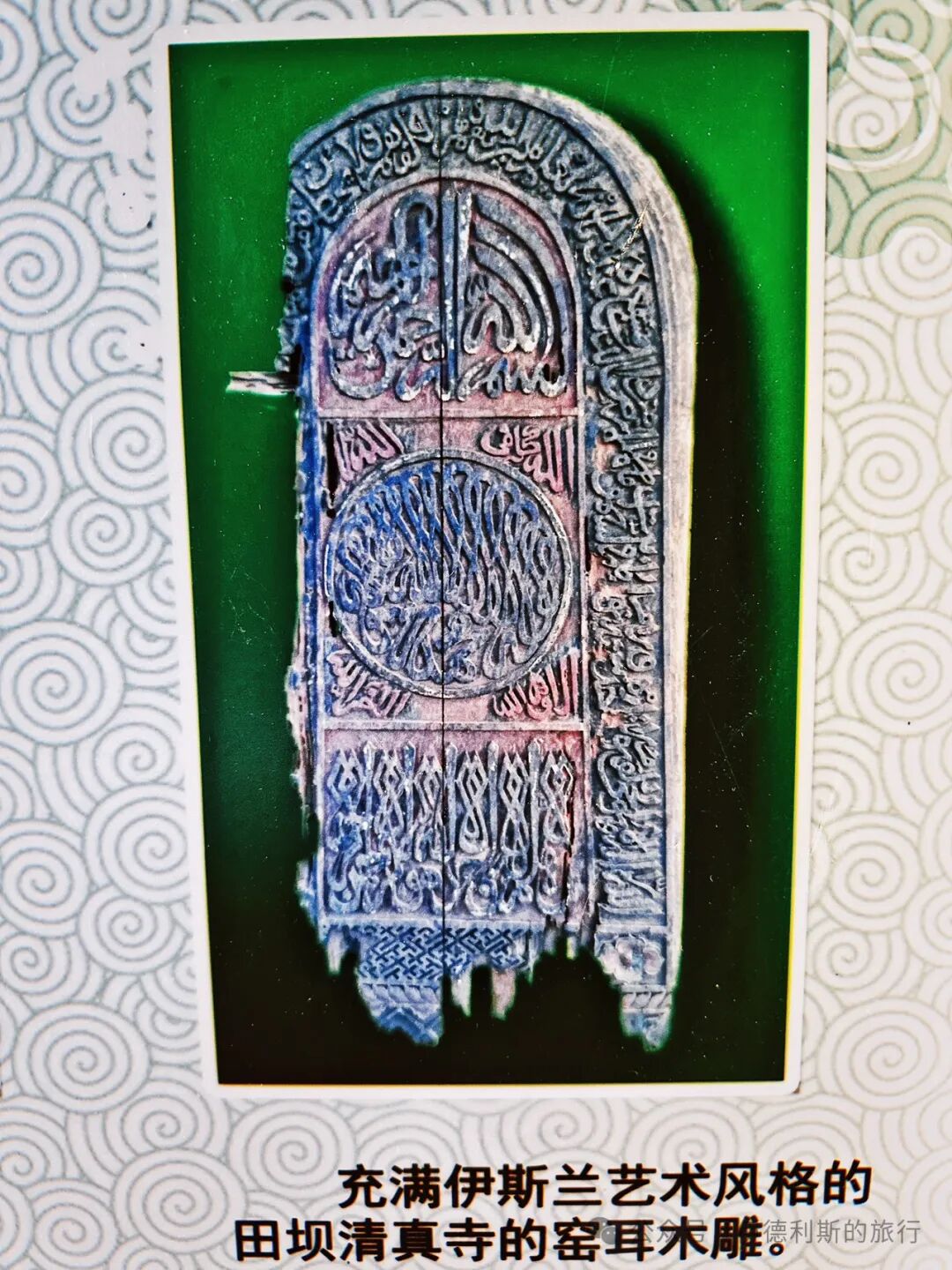
The Dujiangyan Mosque has calligraphic couplets that look like bamboo joints, which is very characteristic of Sichuan.
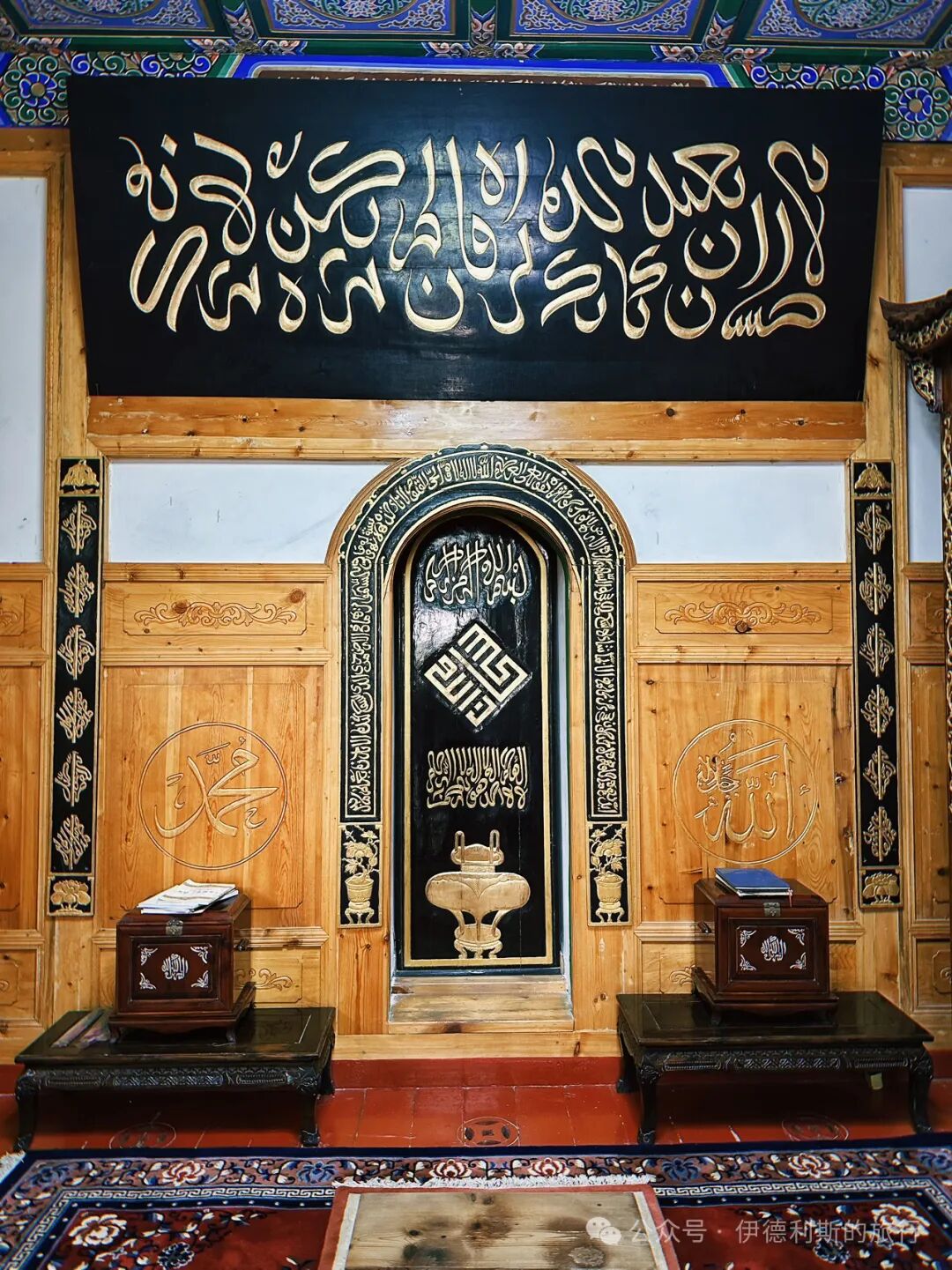
The Tangjia Mosque in Mimou Town, Chengdu, features clever couplets that start with two-part phonetic letters known as suole.
Summary: This is the first part of a visual record of 131 traditional mihrabs in Chinese mosques. It keeps the source images, place names, captions, and architectural notes in a cleaner English layout.
Beijing.
The Ming dynasty archway-style mihrab at Niujie in Beijing features a beam-column hip roof on top and a Sumeru pedestal (xumizuo) at the bottom. The eight large lotus petal carvings on the Sumeru pedestal show a Ming dynasty style. The upper part is painted with high-grade gold-inlaid swirling patterns (xuanzi caihua), featuring extensive gold leaf. It was expensive to make and shows the characteristics of official architectural paintings from the mid-Qing dynasty.
The Beijing Niujie Women's Mosque was built in 1925 as the first women's mosque in Beijing. It was originally located on Shouliu Hutong and was rebuilt on the north side of the Niujie Mosque in 2006. The mihrab is a century-old brick carving of a dua. A September 1942 issue of Beizhi magazine published an old photo of this brick carving.
The Beijing Huashi Mosque was built in 1414 (the 12th year of the Yongle reign of the Ming dynasty). The mihrab has a glazed tile archway inscribed with traditional Chinese calligraphy.
The Beijing Nankou Mosque is believed to have been built in the Ming dynasty and renovated during the Qing dynasty. The mihrab is a blue brick screen wall style with a clear-water ridge and scorpion-tail roof ends on top, and a Sumeru pedestal at the bottom. In the middle, it features exquisite diamond-patterned window shutters and scroll-patterned arched brick carvings.
The construction date of the Beijing Gubeikou Mosque is unknown. It was renovated in 1629 (the 12th year of the Chongzhen reign of the Ming dynasty) and rebuilt to its current appearance by the Zhili regional commander Ma Jinliang during the Kangxi reign of the Qing dynasty. The mihrab is arch-shaped and painted with auspicious cloud patterns, along with traditional calligraphy in the North China style.
The Beijing Dongzhimenwai Mosque, originally called the Erlizhuang Mosque, was built in the Yuan dynasty. The old mosque's mihrab was wooden and shaped like a tablet. After the renovation, it was placed under the eaves of the hall opposite the new mosque, and it is carved with traditional calligraphy.
The Beijing Changying Mosque mihrab is shaped like a stone stele head and features very complex painted calligraphy. According to research by teacher Hui Zongzheng, it may have been moved from elsewhere when the mosque was built during the Zhengde reign of the Ming dynasty.
Tianjin.
The Great Mosque at Xibeijiao in Tianjin has a wooden carved niche (yaokan) with a very high Sumeru pedestal railing, which is quite rare.
The Tianjin Jinjiayao Mosque features traditional calligraphy plaques and couplets, with an arched gate in the middle.
The Tianjin Hexiwu Mosque features a rare painted design of a half-open vermilion door.
The Tianjin Xibeijiao South Mosque features traditional calligraphy plaques and couplets.
The Tianjin Tianmu North Mosque also features a large gate design in the middle.
Hebei.
The Hebei Zhangjiakou Xinhua Street Mosque's winter prayer hall mihrab is decorated with traditional calligraphy plaques and circular couplets.
The Hebei Zhangjiakou Xiguan Mosque is a blue brick screen wall style with a hip roof, a ridged roof, and flying eaves, with a Sumeru pedestal at the bottom. The center features Ming dynasty calligraphy carvings restored in 2020 by the famous calligrapher Wang Qifei based on old photos.
The South Mosque (Nandasi) in Xuanhua, Hebei, is an arched structure carved with calligraphy and floral patterns.
The North Mosque (Beisi) in Xuanhua, Hebei, is an arched structure carved with calligraphy and floral patterns.
Henan
The Shanyitang Mosque in Henan is an arched structure decorated with calligraphy written in 2009 by the famous calligrapher Mi Guangjiang.
The North Mosque (Beisi) in Zhengzhou, Henan, is an arched structure with an exterior carved door hood.
The North Mosque (Beisi) in Qinyang, Henan, is an arched structure decorated with traditional calligraphy.
The Xiguan Mosque in Bo'ai, Henan, is an arched structure decorated with Arabic plaques and couplets.
The West Mosque (Xisi) in Daxinzhuang, Bo'ai, Henan, is an arched structure decorated with Arabic plaques and couplets.
Shandong
The North Mosque (Beisi) in Linqing, Shandong, is a three-room, four-pillar memorial archway style building with bracket sets and flying eaves, decorated with intricate traditional calligraphy.
The East Mosque (Dongsi) in Linqing, Shandong, is a three-room, four-pillar memorial archway style building with bracket sets and flying eaves, decorated with intricate traditional calligraphy.
The South Mosque (Nandasi) in Jinan, Shandong, is an arched structure. According to the mosque's stele record, the calligraphy was written in 1810 (the 15th year of the Jiaqing reign) by Imam Hei Faxiang.
The North Mosque (Beisi) in Jinan, Shandong, is an arched structure featuring calligraphy in the center.
The Zhenjiao Mosque in Qingzhou, Shandong, is an arched structure with a single-eave, hanging-mountain style door hood above.
Inner Mongolia
The Great Mosque in Hohhot, Inner Mongolia, has a door hood with openwork, painted floral and scroll patterns.
The East Mosque (Dongsi) in Hohhot, Inner Mongolia.
The Longshengzhuang Mosque in Feng County, Inner Mongolia, has a door hood with wood-carved calligraphy inside the arch.
The North Mosque (Beisi) in Chifeng, Inner Mongolia, features original wood carvings from 1747 (the 12th year of the Qianlong reign).
Liaoning
The Old City Mosque in Kaiyuan, Liaoning, features a clear-water scorpion-tail roof ridge.
The Luyang Mosque in Jinzhou, Liaoning, has a plaque with large-character calligraphy and traditional brush-style calligraphy on both sides.
The South Mosque (Nandasi) in Shenyang, Liaoning, houses a large spirit tablet.
The Ancient City Mosque in Fuzhou, Dalian, Liaoning, features traditional brush-style calligraphy.
Lingyuan Mosque in Liaoning features carvings of Arabic calligraphy.
Heilongjiang
The winter prayer hall at Bukui West Mosque in Qiqihar, Heilongjiang, has traditional calligraphy carved onto its arches.
The main hall of Bukui West Mosque in Qiqihar, Heilongjiang, is surrounded by carved calligraphy plaques and couplets.
The main hall of Bukui East Mosque in Qiqihar, Heilongjiang, features a clear-water ridge (qingshuiji) roof, a Sumeru pedestal (xumizuo) base, and carved calligraphy plaques and couplets.
Acheng Mosque in Heilongjiang has four floor-to-ceiling pillars (tongtianzhu) in its kiln hall (yaodian) built in 1900 (the 26th year of the Guangxu reign). They were made from giant pine logs hauled from the forests of Yabuli, Heilongjiang, and installed by a carpenter named Sun Yulin from Wula Street, Jilin. Legend says Carpenter Sun's master was worried about his apprentice, so he secretly went to a stone shop and made four 3-foot-tall lotus-shaped pillar bases. When it came time to raise the floor-to-ceiling pillars, they were exactly 3 feet too short. Seeing this, the master immediately told Carpenter Sun to hitch a cart and bring back the four lotus pillar bases from the stone shop, and they fit perfectly.
Shanxi
Taiyuan Great Mosque in Shanxi is a Ming Dynasty treasure. It has a wooden memorial archway-style door hood with a hip roof (wudianding), bracket sets (dougong), and flying eaves. Below are Sumeru pedestal railings, and the pillars are decorated with scrolling lotus patterns and Arabic circular motifs. The center features a wooden carved hanging panel with Arabic script, and a kiln niche (yaokan) is set in the very center.
Shaanxi
Huajue Lane Great Mosque in Xi'an, Shaanxi, is a Ming Dynasty treasure. It uses wooden board inlays and gold-painted pillars to create door hoods and hanging pillars. The wooden boards are carved with Arabic calligraphy and floral patterns, making them very magnificent. The center has a kiln niche arch supported by prismatic pillars on both sides. This is similar to the mihrab style found in Iran and Turkey during the Yuan and Ming dynasties, making it the only known Ming Dynasty mihrab in China that blends Eastern and Western styles.
Besides Huajue Lane Great Mosque, the Daxuexi Lane Mosque and Dapiyuan Mosque in Xi'an also have original, unrestored mihrabs. Both mihrabs are made of inlaid wooden boards with a kiln niche in the middle, but their styles differ. Daxuexi Lane Mosque has a wooden carved canopy (feizhao) between its pillars. The craftsmanship is exquisite, and the calligraphy style matches that of Mengda Mosque in Xunhua, Qinghai, suggesting they may have been made by the same group of craftsmen.
Daxuexi Lane Mosque
Dapiyuan Mosque
Some restored and newly built mihrabs in Xi'an, Shaanxi.
Xiaopiyuan North Mosque has had all its paintings redone, though it is said the style remains unchanged. The center is a kiln niche with beautiful wooden floral carvings.
At the North Guangji Street Mosque, the wood carvings on the upper part of the prayer niche (mihrab) look like those at the Great Mosque of Huajue Lane.
The Xiaoxuexi Lane Middle Mosque features wood panel inlays with a prayer niche (mihrab) in the center.
The Xiaoxuexi Lane Yingli Mosque has a wood-carved door canopy decorated with flower and plant patterns.
The Dongmen Cang South City Mosque has a wood-carved door canopy featuring traditional-style calligraphy.
The Sajinqiao Mosque uses wood panel inlays and contains a very rare Chinese-language Yasin chapter.
Prayer niches (mihrab) in the southern Shaanxi region:
The Ankang North Mosque in Shaanxi is built in a memorial archway style with wood-carved flying eaves.
The Ankang Jingning South Mosque in Shaanxi features traditional-style couplets and horizontal inscribed boards.
The Xixiang North Mosque in Shaanxi features traditional-style couplets and horizontal inscribed boards.
The Xixiang Luling Mosque in Shaanxi is built in a wood memorial archway style and has traditional couplets.
The Hanzhong Xianyin Mosque in Shaanxi has traditional-style horizontal inscribed boards and couplets, and the prayer niche (mihrab) is carved with an offering table.
Gansu
The Linxia Old Wang Mosque is arch-shaped and carved with traditional Arabic horizontal inscribed boards and couplets.
The Linxia West Mosque is arch-shaped and carved with traditional Arabic horizontal inscribed boards and couplets.
The Linxia North Mosque is arch-shaped and carved with traditional Arabic horizontal inscribed boards and couplets.
The Tianshui Beiguan Mosque is arch-shaped and carved with traditional Arabic horizontal inscribed boards and couplets.
The Tianshui Qin'an Nanxiaguan Mosque features brick carvings of Zhe school Shagou-style calligraphy and rare brick-carved hanging scrolls.
Qinghai
The Haidong Hongshuiquan Great Mosque features wood panel inlays, a door canopy above, a Sumeru pedestal below, and extremely rare traditional auspicious patterns carved above the prayer niche (mihrab).
The Xunhua Tashapo Mosque has flame patterns and flower designs carved around the prayer niche (mihrab), with a flame pearl carved directly above it, which is also very rare.
The Xunhua Qingshuihe East Mosque has a wood carving style similar to the Tashapo Mosque, but slightly shallower, and also features a flame pearl in the center.
The Xunhua Mengda Dazhuang Mosque features painted wood panels, and the backlight inside the prayer niche (mihrab) is very unique due to Tibetan cultural influence.
The Xunhua Shangkewa Mosque features painted wood panels with traditional calligraphy.
The Xunhua Zhangga Mosque has an arch in the center surrounded by horizontal inscribed boards and couplets.
Xinjiang
The Shaanxi Grand Mosque in Urumqi was built in 1906. It features wood paneling and a central arch.
The South Grand Mosque in Urumqi was built in 1919. It has a decorative gate hood and a central arch.
Tibet
The Lhasa Grand Mosque features wood carvings of flowers, plants, and calligraphy, along with two calligraphic couplets.
The Lhasa Small Mosque features wood carvings of flowers, plants, and calligraphy.
The Lhasa West Suburb Mosque features wood carvings of flowers, plants, and calligraphy.
Sichuan
The Langzhong Mosque has a traditional calligraphic plaque above its arch.
The Langzhong Baba Mosque has a plaque from the fifth year of the Guangxu reign that reads 'Le Shan Ke Feng' at the very top. Below it are traditional calligraphic couplets, and the center features an arch.
The Nanchong Mosque features traditional calligraphy in its center written by the famous calligrapher Wang Qifei.
The Majia Mosque in Yankou, Wusheng, features brush-style calligraphy.
The Xichang City Mosque has traditional calligraphic plaques and couplets, with an arch in the center.
The Xichang East Mosque features unique Xichang-style Arabic calligraphy on its plaque.
The Qing Dynasty wood-carved mihrab at the Miyi Tianba Mosque was damaged by termites, so it has been re-carved to look exactly like the original.
The Dujiangyan Mosque has calligraphic couplets that look like bamboo joints, which is very characteristic of Sichuan.
The Tangjia Mosque in Mimou Town, Chengdu, features clever couplets that start with two-part phonetic letters known as suole.
Islamic Architecture Guide: 131 Traditional Mihrabs in China, Part 2
Articles • ali2007fr posted the article • 0 comments • 155 views • 2026-05-20 01:48
Reposted from the web
Summary: This is the second part of a visual record of 131 traditional mihrabs in Chinese mosques. The English version keeps the original mosque names, image order, captions, and architectural details without adding new claims.
Hujia Mosque in Xindu District, Chengdu, was built in 1738 (the third year of the Qianlong reign). It has a rare mihrab with Chinese couplets. The right side reads 'Ten thousand generations of mountains and rivers return to one Lord,' the left side reads 'The sun and moon shine upon all living things,' and the horizontal plaque reads 'The Original One.'
Yousuotun Mosque in Songpan has a door hood with an arched center. It looks more like the style found in Gansu than other mosques in Sichuan.
North Mosque in Songpan has very bright colors and lotus patterns.
Gongbei Mosque in Songpan features wooden boards with calligraphy inside the arch, shaped like a folding fan, a circular light, and an incense burner.
Yunnan
Dianzhong Mosque in Weishan, Dali, features traditional stone-carved calligraphy.
Ma Family Mosque in Mamichang, Weishan, Dali, features traditional stone-carved calligraphy.
Hedijie Mosque in Weishan, Dali, features traditional calligraphy.
Qingmenkou Mosque in Weishan, Dali, features traditional calligraphy.
Xishulong Mosque in Weishan, Dali, features traditional stone-carved calligraphy.
Xiaoweigeng Mosque in Weishan, Dali, features traditional calligraphy.
Dingjiachang Mosque in Weishan, Dali, is built in the traditional Dali architectural style with upturned eaves.
Baisha Village Mosque in Weishan, Dali, features traditional calligraphy.
Dawulinmao Mosque in Weishan, Dali, is built in the traditional Dali architectural style with upturned eaves.
Xiajie Mosque in Yangbi, Dali, features wood-carved calligraphy.
Shangxiang Mosque in Yangbi, Dali, features stone-carved calligraphy.
Shangjie Mosque in Yangbi, Dali, features stone-carved calligraphy.
Shangxi Lianhua Mosque in Weishan, Dali, features stone-carved calligraphy.
Xincun Mosque in Weishan, Dali, features stone-carved calligraphy.
Xiaxi Lianhua Mosque in Weishan, Dali, features traditional calligraphy.
Donglianhua Mosque in Weishan, Dali, features traditional calligraphy.
Fengyi Mosque in Dali features stone-carved calligraphy.
Binchuan Mosque in Dali features traditional calligraphy.
Yongning Mosque in Kunming is known as a masterpiece of Yunnan-style calligraphy.
Jinniujie Mosque in Kunming features typical Yunnan-style calligraphy.
Liren Mosque in Haikou, Kunming, features typical Yunnan-style calligraphy.
Beiying Mosque in Xundian features typical Yunnan-style calligraphy.
Huihuiying Mosque in Chenggong, Kunming, has very unique floral-style calligraphy in the center.
Dazhuang Mosque in Kaiyuan features traditional calligraphy in the center with a circular, interlocking design.
Tuogu Mosque in Ludian, Zhaotong, has traditional calligraphy on the couplets flanking the arch and in the circular center.
Longtoushan Mosque in Ludian, Zhaotong, features traditional-style calligraphy.
Taojiawan Mosque in Ludian, Zhaotong, features traditional Yunnan-style calligraphy.
Guangxi
Chongshan Road Mosque in Guilin was first built in 1734 (the 12th year of the Yongzheng reign). The rear hall was expanded in 1892 (the 18th year of the Guangxi reign) and features exquisite wood carvings of floral-style calligraphy.
Wutong Mosque in Guilin was first built during the Qing Jiaqing reign and renovated in 1915. It has beautiful wood carvings of calligraphy.
Liutang Mosque in Guilin was first built during the Qing Qianlong reign and has beautiful wood carvings of calligraphy.
Jiucun Mosque in Guilin features wood carvings of calligraphy.
Daxu Mosque in Guilin features wood carvings of calligraphy.
The Women's Mosque in Guilin features wood carvings of calligraphy.
Maping Mosque in Guilin was first built in 1671 (the 10th year of the Kangxi reign). It was burned down by the Japanese army in 1944, rebuilt in 1948, and rebuilt again in 1987, but it still keeps the original wood carvings of the mihrab.
Guangdong
Chengxi Mosque in Zhaoqing, Guangdong, preserved its Qing Dynasty stone mihrab during the 1983 reconstruction, which features traditional calligraphic couplets.
Chengdong Mosque in Zhaoqing, Guangdong, features Qing Dynasty wood-carved calligraphy.
Hong Kong
Jamia Mosque on Shelley Street in Hong Kong has a mihrab built in 1915, designed in the Indian Mughal style.
Fujian
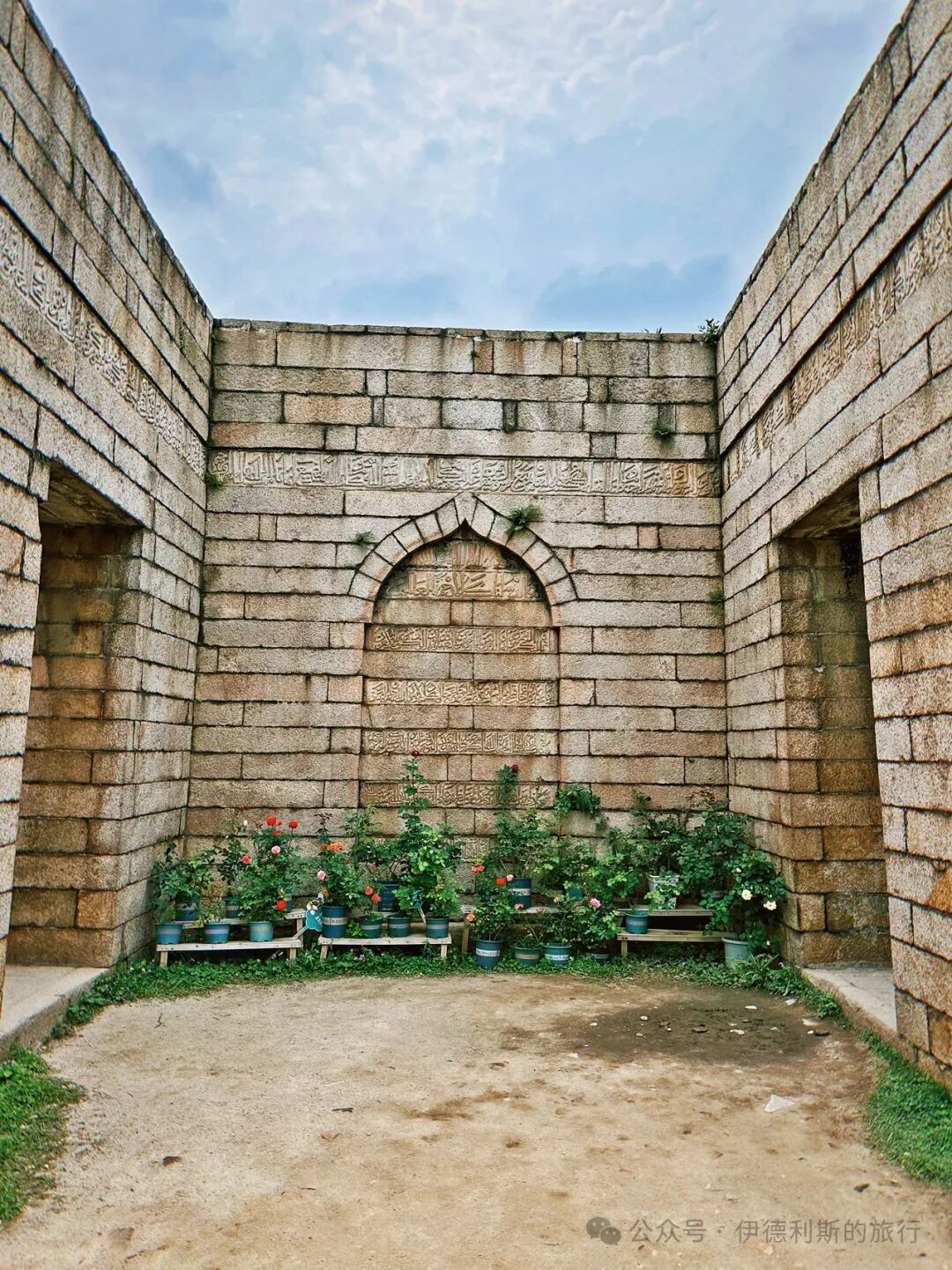
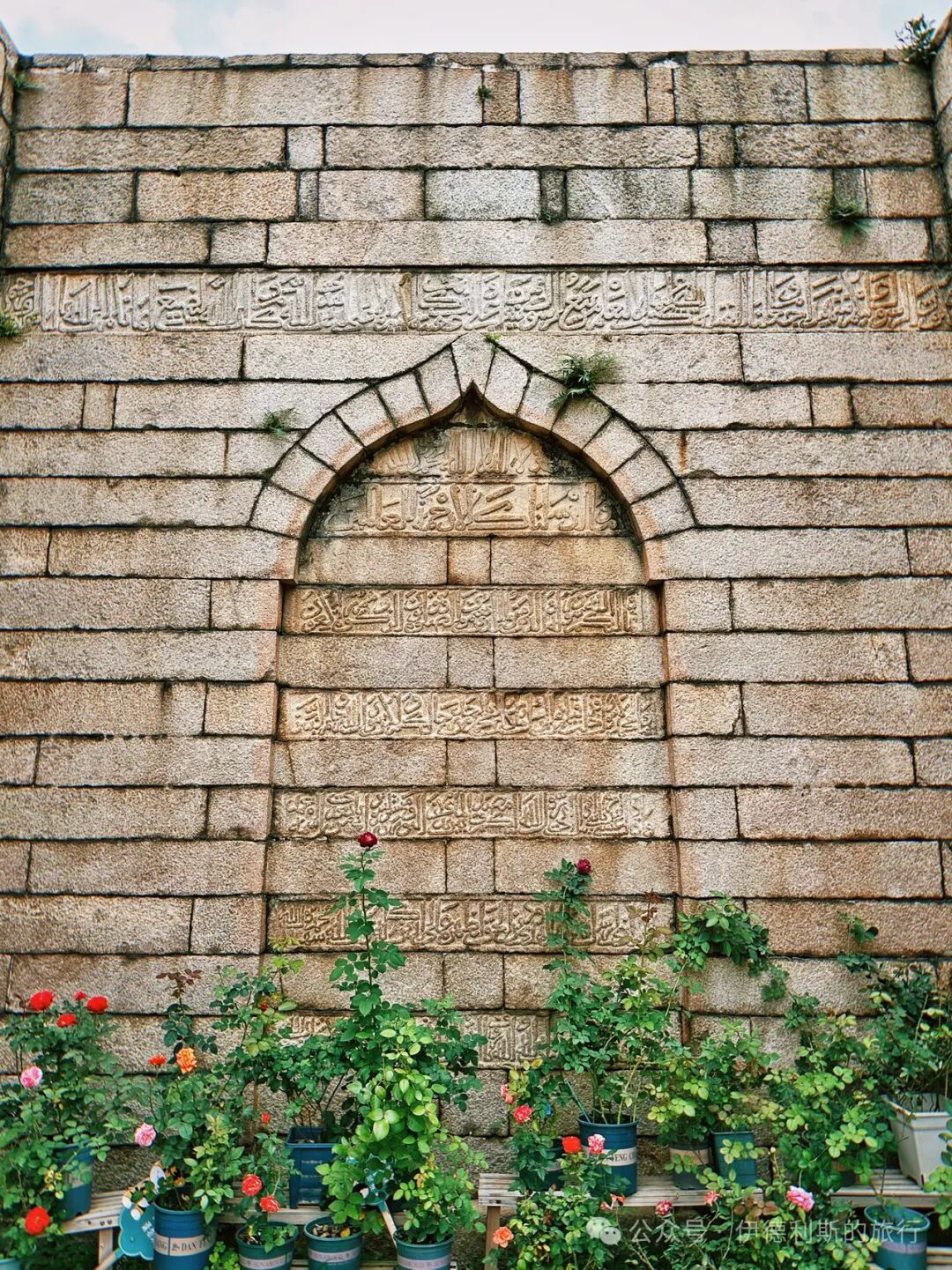
Qingjing Mosque in Quanzhou, Fujian, was renovated in 1310. The prayer wall has seven pointed-arch niches, with the largest being the mihrab in the Fengtian Hall. In the old days, Hui Muslims in Quanzhou called the 27th night of Ramadan, the Night of Power (Laylat al-Qadr), the 'Twenty-eighth Night' (erba ming). Every Hui family in Quanzhou would prepare food on this day. That evening, they would light a pair of large red candles on both sides of the mihrab at the prayer hall, symbolizing that the revelation of the Quran from Allah is a brilliant light.
At the Mingshan Hall of the Qingjing Mosque in Quanzhou, Fujian, Jiang Changgui, the provincial military commander during the Tongzhi reign of the Qing Dynasty, collected many Yuan Dynasty Arabic stone tablets in Quanzhou and embedded them into the walls of the Mingshan Hall.
A lintel stone currently embedded above the mihrab in Mingshan Hall was unearthed at Qipanyuan in the late Qing Dynasty. It reads, 'Enter it in peace and security.' Embedded in the middle is a lintel stone unearthed near Qipanyuan in the late Qing Dynasty. The inscription is in Kufic script and reads, 'Every soul shall taste death.' 'Death is a door, and everyone must enter it.' Qipanyuan was the site of the foreign quarter and religious cemeteries in Quanzhou during the Song and Yuan dynasties, so it is likely these two lintel stones originally belonged to a gongbei tomb.
Embedded below is the 'Laji Aibikelimu Reconstruction Tablet of the Qingjing Mosque,' featuring scripture written in Kufic script. The stone tablet was unearthed underground at Qipanyuan in the southern drill ground of Quanzhou during the late Qing Dynasty. The script is similar to the 'Naina Umaer Reconstruction Tablet of the Qingjing Mosque' held by the Xiamen University Anthropology Museum, and the content is the same, so it is likely another tablet commemorating the mosque's reconstruction. The tablet was removed during the 1997 renovation of Mingshan Hall and was reinstalled shortly after. Later, according to an interpretation by Imam Zhang Haixing of the Qingjing Mosque, the back of the tablet reads, 'Laji Aibikelimu ordered the construction and management of this mosque... praying for the mercy of the Lord...'
At the Fuzhou Mosque in Fujian, I could not see the original wooden mihrab, only photos of it on a display board in the mosque.
Zhejiang
The Lishui Mosque in Zhejiang was built in 1886 (the 12th year of the Guangxu reign) and features traditional wood-carved calligraphy and auspicious patterns.
Jiangsu
The mosque outside the South Gate in Zhenjiang, Jiangsu, is believed to have been built in the early Qing Dynasty. It was destroyed by war in 1937, and the niche stone carvings were kept by the Hua Bao-ren family next to the mosque until they were moved to the Guyun Mosque in 2005. It is carved with a lotus-shaped Basmala, which is very unique. In the center is a circular-light style excerpt from the Cow chapter (Al-Baqarah), and below is the Kufic script reading, 'Bow down, and worship your Lord.'
The Shanxiang Mosque in Zhenjiang, Jiangsu, was rebuilt in 1873 (the 12th year of the Tongzhi reign) and features traditional calligraphy carvings.
The Changjiang Road Mosque in Liuhe, Nanjing, Jiangsu, was rebuilt during the Guangxu reign. The prayer niche is painted with chrysanthemums, pine and cypress trees, and grapevines, which is very unique.
The Jingjue Mosque in Nanjing, Jiangsu, was rebuilt in 1877 (the 3rd year of the Guangxu reign) and features very dense gold-leaf calligraphy on a red background.
The main hall of the Caoqiao Mosque in Nanjing, Jiangsu, came from the Taiping Road Mosque. It was rebuilt in 1924 with funds donated by the brothers of the wealthy Nanjing merchant Jiang Guobang, and it was moved to the new Caoqiao Mosque in 2003.
The Lingtang Ancient Mosque in Gaoyou, Jiangsu, was rebuilt in 1844 (the 24th year of the Daoguang reign) and expanded in 1921. Its structure is exactly the same as the Caoqiao Mosque.
Shanghai
The Fuyou Road Mosque in Shanghai features traditional wood-carved calligraphy. view all
Summary: This is the second part of a visual record of 131 traditional mihrabs in Chinese mosques. The English version keeps the original mosque names, image order, captions, and architectural details without adding new claims.
Hujia Mosque in Xindu District, Chengdu, was built in 1738 (the third year of the Qianlong reign). It has a rare mihrab with Chinese couplets. The right side reads 'Ten thousand generations of mountains and rivers return to one Lord,' the left side reads 'The sun and moon shine upon all living things,' and the horizontal plaque reads 'The Original One.'
Yousuotun Mosque in Songpan has a door hood with an arched center. It looks more like the style found in Gansu than other mosques in Sichuan.
North Mosque in Songpan has very bright colors and lotus patterns.
Gongbei Mosque in Songpan features wooden boards with calligraphy inside the arch, shaped like a folding fan, a circular light, and an incense burner.
Yunnan
Dianzhong Mosque in Weishan, Dali, features traditional stone-carved calligraphy.
Ma Family Mosque in Mamichang, Weishan, Dali, features traditional stone-carved calligraphy.
Hedijie Mosque in Weishan, Dali, features traditional calligraphy.
Qingmenkou Mosque in Weishan, Dali, features traditional calligraphy.
Xishulong Mosque in Weishan, Dali, features traditional stone-carved calligraphy.
Xiaoweigeng Mosque in Weishan, Dali, features traditional calligraphy.
Dingjiachang Mosque in Weishan, Dali, is built in the traditional Dali architectural style with upturned eaves.
Baisha Village Mosque in Weishan, Dali, features traditional calligraphy.
Dawulinmao Mosque in Weishan, Dali, is built in the traditional Dali architectural style with upturned eaves.
Xiajie Mosque in Yangbi, Dali, features wood-carved calligraphy.
Shangxiang Mosque in Yangbi, Dali, features stone-carved calligraphy.
Shangjie Mosque in Yangbi, Dali, features stone-carved calligraphy.
Shangxi Lianhua Mosque in Weishan, Dali, features stone-carved calligraphy.
Xincun Mosque in Weishan, Dali, features stone-carved calligraphy.
Xiaxi Lianhua Mosque in Weishan, Dali, features traditional calligraphy.
Donglianhua Mosque in Weishan, Dali, features traditional calligraphy.
Fengyi Mosque in Dali features stone-carved calligraphy.
Binchuan Mosque in Dali features traditional calligraphy.
Yongning Mosque in Kunming is known as a masterpiece of Yunnan-style calligraphy.
Jinniujie Mosque in Kunming features typical Yunnan-style calligraphy.
Liren Mosque in Haikou, Kunming, features typical Yunnan-style calligraphy.
Beiying Mosque in Xundian features typical Yunnan-style calligraphy.
Huihuiying Mosque in Chenggong, Kunming, has very unique floral-style calligraphy in the center.
Dazhuang Mosque in Kaiyuan features traditional calligraphy in the center with a circular, interlocking design.
Tuogu Mosque in Ludian, Zhaotong, has traditional calligraphy on the couplets flanking the arch and in the circular center.
Longtoushan Mosque in Ludian, Zhaotong, features traditional-style calligraphy.
Taojiawan Mosque in Ludian, Zhaotong, features traditional Yunnan-style calligraphy.
Guangxi
Chongshan Road Mosque in Guilin was first built in 1734 (the 12th year of the Yongzheng reign). The rear hall was expanded in 1892 (the 18th year of the Guangxi reign) and features exquisite wood carvings of floral-style calligraphy.
Wutong Mosque in Guilin was first built during the Qing Jiaqing reign and renovated in 1915. It has beautiful wood carvings of calligraphy.
Liutang Mosque in Guilin was first built during the Qing Qianlong reign and has beautiful wood carvings of calligraphy.
Jiucun Mosque in Guilin features wood carvings of calligraphy.
Daxu Mosque in Guilin features wood carvings of calligraphy.
The Women's Mosque in Guilin features wood carvings of calligraphy.
Maping Mosque in Guilin was first built in 1671 (the 10th year of the Kangxi reign). It was burned down by the Japanese army in 1944, rebuilt in 1948, and rebuilt again in 1987, but it still keeps the original wood carvings of the mihrab.
Guangdong
Chengxi Mosque in Zhaoqing, Guangdong, preserved its Qing Dynasty stone mihrab during the 1983 reconstruction, which features traditional calligraphic couplets.
Chengdong Mosque in Zhaoqing, Guangdong, features Qing Dynasty wood-carved calligraphy.
Hong Kong
Jamia Mosque on Shelley Street in Hong Kong has a mihrab built in 1915, designed in the Indian Mughal style.
Fujian
Qingjing Mosque in Quanzhou, Fujian, was renovated in 1310. The prayer wall has seven pointed-arch niches, with the largest being the mihrab in the Fengtian Hall. In the old days, Hui Muslims in Quanzhou called the 27th night of Ramadan, the Night of Power (Laylat al-Qadr), the 'Twenty-eighth Night' (erba ming). Every Hui family in Quanzhou would prepare food on this day. That evening, they would light a pair of large red candles on both sides of the mihrab at the prayer hall, symbolizing that the revelation of the Quran from Allah is a brilliant light.
At the Mingshan Hall of the Qingjing Mosque in Quanzhou, Fujian, Jiang Changgui, the provincial military commander during the Tongzhi reign of the Qing Dynasty, collected many Yuan Dynasty Arabic stone tablets in Quanzhou and embedded them into the walls of the Mingshan Hall.
A lintel stone currently embedded above the mihrab in Mingshan Hall was unearthed at Qipanyuan in the late Qing Dynasty. It reads, 'Enter it in peace and security.' Embedded in the middle is a lintel stone unearthed near Qipanyuan in the late Qing Dynasty. The inscription is in Kufic script and reads, 'Every soul shall taste death.' 'Death is a door, and everyone must enter it.' Qipanyuan was the site of the foreign quarter and religious cemeteries in Quanzhou during the Song and Yuan dynasties, so it is likely these two lintel stones originally belonged to a gongbei tomb.
Embedded below is the 'Laji Aibikelimu Reconstruction Tablet of the Qingjing Mosque,' featuring scripture written in Kufic script. The stone tablet was unearthed underground at Qipanyuan in the southern drill ground of Quanzhou during the late Qing Dynasty. The script is similar to the 'Naina Umaer Reconstruction Tablet of the Qingjing Mosque' held by the Xiamen University Anthropology Museum, and the content is the same, so it is likely another tablet commemorating the mosque's reconstruction. The tablet was removed during the 1997 renovation of Mingshan Hall and was reinstalled shortly after. Later, according to an interpretation by Imam Zhang Haixing of the Qingjing Mosque, the back of the tablet reads, 'Laji Aibikelimu ordered the construction and management of this mosque... praying for the mercy of the Lord...'
At the Fuzhou Mosque in Fujian, I could not see the original wooden mihrab, only photos of it on a display board in the mosque.
Zhejiang
The Lishui Mosque in Zhejiang was built in 1886 (the 12th year of the Guangxu reign) and features traditional wood-carved calligraphy and auspicious patterns.
Jiangsu
The mosque outside the South Gate in Zhenjiang, Jiangsu, is believed to have been built in the early Qing Dynasty. It was destroyed by war in 1937, and the niche stone carvings were kept by the Hua Bao-ren family next to the mosque until they were moved to the Guyun Mosque in 2005. It is carved with a lotus-shaped Basmala, which is very unique. In the center is a circular-light style excerpt from the Cow chapter (Al-Baqarah), and below is the Kufic script reading, 'Bow down, and worship your Lord.'
The Shanxiang Mosque in Zhenjiang, Jiangsu, was rebuilt in 1873 (the 12th year of the Tongzhi reign) and features traditional calligraphy carvings.
The Changjiang Road Mosque in Liuhe, Nanjing, Jiangsu, was rebuilt during the Guangxu reign. The prayer niche is painted with chrysanthemums, pine and cypress trees, and grapevines, which is very unique.
The Jingjue Mosque in Nanjing, Jiangsu, was rebuilt in 1877 (the 3rd year of the Guangxu reign) and features very dense gold-leaf calligraphy on a red background.
The main hall of the Caoqiao Mosque in Nanjing, Jiangsu, came from the Taiping Road Mosque. It was rebuilt in 1924 with funds donated by the brothers of the wealthy Nanjing merchant Jiang Guobang, and it was moved to the new Caoqiao Mosque in 2003.
The Lingtang Ancient Mosque in Gaoyou, Jiangsu, was rebuilt in 1844 (the 24th year of the Daoguang reign) and expanded in 1921. Its structure is exactly the same as the Caoqiao Mosque.
Shanghai
The Fuyou Road Mosque in Shanghai features traditional wood-carved calligraphy. view all
Reposted from the web
Summary: This is the second part of a visual record of 131 traditional mihrabs in Chinese mosques. The English version keeps the original mosque names, image order, captions, and architectural details without adding new claims.
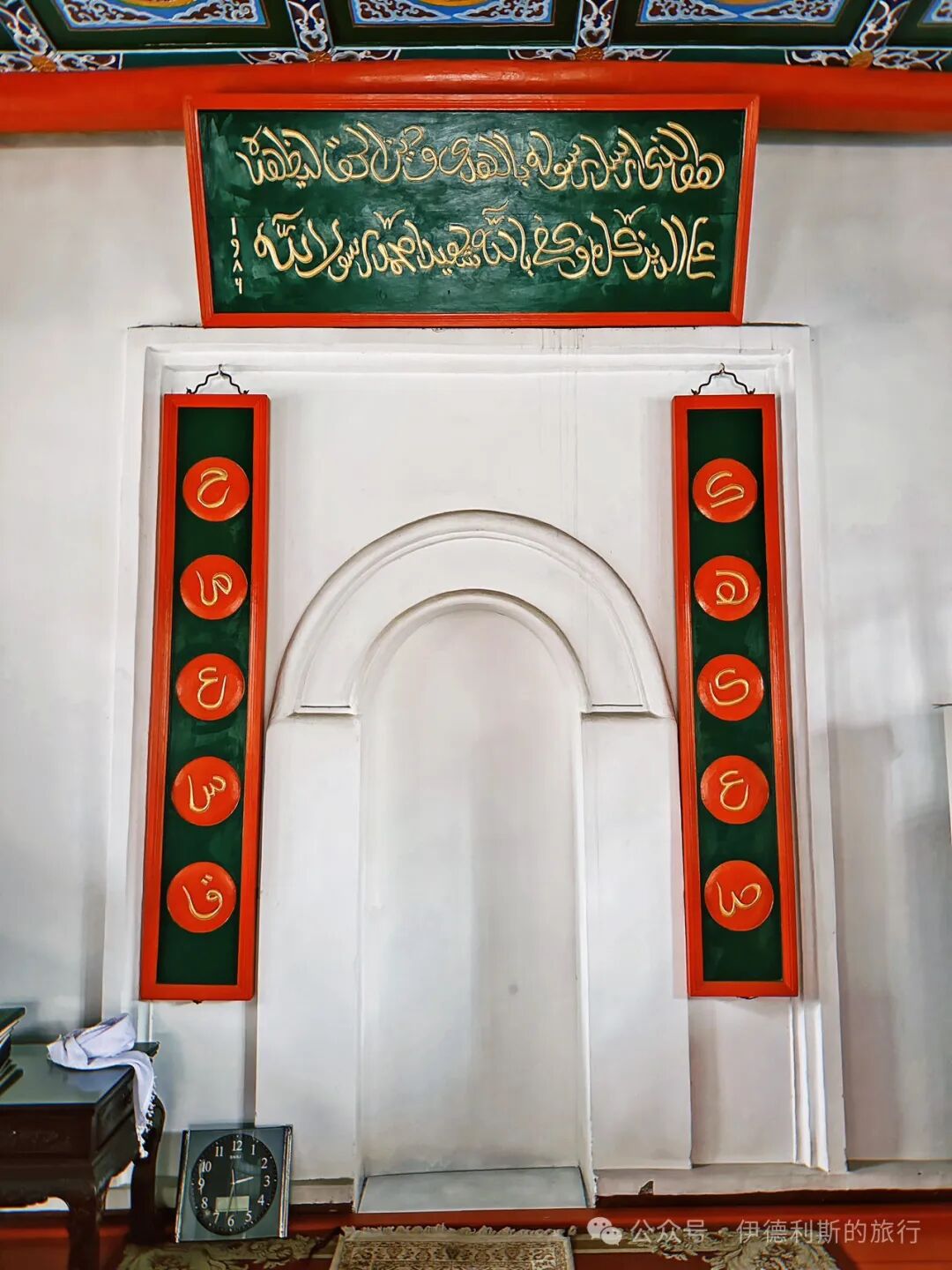
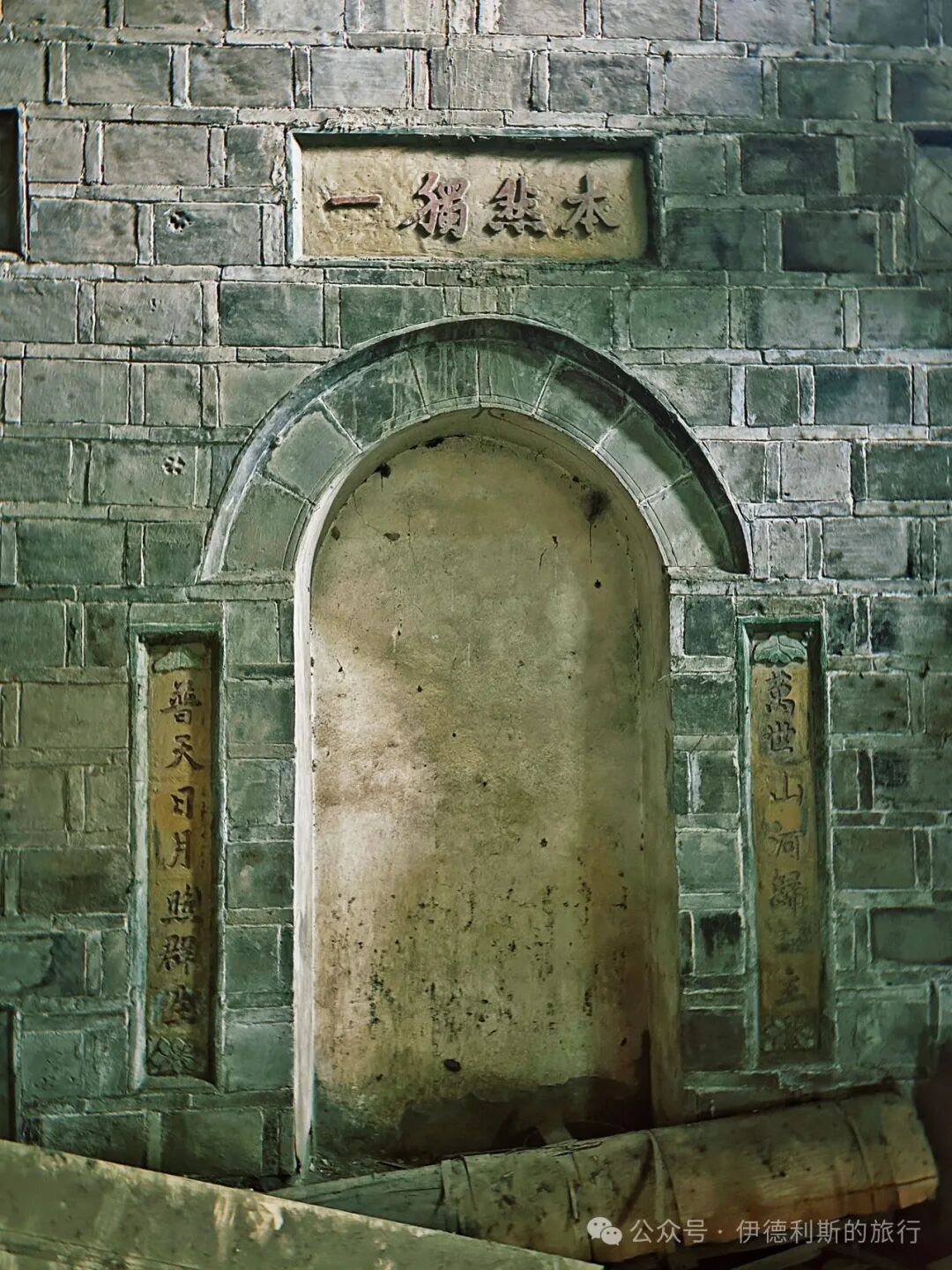
Hujia Mosque in Xindu District, Chengdu, was built in 1738 (the third year of the Qianlong reign). It has a rare mihrab with Chinese couplets. The right side reads 'Ten thousand generations of mountains and rivers return to one Lord,' the left side reads 'The sun and moon shine upon all living things,' and the horizontal plaque reads 'The Original One.'
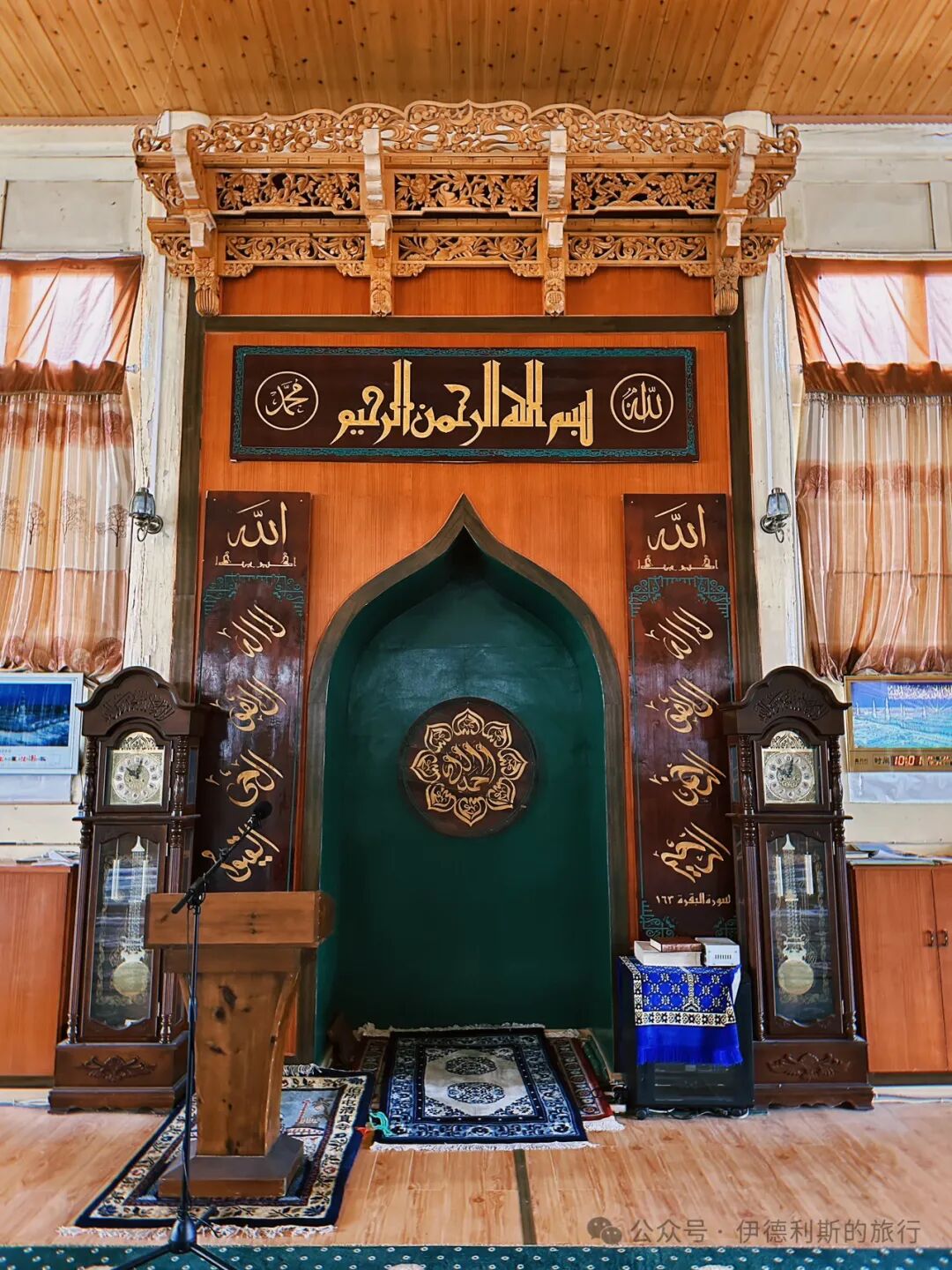
Yousuotun Mosque in Songpan has a door hood with an arched center. It looks more like the style found in Gansu than other mosques in Sichuan.
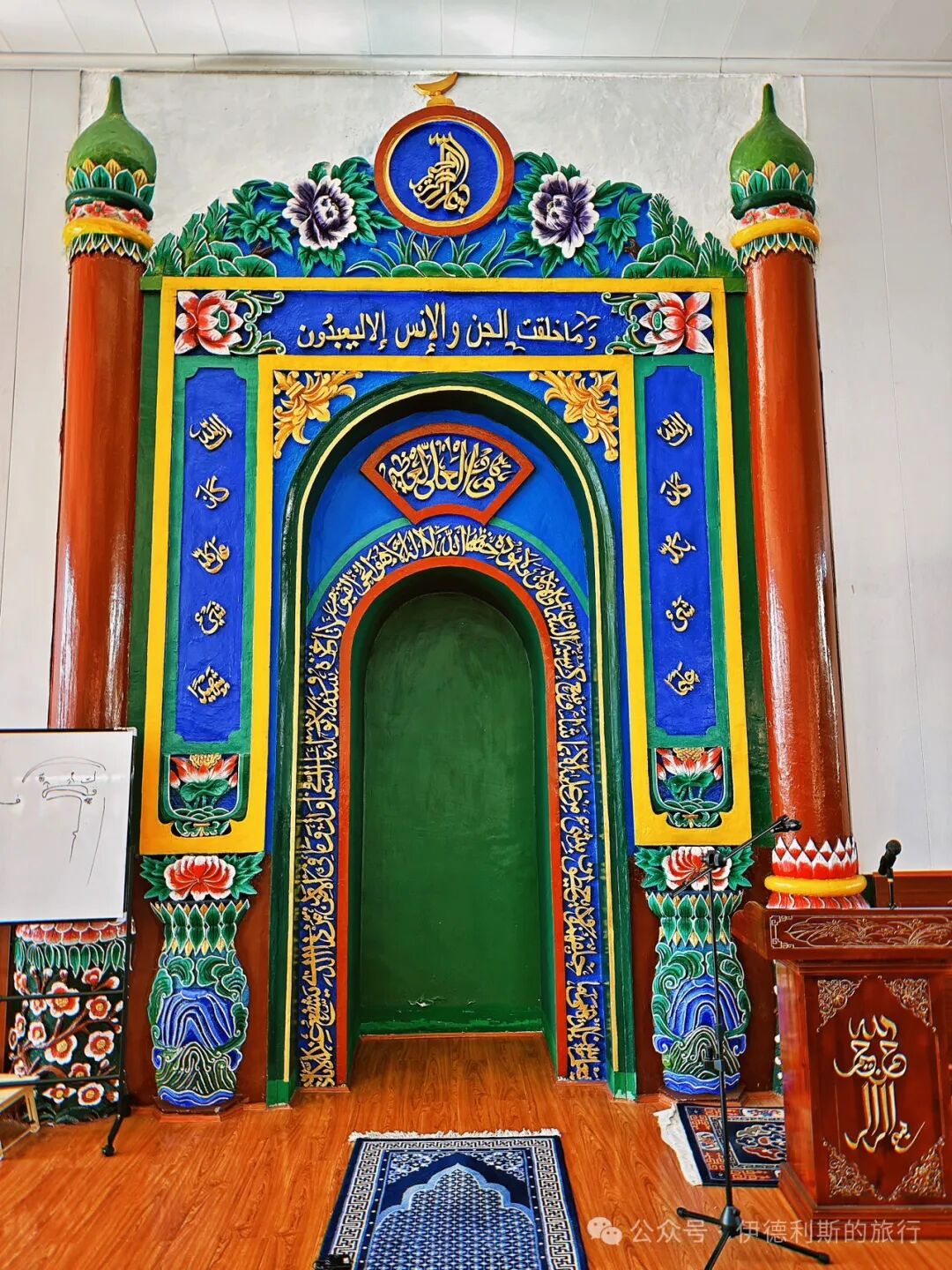
North Mosque in Songpan has very bright colors and lotus patterns.
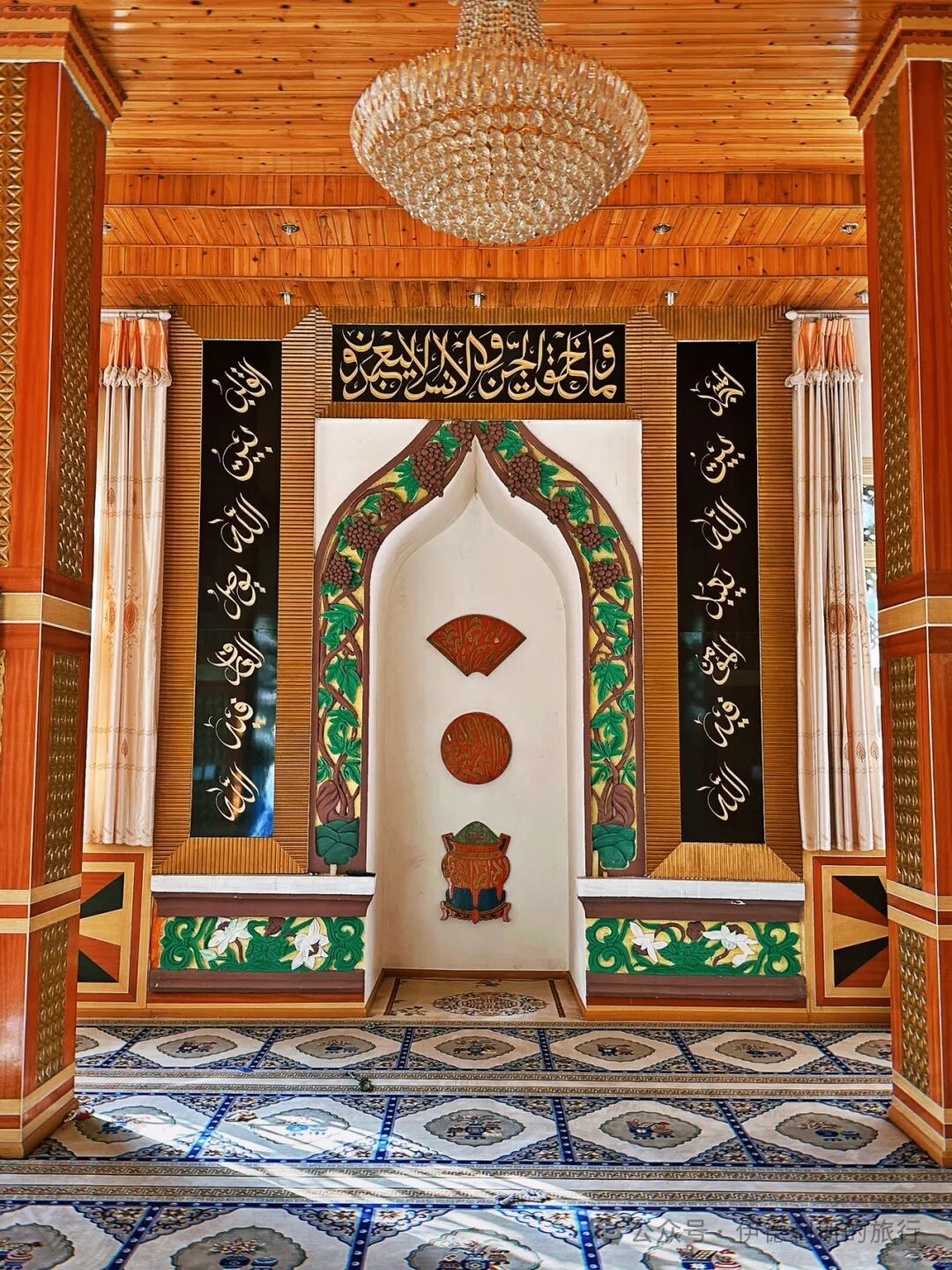
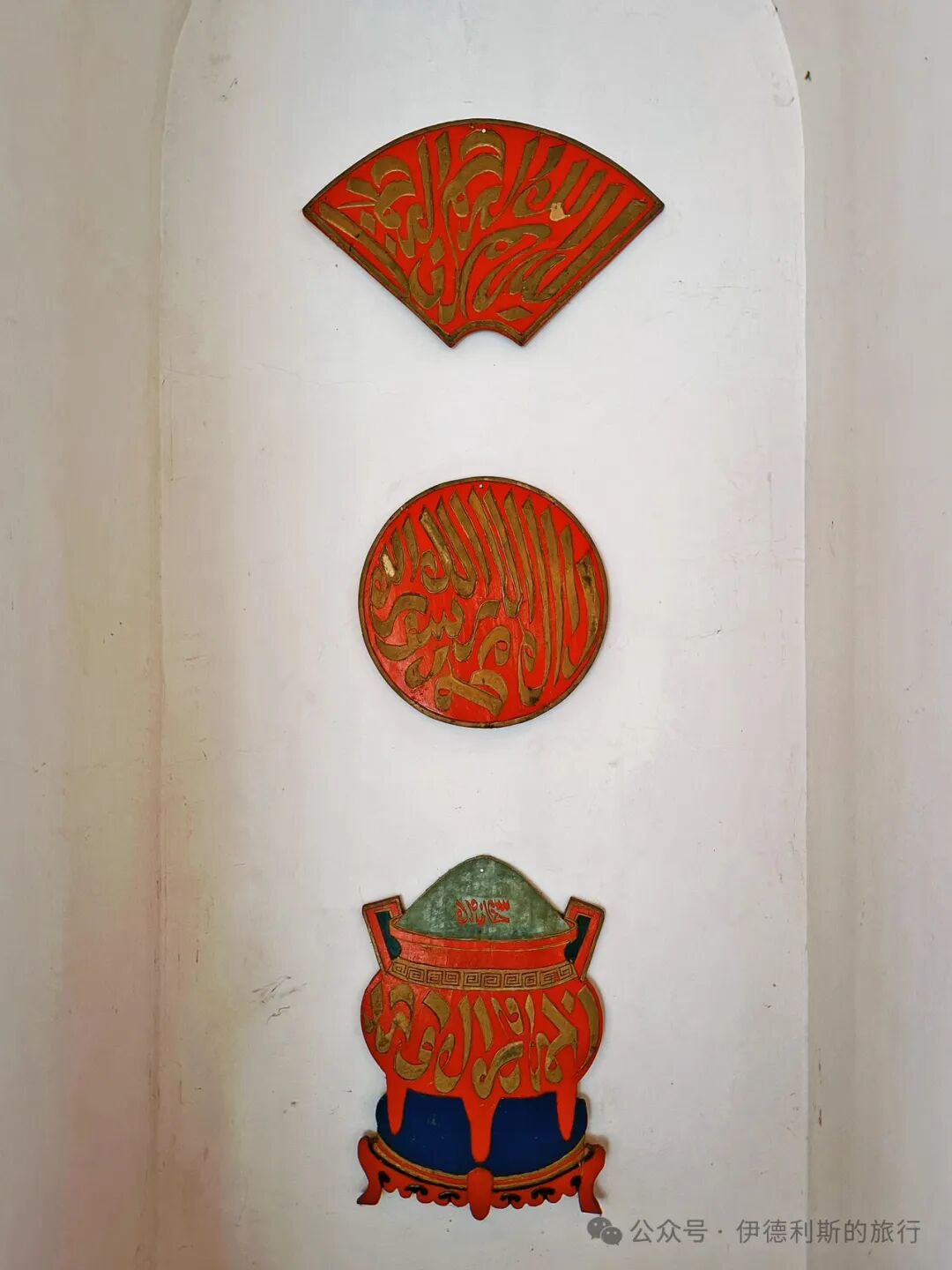
Gongbei Mosque in Songpan features wooden boards with calligraphy inside the arch, shaped like a folding fan, a circular light, and an incense burner.
Yunnan
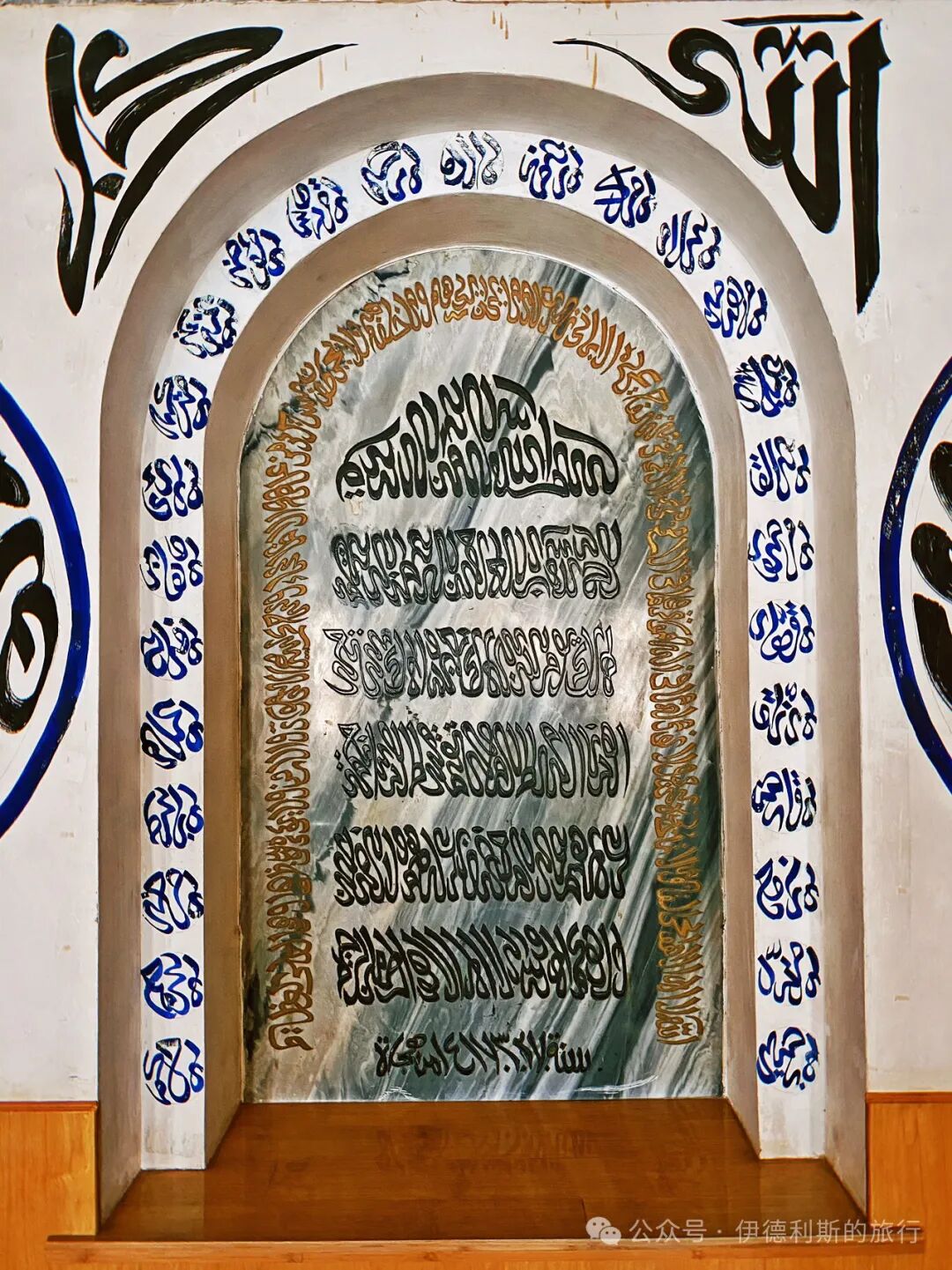
Dianzhong Mosque in Weishan, Dali, features traditional stone-carved calligraphy.
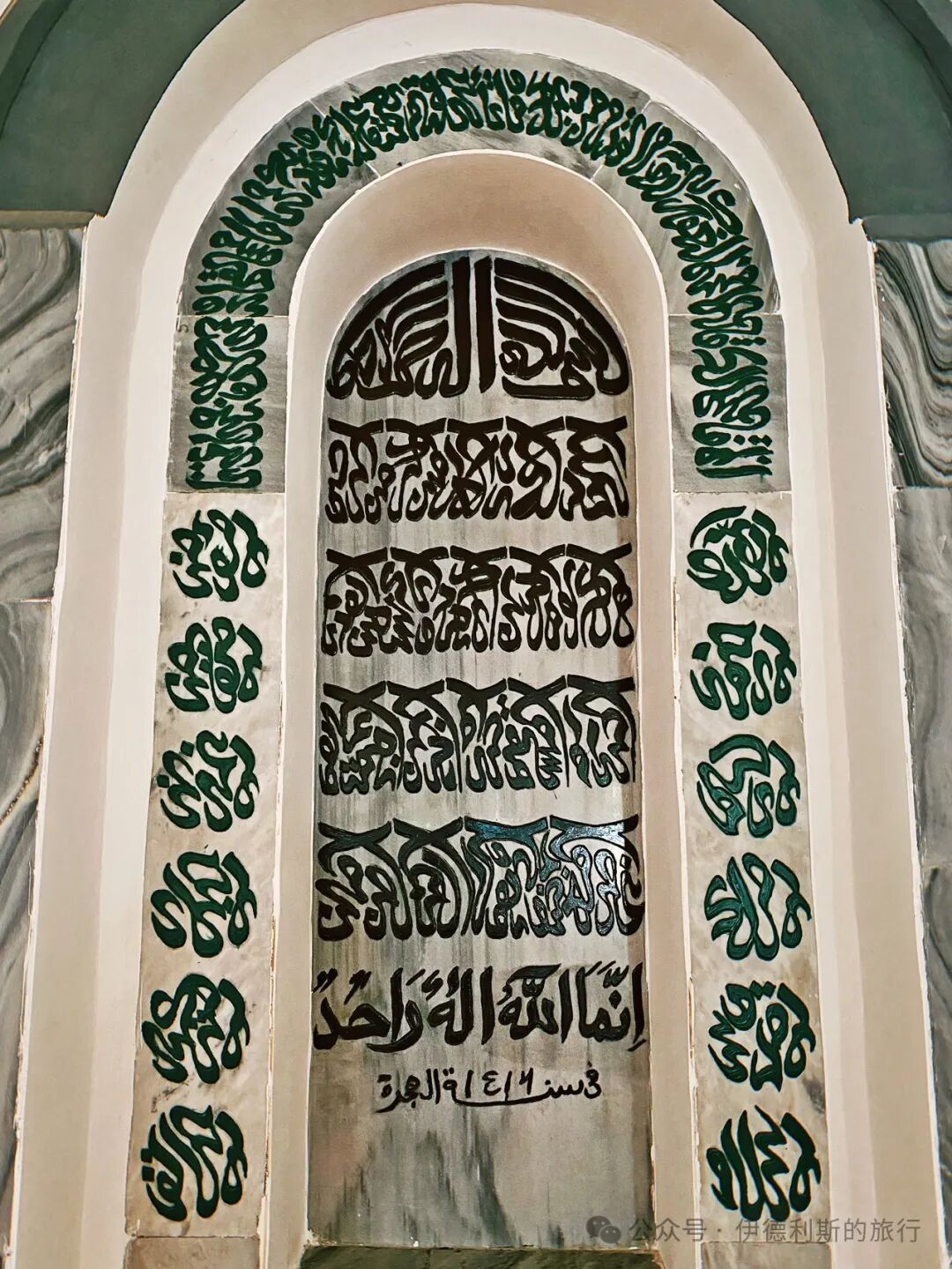
Ma Family Mosque in Mamichang, Weishan, Dali, features traditional stone-carved calligraphy.
Hedijie Mosque in Weishan, Dali, features traditional calligraphy.
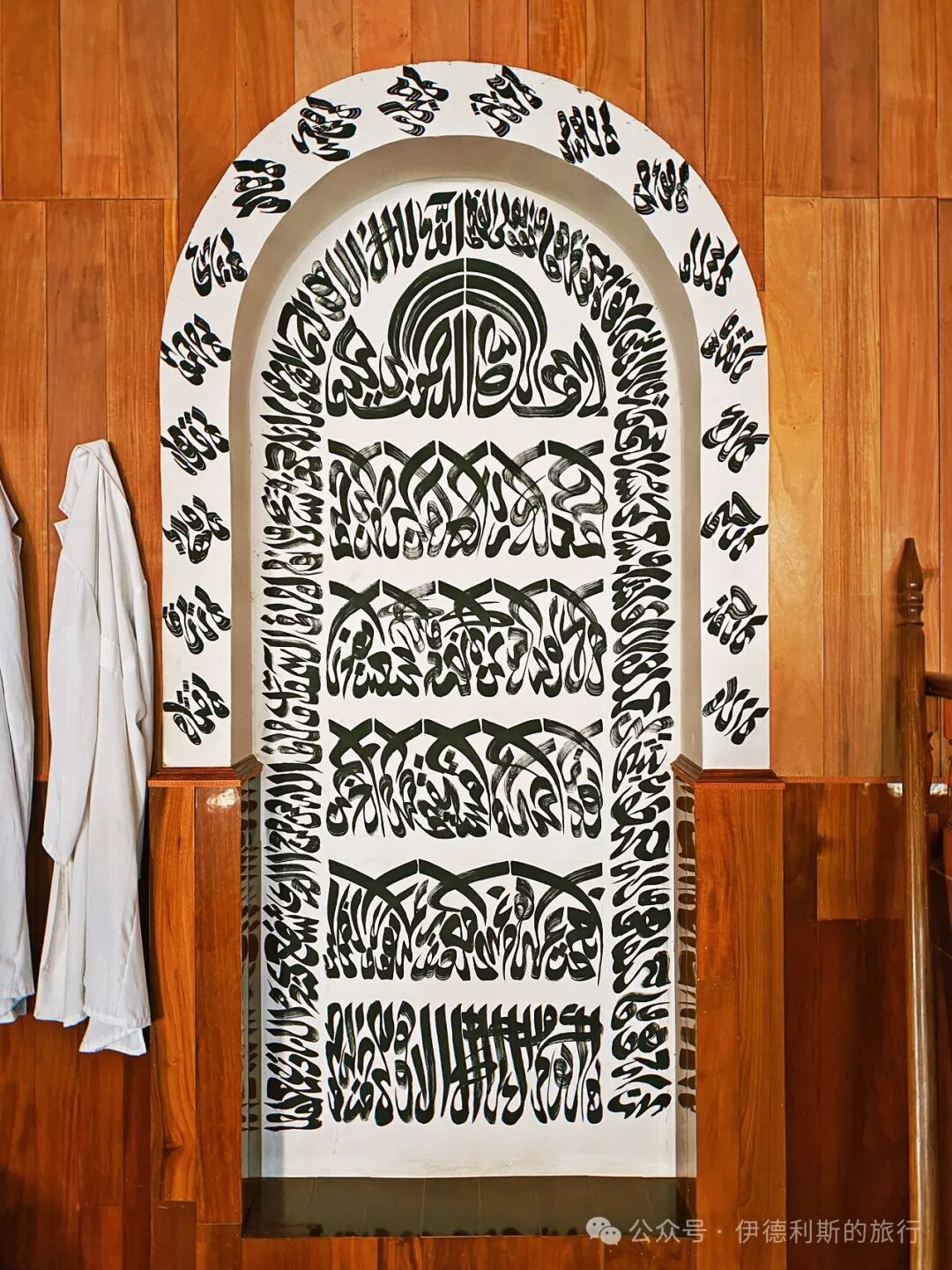
Qingmenkou Mosque in Weishan, Dali, features traditional calligraphy.
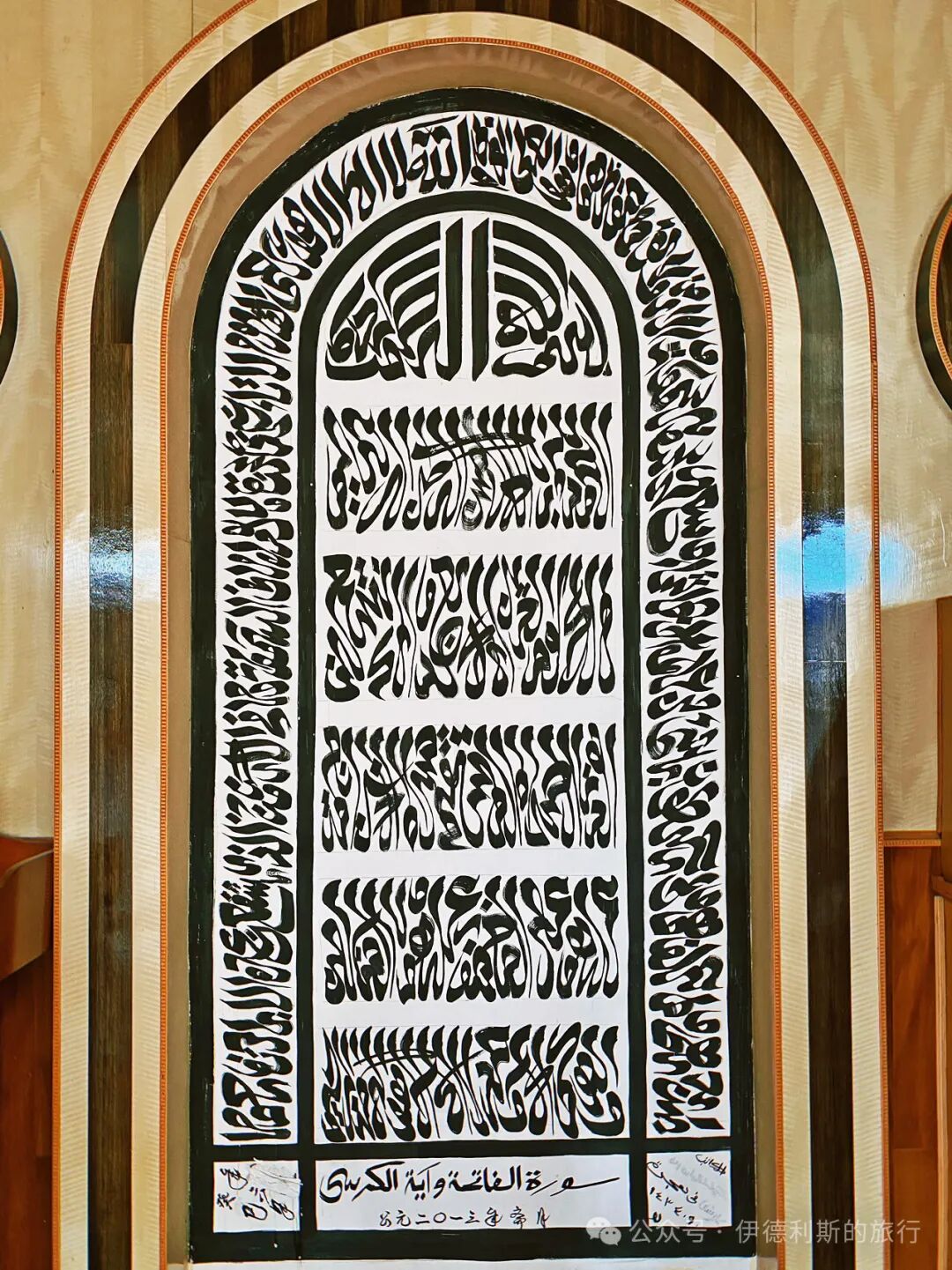
Xishulong Mosque in Weishan, Dali, features traditional stone-carved calligraphy.
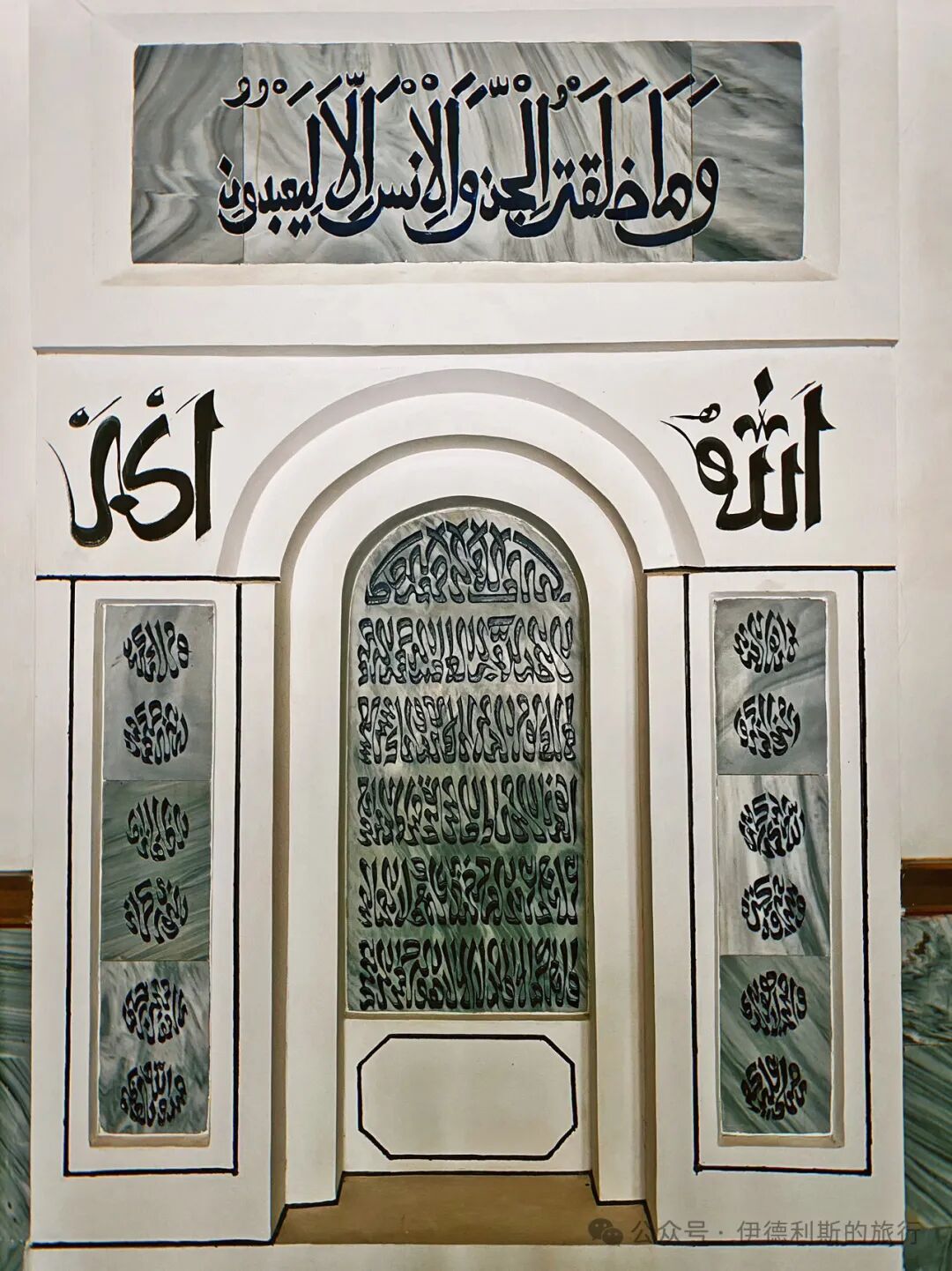
Xiaoweigeng Mosque in Weishan, Dali, features traditional calligraphy.
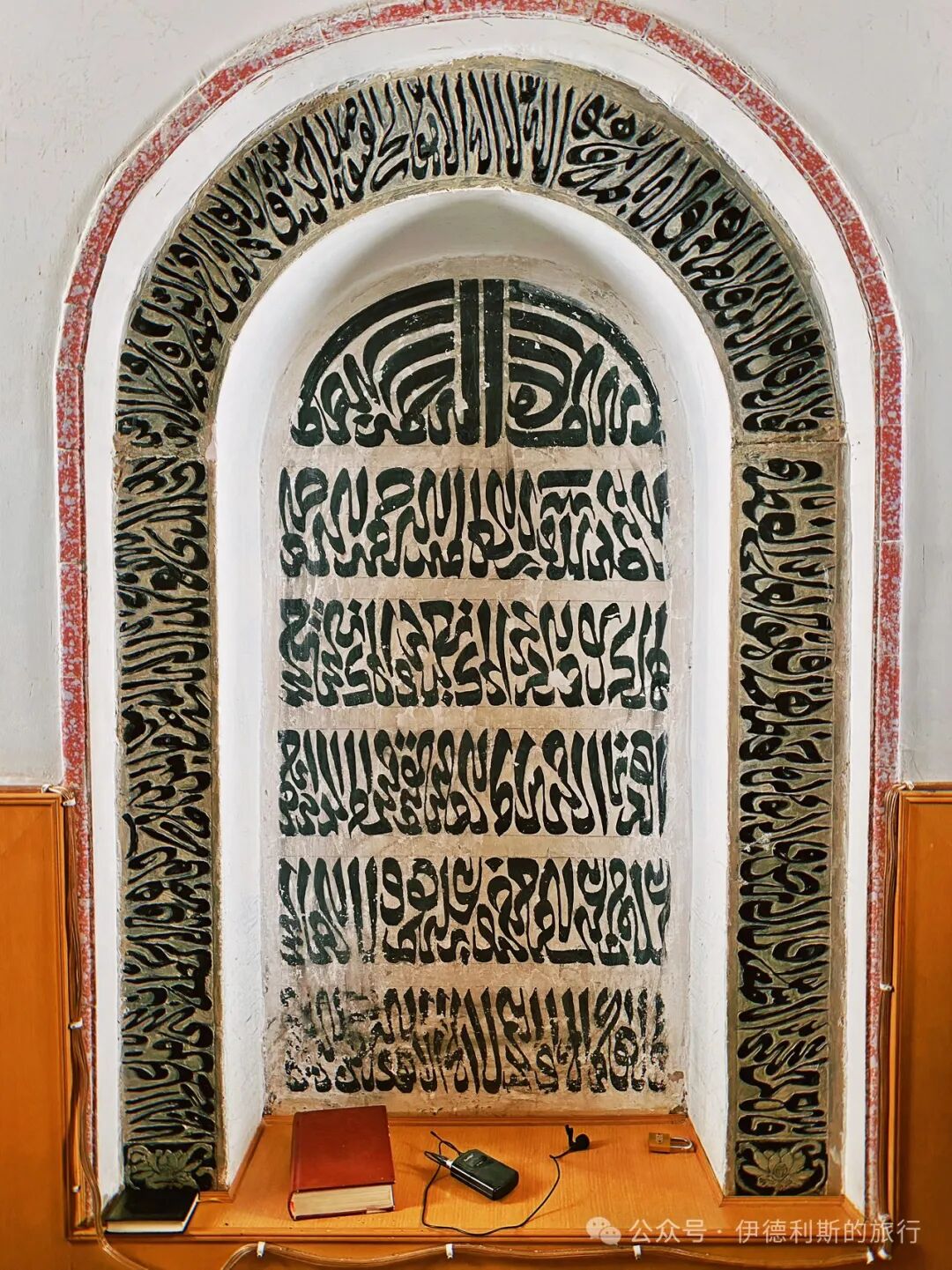
Dingjiachang Mosque in Weishan, Dali, is built in the traditional Dali architectural style with upturned eaves.
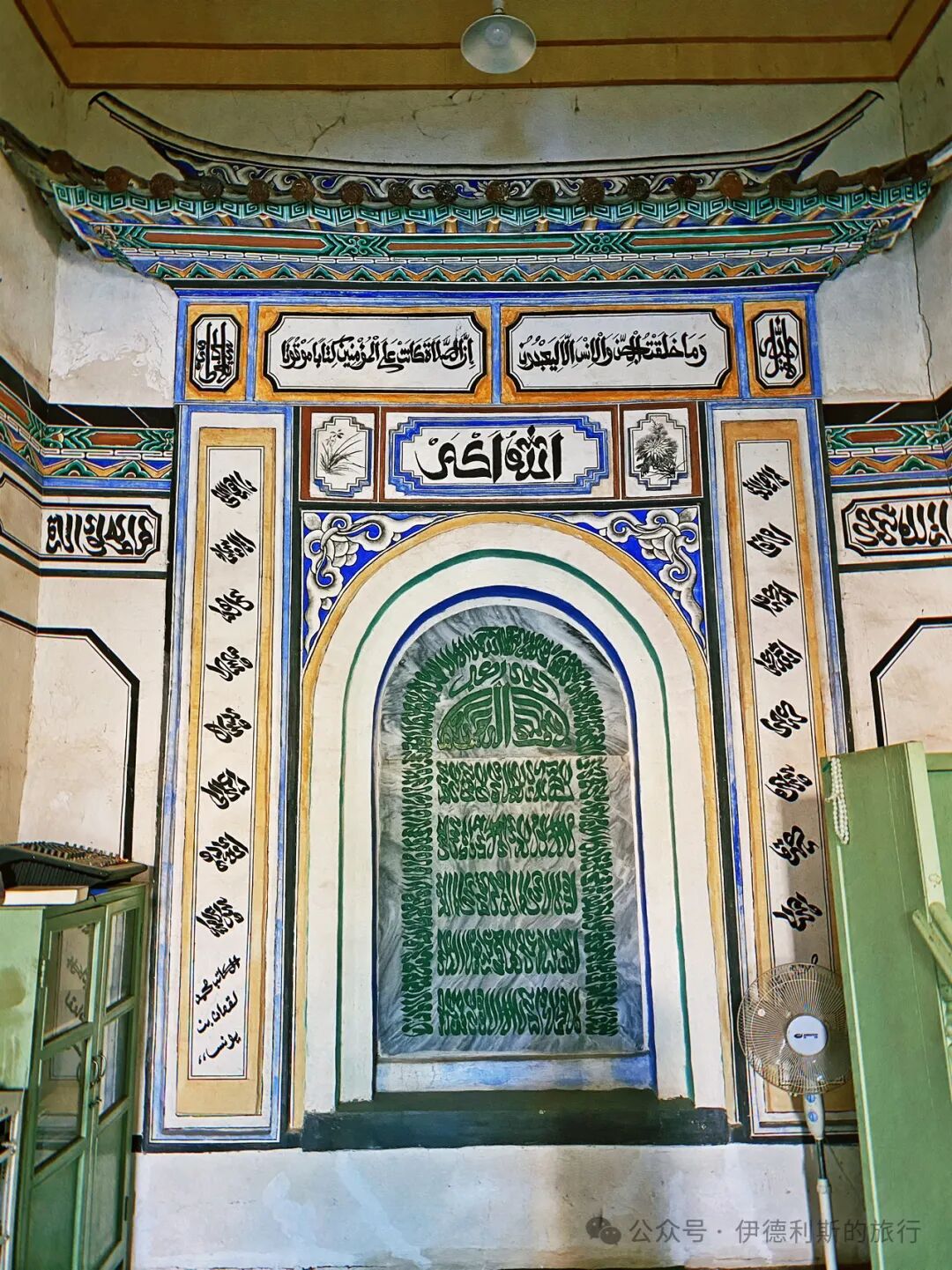
Baisha Village Mosque in Weishan, Dali, features traditional calligraphy.
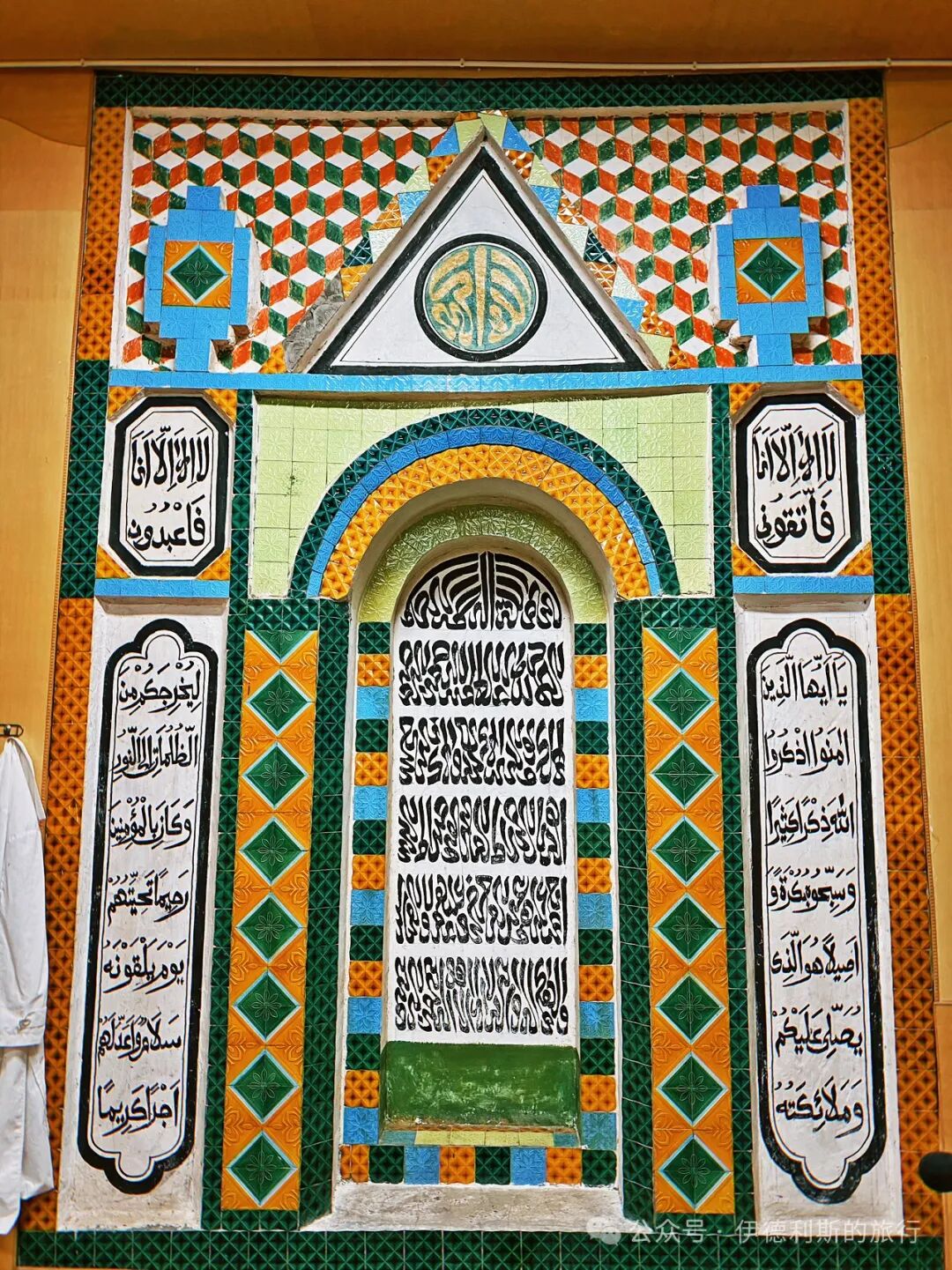
Dawulinmao Mosque in Weishan, Dali, is built in the traditional Dali architectural style with upturned eaves.
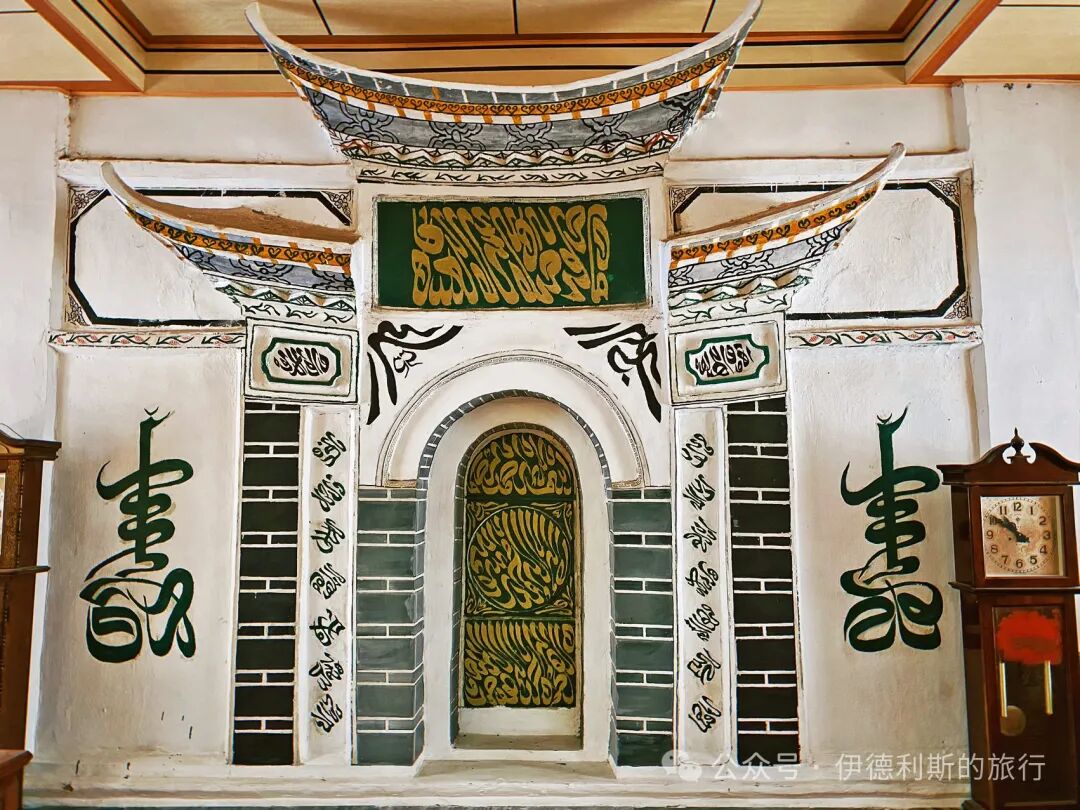
Xiajie Mosque in Yangbi, Dali, features wood-carved calligraphy.
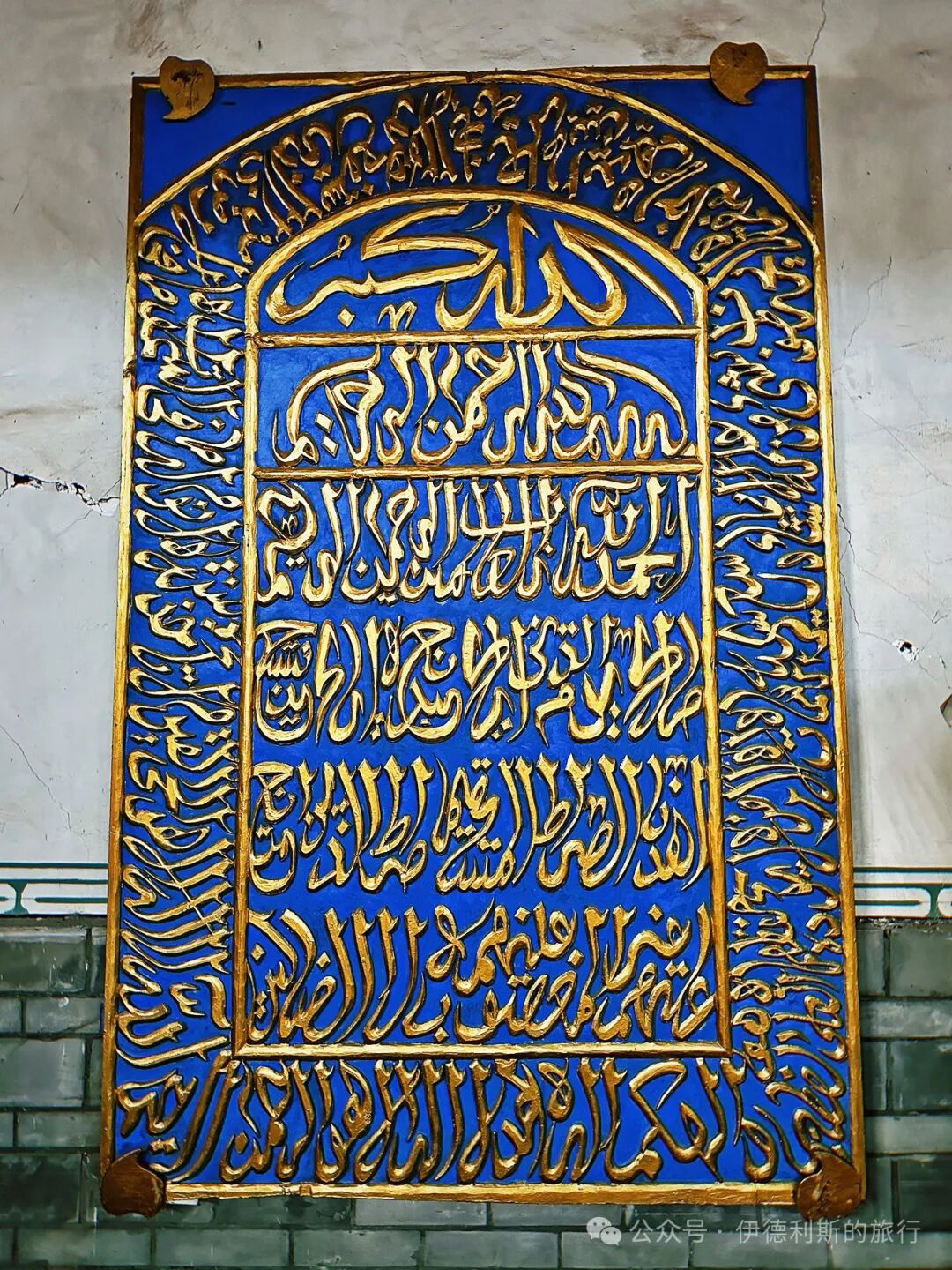
Shangxiang Mosque in Yangbi, Dali, features stone-carved calligraphy.
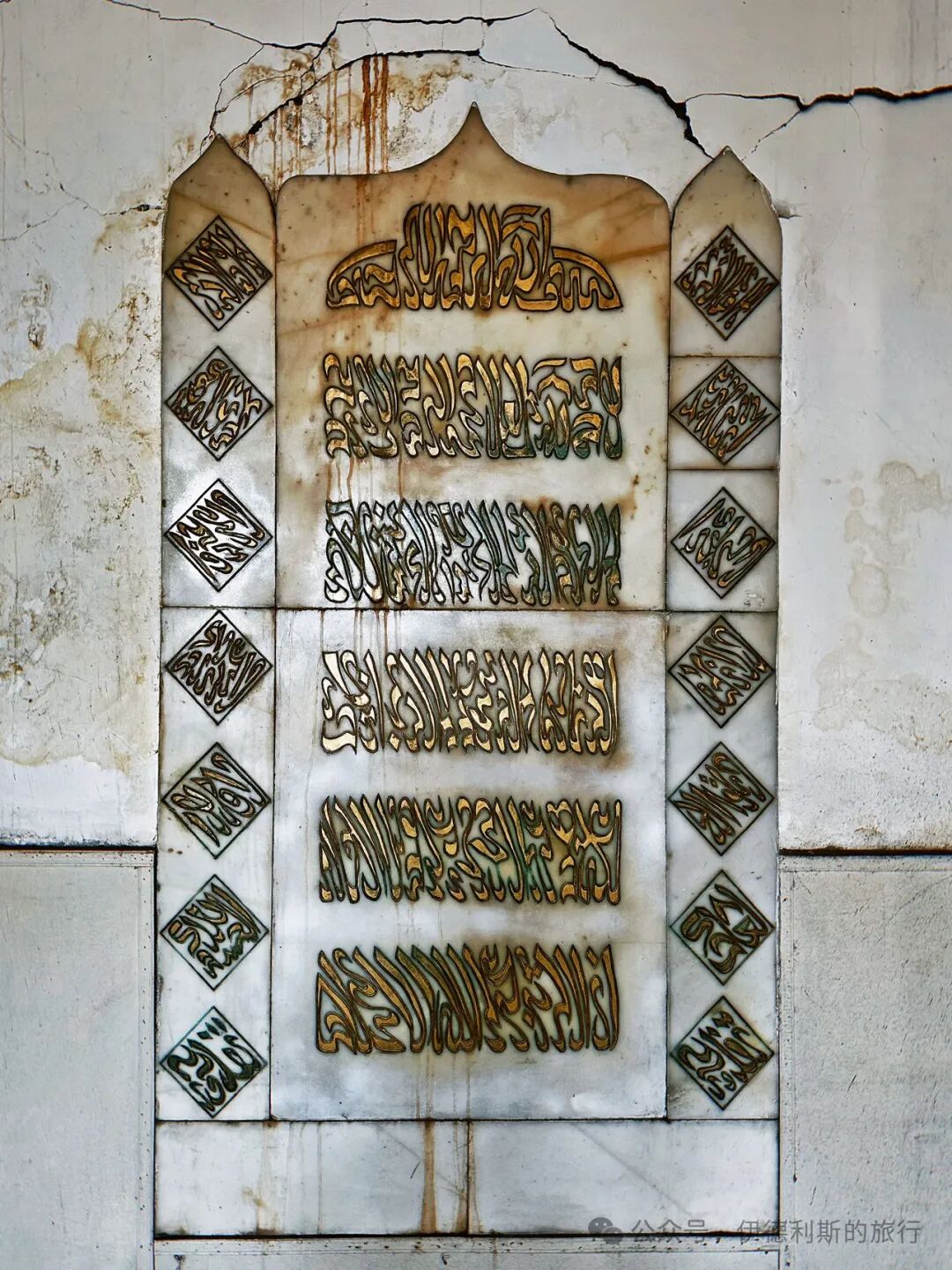
Shangjie Mosque in Yangbi, Dali, features stone-carved calligraphy.
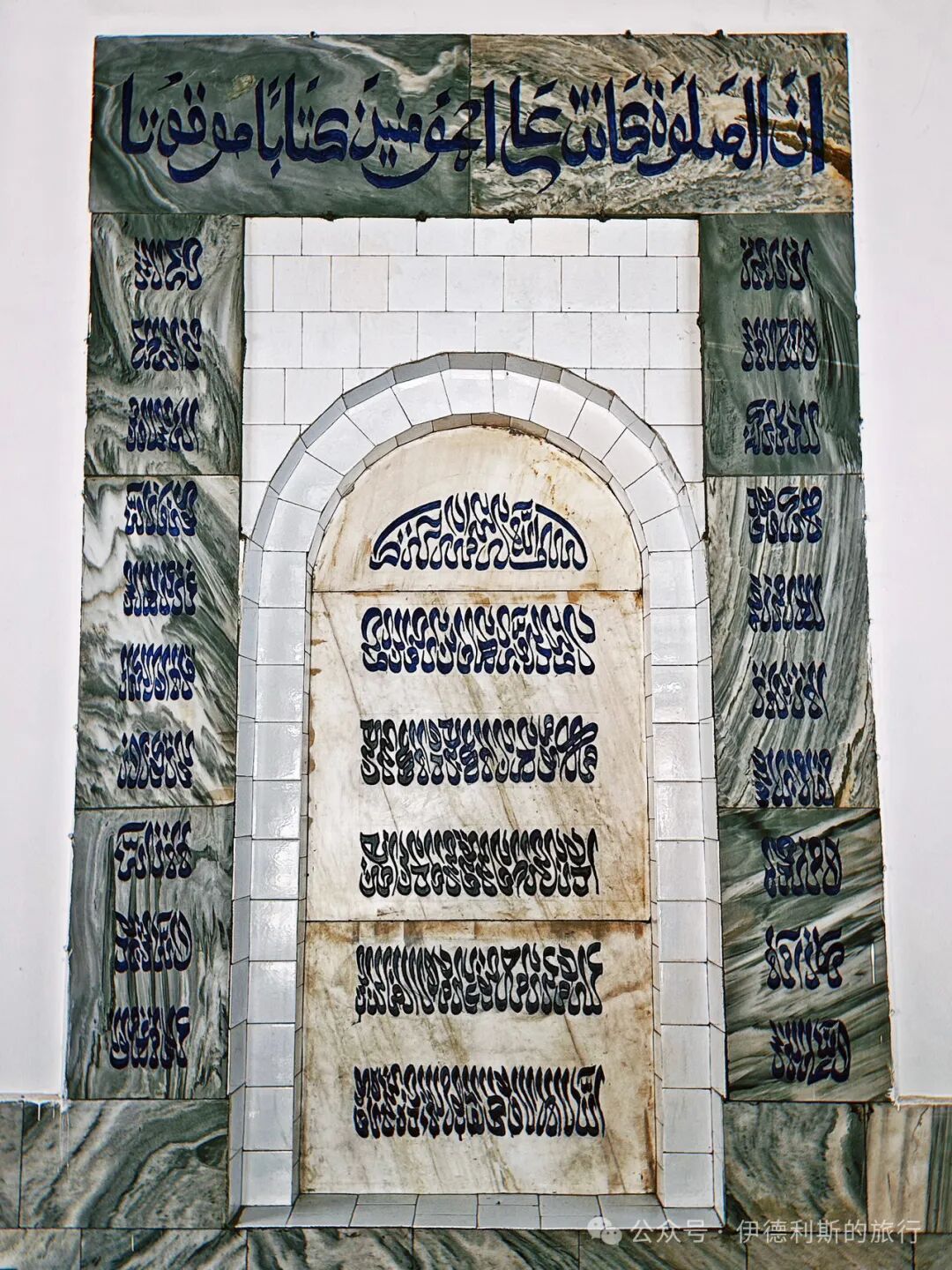
Shangxi Lianhua Mosque in Weishan, Dali, features stone-carved calligraphy.
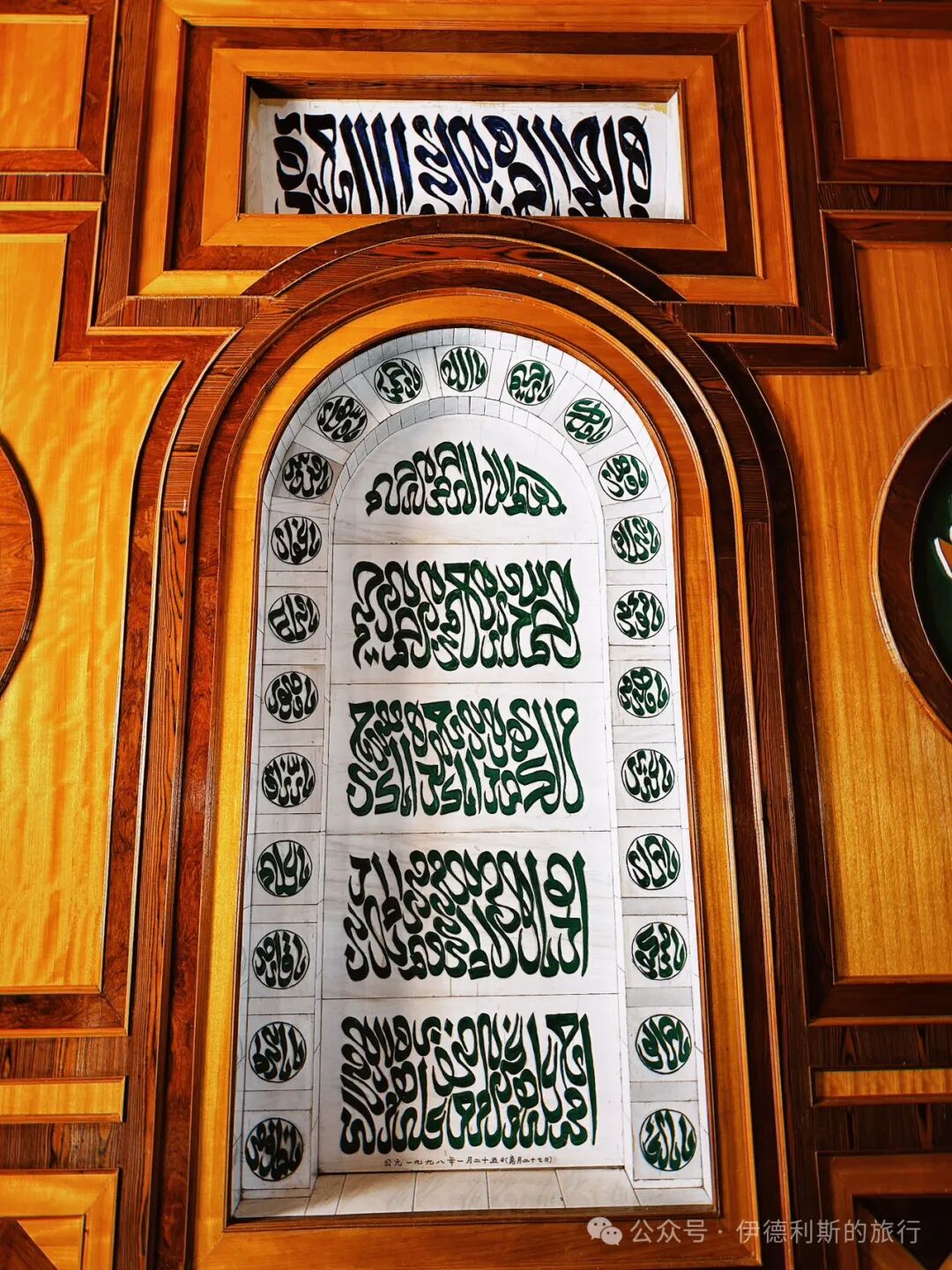
Xincun Mosque in Weishan, Dali, features stone-carved calligraphy.
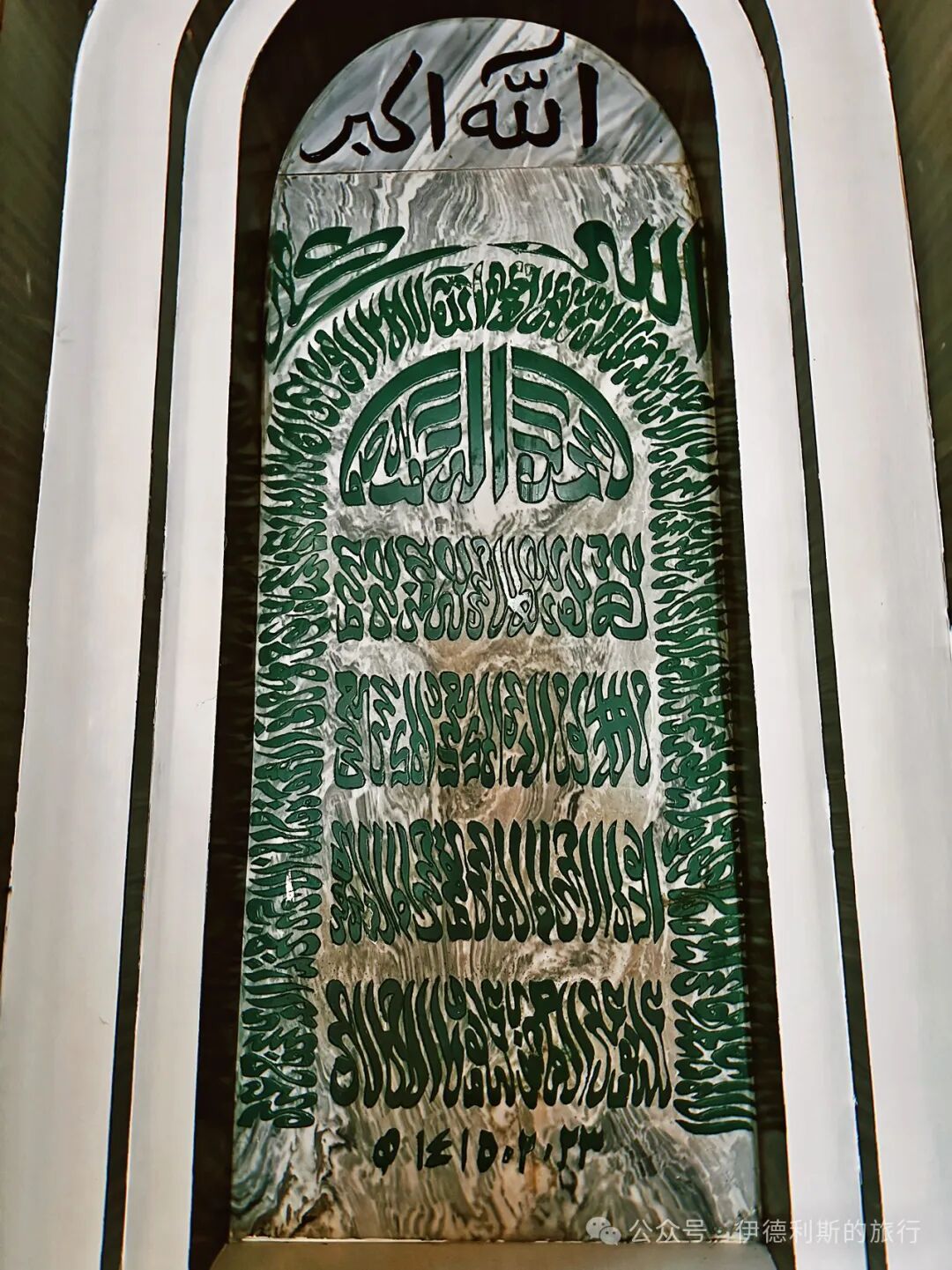
Xiaxi Lianhua Mosque in Weishan, Dali, features traditional calligraphy.
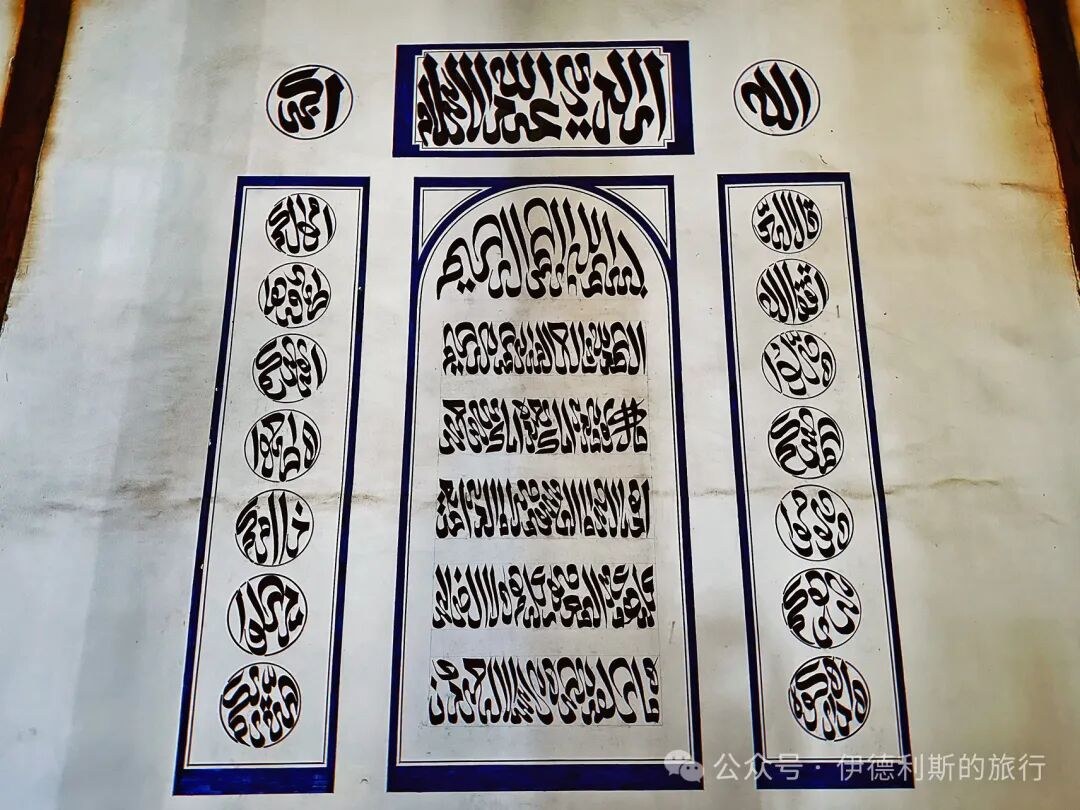
Donglianhua Mosque in Weishan, Dali, features traditional calligraphy.
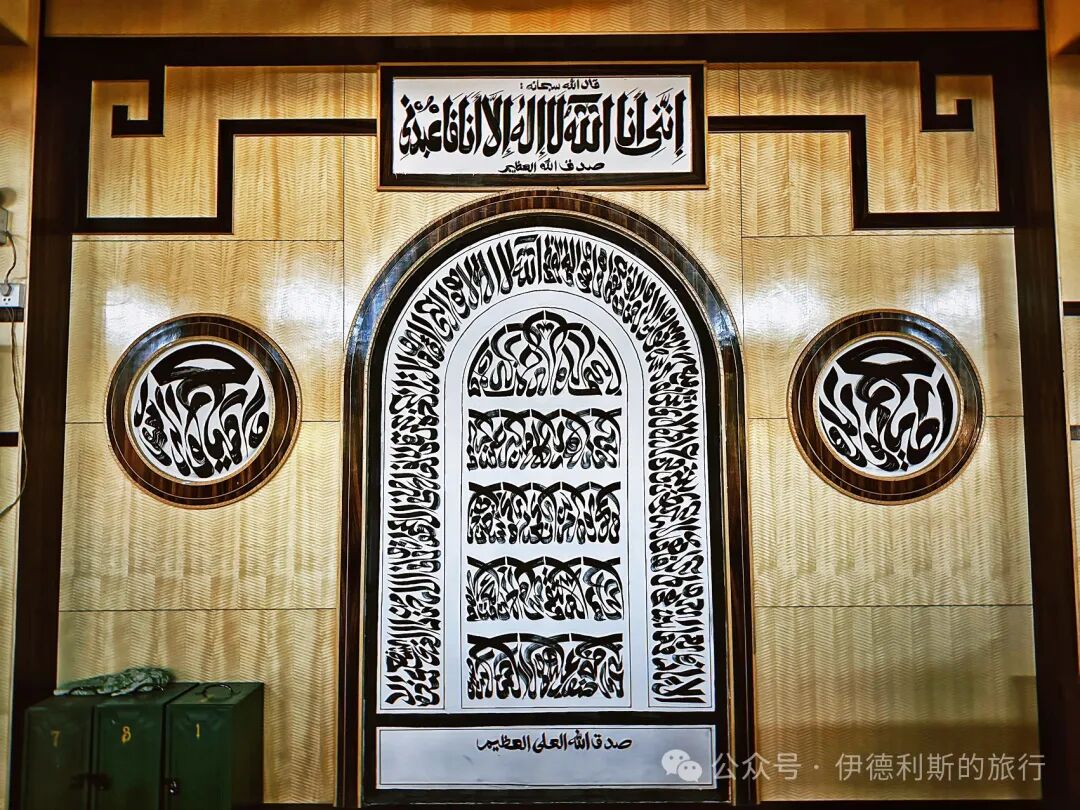
Fengyi Mosque in Dali features stone-carved calligraphy.
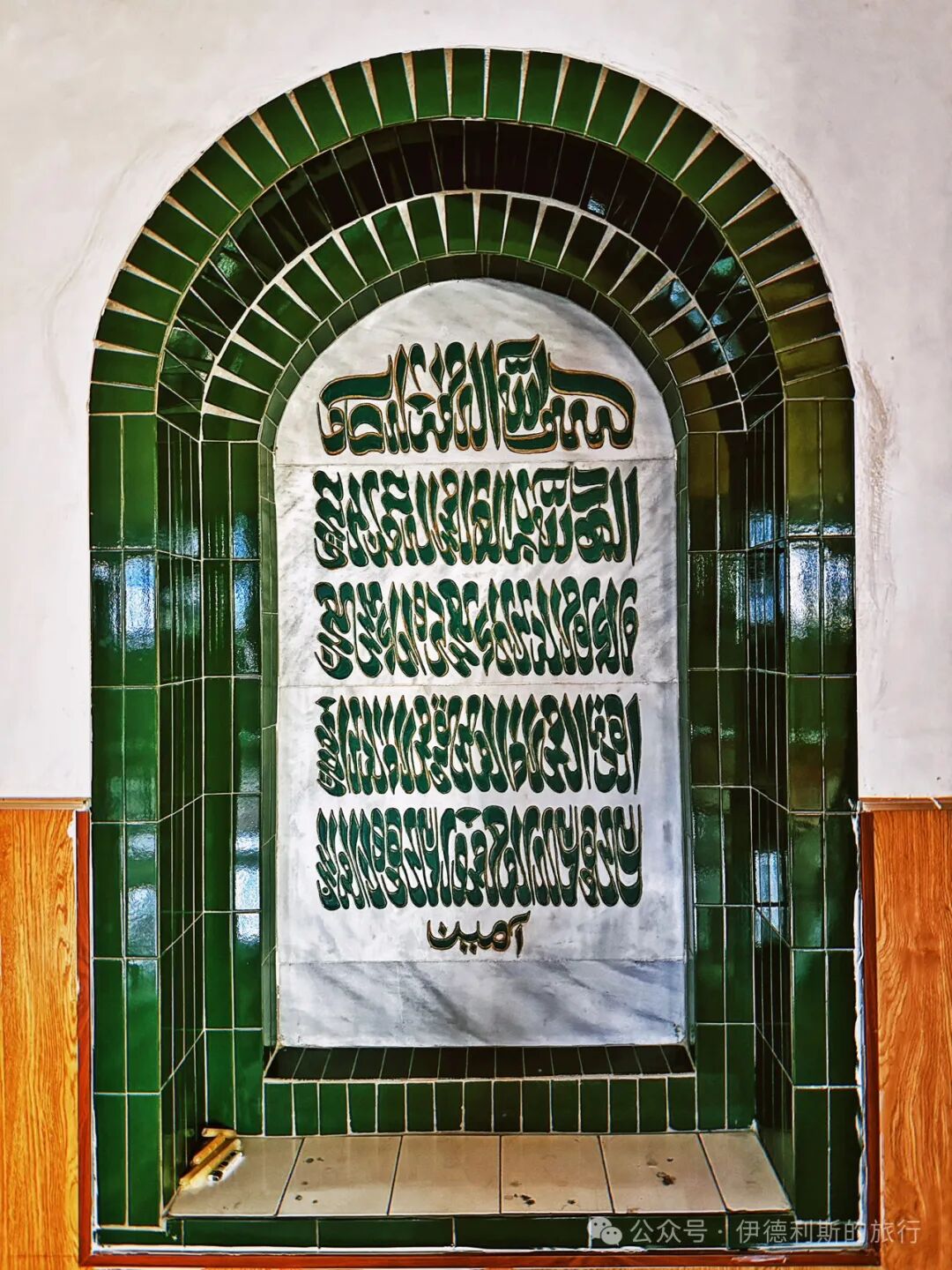
Binchuan Mosque in Dali features traditional calligraphy.
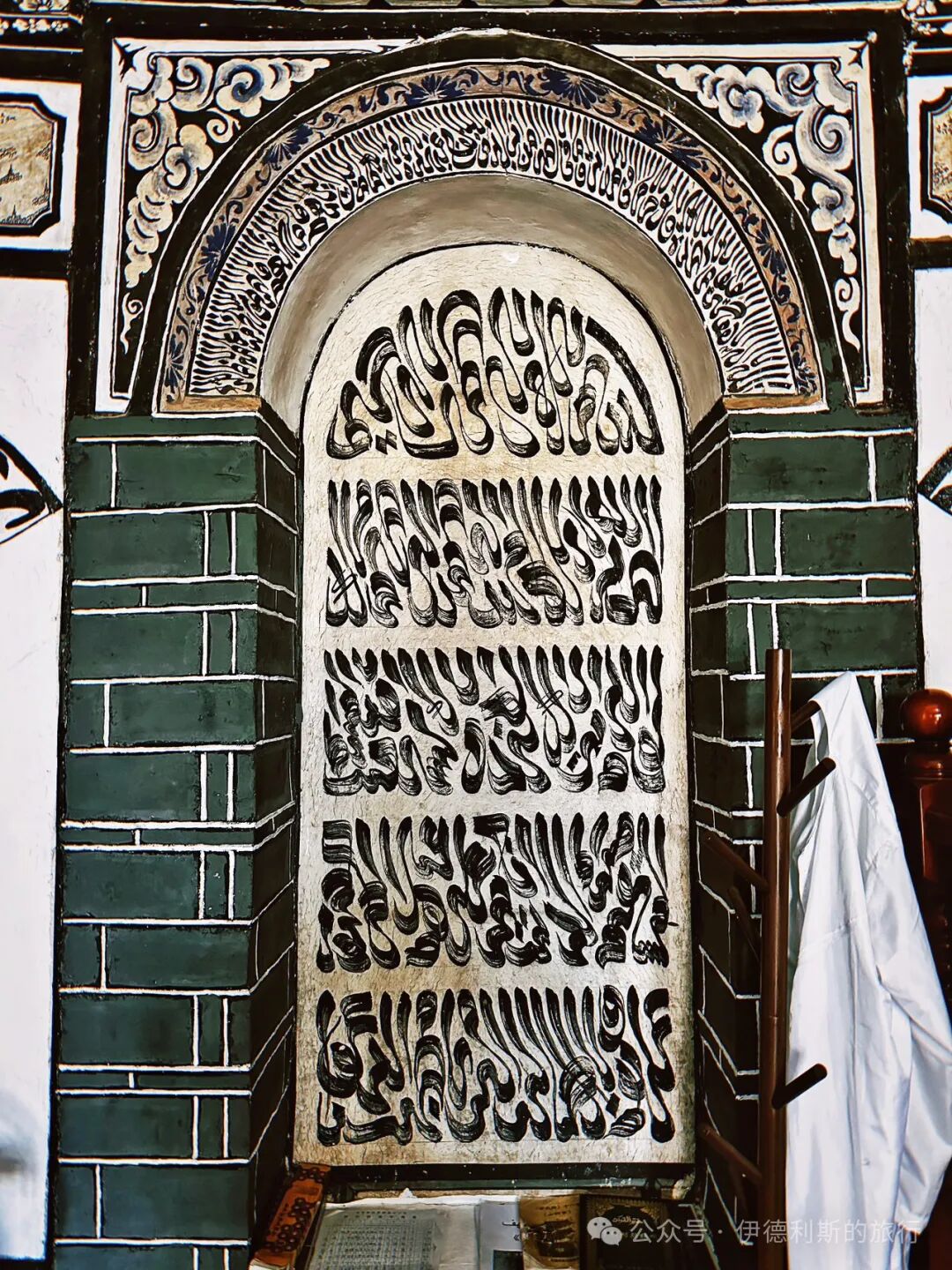
Yongning Mosque in Kunming is known as a masterpiece of Yunnan-style calligraphy.
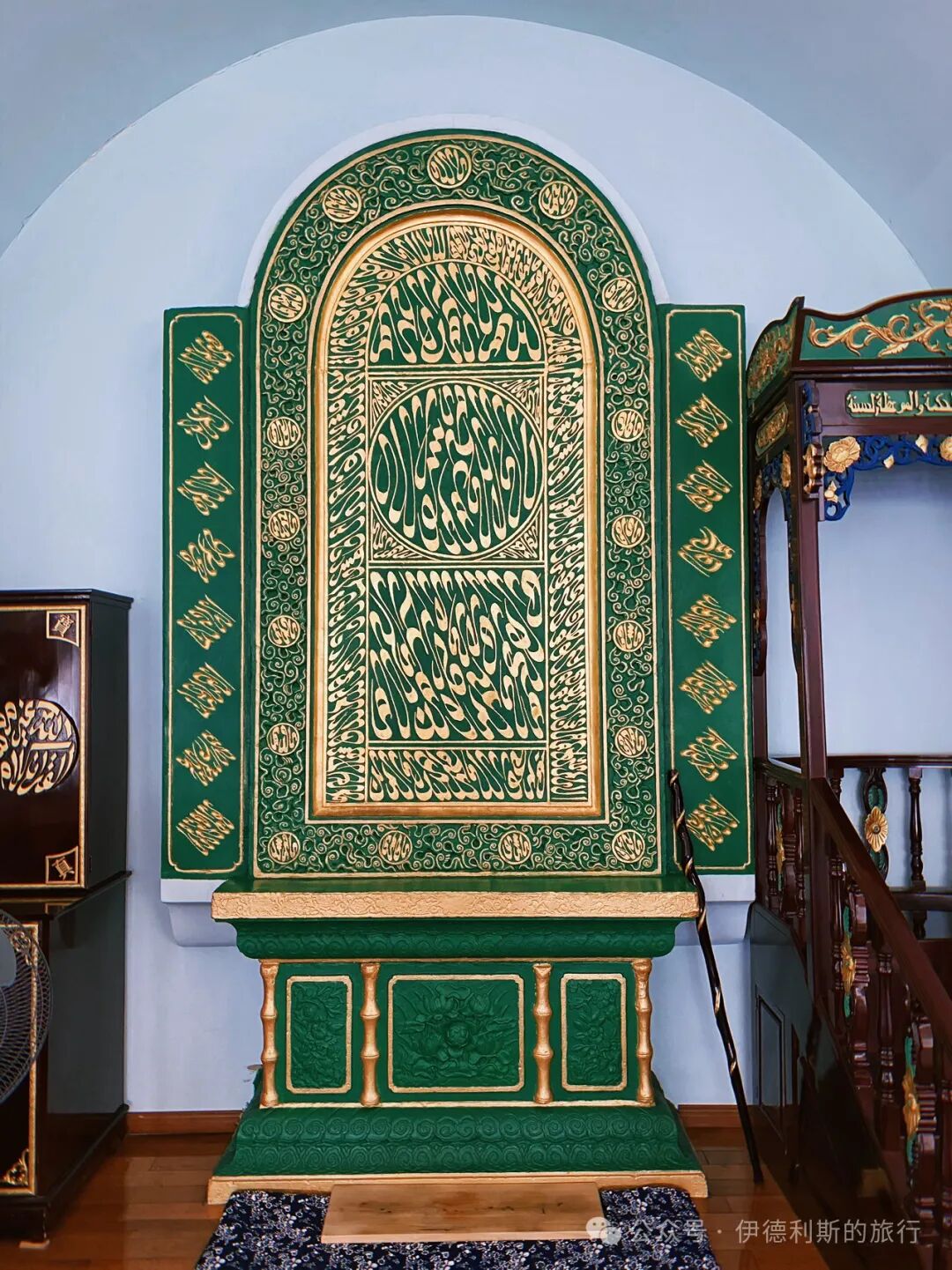
Jinniujie Mosque in Kunming features typical Yunnan-style calligraphy.
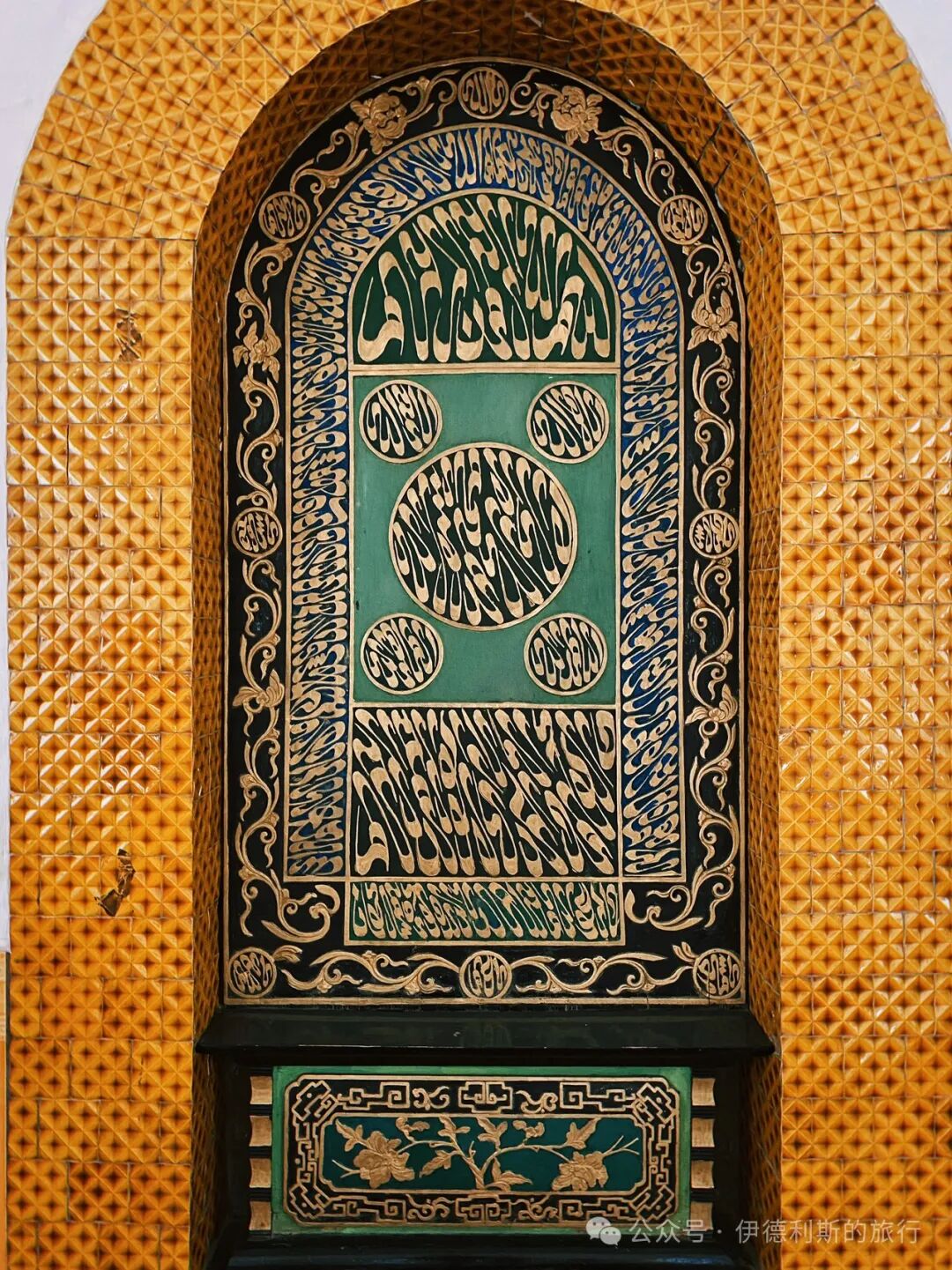
Liren Mosque in Haikou, Kunming, features typical Yunnan-style calligraphy.
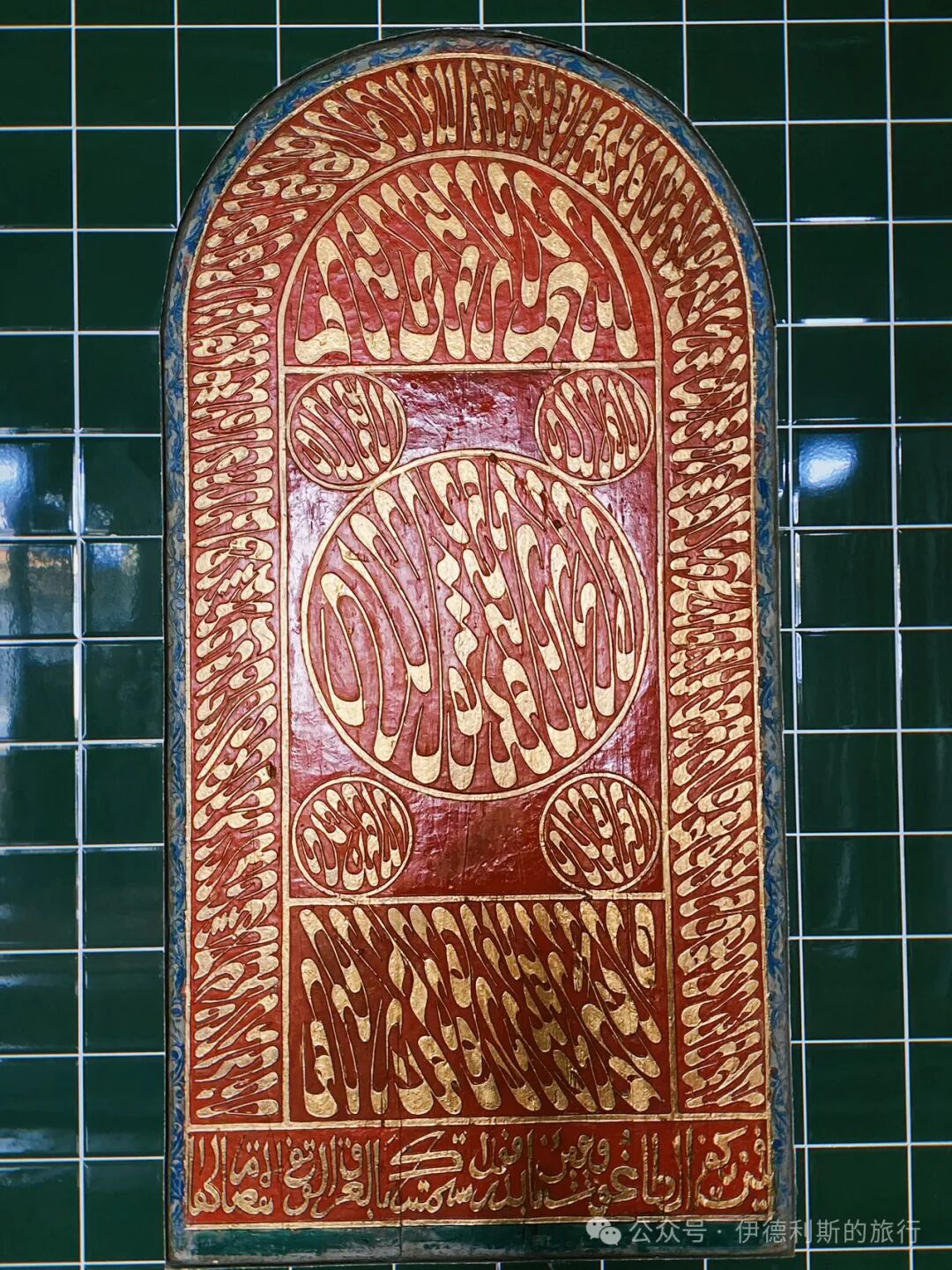
Beiying Mosque in Xundian features typical Yunnan-style calligraphy.
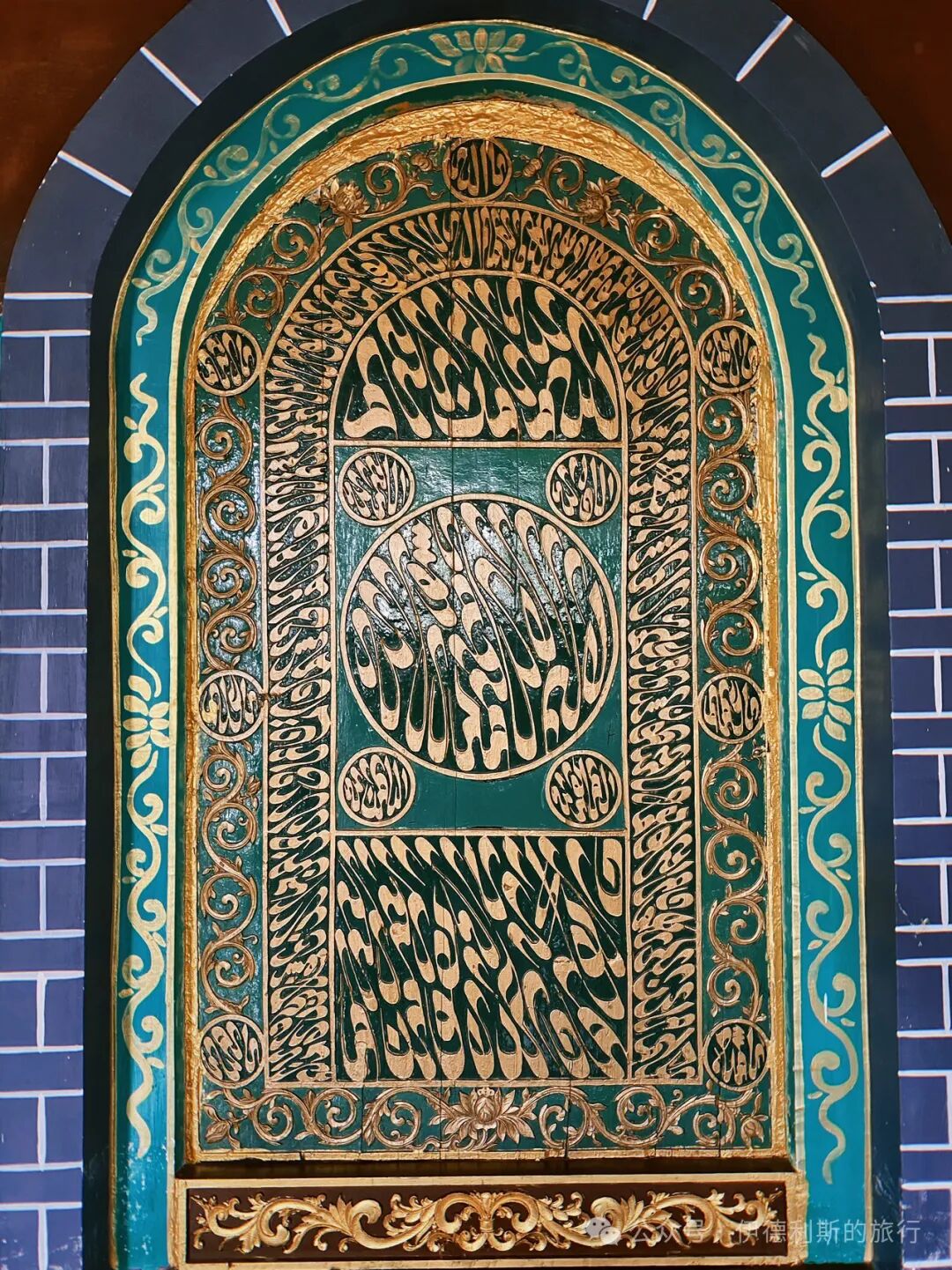
Huihuiying Mosque in Chenggong, Kunming, has very unique floral-style calligraphy in the center.
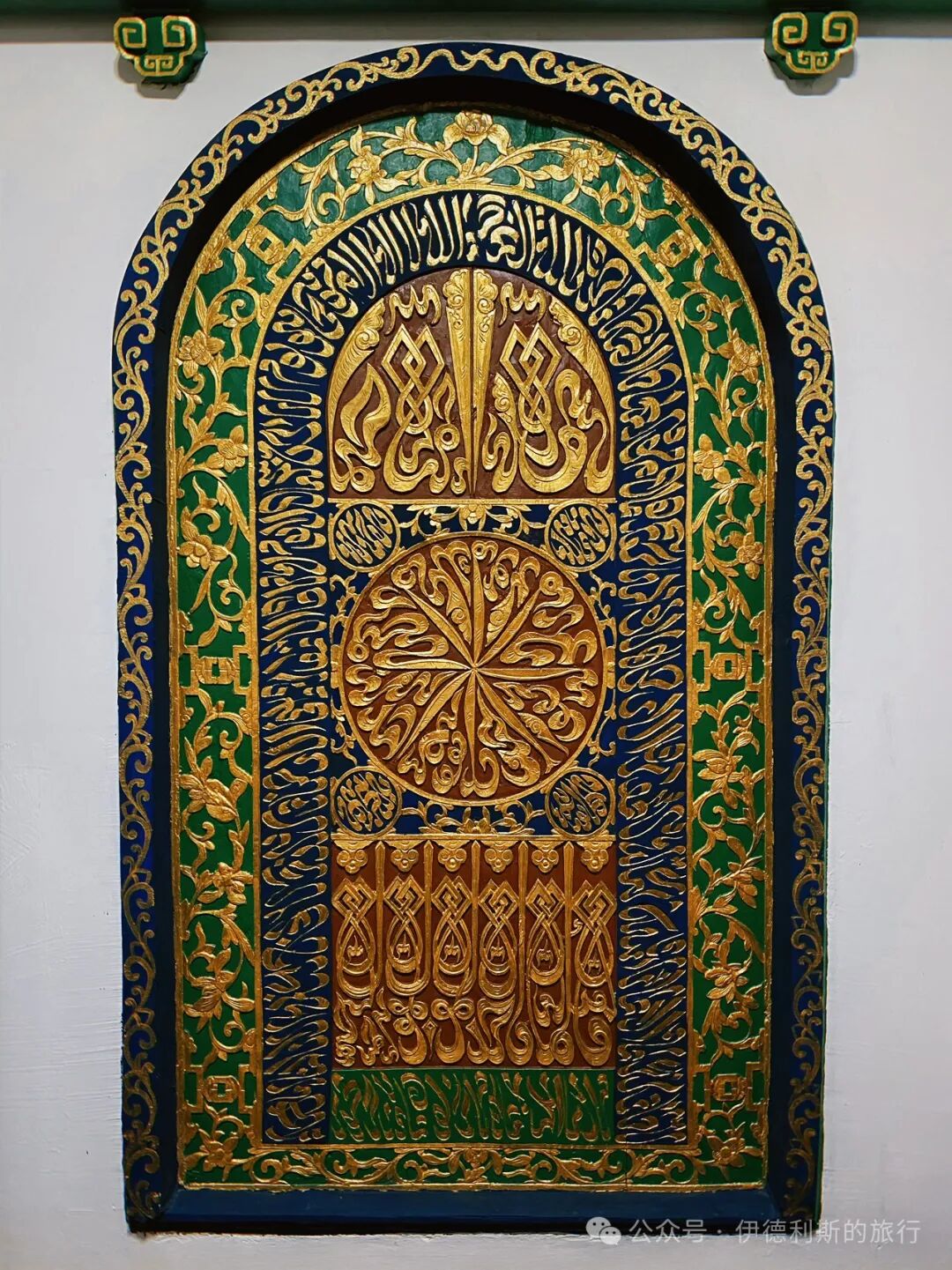
Dazhuang Mosque in Kaiyuan features traditional calligraphy in the center with a circular, interlocking design.
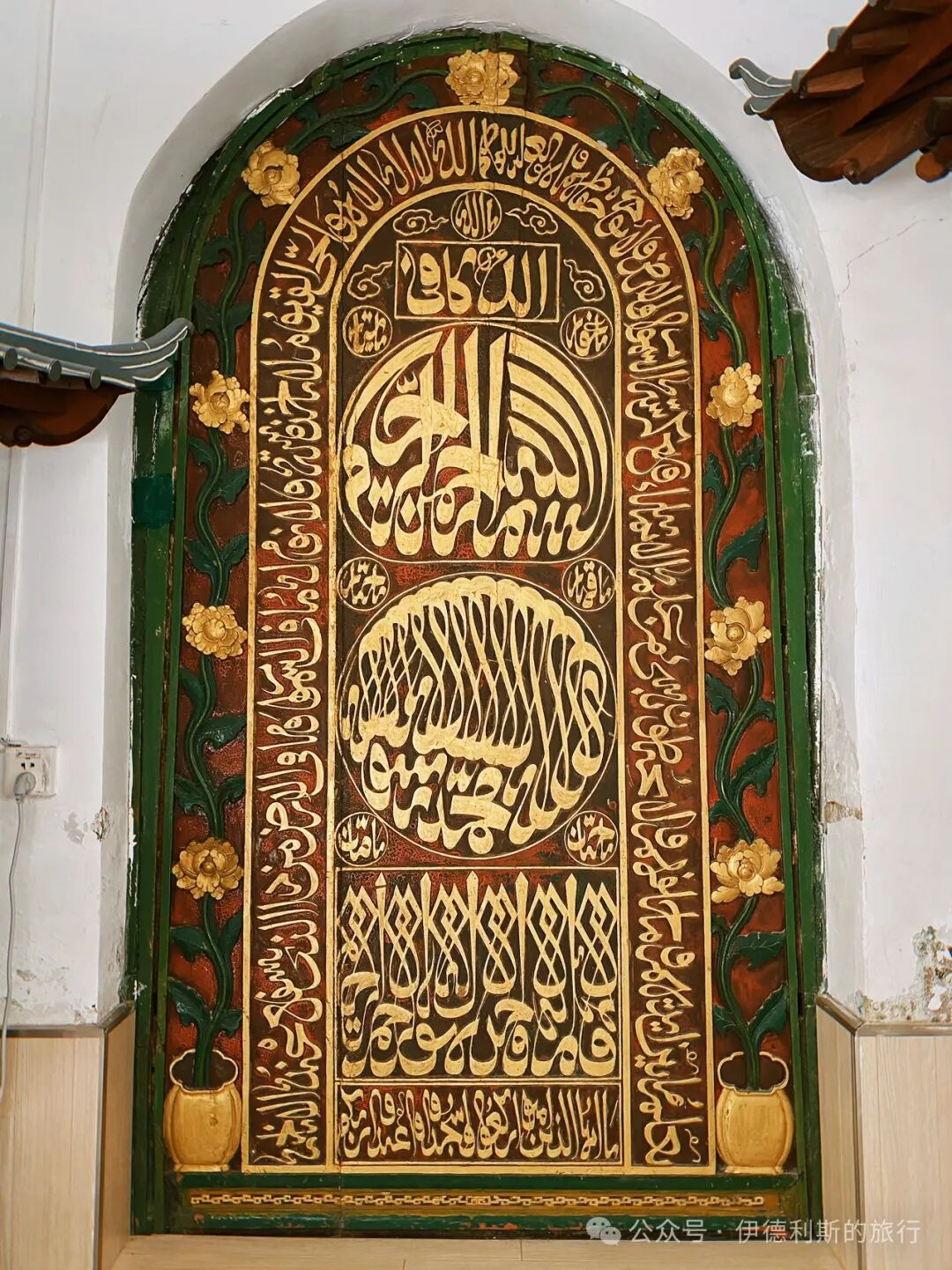
Tuogu Mosque in Ludian, Zhaotong, has traditional calligraphy on the couplets flanking the arch and in the circular center.
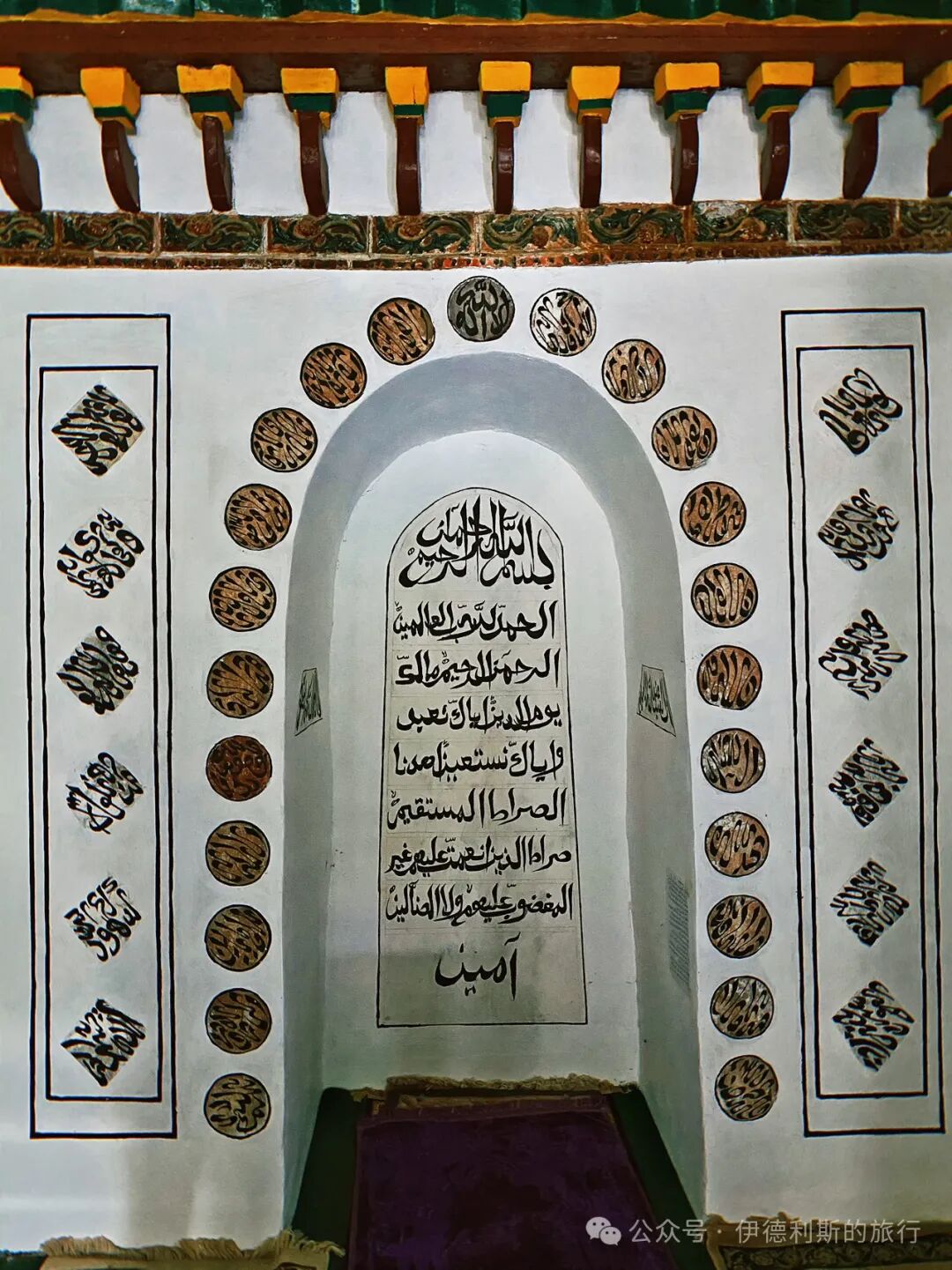
Longtoushan Mosque in Ludian, Zhaotong, features traditional-style calligraphy.
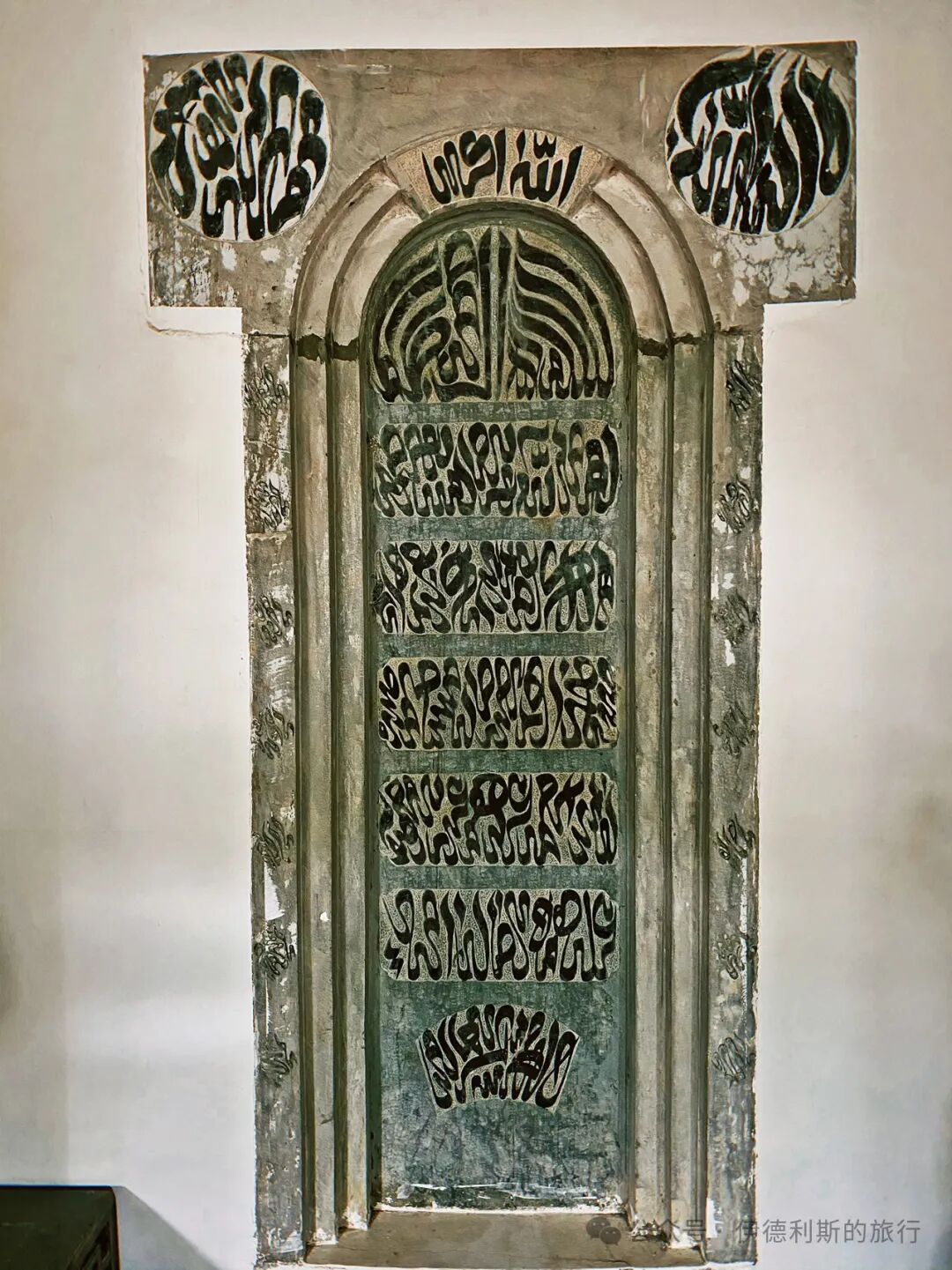
Taojiawan Mosque in Ludian, Zhaotong, features traditional Yunnan-style calligraphy.
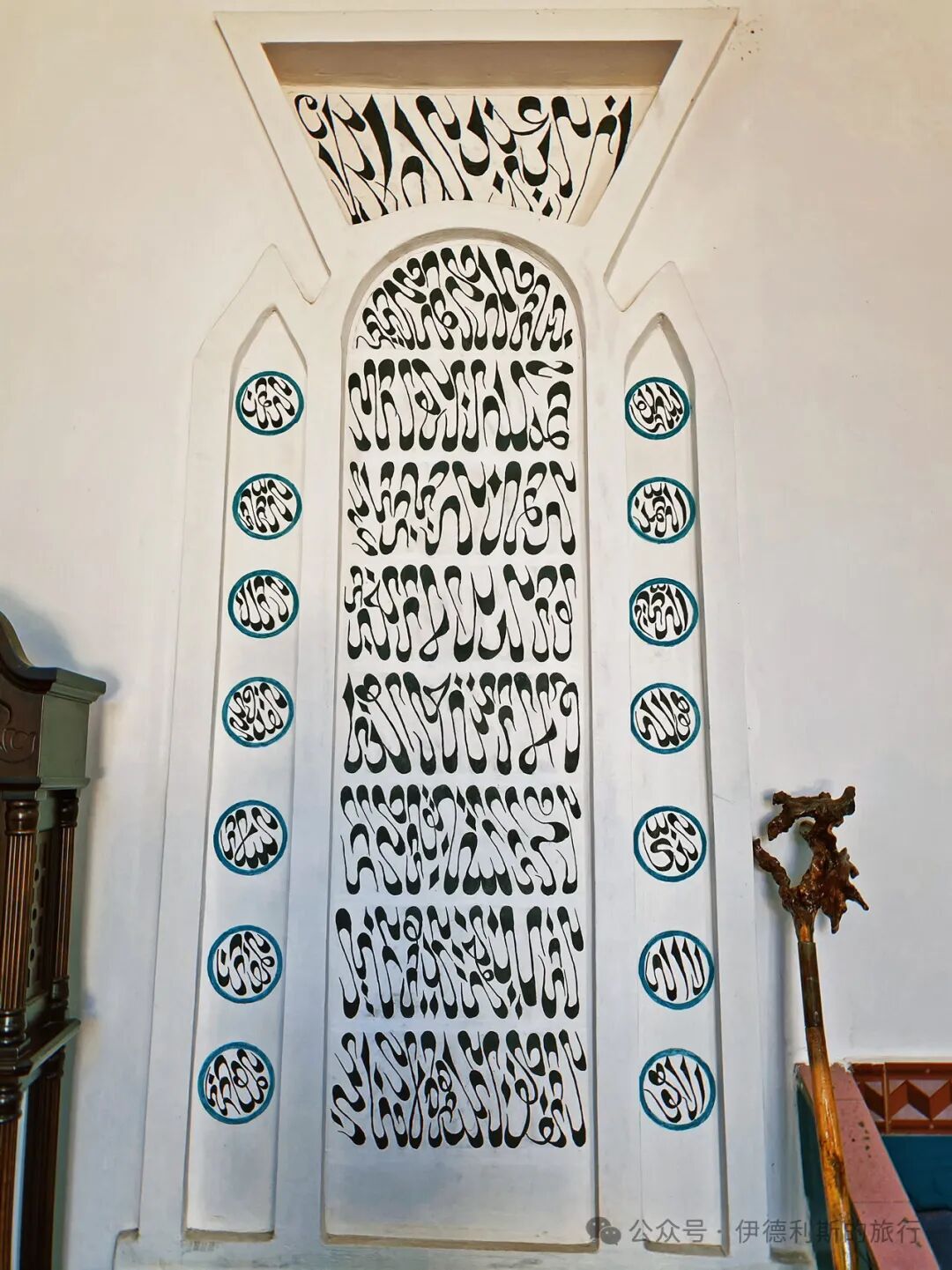
Guangxi
Chongshan Road Mosque in Guilin was first built in 1734 (the 12th year of the Yongzheng reign). The rear hall was expanded in 1892 (the 18th year of the Guangxi reign) and features exquisite wood carvings of floral-style calligraphy.
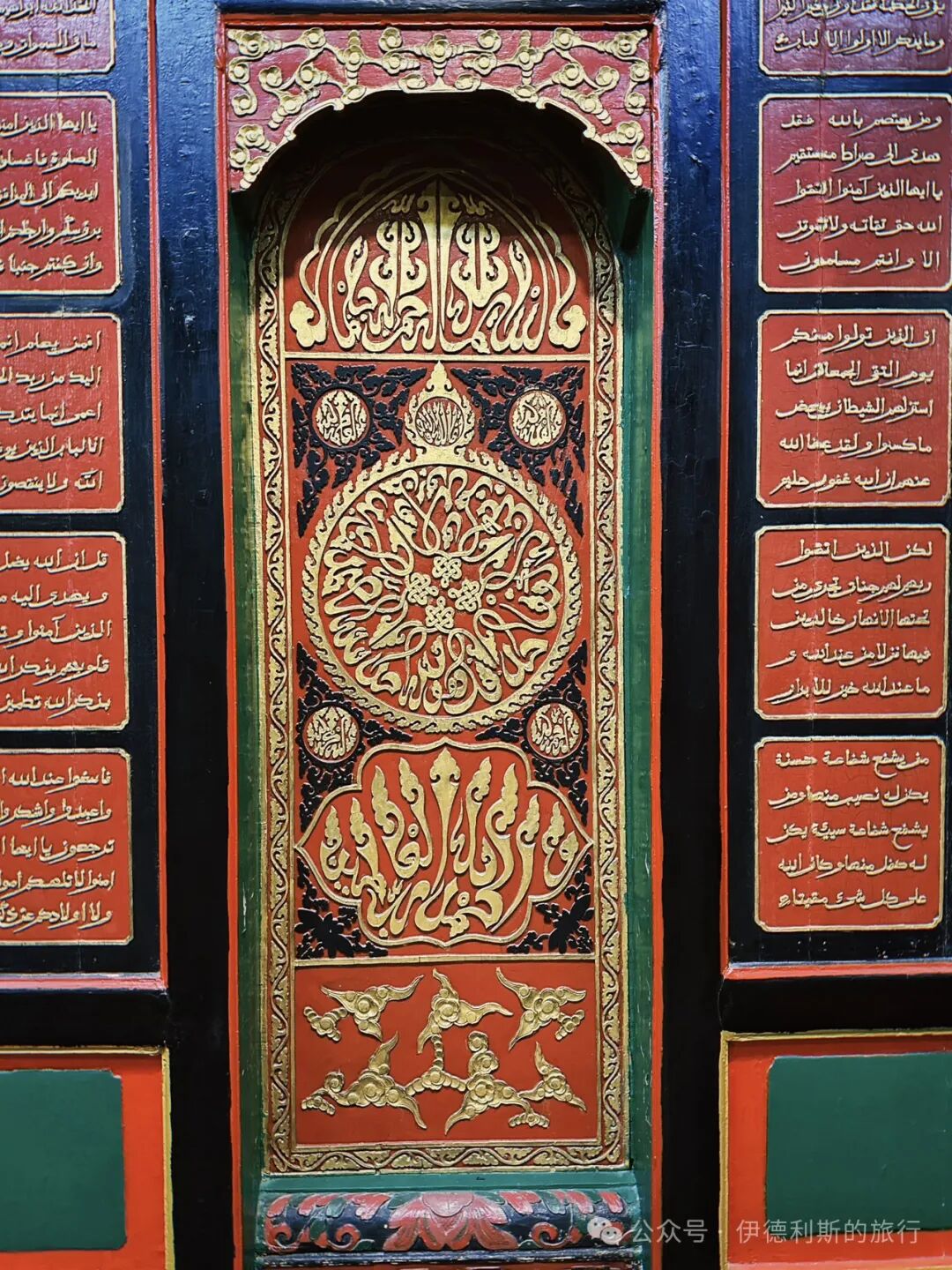
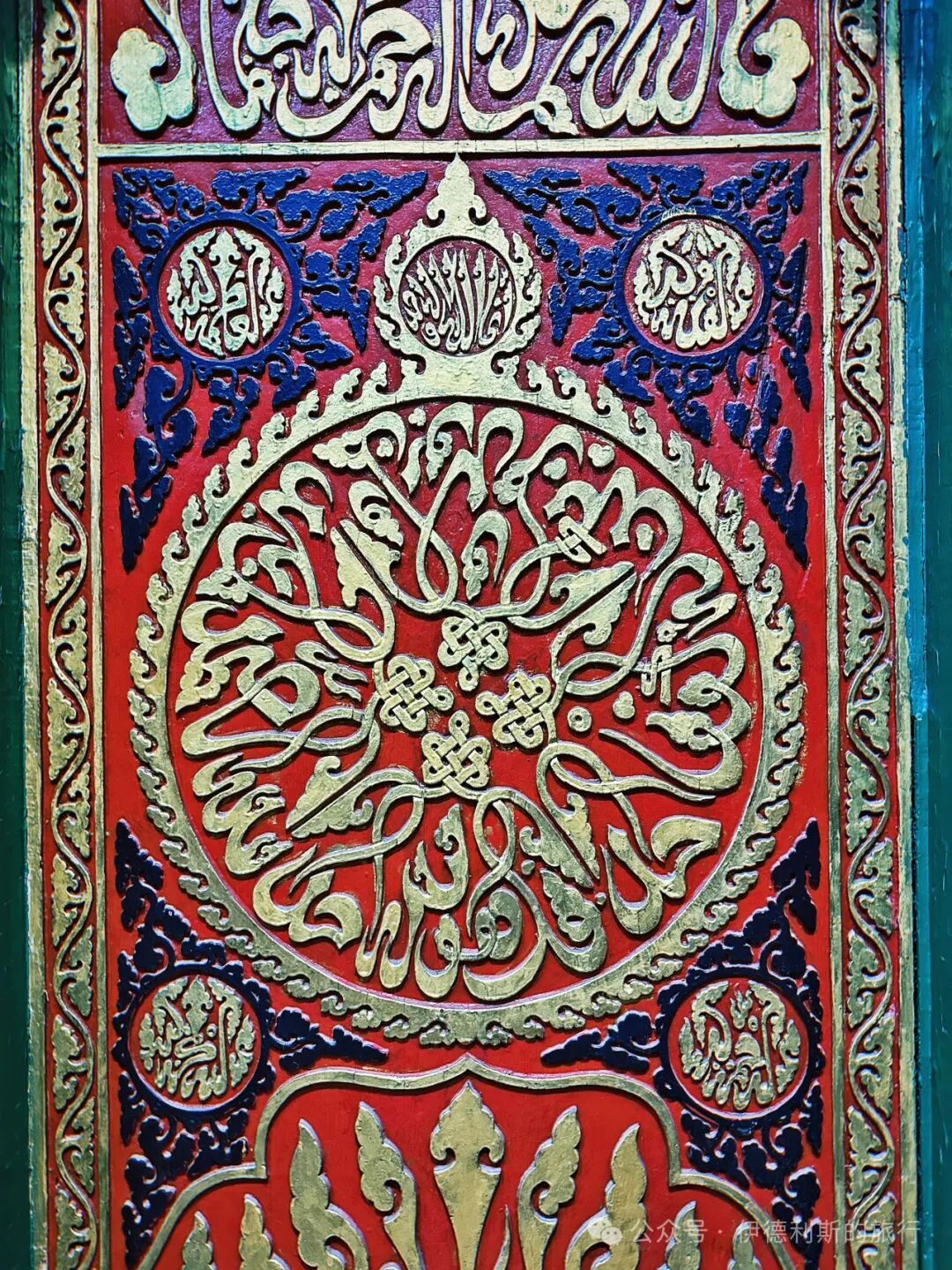
Wutong Mosque in Guilin was first built during the Qing Jiaqing reign and renovated in 1915. It has beautiful wood carvings of calligraphy.
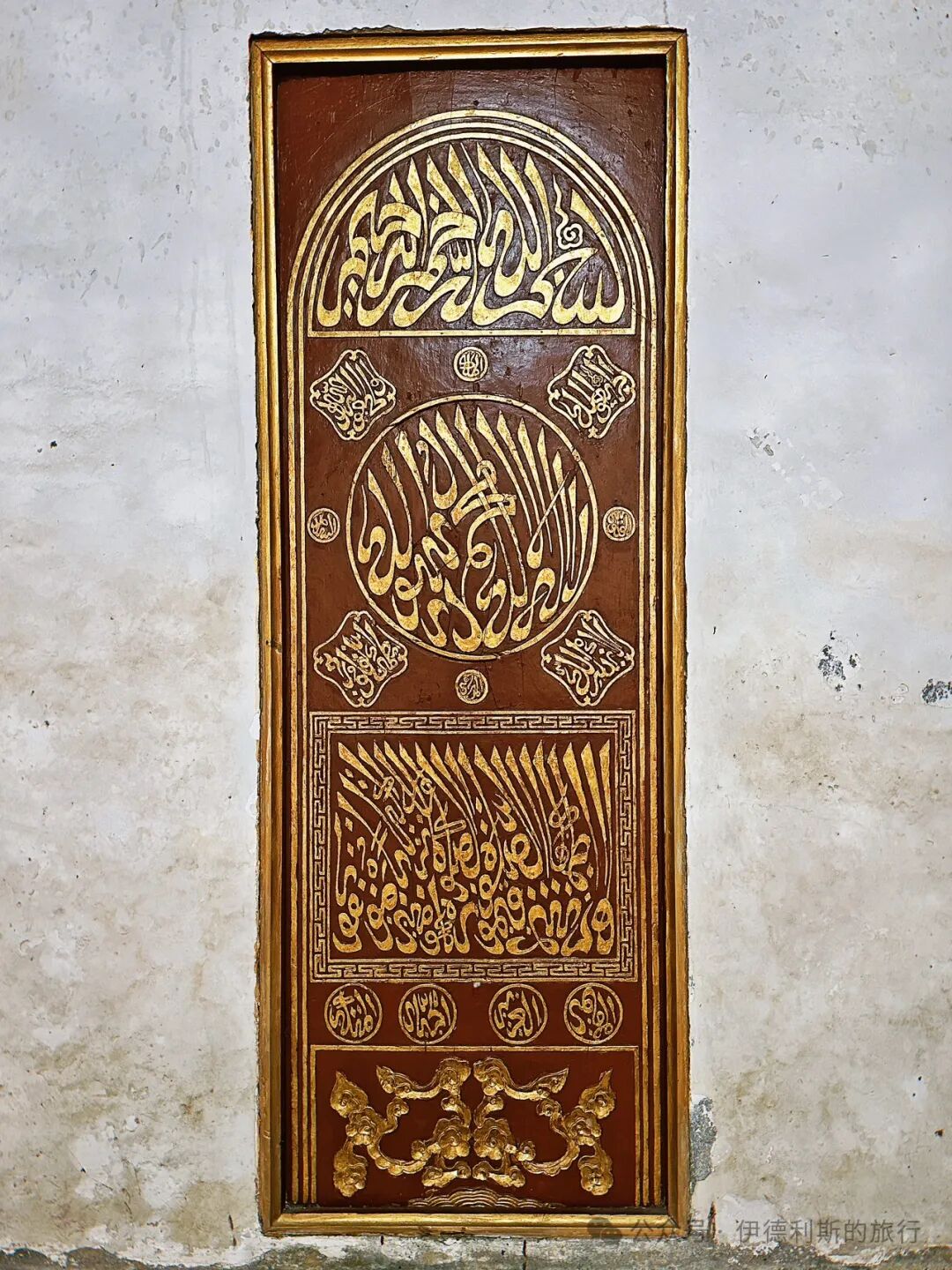
Liutang Mosque in Guilin was first built during the Qing Qianlong reign and has beautiful wood carvings of calligraphy.
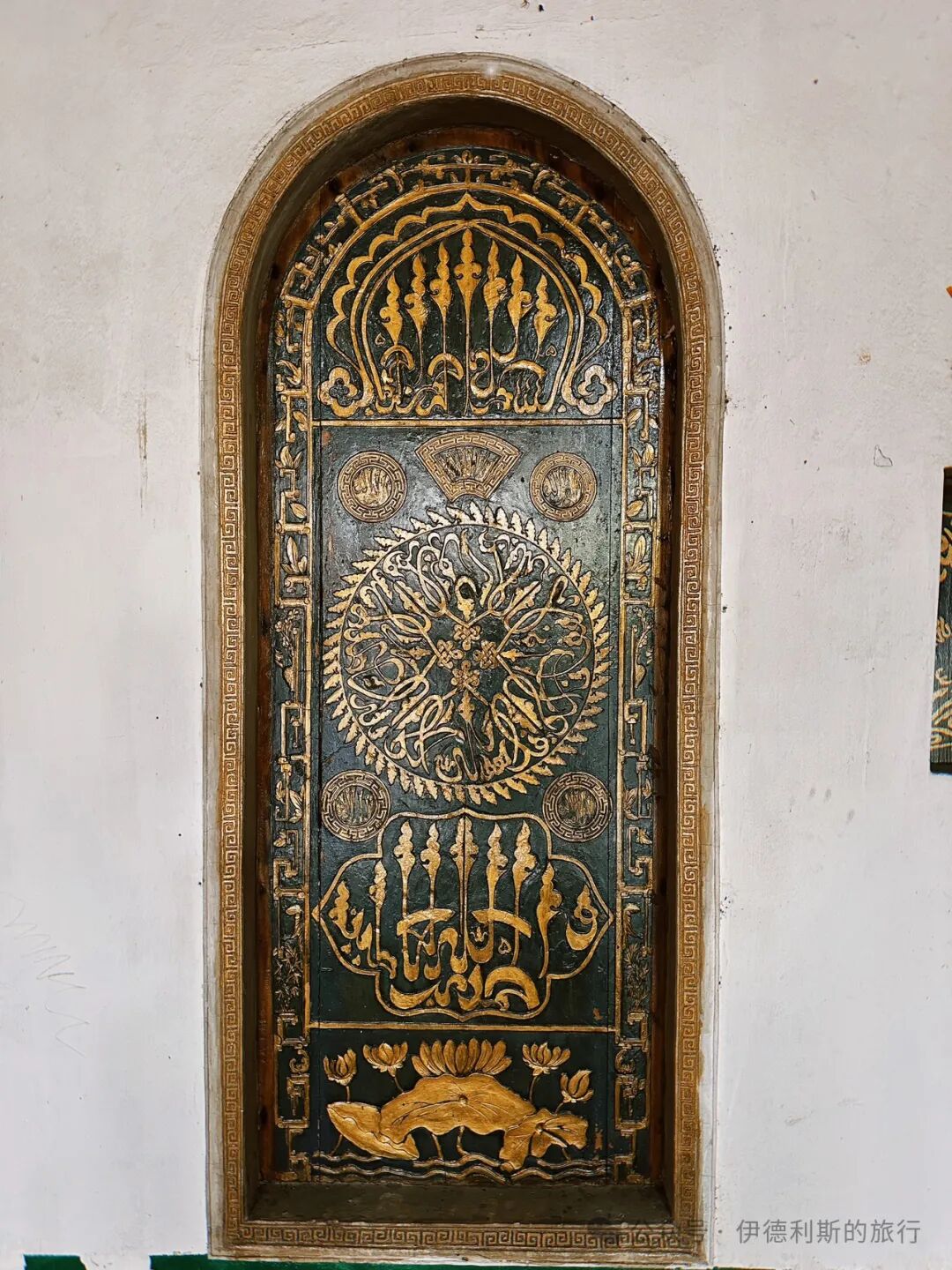
Jiucun Mosque in Guilin features wood carvings of calligraphy.
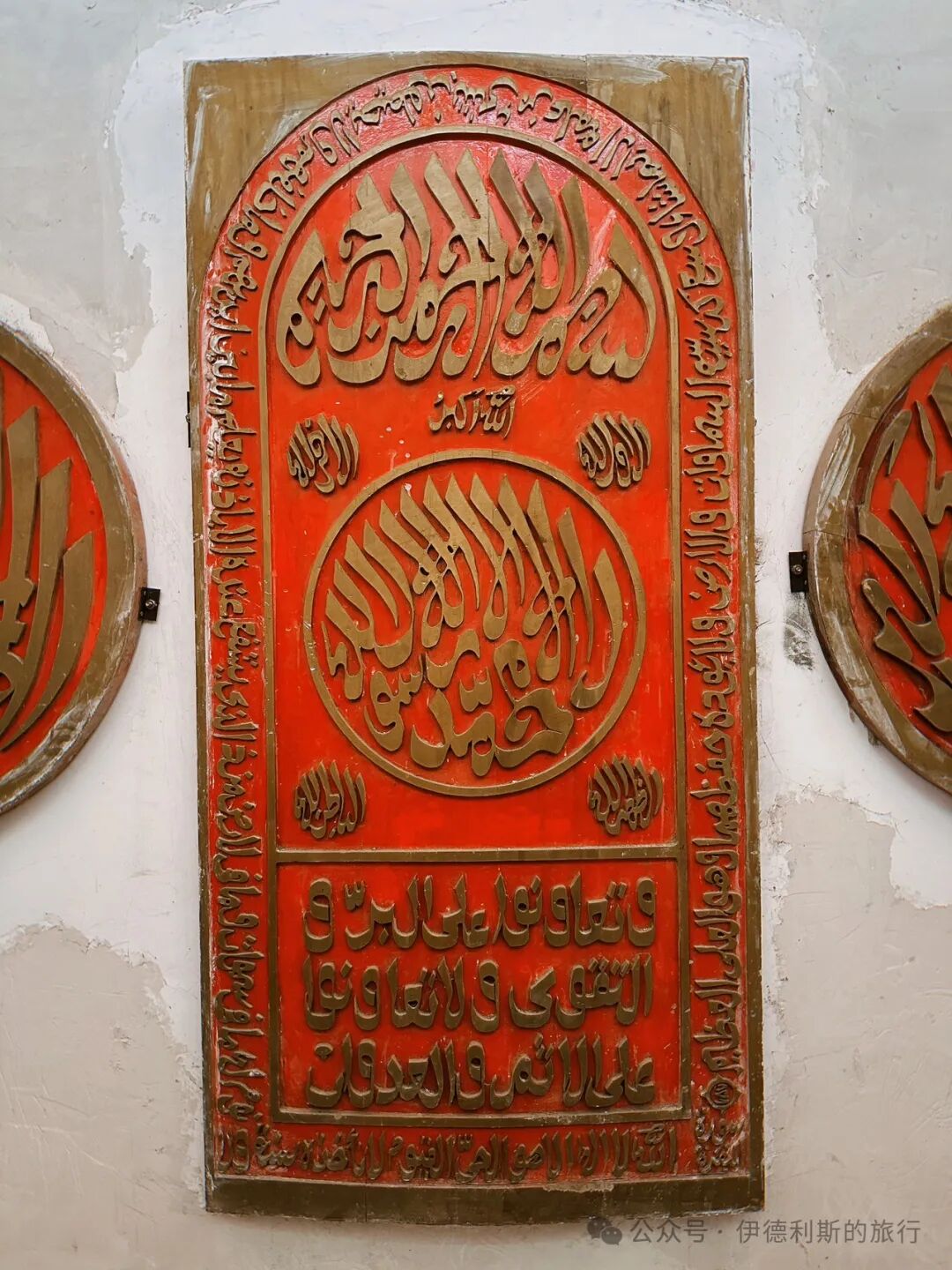
Daxu Mosque in Guilin features wood carvings of calligraphy.
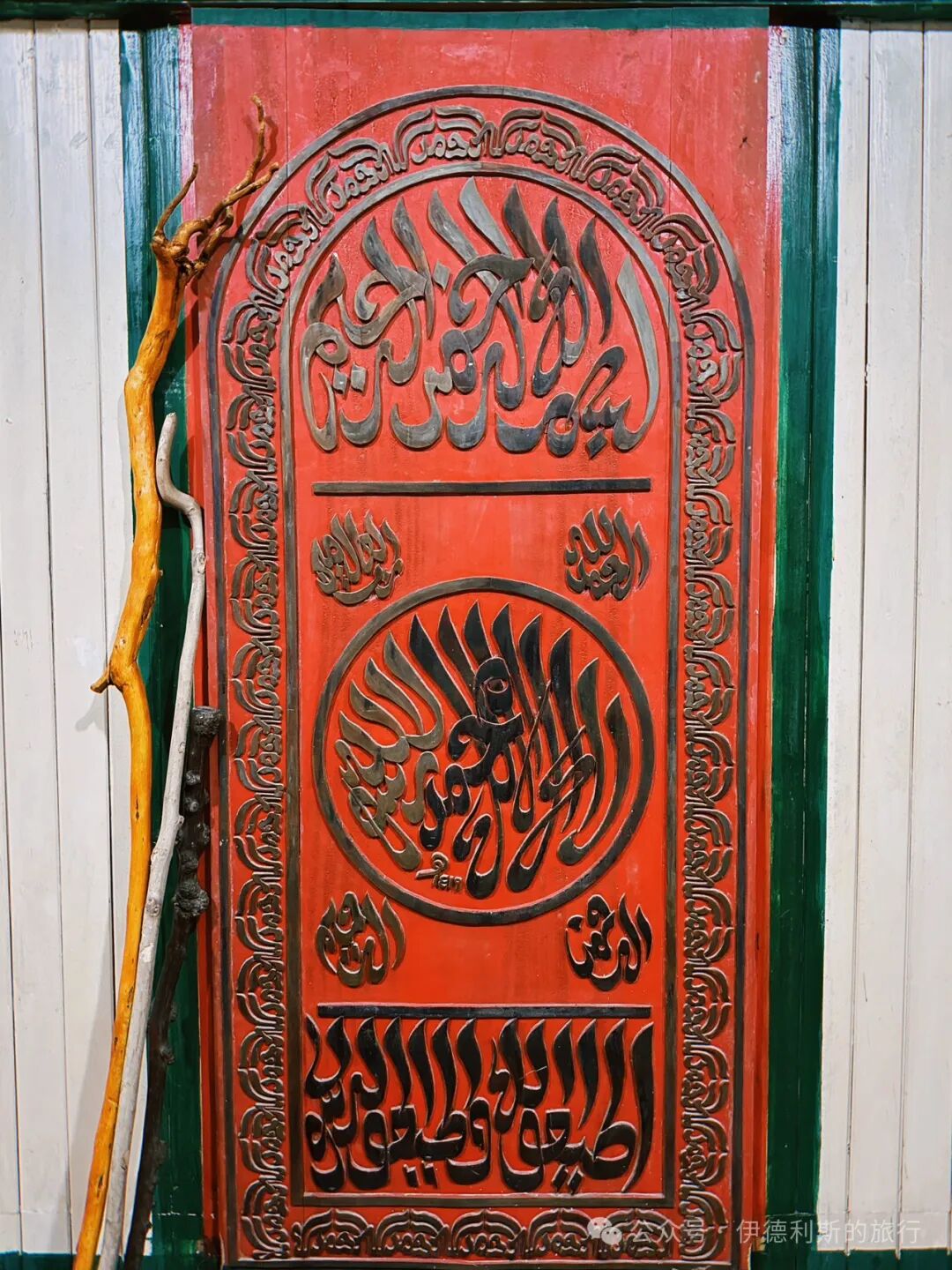
The Women's Mosque in Guilin features wood carvings of calligraphy.
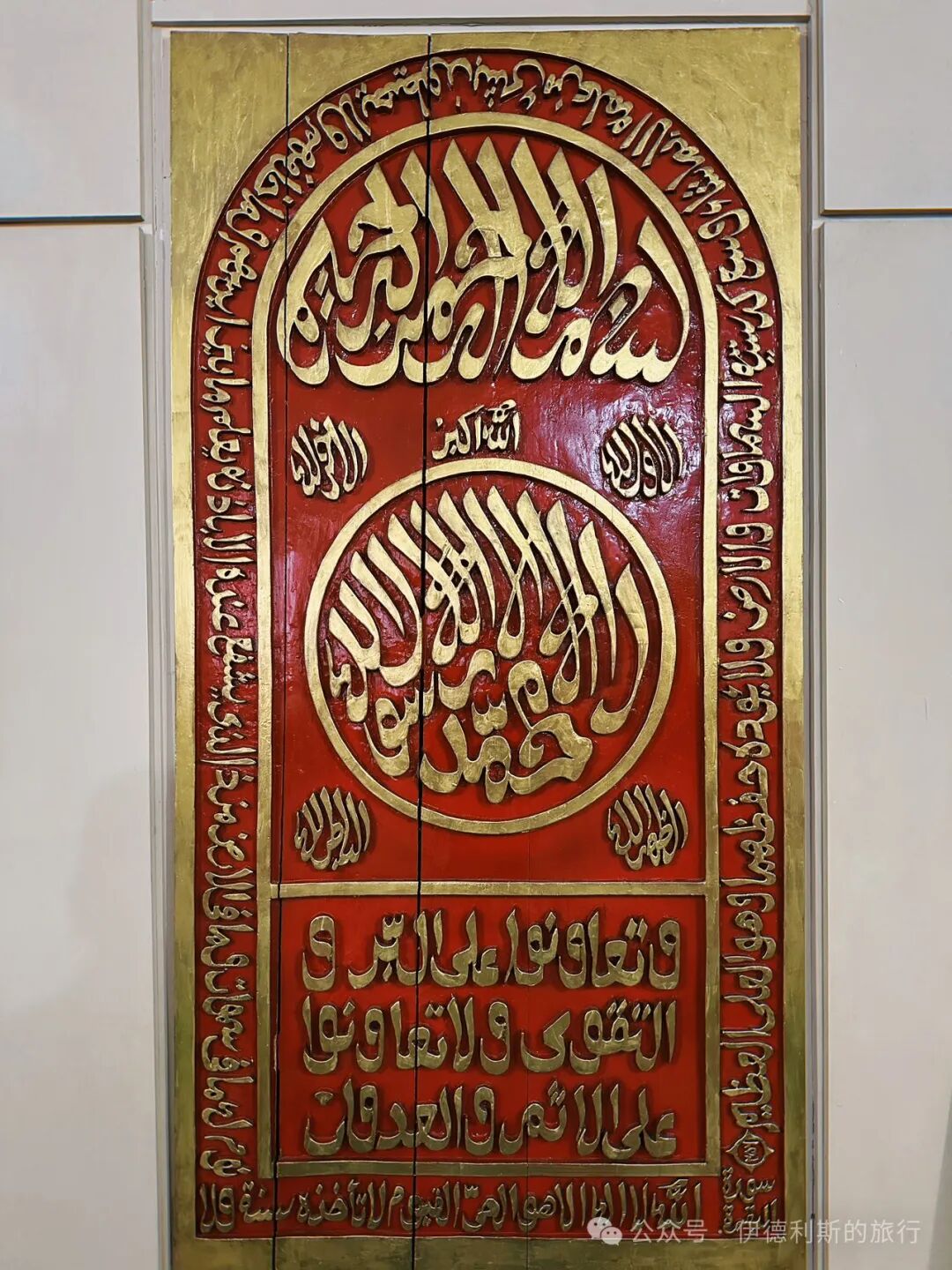
Maping Mosque in Guilin was first built in 1671 (the 10th year of the Kangxi reign). It was burned down by the Japanese army in 1944, rebuilt in 1948, and rebuilt again in 1987, but it still keeps the original wood carvings of the mihrab.
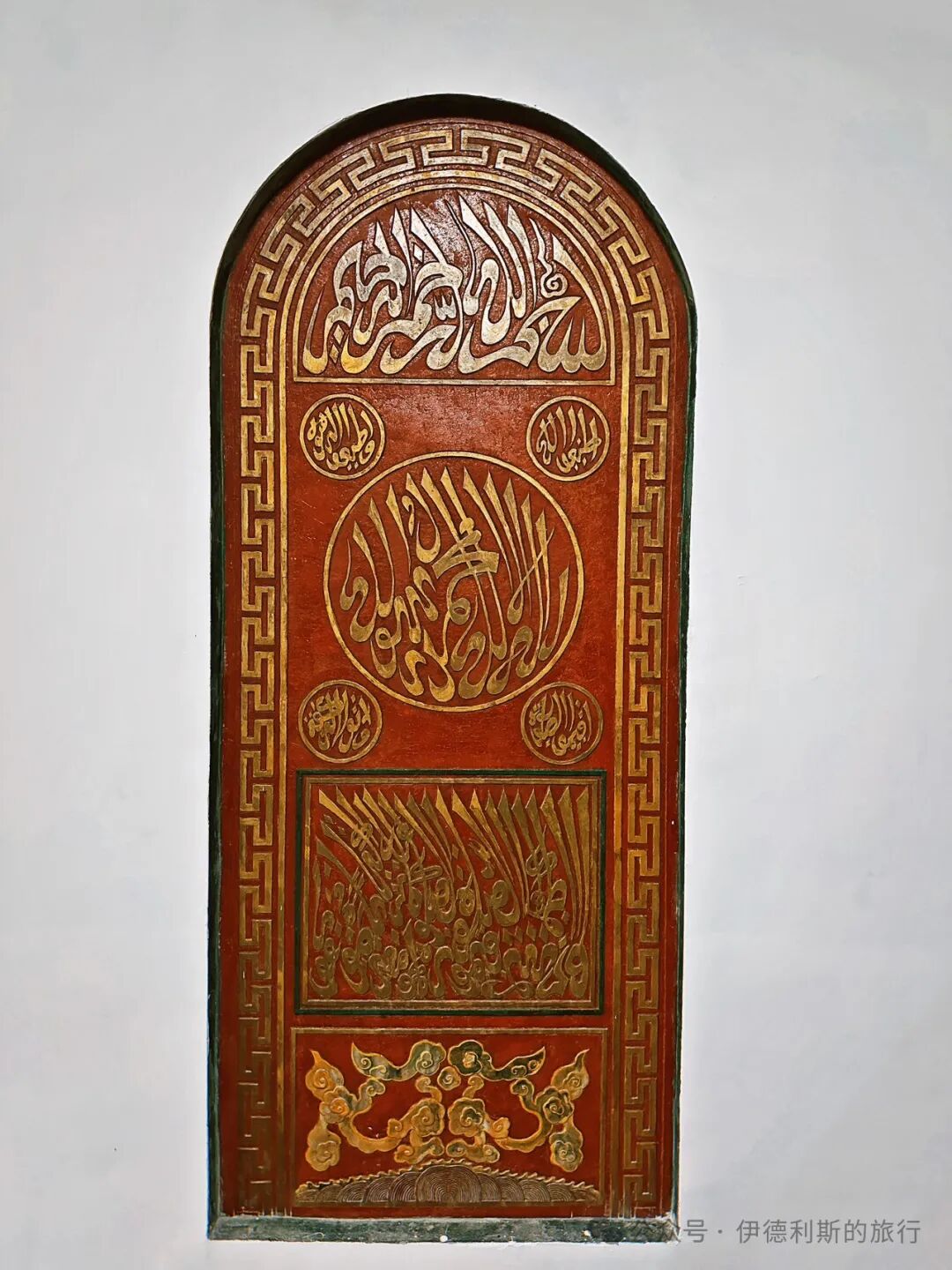
Guangdong
Chengxi Mosque in Zhaoqing, Guangdong, preserved its Qing Dynasty stone mihrab during the 1983 reconstruction, which features traditional calligraphic couplets.
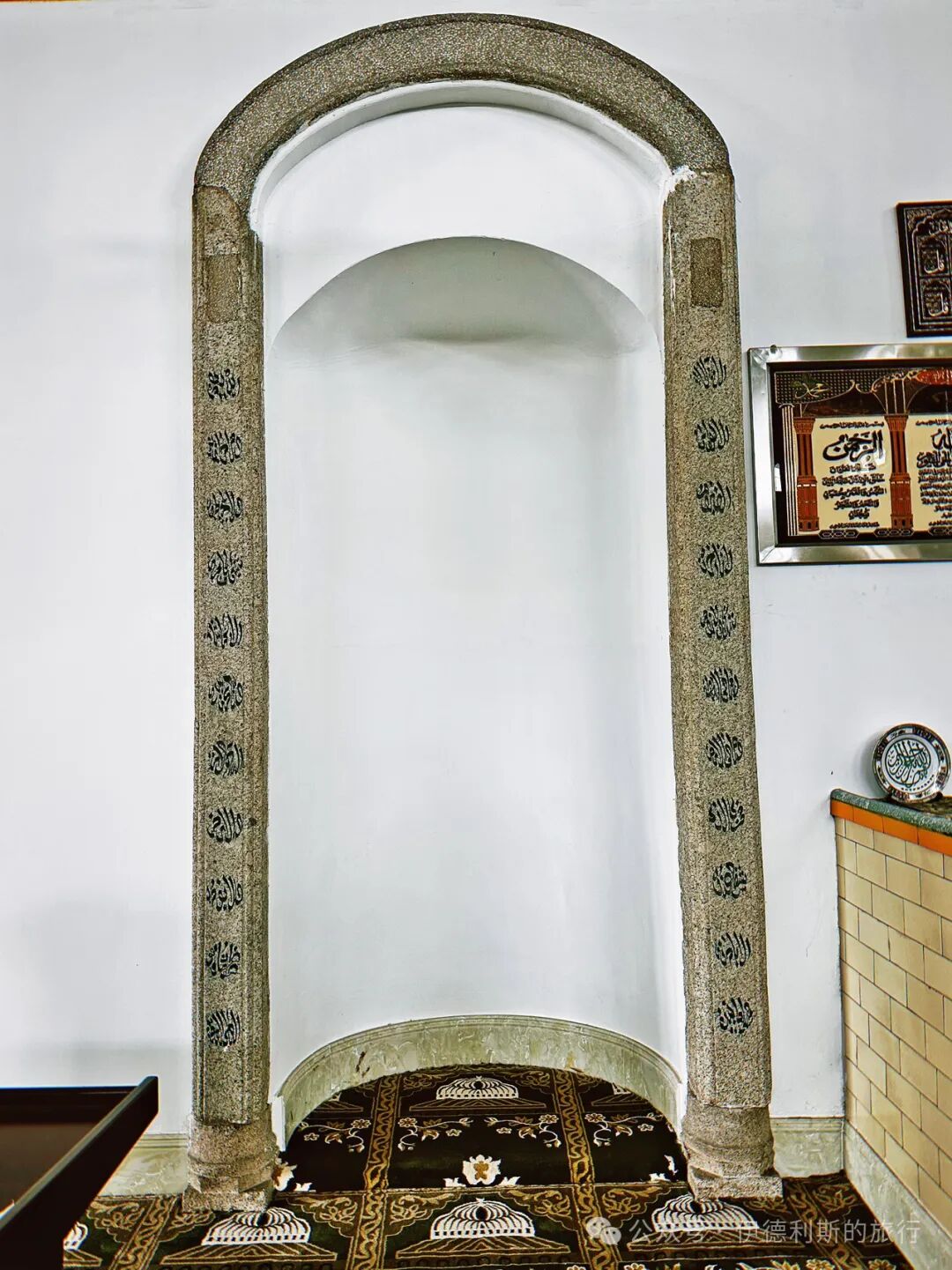
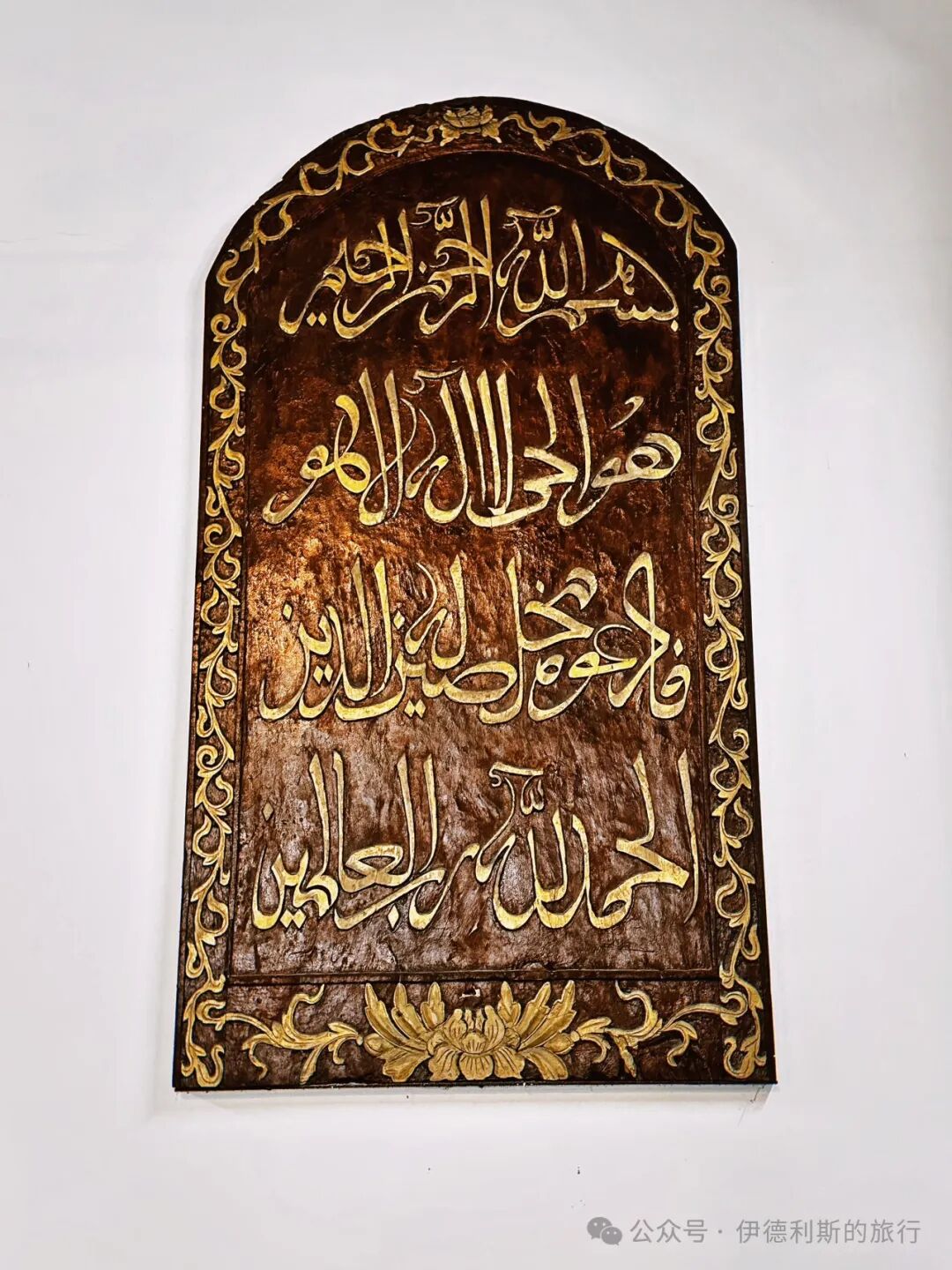
Chengdong Mosque in Zhaoqing, Guangdong, features Qing Dynasty wood-carved calligraphy.
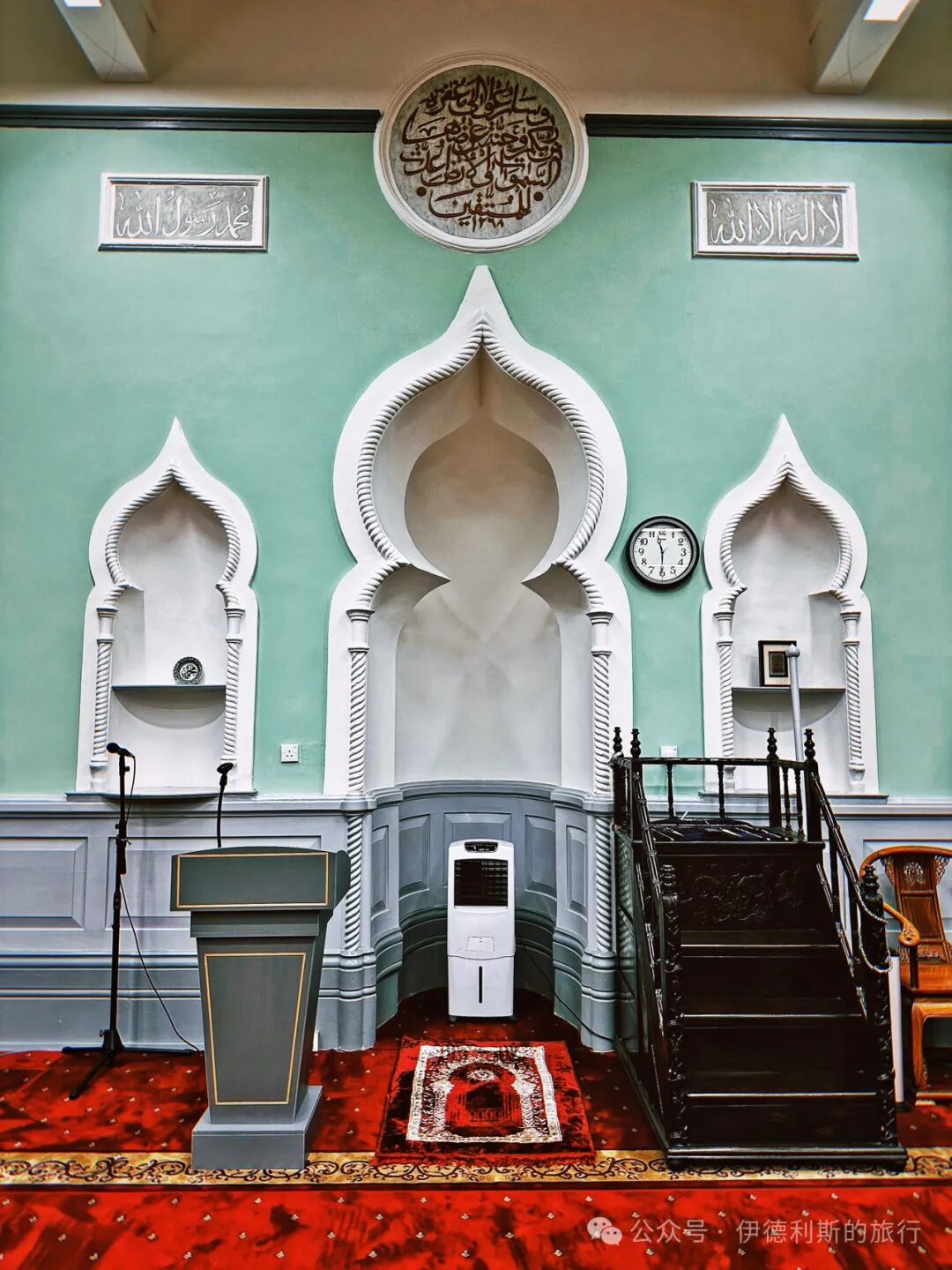
Hong Kong
Jamia Mosque on Shelley Street in Hong Kong has a mihrab built in 1915, designed in the Indian Mughal style.
Fujian
Qingjing Mosque in Quanzhou, Fujian, was renovated in 1310. The prayer wall has seven pointed-arch niches, with the largest being the mihrab in the Fengtian Hall. In the old days, Hui Muslims in Quanzhou called the 27th night of Ramadan, the Night of Power (Laylat al-Qadr), the 'Twenty-eighth Night' (erba ming). Every Hui family in Quanzhou would prepare food on this day. That evening, they would light a pair of large red candles on both sides of the mihrab at the prayer hall, symbolizing that the revelation of the Quran from Allah is a brilliant light.
At the Mingshan Hall of the Qingjing Mosque in Quanzhou, Fujian, Jiang Changgui, the provincial military commander during the Tongzhi reign of the Qing Dynasty, collected many Yuan Dynasty Arabic stone tablets in Quanzhou and embedded them into the walls of the Mingshan Hall.
A lintel stone currently embedded above the mihrab in Mingshan Hall was unearthed at Qipanyuan in the late Qing Dynasty. It reads, 'Enter it in peace and security.' Embedded in the middle is a lintel stone unearthed near Qipanyuan in the late Qing Dynasty. The inscription is in Kufic script and reads, 'Every soul shall taste death.' 'Death is a door, and everyone must enter it.' Qipanyuan was the site of the foreign quarter and religious cemeteries in Quanzhou during the Song and Yuan dynasties, so it is likely these two lintel stones originally belonged to a gongbei tomb.
Embedded below is the 'Laji Aibikelimu Reconstruction Tablet of the Qingjing Mosque,' featuring scripture written in Kufic script. The stone tablet was unearthed underground at Qipanyuan in the southern drill ground of Quanzhou during the late Qing Dynasty. The script is similar to the 'Naina Umaer Reconstruction Tablet of the Qingjing Mosque' held by the Xiamen University Anthropology Museum, and the content is the same, so it is likely another tablet commemorating the mosque's reconstruction. The tablet was removed during the 1997 renovation of Mingshan Hall and was reinstalled shortly after. Later, according to an interpretation by Imam Zhang Haixing of the Qingjing Mosque, the back of the tablet reads, 'Laji Aibikelimu ordered the construction and management of this mosque... praying for the mercy of the Lord...'
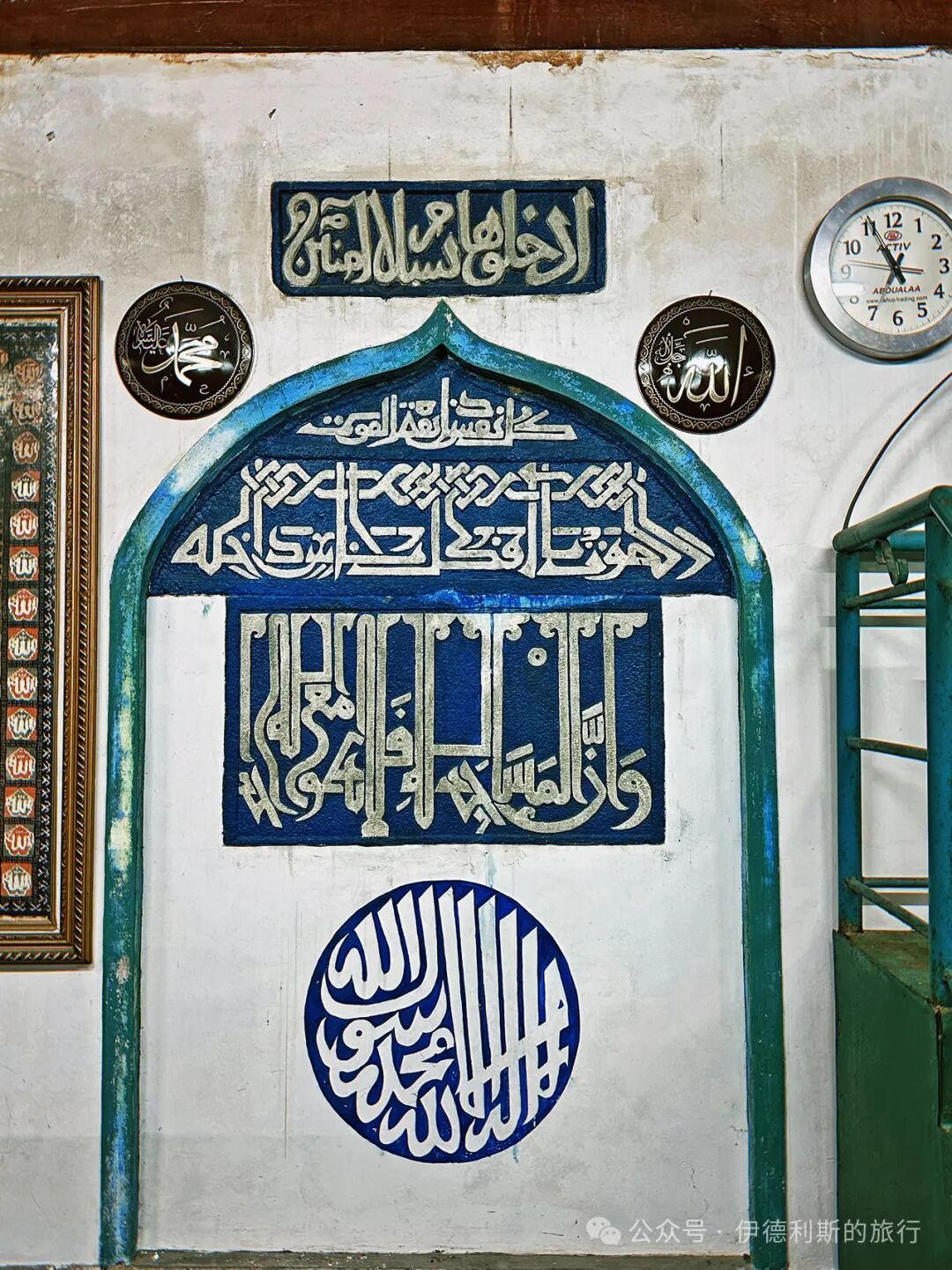
At the Fuzhou Mosque in Fujian, I could not see the original wooden mihrab, only photos of it on a display board in the mosque.
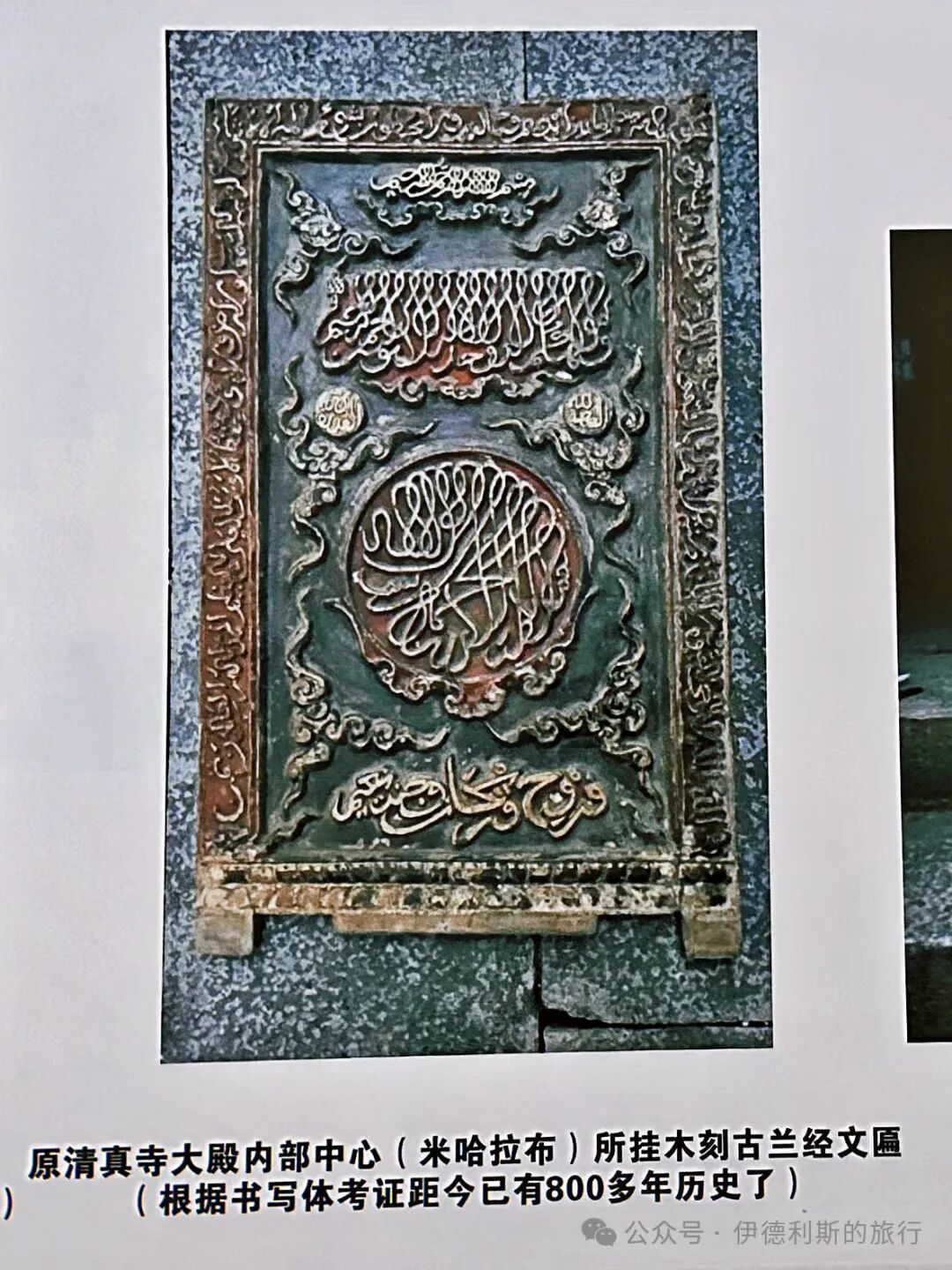
Zhejiang
The Lishui Mosque in Zhejiang was built in 1886 (the 12th year of the Guangxu reign) and features traditional wood-carved calligraphy and auspicious patterns.
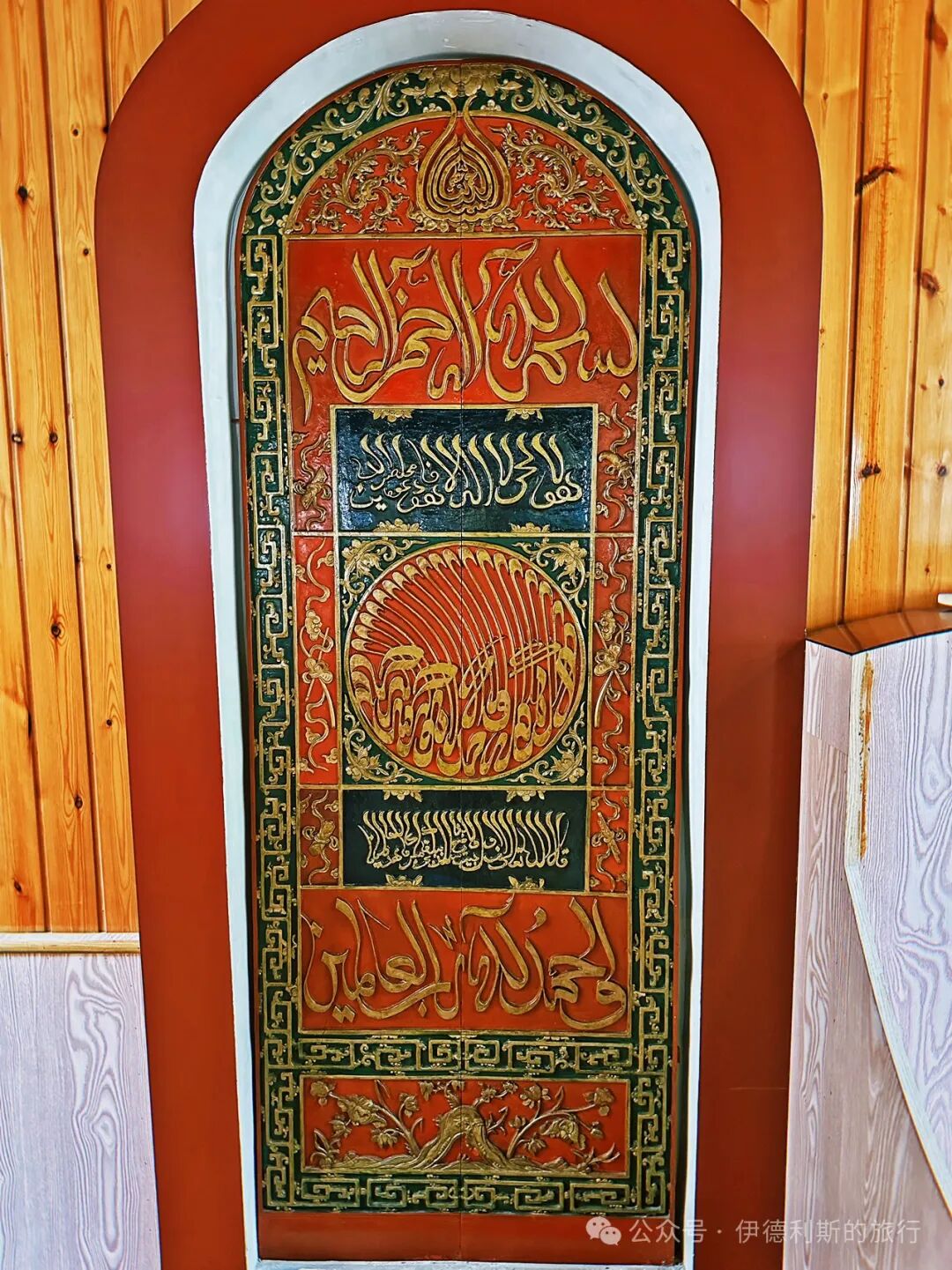
Jiangsu
The mosque outside the South Gate in Zhenjiang, Jiangsu, is believed to have been built in the early Qing Dynasty. It was destroyed by war in 1937, and the niche stone carvings were kept by the Hua Bao-ren family next to the mosque until they were moved to the Guyun Mosque in 2005. It is carved with a lotus-shaped Basmala, which is very unique. In the center is a circular-light style excerpt from the Cow chapter (Al-Baqarah), and below is the Kufic script reading, 'Bow down, and worship your Lord.'
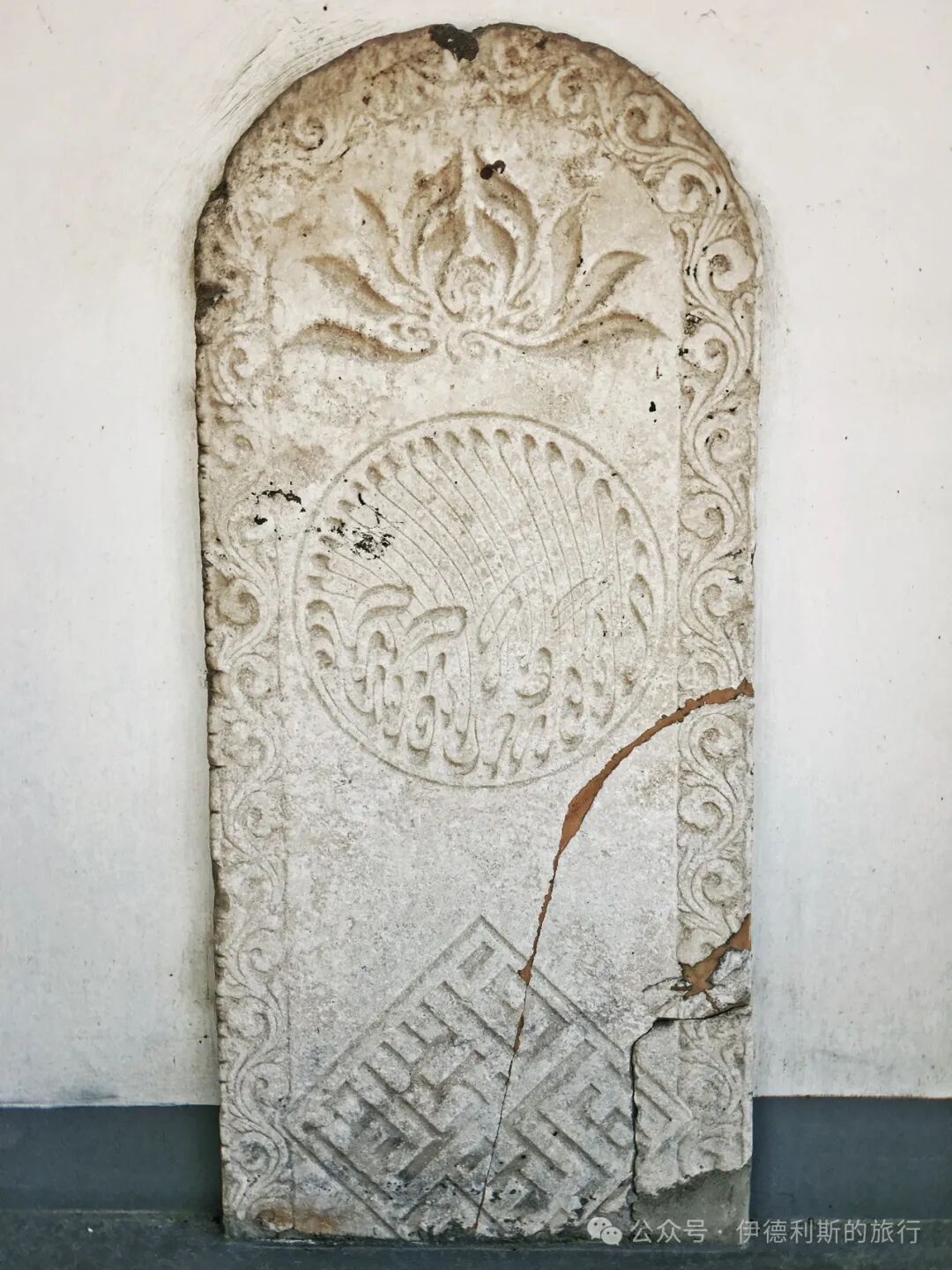
The Shanxiang Mosque in Zhenjiang, Jiangsu, was rebuilt in 1873 (the 12th year of the Tongzhi reign) and features traditional calligraphy carvings.
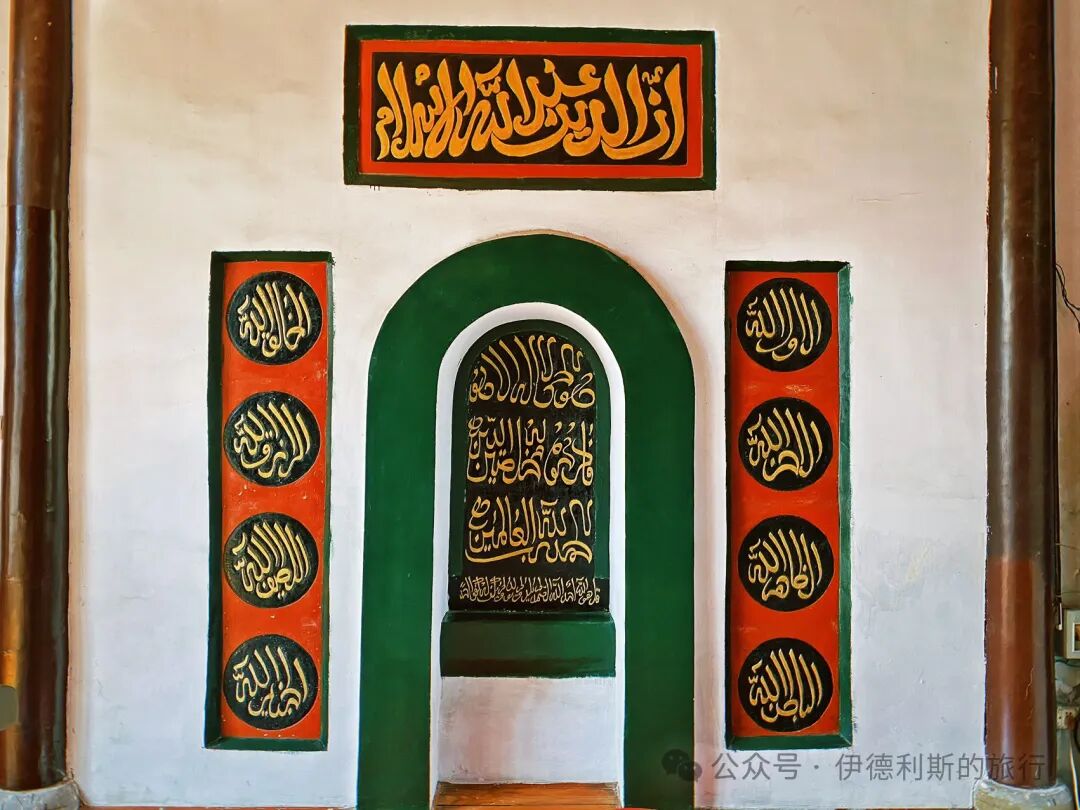
The Changjiang Road Mosque in Liuhe, Nanjing, Jiangsu, was rebuilt during the Guangxu reign. The prayer niche is painted with chrysanthemums, pine and cypress trees, and grapevines, which is very unique.
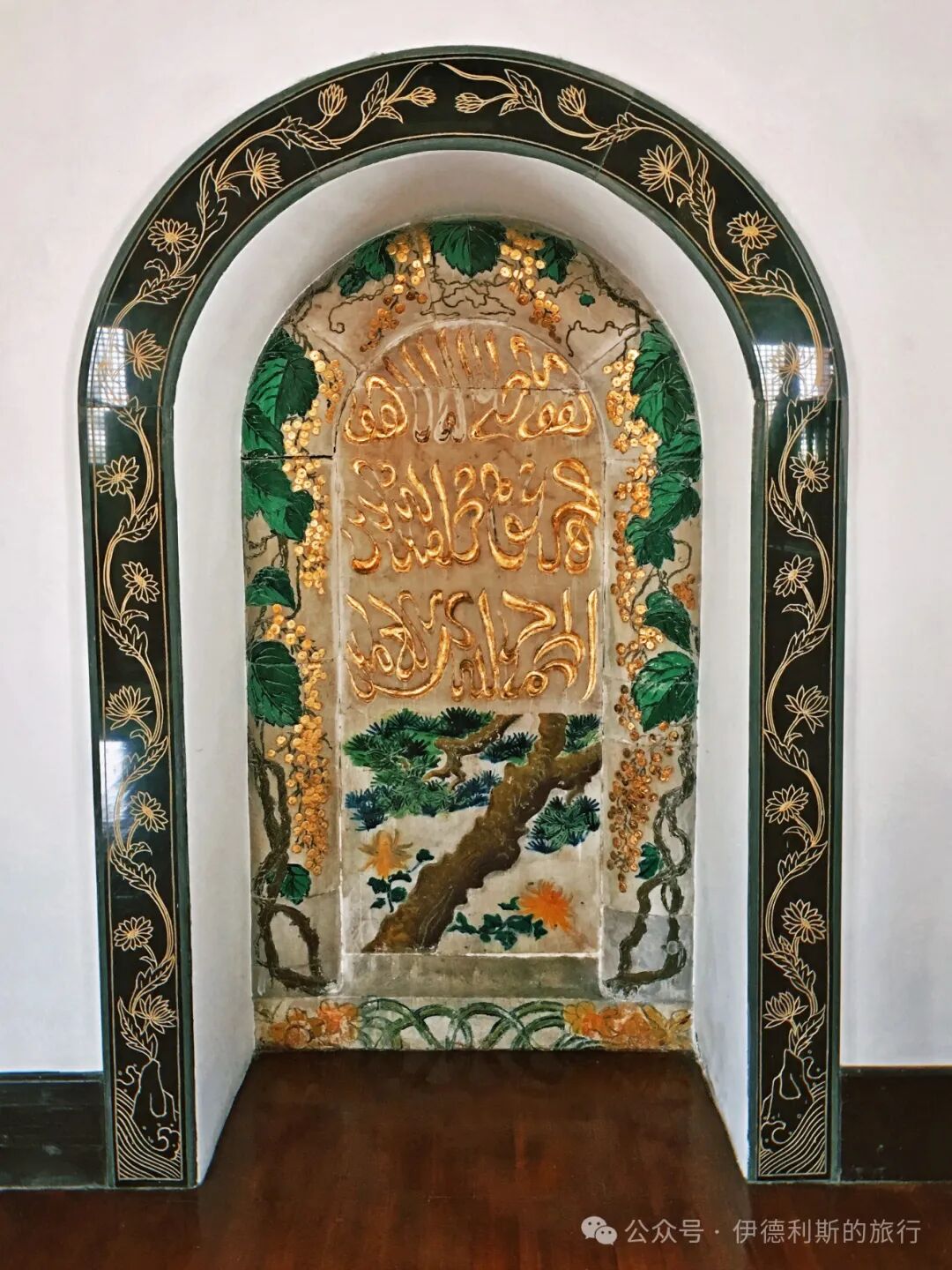
The Jingjue Mosque in Nanjing, Jiangsu, was rebuilt in 1877 (the 3rd year of the Guangxu reign) and features very dense gold-leaf calligraphy on a red background.
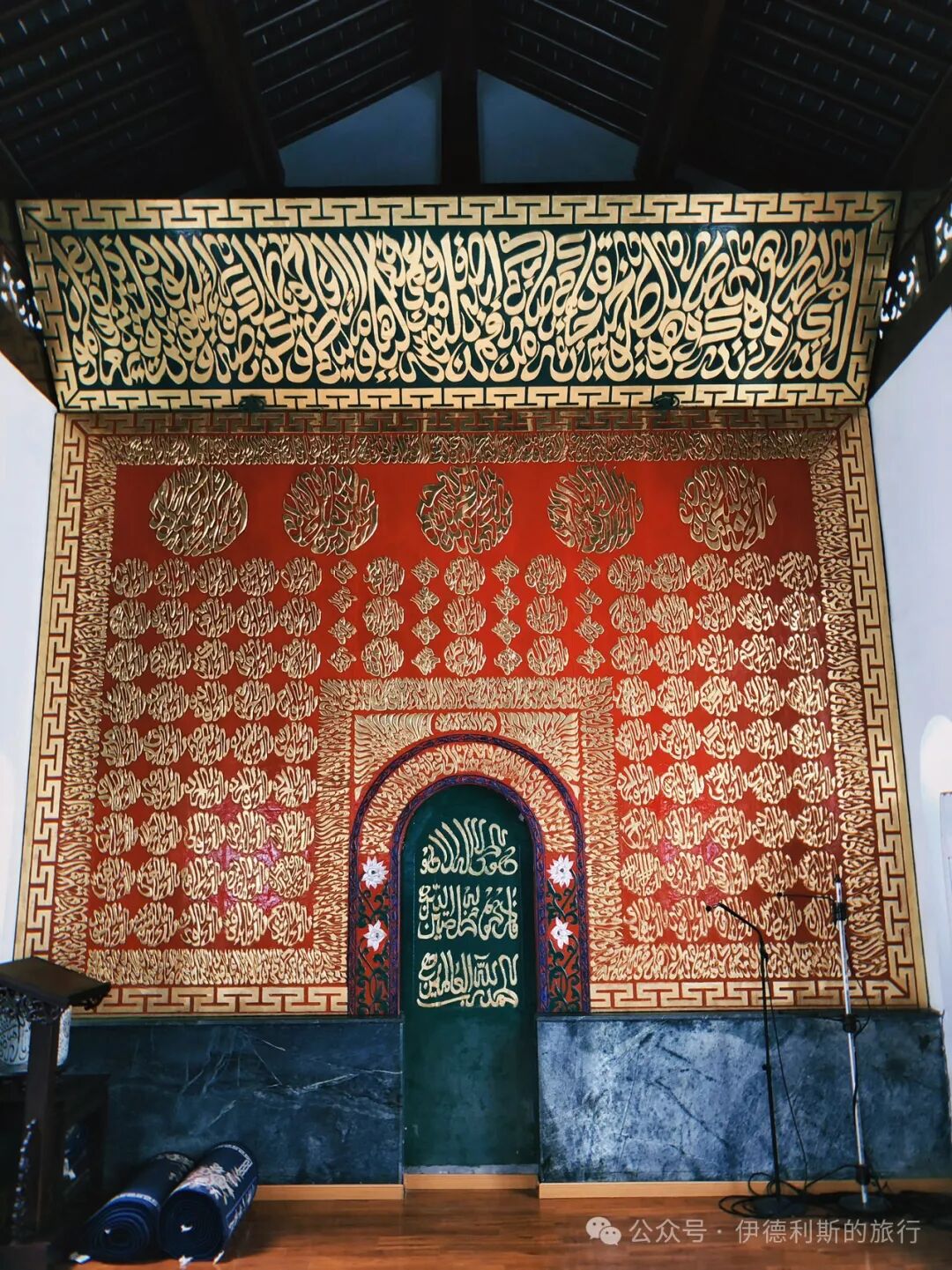
The main hall of the Caoqiao Mosque in Nanjing, Jiangsu, came from the Taiping Road Mosque. It was rebuilt in 1924 with funds donated by the brothers of the wealthy Nanjing merchant Jiang Guobang, and it was moved to the new Caoqiao Mosque in 2003.
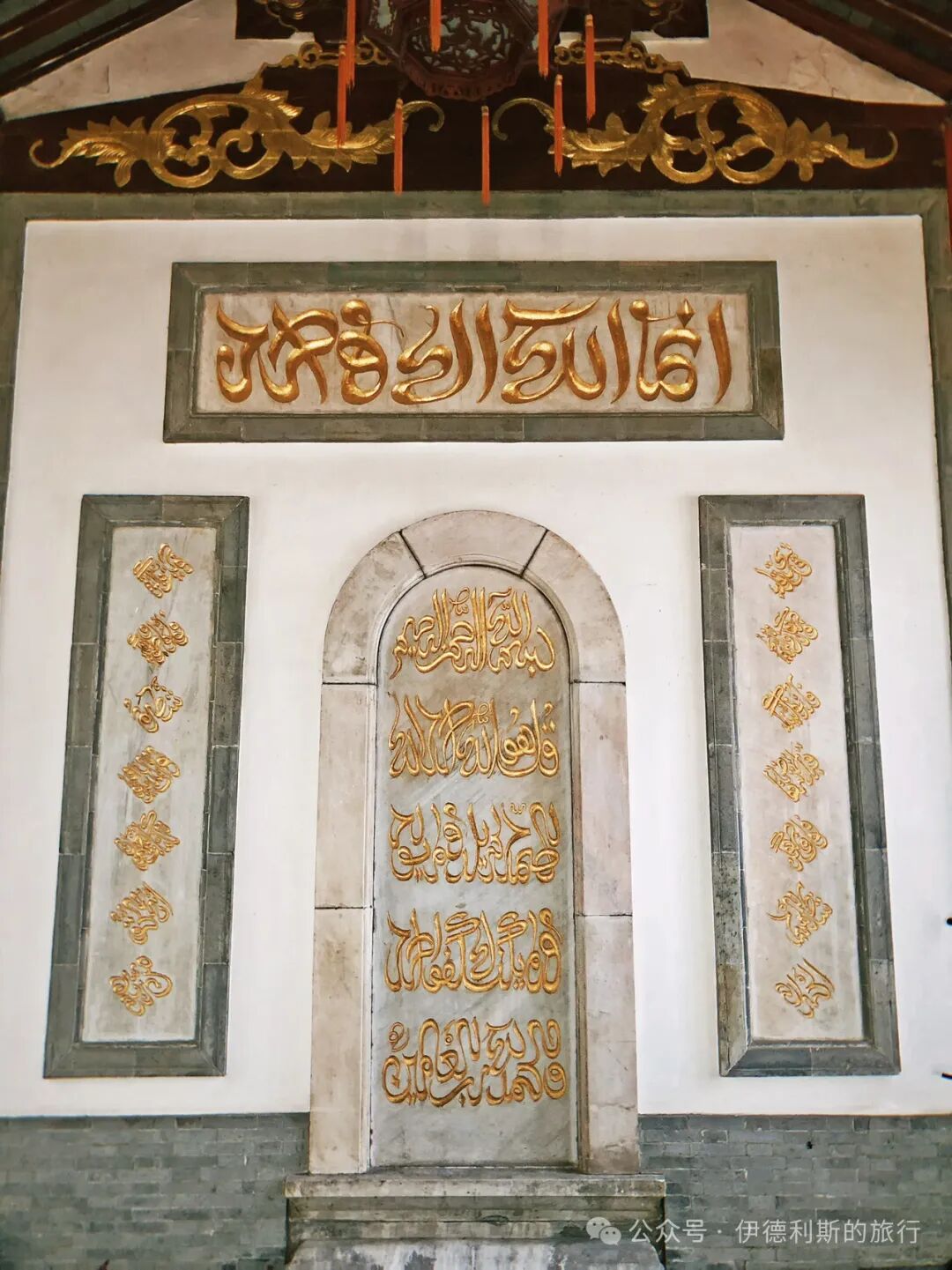
The Lingtang Ancient Mosque in Gaoyou, Jiangsu, was rebuilt in 1844 (the 24th year of the Daoguang reign) and expanded in 1921. Its structure is exactly the same as the Caoqiao Mosque.
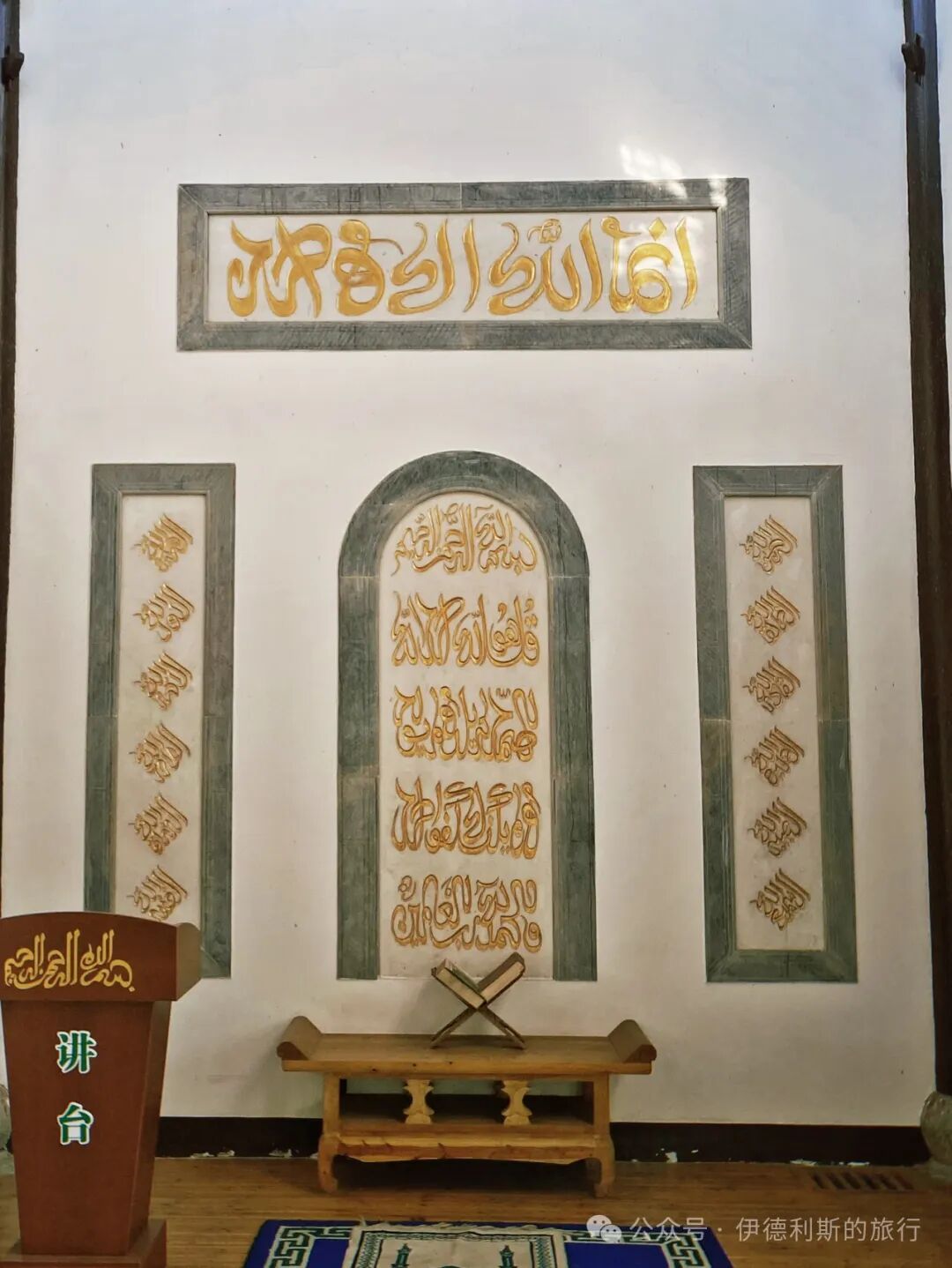
Shanghai
The Fuyou Road Mosque in Shanghai features traditional wood-carved calligraphy.
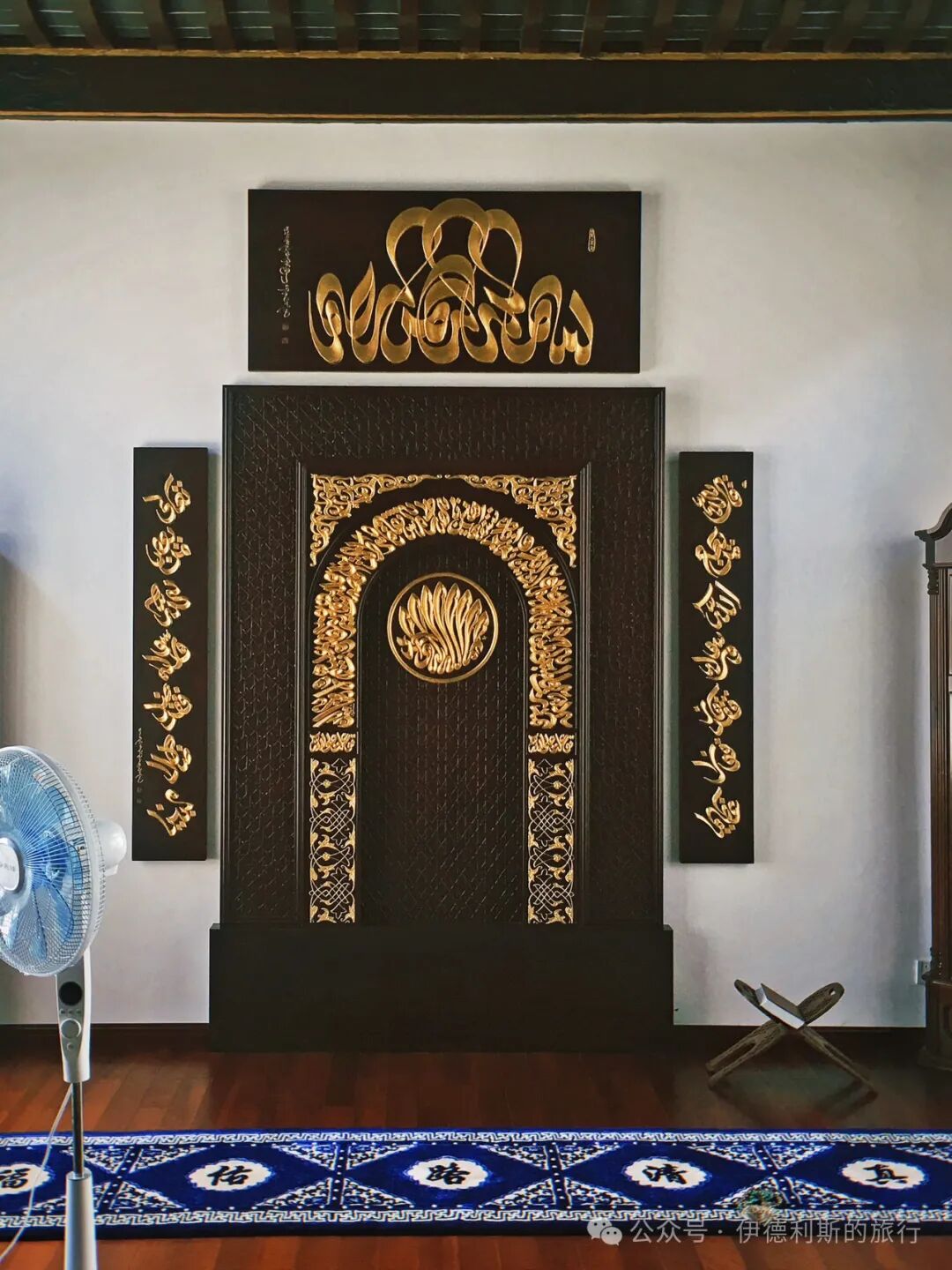
Summary: This is the second part of a visual record of 131 traditional mihrabs in Chinese mosques. The English version keeps the original mosque names, image order, captions, and architectural details without adding new claims.
Hujia Mosque in Xindu District, Chengdu, was built in 1738 (the third year of the Qianlong reign). It has a rare mihrab with Chinese couplets. The right side reads 'Ten thousand generations of mountains and rivers return to one Lord,' the left side reads 'The sun and moon shine upon all living things,' and the horizontal plaque reads 'The Original One.'
Yousuotun Mosque in Songpan has a door hood with an arched center. It looks more like the style found in Gansu than other mosques in Sichuan.
North Mosque in Songpan has very bright colors and lotus patterns.
Gongbei Mosque in Songpan features wooden boards with calligraphy inside the arch, shaped like a folding fan, a circular light, and an incense burner.
Yunnan
Dianzhong Mosque in Weishan, Dali, features traditional stone-carved calligraphy.
Ma Family Mosque in Mamichang, Weishan, Dali, features traditional stone-carved calligraphy.
Hedijie Mosque in Weishan, Dali, features traditional calligraphy.
Qingmenkou Mosque in Weishan, Dali, features traditional calligraphy.
Xishulong Mosque in Weishan, Dali, features traditional stone-carved calligraphy.
Xiaoweigeng Mosque in Weishan, Dali, features traditional calligraphy.
Dingjiachang Mosque in Weishan, Dali, is built in the traditional Dali architectural style with upturned eaves.
Baisha Village Mosque in Weishan, Dali, features traditional calligraphy.
Dawulinmao Mosque in Weishan, Dali, is built in the traditional Dali architectural style with upturned eaves.
Xiajie Mosque in Yangbi, Dali, features wood-carved calligraphy.
Shangxiang Mosque in Yangbi, Dali, features stone-carved calligraphy.
Shangjie Mosque in Yangbi, Dali, features stone-carved calligraphy.
Shangxi Lianhua Mosque in Weishan, Dali, features stone-carved calligraphy.
Xincun Mosque in Weishan, Dali, features stone-carved calligraphy.
Xiaxi Lianhua Mosque in Weishan, Dali, features traditional calligraphy.
Donglianhua Mosque in Weishan, Dali, features traditional calligraphy.
Fengyi Mosque in Dali features stone-carved calligraphy.
Binchuan Mosque in Dali features traditional calligraphy.
Yongning Mosque in Kunming is known as a masterpiece of Yunnan-style calligraphy.
Jinniujie Mosque in Kunming features typical Yunnan-style calligraphy.
Liren Mosque in Haikou, Kunming, features typical Yunnan-style calligraphy.
Beiying Mosque in Xundian features typical Yunnan-style calligraphy.
Huihuiying Mosque in Chenggong, Kunming, has very unique floral-style calligraphy in the center.
Dazhuang Mosque in Kaiyuan features traditional calligraphy in the center with a circular, interlocking design.
Tuogu Mosque in Ludian, Zhaotong, has traditional calligraphy on the couplets flanking the arch and in the circular center.
Longtoushan Mosque in Ludian, Zhaotong, features traditional-style calligraphy.
Taojiawan Mosque in Ludian, Zhaotong, features traditional Yunnan-style calligraphy.
Guangxi
Chongshan Road Mosque in Guilin was first built in 1734 (the 12th year of the Yongzheng reign). The rear hall was expanded in 1892 (the 18th year of the Guangxi reign) and features exquisite wood carvings of floral-style calligraphy.
Wutong Mosque in Guilin was first built during the Qing Jiaqing reign and renovated in 1915. It has beautiful wood carvings of calligraphy.
Liutang Mosque in Guilin was first built during the Qing Qianlong reign and has beautiful wood carvings of calligraphy.
Jiucun Mosque in Guilin features wood carvings of calligraphy.
Daxu Mosque in Guilin features wood carvings of calligraphy.
The Women's Mosque in Guilin features wood carvings of calligraphy.
Maping Mosque in Guilin was first built in 1671 (the 10th year of the Kangxi reign). It was burned down by the Japanese army in 1944, rebuilt in 1948, and rebuilt again in 1987, but it still keeps the original wood carvings of the mihrab.
Guangdong
Chengxi Mosque in Zhaoqing, Guangdong, preserved its Qing Dynasty stone mihrab during the 1983 reconstruction, which features traditional calligraphic couplets.
Chengdong Mosque in Zhaoqing, Guangdong, features Qing Dynasty wood-carved calligraphy.
Hong Kong
Jamia Mosque on Shelley Street in Hong Kong has a mihrab built in 1915, designed in the Indian Mughal style.
Fujian
Qingjing Mosque in Quanzhou, Fujian, was renovated in 1310. The prayer wall has seven pointed-arch niches, with the largest being the mihrab in the Fengtian Hall. In the old days, Hui Muslims in Quanzhou called the 27th night of Ramadan, the Night of Power (Laylat al-Qadr), the 'Twenty-eighth Night' (erba ming). Every Hui family in Quanzhou would prepare food on this day. That evening, they would light a pair of large red candles on both sides of the mihrab at the prayer hall, symbolizing that the revelation of the Quran from Allah is a brilliant light.
At the Mingshan Hall of the Qingjing Mosque in Quanzhou, Fujian, Jiang Changgui, the provincial military commander during the Tongzhi reign of the Qing Dynasty, collected many Yuan Dynasty Arabic stone tablets in Quanzhou and embedded them into the walls of the Mingshan Hall.
A lintel stone currently embedded above the mihrab in Mingshan Hall was unearthed at Qipanyuan in the late Qing Dynasty. It reads, 'Enter it in peace and security.' Embedded in the middle is a lintel stone unearthed near Qipanyuan in the late Qing Dynasty. The inscription is in Kufic script and reads, 'Every soul shall taste death.' 'Death is a door, and everyone must enter it.' Qipanyuan was the site of the foreign quarter and religious cemeteries in Quanzhou during the Song and Yuan dynasties, so it is likely these two lintel stones originally belonged to a gongbei tomb.
Embedded below is the 'Laji Aibikelimu Reconstruction Tablet of the Qingjing Mosque,' featuring scripture written in Kufic script. The stone tablet was unearthed underground at Qipanyuan in the southern drill ground of Quanzhou during the late Qing Dynasty. The script is similar to the 'Naina Umaer Reconstruction Tablet of the Qingjing Mosque' held by the Xiamen University Anthropology Museum, and the content is the same, so it is likely another tablet commemorating the mosque's reconstruction. The tablet was removed during the 1997 renovation of Mingshan Hall and was reinstalled shortly after. Later, according to an interpretation by Imam Zhang Haixing of the Qingjing Mosque, the back of the tablet reads, 'Laji Aibikelimu ordered the construction and management of this mosque... praying for the mercy of the Lord...'
At the Fuzhou Mosque in Fujian, I could not see the original wooden mihrab, only photos of it on a display board in the mosque.
Zhejiang
The Lishui Mosque in Zhejiang was built in 1886 (the 12th year of the Guangxu reign) and features traditional wood-carved calligraphy and auspicious patterns.
Jiangsu
The mosque outside the South Gate in Zhenjiang, Jiangsu, is believed to have been built in the early Qing Dynasty. It was destroyed by war in 1937, and the niche stone carvings were kept by the Hua Bao-ren family next to the mosque until they were moved to the Guyun Mosque in 2005. It is carved with a lotus-shaped Basmala, which is very unique. In the center is a circular-light style excerpt from the Cow chapter (Al-Baqarah), and below is the Kufic script reading, 'Bow down, and worship your Lord.'
The Shanxiang Mosque in Zhenjiang, Jiangsu, was rebuilt in 1873 (the 12th year of the Tongzhi reign) and features traditional calligraphy carvings.
The Changjiang Road Mosque in Liuhe, Nanjing, Jiangsu, was rebuilt during the Guangxu reign. The prayer niche is painted with chrysanthemums, pine and cypress trees, and grapevines, which is very unique.
The Jingjue Mosque in Nanjing, Jiangsu, was rebuilt in 1877 (the 3rd year of the Guangxu reign) and features very dense gold-leaf calligraphy on a red background.
The main hall of the Caoqiao Mosque in Nanjing, Jiangsu, came from the Taiping Road Mosque. It was rebuilt in 1924 with funds donated by the brothers of the wealthy Nanjing merchant Jiang Guobang, and it was moved to the new Caoqiao Mosque in 2003.
The Lingtang Ancient Mosque in Gaoyou, Jiangsu, was rebuilt in 1844 (the 24th year of the Daoguang reign) and expanded in 1921. Its structure is exactly the same as the Caoqiao Mosque.
Shanghai
The Fuyou Road Mosque in Shanghai features traditional wood-carved calligraphy.
Islamic Architecture Guide: Saudi Arabia and UAE Traditional Homes
Articles • ali2007fr posted the article • 0 comments • 165 views • 2026-05-19 22:19
Reposted from the web
Summary: This article visits traditional homes in Saudi Arabia and the United Arab Emirates, with a focus on courtyard layouts, family spaces, and local building details. It keeps the original travel route, house names, photographs, and cultural observations for readers interested in Muslim heritage and Gulf architecture.
Continued from the previous post:
Visiting traditional homes in Tunisia and Egypt
Visiting traditional homes in southeastern Turkey
Name: Bayt Ba'ishan
Location: Inside the old city of Jeddah, Saudi Arabia
Date: 1923
Introduction: The Ba'ishan family came from the Hadramaut region in eastern Yemen and specialized in the tea and grain trade. The famous Jeddah musician Omar Ba'ishan and the journalist Mohammad Ba'ishan both come from this family. This old house consists of two parts, and the first floor has a small courtyard used as an outdoor space for namaz. There is now a cold drink shop inside where tourists can rest.
Name: Bayt Jeddah
Location: Inside the old city of Jeddah, Saudi Arabia
Date: 1880
Introduction: Bayt Jeddah is also called Salloum's house. It was built by Sheikh Abdullah Bin Obaid Salloum in 1880. It preserves many pieces of furniture used by the Salloum family in the past, including some imported from India that are over 120 years old. The old house has three floors. The first floor is a reception room, and the second floor is the bedroom. You can see many daily items here, including old suitcases, sewing machines, and an old-fashioned kerosene refrigerator. In the old house, you can see the area in the Hejaz region specifically designed to receive female neighbors. In the past, female neighbors used to gather there every afternoon to drink tea and chat.
Name: Crossroad of Civilizations Museum
Location: Inside the Al Shindagha historical district in Dubai, UAE
Date: 19th century
Introduction: The Crossroad of Civilizations Museum is located in a traditional Gulf-style house built in the 19th century. This was the former residence of Sheikh Hashr Bin Maktoum Al Maktoum, the brother of the eighth ruler of Dubai, Sheikh Saeed. It opened as a museum in 2014 and displays many formal book manuscripts and traditional weaponry.
Name: Museum of the Poet Al Oqaili
Location: Inside the Al Ras historical district in Dubai, UAE
Date: 1923
Introduction: The former residence of the poet Al Oqaili (1875-1954). Al Oqaili is a very famous Arab writer who showed a great talent for poetry from a young age. In his middle age, he traveled around the Persian Gulf, living in places like Iraq, Bahrain, and Abu Dhabi, before finally settling in Dubai in the early 20th century. In 1923, he hired craftsmen from his hometown of Al-Ahsa to build this house. The entire building is made of coral, stone, plaster, teak, and palm fronds, along with a traditional Iranian building material called Sarooj. Sarooj is a waterproof mortar made by kneading clay and limestone for two days, then adding bathhouse furnace ash, cattail fibers, eggs, and straw, and finally beating it with wooden sticks.
In 1954, Al Oqaili passed away in this house at the age of 81. He never married or had children, so the house was inherited by his cousin who came from Saudi Arabia.
Name: Al Bait Al Qadeem Restaurant
Location: Inside the Al Ras historical district in Dubai, UAE
Year: 1909
Introduction: Al Bait Alqadeem means old house in Arabic. This restaurant is located in a traditional Gulf-style residence built in 1909 by a pearl boat owner named Abdulla Bin Jamaan, who was also a bodyguard for the ruler of Dubai at the time. In 1954, Abdulla Bin Jamaan became the first mayor of Dubai. Today, this old house has been turned into a restaurant serving traditional Gulf cuisine.
Name: Sharjah Heritage Museum
Location: Inside the Heart of Sharjah historical district in the old city of Sharjah, UAE.
Year: 1795
Introduction: The historical building housing the Sharjah Heritage Museum was built by pearl merchant Saeed bin Mohammed Al Shamsi in 1795. It is also known as Bait Saeed Al Taweel, which means the house of Saeed the Tall. The museum showcases the traditional lifestyle of the people of Sharjah through crafts, folk music, wedding ceremonies, and folktales.
Name: Bait Al Naboodah
Location: Inside the Heart of Sharjah historical district in the old city of Sharjah, UAE.
Year: 1845
Introduction: Bait Al Naboodah is one of the most famous traditional Gulf residences in Sharjah. It was built in 1845 by Obaid bin Eissa Bin Ali Al Shamsi, the wealthiest pearl merchant in 19th-century Sharjah, who was nicknamed Al Naboodah.
Al Naboodah's pearl trade reached Africa, France, and India, and he accumulated massive wealth, especially from his pearl trade with India. In 1845, Al Naboodah rebuilt his father's ancestral home. The new residence featured a large courtyard with coral stone walls, unique Indian teak columns, and plaster carvings made by Persian craftsmen. Additionally, this house did not use the traditional Emirati wind tower (barjeel), but instead pioneered the use of air-scoops (malaqaf) built along the inner walls to circulate air.
The descendants of Al Naboodah lived here until the 1970s, but the building was badly damaged due to years of neglect. In the 1990s, the Sharjah Museums Authority hired a team of historians to carry out a large-scale renovation that lasted several years, and it officially opened to the public in 1995.
The interactive display of the courtyard allows you to click on any building component on the screen to see an introduction and the restoration process for that part.
The coral stones used to build the courtyard come in two types: brain coral and fan coral. After being pulled from the seabed, these corals were dried in the sun, making them very light yet strong. Environmental protection laws now forbid the collection of coral stones, so limestone from the mountains had to be used to repair the damaged coral stones in the courtyard.
Summer temperatures in Sharjah can exceed 45 degrees Celsius. Many people used to hide in the mountains or oases to escape the heat between June and August, a summer migration route known as al maqeedh. With the summer house, people no longer had to travel inland to escape the heat during the summer.
Sharjah residents usually started preparing their summer houses at the end of March. They would coat the inside and outside of the house with a lime powder called norah, which reflects sunlight. The most important feature of the summer house is the many vents on the roof that help air circulate. During the day, wind blowing from the land flows into the house, and at night, the wind comes from the sea.
Toilet
Kitchen view all
Summary: This article visits traditional homes in Saudi Arabia and the United Arab Emirates, with a focus on courtyard layouts, family spaces, and local building details. It keeps the original travel route, house names, photographs, and cultural observations for readers interested in Muslim heritage and Gulf architecture.
Continued from the previous post:
Visiting traditional homes in Tunisia and Egypt
Visiting traditional homes in southeastern Turkey
Name: Bayt Ba'ishan
Location: Inside the old city of Jeddah, Saudi Arabia
Date: 1923
Introduction: The Ba'ishan family came from the Hadramaut region in eastern Yemen and specialized in the tea and grain trade. The famous Jeddah musician Omar Ba'ishan and the journalist Mohammad Ba'ishan both come from this family. This old house consists of two parts, and the first floor has a small courtyard used as an outdoor space for namaz. There is now a cold drink shop inside where tourists can rest.
Name: Bayt Jeddah
Location: Inside the old city of Jeddah, Saudi Arabia
Date: 1880
Introduction: Bayt Jeddah is also called Salloum's house. It was built by Sheikh Abdullah Bin Obaid Salloum in 1880. It preserves many pieces of furniture used by the Salloum family in the past, including some imported from India that are over 120 years old. The old house has three floors. The first floor is a reception room, and the second floor is the bedroom. You can see many daily items here, including old suitcases, sewing machines, and an old-fashioned kerosene refrigerator. In the old house, you can see the area in the Hejaz region specifically designed to receive female neighbors. In the past, female neighbors used to gather there every afternoon to drink tea and chat.
Name: Crossroad of Civilizations Museum
Location: Inside the Al Shindagha historical district in Dubai, UAE
Date: 19th century
Introduction: The Crossroad of Civilizations Museum is located in a traditional Gulf-style house built in the 19th century. This was the former residence of Sheikh Hashr Bin Maktoum Al Maktoum, the brother of the eighth ruler of Dubai, Sheikh Saeed. It opened as a museum in 2014 and displays many formal book manuscripts and traditional weaponry.
Name: Museum of the Poet Al Oqaili
Location: Inside the Al Ras historical district in Dubai, UAE
Date: 1923
Introduction: The former residence of the poet Al Oqaili (1875-1954). Al Oqaili is a very famous Arab writer who showed a great talent for poetry from a young age. In his middle age, he traveled around the Persian Gulf, living in places like Iraq, Bahrain, and Abu Dhabi, before finally settling in Dubai in the early 20th century. In 1923, he hired craftsmen from his hometown of Al-Ahsa to build this house. The entire building is made of coral, stone, plaster, teak, and palm fronds, along with a traditional Iranian building material called Sarooj. Sarooj is a waterproof mortar made by kneading clay and limestone for two days, then adding bathhouse furnace ash, cattail fibers, eggs, and straw, and finally beating it with wooden sticks.
In 1954, Al Oqaili passed away in this house at the age of 81. He never married or had children, so the house was inherited by his cousin who came from Saudi Arabia.
Name: Al Bait Al Qadeem Restaurant
Location: Inside the Al Ras historical district in Dubai, UAE
Year: 1909
Introduction: Al Bait Alqadeem means old house in Arabic. This restaurant is located in a traditional Gulf-style residence built in 1909 by a pearl boat owner named Abdulla Bin Jamaan, who was also a bodyguard for the ruler of Dubai at the time. In 1954, Abdulla Bin Jamaan became the first mayor of Dubai. Today, this old house has been turned into a restaurant serving traditional Gulf cuisine.
Name: Sharjah Heritage Museum
Location: Inside the Heart of Sharjah historical district in the old city of Sharjah, UAE.
Year: 1795
Introduction: The historical building housing the Sharjah Heritage Museum was built by pearl merchant Saeed bin Mohammed Al Shamsi in 1795. It is also known as Bait Saeed Al Taweel, which means the house of Saeed the Tall. The museum showcases the traditional lifestyle of the people of Sharjah through crafts, folk music, wedding ceremonies, and folktales.
Name: Bait Al Naboodah
Location: Inside the Heart of Sharjah historical district in the old city of Sharjah, UAE.
Year: 1845
Introduction: Bait Al Naboodah is one of the most famous traditional Gulf residences in Sharjah. It was built in 1845 by Obaid bin Eissa Bin Ali Al Shamsi, the wealthiest pearl merchant in 19th-century Sharjah, who was nicknamed Al Naboodah.
Al Naboodah's pearl trade reached Africa, France, and India, and he accumulated massive wealth, especially from his pearl trade with India. In 1845, Al Naboodah rebuilt his father's ancestral home. The new residence featured a large courtyard with coral stone walls, unique Indian teak columns, and plaster carvings made by Persian craftsmen. Additionally, this house did not use the traditional Emirati wind tower (barjeel), but instead pioneered the use of air-scoops (malaqaf) built along the inner walls to circulate air.
The descendants of Al Naboodah lived here until the 1970s, but the building was badly damaged due to years of neglect. In the 1990s, the Sharjah Museums Authority hired a team of historians to carry out a large-scale renovation that lasted several years, and it officially opened to the public in 1995.
The interactive display of the courtyard allows you to click on any building component on the screen to see an introduction and the restoration process for that part.
The coral stones used to build the courtyard come in two types: brain coral and fan coral. After being pulled from the seabed, these corals were dried in the sun, making them very light yet strong. Environmental protection laws now forbid the collection of coral stones, so limestone from the mountains had to be used to repair the damaged coral stones in the courtyard.
Summer temperatures in Sharjah can exceed 45 degrees Celsius. Many people used to hide in the mountains or oases to escape the heat between June and August, a summer migration route known as al maqeedh. With the summer house, people no longer had to travel inland to escape the heat during the summer.
Sharjah residents usually started preparing their summer houses at the end of March. They would coat the inside and outside of the house with a lime powder called norah, which reflects sunlight. The most important feature of the summer house is the many vents on the roof that help air circulate. During the day, wind blowing from the land flows into the house, and at night, the wind comes from the sea.
Toilet
Kitchen view all
Reposted from the web
Summary: This article visits traditional homes in Saudi Arabia and the United Arab Emirates, with a focus on courtyard layouts, family spaces, and local building details. It keeps the original travel route, house names, photographs, and cultural observations for readers interested in Muslim heritage and Gulf architecture.
Continued from the previous post:
Visiting traditional homes in Tunisia and Egypt
Visiting traditional homes in southeastern Turkey
Name: Bayt Ba'ishan
Location: Inside the old city of Jeddah, Saudi Arabia
Date: 1923
Introduction: The Ba'ishan family came from the Hadramaut region in eastern Yemen and specialized in the tea and grain trade. The famous Jeddah musician Omar Ba'ishan and the journalist Mohammad Ba'ishan both come from this family. This old house consists of two parts, and the first floor has a small courtyard used as an outdoor space for namaz. There is now a cold drink shop inside where tourists can rest.
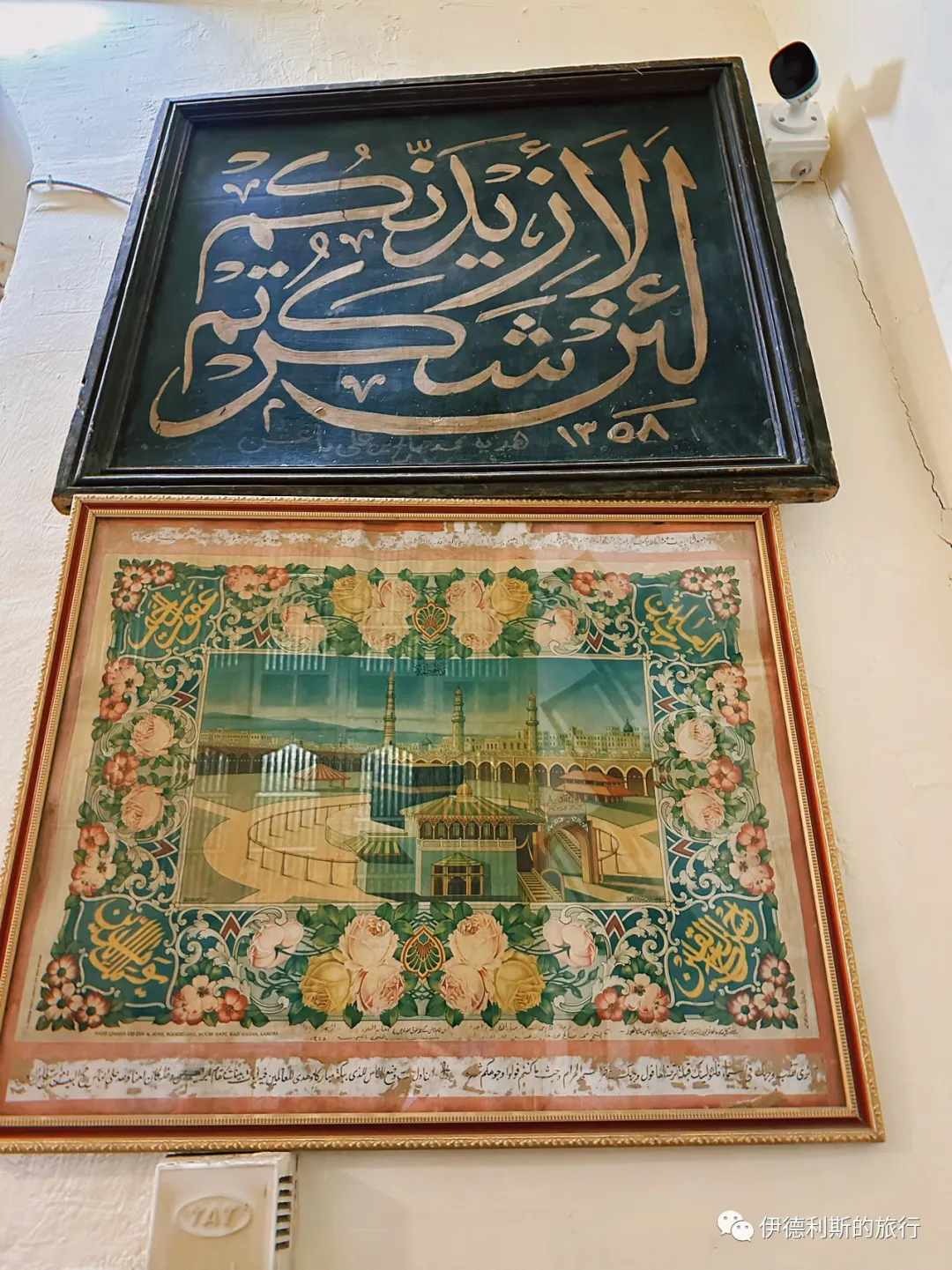
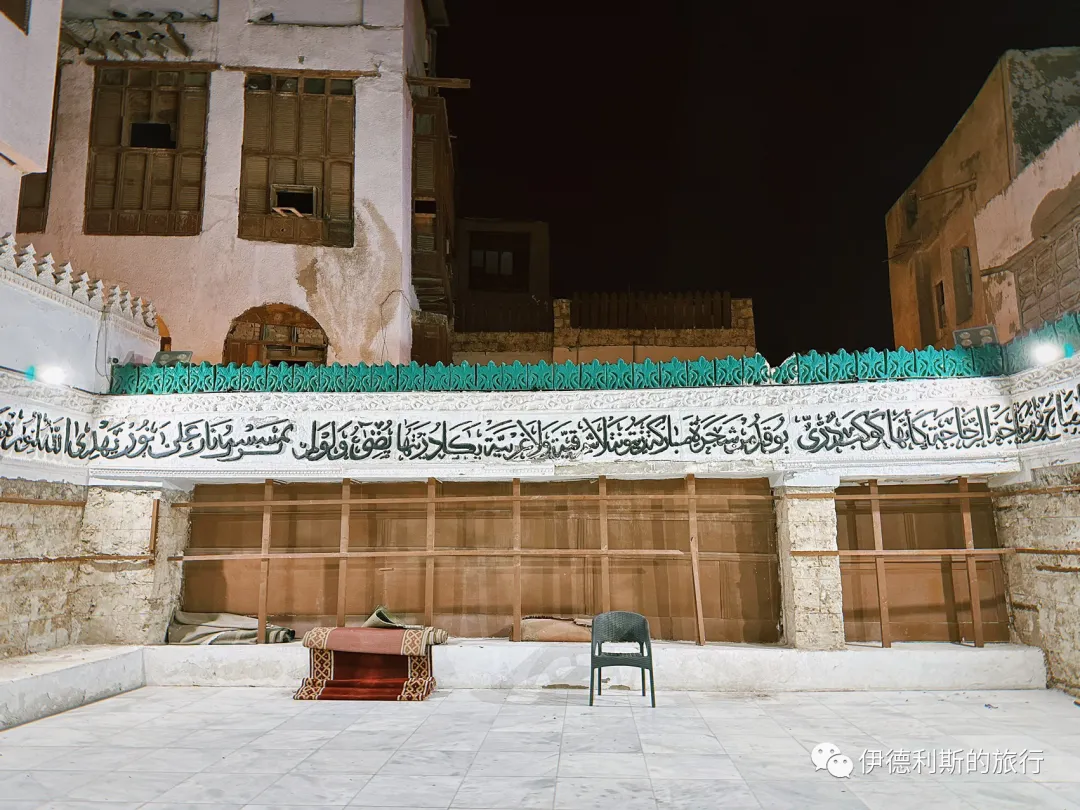
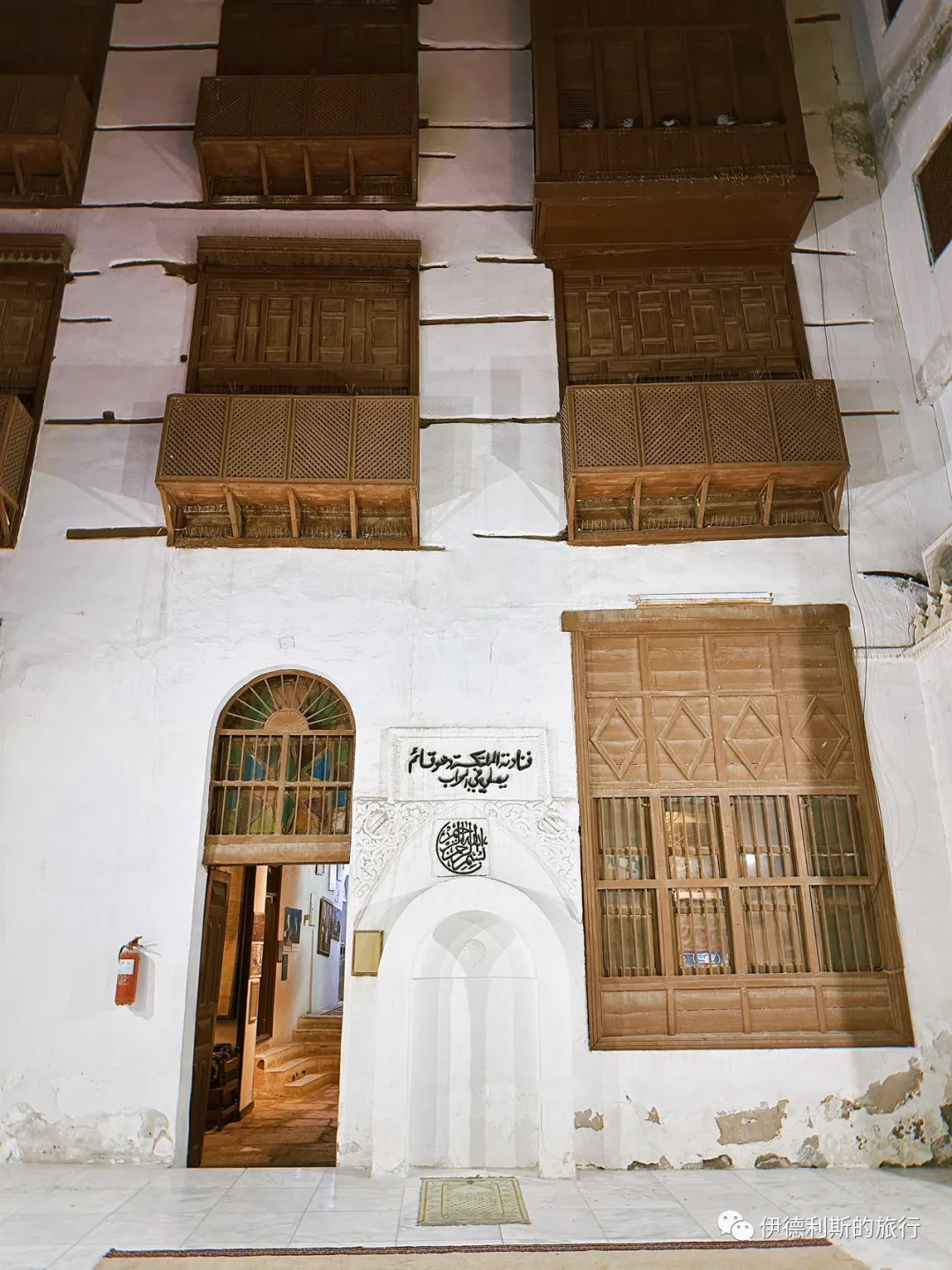
Name: Bayt Jeddah
Location: Inside the old city of Jeddah, Saudi Arabia
Date: 1880
Introduction: Bayt Jeddah is also called Salloum's house. It was built by Sheikh Abdullah Bin Obaid Salloum in 1880. It preserves many pieces of furniture used by the Salloum family in the past, including some imported from India that are over 120 years old. The old house has three floors. The first floor is a reception room, and the second floor is the bedroom. You can see many daily items here, including old suitcases, sewing machines, and an old-fashioned kerosene refrigerator. In the old house, you can see the area in the Hejaz region specifically designed to receive female neighbors. In the past, female neighbors used to gather there every afternoon to drink tea and chat.
Name: Crossroad of Civilizations Museum
Location: Inside the Al Shindagha historical district in Dubai, UAE
Date: 19th century
Introduction: The Crossroad of Civilizations Museum is located in a traditional Gulf-style house built in the 19th century. This was the former residence of Sheikh Hashr Bin Maktoum Al Maktoum, the brother of the eighth ruler of Dubai, Sheikh Saeed. It opened as a museum in 2014 and displays many formal book manuscripts and traditional weaponry.
Name: Museum of the Poet Al Oqaili
Location: Inside the Al Ras historical district in Dubai, UAE
Date: 1923
Introduction: The former residence of the poet Al Oqaili (1875-1954). Al Oqaili is a very famous Arab writer who showed a great talent for poetry from a young age. In his middle age, he traveled around the Persian Gulf, living in places like Iraq, Bahrain, and Abu Dhabi, before finally settling in Dubai in the early 20th century. In 1923, he hired craftsmen from his hometown of Al-Ahsa to build this house. The entire building is made of coral, stone, plaster, teak, and palm fronds, along with a traditional Iranian building material called Sarooj. Sarooj is a waterproof mortar made by kneading clay and limestone for two days, then adding bathhouse furnace ash, cattail fibers, eggs, and straw, and finally beating it with wooden sticks.
In 1954, Al Oqaili passed away in this house at the age of 81. He never married or had children, so the house was inherited by his cousin who came from Saudi Arabia.
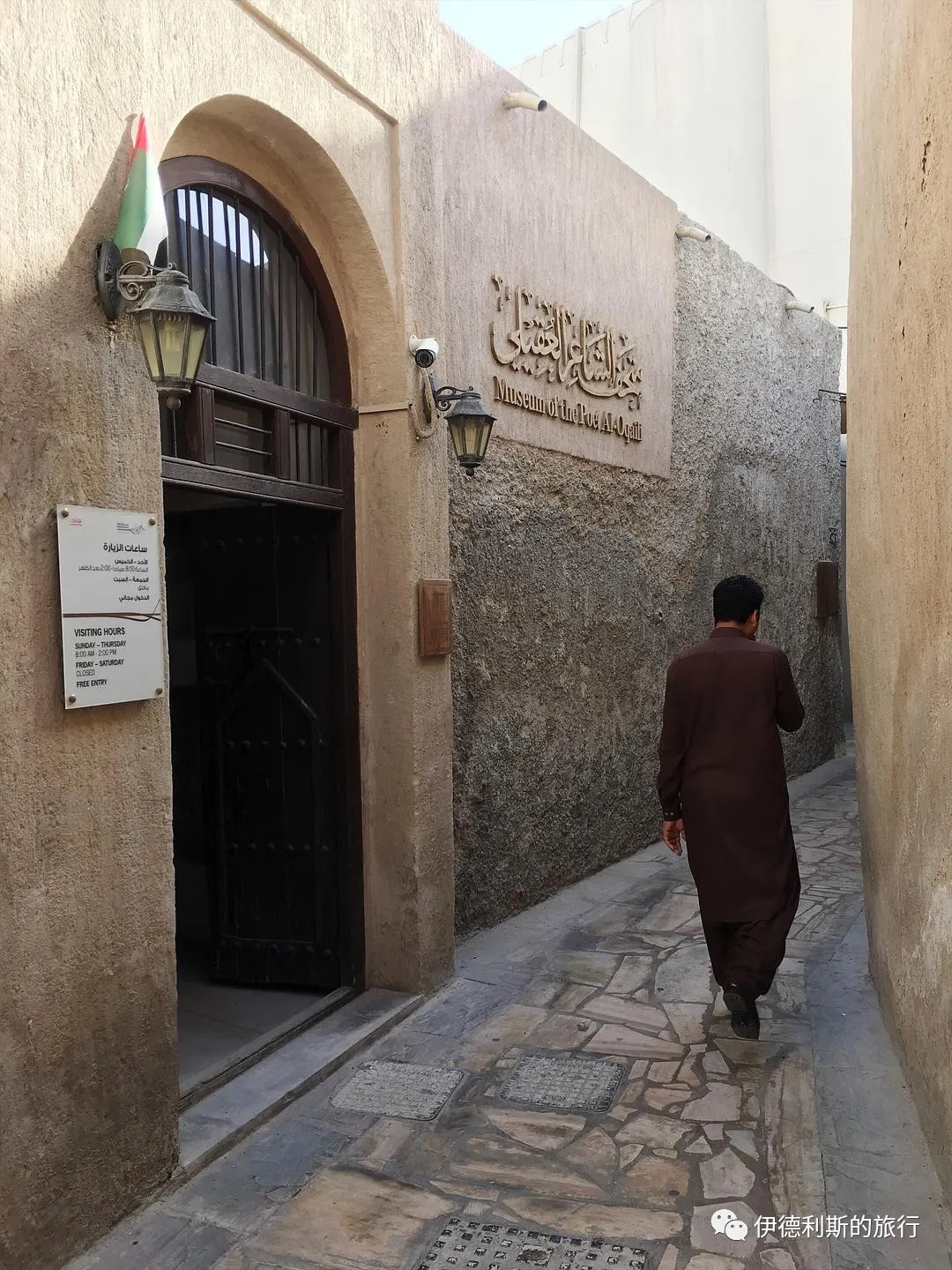
Name: Al Bait Al Qadeem Restaurant
Location: Inside the Al Ras historical district in Dubai, UAE
Year: 1909
Introduction: Al Bait Alqadeem means old house in Arabic. This restaurant is located in a traditional Gulf-style residence built in 1909 by a pearl boat owner named Abdulla Bin Jamaan, who was also a bodyguard for the ruler of Dubai at the time. In 1954, Abdulla Bin Jamaan became the first mayor of Dubai. Today, this old house has been turned into a restaurant serving traditional Gulf cuisine.
Name: Sharjah Heritage Museum
Location: Inside the Heart of Sharjah historical district in the old city of Sharjah, UAE.
Year: 1795
Introduction: The historical building housing the Sharjah Heritage Museum was built by pearl merchant Saeed bin Mohammed Al Shamsi in 1795. It is also known as Bait Saeed Al Taweel, which means the house of Saeed the Tall. The museum showcases the traditional lifestyle of the people of Sharjah through crafts, folk music, wedding ceremonies, and folktales.
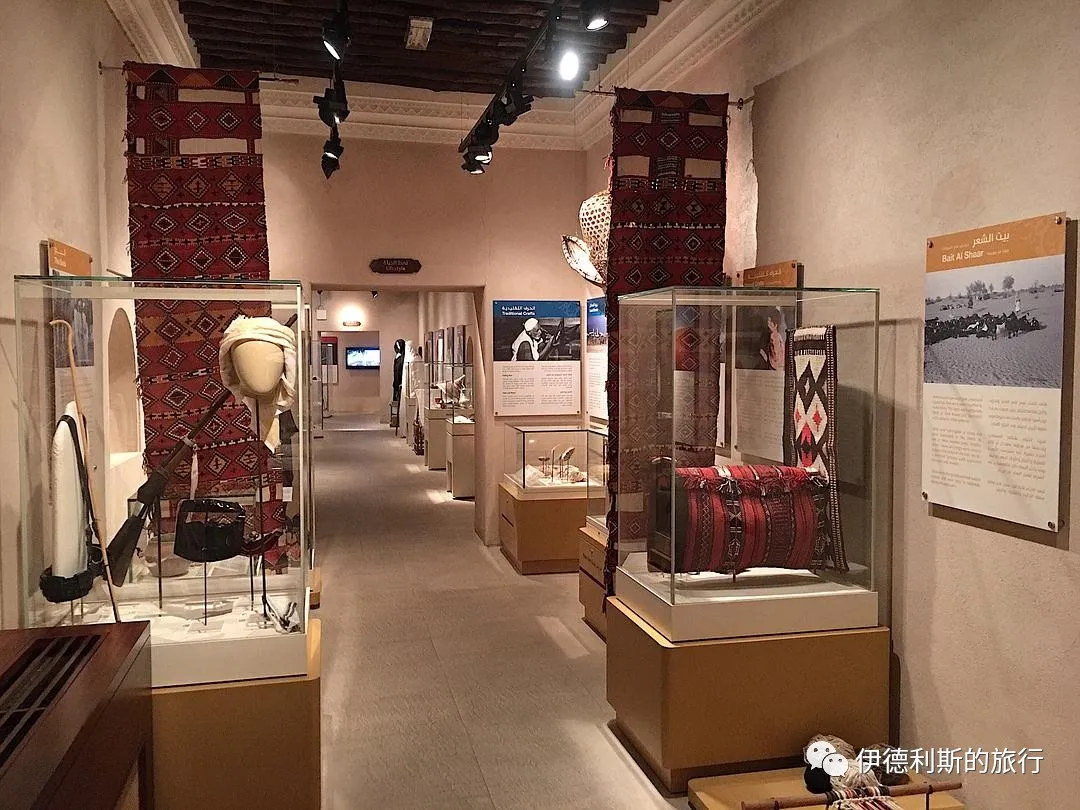
Name: Bait Al Naboodah
Location: Inside the Heart of Sharjah historical district in the old city of Sharjah, UAE.
Year: 1845
Introduction: Bait Al Naboodah is one of the most famous traditional Gulf residences in Sharjah. It was built in 1845 by Obaid bin Eissa Bin Ali Al Shamsi, the wealthiest pearl merchant in 19th-century Sharjah, who was nicknamed Al Naboodah.
Al Naboodah's pearl trade reached Africa, France, and India, and he accumulated massive wealth, especially from his pearl trade with India. In 1845, Al Naboodah rebuilt his father's ancestral home. The new residence featured a large courtyard with coral stone walls, unique Indian teak columns, and plaster carvings made by Persian craftsmen. Additionally, this house did not use the traditional Emirati wind tower (barjeel), but instead pioneered the use of air-scoops (malaqaf) built along the inner walls to circulate air.
The descendants of Al Naboodah lived here until the 1970s, but the building was badly damaged due to years of neglect. In the 1990s, the Sharjah Museums Authority hired a team of historians to carry out a large-scale renovation that lasted several years, and it officially opened to the public in 1995.
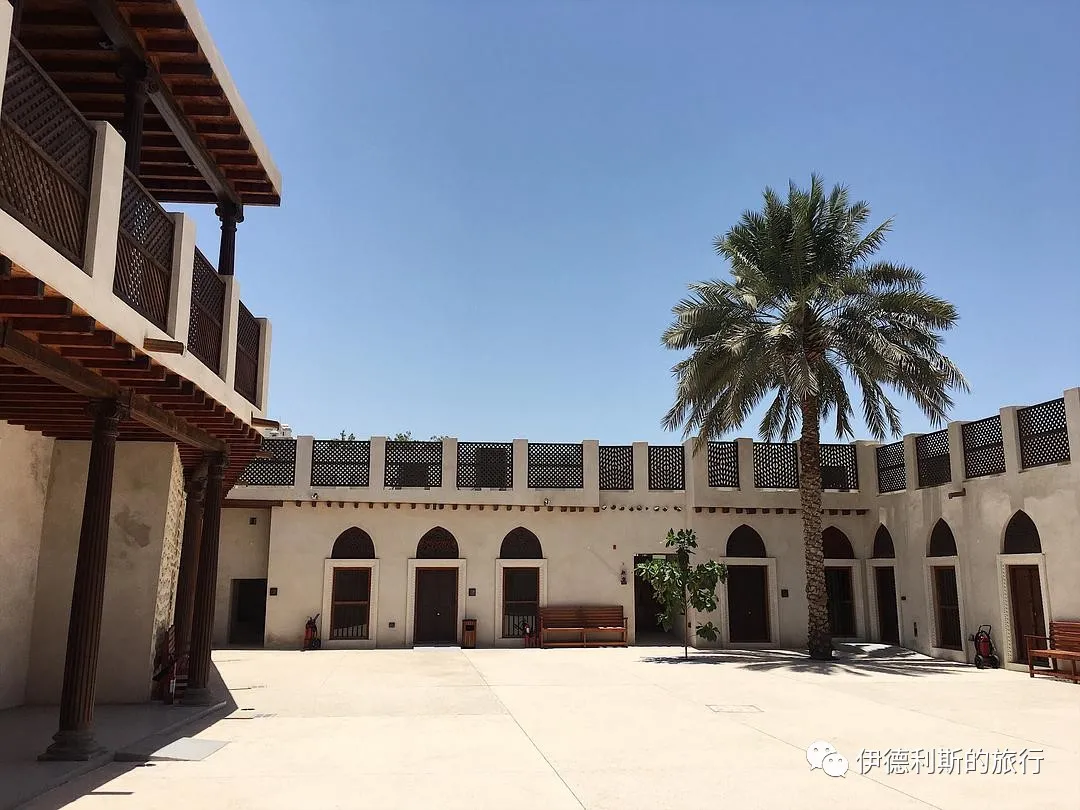
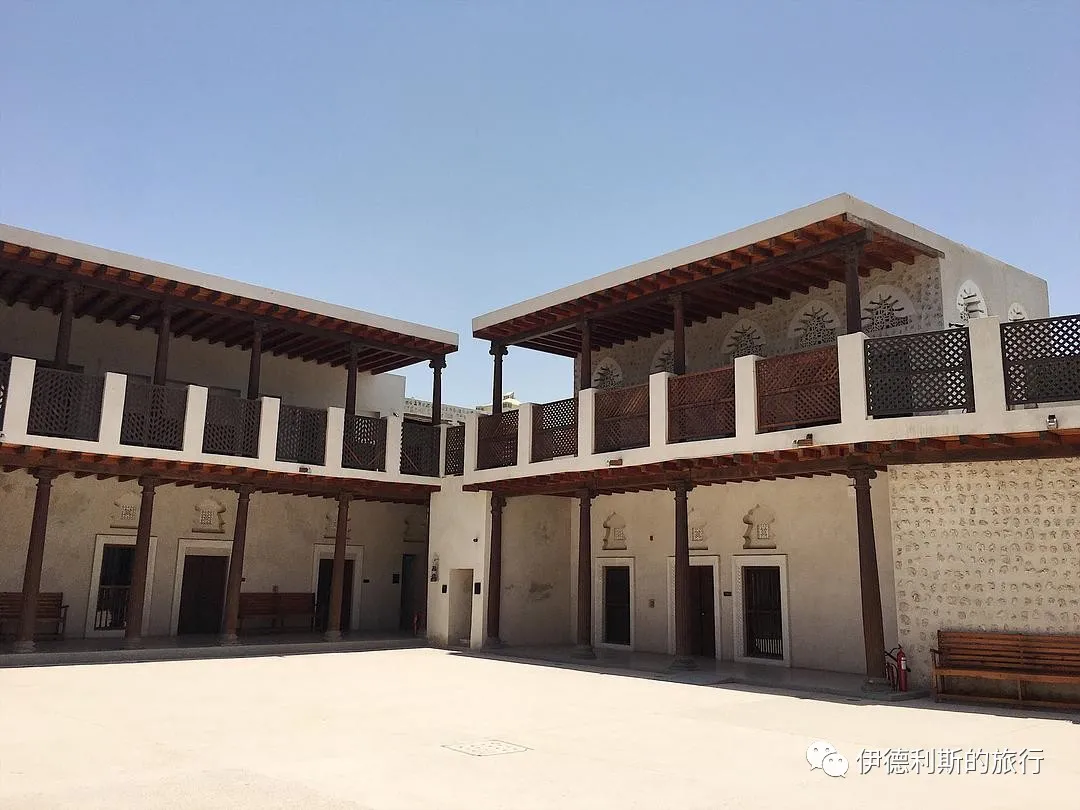
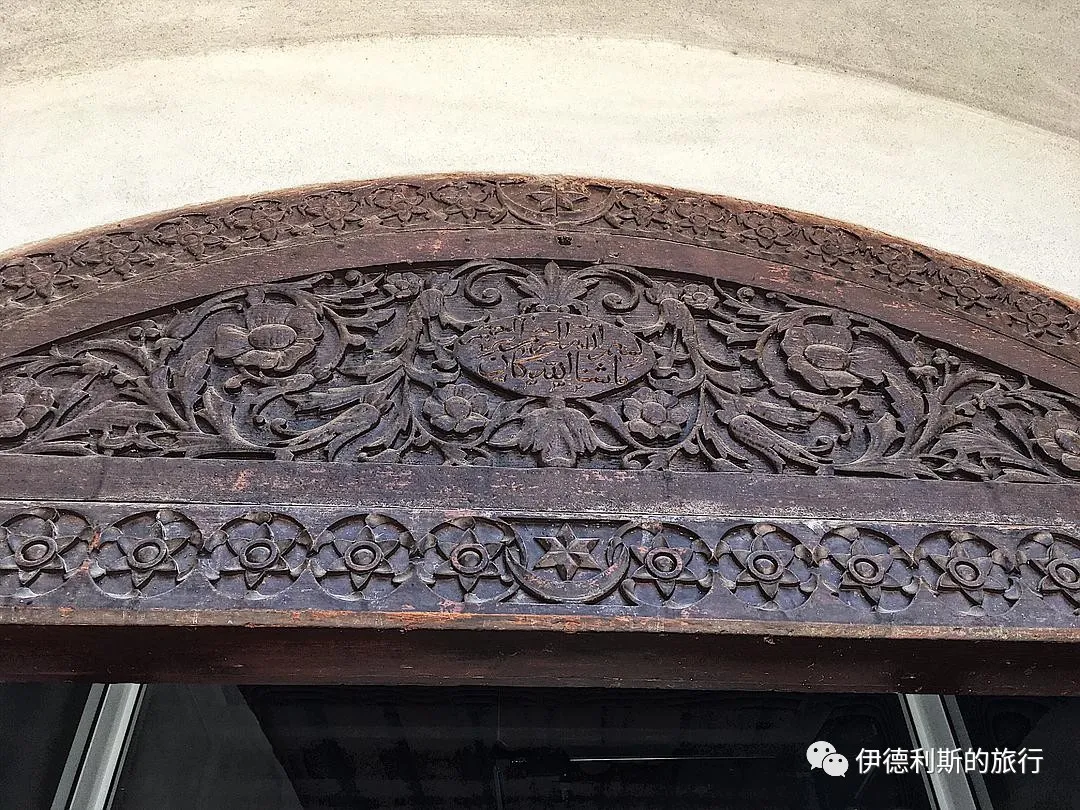
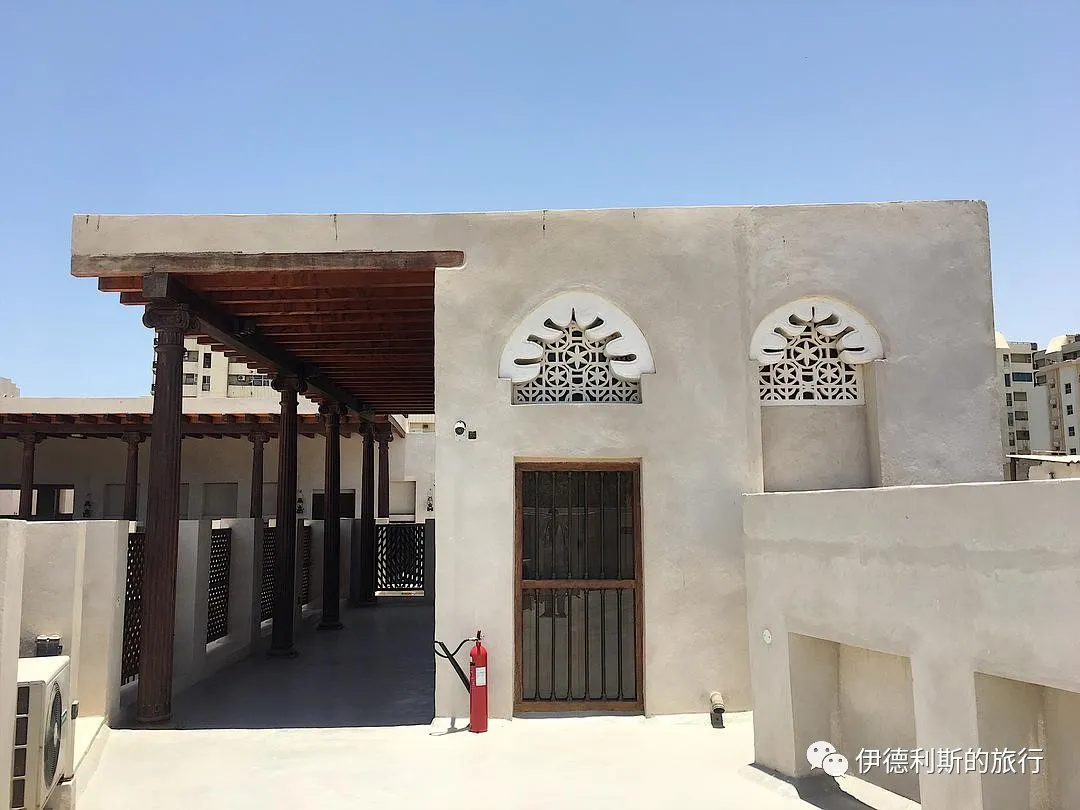
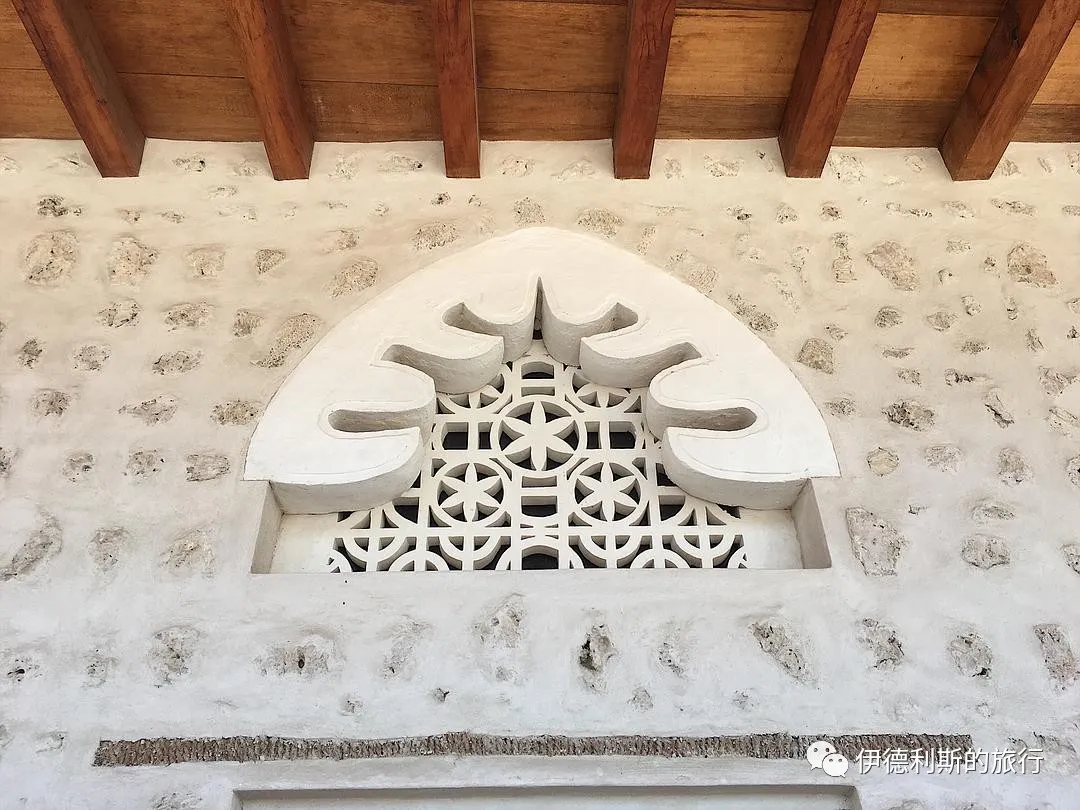
The interactive display of the courtyard allows you to click on any building component on the screen to see an introduction and the restoration process for that part.
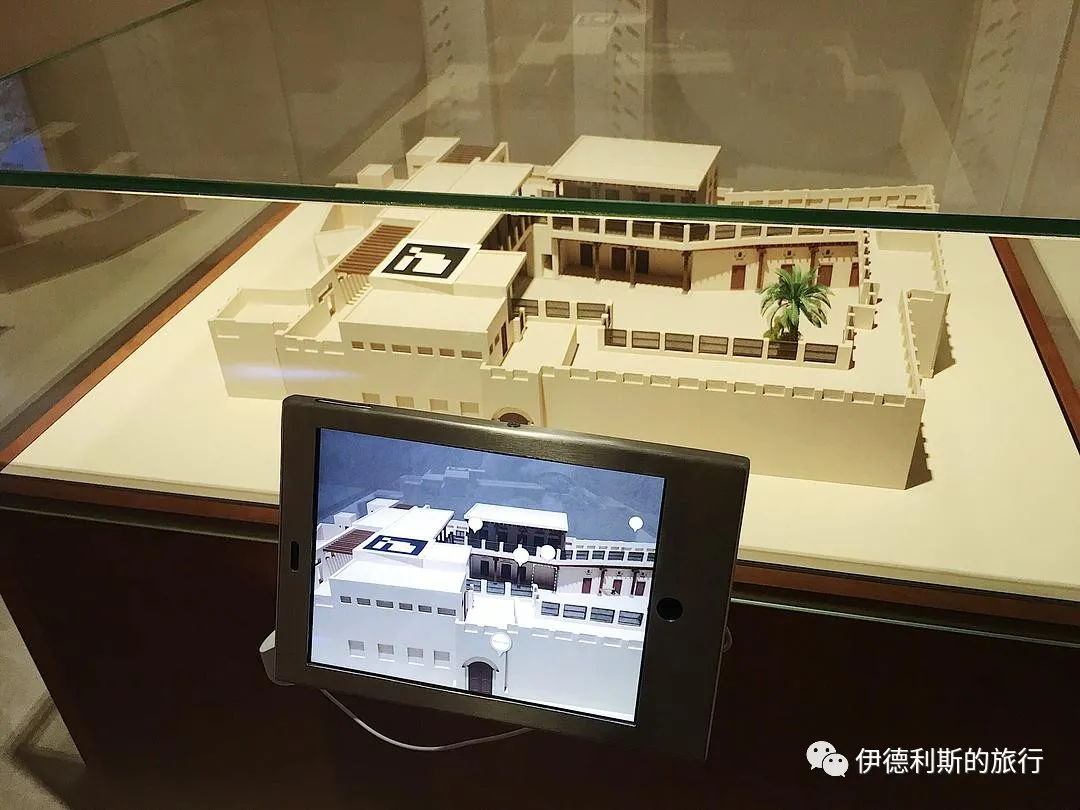
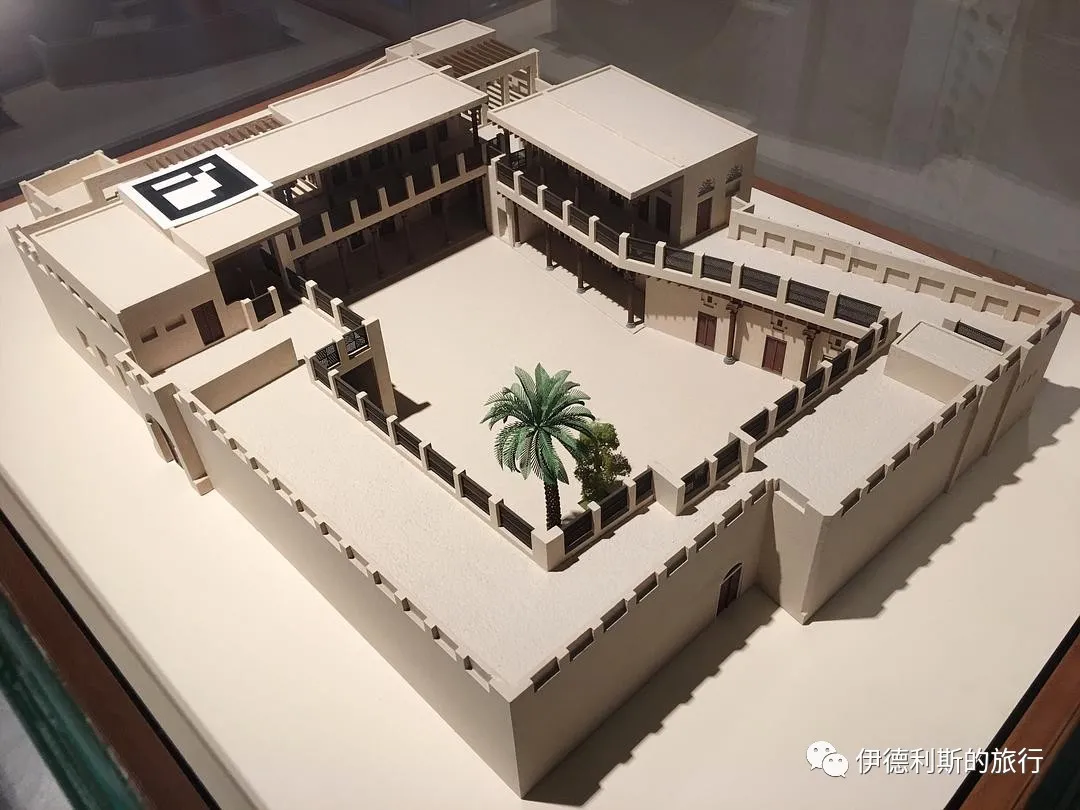
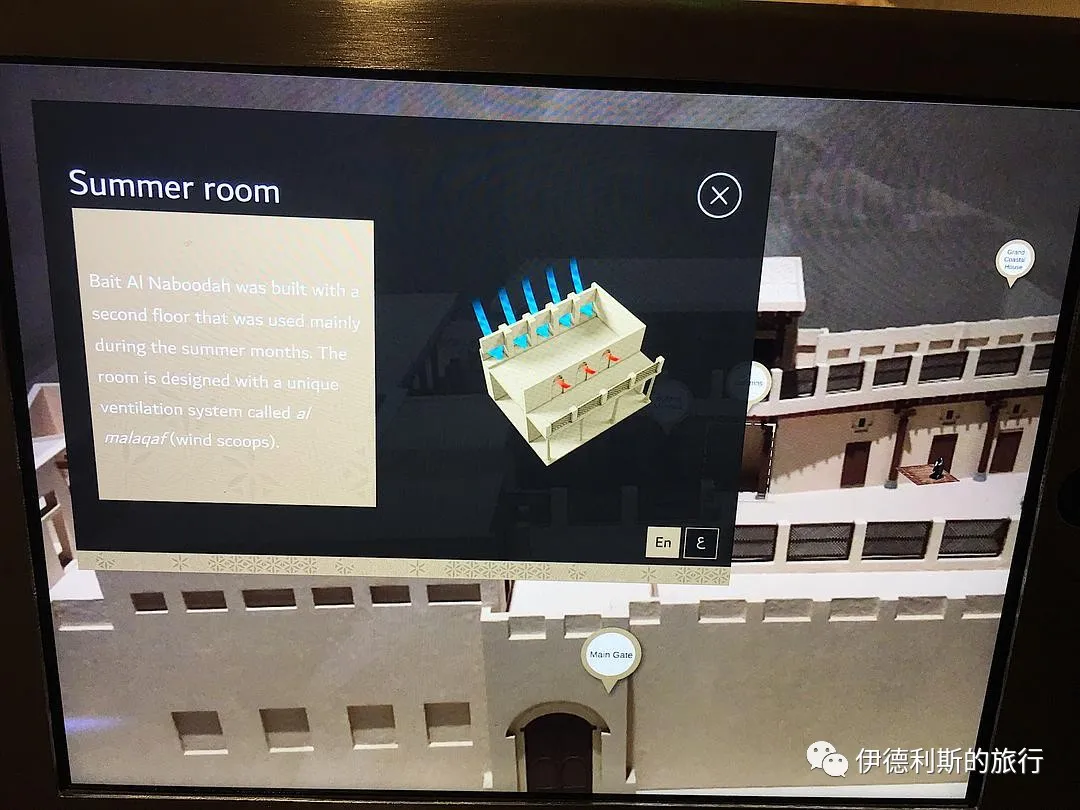
The coral stones used to build the courtyard come in two types: brain coral and fan coral. After being pulled from the seabed, these corals were dried in the sun, making them very light yet strong. Environmental protection laws now forbid the collection of coral stones, so limestone from the mountains had to be used to repair the damaged coral stones in the courtyard.
Summer temperatures in Sharjah can exceed 45 degrees Celsius. Many people used to hide in the mountains or oases to escape the heat between June and August, a summer migration route known as al maqeedh. With the summer house, people no longer had to travel inland to escape the heat during the summer.
Sharjah residents usually started preparing their summer houses at the end of March. They would coat the inside and outside of the house with a lime powder called norah, which reflects sunlight. The most important feature of the summer house is the many vents on the roof that help air circulate. During the day, wind blowing from the land flows into the house, and at night, the wind comes from the sea.
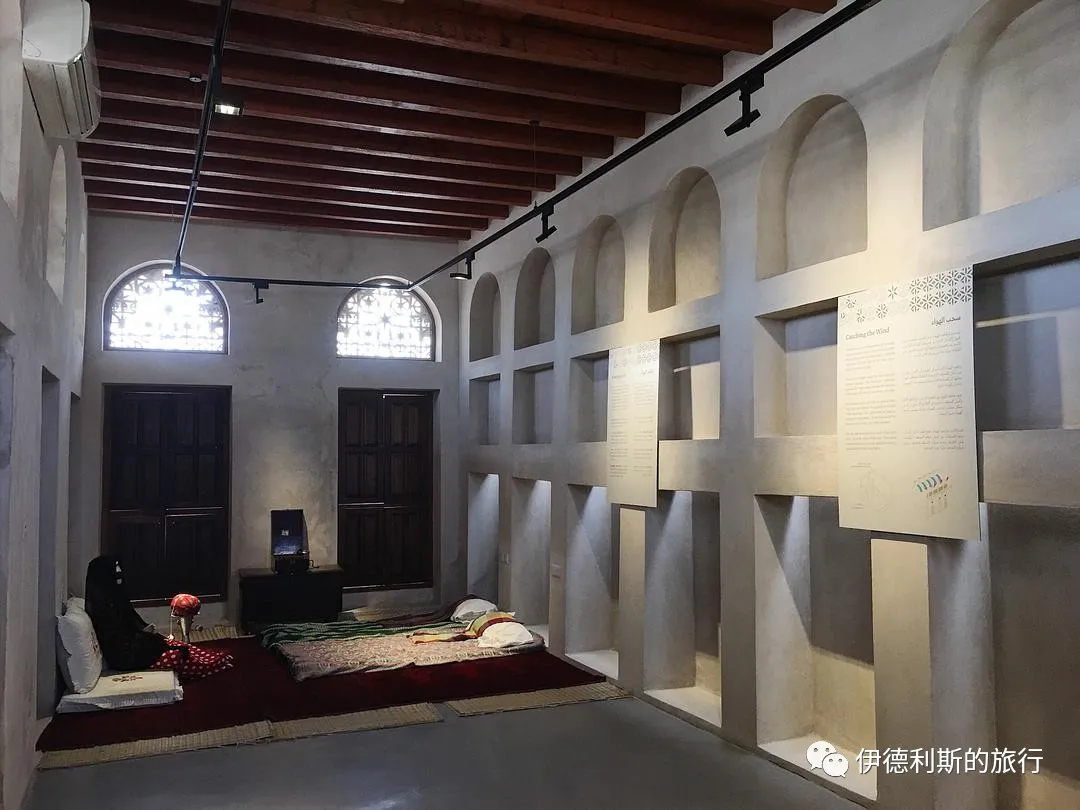
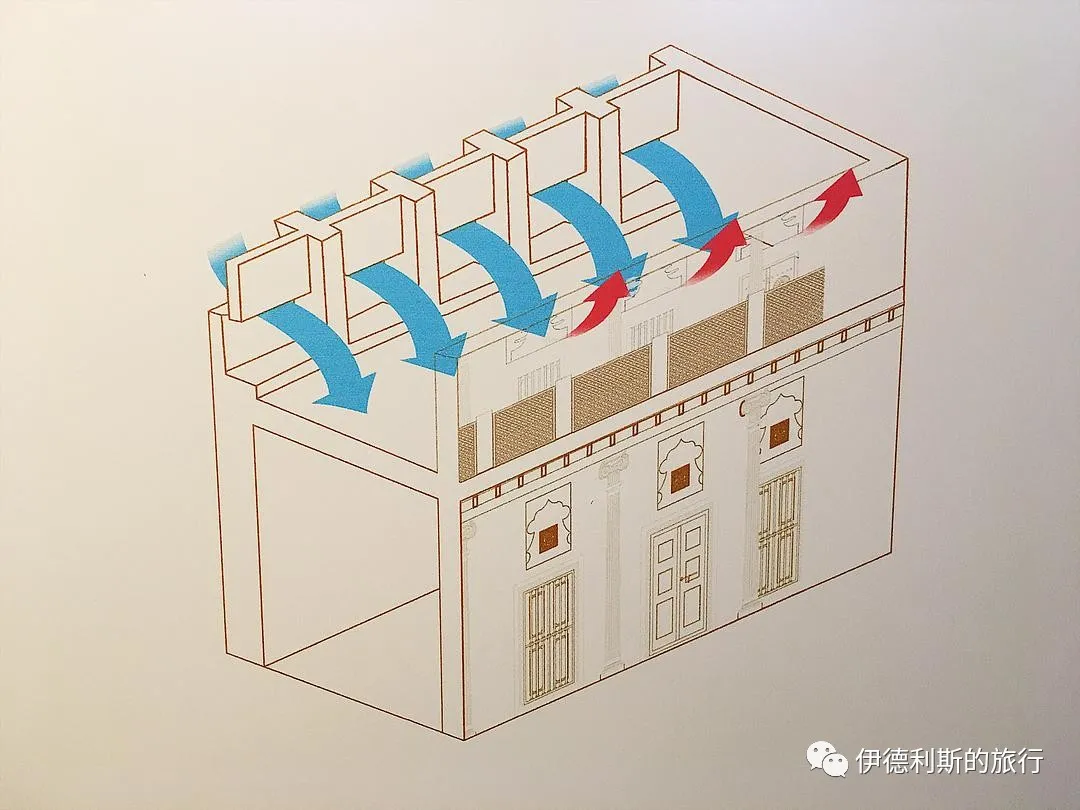
Toilet
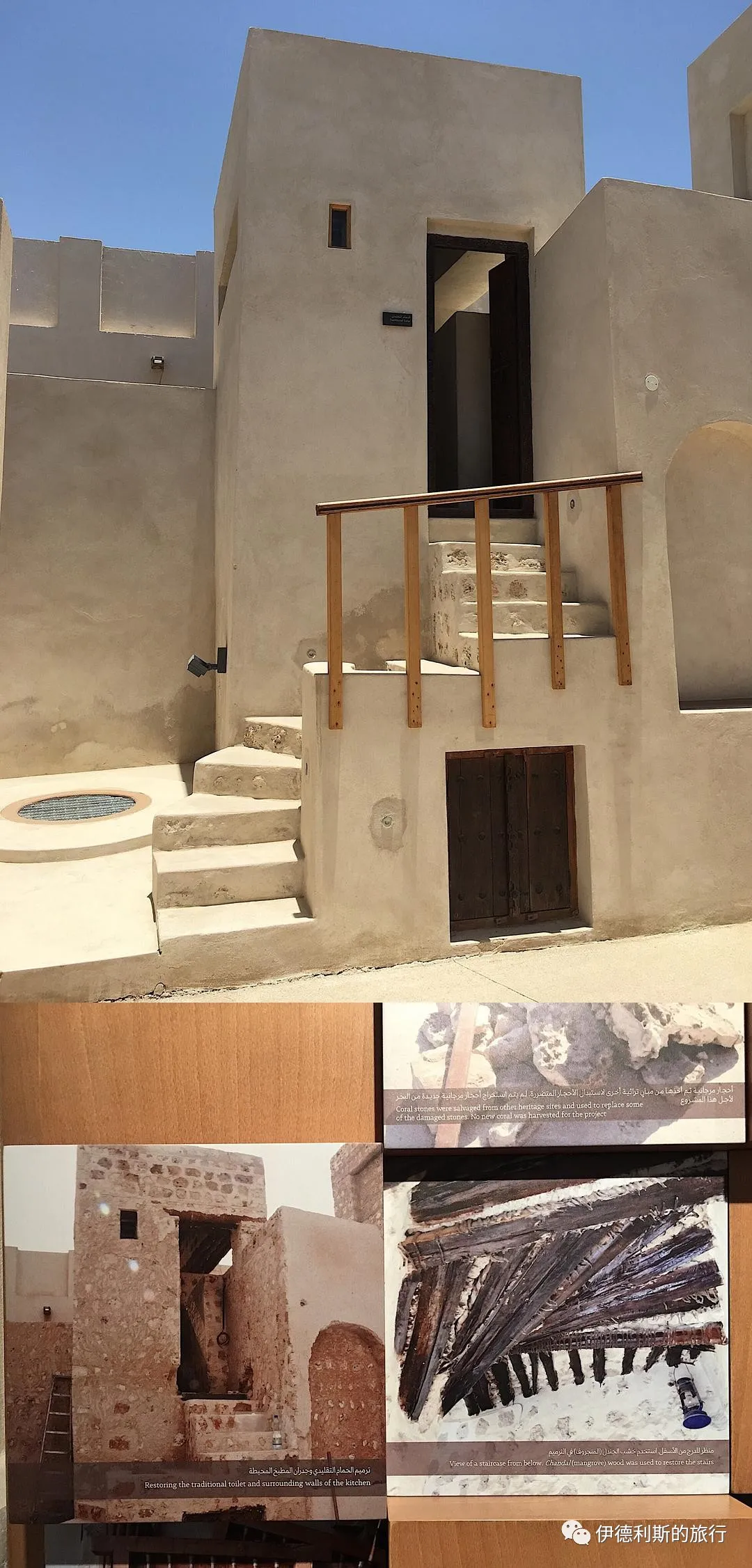
Kitchen
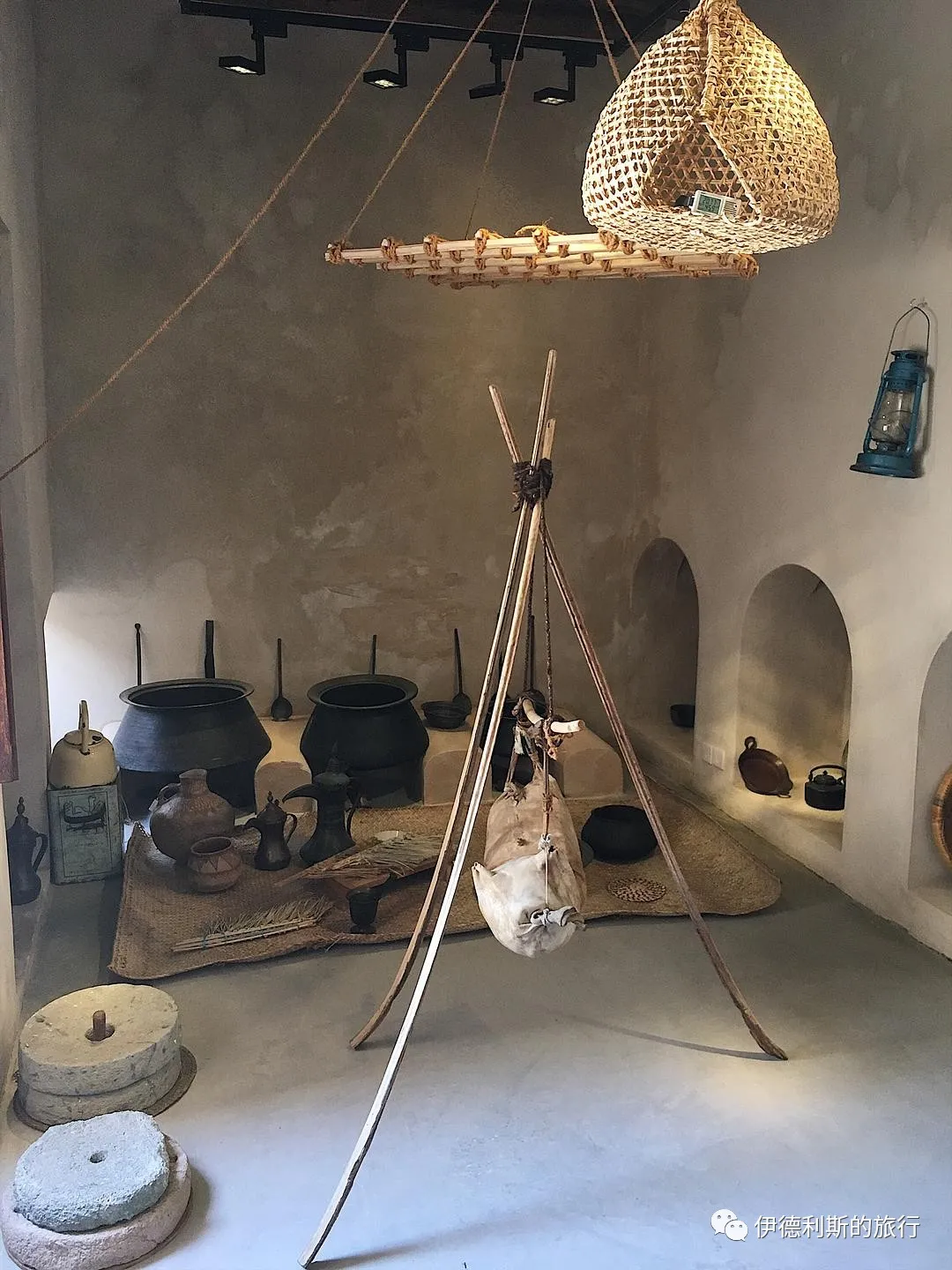
Summary: This article visits traditional homes in Saudi Arabia and the United Arab Emirates, with a focus on courtyard layouts, family spaces, and local building details. It keeps the original travel route, house names, photographs, and cultural observations for readers interested in Muslim heritage and Gulf architecture.
Continued from the previous post:
Visiting traditional homes in Tunisia and Egypt
Visiting traditional homes in southeastern Turkey
Name: Bayt Ba'ishan
Location: Inside the old city of Jeddah, Saudi Arabia
Date: 1923
Introduction: The Ba'ishan family came from the Hadramaut region in eastern Yemen and specialized in the tea and grain trade. The famous Jeddah musician Omar Ba'ishan and the journalist Mohammad Ba'ishan both come from this family. This old house consists of two parts, and the first floor has a small courtyard used as an outdoor space for namaz. There is now a cold drink shop inside where tourists can rest.
Name: Bayt Jeddah
Location: Inside the old city of Jeddah, Saudi Arabia
Date: 1880
Introduction: Bayt Jeddah is also called Salloum's house. It was built by Sheikh Abdullah Bin Obaid Salloum in 1880. It preserves many pieces of furniture used by the Salloum family in the past, including some imported from India that are over 120 years old. The old house has three floors. The first floor is a reception room, and the second floor is the bedroom. You can see many daily items here, including old suitcases, sewing machines, and an old-fashioned kerosene refrigerator. In the old house, you can see the area in the Hejaz region specifically designed to receive female neighbors. In the past, female neighbors used to gather there every afternoon to drink tea and chat.
Name: Crossroad of Civilizations Museum
Location: Inside the Al Shindagha historical district in Dubai, UAE
Date: 19th century
Introduction: The Crossroad of Civilizations Museum is located in a traditional Gulf-style house built in the 19th century. This was the former residence of Sheikh Hashr Bin Maktoum Al Maktoum, the brother of the eighth ruler of Dubai, Sheikh Saeed. It opened as a museum in 2014 and displays many formal book manuscripts and traditional weaponry.
Name: Museum of the Poet Al Oqaili
Location: Inside the Al Ras historical district in Dubai, UAE
Date: 1923
Introduction: The former residence of the poet Al Oqaili (1875-1954). Al Oqaili is a very famous Arab writer who showed a great talent for poetry from a young age. In his middle age, he traveled around the Persian Gulf, living in places like Iraq, Bahrain, and Abu Dhabi, before finally settling in Dubai in the early 20th century. In 1923, he hired craftsmen from his hometown of Al-Ahsa to build this house. The entire building is made of coral, stone, plaster, teak, and palm fronds, along with a traditional Iranian building material called Sarooj. Sarooj is a waterproof mortar made by kneading clay and limestone for two days, then adding bathhouse furnace ash, cattail fibers, eggs, and straw, and finally beating it with wooden sticks.
In 1954, Al Oqaili passed away in this house at the age of 81. He never married or had children, so the house was inherited by his cousin who came from Saudi Arabia.
Name: Al Bait Al Qadeem Restaurant
Location: Inside the Al Ras historical district in Dubai, UAE
Year: 1909
Introduction: Al Bait Alqadeem means old house in Arabic. This restaurant is located in a traditional Gulf-style residence built in 1909 by a pearl boat owner named Abdulla Bin Jamaan, who was also a bodyguard for the ruler of Dubai at the time. In 1954, Abdulla Bin Jamaan became the first mayor of Dubai. Today, this old house has been turned into a restaurant serving traditional Gulf cuisine.
Name: Sharjah Heritage Museum
Location: Inside the Heart of Sharjah historical district in the old city of Sharjah, UAE.
Year: 1795
Introduction: The historical building housing the Sharjah Heritage Museum was built by pearl merchant Saeed bin Mohammed Al Shamsi in 1795. It is also known as Bait Saeed Al Taweel, which means the house of Saeed the Tall. The museum showcases the traditional lifestyle of the people of Sharjah through crafts, folk music, wedding ceremonies, and folktales.
Name: Bait Al Naboodah
Location: Inside the Heart of Sharjah historical district in the old city of Sharjah, UAE.
Year: 1845
Introduction: Bait Al Naboodah is one of the most famous traditional Gulf residences in Sharjah. It was built in 1845 by Obaid bin Eissa Bin Ali Al Shamsi, the wealthiest pearl merchant in 19th-century Sharjah, who was nicknamed Al Naboodah.
Al Naboodah's pearl trade reached Africa, France, and India, and he accumulated massive wealth, especially from his pearl trade with India. In 1845, Al Naboodah rebuilt his father's ancestral home. The new residence featured a large courtyard with coral stone walls, unique Indian teak columns, and plaster carvings made by Persian craftsmen. Additionally, this house did not use the traditional Emirati wind tower (barjeel), but instead pioneered the use of air-scoops (malaqaf) built along the inner walls to circulate air.
The descendants of Al Naboodah lived here until the 1970s, but the building was badly damaged due to years of neglect. In the 1990s, the Sharjah Museums Authority hired a team of historians to carry out a large-scale renovation that lasted several years, and it officially opened to the public in 1995.
The interactive display of the courtyard allows you to click on any building component on the screen to see an introduction and the restoration process for that part.
The coral stones used to build the courtyard come in two types: brain coral and fan coral. After being pulled from the seabed, these corals were dried in the sun, making them very light yet strong. Environmental protection laws now forbid the collection of coral stones, so limestone from the mountains had to be used to repair the damaged coral stones in the courtyard.
Summer temperatures in Sharjah can exceed 45 degrees Celsius. Many people used to hide in the mountains or oases to escape the heat between June and August, a summer migration route known as al maqeedh. With the summer house, people no longer had to travel inland to escape the heat during the summer.
Sharjah residents usually started preparing their summer houses at the end of March. They would coat the inside and outside of the house with a lime powder called norah, which reflects sunlight. The most important feature of the summer house is the many vents on the roof that help air circulate. During the day, wind blowing from the land flows into the house, and at night, the wind comes from the sea.
Toilet
Kitchen
Islamic Architecture Guide: 131 Traditional Mihrabs in China, Part 1
Articles • ali2007fr posted the article • 0 comments • 148 views • 2026-05-20 01:49
Reposted from the web
Summary: This is the first part of a visual record of 131 traditional mihrabs in Chinese mosques. It keeps the source images, place names, captions, and architectural notes in a cleaner English layout.
Beijing.
The Ming dynasty archway-style mihrab at Niujie in Beijing features a beam-column hip roof on top and a Sumeru pedestal (xumizuo) at the bottom. The eight large lotus petal carvings on the Sumeru pedestal show a Ming dynasty style. The upper part is painted with high-grade gold-inlaid swirling patterns (xuanzi caihua), featuring extensive gold leaf. It was expensive to make and shows the characteristics of official architectural paintings from the mid-Qing dynasty.
The Beijing Niujie Women's Mosque was built in 1925 as the first women's mosque in Beijing. It was originally located on Shouliu Hutong and was rebuilt on the north side of the Niujie Mosque in 2006. The mihrab is a century-old brick carving of a dua. A September 1942 issue of Beizhi magazine published an old photo of this brick carving.
The Beijing Huashi Mosque was built in 1414 (the 12th year of the Yongle reign of the Ming dynasty). The mihrab has a glazed tile archway inscribed with traditional Chinese calligraphy.
The Beijing Nankou Mosque is believed to have been built in the Ming dynasty and renovated during the Qing dynasty. The mihrab is a blue brick screen wall style with a clear-water ridge and scorpion-tail roof ends on top, and a Sumeru pedestal at the bottom. In the middle, it features exquisite diamond-patterned window shutters and scroll-patterned arched brick carvings.
The construction date of the Beijing Gubeikou Mosque is unknown. It was renovated in 1629 (the 12th year of the Chongzhen reign of the Ming dynasty) and rebuilt to its current appearance by the Zhili regional commander Ma Jinliang during the Kangxi reign of the Qing dynasty. The mihrab is arch-shaped and painted with auspicious cloud patterns, along with traditional calligraphy in the North China style.
The Beijing Dongzhimenwai Mosque, originally called the Erlizhuang Mosque, was built in the Yuan dynasty. The old mosque's mihrab was wooden and shaped like a tablet. After the renovation, it was placed under the eaves of the hall opposite the new mosque, and it is carved with traditional calligraphy.
The Beijing Changying Mosque mihrab is shaped like a stone stele head and features very complex painted calligraphy. According to research by teacher Hui Zongzheng, it may have been moved from elsewhere when the mosque was built during the Zhengde reign of the Ming dynasty.
Tianjin.
The Great Mosque at Xibeijiao in Tianjin has a wooden carved niche (yaokan) with a very high Sumeru pedestal railing, which is quite rare.
The Tianjin Jinjiayao Mosque features traditional calligraphy plaques and couplets, with an arched gate in the middle.
The Tianjin Hexiwu Mosque features a rare painted design of a half-open vermilion door.
The Tianjin Xibeijiao South Mosque features traditional calligraphy plaques and couplets.
The Tianjin Tianmu North Mosque also features a large gate design in the middle.
Hebei.
The Hebei Zhangjiakou Xinhua Street Mosque's winter prayer hall mihrab is decorated with traditional calligraphy plaques and circular couplets.
The Hebei Zhangjiakou Xiguan Mosque is a blue brick screen wall style with a hip roof, a ridged roof, and flying eaves, with a Sumeru pedestal at the bottom. The center features Ming dynasty calligraphy carvings restored in 2020 by the famous calligrapher Wang Qifei based on old photos.
The South Mosque (Nandasi) in Xuanhua, Hebei, is an arched structure carved with calligraphy and floral patterns.
The North Mosque (Beisi) in Xuanhua, Hebei, is an arched structure carved with calligraphy and floral patterns.
Henan
The Shanyitang Mosque in Henan is an arched structure decorated with calligraphy written in 2009 by the famous calligrapher Mi Guangjiang.
The North Mosque (Beisi) in Zhengzhou, Henan, is an arched structure with an exterior carved door hood.
The North Mosque (Beisi) in Qinyang, Henan, is an arched structure decorated with traditional calligraphy.
The Xiguan Mosque in Bo'ai, Henan, is an arched structure decorated with Arabic plaques and couplets.
The West Mosque (Xisi) in Daxinzhuang, Bo'ai, Henan, is an arched structure decorated with Arabic plaques and couplets.
Shandong
The North Mosque (Beisi) in Linqing, Shandong, is a three-room, four-pillar memorial archway style building with bracket sets and flying eaves, decorated with intricate traditional calligraphy.
The East Mosque (Dongsi) in Linqing, Shandong, is a three-room, four-pillar memorial archway style building with bracket sets and flying eaves, decorated with intricate traditional calligraphy.
The South Mosque (Nandasi) in Jinan, Shandong, is an arched structure. According to the mosque's stele record, the calligraphy was written in 1810 (the 15th year of the Jiaqing reign) by Imam Hei Faxiang.
The North Mosque (Beisi) in Jinan, Shandong, is an arched structure featuring calligraphy in the center.
The Zhenjiao Mosque in Qingzhou, Shandong, is an arched structure with a single-eave, hanging-mountain style door hood above.
Inner Mongolia
The Great Mosque in Hohhot, Inner Mongolia, has a door hood with openwork, painted floral and scroll patterns.
The East Mosque (Dongsi) in Hohhot, Inner Mongolia.
The Longshengzhuang Mosque in Feng County, Inner Mongolia, has a door hood with wood-carved calligraphy inside the arch.
The North Mosque (Beisi) in Chifeng, Inner Mongolia, features original wood carvings from 1747 (the 12th year of the Qianlong reign).
Liaoning
The Old City Mosque in Kaiyuan, Liaoning, features a clear-water scorpion-tail roof ridge.
The Luyang Mosque in Jinzhou, Liaoning, has a plaque with large-character calligraphy and traditional brush-style calligraphy on both sides.
The South Mosque (Nandasi) in Shenyang, Liaoning, houses a large spirit tablet.
The Ancient City Mosque in Fuzhou, Dalian, Liaoning, features traditional brush-style calligraphy.
Lingyuan Mosque in Liaoning features carvings of Arabic calligraphy.
Heilongjiang
The winter prayer hall at Bukui West Mosque in Qiqihar, Heilongjiang, has traditional calligraphy carved onto its arches.
The main hall of Bukui West Mosque in Qiqihar, Heilongjiang, is surrounded by carved calligraphy plaques and couplets.
The main hall of Bukui East Mosque in Qiqihar, Heilongjiang, features a clear-water ridge (qingshuiji) roof, a Sumeru pedestal (xumizuo) base, and carved calligraphy plaques and couplets.
Acheng Mosque in Heilongjiang has four floor-to-ceiling pillars (tongtianzhu) in its kiln hall (yaodian) built in 1900 (the 26th year of the Guangxu reign). They were made from giant pine logs hauled from the forests of Yabuli, Heilongjiang, and installed by a carpenter named Sun Yulin from Wula Street, Jilin. Legend says Carpenter Sun's master was worried about his apprentice, so he secretly went to a stone shop and made four 3-foot-tall lotus-shaped pillar bases. When it came time to raise the floor-to-ceiling pillars, they were exactly 3 feet too short. Seeing this, the master immediately told Carpenter Sun to hitch a cart and bring back the four lotus pillar bases from the stone shop, and they fit perfectly.
Shanxi
Taiyuan Great Mosque in Shanxi is a Ming Dynasty treasure. It has a wooden memorial archway-style door hood with a hip roof (wudianding), bracket sets (dougong), and flying eaves. Below are Sumeru pedestal railings, and the pillars are decorated with scrolling lotus patterns and Arabic circular motifs. The center features a wooden carved hanging panel with Arabic script, and a kiln niche (yaokan) is set in the very center.
Shaanxi
Huajue Lane Great Mosque in Xi'an, Shaanxi, is a Ming Dynasty treasure. It uses wooden board inlays and gold-painted pillars to create door hoods and hanging pillars. The wooden boards are carved with Arabic calligraphy and floral patterns, making them very magnificent. The center has a kiln niche arch supported by prismatic pillars on both sides. This is similar to the mihrab style found in Iran and Turkey during the Yuan and Ming dynasties, making it the only known Ming Dynasty mihrab in China that blends Eastern and Western styles.
Besides Huajue Lane Great Mosque, the Daxuexi Lane Mosque and Dapiyuan Mosque in Xi'an also have original, unrestored mihrabs. Both mihrabs are made of inlaid wooden boards with a kiln niche in the middle, but their styles differ. Daxuexi Lane Mosque has a wooden carved canopy (feizhao) between its pillars. The craftsmanship is exquisite, and the calligraphy style matches that of Mengda Mosque in Xunhua, Qinghai, suggesting they may have been made by the same group of craftsmen.
Daxuexi Lane Mosque
Dapiyuan Mosque
Some restored and newly built mihrabs in Xi'an, Shaanxi.
Xiaopiyuan North Mosque has had all its paintings redone, though it is said the style remains unchanged. The center is a kiln niche with beautiful wooden floral carvings.
At the North Guangji Street Mosque, the wood carvings on the upper part of the prayer niche (mihrab) look like those at the Great Mosque of Huajue Lane.
The Xiaoxuexi Lane Middle Mosque features wood panel inlays with a prayer niche (mihrab) in the center.
The Xiaoxuexi Lane Yingli Mosque has a wood-carved door canopy decorated with flower and plant patterns.
The Dongmen Cang South City Mosque has a wood-carved door canopy featuring traditional-style calligraphy.
The Sajinqiao Mosque uses wood panel inlays and contains a very rare Chinese-language Yasin chapter.
Prayer niches (mihrab) in the southern Shaanxi region:
The Ankang North Mosque in Shaanxi is built in a memorial archway style with wood-carved flying eaves.
The Ankang Jingning South Mosque in Shaanxi features traditional-style couplets and horizontal inscribed boards.
The Xixiang North Mosque in Shaanxi features traditional-style couplets and horizontal inscribed boards.
The Xixiang Luling Mosque in Shaanxi is built in a wood memorial archway style and has traditional couplets.
The Hanzhong Xianyin Mosque in Shaanxi has traditional-style horizontal inscribed boards and couplets, and the prayer niche (mihrab) is carved with an offering table.
Gansu
The Linxia Old Wang Mosque is arch-shaped and carved with traditional Arabic horizontal inscribed boards and couplets.
The Linxia West Mosque is arch-shaped and carved with traditional Arabic horizontal inscribed boards and couplets.
The Linxia North Mosque is arch-shaped and carved with traditional Arabic horizontal inscribed boards and couplets.
The Tianshui Beiguan Mosque is arch-shaped and carved with traditional Arabic horizontal inscribed boards and couplets.
The Tianshui Qin'an Nanxiaguan Mosque features brick carvings of Zhe school Shagou-style calligraphy and rare brick-carved hanging scrolls.
Qinghai
The Haidong Hongshuiquan Great Mosque features wood panel inlays, a door canopy above, a Sumeru pedestal below, and extremely rare traditional auspicious patterns carved above the prayer niche (mihrab).
The Xunhua Tashapo Mosque has flame patterns and flower designs carved around the prayer niche (mihrab), with a flame pearl carved directly above it, which is also very rare.
The Xunhua Qingshuihe East Mosque has a wood carving style similar to the Tashapo Mosque, but slightly shallower, and also features a flame pearl in the center.
The Xunhua Mengda Dazhuang Mosque features painted wood panels, and the backlight inside the prayer niche (mihrab) is very unique due to Tibetan cultural influence.
The Xunhua Shangkewa Mosque features painted wood panels with traditional calligraphy.
The Xunhua Zhangga Mosque has an arch in the center surrounded by horizontal inscribed boards and couplets.
Xinjiang
The Shaanxi Grand Mosque in Urumqi was built in 1906. It features wood paneling and a central arch.
The South Grand Mosque in Urumqi was built in 1919. It has a decorative gate hood and a central arch.
Tibet
The Lhasa Grand Mosque features wood carvings of flowers, plants, and calligraphy, along with two calligraphic couplets.
The Lhasa Small Mosque features wood carvings of flowers, plants, and calligraphy.
The Lhasa West Suburb Mosque features wood carvings of flowers, plants, and calligraphy.
Sichuan
The Langzhong Mosque has a traditional calligraphic plaque above its arch.
The Langzhong Baba Mosque has a plaque from the fifth year of the Guangxu reign that reads 'Le Shan Ke Feng' at the very top. Below it are traditional calligraphic couplets, and the center features an arch.
The Nanchong Mosque features traditional calligraphy in its center written by the famous calligrapher Wang Qifei.
The Majia Mosque in Yankou, Wusheng, features brush-style calligraphy.
The Xichang City Mosque has traditional calligraphic plaques and couplets, with an arch in the center.
The Xichang East Mosque features unique Xichang-style Arabic calligraphy on its plaque.
The Qing Dynasty wood-carved mihrab at the Miyi Tianba Mosque was damaged by termites, so it has been re-carved to look exactly like the original.
The Dujiangyan Mosque has calligraphic couplets that look like bamboo joints, which is very characteristic of Sichuan.
The Tangjia Mosque in Mimou Town, Chengdu, features clever couplets that start with two-part phonetic letters known as suole. view all
Summary: This is the first part of a visual record of 131 traditional mihrabs in Chinese mosques. It keeps the source images, place names, captions, and architectural notes in a cleaner English layout.
Beijing.
The Ming dynasty archway-style mihrab at Niujie in Beijing features a beam-column hip roof on top and a Sumeru pedestal (xumizuo) at the bottom. The eight large lotus petal carvings on the Sumeru pedestal show a Ming dynasty style. The upper part is painted with high-grade gold-inlaid swirling patterns (xuanzi caihua), featuring extensive gold leaf. It was expensive to make and shows the characteristics of official architectural paintings from the mid-Qing dynasty.
The Beijing Niujie Women's Mosque was built in 1925 as the first women's mosque in Beijing. It was originally located on Shouliu Hutong and was rebuilt on the north side of the Niujie Mosque in 2006. The mihrab is a century-old brick carving of a dua. A September 1942 issue of Beizhi magazine published an old photo of this brick carving.
The Beijing Huashi Mosque was built in 1414 (the 12th year of the Yongle reign of the Ming dynasty). The mihrab has a glazed tile archway inscribed with traditional Chinese calligraphy.
The Beijing Nankou Mosque is believed to have been built in the Ming dynasty and renovated during the Qing dynasty. The mihrab is a blue brick screen wall style with a clear-water ridge and scorpion-tail roof ends on top, and a Sumeru pedestal at the bottom. In the middle, it features exquisite diamond-patterned window shutters and scroll-patterned arched brick carvings.
The construction date of the Beijing Gubeikou Mosque is unknown. It was renovated in 1629 (the 12th year of the Chongzhen reign of the Ming dynasty) and rebuilt to its current appearance by the Zhili regional commander Ma Jinliang during the Kangxi reign of the Qing dynasty. The mihrab is arch-shaped and painted with auspicious cloud patterns, along with traditional calligraphy in the North China style.
The Beijing Dongzhimenwai Mosque, originally called the Erlizhuang Mosque, was built in the Yuan dynasty. The old mosque's mihrab was wooden and shaped like a tablet. After the renovation, it was placed under the eaves of the hall opposite the new mosque, and it is carved with traditional calligraphy.
The Beijing Changying Mosque mihrab is shaped like a stone stele head and features very complex painted calligraphy. According to research by teacher Hui Zongzheng, it may have been moved from elsewhere when the mosque was built during the Zhengde reign of the Ming dynasty.
Tianjin.
The Great Mosque at Xibeijiao in Tianjin has a wooden carved niche (yaokan) with a very high Sumeru pedestal railing, which is quite rare.
The Tianjin Jinjiayao Mosque features traditional calligraphy plaques and couplets, with an arched gate in the middle.
The Tianjin Hexiwu Mosque features a rare painted design of a half-open vermilion door.
The Tianjin Xibeijiao South Mosque features traditional calligraphy plaques and couplets.
The Tianjin Tianmu North Mosque also features a large gate design in the middle.
Hebei.
The Hebei Zhangjiakou Xinhua Street Mosque's winter prayer hall mihrab is decorated with traditional calligraphy plaques and circular couplets.
The Hebei Zhangjiakou Xiguan Mosque is a blue brick screen wall style with a hip roof, a ridged roof, and flying eaves, with a Sumeru pedestal at the bottom. The center features Ming dynasty calligraphy carvings restored in 2020 by the famous calligrapher Wang Qifei based on old photos.
The South Mosque (Nandasi) in Xuanhua, Hebei, is an arched structure carved with calligraphy and floral patterns.
The North Mosque (Beisi) in Xuanhua, Hebei, is an arched structure carved with calligraphy and floral patterns.
Henan
The Shanyitang Mosque in Henan is an arched structure decorated with calligraphy written in 2009 by the famous calligrapher Mi Guangjiang.
The North Mosque (Beisi) in Zhengzhou, Henan, is an arched structure with an exterior carved door hood.
The North Mosque (Beisi) in Qinyang, Henan, is an arched structure decorated with traditional calligraphy.
The Xiguan Mosque in Bo'ai, Henan, is an arched structure decorated with Arabic plaques and couplets.
The West Mosque (Xisi) in Daxinzhuang, Bo'ai, Henan, is an arched structure decorated with Arabic plaques and couplets.
Shandong
The North Mosque (Beisi) in Linqing, Shandong, is a three-room, four-pillar memorial archway style building with bracket sets and flying eaves, decorated with intricate traditional calligraphy.
The East Mosque (Dongsi) in Linqing, Shandong, is a three-room, four-pillar memorial archway style building with bracket sets and flying eaves, decorated with intricate traditional calligraphy.
The South Mosque (Nandasi) in Jinan, Shandong, is an arched structure. According to the mosque's stele record, the calligraphy was written in 1810 (the 15th year of the Jiaqing reign) by Imam Hei Faxiang.
The North Mosque (Beisi) in Jinan, Shandong, is an arched structure featuring calligraphy in the center.
The Zhenjiao Mosque in Qingzhou, Shandong, is an arched structure with a single-eave, hanging-mountain style door hood above.
Inner Mongolia
The Great Mosque in Hohhot, Inner Mongolia, has a door hood with openwork, painted floral and scroll patterns.
The East Mosque (Dongsi) in Hohhot, Inner Mongolia.
The Longshengzhuang Mosque in Feng County, Inner Mongolia, has a door hood with wood-carved calligraphy inside the arch.
The North Mosque (Beisi) in Chifeng, Inner Mongolia, features original wood carvings from 1747 (the 12th year of the Qianlong reign).
Liaoning
The Old City Mosque in Kaiyuan, Liaoning, features a clear-water scorpion-tail roof ridge.
The Luyang Mosque in Jinzhou, Liaoning, has a plaque with large-character calligraphy and traditional brush-style calligraphy on both sides.
The South Mosque (Nandasi) in Shenyang, Liaoning, houses a large spirit tablet.
The Ancient City Mosque in Fuzhou, Dalian, Liaoning, features traditional brush-style calligraphy.
Lingyuan Mosque in Liaoning features carvings of Arabic calligraphy.
Heilongjiang
The winter prayer hall at Bukui West Mosque in Qiqihar, Heilongjiang, has traditional calligraphy carved onto its arches.
The main hall of Bukui West Mosque in Qiqihar, Heilongjiang, is surrounded by carved calligraphy plaques and couplets.
The main hall of Bukui East Mosque in Qiqihar, Heilongjiang, features a clear-water ridge (qingshuiji) roof, a Sumeru pedestal (xumizuo) base, and carved calligraphy plaques and couplets.
Acheng Mosque in Heilongjiang has four floor-to-ceiling pillars (tongtianzhu) in its kiln hall (yaodian) built in 1900 (the 26th year of the Guangxu reign). They were made from giant pine logs hauled from the forests of Yabuli, Heilongjiang, and installed by a carpenter named Sun Yulin from Wula Street, Jilin. Legend says Carpenter Sun's master was worried about his apprentice, so he secretly went to a stone shop and made four 3-foot-tall lotus-shaped pillar bases. When it came time to raise the floor-to-ceiling pillars, they were exactly 3 feet too short. Seeing this, the master immediately told Carpenter Sun to hitch a cart and bring back the four lotus pillar bases from the stone shop, and they fit perfectly.
Shanxi
Taiyuan Great Mosque in Shanxi is a Ming Dynasty treasure. It has a wooden memorial archway-style door hood with a hip roof (wudianding), bracket sets (dougong), and flying eaves. Below are Sumeru pedestal railings, and the pillars are decorated with scrolling lotus patterns and Arabic circular motifs. The center features a wooden carved hanging panel with Arabic script, and a kiln niche (yaokan) is set in the very center.
Shaanxi
Huajue Lane Great Mosque in Xi'an, Shaanxi, is a Ming Dynasty treasure. It uses wooden board inlays and gold-painted pillars to create door hoods and hanging pillars. The wooden boards are carved with Arabic calligraphy and floral patterns, making them very magnificent. The center has a kiln niche arch supported by prismatic pillars on both sides. This is similar to the mihrab style found in Iran and Turkey during the Yuan and Ming dynasties, making it the only known Ming Dynasty mihrab in China that blends Eastern and Western styles.
Besides Huajue Lane Great Mosque, the Daxuexi Lane Mosque and Dapiyuan Mosque in Xi'an also have original, unrestored mihrabs. Both mihrabs are made of inlaid wooden boards with a kiln niche in the middle, but their styles differ. Daxuexi Lane Mosque has a wooden carved canopy (feizhao) between its pillars. The craftsmanship is exquisite, and the calligraphy style matches that of Mengda Mosque in Xunhua, Qinghai, suggesting they may have been made by the same group of craftsmen.
Daxuexi Lane Mosque
Dapiyuan Mosque
Some restored and newly built mihrabs in Xi'an, Shaanxi.
Xiaopiyuan North Mosque has had all its paintings redone, though it is said the style remains unchanged. The center is a kiln niche with beautiful wooden floral carvings.
At the North Guangji Street Mosque, the wood carvings on the upper part of the prayer niche (mihrab) look like those at the Great Mosque of Huajue Lane.
The Xiaoxuexi Lane Middle Mosque features wood panel inlays with a prayer niche (mihrab) in the center.
The Xiaoxuexi Lane Yingli Mosque has a wood-carved door canopy decorated with flower and plant patterns.
The Dongmen Cang South City Mosque has a wood-carved door canopy featuring traditional-style calligraphy.
The Sajinqiao Mosque uses wood panel inlays and contains a very rare Chinese-language Yasin chapter.
Prayer niches (mihrab) in the southern Shaanxi region:
The Ankang North Mosque in Shaanxi is built in a memorial archway style with wood-carved flying eaves.
The Ankang Jingning South Mosque in Shaanxi features traditional-style couplets and horizontal inscribed boards.
The Xixiang North Mosque in Shaanxi features traditional-style couplets and horizontal inscribed boards.
The Xixiang Luling Mosque in Shaanxi is built in a wood memorial archway style and has traditional couplets.
The Hanzhong Xianyin Mosque in Shaanxi has traditional-style horizontal inscribed boards and couplets, and the prayer niche (mihrab) is carved with an offering table.
Gansu
The Linxia Old Wang Mosque is arch-shaped and carved with traditional Arabic horizontal inscribed boards and couplets.
The Linxia West Mosque is arch-shaped and carved with traditional Arabic horizontal inscribed boards and couplets.
The Linxia North Mosque is arch-shaped and carved with traditional Arabic horizontal inscribed boards and couplets.
The Tianshui Beiguan Mosque is arch-shaped and carved with traditional Arabic horizontal inscribed boards and couplets.
The Tianshui Qin'an Nanxiaguan Mosque features brick carvings of Zhe school Shagou-style calligraphy and rare brick-carved hanging scrolls.
Qinghai
The Haidong Hongshuiquan Great Mosque features wood panel inlays, a door canopy above, a Sumeru pedestal below, and extremely rare traditional auspicious patterns carved above the prayer niche (mihrab).
The Xunhua Tashapo Mosque has flame patterns and flower designs carved around the prayer niche (mihrab), with a flame pearl carved directly above it, which is also very rare.
The Xunhua Qingshuihe East Mosque has a wood carving style similar to the Tashapo Mosque, but slightly shallower, and also features a flame pearl in the center.
The Xunhua Mengda Dazhuang Mosque features painted wood panels, and the backlight inside the prayer niche (mihrab) is very unique due to Tibetan cultural influence.
The Xunhua Shangkewa Mosque features painted wood panels with traditional calligraphy.
The Xunhua Zhangga Mosque has an arch in the center surrounded by horizontal inscribed boards and couplets.
Xinjiang
The Shaanxi Grand Mosque in Urumqi was built in 1906. It features wood paneling and a central arch.
The South Grand Mosque in Urumqi was built in 1919. It has a decorative gate hood and a central arch.
Tibet
The Lhasa Grand Mosque features wood carvings of flowers, plants, and calligraphy, along with two calligraphic couplets.
The Lhasa Small Mosque features wood carvings of flowers, plants, and calligraphy.
The Lhasa West Suburb Mosque features wood carvings of flowers, plants, and calligraphy.
Sichuan
The Langzhong Mosque has a traditional calligraphic plaque above its arch.
The Langzhong Baba Mosque has a plaque from the fifth year of the Guangxu reign that reads 'Le Shan Ke Feng' at the very top. Below it are traditional calligraphic couplets, and the center features an arch.
The Nanchong Mosque features traditional calligraphy in its center written by the famous calligrapher Wang Qifei.
The Majia Mosque in Yankou, Wusheng, features brush-style calligraphy.
The Xichang City Mosque has traditional calligraphic plaques and couplets, with an arch in the center.
The Xichang East Mosque features unique Xichang-style Arabic calligraphy on its plaque.
The Qing Dynasty wood-carved mihrab at the Miyi Tianba Mosque was damaged by termites, so it has been re-carved to look exactly like the original.
The Dujiangyan Mosque has calligraphic couplets that look like bamboo joints, which is very characteristic of Sichuan.
The Tangjia Mosque in Mimou Town, Chengdu, features clever couplets that start with two-part phonetic letters known as suole. view all
Reposted from the web
Summary: This is the first part of a visual record of 131 traditional mihrabs in Chinese mosques. It keeps the source images, place names, captions, and architectural notes in a cleaner English layout.
Beijing.
The Ming dynasty archway-style mihrab at Niujie in Beijing features a beam-column hip roof on top and a Sumeru pedestal (xumizuo) at the bottom. The eight large lotus petal carvings on the Sumeru pedestal show a Ming dynasty style. The upper part is painted with high-grade gold-inlaid swirling patterns (xuanzi caihua), featuring extensive gold leaf. It was expensive to make and shows the characteristics of official architectural paintings from the mid-Qing dynasty.
The Beijing Niujie Women's Mosque was built in 1925 as the first women's mosque in Beijing. It was originally located on Shouliu Hutong and was rebuilt on the north side of the Niujie Mosque in 2006. The mihrab is a century-old brick carving of a dua. A September 1942 issue of Beizhi magazine published an old photo of this brick carving.
The Beijing Huashi Mosque was built in 1414 (the 12th year of the Yongle reign of the Ming dynasty). The mihrab has a glazed tile archway inscribed with traditional Chinese calligraphy.
The Beijing Nankou Mosque is believed to have been built in the Ming dynasty and renovated during the Qing dynasty. The mihrab is a blue brick screen wall style with a clear-water ridge and scorpion-tail roof ends on top, and a Sumeru pedestal at the bottom. In the middle, it features exquisite diamond-patterned window shutters and scroll-patterned arched brick carvings.
The construction date of the Beijing Gubeikou Mosque is unknown. It was renovated in 1629 (the 12th year of the Chongzhen reign of the Ming dynasty) and rebuilt to its current appearance by the Zhili regional commander Ma Jinliang during the Kangxi reign of the Qing dynasty. The mihrab is arch-shaped and painted with auspicious cloud patterns, along with traditional calligraphy in the North China style.
The Beijing Dongzhimenwai Mosque, originally called the Erlizhuang Mosque, was built in the Yuan dynasty. The old mosque's mihrab was wooden and shaped like a tablet. After the renovation, it was placed under the eaves of the hall opposite the new mosque, and it is carved with traditional calligraphy.
The Beijing Changying Mosque mihrab is shaped like a stone stele head and features very complex painted calligraphy. According to research by teacher Hui Zongzheng, it may have been moved from elsewhere when the mosque was built during the Zhengde reign of the Ming dynasty.
Tianjin.
The Great Mosque at Xibeijiao in Tianjin has a wooden carved niche (yaokan) with a very high Sumeru pedestal railing, which is quite rare.
The Tianjin Jinjiayao Mosque features traditional calligraphy plaques and couplets, with an arched gate in the middle.
The Tianjin Hexiwu Mosque features a rare painted design of a half-open vermilion door.
The Tianjin Xibeijiao South Mosque features traditional calligraphy plaques and couplets.
The Tianjin Tianmu North Mosque also features a large gate design in the middle.
Hebei.
The Hebei Zhangjiakou Xinhua Street Mosque's winter prayer hall mihrab is decorated with traditional calligraphy plaques and circular couplets.
The Hebei Zhangjiakou Xiguan Mosque is a blue brick screen wall style with a hip roof, a ridged roof, and flying eaves, with a Sumeru pedestal at the bottom. The center features Ming dynasty calligraphy carvings restored in 2020 by the famous calligrapher Wang Qifei based on old photos.
The South Mosque (Nandasi) in Xuanhua, Hebei, is an arched structure carved with calligraphy and floral patterns.
The North Mosque (Beisi) in Xuanhua, Hebei, is an arched structure carved with calligraphy and floral patterns.
Henan
The Shanyitang Mosque in Henan is an arched structure decorated with calligraphy written in 2009 by the famous calligrapher Mi Guangjiang.
The North Mosque (Beisi) in Zhengzhou, Henan, is an arched structure with an exterior carved door hood.
The North Mosque (Beisi) in Qinyang, Henan, is an arched structure decorated with traditional calligraphy.
The Xiguan Mosque in Bo'ai, Henan, is an arched structure decorated with Arabic plaques and couplets.
The West Mosque (Xisi) in Daxinzhuang, Bo'ai, Henan, is an arched structure decorated with Arabic plaques and couplets.
Shandong
The North Mosque (Beisi) in Linqing, Shandong, is a three-room, four-pillar memorial archway style building with bracket sets and flying eaves, decorated with intricate traditional calligraphy.
The East Mosque (Dongsi) in Linqing, Shandong, is a three-room, four-pillar memorial archway style building with bracket sets and flying eaves, decorated with intricate traditional calligraphy.
The South Mosque (Nandasi) in Jinan, Shandong, is an arched structure. According to the mosque's stele record, the calligraphy was written in 1810 (the 15th year of the Jiaqing reign) by Imam Hei Faxiang.
The North Mosque (Beisi) in Jinan, Shandong, is an arched structure featuring calligraphy in the center.
The Zhenjiao Mosque in Qingzhou, Shandong, is an arched structure with a single-eave, hanging-mountain style door hood above.
Inner Mongolia
The Great Mosque in Hohhot, Inner Mongolia, has a door hood with openwork, painted floral and scroll patterns.
The East Mosque (Dongsi) in Hohhot, Inner Mongolia.
The Longshengzhuang Mosque in Feng County, Inner Mongolia, has a door hood with wood-carved calligraphy inside the arch.
The North Mosque (Beisi) in Chifeng, Inner Mongolia, features original wood carvings from 1747 (the 12th year of the Qianlong reign).
Liaoning
The Old City Mosque in Kaiyuan, Liaoning, features a clear-water scorpion-tail roof ridge.
The Luyang Mosque in Jinzhou, Liaoning, has a plaque with large-character calligraphy and traditional brush-style calligraphy on both sides.
The South Mosque (Nandasi) in Shenyang, Liaoning, houses a large spirit tablet.
The Ancient City Mosque in Fuzhou, Dalian, Liaoning, features traditional brush-style calligraphy.
Lingyuan Mosque in Liaoning features carvings of Arabic calligraphy.
Heilongjiang
The winter prayer hall at Bukui West Mosque in Qiqihar, Heilongjiang, has traditional calligraphy carved onto its arches.
The main hall of Bukui West Mosque in Qiqihar, Heilongjiang, is surrounded by carved calligraphy plaques and couplets.
The main hall of Bukui East Mosque in Qiqihar, Heilongjiang, features a clear-water ridge (qingshuiji) roof, a Sumeru pedestal (xumizuo) base, and carved calligraphy plaques and couplets.
Acheng Mosque in Heilongjiang has four floor-to-ceiling pillars (tongtianzhu) in its kiln hall (yaodian) built in 1900 (the 26th year of the Guangxu reign). They were made from giant pine logs hauled from the forests of Yabuli, Heilongjiang, and installed by a carpenter named Sun Yulin from Wula Street, Jilin. Legend says Carpenter Sun's master was worried about his apprentice, so he secretly went to a stone shop and made four 3-foot-tall lotus-shaped pillar bases. When it came time to raise the floor-to-ceiling pillars, they were exactly 3 feet too short. Seeing this, the master immediately told Carpenter Sun to hitch a cart and bring back the four lotus pillar bases from the stone shop, and they fit perfectly.
Shanxi
Taiyuan Great Mosque in Shanxi is a Ming Dynasty treasure. It has a wooden memorial archway-style door hood with a hip roof (wudianding), bracket sets (dougong), and flying eaves. Below are Sumeru pedestal railings, and the pillars are decorated with scrolling lotus patterns and Arabic circular motifs. The center features a wooden carved hanging panel with Arabic script, and a kiln niche (yaokan) is set in the very center.
Shaanxi
Huajue Lane Great Mosque in Xi'an, Shaanxi, is a Ming Dynasty treasure. It uses wooden board inlays and gold-painted pillars to create door hoods and hanging pillars. The wooden boards are carved with Arabic calligraphy and floral patterns, making them very magnificent. The center has a kiln niche arch supported by prismatic pillars on both sides. This is similar to the mihrab style found in Iran and Turkey during the Yuan and Ming dynasties, making it the only known Ming Dynasty mihrab in China that blends Eastern and Western styles.
Besides Huajue Lane Great Mosque, the Daxuexi Lane Mosque and Dapiyuan Mosque in Xi'an also have original, unrestored mihrabs. Both mihrabs are made of inlaid wooden boards with a kiln niche in the middle, but their styles differ. Daxuexi Lane Mosque has a wooden carved canopy (feizhao) between its pillars. The craftsmanship is exquisite, and the calligraphy style matches that of Mengda Mosque in Xunhua, Qinghai, suggesting they may have been made by the same group of craftsmen.
Daxuexi Lane Mosque
Dapiyuan Mosque
Some restored and newly built mihrabs in Xi'an, Shaanxi.
Xiaopiyuan North Mosque has had all its paintings redone, though it is said the style remains unchanged. The center is a kiln niche with beautiful wooden floral carvings.
At the North Guangji Street Mosque, the wood carvings on the upper part of the prayer niche (mihrab) look like those at the Great Mosque of Huajue Lane.
The Xiaoxuexi Lane Middle Mosque features wood panel inlays with a prayer niche (mihrab) in the center.
The Xiaoxuexi Lane Yingli Mosque has a wood-carved door canopy decorated with flower and plant patterns.
The Dongmen Cang South City Mosque has a wood-carved door canopy featuring traditional-style calligraphy.
The Sajinqiao Mosque uses wood panel inlays and contains a very rare Chinese-language Yasin chapter.
Prayer niches (mihrab) in the southern Shaanxi region:
The Ankang North Mosque in Shaanxi is built in a memorial archway style with wood-carved flying eaves.
The Ankang Jingning South Mosque in Shaanxi features traditional-style couplets and horizontal inscribed boards.
The Xixiang North Mosque in Shaanxi features traditional-style couplets and horizontal inscribed boards.
The Xixiang Luling Mosque in Shaanxi is built in a wood memorial archway style and has traditional couplets.
The Hanzhong Xianyin Mosque in Shaanxi has traditional-style horizontal inscribed boards and couplets, and the prayer niche (mihrab) is carved with an offering table.
Gansu
The Linxia Old Wang Mosque is arch-shaped and carved with traditional Arabic horizontal inscribed boards and couplets.
The Linxia West Mosque is arch-shaped and carved with traditional Arabic horizontal inscribed boards and couplets.
The Linxia North Mosque is arch-shaped and carved with traditional Arabic horizontal inscribed boards and couplets.
The Tianshui Beiguan Mosque is arch-shaped and carved with traditional Arabic horizontal inscribed boards and couplets.
The Tianshui Qin'an Nanxiaguan Mosque features brick carvings of Zhe school Shagou-style calligraphy and rare brick-carved hanging scrolls.
Qinghai
The Haidong Hongshuiquan Great Mosque features wood panel inlays, a door canopy above, a Sumeru pedestal below, and extremely rare traditional auspicious patterns carved above the prayer niche (mihrab).
The Xunhua Tashapo Mosque has flame patterns and flower designs carved around the prayer niche (mihrab), with a flame pearl carved directly above it, which is also very rare.
The Xunhua Qingshuihe East Mosque has a wood carving style similar to the Tashapo Mosque, but slightly shallower, and also features a flame pearl in the center.
The Xunhua Mengda Dazhuang Mosque features painted wood panels, and the backlight inside the prayer niche (mihrab) is very unique due to Tibetan cultural influence.
The Xunhua Shangkewa Mosque features painted wood panels with traditional calligraphy.
The Xunhua Zhangga Mosque has an arch in the center surrounded by horizontal inscribed boards and couplets.
Xinjiang
The Shaanxi Grand Mosque in Urumqi was built in 1906. It features wood paneling and a central arch.
The South Grand Mosque in Urumqi was built in 1919. It has a decorative gate hood and a central arch.
Tibet
The Lhasa Grand Mosque features wood carvings of flowers, plants, and calligraphy, along with two calligraphic couplets.
The Lhasa Small Mosque features wood carvings of flowers, plants, and calligraphy.
The Lhasa West Suburb Mosque features wood carvings of flowers, plants, and calligraphy.
Sichuan
The Langzhong Mosque has a traditional calligraphic plaque above its arch.
The Langzhong Baba Mosque has a plaque from the fifth year of the Guangxu reign that reads 'Le Shan Ke Feng' at the very top. Below it are traditional calligraphic couplets, and the center features an arch.
The Nanchong Mosque features traditional calligraphy in its center written by the famous calligrapher Wang Qifei.
The Majia Mosque in Yankou, Wusheng, features brush-style calligraphy.
The Xichang City Mosque has traditional calligraphic plaques and couplets, with an arch in the center.
The Xichang East Mosque features unique Xichang-style Arabic calligraphy on its plaque.
The Qing Dynasty wood-carved mihrab at the Miyi Tianba Mosque was damaged by termites, so it has been re-carved to look exactly like the original.
The Dujiangyan Mosque has calligraphic couplets that look like bamboo joints, which is very characteristic of Sichuan.
The Tangjia Mosque in Mimou Town, Chengdu, features clever couplets that start with two-part phonetic letters known as suole.
Summary: This is the first part of a visual record of 131 traditional mihrabs in Chinese mosques. It keeps the source images, place names, captions, and architectural notes in a cleaner English layout.
Beijing.
The Ming dynasty archway-style mihrab at Niujie in Beijing features a beam-column hip roof on top and a Sumeru pedestal (xumizuo) at the bottom. The eight large lotus petal carvings on the Sumeru pedestal show a Ming dynasty style. The upper part is painted with high-grade gold-inlaid swirling patterns (xuanzi caihua), featuring extensive gold leaf. It was expensive to make and shows the characteristics of official architectural paintings from the mid-Qing dynasty.
The Beijing Niujie Women's Mosque was built in 1925 as the first women's mosque in Beijing. It was originally located on Shouliu Hutong and was rebuilt on the north side of the Niujie Mosque in 2006. The mihrab is a century-old brick carving of a dua. A September 1942 issue of Beizhi magazine published an old photo of this brick carving.
The Beijing Huashi Mosque was built in 1414 (the 12th year of the Yongle reign of the Ming dynasty). The mihrab has a glazed tile archway inscribed with traditional Chinese calligraphy.
The Beijing Nankou Mosque is believed to have been built in the Ming dynasty and renovated during the Qing dynasty. The mihrab is a blue brick screen wall style with a clear-water ridge and scorpion-tail roof ends on top, and a Sumeru pedestal at the bottom. In the middle, it features exquisite diamond-patterned window shutters and scroll-patterned arched brick carvings.
The construction date of the Beijing Gubeikou Mosque is unknown. It was renovated in 1629 (the 12th year of the Chongzhen reign of the Ming dynasty) and rebuilt to its current appearance by the Zhili regional commander Ma Jinliang during the Kangxi reign of the Qing dynasty. The mihrab is arch-shaped and painted with auspicious cloud patterns, along with traditional calligraphy in the North China style.
The Beijing Dongzhimenwai Mosque, originally called the Erlizhuang Mosque, was built in the Yuan dynasty. The old mosque's mihrab was wooden and shaped like a tablet. After the renovation, it was placed under the eaves of the hall opposite the new mosque, and it is carved with traditional calligraphy.
The Beijing Changying Mosque mihrab is shaped like a stone stele head and features very complex painted calligraphy. According to research by teacher Hui Zongzheng, it may have been moved from elsewhere when the mosque was built during the Zhengde reign of the Ming dynasty.
Tianjin.
The Great Mosque at Xibeijiao in Tianjin has a wooden carved niche (yaokan) with a very high Sumeru pedestal railing, which is quite rare.
The Tianjin Jinjiayao Mosque features traditional calligraphy plaques and couplets, with an arched gate in the middle.
The Tianjin Hexiwu Mosque features a rare painted design of a half-open vermilion door.
The Tianjin Xibeijiao South Mosque features traditional calligraphy plaques and couplets.
The Tianjin Tianmu North Mosque also features a large gate design in the middle.
Hebei.
The Hebei Zhangjiakou Xinhua Street Mosque's winter prayer hall mihrab is decorated with traditional calligraphy plaques and circular couplets.
The Hebei Zhangjiakou Xiguan Mosque is a blue brick screen wall style with a hip roof, a ridged roof, and flying eaves, with a Sumeru pedestal at the bottom. The center features Ming dynasty calligraphy carvings restored in 2020 by the famous calligrapher Wang Qifei based on old photos.
The South Mosque (Nandasi) in Xuanhua, Hebei, is an arched structure carved with calligraphy and floral patterns.
The North Mosque (Beisi) in Xuanhua, Hebei, is an arched structure carved with calligraphy and floral patterns.
Henan
The Shanyitang Mosque in Henan is an arched structure decorated with calligraphy written in 2009 by the famous calligrapher Mi Guangjiang.
The North Mosque (Beisi) in Zhengzhou, Henan, is an arched structure with an exterior carved door hood.
The North Mosque (Beisi) in Qinyang, Henan, is an arched structure decorated with traditional calligraphy.
The Xiguan Mosque in Bo'ai, Henan, is an arched structure decorated with Arabic plaques and couplets.
The West Mosque (Xisi) in Daxinzhuang, Bo'ai, Henan, is an arched structure decorated with Arabic plaques and couplets.
Shandong
The North Mosque (Beisi) in Linqing, Shandong, is a three-room, four-pillar memorial archway style building with bracket sets and flying eaves, decorated with intricate traditional calligraphy.
The East Mosque (Dongsi) in Linqing, Shandong, is a three-room, four-pillar memorial archway style building with bracket sets and flying eaves, decorated with intricate traditional calligraphy.
The South Mosque (Nandasi) in Jinan, Shandong, is an arched structure. According to the mosque's stele record, the calligraphy was written in 1810 (the 15th year of the Jiaqing reign) by Imam Hei Faxiang.
The North Mosque (Beisi) in Jinan, Shandong, is an arched structure featuring calligraphy in the center.
The Zhenjiao Mosque in Qingzhou, Shandong, is an arched structure with a single-eave, hanging-mountain style door hood above.
Inner Mongolia
The Great Mosque in Hohhot, Inner Mongolia, has a door hood with openwork, painted floral and scroll patterns.
The East Mosque (Dongsi) in Hohhot, Inner Mongolia.
The Longshengzhuang Mosque in Feng County, Inner Mongolia, has a door hood with wood-carved calligraphy inside the arch.
The North Mosque (Beisi) in Chifeng, Inner Mongolia, features original wood carvings from 1747 (the 12th year of the Qianlong reign).
Liaoning
The Old City Mosque in Kaiyuan, Liaoning, features a clear-water scorpion-tail roof ridge.
The Luyang Mosque in Jinzhou, Liaoning, has a plaque with large-character calligraphy and traditional brush-style calligraphy on both sides.
The South Mosque (Nandasi) in Shenyang, Liaoning, houses a large spirit tablet.
The Ancient City Mosque in Fuzhou, Dalian, Liaoning, features traditional brush-style calligraphy.
Lingyuan Mosque in Liaoning features carvings of Arabic calligraphy.
Heilongjiang
The winter prayer hall at Bukui West Mosque in Qiqihar, Heilongjiang, has traditional calligraphy carved onto its arches.
The main hall of Bukui West Mosque in Qiqihar, Heilongjiang, is surrounded by carved calligraphy plaques and couplets.
The main hall of Bukui East Mosque in Qiqihar, Heilongjiang, features a clear-water ridge (qingshuiji) roof, a Sumeru pedestal (xumizuo) base, and carved calligraphy plaques and couplets.
Acheng Mosque in Heilongjiang has four floor-to-ceiling pillars (tongtianzhu) in its kiln hall (yaodian) built in 1900 (the 26th year of the Guangxu reign). They were made from giant pine logs hauled from the forests of Yabuli, Heilongjiang, and installed by a carpenter named Sun Yulin from Wula Street, Jilin. Legend says Carpenter Sun's master was worried about his apprentice, so he secretly went to a stone shop and made four 3-foot-tall lotus-shaped pillar bases. When it came time to raise the floor-to-ceiling pillars, they were exactly 3 feet too short. Seeing this, the master immediately told Carpenter Sun to hitch a cart and bring back the four lotus pillar bases from the stone shop, and they fit perfectly.
Shanxi
Taiyuan Great Mosque in Shanxi is a Ming Dynasty treasure. It has a wooden memorial archway-style door hood with a hip roof (wudianding), bracket sets (dougong), and flying eaves. Below are Sumeru pedestal railings, and the pillars are decorated with scrolling lotus patterns and Arabic circular motifs. The center features a wooden carved hanging panel with Arabic script, and a kiln niche (yaokan) is set in the very center.
Shaanxi
Huajue Lane Great Mosque in Xi'an, Shaanxi, is a Ming Dynasty treasure. It uses wooden board inlays and gold-painted pillars to create door hoods and hanging pillars. The wooden boards are carved with Arabic calligraphy and floral patterns, making them very magnificent. The center has a kiln niche arch supported by prismatic pillars on both sides. This is similar to the mihrab style found in Iran and Turkey during the Yuan and Ming dynasties, making it the only known Ming Dynasty mihrab in China that blends Eastern and Western styles.
Besides Huajue Lane Great Mosque, the Daxuexi Lane Mosque and Dapiyuan Mosque in Xi'an also have original, unrestored mihrabs. Both mihrabs are made of inlaid wooden boards with a kiln niche in the middle, but their styles differ. Daxuexi Lane Mosque has a wooden carved canopy (feizhao) between its pillars. The craftsmanship is exquisite, and the calligraphy style matches that of Mengda Mosque in Xunhua, Qinghai, suggesting they may have been made by the same group of craftsmen.
Daxuexi Lane Mosque
Dapiyuan Mosque
Some restored and newly built mihrabs in Xi'an, Shaanxi.
Xiaopiyuan North Mosque has had all its paintings redone, though it is said the style remains unchanged. The center is a kiln niche with beautiful wooden floral carvings.
At the North Guangji Street Mosque, the wood carvings on the upper part of the prayer niche (mihrab) look like those at the Great Mosque of Huajue Lane.
The Xiaoxuexi Lane Middle Mosque features wood panel inlays with a prayer niche (mihrab) in the center.
The Xiaoxuexi Lane Yingli Mosque has a wood-carved door canopy decorated with flower and plant patterns.
The Dongmen Cang South City Mosque has a wood-carved door canopy featuring traditional-style calligraphy.
The Sajinqiao Mosque uses wood panel inlays and contains a very rare Chinese-language Yasin chapter.
Prayer niches (mihrab) in the southern Shaanxi region:
The Ankang North Mosque in Shaanxi is built in a memorial archway style with wood-carved flying eaves.
The Ankang Jingning South Mosque in Shaanxi features traditional-style couplets and horizontal inscribed boards.
The Xixiang North Mosque in Shaanxi features traditional-style couplets and horizontal inscribed boards.
The Xixiang Luling Mosque in Shaanxi is built in a wood memorial archway style and has traditional couplets.
The Hanzhong Xianyin Mosque in Shaanxi has traditional-style horizontal inscribed boards and couplets, and the prayer niche (mihrab) is carved with an offering table.
Gansu
The Linxia Old Wang Mosque is arch-shaped and carved with traditional Arabic horizontal inscribed boards and couplets.
The Linxia West Mosque is arch-shaped and carved with traditional Arabic horizontal inscribed boards and couplets.
The Linxia North Mosque is arch-shaped and carved with traditional Arabic horizontal inscribed boards and couplets.
The Tianshui Beiguan Mosque is arch-shaped and carved with traditional Arabic horizontal inscribed boards and couplets.
The Tianshui Qin'an Nanxiaguan Mosque features brick carvings of Zhe school Shagou-style calligraphy and rare brick-carved hanging scrolls.
Qinghai
The Haidong Hongshuiquan Great Mosque features wood panel inlays, a door canopy above, a Sumeru pedestal below, and extremely rare traditional auspicious patterns carved above the prayer niche (mihrab).
The Xunhua Tashapo Mosque has flame patterns and flower designs carved around the prayer niche (mihrab), with a flame pearl carved directly above it, which is also very rare.
The Xunhua Qingshuihe East Mosque has a wood carving style similar to the Tashapo Mosque, but slightly shallower, and also features a flame pearl in the center.
The Xunhua Mengda Dazhuang Mosque features painted wood panels, and the backlight inside the prayer niche (mihrab) is very unique due to Tibetan cultural influence.
The Xunhua Shangkewa Mosque features painted wood panels with traditional calligraphy.
The Xunhua Zhangga Mosque has an arch in the center surrounded by horizontal inscribed boards and couplets.
Xinjiang
The Shaanxi Grand Mosque in Urumqi was built in 1906. It features wood paneling and a central arch.
The South Grand Mosque in Urumqi was built in 1919. It has a decorative gate hood and a central arch.
Tibet
The Lhasa Grand Mosque features wood carvings of flowers, plants, and calligraphy, along with two calligraphic couplets.
The Lhasa Small Mosque features wood carvings of flowers, plants, and calligraphy.
The Lhasa West Suburb Mosque features wood carvings of flowers, plants, and calligraphy.
Sichuan
The Langzhong Mosque has a traditional calligraphic plaque above its arch.
The Langzhong Baba Mosque has a plaque from the fifth year of the Guangxu reign that reads 'Le Shan Ke Feng' at the very top. Below it are traditional calligraphic couplets, and the center features an arch.
The Nanchong Mosque features traditional calligraphy in its center written by the famous calligrapher Wang Qifei.
The Majia Mosque in Yankou, Wusheng, features brush-style calligraphy.
The Xichang City Mosque has traditional calligraphic plaques and couplets, with an arch in the center.
The Xichang East Mosque features unique Xichang-style Arabic calligraphy on its plaque.
The Qing Dynasty wood-carved mihrab at the Miyi Tianba Mosque was damaged by termites, so it has been re-carved to look exactly like the original.
The Dujiangyan Mosque has calligraphic couplets that look like bamboo joints, which is very characteristic of Sichuan.
The Tangjia Mosque in Mimou Town, Chengdu, features clever couplets that start with two-part phonetic letters known as suole.
Islamic Architecture Guide: 131 Traditional Mihrabs in China, Part 2
Articles • ali2007fr posted the article • 0 comments • 155 views • 2026-05-20 01:48
Reposted from the web
Summary: This is the second part of a visual record of 131 traditional mihrabs in Chinese mosques. The English version keeps the original mosque names, image order, captions, and architectural details without adding new claims.
Hujia Mosque in Xindu District, Chengdu, was built in 1738 (the third year of the Qianlong reign). It has a rare mihrab with Chinese couplets. The right side reads 'Ten thousand generations of mountains and rivers return to one Lord,' the left side reads 'The sun and moon shine upon all living things,' and the horizontal plaque reads 'The Original One.'
Yousuotun Mosque in Songpan has a door hood with an arched center. It looks more like the style found in Gansu than other mosques in Sichuan.
North Mosque in Songpan has very bright colors and lotus patterns.
Gongbei Mosque in Songpan features wooden boards with calligraphy inside the arch, shaped like a folding fan, a circular light, and an incense burner.
Yunnan
Dianzhong Mosque in Weishan, Dali, features traditional stone-carved calligraphy.
Ma Family Mosque in Mamichang, Weishan, Dali, features traditional stone-carved calligraphy.
Hedijie Mosque in Weishan, Dali, features traditional calligraphy.
Qingmenkou Mosque in Weishan, Dali, features traditional calligraphy.
Xishulong Mosque in Weishan, Dali, features traditional stone-carved calligraphy.
Xiaoweigeng Mosque in Weishan, Dali, features traditional calligraphy.
Dingjiachang Mosque in Weishan, Dali, is built in the traditional Dali architectural style with upturned eaves.
Baisha Village Mosque in Weishan, Dali, features traditional calligraphy.
Dawulinmao Mosque in Weishan, Dali, is built in the traditional Dali architectural style with upturned eaves.
Xiajie Mosque in Yangbi, Dali, features wood-carved calligraphy.
Shangxiang Mosque in Yangbi, Dali, features stone-carved calligraphy.
Shangjie Mosque in Yangbi, Dali, features stone-carved calligraphy.
Shangxi Lianhua Mosque in Weishan, Dali, features stone-carved calligraphy.
Xincun Mosque in Weishan, Dali, features stone-carved calligraphy.
Xiaxi Lianhua Mosque in Weishan, Dali, features traditional calligraphy.
Donglianhua Mosque in Weishan, Dali, features traditional calligraphy.
Fengyi Mosque in Dali features stone-carved calligraphy.
Binchuan Mosque in Dali features traditional calligraphy.
Yongning Mosque in Kunming is known as a masterpiece of Yunnan-style calligraphy.
Jinniujie Mosque in Kunming features typical Yunnan-style calligraphy.
Liren Mosque in Haikou, Kunming, features typical Yunnan-style calligraphy.
Beiying Mosque in Xundian features typical Yunnan-style calligraphy.
Huihuiying Mosque in Chenggong, Kunming, has very unique floral-style calligraphy in the center.
Dazhuang Mosque in Kaiyuan features traditional calligraphy in the center with a circular, interlocking design.
Tuogu Mosque in Ludian, Zhaotong, has traditional calligraphy on the couplets flanking the arch and in the circular center.
Longtoushan Mosque in Ludian, Zhaotong, features traditional-style calligraphy.
Taojiawan Mosque in Ludian, Zhaotong, features traditional Yunnan-style calligraphy.
Guangxi
Chongshan Road Mosque in Guilin was first built in 1734 (the 12th year of the Yongzheng reign). The rear hall was expanded in 1892 (the 18th year of the Guangxi reign) and features exquisite wood carvings of floral-style calligraphy.
Wutong Mosque in Guilin was first built during the Qing Jiaqing reign and renovated in 1915. It has beautiful wood carvings of calligraphy.
Liutang Mosque in Guilin was first built during the Qing Qianlong reign and has beautiful wood carvings of calligraphy.
Jiucun Mosque in Guilin features wood carvings of calligraphy.
Daxu Mosque in Guilin features wood carvings of calligraphy.
The Women's Mosque in Guilin features wood carvings of calligraphy.
Maping Mosque in Guilin was first built in 1671 (the 10th year of the Kangxi reign). It was burned down by the Japanese army in 1944, rebuilt in 1948, and rebuilt again in 1987, but it still keeps the original wood carvings of the mihrab.
Guangdong
Chengxi Mosque in Zhaoqing, Guangdong, preserved its Qing Dynasty stone mihrab during the 1983 reconstruction, which features traditional calligraphic couplets.
Chengdong Mosque in Zhaoqing, Guangdong, features Qing Dynasty wood-carved calligraphy.
Hong Kong
Jamia Mosque on Shelley Street in Hong Kong has a mihrab built in 1915, designed in the Indian Mughal style.
Fujian
Qingjing Mosque in Quanzhou, Fujian, was renovated in 1310. The prayer wall has seven pointed-arch niches, with the largest being the mihrab in the Fengtian Hall. In the old days, Hui Muslims in Quanzhou called the 27th night of Ramadan, the Night of Power (Laylat al-Qadr), the 'Twenty-eighth Night' (erba ming). Every Hui family in Quanzhou would prepare food on this day. That evening, they would light a pair of large red candles on both sides of the mihrab at the prayer hall, symbolizing that the revelation of the Quran from Allah is a brilliant light.
At the Mingshan Hall of the Qingjing Mosque in Quanzhou, Fujian, Jiang Changgui, the provincial military commander during the Tongzhi reign of the Qing Dynasty, collected many Yuan Dynasty Arabic stone tablets in Quanzhou and embedded them into the walls of the Mingshan Hall.
A lintel stone currently embedded above the mihrab in Mingshan Hall was unearthed at Qipanyuan in the late Qing Dynasty. It reads, 'Enter it in peace and security.' Embedded in the middle is a lintel stone unearthed near Qipanyuan in the late Qing Dynasty. The inscription is in Kufic script and reads, 'Every soul shall taste death.' 'Death is a door, and everyone must enter it.' Qipanyuan was the site of the foreign quarter and religious cemeteries in Quanzhou during the Song and Yuan dynasties, so it is likely these two lintel stones originally belonged to a gongbei tomb.
Embedded below is the 'Laji Aibikelimu Reconstruction Tablet of the Qingjing Mosque,' featuring scripture written in Kufic script. The stone tablet was unearthed underground at Qipanyuan in the southern drill ground of Quanzhou during the late Qing Dynasty. The script is similar to the 'Naina Umaer Reconstruction Tablet of the Qingjing Mosque' held by the Xiamen University Anthropology Museum, and the content is the same, so it is likely another tablet commemorating the mosque's reconstruction. The tablet was removed during the 1997 renovation of Mingshan Hall and was reinstalled shortly after. Later, according to an interpretation by Imam Zhang Haixing of the Qingjing Mosque, the back of the tablet reads, 'Laji Aibikelimu ordered the construction and management of this mosque... praying for the mercy of the Lord...'
At the Fuzhou Mosque in Fujian, I could not see the original wooden mihrab, only photos of it on a display board in the mosque.
Zhejiang
The Lishui Mosque in Zhejiang was built in 1886 (the 12th year of the Guangxu reign) and features traditional wood-carved calligraphy and auspicious patterns.
Jiangsu
The mosque outside the South Gate in Zhenjiang, Jiangsu, is believed to have been built in the early Qing Dynasty. It was destroyed by war in 1937, and the niche stone carvings were kept by the Hua Bao-ren family next to the mosque until they were moved to the Guyun Mosque in 2005. It is carved with a lotus-shaped Basmala, which is very unique. In the center is a circular-light style excerpt from the Cow chapter (Al-Baqarah), and below is the Kufic script reading, 'Bow down, and worship your Lord.'
The Shanxiang Mosque in Zhenjiang, Jiangsu, was rebuilt in 1873 (the 12th year of the Tongzhi reign) and features traditional calligraphy carvings.
The Changjiang Road Mosque in Liuhe, Nanjing, Jiangsu, was rebuilt during the Guangxu reign. The prayer niche is painted with chrysanthemums, pine and cypress trees, and grapevines, which is very unique.
The Jingjue Mosque in Nanjing, Jiangsu, was rebuilt in 1877 (the 3rd year of the Guangxu reign) and features very dense gold-leaf calligraphy on a red background.
The main hall of the Caoqiao Mosque in Nanjing, Jiangsu, came from the Taiping Road Mosque. It was rebuilt in 1924 with funds donated by the brothers of the wealthy Nanjing merchant Jiang Guobang, and it was moved to the new Caoqiao Mosque in 2003.
The Lingtang Ancient Mosque in Gaoyou, Jiangsu, was rebuilt in 1844 (the 24th year of the Daoguang reign) and expanded in 1921. Its structure is exactly the same as the Caoqiao Mosque.
Shanghai
The Fuyou Road Mosque in Shanghai features traditional wood-carved calligraphy. view all
Summary: This is the second part of a visual record of 131 traditional mihrabs in Chinese mosques. The English version keeps the original mosque names, image order, captions, and architectural details without adding new claims.
Hujia Mosque in Xindu District, Chengdu, was built in 1738 (the third year of the Qianlong reign). It has a rare mihrab with Chinese couplets. The right side reads 'Ten thousand generations of mountains and rivers return to one Lord,' the left side reads 'The sun and moon shine upon all living things,' and the horizontal plaque reads 'The Original One.'
Yousuotun Mosque in Songpan has a door hood with an arched center. It looks more like the style found in Gansu than other mosques in Sichuan.
North Mosque in Songpan has very bright colors and lotus patterns.
Gongbei Mosque in Songpan features wooden boards with calligraphy inside the arch, shaped like a folding fan, a circular light, and an incense burner.
Yunnan
Dianzhong Mosque in Weishan, Dali, features traditional stone-carved calligraphy.
Ma Family Mosque in Mamichang, Weishan, Dali, features traditional stone-carved calligraphy.
Hedijie Mosque in Weishan, Dali, features traditional calligraphy.
Qingmenkou Mosque in Weishan, Dali, features traditional calligraphy.
Xishulong Mosque in Weishan, Dali, features traditional stone-carved calligraphy.
Xiaoweigeng Mosque in Weishan, Dali, features traditional calligraphy.
Dingjiachang Mosque in Weishan, Dali, is built in the traditional Dali architectural style with upturned eaves.
Baisha Village Mosque in Weishan, Dali, features traditional calligraphy.
Dawulinmao Mosque in Weishan, Dali, is built in the traditional Dali architectural style with upturned eaves.
Xiajie Mosque in Yangbi, Dali, features wood-carved calligraphy.
Shangxiang Mosque in Yangbi, Dali, features stone-carved calligraphy.
Shangjie Mosque in Yangbi, Dali, features stone-carved calligraphy.
Shangxi Lianhua Mosque in Weishan, Dali, features stone-carved calligraphy.
Xincun Mosque in Weishan, Dali, features stone-carved calligraphy.
Xiaxi Lianhua Mosque in Weishan, Dali, features traditional calligraphy.
Donglianhua Mosque in Weishan, Dali, features traditional calligraphy.
Fengyi Mosque in Dali features stone-carved calligraphy.
Binchuan Mosque in Dali features traditional calligraphy.
Yongning Mosque in Kunming is known as a masterpiece of Yunnan-style calligraphy.
Jinniujie Mosque in Kunming features typical Yunnan-style calligraphy.
Liren Mosque in Haikou, Kunming, features typical Yunnan-style calligraphy.
Beiying Mosque in Xundian features typical Yunnan-style calligraphy.
Huihuiying Mosque in Chenggong, Kunming, has very unique floral-style calligraphy in the center.
Dazhuang Mosque in Kaiyuan features traditional calligraphy in the center with a circular, interlocking design.
Tuogu Mosque in Ludian, Zhaotong, has traditional calligraphy on the couplets flanking the arch and in the circular center.
Longtoushan Mosque in Ludian, Zhaotong, features traditional-style calligraphy.
Taojiawan Mosque in Ludian, Zhaotong, features traditional Yunnan-style calligraphy.
Guangxi
Chongshan Road Mosque in Guilin was first built in 1734 (the 12th year of the Yongzheng reign). The rear hall was expanded in 1892 (the 18th year of the Guangxi reign) and features exquisite wood carvings of floral-style calligraphy.
Wutong Mosque in Guilin was first built during the Qing Jiaqing reign and renovated in 1915. It has beautiful wood carvings of calligraphy.
Liutang Mosque in Guilin was first built during the Qing Qianlong reign and has beautiful wood carvings of calligraphy.
Jiucun Mosque in Guilin features wood carvings of calligraphy.
Daxu Mosque in Guilin features wood carvings of calligraphy.
The Women's Mosque in Guilin features wood carvings of calligraphy.
Maping Mosque in Guilin was first built in 1671 (the 10th year of the Kangxi reign). It was burned down by the Japanese army in 1944, rebuilt in 1948, and rebuilt again in 1987, but it still keeps the original wood carvings of the mihrab.
Guangdong
Chengxi Mosque in Zhaoqing, Guangdong, preserved its Qing Dynasty stone mihrab during the 1983 reconstruction, which features traditional calligraphic couplets.
Chengdong Mosque in Zhaoqing, Guangdong, features Qing Dynasty wood-carved calligraphy.
Hong Kong
Jamia Mosque on Shelley Street in Hong Kong has a mihrab built in 1915, designed in the Indian Mughal style.
Fujian
Qingjing Mosque in Quanzhou, Fujian, was renovated in 1310. The prayer wall has seven pointed-arch niches, with the largest being the mihrab in the Fengtian Hall. In the old days, Hui Muslims in Quanzhou called the 27th night of Ramadan, the Night of Power (Laylat al-Qadr), the 'Twenty-eighth Night' (erba ming). Every Hui family in Quanzhou would prepare food on this day. That evening, they would light a pair of large red candles on both sides of the mihrab at the prayer hall, symbolizing that the revelation of the Quran from Allah is a brilliant light.
At the Mingshan Hall of the Qingjing Mosque in Quanzhou, Fujian, Jiang Changgui, the provincial military commander during the Tongzhi reign of the Qing Dynasty, collected many Yuan Dynasty Arabic stone tablets in Quanzhou and embedded them into the walls of the Mingshan Hall.
A lintel stone currently embedded above the mihrab in Mingshan Hall was unearthed at Qipanyuan in the late Qing Dynasty. It reads, 'Enter it in peace and security.' Embedded in the middle is a lintel stone unearthed near Qipanyuan in the late Qing Dynasty. The inscription is in Kufic script and reads, 'Every soul shall taste death.' 'Death is a door, and everyone must enter it.' Qipanyuan was the site of the foreign quarter and religious cemeteries in Quanzhou during the Song and Yuan dynasties, so it is likely these two lintel stones originally belonged to a gongbei tomb.
Embedded below is the 'Laji Aibikelimu Reconstruction Tablet of the Qingjing Mosque,' featuring scripture written in Kufic script. The stone tablet was unearthed underground at Qipanyuan in the southern drill ground of Quanzhou during the late Qing Dynasty. The script is similar to the 'Naina Umaer Reconstruction Tablet of the Qingjing Mosque' held by the Xiamen University Anthropology Museum, and the content is the same, so it is likely another tablet commemorating the mosque's reconstruction. The tablet was removed during the 1997 renovation of Mingshan Hall and was reinstalled shortly after. Later, according to an interpretation by Imam Zhang Haixing of the Qingjing Mosque, the back of the tablet reads, 'Laji Aibikelimu ordered the construction and management of this mosque... praying for the mercy of the Lord...'
At the Fuzhou Mosque in Fujian, I could not see the original wooden mihrab, only photos of it on a display board in the mosque.
Zhejiang
The Lishui Mosque in Zhejiang was built in 1886 (the 12th year of the Guangxu reign) and features traditional wood-carved calligraphy and auspicious patterns.
Jiangsu
The mosque outside the South Gate in Zhenjiang, Jiangsu, is believed to have been built in the early Qing Dynasty. It was destroyed by war in 1937, and the niche stone carvings were kept by the Hua Bao-ren family next to the mosque until they were moved to the Guyun Mosque in 2005. It is carved with a lotus-shaped Basmala, which is very unique. In the center is a circular-light style excerpt from the Cow chapter (Al-Baqarah), and below is the Kufic script reading, 'Bow down, and worship your Lord.'
The Shanxiang Mosque in Zhenjiang, Jiangsu, was rebuilt in 1873 (the 12th year of the Tongzhi reign) and features traditional calligraphy carvings.
The Changjiang Road Mosque in Liuhe, Nanjing, Jiangsu, was rebuilt during the Guangxu reign. The prayer niche is painted with chrysanthemums, pine and cypress trees, and grapevines, which is very unique.
The Jingjue Mosque in Nanjing, Jiangsu, was rebuilt in 1877 (the 3rd year of the Guangxu reign) and features very dense gold-leaf calligraphy on a red background.
The main hall of the Caoqiao Mosque in Nanjing, Jiangsu, came from the Taiping Road Mosque. It was rebuilt in 1924 with funds donated by the brothers of the wealthy Nanjing merchant Jiang Guobang, and it was moved to the new Caoqiao Mosque in 2003.
The Lingtang Ancient Mosque in Gaoyou, Jiangsu, was rebuilt in 1844 (the 24th year of the Daoguang reign) and expanded in 1921. Its structure is exactly the same as the Caoqiao Mosque.
Shanghai
The Fuyou Road Mosque in Shanghai features traditional wood-carved calligraphy. view all
Reposted from the web
Summary: This is the second part of a visual record of 131 traditional mihrabs in Chinese mosques. The English version keeps the original mosque names, image order, captions, and architectural details without adding new claims.
Hujia Mosque in Xindu District, Chengdu, was built in 1738 (the third year of the Qianlong reign). It has a rare mihrab with Chinese couplets. The right side reads 'Ten thousand generations of mountains and rivers return to one Lord,' the left side reads 'The sun and moon shine upon all living things,' and the horizontal plaque reads 'The Original One.'
Yousuotun Mosque in Songpan has a door hood with an arched center. It looks more like the style found in Gansu than other mosques in Sichuan.
North Mosque in Songpan has very bright colors and lotus patterns.
Gongbei Mosque in Songpan features wooden boards with calligraphy inside the arch, shaped like a folding fan, a circular light, and an incense burner.
Yunnan
Dianzhong Mosque in Weishan, Dali, features traditional stone-carved calligraphy.
Ma Family Mosque in Mamichang, Weishan, Dali, features traditional stone-carved calligraphy.
Hedijie Mosque in Weishan, Dali, features traditional calligraphy.
Qingmenkou Mosque in Weishan, Dali, features traditional calligraphy.
Xishulong Mosque in Weishan, Dali, features traditional stone-carved calligraphy.
Xiaoweigeng Mosque in Weishan, Dali, features traditional calligraphy.
Dingjiachang Mosque in Weishan, Dali, is built in the traditional Dali architectural style with upturned eaves.
Baisha Village Mosque in Weishan, Dali, features traditional calligraphy.
Dawulinmao Mosque in Weishan, Dali, is built in the traditional Dali architectural style with upturned eaves.
Xiajie Mosque in Yangbi, Dali, features wood-carved calligraphy.
Shangxiang Mosque in Yangbi, Dali, features stone-carved calligraphy.
Shangjie Mosque in Yangbi, Dali, features stone-carved calligraphy.
Shangxi Lianhua Mosque in Weishan, Dali, features stone-carved calligraphy.
Xincun Mosque in Weishan, Dali, features stone-carved calligraphy.
Xiaxi Lianhua Mosque in Weishan, Dali, features traditional calligraphy.
Donglianhua Mosque in Weishan, Dali, features traditional calligraphy.
Fengyi Mosque in Dali features stone-carved calligraphy.
Binchuan Mosque in Dali features traditional calligraphy.
Yongning Mosque in Kunming is known as a masterpiece of Yunnan-style calligraphy.
Jinniujie Mosque in Kunming features typical Yunnan-style calligraphy.
Liren Mosque in Haikou, Kunming, features typical Yunnan-style calligraphy.
Beiying Mosque in Xundian features typical Yunnan-style calligraphy.
Huihuiying Mosque in Chenggong, Kunming, has very unique floral-style calligraphy in the center.
Dazhuang Mosque in Kaiyuan features traditional calligraphy in the center with a circular, interlocking design.
Tuogu Mosque in Ludian, Zhaotong, has traditional calligraphy on the couplets flanking the arch and in the circular center.
Longtoushan Mosque in Ludian, Zhaotong, features traditional-style calligraphy.
Taojiawan Mosque in Ludian, Zhaotong, features traditional Yunnan-style calligraphy.
Guangxi
Chongshan Road Mosque in Guilin was first built in 1734 (the 12th year of the Yongzheng reign). The rear hall was expanded in 1892 (the 18th year of the Guangxi reign) and features exquisite wood carvings of floral-style calligraphy.
Wutong Mosque in Guilin was first built during the Qing Jiaqing reign and renovated in 1915. It has beautiful wood carvings of calligraphy.
Liutang Mosque in Guilin was first built during the Qing Qianlong reign and has beautiful wood carvings of calligraphy.
Jiucun Mosque in Guilin features wood carvings of calligraphy.
Daxu Mosque in Guilin features wood carvings of calligraphy.
The Women's Mosque in Guilin features wood carvings of calligraphy.
Maping Mosque in Guilin was first built in 1671 (the 10th year of the Kangxi reign). It was burned down by the Japanese army in 1944, rebuilt in 1948, and rebuilt again in 1987, but it still keeps the original wood carvings of the mihrab.
Guangdong
Chengxi Mosque in Zhaoqing, Guangdong, preserved its Qing Dynasty stone mihrab during the 1983 reconstruction, which features traditional calligraphic couplets.
Chengdong Mosque in Zhaoqing, Guangdong, features Qing Dynasty wood-carved calligraphy.
Hong Kong
Jamia Mosque on Shelley Street in Hong Kong has a mihrab built in 1915, designed in the Indian Mughal style.
Fujian
Qingjing Mosque in Quanzhou, Fujian, was renovated in 1310. The prayer wall has seven pointed-arch niches, with the largest being the mihrab in the Fengtian Hall. In the old days, Hui Muslims in Quanzhou called the 27th night of Ramadan, the Night of Power (Laylat al-Qadr), the 'Twenty-eighth Night' (erba ming). Every Hui family in Quanzhou would prepare food on this day. That evening, they would light a pair of large red candles on both sides of the mihrab at the prayer hall, symbolizing that the revelation of the Quran from Allah is a brilliant light.
At the Mingshan Hall of the Qingjing Mosque in Quanzhou, Fujian, Jiang Changgui, the provincial military commander during the Tongzhi reign of the Qing Dynasty, collected many Yuan Dynasty Arabic stone tablets in Quanzhou and embedded them into the walls of the Mingshan Hall.
A lintel stone currently embedded above the mihrab in Mingshan Hall was unearthed at Qipanyuan in the late Qing Dynasty. It reads, 'Enter it in peace and security.' Embedded in the middle is a lintel stone unearthed near Qipanyuan in the late Qing Dynasty. The inscription is in Kufic script and reads, 'Every soul shall taste death.' 'Death is a door, and everyone must enter it.' Qipanyuan was the site of the foreign quarter and religious cemeteries in Quanzhou during the Song and Yuan dynasties, so it is likely these two lintel stones originally belonged to a gongbei tomb.
Embedded below is the 'Laji Aibikelimu Reconstruction Tablet of the Qingjing Mosque,' featuring scripture written in Kufic script. The stone tablet was unearthed underground at Qipanyuan in the southern drill ground of Quanzhou during the late Qing Dynasty. The script is similar to the 'Naina Umaer Reconstruction Tablet of the Qingjing Mosque' held by the Xiamen University Anthropology Museum, and the content is the same, so it is likely another tablet commemorating the mosque's reconstruction. The tablet was removed during the 1997 renovation of Mingshan Hall and was reinstalled shortly after. Later, according to an interpretation by Imam Zhang Haixing of the Qingjing Mosque, the back of the tablet reads, 'Laji Aibikelimu ordered the construction and management of this mosque... praying for the mercy of the Lord...'
At the Fuzhou Mosque in Fujian, I could not see the original wooden mihrab, only photos of it on a display board in the mosque.
Zhejiang
The Lishui Mosque in Zhejiang was built in 1886 (the 12th year of the Guangxu reign) and features traditional wood-carved calligraphy and auspicious patterns.
Jiangsu
The mosque outside the South Gate in Zhenjiang, Jiangsu, is believed to have been built in the early Qing Dynasty. It was destroyed by war in 1937, and the niche stone carvings were kept by the Hua Bao-ren family next to the mosque until they were moved to the Guyun Mosque in 2005. It is carved with a lotus-shaped Basmala, which is very unique. In the center is a circular-light style excerpt from the Cow chapter (Al-Baqarah), and below is the Kufic script reading, 'Bow down, and worship your Lord.'
The Shanxiang Mosque in Zhenjiang, Jiangsu, was rebuilt in 1873 (the 12th year of the Tongzhi reign) and features traditional calligraphy carvings.
The Changjiang Road Mosque in Liuhe, Nanjing, Jiangsu, was rebuilt during the Guangxu reign. The prayer niche is painted with chrysanthemums, pine and cypress trees, and grapevines, which is very unique.
The Jingjue Mosque in Nanjing, Jiangsu, was rebuilt in 1877 (the 3rd year of the Guangxu reign) and features very dense gold-leaf calligraphy on a red background.
The main hall of the Caoqiao Mosque in Nanjing, Jiangsu, came from the Taiping Road Mosque. It was rebuilt in 1924 with funds donated by the brothers of the wealthy Nanjing merchant Jiang Guobang, and it was moved to the new Caoqiao Mosque in 2003.
The Lingtang Ancient Mosque in Gaoyou, Jiangsu, was rebuilt in 1844 (the 24th year of the Daoguang reign) and expanded in 1921. Its structure is exactly the same as the Caoqiao Mosque.
Shanghai
The Fuyou Road Mosque in Shanghai features traditional wood-carved calligraphy.
Summary: This is the second part of a visual record of 131 traditional mihrabs in Chinese mosques. The English version keeps the original mosque names, image order, captions, and architectural details without adding new claims.
Hujia Mosque in Xindu District, Chengdu, was built in 1738 (the third year of the Qianlong reign). It has a rare mihrab with Chinese couplets. The right side reads 'Ten thousand generations of mountains and rivers return to one Lord,' the left side reads 'The sun and moon shine upon all living things,' and the horizontal plaque reads 'The Original One.'
Yousuotun Mosque in Songpan has a door hood with an arched center. It looks more like the style found in Gansu than other mosques in Sichuan.
North Mosque in Songpan has very bright colors and lotus patterns.
Gongbei Mosque in Songpan features wooden boards with calligraphy inside the arch, shaped like a folding fan, a circular light, and an incense burner.
Yunnan
Dianzhong Mosque in Weishan, Dali, features traditional stone-carved calligraphy.
Ma Family Mosque in Mamichang, Weishan, Dali, features traditional stone-carved calligraphy.
Hedijie Mosque in Weishan, Dali, features traditional calligraphy.
Qingmenkou Mosque in Weishan, Dali, features traditional calligraphy.
Xishulong Mosque in Weishan, Dali, features traditional stone-carved calligraphy.
Xiaoweigeng Mosque in Weishan, Dali, features traditional calligraphy.
Dingjiachang Mosque in Weishan, Dali, is built in the traditional Dali architectural style with upturned eaves.
Baisha Village Mosque in Weishan, Dali, features traditional calligraphy.
Dawulinmao Mosque in Weishan, Dali, is built in the traditional Dali architectural style with upturned eaves.
Xiajie Mosque in Yangbi, Dali, features wood-carved calligraphy.
Shangxiang Mosque in Yangbi, Dali, features stone-carved calligraphy.
Shangjie Mosque in Yangbi, Dali, features stone-carved calligraphy.
Shangxi Lianhua Mosque in Weishan, Dali, features stone-carved calligraphy.
Xincun Mosque in Weishan, Dali, features stone-carved calligraphy.
Xiaxi Lianhua Mosque in Weishan, Dali, features traditional calligraphy.
Donglianhua Mosque in Weishan, Dali, features traditional calligraphy.
Fengyi Mosque in Dali features stone-carved calligraphy.
Binchuan Mosque in Dali features traditional calligraphy.
Yongning Mosque in Kunming is known as a masterpiece of Yunnan-style calligraphy.
Jinniujie Mosque in Kunming features typical Yunnan-style calligraphy.
Liren Mosque in Haikou, Kunming, features typical Yunnan-style calligraphy.
Beiying Mosque in Xundian features typical Yunnan-style calligraphy.
Huihuiying Mosque in Chenggong, Kunming, has very unique floral-style calligraphy in the center.
Dazhuang Mosque in Kaiyuan features traditional calligraphy in the center with a circular, interlocking design.
Tuogu Mosque in Ludian, Zhaotong, has traditional calligraphy on the couplets flanking the arch and in the circular center.
Longtoushan Mosque in Ludian, Zhaotong, features traditional-style calligraphy.
Taojiawan Mosque in Ludian, Zhaotong, features traditional Yunnan-style calligraphy.
Guangxi
Chongshan Road Mosque in Guilin was first built in 1734 (the 12th year of the Yongzheng reign). The rear hall was expanded in 1892 (the 18th year of the Guangxi reign) and features exquisite wood carvings of floral-style calligraphy.
Wutong Mosque in Guilin was first built during the Qing Jiaqing reign and renovated in 1915. It has beautiful wood carvings of calligraphy.
Liutang Mosque in Guilin was first built during the Qing Qianlong reign and has beautiful wood carvings of calligraphy.
Jiucun Mosque in Guilin features wood carvings of calligraphy.
Daxu Mosque in Guilin features wood carvings of calligraphy.
The Women's Mosque in Guilin features wood carvings of calligraphy.
Maping Mosque in Guilin was first built in 1671 (the 10th year of the Kangxi reign). It was burned down by the Japanese army in 1944, rebuilt in 1948, and rebuilt again in 1987, but it still keeps the original wood carvings of the mihrab.
Guangdong
Chengxi Mosque in Zhaoqing, Guangdong, preserved its Qing Dynasty stone mihrab during the 1983 reconstruction, which features traditional calligraphic couplets.
Chengdong Mosque in Zhaoqing, Guangdong, features Qing Dynasty wood-carved calligraphy.
Hong Kong
Jamia Mosque on Shelley Street in Hong Kong has a mihrab built in 1915, designed in the Indian Mughal style.
Fujian
Qingjing Mosque in Quanzhou, Fujian, was renovated in 1310. The prayer wall has seven pointed-arch niches, with the largest being the mihrab in the Fengtian Hall. In the old days, Hui Muslims in Quanzhou called the 27th night of Ramadan, the Night of Power (Laylat al-Qadr), the 'Twenty-eighth Night' (erba ming). Every Hui family in Quanzhou would prepare food on this day. That evening, they would light a pair of large red candles on both sides of the mihrab at the prayer hall, symbolizing that the revelation of the Quran from Allah is a brilliant light.
At the Mingshan Hall of the Qingjing Mosque in Quanzhou, Fujian, Jiang Changgui, the provincial military commander during the Tongzhi reign of the Qing Dynasty, collected many Yuan Dynasty Arabic stone tablets in Quanzhou and embedded them into the walls of the Mingshan Hall.
A lintel stone currently embedded above the mihrab in Mingshan Hall was unearthed at Qipanyuan in the late Qing Dynasty. It reads, 'Enter it in peace and security.' Embedded in the middle is a lintel stone unearthed near Qipanyuan in the late Qing Dynasty. The inscription is in Kufic script and reads, 'Every soul shall taste death.' 'Death is a door, and everyone must enter it.' Qipanyuan was the site of the foreign quarter and religious cemeteries in Quanzhou during the Song and Yuan dynasties, so it is likely these two lintel stones originally belonged to a gongbei tomb.
Embedded below is the 'Laji Aibikelimu Reconstruction Tablet of the Qingjing Mosque,' featuring scripture written in Kufic script. The stone tablet was unearthed underground at Qipanyuan in the southern drill ground of Quanzhou during the late Qing Dynasty. The script is similar to the 'Naina Umaer Reconstruction Tablet of the Qingjing Mosque' held by the Xiamen University Anthropology Museum, and the content is the same, so it is likely another tablet commemorating the mosque's reconstruction. The tablet was removed during the 1997 renovation of Mingshan Hall and was reinstalled shortly after. Later, according to an interpretation by Imam Zhang Haixing of the Qingjing Mosque, the back of the tablet reads, 'Laji Aibikelimu ordered the construction and management of this mosque... praying for the mercy of the Lord...'
At the Fuzhou Mosque in Fujian, I could not see the original wooden mihrab, only photos of it on a display board in the mosque.
Zhejiang
The Lishui Mosque in Zhejiang was built in 1886 (the 12th year of the Guangxu reign) and features traditional wood-carved calligraphy and auspicious patterns.
Jiangsu
The mosque outside the South Gate in Zhenjiang, Jiangsu, is believed to have been built in the early Qing Dynasty. It was destroyed by war in 1937, and the niche stone carvings were kept by the Hua Bao-ren family next to the mosque until they were moved to the Guyun Mosque in 2005. It is carved with a lotus-shaped Basmala, which is very unique. In the center is a circular-light style excerpt from the Cow chapter (Al-Baqarah), and below is the Kufic script reading, 'Bow down, and worship your Lord.'
The Shanxiang Mosque in Zhenjiang, Jiangsu, was rebuilt in 1873 (the 12th year of the Tongzhi reign) and features traditional calligraphy carvings.
The Changjiang Road Mosque in Liuhe, Nanjing, Jiangsu, was rebuilt during the Guangxu reign. The prayer niche is painted with chrysanthemums, pine and cypress trees, and grapevines, which is very unique.
The Jingjue Mosque in Nanjing, Jiangsu, was rebuilt in 1877 (the 3rd year of the Guangxu reign) and features very dense gold-leaf calligraphy on a red background.
The main hall of the Caoqiao Mosque in Nanjing, Jiangsu, came from the Taiping Road Mosque. It was rebuilt in 1924 with funds donated by the brothers of the wealthy Nanjing merchant Jiang Guobang, and it was moved to the new Caoqiao Mosque in 2003.
The Lingtang Ancient Mosque in Gaoyou, Jiangsu, was rebuilt in 1844 (the 24th year of the Daoguang reign) and expanded in 1921. Its structure is exactly the same as the Caoqiao Mosque.
Shanghai
The Fuyou Road Mosque in Shanghai features traditional wood-carved calligraphy.
Islamic Architecture Guide: Saudi Arabia and UAE Traditional Homes
Articles • ali2007fr posted the article • 0 comments • 165 views • 2026-05-19 22:19
Reposted from the web
Summary: This article visits traditional homes in Saudi Arabia and the United Arab Emirates, with a focus on courtyard layouts, family spaces, and local building details. It keeps the original travel route, house names, photographs, and cultural observations for readers interested in Muslim heritage and Gulf architecture.
Continued from the previous post:
Visiting traditional homes in Tunisia and Egypt
Visiting traditional homes in southeastern Turkey
Name: Bayt Ba'ishan
Location: Inside the old city of Jeddah, Saudi Arabia
Date: 1923
Introduction: The Ba'ishan family came from the Hadramaut region in eastern Yemen and specialized in the tea and grain trade. The famous Jeddah musician Omar Ba'ishan and the journalist Mohammad Ba'ishan both come from this family. This old house consists of two parts, and the first floor has a small courtyard used as an outdoor space for namaz. There is now a cold drink shop inside where tourists can rest.
Name: Bayt Jeddah
Location: Inside the old city of Jeddah, Saudi Arabia
Date: 1880
Introduction: Bayt Jeddah is also called Salloum's house. It was built by Sheikh Abdullah Bin Obaid Salloum in 1880. It preserves many pieces of furniture used by the Salloum family in the past, including some imported from India that are over 120 years old. The old house has three floors. The first floor is a reception room, and the second floor is the bedroom. You can see many daily items here, including old suitcases, sewing machines, and an old-fashioned kerosene refrigerator. In the old house, you can see the area in the Hejaz region specifically designed to receive female neighbors. In the past, female neighbors used to gather there every afternoon to drink tea and chat.
Name: Crossroad of Civilizations Museum
Location: Inside the Al Shindagha historical district in Dubai, UAE
Date: 19th century
Introduction: The Crossroad of Civilizations Museum is located in a traditional Gulf-style house built in the 19th century. This was the former residence of Sheikh Hashr Bin Maktoum Al Maktoum, the brother of the eighth ruler of Dubai, Sheikh Saeed. It opened as a museum in 2014 and displays many formal book manuscripts and traditional weaponry.
Name: Museum of the Poet Al Oqaili
Location: Inside the Al Ras historical district in Dubai, UAE
Date: 1923
Introduction: The former residence of the poet Al Oqaili (1875-1954). Al Oqaili is a very famous Arab writer who showed a great talent for poetry from a young age. In his middle age, he traveled around the Persian Gulf, living in places like Iraq, Bahrain, and Abu Dhabi, before finally settling in Dubai in the early 20th century. In 1923, he hired craftsmen from his hometown of Al-Ahsa to build this house. The entire building is made of coral, stone, plaster, teak, and palm fronds, along with a traditional Iranian building material called Sarooj. Sarooj is a waterproof mortar made by kneading clay and limestone for two days, then adding bathhouse furnace ash, cattail fibers, eggs, and straw, and finally beating it with wooden sticks.
In 1954, Al Oqaili passed away in this house at the age of 81. He never married or had children, so the house was inherited by his cousin who came from Saudi Arabia.
Name: Al Bait Al Qadeem Restaurant
Location: Inside the Al Ras historical district in Dubai, UAE
Year: 1909
Introduction: Al Bait Alqadeem means old house in Arabic. This restaurant is located in a traditional Gulf-style residence built in 1909 by a pearl boat owner named Abdulla Bin Jamaan, who was also a bodyguard for the ruler of Dubai at the time. In 1954, Abdulla Bin Jamaan became the first mayor of Dubai. Today, this old house has been turned into a restaurant serving traditional Gulf cuisine.
Name: Sharjah Heritage Museum
Location: Inside the Heart of Sharjah historical district in the old city of Sharjah, UAE.
Year: 1795
Introduction: The historical building housing the Sharjah Heritage Museum was built by pearl merchant Saeed bin Mohammed Al Shamsi in 1795. It is also known as Bait Saeed Al Taweel, which means the house of Saeed the Tall. The museum showcases the traditional lifestyle of the people of Sharjah through crafts, folk music, wedding ceremonies, and folktales.
Name: Bait Al Naboodah
Location: Inside the Heart of Sharjah historical district in the old city of Sharjah, UAE.
Year: 1845
Introduction: Bait Al Naboodah is one of the most famous traditional Gulf residences in Sharjah. It was built in 1845 by Obaid bin Eissa Bin Ali Al Shamsi, the wealthiest pearl merchant in 19th-century Sharjah, who was nicknamed Al Naboodah.
Al Naboodah's pearl trade reached Africa, France, and India, and he accumulated massive wealth, especially from his pearl trade with India. In 1845, Al Naboodah rebuilt his father's ancestral home. The new residence featured a large courtyard with coral stone walls, unique Indian teak columns, and plaster carvings made by Persian craftsmen. Additionally, this house did not use the traditional Emirati wind tower (barjeel), but instead pioneered the use of air-scoops (malaqaf) built along the inner walls to circulate air.
The descendants of Al Naboodah lived here until the 1970s, but the building was badly damaged due to years of neglect. In the 1990s, the Sharjah Museums Authority hired a team of historians to carry out a large-scale renovation that lasted several years, and it officially opened to the public in 1995.
The interactive display of the courtyard allows you to click on any building component on the screen to see an introduction and the restoration process for that part.
The coral stones used to build the courtyard come in two types: brain coral and fan coral. After being pulled from the seabed, these corals were dried in the sun, making them very light yet strong. Environmental protection laws now forbid the collection of coral stones, so limestone from the mountains had to be used to repair the damaged coral stones in the courtyard.
Summer temperatures in Sharjah can exceed 45 degrees Celsius. Many people used to hide in the mountains or oases to escape the heat between June and August, a summer migration route known as al maqeedh. With the summer house, people no longer had to travel inland to escape the heat during the summer.
Sharjah residents usually started preparing their summer houses at the end of March. They would coat the inside and outside of the house with a lime powder called norah, which reflects sunlight. The most important feature of the summer house is the many vents on the roof that help air circulate. During the day, wind blowing from the land flows into the house, and at night, the wind comes from the sea.
Toilet
Kitchen view all
Summary: This article visits traditional homes in Saudi Arabia and the United Arab Emirates, with a focus on courtyard layouts, family spaces, and local building details. It keeps the original travel route, house names, photographs, and cultural observations for readers interested in Muslim heritage and Gulf architecture.
Continued from the previous post:
Visiting traditional homes in Tunisia and Egypt
Visiting traditional homes in southeastern Turkey
Name: Bayt Ba'ishan
Location: Inside the old city of Jeddah, Saudi Arabia
Date: 1923
Introduction: The Ba'ishan family came from the Hadramaut region in eastern Yemen and specialized in the tea and grain trade. The famous Jeddah musician Omar Ba'ishan and the journalist Mohammad Ba'ishan both come from this family. This old house consists of two parts, and the first floor has a small courtyard used as an outdoor space for namaz. There is now a cold drink shop inside where tourists can rest.
Name: Bayt Jeddah
Location: Inside the old city of Jeddah, Saudi Arabia
Date: 1880
Introduction: Bayt Jeddah is also called Salloum's house. It was built by Sheikh Abdullah Bin Obaid Salloum in 1880. It preserves many pieces of furniture used by the Salloum family in the past, including some imported from India that are over 120 years old. The old house has three floors. The first floor is a reception room, and the second floor is the bedroom. You can see many daily items here, including old suitcases, sewing machines, and an old-fashioned kerosene refrigerator. In the old house, you can see the area in the Hejaz region specifically designed to receive female neighbors. In the past, female neighbors used to gather there every afternoon to drink tea and chat.
Name: Crossroad of Civilizations Museum
Location: Inside the Al Shindagha historical district in Dubai, UAE
Date: 19th century
Introduction: The Crossroad of Civilizations Museum is located in a traditional Gulf-style house built in the 19th century. This was the former residence of Sheikh Hashr Bin Maktoum Al Maktoum, the brother of the eighth ruler of Dubai, Sheikh Saeed. It opened as a museum in 2014 and displays many formal book manuscripts and traditional weaponry.
Name: Museum of the Poet Al Oqaili
Location: Inside the Al Ras historical district in Dubai, UAE
Date: 1923
Introduction: The former residence of the poet Al Oqaili (1875-1954). Al Oqaili is a very famous Arab writer who showed a great talent for poetry from a young age. In his middle age, he traveled around the Persian Gulf, living in places like Iraq, Bahrain, and Abu Dhabi, before finally settling in Dubai in the early 20th century. In 1923, he hired craftsmen from his hometown of Al-Ahsa to build this house. The entire building is made of coral, stone, plaster, teak, and palm fronds, along with a traditional Iranian building material called Sarooj. Sarooj is a waterproof mortar made by kneading clay and limestone for two days, then adding bathhouse furnace ash, cattail fibers, eggs, and straw, and finally beating it with wooden sticks.
In 1954, Al Oqaili passed away in this house at the age of 81. He never married or had children, so the house was inherited by his cousin who came from Saudi Arabia.
Name: Al Bait Al Qadeem Restaurant
Location: Inside the Al Ras historical district in Dubai, UAE
Year: 1909
Introduction: Al Bait Alqadeem means old house in Arabic. This restaurant is located in a traditional Gulf-style residence built in 1909 by a pearl boat owner named Abdulla Bin Jamaan, who was also a bodyguard for the ruler of Dubai at the time. In 1954, Abdulla Bin Jamaan became the first mayor of Dubai. Today, this old house has been turned into a restaurant serving traditional Gulf cuisine.
Name: Sharjah Heritage Museum
Location: Inside the Heart of Sharjah historical district in the old city of Sharjah, UAE.
Year: 1795
Introduction: The historical building housing the Sharjah Heritage Museum was built by pearl merchant Saeed bin Mohammed Al Shamsi in 1795. It is also known as Bait Saeed Al Taweel, which means the house of Saeed the Tall. The museum showcases the traditional lifestyle of the people of Sharjah through crafts, folk music, wedding ceremonies, and folktales.
Name: Bait Al Naboodah
Location: Inside the Heart of Sharjah historical district in the old city of Sharjah, UAE.
Year: 1845
Introduction: Bait Al Naboodah is one of the most famous traditional Gulf residences in Sharjah. It was built in 1845 by Obaid bin Eissa Bin Ali Al Shamsi, the wealthiest pearl merchant in 19th-century Sharjah, who was nicknamed Al Naboodah.
Al Naboodah's pearl trade reached Africa, France, and India, and he accumulated massive wealth, especially from his pearl trade with India. In 1845, Al Naboodah rebuilt his father's ancestral home. The new residence featured a large courtyard with coral stone walls, unique Indian teak columns, and plaster carvings made by Persian craftsmen. Additionally, this house did not use the traditional Emirati wind tower (barjeel), but instead pioneered the use of air-scoops (malaqaf) built along the inner walls to circulate air.
The descendants of Al Naboodah lived here until the 1970s, but the building was badly damaged due to years of neglect. In the 1990s, the Sharjah Museums Authority hired a team of historians to carry out a large-scale renovation that lasted several years, and it officially opened to the public in 1995.
The interactive display of the courtyard allows you to click on any building component on the screen to see an introduction and the restoration process for that part.
The coral stones used to build the courtyard come in two types: brain coral and fan coral. After being pulled from the seabed, these corals were dried in the sun, making them very light yet strong. Environmental protection laws now forbid the collection of coral stones, so limestone from the mountains had to be used to repair the damaged coral stones in the courtyard.
Summer temperatures in Sharjah can exceed 45 degrees Celsius. Many people used to hide in the mountains or oases to escape the heat between June and August, a summer migration route known as al maqeedh. With the summer house, people no longer had to travel inland to escape the heat during the summer.
Sharjah residents usually started preparing their summer houses at the end of March. They would coat the inside and outside of the house with a lime powder called norah, which reflects sunlight. The most important feature of the summer house is the many vents on the roof that help air circulate. During the day, wind blowing from the land flows into the house, and at night, the wind comes from the sea.
Toilet
Kitchen view all
Reposted from the web
Summary: This article visits traditional homes in Saudi Arabia and the United Arab Emirates, with a focus on courtyard layouts, family spaces, and local building details. It keeps the original travel route, house names, photographs, and cultural observations for readers interested in Muslim heritage and Gulf architecture.
Continued from the previous post:
Visiting traditional homes in Tunisia and Egypt
Visiting traditional homes in southeastern Turkey
Name: Bayt Ba'ishan
Location: Inside the old city of Jeddah, Saudi Arabia
Date: 1923
Introduction: The Ba'ishan family came from the Hadramaut region in eastern Yemen and specialized in the tea and grain trade. The famous Jeddah musician Omar Ba'ishan and the journalist Mohammad Ba'ishan both come from this family. This old house consists of two parts, and the first floor has a small courtyard used as an outdoor space for namaz. There is now a cold drink shop inside where tourists can rest.
Name: Bayt Jeddah
Location: Inside the old city of Jeddah, Saudi Arabia
Date: 1880
Introduction: Bayt Jeddah is also called Salloum's house. It was built by Sheikh Abdullah Bin Obaid Salloum in 1880. It preserves many pieces of furniture used by the Salloum family in the past, including some imported from India that are over 120 years old. The old house has three floors. The first floor is a reception room, and the second floor is the bedroom. You can see many daily items here, including old suitcases, sewing machines, and an old-fashioned kerosene refrigerator. In the old house, you can see the area in the Hejaz region specifically designed to receive female neighbors. In the past, female neighbors used to gather there every afternoon to drink tea and chat.
Name: Crossroad of Civilizations Museum
Location: Inside the Al Shindagha historical district in Dubai, UAE
Date: 19th century
Introduction: The Crossroad of Civilizations Museum is located in a traditional Gulf-style house built in the 19th century. This was the former residence of Sheikh Hashr Bin Maktoum Al Maktoum, the brother of the eighth ruler of Dubai, Sheikh Saeed. It opened as a museum in 2014 and displays many formal book manuscripts and traditional weaponry.
Name: Museum of the Poet Al Oqaili
Location: Inside the Al Ras historical district in Dubai, UAE
Date: 1923
Introduction: The former residence of the poet Al Oqaili (1875-1954). Al Oqaili is a very famous Arab writer who showed a great talent for poetry from a young age. In his middle age, he traveled around the Persian Gulf, living in places like Iraq, Bahrain, and Abu Dhabi, before finally settling in Dubai in the early 20th century. In 1923, he hired craftsmen from his hometown of Al-Ahsa to build this house. The entire building is made of coral, stone, plaster, teak, and palm fronds, along with a traditional Iranian building material called Sarooj. Sarooj is a waterproof mortar made by kneading clay and limestone for two days, then adding bathhouse furnace ash, cattail fibers, eggs, and straw, and finally beating it with wooden sticks.
In 1954, Al Oqaili passed away in this house at the age of 81. He never married or had children, so the house was inherited by his cousin who came from Saudi Arabia.
Name: Al Bait Al Qadeem Restaurant
Location: Inside the Al Ras historical district in Dubai, UAE
Year: 1909
Introduction: Al Bait Alqadeem means old house in Arabic. This restaurant is located in a traditional Gulf-style residence built in 1909 by a pearl boat owner named Abdulla Bin Jamaan, who was also a bodyguard for the ruler of Dubai at the time. In 1954, Abdulla Bin Jamaan became the first mayor of Dubai. Today, this old house has been turned into a restaurant serving traditional Gulf cuisine.
Name: Sharjah Heritage Museum
Location: Inside the Heart of Sharjah historical district in the old city of Sharjah, UAE.
Year: 1795
Introduction: The historical building housing the Sharjah Heritage Museum was built by pearl merchant Saeed bin Mohammed Al Shamsi in 1795. It is also known as Bait Saeed Al Taweel, which means the house of Saeed the Tall. The museum showcases the traditional lifestyle of the people of Sharjah through crafts, folk music, wedding ceremonies, and folktales.
Name: Bait Al Naboodah
Location: Inside the Heart of Sharjah historical district in the old city of Sharjah, UAE.
Year: 1845
Introduction: Bait Al Naboodah is one of the most famous traditional Gulf residences in Sharjah. It was built in 1845 by Obaid bin Eissa Bin Ali Al Shamsi, the wealthiest pearl merchant in 19th-century Sharjah, who was nicknamed Al Naboodah.
Al Naboodah's pearl trade reached Africa, France, and India, and he accumulated massive wealth, especially from his pearl trade with India. In 1845, Al Naboodah rebuilt his father's ancestral home. The new residence featured a large courtyard with coral stone walls, unique Indian teak columns, and plaster carvings made by Persian craftsmen. Additionally, this house did not use the traditional Emirati wind tower (barjeel), but instead pioneered the use of air-scoops (malaqaf) built along the inner walls to circulate air.
The descendants of Al Naboodah lived here until the 1970s, but the building was badly damaged due to years of neglect. In the 1990s, the Sharjah Museums Authority hired a team of historians to carry out a large-scale renovation that lasted several years, and it officially opened to the public in 1995.
The interactive display of the courtyard allows you to click on any building component on the screen to see an introduction and the restoration process for that part.
The coral stones used to build the courtyard come in two types: brain coral and fan coral. After being pulled from the seabed, these corals were dried in the sun, making them very light yet strong. Environmental protection laws now forbid the collection of coral stones, so limestone from the mountains had to be used to repair the damaged coral stones in the courtyard.
Summer temperatures in Sharjah can exceed 45 degrees Celsius. Many people used to hide in the mountains or oases to escape the heat between June and August, a summer migration route known as al maqeedh. With the summer house, people no longer had to travel inland to escape the heat during the summer.
Sharjah residents usually started preparing their summer houses at the end of March. They would coat the inside and outside of the house with a lime powder called norah, which reflects sunlight. The most important feature of the summer house is the many vents on the roof that help air circulate. During the day, wind blowing from the land flows into the house, and at night, the wind comes from the sea.
Toilet
Kitchen
Summary: This article visits traditional homes in Saudi Arabia and the United Arab Emirates, with a focus on courtyard layouts, family spaces, and local building details. It keeps the original travel route, house names, photographs, and cultural observations for readers interested in Muslim heritage and Gulf architecture.
Continued from the previous post:
Visiting traditional homes in Tunisia and Egypt
Visiting traditional homes in southeastern Turkey
Name: Bayt Ba'ishan
Location: Inside the old city of Jeddah, Saudi Arabia
Date: 1923
Introduction: The Ba'ishan family came from the Hadramaut region in eastern Yemen and specialized in the tea and grain trade. The famous Jeddah musician Omar Ba'ishan and the journalist Mohammad Ba'ishan both come from this family. This old house consists of two parts, and the first floor has a small courtyard used as an outdoor space for namaz. There is now a cold drink shop inside where tourists can rest.
Name: Bayt Jeddah
Location: Inside the old city of Jeddah, Saudi Arabia
Date: 1880
Introduction: Bayt Jeddah is also called Salloum's house. It was built by Sheikh Abdullah Bin Obaid Salloum in 1880. It preserves many pieces of furniture used by the Salloum family in the past, including some imported from India that are over 120 years old. The old house has three floors. The first floor is a reception room, and the second floor is the bedroom. You can see many daily items here, including old suitcases, sewing machines, and an old-fashioned kerosene refrigerator. In the old house, you can see the area in the Hejaz region specifically designed to receive female neighbors. In the past, female neighbors used to gather there every afternoon to drink tea and chat.
Name: Crossroad of Civilizations Museum
Location: Inside the Al Shindagha historical district in Dubai, UAE
Date: 19th century
Introduction: The Crossroad of Civilizations Museum is located in a traditional Gulf-style house built in the 19th century. This was the former residence of Sheikh Hashr Bin Maktoum Al Maktoum, the brother of the eighth ruler of Dubai, Sheikh Saeed. It opened as a museum in 2014 and displays many formal book manuscripts and traditional weaponry.
Name: Museum of the Poet Al Oqaili
Location: Inside the Al Ras historical district in Dubai, UAE
Date: 1923
Introduction: The former residence of the poet Al Oqaili (1875-1954). Al Oqaili is a very famous Arab writer who showed a great talent for poetry from a young age. In his middle age, he traveled around the Persian Gulf, living in places like Iraq, Bahrain, and Abu Dhabi, before finally settling in Dubai in the early 20th century. In 1923, he hired craftsmen from his hometown of Al-Ahsa to build this house. The entire building is made of coral, stone, plaster, teak, and palm fronds, along with a traditional Iranian building material called Sarooj. Sarooj is a waterproof mortar made by kneading clay and limestone for two days, then adding bathhouse furnace ash, cattail fibers, eggs, and straw, and finally beating it with wooden sticks.
In 1954, Al Oqaili passed away in this house at the age of 81. He never married or had children, so the house was inherited by his cousin who came from Saudi Arabia.
Name: Al Bait Al Qadeem Restaurant
Location: Inside the Al Ras historical district in Dubai, UAE
Year: 1909
Introduction: Al Bait Alqadeem means old house in Arabic. This restaurant is located in a traditional Gulf-style residence built in 1909 by a pearl boat owner named Abdulla Bin Jamaan, who was also a bodyguard for the ruler of Dubai at the time. In 1954, Abdulla Bin Jamaan became the first mayor of Dubai. Today, this old house has been turned into a restaurant serving traditional Gulf cuisine.
Name: Sharjah Heritage Museum
Location: Inside the Heart of Sharjah historical district in the old city of Sharjah, UAE.
Year: 1795
Introduction: The historical building housing the Sharjah Heritage Museum was built by pearl merchant Saeed bin Mohammed Al Shamsi in 1795. It is also known as Bait Saeed Al Taweel, which means the house of Saeed the Tall. The museum showcases the traditional lifestyle of the people of Sharjah through crafts, folk music, wedding ceremonies, and folktales.
Name: Bait Al Naboodah
Location: Inside the Heart of Sharjah historical district in the old city of Sharjah, UAE.
Year: 1845
Introduction: Bait Al Naboodah is one of the most famous traditional Gulf residences in Sharjah. It was built in 1845 by Obaid bin Eissa Bin Ali Al Shamsi, the wealthiest pearl merchant in 19th-century Sharjah, who was nicknamed Al Naboodah.
Al Naboodah's pearl trade reached Africa, France, and India, and he accumulated massive wealth, especially from his pearl trade with India. In 1845, Al Naboodah rebuilt his father's ancestral home. The new residence featured a large courtyard with coral stone walls, unique Indian teak columns, and plaster carvings made by Persian craftsmen. Additionally, this house did not use the traditional Emirati wind tower (barjeel), but instead pioneered the use of air-scoops (malaqaf) built along the inner walls to circulate air.
The descendants of Al Naboodah lived here until the 1970s, but the building was badly damaged due to years of neglect. In the 1990s, the Sharjah Museums Authority hired a team of historians to carry out a large-scale renovation that lasted several years, and it officially opened to the public in 1995.
The interactive display of the courtyard allows you to click on any building component on the screen to see an introduction and the restoration process for that part.
The coral stones used to build the courtyard come in two types: brain coral and fan coral. After being pulled from the seabed, these corals were dried in the sun, making them very light yet strong. Environmental protection laws now forbid the collection of coral stones, so limestone from the mountains had to be used to repair the damaged coral stones in the courtyard.
Summer temperatures in Sharjah can exceed 45 degrees Celsius. Many people used to hide in the mountains or oases to escape the heat between June and August, a summer migration route known as al maqeedh. With the summer house, people no longer had to travel inland to escape the heat during the summer.
Sharjah residents usually started preparing their summer houses at the end of March. They would coat the inside and outside of the house with a lime powder called norah, which reflects sunlight. The most important feature of the summer house is the many vents on the roof that help air circulate. During the day, wind blowing from the land flows into the house, and at night, the wind comes from the sea.
Toilet
Kitchen