
Islamic Architecture Guide: 131 Traditional Mihrabs in China, Part 1
Reposted from the web
Summary: This is the first part of a visual record of 131 traditional mihrabs in Chinese mosques. It keeps the source images, place names, captions, and architectural notes in a cleaner English layout.
Beijing.
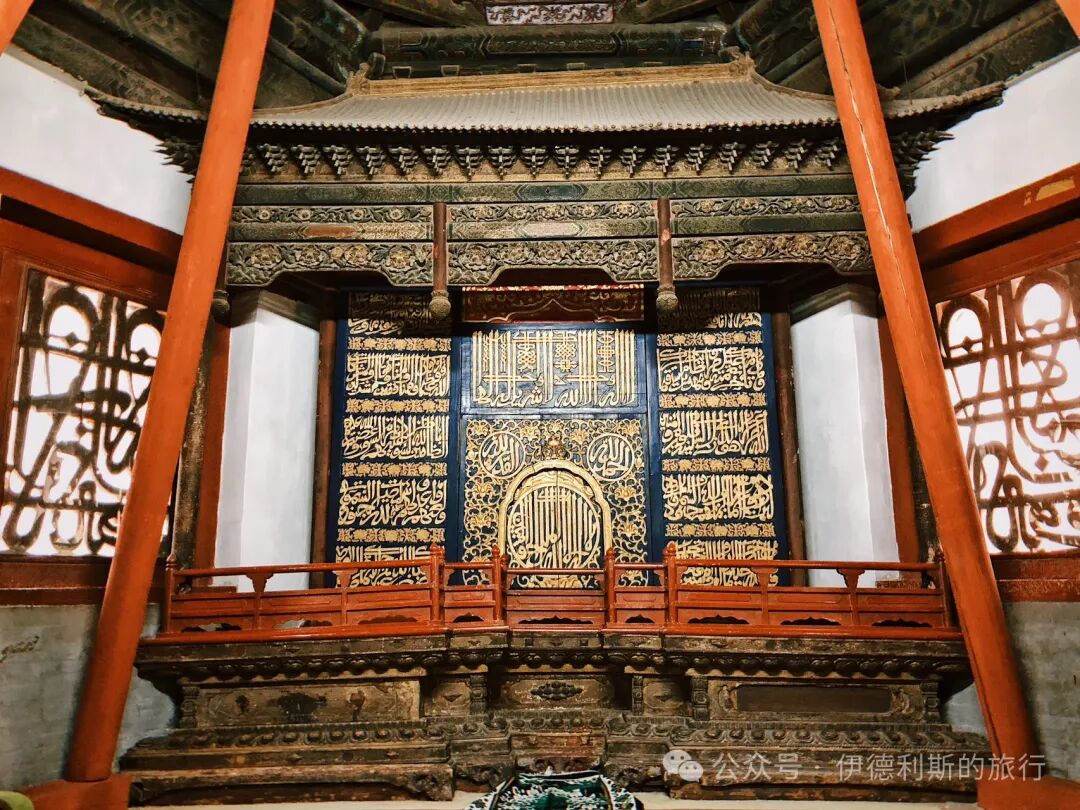
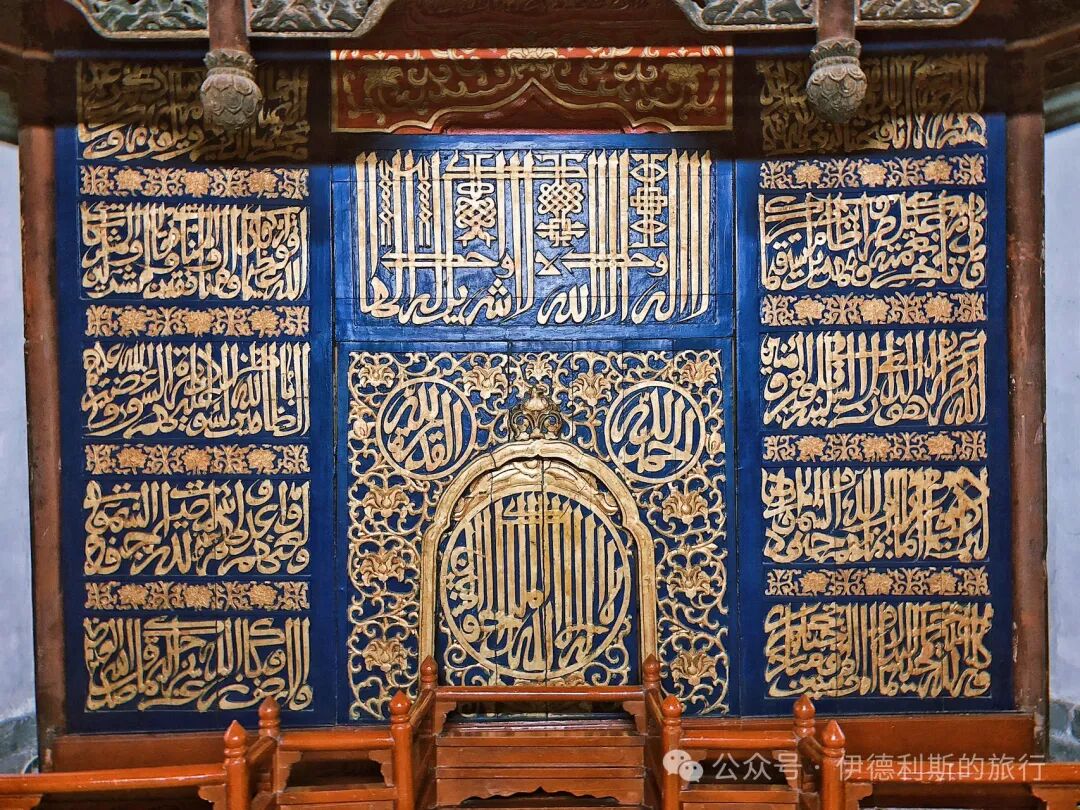
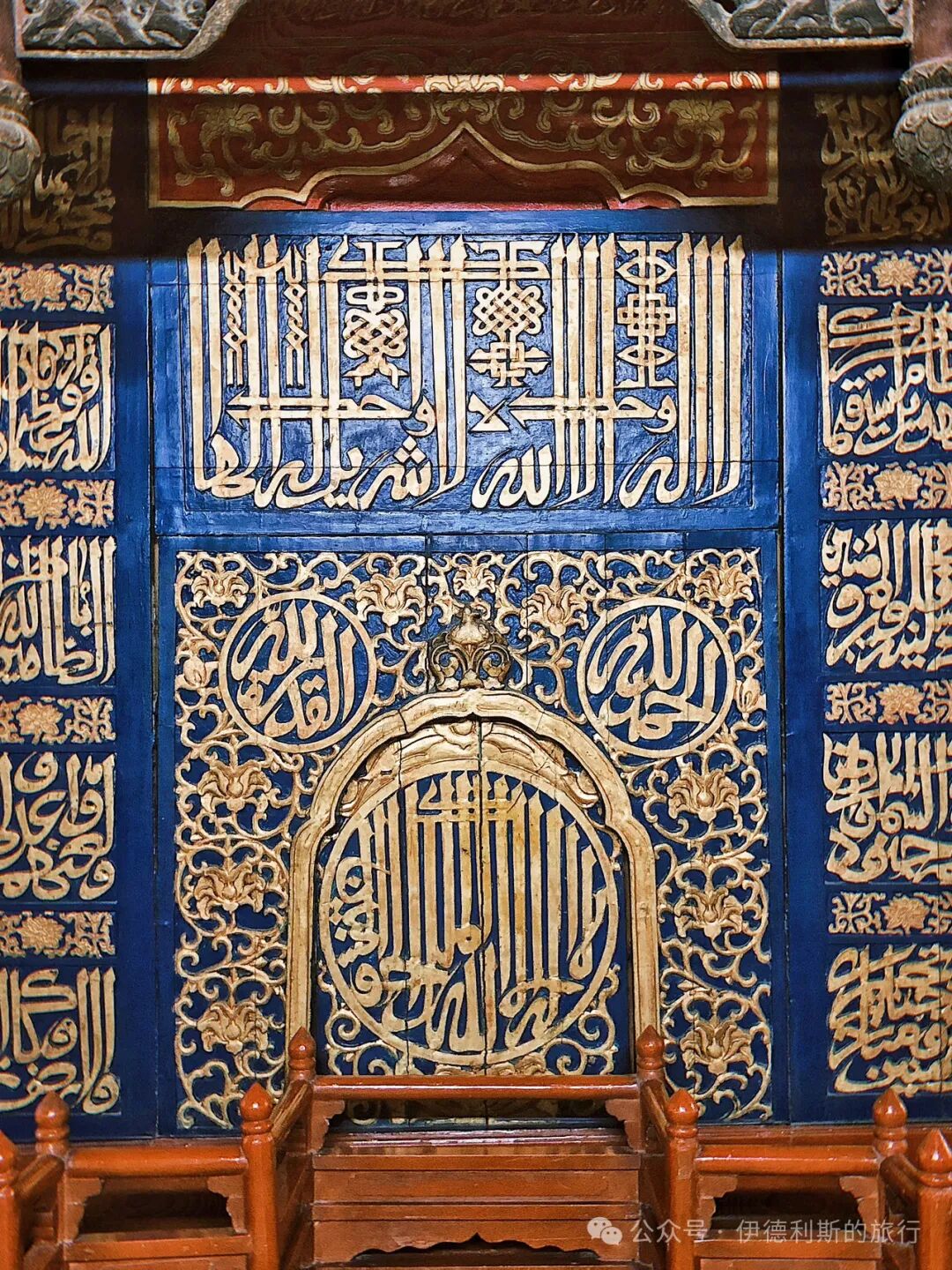
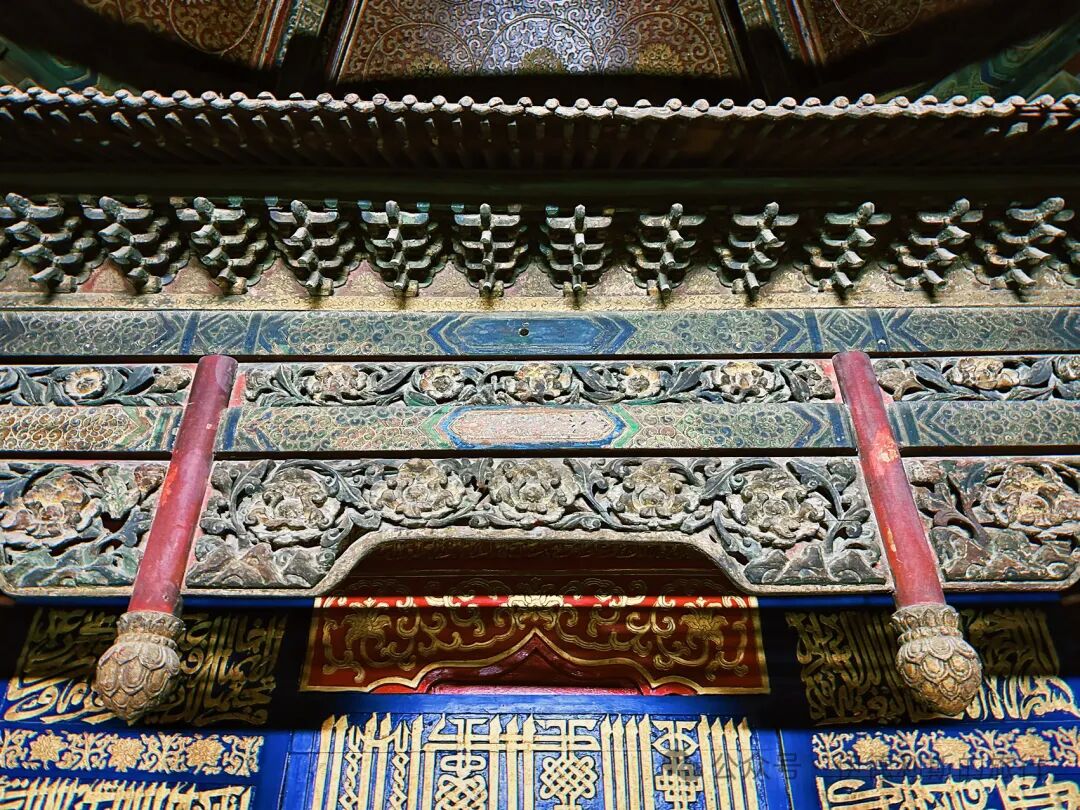
The Ming dynasty archway-style mihrab at Niujie in Beijing features a beam-column hip roof on top and a Sumeru pedestal (xumizuo) at the bottom. The eight large lotus petal carvings on the Sumeru pedestal show a Ming dynasty style. The upper part is painted with high-grade gold-inlaid swirling patterns (xuanzi caihua), featuring extensive gold leaf. It was expensive to make and shows the characteristics of official architectural paintings from the mid-Qing dynasty.
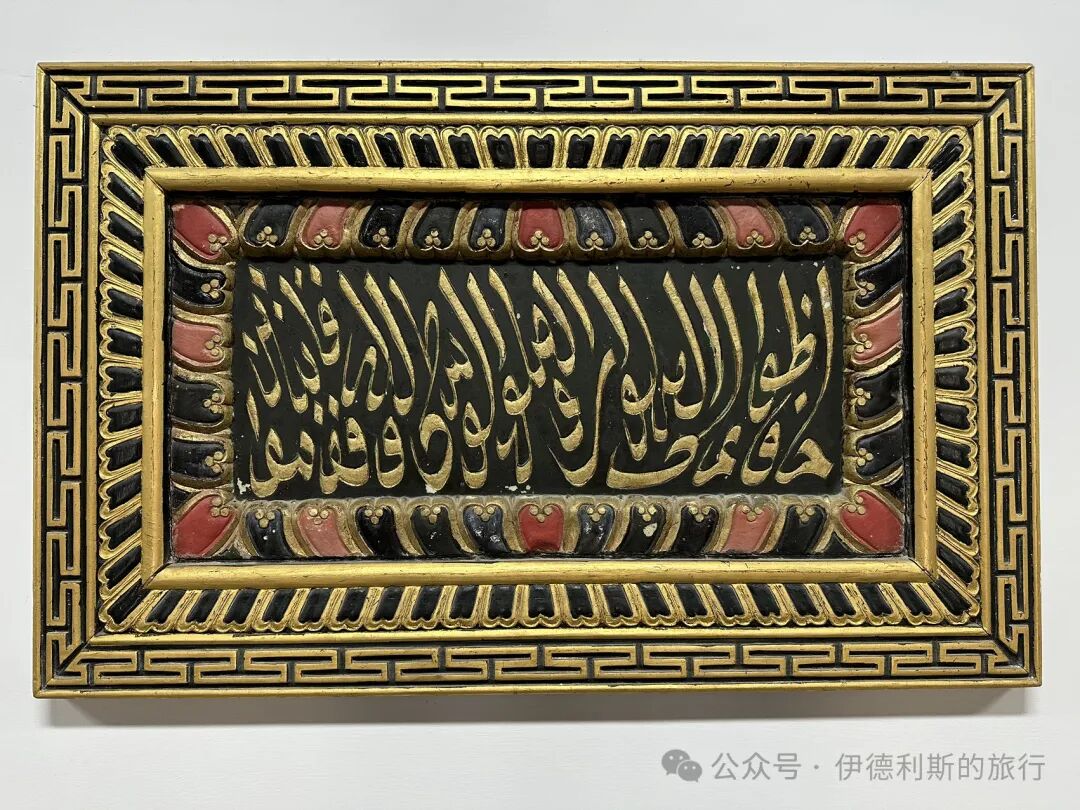
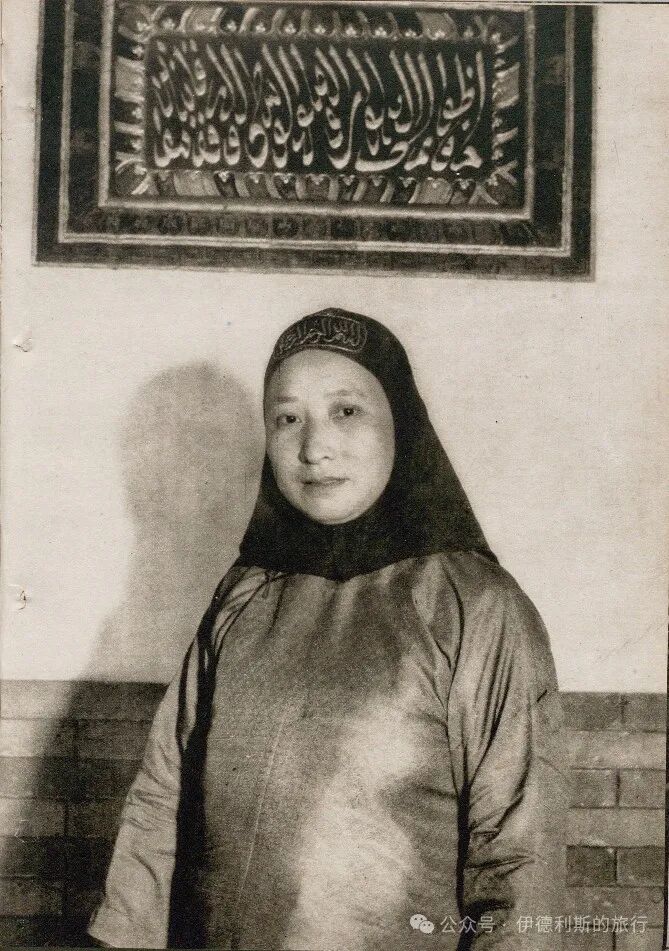
The Beijing Niujie Women's Mosque was built in 1925 as the first women's mosque in Beijing. It was originally located on Shouliu Hutong and was rebuilt on the north side of the Niujie Mosque in 2006. The mihrab is a century-old brick carving of a dua. A September 1942 issue of Beizhi magazine published an old photo of this brick carving.
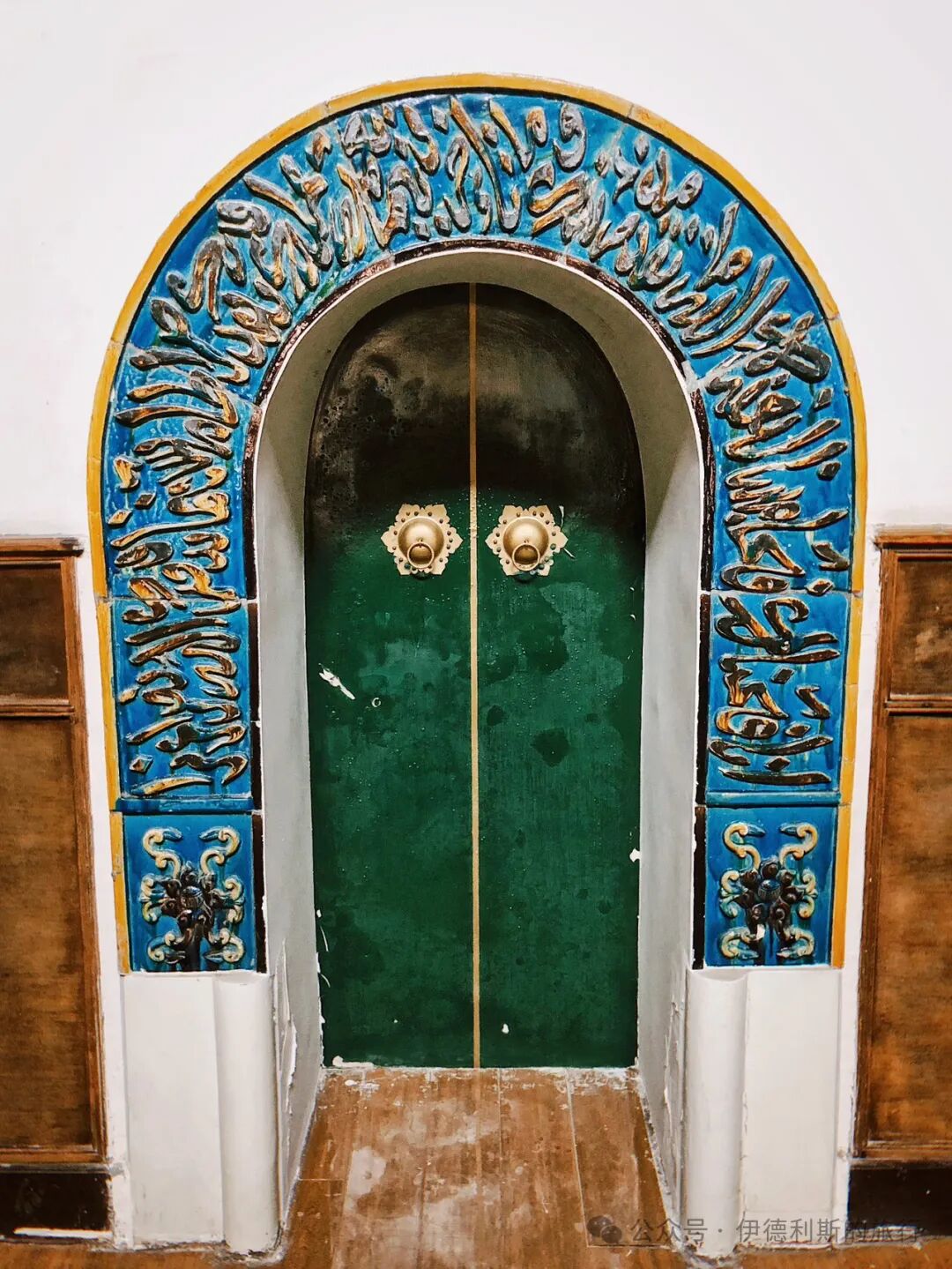
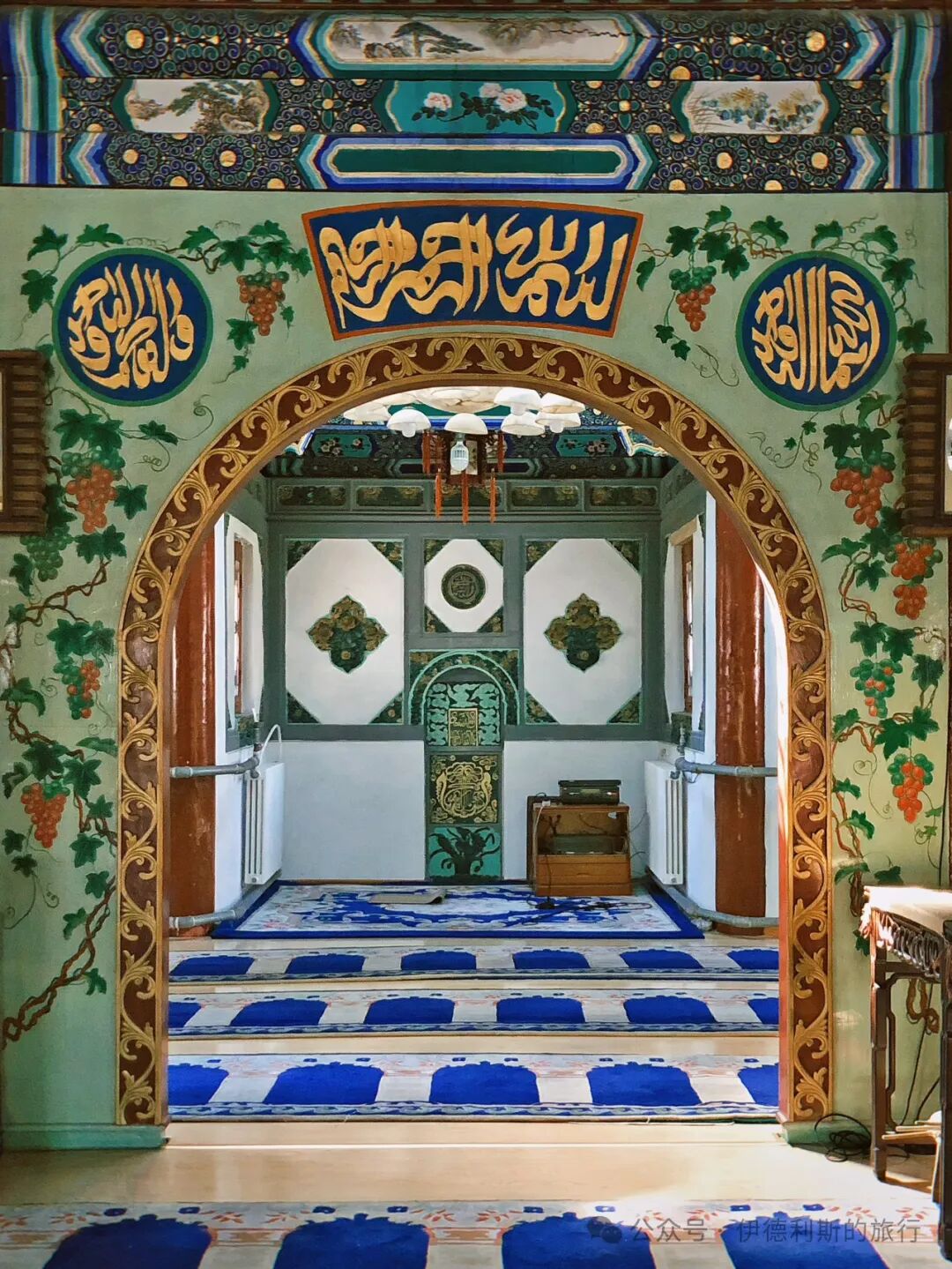
The Beijing Huashi Mosque was built in 1414 (the 12th year of the Yongle reign of the Ming dynasty). The mihrab has a glazed tile archway inscribed with traditional Chinese calligraphy.
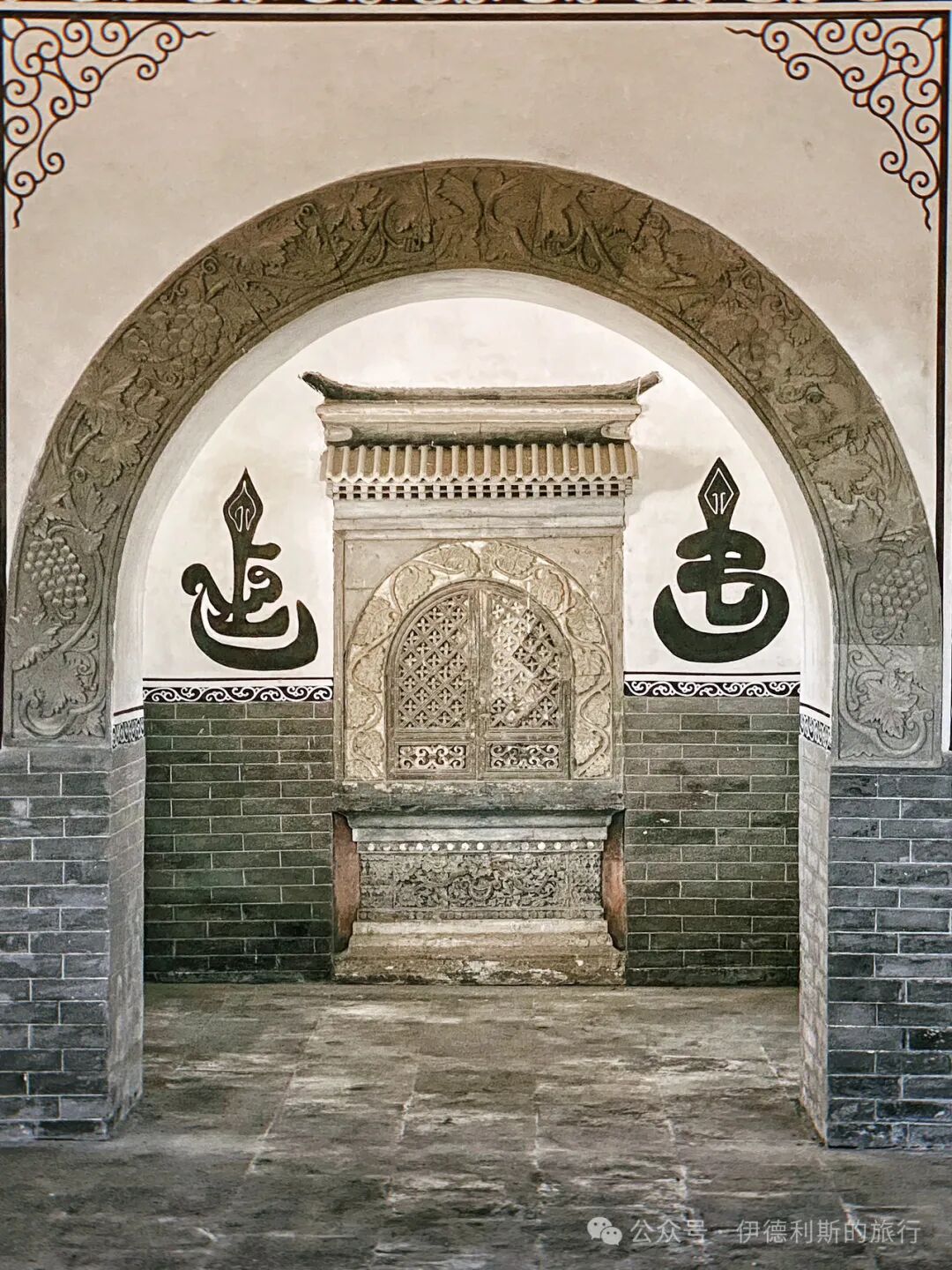
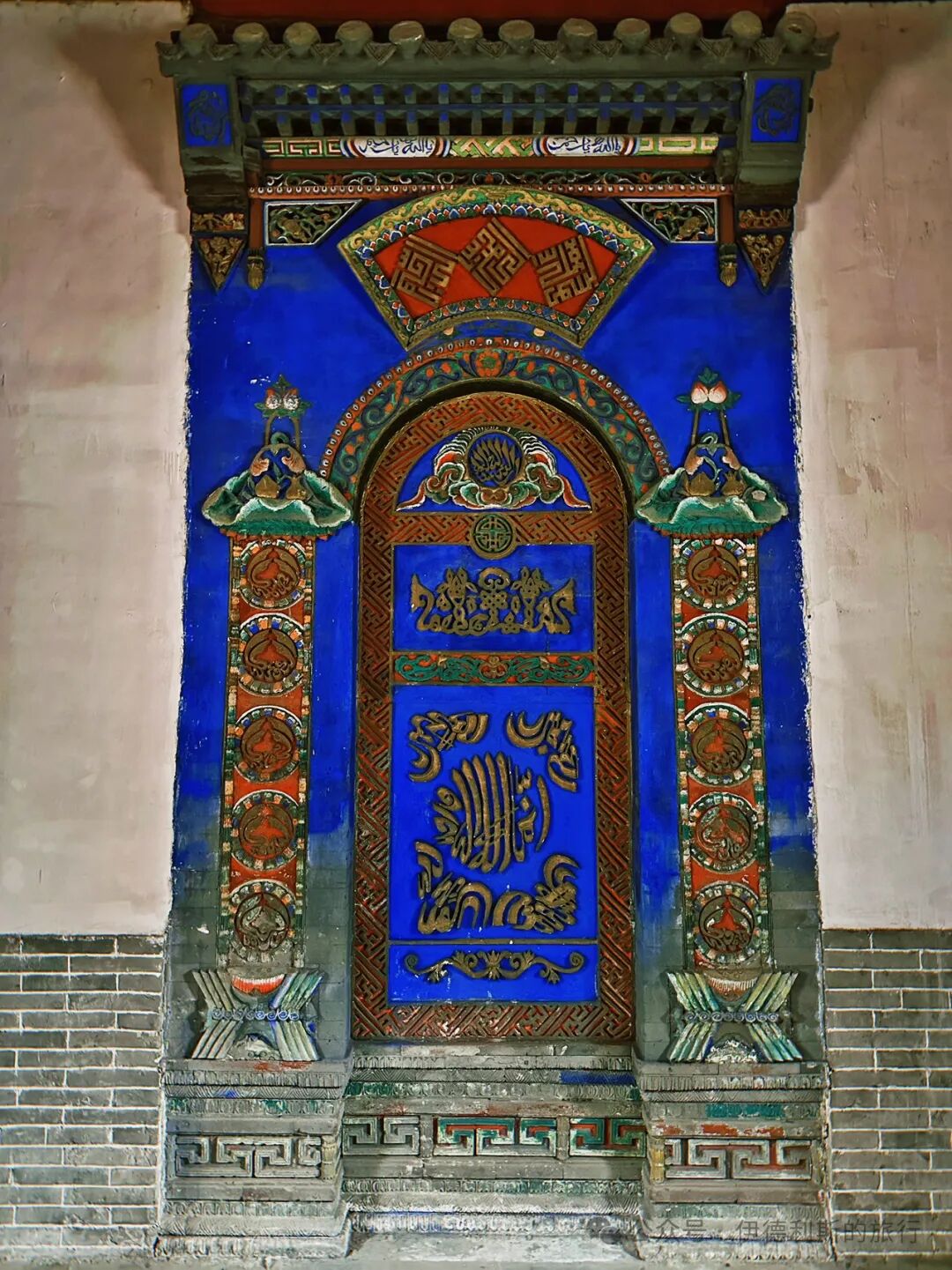
The Beijing Nankou Mosque is believed to have been built in the Ming dynasty and renovated during the Qing dynasty. The mihrab is a blue brick screen wall style with a clear-water ridge and scorpion-tail roof ends on top, and a Sumeru pedestal at the bottom. In the middle, it features exquisite diamond-patterned window shutters and scroll-patterned arched brick carvings.
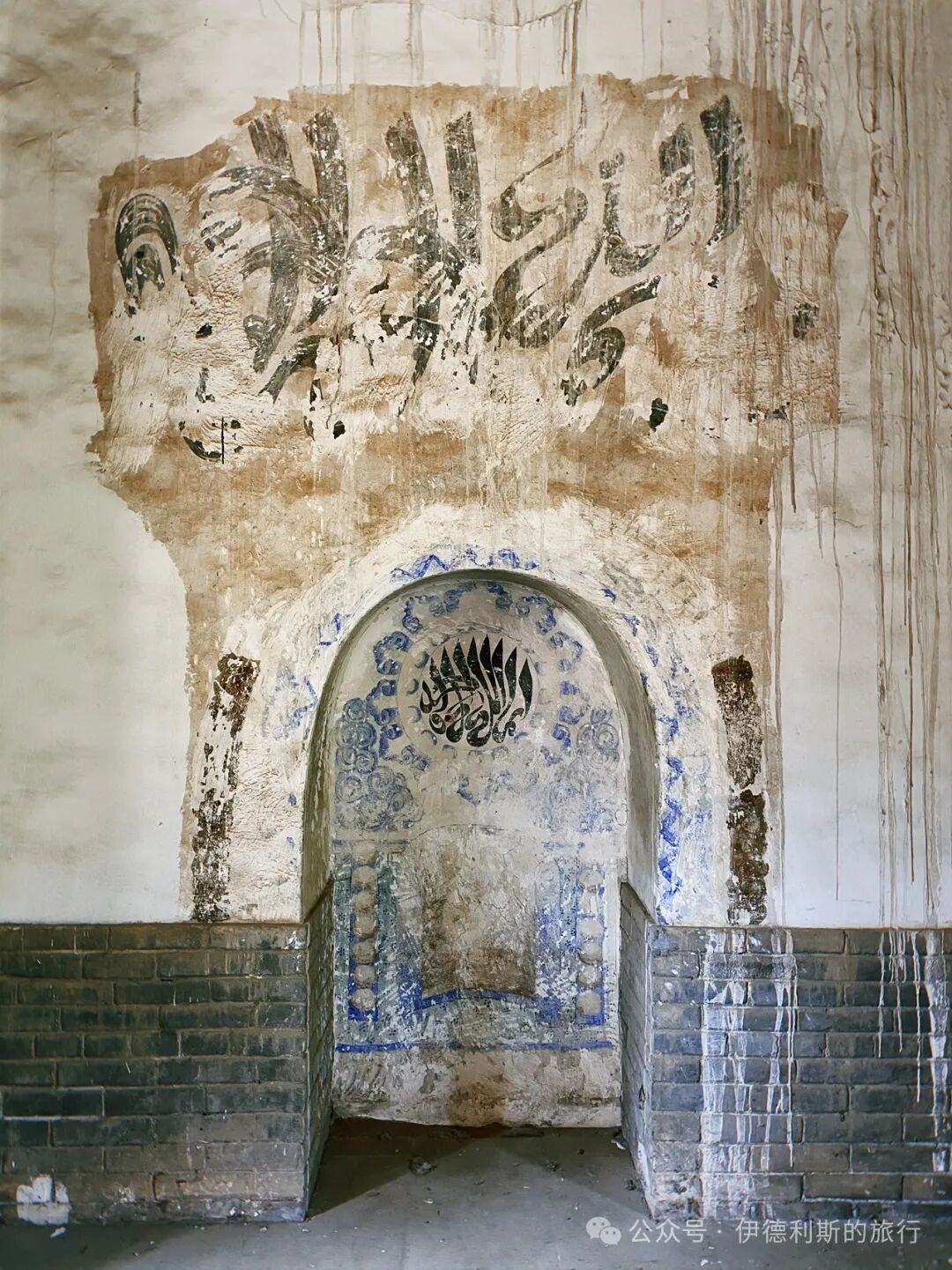
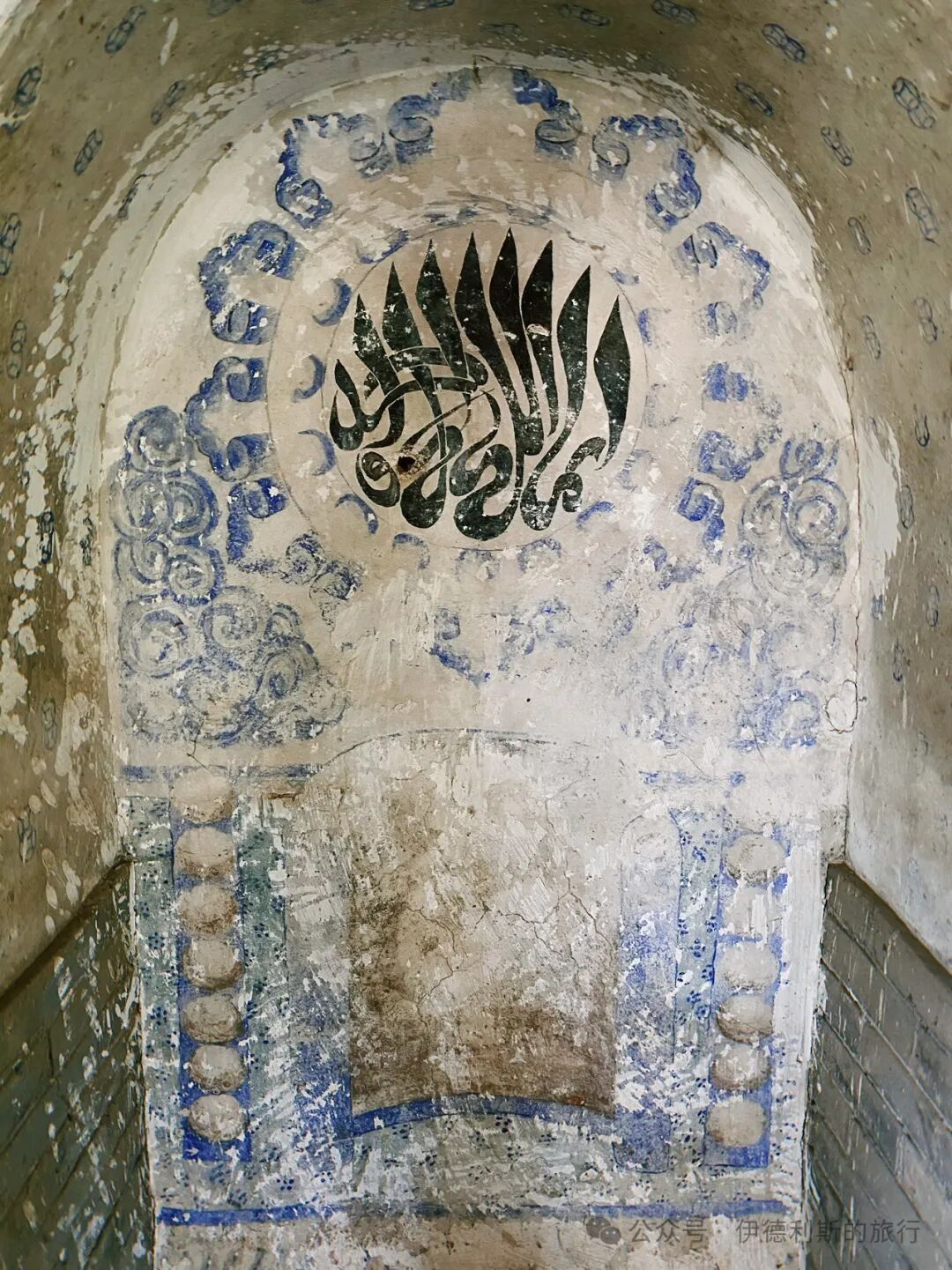
The construction date of the Beijing Gubeikou Mosque is unknown. It was renovated in 1629 (the 12th year of the Chongzhen reign of the Ming dynasty) and rebuilt to its current appearance by the Zhili regional commander Ma Jinliang during the Kangxi reign of the Qing dynasty. The mihrab is arch-shaped and painted with auspicious cloud patterns, along with traditional calligraphy in the North China style.
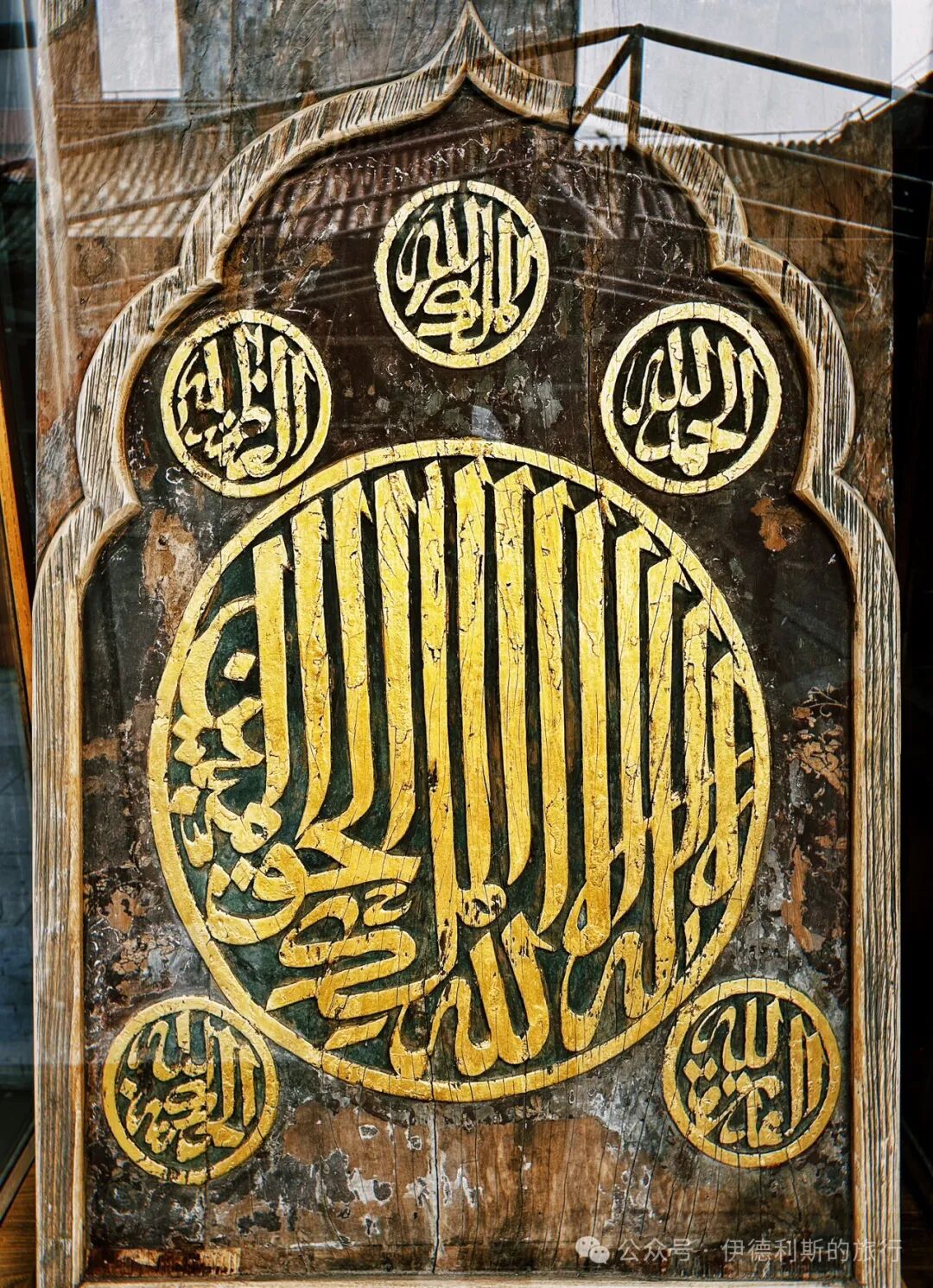
The Beijing Dongzhimenwai Mosque, originally called the Erlizhuang Mosque, was built in the Yuan dynasty. The old mosque's mihrab was wooden and shaped like a tablet. After the renovation, it was placed under the eaves of the hall opposite the new mosque, and it is carved with traditional calligraphy.
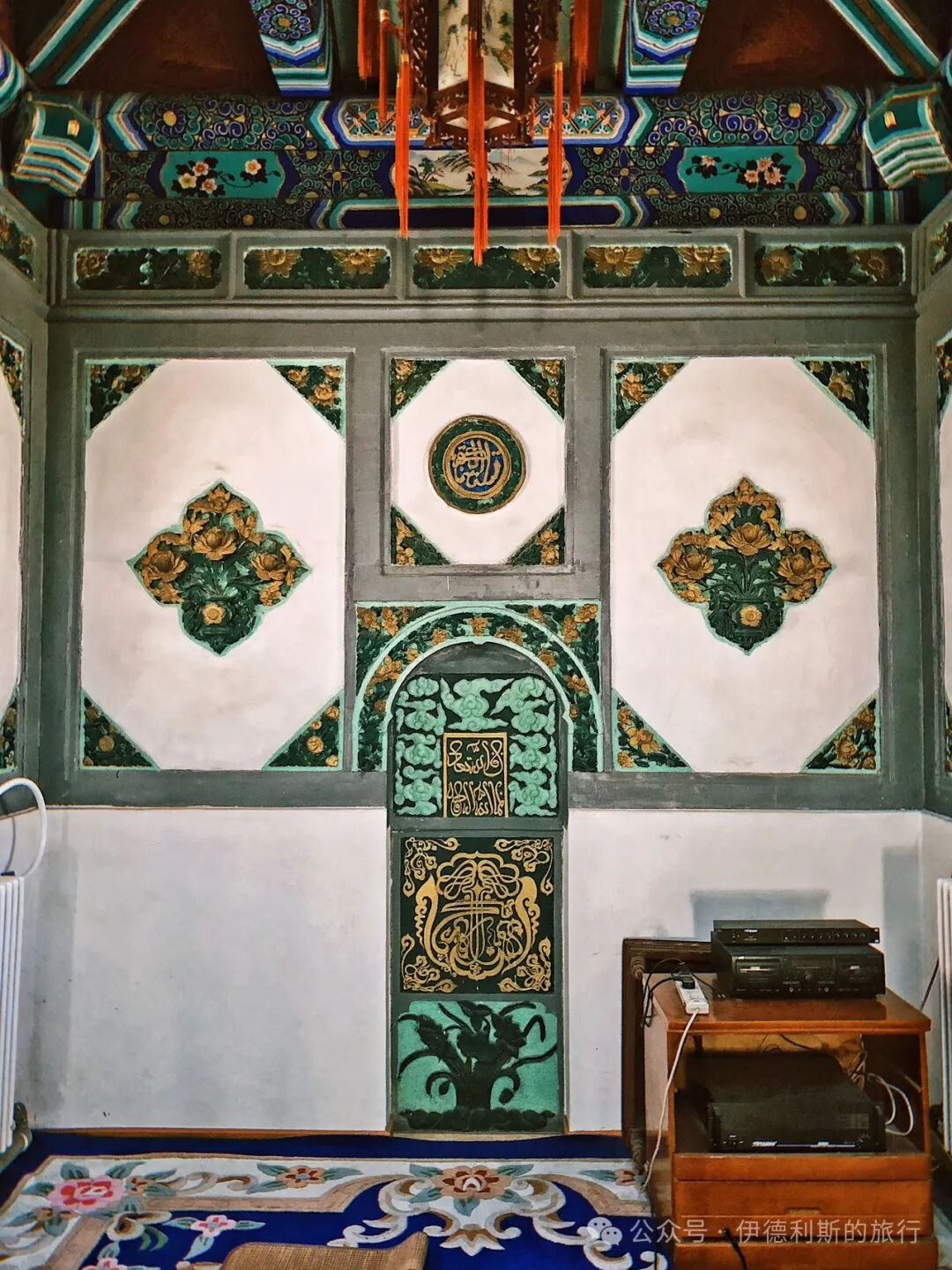
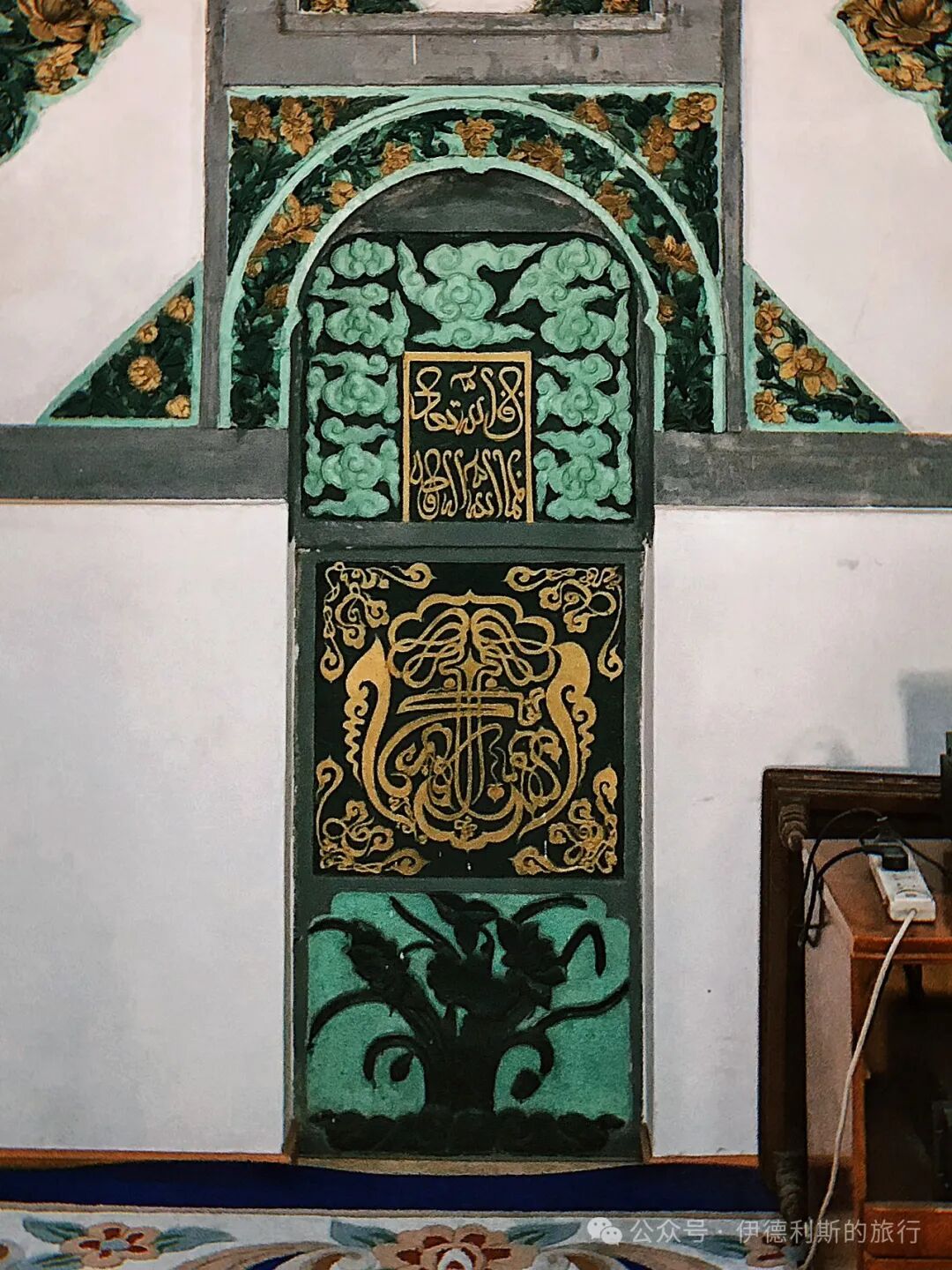
The Beijing Changying Mosque mihrab is shaped like a stone stele head and features very complex painted calligraphy. According to research by teacher Hui Zongzheng, it may have been moved from elsewhere when the mosque was built during the Zhengde reign of the Ming dynasty.
Tianjin.
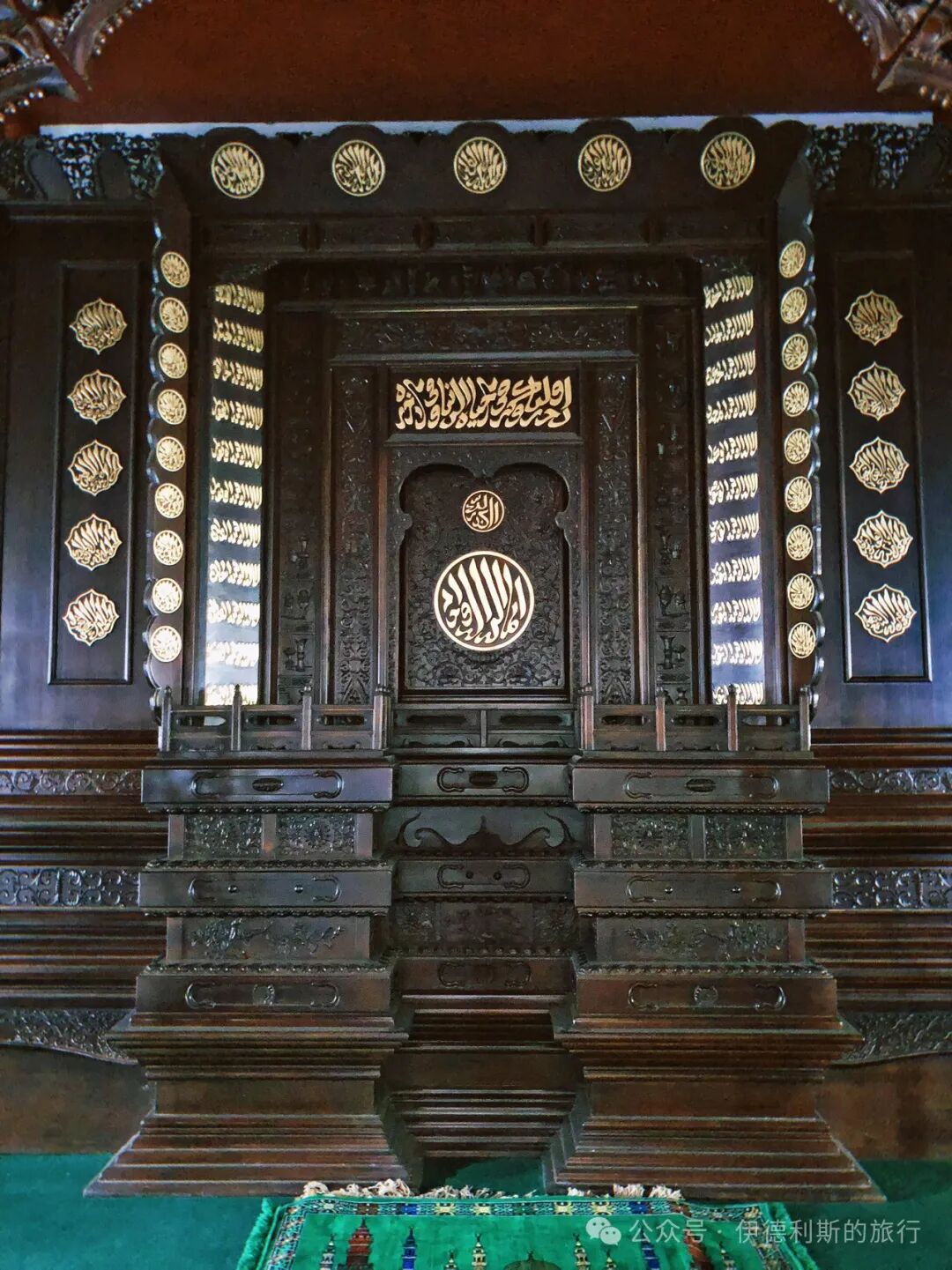
The Great Mosque at Xibeijiao in Tianjin has a wooden carved niche (yaokan) with a very high Sumeru pedestal railing, which is quite rare.
The Tianjin Jinjiayao Mosque features traditional calligraphy plaques and couplets, with an arched gate in the middle.
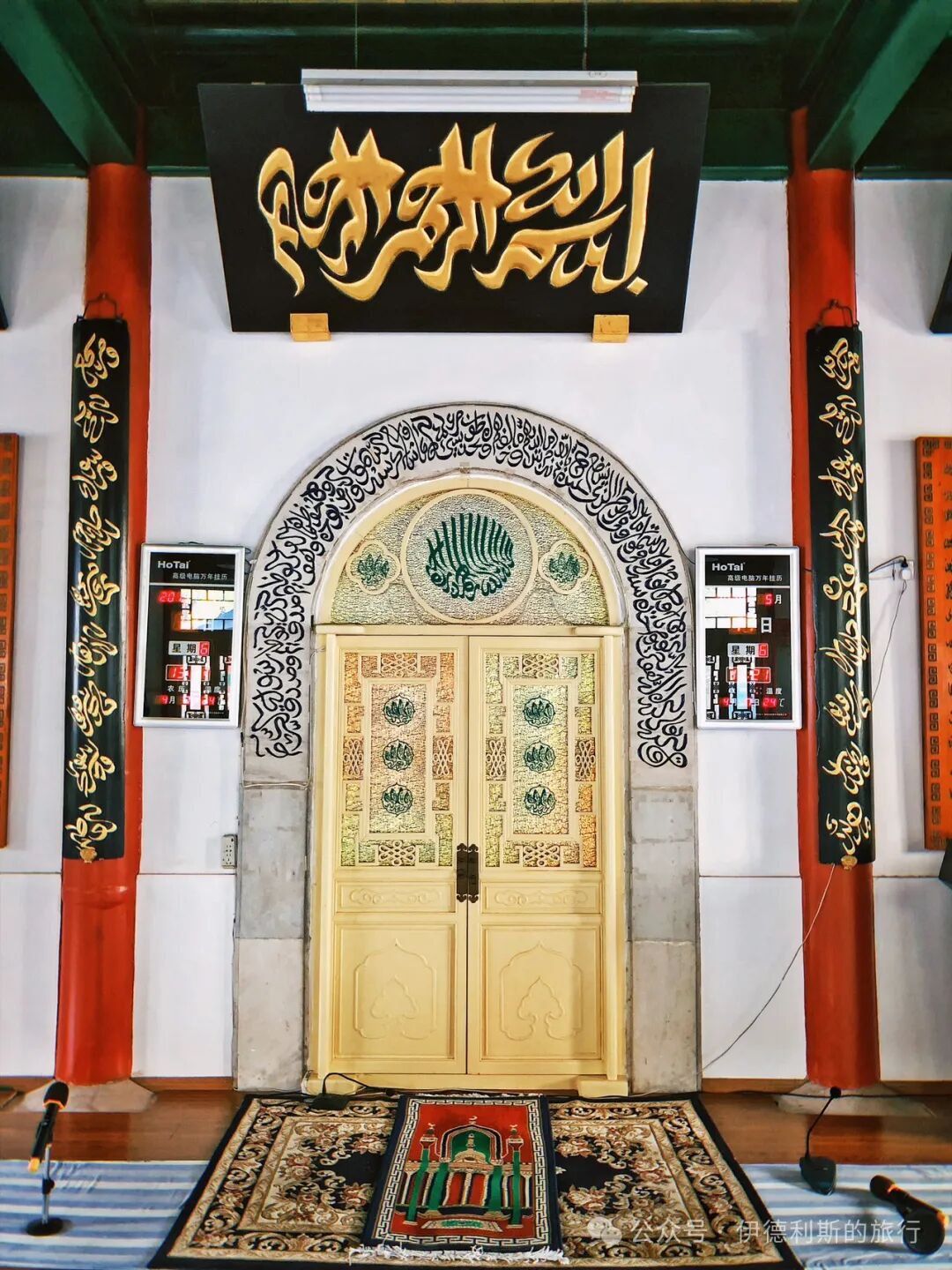
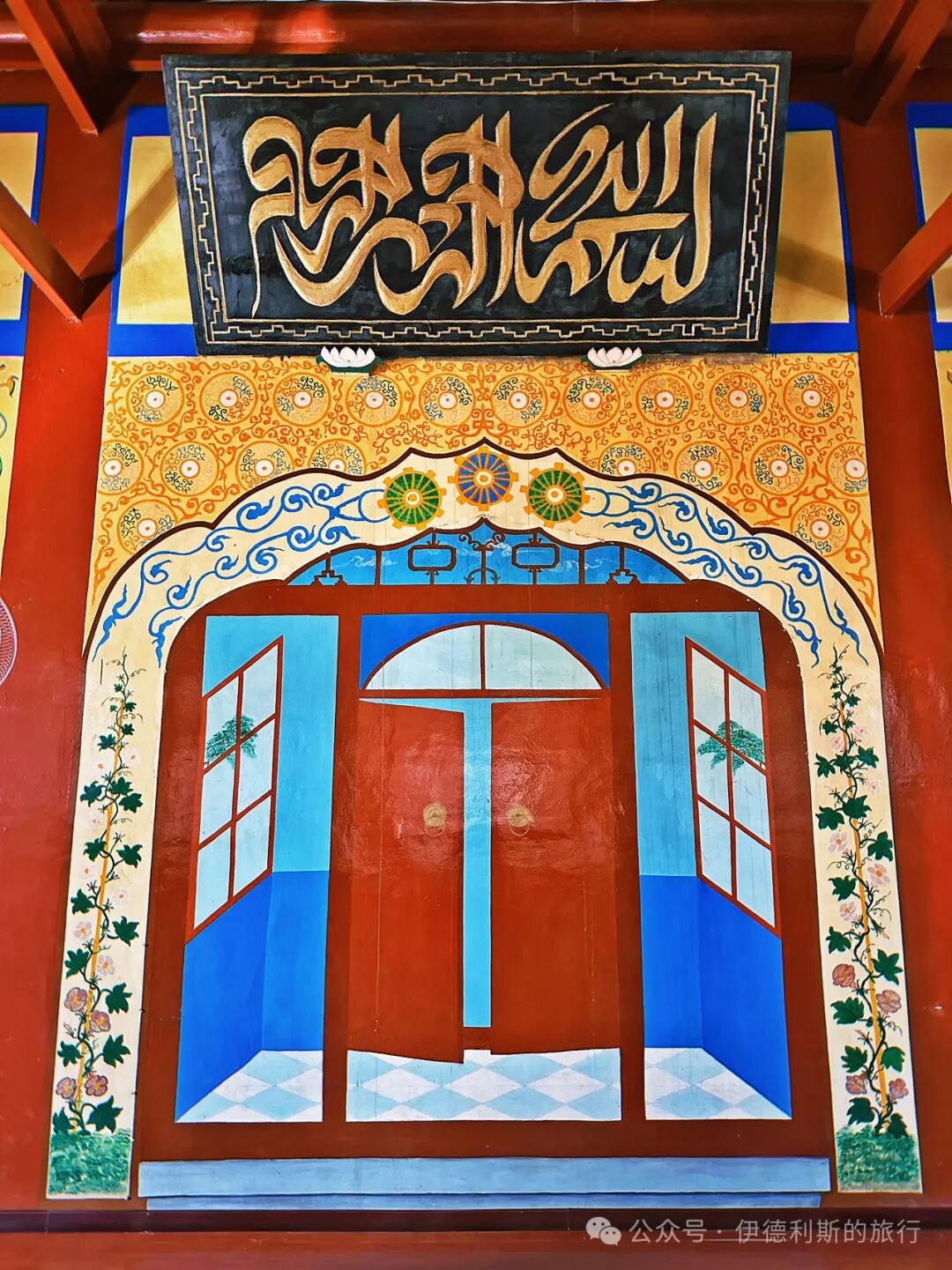
The Tianjin Hexiwu Mosque features a rare painted design of a half-open vermilion door.
The Tianjin Xibeijiao South Mosque features traditional calligraphy plaques and couplets.
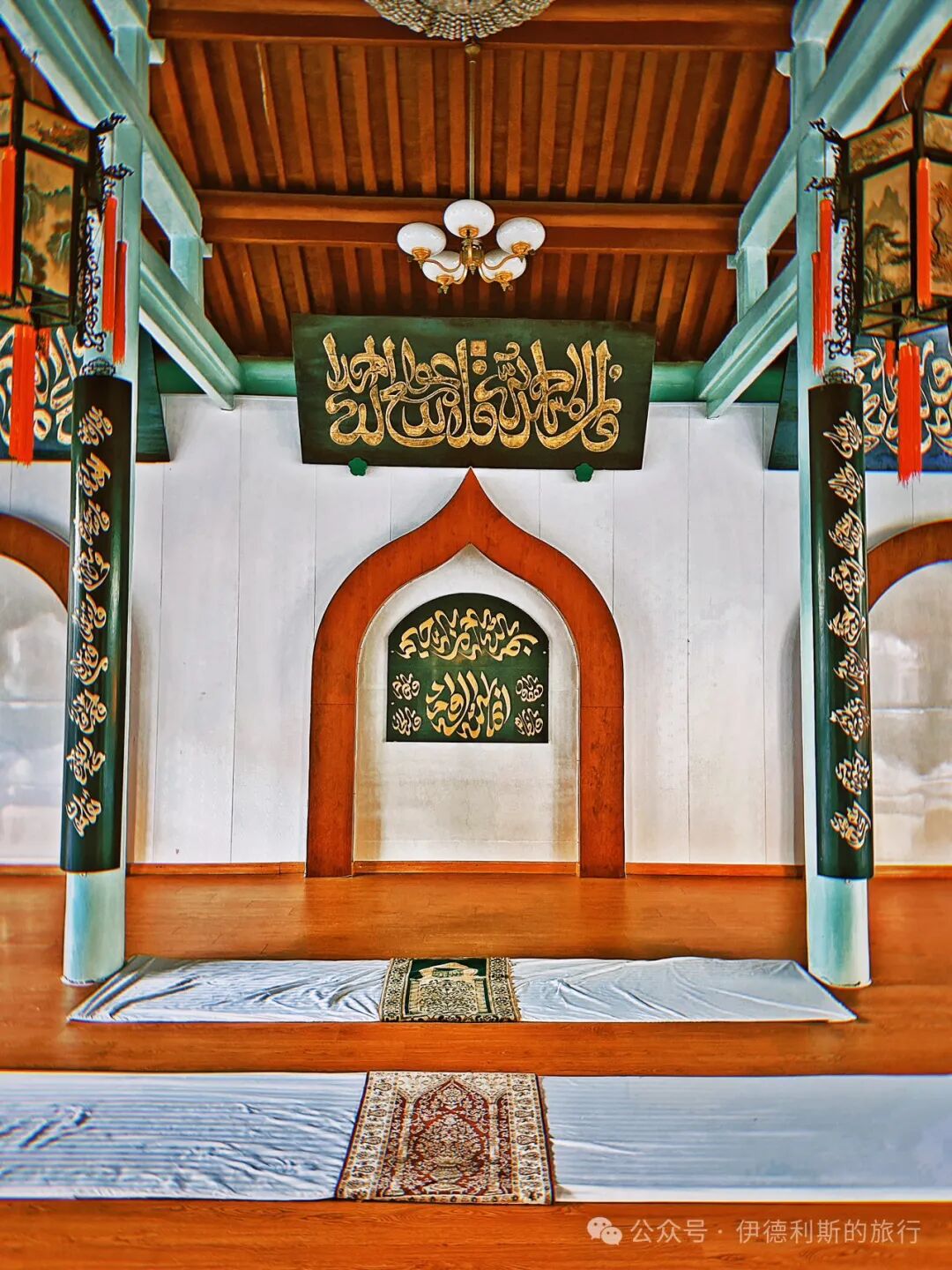
The Tianjin Tianmu North Mosque also features a large gate design in the middle.
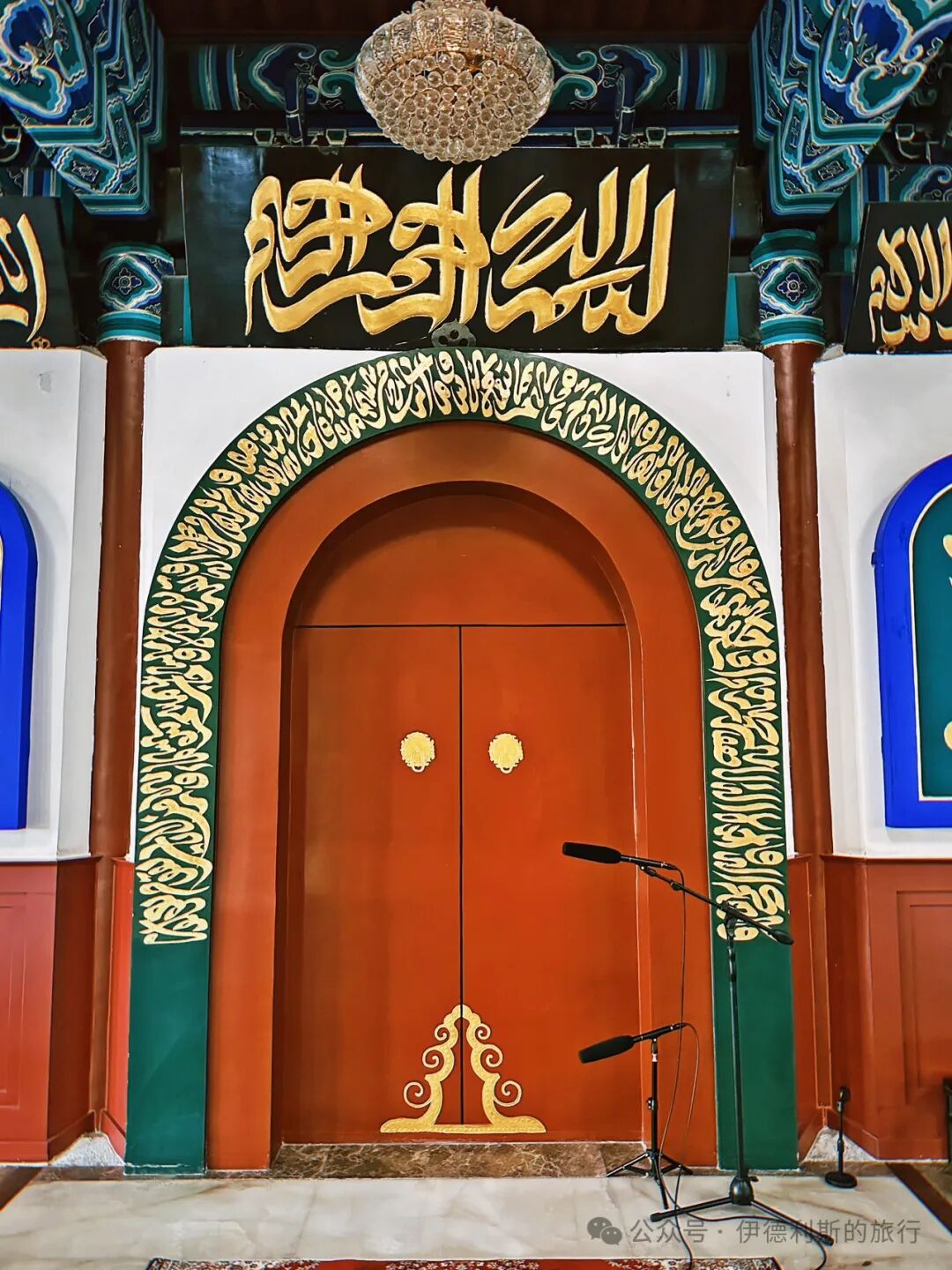
Hebei.
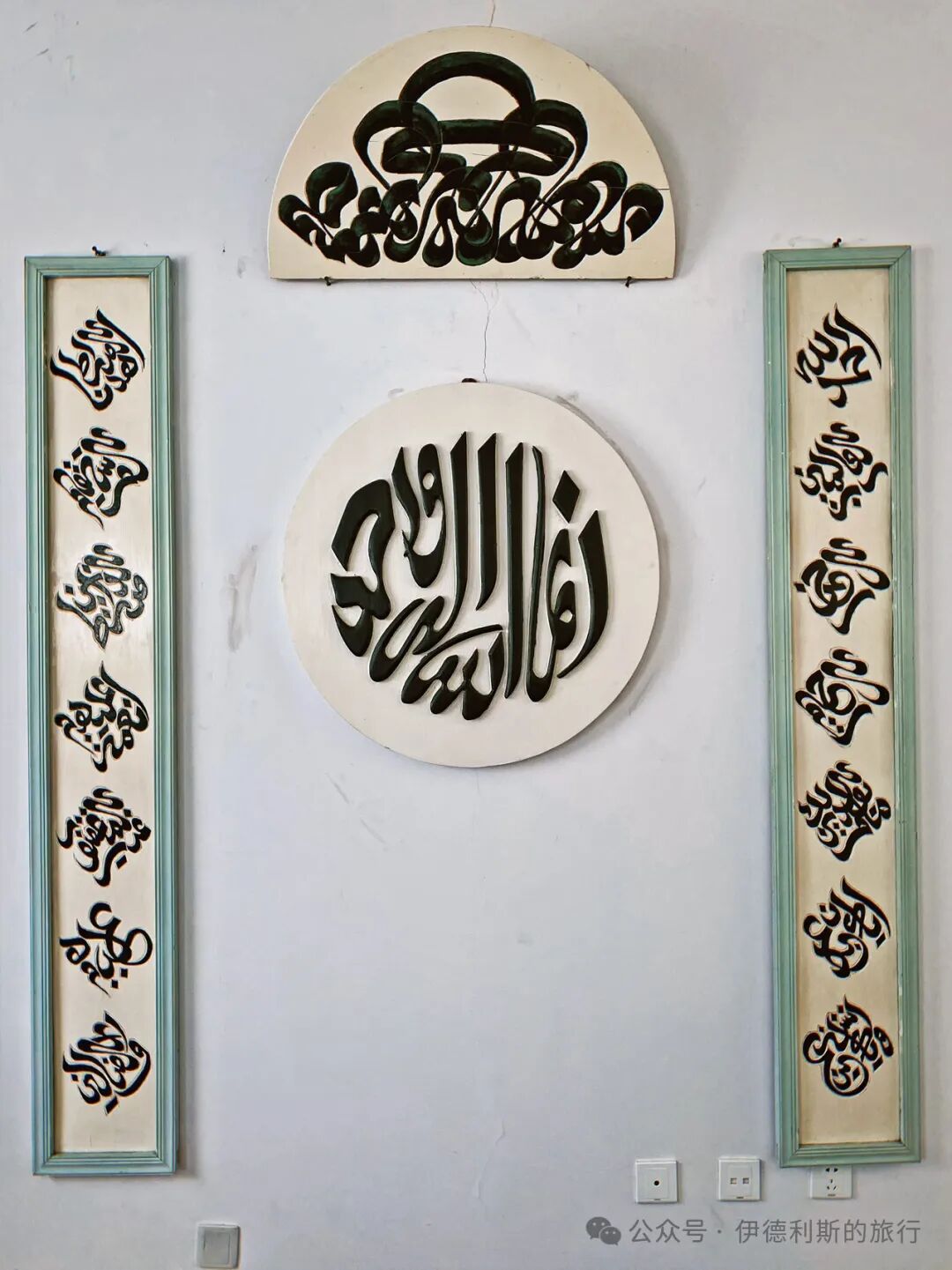
The Hebei Zhangjiakou Xinhua Street Mosque's winter prayer hall mihrab is decorated with traditional calligraphy plaques and circular couplets.
The Hebei Zhangjiakou Xiguan Mosque is a blue brick screen wall style with a hip roof, a ridged roof, and flying eaves, with a Sumeru pedestal at the bottom. The center features Ming dynasty calligraphy carvings restored in 2020 by the famous calligrapher Wang Qifei based on old photos.
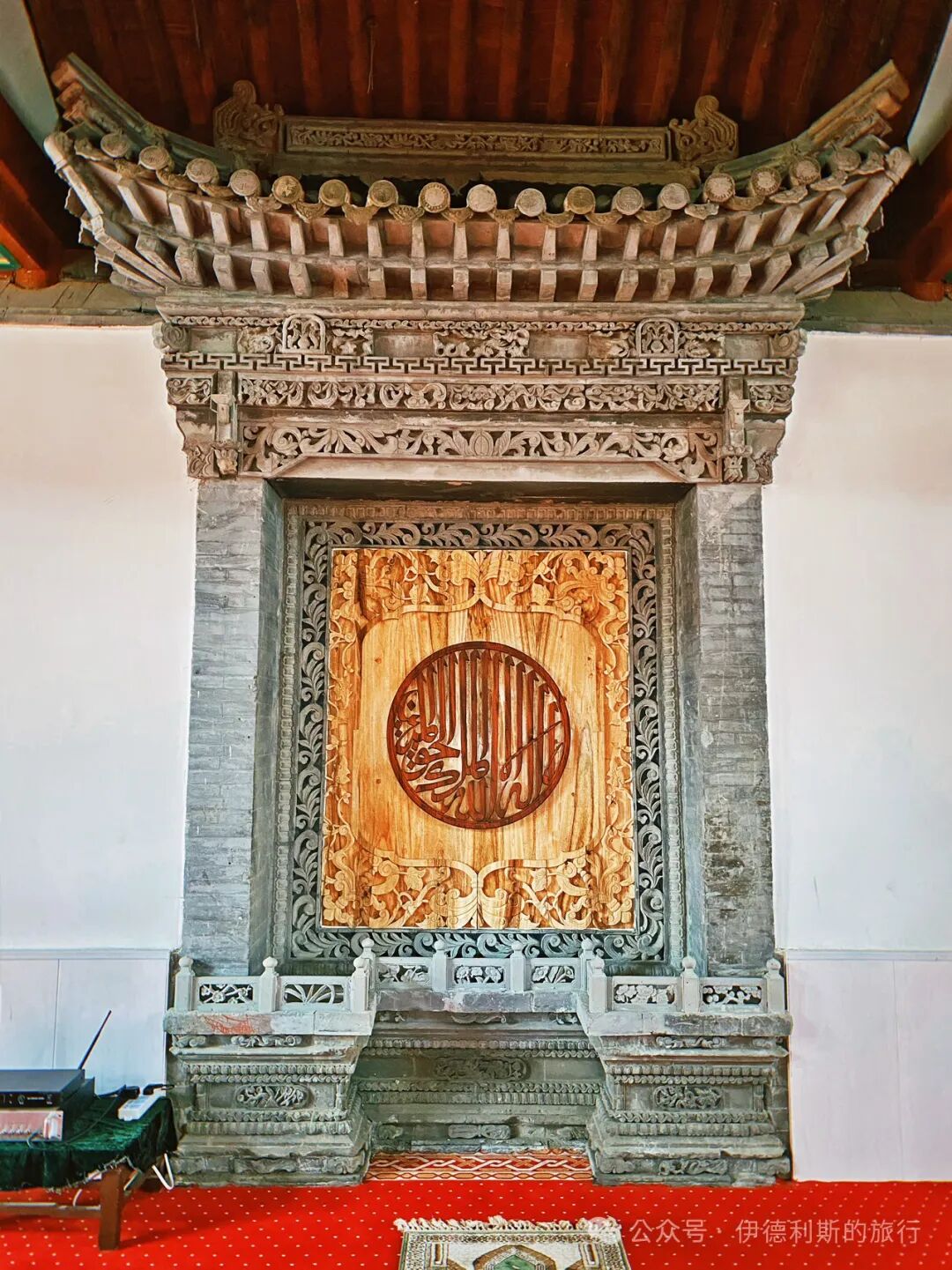
The South Mosque (Nandasi) in Xuanhua, Hebei, is an arched structure carved with calligraphy and floral patterns.
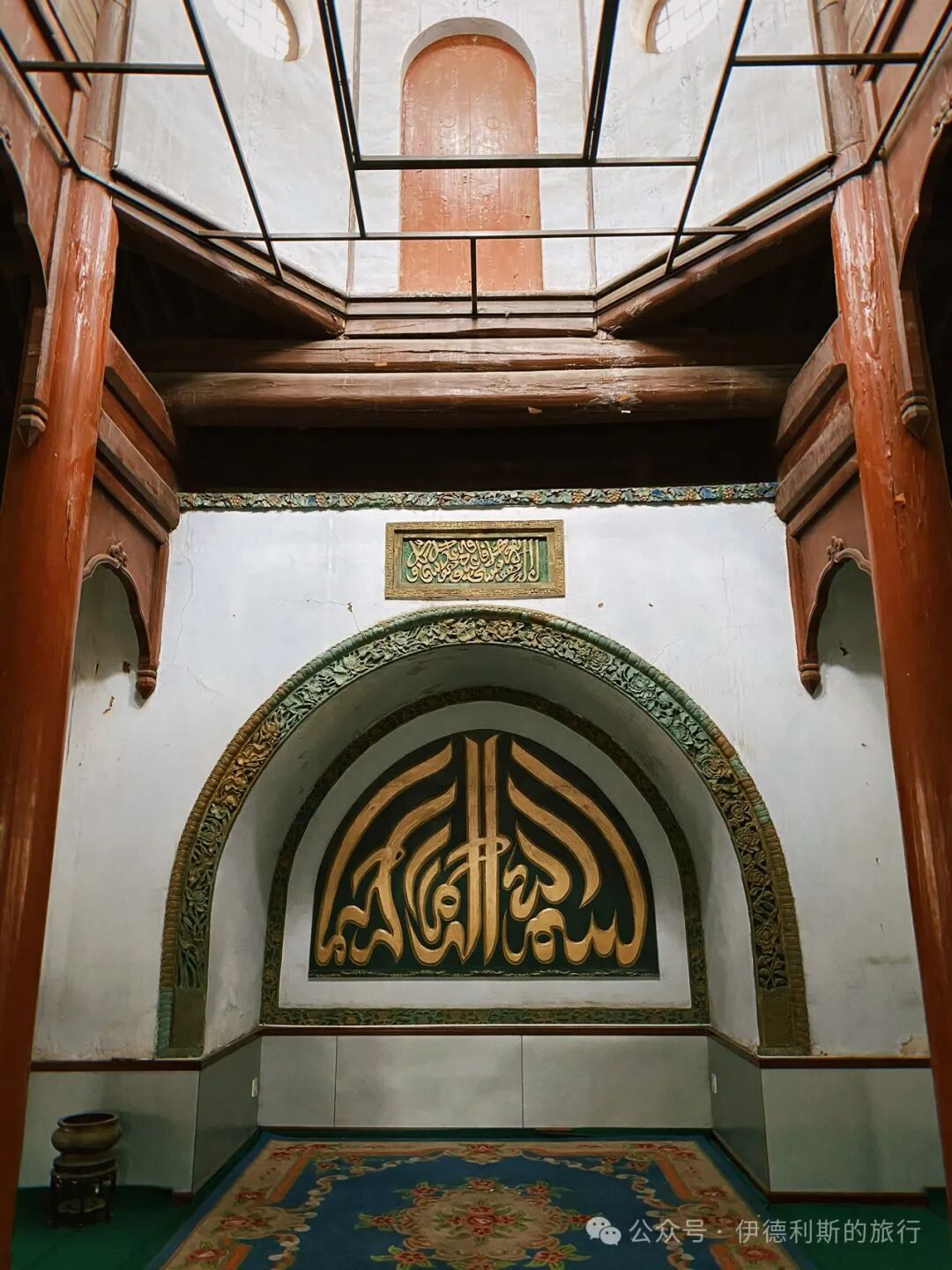
The North Mosque (Beisi) in Xuanhua, Hebei, is an arched structure carved with calligraphy and floral patterns.
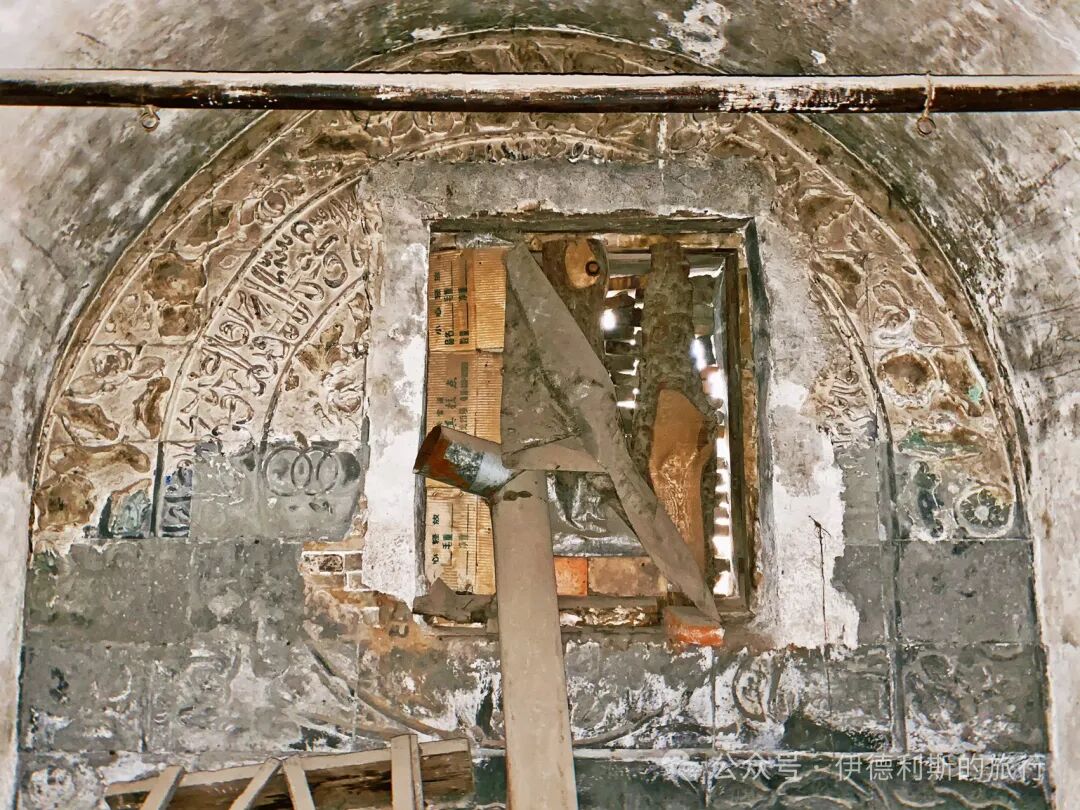
Henan
The Shanyitang Mosque in Henan is an arched structure decorated with calligraphy written in 2009 by the famous calligrapher Mi Guangjiang.
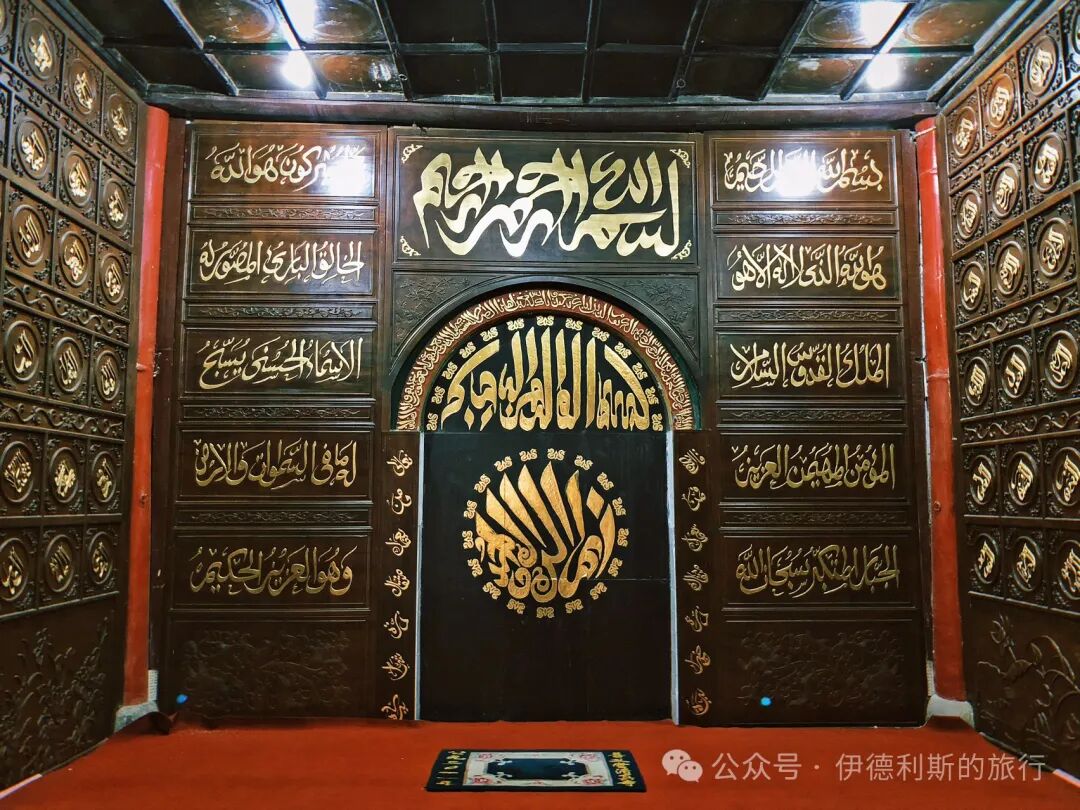
The North Mosque (Beisi) in Zhengzhou, Henan, is an arched structure with an exterior carved door hood.
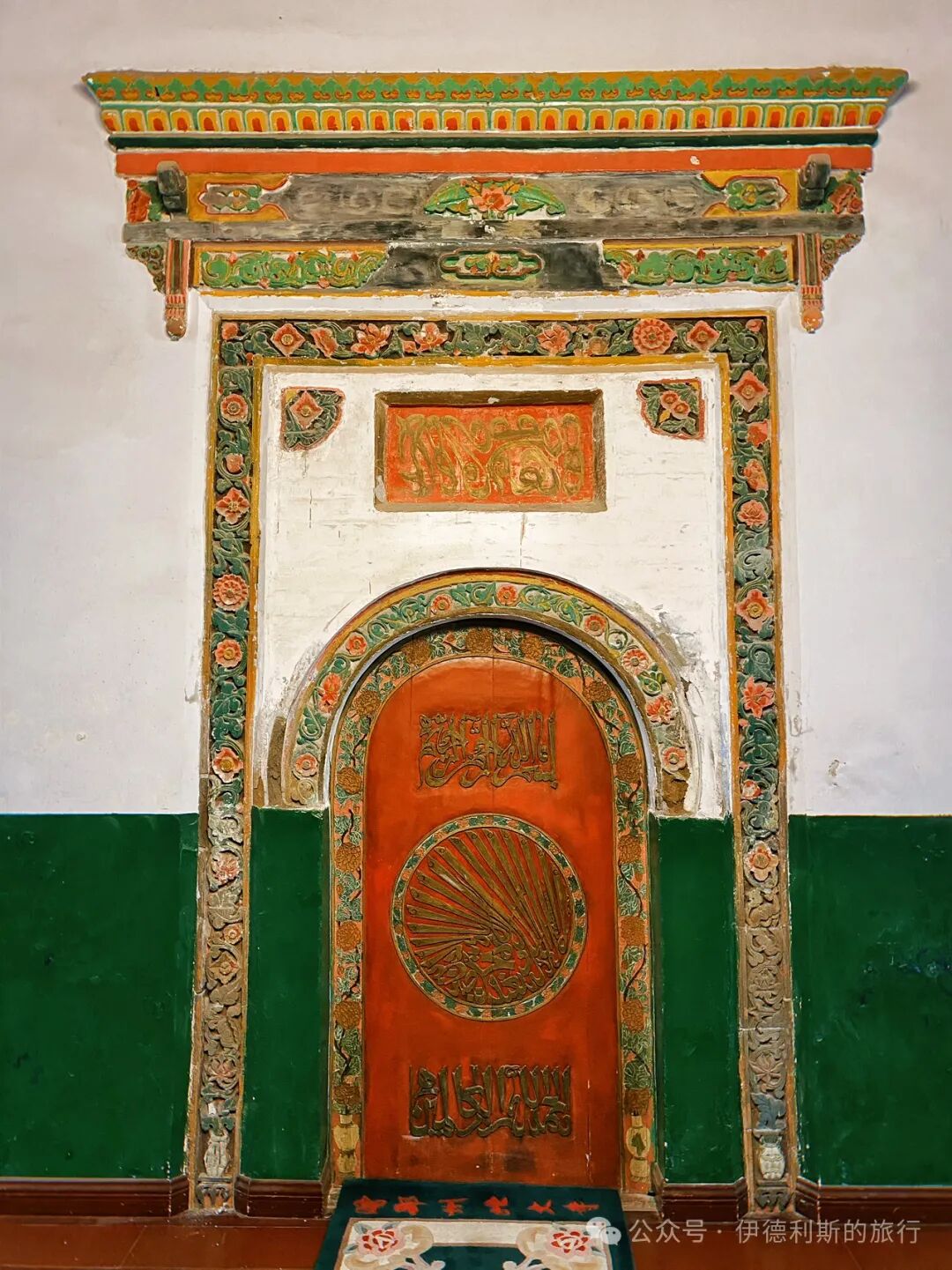
The North Mosque (Beisi) in Qinyang, Henan, is an arched structure decorated with traditional calligraphy.
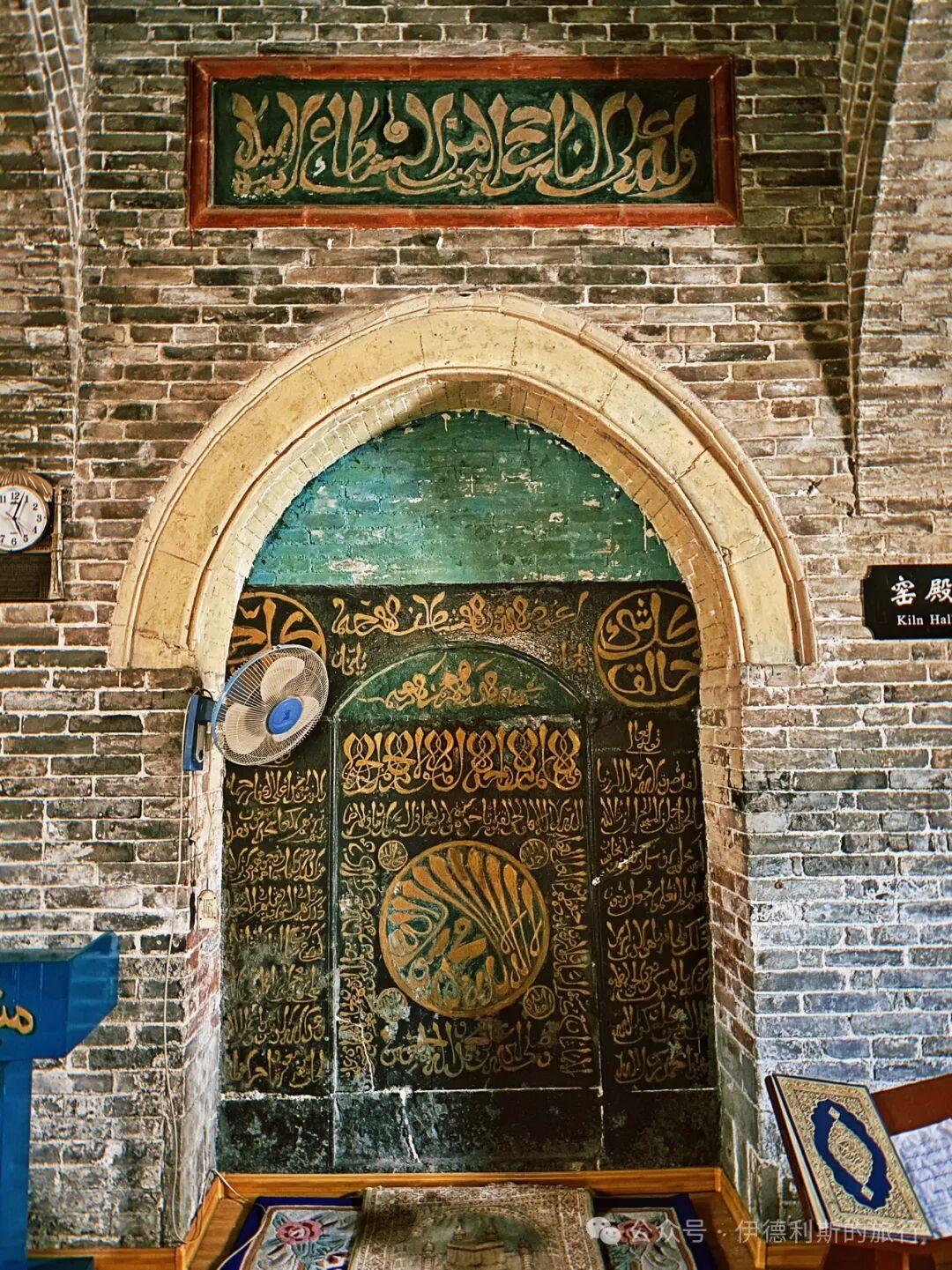
The Xiguan Mosque in Bo'ai, Henan, is an arched structure decorated with Arabic plaques and couplets.
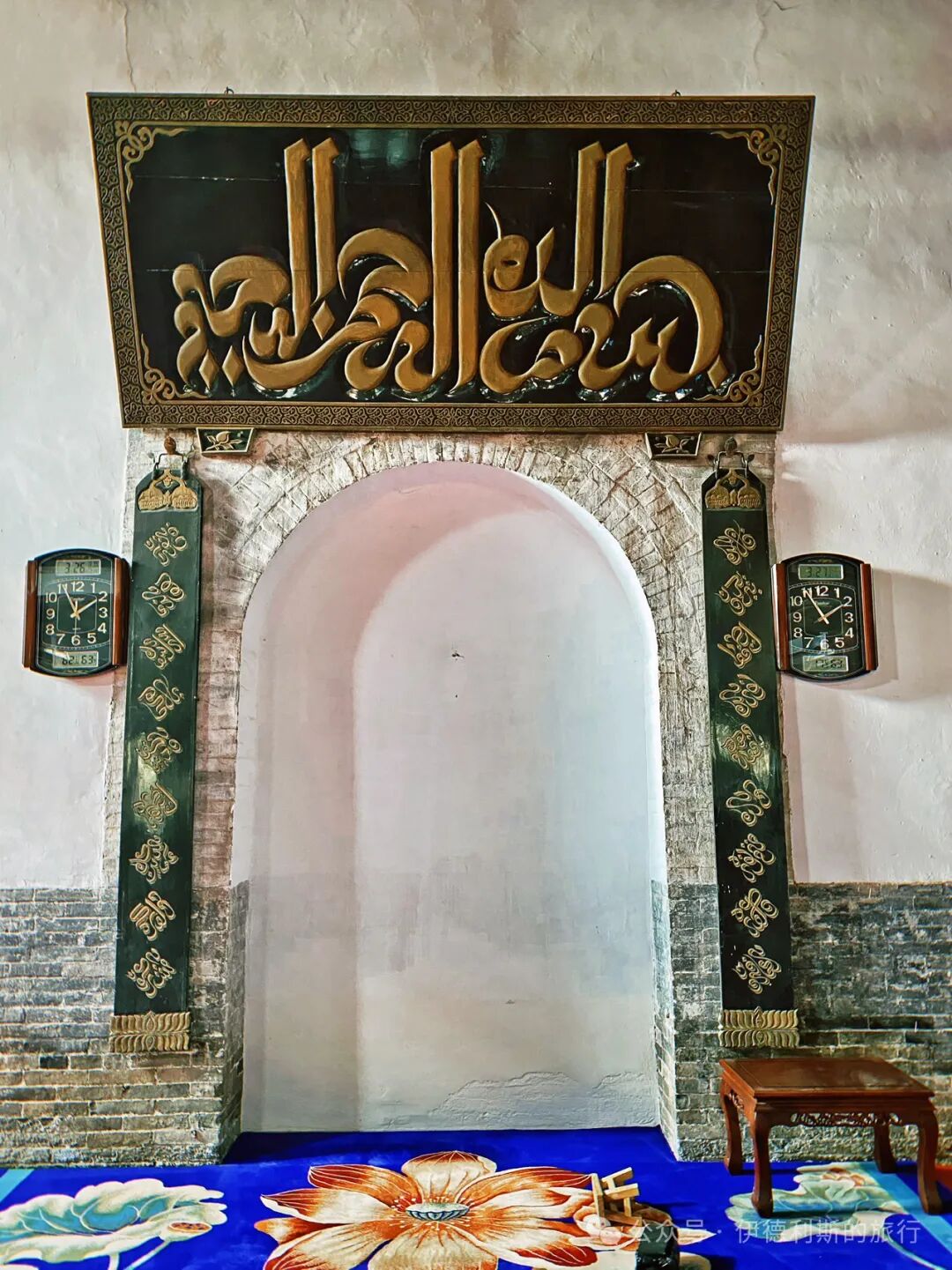
The West Mosque (Xisi) in Daxinzhuang, Bo'ai, Henan, is an arched structure decorated with Arabic plaques and couplets.
Shandong
The North Mosque (Beisi) in Linqing, Shandong, is a three-room, four-pillar memorial archway style building with bracket sets and flying eaves, decorated with intricate traditional calligraphy.
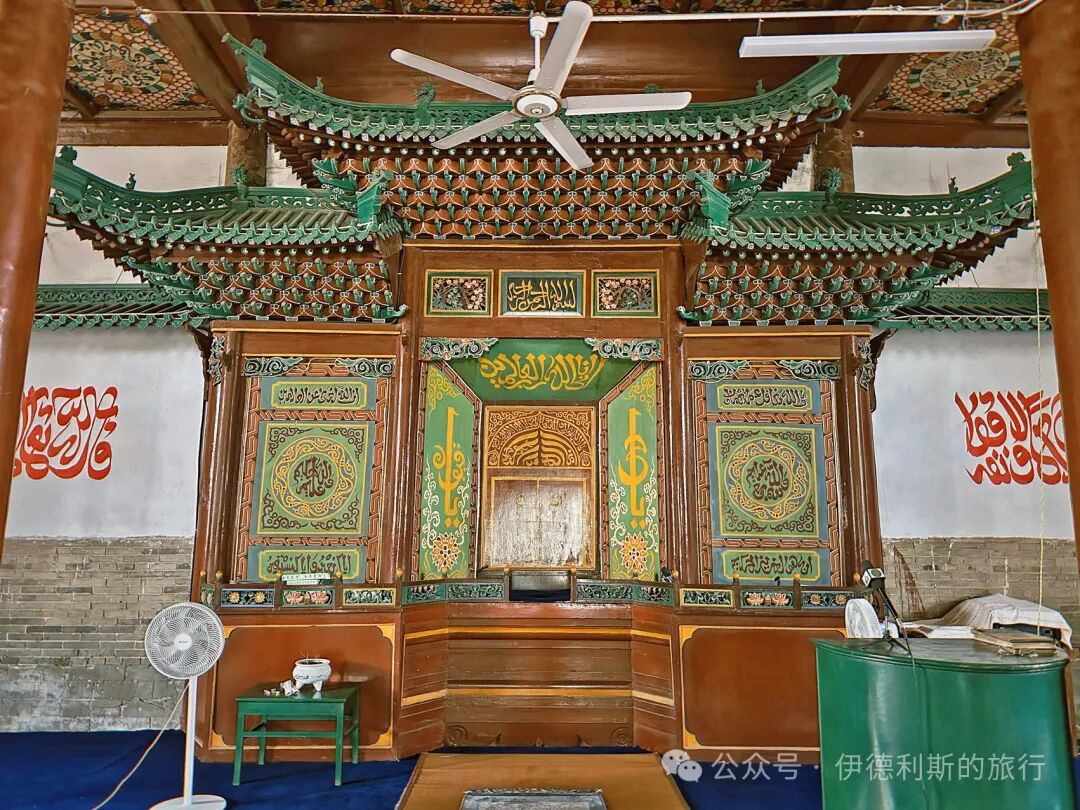
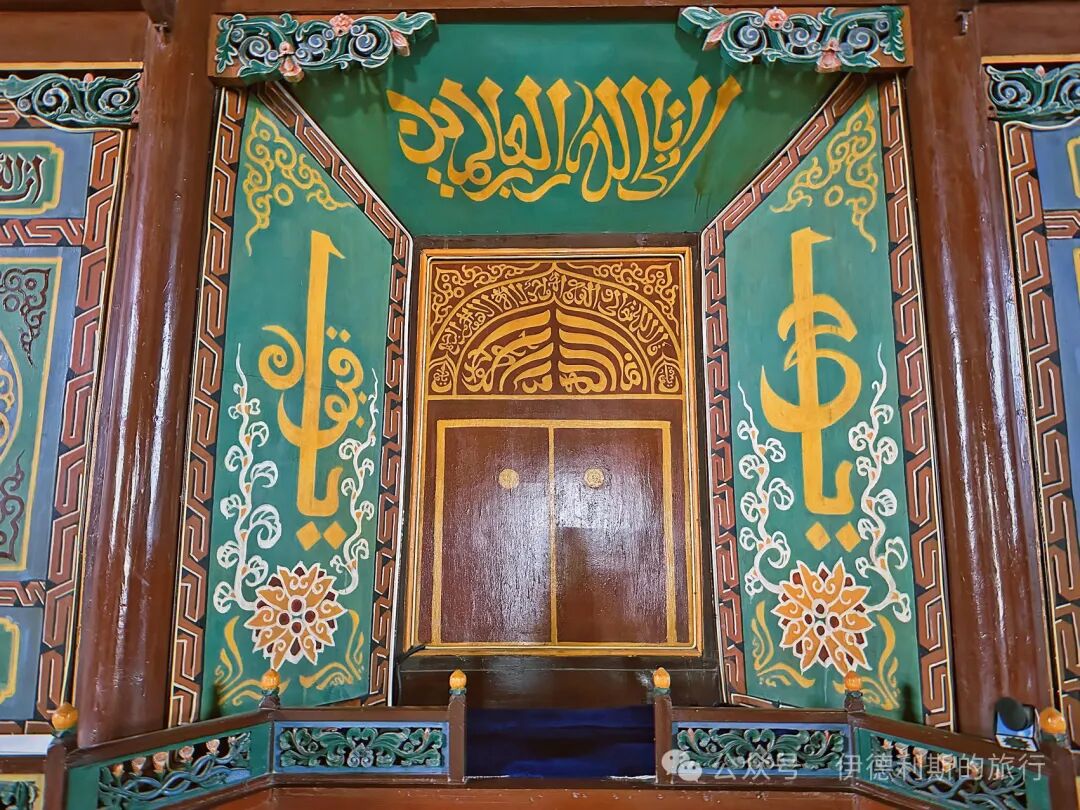
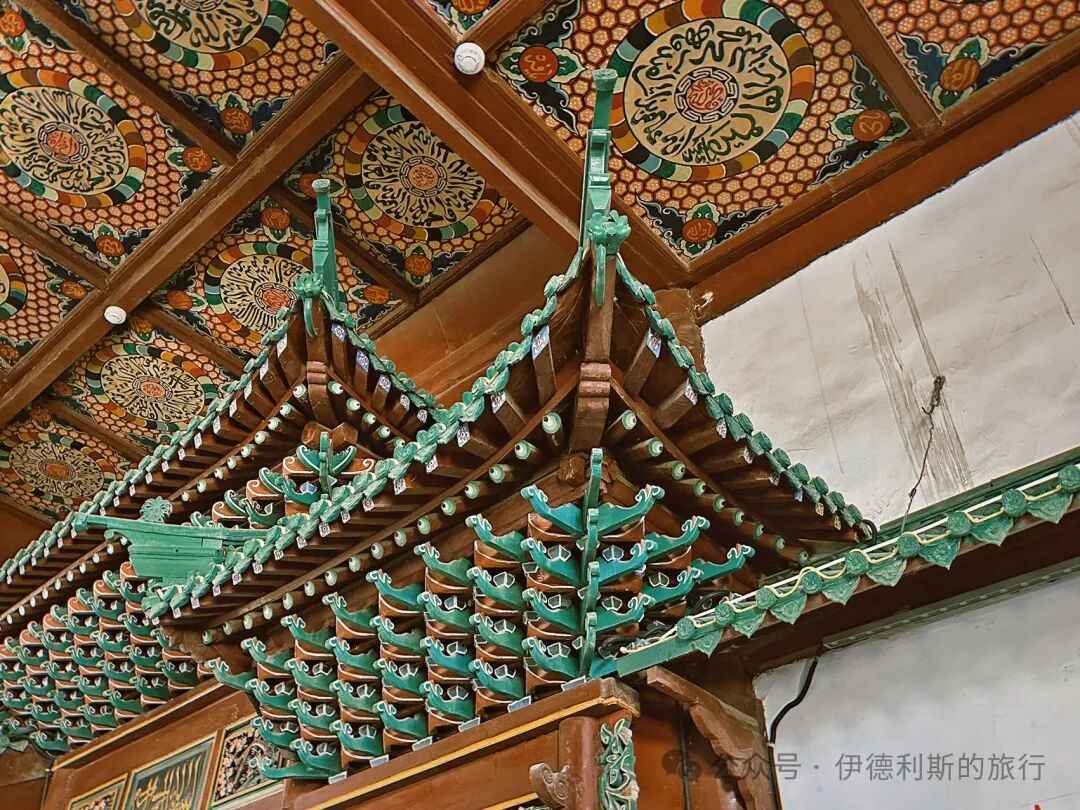
The East Mosque (Dongsi) in Linqing, Shandong, is a three-room, four-pillar memorial archway style building with bracket sets and flying eaves, decorated with intricate traditional calligraphy.
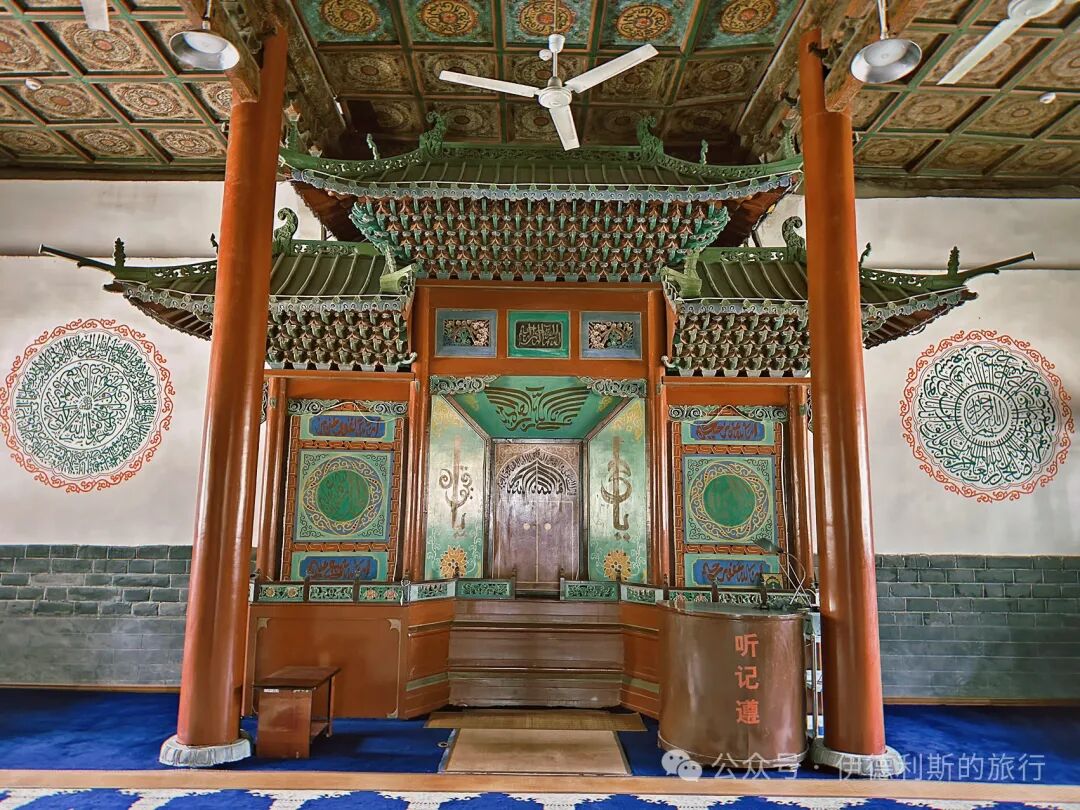
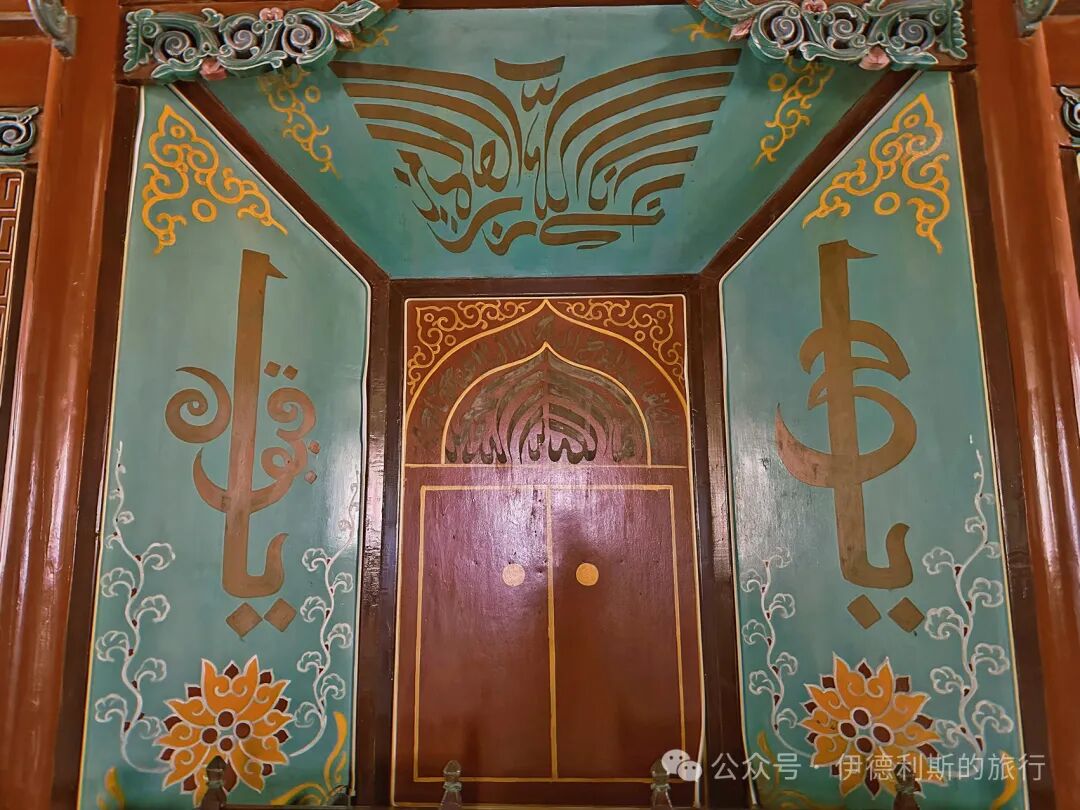
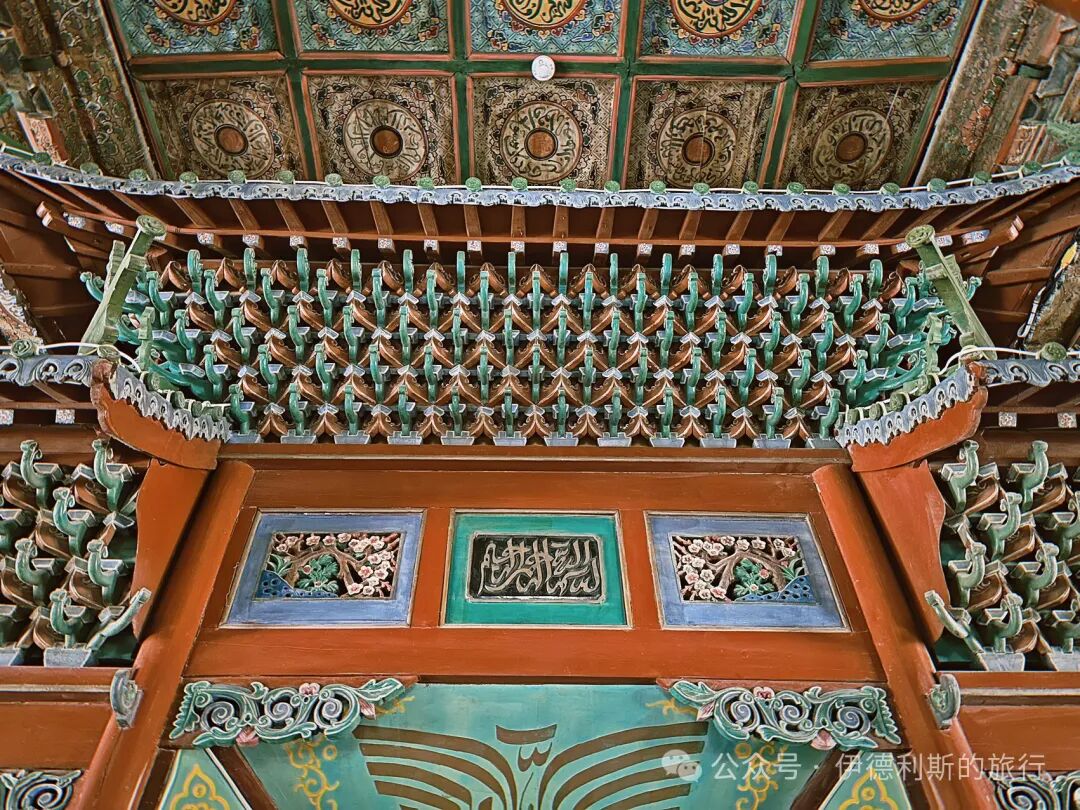
The South Mosque (Nandasi) in Jinan, Shandong, is an arched structure. According to the mosque's stele record, the calligraphy was written in 1810 (the 15th year of the Jiaqing reign) by Imam Hei Faxiang.
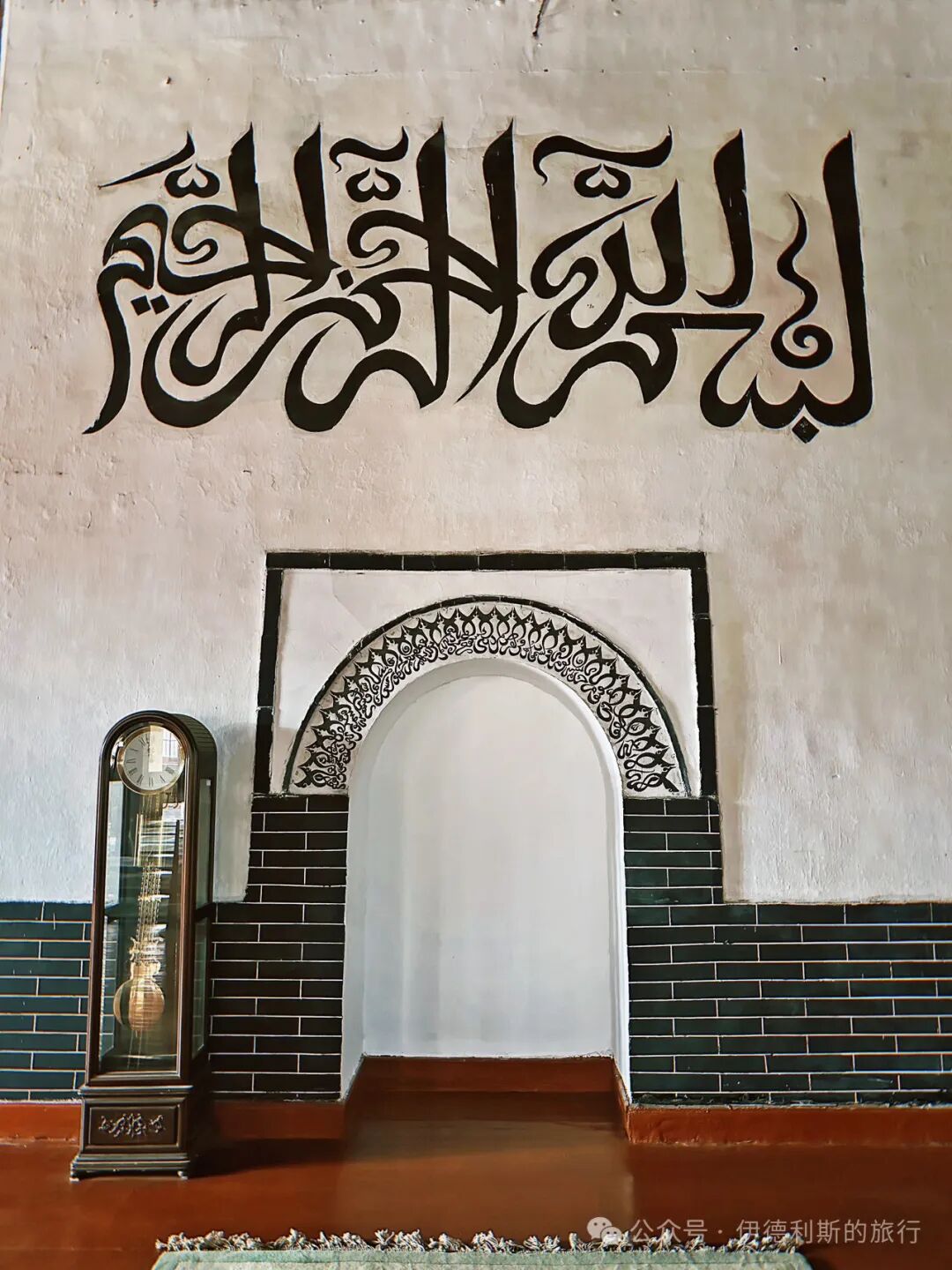
The North Mosque (Beisi) in Jinan, Shandong, is an arched structure featuring calligraphy in the center.
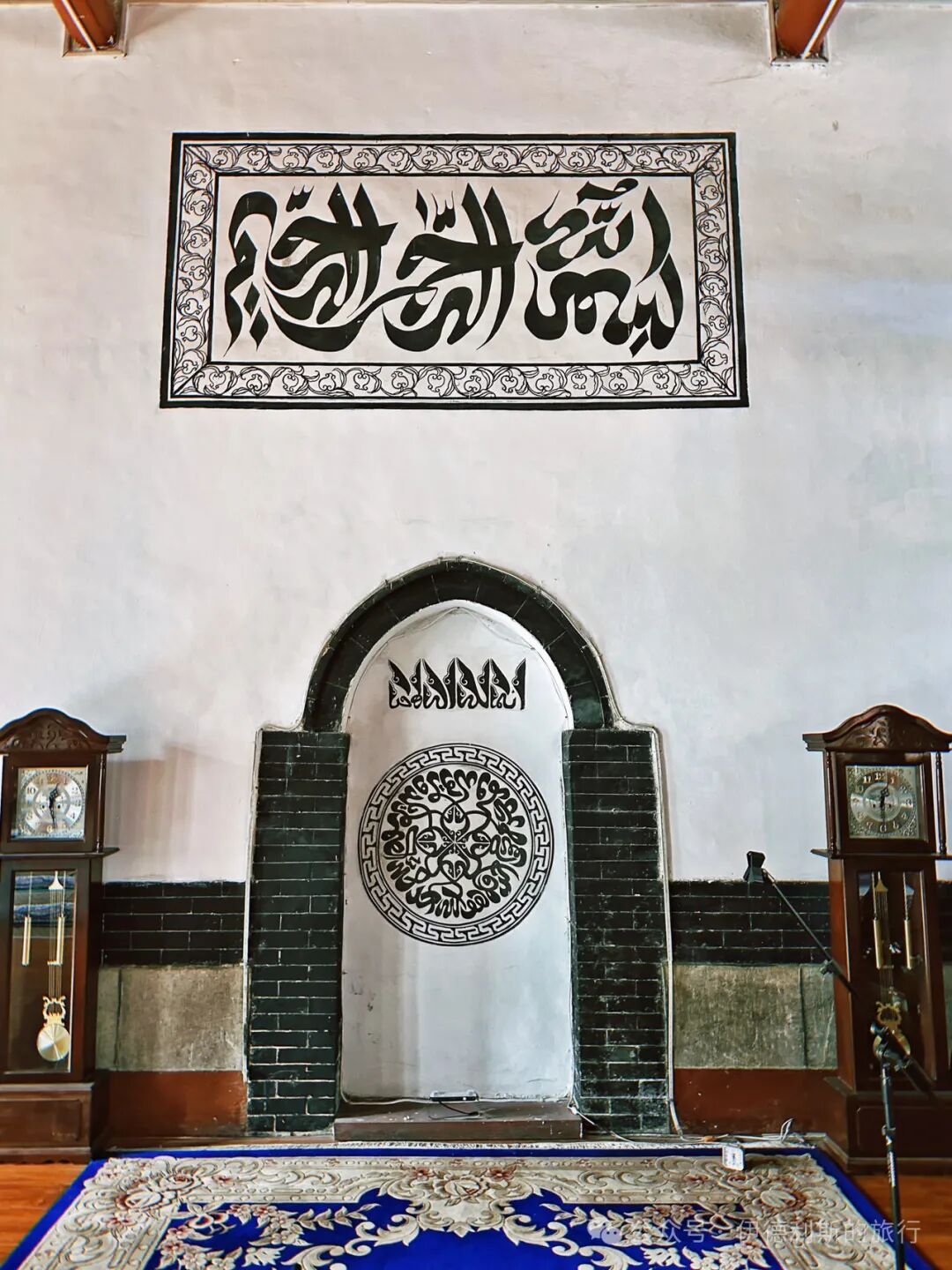
The Zhenjiao Mosque in Qingzhou, Shandong, is an arched structure with a single-eave, hanging-mountain style door hood above.
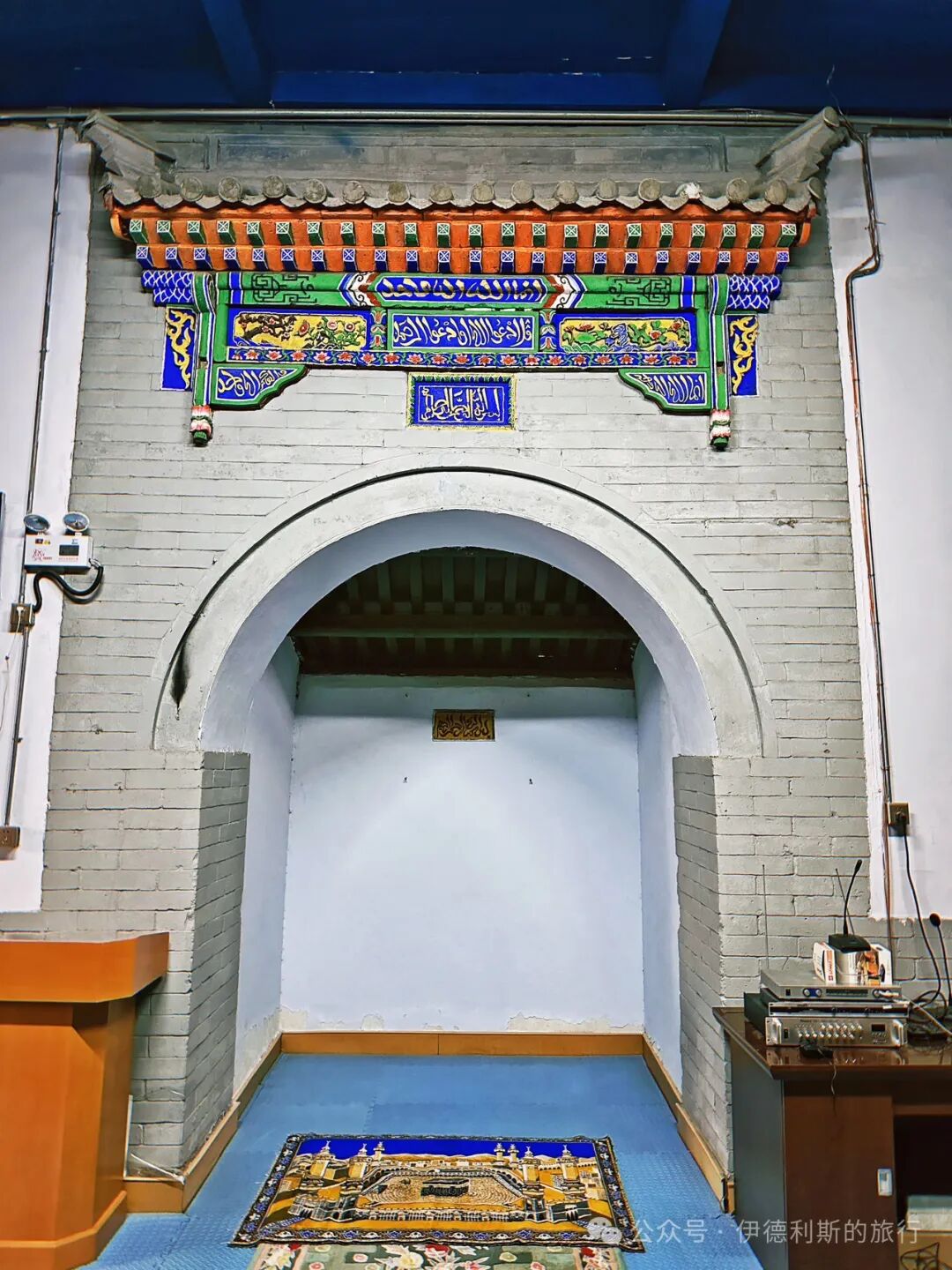
Inner Mongolia
The Great Mosque in Hohhot, Inner Mongolia, has a door hood with openwork, painted floral and scroll patterns.
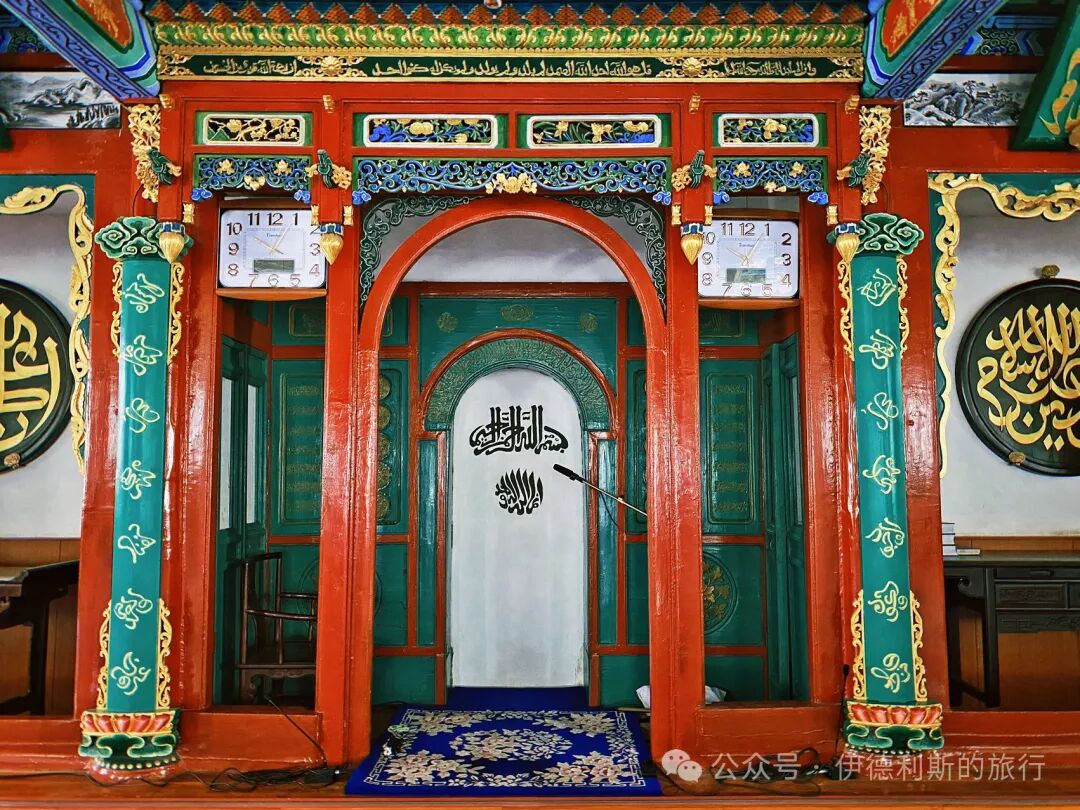
The East Mosque (Dongsi) in Hohhot, Inner Mongolia.
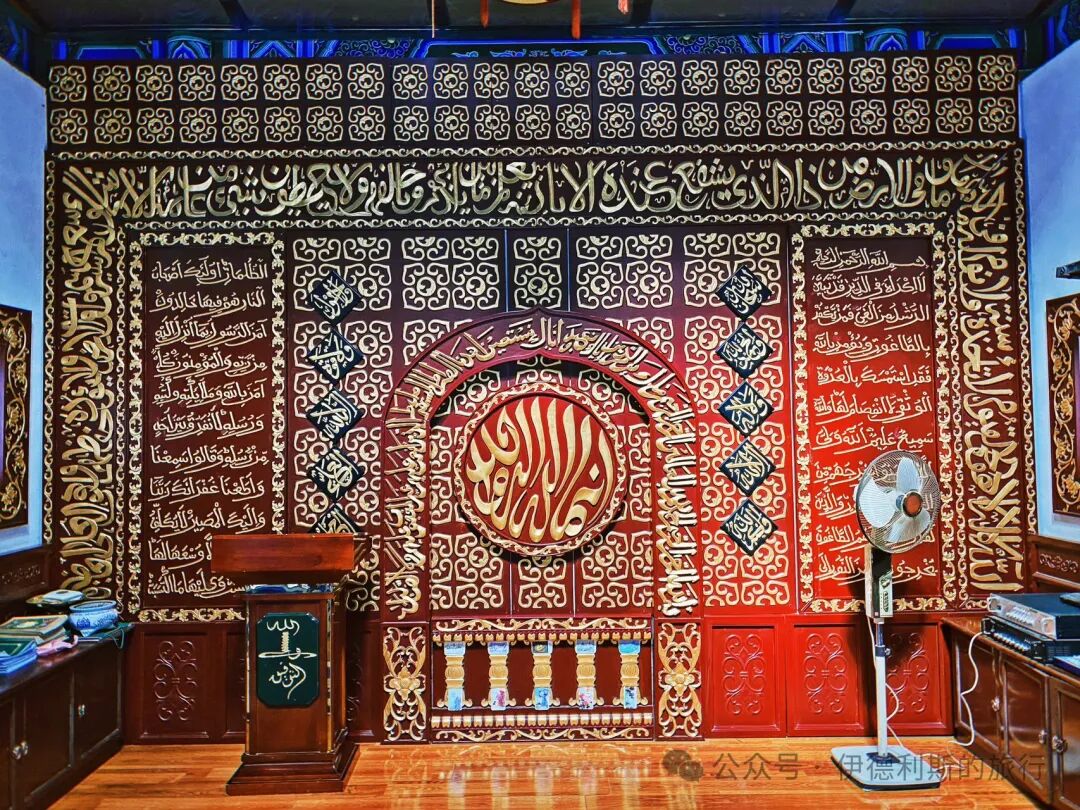
The Longshengzhuang Mosque in Feng County, Inner Mongolia, has a door hood with wood-carved calligraphy inside the arch.
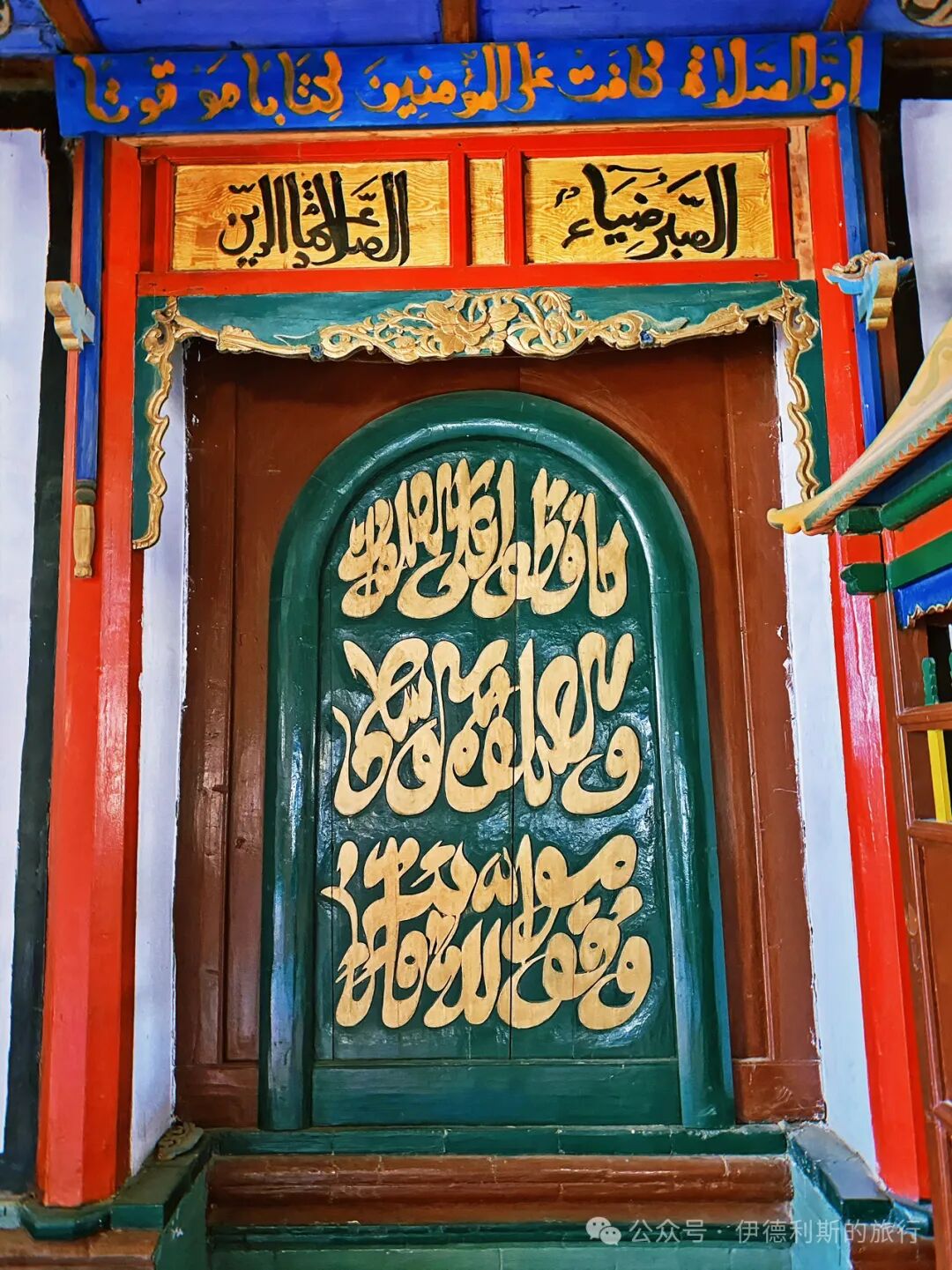
The North Mosque (Beisi) in Chifeng, Inner Mongolia, features original wood carvings from 1747 (the 12th year of the Qianlong reign).
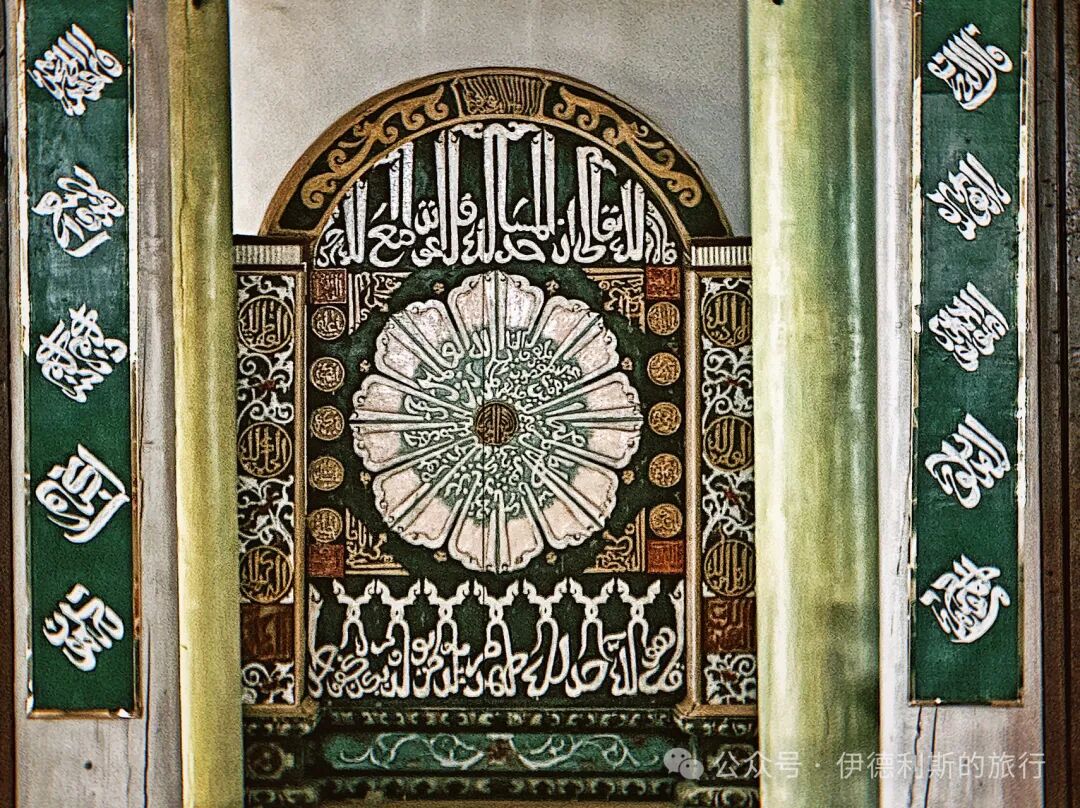
Liaoning
The Old City Mosque in Kaiyuan, Liaoning, features a clear-water scorpion-tail roof ridge.
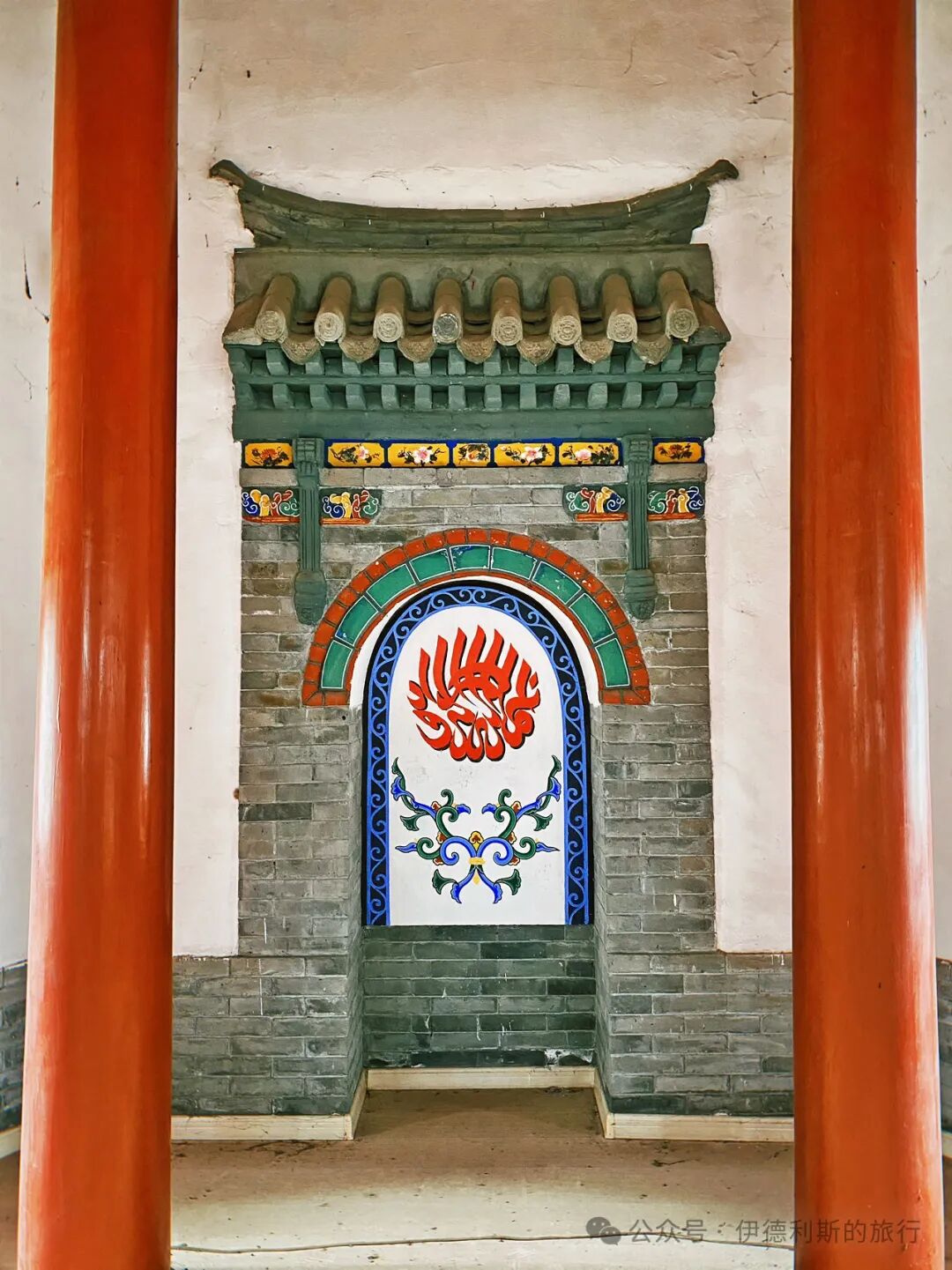
The Luyang Mosque in Jinzhou, Liaoning, has a plaque with large-character calligraphy and traditional brush-style calligraphy on both sides.
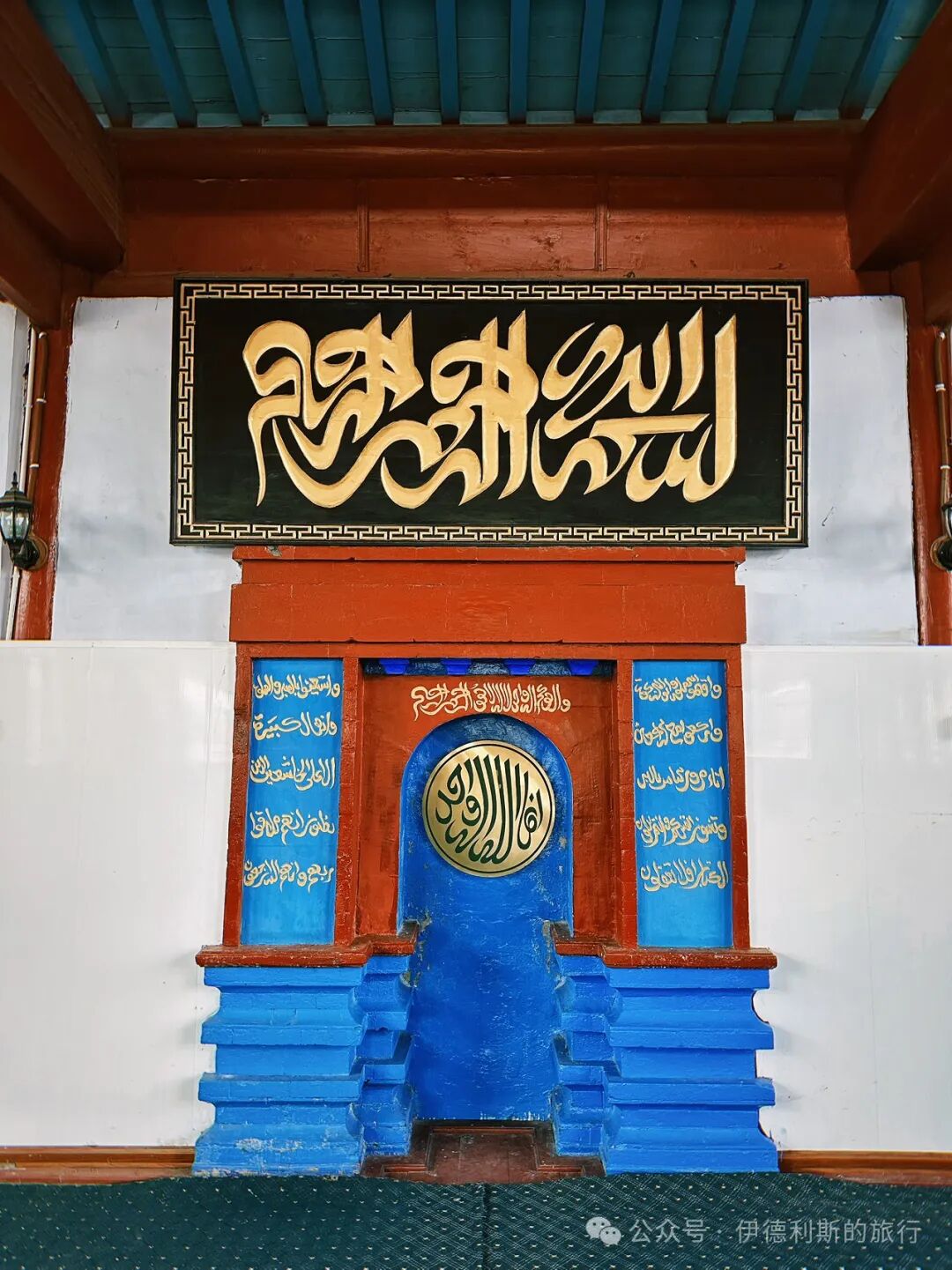
The South Mosque (Nandasi) in Shenyang, Liaoning, houses a large spirit tablet.
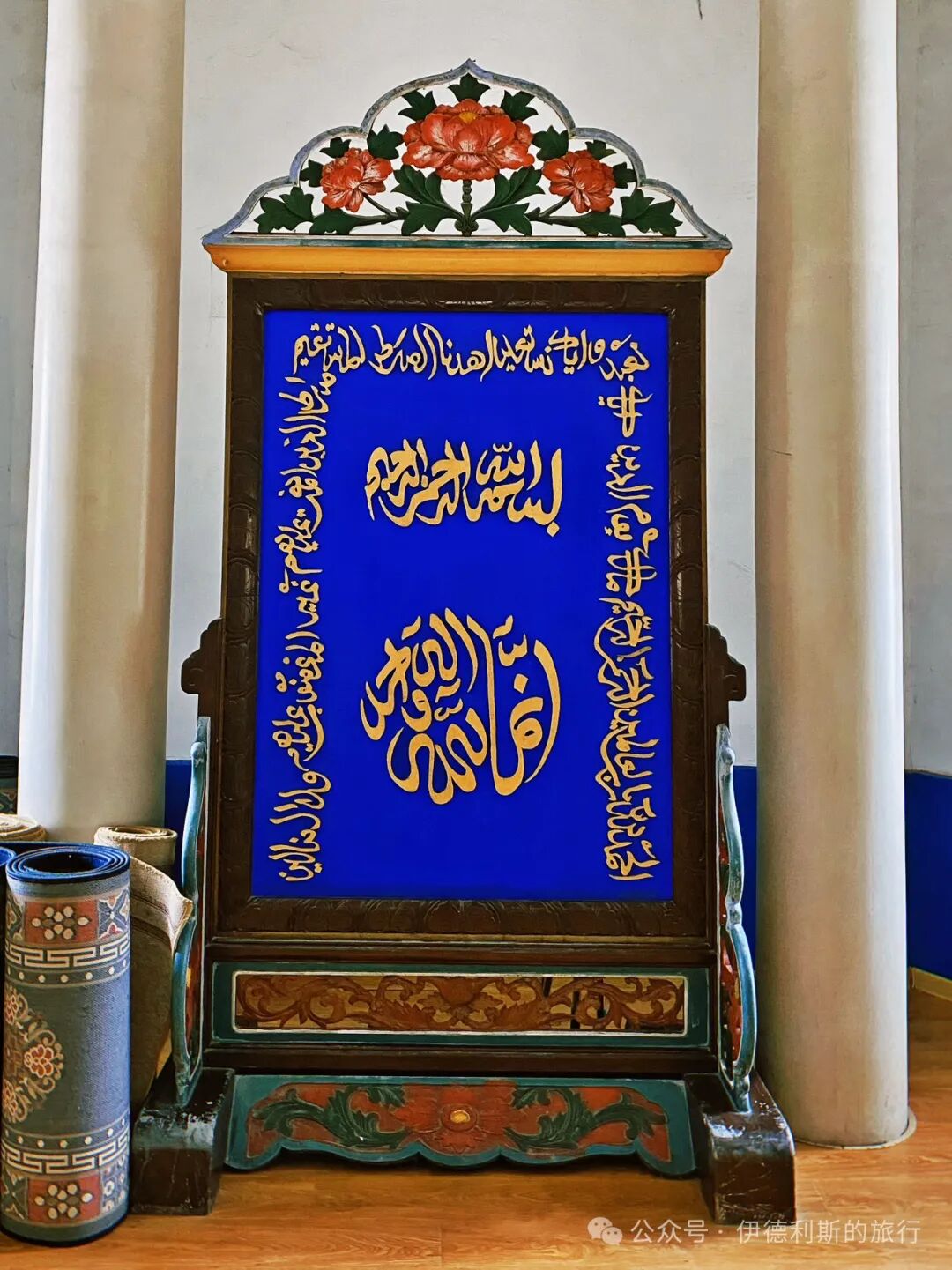
The Ancient City Mosque in Fuzhou, Dalian, Liaoning, features traditional brush-style calligraphy.
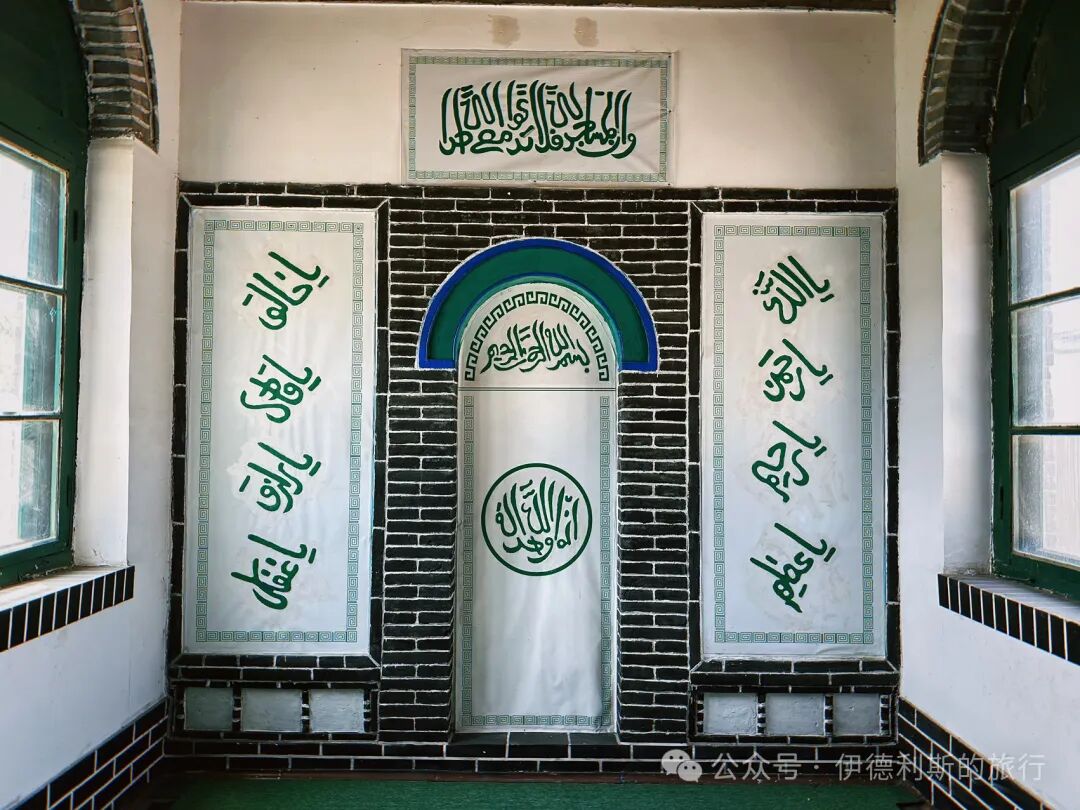
Lingyuan Mosque in Liaoning features carvings of Arabic calligraphy.
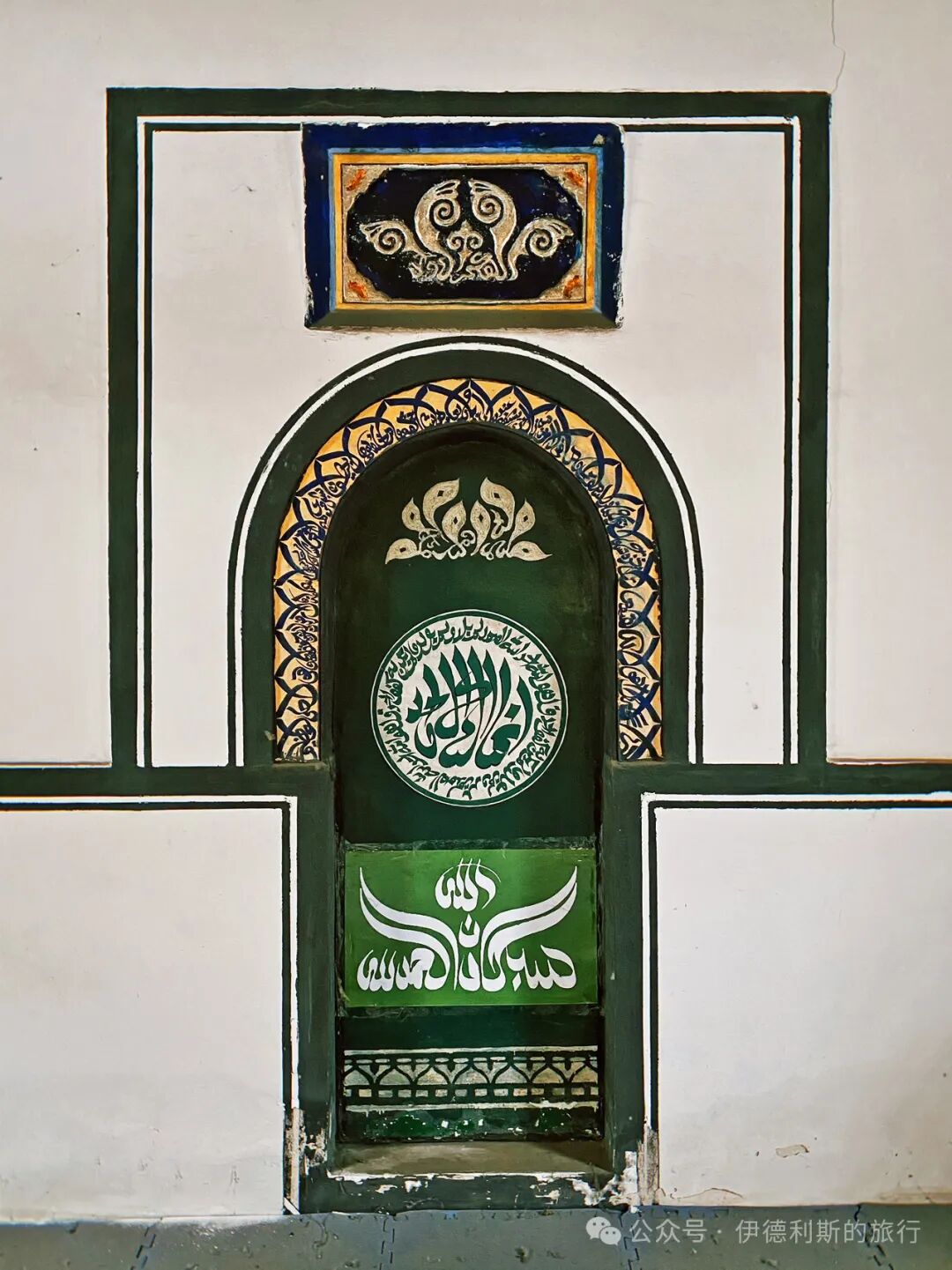
Heilongjiang
The winter prayer hall at Bukui West Mosque in Qiqihar, Heilongjiang, has traditional calligraphy carved onto its arches.
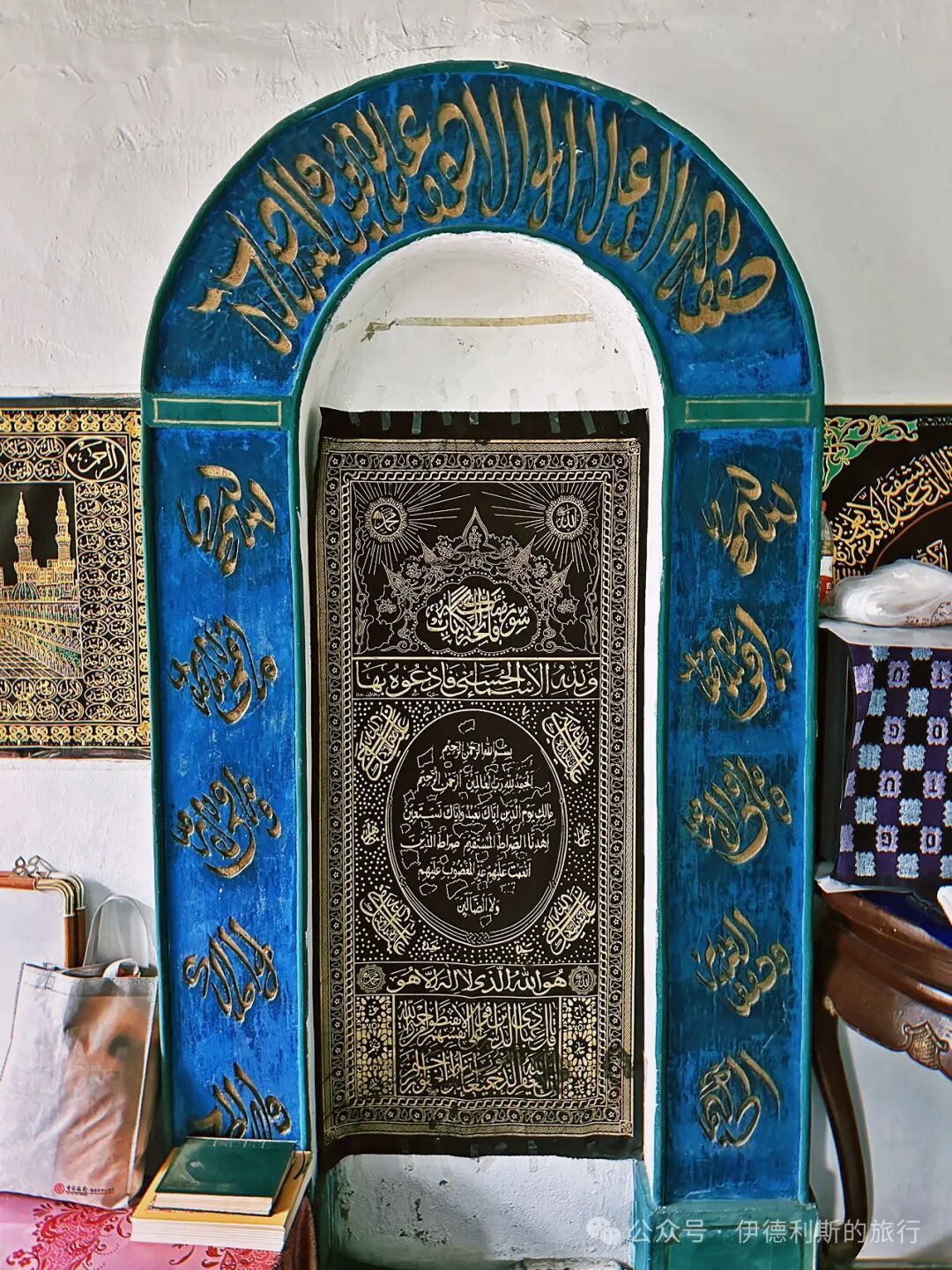
The main hall of Bukui West Mosque in Qiqihar, Heilongjiang, is surrounded by carved calligraphy plaques and couplets.
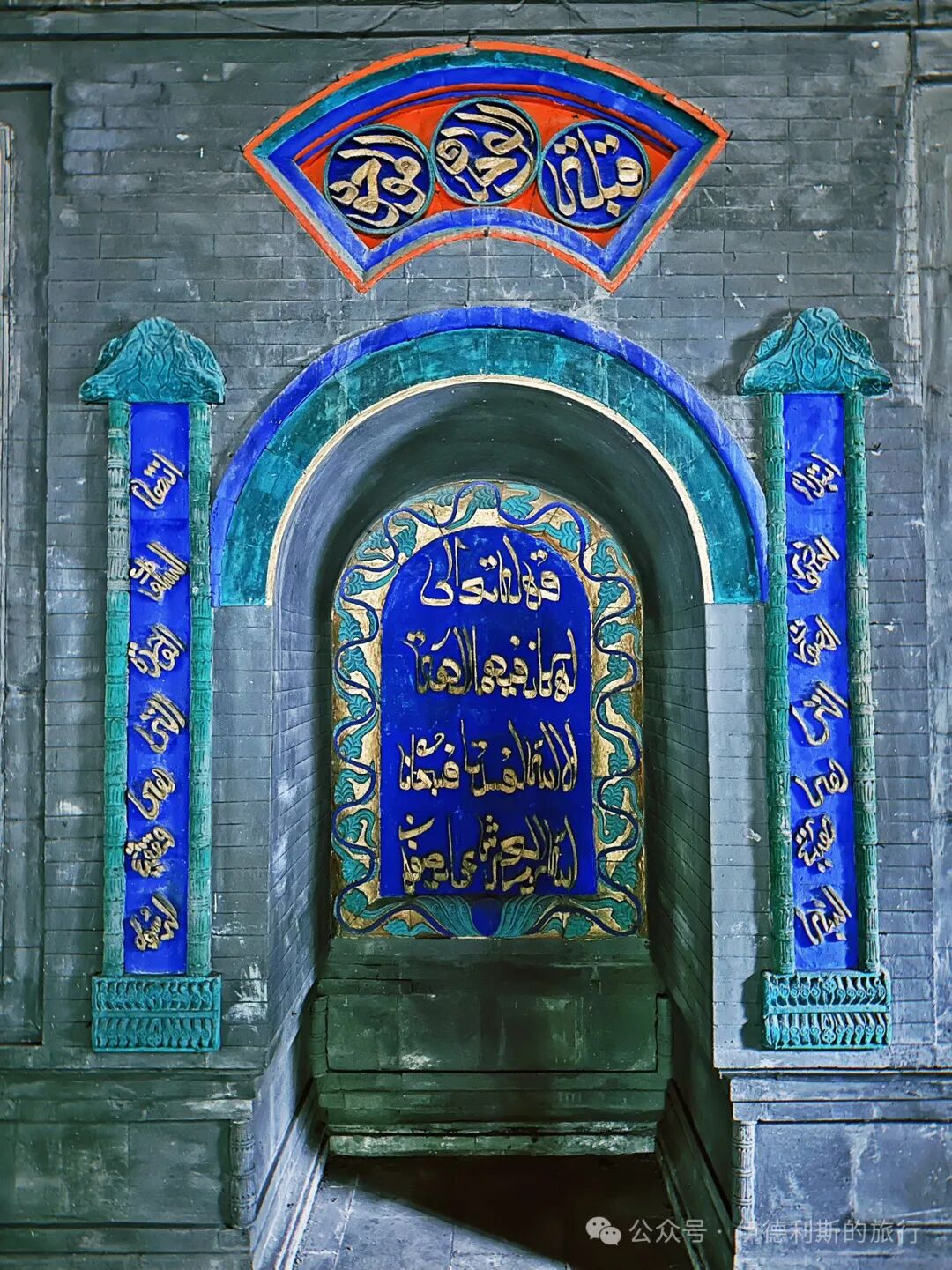
The main hall of Bukui East Mosque in Qiqihar, Heilongjiang, features a clear-water ridge (qingshuiji) roof, a Sumeru pedestal (xumizuo) base, and carved calligraphy plaques and couplets.
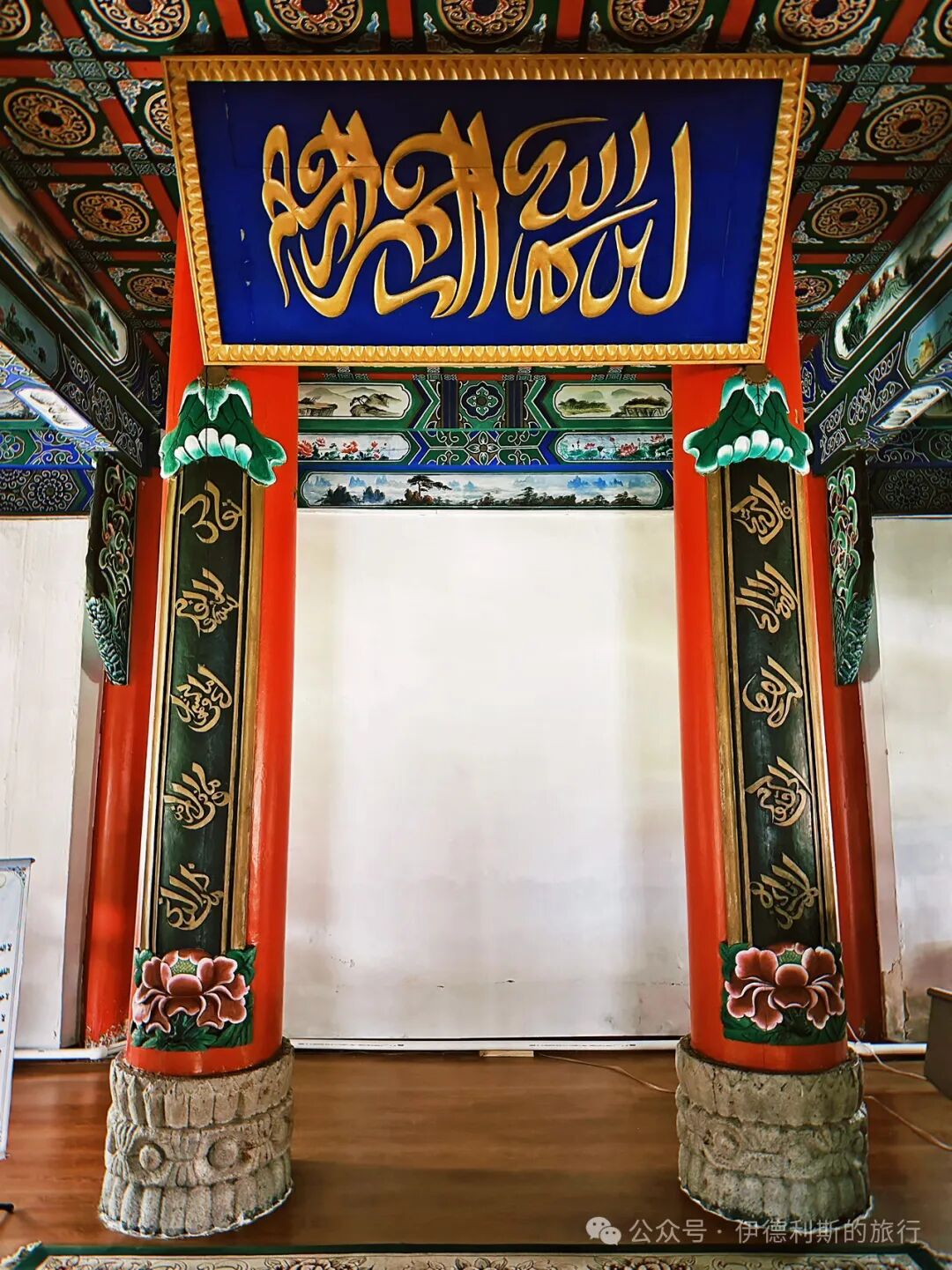
Acheng Mosque in Heilongjiang has four floor-to-ceiling pillars (tongtianzhu) in its kiln hall (yaodian) built in 1900 (the 26th year of the Guangxu reign). They were made from giant pine logs hauled from the forests of Yabuli, Heilongjiang, and installed by a carpenter named Sun Yulin from Wula Street, Jilin. Legend says Carpenter Sun's master was worried about his apprentice, so he secretly went to a stone shop and made four 3-foot-tall lotus-shaped pillar bases. When it came time to raise the floor-to-ceiling pillars, they were exactly 3 feet too short. Seeing this, the master immediately told Carpenter Sun to hitch a cart and bring back the four lotus pillar bases from the stone shop, and they fit perfectly.
Shanxi
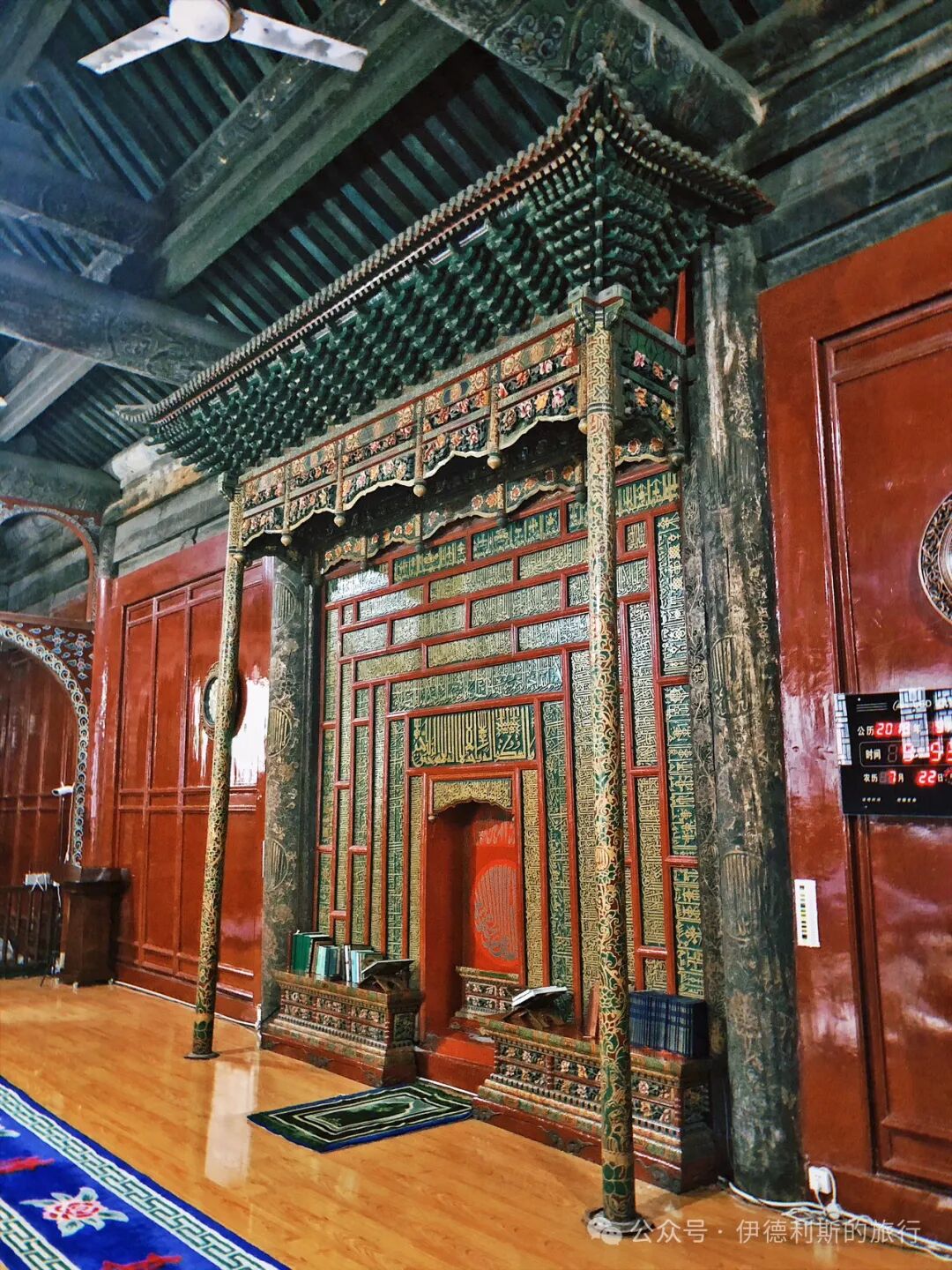
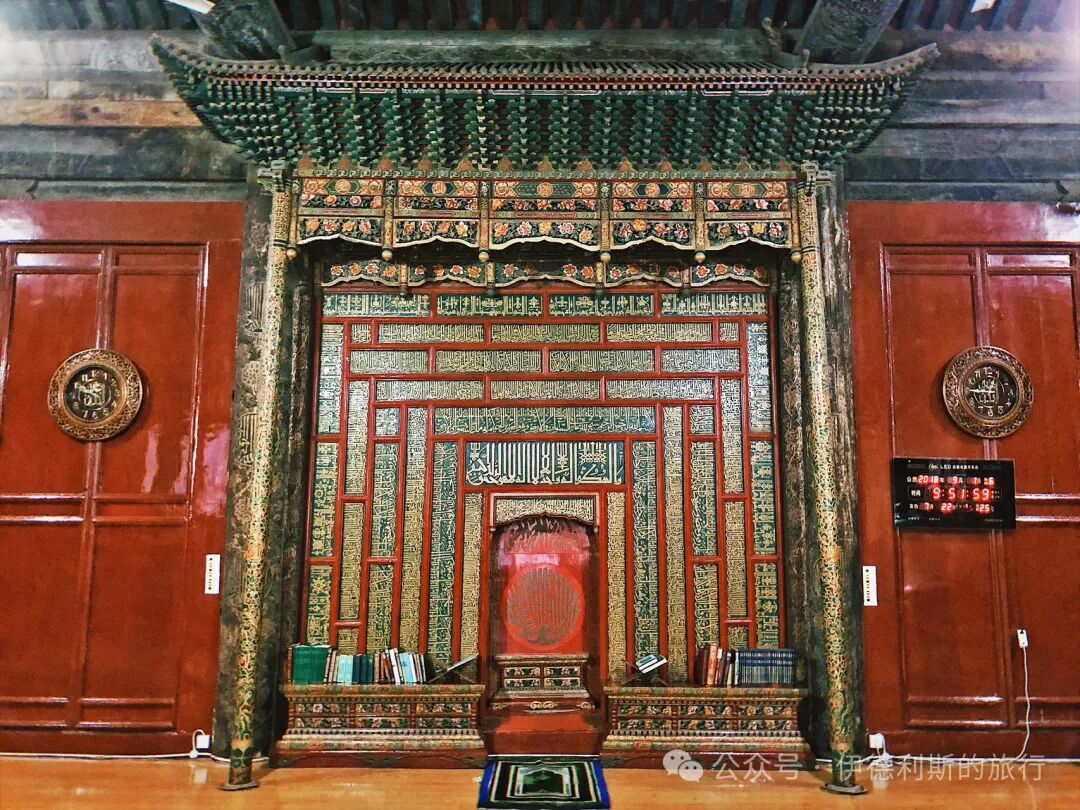
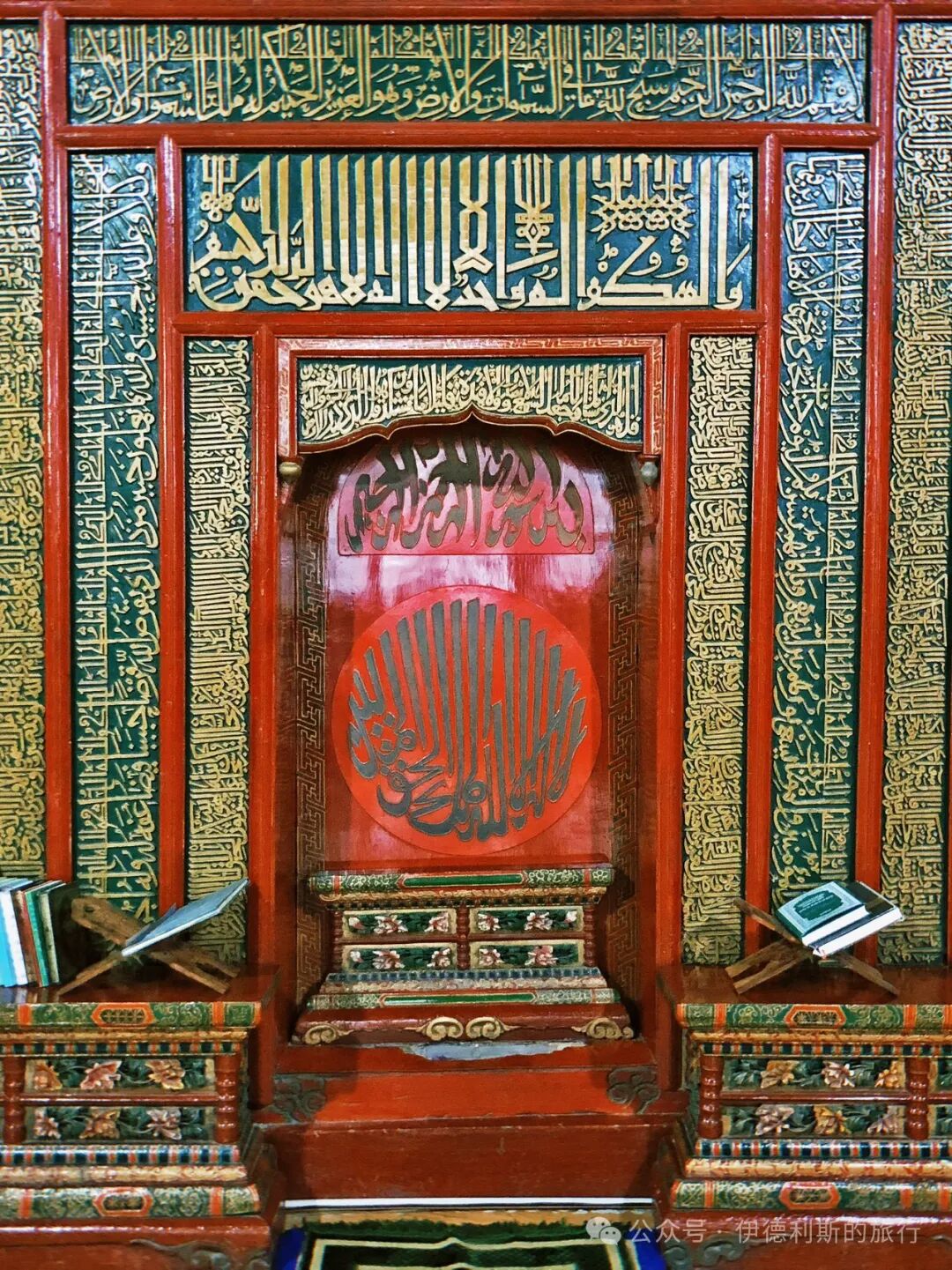
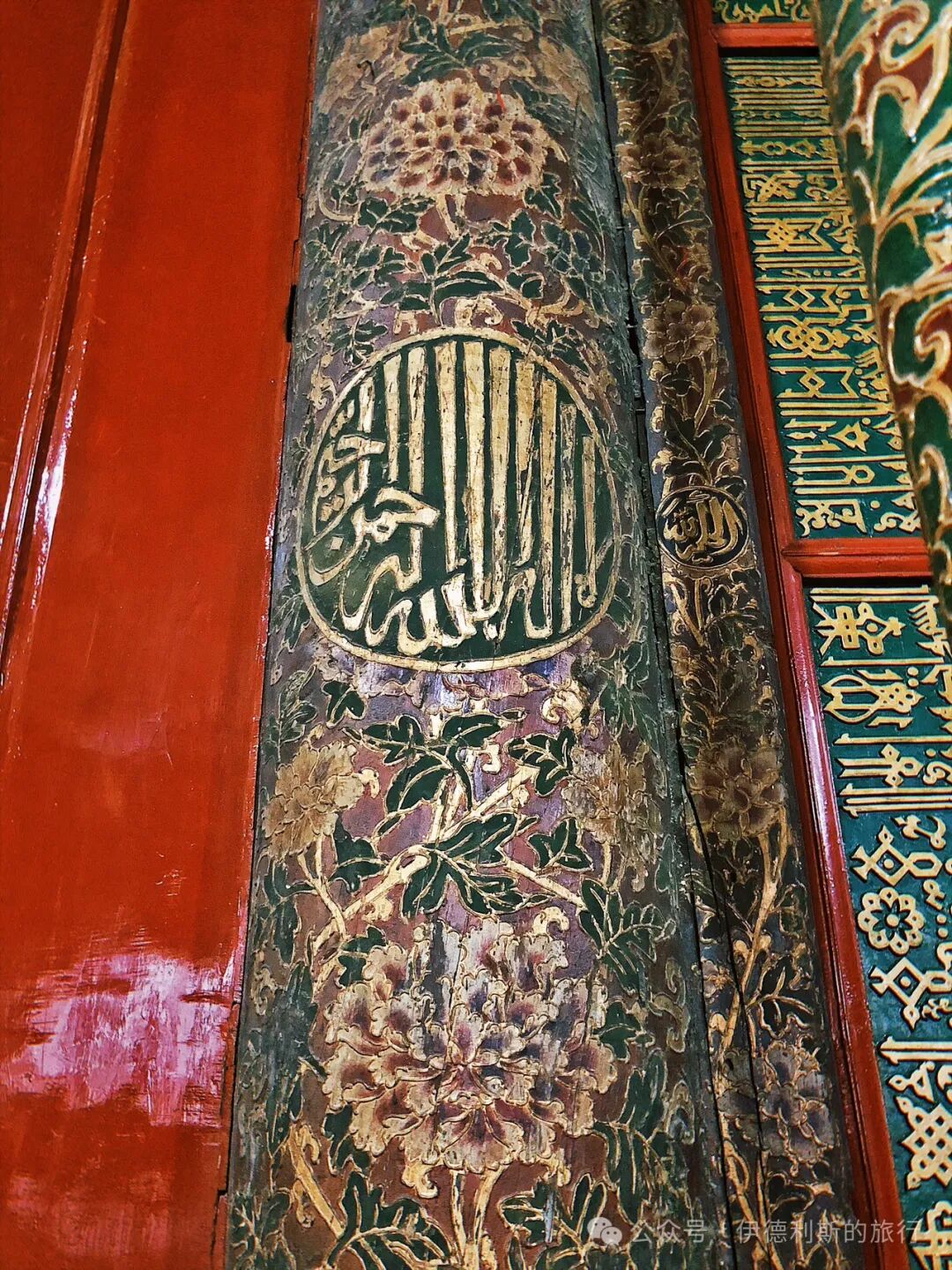
Taiyuan Great Mosque in Shanxi is a Ming Dynasty treasure. It has a wooden memorial archway-style door hood with a hip roof (wudianding), bracket sets (dougong), and flying eaves. Below are Sumeru pedestal railings, and the pillars are decorated with scrolling lotus patterns and Arabic circular motifs. The center features a wooden carved hanging panel with Arabic script, and a kiln niche (yaokan) is set in the very center.
Shaanxi
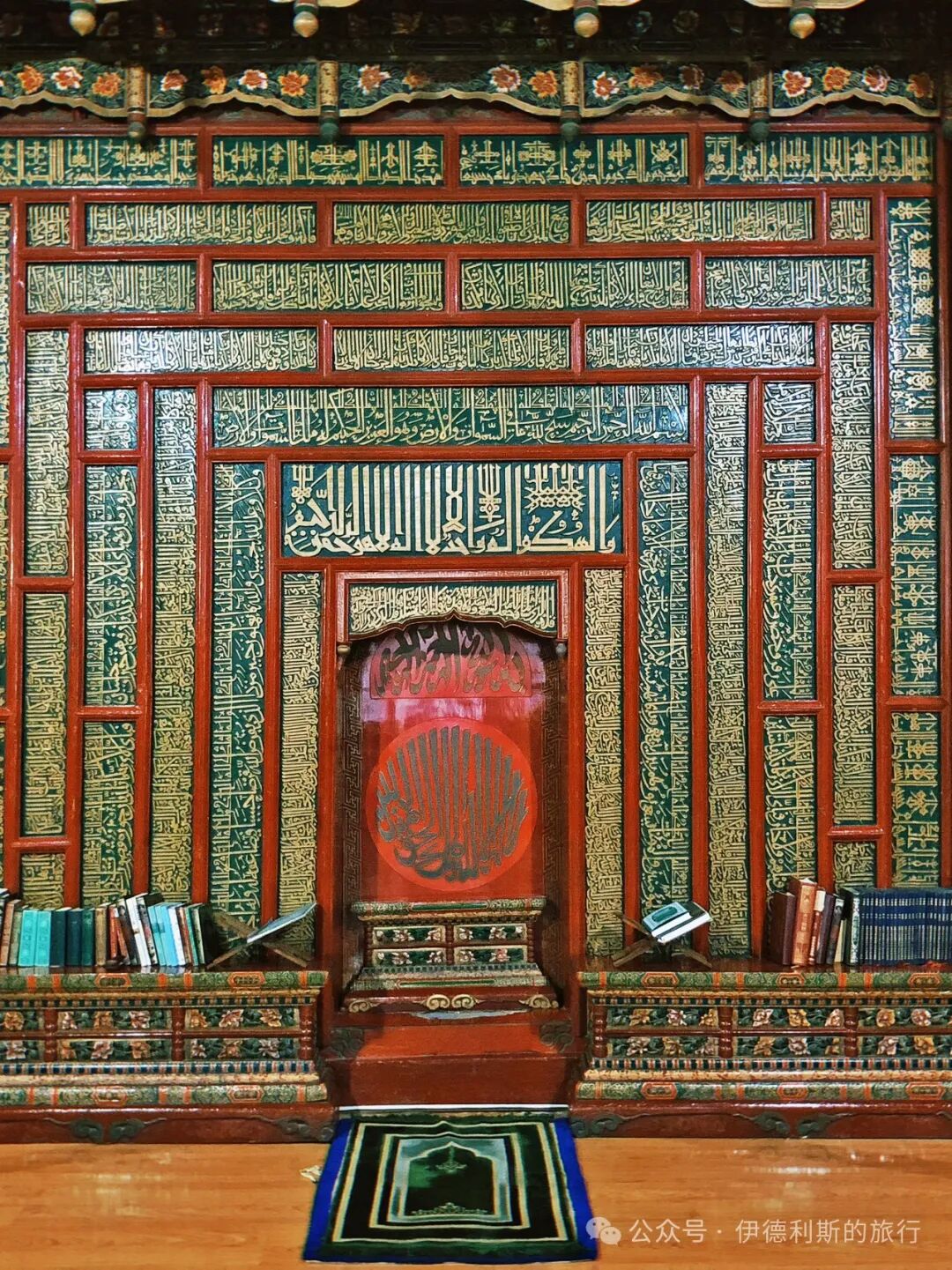
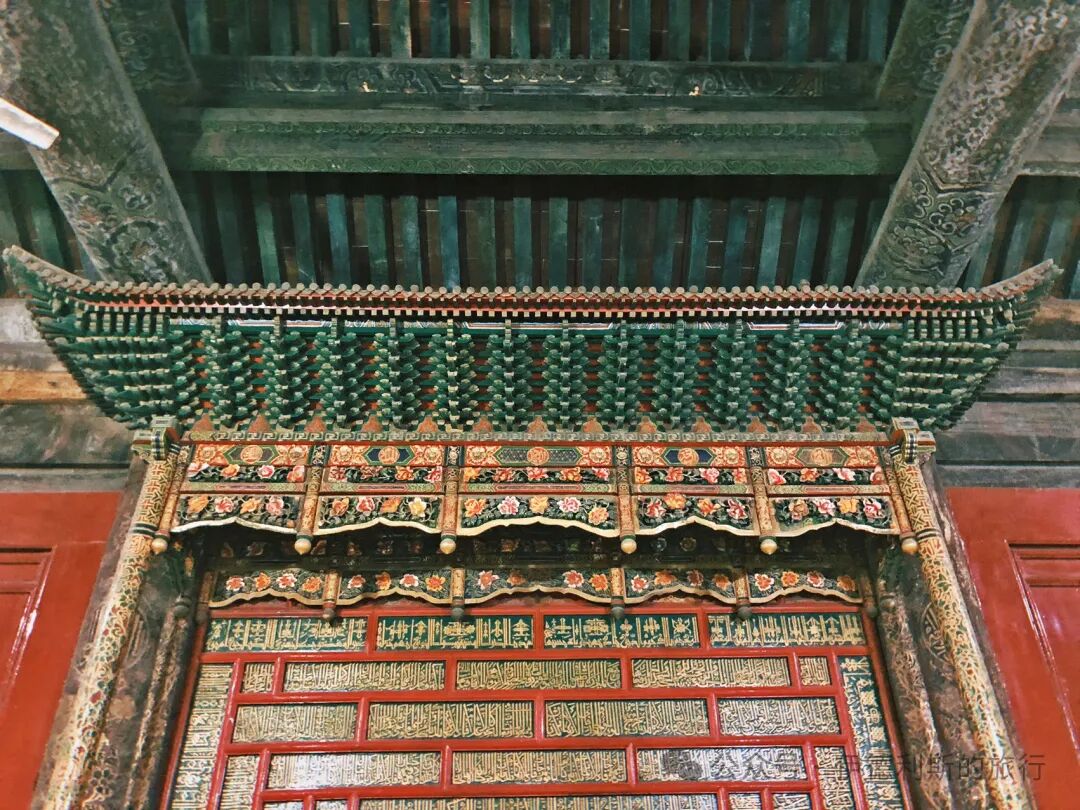
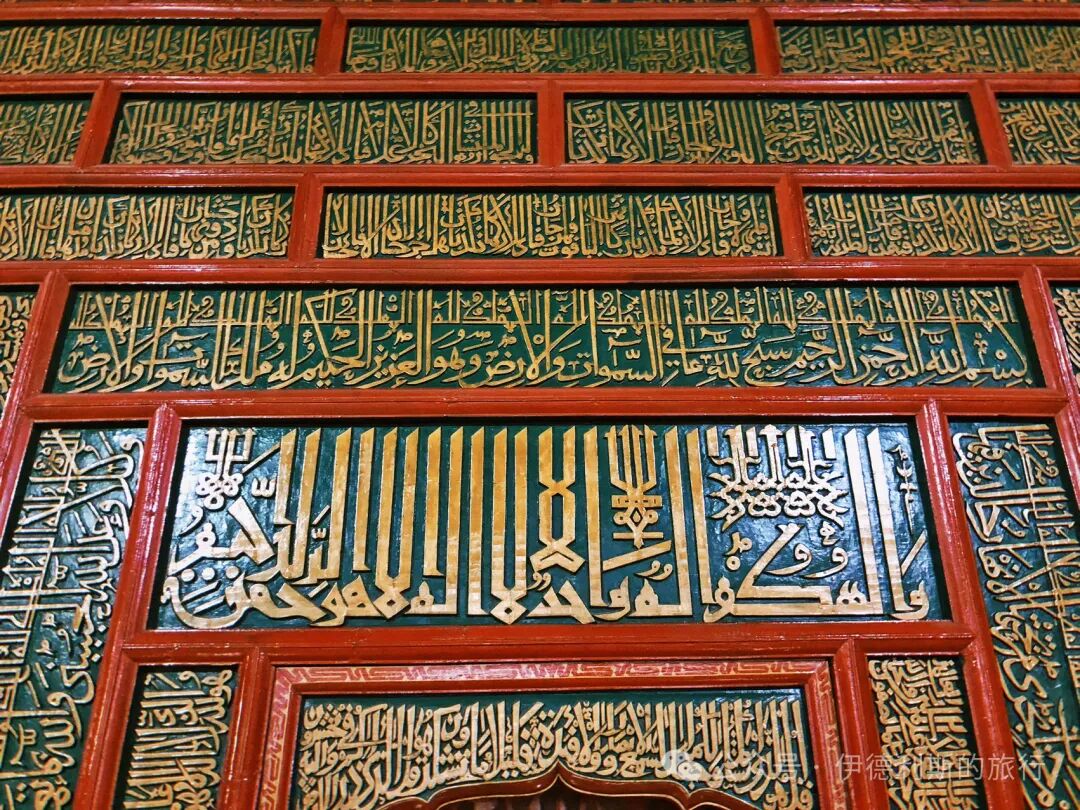
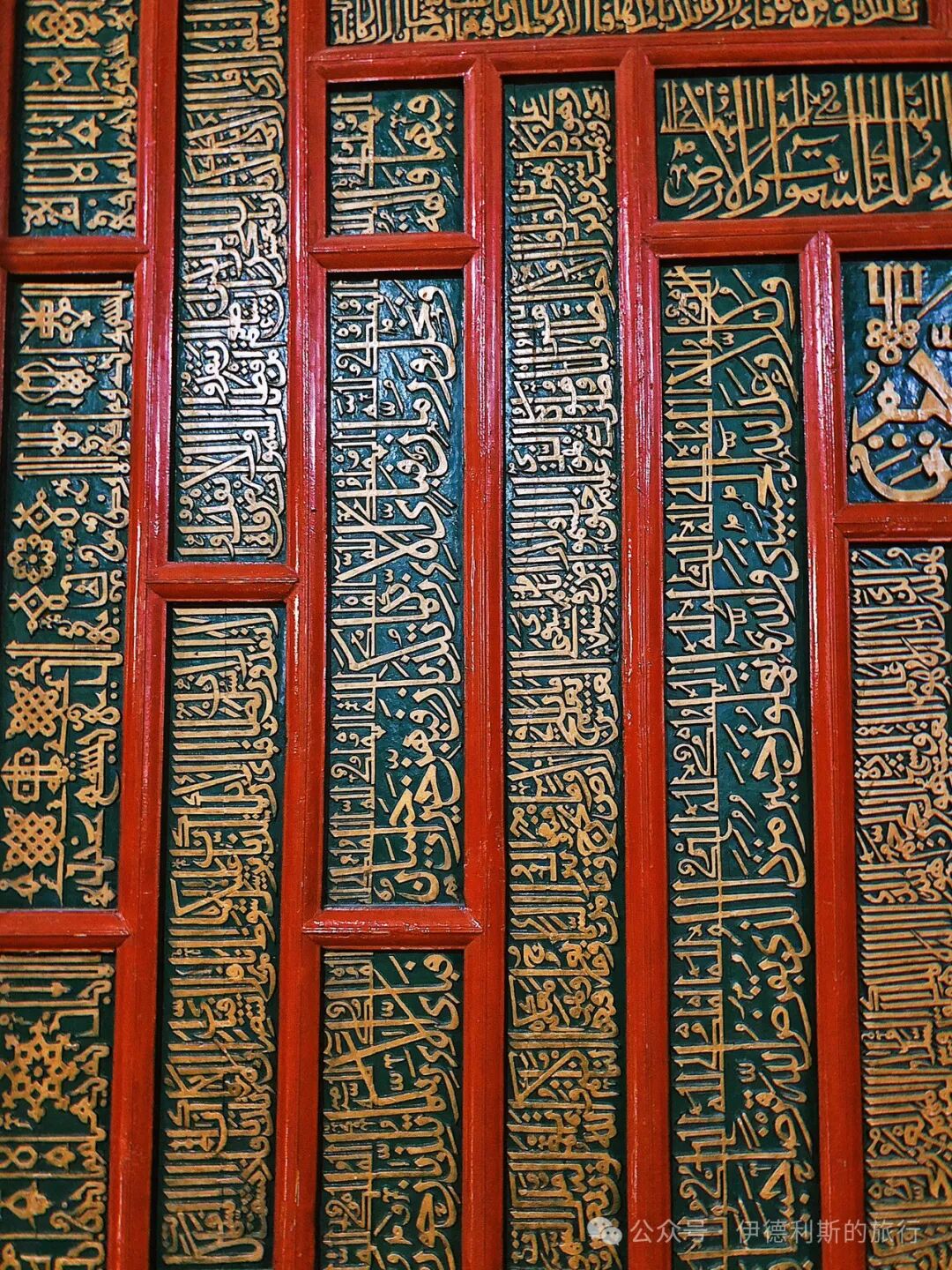
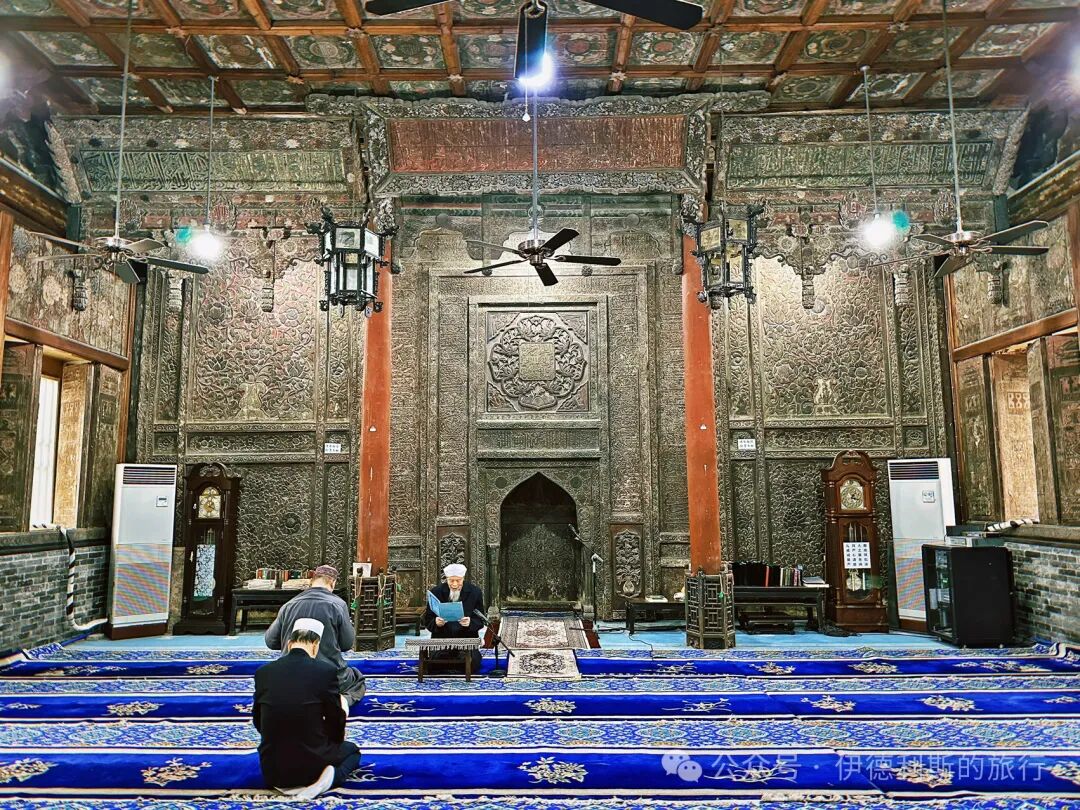
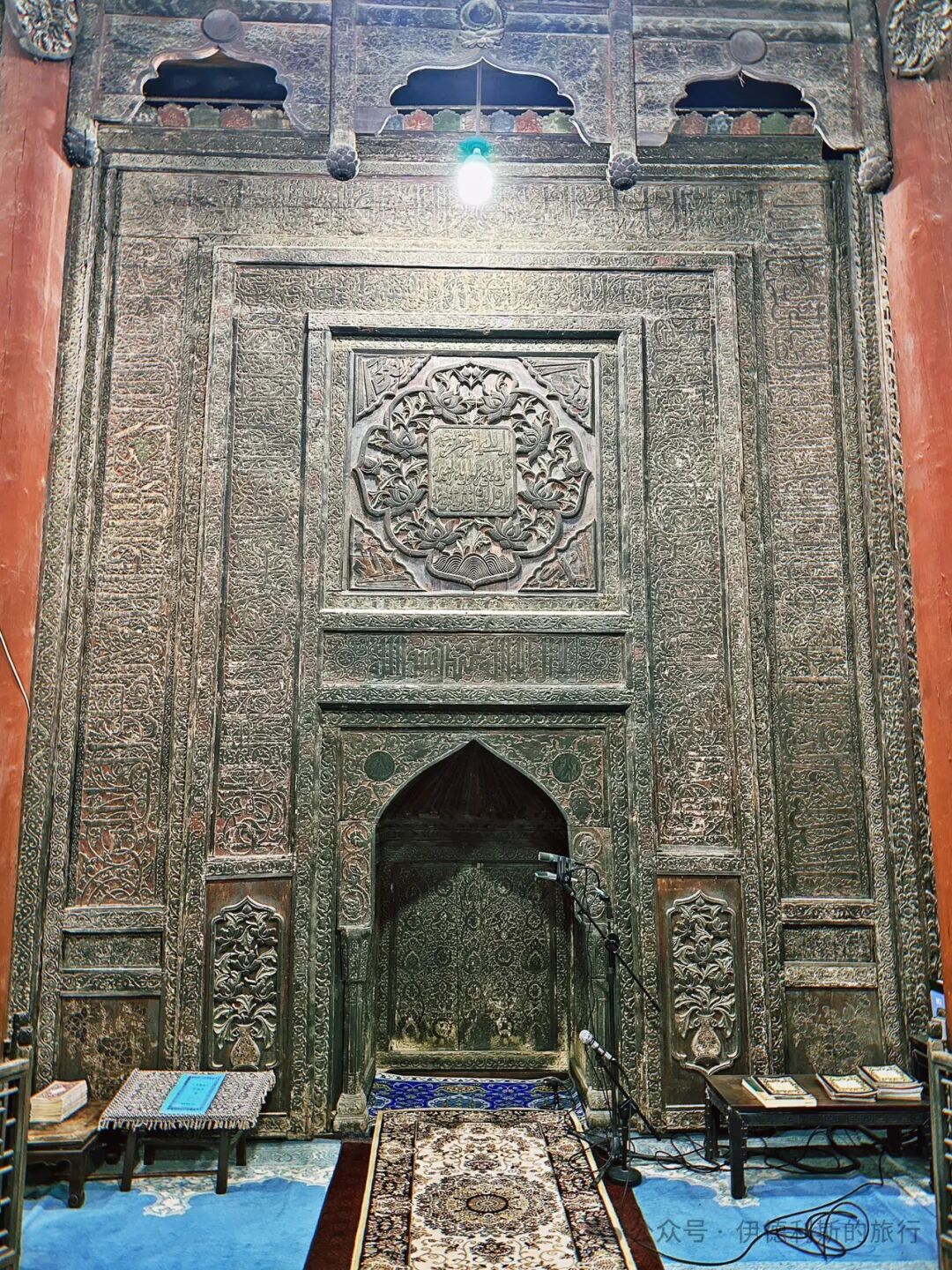
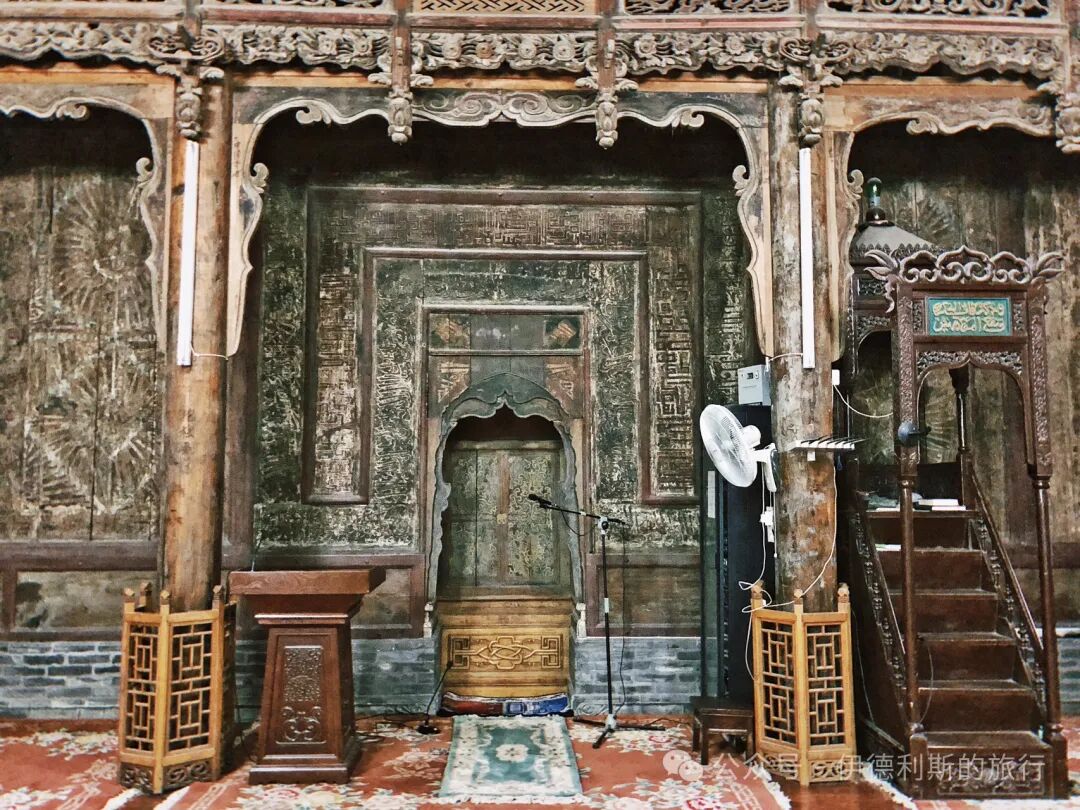
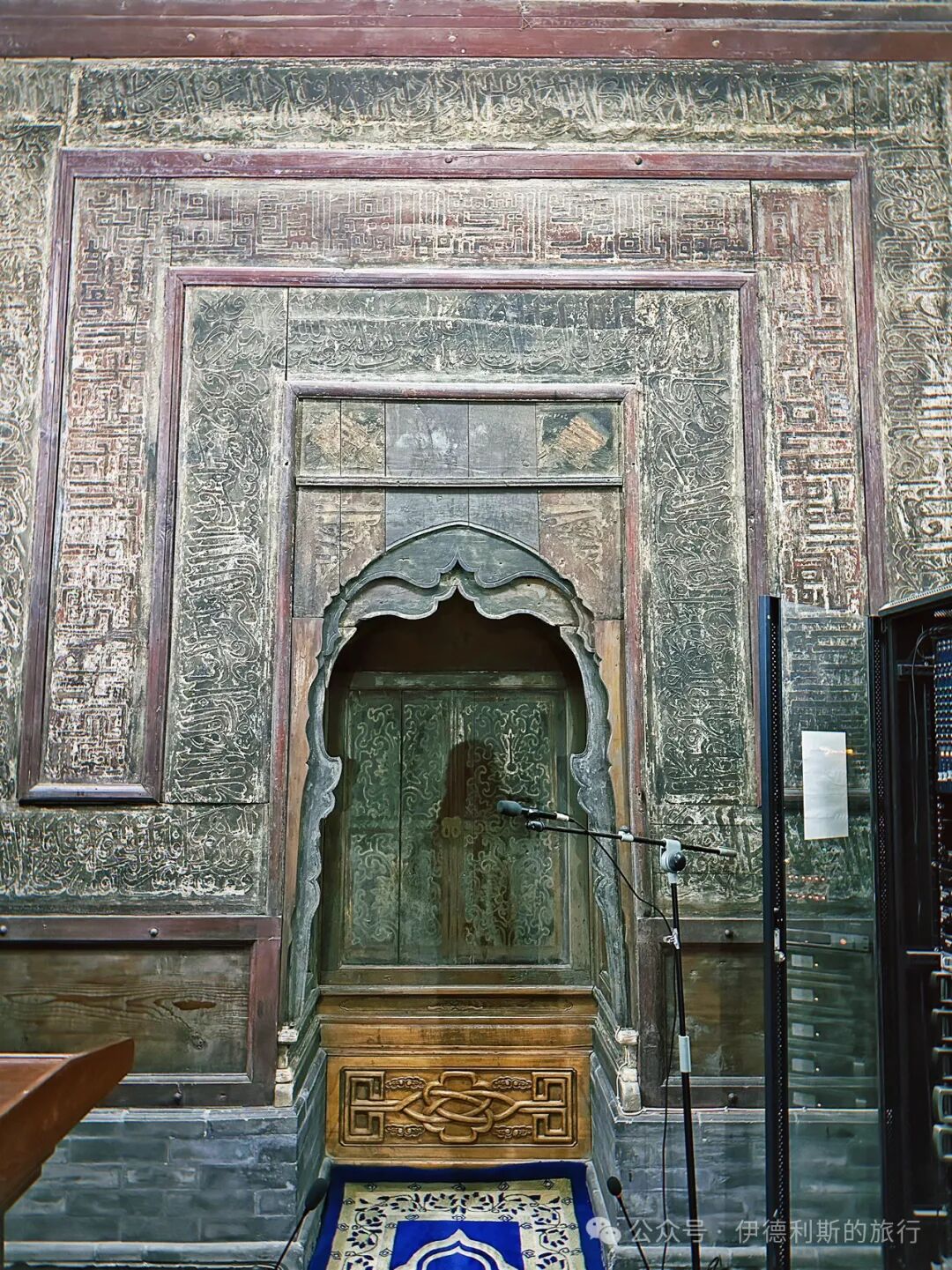
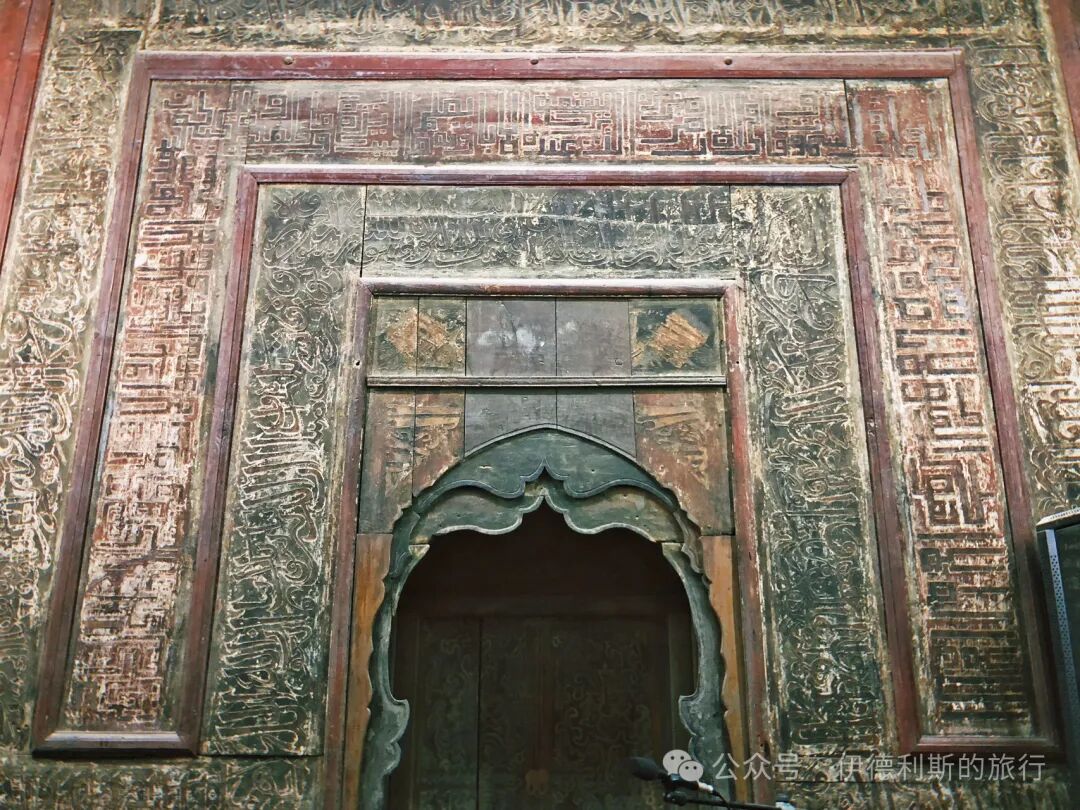
Huajue Lane Great Mosque in Xi'an, Shaanxi, is a Ming Dynasty treasure. It uses wooden board inlays and gold-painted pillars to create door hoods and hanging pillars. The wooden boards are carved with Arabic calligraphy and floral patterns, making them very magnificent. The center has a kiln niche arch supported by prismatic pillars on both sides. This is similar to the mihrab style found in Iran and Turkey during the Yuan and Ming dynasties, making it the only known Ming Dynasty mihrab in China that blends Eastern and Western styles.
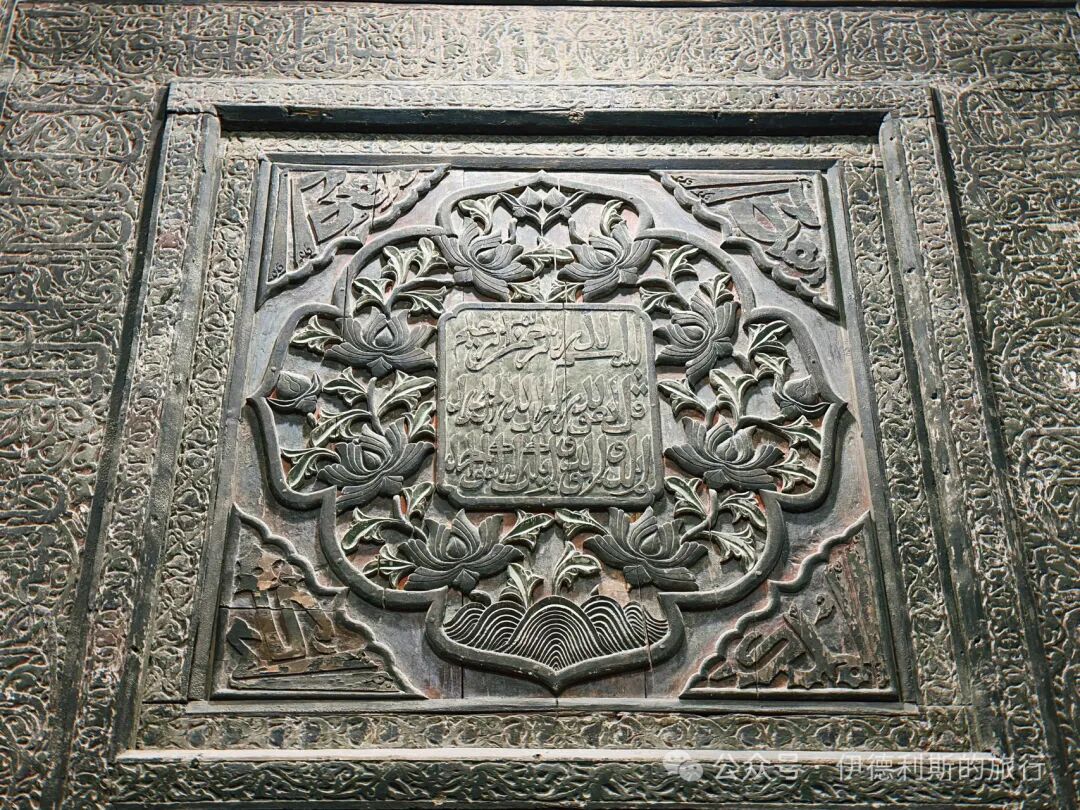
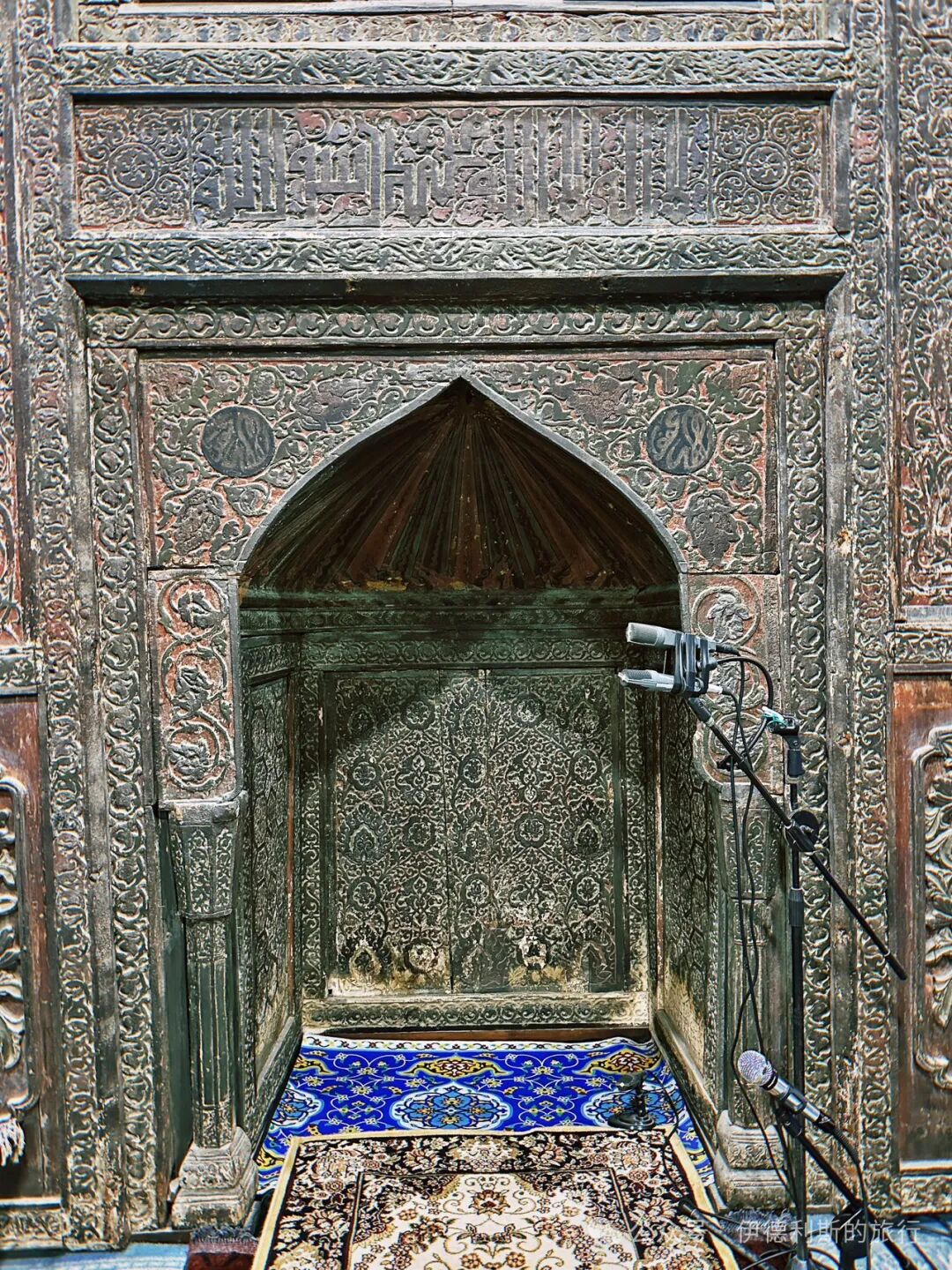
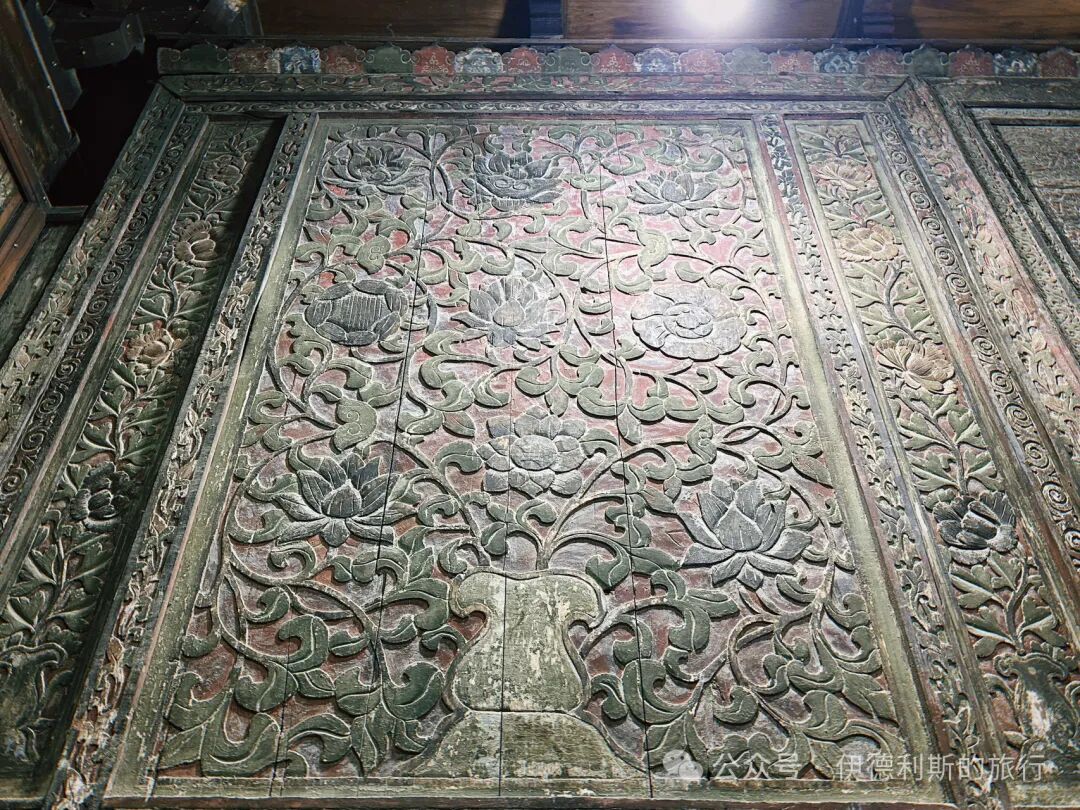
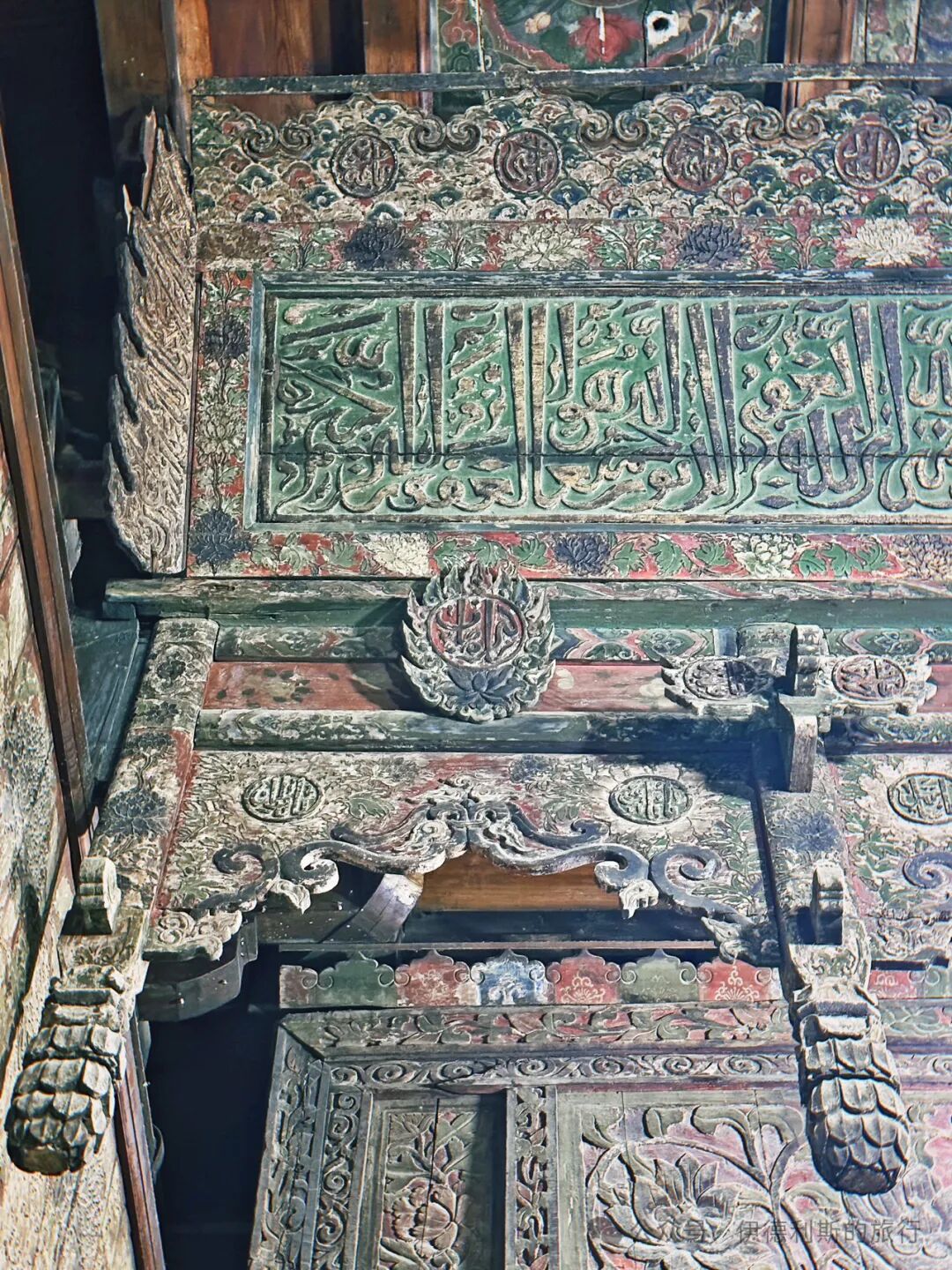
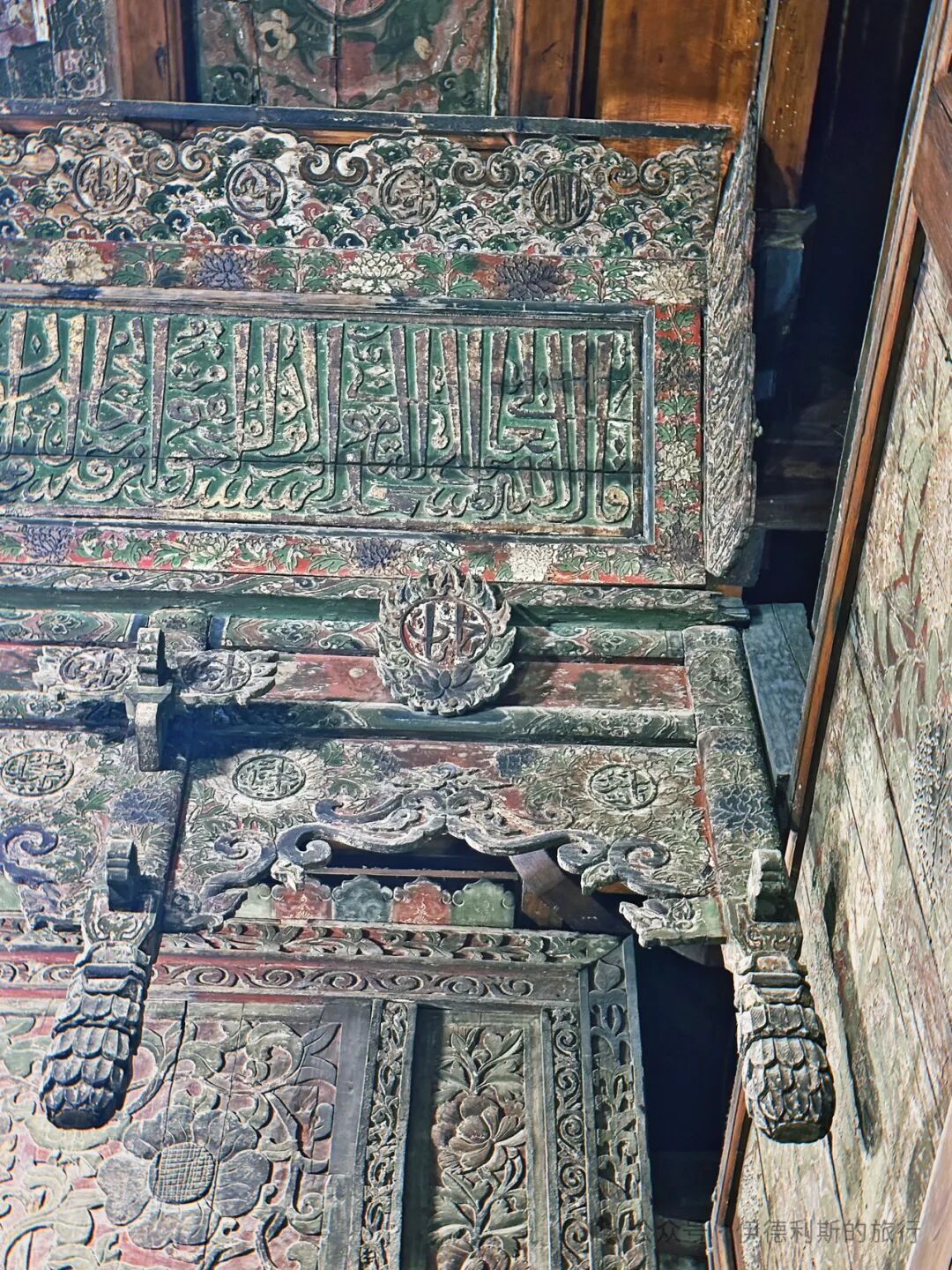
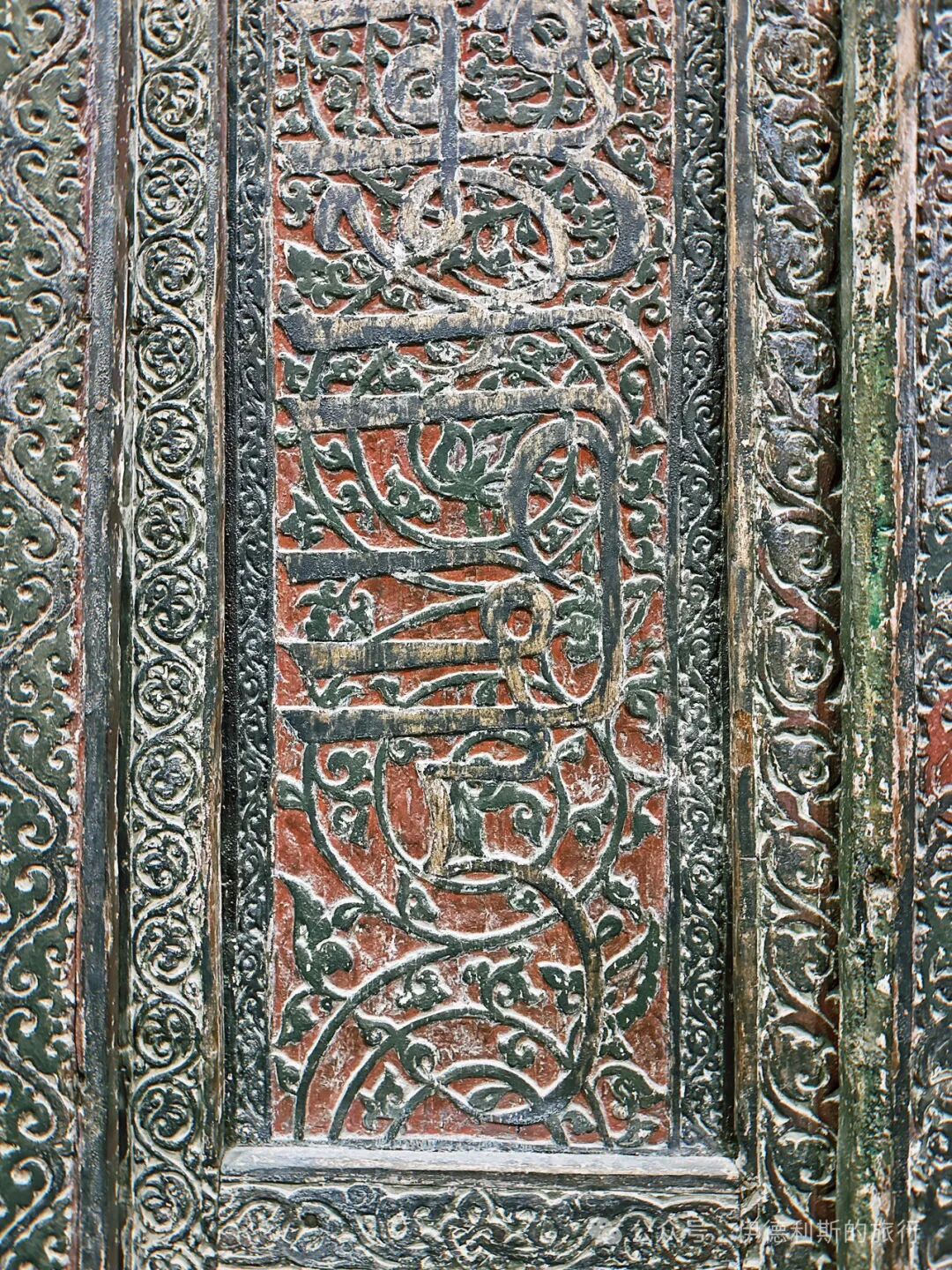
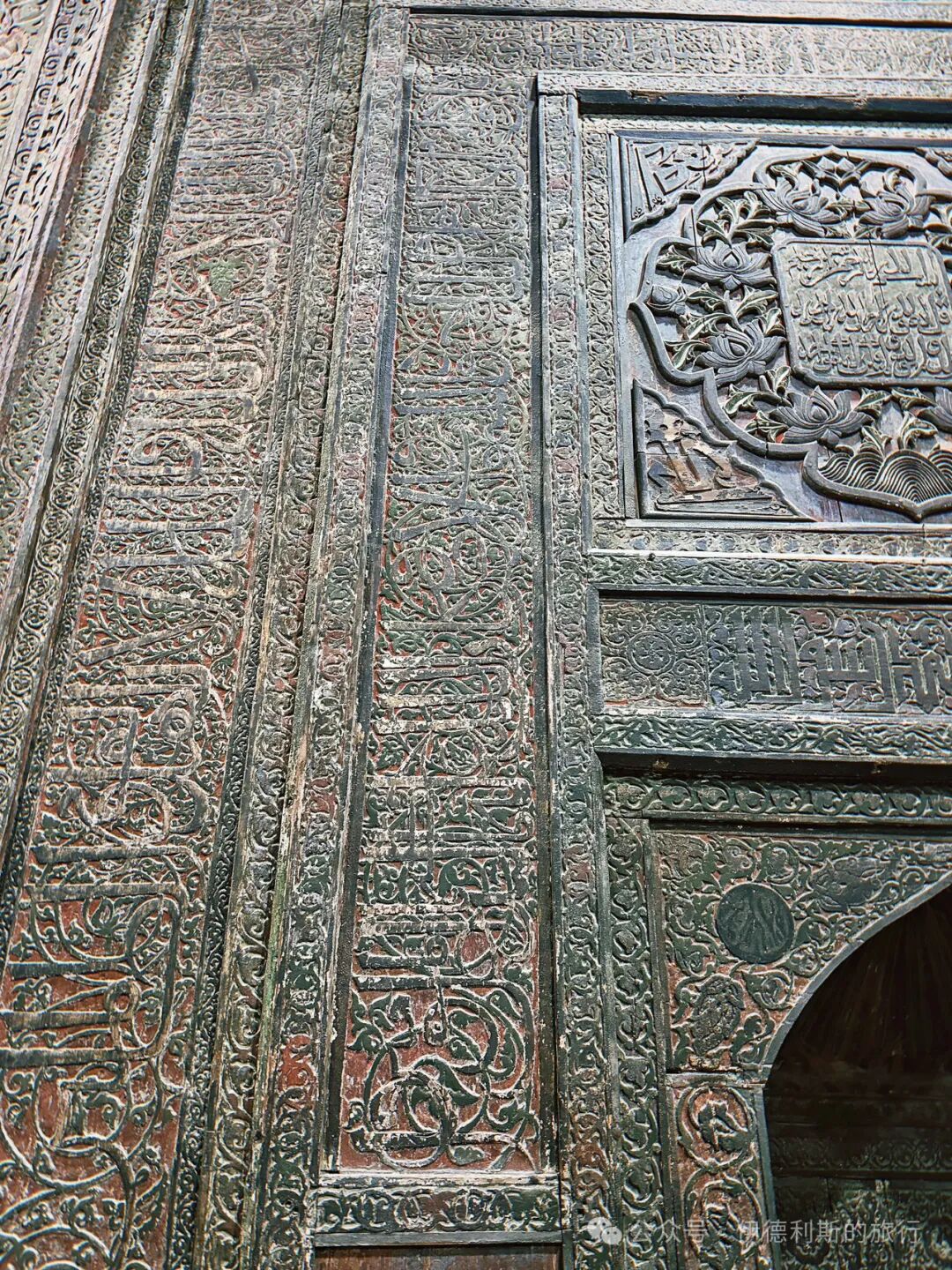
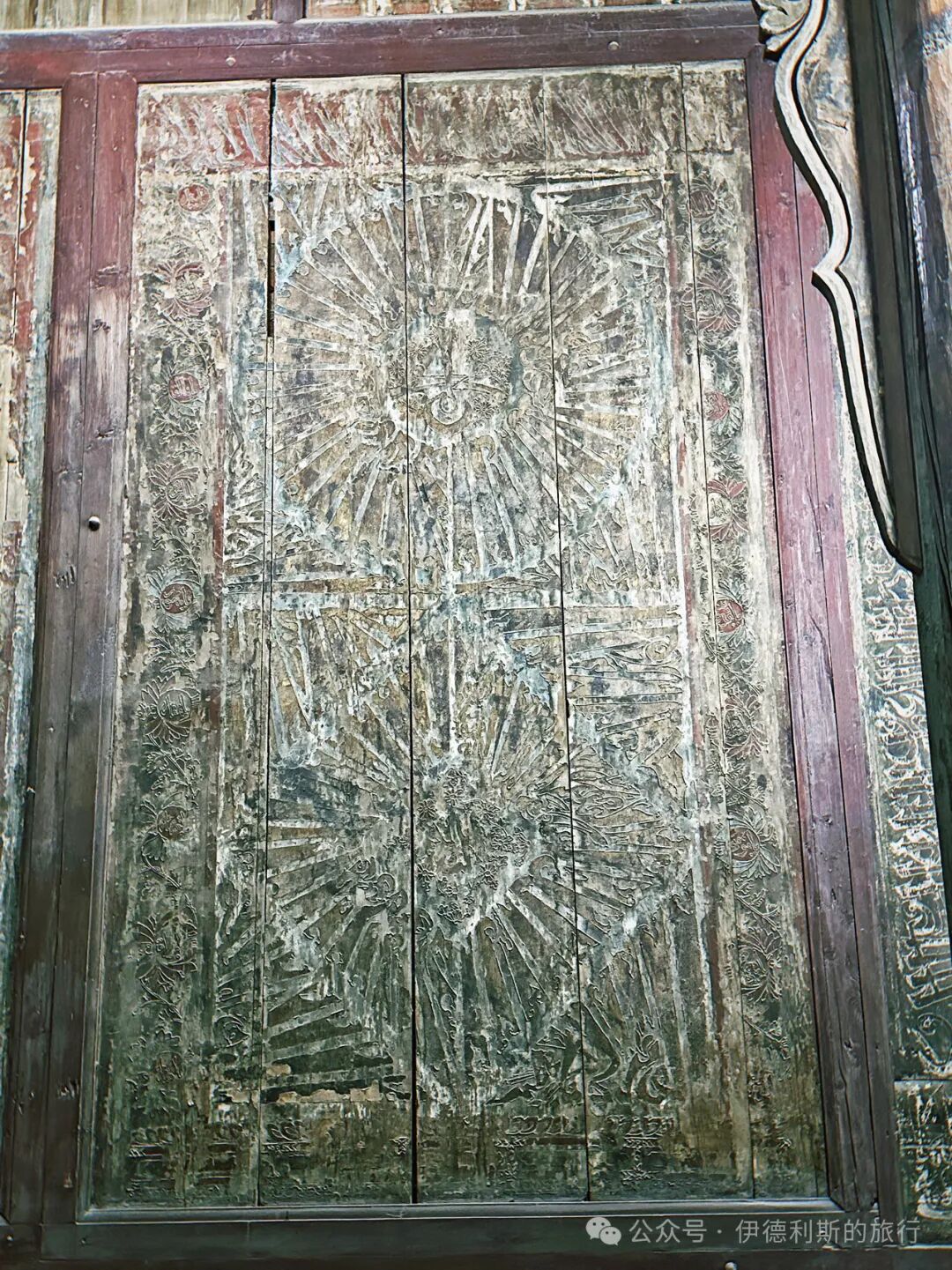
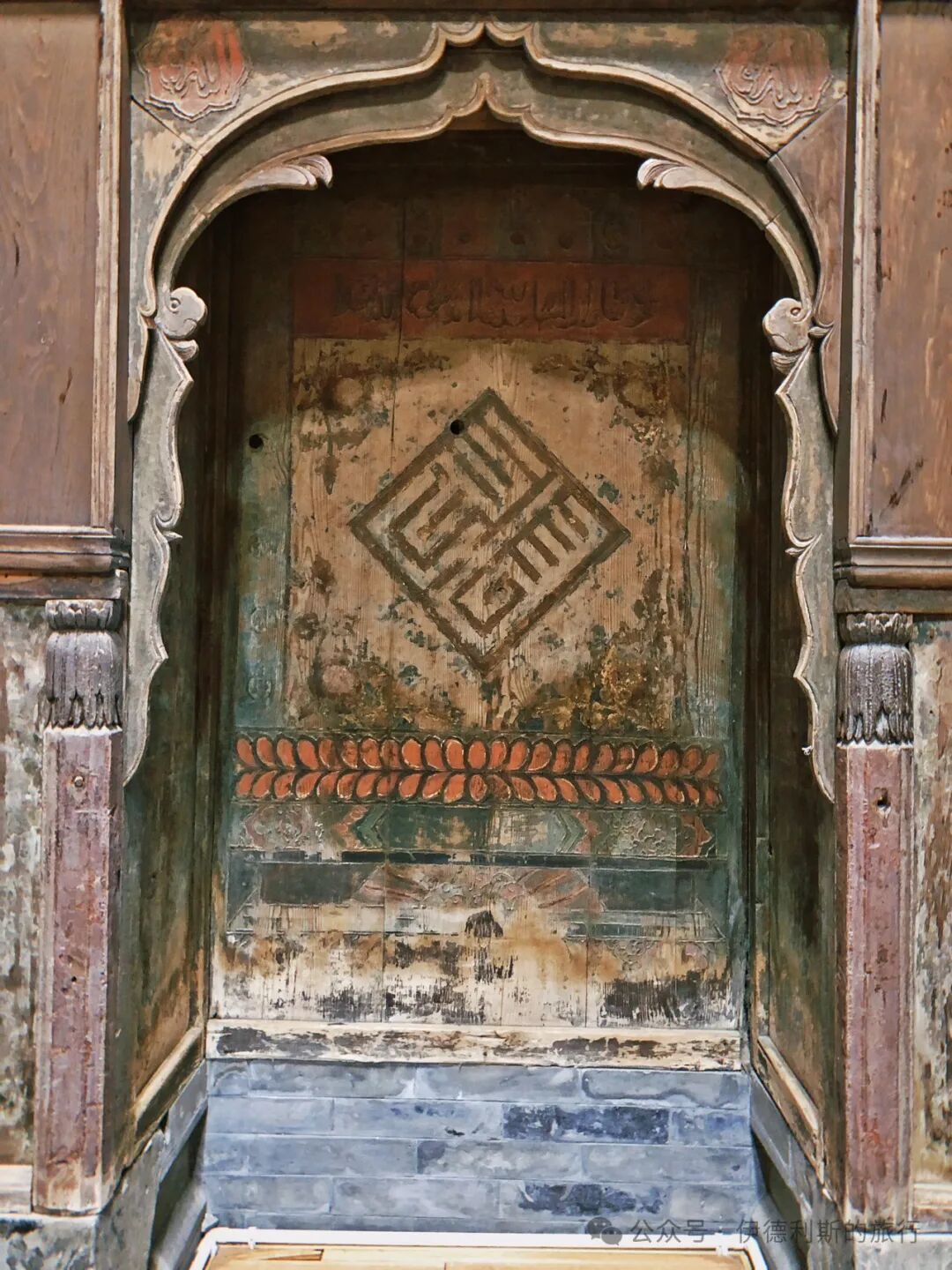
Besides Huajue Lane Great Mosque, the Daxuexi Lane Mosque and Dapiyuan Mosque in Xi'an also have original, unrestored mihrabs. Both mihrabs are made of inlaid wooden boards with a kiln niche in the middle, but their styles differ. Daxuexi Lane Mosque has a wooden carved canopy (feizhao) between its pillars. The craftsmanship is exquisite, and the calligraphy style matches that of Mengda Mosque in Xunhua, Qinghai, suggesting they may have been made by the same group of craftsmen.
Daxuexi Lane Mosque
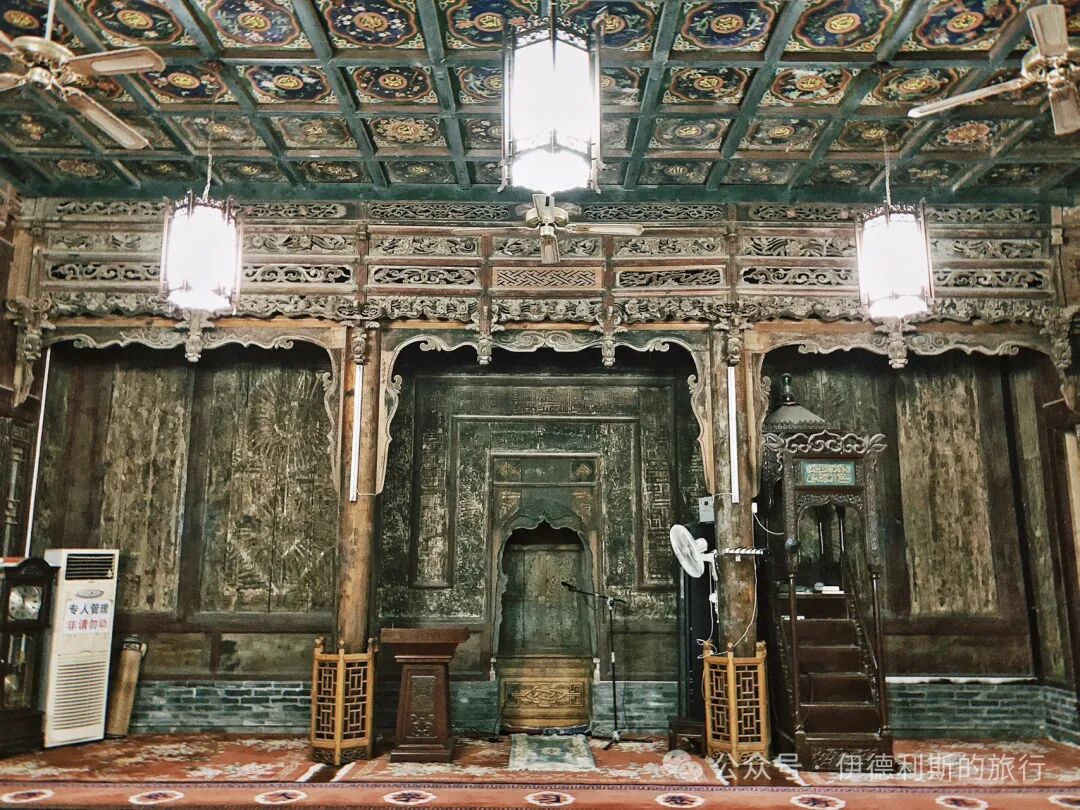
Dapiyuan Mosque
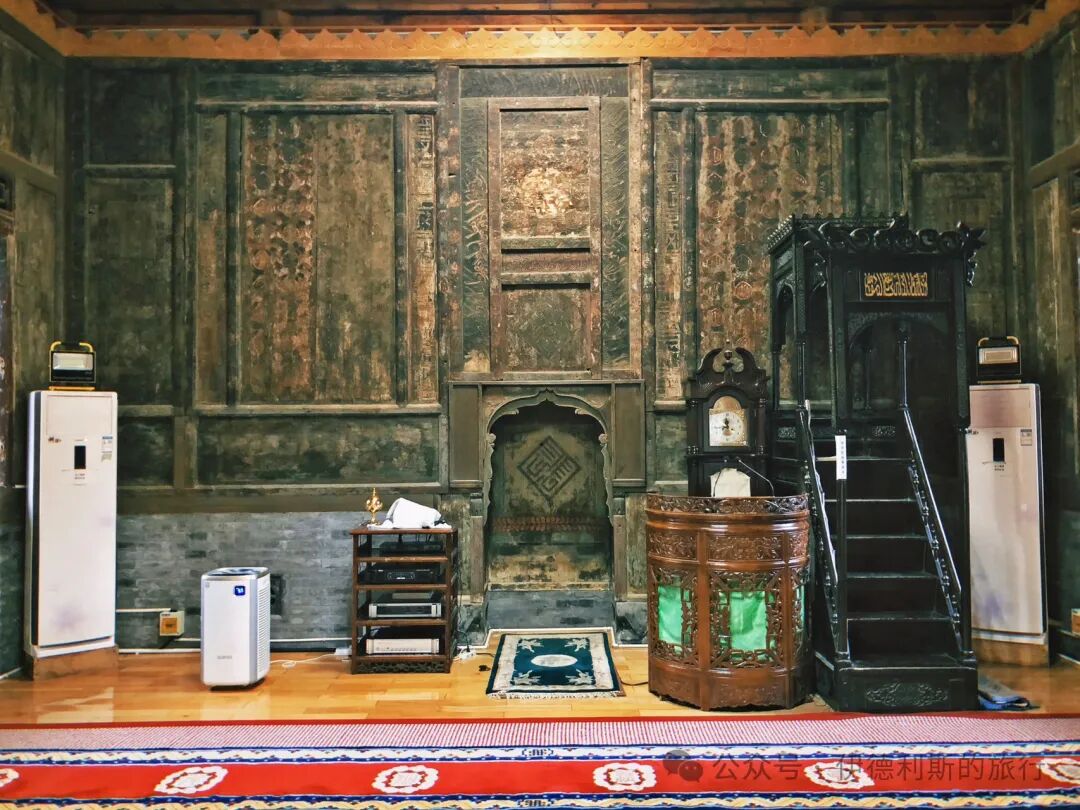
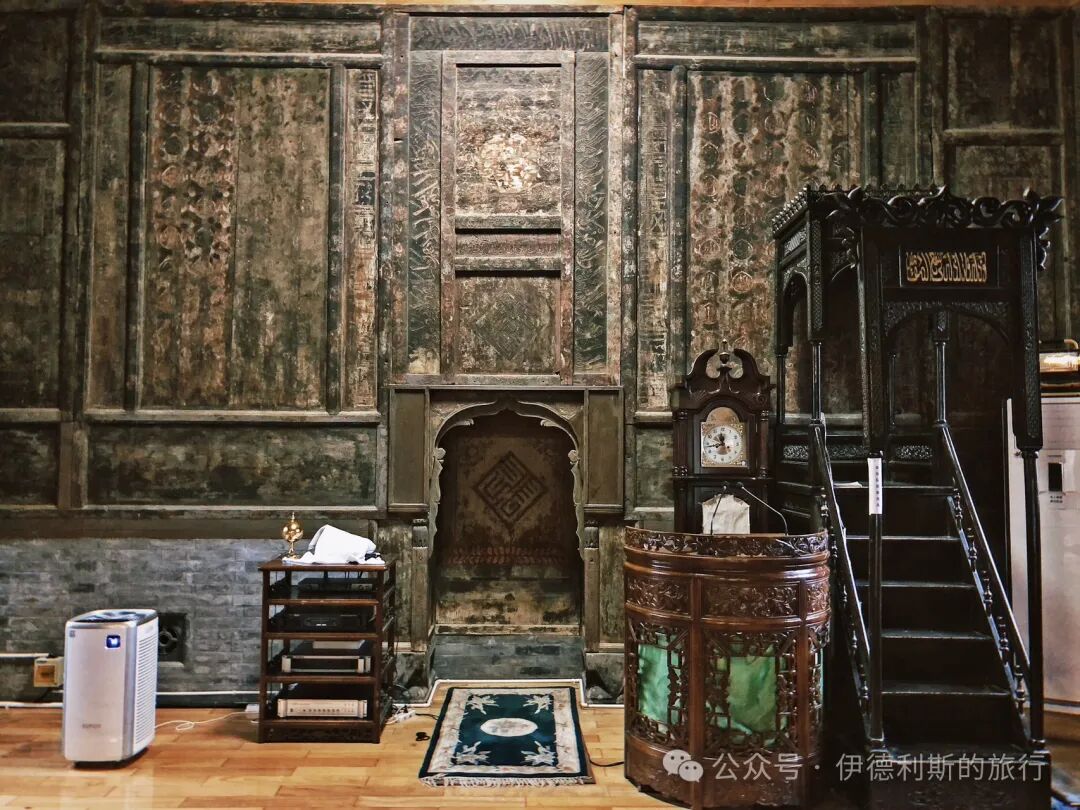
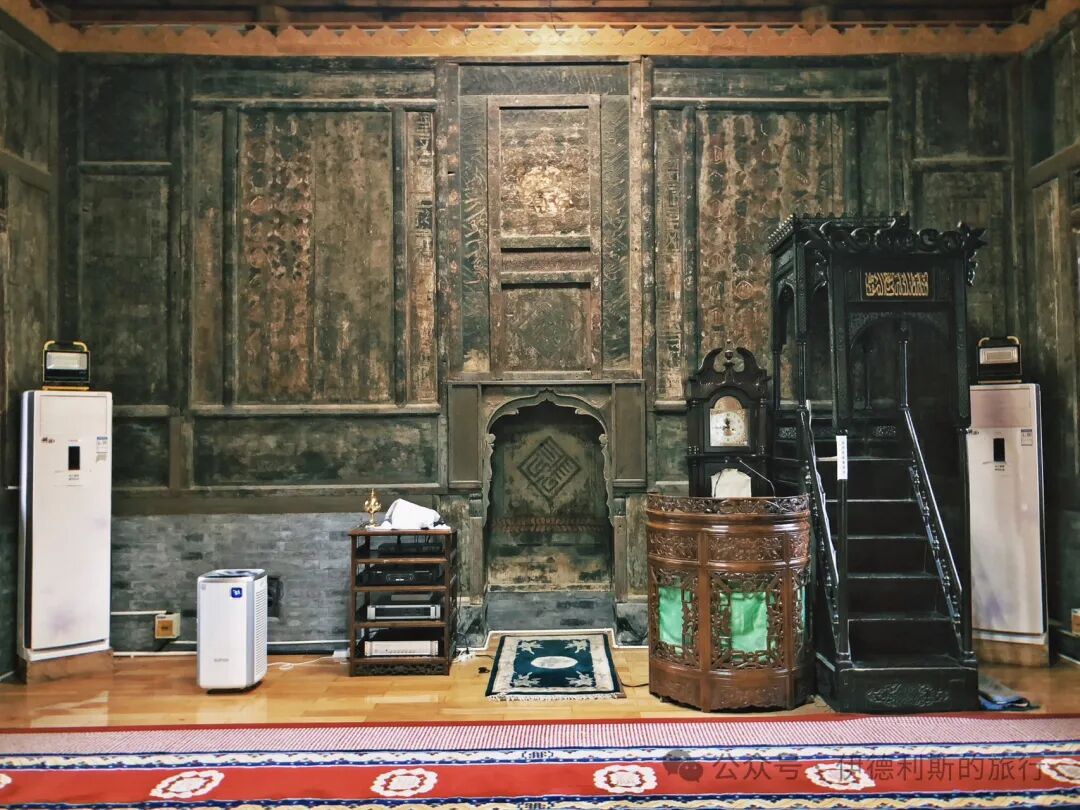
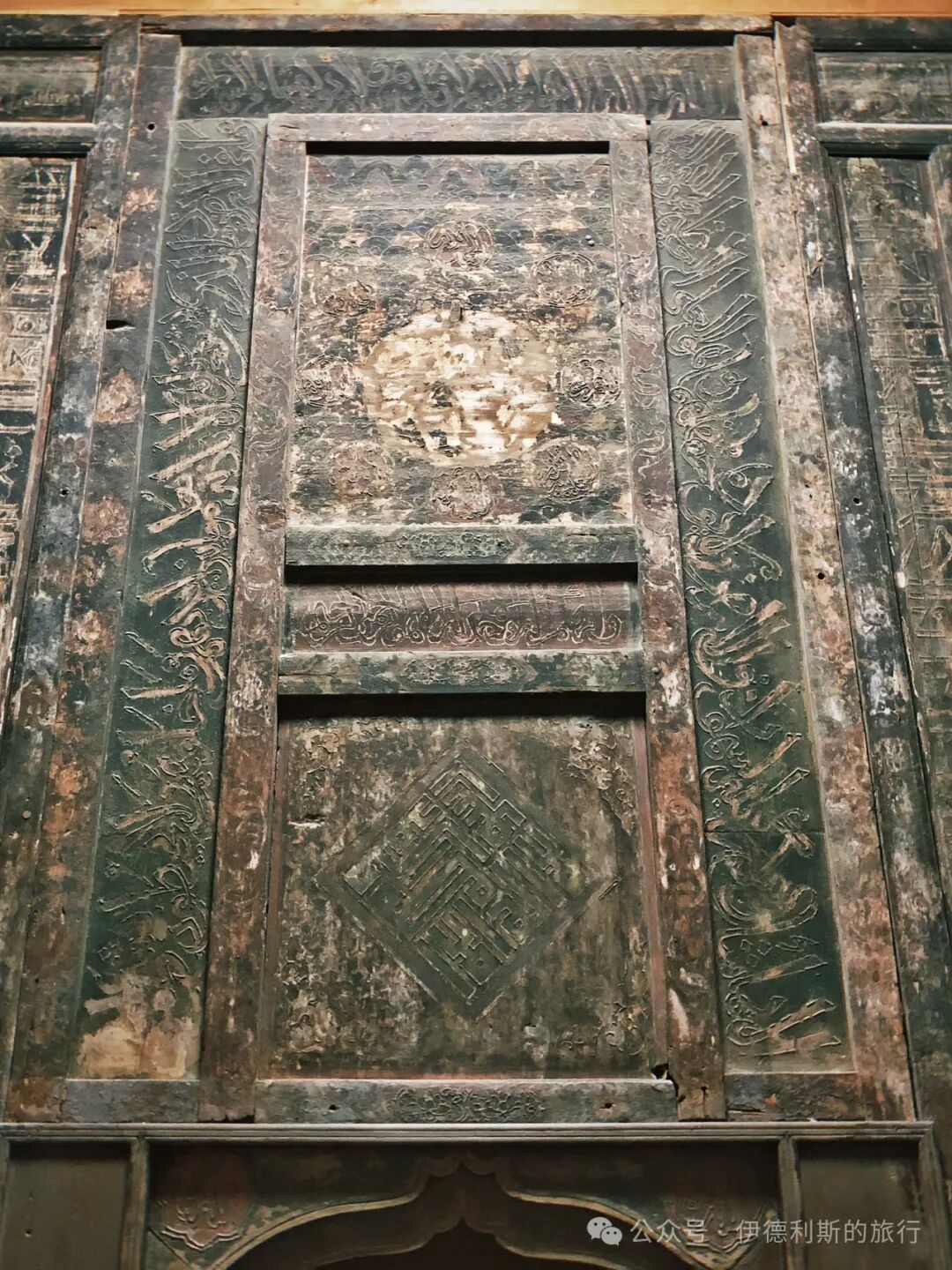
Some restored and newly built mihrabs in Xi'an, Shaanxi.
Xiaopiyuan North Mosque has had all its paintings redone, though it is said the style remains unchanged. The center is a kiln niche with beautiful wooden floral carvings.
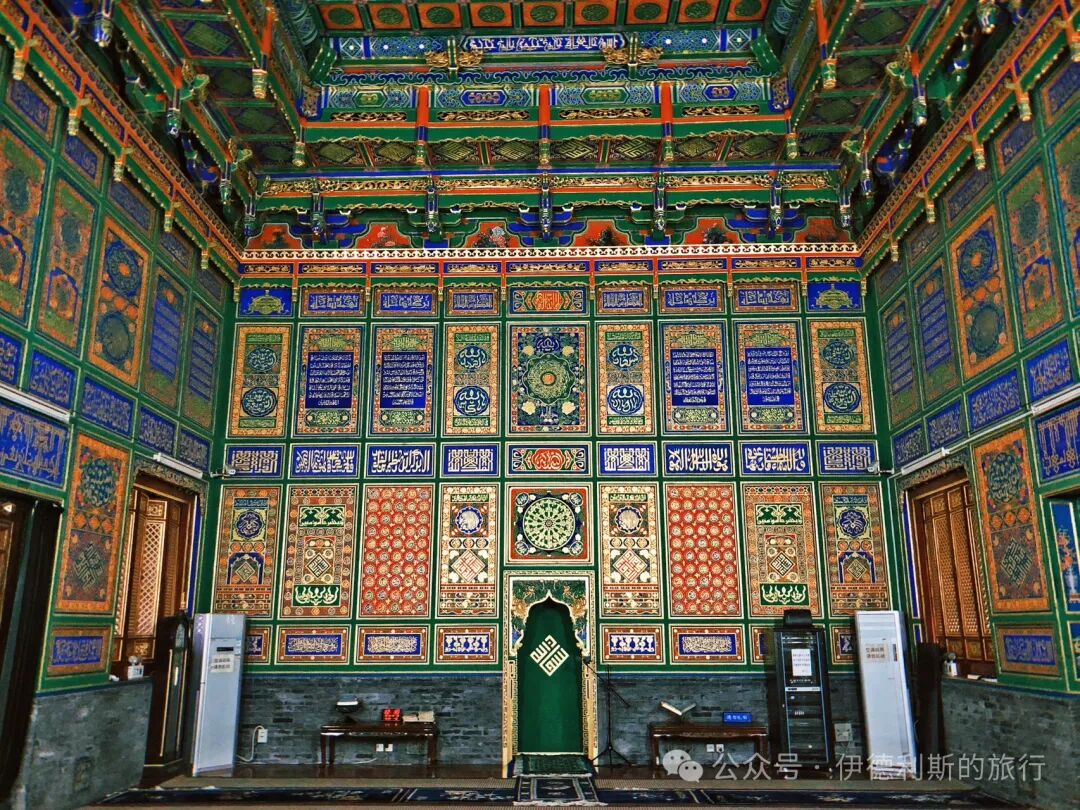
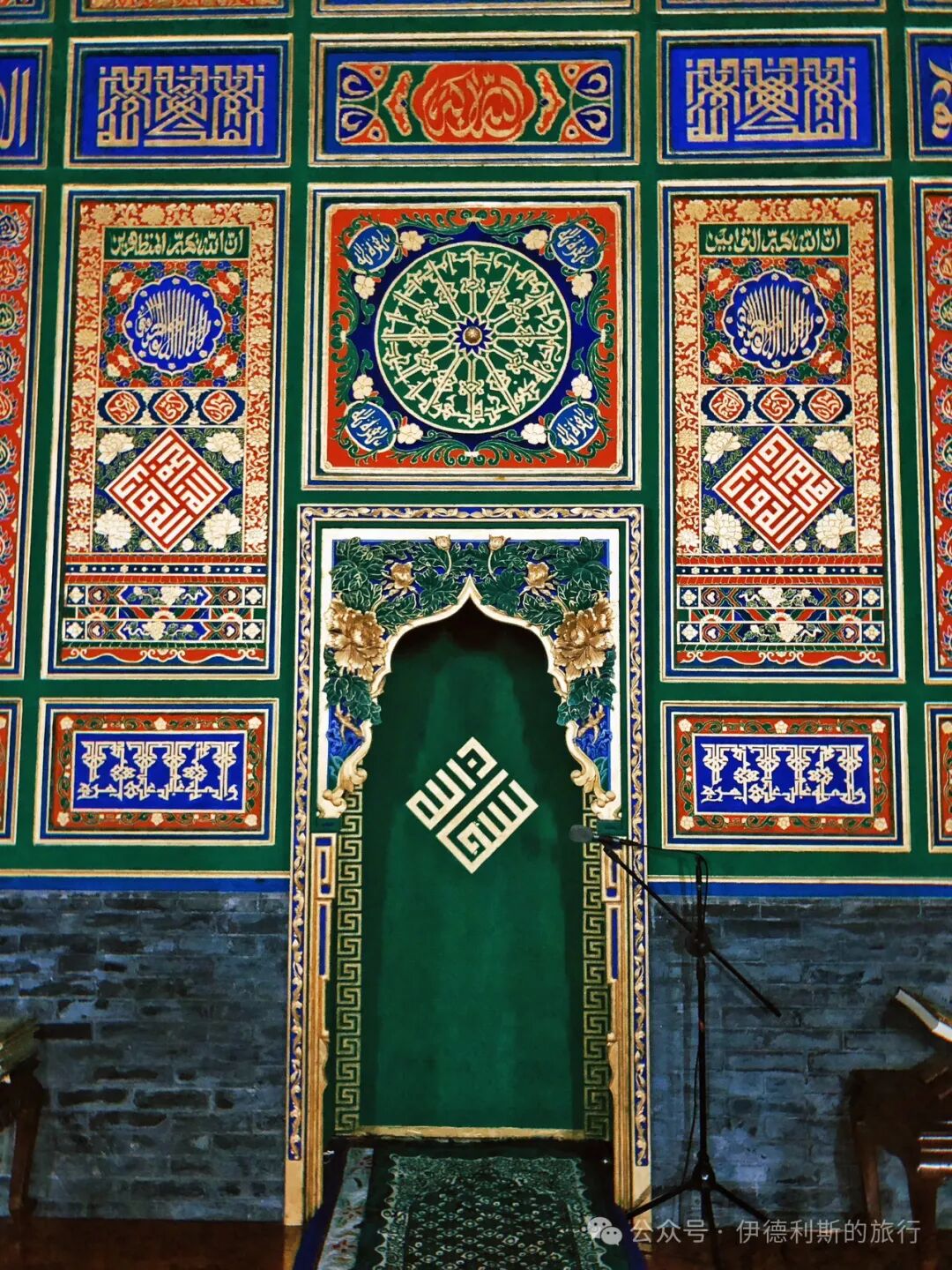
At the North Guangji Street Mosque, the wood carvings on the upper part of the prayer niche (mihrab) look like those at the Great Mosque of Huajue Lane.
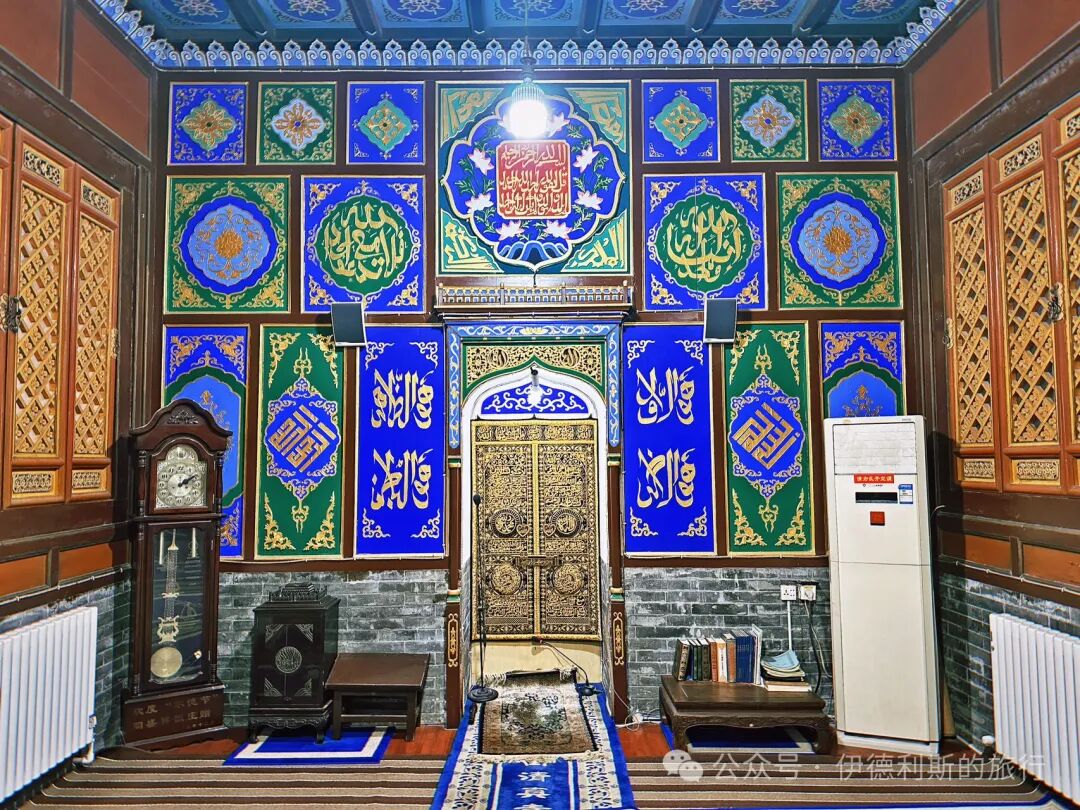
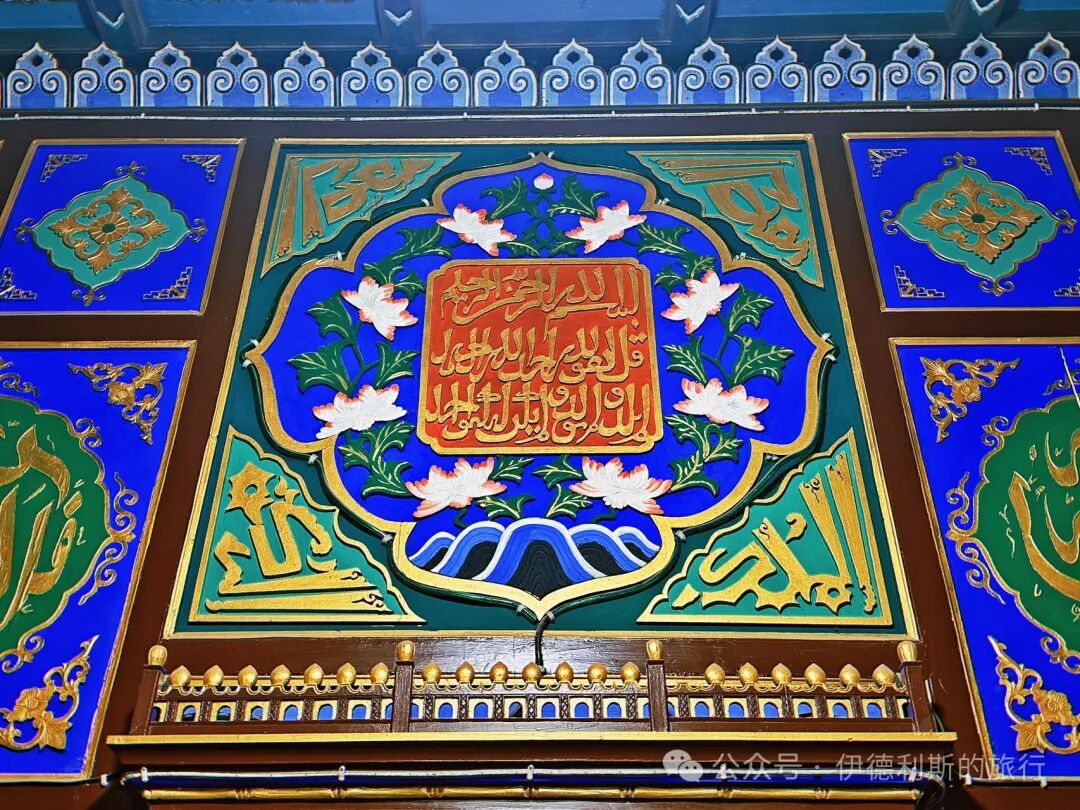
The Xiaoxuexi Lane Middle Mosque features wood panel inlays with a prayer niche (mihrab) in the center.
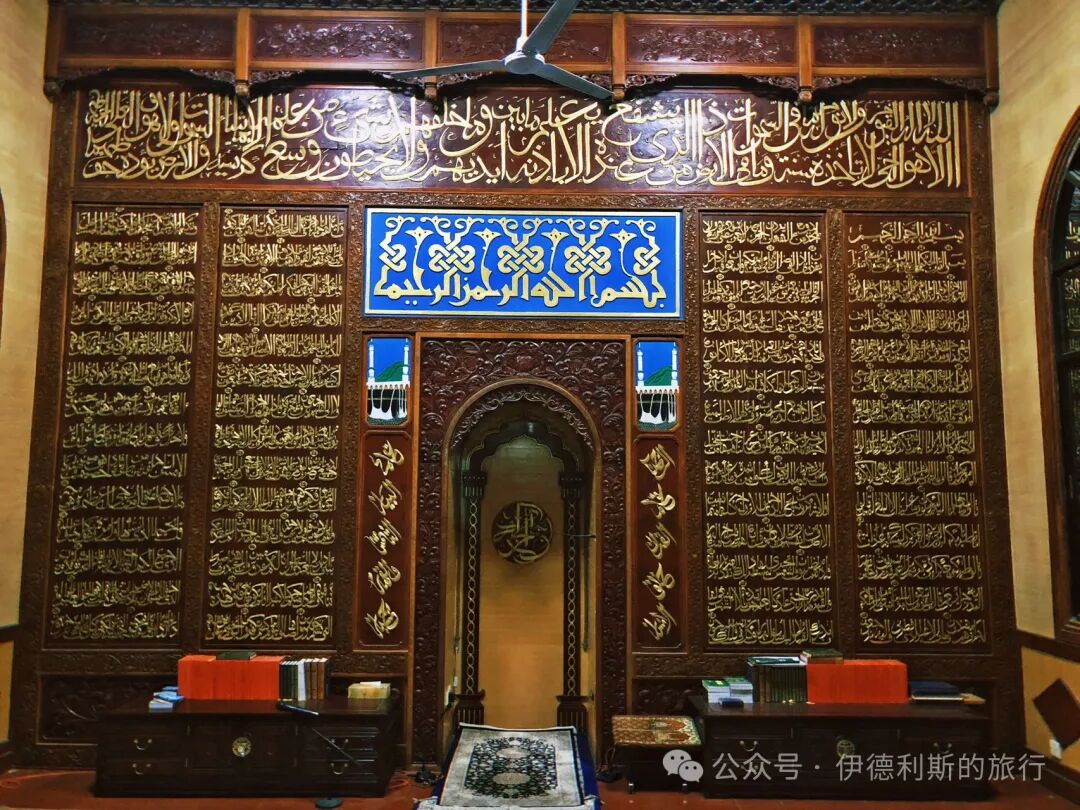
The Xiaoxuexi Lane Yingli Mosque has a wood-carved door canopy decorated with flower and plant patterns.
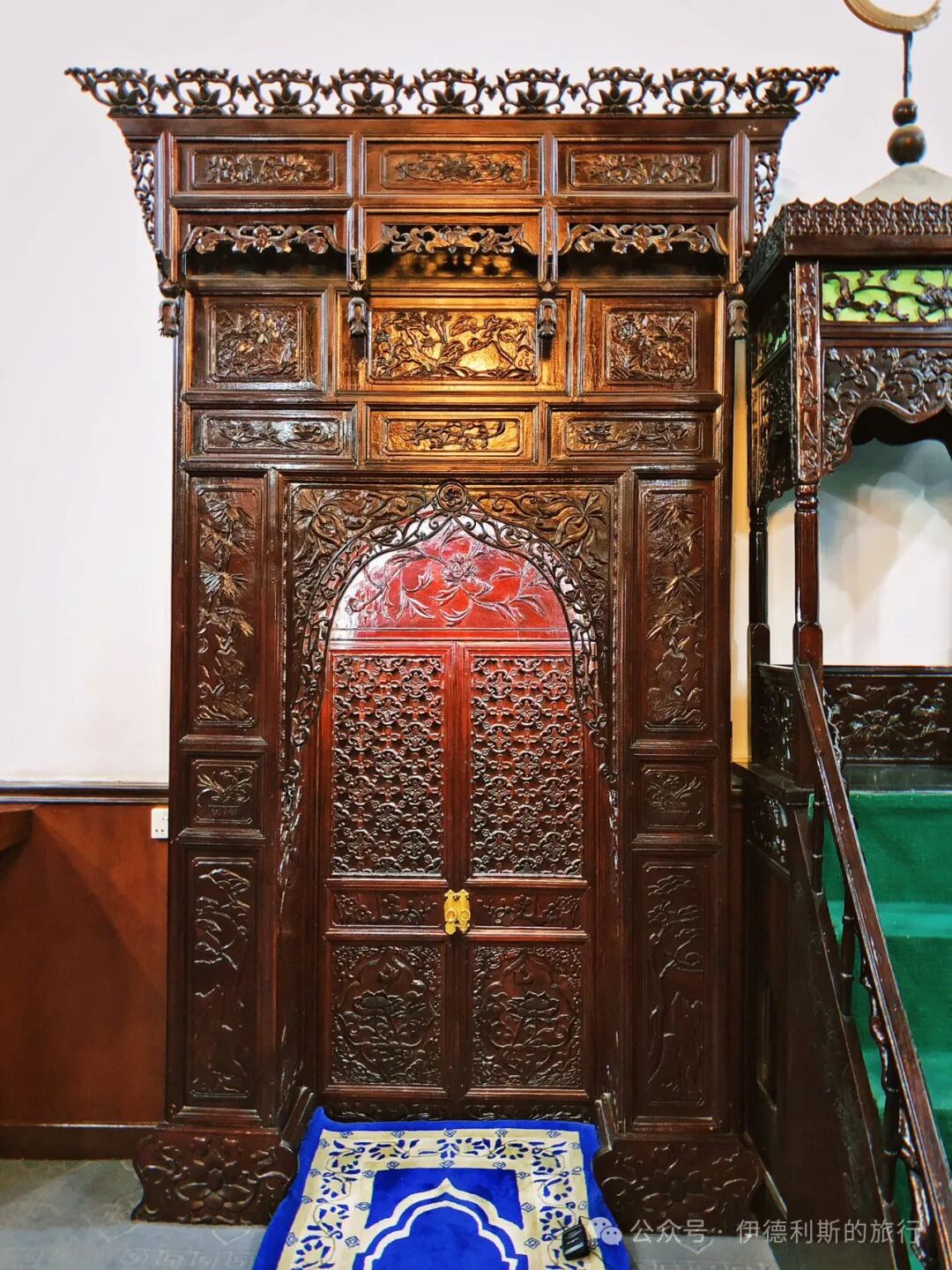
The Dongmen Cang South City Mosque has a wood-carved door canopy featuring traditional-style calligraphy.
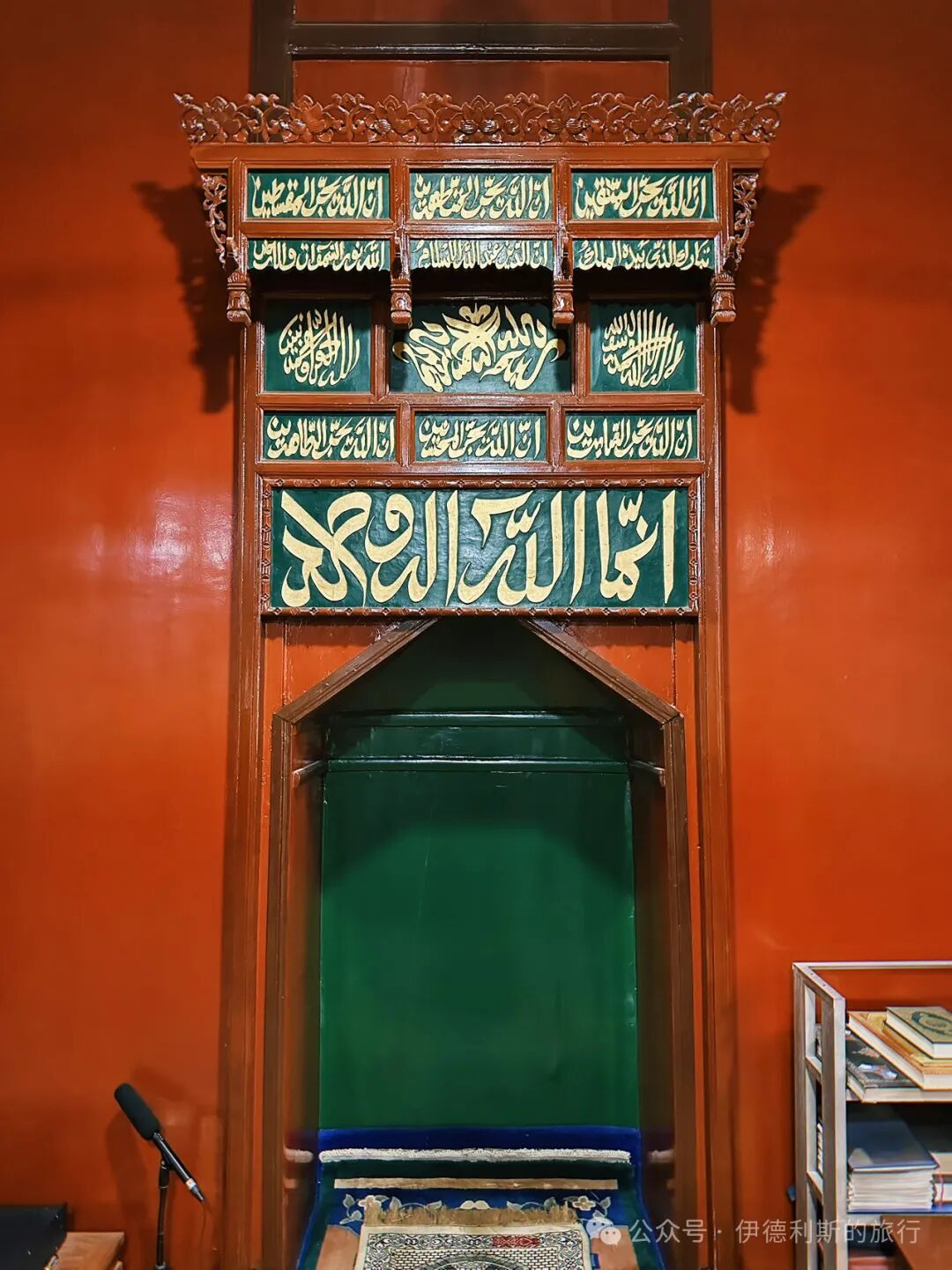
The Sajinqiao Mosque uses wood panel inlays and contains a very rare Chinese-language Yasin chapter.
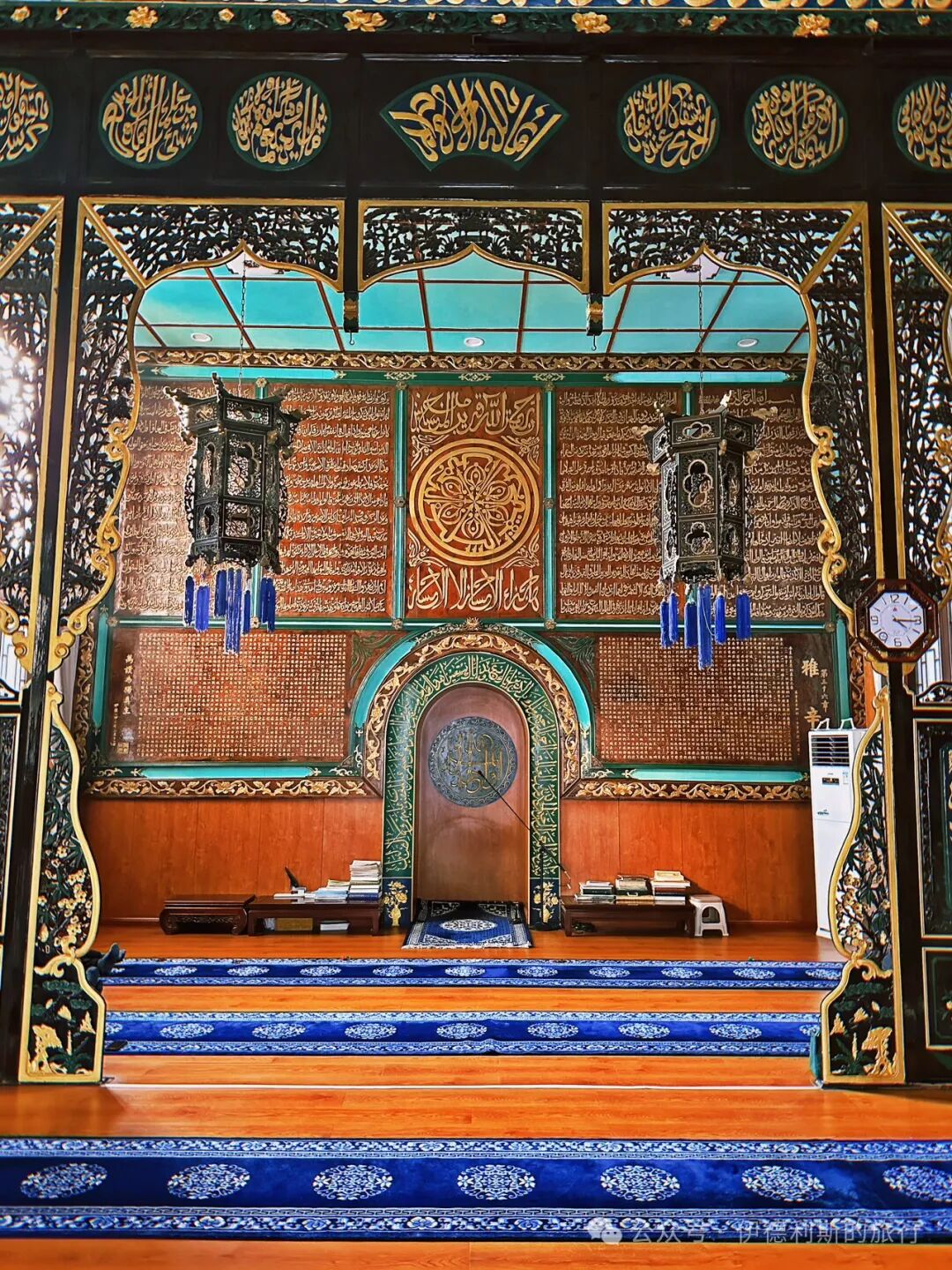
Prayer niches (mihrab) in the southern Shaanxi region:
The Ankang North Mosque in Shaanxi is built in a memorial archway style with wood-carved flying eaves.
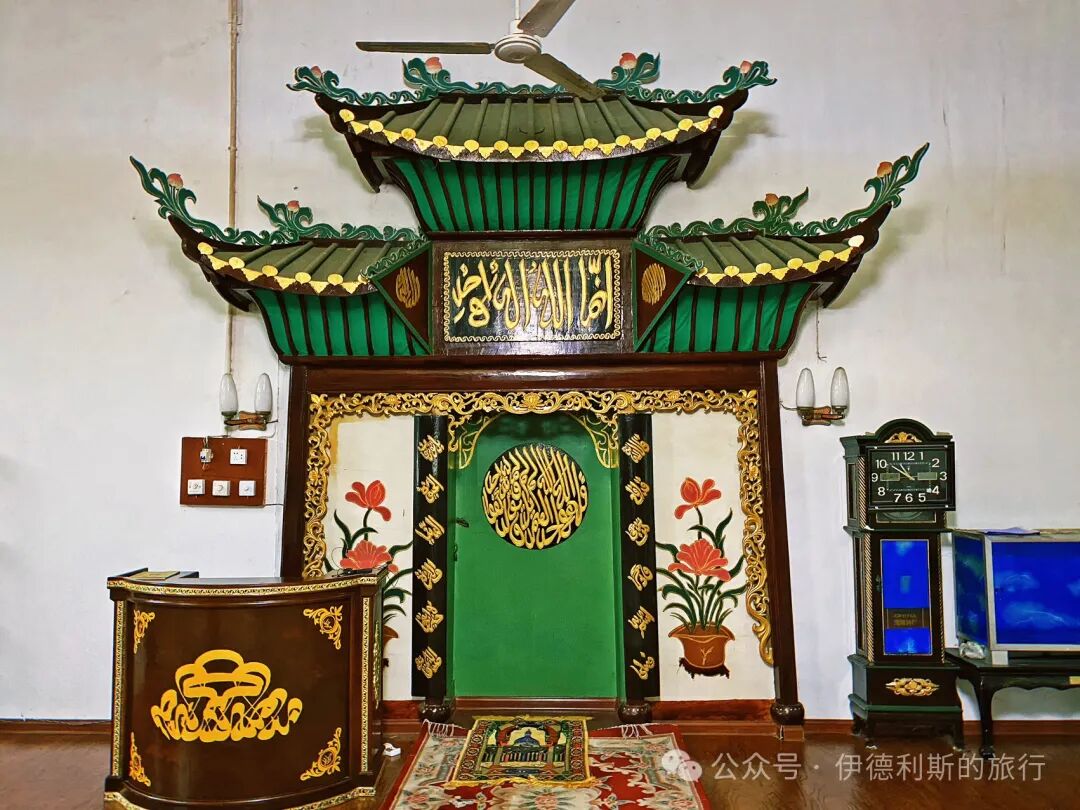
The Ankang Jingning South Mosque in Shaanxi features traditional-style couplets and horizontal inscribed boards.
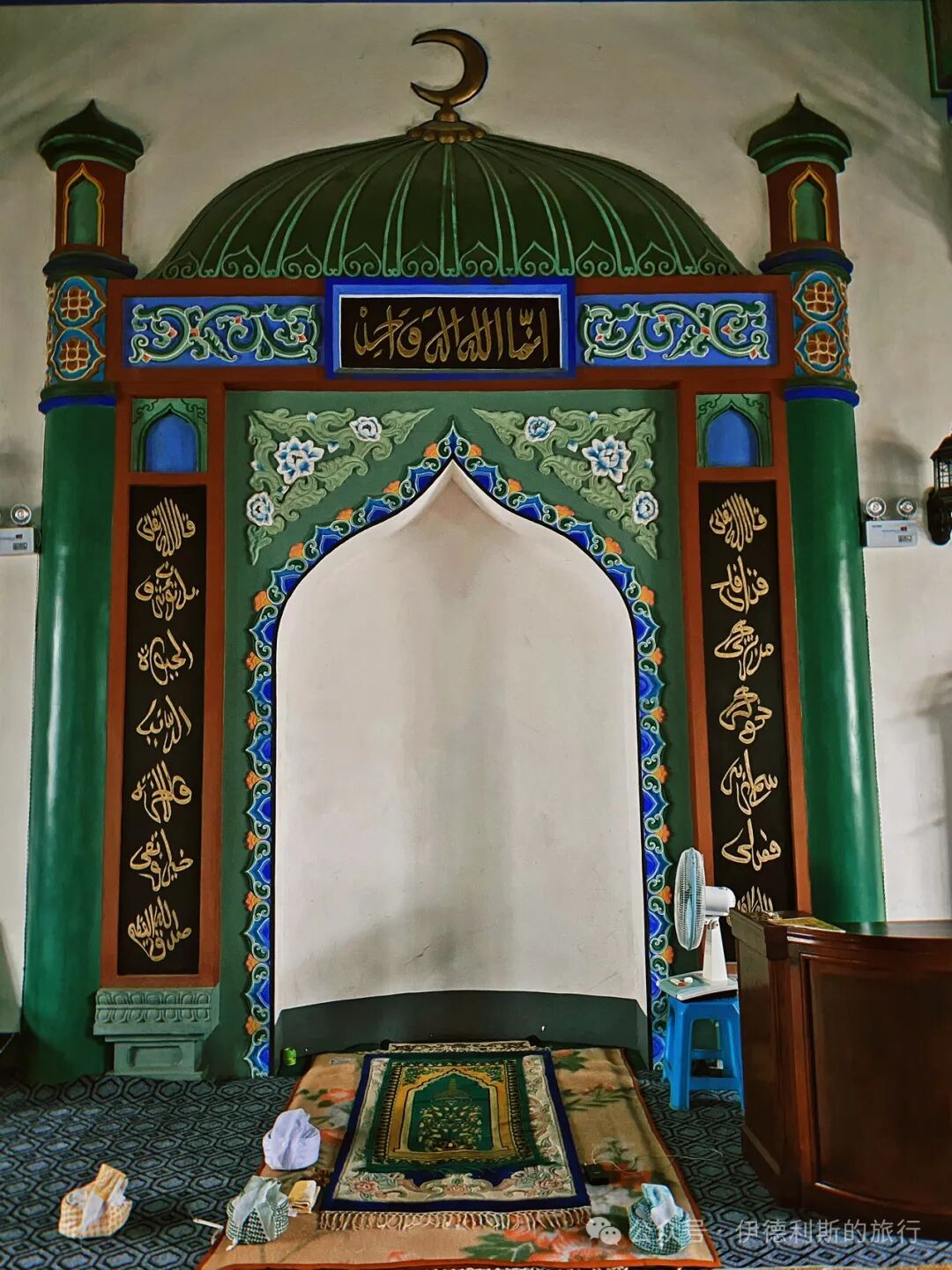
The Xixiang North Mosque in Shaanxi features traditional-style couplets and horizontal inscribed boards.
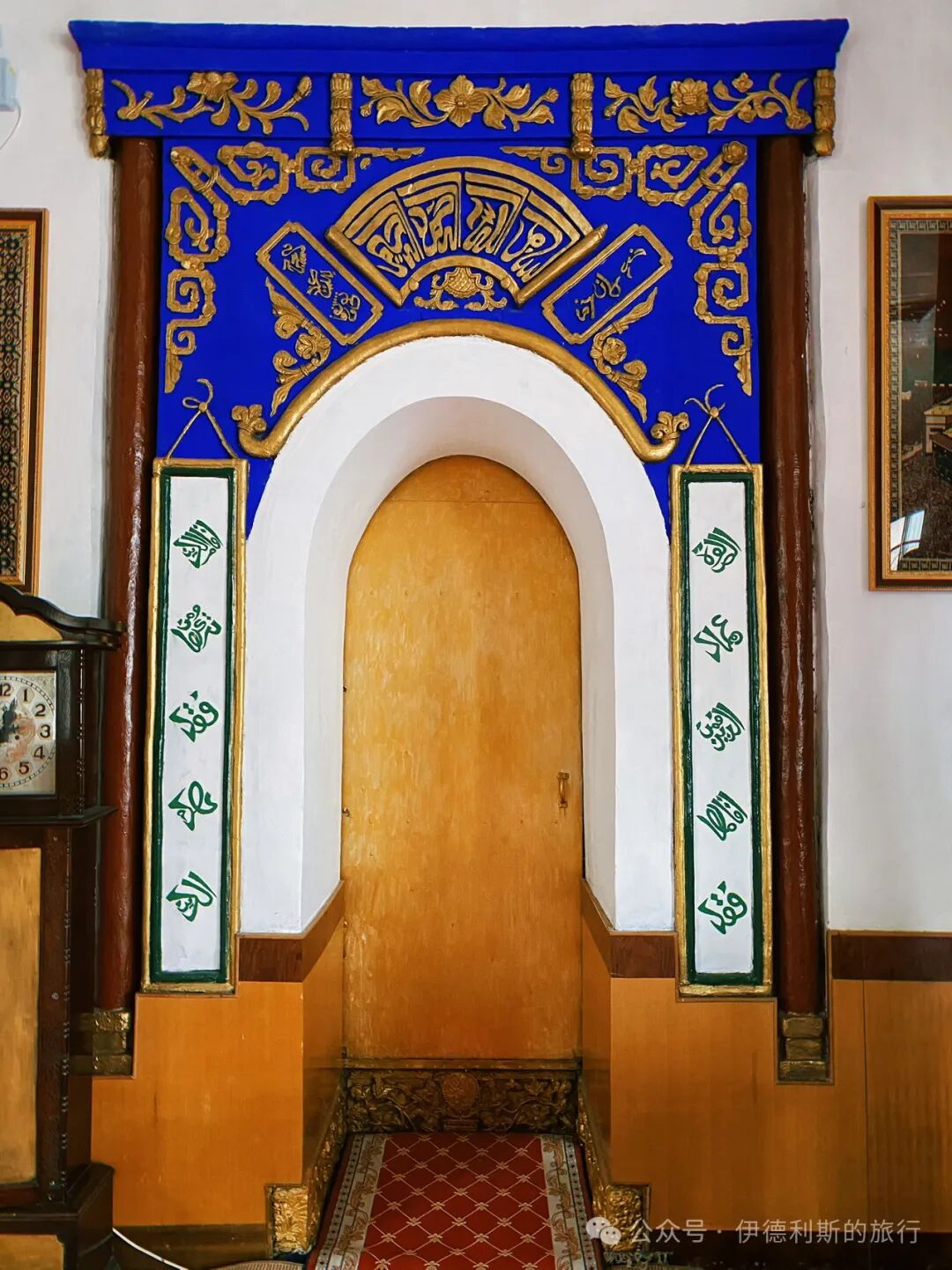
The Xixiang Luling Mosque in Shaanxi is built in a wood memorial archway style and has traditional couplets.
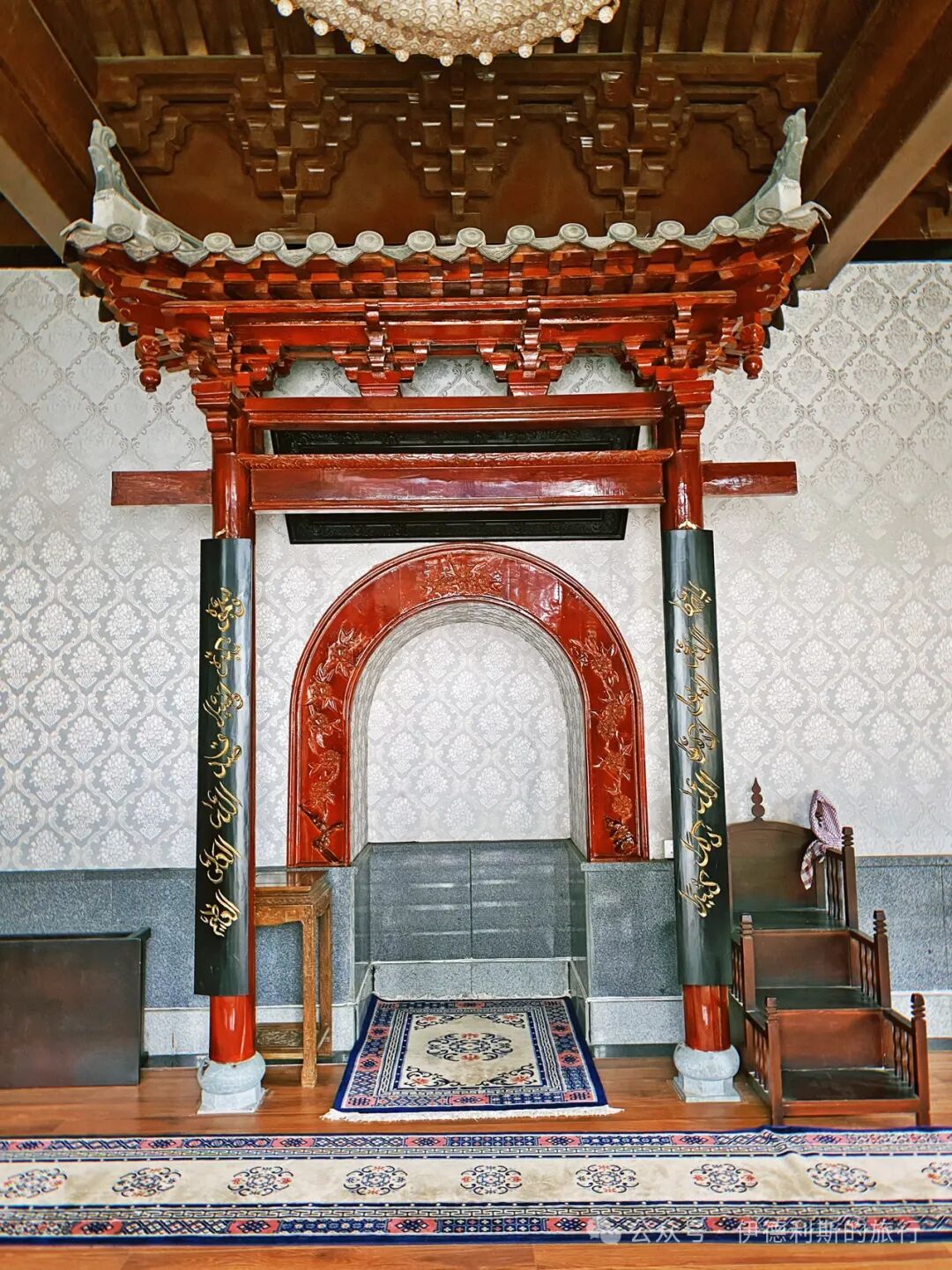
The Hanzhong Xianyin Mosque in Shaanxi has traditional-style horizontal inscribed boards and couplets, and the prayer niche (mihrab) is carved with an offering table.
Gansu
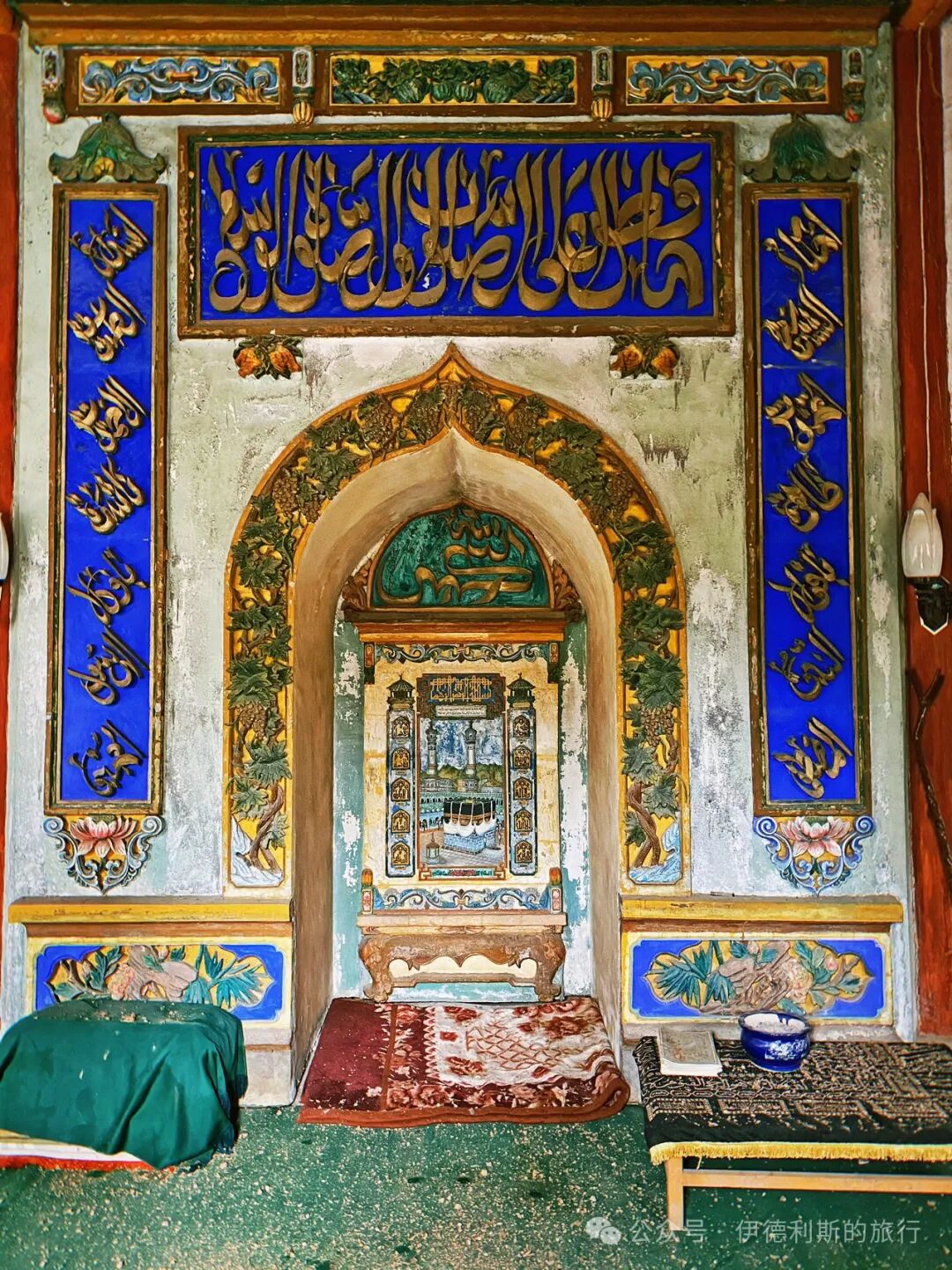
The Linxia Old Wang Mosque is arch-shaped and carved with traditional Arabic horizontal inscribed boards and couplets.
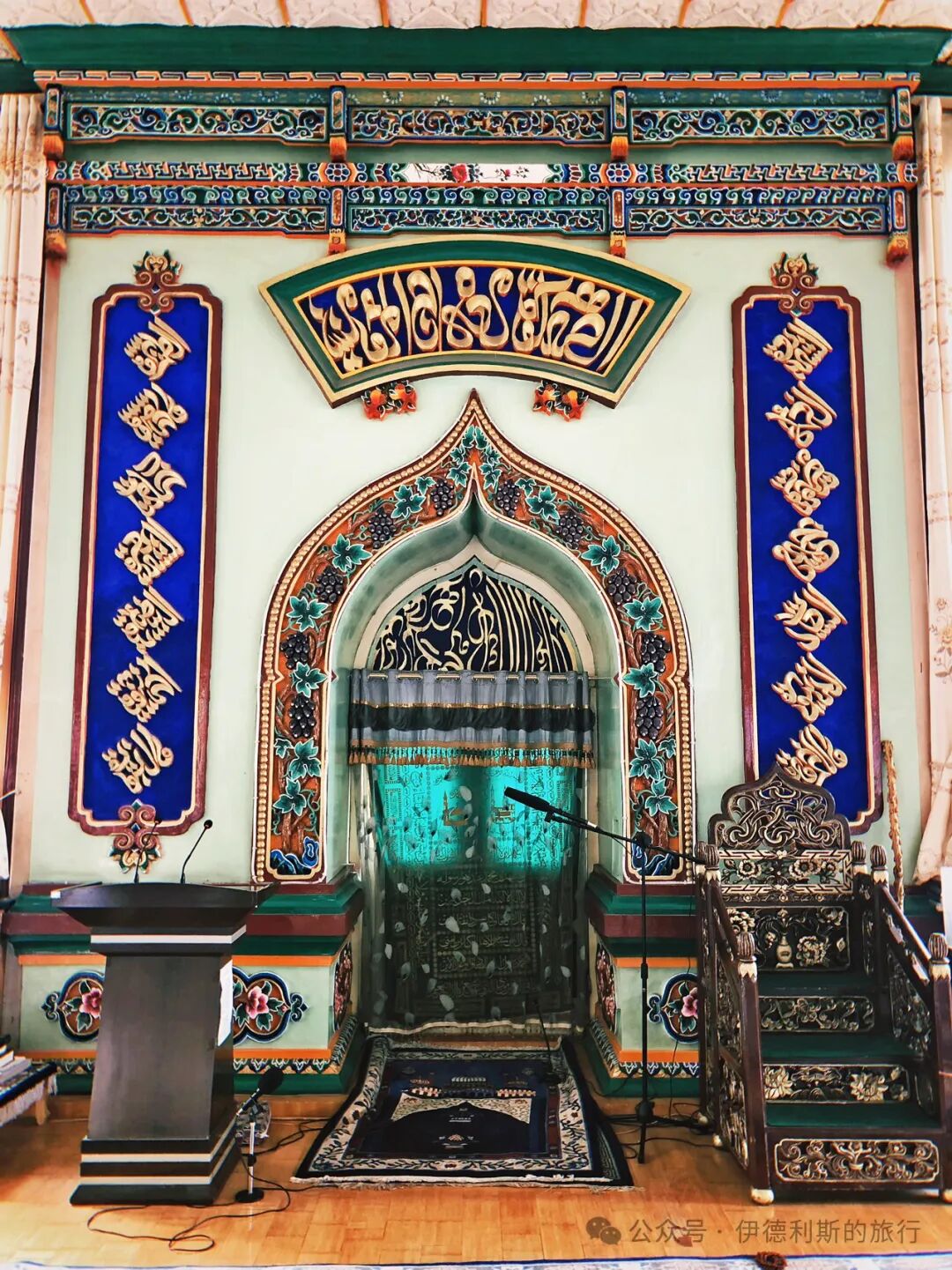
The Linxia West Mosque is arch-shaped and carved with traditional Arabic horizontal inscribed boards and couplets.
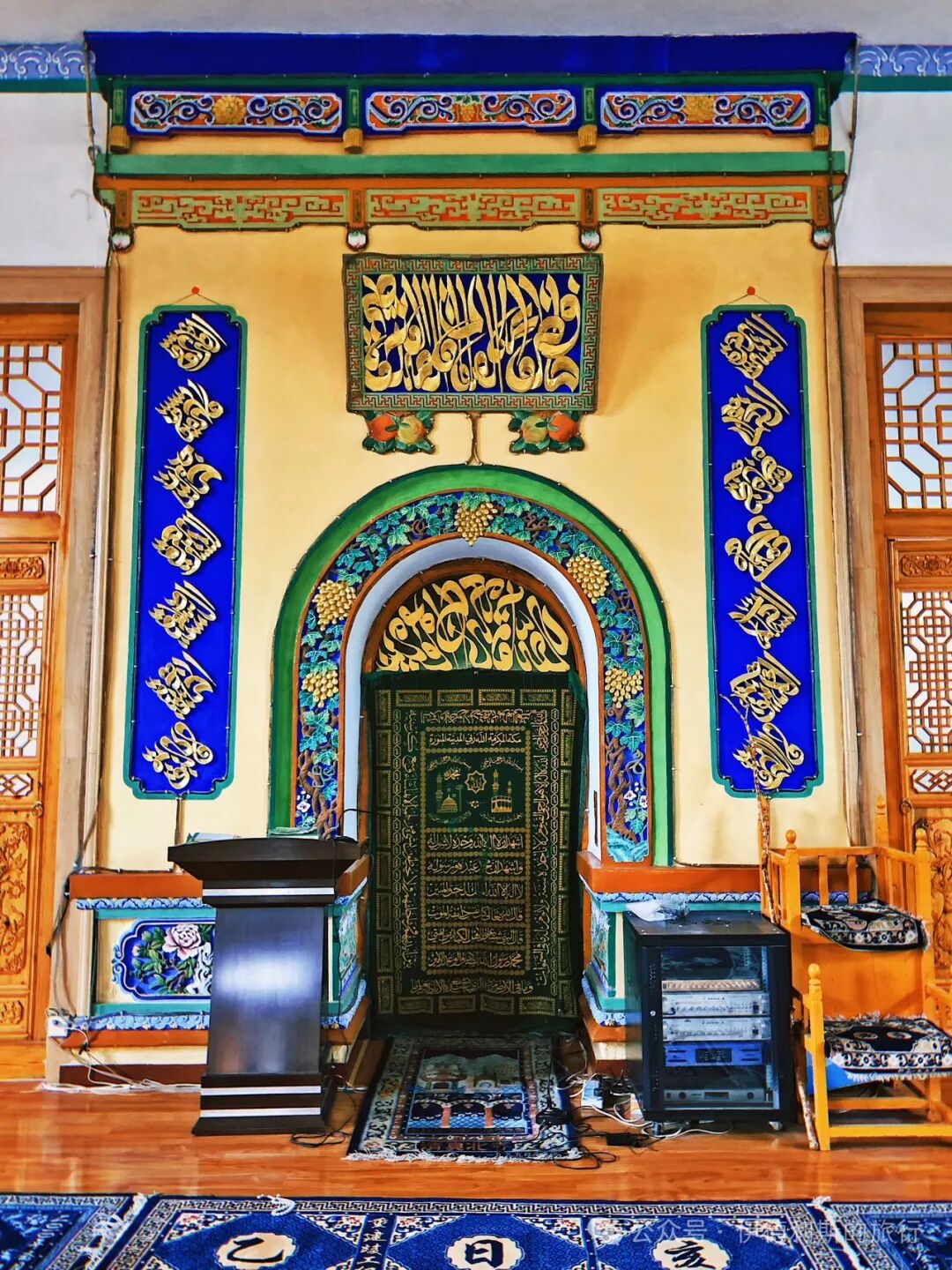
The Linxia North Mosque is arch-shaped and carved with traditional Arabic horizontal inscribed boards and couplets.
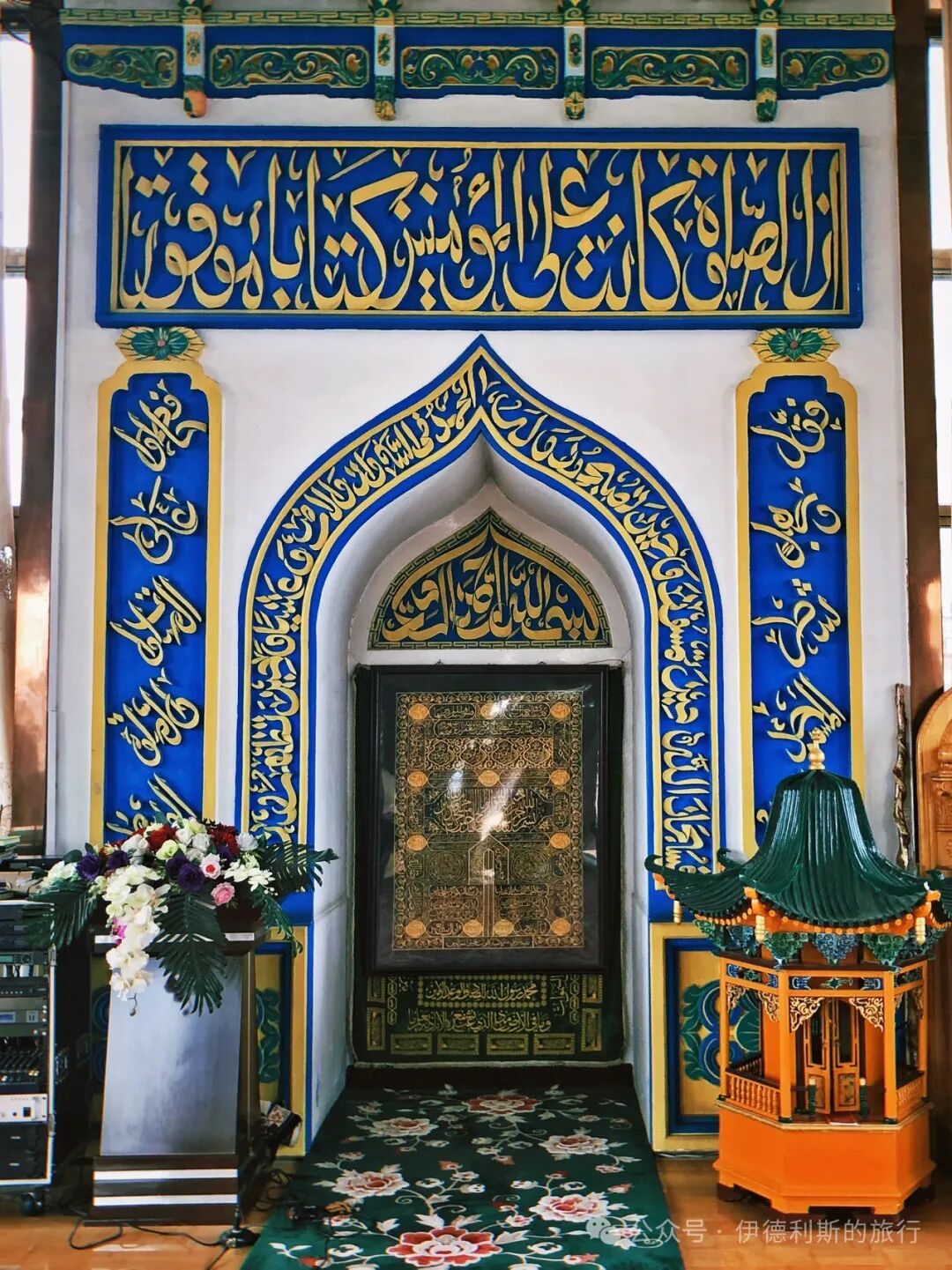
The Tianshui Beiguan Mosque is arch-shaped and carved with traditional Arabic horizontal inscribed boards and couplets.
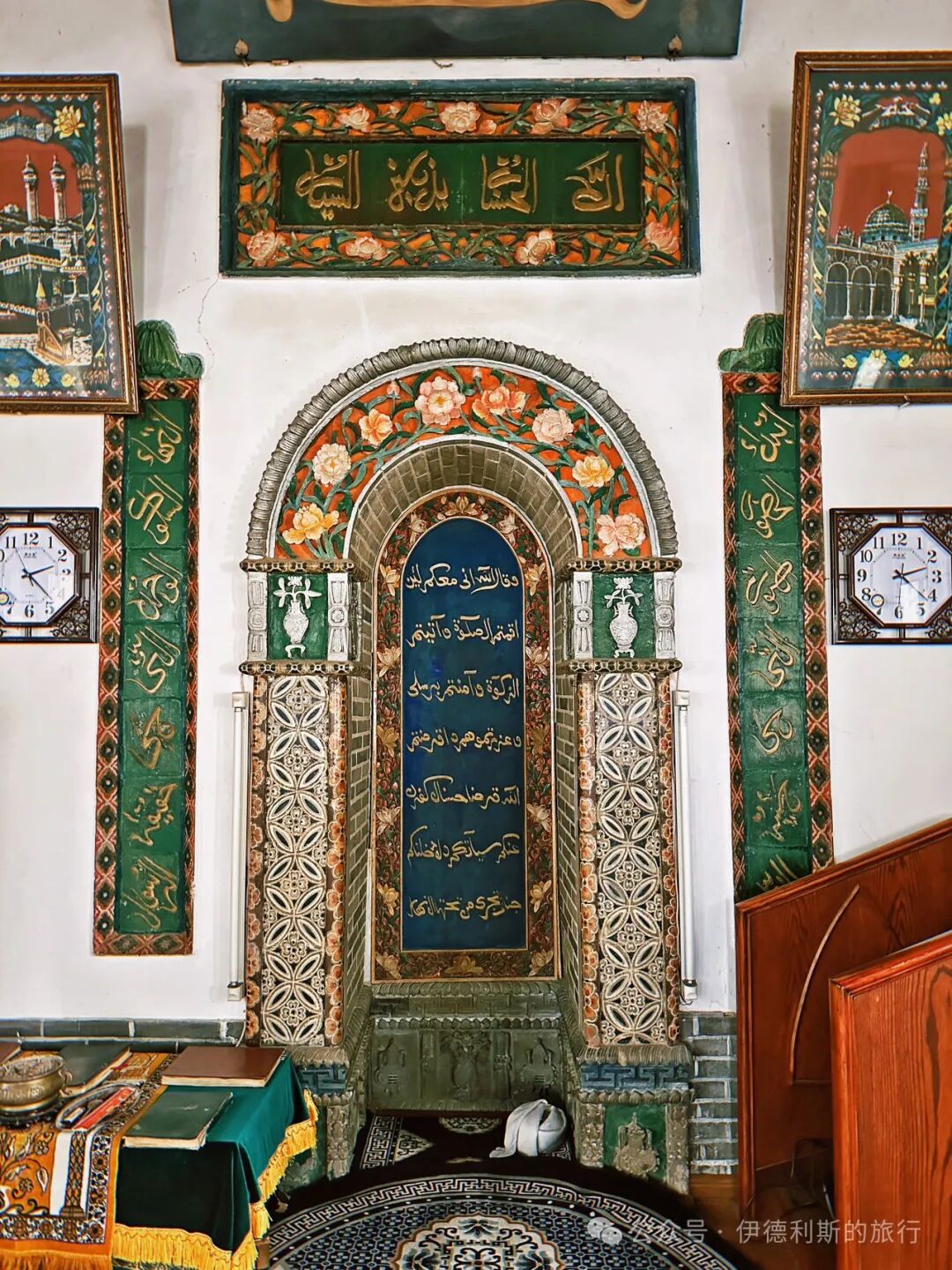
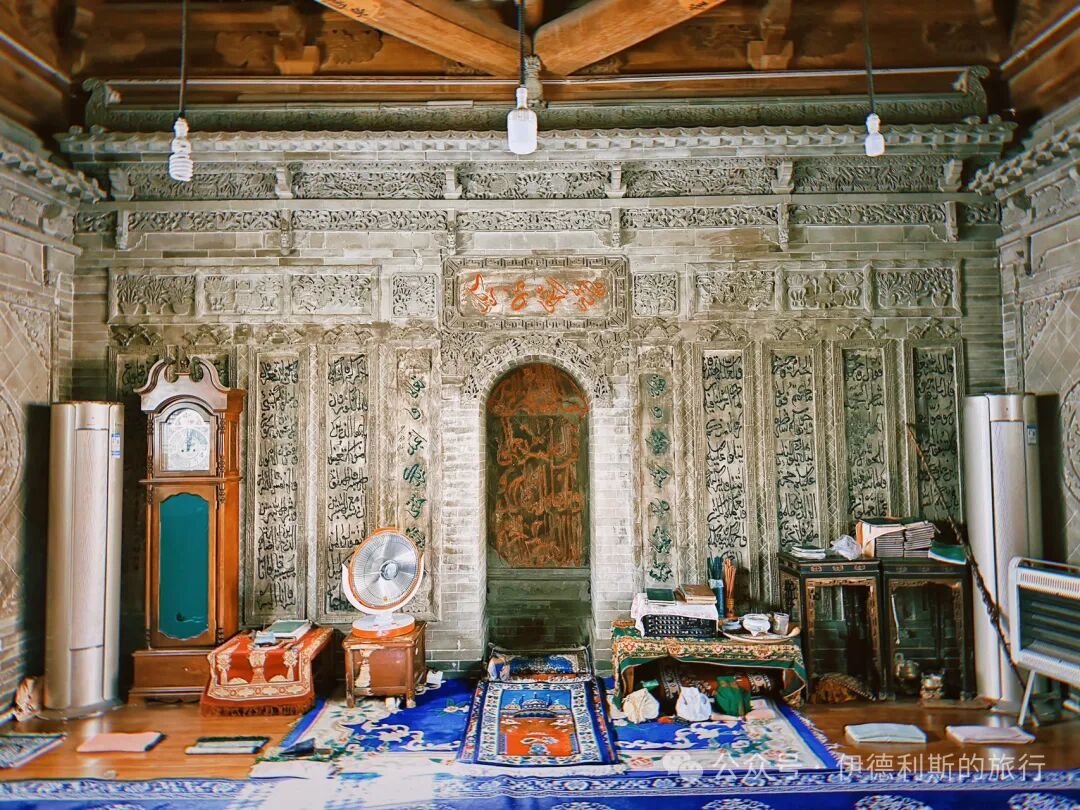
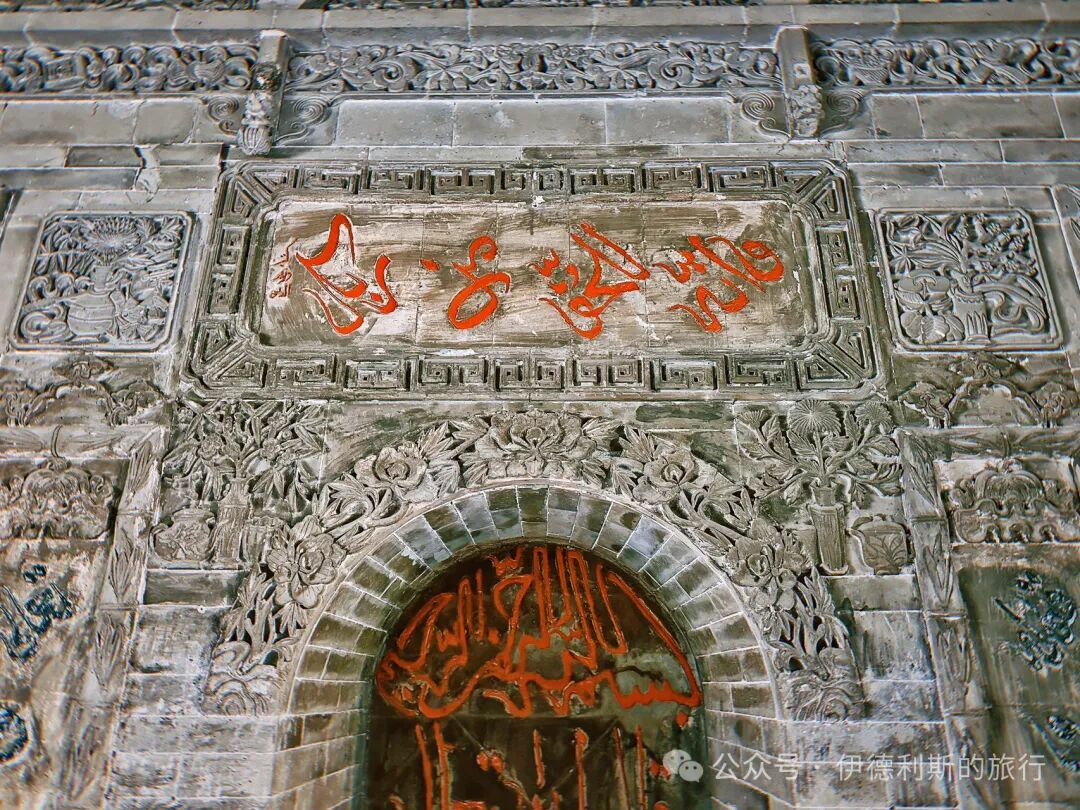
The Tianshui Qin'an Nanxiaguan Mosque features brick carvings of Zhe school Shagou-style calligraphy and rare brick-carved hanging scrolls.
Qinghai
The Haidong Hongshuiquan Great Mosque features wood panel inlays, a door canopy above, a Sumeru pedestal below, and extremely rare traditional auspicious patterns carved above the prayer niche (mihrab).
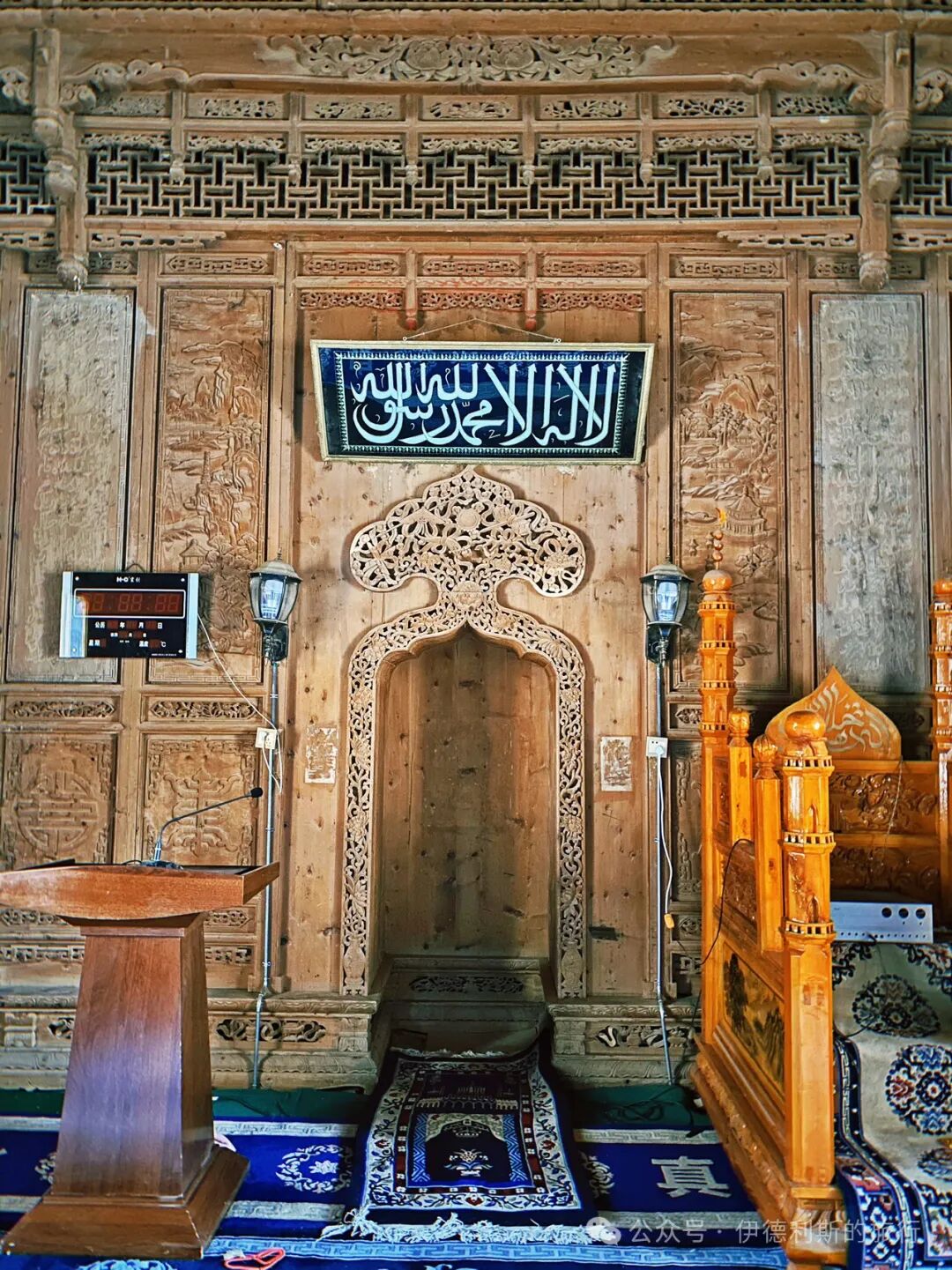
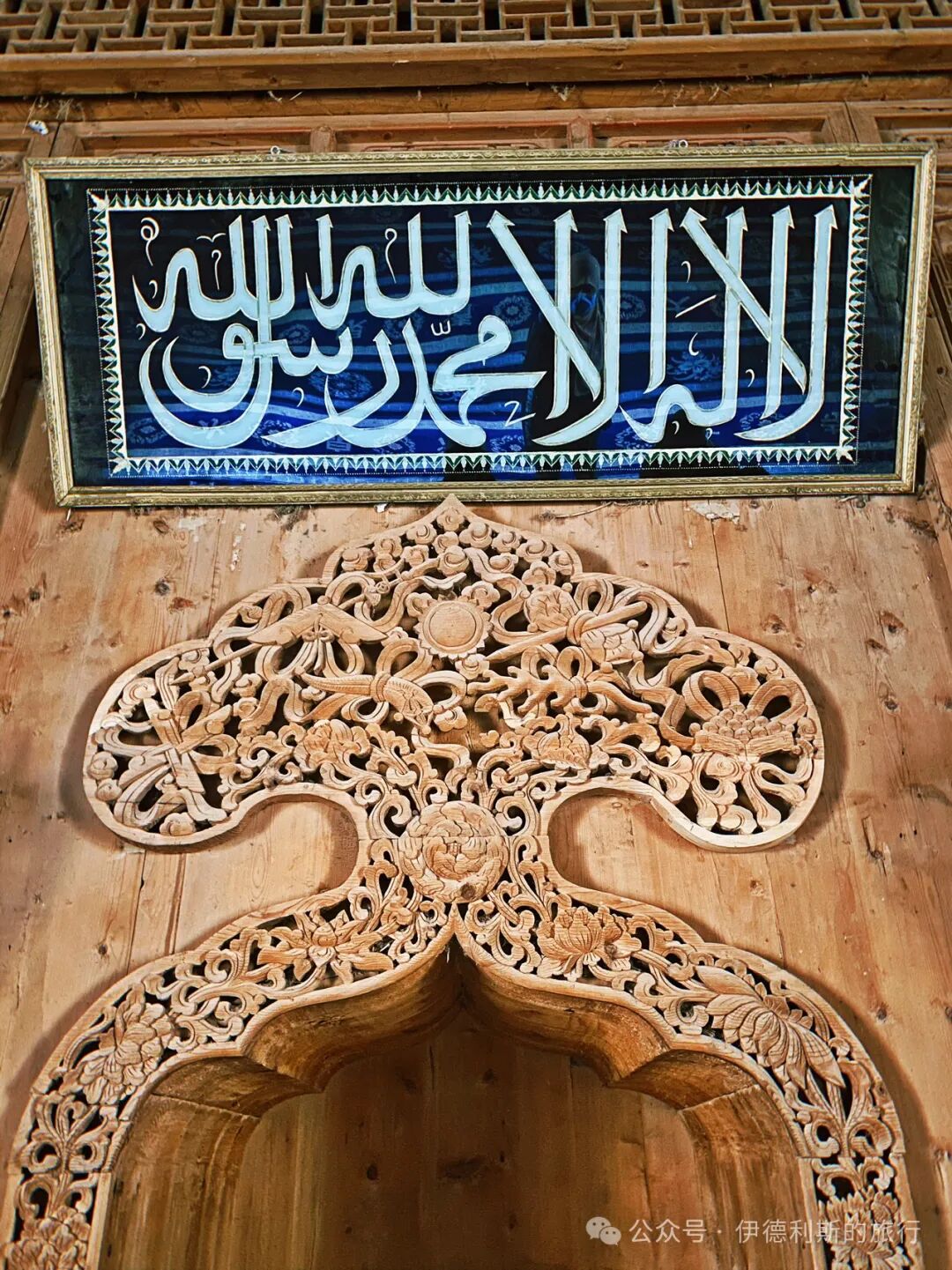
The Xunhua Tashapo Mosque has flame patterns and flower designs carved around the prayer niche (mihrab), with a flame pearl carved directly above it, which is also very rare.
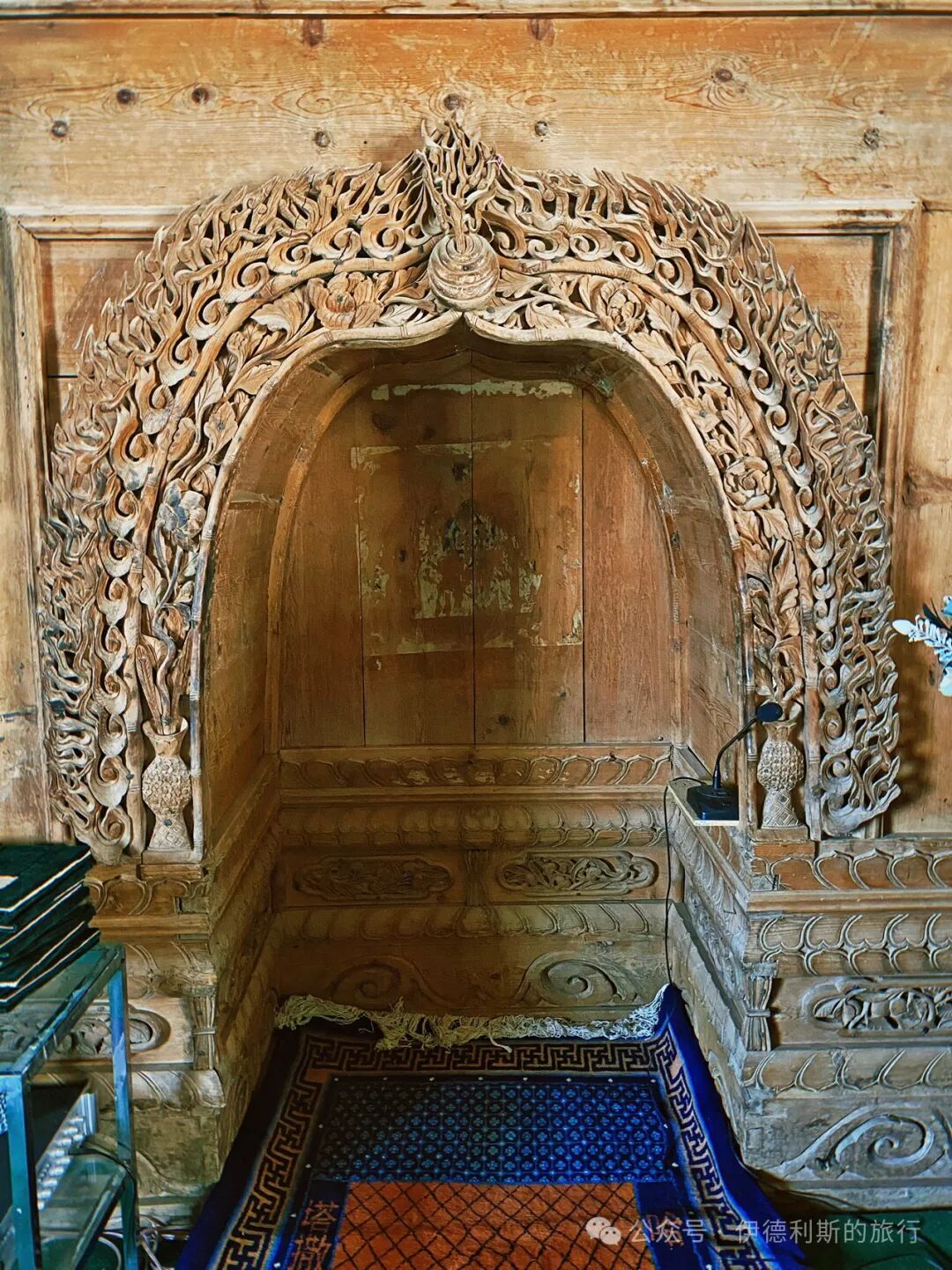
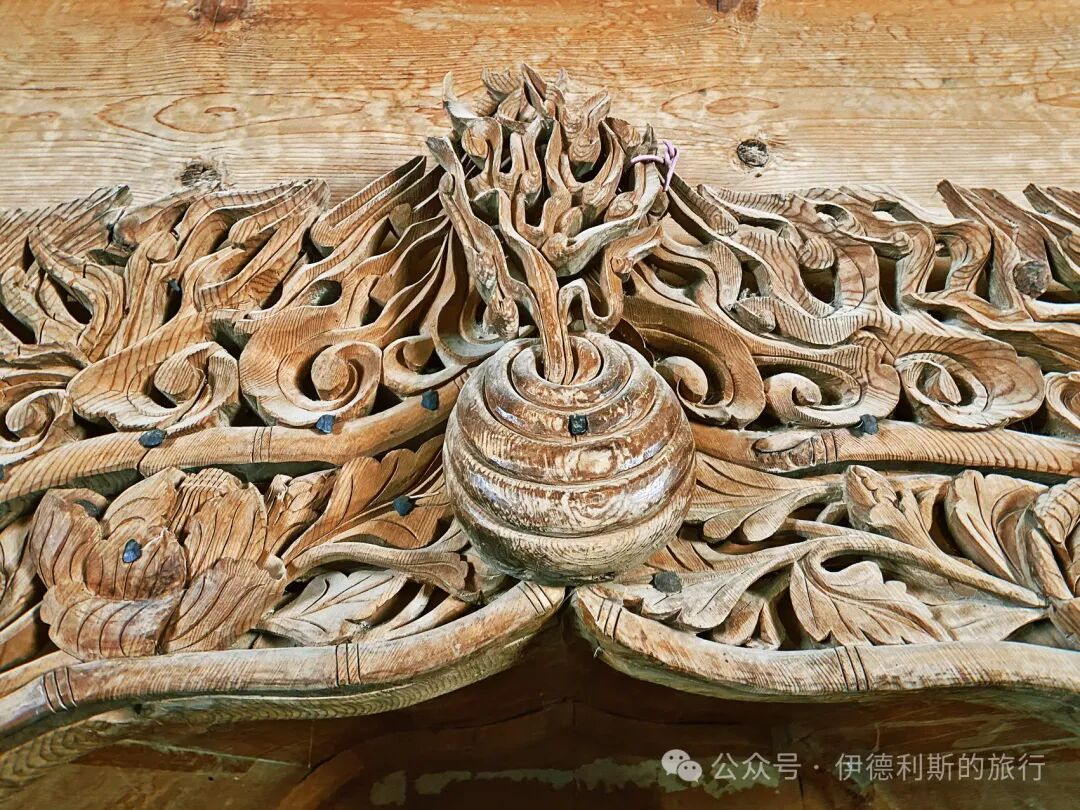
The Xunhua Qingshuihe East Mosque has a wood carving style similar to the Tashapo Mosque, but slightly shallower, and also features a flame pearl in the center.
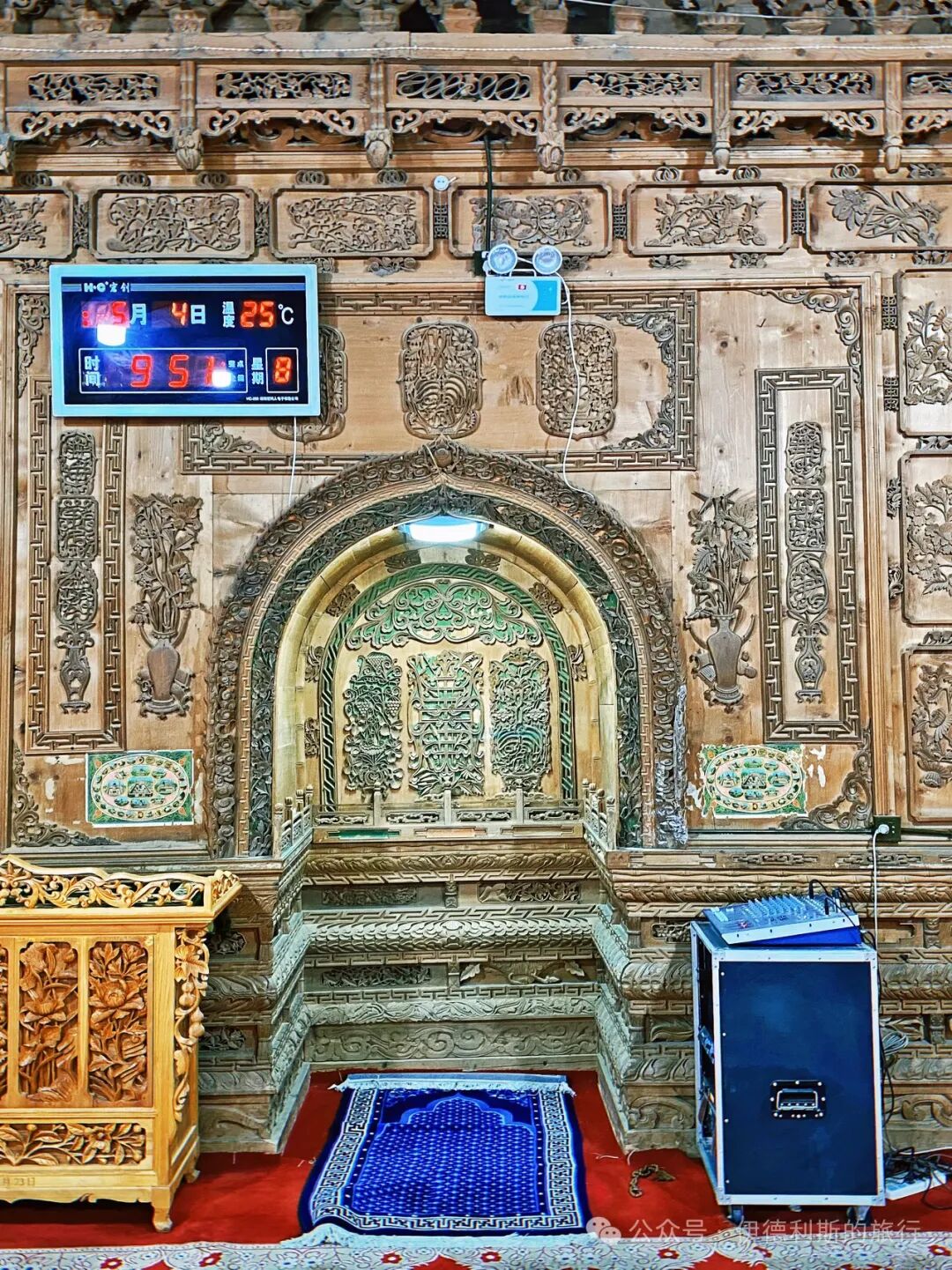
The Xunhua Mengda Dazhuang Mosque features painted wood panels, and the backlight inside the prayer niche (mihrab) is very unique due to Tibetan cultural influence.
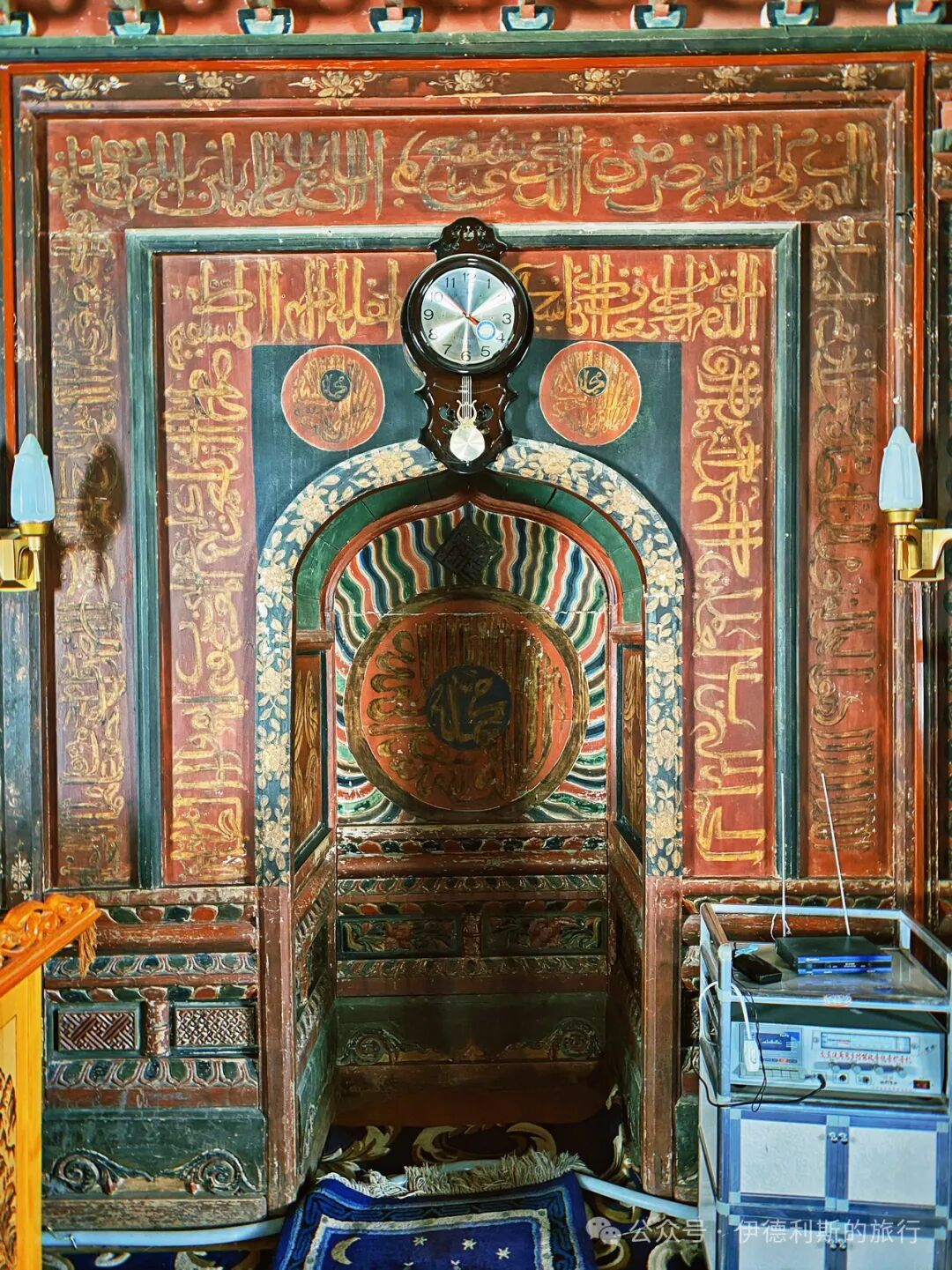
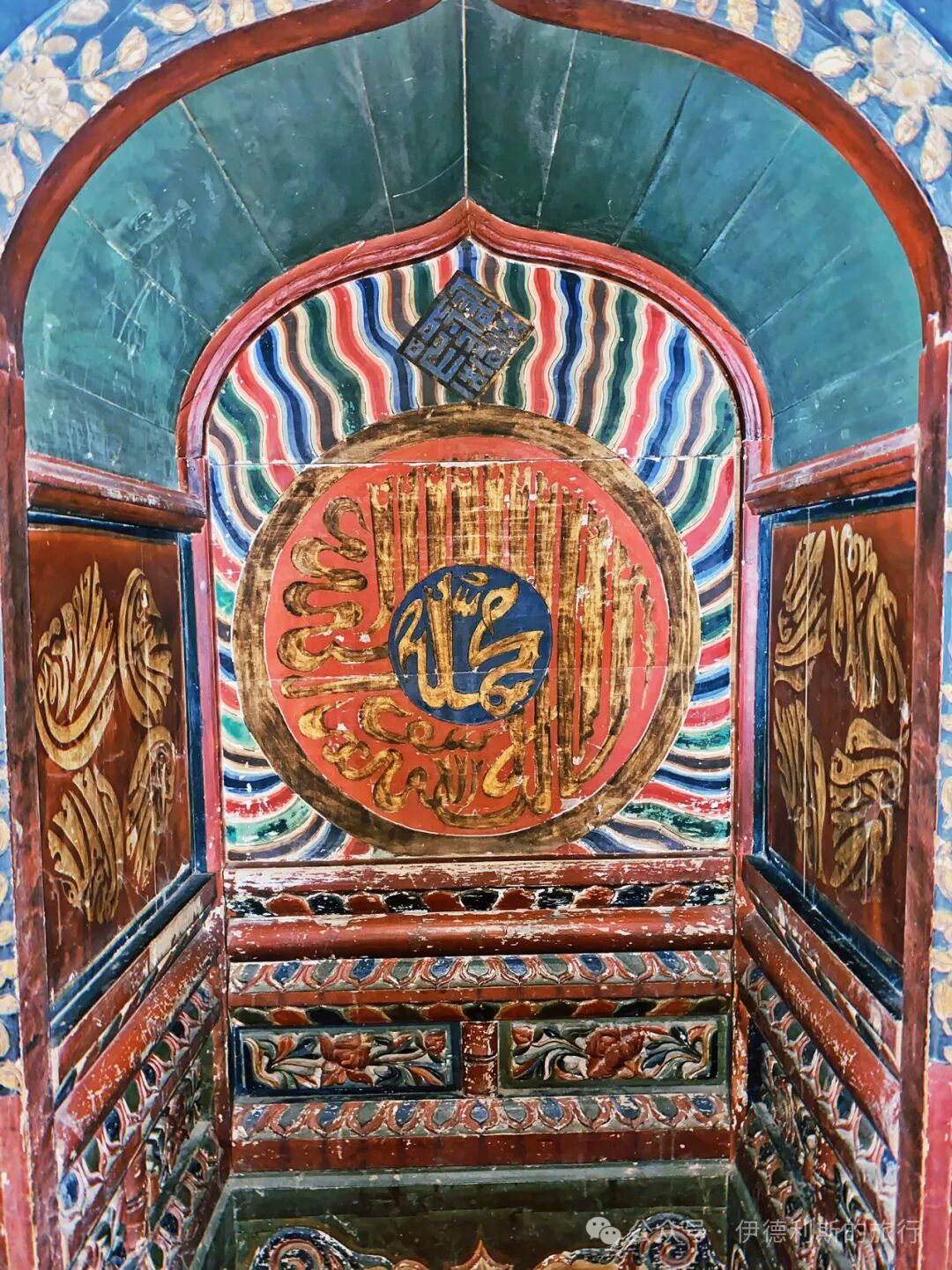
The Xunhua Shangkewa Mosque features painted wood panels with traditional calligraphy.
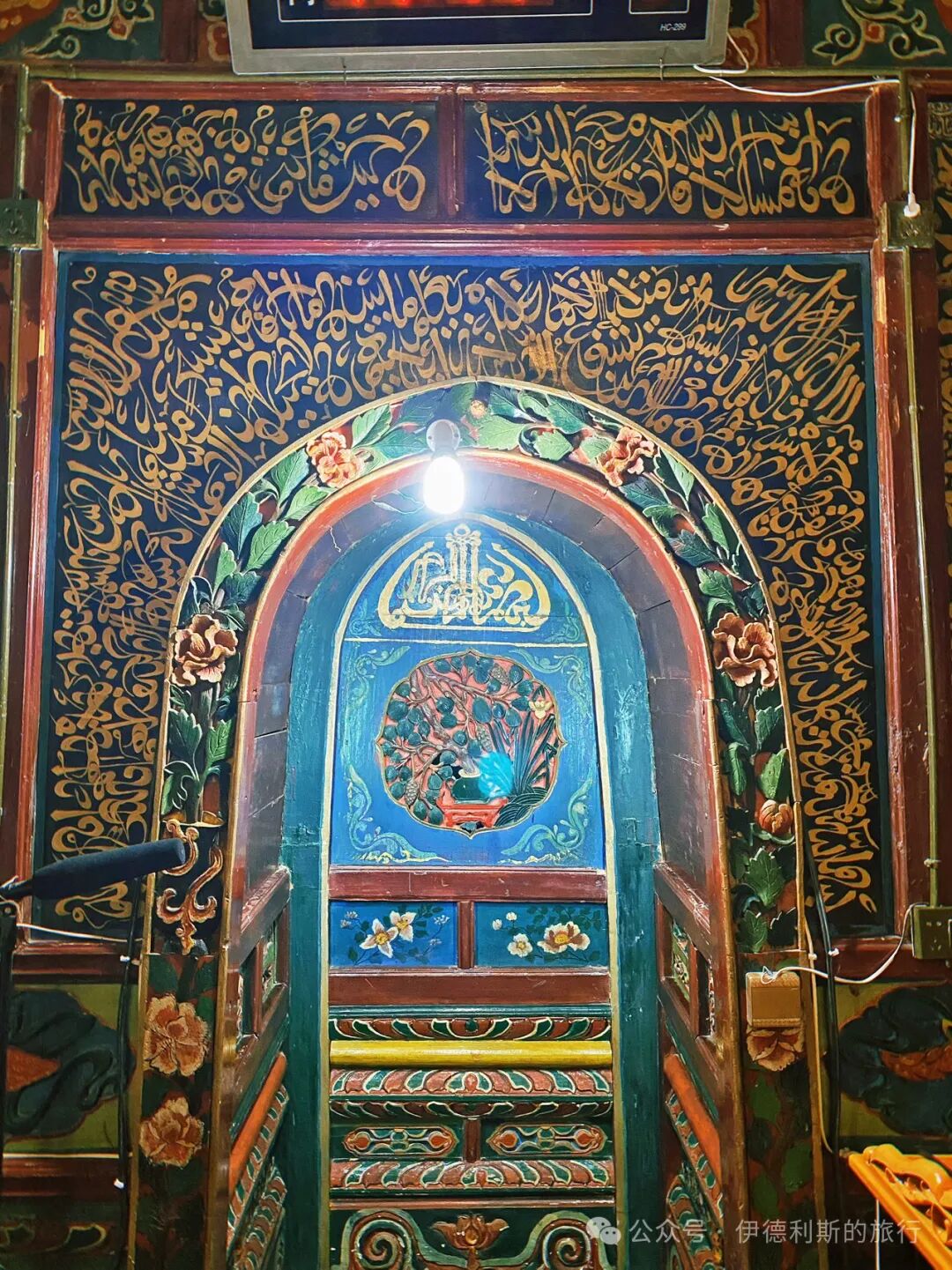
The Xunhua Zhangga Mosque has an arch in the center surrounded by horizontal inscribed boards and couplets.
Xinjiang
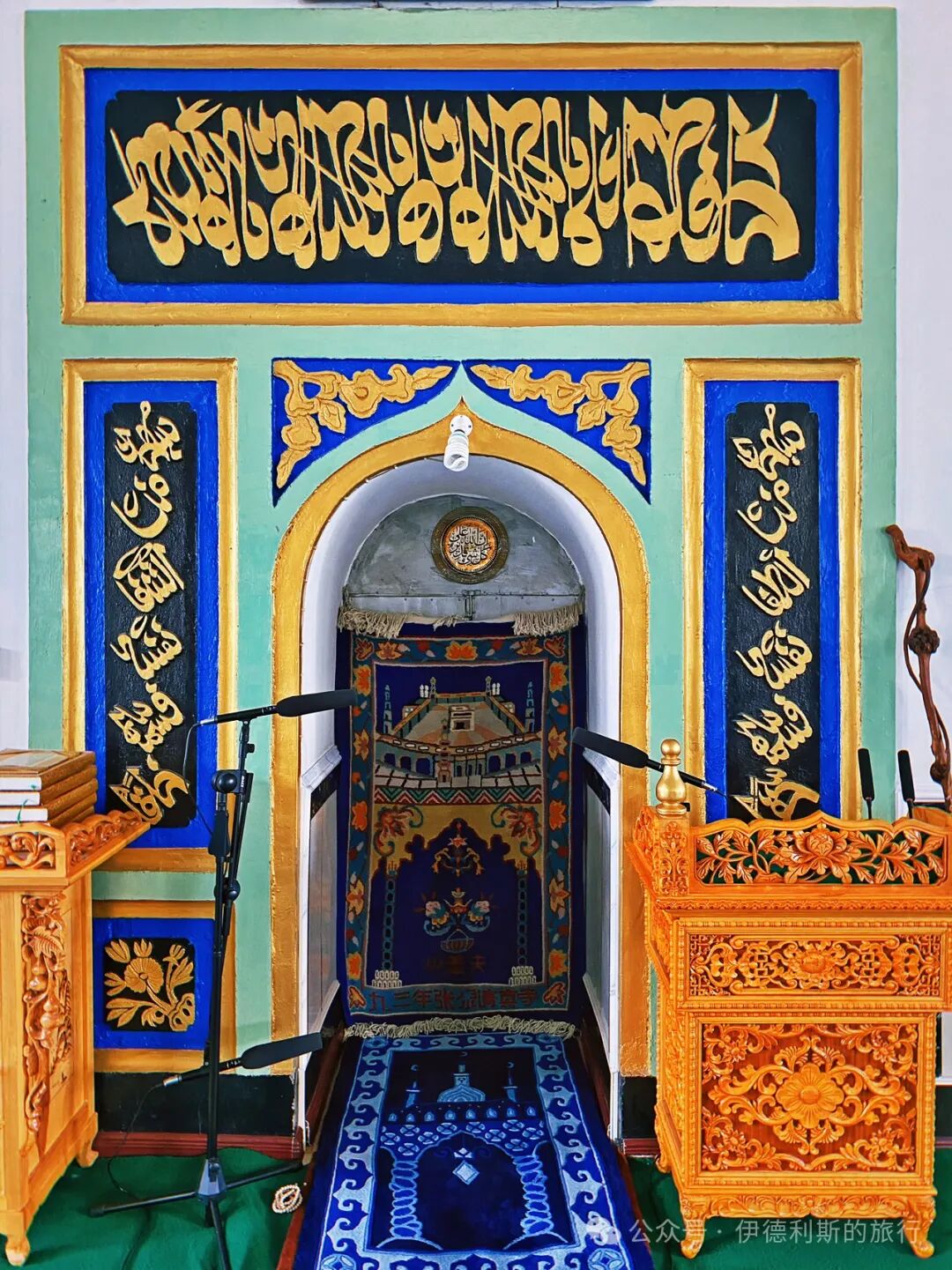
The Shaanxi Grand Mosque in Urumqi was built in 1906. It features wood paneling and a central arch.
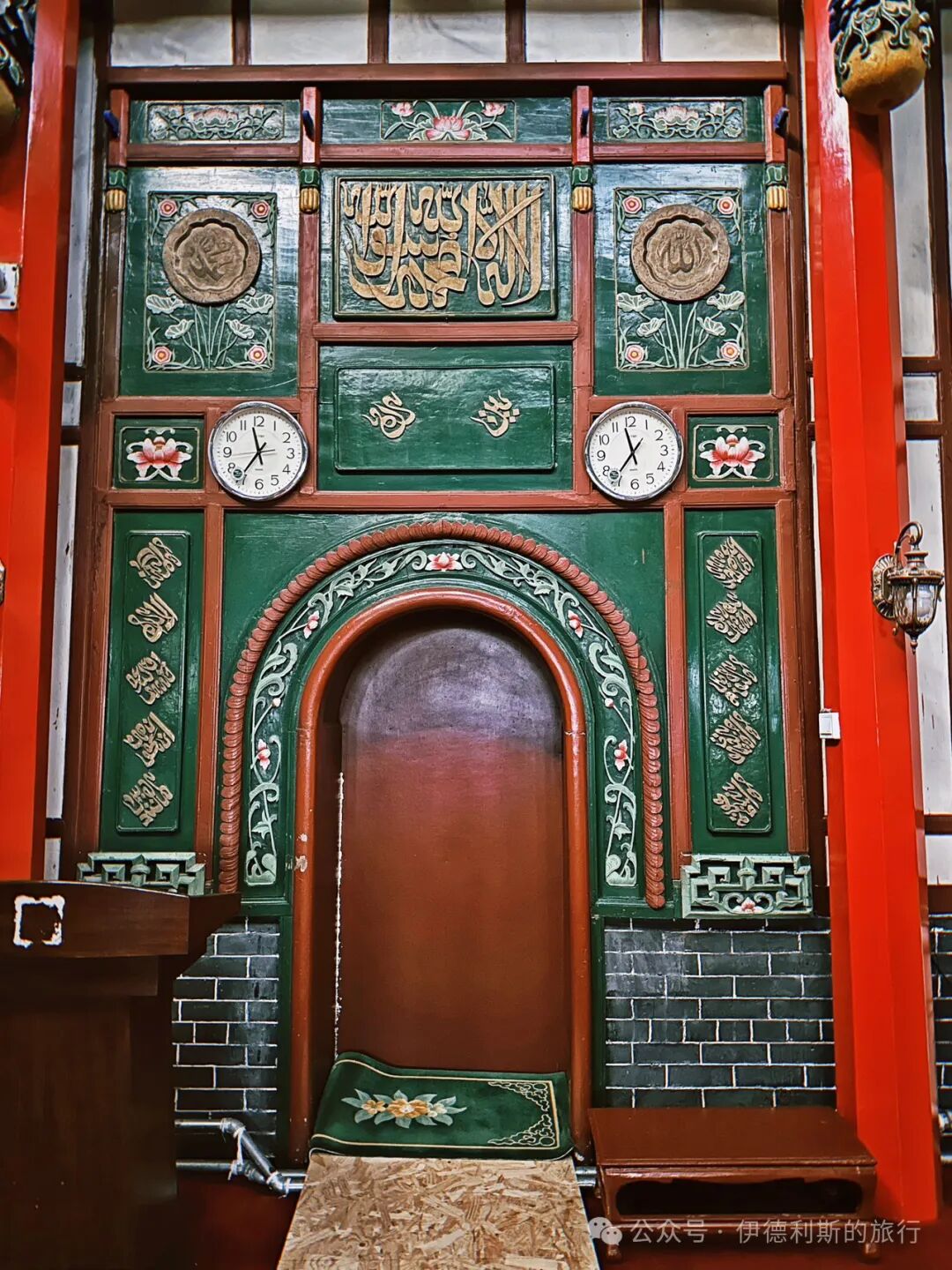
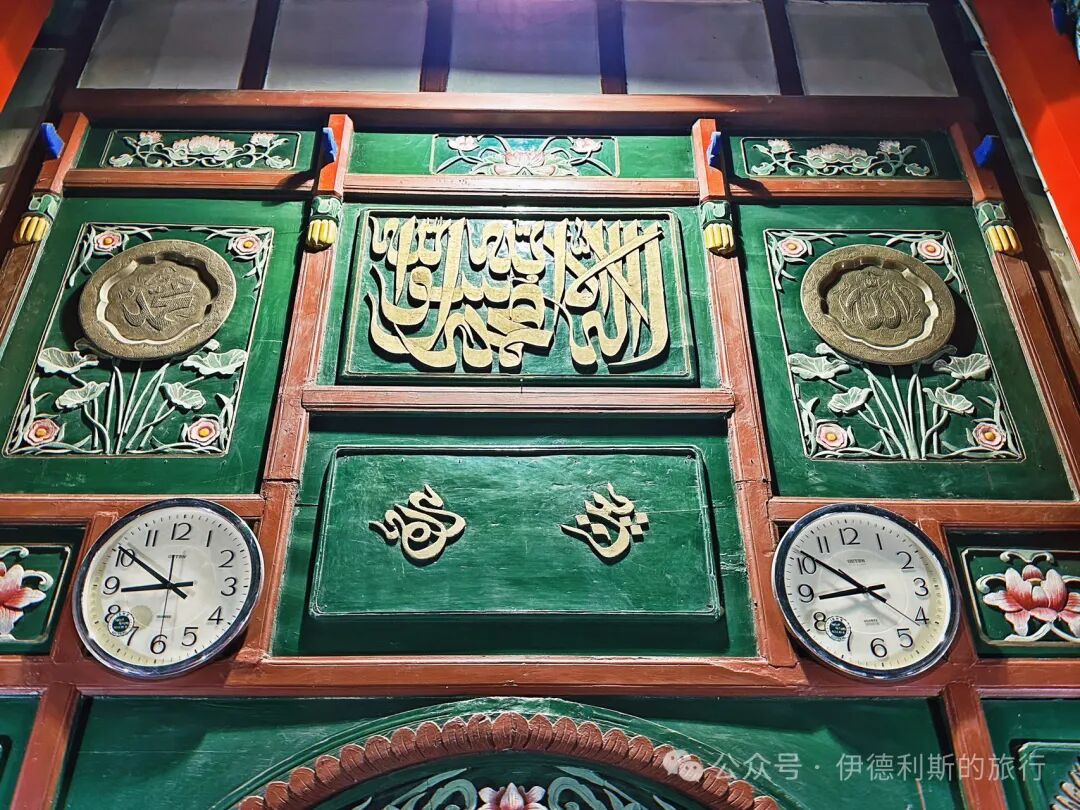
The South Grand Mosque in Urumqi was built in 1919. It has a decorative gate hood and a central arch.
Tibet
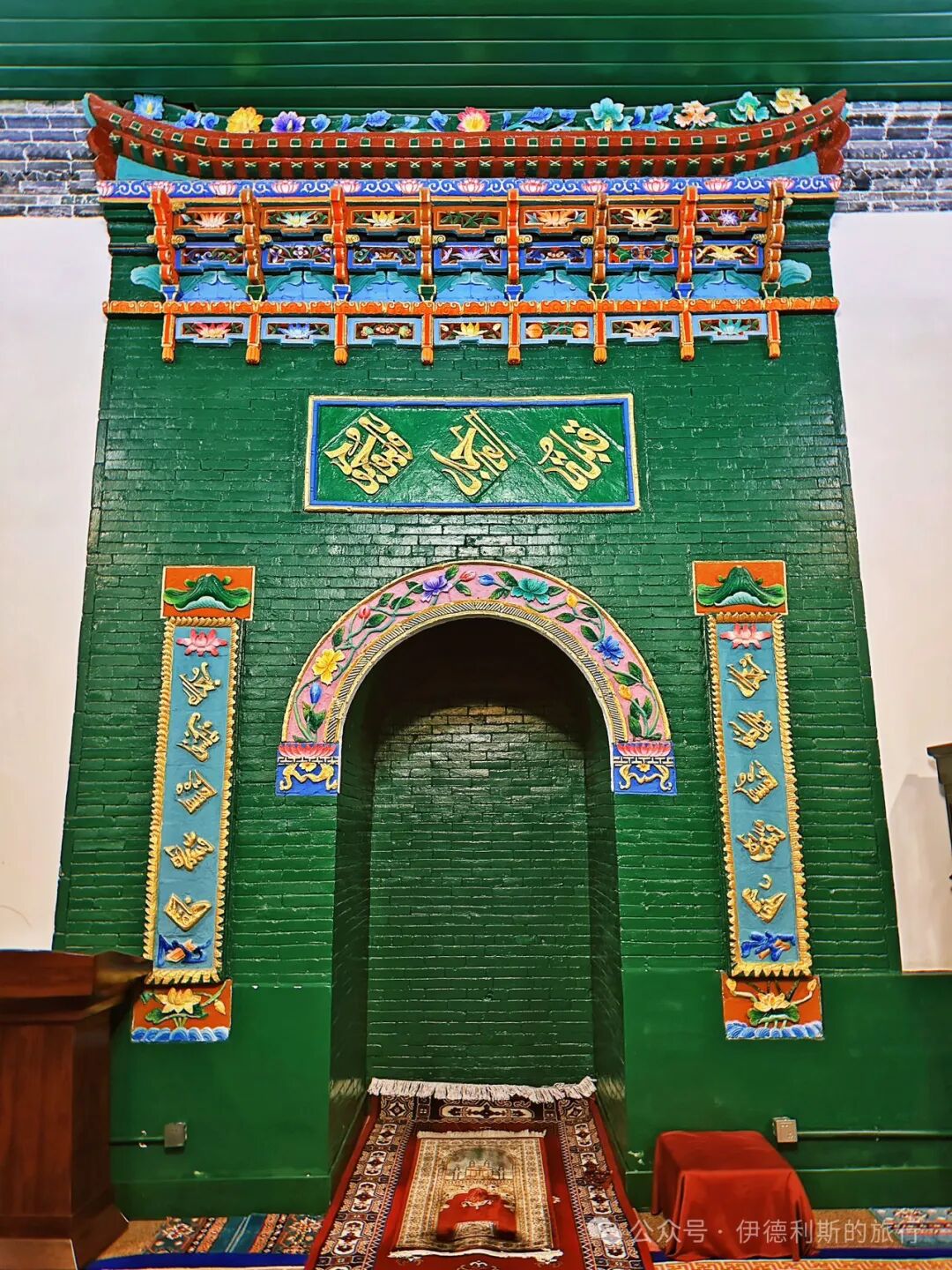
The Lhasa Grand Mosque features wood carvings of flowers, plants, and calligraphy, along with two calligraphic couplets.
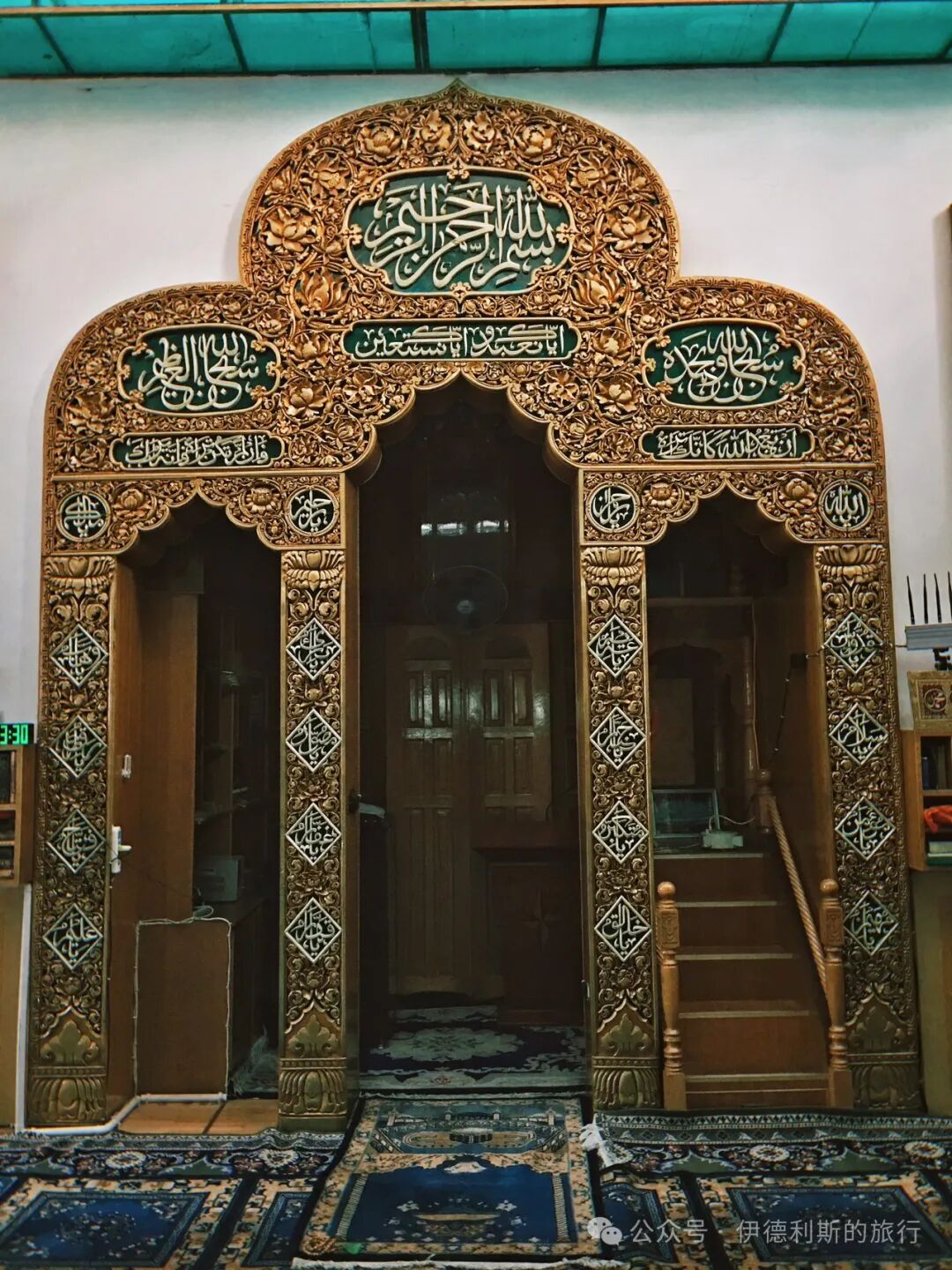
The Lhasa Small Mosque features wood carvings of flowers, plants, and calligraphy.
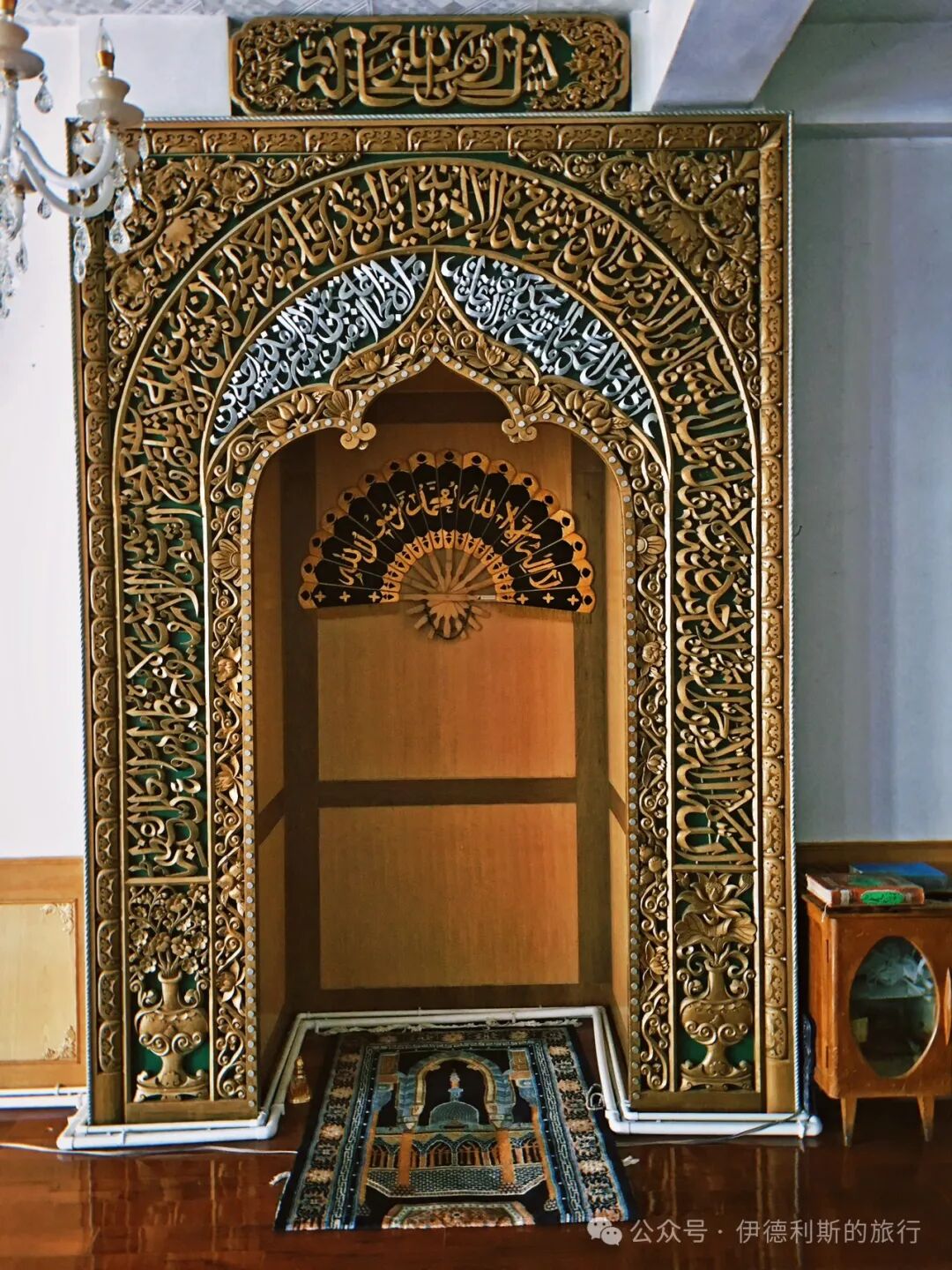
The Lhasa West Suburb Mosque features wood carvings of flowers, plants, and calligraphy.
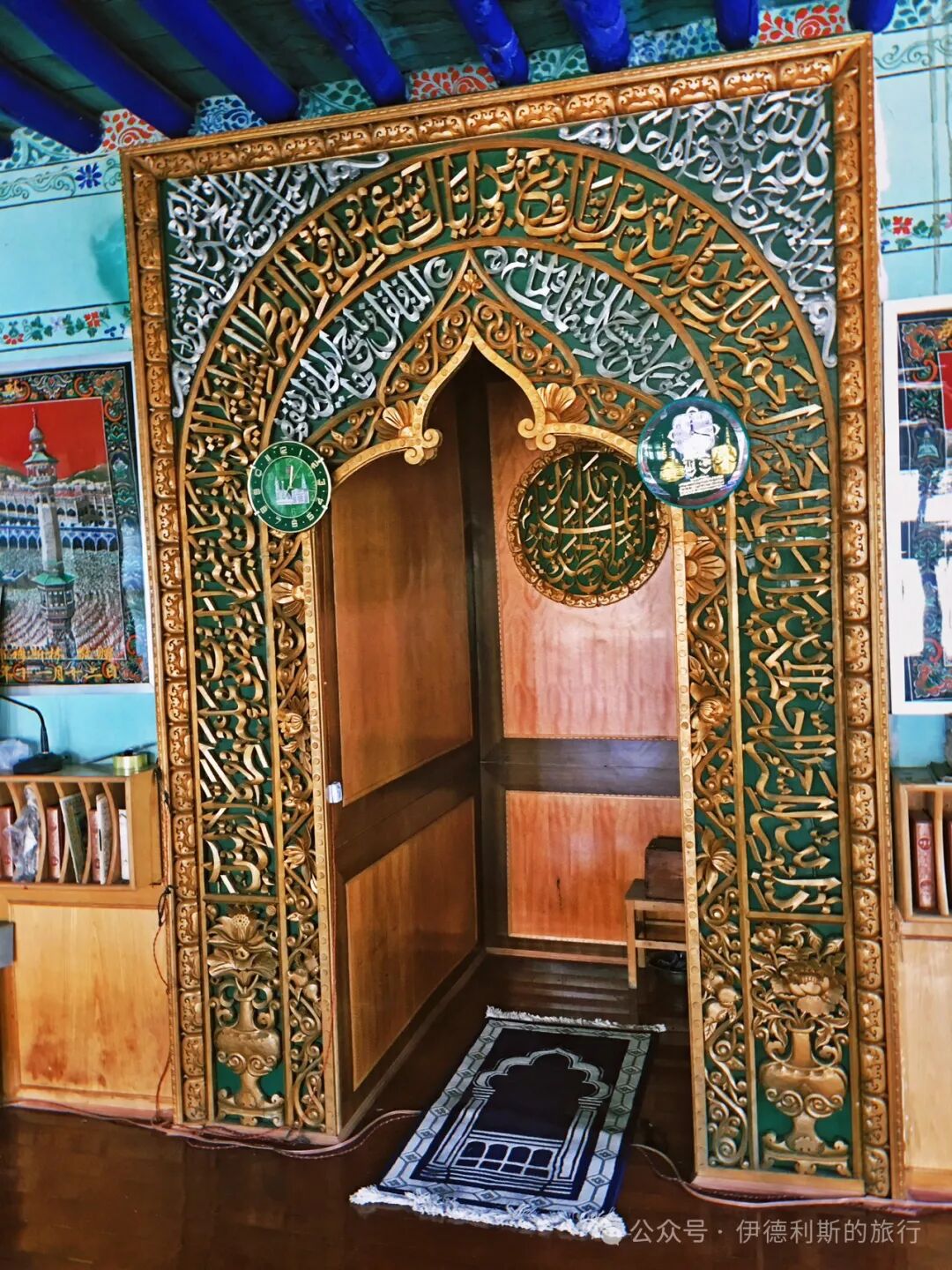
Sichuan
The Langzhong Mosque has a traditional calligraphic plaque above its arch.
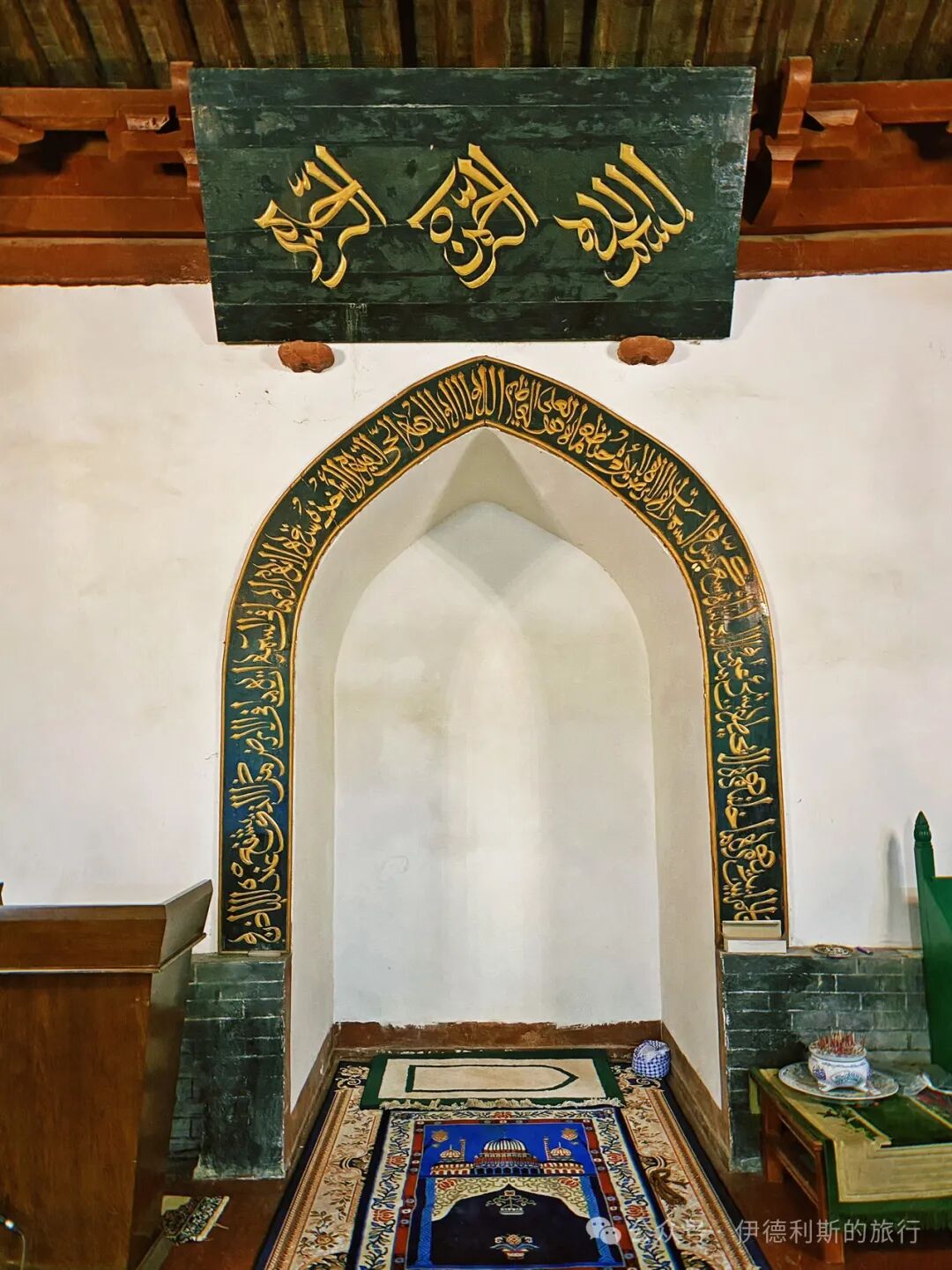
The Langzhong Baba Mosque has a plaque from the fifth year of the Guangxu reign that reads 'Le Shan Ke Feng' at the very top. Below it are traditional calligraphic couplets, and the center features an arch.
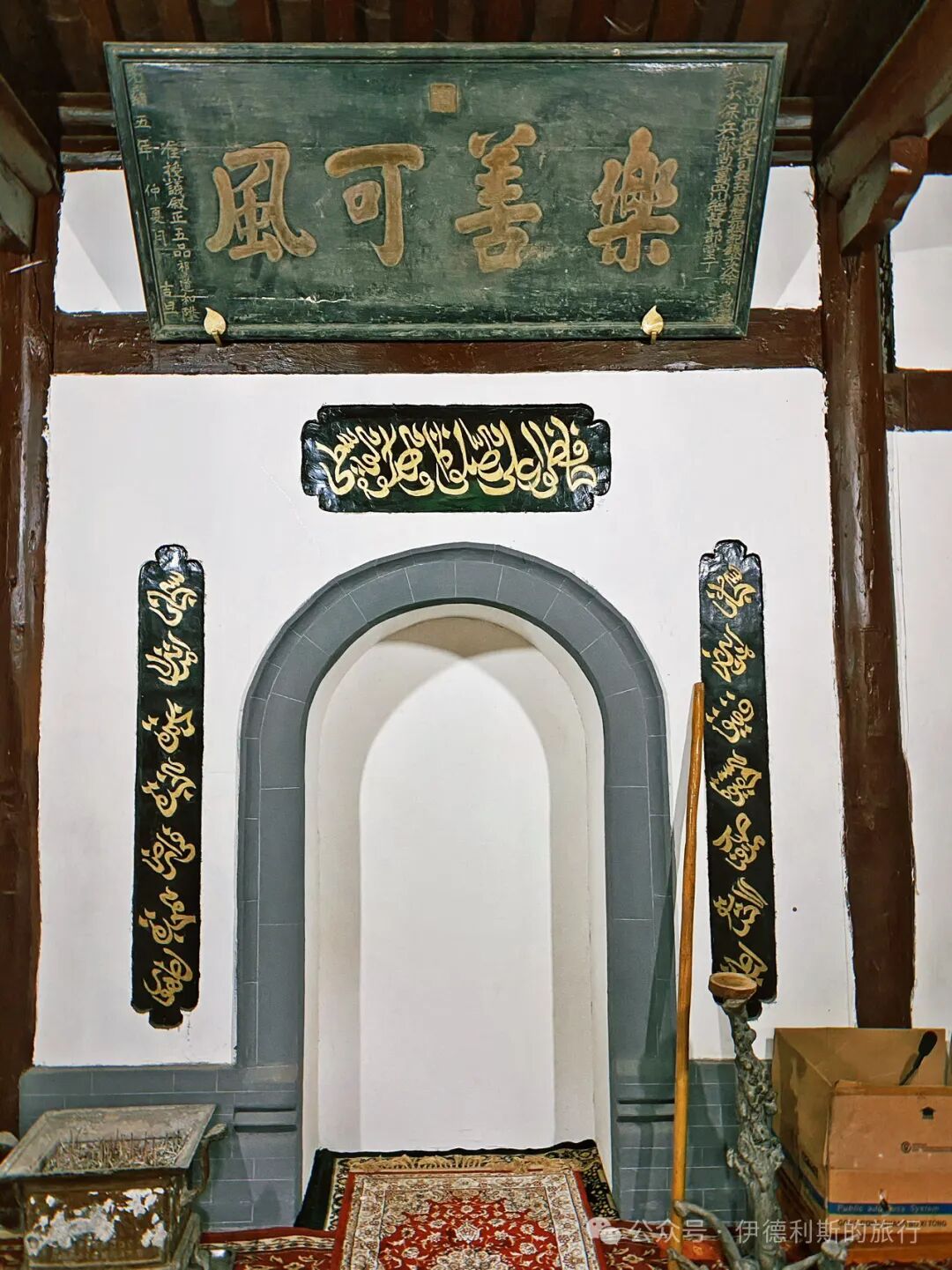
The Nanchong Mosque features traditional calligraphy in its center written by the famous calligrapher Wang Qifei.
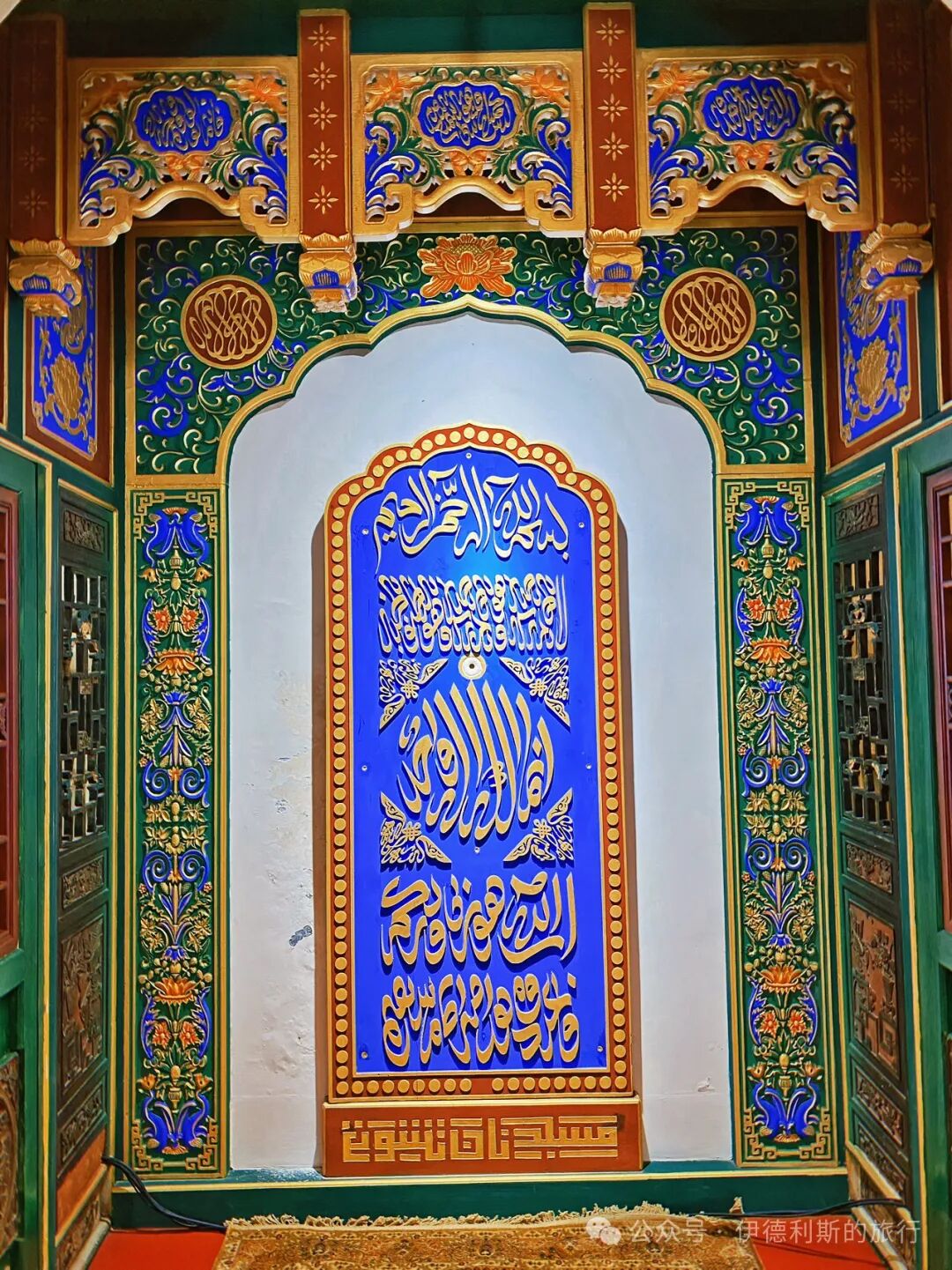
The Majia Mosque in Yankou, Wusheng, features brush-style calligraphy.
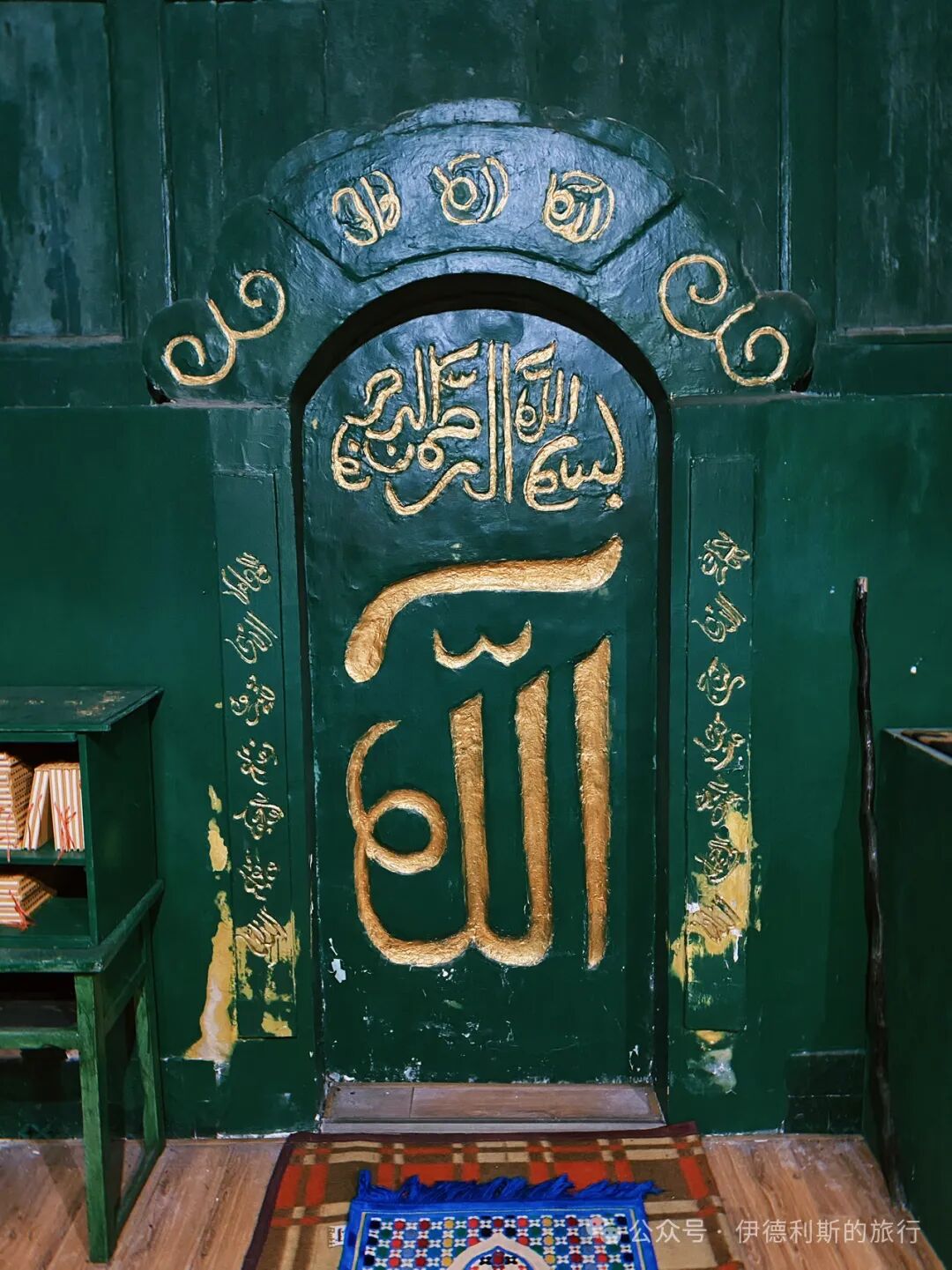
The Xichang City Mosque has traditional calligraphic plaques and couplets, with an arch in the center.
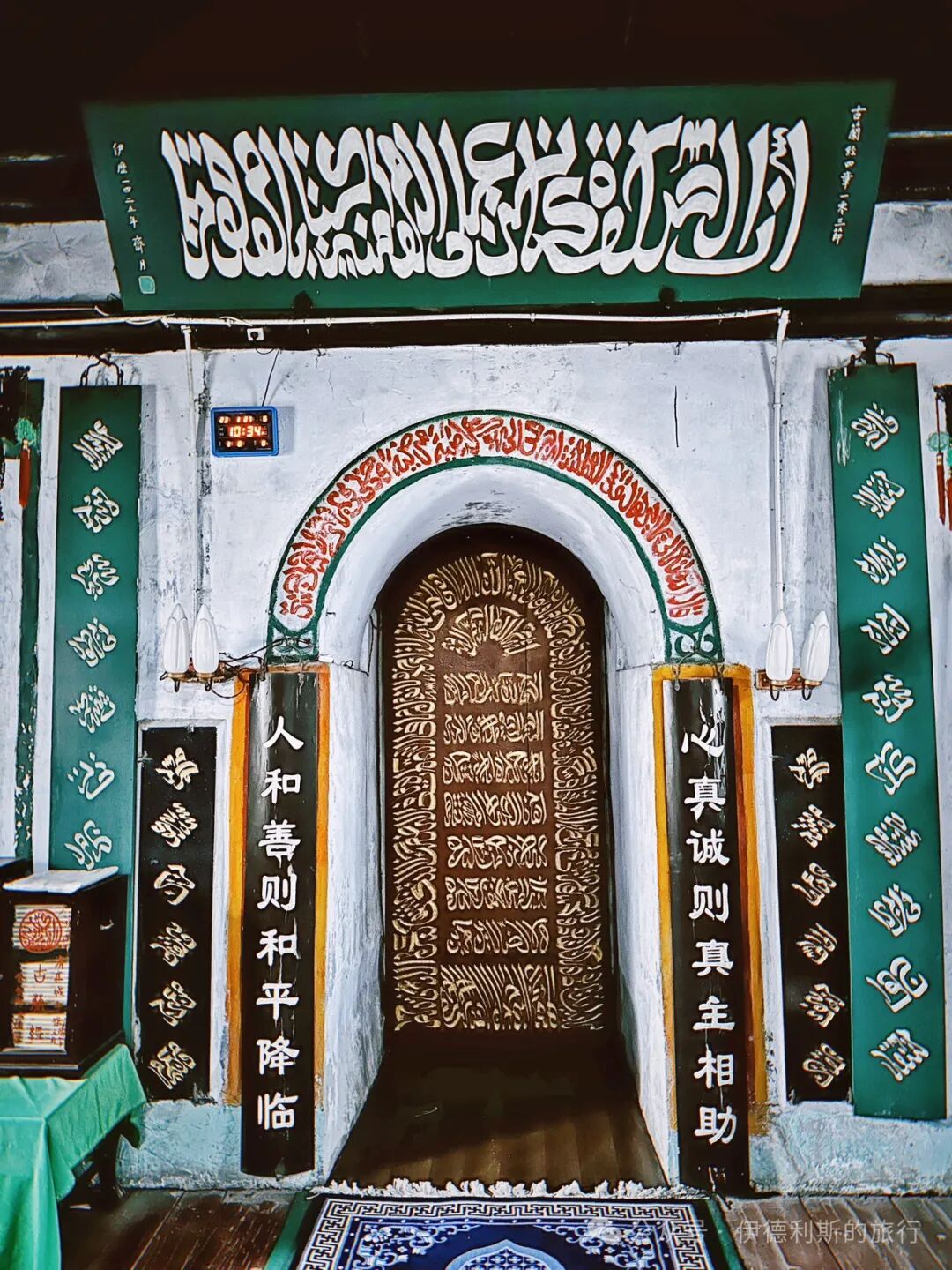
The Xichang East Mosque features unique Xichang-style Arabic calligraphy on its plaque.
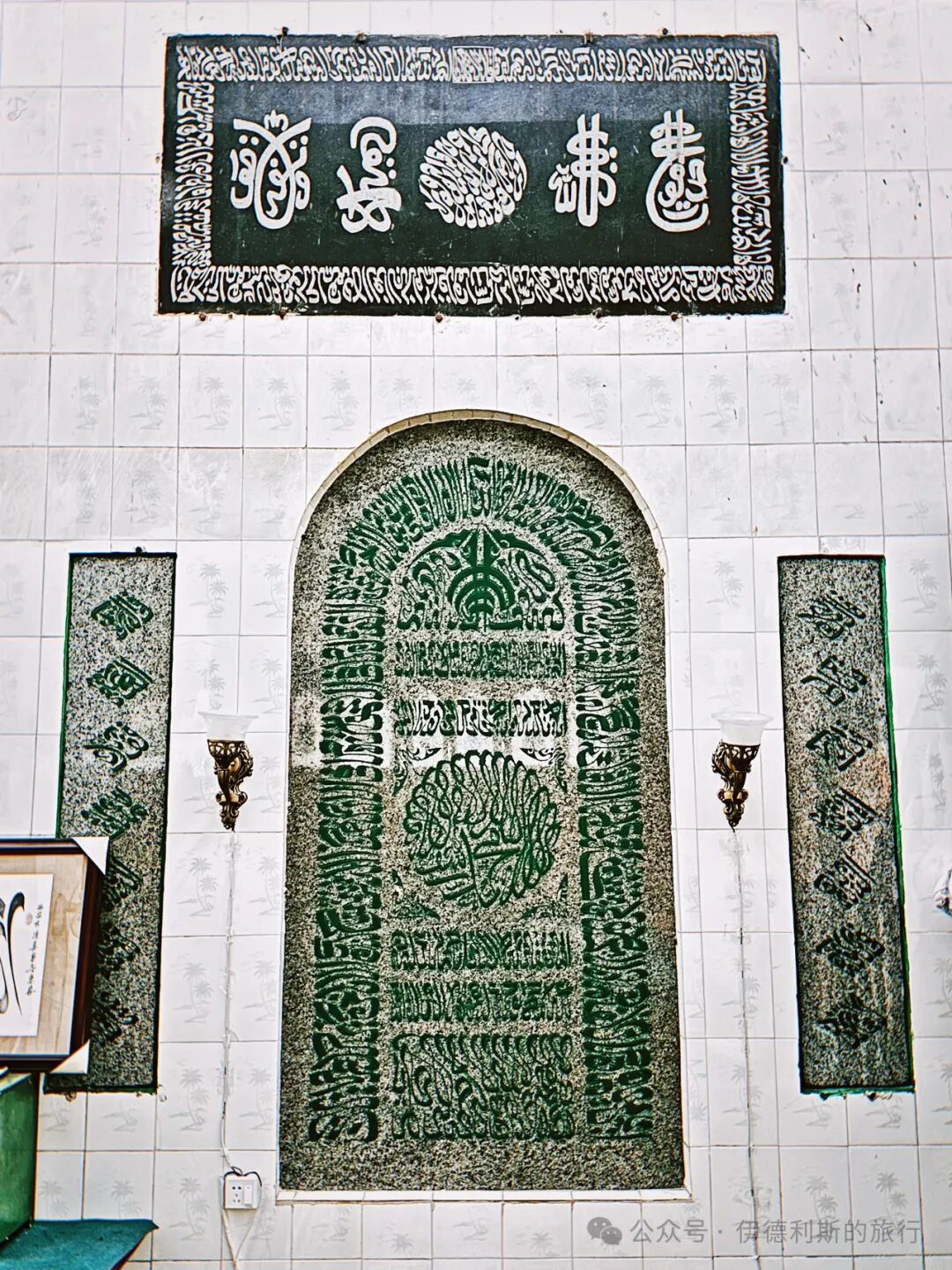
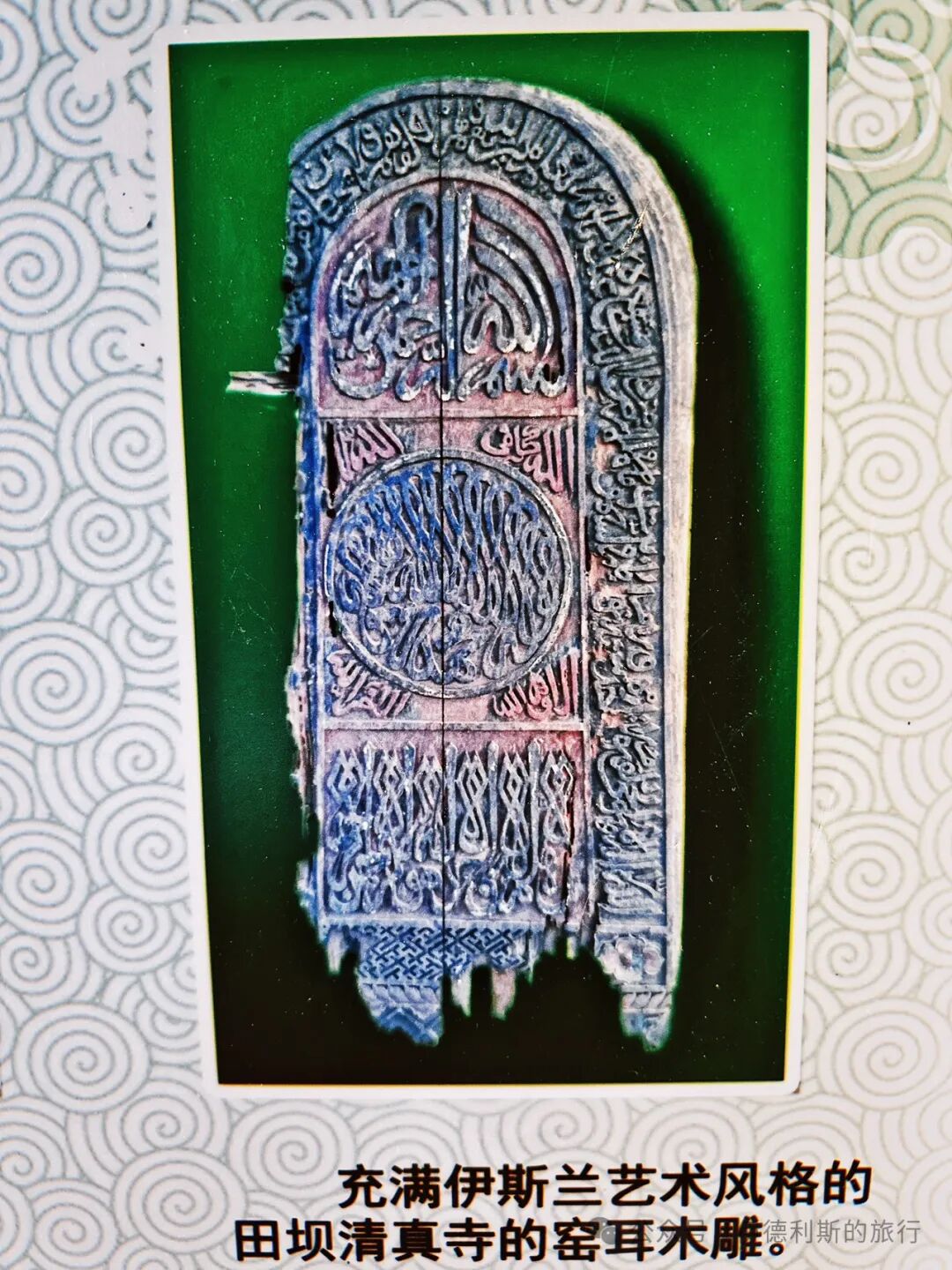
The Qing Dynasty wood-carved mihrab at the Miyi Tianba Mosque was damaged by termites, so it has been re-carved to look exactly like the original.
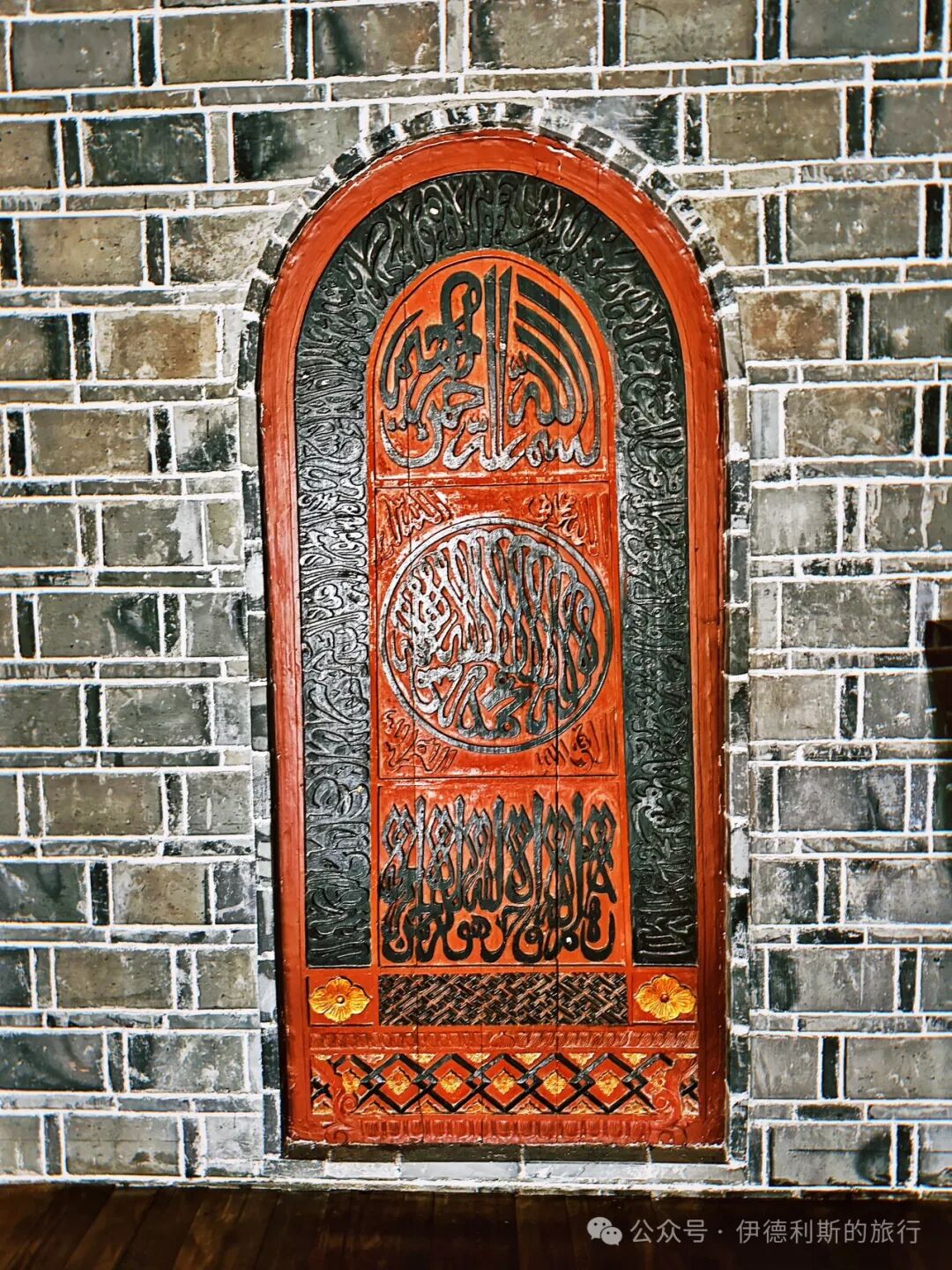
The Dujiangyan Mosque has calligraphic couplets that look like bamboo joints, which is very characteristic of Sichuan.
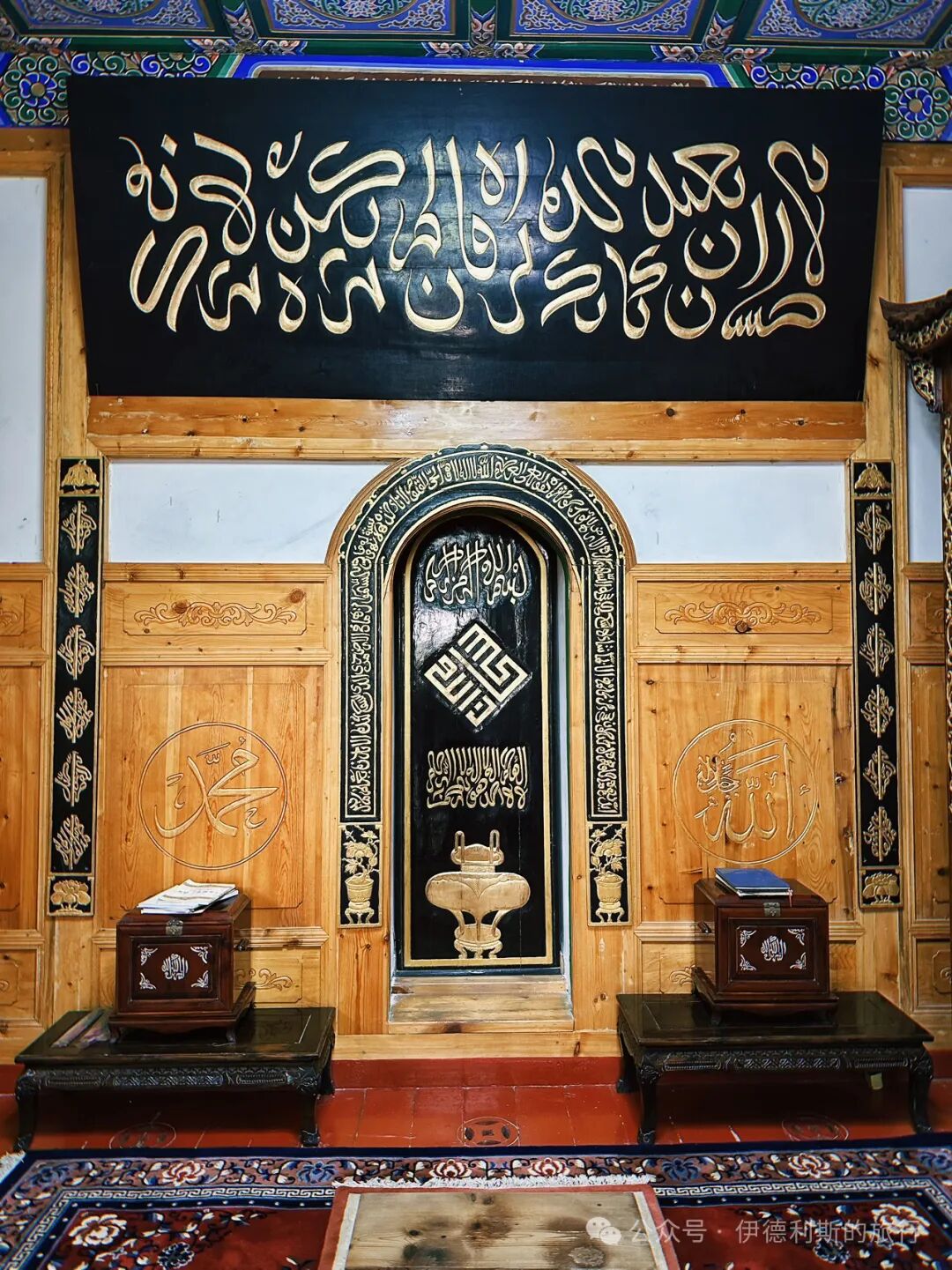
The Tangjia Mosque in Mimou Town, Chengdu, features clever couplets that start with two-part phonetic letters known as suole.
Summary: This is the first part of a visual record of 131 traditional mihrabs in Chinese mosques. It keeps the source images, place names, captions, and architectural notes in a cleaner English layout.
Beijing.
The Ming dynasty archway-style mihrab at Niujie in Beijing features a beam-column hip roof on top and a Sumeru pedestal (xumizuo) at the bottom. The eight large lotus petal carvings on the Sumeru pedestal show a Ming dynasty style. The upper part is painted with high-grade gold-inlaid swirling patterns (xuanzi caihua), featuring extensive gold leaf. It was expensive to make and shows the characteristics of official architectural paintings from the mid-Qing dynasty.
The Beijing Niujie Women's Mosque was built in 1925 as the first women's mosque in Beijing. It was originally located on Shouliu Hutong and was rebuilt on the north side of the Niujie Mosque in 2006. The mihrab is a century-old brick carving of a dua. A September 1942 issue of Beizhi magazine published an old photo of this brick carving.
The Beijing Huashi Mosque was built in 1414 (the 12th year of the Yongle reign of the Ming dynasty). The mihrab has a glazed tile archway inscribed with traditional Chinese calligraphy.
The Beijing Nankou Mosque is believed to have been built in the Ming dynasty and renovated during the Qing dynasty. The mihrab is a blue brick screen wall style with a clear-water ridge and scorpion-tail roof ends on top, and a Sumeru pedestal at the bottom. In the middle, it features exquisite diamond-patterned window shutters and scroll-patterned arched brick carvings.
The construction date of the Beijing Gubeikou Mosque is unknown. It was renovated in 1629 (the 12th year of the Chongzhen reign of the Ming dynasty) and rebuilt to its current appearance by the Zhili regional commander Ma Jinliang during the Kangxi reign of the Qing dynasty. The mihrab is arch-shaped and painted with auspicious cloud patterns, along with traditional calligraphy in the North China style.
The Beijing Dongzhimenwai Mosque, originally called the Erlizhuang Mosque, was built in the Yuan dynasty. The old mosque's mihrab was wooden and shaped like a tablet. After the renovation, it was placed under the eaves of the hall opposite the new mosque, and it is carved with traditional calligraphy.
The Beijing Changying Mosque mihrab is shaped like a stone stele head and features very complex painted calligraphy. According to research by teacher Hui Zongzheng, it may have been moved from elsewhere when the mosque was built during the Zhengde reign of the Ming dynasty.
Tianjin.
The Great Mosque at Xibeijiao in Tianjin has a wooden carved niche (yaokan) with a very high Sumeru pedestal railing, which is quite rare.
The Tianjin Jinjiayao Mosque features traditional calligraphy plaques and couplets, with an arched gate in the middle.
The Tianjin Hexiwu Mosque features a rare painted design of a half-open vermilion door.
The Tianjin Xibeijiao South Mosque features traditional calligraphy plaques and couplets.
The Tianjin Tianmu North Mosque also features a large gate design in the middle.
Hebei.
The Hebei Zhangjiakou Xinhua Street Mosque's winter prayer hall mihrab is decorated with traditional calligraphy plaques and circular couplets.
The Hebei Zhangjiakou Xiguan Mosque is a blue brick screen wall style with a hip roof, a ridged roof, and flying eaves, with a Sumeru pedestal at the bottom. The center features Ming dynasty calligraphy carvings restored in 2020 by the famous calligrapher Wang Qifei based on old photos.
The South Mosque (Nandasi) in Xuanhua, Hebei, is an arched structure carved with calligraphy and floral patterns.
The North Mosque (Beisi) in Xuanhua, Hebei, is an arched structure carved with calligraphy and floral patterns.
Henan
The Shanyitang Mosque in Henan is an arched structure decorated with calligraphy written in 2009 by the famous calligrapher Mi Guangjiang.
The North Mosque (Beisi) in Zhengzhou, Henan, is an arched structure with an exterior carved door hood.
The North Mosque (Beisi) in Qinyang, Henan, is an arched structure decorated with traditional calligraphy.
The Xiguan Mosque in Bo'ai, Henan, is an arched structure decorated with Arabic plaques and couplets.
The West Mosque (Xisi) in Daxinzhuang, Bo'ai, Henan, is an arched structure decorated with Arabic plaques and couplets.
Shandong
The North Mosque (Beisi) in Linqing, Shandong, is a three-room, four-pillar memorial archway style building with bracket sets and flying eaves, decorated with intricate traditional calligraphy.
The East Mosque (Dongsi) in Linqing, Shandong, is a three-room, four-pillar memorial archway style building with bracket sets and flying eaves, decorated with intricate traditional calligraphy.
The South Mosque (Nandasi) in Jinan, Shandong, is an arched structure. According to the mosque's stele record, the calligraphy was written in 1810 (the 15th year of the Jiaqing reign) by Imam Hei Faxiang.
The North Mosque (Beisi) in Jinan, Shandong, is an arched structure featuring calligraphy in the center.
The Zhenjiao Mosque in Qingzhou, Shandong, is an arched structure with a single-eave, hanging-mountain style door hood above.
Inner Mongolia
The Great Mosque in Hohhot, Inner Mongolia, has a door hood with openwork, painted floral and scroll patterns.
The East Mosque (Dongsi) in Hohhot, Inner Mongolia.
The Longshengzhuang Mosque in Feng County, Inner Mongolia, has a door hood with wood-carved calligraphy inside the arch.
The North Mosque (Beisi) in Chifeng, Inner Mongolia, features original wood carvings from 1747 (the 12th year of the Qianlong reign).
Liaoning
The Old City Mosque in Kaiyuan, Liaoning, features a clear-water scorpion-tail roof ridge.
The Luyang Mosque in Jinzhou, Liaoning, has a plaque with large-character calligraphy and traditional brush-style calligraphy on both sides.
The South Mosque (Nandasi) in Shenyang, Liaoning, houses a large spirit tablet.
The Ancient City Mosque in Fuzhou, Dalian, Liaoning, features traditional brush-style calligraphy.
Lingyuan Mosque in Liaoning features carvings of Arabic calligraphy.
Heilongjiang
The winter prayer hall at Bukui West Mosque in Qiqihar, Heilongjiang, has traditional calligraphy carved onto its arches.
The main hall of Bukui West Mosque in Qiqihar, Heilongjiang, is surrounded by carved calligraphy plaques and couplets.
The main hall of Bukui East Mosque in Qiqihar, Heilongjiang, features a clear-water ridge (qingshuiji) roof, a Sumeru pedestal (xumizuo) base, and carved calligraphy plaques and couplets.
Acheng Mosque in Heilongjiang has four floor-to-ceiling pillars (tongtianzhu) in its kiln hall (yaodian) built in 1900 (the 26th year of the Guangxu reign). They were made from giant pine logs hauled from the forests of Yabuli, Heilongjiang, and installed by a carpenter named Sun Yulin from Wula Street, Jilin. Legend says Carpenter Sun's master was worried about his apprentice, so he secretly went to a stone shop and made four 3-foot-tall lotus-shaped pillar bases. When it came time to raise the floor-to-ceiling pillars, they were exactly 3 feet too short. Seeing this, the master immediately told Carpenter Sun to hitch a cart and bring back the four lotus pillar bases from the stone shop, and they fit perfectly.
Shanxi
Taiyuan Great Mosque in Shanxi is a Ming Dynasty treasure. It has a wooden memorial archway-style door hood with a hip roof (wudianding), bracket sets (dougong), and flying eaves. Below are Sumeru pedestal railings, and the pillars are decorated with scrolling lotus patterns and Arabic circular motifs. The center features a wooden carved hanging panel with Arabic script, and a kiln niche (yaokan) is set in the very center.
Shaanxi
Huajue Lane Great Mosque in Xi'an, Shaanxi, is a Ming Dynasty treasure. It uses wooden board inlays and gold-painted pillars to create door hoods and hanging pillars. The wooden boards are carved with Arabic calligraphy and floral patterns, making them very magnificent. The center has a kiln niche arch supported by prismatic pillars on both sides. This is similar to the mihrab style found in Iran and Turkey during the Yuan and Ming dynasties, making it the only known Ming Dynasty mihrab in China that blends Eastern and Western styles.
Besides Huajue Lane Great Mosque, the Daxuexi Lane Mosque and Dapiyuan Mosque in Xi'an also have original, unrestored mihrabs. Both mihrabs are made of inlaid wooden boards with a kiln niche in the middle, but their styles differ. Daxuexi Lane Mosque has a wooden carved canopy (feizhao) between its pillars. The craftsmanship is exquisite, and the calligraphy style matches that of Mengda Mosque in Xunhua, Qinghai, suggesting they may have been made by the same group of craftsmen.
Daxuexi Lane Mosque
Dapiyuan Mosque
Some restored and newly built mihrabs in Xi'an, Shaanxi.
Xiaopiyuan North Mosque has had all its paintings redone, though it is said the style remains unchanged. The center is a kiln niche with beautiful wooden floral carvings.
At the North Guangji Street Mosque, the wood carvings on the upper part of the prayer niche (mihrab) look like those at the Great Mosque of Huajue Lane.
The Xiaoxuexi Lane Middle Mosque features wood panel inlays with a prayer niche (mihrab) in the center.
The Xiaoxuexi Lane Yingli Mosque has a wood-carved door canopy decorated with flower and plant patterns.
The Dongmen Cang South City Mosque has a wood-carved door canopy featuring traditional-style calligraphy.
The Sajinqiao Mosque uses wood panel inlays and contains a very rare Chinese-language Yasin chapter.
Prayer niches (mihrab) in the southern Shaanxi region:
The Ankang North Mosque in Shaanxi is built in a memorial archway style with wood-carved flying eaves.
The Ankang Jingning South Mosque in Shaanxi features traditional-style couplets and horizontal inscribed boards.
The Xixiang North Mosque in Shaanxi features traditional-style couplets and horizontal inscribed boards.
The Xixiang Luling Mosque in Shaanxi is built in a wood memorial archway style and has traditional couplets.
The Hanzhong Xianyin Mosque in Shaanxi has traditional-style horizontal inscribed boards and couplets, and the prayer niche (mihrab) is carved with an offering table.
Gansu
The Linxia Old Wang Mosque is arch-shaped and carved with traditional Arabic horizontal inscribed boards and couplets.
The Linxia West Mosque is arch-shaped and carved with traditional Arabic horizontal inscribed boards and couplets.
The Linxia North Mosque is arch-shaped and carved with traditional Arabic horizontal inscribed boards and couplets.
The Tianshui Beiguan Mosque is arch-shaped and carved with traditional Arabic horizontal inscribed boards and couplets.
The Tianshui Qin'an Nanxiaguan Mosque features brick carvings of Zhe school Shagou-style calligraphy and rare brick-carved hanging scrolls.
Qinghai
The Haidong Hongshuiquan Great Mosque features wood panel inlays, a door canopy above, a Sumeru pedestal below, and extremely rare traditional auspicious patterns carved above the prayer niche (mihrab).
The Xunhua Tashapo Mosque has flame patterns and flower designs carved around the prayer niche (mihrab), with a flame pearl carved directly above it, which is also very rare.
The Xunhua Qingshuihe East Mosque has a wood carving style similar to the Tashapo Mosque, but slightly shallower, and also features a flame pearl in the center.
The Xunhua Mengda Dazhuang Mosque features painted wood panels, and the backlight inside the prayer niche (mihrab) is very unique due to Tibetan cultural influence.
The Xunhua Shangkewa Mosque features painted wood panels with traditional calligraphy.
The Xunhua Zhangga Mosque has an arch in the center surrounded by horizontal inscribed boards and couplets.
Xinjiang
The Shaanxi Grand Mosque in Urumqi was built in 1906. It features wood paneling and a central arch.
The South Grand Mosque in Urumqi was built in 1919. It has a decorative gate hood and a central arch.
Tibet
The Lhasa Grand Mosque features wood carvings of flowers, plants, and calligraphy, along with two calligraphic couplets.
The Lhasa Small Mosque features wood carvings of flowers, plants, and calligraphy.
The Lhasa West Suburb Mosque features wood carvings of flowers, plants, and calligraphy.
Sichuan
The Langzhong Mosque has a traditional calligraphic plaque above its arch.
The Langzhong Baba Mosque has a plaque from the fifth year of the Guangxu reign that reads 'Le Shan Ke Feng' at the very top. Below it are traditional calligraphic couplets, and the center features an arch.
The Nanchong Mosque features traditional calligraphy in its center written by the famous calligrapher Wang Qifei.
The Majia Mosque in Yankou, Wusheng, features brush-style calligraphy.
The Xichang City Mosque has traditional calligraphic plaques and couplets, with an arch in the center.
The Xichang East Mosque features unique Xichang-style Arabic calligraphy on its plaque.
The Qing Dynasty wood-carved mihrab at the Miyi Tianba Mosque was damaged by termites, so it has been re-carved to look exactly like the original.
The Dujiangyan Mosque has calligraphic couplets that look like bamboo joints, which is very characteristic of Sichuan.
The Tangjia Mosque in Mimou Town, Chengdu, features clever couplets that start with two-part phonetic letters known as suole.
