

Chinese Mosques
Tracing Muslim Heritage in Yunnan: A Journey Through Kunming, Najaying, and Shadian Mosques
Articles • Hasan09 posted the article • 0 comments • 1 views • 1 hours ago
[Internet Repost]
Tracing Sacred Footsteps in the Land of Colorful Clouds: A Travelogue from Kunming's Shuncheng Mosque and Sayyid Ajjal's Mausoleum to Najaying and Shadian in Tonghai
Abstract:
A deep cultural journey through Yunnan, tracing the footsteps of historical pioneers. Starting from the historic Shuncheng Mosque in downtown Kunming, the author visits the mausoleum of Sayyid Ajjal Shams al-Din (the Yuan dynasty governor who shaped Yunnan), delves into Najaying in Tonghai, Yuxi, and the grand Shadian Mosque in Honghai, experiencing the deep pulse of southwestern Islamic history along the way.
I don't know exactly when the idea of visiting Yunnan first planted itself in my mind. Maybe it was hearing Phoenix Legend's song 'Colorful Clouds of the South' as a child, or perhaps listening to friends rave about Yunnan's endless spring-like weather. Or maybe it was just the dreamy scrolling on short-form video apps showing Erhai Lake and Cangshan Mountain. But what finally made me pull the trigger and book the trip was hearing so many unique stories about Yunnan: Sayyid Ajjal Shams al-Din, Jahriyya, Najaying, Shadian, Du Wenxiu, and so many other legends pulling me forward.
So, by His grace, we set off~~~
Shuncheng Mosque was our first stop. After resting and grabbing a bite to eat, we rented a car and drove straight to Baba Tomb (Sayyid Ajjal's mausoleum). The tomb sits in Majia'an Village, Panlong District, about 40 kilometers north of Kunming. The mountain road twists and turns, buzzing with young motorcycle riders living their best lives. By His decree, the sedan we originally wanted to rent was in the shop, so they upgraded us to an SUV at the last minute—absolute perfection for those winding mountain roads.
When we arrived, we found the mausoleum grounds under construction. Walking the corrugated iron perimeter, I spotted a small path and slipped through. Once inside, I realized the whole area around the Baba Tomb was packed with graves, their headstones carved with Arabic script—undoubtedly old Hui Muslim tombs. I snapped a quick photo through the iron bars and headed back, bidding farewell to Yunnan's very first provincial governor. This was the brilliant statesman and pioneer of ethnic unity who worked absolute miracles in Yuan dynasty Yunnan, stabilizing a region torn apart by separatist conflicts and desperate poverty. His descendants planted glorious flowers across the Chinese mainland, the most famous of which is the Ming dynasty voyager Zheng He (originally surnamed Ma, before being bestowed the surname Zheng by the Yongle Emperor).
We headed back to our hotel by Dianchi Lake. By the time we dropped our bags, dusk was falling. I took a stroll down to the lake shore, looking out over the calm water. It’s hard to imagine just how much mental and physical energy an aging Sayyid Ajjal, well past sixty, poured into taming the flooding Dianchi Lake so it could bring peace and prosperity to the people for centuries.
The next day, we hit the road again, navigating twisting mountain roads until a cluster of villages suddenly popped into view. We had arrived at our second stop: Najaying, a place that birthed two towering academic giants of the Muslim world—Na Zhong and Na Xun. Though they shared the same surname, they weren't actually related. The whole village is full of people surnamed Na, believed to be descendants of Sayyid Ajjal, whose eldest son was Nasr al-Din, leaving behind descendants with the surnames Na, Su, La, and Ding. Na Xun is most famous for translating *One Thousand and One Nights*, opening the door to Arabian tales for generations of Chinese children, while Na Zhong played a pivotal role in developing China's traditional mosque education system (*jingtang jiaoyu*). After grabbing a bowl of local erfen (rice noodles) and liangji (cold rice noodles), and offering a quick prayer, we headed over to the Na Xun Former Residence recommended by a local friend.
To our disappointment, the gates were locked tight when we arrived. I was just reading the stele by the entrance and snapping a few photos before heading back when I suddenly heard voices inside. I gave a tentative knock, stepping back a respectful distance, and to my surprise, the door creaked open. An elderly uncle stood there, wearing glasses, a white vest over a light-colored shirt, looking impeccably neat and clean. When I told him what brought us there, he warmly invited us inside. Stepping across the threshold, the interior was a far cry from what I had pictured. I had imagined a celebrity's former residence preserved with pristine, neatly arranged antiques. Instead, right before my eyes was a weathered, traditional Yunnan-style courtyard (siheyuan) with an open-air central patio and a two-story wooden house wrapped around three sides. The furniture in the central hall was coated in a thin layer of dust. Hanging on the wall right ahead was a massive embroidered tapestry of the Kaaba, flanked on one side by two framed photos and brief biographies—one of Na Xun, the other of Na Zhong. On the other side hung two small pieces of Quranic calligraphy.
Besides the elderly uncle, two of his friends were inside, tasting honey harvested from a beehive that had been sitting untouched for three years. When the two friends learned I was a fellow Muslim traveler (dosdi), they warmly told me to make myself at home. I walked up the creaky wooden stairs to the second floor, where the rooms were stacked with various odds and ends, looking as though they hadn't been tidied in ages. Soon enough, my eyes landed on that very beehive. In *Medicine of the Prophet* (*Tibb al-Nabawi*), honey is praised as one of the ultimate remedies, great for treating diarrhea, stomachaches, and cold stomachs. Back in the day, many Muslim families in the mountainous regions kept bees and sold honey. Heading back downstairs, we saw off the uncle's friends, and he finally sat down with us face-to-face, bringing out two bowls of aged comb honey. We could only take a tiny bite before the intense sweetness overwhelmed us—after three years of aging, the honey had turned a deep, dark yellow tinged with black. Over the honey, the uncle shared his story: he was Na Xun's grandson, well over 80 years old. His son is an Arabic professor at Northwest Minzu University, and the stele outside the Na Xun Former Residence was actually written by him. It gave me chills realizing that Na Xun's great-grandson is carrying on part of his legacy, continuing to contribute to ethnic culture and the development of Arabic studies in China.
Without pausing, we rushed off to my absolute dream destination in Yunnan: Shadian, the hometown of Professor Ma Jian. What you yearn for deeply will always find a way back to you. I had heard ages ago about the incredible vibe here, and with Shadian Mosque holding the title of China's largest mosque, I had been dying to see it with my own eyes. Finally, the stars had aligned.
We checked into a hotel right next to the mosque, rested for a moment, and headed out for Asr prayer. It was still early, and people were lounging leisurely by the main hall entrance. Some were chatting in small groups, others leaning against pillars with their legs stretched straight out, zoning out in quiet remembrance (zikr), each waiting for the call to prayer in their own comfortable way. In that exact moment, there was no worldly hustle, no distracting thoughts—just sitting, waiting, watching. This is a mosque completely free of perimeter walls. You can look out and watch the sparse flow of pedestrians and cars passing by on the street across. I once heard a saying: 'A great university has no walls.'
That made me think: an open, confident, and inclusive mosque has no walls either.
If Gansu's Linxia used to be called the 'Little Mecca' of China, this place feels much more like 'Little Medina.' In front of the main hall is a sprawling plaza with fountains, flanked by Bismarck palms (beiye zong)—it oozes Medina style. It’s not just the trees and the plaza, but the whole atmosphere. It's the kind of vibe where you could sit in literally any corner of the mosque for an entire day, letting the cool breeze gently brush your cheek while the ceaseless praise of birds fills your ears.
Over by the plaza in front of the Zhaozhen Hall, international travelers would pop by every now and then to take photos and check in. I just watched them smiling and lingering, returning their smiles with my own. Pure serenity.
The next day, after finishing Fajr prayer, I didn't feel like going back to sleep, so I took a stroll around the hotel and found a little park tucked away in the back. Older uncles were out walking, and aunties were practicing Baduanjin (traditional qigong exercises) together. Their boundless energy made me feel utterly ashamed of my own laziness. It reminded me that I used to practice Baduanjin for a while before quitting. Our generation has it way too easy, and we haven't suffered enough—our bones just lack a certain resilience.
Speaking of resilience, I couldn't help thinking of the Shadian Martyrs (Shuhada) of the Shadian Incident. During the height of the ultra-leftist madness of the Cultural Revolution, the Shadian Mosque was closed down, normal ethnic and religious policies were trampled, and tensions boiled over. In the early morning hours of July 29, 1975, with the approval of the CPC Central Committee, the Yunnan Provincial Party Committee mobilized the garrison troops to place Shadian and surrounding Hui villages under military siege, launching an operation under the guise of 'suppressing rebellion.'
The battle lasted seven days and seven nights. The military deployed heavy weapons like howitzers, and villages like Shadian and Mouke were utterly devastated. Countless homes were reduced to rubble, resulting in the deaths of roughly 1,600 'rebels' and nearly a thousand injuries, including many innocent civilians.
At the time, the incident was branded as an 'armed counterrevolutionary rebellion.' But after the fall of the Gang of Four, in February 1979, the CPC Yunnan Provincial Committee and the Kunming Military Region Party Committee jointly issued a notice—in line with the spirit of the Third Plenary Session of the 11th CPC Central Committee—completely rehabilitating the 'Shadian Incident.' They acknowledged the severe errors made in implementing ethnic and religious policies, overturned the 'counterrevolutionary rebellion' label, and officially cleared the names of the victims.
On my last day in Shadian, following GPS directions to the Shadian Martyrs' Cemetery, I realized the graveyard held much more than just the martyrs; it was filled with countless Hui graves bearing headstones and epitaphs. But the actual Shadian Martyrs' graves were a quiet cluster of dozens of tiny, simple mounds—no headstones, no inscriptions. An elderly local uncle along the road told me that on the day the disaster struck, it was the dead of summer. With bodies blown to pieces beyond recognition and rotting away in the stifling heat, it was utterly impossible to tell who was who. More importantly, in such a desperate, life-or-death crisis, just giving the dead a hurried burial was already an act of sheer desperation. He added that other martyrs were buried elsewhere, though he had forgotten the exact spots, because his ears were still ringing with tears and his heart was fractured with cracks.
I returned our rental car in Kunming 'commando-style' and boarded the high-speed rail to Dali, home to the last person I wanted to pay my respects to: Du Wenxiu.
An ethnic unity activist and a leader of the anti-Qing uprising. Though his rebellion ultimately failed due to the betrayal of allied forces and subordinates, he tried to trade his single life for the safety of the entire city of Dali. He swallowed a lethal dose of copper trichloride (poisonous peacock gall) and walked proudly to his end, holding his head high with an unyielding spirit. But the cowardly Manchu Qing government wasn't about to spare a single 'unstable element.' In the end, almost everyone in Dali who joined the uprising was put to death; their noses were sliced off and carted back by Qing troops to claim military rewards by head count. Their fresh blood stained a corner of Erhai Lake—the silent, final protest of the grassroots oppressed against tyranny. view all
Tracing Sacred Footsteps in the Land of Colorful Clouds: A Travelogue from Kunming's Shuncheng Mosque and Sayyid Ajjal's Mausoleum to Najaying and Shadian in Tonghai
Abstract:
A deep cultural journey through Yunnan, tracing the footsteps of historical pioneers. Starting from the historic Shuncheng Mosque in downtown Kunming, the author visits the mausoleum of Sayyid Ajjal Shams al-Din (the Yuan dynasty governor who shaped Yunnan), delves into Najaying in Tonghai, Yuxi, and the grand Shadian Mosque in Honghai, experiencing the deep pulse of southwestern Islamic history along the way.
I don't know exactly when the idea of visiting Yunnan first planted itself in my mind. Maybe it was hearing Phoenix Legend's song 'Colorful Clouds of the South' as a child, or perhaps listening to friends rave about Yunnan's endless spring-like weather. Or maybe it was just the dreamy scrolling on short-form video apps showing Erhai Lake and Cangshan Mountain. But what finally made me pull the trigger and book the trip was hearing so many unique stories about Yunnan: Sayyid Ajjal Shams al-Din, Jahriyya, Najaying, Shadian, Du Wenxiu, and so many other legends pulling me forward.
So, by His grace, we set off~~~
Shuncheng Mosque was our first stop. After resting and grabbing a bite to eat, we rented a car and drove straight to Baba Tomb (Sayyid Ajjal's mausoleum). The tomb sits in Majia'an Village, Panlong District, about 40 kilometers north of Kunming. The mountain road twists and turns, buzzing with young motorcycle riders living their best lives. By His decree, the sedan we originally wanted to rent was in the shop, so they upgraded us to an SUV at the last minute—absolute perfection for those winding mountain roads.
When we arrived, we found the mausoleum grounds under construction. Walking the corrugated iron perimeter, I spotted a small path and slipped through. Once inside, I realized the whole area around the Baba Tomb was packed with graves, their headstones carved with Arabic script—undoubtedly old Hui Muslim tombs. I snapped a quick photo through the iron bars and headed back, bidding farewell to Yunnan's very first provincial governor. This was the brilliant statesman and pioneer of ethnic unity who worked absolute miracles in Yuan dynasty Yunnan, stabilizing a region torn apart by separatist conflicts and desperate poverty. His descendants planted glorious flowers across the Chinese mainland, the most famous of which is the Ming dynasty voyager Zheng He (originally surnamed Ma, before being bestowed the surname Zheng by the Yongle Emperor).
We headed back to our hotel by Dianchi Lake. By the time we dropped our bags, dusk was falling. I took a stroll down to the lake shore, looking out over the calm water. It’s hard to imagine just how much mental and physical energy an aging Sayyid Ajjal, well past sixty, poured into taming the flooding Dianchi Lake so it could bring peace and prosperity to the people for centuries.
The next day, we hit the road again, navigating twisting mountain roads until a cluster of villages suddenly popped into view. We had arrived at our second stop: Najaying, a place that birthed two towering academic giants of the Muslim world—Na Zhong and Na Xun. Though they shared the same surname, they weren't actually related. The whole village is full of people surnamed Na, believed to be descendants of Sayyid Ajjal, whose eldest son was Nasr al-Din, leaving behind descendants with the surnames Na, Su, La, and Ding. Na Xun is most famous for translating *One Thousand and One Nights*, opening the door to Arabian tales for generations of Chinese children, while Na Zhong played a pivotal role in developing China's traditional mosque education system (*jingtang jiaoyu*). After grabbing a bowl of local erfen (rice noodles) and liangji (cold rice noodles), and offering a quick prayer, we headed over to the Na Xun Former Residence recommended by a local friend.
To our disappointment, the gates were locked tight when we arrived. I was just reading the stele by the entrance and snapping a few photos before heading back when I suddenly heard voices inside. I gave a tentative knock, stepping back a respectful distance, and to my surprise, the door creaked open. An elderly uncle stood there, wearing glasses, a white vest over a light-colored shirt, looking impeccably neat and clean. When I told him what brought us there, he warmly invited us inside. Stepping across the threshold, the interior was a far cry from what I had pictured. I had imagined a celebrity's former residence preserved with pristine, neatly arranged antiques. Instead, right before my eyes was a weathered, traditional Yunnan-style courtyard (siheyuan) with an open-air central patio and a two-story wooden house wrapped around three sides. The furniture in the central hall was coated in a thin layer of dust. Hanging on the wall right ahead was a massive embroidered tapestry of the Kaaba, flanked on one side by two framed photos and brief biographies—one of Na Xun, the other of Na Zhong. On the other side hung two small pieces of Quranic calligraphy.
Besides the elderly uncle, two of his friends were inside, tasting honey harvested from a beehive that had been sitting untouched for three years. When the two friends learned I was a fellow Muslim traveler (dosdi), they warmly told me to make myself at home. I walked up the creaky wooden stairs to the second floor, where the rooms were stacked with various odds and ends, looking as though they hadn't been tidied in ages. Soon enough, my eyes landed on that very beehive. In *Medicine of the Prophet* (*Tibb al-Nabawi*), honey is praised as one of the ultimate remedies, great for treating diarrhea, stomachaches, and cold stomachs. Back in the day, many Muslim families in the mountainous regions kept bees and sold honey. Heading back downstairs, we saw off the uncle's friends, and he finally sat down with us face-to-face, bringing out two bowls of aged comb honey. We could only take a tiny bite before the intense sweetness overwhelmed us—after three years of aging, the honey had turned a deep, dark yellow tinged with black. Over the honey, the uncle shared his story: he was Na Xun's grandson, well over 80 years old. His son is an Arabic professor at Northwest Minzu University, and the stele outside the Na Xun Former Residence was actually written by him. It gave me chills realizing that Na Xun's great-grandson is carrying on part of his legacy, continuing to contribute to ethnic culture and the development of Arabic studies in China.
Without pausing, we rushed off to my absolute dream destination in Yunnan: Shadian, the hometown of Professor Ma Jian. What you yearn for deeply will always find a way back to you. I had heard ages ago about the incredible vibe here, and with Shadian Mosque holding the title of China's largest mosque, I had been dying to see it with my own eyes. Finally, the stars had aligned.
We checked into a hotel right next to the mosque, rested for a moment, and headed out for Asr prayer. It was still early, and people were lounging leisurely by the main hall entrance. Some were chatting in small groups, others leaning against pillars with their legs stretched straight out, zoning out in quiet remembrance (zikr), each waiting for the call to prayer in their own comfortable way. In that exact moment, there was no worldly hustle, no distracting thoughts—just sitting, waiting, watching. This is a mosque completely free of perimeter walls. You can look out and watch the sparse flow of pedestrians and cars passing by on the street across. I once heard a saying: 'A great university has no walls.'
That made me think: an open, confident, and inclusive mosque has no walls either.
If Gansu's Linxia used to be called the 'Little Mecca' of China, this place feels much more like 'Little Medina.' In front of the main hall is a sprawling plaza with fountains, flanked by Bismarck palms (beiye zong)—it oozes Medina style. It’s not just the trees and the plaza, but the whole atmosphere. It's the kind of vibe where you could sit in literally any corner of the mosque for an entire day, letting the cool breeze gently brush your cheek while the ceaseless praise of birds fills your ears.
Over by the plaza in front of the Zhaozhen Hall, international travelers would pop by every now and then to take photos and check in. I just watched them smiling and lingering, returning their smiles with my own. Pure serenity.
The next day, after finishing Fajr prayer, I didn't feel like going back to sleep, so I took a stroll around the hotel and found a little park tucked away in the back. Older uncles were out walking, and aunties were practicing Baduanjin (traditional qigong exercises) together. Their boundless energy made me feel utterly ashamed of my own laziness. It reminded me that I used to practice Baduanjin for a while before quitting. Our generation has it way too easy, and we haven't suffered enough—our bones just lack a certain resilience.
Speaking of resilience, I couldn't help thinking of the Shadian Martyrs (Shuhada) of the Shadian Incident. During the height of the ultra-leftist madness of the Cultural Revolution, the Shadian Mosque was closed down, normal ethnic and religious policies were trampled, and tensions boiled over. In the early morning hours of July 29, 1975, with the approval of the CPC Central Committee, the Yunnan Provincial Party Committee mobilized the garrison troops to place Shadian and surrounding Hui villages under military siege, launching an operation under the guise of 'suppressing rebellion.'
The battle lasted seven days and seven nights. The military deployed heavy weapons like howitzers, and villages like Shadian and Mouke were utterly devastated. Countless homes were reduced to rubble, resulting in the deaths of roughly 1,600 'rebels' and nearly a thousand injuries, including many innocent civilians.
At the time, the incident was branded as an 'armed counterrevolutionary rebellion.' But after the fall of the Gang of Four, in February 1979, the CPC Yunnan Provincial Committee and the Kunming Military Region Party Committee jointly issued a notice—in line with the spirit of the Third Plenary Session of the 11th CPC Central Committee—completely rehabilitating the 'Shadian Incident.' They acknowledged the severe errors made in implementing ethnic and religious policies, overturned the 'counterrevolutionary rebellion' label, and officially cleared the names of the victims.
On my last day in Shadian, following GPS directions to the Shadian Martyrs' Cemetery, I realized the graveyard held much more than just the martyrs; it was filled with countless Hui graves bearing headstones and epitaphs. But the actual Shadian Martyrs' graves were a quiet cluster of dozens of tiny, simple mounds—no headstones, no inscriptions. An elderly local uncle along the road told me that on the day the disaster struck, it was the dead of summer. With bodies blown to pieces beyond recognition and rotting away in the stifling heat, it was utterly impossible to tell who was who. More importantly, in such a desperate, life-or-death crisis, just giving the dead a hurried burial was already an act of sheer desperation. He added that other martyrs were buried elsewhere, though he had forgotten the exact spots, because his ears were still ringing with tears and his heart was fractured with cracks.
I returned our rental car in Kunming 'commando-style' and boarded the high-speed rail to Dali, home to the last person I wanted to pay my respects to: Du Wenxiu.
An ethnic unity activist and a leader of the anti-Qing uprising. Though his rebellion ultimately failed due to the betrayal of allied forces and subordinates, he tried to trade his single life for the safety of the entire city of Dali. He swallowed a lethal dose of copper trichloride (poisonous peacock gall) and walked proudly to his end, holding his head high with an unyielding spirit. But the cowardly Manchu Qing government wasn't about to spare a single 'unstable element.' In the end, almost everyone in Dali who joined the uprising was put to death; their noses were sliced off and carted back by Qing troops to claim military rewards by head count. Their fresh blood stained a corner of Erhai Lake—the silent, final protest of the grassroots oppressed against tyranny. view all
[Internet Repost]
Tracing Sacred Footsteps in the Land of Colorful Clouds: A Travelogue from Kunming's Shuncheng Mosque and Sayyid Ajjal's Mausoleum to Najaying and Shadian in Tonghai
Abstract:

A deep cultural journey through Yunnan, tracing the footsteps of historical pioneers. Starting from the historic Shuncheng Mosque in downtown Kunming, the author visits the mausoleum of Sayyid Ajjal Shams al-Din (the Yuan dynasty governor who shaped Yunnan), delves into Najaying in Tonghai, Yuxi, and the grand Shadian Mosque in Honghai, experiencing the deep pulse of southwestern Islamic history along the way.
I don't know exactly when the idea of visiting Yunnan first planted itself in my mind. Maybe it was hearing Phoenix Legend's song 'Colorful Clouds of the South' as a child, or perhaps listening to friends rave about Yunnan's endless spring-like weather. Or maybe it was just the dreamy scrolling on short-form video apps showing Erhai Lake and Cangshan Mountain. But what finally made me pull the trigger and book the trip was hearing so many unique stories about Yunnan: Sayyid Ajjal Shams al-Din, Jahriyya, Najaying, Shadian, Du Wenxiu, and so many other legends pulling me forward.

So, by His grace, we set off~~~
Shuncheng Mosque was our first stop. After resting and grabbing a bite to eat, we rented a car and drove straight to Baba Tomb (Sayyid Ajjal's mausoleum). The tomb sits in Majia'an Village, Panlong District, about 40 kilometers north of Kunming. The mountain road twists and turns, buzzing with young motorcycle riders living their best lives. By His decree, the sedan we originally wanted to rent was in the shop, so they upgraded us to an SUV at the last minute—absolute perfection for those winding mountain roads.

When we arrived, we found the mausoleum grounds under construction. Walking the corrugated iron perimeter, I spotted a small path and slipped through. Once inside, I realized the whole area around the Baba Tomb was packed with graves, their headstones carved with Arabic script—undoubtedly old Hui Muslim tombs. I snapped a quick photo through the iron bars and headed back, bidding farewell to Yunnan's very first provincial governor. This was the brilliant statesman and pioneer of ethnic unity who worked absolute miracles in Yuan dynasty Yunnan, stabilizing a region torn apart by separatist conflicts and desperate poverty. His descendants planted glorious flowers across the Chinese mainland, the most famous of which is the Ming dynasty voyager Zheng He (originally surnamed Ma, before being bestowed the surname Zheng by the Yongle Emperor).
We headed back to our hotel by Dianchi Lake. By the time we dropped our bags, dusk was falling. I took a stroll down to the lake shore, looking out over the calm water. It’s hard to imagine just how much mental and physical energy an aging Sayyid Ajjal, well past sixty, poured into taming the flooding Dianchi Lake so it could bring peace and prosperity to the people for centuries.

The next day, we hit the road again, navigating twisting mountain roads until a cluster of villages suddenly popped into view. We had arrived at our second stop: Najaying, a place that birthed two towering academic giants of the Muslim world—Na Zhong and Na Xun. Though they shared the same surname, they weren't actually related. The whole village is full of people surnamed Na, believed to be descendants of Sayyid Ajjal, whose eldest son was Nasr al-Din, leaving behind descendants with the surnames Na, Su, La, and Ding. Na Xun is most famous for translating *One Thousand and One Nights*, opening the door to Arabian tales for generations of Chinese children, while Na Zhong played a pivotal role in developing China's traditional mosque education system (*jingtang jiaoyu*). After grabbing a bowl of local erfen (rice noodles) and liangji (cold rice noodles), and offering a quick prayer, we headed over to the Na Xun Former Residence recommended by a local friend.
To our disappointment, the gates were locked tight when we arrived. I was just reading the stele by the entrance and snapping a few photos before heading back when I suddenly heard voices inside. I gave a tentative knock, stepping back a respectful distance, and to my surprise, the door creaked open. An elderly uncle stood there, wearing glasses, a white vest over a light-colored shirt, looking impeccably neat and clean. When I told him what brought us there, he warmly invited us inside. Stepping across the threshold, the interior was a far cry from what I had pictured. I had imagined a celebrity's former residence preserved with pristine, neatly arranged antiques. Instead, right before my eyes was a weathered, traditional Yunnan-style courtyard (siheyuan) with an open-air central patio and a two-story wooden house wrapped around three sides. The furniture in the central hall was coated in a thin layer of dust. Hanging on the wall right ahead was a massive embroidered tapestry of the Kaaba, flanked on one side by two framed photos and brief biographies—one of Na Xun, the other of Na Zhong. On the other side hung two small pieces of Quranic calligraphy.

Besides the elderly uncle, two of his friends were inside, tasting honey harvested from a beehive that had been sitting untouched for three years. When the two friends learned I was a fellow Muslim traveler (dosdi), they warmly told me to make myself at home. I walked up the creaky wooden stairs to the second floor, where the rooms were stacked with various odds and ends, looking as though they hadn't been tidied in ages. Soon enough, my eyes landed on that very beehive. In *Medicine of the Prophet* (*Tibb al-Nabawi*), honey is praised as one of the ultimate remedies, great for treating diarrhea, stomachaches, and cold stomachs. Back in the day, many Muslim families in the mountainous regions kept bees and sold honey. Heading back downstairs, we saw off the uncle's friends, and he finally sat down with us face-to-face, bringing out two bowls of aged comb honey. We could only take a tiny bite before the intense sweetness overwhelmed us—after three years of aging, the honey had turned a deep, dark yellow tinged with black. Over the honey, the uncle shared his story: he was Na Xun's grandson, well over 80 years old. His son is an Arabic professor at Northwest Minzu University, and the stele outside the Na Xun Former Residence was actually written by him. It gave me chills realizing that Na Xun's great-grandson is carrying on part of his legacy, continuing to contribute to ethnic culture and the development of Arabic studies in China.
Without pausing, we rushed off to my absolute dream destination in Yunnan: Shadian, the hometown of Professor Ma Jian. What you yearn for deeply will always find a way back to you. I had heard ages ago about the incredible vibe here, and with Shadian Mosque holding the title of China's largest mosque, I had been dying to see it with my own eyes. Finally, the stars had aligned.

We checked into a hotel right next to the mosque, rested for a moment, and headed out for Asr prayer. It was still early, and people were lounging leisurely by the main hall entrance. Some were chatting in small groups, others leaning against pillars with their legs stretched straight out, zoning out in quiet remembrance (zikr), each waiting for the call to prayer in their own comfortable way. In that exact moment, there was no worldly hustle, no distracting thoughts—just sitting, waiting, watching. This is a mosque completely free of perimeter walls. You can look out and watch the sparse flow of pedestrians and cars passing by on the street across. I once heard a saying: 'A great university has no walls.'
That made me think: an open, confident, and inclusive mosque has no walls either.

If Gansu's Linxia used to be called the 'Little Mecca' of China, this place feels much more like 'Little Medina.' In front of the main hall is a sprawling plaza with fountains, flanked by Bismarck palms (beiye zong)—it oozes Medina style. It’s not just the trees and the plaza, but the whole atmosphere. It's the kind of vibe where you could sit in literally any corner of the mosque for an entire day, letting the cool breeze gently brush your cheek while the ceaseless praise of birds fills your ears.
Over by the plaza in front of the Zhaozhen Hall, international travelers would pop by every now and then to take photos and check in. I just watched them smiling and lingering, returning their smiles with my own. Pure serenity.

The next day, after finishing Fajr prayer, I didn't feel like going back to sleep, so I took a stroll around the hotel and found a little park tucked away in the back. Older uncles were out walking, and aunties were practicing Baduanjin (traditional qigong exercises) together. Their boundless energy made me feel utterly ashamed of my own laziness. It reminded me that I used to practice Baduanjin for a while before quitting. Our generation has it way too easy, and we haven't suffered enough—our bones just lack a certain resilience.
Speaking of resilience, I couldn't help thinking of the Shadian Martyrs (Shuhada) of the Shadian Incident. During the height of the ultra-leftist madness of the Cultural Revolution, the Shadian Mosque was closed down, normal ethnic and religious policies were trampled, and tensions boiled over. In the early morning hours of July 29, 1975, with the approval of the CPC Central Committee, the Yunnan Provincial Party Committee mobilized the garrison troops to place Shadian and surrounding Hui villages under military siege, launching an operation under the guise of 'suppressing rebellion.'

The battle lasted seven days and seven nights. The military deployed heavy weapons like howitzers, and villages like Shadian and Mouke were utterly devastated. Countless homes were reduced to rubble, resulting in the deaths of roughly 1,600 'rebels' and nearly a thousand injuries, including many innocent civilians.
At the time, the incident was branded as an 'armed counterrevolutionary rebellion.' But after the fall of the Gang of Four, in February 1979, the CPC Yunnan Provincial Committee and the Kunming Military Region Party Committee jointly issued a notice—in line with the spirit of the Third Plenary Session of the 11th CPC Central Committee—completely rehabilitating the 'Shadian Incident.' They acknowledged the severe errors made in implementing ethnic and religious policies, overturned the 'counterrevolutionary rebellion' label, and officially cleared the names of the victims.

On my last day in Shadian, following GPS directions to the Shadian Martyrs' Cemetery, I realized the graveyard held much more than just the martyrs; it was filled with countless Hui graves bearing headstones and epitaphs. But the actual Shadian Martyrs' graves were a quiet cluster of dozens of tiny, simple mounds—no headstones, no inscriptions. An elderly local uncle along the road told me that on the day the disaster struck, it was the dead of summer. With bodies blown to pieces beyond recognition and rotting away in the stifling heat, it was utterly impossible to tell who was who. More importantly, in such a desperate, life-or-death crisis, just giving the dead a hurried burial was already an act of sheer desperation. He added that other martyrs were buried elsewhere, though he had forgotten the exact spots, because his ears were still ringing with tears and his heart was fractured with cracks.
I returned our rental car in Kunming 'commando-style' and boarded the high-speed rail to Dali, home to the last person I wanted to pay my respects to: Du Wenxiu.
An ethnic unity activist and a leader of the anti-Qing uprising. Though his rebellion ultimately failed due to the betrayal of allied forces and subordinates, he tried to trade his single life for the safety of the entire city of Dali. He swallowed a lethal dose of copper trichloride (poisonous peacock gall) and walked proudly to his end, holding his head high with an unyielding spirit. But the cowardly Manchu Qing government wasn't about to spare a single 'unstable element.' In the end, almost everyone in Dali who joined the uprising was put to death; their noses were sliced off and carted back by Qing troops to claim military rewards by head count. Their fresh blood stained a corner of Erhai Lake—the silent, final protest of the grassroots oppressed against tyranny.
Tracing Sacred Footsteps in the Land of Colorful Clouds: A Travelogue from Kunming's Shuncheng Mosque and Sayyid Ajjal's Mausoleum to Najaying and Shadian in Tonghai
Abstract:
A deep cultural journey through Yunnan, tracing the footsteps of historical pioneers. Starting from the historic Shuncheng Mosque in downtown Kunming, the author visits the mausoleum of Sayyid Ajjal Shams al-Din (the Yuan dynasty governor who shaped Yunnan), delves into Najaying in Tonghai, Yuxi, and the grand Shadian Mosque in Honghai, experiencing the deep pulse of southwestern Islamic history along the way.
I don't know exactly when the idea of visiting Yunnan first planted itself in my mind. Maybe it was hearing Phoenix Legend's song 'Colorful Clouds of the South' as a child, or perhaps listening to friends rave about Yunnan's endless spring-like weather. Or maybe it was just the dreamy scrolling on short-form video apps showing Erhai Lake and Cangshan Mountain. But what finally made me pull the trigger and book the trip was hearing so many unique stories about Yunnan: Sayyid Ajjal Shams al-Din, Jahriyya, Najaying, Shadian, Du Wenxiu, and so many other legends pulling me forward.
So, by His grace, we set off~~~
Shuncheng Mosque was our first stop. After resting and grabbing a bite to eat, we rented a car and drove straight to Baba Tomb (Sayyid Ajjal's mausoleum). The tomb sits in Majia'an Village, Panlong District, about 40 kilometers north of Kunming. The mountain road twists and turns, buzzing with young motorcycle riders living their best lives. By His decree, the sedan we originally wanted to rent was in the shop, so they upgraded us to an SUV at the last minute—absolute perfection for those winding mountain roads.
When we arrived, we found the mausoleum grounds under construction. Walking the corrugated iron perimeter, I spotted a small path and slipped through. Once inside, I realized the whole area around the Baba Tomb was packed with graves, their headstones carved with Arabic script—undoubtedly old Hui Muslim tombs. I snapped a quick photo through the iron bars and headed back, bidding farewell to Yunnan's very first provincial governor. This was the brilliant statesman and pioneer of ethnic unity who worked absolute miracles in Yuan dynasty Yunnan, stabilizing a region torn apart by separatist conflicts and desperate poverty. His descendants planted glorious flowers across the Chinese mainland, the most famous of which is the Ming dynasty voyager Zheng He (originally surnamed Ma, before being bestowed the surname Zheng by the Yongle Emperor).
We headed back to our hotel by Dianchi Lake. By the time we dropped our bags, dusk was falling. I took a stroll down to the lake shore, looking out over the calm water. It’s hard to imagine just how much mental and physical energy an aging Sayyid Ajjal, well past sixty, poured into taming the flooding Dianchi Lake so it could bring peace and prosperity to the people for centuries.
The next day, we hit the road again, navigating twisting mountain roads until a cluster of villages suddenly popped into view. We had arrived at our second stop: Najaying, a place that birthed two towering academic giants of the Muslim world—Na Zhong and Na Xun. Though they shared the same surname, they weren't actually related. The whole village is full of people surnamed Na, believed to be descendants of Sayyid Ajjal, whose eldest son was Nasr al-Din, leaving behind descendants with the surnames Na, Su, La, and Ding. Na Xun is most famous for translating *One Thousand and One Nights*, opening the door to Arabian tales for generations of Chinese children, while Na Zhong played a pivotal role in developing China's traditional mosque education system (*jingtang jiaoyu*). After grabbing a bowl of local erfen (rice noodles) and liangji (cold rice noodles), and offering a quick prayer, we headed over to the Na Xun Former Residence recommended by a local friend.
To our disappointment, the gates were locked tight when we arrived. I was just reading the stele by the entrance and snapping a few photos before heading back when I suddenly heard voices inside. I gave a tentative knock, stepping back a respectful distance, and to my surprise, the door creaked open. An elderly uncle stood there, wearing glasses, a white vest over a light-colored shirt, looking impeccably neat and clean. When I told him what brought us there, he warmly invited us inside. Stepping across the threshold, the interior was a far cry from what I had pictured. I had imagined a celebrity's former residence preserved with pristine, neatly arranged antiques. Instead, right before my eyes was a weathered, traditional Yunnan-style courtyard (siheyuan) with an open-air central patio and a two-story wooden house wrapped around three sides. The furniture in the central hall was coated in a thin layer of dust. Hanging on the wall right ahead was a massive embroidered tapestry of the Kaaba, flanked on one side by two framed photos and brief biographies—one of Na Xun, the other of Na Zhong. On the other side hung two small pieces of Quranic calligraphy.
Besides the elderly uncle, two of his friends were inside, tasting honey harvested from a beehive that had been sitting untouched for three years. When the two friends learned I was a fellow Muslim traveler (dosdi), they warmly told me to make myself at home. I walked up the creaky wooden stairs to the second floor, where the rooms were stacked with various odds and ends, looking as though they hadn't been tidied in ages. Soon enough, my eyes landed on that very beehive. In *Medicine of the Prophet* (*Tibb al-Nabawi*), honey is praised as one of the ultimate remedies, great for treating diarrhea, stomachaches, and cold stomachs. Back in the day, many Muslim families in the mountainous regions kept bees and sold honey. Heading back downstairs, we saw off the uncle's friends, and he finally sat down with us face-to-face, bringing out two bowls of aged comb honey. We could only take a tiny bite before the intense sweetness overwhelmed us—after three years of aging, the honey had turned a deep, dark yellow tinged with black. Over the honey, the uncle shared his story: he was Na Xun's grandson, well over 80 years old. His son is an Arabic professor at Northwest Minzu University, and the stele outside the Na Xun Former Residence was actually written by him. It gave me chills realizing that Na Xun's great-grandson is carrying on part of his legacy, continuing to contribute to ethnic culture and the development of Arabic studies in China.
Without pausing, we rushed off to my absolute dream destination in Yunnan: Shadian, the hometown of Professor Ma Jian. What you yearn for deeply will always find a way back to you. I had heard ages ago about the incredible vibe here, and with Shadian Mosque holding the title of China's largest mosque, I had been dying to see it with my own eyes. Finally, the stars had aligned.
We checked into a hotel right next to the mosque, rested for a moment, and headed out for Asr prayer. It was still early, and people were lounging leisurely by the main hall entrance. Some were chatting in small groups, others leaning against pillars with their legs stretched straight out, zoning out in quiet remembrance (zikr), each waiting for the call to prayer in their own comfortable way. In that exact moment, there was no worldly hustle, no distracting thoughts—just sitting, waiting, watching. This is a mosque completely free of perimeter walls. You can look out and watch the sparse flow of pedestrians and cars passing by on the street across. I once heard a saying: 'A great university has no walls.'
That made me think: an open, confident, and inclusive mosque has no walls either.
If Gansu's Linxia used to be called the 'Little Mecca' of China, this place feels much more like 'Little Medina.' In front of the main hall is a sprawling plaza with fountains, flanked by Bismarck palms (beiye zong)—it oozes Medina style. It’s not just the trees and the plaza, but the whole atmosphere. It's the kind of vibe where you could sit in literally any corner of the mosque for an entire day, letting the cool breeze gently brush your cheek while the ceaseless praise of birds fills your ears.
Over by the plaza in front of the Zhaozhen Hall, international travelers would pop by every now and then to take photos and check in. I just watched them smiling and lingering, returning their smiles with my own. Pure serenity.
The next day, after finishing Fajr prayer, I didn't feel like going back to sleep, so I took a stroll around the hotel and found a little park tucked away in the back. Older uncles were out walking, and aunties were practicing Baduanjin (traditional qigong exercises) together. Their boundless energy made me feel utterly ashamed of my own laziness. It reminded me that I used to practice Baduanjin for a while before quitting. Our generation has it way too easy, and we haven't suffered enough—our bones just lack a certain resilience.
Speaking of resilience, I couldn't help thinking of the Shadian Martyrs (Shuhada) of the Shadian Incident. During the height of the ultra-leftist madness of the Cultural Revolution, the Shadian Mosque was closed down, normal ethnic and religious policies were trampled, and tensions boiled over. In the early morning hours of July 29, 1975, with the approval of the CPC Central Committee, the Yunnan Provincial Party Committee mobilized the garrison troops to place Shadian and surrounding Hui villages under military siege, launching an operation under the guise of 'suppressing rebellion.'
The battle lasted seven days and seven nights. The military deployed heavy weapons like howitzers, and villages like Shadian and Mouke were utterly devastated. Countless homes were reduced to rubble, resulting in the deaths of roughly 1,600 'rebels' and nearly a thousand injuries, including many innocent civilians.
At the time, the incident was branded as an 'armed counterrevolutionary rebellion.' But after the fall of the Gang of Four, in February 1979, the CPC Yunnan Provincial Committee and the Kunming Military Region Party Committee jointly issued a notice—in line with the spirit of the Third Plenary Session of the 11th CPC Central Committee—completely rehabilitating the 'Shadian Incident.' They acknowledged the severe errors made in implementing ethnic and religious policies, overturned the 'counterrevolutionary rebellion' label, and officially cleared the names of the victims.
On my last day in Shadian, following GPS directions to the Shadian Martyrs' Cemetery, I realized the graveyard held much more than just the martyrs; it was filled with countless Hui graves bearing headstones and epitaphs. But the actual Shadian Martyrs' graves were a quiet cluster of dozens of tiny, simple mounds—no headstones, no inscriptions. An elderly local uncle along the road told me that on the day the disaster struck, it was the dead of summer. With bodies blown to pieces beyond recognition and rotting away in the stifling heat, it was utterly impossible to tell who was who. More importantly, in such a desperate, life-or-death crisis, just giving the dead a hurried burial was already an act of sheer desperation. He added that other martyrs were buried elsewhere, though he had forgotten the exact spots, because his ears were still ringing with tears and his heart was fractured with cracks.
I returned our rental car in Kunming 'commando-style' and boarded the high-speed rail to Dali, home to the last person I wanted to pay my respects to: Du Wenxiu.
An ethnic unity activist and a leader of the anti-Qing uprising. Though his rebellion ultimately failed due to the betrayal of allied forces and subordinates, he tried to trade his single life for the safety of the entire city of Dali. He swallowed a lethal dose of copper trichloride (poisonous peacock gall) and walked proudly to his end, holding his head high with an unyielding spirit. But the cowardly Manchu Qing government wasn't about to spare a single 'unstable element.' In the end, almost everyone in Dali who joined the uprising was put to death; their noses were sliced off and carted back by Qing troops to claim military rewards by head count. Their fresh blood stained a corner of Erhai Lake—the silent, final protest of the grassroots oppressed against tyranny.
Islamic Architecture Guide: 131 Traditional Mihrabs in China, Part 1
Articles • ali2007fr posted the article • 0 comments • 145 views • 2026-05-20 01:49
Reposted from the web
Summary: This is the first part of a visual record of 131 traditional mihrabs in Chinese mosques. It keeps the source images, place names, captions, and architectural notes in a cleaner English layout.
Beijing.
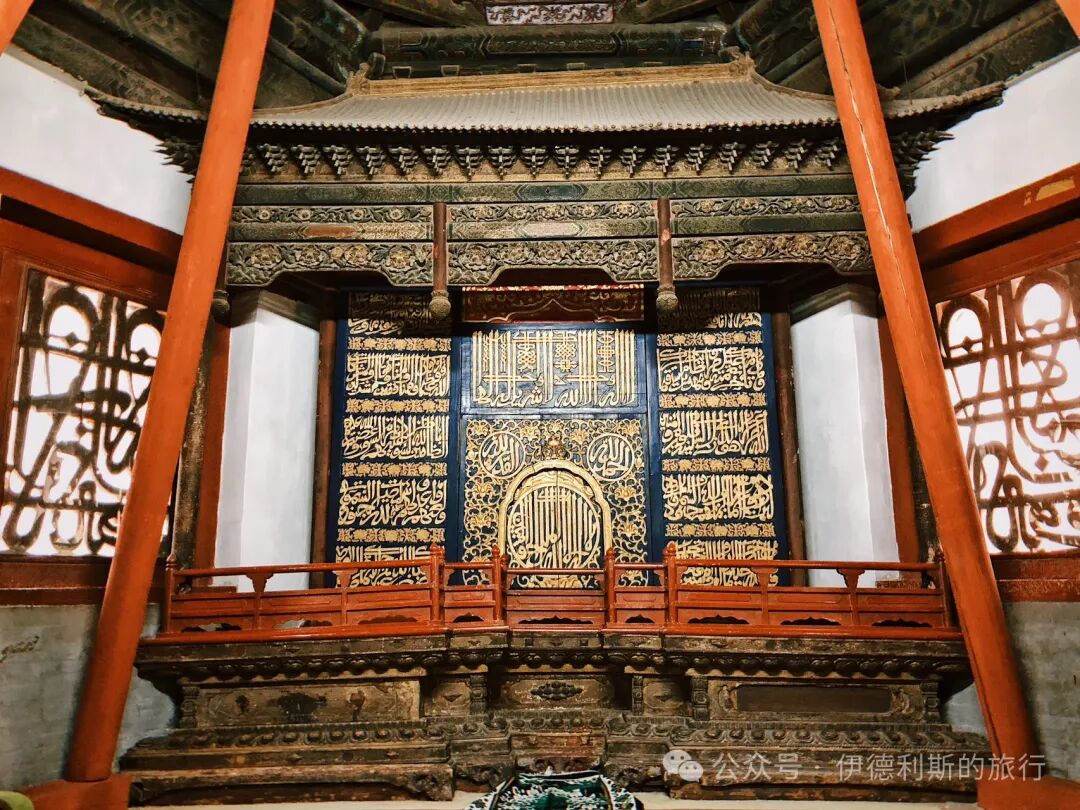
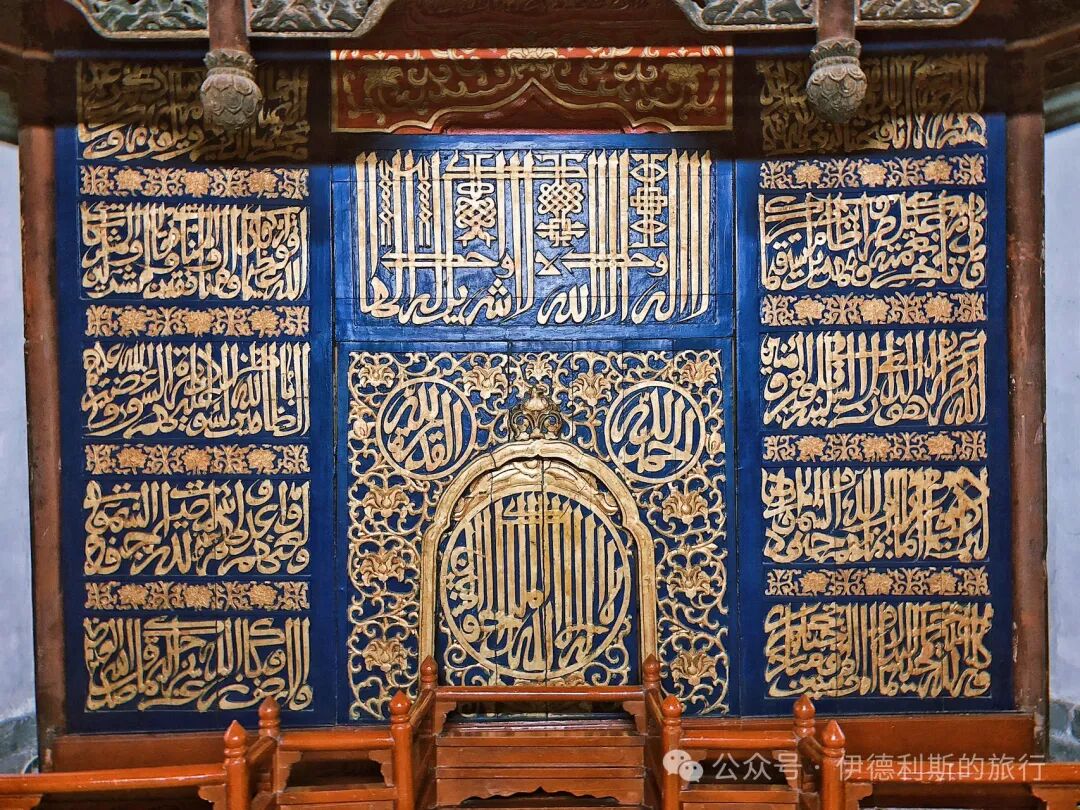
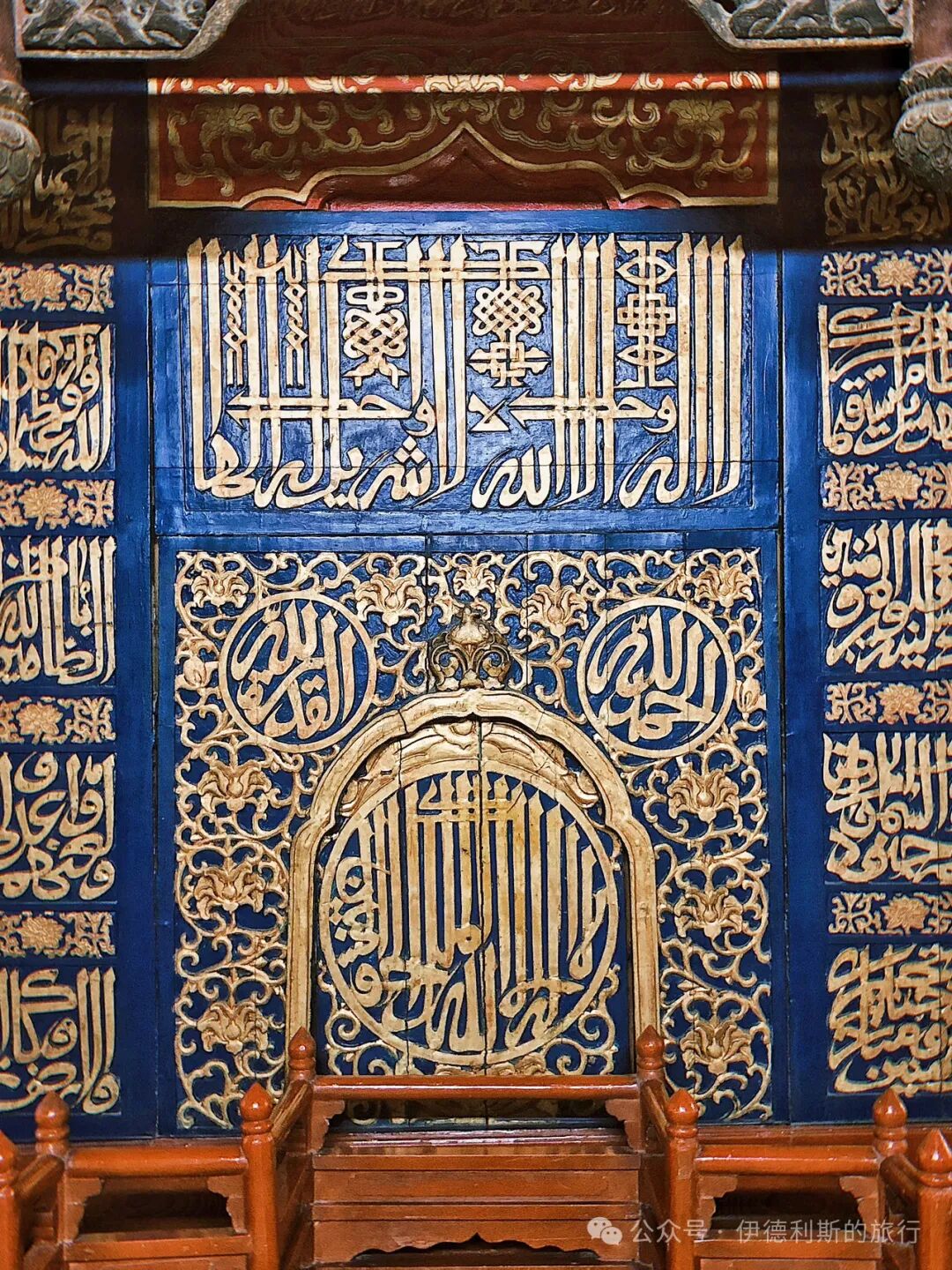
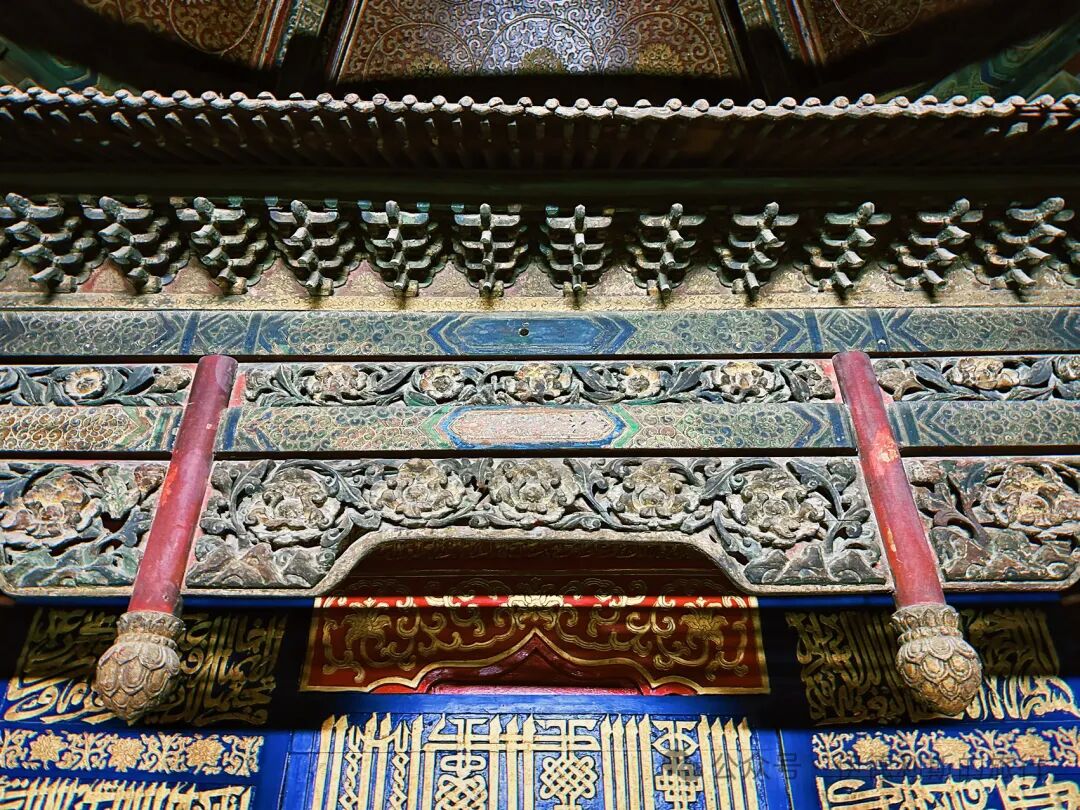
The Ming dynasty archway-style mihrab at Niujie in Beijing features a beam-column hip roof on top and a Sumeru pedestal (xumizuo) at the bottom. The eight large lotus petal carvings on the Sumeru pedestal show a Ming dynasty style. The upper part is painted with high-grade gold-inlaid swirling patterns (xuanzi caihua), featuring extensive gold leaf. It was expensive to make and shows the characteristics of official architectural paintings from the mid-Qing dynasty.
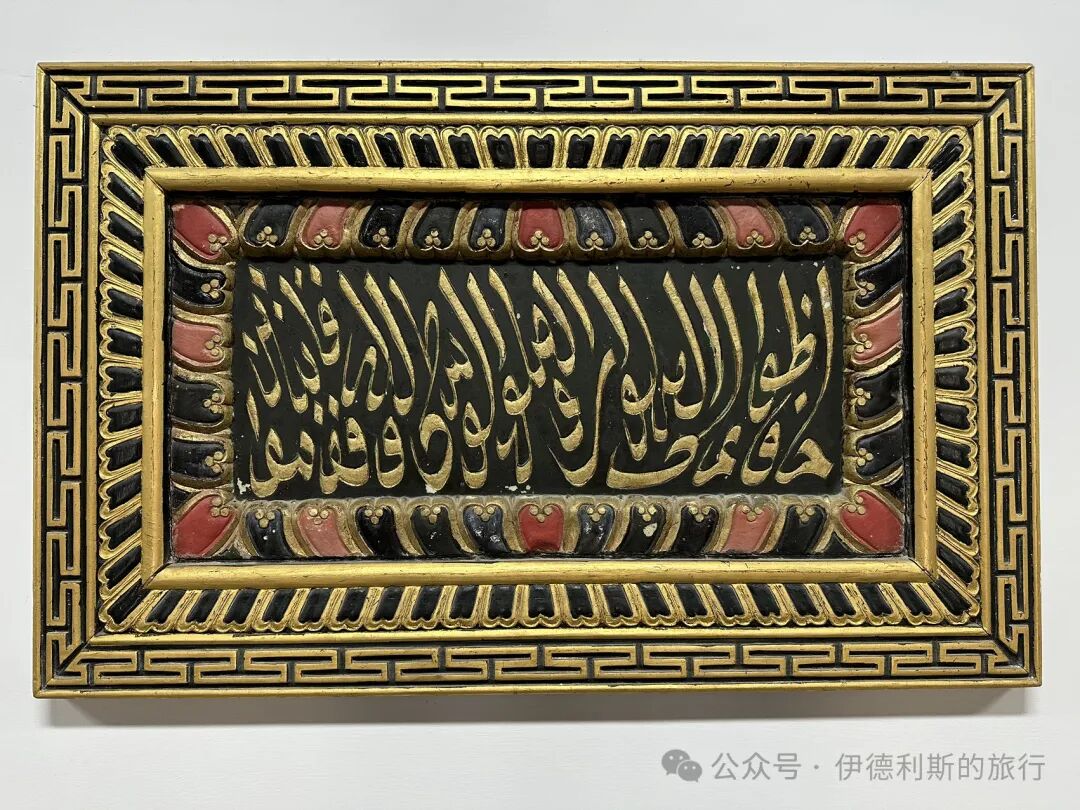
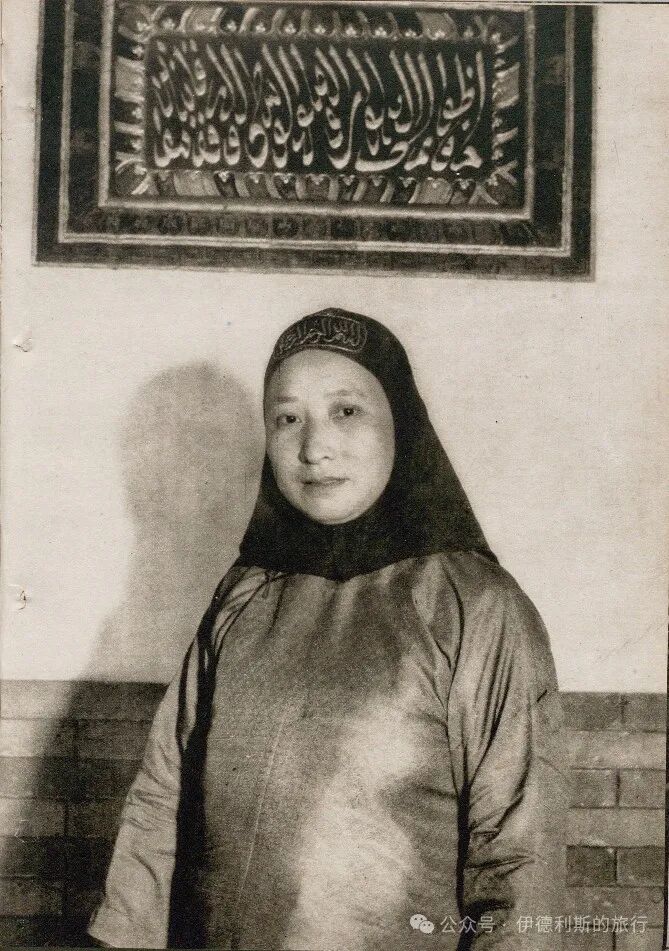
The Beijing Niujie Women's Mosque was built in 1925 as the first women's mosque in Beijing. It was originally located on Shouliu Hutong and was rebuilt on the north side of the Niujie Mosque in 2006. The mihrab is a century-old brick carving of a dua. A September 1942 issue of Beizhi magazine published an old photo of this brick carving.
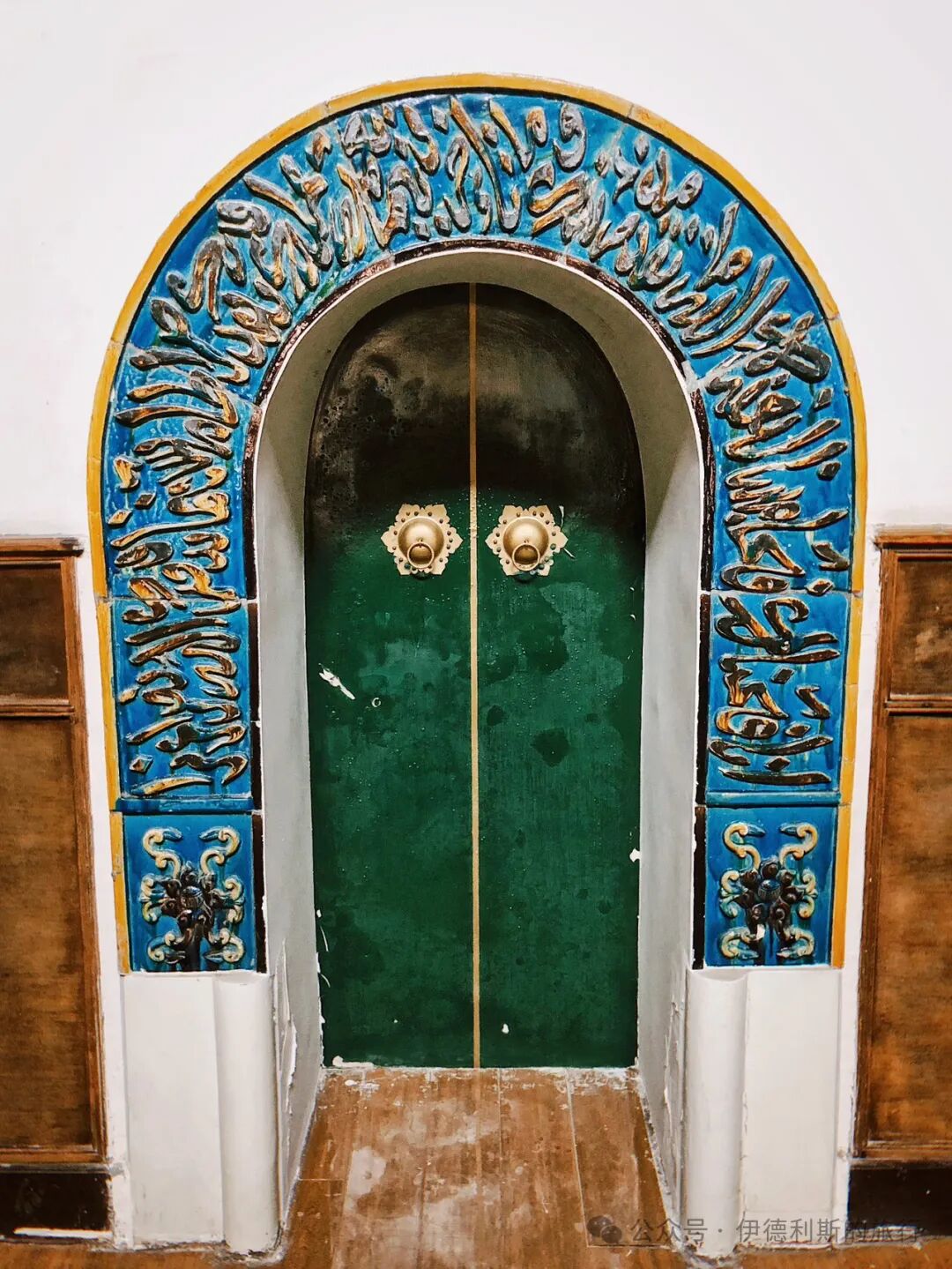
The Beijing Huashi Mosque was built in 1414 (the 12th year of the Yongle reign of the Ming dynasty). The mihrab has a glazed tile archway inscribed with traditional Chinese calligraphy.
The Beijing Nankou Mosque is believed to have been built in the Ming dynasty and renovated during the Qing dynasty. The mihrab is a blue brick screen wall style with a clear-water ridge and scorpion-tail roof ends on top, and a Sumeru pedestal at the bottom. In the middle, it features exquisite diamond-patterned window shutters and scroll-patterned arched brick carvings.
The construction date of the Beijing Gubeikou Mosque is unknown. It was renovated in 1629 (the 12th year of the Chongzhen reign of the Ming dynasty) and rebuilt to its current appearance by the Zhili regional commander Ma Jinliang during the Kangxi reign of the Qing dynasty. The mihrab is arch-shaped and painted with auspicious cloud patterns, along with traditional calligraphy in the North China style.
The Beijing Dongzhimenwai Mosque, originally called the Erlizhuang Mosque, was built in the Yuan dynasty. The old mosque's mihrab was wooden and shaped like a tablet. After the renovation, it was placed under the eaves of the hall opposite the new mosque, and it is carved with traditional calligraphy.
The Beijing Changying Mosque mihrab is shaped like a stone stele head and features very complex painted calligraphy. According to research by teacher Hui Zongzheng, it may have been moved from elsewhere when the mosque was built during the Zhengde reign of the Ming dynasty.
Tianjin.
The Great Mosque at Xibeijiao in Tianjin has a wooden carved niche (yaokan) with a very high Sumeru pedestal railing, which is quite rare.
The Tianjin Jinjiayao Mosque features traditional calligraphy plaques and couplets, with an arched gate in the middle.
The Tianjin Hexiwu Mosque features a rare painted design of a half-open vermilion door.
The Tianjin Xibeijiao South Mosque features traditional calligraphy plaques and couplets.
The Tianjin Tianmu North Mosque also features a large gate design in the middle.
Hebei.
The Hebei Zhangjiakou Xinhua Street Mosque's winter prayer hall mihrab is decorated with traditional calligraphy plaques and circular couplets.
The Hebei Zhangjiakou Xiguan Mosque is a blue brick screen wall style with a hip roof, a ridged roof, and flying eaves, with a Sumeru pedestal at the bottom. The center features Ming dynasty calligraphy carvings restored in 2020 by the famous calligrapher Wang Qifei based on old photos.
The South Mosque (Nandasi) in Xuanhua, Hebei, is an arched structure carved with calligraphy and floral patterns.
The North Mosque (Beisi) in Xuanhua, Hebei, is an arched structure carved with calligraphy and floral patterns.
Henan
The Shanyitang Mosque in Henan is an arched structure decorated with calligraphy written in 2009 by the famous calligrapher Mi Guangjiang.
The North Mosque (Beisi) in Zhengzhou, Henan, is an arched structure with an exterior carved door hood.
The North Mosque (Beisi) in Qinyang, Henan, is an arched structure decorated with traditional calligraphy.
The Xiguan Mosque in Bo'ai, Henan, is an arched structure decorated with Arabic plaques and couplets.
The West Mosque (Xisi) in Daxinzhuang, Bo'ai, Henan, is an arched structure decorated with Arabic plaques and couplets.
Shandong
The North Mosque (Beisi) in Linqing, Shandong, is a three-room, four-pillar memorial archway style building with bracket sets and flying eaves, decorated with intricate traditional calligraphy.
The East Mosque (Dongsi) in Linqing, Shandong, is a three-room, four-pillar memorial archway style building with bracket sets and flying eaves, decorated with intricate traditional calligraphy.
The South Mosque (Nandasi) in Jinan, Shandong, is an arched structure. According to the mosque's stele record, the calligraphy was written in 1810 (the 15th year of the Jiaqing reign) by Imam Hei Faxiang.
The North Mosque (Beisi) in Jinan, Shandong, is an arched structure featuring calligraphy in the center.
The Zhenjiao Mosque in Qingzhou, Shandong, is an arched structure with a single-eave, hanging-mountain style door hood above.
Inner Mongolia
The Great Mosque in Hohhot, Inner Mongolia, has a door hood with openwork, painted floral and scroll patterns.
The East Mosque (Dongsi) in Hohhot, Inner Mongolia.
The Longshengzhuang Mosque in Feng County, Inner Mongolia, has a door hood with wood-carved calligraphy inside the arch.
The North Mosque (Beisi) in Chifeng, Inner Mongolia, features original wood carvings from 1747 (the 12th year of the Qianlong reign).
Liaoning
The Old City Mosque in Kaiyuan, Liaoning, features a clear-water scorpion-tail roof ridge.
The Luyang Mosque in Jinzhou, Liaoning, has a plaque with large-character calligraphy and traditional brush-style calligraphy on both sides.
The South Mosque (Nandasi) in Shenyang, Liaoning, houses a large spirit tablet.
The Ancient City Mosque in Fuzhou, Dalian, Liaoning, features traditional brush-style calligraphy.
Lingyuan Mosque in Liaoning features carvings of Arabic calligraphy.
Heilongjiang
The winter prayer hall at Bukui West Mosque in Qiqihar, Heilongjiang, has traditional calligraphy carved onto its arches.
The main hall of Bukui West Mosque in Qiqihar, Heilongjiang, is surrounded by carved calligraphy plaques and couplets.
The main hall of Bukui East Mosque in Qiqihar, Heilongjiang, features a clear-water ridge (qingshuiji) roof, a Sumeru pedestal (xumizuo) base, and carved calligraphy plaques and couplets.
Acheng Mosque in Heilongjiang has four floor-to-ceiling pillars (tongtianzhu) in its kiln hall (yaodian) built in 1900 (the 26th year of the Guangxu reign). They were made from giant pine logs hauled from the forests of Yabuli, Heilongjiang, and installed by a carpenter named Sun Yulin from Wula Street, Jilin. Legend says Carpenter Sun's master was worried about his apprentice, so he secretly went to a stone shop and made four 3-foot-tall lotus-shaped pillar bases. When it came time to raise the floor-to-ceiling pillars, they were exactly 3 feet too short. Seeing this, the master immediately told Carpenter Sun to hitch a cart and bring back the four lotus pillar bases from the stone shop, and they fit perfectly.
Shanxi
Taiyuan Great Mosque in Shanxi is a Ming Dynasty treasure. It has a wooden memorial archway-style door hood with a hip roof (wudianding), bracket sets (dougong), and flying eaves. Below are Sumeru pedestal railings, and the pillars are decorated with scrolling lotus patterns and Arabic circular motifs. The center features a wooden carved hanging panel with Arabic script, and a kiln niche (yaokan) is set in the very center.
Shaanxi
Huajue Lane Great Mosque in Xi'an, Shaanxi, is a Ming Dynasty treasure. It uses wooden board inlays and gold-painted pillars to create door hoods and hanging pillars. The wooden boards are carved with Arabic calligraphy and floral patterns, making them very magnificent. The center has a kiln niche arch supported by prismatic pillars on both sides. This is similar to the mihrab style found in Iran and Turkey during the Yuan and Ming dynasties, making it the only known Ming Dynasty mihrab in China that blends Eastern and Western styles.
Besides Huajue Lane Great Mosque, the Daxuexi Lane Mosque and Dapiyuan Mosque in Xi'an also have original, unrestored mihrabs. Both mihrabs are made of inlaid wooden boards with a kiln niche in the middle, but their styles differ. Daxuexi Lane Mosque has a wooden carved canopy (feizhao) between its pillars. The craftsmanship is exquisite, and the calligraphy style matches that of Mengda Mosque in Xunhua, Qinghai, suggesting they may have been made by the same group of craftsmen.
Daxuexi Lane Mosque
Dapiyuan Mosque
Some restored and newly built mihrabs in Xi'an, Shaanxi.
Xiaopiyuan North Mosque has had all its paintings redone, though it is said the style remains unchanged. The center is a kiln niche with beautiful wooden floral carvings.
At the North Guangji Street Mosque, the wood carvings on the upper part of the prayer niche (mihrab) look like those at the Great Mosque of Huajue Lane.
The Xiaoxuexi Lane Middle Mosque features wood panel inlays with a prayer niche (mihrab) in the center.
The Xiaoxuexi Lane Yingli Mosque has a wood-carved door canopy decorated with flower and plant patterns.
The Dongmen Cang South City Mosque has a wood-carved door canopy featuring traditional-style calligraphy.
The Sajinqiao Mosque uses wood panel inlays and contains a very rare Chinese-language Yasin chapter.
Prayer niches (mihrab) in the southern Shaanxi region:
The Ankang North Mosque in Shaanxi is built in a memorial archway style with wood-carved flying eaves.
The Ankang Jingning South Mosque in Shaanxi features traditional-style couplets and horizontal inscribed boards.
The Xixiang North Mosque in Shaanxi features traditional-style couplets and horizontal inscribed boards.
The Xixiang Luling Mosque in Shaanxi is built in a wood memorial archway style and has traditional couplets.
The Hanzhong Xianyin Mosque in Shaanxi has traditional-style horizontal inscribed boards and couplets, and the prayer niche (mihrab) is carved with an offering table.
Gansu
The Linxia Old Wang Mosque is arch-shaped and carved with traditional Arabic horizontal inscribed boards and couplets.
The Linxia West Mosque is arch-shaped and carved with traditional Arabic horizontal inscribed boards and couplets.
The Linxia North Mosque is arch-shaped and carved with traditional Arabic horizontal inscribed boards and couplets.
The Tianshui Beiguan Mosque is arch-shaped and carved with traditional Arabic horizontal inscribed boards and couplets.
The Tianshui Qin'an Nanxiaguan Mosque features brick carvings of Zhe school Shagou-style calligraphy and rare brick-carved hanging scrolls.
Qinghai
The Haidong Hongshuiquan Great Mosque features wood panel inlays, a door canopy above, a Sumeru pedestal below, and extremely rare traditional auspicious patterns carved above the prayer niche (mihrab).
The Xunhua Tashapo Mosque has flame patterns and flower designs carved around the prayer niche (mihrab), with a flame pearl carved directly above it, which is also very rare.
The Xunhua Qingshuihe East Mosque has a wood carving style similar to the Tashapo Mosque, but slightly shallower, and also features a flame pearl in the center.
The Xunhua Mengda Dazhuang Mosque features painted wood panels, and the backlight inside the prayer niche (mihrab) is very unique due to Tibetan cultural influence.
The Xunhua Shangkewa Mosque features painted wood panels with traditional calligraphy.
The Xunhua Zhangga Mosque has an arch in the center surrounded by horizontal inscribed boards and couplets.
Xinjiang
The Shaanxi Grand Mosque in Urumqi was built in 1906. It features wood paneling and a central arch.
The South Grand Mosque in Urumqi was built in 1919. It has a decorative gate hood and a central arch.
Tibet
The Lhasa Grand Mosque features wood carvings of flowers, plants, and calligraphy, along with two calligraphic couplets.
The Lhasa Small Mosque features wood carvings of flowers, plants, and calligraphy.
The Lhasa West Suburb Mosque features wood carvings of flowers, plants, and calligraphy.
Sichuan
The Langzhong Mosque has a traditional calligraphic plaque above its arch.
The Langzhong Baba Mosque has a plaque from the fifth year of the Guangxu reign that reads 'Le Shan Ke Feng' at the very top. Below it are traditional calligraphic couplets, and the center features an arch.
The Nanchong Mosque features traditional calligraphy in its center written by the famous calligrapher Wang Qifei.
The Majia Mosque in Yankou, Wusheng, features brush-style calligraphy.
The Xichang City Mosque has traditional calligraphic plaques and couplets, with an arch in the center.
The Xichang East Mosque features unique Xichang-style Arabic calligraphy on its plaque.
The Qing Dynasty wood-carved mihrab at the Miyi Tianba Mosque was damaged by termites, so it has been re-carved to look exactly like the original.
The Dujiangyan Mosque has calligraphic couplets that look like bamboo joints, which is very characteristic of Sichuan.
The Tangjia Mosque in Mimou Town, Chengdu, features clever couplets that start with two-part phonetic letters known as suole. view all
Summary: This is the first part of a visual record of 131 traditional mihrabs in Chinese mosques. It keeps the source images, place names, captions, and architectural notes in a cleaner English layout.
Beijing.
The Ming dynasty archway-style mihrab at Niujie in Beijing features a beam-column hip roof on top and a Sumeru pedestal (xumizuo) at the bottom. The eight large lotus petal carvings on the Sumeru pedestal show a Ming dynasty style. The upper part is painted with high-grade gold-inlaid swirling patterns (xuanzi caihua), featuring extensive gold leaf. It was expensive to make and shows the characteristics of official architectural paintings from the mid-Qing dynasty.
The Beijing Niujie Women's Mosque was built in 1925 as the first women's mosque in Beijing. It was originally located on Shouliu Hutong and was rebuilt on the north side of the Niujie Mosque in 2006. The mihrab is a century-old brick carving of a dua. A September 1942 issue of Beizhi magazine published an old photo of this brick carving.
The Beijing Huashi Mosque was built in 1414 (the 12th year of the Yongle reign of the Ming dynasty). The mihrab has a glazed tile archway inscribed with traditional Chinese calligraphy.
The Beijing Nankou Mosque is believed to have been built in the Ming dynasty and renovated during the Qing dynasty. The mihrab is a blue brick screen wall style with a clear-water ridge and scorpion-tail roof ends on top, and a Sumeru pedestal at the bottom. In the middle, it features exquisite diamond-patterned window shutters and scroll-patterned arched brick carvings.
The construction date of the Beijing Gubeikou Mosque is unknown. It was renovated in 1629 (the 12th year of the Chongzhen reign of the Ming dynasty) and rebuilt to its current appearance by the Zhili regional commander Ma Jinliang during the Kangxi reign of the Qing dynasty. The mihrab is arch-shaped and painted with auspicious cloud patterns, along with traditional calligraphy in the North China style.
The Beijing Dongzhimenwai Mosque, originally called the Erlizhuang Mosque, was built in the Yuan dynasty. The old mosque's mihrab was wooden and shaped like a tablet. After the renovation, it was placed under the eaves of the hall opposite the new mosque, and it is carved with traditional calligraphy.
The Beijing Changying Mosque mihrab is shaped like a stone stele head and features very complex painted calligraphy. According to research by teacher Hui Zongzheng, it may have been moved from elsewhere when the mosque was built during the Zhengde reign of the Ming dynasty.
Tianjin.
The Great Mosque at Xibeijiao in Tianjin has a wooden carved niche (yaokan) with a very high Sumeru pedestal railing, which is quite rare.
The Tianjin Jinjiayao Mosque features traditional calligraphy plaques and couplets, with an arched gate in the middle.
The Tianjin Hexiwu Mosque features a rare painted design of a half-open vermilion door.
The Tianjin Xibeijiao South Mosque features traditional calligraphy plaques and couplets.
The Tianjin Tianmu North Mosque also features a large gate design in the middle.
Hebei.
The Hebei Zhangjiakou Xinhua Street Mosque's winter prayer hall mihrab is decorated with traditional calligraphy plaques and circular couplets.
The Hebei Zhangjiakou Xiguan Mosque is a blue brick screen wall style with a hip roof, a ridged roof, and flying eaves, with a Sumeru pedestal at the bottom. The center features Ming dynasty calligraphy carvings restored in 2020 by the famous calligrapher Wang Qifei based on old photos.
The South Mosque (Nandasi) in Xuanhua, Hebei, is an arched structure carved with calligraphy and floral patterns.
The North Mosque (Beisi) in Xuanhua, Hebei, is an arched structure carved with calligraphy and floral patterns.
Henan
The Shanyitang Mosque in Henan is an arched structure decorated with calligraphy written in 2009 by the famous calligrapher Mi Guangjiang.
The North Mosque (Beisi) in Zhengzhou, Henan, is an arched structure with an exterior carved door hood.
The North Mosque (Beisi) in Qinyang, Henan, is an arched structure decorated with traditional calligraphy.
The Xiguan Mosque in Bo'ai, Henan, is an arched structure decorated with Arabic plaques and couplets.
The West Mosque (Xisi) in Daxinzhuang, Bo'ai, Henan, is an arched structure decorated with Arabic plaques and couplets.
Shandong
The North Mosque (Beisi) in Linqing, Shandong, is a three-room, four-pillar memorial archway style building with bracket sets and flying eaves, decorated with intricate traditional calligraphy.
The East Mosque (Dongsi) in Linqing, Shandong, is a three-room, four-pillar memorial archway style building with bracket sets and flying eaves, decorated with intricate traditional calligraphy.
The South Mosque (Nandasi) in Jinan, Shandong, is an arched structure. According to the mosque's stele record, the calligraphy was written in 1810 (the 15th year of the Jiaqing reign) by Imam Hei Faxiang.
The North Mosque (Beisi) in Jinan, Shandong, is an arched structure featuring calligraphy in the center.
The Zhenjiao Mosque in Qingzhou, Shandong, is an arched structure with a single-eave, hanging-mountain style door hood above.
Inner Mongolia
The Great Mosque in Hohhot, Inner Mongolia, has a door hood with openwork, painted floral and scroll patterns.
The East Mosque (Dongsi) in Hohhot, Inner Mongolia.
The Longshengzhuang Mosque in Feng County, Inner Mongolia, has a door hood with wood-carved calligraphy inside the arch.
The North Mosque (Beisi) in Chifeng, Inner Mongolia, features original wood carvings from 1747 (the 12th year of the Qianlong reign).
Liaoning
The Old City Mosque in Kaiyuan, Liaoning, features a clear-water scorpion-tail roof ridge.
The Luyang Mosque in Jinzhou, Liaoning, has a plaque with large-character calligraphy and traditional brush-style calligraphy on both sides.
The South Mosque (Nandasi) in Shenyang, Liaoning, houses a large spirit tablet.
The Ancient City Mosque in Fuzhou, Dalian, Liaoning, features traditional brush-style calligraphy.
Lingyuan Mosque in Liaoning features carvings of Arabic calligraphy.
Heilongjiang
The winter prayer hall at Bukui West Mosque in Qiqihar, Heilongjiang, has traditional calligraphy carved onto its arches.
The main hall of Bukui West Mosque in Qiqihar, Heilongjiang, is surrounded by carved calligraphy plaques and couplets.
The main hall of Bukui East Mosque in Qiqihar, Heilongjiang, features a clear-water ridge (qingshuiji) roof, a Sumeru pedestal (xumizuo) base, and carved calligraphy plaques and couplets.
Acheng Mosque in Heilongjiang has four floor-to-ceiling pillars (tongtianzhu) in its kiln hall (yaodian) built in 1900 (the 26th year of the Guangxu reign). They were made from giant pine logs hauled from the forests of Yabuli, Heilongjiang, and installed by a carpenter named Sun Yulin from Wula Street, Jilin. Legend says Carpenter Sun's master was worried about his apprentice, so he secretly went to a stone shop and made four 3-foot-tall lotus-shaped pillar bases. When it came time to raise the floor-to-ceiling pillars, they were exactly 3 feet too short. Seeing this, the master immediately told Carpenter Sun to hitch a cart and bring back the four lotus pillar bases from the stone shop, and they fit perfectly.
Shanxi
Taiyuan Great Mosque in Shanxi is a Ming Dynasty treasure. It has a wooden memorial archway-style door hood with a hip roof (wudianding), bracket sets (dougong), and flying eaves. Below are Sumeru pedestal railings, and the pillars are decorated with scrolling lotus patterns and Arabic circular motifs. The center features a wooden carved hanging panel with Arabic script, and a kiln niche (yaokan) is set in the very center.
Shaanxi
Huajue Lane Great Mosque in Xi'an, Shaanxi, is a Ming Dynasty treasure. It uses wooden board inlays and gold-painted pillars to create door hoods and hanging pillars. The wooden boards are carved with Arabic calligraphy and floral patterns, making them very magnificent. The center has a kiln niche arch supported by prismatic pillars on both sides. This is similar to the mihrab style found in Iran and Turkey during the Yuan and Ming dynasties, making it the only known Ming Dynasty mihrab in China that blends Eastern and Western styles.
Besides Huajue Lane Great Mosque, the Daxuexi Lane Mosque and Dapiyuan Mosque in Xi'an also have original, unrestored mihrabs. Both mihrabs are made of inlaid wooden boards with a kiln niche in the middle, but their styles differ. Daxuexi Lane Mosque has a wooden carved canopy (feizhao) between its pillars. The craftsmanship is exquisite, and the calligraphy style matches that of Mengda Mosque in Xunhua, Qinghai, suggesting they may have been made by the same group of craftsmen.
Daxuexi Lane Mosque
Dapiyuan Mosque
Some restored and newly built mihrabs in Xi'an, Shaanxi.
Xiaopiyuan North Mosque has had all its paintings redone, though it is said the style remains unchanged. The center is a kiln niche with beautiful wooden floral carvings.
At the North Guangji Street Mosque, the wood carvings on the upper part of the prayer niche (mihrab) look like those at the Great Mosque of Huajue Lane.
The Xiaoxuexi Lane Middle Mosque features wood panel inlays with a prayer niche (mihrab) in the center.
The Xiaoxuexi Lane Yingli Mosque has a wood-carved door canopy decorated with flower and plant patterns.
The Dongmen Cang South City Mosque has a wood-carved door canopy featuring traditional-style calligraphy.
The Sajinqiao Mosque uses wood panel inlays and contains a very rare Chinese-language Yasin chapter.
Prayer niches (mihrab) in the southern Shaanxi region:
The Ankang North Mosque in Shaanxi is built in a memorial archway style with wood-carved flying eaves.
The Ankang Jingning South Mosque in Shaanxi features traditional-style couplets and horizontal inscribed boards.
The Xixiang North Mosque in Shaanxi features traditional-style couplets and horizontal inscribed boards.
The Xixiang Luling Mosque in Shaanxi is built in a wood memorial archway style and has traditional couplets.
The Hanzhong Xianyin Mosque in Shaanxi has traditional-style horizontal inscribed boards and couplets, and the prayer niche (mihrab) is carved with an offering table.
Gansu
The Linxia Old Wang Mosque is arch-shaped and carved with traditional Arabic horizontal inscribed boards and couplets.
The Linxia West Mosque is arch-shaped and carved with traditional Arabic horizontal inscribed boards and couplets.
The Linxia North Mosque is arch-shaped and carved with traditional Arabic horizontal inscribed boards and couplets.
The Tianshui Beiguan Mosque is arch-shaped and carved with traditional Arabic horizontal inscribed boards and couplets.
The Tianshui Qin'an Nanxiaguan Mosque features brick carvings of Zhe school Shagou-style calligraphy and rare brick-carved hanging scrolls.
Qinghai
The Haidong Hongshuiquan Great Mosque features wood panel inlays, a door canopy above, a Sumeru pedestal below, and extremely rare traditional auspicious patterns carved above the prayer niche (mihrab).
The Xunhua Tashapo Mosque has flame patterns and flower designs carved around the prayer niche (mihrab), with a flame pearl carved directly above it, which is also very rare.
The Xunhua Qingshuihe East Mosque has a wood carving style similar to the Tashapo Mosque, but slightly shallower, and also features a flame pearl in the center.
The Xunhua Mengda Dazhuang Mosque features painted wood panels, and the backlight inside the prayer niche (mihrab) is very unique due to Tibetan cultural influence.
The Xunhua Shangkewa Mosque features painted wood panels with traditional calligraphy.
The Xunhua Zhangga Mosque has an arch in the center surrounded by horizontal inscribed boards and couplets.
Xinjiang
The Shaanxi Grand Mosque in Urumqi was built in 1906. It features wood paneling and a central arch.
The South Grand Mosque in Urumqi was built in 1919. It has a decorative gate hood and a central arch.
Tibet
The Lhasa Grand Mosque features wood carvings of flowers, plants, and calligraphy, along with two calligraphic couplets.
The Lhasa Small Mosque features wood carvings of flowers, plants, and calligraphy.
The Lhasa West Suburb Mosque features wood carvings of flowers, plants, and calligraphy.
Sichuan
The Langzhong Mosque has a traditional calligraphic plaque above its arch.
The Langzhong Baba Mosque has a plaque from the fifth year of the Guangxu reign that reads 'Le Shan Ke Feng' at the very top. Below it are traditional calligraphic couplets, and the center features an arch.
The Nanchong Mosque features traditional calligraphy in its center written by the famous calligrapher Wang Qifei.
The Majia Mosque in Yankou, Wusheng, features brush-style calligraphy.
The Xichang City Mosque has traditional calligraphic plaques and couplets, with an arch in the center.
The Xichang East Mosque features unique Xichang-style Arabic calligraphy on its plaque.
The Qing Dynasty wood-carved mihrab at the Miyi Tianba Mosque was damaged by termites, so it has been re-carved to look exactly like the original.
The Dujiangyan Mosque has calligraphic couplets that look like bamboo joints, which is very characteristic of Sichuan.
The Tangjia Mosque in Mimou Town, Chengdu, features clever couplets that start with two-part phonetic letters known as suole. view all
Reposted from the web
Summary: This is the first part of a visual record of 131 traditional mihrabs in Chinese mosques. It keeps the source images, place names, captions, and architectural notes in a cleaner English layout.
Beijing.
The Ming dynasty archway-style mihrab at Niujie in Beijing features a beam-column hip roof on top and a Sumeru pedestal (xumizuo) at the bottom. The eight large lotus petal carvings on the Sumeru pedestal show a Ming dynasty style. The upper part is painted with high-grade gold-inlaid swirling patterns (xuanzi caihua), featuring extensive gold leaf. It was expensive to make and shows the characteristics of official architectural paintings from the mid-Qing dynasty.
The Beijing Niujie Women's Mosque was built in 1925 as the first women's mosque in Beijing. It was originally located on Shouliu Hutong and was rebuilt on the north side of the Niujie Mosque in 2006. The mihrab is a century-old brick carving of a dua. A September 1942 issue of Beizhi magazine published an old photo of this brick carving.
The Beijing Huashi Mosque was built in 1414 (the 12th year of the Yongle reign of the Ming dynasty). The mihrab has a glazed tile archway inscribed with traditional Chinese calligraphy.
The Beijing Nankou Mosque is believed to have been built in the Ming dynasty and renovated during the Qing dynasty. The mihrab is a blue brick screen wall style with a clear-water ridge and scorpion-tail roof ends on top, and a Sumeru pedestal at the bottom. In the middle, it features exquisite diamond-patterned window shutters and scroll-patterned arched brick carvings.
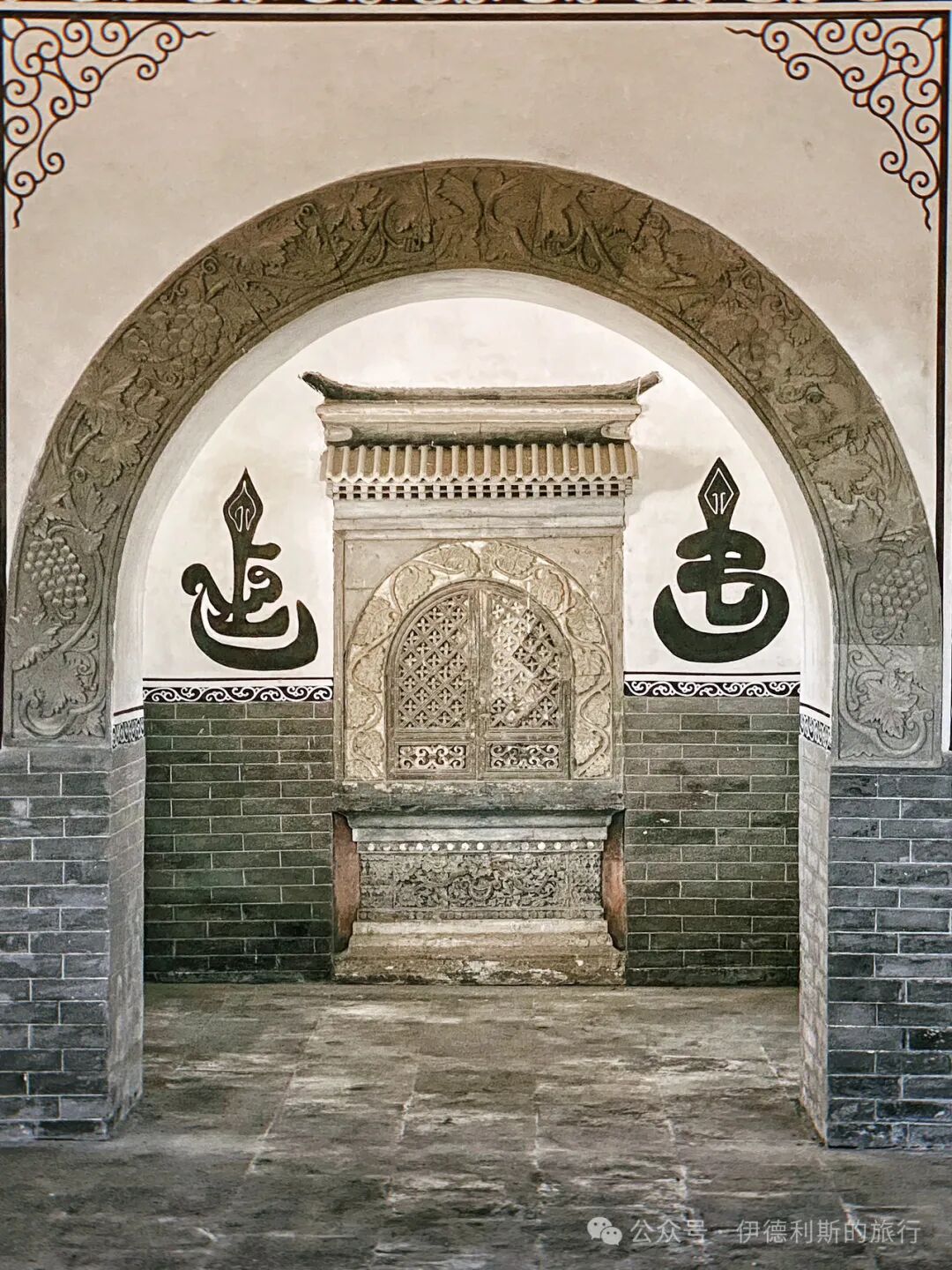
The construction date of the Beijing Gubeikou Mosque is unknown. It was renovated in 1629 (the 12th year of the Chongzhen reign of the Ming dynasty) and rebuilt to its current appearance by the Zhili regional commander Ma Jinliang during the Kangxi reign of the Qing dynasty. The mihrab is arch-shaped and painted with auspicious cloud patterns, along with traditional calligraphy in the North China style.
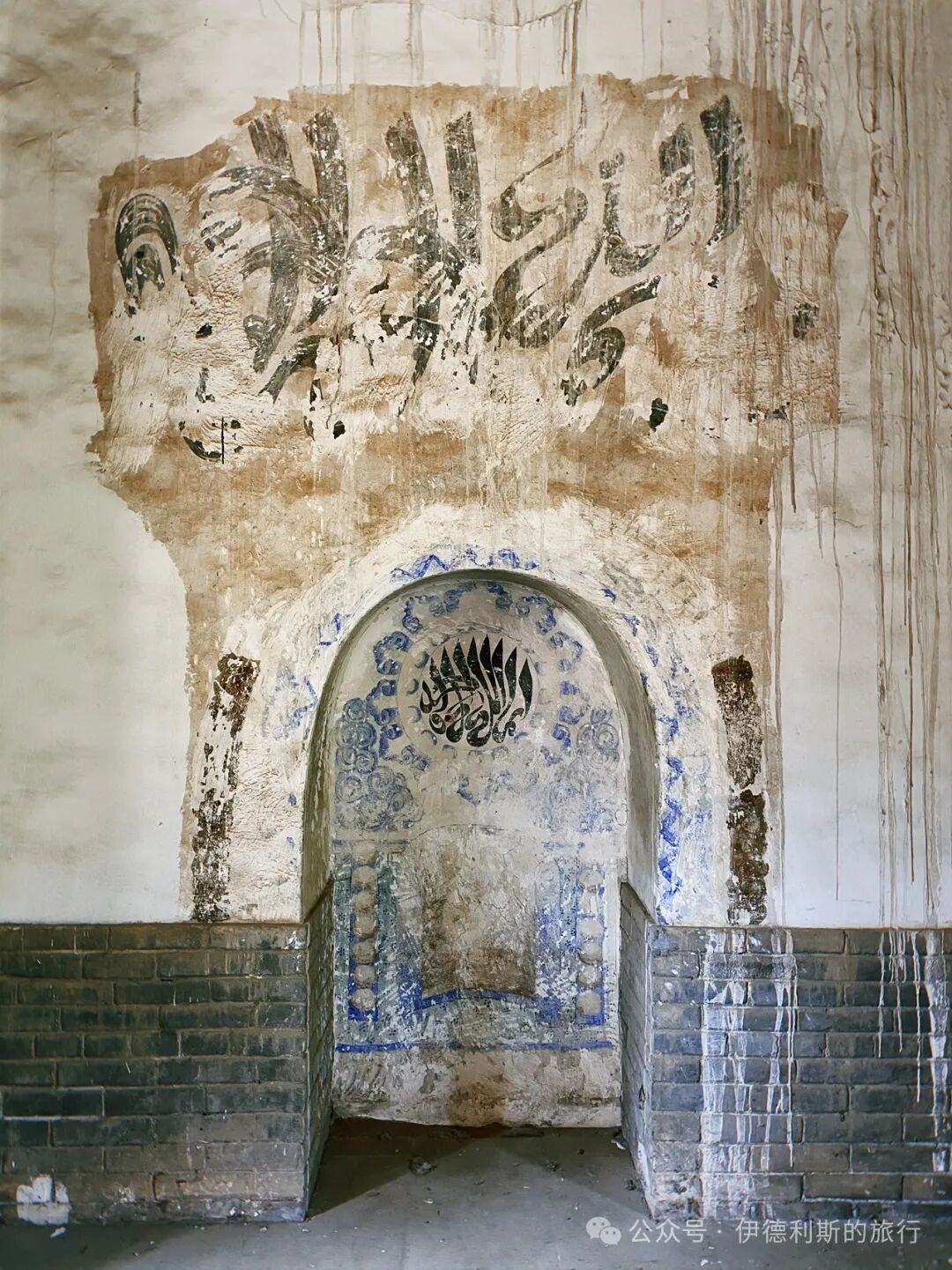
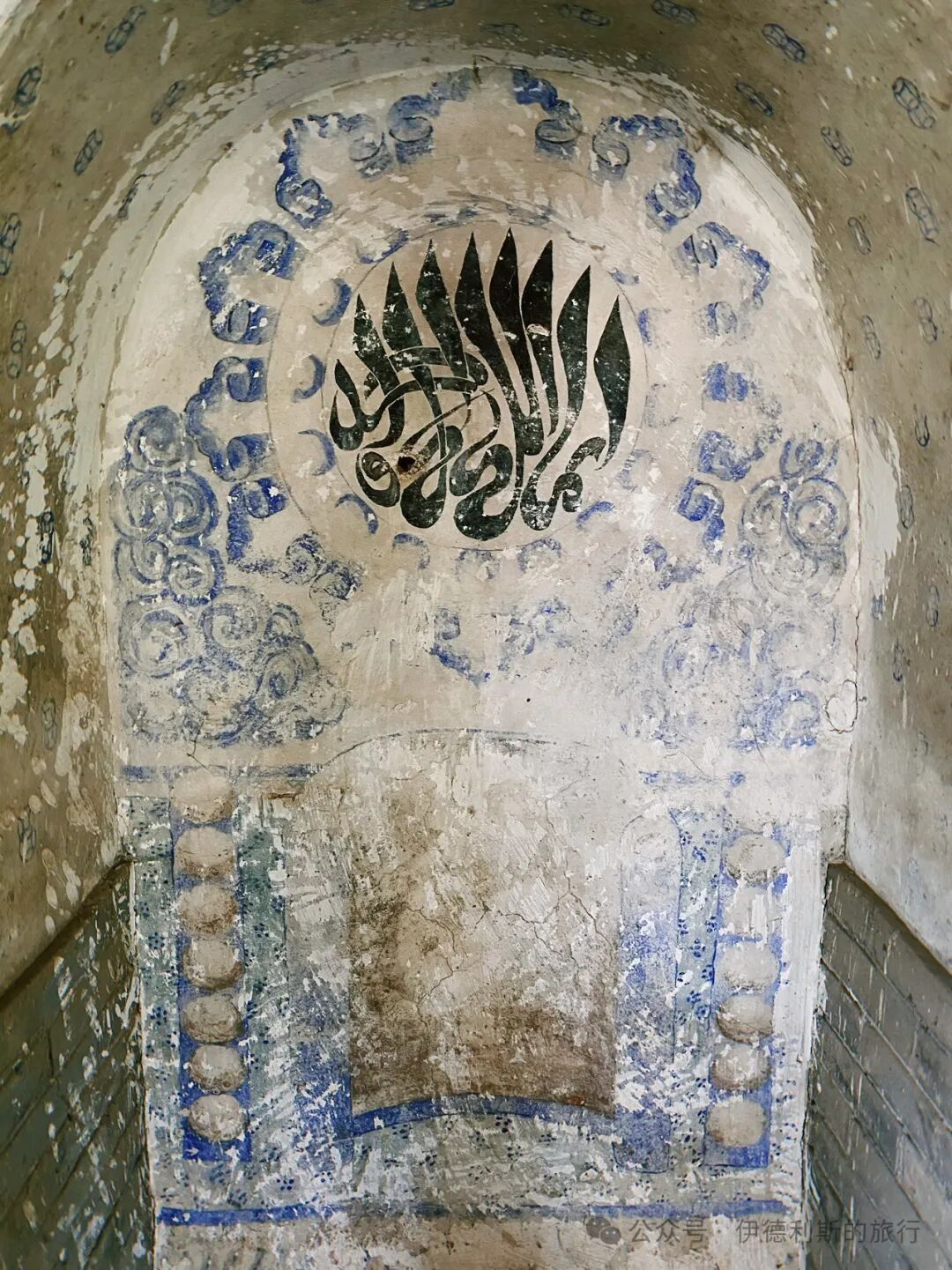
The Beijing Dongzhimenwai Mosque, originally called the Erlizhuang Mosque, was built in the Yuan dynasty. The old mosque's mihrab was wooden and shaped like a tablet. After the renovation, it was placed under the eaves of the hall opposite the new mosque, and it is carved with traditional calligraphy.
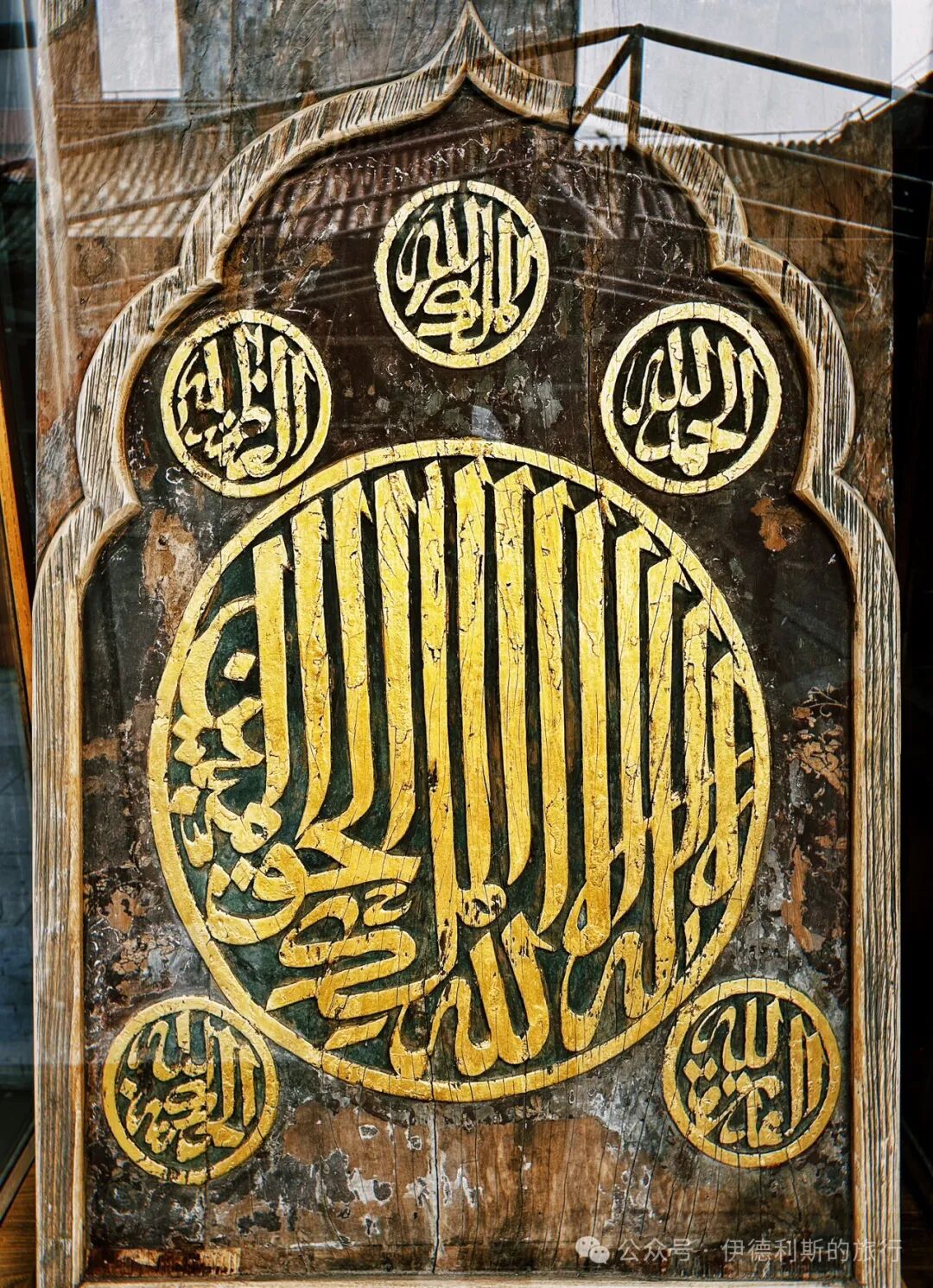
The Beijing Changying Mosque mihrab is shaped like a stone stele head and features very complex painted calligraphy. According to research by teacher Hui Zongzheng, it may have been moved from elsewhere when the mosque was built during the Zhengde reign of the Ming dynasty.
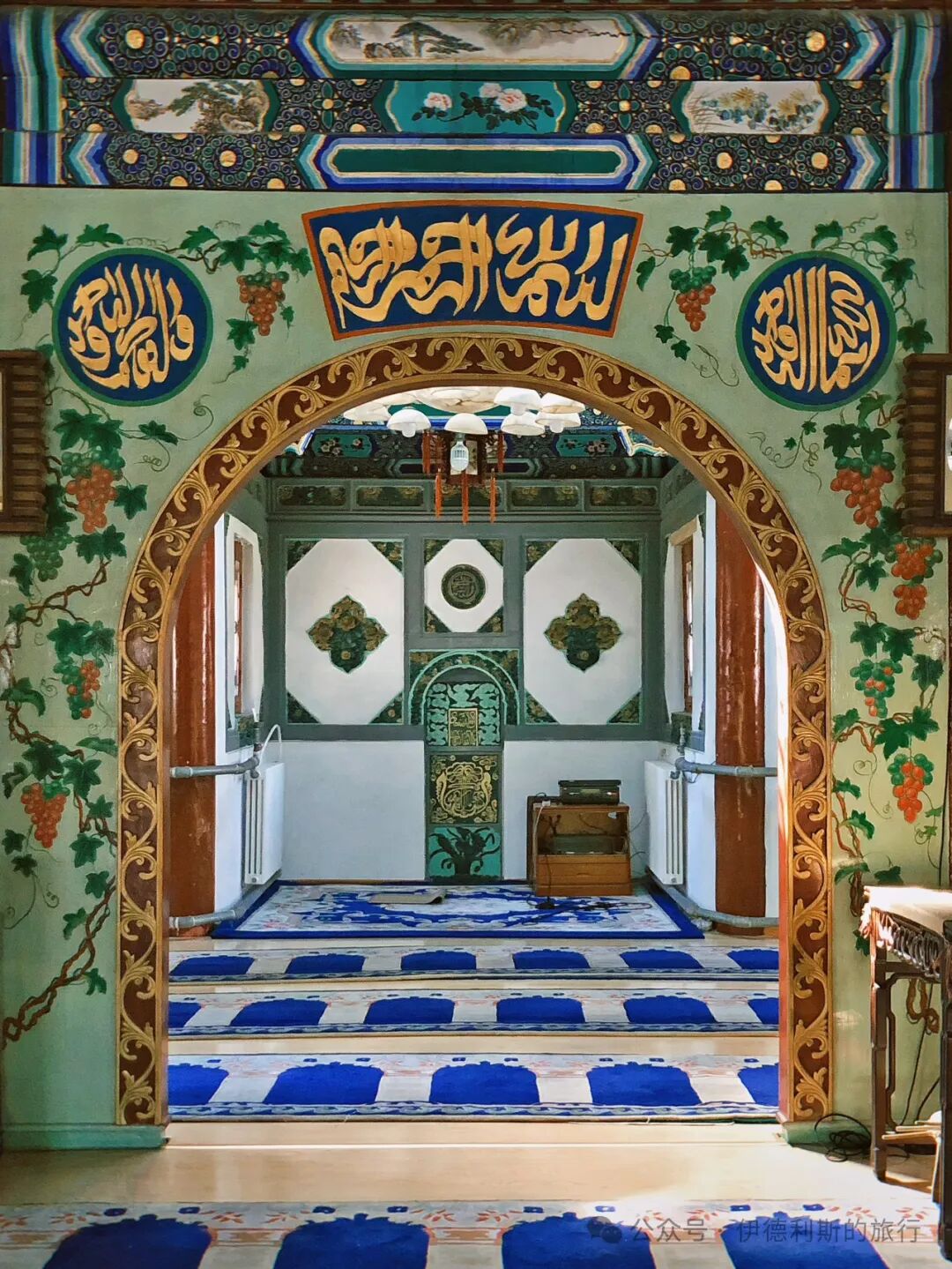
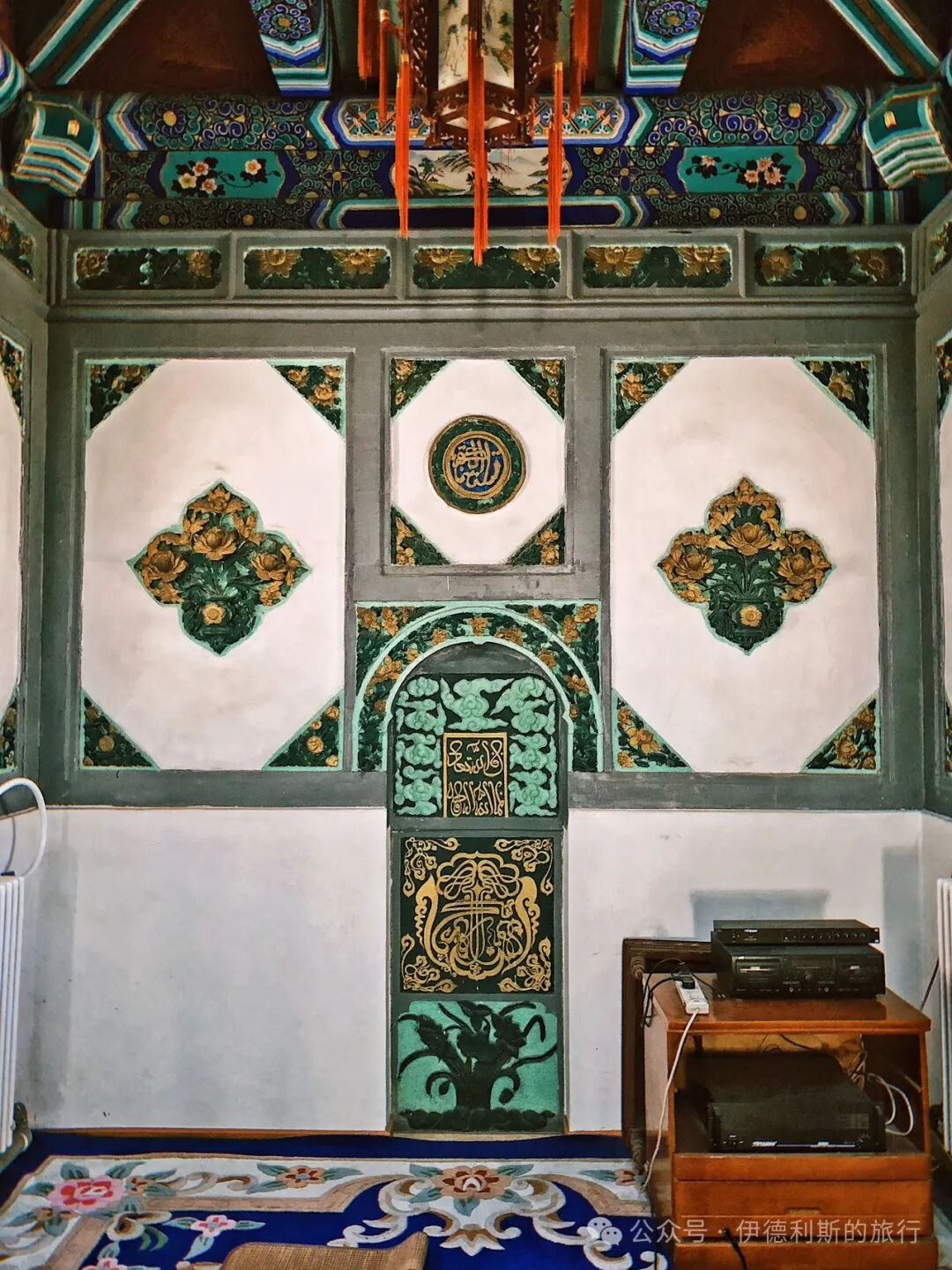
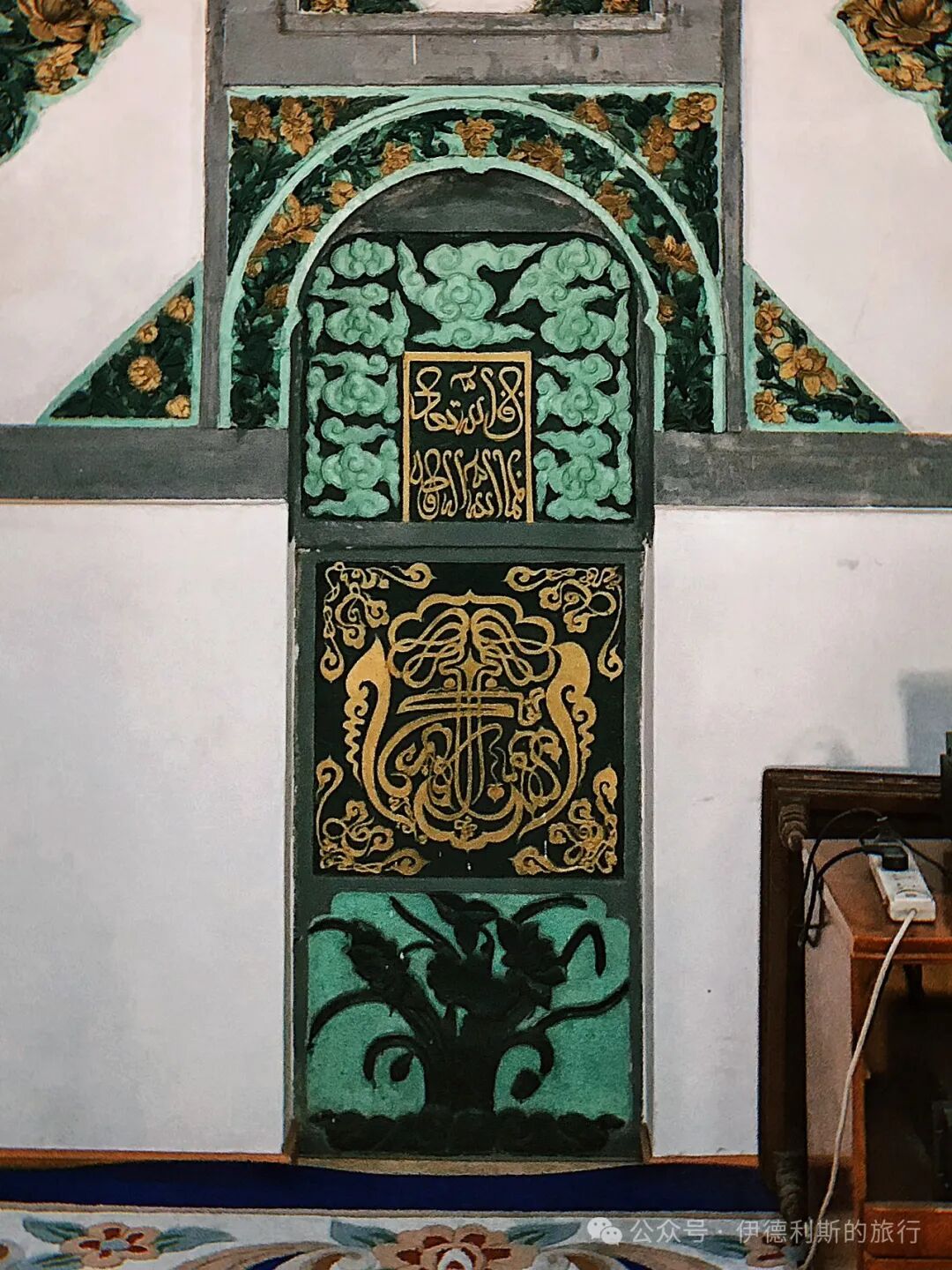
Tianjin.
The Great Mosque at Xibeijiao in Tianjin has a wooden carved niche (yaokan) with a very high Sumeru pedestal railing, which is quite rare.
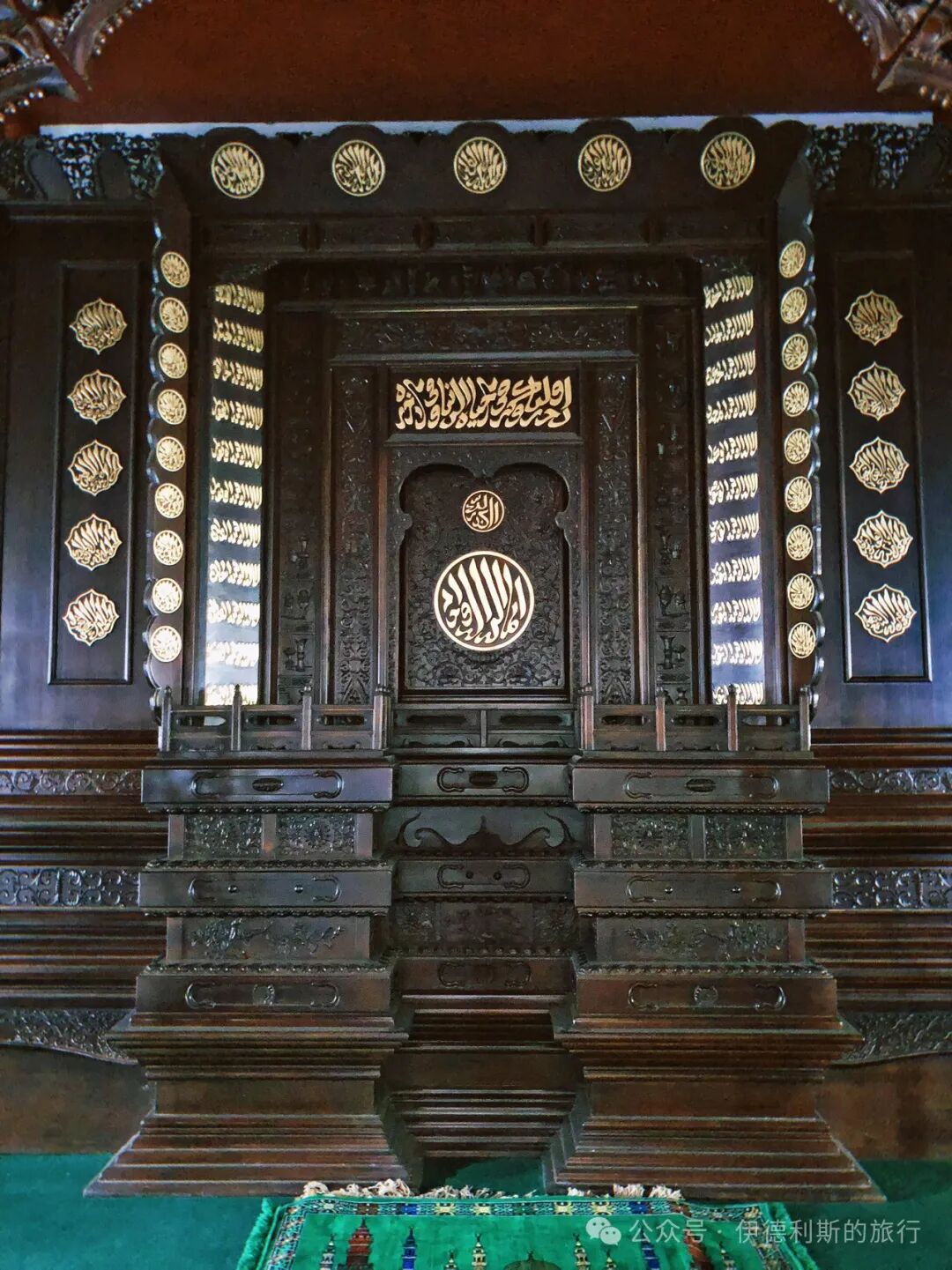
The Tianjin Jinjiayao Mosque features traditional calligraphy plaques and couplets, with an arched gate in the middle.
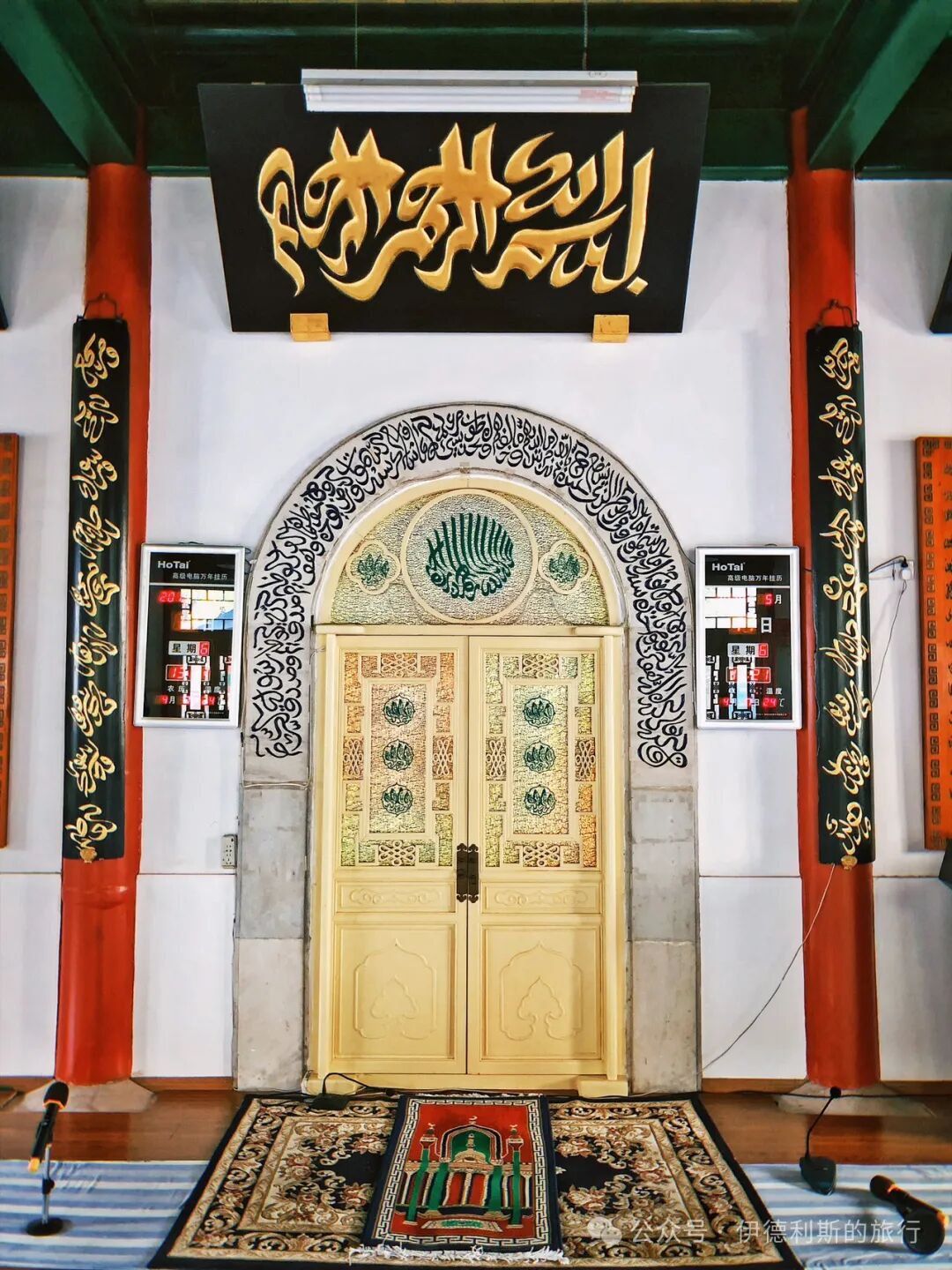
The Tianjin Hexiwu Mosque features a rare painted design of a half-open vermilion door.
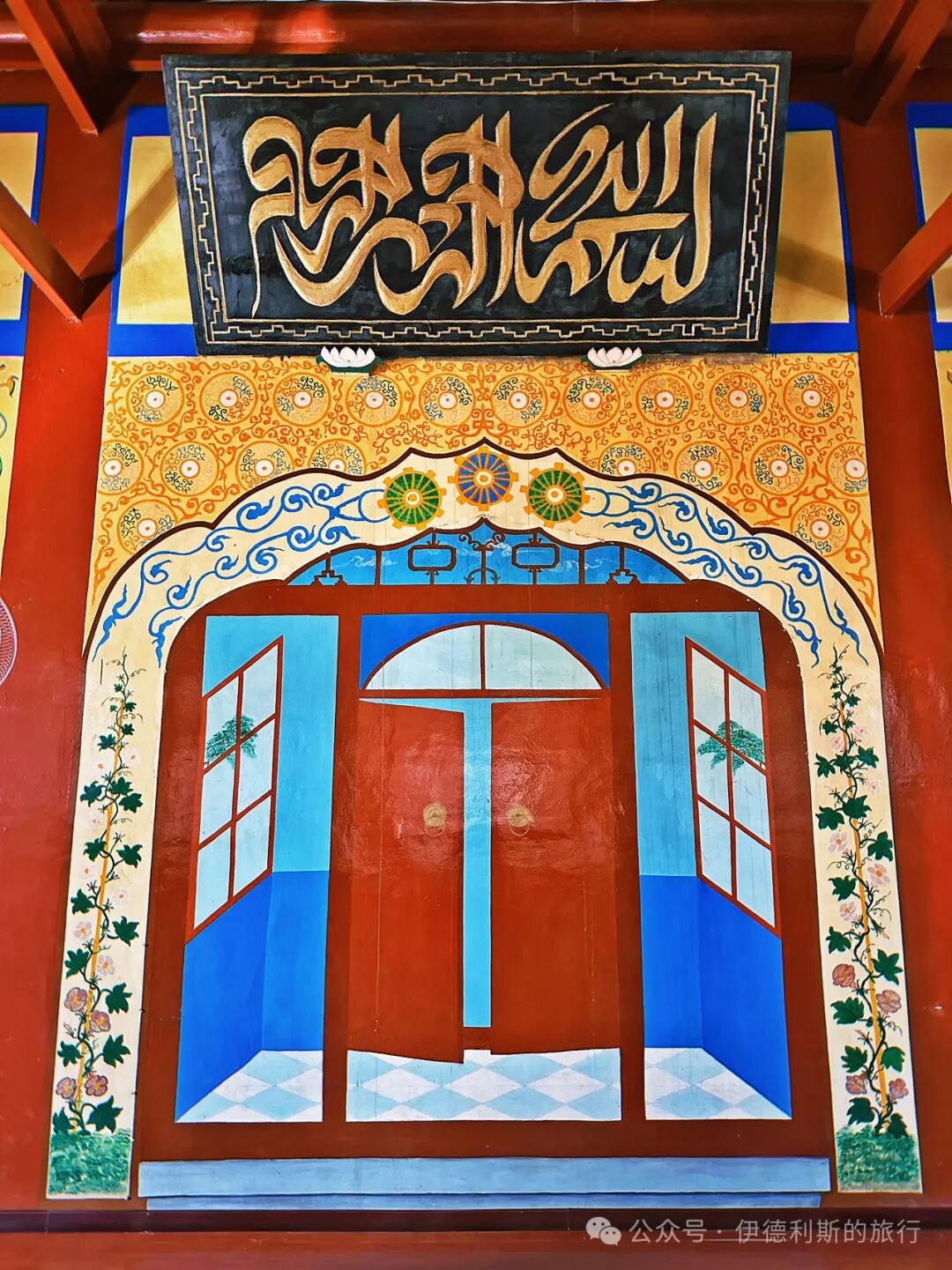
The Tianjin Xibeijiao South Mosque features traditional calligraphy plaques and couplets.
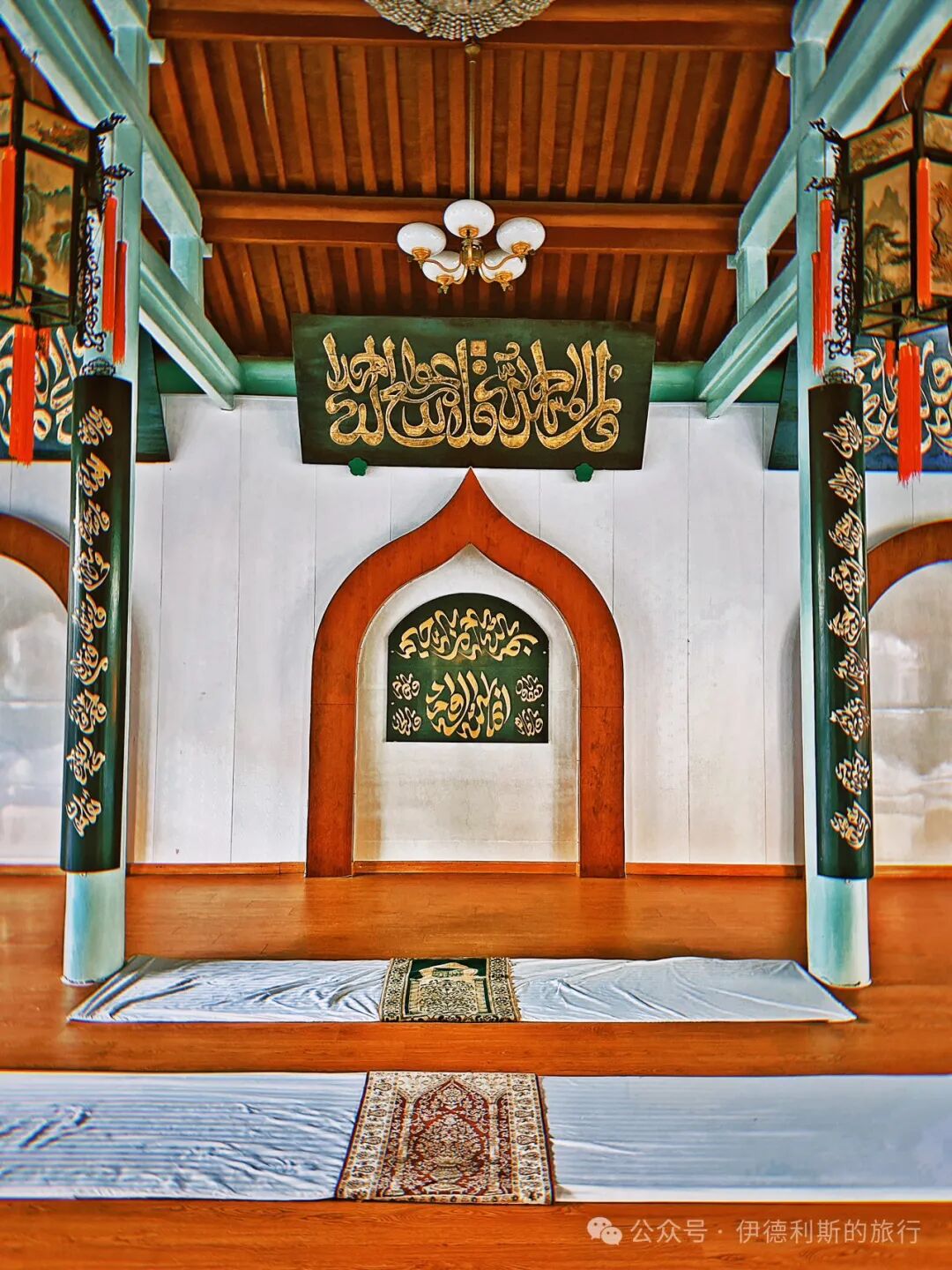
The Tianjin Tianmu North Mosque also features a large gate design in the middle.
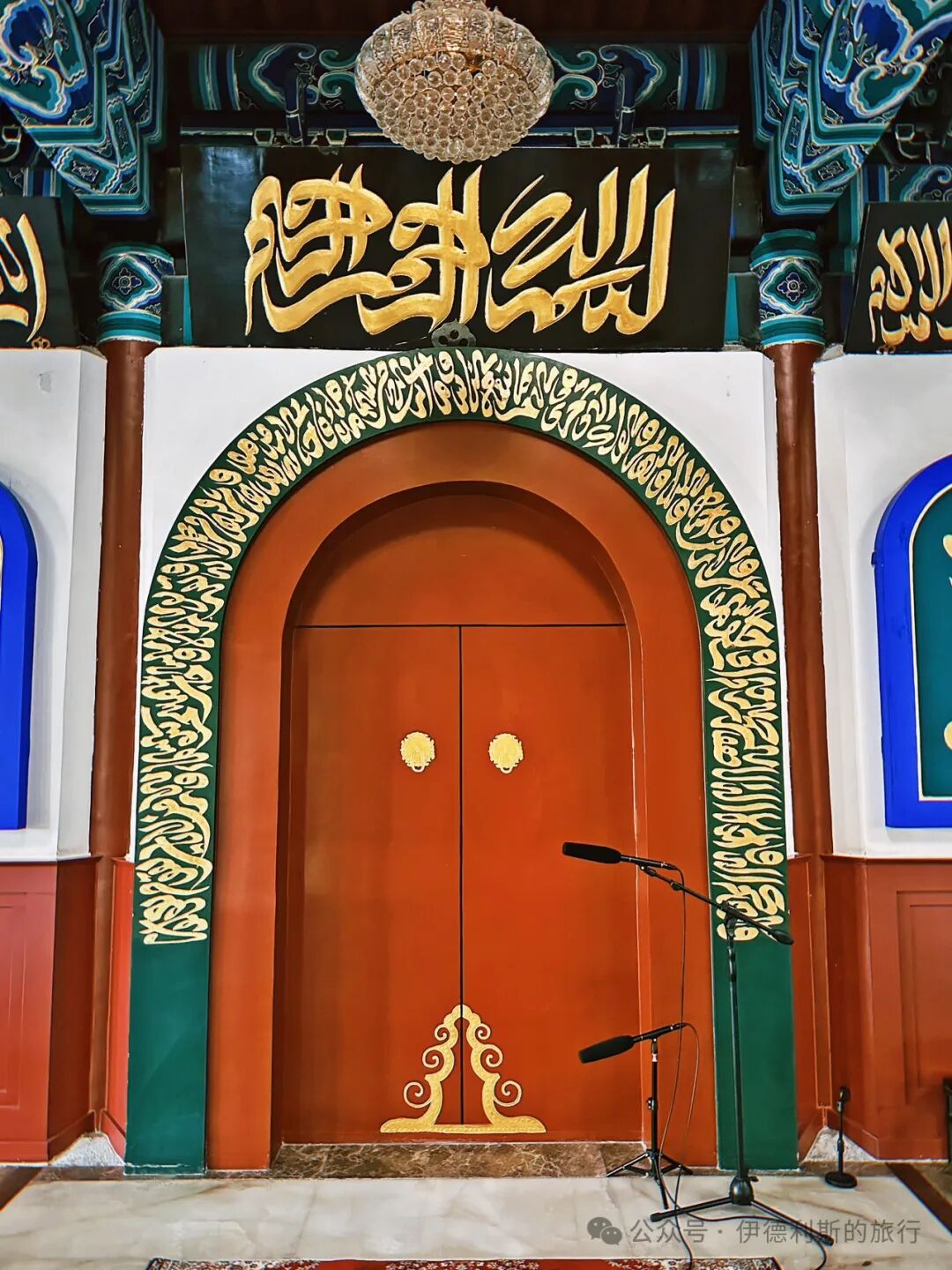
Hebei.
The Hebei Zhangjiakou Xinhua Street Mosque's winter prayer hall mihrab is decorated with traditional calligraphy plaques and circular couplets.
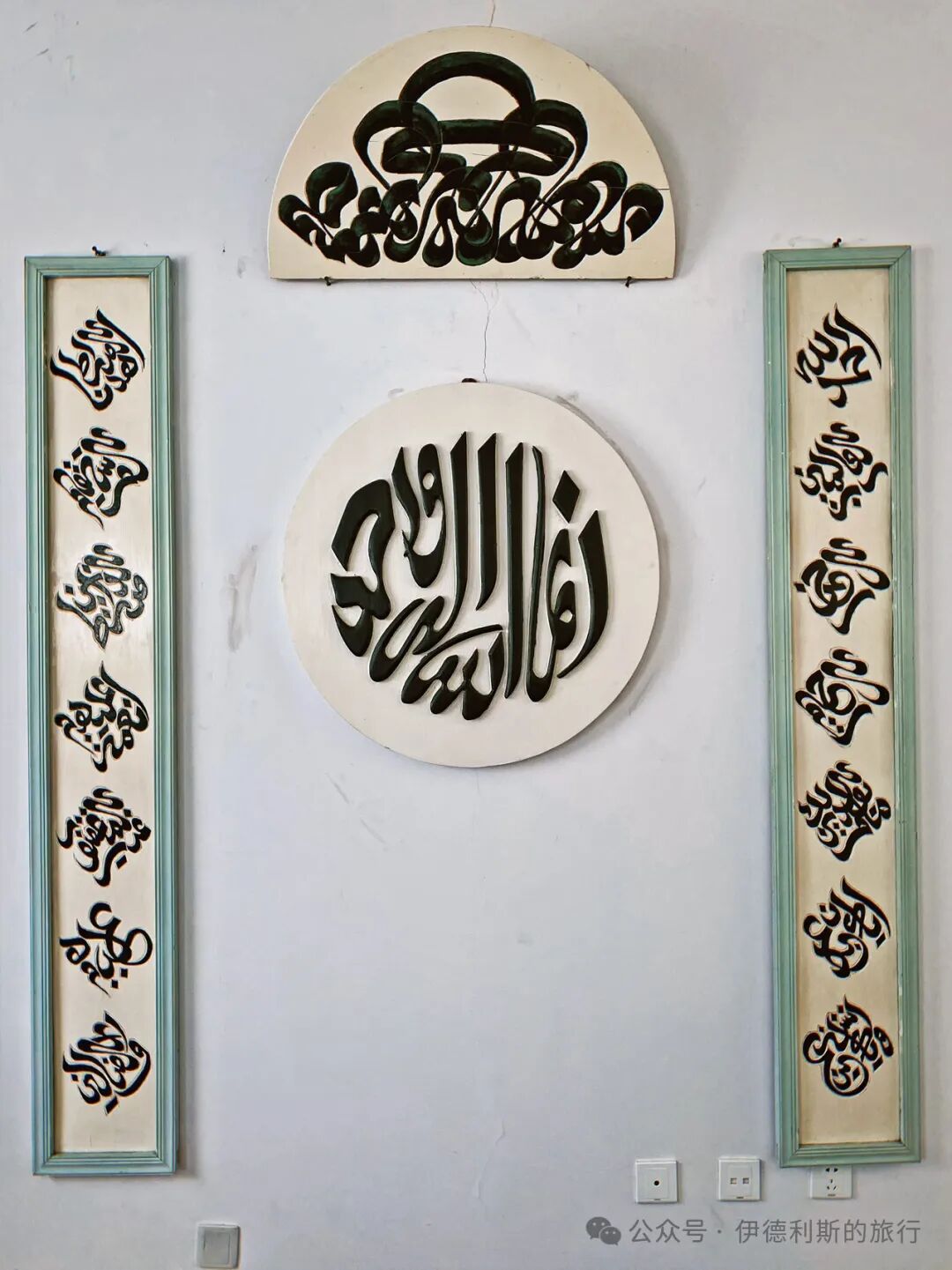
The Hebei Zhangjiakou Xiguan Mosque is a blue brick screen wall style with a hip roof, a ridged roof, and flying eaves, with a Sumeru pedestal at the bottom. The center features Ming dynasty calligraphy carvings restored in 2020 by the famous calligrapher Wang Qifei based on old photos.
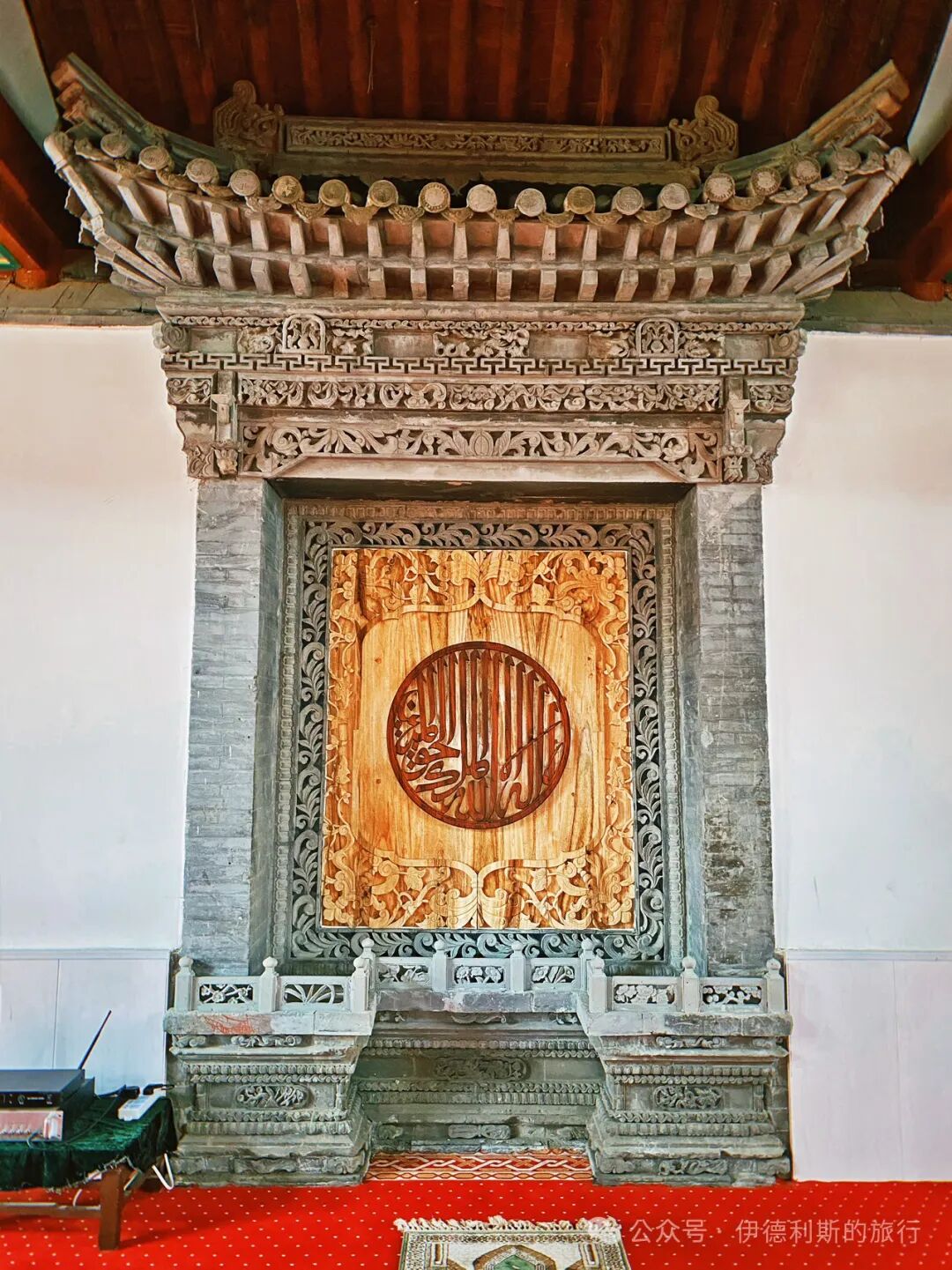
The South Mosque (Nandasi) in Xuanhua, Hebei, is an arched structure carved with calligraphy and floral patterns.
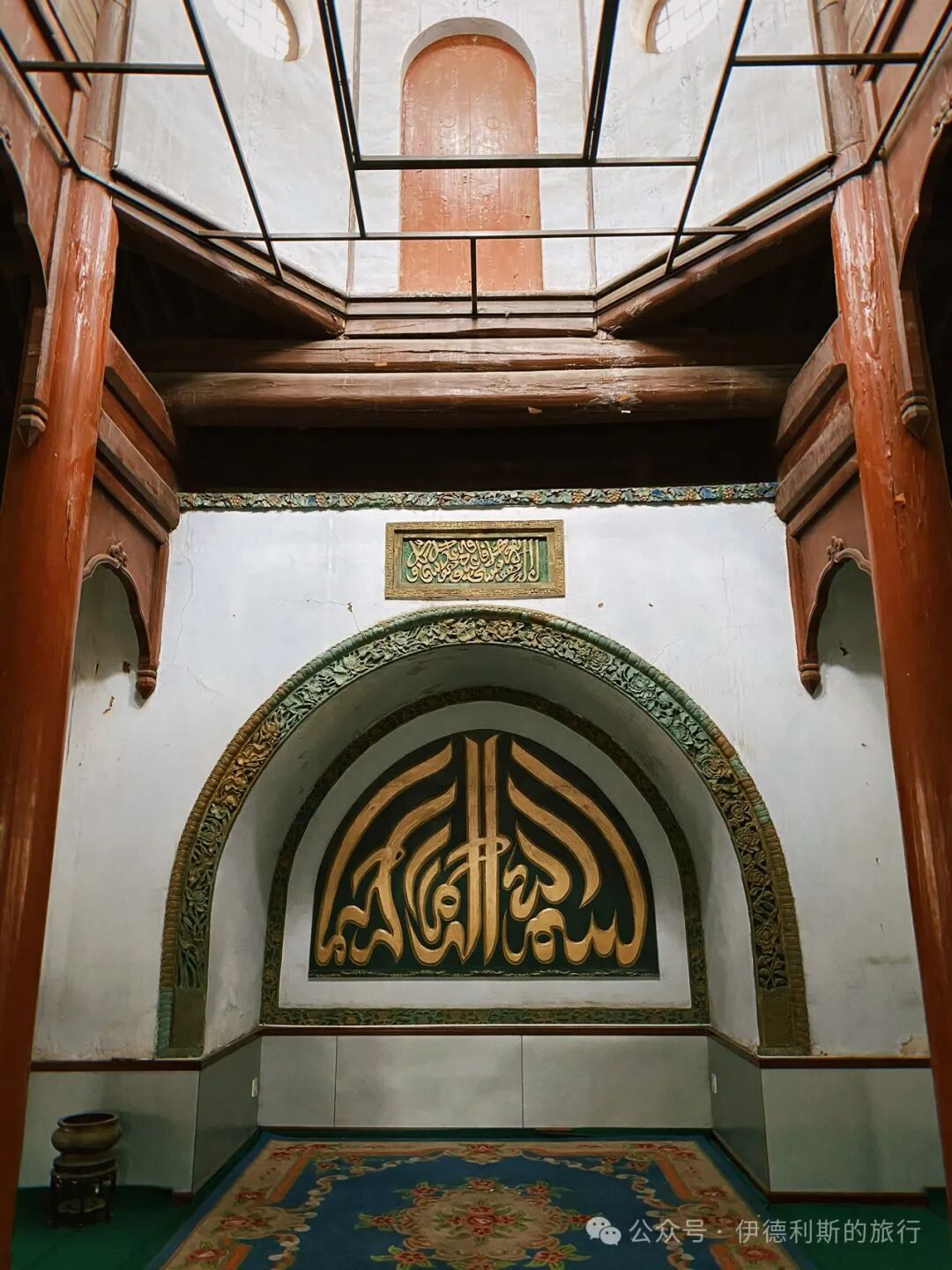
The North Mosque (Beisi) in Xuanhua, Hebei, is an arched structure carved with calligraphy and floral patterns.
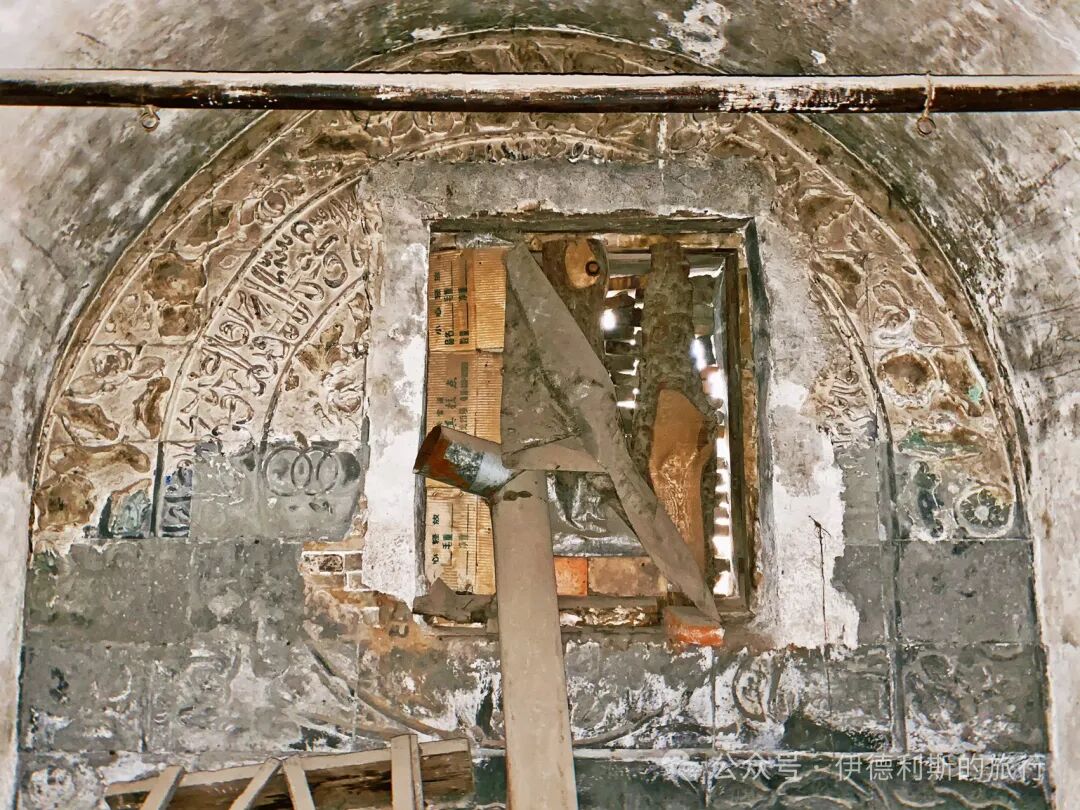
Henan
The Shanyitang Mosque in Henan is an arched structure decorated with calligraphy written in 2009 by the famous calligrapher Mi Guangjiang.
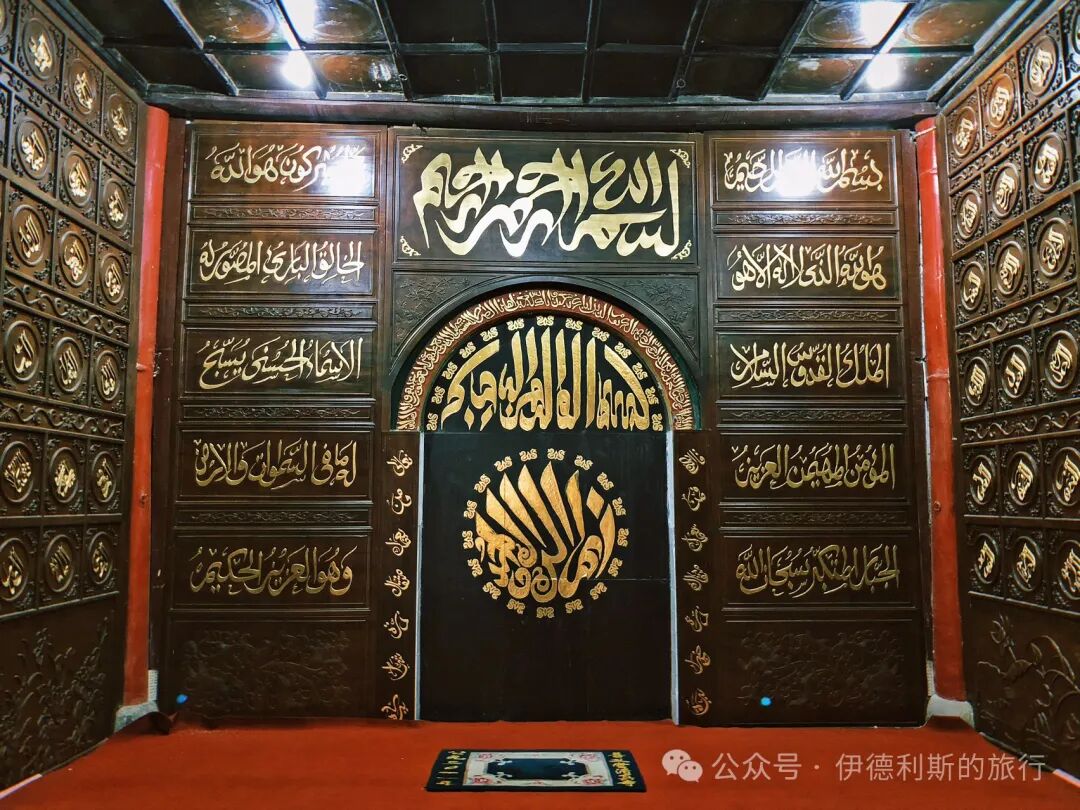
The North Mosque (Beisi) in Zhengzhou, Henan, is an arched structure with an exterior carved door hood.
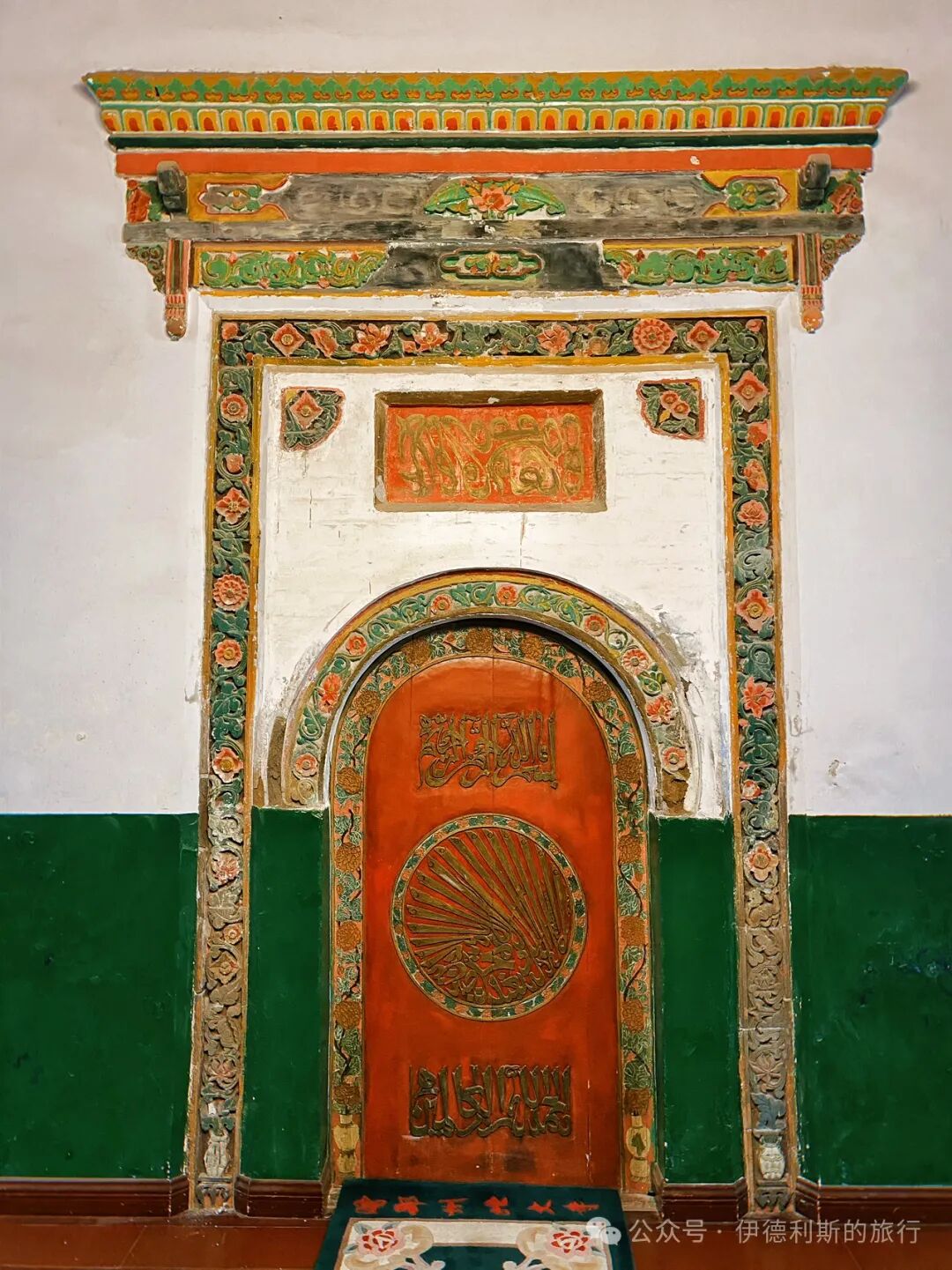
The North Mosque (Beisi) in Qinyang, Henan, is an arched structure decorated with traditional calligraphy.
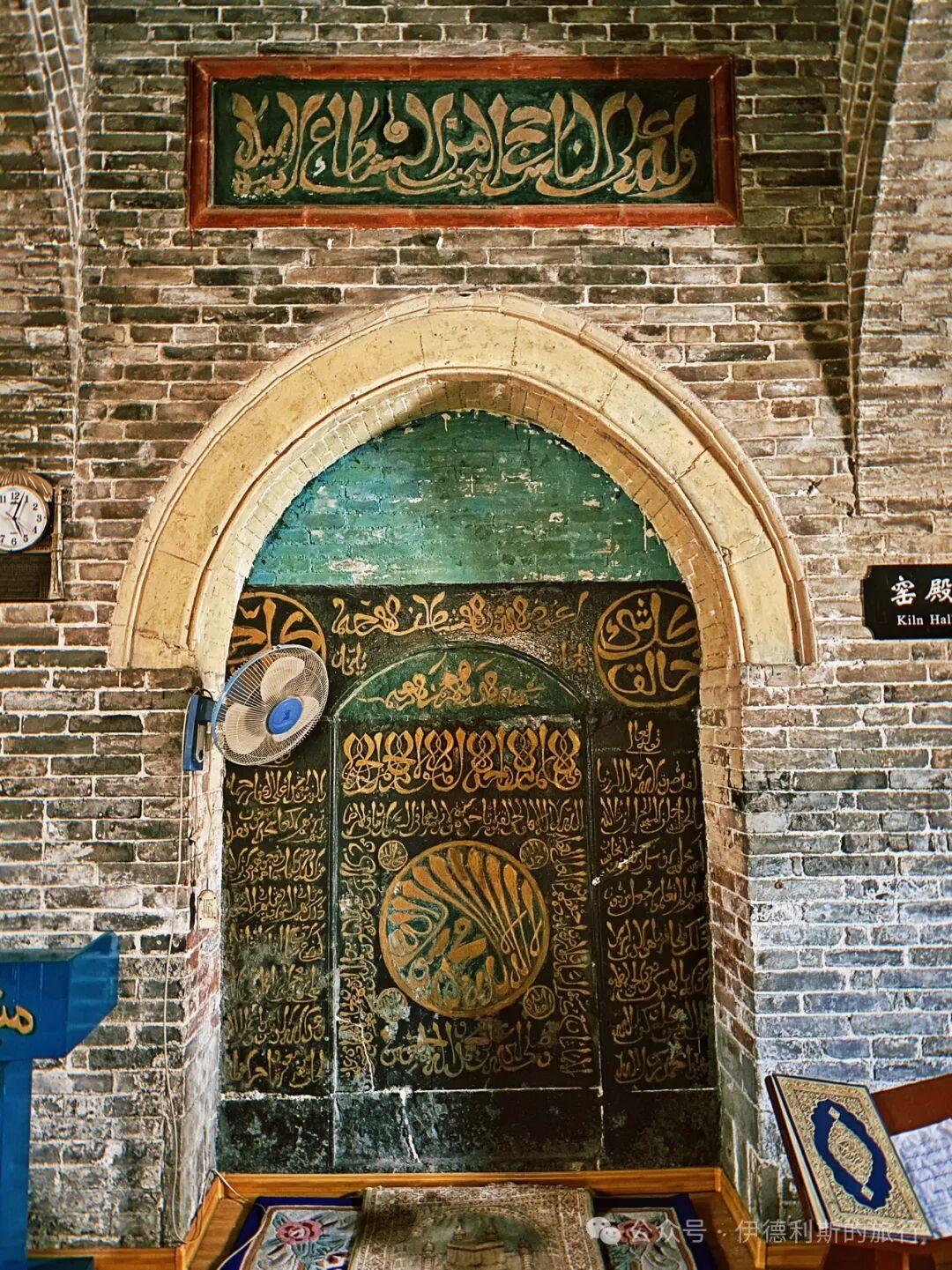
The Xiguan Mosque in Bo'ai, Henan, is an arched structure decorated with Arabic plaques and couplets.
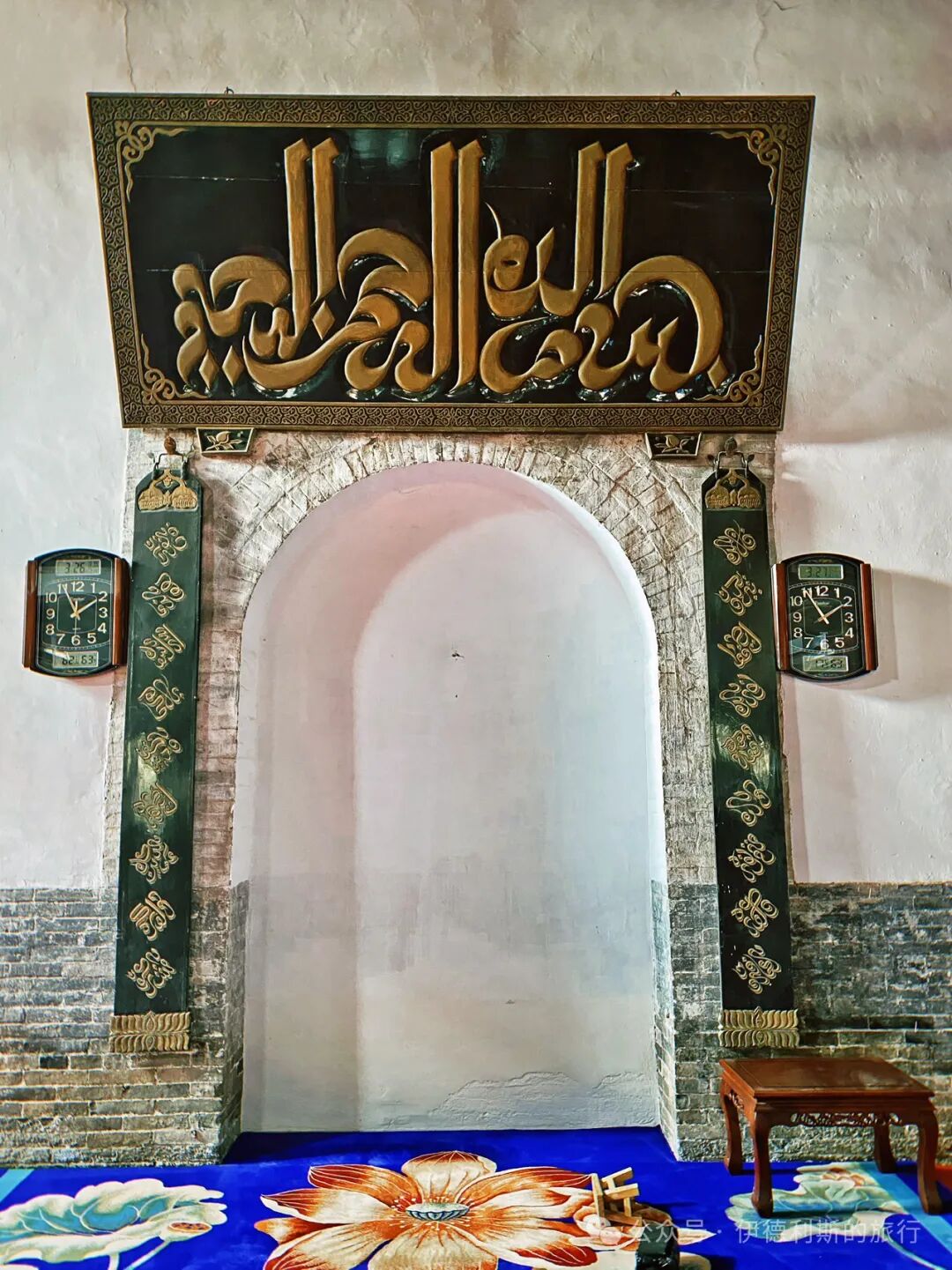
The West Mosque (Xisi) in Daxinzhuang, Bo'ai, Henan, is an arched structure decorated with Arabic plaques and couplets.
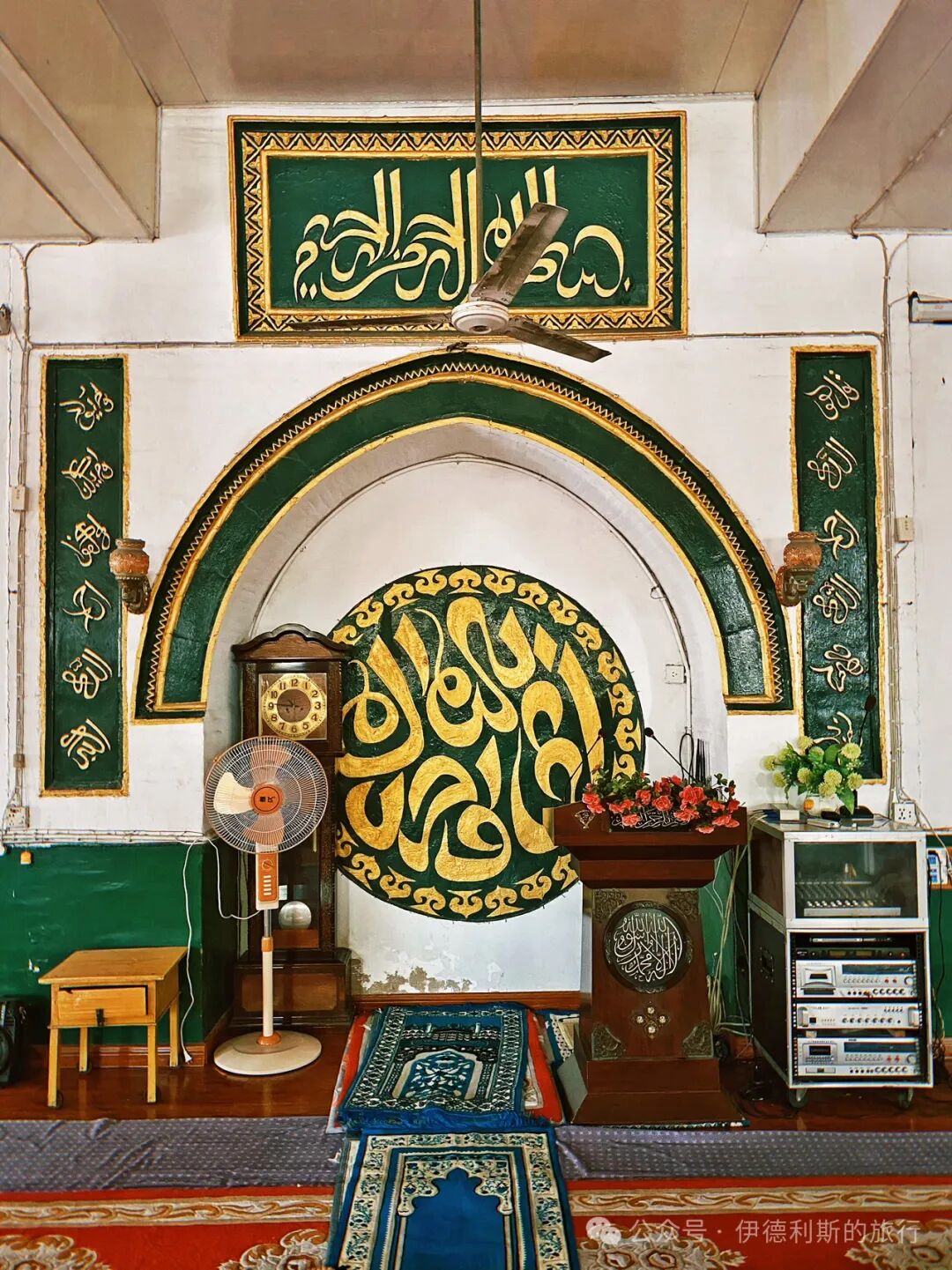
Shandong
The North Mosque (Beisi) in Linqing, Shandong, is a three-room, four-pillar memorial archway style building with bracket sets and flying eaves, decorated with intricate traditional calligraphy.
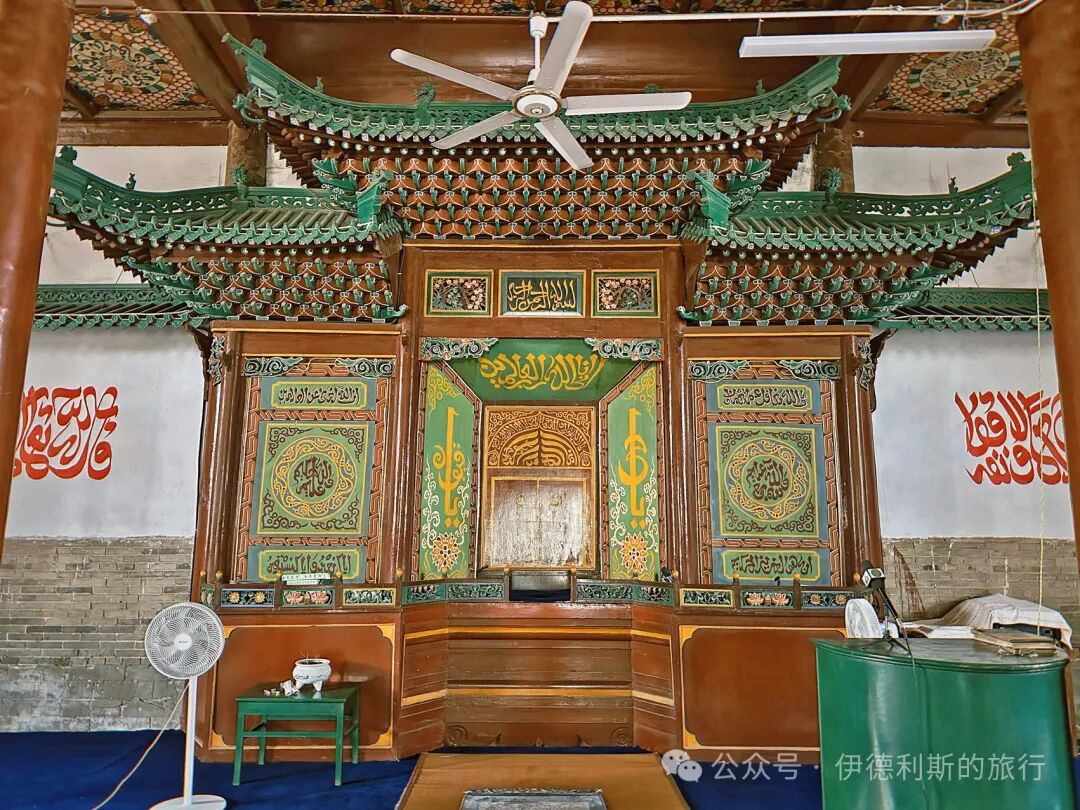
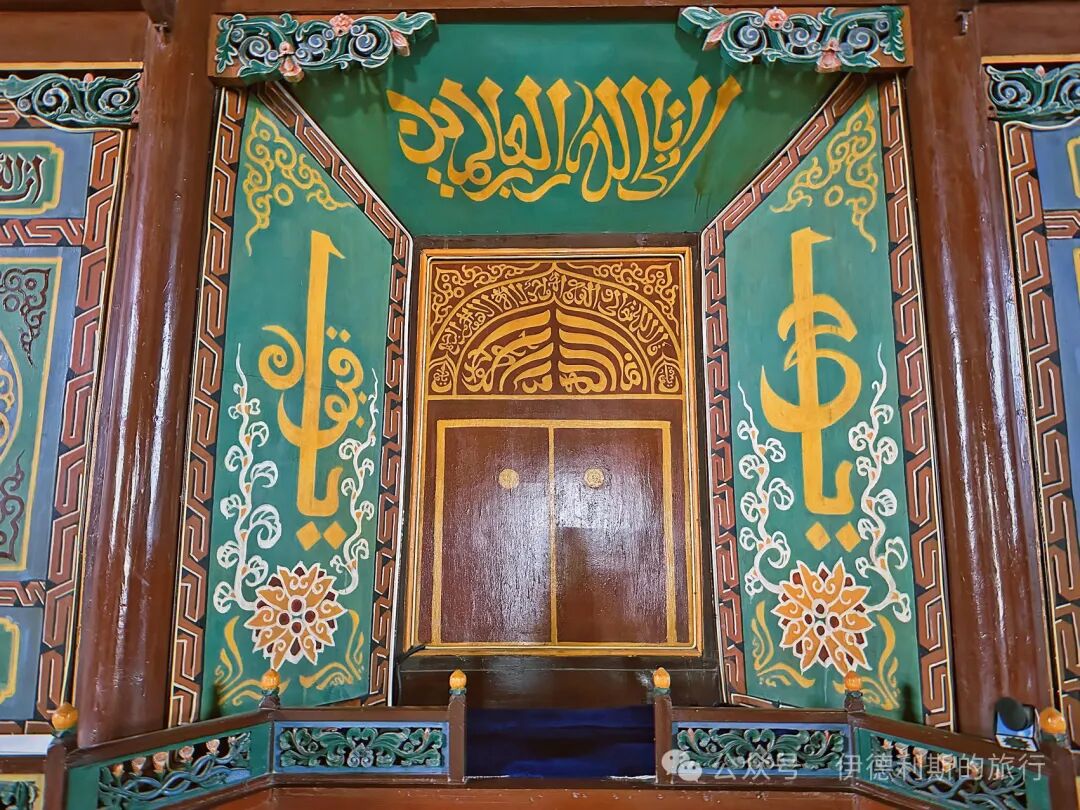
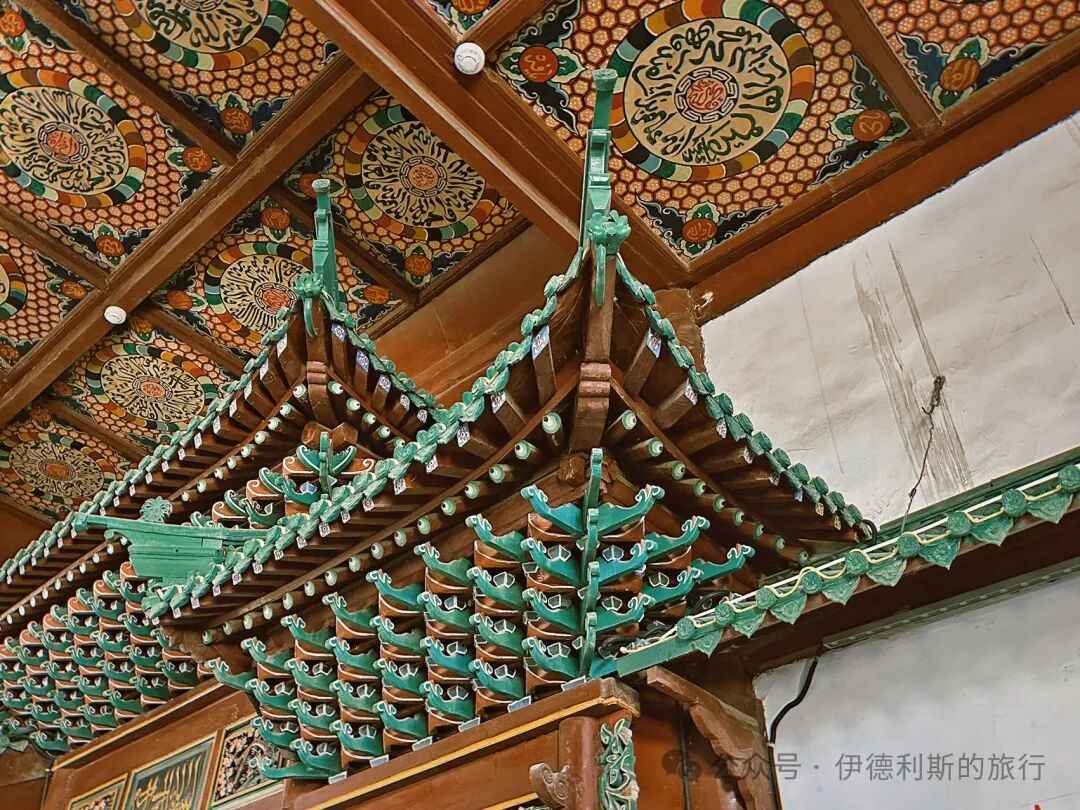
The East Mosque (Dongsi) in Linqing, Shandong, is a three-room, four-pillar memorial archway style building with bracket sets and flying eaves, decorated with intricate traditional calligraphy.
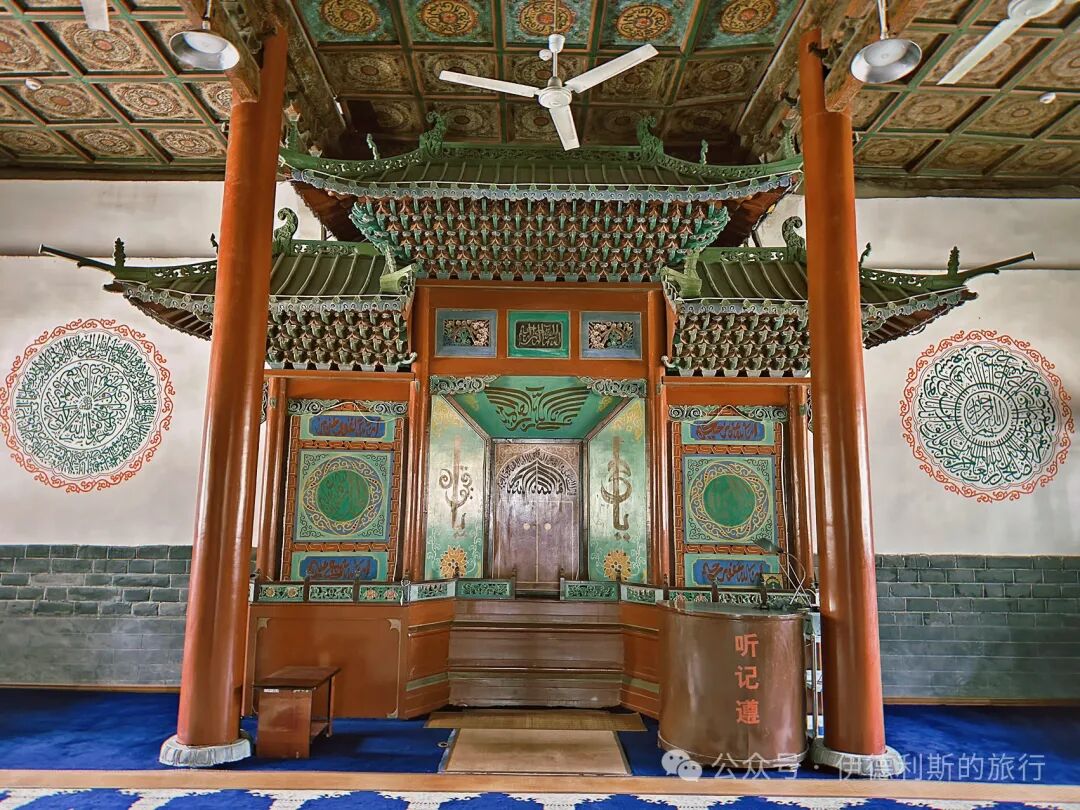
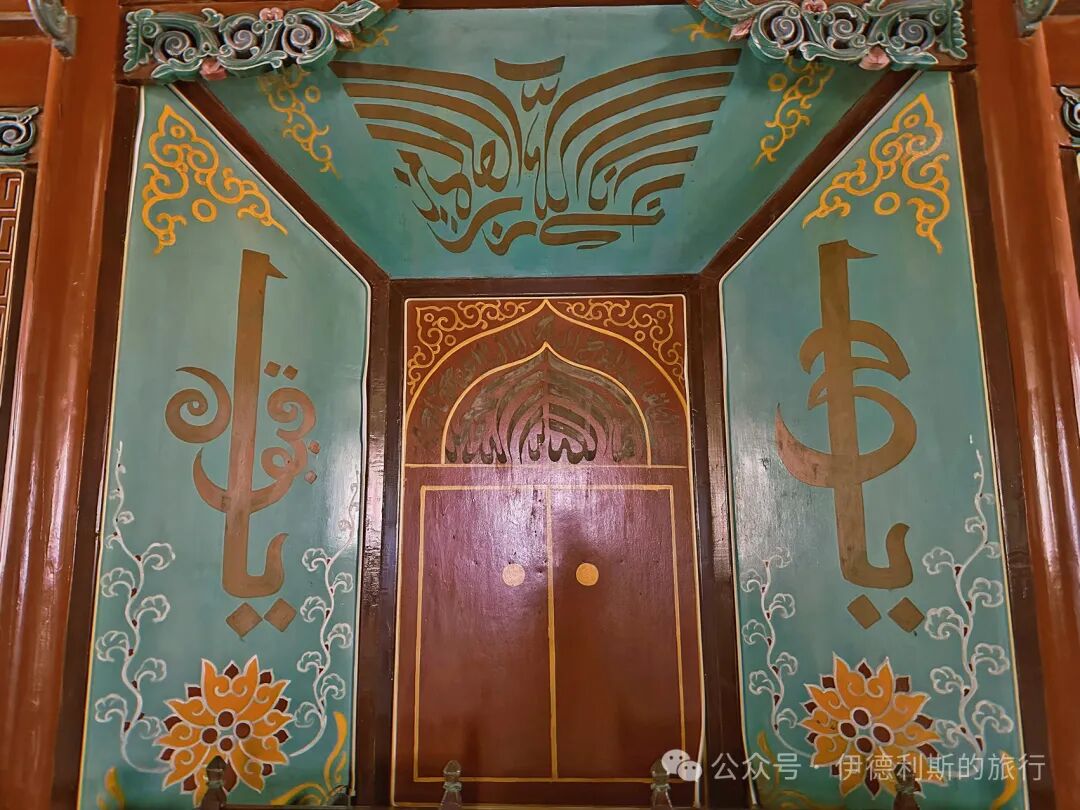
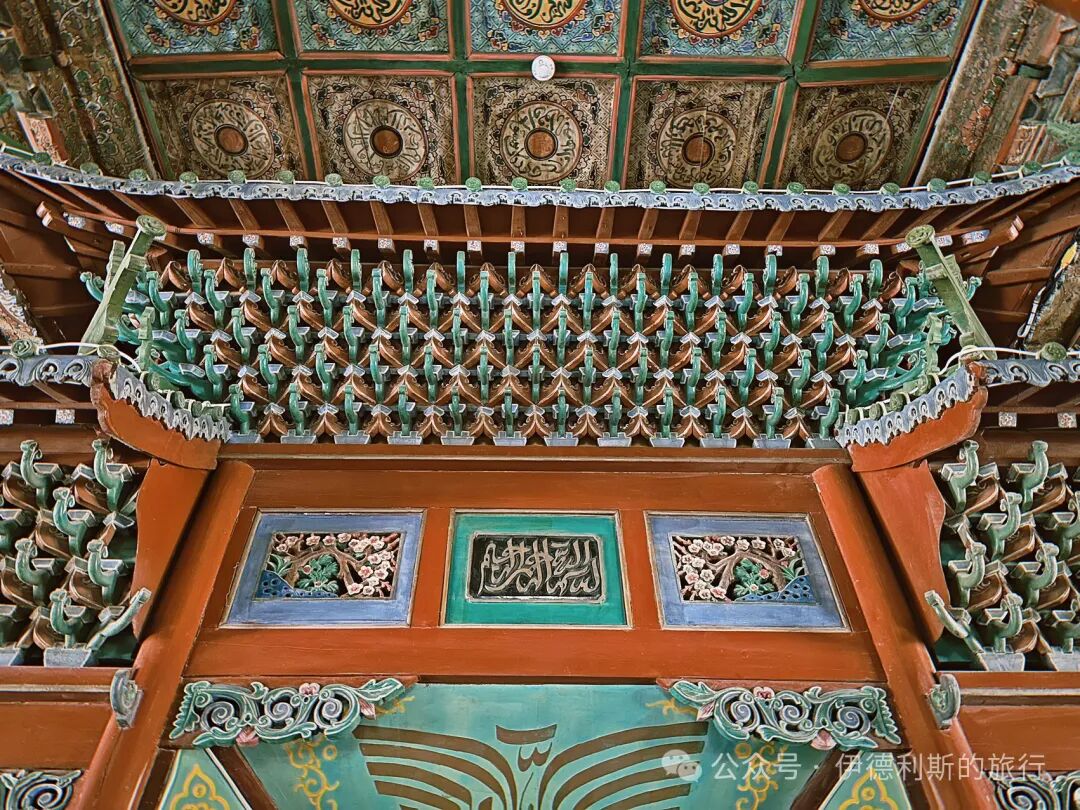
The South Mosque (Nandasi) in Jinan, Shandong, is an arched structure. According to the mosque's stele record, the calligraphy was written in 1810 (the 15th year of the Jiaqing reign) by Imam Hei Faxiang.
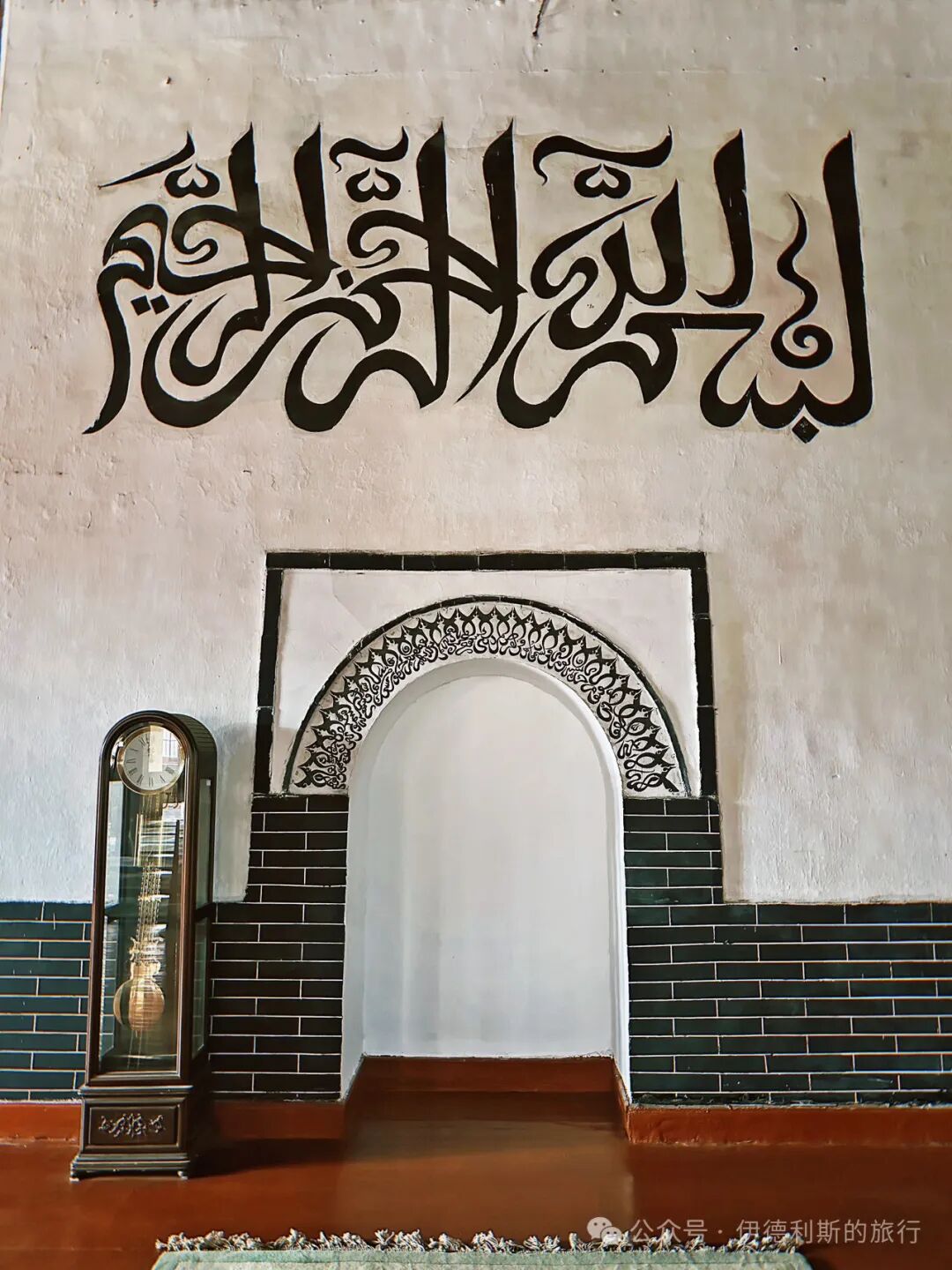
The North Mosque (Beisi) in Jinan, Shandong, is an arched structure featuring calligraphy in the center.
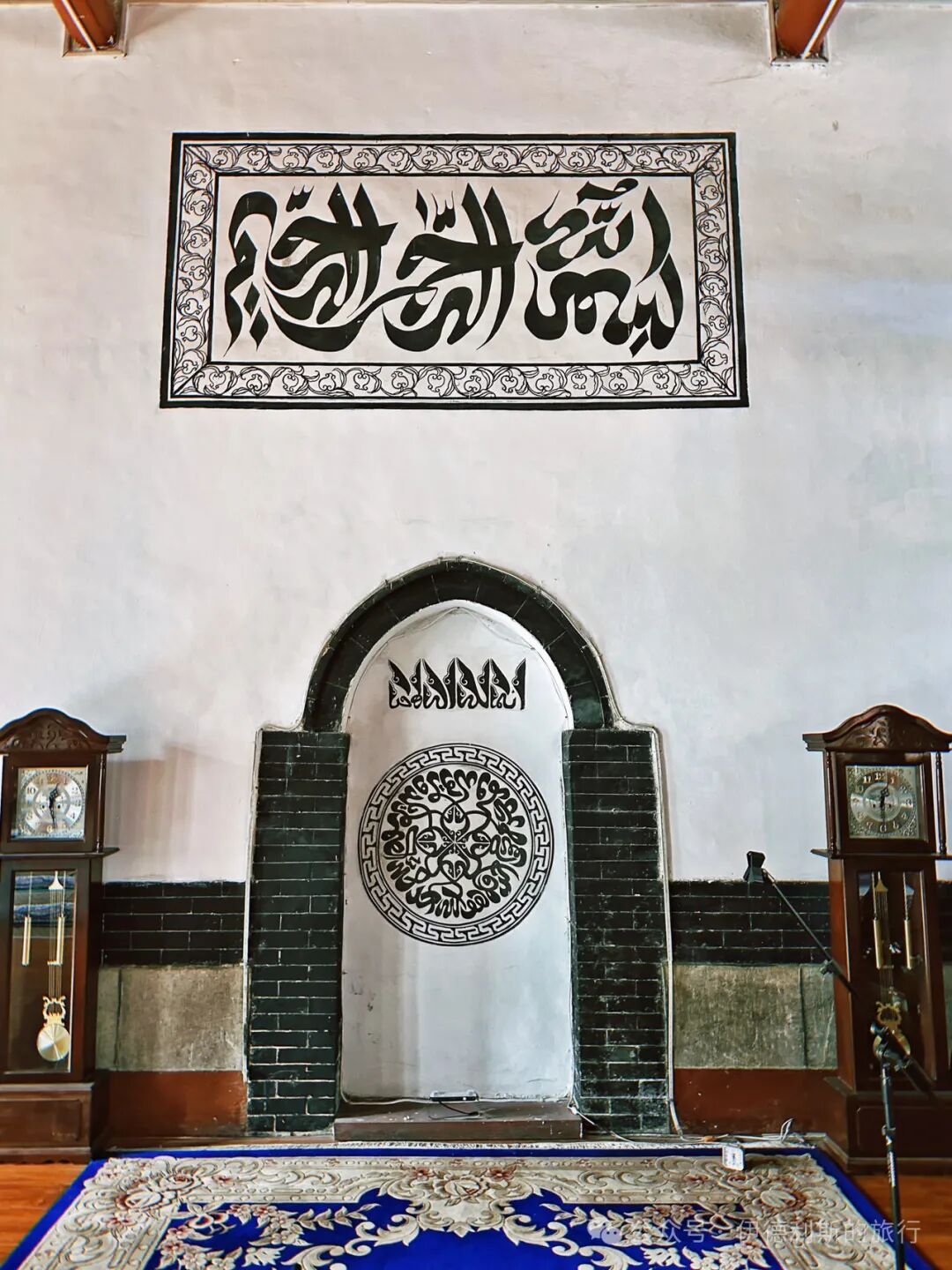
The Zhenjiao Mosque in Qingzhou, Shandong, is an arched structure with a single-eave, hanging-mountain style door hood above.
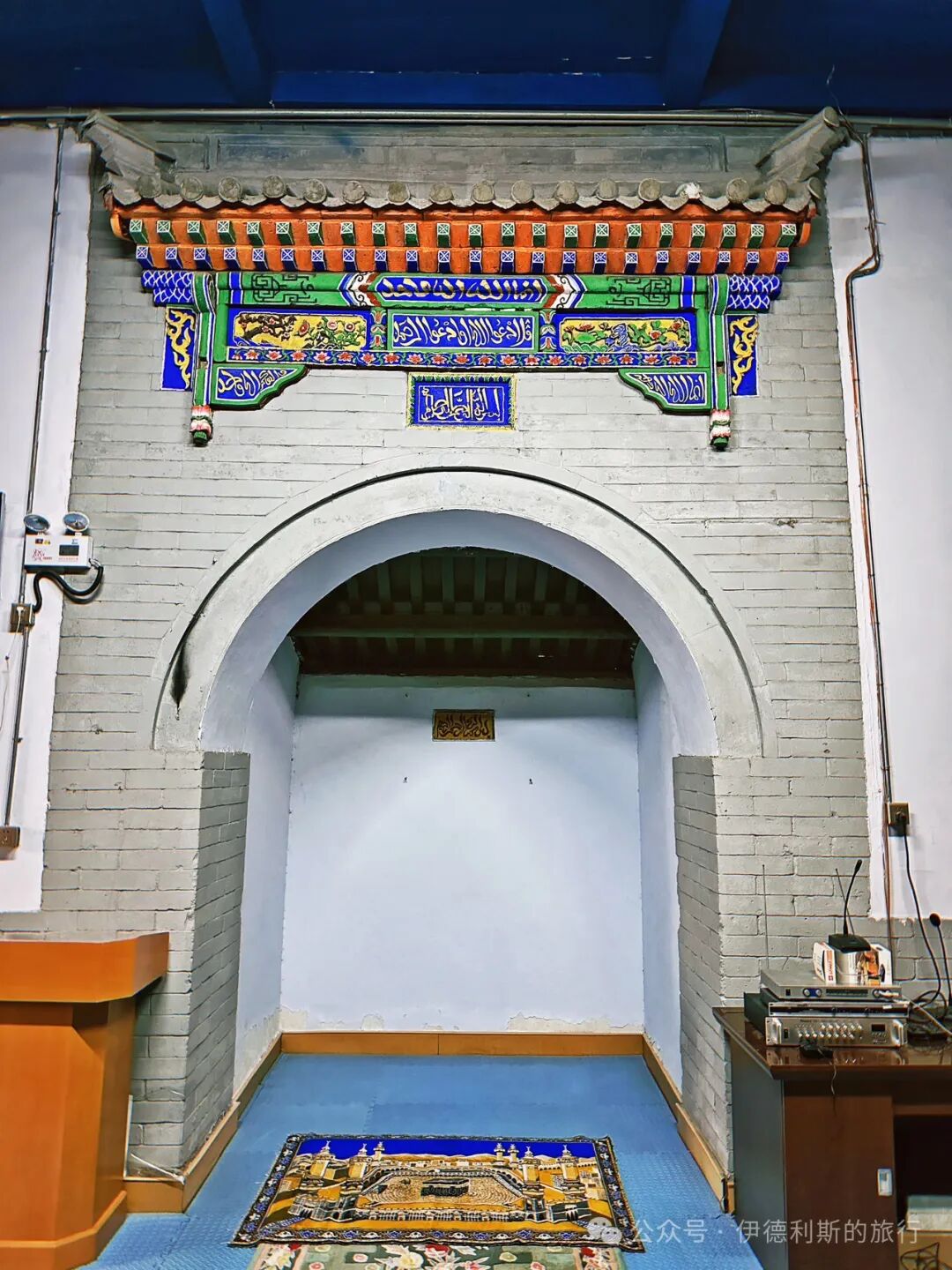
Inner Mongolia
The Great Mosque in Hohhot, Inner Mongolia, has a door hood with openwork, painted floral and scroll patterns.
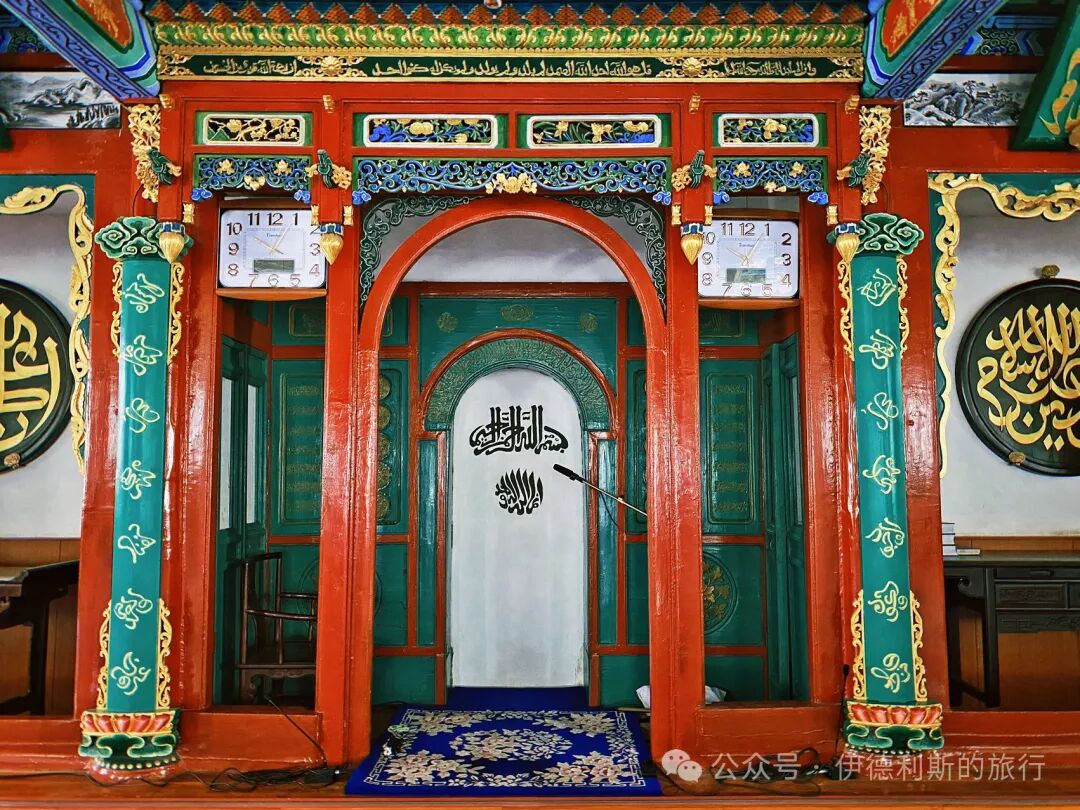
The East Mosque (Dongsi) in Hohhot, Inner Mongolia.
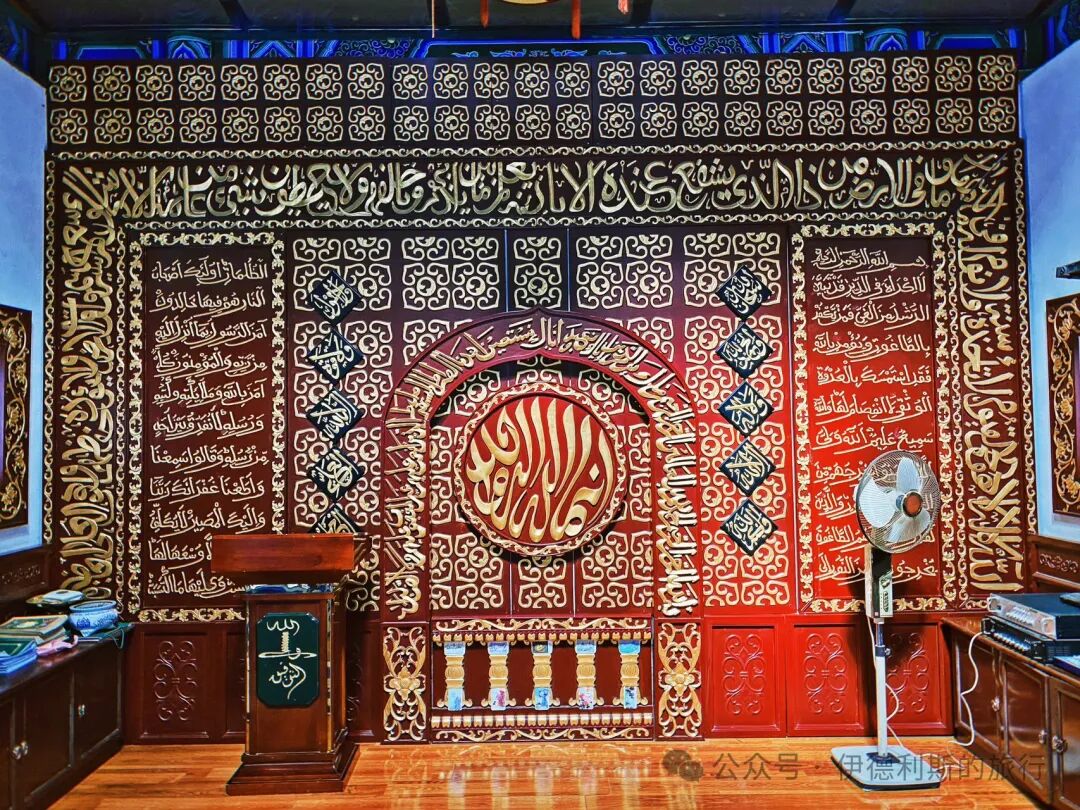
The Longshengzhuang Mosque in Feng County, Inner Mongolia, has a door hood with wood-carved calligraphy inside the arch.
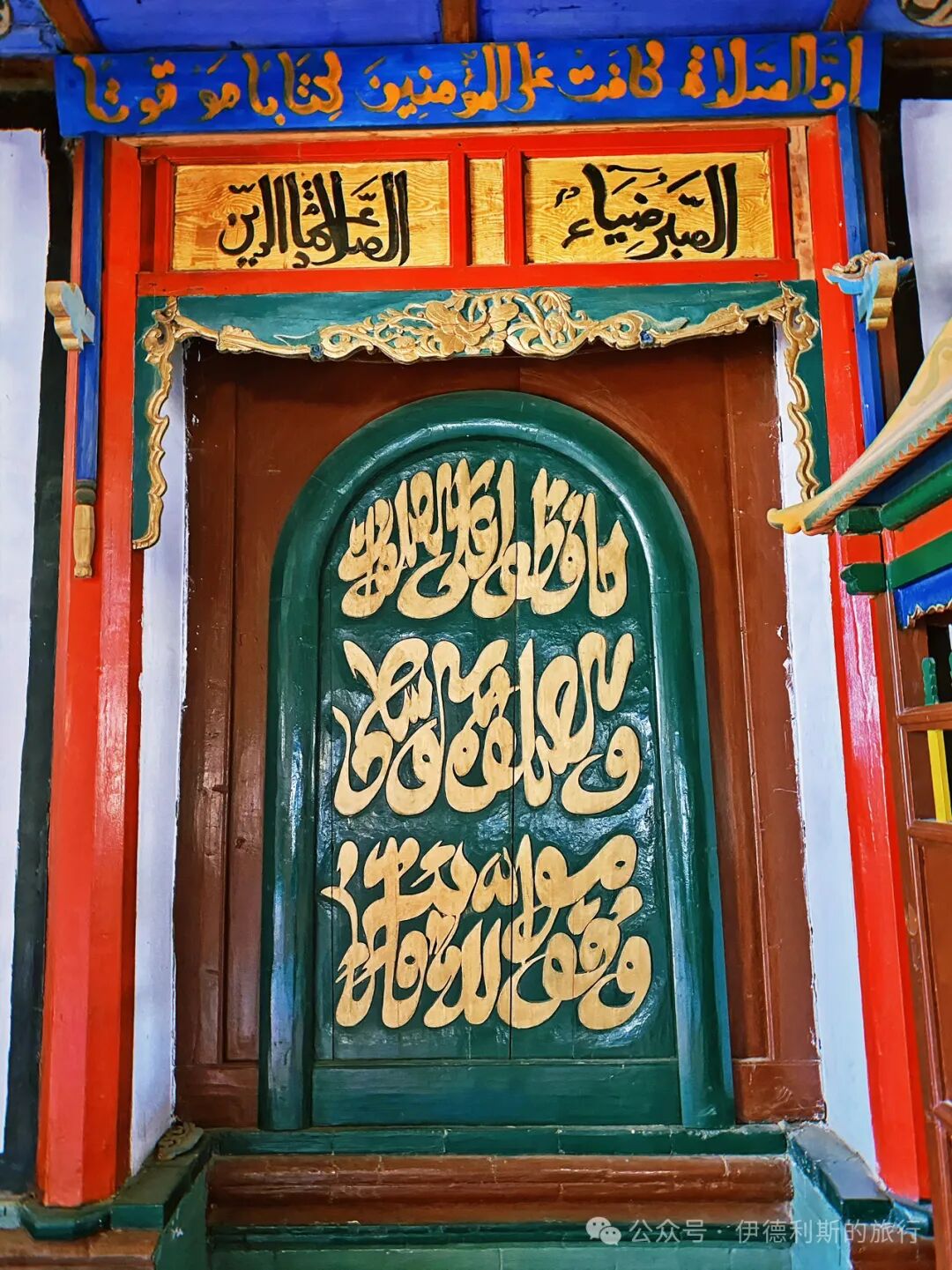
The North Mosque (Beisi) in Chifeng, Inner Mongolia, features original wood carvings from 1747 (the 12th year of the Qianlong reign).
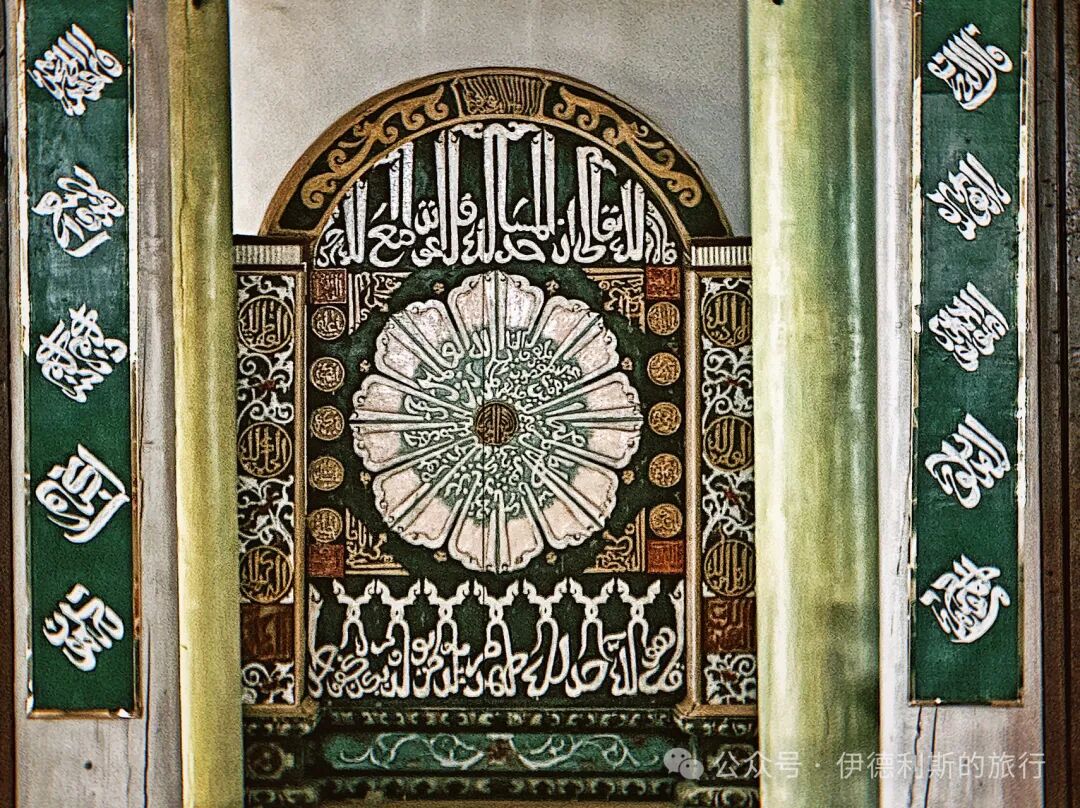
Liaoning
The Old City Mosque in Kaiyuan, Liaoning, features a clear-water scorpion-tail roof ridge.
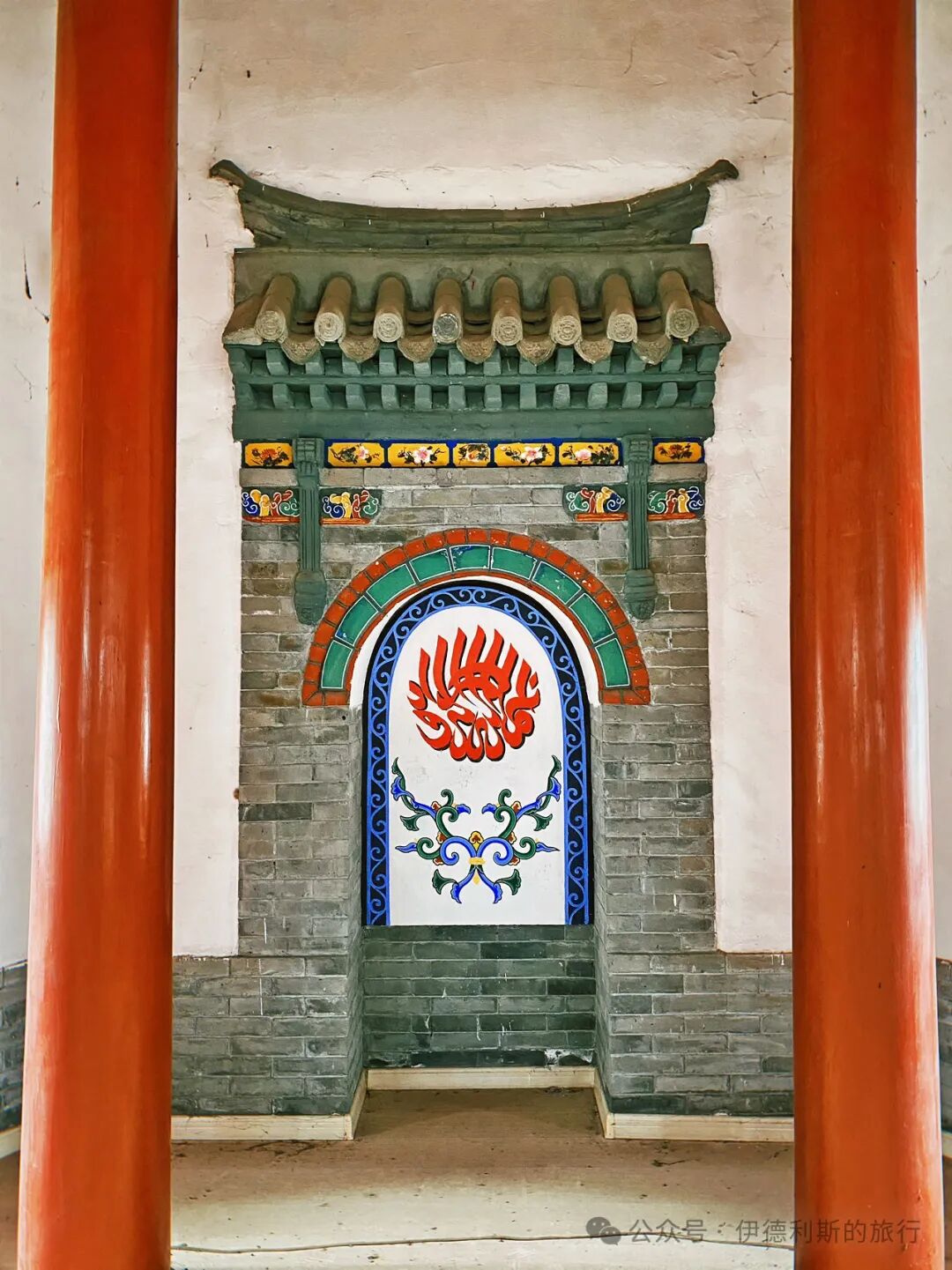
The Luyang Mosque in Jinzhou, Liaoning, has a plaque with large-character calligraphy and traditional brush-style calligraphy on both sides.
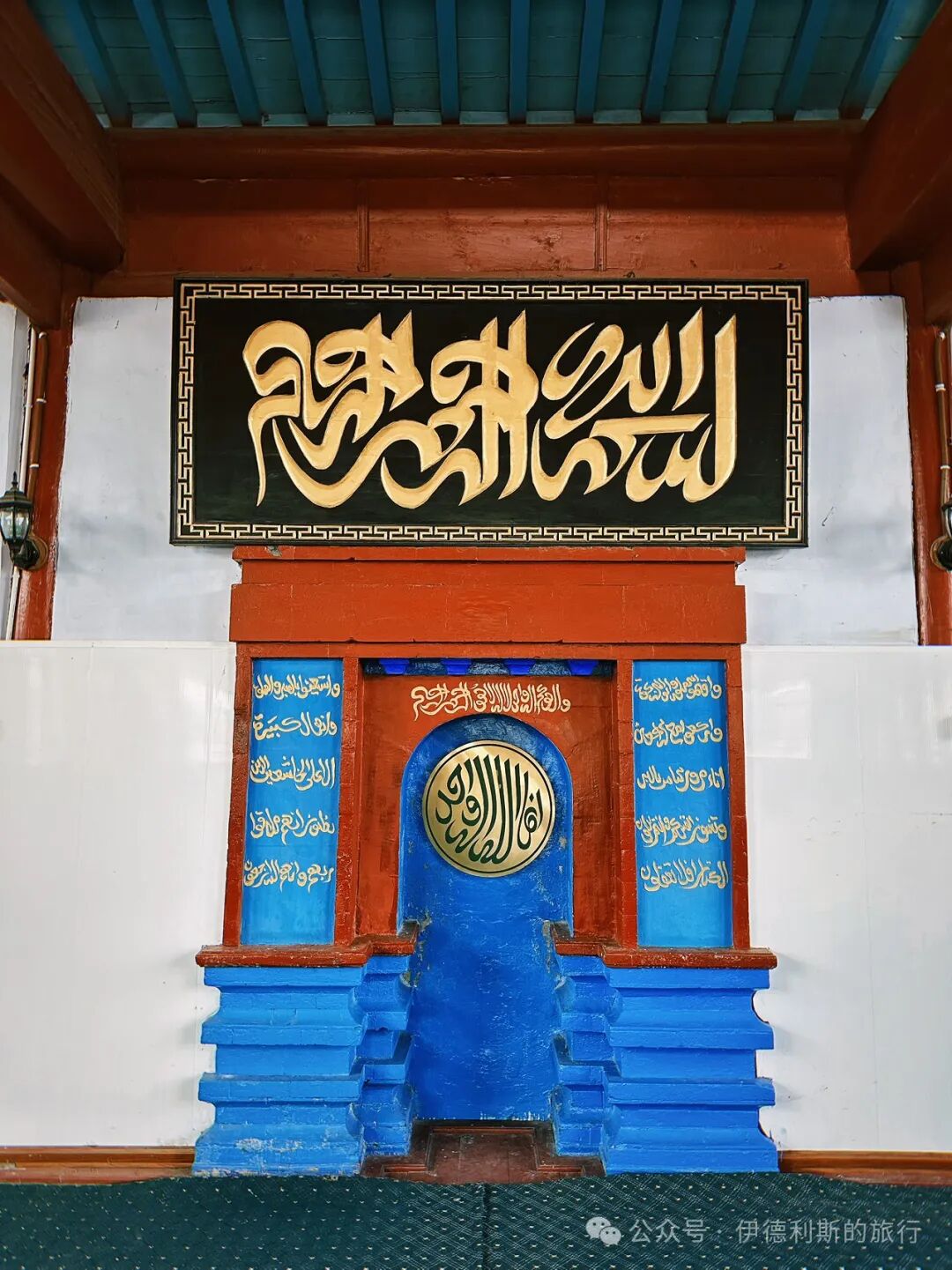
The South Mosque (Nandasi) in Shenyang, Liaoning, houses a large spirit tablet.
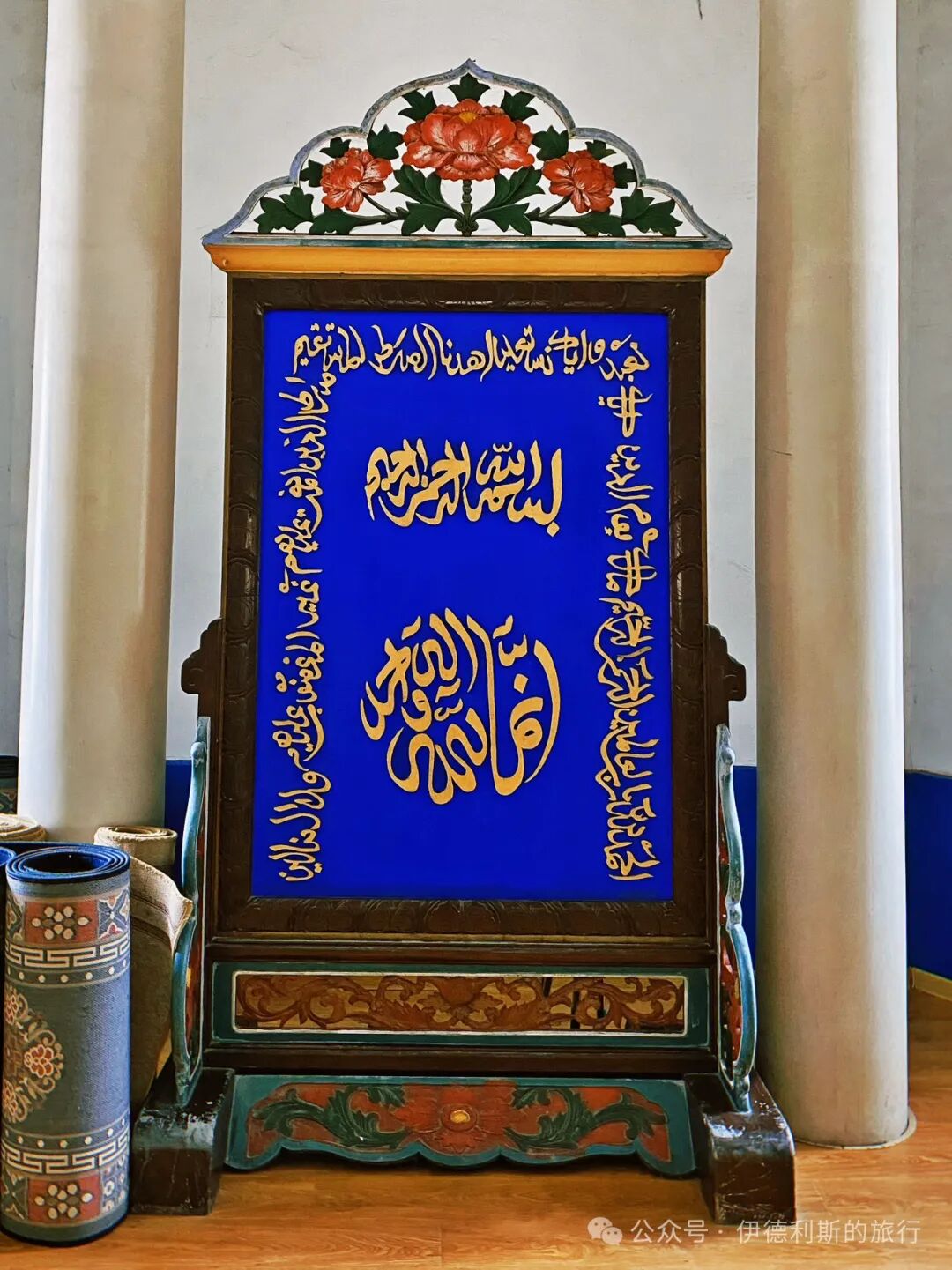
The Ancient City Mosque in Fuzhou, Dalian, Liaoning, features traditional brush-style calligraphy.
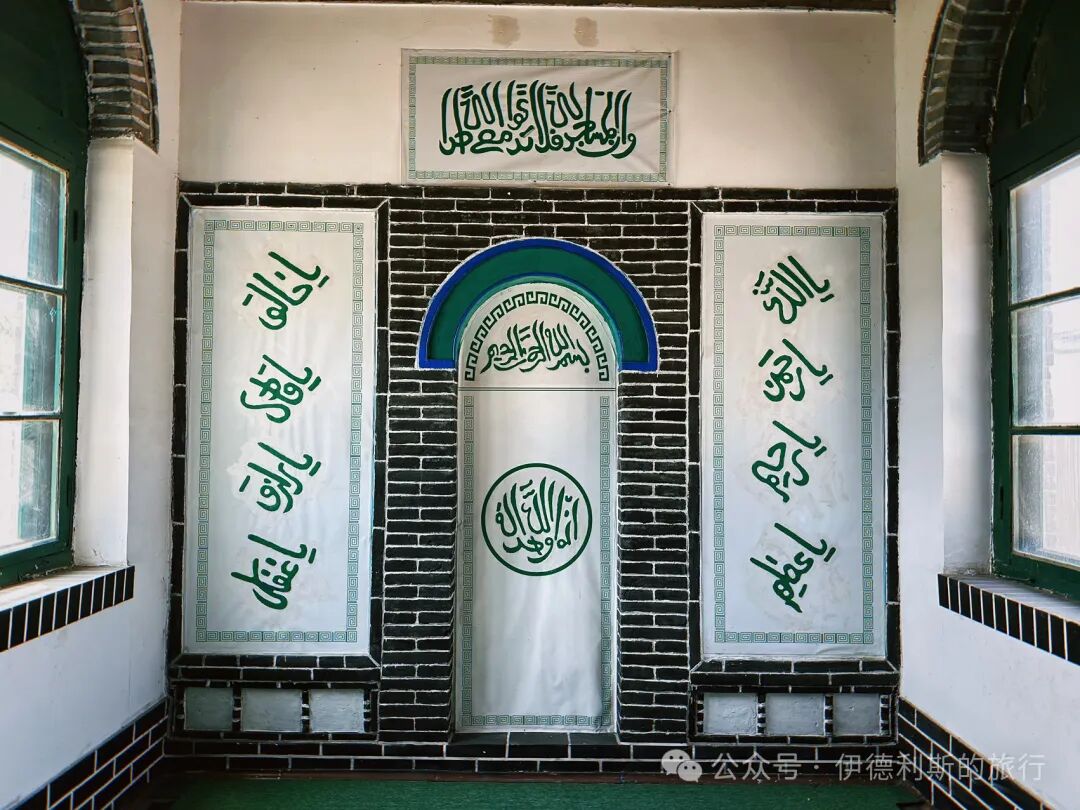
Lingyuan Mosque in Liaoning features carvings of Arabic calligraphy.
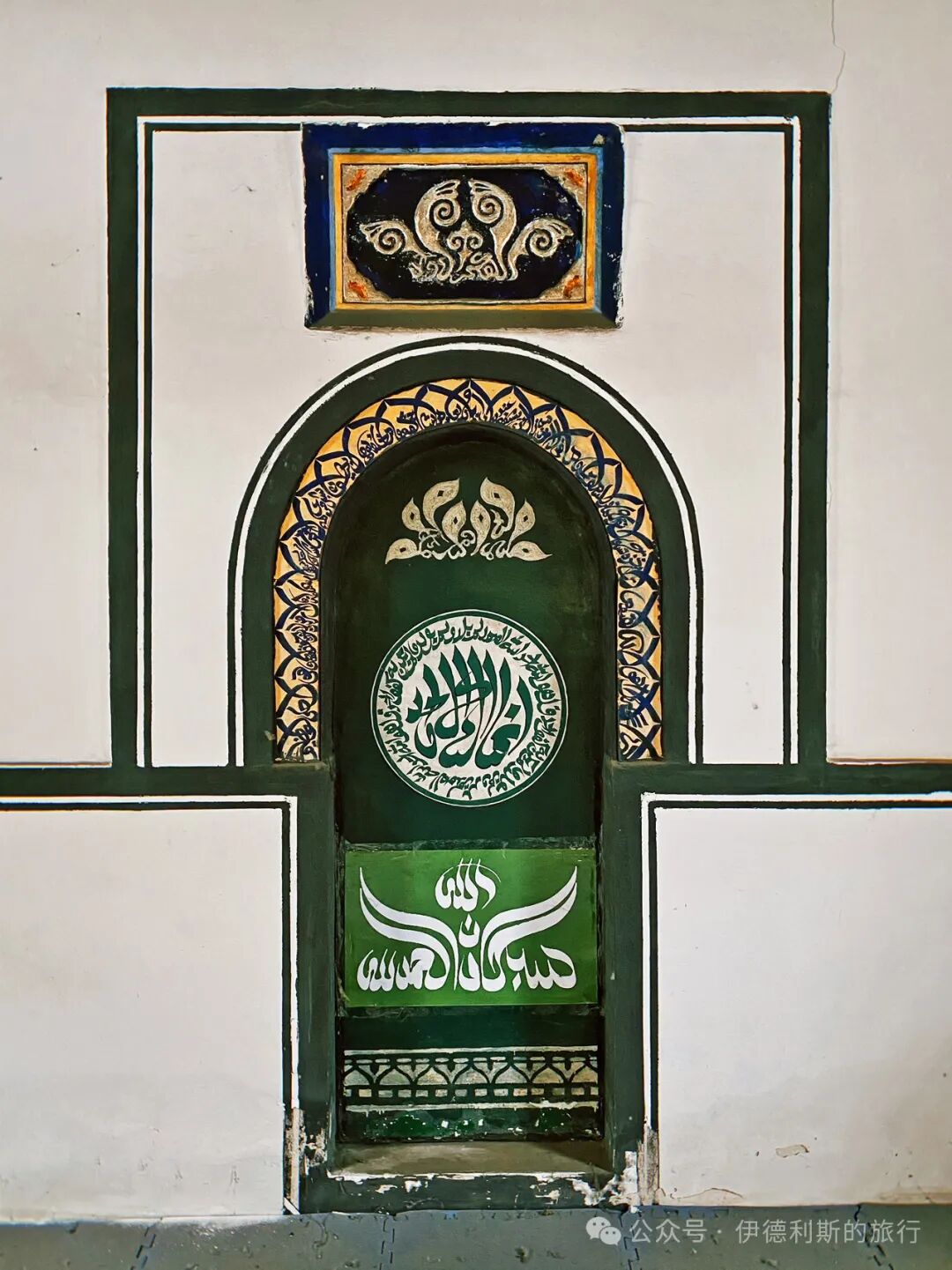
Heilongjiang
The winter prayer hall at Bukui West Mosque in Qiqihar, Heilongjiang, has traditional calligraphy carved onto its arches.
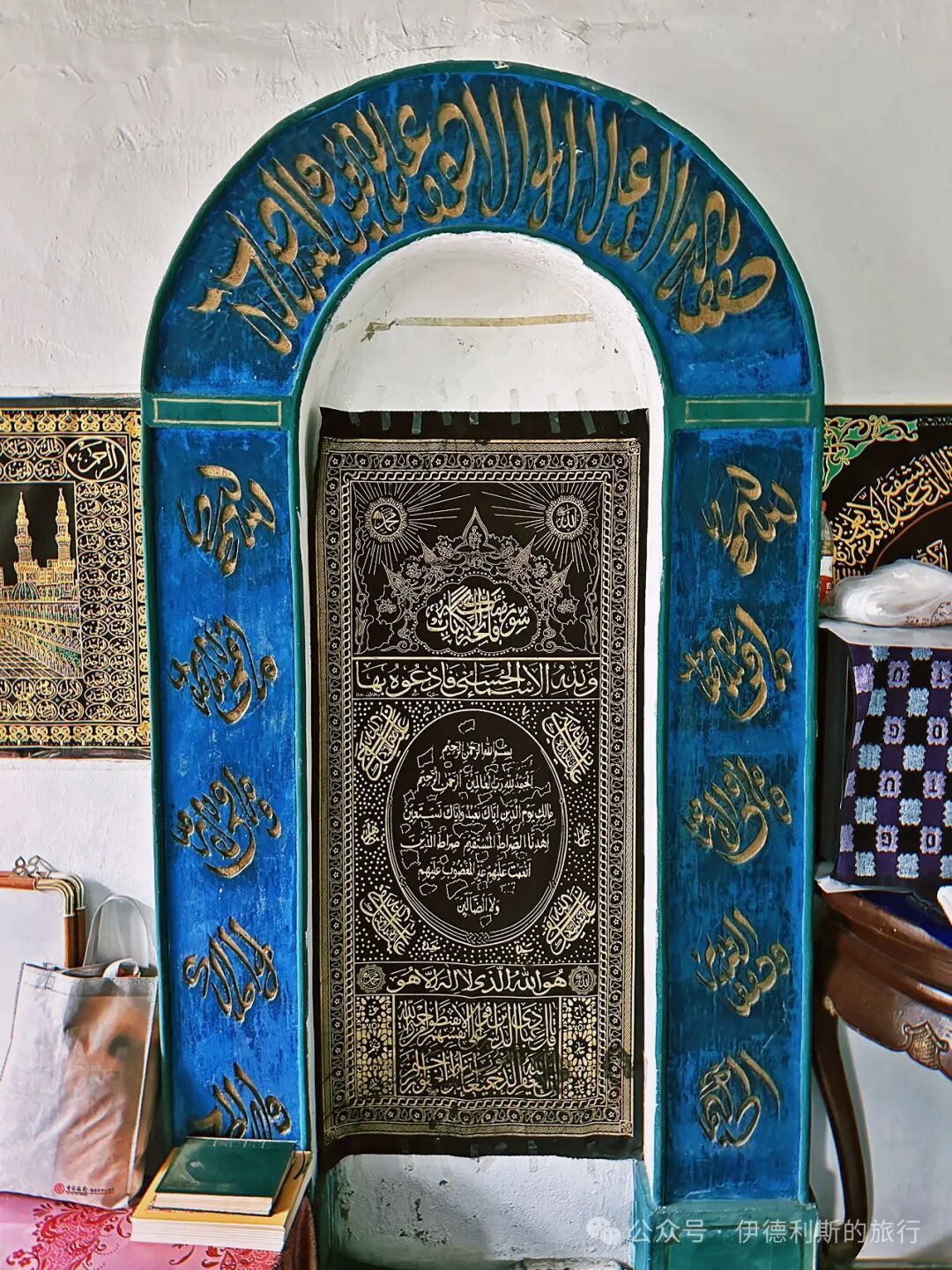
The main hall of Bukui West Mosque in Qiqihar, Heilongjiang, is surrounded by carved calligraphy plaques and couplets.
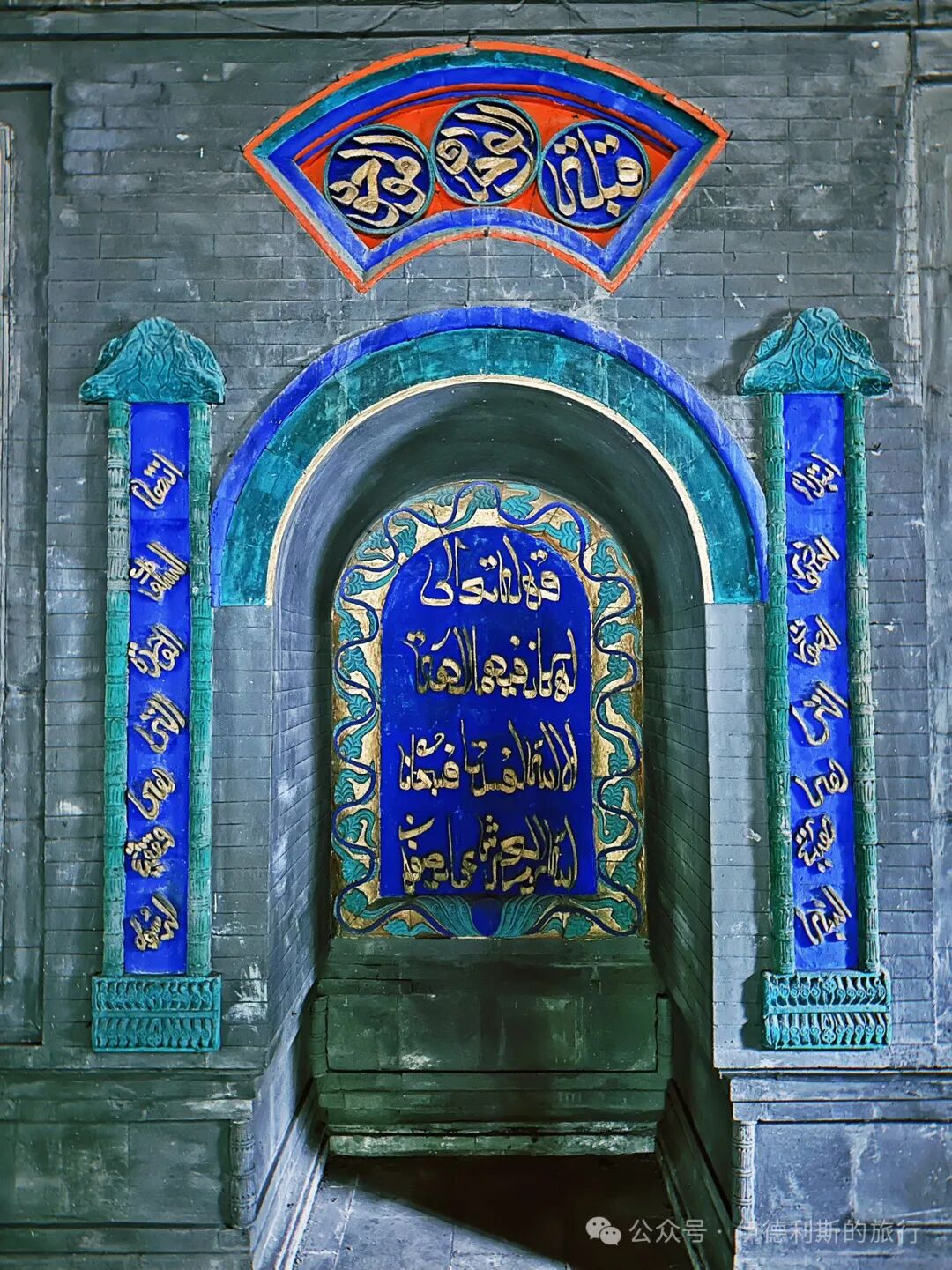
The main hall of Bukui East Mosque in Qiqihar, Heilongjiang, features a clear-water ridge (qingshuiji) roof, a Sumeru pedestal (xumizuo) base, and carved calligraphy plaques and couplets.
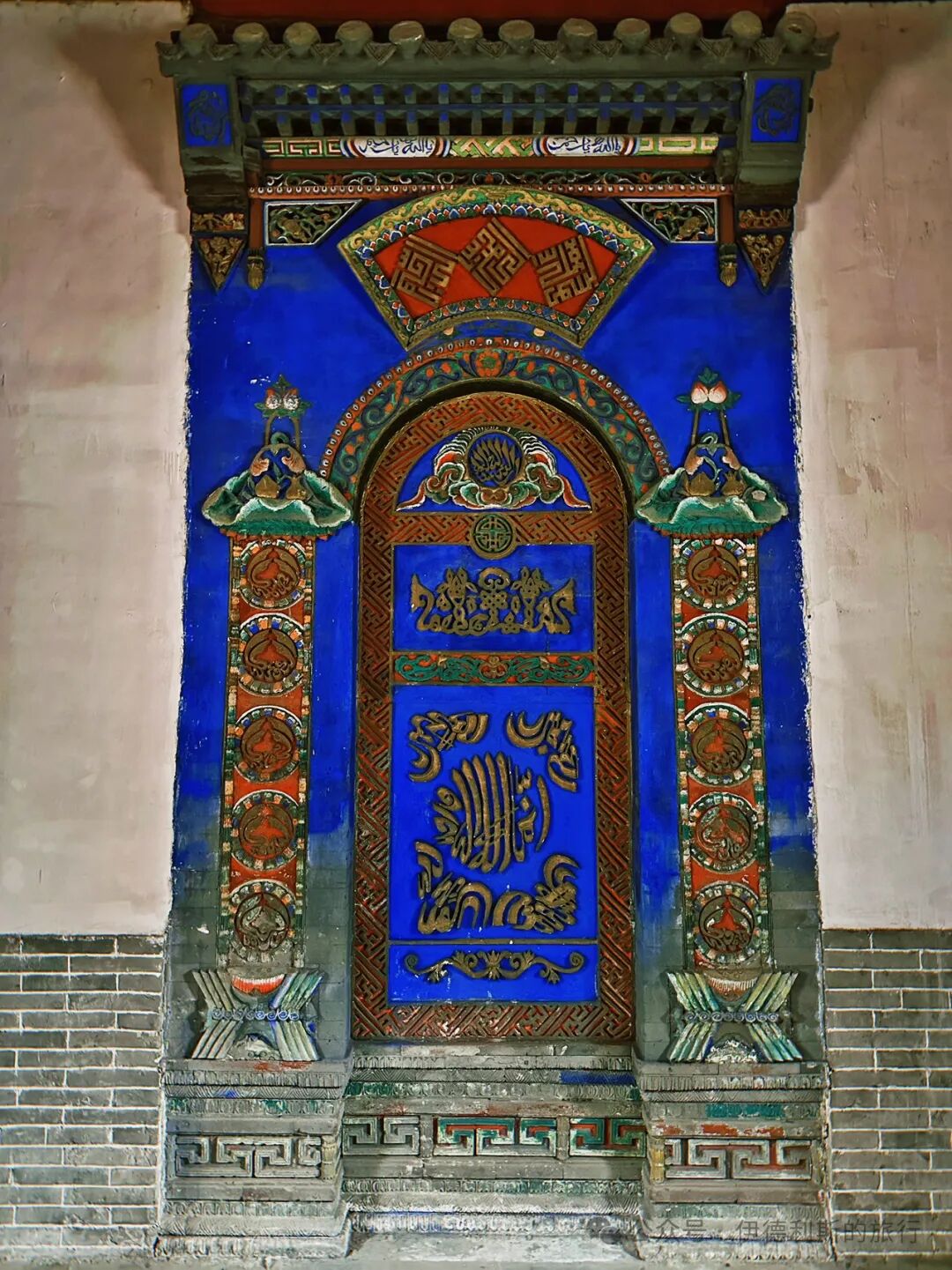
Acheng Mosque in Heilongjiang has four floor-to-ceiling pillars (tongtianzhu) in its kiln hall (yaodian) built in 1900 (the 26th year of the Guangxu reign). They were made from giant pine logs hauled from the forests of Yabuli, Heilongjiang, and installed by a carpenter named Sun Yulin from Wula Street, Jilin. Legend says Carpenter Sun's master was worried about his apprentice, so he secretly went to a stone shop and made four 3-foot-tall lotus-shaped pillar bases. When it came time to raise the floor-to-ceiling pillars, they were exactly 3 feet too short. Seeing this, the master immediately told Carpenter Sun to hitch a cart and bring back the four lotus pillar bases from the stone shop, and they fit perfectly.
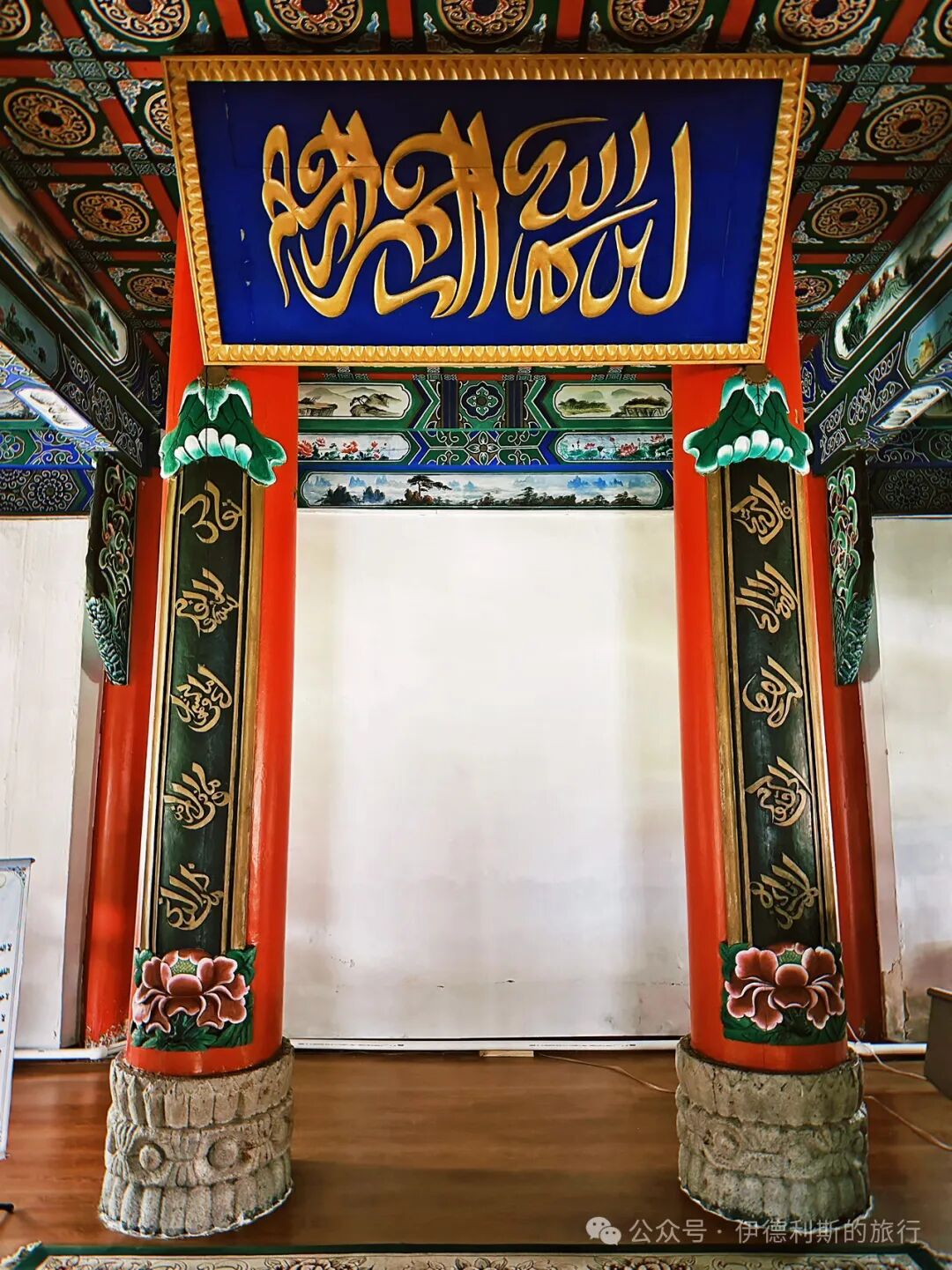
Shanxi
Taiyuan Great Mosque in Shanxi is a Ming Dynasty treasure. It has a wooden memorial archway-style door hood with a hip roof (wudianding), bracket sets (dougong), and flying eaves. Below are Sumeru pedestal railings, and the pillars are decorated with scrolling lotus patterns and Arabic circular motifs. The center features a wooden carved hanging panel with Arabic script, and a kiln niche (yaokan) is set in the very center.
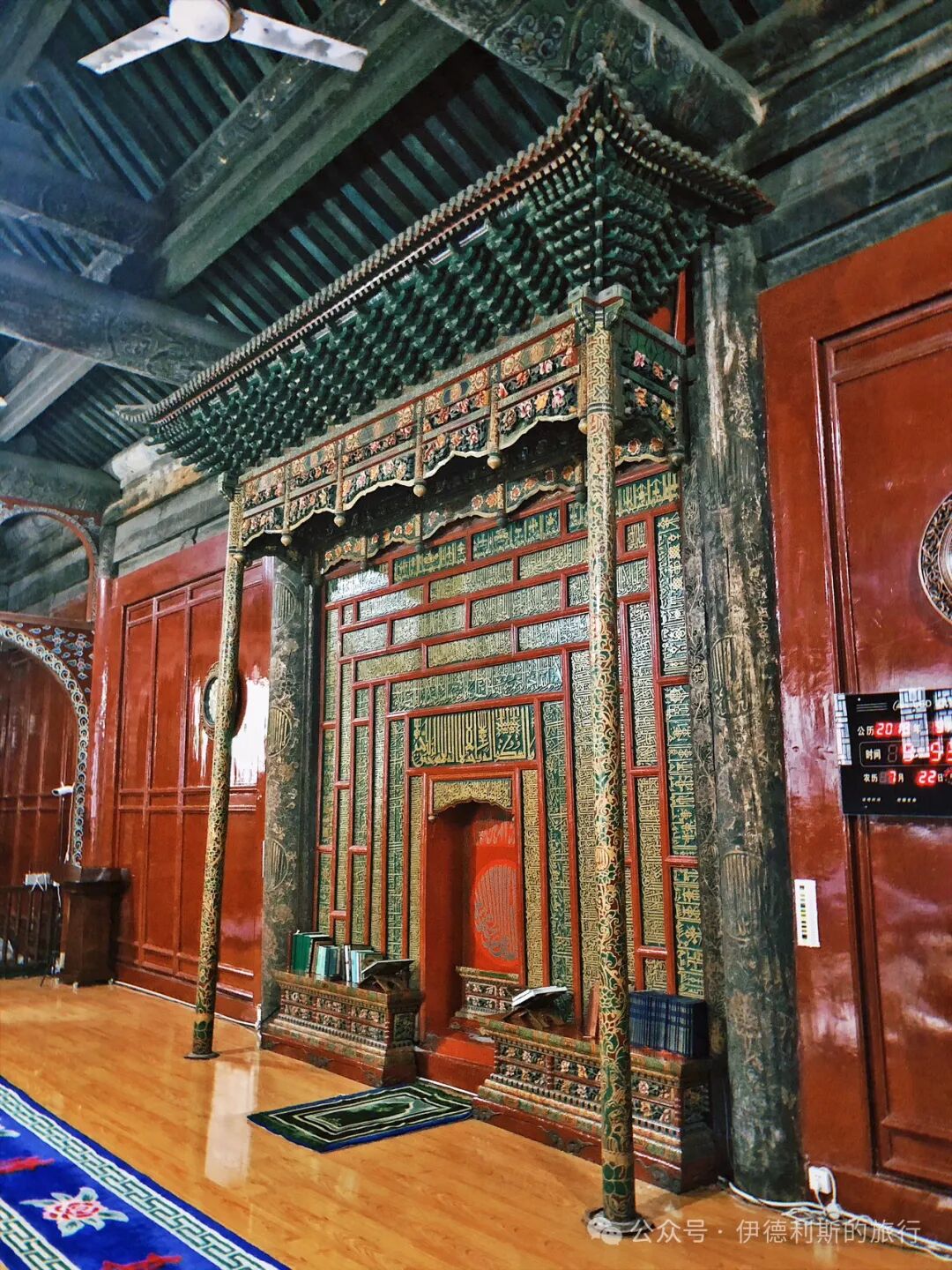
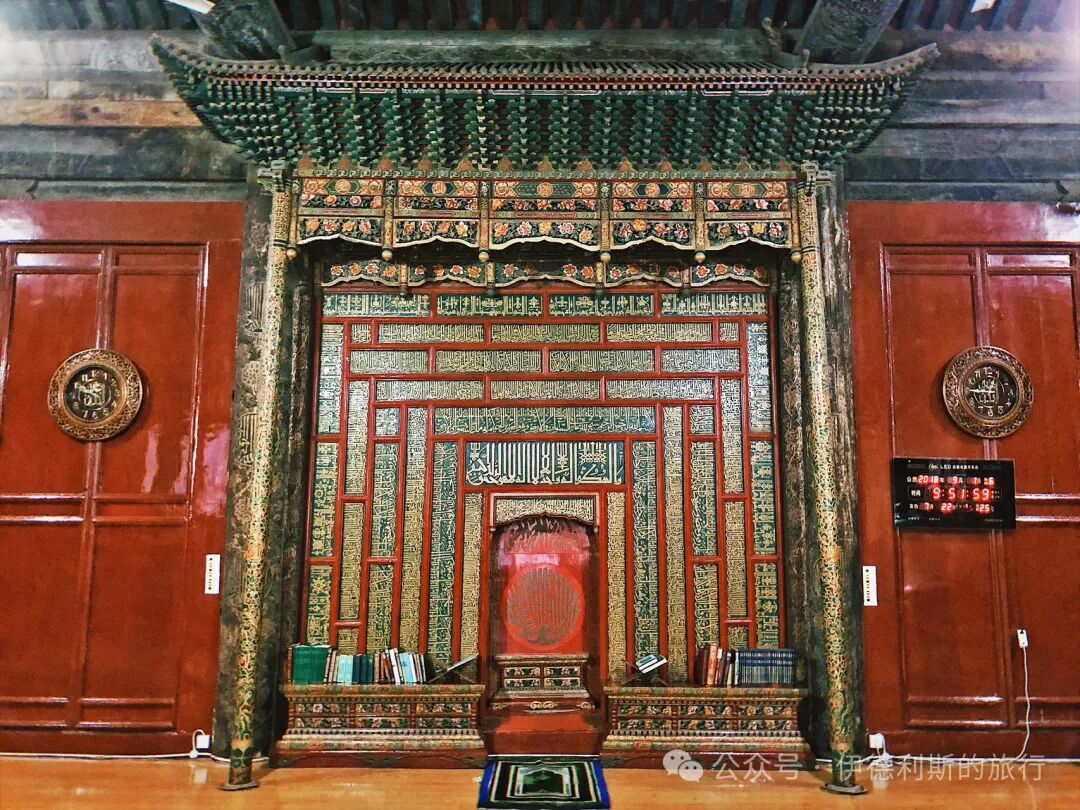
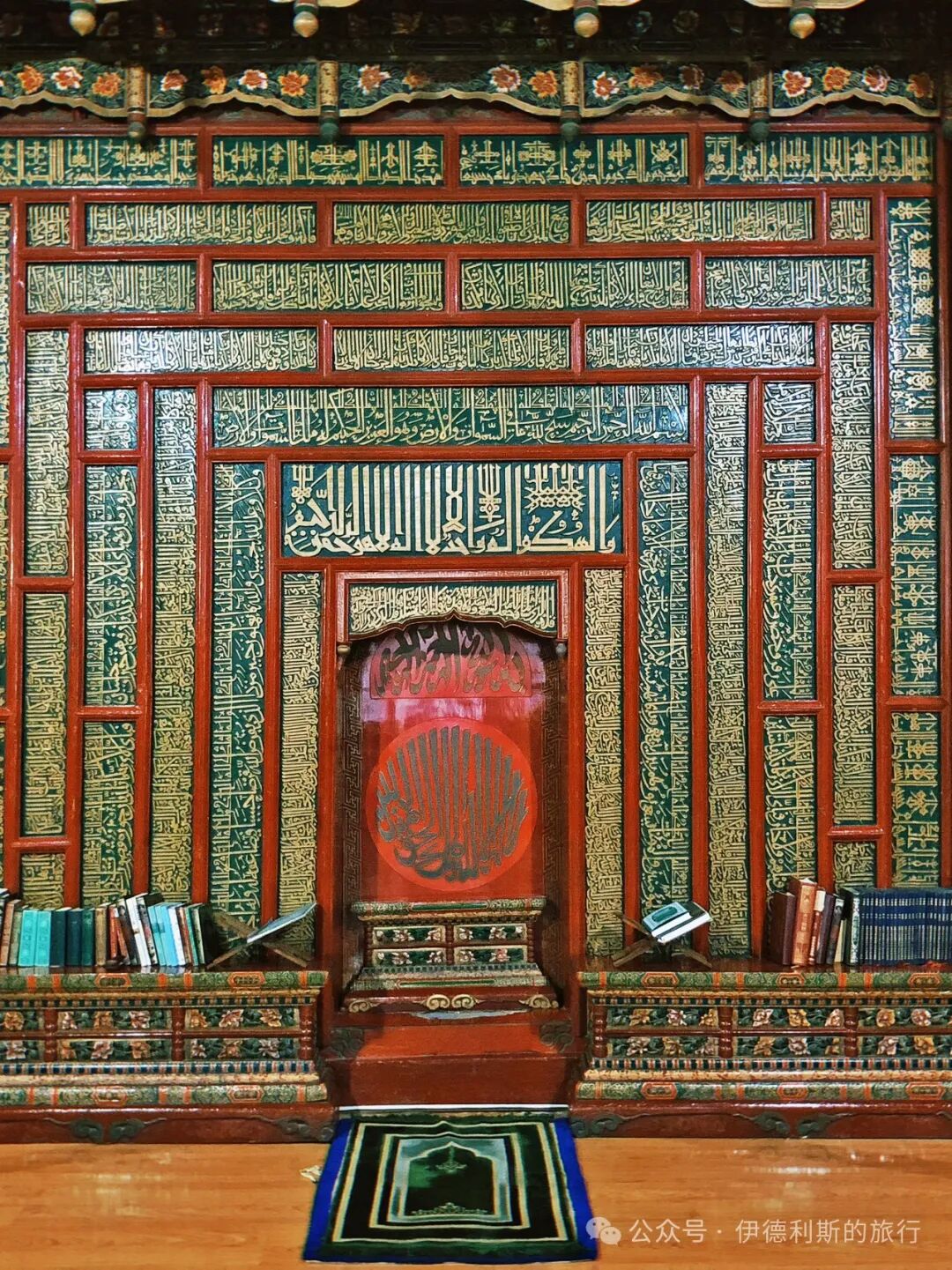
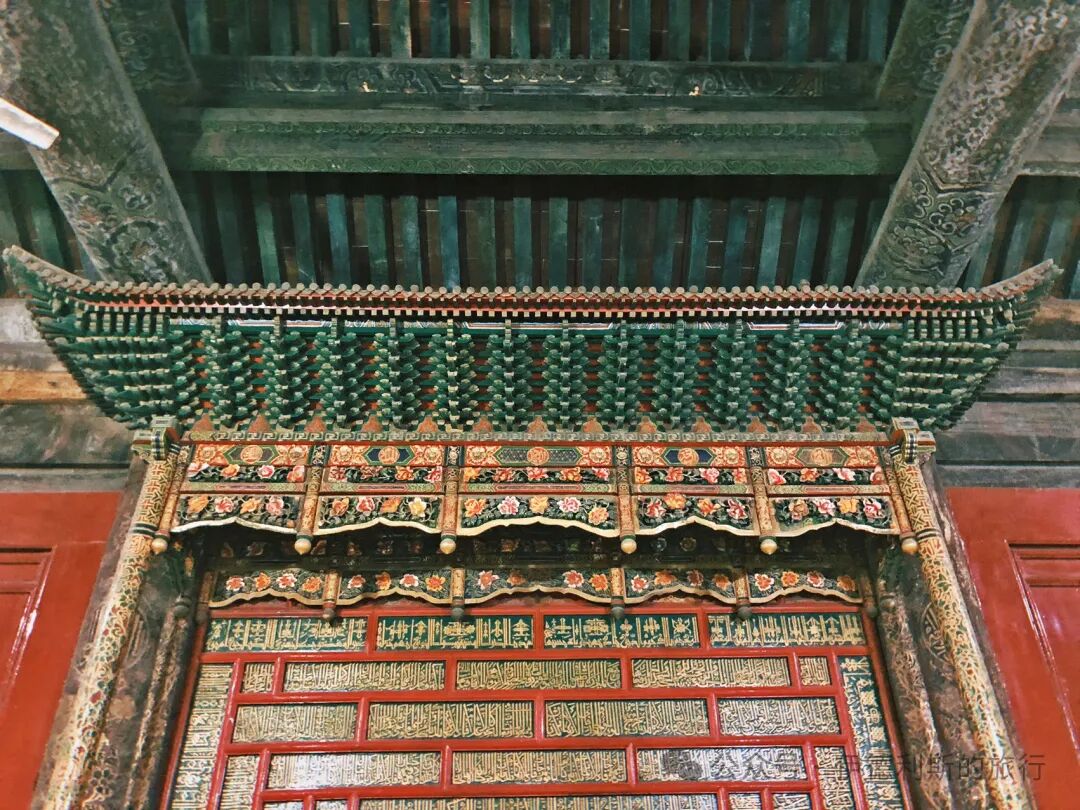
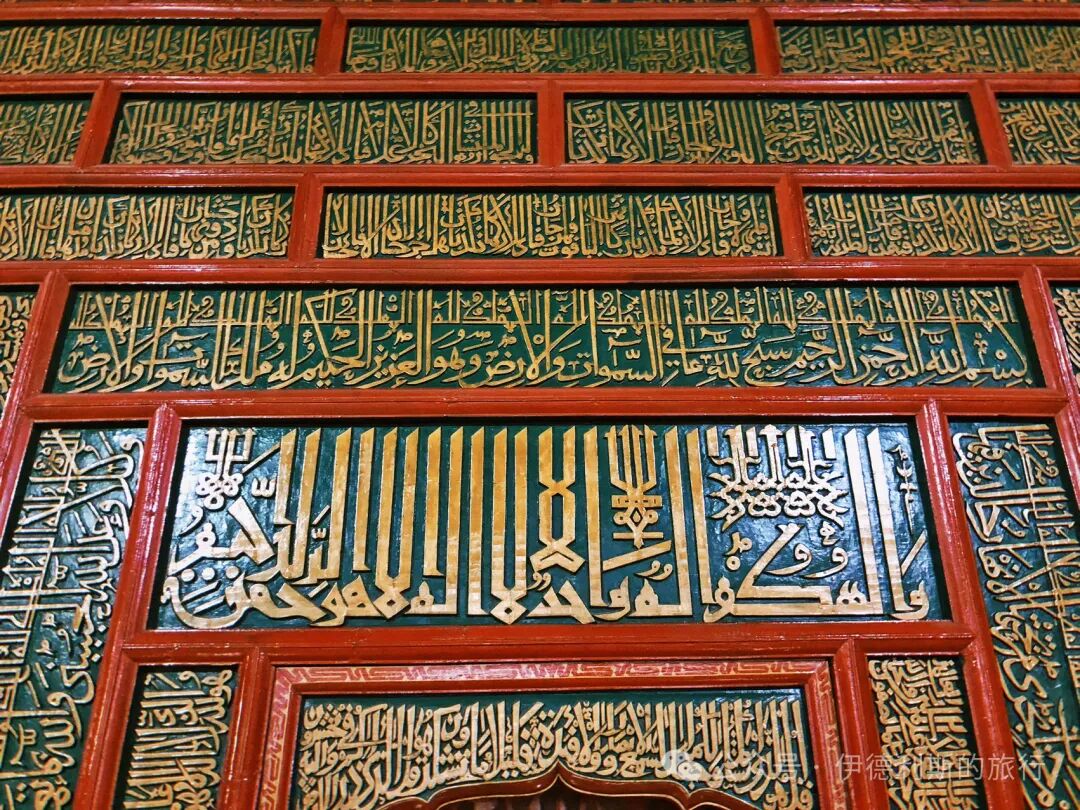
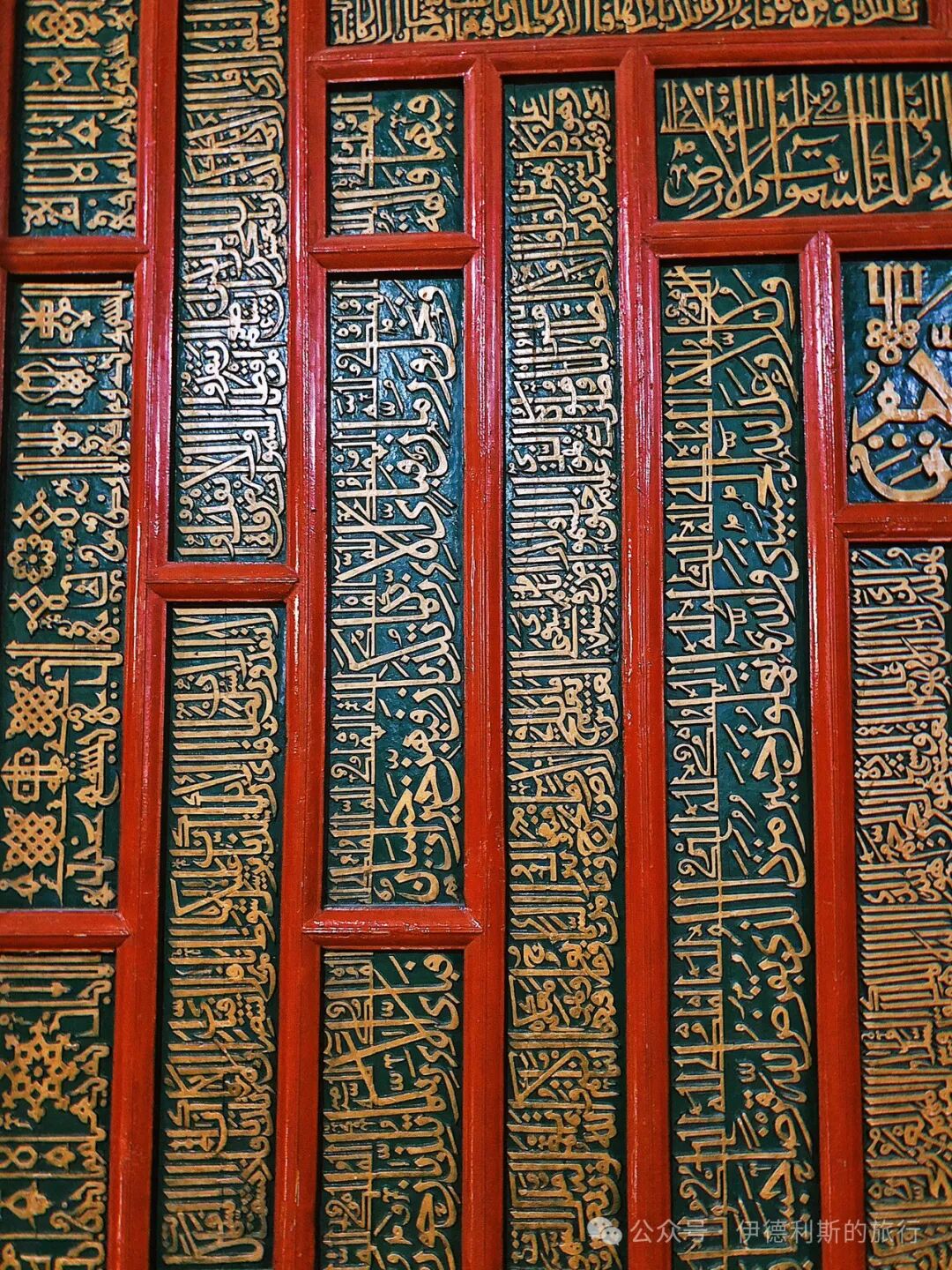
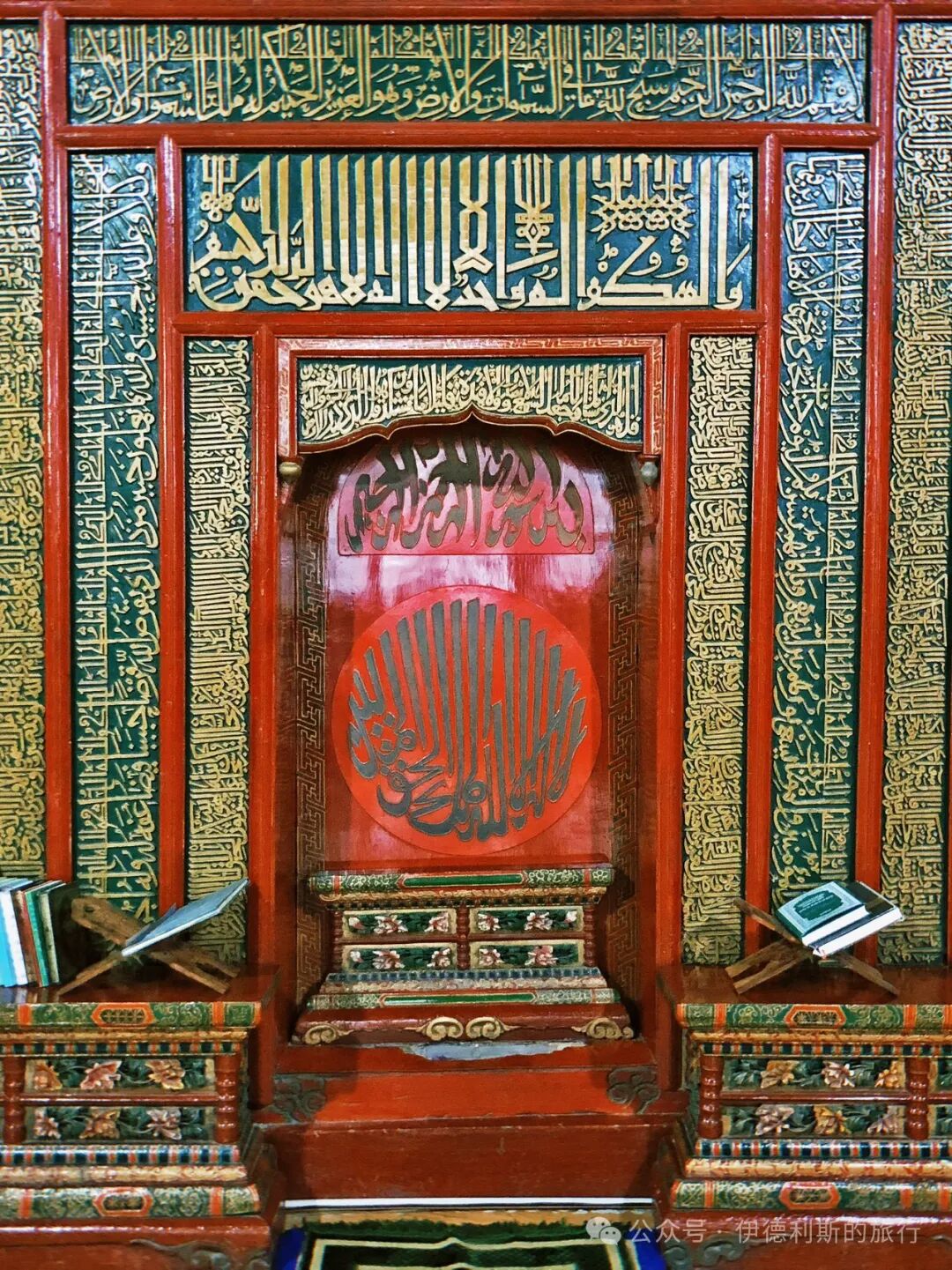
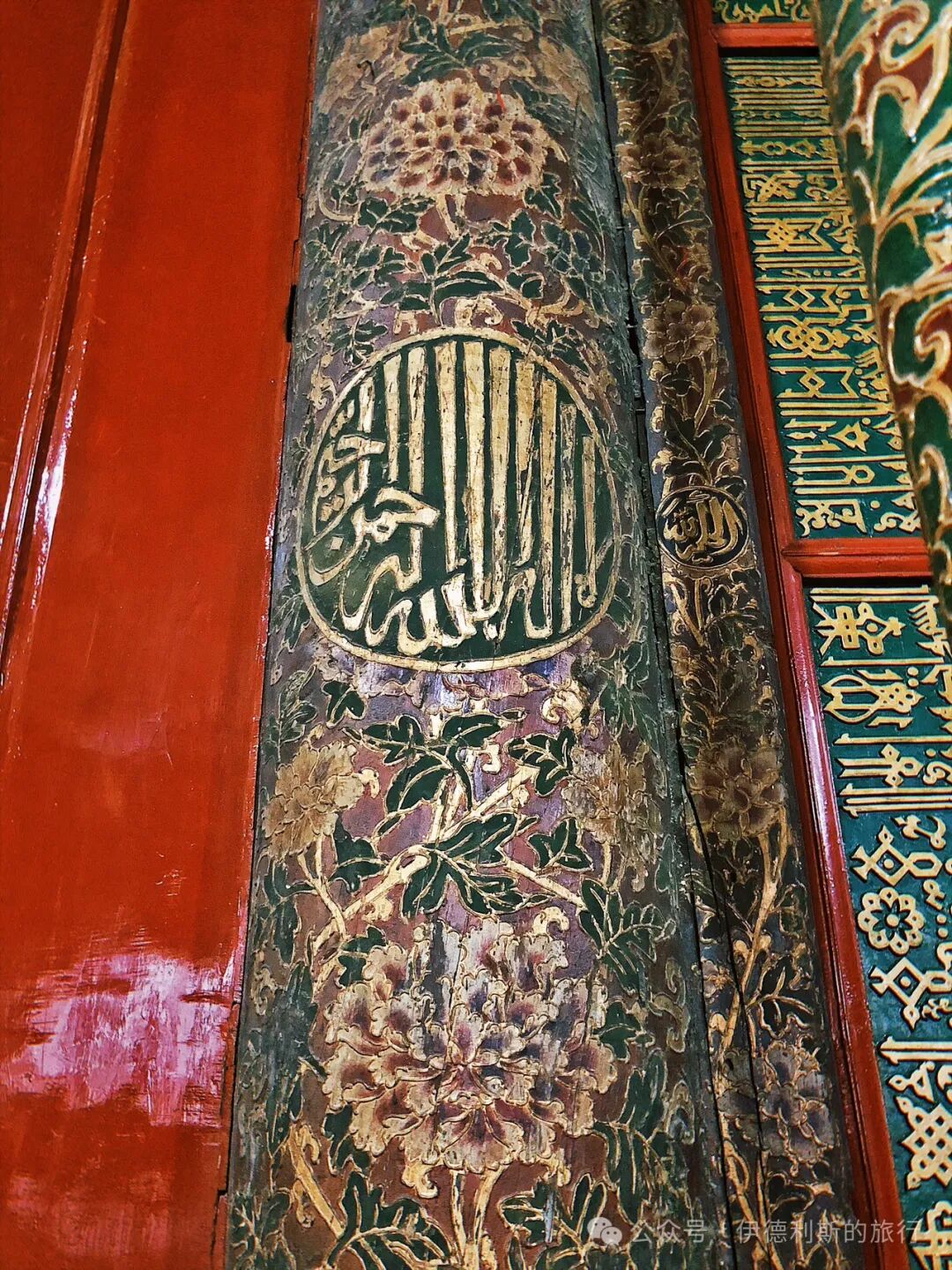
Shaanxi
Huajue Lane Great Mosque in Xi'an, Shaanxi, is a Ming Dynasty treasure. It uses wooden board inlays and gold-painted pillars to create door hoods and hanging pillars. The wooden boards are carved with Arabic calligraphy and floral patterns, making them very magnificent. The center has a kiln niche arch supported by prismatic pillars on both sides. This is similar to the mihrab style found in Iran and Turkey during the Yuan and Ming dynasties, making it the only known Ming Dynasty mihrab in China that blends Eastern and Western styles.
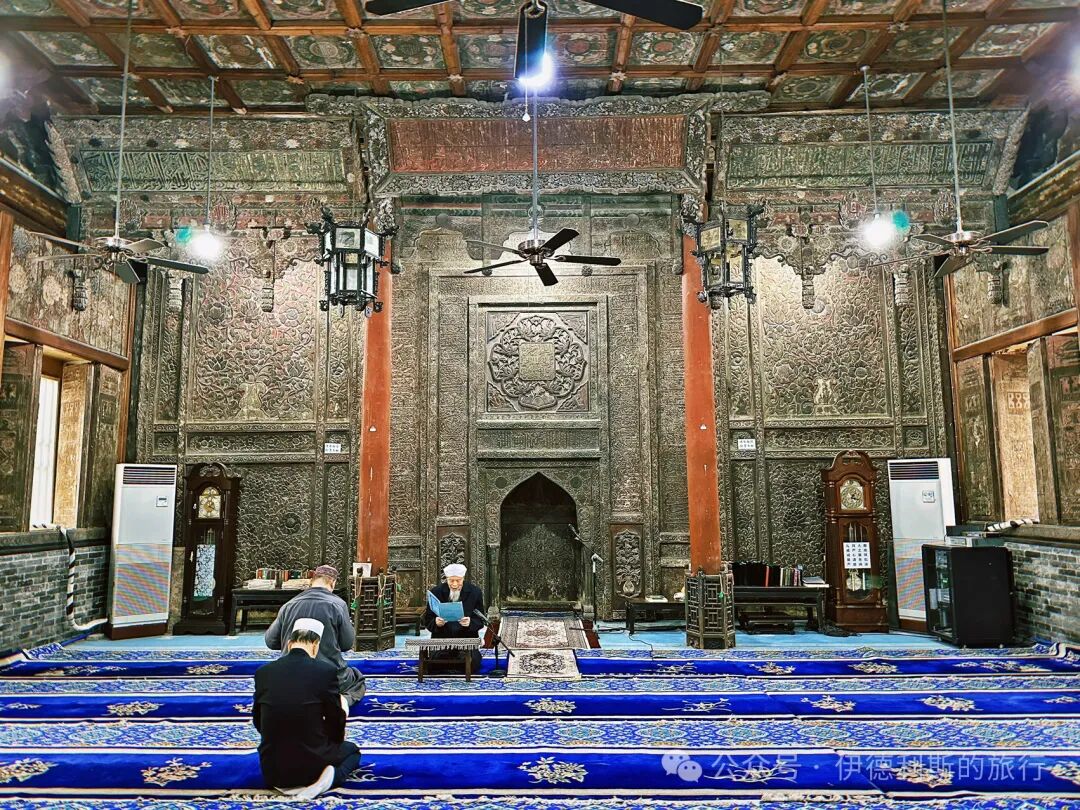
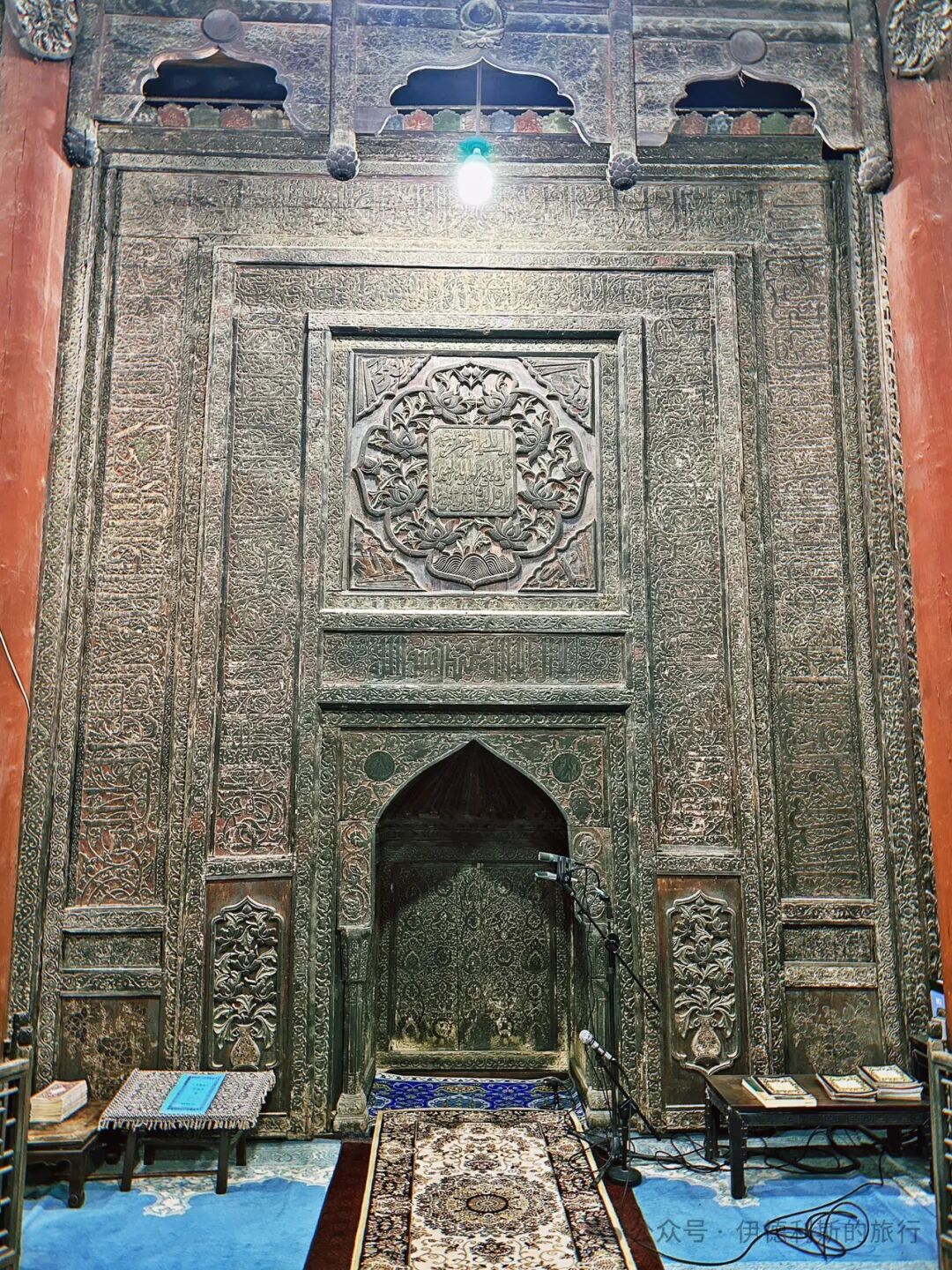
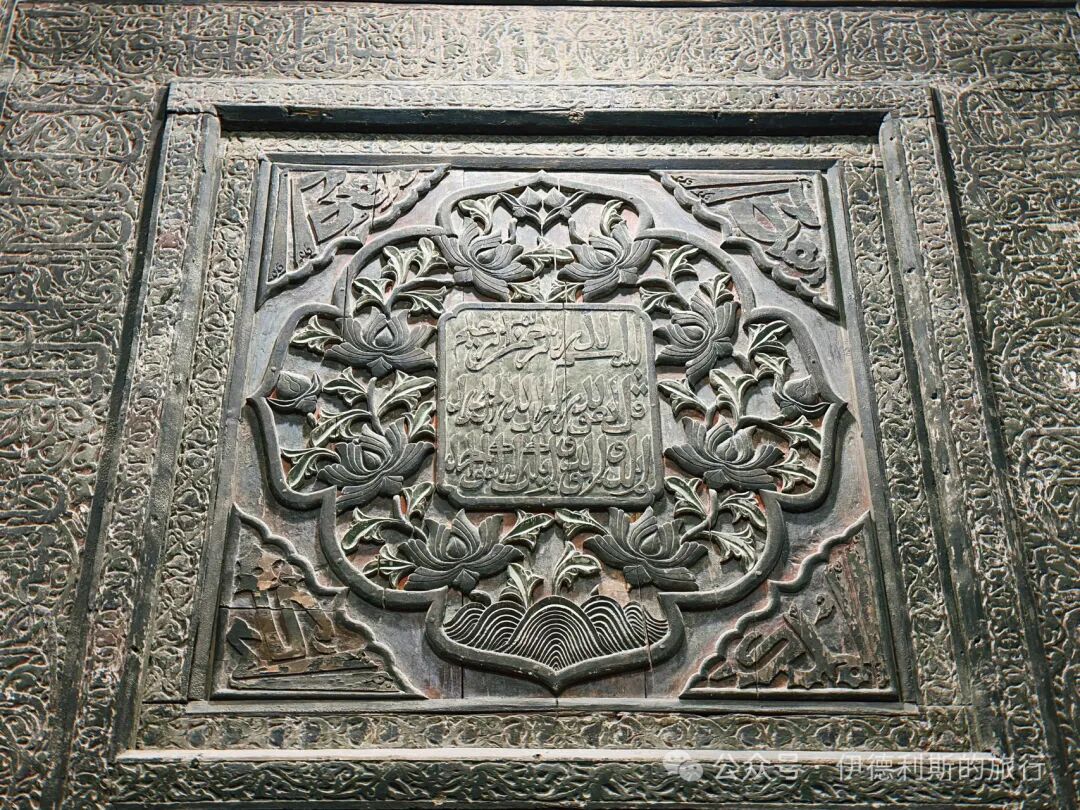
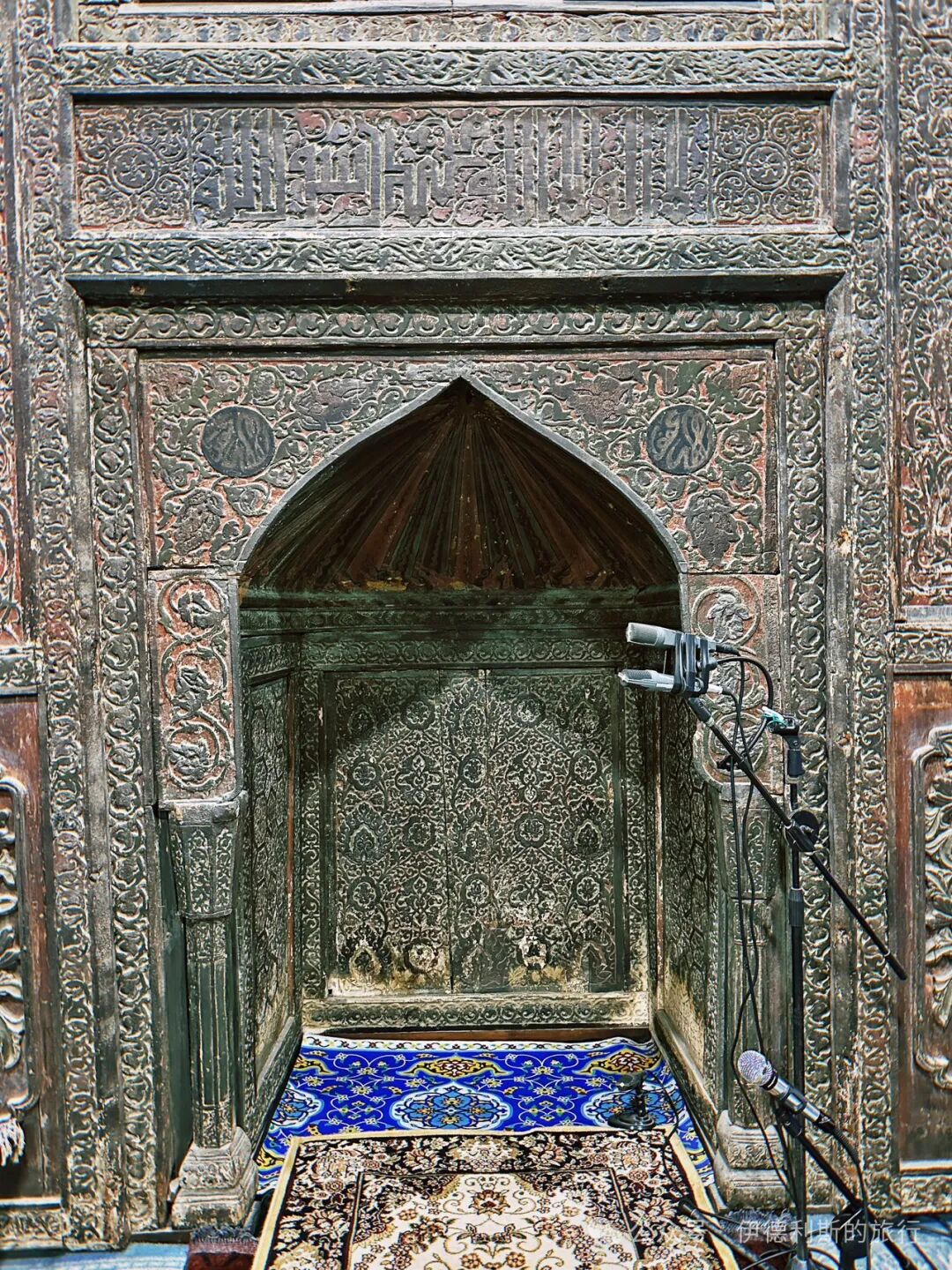
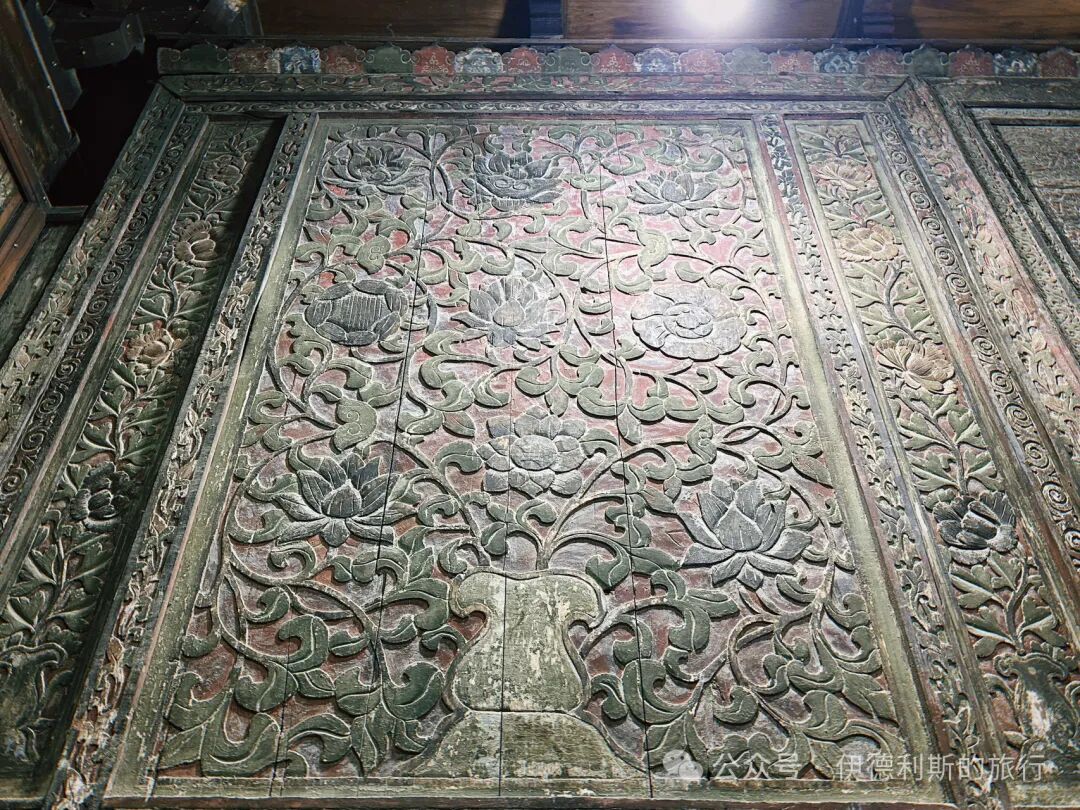
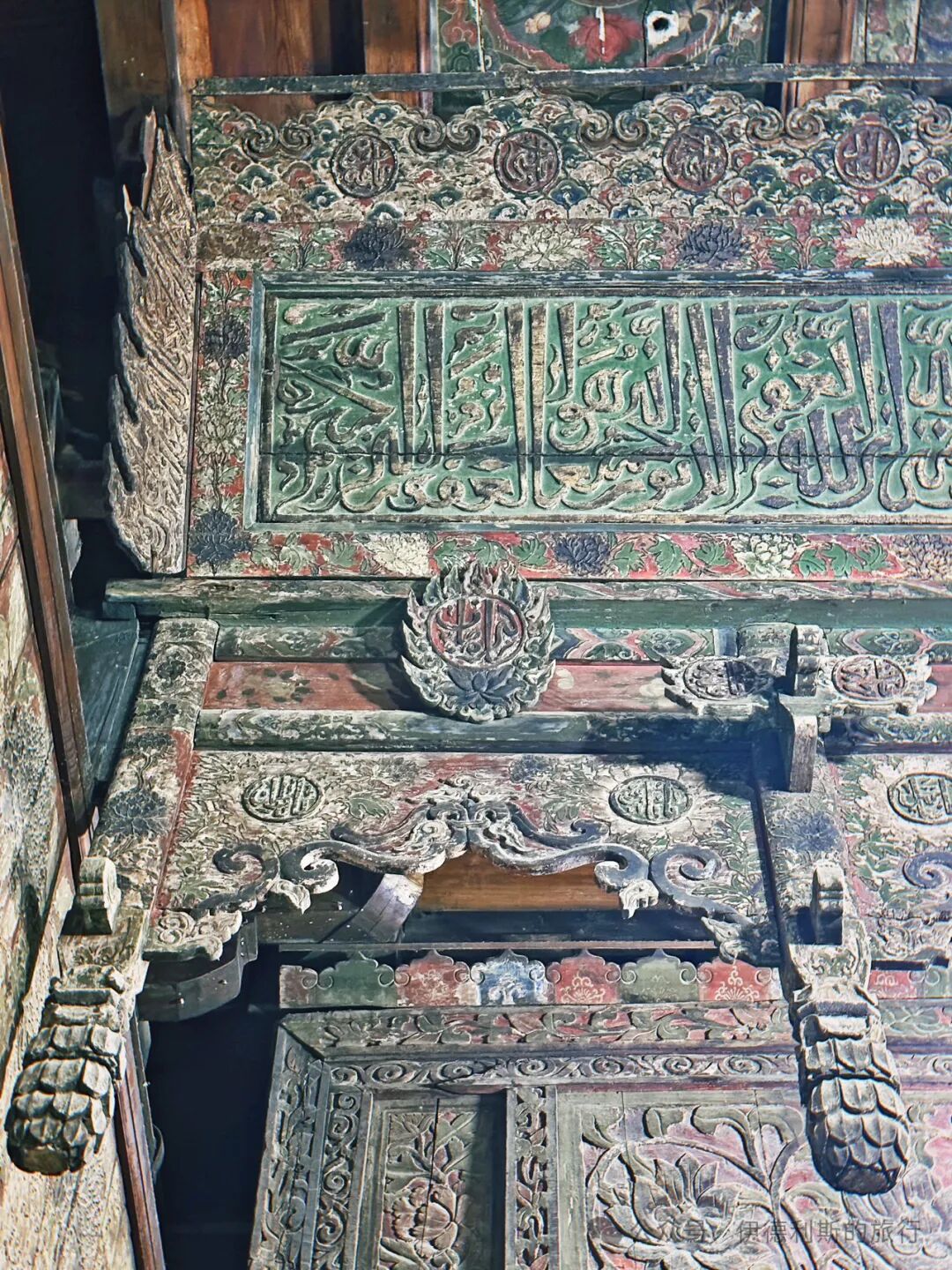
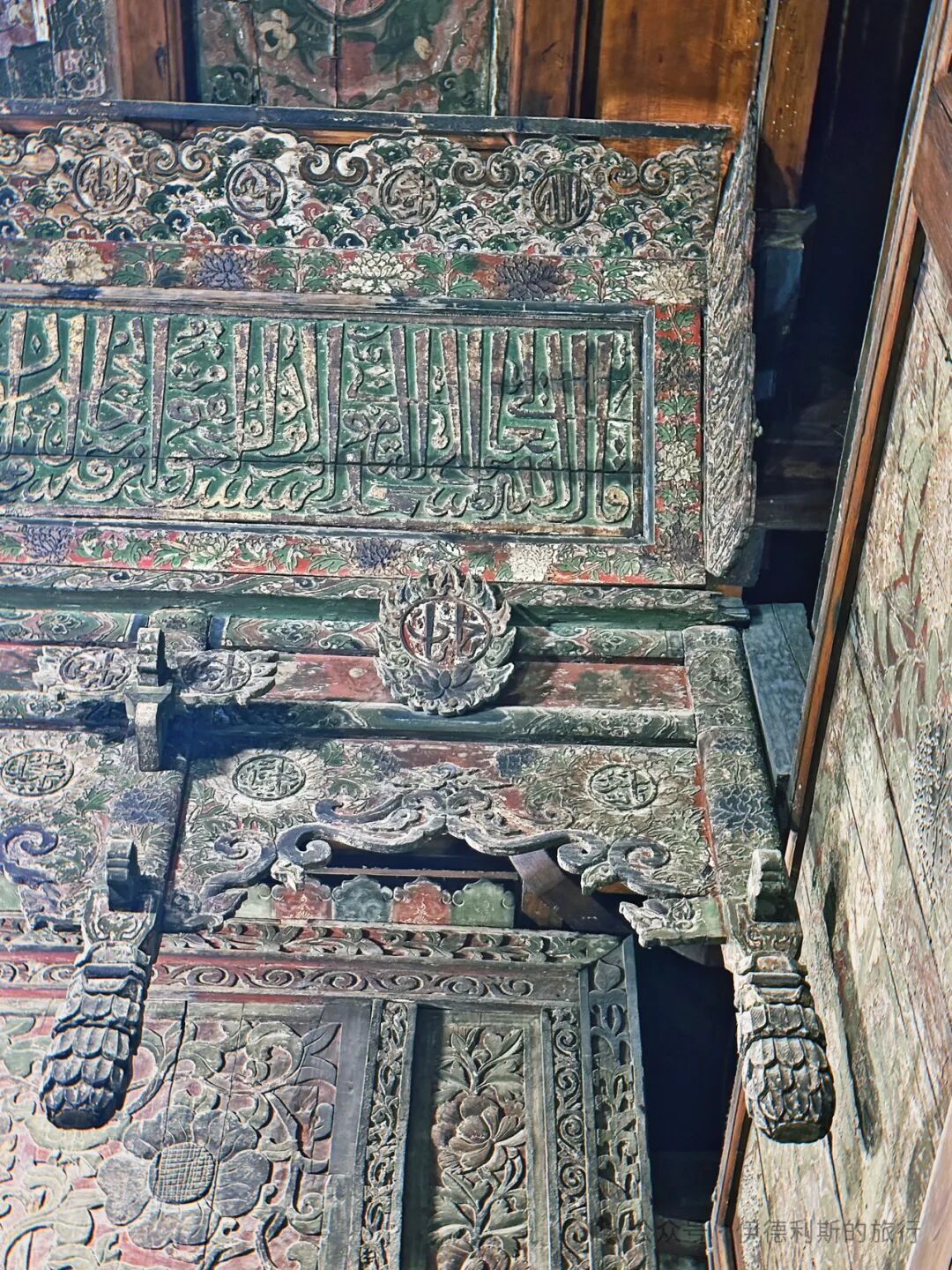
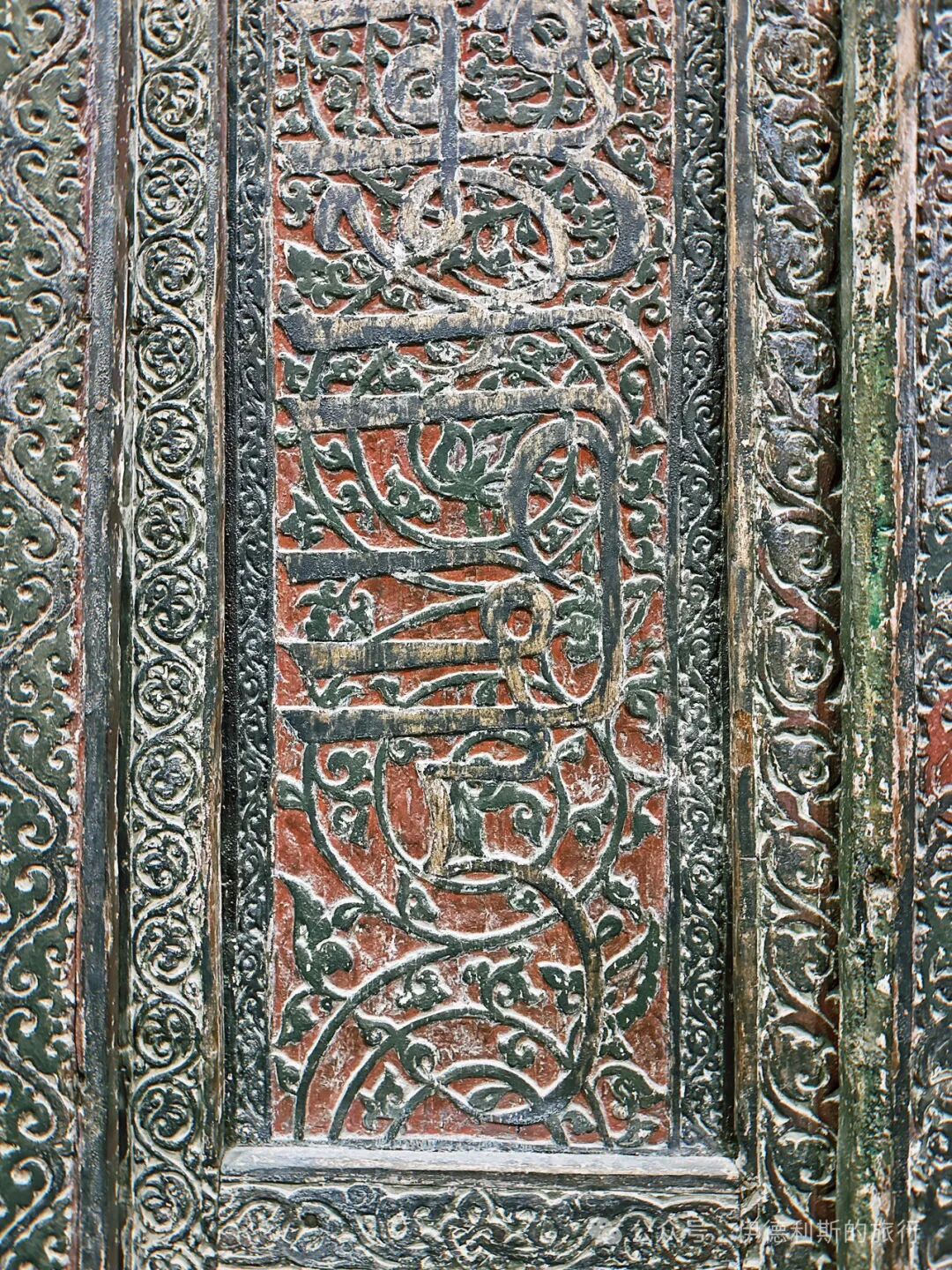
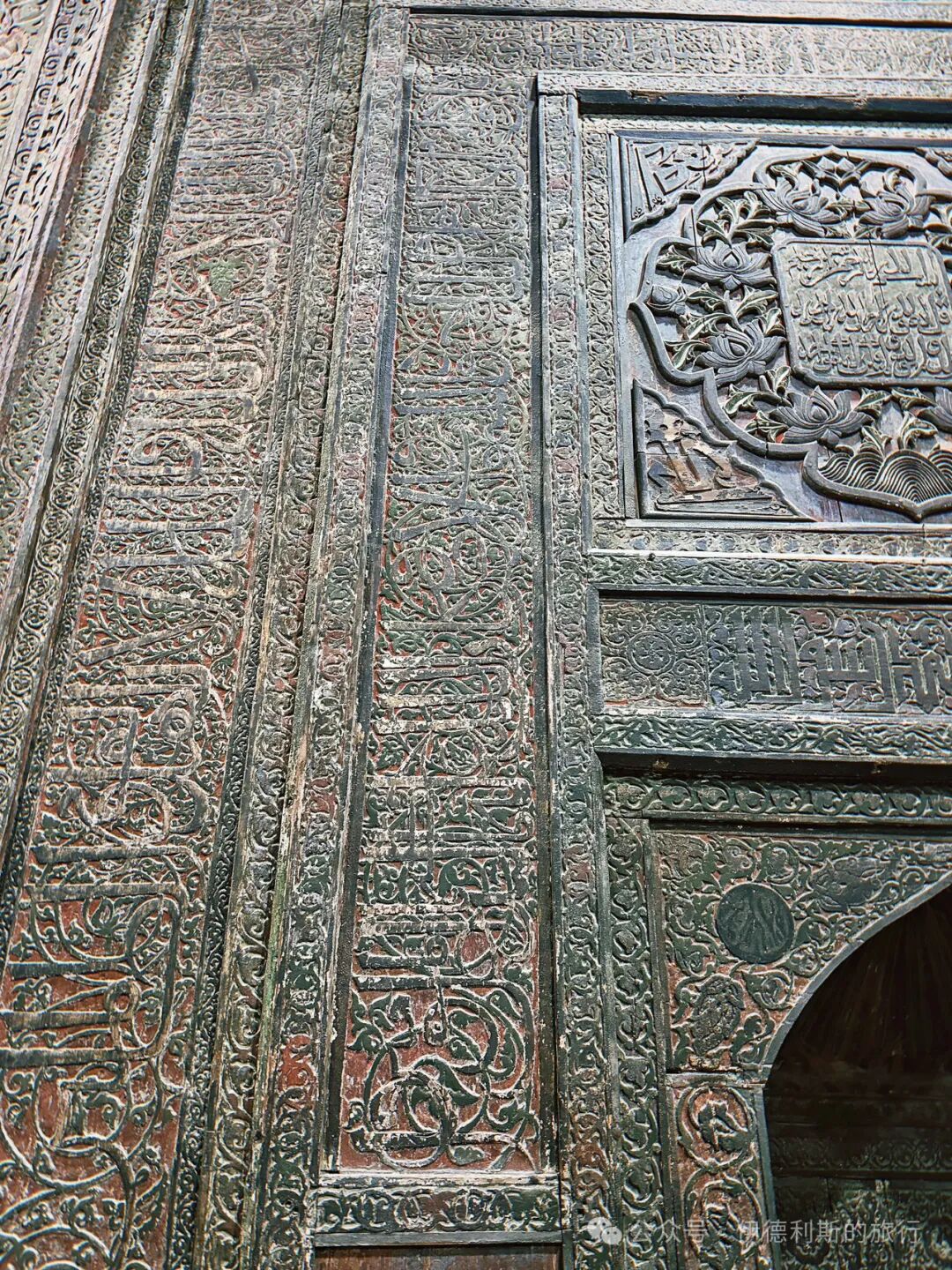
Besides Huajue Lane Great Mosque, the Daxuexi Lane Mosque and Dapiyuan Mosque in Xi'an also have original, unrestored mihrabs. Both mihrabs are made of inlaid wooden boards with a kiln niche in the middle, but their styles differ. Daxuexi Lane Mosque has a wooden carved canopy (feizhao) between its pillars. The craftsmanship is exquisite, and the calligraphy style matches that of Mengda Mosque in Xunhua, Qinghai, suggesting they may have been made by the same group of craftsmen.
Daxuexi Lane Mosque
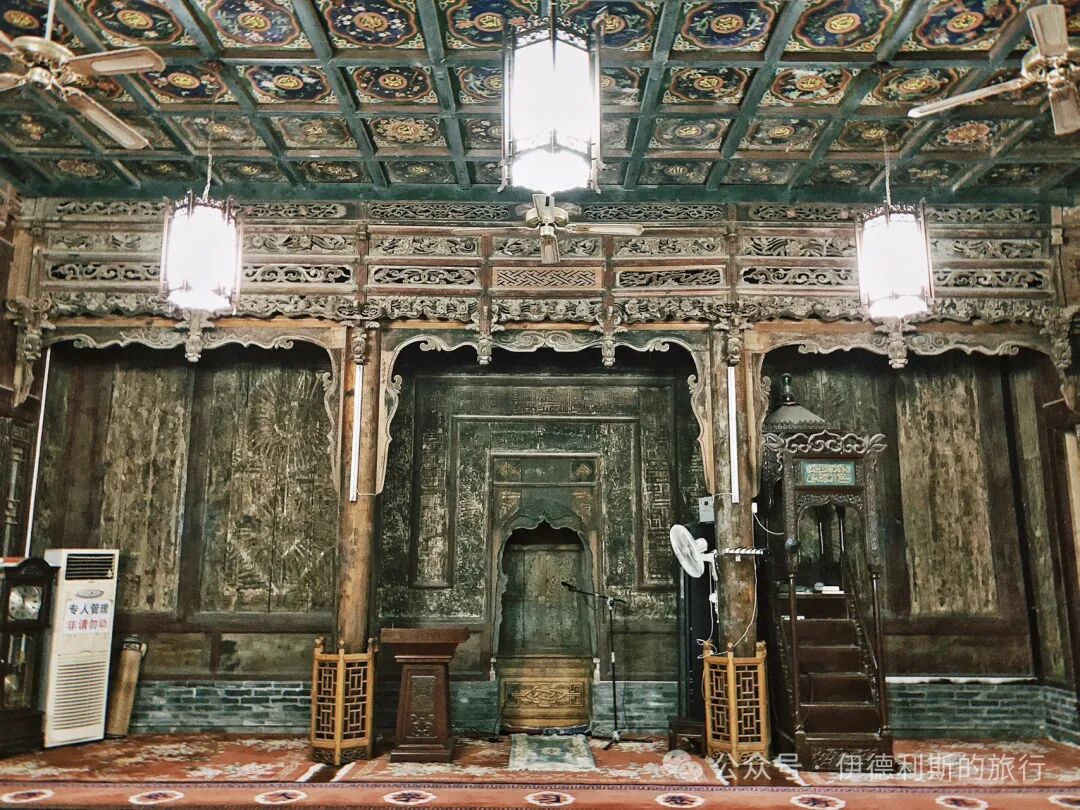
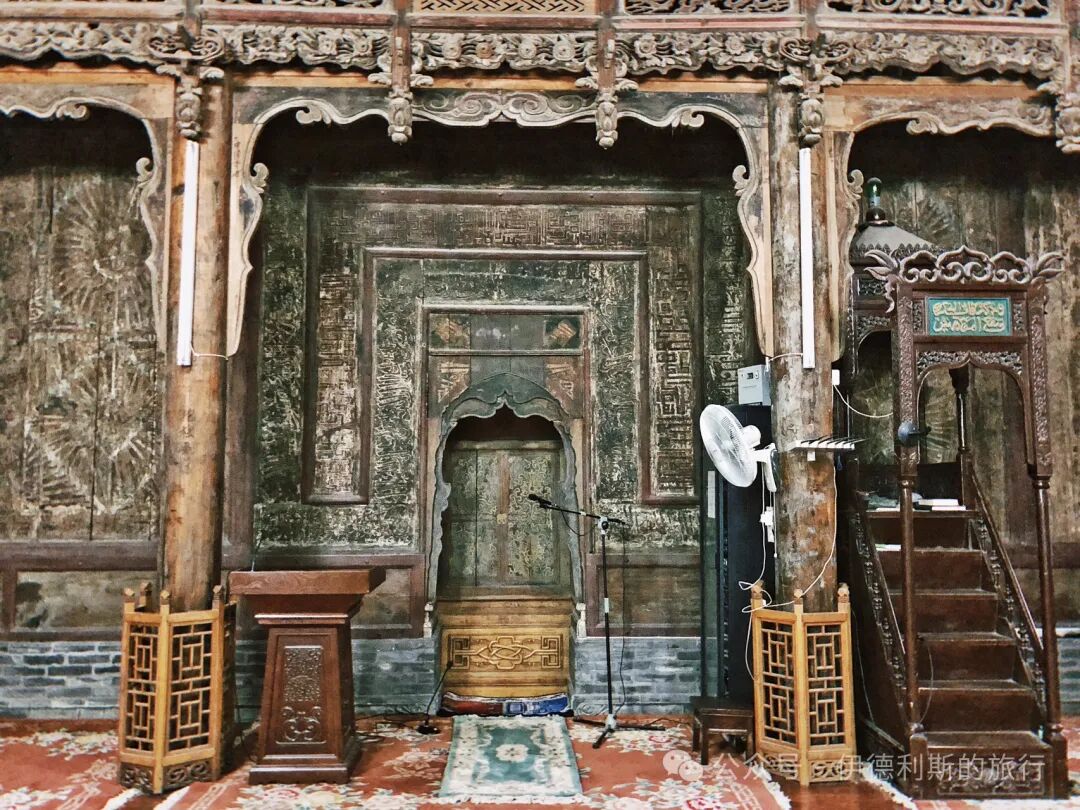
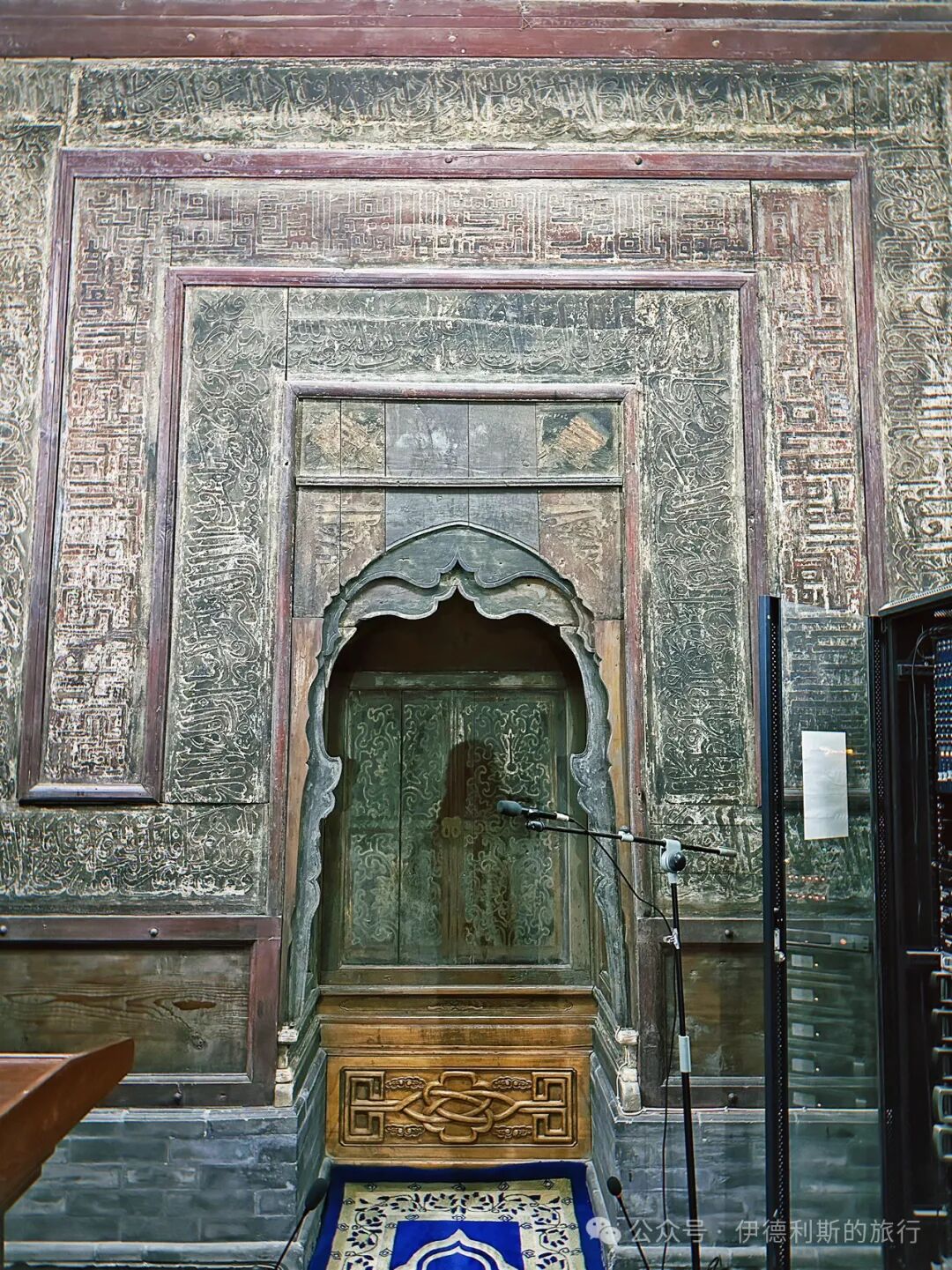
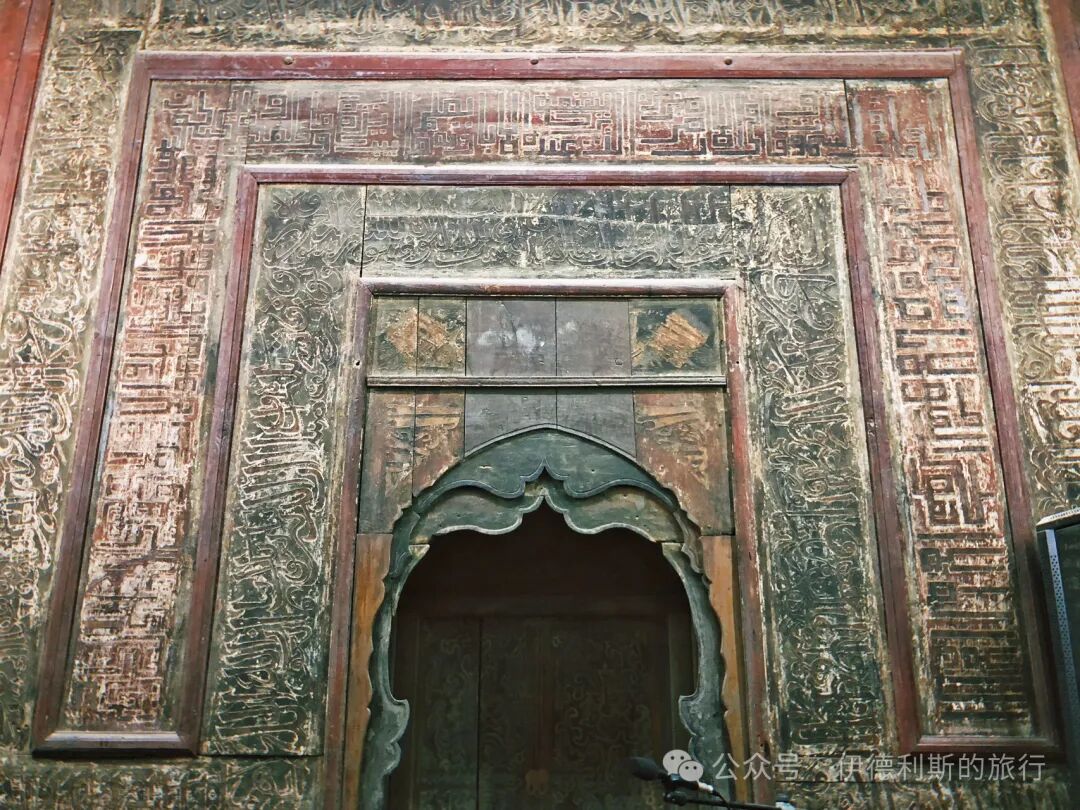
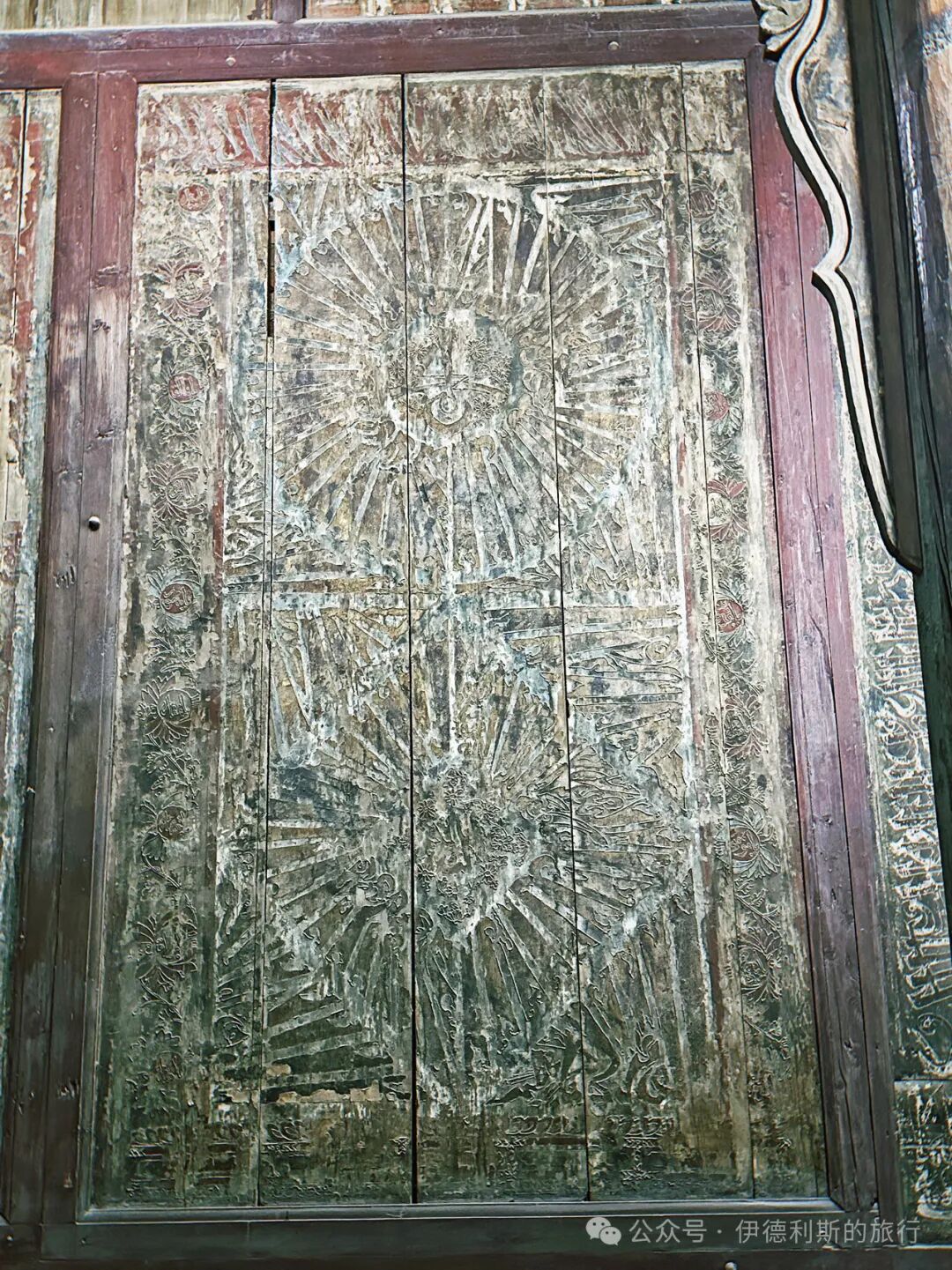
Dapiyuan Mosque
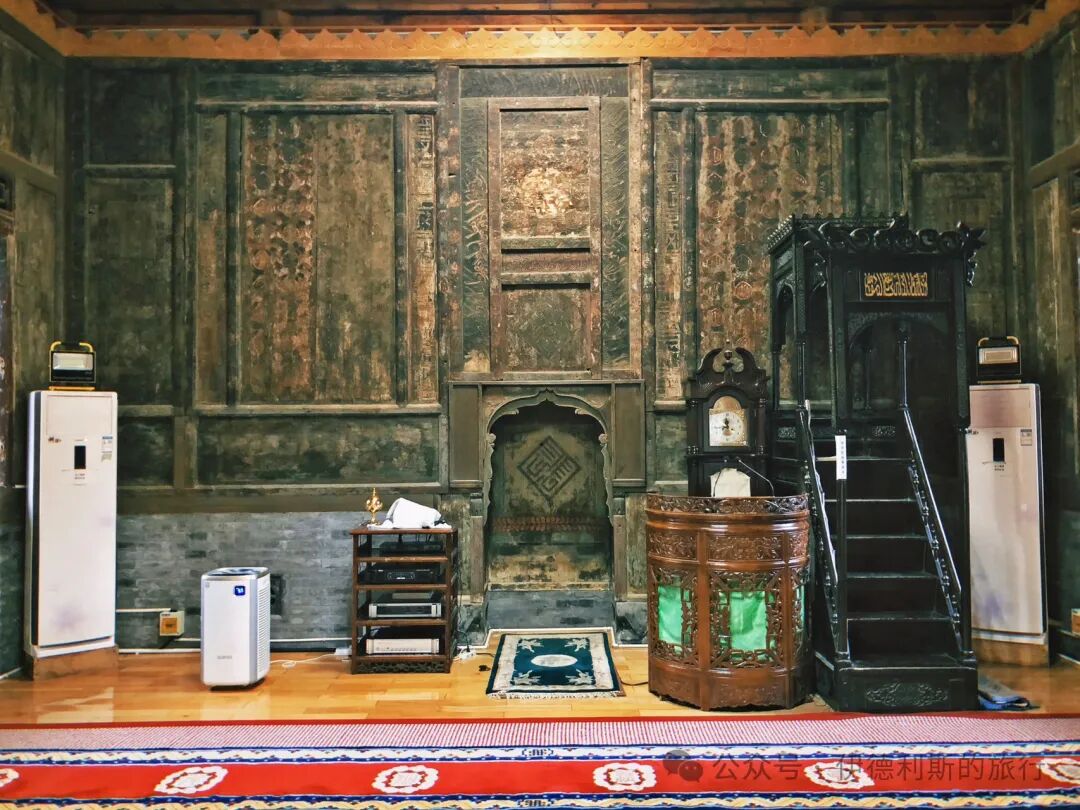
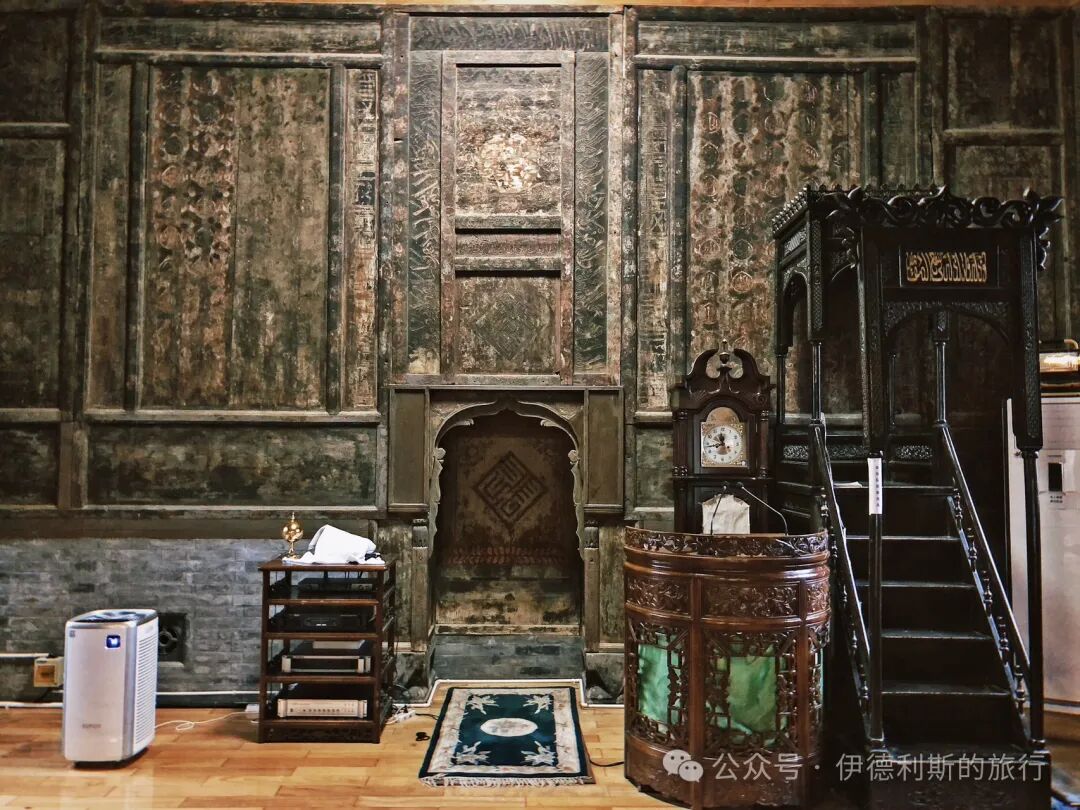
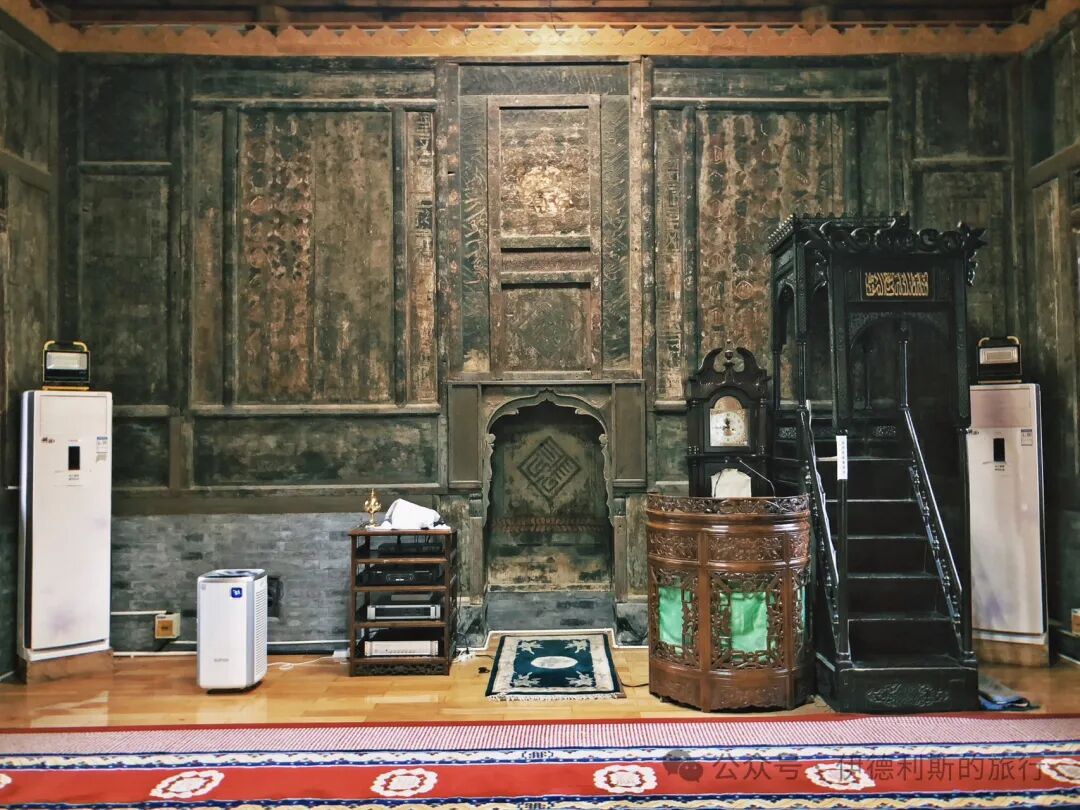
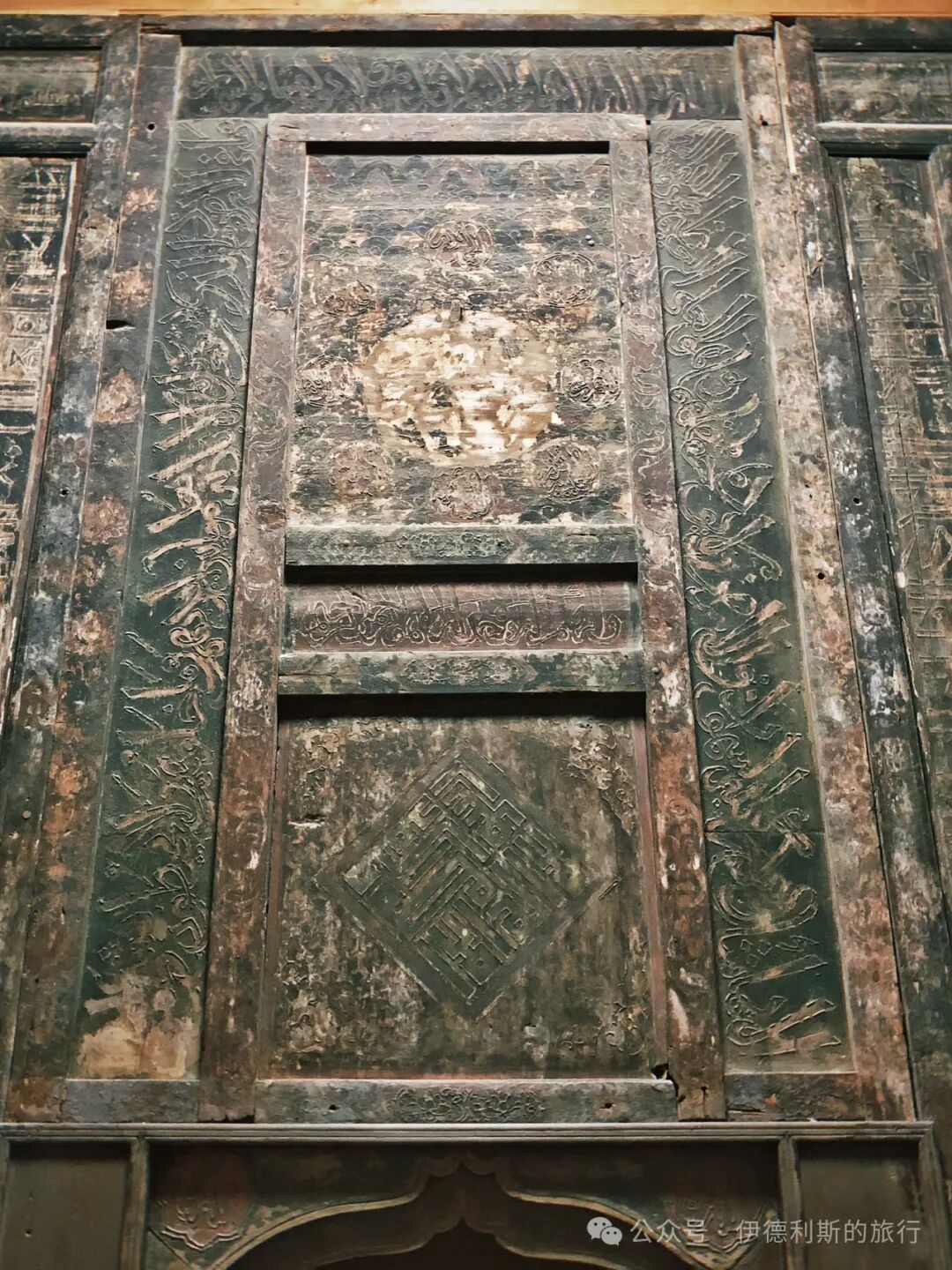
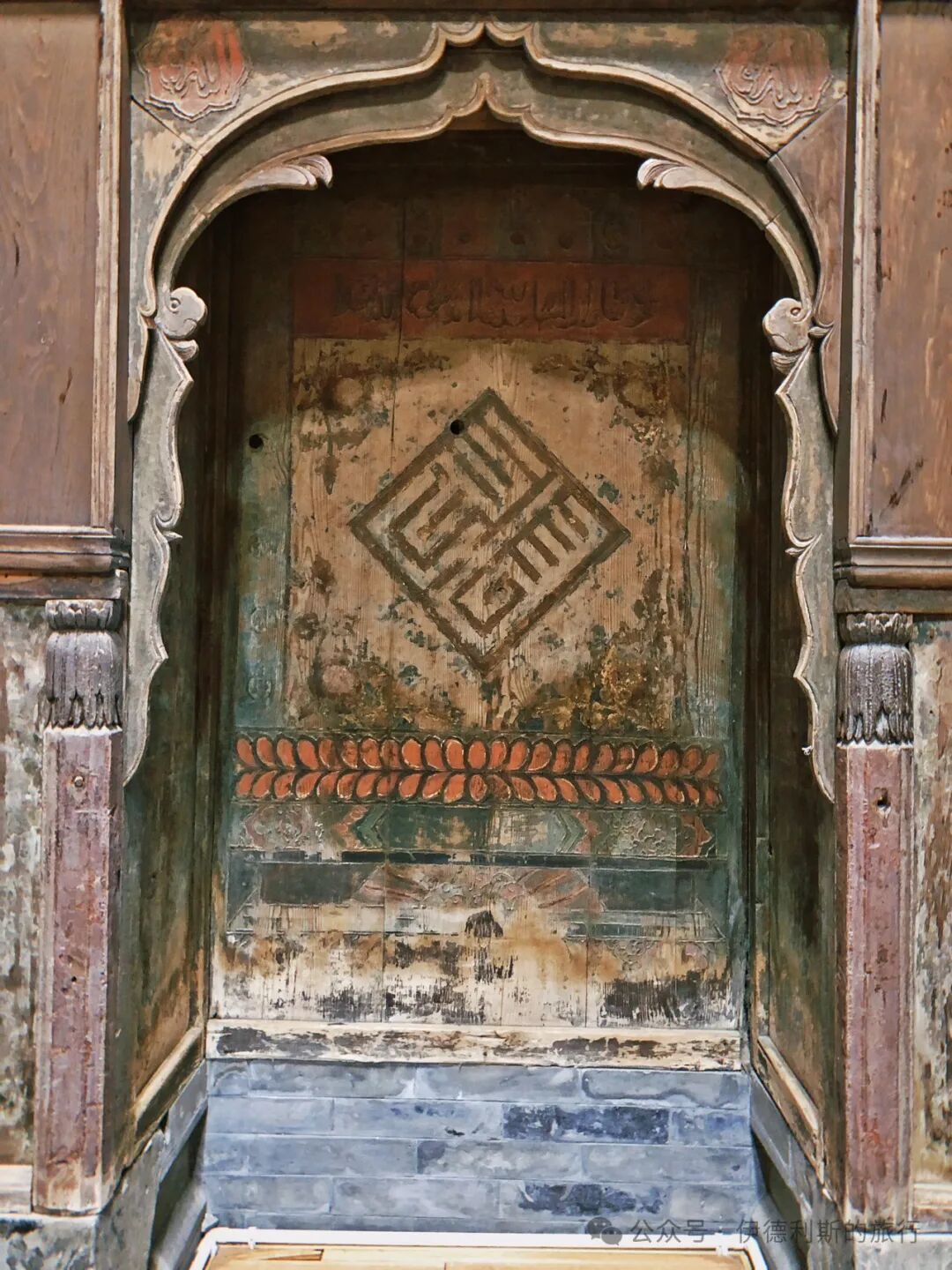
Some restored and newly built mihrabs in Xi'an, Shaanxi.
Xiaopiyuan North Mosque has had all its paintings redone, though it is said the style remains unchanged. The center is a kiln niche with beautiful wooden floral carvings.
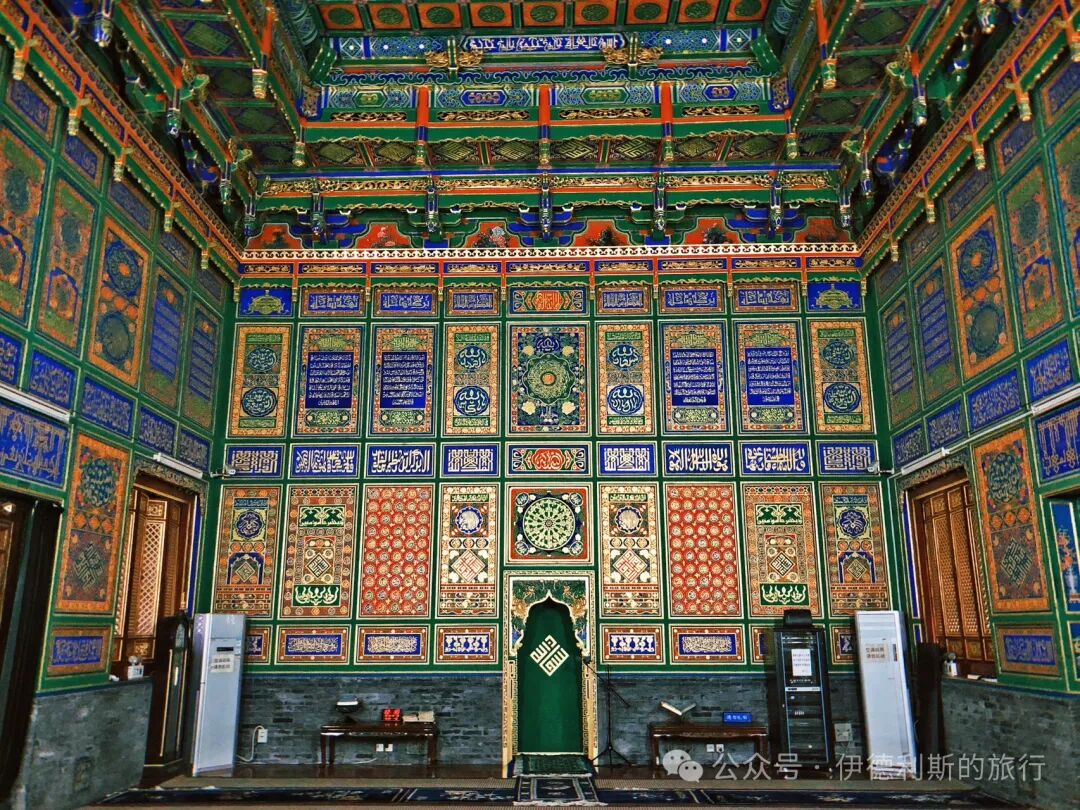
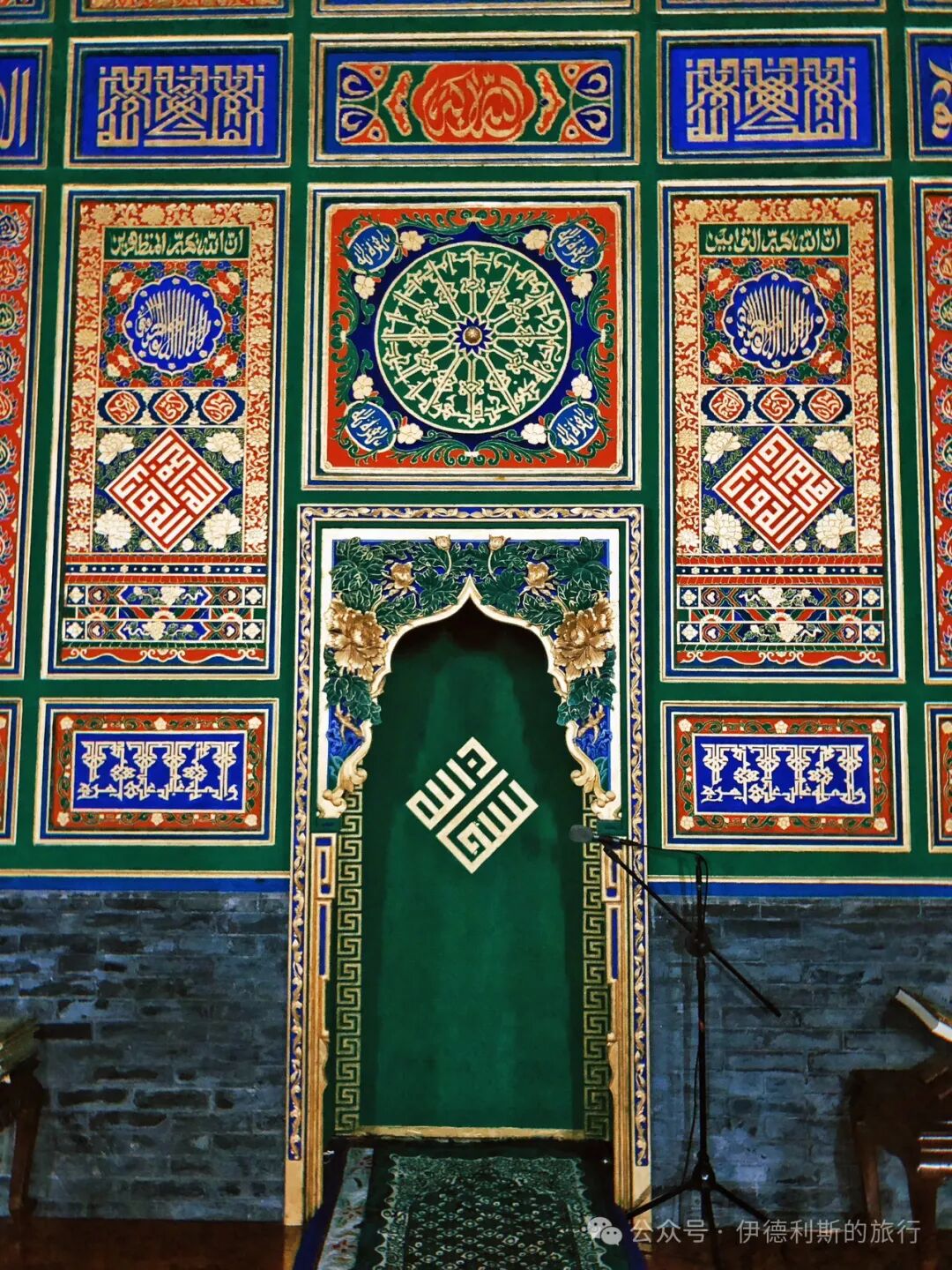
At the North Guangji Street Mosque, the wood carvings on the upper part of the prayer niche (mihrab) look like those at the Great Mosque of Huajue Lane.
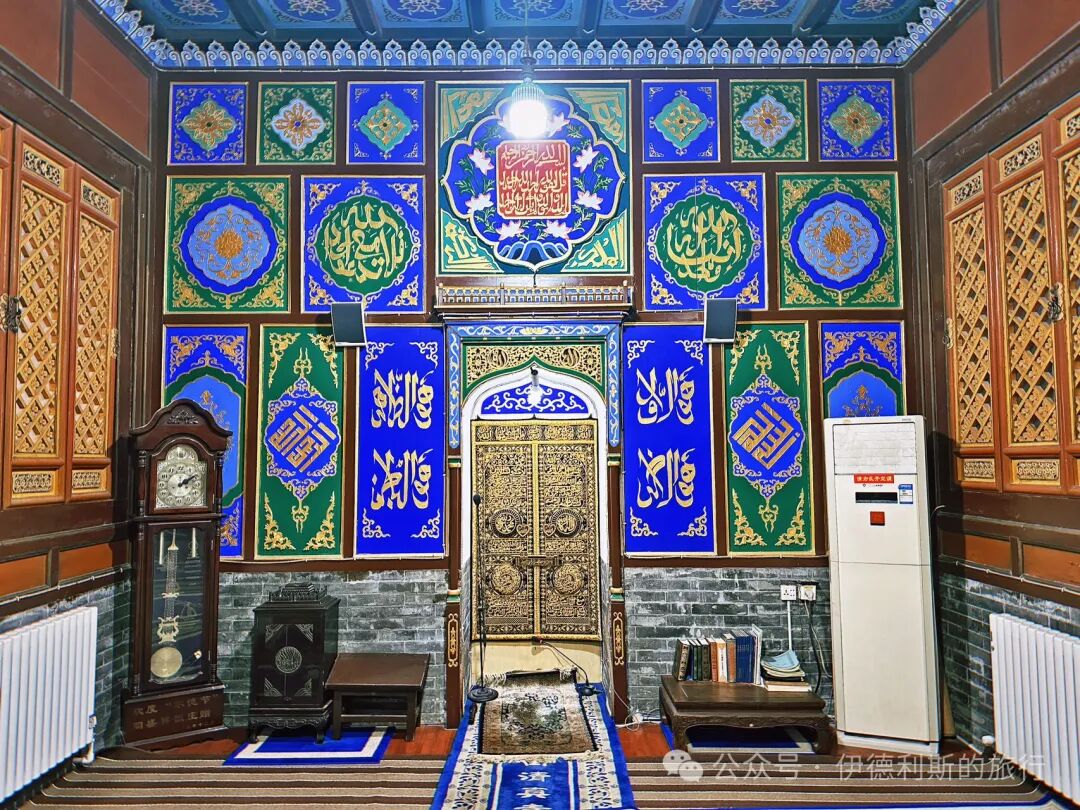
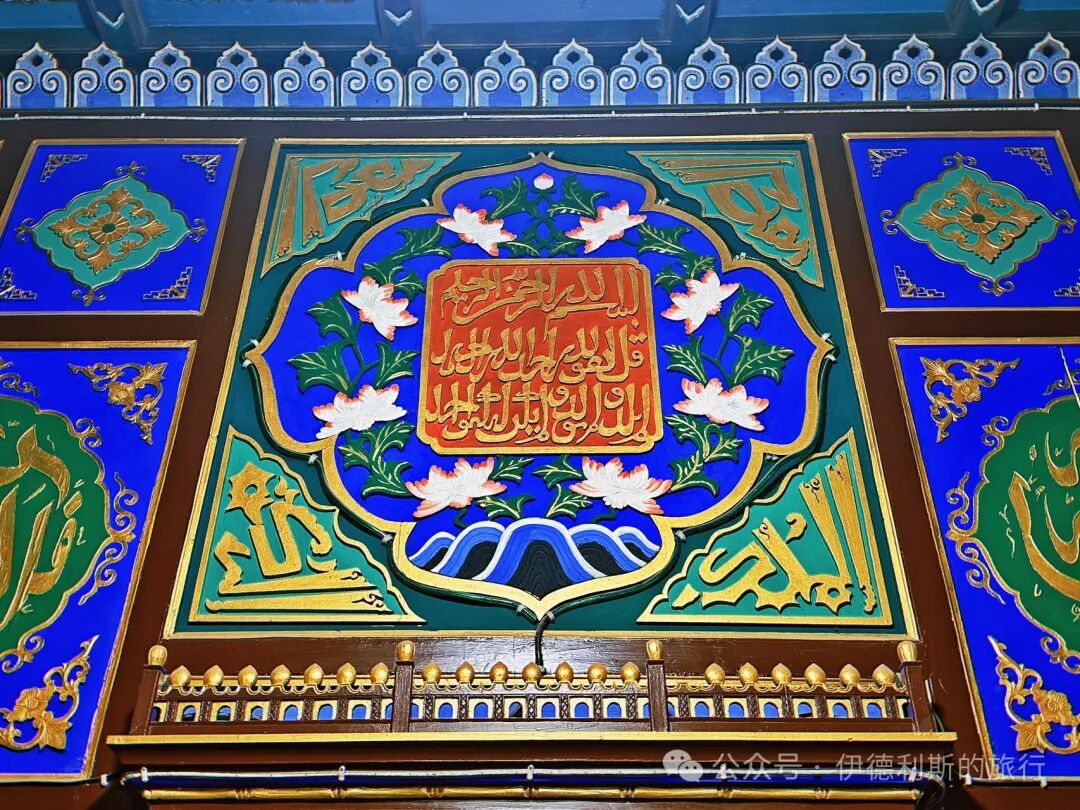
The Xiaoxuexi Lane Middle Mosque features wood panel inlays with a prayer niche (mihrab) in the center.
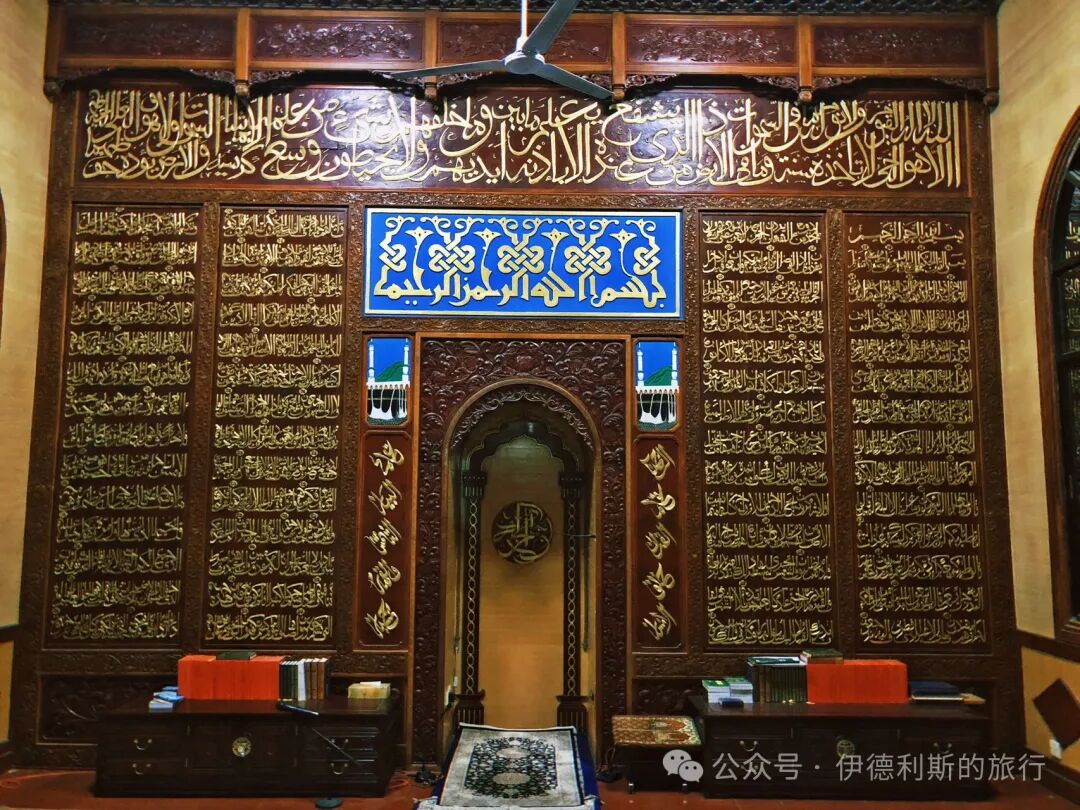
The Xiaoxuexi Lane Yingli Mosque has a wood-carved door canopy decorated with flower and plant patterns.
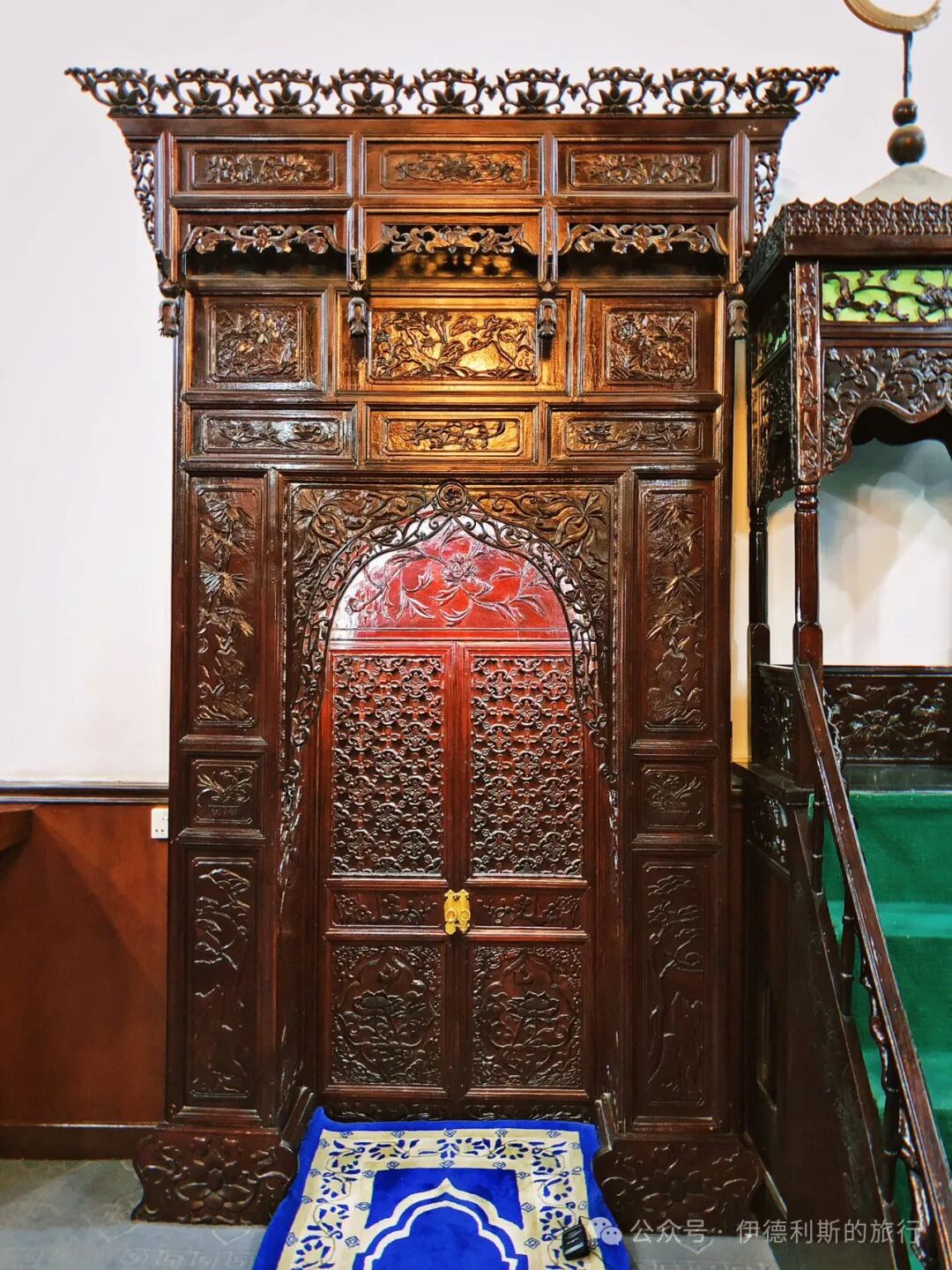
The Dongmen Cang South City Mosque has a wood-carved door canopy featuring traditional-style calligraphy.
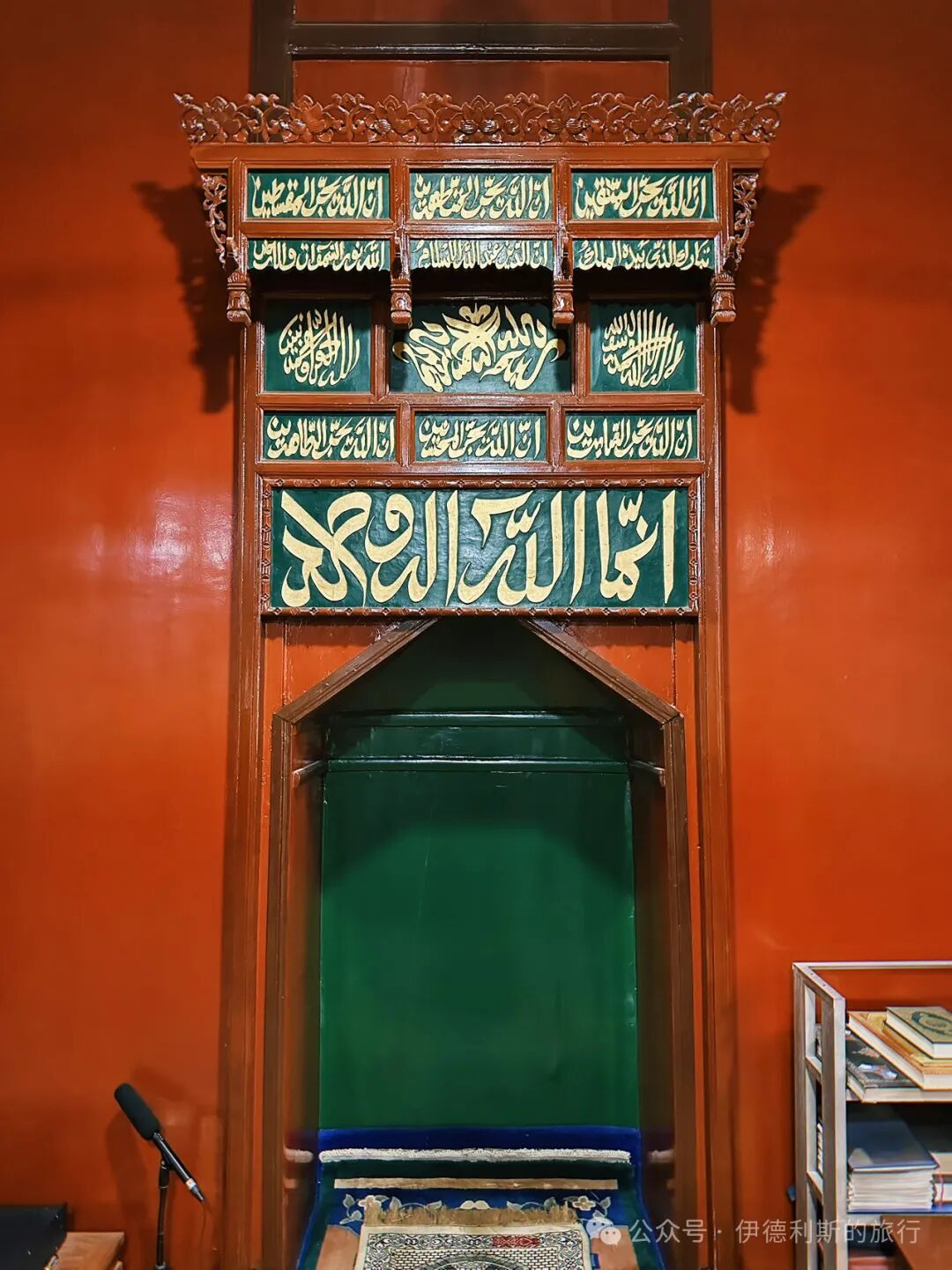
The Sajinqiao Mosque uses wood panel inlays and contains a very rare Chinese-language Yasin chapter.
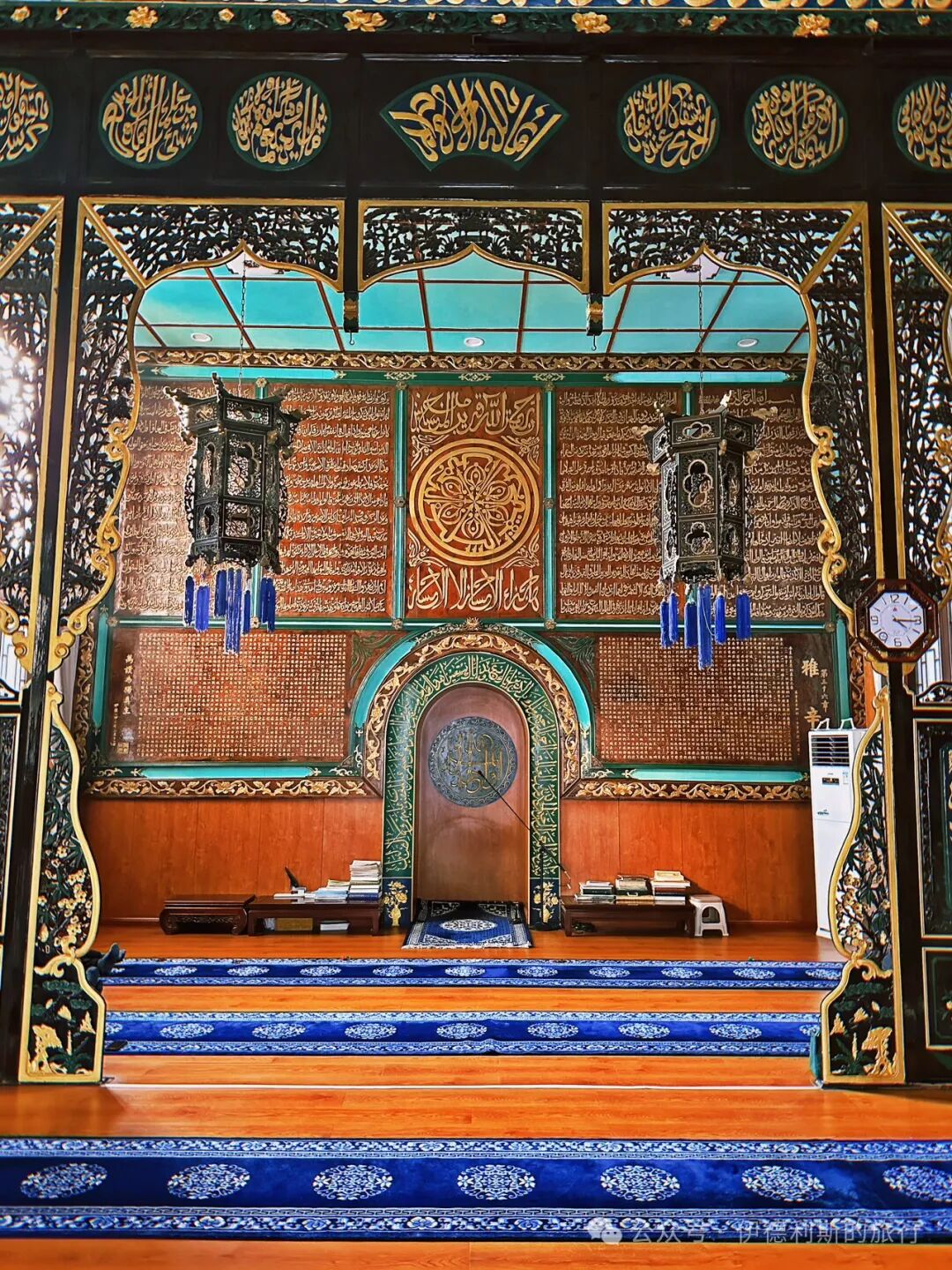
Prayer niches (mihrab) in the southern Shaanxi region:
The Ankang North Mosque in Shaanxi is built in a memorial archway style with wood-carved flying eaves.
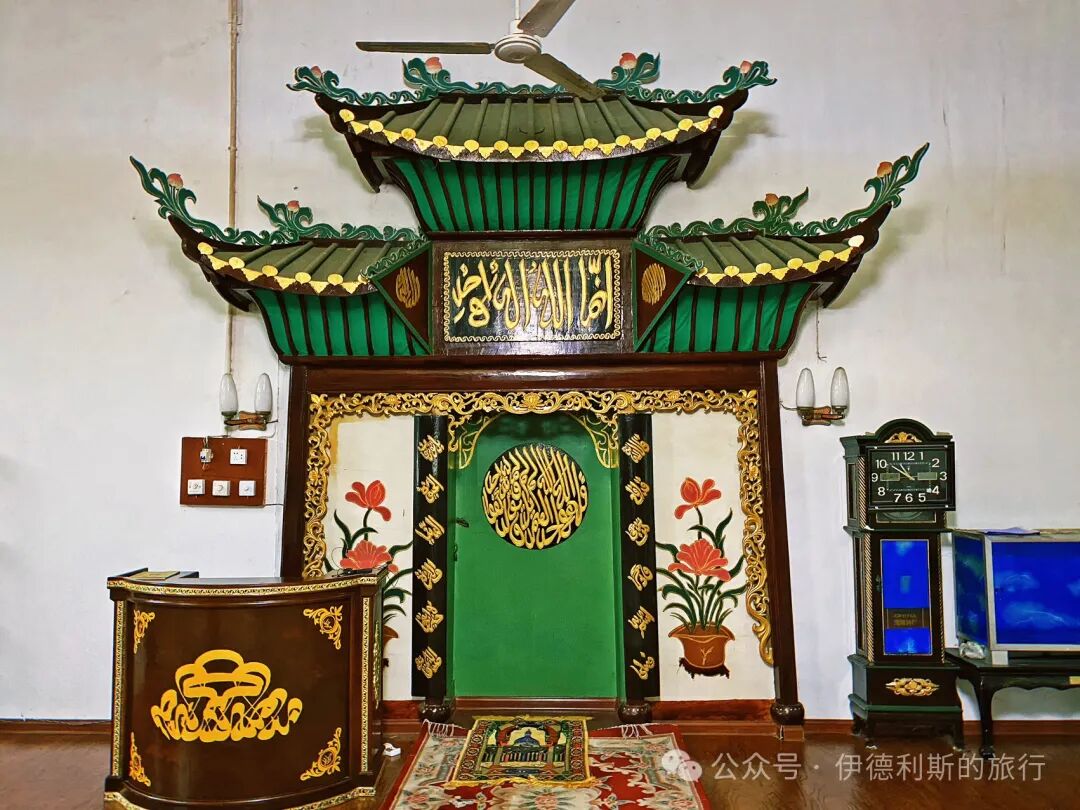
The Ankang Jingning South Mosque in Shaanxi features traditional-style couplets and horizontal inscribed boards.
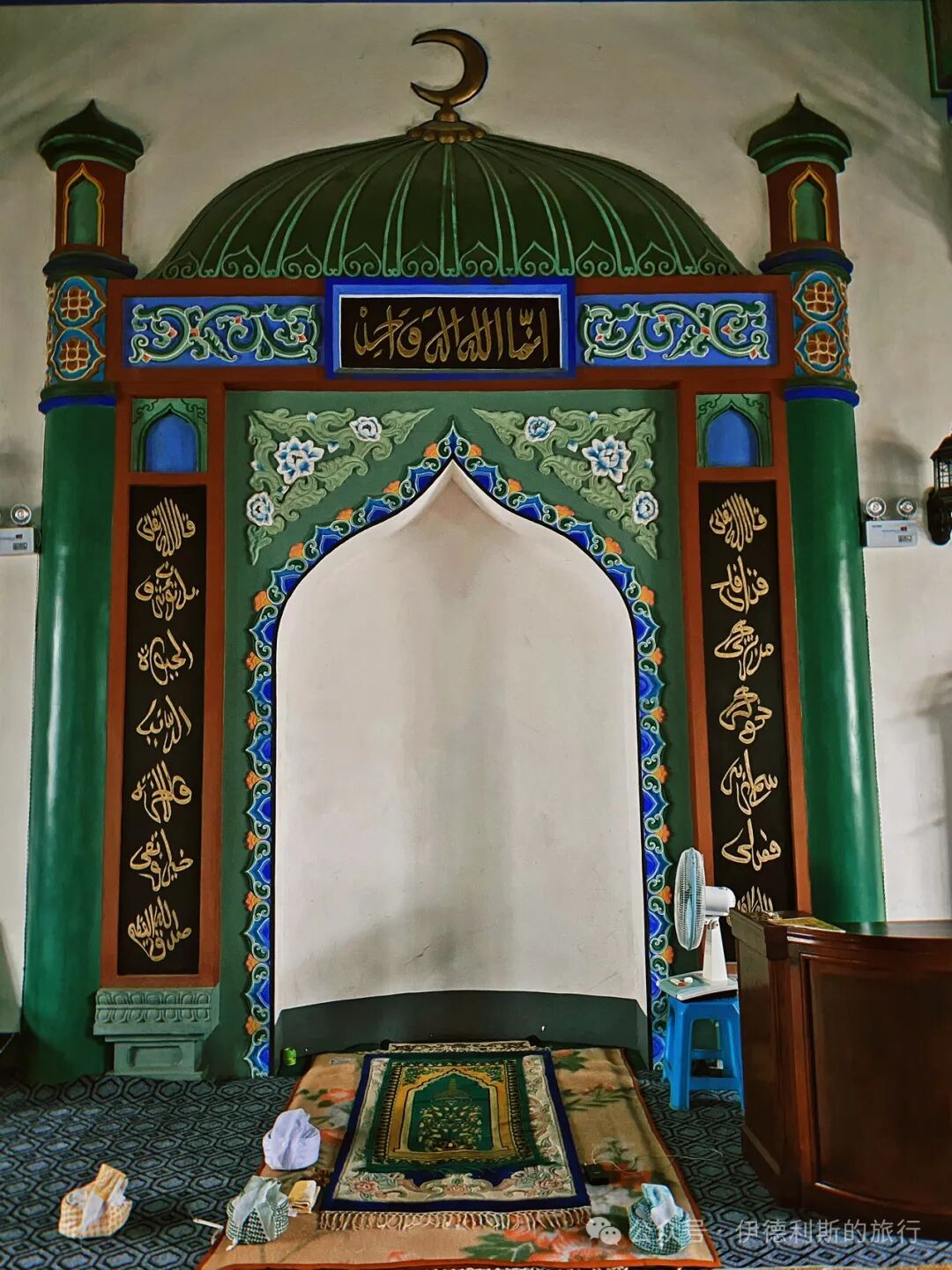
The Xixiang North Mosque in Shaanxi features traditional-style couplets and horizontal inscribed boards.
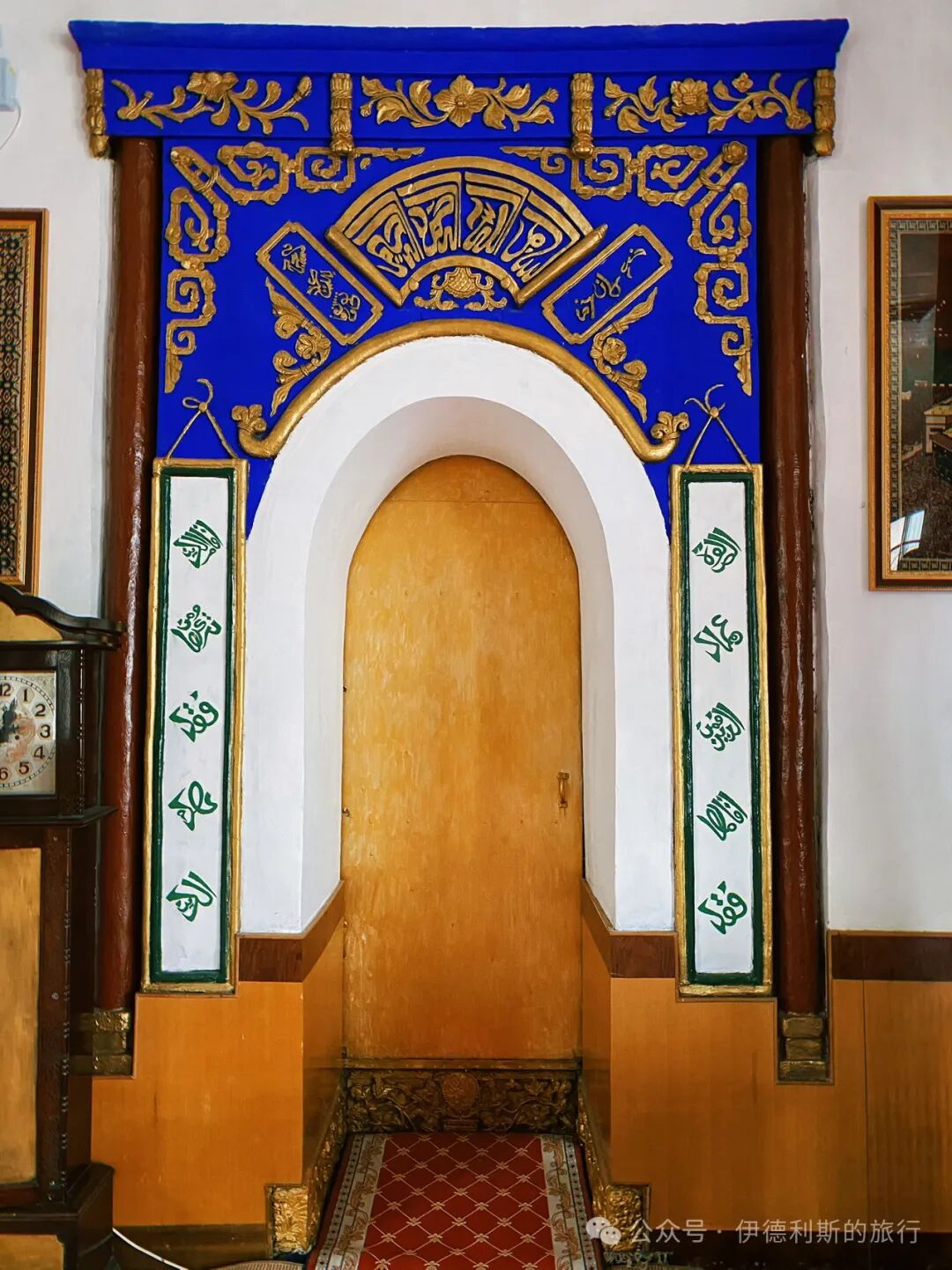
The Xixiang Luling Mosque in Shaanxi is built in a wood memorial archway style and has traditional couplets.
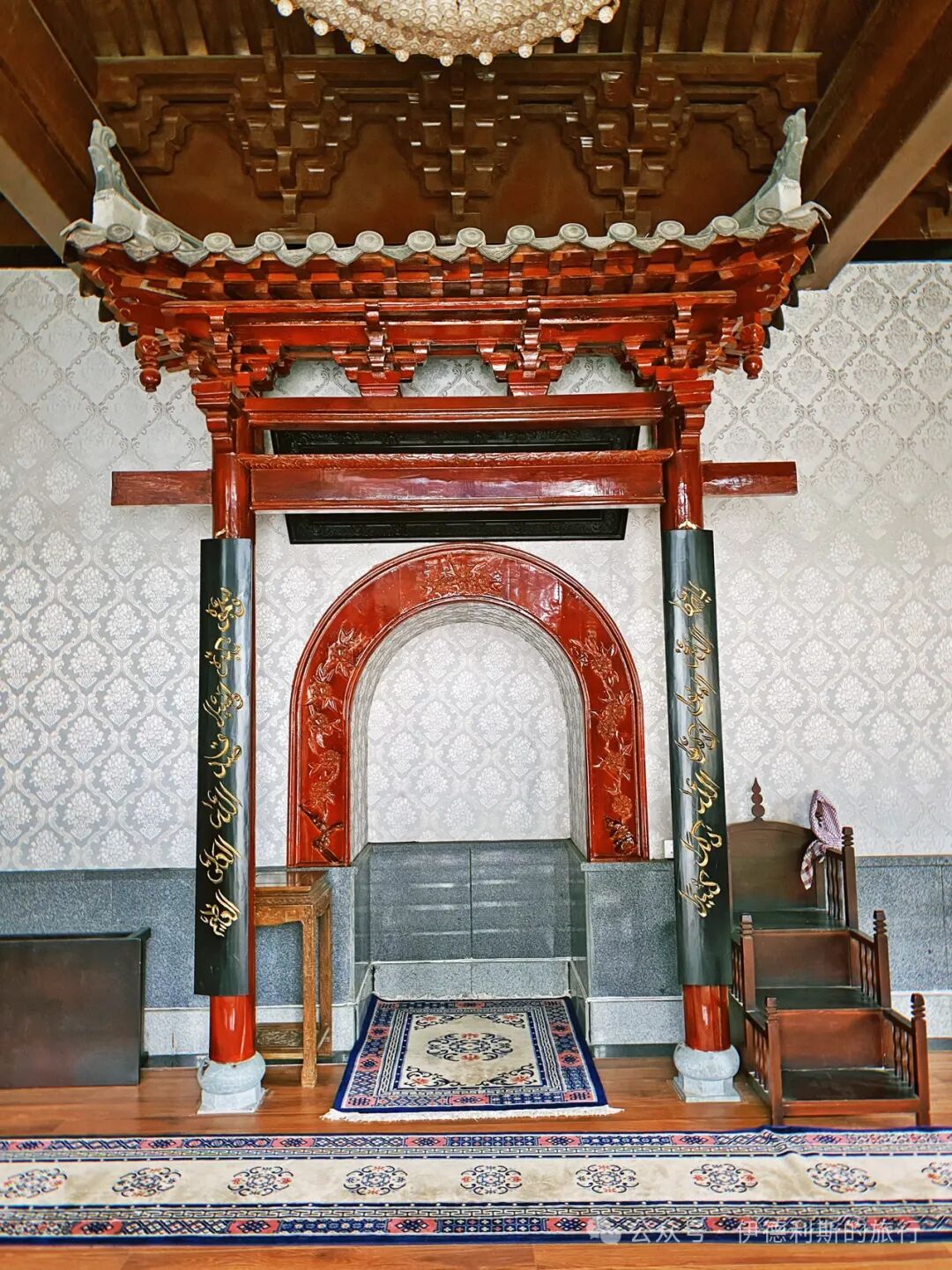
The Hanzhong Xianyin Mosque in Shaanxi has traditional-style horizontal inscribed boards and couplets, and the prayer niche (mihrab) is carved with an offering table.
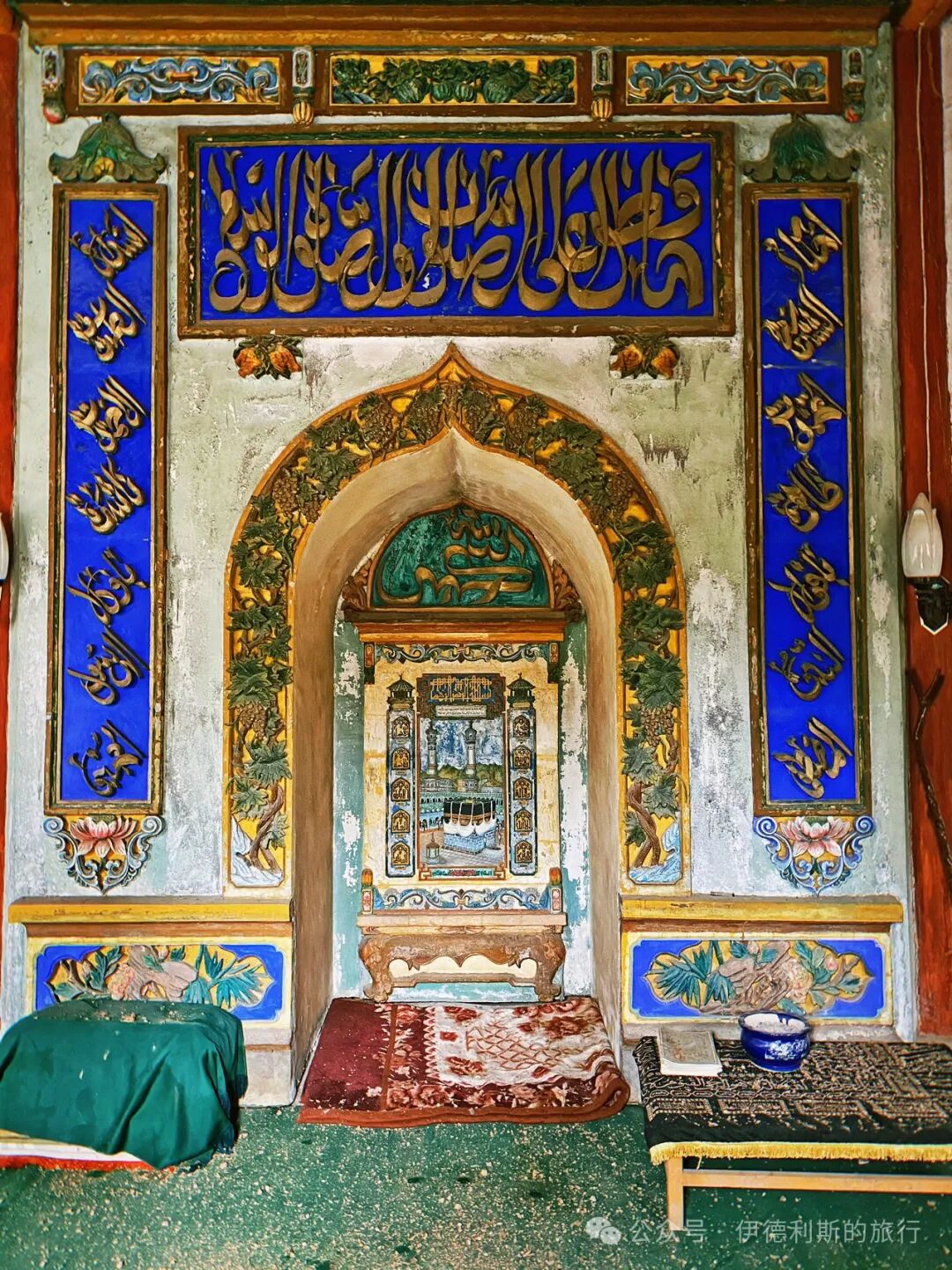
Gansu
The Linxia Old Wang Mosque is arch-shaped and carved with traditional Arabic horizontal inscribed boards and couplets.
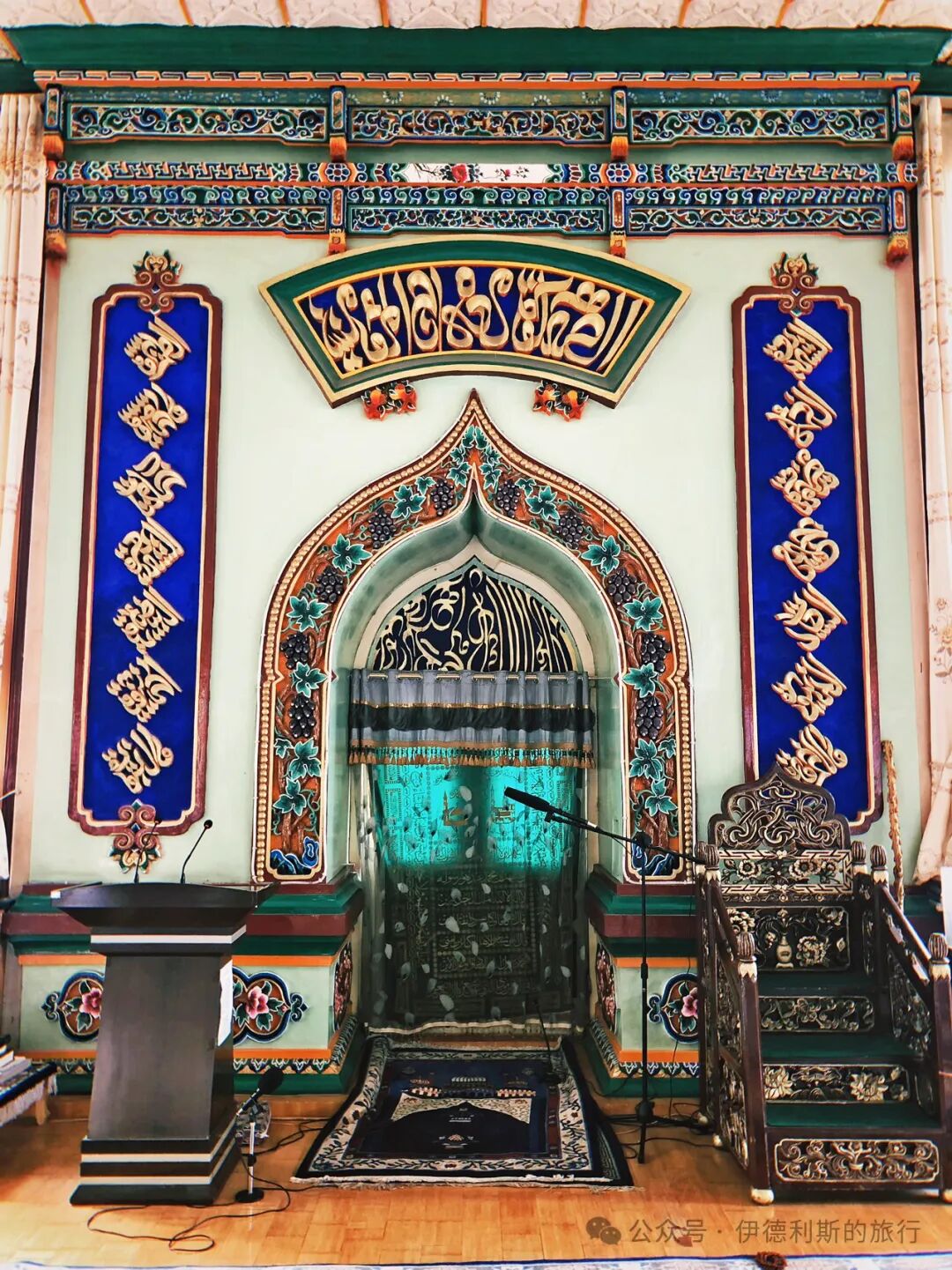
The Linxia West Mosque is arch-shaped and carved with traditional Arabic horizontal inscribed boards and couplets.
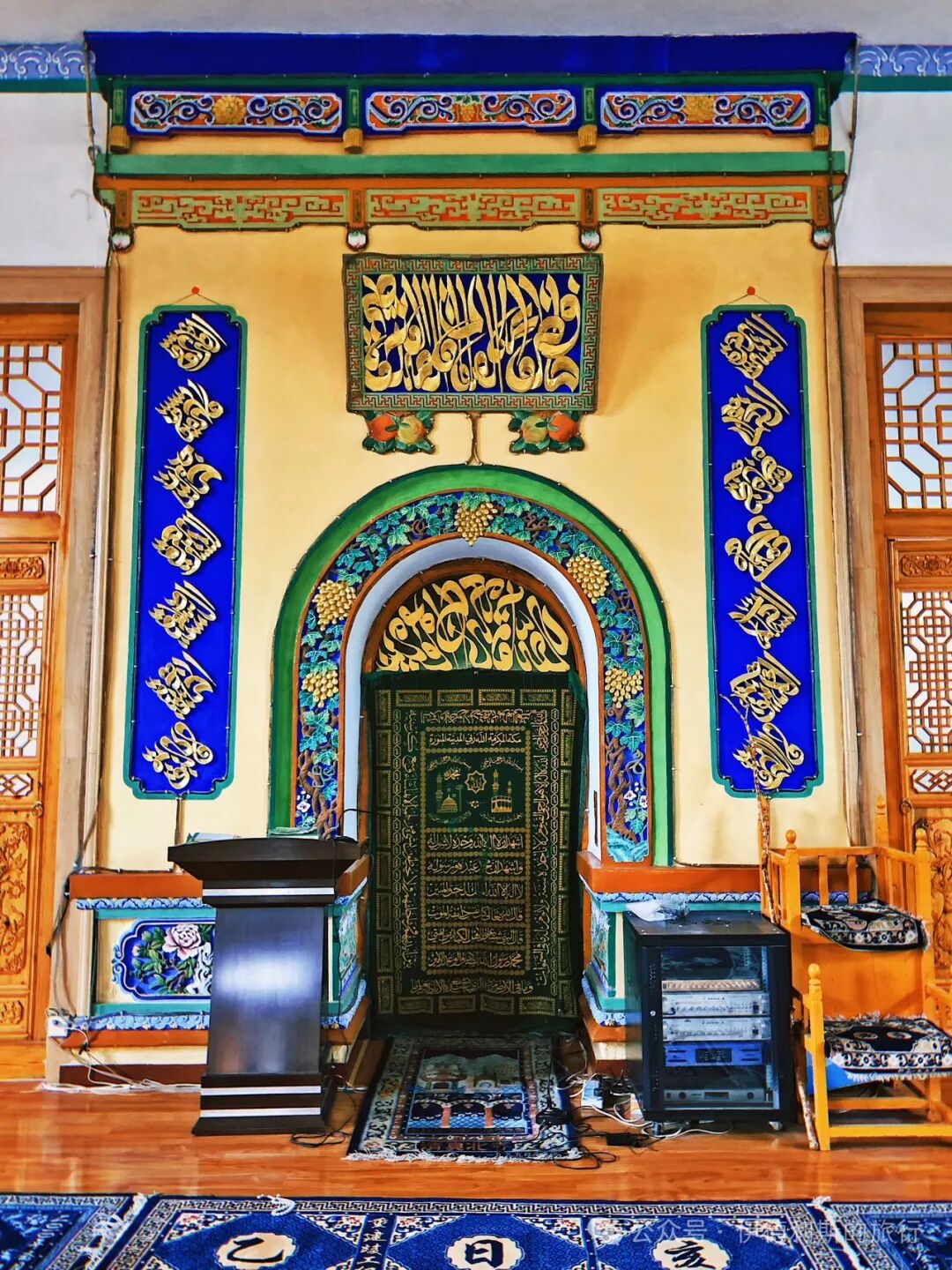
The Linxia North Mosque is arch-shaped and carved with traditional Arabic horizontal inscribed boards and couplets.
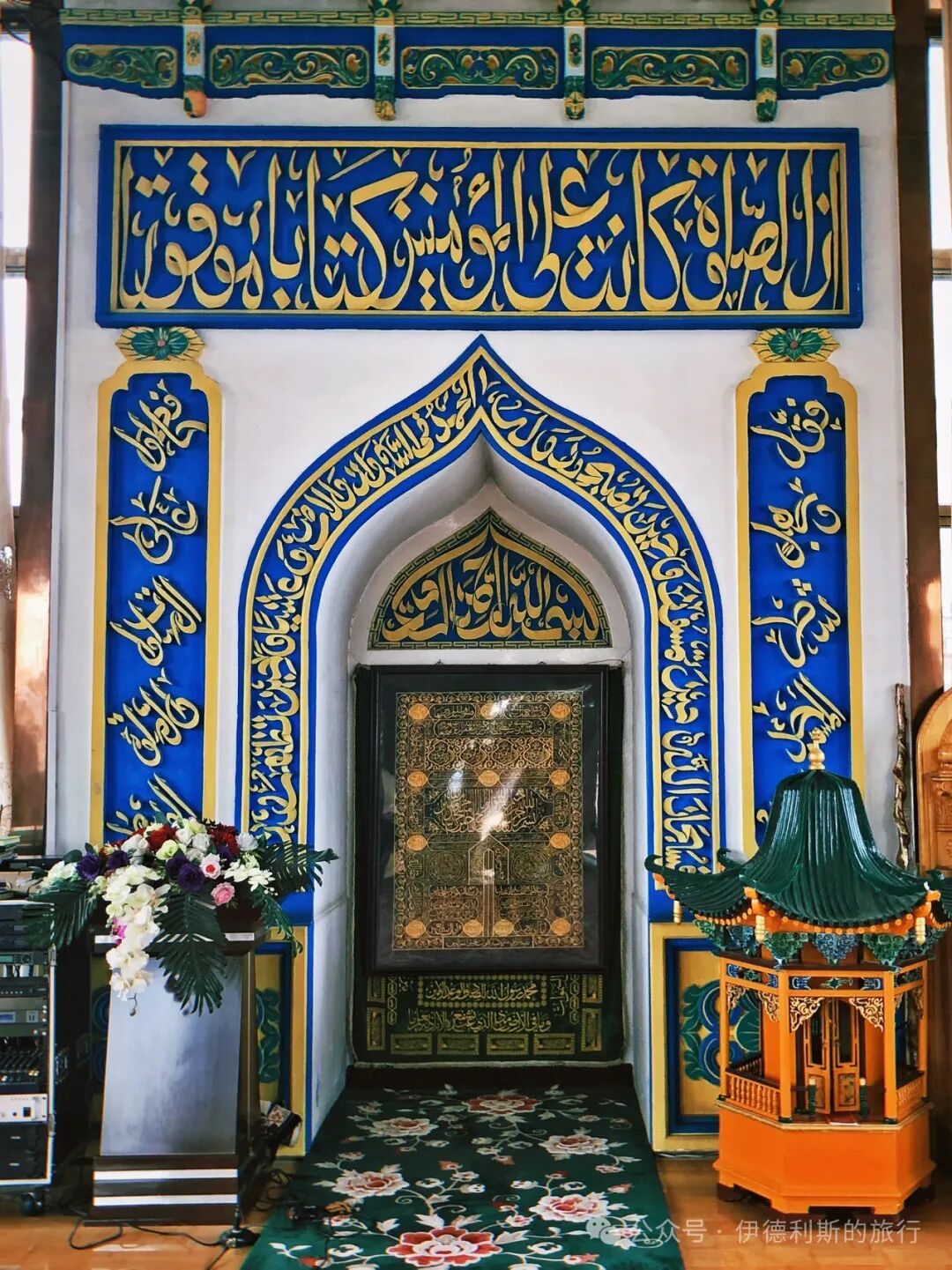
The Tianshui Beiguan Mosque is arch-shaped and carved with traditional Arabic horizontal inscribed boards and couplets.
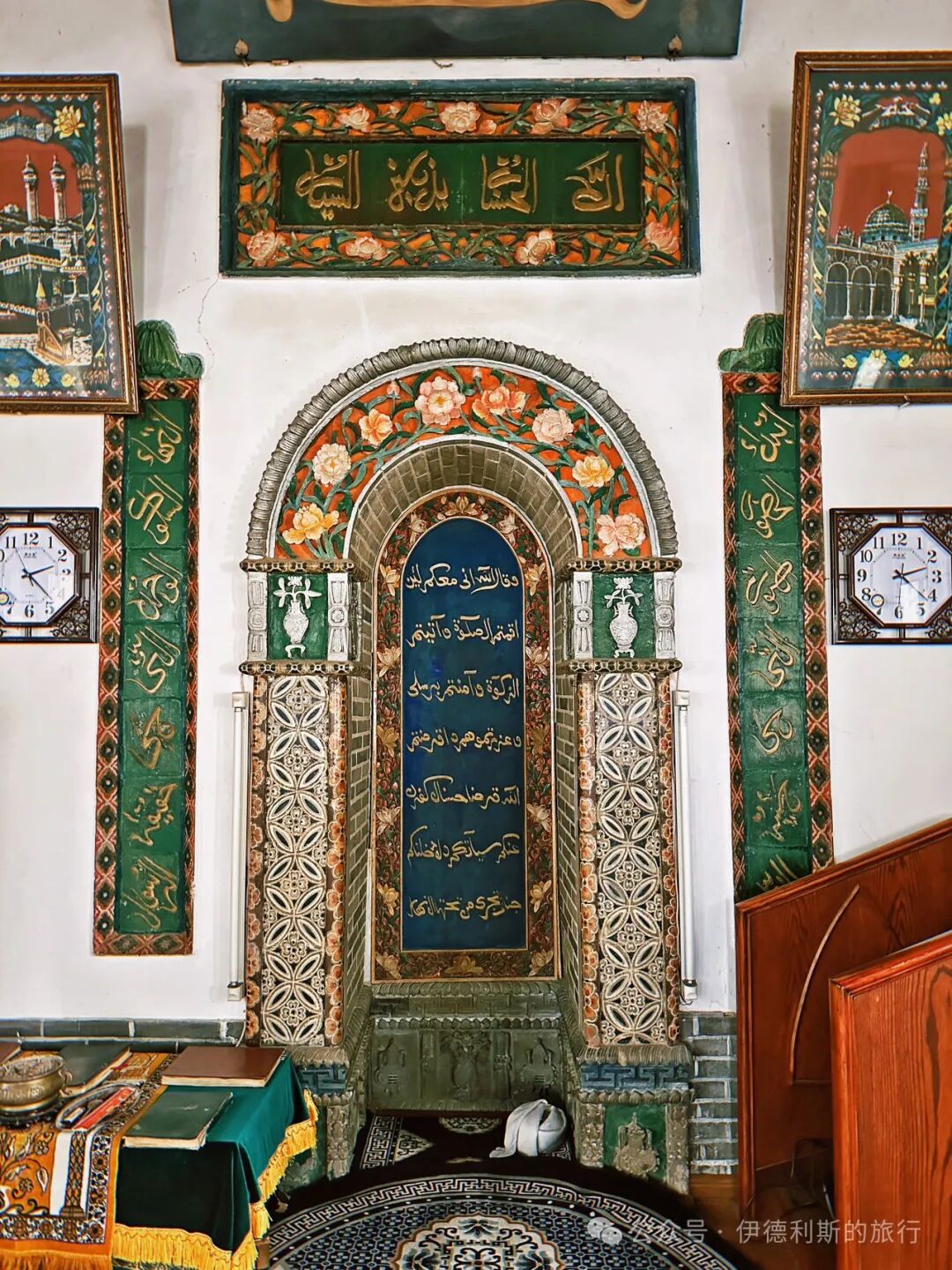
The Tianshui Qin'an Nanxiaguan Mosque features brick carvings of Zhe school Shagou-style calligraphy and rare brick-carved hanging scrolls.
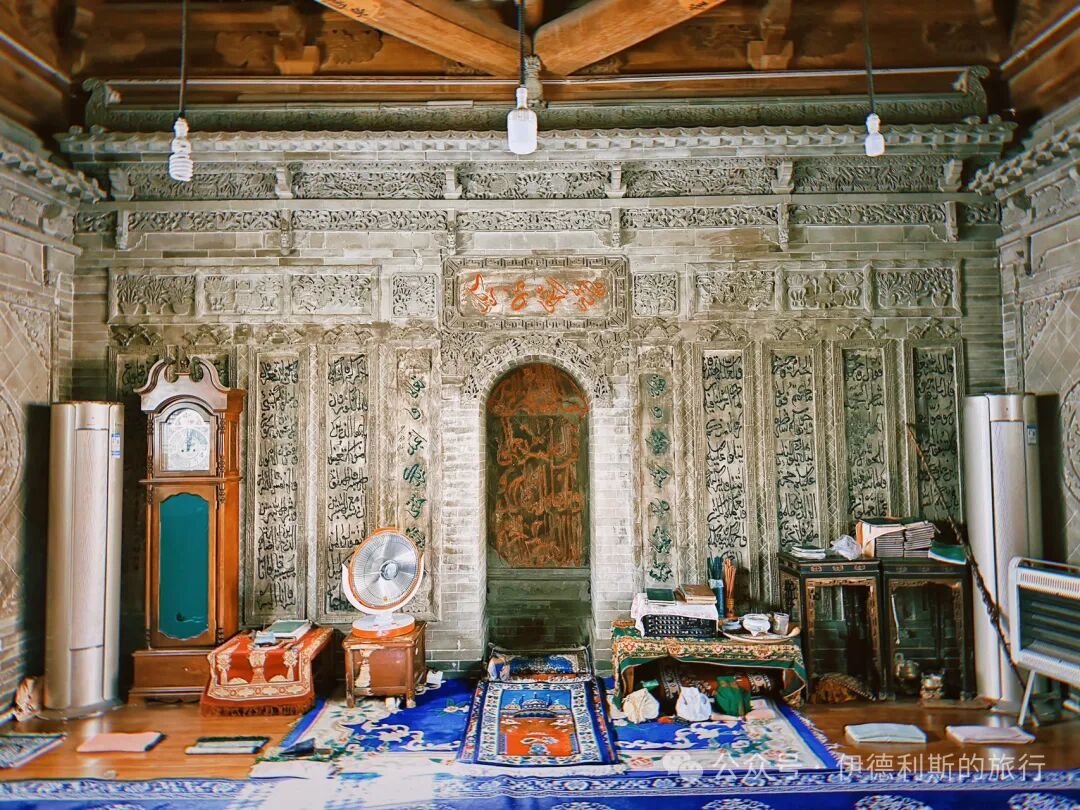
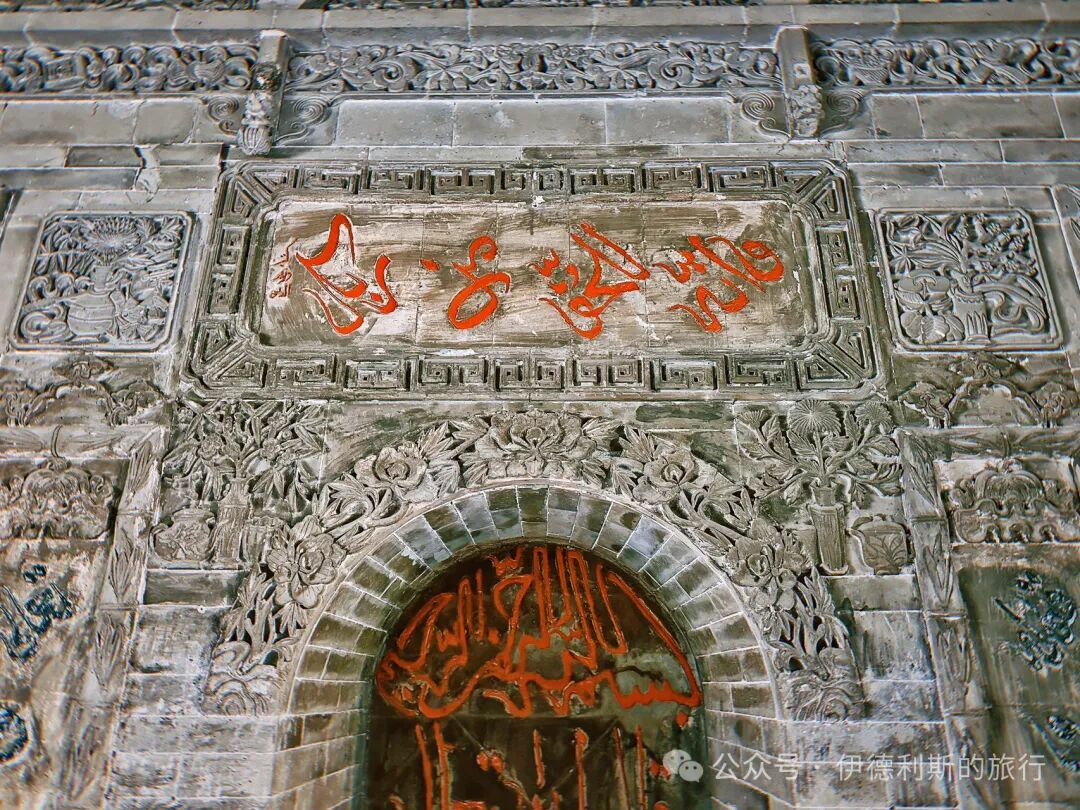
Qinghai
The Haidong Hongshuiquan Great Mosque features wood panel inlays, a door canopy above, a Sumeru pedestal below, and extremely rare traditional auspicious patterns carved above the prayer niche (mihrab).
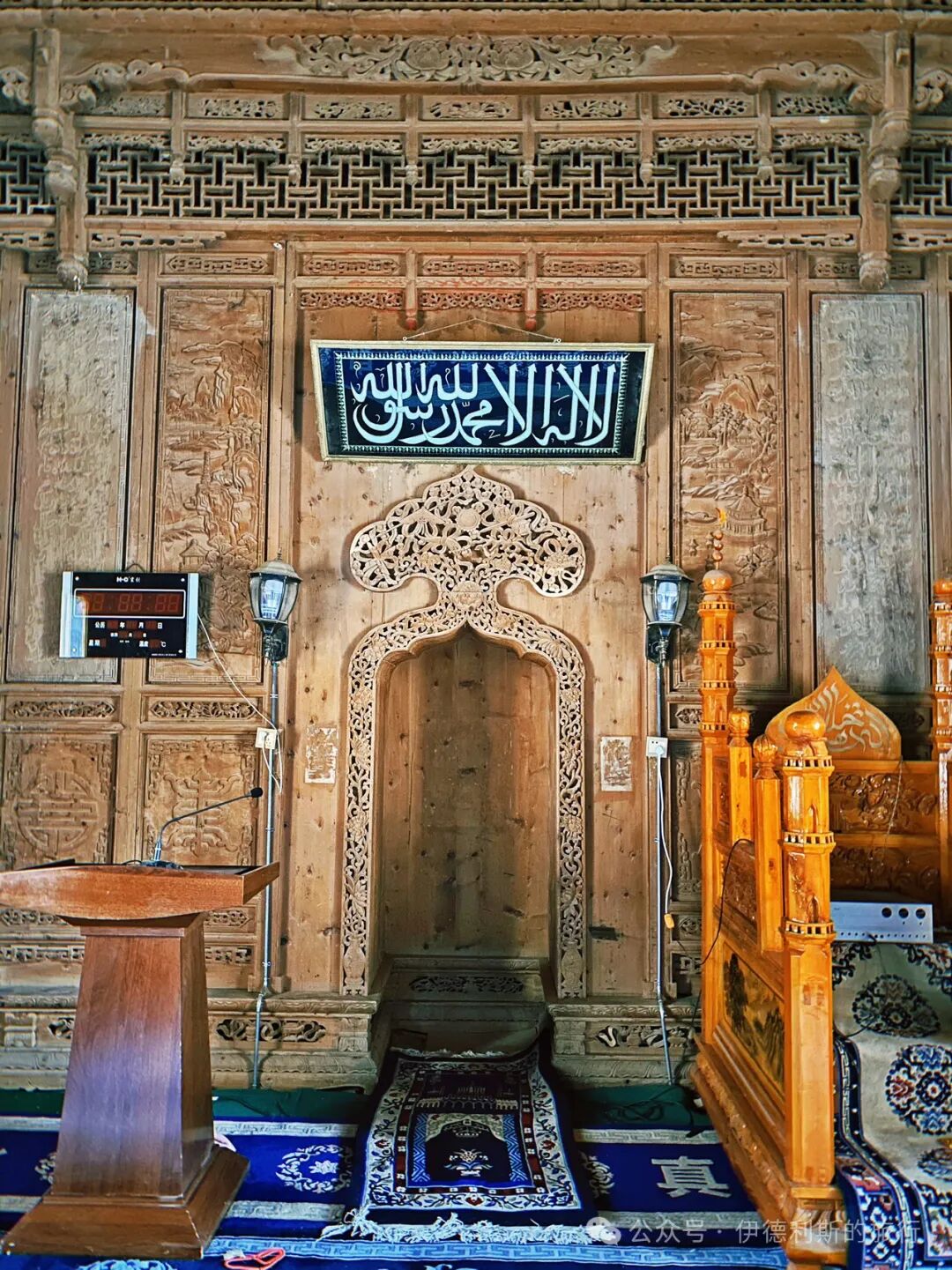
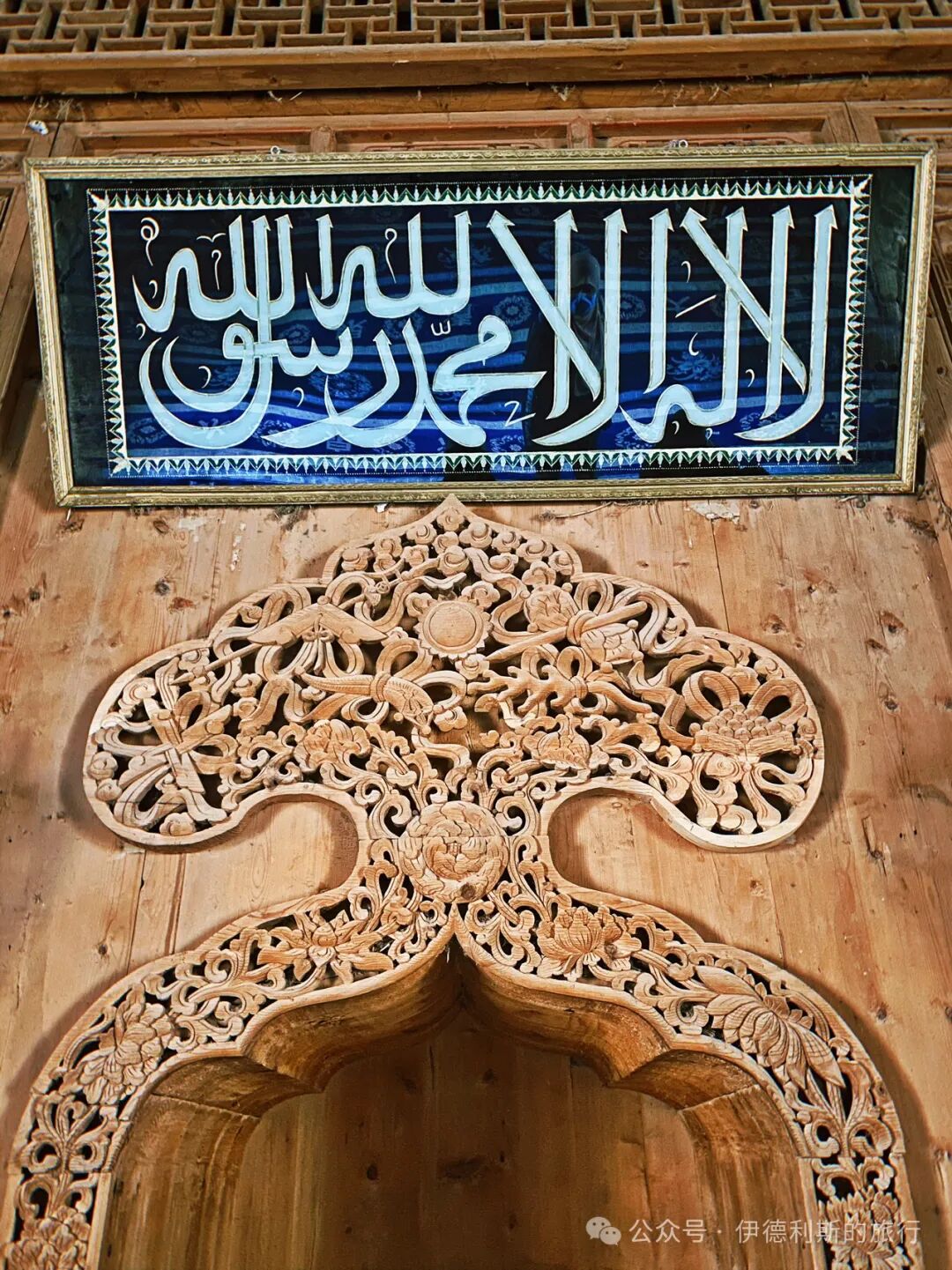
The Xunhua Tashapo Mosque has flame patterns and flower designs carved around the prayer niche (mihrab), with a flame pearl carved directly above it, which is also very rare.
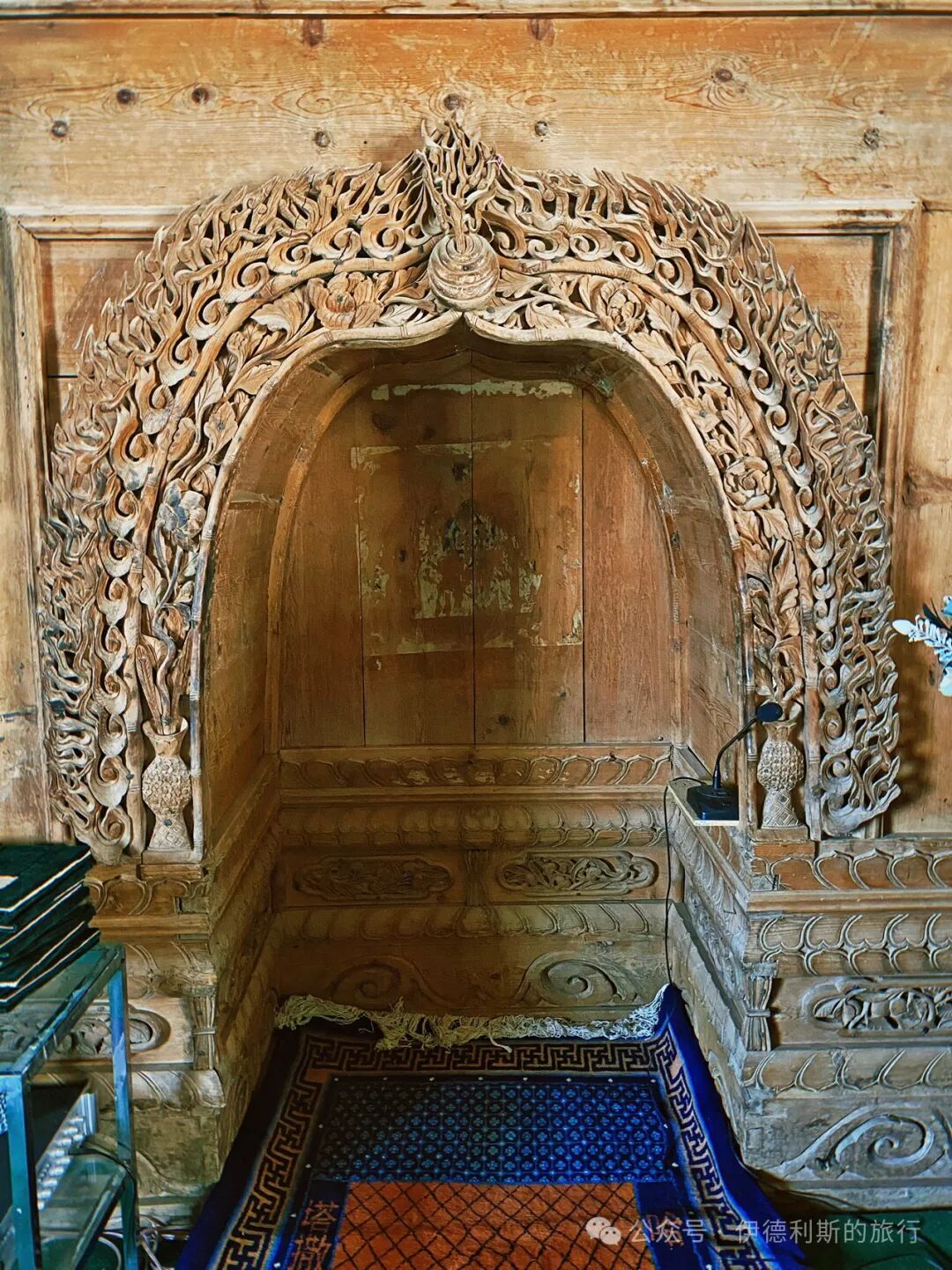
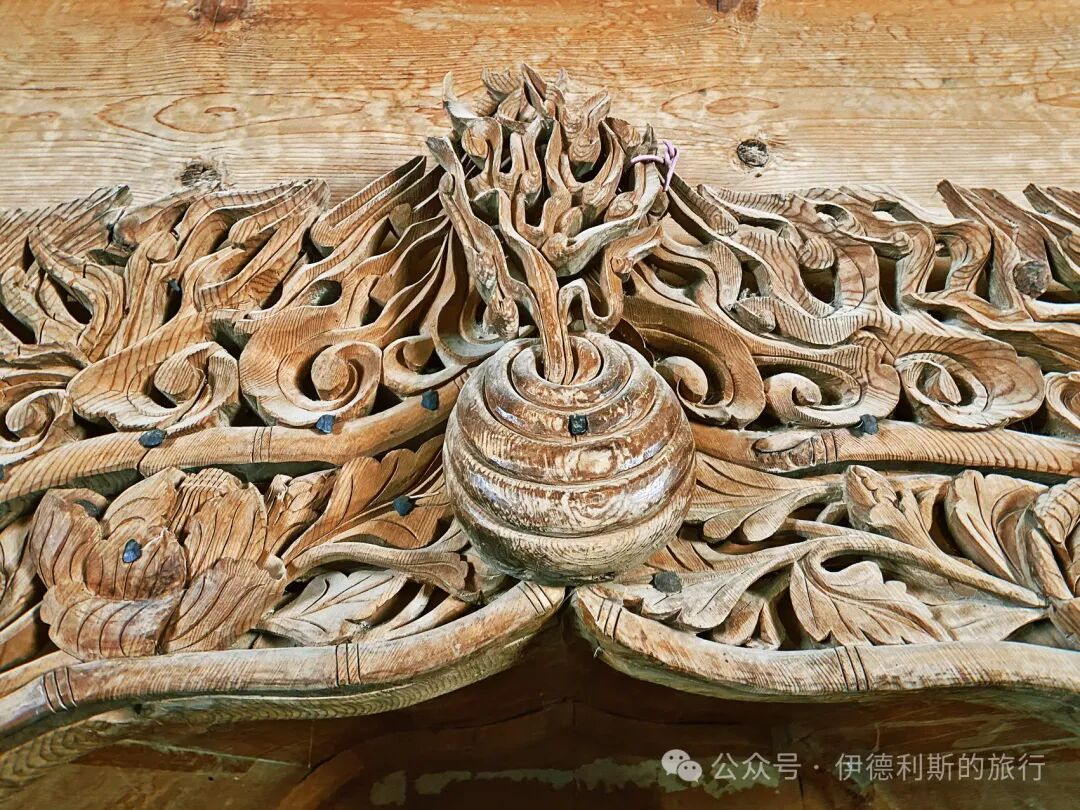
The Xunhua Qingshuihe East Mosque has a wood carving style similar to the Tashapo Mosque, but slightly shallower, and also features a flame pearl in the center.
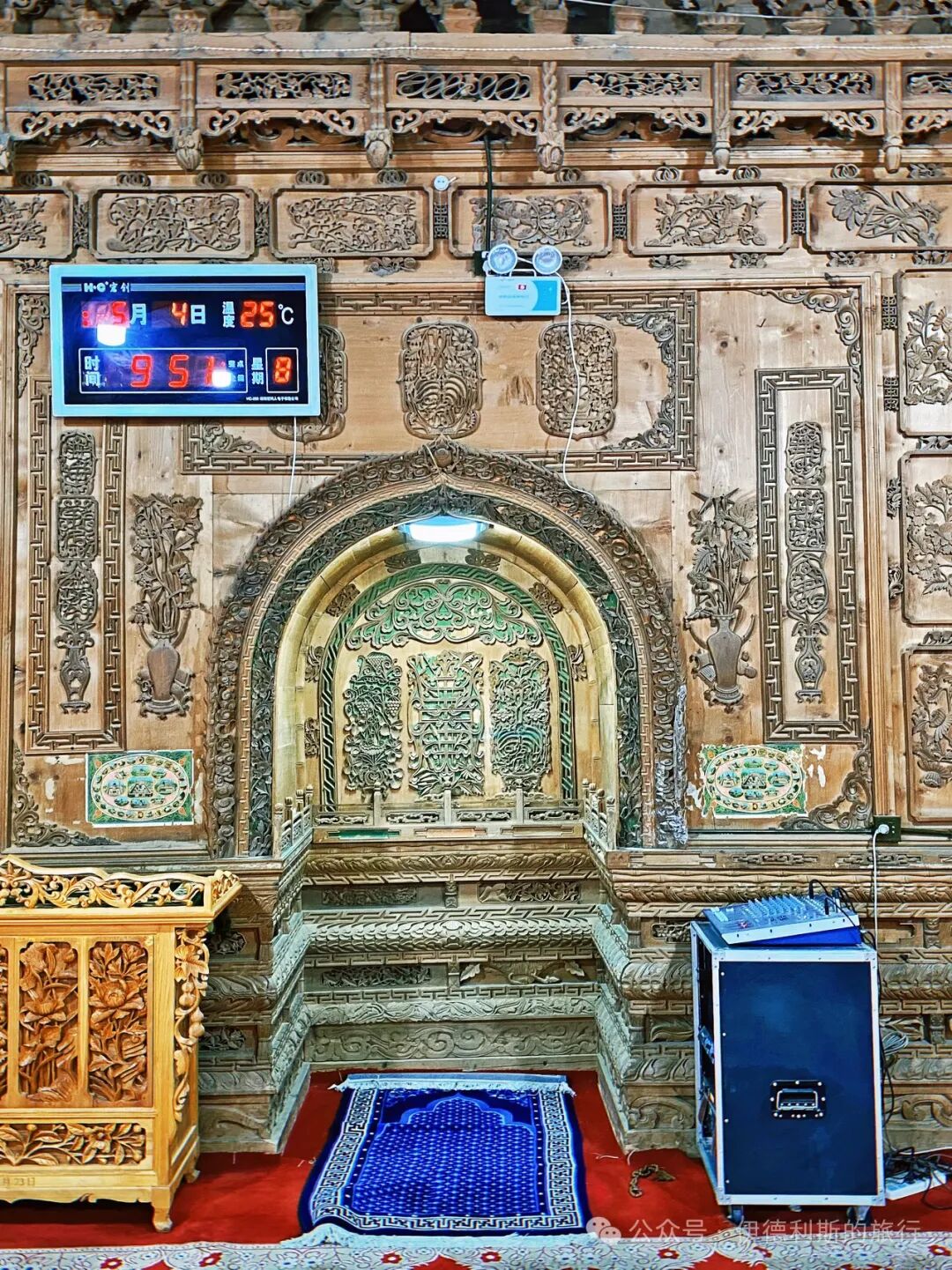
The Xunhua Mengda Dazhuang Mosque features painted wood panels, and the backlight inside the prayer niche (mihrab) is very unique due to Tibetan cultural influence.
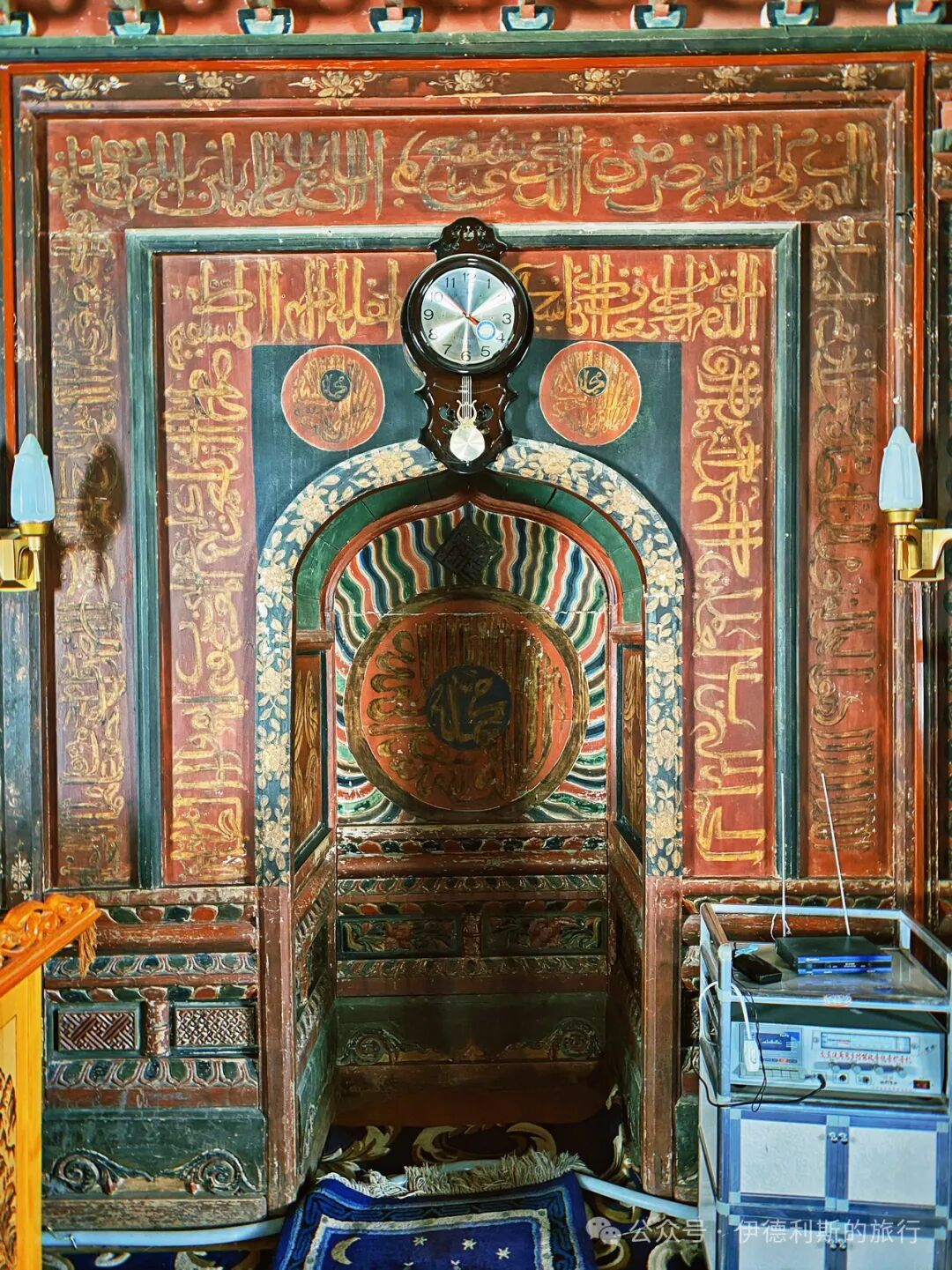
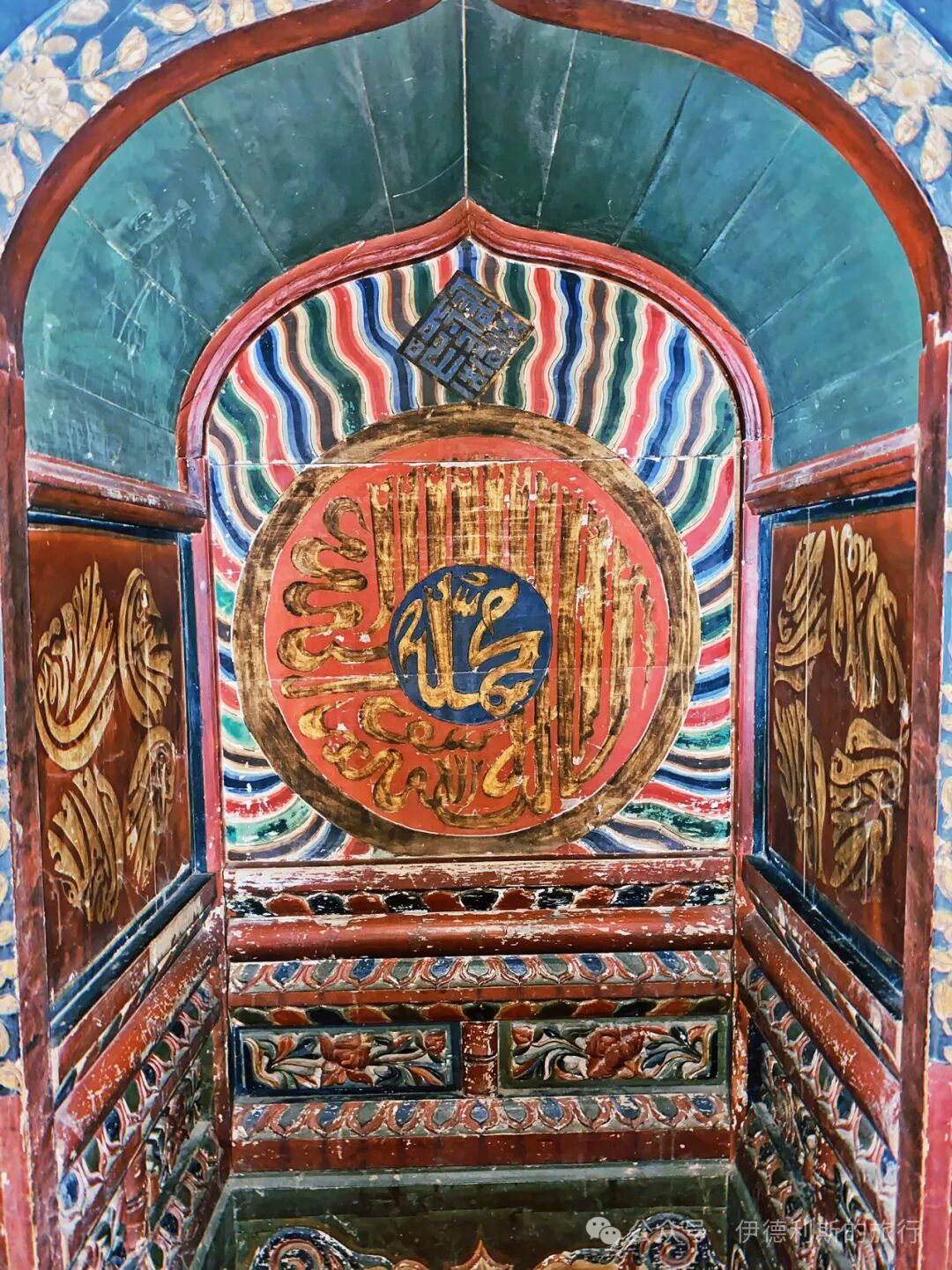
The Xunhua Shangkewa Mosque features painted wood panels with traditional calligraphy.
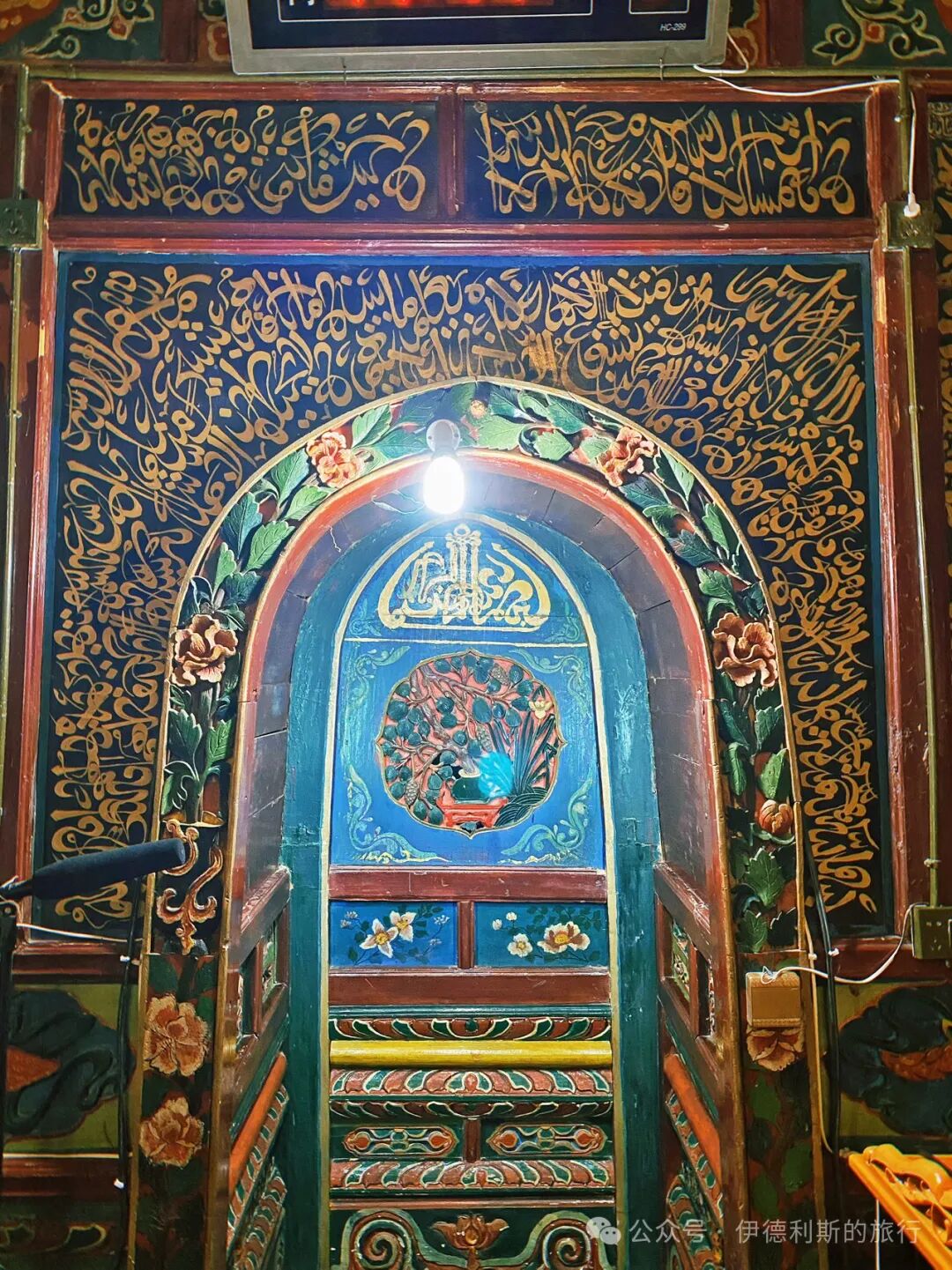
The Xunhua Zhangga Mosque has an arch in the center surrounded by horizontal inscribed boards and couplets.
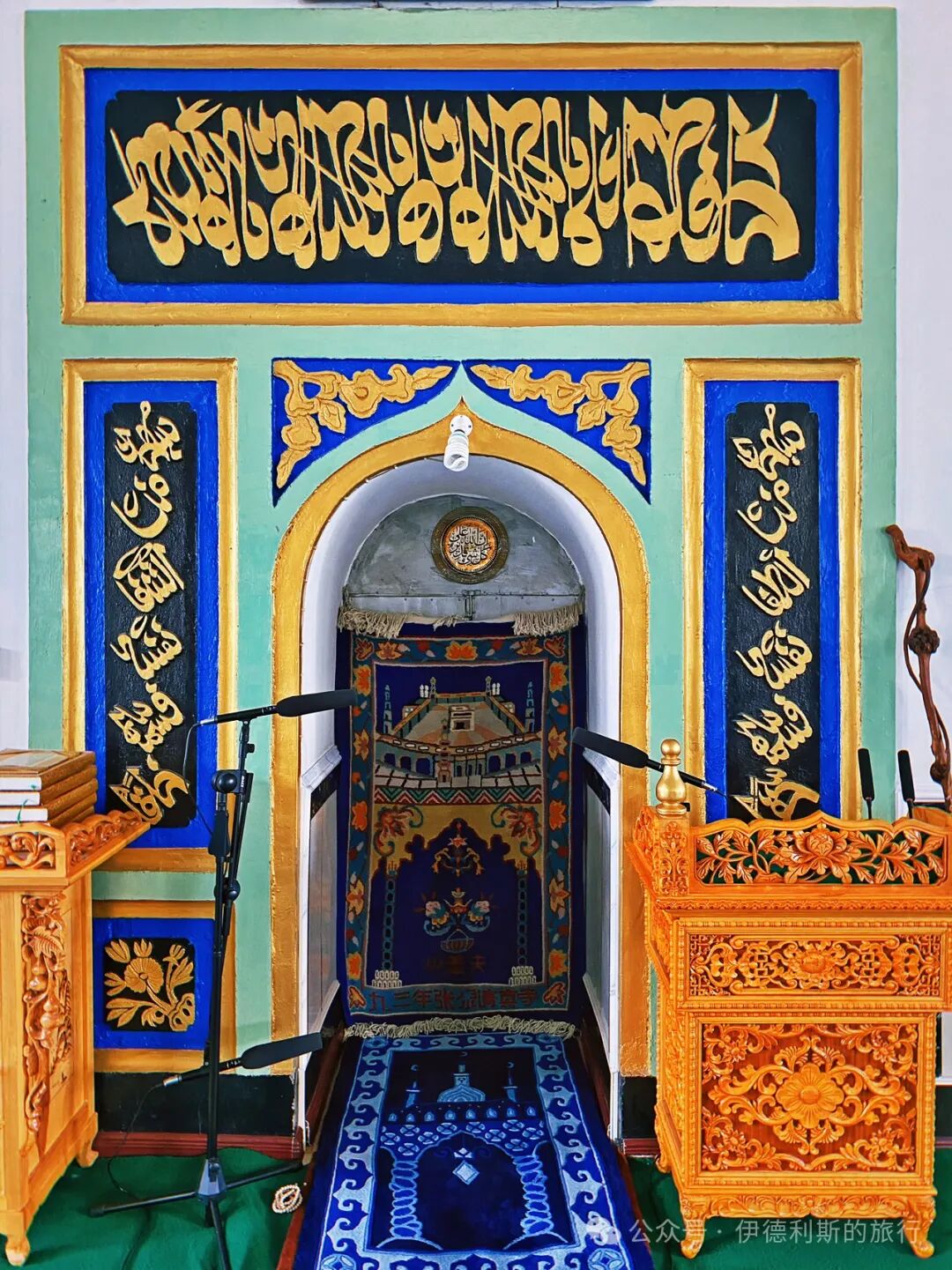
Xinjiang
The Shaanxi Grand Mosque in Urumqi was built in 1906. It features wood paneling and a central arch.
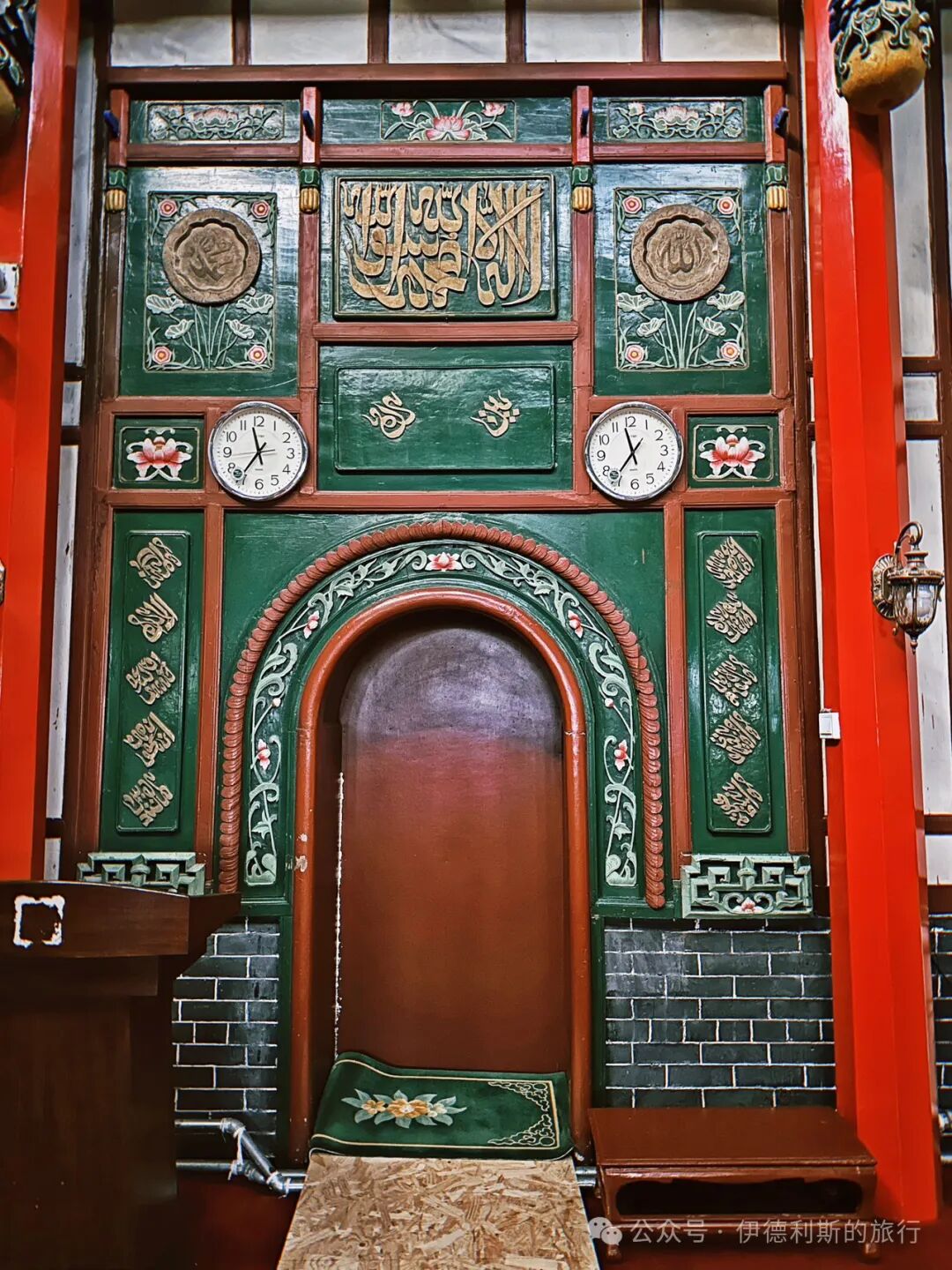
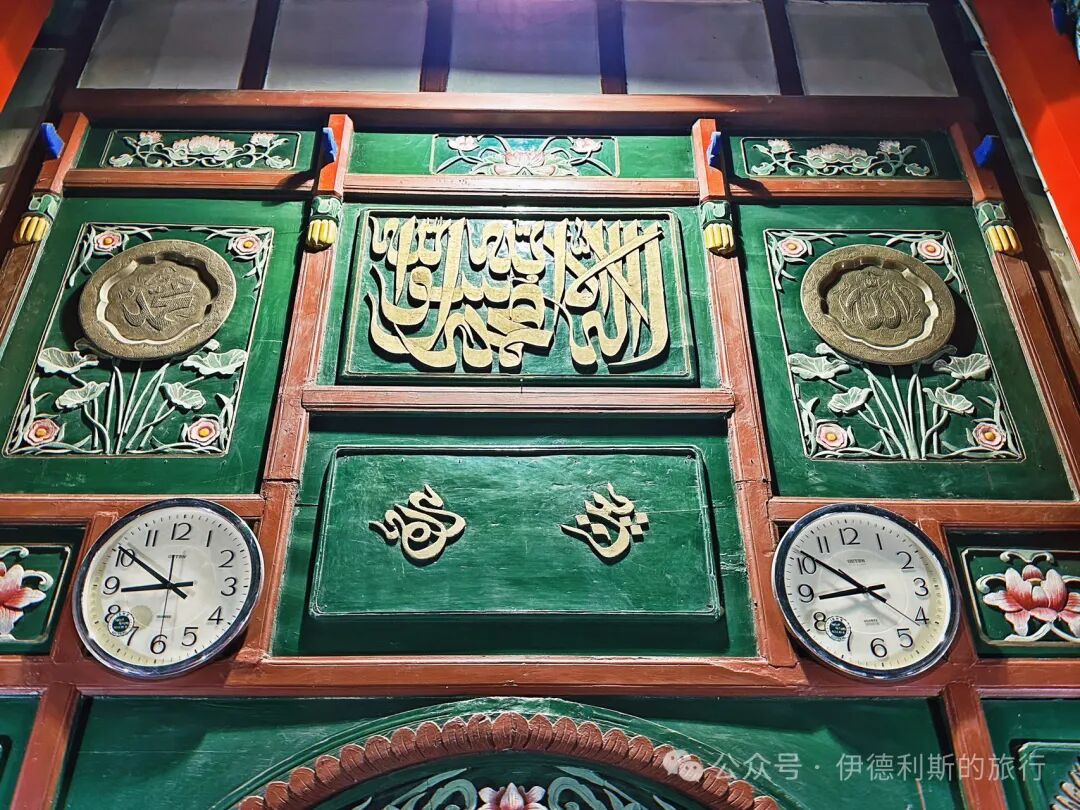
The South Grand Mosque in Urumqi was built in 1919. It has a decorative gate hood and a central arch.
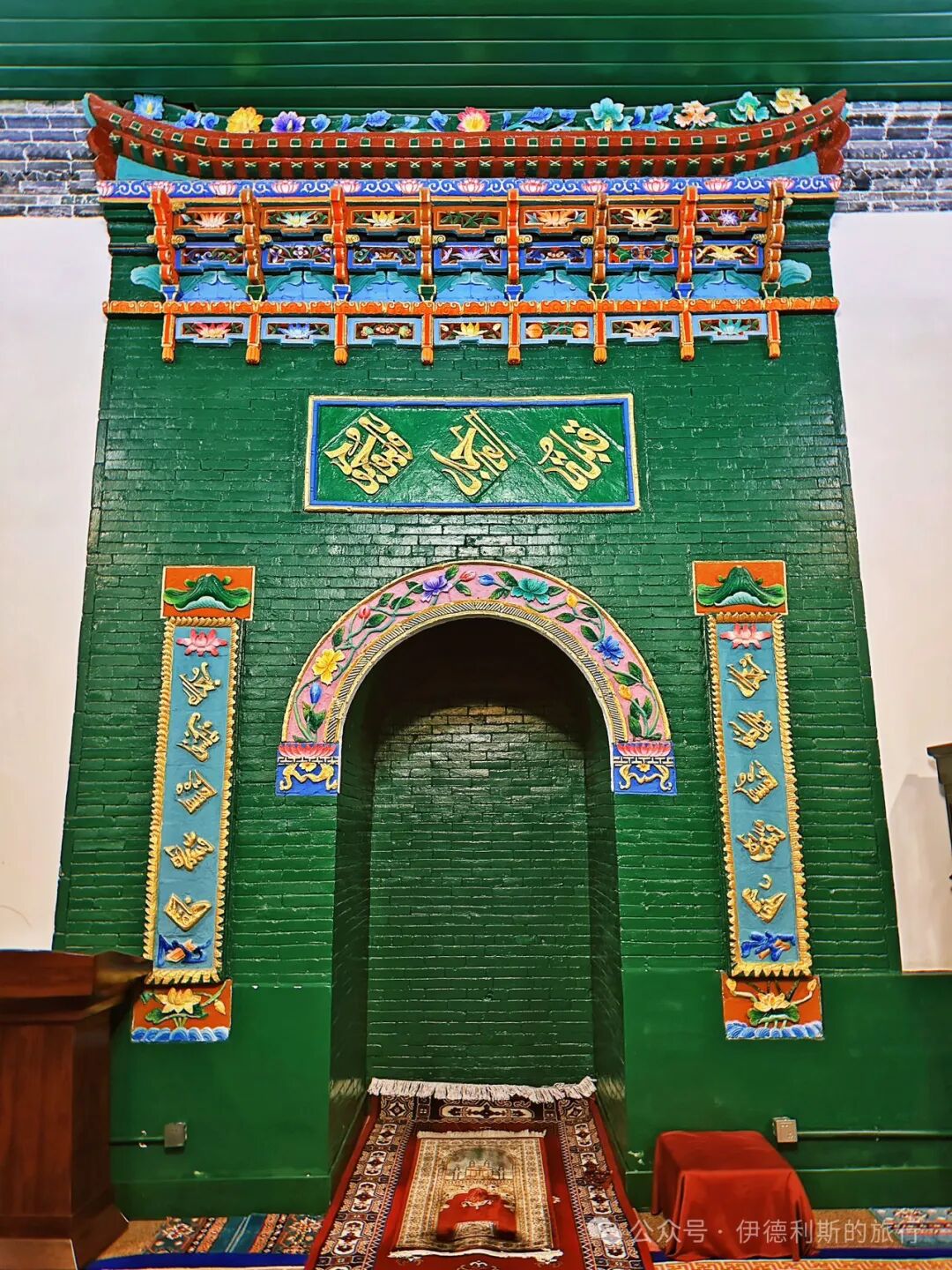
Tibet
The Lhasa Grand Mosque features wood carvings of flowers, plants, and calligraphy, along with two calligraphic couplets.
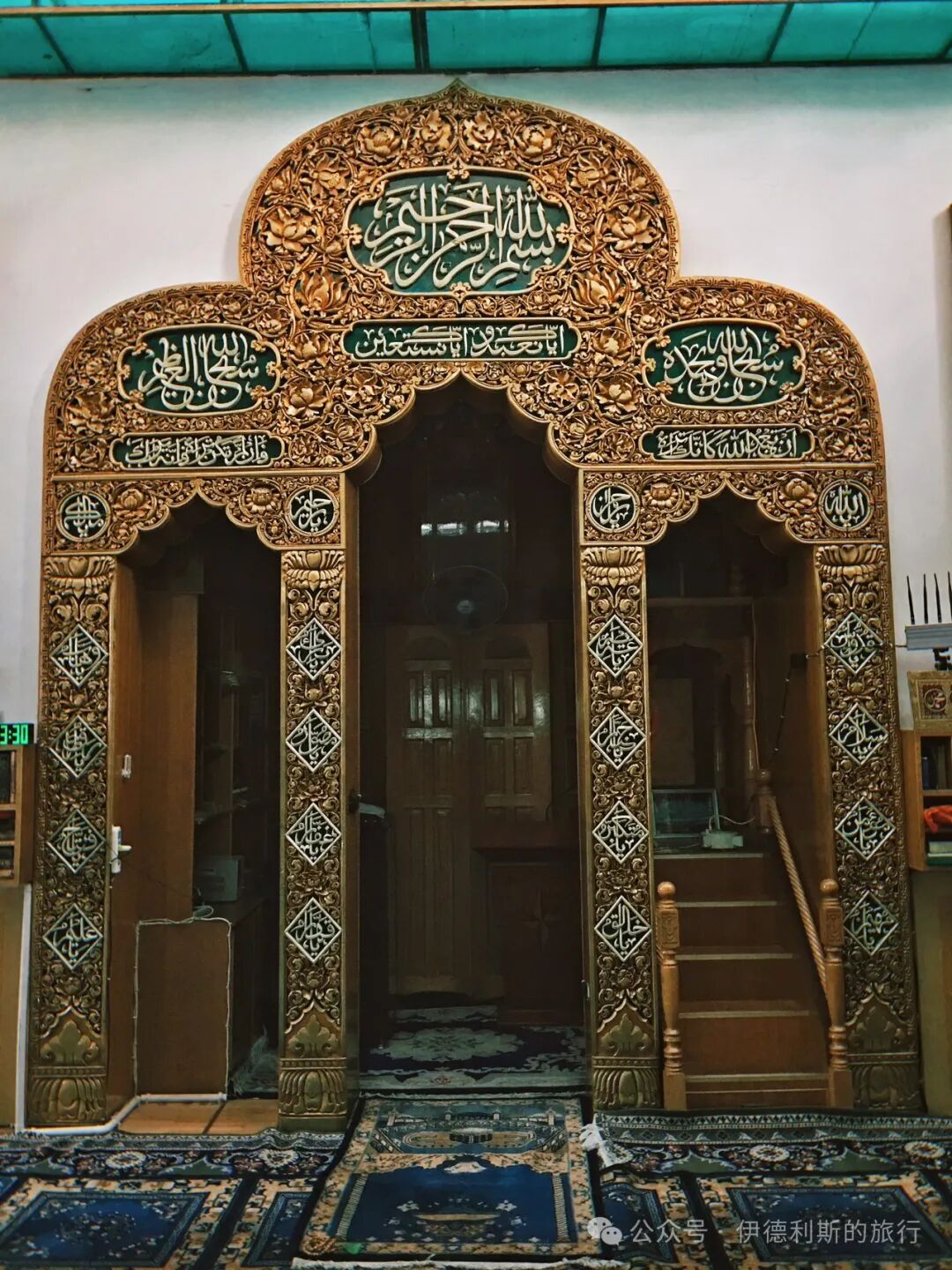
The Lhasa Small Mosque features wood carvings of flowers, plants, and calligraphy.
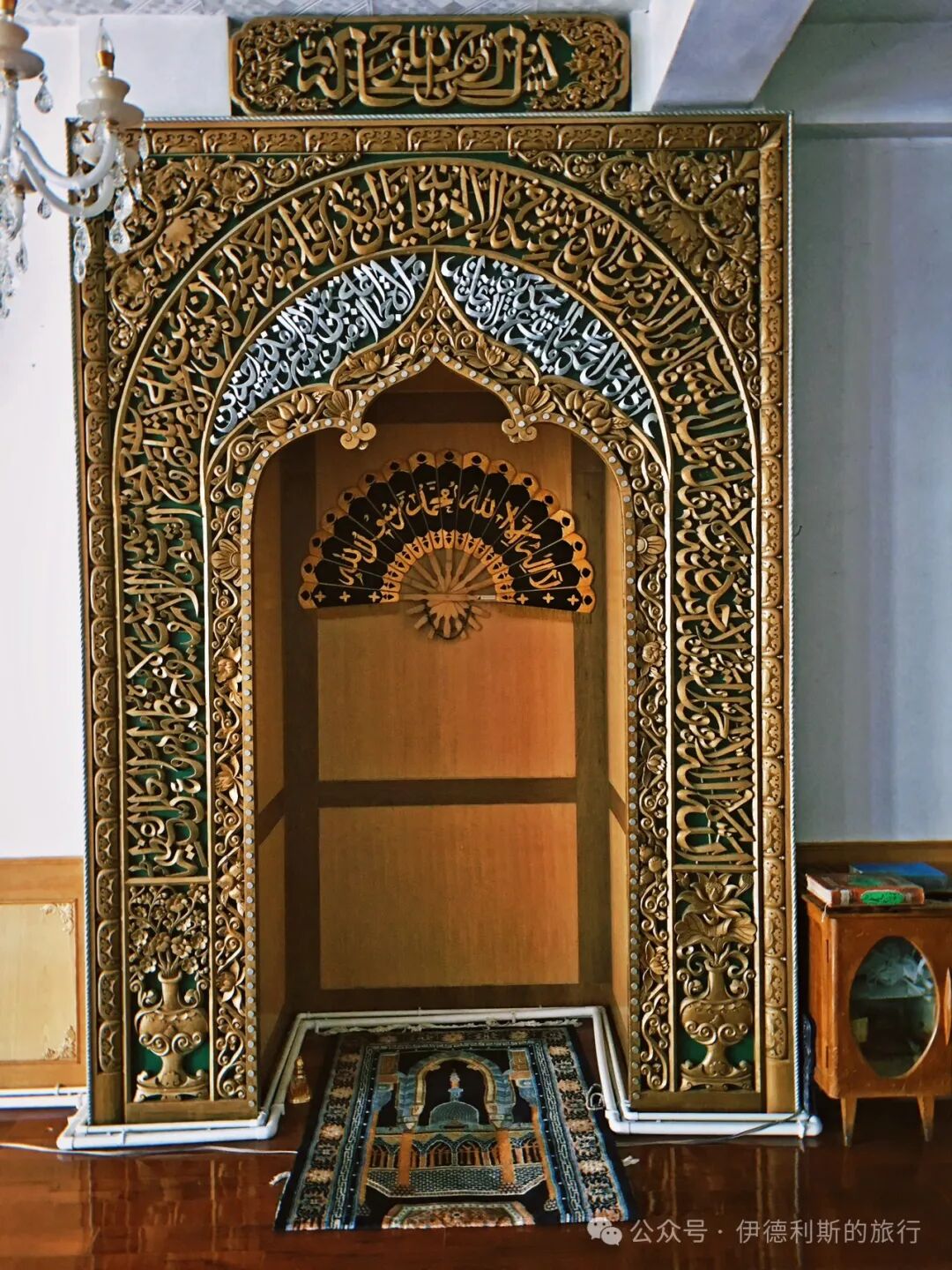
The Lhasa West Suburb Mosque features wood carvings of flowers, plants, and calligraphy.
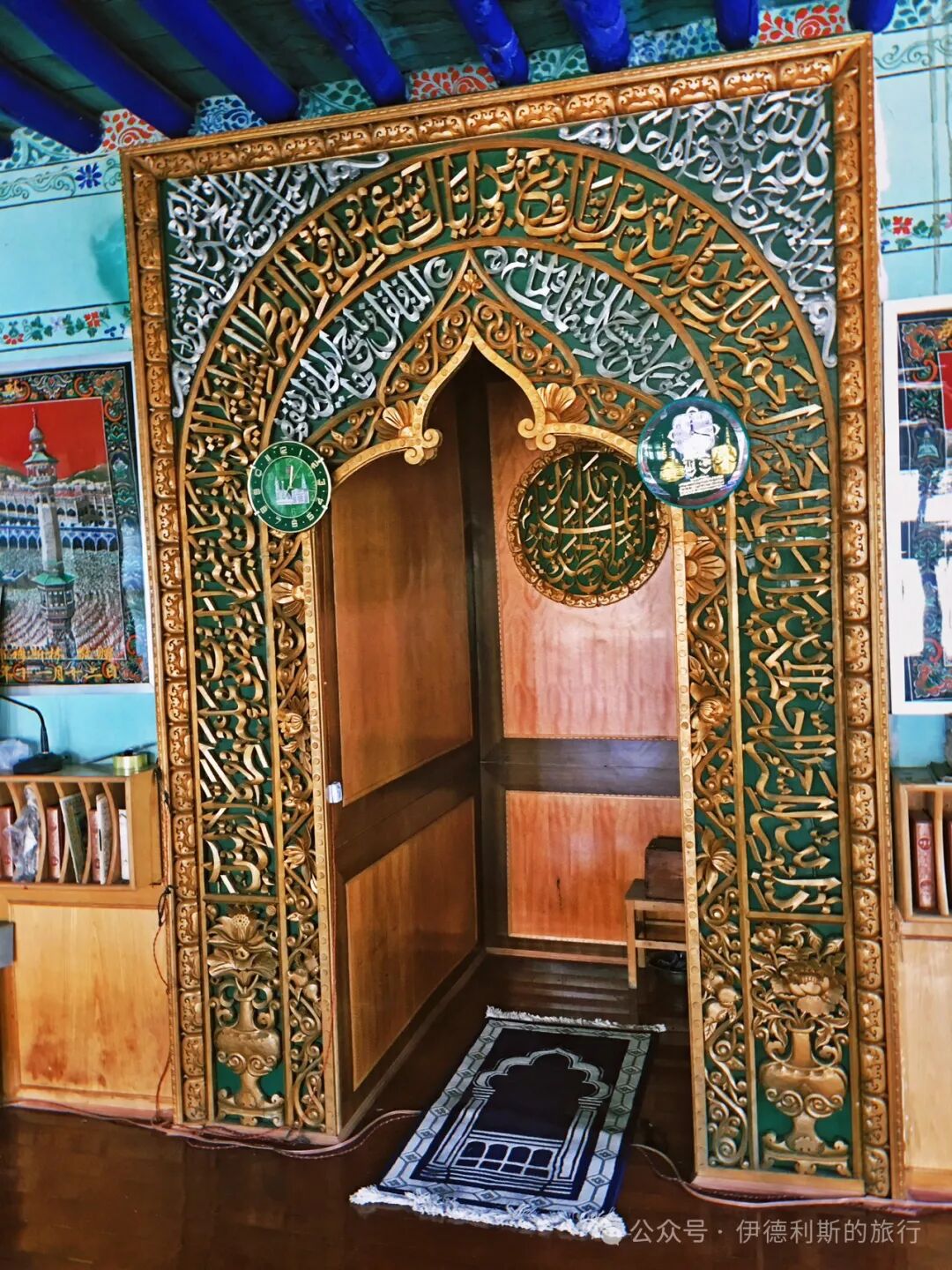
Sichuan
The Langzhong Mosque has a traditional calligraphic plaque above its arch.
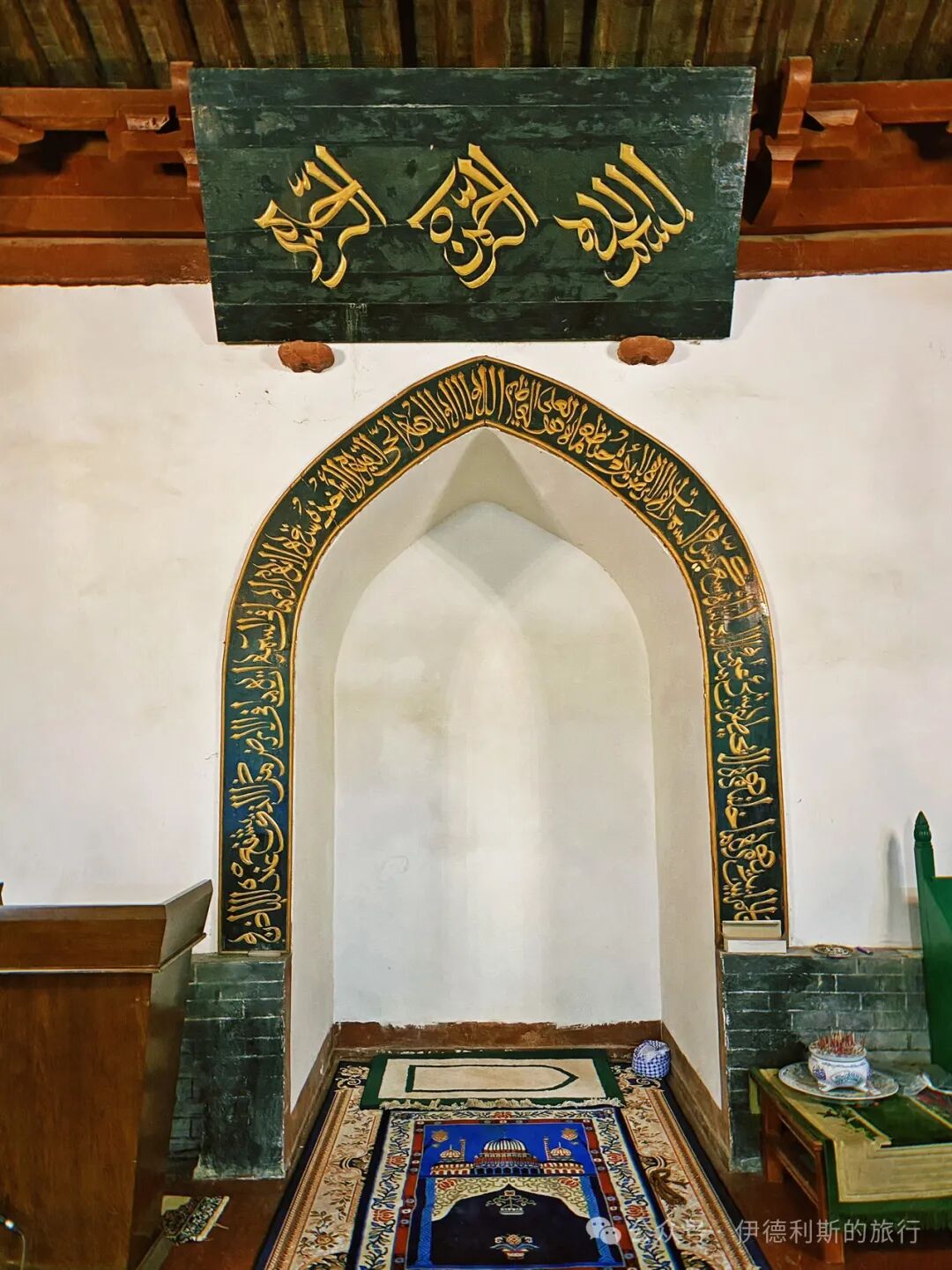
The Langzhong Baba Mosque has a plaque from the fifth year of the Guangxu reign that reads 'Le Shan Ke Feng' at the very top. Below it are traditional calligraphic couplets, and the center features an arch.
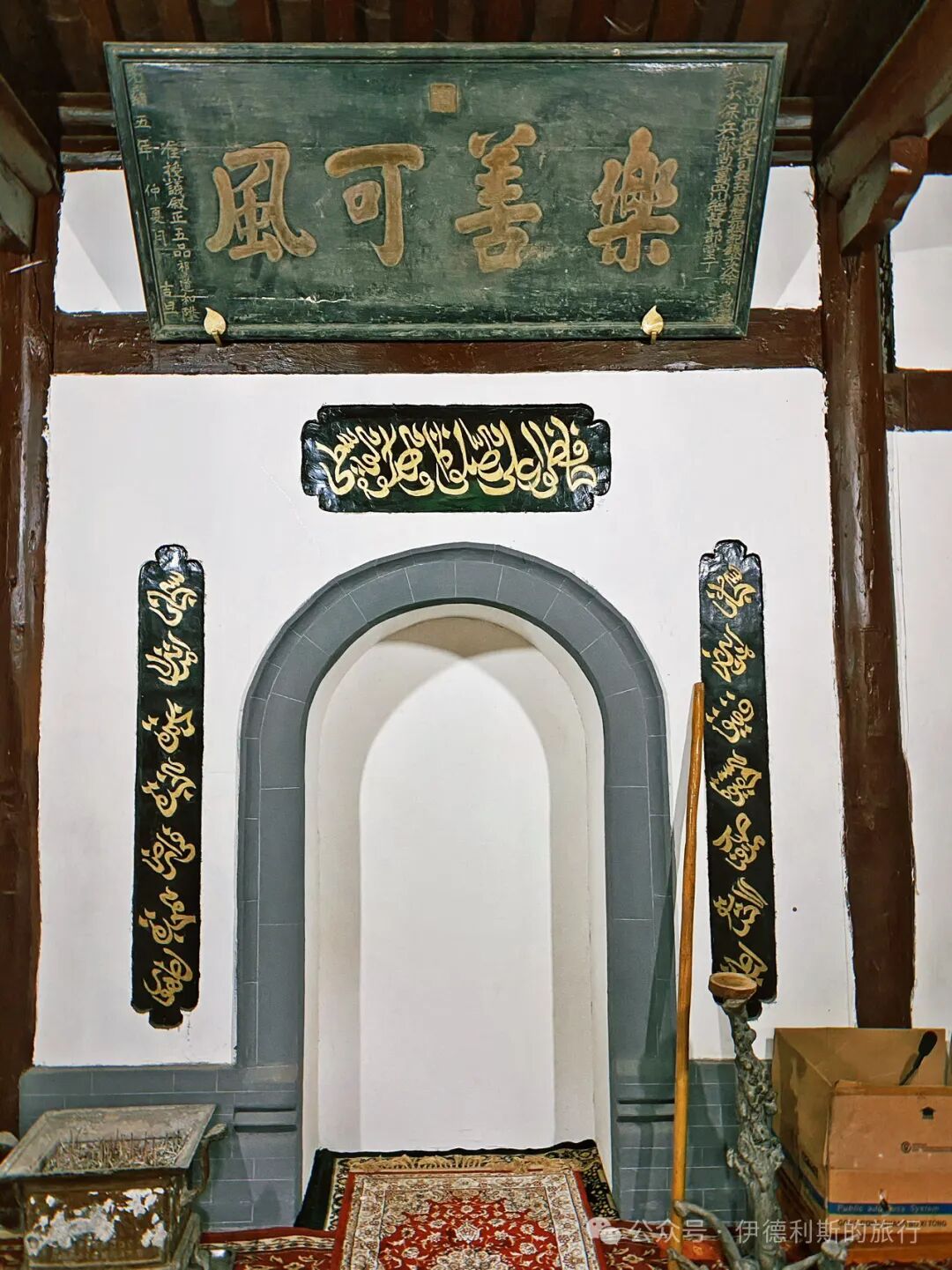
The Nanchong Mosque features traditional calligraphy in its center written by the famous calligrapher Wang Qifei.
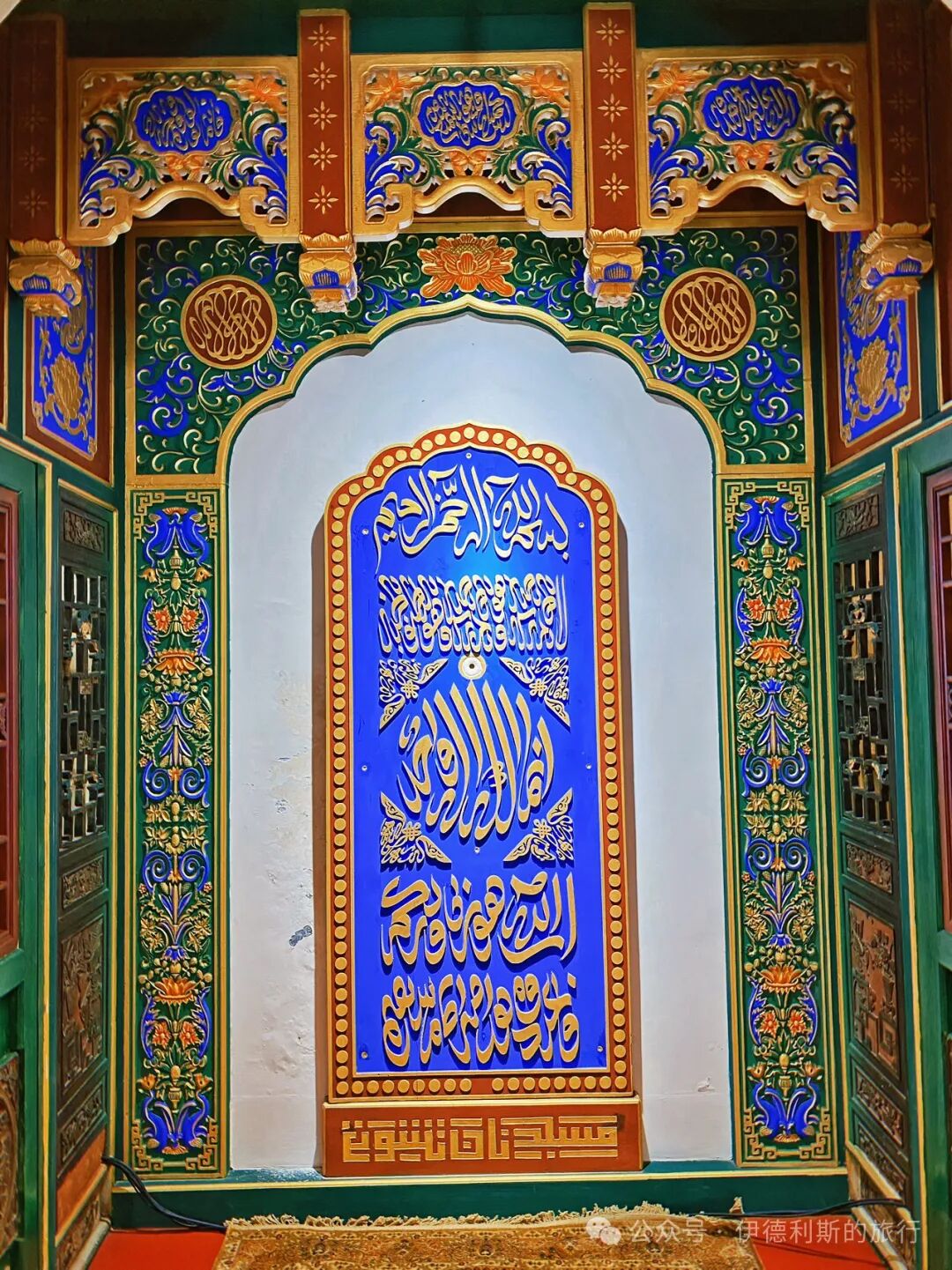
The Majia Mosque in Yankou, Wusheng, features brush-style calligraphy.
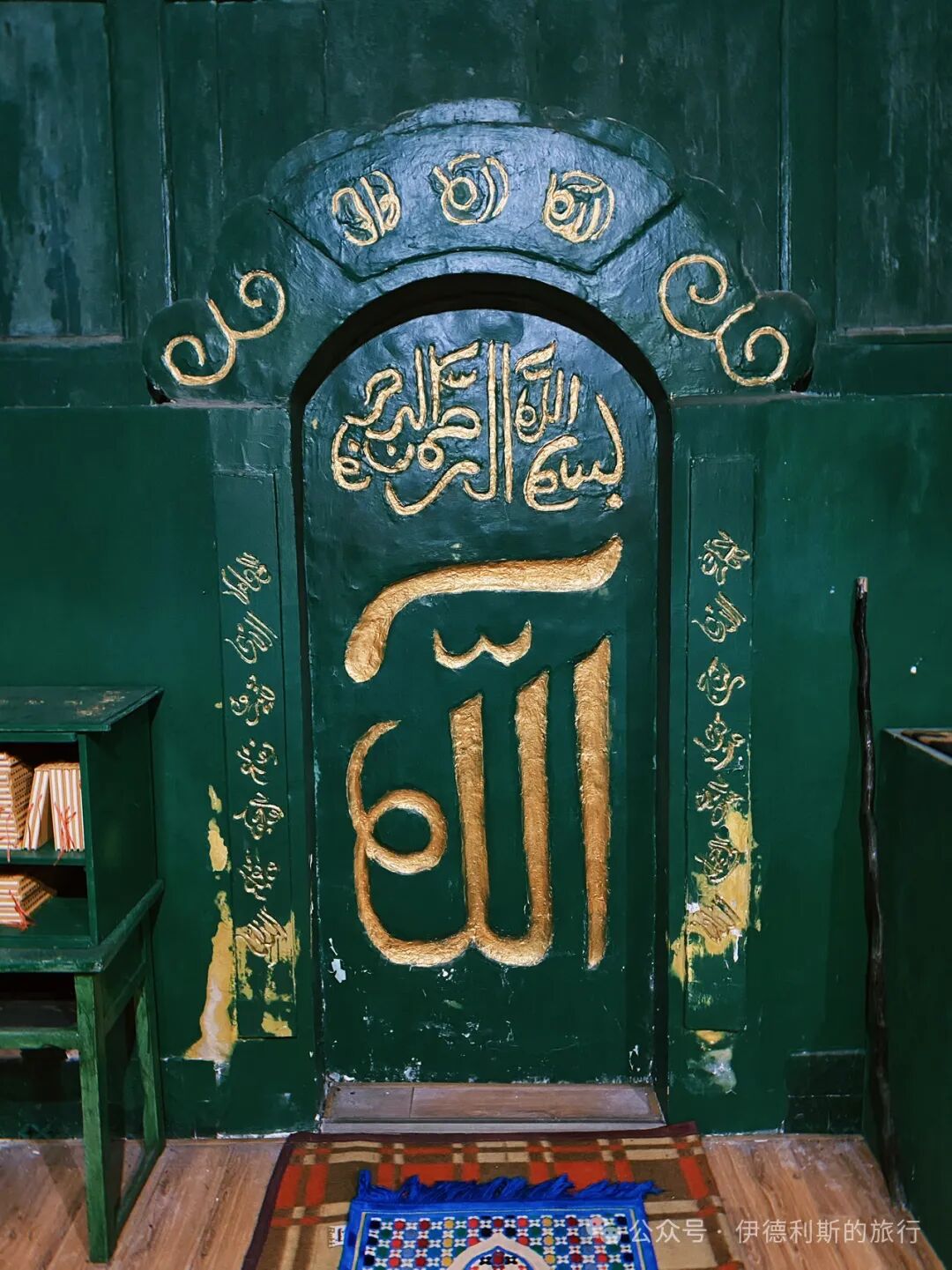
The Xichang City Mosque has traditional calligraphic plaques and couplets, with an arch in the center.
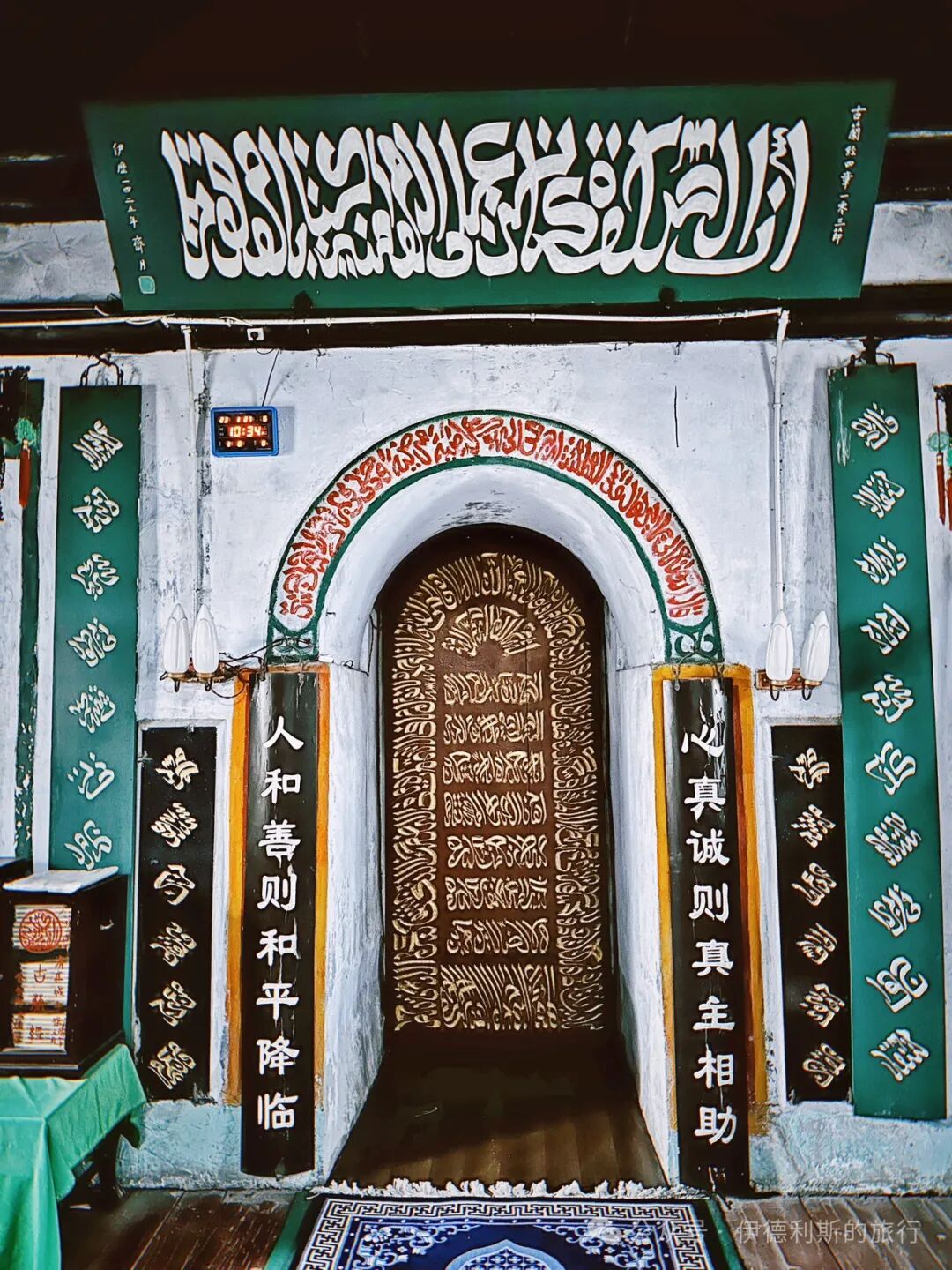
The Xichang East Mosque features unique Xichang-style Arabic calligraphy on its plaque.
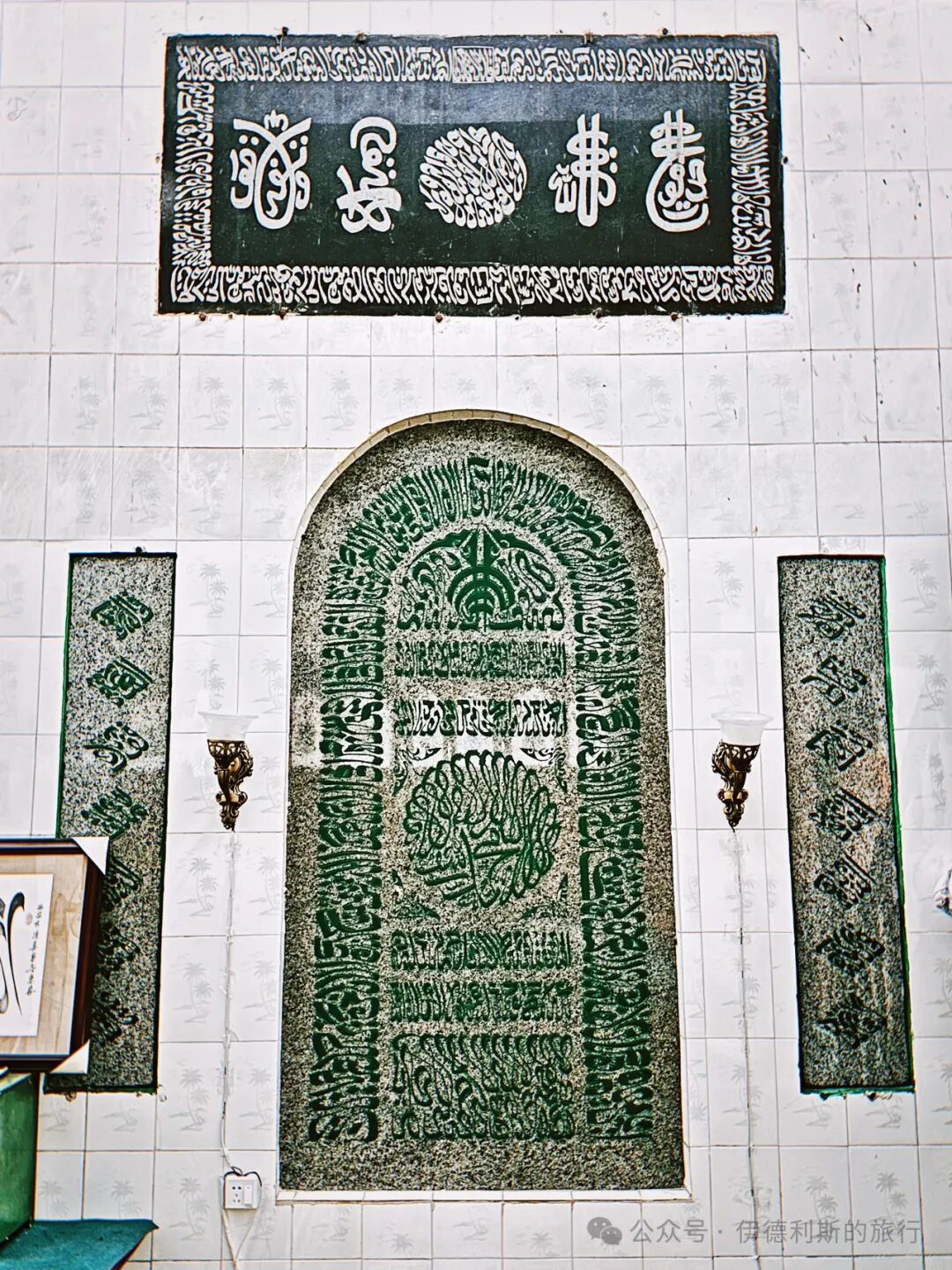
The Qing Dynasty wood-carved mihrab at the Miyi Tianba Mosque was damaged by termites, so it has been re-carved to look exactly like the original.
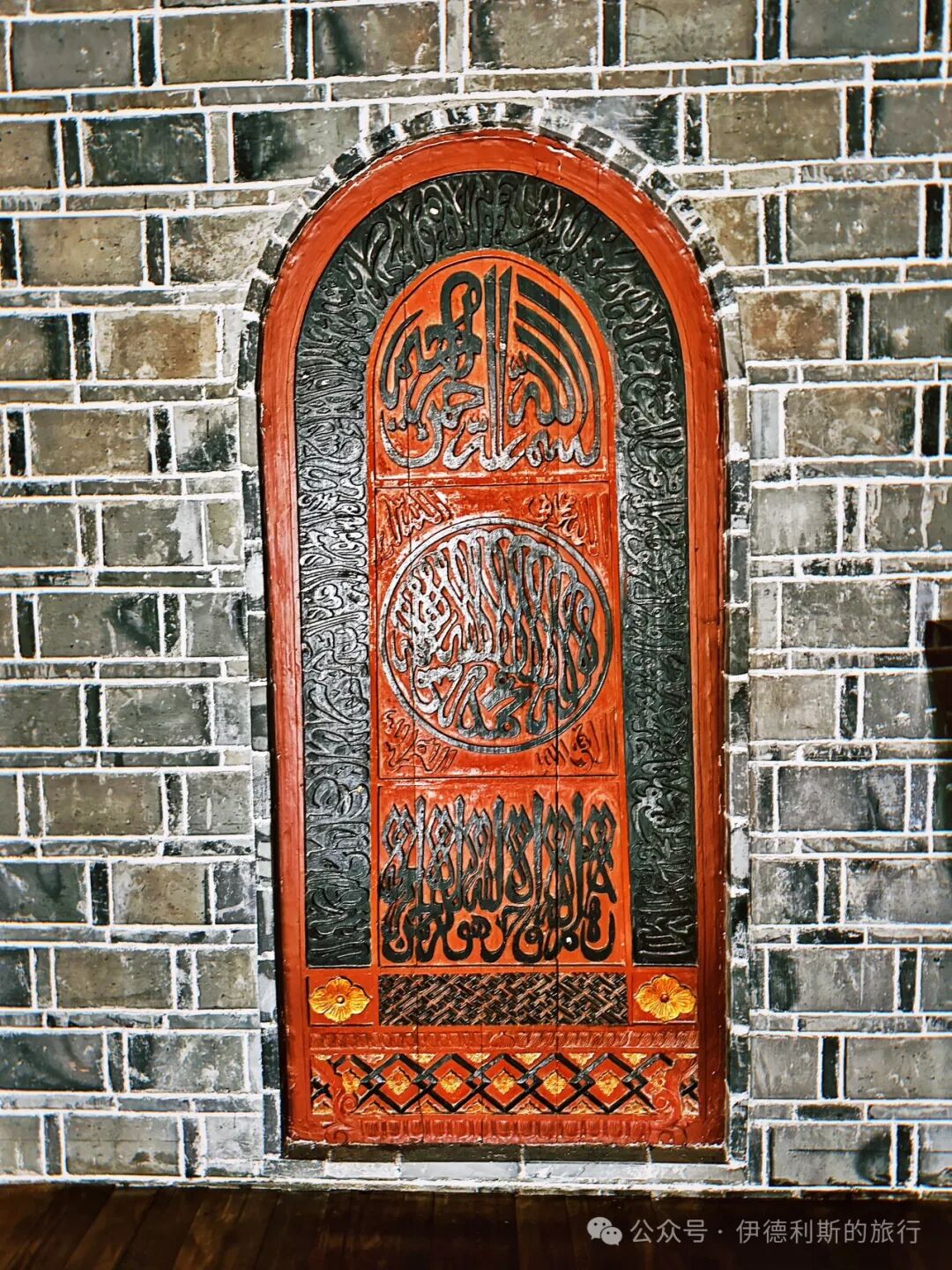
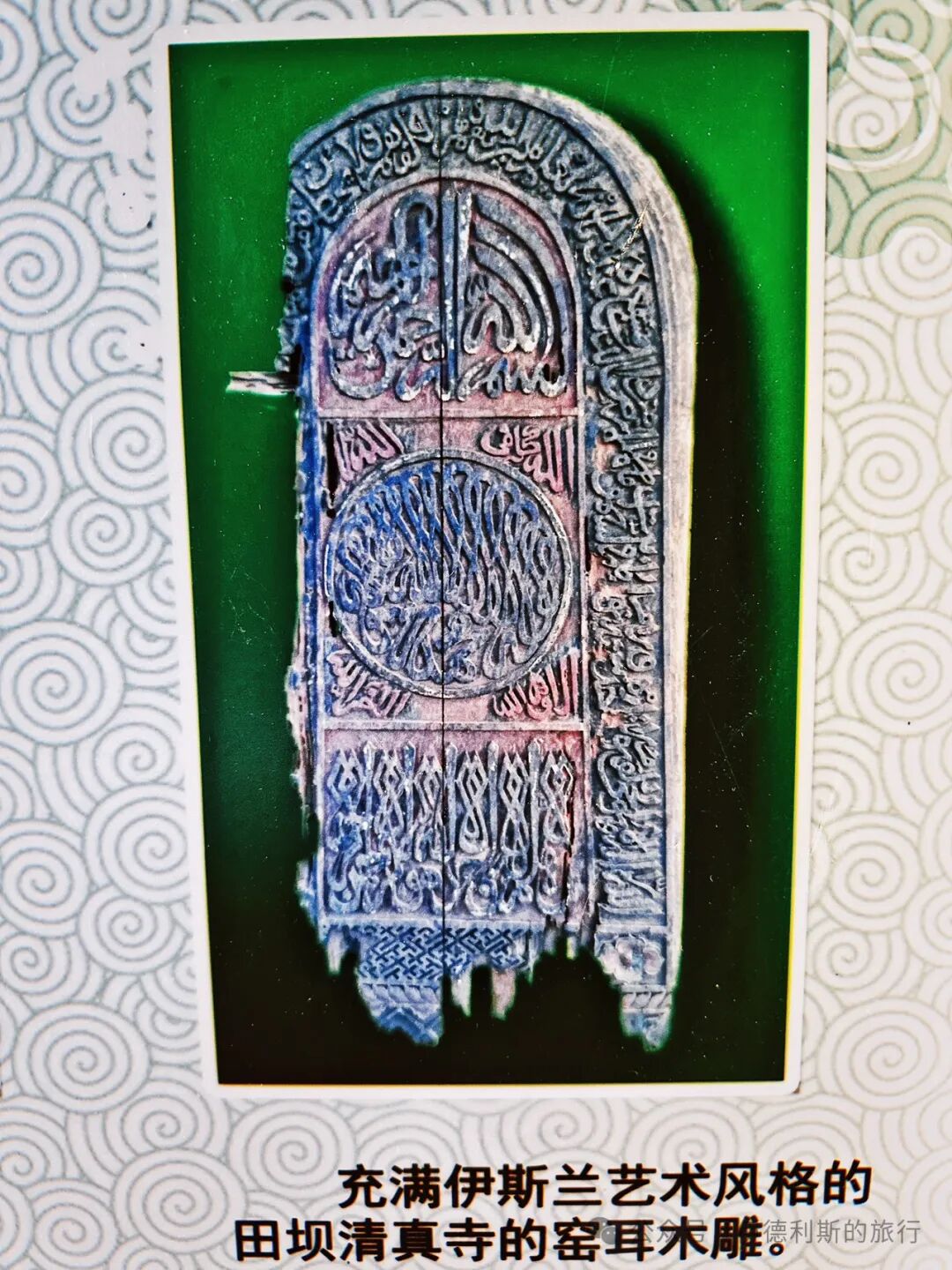
The Dujiangyan Mosque has calligraphic couplets that look like bamboo joints, which is very characteristic of Sichuan.
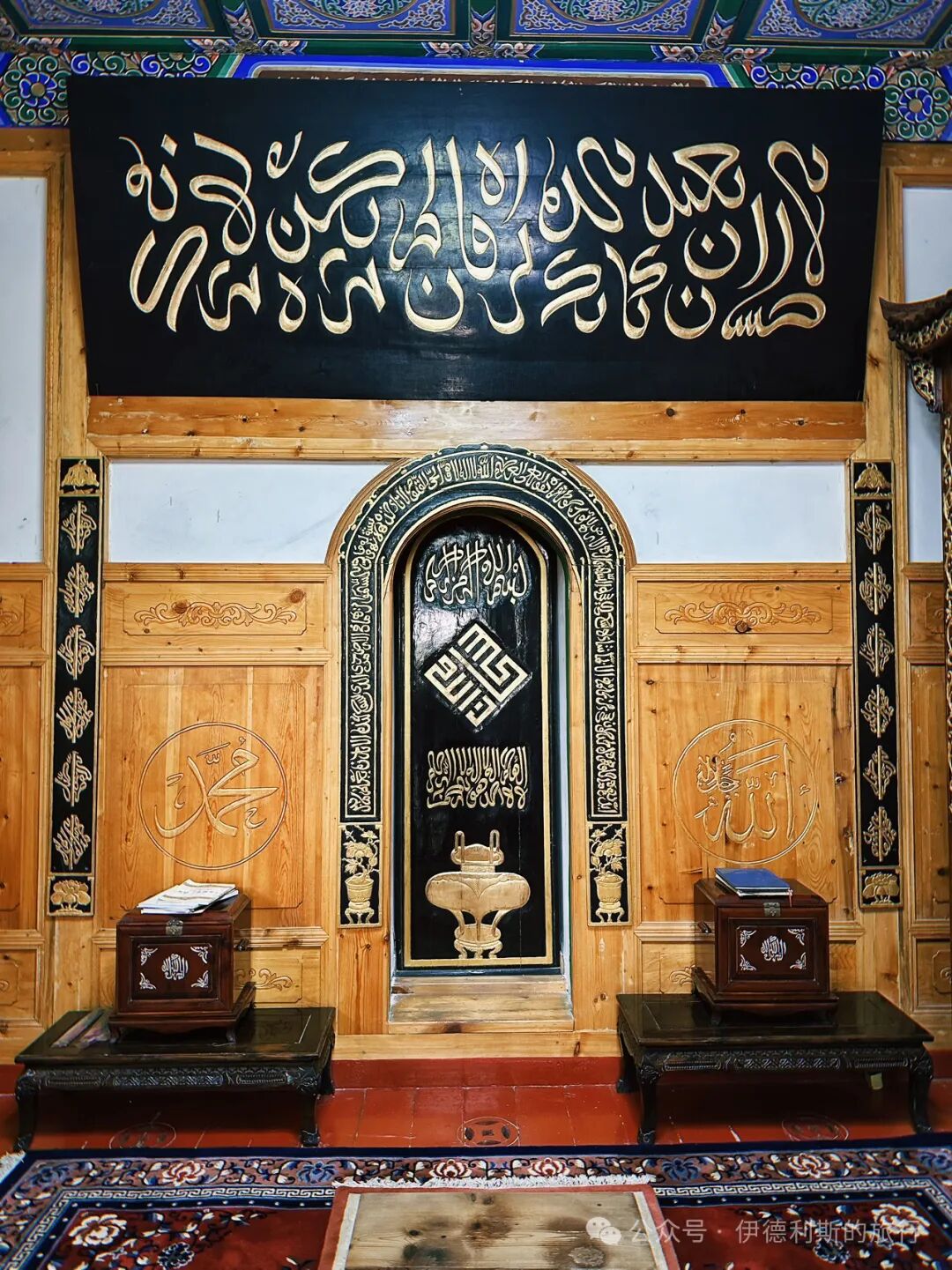
The Tangjia Mosque in Mimou Town, Chengdu, features clever couplets that start with two-part phonetic letters known as suole.
Summary: This is the first part of a visual record of 131 traditional mihrabs in Chinese mosques. It keeps the source images, place names, captions, and architectural notes in a cleaner English layout.
Beijing.
The Ming dynasty archway-style mihrab at Niujie in Beijing features a beam-column hip roof on top and a Sumeru pedestal (xumizuo) at the bottom. The eight large lotus petal carvings on the Sumeru pedestal show a Ming dynasty style. The upper part is painted with high-grade gold-inlaid swirling patterns (xuanzi caihua), featuring extensive gold leaf. It was expensive to make and shows the characteristics of official architectural paintings from the mid-Qing dynasty.
The Beijing Niujie Women's Mosque was built in 1925 as the first women's mosque in Beijing. It was originally located on Shouliu Hutong and was rebuilt on the north side of the Niujie Mosque in 2006. The mihrab is a century-old brick carving of a dua. A September 1942 issue of Beizhi magazine published an old photo of this brick carving.
The Beijing Huashi Mosque was built in 1414 (the 12th year of the Yongle reign of the Ming dynasty). The mihrab has a glazed tile archway inscribed with traditional Chinese calligraphy.
The Beijing Nankou Mosque is believed to have been built in the Ming dynasty and renovated during the Qing dynasty. The mihrab is a blue brick screen wall style with a clear-water ridge and scorpion-tail roof ends on top, and a Sumeru pedestal at the bottom. In the middle, it features exquisite diamond-patterned window shutters and scroll-patterned arched brick carvings.
The construction date of the Beijing Gubeikou Mosque is unknown. It was renovated in 1629 (the 12th year of the Chongzhen reign of the Ming dynasty) and rebuilt to its current appearance by the Zhili regional commander Ma Jinliang during the Kangxi reign of the Qing dynasty. The mihrab is arch-shaped and painted with auspicious cloud patterns, along with traditional calligraphy in the North China style.
The Beijing Dongzhimenwai Mosque, originally called the Erlizhuang Mosque, was built in the Yuan dynasty. The old mosque's mihrab was wooden and shaped like a tablet. After the renovation, it was placed under the eaves of the hall opposite the new mosque, and it is carved with traditional calligraphy.
The Beijing Changying Mosque mihrab is shaped like a stone stele head and features very complex painted calligraphy. According to research by teacher Hui Zongzheng, it may have been moved from elsewhere when the mosque was built during the Zhengde reign of the Ming dynasty.
Tianjin.
The Great Mosque at Xibeijiao in Tianjin has a wooden carved niche (yaokan) with a very high Sumeru pedestal railing, which is quite rare.
The Tianjin Jinjiayao Mosque features traditional calligraphy plaques and couplets, with an arched gate in the middle.
The Tianjin Hexiwu Mosque features a rare painted design of a half-open vermilion door.
The Tianjin Xibeijiao South Mosque features traditional calligraphy plaques and couplets.
The Tianjin Tianmu North Mosque also features a large gate design in the middle.
Hebei.
The Hebei Zhangjiakou Xinhua Street Mosque's winter prayer hall mihrab is decorated with traditional calligraphy plaques and circular couplets.
The Hebei Zhangjiakou Xiguan Mosque is a blue brick screen wall style with a hip roof, a ridged roof, and flying eaves, with a Sumeru pedestal at the bottom. The center features Ming dynasty calligraphy carvings restored in 2020 by the famous calligrapher Wang Qifei based on old photos.
The South Mosque (Nandasi) in Xuanhua, Hebei, is an arched structure carved with calligraphy and floral patterns.
The North Mosque (Beisi) in Xuanhua, Hebei, is an arched structure carved with calligraphy and floral patterns.
Henan
The Shanyitang Mosque in Henan is an arched structure decorated with calligraphy written in 2009 by the famous calligrapher Mi Guangjiang.
The North Mosque (Beisi) in Zhengzhou, Henan, is an arched structure with an exterior carved door hood.
The North Mosque (Beisi) in Qinyang, Henan, is an arched structure decorated with traditional calligraphy.
The Xiguan Mosque in Bo'ai, Henan, is an arched structure decorated with Arabic plaques and couplets.
The West Mosque (Xisi) in Daxinzhuang, Bo'ai, Henan, is an arched structure decorated with Arabic plaques and couplets.
Shandong
The North Mosque (Beisi) in Linqing, Shandong, is a three-room, four-pillar memorial archway style building with bracket sets and flying eaves, decorated with intricate traditional calligraphy.
The East Mosque (Dongsi) in Linqing, Shandong, is a three-room, four-pillar memorial archway style building with bracket sets and flying eaves, decorated with intricate traditional calligraphy.
The South Mosque (Nandasi) in Jinan, Shandong, is an arched structure. According to the mosque's stele record, the calligraphy was written in 1810 (the 15th year of the Jiaqing reign) by Imam Hei Faxiang.
The North Mosque (Beisi) in Jinan, Shandong, is an arched structure featuring calligraphy in the center.
The Zhenjiao Mosque in Qingzhou, Shandong, is an arched structure with a single-eave, hanging-mountain style door hood above.
Inner Mongolia
The Great Mosque in Hohhot, Inner Mongolia, has a door hood with openwork, painted floral and scroll patterns.
The East Mosque (Dongsi) in Hohhot, Inner Mongolia.
The Longshengzhuang Mosque in Feng County, Inner Mongolia, has a door hood with wood-carved calligraphy inside the arch.
The North Mosque (Beisi) in Chifeng, Inner Mongolia, features original wood carvings from 1747 (the 12th year of the Qianlong reign).
Liaoning
The Old City Mosque in Kaiyuan, Liaoning, features a clear-water scorpion-tail roof ridge.
The Luyang Mosque in Jinzhou, Liaoning, has a plaque with large-character calligraphy and traditional brush-style calligraphy on both sides.
The South Mosque (Nandasi) in Shenyang, Liaoning, houses a large spirit tablet.
The Ancient City Mosque in Fuzhou, Dalian, Liaoning, features traditional brush-style calligraphy.
Lingyuan Mosque in Liaoning features carvings of Arabic calligraphy.
Heilongjiang
The winter prayer hall at Bukui West Mosque in Qiqihar, Heilongjiang, has traditional calligraphy carved onto its arches.
The main hall of Bukui West Mosque in Qiqihar, Heilongjiang, is surrounded by carved calligraphy plaques and couplets.
The main hall of Bukui East Mosque in Qiqihar, Heilongjiang, features a clear-water ridge (qingshuiji) roof, a Sumeru pedestal (xumizuo) base, and carved calligraphy plaques and couplets.
Acheng Mosque in Heilongjiang has four floor-to-ceiling pillars (tongtianzhu) in its kiln hall (yaodian) built in 1900 (the 26th year of the Guangxu reign). They were made from giant pine logs hauled from the forests of Yabuli, Heilongjiang, and installed by a carpenter named Sun Yulin from Wula Street, Jilin. Legend says Carpenter Sun's master was worried about his apprentice, so he secretly went to a stone shop and made four 3-foot-tall lotus-shaped pillar bases. When it came time to raise the floor-to-ceiling pillars, they were exactly 3 feet too short. Seeing this, the master immediately told Carpenter Sun to hitch a cart and bring back the four lotus pillar bases from the stone shop, and they fit perfectly.
Shanxi
Taiyuan Great Mosque in Shanxi is a Ming Dynasty treasure. It has a wooden memorial archway-style door hood with a hip roof (wudianding), bracket sets (dougong), and flying eaves. Below are Sumeru pedestal railings, and the pillars are decorated with scrolling lotus patterns and Arabic circular motifs. The center features a wooden carved hanging panel with Arabic script, and a kiln niche (yaokan) is set in the very center.
Shaanxi
Huajue Lane Great Mosque in Xi'an, Shaanxi, is a Ming Dynasty treasure. It uses wooden board inlays and gold-painted pillars to create door hoods and hanging pillars. The wooden boards are carved with Arabic calligraphy and floral patterns, making them very magnificent. The center has a kiln niche arch supported by prismatic pillars on both sides. This is similar to the mihrab style found in Iran and Turkey during the Yuan and Ming dynasties, making it the only known Ming Dynasty mihrab in China that blends Eastern and Western styles.
Besides Huajue Lane Great Mosque, the Daxuexi Lane Mosque and Dapiyuan Mosque in Xi'an also have original, unrestored mihrabs. Both mihrabs are made of inlaid wooden boards with a kiln niche in the middle, but their styles differ. Daxuexi Lane Mosque has a wooden carved canopy (feizhao) between its pillars. The craftsmanship is exquisite, and the calligraphy style matches that of Mengda Mosque in Xunhua, Qinghai, suggesting they may have been made by the same group of craftsmen.
Daxuexi Lane Mosque
Dapiyuan Mosque
Some restored and newly built mihrabs in Xi'an, Shaanxi.
Xiaopiyuan North Mosque has had all its paintings redone, though it is said the style remains unchanged. The center is a kiln niche with beautiful wooden floral carvings.
At the North Guangji Street Mosque, the wood carvings on the upper part of the prayer niche (mihrab) look like those at the Great Mosque of Huajue Lane.
The Xiaoxuexi Lane Middle Mosque features wood panel inlays with a prayer niche (mihrab) in the center.
The Xiaoxuexi Lane Yingli Mosque has a wood-carved door canopy decorated with flower and plant patterns.
The Dongmen Cang South City Mosque has a wood-carved door canopy featuring traditional-style calligraphy.
The Sajinqiao Mosque uses wood panel inlays and contains a very rare Chinese-language Yasin chapter.
Prayer niches (mihrab) in the southern Shaanxi region:
The Ankang North Mosque in Shaanxi is built in a memorial archway style with wood-carved flying eaves.
The Ankang Jingning South Mosque in Shaanxi features traditional-style couplets and horizontal inscribed boards.
The Xixiang North Mosque in Shaanxi features traditional-style couplets and horizontal inscribed boards.
The Xixiang Luling Mosque in Shaanxi is built in a wood memorial archway style and has traditional couplets.
The Hanzhong Xianyin Mosque in Shaanxi has traditional-style horizontal inscribed boards and couplets, and the prayer niche (mihrab) is carved with an offering table.
Gansu
The Linxia Old Wang Mosque is arch-shaped and carved with traditional Arabic horizontal inscribed boards and couplets.
The Linxia West Mosque is arch-shaped and carved with traditional Arabic horizontal inscribed boards and couplets.
The Linxia North Mosque is arch-shaped and carved with traditional Arabic horizontal inscribed boards and couplets.
The Tianshui Beiguan Mosque is arch-shaped and carved with traditional Arabic horizontal inscribed boards and couplets.
The Tianshui Qin'an Nanxiaguan Mosque features brick carvings of Zhe school Shagou-style calligraphy and rare brick-carved hanging scrolls.
Qinghai
The Haidong Hongshuiquan Great Mosque features wood panel inlays, a door canopy above, a Sumeru pedestal below, and extremely rare traditional auspicious patterns carved above the prayer niche (mihrab).
The Xunhua Tashapo Mosque has flame patterns and flower designs carved around the prayer niche (mihrab), with a flame pearl carved directly above it, which is also very rare.
The Xunhua Qingshuihe East Mosque has a wood carving style similar to the Tashapo Mosque, but slightly shallower, and also features a flame pearl in the center.
The Xunhua Mengda Dazhuang Mosque features painted wood panels, and the backlight inside the prayer niche (mihrab) is very unique due to Tibetan cultural influence.
The Xunhua Shangkewa Mosque features painted wood panels with traditional calligraphy.
The Xunhua Zhangga Mosque has an arch in the center surrounded by horizontal inscribed boards and couplets.
Xinjiang
The Shaanxi Grand Mosque in Urumqi was built in 1906. It features wood paneling and a central arch.
The South Grand Mosque in Urumqi was built in 1919. It has a decorative gate hood and a central arch.
Tibet
The Lhasa Grand Mosque features wood carvings of flowers, plants, and calligraphy, along with two calligraphic couplets.
The Lhasa Small Mosque features wood carvings of flowers, plants, and calligraphy.
The Lhasa West Suburb Mosque features wood carvings of flowers, plants, and calligraphy.
Sichuan
The Langzhong Mosque has a traditional calligraphic plaque above its arch.
The Langzhong Baba Mosque has a plaque from the fifth year of the Guangxu reign that reads 'Le Shan Ke Feng' at the very top. Below it are traditional calligraphic couplets, and the center features an arch.
The Nanchong Mosque features traditional calligraphy in its center written by the famous calligrapher Wang Qifei.
The Majia Mosque in Yankou, Wusheng, features brush-style calligraphy.
The Xichang City Mosque has traditional calligraphic plaques and couplets, with an arch in the center.
The Xichang East Mosque features unique Xichang-style Arabic calligraphy on its plaque.
The Qing Dynasty wood-carved mihrab at the Miyi Tianba Mosque was damaged by termites, so it has been re-carved to look exactly like the original.
The Dujiangyan Mosque has calligraphic couplets that look like bamboo joints, which is very characteristic of Sichuan.
The Tangjia Mosque in Mimou Town, Chengdu, features clever couplets that start with two-part phonetic letters known as suole.
Islamic Architecture Guide: 131 Traditional Mihrabs in China, Part 2
Articles • ali2007fr posted the article • 0 comments • 151 views • 2026-05-20 01:48
Reposted from the web
Summary: This is the second part of a visual record of 131 traditional mihrabs in Chinese mosques. The English version keeps the original mosque names, image order, captions, and architectural details without adding new claims.
Hujia Mosque in Xindu District, Chengdu, was built in 1738 (the third year of the Qianlong reign). It has a rare mihrab with Chinese couplets. The right side reads 'Ten thousand generations of mountains and rivers return to one Lord,' the left side reads 'The sun and moon shine upon all living things,' and the horizontal plaque reads 'The Original One.'
Yousuotun Mosque in Songpan has a door hood with an arched center. It looks more like the style found in Gansu than other mosques in Sichuan.
North Mosque in Songpan has very bright colors and lotus patterns.
Gongbei Mosque in Songpan features wooden boards with calligraphy inside the arch, shaped like a folding fan, a circular light, and an incense burner.
Yunnan
Dianzhong Mosque in Weishan, Dali, features traditional stone-carved calligraphy.
Ma Family Mosque in Mamichang, Weishan, Dali, features traditional stone-carved calligraphy.
Hedijie Mosque in Weishan, Dali, features traditional calligraphy.
Qingmenkou Mosque in Weishan, Dali, features traditional calligraphy.
Xishulong Mosque in Weishan, Dali, features traditional stone-carved calligraphy.
Xiaoweigeng Mosque in Weishan, Dali, features traditional calligraphy.
Dingjiachang Mosque in Weishan, Dali, is built in the traditional Dali architectural style with upturned eaves.
Baisha Village Mosque in Weishan, Dali, features traditional calligraphy.
Dawulinmao Mosque in Weishan, Dali, is built in the traditional Dali architectural style with upturned eaves.
Xiajie Mosque in Yangbi, Dali, features wood-carved calligraphy.
Shangxiang Mosque in Yangbi, Dali, features stone-carved calligraphy.
Shangjie Mosque in Yangbi, Dali, features stone-carved calligraphy.
Shangxi Lianhua Mosque in Weishan, Dali, features stone-carved calligraphy.
Xincun Mosque in Weishan, Dali, features stone-carved calligraphy.
Xiaxi Lianhua Mosque in Weishan, Dali, features traditional calligraphy.
Donglianhua Mosque in Weishan, Dali, features traditional calligraphy.
Fengyi Mosque in Dali features stone-carved calligraphy.
Binchuan Mosque in Dali features traditional calligraphy.
Yongning Mosque in Kunming is known as a masterpiece of Yunnan-style calligraphy.
Jinniujie Mosque in Kunming features typical Yunnan-style calligraphy.
Liren Mosque in Haikou, Kunming, features typical Yunnan-style calligraphy.
Beiying Mosque in Xundian features typical Yunnan-style calligraphy.
Huihuiying Mosque in Chenggong, Kunming, has very unique floral-style calligraphy in the center.
Dazhuang Mosque in Kaiyuan features traditional calligraphy in the center with a circular, interlocking design.
Tuogu Mosque in Ludian, Zhaotong, has traditional calligraphy on the couplets flanking the arch and in the circular center.
Longtoushan Mosque in Ludian, Zhaotong, features traditional-style calligraphy.
Taojiawan Mosque in Ludian, Zhaotong, features traditional Yunnan-style calligraphy.
Guangxi
Chongshan Road Mosque in Guilin was first built in 1734 (the 12th year of the Yongzheng reign). The rear hall was expanded in 1892 (the 18th year of the Guangxi reign) and features exquisite wood carvings of floral-style calligraphy.
Wutong Mosque in Guilin was first built during the Qing Jiaqing reign and renovated in 1915. It has beautiful wood carvings of calligraphy.
Liutang Mosque in Guilin was first built during the Qing Qianlong reign and has beautiful wood carvings of calligraphy.
Jiucun Mosque in Guilin features wood carvings of calligraphy.
Daxu Mosque in Guilin features wood carvings of calligraphy.
The Women's Mosque in Guilin features wood carvings of calligraphy.
Maping Mosque in Guilin was first built in 1671 (the 10th year of the Kangxi reign). It was burned down by the Japanese army in 1944, rebuilt in 1948, and rebuilt again in 1987, but it still keeps the original wood carvings of the mihrab.
Guangdong
Chengxi Mosque in Zhaoqing, Guangdong, preserved its Qing Dynasty stone mihrab during the 1983 reconstruction, which features traditional calligraphic couplets.
Chengdong Mosque in Zhaoqing, Guangdong, features Qing Dynasty wood-carved calligraphy.
Hong Kong
Jamia Mosque on Shelley Street in Hong Kong has a mihrab built in 1915, designed in the Indian Mughal style.
Fujian
Qingjing Mosque in Quanzhou, Fujian, was renovated in 1310. The prayer wall has seven pointed-arch niches, with the largest being the mihrab in the Fengtian Hall. In the old days, Hui Muslims in Quanzhou called the 27th night of Ramadan, the Night of Power (Laylat al-Qadr), the 'Twenty-eighth Night' (erba ming). Every Hui family in Quanzhou would prepare food on this day. That evening, they would light a pair of large red candles on both sides of the mihrab at the prayer hall, symbolizing that the revelation of the Quran from Allah is a brilliant light.
At the Mingshan Hall of the Qingjing Mosque in Quanzhou, Fujian, Jiang Changgui, the provincial military commander during the Tongzhi reign of the Qing Dynasty, collected many Yuan Dynasty Arabic stone tablets in Quanzhou and embedded them into the walls of the Mingshan Hall.
A lintel stone currently embedded above the mihrab in Mingshan Hall was unearthed at Qipanyuan in the late Qing Dynasty. It reads, 'Enter it in peace and security.' Embedded in the middle is a lintel stone unearthed near Qipanyuan in the late Qing Dynasty. The inscription is in Kufic script and reads, 'Every soul shall taste death.' 'Death is a door, and everyone must enter it.' Qipanyuan was the site of the foreign quarter and religious cemeteries in Quanzhou during the Song and Yuan dynasties, so it is likely these two lintel stones originally belonged to a gongbei tomb.
Embedded below is the 'Laji Aibikelimu Reconstruction Tablet of the Qingjing Mosque,' featuring scripture written in Kufic script. The stone tablet was unearthed underground at Qipanyuan in the southern drill ground of Quanzhou during the late Qing Dynasty. The script is similar to the 'Naina Umaer Reconstruction Tablet of the Qingjing Mosque' held by the Xiamen University Anthropology Museum, and the content is the same, so it is likely another tablet commemorating the mosque's reconstruction. The tablet was removed during the 1997 renovation of Mingshan Hall and was reinstalled shortly after. Later, according to an interpretation by Imam Zhang Haixing of the Qingjing Mosque, the back of the tablet reads, 'Laji Aibikelimu ordered the construction and management of this mosque... praying for the mercy of the Lord...'
At the Fuzhou Mosque in Fujian, I could not see the original wooden mihrab, only photos of it on a display board in the mosque.
Zhejiang
The Lishui Mosque in Zhejiang was built in 1886 (the 12th year of the Guangxu reign) and features traditional wood-carved calligraphy and auspicious patterns.
Jiangsu
The mosque outside the South Gate in Zhenjiang, Jiangsu, is believed to have been built in the early Qing Dynasty. It was destroyed by war in 1937, and the niche stone carvings were kept by the Hua Bao-ren family next to the mosque until they were moved to the Guyun Mosque in 2005. It is carved with a lotus-shaped Basmala, which is very unique. In the center is a circular-light style excerpt from the Cow chapter (Al-Baqarah), and below is the Kufic script reading, 'Bow down, and worship your Lord.'
The Shanxiang Mosque in Zhenjiang, Jiangsu, was rebuilt in 1873 (the 12th year of the Tongzhi reign) and features traditional calligraphy carvings.
The Changjiang Road Mosque in Liuhe, Nanjing, Jiangsu, was rebuilt during the Guangxu reign. The prayer niche is painted with chrysanthemums, pine and cypress trees, and grapevines, which is very unique.
The Jingjue Mosque in Nanjing, Jiangsu, was rebuilt in 1877 (the 3rd year of the Guangxu reign) and features very dense gold-leaf calligraphy on a red background.
The main hall of the Caoqiao Mosque in Nanjing, Jiangsu, came from the Taiping Road Mosque. It was rebuilt in 1924 with funds donated by the brothers of the wealthy Nanjing merchant Jiang Guobang, and it was moved to the new Caoqiao Mosque in 2003.
The Lingtang Ancient Mosque in Gaoyou, Jiangsu, was rebuilt in 1844 (the 24th year of the Daoguang reign) and expanded in 1921. Its structure is exactly the same as the Caoqiao Mosque.
Shanghai
The Fuyou Road Mosque in Shanghai features traditional wood-carved calligraphy. view all
Summary: This is the second part of a visual record of 131 traditional mihrabs in Chinese mosques. The English version keeps the original mosque names, image order, captions, and architectural details without adding new claims.
Hujia Mosque in Xindu District, Chengdu, was built in 1738 (the third year of the Qianlong reign). It has a rare mihrab with Chinese couplets. The right side reads 'Ten thousand generations of mountains and rivers return to one Lord,' the left side reads 'The sun and moon shine upon all living things,' and the horizontal plaque reads 'The Original One.'
Yousuotun Mosque in Songpan has a door hood with an arched center. It looks more like the style found in Gansu than other mosques in Sichuan.
North Mosque in Songpan has very bright colors and lotus patterns.
Gongbei Mosque in Songpan features wooden boards with calligraphy inside the arch, shaped like a folding fan, a circular light, and an incense burner.
Yunnan
Dianzhong Mosque in Weishan, Dali, features traditional stone-carved calligraphy.
Ma Family Mosque in Mamichang, Weishan, Dali, features traditional stone-carved calligraphy.
Hedijie Mosque in Weishan, Dali, features traditional calligraphy.
Qingmenkou Mosque in Weishan, Dali, features traditional calligraphy.
Xishulong Mosque in Weishan, Dali, features traditional stone-carved calligraphy.
Xiaoweigeng Mosque in Weishan, Dali, features traditional calligraphy.
Dingjiachang Mosque in Weishan, Dali, is built in the traditional Dali architectural style with upturned eaves.
Baisha Village Mosque in Weishan, Dali, features traditional calligraphy.
Dawulinmao Mosque in Weishan, Dali, is built in the traditional Dali architectural style with upturned eaves.
Xiajie Mosque in Yangbi, Dali, features wood-carved calligraphy.
Shangxiang Mosque in Yangbi, Dali, features stone-carved calligraphy.
Shangjie Mosque in Yangbi, Dali, features stone-carved calligraphy.
Shangxi Lianhua Mosque in Weishan, Dali, features stone-carved calligraphy.
Xincun Mosque in Weishan, Dali, features stone-carved calligraphy.
Xiaxi Lianhua Mosque in Weishan, Dali, features traditional calligraphy.
Donglianhua Mosque in Weishan, Dali, features traditional calligraphy.
Fengyi Mosque in Dali features stone-carved calligraphy.
Binchuan Mosque in Dali features traditional calligraphy.
Yongning Mosque in Kunming is known as a masterpiece of Yunnan-style calligraphy.
Jinniujie Mosque in Kunming features typical Yunnan-style calligraphy.
Liren Mosque in Haikou, Kunming, features typical Yunnan-style calligraphy.
Beiying Mosque in Xundian features typical Yunnan-style calligraphy.
Huihuiying Mosque in Chenggong, Kunming, has very unique floral-style calligraphy in the center.
Dazhuang Mosque in Kaiyuan features traditional calligraphy in the center with a circular, interlocking design.
Tuogu Mosque in Ludian, Zhaotong, has traditional calligraphy on the couplets flanking the arch and in the circular center.
Longtoushan Mosque in Ludian, Zhaotong, features traditional-style calligraphy.
Taojiawan Mosque in Ludian, Zhaotong, features traditional Yunnan-style calligraphy.
Guangxi
Chongshan Road Mosque in Guilin was first built in 1734 (the 12th year of the Yongzheng reign). The rear hall was expanded in 1892 (the 18th year of the Guangxi reign) and features exquisite wood carvings of floral-style calligraphy.
Wutong Mosque in Guilin was first built during the Qing Jiaqing reign and renovated in 1915. It has beautiful wood carvings of calligraphy.
Liutang Mosque in Guilin was first built during the Qing Qianlong reign and has beautiful wood carvings of calligraphy.
Jiucun Mosque in Guilin features wood carvings of calligraphy.
Daxu Mosque in Guilin features wood carvings of calligraphy.
The Women's Mosque in Guilin features wood carvings of calligraphy.
Maping Mosque in Guilin was first built in 1671 (the 10th year of the Kangxi reign). It was burned down by the Japanese army in 1944, rebuilt in 1948, and rebuilt again in 1987, but it still keeps the original wood carvings of the mihrab.
Guangdong
Chengxi Mosque in Zhaoqing, Guangdong, preserved its Qing Dynasty stone mihrab during the 1983 reconstruction, which features traditional calligraphic couplets.
Chengdong Mosque in Zhaoqing, Guangdong, features Qing Dynasty wood-carved calligraphy.
Hong Kong
Jamia Mosque on Shelley Street in Hong Kong has a mihrab built in 1915, designed in the Indian Mughal style.
Fujian
Qingjing Mosque in Quanzhou, Fujian, was renovated in 1310. The prayer wall has seven pointed-arch niches, with the largest being the mihrab in the Fengtian Hall. In the old days, Hui Muslims in Quanzhou called the 27th night of Ramadan, the Night of Power (Laylat al-Qadr), the 'Twenty-eighth Night' (erba ming). Every Hui family in Quanzhou would prepare food on this day. That evening, they would light a pair of large red candles on both sides of the mihrab at the prayer hall, symbolizing that the revelation of the Quran from Allah is a brilliant light.
At the Mingshan Hall of the Qingjing Mosque in Quanzhou, Fujian, Jiang Changgui, the provincial military commander during the Tongzhi reign of the Qing Dynasty, collected many Yuan Dynasty Arabic stone tablets in Quanzhou and embedded them into the walls of the Mingshan Hall.
A lintel stone currently embedded above the mihrab in Mingshan Hall was unearthed at Qipanyuan in the late Qing Dynasty. It reads, 'Enter it in peace and security.' Embedded in the middle is a lintel stone unearthed near Qipanyuan in the late Qing Dynasty. The inscription is in Kufic script and reads, 'Every soul shall taste death.' 'Death is a door, and everyone must enter it.' Qipanyuan was the site of the foreign quarter and religious cemeteries in Quanzhou during the Song and Yuan dynasties, so it is likely these two lintel stones originally belonged to a gongbei tomb.
Embedded below is the 'Laji Aibikelimu Reconstruction Tablet of the Qingjing Mosque,' featuring scripture written in Kufic script. The stone tablet was unearthed underground at Qipanyuan in the southern drill ground of Quanzhou during the late Qing Dynasty. The script is similar to the 'Naina Umaer Reconstruction Tablet of the Qingjing Mosque' held by the Xiamen University Anthropology Museum, and the content is the same, so it is likely another tablet commemorating the mosque's reconstruction. The tablet was removed during the 1997 renovation of Mingshan Hall and was reinstalled shortly after. Later, according to an interpretation by Imam Zhang Haixing of the Qingjing Mosque, the back of the tablet reads, 'Laji Aibikelimu ordered the construction and management of this mosque... praying for the mercy of the Lord...'
At the Fuzhou Mosque in Fujian, I could not see the original wooden mihrab, only photos of it on a display board in the mosque.
Zhejiang
The Lishui Mosque in Zhejiang was built in 1886 (the 12th year of the Guangxu reign) and features traditional wood-carved calligraphy and auspicious patterns.
Jiangsu
The mosque outside the South Gate in Zhenjiang, Jiangsu, is believed to have been built in the early Qing Dynasty. It was destroyed by war in 1937, and the niche stone carvings were kept by the Hua Bao-ren family next to the mosque until they were moved to the Guyun Mosque in 2005. It is carved with a lotus-shaped Basmala, which is very unique. In the center is a circular-light style excerpt from the Cow chapter (Al-Baqarah), and below is the Kufic script reading, 'Bow down, and worship your Lord.'
The Shanxiang Mosque in Zhenjiang, Jiangsu, was rebuilt in 1873 (the 12th year of the Tongzhi reign) and features traditional calligraphy carvings.
The Changjiang Road Mosque in Liuhe, Nanjing, Jiangsu, was rebuilt during the Guangxu reign. The prayer niche is painted with chrysanthemums, pine and cypress trees, and grapevines, which is very unique.
The Jingjue Mosque in Nanjing, Jiangsu, was rebuilt in 1877 (the 3rd year of the Guangxu reign) and features very dense gold-leaf calligraphy on a red background.
The main hall of the Caoqiao Mosque in Nanjing, Jiangsu, came from the Taiping Road Mosque. It was rebuilt in 1924 with funds donated by the brothers of the wealthy Nanjing merchant Jiang Guobang, and it was moved to the new Caoqiao Mosque in 2003.
The Lingtang Ancient Mosque in Gaoyou, Jiangsu, was rebuilt in 1844 (the 24th year of the Daoguang reign) and expanded in 1921. Its structure is exactly the same as the Caoqiao Mosque.
Shanghai
The Fuyou Road Mosque in Shanghai features traditional wood-carved calligraphy. view all
Reposted from the web
Summary: This is the second part of a visual record of 131 traditional mihrabs in Chinese mosques. The English version keeps the original mosque names, image order, captions, and architectural details without adding new claims.
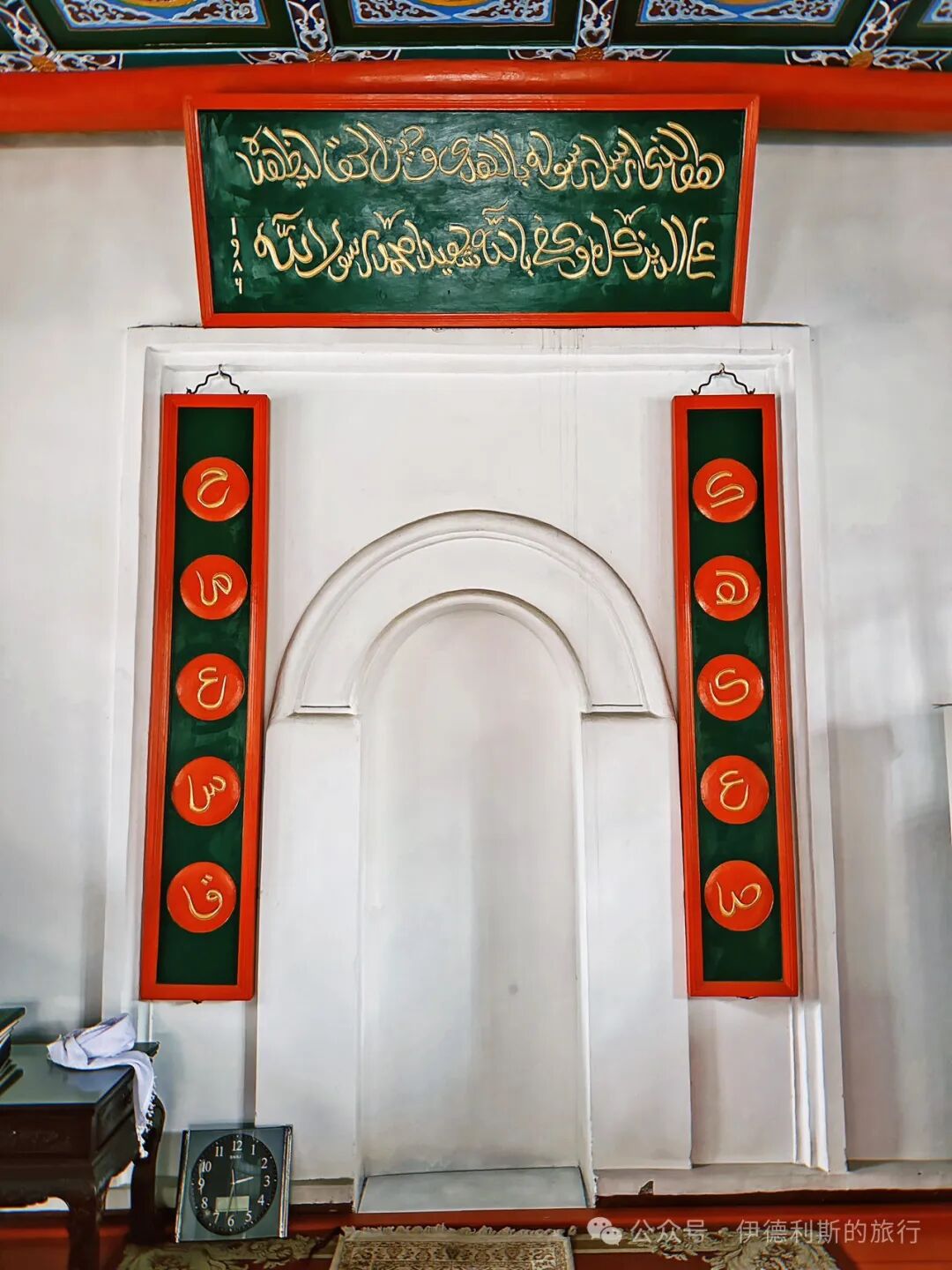
Hujia Mosque in Xindu District, Chengdu, was built in 1738 (the third year of the Qianlong reign). It has a rare mihrab with Chinese couplets. The right side reads 'Ten thousand generations of mountains and rivers return to one Lord,' the left side reads 'The sun and moon shine upon all living things,' and the horizontal plaque reads 'The Original One.'
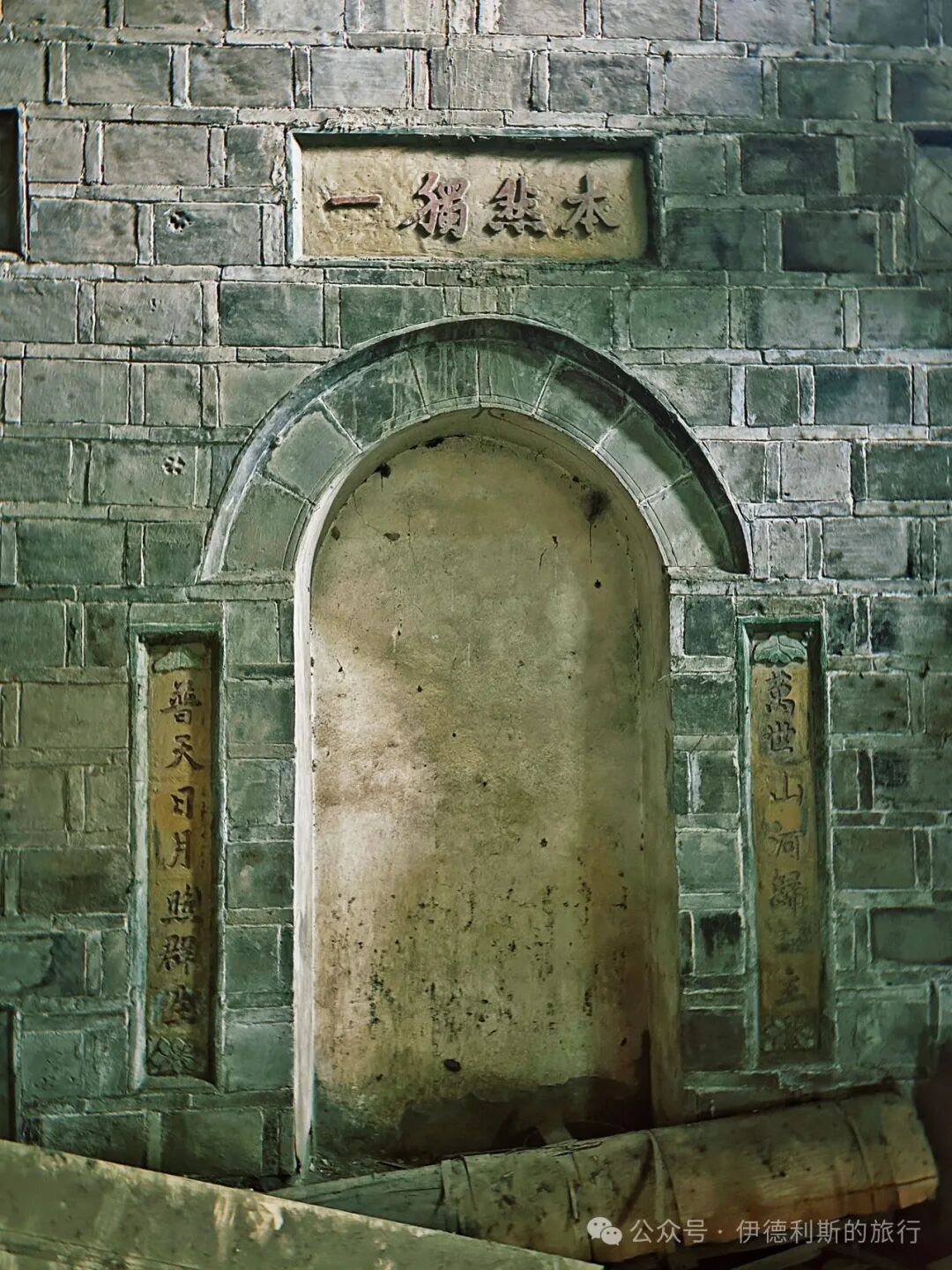
Yousuotun Mosque in Songpan has a door hood with an arched center. It looks more like the style found in Gansu than other mosques in Sichuan.
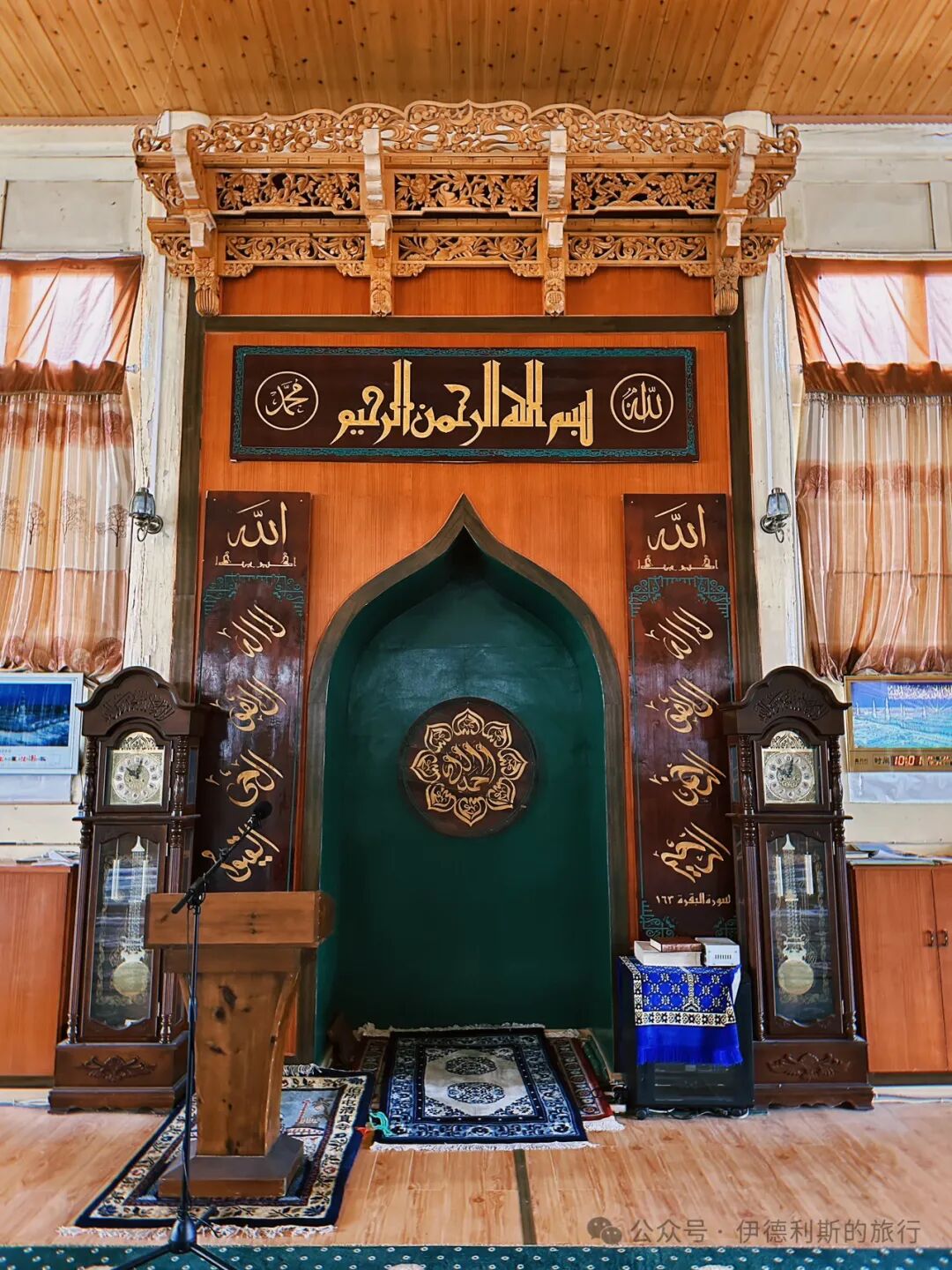
North Mosque in Songpan has very bright colors and lotus patterns.
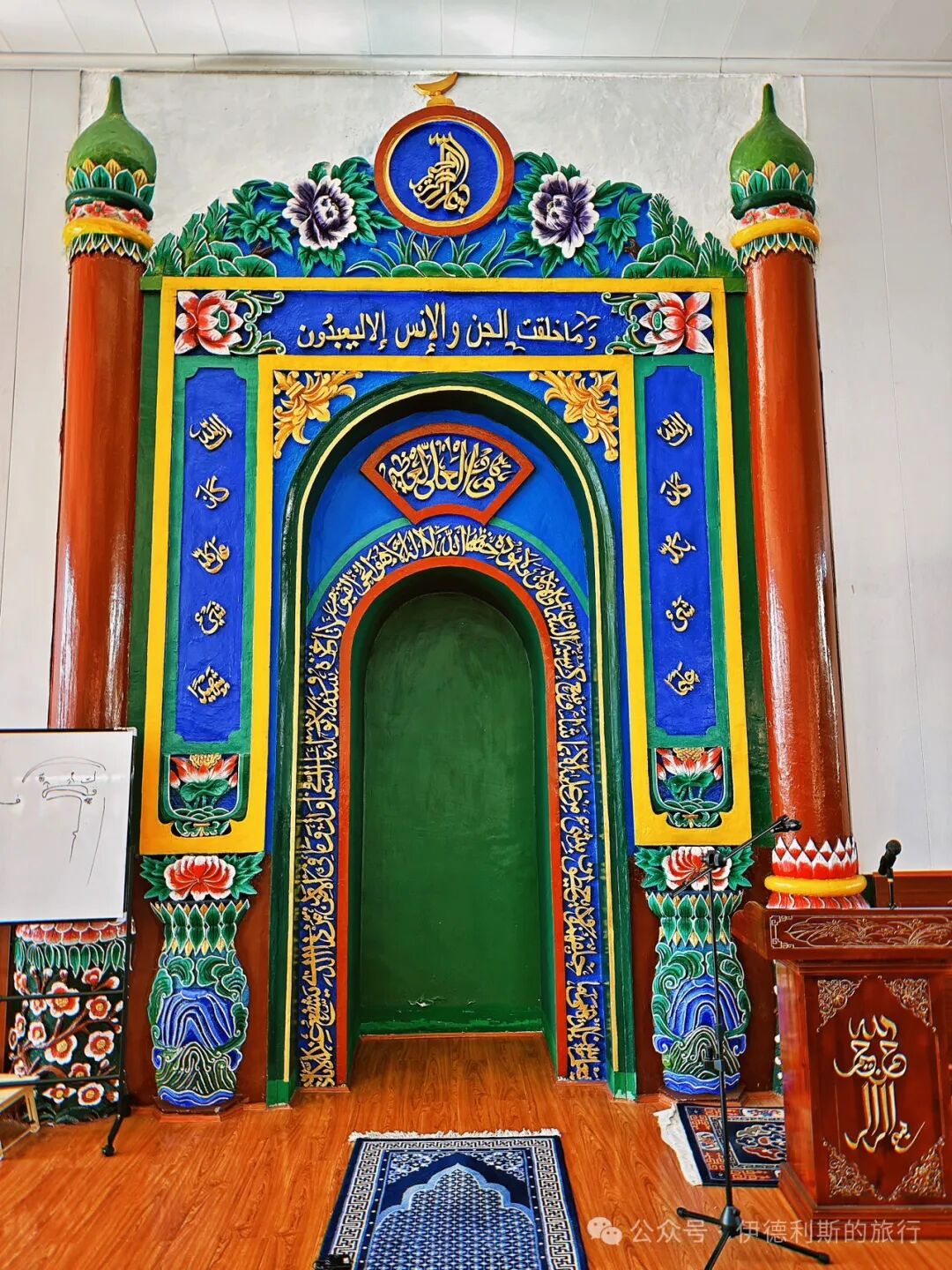
Gongbei Mosque in Songpan features wooden boards with calligraphy inside the arch, shaped like a folding fan, a circular light, and an incense burner.
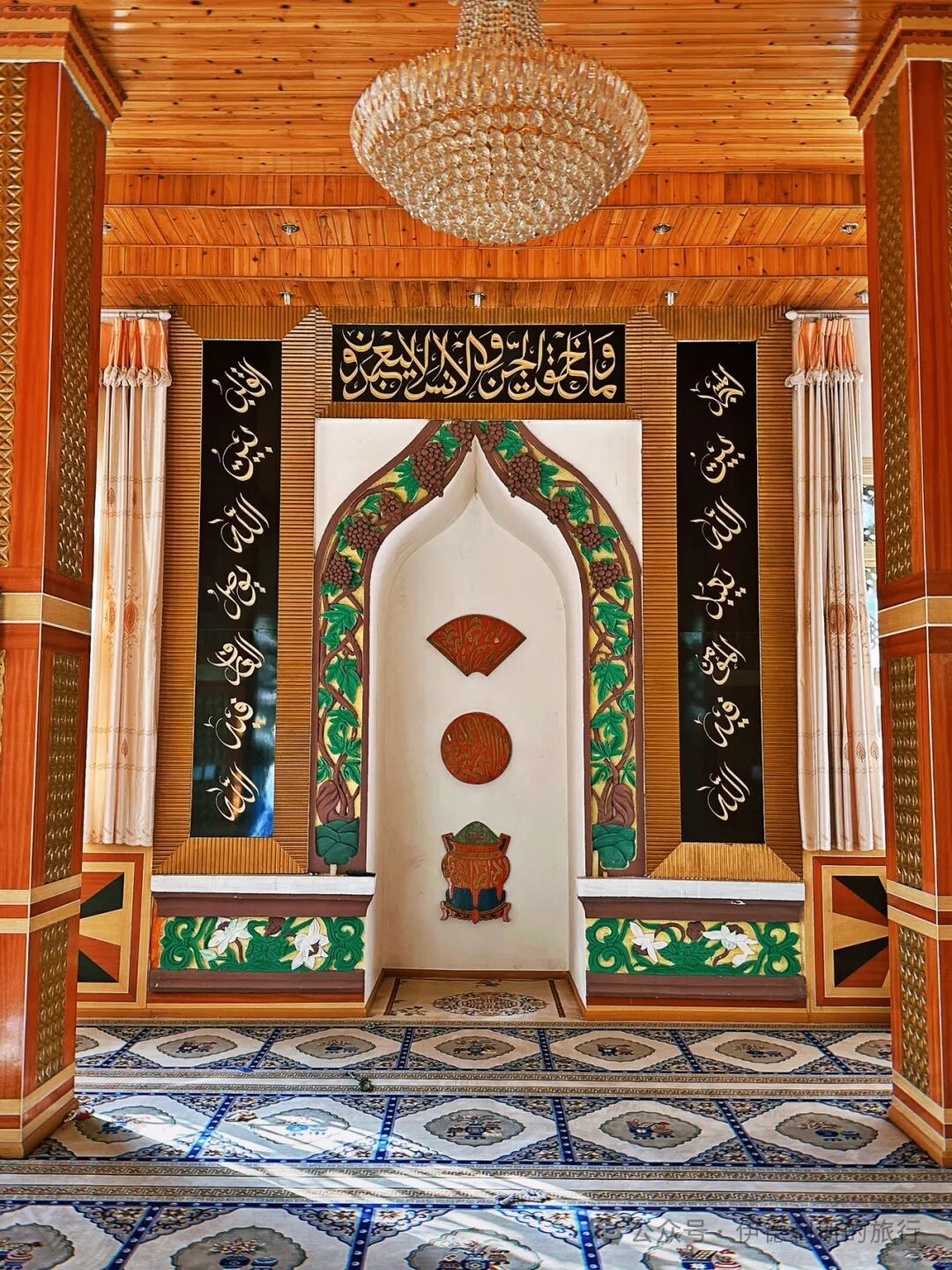
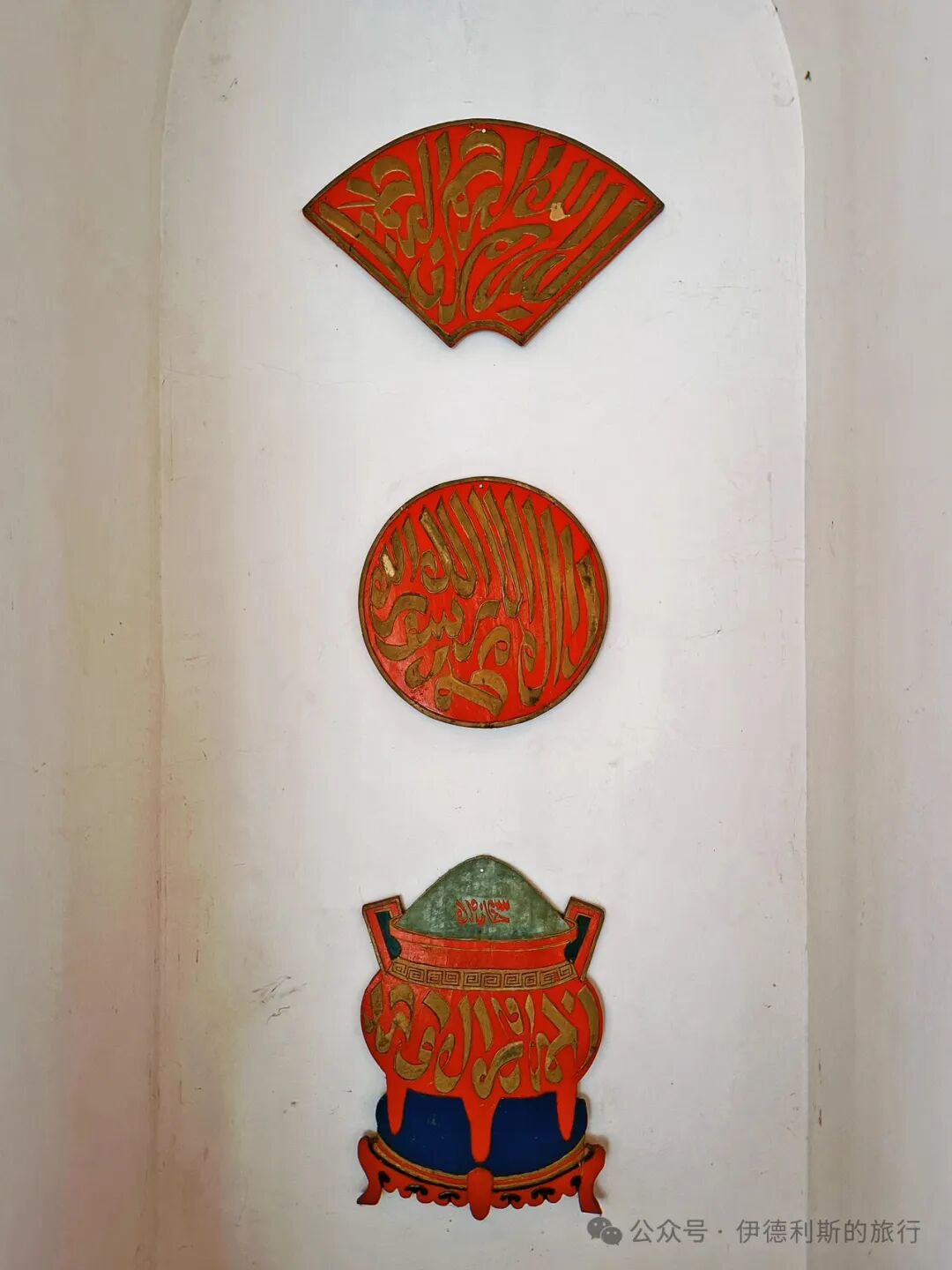
Yunnan
Dianzhong Mosque in Weishan, Dali, features traditional stone-carved calligraphy.
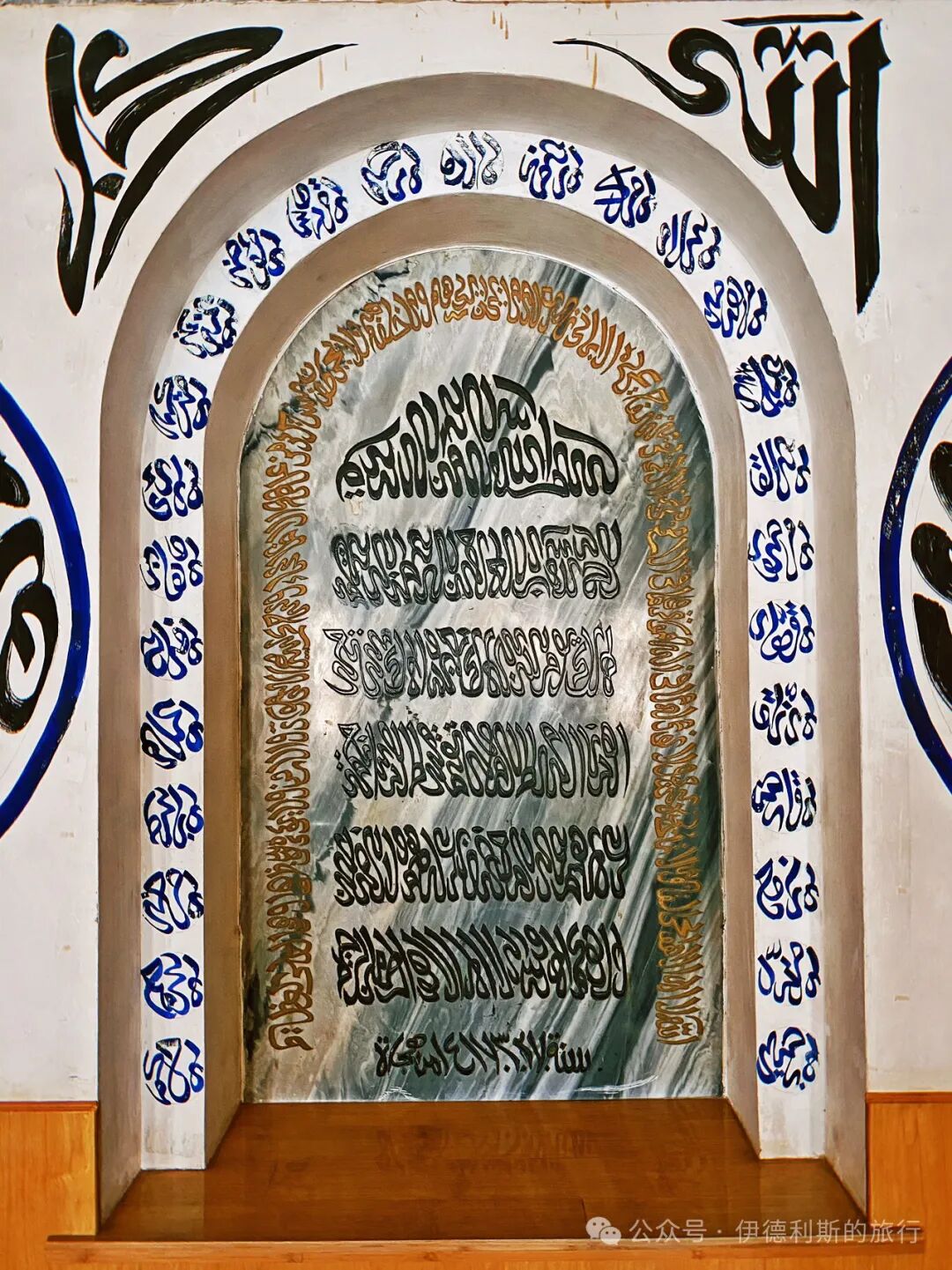
Ma Family Mosque in Mamichang, Weishan, Dali, features traditional stone-carved calligraphy.
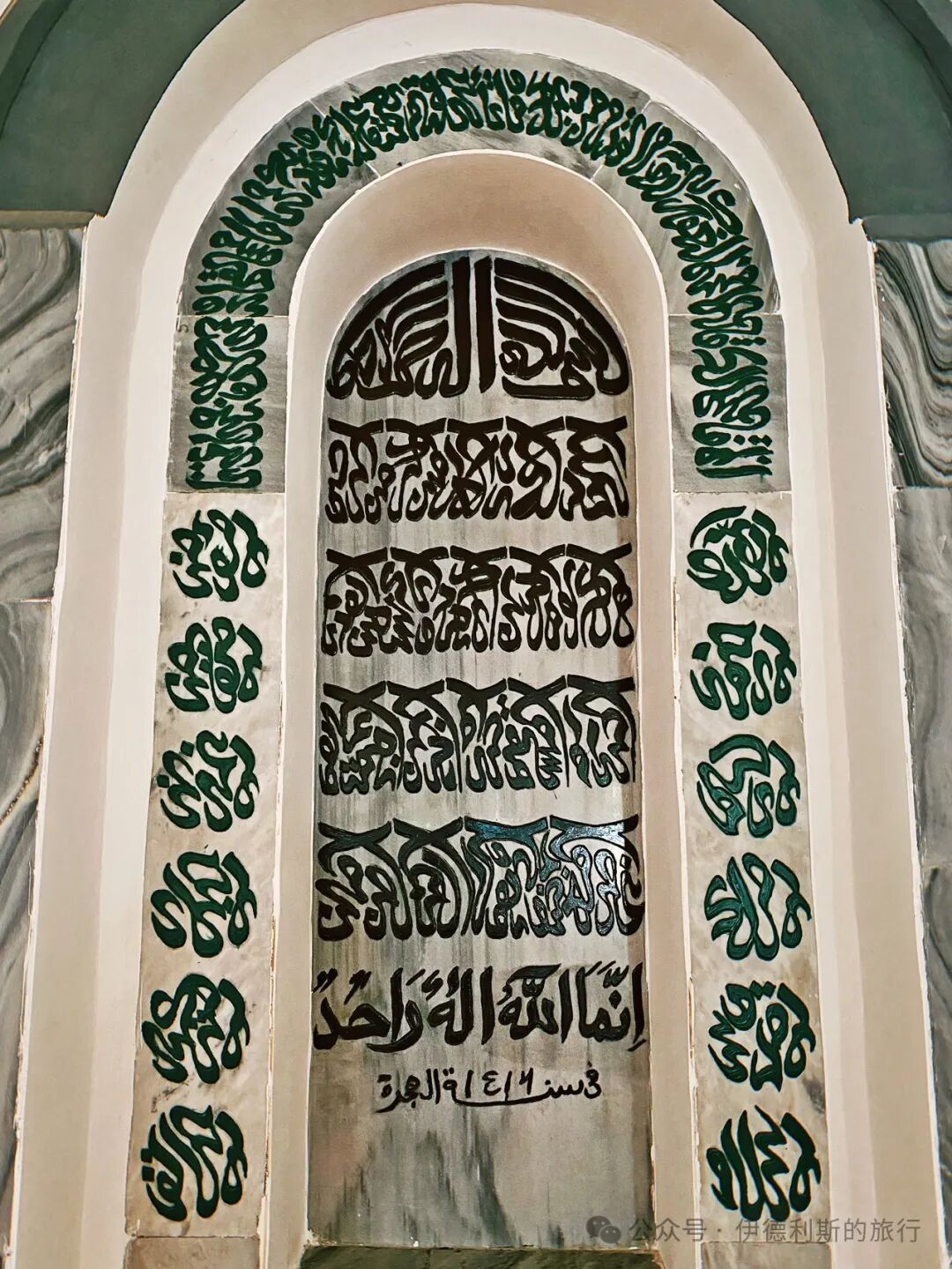
Hedijie Mosque in Weishan, Dali, features traditional calligraphy.
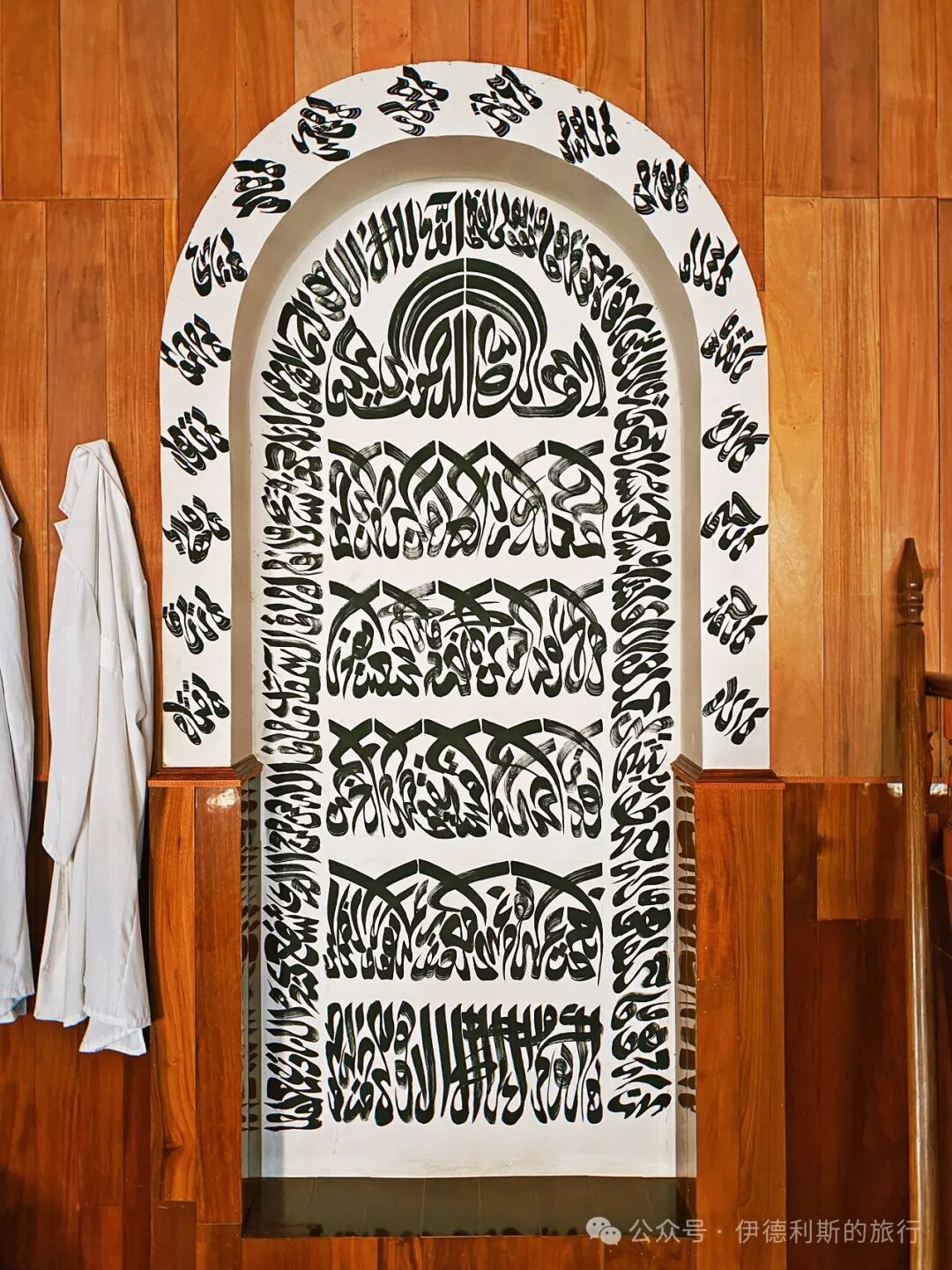
Qingmenkou Mosque in Weishan, Dali, features traditional calligraphy.
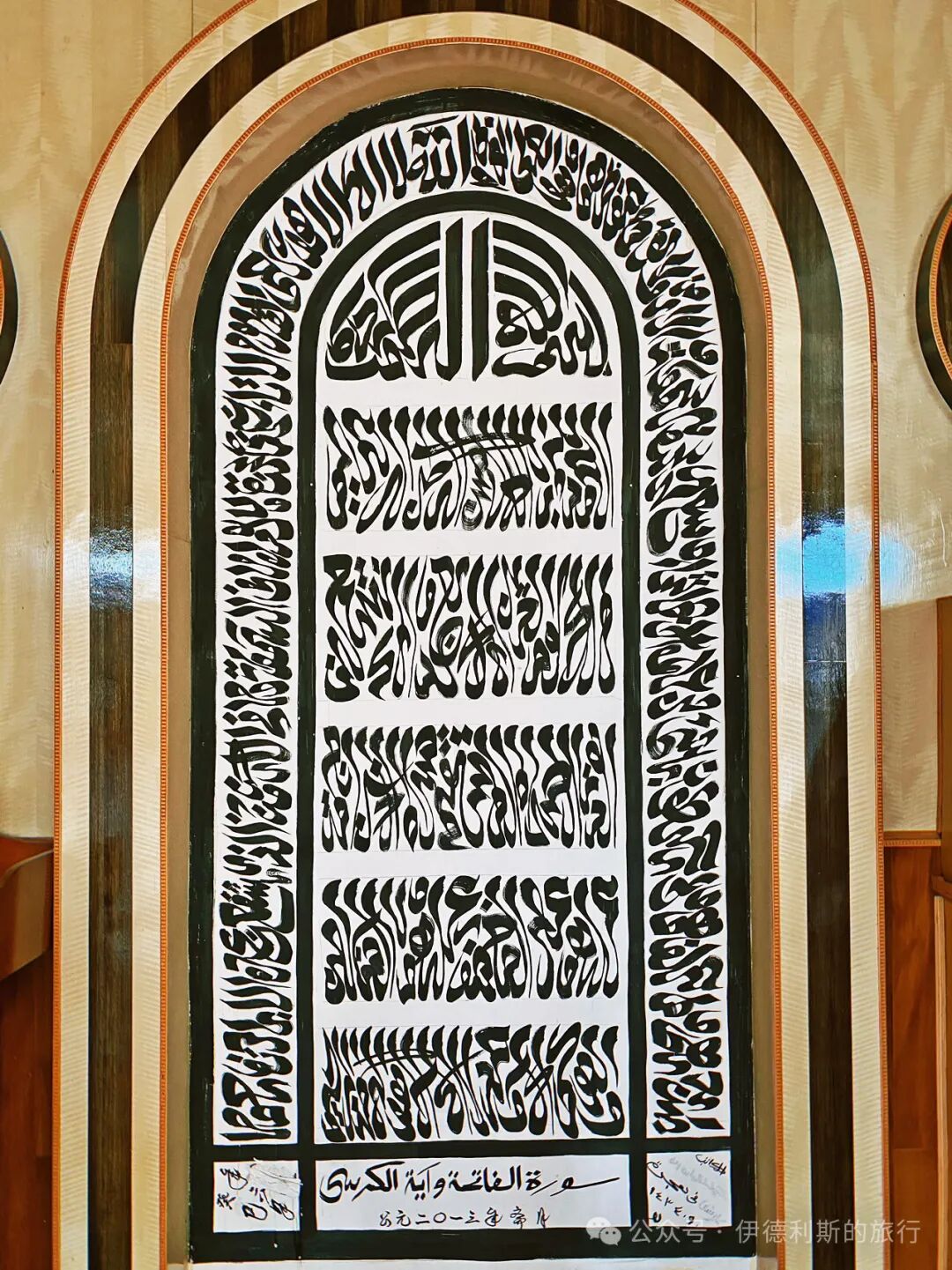
Xishulong Mosque in Weishan, Dali, features traditional stone-carved calligraphy.
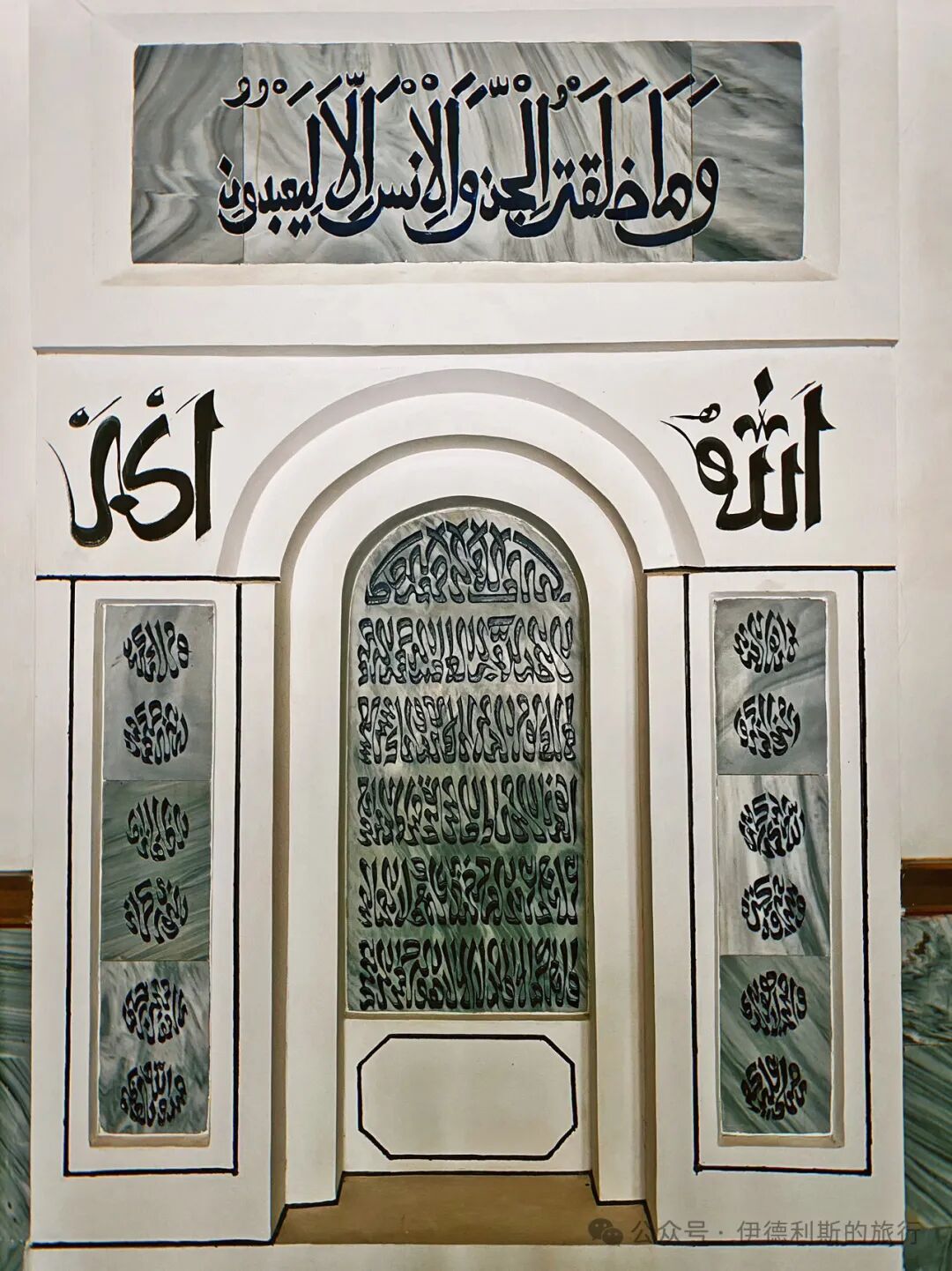
Xiaoweigeng Mosque in Weishan, Dali, features traditional calligraphy.
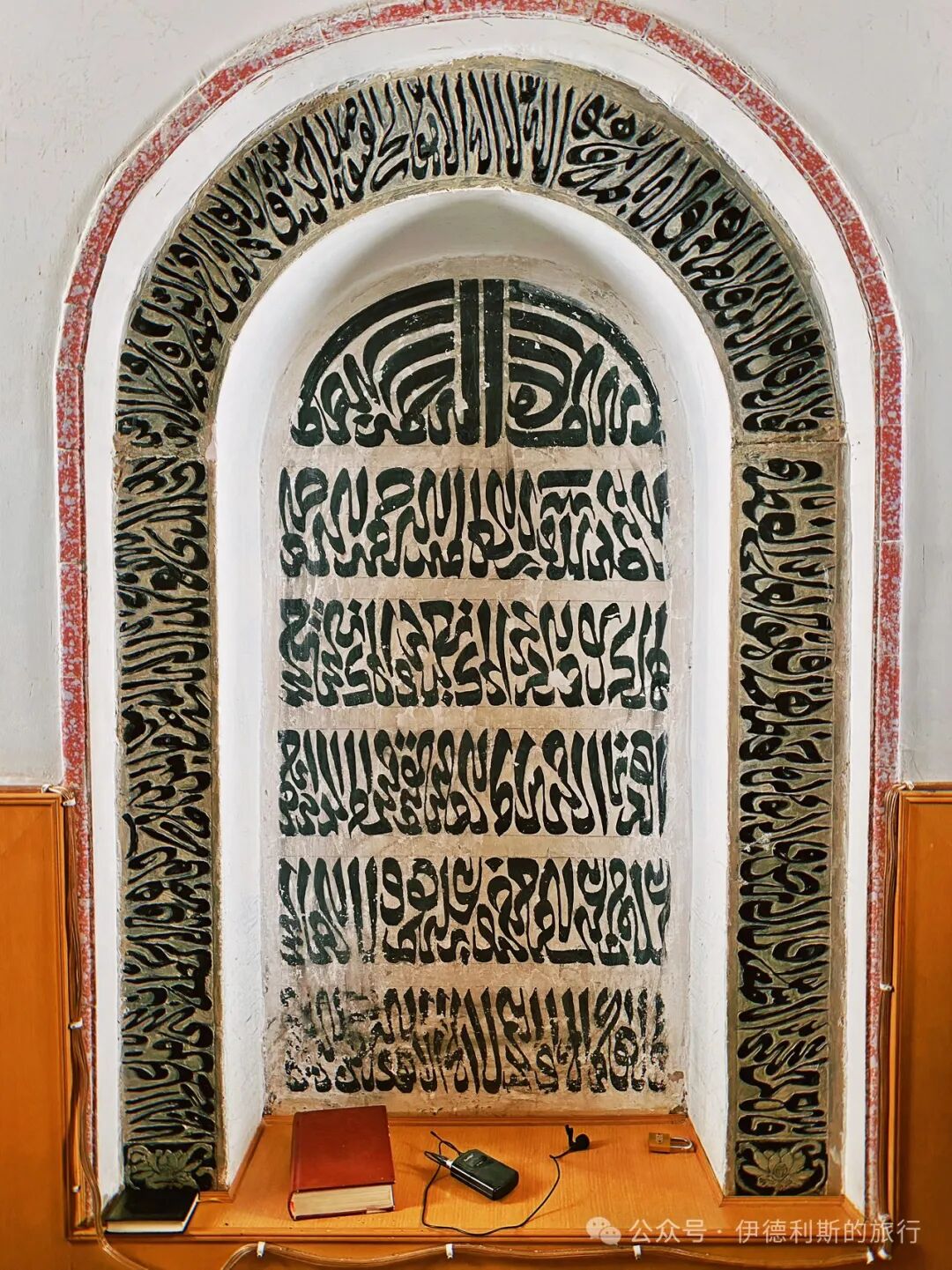
Dingjiachang Mosque in Weishan, Dali, is built in the traditional Dali architectural style with upturned eaves.
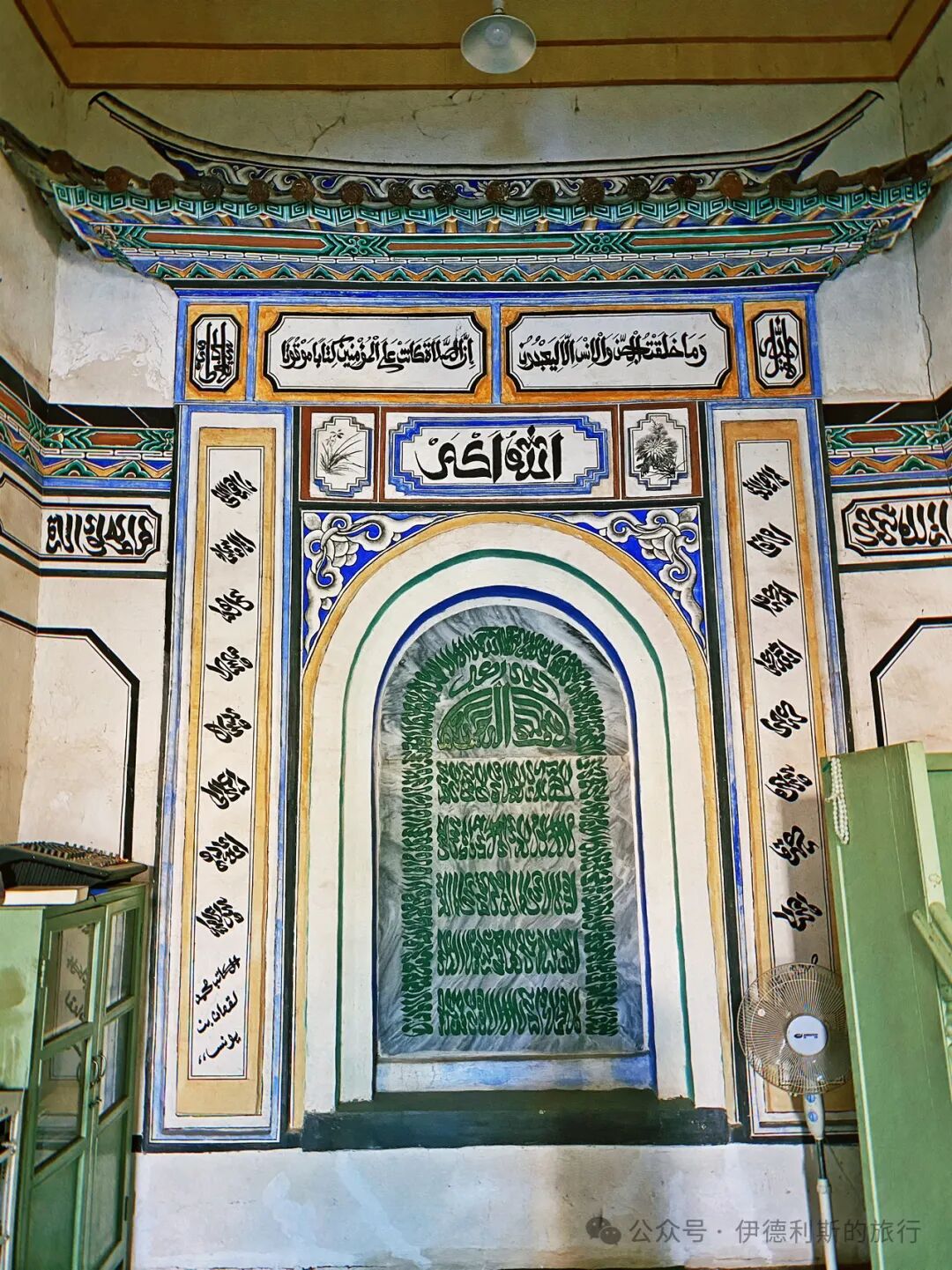
Baisha Village Mosque in Weishan, Dali, features traditional calligraphy.
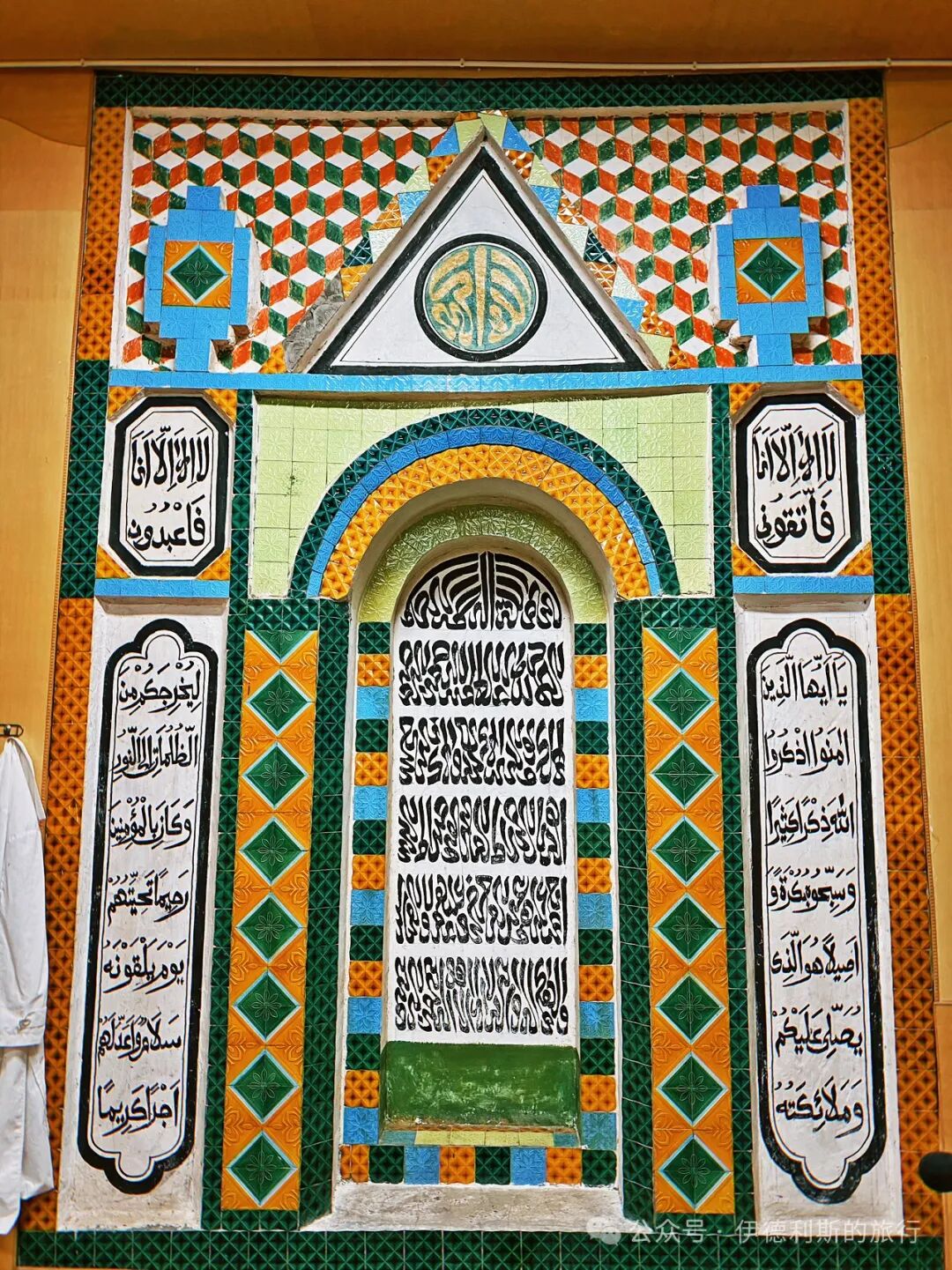
Dawulinmao Mosque in Weishan, Dali, is built in the traditional Dali architectural style with upturned eaves.
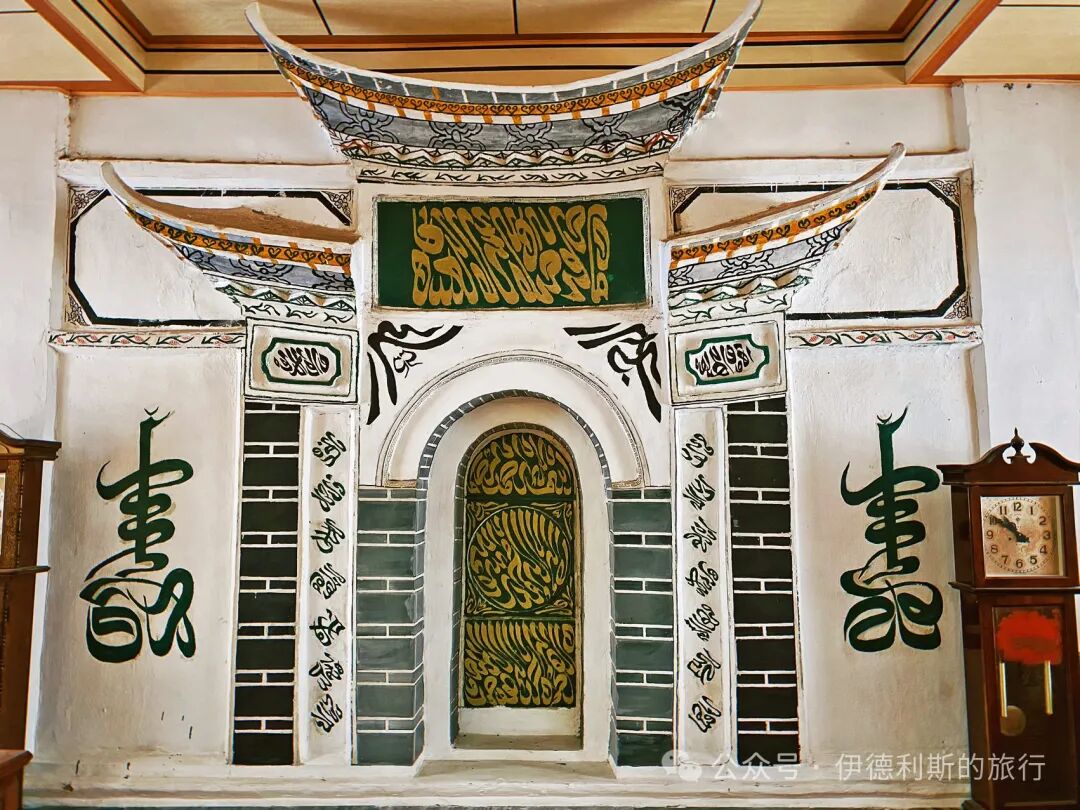
Xiajie Mosque in Yangbi, Dali, features wood-carved calligraphy.
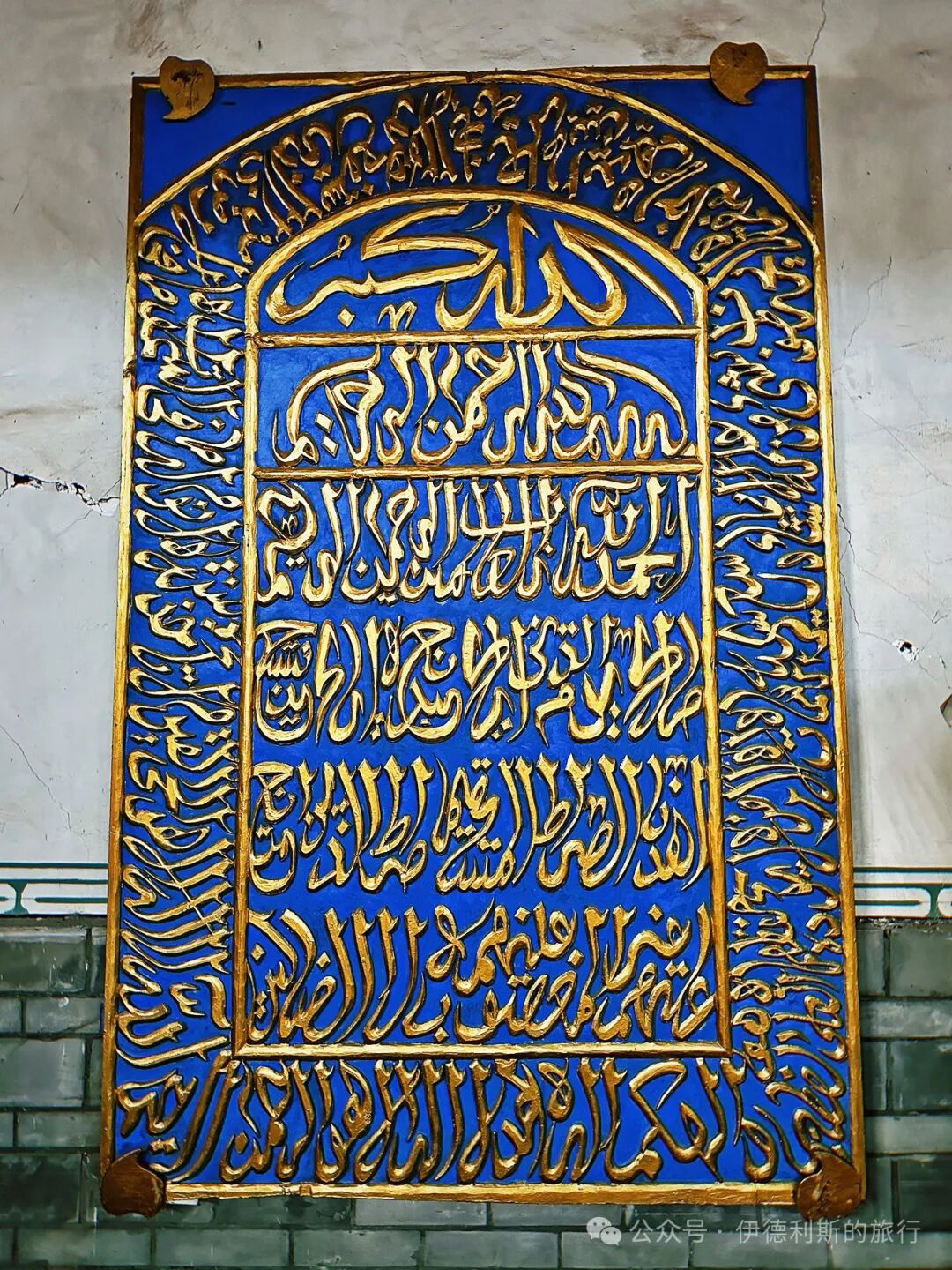
Shangxiang Mosque in Yangbi, Dali, features stone-carved calligraphy.
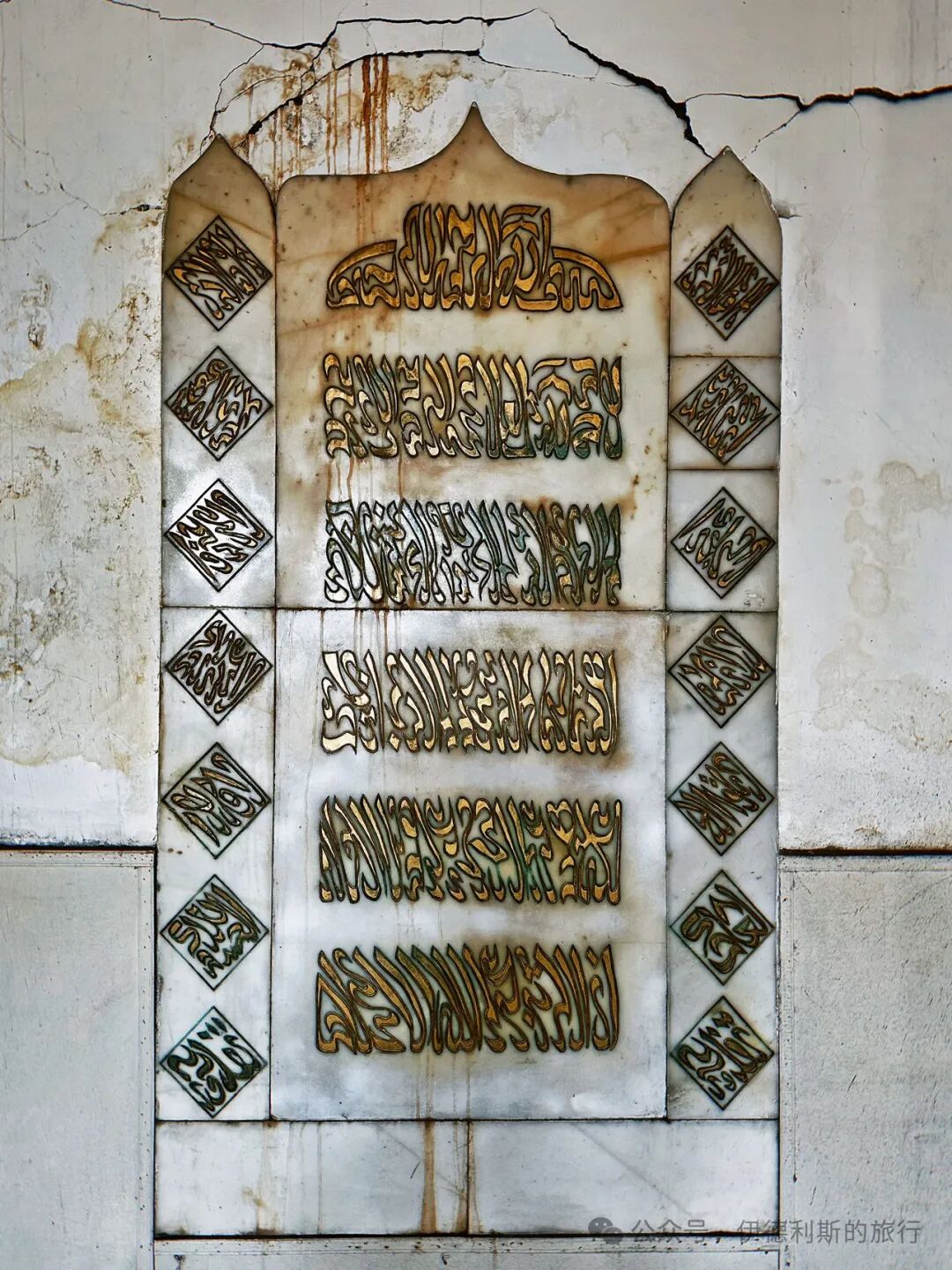
Shangjie Mosque in Yangbi, Dali, features stone-carved calligraphy.
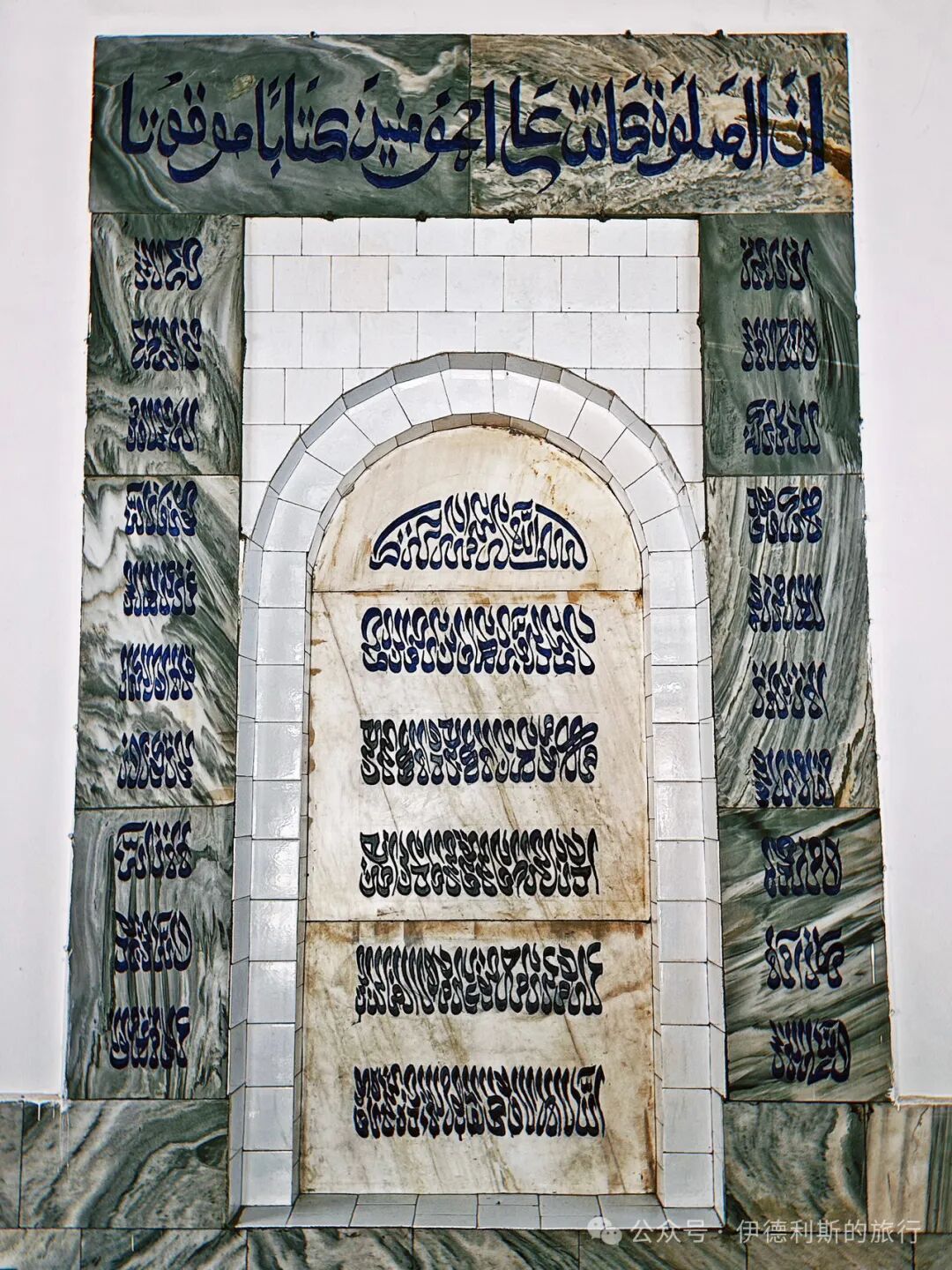
Shangxi Lianhua Mosque in Weishan, Dali, features stone-carved calligraphy.
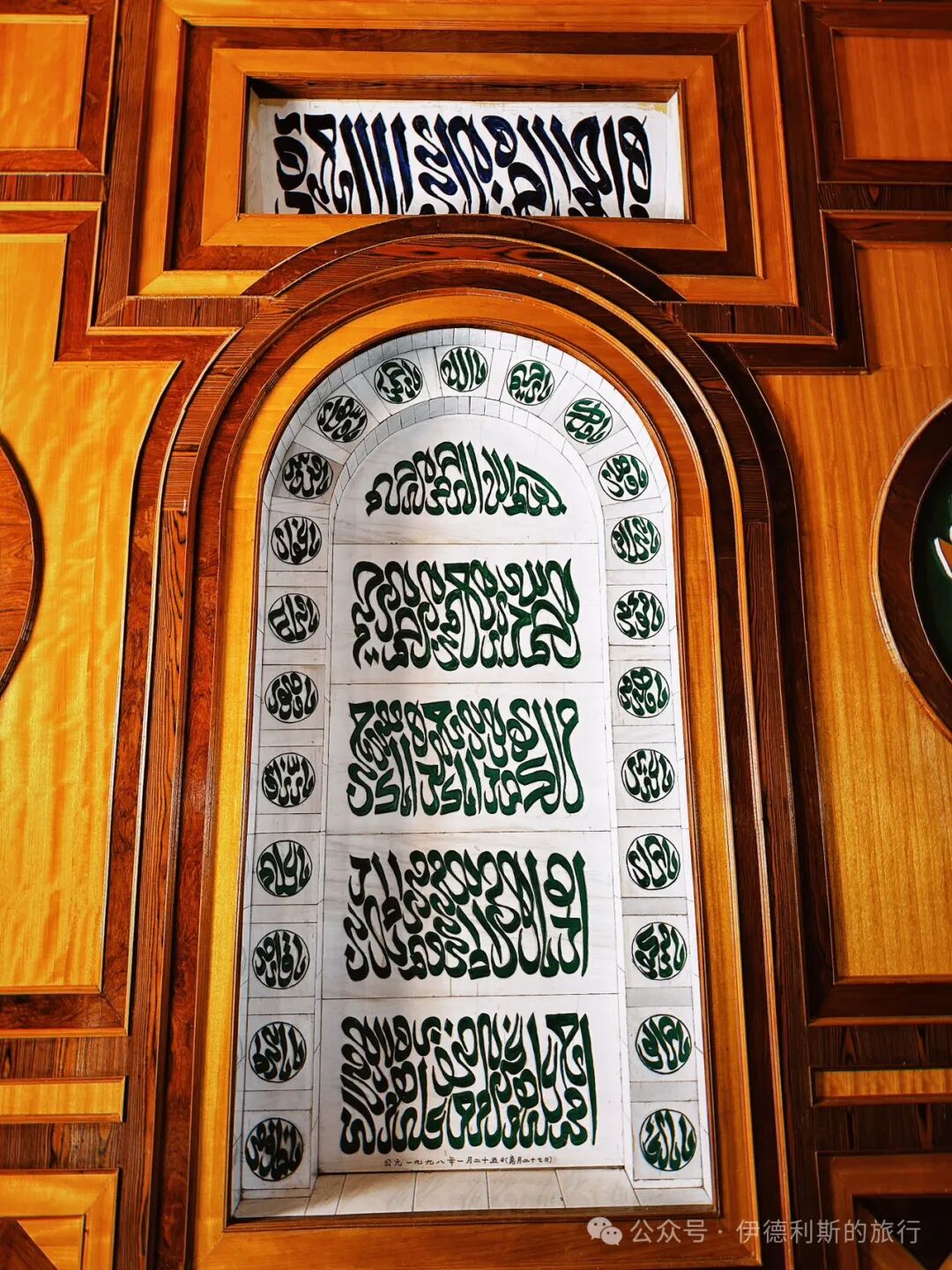
Xincun Mosque in Weishan, Dali, features stone-carved calligraphy.
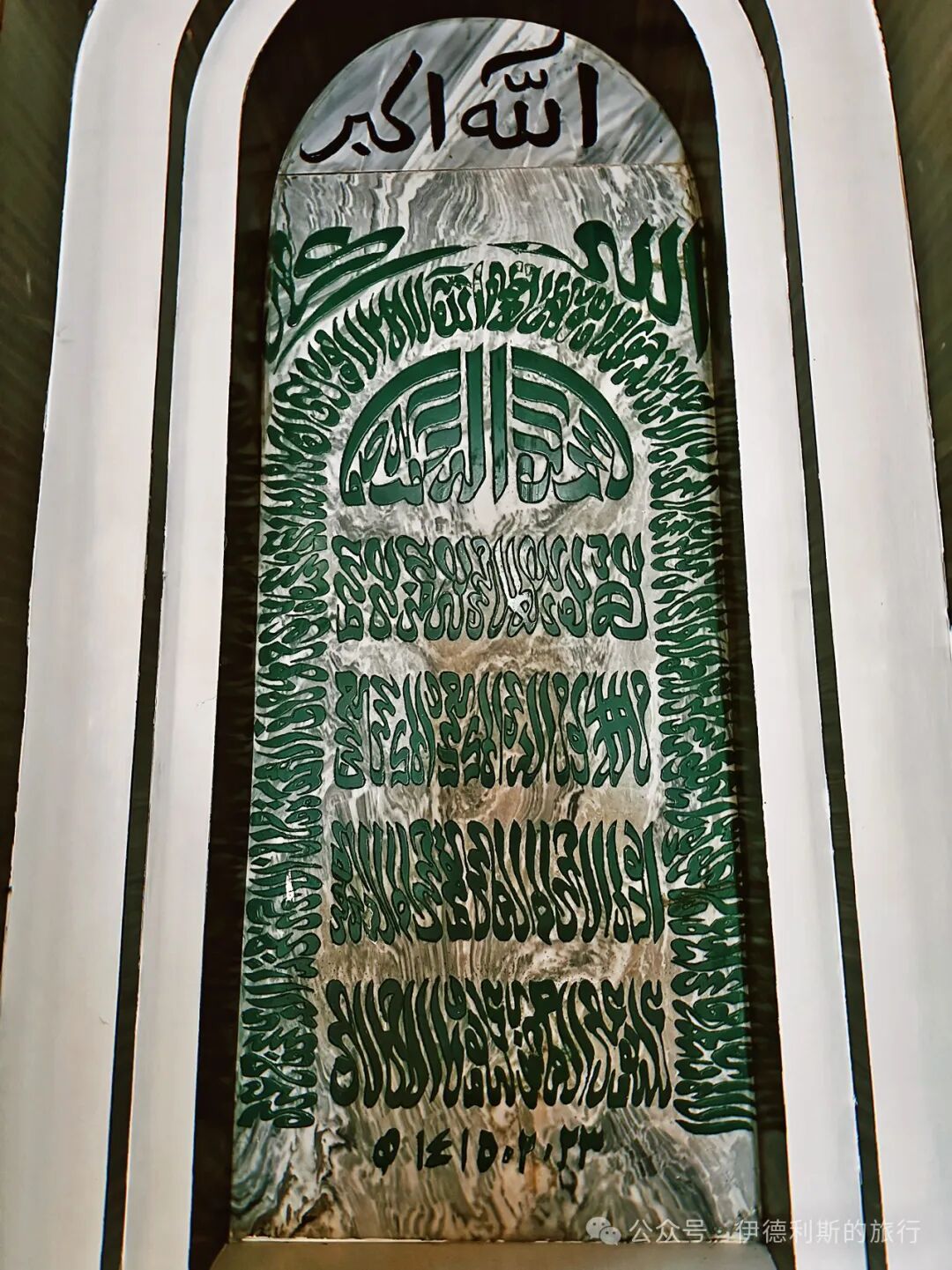
Xiaxi Lianhua Mosque in Weishan, Dali, features traditional calligraphy.
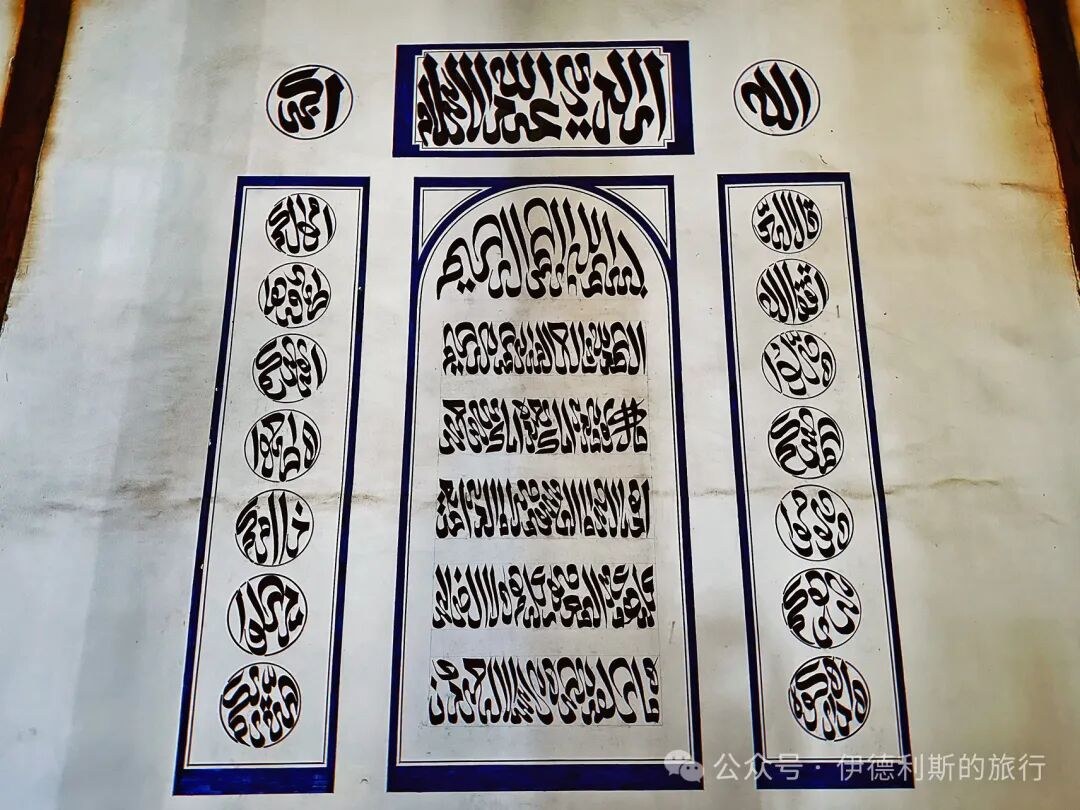
Donglianhua Mosque in Weishan, Dali, features traditional calligraphy.
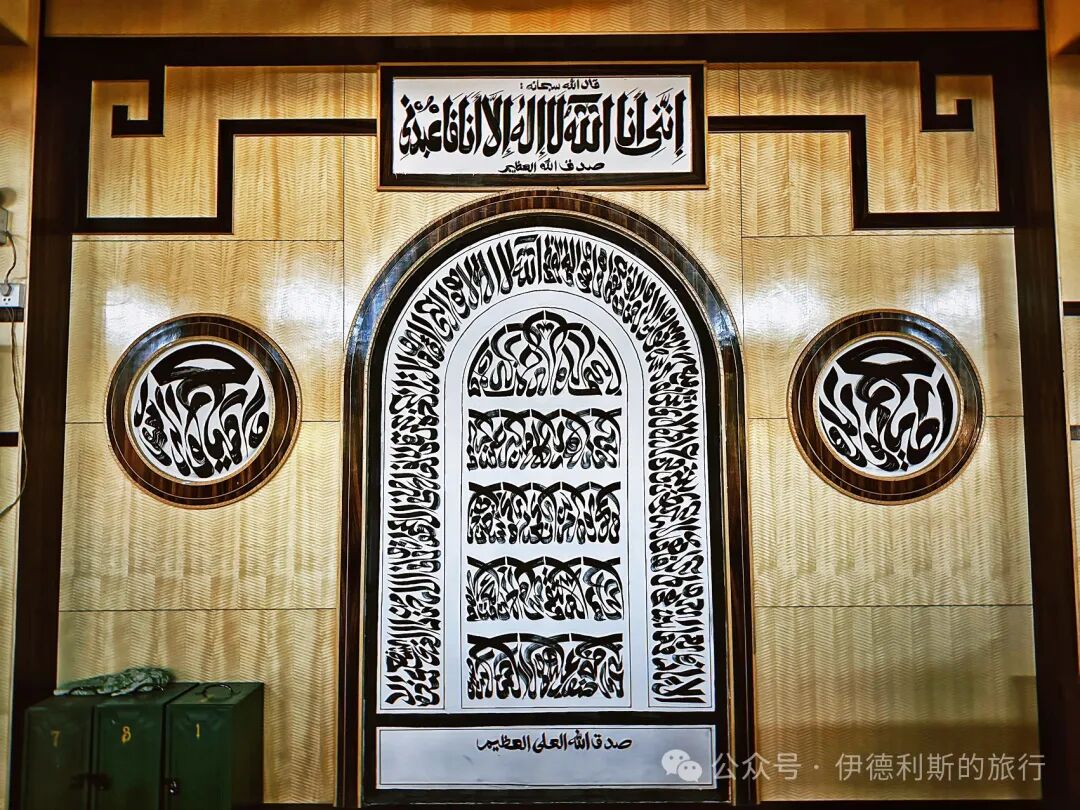
Fengyi Mosque in Dali features stone-carved calligraphy.
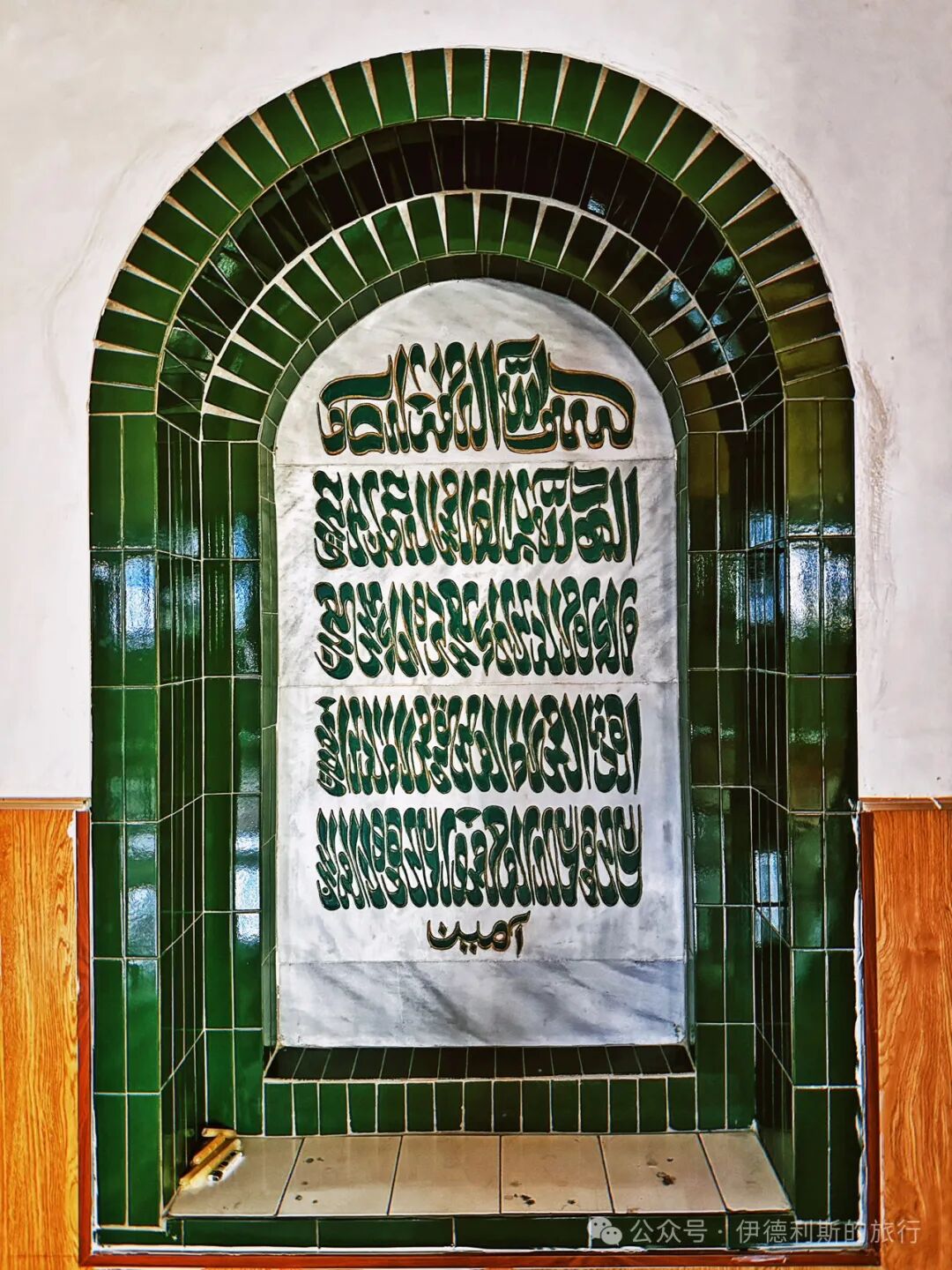
Binchuan Mosque in Dali features traditional calligraphy.
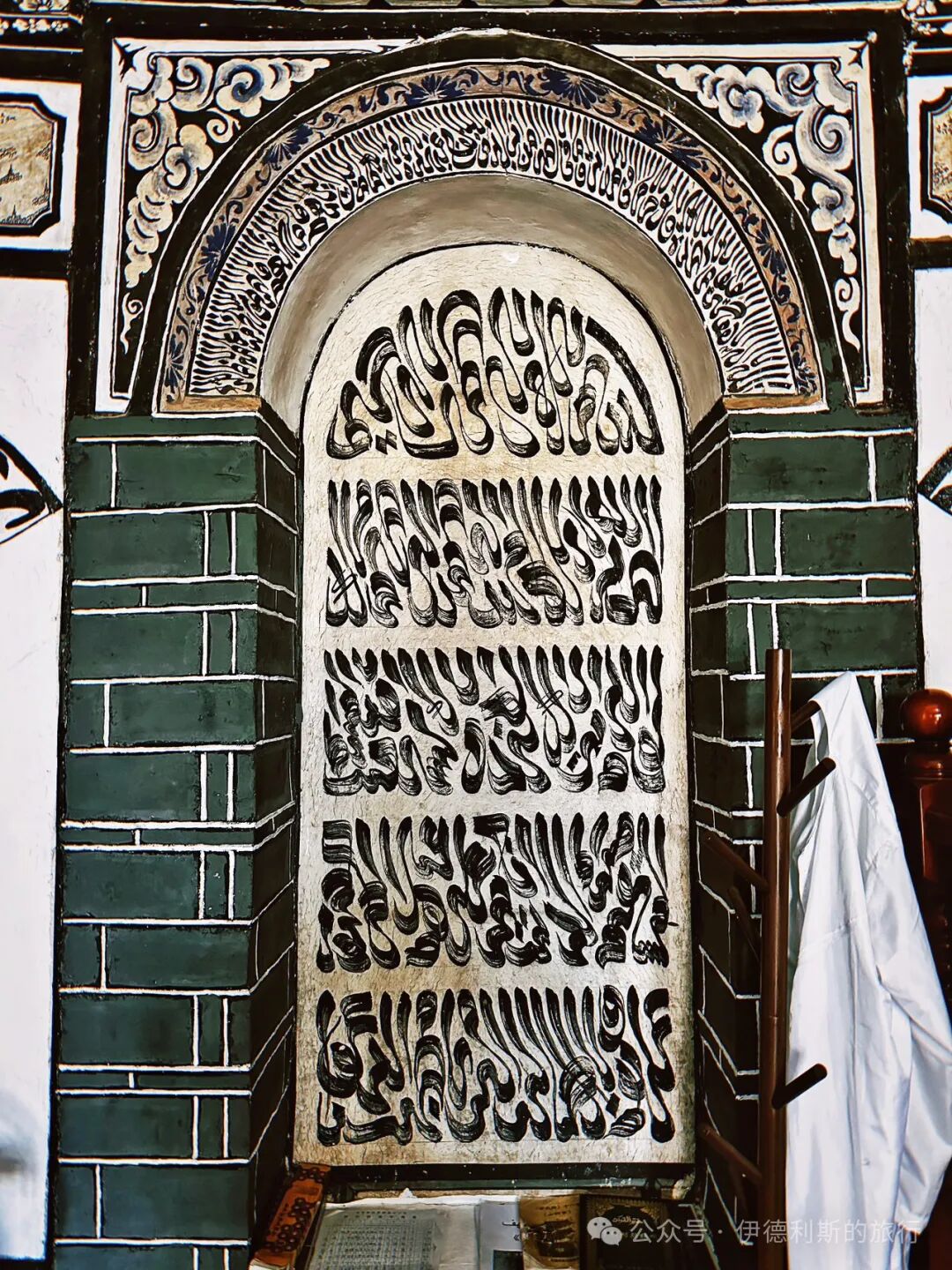
Yongning Mosque in Kunming is known as a masterpiece of Yunnan-style calligraphy.
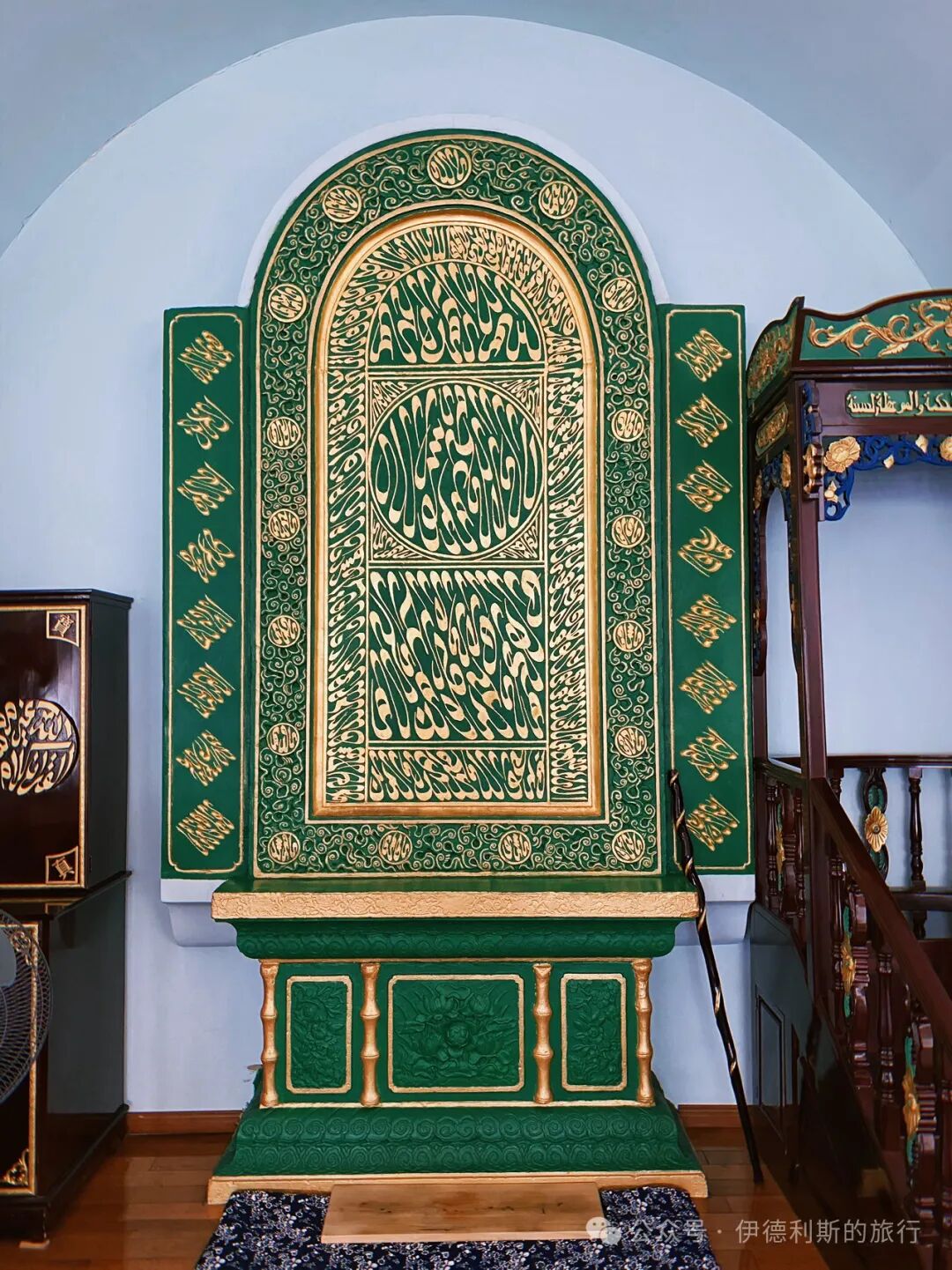
Jinniujie Mosque in Kunming features typical Yunnan-style calligraphy.
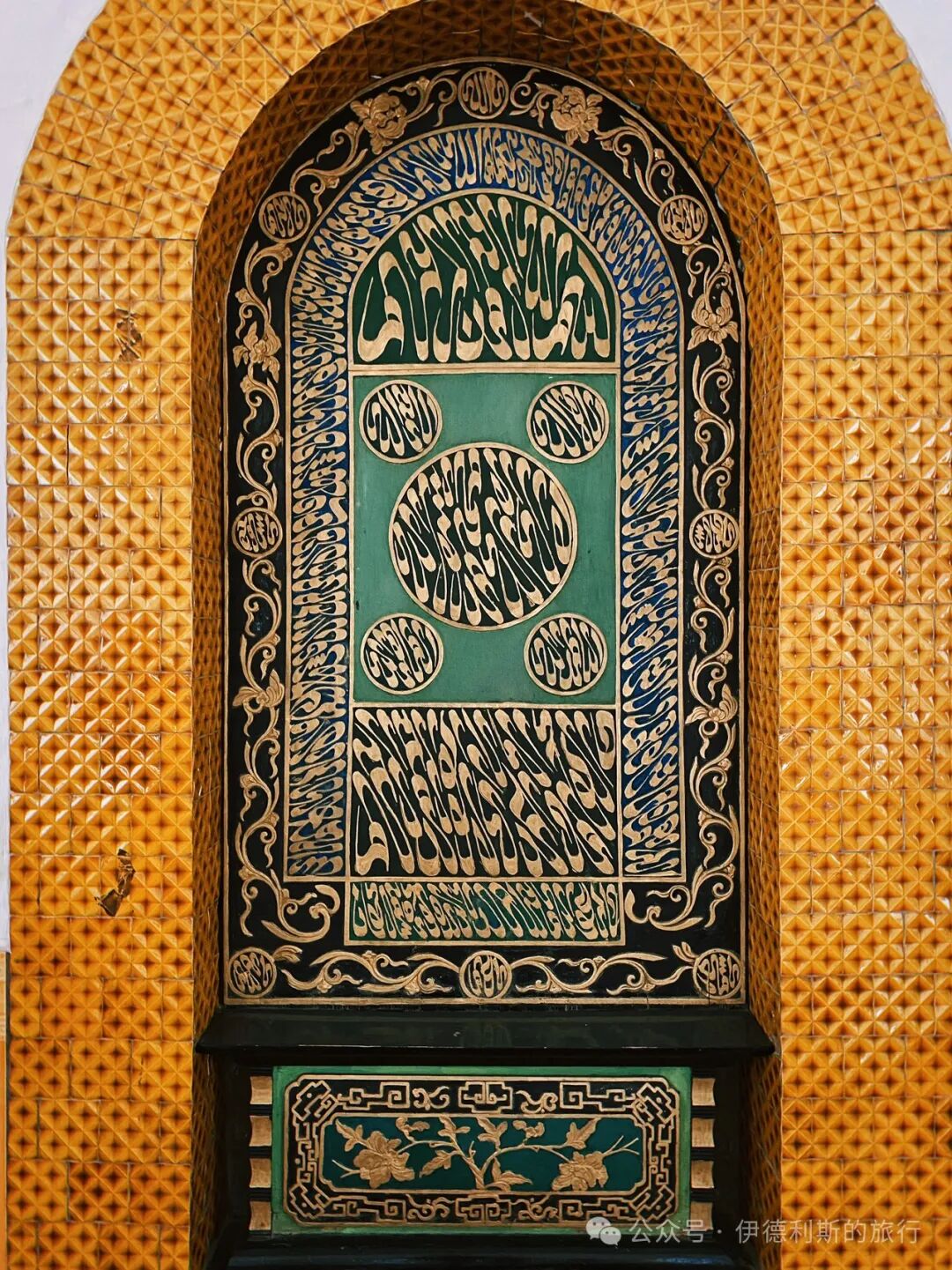
Liren Mosque in Haikou, Kunming, features typical Yunnan-style calligraphy.
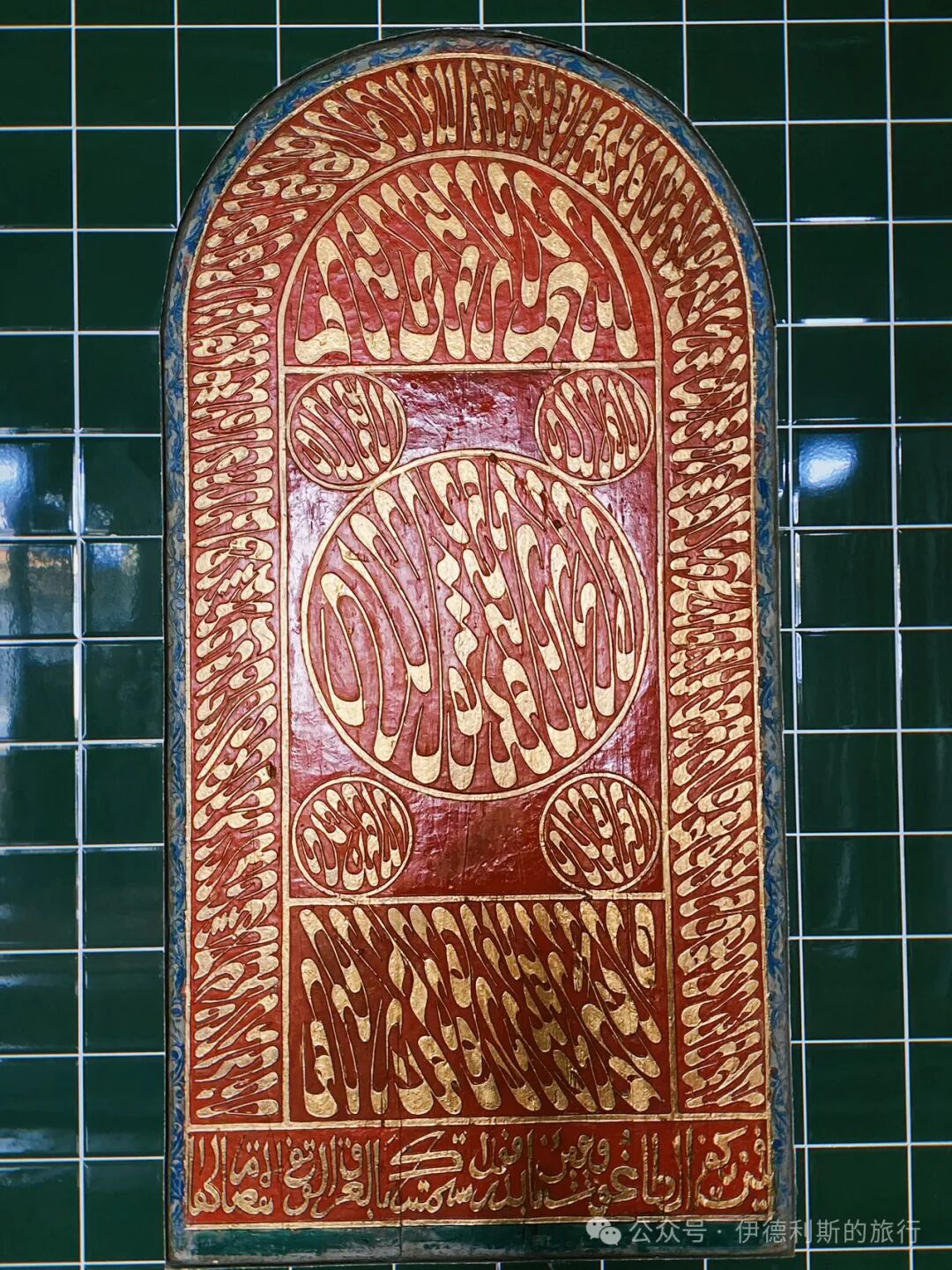
Beiying Mosque in Xundian features typical Yunnan-style calligraphy.
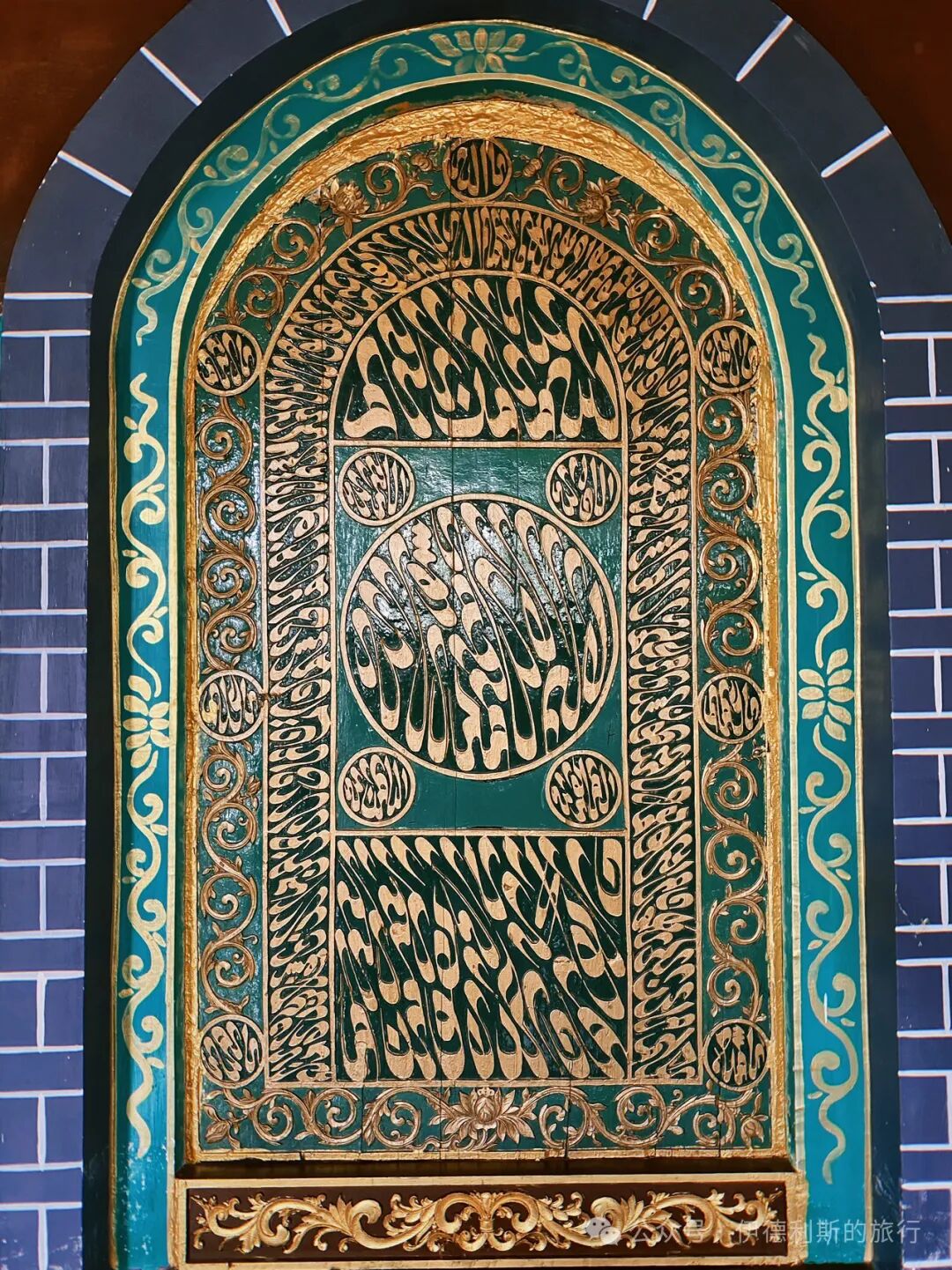
Huihuiying Mosque in Chenggong, Kunming, has very unique floral-style calligraphy in the center.
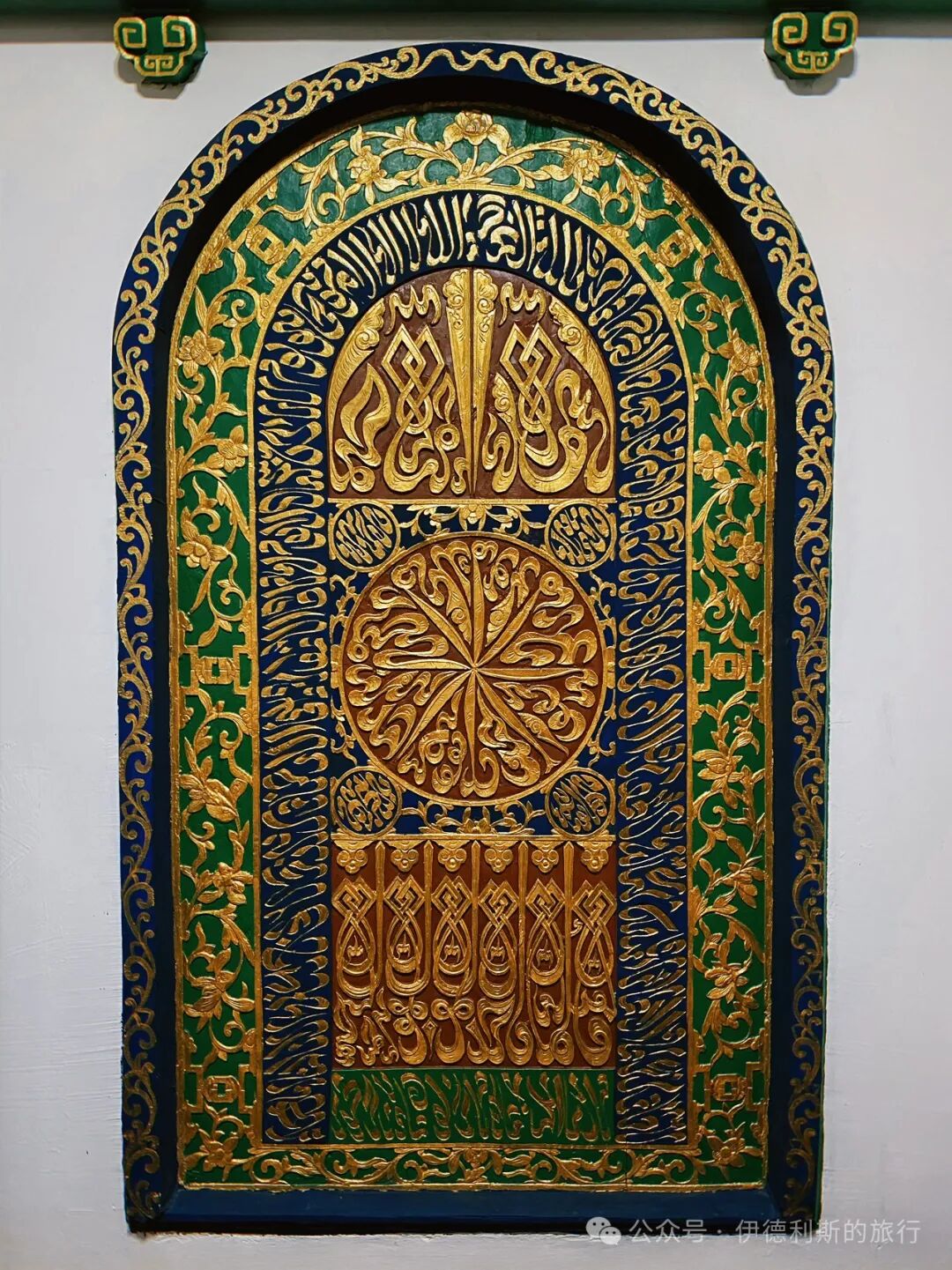
Dazhuang Mosque in Kaiyuan features traditional calligraphy in the center with a circular, interlocking design.
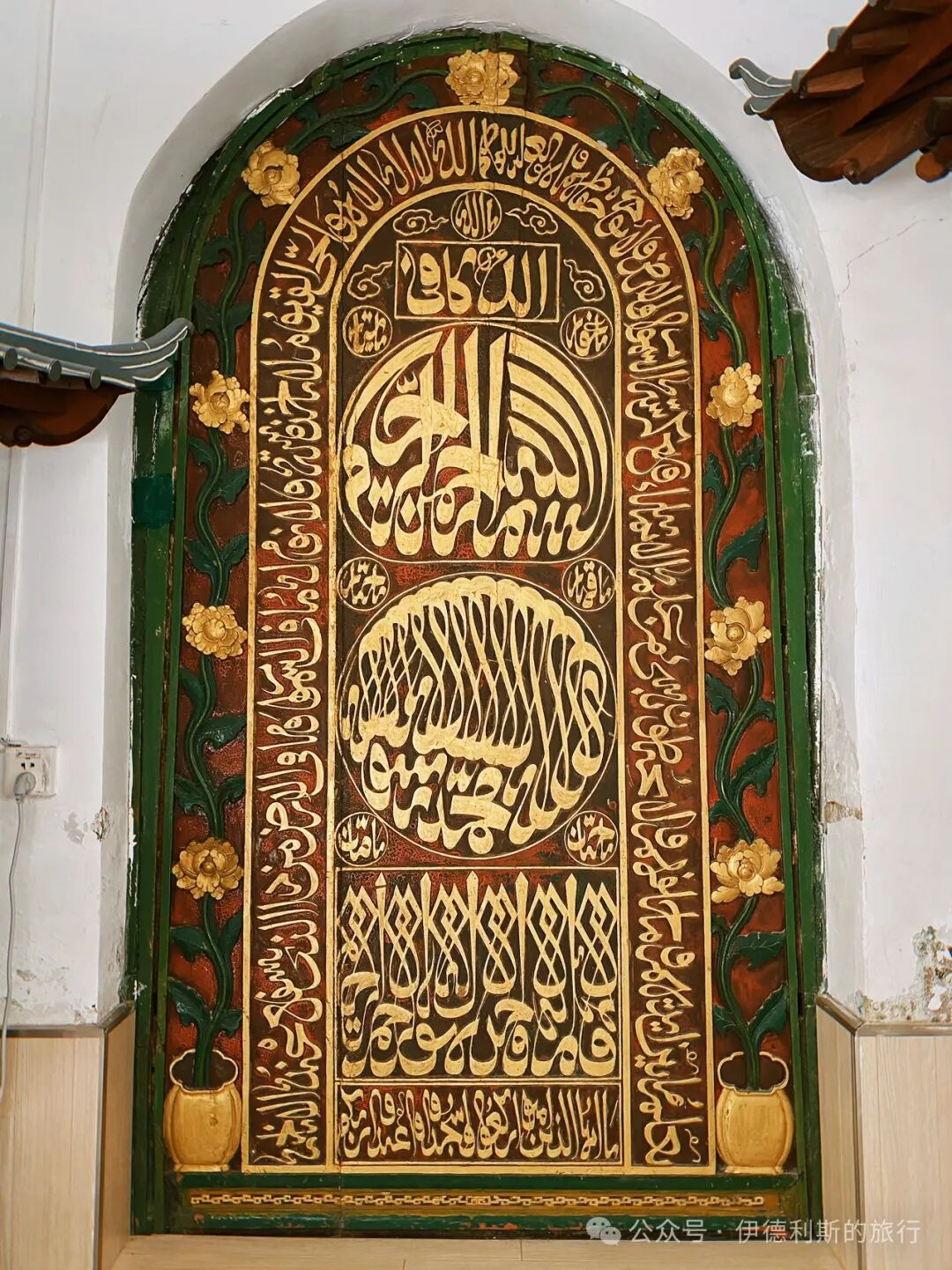
Tuogu Mosque in Ludian, Zhaotong, has traditional calligraphy on the couplets flanking the arch and in the circular center.
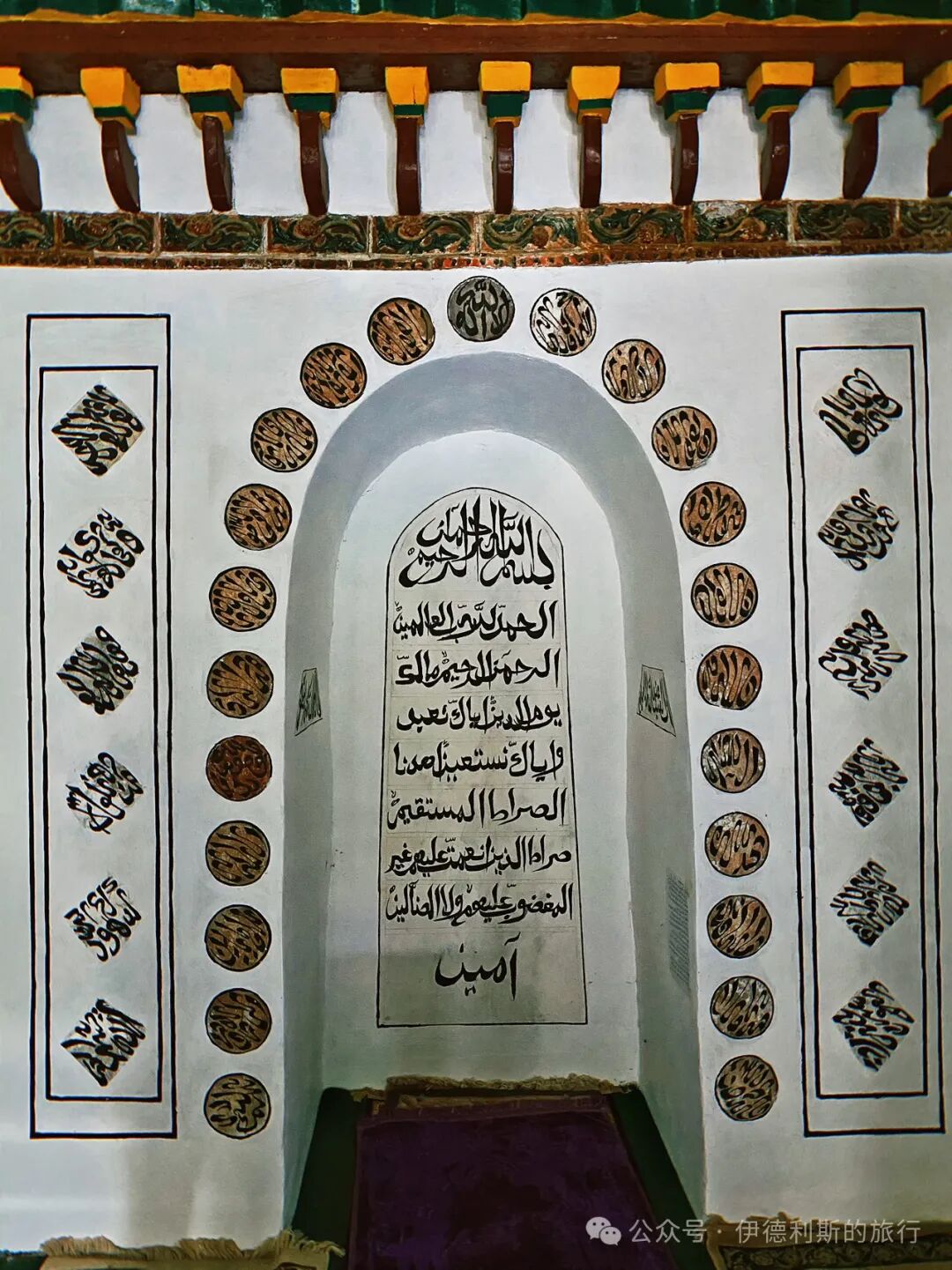
Longtoushan Mosque in Ludian, Zhaotong, features traditional-style calligraphy.
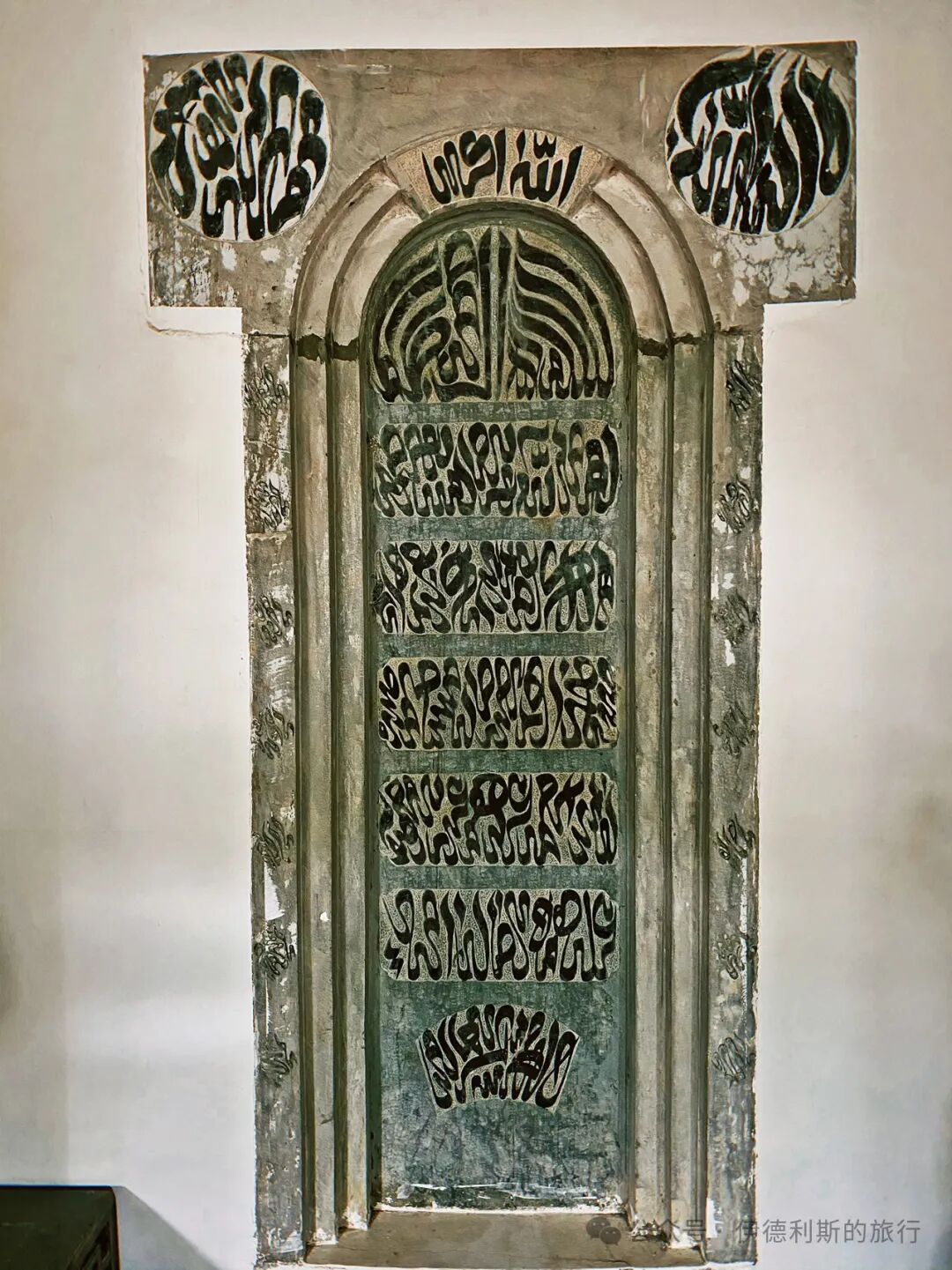
Taojiawan Mosque in Ludian, Zhaotong, features traditional Yunnan-style calligraphy.
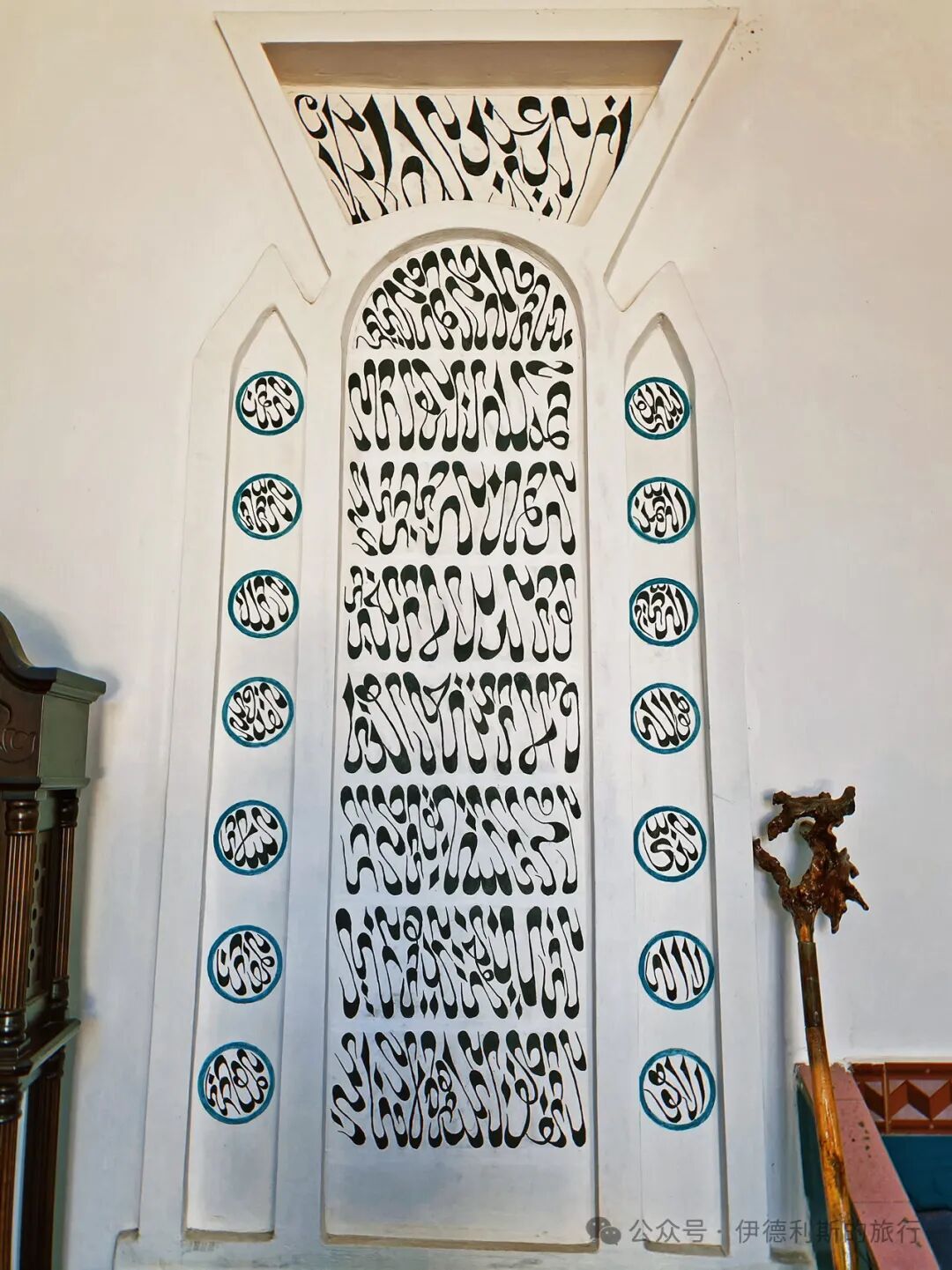
Guangxi
Chongshan Road Mosque in Guilin was first built in 1734 (the 12th year of the Yongzheng reign). The rear hall was expanded in 1892 (the 18th year of the Guangxi reign) and features exquisite wood carvings of floral-style calligraphy.
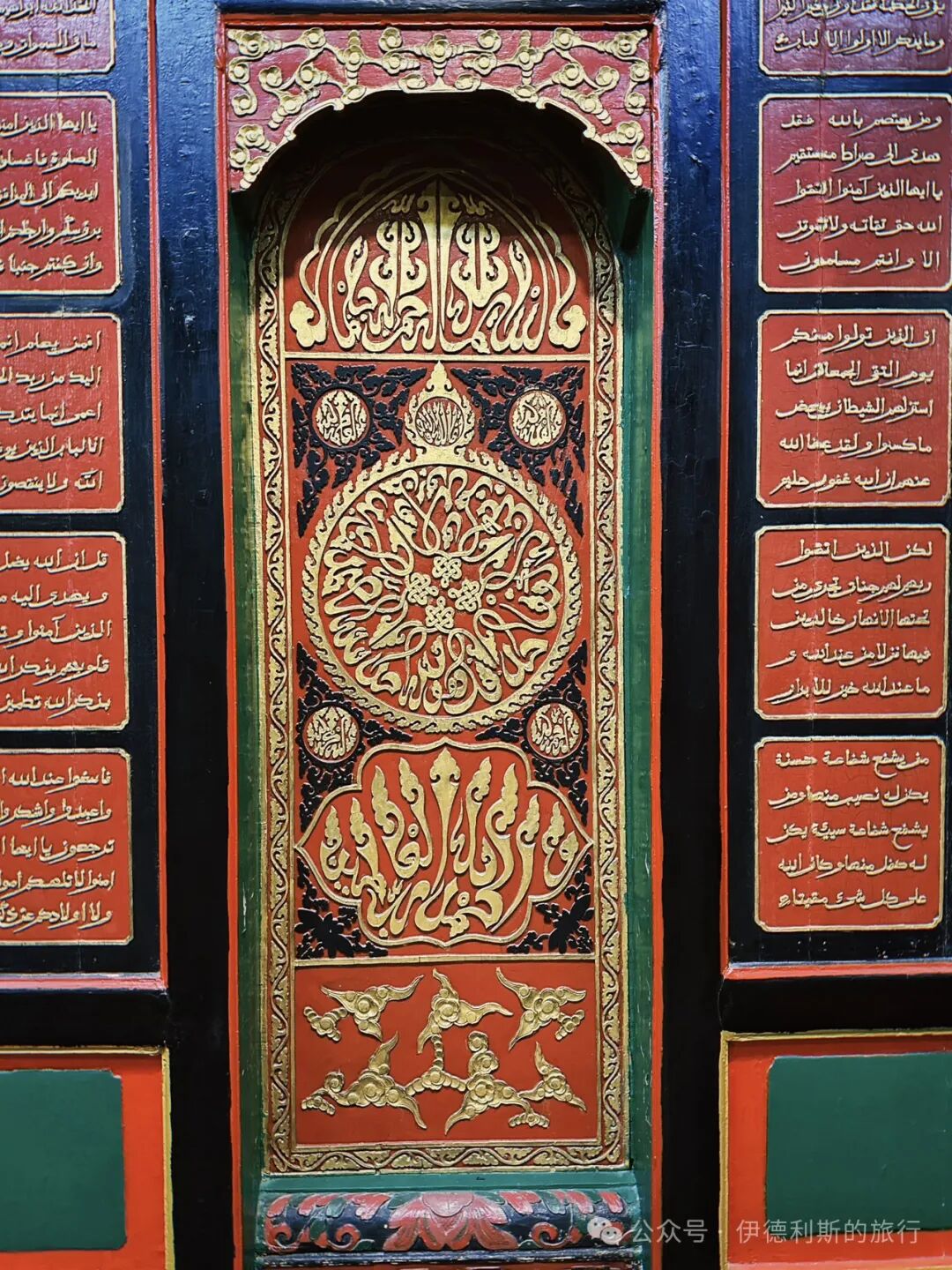
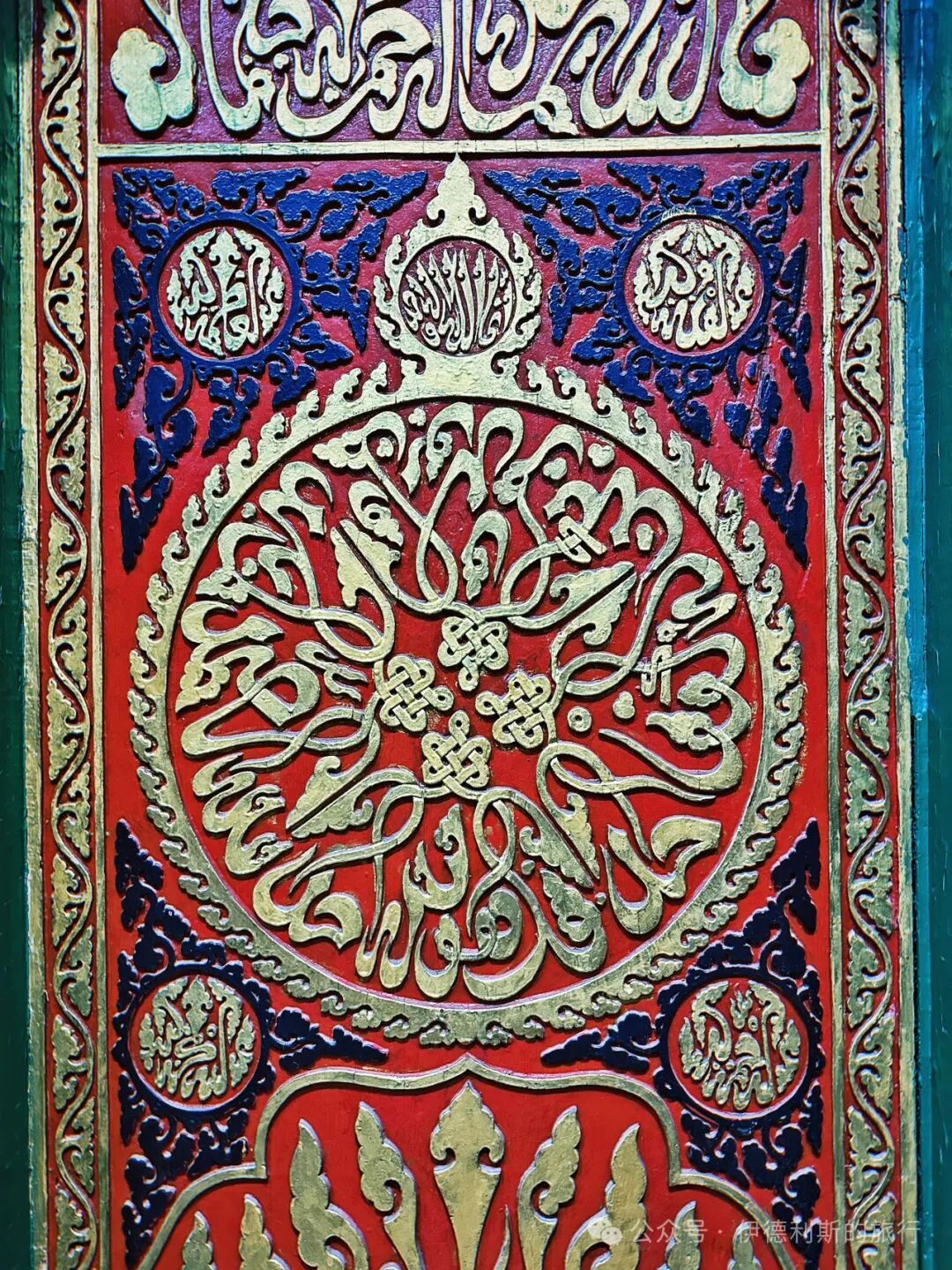
Wutong Mosque in Guilin was first built during the Qing Jiaqing reign and renovated in 1915. It has beautiful wood carvings of calligraphy.
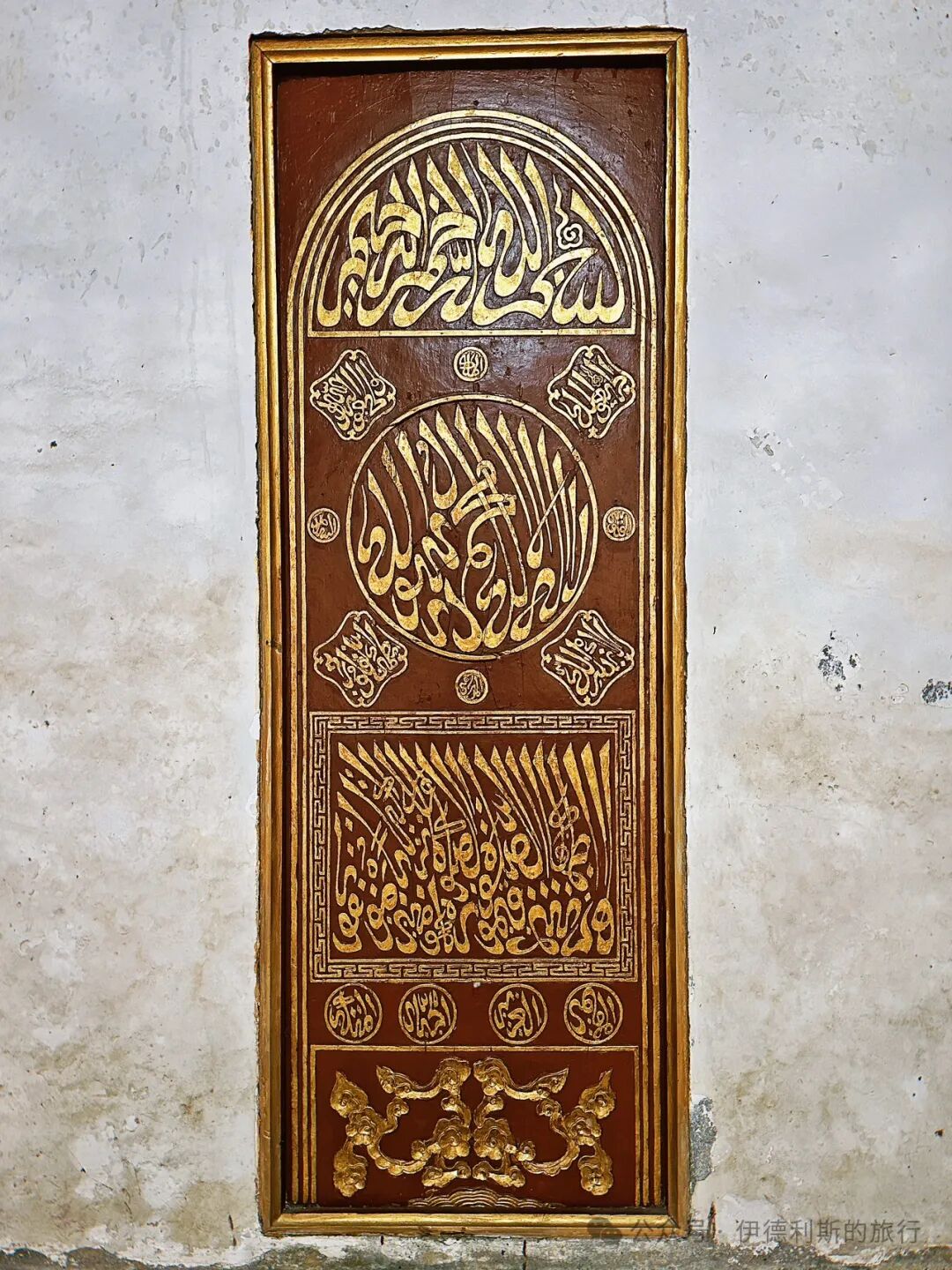
Liutang Mosque in Guilin was first built during the Qing Qianlong reign and has beautiful wood carvings of calligraphy.
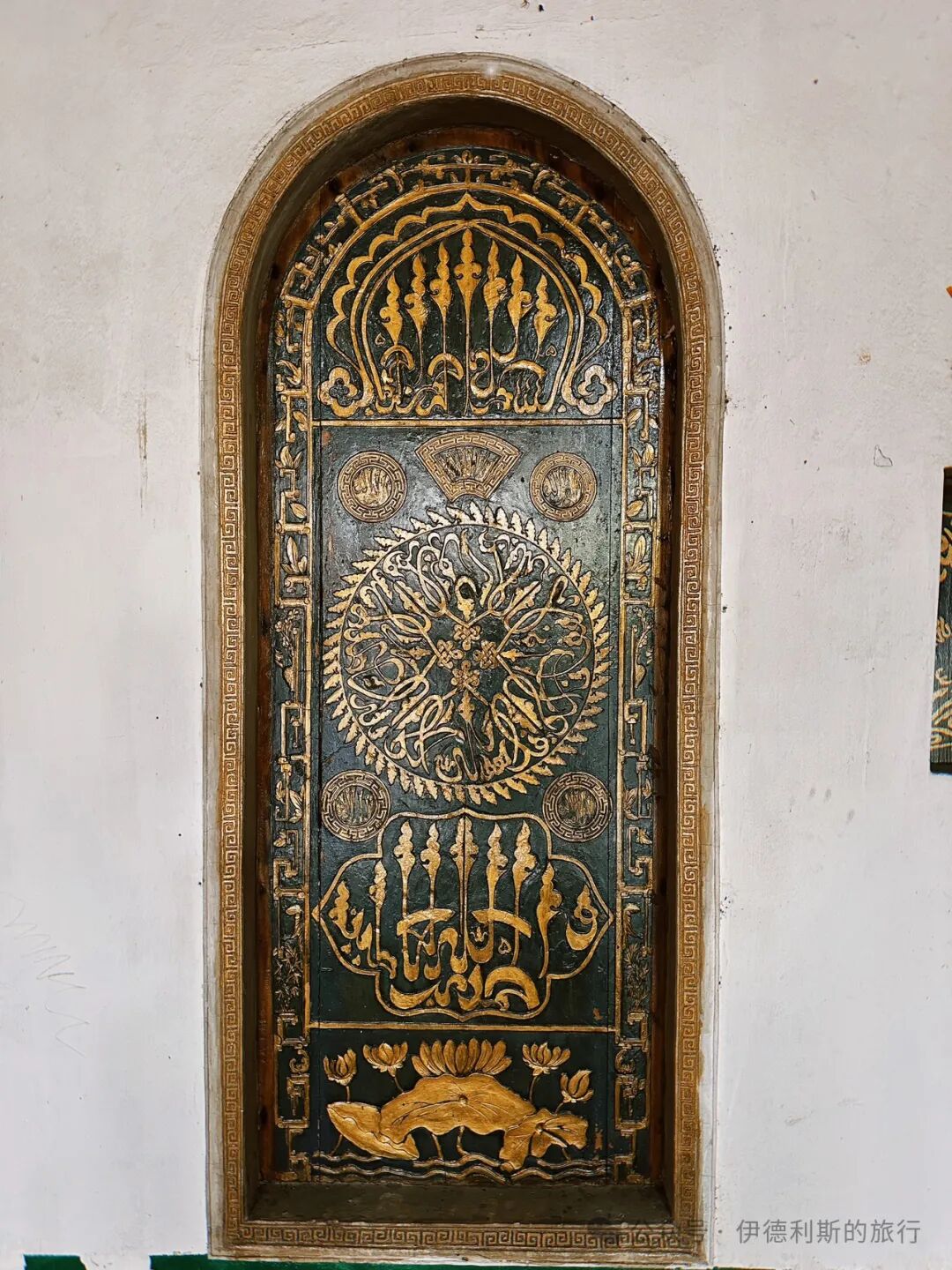
Jiucun Mosque in Guilin features wood carvings of calligraphy.
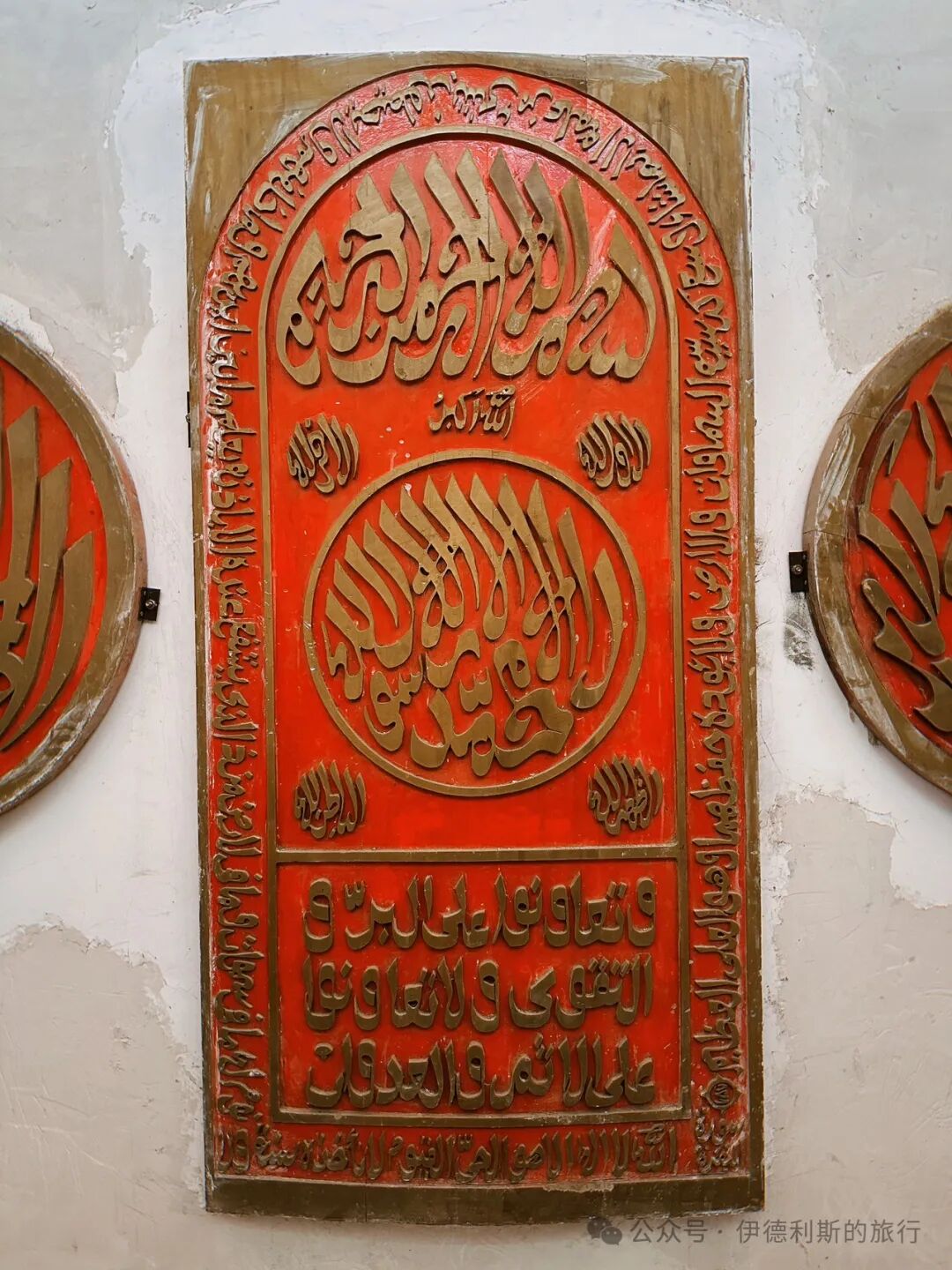
Daxu Mosque in Guilin features wood carvings of calligraphy.
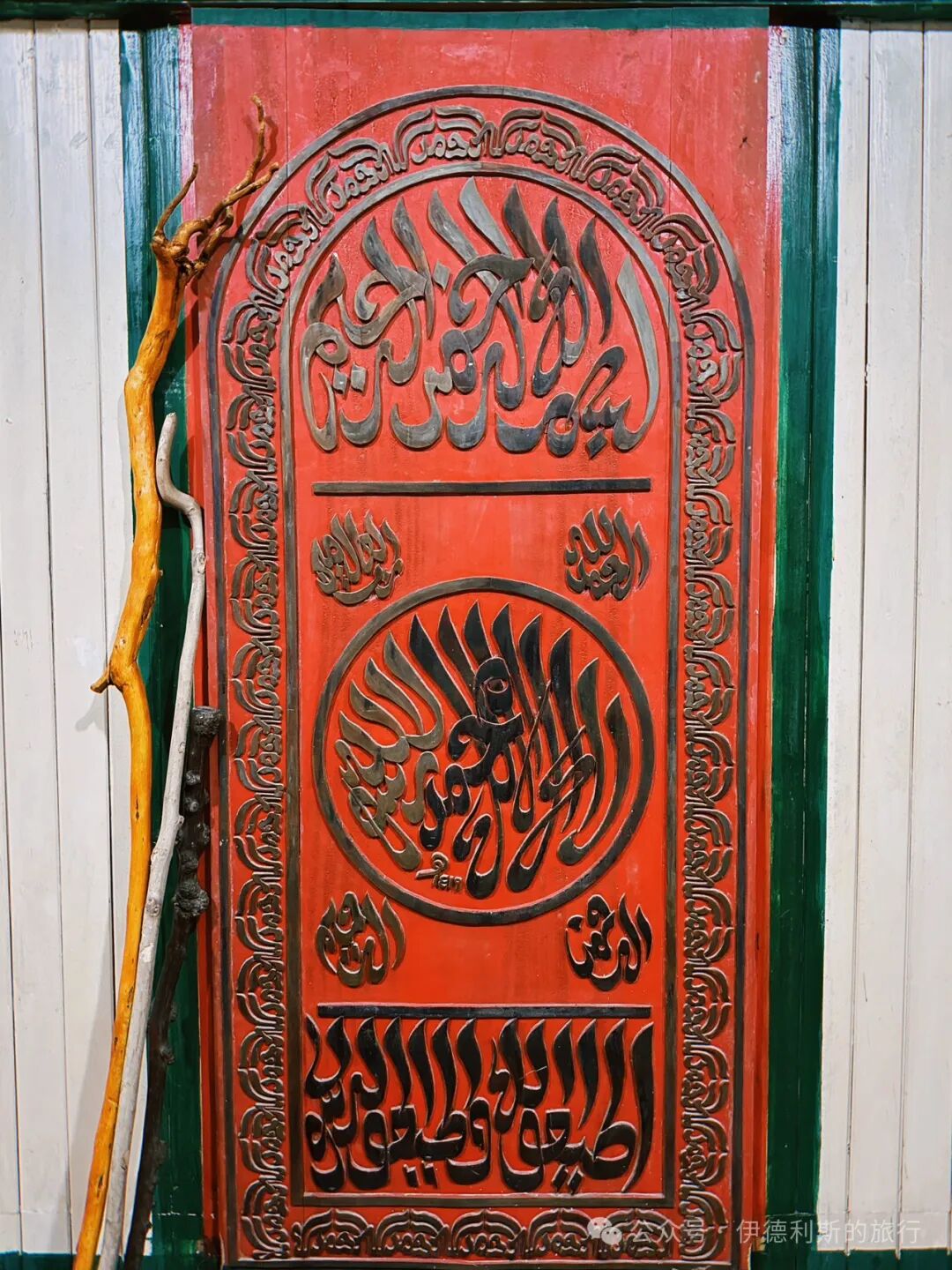
The Women's Mosque in Guilin features wood carvings of calligraphy.
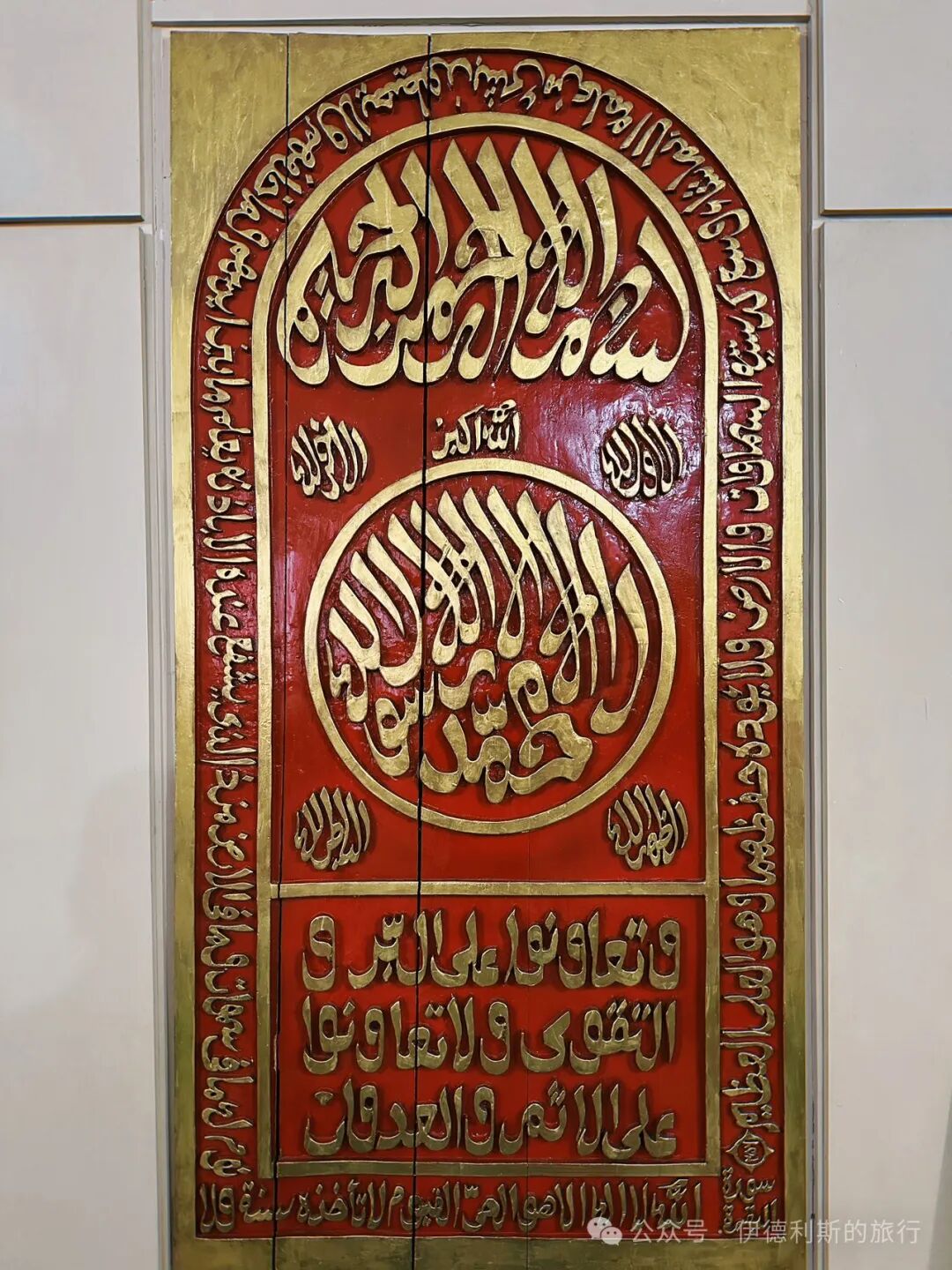
Maping Mosque in Guilin was first built in 1671 (the 10th year of the Kangxi reign). It was burned down by the Japanese army in 1944, rebuilt in 1948, and rebuilt again in 1987, but it still keeps the original wood carvings of the mihrab.
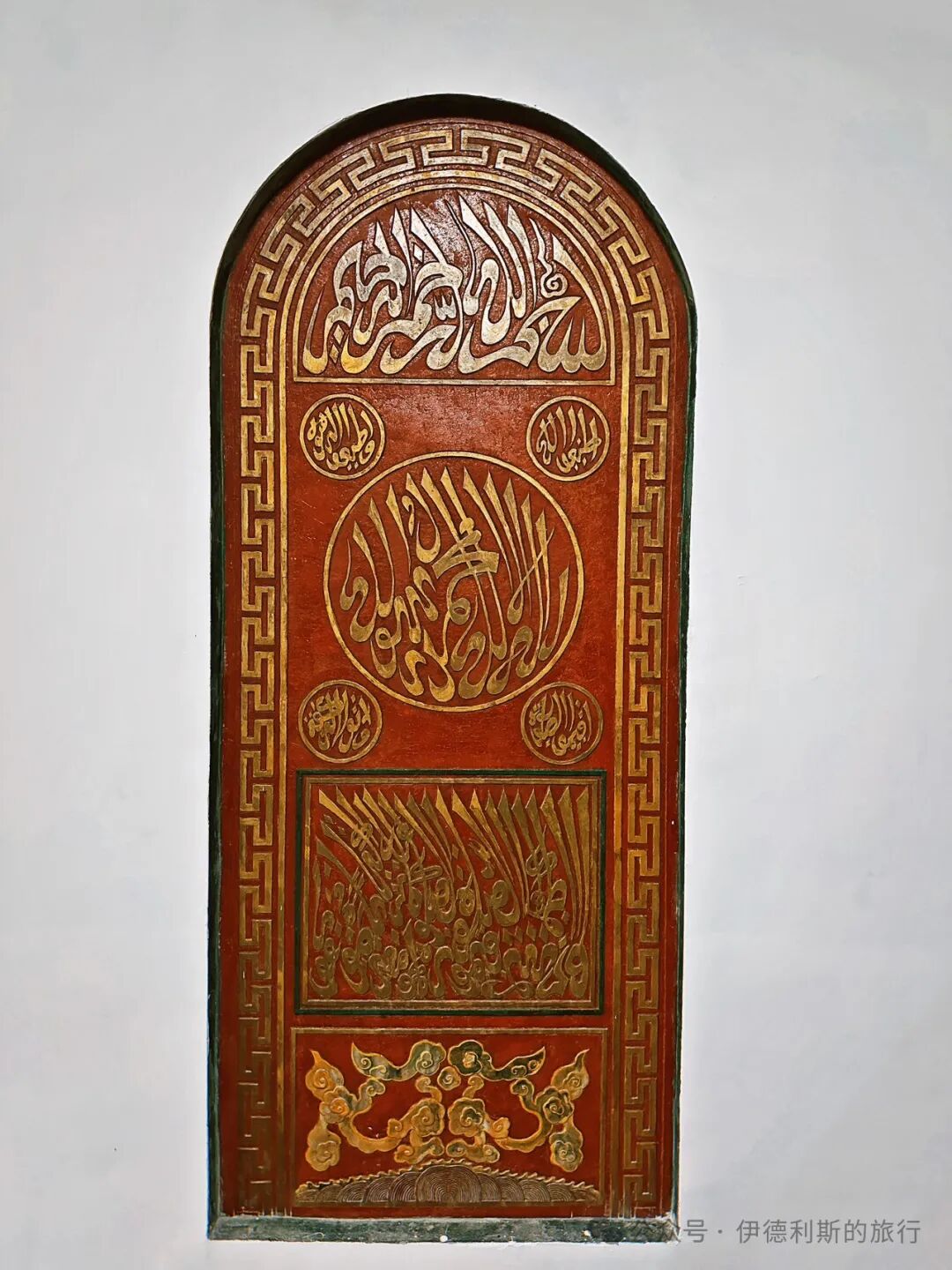
Guangdong
Chengxi Mosque in Zhaoqing, Guangdong, preserved its Qing Dynasty stone mihrab during the 1983 reconstruction, which features traditional calligraphic couplets.
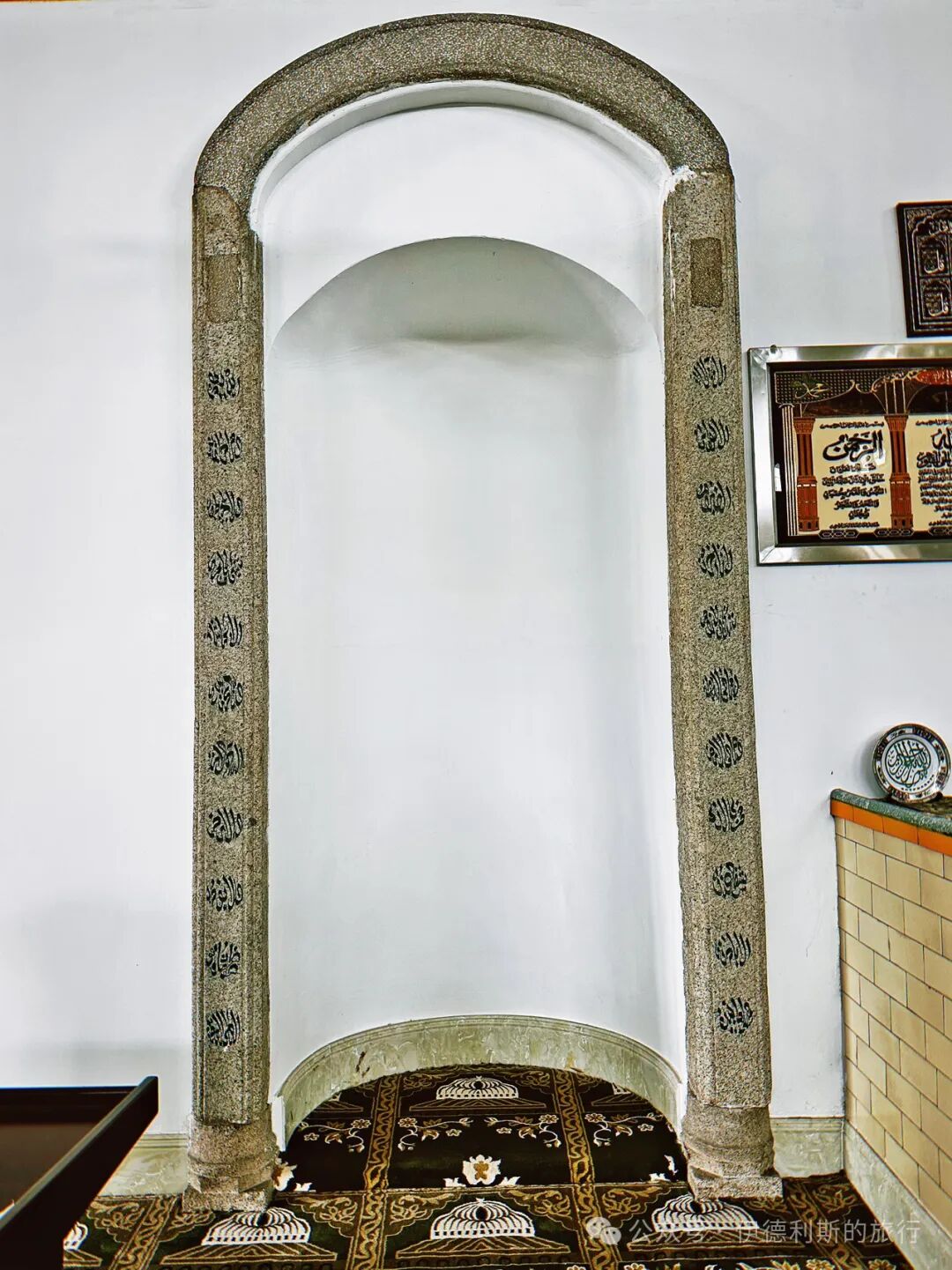
Chengdong Mosque in Zhaoqing, Guangdong, features Qing Dynasty wood-carved calligraphy.
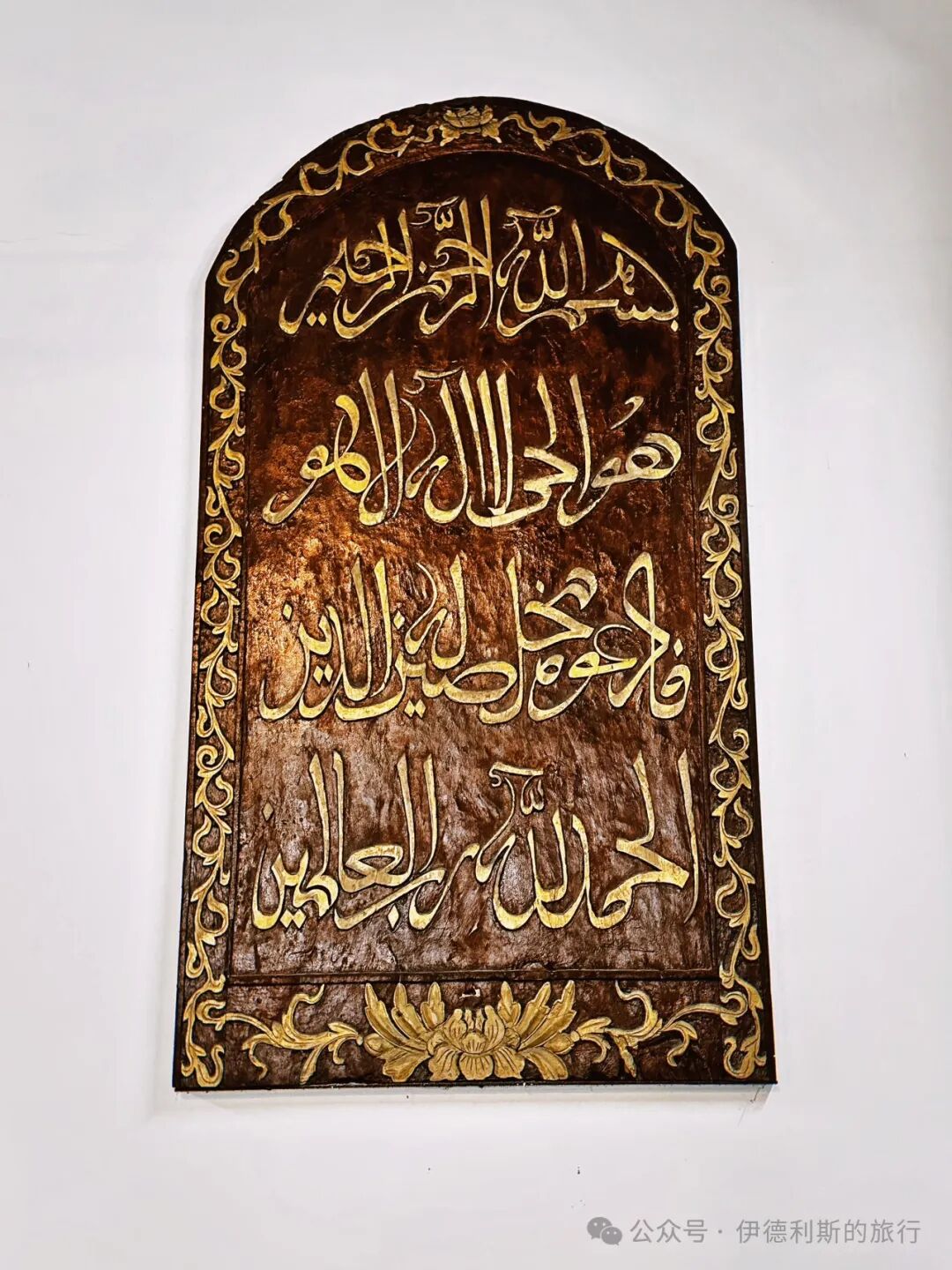
Hong Kong
Jamia Mosque on Shelley Street in Hong Kong has a mihrab built in 1915, designed in the Indian Mughal style.
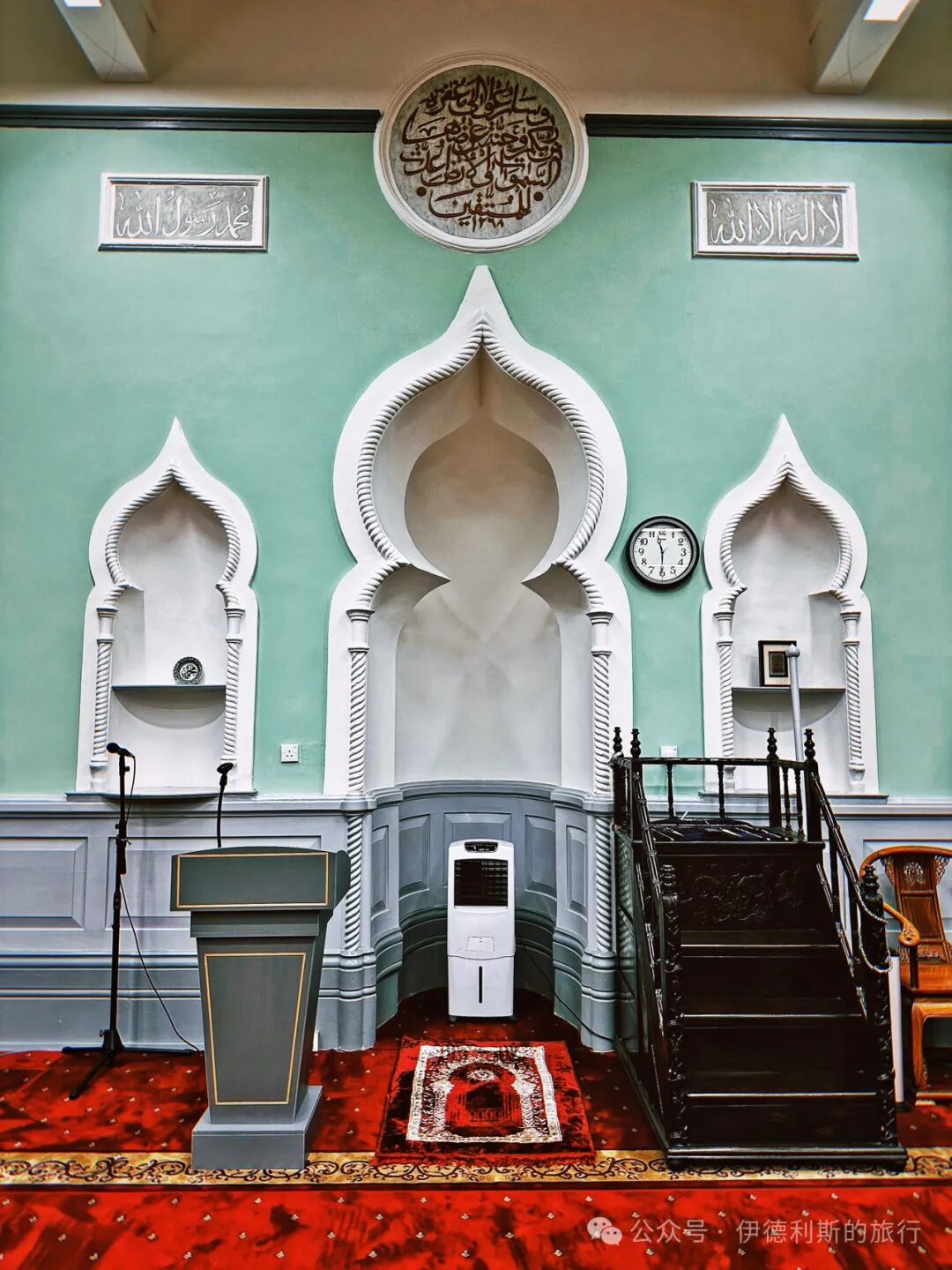
Fujian
Qingjing Mosque in Quanzhou, Fujian, was renovated in 1310. The prayer wall has seven pointed-arch niches, with the largest being the mihrab in the Fengtian Hall. In the old days, Hui Muslims in Quanzhou called the 27th night of Ramadan, the Night of Power (Laylat al-Qadr), the 'Twenty-eighth Night' (erba ming). Every Hui family in Quanzhou would prepare food on this day. That evening, they would light a pair of large red candles on both sides of the mihrab at the prayer hall, symbolizing that the revelation of the Quran from Allah is a brilliant light.
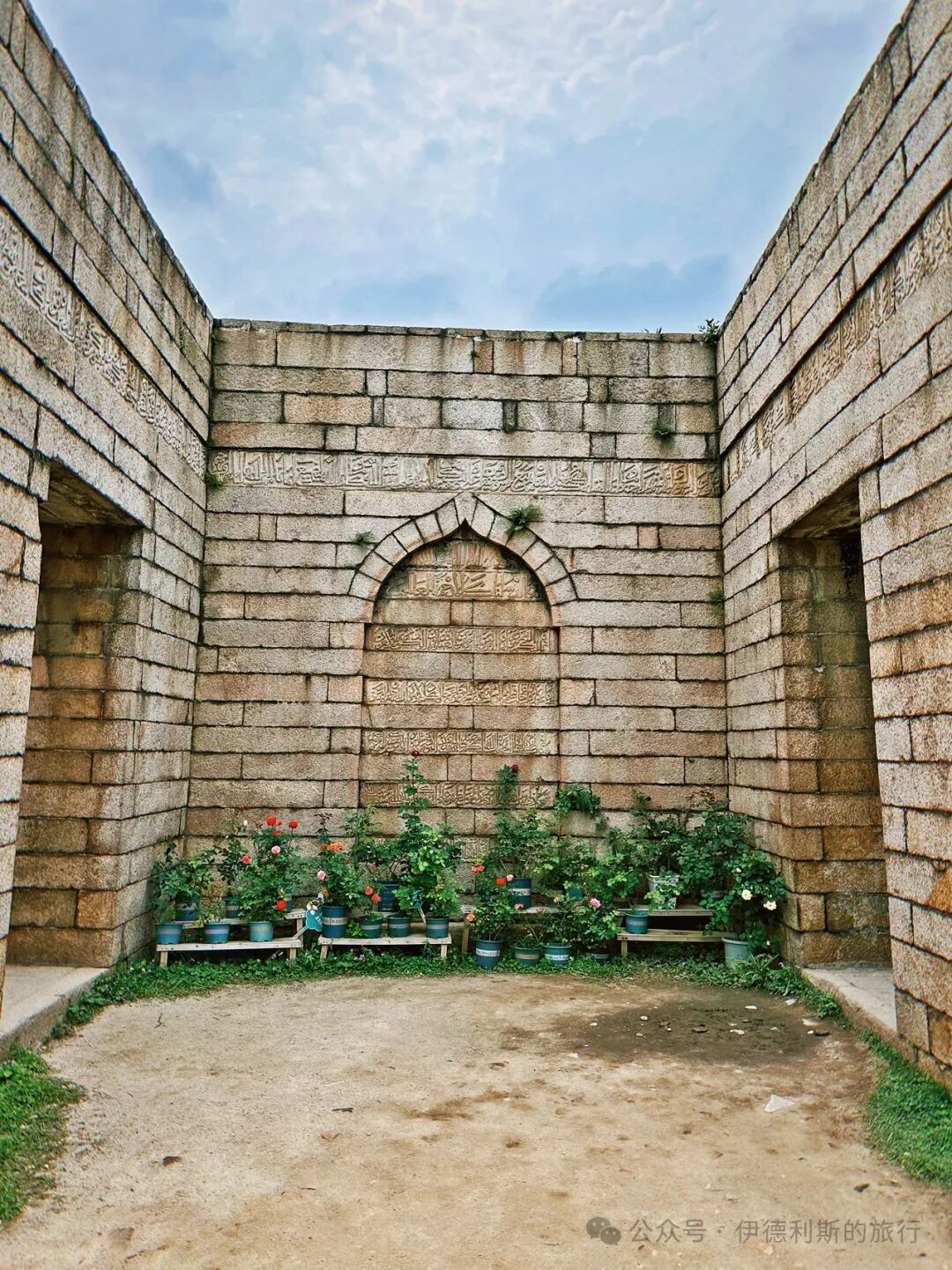
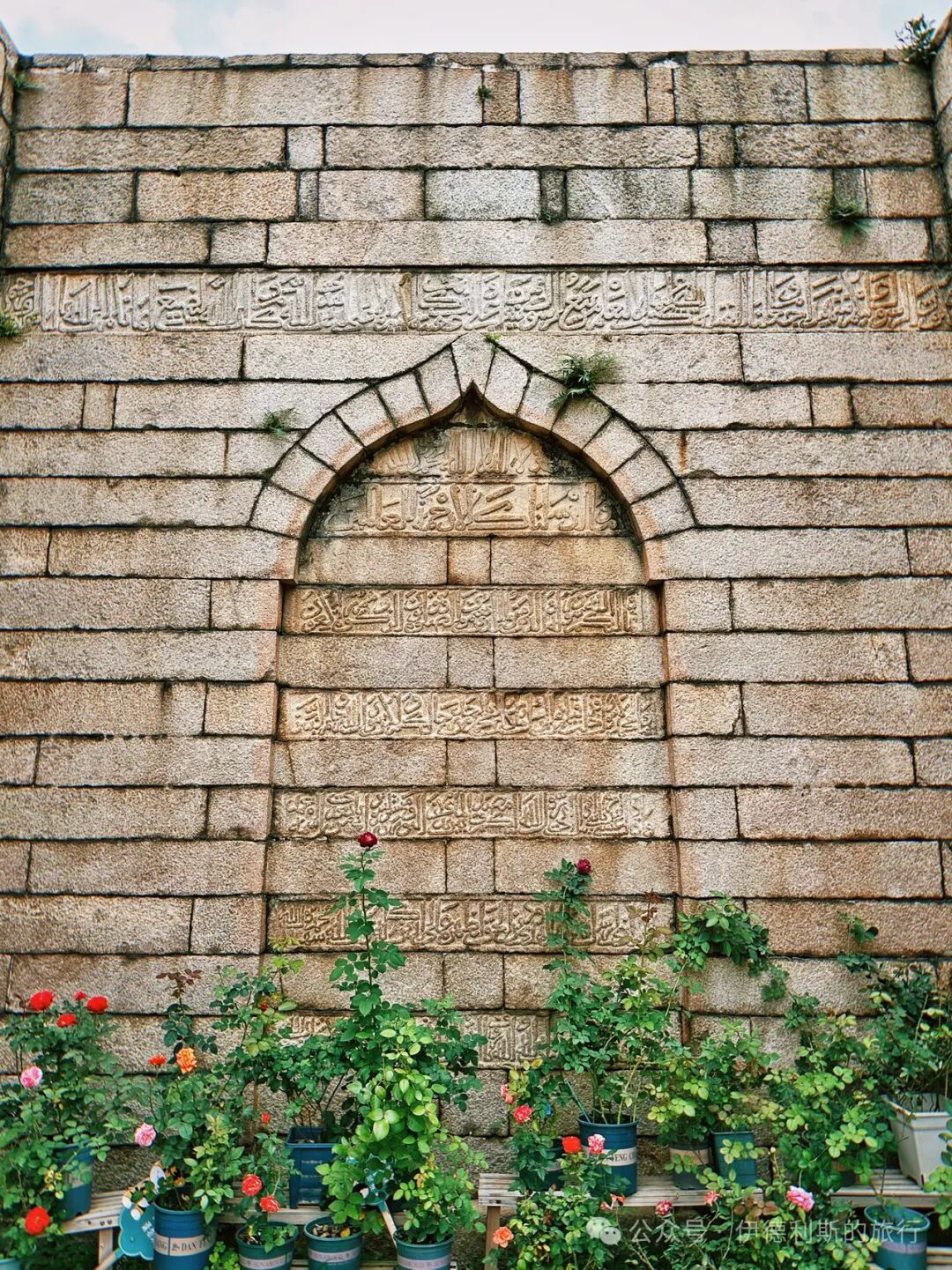
At the Mingshan Hall of the Qingjing Mosque in Quanzhou, Fujian, Jiang Changgui, the provincial military commander during the Tongzhi reign of the Qing Dynasty, collected many Yuan Dynasty Arabic stone tablets in Quanzhou and embedded them into the walls of the Mingshan Hall.
A lintel stone currently embedded above the mihrab in Mingshan Hall was unearthed at Qipanyuan in the late Qing Dynasty. It reads, 'Enter it in peace and security.' Embedded in the middle is a lintel stone unearthed near Qipanyuan in the late Qing Dynasty. The inscription is in Kufic script and reads, 'Every soul shall taste death.' 'Death is a door, and everyone must enter it.' Qipanyuan was the site of the foreign quarter and religious cemeteries in Quanzhou during the Song and Yuan dynasties, so it is likely these two lintel stones originally belonged to a gongbei tomb.
Embedded below is the 'Laji Aibikelimu Reconstruction Tablet of the Qingjing Mosque,' featuring scripture written in Kufic script. The stone tablet was unearthed underground at Qipanyuan in the southern drill ground of Quanzhou during the late Qing Dynasty. The script is similar to the 'Naina Umaer Reconstruction Tablet of the Qingjing Mosque' held by the Xiamen University Anthropology Museum, and the content is the same, so it is likely another tablet commemorating the mosque's reconstruction. The tablet was removed during the 1997 renovation of Mingshan Hall and was reinstalled shortly after. Later, according to an interpretation by Imam Zhang Haixing of the Qingjing Mosque, the back of the tablet reads, 'Laji Aibikelimu ordered the construction and management of this mosque... praying for the mercy of the Lord...'
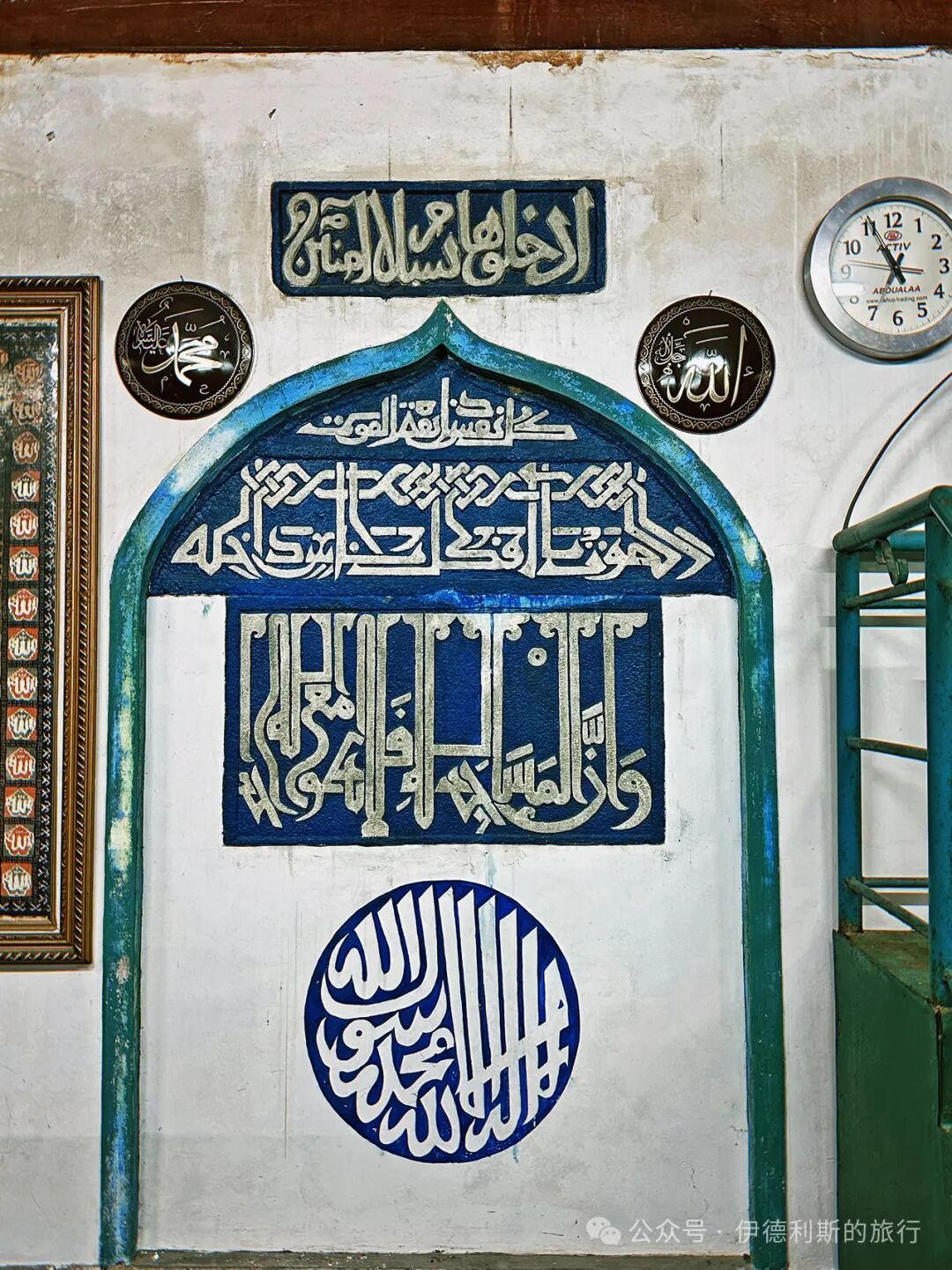
At the Fuzhou Mosque in Fujian, I could not see the original wooden mihrab, only photos of it on a display board in the mosque.
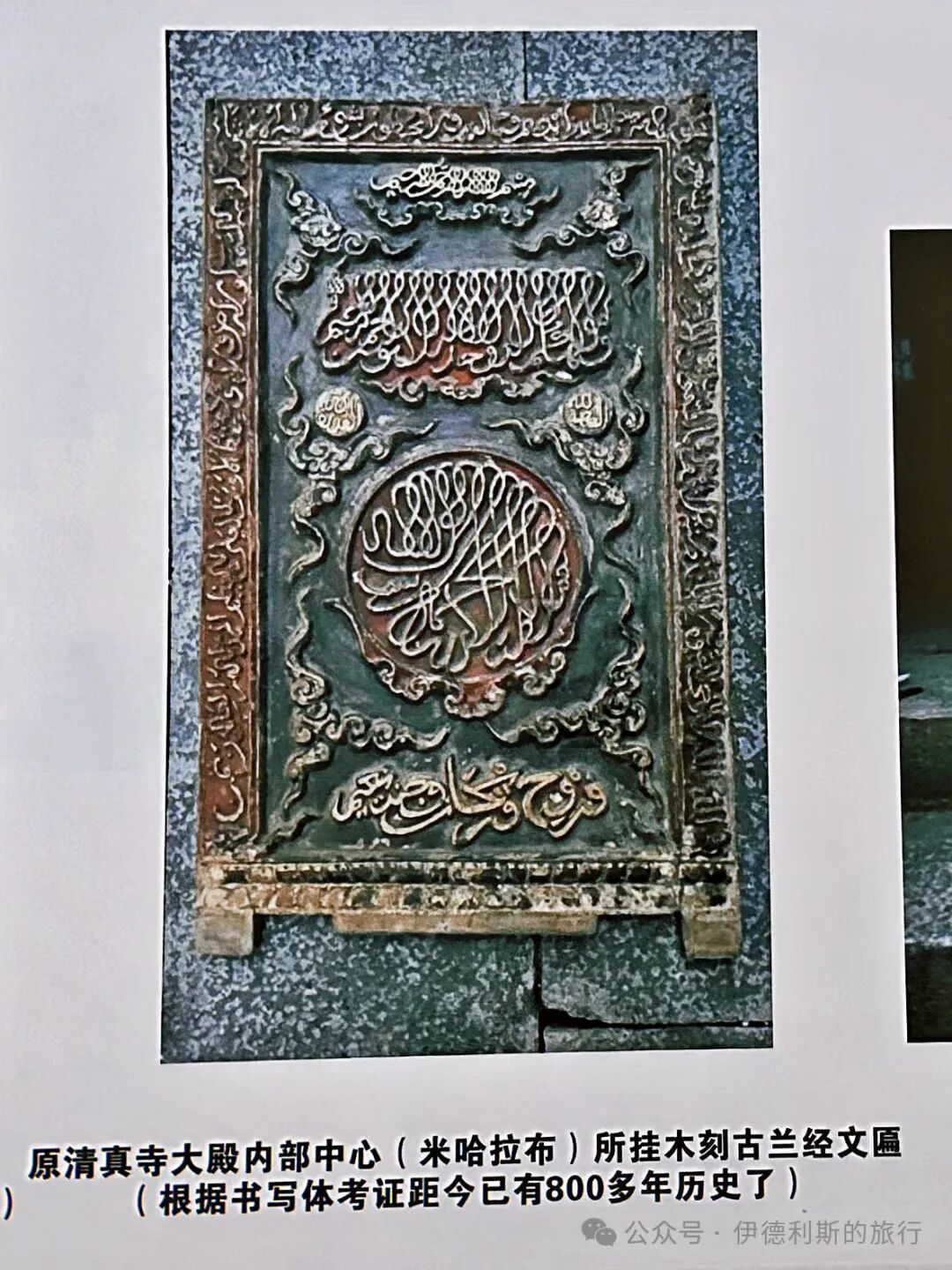
Zhejiang
The Lishui Mosque in Zhejiang was built in 1886 (the 12th year of the Guangxu reign) and features traditional wood-carved calligraphy and auspicious patterns.
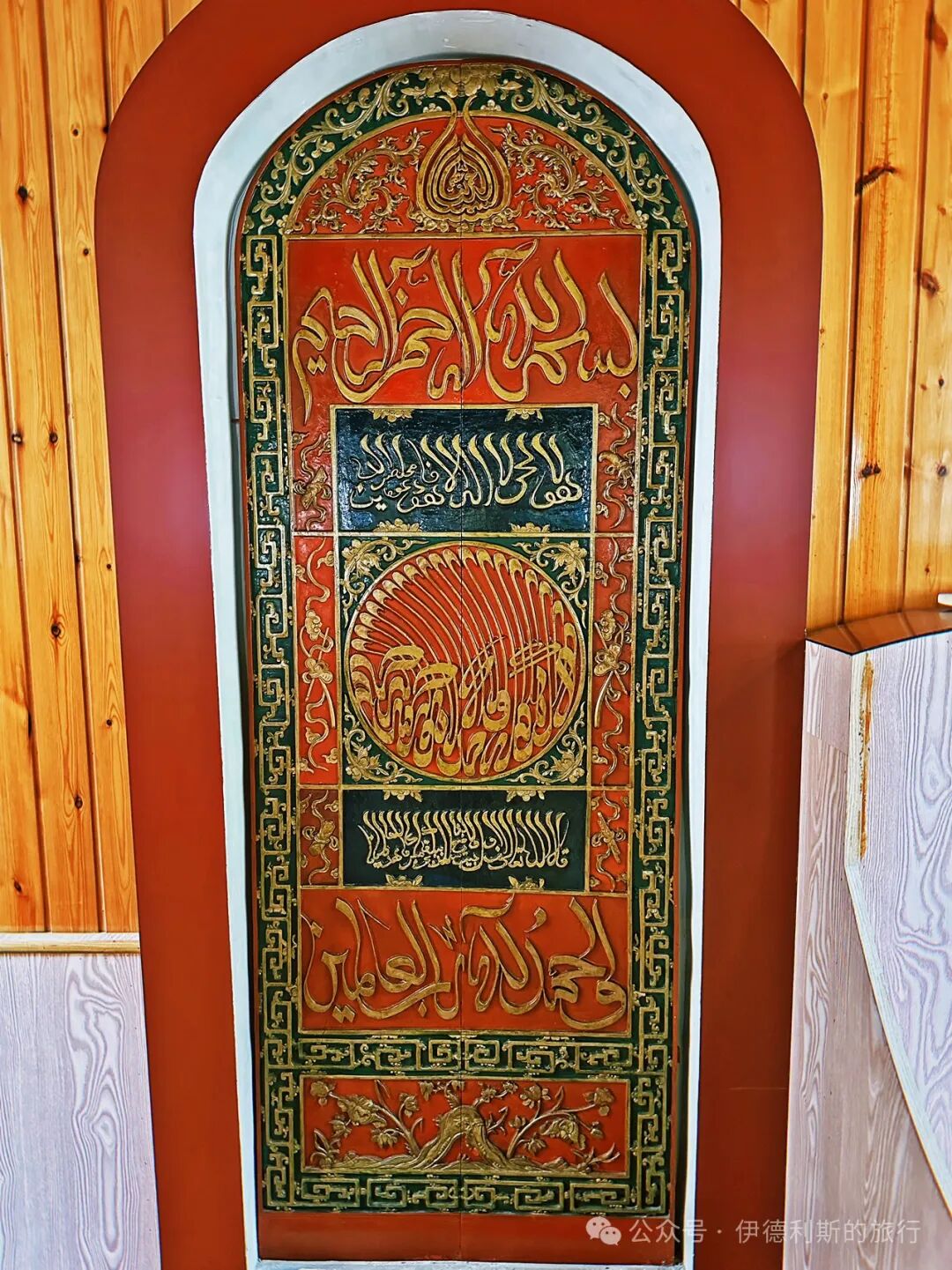
Jiangsu
The mosque outside the South Gate in Zhenjiang, Jiangsu, is believed to have been built in the early Qing Dynasty. It was destroyed by war in 1937, and the niche stone carvings were kept by the Hua Bao-ren family next to the mosque until they were moved to the Guyun Mosque in 2005. It is carved with a lotus-shaped Basmala, which is very unique. In the center is a circular-light style excerpt from the Cow chapter (Al-Baqarah), and below is the Kufic script reading, 'Bow down, and worship your Lord.'
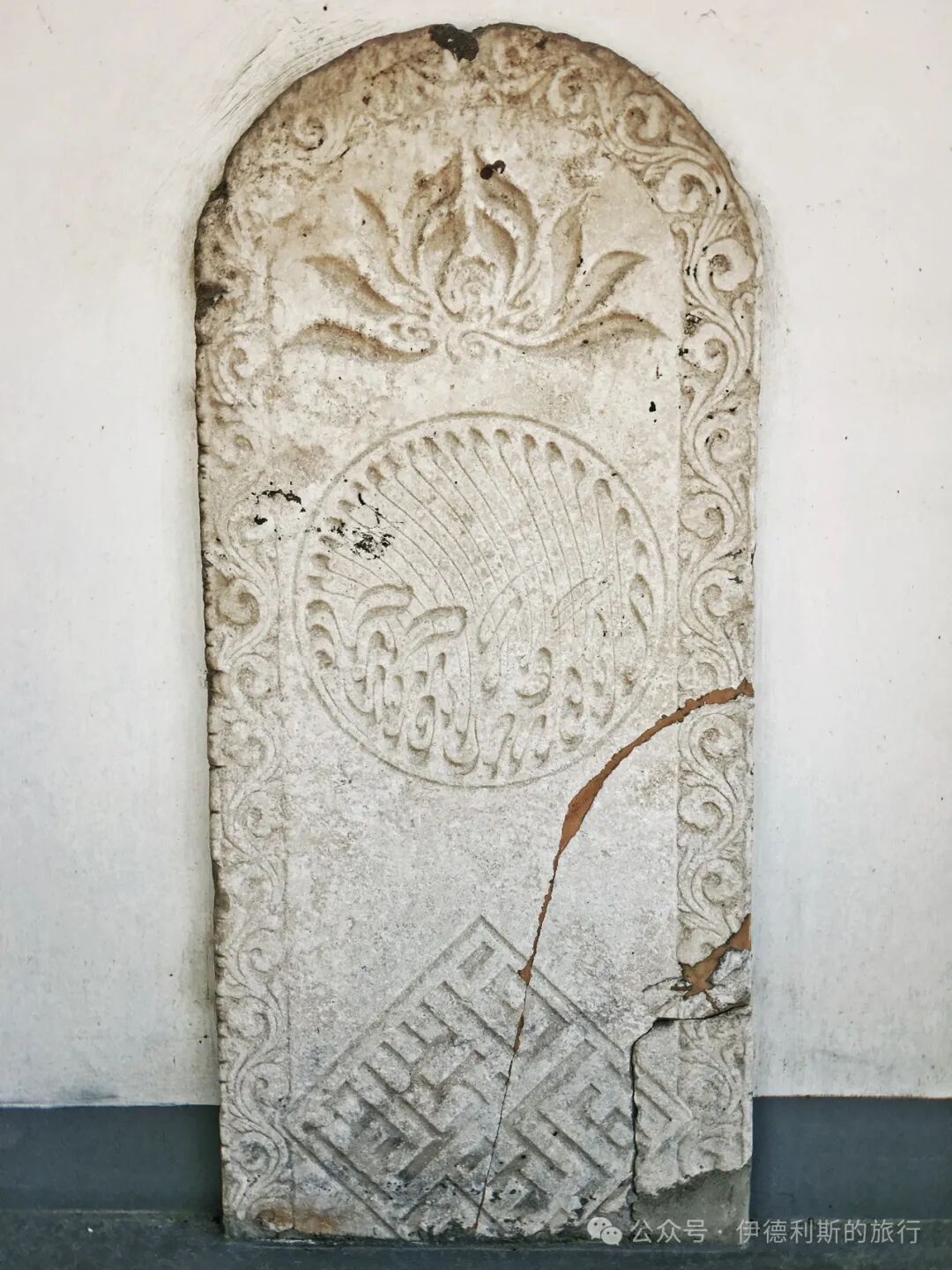
The Shanxiang Mosque in Zhenjiang, Jiangsu, was rebuilt in 1873 (the 12th year of the Tongzhi reign) and features traditional calligraphy carvings.
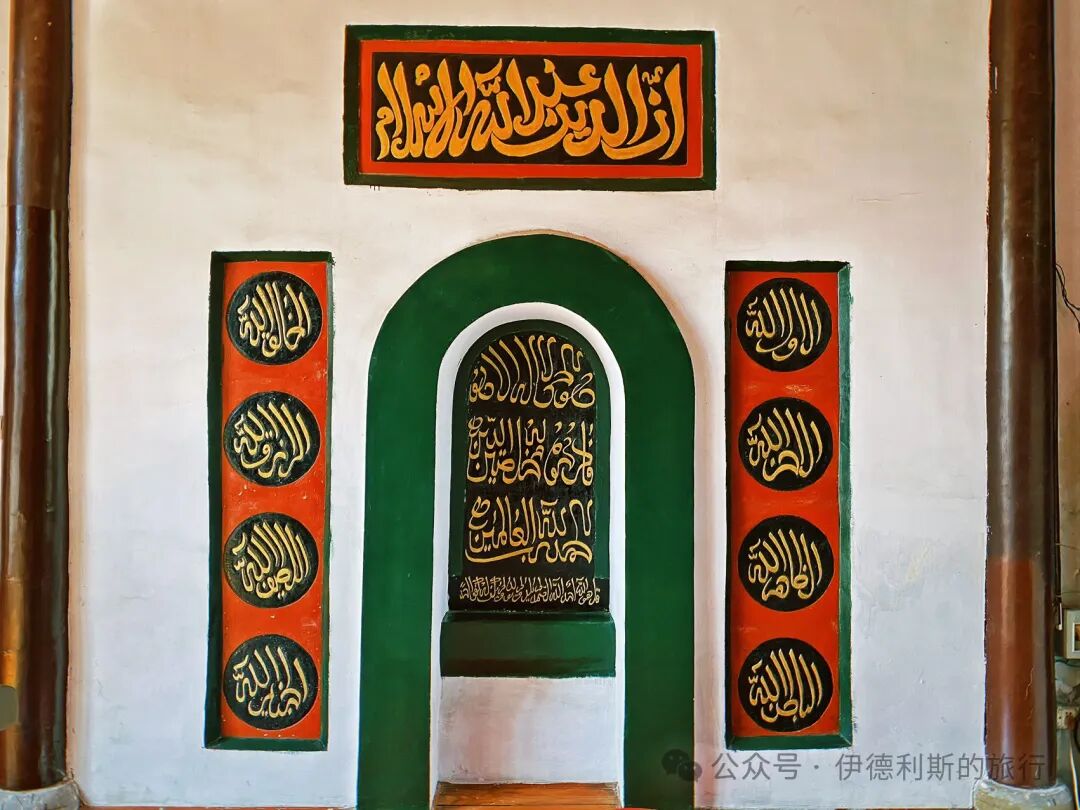
The Changjiang Road Mosque in Liuhe, Nanjing, Jiangsu, was rebuilt during the Guangxu reign. The prayer niche is painted with chrysanthemums, pine and cypress trees, and grapevines, which is very unique.
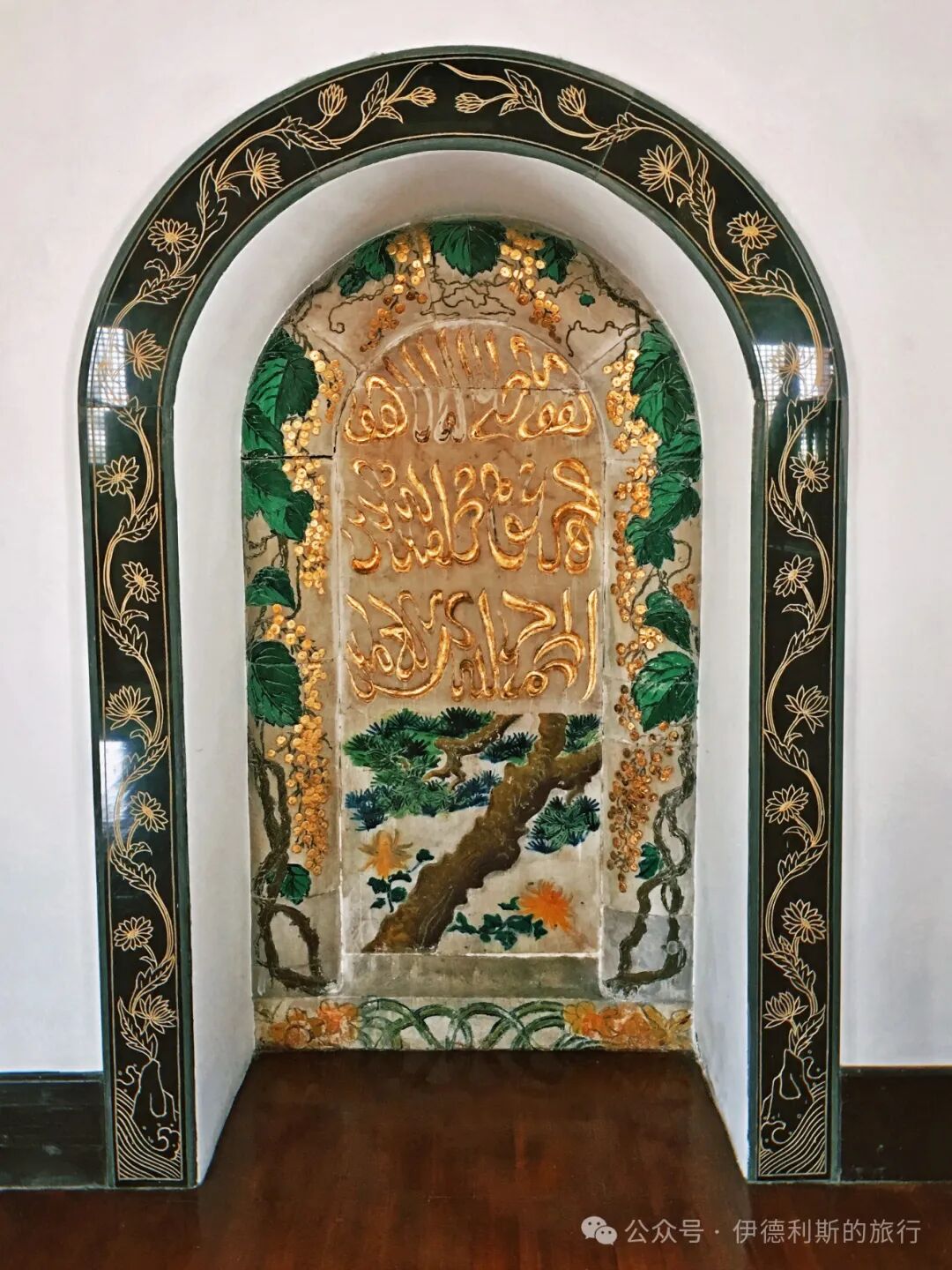
The Jingjue Mosque in Nanjing, Jiangsu, was rebuilt in 1877 (the 3rd year of the Guangxu reign) and features very dense gold-leaf calligraphy on a red background.
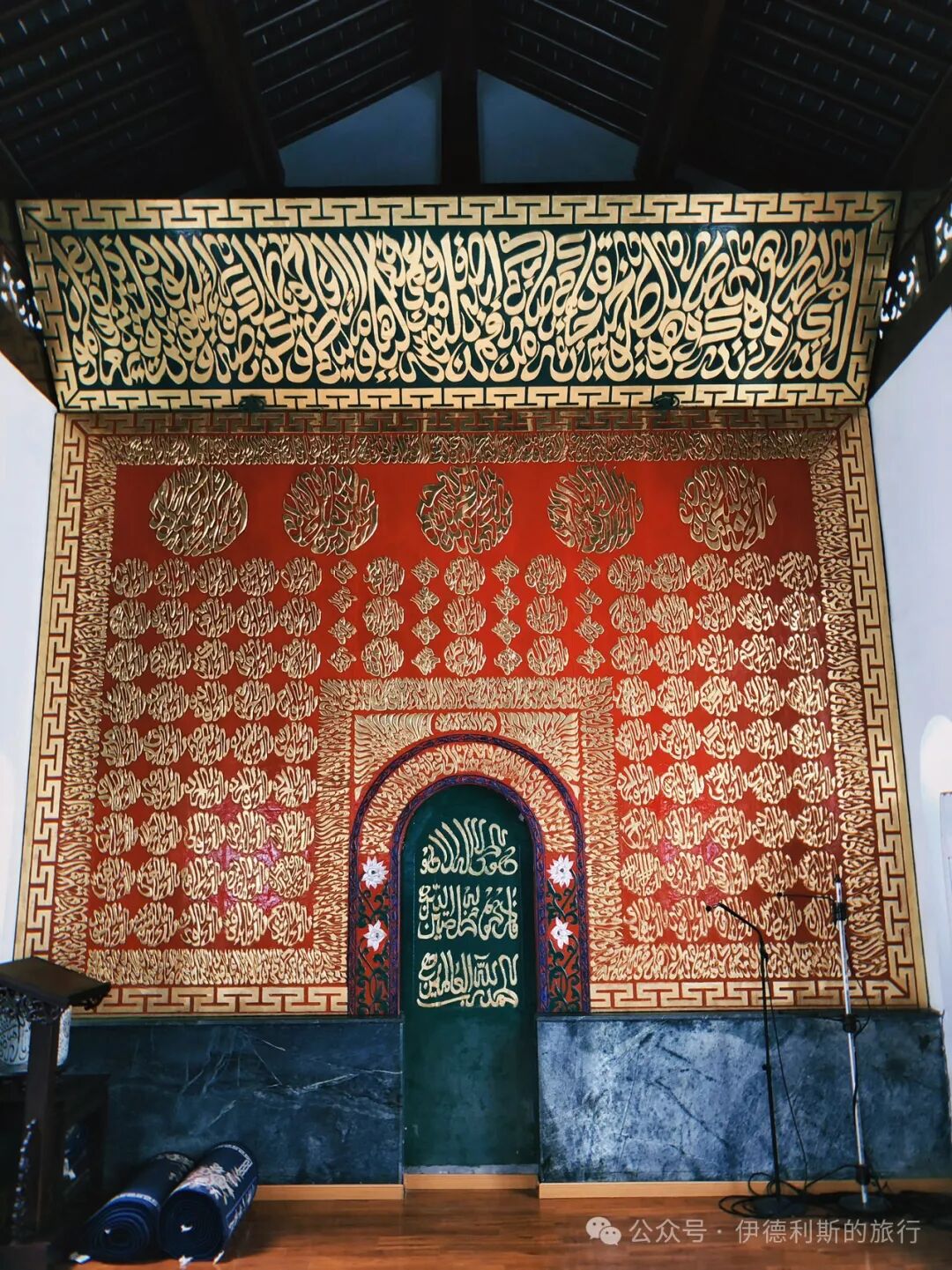
The main hall of the Caoqiao Mosque in Nanjing, Jiangsu, came from the Taiping Road Mosque. It was rebuilt in 1924 with funds donated by the brothers of the wealthy Nanjing merchant Jiang Guobang, and it was moved to the new Caoqiao Mosque in 2003.
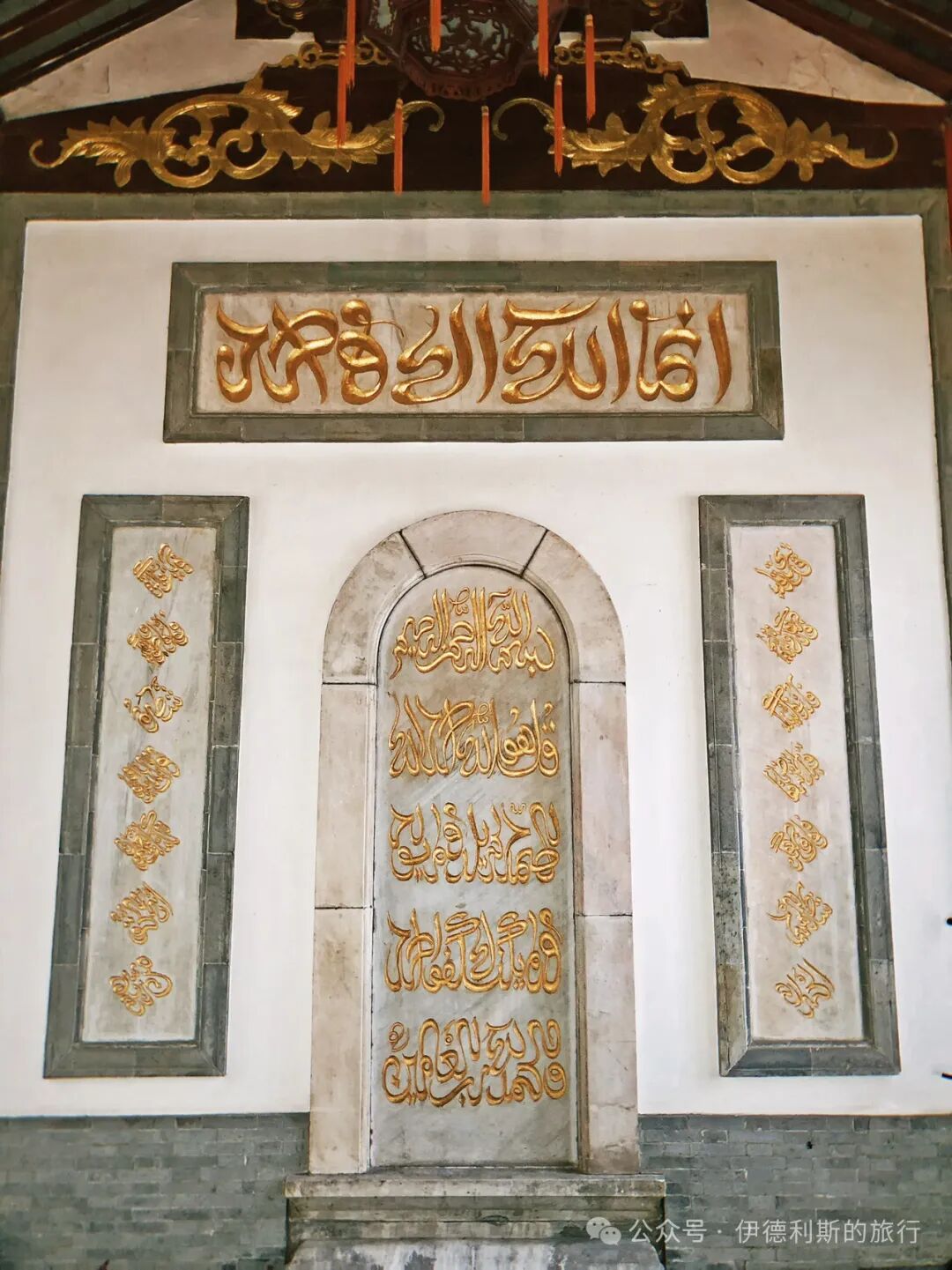
The Lingtang Ancient Mosque in Gaoyou, Jiangsu, was rebuilt in 1844 (the 24th year of the Daoguang reign) and expanded in 1921. Its structure is exactly the same as the Caoqiao Mosque.
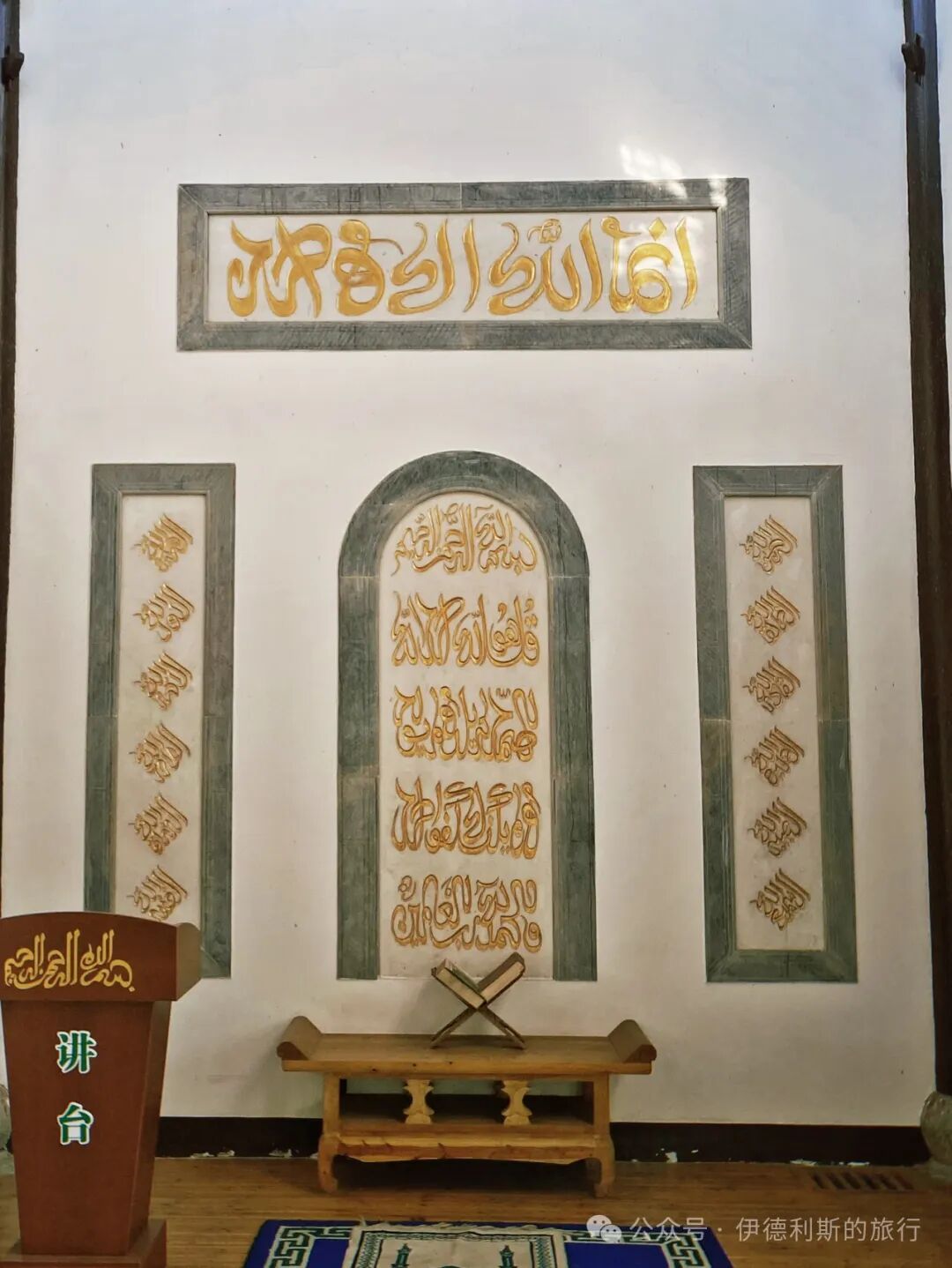
Shanghai
The Fuyou Road Mosque in Shanghai features traditional wood-carved calligraphy.
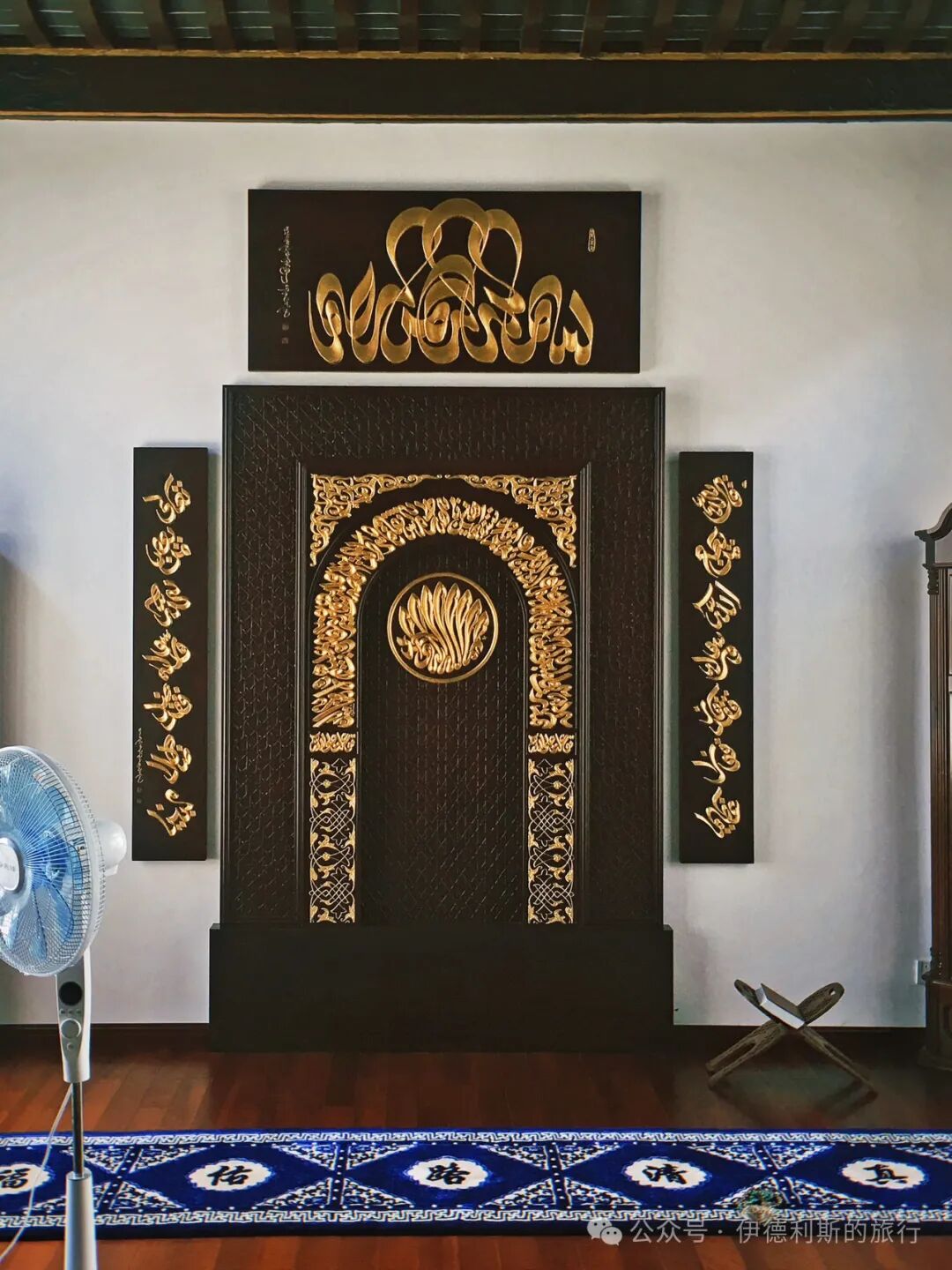
Summary: This is the second part of a visual record of 131 traditional mihrabs in Chinese mosques. The English version keeps the original mosque names, image order, captions, and architectural details without adding new claims.
Hujia Mosque in Xindu District, Chengdu, was built in 1738 (the third year of the Qianlong reign). It has a rare mihrab with Chinese couplets. The right side reads 'Ten thousand generations of mountains and rivers return to one Lord,' the left side reads 'The sun and moon shine upon all living things,' and the horizontal plaque reads 'The Original One.'
Yousuotun Mosque in Songpan has a door hood with an arched center. It looks more like the style found in Gansu than other mosques in Sichuan.
North Mosque in Songpan has very bright colors and lotus patterns.
Gongbei Mosque in Songpan features wooden boards with calligraphy inside the arch, shaped like a folding fan, a circular light, and an incense burner.
Yunnan
Dianzhong Mosque in Weishan, Dali, features traditional stone-carved calligraphy.
Ma Family Mosque in Mamichang, Weishan, Dali, features traditional stone-carved calligraphy.
Hedijie Mosque in Weishan, Dali, features traditional calligraphy.
Qingmenkou Mosque in Weishan, Dali, features traditional calligraphy.
Xishulong Mosque in Weishan, Dali, features traditional stone-carved calligraphy.
Xiaoweigeng Mosque in Weishan, Dali, features traditional calligraphy.
Dingjiachang Mosque in Weishan, Dali, is built in the traditional Dali architectural style with upturned eaves.
Baisha Village Mosque in Weishan, Dali, features traditional calligraphy.
Dawulinmao Mosque in Weishan, Dali, is built in the traditional Dali architectural style with upturned eaves.
Xiajie Mosque in Yangbi, Dali, features wood-carved calligraphy.
Shangxiang Mosque in Yangbi, Dali, features stone-carved calligraphy.
Shangjie Mosque in Yangbi, Dali, features stone-carved calligraphy.
Shangxi Lianhua Mosque in Weishan, Dali, features stone-carved calligraphy.
Xincun Mosque in Weishan, Dali, features stone-carved calligraphy.
Xiaxi Lianhua Mosque in Weishan, Dali, features traditional calligraphy.
Donglianhua Mosque in Weishan, Dali, features traditional calligraphy.
Fengyi Mosque in Dali features stone-carved calligraphy.
Binchuan Mosque in Dali features traditional calligraphy.
Yongning Mosque in Kunming is known as a masterpiece of Yunnan-style calligraphy.
Jinniujie Mosque in Kunming features typical Yunnan-style calligraphy.
Liren Mosque in Haikou, Kunming, features typical Yunnan-style calligraphy.
Beiying Mosque in Xundian features typical Yunnan-style calligraphy.
Huihuiying Mosque in Chenggong, Kunming, has very unique floral-style calligraphy in the center.
Dazhuang Mosque in Kaiyuan features traditional calligraphy in the center with a circular, interlocking design.
Tuogu Mosque in Ludian, Zhaotong, has traditional calligraphy on the couplets flanking the arch and in the circular center.
Longtoushan Mosque in Ludian, Zhaotong, features traditional-style calligraphy.
Taojiawan Mosque in Ludian, Zhaotong, features traditional Yunnan-style calligraphy.
Guangxi
Chongshan Road Mosque in Guilin was first built in 1734 (the 12th year of the Yongzheng reign). The rear hall was expanded in 1892 (the 18th year of the Guangxi reign) and features exquisite wood carvings of floral-style calligraphy.
Wutong Mosque in Guilin was first built during the Qing Jiaqing reign and renovated in 1915. It has beautiful wood carvings of calligraphy.
Liutang Mosque in Guilin was first built during the Qing Qianlong reign and has beautiful wood carvings of calligraphy.
Jiucun Mosque in Guilin features wood carvings of calligraphy.
Daxu Mosque in Guilin features wood carvings of calligraphy.
The Women's Mosque in Guilin features wood carvings of calligraphy.
Maping Mosque in Guilin was first built in 1671 (the 10th year of the Kangxi reign). It was burned down by the Japanese army in 1944, rebuilt in 1948, and rebuilt again in 1987, but it still keeps the original wood carvings of the mihrab.
Guangdong
Chengxi Mosque in Zhaoqing, Guangdong, preserved its Qing Dynasty stone mihrab during the 1983 reconstruction, which features traditional calligraphic couplets.
Chengdong Mosque in Zhaoqing, Guangdong, features Qing Dynasty wood-carved calligraphy.
Hong Kong
Jamia Mosque on Shelley Street in Hong Kong has a mihrab built in 1915, designed in the Indian Mughal style.
Fujian
Qingjing Mosque in Quanzhou, Fujian, was renovated in 1310. The prayer wall has seven pointed-arch niches, with the largest being the mihrab in the Fengtian Hall. In the old days, Hui Muslims in Quanzhou called the 27th night of Ramadan, the Night of Power (Laylat al-Qadr), the 'Twenty-eighth Night' (erba ming). Every Hui family in Quanzhou would prepare food on this day. That evening, they would light a pair of large red candles on both sides of the mihrab at the prayer hall, symbolizing that the revelation of the Quran from Allah is a brilliant light.
At the Mingshan Hall of the Qingjing Mosque in Quanzhou, Fujian, Jiang Changgui, the provincial military commander during the Tongzhi reign of the Qing Dynasty, collected many Yuan Dynasty Arabic stone tablets in Quanzhou and embedded them into the walls of the Mingshan Hall.
A lintel stone currently embedded above the mihrab in Mingshan Hall was unearthed at Qipanyuan in the late Qing Dynasty. It reads, 'Enter it in peace and security.' Embedded in the middle is a lintel stone unearthed near Qipanyuan in the late Qing Dynasty. The inscription is in Kufic script and reads, 'Every soul shall taste death.' 'Death is a door, and everyone must enter it.' Qipanyuan was the site of the foreign quarter and religious cemeteries in Quanzhou during the Song and Yuan dynasties, so it is likely these two lintel stones originally belonged to a gongbei tomb.
Embedded below is the 'Laji Aibikelimu Reconstruction Tablet of the Qingjing Mosque,' featuring scripture written in Kufic script. The stone tablet was unearthed underground at Qipanyuan in the southern drill ground of Quanzhou during the late Qing Dynasty. The script is similar to the 'Naina Umaer Reconstruction Tablet of the Qingjing Mosque' held by the Xiamen University Anthropology Museum, and the content is the same, so it is likely another tablet commemorating the mosque's reconstruction. The tablet was removed during the 1997 renovation of Mingshan Hall and was reinstalled shortly after. Later, according to an interpretation by Imam Zhang Haixing of the Qingjing Mosque, the back of the tablet reads, 'Laji Aibikelimu ordered the construction and management of this mosque... praying for the mercy of the Lord...'
At the Fuzhou Mosque in Fujian, I could not see the original wooden mihrab, only photos of it on a display board in the mosque.
Zhejiang
The Lishui Mosque in Zhejiang was built in 1886 (the 12th year of the Guangxu reign) and features traditional wood-carved calligraphy and auspicious patterns.
Jiangsu
The mosque outside the South Gate in Zhenjiang, Jiangsu, is believed to have been built in the early Qing Dynasty. It was destroyed by war in 1937, and the niche stone carvings were kept by the Hua Bao-ren family next to the mosque until they were moved to the Guyun Mosque in 2005. It is carved with a lotus-shaped Basmala, which is very unique. In the center is a circular-light style excerpt from the Cow chapter (Al-Baqarah), and below is the Kufic script reading, 'Bow down, and worship your Lord.'
The Shanxiang Mosque in Zhenjiang, Jiangsu, was rebuilt in 1873 (the 12th year of the Tongzhi reign) and features traditional calligraphy carvings.
The Changjiang Road Mosque in Liuhe, Nanjing, Jiangsu, was rebuilt during the Guangxu reign. The prayer niche is painted with chrysanthemums, pine and cypress trees, and grapevines, which is very unique.
The Jingjue Mosque in Nanjing, Jiangsu, was rebuilt in 1877 (the 3rd year of the Guangxu reign) and features very dense gold-leaf calligraphy on a red background.
The main hall of the Caoqiao Mosque in Nanjing, Jiangsu, came from the Taiping Road Mosque. It was rebuilt in 1924 with funds donated by the brothers of the wealthy Nanjing merchant Jiang Guobang, and it was moved to the new Caoqiao Mosque in 2003.
The Lingtang Ancient Mosque in Gaoyou, Jiangsu, was rebuilt in 1844 (the 24th year of the Daoguang reign) and expanded in 1921. Its structure is exactly the same as the Caoqiao Mosque.
Shanghai
The Fuyou Road Mosque in Shanghai features traditional wood-carved calligraphy.
Tracing Muslim Heritage in Yunnan: A Journey Through Kunming, Najaying, and Shadian Mosques
Articles • Hasan09 posted the article • 0 comments • 1 views • 1 hours ago
[Internet Repost]
Tracing Sacred Footsteps in the Land of Colorful Clouds: A Travelogue from Kunming's Shuncheng Mosque and Sayyid Ajjal's Mausoleum to Najaying and Shadian in Tonghai
Abstract:
A deep cultural journey through Yunnan, tracing the footsteps of historical pioneers. Starting from the historic Shuncheng Mosque in downtown Kunming, the author visits the mausoleum of Sayyid Ajjal Shams al-Din (the Yuan dynasty governor who shaped Yunnan), delves into Najaying in Tonghai, Yuxi, and the grand Shadian Mosque in Honghai, experiencing the deep pulse of southwestern Islamic history along the way.
I don't know exactly when the idea of visiting Yunnan first planted itself in my mind. Maybe it was hearing Phoenix Legend's song 'Colorful Clouds of the South' as a child, or perhaps listening to friends rave about Yunnan's endless spring-like weather. Or maybe it was just the dreamy scrolling on short-form video apps showing Erhai Lake and Cangshan Mountain. But what finally made me pull the trigger and book the trip was hearing so many unique stories about Yunnan: Sayyid Ajjal Shams al-Din, Jahriyya, Najaying, Shadian, Du Wenxiu, and so many other legends pulling me forward.
So, by His grace, we set off~~~
Shuncheng Mosque was our first stop. After resting and grabbing a bite to eat, we rented a car and drove straight to Baba Tomb (Sayyid Ajjal's mausoleum). The tomb sits in Majia'an Village, Panlong District, about 40 kilometers north of Kunming. The mountain road twists and turns, buzzing with young motorcycle riders living their best lives. By His decree, the sedan we originally wanted to rent was in the shop, so they upgraded us to an SUV at the last minute—absolute perfection for those winding mountain roads.
When we arrived, we found the mausoleum grounds under construction. Walking the corrugated iron perimeter, I spotted a small path and slipped through. Once inside, I realized the whole area around the Baba Tomb was packed with graves, their headstones carved with Arabic script—undoubtedly old Hui Muslim tombs. I snapped a quick photo through the iron bars and headed back, bidding farewell to Yunnan's very first provincial governor. This was the brilliant statesman and pioneer of ethnic unity who worked absolute miracles in Yuan dynasty Yunnan, stabilizing a region torn apart by separatist conflicts and desperate poverty. His descendants planted glorious flowers across the Chinese mainland, the most famous of which is the Ming dynasty voyager Zheng He (originally surnamed Ma, before being bestowed the surname Zheng by the Yongle Emperor).
We headed back to our hotel by Dianchi Lake. By the time we dropped our bags, dusk was falling. I took a stroll down to the lake shore, looking out over the calm water. It’s hard to imagine just how much mental and physical energy an aging Sayyid Ajjal, well past sixty, poured into taming the flooding Dianchi Lake so it could bring peace and prosperity to the people for centuries.
The next day, we hit the road again, navigating twisting mountain roads until a cluster of villages suddenly popped into view. We had arrived at our second stop: Najaying, a place that birthed two towering academic giants of the Muslim world—Na Zhong and Na Xun. Though they shared the same surname, they weren't actually related. The whole village is full of people surnamed Na, believed to be descendants of Sayyid Ajjal, whose eldest son was Nasr al-Din, leaving behind descendants with the surnames Na, Su, La, and Ding. Na Xun is most famous for translating *One Thousand and One Nights*, opening the door to Arabian tales for generations of Chinese children, while Na Zhong played a pivotal role in developing China's traditional mosque education system (*jingtang jiaoyu*). After grabbing a bowl of local erfen (rice noodles) and liangji (cold rice noodles), and offering a quick prayer, we headed over to the Na Xun Former Residence recommended by a local friend.
To our disappointment, the gates were locked tight when we arrived. I was just reading the stele by the entrance and snapping a few photos before heading back when I suddenly heard voices inside. I gave a tentative knock, stepping back a respectful distance, and to my surprise, the door creaked open. An elderly uncle stood there, wearing glasses, a white vest over a light-colored shirt, looking impeccably neat and clean. When I told him what brought us there, he warmly invited us inside. Stepping across the threshold, the interior was a far cry from what I had pictured. I had imagined a celebrity's former residence preserved with pristine, neatly arranged antiques. Instead, right before my eyes was a weathered, traditional Yunnan-style courtyard (siheyuan) with an open-air central patio and a two-story wooden house wrapped around three sides. The furniture in the central hall was coated in a thin layer of dust. Hanging on the wall right ahead was a massive embroidered tapestry of the Kaaba, flanked on one side by two framed photos and brief biographies—one of Na Xun, the other of Na Zhong. On the other side hung two small pieces of Quranic calligraphy.
Besides the elderly uncle, two of his friends were inside, tasting honey harvested from a beehive that had been sitting untouched for three years. When the two friends learned I was a fellow Muslim traveler (dosdi), they warmly told me to make myself at home. I walked up the creaky wooden stairs to the second floor, where the rooms were stacked with various odds and ends, looking as though they hadn't been tidied in ages. Soon enough, my eyes landed on that very beehive. In *Medicine of the Prophet* (*Tibb al-Nabawi*), honey is praised as one of the ultimate remedies, great for treating diarrhea, stomachaches, and cold stomachs. Back in the day, many Muslim families in the mountainous regions kept bees and sold honey. Heading back downstairs, we saw off the uncle's friends, and he finally sat down with us face-to-face, bringing out two bowls of aged comb honey. We could only take a tiny bite before the intense sweetness overwhelmed us—after three years of aging, the honey had turned a deep, dark yellow tinged with black. Over the honey, the uncle shared his story: he was Na Xun's grandson, well over 80 years old. His son is an Arabic professor at Northwest Minzu University, and the stele outside the Na Xun Former Residence was actually written by him. It gave me chills realizing that Na Xun's great-grandson is carrying on part of his legacy, continuing to contribute to ethnic culture and the development of Arabic studies in China.
Without pausing, we rushed off to my absolute dream destination in Yunnan: Shadian, the hometown of Professor Ma Jian. What you yearn for deeply will always find a way back to you. I had heard ages ago about the incredible vibe here, and with Shadian Mosque holding the title of China's largest mosque, I had been dying to see it with my own eyes. Finally, the stars had aligned.
We checked into a hotel right next to the mosque, rested for a moment, and headed out for Asr prayer. It was still early, and people were lounging leisurely by the main hall entrance. Some were chatting in small groups, others leaning against pillars with their legs stretched straight out, zoning out in quiet remembrance (zikr), each waiting for the call to prayer in their own comfortable way. In that exact moment, there was no worldly hustle, no distracting thoughts—just sitting, waiting, watching. This is a mosque completely free of perimeter walls. You can look out and watch the sparse flow of pedestrians and cars passing by on the street across. I once heard a saying: 'A great university has no walls.'
That made me think: an open, confident, and inclusive mosque has no walls either.
If Gansu's Linxia used to be called the 'Little Mecca' of China, this place feels much more like 'Little Medina.' In front of the main hall is a sprawling plaza with fountains, flanked by Bismarck palms (beiye zong)—it oozes Medina style. It’s not just the trees and the plaza, but the whole atmosphere. It's the kind of vibe where you could sit in literally any corner of the mosque for an entire day, letting the cool breeze gently brush your cheek while the ceaseless praise of birds fills your ears.
Over by the plaza in front of the Zhaozhen Hall, international travelers would pop by every now and then to take photos and check in. I just watched them smiling and lingering, returning their smiles with my own. Pure serenity.
The next day, after finishing Fajr prayer, I didn't feel like going back to sleep, so I took a stroll around the hotel and found a little park tucked away in the back. Older uncles were out walking, and aunties were practicing Baduanjin (traditional qigong exercises) together. Their boundless energy made me feel utterly ashamed of my own laziness. It reminded me that I used to practice Baduanjin for a while before quitting. Our generation has it way too easy, and we haven't suffered enough—our bones just lack a certain resilience.
Speaking of resilience, I couldn't help thinking of the Shadian Martyrs (Shuhada) of the Shadian Incident. During the height of the ultra-leftist madness of the Cultural Revolution, the Shadian Mosque was closed down, normal ethnic and religious policies were trampled, and tensions boiled over. In the early morning hours of July 29, 1975, with the approval of the CPC Central Committee, the Yunnan Provincial Party Committee mobilized the garrison troops to place Shadian and surrounding Hui villages under military siege, launching an operation under the guise of 'suppressing rebellion.'
The battle lasted seven days and seven nights. The military deployed heavy weapons like howitzers, and villages like Shadian and Mouke were utterly devastated. Countless homes were reduced to rubble, resulting in the deaths of roughly 1,600 'rebels' and nearly a thousand injuries, including many innocent civilians.
At the time, the incident was branded as an 'armed counterrevolutionary rebellion.' But after the fall of the Gang of Four, in February 1979, the CPC Yunnan Provincial Committee and the Kunming Military Region Party Committee jointly issued a notice—in line with the spirit of the Third Plenary Session of the 11th CPC Central Committee—completely rehabilitating the 'Shadian Incident.' They acknowledged the severe errors made in implementing ethnic and religious policies, overturned the 'counterrevolutionary rebellion' label, and officially cleared the names of the victims.
On my last day in Shadian, following GPS directions to the Shadian Martyrs' Cemetery, I realized the graveyard held much more than just the martyrs; it was filled with countless Hui graves bearing headstones and epitaphs. But the actual Shadian Martyrs' graves were a quiet cluster of dozens of tiny, simple mounds—no headstones, no inscriptions. An elderly local uncle along the road told me that on the day the disaster struck, it was the dead of summer. With bodies blown to pieces beyond recognition and rotting away in the stifling heat, it was utterly impossible to tell who was who. More importantly, in such a desperate, life-or-death crisis, just giving the dead a hurried burial was already an act of sheer desperation. He added that other martyrs were buried elsewhere, though he had forgotten the exact spots, because his ears were still ringing with tears and his heart was fractured with cracks.
I returned our rental car in Kunming 'commando-style' and boarded the high-speed rail to Dali, home to the last person I wanted to pay my respects to: Du Wenxiu.
An ethnic unity activist and a leader of the anti-Qing uprising. Though his rebellion ultimately failed due to the betrayal of allied forces and subordinates, he tried to trade his single life for the safety of the entire city of Dali. He swallowed a lethal dose of copper trichloride (poisonous peacock gall) and walked proudly to his end, holding his head high with an unyielding spirit. But the cowardly Manchu Qing government wasn't about to spare a single 'unstable element.' In the end, almost everyone in Dali who joined the uprising was put to death; their noses were sliced off and carted back by Qing troops to claim military rewards by head count. Their fresh blood stained a corner of Erhai Lake—the silent, final protest of the grassroots oppressed against tyranny. view all
Tracing Sacred Footsteps in the Land of Colorful Clouds: A Travelogue from Kunming's Shuncheng Mosque and Sayyid Ajjal's Mausoleum to Najaying and Shadian in Tonghai
Abstract:
A deep cultural journey through Yunnan, tracing the footsteps of historical pioneers. Starting from the historic Shuncheng Mosque in downtown Kunming, the author visits the mausoleum of Sayyid Ajjal Shams al-Din (the Yuan dynasty governor who shaped Yunnan), delves into Najaying in Tonghai, Yuxi, and the grand Shadian Mosque in Honghai, experiencing the deep pulse of southwestern Islamic history along the way.
I don't know exactly when the idea of visiting Yunnan first planted itself in my mind. Maybe it was hearing Phoenix Legend's song 'Colorful Clouds of the South' as a child, or perhaps listening to friends rave about Yunnan's endless spring-like weather. Or maybe it was just the dreamy scrolling on short-form video apps showing Erhai Lake and Cangshan Mountain. But what finally made me pull the trigger and book the trip was hearing so many unique stories about Yunnan: Sayyid Ajjal Shams al-Din, Jahriyya, Najaying, Shadian, Du Wenxiu, and so many other legends pulling me forward.
So, by His grace, we set off~~~
Shuncheng Mosque was our first stop. After resting and grabbing a bite to eat, we rented a car and drove straight to Baba Tomb (Sayyid Ajjal's mausoleum). The tomb sits in Majia'an Village, Panlong District, about 40 kilometers north of Kunming. The mountain road twists and turns, buzzing with young motorcycle riders living their best lives. By His decree, the sedan we originally wanted to rent was in the shop, so they upgraded us to an SUV at the last minute—absolute perfection for those winding mountain roads.
When we arrived, we found the mausoleum grounds under construction. Walking the corrugated iron perimeter, I spotted a small path and slipped through. Once inside, I realized the whole area around the Baba Tomb was packed with graves, their headstones carved with Arabic script—undoubtedly old Hui Muslim tombs. I snapped a quick photo through the iron bars and headed back, bidding farewell to Yunnan's very first provincial governor. This was the brilliant statesman and pioneer of ethnic unity who worked absolute miracles in Yuan dynasty Yunnan, stabilizing a region torn apart by separatist conflicts and desperate poverty. His descendants planted glorious flowers across the Chinese mainland, the most famous of which is the Ming dynasty voyager Zheng He (originally surnamed Ma, before being bestowed the surname Zheng by the Yongle Emperor).
We headed back to our hotel by Dianchi Lake. By the time we dropped our bags, dusk was falling. I took a stroll down to the lake shore, looking out over the calm water. It’s hard to imagine just how much mental and physical energy an aging Sayyid Ajjal, well past sixty, poured into taming the flooding Dianchi Lake so it could bring peace and prosperity to the people for centuries.
The next day, we hit the road again, navigating twisting mountain roads until a cluster of villages suddenly popped into view. We had arrived at our second stop: Najaying, a place that birthed two towering academic giants of the Muslim world—Na Zhong and Na Xun. Though they shared the same surname, they weren't actually related. The whole village is full of people surnamed Na, believed to be descendants of Sayyid Ajjal, whose eldest son was Nasr al-Din, leaving behind descendants with the surnames Na, Su, La, and Ding. Na Xun is most famous for translating *One Thousand and One Nights*, opening the door to Arabian tales for generations of Chinese children, while Na Zhong played a pivotal role in developing China's traditional mosque education system (*jingtang jiaoyu*). After grabbing a bowl of local erfen (rice noodles) and liangji (cold rice noodles), and offering a quick prayer, we headed over to the Na Xun Former Residence recommended by a local friend.
To our disappointment, the gates were locked tight when we arrived. I was just reading the stele by the entrance and snapping a few photos before heading back when I suddenly heard voices inside. I gave a tentative knock, stepping back a respectful distance, and to my surprise, the door creaked open. An elderly uncle stood there, wearing glasses, a white vest over a light-colored shirt, looking impeccably neat and clean. When I told him what brought us there, he warmly invited us inside. Stepping across the threshold, the interior was a far cry from what I had pictured. I had imagined a celebrity's former residence preserved with pristine, neatly arranged antiques. Instead, right before my eyes was a weathered, traditional Yunnan-style courtyard (siheyuan) with an open-air central patio and a two-story wooden house wrapped around three sides. The furniture in the central hall was coated in a thin layer of dust. Hanging on the wall right ahead was a massive embroidered tapestry of the Kaaba, flanked on one side by two framed photos and brief biographies—one of Na Xun, the other of Na Zhong. On the other side hung two small pieces of Quranic calligraphy.
Besides the elderly uncle, two of his friends were inside, tasting honey harvested from a beehive that had been sitting untouched for three years. When the two friends learned I was a fellow Muslim traveler (dosdi), they warmly told me to make myself at home. I walked up the creaky wooden stairs to the second floor, where the rooms were stacked with various odds and ends, looking as though they hadn't been tidied in ages. Soon enough, my eyes landed on that very beehive. In *Medicine of the Prophet* (*Tibb al-Nabawi*), honey is praised as one of the ultimate remedies, great for treating diarrhea, stomachaches, and cold stomachs. Back in the day, many Muslim families in the mountainous regions kept bees and sold honey. Heading back downstairs, we saw off the uncle's friends, and he finally sat down with us face-to-face, bringing out two bowls of aged comb honey. We could only take a tiny bite before the intense sweetness overwhelmed us—after three years of aging, the honey had turned a deep, dark yellow tinged with black. Over the honey, the uncle shared his story: he was Na Xun's grandson, well over 80 years old. His son is an Arabic professor at Northwest Minzu University, and the stele outside the Na Xun Former Residence was actually written by him. It gave me chills realizing that Na Xun's great-grandson is carrying on part of his legacy, continuing to contribute to ethnic culture and the development of Arabic studies in China.
Without pausing, we rushed off to my absolute dream destination in Yunnan: Shadian, the hometown of Professor Ma Jian. What you yearn for deeply will always find a way back to you. I had heard ages ago about the incredible vibe here, and with Shadian Mosque holding the title of China's largest mosque, I had been dying to see it with my own eyes. Finally, the stars had aligned.
We checked into a hotel right next to the mosque, rested for a moment, and headed out for Asr prayer. It was still early, and people were lounging leisurely by the main hall entrance. Some were chatting in small groups, others leaning against pillars with their legs stretched straight out, zoning out in quiet remembrance (zikr), each waiting for the call to prayer in their own comfortable way. In that exact moment, there was no worldly hustle, no distracting thoughts—just sitting, waiting, watching. This is a mosque completely free of perimeter walls. You can look out and watch the sparse flow of pedestrians and cars passing by on the street across. I once heard a saying: 'A great university has no walls.'
That made me think: an open, confident, and inclusive mosque has no walls either.
If Gansu's Linxia used to be called the 'Little Mecca' of China, this place feels much more like 'Little Medina.' In front of the main hall is a sprawling plaza with fountains, flanked by Bismarck palms (beiye zong)—it oozes Medina style. It’s not just the trees and the plaza, but the whole atmosphere. It's the kind of vibe where you could sit in literally any corner of the mosque for an entire day, letting the cool breeze gently brush your cheek while the ceaseless praise of birds fills your ears.
Over by the plaza in front of the Zhaozhen Hall, international travelers would pop by every now and then to take photos and check in. I just watched them smiling and lingering, returning their smiles with my own. Pure serenity.
The next day, after finishing Fajr prayer, I didn't feel like going back to sleep, so I took a stroll around the hotel and found a little park tucked away in the back. Older uncles were out walking, and aunties were practicing Baduanjin (traditional qigong exercises) together. Their boundless energy made me feel utterly ashamed of my own laziness. It reminded me that I used to practice Baduanjin for a while before quitting. Our generation has it way too easy, and we haven't suffered enough—our bones just lack a certain resilience.
Speaking of resilience, I couldn't help thinking of the Shadian Martyrs (Shuhada) of the Shadian Incident. During the height of the ultra-leftist madness of the Cultural Revolution, the Shadian Mosque was closed down, normal ethnic and religious policies were trampled, and tensions boiled over. In the early morning hours of July 29, 1975, with the approval of the CPC Central Committee, the Yunnan Provincial Party Committee mobilized the garrison troops to place Shadian and surrounding Hui villages under military siege, launching an operation under the guise of 'suppressing rebellion.'
The battle lasted seven days and seven nights. The military deployed heavy weapons like howitzers, and villages like Shadian and Mouke were utterly devastated. Countless homes were reduced to rubble, resulting in the deaths of roughly 1,600 'rebels' and nearly a thousand injuries, including many innocent civilians.
At the time, the incident was branded as an 'armed counterrevolutionary rebellion.' But after the fall of the Gang of Four, in February 1979, the CPC Yunnan Provincial Committee and the Kunming Military Region Party Committee jointly issued a notice—in line with the spirit of the Third Plenary Session of the 11th CPC Central Committee—completely rehabilitating the 'Shadian Incident.' They acknowledged the severe errors made in implementing ethnic and religious policies, overturned the 'counterrevolutionary rebellion' label, and officially cleared the names of the victims.
On my last day in Shadian, following GPS directions to the Shadian Martyrs' Cemetery, I realized the graveyard held much more than just the martyrs; it was filled with countless Hui graves bearing headstones and epitaphs. But the actual Shadian Martyrs' graves were a quiet cluster of dozens of tiny, simple mounds—no headstones, no inscriptions. An elderly local uncle along the road told me that on the day the disaster struck, it was the dead of summer. With bodies blown to pieces beyond recognition and rotting away in the stifling heat, it was utterly impossible to tell who was who. More importantly, in such a desperate, life-or-death crisis, just giving the dead a hurried burial was already an act of sheer desperation. He added that other martyrs were buried elsewhere, though he had forgotten the exact spots, because his ears were still ringing with tears and his heart was fractured with cracks.
I returned our rental car in Kunming 'commando-style' and boarded the high-speed rail to Dali, home to the last person I wanted to pay my respects to: Du Wenxiu.
An ethnic unity activist and a leader of the anti-Qing uprising. Though his rebellion ultimately failed due to the betrayal of allied forces and subordinates, he tried to trade his single life for the safety of the entire city of Dali. He swallowed a lethal dose of copper trichloride (poisonous peacock gall) and walked proudly to his end, holding his head high with an unyielding spirit. But the cowardly Manchu Qing government wasn't about to spare a single 'unstable element.' In the end, almost everyone in Dali who joined the uprising was put to death; their noses were sliced off and carted back by Qing troops to claim military rewards by head count. Their fresh blood stained a corner of Erhai Lake—the silent, final protest of the grassroots oppressed against tyranny. view all
[Internet Repost]
Tracing Sacred Footsteps in the Land of Colorful Clouds: A Travelogue from Kunming's Shuncheng Mosque and Sayyid Ajjal's Mausoleum to Najaying and Shadian in Tonghai
Abstract:
A deep cultural journey through Yunnan, tracing the footsteps of historical pioneers. Starting from the historic Shuncheng Mosque in downtown Kunming, the author visits the mausoleum of Sayyid Ajjal Shams al-Din (the Yuan dynasty governor who shaped Yunnan), delves into Najaying in Tonghai, Yuxi, and the grand Shadian Mosque in Honghai, experiencing the deep pulse of southwestern Islamic history along the way.
I don't know exactly when the idea of visiting Yunnan first planted itself in my mind. Maybe it was hearing Phoenix Legend's song 'Colorful Clouds of the South' as a child, or perhaps listening to friends rave about Yunnan's endless spring-like weather. Or maybe it was just the dreamy scrolling on short-form video apps showing Erhai Lake and Cangshan Mountain. But what finally made me pull the trigger and book the trip was hearing so many unique stories about Yunnan: Sayyid Ajjal Shams al-Din, Jahriyya, Najaying, Shadian, Du Wenxiu, and so many other legends pulling me forward.
So, by His grace, we set off~~~
Shuncheng Mosque was our first stop. After resting and grabbing a bite to eat, we rented a car and drove straight to Baba Tomb (Sayyid Ajjal's mausoleum). The tomb sits in Majia'an Village, Panlong District, about 40 kilometers north of Kunming. The mountain road twists and turns, buzzing with young motorcycle riders living their best lives. By His decree, the sedan we originally wanted to rent was in the shop, so they upgraded us to an SUV at the last minute—absolute perfection for those winding mountain roads.
When we arrived, we found the mausoleum grounds under construction. Walking the corrugated iron perimeter, I spotted a small path and slipped through. Once inside, I realized the whole area around the Baba Tomb was packed with graves, their headstones carved with Arabic script—undoubtedly old Hui Muslim tombs. I snapped a quick photo through the iron bars and headed back, bidding farewell to Yunnan's very first provincial governor. This was the brilliant statesman and pioneer of ethnic unity who worked absolute miracles in Yuan dynasty Yunnan, stabilizing a region torn apart by separatist conflicts and desperate poverty. His descendants planted glorious flowers across the Chinese mainland, the most famous of which is the Ming dynasty voyager Zheng He (originally surnamed Ma, before being bestowed the surname Zheng by the Yongle Emperor).
We headed back to our hotel by Dianchi Lake. By the time we dropped our bags, dusk was falling. I took a stroll down to the lake shore, looking out over the calm water. It’s hard to imagine just how much mental and physical energy an aging Sayyid Ajjal, well past sixty, poured into taming the flooding Dianchi Lake so it could bring peace and prosperity to the people for centuries.
The next day, we hit the road again, navigating twisting mountain roads until a cluster of villages suddenly popped into view. We had arrived at our second stop: Najaying, a place that birthed two towering academic giants of the Muslim world—Na Zhong and Na Xun. Though they shared the same surname, they weren't actually related. The whole village is full of people surnamed Na, believed to be descendants of Sayyid Ajjal, whose eldest son was Nasr al-Din, leaving behind descendants with the surnames Na, Su, La, and Ding. Na Xun is most famous for translating *One Thousand and One Nights*, opening the door to Arabian tales for generations of Chinese children, while Na Zhong played a pivotal role in developing China's traditional mosque education system (*jingtang jiaoyu*). After grabbing a bowl of local erfen (rice noodles) and liangji (cold rice noodles), and offering a quick prayer, we headed over to the Na Xun Former Residence recommended by a local friend.
To our disappointment, the gates were locked tight when we arrived. I was just reading the stele by the entrance and snapping a few photos before heading back when I suddenly heard voices inside. I gave a tentative knock, stepping back a respectful distance, and to my surprise, the door creaked open. An elderly uncle stood there, wearing glasses, a white vest over a light-colored shirt, looking impeccably neat and clean. When I told him what brought us there, he warmly invited us inside. Stepping across the threshold, the interior was a far cry from what I had pictured. I had imagined a celebrity's former residence preserved with pristine, neatly arranged antiques. Instead, right before my eyes was a weathered, traditional Yunnan-style courtyard (siheyuan) with an open-air central patio and a two-story wooden house wrapped around three sides. The furniture in the central hall was coated in a thin layer of dust. Hanging on the wall right ahead was a massive embroidered tapestry of the Kaaba, flanked on one side by two framed photos and brief biographies—one of Na Xun, the other of Na Zhong. On the other side hung two small pieces of Quranic calligraphy.
Besides the elderly uncle, two of his friends were inside, tasting honey harvested from a beehive that had been sitting untouched for three years. When the two friends learned I was a fellow Muslim traveler (dosdi), they warmly told me to make myself at home. I walked up the creaky wooden stairs to the second floor, where the rooms were stacked with various odds and ends, looking as though they hadn't been tidied in ages. Soon enough, my eyes landed on that very beehive. In *Medicine of the Prophet* (*Tibb al-Nabawi*), honey is praised as one of the ultimate remedies, great for treating diarrhea, stomachaches, and cold stomachs. Back in the day, many Muslim families in the mountainous regions kept bees and sold honey. Heading back downstairs, we saw off the uncle's friends, and he finally sat down with us face-to-face, bringing out two bowls of aged comb honey. We could only take a tiny bite before the intense sweetness overwhelmed us—after three years of aging, the honey had turned a deep, dark yellow tinged with black. Over the honey, the uncle shared his story: he was Na Xun's grandson, well over 80 years old. His son is an Arabic professor at Northwest Minzu University, and the stele outside the Na Xun Former Residence was actually written by him. It gave me chills realizing that Na Xun's great-grandson is carrying on part of his legacy, continuing to contribute to ethnic culture and the development of Arabic studies in China.
Without pausing, we rushed off to my absolute dream destination in Yunnan: Shadian, the hometown of Professor Ma Jian. What you yearn for deeply will always find a way back to you. I had heard ages ago about the incredible vibe here, and with Shadian Mosque holding the title of China's largest mosque, I had been dying to see it with my own eyes. Finally, the stars had aligned.
We checked into a hotel right next to the mosque, rested for a moment, and headed out for Asr prayer. It was still early, and people were lounging leisurely by the main hall entrance. Some were chatting in small groups, others leaning against pillars with their legs stretched straight out, zoning out in quiet remembrance (zikr), each waiting for the call to prayer in their own comfortable way. In that exact moment, there was no worldly hustle, no distracting thoughts—just sitting, waiting, watching. This is a mosque completely free of perimeter walls. You can look out and watch the sparse flow of pedestrians and cars passing by on the street across. I once heard a saying: 'A great university has no walls.'
That made me think: an open, confident, and inclusive mosque has no walls either.
If Gansu's Linxia used to be called the 'Little Mecca' of China, this place feels much more like 'Little Medina.' In front of the main hall is a sprawling plaza with fountains, flanked by Bismarck palms (beiye zong)—it oozes Medina style. It’s not just the trees and the plaza, but the whole atmosphere. It's the kind of vibe where you could sit in literally any corner of the mosque for an entire day, letting the cool breeze gently brush your cheek while the ceaseless praise of birds fills your ears.
Over by the plaza in front of the Zhaozhen Hall, international travelers would pop by every now and then to take photos and check in. I just watched them smiling and lingering, returning their smiles with my own. Pure serenity.
The next day, after finishing Fajr prayer, I didn't feel like going back to sleep, so I took a stroll around the hotel and found a little park tucked away in the back. Older uncles were out walking, and aunties were practicing Baduanjin (traditional qigong exercises) together. Their boundless energy made me feel utterly ashamed of my own laziness. It reminded me that I used to practice Baduanjin for a while before quitting. Our generation has it way too easy, and we haven't suffered enough—our bones just lack a certain resilience.
Speaking of resilience, I couldn't help thinking of the Shadian Martyrs (Shuhada) of the Shadian Incident. During the height of the ultra-leftist madness of the Cultural Revolution, the Shadian Mosque was closed down, normal ethnic and religious policies were trampled, and tensions boiled over. In the early morning hours of July 29, 1975, with the approval of the CPC Central Committee, the Yunnan Provincial Party Committee mobilized the garrison troops to place Shadian and surrounding Hui villages under military siege, launching an operation under the guise of 'suppressing rebellion.'
The battle lasted seven days and seven nights. The military deployed heavy weapons like howitzers, and villages like Shadian and Mouke were utterly devastated. Countless homes were reduced to rubble, resulting in the deaths of roughly 1,600 'rebels' and nearly a thousand injuries, including many innocent civilians.
At the time, the incident was branded as an 'armed counterrevolutionary rebellion.' But after the fall of the Gang of Four, in February 1979, the CPC Yunnan Provincial Committee and the Kunming Military Region Party Committee jointly issued a notice—in line with the spirit of the Third Plenary Session of the 11th CPC Central Committee—completely rehabilitating the 'Shadian Incident.' They acknowledged the severe errors made in implementing ethnic and religious policies, overturned the 'counterrevolutionary rebellion' label, and officially cleared the names of the victims.
On my last day in Shadian, following GPS directions to the Shadian Martyrs' Cemetery, I realized the graveyard held much more than just the martyrs; it was filled with countless Hui graves bearing headstones and epitaphs. But the actual Shadian Martyrs' graves were a quiet cluster of dozens of tiny, simple mounds—no headstones, no inscriptions. An elderly local uncle along the road told me that on the day the disaster struck, it was the dead of summer. With bodies blown to pieces beyond recognition and rotting away in the stifling heat, it was utterly impossible to tell who was who. More importantly, in such a desperate, life-or-death crisis, just giving the dead a hurried burial was already an act of sheer desperation. He added that other martyrs were buried elsewhere, though he had forgotten the exact spots, because his ears were still ringing with tears and his heart was fractured with cracks.
I returned our rental car in Kunming 'commando-style' and boarded the high-speed rail to Dali, home to the last person I wanted to pay my respects to: Du Wenxiu.
An ethnic unity activist and a leader of the anti-Qing uprising. Though his rebellion ultimately failed due to the betrayal of allied forces and subordinates, he tried to trade his single life for the safety of the entire city of Dali. He swallowed a lethal dose of copper trichloride (poisonous peacock gall) and walked proudly to his end, holding his head high with an unyielding spirit. But the cowardly Manchu Qing government wasn't about to spare a single 'unstable element.' In the end, almost everyone in Dali who joined the uprising was put to death; their noses were sliced off and carted back by Qing troops to claim military rewards by head count. Their fresh blood stained a corner of Erhai Lake—the silent, final protest of the grassroots oppressed against tyranny.
Tracing Sacred Footsteps in the Land of Colorful Clouds: A Travelogue from Kunming's Shuncheng Mosque and Sayyid Ajjal's Mausoleum to Najaying and Shadian in Tonghai
Abstract:
A deep cultural journey through Yunnan, tracing the footsteps of historical pioneers. Starting from the historic Shuncheng Mosque in downtown Kunming, the author visits the mausoleum of Sayyid Ajjal Shams al-Din (the Yuan dynasty governor who shaped Yunnan), delves into Najaying in Tonghai, Yuxi, and the grand Shadian Mosque in Honghai, experiencing the deep pulse of southwestern Islamic history along the way.
I don't know exactly when the idea of visiting Yunnan first planted itself in my mind. Maybe it was hearing Phoenix Legend's song 'Colorful Clouds of the South' as a child, or perhaps listening to friends rave about Yunnan's endless spring-like weather. Or maybe it was just the dreamy scrolling on short-form video apps showing Erhai Lake and Cangshan Mountain. But what finally made me pull the trigger and book the trip was hearing so many unique stories about Yunnan: Sayyid Ajjal Shams al-Din, Jahriyya, Najaying, Shadian, Du Wenxiu, and so many other legends pulling me forward.
So, by His grace, we set off~~~
Shuncheng Mosque was our first stop. After resting and grabbing a bite to eat, we rented a car and drove straight to Baba Tomb (Sayyid Ajjal's mausoleum). The tomb sits in Majia'an Village, Panlong District, about 40 kilometers north of Kunming. The mountain road twists and turns, buzzing with young motorcycle riders living their best lives. By His decree, the sedan we originally wanted to rent was in the shop, so they upgraded us to an SUV at the last minute—absolute perfection for those winding mountain roads.
When we arrived, we found the mausoleum grounds under construction. Walking the corrugated iron perimeter, I spotted a small path and slipped through. Once inside, I realized the whole area around the Baba Tomb was packed with graves, their headstones carved with Arabic script—undoubtedly old Hui Muslim tombs. I snapped a quick photo through the iron bars and headed back, bidding farewell to Yunnan's very first provincial governor. This was the brilliant statesman and pioneer of ethnic unity who worked absolute miracles in Yuan dynasty Yunnan, stabilizing a region torn apart by separatist conflicts and desperate poverty. His descendants planted glorious flowers across the Chinese mainland, the most famous of which is the Ming dynasty voyager Zheng He (originally surnamed Ma, before being bestowed the surname Zheng by the Yongle Emperor).
We headed back to our hotel by Dianchi Lake. By the time we dropped our bags, dusk was falling. I took a stroll down to the lake shore, looking out over the calm water. It’s hard to imagine just how much mental and physical energy an aging Sayyid Ajjal, well past sixty, poured into taming the flooding Dianchi Lake so it could bring peace and prosperity to the people for centuries.
The next day, we hit the road again, navigating twisting mountain roads until a cluster of villages suddenly popped into view. We had arrived at our second stop: Najaying, a place that birthed two towering academic giants of the Muslim world—Na Zhong and Na Xun. Though they shared the same surname, they weren't actually related. The whole village is full of people surnamed Na, believed to be descendants of Sayyid Ajjal, whose eldest son was Nasr al-Din, leaving behind descendants with the surnames Na, Su, La, and Ding. Na Xun is most famous for translating *One Thousand and One Nights*, opening the door to Arabian tales for generations of Chinese children, while Na Zhong played a pivotal role in developing China's traditional mosque education system (*jingtang jiaoyu*). After grabbing a bowl of local erfen (rice noodles) and liangji (cold rice noodles), and offering a quick prayer, we headed over to the Na Xun Former Residence recommended by a local friend.
To our disappointment, the gates were locked tight when we arrived. I was just reading the stele by the entrance and snapping a few photos before heading back when I suddenly heard voices inside. I gave a tentative knock, stepping back a respectful distance, and to my surprise, the door creaked open. An elderly uncle stood there, wearing glasses, a white vest over a light-colored shirt, looking impeccably neat and clean. When I told him what brought us there, he warmly invited us inside. Stepping across the threshold, the interior was a far cry from what I had pictured. I had imagined a celebrity's former residence preserved with pristine, neatly arranged antiques. Instead, right before my eyes was a weathered, traditional Yunnan-style courtyard (siheyuan) with an open-air central patio and a two-story wooden house wrapped around three sides. The furniture in the central hall was coated in a thin layer of dust. Hanging on the wall right ahead was a massive embroidered tapestry of the Kaaba, flanked on one side by two framed photos and brief biographies—one of Na Xun, the other of Na Zhong. On the other side hung two small pieces of Quranic calligraphy.
Besides the elderly uncle, two of his friends were inside, tasting honey harvested from a beehive that had been sitting untouched for three years. When the two friends learned I was a fellow Muslim traveler (dosdi), they warmly told me to make myself at home. I walked up the creaky wooden stairs to the second floor, where the rooms were stacked with various odds and ends, looking as though they hadn't been tidied in ages. Soon enough, my eyes landed on that very beehive. In *Medicine of the Prophet* (*Tibb al-Nabawi*), honey is praised as one of the ultimate remedies, great for treating diarrhea, stomachaches, and cold stomachs. Back in the day, many Muslim families in the mountainous regions kept bees and sold honey. Heading back downstairs, we saw off the uncle's friends, and he finally sat down with us face-to-face, bringing out two bowls of aged comb honey. We could only take a tiny bite before the intense sweetness overwhelmed us—after three years of aging, the honey had turned a deep, dark yellow tinged with black. Over the honey, the uncle shared his story: he was Na Xun's grandson, well over 80 years old. His son is an Arabic professor at Northwest Minzu University, and the stele outside the Na Xun Former Residence was actually written by him. It gave me chills realizing that Na Xun's great-grandson is carrying on part of his legacy, continuing to contribute to ethnic culture and the development of Arabic studies in China.
Without pausing, we rushed off to my absolute dream destination in Yunnan: Shadian, the hometown of Professor Ma Jian. What you yearn for deeply will always find a way back to you. I had heard ages ago about the incredible vibe here, and with Shadian Mosque holding the title of China's largest mosque, I had been dying to see it with my own eyes. Finally, the stars had aligned.
We checked into a hotel right next to the mosque, rested for a moment, and headed out for Asr prayer. It was still early, and people were lounging leisurely by the main hall entrance. Some were chatting in small groups, others leaning against pillars with their legs stretched straight out, zoning out in quiet remembrance (zikr), each waiting for the call to prayer in their own comfortable way. In that exact moment, there was no worldly hustle, no distracting thoughts—just sitting, waiting, watching. This is a mosque completely free of perimeter walls. You can look out and watch the sparse flow of pedestrians and cars passing by on the street across. I once heard a saying: 'A great university has no walls.'
That made me think: an open, confident, and inclusive mosque has no walls either.
If Gansu's Linxia used to be called the 'Little Mecca' of China, this place feels much more like 'Little Medina.' In front of the main hall is a sprawling plaza with fountains, flanked by Bismarck palms (beiye zong)—it oozes Medina style. It’s not just the trees and the plaza, but the whole atmosphere. It's the kind of vibe where you could sit in literally any corner of the mosque for an entire day, letting the cool breeze gently brush your cheek while the ceaseless praise of birds fills your ears.
Over by the plaza in front of the Zhaozhen Hall, international travelers would pop by every now and then to take photos and check in. I just watched them smiling and lingering, returning their smiles with my own. Pure serenity.
The next day, after finishing Fajr prayer, I didn't feel like going back to sleep, so I took a stroll around the hotel and found a little park tucked away in the back. Older uncles were out walking, and aunties were practicing Baduanjin (traditional qigong exercises) together. Their boundless energy made me feel utterly ashamed of my own laziness. It reminded me that I used to practice Baduanjin for a while before quitting. Our generation has it way too easy, and we haven't suffered enough—our bones just lack a certain resilience.
Speaking of resilience, I couldn't help thinking of the Shadian Martyrs (Shuhada) of the Shadian Incident. During the height of the ultra-leftist madness of the Cultural Revolution, the Shadian Mosque was closed down, normal ethnic and religious policies were trampled, and tensions boiled over. In the early morning hours of July 29, 1975, with the approval of the CPC Central Committee, the Yunnan Provincial Party Committee mobilized the garrison troops to place Shadian and surrounding Hui villages under military siege, launching an operation under the guise of 'suppressing rebellion.'
The battle lasted seven days and seven nights. The military deployed heavy weapons like howitzers, and villages like Shadian and Mouke were utterly devastated. Countless homes were reduced to rubble, resulting in the deaths of roughly 1,600 'rebels' and nearly a thousand injuries, including many innocent civilians.
At the time, the incident was branded as an 'armed counterrevolutionary rebellion.' But after the fall of the Gang of Four, in February 1979, the CPC Yunnan Provincial Committee and the Kunming Military Region Party Committee jointly issued a notice—in line with the spirit of the Third Plenary Session of the 11th CPC Central Committee—completely rehabilitating the 'Shadian Incident.' They acknowledged the severe errors made in implementing ethnic and religious policies, overturned the 'counterrevolutionary rebellion' label, and officially cleared the names of the victims.
On my last day in Shadian, following GPS directions to the Shadian Martyrs' Cemetery, I realized the graveyard held much more than just the martyrs; it was filled with countless Hui graves bearing headstones and epitaphs. But the actual Shadian Martyrs' graves were a quiet cluster of dozens of tiny, simple mounds—no headstones, no inscriptions. An elderly local uncle along the road told me that on the day the disaster struck, it was the dead of summer. With bodies blown to pieces beyond recognition and rotting away in the stifling heat, it was utterly impossible to tell who was who. More importantly, in such a desperate, life-or-death crisis, just giving the dead a hurried burial was already an act of sheer desperation. He added that other martyrs were buried elsewhere, though he had forgotten the exact spots, because his ears were still ringing with tears and his heart was fractured with cracks.
I returned our rental car in Kunming 'commando-style' and boarded the high-speed rail to Dali, home to the last person I wanted to pay my respects to: Du Wenxiu.
An ethnic unity activist and a leader of the anti-Qing uprising. Though his rebellion ultimately failed due to the betrayal of allied forces and subordinates, he tried to trade his single life for the safety of the entire city of Dali. He swallowed a lethal dose of copper trichloride (poisonous peacock gall) and walked proudly to his end, holding his head high with an unyielding spirit. But the cowardly Manchu Qing government wasn't about to spare a single 'unstable element.' In the end, almost everyone in Dali who joined the uprising was put to death; their noses were sliced off and carted back by Qing troops to claim military rewards by head count. Their fresh blood stained a corner of Erhai Lake—the silent, final protest of the grassroots oppressed against tyranny.
Islamic Architecture Guide: 131 Traditional Mihrabs in China, Part 1
Articles • ali2007fr posted the article • 0 comments • 145 views • 2026-05-20 01:49
Reposted from the web
Summary: This is the first part of a visual record of 131 traditional mihrabs in Chinese mosques. It keeps the source images, place names, captions, and architectural notes in a cleaner English layout.
Beijing.
The Ming dynasty archway-style mihrab at Niujie in Beijing features a beam-column hip roof on top and a Sumeru pedestal (xumizuo) at the bottom. The eight large lotus petal carvings on the Sumeru pedestal show a Ming dynasty style. The upper part is painted with high-grade gold-inlaid swirling patterns (xuanzi caihua), featuring extensive gold leaf. It was expensive to make and shows the characteristics of official architectural paintings from the mid-Qing dynasty.
The Beijing Niujie Women's Mosque was built in 1925 as the first women's mosque in Beijing. It was originally located on Shouliu Hutong and was rebuilt on the north side of the Niujie Mosque in 2006. The mihrab is a century-old brick carving of a dua. A September 1942 issue of Beizhi magazine published an old photo of this brick carving.
The Beijing Huashi Mosque was built in 1414 (the 12th year of the Yongle reign of the Ming dynasty). The mihrab has a glazed tile archway inscribed with traditional Chinese calligraphy.
The Beijing Nankou Mosque is believed to have been built in the Ming dynasty and renovated during the Qing dynasty. The mihrab is a blue brick screen wall style with a clear-water ridge and scorpion-tail roof ends on top, and a Sumeru pedestal at the bottom. In the middle, it features exquisite diamond-patterned window shutters and scroll-patterned arched brick carvings.
The construction date of the Beijing Gubeikou Mosque is unknown. It was renovated in 1629 (the 12th year of the Chongzhen reign of the Ming dynasty) and rebuilt to its current appearance by the Zhili regional commander Ma Jinliang during the Kangxi reign of the Qing dynasty. The mihrab is arch-shaped and painted with auspicious cloud patterns, along with traditional calligraphy in the North China style.
The Beijing Dongzhimenwai Mosque, originally called the Erlizhuang Mosque, was built in the Yuan dynasty. The old mosque's mihrab was wooden and shaped like a tablet. After the renovation, it was placed under the eaves of the hall opposite the new mosque, and it is carved with traditional calligraphy.
The Beijing Changying Mosque mihrab is shaped like a stone stele head and features very complex painted calligraphy. According to research by teacher Hui Zongzheng, it may have been moved from elsewhere when the mosque was built during the Zhengde reign of the Ming dynasty.
Tianjin.
The Great Mosque at Xibeijiao in Tianjin has a wooden carved niche (yaokan) with a very high Sumeru pedestal railing, which is quite rare.
The Tianjin Jinjiayao Mosque features traditional calligraphy plaques and couplets, with an arched gate in the middle.
The Tianjin Hexiwu Mosque features a rare painted design of a half-open vermilion door.
The Tianjin Xibeijiao South Mosque features traditional calligraphy plaques and couplets.
The Tianjin Tianmu North Mosque also features a large gate design in the middle.
Hebei.
The Hebei Zhangjiakou Xinhua Street Mosque's winter prayer hall mihrab is decorated with traditional calligraphy plaques and circular couplets.
The Hebei Zhangjiakou Xiguan Mosque is a blue brick screen wall style with a hip roof, a ridged roof, and flying eaves, with a Sumeru pedestal at the bottom. The center features Ming dynasty calligraphy carvings restored in 2020 by the famous calligrapher Wang Qifei based on old photos.
The South Mosque (Nandasi) in Xuanhua, Hebei, is an arched structure carved with calligraphy and floral patterns.
The North Mosque (Beisi) in Xuanhua, Hebei, is an arched structure carved with calligraphy and floral patterns.
Henan
The Shanyitang Mosque in Henan is an arched structure decorated with calligraphy written in 2009 by the famous calligrapher Mi Guangjiang.
The North Mosque (Beisi) in Zhengzhou, Henan, is an arched structure with an exterior carved door hood.
The North Mosque (Beisi) in Qinyang, Henan, is an arched structure decorated with traditional calligraphy.
The Xiguan Mosque in Bo'ai, Henan, is an arched structure decorated with Arabic plaques and couplets.
The West Mosque (Xisi) in Daxinzhuang, Bo'ai, Henan, is an arched structure decorated with Arabic plaques and couplets.
Shandong
The North Mosque (Beisi) in Linqing, Shandong, is a three-room, four-pillar memorial archway style building with bracket sets and flying eaves, decorated with intricate traditional calligraphy.
The East Mosque (Dongsi) in Linqing, Shandong, is a three-room, four-pillar memorial archway style building with bracket sets and flying eaves, decorated with intricate traditional calligraphy.
The South Mosque (Nandasi) in Jinan, Shandong, is an arched structure. According to the mosque's stele record, the calligraphy was written in 1810 (the 15th year of the Jiaqing reign) by Imam Hei Faxiang.
The North Mosque (Beisi) in Jinan, Shandong, is an arched structure featuring calligraphy in the center.
The Zhenjiao Mosque in Qingzhou, Shandong, is an arched structure with a single-eave, hanging-mountain style door hood above.
Inner Mongolia
The Great Mosque in Hohhot, Inner Mongolia, has a door hood with openwork, painted floral and scroll patterns.
The East Mosque (Dongsi) in Hohhot, Inner Mongolia.
The Longshengzhuang Mosque in Feng County, Inner Mongolia, has a door hood with wood-carved calligraphy inside the arch.
The North Mosque (Beisi) in Chifeng, Inner Mongolia, features original wood carvings from 1747 (the 12th year of the Qianlong reign).
Liaoning
The Old City Mosque in Kaiyuan, Liaoning, features a clear-water scorpion-tail roof ridge.
The Luyang Mosque in Jinzhou, Liaoning, has a plaque with large-character calligraphy and traditional brush-style calligraphy on both sides.
The South Mosque (Nandasi) in Shenyang, Liaoning, houses a large spirit tablet.
The Ancient City Mosque in Fuzhou, Dalian, Liaoning, features traditional brush-style calligraphy.
Lingyuan Mosque in Liaoning features carvings of Arabic calligraphy.
Heilongjiang
The winter prayer hall at Bukui West Mosque in Qiqihar, Heilongjiang, has traditional calligraphy carved onto its arches.
The main hall of Bukui West Mosque in Qiqihar, Heilongjiang, is surrounded by carved calligraphy plaques and couplets.
The main hall of Bukui East Mosque in Qiqihar, Heilongjiang, features a clear-water ridge (qingshuiji) roof, a Sumeru pedestal (xumizuo) base, and carved calligraphy plaques and couplets.
Acheng Mosque in Heilongjiang has four floor-to-ceiling pillars (tongtianzhu) in its kiln hall (yaodian) built in 1900 (the 26th year of the Guangxu reign). They were made from giant pine logs hauled from the forests of Yabuli, Heilongjiang, and installed by a carpenter named Sun Yulin from Wula Street, Jilin. Legend says Carpenter Sun's master was worried about his apprentice, so he secretly went to a stone shop and made four 3-foot-tall lotus-shaped pillar bases. When it came time to raise the floor-to-ceiling pillars, they were exactly 3 feet too short. Seeing this, the master immediately told Carpenter Sun to hitch a cart and bring back the four lotus pillar bases from the stone shop, and they fit perfectly.
Shanxi
Taiyuan Great Mosque in Shanxi is a Ming Dynasty treasure. It has a wooden memorial archway-style door hood with a hip roof (wudianding), bracket sets (dougong), and flying eaves. Below are Sumeru pedestal railings, and the pillars are decorated with scrolling lotus patterns and Arabic circular motifs. The center features a wooden carved hanging panel with Arabic script, and a kiln niche (yaokan) is set in the very center.
Shaanxi
Huajue Lane Great Mosque in Xi'an, Shaanxi, is a Ming Dynasty treasure. It uses wooden board inlays and gold-painted pillars to create door hoods and hanging pillars. The wooden boards are carved with Arabic calligraphy and floral patterns, making them very magnificent. The center has a kiln niche arch supported by prismatic pillars on both sides. This is similar to the mihrab style found in Iran and Turkey during the Yuan and Ming dynasties, making it the only known Ming Dynasty mihrab in China that blends Eastern and Western styles.
Besides Huajue Lane Great Mosque, the Daxuexi Lane Mosque and Dapiyuan Mosque in Xi'an also have original, unrestored mihrabs. Both mihrabs are made of inlaid wooden boards with a kiln niche in the middle, but their styles differ. Daxuexi Lane Mosque has a wooden carved canopy (feizhao) between its pillars. The craftsmanship is exquisite, and the calligraphy style matches that of Mengda Mosque in Xunhua, Qinghai, suggesting they may have been made by the same group of craftsmen.
Daxuexi Lane Mosque
Dapiyuan Mosque
Some restored and newly built mihrabs in Xi'an, Shaanxi.
Xiaopiyuan North Mosque has had all its paintings redone, though it is said the style remains unchanged. The center is a kiln niche with beautiful wooden floral carvings.
At the North Guangji Street Mosque, the wood carvings on the upper part of the prayer niche (mihrab) look like those at the Great Mosque of Huajue Lane.
The Xiaoxuexi Lane Middle Mosque features wood panel inlays with a prayer niche (mihrab) in the center.
The Xiaoxuexi Lane Yingli Mosque has a wood-carved door canopy decorated with flower and plant patterns.
The Dongmen Cang South City Mosque has a wood-carved door canopy featuring traditional-style calligraphy.
The Sajinqiao Mosque uses wood panel inlays and contains a very rare Chinese-language Yasin chapter.
Prayer niches (mihrab) in the southern Shaanxi region:
The Ankang North Mosque in Shaanxi is built in a memorial archway style with wood-carved flying eaves.
The Ankang Jingning South Mosque in Shaanxi features traditional-style couplets and horizontal inscribed boards.
The Xixiang North Mosque in Shaanxi features traditional-style couplets and horizontal inscribed boards.
The Xixiang Luling Mosque in Shaanxi is built in a wood memorial archway style and has traditional couplets.
The Hanzhong Xianyin Mosque in Shaanxi has traditional-style horizontal inscribed boards and couplets, and the prayer niche (mihrab) is carved with an offering table.
Gansu
The Linxia Old Wang Mosque is arch-shaped and carved with traditional Arabic horizontal inscribed boards and couplets.
The Linxia West Mosque is arch-shaped and carved with traditional Arabic horizontal inscribed boards and couplets.
The Linxia North Mosque is arch-shaped and carved with traditional Arabic horizontal inscribed boards and couplets.
The Tianshui Beiguan Mosque is arch-shaped and carved with traditional Arabic horizontal inscribed boards and couplets.
The Tianshui Qin'an Nanxiaguan Mosque features brick carvings of Zhe school Shagou-style calligraphy and rare brick-carved hanging scrolls.
Qinghai
The Haidong Hongshuiquan Great Mosque features wood panel inlays, a door canopy above, a Sumeru pedestal below, and extremely rare traditional auspicious patterns carved above the prayer niche (mihrab).
The Xunhua Tashapo Mosque has flame patterns and flower designs carved around the prayer niche (mihrab), with a flame pearl carved directly above it, which is also very rare.
The Xunhua Qingshuihe East Mosque has a wood carving style similar to the Tashapo Mosque, but slightly shallower, and also features a flame pearl in the center.
The Xunhua Mengda Dazhuang Mosque features painted wood panels, and the backlight inside the prayer niche (mihrab) is very unique due to Tibetan cultural influence.
The Xunhua Shangkewa Mosque features painted wood panels with traditional calligraphy.
The Xunhua Zhangga Mosque has an arch in the center surrounded by horizontal inscribed boards and couplets.
Xinjiang
The Shaanxi Grand Mosque in Urumqi was built in 1906. It features wood paneling and a central arch.
The South Grand Mosque in Urumqi was built in 1919. It has a decorative gate hood and a central arch.
Tibet
The Lhasa Grand Mosque features wood carvings of flowers, plants, and calligraphy, along with two calligraphic couplets.
The Lhasa Small Mosque features wood carvings of flowers, plants, and calligraphy.
The Lhasa West Suburb Mosque features wood carvings of flowers, plants, and calligraphy.
Sichuan
The Langzhong Mosque has a traditional calligraphic plaque above its arch.
The Langzhong Baba Mosque has a plaque from the fifth year of the Guangxu reign that reads 'Le Shan Ke Feng' at the very top. Below it are traditional calligraphic couplets, and the center features an arch.
The Nanchong Mosque features traditional calligraphy in its center written by the famous calligrapher Wang Qifei.
The Majia Mosque in Yankou, Wusheng, features brush-style calligraphy.
The Xichang City Mosque has traditional calligraphic plaques and couplets, with an arch in the center.
The Xichang East Mosque features unique Xichang-style Arabic calligraphy on its plaque.
The Qing Dynasty wood-carved mihrab at the Miyi Tianba Mosque was damaged by termites, so it has been re-carved to look exactly like the original.
The Dujiangyan Mosque has calligraphic couplets that look like bamboo joints, which is very characteristic of Sichuan.
The Tangjia Mosque in Mimou Town, Chengdu, features clever couplets that start with two-part phonetic letters known as suole. view all
Summary: This is the first part of a visual record of 131 traditional mihrabs in Chinese mosques. It keeps the source images, place names, captions, and architectural notes in a cleaner English layout.
Beijing.
The Ming dynasty archway-style mihrab at Niujie in Beijing features a beam-column hip roof on top and a Sumeru pedestal (xumizuo) at the bottom. The eight large lotus petal carvings on the Sumeru pedestal show a Ming dynasty style. The upper part is painted with high-grade gold-inlaid swirling patterns (xuanzi caihua), featuring extensive gold leaf. It was expensive to make and shows the characteristics of official architectural paintings from the mid-Qing dynasty.
The Beijing Niujie Women's Mosque was built in 1925 as the first women's mosque in Beijing. It was originally located on Shouliu Hutong and was rebuilt on the north side of the Niujie Mosque in 2006. The mihrab is a century-old brick carving of a dua. A September 1942 issue of Beizhi magazine published an old photo of this brick carving.
The Beijing Huashi Mosque was built in 1414 (the 12th year of the Yongle reign of the Ming dynasty). The mihrab has a glazed tile archway inscribed with traditional Chinese calligraphy.
The Beijing Nankou Mosque is believed to have been built in the Ming dynasty and renovated during the Qing dynasty. The mihrab is a blue brick screen wall style with a clear-water ridge and scorpion-tail roof ends on top, and a Sumeru pedestal at the bottom. In the middle, it features exquisite diamond-patterned window shutters and scroll-patterned arched brick carvings.
The construction date of the Beijing Gubeikou Mosque is unknown. It was renovated in 1629 (the 12th year of the Chongzhen reign of the Ming dynasty) and rebuilt to its current appearance by the Zhili regional commander Ma Jinliang during the Kangxi reign of the Qing dynasty. The mihrab is arch-shaped and painted with auspicious cloud patterns, along with traditional calligraphy in the North China style.
The Beijing Dongzhimenwai Mosque, originally called the Erlizhuang Mosque, was built in the Yuan dynasty. The old mosque's mihrab was wooden and shaped like a tablet. After the renovation, it was placed under the eaves of the hall opposite the new mosque, and it is carved with traditional calligraphy.
The Beijing Changying Mosque mihrab is shaped like a stone stele head and features very complex painted calligraphy. According to research by teacher Hui Zongzheng, it may have been moved from elsewhere when the mosque was built during the Zhengde reign of the Ming dynasty.
Tianjin.
The Great Mosque at Xibeijiao in Tianjin has a wooden carved niche (yaokan) with a very high Sumeru pedestal railing, which is quite rare.
The Tianjin Jinjiayao Mosque features traditional calligraphy plaques and couplets, with an arched gate in the middle.
The Tianjin Hexiwu Mosque features a rare painted design of a half-open vermilion door.
The Tianjin Xibeijiao South Mosque features traditional calligraphy plaques and couplets.
The Tianjin Tianmu North Mosque also features a large gate design in the middle.
Hebei.
The Hebei Zhangjiakou Xinhua Street Mosque's winter prayer hall mihrab is decorated with traditional calligraphy plaques and circular couplets.
The Hebei Zhangjiakou Xiguan Mosque is a blue brick screen wall style with a hip roof, a ridged roof, and flying eaves, with a Sumeru pedestal at the bottom. The center features Ming dynasty calligraphy carvings restored in 2020 by the famous calligrapher Wang Qifei based on old photos.
The South Mosque (Nandasi) in Xuanhua, Hebei, is an arched structure carved with calligraphy and floral patterns.
The North Mosque (Beisi) in Xuanhua, Hebei, is an arched structure carved with calligraphy and floral patterns.
Henan
The Shanyitang Mosque in Henan is an arched structure decorated with calligraphy written in 2009 by the famous calligrapher Mi Guangjiang.
The North Mosque (Beisi) in Zhengzhou, Henan, is an arched structure with an exterior carved door hood.
The North Mosque (Beisi) in Qinyang, Henan, is an arched structure decorated with traditional calligraphy.
The Xiguan Mosque in Bo'ai, Henan, is an arched structure decorated with Arabic plaques and couplets.
The West Mosque (Xisi) in Daxinzhuang, Bo'ai, Henan, is an arched structure decorated with Arabic plaques and couplets.
Shandong
The North Mosque (Beisi) in Linqing, Shandong, is a three-room, four-pillar memorial archway style building with bracket sets and flying eaves, decorated with intricate traditional calligraphy.
The East Mosque (Dongsi) in Linqing, Shandong, is a three-room, four-pillar memorial archway style building with bracket sets and flying eaves, decorated with intricate traditional calligraphy.
The South Mosque (Nandasi) in Jinan, Shandong, is an arched structure. According to the mosque's stele record, the calligraphy was written in 1810 (the 15th year of the Jiaqing reign) by Imam Hei Faxiang.
The North Mosque (Beisi) in Jinan, Shandong, is an arched structure featuring calligraphy in the center.
The Zhenjiao Mosque in Qingzhou, Shandong, is an arched structure with a single-eave, hanging-mountain style door hood above.
Inner Mongolia
The Great Mosque in Hohhot, Inner Mongolia, has a door hood with openwork, painted floral and scroll patterns.
The East Mosque (Dongsi) in Hohhot, Inner Mongolia.
The Longshengzhuang Mosque in Feng County, Inner Mongolia, has a door hood with wood-carved calligraphy inside the arch.
The North Mosque (Beisi) in Chifeng, Inner Mongolia, features original wood carvings from 1747 (the 12th year of the Qianlong reign).
Liaoning
The Old City Mosque in Kaiyuan, Liaoning, features a clear-water scorpion-tail roof ridge.
The Luyang Mosque in Jinzhou, Liaoning, has a plaque with large-character calligraphy and traditional brush-style calligraphy on both sides.
The South Mosque (Nandasi) in Shenyang, Liaoning, houses a large spirit tablet.
The Ancient City Mosque in Fuzhou, Dalian, Liaoning, features traditional brush-style calligraphy.
Lingyuan Mosque in Liaoning features carvings of Arabic calligraphy.
Heilongjiang
The winter prayer hall at Bukui West Mosque in Qiqihar, Heilongjiang, has traditional calligraphy carved onto its arches.
The main hall of Bukui West Mosque in Qiqihar, Heilongjiang, is surrounded by carved calligraphy plaques and couplets.
The main hall of Bukui East Mosque in Qiqihar, Heilongjiang, features a clear-water ridge (qingshuiji) roof, a Sumeru pedestal (xumizuo) base, and carved calligraphy plaques and couplets.
Acheng Mosque in Heilongjiang has four floor-to-ceiling pillars (tongtianzhu) in its kiln hall (yaodian) built in 1900 (the 26th year of the Guangxu reign). They were made from giant pine logs hauled from the forests of Yabuli, Heilongjiang, and installed by a carpenter named Sun Yulin from Wula Street, Jilin. Legend says Carpenter Sun's master was worried about his apprentice, so he secretly went to a stone shop and made four 3-foot-tall lotus-shaped pillar bases. When it came time to raise the floor-to-ceiling pillars, they were exactly 3 feet too short. Seeing this, the master immediately told Carpenter Sun to hitch a cart and bring back the four lotus pillar bases from the stone shop, and they fit perfectly.
Shanxi
Taiyuan Great Mosque in Shanxi is a Ming Dynasty treasure. It has a wooden memorial archway-style door hood with a hip roof (wudianding), bracket sets (dougong), and flying eaves. Below are Sumeru pedestal railings, and the pillars are decorated with scrolling lotus patterns and Arabic circular motifs. The center features a wooden carved hanging panel with Arabic script, and a kiln niche (yaokan) is set in the very center.
Shaanxi
Huajue Lane Great Mosque in Xi'an, Shaanxi, is a Ming Dynasty treasure. It uses wooden board inlays and gold-painted pillars to create door hoods and hanging pillars. The wooden boards are carved with Arabic calligraphy and floral patterns, making them very magnificent. The center has a kiln niche arch supported by prismatic pillars on both sides. This is similar to the mihrab style found in Iran and Turkey during the Yuan and Ming dynasties, making it the only known Ming Dynasty mihrab in China that blends Eastern and Western styles.
Besides Huajue Lane Great Mosque, the Daxuexi Lane Mosque and Dapiyuan Mosque in Xi'an also have original, unrestored mihrabs. Both mihrabs are made of inlaid wooden boards with a kiln niche in the middle, but their styles differ. Daxuexi Lane Mosque has a wooden carved canopy (feizhao) between its pillars. The craftsmanship is exquisite, and the calligraphy style matches that of Mengda Mosque in Xunhua, Qinghai, suggesting they may have been made by the same group of craftsmen.
Daxuexi Lane Mosque
Dapiyuan Mosque
Some restored and newly built mihrabs in Xi'an, Shaanxi.
Xiaopiyuan North Mosque has had all its paintings redone, though it is said the style remains unchanged. The center is a kiln niche with beautiful wooden floral carvings.
At the North Guangji Street Mosque, the wood carvings on the upper part of the prayer niche (mihrab) look like those at the Great Mosque of Huajue Lane.
The Xiaoxuexi Lane Middle Mosque features wood panel inlays with a prayer niche (mihrab) in the center.
The Xiaoxuexi Lane Yingli Mosque has a wood-carved door canopy decorated with flower and plant patterns.
The Dongmen Cang South City Mosque has a wood-carved door canopy featuring traditional-style calligraphy.
The Sajinqiao Mosque uses wood panel inlays and contains a very rare Chinese-language Yasin chapter.
Prayer niches (mihrab) in the southern Shaanxi region:
The Ankang North Mosque in Shaanxi is built in a memorial archway style with wood-carved flying eaves.
The Ankang Jingning South Mosque in Shaanxi features traditional-style couplets and horizontal inscribed boards.
The Xixiang North Mosque in Shaanxi features traditional-style couplets and horizontal inscribed boards.
The Xixiang Luling Mosque in Shaanxi is built in a wood memorial archway style and has traditional couplets.
The Hanzhong Xianyin Mosque in Shaanxi has traditional-style horizontal inscribed boards and couplets, and the prayer niche (mihrab) is carved with an offering table.
Gansu
The Linxia Old Wang Mosque is arch-shaped and carved with traditional Arabic horizontal inscribed boards and couplets.
The Linxia West Mosque is arch-shaped and carved with traditional Arabic horizontal inscribed boards and couplets.
The Linxia North Mosque is arch-shaped and carved with traditional Arabic horizontal inscribed boards and couplets.
The Tianshui Beiguan Mosque is arch-shaped and carved with traditional Arabic horizontal inscribed boards and couplets.
The Tianshui Qin'an Nanxiaguan Mosque features brick carvings of Zhe school Shagou-style calligraphy and rare brick-carved hanging scrolls.
Qinghai
The Haidong Hongshuiquan Great Mosque features wood panel inlays, a door canopy above, a Sumeru pedestal below, and extremely rare traditional auspicious patterns carved above the prayer niche (mihrab).
The Xunhua Tashapo Mosque has flame patterns and flower designs carved around the prayer niche (mihrab), with a flame pearl carved directly above it, which is also very rare.
The Xunhua Qingshuihe East Mosque has a wood carving style similar to the Tashapo Mosque, but slightly shallower, and also features a flame pearl in the center.
The Xunhua Mengda Dazhuang Mosque features painted wood panels, and the backlight inside the prayer niche (mihrab) is very unique due to Tibetan cultural influence.
The Xunhua Shangkewa Mosque features painted wood panels with traditional calligraphy.
The Xunhua Zhangga Mosque has an arch in the center surrounded by horizontal inscribed boards and couplets.
Xinjiang
The Shaanxi Grand Mosque in Urumqi was built in 1906. It features wood paneling and a central arch.
The South Grand Mosque in Urumqi was built in 1919. It has a decorative gate hood and a central arch.
Tibet
The Lhasa Grand Mosque features wood carvings of flowers, plants, and calligraphy, along with two calligraphic couplets.
The Lhasa Small Mosque features wood carvings of flowers, plants, and calligraphy.
The Lhasa West Suburb Mosque features wood carvings of flowers, plants, and calligraphy.
Sichuan
The Langzhong Mosque has a traditional calligraphic plaque above its arch.
The Langzhong Baba Mosque has a plaque from the fifth year of the Guangxu reign that reads 'Le Shan Ke Feng' at the very top. Below it are traditional calligraphic couplets, and the center features an arch.
The Nanchong Mosque features traditional calligraphy in its center written by the famous calligrapher Wang Qifei.
The Majia Mosque in Yankou, Wusheng, features brush-style calligraphy.
The Xichang City Mosque has traditional calligraphic plaques and couplets, with an arch in the center.
The Xichang East Mosque features unique Xichang-style Arabic calligraphy on its plaque.
The Qing Dynasty wood-carved mihrab at the Miyi Tianba Mosque was damaged by termites, so it has been re-carved to look exactly like the original.
The Dujiangyan Mosque has calligraphic couplets that look like bamboo joints, which is very characteristic of Sichuan.
The Tangjia Mosque in Mimou Town, Chengdu, features clever couplets that start with two-part phonetic letters known as suole. view all
Reposted from the web
Summary: This is the first part of a visual record of 131 traditional mihrabs in Chinese mosques. It keeps the source images, place names, captions, and architectural notes in a cleaner English layout.
Beijing.
The Ming dynasty archway-style mihrab at Niujie in Beijing features a beam-column hip roof on top and a Sumeru pedestal (xumizuo) at the bottom. The eight large lotus petal carvings on the Sumeru pedestal show a Ming dynasty style. The upper part is painted with high-grade gold-inlaid swirling patterns (xuanzi caihua), featuring extensive gold leaf. It was expensive to make and shows the characteristics of official architectural paintings from the mid-Qing dynasty.
The Beijing Niujie Women's Mosque was built in 1925 as the first women's mosque in Beijing. It was originally located on Shouliu Hutong and was rebuilt on the north side of the Niujie Mosque in 2006. The mihrab is a century-old brick carving of a dua. A September 1942 issue of Beizhi magazine published an old photo of this brick carving.
The Beijing Huashi Mosque was built in 1414 (the 12th year of the Yongle reign of the Ming dynasty). The mihrab has a glazed tile archway inscribed with traditional Chinese calligraphy.
The Beijing Nankou Mosque is believed to have been built in the Ming dynasty and renovated during the Qing dynasty. The mihrab is a blue brick screen wall style with a clear-water ridge and scorpion-tail roof ends on top, and a Sumeru pedestal at the bottom. In the middle, it features exquisite diamond-patterned window shutters and scroll-patterned arched brick carvings.
The construction date of the Beijing Gubeikou Mosque is unknown. It was renovated in 1629 (the 12th year of the Chongzhen reign of the Ming dynasty) and rebuilt to its current appearance by the Zhili regional commander Ma Jinliang during the Kangxi reign of the Qing dynasty. The mihrab is arch-shaped and painted with auspicious cloud patterns, along with traditional calligraphy in the North China style.
The Beijing Dongzhimenwai Mosque, originally called the Erlizhuang Mosque, was built in the Yuan dynasty. The old mosque's mihrab was wooden and shaped like a tablet. After the renovation, it was placed under the eaves of the hall opposite the new mosque, and it is carved with traditional calligraphy.
The Beijing Changying Mosque mihrab is shaped like a stone stele head and features very complex painted calligraphy. According to research by teacher Hui Zongzheng, it may have been moved from elsewhere when the mosque was built during the Zhengde reign of the Ming dynasty.
Tianjin.
The Great Mosque at Xibeijiao in Tianjin has a wooden carved niche (yaokan) with a very high Sumeru pedestal railing, which is quite rare.
The Tianjin Jinjiayao Mosque features traditional calligraphy plaques and couplets, with an arched gate in the middle.
The Tianjin Hexiwu Mosque features a rare painted design of a half-open vermilion door.
The Tianjin Xibeijiao South Mosque features traditional calligraphy plaques and couplets.
The Tianjin Tianmu North Mosque also features a large gate design in the middle.
Hebei.
The Hebei Zhangjiakou Xinhua Street Mosque's winter prayer hall mihrab is decorated with traditional calligraphy plaques and circular couplets.
The Hebei Zhangjiakou Xiguan Mosque is a blue brick screen wall style with a hip roof, a ridged roof, and flying eaves, with a Sumeru pedestal at the bottom. The center features Ming dynasty calligraphy carvings restored in 2020 by the famous calligrapher Wang Qifei based on old photos.
The South Mosque (Nandasi) in Xuanhua, Hebei, is an arched structure carved with calligraphy and floral patterns.
The North Mosque (Beisi) in Xuanhua, Hebei, is an arched structure carved with calligraphy and floral patterns.
Henan
The Shanyitang Mosque in Henan is an arched structure decorated with calligraphy written in 2009 by the famous calligrapher Mi Guangjiang.
The North Mosque (Beisi) in Zhengzhou, Henan, is an arched structure with an exterior carved door hood.
The North Mosque (Beisi) in Qinyang, Henan, is an arched structure decorated with traditional calligraphy.
The Xiguan Mosque in Bo'ai, Henan, is an arched structure decorated with Arabic plaques and couplets.
The West Mosque (Xisi) in Daxinzhuang, Bo'ai, Henan, is an arched structure decorated with Arabic plaques and couplets.
Shandong
The North Mosque (Beisi) in Linqing, Shandong, is a three-room, four-pillar memorial archway style building with bracket sets and flying eaves, decorated with intricate traditional calligraphy.
The East Mosque (Dongsi) in Linqing, Shandong, is a three-room, four-pillar memorial archway style building with bracket sets and flying eaves, decorated with intricate traditional calligraphy.
The South Mosque (Nandasi) in Jinan, Shandong, is an arched structure. According to the mosque's stele record, the calligraphy was written in 1810 (the 15th year of the Jiaqing reign) by Imam Hei Faxiang.
The North Mosque (Beisi) in Jinan, Shandong, is an arched structure featuring calligraphy in the center.
The Zhenjiao Mosque in Qingzhou, Shandong, is an arched structure with a single-eave, hanging-mountain style door hood above.
Inner Mongolia
The Great Mosque in Hohhot, Inner Mongolia, has a door hood with openwork, painted floral and scroll patterns.
The East Mosque (Dongsi) in Hohhot, Inner Mongolia.
The Longshengzhuang Mosque in Feng County, Inner Mongolia, has a door hood with wood-carved calligraphy inside the arch.
The North Mosque (Beisi) in Chifeng, Inner Mongolia, features original wood carvings from 1747 (the 12th year of the Qianlong reign).
Liaoning
The Old City Mosque in Kaiyuan, Liaoning, features a clear-water scorpion-tail roof ridge.
The Luyang Mosque in Jinzhou, Liaoning, has a plaque with large-character calligraphy and traditional brush-style calligraphy on both sides.
The South Mosque (Nandasi) in Shenyang, Liaoning, houses a large spirit tablet.
The Ancient City Mosque in Fuzhou, Dalian, Liaoning, features traditional brush-style calligraphy.
Lingyuan Mosque in Liaoning features carvings of Arabic calligraphy.
Heilongjiang
The winter prayer hall at Bukui West Mosque in Qiqihar, Heilongjiang, has traditional calligraphy carved onto its arches.
The main hall of Bukui West Mosque in Qiqihar, Heilongjiang, is surrounded by carved calligraphy plaques and couplets.
The main hall of Bukui East Mosque in Qiqihar, Heilongjiang, features a clear-water ridge (qingshuiji) roof, a Sumeru pedestal (xumizuo) base, and carved calligraphy plaques and couplets.
Acheng Mosque in Heilongjiang has four floor-to-ceiling pillars (tongtianzhu) in its kiln hall (yaodian) built in 1900 (the 26th year of the Guangxu reign). They were made from giant pine logs hauled from the forests of Yabuli, Heilongjiang, and installed by a carpenter named Sun Yulin from Wula Street, Jilin. Legend says Carpenter Sun's master was worried about his apprentice, so he secretly went to a stone shop and made four 3-foot-tall lotus-shaped pillar bases. When it came time to raise the floor-to-ceiling pillars, they were exactly 3 feet too short. Seeing this, the master immediately told Carpenter Sun to hitch a cart and bring back the four lotus pillar bases from the stone shop, and they fit perfectly.
Shanxi
Taiyuan Great Mosque in Shanxi is a Ming Dynasty treasure. It has a wooden memorial archway-style door hood with a hip roof (wudianding), bracket sets (dougong), and flying eaves. Below are Sumeru pedestal railings, and the pillars are decorated with scrolling lotus patterns and Arabic circular motifs. The center features a wooden carved hanging panel with Arabic script, and a kiln niche (yaokan) is set in the very center.
Shaanxi
Huajue Lane Great Mosque in Xi'an, Shaanxi, is a Ming Dynasty treasure. It uses wooden board inlays and gold-painted pillars to create door hoods and hanging pillars. The wooden boards are carved with Arabic calligraphy and floral patterns, making them very magnificent. The center has a kiln niche arch supported by prismatic pillars on both sides. This is similar to the mihrab style found in Iran and Turkey during the Yuan and Ming dynasties, making it the only known Ming Dynasty mihrab in China that blends Eastern and Western styles.
Besides Huajue Lane Great Mosque, the Daxuexi Lane Mosque and Dapiyuan Mosque in Xi'an also have original, unrestored mihrabs. Both mihrabs are made of inlaid wooden boards with a kiln niche in the middle, but their styles differ. Daxuexi Lane Mosque has a wooden carved canopy (feizhao) between its pillars. The craftsmanship is exquisite, and the calligraphy style matches that of Mengda Mosque in Xunhua, Qinghai, suggesting they may have been made by the same group of craftsmen.
Daxuexi Lane Mosque
Dapiyuan Mosque
Some restored and newly built mihrabs in Xi'an, Shaanxi.
Xiaopiyuan North Mosque has had all its paintings redone, though it is said the style remains unchanged. The center is a kiln niche with beautiful wooden floral carvings.
At the North Guangji Street Mosque, the wood carvings on the upper part of the prayer niche (mihrab) look like those at the Great Mosque of Huajue Lane.
The Xiaoxuexi Lane Middle Mosque features wood panel inlays with a prayer niche (mihrab) in the center.
The Xiaoxuexi Lane Yingli Mosque has a wood-carved door canopy decorated with flower and plant patterns.
The Dongmen Cang South City Mosque has a wood-carved door canopy featuring traditional-style calligraphy.
The Sajinqiao Mosque uses wood panel inlays and contains a very rare Chinese-language Yasin chapter.
Prayer niches (mihrab) in the southern Shaanxi region:
The Ankang North Mosque in Shaanxi is built in a memorial archway style with wood-carved flying eaves.
The Ankang Jingning South Mosque in Shaanxi features traditional-style couplets and horizontal inscribed boards.
The Xixiang North Mosque in Shaanxi features traditional-style couplets and horizontal inscribed boards.
The Xixiang Luling Mosque in Shaanxi is built in a wood memorial archway style and has traditional couplets.
The Hanzhong Xianyin Mosque in Shaanxi has traditional-style horizontal inscribed boards and couplets, and the prayer niche (mihrab) is carved with an offering table.
Gansu
The Linxia Old Wang Mosque is arch-shaped and carved with traditional Arabic horizontal inscribed boards and couplets.
The Linxia West Mosque is arch-shaped and carved with traditional Arabic horizontal inscribed boards and couplets.
The Linxia North Mosque is arch-shaped and carved with traditional Arabic horizontal inscribed boards and couplets.
The Tianshui Beiguan Mosque is arch-shaped and carved with traditional Arabic horizontal inscribed boards and couplets.
The Tianshui Qin'an Nanxiaguan Mosque features brick carvings of Zhe school Shagou-style calligraphy and rare brick-carved hanging scrolls.
Qinghai
The Haidong Hongshuiquan Great Mosque features wood panel inlays, a door canopy above, a Sumeru pedestal below, and extremely rare traditional auspicious patterns carved above the prayer niche (mihrab).
The Xunhua Tashapo Mosque has flame patterns and flower designs carved around the prayer niche (mihrab), with a flame pearl carved directly above it, which is also very rare.
The Xunhua Qingshuihe East Mosque has a wood carving style similar to the Tashapo Mosque, but slightly shallower, and also features a flame pearl in the center.
The Xunhua Mengda Dazhuang Mosque features painted wood panels, and the backlight inside the prayer niche (mihrab) is very unique due to Tibetan cultural influence.
The Xunhua Shangkewa Mosque features painted wood panels with traditional calligraphy.
The Xunhua Zhangga Mosque has an arch in the center surrounded by horizontal inscribed boards and couplets.
Xinjiang
The Shaanxi Grand Mosque in Urumqi was built in 1906. It features wood paneling and a central arch.
The South Grand Mosque in Urumqi was built in 1919. It has a decorative gate hood and a central arch.
Tibet
The Lhasa Grand Mosque features wood carvings of flowers, plants, and calligraphy, along with two calligraphic couplets.
The Lhasa Small Mosque features wood carvings of flowers, plants, and calligraphy.
The Lhasa West Suburb Mosque features wood carvings of flowers, plants, and calligraphy.
Sichuan
The Langzhong Mosque has a traditional calligraphic plaque above its arch.
The Langzhong Baba Mosque has a plaque from the fifth year of the Guangxu reign that reads 'Le Shan Ke Feng' at the very top. Below it are traditional calligraphic couplets, and the center features an arch.
The Nanchong Mosque features traditional calligraphy in its center written by the famous calligrapher Wang Qifei.
The Majia Mosque in Yankou, Wusheng, features brush-style calligraphy.
The Xichang City Mosque has traditional calligraphic plaques and couplets, with an arch in the center.
The Xichang East Mosque features unique Xichang-style Arabic calligraphy on its plaque.
The Qing Dynasty wood-carved mihrab at the Miyi Tianba Mosque was damaged by termites, so it has been re-carved to look exactly like the original.
The Dujiangyan Mosque has calligraphic couplets that look like bamboo joints, which is very characteristic of Sichuan.
The Tangjia Mosque in Mimou Town, Chengdu, features clever couplets that start with two-part phonetic letters known as suole.
Summary: This is the first part of a visual record of 131 traditional mihrabs in Chinese mosques. It keeps the source images, place names, captions, and architectural notes in a cleaner English layout.
Beijing.
The Ming dynasty archway-style mihrab at Niujie in Beijing features a beam-column hip roof on top and a Sumeru pedestal (xumizuo) at the bottom. The eight large lotus petal carvings on the Sumeru pedestal show a Ming dynasty style. The upper part is painted with high-grade gold-inlaid swirling patterns (xuanzi caihua), featuring extensive gold leaf. It was expensive to make and shows the characteristics of official architectural paintings from the mid-Qing dynasty.
The Beijing Niujie Women's Mosque was built in 1925 as the first women's mosque in Beijing. It was originally located on Shouliu Hutong and was rebuilt on the north side of the Niujie Mosque in 2006. The mihrab is a century-old brick carving of a dua. A September 1942 issue of Beizhi magazine published an old photo of this brick carving.
The Beijing Huashi Mosque was built in 1414 (the 12th year of the Yongle reign of the Ming dynasty). The mihrab has a glazed tile archway inscribed with traditional Chinese calligraphy.
The Beijing Nankou Mosque is believed to have been built in the Ming dynasty and renovated during the Qing dynasty. The mihrab is a blue brick screen wall style with a clear-water ridge and scorpion-tail roof ends on top, and a Sumeru pedestal at the bottom. In the middle, it features exquisite diamond-patterned window shutters and scroll-patterned arched brick carvings.
The construction date of the Beijing Gubeikou Mosque is unknown. It was renovated in 1629 (the 12th year of the Chongzhen reign of the Ming dynasty) and rebuilt to its current appearance by the Zhili regional commander Ma Jinliang during the Kangxi reign of the Qing dynasty. The mihrab is arch-shaped and painted with auspicious cloud patterns, along with traditional calligraphy in the North China style.
The Beijing Dongzhimenwai Mosque, originally called the Erlizhuang Mosque, was built in the Yuan dynasty. The old mosque's mihrab was wooden and shaped like a tablet. After the renovation, it was placed under the eaves of the hall opposite the new mosque, and it is carved with traditional calligraphy.
The Beijing Changying Mosque mihrab is shaped like a stone stele head and features very complex painted calligraphy. According to research by teacher Hui Zongzheng, it may have been moved from elsewhere when the mosque was built during the Zhengde reign of the Ming dynasty.
Tianjin.
The Great Mosque at Xibeijiao in Tianjin has a wooden carved niche (yaokan) with a very high Sumeru pedestal railing, which is quite rare.
The Tianjin Jinjiayao Mosque features traditional calligraphy plaques and couplets, with an arched gate in the middle.
The Tianjin Hexiwu Mosque features a rare painted design of a half-open vermilion door.
The Tianjin Xibeijiao South Mosque features traditional calligraphy plaques and couplets.
The Tianjin Tianmu North Mosque also features a large gate design in the middle.
Hebei.
The Hebei Zhangjiakou Xinhua Street Mosque's winter prayer hall mihrab is decorated with traditional calligraphy plaques and circular couplets.
The Hebei Zhangjiakou Xiguan Mosque is a blue brick screen wall style with a hip roof, a ridged roof, and flying eaves, with a Sumeru pedestal at the bottom. The center features Ming dynasty calligraphy carvings restored in 2020 by the famous calligrapher Wang Qifei based on old photos.
The South Mosque (Nandasi) in Xuanhua, Hebei, is an arched structure carved with calligraphy and floral patterns.
The North Mosque (Beisi) in Xuanhua, Hebei, is an arched structure carved with calligraphy and floral patterns.
Henan
The Shanyitang Mosque in Henan is an arched structure decorated with calligraphy written in 2009 by the famous calligrapher Mi Guangjiang.
The North Mosque (Beisi) in Zhengzhou, Henan, is an arched structure with an exterior carved door hood.
The North Mosque (Beisi) in Qinyang, Henan, is an arched structure decorated with traditional calligraphy.
The Xiguan Mosque in Bo'ai, Henan, is an arched structure decorated with Arabic plaques and couplets.
The West Mosque (Xisi) in Daxinzhuang, Bo'ai, Henan, is an arched structure decorated with Arabic plaques and couplets.
Shandong
The North Mosque (Beisi) in Linqing, Shandong, is a three-room, four-pillar memorial archway style building with bracket sets and flying eaves, decorated with intricate traditional calligraphy.
The East Mosque (Dongsi) in Linqing, Shandong, is a three-room, four-pillar memorial archway style building with bracket sets and flying eaves, decorated with intricate traditional calligraphy.
The South Mosque (Nandasi) in Jinan, Shandong, is an arched structure. According to the mosque's stele record, the calligraphy was written in 1810 (the 15th year of the Jiaqing reign) by Imam Hei Faxiang.
The North Mosque (Beisi) in Jinan, Shandong, is an arched structure featuring calligraphy in the center.
The Zhenjiao Mosque in Qingzhou, Shandong, is an arched structure with a single-eave, hanging-mountain style door hood above.
Inner Mongolia
The Great Mosque in Hohhot, Inner Mongolia, has a door hood with openwork, painted floral and scroll patterns.
The East Mosque (Dongsi) in Hohhot, Inner Mongolia.
The Longshengzhuang Mosque in Feng County, Inner Mongolia, has a door hood with wood-carved calligraphy inside the arch.
The North Mosque (Beisi) in Chifeng, Inner Mongolia, features original wood carvings from 1747 (the 12th year of the Qianlong reign).
Liaoning
The Old City Mosque in Kaiyuan, Liaoning, features a clear-water scorpion-tail roof ridge.
The Luyang Mosque in Jinzhou, Liaoning, has a plaque with large-character calligraphy and traditional brush-style calligraphy on both sides.
The South Mosque (Nandasi) in Shenyang, Liaoning, houses a large spirit tablet.
The Ancient City Mosque in Fuzhou, Dalian, Liaoning, features traditional brush-style calligraphy.
Lingyuan Mosque in Liaoning features carvings of Arabic calligraphy.
Heilongjiang
The winter prayer hall at Bukui West Mosque in Qiqihar, Heilongjiang, has traditional calligraphy carved onto its arches.
The main hall of Bukui West Mosque in Qiqihar, Heilongjiang, is surrounded by carved calligraphy plaques and couplets.
The main hall of Bukui East Mosque in Qiqihar, Heilongjiang, features a clear-water ridge (qingshuiji) roof, a Sumeru pedestal (xumizuo) base, and carved calligraphy plaques and couplets.
Acheng Mosque in Heilongjiang has four floor-to-ceiling pillars (tongtianzhu) in its kiln hall (yaodian) built in 1900 (the 26th year of the Guangxu reign). They were made from giant pine logs hauled from the forests of Yabuli, Heilongjiang, and installed by a carpenter named Sun Yulin from Wula Street, Jilin. Legend says Carpenter Sun's master was worried about his apprentice, so he secretly went to a stone shop and made four 3-foot-tall lotus-shaped pillar bases. When it came time to raise the floor-to-ceiling pillars, they were exactly 3 feet too short. Seeing this, the master immediately told Carpenter Sun to hitch a cart and bring back the four lotus pillar bases from the stone shop, and they fit perfectly.
Shanxi
Taiyuan Great Mosque in Shanxi is a Ming Dynasty treasure. It has a wooden memorial archway-style door hood with a hip roof (wudianding), bracket sets (dougong), and flying eaves. Below are Sumeru pedestal railings, and the pillars are decorated with scrolling lotus patterns and Arabic circular motifs. The center features a wooden carved hanging panel with Arabic script, and a kiln niche (yaokan) is set in the very center.
Shaanxi
Huajue Lane Great Mosque in Xi'an, Shaanxi, is a Ming Dynasty treasure. It uses wooden board inlays and gold-painted pillars to create door hoods and hanging pillars. The wooden boards are carved with Arabic calligraphy and floral patterns, making them very magnificent. The center has a kiln niche arch supported by prismatic pillars on both sides. This is similar to the mihrab style found in Iran and Turkey during the Yuan and Ming dynasties, making it the only known Ming Dynasty mihrab in China that blends Eastern and Western styles.
Besides Huajue Lane Great Mosque, the Daxuexi Lane Mosque and Dapiyuan Mosque in Xi'an also have original, unrestored mihrabs. Both mihrabs are made of inlaid wooden boards with a kiln niche in the middle, but their styles differ. Daxuexi Lane Mosque has a wooden carved canopy (feizhao) between its pillars. The craftsmanship is exquisite, and the calligraphy style matches that of Mengda Mosque in Xunhua, Qinghai, suggesting they may have been made by the same group of craftsmen.
Daxuexi Lane Mosque
Dapiyuan Mosque
Some restored and newly built mihrabs in Xi'an, Shaanxi.
Xiaopiyuan North Mosque has had all its paintings redone, though it is said the style remains unchanged. The center is a kiln niche with beautiful wooden floral carvings.
At the North Guangji Street Mosque, the wood carvings on the upper part of the prayer niche (mihrab) look like those at the Great Mosque of Huajue Lane.
The Xiaoxuexi Lane Middle Mosque features wood panel inlays with a prayer niche (mihrab) in the center.
The Xiaoxuexi Lane Yingli Mosque has a wood-carved door canopy decorated with flower and plant patterns.
The Dongmen Cang South City Mosque has a wood-carved door canopy featuring traditional-style calligraphy.
The Sajinqiao Mosque uses wood panel inlays and contains a very rare Chinese-language Yasin chapter.
Prayer niches (mihrab) in the southern Shaanxi region:
The Ankang North Mosque in Shaanxi is built in a memorial archway style with wood-carved flying eaves.
The Ankang Jingning South Mosque in Shaanxi features traditional-style couplets and horizontal inscribed boards.
The Xixiang North Mosque in Shaanxi features traditional-style couplets and horizontal inscribed boards.
The Xixiang Luling Mosque in Shaanxi is built in a wood memorial archway style and has traditional couplets.
The Hanzhong Xianyin Mosque in Shaanxi has traditional-style horizontal inscribed boards and couplets, and the prayer niche (mihrab) is carved with an offering table.
Gansu
The Linxia Old Wang Mosque is arch-shaped and carved with traditional Arabic horizontal inscribed boards and couplets.
The Linxia West Mosque is arch-shaped and carved with traditional Arabic horizontal inscribed boards and couplets.
The Linxia North Mosque is arch-shaped and carved with traditional Arabic horizontal inscribed boards and couplets.
The Tianshui Beiguan Mosque is arch-shaped and carved with traditional Arabic horizontal inscribed boards and couplets.
The Tianshui Qin'an Nanxiaguan Mosque features brick carvings of Zhe school Shagou-style calligraphy and rare brick-carved hanging scrolls.
Qinghai
The Haidong Hongshuiquan Great Mosque features wood panel inlays, a door canopy above, a Sumeru pedestal below, and extremely rare traditional auspicious patterns carved above the prayer niche (mihrab).
The Xunhua Tashapo Mosque has flame patterns and flower designs carved around the prayer niche (mihrab), with a flame pearl carved directly above it, which is also very rare.
The Xunhua Qingshuihe East Mosque has a wood carving style similar to the Tashapo Mosque, but slightly shallower, and also features a flame pearl in the center.
The Xunhua Mengda Dazhuang Mosque features painted wood panels, and the backlight inside the prayer niche (mihrab) is very unique due to Tibetan cultural influence.
The Xunhua Shangkewa Mosque features painted wood panels with traditional calligraphy.
The Xunhua Zhangga Mosque has an arch in the center surrounded by horizontal inscribed boards and couplets.
Xinjiang
The Shaanxi Grand Mosque in Urumqi was built in 1906. It features wood paneling and a central arch.
The South Grand Mosque in Urumqi was built in 1919. It has a decorative gate hood and a central arch.
Tibet
The Lhasa Grand Mosque features wood carvings of flowers, plants, and calligraphy, along with two calligraphic couplets.
The Lhasa Small Mosque features wood carvings of flowers, plants, and calligraphy.
The Lhasa West Suburb Mosque features wood carvings of flowers, plants, and calligraphy.
Sichuan
The Langzhong Mosque has a traditional calligraphic plaque above its arch.
The Langzhong Baba Mosque has a plaque from the fifth year of the Guangxu reign that reads 'Le Shan Ke Feng' at the very top. Below it are traditional calligraphic couplets, and the center features an arch.
The Nanchong Mosque features traditional calligraphy in its center written by the famous calligrapher Wang Qifei.
The Majia Mosque in Yankou, Wusheng, features brush-style calligraphy.
The Xichang City Mosque has traditional calligraphic plaques and couplets, with an arch in the center.
The Xichang East Mosque features unique Xichang-style Arabic calligraphy on its plaque.
The Qing Dynasty wood-carved mihrab at the Miyi Tianba Mosque was damaged by termites, so it has been re-carved to look exactly like the original.
The Dujiangyan Mosque has calligraphic couplets that look like bamboo joints, which is very characteristic of Sichuan.
The Tangjia Mosque in Mimou Town, Chengdu, features clever couplets that start with two-part phonetic letters known as suole.
Islamic Architecture Guide: 131 Traditional Mihrabs in China, Part 2
Articles • ali2007fr posted the article • 0 comments • 151 views • 2026-05-20 01:48
Reposted from the web
Summary: This is the second part of a visual record of 131 traditional mihrabs in Chinese mosques. The English version keeps the original mosque names, image order, captions, and architectural details without adding new claims.
Hujia Mosque in Xindu District, Chengdu, was built in 1738 (the third year of the Qianlong reign). It has a rare mihrab with Chinese couplets. The right side reads 'Ten thousand generations of mountains and rivers return to one Lord,' the left side reads 'The sun and moon shine upon all living things,' and the horizontal plaque reads 'The Original One.'
Yousuotun Mosque in Songpan has a door hood with an arched center. It looks more like the style found in Gansu than other mosques in Sichuan.
North Mosque in Songpan has very bright colors and lotus patterns.
Gongbei Mosque in Songpan features wooden boards with calligraphy inside the arch, shaped like a folding fan, a circular light, and an incense burner.
Yunnan
Dianzhong Mosque in Weishan, Dali, features traditional stone-carved calligraphy.
Ma Family Mosque in Mamichang, Weishan, Dali, features traditional stone-carved calligraphy.
Hedijie Mosque in Weishan, Dali, features traditional calligraphy.
Qingmenkou Mosque in Weishan, Dali, features traditional calligraphy.
Xishulong Mosque in Weishan, Dali, features traditional stone-carved calligraphy.
Xiaoweigeng Mosque in Weishan, Dali, features traditional calligraphy.
Dingjiachang Mosque in Weishan, Dali, is built in the traditional Dali architectural style with upturned eaves.
Baisha Village Mosque in Weishan, Dali, features traditional calligraphy.
Dawulinmao Mosque in Weishan, Dali, is built in the traditional Dali architectural style with upturned eaves.
Xiajie Mosque in Yangbi, Dali, features wood-carved calligraphy.
Shangxiang Mosque in Yangbi, Dali, features stone-carved calligraphy.
Shangjie Mosque in Yangbi, Dali, features stone-carved calligraphy.
Shangxi Lianhua Mosque in Weishan, Dali, features stone-carved calligraphy.
Xincun Mosque in Weishan, Dali, features stone-carved calligraphy.
Xiaxi Lianhua Mosque in Weishan, Dali, features traditional calligraphy.
Donglianhua Mosque in Weishan, Dali, features traditional calligraphy.
Fengyi Mosque in Dali features stone-carved calligraphy.
Binchuan Mosque in Dali features traditional calligraphy.
Yongning Mosque in Kunming is known as a masterpiece of Yunnan-style calligraphy.
Jinniujie Mosque in Kunming features typical Yunnan-style calligraphy.
Liren Mosque in Haikou, Kunming, features typical Yunnan-style calligraphy.
Beiying Mosque in Xundian features typical Yunnan-style calligraphy.
Huihuiying Mosque in Chenggong, Kunming, has very unique floral-style calligraphy in the center.
Dazhuang Mosque in Kaiyuan features traditional calligraphy in the center with a circular, interlocking design.
Tuogu Mosque in Ludian, Zhaotong, has traditional calligraphy on the couplets flanking the arch and in the circular center.
Longtoushan Mosque in Ludian, Zhaotong, features traditional-style calligraphy.
Taojiawan Mosque in Ludian, Zhaotong, features traditional Yunnan-style calligraphy.
Guangxi
Chongshan Road Mosque in Guilin was first built in 1734 (the 12th year of the Yongzheng reign). The rear hall was expanded in 1892 (the 18th year of the Guangxi reign) and features exquisite wood carvings of floral-style calligraphy.
Wutong Mosque in Guilin was first built during the Qing Jiaqing reign and renovated in 1915. It has beautiful wood carvings of calligraphy.
Liutang Mosque in Guilin was first built during the Qing Qianlong reign and has beautiful wood carvings of calligraphy.
Jiucun Mosque in Guilin features wood carvings of calligraphy.
Daxu Mosque in Guilin features wood carvings of calligraphy.
The Women's Mosque in Guilin features wood carvings of calligraphy.
Maping Mosque in Guilin was first built in 1671 (the 10th year of the Kangxi reign). It was burned down by the Japanese army in 1944, rebuilt in 1948, and rebuilt again in 1987, but it still keeps the original wood carvings of the mihrab.
Guangdong
Chengxi Mosque in Zhaoqing, Guangdong, preserved its Qing Dynasty stone mihrab during the 1983 reconstruction, which features traditional calligraphic couplets.
Chengdong Mosque in Zhaoqing, Guangdong, features Qing Dynasty wood-carved calligraphy.
Hong Kong
Jamia Mosque on Shelley Street in Hong Kong has a mihrab built in 1915, designed in the Indian Mughal style.
Fujian
Qingjing Mosque in Quanzhou, Fujian, was renovated in 1310. The prayer wall has seven pointed-arch niches, with the largest being the mihrab in the Fengtian Hall. In the old days, Hui Muslims in Quanzhou called the 27th night of Ramadan, the Night of Power (Laylat al-Qadr), the 'Twenty-eighth Night' (erba ming). Every Hui family in Quanzhou would prepare food on this day. That evening, they would light a pair of large red candles on both sides of the mihrab at the prayer hall, symbolizing that the revelation of the Quran from Allah is a brilliant light.
At the Mingshan Hall of the Qingjing Mosque in Quanzhou, Fujian, Jiang Changgui, the provincial military commander during the Tongzhi reign of the Qing Dynasty, collected many Yuan Dynasty Arabic stone tablets in Quanzhou and embedded them into the walls of the Mingshan Hall.
A lintel stone currently embedded above the mihrab in Mingshan Hall was unearthed at Qipanyuan in the late Qing Dynasty. It reads, 'Enter it in peace and security.' Embedded in the middle is a lintel stone unearthed near Qipanyuan in the late Qing Dynasty. The inscription is in Kufic script and reads, 'Every soul shall taste death.' 'Death is a door, and everyone must enter it.' Qipanyuan was the site of the foreign quarter and religious cemeteries in Quanzhou during the Song and Yuan dynasties, so it is likely these two lintel stones originally belonged to a gongbei tomb.
Embedded below is the 'Laji Aibikelimu Reconstruction Tablet of the Qingjing Mosque,' featuring scripture written in Kufic script. The stone tablet was unearthed underground at Qipanyuan in the southern drill ground of Quanzhou during the late Qing Dynasty. The script is similar to the 'Naina Umaer Reconstruction Tablet of the Qingjing Mosque' held by the Xiamen University Anthropology Museum, and the content is the same, so it is likely another tablet commemorating the mosque's reconstruction. The tablet was removed during the 1997 renovation of Mingshan Hall and was reinstalled shortly after. Later, according to an interpretation by Imam Zhang Haixing of the Qingjing Mosque, the back of the tablet reads, 'Laji Aibikelimu ordered the construction and management of this mosque... praying for the mercy of the Lord...'
At the Fuzhou Mosque in Fujian, I could not see the original wooden mihrab, only photos of it on a display board in the mosque.
Zhejiang
The Lishui Mosque in Zhejiang was built in 1886 (the 12th year of the Guangxu reign) and features traditional wood-carved calligraphy and auspicious patterns.
Jiangsu
The mosque outside the South Gate in Zhenjiang, Jiangsu, is believed to have been built in the early Qing Dynasty. It was destroyed by war in 1937, and the niche stone carvings were kept by the Hua Bao-ren family next to the mosque until they were moved to the Guyun Mosque in 2005. It is carved with a lotus-shaped Basmala, which is very unique. In the center is a circular-light style excerpt from the Cow chapter (Al-Baqarah), and below is the Kufic script reading, 'Bow down, and worship your Lord.'
The Shanxiang Mosque in Zhenjiang, Jiangsu, was rebuilt in 1873 (the 12th year of the Tongzhi reign) and features traditional calligraphy carvings.
The Changjiang Road Mosque in Liuhe, Nanjing, Jiangsu, was rebuilt during the Guangxu reign. The prayer niche is painted with chrysanthemums, pine and cypress trees, and grapevines, which is very unique.
The Jingjue Mosque in Nanjing, Jiangsu, was rebuilt in 1877 (the 3rd year of the Guangxu reign) and features very dense gold-leaf calligraphy on a red background.
The main hall of the Caoqiao Mosque in Nanjing, Jiangsu, came from the Taiping Road Mosque. It was rebuilt in 1924 with funds donated by the brothers of the wealthy Nanjing merchant Jiang Guobang, and it was moved to the new Caoqiao Mosque in 2003.
The Lingtang Ancient Mosque in Gaoyou, Jiangsu, was rebuilt in 1844 (the 24th year of the Daoguang reign) and expanded in 1921. Its structure is exactly the same as the Caoqiao Mosque.
Shanghai
The Fuyou Road Mosque in Shanghai features traditional wood-carved calligraphy. view all
Summary: This is the second part of a visual record of 131 traditional mihrabs in Chinese mosques. The English version keeps the original mosque names, image order, captions, and architectural details without adding new claims.
Hujia Mosque in Xindu District, Chengdu, was built in 1738 (the third year of the Qianlong reign). It has a rare mihrab with Chinese couplets. The right side reads 'Ten thousand generations of mountains and rivers return to one Lord,' the left side reads 'The sun and moon shine upon all living things,' and the horizontal plaque reads 'The Original One.'
Yousuotun Mosque in Songpan has a door hood with an arched center. It looks more like the style found in Gansu than other mosques in Sichuan.
North Mosque in Songpan has very bright colors and lotus patterns.
Gongbei Mosque in Songpan features wooden boards with calligraphy inside the arch, shaped like a folding fan, a circular light, and an incense burner.
Yunnan
Dianzhong Mosque in Weishan, Dali, features traditional stone-carved calligraphy.
Ma Family Mosque in Mamichang, Weishan, Dali, features traditional stone-carved calligraphy.
Hedijie Mosque in Weishan, Dali, features traditional calligraphy.
Qingmenkou Mosque in Weishan, Dali, features traditional calligraphy.
Xishulong Mosque in Weishan, Dali, features traditional stone-carved calligraphy.
Xiaoweigeng Mosque in Weishan, Dali, features traditional calligraphy.
Dingjiachang Mosque in Weishan, Dali, is built in the traditional Dali architectural style with upturned eaves.
Baisha Village Mosque in Weishan, Dali, features traditional calligraphy.
Dawulinmao Mosque in Weishan, Dali, is built in the traditional Dali architectural style with upturned eaves.
Xiajie Mosque in Yangbi, Dali, features wood-carved calligraphy.
Shangxiang Mosque in Yangbi, Dali, features stone-carved calligraphy.
Shangjie Mosque in Yangbi, Dali, features stone-carved calligraphy.
Shangxi Lianhua Mosque in Weishan, Dali, features stone-carved calligraphy.
Xincun Mosque in Weishan, Dali, features stone-carved calligraphy.
Xiaxi Lianhua Mosque in Weishan, Dali, features traditional calligraphy.
Donglianhua Mosque in Weishan, Dali, features traditional calligraphy.
Fengyi Mosque in Dali features stone-carved calligraphy.
Binchuan Mosque in Dali features traditional calligraphy.
Yongning Mosque in Kunming is known as a masterpiece of Yunnan-style calligraphy.
Jinniujie Mosque in Kunming features typical Yunnan-style calligraphy.
Liren Mosque in Haikou, Kunming, features typical Yunnan-style calligraphy.
Beiying Mosque in Xundian features typical Yunnan-style calligraphy.
Huihuiying Mosque in Chenggong, Kunming, has very unique floral-style calligraphy in the center.
Dazhuang Mosque in Kaiyuan features traditional calligraphy in the center with a circular, interlocking design.
Tuogu Mosque in Ludian, Zhaotong, has traditional calligraphy on the couplets flanking the arch and in the circular center.
Longtoushan Mosque in Ludian, Zhaotong, features traditional-style calligraphy.
Taojiawan Mosque in Ludian, Zhaotong, features traditional Yunnan-style calligraphy.
Guangxi
Chongshan Road Mosque in Guilin was first built in 1734 (the 12th year of the Yongzheng reign). The rear hall was expanded in 1892 (the 18th year of the Guangxi reign) and features exquisite wood carvings of floral-style calligraphy.
Wutong Mosque in Guilin was first built during the Qing Jiaqing reign and renovated in 1915. It has beautiful wood carvings of calligraphy.
Liutang Mosque in Guilin was first built during the Qing Qianlong reign and has beautiful wood carvings of calligraphy.
Jiucun Mosque in Guilin features wood carvings of calligraphy.
Daxu Mosque in Guilin features wood carvings of calligraphy.
The Women's Mosque in Guilin features wood carvings of calligraphy.
Maping Mosque in Guilin was first built in 1671 (the 10th year of the Kangxi reign). It was burned down by the Japanese army in 1944, rebuilt in 1948, and rebuilt again in 1987, but it still keeps the original wood carvings of the mihrab.
Guangdong
Chengxi Mosque in Zhaoqing, Guangdong, preserved its Qing Dynasty stone mihrab during the 1983 reconstruction, which features traditional calligraphic couplets.
Chengdong Mosque in Zhaoqing, Guangdong, features Qing Dynasty wood-carved calligraphy.
Hong Kong
Jamia Mosque on Shelley Street in Hong Kong has a mihrab built in 1915, designed in the Indian Mughal style.
Fujian
Qingjing Mosque in Quanzhou, Fujian, was renovated in 1310. The prayer wall has seven pointed-arch niches, with the largest being the mihrab in the Fengtian Hall. In the old days, Hui Muslims in Quanzhou called the 27th night of Ramadan, the Night of Power (Laylat al-Qadr), the 'Twenty-eighth Night' (erba ming). Every Hui family in Quanzhou would prepare food on this day. That evening, they would light a pair of large red candles on both sides of the mihrab at the prayer hall, symbolizing that the revelation of the Quran from Allah is a brilliant light.
At the Mingshan Hall of the Qingjing Mosque in Quanzhou, Fujian, Jiang Changgui, the provincial military commander during the Tongzhi reign of the Qing Dynasty, collected many Yuan Dynasty Arabic stone tablets in Quanzhou and embedded them into the walls of the Mingshan Hall.
A lintel stone currently embedded above the mihrab in Mingshan Hall was unearthed at Qipanyuan in the late Qing Dynasty. It reads, 'Enter it in peace and security.' Embedded in the middle is a lintel stone unearthed near Qipanyuan in the late Qing Dynasty. The inscription is in Kufic script and reads, 'Every soul shall taste death.' 'Death is a door, and everyone must enter it.' Qipanyuan was the site of the foreign quarter and religious cemeteries in Quanzhou during the Song and Yuan dynasties, so it is likely these two lintel stones originally belonged to a gongbei tomb.
Embedded below is the 'Laji Aibikelimu Reconstruction Tablet of the Qingjing Mosque,' featuring scripture written in Kufic script. The stone tablet was unearthed underground at Qipanyuan in the southern drill ground of Quanzhou during the late Qing Dynasty. The script is similar to the 'Naina Umaer Reconstruction Tablet of the Qingjing Mosque' held by the Xiamen University Anthropology Museum, and the content is the same, so it is likely another tablet commemorating the mosque's reconstruction. The tablet was removed during the 1997 renovation of Mingshan Hall and was reinstalled shortly after. Later, according to an interpretation by Imam Zhang Haixing of the Qingjing Mosque, the back of the tablet reads, 'Laji Aibikelimu ordered the construction and management of this mosque... praying for the mercy of the Lord...'
At the Fuzhou Mosque in Fujian, I could not see the original wooden mihrab, only photos of it on a display board in the mosque.
Zhejiang
The Lishui Mosque in Zhejiang was built in 1886 (the 12th year of the Guangxu reign) and features traditional wood-carved calligraphy and auspicious patterns.
Jiangsu
The mosque outside the South Gate in Zhenjiang, Jiangsu, is believed to have been built in the early Qing Dynasty. It was destroyed by war in 1937, and the niche stone carvings were kept by the Hua Bao-ren family next to the mosque until they were moved to the Guyun Mosque in 2005. It is carved with a lotus-shaped Basmala, which is very unique. In the center is a circular-light style excerpt from the Cow chapter (Al-Baqarah), and below is the Kufic script reading, 'Bow down, and worship your Lord.'
The Shanxiang Mosque in Zhenjiang, Jiangsu, was rebuilt in 1873 (the 12th year of the Tongzhi reign) and features traditional calligraphy carvings.
The Changjiang Road Mosque in Liuhe, Nanjing, Jiangsu, was rebuilt during the Guangxu reign. The prayer niche is painted with chrysanthemums, pine and cypress trees, and grapevines, which is very unique.
The Jingjue Mosque in Nanjing, Jiangsu, was rebuilt in 1877 (the 3rd year of the Guangxu reign) and features very dense gold-leaf calligraphy on a red background.
The main hall of the Caoqiao Mosque in Nanjing, Jiangsu, came from the Taiping Road Mosque. It was rebuilt in 1924 with funds donated by the brothers of the wealthy Nanjing merchant Jiang Guobang, and it was moved to the new Caoqiao Mosque in 2003.
The Lingtang Ancient Mosque in Gaoyou, Jiangsu, was rebuilt in 1844 (the 24th year of the Daoguang reign) and expanded in 1921. Its structure is exactly the same as the Caoqiao Mosque.
Shanghai
The Fuyou Road Mosque in Shanghai features traditional wood-carved calligraphy. view all
Reposted from the web
Summary: This is the second part of a visual record of 131 traditional mihrabs in Chinese mosques. The English version keeps the original mosque names, image order, captions, and architectural details without adding new claims.
Hujia Mosque in Xindu District, Chengdu, was built in 1738 (the third year of the Qianlong reign). It has a rare mihrab with Chinese couplets. The right side reads 'Ten thousand generations of mountains and rivers return to one Lord,' the left side reads 'The sun and moon shine upon all living things,' and the horizontal plaque reads 'The Original One.'
Yousuotun Mosque in Songpan has a door hood with an arched center. It looks more like the style found in Gansu than other mosques in Sichuan.
North Mosque in Songpan has very bright colors and lotus patterns.
Gongbei Mosque in Songpan features wooden boards with calligraphy inside the arch, shaped like a folding fan, a circular light, and an incense burner.
Yunnan
Dianzhong Mosque in Weishan, Dali, features traditional stone-carved calligraphy.
Ma Family Mosque in Mamichang, Weishan, Dali, features traditional stone-carved calligraphy.
Hedijie Mosque in Weishan, Dali, features traditional calligraphy.
Qingmenkou Mosque in Weishan, Dali, features traditional calligraphy.
Xishulong Mosque in Weishan, Dali, features traditional stone-carved calligraphy.
Xiaoweigeng Mosque in Weishan, Dali, features traditional calligraphy.
Dingjiachang Mosque in Weishan, Dali, is built in the traditional Dali architectural style with upturned eaves.
Baisha Village Mosque in Weishan, Dali, features traditional calligraphy.
Dawulinmao Mosque in Weishan, Dali, is built in the traditional Dali architectural style with upturned eaves.
Xiajie Mosque in Yangbi, Dali, features wood-carved calligraphy.
Shangxiang Mosque in Yangbi, Dali, features stone-carved calligraphy.
Shangjie Mosque in Yangbi, Dali, features stone-carved calligraphy.
Shangxi Lianhua Mosque in Weishan, Dali, features stone-carved calligraphy.
Xincun Mosque in Weishan, Dali, features stone-carved calligraphy.
Xiaxi Lianhua Mosque in Weishan, Dali, features traditional calligraphy.
Donglianhua Mosque in Weishan, Dali, features traditional calligraphy.
Fengyi Mosque in Dali features stone-carved calligraphy.
Binchuan Mosque in Dali features traditional calligraphy.
Yongning Mosque in Kunming is known as a masterpiece of Yunnan-style calligraphy.
Jinniujie Mosque in Kunming features typical Yunnan-style calligraphy.
Liren Mosque in Haikou, Kunming, features typical Yunnan-style calligraphy.
Beiying Mosque in Xundian features typical Yunnan-style calligraphy.
Huihuiying Mosque in Chenggong, Kunming, has very unique floral-style calligraphy in the center.
Dazhuang Mosque in Kaiyuan features traditional calligraphy in the center with a circular, interlocking design.
Tuogu Mosque in Ludian, Zhaotong, has traditional calligraphy on the couplets flanking the arch and in the circular center.
Longtoushan Mosque in Ludian, Zhaotong, features traditional-style calligraphy.
Taojiawan Mosque in Ludian, Zhaotong, features traditional Yunnan-style calligraphy.
Guangxi
Chongshan Road Mosque in Guilin was first built in 1734 (the 12th year of the Yongzheng reign). The rear hall was expanded in 1892 (the 18th year of the Guangxi reign) and features exquisite wood carvings of floral-style calligraphy.
Wutong Mosque in Guilin was first built during the Qing Jiaqing reign and renovated in 1915. It has beautiful wood carvings of calligraphy.
Liutang Mosque in Guilin was first built during the Qing Qianlong reign and has beautiful wood carvings of calligraphy.
Jiucun Mosque in Guilin features wood carvings of calligraphy.
Daxu Mosque in Guilin features wood carvings of calligraphy.
The Women's Mosque in Guilin features wood carvings of calligraphy.
Maping Mosque in Guilin was first built in 1671 (the 10th year of the Kangxi reign). It was burned down by the Japanese army in 1944, rebuilt in 1948, and rebuilt again in 1987, but it still keeps the original wood carvings of the mihrab.
Guangdong
Chengxi Mosque in Zhaoqing, Guangdong, preserved its Qing Dynasty stone mihrab during the 1983 reconstruction, which features traditional calligraphic couplets.
Chengdong Mosque in Zhaoqing, Guangdong, features Qing Dynasty wood-carved calligraphy.
Hong Kong
Jamia Mosque on Shelley Street in Hong Kong has a mihrab built in 1915, designed in the Indian Mughal style.
Fujian
Qingjing Mosque in Quanzhou, Fujian, was renovated in 1310. The prayer wall has seven pointed-arch niches, with the largest being the mihrab in the Fengtian Hall. In the old days, Hui Muslims in Quanzhou called the 27th night of Ramadan, the Night of Power (Laylat al-Qadr), the 'Twenty-eighth Night' (erba ming). Every Hui family in Quanzhou would prepare food on this day. That evening, they would light a pair of large red candles on both sides of the mihrab at the prayer hall, symbolizing that the revelation of the Quran from Allah is a brilliant light.
At the Mingshan Hall of the Qingjing Mosque in Quanzhou, Fujian, Jiang Changgui, the provincial military commander during the Tongzhi reign of the Qing Dynasty, collected many Yuan Dynasty Arabic stone tablets in Quanzhou and embedded them into the walls of the Mingshan Hall.
A lintel stone currently embedded above the mihrab in Mingshan Hall was unearthed at Qipanyuan in the late Qing Dynasty. It reads, 'Enter it in peace and security.' Embedded in the middle is a lintel stone unearthed near Qipanyuan in the late Qing Dynasty. The inscription is in Kufic script and reads, 'Every soul shall taste death.' 'Death is a door, and everyone must enter it.' Qipanyuan was the site of the foreign quarter and religious cemeteries in Quanzhou during the Song and Yuan dynasties, so it is likely these two lintel stones originally belonged to a gongbei tomb.
Embedded below is the 'Laji Aibikelimu Reconstruction Tablet of the Qingjing Mosque,' featuring scripture written in Kufic script. The stone tablet was unearthed underground at Qipanyuan in the southern drill ground of Quanzhou during the late Qing Dynasty. The script is similar to the 'Naina Umaer Reconstruction Tablet of the Qingjing Mosque' held by the Xiamen University Anthropology Museum, and the content is the same, so it is likely another tablet commemorating the mosque's reconstruction. The tablet was removed during the 1997 renovation of Mingshan Hall and was reinstalled shortly after. Later, according to an interpretation by Imam Zhang Haixing of the Qingjing Mosque, the back of the tablet reads, 'Laji Aibikelimu ordered the construction and management of this mosque... praying for the mercy of the Lord...'
At the Fuzhou Mosque in Fujian, I could not see the original wooden mihrab, only photos of it on a display board in the mosque.
Zhejiang
The Lishui Mosque in Zhejiang was built in 1886 (the 12th year of the Guangxu reign) and features traditional wood-carved calligraphy and auspicious patterns.
Jiangsu
The mosque outside the South Gate in Zhenjiang, Jiangsu, is believed to have been built in the early Qing Dynasty. It was destroyed by war in 1937, and the niche stone carvings were kept by the Hua Bao-ren family next to the mosque until they were moved to the Guyun Mosque in 2005. It is carved with a lotus-shaped Basmala, which is very unique. In the center is a circular-light style excerpt from the Cow chapter (Al-Baqarah), and below is the Kufic script reading, 'Bow down, and worship your Lord.'
The Shanxiang Mosque in Zhenjiang, Jiangsu, was rebuilt in 1873 (the 12th year of the Tongzhi reign) and features traditional calligraphy carvings.
The Changjiang Road Mosque in Liuhe, Nanjing, Jiangsu, was rebuilt during the Guangxu reign. The prayer niche is painted with chrysanthemums, pine and cypress trees, and grapevines, which is very unique.
The Jingjue Mosque in Nanjing, Jiangsu, was rebuilt in 1877 (the 3rd year of the Guangxu reign) and features very dense gold-leaf calligraphy on a red background.
The main hall of the Caoqiao Mosque in Nanjing, Jiangsu, came from the Taiping Road Mosque. It was rebuilt in 1924 with funds donated by the brothers of the wealthy Nanjing merchant Jiang Guobang, and it was moved to the new Caoqiao Mosque in 2003.
The Lingtang Ancient Mosque in Gaoyou, Jiangsu, was rebuilt in 1844 (the 24th year of the Daoguang reign) and expanded in 1921. Its structure is exactly the same as the Caoqiao Mosque.
Shanghai
The Fuyou Road Mosque in Shanghai features traditional wood-carved calligraphy.
Summary: This is the second part of a visual record of 131 traditional mihrabs in Chinese mosques. The English version keeps the original mosque names, image order, captions, and architectural details without adding new claims.
Hujia Mosque in Xindu District, Chengdu, was built in 1738 (the third year of the Qianlong reign). It has a rare mihrab with Chinese couplets. The right side reads 'Ten thousand generations of mountains and rivers return to one Lord,' the left side reads 'The sun and moon shine upon all living things,' and the horizontal plaque reads 'The Original One.'
Yousuotun Mosque in Songpan has a door hood with an arched center. It looks more like the style found in Gansu than other mosques in Sichuan.
North Mosque in Songpan has very bright colors and lotus patterns.
Gongbei Mosque in Songpan features wooden boards with calligraphy inside the arch, shaped like a folding fan, a circular light, and an incense burner.
Yunnan
Dianzhong Mosque in Weishan, Dali, features traditional stone-carved calligraphy.
Ma Family Mosque in Mamichang, Weishan, Dali, features traditional stone-carved calligraphy.
Hedijie Mosque in Weishan, Dali, features traditional calligraphy.
Qingmenkou Mosque in Weishan, Dali, features traditional calligraphy.
Xishulong Mosque in Weishan, Dali, features traditional stone-carved calligraphy.
Xiaoweigeng Mosque in Weishan, Dali, features traditional calligraphy.
Dingjiachang Mosque in Weishan, Dali, is built in the traditional Dali architectural style with upturned eaves.
Baisha Village Mosque in Weishan, Dali, features traditional calligraphy.
Dawulinmao Mosque in Weishan, Dali, is built in the traditional Dali architectural style with upturned eaves.
Xiajie Mosque in Yangbi, Dali, features wood-carved calligraphy.
Shangxiang Mosque in Yangbi, Dali, features stone-carved calligraphy.
Shangjie Mosque in Yangbi, Dali, features stone-carved calligraphy.
Shangxi Lianhua Mosque in Weishan, Dali, features stone-carved calligraphy.
Xincun Mosque in Weishan, Dali, features stone-carved calligraphy.
Xiaxi Lianhua Mosque in Weishan, Dali, features traditional calligraphy.
Donglianhua Mosque in Weishan, Dali, features traditional calligraphy.
Fengyi Mosque in Dali features stone-carved calligraphy.
Binchuan Mosque in Dali features traditional calligraphy.
Yongning Mosque in Kunming is known as a masterpiece of Yunnan-style calligraphy.
Jinniujie Mosque in Kunming features typical Yunnan-style calligraphy.
Liren Mosque in Haikou, Kunming, features typical Yunnan-style calligraphy.
Beiying Mosque in Xundian features typical Yunnan-style calligraphy.
Huihuiying Mosque in Chenggong, Kunming, has very unique floral-style calligraphy in the center.
Dazhuang Mosque in Kaiyuan features traditional calligraphy in the center with a circular, interlocking design.
Tuogu Mosque in Ludian, Zhaotong, has traditional calligraphy on the couplets flanking the arch and in the circular center.
Longtoushan Mosque in Ludian, Zhaotong, features traditional-style calligraphy.
Taojiawan Mosque in Ludian, Zhaotong, features traditional Yunnan-style calligraphy.
Guangxi
Chongshan Road Mosque in Guilin was first built in 1734 (the 12th year of the Yongzheng reign). The rear hall was expanded in 1892 (the 18th year of the Guangxi reign) and features exquisite wood carvings of floral-style calligraphy.
Wutong Mosque in Guilin was first built during the Qing Jiaqing reign and renovated in 1915. It has beautiful wood carvings of calligraphy.
Liutang Mosque in Guilin was first built during the Qing Qianlong reign and has beautiful wood carvings of calligraphy.
Jiucun Mosque in Guilin features wood carvings of calligraphy.
Daxu Mosque in Guilin features wood carvings of calligraphy.
The Women's Mosque in Guilin features wood carvings of calligraphy.
Maping Mosque in Guilin was first built in 1671 (the 10th year of the Kangxi reign). It was burned down by the Japanese army in 1944, rebuilt in 1948, and rebuilt again in 1987, but it still keeps the original wood carvings of the mihrab.
Guangdong
Chengxi Mosque in Zhaoqing, Guangdong, preserved its Qing Dynasty stone mihrab during the 1983 reconstruction, which features traditional calligraphic couplets.
Chengdong Mosque in Zhaoqing, Guangdong, features Qing Dynasty wood-carved calligraphy.
Hong Kong
Jamia Mosque on Shelley Street in Hong Kong has a mihrab built in 1915, designed in the Indian Mughal style.
Fujian
Qingjing Mosque in Quanzhou, Fujian, was renovated in 1310. The prayer wall has seven pointed-arch niches, with the largest being the mihrab in the Fengtian Hall. In the old days, Hui Muslims in Quanzhou called the 27th night of Ramadan, the Night of Power (Laylat al-Qadr), the 'Twenty-eighth Night' (erba ming). Every Hui family in Quanzhou would prepare food on this day. That evening, they would light a pair of large red candles on both sides of the mihrab at the prayer hall, symbolizing that the revelation of the Quran from Allah is a brilliant light.
At the Mingshan Hall of the Qingjing Mosque in Quanzhou, Fujian, Jiang Changgui, the provincial military commander during the Tongzhi reign of the Qing Dynasty, collected many Yuan Dynasty Arabic stone tablets in Quanzhou and embedded them into the walls of the Mingshan Hall.
A lintel stone currently embedded above the mihrab in Mingshan Hall was unearthed at Qipanyuan in the late Qing Dynasty. It reads, 'Enter it in peace and security.' Embedded in the middle is a lintel stone unearthed near Qipanyuan in the late Qing Dynasty. The inscription is in Kufic script and reads, 'Every soul shall taste death.' 'Death is a door, and everyone must enter it.' Qipanyuan was the site of the foreign quarter and religious cemeteries in Quanzhou during the Song and Yuan dynasties, so it is likely these two lintel stones originally belonged to a gongbei tomb.
Embedded below is the 'Laji Aibikelimu Reconstruction Tablet of the Qingjing Mosque,' featuring scripture written in Kufic script. The stone tablet was unearthed underground at Qipanyuan in the southern drill ground of Quanzhou during the late Qing Dynasty. The script is similar to the 'Naina Umaer Reconstruction Tablet of the Qingjing Mosque' held by the Xiamen University Anthropology Museum, and the content is the same, so it is likely another tablet commemorating the mosque's reconstruction. The tablet was removed during the 1997 renovation of Mingshan Hall and was reinstalled shortly after. Later, according to an interpretation by Imam Zhang Haixing of the Qingjing Mosque, the back of the tablet reads, 'Laji Aibikelimu ordered the construction and management of this mosque... praying for the mercy of the Lord...'
At the Fuzhou Mosque in Fujian, I could not see the original wooden mihrab, only photos of it on a display board in the mosque.
Zhejiang
The Lishui Mosque in Zhejiang was built in 1886 (the 12th year of the Guangxu reign) and features traditional wood-carved calligraphy and auspicious patterns.
Jiangsu
The mosque outside the South Gate in Zhenjiang, Jiangsu, is believed to have been built in the early Qing Dynasty. It was destroyed by war in 1937, and the niche stone carvings were kept by the Hua Bao-ren family next to the mosque until they were moved to the Guyun Mosque in 2005. It is carved with a lotus-shaped Basmala, which is very unique. In the center is a circular-light style excerpt from the Cow chapter (Al-Baqarah), and below is the Kufic script reading, 'Bow down, and worship your Lord.'
The Shanxiang Mosque in Zhenjiang, Jiangsu, was rebuilt in 1873 (the 12th year of the Tongzhi reign) and features traditional calligraphy carvings.
The Changjiang Road Mosque in Liuhe, Nanjing, Jiangsu, was rebuilt during the Guangxu reign. The prayer niche is painted with chrysanthemums, pine and cypress trees, and grapevines, which is very unique.
The Jingjue Mosque in Nanjing, Jiangsu, was rebuilt in 1877 (the 3rd year of the Guangxu reign) and features very dense gold-leaf calligraphy on a red background.
The main hall of the Caoqiao Mosque in Nanjing, Jiangsu, came from the Taiping Road Mosque. It was rebuilt in 1924 with funds donated by the brothers of the wealthy Nanjing merchant Jiang Guobang, and it was moved to the new Caoqiao Mosque in 2003.
The Lingtang Ancient Mosque in Gaoyou, Jiangsu, was rebuilt in 1844 (the 24th year of the Daoguang reign) and expanded in 1921. Its structure is exactly the same as the Caoqiao Mosque.
Shanghai
The Fuyou Road Mosque in Shanghai features traditional wood-carved calligraphy.