
Hidden Islamic Heritage in Xi'an: History of the Early Mosques in Xincheng District
[Internet Repost]
Based on historical records and the personal accounts of those who lived through it, this article details the history of three landmark mosques in Xi'an's Xincheng District—including the Dongxin Street Mosque. It covers how they were funded, built, and used for education and religious life after the Longhai Railway opened and Hui Muslims from other regions migrated to Xi'an.
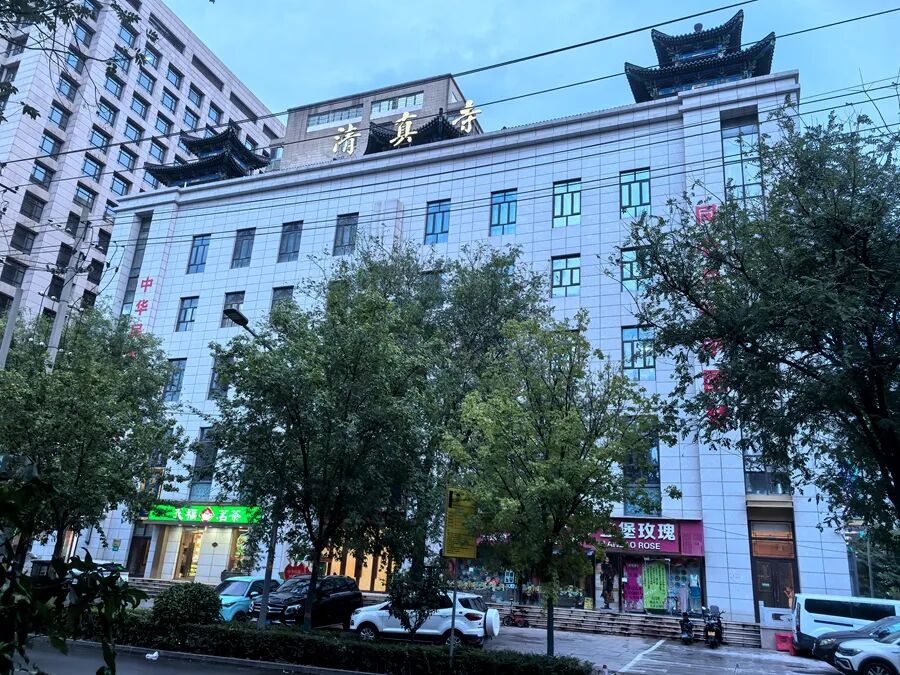
Dongxin Street Mosque
Ma Zengliang: A look back at the Dongxin Street Mosque
The mosque is a space that evolved alongside the spread of Islam in China. It serves as a place for Muslims to perform religious rituals and gain religious knowledge, carrying distinct cultural characteristics.
Islam has been in China for over a thousand years. In the early Tang Dynasty, merchants, envoys, and missionaries from Arabia and Persia came to the capital, Chang'an, to share the faith and build places for worship. These prayer halls are called Masjid in Arabic, which translates to a place of prostration. It wasn't until the end of the Yuan Dynasty and the beginning of the Ming Dynasty that the specific term Qingzhensi (mosque) became commonly used.
The Dongxin Street Mosque was funded and built by Muslim migrants who moved to Xi'an to make religious life more accessible. It was originally called the New City District Mosque. Later, to distinguish it from the Jianguo Lane Mosque built further east, it was simply called the West Mosque. In 1934, when the Longhai Railway reached Xi'an, poor families from provinces like Henan and Hebei arrived by train to find work or run small businesses. Many of the Hui Muslims among them settled in the relatively open New City area near the train station, specifically around Minleyuan, Jianguo Lane, Xiaonongcun, Honghui Street, the vegetable market, and the People's Market. This created a natural settlement for these migrant Muslims.
For the Hui people, whose entire community follows Islam, daily life—including fasting, prayer, communal services, birth, death, and marriage—is inseparable from the mosque and the imam. Since the older, established mosques in Dapiyuan and Huajue Lane were too far away, building a local mosque became a pressing need for the migrant community.
In 1936, a group of long-term migrant Muslims from Henan—including Wang Zhijun, Zhao Guoyun, Zhao Guozeng, Bai Yuzhang, Bai Junqing, Liu Guo'en, and Ma Hong'en—met to discuss building a mosque in the New City area. However, most of the newly arrived Hui families were struggling financially, making the project difficult. After much discussion, they raised funds within the community and rented a plot of land on Dongxin Street (at No. 428) in 1937 to build a simple prayer hall. This became the first mosque for migrant Muslims in Xi'an. It is said that when the local Han Chinese saw the community's struggles, they helped out by volunteering their labor or providing bricks and tiles on credit. The older mosques in Xi'an also maintained close ties with the Dongxin Street Mosque, fostering a relationship of mutual respect and support between the local and migrant communities, who lived together like family.
Over the next three or four years, the Dongxin Street Mosque was expanded multiple times through community fundraising. It eventually took shape as a simple courtyard: three rooms on the west served as the main prayer hall, four rooms on the east were used as a bathing area, eight rooms on the south were used as living quarters for the imam and classrooms for the Chinese-Arabic school, and a two-story building with three rooms served as a lecture hall. Beyond regular religious activities, the mosque also hosted young students (mulla) who lived there to study the Quran. They also started a Chinese-Arabic primary school, which provided free or reduced-tuition education to children of poor Muslim families. Senior Imam Wang Jingzhai served as the principal, and Zhao Mingxin, a graduate of Beijing's Chengda Normal School, was a teacher. Later, as the student body grew, the school was moved to West Second Road and renamed the Islamic Primary School. After the founding of the People's Republic of China, the government took over the school and renamed it the West Second Road Primary School.
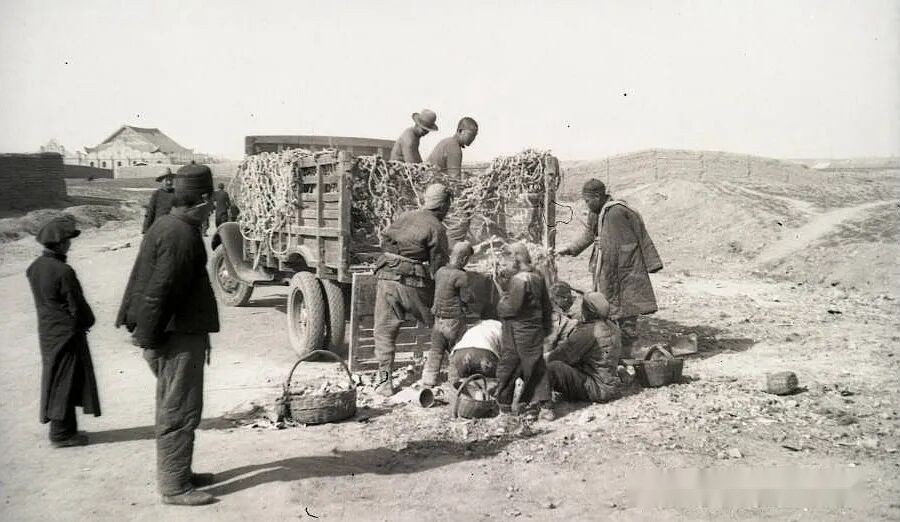
1938, near Minleyuan on Dongxin Street. Photo credit: Carleton College
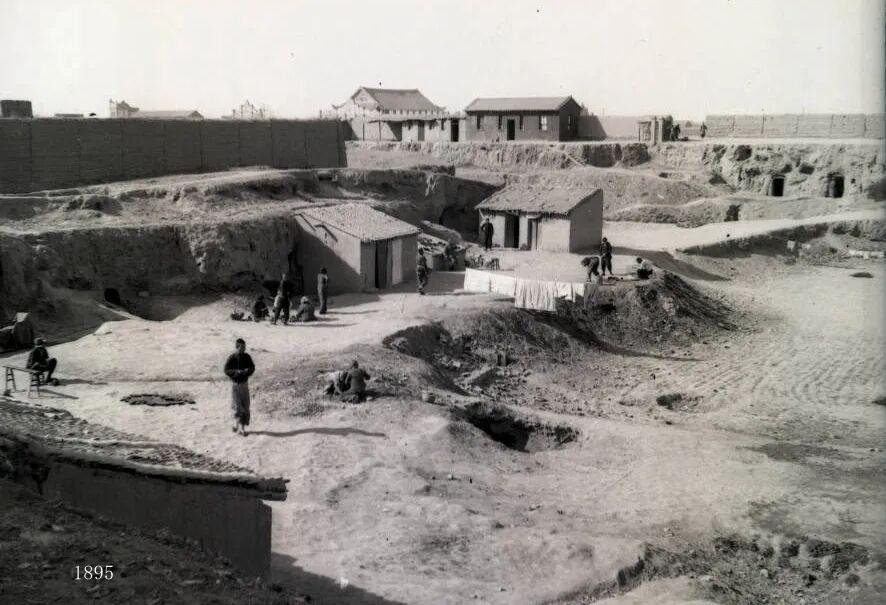
1938, near the Duck Pit (Yazikeng) area near Minleyuan. Photo credit: Carleton College
Activities at the mosque were primarily led by an imam. An imam had to be someone with deep 'ilmin (religious knowledge) and high respect within the community. They were officially hired only after the community elders (shetou) reached a consensus and issued an appointment letter. The first imam of the Dongxin Street Mosque was Wang Zhijun (Wang Mingde) from Huaiqing Prefecture, Henan. His successors were, in order: Ma Hongdao from Baoding, Hebei; Wang Jingzhai from Tianjin; Liu Zhijie from Tongxu County, Henan; Ma Xintian and Ma Dezhen from Gansu; Gasimu; Lan Yukun from Yanshi County, Henan; and Li Dianjun from Xinye, Henan.
The titles for those managing mosque affairs varied by region, such as shetou (community head), shezhang (community leader), or (council president), but they all functioned as a management committee. The first president of the Dongxin Street Mosque was Zhao Guoyun from Kaifeng, Henan, with shetou including Zhao Guozeng, Bai Yuzhang, Liu Guo'en, and Ma Hong'en. They were followed by leaders like Ma Yushan from Baoding, Li Jinsheng from Kaifeng, Ma Zhanchuan from Yanshi, Ma Junde from Tongxin County, and Liu Guo'en.
Among the nation's four most famous imams, besides Wang Jingzhai who served as the imam here, Da Pusheng and Ha Decheng both visited the mosque, which played a significant role in the mosque's growth and stability.
Before liberation, the land for the Dongxin Street Mosque was rented from a division commander of the Kuomintang army. In 1951, the Xi'an government cleared up outstanding property issues and sold the land to the mosque for 30 million yuan (old currency). Simultaneously, the mosque raised 51 million yuan (old currency) from the community to buy storefronts at No. 430, 432, and 434 Dongxin Street, as well as a two-story storefront at No. 139 Shangjian Road. The rental income from these properties was later used to cover the mosque's water, electricity, and coal costs, as well as the salaries of the imams, students, and staff.
During the large-scale reorganization of mosques across the province in 1958, the Dongxin Street Mosque was merged into the Jianguo Lane Mosque, and the site was used to house a Hui Cultural Center. During the Cultural Revolution, the center ceased operations. In 1971, several original Muslim members of the mosque negotiated to rent the space to the Dongxin Leather Goods Factory of the West First Road Commune to use as a production site.
Following the Third Plenary Session of the 11th Central Committee, religious policies were implemented. Responding to the requests of the Muslim community, the leather factory moved out in March 1985. With the approval of the Xi'an Municipal Government, the property was officially returned to the Muslim community on May 14, 1986, and the Dongxin Street Mosque was reopened.
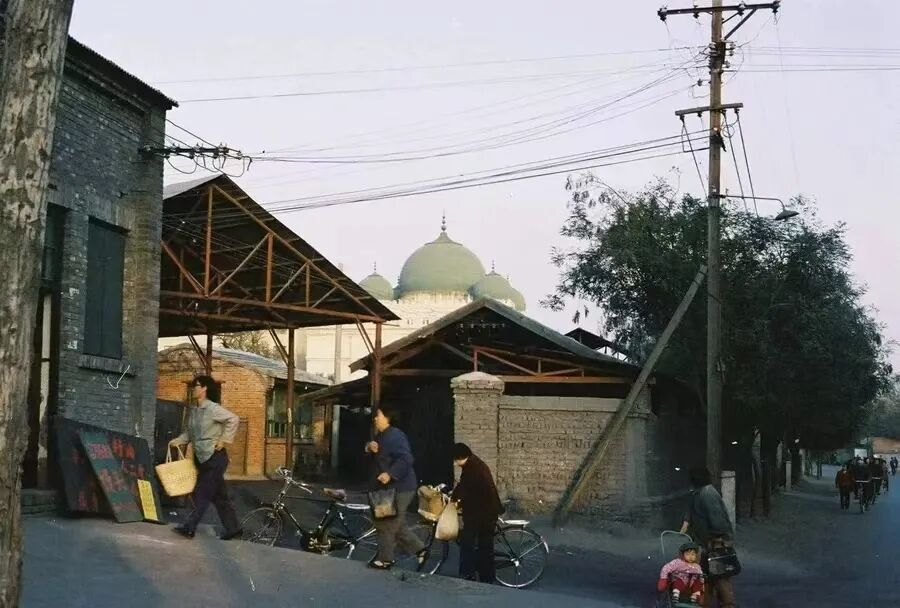
The Dongxin Street Mosque in the 1970s and 80s
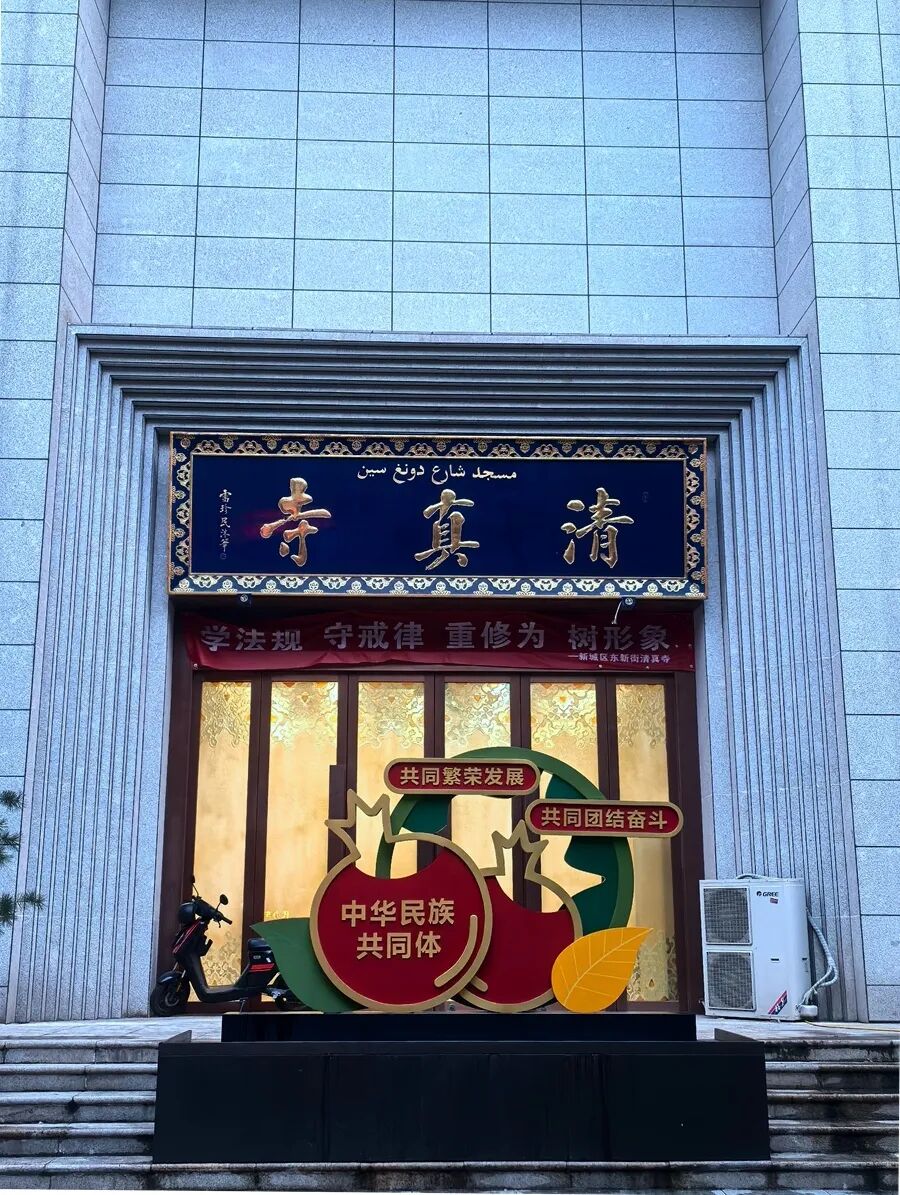
The current Dongxin Street Mosque
Zhao Mingxin: An overview of the Jianguo Lane Mosque
In the early days of the War of Resistance Against Japan, the Japanese military's indiscriminate bombing caused immense disaster. Hui Muslims from around Zhengzhou, Henan, fled their homes and sought refuge in Shaanxi. Xi'an served as a key rear area and a vital hub in the Northwest, boasting a prosperous commercial scene. Many refugees vied for spots near the train station, running small businesses or doing manual labor to survive. The area around Minleyuan was part of the New City District with plenty of open land, and it already had the New City District Mosque built by earlier Henan-origin Hui residents. Newcomers naturally settled near the mosque, building sheds and houses. Over time, as more migrant Muslims arrived, the New City District Mosque couldn't accommodate the growing community, sparking calls to build a new one. In the spring of 1939, Bai Junqing (a Henan native who moved to Xi'an after fleeing Zhengzhou) bought the current site in Jianguo Lane—which had a small, dilapidated shack—for 38 yuan. With the help of Zhao Guoyun (a native of Kaifeng, Henan, who arrived in 1935), they renovated the space and established the Jianguo Lane Mosque. Because it was east of the New City District Mosque, it was also called the East Mosque. It belonged to the Yihewani (New School) sect.
From the spring of 1939 to 1940, through donations from Muslims, the Jianguo Lane Mosque successively built three west-facing rooms for a prayer hall, three east-facing rooms for a water room (bathing area), and five north-facing rooms for lecture halls and living quarters for the imams. They also built a front gate with five street-facing rooms. While small, the mosque was complete with all the necessary facilities.
Bai Junqing was the initiator of the Jianguo Lane Mosque and contributed the most effort during its construction; he was chosen as the community head by the congregants. After liberation, he resigned, and the mosque's affairs were temporarily managed by Du Jinsheng. By 1954, following community elections, management was handled by a succession of people, including Du Jinsheng, Du Guangjun, Li Jinsheng, Hai Fuceng, Lü Ketong, Ba Shiying, and Ding Junjie. During the first religious reform in 1961, the feudal system was abolished, and Xi'an established a Mosque Management Committee. Each mosque formed its own management group, with Ding Boyan serving as both imam and deputy head of the management group for the East Mosque. When the Cultural Revolution began, Ding Boyan stepped down, and the mosque briefly stopped religious activities and was occupied by a sewing cooperative under the Zhongshanmen Commune's Cotton Textile Factory. About a year later, Muslims spontaneously returned to the mosque to pray. In 1970, during the second religious reform movement, Xi'an's mosques were merged; only two remained in the city: the Huajue Lane Mosque in Lianhu District and the Jianguo Lane Mosque in Xincheng District. The government stepped in to help the Muslims organize a democratic management committee for the Jianguo Lane Mosque, electing Liu Guo'en as chairman, along with committee members Li Changcai, Sha Xiuyun (female), Ma Hong'en, Chen Wenbin, Ma Zhenquan, and Hai Chong'en. On August 24, 1983, the management committee was reorganized, electing Di Yanchen (then 87 years old) as chairman, and Ba Guoying and Zhao Mingxin as vice-chairmen. Half a year later, after Di Yanchen passed away, the committee was reshuffled, with Du Guangchuan becoming chairman. In August 1985, after the term expired, Bai Xuebin was elected chairman, with Zhao Mingxin and Zhang Xueli as vice-chairmen.
The imams who served at the Jianguo Lane Mosque include: Wang Huaiqi (from Lankao, Henan, currently at Dingdaokou Mosque in Henan), Liu Zijie (from Tongxu, Henan, deceased), Hu Tingzhang (from Chengdu, Sichuan, deceased), Wu Zhenming (from Xi'an, deceased), Diao Mingfeng (from Xuchang, Henan, deceased), Fa Jinxiang (from Nanyang Xixiakou, Henan, deceased), Ding Boyan (from Lushan, Henan, current vice-director of the Xi'an Islamic Association), Ma Zhenxing (from Baoding, Hebei, deceased), and Chen Wenbin (from Zhoukou, Henan). The current imam is Zhao Mingxin from Kaifeng, Henan. The mosque's community spans Jianguo Lane, Ziyou Lane, Anle Lane, Shangqin Road, Shangjian Road, and the Zhongshanmen area, totaling over a thousand households. Most are small-scale independent business owners selling beef and mutton or working in food services, with a few working in state offices or companies. Due to history and traditions, the local level of formal education is relatively low, and there are few technical professionals. Notable figures include Zhao Bao'an (from Kaifeng, NWU graduate, retired vice-principal of No. 72 High School), Jia Rongjie (from Qinyang, Henan, retired official), Cheng Lianfei (from Yuncheng, Shanxi, chief engineer at the Northwest Electric Power Construction Bureau), and Bai Quande (a Henan native, one of the few Hui scientists at the Chinese Academy of Sciences, who currently teaches on rotation in Zhengzhou, Xi'an, and Lanzhou). While the community lives in mixed neighborhoods with Han Chinese, everyone respects each other and lives in harmony.
After the Third Plenary Session of the 11th CPC Central Committee, national and religious policies were further implemented, and religious life gradually returned to normal. Given that the Jianguo Lane Mosque was in disrepair and posed a safety risk, the government provided funding starting in 1980 for major renovations. The original prayer hall was expanded to 180 square meters, the north hall was converted into a bathing room, and a female bathing room and a room for handling funeral rites were built on the site of the old east wing. They added a boiler room, repaired the main gate, and installed running water pipes. The bathing rooms and water taps replaced traditional water kettles. A new two-story east wing was added. The entire structure is made of reinforced concrete. The five-bay prayer hall features a modern design with a green dome, glass windows, good ventilation, electric lighting, fans, and floor mats. At 15.8 meters high, it maintains Islamic architectural features while differing from the old-style mosques, making it currently the only new-style mosque in Xi'an.
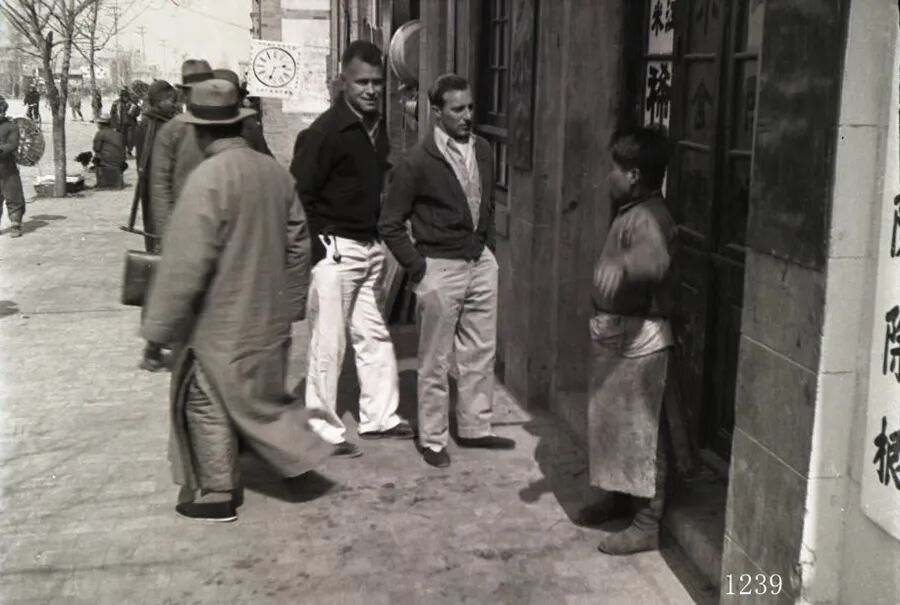
The Pingling Snack Shop on the north side of Jianguo Lane. Photo credit: Carleton College
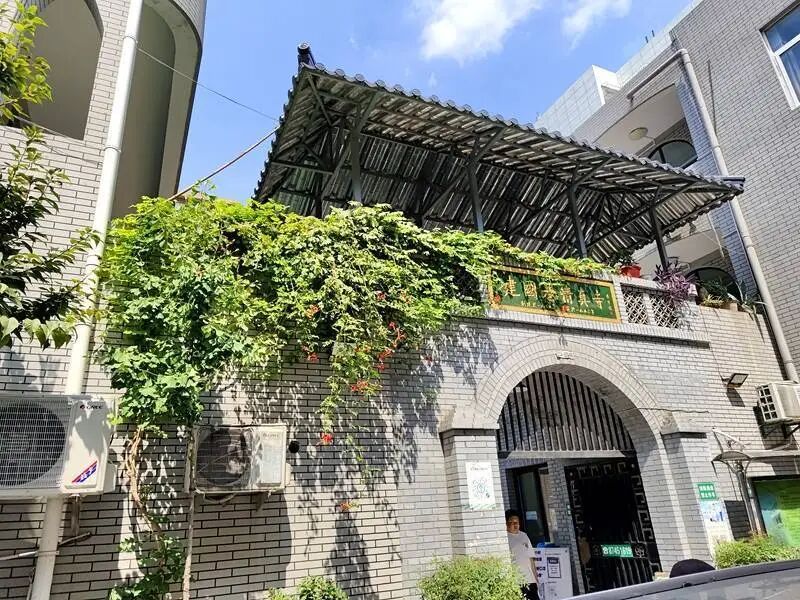
Jianguo Lane Mosque. Photo credit: Fengfeng
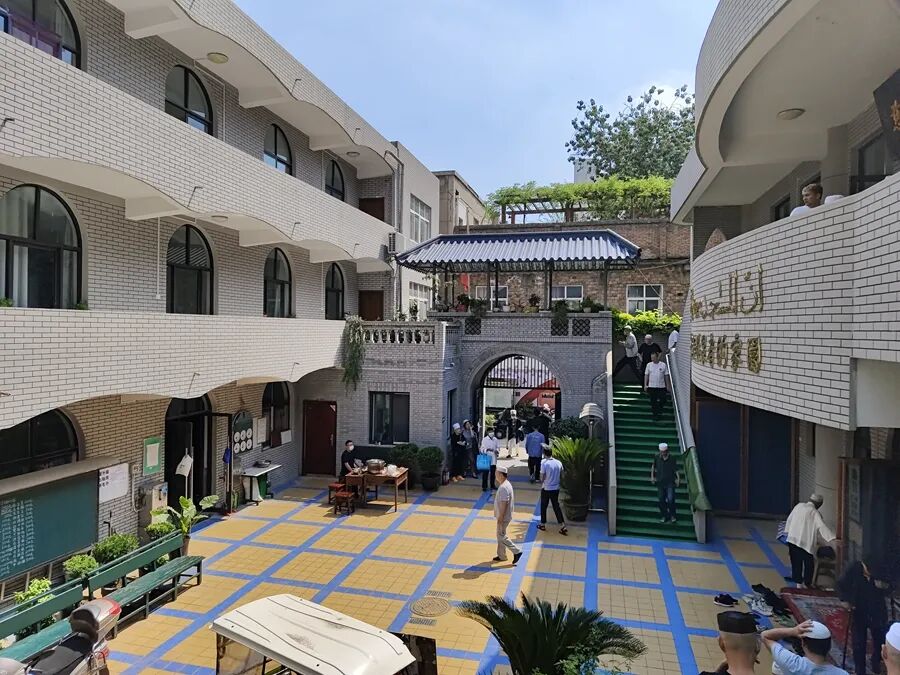
Jianguo Lane Mosque courtyard. Photo credit: Fengfeng
Ma Zengliang: The Hui New Village in Xincheng District
The Hui New Village in Xincheng District is located on the south side of Changle West Road in the eastern suburbs of Xi'an. It is a small community for Hui Muslims, with over 220 people from 62 households, 59 of which are Hui.
In 1954, to adapt to urban development, the Xi'an Municipal Government decided to widen East Fifth Road and open the eastern section of the city wall to create a main road connecting the inside and outside of the city. At that time, a few dozen families—mostly Hui refugees from the Yellow River flood areas in Henan and Anhui—were living in the East Gou area outside the city wall. They had also pooled their money to build a simple mosque. The road construction project required relocating these residents and the mosque. Since these residents lived in straw huts and relied on small businesses or manual labor for their daily bread, the municipal government set two principles for relocation: first, everyone had to move for the sake of national development; second, they had to respect Hui customs and settle them as a group nearby. The Ethnic Affairs Commission investigated and suggested using a vacant plot east of the Zhongnan Match Factory and north of Dongguan Beikuomen to settle the community and build a new mosque. This accommodated their religious needs and ensured their livelihoods weren't interrupted. The Hui community was very pleased.
During the relocation, the Ethnic Affairs Commission organized the Hui residents to elect Liu Shuzhen, Ai Shunxing, and Li Zhizhong to form a relocation group to plan the site. The new location covered 6 mu (about 1 acre), with 1.5 mu used for the mosque and the remaining 4.5 mu used to build 12 rows of single-story houses. With government subsidies, families built their own homes according to the plan. Within a year, neat rows of houses were standing, and over 130 people from 30 households moved in. Meanwhile, the Muslims pooled their money and labor to build their new mosque. It faces south, with a three-bay main prayer hall. The north building serves as a lecture hall and imam's quarters, while the rooms on either side of the gate are for bathing and water wells. The gate features traditional eaves. While not opulent, the building has a unique style. Since it was an all-Hui community, it was named Hui New Village, and the mosque took the same name.
The first imam after the Hui New Village mosque was built was Lan Yukun from Henan, and the mulla was Dan Anmin. Mosque affairs were handled by an elected management committee. In recent years, religious activities were temporarily suspended, and the site was turned into a factory. With the implementation of ethnic and religious policies, the property was returned to the Muslim community on May 8, 1986, and the mosque resumed normal religious activities.
Over the past 30 years, the Hui New Village has undergone massive changes. Every household has rebuilt their homes and added modern furniture, and their standard of living has improved significantly. While most people still run individual businesses, the younger generation has joined industrial and commercial enterprises as workers and officials. Currently, under the care of the Party, they are happily and diligently contributing to the country's unity and development.
Source: New City Historical Data Collection, Volume 2, October 1986
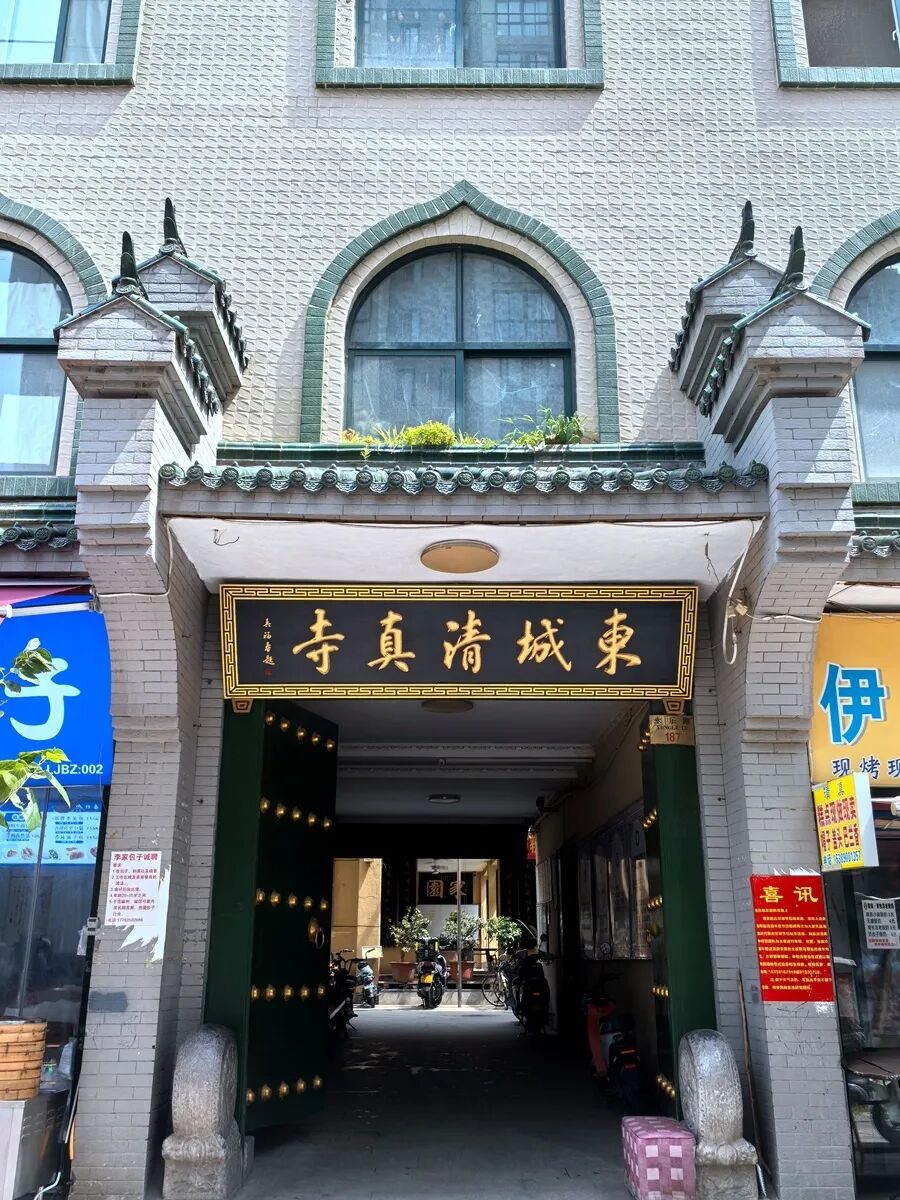
East City Mosque
Special Thanks
Photos supported by Carleton College and Mr. Fengfeng
Online images used with gratitude
· END ·
Based on historical records and the personal accounts of those who lived through it, this article details the history of three landmark mosques in Xi'an's Xincheng District—including the Dongxin Street Mosque. It covers how they were funded, built, and used for education and religious life after the Longhai Railway opened and Hui Muslims from other regions migrated to Xi'an.
Dongxin Street Mosque
Ma Zengliang: A look back at the Dongxin Street Mosque
The mosque is a space that evolved alongside the spread of Islam in China. It serves as a place for Muslims to perform religious rituals and gain religious knowledge, carrying distinct cultural characteristics.
Islam has been in China for over a thousand years. In the early Tang Dynasty, merchants, envoys, and missionaries from Arabia and Persia came to the capital, Chang'an, to share the faith and build places for worship. These prayer halls are called Masjid in Arabic, which translates to a place of prostration. It wasn't until the end of the Yuan Dynasty and the beginning of the Ming Dynasty that the specific term Qingzhensi (mosque) became commonly used.
The Dongxin Street Mosque was funded and built by Muslim migrants who moved to Xi'an to make religious life more accessible. It was originally called the New City District Mosque. Later, to distinguish it from the Jianguo Lane Mosque built further east, it was simply called the West Mosque. In 1934, when the Longhai Railway reached Xi'an, poor families from provinces like Henan and Hebei arrived by train to find work or run small businesses. Many of the Hui Muslims among them settled in the relatively open New City area near the train station, specifically around Minleyuan, Jianguo Lane, Xiaonongcun, Honghui Street, the vegetable market, and the People's Market. This created a natural settlement for these migrant Muslims.
For the Hui people, whose entire community follows Islam, daily life—including fasting, prayer, communal services, birth, death, and marriage—is inseparable from the mosque and the imam. Since the older, established mosques in Dapiyuan and Huajue Lane were too far away, building a local mosque became a pressing need for the migrant community.
In 1936, a group of long-term migrant Muslims from Henan—including Wang Zhijun, Zhao Guoyun, Zhao Guozeng, Bai Yuzhang, Bai Junqing, Liu Guo'en, and Ma Hong'en—met to discuss building a mosque in the New City area. However, most of the newly arrived Hui families were struggling financially, making the project difficult. After much discussion, they raised funds within the community and rented a plot of land on Dongxin Street (at No. 428) in 1937 to build a simple prayer hall. This became the first mosque for migrant Muslims in Xi'an. It is said that when the local Han Chinese saw the community's struggles, they helped out by volunteering their labor or providing bricks and tiles on credit. The older mosques in Xi'an also maintained close ties with the Dongxin Street Mosque, fostering a relationship of mutual respect and support between the local and migrant communities, who lived together like family.
Over the next three or four years, the Dongxin Street Mosque was expanded multiple times through community fundraising. It eventually took shape as a simple courtyard: three rooms on the west served as the main prayer hall, four rooms on the east were used as a bathing area, eight rooms on the south were used as living quarters for the imam and classrooms for the Chinese-Arabic school, and a two-story building with three rooms served as a lecture hall. Beyond regular religious activities, the mosque also hosted young students (mulla) who lived there to study the Quran. They also started a Chinese-Arabic primary school, which provided free or reduced-tuition education to children of poor Muslim families. Senior Imam Wang Jingzhai served as the principal, and Zhao Mingxin, a graduate of Beijing's Chengda Normal School, was a teacher. Later, as the student body grew, the school was moved to West Second Road and renamed the Islamic Primary School. After the founding of the People's Republic of China, the government took over the school and renamed it the West Second Road Primary School.
1938, near Minleyuan on Dongxin Street. Photo credit: Carleton College
1938, near the Duck Pit (Yazikeng) area near Minleyuan. Photo credit: Carleton College
Activities at the mosque were primarily led by an imam. An imam had to be someone with deep 'ilmin (religious knowledge) and high respect within the community. They were officially hired only after the community elders (shetou) reached a consensus and issued an appointment letter. The first imam of the Dongxin Street Mosque was Wang Zhijun (Wang Mingde) from Huaiqing Prefecture, Henan. His successors were, in order: Ma Hongdao from Baoding, Hebei; Wang Jingzhai from Tianjin; Liu Zhijie from Tongxu County, Henan; Ma Xintian and Ma Dezhen from Gansu; Gasimu; Lan Yukun from Yanshi County, Henan; and Li Dianjun from Xinye, Henan.
The titles for those managing mosque affairs varied by region, such as shetou (community head), shezhang (community leader), or (council president), but they all functioned as a management committee. The first president of the Dongxin Street Mosque was Zhao Guoyun from Kaifeng, Henan, with shetou including Zhao Guozeng, Bai Yuzhang, Liu Guo'en, and Ma Hong'en. They were followed by leaders like Ma Yushan from Baoding, Li Jinsheng from Kaifeng, Ma Zhanchuan from Yanshi, Ma Junde from Tongxin County, and Liu Guo'en.
Among the nation's four most famous imams, besides Wang Jingzhai who served as the imam here, Da Pusheng and Ha Decheng both visited the mosque, which played a significant role in the mosque's growth and stability.
Before liberation, the land for the Dongxin Street Mosque was rented from a division commander of the Kuomintang army. In 1951, the Xi'an government cleared up outstanding property issues and sold the land to the mosque for 30 million yuan (old currency). Simultaneously, the mosque raised 51 million yuan (old currency) from the community to buy storefronts at No. 430, 432, and 434 Dongxin Street, as well as a two-story storefront at No. 139 Shangjian Road. The rental income from these properties was later used to cover the mosque's water, electricity, and coal costs, as well as the salaries of the imams, students, and staff.
During the large-scale reorganization of mosques across the province in 1958, the Dongxin Street Mosque was merged into the Jianguo Lane Mosque, and the site was used to house a Hui Cultural Center. During the Cultural Revolution, the center ceased operations. In 1971, several original Muslim members of the mosque negotiated to rent the space to the Dongxin Leather Goods Factory of the West First Road Commune to use as a production site.
Following the Third Plenary Session of the 11th Central Committee, religious policies were implemented. Responding to the requests of the Muslim community, the leather factory moved out in March 1985. With the approval of the Xi'an Municipal Government, the property was officially returned to the Muslim community on May 14, 1986, and the Dongxin Street Mosque was reopened.
The Dongxin Street Mosque in the 1970s and 80s
The current Dongxin Street Mosque
Zhao Mingxin: An overview of the Jianguo Lane Mosque
In the early days of the War of Resistance Against Japan, the Japanese military's indiscriminate bombing caused immense disaster. Hui Muslims from around Zhengzhou, Henan, fled their homes and sought refuge in Shaanxi. Xi'an served as a key rear area and a vital hub in the Northwest, boasting a prosperous commercial scene. Many refugees vied for spots near the train station, running small businesses or doing manual labor to survive. The area around Minleyuan was part of the New City District with plenty of open land, and it already had the New City District Mosque built by earlier Henan-origin Hui residents. Newcomers naturally settled near the mosque, building sheds and houses. Over time, as more migrant Muslims arrived, the New City District Mosque couldn't accommodate the growing community, sparking calls to build a new one. In the spring of 1939, Bai Junqing (a Henan native who moved to Xi'an after fleeing Zhengzhou) bought the current site in Jianguo Lane—which had a small, dilapidated shack—for 38 yuan. With the help of Zhao Guoyun (a native of Kaifeng, Henan, who arrived in 1935), they renovated the space and established the Jianguo Lane Mosque. Because it was east of the New City District Mosque, it was also called the East Mosque. It belonged to the Yihewani (New School) sect.
From the spring of 1939 to 1940, through donations from Muslims, the Jianguo Lane Mosque successively built three west-facing rooms for a prayer hall, three east-facing rooms for a water room (bathing area), and five north-facing rooms for lecture halls and living quarters for the imams. They also built a front gate with five street-facing rooms. While small, the mosque was complete with all the necessary facilities.
Bai Junqing was the initiator of the Jianguo Lane Mosque and contributed the most effort during its construction; he was chosen as the community head by the congregants. After liberation, he resigned, and the mosque's affairs were temporarily managed by Du Jinsheng. By 1954, following community elections, management was handled by a succession of people, including Du Jinsheng, Du Guangjun, Li Jinsheng, Hai Fuceng, Lü Ketong, Ba Shiying, and Ding Junjie. During the first religious reform in 1961, the feudal system was abolished, and Xi'an established a Mosque Management Committee. Each mosque formed its own management group, with Ding Boyan serving as both imam and deputy head of the management group for the East Mosque. When the Cultural Revolution began, Ding Boyan stepped down, and the mosque briefly stopped religious activities and was occupied by a sewing cooperative under the Zhongshanmen Commune's Cotton Textile Factory. About a year later, Muslims spontaneously returned to the mosque to pray. In 1970, during the second religious reform movement, Xi'an's mosques were merged; only two remained in the city: the Huajue Lane Mosque in Lianhu District and the Jianguo Lane Mosque in Xincheng District. The government stepped in to help the Muslims organize a democratic management committee for the Jianguo Lane Mosque, electing Liu Guo'en as chairman, along with committee members Li Changcai, Sha Xiuyun (female), Ma Hong'en, Chen Wenbin, Ma Zhenquan, and Hai Chong'en. On August 24, 1983, the management committee was reorganized, electing Di Yanchen (then 87 years old) as chairman, and Ba Guoying and Zhao Mingxin as vice-chairmen. Half a year later, after Di Yanchen passed away, the committee was reshuffled, with Du Guangchuan becoming chairman. In August 1985, after the term expired, Bai Xuebin was elected chairman, with Zhao Mingxin and Zhang Xueli as vice-chairmen.
The imams who served at the Jianguo Lane Mosque include: Wang Huaiqi (from Lankao, Henan, currently at Dingdaokou Mosque in Henan), Liu Zijie (from Tongxu, Henan, deceased), Hu Tingzhang (from Chengdu, Sichuan, deceased), Wu Zhenming (from Xi'an, deceased), Diao Mingfeng (from Xuchang, Henan, deceased), Fa Jinxiang (from Nanyang Xixiakou, Henan, deceased), Ding Boyan (from Lushan, Henan, current vice-director of the Xi'an Islamic Association), Ma Zhenxing (from Baoding, Hebei, deceased), and Chen Wenbin (from Zhoukou, Henan). The current imam is Zhao Mingxin from Kaifeng, Henan. The mosque's community spans Jianguo Lane, Ziyou Lane, Anle Lane, Shangqin Road, Shangjian Road, and the Zhongshanmen area, totaling over a thousand households. Most are small-scale independent business owners selling beef and mutton or working in food services, with a few working in state offices or companies. Due to history and traditions, the local level of formal education is relatively low, and there are few technical professionals. Notable figures include Zhao Bao'an (from Kaifeng, NWU graduate, retired vice-principal of No. 72 High School), Jia Rongjie (from Qinyang, Henan, retired official), Cheng Lianfei (from Yuncheng, Shanxi, chief engineer at the Northwest Electric Power Construction Bureau), and Bai Quande (a Henan native, one of the few Hui scientists at the Chinese Academy of Sciences, who currently teaches on rotation in Zhengzhou, Xi'an, and Lanzhou). While the community lives in mixed neighborhoods with Han Chinese, everyone respects each other and lives in harmony.
After the Third Plenary Session of the 11th CPC Central Committee, national and religious policies were further implemented, and religious life gradually returned to normal. Given that the Jianguo Lane Mosque was in disrepair and posed a safety risk, the government provided funding starting in 1980 for major renovations. The original prayer hall was expanded to 180 square meters, the north hall was converted into a bathing room, and a female bathing room and a room for handling funeral rites were built on the site of the old east wing. They added a boiler room, repaired the main gate, and installed running water pipes. The bathing rooms and water taps replaced traditional water kettles. A new two-story east wing was added. The entire structure is made of reinforced concrete. The five-bay prayer hall features a modern design with a green dome, glass windows, good ventilation, electric lighting, fans, and floor mats. At 15.8 meters high, it maintains Islamic architectural features while differing from the old-style mosques, making it currently the only new-style mosque in Xi'an.
The Pingling Snack Shop on the north side of Jianguo Lane. Photo credit: Carleton College
Jianguo Lane Mosque. Photo credit: Fengfeng
Jianguo Lane Mosque courtyard. Photo credit: Fengfeng
Ma Zengliang: The Hui New Village in Xincheng District
The Hui New Village in Xincheng District is located on the south side of Changle West Road in the eastern suburbs of Xi'an. It is a small community for Hui Muslims, with over 220 people from 62 households, 59 of which are Hui.
In 1954, to adapt to urban development, the Xi'an Municipal Government decided to widen East Fifth Road and open the eastern section of the city wall to create a main road connecting the inside and outside of the city. At that time, a few dozen families—mostly Hui refugees from the Yellow River flood areas in Henan and Anhui—were living in the East Gou area outside the city wall. They had also pooled their money to build a simple mosque. The road construction project required relocating these residents and the mosque. Since these residents lived in straw huts and relied on small businesses or manual labor for their daily bread, the municipal government set two principles for relocation: first, everyone had to move for the sake of national development; second, they had to respect Hui customs and settle them as a group nearby. The Ethnic Affairs Commission investigated and suggested using a vacant plot east of the Zhongnan Match Factory and north of Dongguan Beikuomen to settle the community and build a new mosque. This accommodated their religious needs and ensured their livelihoods weren't interrupted. The Hui community was very pleased.
During the relocation, the Ethnic Affairs Commission organized the Hui residents to elect Liu Shuzhen, Ai Shunxing, and Li Zhizhong to form a relocation group to plan the site. The new location covered 6 mu (about 1 acre), with 1.5 mu used for the mosque and the remaining 4.5 mu used to build 12 rows of single-story houses. With government subsidies, families built their own homes according to the plan. Within a year, neat rows of houses were standing, and over 130 people from 30 households moved in. Meanwhile, the Muslims pooled their money and labor to build their new mosque. It faces south, with a three-bay main prayer hall. The north building serves as a lecture hall and imam's quarters, while the rooms on either side of the gate are for bathing and water wells. The gate features traditional eaves. While not opulent, the building has a unique style. Since it was an all-Hui community, it was named Hui New Village, and the mosque took the same name.
The first imam after the Hui New Village mosque was built was Lan Yukun from Henan, and the mulla was Dan Anmin. Mosque affairs were handled by an elected management committee. In recent years, religious activities were temporarily suspended, and the site was turned into a factory. With the implementation of ethnic and religious policies, the property was returned to the Muslim community on May 8, 1986, and the mosque resumed normal religious activities.
Over the past 30 years, the Hui New Village has undergone massive changes. Every household has rebuilt their homes and added modern furniture, and their standard of living has improved significantly. While most people still run individual businesses, the younger generation has joined industrial and commercial enterprises as workers and officials. Currently, under the care of the Party, they are happily and diligently contributing to the country's unity and development.
Source: New City Historical Data Collection, Volume 2, October 1986
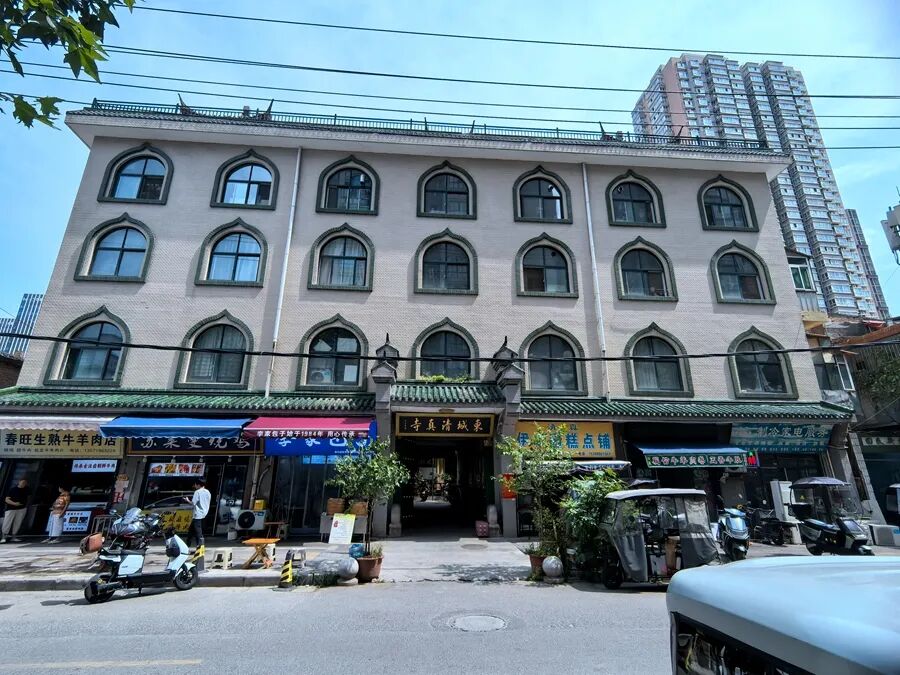
East City Mosque
Special Thanks
Photos supported by Carleton College and Mr. Fengfeng
Online images used with gratitude
· END ·
