
Discovering Dongxiang County: Traditional Mosques, Hui Muslim Culture, and Authentic Hand-Grabbed Lamb in Gansu
Part four of our documentary photography series, 'The Vanishing Arched Spire,' takes us to 'The Dongxiang People on the Mountains.' We venture deep into the Dongxiang Autonomous County, nestled in the rolling folds of the Taizi and Jishi mountain ranges. This project documents the mosques and their historical daotang (traditional Islamic religious community centers) built amidst the loess hills, the renowned Dongxiang shouzhua yangrou (hand-grabbed lamb), and the stories of the local (pulled noodle) artisans, capturing the resilient and rustic life of these highland communities.
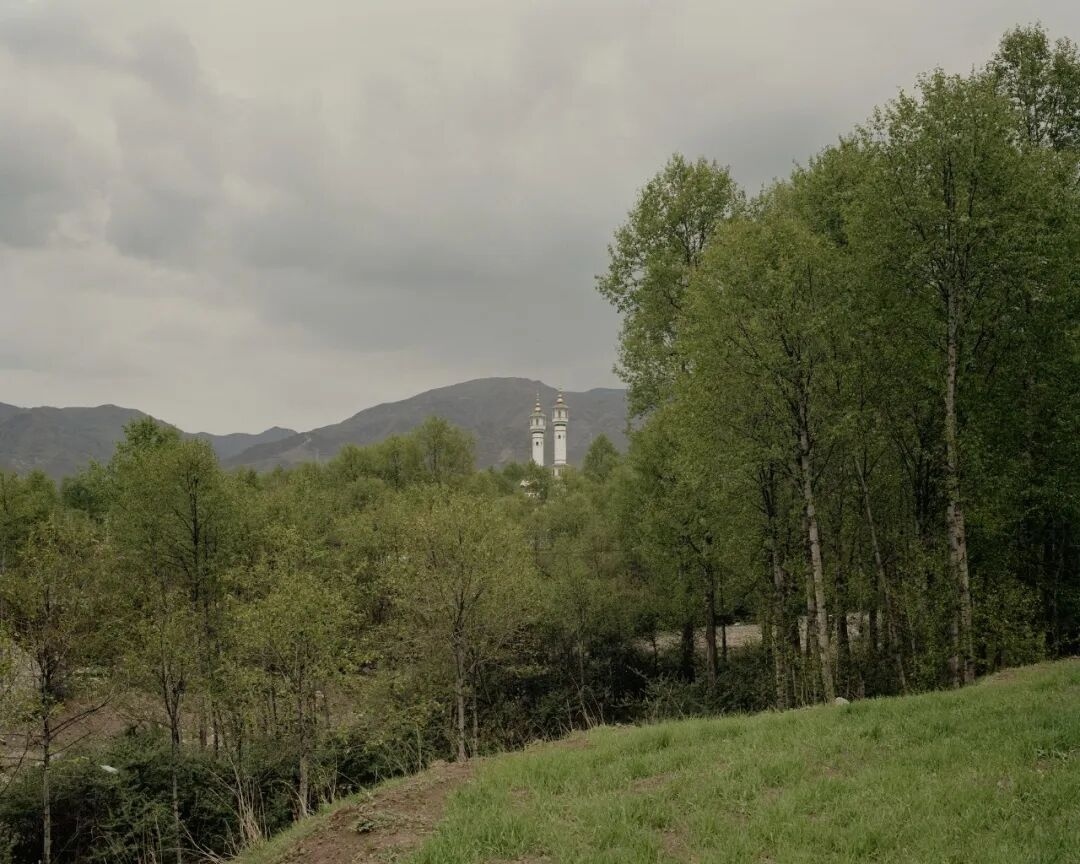
The Dongxiang people on the mountains are the birthplace of the Ikhwan movement, but today, they are perhaps even more famous for their legendary hand-grabbed lamb. Both have had a profound and lasting impact on the Hehuang Valley region.
The Dongxiang People on the Mountains
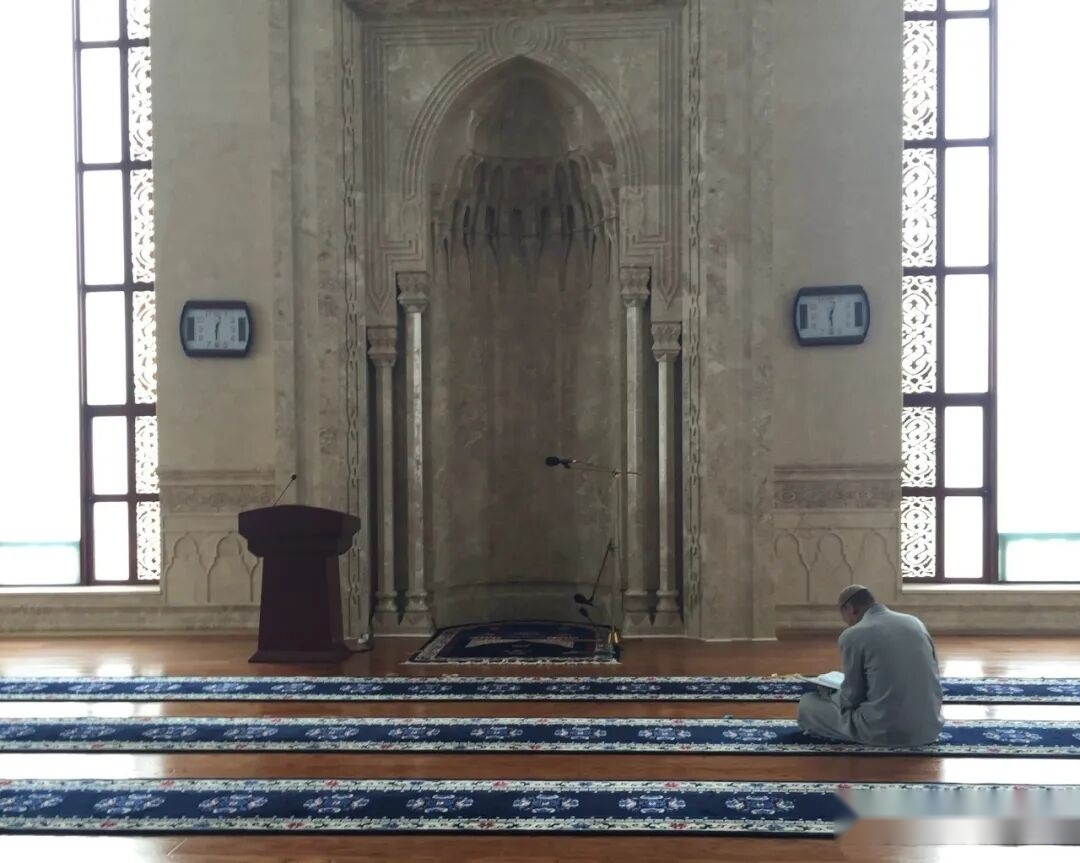
Inside the Prayer Hall
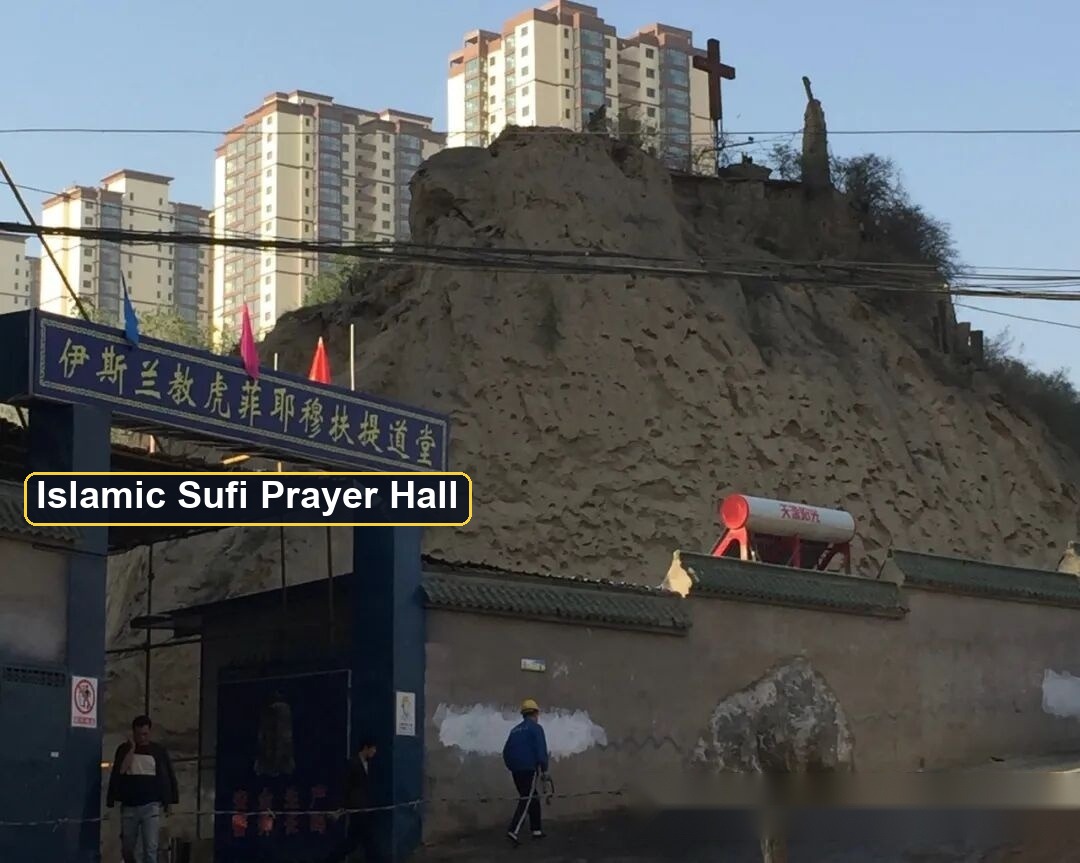
The Daotang and the Cross in Lanzhou
1
At the crack of dawn on Monday, Zhang Yi was already waiting at the hotel entrance. The rental car delivery service hadn't arrived at the scheduled time. Twenty minutes later, the young guy in charge finally called to say he was stuck in traffic. Zhang Yi remarked that such a delay would be unheard of in Beijing; he should have known about the Monday morning rush. When the laid-back young man finally arrived, Zhang Yi stayed calm and polite, deciding not to make a fuss.
Before leaving Lanzhou, I wanted to treat my two assistants—Yu Li and the self-appointed 'boss' Zhang Yi—to one last round of lamen. Lanzhou locals insist on calling it 'beef noodles.' We headed to the 'Penghui Beef Noodle' shop I’d spotted on the map the previous morning. It was a tucked-away spot in a narrow residential alley—the kind of place locals go for a humble breakfast. I love the smoke, the noise, and the down-to-earth vibe of these neighborhood joints. Beyond being cheap, there’s a raw, authentic joy to them. During dinner last night, I mentioned this place, and Zhang Hongwei and some locals dismissed it with total disdain. But when it comes to stubborn food opinions, my approach is to double down on my 'folly' and go eat there anyway. My assistants agreed the taste was excellent. Ignoring the arrogant advice of our local friends, we went all-in: meat and egg, plus a side dish. I don't love the beef broth, so I ordered a bowl of meat-sauce noodles—also with the 'meat and egg' combo. It’s the ultimate beef noodle configuration; adding a double portion of meat and two eggs might get you some side-eyes, so we could only surpass that level by ordering more side dishes. The guy at the next table had a bowl of 'erxi' (thinly pulled noodles) loaded with extra chili, garlic sprouts, and cilantro—a vibrant, bright red bowl. With a look of pure satisfaction, he pulled out a plastic bag of his own homemade braised beef, taking a bite of noodles followed by a piece of meat. He ate with gusto, stuffing his face and clearly loving every bite.
Did you bring that meat yourself?
He replied in the fluid, effortless lilt of the Lanzhou dialect, 'I braised it myself. Meat is just too expensive these days.'
That guy is a real tough character. I felt like that solid breakfast would keep me full all day, and I wouldn't have to stress about what to eat for the rest of the trip.

Gongbei Beach by the Tao River
The road to Linxia winds south from the city past Jincheng Pass into a mountain valley. To the right lies Hualin Mountain, where 250 years ago, Su Sishisan, a Salar leader of the Jahriyya Sufi order, retreated with his followers after failing to take Lanzhou. After three months of being cut off from supplies, his entire army was wiped out.
The valley ahead grew narrower, eventually converging into a mountain ridge south of Lanzhou. This is the essential path to Linxia. It’s the same road Ma Mingxin took when he was forced back to his ancestral home in Dingxi, and the same route his fallen Jahriyya followers marched along before fighting their way to the Old West Gate of Lanzhou.
Crossing over the mountain brings you to the Tao River Valley, a vital part of the Hehuang Valley. Anthropologically speaking, this area is the 'Hui Muslim Corridor' of Northwest China. The two key cities in this valley, Linxia and Xining, are the most important hubs for the Hui Muslim population.
Past the Tao River lies Daban Town. Zhang Yi followed the GPS, intending to take the Zhehong Highway—a national road that is shorter and passes through Dongxiang County. However, that route would mean skipping the mosques at Sanjiaji, Qijiaji, and Taizisi. I really wanted to photograph the Qijiaji Mosque, so I hesitated, but I also wanted to visit Dongxiang. After a brief argument, we turned north toward Sanjiaji. Three kilometers later, we reached Gongbei Beach. The village was mostly demolished; a few new buildings had gone up on the south side, and a large part of the village was now just a foundation pit. Excavated yellow loess was piled high into mounds, all enclosed by blue iron fencing. The old, classical-style mosque stood taller than the fences, its 'feiyan dougong' (traditional flying eaves and brackets) catching the eye. Zhang Yi turned onto a new street right along the fence. On the empty lot sat the elegant Gongbei Beach Mosque, while the other side of the street was lined with residential sidewalks. The street was deserted, save for shuttered storefronts and some pitifully small, lonely saplings planted on the sidewalk. These trees, barely taller than a person, looked like lost soldiers. The tree pits were cracked and dry, not even weeds could take root. These trees had been planted in such a rush that they’d likely wither by next season, only to be replaced and die all over again.
Zhang Yi parked near an opening where we could slip into the construction site through a gap torn in the iron fence. The site was just a dumping ground for construction debris, but the surface had been packed smooth by foot traffic—plenty of people had clearly visited throughout the summer. Behind the mounds, the rooftop of the mosque emerged. From this angle, it looked almost ethereal; the mosque was bathed in sunlight while the piles of dirt in front of us sat in the deep shadow of a nearby building. The scene was vivid. I snapped a few photos and climbed to the top of a dirt mound. The view of the remaining, undemolished parts of Gongbei Beach village was crystal clear—perhaps too clear, making it a difficult shot to compose.
Back down from the mound, I changed my mind while urinating against a wall—men often make big decisions while peeing. I decided we’d head to Dongxiang after all. I told Zhang Yi we wouldn't be going to Sanjiaji and to take the original route back to the Zhehong Highway. I added, 'The renovation at Qijiaji Mosque isn't finished yet,' just to offer some explanation.
This was truly a road through the wilderness. Shortly after leaving Daban Town again, the highway left the Tao River Valley and entered the mountains. The Dongxiang terrain is classic loess plateau gully country—dry season, dry roads. The road snaked through mountain hollows, passing small, scattered villages. The cottages were the color of the earth itself. There were few trees, and the villages were tiny, often consisting of only a dozen or so families, scattered haphazardly across the ravines and ridges. The traditional-style mosques were still the most prominent landmarks, serving as the visual and spiritual center of each village. Along the way, I didn't see any of the radical Arabic-style mosques, which fortunately spared them from the recent wave of mosque renovations.
The Dongxiang people are an immigrant group; even they aren't entirely sure of their exact origins. They speak a unique language belonging to the Altaic family but have no written script. It's believed that around the 14th century, their ancestors arrived as part of a Central Asian military unit serving under the Mongols during the conquest of Western Xia. This is similar to the Salar people who also formed in the Hehuang Valley. The Dongxiang language is very close to modern Mongolian. Language is the cultural genetic code of a people. I’d boldly speculate that the predecessors of the Dongxiang were Mongols who campaigned westward into Central Asia, mixed with local populations there, gradually Turkicized, and converted to Islam. The prevailing view is that they were heavily influenced by the Sart people during this period. Later, they traveled east with the army to the Gansu region. After the fall of Western Xia, the military units settled down, reclaimed land, and gradually evolved into today's Dongxiang ethnic group.
The Dongxiang are a 'mountain people.' Half of the Dongxiang population is concentrated within Dongxiang County, living almost entirely in the massive folds of the loess plateau. Even the county seat is nestled in a hollow at the top of a mountain.
At the top of the sun-drenched slope in the mountain hollow stands the grand, imposing county government administration building. The white structure stretches out on both sides like two arms, embracing a square below. Public facilities like hospitals and banks are laid out along these 'arms.' From the mountain peak down to the lower slopes, the government building and the square sit on the same central axis. Buildings of various heights are staggered across the slopes. Looking up from the square, the government building is majestic and authoritative—it looks nothing like the seat of a nationally designated impoverished county.

The 'Gongbei' (Shrine) in the Mountains
2
It was my first time in this county. I wandered aimlessly until I stopped at this square, which was convenient for parking. A few boys in white caps were hanging around some electric sand-karts. I slowly walked over. It was a local amusement setup: twenty or thirty small three-wheeled sand-karts and a few larger electric toy cars for younger children. The woman managing them wore no head covering, and I couldn't tell if she was Dongxiang. As she dragged a three-wheeler back to the designated area, she chatted with a Muslim couple asking about prices.
I used their conversation to break the ice: 'Is it five yuan for ten minutes?'
She was bundled up in a thick, purplish-red down jacket, looking like she was prepared to work the whole day there. 'That's right, five yuan,' she said.
I asked her directly, 'Are you Dongxiang?'
She looked up at me. Her face didn't have the 'exotic' look I had imagined. 'Yeah, we're Dongxiang,' she said, then immediately tried to drum up business: 'You should go for a ride, it's really fun.'
I teased back, 'I won't play; I'm too heavy, I'll break your cart.' I raised my camera, hoping to take her picture, but she immediately turned away, refusing.
She kept her head turned, speaking to me in an awkward position, 'No, no, no photos.'
I laughed to break the tension, 'I won't post it anywhere, I don't even use TikTok,' trying to make a further effort.
She retorted, 'Still no. We don't take photos. A lot of people have died, yet their photos are still circulating—it’s not a good thing.' This is the primary reason most Muslims refuse to be photographed: Islam discourages the worship of idols.
I awkwardly abandoned the idea of photographing her and instead turned my focus to a boy riding one of the karts. This time, I didn't ask for permission. I scouted his path, adjusted my camera settings, and waited as if I were just watching, snapping the photo in a burst as he drew near.
The boy in the white cap didn't stop me. Once he realized I was aiming my camera at him, he actually started 'performing.' He drove to the distance, circled around, and sped toward me. Just three or five meters away, he slammed on the brakes, did a drift-style turn, and started a second lap. The boy was full of energy, his movements serious and cool.
The performance got a round of cheers from his three friends. He looked incredibly proud and kept doing it over and over for about a dozen times, only stopping when I finally put my camera away.
A young Dongxiang boy, wearing a Nike jacket, zipped it up and turned around to invite me to grab a bite to eat. His demeanor was completely different from the women I had tried to photograph earlier—the gender divide here is real. I thanked the boys for the invite, explaining that I was with some friends, and headed toward the corner of the plaza.

Inside the Gongbei (a shrine complex for Sufi saints), an Ahong (imam/religious leader) was reciting verses for a Muslim family visiting from Minhe, Qinghai.
The area near the plaza entrance had been turned into a parking lot, complete with a gate and a security guard. On one side, there were two disaster relief tents; a chimney poked out from the top of one, thin wisps of smoke drifting into the air. The tent flap was held open, and you could hear movement inside.
In the center of the tent stood a square iron stove, with jointed iron pipes leading directly out through the roof. Facing the entrance was a simple iron cot; two middle-aged men in black, wearing white caps, were sitting on the edge of the bed looking at their phones. Nearby, an old sofa and another bed were pushed together at a 90-degree angle. On the sofa sat another man in black, also wearing a white cap. One man had on a leather jacket, but he hadn't put his arms through the sleeves, which just hung empty against his sides. On the other side of the stove sat two more men on folding stools. The inner walls of the tent were aged, with years of smoke staining the once-white canvas into a yellowish-brown, covered in stubborn, mottled water stains.
They definitely had the deep-set eyes and high nose bridges characteristic of the region, their faces weathered by endless wind and harsh elements, looking as rugged as the surrounding landscape. Their expressions—whether smiles or hardship—seemed frozen under that solid, bronzed skin. It wasn't cold inside the tent; it was sheltered from the wind and faced the sun, which was beating down from a brilliant blue sky. They were burning coal in the stove, which was topped with a series of nesting iron rings. A large, well-worn aluminum kettle sat nearby, whistling lazily with steam. On the edge of the stove sat a few glass jars they used as oversized teacups, filled with a very dark, strong tea.
My sudden intrusion took the five men by surprise, and they all stared at me. I got straight to the point, telling them I was a traveler and this was my first time in Dongxiang. I played the role of the clueless outsider, which usually earns a bit of forgiveness—and even patience—from locals. Sure enough, they started by asking where I was from. I didn't mention my itinerary in Lanzhou or my goal of photographing mosques. The moment I poked my head into the tent, the guy in the leather jacket had stopped fiddling with the fire tongs, but when he heard I was from Beijing, he really perked up.
"My girl runs a restaurant at the West Railway Station with her husband," he said. It turned out he’d recently visited his daughter's lamian (hand-pulled noodle) shop in Beijing, so we started our conversation by talking about a place we had both been to.
"How old are you? Your daughter is already married?" I asked, following the thread of the conversation.
"Forty-five, born in the year of the Horse/Snake," he replied.
"Oh man, he's already a grandpa! Don't let his looks fool you, his grandson is already two or three," one of the guys looking at his phone joked, drawing a round of laughter from the group.
In the Hehuang Valley, Hui Muslims, Dongxiang, and Salar people generally marry quite young. Some even hold weddings before the legal age, and by the time they get around to registering their marriage, they've already got two or three-year-old kids.
"Can I take a picture of you guys?" my third assistant suddenly piped up. I thought to myself that Yu Li's blunt request was practically an invitation for them to say no. Sure enough, the man on the stool, who hadn't said a word, flatly refused. Yu Li lacked experience in interacting with Muslims in the Northwest; he tried to copy how I approached people, but he didn't realize that before I ever take a shot, I always engage in small talk. That conversation builds trust and a connection, sometimes even revealing interesting stories.
Yu Li listened to my conversation with the Dongxiang men for a bit, feeling a bit awkward, and then ducked back out of the tent.
We kept talking about the noodle shop at the West Railway Station. He said I should stop by for a meal next time I’m there. When I asked if the shop was at the south or north square, he wasn't sure, but he did give me his daughter’s name. I asked if we could swap WeChat contacts, and he readily agreed. When I scanned his code, his username was 'Dreaming and Honest.' I read it out loud, and he felt a little shy, admitting his real name was Ma Muna.
"What are you guys doing here?" I asked. The purpose of these two relief tents was still a mystery, but the timing felt right to ask.
"We run a shuttle service."
"Are you heading to the prefecture, like to Linxia?"
"Some to Linxia, some to Nale Temple," Ma Muna said, though he pronounced 'Nale' so quickly that it sounded like the rolling, trilled R-sounds you hear from Xinjiang vendors selling lamb skewers.
"Where is Nale Temple?" I asked. It was my first time hearing of the place.
"Hmm... it's down the way, almost to Guanghe," he struggled to describe the location, pausing before finally using another county as a reference point.
"What kind of cars do you drive? Minibuses?" I asked.
"Small cars. We leave as soon as we get five passengers."

Two Dongxiang men.
Our conversation was relaxed, so I raised my phone and snapped the first photo of them. They smiled at each other and didn't mind. However, one of them said something in the Dongxiang language. I couldn't understand a word, so Ma Muna translated for me; he was worried that my photo might cause them trouble.
Their business was likely unlicensed, or perhaps the boarding location wasn't officially permitted. They were worried that my photo might end up on platforms like Douyin or Kuaishou, and if government officials saw it, they'd come and drive them away. That was their only concern—their reluctance to be photographed had nothing to do with avoiding 'idolatry.'
I sincerely reassured them again that I didn't even use Douyin or Kuaishou, and that I was just a curious traveler passing through. I promised them that my photos wouldn't be posted online randomly and wouldn't cause them any problems.
They stopped worrying about it. These followers of the Ikhwani (a reformist Islamic school of thought) kept chatting with me. Dongxiang is a poor county; life used to be hard, and in truth, it’s not much better now. It’s mountainous, so development is always slow. Most ways to make a living are tough, and life is a struggle for most. Private cars are becoming more common, and long-distance bus stations in many cities have closed. Because the mountains of Dongxiang are so underdeveloped, these men treat 'running the shuttle' as their last resort for an income. But overall, they spend more time sitting by the fire and chatting, and less time actually out on the road.
The bitter, cold Dongxiang region, with its sprawling ridges of the Taizi and Jishi Mountains, was a place people retreated to in times of war and chaos. It bred the stubborn, fiery spirit of the Salar people who trace their roots back to the Amu Darya valley in Central Asia. For centuries, Islam has evolved here, marked by countless sects and endless disputes. It is the mountain home of the Dongxiang and the birthplace of the Ikhwani, though today the region is more famous for its legendary shouzhua yangrou (hand-grabbed lamb). Both the faith and the food have had a profound, lasting impact on the Hehuang Valley.

Graves in the mountains.
(To be continued)
The Dongxiang people on the mountains are the birthplace of the Ikhwan movement, but today, they are perhaps even more famous for their legendary hand-grabbed lamb. Both have had a profound and lasting impact on the Hehuang Valley region.
The Dongxiang People on the Mountains
Inside the Prayer Hall
The Daotang and the Cross in Lanzhou
1
At the crack of dawn on Monday, Zhang Yi was already waiting at the hotel entrance. The rental car delivery service hadn't arrived at the scheduled time. Twenty minutes later, the young guy in charge finally called to say he was stuck in traffic. Zhang Yi remarked that such a delay would be unheard of in Beijing; he should have known about the Monday morning rush. When the laid-back young man finally arrived, Zhang Yi stayed calm and polite, deciding not to make a fuss.
Before leaving Lanzhou, I wanted to treat my two assistants—Yu Li and the self-appointed 'boss' Zhang Yi—to one last round of lamen. Lanzhou locals insist on calling it 'beef noodles.' We headed to the 'Penghui Beef Noodle' shop I’d spotted on the map the previous morning. It was a tucked-away spot in a narrow residential alley—the kind of place locals go for a humble breakfast. I love the smoke, the noise, and the down-to-earth vibe of these neighborhood joints. Beyond being cheap, there’s a raw, authentic joy to them. During dinner last night, I mentioned this place, and Zhang Hongwei and some locals dismissed it with total disdain. But when it comes to stubborn food opinions, my approach is to double down on my 'folly' and go eat there anyway. My assistants agreed the taste was excellent. Ignoring the arrogant advice of our local friends, we went all-in: meat and egg, plus a side dish. I don't love the beef broth, so I ordered a bowl of meat-sauce noodles—also with the 'meat and egg' combo. It’s the ultimate beef noodle configuration; adding a double portion of meat and two eggs might get you some side-eyes, so we could only surpass that level by ordering more side dishes. The guy at the next table had a bowl of 'erxi' (thinly pulled noodles) loaded with extra chili, garlic sprouts, and cilantro—a vibrant, bright red bowl. With a look of pure satisfaction, he pulled out a plastic bag of his own homemade braised beef, taking a bite of noodles followed by a piece of meat. He ate with gusto, stuffing his face and clearly loving every bite.
Did you bring that meat yourself?
He replied in the fluid, effortless lilt of the Lanzhou dialect, 'I braised it myself. Meat is just too expensive these days.'
That guy is a real tough character. I felt like that solid breakfast would keep me full all day, and I wouldn't have to stress about what to eat for the rest of the trip.
Gongbei Beach by the Tao River
The road to Linxia winds south from the city past Jincheng Pass into a mountain valley. To the right lies Hualin Mountain, where 250 years ago, Su Sishisan, a Salar leader of the Jahriyya Sufi order, retreated with his followers after failing to take Lanzhou. After three months of being cut off from supplies, his entire army was wiped out.
The valley ahead grew narrower, eventually converging into a mountain ridge south of Lanzhou. This is the essential path to Linxia. It’s the same road Ma Mingxin took when he was forced back to his ancestral home in Dingxi, and the same route his fallen Jahriyya followers marched along before fighting their way to the Old West Gate of Lanzhou.
Crossing over the mountain brings you to the Tao River Valley, a vital part of the Hehuang Valley. Anthropologically speaking, this area is the 'Hui Muslim Corridor' of Northwest China. The two key cities in this valley, Linxia and Xining, are the most important hubs for the Hui Muslim population.
Past the Tao River lies Daban Town. Zhang Yi followed the GPS, intending to take the Zhehong Highway—a national road that is shorter and passes through Dongxiang County. However, that route would mean skipping the mosques at Sanjiaji, Qijiaji, and Taizisi. I really wanted to photograph the Qijiaji Mosque, so I hesitated, but I also wanted to visit Dongxiang. After a brief argument, we turned north toward Sanjiaji. Three kilometers later, we reached Gongbei Beach. The village was mostly demolished; a few new buildings had gone up on the south side, and a large part of the village was now just a foundation pit. Excavated yellow loess was piled high into mounds, all enclosed by blue iron fencing. The old, classical-style mosque stood taller than the fences, its 'feiyan dougong' (traditional flying eaves and brackets) catching the eye. Zhang Yi turned onto a new street right along the fence. On the empty lot sat the elegant Gongbei Beach Mosque, while the other side of the street was lined with residential sidewalks. The street was deserted, save for shuttered storefronts and some pitifully small, lonely saplings planted on the sidewalk. These trees, barely taller than a person, looked like lost soldiers. The tree pits were cracked and dry, not even weeds could take root. These trees had been planted in such a rush that they’d likely wither by next season, only to be replaced and die all over again.
Zhang Yi parked near an opening where we could slip into the construction site through a gap torn in the iron fence. The site was just a dumping ground for construction debris, but the surface had been packed smooth by foot traffic—plenty of people had clearly visited throughout the summer. Behind the mounds, the rooftop of the mosque emerged. From this angle, it looked almost ethereal; the mosque was bathed in sunlight while the piles of dirt in front of us sat in the deep shadow of a nearby building. The scene was vivid. I snapped a few photos and climbed to the top of a dirt mound. The view of the remaining, undemolished parts of Gongbei Beach village was crystal clear—perhaps too clear, making it a difficult shot to compose.
Back down from the mound, I changed my mind while urinating against a wall—men often make big decisions while peeing. I decided we’d head to Dongxiang after all. I told Zhang Yi we wouldn't be going to Sanjiaji and to take the original route back to the Zhehong Highway. I added, 'The renovation at Qijiaji Mosque isn't finished yet,' just to offer some explanation.
This was truly a road through the wilderness. Shortly after leaving Daban Town again, the highway left the Tao River Valley and entered the mountains. The Dongxiang terrain is classic loess plateau gully country—dry season, dry roads. The road snaked through mountain hollows, passing small, scattered villages. The cottages were the color of the earth itself. There were few trees, and the villages were tiny, often consisting of only a dozen or so families, scattered haphazardly across the ravines and ridges. The traditional-style mosques were still the most prominent landmarks, serving as the visual and spiritual center of each village. Along the way, I didn't see any of the radical Arabic-style mosques, which fortunately spared them from the recent wave of mosque renovations.
The Dongxiang people are an immigrant group; even they aren't entirely sure of their exact origins. They speak a unique language belonging to the Altaic family but have no written script. It's believed that around the 14th century, their ancestors arrived as part of a Central Asian military unit serving under the Mongols during the conquest of Western Xia. This is similar to the Salar people who also formed in the Hehuang Valley. The Dongxiang language is very close to modern Mongolian. Language is the cultural genetic code of a people. I’d boldly speculate that the predecessors of the Dongxiang were Mongols who campaigned westward into Central Asia, mixed with local populations there, gradually Turkicized, and converted to Islam. The prevailing view is that they were heavily influenced by the Sart people during this period. Later, they traveled east with the army to the Gansu region. After the fall of Western Xia, the military units settled down, reclaimed land, and gradually evolved into today's Dongxiang ethnic group.
The Dongxiang are a 'mountain people.' Half of the Dongxiang population is concentrated within Dongxiang County, living almost entirely in the massive folds of the loess plateau. Even the county seat is nestled in a hollow at the top of a mountain.
At the top of the sun-drenched slope in the mountain hollow stands the grand, imposing county government administration building. The white structure stretches out on both sides like two arms, embracing a square below. Public facilities like hospitals and banks are laid out along these 'arms.' From the mountain peak down to the lower slopes, the government building and the square sit on the same central axis. Buildings of various heights are staggered across the slopes. Looking up from the square, the government building is majestic and authoritative—it looks nothing like the seat of a nationally designated impoverished county.
The 'Gongbei' (Shrine) in the Mountains
2
It was my first time in this county. I wandered aimlessly until I stopped at this square, which was convenient for parking. A few boys in white caps were hanging around some electric sand-karts. I slowly walked over. It was a local amusement setup: twenty or thirty small three-wheeled sand-karts and a few larger electric toy cars for younger children. The woman managing them wore no head covering, and I couldn't tell if she was Dongxiang. As she dragged a three-wheeler back to the designated area, she chatted with a Muslim couple asking about prices.
I used their conversation to break the ice: 'Is it five yuan for ten minutes?'
She was bundled up in a thick, purplish-red down jacket, looking like she was prepared to work the whole day there. 'That's right, five yuan,' she said.
I asked her directly, 'Are you Dongxiang?'
She looked up at me. Her face didn't have the 'exotic' look I had imagined. 'Yeah, we're Dongxiang,' she said, then immediately tried to drum up business: 'You should go for a ride, it's really fun.'
I teased back, 'I won't play; I'm too heavy, I'll break your cart.' I raised my camera, hoping to take her picture, but she immediately turned away, refusing.
She kept her head turned, speaking to me in an awkward position, 'No, no, no photos.'
I laughed to break the tension, 'I won't post it anywhere, I don't even use TikTok,' trying to make a further effort.
She retorted, 'Still no. We don't take photos. A lot of people have died, yet their photos are still circulating—it’s not a good thing.' This is the primary reason most Muslims refuse to be photographed: Islam discourages the worship of idols.
I awkwardly abandoned the idea of photographing her and instead turned my focus to a boy riding one of the karts. This time, I didn't ask for permission. I scouted his path, adjusted my camera settings, and waited as if I were just watching, snapping the photo in a burst as he drew near.
The boy in the white cap didn't stop me. Once he realized I was aiming my camera at him, he actually started 'performing.' He drove to the distance, circled around, and sped toward me. Just three or five meters away, he slammed on the brakes, did a drift-style turn, and started a second lap. The boy was full of energy, his movements serious and cool.
The performance got a round of cheers from his three friends. He looked incredibly proud and kept doing it over and over for about a dozen times, only stopping when I finally put my camera away.
A young Dongxiang boy, wearing a Nike jacket, zipped it up and turned around to invite me to grab a bite to eat. His demeanor was completely different from the women I had tried to photograph earlier—the gender divide here is real. I thanked the boys for the invite, explaining that I was with some friends, and headed toward the corner of the plaza.
Inside the Gongbei (a shrine complex for Sufi saints), an Ahong (imam/religious leader) was reciting verses for a Muslim family visiting from Minhe, Qinghai.
The area near the plaza entrance had been turned into a parking lot, complete with a gate and a security guard. On one side, there were two disaster relief tents; a chimney poked out from the top of one, thin wisps of smoke drifting into the air. The tent flap was held open, and you could hear movement inside.
In the center of the tent stood a square iron stove, with jointed iron pipes leading directly out through the roof. Facing the entrance was a simple iron cot; two middle-aged men in black, wearing white caps, were sitting on the edge of the bed looking at their phones. Nearby, an old sofa and another bed were pushed together at a 90-degree angle. On the sofa sat another man in black, also wearing a white cap. One man had on a leather jacket, but he hadn't put his arms through the sleeves, which just hung empty against his sides. On the other side of the stove sat two more men on folding stools. The inner walls of the tent were aged, with years of smoke staining the once-white canvas into a yellowish-brown, covered in stubborn, mottled water stains.
They definitely had the deep-set eyes and high nose bridges characteristic of the region, their faces weathered by endless wind and harsh elements, looking as rugged as the surrounding landscape. Their expressions—whether smiles or hardship—seemed frozen under that solid, bronzed skin. It wasn't cold inside the tent; it was sheltered from the wind and faced the sun, which was beating down from a brilliant blue sky. They were burning coal in the stove, which was topped with a series of nesting iron rings. A large, well-worn aluminum kettle sat nearby, whistling lazily with steam. On the edge of the stove sat a few glass jars they used as oversized teacups, filled with a very dark, strong tea.
My sudden intrusion took the five men by surprise, and they all stared at me. I got straight to the point, telling them I was a traveler and this was my first time in Dongxiang. I played the role of the clueless outsider, which usually earns a bit of forgiveness—and even patience—from locals. Sure enough, they started by asking where I was from. I didn't mention my itinerary in Lanzhou or my goal of photographing mosques. The moment I poked my head into the tent, the guy in the leather jacket had stopped fiddling with the fire tongs, but when he heard I was from Beijing, he really perked up.
"My girl runs a restaurant at the West Railway Station with her husband," he said. It turned out he’d recently visited his daughter's lamian (hand-pulled noodle) shop in Beijing, so we started our conversation by talking about a place we had both been to.
"How old are you? Your daughter is already married?" I asked, following the thread of the conversation.
"Forty-five, born in the year of the Horse/Snake," he replied.
"Oh man, he's already a grandpa! Don't let his looks fool you, his grandson is already two or three," one of the guys looking at his phone joked, drawing a round of laughter from the group.
In the Hehuang Valley, Hui Muslims, Dongxiang, and Salar people generally marry quite young. Some even hold weddings before the legal age, and by the time they get around to registering their marriage, they've already got two or three-year-old kids.
"Can I take a picture of you guys?" my third assistant suddenly piped up. I thought to myself that Yu Li's blunt request was practically an invitation for them to say no. Sure enough, the man on the stool, who hadn't said a word, flatly refused. Yu Li lacked experience in interacting with Muslims in the Northwest; he tried to copy how I approached people, but he didn't realize that before I ever take a shot, I always engage in small talk. That conversation builds trust and a connection, sometimes even revealing interesting stories.
Yu Li listened to my conversation with the Dongxiang men for a bit, feeling a bit awkward, and then ducked back out of the tent.
We kept talking about the noodle shop at the West Railway Station. He said I should stop by for a meal next time I’m there. When I asked if the shop was at the south or north square, he wasn't sure, but he did give me his daughter’s name. I asked if we could swap WeChat contacts, and he readily agreed. When I scanned his code, his username was 'Dreaming and Honest.' I read it out loud, and he felt a little shy, admitting his real name was Ma Muna.
"What are you guys doing here?" I asked. The purpose of these two relief tents was still a mystery, but the timing felt right to ask.
"We run a shuttle service."
"Are you heading to the prefecture, like to Linxia?"
"Some to Linxia, some to Nale Temple," Ma Muna said, though he pronounced 'Nale' so quickly that it sounded like the rolling, trilled R-sounds you hear from Xinjiang vendors selling lamb skewers.
"Where is Nale Temple?" I asked. It was my first time hearing of the place.
"Hmm... it's down the way, almost to Guanghe," he struggled to describe the location, pausing before finally using another county as a reference point.
"What kind of cars do you drive? Minibuses?" I asked.
"Small cars. We leave as soon as we get five passengers."
Two Dongxiang men.
Our conversation was relaxed, so I raised my phone and snapped the first photo of them. They smiled at each other and didn't mind. However, one of them said something in the Dongxiang language. I couldn't understand a word, so Ma Muna translated for me; he was worried that my photo might cause them trouble.
Their business was likely unlicensed, or perhaps the boarding location wasn't officially permitted. They were worried that my photo might end up on platforms like Douyin or Kuaishou, and if government officials saw it, they'd come and drive them away. That was their only concern—their reluctance to be photographed had nothing to do with avoiding 'idolatry.'
I sincerely reassured them again that I didn't even use Douyin or Kuaishou, and that I was just a curious traveler passing through. I promised them that my photos wouldn't be posted online randomly and wouldn't cause them any problems.
They stopped worrying about it. These followers of the Ikhwani (a reformist Islamic school of thought) kept chatting with me. Dongxiang is a poor county; life used to be hard, and in truth, it’s not much better now. It’s mountainous, so development is always slow. Most ways to make a living are tough, and life is a struggle for most. Private cars are becoming more common, and long-distance bus stations in many cities have closed. Because the mountains of Dongxiang are so underdeveloped, these men treat 'running the shuttle' as their last resort for an income. But overall, they spend more time sitting by the fire and chatting, and less time actually out on the road.
The bitter, cold Dongxiang region, with its sprawling ridges of the Taizi and Jishi Mountains, was a place people retreated to in times of war and chaos. It bred the stubborn, fiery spirit of the Salar people who trace their roots back to the Amu Darya valley in Central Asia. For centuries, Islam has evolved here, marked by countless sects and endless disputes. It is the mountain home of the Dongxiang and the birthplace of the Ikhwani, though today the region is more famous for its legendary shouzhua yangrou (hand-grabbed lamb). Both the faith and the food have had a profound, lasting impact on the Hehuang Valley.
Graves in the mountains.
(To be continued)
