

Gansu Travel
Linxia Hui Muslim Food: Authentic Hand-Grabbed Lamb and Local Delicacies in Gansu's 'Little Mecca'
Articles • Hasan09 posted the article • 0 comments • 7 views • 3 hours ago
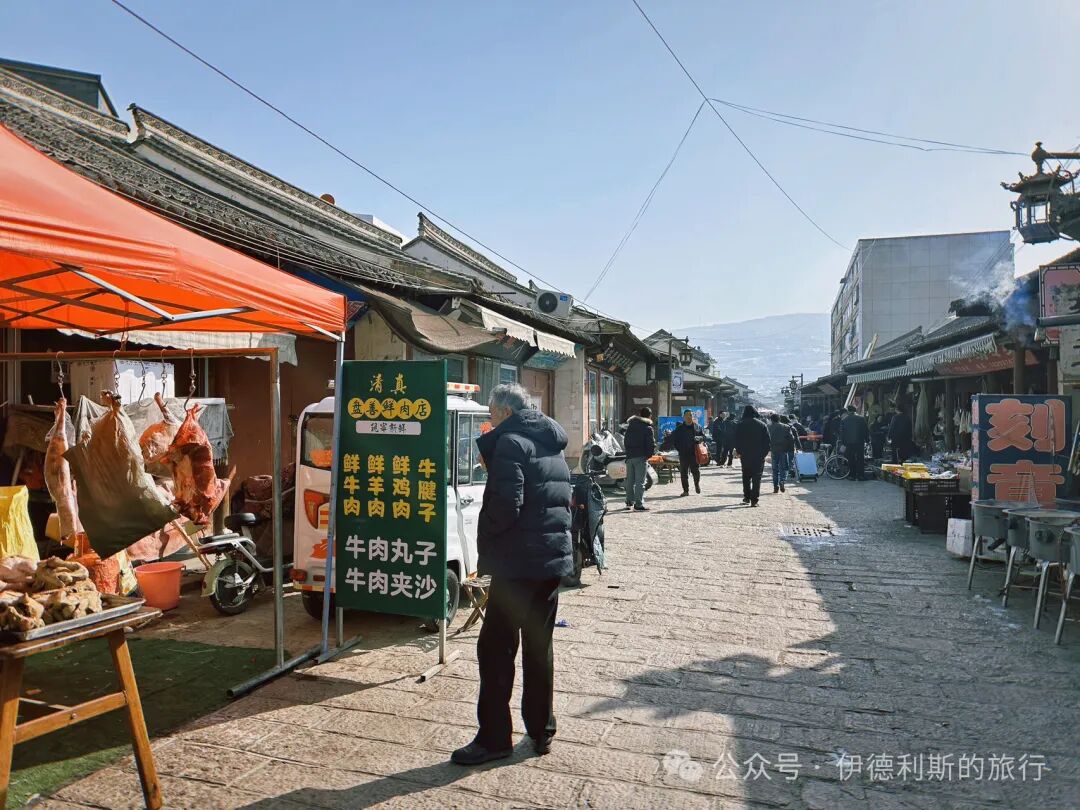
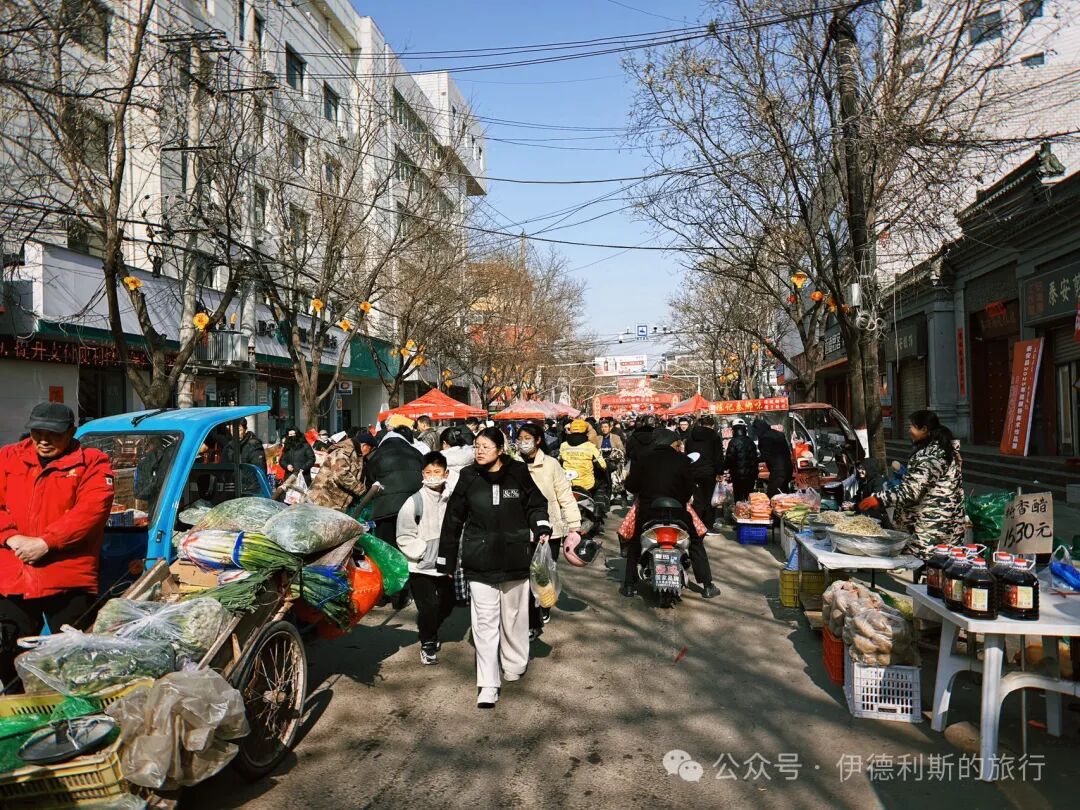
In China's 'Little Mecca,' the morning isn't woken by alarm clocks, but by the steam from a row of steamers and a bowl of beef offal soup—Linxia folks live by the saying: 'Eating meat without garlic cuts the nutrition in half.'
The brick carvings in the Ba Fang Thirteen Alleys hold centuries of craftsmanship, and in the old shops outside the alleys, another set of skills passed down for generations is preserved. Hand-grabbed lamb, steamed buns, fa zi mian chang (stuffed intestine), he yan mian pian (flat pasta), and fermented rice wine (laozao)—these five old establishments string together Hezhou's day from dawn till deep into the night.
01 Recommendation One
Li Ga Song Baozi
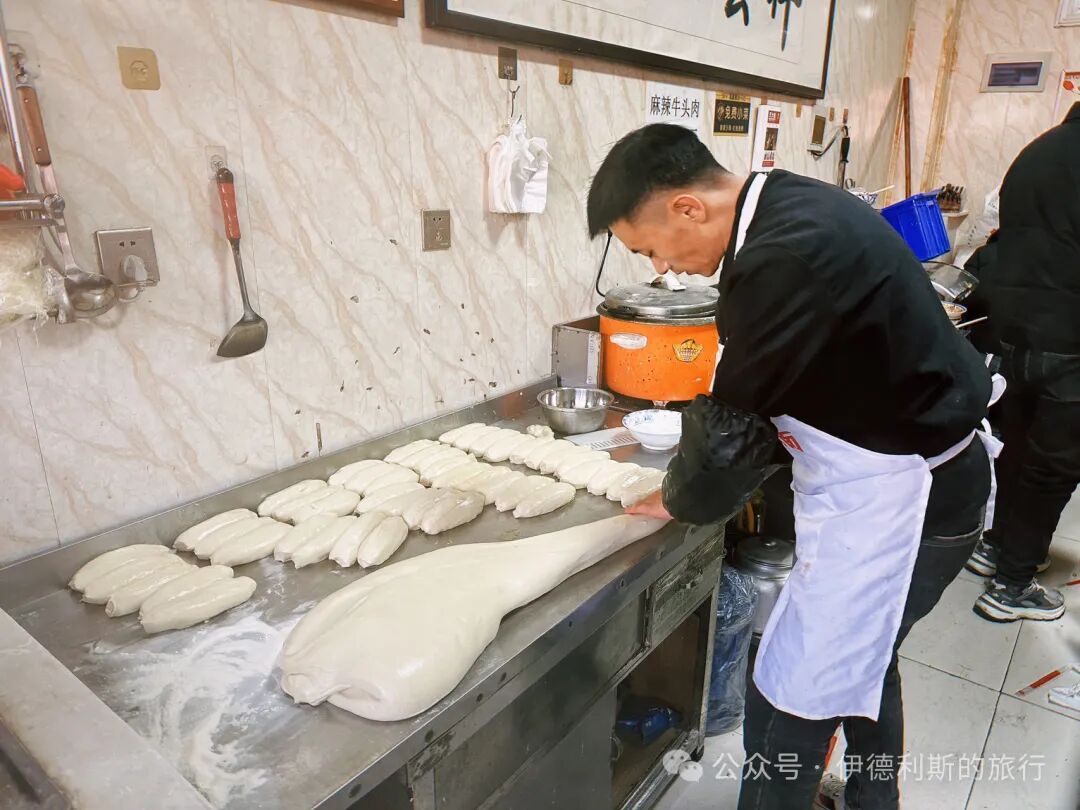
Hezhou steamed buns are a household name in Linxia, known for their thin skins, generous fillings, beautiful shape, and fresh taste. The filling changes with the seasons: leek sprouts in winter, chives in spring, leek stalks in summer, and diced Chinese cabbage in fall.
Li Ga Song Baozi has been serving customers in the Tea Horse Ancient Market for thirty years. A basket costs fifteen yuan, sold in sets of three. The steamed buns have soft dough, and the beef and scallion filling bursts with juice when you bite into it. Dipped in vinegar and chili oil, each bite is filled with the taste of old-school craftsmanship. They open at six in the morning, and locals line up; if you go late, you'll just have to wait for the next batch.
Linxia City, Tea Horse Ancient Market Pedestrian Street (near the intersection of Guanghua East Road and Hexie Road)
About 16 yuan per person
✿ Must-Order: Beef and Scallion Buns, Chive Buns, Eight-Treasure Tea
Thirty years of steaming buns, and every pleat is filled with the homey flavors Linxia people recognize.
◆ ◆ ◆
02 Recommendation Two
Xiao Xiguan Fa Zi Mian Chang
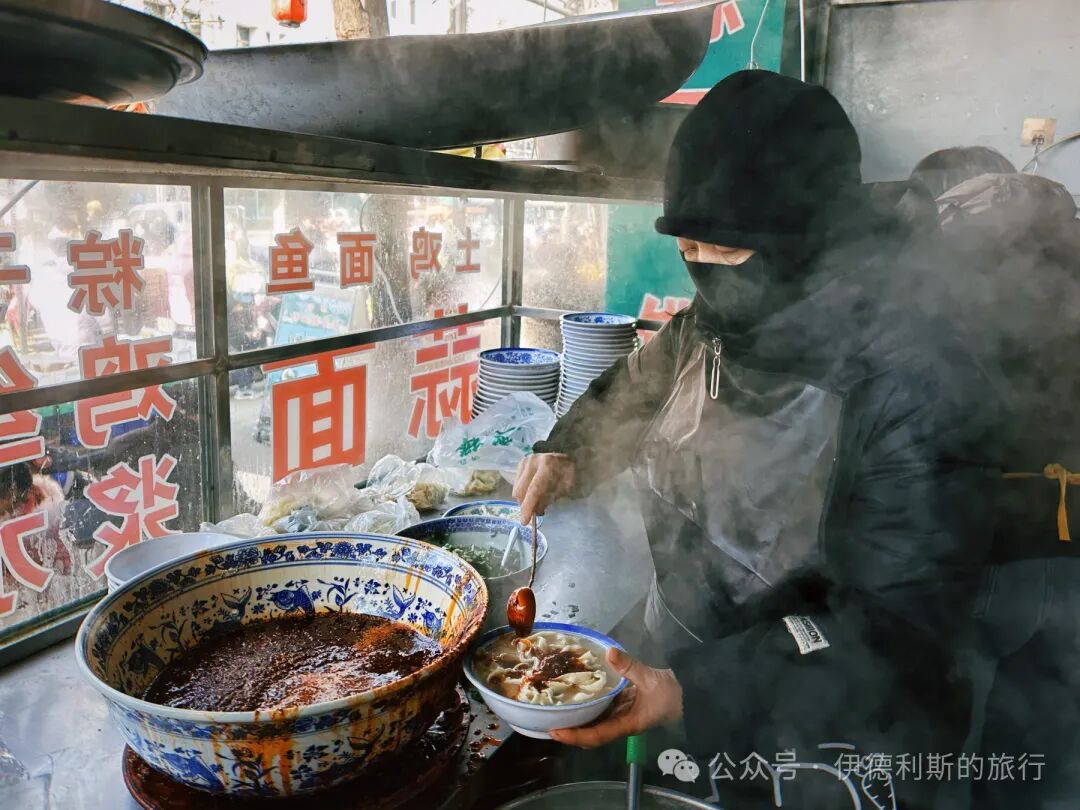
Fa zi mian chang is a unique flavor of Linxia and a favorite of the older generation. This shop in Xiao Xiguan, across from Chen Jiao Si mosque, has been open for thirty years and has even won the 'Linxia Famous Halal Snack' award.
The owner pulls a section of noodle casing from a large wooden barrel, lays it down as a base, then adds fa zi (a type of offal) and whole pieces of sheep head meat, before drizzling on a spoonful of special chili-garlic sauce. The fa zi has a rich texture, with granules popping between your teeth; the casing is soft and chewy, and the sheep head meat has a satisfying chew. The flavor is bold but not greasy, paired with the garlicky chili sauce, and a bowl of meat broth, it's truly comforting.
Linxia City, inside the alley opposite Chen Jiao Si mosque
About 15 yuan per person
✿ Must-Order: Fa Zi Mian Chang, Sheep Head Meat, Meat Broth
Outsiders might hear this and think it's adventurous food, but for Linxia locals, it's a symphony of offal they've been eating since childhood.
◆ ◆ ◆
03 Recommendation Three
Er Sa Shouzhua
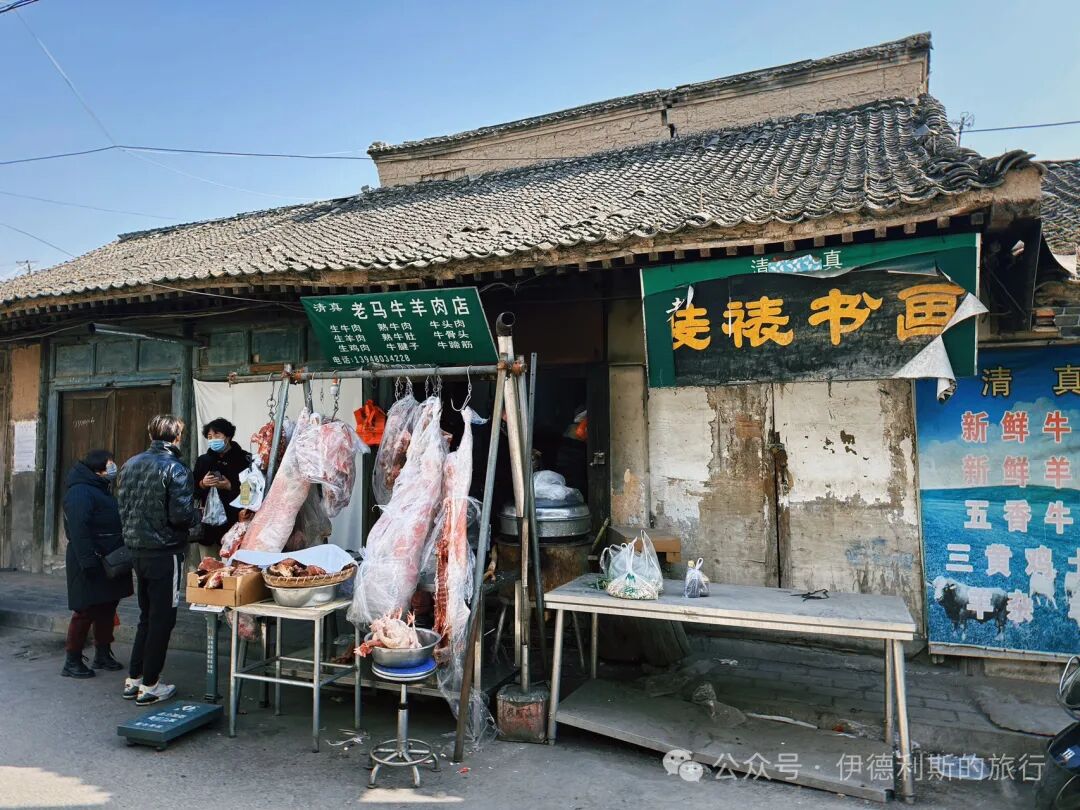
Linxia is called the 'ceiling of hand-grabbed lamb,' and Er Sa is the top choice for locals when hosting guests. Dongxiang lamb is cooked in clear water, with only salt and Sichuan peppercorns added, stewed until the meat easily separates from the bone with chopsticks—it's so tender it bursts with juice.
Grab the meat with your hands, pair it with garlic cloves, and dip it in salt and pepper. The fatty and lean ribs get more flavorful the more you chew; then, have a bowl of San Pao Tai covered-bowl tea, brewed with tea leaves, dried longan, goji berries, red dates, and rock sugar. A bite of meat followed by a sip of tea is refreshing and satisfying. With an average cost of around sixty yuan per person, their Dongxiang potato slices and sand chives scrambled eggs are also outstanding.
Linxia City, No. 18 Beibinhe Middle Road (Chengjiao Town)
63 yuan per person
✿ Must-Order: Hand-Grabbed Ribs, Dongxiang Potato Slices, San Pao Tai Covered-Bowl Tea
The best fate for a sheep is clear water, a pinch of salt, and a pair of hands that know how to tear it apart.
◆ ◆ ◆
04 Recommendation Four
Yu Bao He Yan Mian
Yu Bao He Yan Mian, located under the Zhaohui Building on Huancheng West Road, has a small storefront. For over twenty years, neighbors have recognized this flavor. He Yan Mian Pian (pasta) is all about three things: the pasta pieces should be pinched to the size of a fingernail, the meat should be lean-and-fatty Hu Yang lamb, and the soup must be lamb broth. Each bowl has equal parts meat, scallions, noodles, soup, and pasta.
The pasta is smooth and chewy, the soup is oily but not greasy, and even the last sip is still rich and fresh. Having a bowl after some hand-grabbed lamb is a standard way for Linxia locals to finish their dinner.
Linxia City, downstairs from Zhaohui Hotel, Huancheng West Road
About 15 yuan per person
✿ Must-Order: He Yan Mian Pian, Lamb Broth
Hand-grabbed lamb is for show, while mian pian is for everyday life—the life of Linxia people is hidden in that last bowl of soup.
◆ ◆ ◆
05 Recommendation Five
Heimai Traditional Liqueur Rice
The milky, eggy liqueur rice is the heart and soul of Linxia's night market. Heimai Traditional Liqueur Rice is located next to Hongyuan Square. In a copper pot, milk and fermented rice slowly bubble away. Crack an egg in, gently swirl it around with the back of a spoon – not a drop of water is added. Then, sprinkle in raisins, goji berries, peanuts, sesame seeds, and sugar.
The finished product is a beautiful mix of yellow and white, with a milky aroma blending with a subtle hint of fermented rice. The egg is silky, the milk is rich, and one bowl warms you up from your throat all the way to your stomach. It's the gentlest way to end a night in Hezhou after a long day exploring the night market until your legs feel like jelly.
Next to Hongyuan Square in Linxia City (Hongyuan New Village)
Around 8 yuan per person
✿ Must-orders: Milk Egg Liqueur Rice, Tian Peizi view all
In China's 'Little Mecca,' the morning isn't woken by alarm clocks, but by the steam from a row of steamers and a bowl of beef offal soup—Linxia folks live by the saying: 'Eating meat without garlic cuts the nutrition in half.'
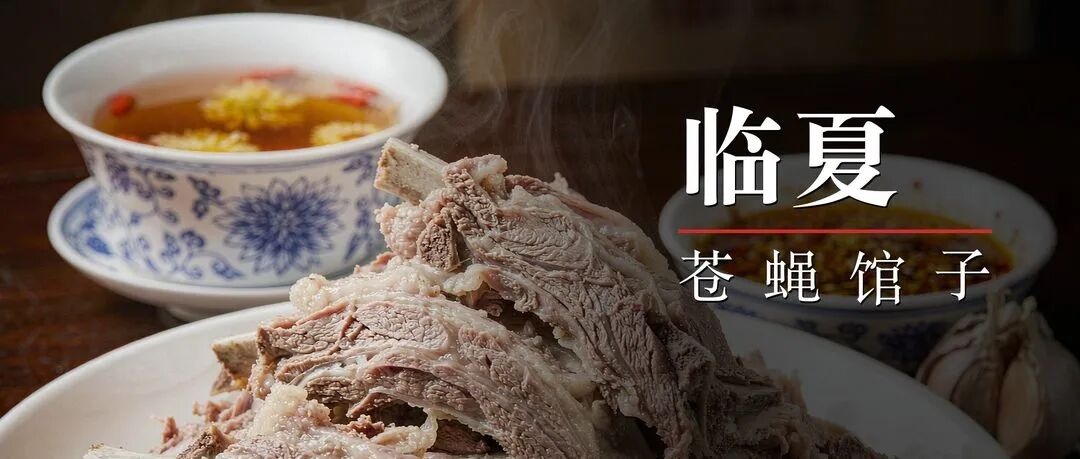
The brick carvings in the Ba Fang Thirteen Alleys hold centuries of craftsmanship, and in the old shops outside the alleys, another set of skills passed down for generations is preserved. Hand-grabbed lamb, steamed buns, fa zi mian chang (stuffed intestine), he yan mian pian (flat pasta), and fermented rice wine (laozao)—these five old establishments string together Hezhou's day from dawn till deep into the night.
01 Recommendation One
Li Ga Song Baozi
Hezhou steamed buns are a household name in Linxia, known for their thin skins, generous fillings, beautiful shape, and fresh taste. The filling changes with the seasons: leek sprouts in winter, chives in spring, leek stalks in summer, and diced Chinese cabbage in fall.
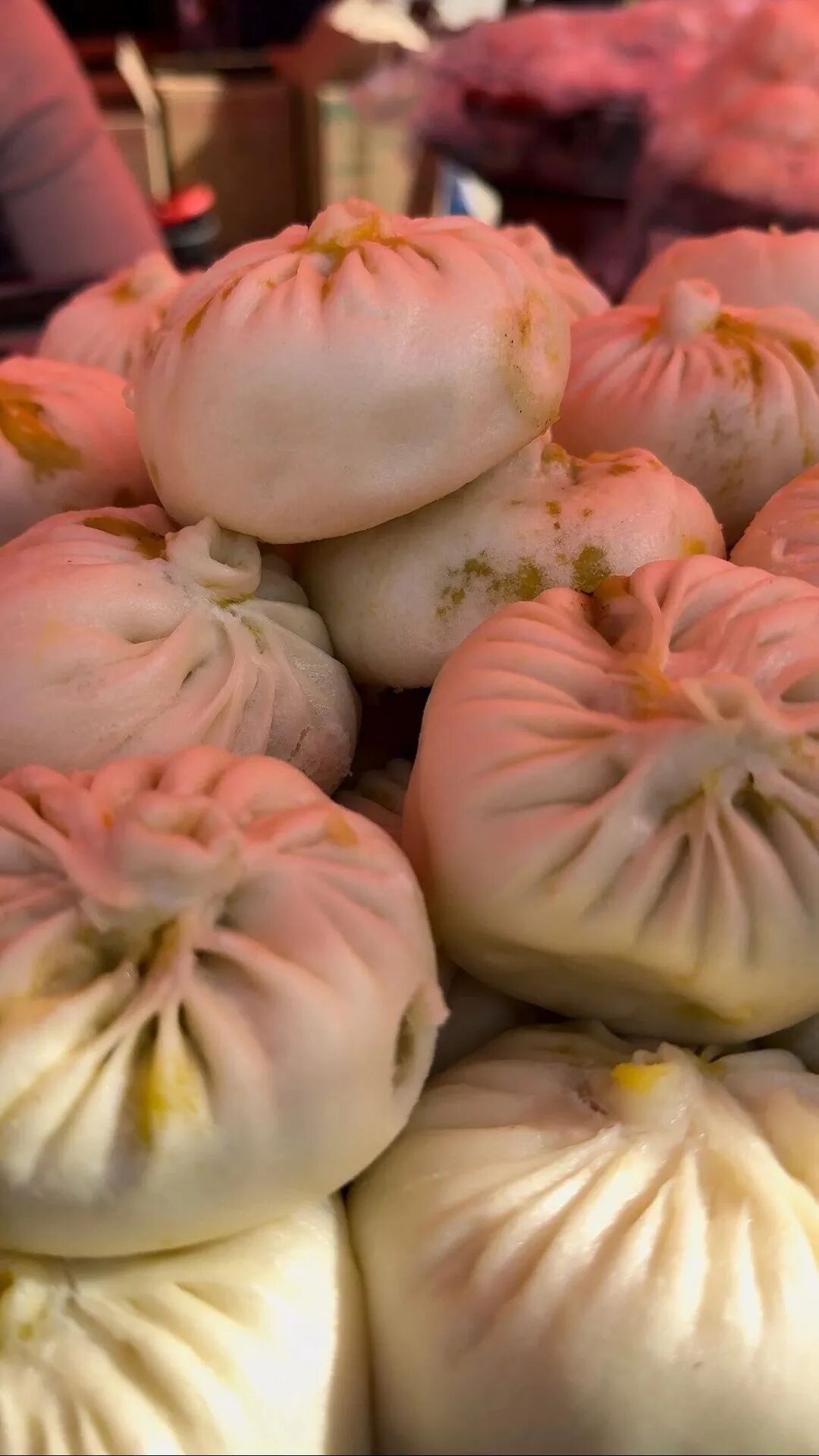
Li Ga Song Baozi has been serving customers in the Tea Horse Ancient Market for thirty years. A basket costs fifteen yuan, sold in sets of three. The steamed buns have soft dough, and the beef and scallion filling bursts with juice when you bite into it. Dipped in vinegar and chili oil, each bite is filled with the taste of old-school craftsmanship. They open at six in the morning, and locals line up; if you go late, you'll just have to wait for the next batch.
Linxia City, Tea Horse Ancient Market Pedestrian Street (near the intersection of Guanghua East Road and Hexie Road)
About 16 yuan per person
✿ Must-Order: Beef and Scallion Buns, Chive Buns, Eight-Treasure Tea
Thirty years of steaming buns, and every pleat is filled with the homey flavors Linxia people recognize.
◆ ◆ ◆
02 Recommendation Two
Xiao Xiguan Fa Zi Mian Chang
Fa zi mian chang is a unique flavor of Linxia and a favorite of the older generation. This shop in Xiao Xiguan, across from Chen Jiao Si mosque, has been open for thirty years and has even won the 'Linxia Famous Halal Snack' award.
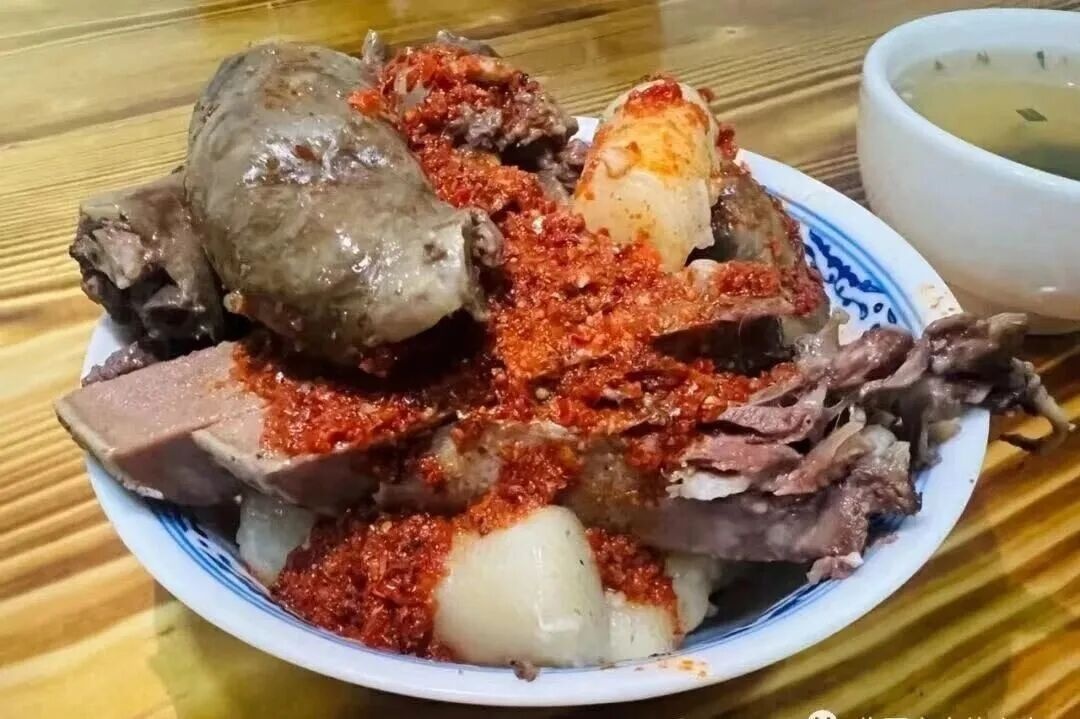
The owner pulls a section of noodle casing from a large wooden barrel, lays it down as a base, then adds fa zi (a type of offal) and whole pieces of sheep head meat, before drizzling on a spoonful of special chili-garlic sauce. The fa zi has a rich texture, with granules popping between your teeth; the casing is soft and chewy, and the sheep head meat has a satisfying chew. The flavor is bold but not greasy, paired with the garlicky chili sauce, and a bowl of meat broth, it's truly comforting.
Linxia City, inside the alley opposite Chen Jiao Si mosque
About 15 yuan per person
✿ Must-Order: Fa Zi Mian Chang, Sheep Head Meat, Meat Broth
Outsiders might hear this and think it's adventurous food, but for Linxia locals, it's a symphony of offal they've been eating since childhood.
◆ ◆ ◆
03 Recommendation Three
Er Sa Shouzhua
Linxia is called the 'ceiling of hand-grabbed lamb,' and Er Sa is the top choice for locals when hosting guests. Dongxiang lamb is cooked in clear water, with only salt and Sichuan peppercorns added, stewed until the meat easily separates from the bone with chopsticks—it's so tender it bursts with juice.
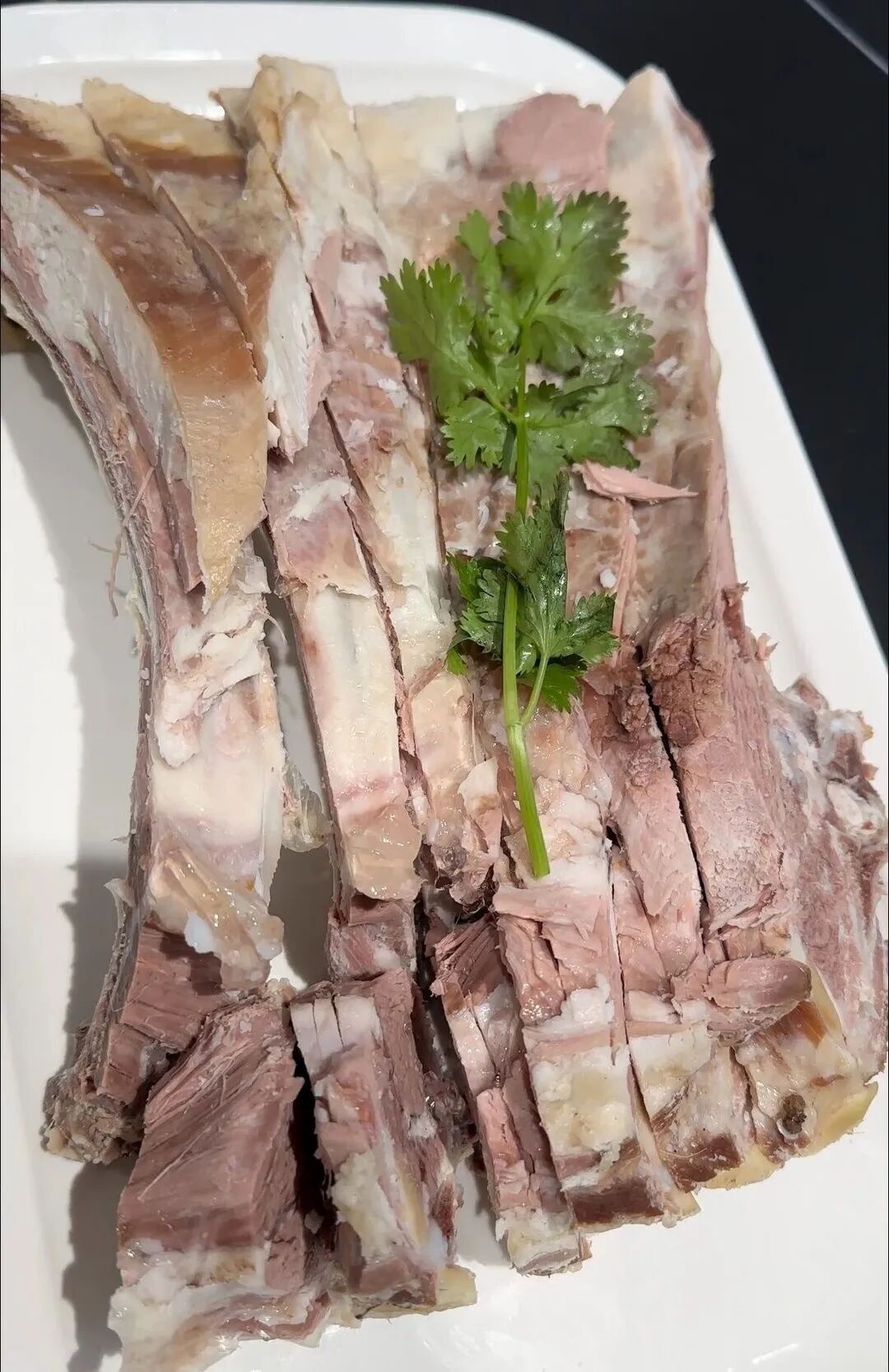
Grab the meat with your hands, pair it with garlic cloves, and dip it in salt and pepper. The fatty and lean ribs get more flavorful the more you chew; then, have a bowl of San Pao Tai covered-bowl tea, brewed with tea leaves, dried longan, goji berries, red dates, and rock sugar. A bite of meat followed by a sip of tea is refreshing and satisfying. With an average cost of around sixty yuan per person, their Dongxiang potato slices and sand chives scrambled eggs are also outstanding.
Linxia City, No. 18 Beibinhe Middle Road (Chengjiao Town)
63 yuan per person
✿ Must-Order: Hand-Grabbed Ribs, Dongxiang Potato Slices, San Pao Tai Covered-Bowl Tea
The best fate for a sheep is clear water, a pinch of salt, and a pair of hands that know how to tear it apart.
◆ ◆ ◆
04 Recommendation Four
Yu Bao He Yan Mian
Yu Bao He Yan Mian, located under the Zhaohui Building on Huancheng West Road, has a small storefront. For over twenty years, neighbors have recognized this flavor. He Yan Mian Pian (pasta) is all about three things: the pasta pieces should be pinched to the size of a fingernail, the meat should be lean-and-fatty Hu Yang lamb, and the soup must be lamb broth. Each bowl has equal parts meat, scallions, noodles, soup, and pasta.
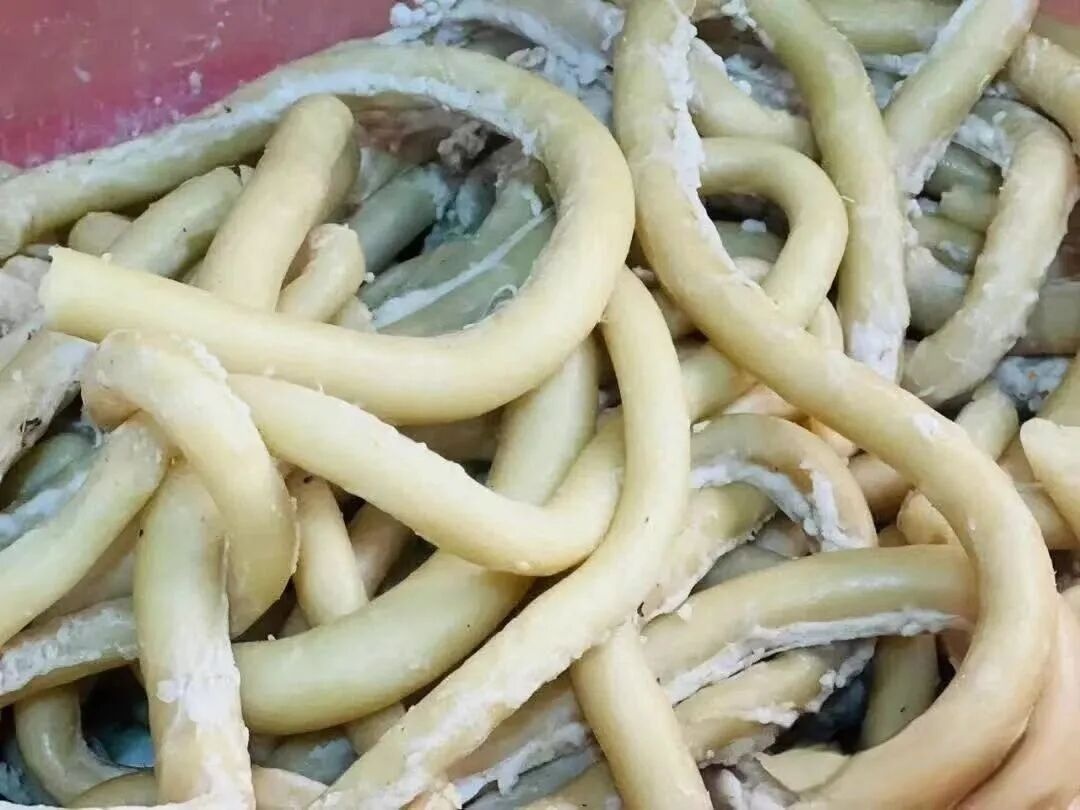
The pasta is smooth and chewy, the soup is oily but not greasy, and even the last sip is still rich and fresh. Having a bowl after some hand-grabbed lamb is a standard way for Linxia locals to finish their dinner.
Linxia City, downstairs from Zhaohui Hotel, Huancheng West Road
About 15 yuan per person
✿ Must-Order: He Yan Mian Pian, Lamb Broth
Hand-grabbed lamb is for show, while mian pian is for everyday life—the life of Linxia people is hidden in that last bowl of soup.
◆ ◆ ◆
05 Recommendation Five
Heimai Traditional Liqueur Rice
The milky, eggy liqueur rice is the heart and soul of Linxia's night market. Heimai Traditional Liqueur Rice is located next to Hongyuan Square. In a copper pot, milk and fermented rice slowly bubble away. Crack an egg in, gently swirl it around with the back of a spoon – not a drop of water is added. Then, sprinkle in raisins, goji berries, peanuts, sesame seeds, and sugar.
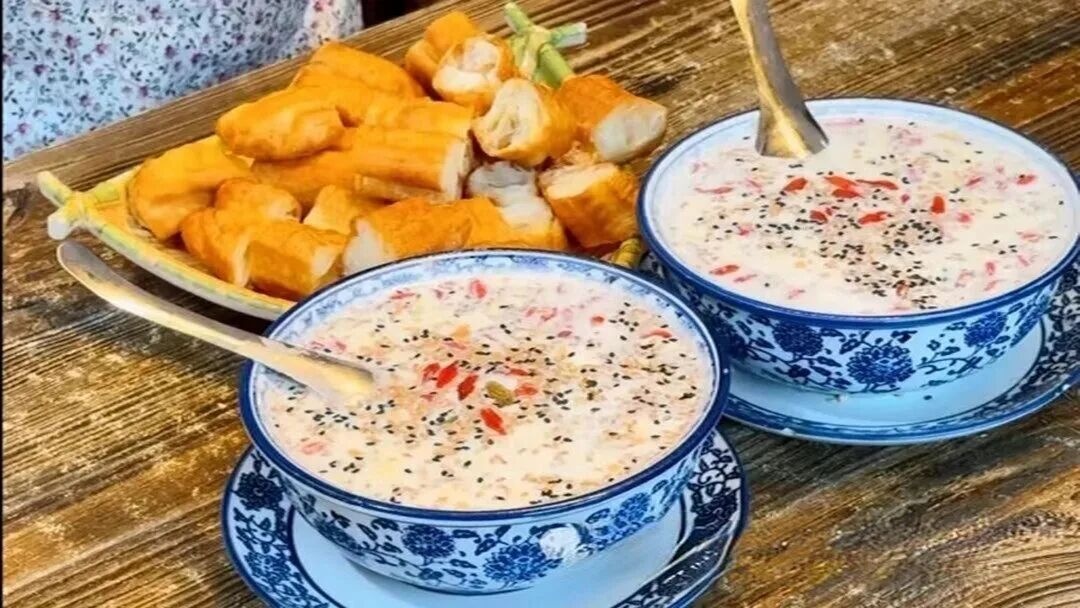
The finished product is a beautiful mix of yellow and white, with a milky aroma blending with a subtle hint of fermented rice. The egg is silky, the milk is rich, and one bowl warms you up from your throat all the way to your stomach. It's the gentlest way to end a night in Hezhou after a long day exploring the night market until your legs feel like jelly.
Next to Hongyuan Square in Linxia City (Hongyuan New Village)
Around 8 yuan per person
✿ Must-orders: Milk Egg Liqueur Rice, Tian Peizi
Discovering Wu'aisi Baba Gongbei in Gansu: Exploring Ancient Islamic Heritage and Tang Dynasty History in Yumen
Articles • Hasan09 posted the article • 0 comments • 138 views • 2026-10-30 01:13
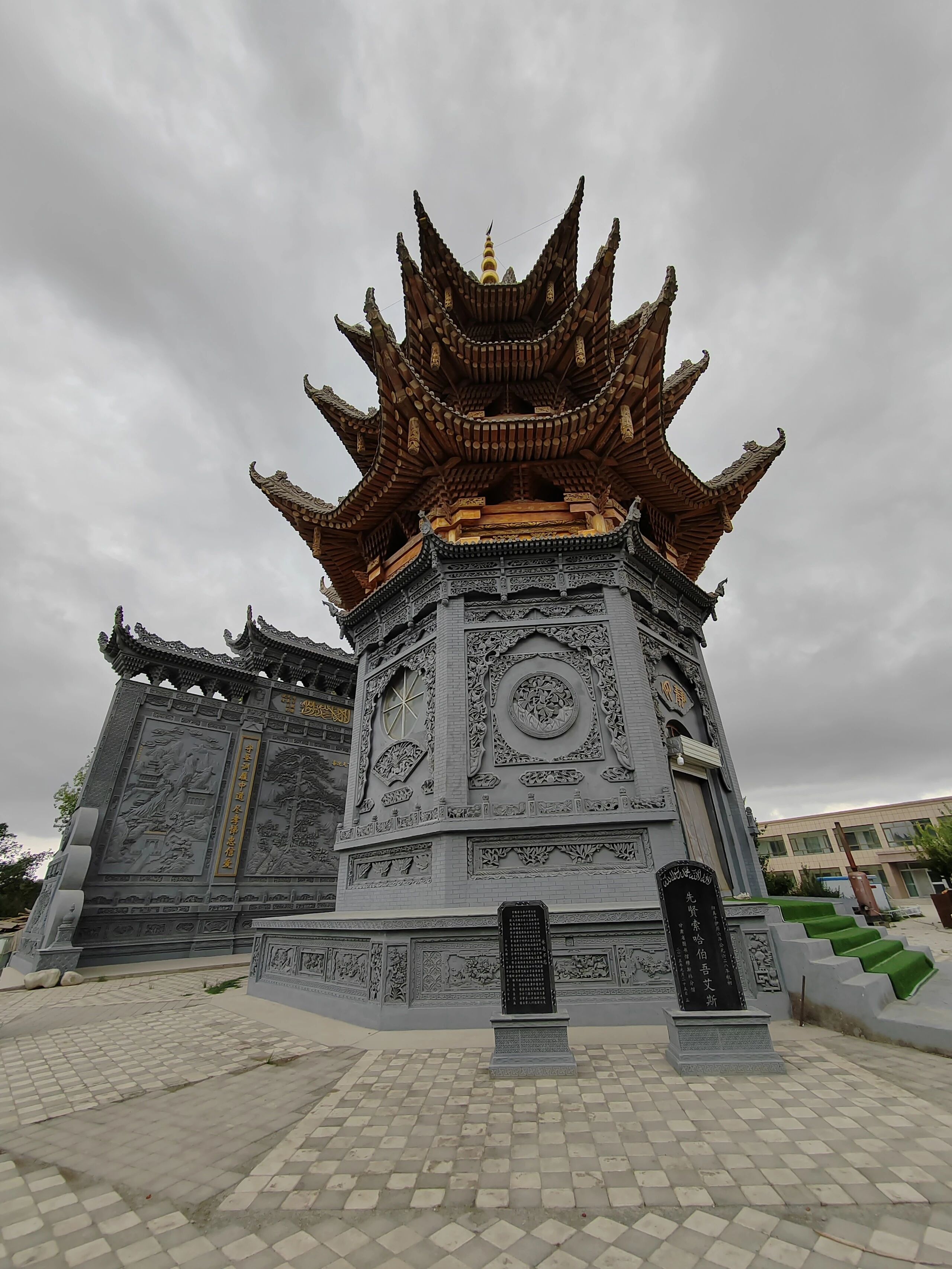
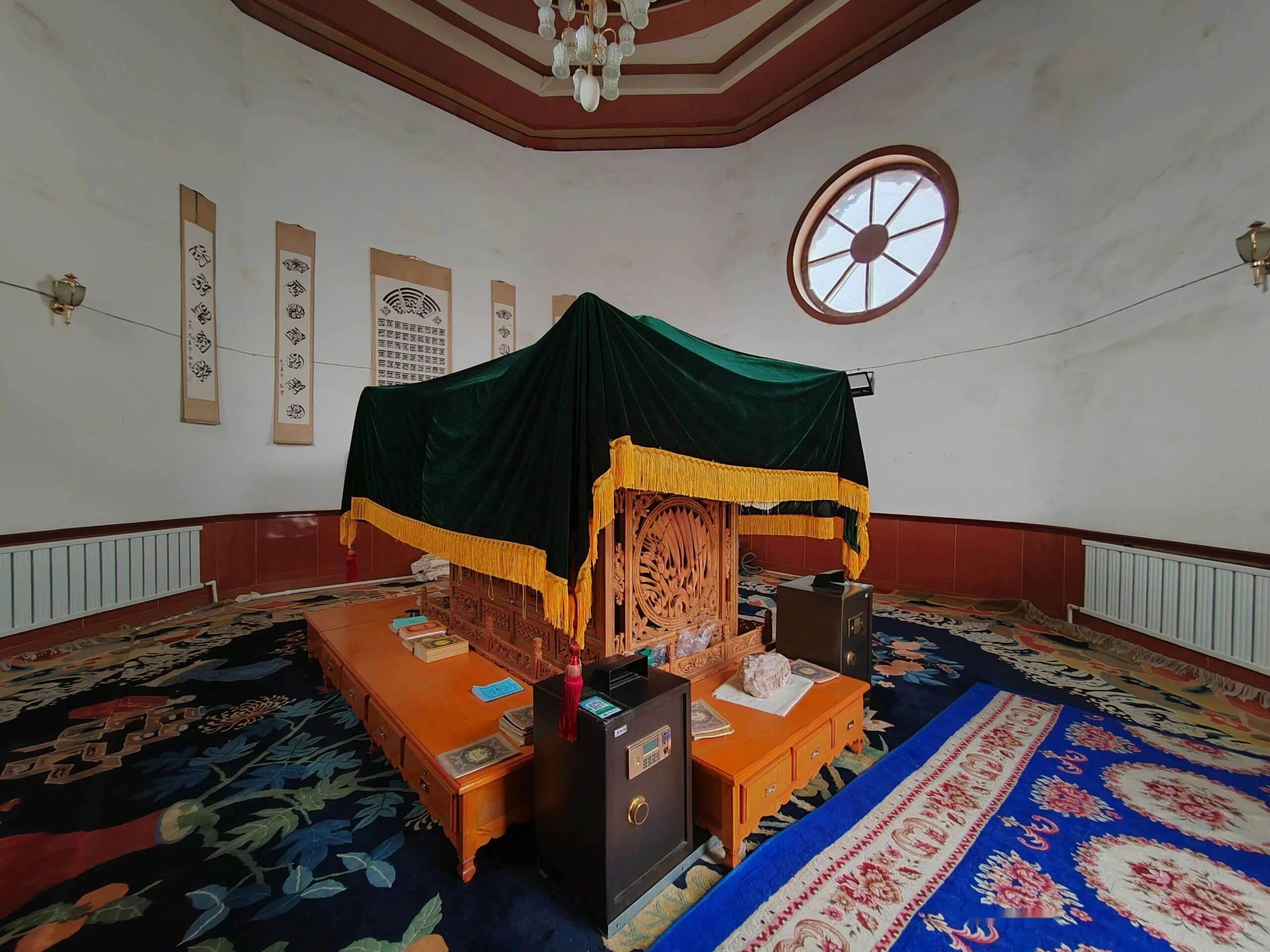
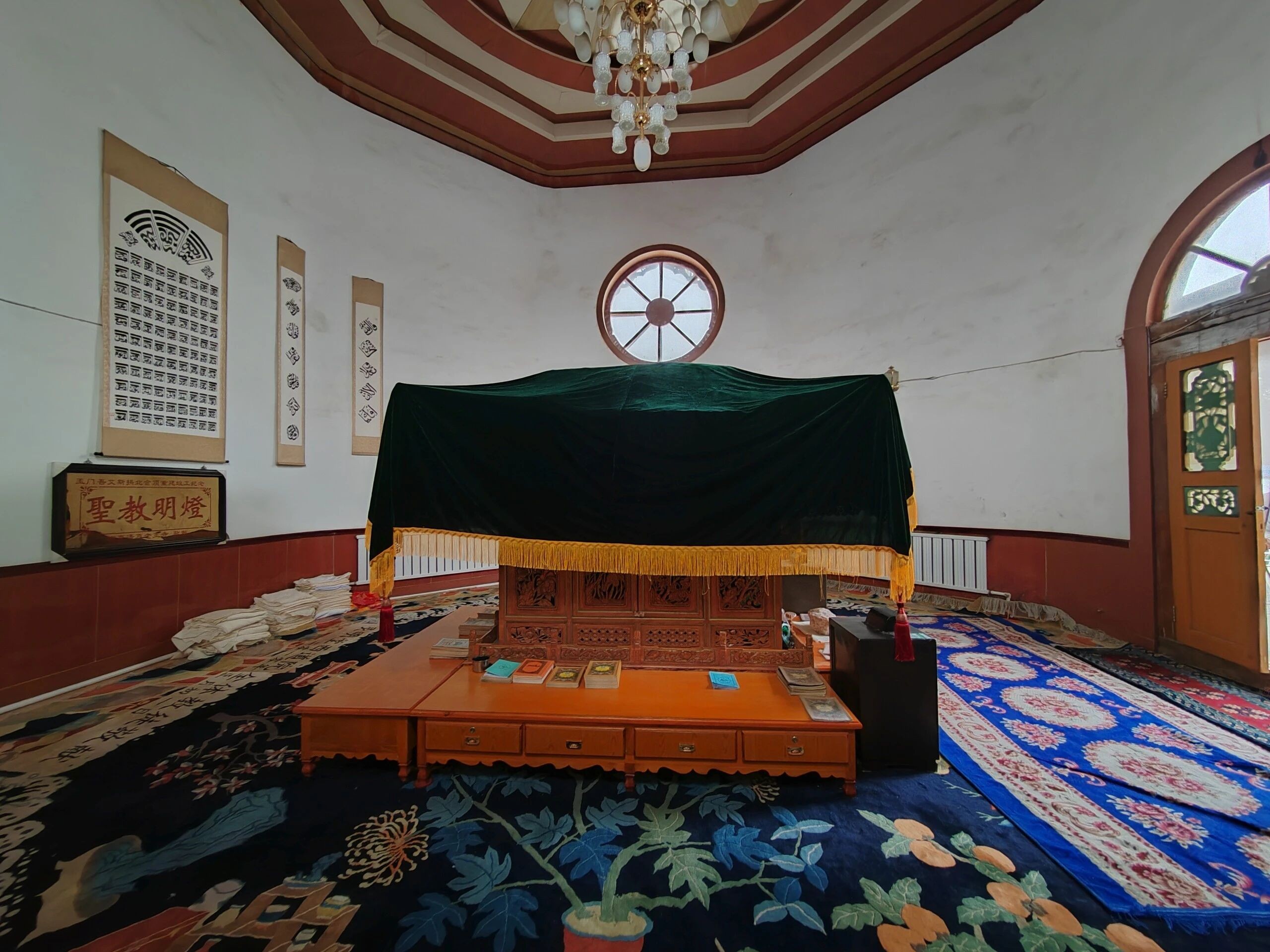
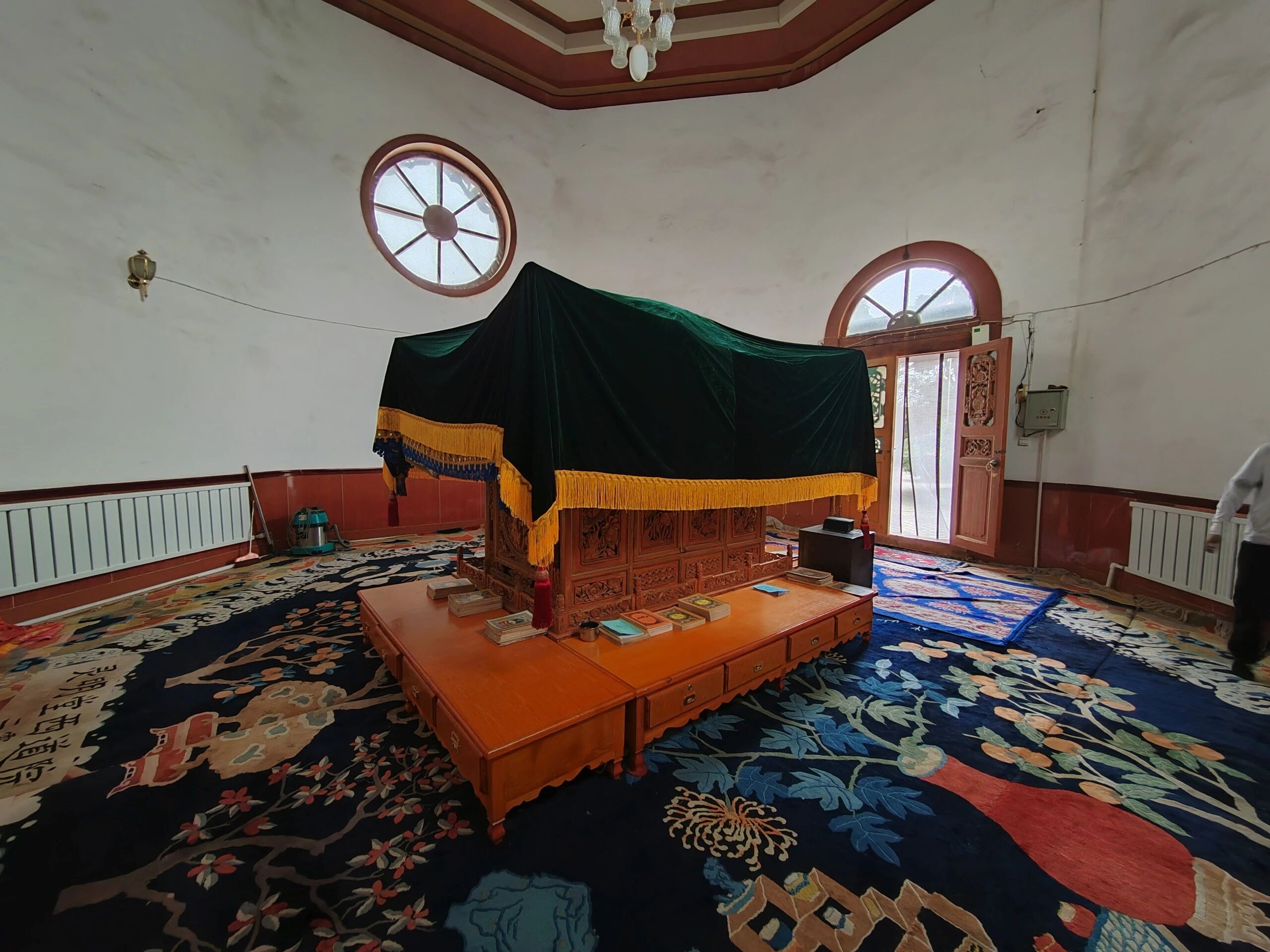
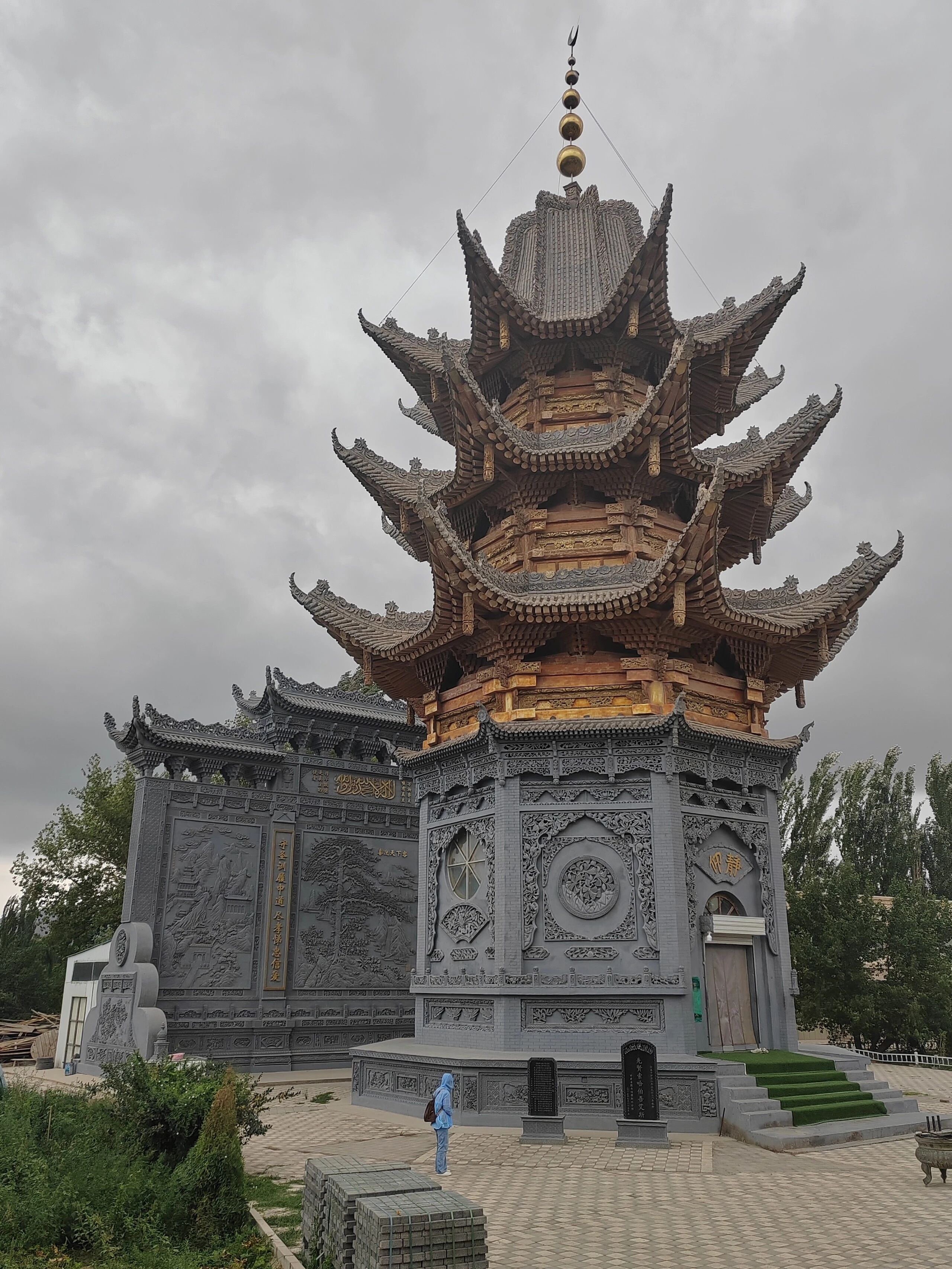
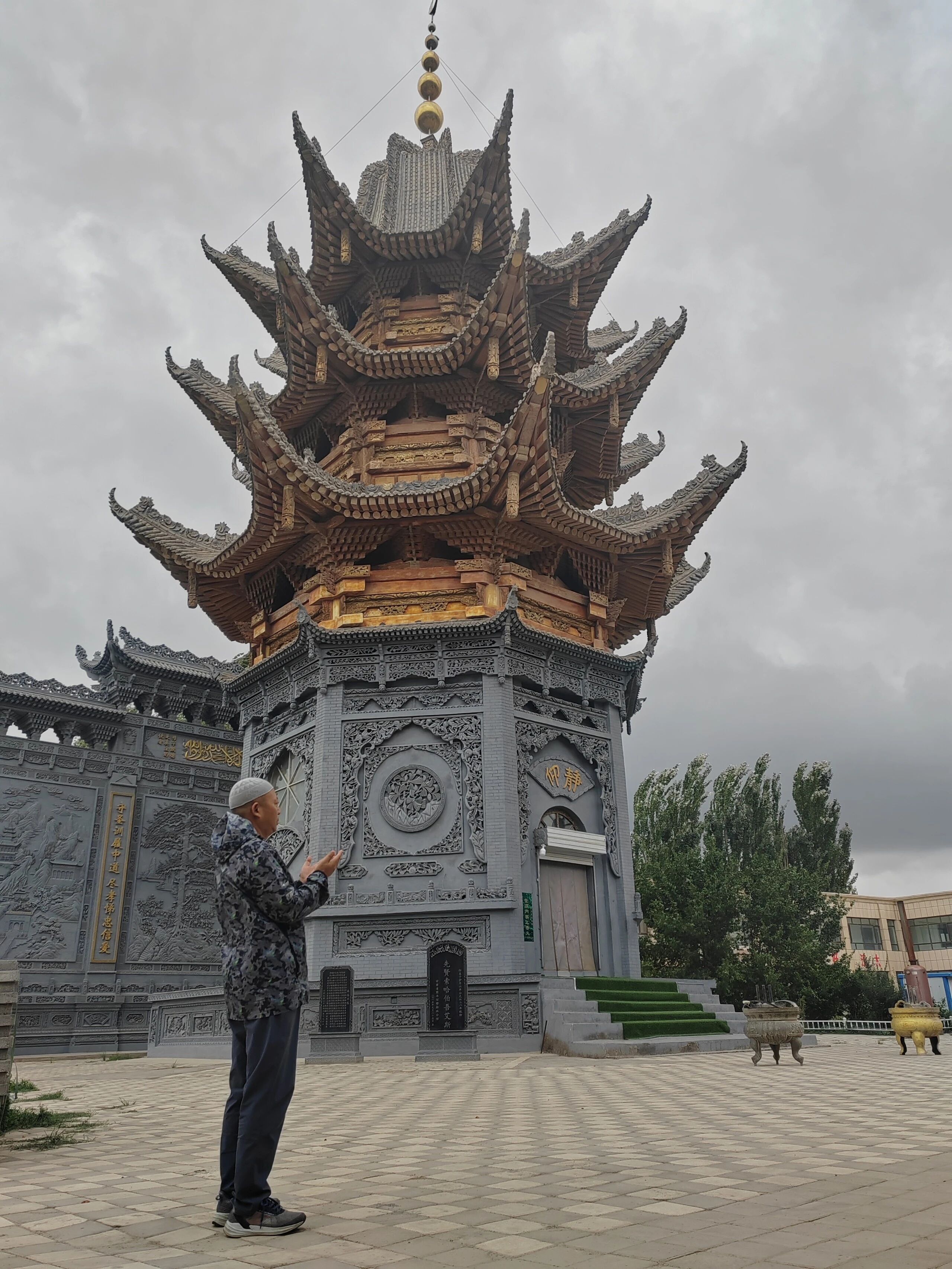
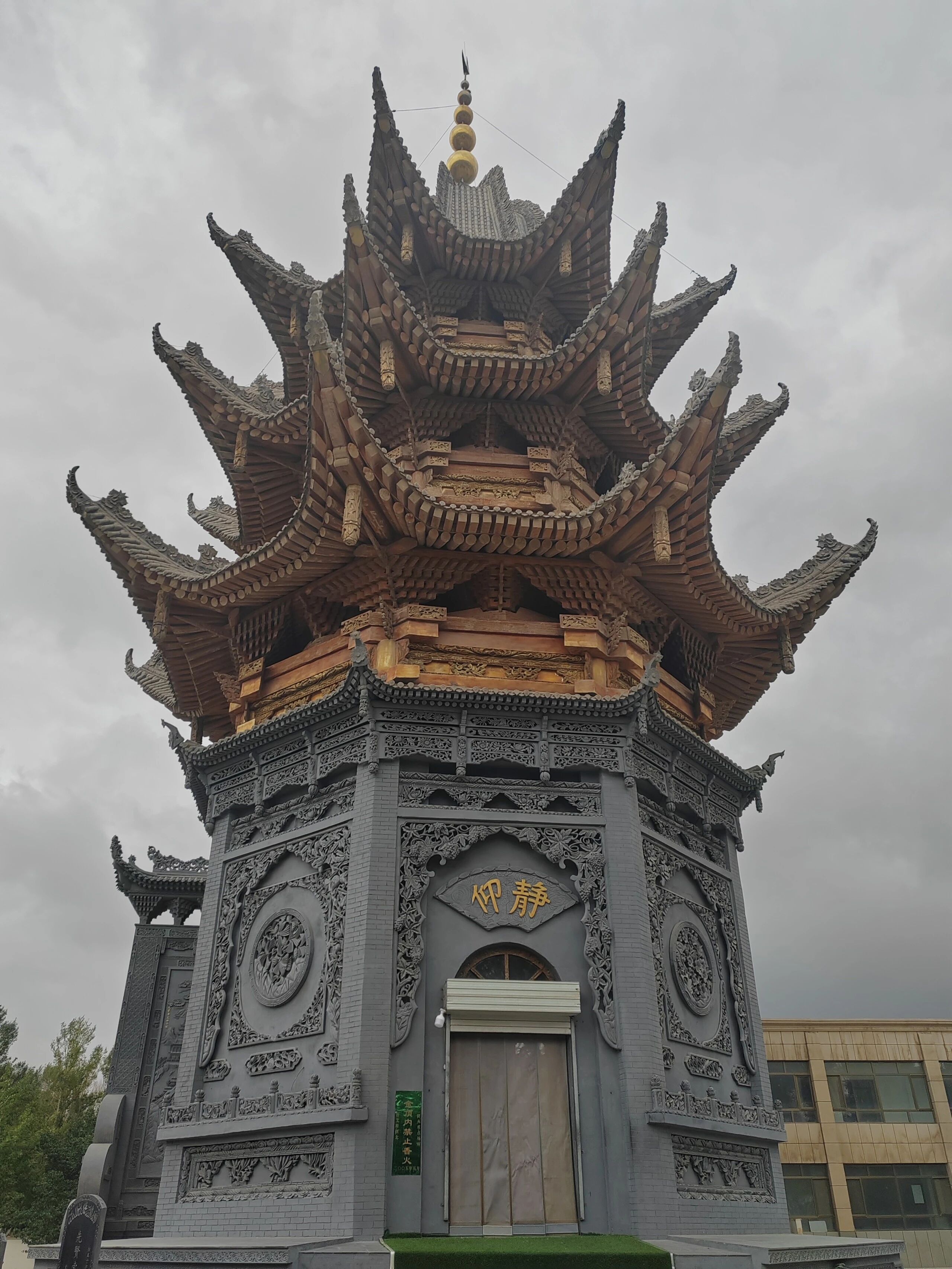
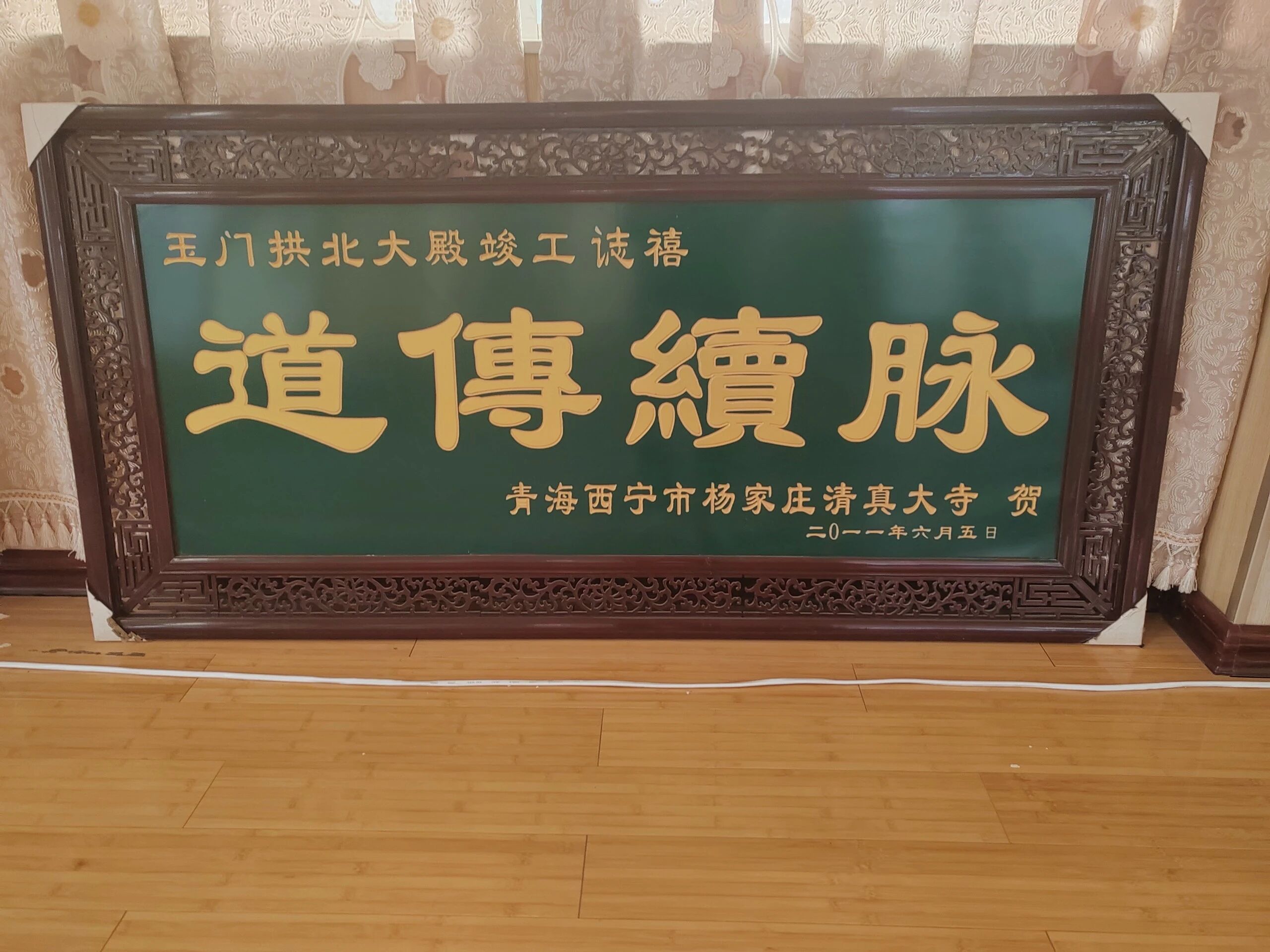
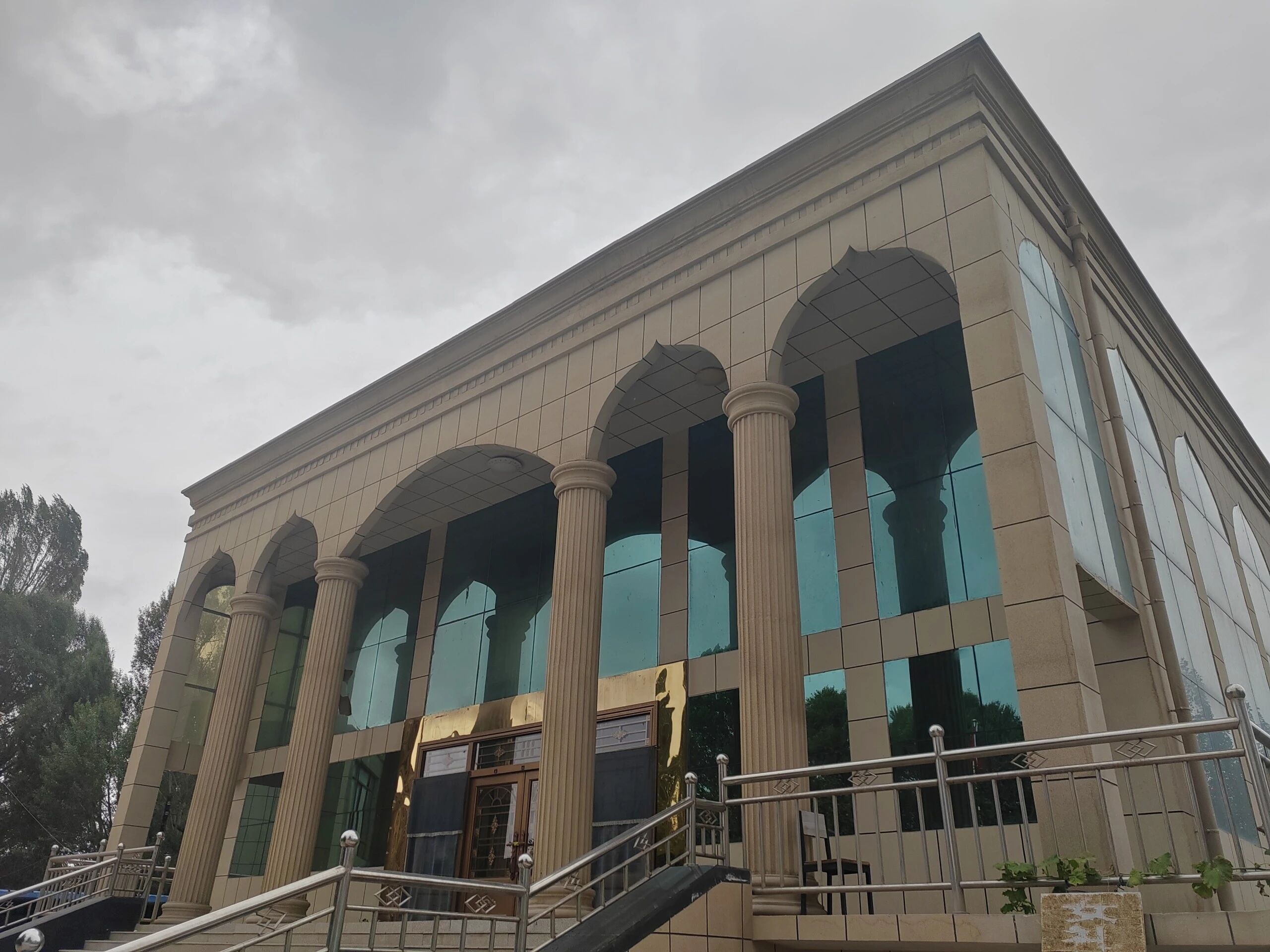
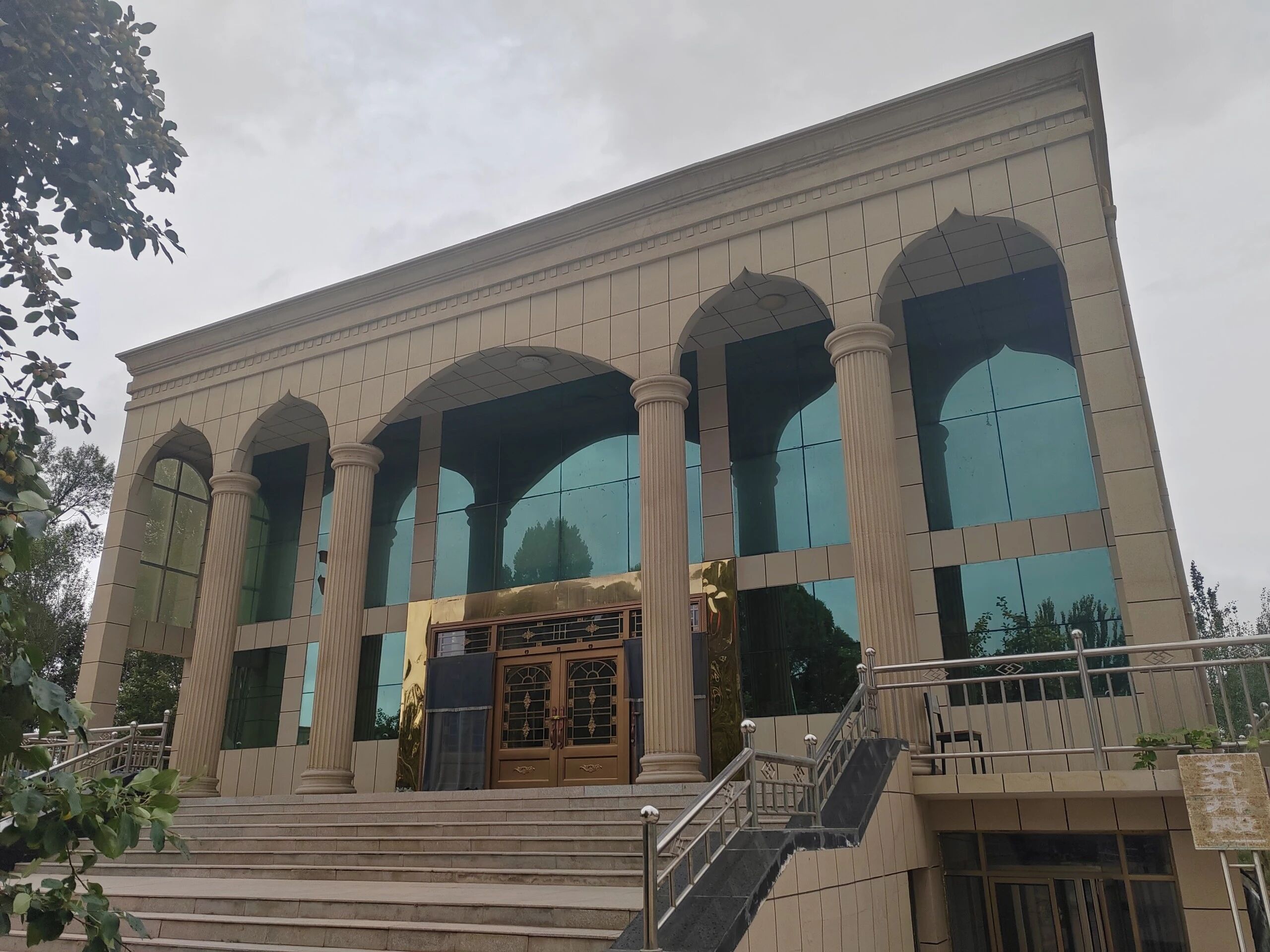
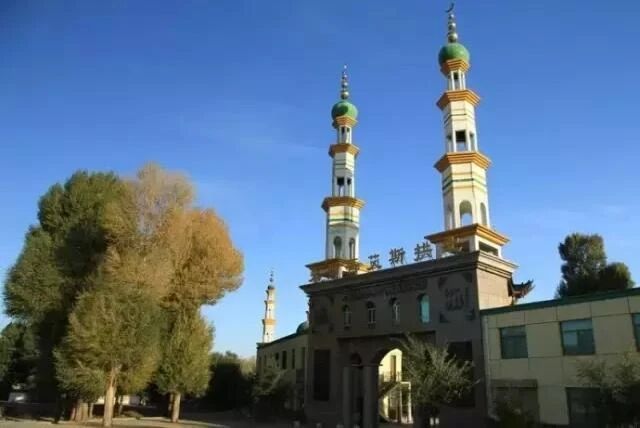
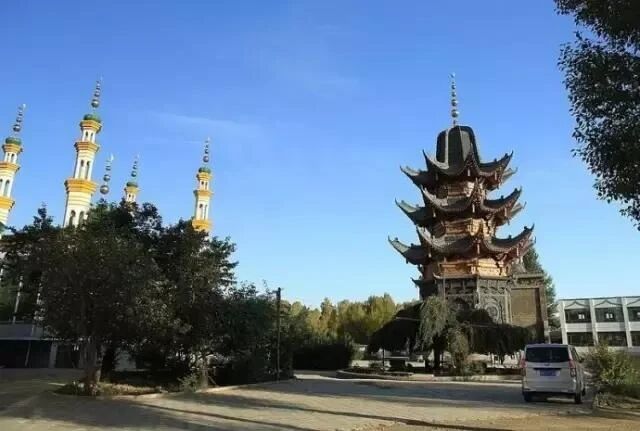
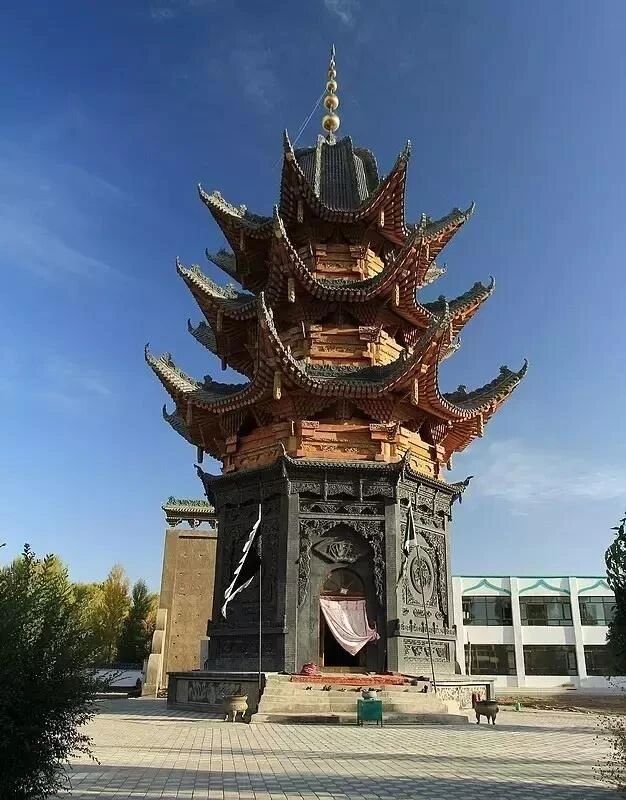
Take a look at these 20 photos as we visit the Wu'aisi Baba Gongbei located in Qingquan Township, Yumen City, Gansu Province. We're diving into the legends of Islamic missionaries who traveled to the Hexi Corridor during the Tang Dynasty's Zhenguan era, while exploring the mosque's unique architecture that blends Arabic domes with traditional Chinese structural designs.
This is a place with deep historical roots, serving as the tomb of a prominent Islamic saint. Here is the detailed information I've put together for you:
It is located in Qingquan Township, Yumen City, Gansu Province.
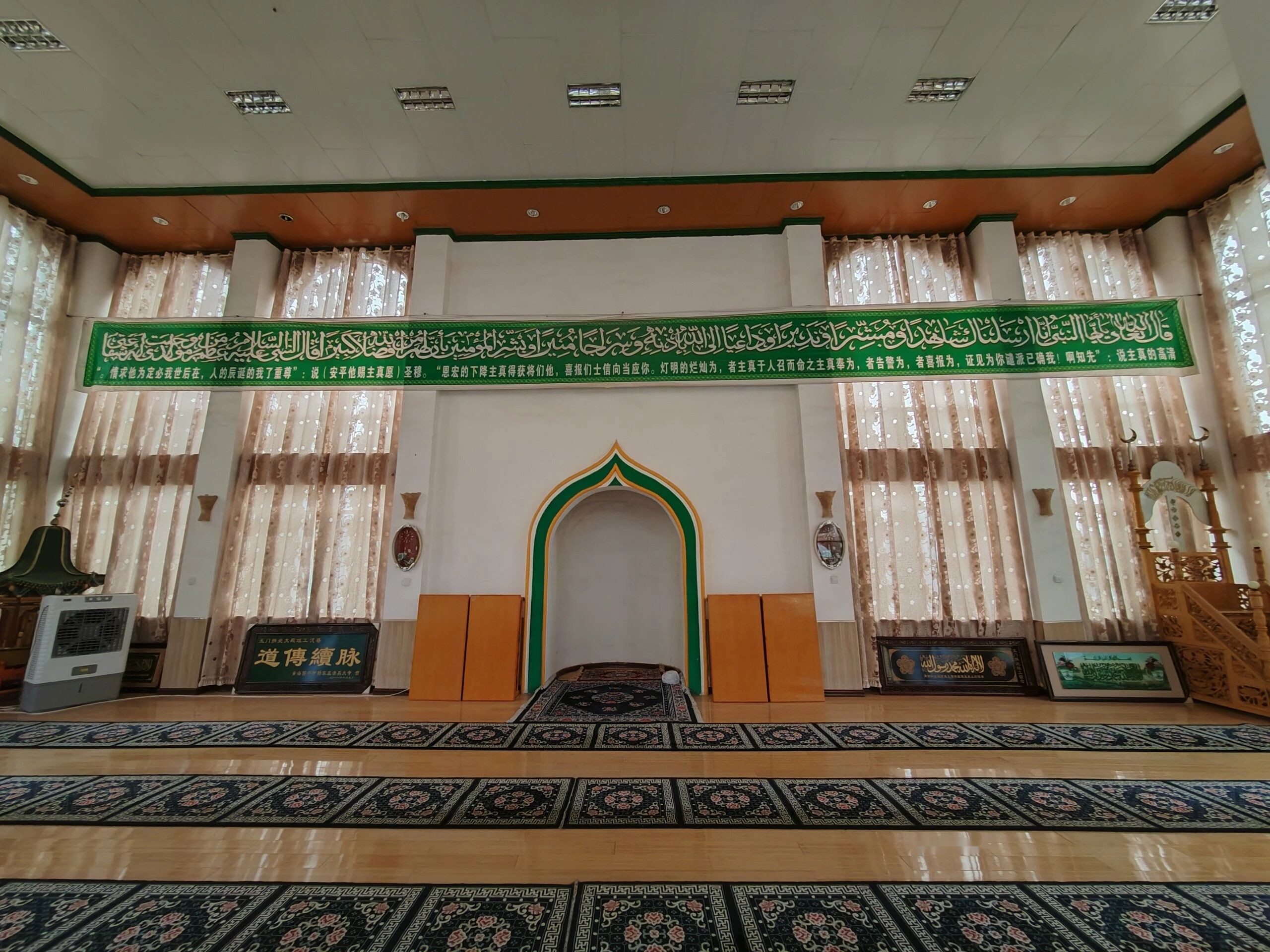
Historical background: The term "Gongbei" is a transliteration from Arabic meaning a dome-shaped mausoleum. Historical records state that between 626 and 649 AD, a missionary named Wu'aisi, sent by the third Caliph Uthman, passed away in Yumen while on his way to preach in China and was laid to rest here. To honor this saint, later generations built a mausoleum on the site. The current main structure was built in the 1980s and features a design that fuses Arabic style with traditional Chinese elements. The lower section is a towering prayer hall, the middle is a three-story tower with feiyan dougong (traditional flying eaves and brackets), and the top is crowned with a treasure-gourd-shaped spire, making it truly one-of-a-kind. There are also prayer halls, reception rooms, and dormitories nearby. The Gongbei was officially designated as a county-level cultural relic protection unit by the Yumen Municipal People's Government in 1987. view all
Take a look at these 20 photos as we visit the Wu'aisi Baba Gongbei located in Qingquan Township, Yumen City, Gansu Province. We're diving into the legends of Islamic missionaries who traveled to the Hexi Corridor during the Tang Dynasty's Zhenguan era, while exploring the mosque's unique architecture that blends Arabic domes with traditional Chinese structural designs.
This is a place with deep historical roots, serving as the tomb of a prominent Islamic saint. Here is the detailed information I've put together for you:
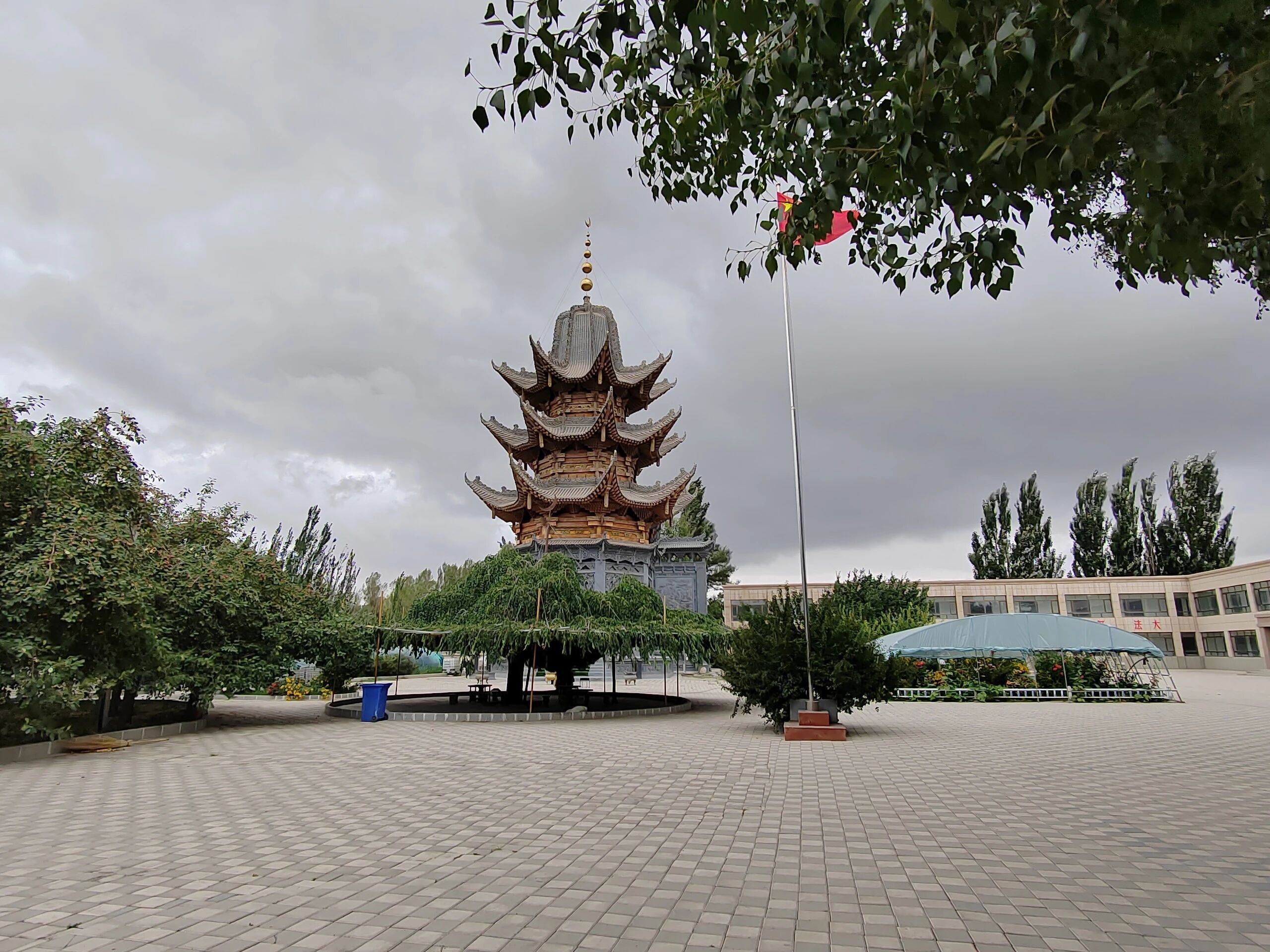
It is located in Qingquan Township, Yumen City, Gansu Province.
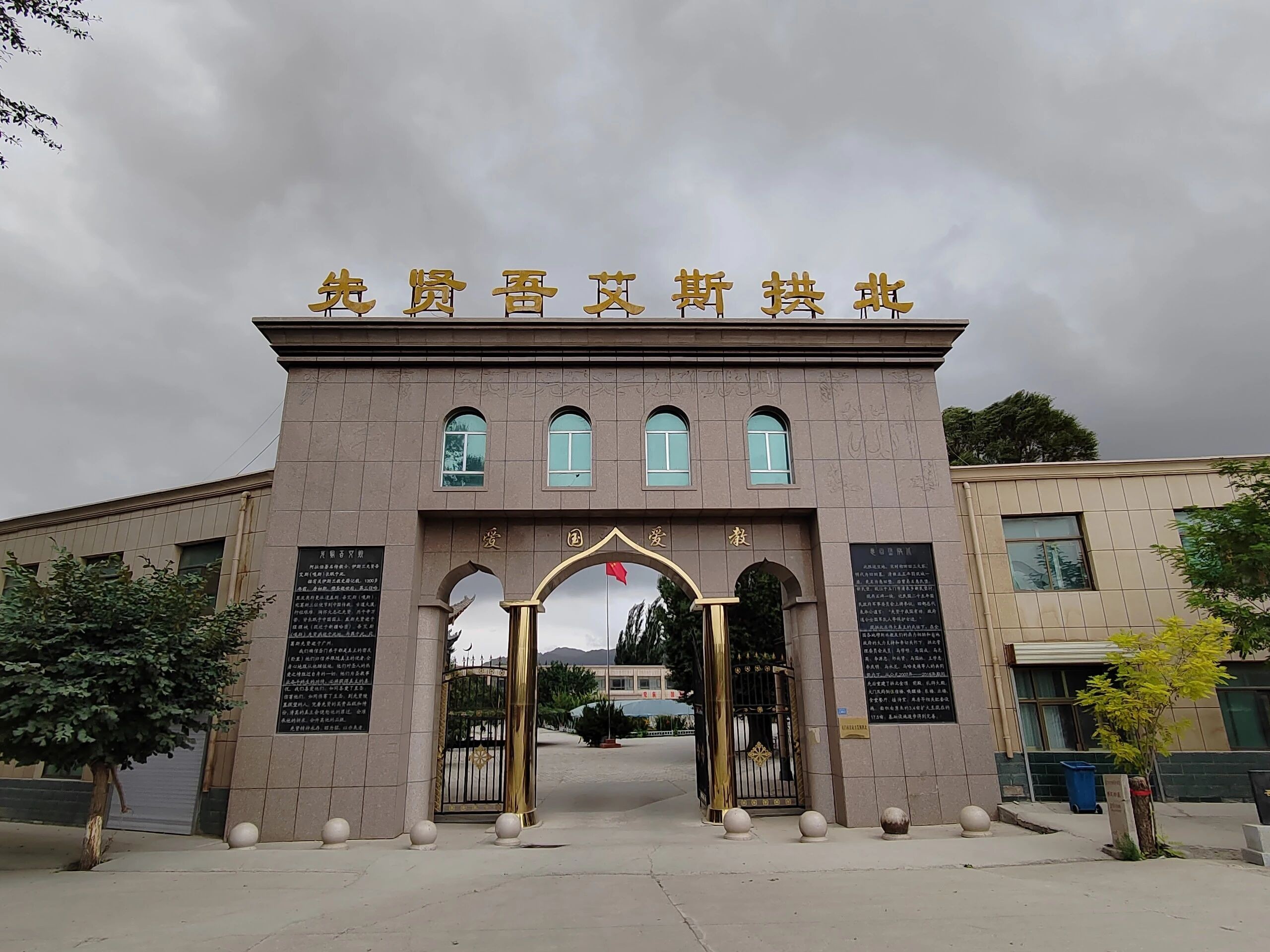
Historical background: The term "Gongbei" is a transliteration from Arabic meaning a dome-shaped mausoleum. Historical records state that between 626 and 649 AD, a missionary named Wu'aisi, sent by the third Caliph Uthman, passed away in Yumen while on his way to preach in China and was laid to rest here. To honor this saint, later generations built a mausoleum on the site. The current main structure was built in the 1980s and features a design that fuses Arabic style with traditional Chinese elements. The lower section is a towering prayer hall, the middle is a three-story tower with feiyan dougong (traditional flying eaves and brackets), and the top is crowned with a treasure-gourd-shaped spire, making it truly one-of-a-kind. There are also prayer halls, reception rooms, and dormitories nearby. The Gongbei was officially designated as a county-level cultural relic protection unit by the Yumen Municipal People's Government in 1987.
Exploring Gansu's Gancaodian Mosque: A Hidden Republican-Era Cave Masjid on the Ancient Silk Road
Articles • Hasan09 posted the article • 0 comments • 49 views • 2026-10-30 01:09
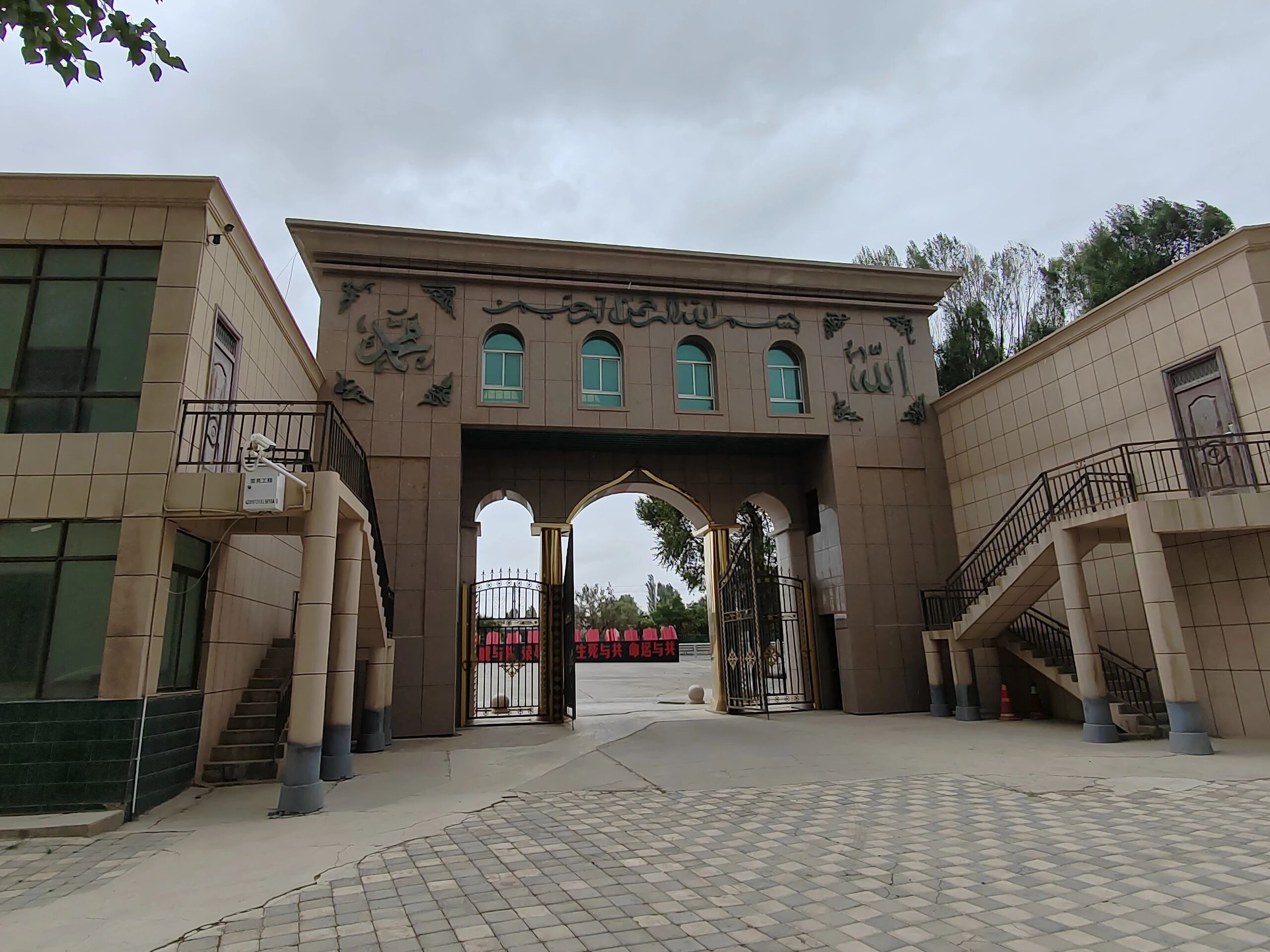
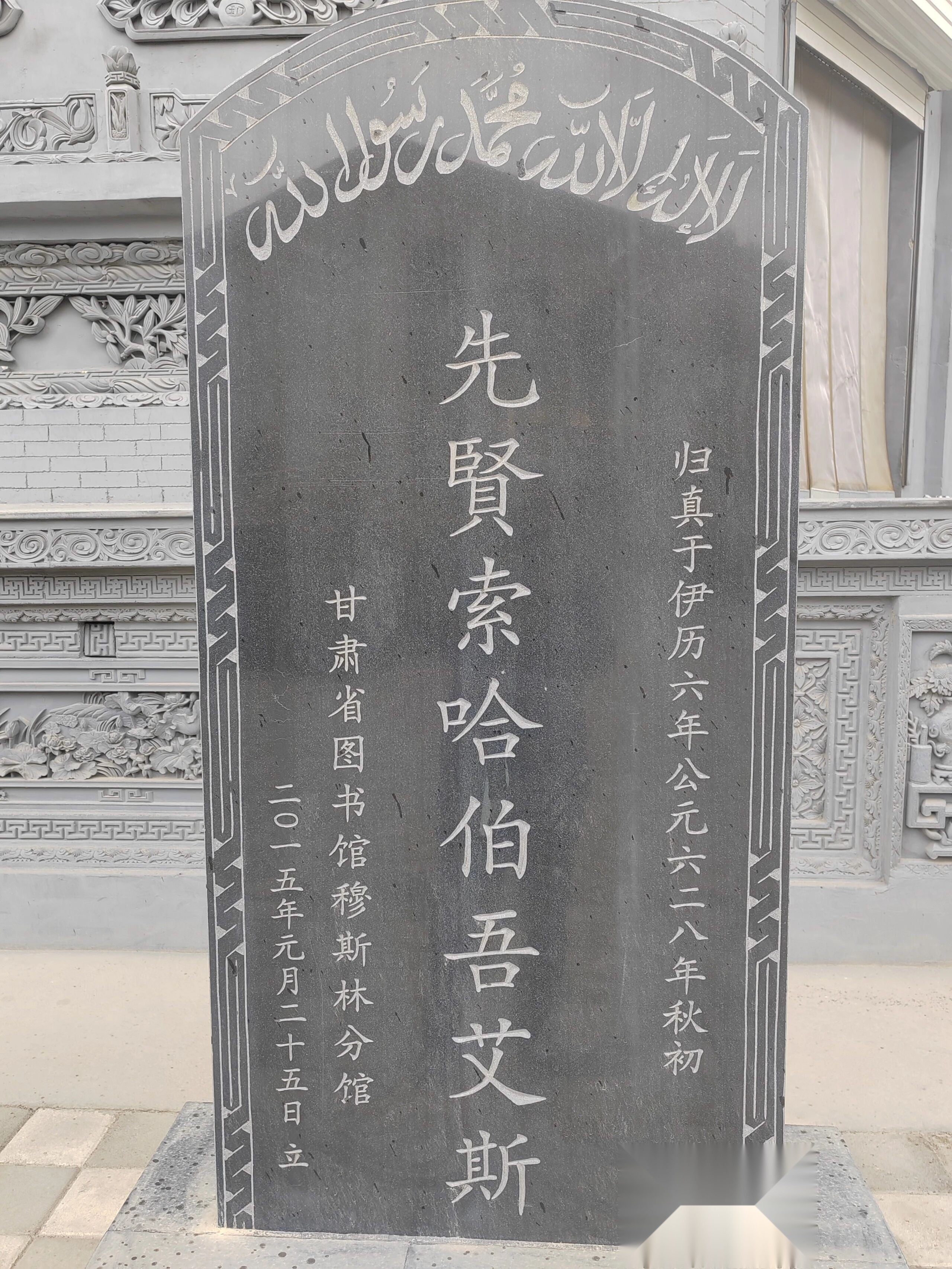
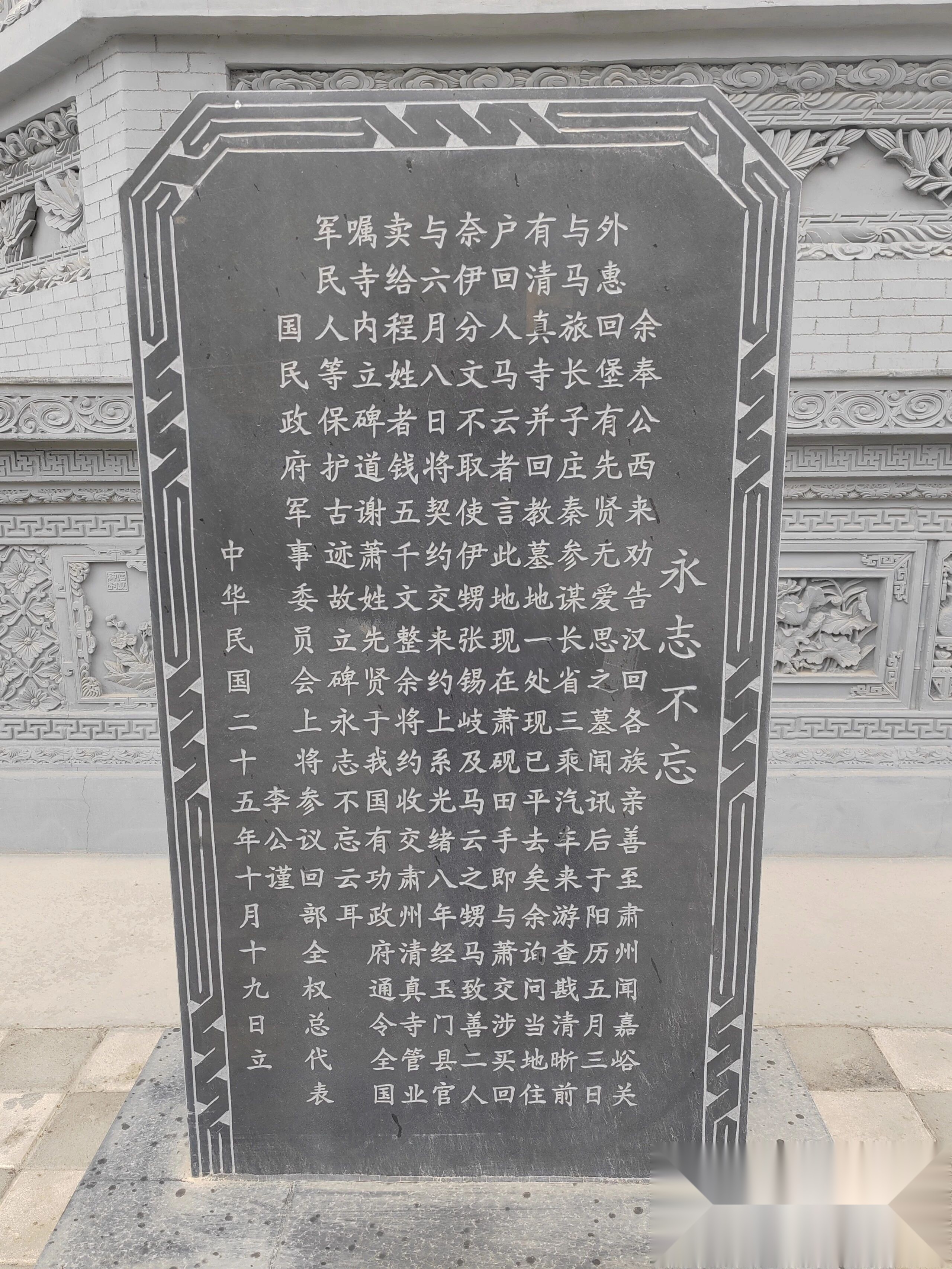
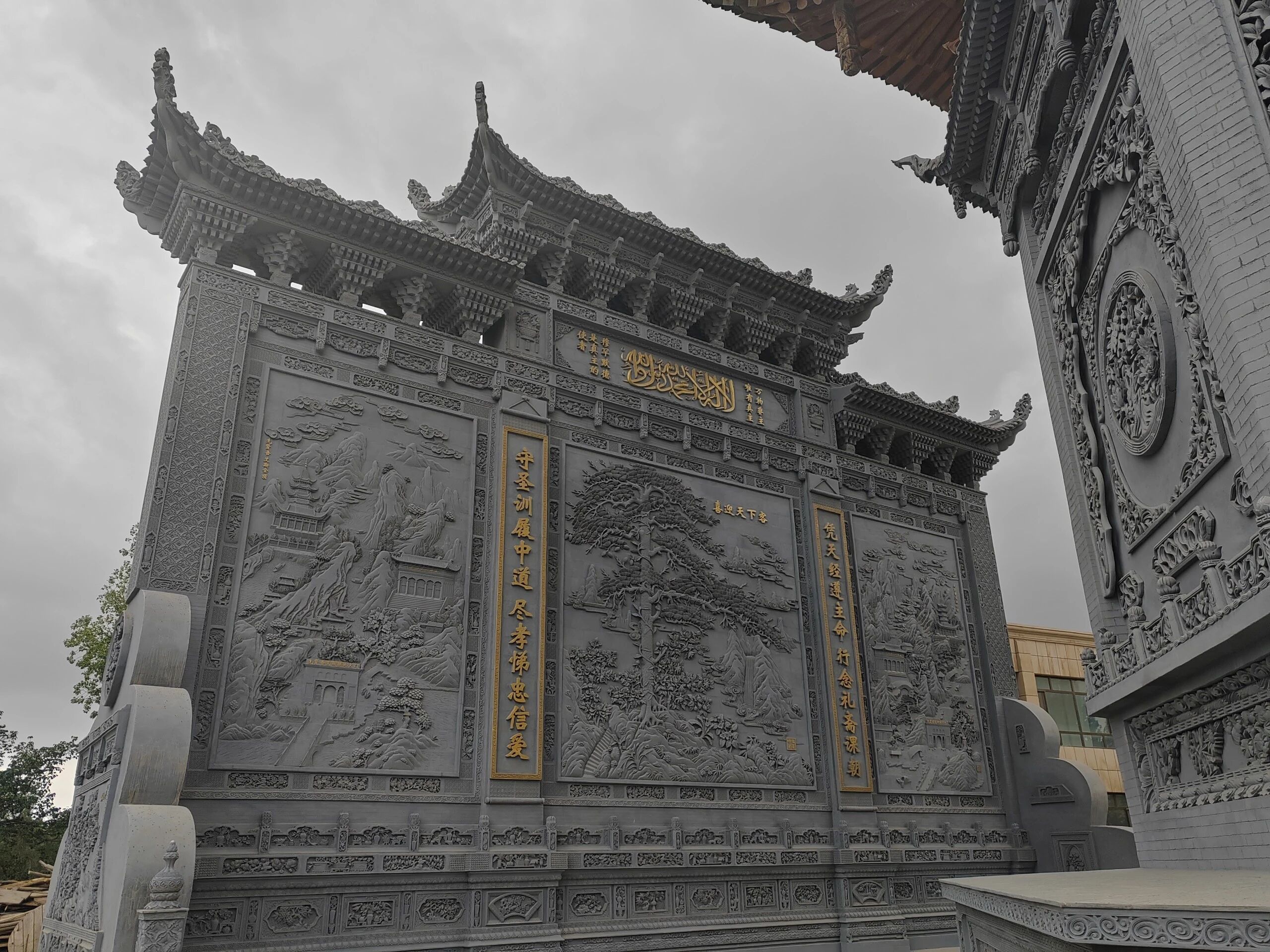
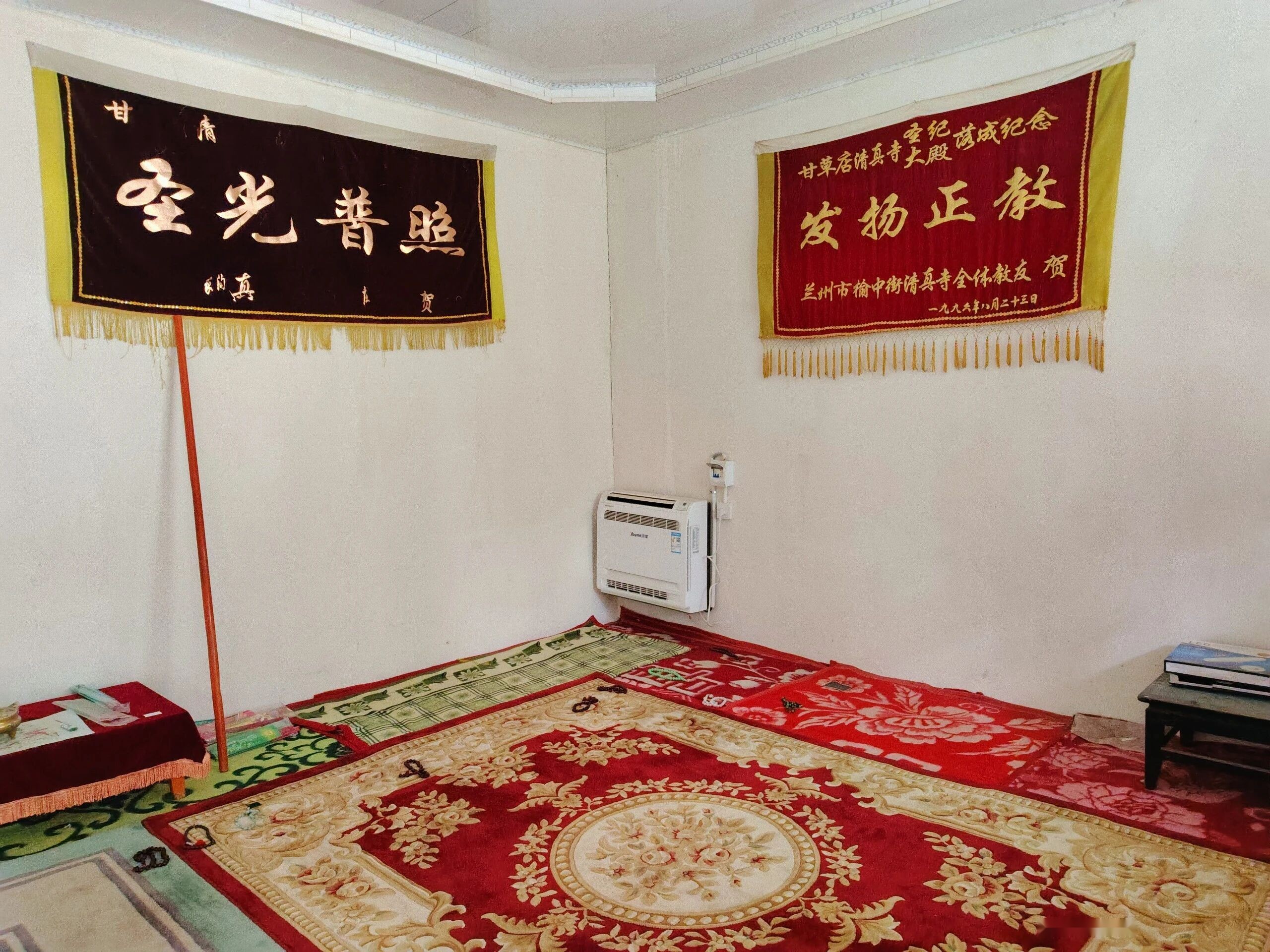
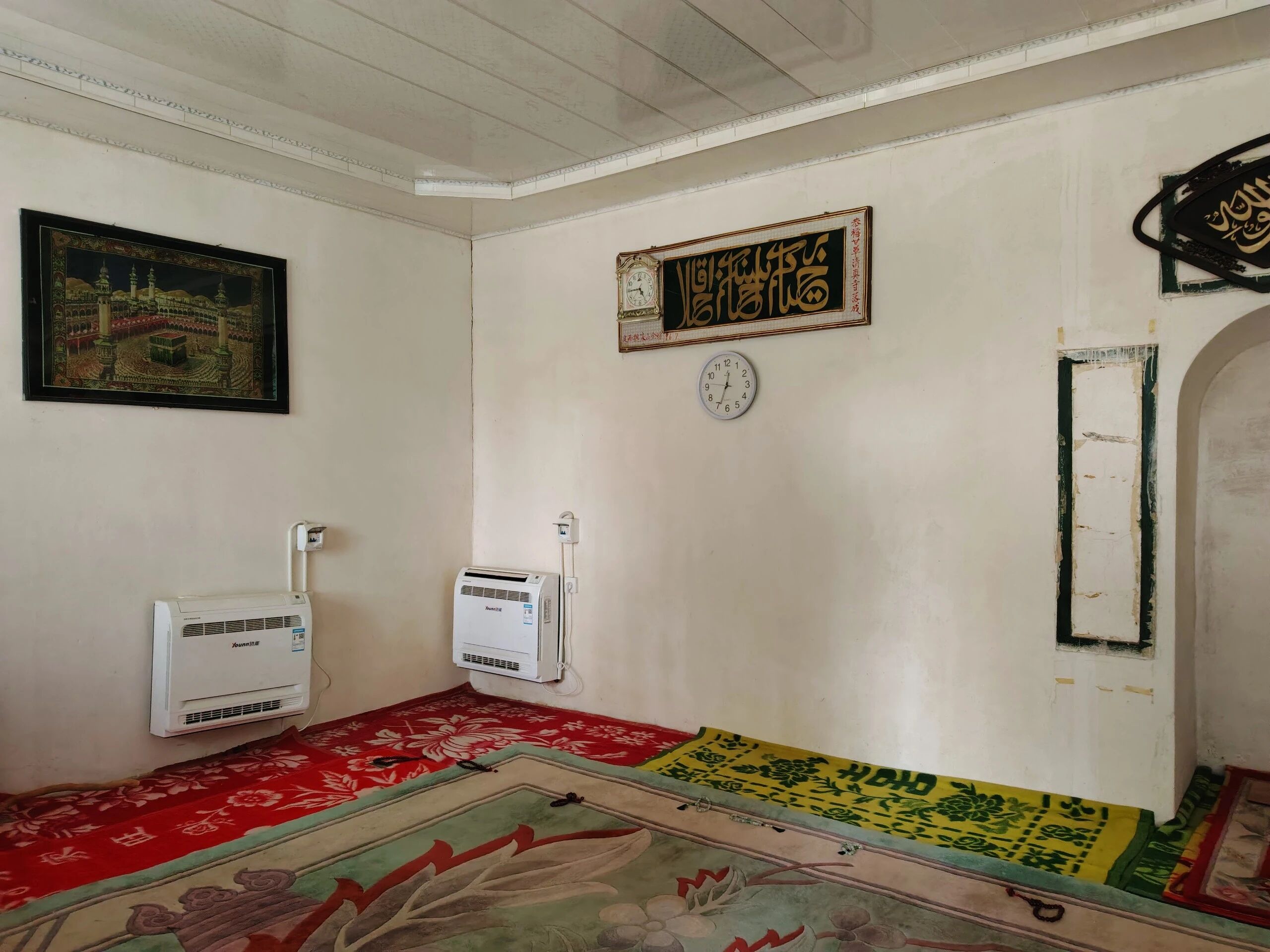
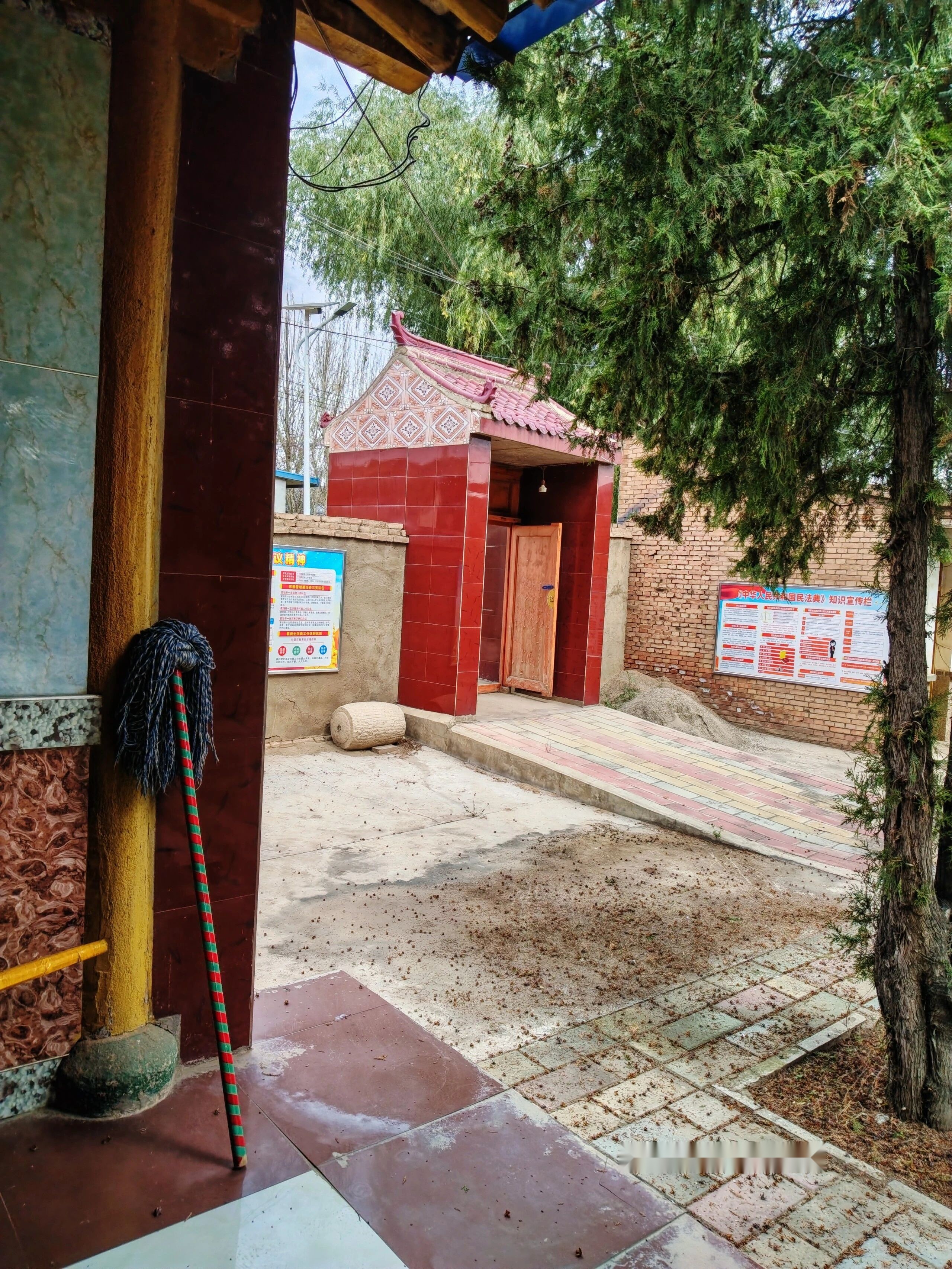
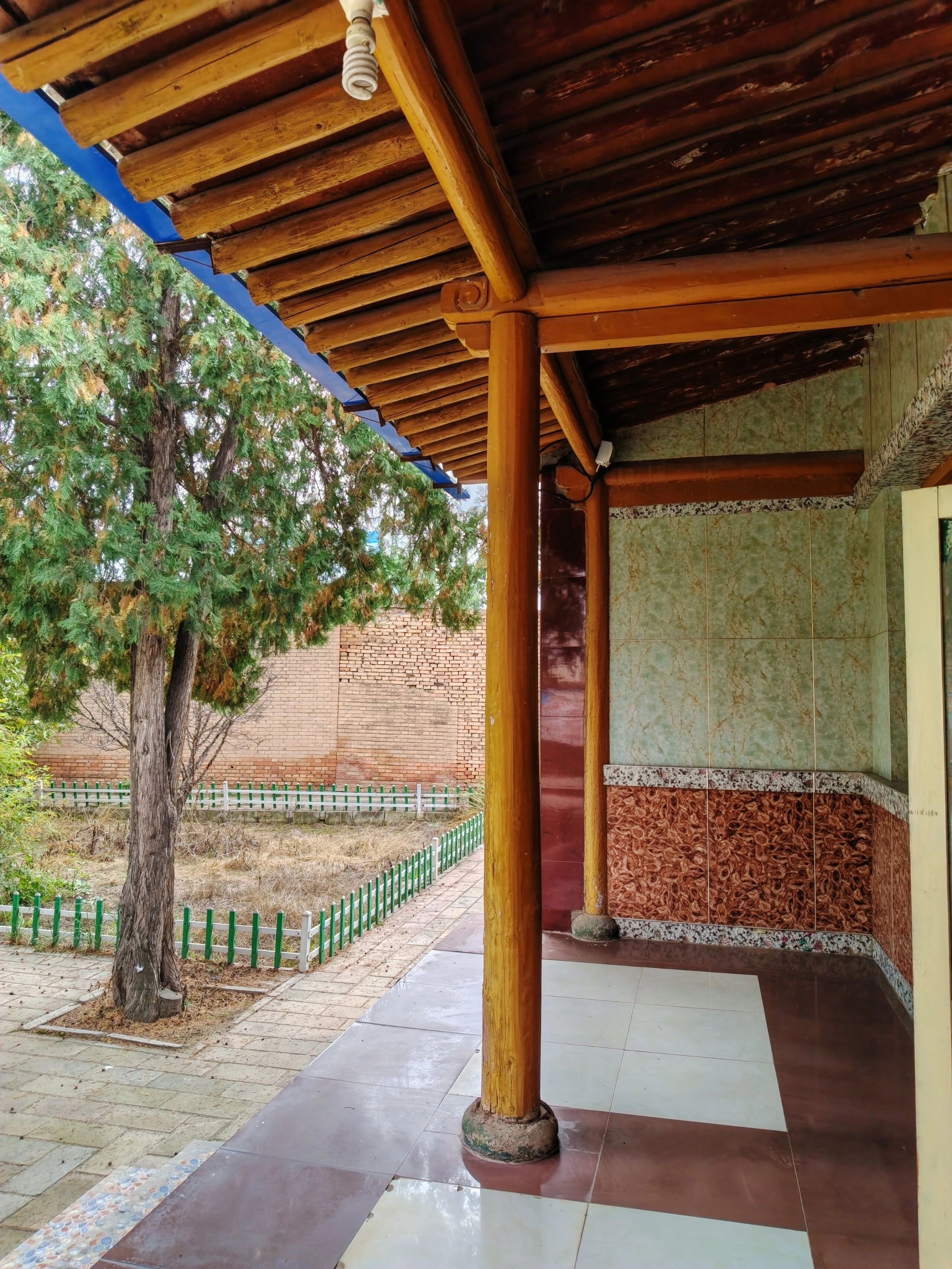
These 20 photos document the Gancaodian Mosque (masjid) located in Yuzhong County, Lanzhou, Gansu Province. We’re tracing the history of over 40 Hui Muslim families who settled along this vital Silk Road artery during the Republican era to trade, as well as the unique cave-style architecture they carved into the cliffs and what the site looks like today.
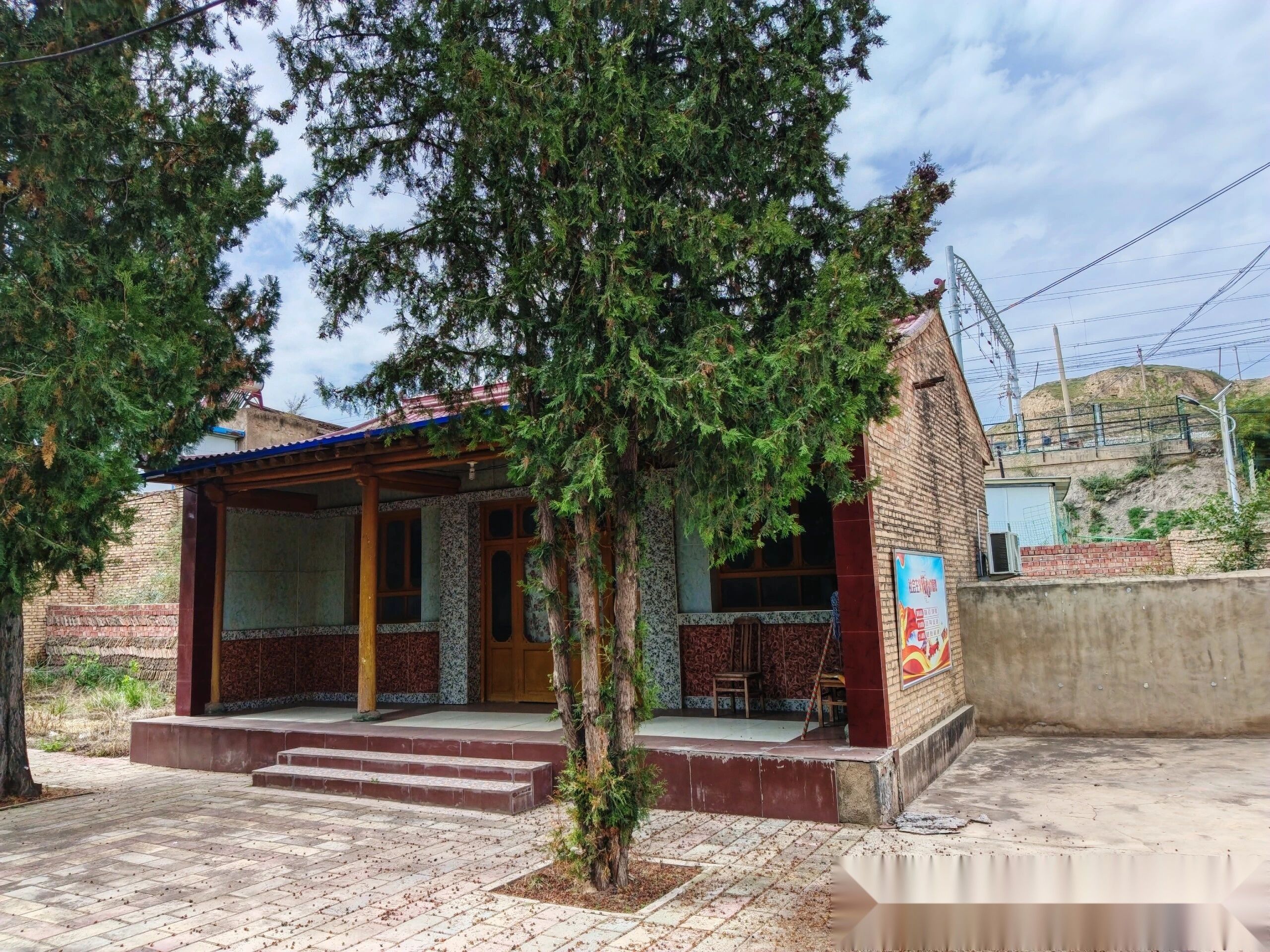
The Gancaodian Mosque in Yuzhong County was built during the Republican era as a Sufi mosque. Back then, this area was a major hub on the ancient Silk Road connecting Lintao, Linxia, Dingxi, Longxi, Tianshui, Zhangjiachuan, and all the way to the ancient capital of Xi'an. At its peak, more than 40 Hui Muslim families lived and traded here, and with a Muslim community comes the need for a mosque. When they first tried to build it, powerful local Han groups made things incredibly difficult. In the end, a Hui Muslim officer in the Nationalist army had to mobilize troops to step in. The soldiers carved the structure directly into the cliffside in the form of a yaodong (traditional cave dwelling). The current mosque building is a later addition, and there are only a few Muslim families left in the area now today.
The Gancaodian Mosque belongs to the Jahriyya Sufi order, as followers of this path frequently passed through here on their way to the Guanchuan Daotang (a religious hall/center) in Dingxi. As the name Gancaodian suggests, this place was historically a major post station—a must-pass point between Lanzhou and Xi'an. In the old days, it was packed with caravanserais, where travelers and teamsters would stop to rest. Later, when the Bao-Lan Railway was built between Lanzhou and Xi'an, population movement spiked. There were originally over 40 veteran Hui Muslim families running various businesses, but every time they tried to build a mosque, outsiders would tear it down because the Hui Muslims were considered 'foreigners' to the area. Eventually, Sixth Uncle (Ma Chongyong) reached out to a friend of his in the National Revolutionary Army, a Hui officer named Hawandani, who sent a company of soldiers to station themselves here. With the military’s help, the soldiers dug out the cliffside caves that formed the original version of the Gancaodian Mosque; an old well dug by those soldiers still stands as evidence today.
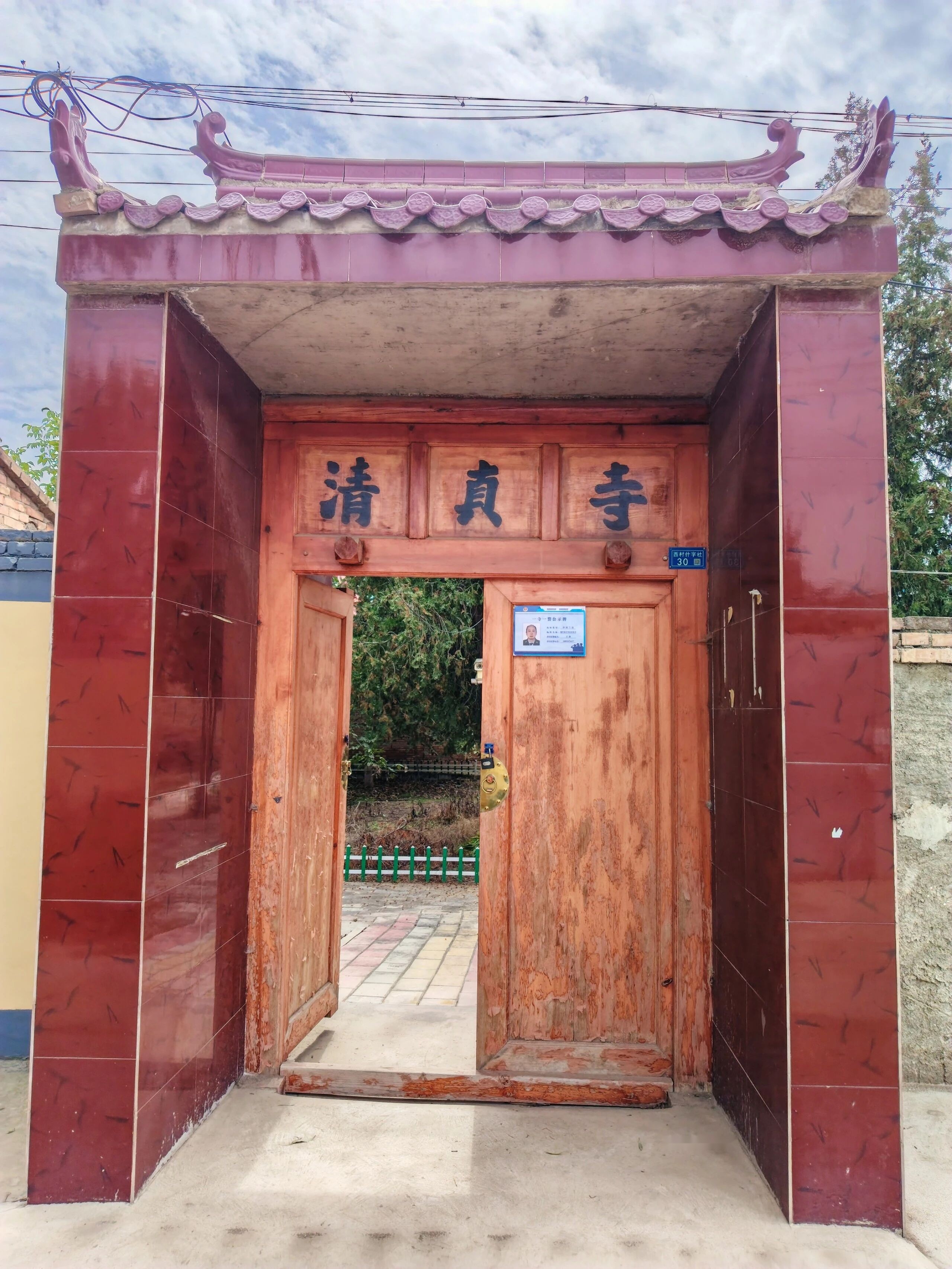
This is the renovated mosque, but sadly, many of the local Muslims have had to move away to find work and escape poverty. Now, only four or five families remain. The elderly Imam—who happens to be my father-in-law—has held down the fort here his entire life. He is a truly self-reliant man of faith. May Allah have mercy on him, be pleased with him, and grant him blessings in this life and the hereafter. Amin! view all
These 20 photos document the Gancaodian Mosque (masjid) located in Yuzhong County, Lanzhou, Gansu Province. We’re tracing the history of over 40 Hui Muslim families who settled along this vital Silk Road artery during the Republican era to trade, as well as the unique cave-style architecture they carved into the cliffs and what the site looks like today.
The Gancaodian Mosque in Yuzhong County was built during the Republican era as a Sufi mosque. Back then, this area was a major hub on the ancient Silk Road connecting Lintao, Linxia, Dingxi, Longxi, Tianshui, Zhangjiachuan, and all the way to the ancient capital of Xi'an. At its peak, more than 40 Hui Muslim families lived and traded here, and with a Muslim community comes the need for a mosque. When they first tried to build it, powerful local Han groups made things incredibly difficult. In the end, a Hui Muslim officer in the Nationalist army had to mobilize troops to step in. The soldiers carved the structure directly into the cliffside in the form of a yaodong (traditional cave dwelling). The current mosque building is a later addition, and there are only a few Muslim families left in the area now today.
The Gancaodian Mosque belongs to the Jahriyya Sufi order, as followers of this path frequently passed through here on their way to the Guanchuan Daotang (a religious hall/center) in Dingxi. As the name Gancaodian suggests, this place was historically a major post station—a must-pass point between Lanzhou and Xi'an. In the old days, it was packed with caravanserais, where travelers and teamsters would stop to rest. Later, when the Bao-Lan Railway was built between Lanzhou and Xi'an, population movement spiked. There were originally over 40 veteran Hui Muslim families running various businesses, but every time they tried to build a mosque, outsiders would tear it down because the Hui Muslims were considered 'foreigners' to the area. Eventually, Sixth Uncle (Ma Chongyong) reached out to a friend of his in the National Revolutionary Army, a Hui officer named Hawandani, who sent a company of soldiers to station themselves here. With the military’s help, the soldiers dug out the cliffside caves that formed the original version of the Gancaodian Mosque; an old well dug by those soldiers still stands as evidence today.
This is the renovated mosque, but sadly, many of the local Muslims have had to move away to find work and escape poverty. Now, only four or five families remain. The elderly Imam—who happens to be my father-in-law—has held down the fort here his entire life. He is a truly self-reliant man of faith. May Allah have mercy on him, be pleased with him, and grant him blessings in this life and the hereafter. Amin!
Halal Travel Guide: Qinan, Gansu — Qing Mosque, Hui History and Garlic Noodles
Articles • ali2007fr posted the article • 0 comments • 187 views • 2026-05-20 00:57
Summary: Qinan County in Gansu has a Qing-era mosque and a local food tradition centered on garlic noodles. This travel account keeps the mosque details, food descriptions, original photos, and local Hui Muslim context from the Chinese source.
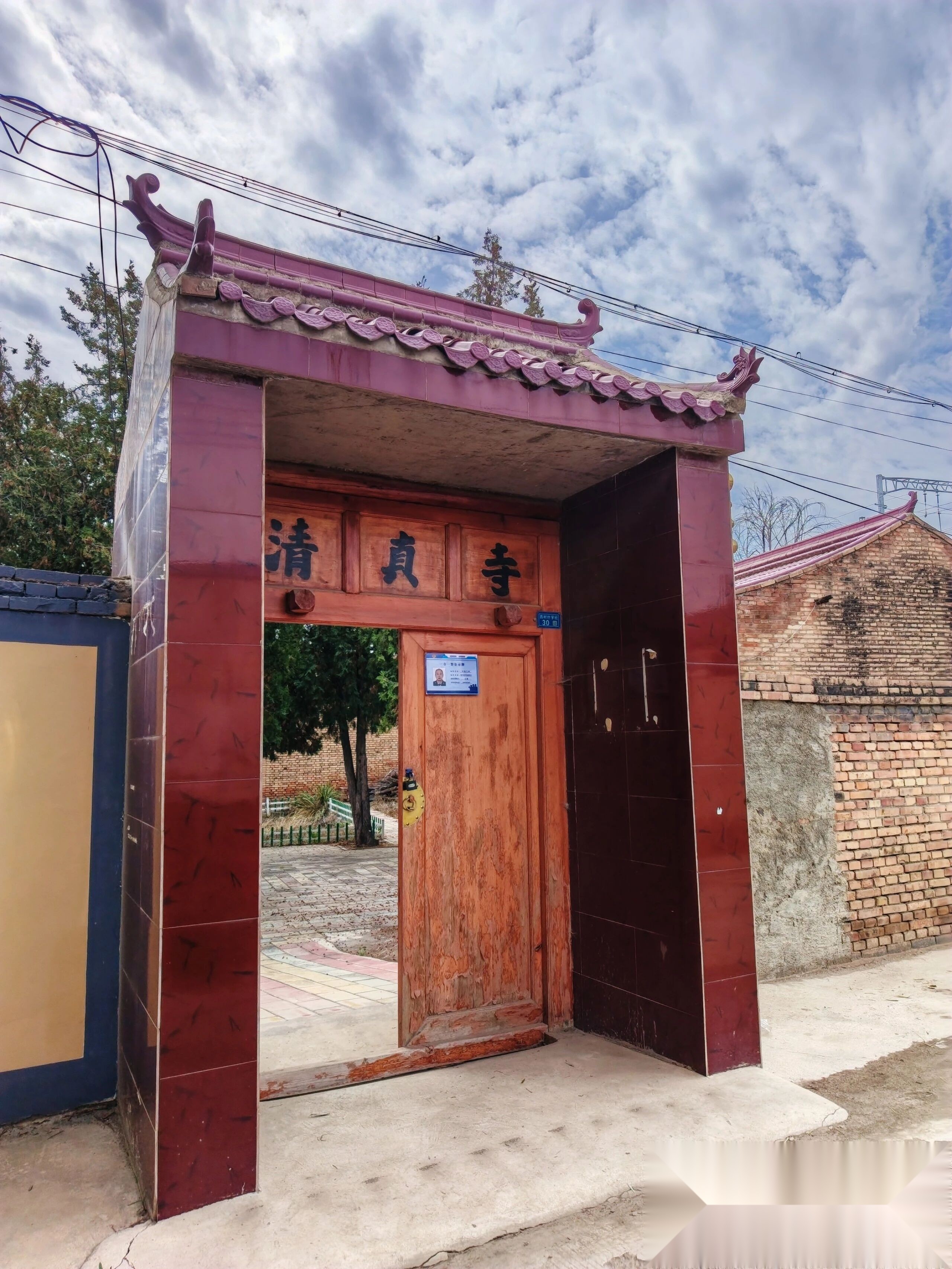
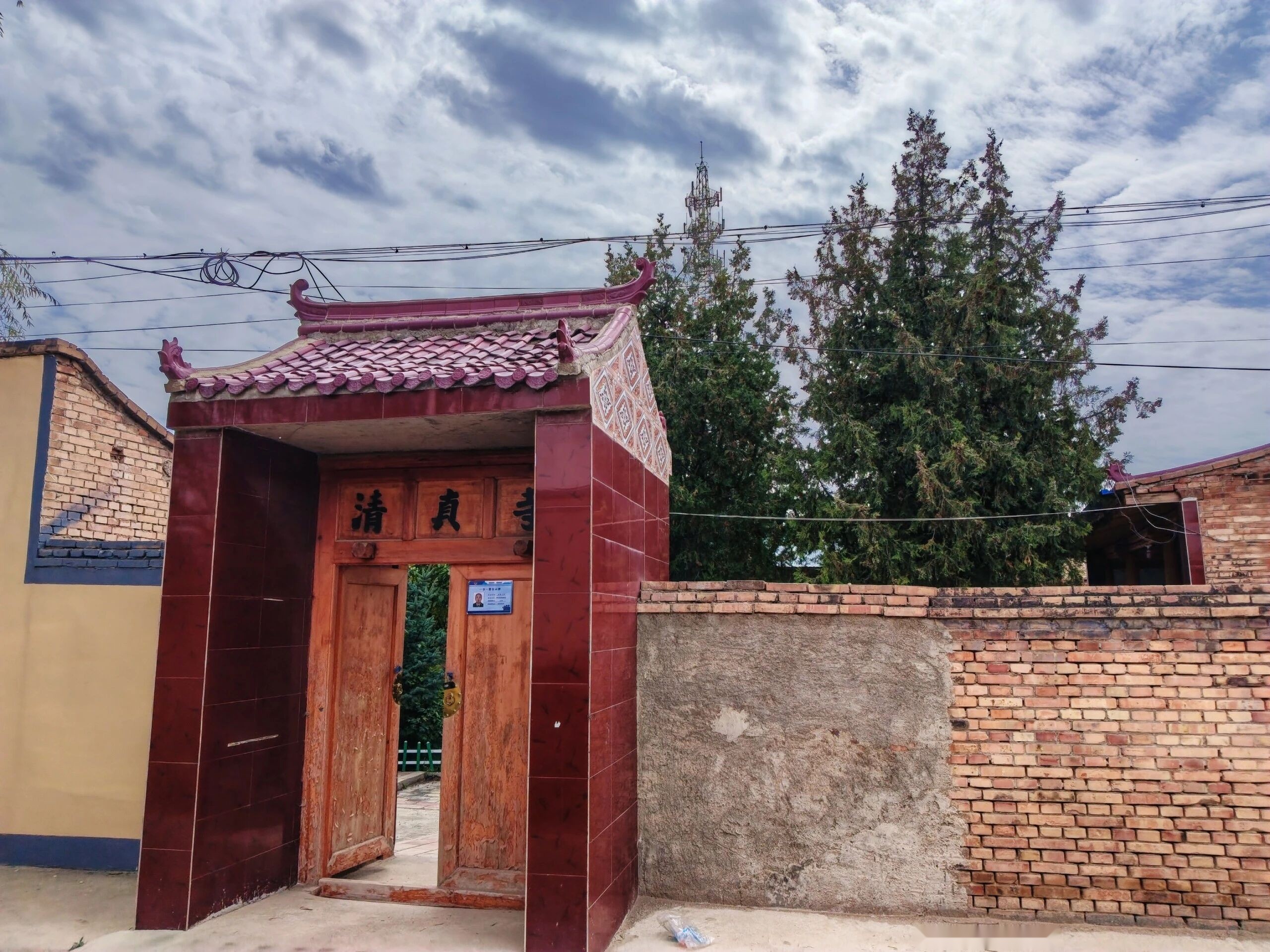
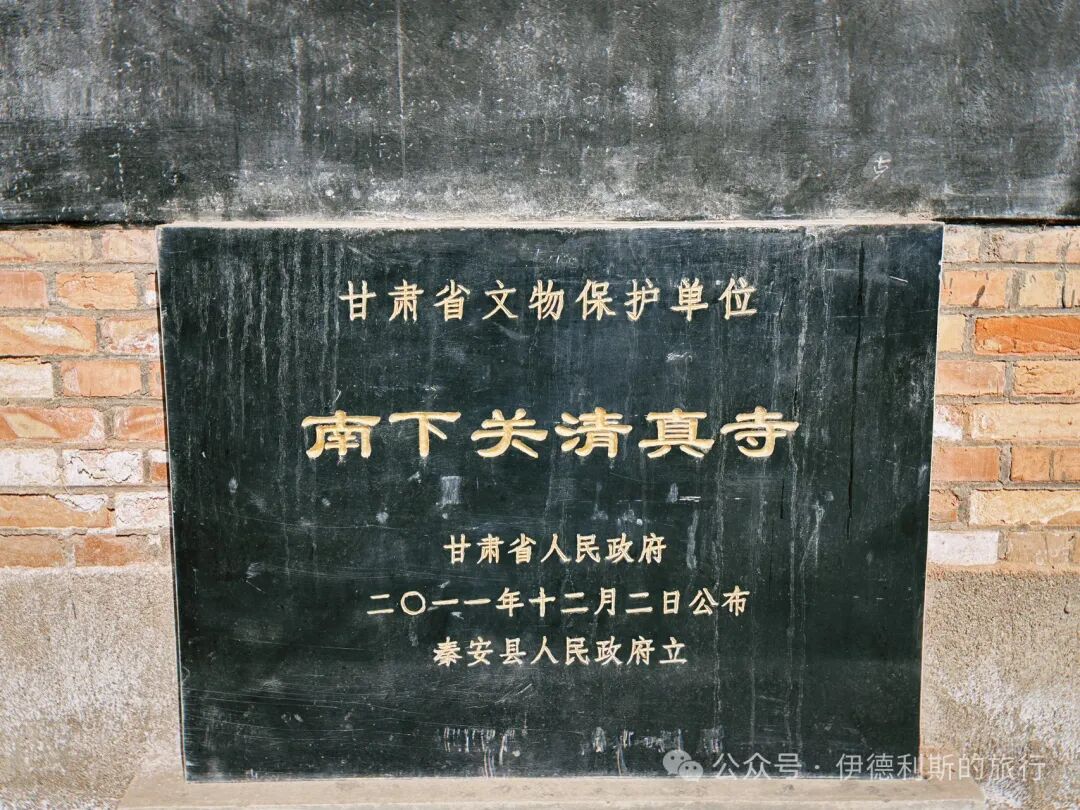
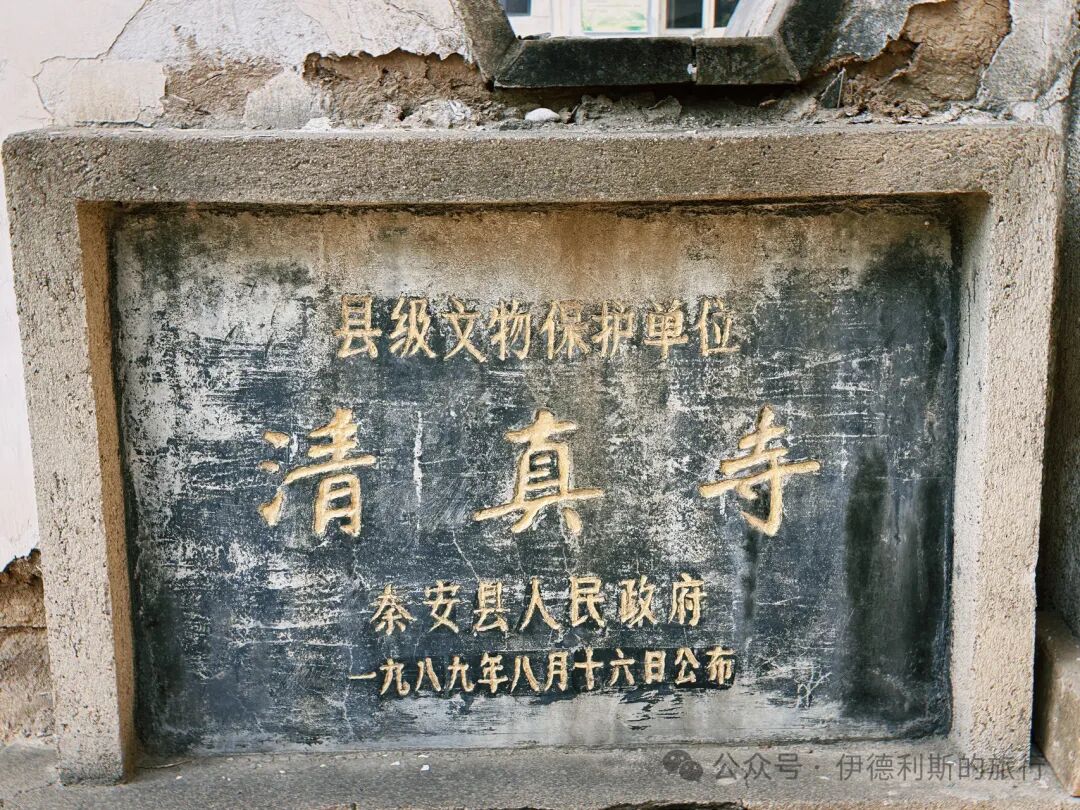
Although Gansu Province has many old mosques (masjid), most have been rebuilt. Only four are listed as cultural heritage sites at the provincial level or higher. The national-level site is the Houjie Mosque in Tianshui. The provincial-level sites are the Xiananguan Mosque in Qin'an, the Jingning Mosque, and the Huangjia Mosque in Dongxiang. Additionally, the screen wall (yingbi) of the Beisi Mosque in Linxia and the Lamu Tower of the Huixian Mosque are also listed as provincial heritage sites. Among the buildings of the menhuan (Sufi orders), the Dajia House of the Xidaotang is a national heritage site, while the Xuanhuagang and Chuanguan Daotang of the Zhepai order are provincial heritage sites.
During the Spring Festival holiday, I took a high-speed train from Tianshui to visit the Xiananguan Mosque in Qin'an County. The high-speed train from Tianshui to Qin'an is very fast. After leaving the station, you need to share a car, and you can reach Xiananguan in 10 minutes.
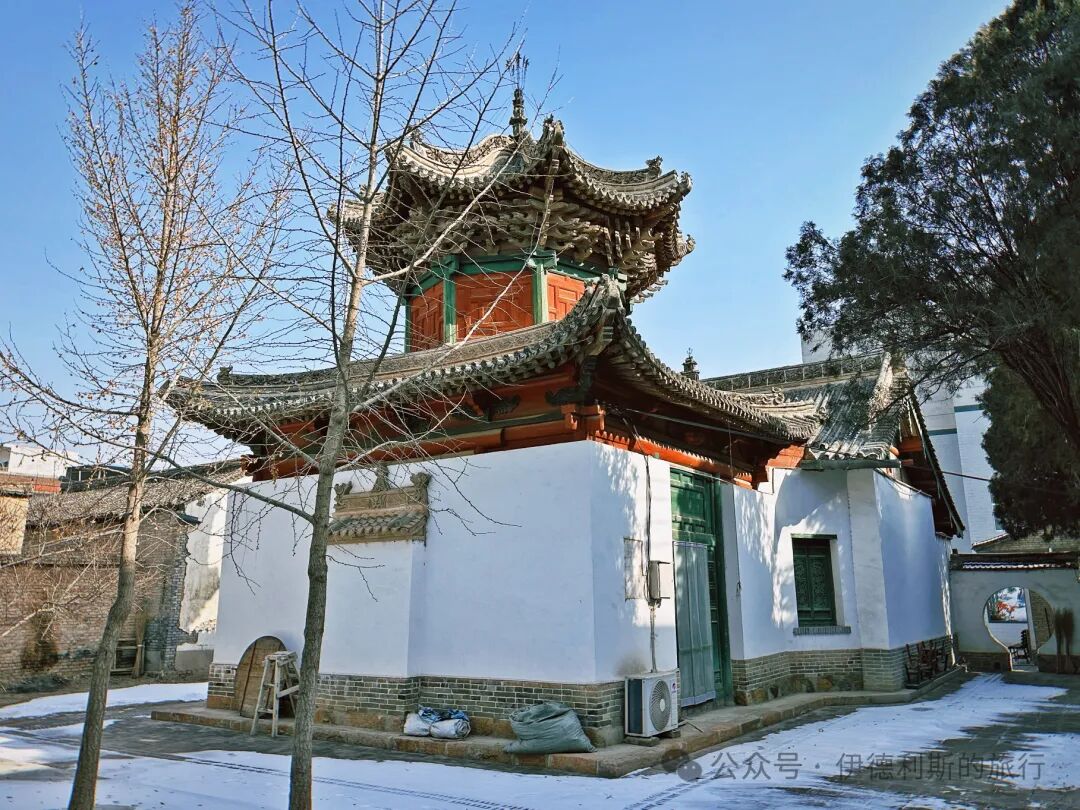
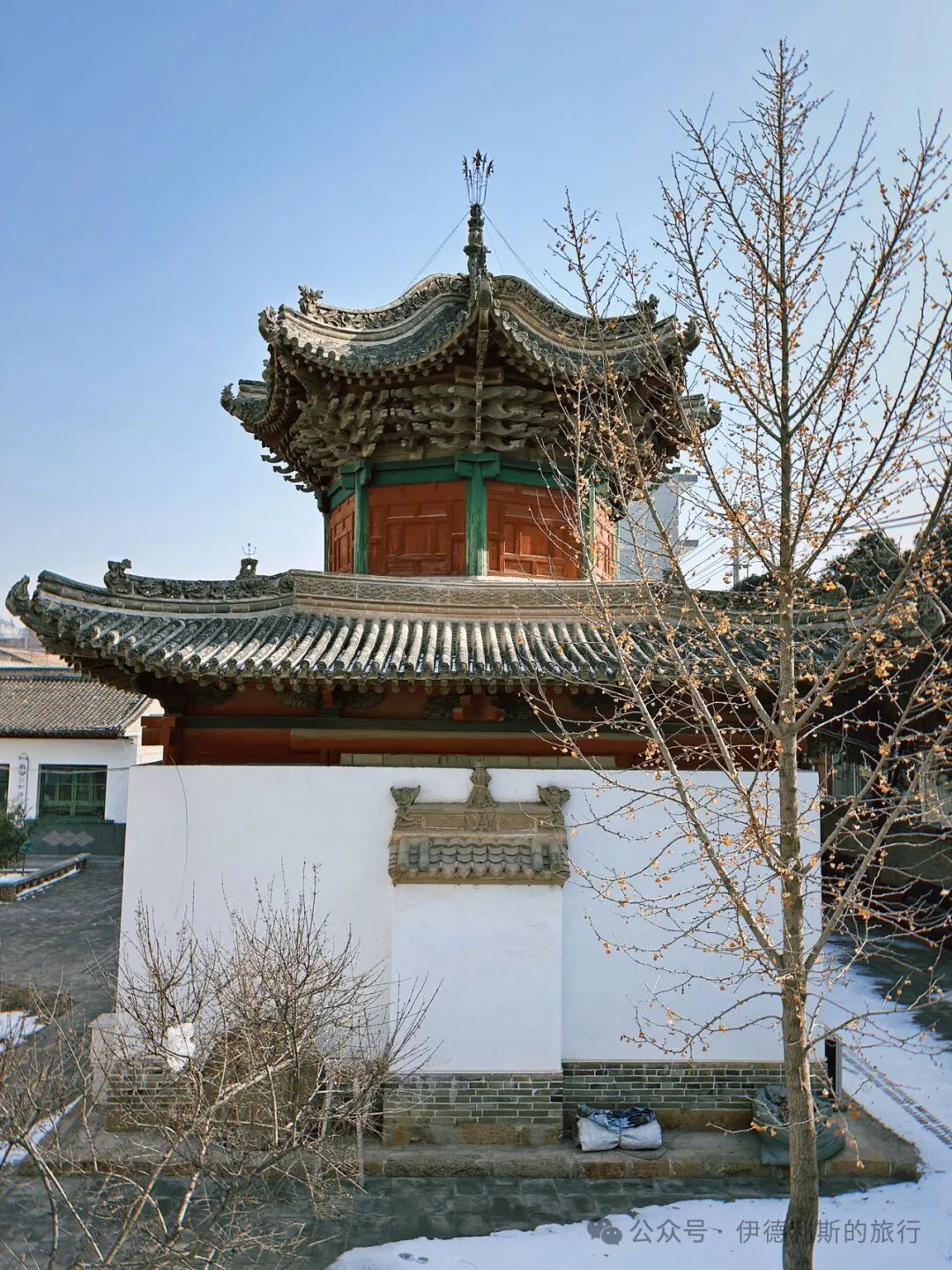
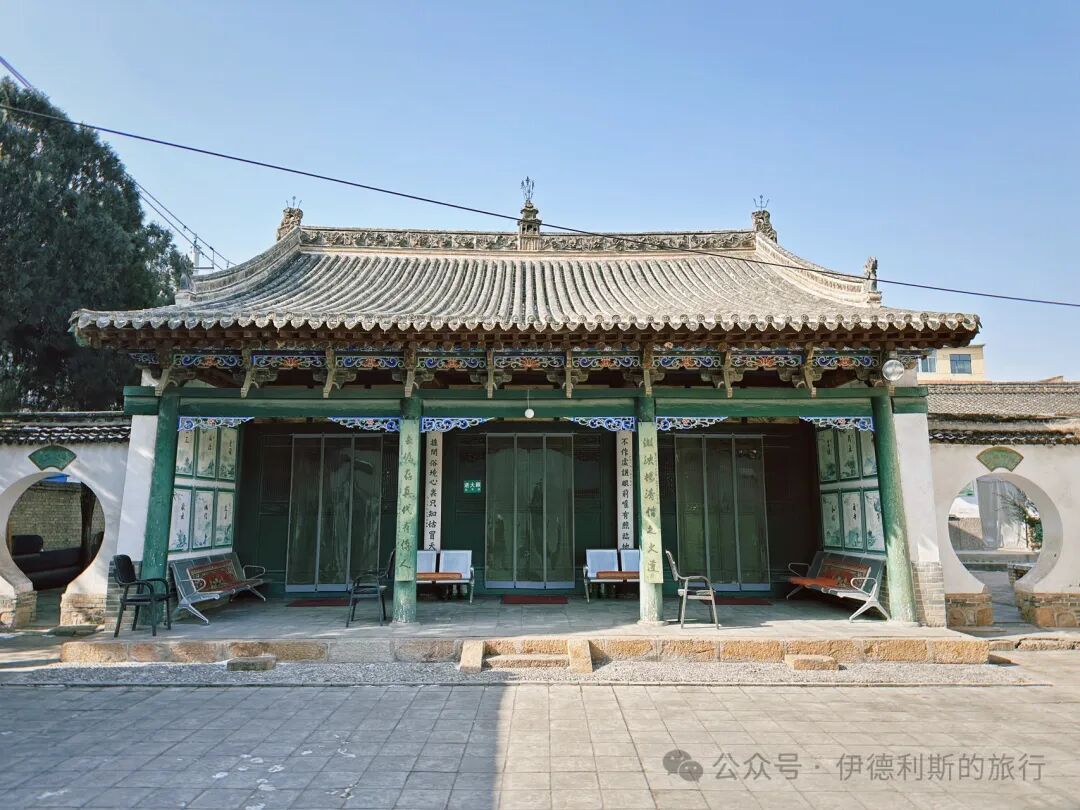
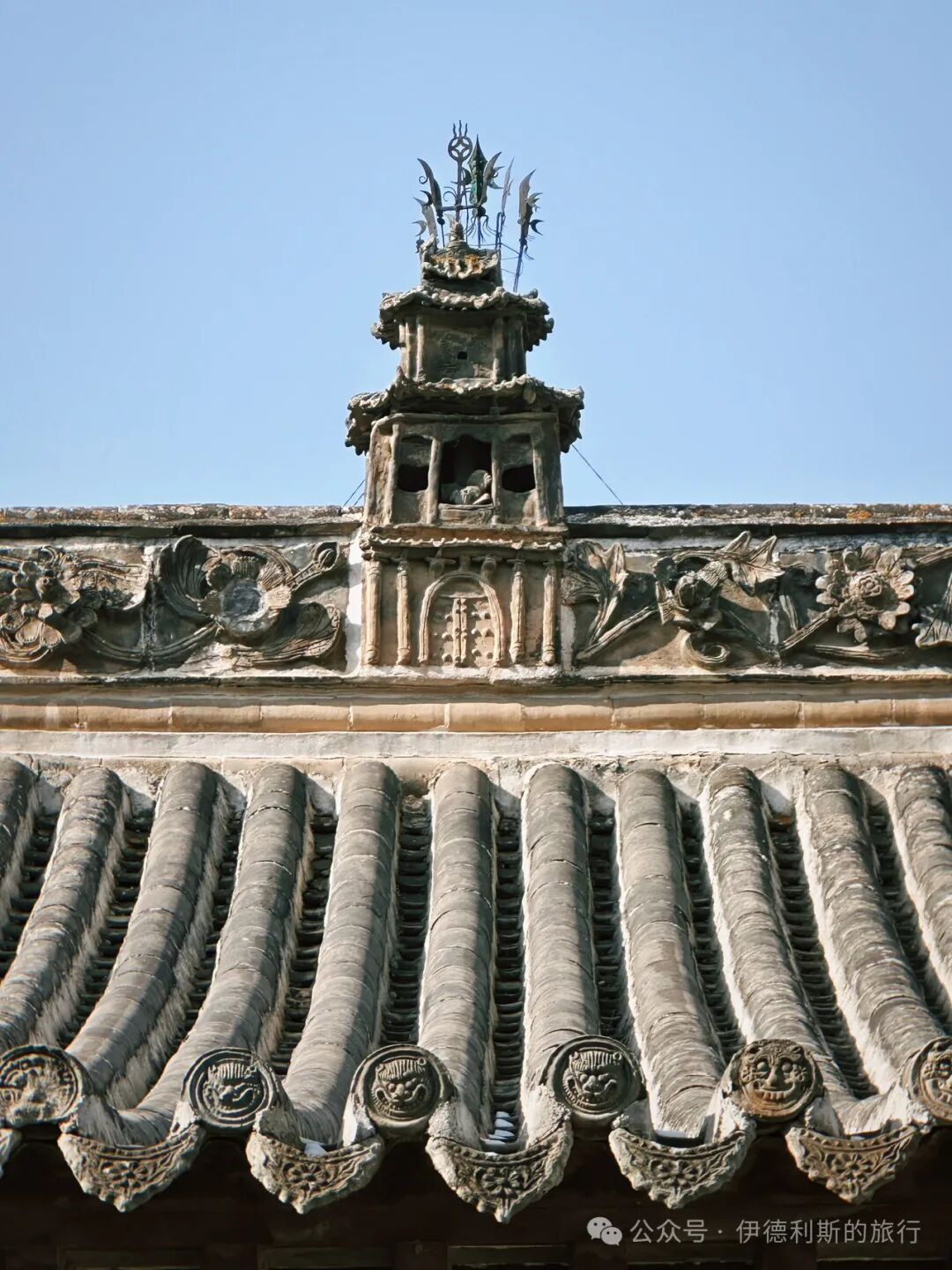
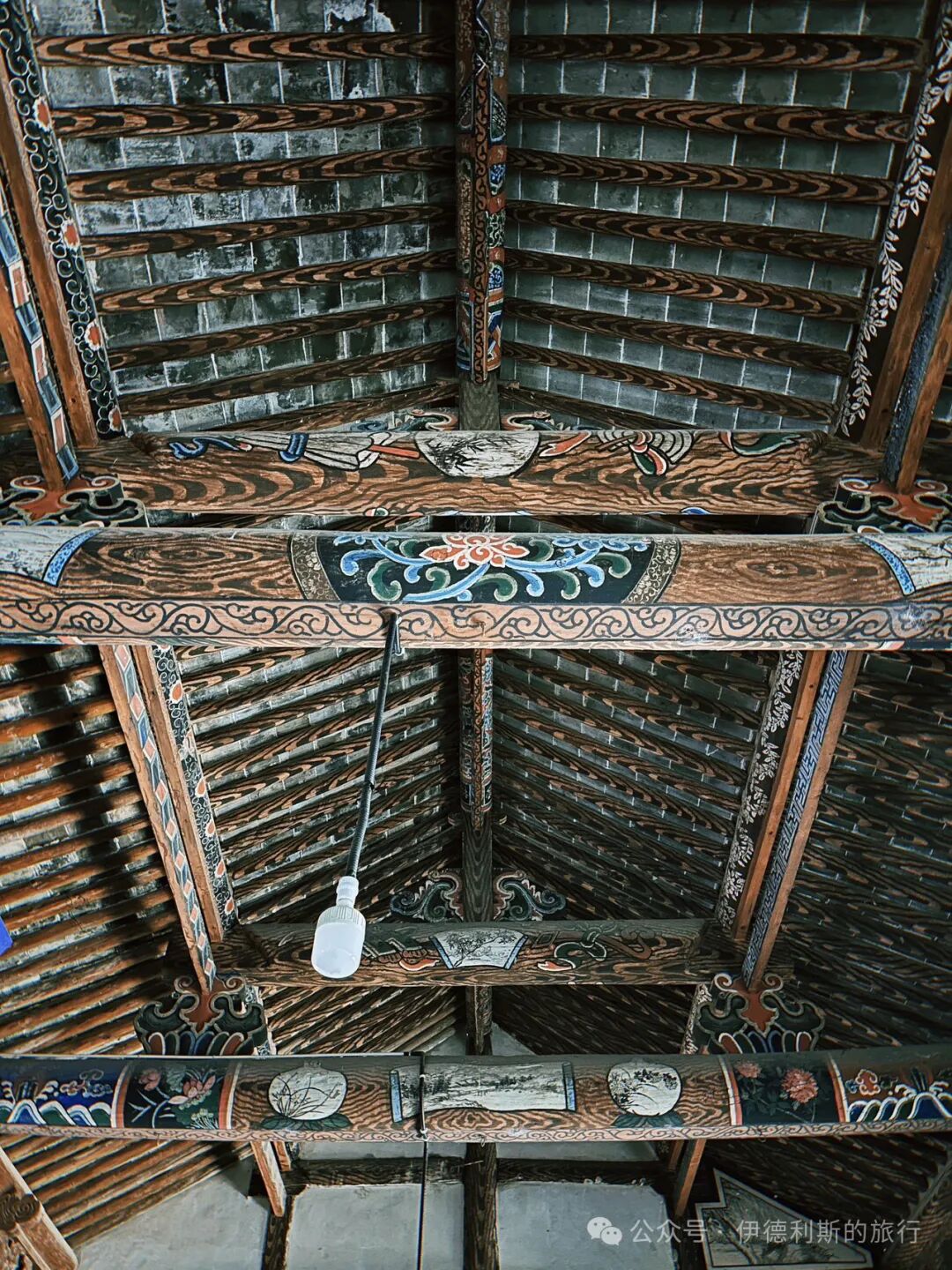
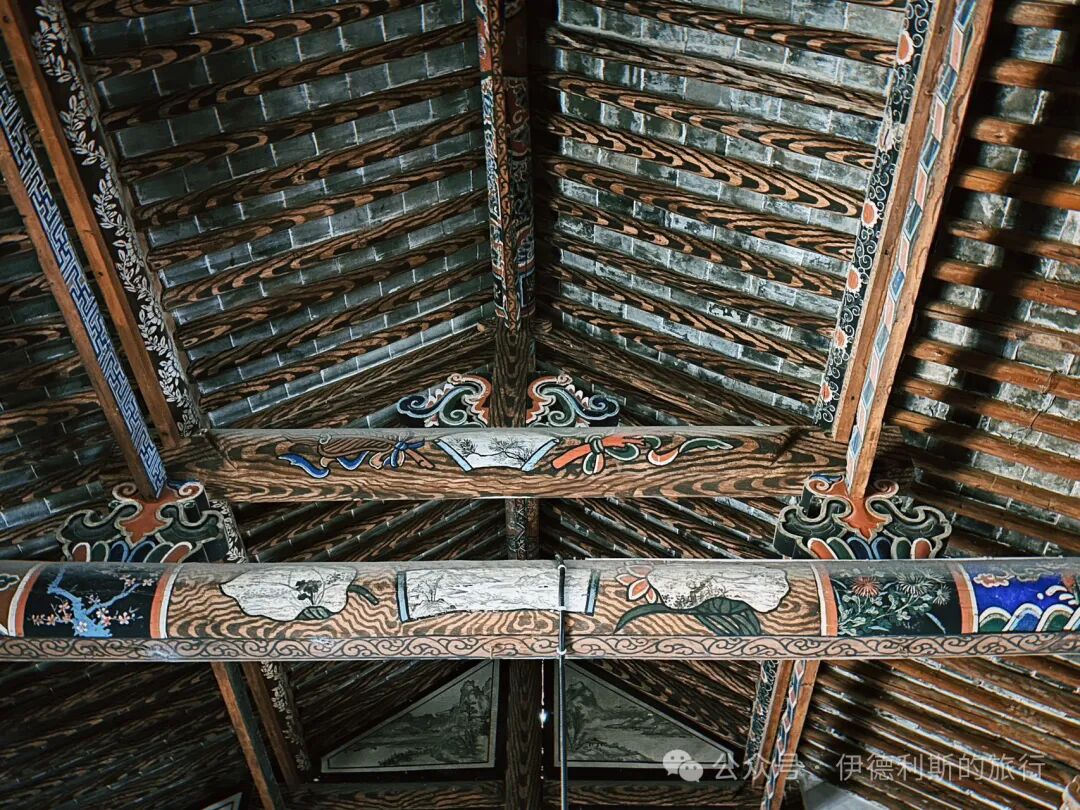
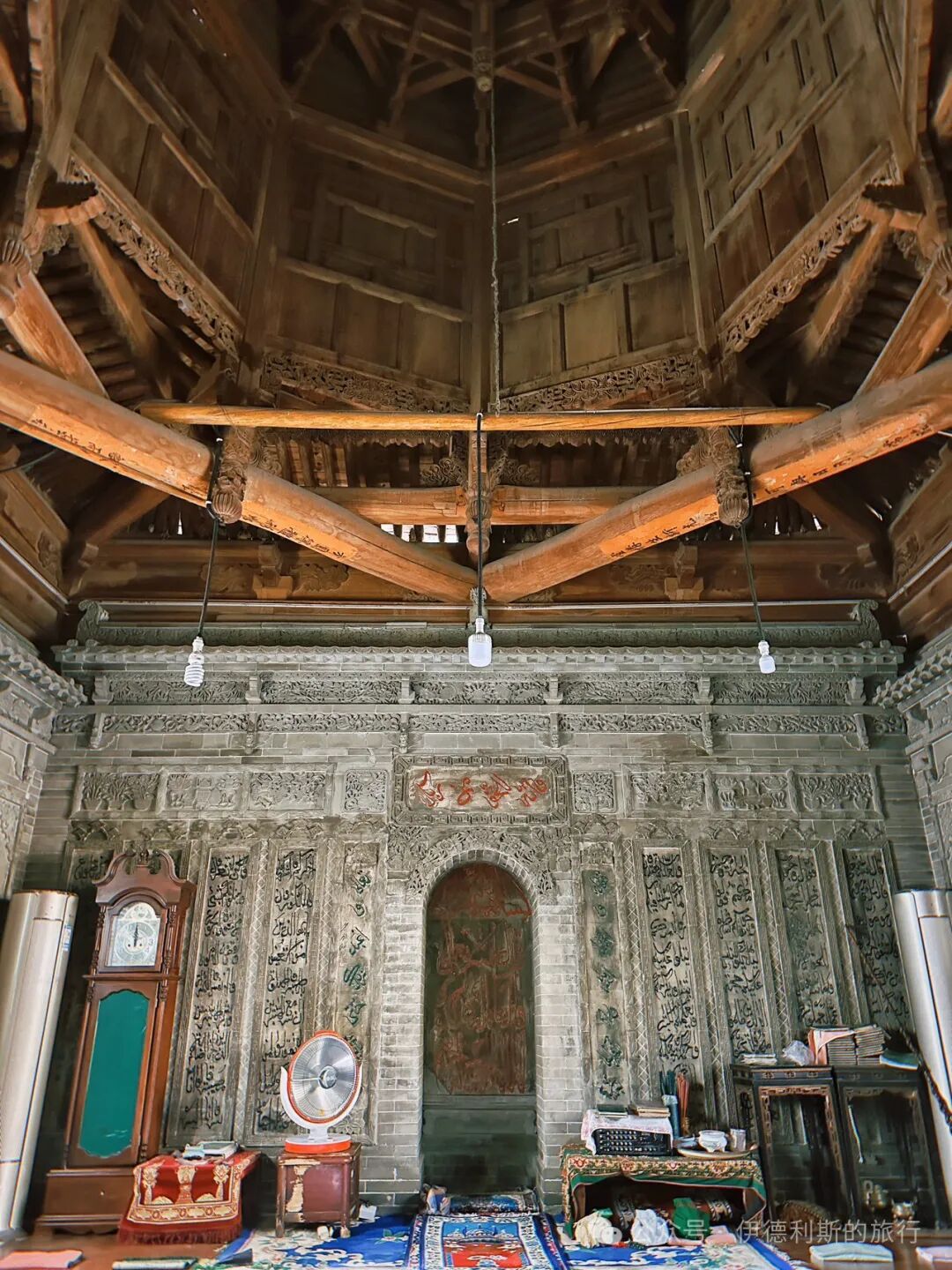
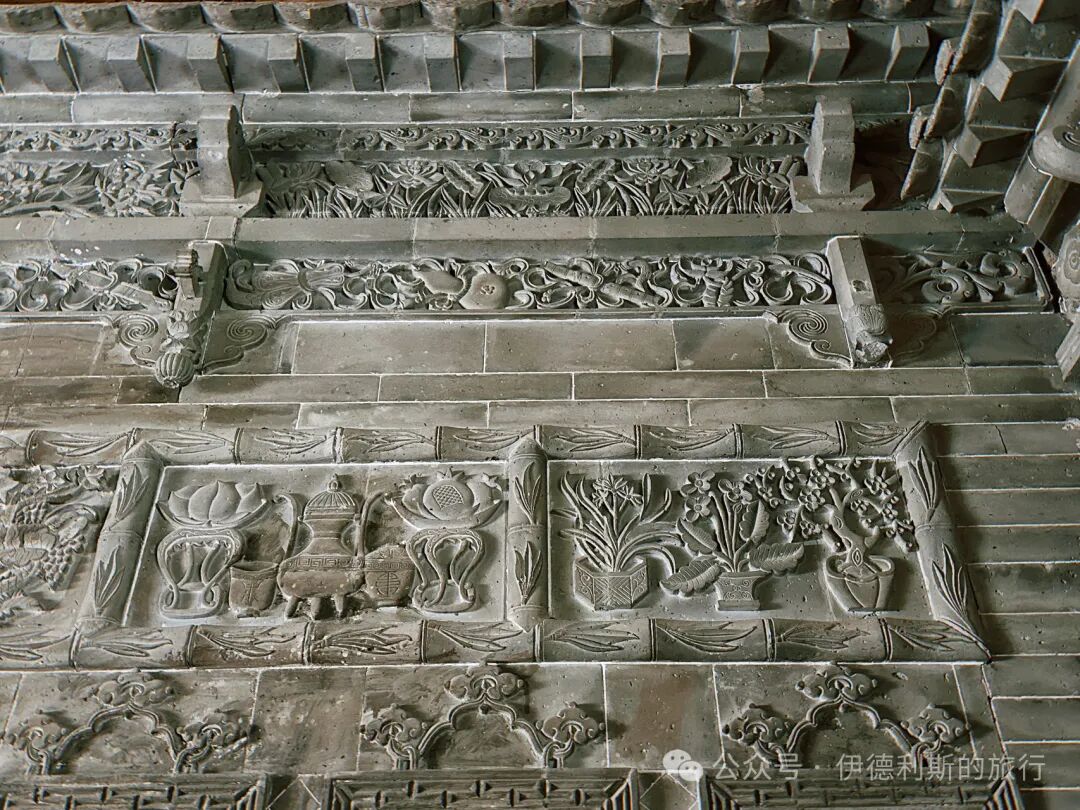
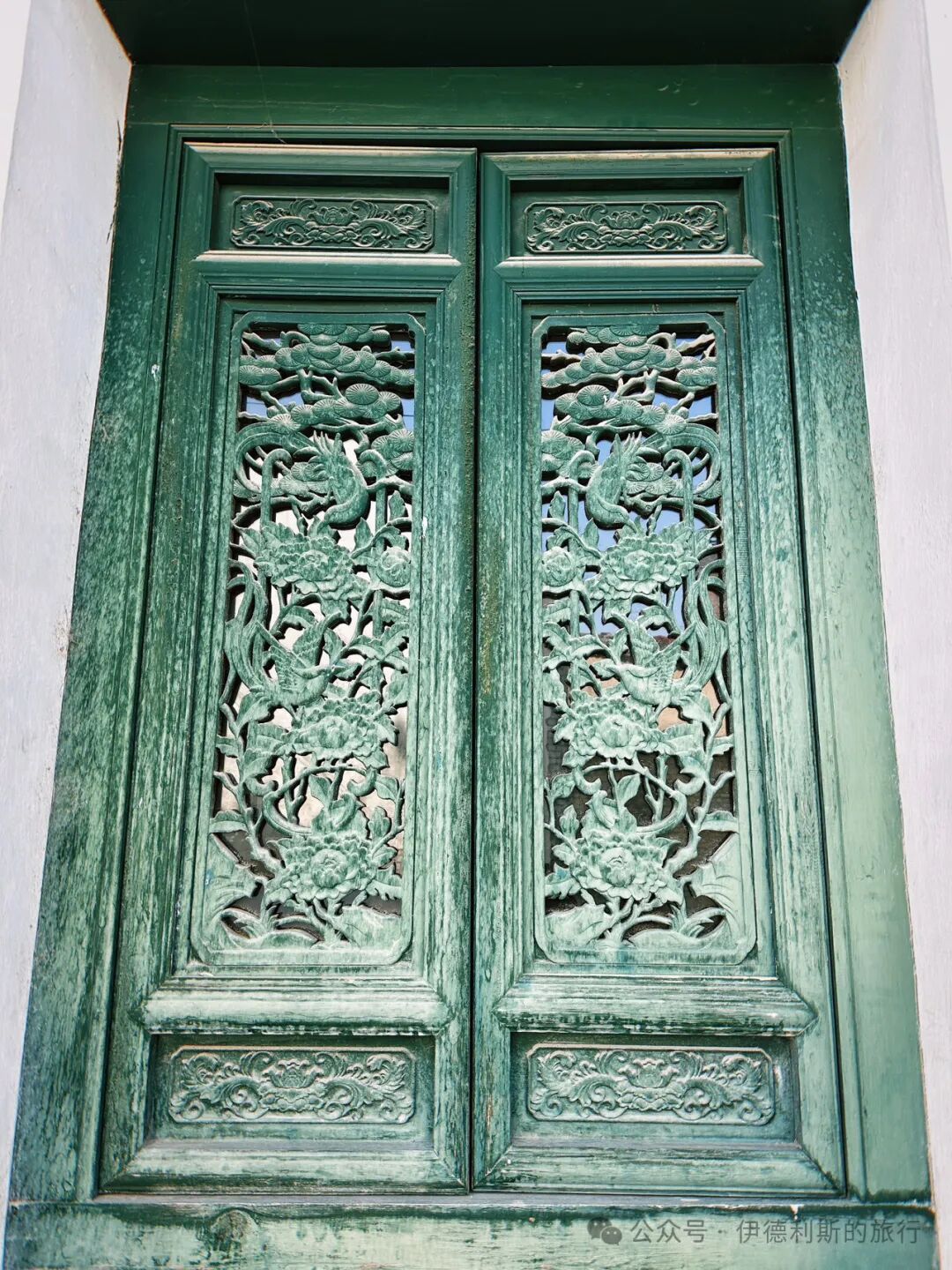
The Xiananguan Mosque in Qin'an was first built during the Hongwu period of the Ming Dynasty and rebuilt during the Kangxi period of the Qing Dynasty. The main hall has a hanging gable roof (xuanshan ding). The rear kiln hall has an octagonal pointed roof (bazhuo zuanjian ding) for the minaret (bangkelou), which features exquisite brick carvings and bracket sets (dougong). The center of the main hall's roof ridge is decorated with a pavilion-style ridge ornament (jicha) topped with a halberd (fangtian huaji). The very top of the minaret also has a halberd, which is very unique. The word for halberd (ji) sounds like the word for rank (ji), symbolizing a rise in status.
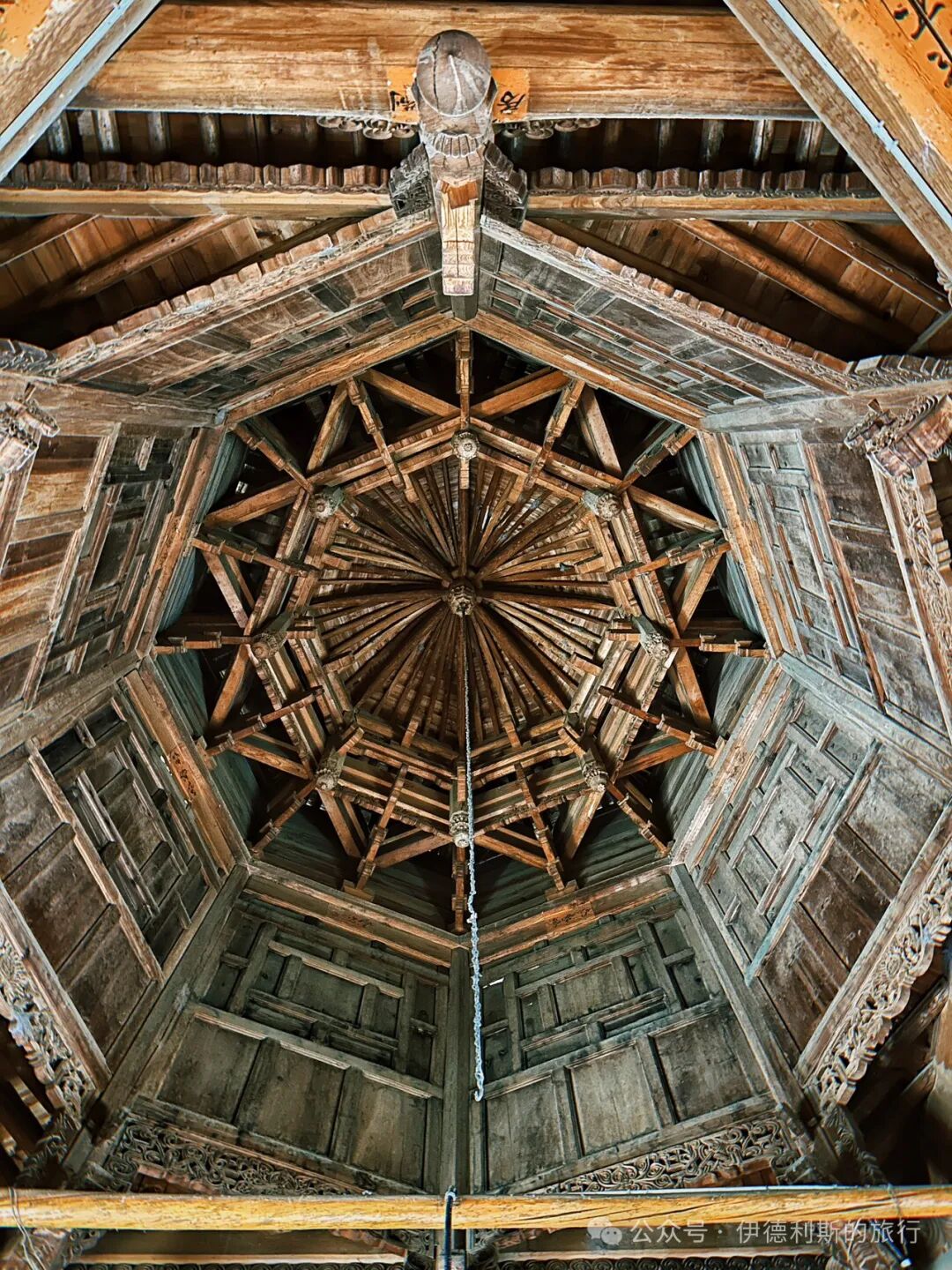
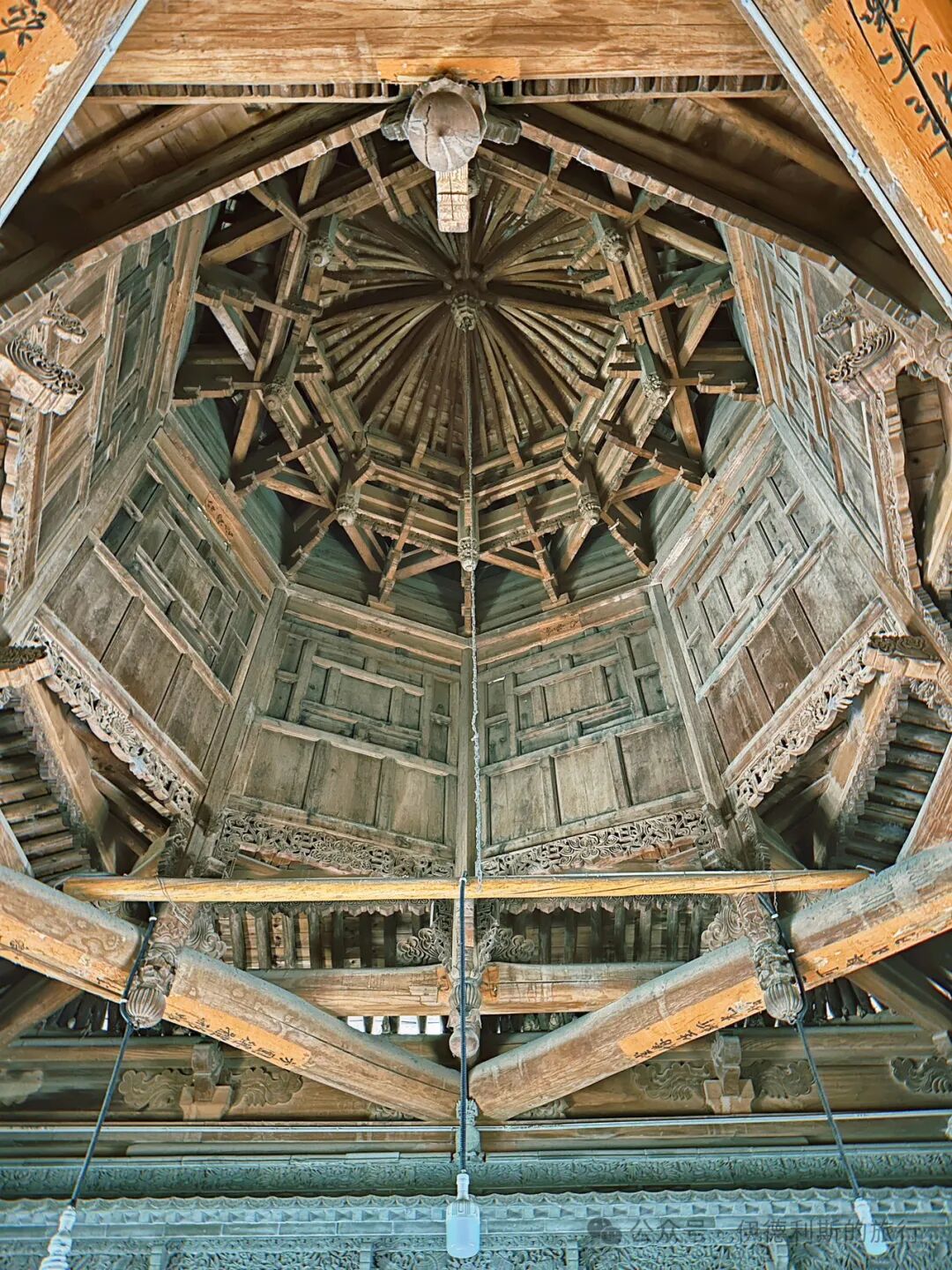
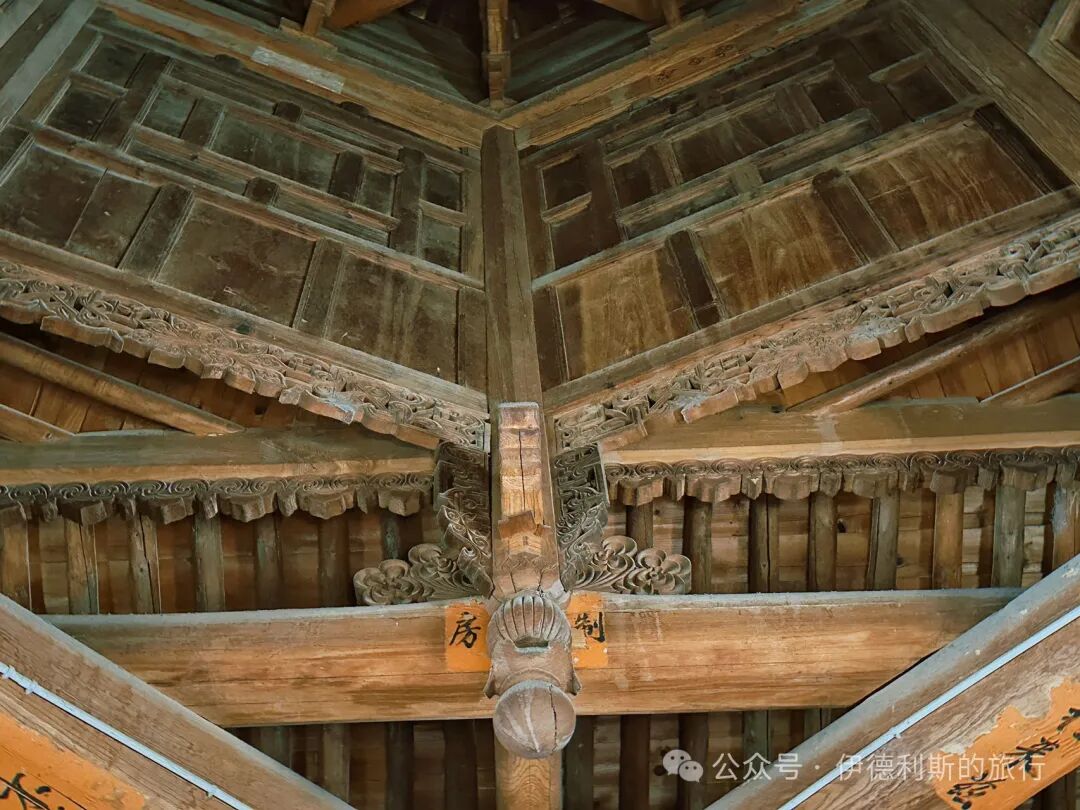
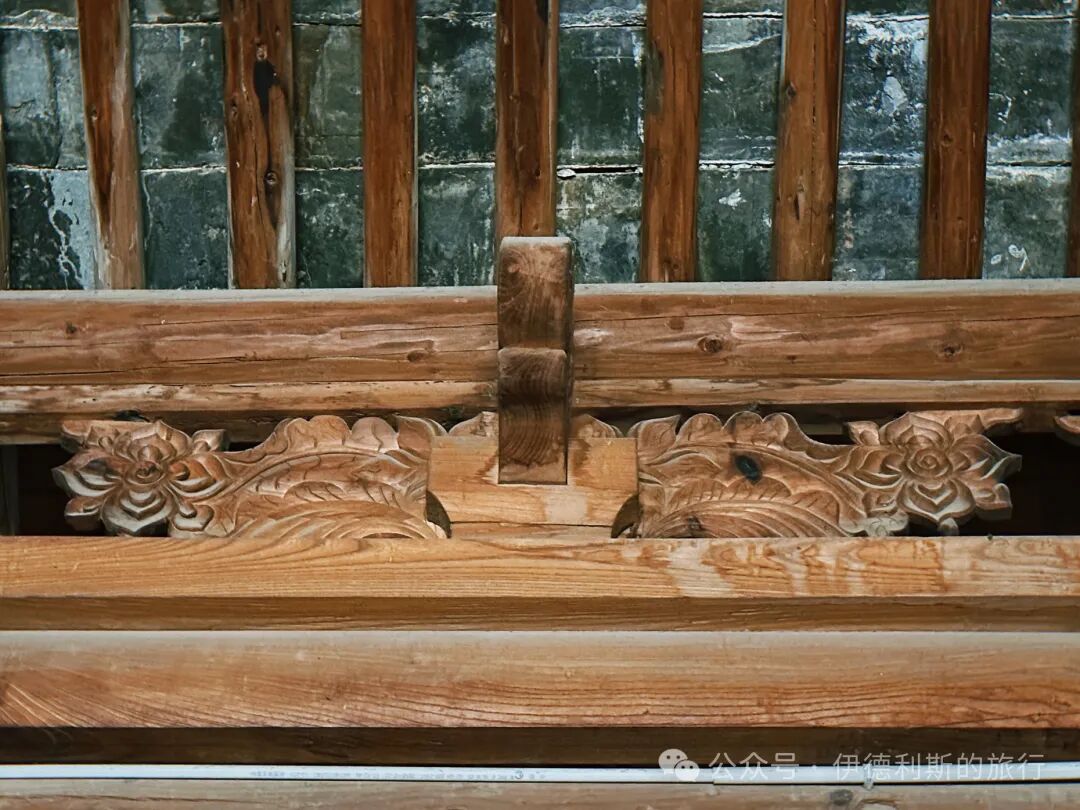
Inside the main hall, the colorful paintings have a very local style. In the rear kiln hall, you can see the interior of the octagonal pointed roof, which features a caisson ceiling (zaojing) made of stacked wooden beams with beautiful wood carvings. Each side has an inscription, which are:
The hall faces the southern mountains, its beams connect to the Big Dipper, directly passing down the heart-to-heart teachings.
Firm as a rock, solid as mulberry roots, forever holding the holy path without falling.
The hall structure brings new light, increasing the path of faith, shining as long as the sun and moon.
Square and round in proper form, shaped like the earth, [illegible] and eternal.
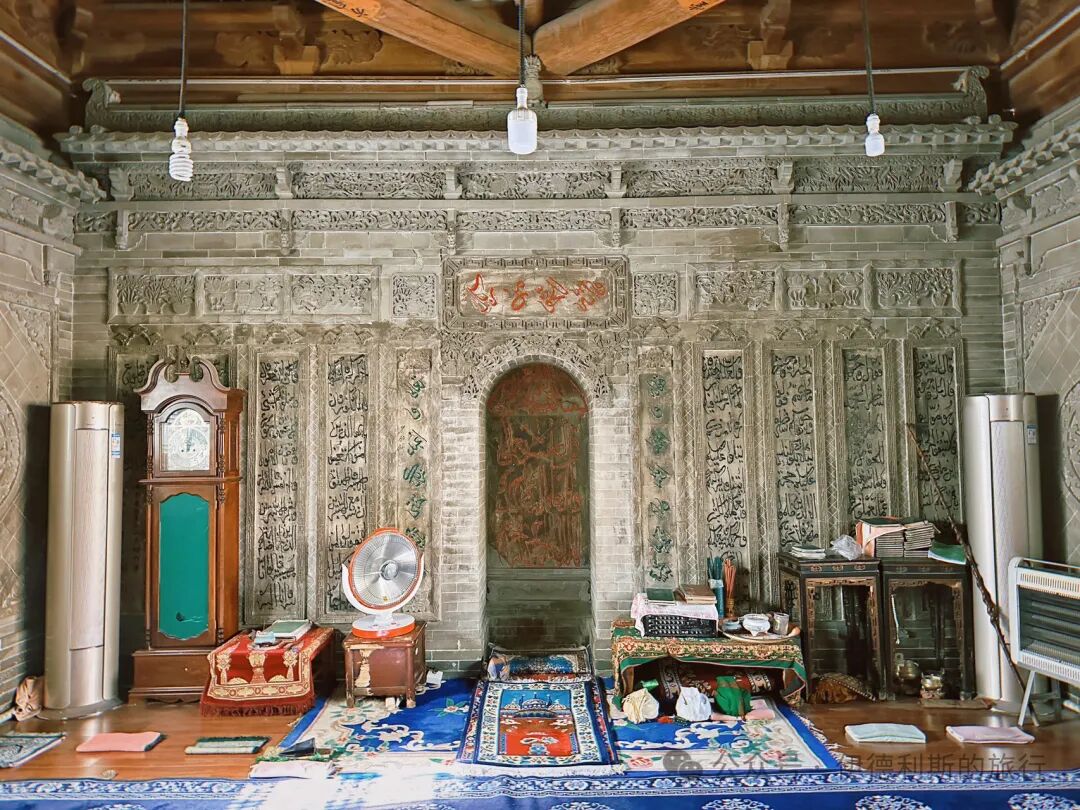
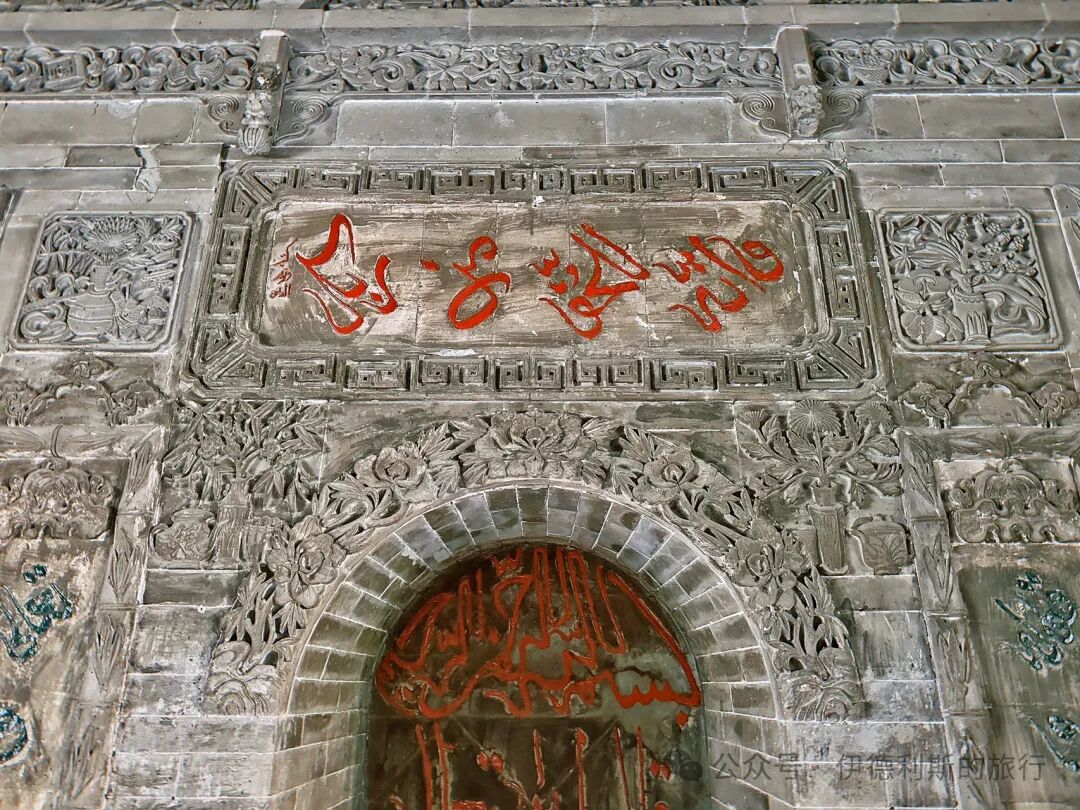
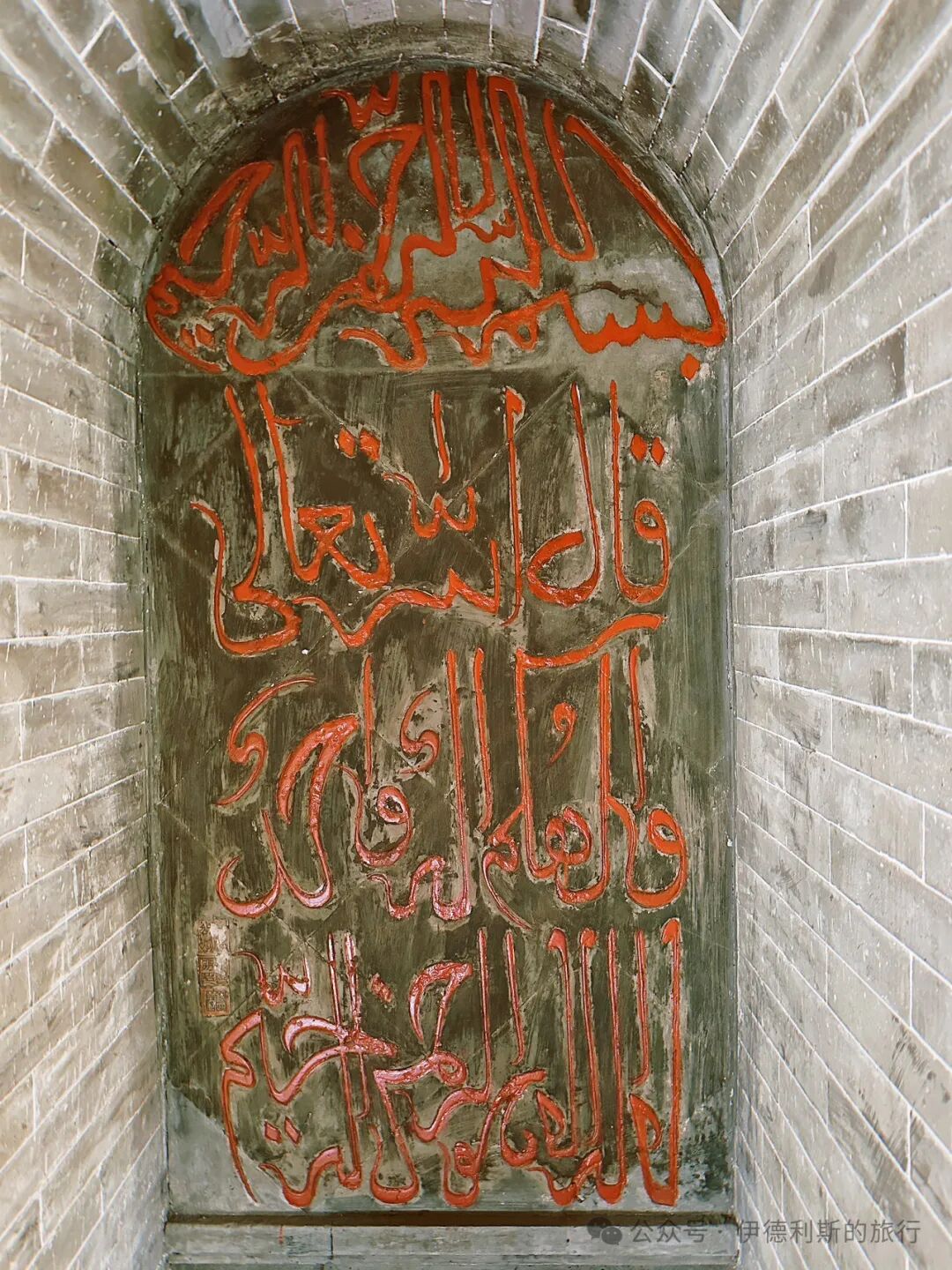
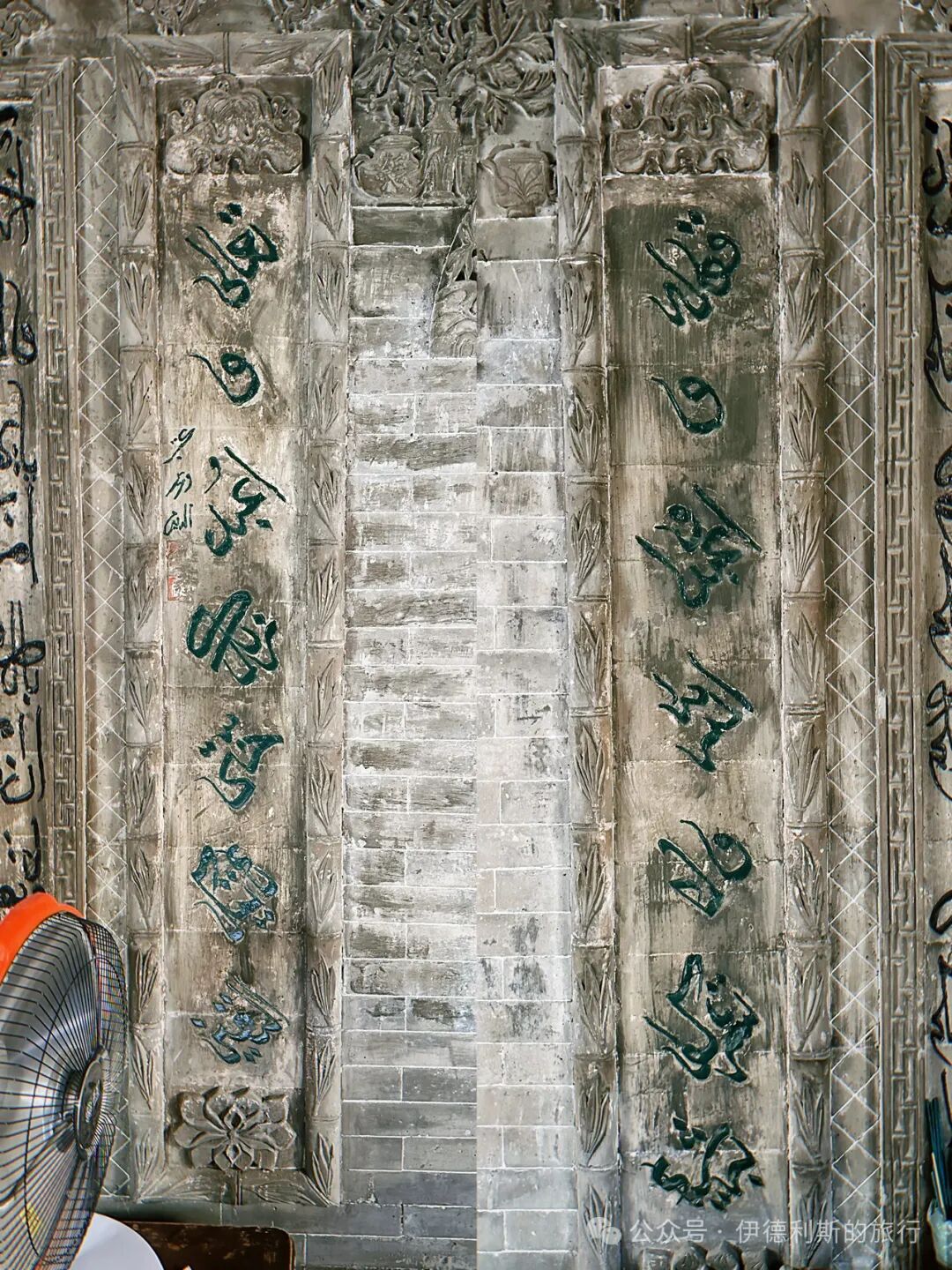
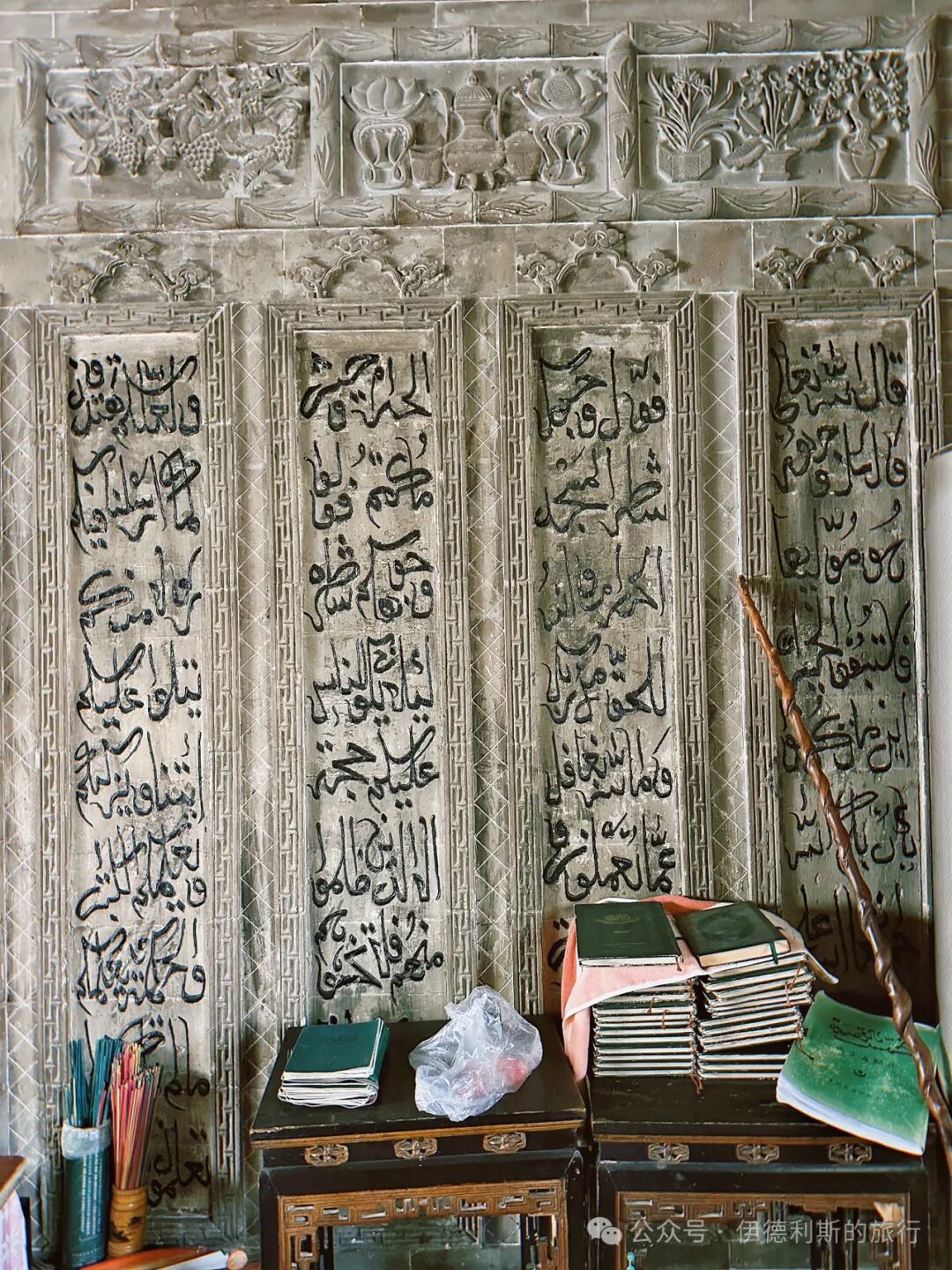
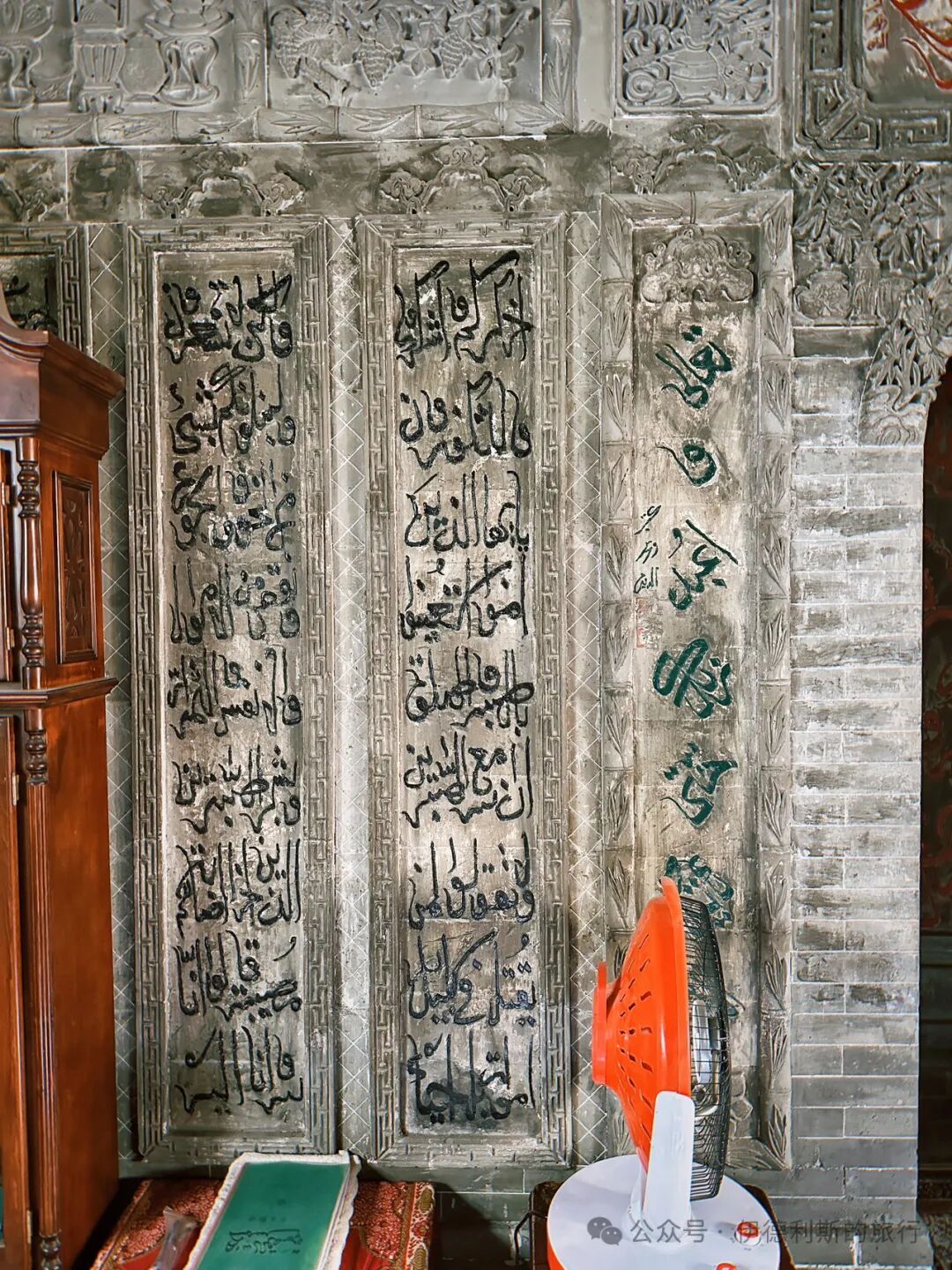
The brick carvings on the prayer wall feature calligraphy in the Shagou style of the Zhepai order.
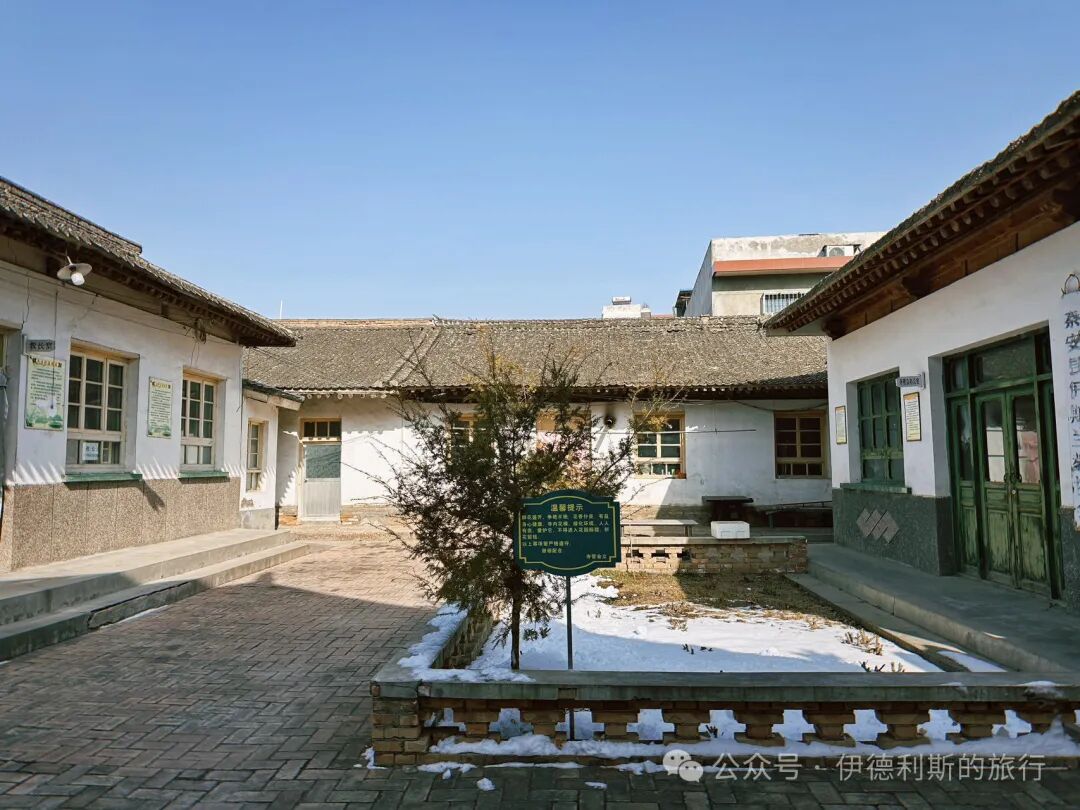
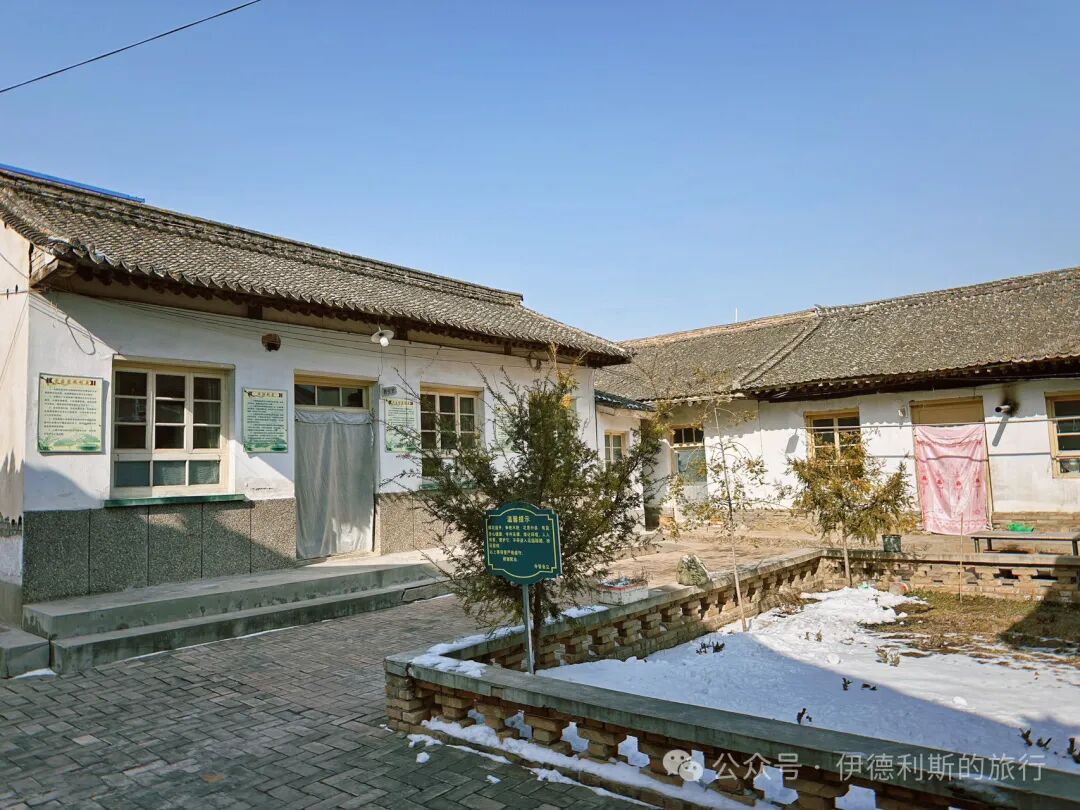
The small courtyard and the street view of Xiananguan. The south lecture hall has a couplet hanging:
Every word of truth is full of good intentions.
Every sound of the prayer (selan) brings blessings.
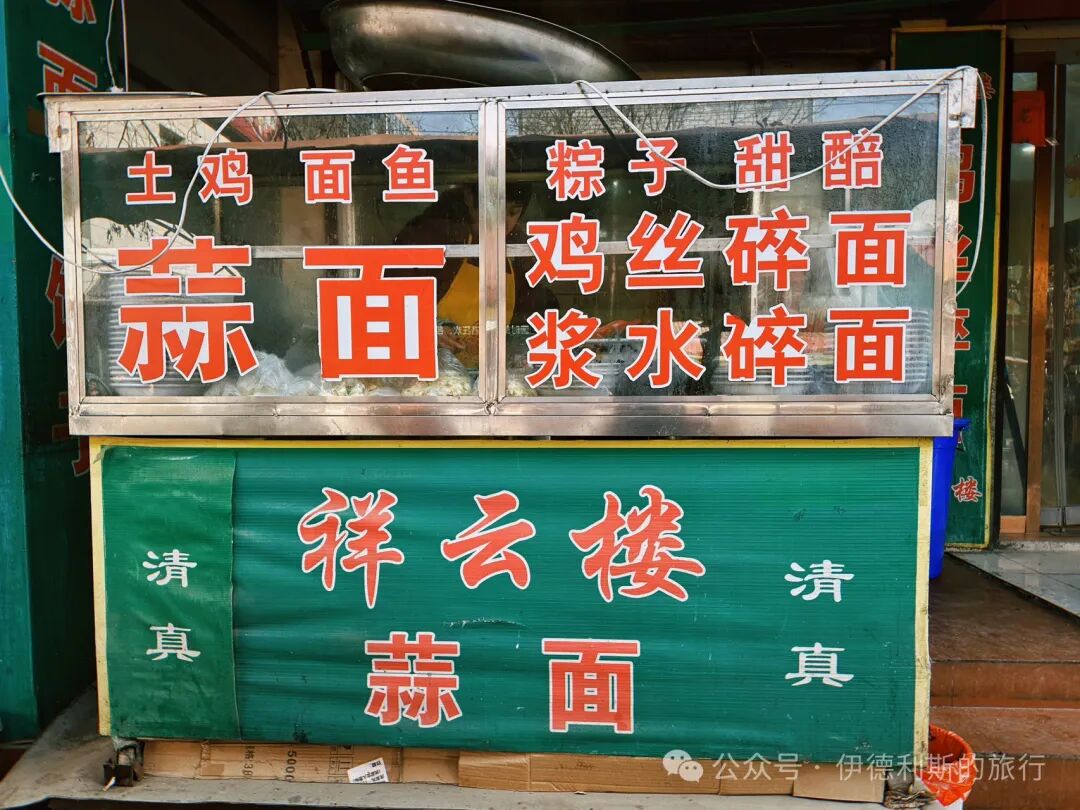
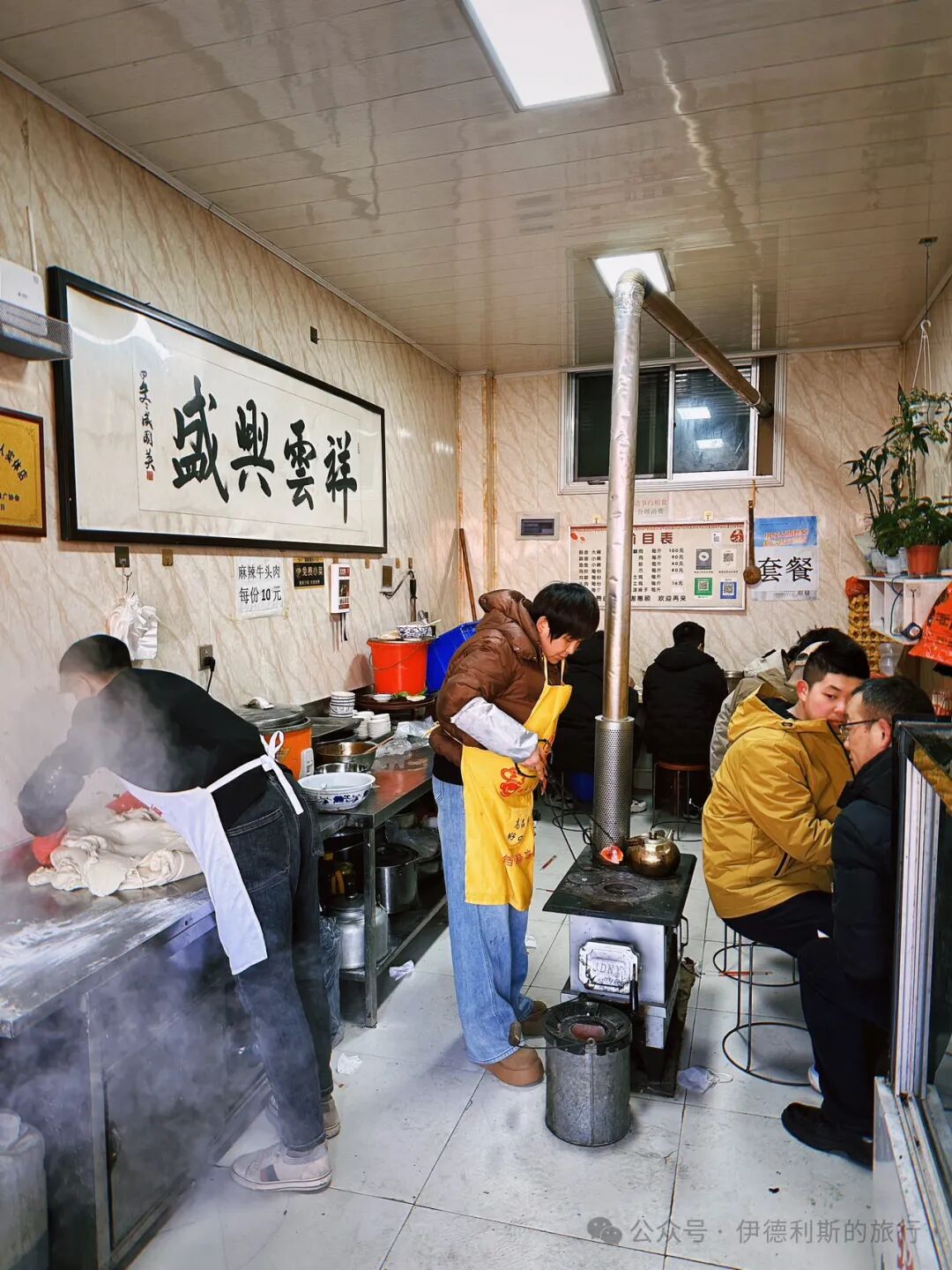
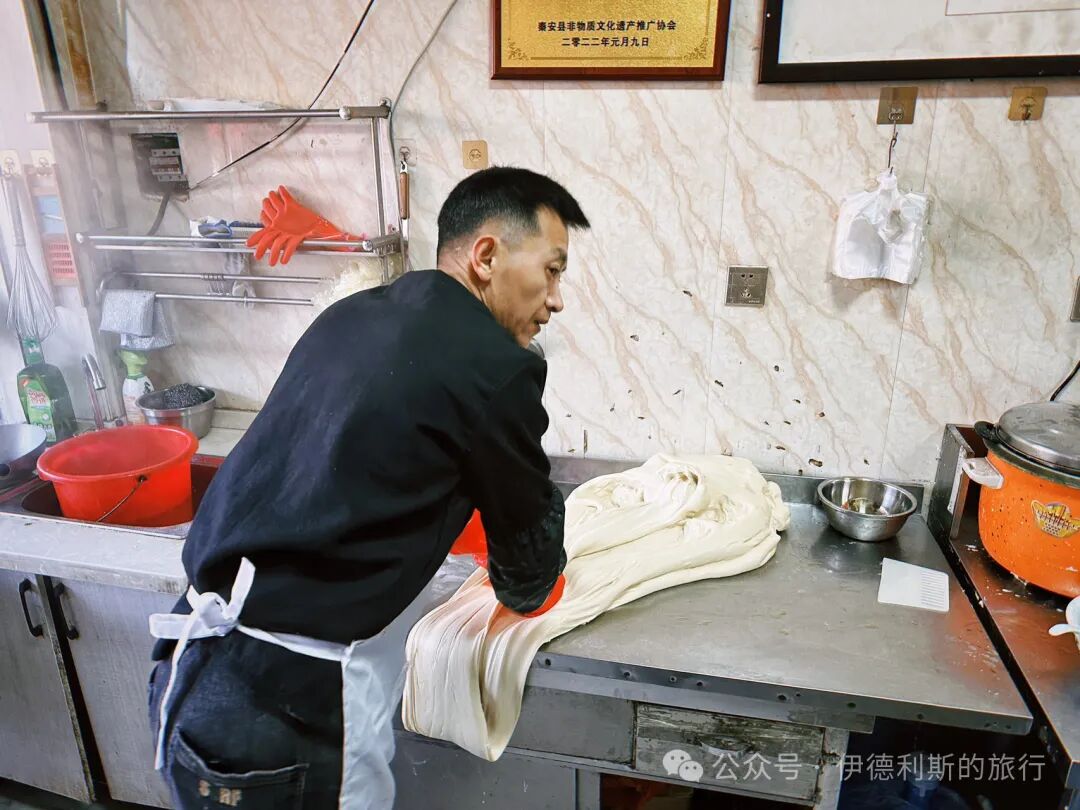
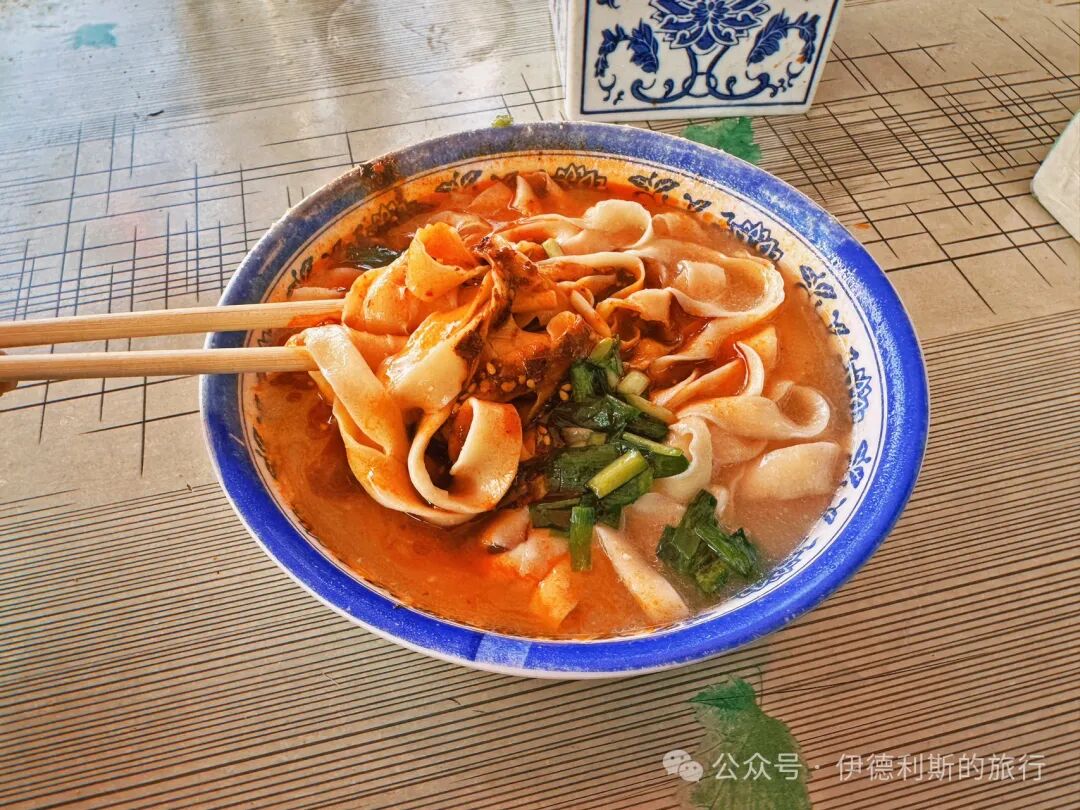
I ate the local garlic noodles (suanmian) in Shangguan, Qin'an. Qin'an garlic noodles rely on the garlic soup and chili oil, and the hand-pulled noodles (che mian) are very chewy. The chili powder from Qin'an is very famous; it is fragrant but not too spicy, which really boosts your appetite. view all
Summary: Qinan County in Gansu has a Qing-era mosque and a local food tradition centered on garlic noodles. This travel account keeps the mosque details, food descriptions, original photos, and local Hui Muslim context from the Chinese source.
Although Gansu Province has many old mosques (masjid), most have been rebuilt. Only four are listed as cultural heritage sites at the provincial level or higher. The national-level site is the Houjie Mosque in Tianshui. The provincial-level sites are the Xiananguan Mosque in Qin'an, the Jingning Mosque, and the Huangjia Mosque in Dongxiang. Additionally, the screen wall (yingbi) of the Beisi Mosque in Linxia and the Lamu Tower of the Huixian Mosque are also listed as provincial heritage sites. Among the buildings of the menhuan (Sufi orders), the Dajia House of the Xidaotang is a national heritage site, while the Xuanhuagang and Chuanguan Daotang of the Zhepai order are provincial heritage sites.
During the Spring Festival holiday, I took a high-speed train from Tianshui to visit the Xiananguan Mosque in Qin'an County. The high-speed train from Tianshui to Qin'an is very fast. After leaving the station, you need to share a car, and you can reach Xiananguan in 10 minutes.
The Xiananguan Mosque in Qin'an was first built during the Hongwu period of the Ming Dynasty and rebuilt during the Kangxi period of the Qing Dynasty. The main hall has a hanging gable roof (xuanshan ding). The rear kiln hall has an octagonal pointed roof (bazhuo zuanjian ding) for the minaret (bangkelou), which features exquisite brick carvings and bracket sets (dougong). The center of the main hall's roof ridge is decorated with a pavilion-style ridge ornament (jicha) topped with a halberd (fangtian huaji). The very top of the minaret also has a halberd, which is very unique. The word for halberd (ji) sounds like the word for rank (ji), symbolizing a rise in status.
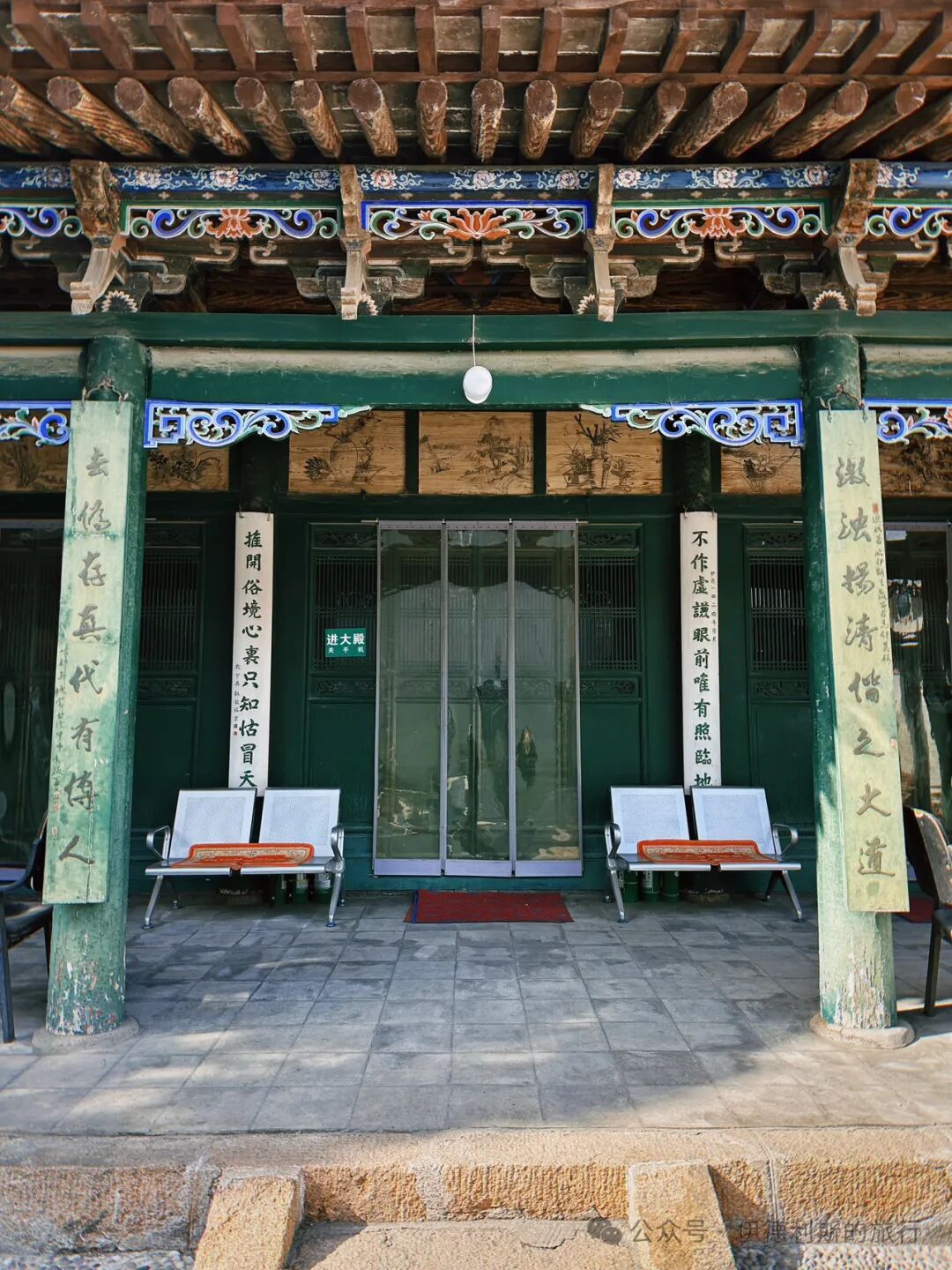
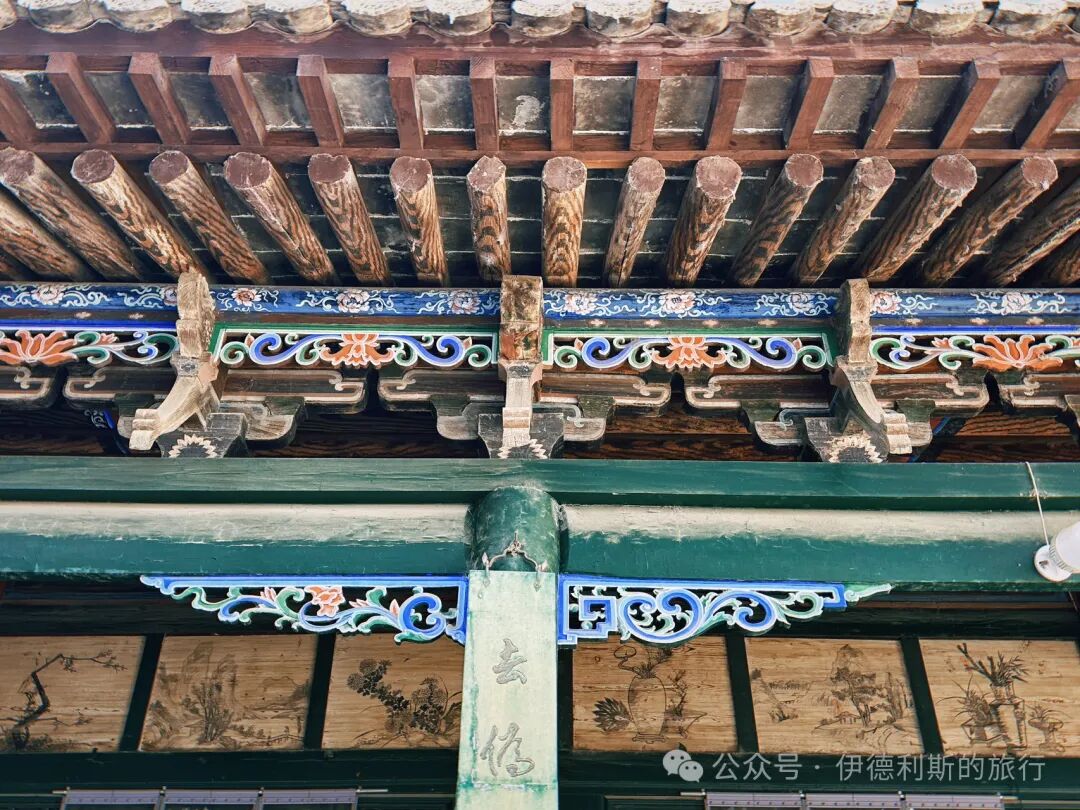
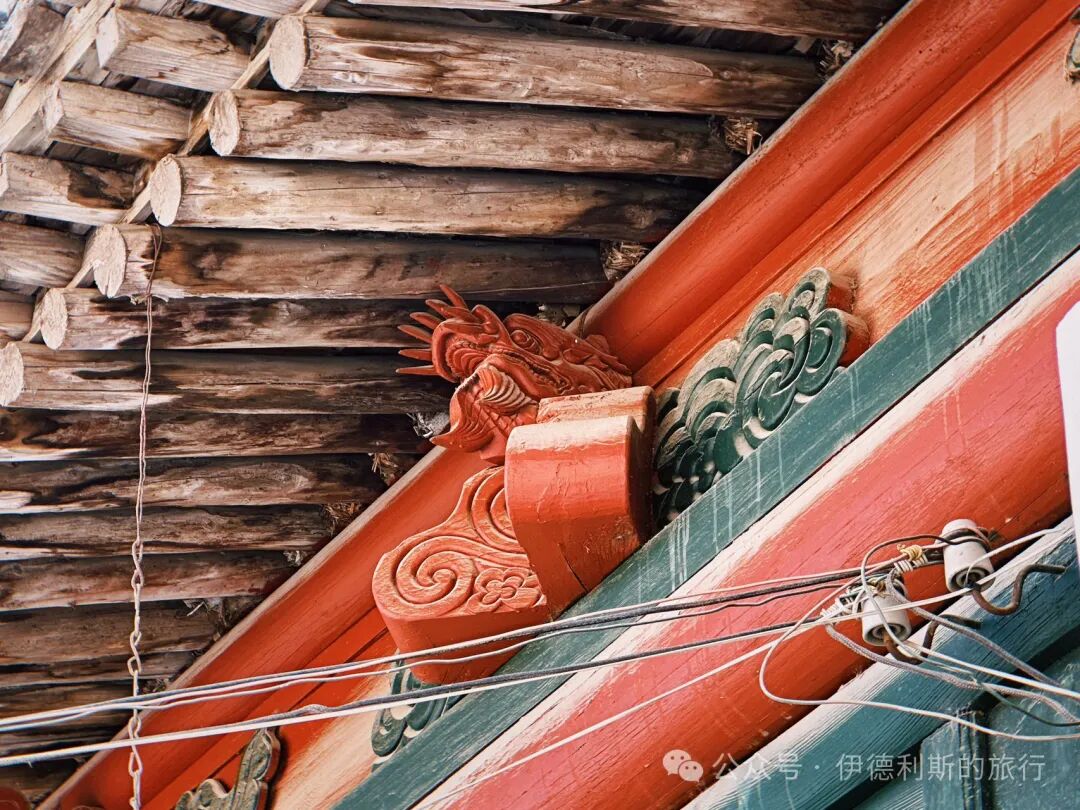
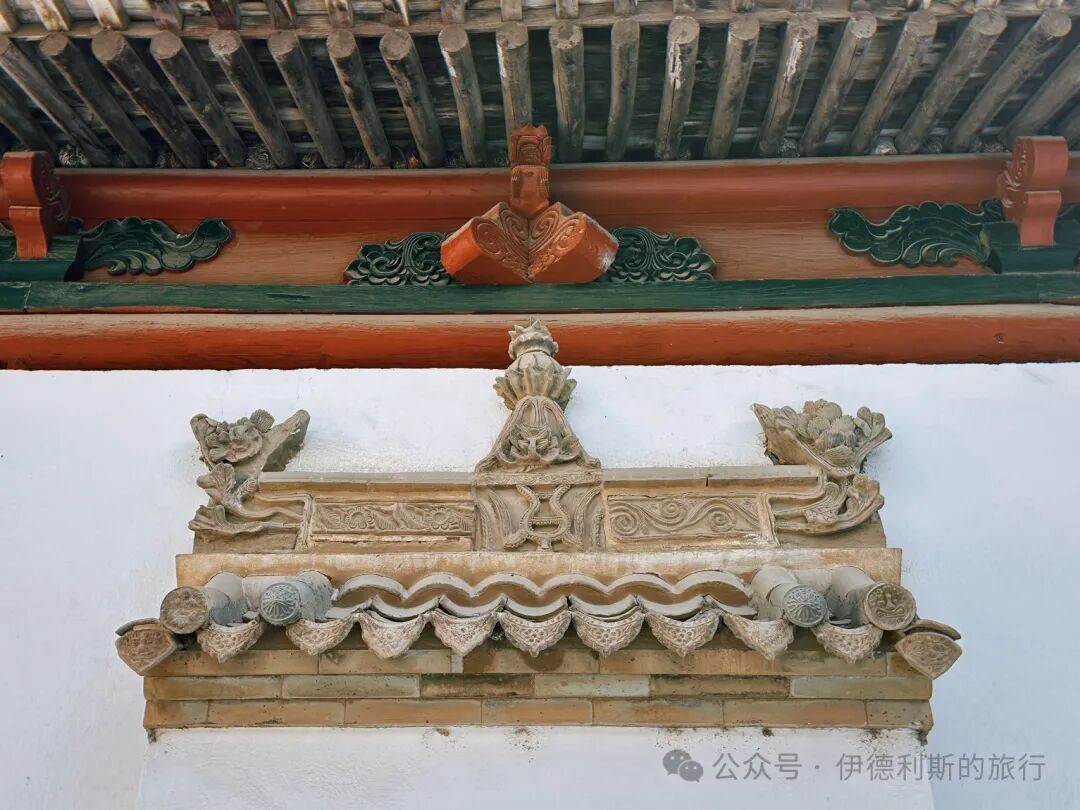
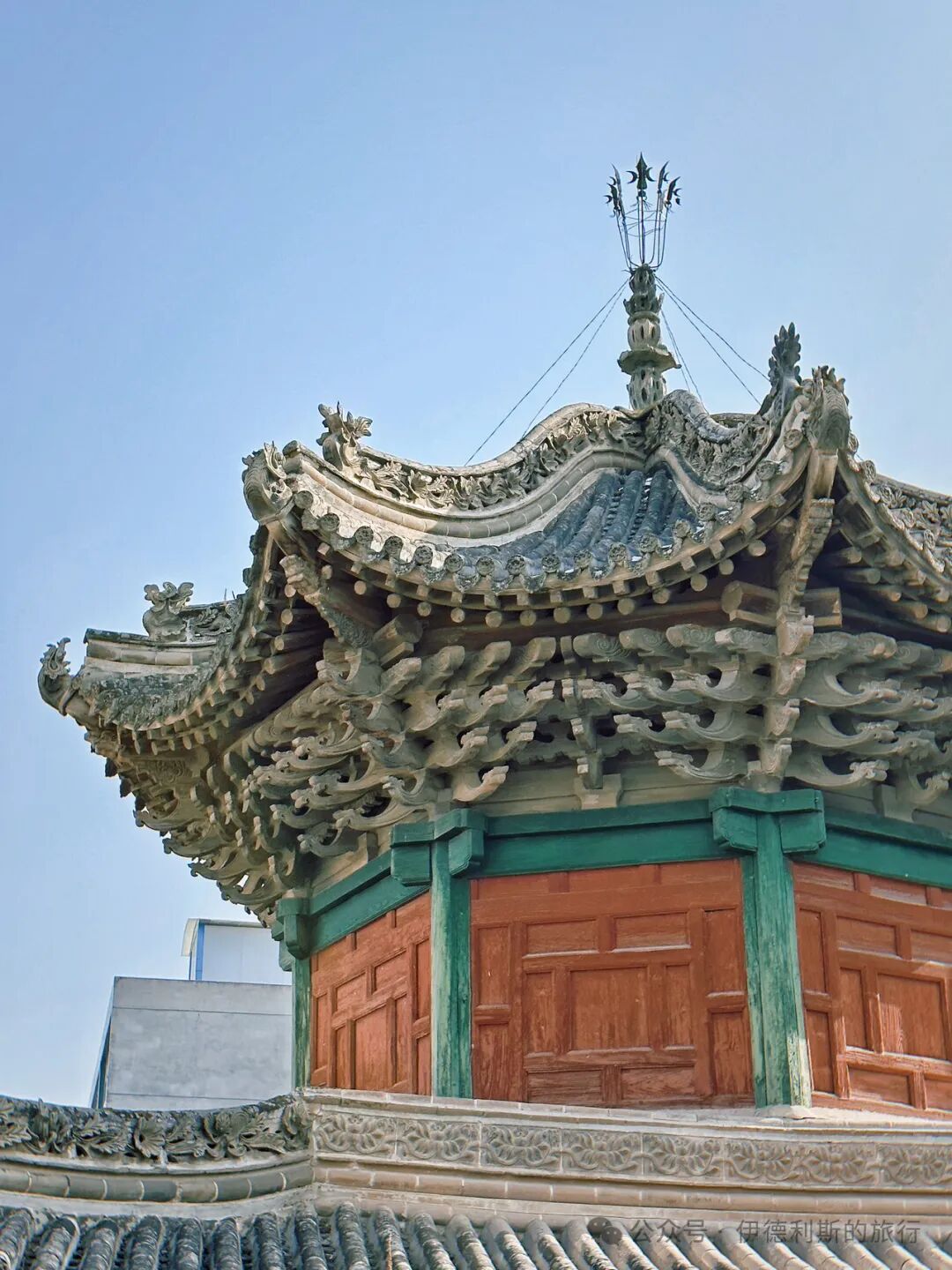
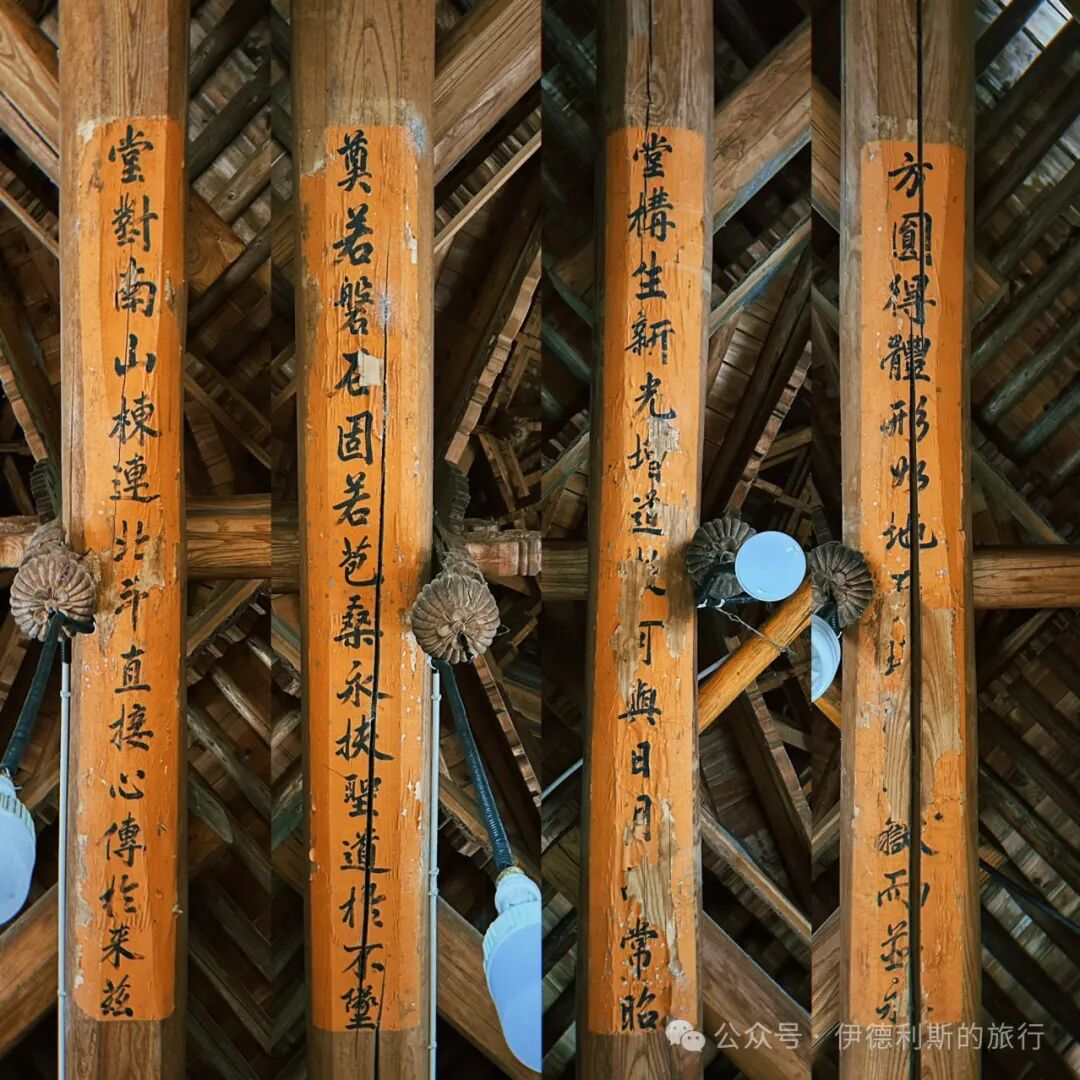
Inside the main hall, the colorful paintings have a very local style. In the rear kiln hall, you can see the interior of the octagonal pointed roof, which features a caisson ceiling (zaojing) made of stacked wooden beams with beautiful wood carvings. Each side has an inscription, which are:
The hall faces the southern mountains, its beams connect to the Big Dipper, directly passing down the heart-to-heart teachings.
Firm as a rock, solid as mulberry roots, forever holding the holy path without falling.
The hall structure brings new light, increasing the path of faith, shining as long as the sun and moon.
Square and round in proper form, shaped like the earth, [illegible] and eternal.
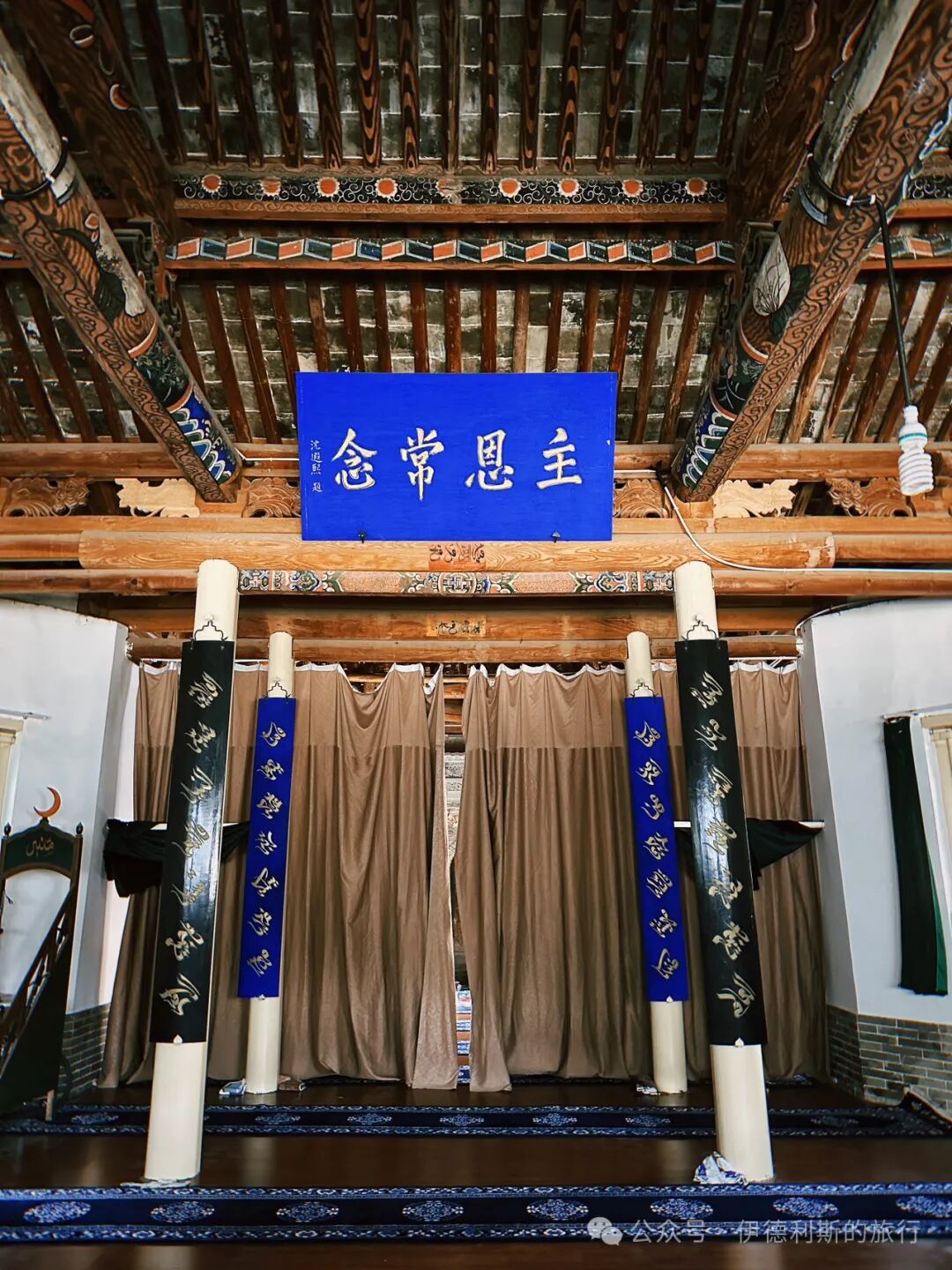
The brick carvings on the prayer wall feature calligraphy in the Shagou style of the Zhepai order.
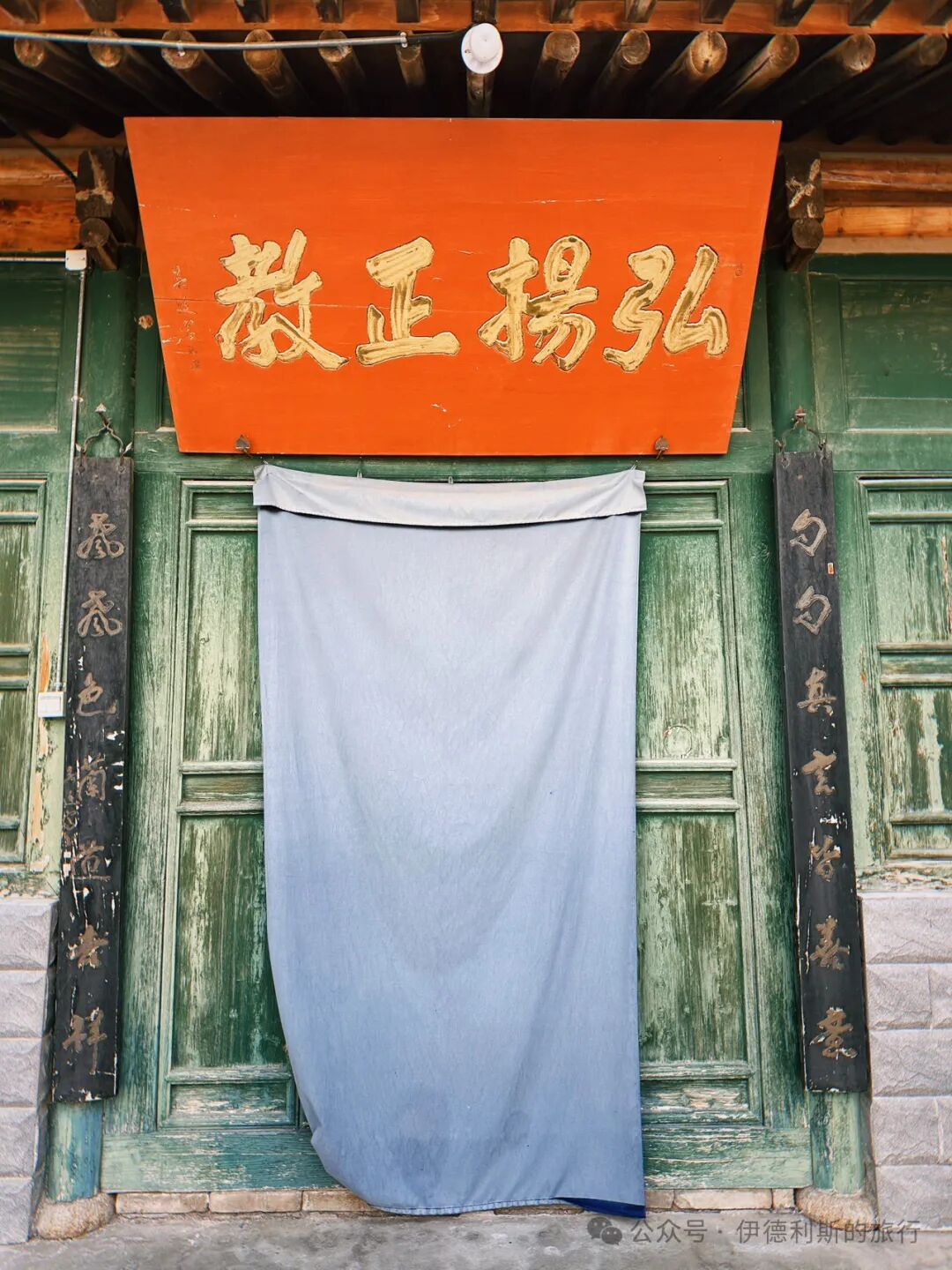
The small courtyard and the street view of Xiananguan. The south lecture hall has a couplet hanging:
Every word of truth is full of good intentions.
Every sound of the prayer (selan) brings blessings.
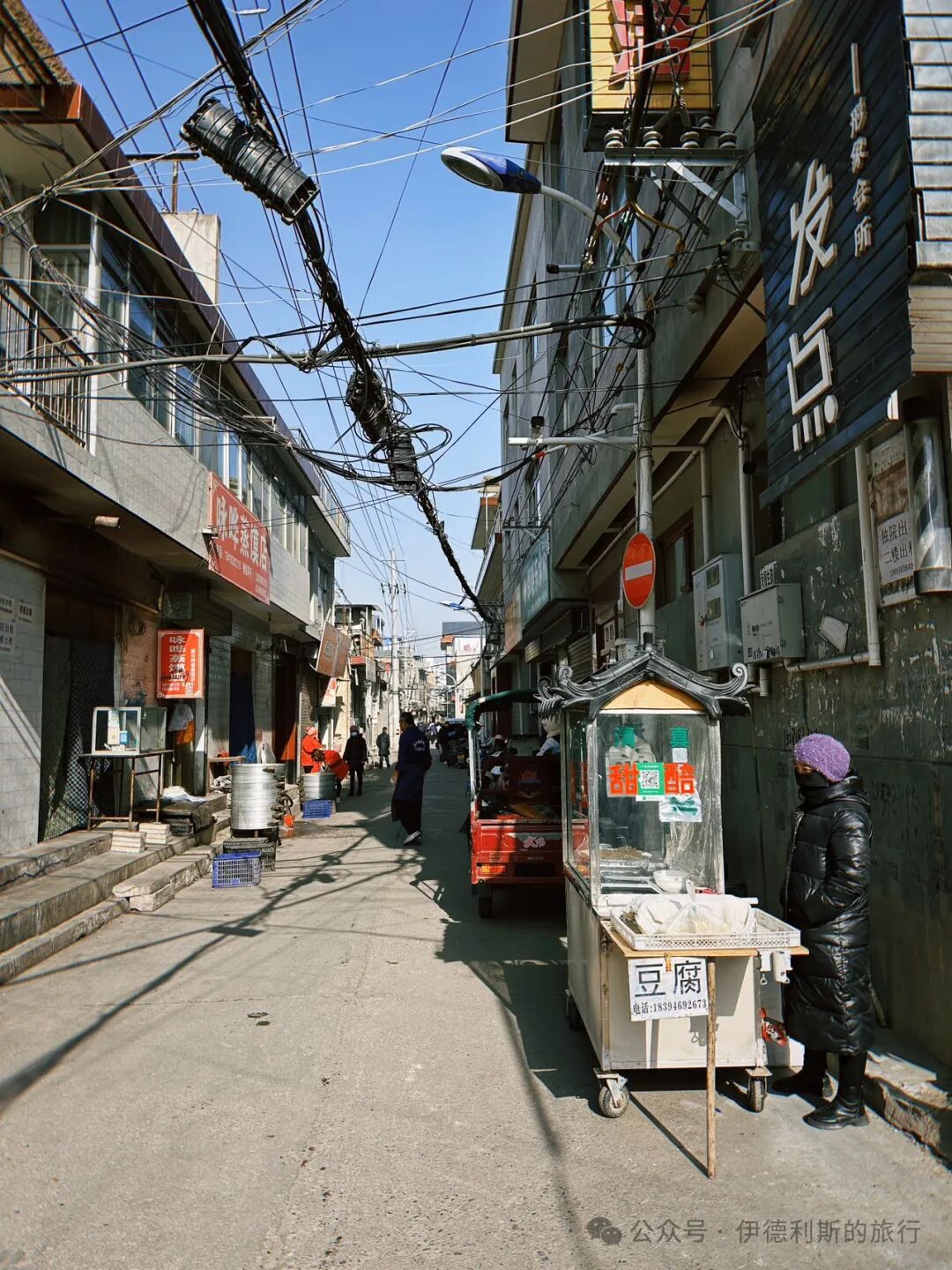
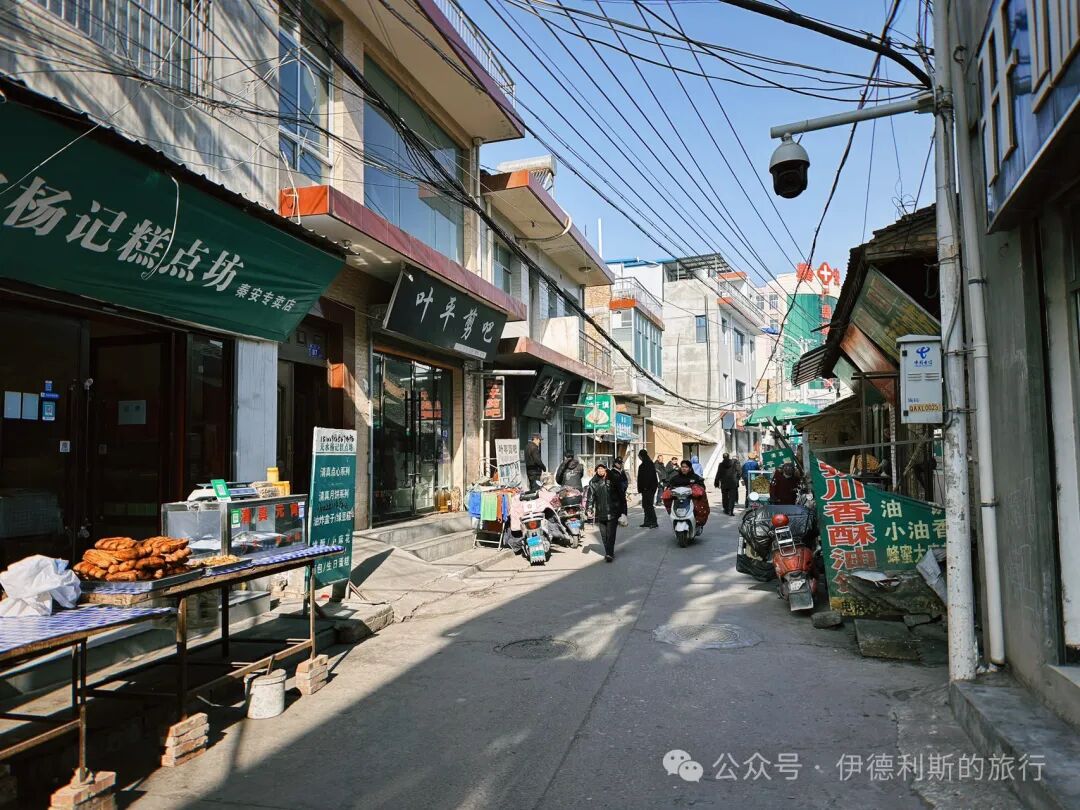
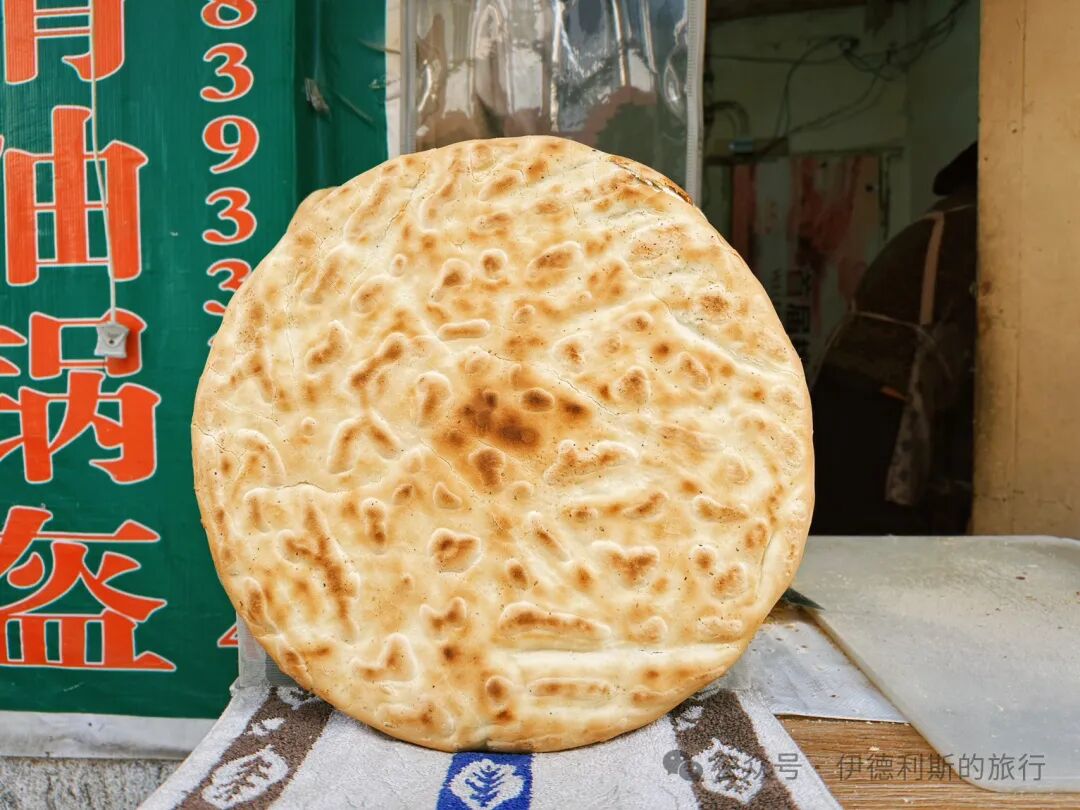
I ate the local garlic noodles (suanmian) in Shangguan, Qin'an. Qin'an garlic noodles rely on the garlic soup and chili oil, and the hand-pulled noodles (che mian) are very chewy. The chili powder from Qin'an is very famous; it is fragrant but not too spicy, which really boosts your appetite.
Linxia Hui Muslim Food: Authentic Hand-Grabbed Lamb and Local Delicacies in Gansu's 'Little Mecca'
Articles • Hasan09 posted the article • 0 comments • 7 views • 3 hours ago
In China's 'Little Mecca,' the morning isn't woken by alarm clocks, but by the steam from a row of steamers and a bowl of beef offal soup—Linxia folks live by the saying: 'Eating meat without garlic cuts the nutrition in half.'
The brick carvings in the Ba Fang Thirteen Alleys hold centuries of craftsmanship, and in the old shops outside the alleys, another set of skills passed down for generations is preserved. Hand-grabbed lamb, steamed buns, fa zi mian chang (stuffed intestine), he yan mian pian (flat pasta), and fermented rice wine (laozao)—these five old establishments string together Hezhou's day from dawn till deep into the night.
01 Recommendation One
Li Ga Song Baozi
Hezhou steamed buns are a household name in Linxia, known for their thin skins, generous fillings, beautiful shape, and fresh taste. The filling changes with the seasons: leek sprouts in winter, chives in spring, leek stalks in summer, and diced Chinese cabbage in fall.
Li Ga Song Baozi has been serving customers in the Tea Horse Ancient Market for thirty years. A basket costs fifteen yuan, sold in sets of three. The steamed buns have soft dough, and the beef and scallion filling bursts with juice when you bite into it. Dipped in vinegar and chili oil, each bite is filled with the taste of old-school craftsmanship. They open at six in the morning, and locals line up; if you go late, you'll just have to wait for the next batch.
Linxia City, Tea Horse Ancient Market Pedestrian Street (near the intersection of Guanghua East Road and Hexie Road)
About 16 yuan per person
✿ Must-Order: Beef and Scallion Buns, Chive Buns, Eight-Treasure Tea
Thirty years of steaming buns, and every pleat is filled with the homey flavors Linxia people recognize.
◆ ◆ ◆
02 Recommendation Two
Xiao Xiguan Fa Zi Mian Chang
Fa zi mian chang is a unique flavor of Linxia and a favorite of the older generation. This shop in Xiao Xiguan, across from Chen Jiao Si mosque, has been open for thirty years and has even won the 'Linxia Famous Halal Snack' award.
The owner pulls a section of noodle casing from a large wooden barrel, lays it down as a base, then adds fa zi (a type of offal) and whole pieces of sheep head meat, before drizzling on a spoonful of special chili-garlic sauce. The fa zi has a rich texture, with granules popping between your teeth; the casing is soft and chewy, and the sheep head meat has a satisfying chew. The flavor is bold but not greasy, paired with the garlicky chili sauce, and a bowl of meat broth, it's truly comforting.
Linxia City, inside the alley opposite Chen Jiao Si mosque
About 15 yuan per person
✿ Must-Order: Fa Zi Mian Chang, Sheep Head Meat, Meat Broth
Outsiders might hear this and think it's adventurous food, but for Linxia locals, it's a symphony of offal they've been eating since childhood.
◆ ◆ ◆
03 Recommendation Three
Er Sa Shouzhua
Linxia is called the 'ceiling of hand-grabbed lamb,' and Er Sa is the top choice for locals when hosting guests. Dongxiang lamb is cooked in clear water, with only salt and Sichuan peppercorns added, stewed until the meat easily separates from the bone with chopsticks—it's so tender it bursts with juice.
Grab the meat with your hands, pair it with garlic cloves, and dip it in salt and pepper. The fatty and lean ribs get more flavorful the more you chew; then, have a bowl of San Pao Tai covered-bowl tea, brewed with tea leaves, dried longan, goji berries, red dates, and rock sugar. A bite of meat followed by a sip of tea is refreshing and satisfying. With an average cost of around sixty yuan per person, their Dongxiang potato slices and sand chives scrambled eggs are also outstanding.
Linxia City, No. 18 Beibinhe Middle Road (Chengjiao Town)
63 yuan per person
✿ Must-Order: Hand-Grabbed Ribs, Dongxiang Potato Slices, San Pao Tai Covered-Bowl Tea
The best fate for a sheep is clear water, a pinch of salt, and a pair of hands that know how to tear it apart.
◆ ◆ ◆
04 Recommendation Four
Yu Bao He Yan Mian
Yu Bao He Yan Mian, located under the Zhaohui Building on Huancheng West Road, has a small storefront. For over twenty years, neighbors have recognized this flavor. He Yan Mian Pian (pasta) is all about three things: the pasta pieces should be pinched to the size of a fingernail, the meat should be lean-and-fatty Hu Yang lamb, and the soup must be lamb broth. Each bowl has equal parts meat, scallions, noodles, soup, and pasta.
The pasta is smooth and chewy, the soup is oily but not greasy, and even the last sip is still rich and fresh. Having a bowl after some hand-grabbed lamb is a standard way for Linxia locals to finish their dinner.
Linxia City, downstairs from Zhaohui Hotel, Huancheng West Road
About 15 yuan per person
✿ Must-Order: He Yan Mian Pian, Lamb Broth
Hand-grabbed lamb is for show, while mian pian is for everyday life—the life of Linxia people is hidden in that last bowl of soup.
◆ ◆ ◆
05 Recommendation Five
Heimai Traditional Liqueur Rice
The milky, eggy liqueur rice is the heart and soul of Linxia's night market. Heimai Traditional Liqueur Rice is located next to Hongyuan Square. In a copper pot, milk and fermented rice slowly bubble away. Crack an egg in, gently swirl it around with the back of a spoon – not a drop of water is added. Then, sprinkle in raisins, goji berries, peanuts, sesame seeds, and sugar.
The finished product is a beautiful mix of yellow and white, with a milky aroma blending with a subtle hint of fermented rice. The egg is silky, the milk is rich, and one bowl warms you up from your throat all the way to your stomach. It's the gentlest way to end a night in Hezhou after a long day exploring the night market until your legs feel like jelly.
Next to Hongyuan Square in Linxia City (Hongyuan New Village)
Around 8 yuan per person
✿ Must-orders: Milk Egg Liqueur Rice, Tian Peizi view all
In China's 'Little Mecca,' the morning isn't woken by alarm clocks, but by the steam from a row of steamers and a bowl of beef offal soup—Linxia folks live by the saying: 'Eating meat without garlic cuts the nutrition in half.'
The brick carvings in the Ba Fang Thirteen Alleys hold centuries of craftsmanship, and in the old shops outside the alleys, another set of skills passed down for generations is preserved. Hand-grabbed lamb, steamed buns, fa zi mian chang (stuffed intestine), he yan mian pian (flat pasta), and fermented rice wine (laozao)—these five old establishments string together Hezhou's day from dawn till deep into the night.
01 Recommendation One
Li Ga Song Baozi
Hezhou steamed buns are a household name in Linxia, known for their thin skins, generous fillings, beautiful shape, and fresh taste. The filling changes with the seasons: leek sprouts in winter, chives in spring, leek stalks in summer, and diced Chinese cabbage in fall.
Li Ga Song Baozi has been serving customers in the Tea Horse Ancient Market for thirty years. A basket costs fifteen yuan, sold in sets of three. The steamed buns have soft dough, and the beef and scallion filling bursts with juice when you bite into it. Dipped in vinegar and chili oil, each bite is filled with the taste of old-school craftsmanship. They open at six in the morning, and locals line up; if you go late, you'll just have to wait for the next batch.
Linxia City, Tea Horse Ancient Market Pedestrian Street (near the intersection of Guanghua East Road and Hexie Road)
About 16 yuan per person
✿ Must-Order: Beef and Scallion Buns, Chive Buns, Eight-Treasure Tea
Thirty years of steaming buns, and every pleat is filled with the homey flavors Linxia people recognize.
◆ ◆ ◆
02 Recommendation Two
Xiao Xiguan Fa Zi Mian Chang
Fa zi mian chang is a unique flavor of Linxia and a favorite of the older generation. This shop in Xiao Xiguan, across from Chen Jiao Si mosque, has been open for thirty years and has even won the 'Linxia Famous Halal Snack' award.
The owner pulls a section of noodle casing from a large wooden barrel, lays it down as a base, then adds fa zi (a type of offal) and whole pieces of sheep head meat, before drizzling on a spoonful of special chili-garlic sauce. The fa zi has a rich texture, with granules popping between your teeth; the casing is soft and chewy, and the sheep head meat has a satisfying chew. The flavor is bold but not greasy, paired with the garlicky chili sauce, and a bowl of meat broth, it's truly comforting.
Linxia City, inside the alley opposite Chen Jiao Si mosque
About 15 yuan per person
✿ Must-Order: Fa Zi Mian Chang, Sheep Head Meat, Meat Broth
Outsiders might hear this and think it's adventurous food, but for Linxia locals, it's a symphony of offal they've been eating since childhood.
◆ ◆ ◆
03 Recommendation Three
Er Sa Shouzhua
Linxia is called the 'ceiling of hand-grabbed lamb,' and Er Sa is the top choice for locals when hosting guests. Dongxiang lamb is cooked in clear water, with only salt and Sichuan peppercorns added, stewed until the meat easily separates from the bone with chopsticks—it's so tender it bursts with juice.
Grab the meat with your hands, pair it with garlic cloves, and dip it in salt and pepper. The fatty and lean ribs get more flavorful the more you chew; then, have a bowl of San Pao Tai covered-bowl tea, brewed with tea leaves, dried longan, goji berries, red dates, and rock sugar. A bite of meat followed by a sip of tea is refreshing and satisfying. With an average cost of around sixty yuan per person, their Dongxiang potato slices and sand chives scrambled eggs are also outstanding.
Linxia City, No. 18 Beibinhe Middle Road (Chengjiao Town)
63 yuan per person
✿ Must-Order: Hand-Grabbed Ribs, Dongxiang Potato Slices, San Pao Tai Covered-Bowl Tea
The best fate for a sheep is clear water, a pinch of salt, and a pair of hands that know how to tear it apart.
◆ ◆ ◆
04 Recommendation Four
Yu Bao He Yan Mian
Yu Bao He Yan Mian, located under the Zhaohui Building on Huancheng West Road, has a small storefront. For over twenty years, neighbors have recognized this flavor. He Yan Mian Pian (pasta) is all about three things: the pasta pieces should be pinched to the size of a fingernail, the meat should be lean-and-fatty Hu Yang lamb, and the soup must be lamb broth. Each bowl has equal parts meat, scallions, noodles, soup, and pasta.
The pasta is smooth and chewy, the soup is oily but not greasy, and even the last sip is still rich and fresh. Having a bowl after some hand-grabbed lamb is a standard way for Linxia locals to finish their dinner.
Linxia City, downstairs from Zhaohui Hotel, Huancheng West Road
About 15 yuan per person
✿ Must-Order: He Yan Mian Pian, Lamb Broth
Hand-grabbed lamb is for show, while mian pian is for everyday life—the life of Linxia people is hidden in that last bowl of soup.
◆ ◆ ◆
05 Recommendation Five
Heimai Traditional Liqueur Rice
The milky, eggy liqueur rice is the heart and soul of Linxia's night market. Heimai Traditional Liqueur Rice is located next to Hongyuan Square. In a copper pot, milk and fermented rice slowly bubble away. Crack an egg in, gently swirl it around with the back of a spoon – not a drop of water is added. Then, sprinkle in raisins, goji berries, peanuts, sesame seeds, and sugar.
The finished product is a beautiful mix of yellow and white, with a milky aroma blending with a subtle hint of fermented rice. The egg is silky, the milk is rich, and one bowl warms you up from your throat all the way to your stomach. It's the gentlest way to end a night in Hezhou after a long day exploring the night market until your legs feel like jelly.
Next to Hongyuan Square in Linxia City (Hongyuan New Village)
Around 8 yuan per person
✿ Must-orders: Milk Egg Liqueur Rice, Tian Peizi
Discovering Wu'aisi Baba Gongbei in Gansu: Exploring Ancient Islamic Heritage and Tang Dynasty History in Yumen
Articles • Hasan09 posted the article • 0 comments • 138 views • 2026-10-30 01:13
Take a look at these 20 photos as we visit the Wu'aisi Baba Gongbei located in Qingquan Township, Yumen City, Gansu Province. We're diving into the legends of Islamic missionaries who traveled to the Hexi Corridor during the Tang Dynasty's Zhenguan era, while exploring the mosque's unique architecture that blends Arabic domes with traditional Chinese structural designs.
This is a place with deep historical roots, serving as the tomb of a prominent Islamic saint. Here is the detailed information I've put together for you:
It is located in Qingquan Township, Yumen City, Gansu Province.
Historical background: The term "Gongbei" is a transliteration from Arabic meaning a dome-shaped mausoleum. Historical records state that between 626 and 649 AD, a missionary named Wu'aisi, sent by the third Caliph Uthman, passed away in Yumen while on his way to preach in China and was laid to rest here. To honor this saint, later generations built a mausoleum on the site. The current main structure was built in the 1980s and features a design that fuses Arabic style with traditional Chinese elements. The lower section is a towering prayer hall, the middle is a three-story tower with feiyan dougong (traditional flying eaves and brackets), and the top is crowned with a treasure-gourd-shaped spire, making it truly one-of-a-kind. There are also prayer halls, reception rooms, and dormitories nearby. The Gongbei was officially designated as a county-level cultural relic protection unit by the Yumen Municipal People's Government in 1987. view all
Take a look at these 20 photos as we visit the Wu'aisi Baba Gongbei located in Qingquan Township, Yumen City, Gansu Province. We're diving into the legends of Islamic missionaries who traveled to the Hexi Corridor during the Tang Dynasty's Zhenguan era, while exploring the mosque's unique architecture that blends Arabic domes with traditional Chinese structural designs.
This is a place with deep historical roots, serving as the tomb of a prominent Islamic saint. Here is the detailed information I've put together for you:
It is located in Qingquan Township, Yumen City, Gansu Province.
Historical background: The term "Gongbei" is a transliteration from Arabic meaning a dome-shaped mausoleum. Historical records state that between 626 and 649 AD, a missionary named Wu'aisi, sent by the third Caliph Uthman, passed away in Yumen while on his way to preach in China and was laid to rest here. To honor this saint, later generations built a mausoleum on the site. The current main structure was built in the 1980s and features a design that fuses Arabic style with traditional Chinese elements. The lower section is a towering prayer hall, the middle is a three-story tower with feiyan dougong (traditional flying eaves and brackets), and the top is crowned with a treasure-gourd-shaped spire, making it truly one-of-a-kind. There are also prayer halls, reception rooms, and dormitories nearby. The Gongbei was officially designated as a county-level cultural relic protection unit by the Yumen Municipal People's Government in 1987.
Exploring Gansu's Gancaodian Mosque: A Hidden Republican-Era Cave Masjid on the Ancient Silk Road
Articles • Hasan09 posted the article • 0 comments • 49 views • 2026-10-30 01:09
These 20 photos document the Gancaodian Mosque (masjid) located in Yuzhong County, Lanzhou, Gansu Province. We’re tracing the history of over 40 Hui Muslim families who settled along this vital Silk Road artery during the Republican era to trade, as well as the unique cave-style architecture they carved into the cliffs and what the site looks like today.
The Gancaodian Mosque in Yuzhong County was built during the Republican era as a Sufi mosque. Back then, this area was a major hub on the ancient Silk Road connecting Lintao, Linxia, Dingxi, Longxi, Tianshui, Zhangjiachuan, and all the way to the ancient capital of Xi'an. At its peak, more than 40 Hui Muslim families lived and traded here, and with a Muslim community comes the need for a mosque. When they first tried to build it, powerful local Han groups made things incredibly difficult. In the end, a Hui Muslim officer in the Nationalist army had to mobilize troops to step in. The soldiers carved the structure directly into the cliffside in the form of a yaodong (traditional cave dwelling). The current mosque building is a later addition, and there are only a few Muslim families left in the area now today.
The Gancaodian Mosque belongs to the Jahriyya Sufi order, as followers of this path frequently passed through here on their way to the Guanchuan Daotang (a religious hall/center) in Dingxi. As the name Gancaodian suggests, this place was historically a major post station—a must-pass point between Lanzhou and Xi'an. In the old days, it was packed with caravanserais, where travelers and teamsters would stop to rest. Later, when the Bao-Lan Railway was built between Lanzhou and Xi'an, population movement spiked. There were originally over 40 veteran Hui Muslim families running various businesses, but every time they tried to build a mosque, outsiders would tear it down because the Hui Muslims were considered 'foreigners' to the area. Eventually, Sixth Uncle (Ma Chongyong) reached out to a friend of his in the National Revolutionary Army, a Hui officer named Hawandani, who sent a company of soldiers to station themselves here. With the military’s help, the soldiers dug out the cliffside caves that formed the original version of the Gancaodian Mosque; an old well dug by those soldiers still stands as evidence today.
This is the renovated mosque, but sadly, many of the local Muslims have had to move away to find work and escape poverty. Now, only four or five families remain. The elderly Imam—who happens to be my father-in-law—has held down the fort here his entire life. He is a truly self-reliant man of faith. May Allah have mercy on him, be pleased with him, and grant him blessings in this life and the hereafter. Amin! view all
These 20 photos document the Gancaodian Mosque (masjid) located in Yuzhong County, Lanzhou, Gansu Province. We’re tracing the history of over 40 Hui Muslim families who settled along this vital Silk Road artery during the Republican era to trade, as well as the unique cave-style architecture they carved into the cliffs and what the site looks like today.
The Gancaodian Mosque in Yuzhong County was built during the Republican era as a Sufi mosque. Back then, this area was a major hub on the ancient Silk Road connecting Lintao, Linxia, Dingxi, Longxi, Tianshui, Zhangjiachuan, and all the way to the ancient capital of Xi'an. At its peak, more than 40 Hui Muslim families lived and traded here, and with a Muslim community comes the need for a mosque. When they first tried to build it, powerful local Han groups made things incredibly difficult. In the end, a Hui Muslim officer in the Nationalist army had to mobilize troops to step in. The soldiers carved the structure directly into the cliffside in the form of a yaodong (traditional cave dwelling). The current mosque building is a later addition, and there are only a few Muslim families left in the area now today.
The Gancaodian Mosque belongs to the Jahriyya Sufi order, as followers of this path frequently passed through here on their way to the Guanchuan Daotang (a religious hall/center) in Dingxi. As the name Gancaodian suggests, this place was historically a major post station—a must-pass point between Lanzhou and Xi'an. In the old days, it was packed with caravanserais, where travelers and teamsters would stop to rest. Later, when the Bao-Lan Railway was built between Lanzhou and Xi'an, population movement spiked. There were originally over 40 veteran Hui Muslim families running various businesses, but every time they tried to build a mosque, outsiders would tear it down because the Hui Muslims were considered 'foreigners' to the area. Eventually, Sixth Uncle (Ma Chongyong) reached out to a friend of his in the National Revolutionary Army, a Hui officer named Hawandani, who sent a company of soldiers to station themselves here. With the military’s help, the soldiers dug out the cliffside caves that formed the original version of the Gancaodian Mosque; an old well dug by those soldiers still stands as evidence today.
This is the renovated mosque, but sadly, many of the local Muslims have had to move away to find work and escape poverty. Now, only four or five families remain. The elderly Imam—who happens to be my father-in-law—has held down the fort here his entire life. He is a truly self-reliant man of faith. May Allah have mercy on him, be pleased with him, and grant him blessings in this life and the hereafter. Amin!
Halal Travel Guide: Qinan, Gansu — Qing Mosque, Hui History and Garlic Noodles
Articles • ali2007fr posted the article • 0 comments • 187 views • 2026-05-20 00:57
Summary: Qinan County in Gansu has a Qing-era mosque and a local food tradition centered on garlic noodles. This travel account keeps the mosque details, food descriptions, original photos, and local Hui Muslim context from the Chinese source.
Although Gansu Province has many old mosques (masjid), most have been rebuilt. Only four are listed as cultural heritage sites at the provincial level or higher. The national-level site is the Houjie Mosque in Tianshui. The provincial-level sites are the Xiananguan Mosque in Qin'an, the Jingning Mosque, and the Huangjia Mosque in Dongxiang. Additionally, the screen wall (yingbi) of the Beisi Mosque in Linxia and the Lamu Tower of the Huixian Mosque are also listed as provincial heritage sites. Among the buildings of the menhuan (Sufi orders), the Dajia House of the Xidaotang is a national heritage site, while the Xuanhuagang and Chuanguan Daotang of the Zhepai order are provincial heritage sites.
During the Spring Festival holiday, I took a high-speed train from Tianshui to visit the Xiananguan Mosque in Qin'an County. The high-speed train from Tianshui to Qin'an is very fast. After leaving the station, you need to share a car, and you can reach Xiananguan in 10 minutes.
The Xiananguan Mosque in Qin'an was first built during the Hongwu period of the Ming Dynasty and rebuilt during the Kangxi period of the Qing Dynasty. The main hall has a hanging gable roof (xuanshan ding). The rear kiln hall has an octagonal pointed roof (bazhuo zuanjian ding) for the minaret (bangkelou), which features exquisite brick carvings and bracket sets (dougong). The center of the main hall's roof ridge is decorated with a pavilion-style ridge ornament (jicha) topped with a halberd (fangtian huaji). The very top of the minaret also has a halberd, which is very unique. The word for halberd (ji) sounds like the word for rank (ji), symbolizing a rise in status.
Inside the main hall, the colorful paintings have a very local style. In the rear kiln hall, you can see the interior of the octagonal pointed roof, which features a caisson ceiling (zaojing) made of stacked wooden beams with beautiful wood carvings. Each side has an inscription, which are:
The hall faces the southern mountains, its beams connect to the Big Dipper, directly passing down the heart-to-heart teachings.
Firm as a rock, solid as mulberry roots, forever holding the holy path without falling.
The hall structure brings new light, increasing the path of faith, shining as long as the sun and moon.
Square and round in proper form, shaped like the earth, [illegible] and eternal.
The brick carvings on the prayer wall feature calligraphy in the Shagou style of the Zhepai order.
The small courtyard and the street view of Xiananguan. The south lecture hall has a couplet hanging:
Every word of truth is full of good intentions.
Every sound of the prayer (selan) brings blessings.
I ate the local garlic noodles (suanmian) in Shangguan, Qin'an. Qin'an garlic noodles rely on the garlic soup and chili oil, and the hand-pulled noodles (che mian) are very chewy. The chili powder from Qin'an is very famous; it is fragrant but not too spicy, which really boosts your appetite. view all
Summary: Qinan County in Gansu has a Qing-era mosque and a local food tradition centered on garlic noodles. This travel account keeps the mosque details, food descriptions, original photos, and local Hui Muslim context from the Chinese source.
Although Gansu Province has many old mosques (masjid), most have been rebuilt. Only four are listed as cultural heritage sites at the provincial level or higher. The national-level site is the Houjie Mosque in Tianshui. The provincial-level sites are the Xiananguan Mosque in Qin'an, the Jingning Mosque, and the Huangjia Mosque in Dongxiang. Additionally, the screen wall (yingbi) of the Beisi Mosque in Linxia and the Lamu Tower of the Huixian Mosque are also listed as provincial heritage sites. Among the buildings of the menhuan (Sufi orders), the Dajia House of the Xidaotang is a national heritage site, while the Xuanhuagang and Chuanguan Daotang of the Zhepai order are provincial heritage sites.
During the Spring Festival holiday, I took a high-speed train from Tianshui to visit the Xiananguan Mosque in Qin'an County. The high-speed train from Tianshui to Qin'an is very fast. After leaving the station, you need to share a car, and you can reach Xiananguan in 10 minutes.
The Xiananguan Mosque in Qin'an was first built during the Hongwu period of the Ming Dynasty and rebuilt during the Kangxi period of the Qing Dynasty. The main hall has a hanging gable roof (xuanshan ding). The rear kiln hall has an octagonal pointed roof (bazhuo zuanjian ding) for the minaret (bangkelou), which features exquisite brick carvings and bracket sets (dougong). The center of the main hall's roof ridge is decorated with a pavilion-style ridge ornament (jicha) topped with a halberd (fangtian huaji). The very top of the minaret also has a halberd, which is very unique. The word for halberd (ji) sounds like the word for rank (ji), symbolizing a rise in status.
Inside the main hall, the colorful paintings have a very local style. In the rear kiln hall, you can see the interior of the octagonal pointed roof, which features a caisson ceiling (zaojing) made of stacked wooden beams with beautiful wood carvings. Each side has an inscription, which are:
The hall faces the southern mountains, its beams connect to the Big Dipper, directly passing down the heart-to-heart teachings.
Firm as a rock, solid as mulberry roots, forever holding the holy path without falling.
The hall structure brings new light, increasing the path of faith, shining as long as the sun and moon.
Square and round in proper form, shaped like the earth, [illegible] and eternal.
The brick carvings on the prayer wall feature calligraphy in the Shagou style of the Zhepai order.
The small courtyard and the street view of Xiananguan. The south lecture hall has a couplet hanging:
Every word of truth is full of good intentions.
Every sound of the prayer (selan) brings blessings.
I ate the local garlic noodles (suanmian) in Shangguan, Qin'an. Qin'an garlic noodles rely on the garlic soup and chili oil, and the hand-pulled noodles (che mian) are very chewy. The chili powder from Qin'an is very famous; it is fragrant but not too spicy, which really boosts your appetite.