

Guangzhou Halal Food
Guangzhou's 70-Year Halal Gem: Diving into Authentic Cantonese Muslim Food, Juicy Beef & Dim Sum at Huimin Restaurant
Articles • Hasan09 posted the article • 0 comments • 21 views • 4 days ago
Revisiting Guangzhou's 70-Year-Old Guangzhou Muslim Restaurant: Signature Halal Cantonese Dishes, Juicy Beef Meatballs, and a Yum Cha Deep Dive
Summary:
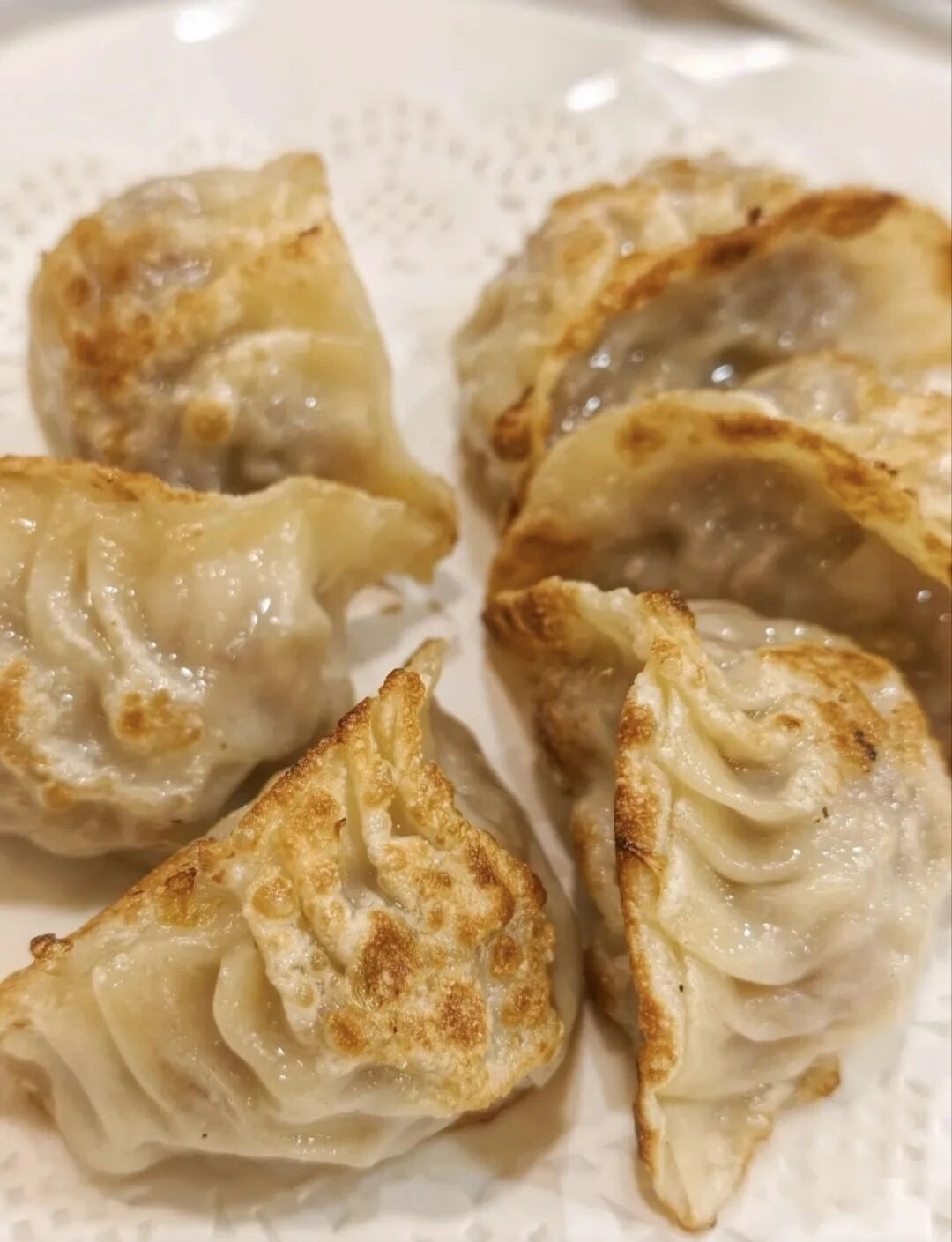
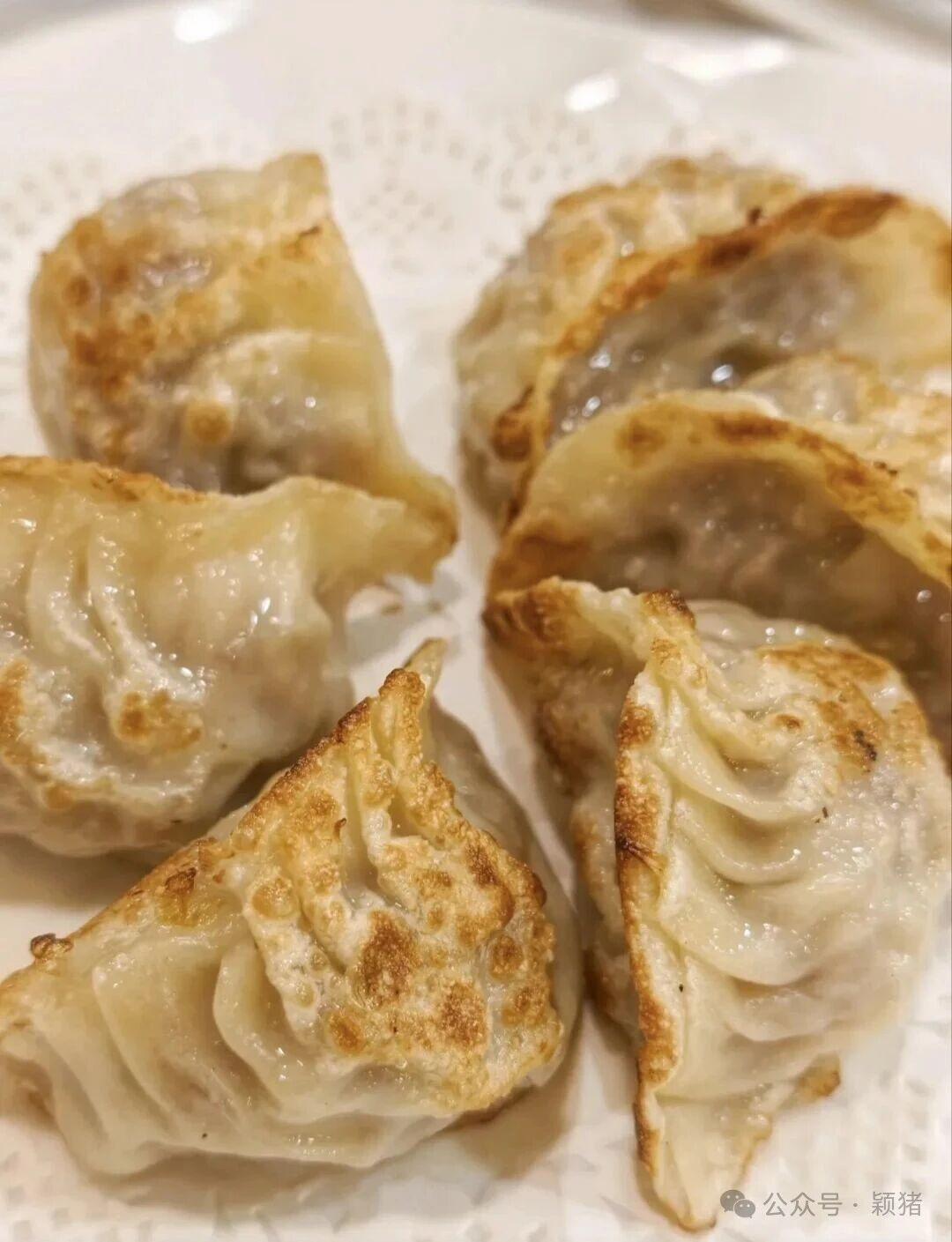
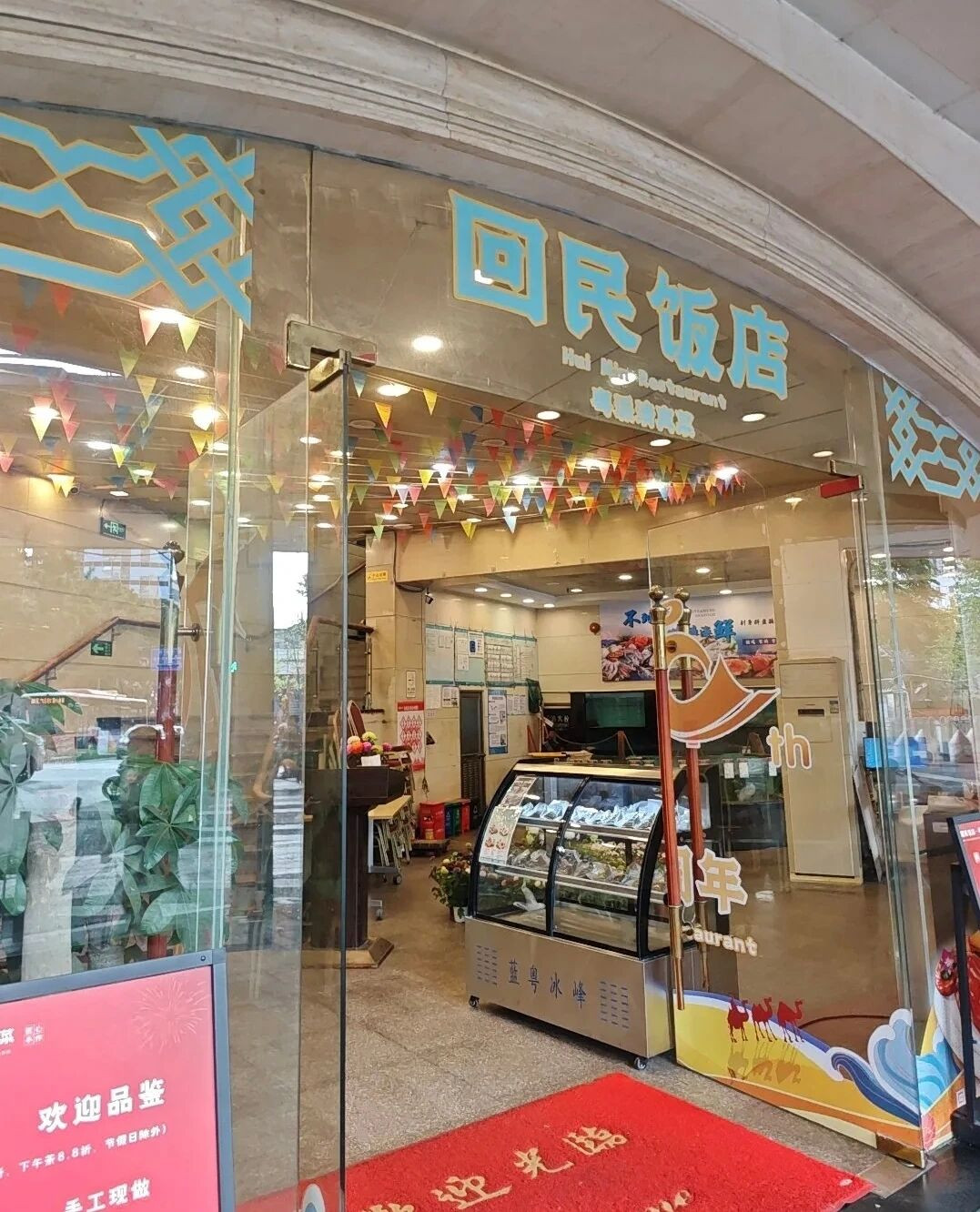
We're revisiting the Guangzhou Muslim Restaurant (Huimin Restaurant), a legendary spot in Yuexiu District that's been serving for seventy years. We did a dine-in deep dive into their signature crispy-skinned, juicy Halal roast duck, plump and bouncy Cantonese-style niurou wan (beef meatballs), and grabbed some classic jumbo jianjiao (pan-fried dumplings) from their takeaway window. Get ready to experience the iconic flavors of Guangzhou's largest Halal Cantonese old-timer.
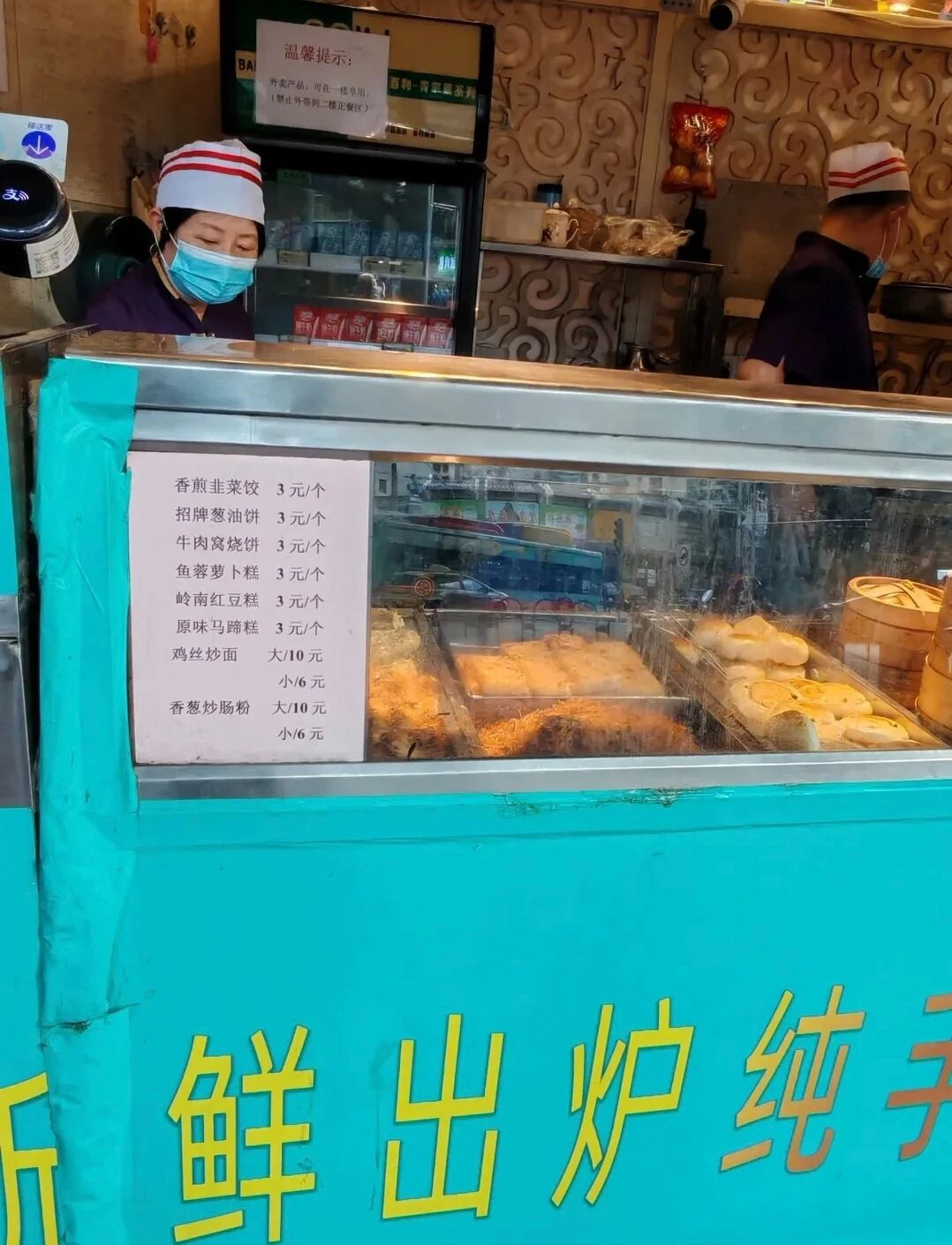
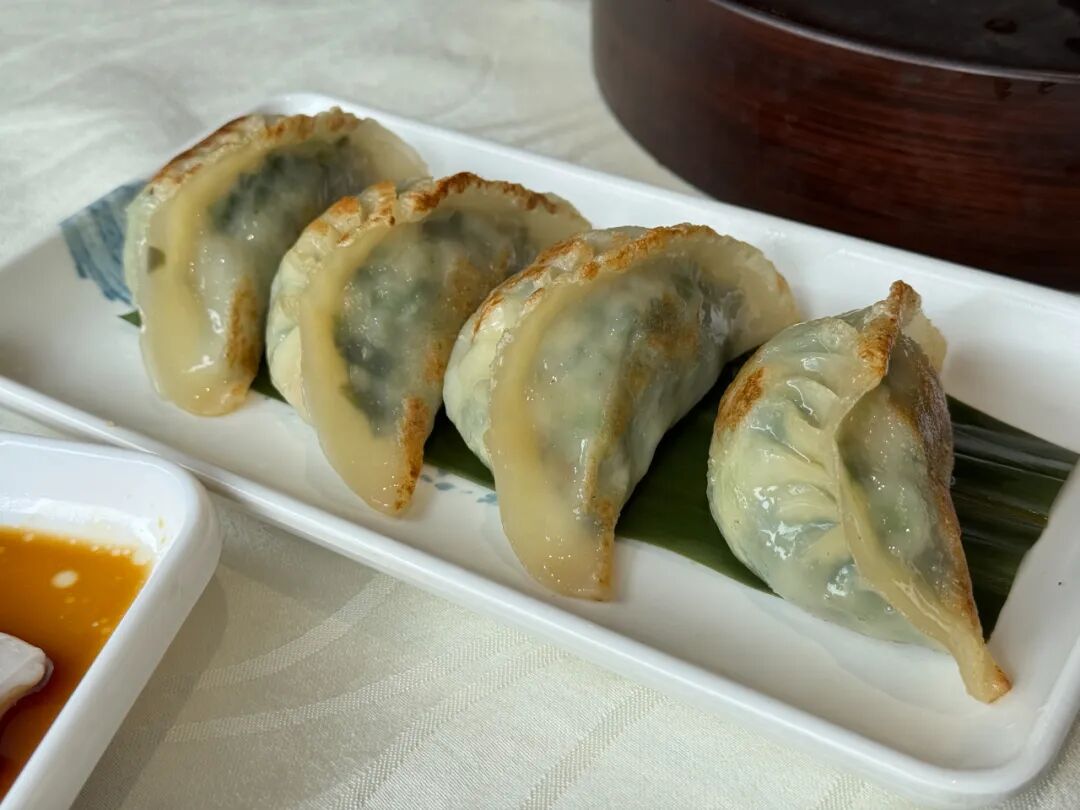
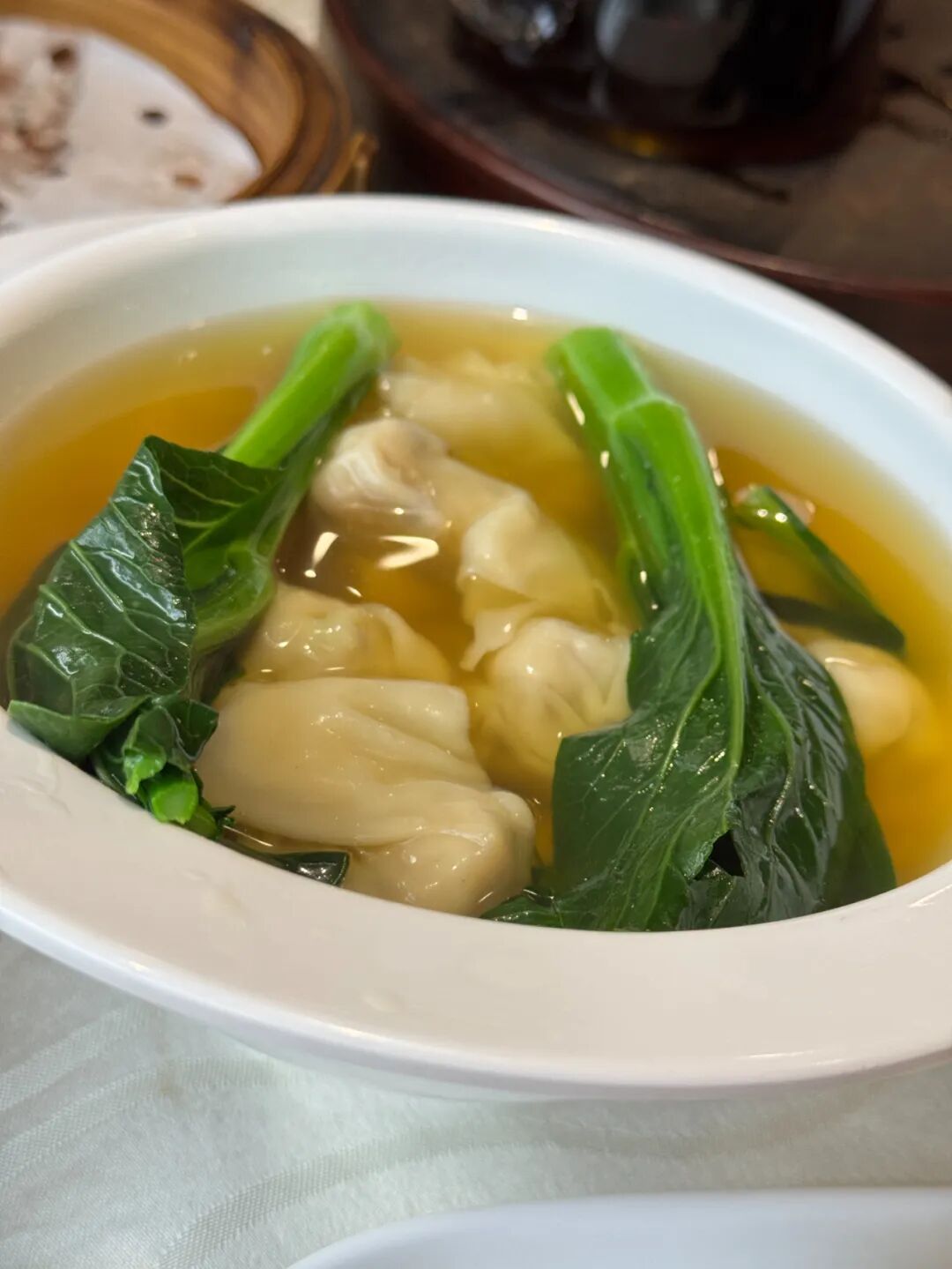
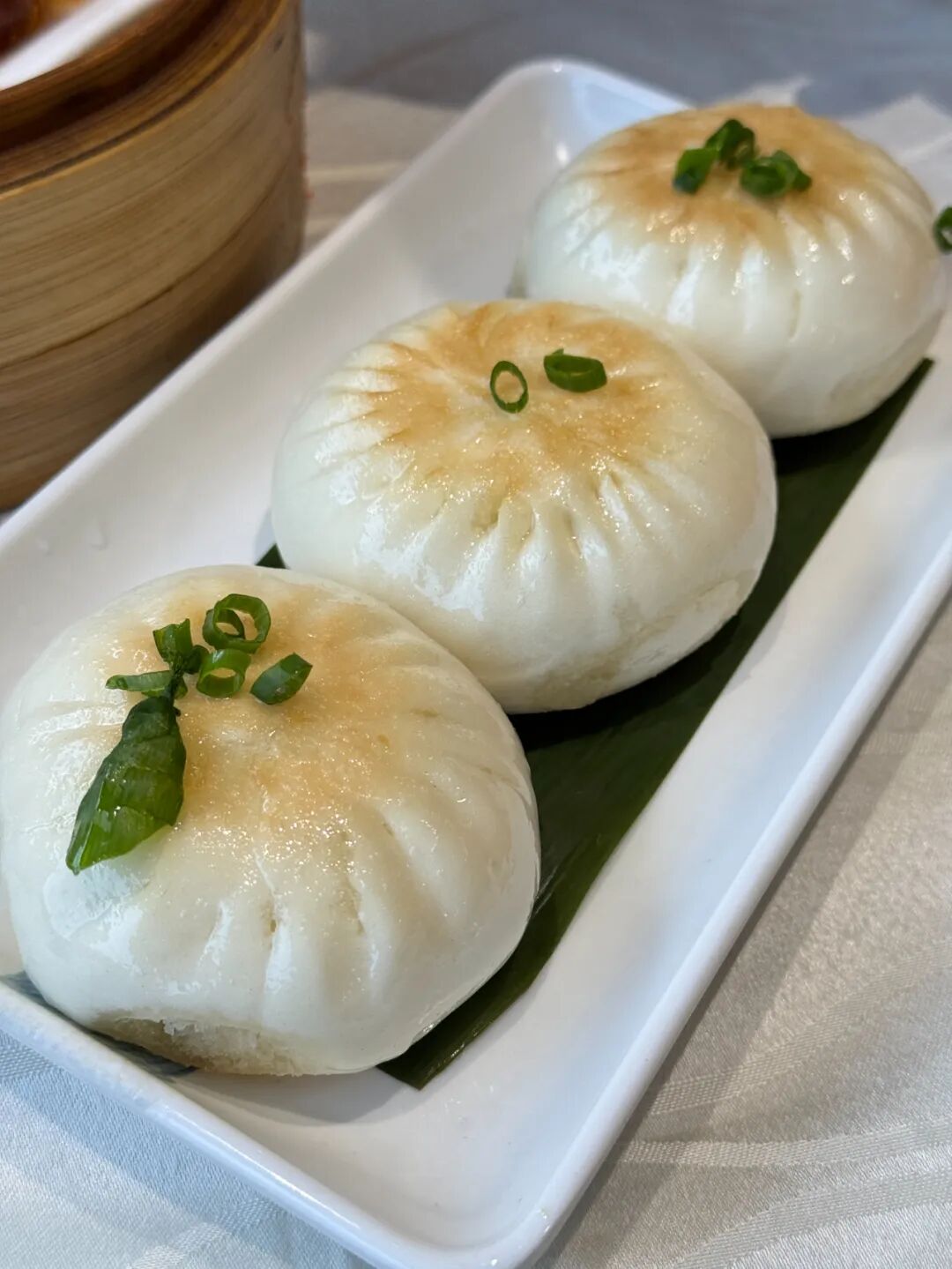
It's been a minute since I hit up the Guangzhou Muslim Restaurant (Huimin Restaurant), and seriously, this place is a classic, old-school Cantonese Halal joint, widely known as the biggest Halal Cantonese restaurant in the city. Back when I used to work nearby, I'd always swing by their takeaway window for breakfast. Their jianjiao (pan-fried dumplings) were always huge and super filling, and the niurou wan (beef meatballs) were seriously substantial—one bite and you were set for the day.
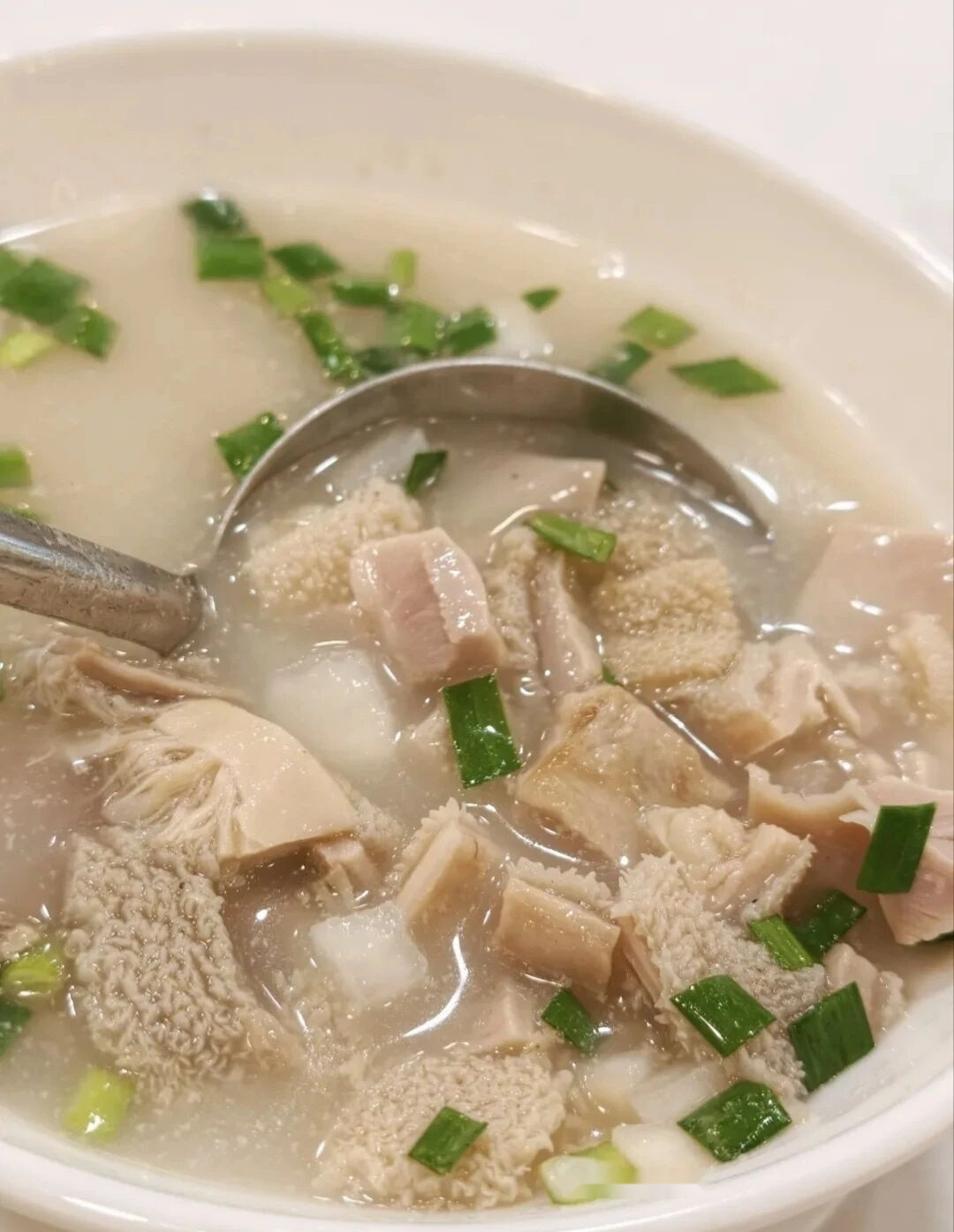
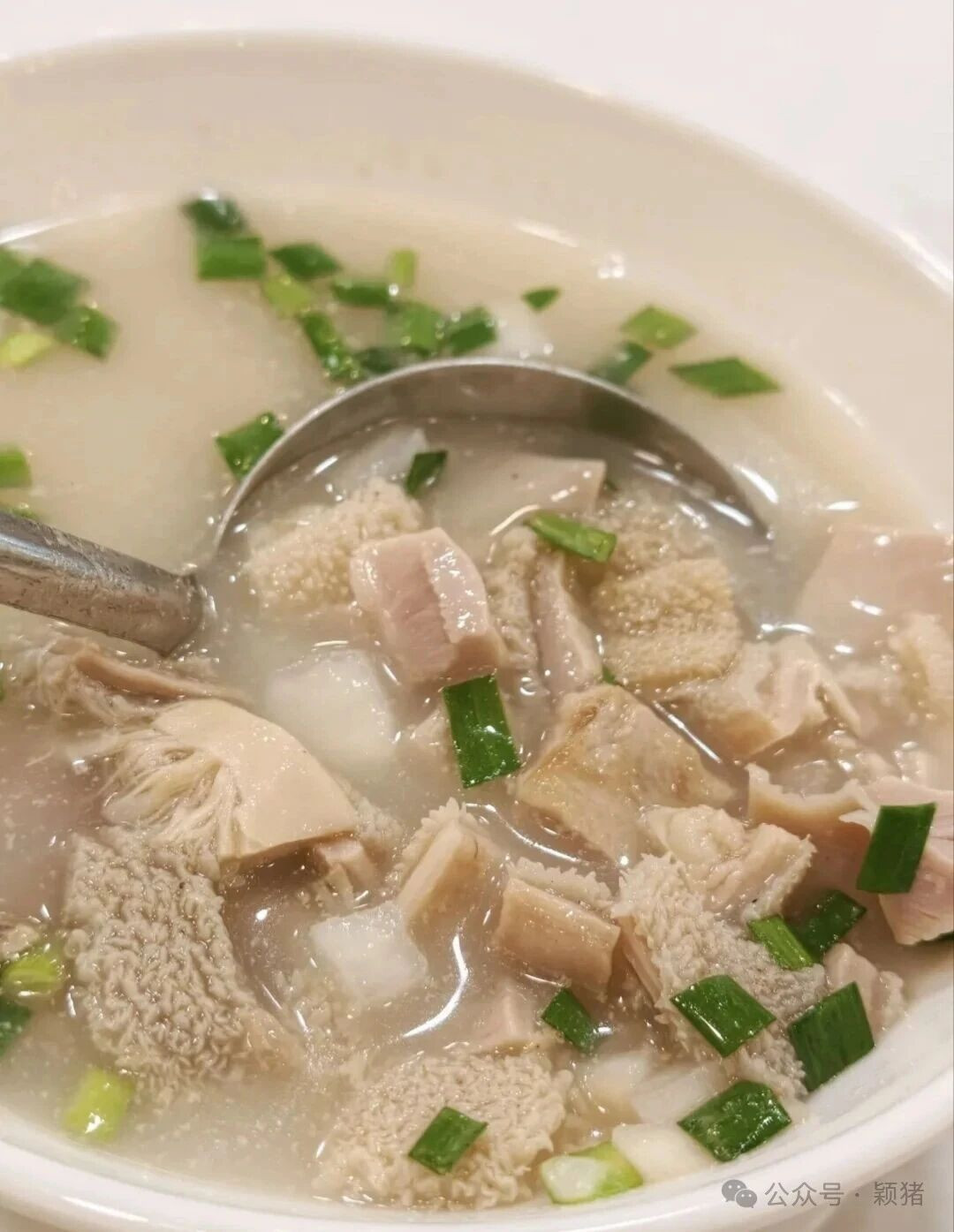
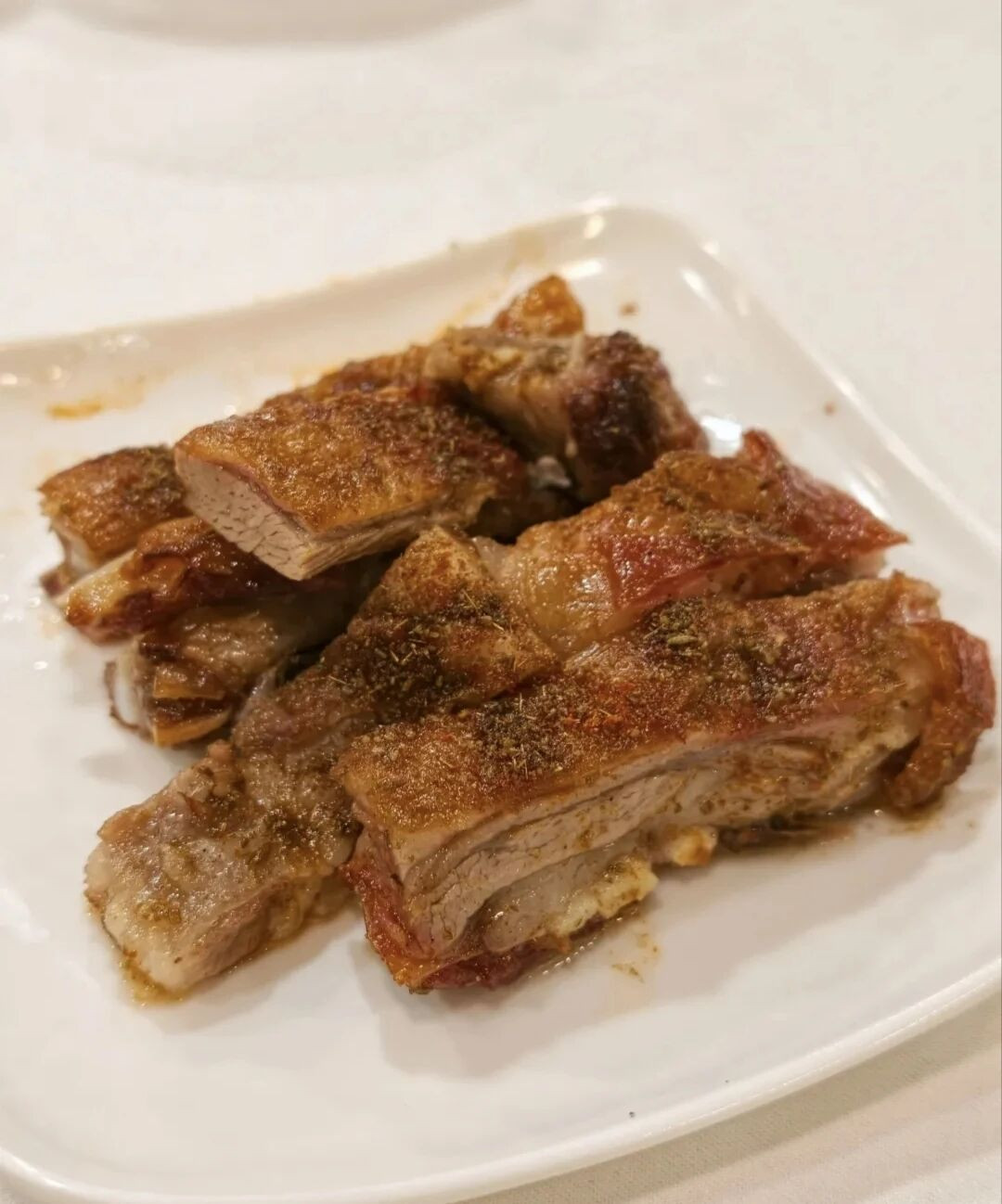
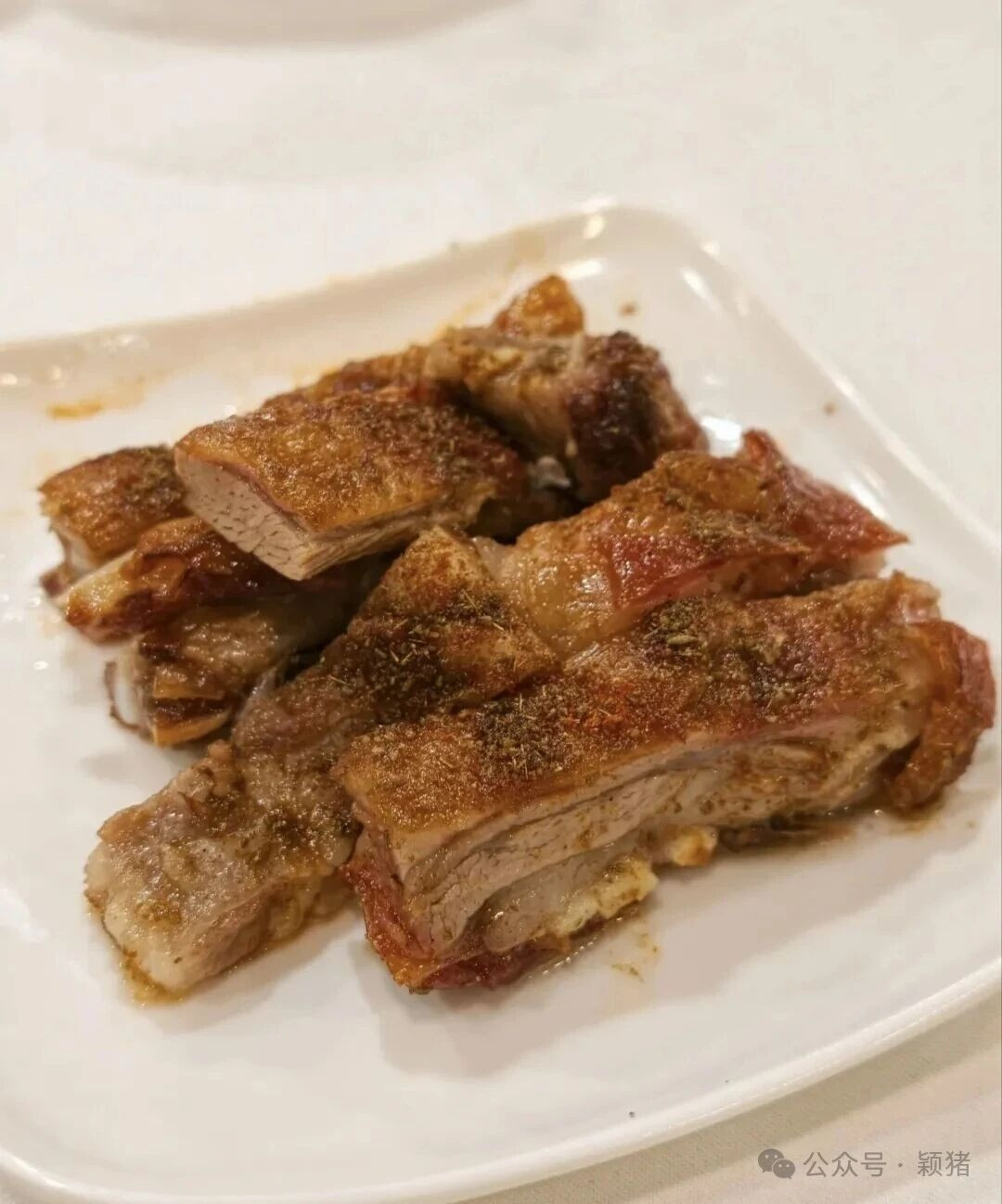
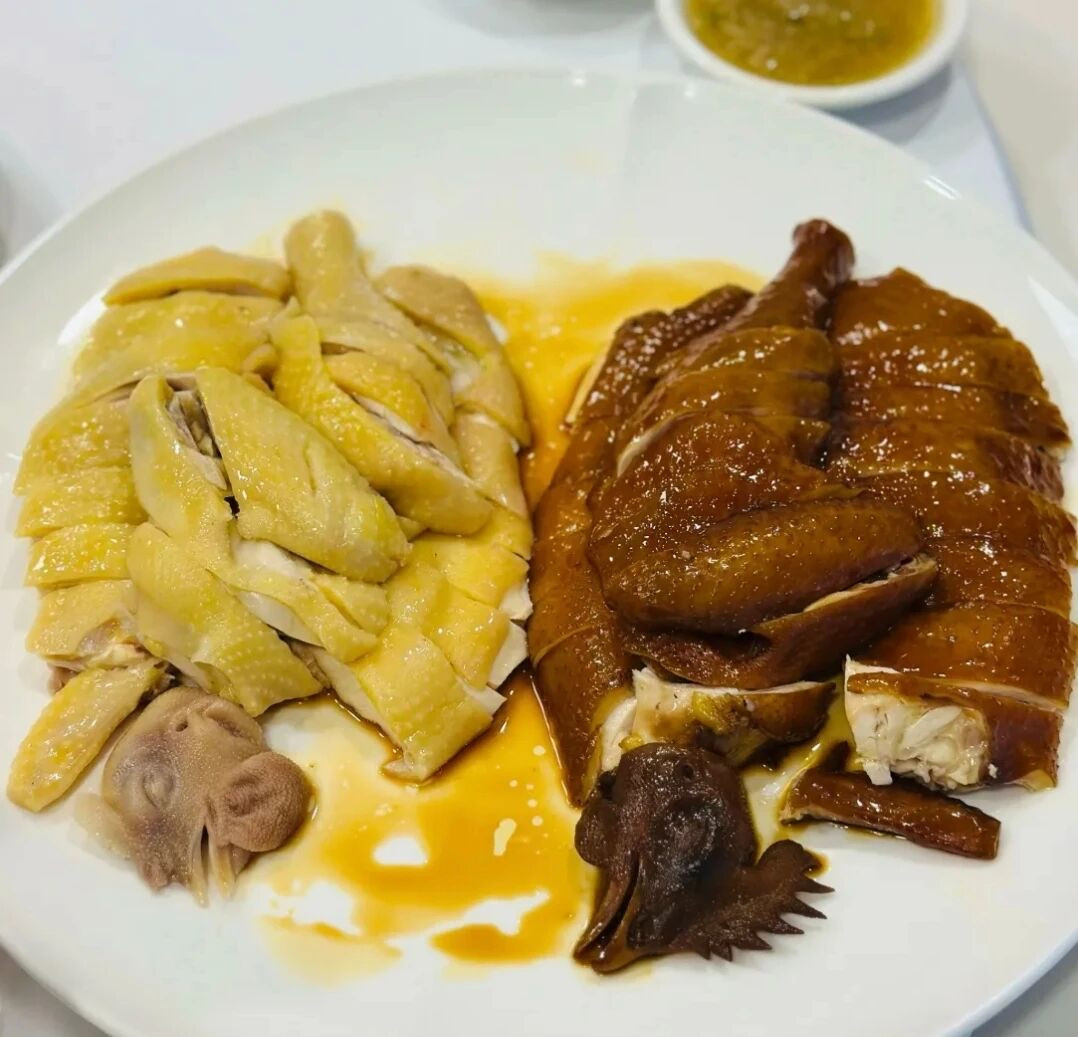
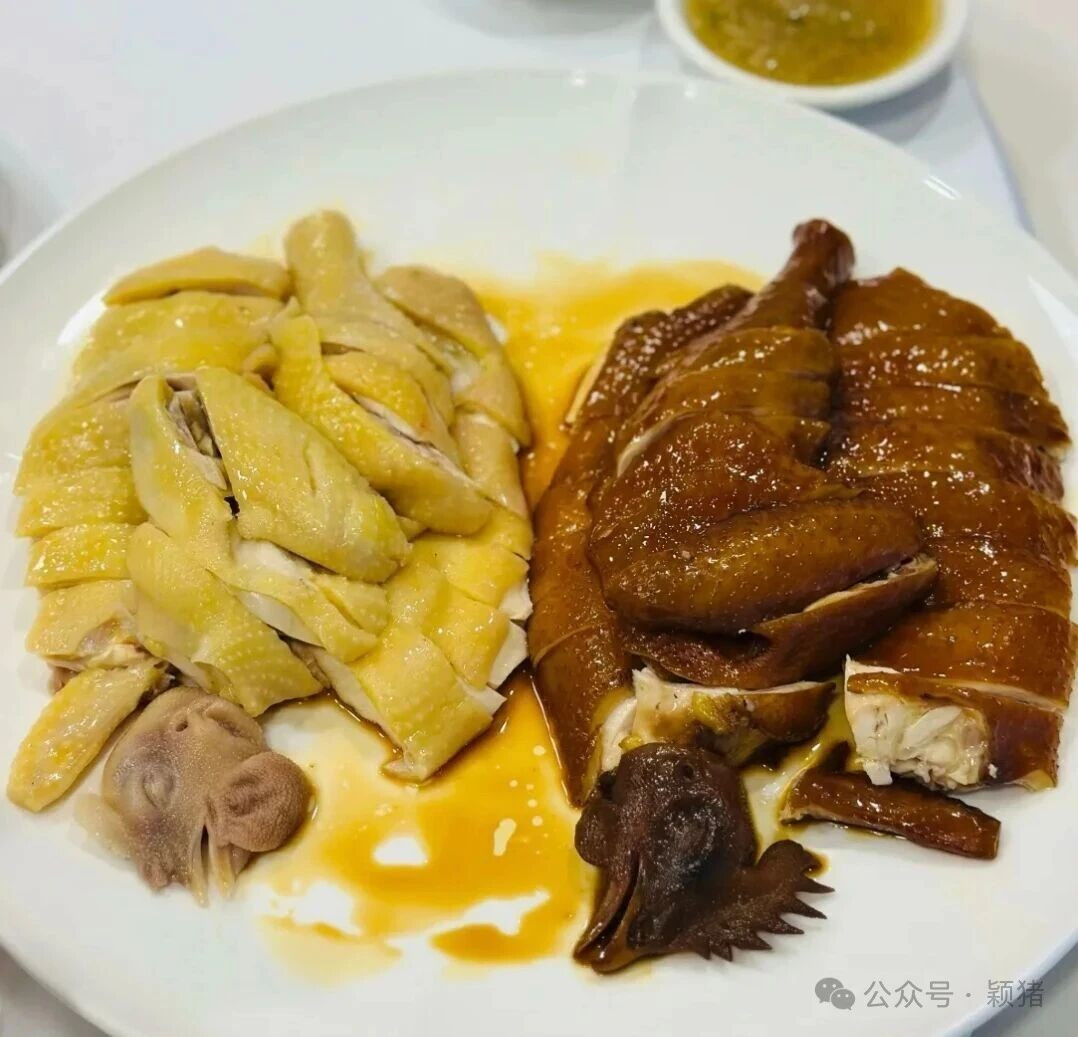
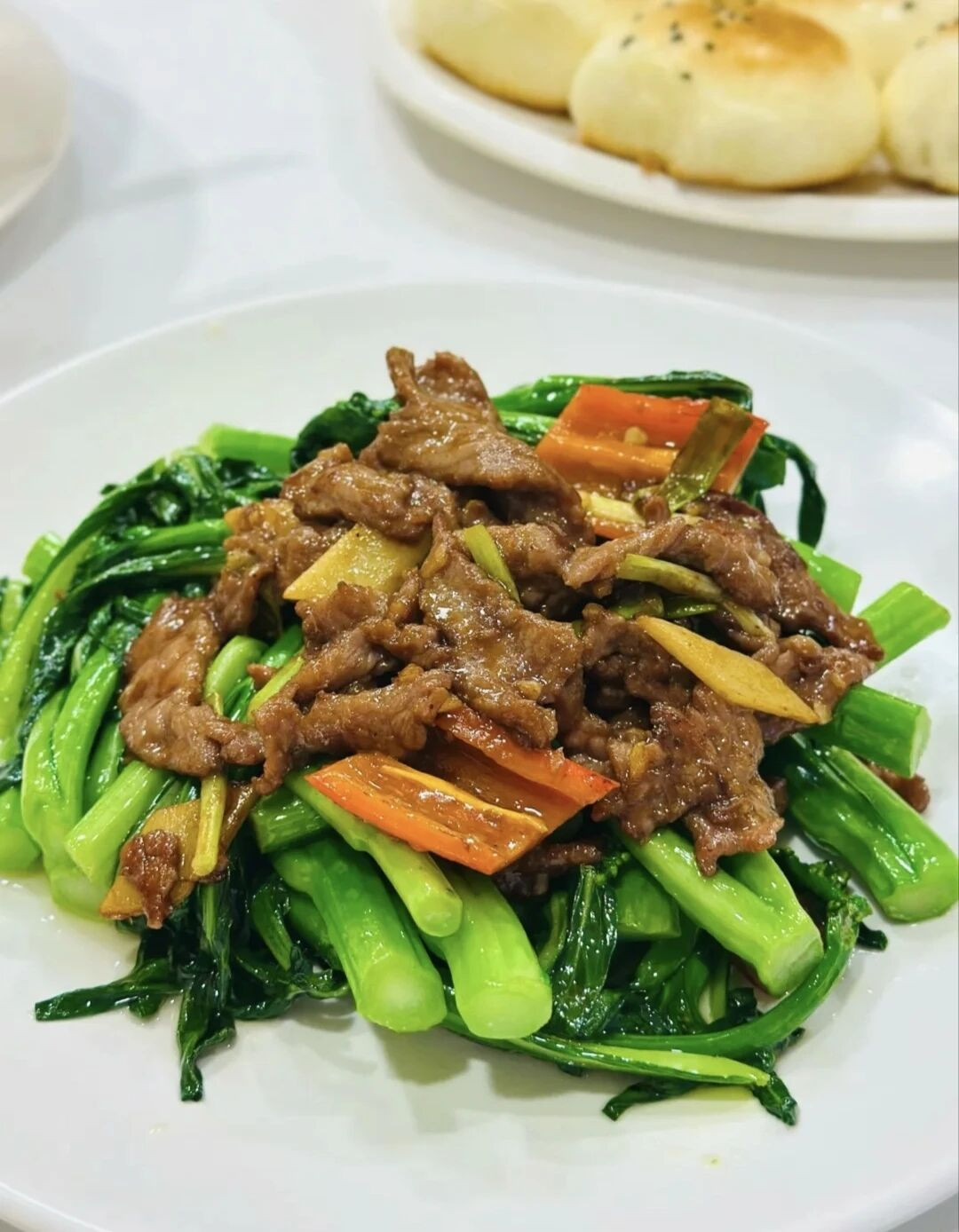
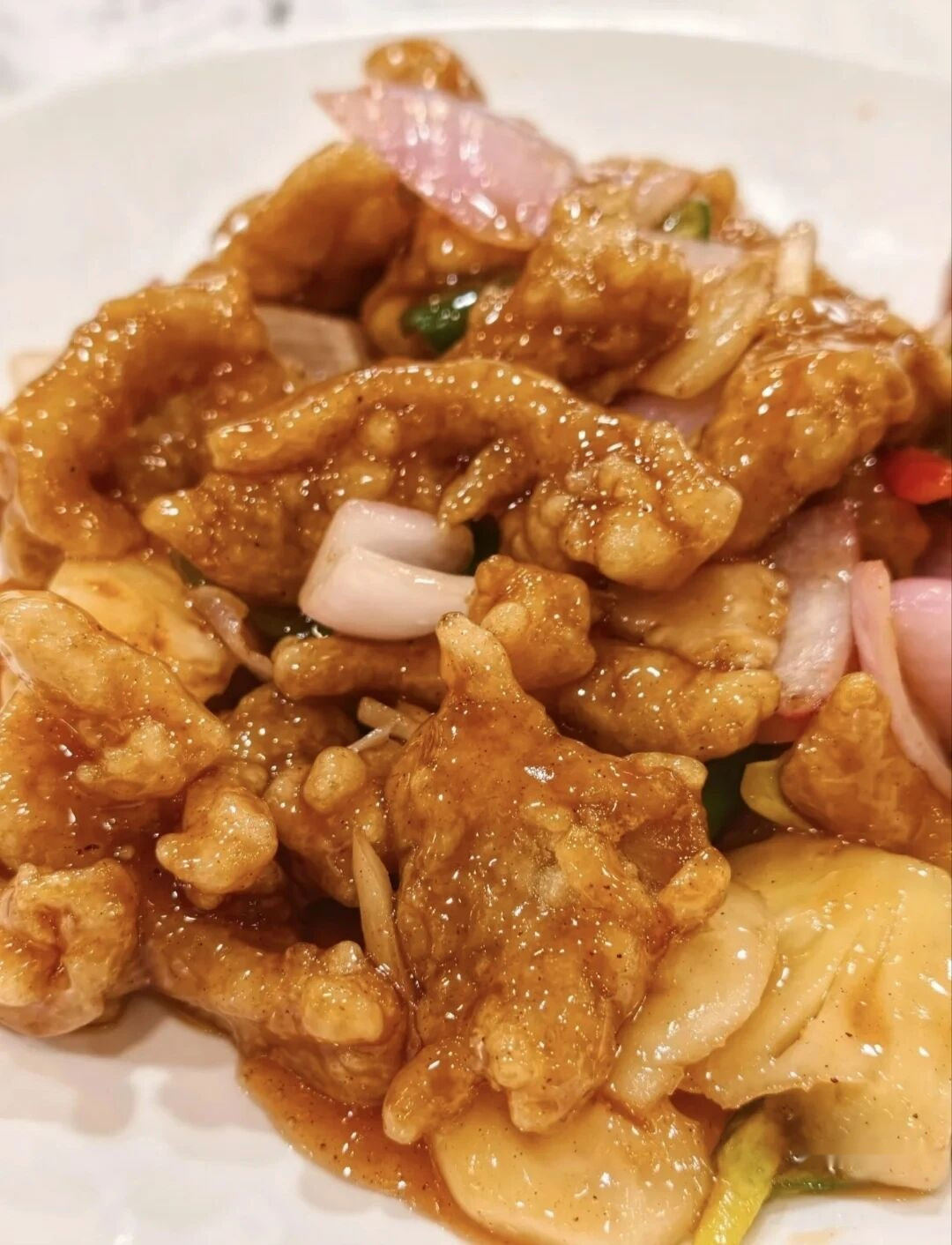
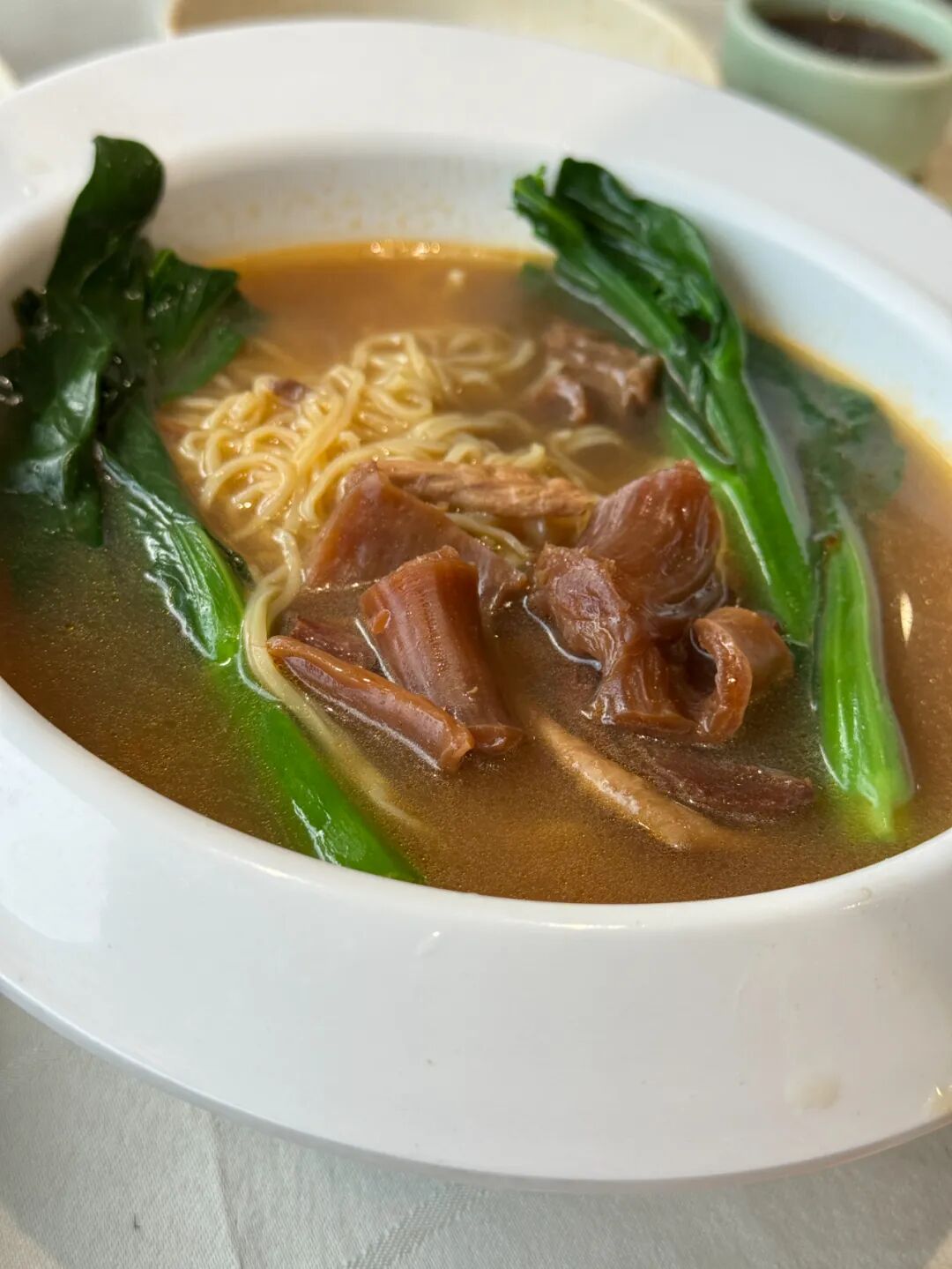
This time, I made a special trip to dine in. Their signature Huimin niuzha tang (beef offal soup) was packed with a rich peppery kick, and the beef tripe was stewed to perfection—super tender and easy to chew. Paired with pickled daikon, it totally cuts through any richness. The ziran kaoyangpai (cumin-spiced roasted lamb ribs) had a hint of Cantonese char siu (barbecue pork) flavor, with a crispy exterior and juicy interior, and barely any gamey lamb taste. And their Huimin yuanyang ji (Muslim 鸳鸯 chicken) was a hit, with its crispy skin and tender meat, a total fave for many old-school Guangzhou locals. Overall, it’s classic old-Guangzhou flavor, with generous portions. Just a heads up, service at this long-standing spot can be a bit hit-or-miss, but the vibe is still that familiar, retro, old-school feel.
Restaurant Name: Guangzhou Muslim Restaurant (Huimin Restaurant)
Address: No. 325, Zhongshan 6th Road, Yuexiu District (110m walk from Exit A of Ximenkou Station, Line 1)
Average Spend: Around 70 RMB
Got any other secret Halal food spots you're loving? Drop your recs!
#GuangzhouFood #GuangzhouEats #GuangzhouOldSchoolEats #CantoneseHalal #HuiminRestaurant #XimenkouFood #GuangzhouTravel #BeefOffalSoup #LocalEats #MustEatGuangzhou view all
Revisiting Guangzhou's 70-Year-Old Guangzhou Muslim Restaurant: Signature Halal Cantonese Dishes, Juicy Beef Meatballs, and a Yum Cha Deep Dive
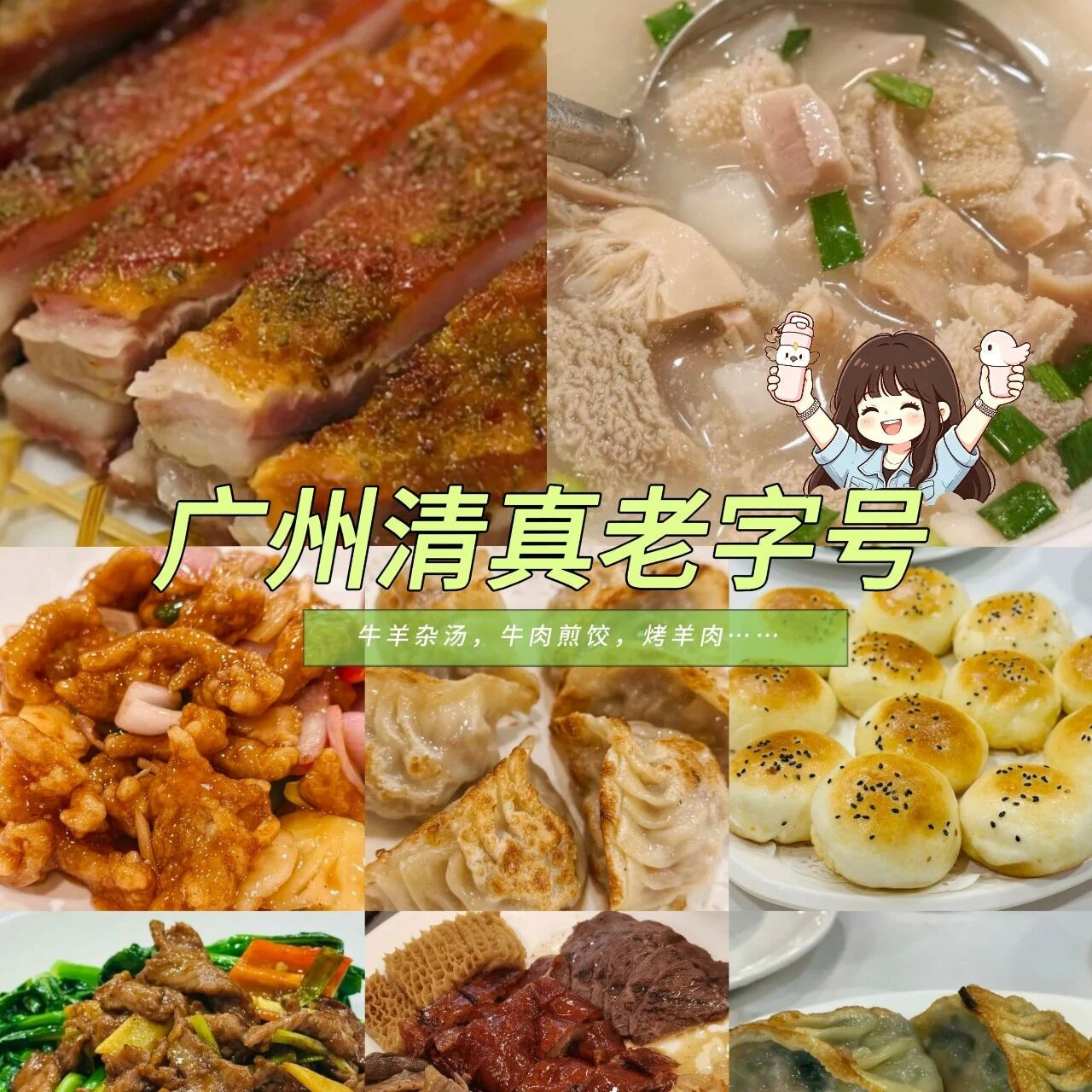
Summary:
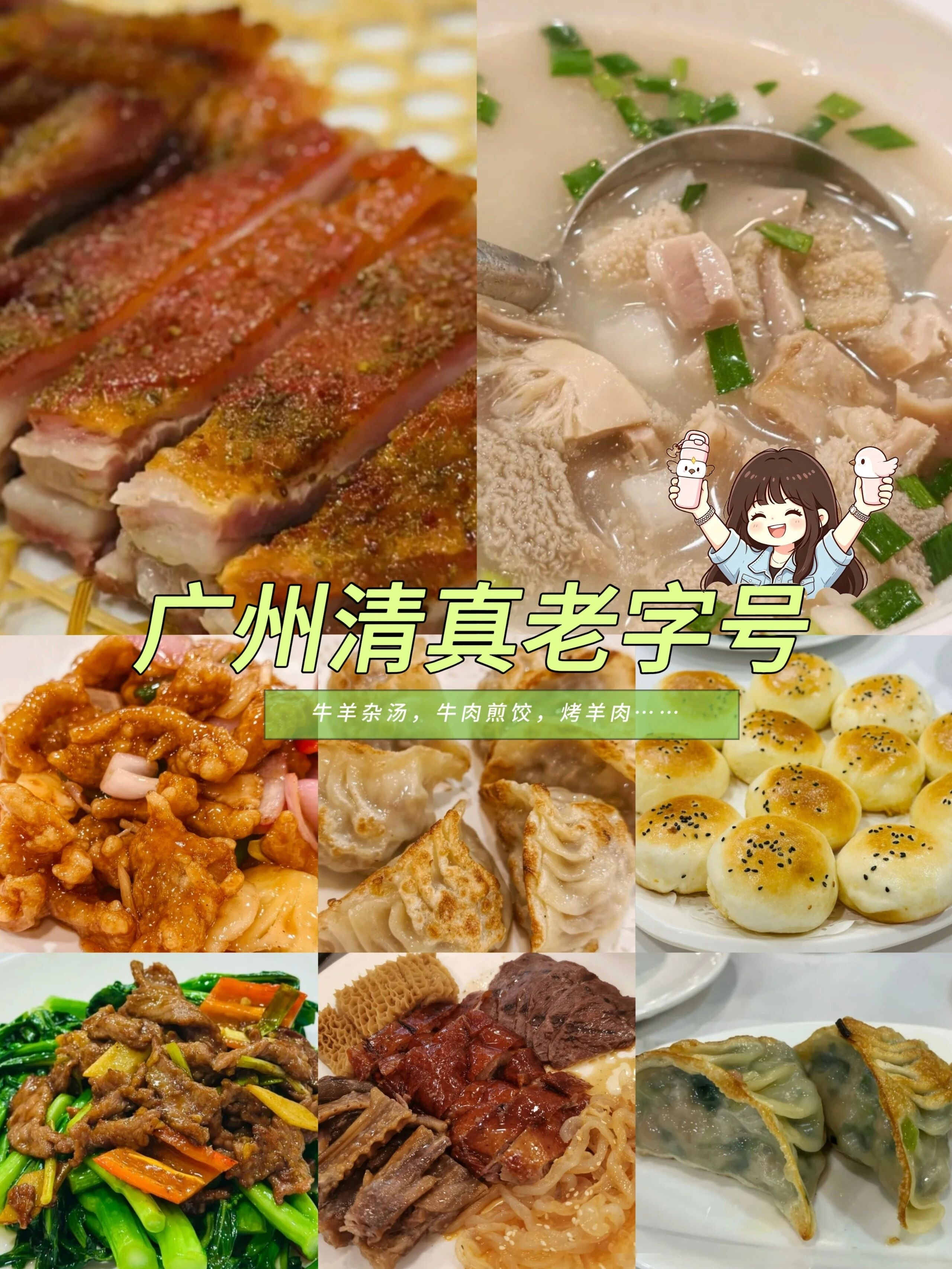
We're revisiting the Guangzhou Muslim Restaurant (Huimin Restaurant), a legendary spot in Yuexiu District that's been serving for seventy years. We did a dine-in deep dive into their signature crispy-skinned, juicy Halal roast duck, plump and bouncy Cantonese-style niurou wan (beef meatballs), and grabbed some classic jumbo jianjiao (pan-fried dumplings) from their takeaway window. Get ready to experience the iconic flavors of Guangzhou's largest Halal Cantonese old-timer.
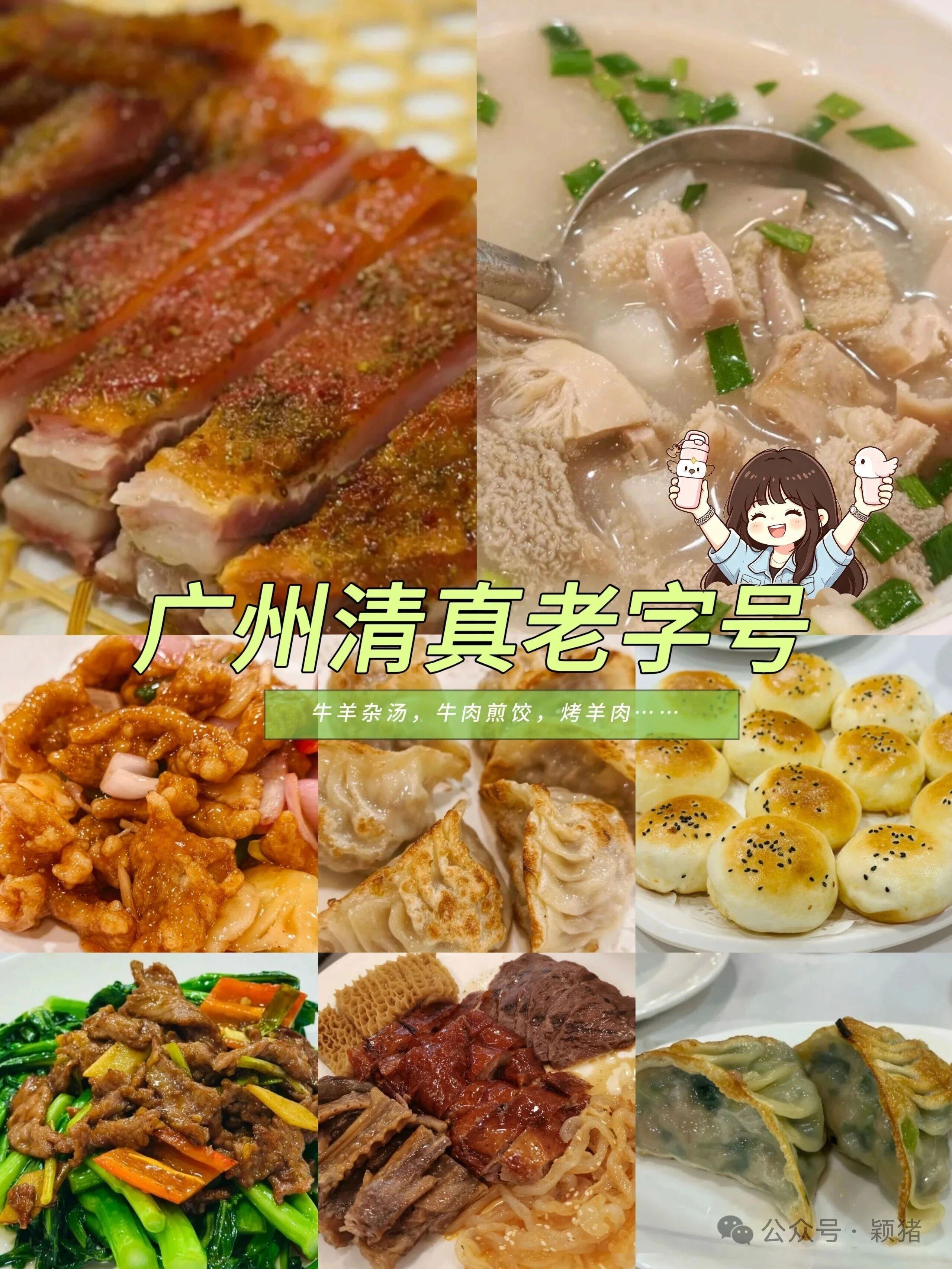
It's been a minute since I hit up the Guangzhou Muslim Restaurant (Huimin Restaurant), and seriously, this place is a classic, old-school Cantonese Halal joint, widely known as the biggest Halal Cantonese restaurant in the city. Back when I used to work nearby, I'd always swing by their takeaway window for breakfast. Their jianjiao (pan-fried dumplings) were always huge and super filling, and the niurou wan (beef meatballs) were seriously substantial—one bite and you were set for the day.
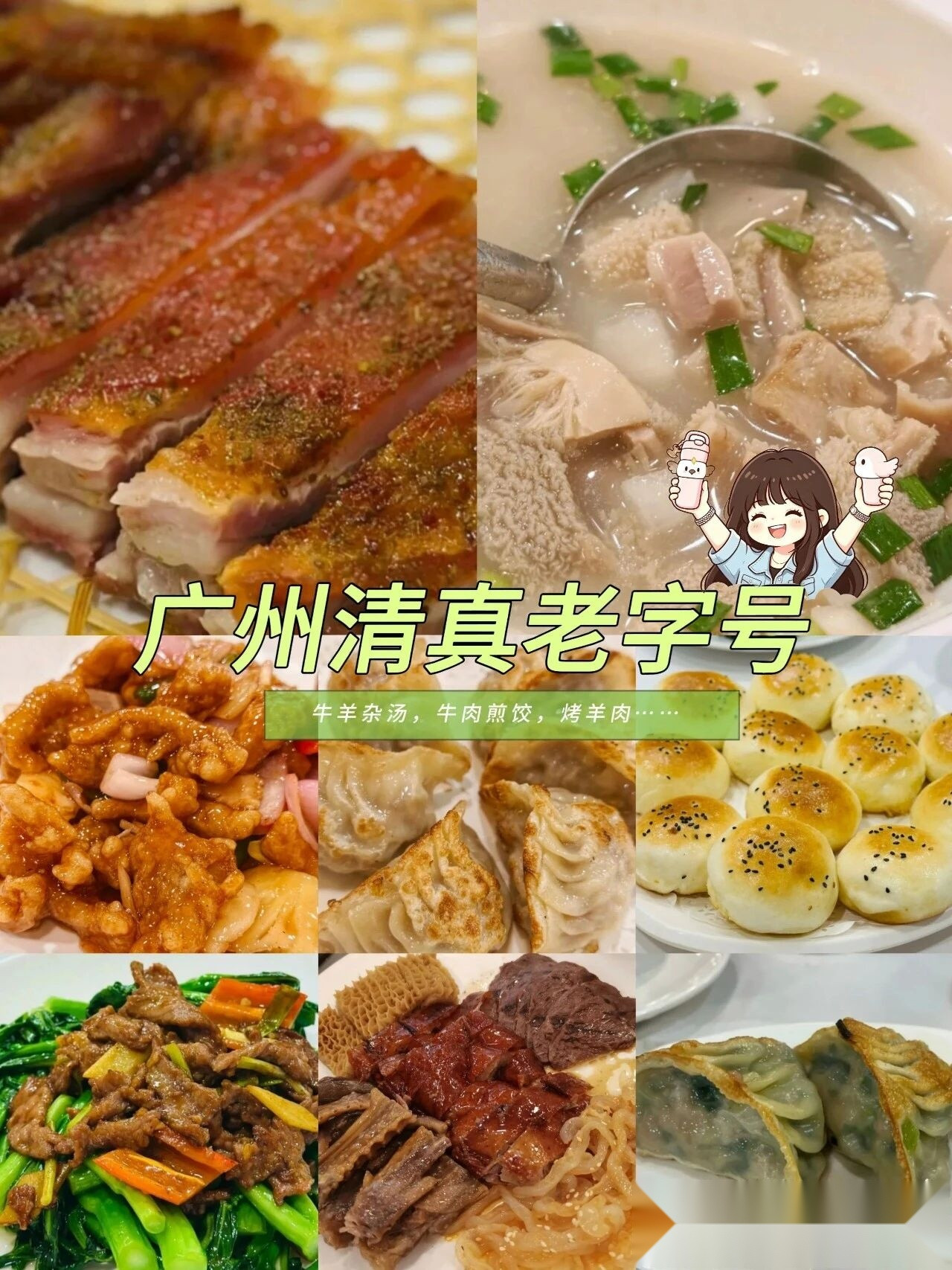
This time, I made a special trip to dine in. Their signature Huimin niuzha tang (beef offal soup) was packed with a rich peppery kick, and the beef tripe was stewed to perfection—super tender and easy to chew. Paired with pickled daikon, it totally cuts through any richness. The ziran kaoyangpai (cumin-spiced roasted lamb ribs) had a hint of Cantonese char siu (barbecue pork) flavor, with a crispy exterior and juicy interior, and barely any gamey lamb taste. And their Huimin yuanyang ji (Muslim 鸳鸯 chicken) was a hit, with its crispy skin and tender meat, a total fave for many old-school Guangzhou locals. Overall, it’s classic old-Guangzhou flavor, with generous portions. Just a heads up, service at this long-standing spot can be a bit hit-or-miss, but the vibe is still that familiar, retro, old-school feel.
Restaurant Name: Guangzhou Muslim Restaurant (Huimin Restaurant)
Address: No. 325, Zhongshan 6th Road, Yuexiu District (110m walk from Exit A of Ximenkou Station, Line 1)
Average Spend: Around 70 RMB
Got any other secret Halal food spots you're loving? Drop your recs!
#GuangzhouFood #GuangzhouEats #GuangzhouOldSchoolEats #CantoneseHalal #HuiminRestaurant #XimenkouFood #GuangzhouTravel #BeefOffalSoup #LocalEats #MustEatGuangzhou
Best Halal Restaurant in Guangzhou China: Xiaobei Halal Food, Cantonese Morning Tea and Middle Eastern Cuisine
Articles • yusuf908 posted the article • 0 comments • 360 views • 2026-05-24 00:17
Summary: This 2025 Guangzhou halal food map follows Xiaobei, Shangbu, no-alcohol halal dining, Asia International Hotel, Cantonese morning tea, Baghdad Cuisine, American-style barbecue, Xinjiang Mansion, Hui Muslim Restaurant, Antalya, MADO, Indonesian food, Lebanese food, and Middle Eastern restaurants.
I have been to Guangzhou at least five times. This time, a business trip gave me the chance to dine at several high-quality restaurants. I have a feeling that the variety of halal food in Guangzhou is now close to that of Beijing. It is worth noting that most halal restaurants in Guangzhou do not sell alcohol, which is extremely rare in Beijing. As both are top-tier cities, I think Guangzhou manages this because of an unspoken agreement among the restaurants. In the Xiaobei and Shangbu areas, where many halal restaurants are clustered, most do not sell alcohol. However, restaurants outside these areas do. This is just like in Xi'an, where halal restaurants in the Muslim Quarter (Huifang) do not sell alcohol, but those that open elsewhere do. This kind of agreement seems unlikely in Beijing, where most halal restaurants operate like lone wolves and find it hard to reach such a consensus.
The list of restaurants introduced in this issue is as follows:
1. Asia International Hotel · Asia Fengcai Xinjiang Restaurant
2. Yishanggong Cantonese Morning Tea (Guangshi Zaocha)
3. Baghdad Cuisine Restaurant
4. Yiyun Niudao American-style Barbecue
5. Xinjiang Mansion Cantonese Morning Tea (Guangshi Zaocha)
6. Hui Muslim Restaurant (Huimin Fandian)
7. Ma Xiaohuo Handmade Pulled Noodles (Lamian) and Barbecue
8. ANTALYA Turkish Restaurant
9. MADO Turkish Ice Cream Shop
10. Xianglan Indonesian Restaurant
11. Saba Restaurant
12. AL MANARA Lebanese Restaurant
13. ARMADA Middle Eastern Cuisine
1. Asia International Hotel · Asia Fengcai Xinjiang Restaurant
I heard before coming that the Asia International Hotel in Guangzhou had a halal restaurant, so I specifically stayed there for one night. It is an old five-star hotel located in Xiaobei. The facilities are quite dated, which felt like a big drop compared to the Mandarin Oriental where I stayed the night before. However, the hotel has an excellent location and view. The 45th floor is a revolving buffet restaurant where breakfast is served, and the hotel has a dedicated halal section.
Most guests staying at this hotel are foreigners, primarily Arabs, so there is also an Arabic restaurant on the first floor.
A Xinjiang restaurant called Asia Fengcai opened on the ninth floor of the hotel. Even though it is inside a five-star hotel, the prices are quite affordable, with an average cost of around 100 yuan per person.
Asia Fengcai is run by people from Ningxia, so the restaurant serves both Ningxia-style northwestern dishes and Xinjiang cuisine.
I tried the peppercorn chicken (jiaomaji) and hand-grabbed meat (shouzhuarou) for you, and both tasted good. The peppercorn chicken is on the spicier side.
Their hand-grabbed rice (shouzhuafan) is also excellent. They use quality ingredients and include everything that should be in it, which earned praise from my friend.
2. Yishanggong Cantonese Morning Tea (Guangshi Zaocha)
Yishanggong is the third halal morning tea restaurant in Guangzhou. It is also in Xiaobei, just 400 meters from the Asia International Hotel. I ate there twice and basically tried everything on the menu. Compared to the Xinjiang Building, this place is not as refined, but it has its own style. The service is better than at the Hui Muslim Restaurant (Huimin Fandian), and overall, it offers great value for money.
Morning tea is served from 7:00 to 15:00. You get a 22% discount if you pay before 10:00, and a 12% discount if you pay before 12:00. They only serve morning tea during the day, but switch to Korean barbecue and hot pot for dinner.
The servers here help rinse the bowls for you, which saves me the trouble. I would not mind skipping it, but rinsing bowls is a local habit for people in Guangzhou.
Of all the dim sum I tried here, I did not like their chicken char siu bao. I think the lamb char siu bao at the Hui Muslim restaurant tastes better. Everything else was delicious, and the dim sum is made to order, not pre-made.
The waitress wears a hijab and is very warm and attentive. The restaurant is alcohol-free.
3. Baghdad Cuisine Restaurant
The number of foreign restaurants in Xiaobei rivals Sanlitun in Beijing. This one serves Iraqi food, and I also found Amman, Guinean, and Liberian restaurants nearby, which are cuisines you cannot find in Beijing.
Baghdad Restaurant is on the fourth floor, right above the Amman restaurant.
A friend invited me to eat here because her crush is an Iraqi guy who is currently in Baghdad.
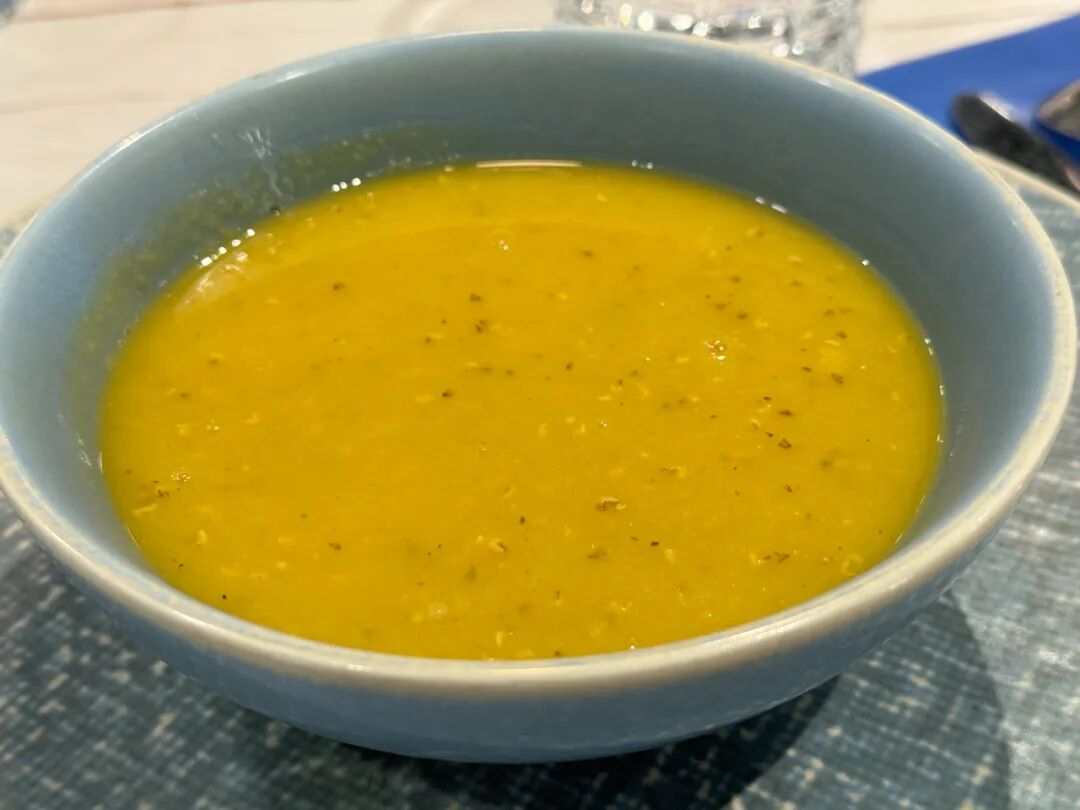
They serve a complimentary bowl of lentil soup before the meal, which helps with digestion.
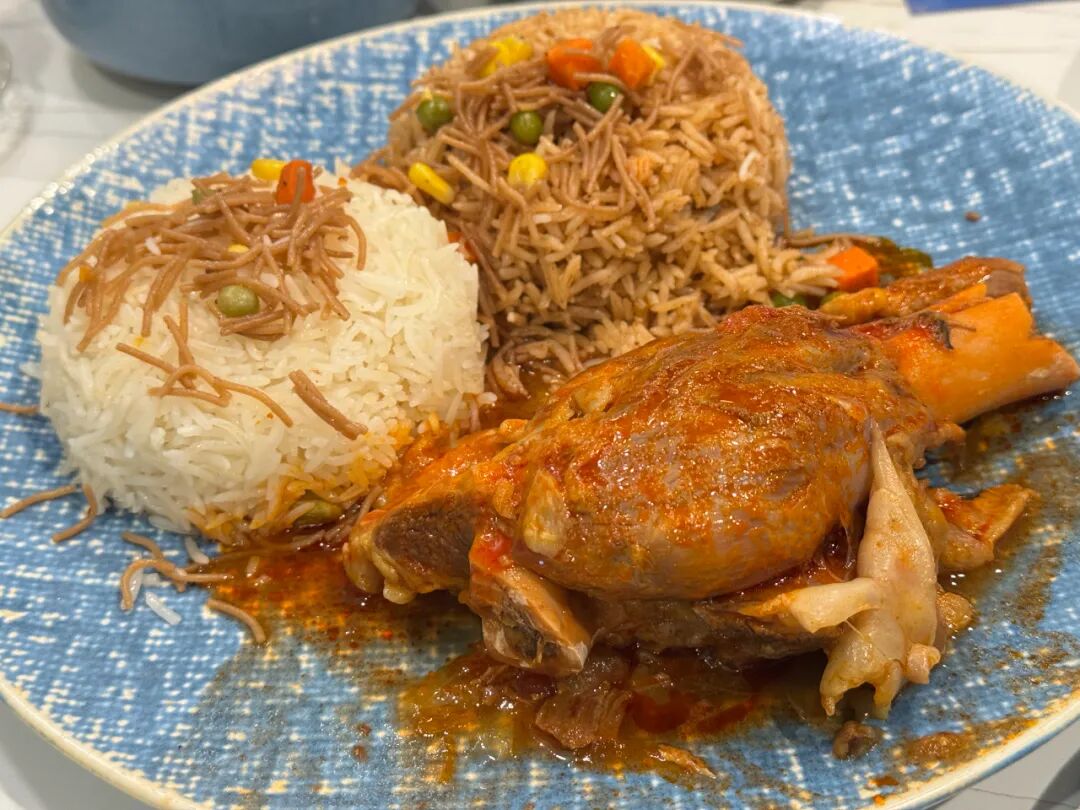
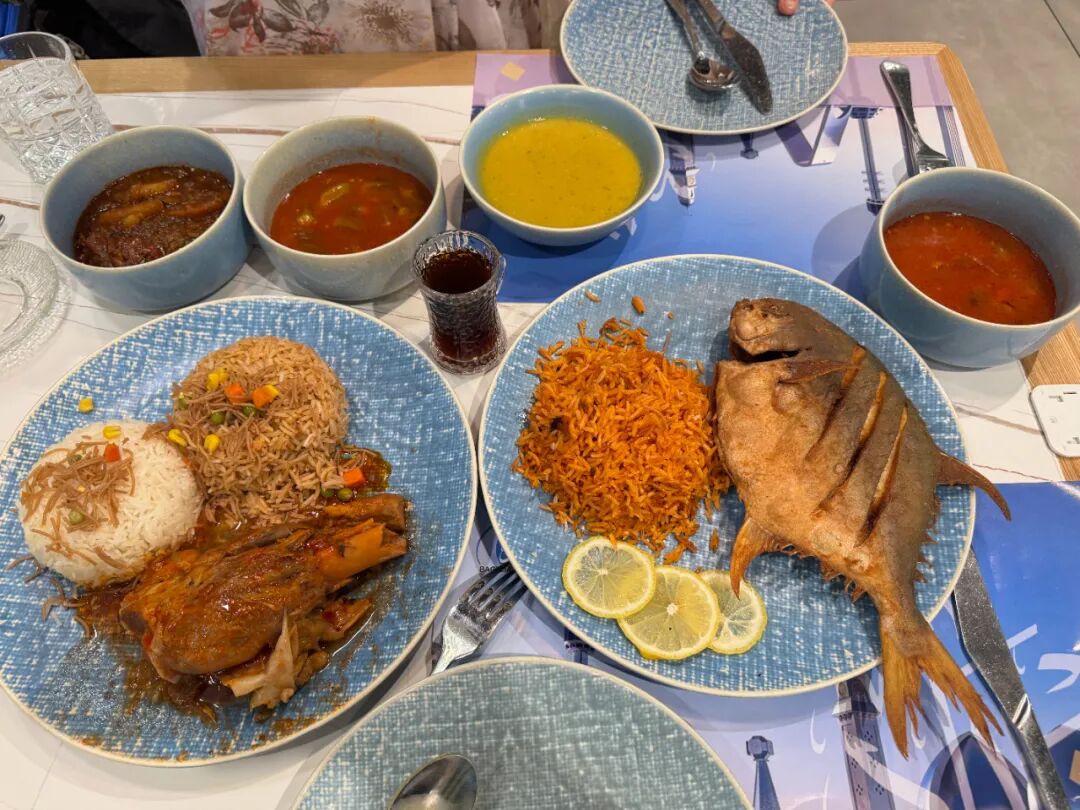
We ordered grilled pomfret and a lamb leg rice dish. The lamb leg rice was especially good; the lamb was tender and juicy, and the long-grain rice was fluffy and not sticky.
4. Yiyun Niudao American-style Barbecue
A brother from Guangzhou brought me here. He said it is rare to find halal American-style barbecue in China, so he wanted me to try it. The last time I had halal American barbecue was in Dubai, and that meal was truly satisfying.
This shop is in Shangbu, an area where Yunnan Hui Muslims gather. Yunnan people rarely move north; they prefer coming to Guangzhou and Sanya. This shop does not sell alcohol.
My friend recommended the slow-roasted Angus steak and roasted lamb chops. They smell great. The slow-cooked Angus has a strong smoky flavor, and the lamb chops are tender and have no gamey taste. Even without alcohol, the shop is very busy. You have to wait in line during peak hours. It is best to book ahead for barbecue so you do not miss out.
Even their Xinjiang kvass (gewasi) tastes great. It is a non-alcoholic fermented drink that pairs perfectly with barbecue. The shop is not expensive, with an average cost of about 100 yuan per person.
Next, I filmed some restaurants near Shangbu. They mostly serve Yunnan flavors, including Zhaotong small meat skewers (xiaorouchuan).
5. Xinjiang Mansion Cantonese Morning Tea (Guangshi Zaocha)
Many people recommend the Hui Muslim Restaurant when talking about morning tea in Guangzhou. If I had to choose, I prefer the morning tea at the Xinjiang Building. Although they have not been making Cantonese morning tea for long, their food variety and service are better than the Hui Muslim Restaurant.
The morning tea here includes traditional Cantonese dishes and some new creations, especially those using Xinjiang ingredients. This is easier for northern tourists to enjoy, as outsiders might not be used to many authentic local snacks.
Morning tea originally just meant drinking tea in the morning. However, people started pairing it with snacks, and these snacks became so rich that they are now the soul of morning tea.
After sitting down, the waiter will follow the rules and ask what tea you want. You can choose from black tea, green tea, flower tea, or Pu'er. You are also welcome to bring your own tea bags. Then, they give you a menu to check off the snacks you want.
The first step of morning tea is washing the tea set. The basin in the top right corner is not for trash, but for cleaning tableware. Even though the tea set is already clean, Guangzhou locals like to scald it with hot water again. I follow the local custom and do the same, even though I do not really worry about whether the dishes are clean.
Cordyceps flower and Qingyuan chicken porridge (chongcaohua qingyuan huaji zhou)
Breakfast in Beijing, specifically in Niujie, is always soy milk, fried dough cakes (youbing), lamb offal soup (yangza), fried tofu soup (doupaotang), and baked flatbread with fried dough (huoshao jia youbing). This is not friendly for someone like me who goes to the gym every day. I like to change my meals up, so breakfast is the hardest part of my day. If I want a balanced breakfast, I have to make it myself.
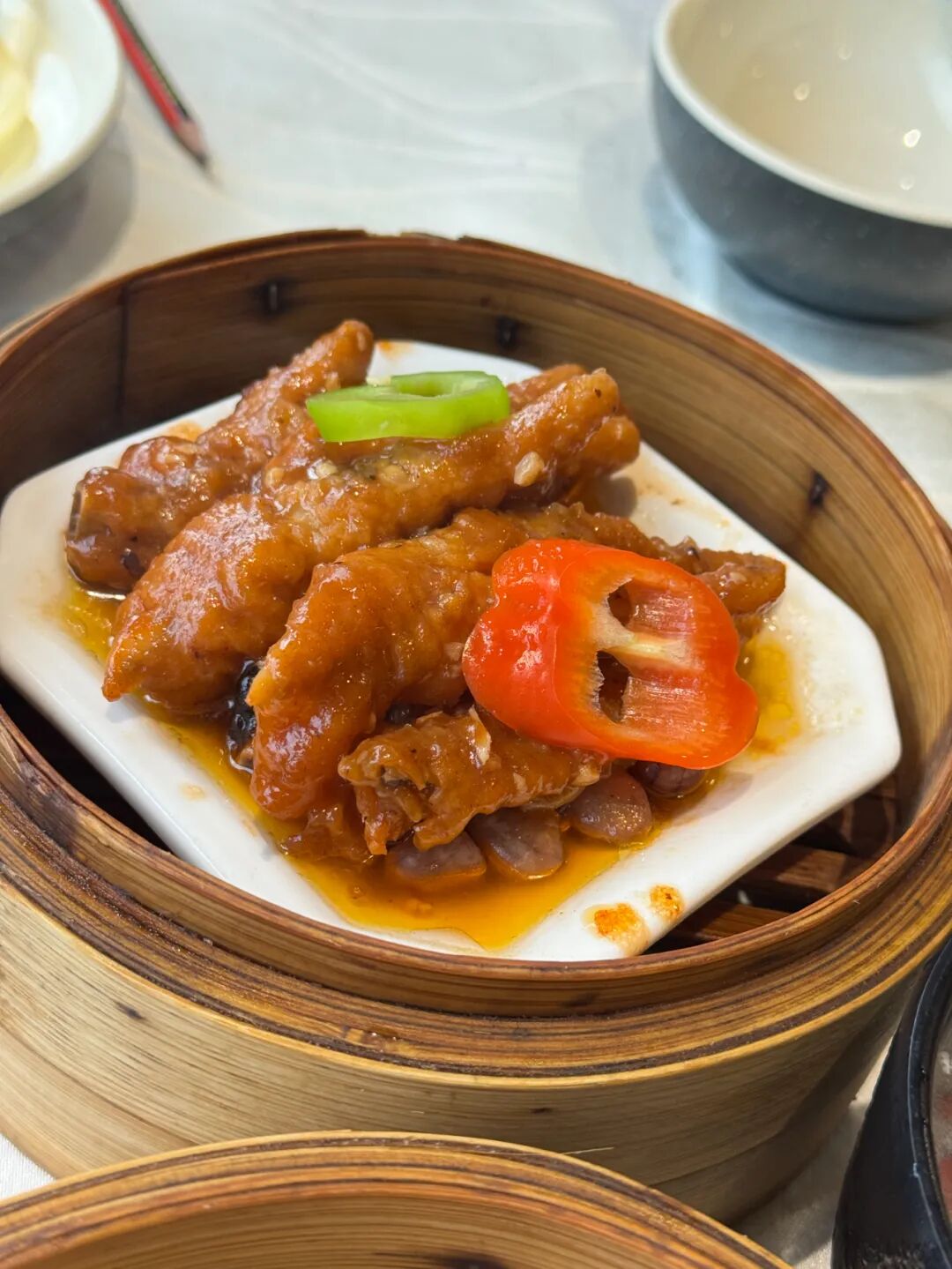
Steamed chicken feet with golden garlic sauce (jinjiang suanxiang zheng fengzhua)
If you eat morning tea alone in Guangzhou, you can order about three dishes based on the portion sizes. You can eat something different every day for about half a month. After that, you can start the cycle over again, which gives people a reason to get up early every day.
Qingyuan chicken bun (qingyuan jirou bao)
Cantonese morning tea is mostly light and contains no spicy flavors, making it suitable for children and people with sensitive stomachs.
Beef short ribs in black pepper sauce (heijiao shaozhi niuzaigu)
Morning tea is served from 7:00 AM to 11:30 AM. On weekdays, you mostly see local Guangzhou people drinking tea. They have money and time. According to my Guangzhou friends, they do not care much about how they dress. They might go out in a worn-out tank top and flip-flops, but they are very particular about food. They believe that what you put in your stomach is what really matters, which shows the practical nature of Guangzhou people.
Supreme shrimp and chicken dumpling (xianxia jili shaomai huang)
My taste preferences have changed over the years. I do not have much of an appetite for large, heavy-flavored meals anymore. I focus more on healthy eating and prefer light, small, and delicate food. My love for Cantonese morning tea grows every day, but unfortunately, I cannot find it in Beijing yet.
Mango coconut milk cake (xiangmang yezhigao)
I once had Wuzhong morning tea in Wuzhong, Ningxia, and I think this is a very promising and innovative way to do breakfast.
Pan-fried curry beef buns (shengjian gali niurou bao)
If you are trying Cantonese morning tea for the first time, I think you must order the barbecue pork buns (chashao bao) and pan-fried buns (shengjian bao). Rice noodle rolls (changfen), shrimp dumplings (xiajiao), and steamed chicken feet (zheng fengzhua) are also the best dishes to represent Cantonese cuisine. You might not get used to the taste, but you should definitely try them.
Thai-style chilled durian mochi (taishi bingpi xue liulian)
You should also try the small Cantonese desserts. They are delicately made and look beautiful. They come in portions of three, which is a hint that you should bring two friends along.
Swan-shaped durian pastry (tiane liulian su)
This swan-shaped durian pastry is a new addition. When I came here last time, it was just the regular gold-medal durian pastry (jinpai liulian su), so they really put effort into the shape this time.
Pan-fried water chestnut cake (xiangjian mati gao)
Beef brisket egg noodles (niunan tang danmian)
Cantonese-style noodle soup and rice noodle rolls have a fresh, slightly sweet taste that many women enjoy. I don't particularly like them, as I prefer the salty and savory style of Northwest Chinese noodles, but since I am in Guangzhou, it is worth trying a bite.
Chestnut and mushroom chicken rice noodle rolls (jinli xianggu jirou changfen)
The yogurt cake and egg tarts are a kind of innovative fusion dish because they use dairy products from Xinjiang. Green vegetables hold an important place in Cantonese cuisine. Guangzhou people must have green vegetables with their meals, and here, green vegetables only refer to leafy greens; gourds and root vegetables do not count.
Xinjiang smooth yogurt cake (suannai gao)
Xinjiang milk egg tart (puta)
Boiled Ningxia choy sum (caixin)
People in Guangzhou care a lot about healthy eating. They want fresh ingredients and balanced nutrition. They cook with all kinds of land and sea animals. You can find these dishes at morning tea, which lasts until lunch. After a midday break, people go back for afternoon tea. When it gets dark and cool outside, there is a late-night snack culture. You can spend the whole day eating.
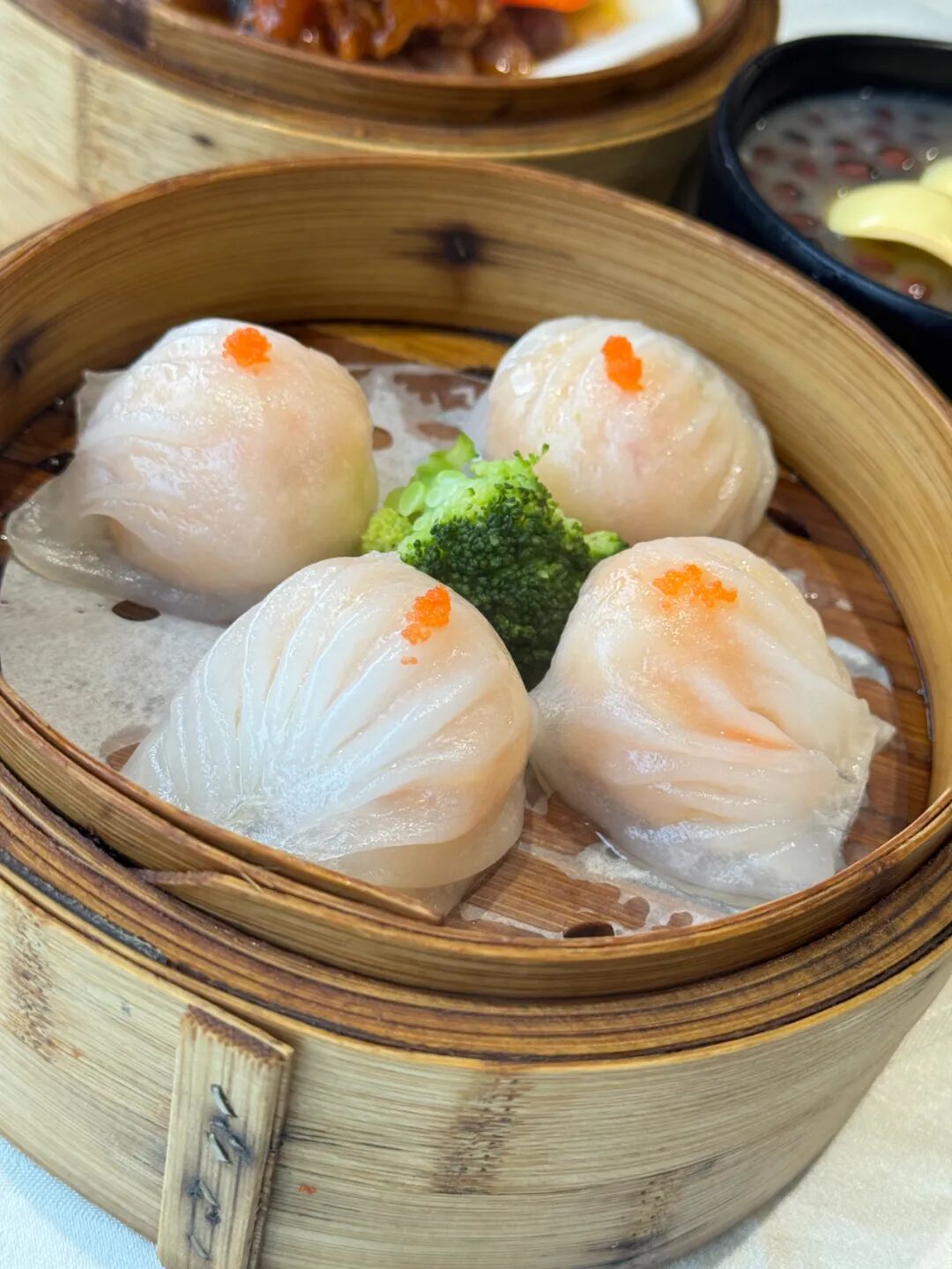
Original juice bamboo shoot shrimp dumpling (xiajiao huang)
Mango pomelo sago (yangzhi ganlu)
Malay satay beef tripe (jinjian du)
Dried fish and peanut congee (chaiyu huasheng zhou)
Healthy sesame cake (zhima gao)
Southeast Asian shrimp red rice noodle roll (hongmi changfen)
6. Hui Muslim Restaurant (Huimin Fandian)
Huimin Restaurant is a state-run Guangzhou classic that has been open for over half a century. Most of the customers are local people from the neighborhood. I asked my local friends in Guangzhou, and they approve of the food quality here. They serve morning tea, afternoon tea, and regular meals. If you come for morning tea on a weekday, you get a discount.
Inside the restaurant, a sign says they serve Hui Muslims before 9 a.m., but when I arrived before 9, I mostly saw local residents of all backgrounds. The restaurant has a strong state-run vibe, and the service is okay. The tea set is not as fancy as the one at Xinjiang Mansion. You only get one teacup and one teapot, and the space is smaller and noisier.
Lamb barbecue bun (yangrou chashaobao)
For Cantonese-style dim sum, the Hui Muslim restaurant makes it more authentic. Take this lamb barbecue bun, for example; it is the only one of its kind in Guangzhou. Barbecue pork (chashao) means roasting meat on a fork, then wrapping it in dough to make a bun. When steamed, the top of the bun splits open naturally. I eat this every time I come here, as it is hard to find such authentic and delicious barbecue buns once you leave this restaurant.
Chicken broth soup dumpling (jizhi xiaolongbao)
Soup dumplings are one of my favorite breakfasts. When my appetite is not fully awake in the morning, I prefer delicate flour-based snacks. I might not have the appetite to finish a large steamed bun.
Job's tears and beef tripe porridge (yizhao niudu zhou)
In Beijing, I would never expect to find such a variety of nutritious porridge for breakfast. I have to complain about the porridge here, though. It does not taste like it was freshly cooked this morning; it tastes like it was reheated from a pre-made batch. Freshly cooked porridge has a thicker texture, and this place is not as good as Xinjiang Mansion in that regard.
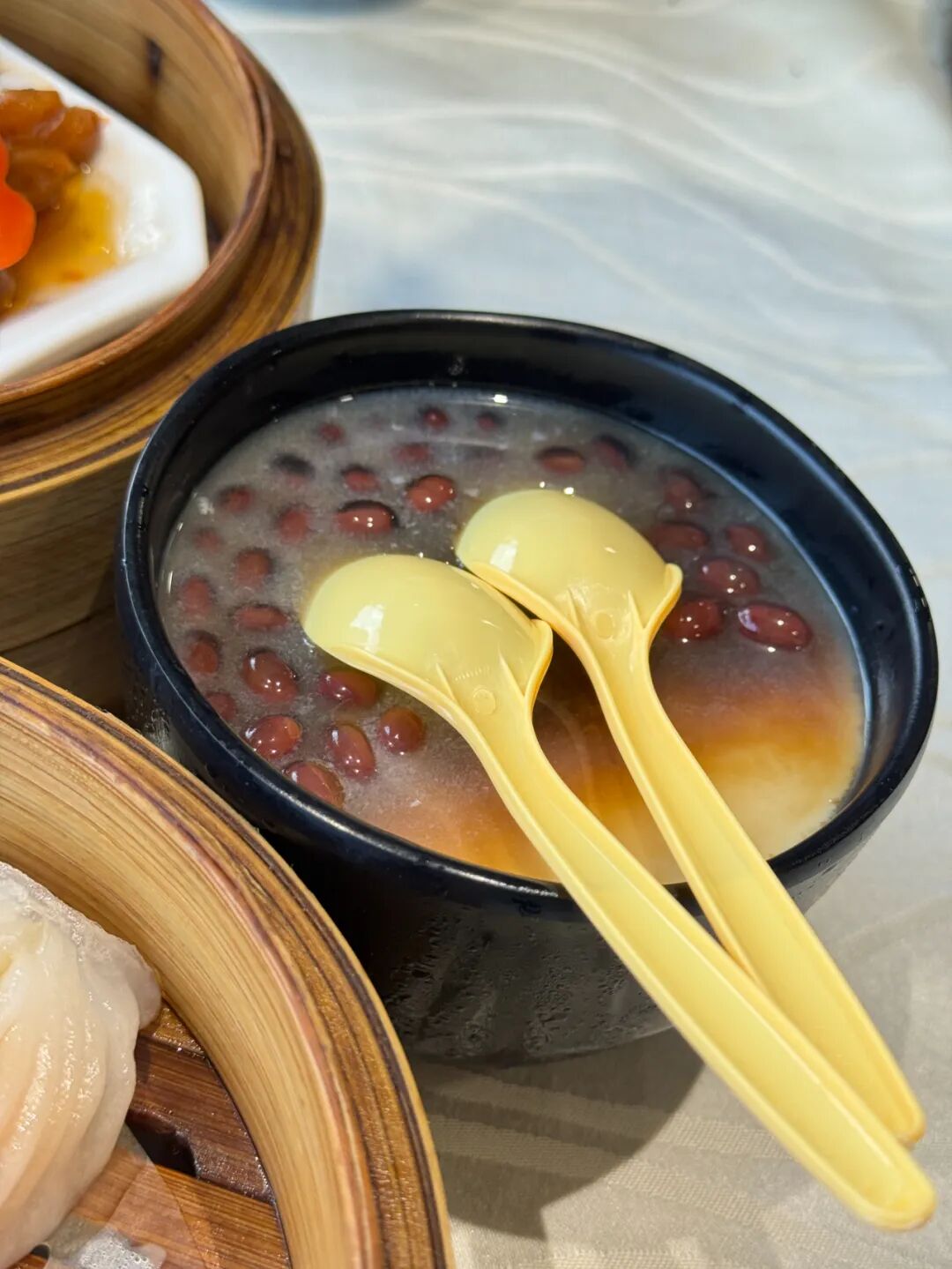
Coconut sticky rice cake (yexiang nuomici)
The dim sum tastes pretty good, but it looks plain. It is not as refined as the food at Xinjiang Mansion, so it is not great for taking photos to post on social media. Many friends have told me the service at the Hui Muslim restaurant is bad. I did not experience that myself, but in terms of small details, Xinjiang Mansion is definitely more comfortable for dining.
Curry beef rice noodle roll (gali niurou changfen)
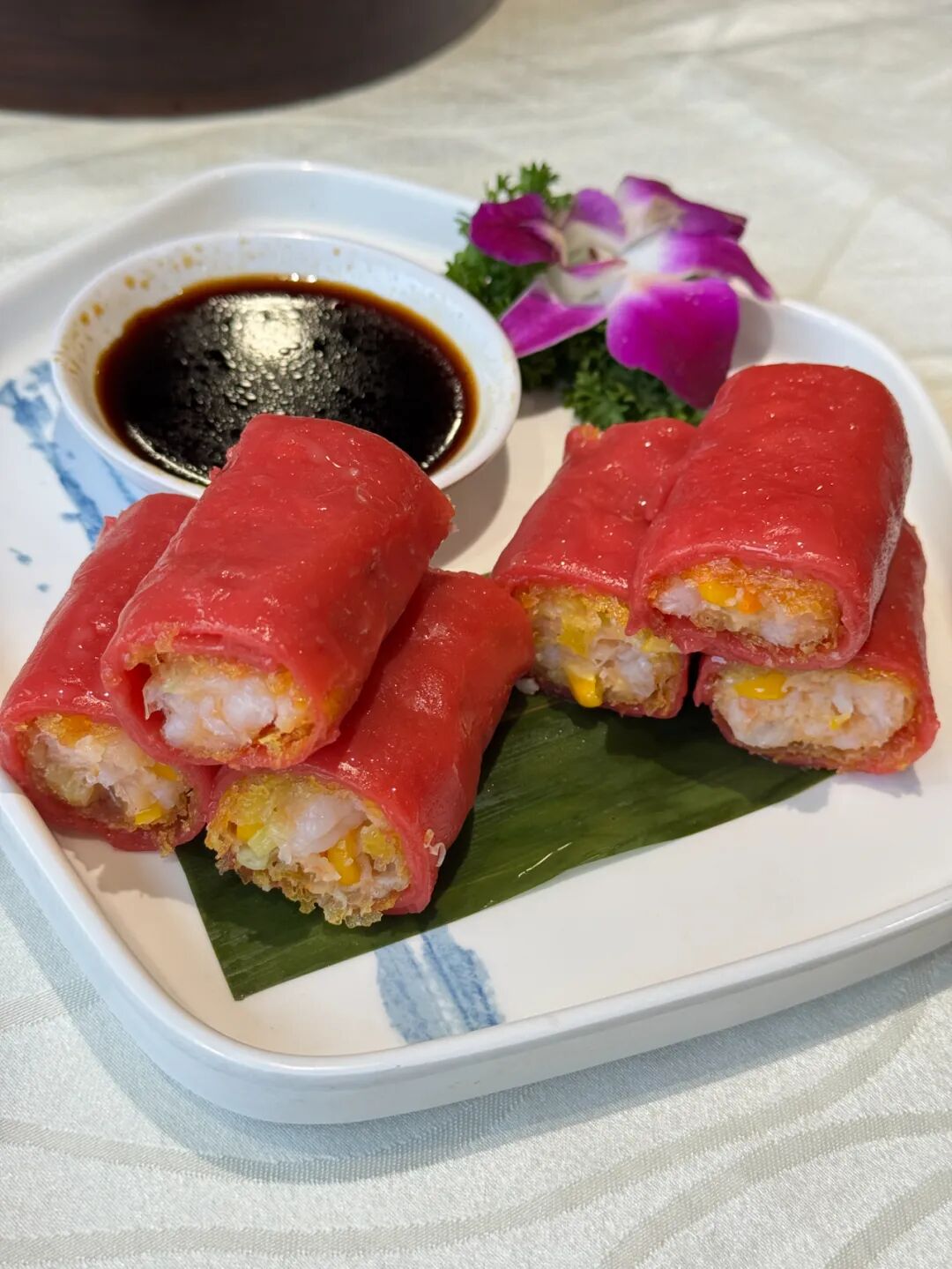
Shrimp salad dumplings (shalü mingxia jiao)
The dim sum platter I had today tasted a bit salty; it wasn't this salty before.
Three-item dim sum platter
7. Ma Xiaohuo Handmade Pulled Noodles and Barbecue
I ended up at this shop by accident. I was catching up with a friend at a cafe, but they felt the air conditioning was too strong, so we moved outside. Suddenly, a storm hit Guangzhou. We ducked into this little shop to escape the rain, ordered some food, and were surprised by how good it was.
My friend had a bowl of pulled noodles (lamian), and I ordered a portion of Xinjiang rice noodles (xinjiang mifen). The rice noodles came with plenty of toppings and tasted great. The shop was clean and bright. Although it was small, the dining experience was very comfortable. It is a chain, and there are currently three branches in Guangzhou.
8. ANTALYA Turkish Restaurant
Antalya Restaurant's Liede branch was the first place we chose for our team building. The second floor has Central Asian-style decor where you take off your shoes and sit on carpets. You used to be able to experience this at Rumi's Secret in Beijing, but unfortunately, that location closed. However, a new Rumi's Secret opened in Urumqi, and I visited it the year before last; the environment there is even better.
For Middle Eastern cuisine, black tea and baklava are must-haves, along with my favorite Turkish coffee. Whether it is day or night, I always have a cup whenever I eat Turkish food.
Besides its rich texture and coffee grounds, a highlight of Turkish coffee is the cup. It must not be served in a clear glass; it has to be in an exquisite porcelain cup to be authentic.
Hummus (yingzuidou ni)
The overall feel of this restaurant is just like Rumi's Secret, and the prices are similar, averaging about 200 yuan per person. The flavors are a bit localized and lighter, which suits Chinese tastes better.
Chicken leg with Arabic rice.
Hollow balloon bread.
Mixed chicken and beef kebab platter.
Cheese flatbread (pide).
Lamb patty with yogurt.
I have to say a few words about this final ice cream; it is not as good as MADO, a Turkish ice cream brand that uses goat milk. I will introduce the MADO ice cream shop in Guangzhou specifically later.
Ice cream.
9. MADO Turkish Ice Cream and Coffee Shop.
MADO is very famous, and I had heard of it for a long time. I still remember the rich milky flavor of the MADO ice cream I ate in Beijing. Before coming here, I checked and found that there are two branches in Guangzhou. We ate at MADO twice because most of the members in my Guangzhou group are women who love it, so I had to arrange it.
The ice cream shop has a wide variety of sweets and also serves full meals. It is Turkish cuisine, but the quality of the meals is not as good as the ice cream, so I suggest only eating ice cream there.
When you enter the shop, you can order ice cream first. You can mix and match from over twenty flavors. You can order a four-layer serving with four different flavors, which is the best value.
You can also sprinkle various toppings on the ice cream. I like the original handmade ice cream the best; it has the silkiest texture and a full milky flavor. The other flavored ice creams are not as good as the original.
The girls love the raspberry flavor. Raspberries are red, sweet, and tart, and Lu Xun even mentioned them in his writing.
The Turkish restaurants in Guangzhou are mostly filled with foreigners who enjoy chatting and smoking shisha in the cafes.
Sultan's Boat
If you see the colorful ice cream on the menu and don't know what to pick, I suggest getting the handmade ice cream in the original flavor. It is the best and does not need any extra toppings.
Handmade ice cream
The Turkish coffee is made so delicately and even comes with a small flower for decoration. I felt happy as soon as I walked into this shop, and eating dessert always puts me in a good mood. I really hope they open a branch in Beijing, where many people still love eating ice cream even in the winter.
Shepherd's salad
The main courses are just average and do not taste as good as those at Turkish restaurants that specialize in full meals. It is better to come here for afternoon tea or a late-night snack to have ice cream and desserts.
Mexican grilled meat wrap
Turkish stuffed flatbread (pide)
10. Xianglan Indonesian Restaurant
Ever since the Southeast Asian halal restaurants in Beijing all closed down, I have not been able to find authentic Nanyang-style food near my home. The last time I had Indonesian food was in Kuala Lumpur, but I did not even eat Indonesian food this good while I was in Indonesia.
The first reason to recommend this place is that it made the Michelin Bib Gourmand list. This is Michelin's list for affordable restaurants, with an average cost per person under 100 yuan. Being on this list in a food city like Guangzhou really says something.
I think everything on their menu is a specialty. Basically every dish is delicious, including the drinks. I don't know how the owner and the chef manage to hit the mark so perfectly for every diner's taste buds.
Fresh lime and lemongrass soda and pandan coconut custard cake (pandan ruanxin yezhigao).
Many friends highly recommended this place to me before I even arrived in Guangzhou. My taste matches the general public's, so I had high expectations, but it was only after tasting it myself that I realized it truly lives up to its reputation.
Bali crispy duck (Bali dao zangzang ya).
Although this restaurant has many dishes, the portions are small. This is perfect for someone like me who wants to try new things without wasting food. Also, they don't sell alcohol, which gives me peace of mind while eating. The staff mentioned that the owner is an Indonesian Chinese.
Black nut beef soup rice (heirouguo niurou tangfan).
Since I have traveled in Indonesia, I know that traditional Indonesian food doesn't usually focus on presentation. However, this restaurant has clearly adapted to the local style in Guangzhou. They pay close attention to color combinations in every dish, so they look great in photos.
Rambutan beef fried rice (hongmaodan niurou chaofan).
There is only one Xianglan Indonesian restaurant left in Guangzhou, and you have to wait in line during meal times.
Seafood turmeric rice (haixian hui huangjiangfan).
Grilled chicken with candlenut garlic sauce (shili suanrongjiang kaoji).
Lemongrass and turmeric fried chicken (xiangmao huangjiang zha tuji).
Kaya and avocado toast (kaye niuyouguo kao tusi).
Snack platter.
11. Saba Restaurant
The name makes it clear this is a Southeast Asian restaurant, but they also serve Middle Eastern food. My friend and I chose this place because we once traveled to Sabah together and have many great memories. Meeting up in Guangzhou now, things feel just like they used to.
When we walked in, the restaurant was playing Quran recitations, and they do not serve alcohol. I was surprised to see that most of the diners were Black. Since my first visit to Guangzhou in 2015, I noticed that over 80 percent of the friends (dosti) at Friday prayers (Jumu'ah) were Black. Today, the number of Black people in Guangzhou has dropped by more than half, and it is rare to see them at Friday prayers now.
Tom yum soup (dongyingong tang).
The menu starts with Thai dishes, followed by Chinese and Western food. I chose the tom yum soup, and they actually served it in a small hot pot.
Pineapple fried rice (boluo chaofan).
I loved eating pineapple fried rice when I traveled in Malaysia. The version here was just okay. Maybe the setting was wrong, so it didn't taste right. Sometimes you need the right mood to enjoy good food.
Lemon tilapia (ningmeng luofeiyu).
I picked dishes we had eaten while traveling in Thailand and Malaysia to reminisce about our time wandering the world.
12. AL MANARA Lebanese Restaurant
Guangzhou used to have two Lebanese restaurants. I went to the other one only to find it had closed. This shop is a roadside storefront with no main dining hall, just a few tables set up outside. It is very simple.
Chickpea puree (hummus) with Arabic flatbread (khubz)
A lady from Northeast China works here and speaks fluent Arabic. The person grilling the meat is a Lebanese Arab.
Chickpea fritter (falafel) chicken wrap
This Lebanese restaurant does not have as nice an environment as Alameen in Beijing, but the taste is authentic and the prices are affordable. Overall, it is not as good as the Lebanese restaurants in Beijing, which makes me feel a bit better.
Lemon mint drink
13. ARMADA Middle Eastern Cuisine
Most halal Western restaurants in Guangzhou are run by Turkish people. This place, Armada, is the same and is located near Xiaobei.
Assorted flavor soup (mercimek corbasi)
My friends in Guangzhou had never been to this shop, so I brought them here to check it out. Once inside, I noticed the waitresses were wearing headscarves (hijab). It is an alcohol-free restaurant.
Shepherd's salad
Rose black tea
The ladies love drinking rose black tea. I saw a Moroccan specialty tagine on the menu, so I ordered it. Guangzhou used to have a Moroccan restaurant, but it closed down during the pandemic.
Chicken and eggplant tagine
The restaurant's grilled meat and meals are all delicious, better than the main courses at MADO.
Mixed grilled meat platter
Cheese and tenderloin pizza view all
Summary: This 2025 Guangzhou halal food map follows Xiaobei, Shangbu, no-alcohol halal dining, Asia International Hotel, Cantonese morning tea, Baghdad Cuisine, American-style barbecue, Xinjiang Mansion, Hui Muslim Restaurant, Antalya, MADO, Indonesian food, Lebanese food, and Middle Eastern restaurants.
I have been to Guangzhou at least five times. This time, a business trip gave me the chance to dine at several high-quality restaurants. I have a feeling that the variety of halal food in Guangzhou is now close to that of Beijing. It is worth noting that most halal restaurants in Guangzhou do not sell alcohol, which is extremely rare in Beijing. As both are top-tier cities, I think Guangzhou manages this because of an unspoken agreement among the restaurants. In the Xiaobei and Shangbu areas, where many halal restaurants are clustered, most do not sell alcohol. However, restaurants outside these areas do. This is just like in Xi'an, where halal restaurants in the Muslim Quarter (Huifang) do not sell alcohol, but those that open elsewhere do. This kind of agreement seems unlikely in Beijing, where most halal restaurants operate like lone wolves and find it hard to reach such a consensus.
The list of restaurants introduced in this issue is as follows:
1. Asia International Hotel · Asia Fengcai Xinjiang Restaurant
2. Yishanggong Cantonese Morning Tea (Guangshi Zaocha)
3. Baghdad Cuisine Restaurant
4. Yiyun Niudao American-style Barbecue
5. Xinjiang Mansion Cantonese Morning Tea (Guangshi Zaocha)
6. Hui Muslim Restaurant (Huimin Fandian)
7. Ma Xiaohuo Handmade Pulled Noodles (Lamian) and Barbecue
8. ANTALYA Turkish Restaurant
9. MADO Turkish Ice Cream Shop
10. Xianglan Indonesian Restaurant
11. Saba Restaurant
12. AL MANARA Lebanese Restaurant
13. ARMADA Middle Eastern Cuisine
1. Asia International Hotel · Asia Fengcai Xinjiang Restaurant
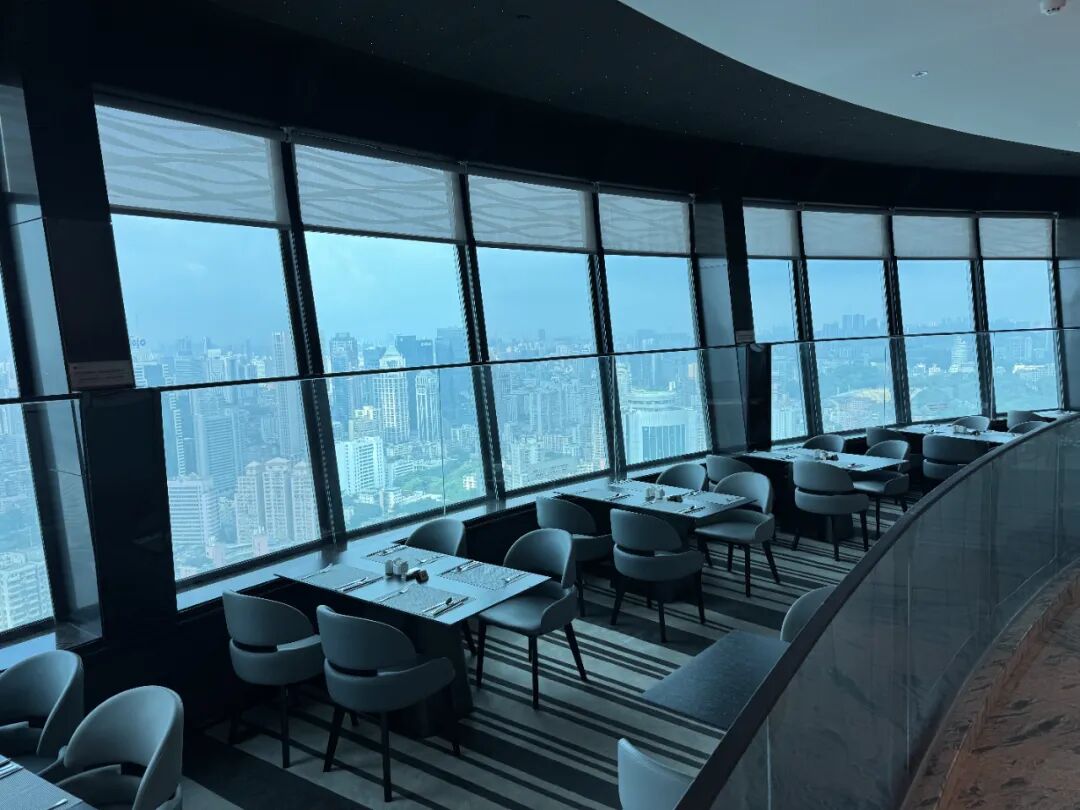
I heard before coming that the Asia International Hotel in Guangzhou had a halal restaurant, so I specifically stayed there for one night. It is an old five-star hotel located in Xiaobei. The facilities are quite dated, which felt like a big drop compared to the Mandarin Oriental where I stayed the night before. However, the hotel has an excellent location and view. The 45th floor is a revolving buffet restaurant where breakfast is served, and the hotel has a dedicated halal section.
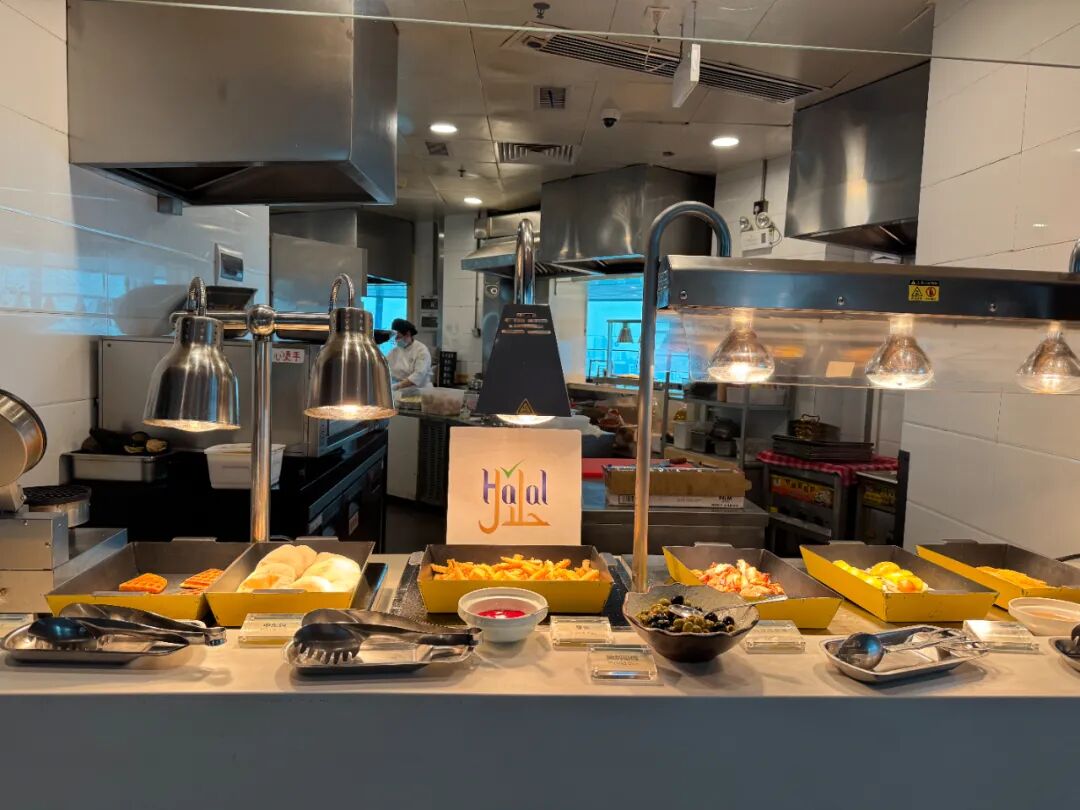
Most guests staying at this hotel are foreigners, primarily Arabs, so there is also an Arabic restaurant on the first floor.
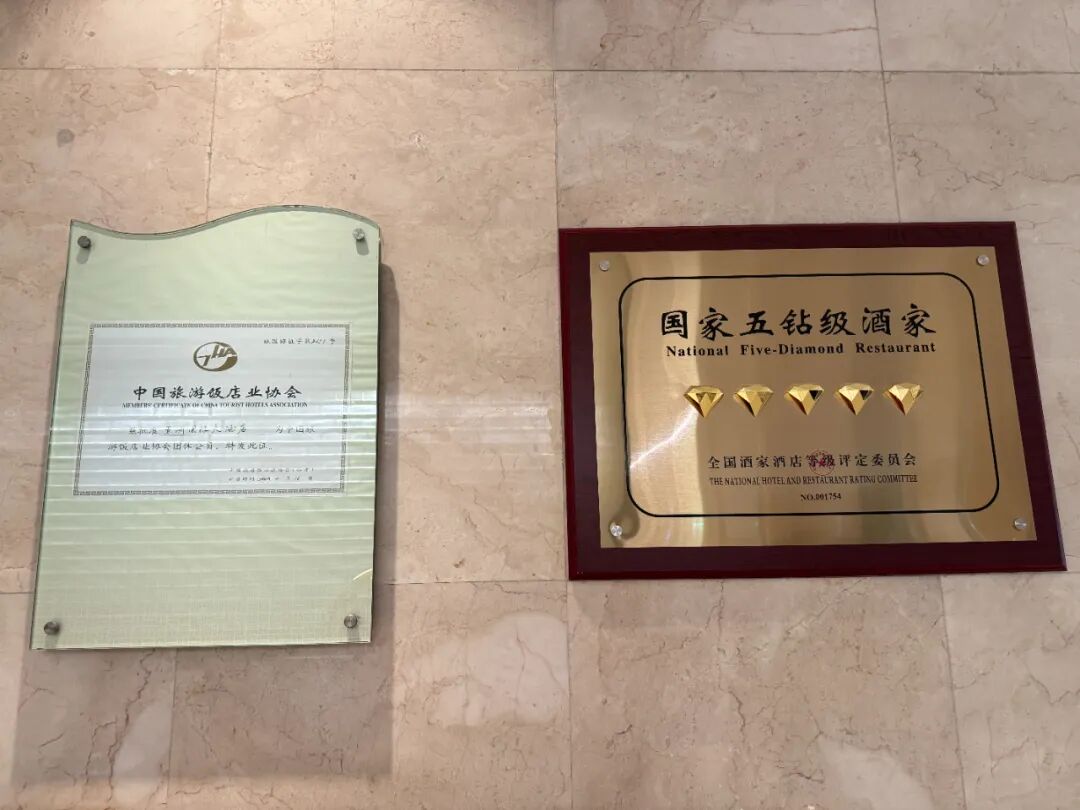
A Xinjiang restaurant called Asia Fengcai opened on the ninth floor of the hotel. Even though it is inside a five-star hotel, the prices are quite affordable, with an average cost of around 100 yuan per person.
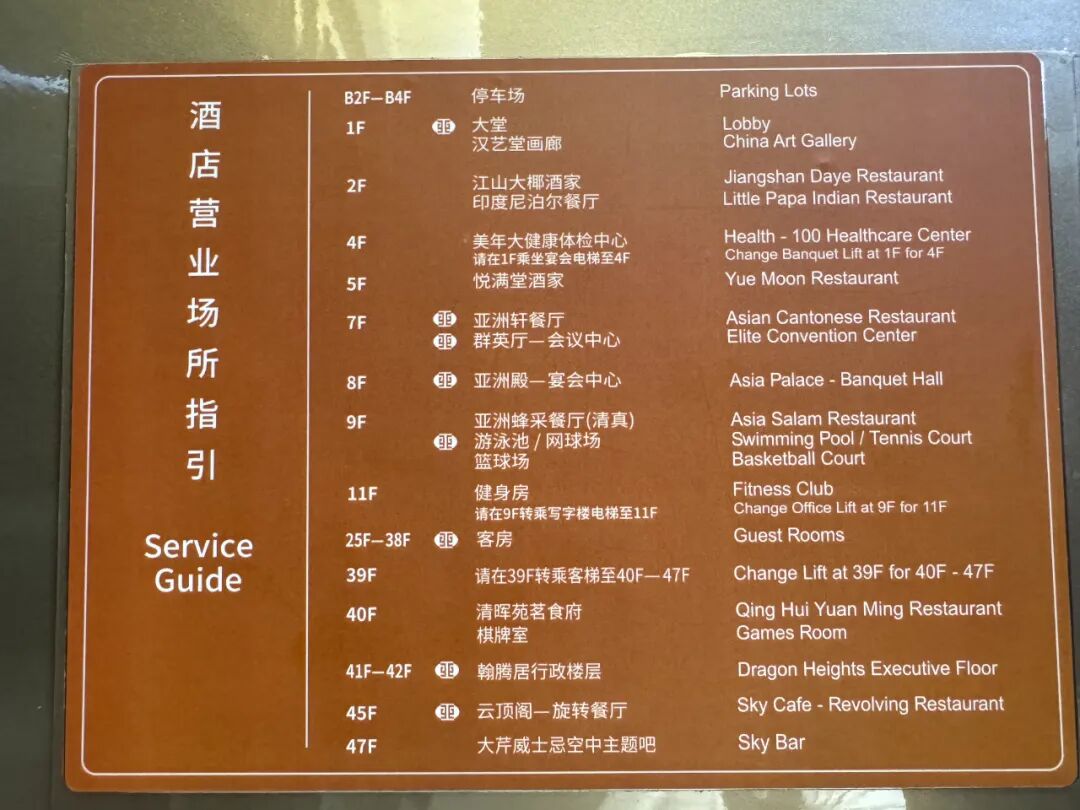
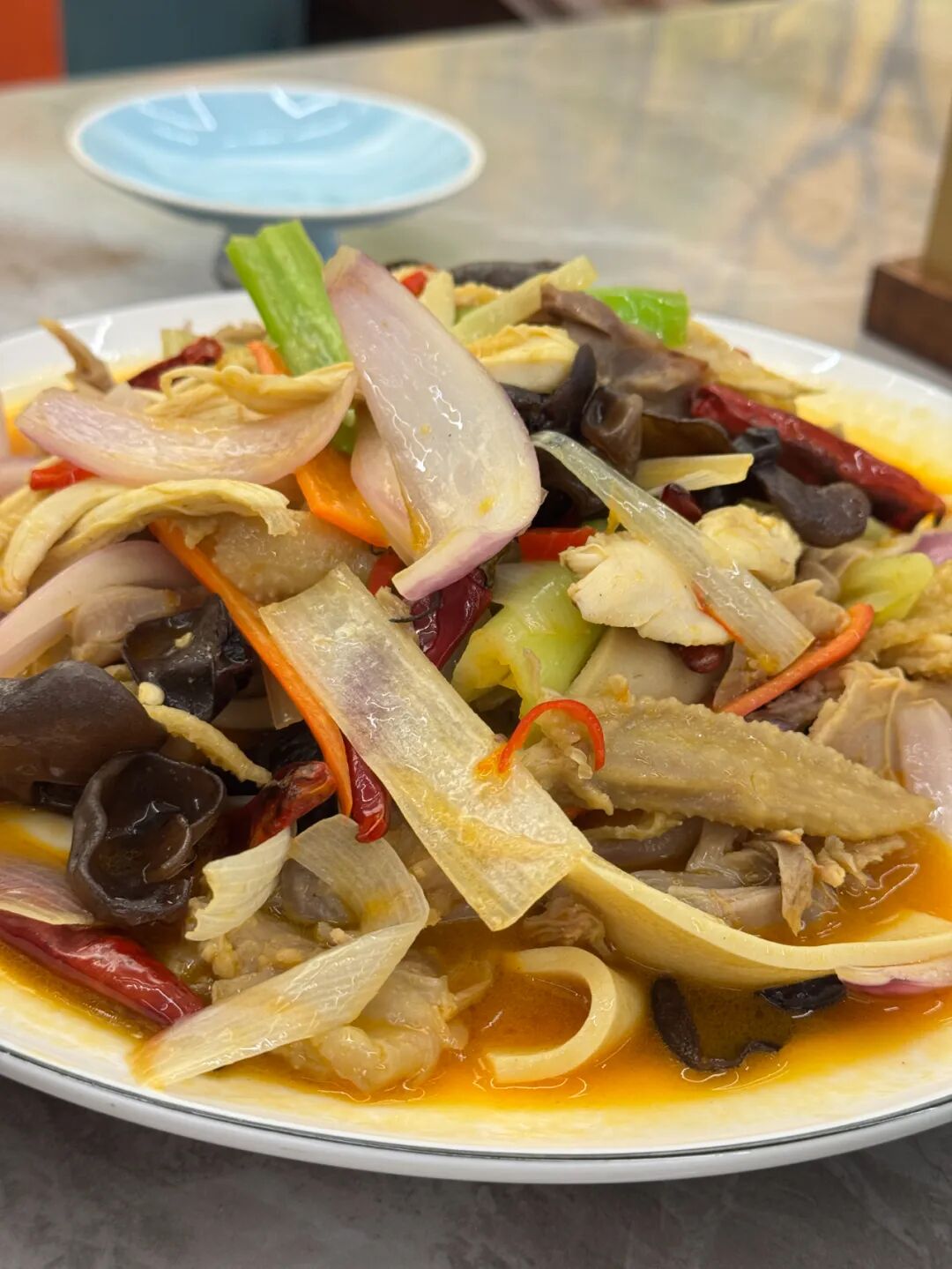
Asia Fengcai is run by people from Ningxia, so the restaurant serves both Ningxia-style northwestern dishes and Xinjiang cuisine.
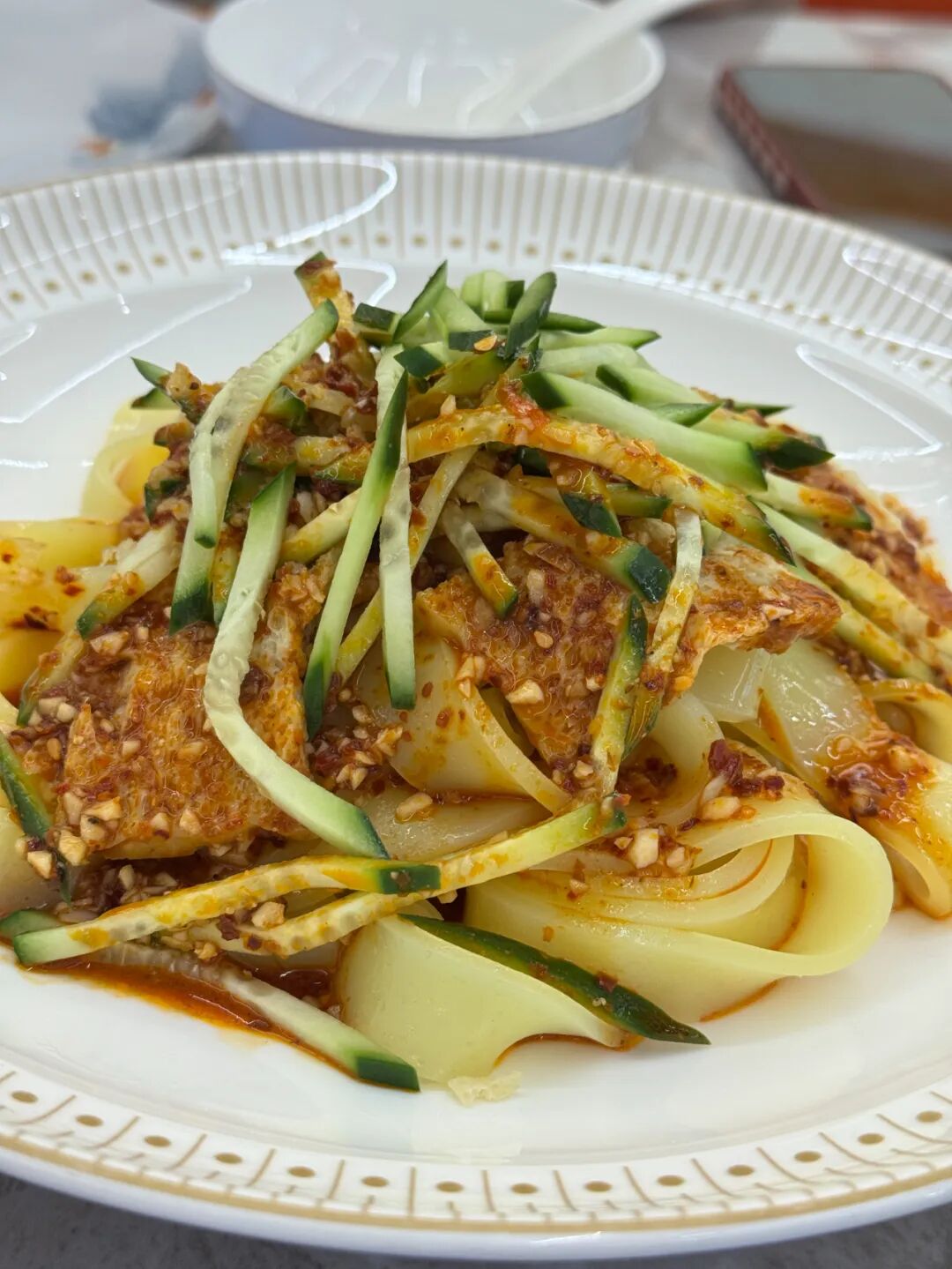
I tried the peppercorn chicken (jiaomaji) and hand-grabbed meat (shouzhuarou) for you, and both tasted good. The peppercorn chicken is on the spicier side.
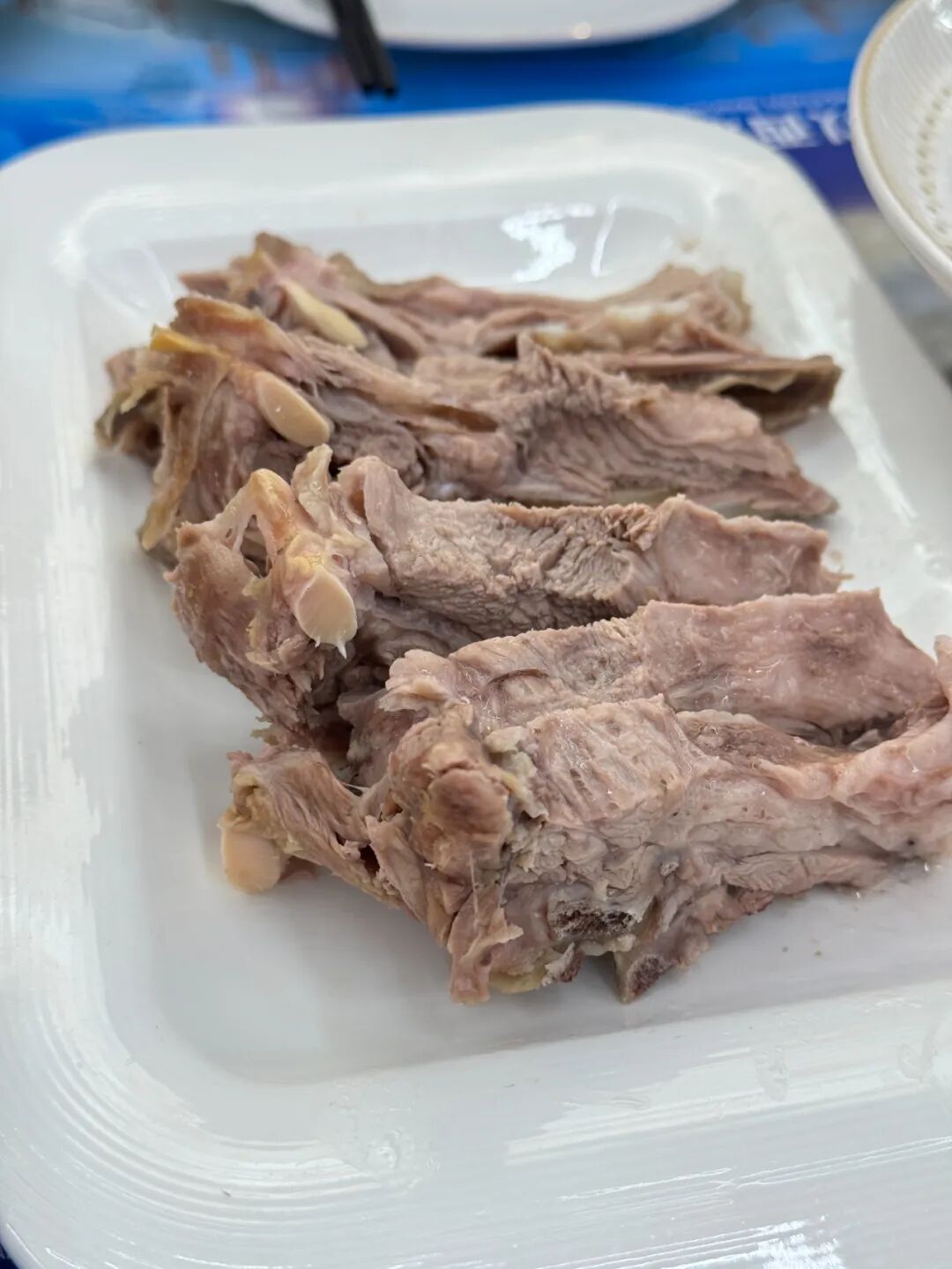
Their hand-grabbed rice (shouzhuafan) is also excellent. They use quality ingredients and include everything that should be in it, which earned praise from my friend.
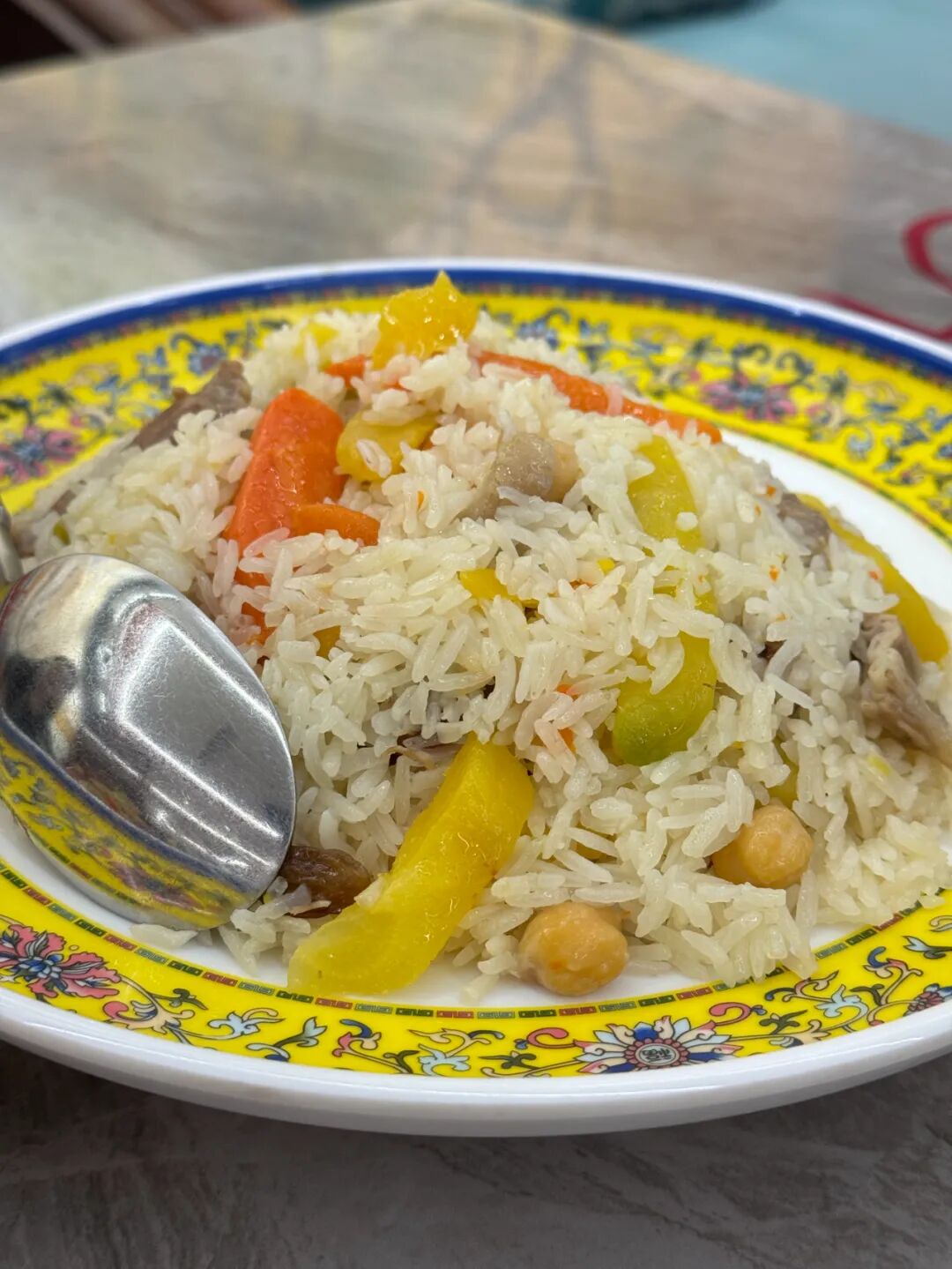
2. Yishanggong Cantonese Morning Tea (Guangshi Zaocha)
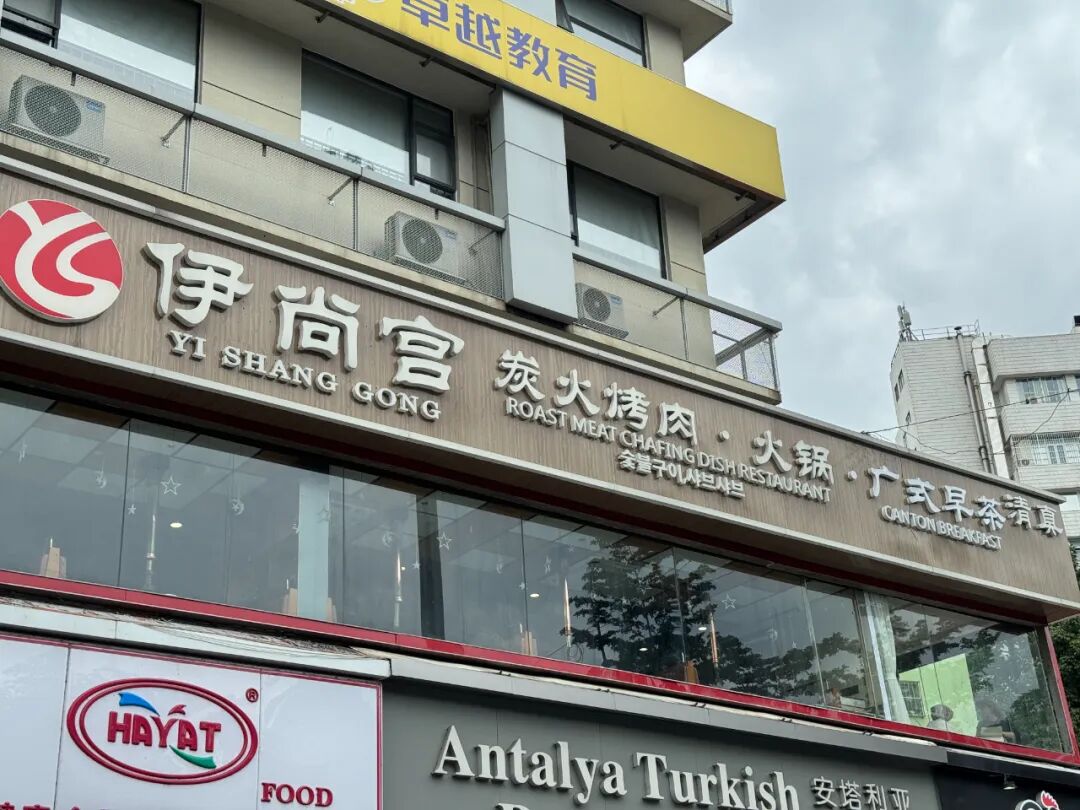
Yishanggong is the third halal morning tea restaurant in Guangzhou. It is also in Xiaobei, just 400 meters from the Asia International Hotel. I ate there twice and basically tried everything on the menu. Compared to the Xinjiang Building, this place is not as refined, but it has its own style. The service is better than at the Hui Muslim Restaurant (Huimin Fandian), and overall, it offers great value for money.
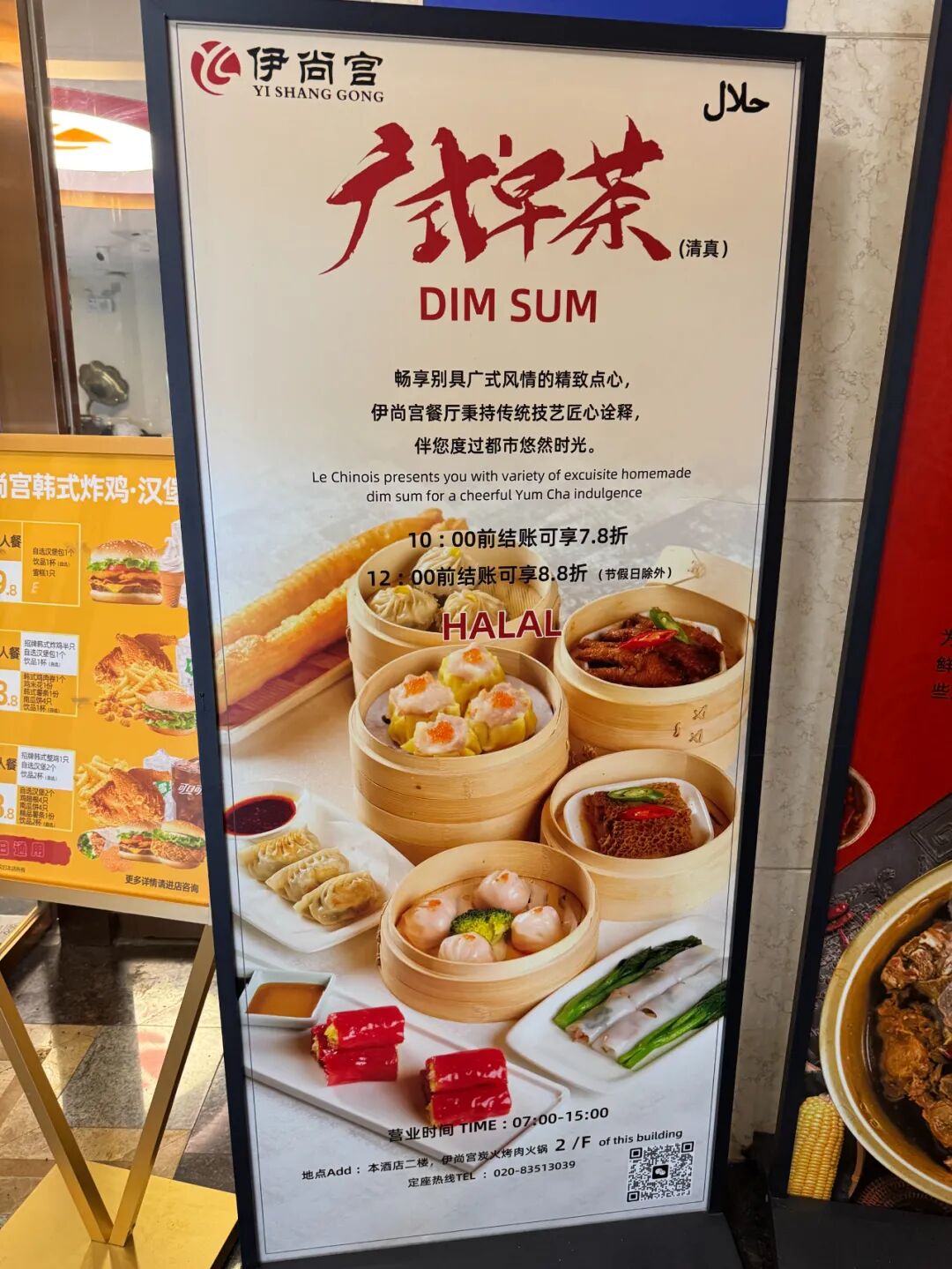
Morning tea is served from 7:00 to 15:00. You get a 22% discount if you pay before 10:00, and a 12% discount if you pay before 12:00. They only serve morning tea during the day, but switch to Korean barbecue and hot pot for dinner.
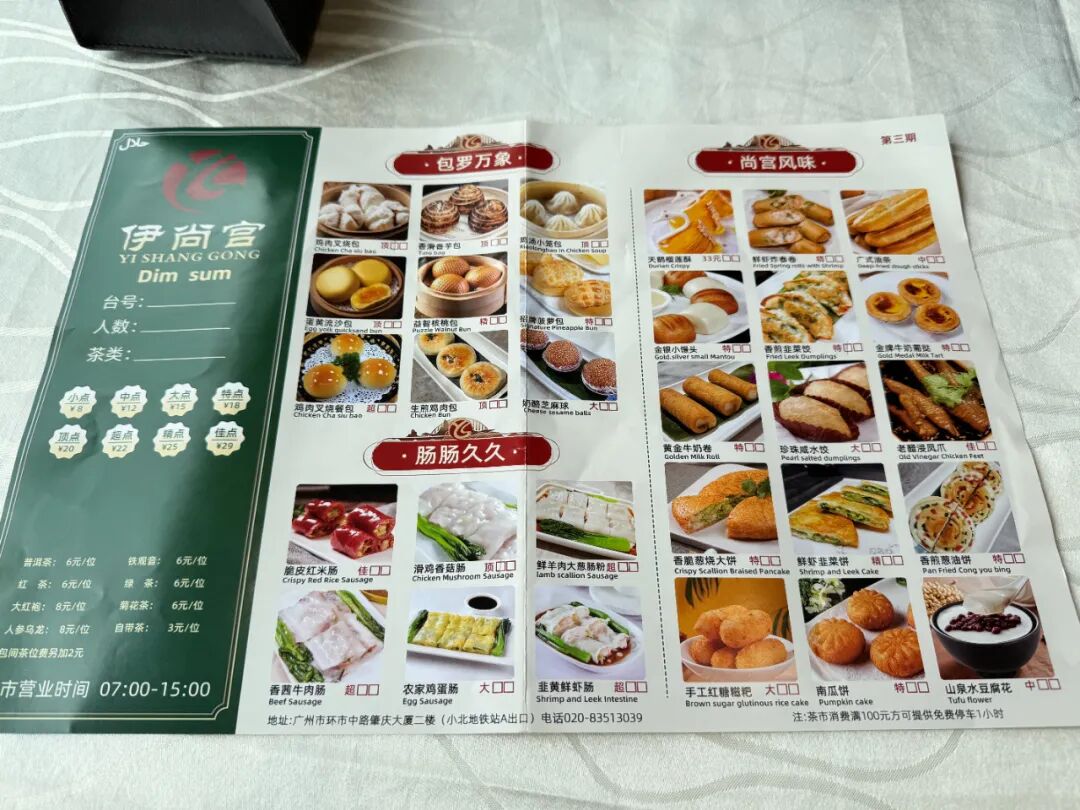
The servers here help rinse the bowls for you, which saves me the trouble. I would not mind skipping it, but rinsing bowls is a local habit for people in Guangzhou.
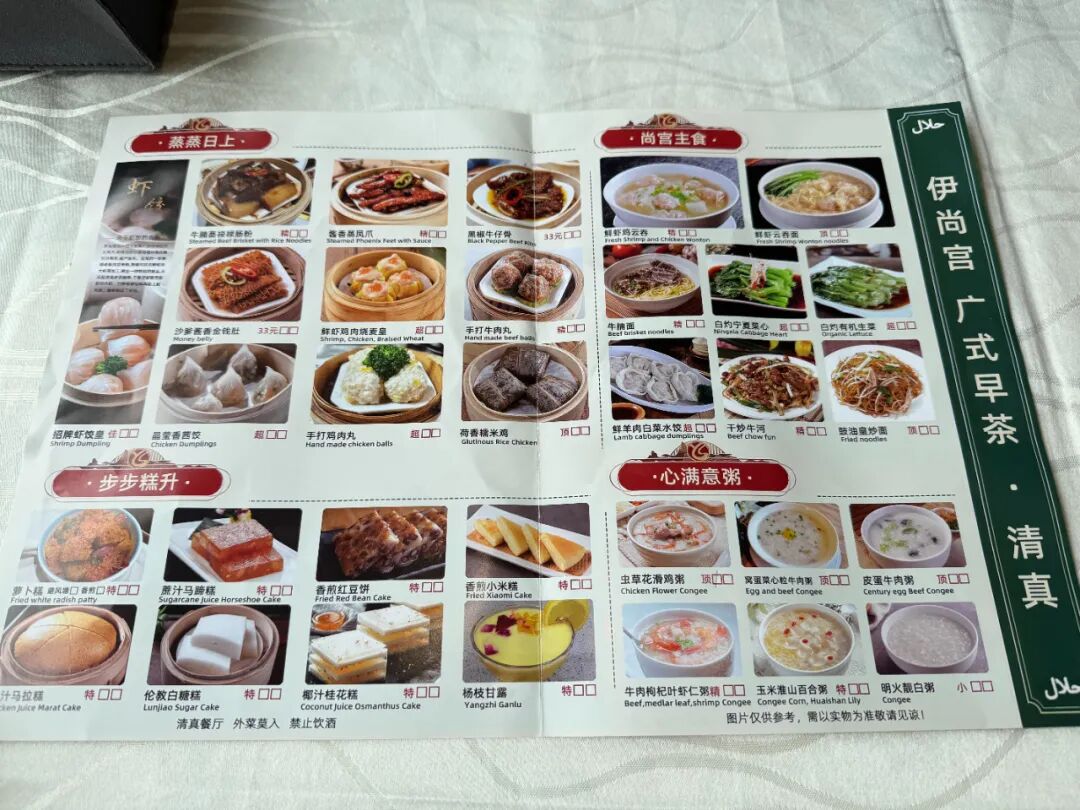
Of all the dim sum I tried here, I did not like their chicken char siu bao. I think the lamb char siu bao at the Hui Muslim restaurant tastes better. Everything else was delicious, and the dim sum is made to order, not pre-made.
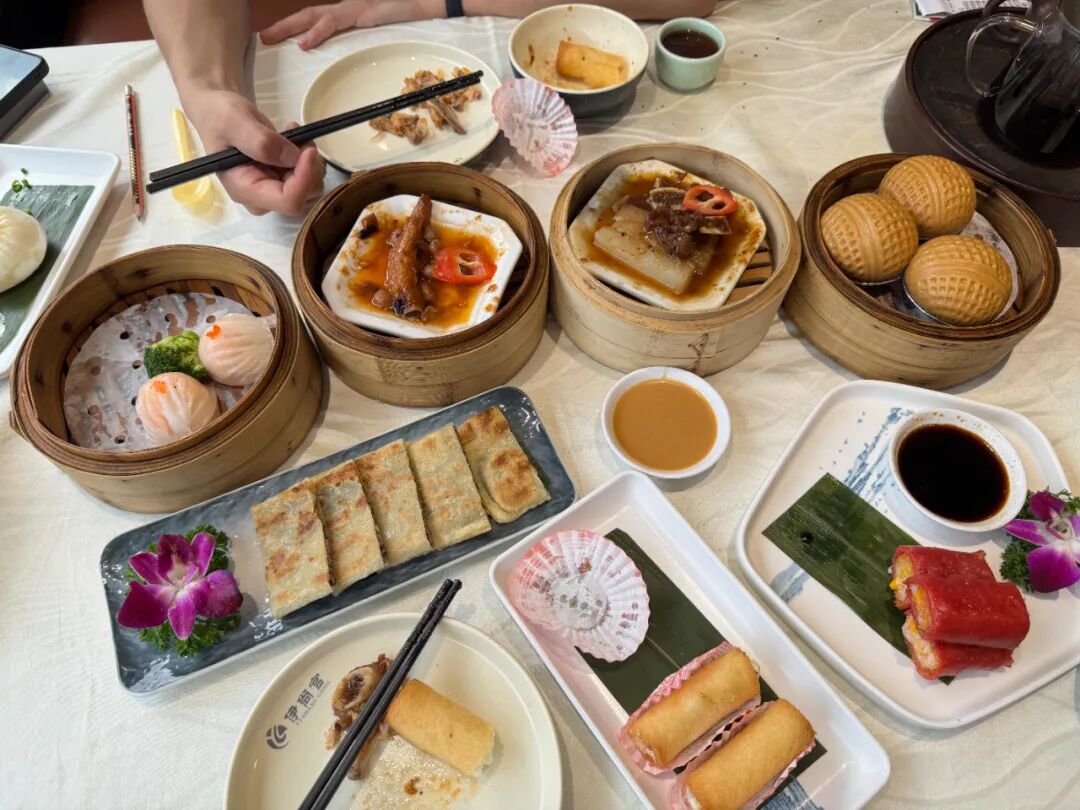
The waitress wears a hijab and is very warm and attentive. The restaurant is alcohol-free.
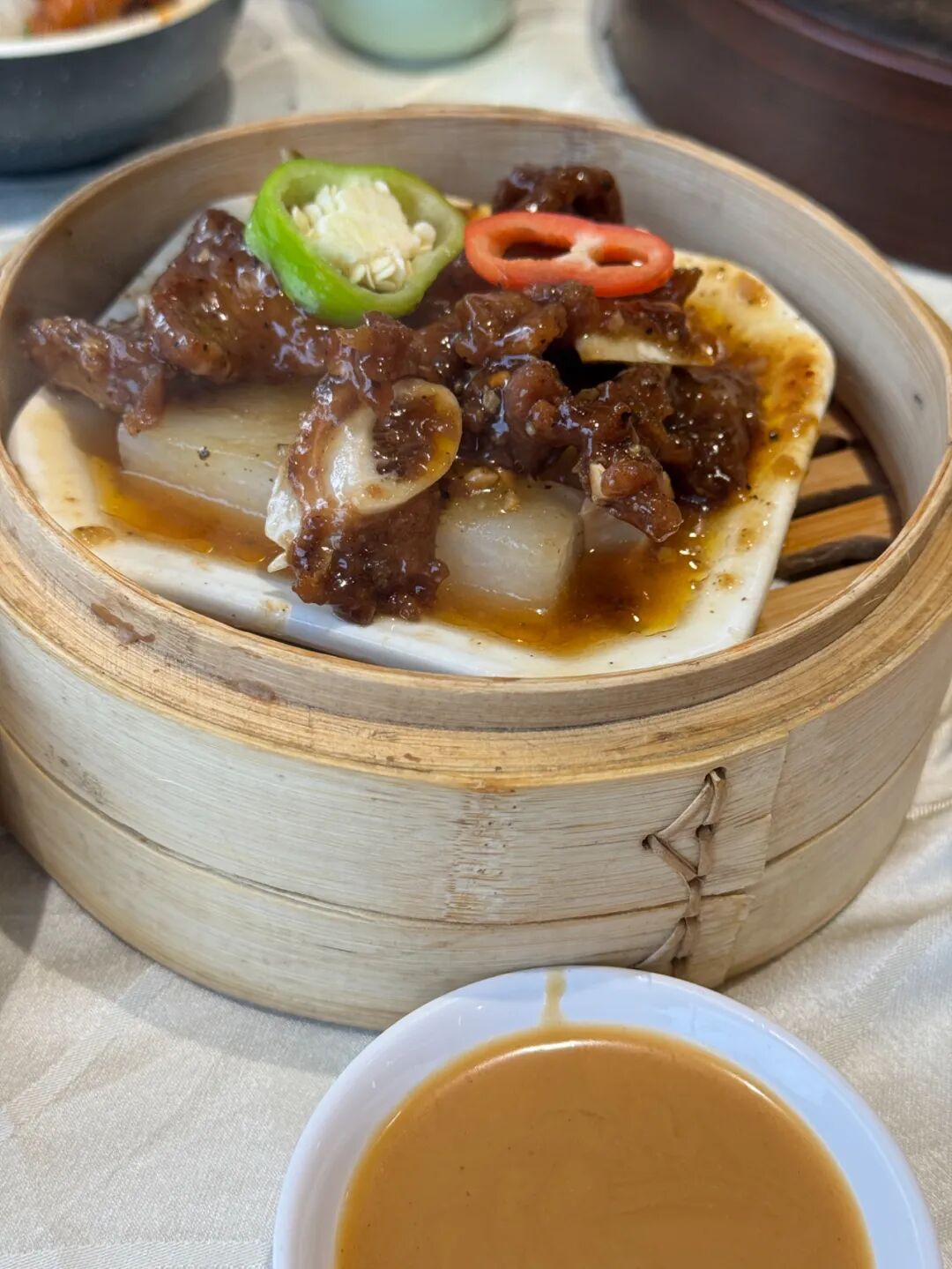
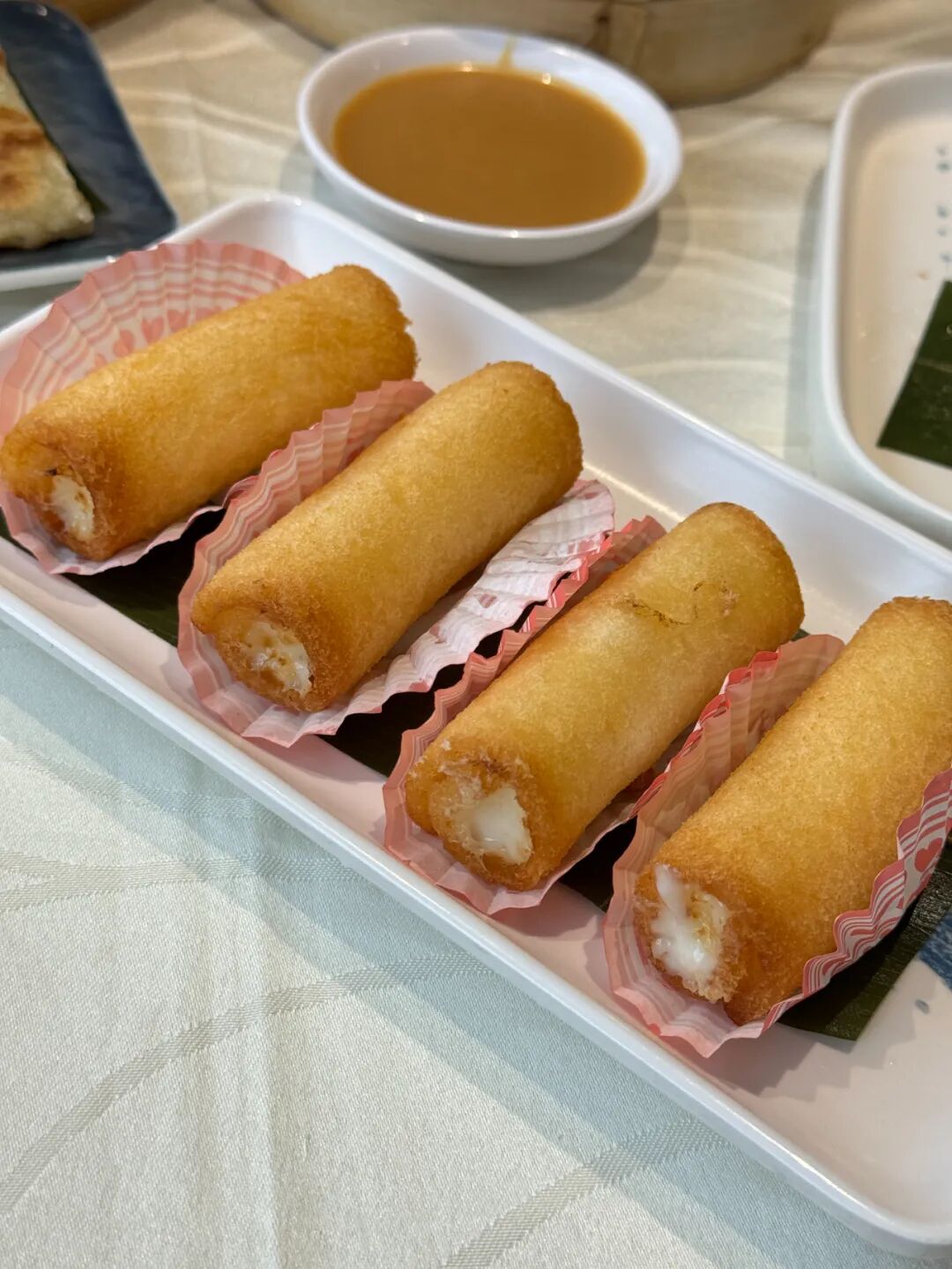
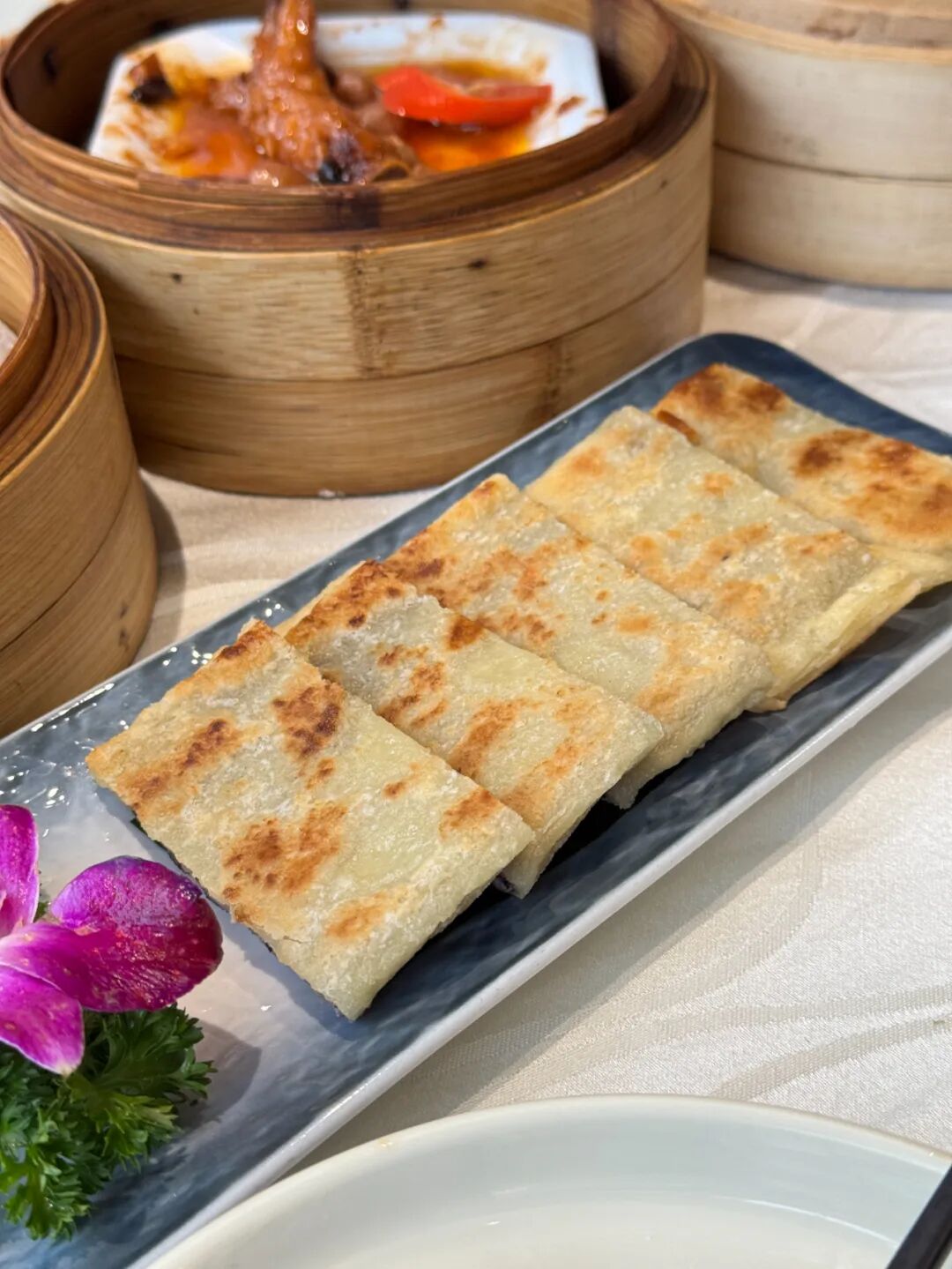
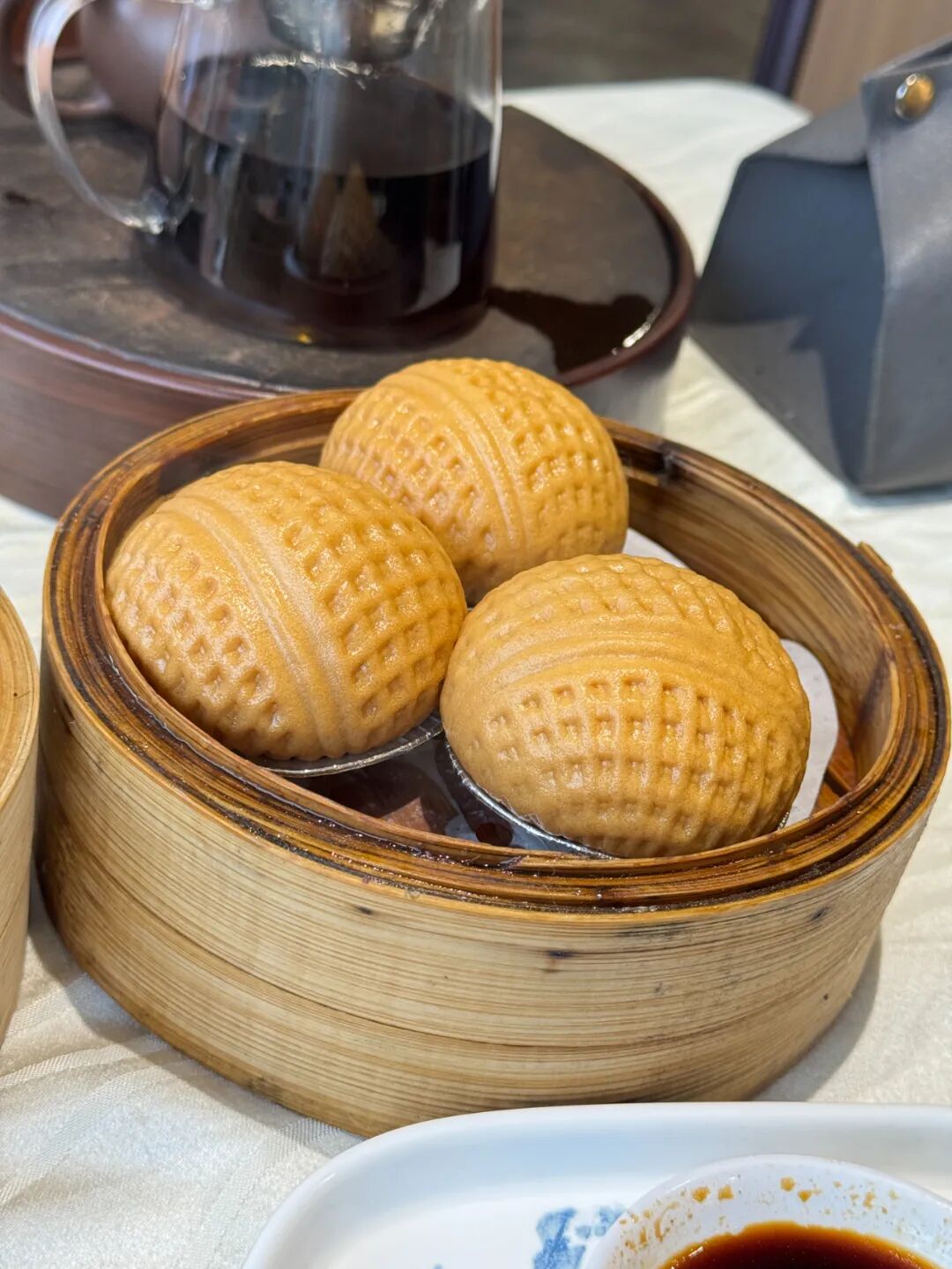
3. Baghdad Cuisine Restaurant
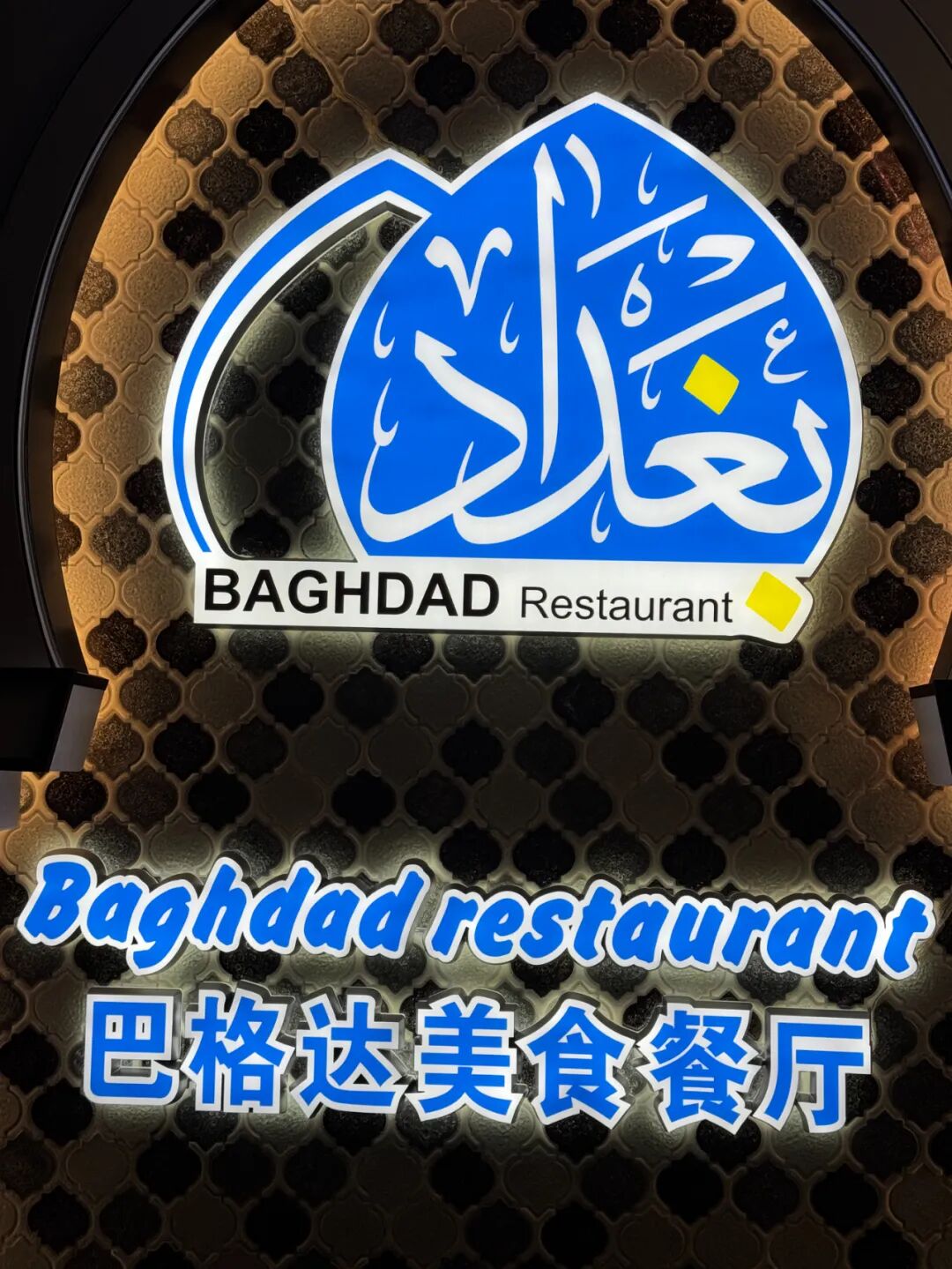
The number of foreign restaurants in Xiaobei rivals Sanlitun in Beijing. This one serves Iraqi food, and I also found Amman, Guinean, and Liberian restaurants nearby, which are cuisines you cannot find in Beijing.
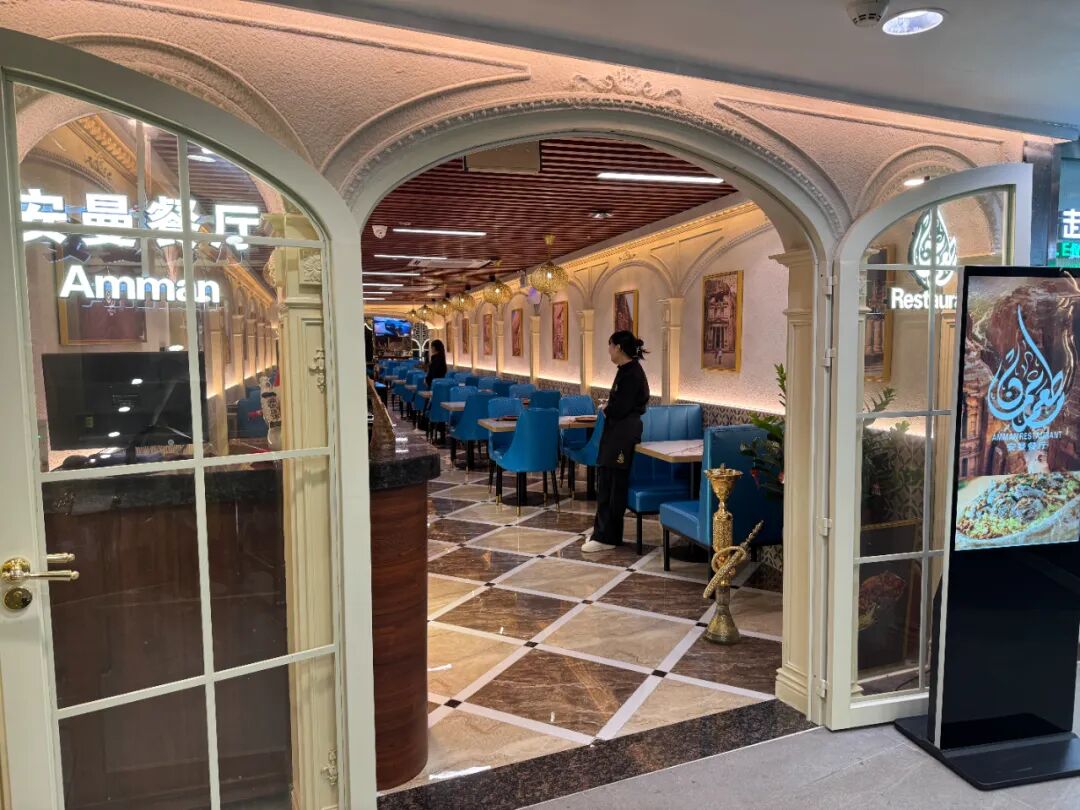
Baghdad Restaurant is on the fourth floor, right above the Amman restaurant.
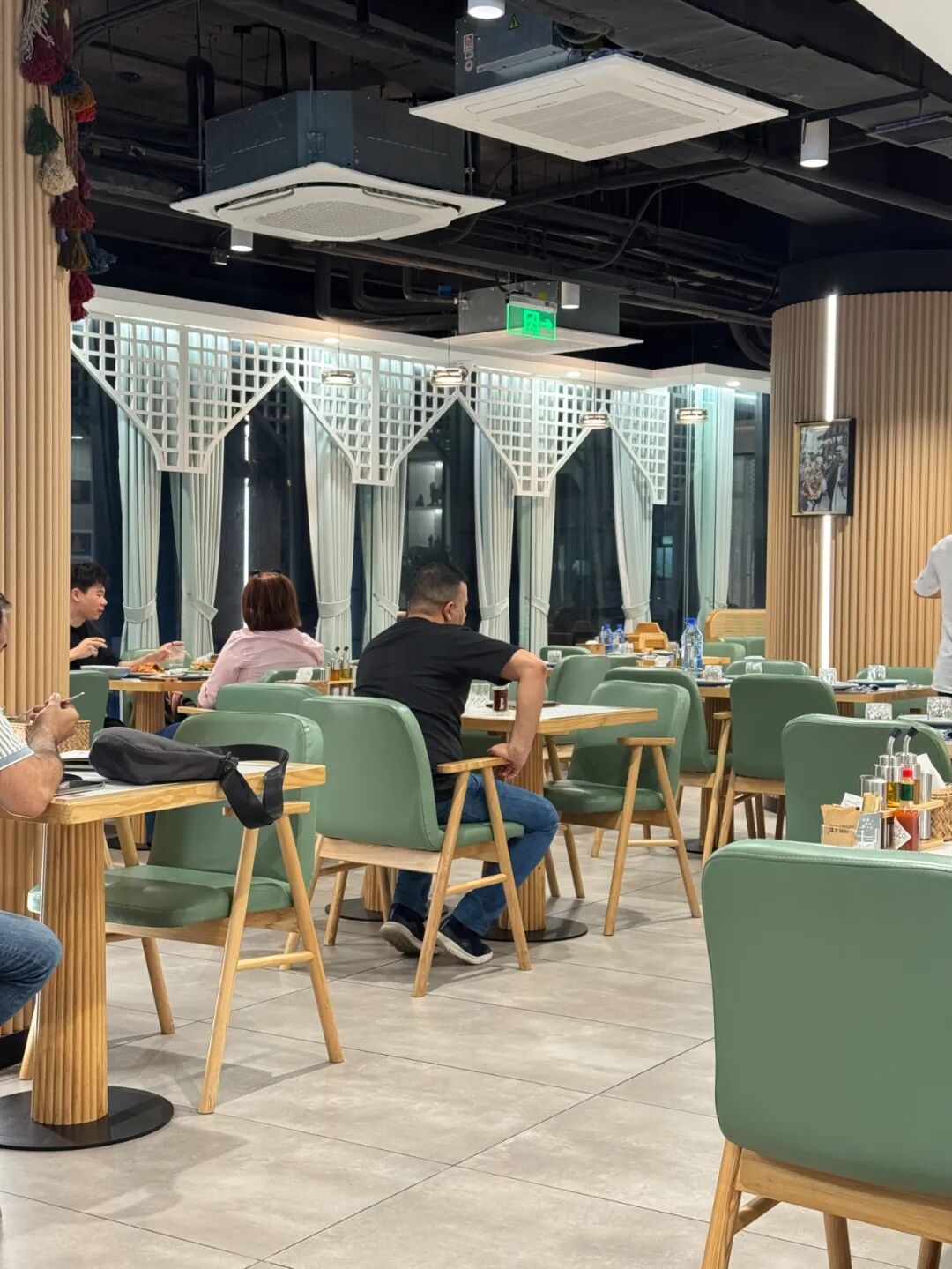
A friend invited me to eat here because her crush is an Iraqi guy who is currently in Baghdad.
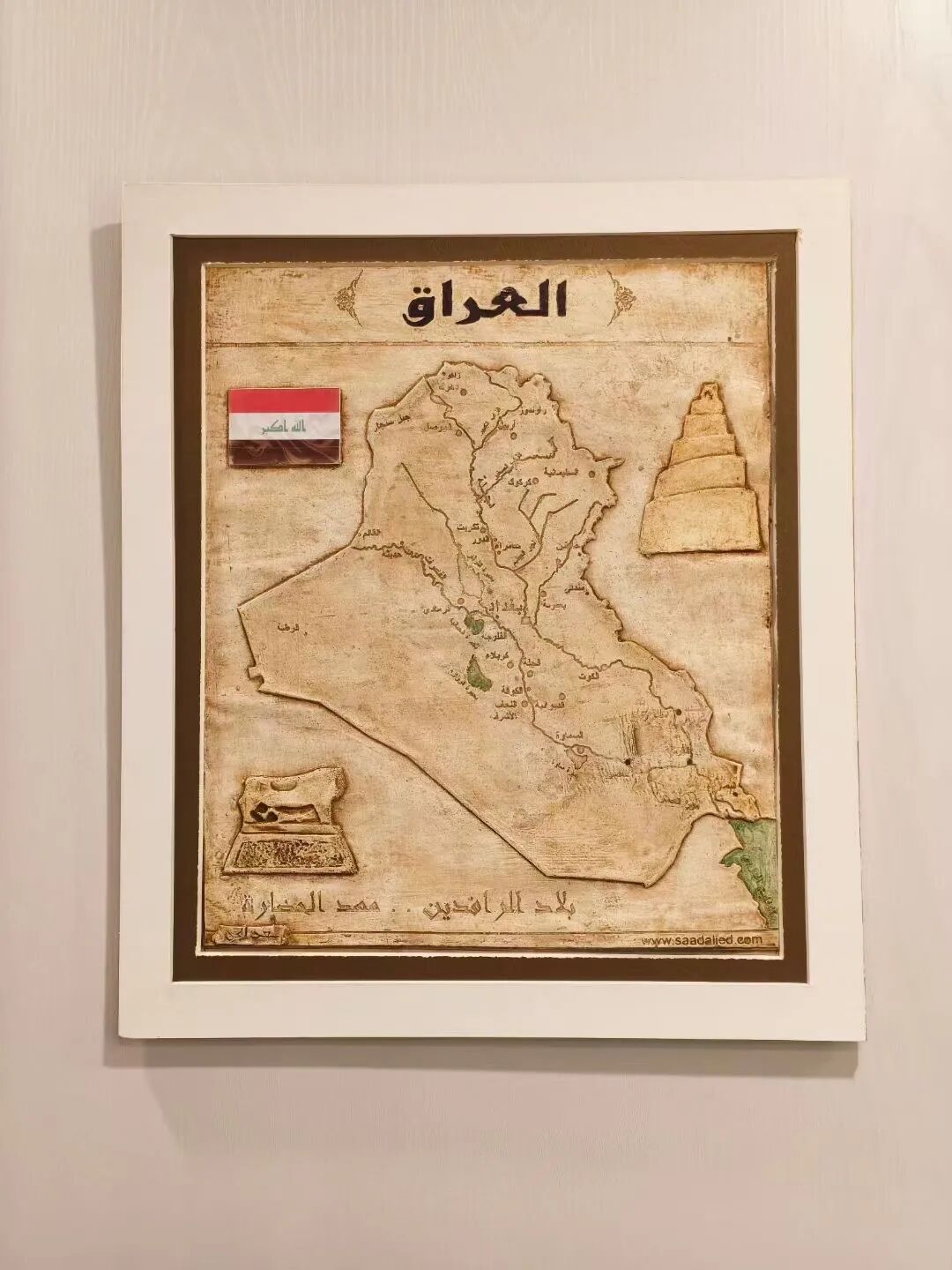
They serve a complimentary bowl of lentil soup before the meal, which helps with digestion.
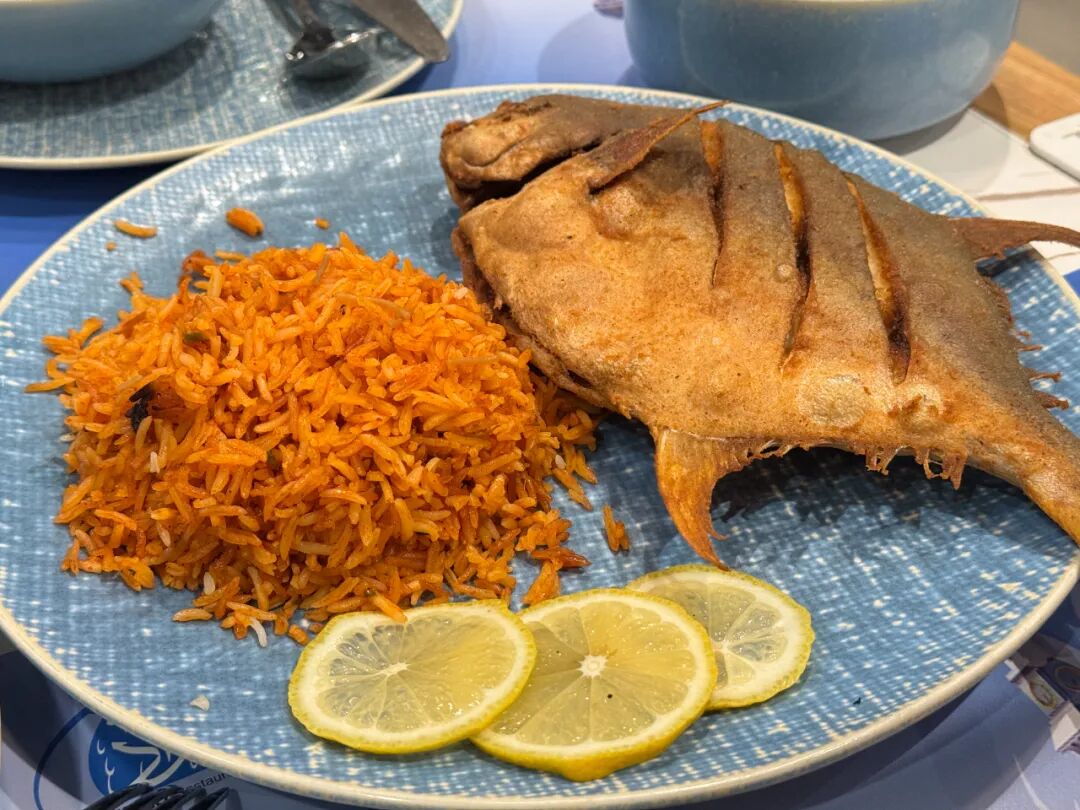
We ordered grilled pomfret and a lamb leg rice dish. The lamb leg rice was especially good; the lamb was tender and juicy, and the long-grain rice was fluffy and not sticky.
4. Yiyun Niudao American-style Barbecue
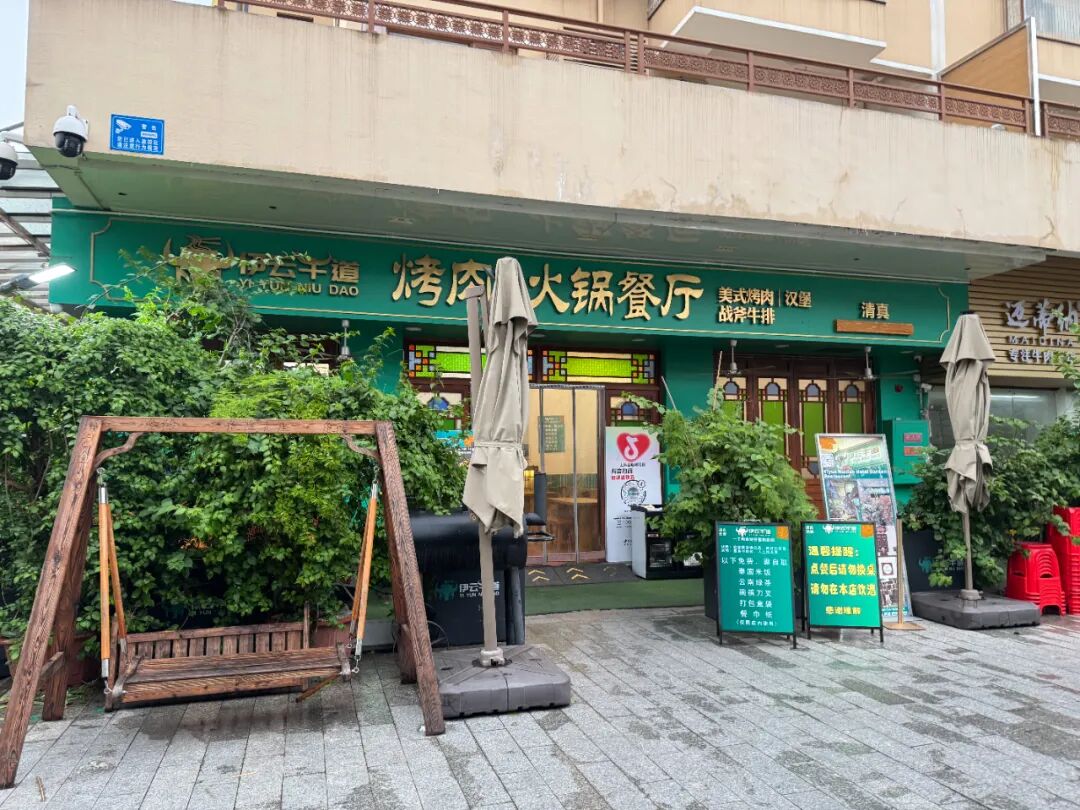
A brother from Guangzhou brought me here. He said it is rare to find halal American-style barbecue in China, so he wanted me to try it. The last time I had halal American barbecue was in Dubai, and that meal was truly satisfying.
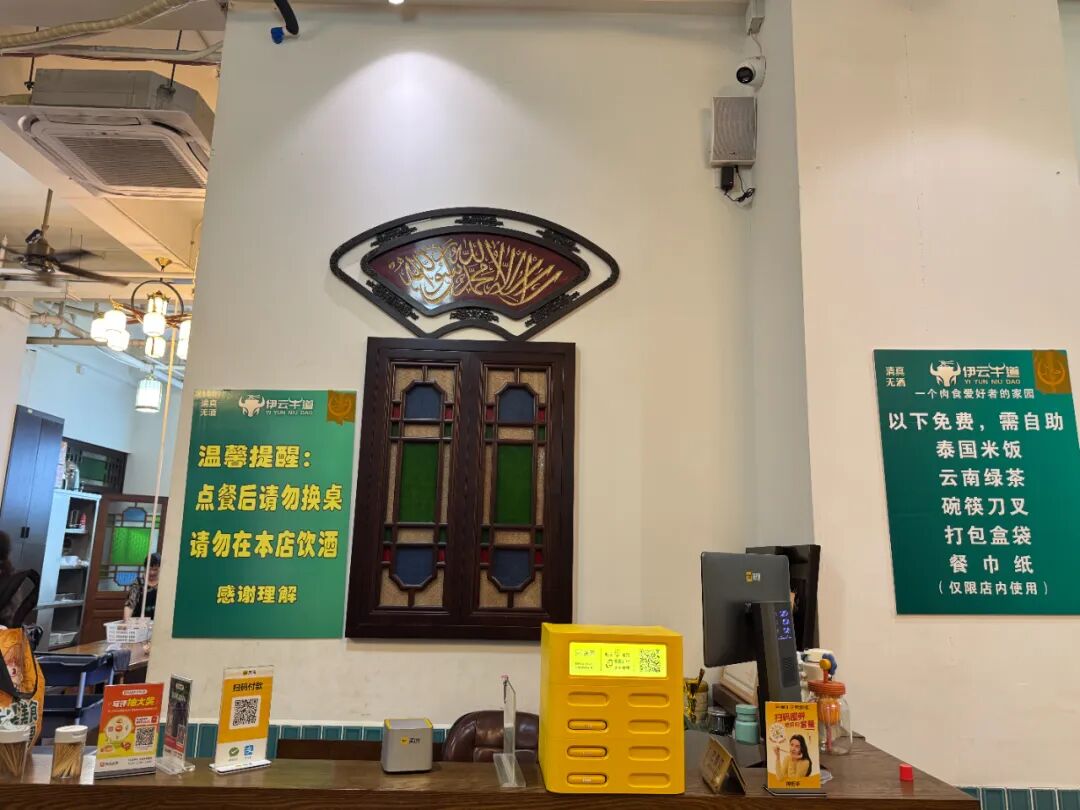
This shop is in Shangbu, an area where Yunnan Hui Muslims gather. Yunnan people rarely move north; they prefer coming to Guangzhou and Sanya. This shop does not sell alcohol.
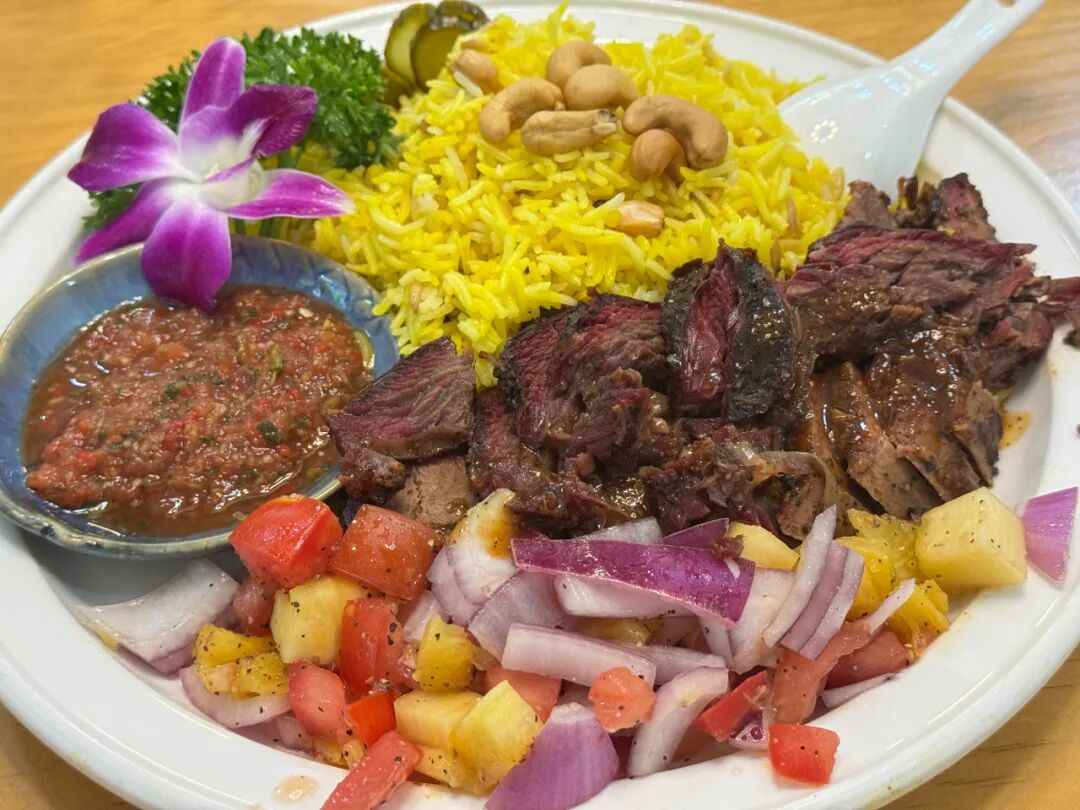
My friend recommended the slow-roasted Angus steak and roasted lamb chops. They smell great. The slow-cooked Angus has a strong smoky flavor, and the lamb chops are tender and have no gamey taste. Even without alcohol, the shop is very busy. You have to wait in line during peak hours. It is best to book ahead for barbecue so you do not miss out.
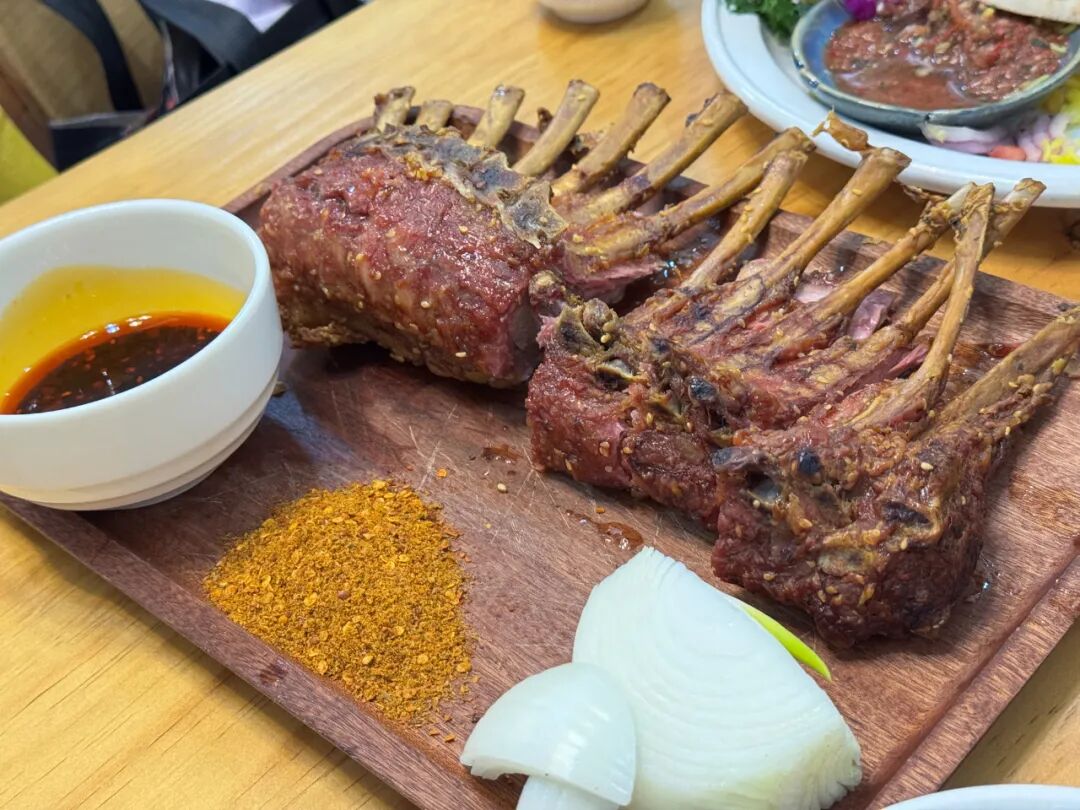
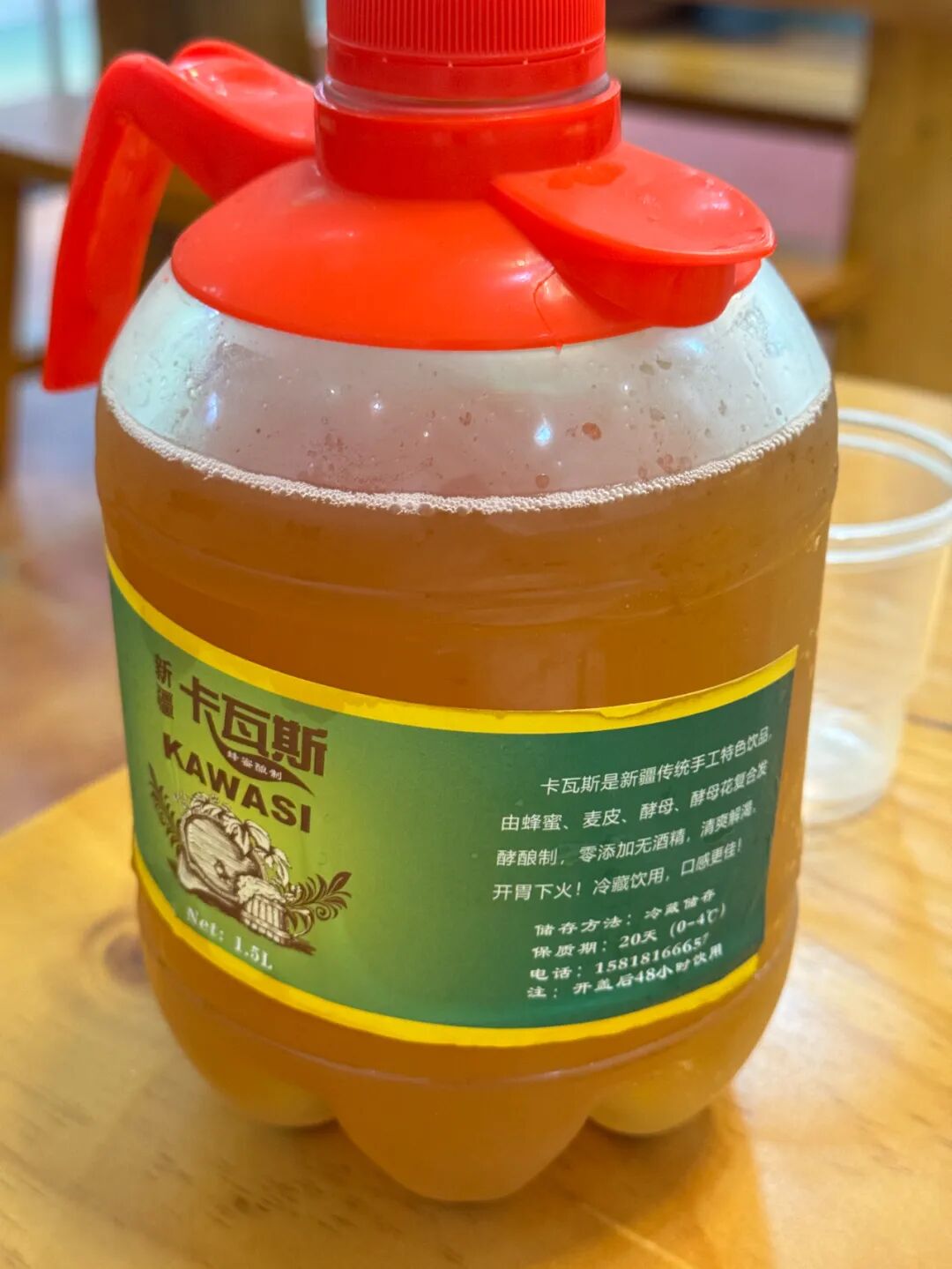
Even their Xinjiang kvass (gewasi) tastes great. It is a non-alcoholic fermented drink that pairs perfectly with barbecue. The shop is not expensive, with an average cost of about 100 yuan per person.
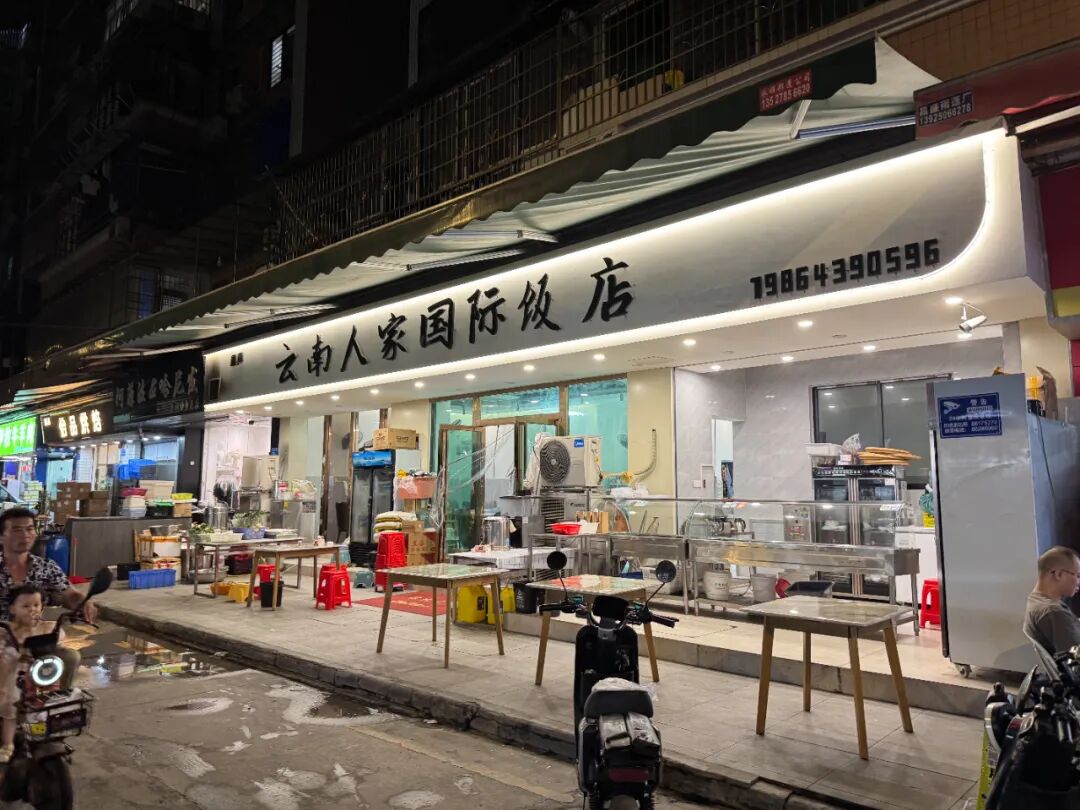
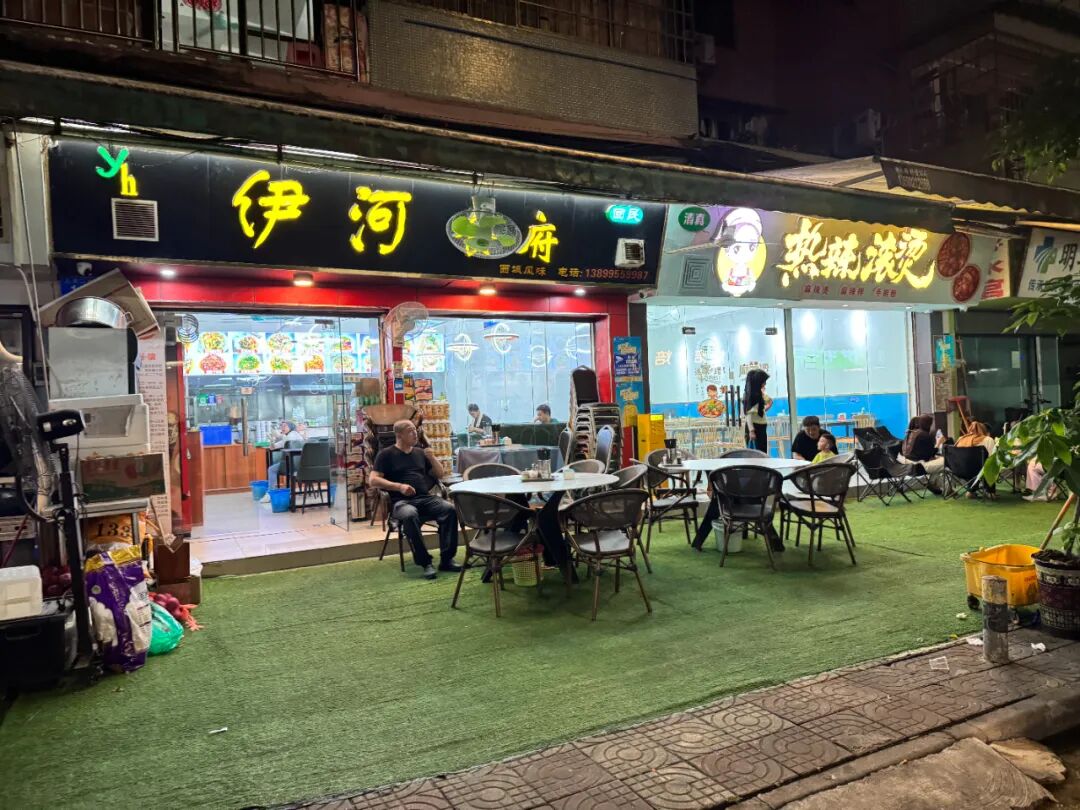
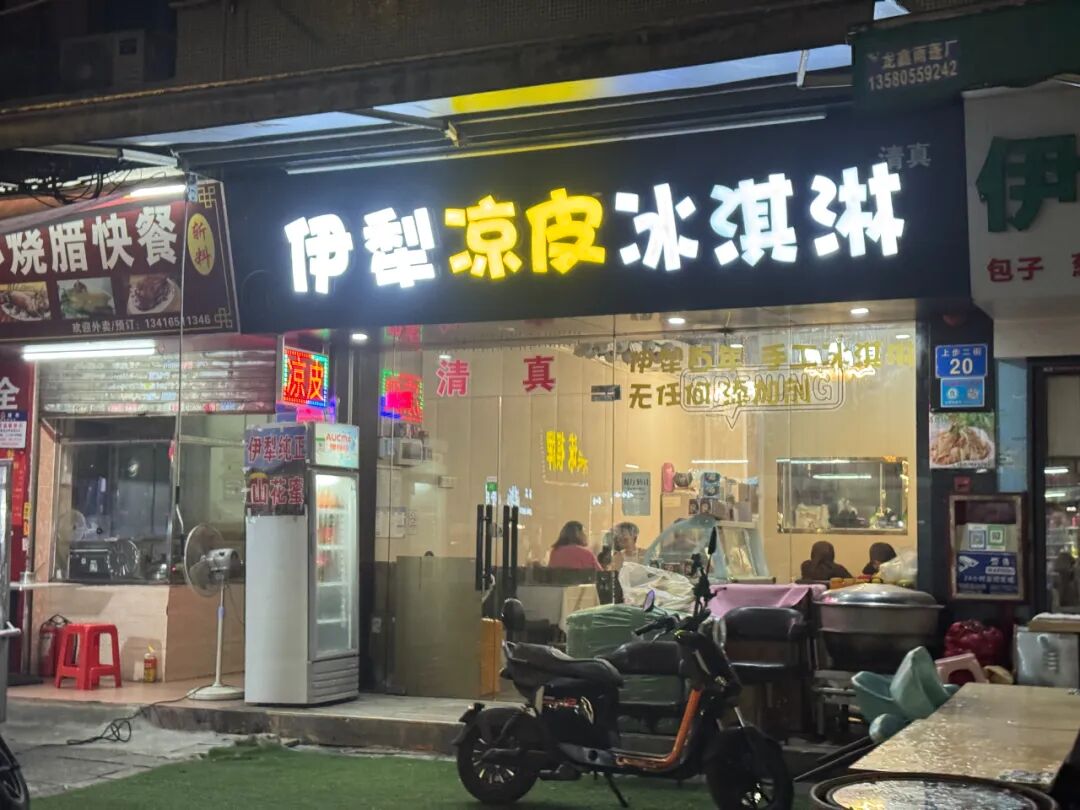
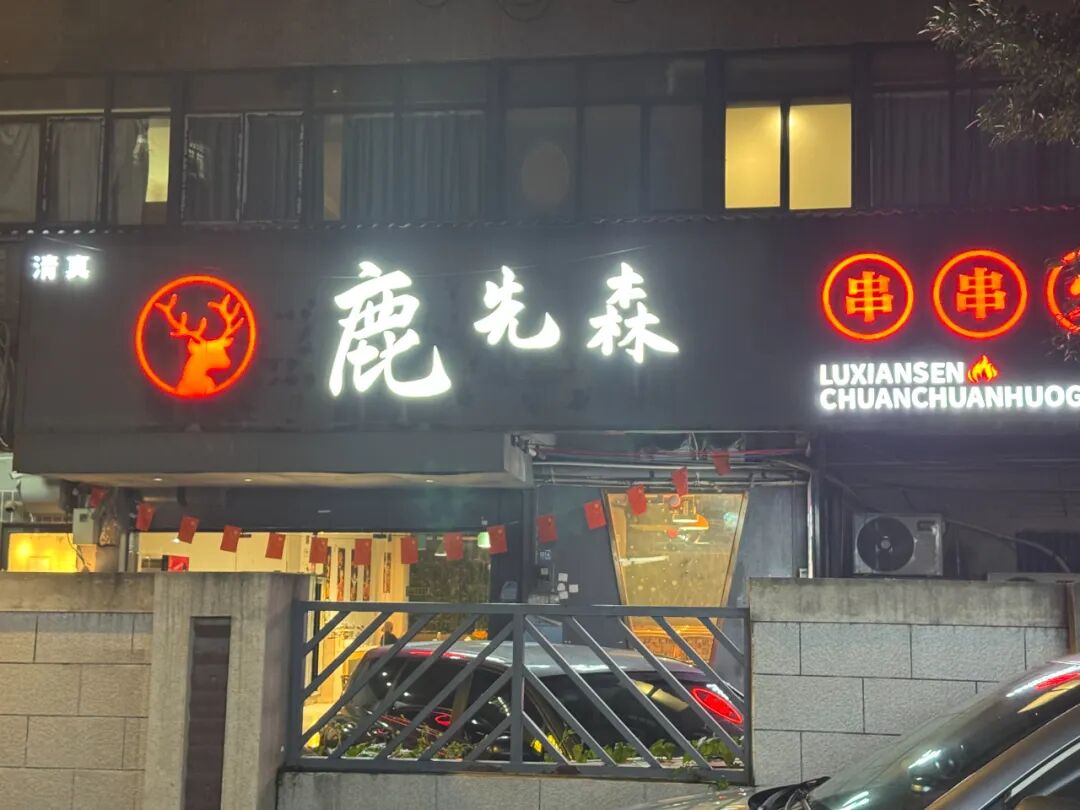
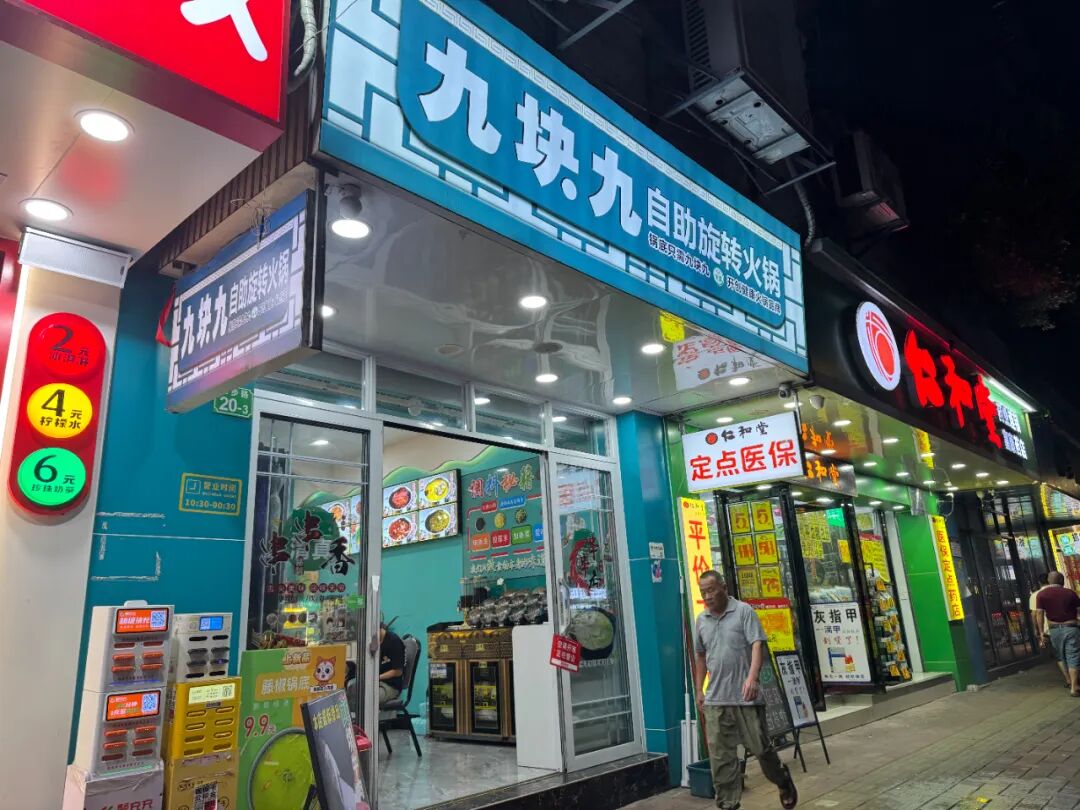
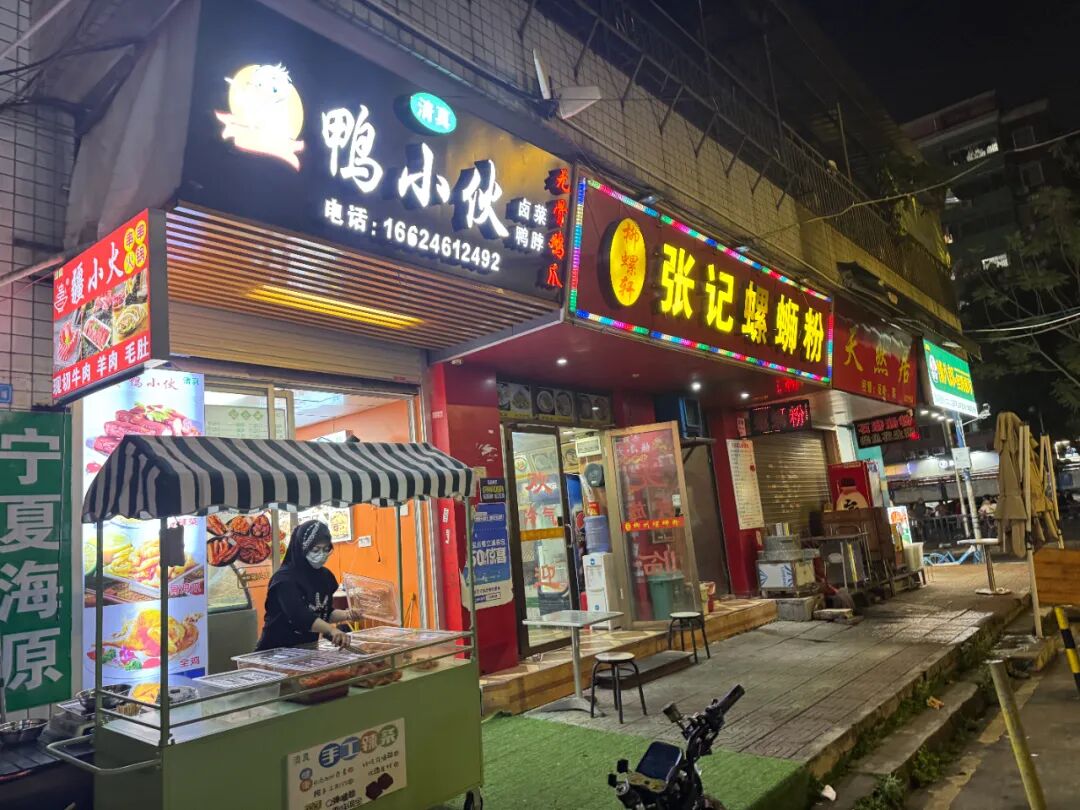
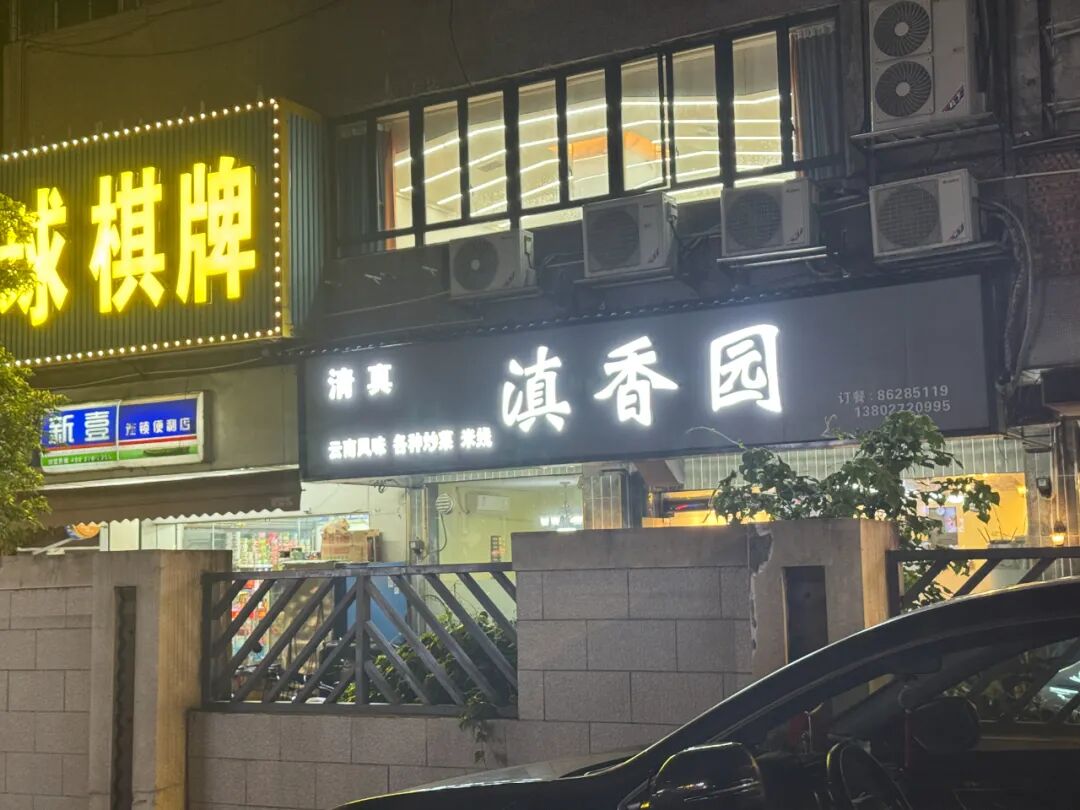
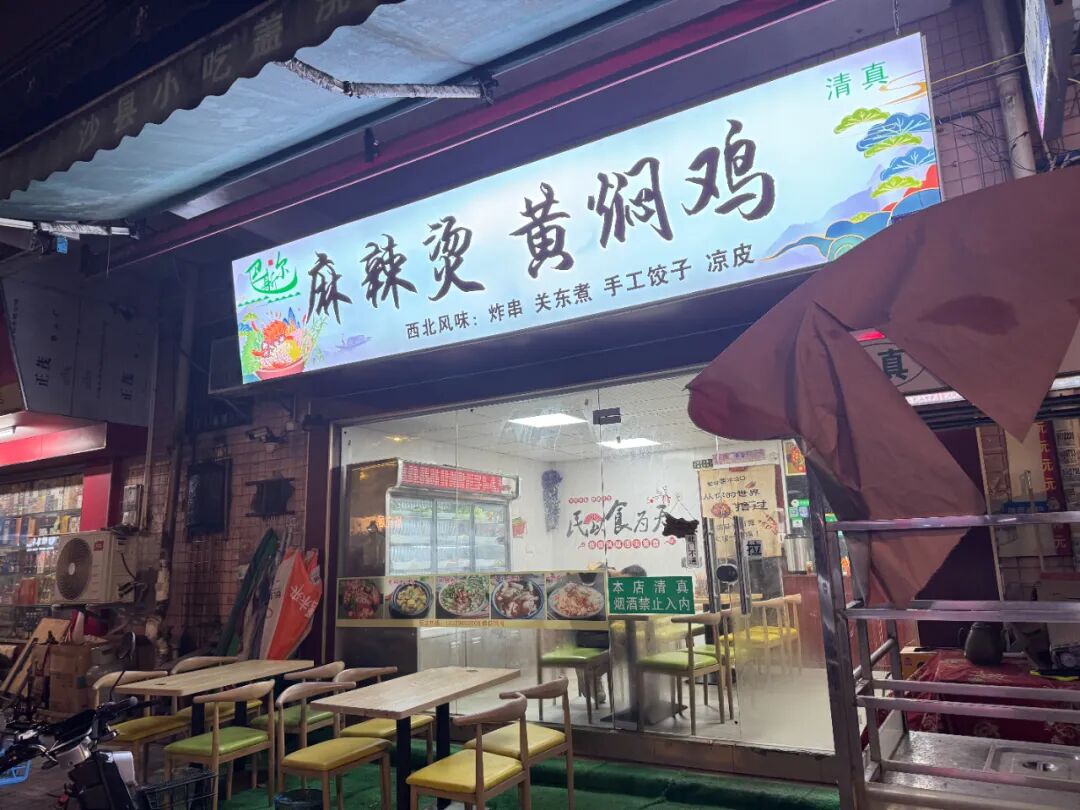
Next, I filmed some restaurants near Shangbu. They mostly serve Yunnan flavors, including Zhaotong small meat skewers (xiaorouchuan).
5. Xinjiang Mansion Cantonese Morning Tea (Guangshi Zaocha)
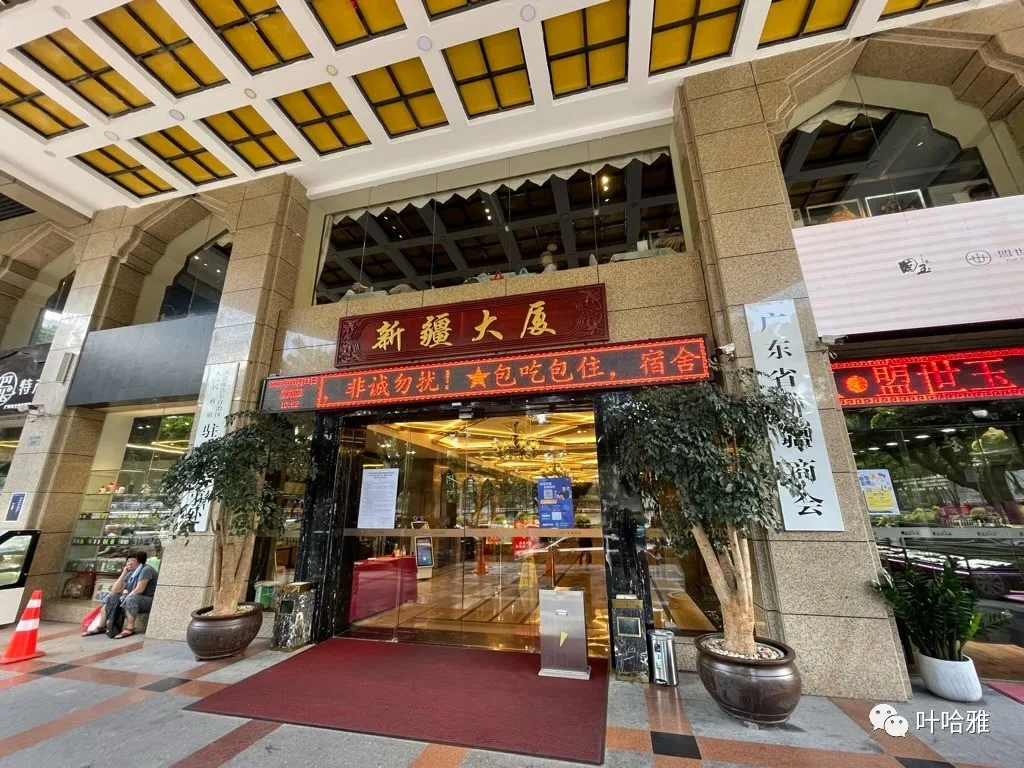
Many people recommend the Hui Muslim Restaurant when talking about morning tea in Guangzhou. If I had to choose, I prefer the morning tea at the Xinjiang Building. Although they have not been making Cantonese morning tea for long, their food variety and service are better than the Hui Muslim Restaurant.
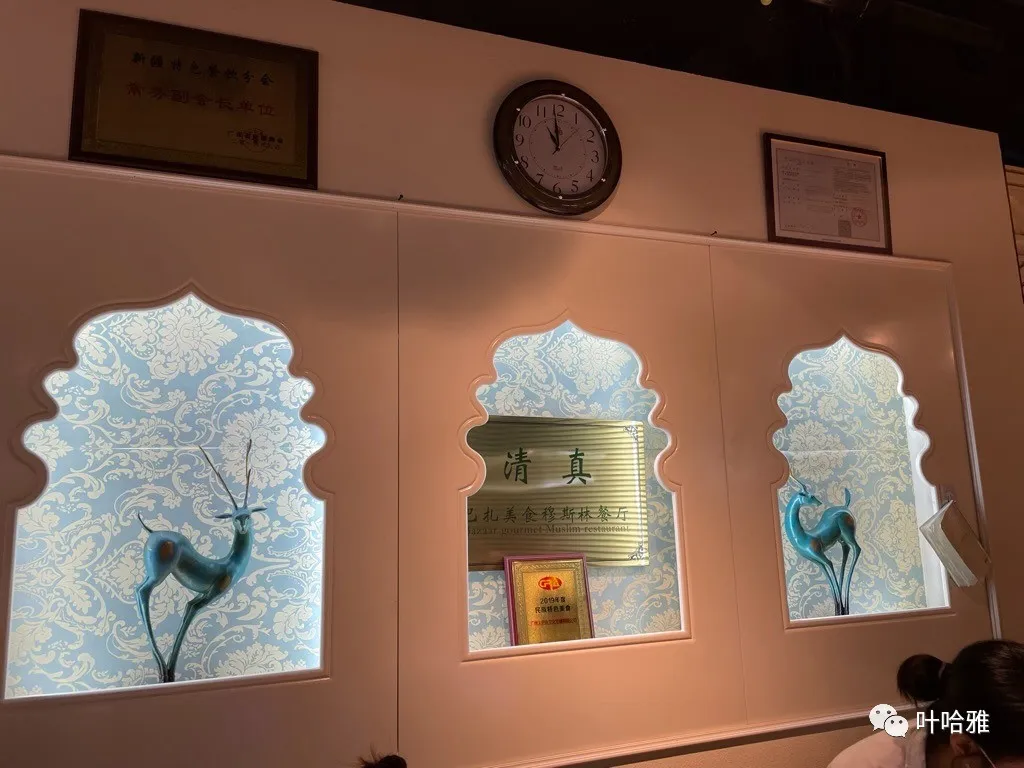
The morning tea here includes traditional Cantonese dishes and some new creations, especially those using Xinjiang ingredients. This is easier for northern tourists to enjoy, as outsiders might not be used to many authentic local snacks.
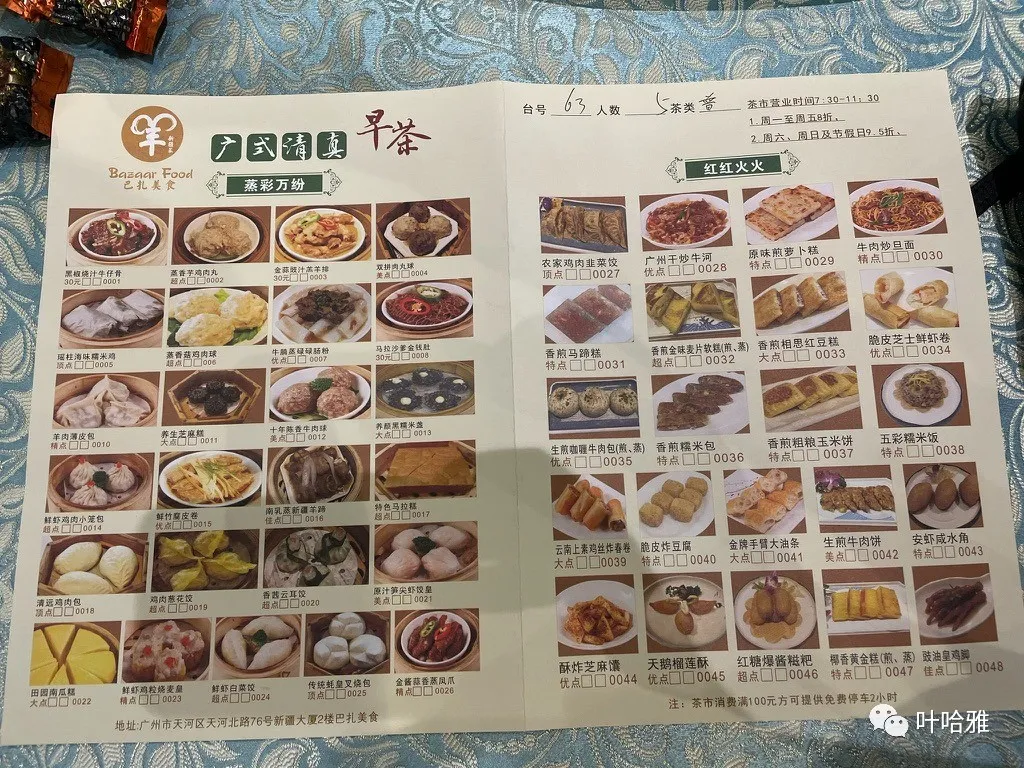
Morning tea originally just meant drinking tea in the morning. However, people started pairing it with snacks, and these snacks became so rich that they are now the soul of morning tea.
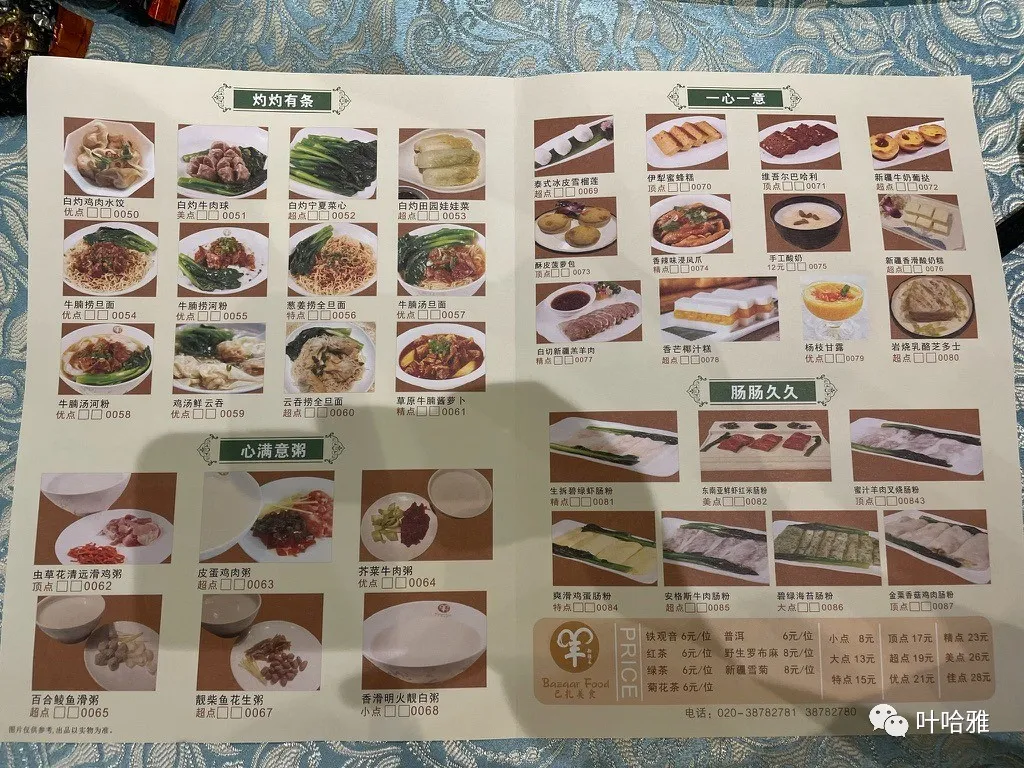
After sitting down, the waiter will follow the rules and ask what tea you want. You can choose from black tea, green tea, flower tea, or Pu'er. You are also welcome to bring your own tea bags. Then, they give you a menu to check off the snacks you want.
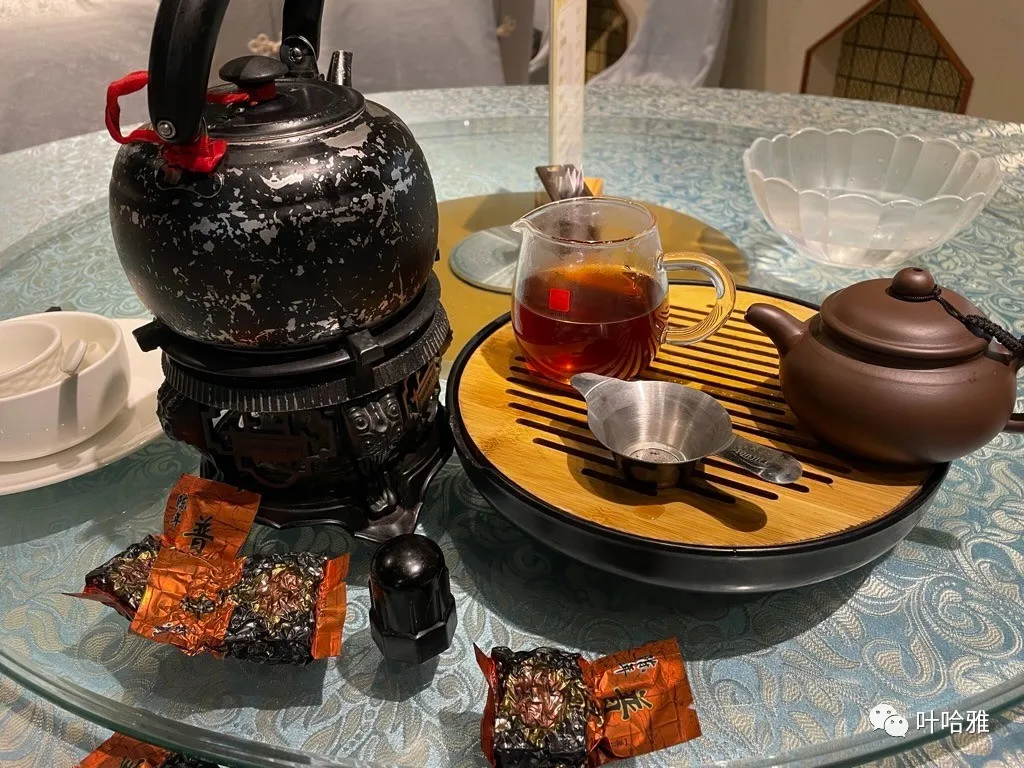
The first step of morning tea is washing the tea set. The basin in the top right corner is not for trash, but for cleaning tableware. Even though the tea set is already clean, Guangzhou locals like to scald it with hot water again. I follow the local custom and do the same, even though I do not really worry about whether the dishes are clean.
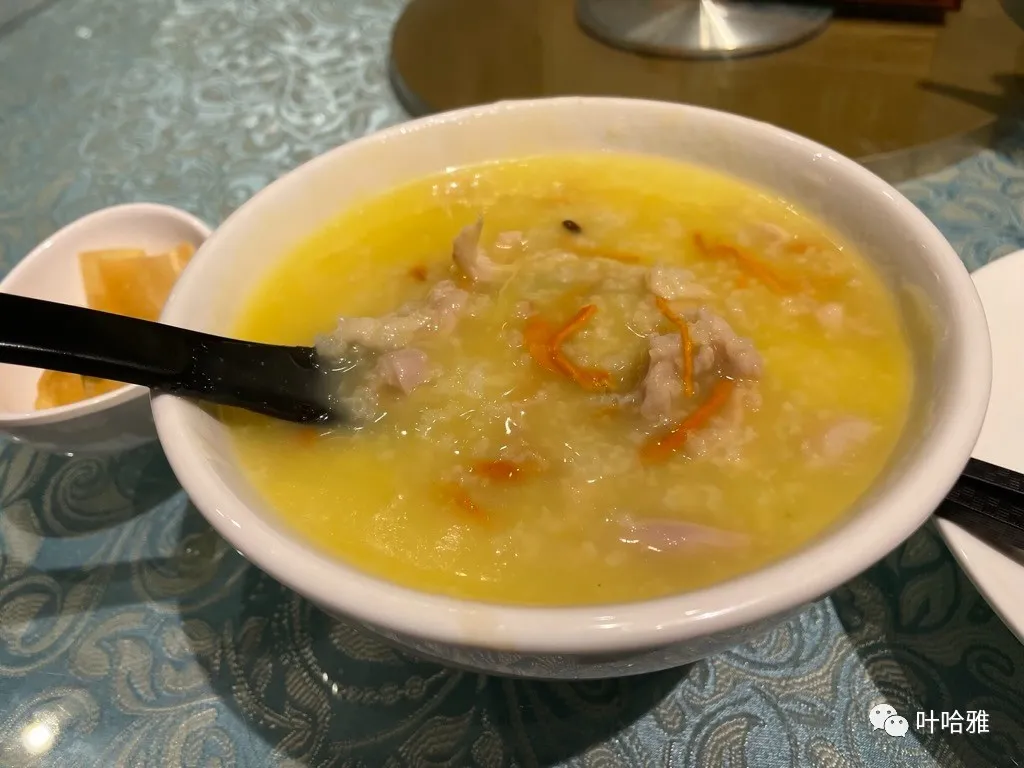
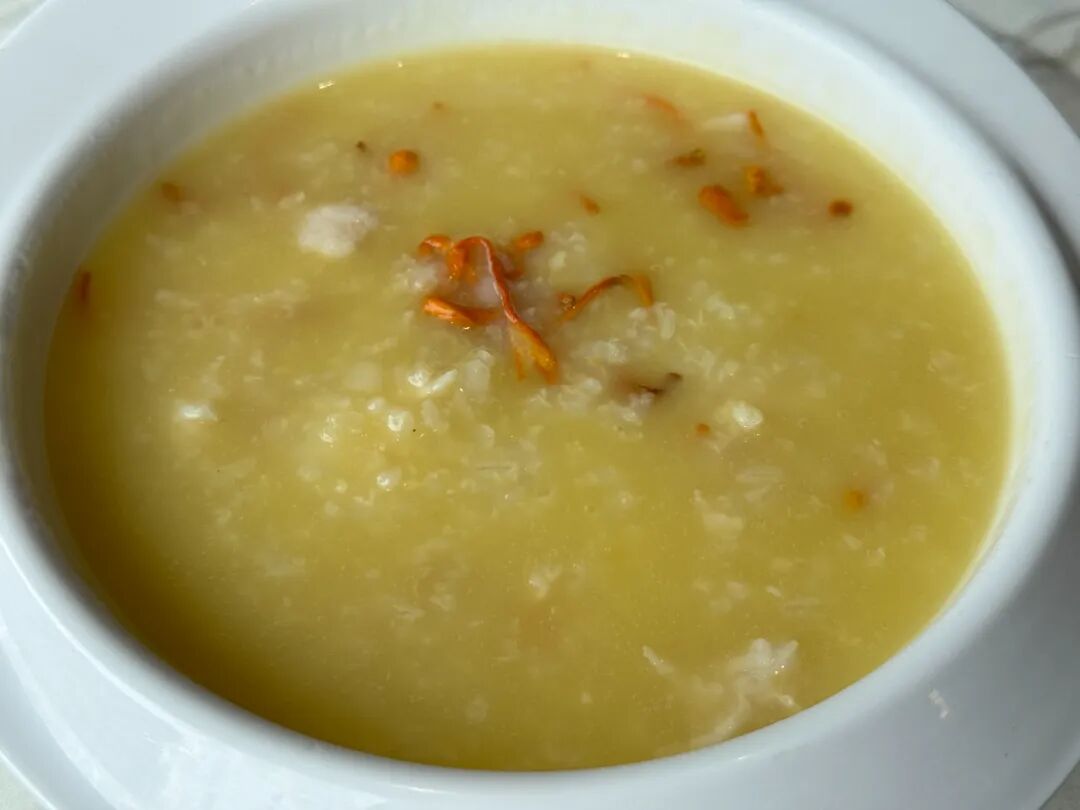
Cordyceps flower and Qingyuan chicken porridge (chongcaohua qingyuan huaji zhou)
Breakfast in Beijing, specifically in Niujie, is always soy milk, fried dough cakes (youbing), lamb offal soup (yangza), fried tofu soup (doupaotang), and baked flatbread with fried dough (huoshao jia youbing). This is not friendly for someone like me who goes to the gym every day. I like to change my meals up, so breakfast is the hardest part of my day. If I want a balanced breakfast, I have to make it myself.
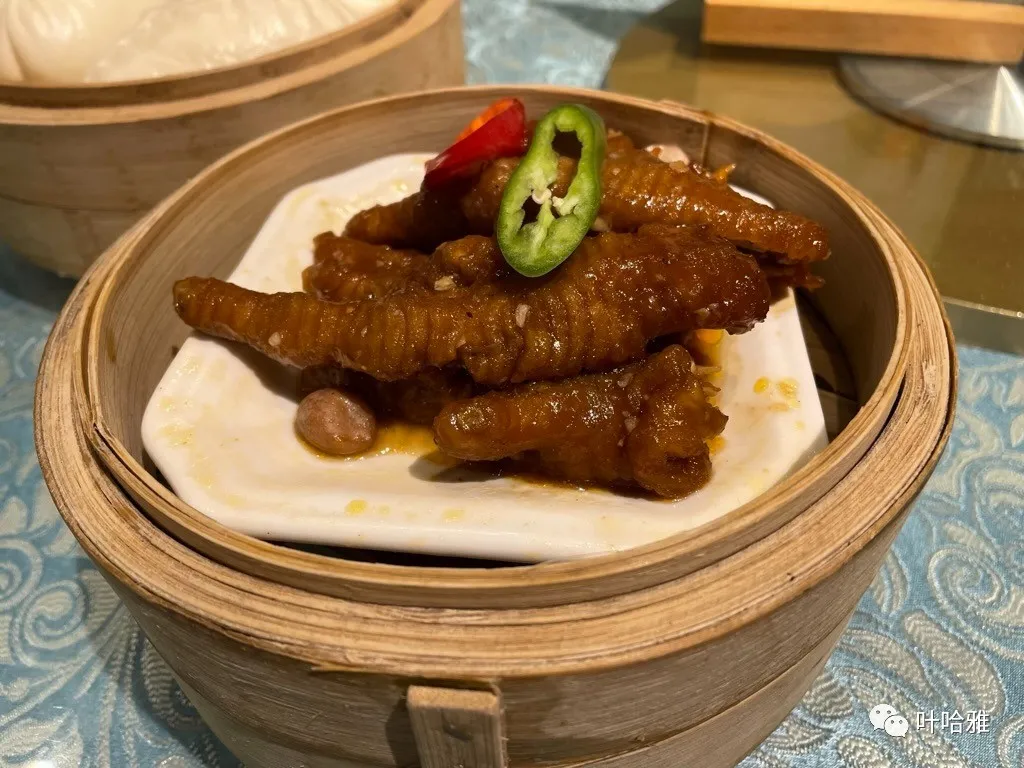
Steamed chicken feet with golden garlic sauce (jinjiang suanxiang zheng fengzhua)
If you eat morning tea alone in Guangzhou, you can order about three dishes based on the portion sizes. You can eat something different every day for about half a month. After that, you can start the cycle over again, which gives people a reason to get up early every day.
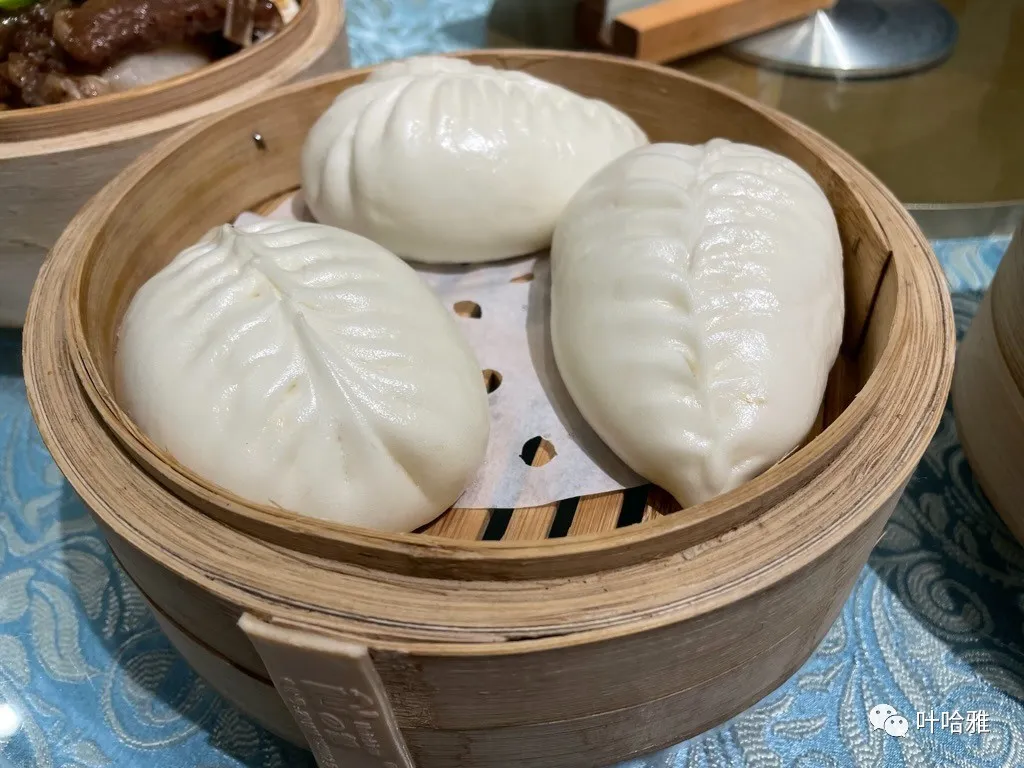
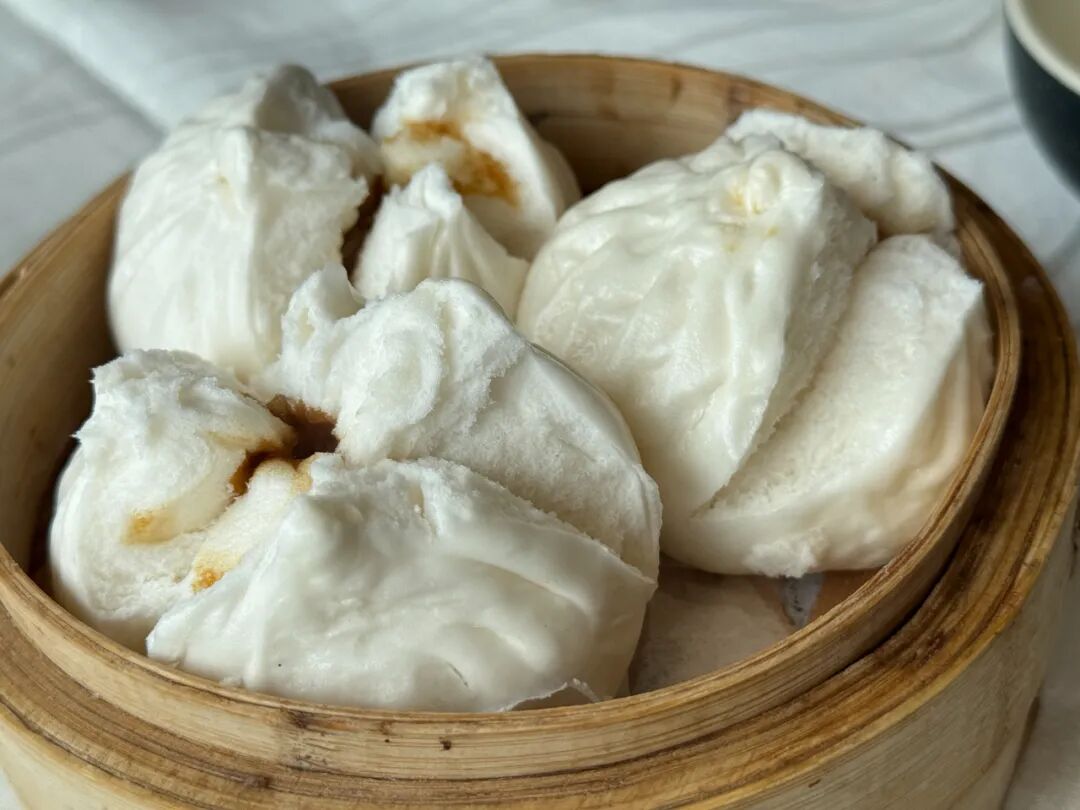
Qingyuan chicken bun (qingyuan jirou bao)
Cantonese morning tea is mostly light and contains no spicy flavors, making it suitable for children and people with sensitive stomachs.
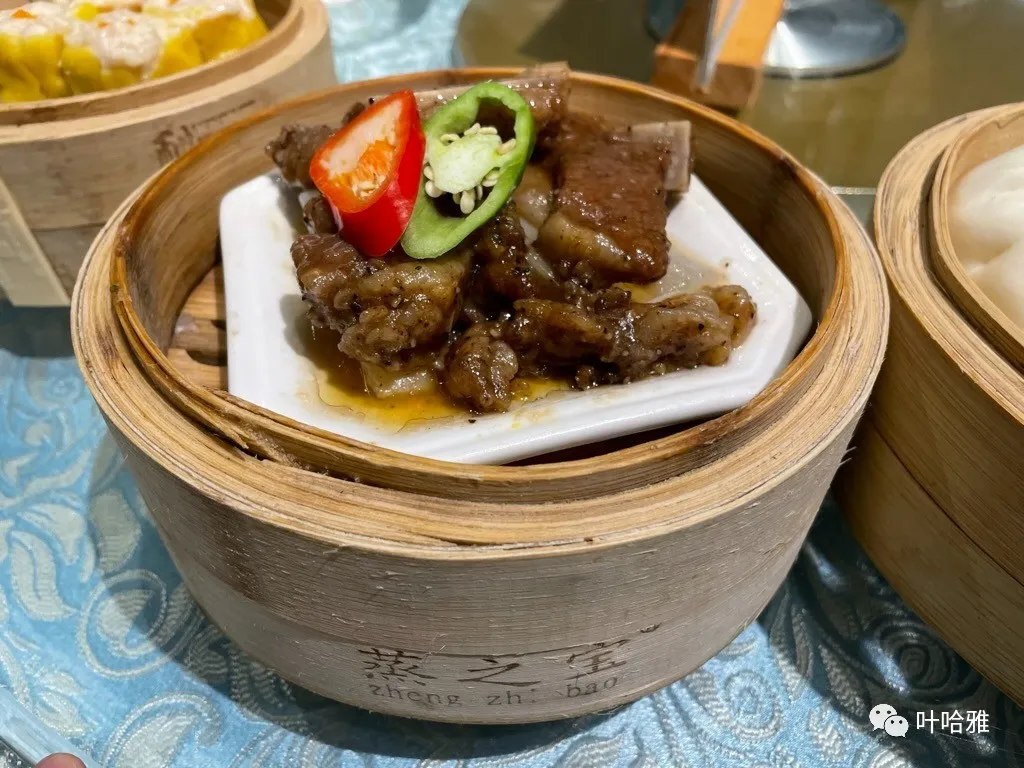
Beef short ribs in black pepper sauce (heijiao shaozhi niuzaigu)
Morning tea is served from 7:00 AM to 11:30 AM. On weekdays, you mostly see local Guangzhou people drinking tea. They have money and time. According to my Guangzhou friends, they do not care much about how they dress. They might go out in a worn-out tank top and flip-flops, but they are very particular about food. They believe that what you put in your stomach is what really matters, which shows the practical nature of Guangzhou people.
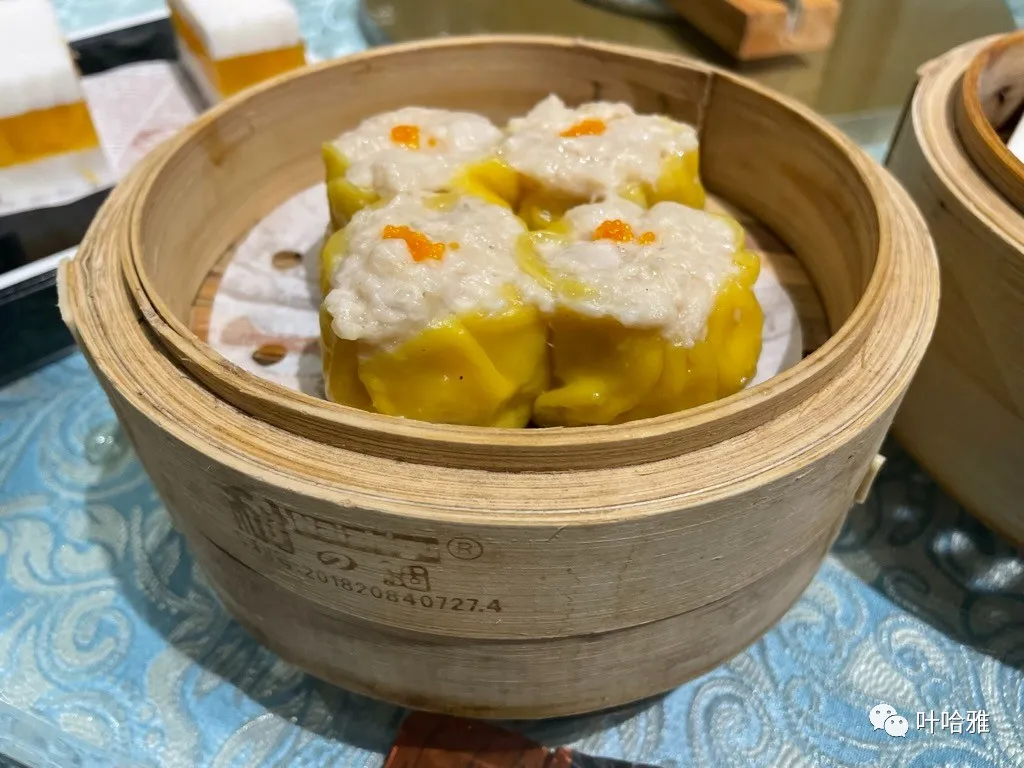
Supreme shrimp and chicken dumpling (xianxia jili shaomai huang)
My taste preferences have changed over the years. I do not have much of an appetite for large, heavy-flavored meals anymore. I focus more on healthy eating and prefer light, small, and delicate food. My love for Cantonese morning tea grows every day, but unfortunately, I cannot find it in Beijing yet.
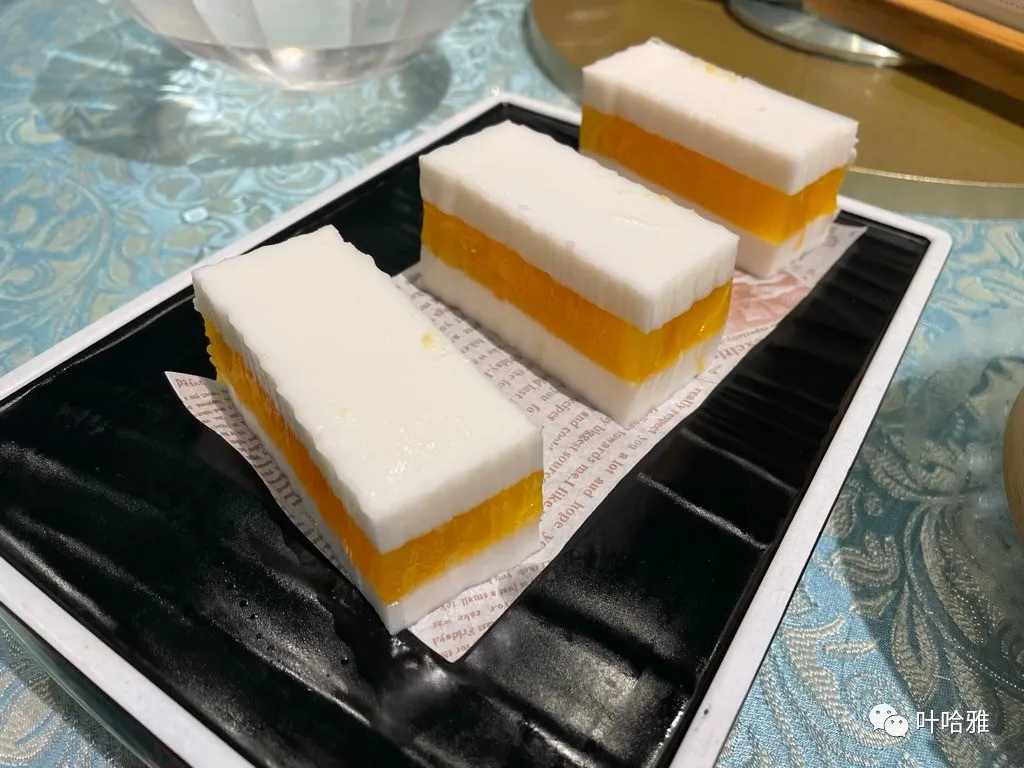
Mango coconut milk cake (xiangmang yezhigao)
I once had Wuzhong morning tea in Wuzhong, Ningxia, and I think this is a very promising and innovative way to do breakfast.
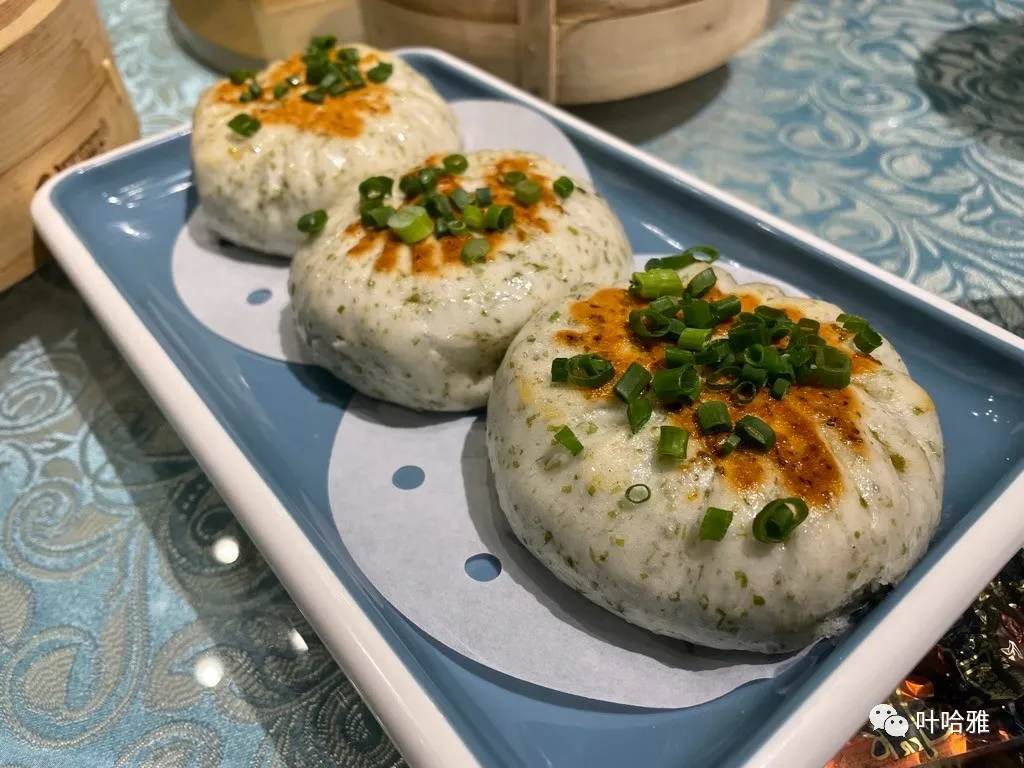
Pan-fried curry beef buns (shengjian gali niurou bao)
If you are trying Cantonese morning tea for the first time, I think you must order the barbecue pork buns (chashao bao) and pan-fried buns (shengjian bao). Rice noodle rolls (changfen), shrimp dumplings (xiajiao), and steamed chicken feet (zheng fengzhua) are also the best dishes to represent Cantonese cuisine. You might not get used to the taste, but you should definitely try them.
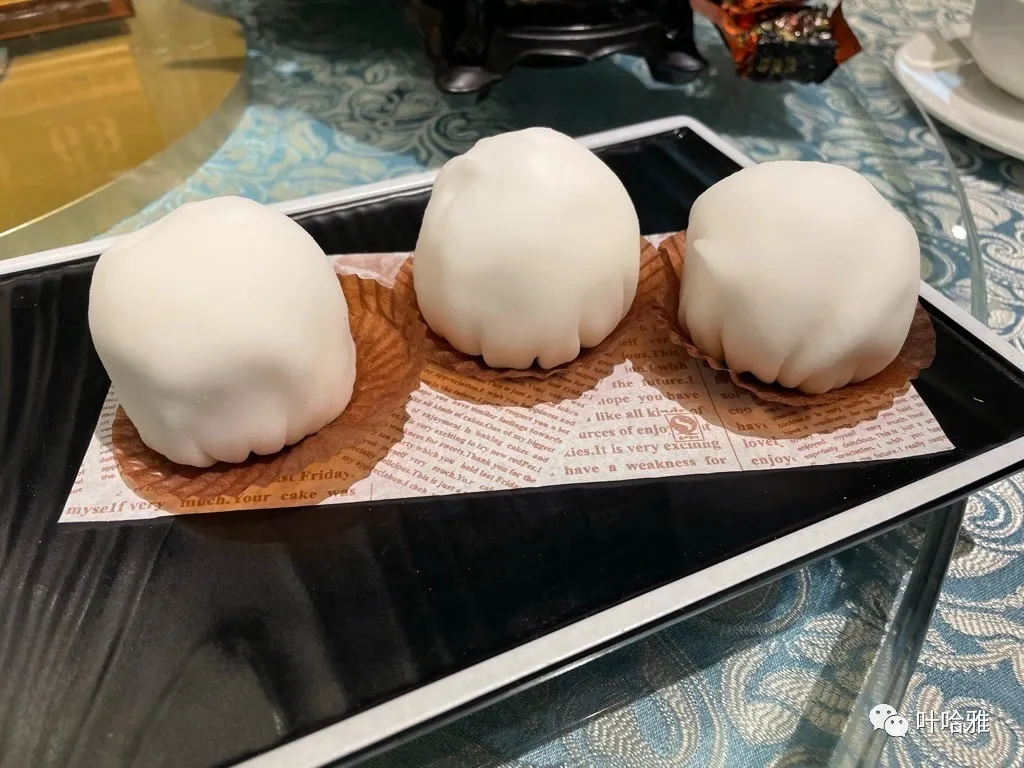
Thai-style chilled durian mochi (taishi bingpi xue liulian)
You should also try the small Cantonese desserts. They are delicately made and look beautiful. They come in portions of three, which is a hint that you should bring two friends along.
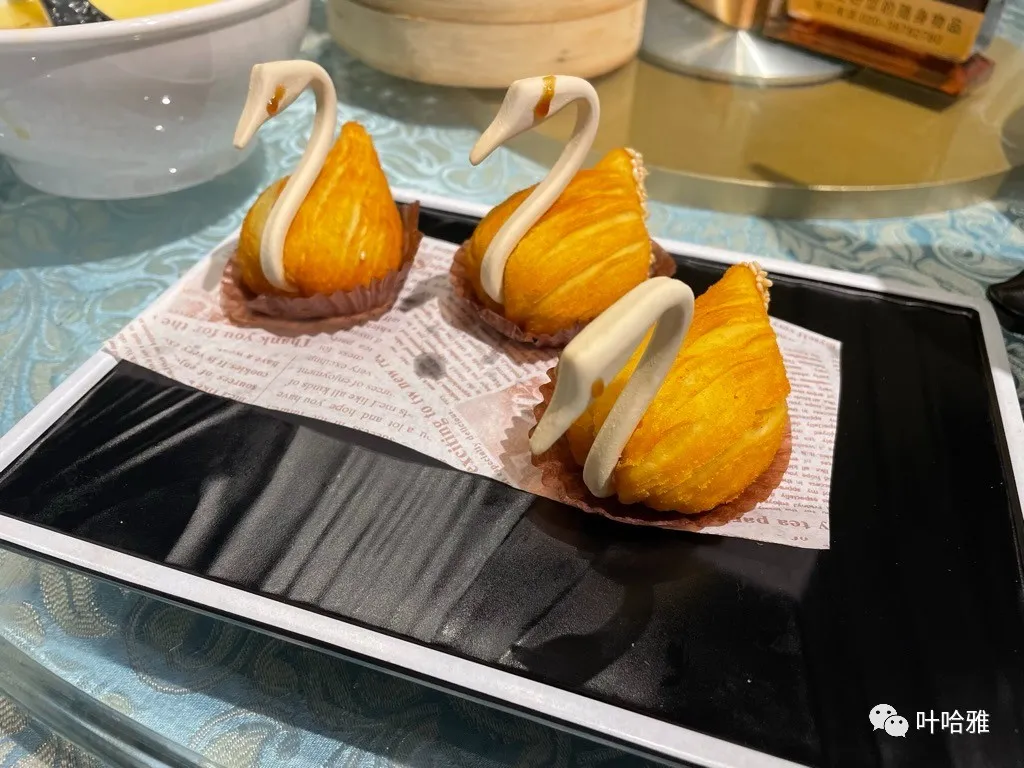
Swan-shaped durian pastry (tiane liulian su)
This swan-shaped durian pastry is a new addition. When I came here last time, it was just the regular gold-medal durian pastry (jinpai liulian su), so they really put effort into the shape this time.
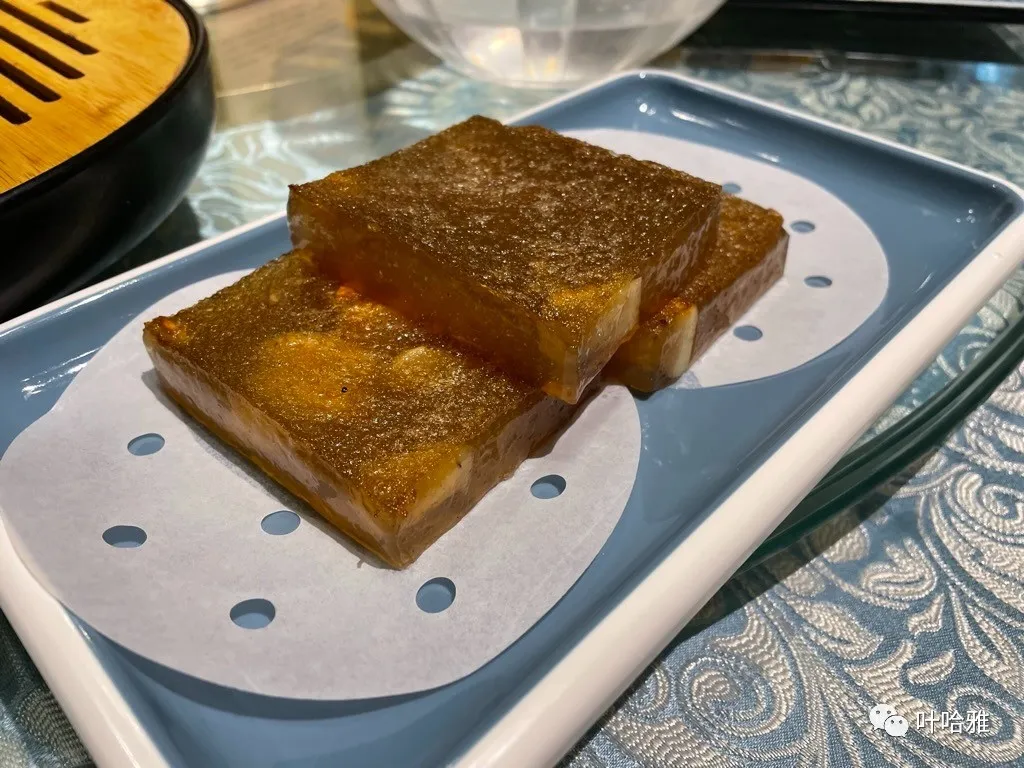
Pan-fried water chestnut cake (xiangjian mati gao)
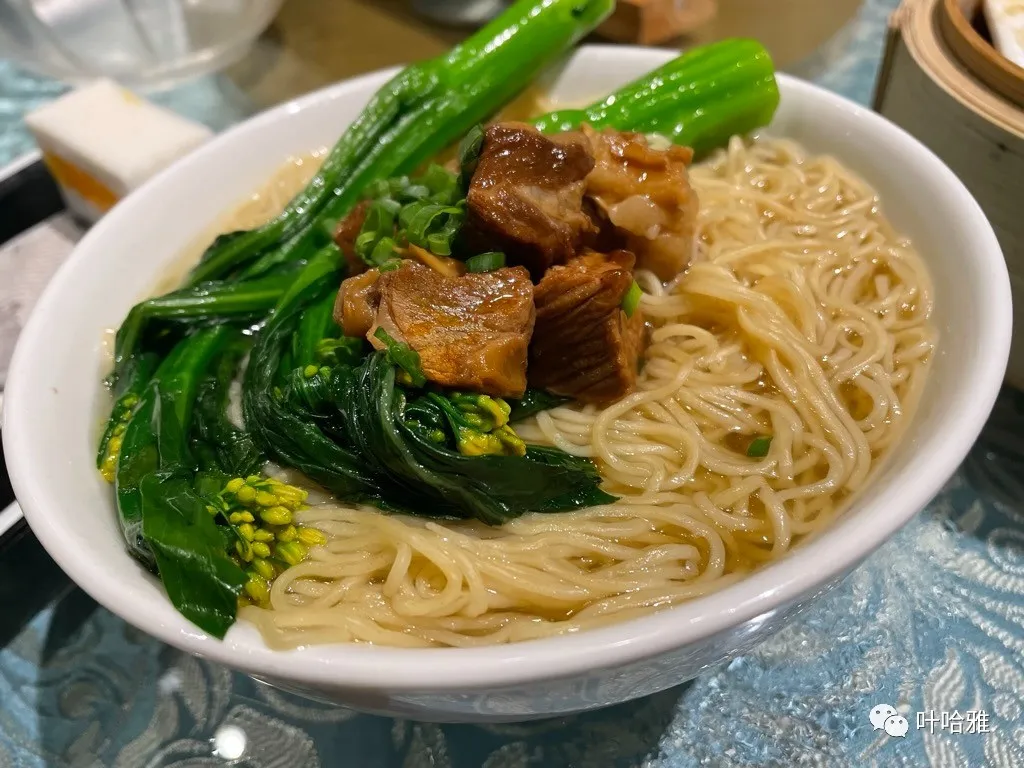
Beef brisket egg noodles (niunan tang danmian)
Cantonese-style noodle soup and rice noodle rolls have a fresh, slightly sweet taste that many women enjoy. I don't particularly like them, as I prefer the salty and savory style of Northwest Chinese noodles, but since I am in Guangzhou, it is worth trying a bite.
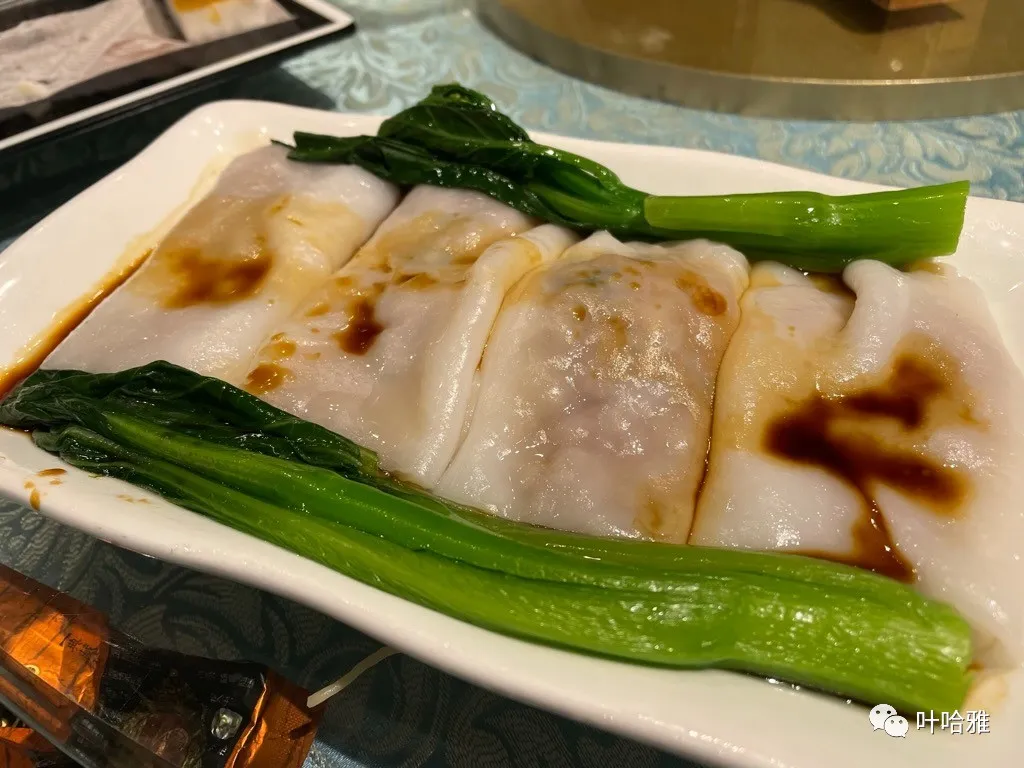
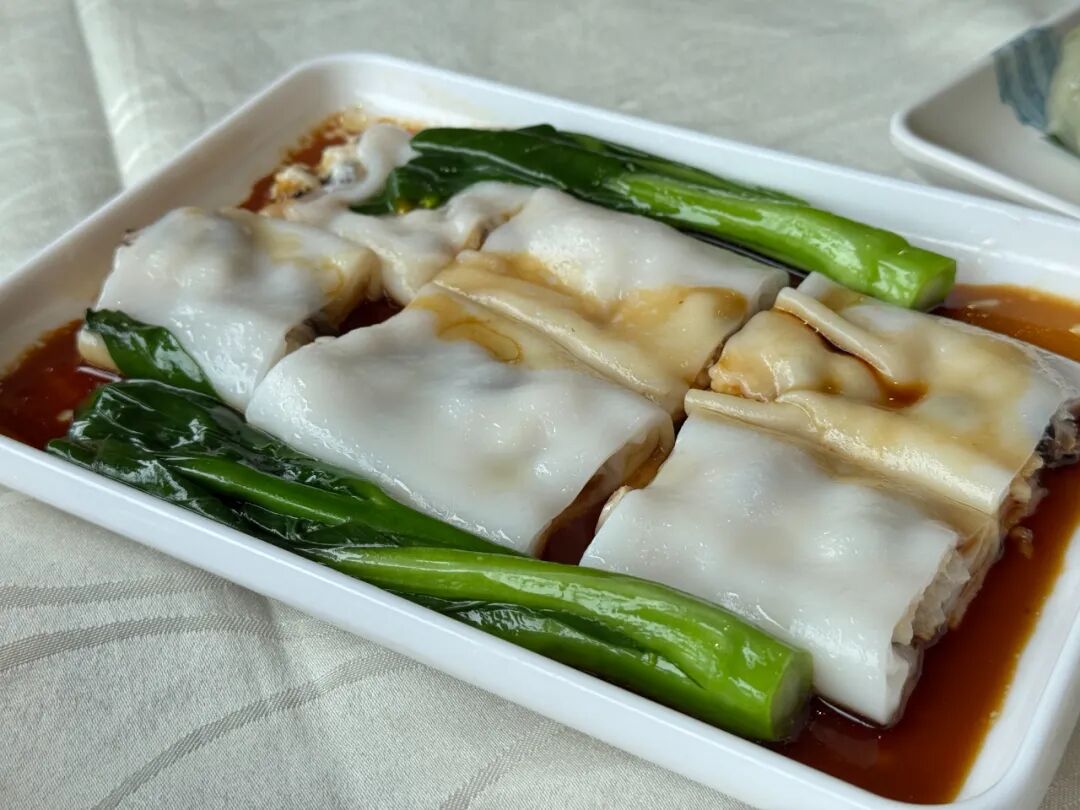
Chestnut and mushroom chicken rice noodle rolls (jinli xianggu jirou changfen)
The yogurt cake and egg tarts are a kind of innovative fusion dish because they use dairy products from Xinjiang. Green vegetables hold an important place in Cantonese cuisine. Guangzhou people must have green vegetables with their meals, and here, green vegetables only refer to leafy greens; gourds and root vegetables do not count.
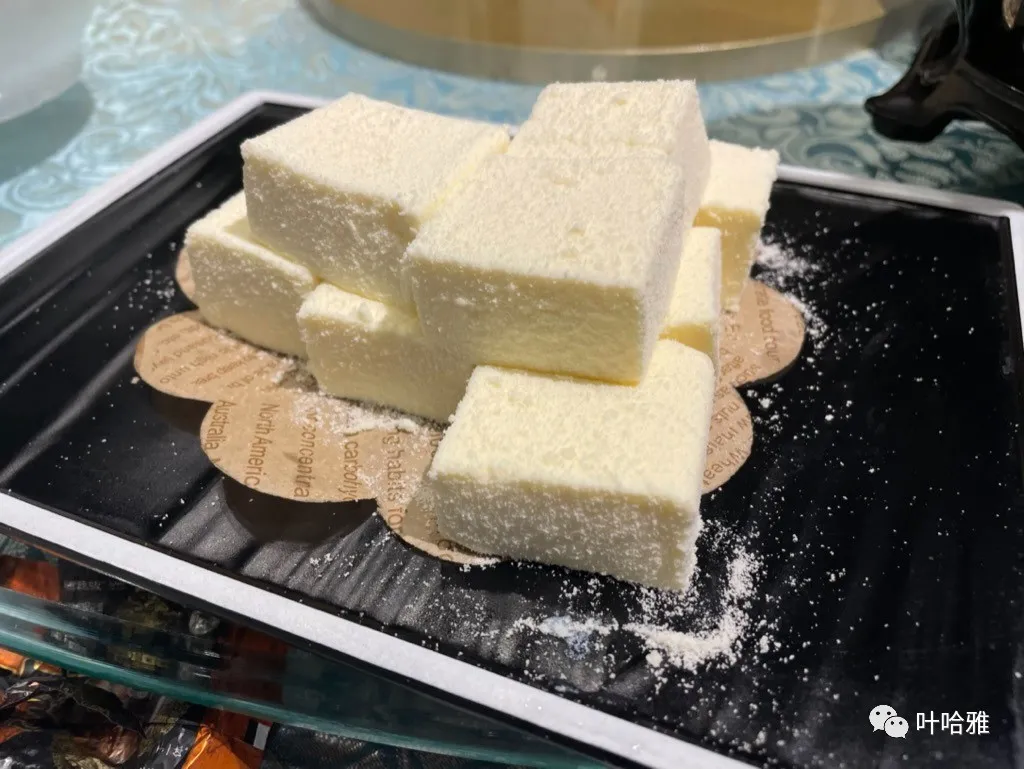
Xinjiang smooth yogurt cake (suannai gao)
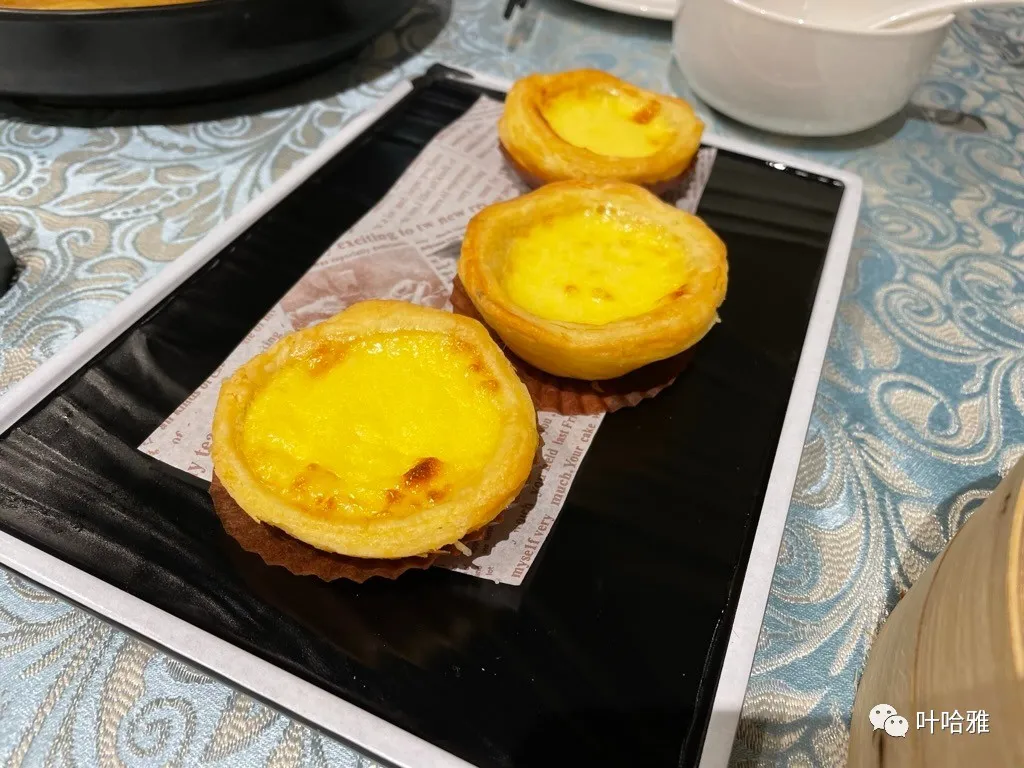
Xinjiang milk egg tart (puta)
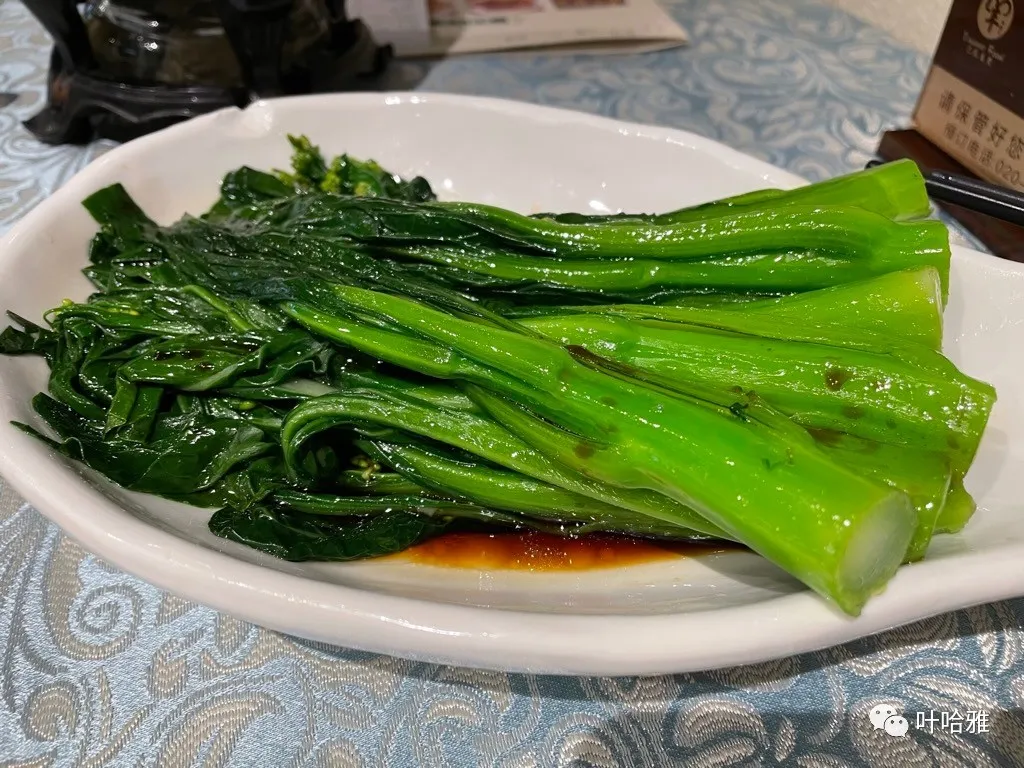
Boiled Ningxia choy sum (caixin)
People in Guangzhou care a lot about healthy eating. They want fresh ingredients and balanced nutrition. They cook with all kinds of land and sea animals. You can find these dishes at morning tea, which lasts until lunch. After a midday break, people go back for afternoon tea. When it gets dark and cool outside, there is a late-night snack culture. You can spend the whole day eating.
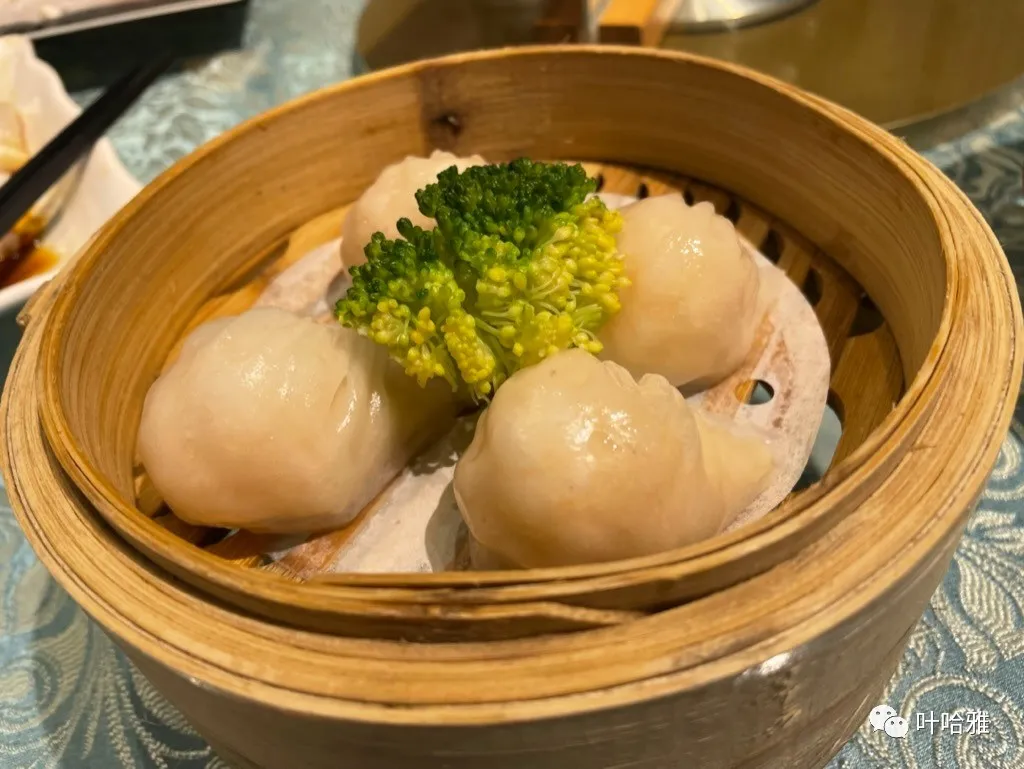
Original juice bamboo shoot shrimp dumpling (xiajiao huang)
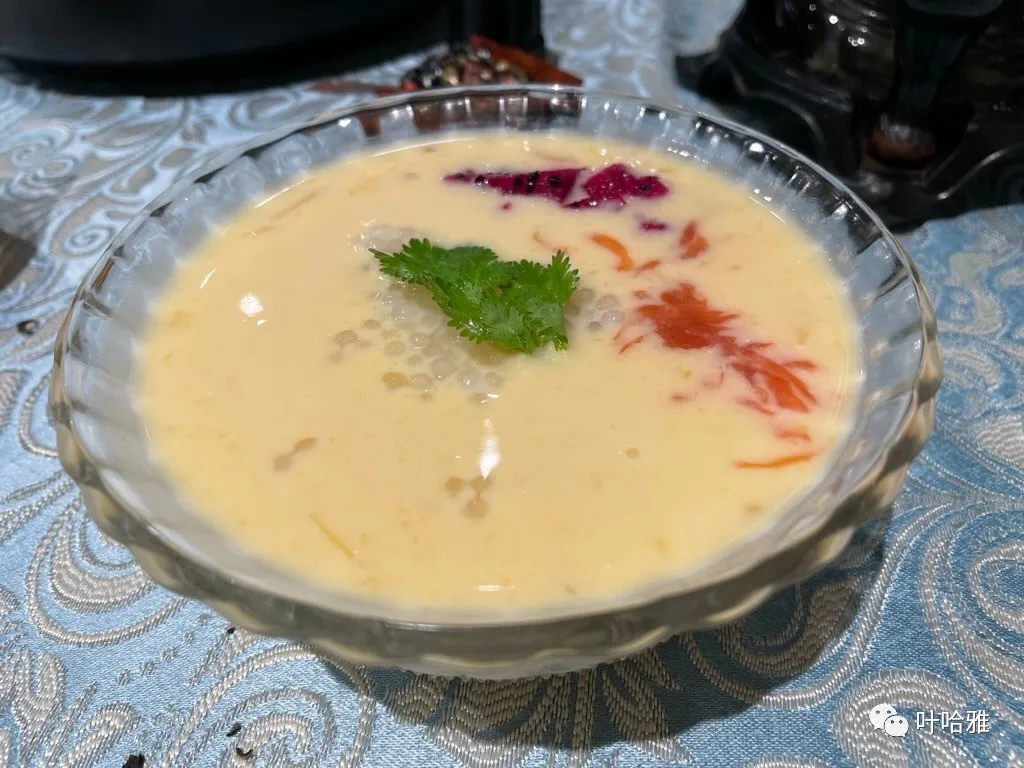
Mango pomelo sago (yangzhi ganlu)
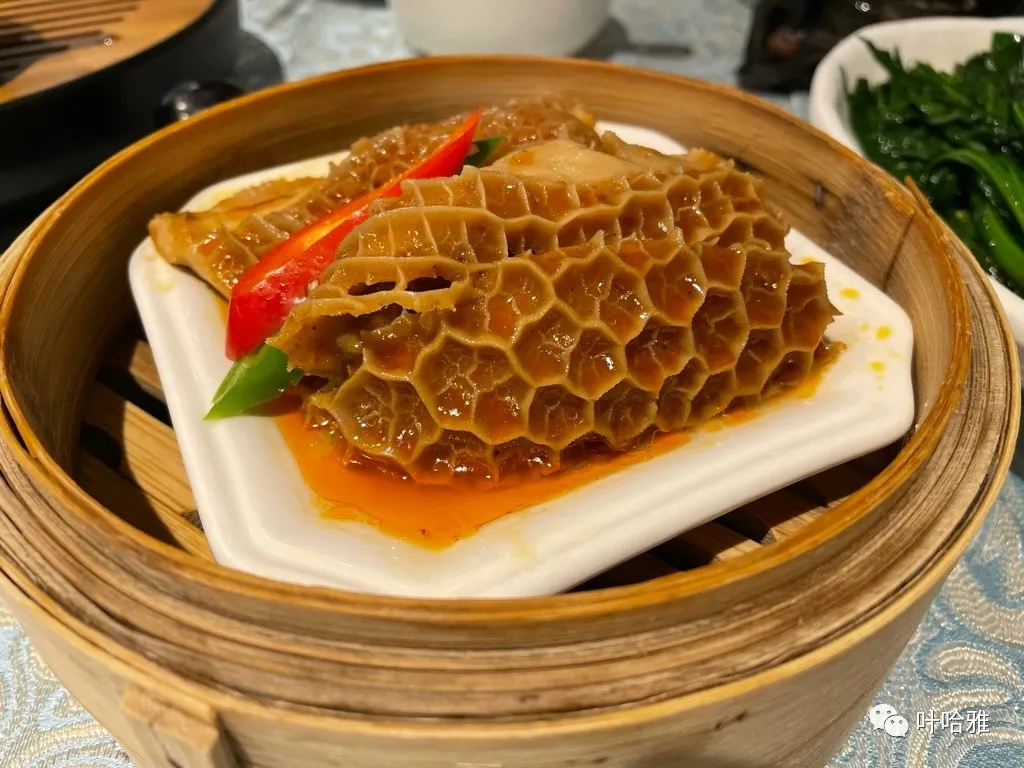
Malay satay beef tripe (jinjian du)
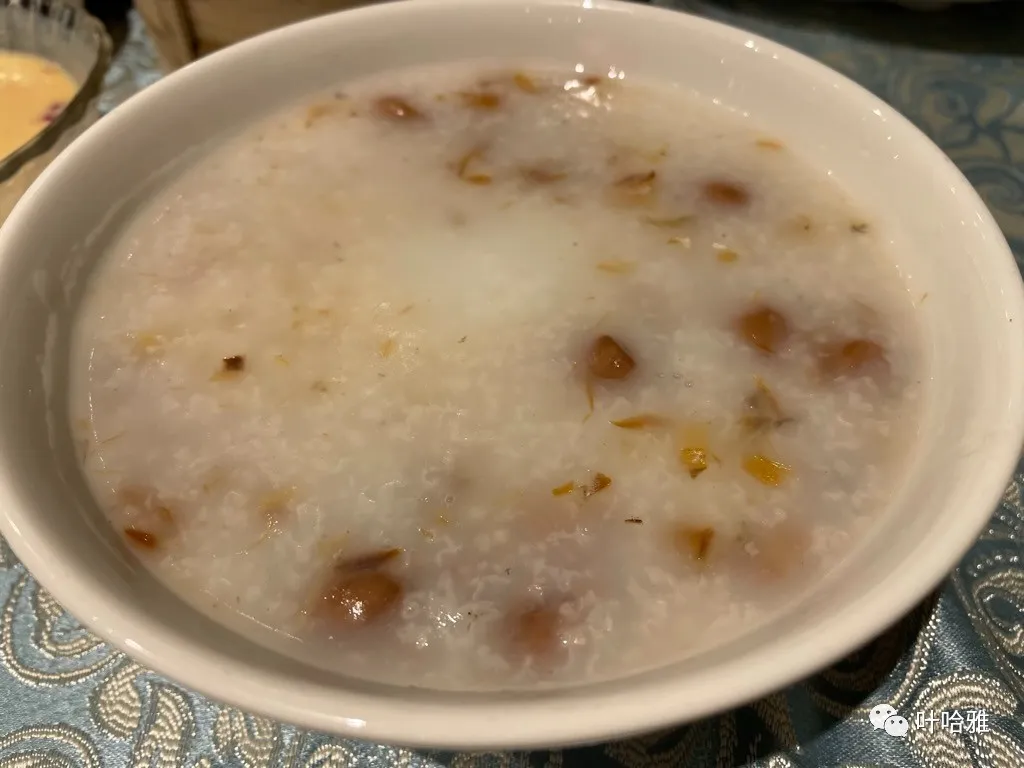
Dried fish and peanut congee (chaiyu huasheng zhou)
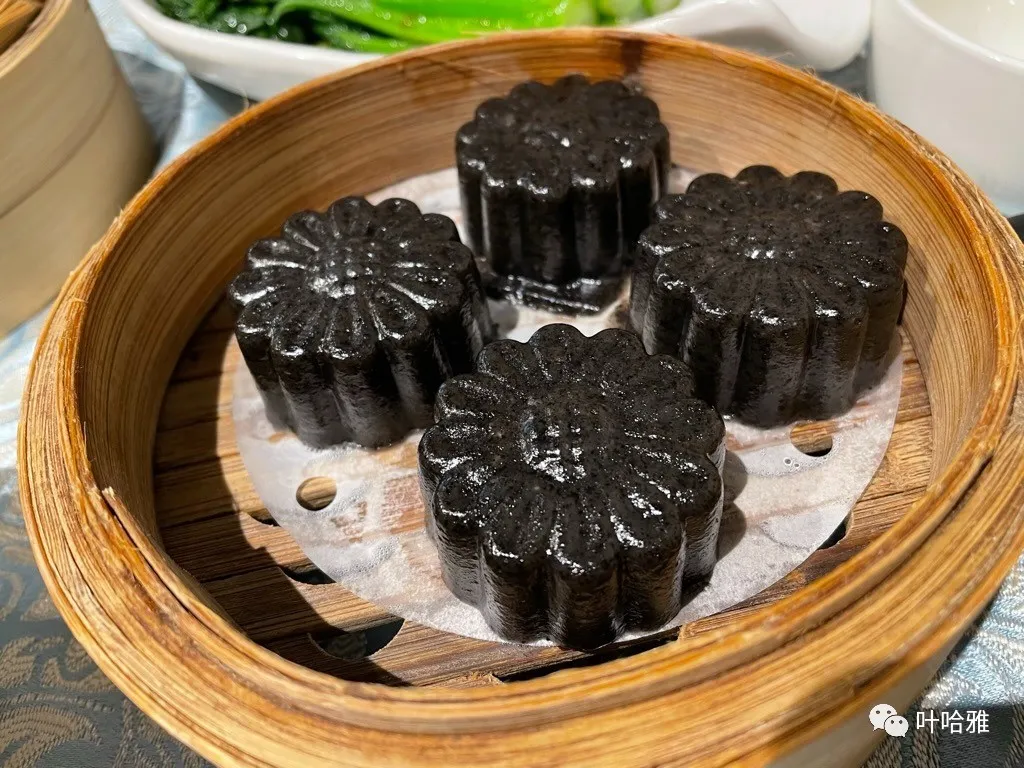
Healthy sesame cake (zhima gao)
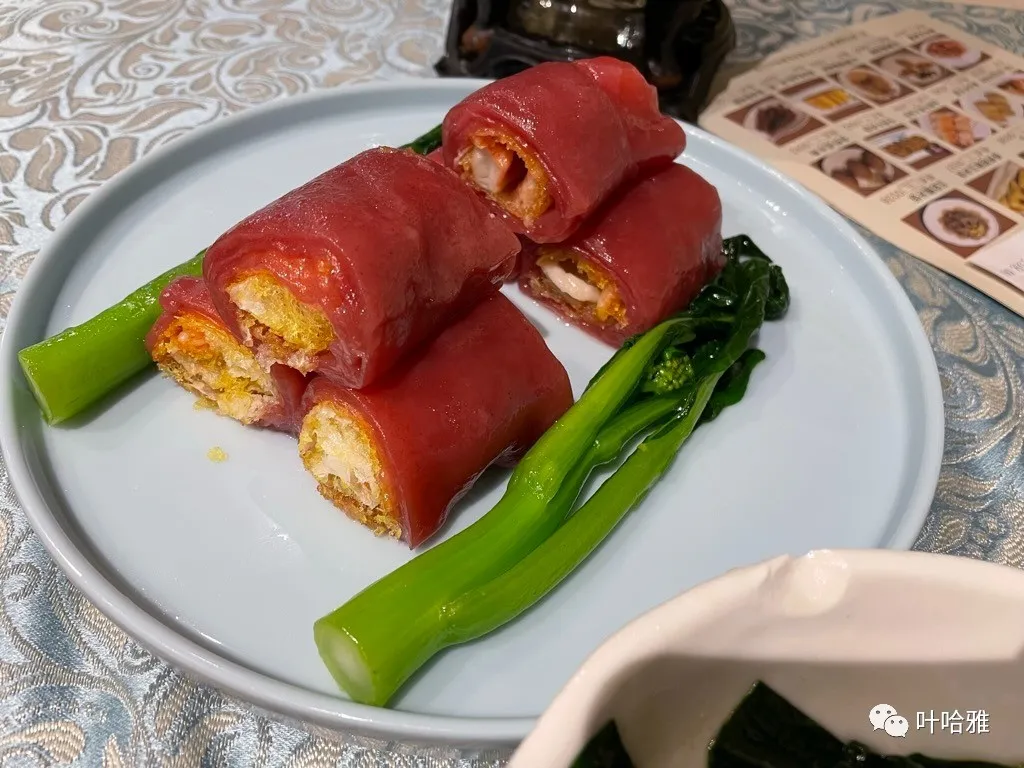
Southeast Asian shrimp red rice noodle roll (hongmi changfen)
6. Hui Muslim Restaurant (Huimin Fandian)
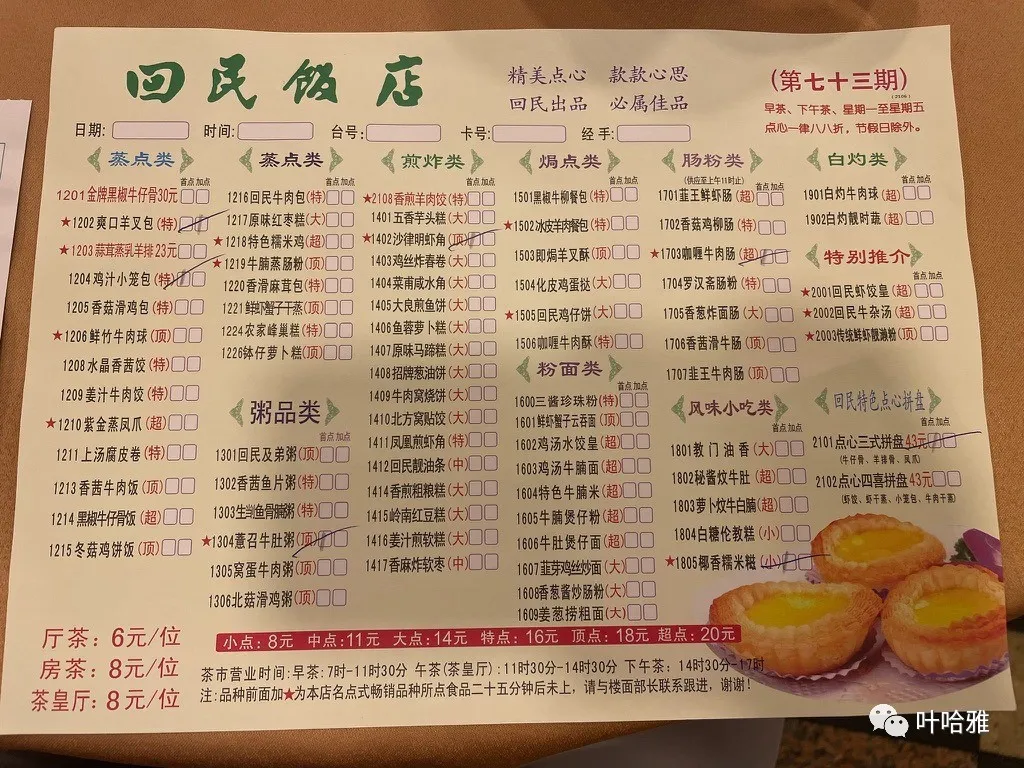
Huimin Restaurant is a state-run Guangzhou classic that has been open for over half a century. Most of the customers are local people from the neighborhood. I asked my local friends in Guangzhou, and they approve of the food quality here. They serve morning tea, afternoon tea, and regular meals. If you come for morning tea on a weekday, you get a discount.
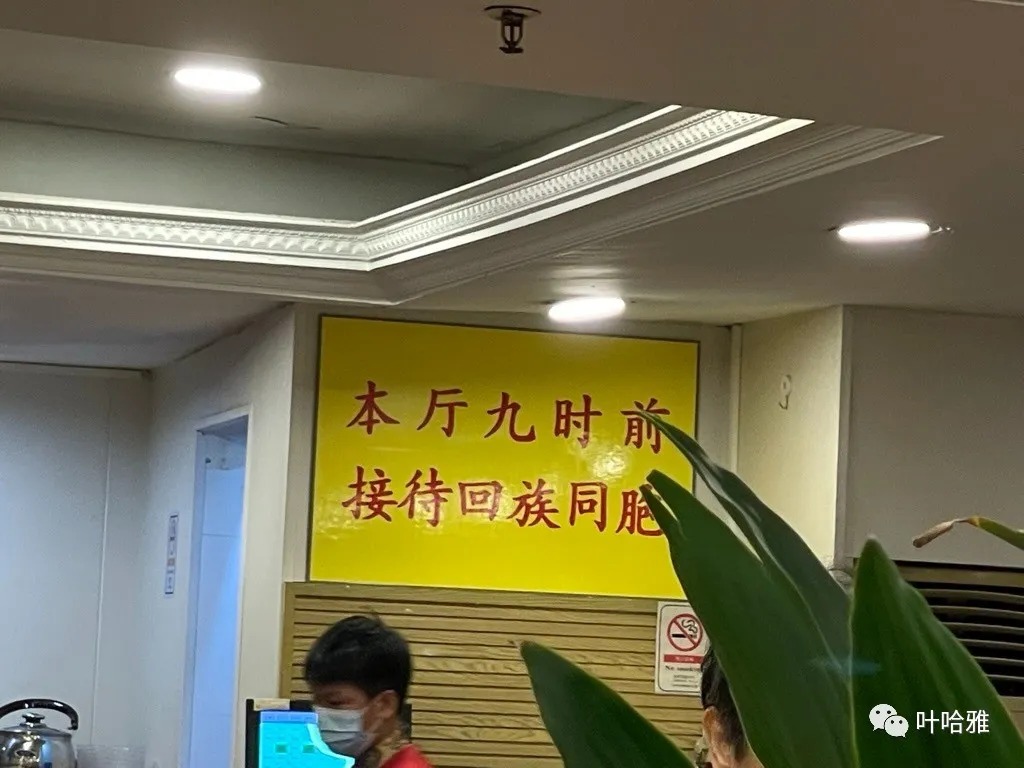
Inside the restaurant, a sign says they serve Hui Muslims before 9 a.m., but when I arrived before 9, I mostly saw local residents of all backgrounds. The restaurant has a strong state-run vibe, and the service is okay. The tea set is not as fancy as the one at Xinjiang Mansion. You only get one teacup and one teapot, and the space is smaller and noisier.
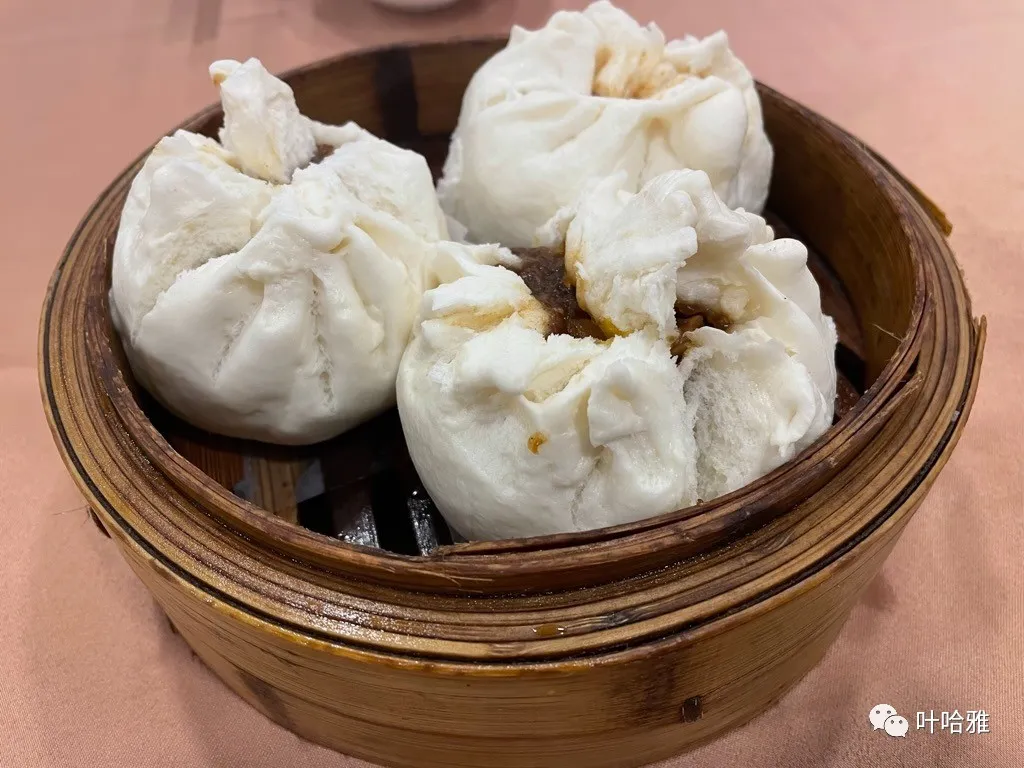
Lamb barbecue bun (yangrou chashaobao)
For Cantonese-style dim sum, the Hui Muslim restaurant makes it more authentic. Take this lamb barbecue bun, for example; it is the only one of its kind in Guangzhou. Barbecue pork (chashao) means roasting meat on a fork, then wrapping it in dough to make a bun. When steamed, the top of the bun splits open naturally. I eat this every time I come here, as it is hard to find such authentic and delicious barbecue buns once you leave this restaurant.
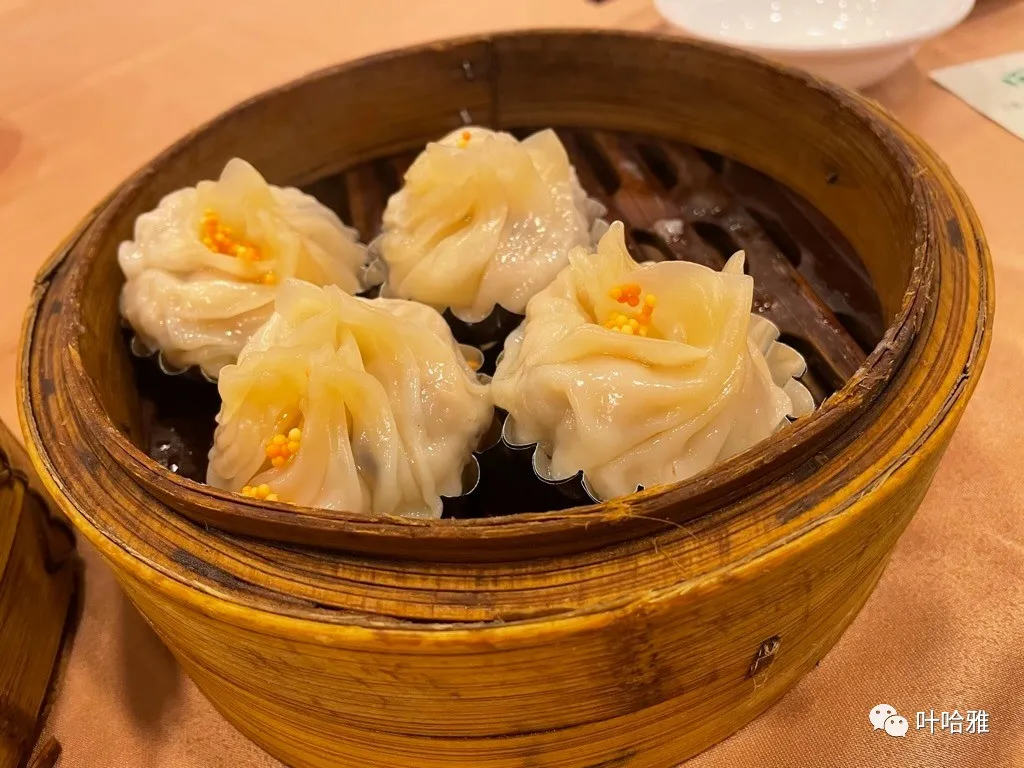
Chicken broth soup dumpling (jizhi xiaolongbao)
Soup dumplings are one of my favorite breakfasts. When my appetite is not fully awake in the morning, I prefer delicate flour-based snacks. I might not have the appetite to finish a large steamed bun.
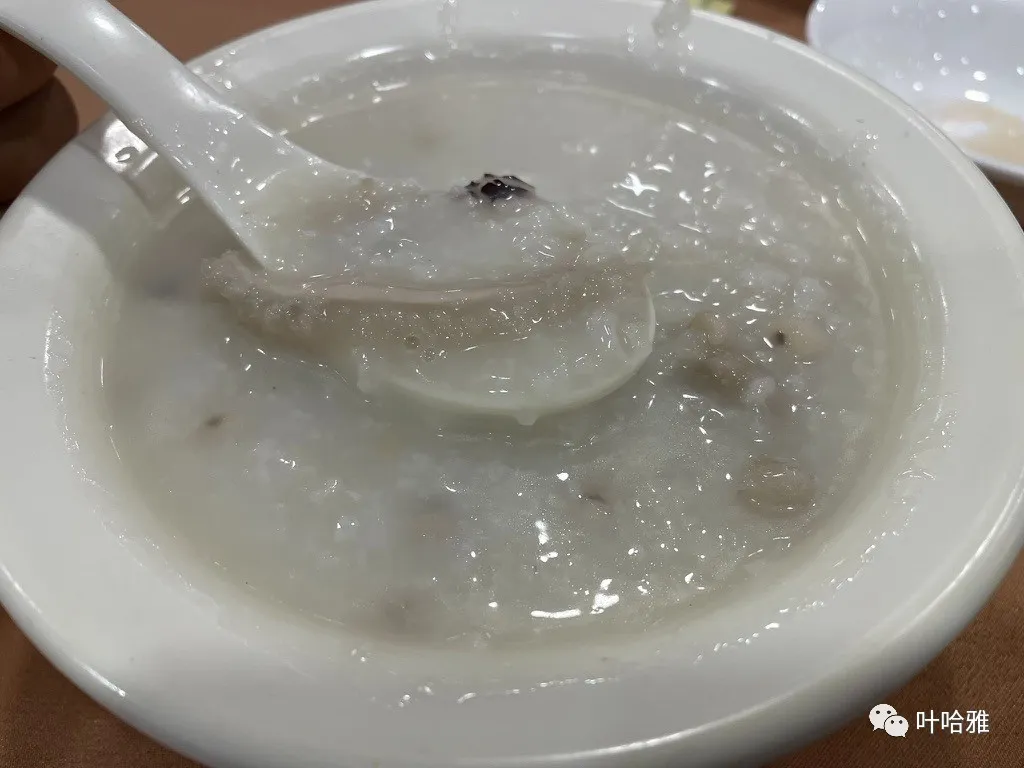
Job's tears and beef tripe porridge (yizhao niudu zhou)
In Beijing, I would never expect to find such a variety of nutritious porridge for breakfast. I have to complain about the porridge here, though. It does not taste like it was freshly cooked this morning; it tastes like it was reheated from a pre-made batch. Freshly cooked porridge has a thicker texture, and this place is not as good as Xinjiang Mansion in that regard.
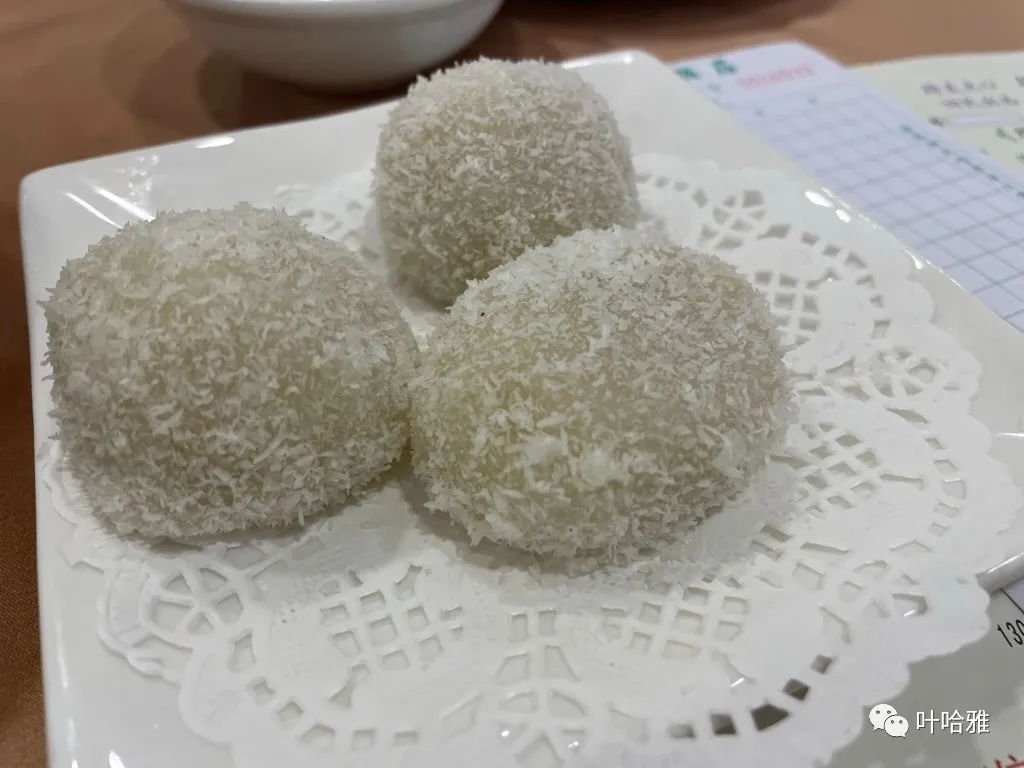
Coconut sticky rice cake (yexiang nuomici)
The dim sum tastes pretty good, but it looks plain. It is not as refined as the food at Xinjiang Mansion, so it is not great for taking photos to post on social media. Many friends have told me the service at the Hui Muslim restaurant is bad. I did not experience that myself, but in terms of small details, Xinjiang Mansion is definitely more comfortable for dining.
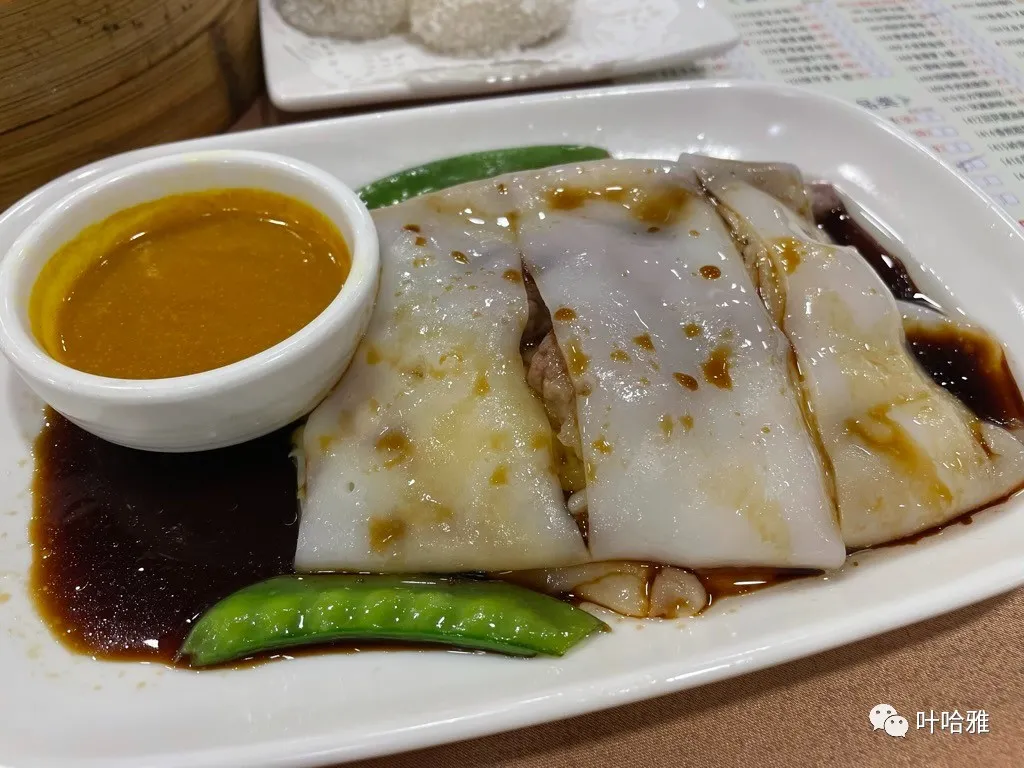
Curry beef rice noodle roll (gali niurou changfen)
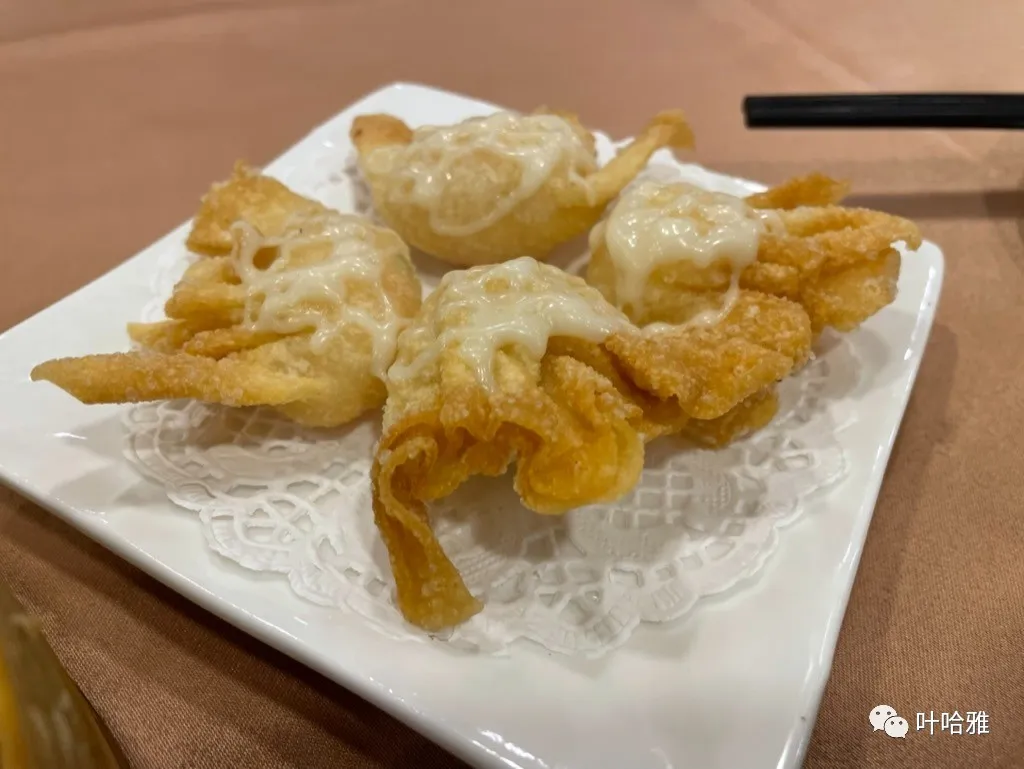
Shrimp salad dumplings (shalü mingxia jiao)
The dim sum platter I had today tasted a bit salty; it wasn't this salty before.
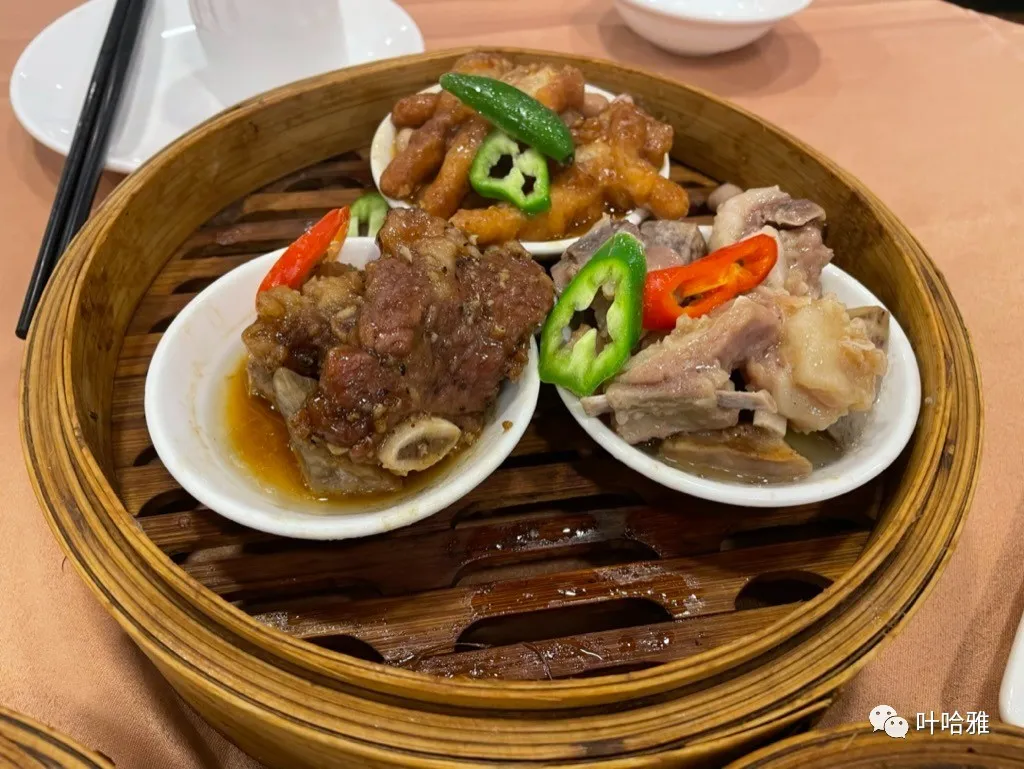
Three-item dim sum platter
7. Ma Xiaohuo Handmade Pulled Noodles and Barbecue
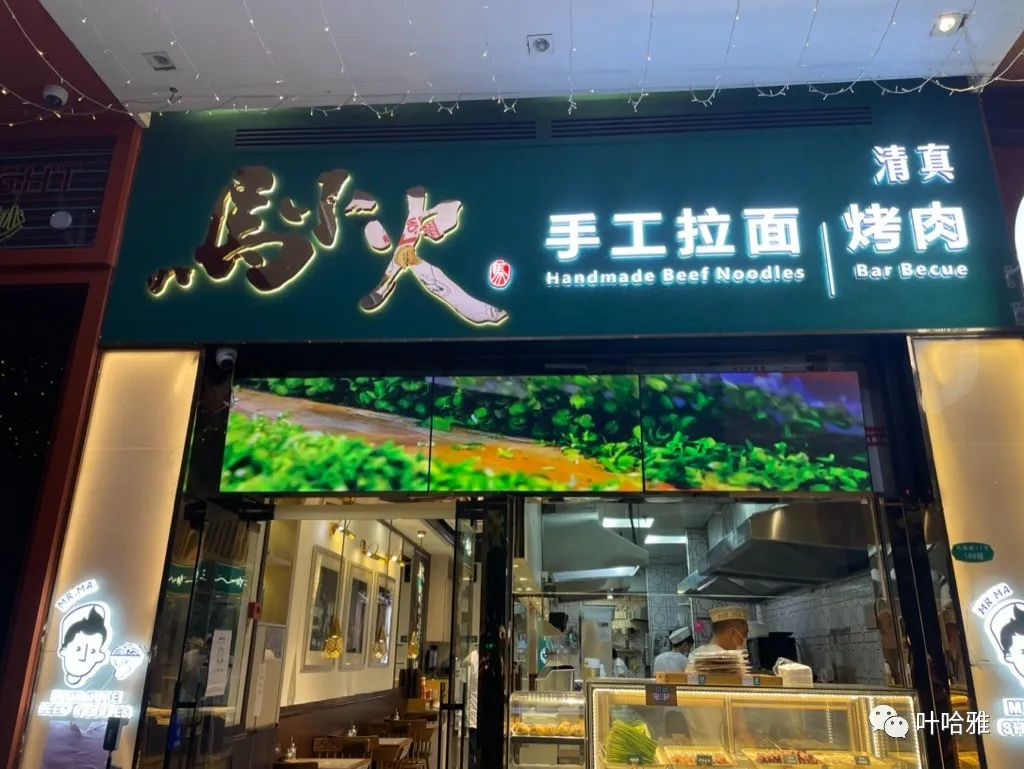
I ended up at this shop by accident. I was catching up with a friend at a cafe, but they felt the air conditioning was too strong, so we moved outside. Suddenly, a storm hit Guangzhou. We ducked into this little shop to escape the rain, ordered some food, and were surprised by how good it was.
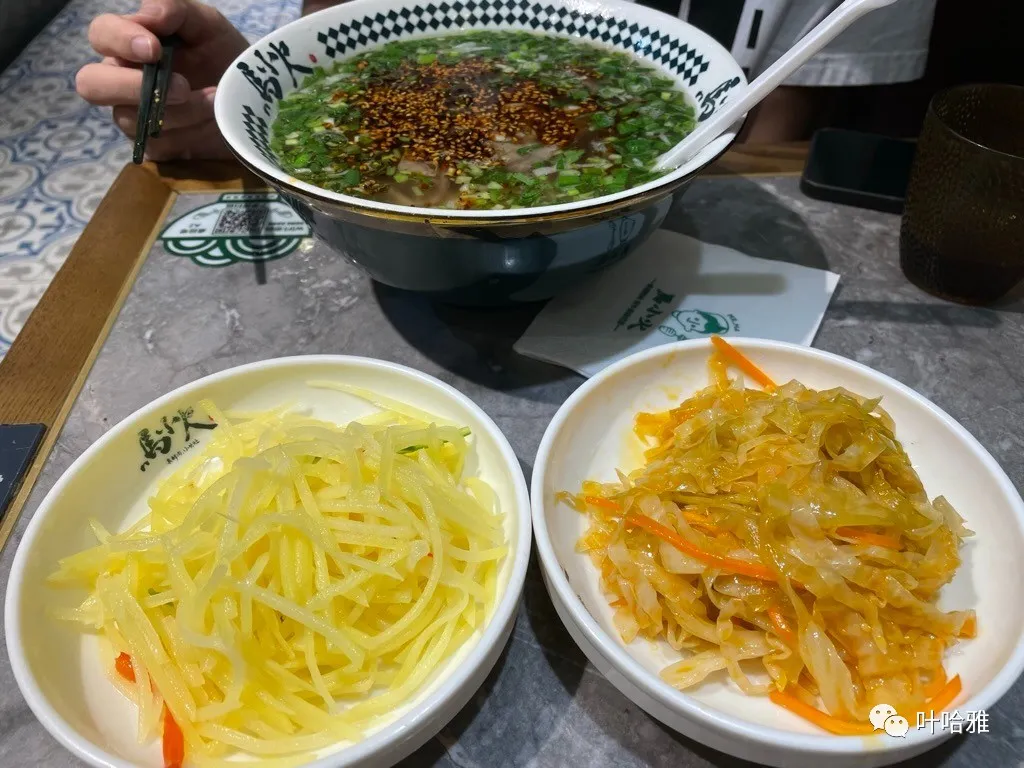
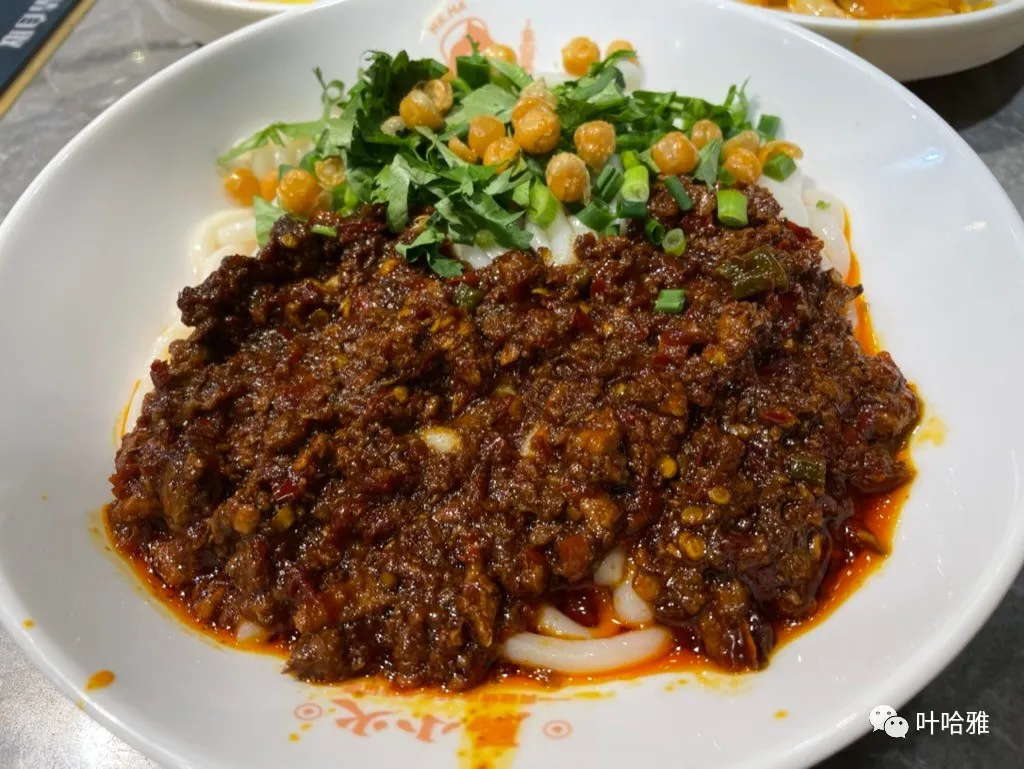
My friend had a bowl of pulled noodles (lamian), and I ordered a portion of Xinjiang rice noodles (xinjiang mifen). The rice noodles came with plenty of toppings and tasted great. The shop was clean and bright. Although it was small, the dining experience was very comfortable. It is a chain, and there are currently three branches in Guangzhou.
8. ANTALYA Turkish Restaurant
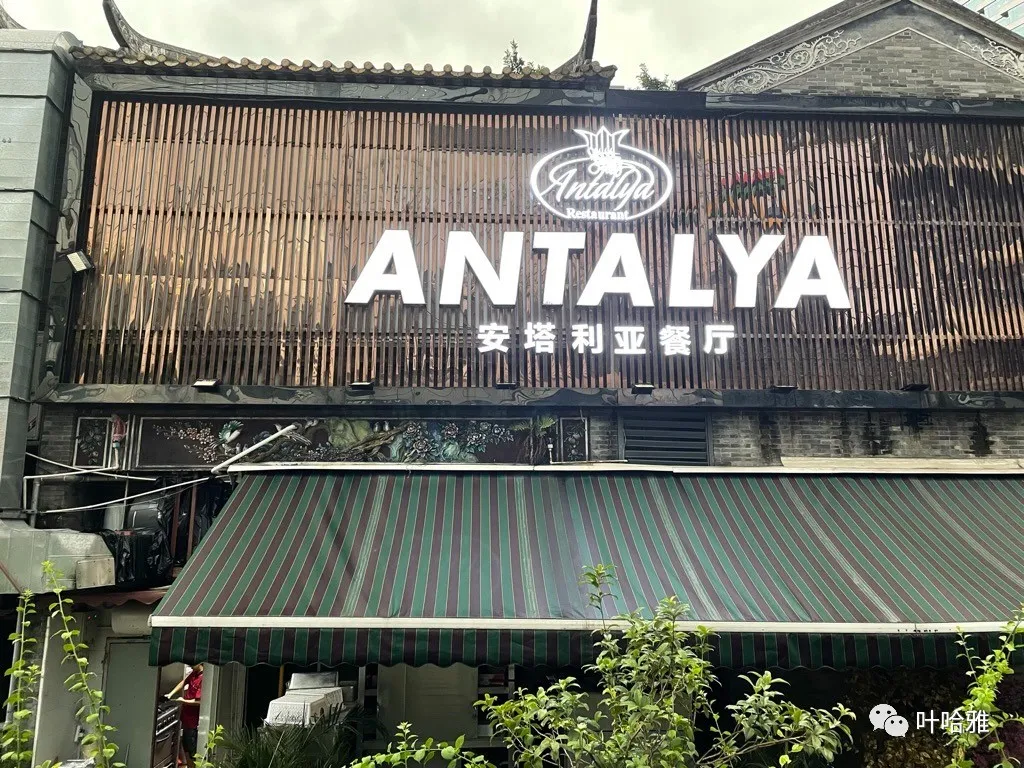
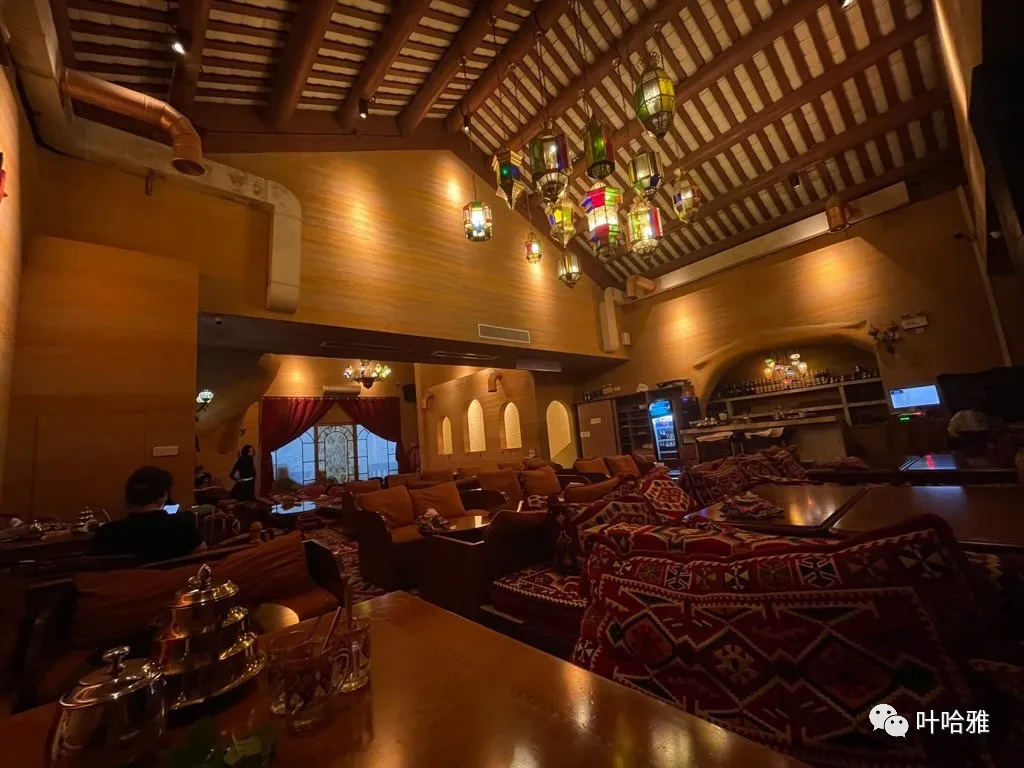
Antalya Restaurant's Liede branch was the first place we chose for our team building. The second floor has Central Asian-style decor where you take off your shoes and sit on carpets. You used to be able to experience this at Rumi's Secret in Beijing, but unfortunately, that location closed. However, a new Rumi's Secret opened in Urumqi, and I visited it the year before last; the environment there is even better.
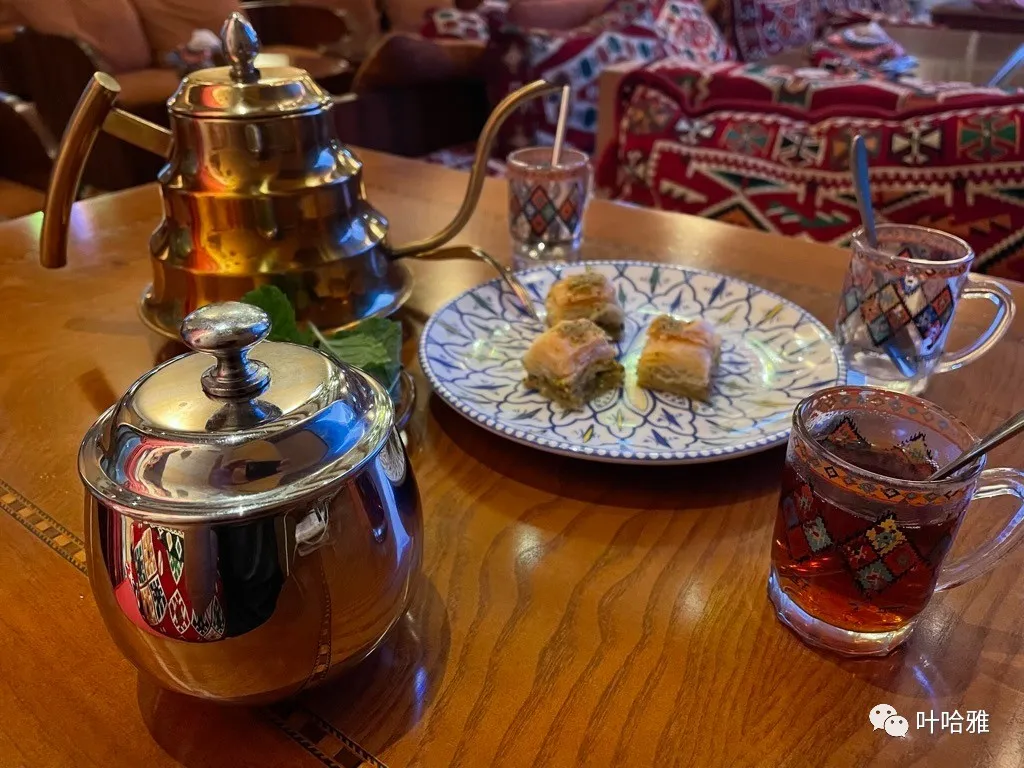
For Middle Eastern cuisine, black tea and baklava are must-haves, along with my favorite Turkish coffee. Whether it is day or night, I always have a cup whenever I eat Turkish food.
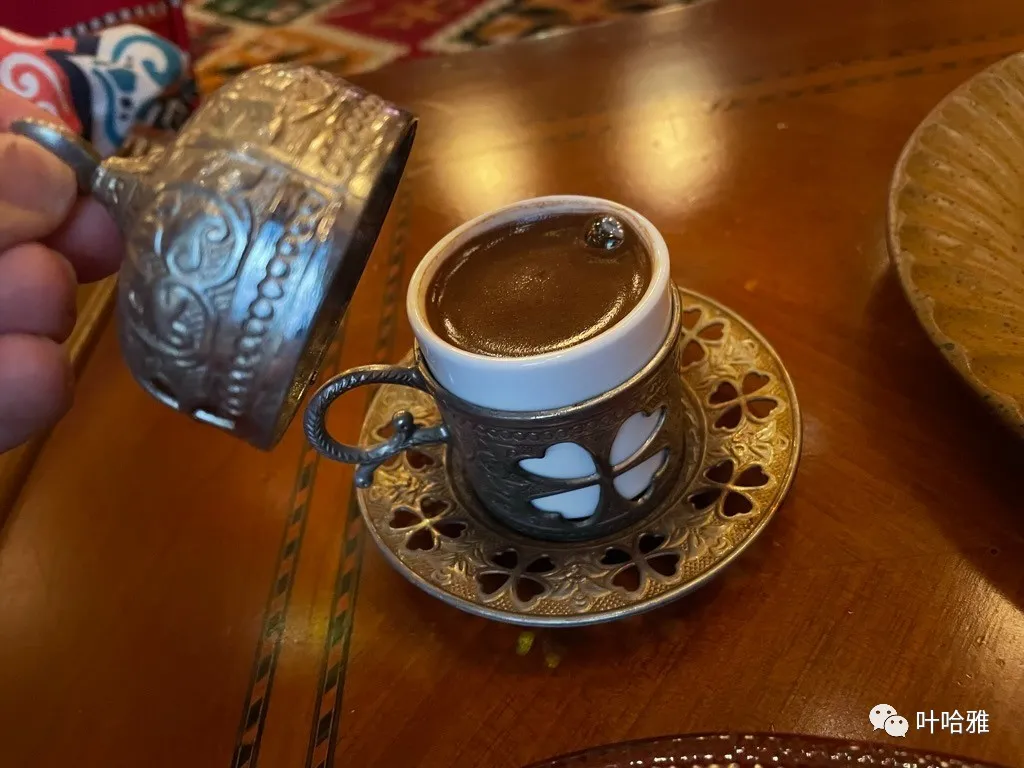
Besides its rich texture and coffee grounds, a highlight of Turkish coffee is the cup. It must not be served in a clear glass; it has to be in an exquisite porcelain cup to be authentic.
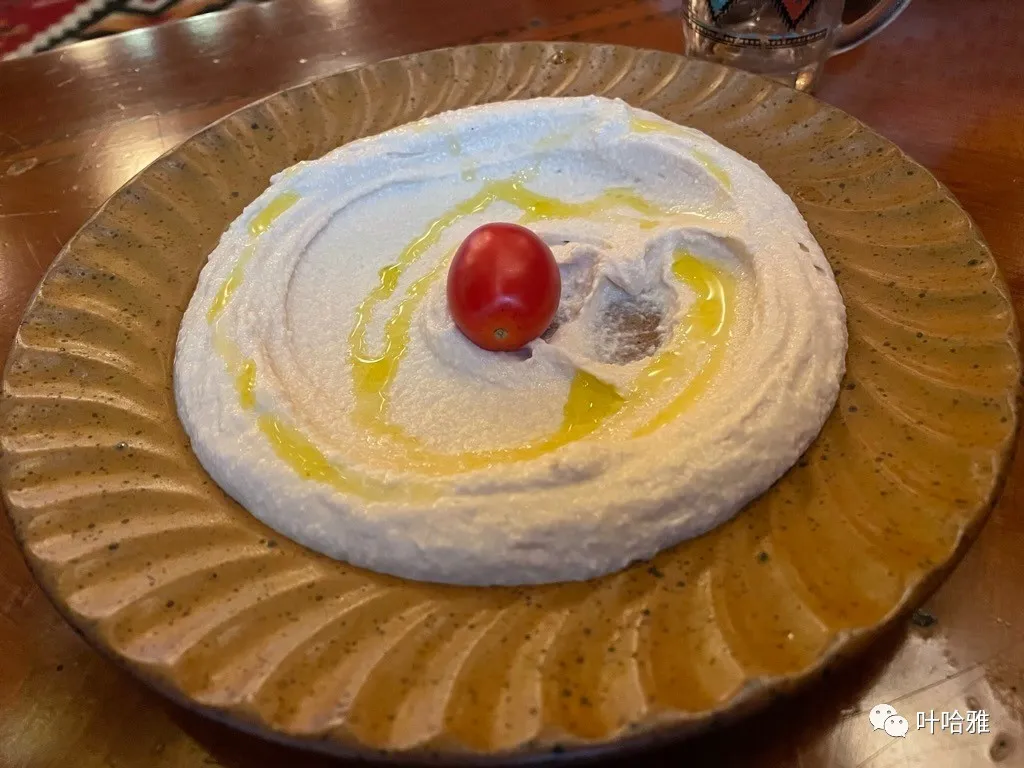
Hummus (yingzuidou ni)
The overall feel of this restaurant is just like Rumi's Secret, and the prices are similar, averaging about 200 yuan per person. The flavors are a bit localized and lighter, which suits Chinese tastes better.
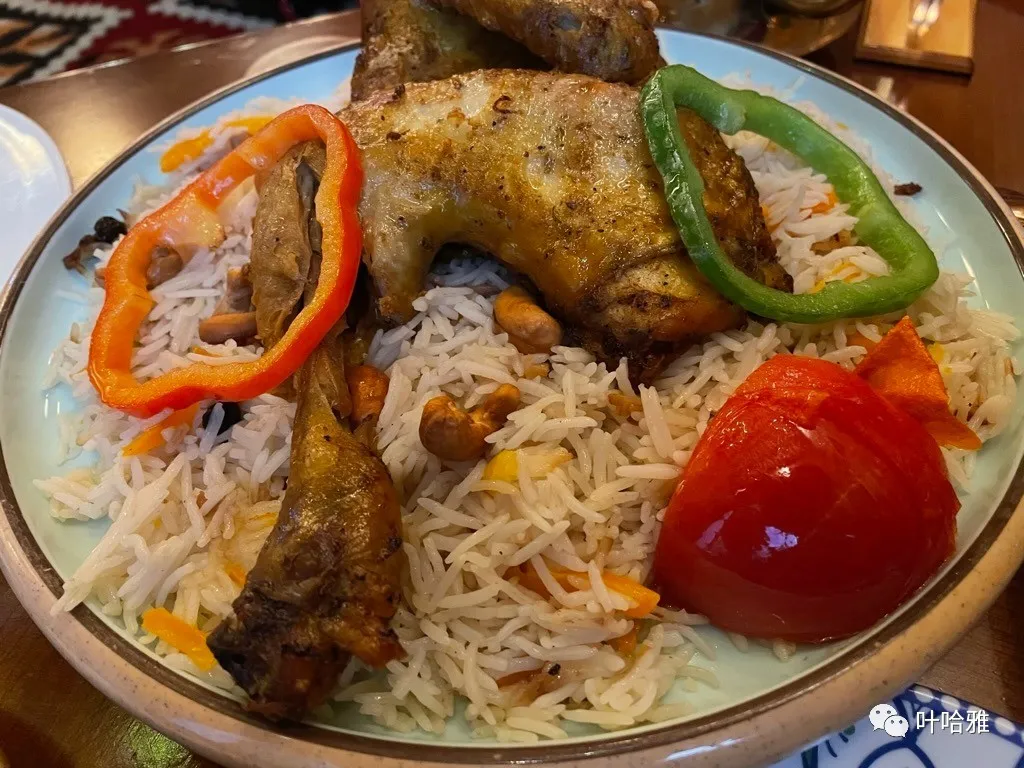
Chicken leg with Arabic rice.
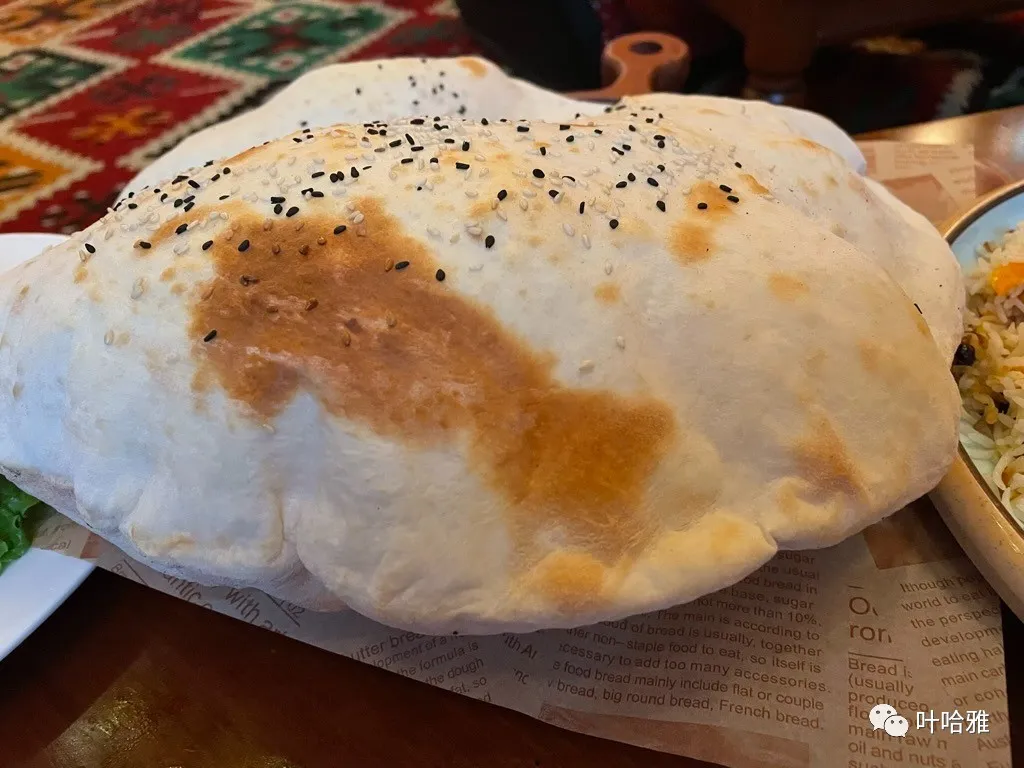
Hollow balloon bread.
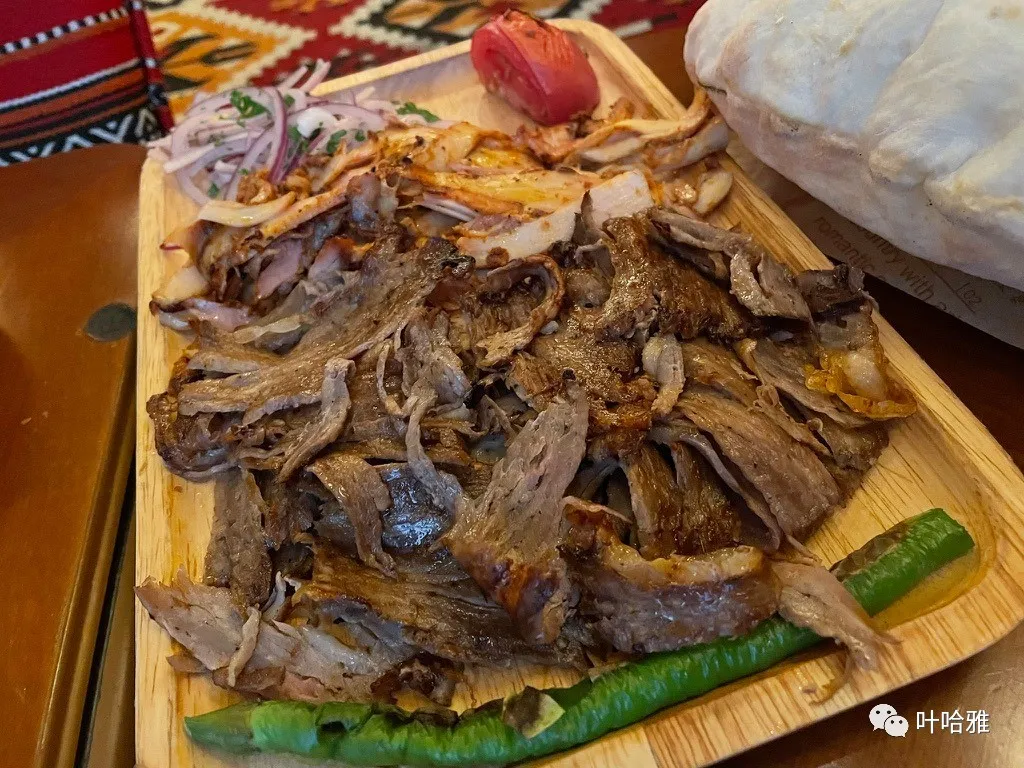
Mixed chicken and beef kebab platter.
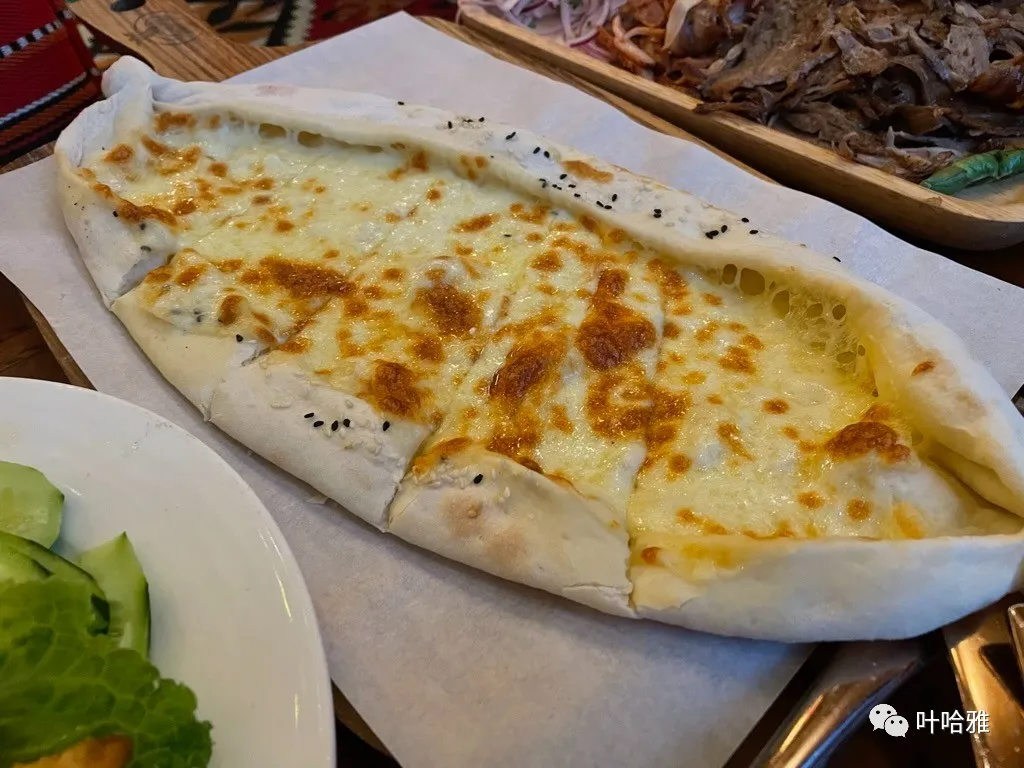
Cheese flatbread (pide).
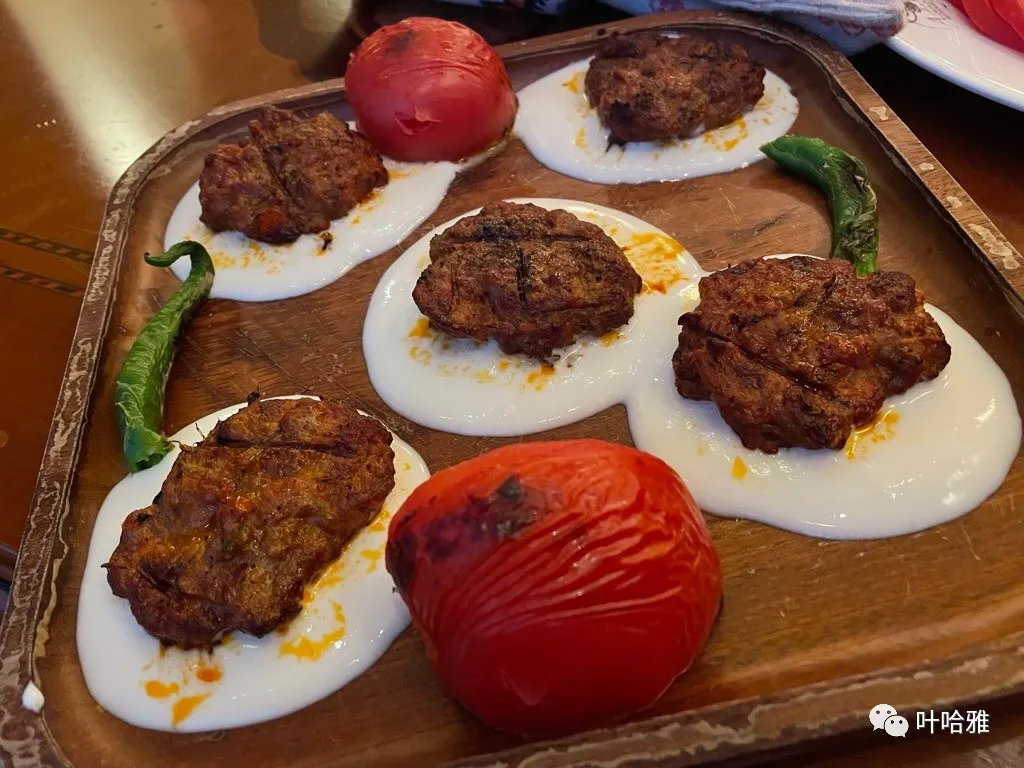
Lamb patty with yogurt.
I have to say a few words about this final ice cream; it is not as good as MADO, a Turkish ice cream brand that uses goat milk. I will introduce the MADO ice cream shop in Guangzhou specifically later.
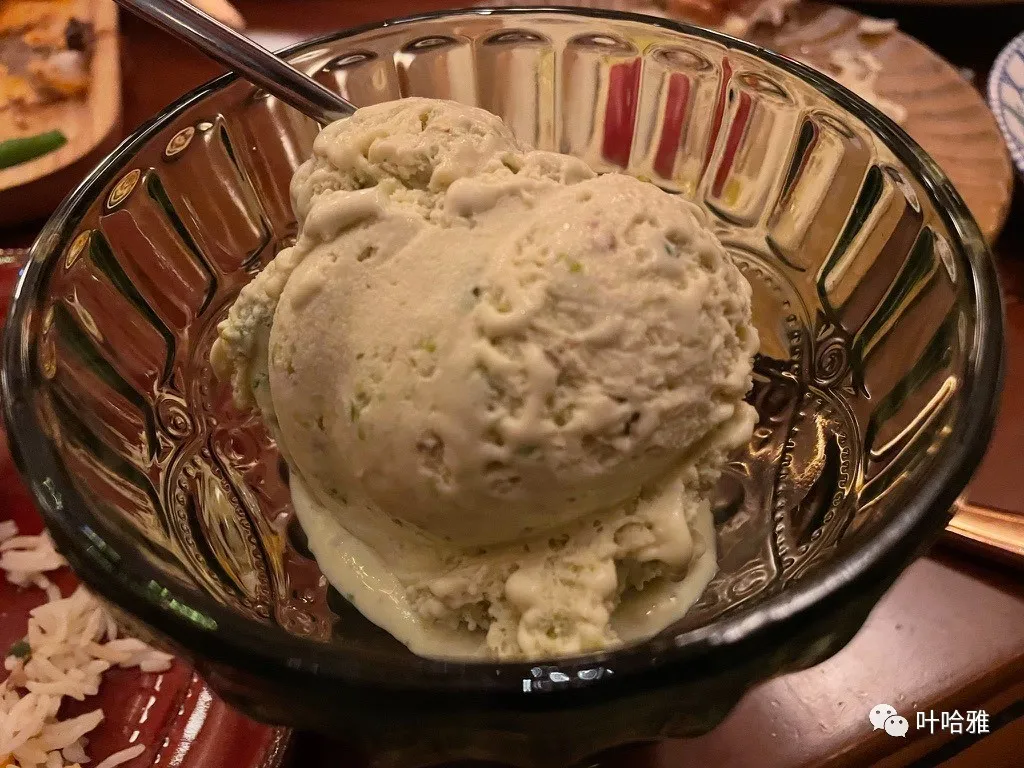
Ice cream.
9. MADO Turkish Ice Cream and Coffee Shop.
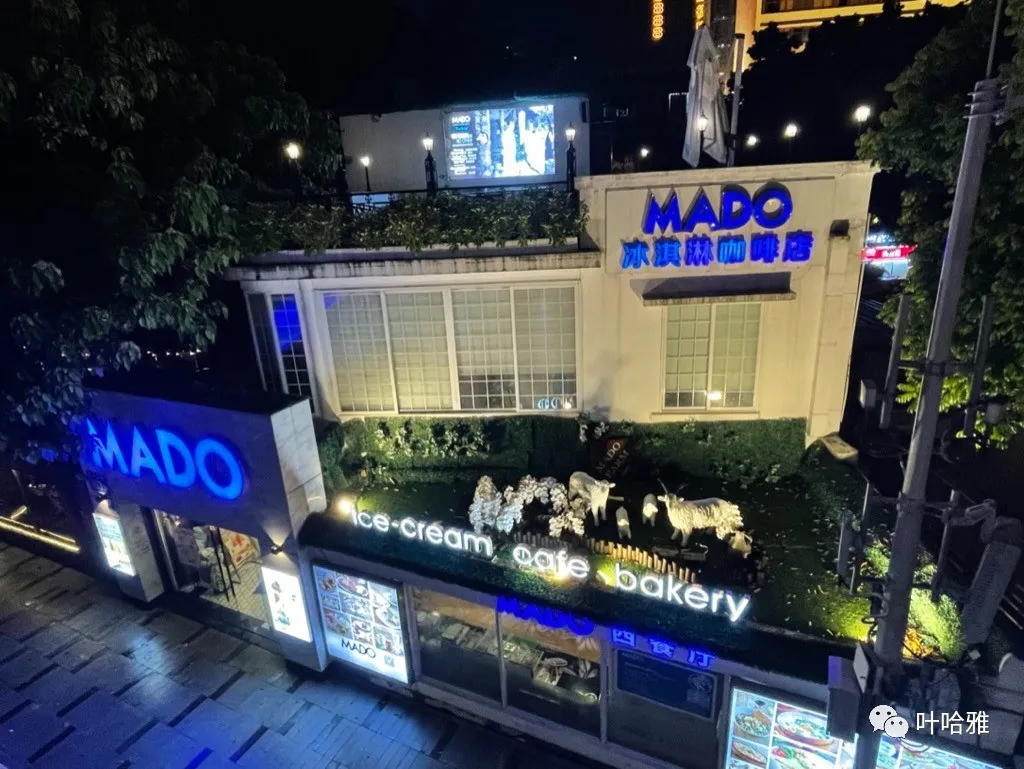
MADO is very famous, and I had heard of it for a long time. I still remember the rich milky flavor of the MADO ice cream I ate in Beijing. Before coming here, I checked and found that there are two branches in Guangzhou. We ate at MADO twice because most of the members in my Guangzhou group are women who love it, so I had to arrange it.
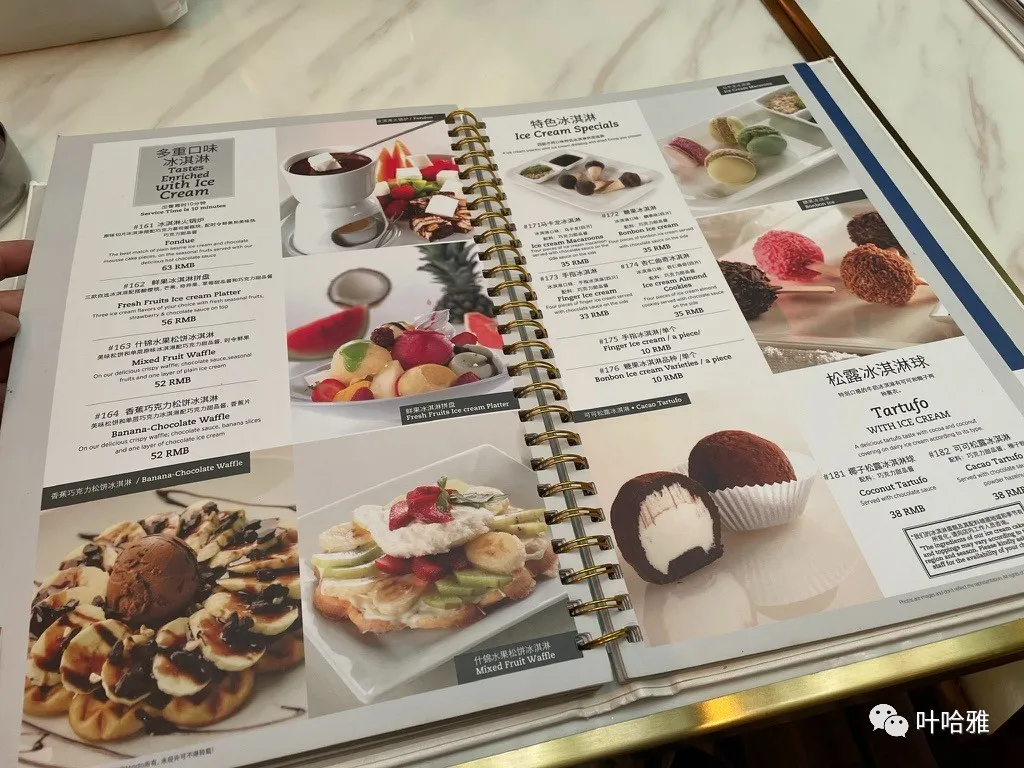
The ice cream shop has a wide variety of sweets and also serves full meals. It is Turkish cuisine, but the quality of the meals is not as good as the ice cream, so I suggest only eating ice cream there.
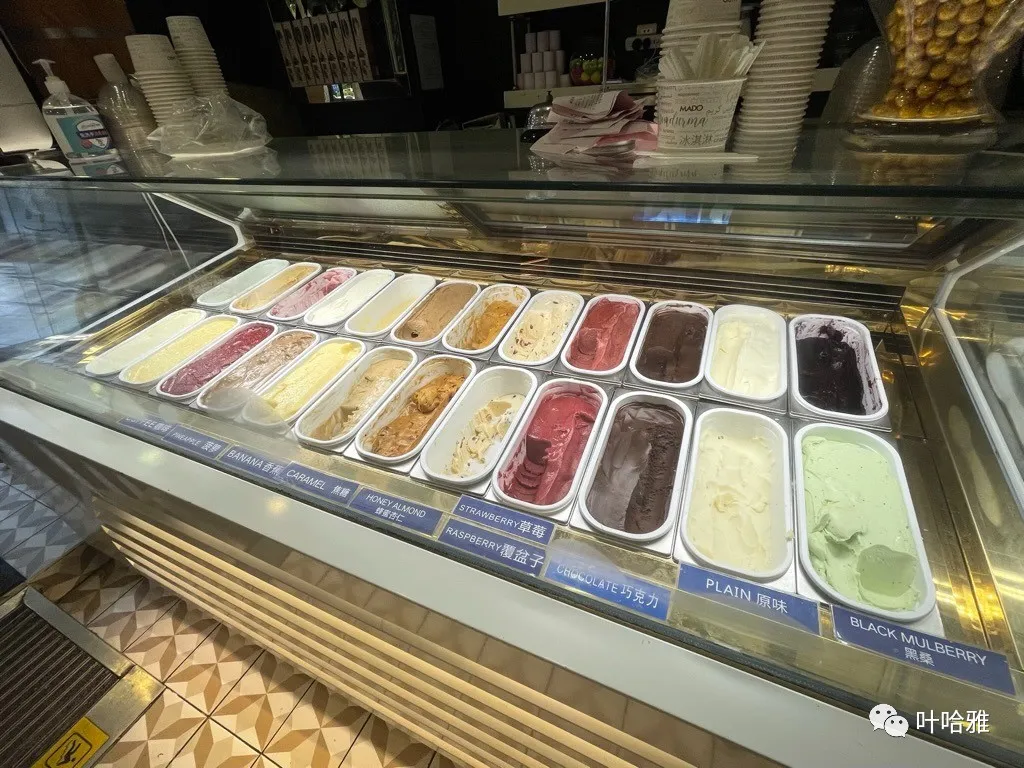
When you enter the shop, you can order ice cream first. You can mix and match from over twenty flavors. You can order a four-layer serving with four different flavors, which is the best value.
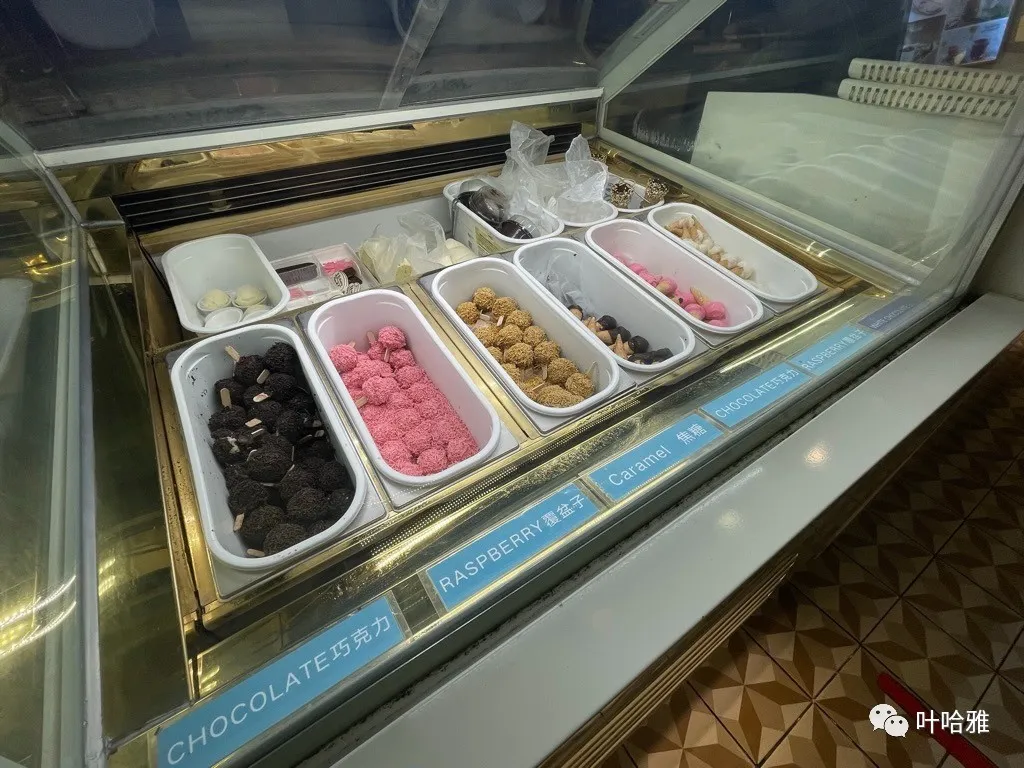
You can also sprinkle various toppings on the ice cream. I like the original handmade ice cream the best; it has the silkiest texture and a full milky flavor. The other flavored ice creams are not as good as the original.
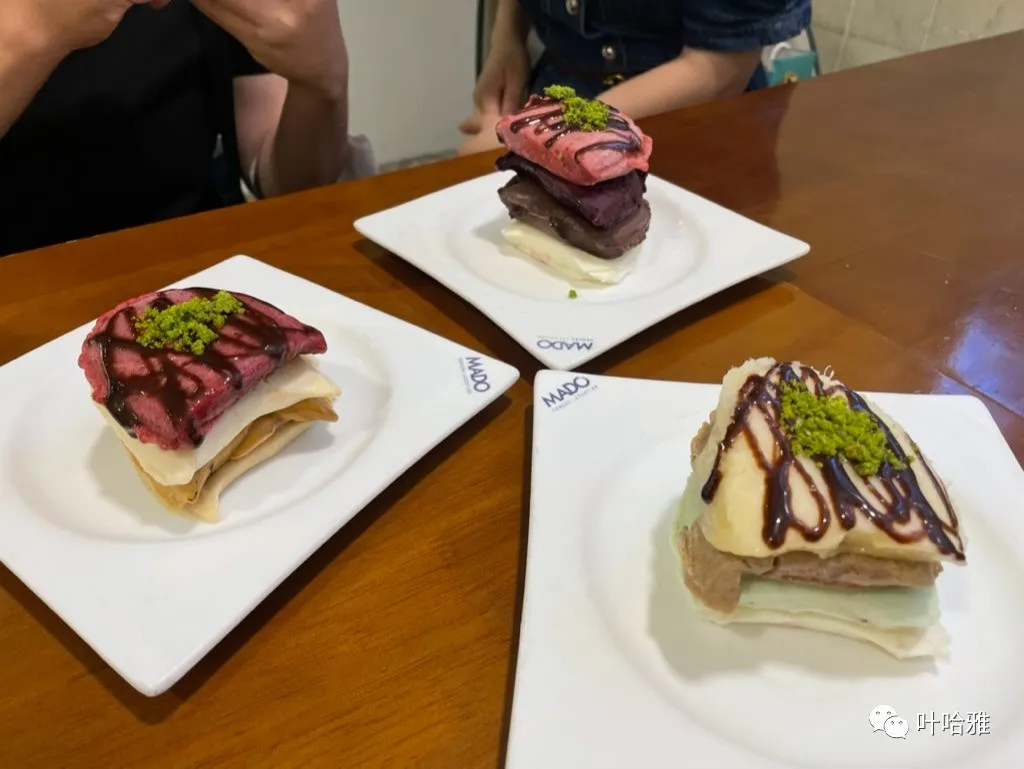
The girls love the raspberry flavor. Raspberries are red, sweet, and tart, and Lu Xun even mentioned them in his writing.
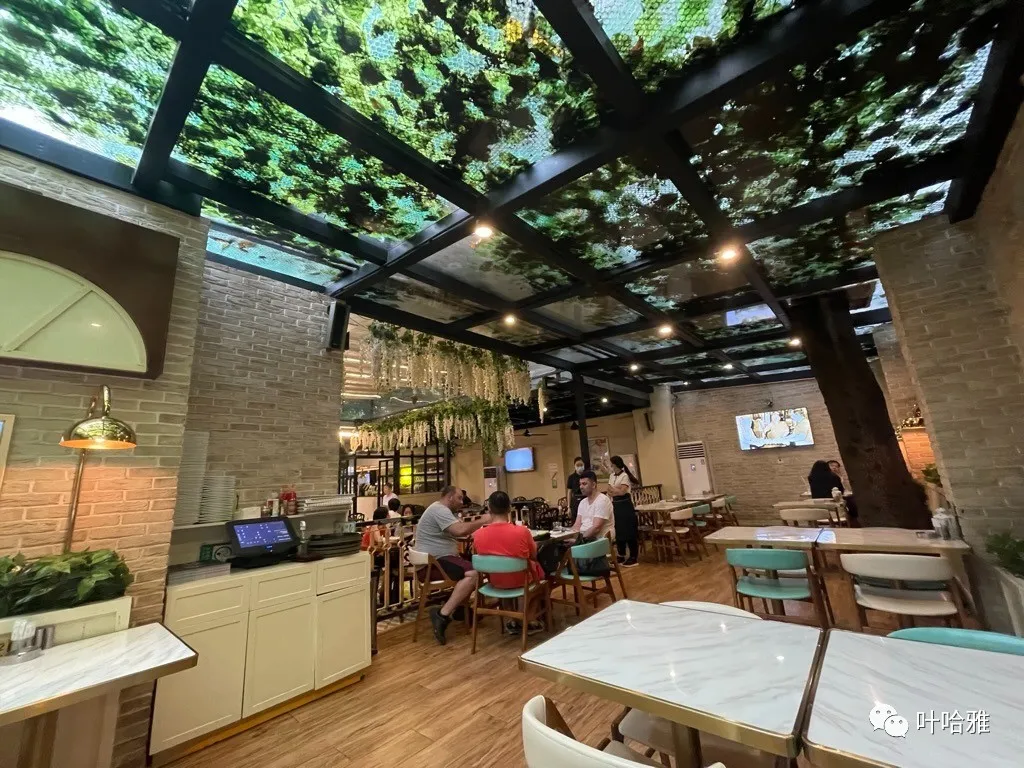
The Turkish restaurants in Guangzhou are mostly filled with foreigners who enjoy chatting and smoking shisha in the cafes.
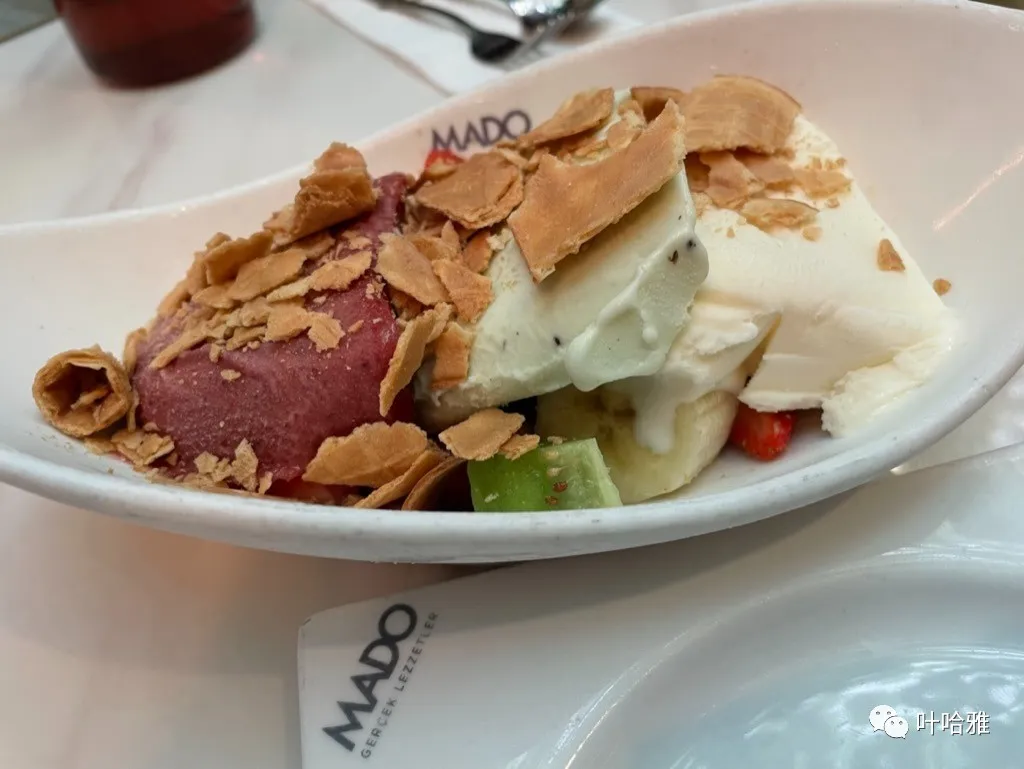
Sultan's Boat
If you see the colorful ice cream on the menu and don't know what to pick, I suggest getting the handmade ice cream in the original flavor. It is the best and does not need any extra toppings.
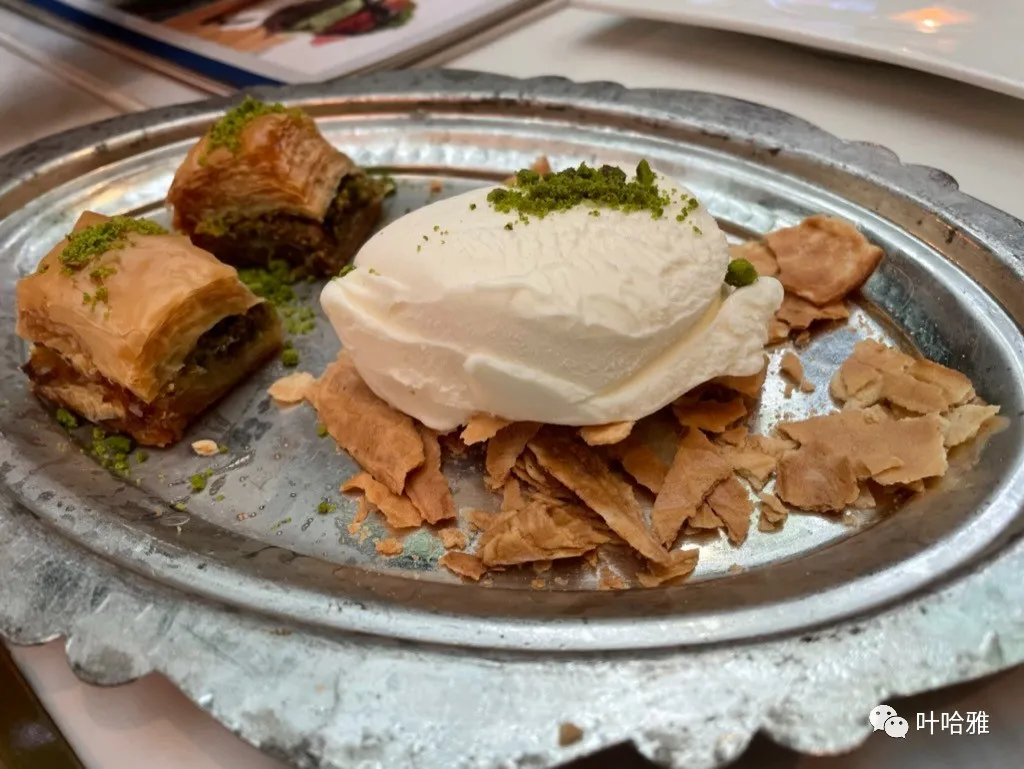
Handmade ice cream
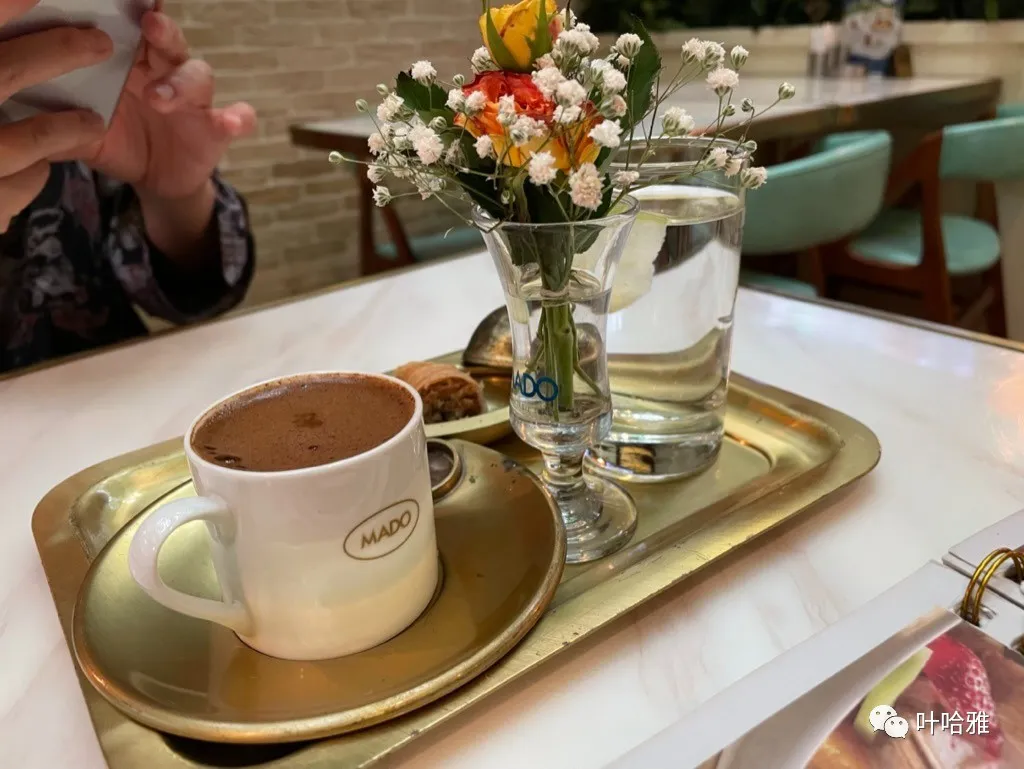
The Turkish coffee is made so delicately and even comes with a small flower for decoration. I felt happy as soon as I walked into this shop, and eating dessert always puts me in a good mood. I really hope they open a branch in Beijing, where many people still love eating ice cream even in the winter.
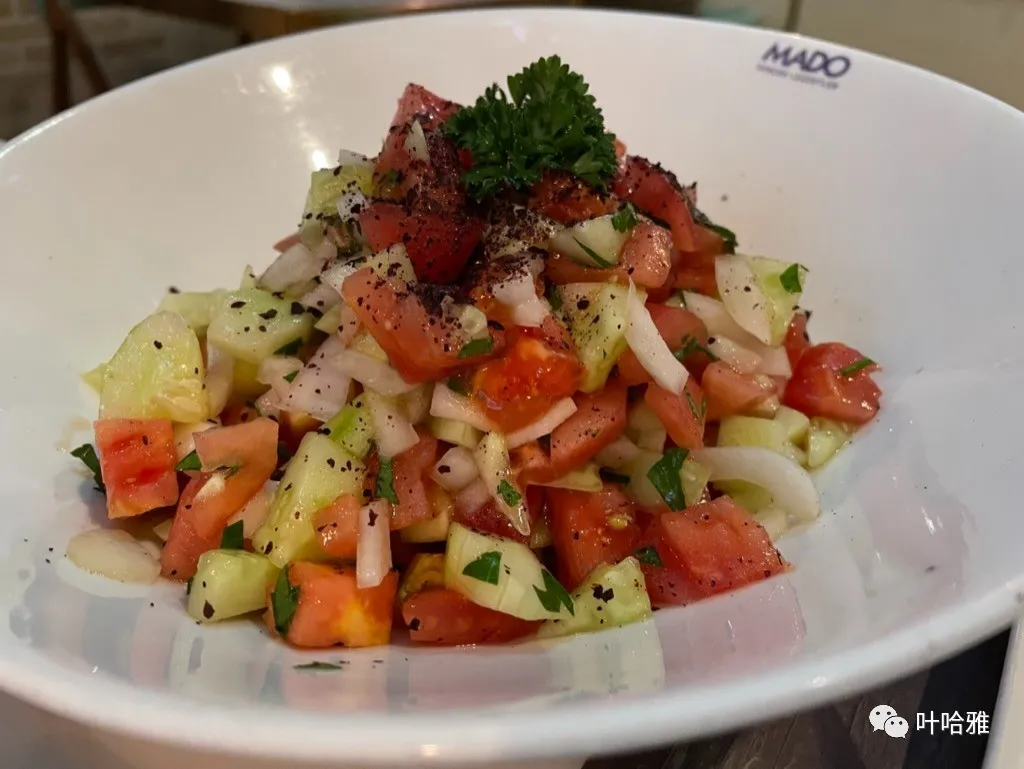
Shepherd's salad
The main courses are just average and do not taste as good as those at Turkish restaurants that specialize in full meals. It is better to come here for afternoon tea or a late-night snack to have ice cream and desserts.
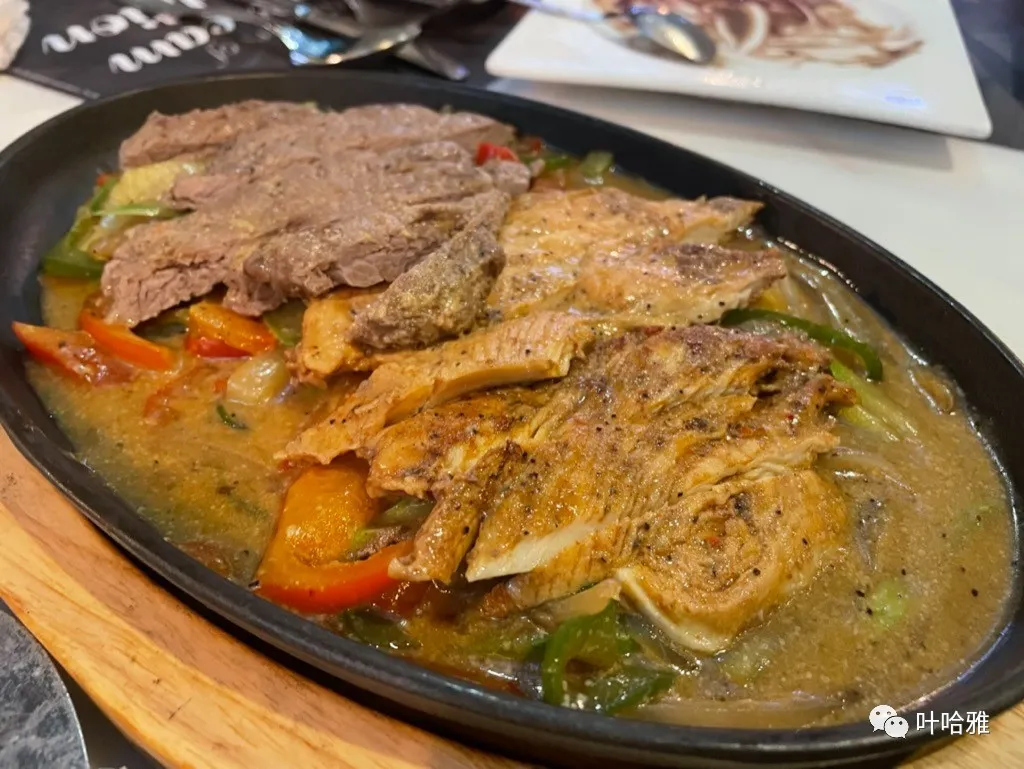
Mexican grilled meat wrap
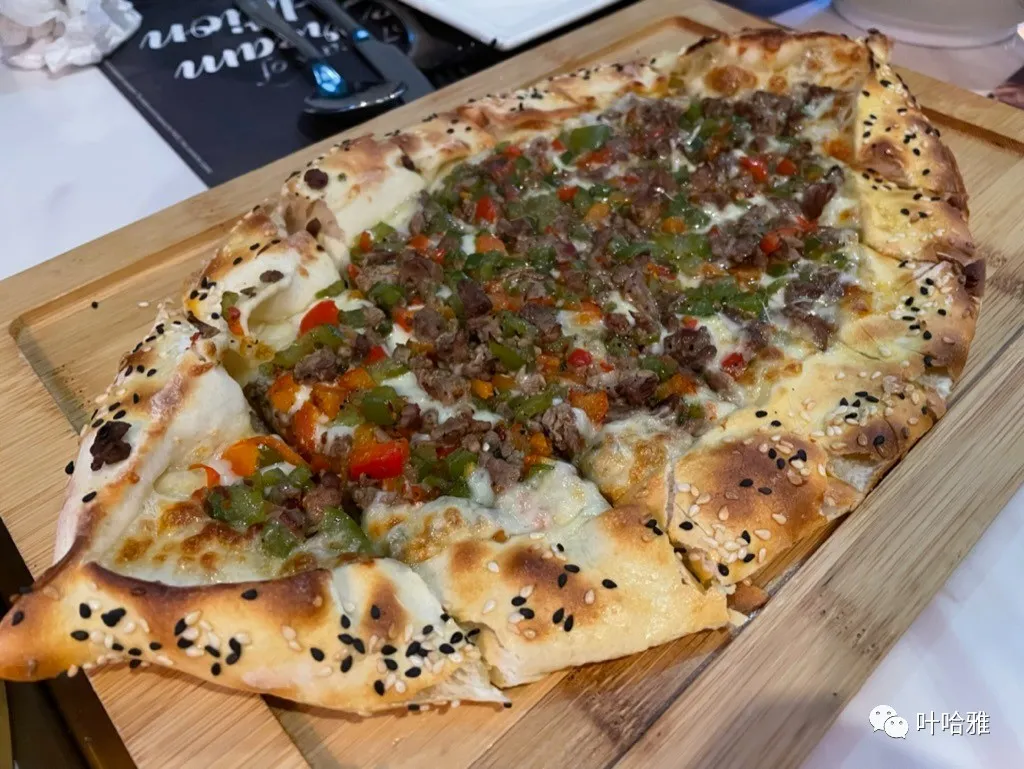
Turkish stuffed flatbread (pide)
10. Xianglan Indonesian Restaurant
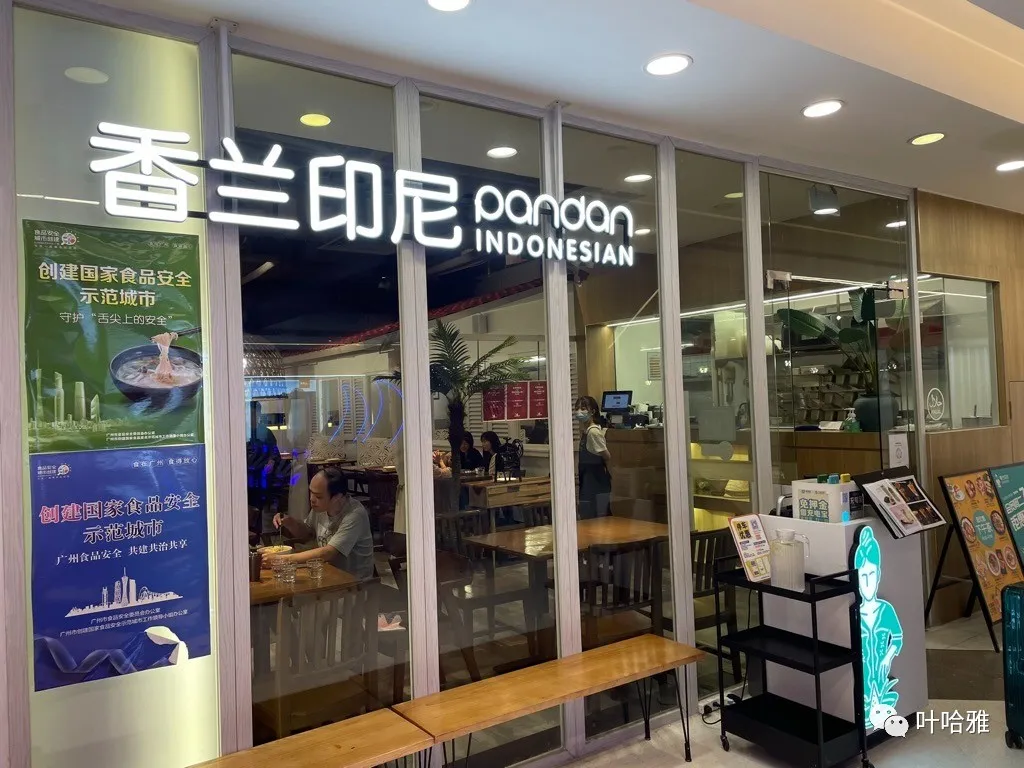
Ever since the Southeast Asian halal restaurants in Beijing all closed down, I have not been able to find authentic Nanyang-style food near my home. The last time I had Indonesian food was in Kuala Lumpur, but I did not even eat Indonesian food this good while I was in Indonesia.
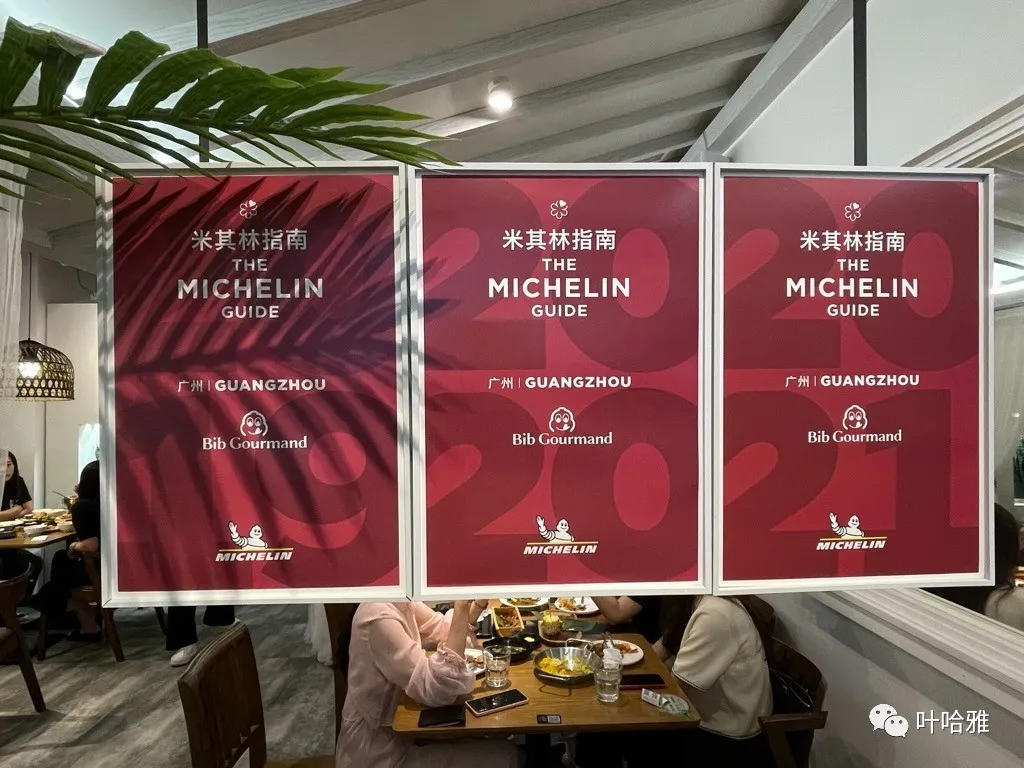
The first reason to recommend this place is that it made the Michelin Bib Gourmand list. This is Michelin's list for affordable restaurants, with an average cost per person under 100 yuan. Being on this list in a food city like Guangzhou really says something.
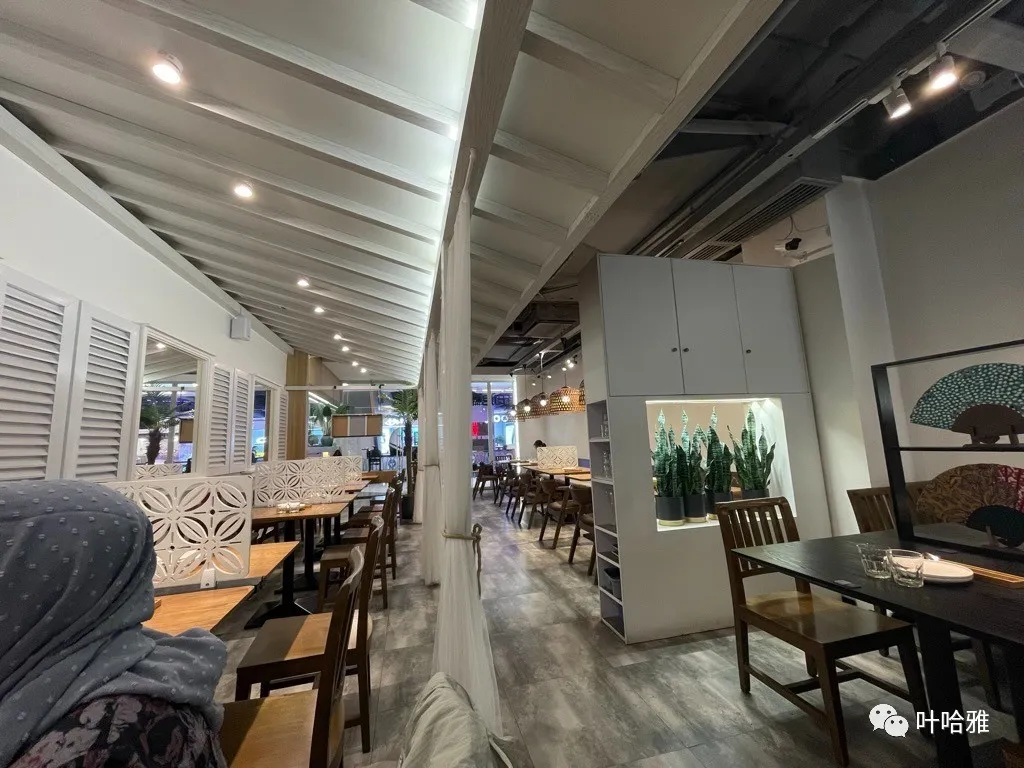
I think everything on their menu is a specialty. Basically every dish is delicious, including the drinks. I don't know how the owner and the chef manage to hit the mark so perfectly for every diner's taste buds.
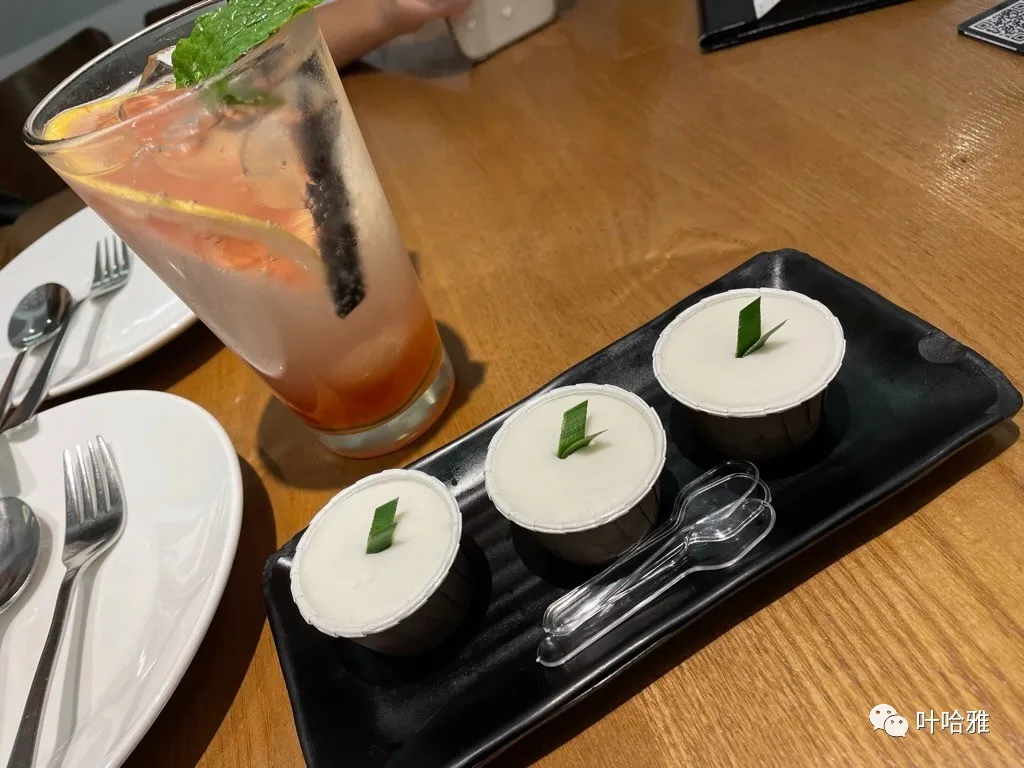
Fresh lime and lemongrass soda and pandan coconut custard cake (pandan ruanxin yezhigao).
Many friends highly recommended this place to me before I even arrived in Guangzhou. My taste matches the general public's, so I had high expectations, but it was only after tasting it myself that I realized it truly lives up to its reputation.
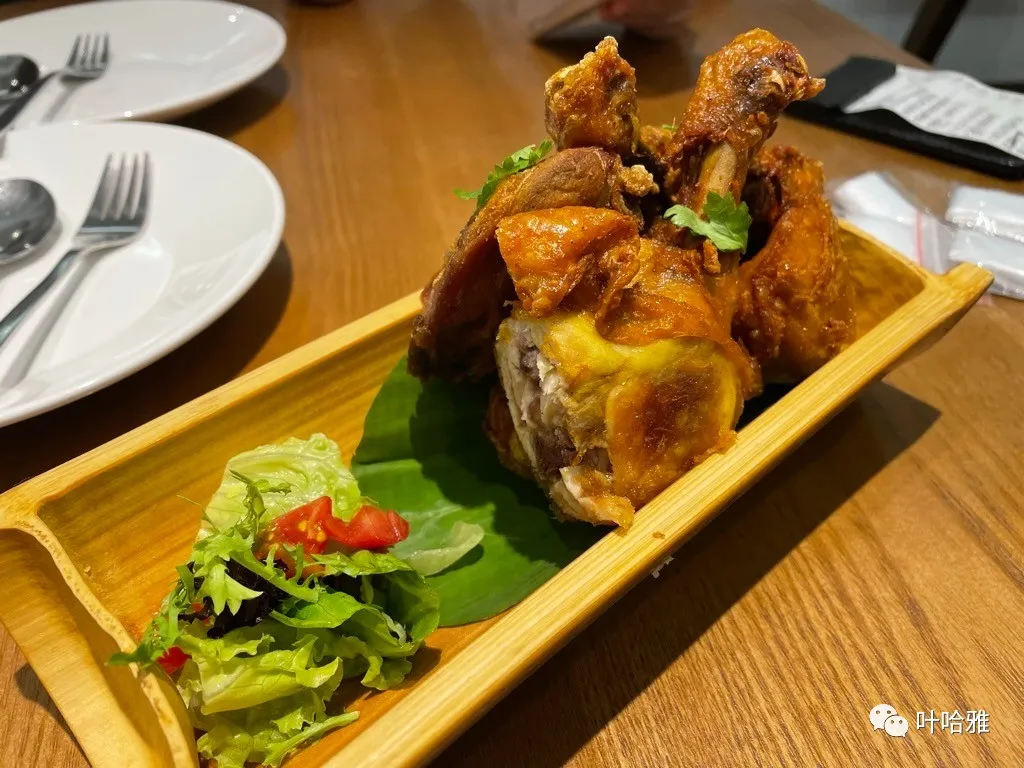
Bali crispy duck (Bali dao zangzang ya).
Although this restaurant has many dishes, the portions are small. This is perfect for someone like me who wants to try new things without wasting food. Also, they don't sell alcohol, which gives me peace of mind while eating. The staff mentioned that the owner is an Indonesian Chinese.
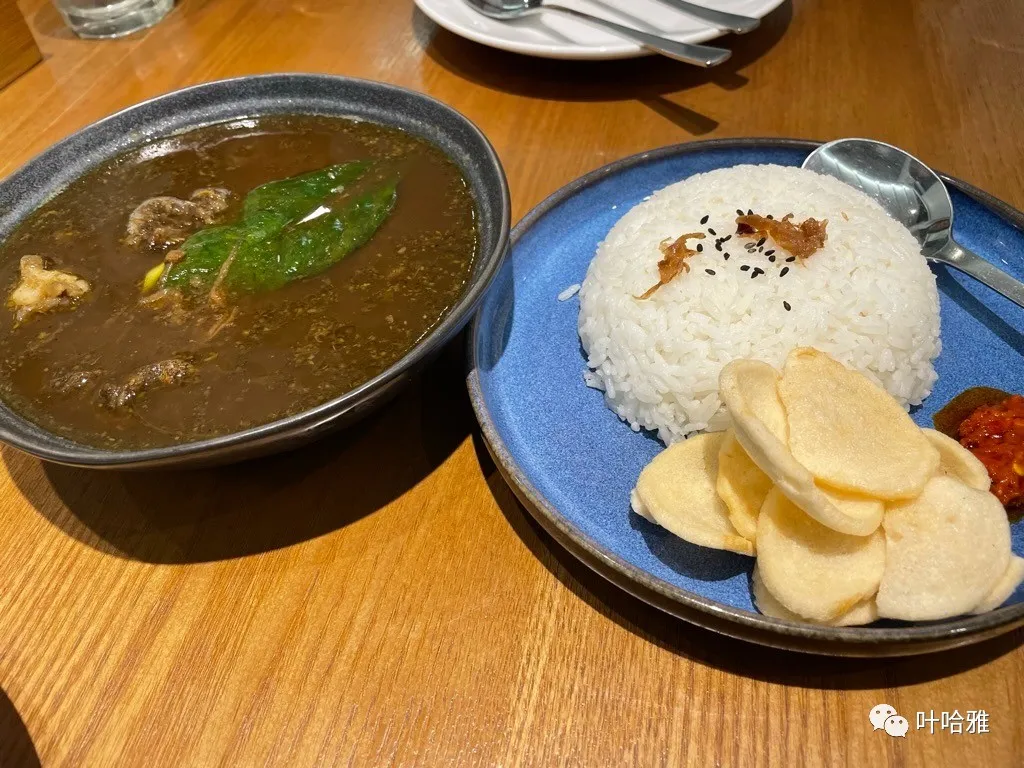
Black nut beef soup rice (heirouguo niurou tangfan).
Since I have traveled in Indonesia, I know that traditional Indonesian food doesn't usually focus on presentation. However, this restaurant has clearly adapted to the local style in Guangzhou. They pay close attention to color combinations in every dish, so they look great in photos.
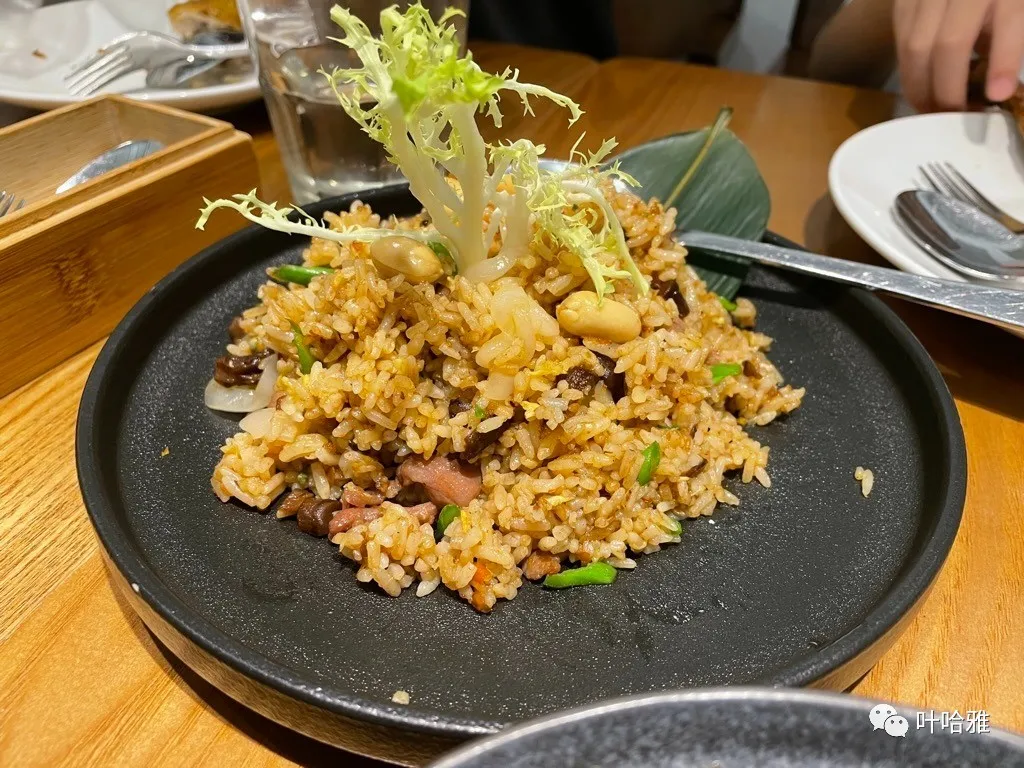
Rambutan beef fried rice (hongmaodan niurou chaofan).
There is only one Xianglan Indonesian restaurant left in Guangzhou, and you have to wait in line during meal times.
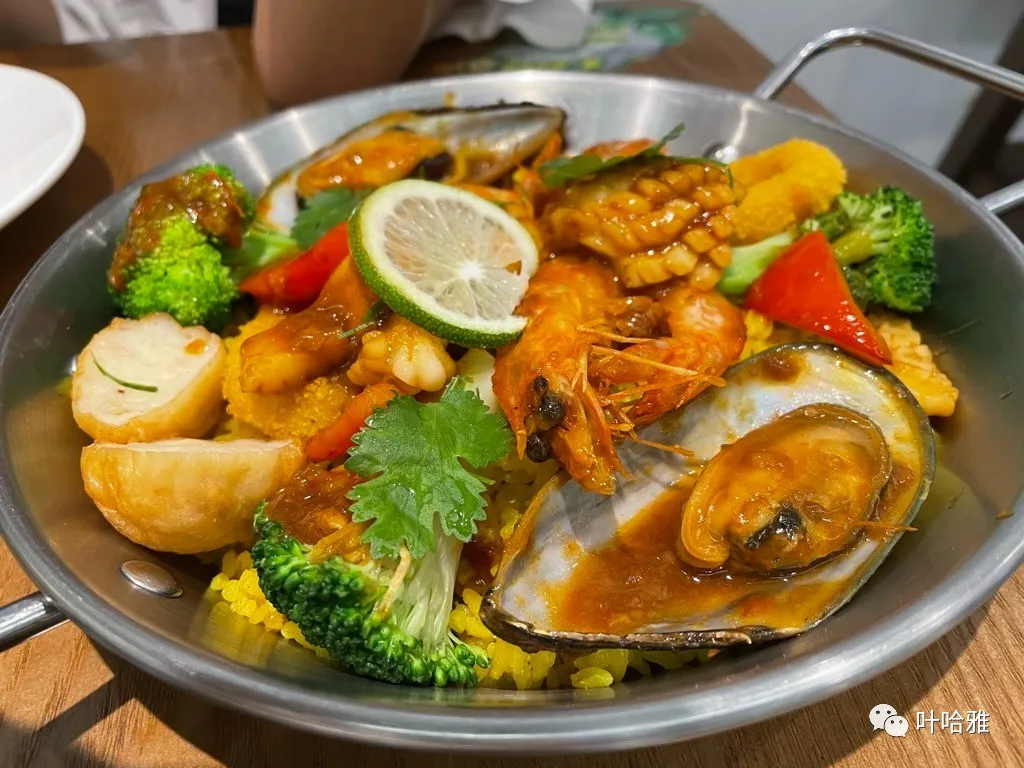
Seafood turmeric rice (haixian hui huangjiangfan).
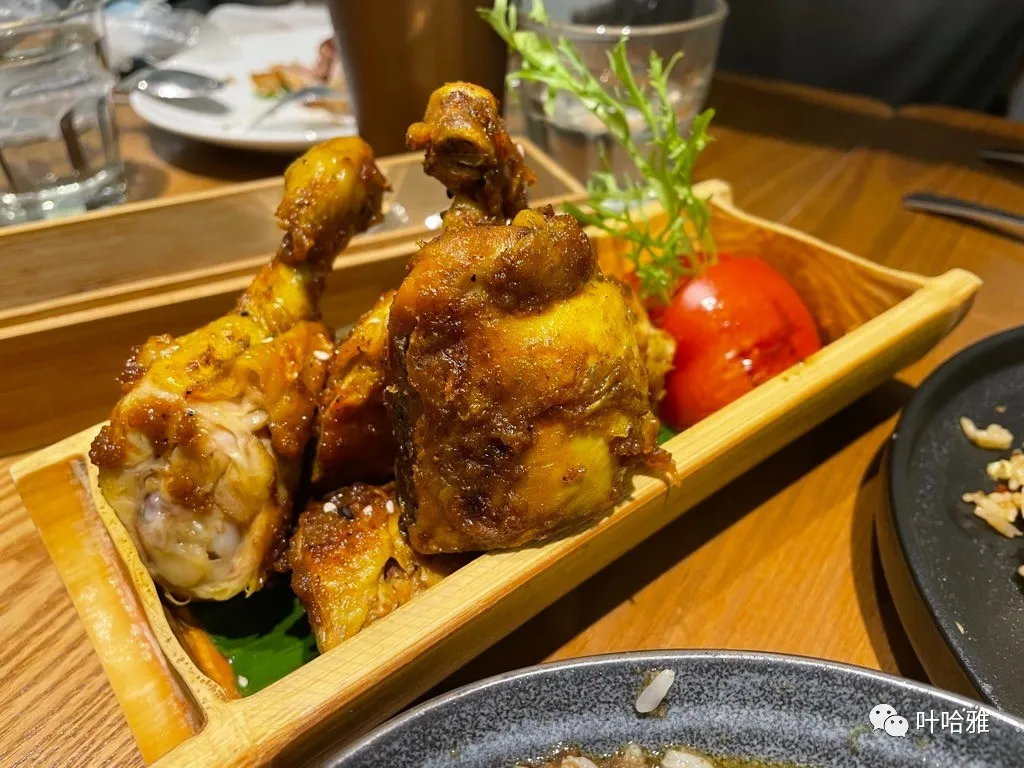
Grilled chicken with candlenut garlic sauce (shili suanrongjiang kaoji).
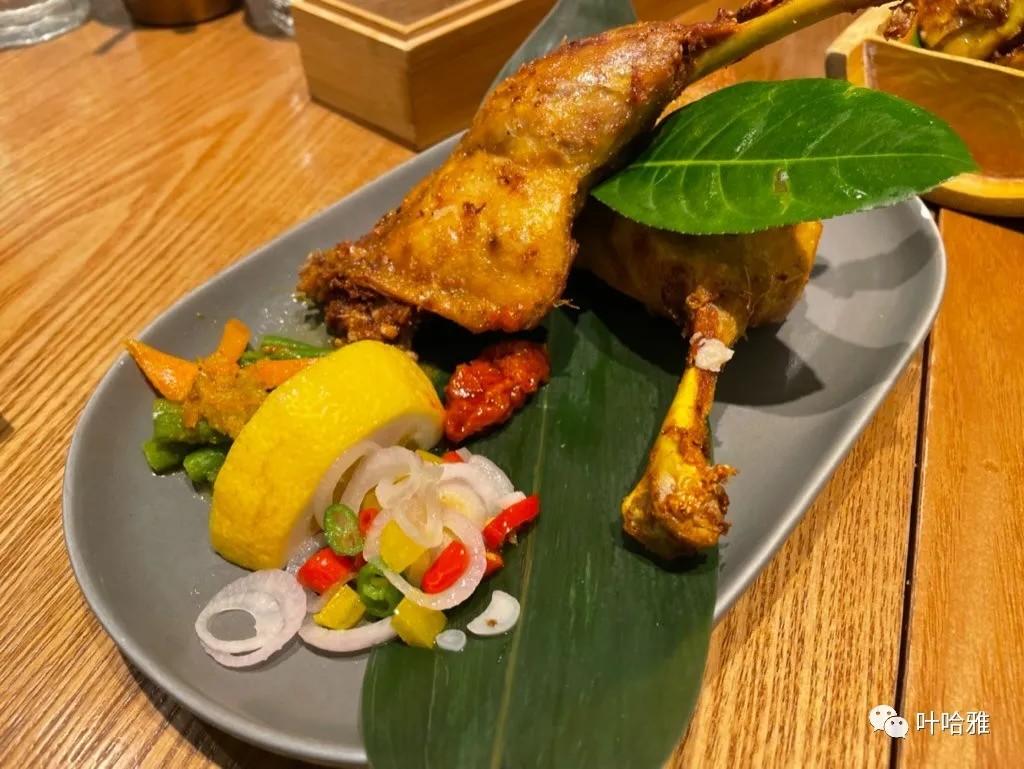
Lemongrass and turmeric fried chicken (xiangmao huangjiang zha tuji).
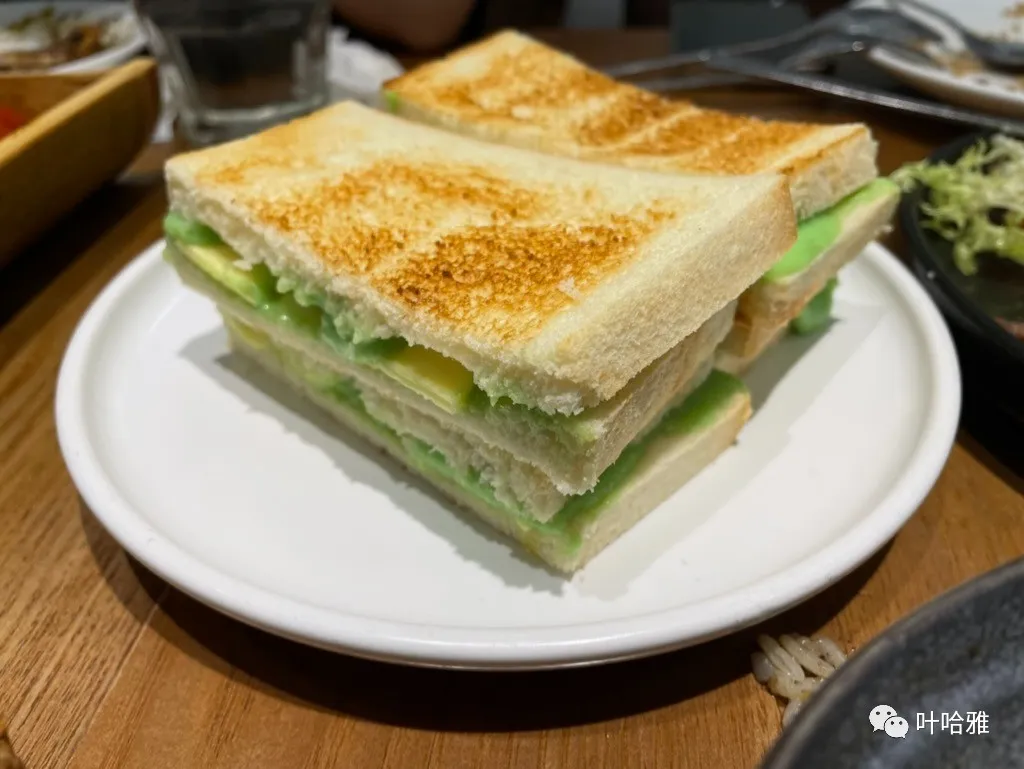
Kaya and avocado toast (kaye niuyouguo kao tusi).
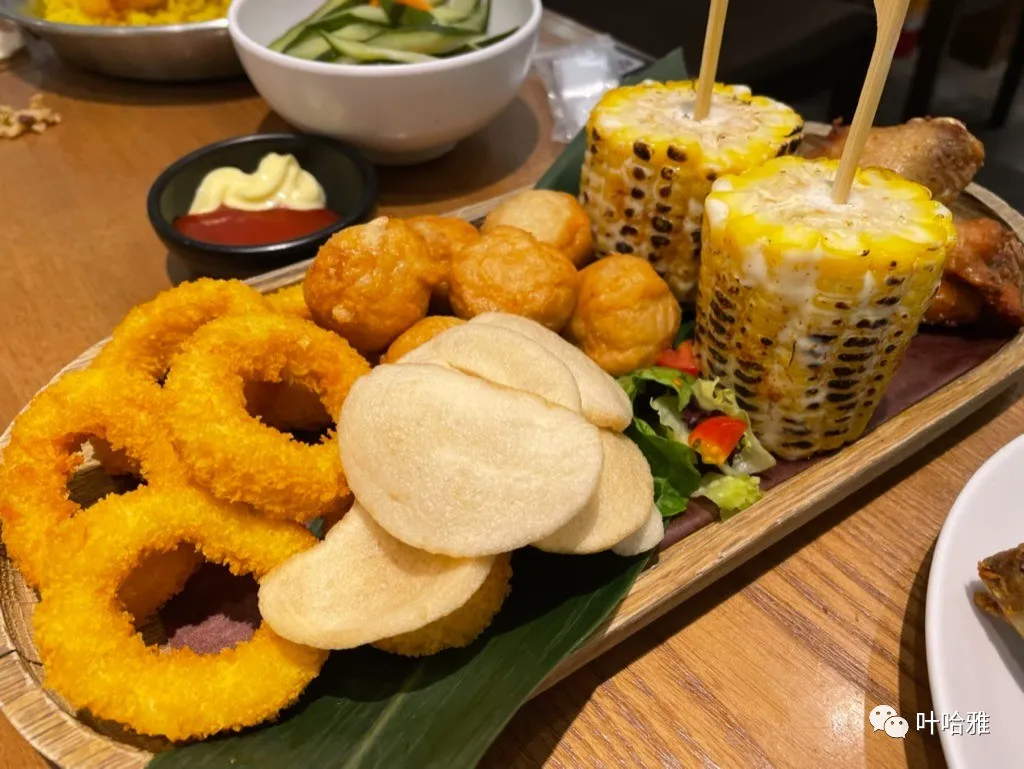
Snack platter.
11. Saba Restaurant
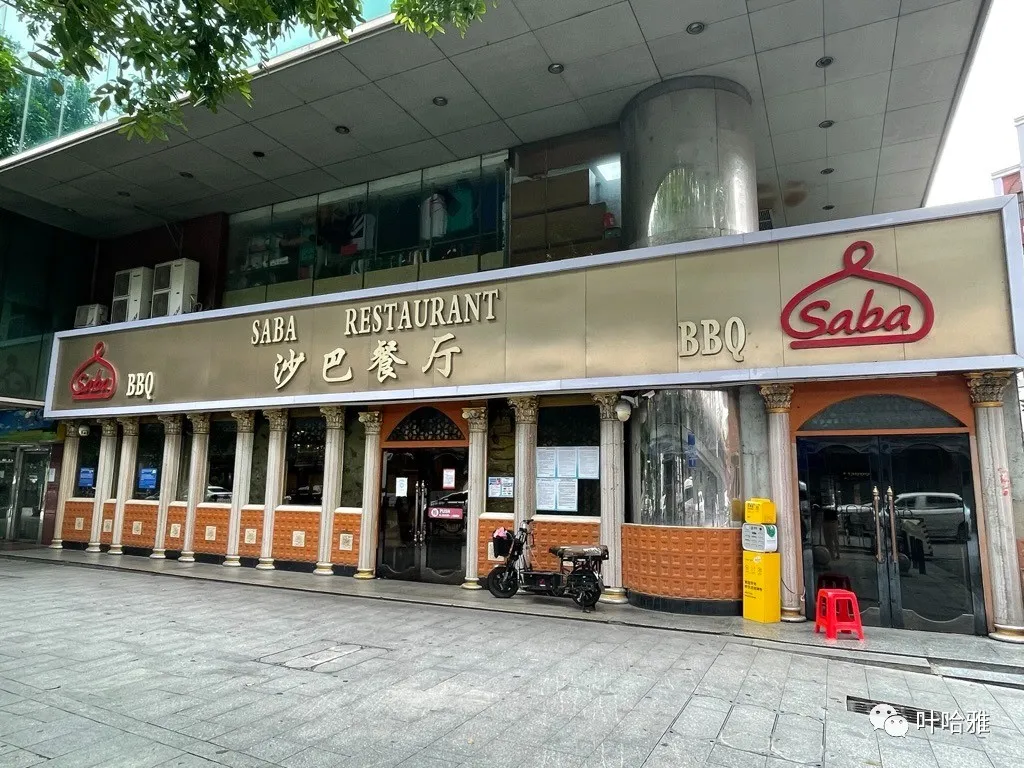
The name makes it clear this is a Southeast Asian restaurant, but they also serve Middle Eastern food. My friend and I chose this place because we once traveled to Sabah together and have many great memories. Meeting up in Guangzhou now, things feel just like they used to.
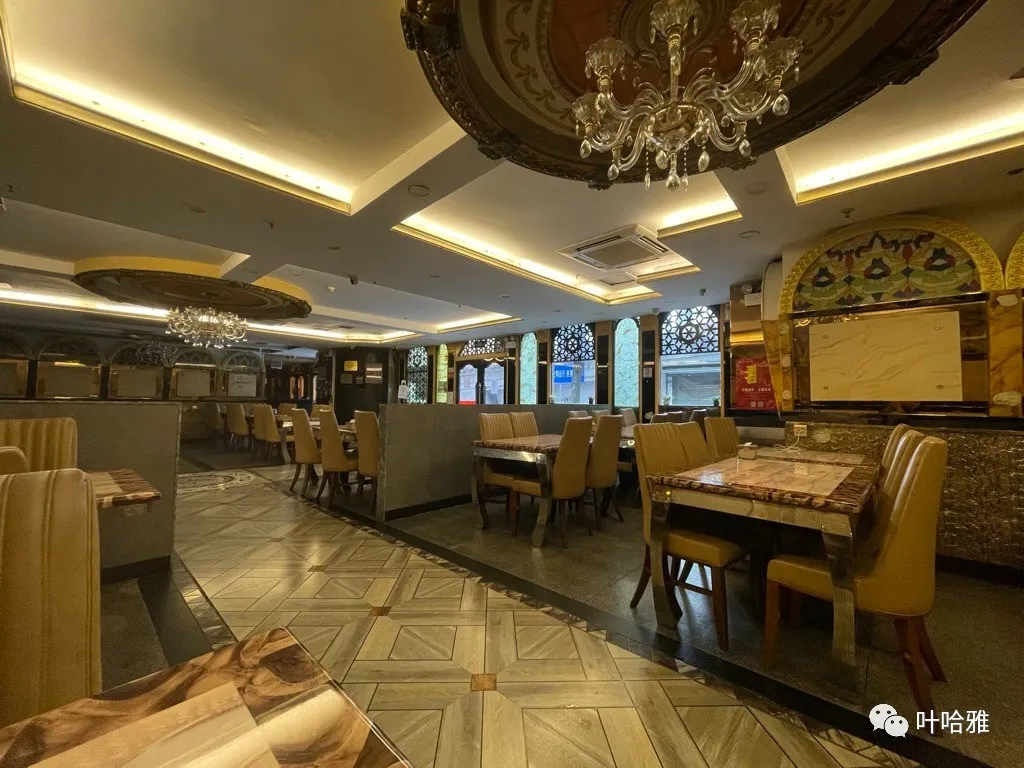
When we walked in, the restaurant was playing Quran recitations, and they do not serve alcohol. I was surprised to see that most of the diners were Black. Since my first visit to Guangzhou in 2015, I noticed that over 80 percent of the friends (dosti) at Friday prayers (Jumu'ah) were Black. Today, the number of Black people in Guangzhou has dropped by more than half, and it is rare to see them at Friday prayers now.
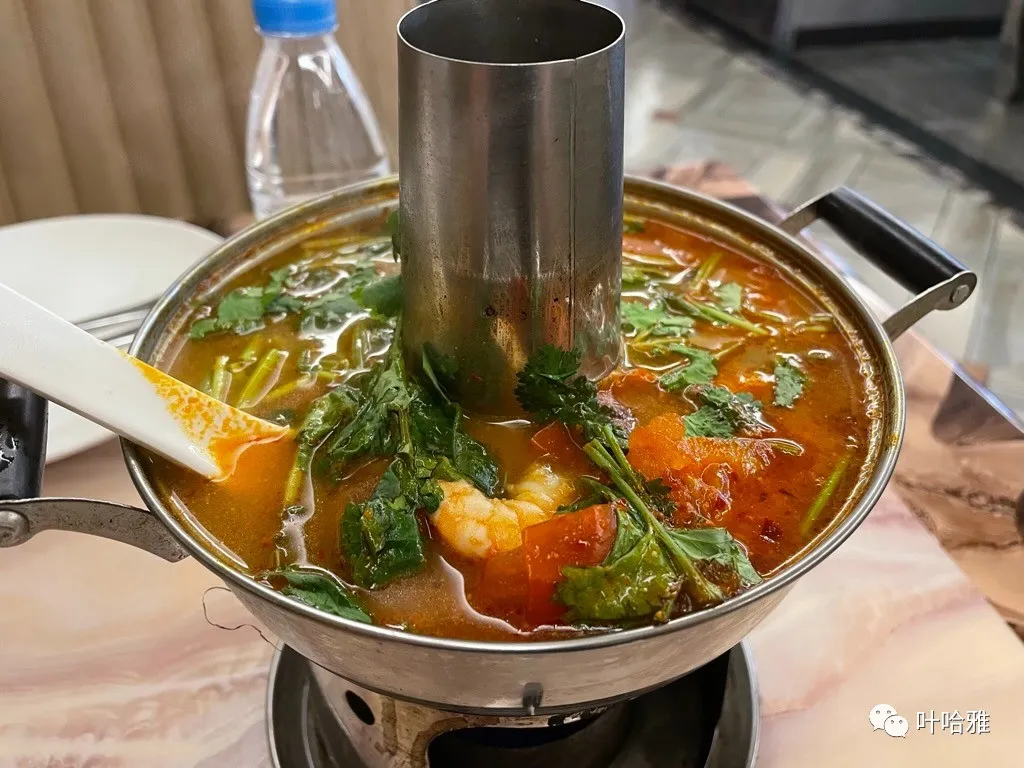
Tom yum soup (dongyingong tang).
The menu starts with Thai dishes, followed by Chinese and Western food. I chose the tom yum soup, and they actually served it in a small hot pot.
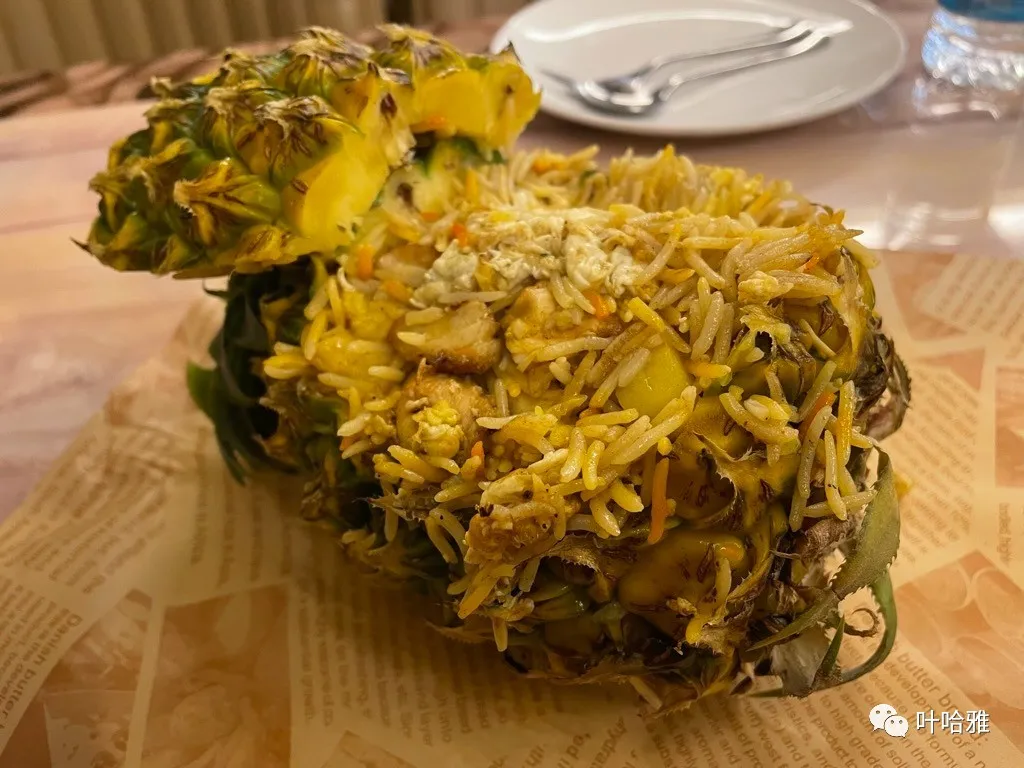
Pineapple fried rice (boluo chaofan).
I loved eating pineapple fried rice when I traveled in Malaysia. The version here was just okay. Maybe the setting was wrong, so it didn't taste right. Sometimes you need the right mood to enjoy good food.
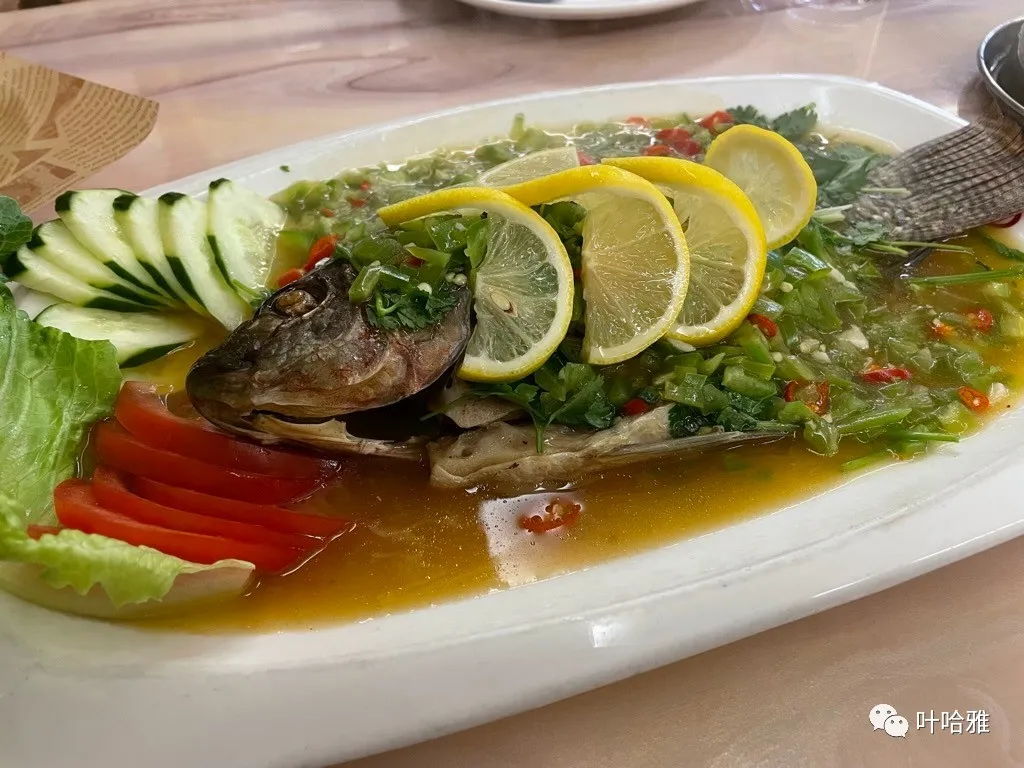
Lemon tilapia (ningmeng luofeiyu).
I picked dishes we had eaten while traveling in Thailand and Malaysia to reminisce about our time wandering the world.
12. AL MANARA Lebanese Restaurant
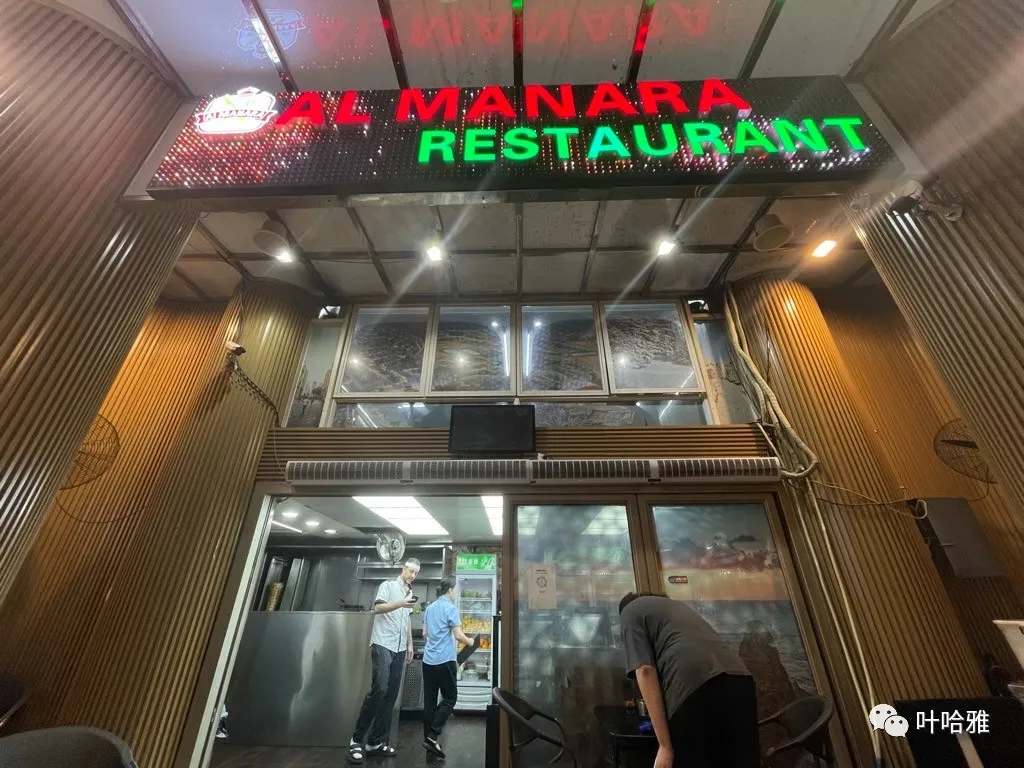
Guangzhou used to have two Lebanese restaurants. I went to the other one only to find it had closed. This shop is a roadside storefront with no main dining hall, just a few tables set up outside. It is very simple.
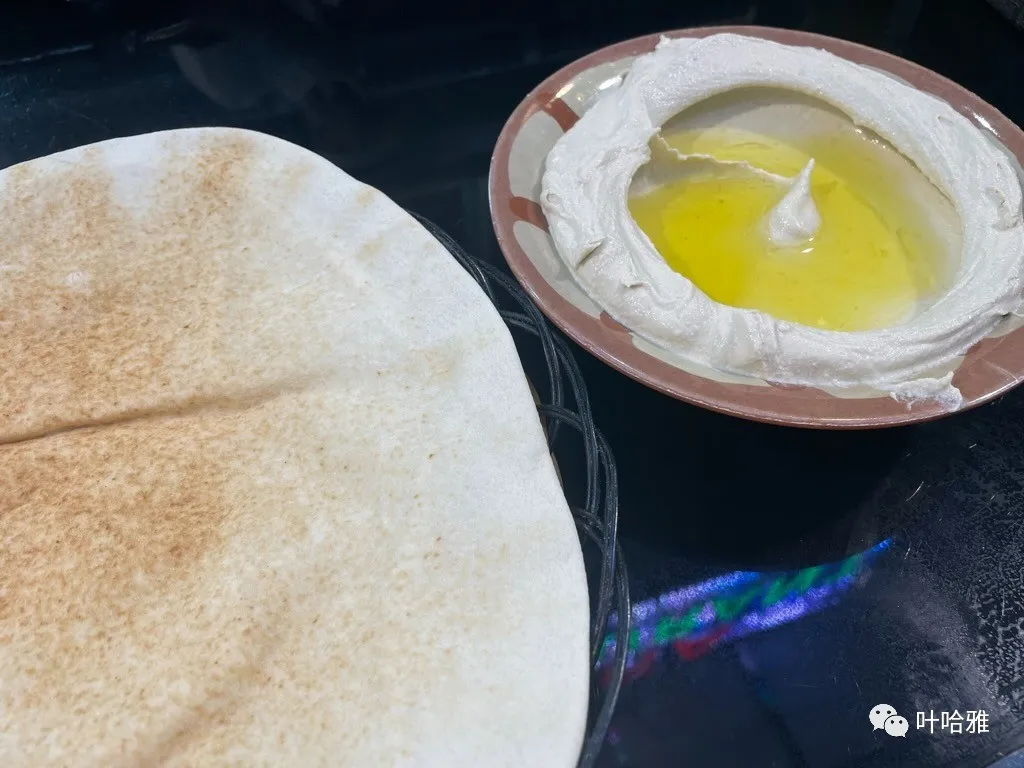
Chickpea puree (hummus) with Arabic flatbread (khubz)
A lady from Northeast China works here and speaks fluent Arabic. The person grilling the meat is a Lebanese Arab.
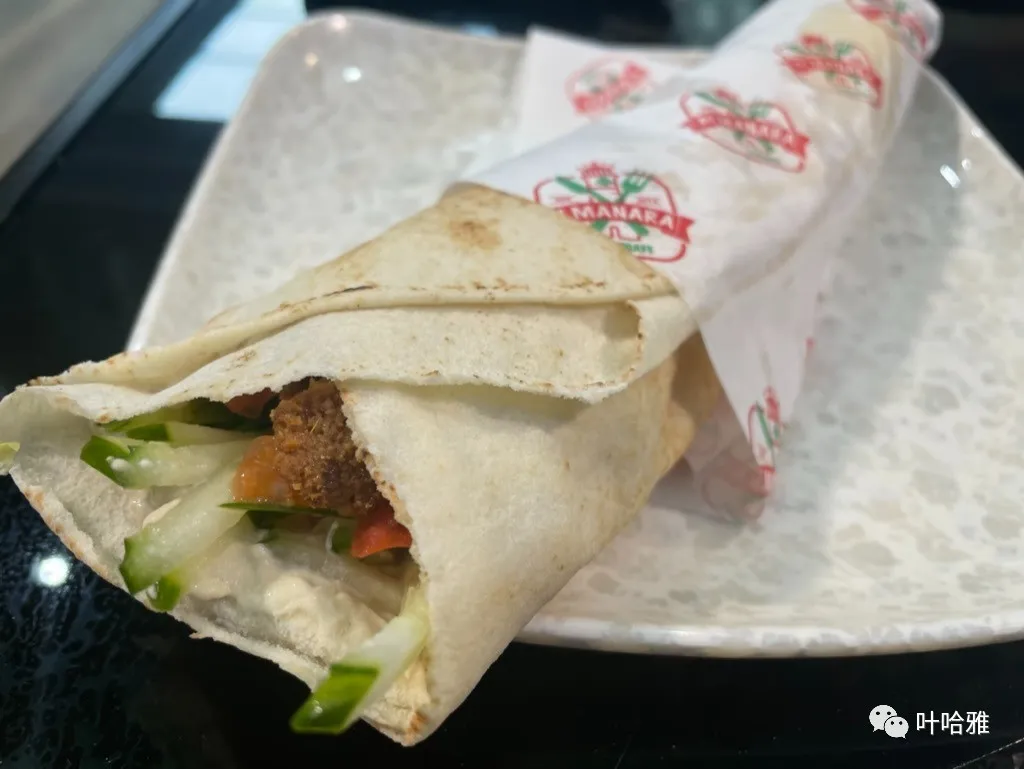
Chickpea fritter (falafel) chicken wrap
This Lebanese restaurant does not have as nice an environment as Alameen in Beijing, but the taste is authentic and the prices are affordable. Overall, it is not as good as the Lebanese restaurants in Beijing, which makes me feel a bit better.
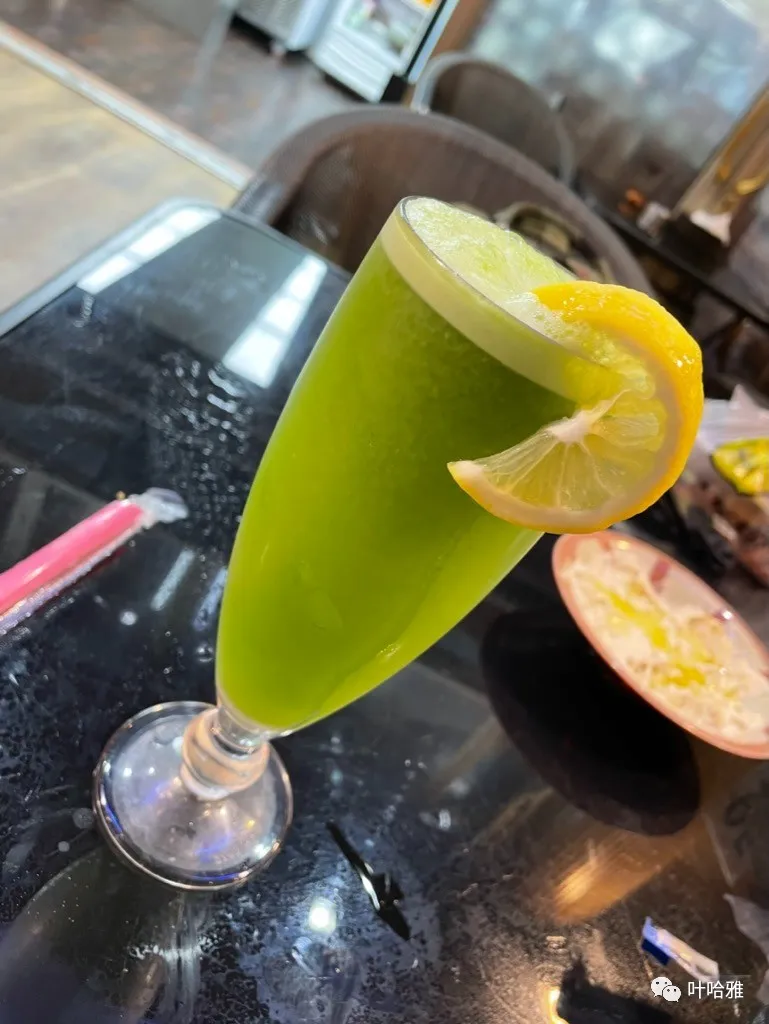
Lemon mint drink
13. ARMADA Middle Eastern Cuisine
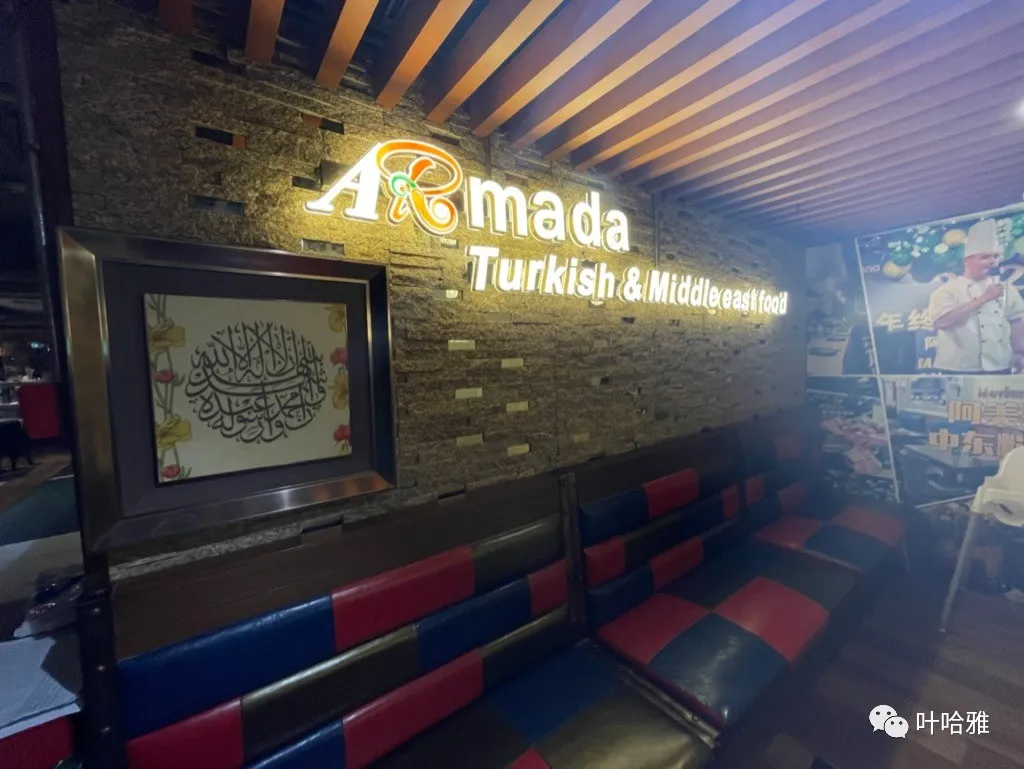
Most halal Western restaurants in Guangzhou are run by Turkish people. This place, Armada, is the same and is located near Xiaobei.
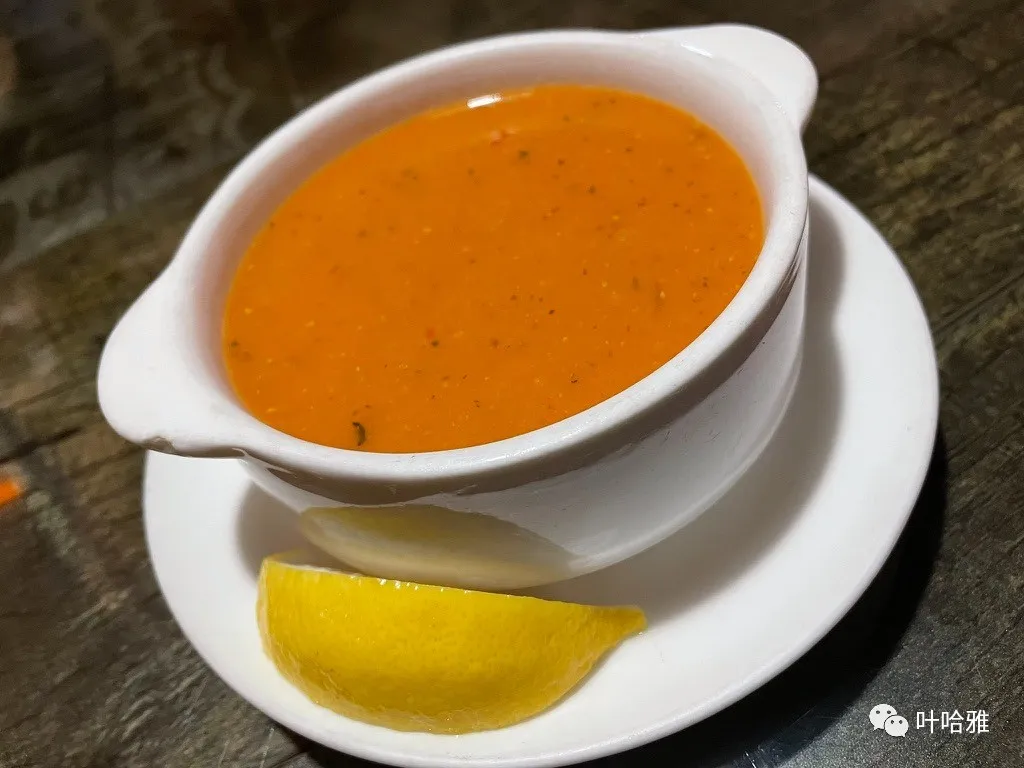
Assorted flavor soup (mercimek corbasi)
My friends in Guangzhou had never been to this shop, so I brought them here to check it out. Once inside, I noticed the waitresses were wearing headscarves (hijab). It is an alcohol-free restaurant.
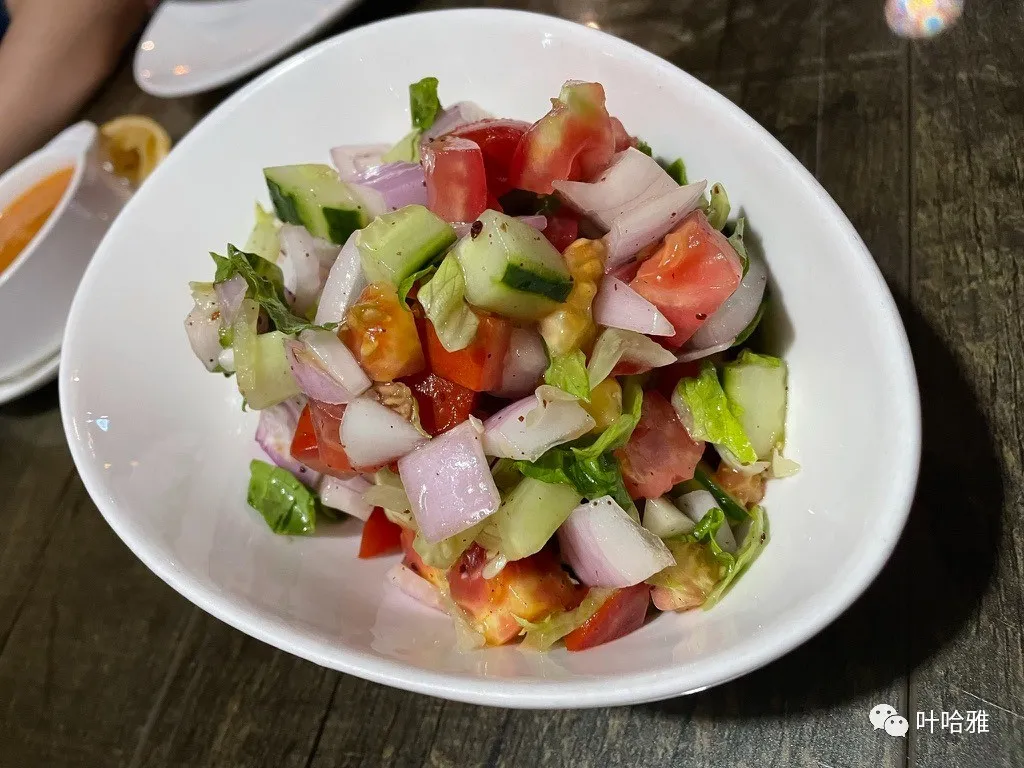
Shepherd's salad
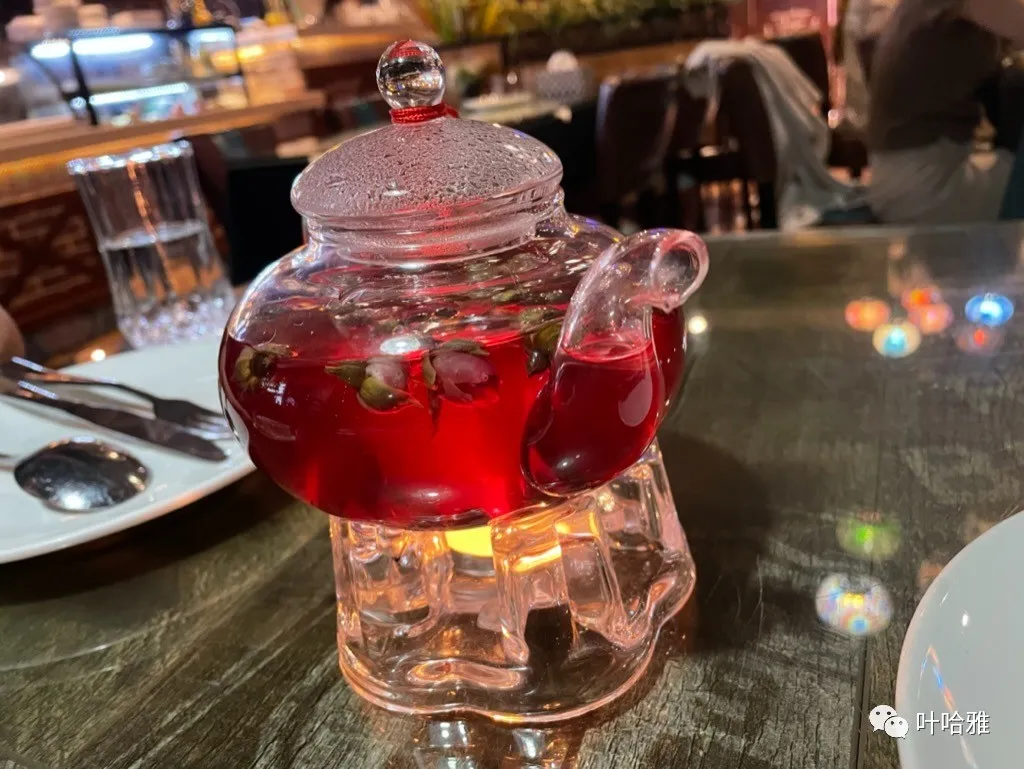
Rose black tea
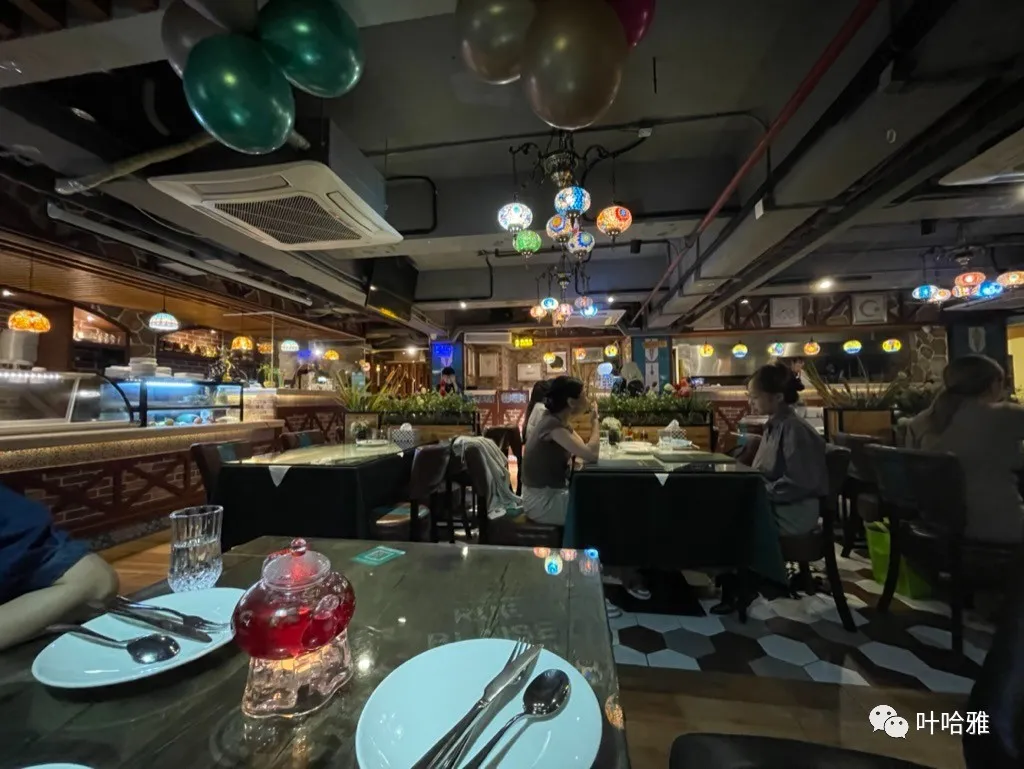
The ladies love drinking rose black tea. I saw a Moroccan specialty tagine on the menu, so I ordered it. Guangzhou used to have a Moroccan restaurant, but it closed down during the pandemic.
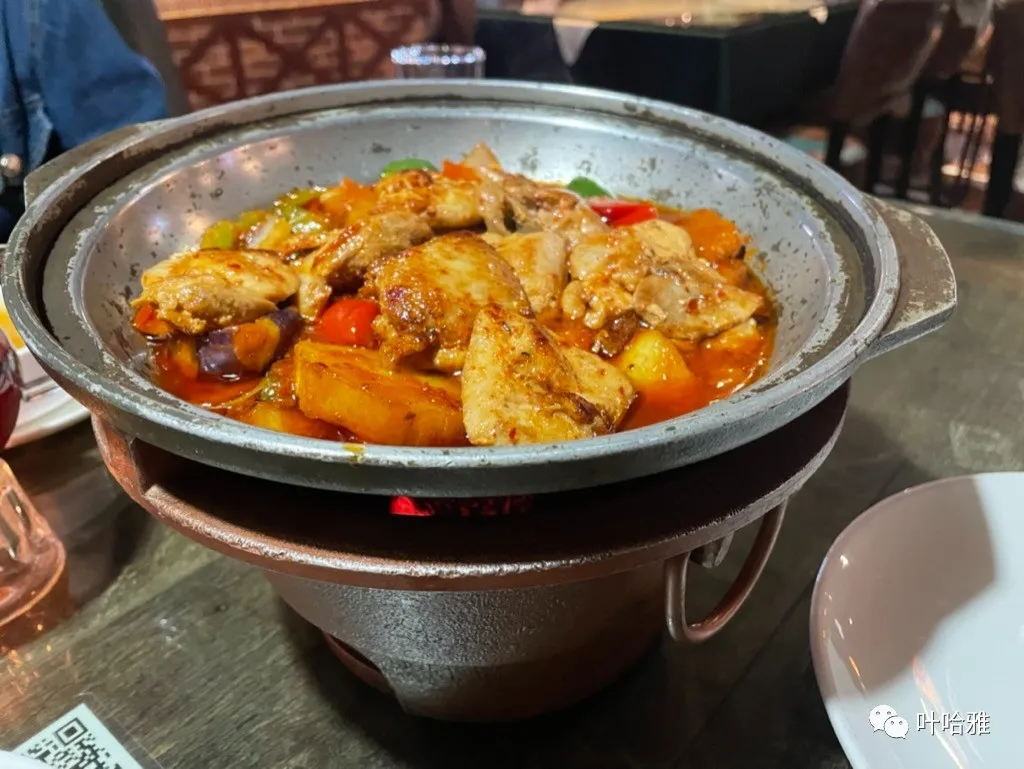
Chicken and eggplant tagine
The restaurant's grilled meat and meals are all delicious, better than the main courses at MADO.
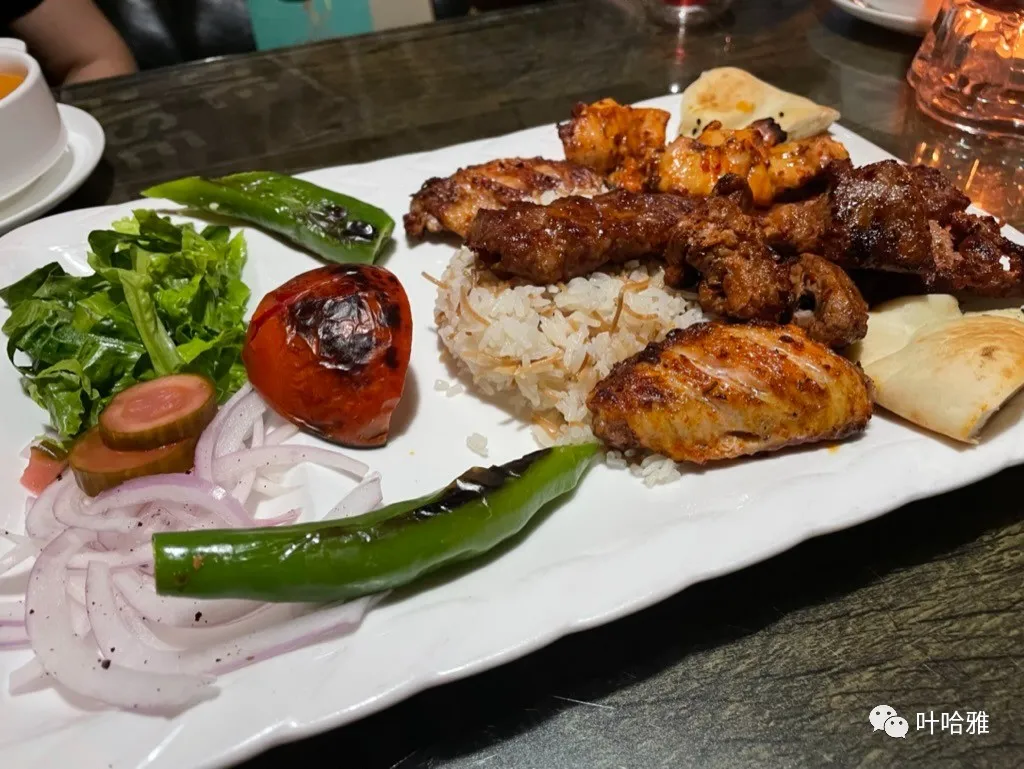
Mixed grilled meat platter
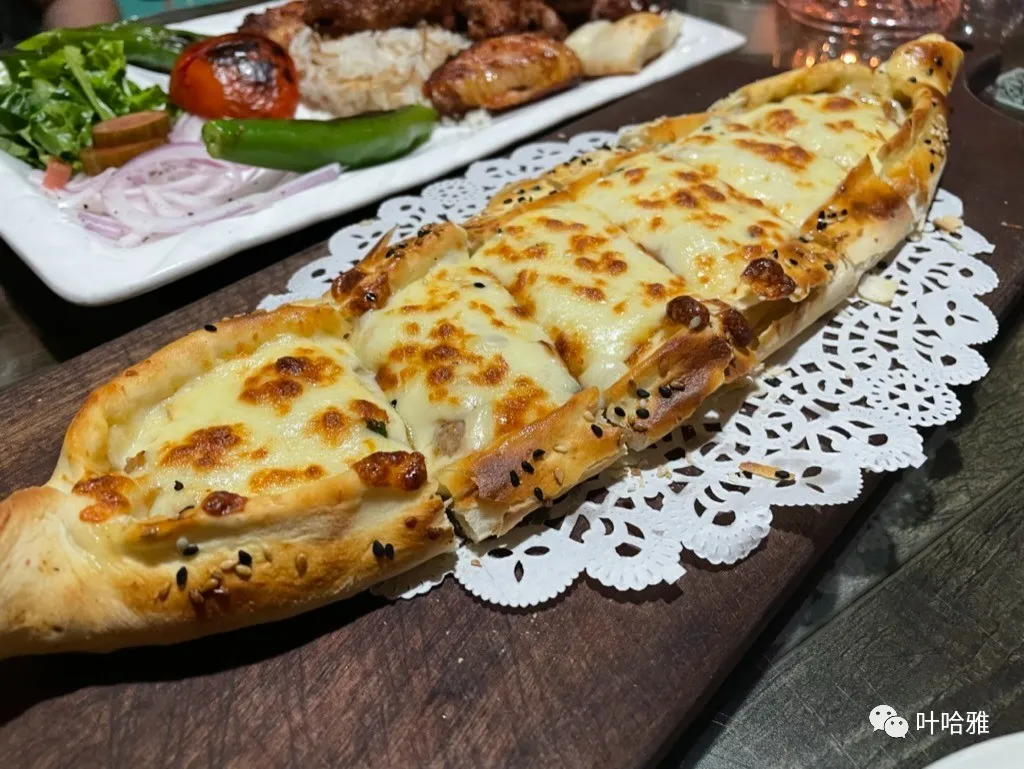
Cheese and tenderloin pizza
Halal Cantonese Food Guangzhou: Muslim-Friendly Yum Cha, Xinjiang Building and Local Dim Sum
Articles • yusuf908 posted the article • 0 comments • 255 views • 2026-05-24 00:17
Summary: This Guangzhou halal food guide compares Muslim-friendly Cantonese morning tea, including Xinjiang Building yum cha, local dim sum, halal Cantonese dishes, and practical food notes for Muslim travelers.
A Halal Food Tour in Guangzhou: Where to Find the Best Cantonese Morning Tea (Yum Cha)? is presented here as a firsthand travel account in clear English, beginning with this scene: I wrote a halal travel map for Guangzhou in 2019, mainly introducing all the mosques in the city. The account keeps its focus on Halal Travel, Yiwu Food, Mosque Travel while preserving the names, places, food, and historical details from the Chinese source.
I wrote a halal travel map for Guangzhou in 2019, mainly introducing all the mosques in the city. The food section was a bit thin because I traveled alone back then. I visited Guangzhou again in 2022. First, I wanted to treat my team in Guangzhou, whom I had never met in person. I manage an insurance brokerage team with members across the country, and Guangzhou is our second-largest branch after Beijing. Second, I wanted to visit many of Guangzhou's unique halal restaurants. When I traveled alone, I couldn't eat much, but with the team, we could order all the big dishes we wanted without wasting food.
1
Xinjiang Building Bazaar Food
When people talk about having morning tea (yum cha) in Guangzhou, many recommend the Huimin Restaurant. But if I had to choose, I prefer the morning tea at the Xinjiang Building. Although they haven't been serving Cantonese morning tea for very long, they do better than the Huimin Restaurant in terms of variety, environment, and service.
Their morning tea menu includes both traditional Cantonese dishes and some creative options, especially those combined with Xinjiang ingredients. This is easier for northern tourists to accept, as many authentic local snacks can be hard for outsiders to get used to.
Morning tea originally just meant coming to drink tea in the morning. However, people started pairing it with snacks, and these snacks became so rich that they eventually became the soul of the morning tea experience.
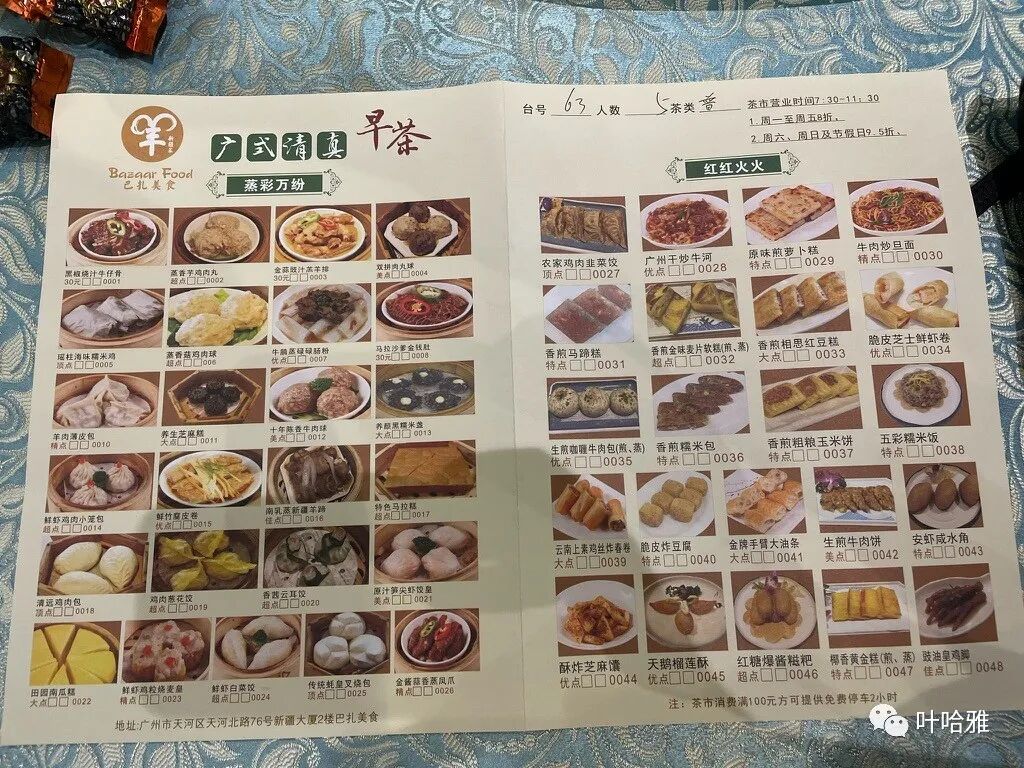
After sitting down, the waiter will follow the custom and ask what tea you want. You can choose from black tea, green tea, flower tea, or pu-erh tea. You are even welcome to bring your own tea bags. Then, they give you a menu to check off the snacks you want.
The first step of having morning tea is washing the tea set. The basin in the top right corner is not for trash, but for washing the tableware. Even though the tea sets are already clean, Guangzhou locals are used to scalding them with hot water again. I follow the local customs and do the same, even though I don't really worry about whether the tableware is clean.
Cordyceps flower and Qingyuan chicken porridge
Breakfast in Beijing, specifically in Niujie, is always soy milk, fried dough cakes (youbing), lamb offal soup (yangza), fried tofu soup (doupaotang), and baked flatbread with fried dough (huoshao jia youbing). For someone like me who goes to the gym every day, this isn't very friendly. I like to change things up for every meal, so breakfast is the biggest headache for me. If I want a nutritionally balanced breakfast, I have to make it myself.
Steamed chicken feet with golden garlic sauce (jinjiang suanxiang zheng fengzhua)
If you eat morning tea alone in Guangzhou, you can usually manage about three dishes based on the portion sizes. You can eat something different every day for about half a month. After that, you can start the cycle over again, which gives you a reason to get up early every day.
Qingyuan chicken bun
Cantonese morning tea is mostly light and not spicy, making it perfect for kids or people with sensitive stomachs.
Beef short ribs in black pepper sauce
Morning tea is served from 7:00 a.m. to 11:30 a.m. If you visit on a weekday, you will mostly see locals drinking tea. These locals have both money and time. As my Guangzhou friends say, they do not care much about how they dress. They might head out in a worn-out tank top and flip-flops, but they are very picky about their food. They believe that what you put in your stomach is what really matters, which shows the practical nature of Guangzhou people.
Shrimp and chicken dumpling (shaomai)
My taste has changed over the years. I do not have much of an appetite for large portions or heavy flavors anymore. I focus more on healthy eating and prefer light, small, and delicate food. My love for Cantonese morning tea grows every day, but unfortunately, you cannot find it in Beijing yet.
Mango coconut milk cake
I had Wuzhong morning tea in Wuzhong, Ningxia, last year and thought it was a very promising and innovative way to do breakfast. The Muhelan restaurant, which is opening soon in Beijing, plans to bring Wuzhong morning tea to the city. I hope it can take root and grow here.
Pan-fried curry beef bun
If it is your first time having Cantonese morning tea, I think you must order the barbecue pork bun (char siu bao) and the pan-fried bun (shengjian bao). Also, rice noodle rolls (changfen), shrimp dumplings (xiajiao), and steamed chicken feet are the best dishes to represent Cantonese cuisine. You might not know if you will like them, but you should definitely give them a try.
Thai-style chilled durian mochi
You should also try the small Cantonese desserts. They are made with care and look beautiful. They come in portions of three, which is a hint that you should bring two friends along.
Swan-shaped durian pastry (tian'e liulian su)
This swan-shaped durian pastry is a new addition. When I visited last time, they only had the regular gold-medal durian pastry, so they really put effort into the design this time.
Pan-fried water chestnut cake (xiangjian mati gao)
On this trip to Guangzhou, I ate dim sum for three days in a row, twice at the Xinjiang Building and once at the Hui Muslim Restaurant. My experience at the Xinjiang Building was even better than my last visit. I even ran into some fellow villagers from Shadian there and learned that Guangzhou and Sanya are the favorite vacation spots for people from Shadian.
Beef brisket egg noodle soup (niunan tang danmian)
Cantonese-style noodle soup and rice noodle rolls (changfen) have a fresh, slightly sweet taste that many girls love. I don't particularly like them, as I prefer the salty and savory style of Northwest Chinese noodles. But since I am in Guangzhou, it is worth trying.
Chestnut and mushroom chicken rice noodle rolls (jinli xianggu jirou changfen)
The yogurt cake and egg tarts are a creative fusion dish because they use dairy products from Xinjiang. Green vegetables hold an important place in Cantonese cuisine. For Guangzhou locals, a meal must include green vegetables, which specifically refers to leafy greens; gourds and root vegetables do not count.
Xinjiang smooth yogurt cake (Xinjiang xianghua suannai gao)
Xinjiang milk Portuguese-style egg tart (Xinjiang niunai puta)
Blanched Ningxia flowering cabbage (baizhuo Ningxia caixin)
Guangzhou people place great importance on food as medicine. They demand fresh ingredients and a balanced diet, using everything from land, sea, and air in their cooking. You can even find these in dim sum. Dim sum can last until lunchtime, then you take a break, have afternoon tea, and once it gets dark and cool outside, there is a late-night snack culture. You can spend the entire day just eating.
Original flavor bamboo shoot tip shrimp dumpling (shrimp dumpling)
Mango pomelo sago (yangzhi ganlu)
Malaysian satay beef tripe
Dried fish and peanut congee
Healthy sesame cake
Southeast Asian fresh shrimp red rice noodle roll
2
Hui Muslim Restaurant
Hui Muslim Restaurant is a long-standing state-run spot in Guangzhou that has been open for over half a century. Most people eating here are local Guangzhou residents from the neighborhood. I asked my local friends in Guangzhou, and they approve of the food quality here. They serve morning tea, afternoon tea, and regular meals, and there is a discount for morning tea on weekdays.
Inside the restaurant, there is a sign saying they welcome Hui Muslim brothers and sisters before 9 a.m. However, when I arrived before 9 a.m., I mostly saw local residents of all backgrounds. The restaurant has a strong state-run vibe, and the service is decent. The tea set is not as fancy as the one at Xinjiang Mansion; it is just one teacup and one teapot. The environment is also noisier because the space is small.
Lamb barbecue pork bun (char siu bao)
For Cantonese dim sum, the Hui Muslim restaurant makes it more authentic. Take this lamb barbecue pork bun (chashao bao), for example; it is unique to Guangzhou. Barbecue pork (chashao) means meat roasted on a fork, then wrapped using the bun-making technique, which is why it is called a chashao bao. The top of the bun naturally splits open after steaming. I eat this every time I visit, as it is hard to find such authentic and delicious chashao bao once I leave the Hui Muslim restaurant.
Chicken broth soup dumplings (xiaolongbao)
Soup dumplings (xiaolongbao) are one of my favorite breakfasts. When my appetite is not fully awake in the morning, I prefer delicate flour-based snacks. I might not have the appetite to finish a large steamed bun.
Job's tears and beef tripe porridge (yizhao niudu zhou)
Being able to drink various nutritious porridges for breakfast is something I dare not expect in Beijing. However, I have to complain about the porridge at the Hui Muslim restaurant. It does not taste like it was freshly cooked this morning; it tastes like a pre-made product that was heated up. Freshly cooked porridge has a thicker texture, and in this regard, it is not as good as the Xinjiang Building.
Coconut sticky rice cake (yexiang nuomici)
The taste of the dim sum is quite good, but the appearance is plain. It is not as delicate as the ones made at the Xinjiang Building, so it is not suitable for taking photos to post on social media. Many friends have told me that the service at the Hui Muslim restaurant is poor. Although I did not experience this myself, in terms of small details, the dining comfort at the Xinjiang Building is slightly better.
Curry beef rice noodle rolls (gali niurou changfen)
Salad shrimp dumplings (shali mingxia jiao)
The dim sum trio platter I ate today tasted a bit salty. It was not this salty when I had it before.
Dim sum trio platter (diansin sanshi pinpan)
3
Ma Xiaohuo Handmade Pulled Noodles (lamian)
I found this place by accident. I was catching up with a friend at a cafe, but they felt the air conditioning was too cold, so we moved outside. Suddenly, a storm hit Guangzhou. We ducked into this little shop to escape the rain, ordered some food, and were surprised by how good it tasted.
My friend had a bowl of pulled noodles, and I ordered a portion of Xinjiang rice noodles (mifen). The rice noodles came with plenty of toppings and tasted great. The shop is clean and bright. It is small, but the dining experience is very comfortable. This is a chain, and there are currently three branches in Guangzhou.
4
ANTALYA Turkish Restaurant
The Antalya restaurant in Liede was the first place we chose for our team building. The second floor has Central Asian-style decor where you take off your shoes and sit on rugs. You used to be able to experience this at Rumi's Secret in Beijing, but unfortunately, that location has closed. I heard a new Rumi's Secret opened in Urumqi, and I hope they do well.
For Middle Eastern cuisine, black tea and the pastry baklava are must-haves. I also had my favorite Turkish coffee. No matter if it is day or night, I always have a cup when I eat Turkish food.
Besides being thick and containing coffee grounds, the coffee cup is a highlight of Turkish coffee. It must not be served in a clear glass; it has to be in an exquisite porcelain cup to be authentic.
Hummus
The overall feel of this restaurant is just like Rumi's Secret, and the prices are similar, averaging about 200 yuan per person. The flavors are a bit localized and milder, which suits Chinese tastes better.
Chicken leg with Arabic rice
Hollow balloon bread
Chicken and beef mixed kebab platter
Cheese flatbread (pide)
Lamb pie served with yogurt
I have to say a few words about this final ice cream. It is not as good as Kubei in Beijing. Kubei's ice cream comes from MADO, a Turkish ice cream shop that uses goat milk as its main ingredient. I will introduce the MADO ice cream shop in Guangzhou specifically later.
Ice cream
5
MADO Turkish Ice Cream and Coffee Shop
MADO is very famous and I had heard of it for a long time. I kept thinking about the rich milky flavor of the MADO ice cream I ate in Beijing. Before coming here this time, I checked and found that there are two branches in Guangzhou. We ate at MADO twice because most of the members of our Guangzhou team are women who love it, so I had to arrange it.
The ice cream shop has a wide variety of sweets and also serves main courses of Turkish cuisine. However, the quality of the main courses is not as good as the ice cream, so I suggest only eating ice cream there.
When you enter the shop, you can order ice cream first. You can mix and match from over twenty flavors. You can order a four-layer serving with four different flavors, which is the best value.
You can also sprinkle various toppings on the ice cream. I like the original handmade ice cream the best. It has the silkiest texture and is full of milky flavor. None of the other flavored ice creams are as good as the original.
The girls love the raspberry flavor. Raspberries are red, sweet, and tart, and Lu Xun even mentioned them in his writing.
The customers at the Turkish restaurants in Guangzhou are mostly foreigners. They like to chat and smoke shisha in the cafes.
Sultan's Ship
If you see the colorful ice cream on the menu and don't know what to pick, I suggest the handmade ice cream. The original flavor is the best, so don't add any extra toppings.
Handmade ice cream
The Turkish coffee is made so delicately and even comes with a small flower for decoration. I felt happy the moment I walked into this shop, and eating dessert always puts me in a good mood. I really hope they open a branch in Beijing, where many people still love eating ice cream even in the winter.
Shepherd's salad
The main courses are just average and don't taste as good as those at Turkish restaurants that specialize in full meals. It is better to come here for afternoon tea or a late-night snack to have ice cream and desserts.
Mexican grilled meat wrap
Turkish stuffed pie
6
Pandan Indonesian
The highlight of my Guangzhou trip is this Indonesian restaurant. Since all the Southeast Asian halal restaurants in Beijing closed down, I haven't had authentic Nanyang-style food near home. The last time I had Indonesian food was in Indonesia before the pandemic, but I didn't even find food this good there.
First, it is recommended because it made the Michelin Bib Gourmand list. This is Michelin's list for affordable restaurants, with an average cost per person under 100 yuan. Being on this list in a food city like Guangzhou really says something.
I think everything on their menu is a specialty. Basically every dish is delicious, including the drinks. I don't know how the owner and chef manage to hit the mark so perfectly for every diner's taste buds.
Fresh lime and lemongrass soda and pandan coconut custard cake (xianglan ruanxin yezhigao).
Many friends highly recommended this place before I even arrived in Guangzhou. My taste matches the general public's, so I had high expectations, but it was only after tasting it myself that I realized it truly lives up to its reputation.
Bali crispy duck (balidao zangzangya).
Although the menu is large, the portions are small, which is perfect for someone like me who wants to try new things without wasting food. The restaurant doesn't sell alcohol, so I feel comfortable eating here. The staff mentioned the owner is an Indonesian Chinese.
Black nut beef soup with rice (heirouguo niurou tangfan).
Because I have traveled in Indonesia, I know traditional Indonesian food doesn't usually focus on presentation. This restaurant clearly adapted to the local Guangzhou market, paying close attention to color combinations in every dish, which makes them look great in photos.
Rambutan beef fried rice (hongmaodan niurou chaofan).
Xianglan Indonesian restaurant has two locations in Guangzhou. Both have the same taste, and you have to wait in line during meal times.
Seafood stew with turmeric rice (haixian hui huangjiangfan).
Roasted chicken with candlenut and garlic sauce
Deep-fried free-range chicken with lemongrass and turmeric
Toast with kaya jam and avocado
Snack platter
7
Sabah Restaurant
The name suggests a Southeast Asian style, but they also serve Middle Eastern dishes. My friend and I chose this place because we once traveled to Sabah together and have many great memories. Meeting up in Guangzhou now, it feels just like old times.
Inside, the restaurant was playing Quran recitations, and there is no alcohol served. I was surprised to see that most of the diners were Black. Since my first visit to Guangzhou in 2015, I noticed that over 80 percent of the brothers (dost) at Friday prayers (Jumu'ah) were Black. Today, the number of Black people in Guangzhou has dropped significantly, and it is rare to see them even on Jumu'ah.
Tom yum soup
The menu starts with Thai food, followed by Chinese and Western dishes. I chose the tom yum soup, and they actually served it in a small hot pot.
Pineapple fried rice
I loved eating pineapple fried rice when I traveled in Malaysia. The taste here was just average. Maybe the setting was wrong, so it didn't feel right. Sometimes, enjoying good food requires the right state of mind.
Lemon tilapia
I chose dishes we ate while traveling in Thailand and Malaysia. I haven't been abroad for nearly three years, so I'm reminiscing about the days when I wandered the world.
8
AL MANARA Lebanese Restaurant
There used to be two Lebanese restaurants in Guangzhou. I went to the other one only to find it had closed. This shop is a roadside storefront with no main dining hall, just a few tables set up at the entrance. It is very simple.
Hummus with Arabic flatbread (khubz)
A lady from Northeast China works here and speaks fluent Arabic. The person grilling the meat is a Lebanese Arab.
Falafel chicken wrap
Although this Lebanese restaurant doesn't have as nice an environment as Alameen in Beijing, the taste is quite authentic and the prices are affordable. Overall, it is not as good as the Lebanese restaurants in Beijing, which makes me feel a bit better.
Lemon mint drink
9
AMADA Turkish Middle Eastern Cuisine
Most halal Western restaurants in Guangzhou are run by Turkish people. This place, Amanda, is one of them. It is near Xiaobei, a neighborhood where many Muslims live. One alley there is full of small Muslim shops, mostly run by people from Northwest China.
Assorted flavor soup (baiwei tang)
My friends in Guangzhou had never been to this restaurant, so I brought them here to check it out. Once inside, I noticed the waitresses wore headscarves. It is an alcohol-free restaurant, just like most foreign halal restaurants in Guangzhou.
Shepherd's salad
Rose black tea
The ladies loved the rose black tea. I saw a Moroccan specialty, tagine (tajiguo), on the menu and ordered it. Guangzhou used to have a Moroccan restaurant, but it closed during the pandemic.
Chicken and eggplant tagine (jirou qiezi tajiguo)
The grilled meat and meals here are delicious, better than the main courses at MADO. MADO is nearby, so after we finished eating, we strolled over there for ice cream.
Mixed grilled meat platter
Cheese and tenderloin pizza
After dessert, we walked around Xiaobei. The street is lined with small halal shops, making it feel just like Dongguan in Xining.
As a shantytown area in Guangzhou, this street in Xiaobei is reportedly slated for demolition and renovation. It will be hard to find such a lively, authentic neighborhood in a first-tier city in the future; Beijing no longer has any.
My friend led me to a shop that sells shaved ice yogurt (baobing suannai). We bought two cups. The taste was exactly the same as the one sold at the Grand Bazaar in Urumqi. The original flavor is very sour, but you can add sugar. I heard that people have to line up to buy it during peak hours.
Our halal team-building trip in Guangzhou has come to an end. My next stop is Zhaoqing, Guangdong. Zhaoqing has two mosques, one local halal restaurant, and a large ancient cemetery for Hui Muslims. I will share more details in my next article. view all
Summary: This Guangzhou halal food guide compares Muslim-friendly Cantonese morning tea, including Xinjiang Building yum cha, local dim sum, halal Cantonese dishes, and practical food notes for Muslim travelers.
A Halal Food Tour in Guangzhou: Where to Find the Best Cantonese Morning Tea (Yum Cha)? is presented here as a firsthand travel account in clear English, beginning with this scene: I wrote a halal travel map for Guangzhou in 2019, mainly introducing all the mosques in the city. The account keeps its focus on Halal Travel, Yiwu Food, Mosque Travel while preserving the names, places, food, and historical details from the Chinese source.
I wrote a halal travel map for Guangzhou in 2019, mainly introducing all the mosques in the city. The food section was a bit thin because I traveled alone back then. I visited Guangzhou again in 2022. First, I wanted to treat my team in Guangzhou, whom I had never met in person. I manage an insurance brokerage team with members across the country, and Guangzhou is our second-largest branch after Beijing. Second, I wanted to visit many of Guangzhou's unique halal restaurants. When I traveled alone, I couldn't eat much, but with the team, we could order all the big dishes we wanted without wasting food.
1
Xinjiang Building Bazaar Food
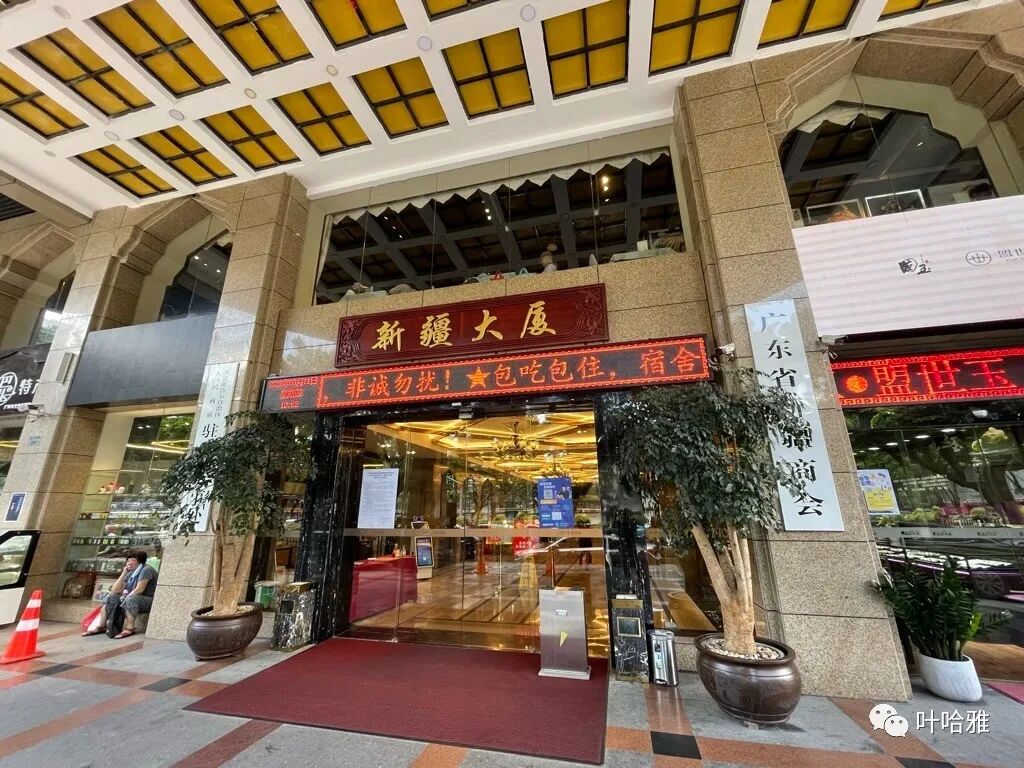
When people talk about having morning tea (yum cha) in Guangzhou, many recommend the Huimin Restaurant. But if I had to choose, I prefer the morning tea at the Xinjiang Building. Although they haven't been serving Cantonese morning tea for very long, they do better than the Huimin Restaurant in terms of variety, environment, and service.
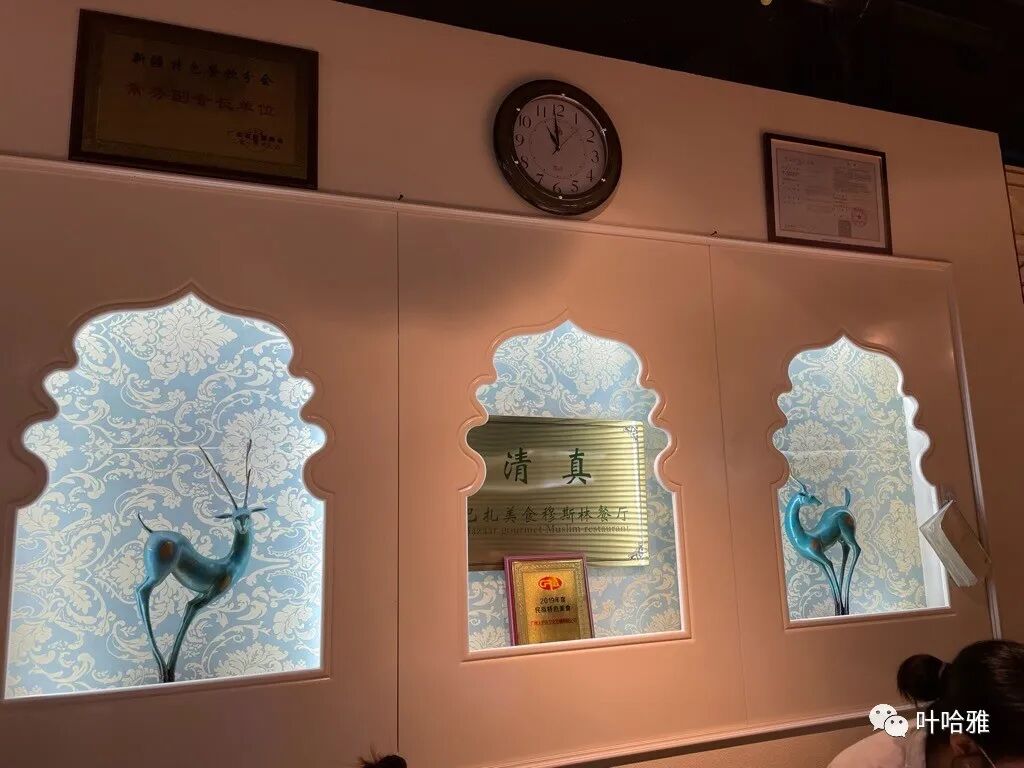
Their morning tea menu includes both traditional Cantonese dishes and some creative options, especially those combined with Xinjiang ingredients. This is easier for northern tourists to accept, as many authentic local snacks can be hard for outsiders to get used to.
Morning tea originally just meant coming to drink tea in the morning. However, people started pairing it with snacks, and these snacks became so rich that they eventually became the soul of the morning tea experience.
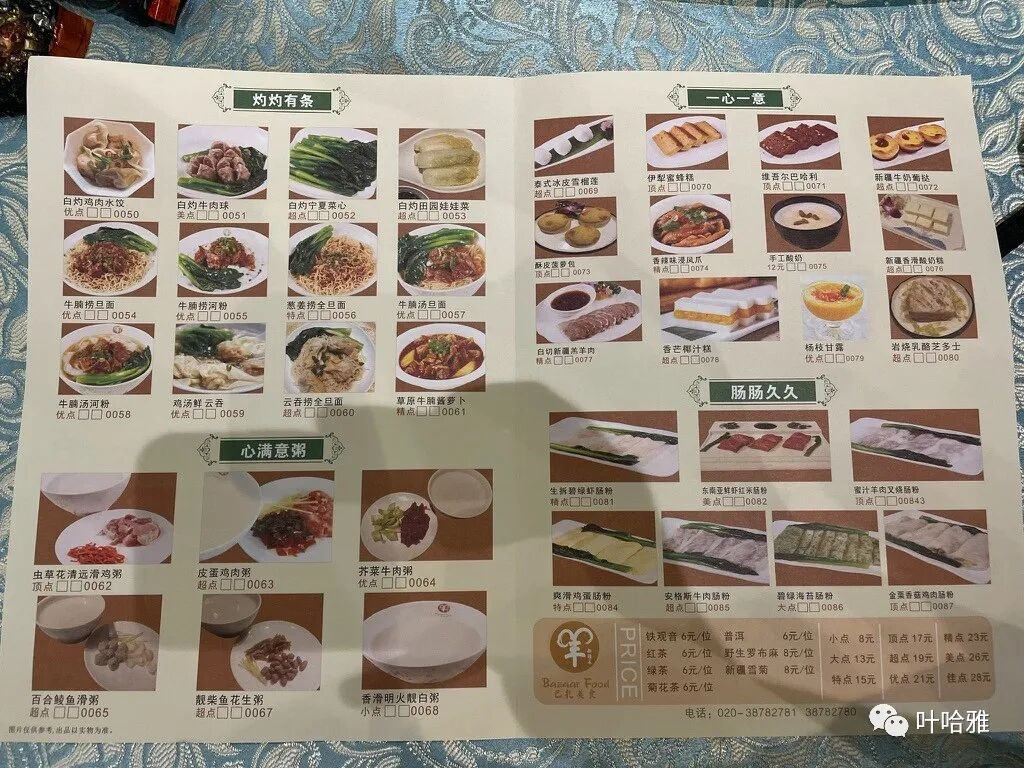
After sitting down, the waiter will follow the custom and ask what tea you want. You can choose from black tea, green tea, flower tea, or pu-erh tea. You are even welcome to bring your own tea bags. Then, they give you a menu to check off the snacks you want.
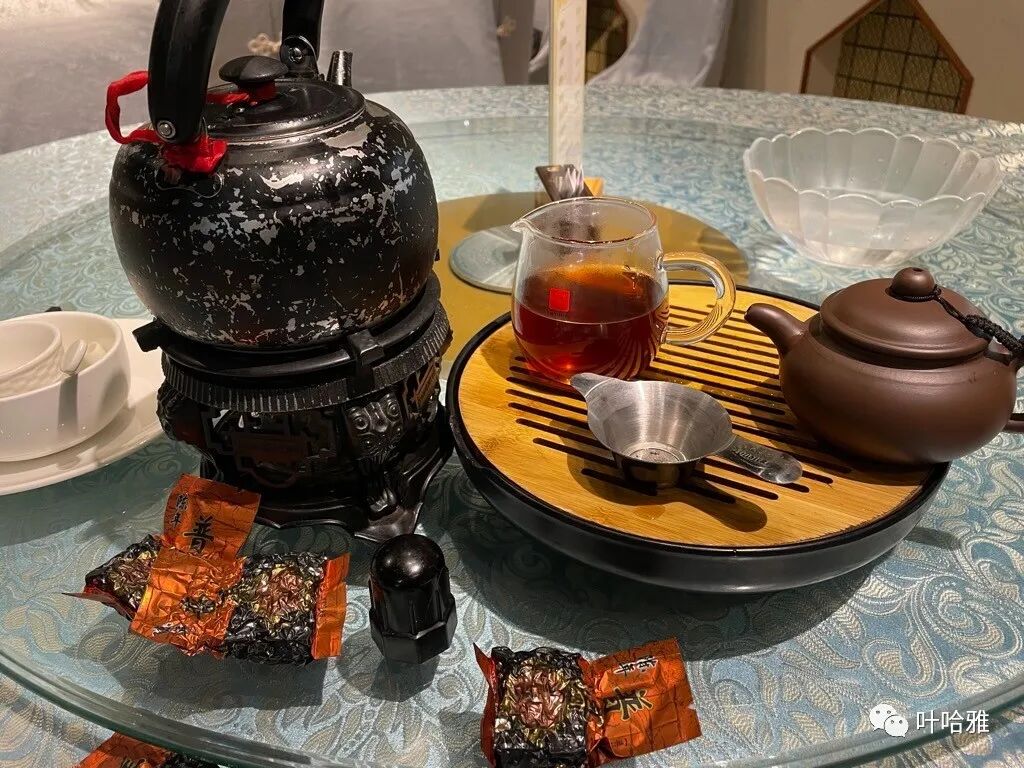
The first step of having morning tea is washing the tea set. The basin in the top right corner is not for trash, but for washing the tableware. Even though the tea sets are already clean, Guangzhou locals are used to scalding them with hot water again. I follow the local customs and do the same, even though I don't really worry about whether the tableware is clean.
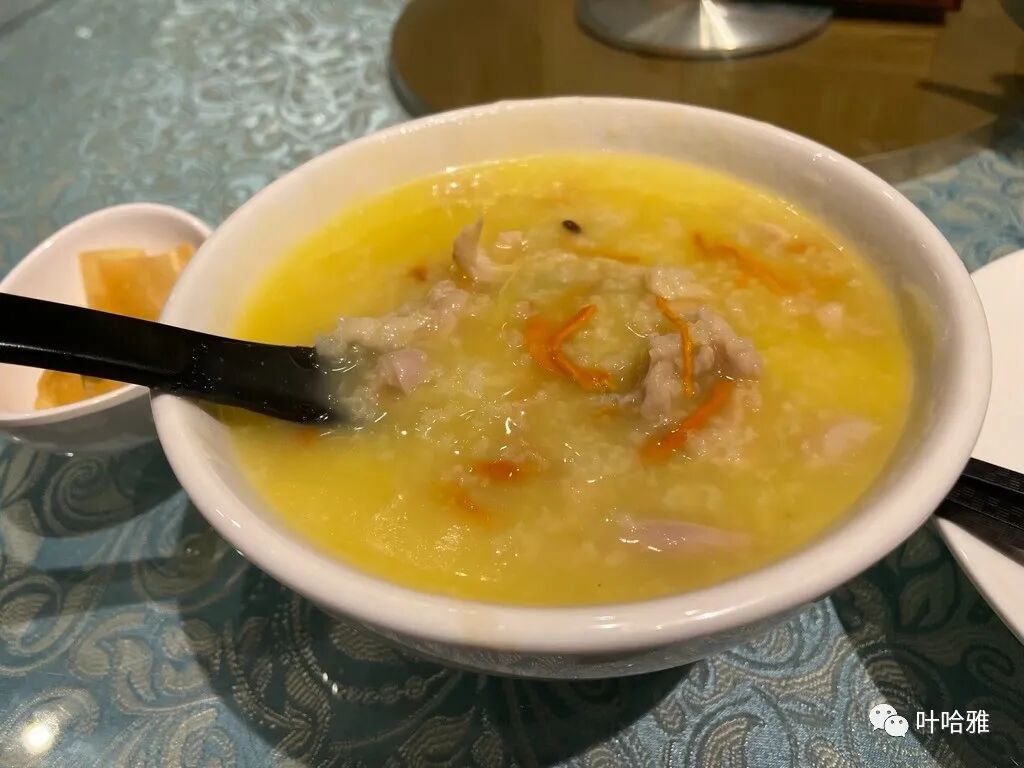
Cordyceps flower and Qingyuan chicken porridge
Breakfast in Beijing, specifically in Niujie, is always soy milk, fried dough cakes (youbing), lamb offal soup (yangza), fried tofu soup (doupaotang), and baked flatbread with fried dough (huoshao jia youbing). For someone like me who goes to the gym every day, this isn't very friendly. I like to change things up for every meal, so breakfast is the biggest headache for me. If I want a nutritionally balanced breakfast, I have to make it myself.
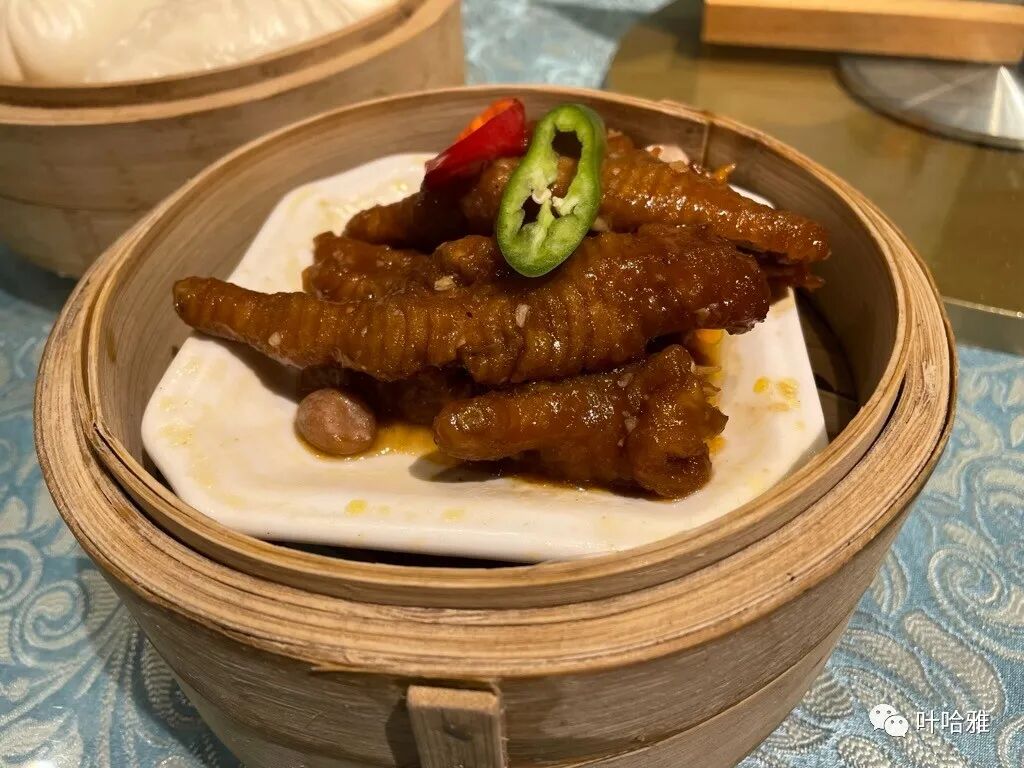
Steamed chicken feet with golden garlic sauce (jinjiang suanxiang zheng fengzhua)
If you eat morning tea alone in Guangzhou, you can usually manage about three dishes based on the portion sizes. You can eat something different every day for about half a month. After that, you can start the cycle over again, which gives you a reason to get up early every day.
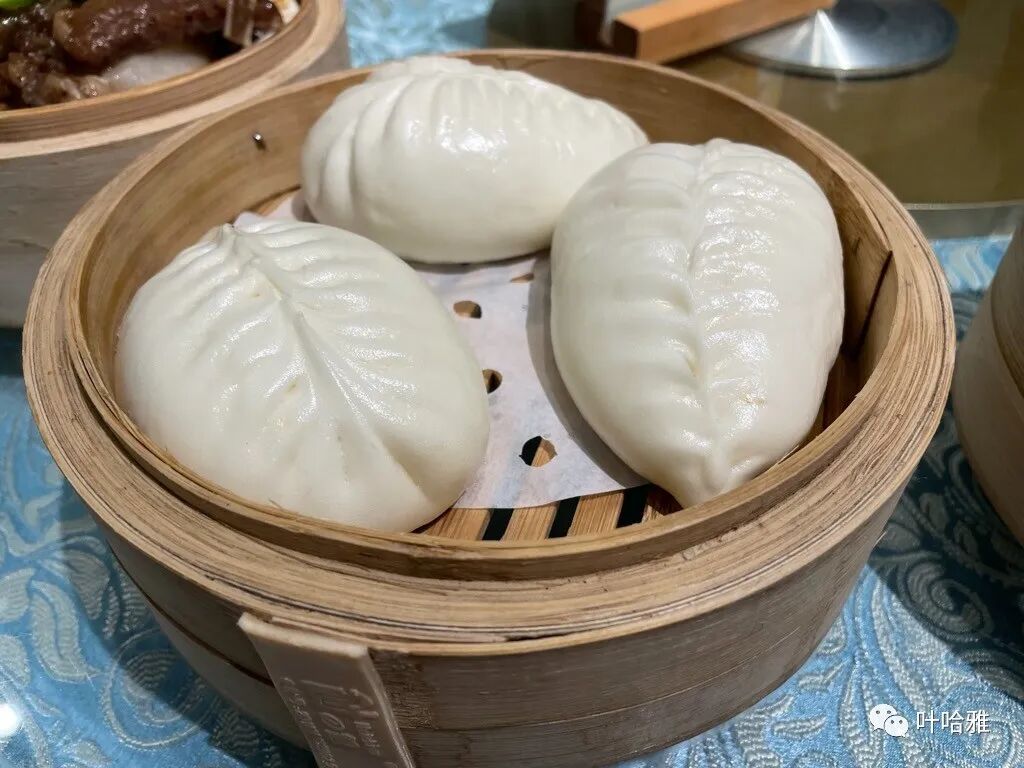
Qingyuan chicken bun
Cantonese morning tea is mostly light and not spicy, making it perfect for kids or people with sensitive stomachs.
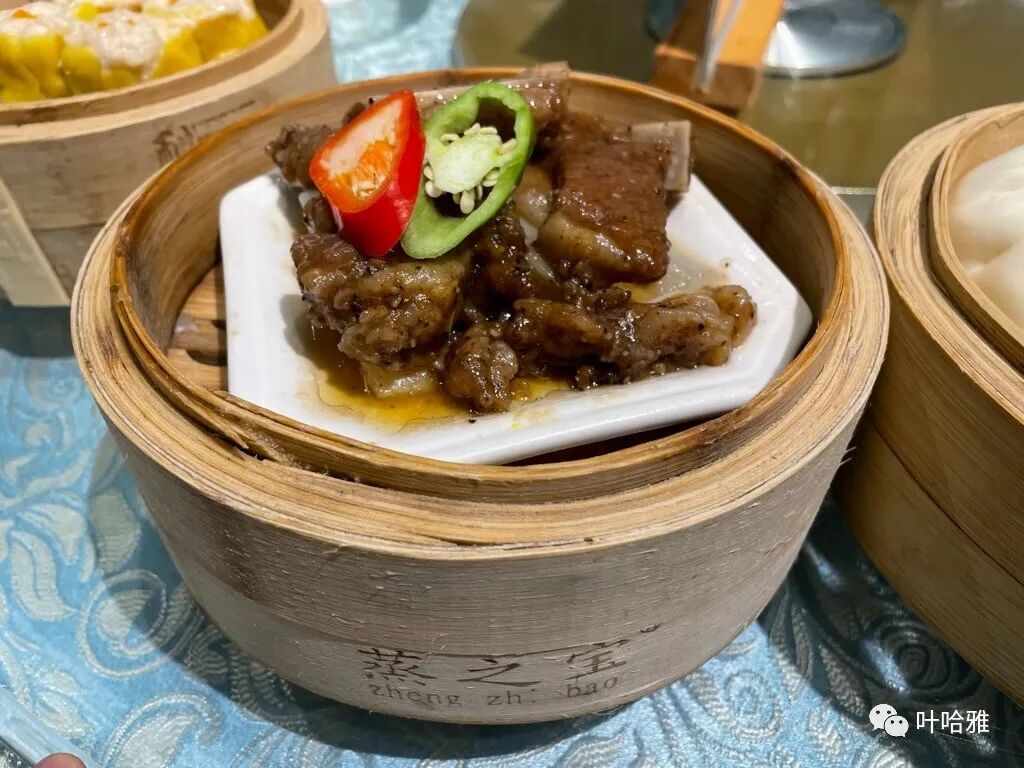
Beef short ribs in black pepper sauce
Morning tea is served from 7:00 a.m. to 11:30 a.m. If you visit on a weekday, you will mostly see locals drinking tea. These locals have both money and time. As my Guangzhou friends say, they do not care much about how they dress. They might head out in a worn-out tank top and flip-flops, but they are very picky about their food. They believe that what you put in your stomach is what really matters, which shows the practical nature of Guangzhou people.
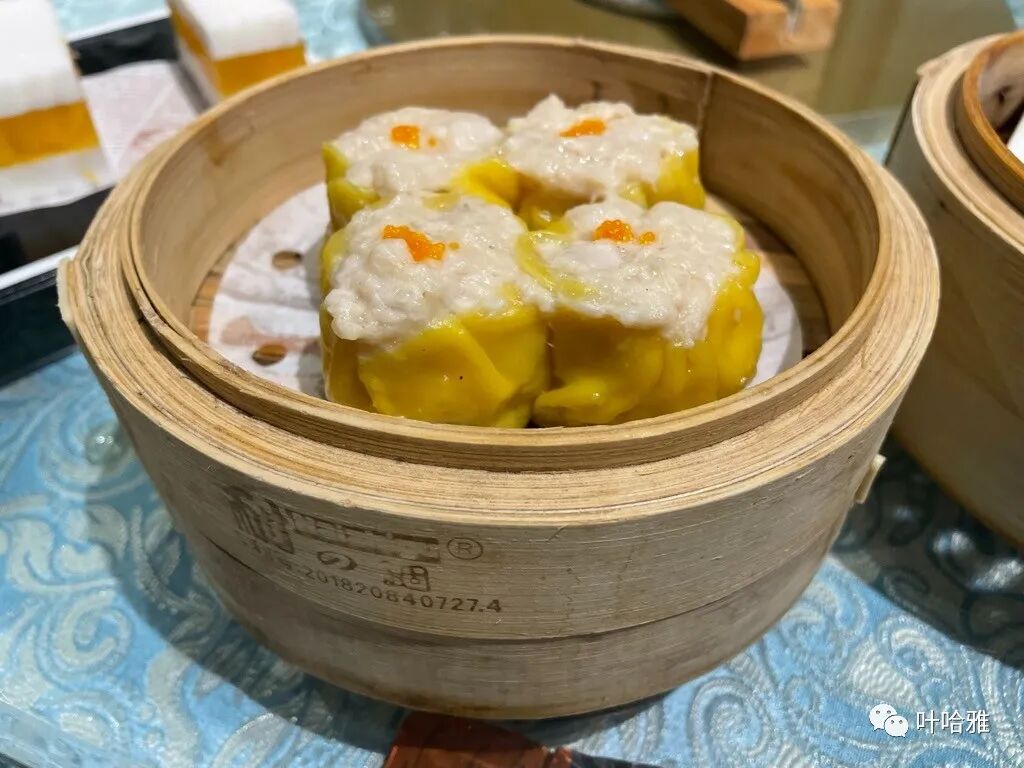
Shrimp and chicken dumpling (shaomai)
My taste has changed over the years. I do not have much of an appetite for large portions or heavy flavors anymore. I focus more on healthy eating and prefer light, small, and delicate food. My love for Cantonese morning tea grows every day, but unfortunately, you cannot find it in Beijing yet.
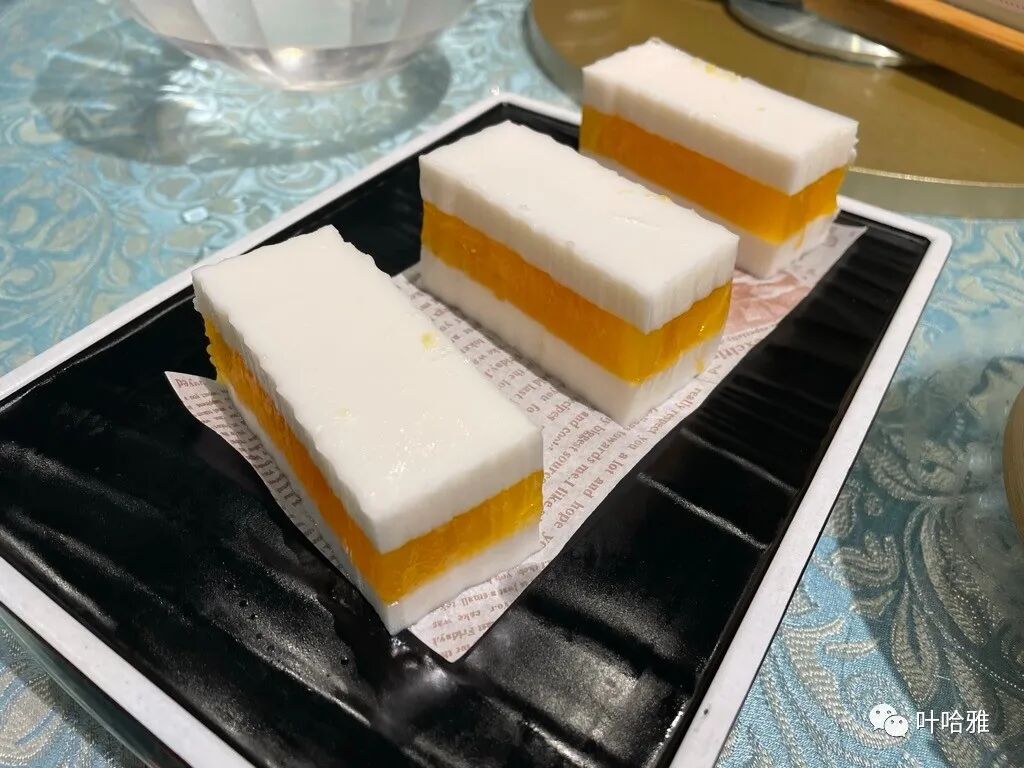
Mango coconut milk cake
I had Wuzhong morning tea in Wuzhong, Ningxia, last year and thought it was a very promising and innovative way to do breakfast. The Muhelan restaurant, which is opening soon in Beijing, plans to bring Wuzhong morning tea to the city. I hope it can take root and grow here.
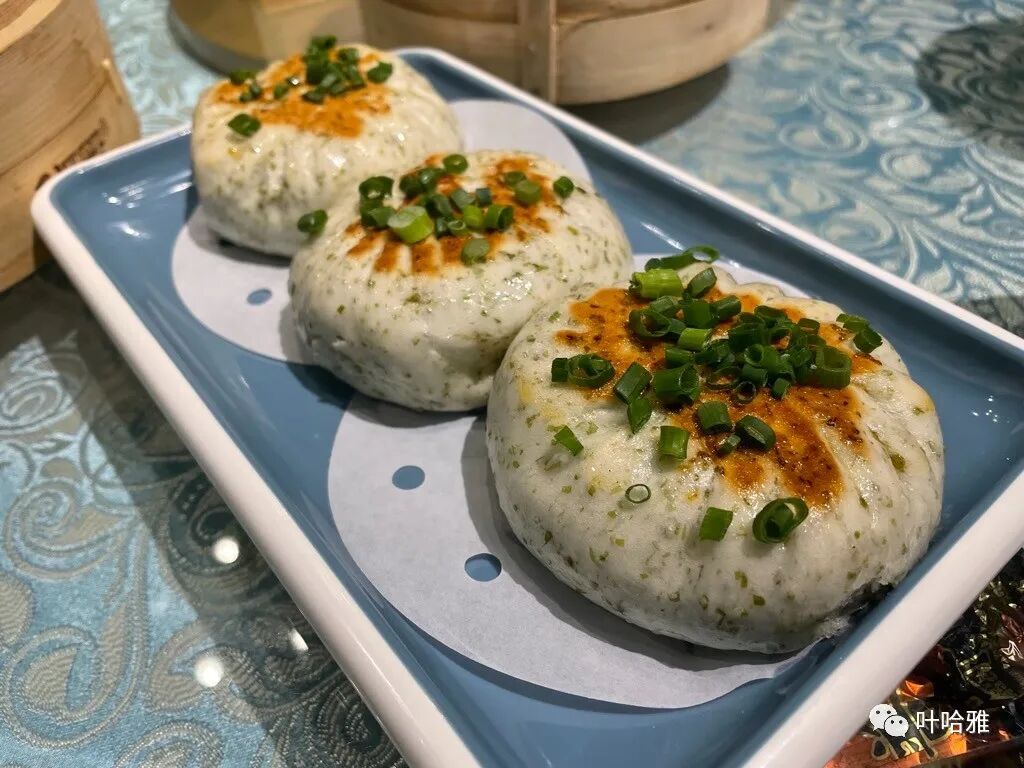
Pan-fried curry beef bun
If it is your first time having Cantonese morning tea, I think you must order the barbecue pork bun (char siu bao) and the pan-fried bun (shengjian bao). Also, rice noodle rolls (changfen), shrimp dumplings (xiajiao), and steamed chicken feet are the best dishes to represent Cantonese cuisine. You might not know if you will like them, but you should definitely give them a try.
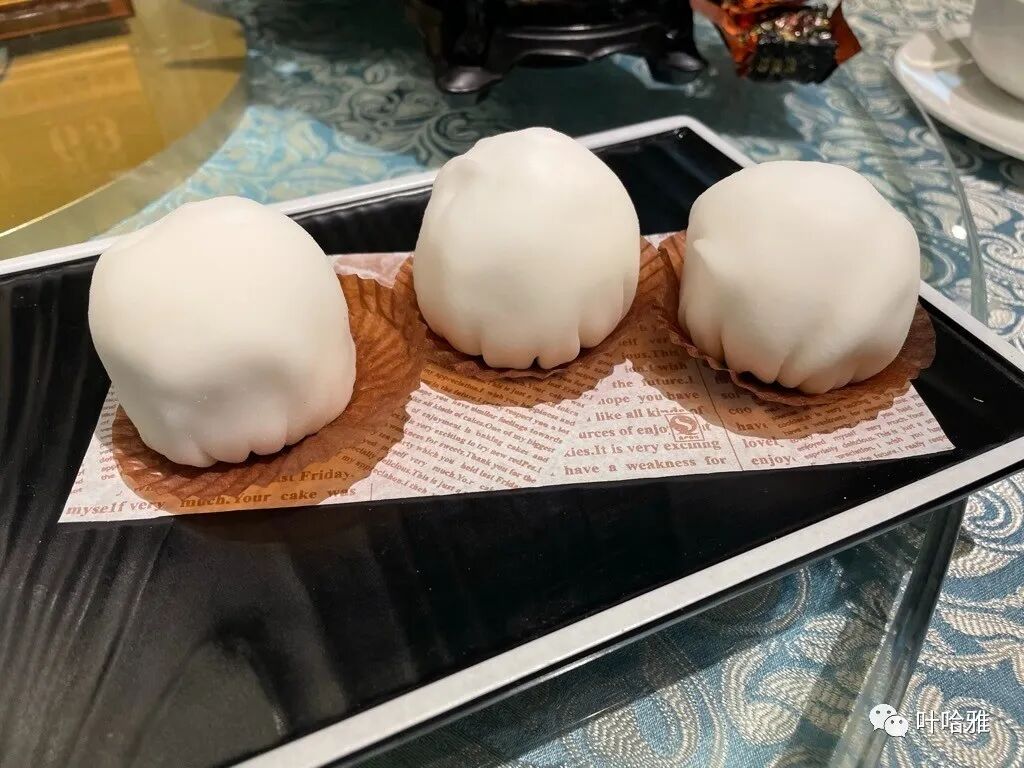
Thai-style chilled durian mochi
You should also try the small Cantonese desserts. They are made with care and look beautiful. They come in portions of three, which is a hint that you should bring two friends along.
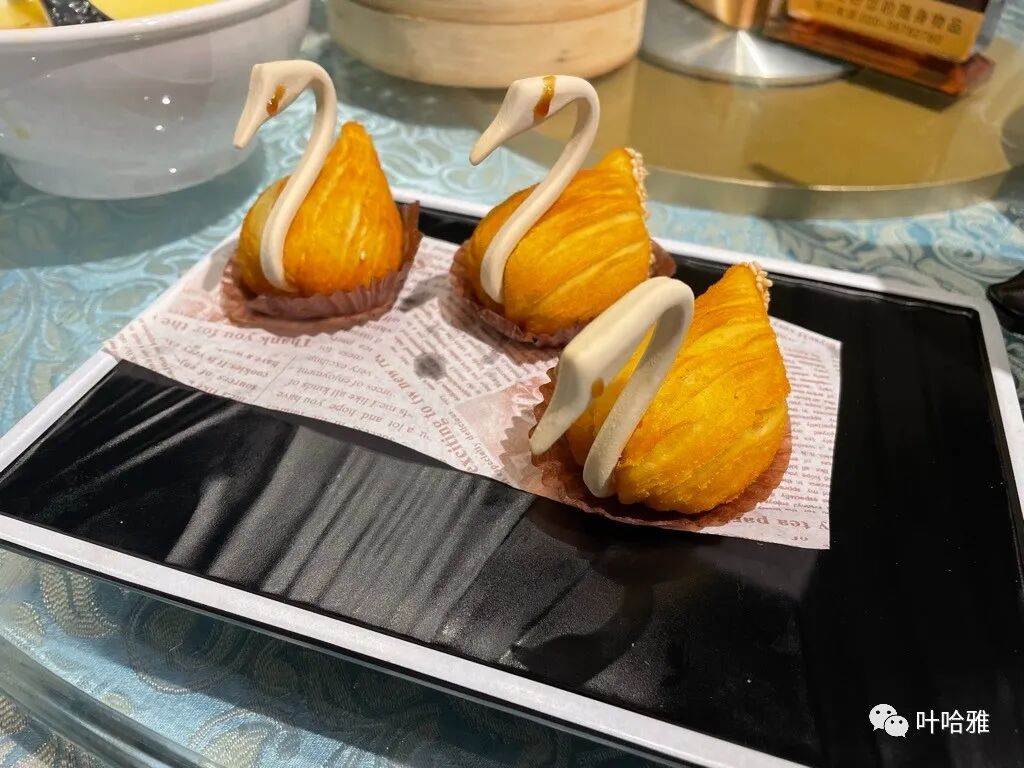
Swan-shaped durian pastry (tian'e liulian su)
This swan-shaped durian pastry is a new addition. When I visited last time, they only had the regular gold-medal durian pastry, so they really put effort into the design this time.
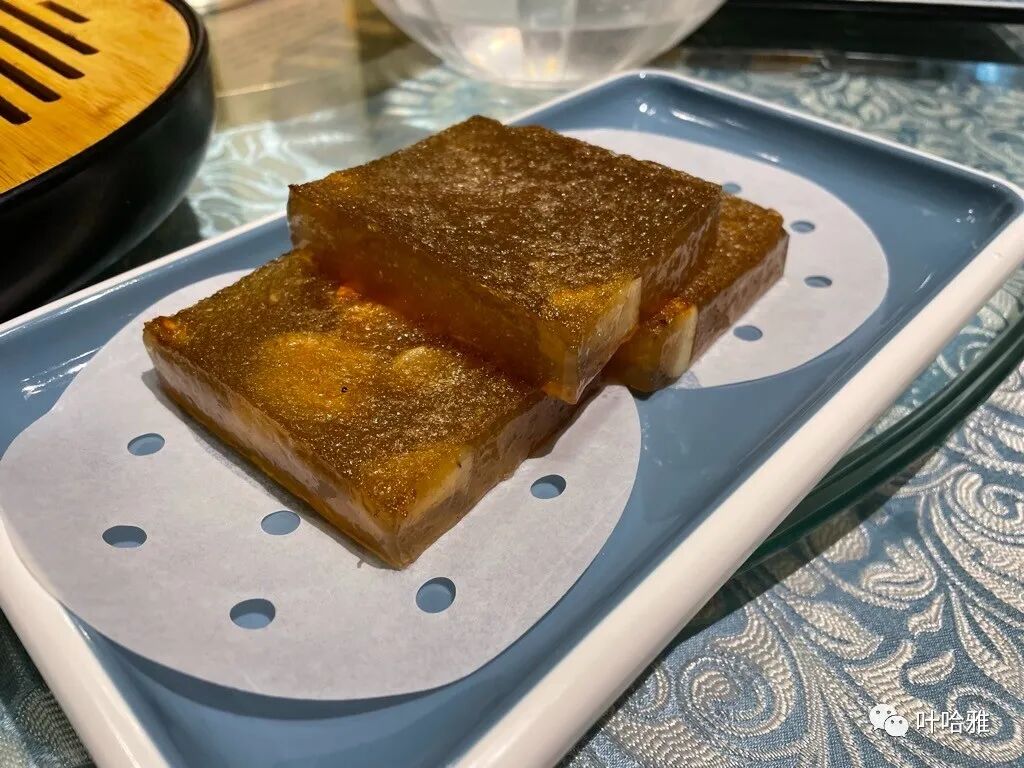
Pan-fried water chestnut cake (xiangjian mati gao)
On this trip to Guangzhou, I ate dim sum for three days in a row, twice at the Xinjiang Building and once at the Hui Muslim Restaurant. My experience at the Xinjiang Building was even better than my last visit. I even ran into some fellow villagers from Shadian there and learned that Guangzhou and Sanya are the favorite vacation spots for people from Shadian.
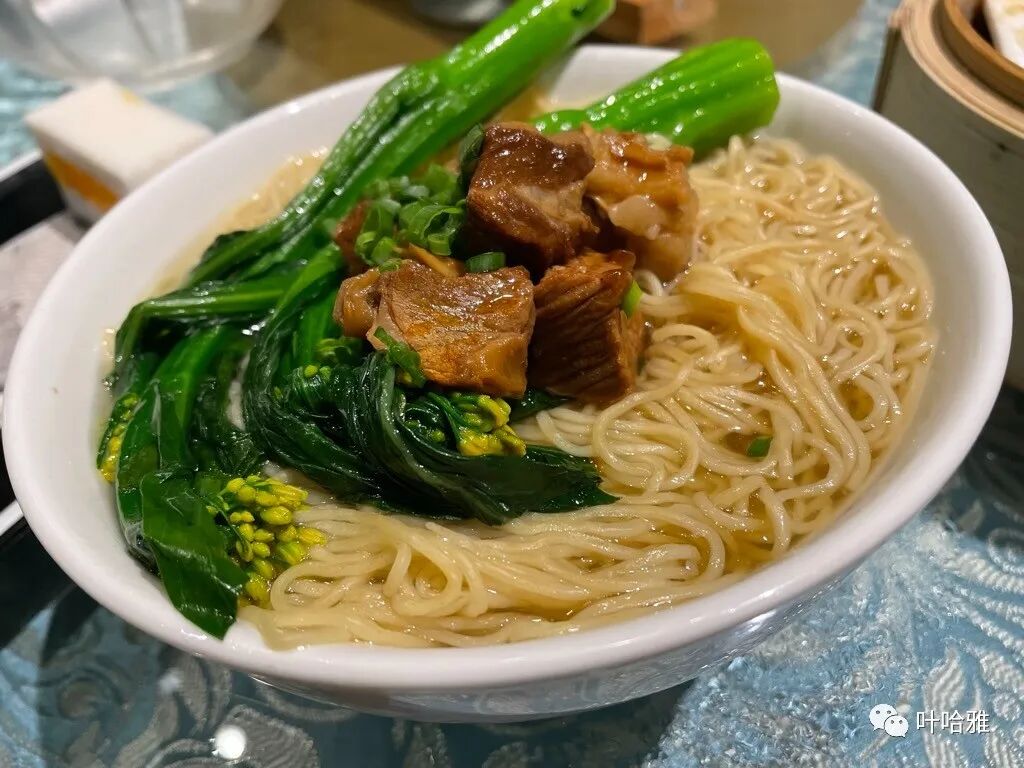
Beef brisket egg noodle soup (niunan tang danmian)
Cantonese-style noodle soup and rice noodle rolls (changfen) have a fresh, slightly sweet taste that many girls love. I don't particularly like them, as I prefer the salty and savory style of Northwest Chinese noodles. But since I am in Guangzhou, it is worth trying.
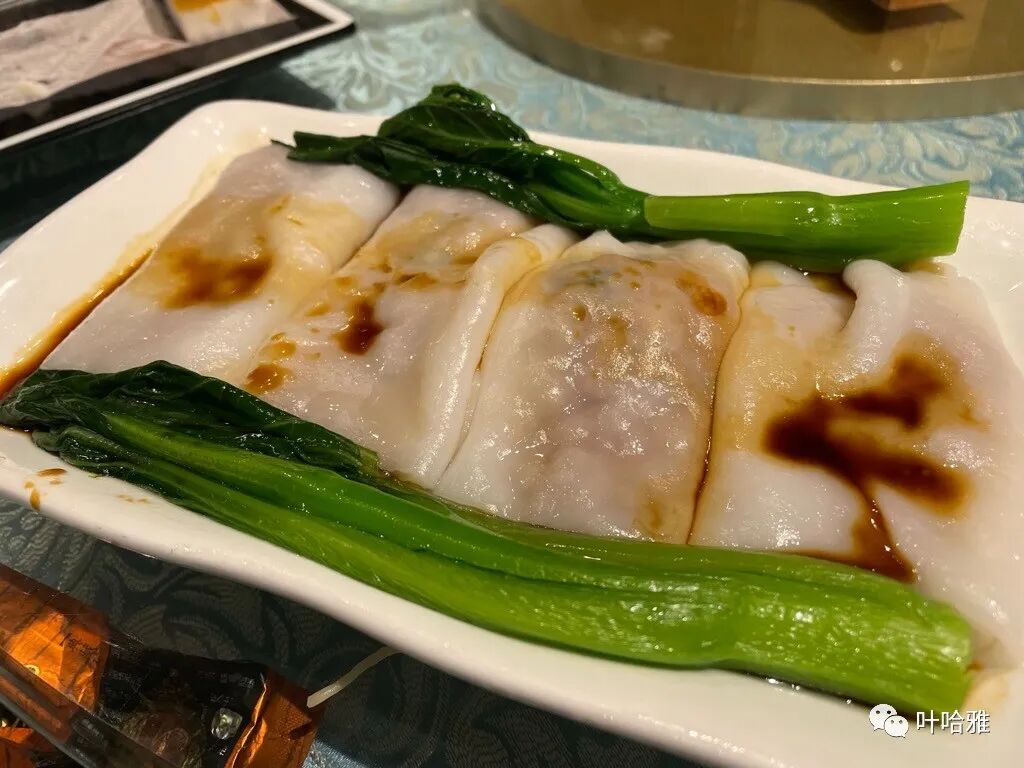
Chestnut and mushroom chicken rice noodle rolls (jinli xianggu jirou changfen)
The yogurt cake and egg tarts are a creative fusion dish because they use dairy products from Xinjiang. Green vegetables hold an important place in Cantonese cuisine. For Guangzhou locals, a meal must include green vegetables, which specifically refers to leafy greens; gourds and root vegetables do not count.
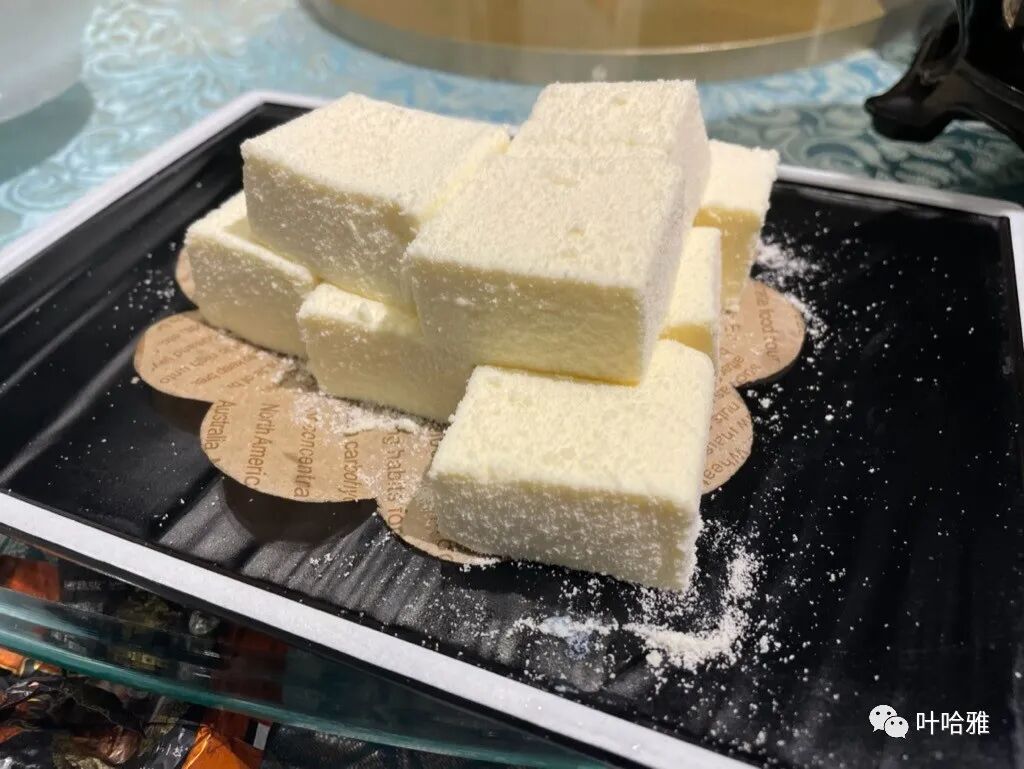
Xinjiang smooth yogurt cake (Xinjiang xianghua suannai gao)
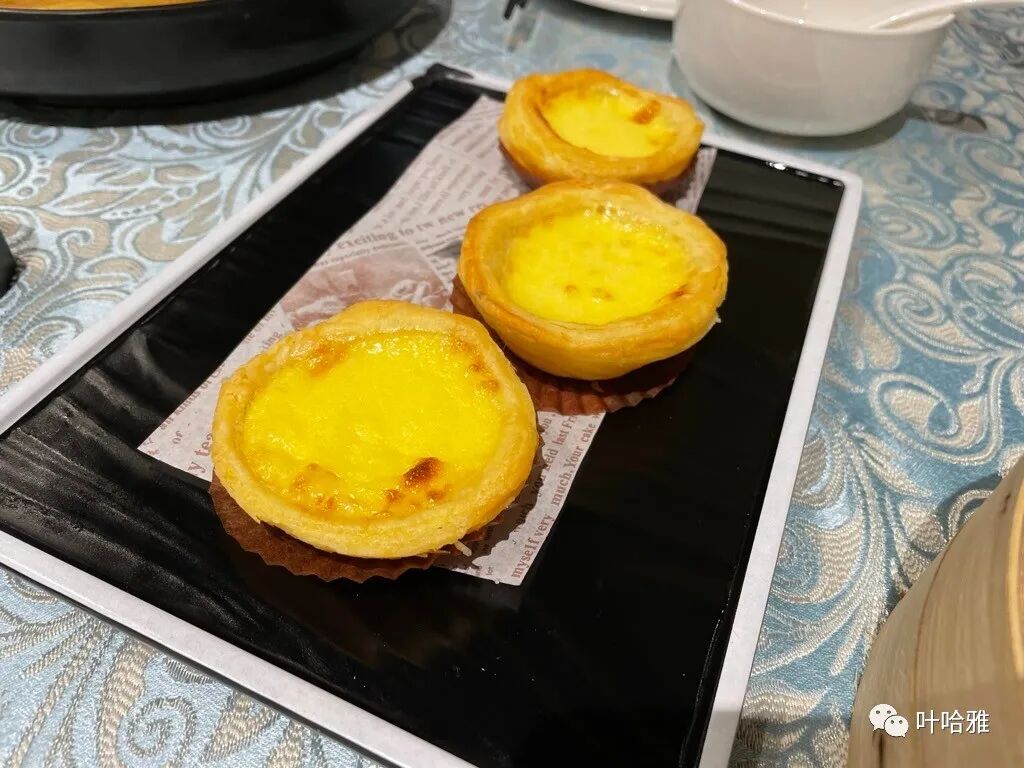
Xinjiang milk Portuguese-style egg tart (Xinjiang niunai puta)
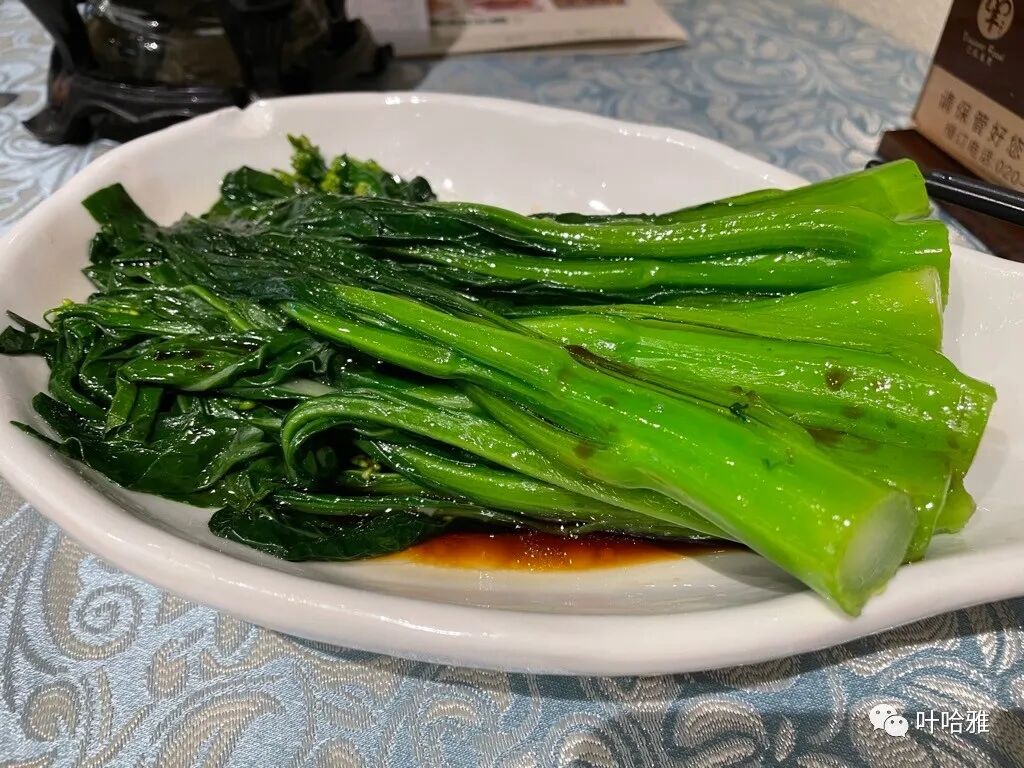
Blanched Ningxia flowering cabbage (baizhuo Ningxia caixin)
Guangzhou people place great importance on food as medicine. They demand fresh ingredients and a balanced diet, using everything from land, sea, and air in their cooking. You can even find these in dim sum. Dim sum can last until lunchtime, then you take a break, have afternoon tea, and once it gets dark and cool outside, there is a late-night snack culture. You can spend the entire day just eating.
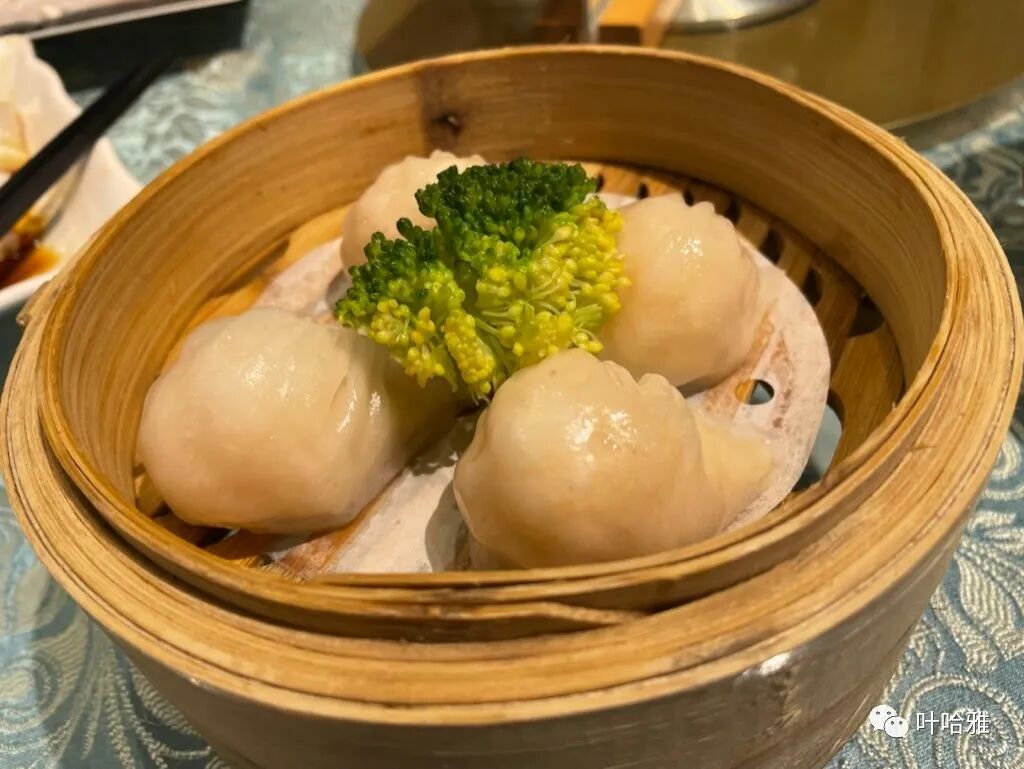
Original flavor bamboo shoot tip shrimp dumpling (shrimp dumpling)
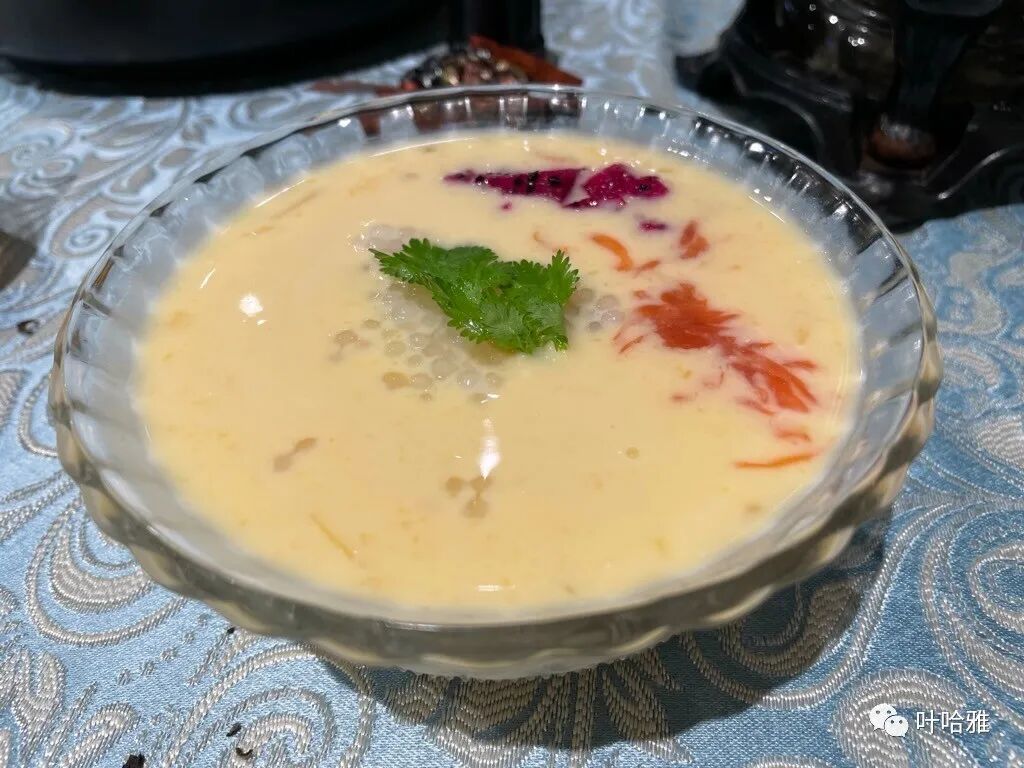
Mango pomelo sago (yangzhi ganlu)
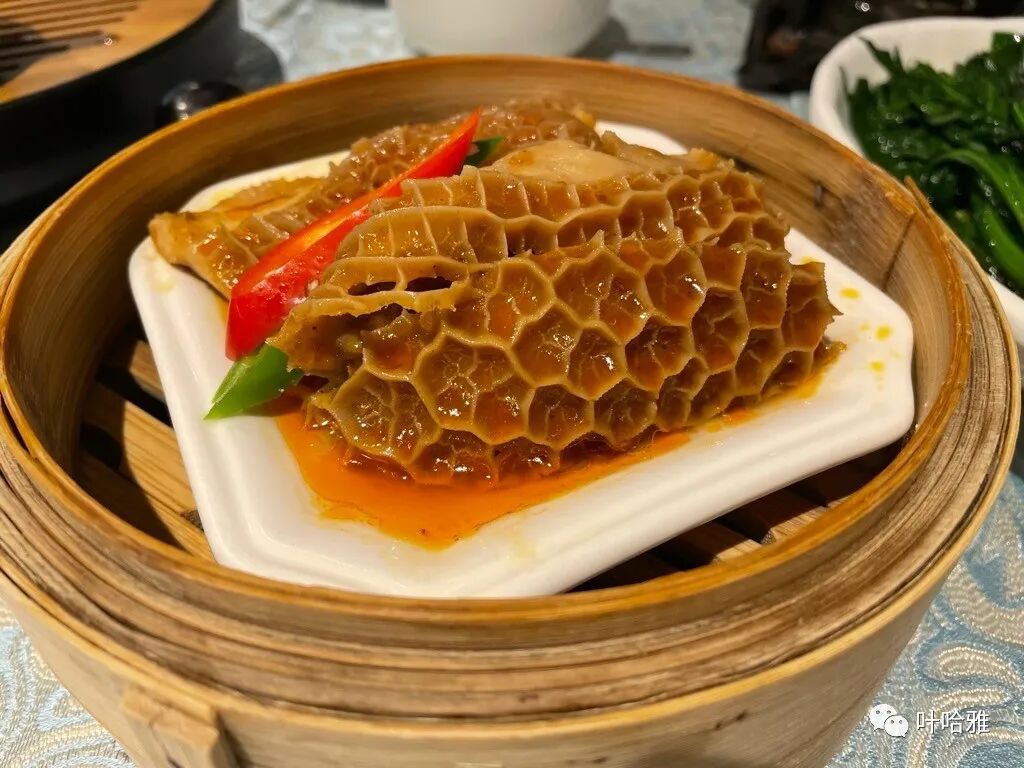
Malaysian satay beef tripe
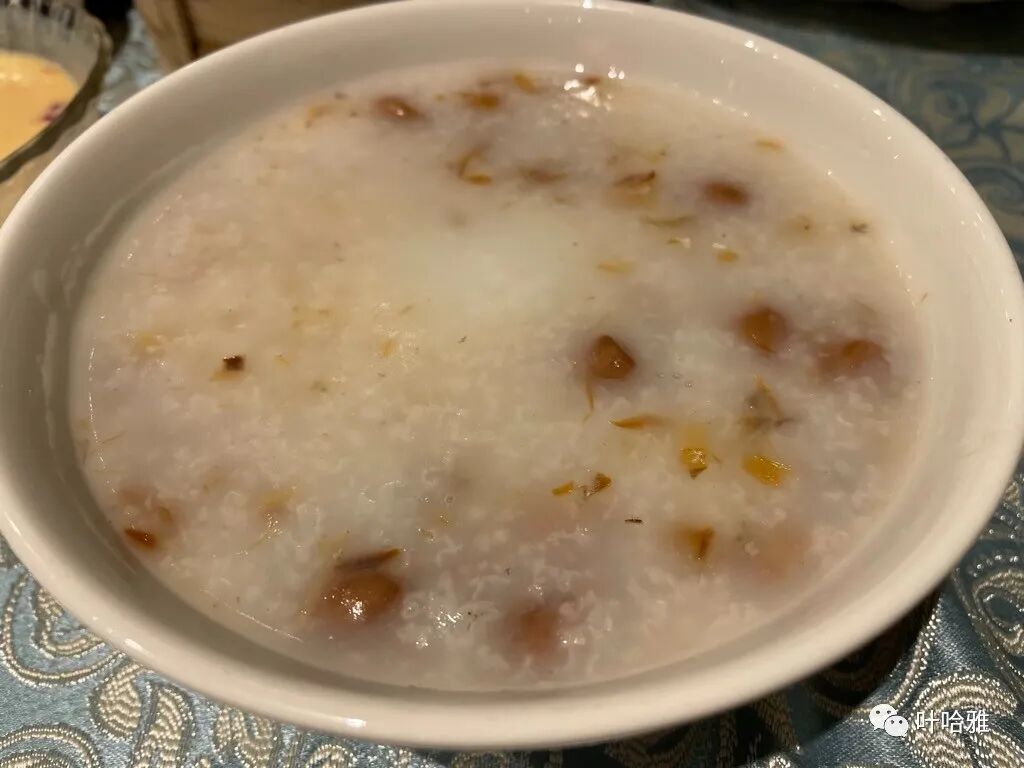
Dried fish and peanut congee
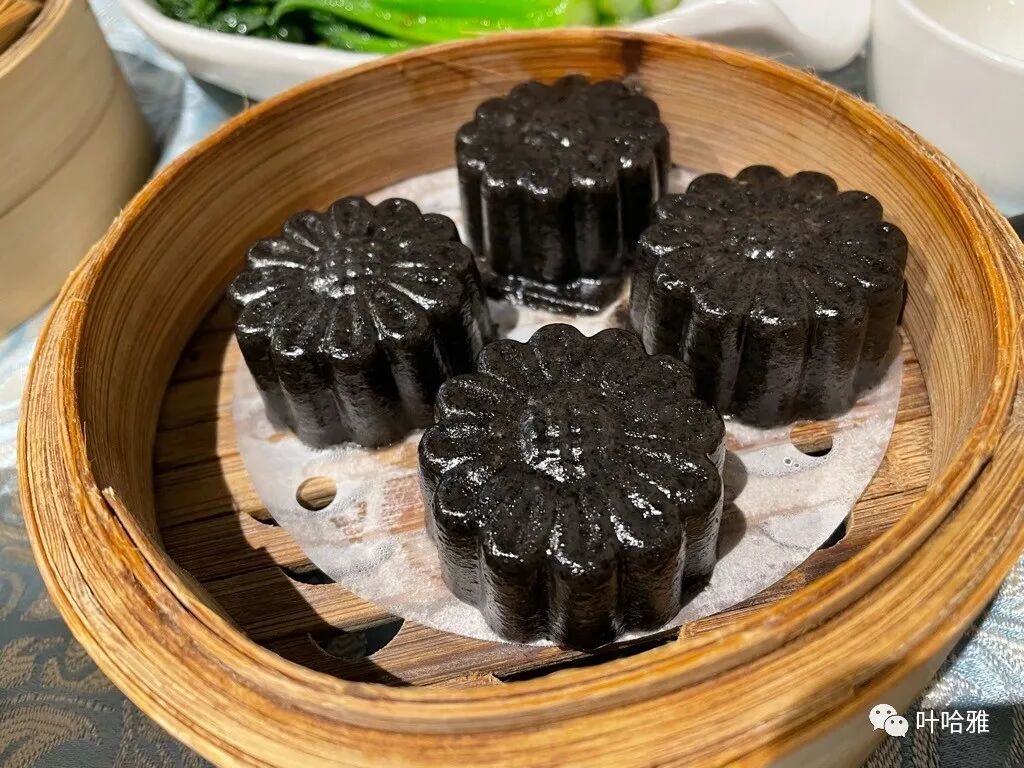
Healthy sesame cake
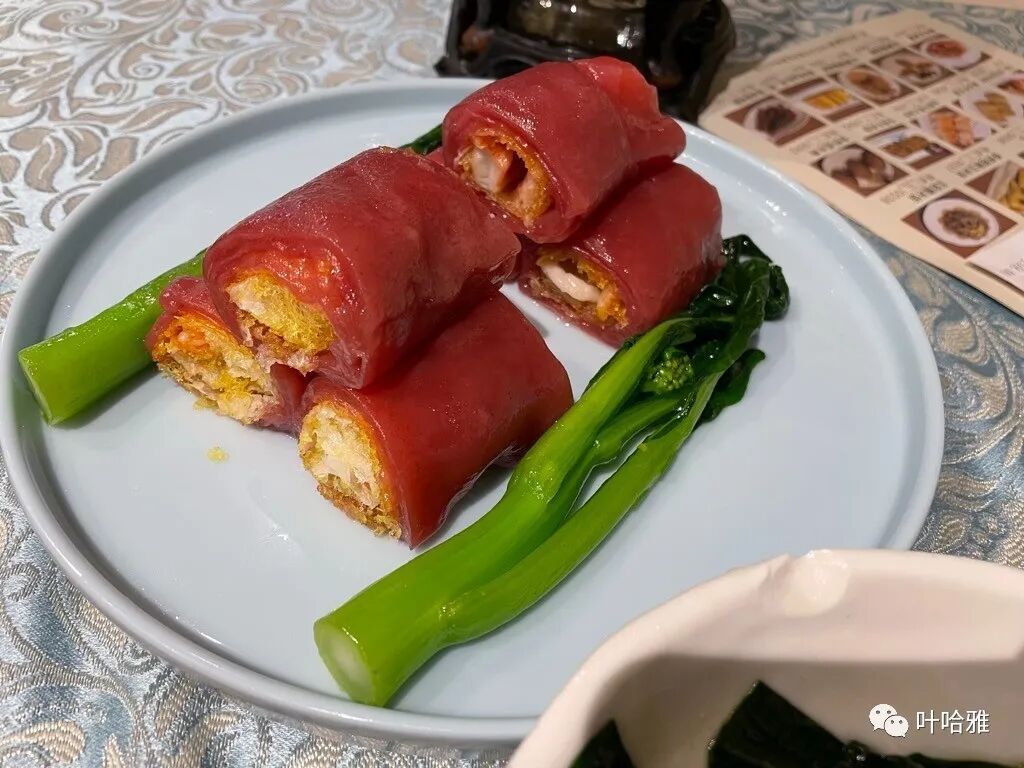
Southeast Asian fresh shrimp red rice noodle roll
2
Hui Muslim Restaurant
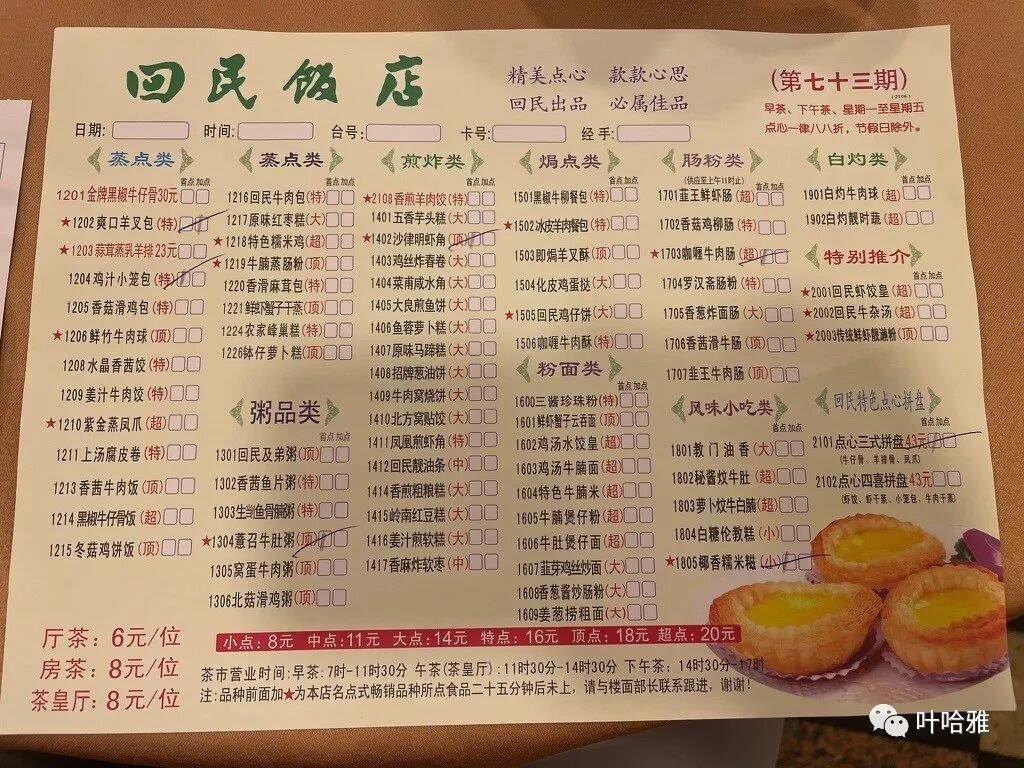
Hui Muslim Restaurant is a long-standing state-run spot in Guangzhou that has been open for over half a century. Most people eating here are local Guangzhou residents from the neighborhood. I asked my local friends in Guangzhou, and they approve of the food quality here. They serve morning tea, afternoon tea, and regular meals, and there is a discount for morning tea on weekdays.
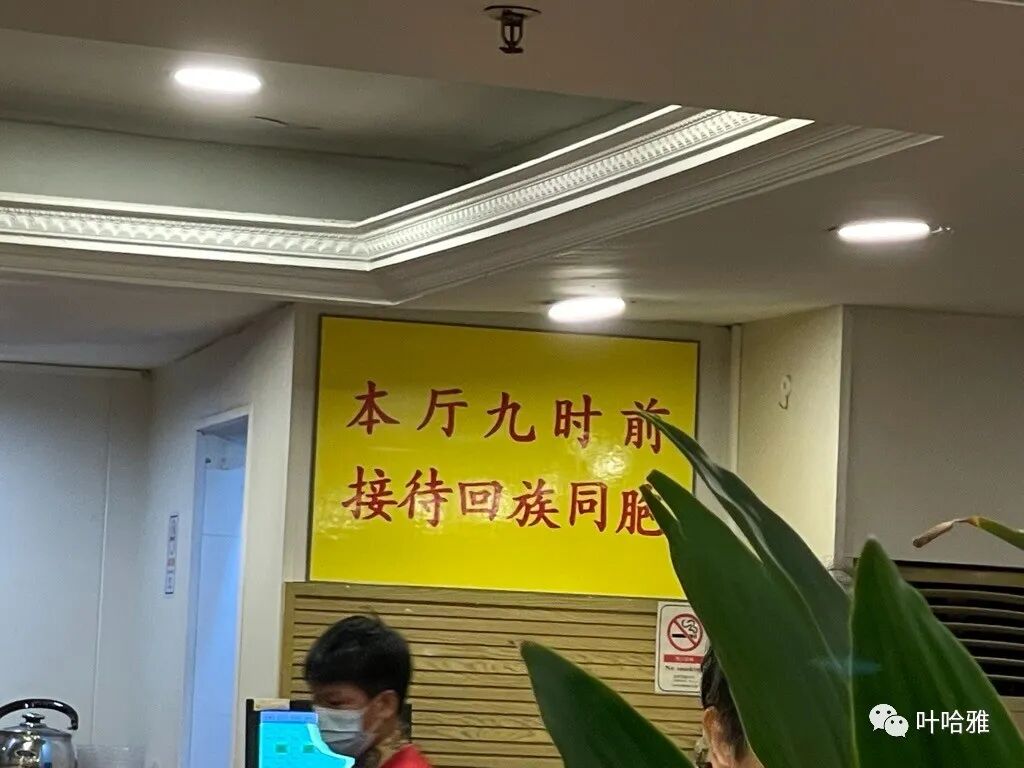
Inside the restaurant, there is a sign saying they welcome Hui Muslim brothers and sisters before 9 a.m. However, when I arrived before 9 a.m., I mostly saw local residents of all backgrounds. The restaurant has a strong state-run vibe, and the service is decent. The tea set is not as fancy as the one at Xinjiang Mansion; it is just one teacup and one teapot. The environment is also noisier because the space is small.
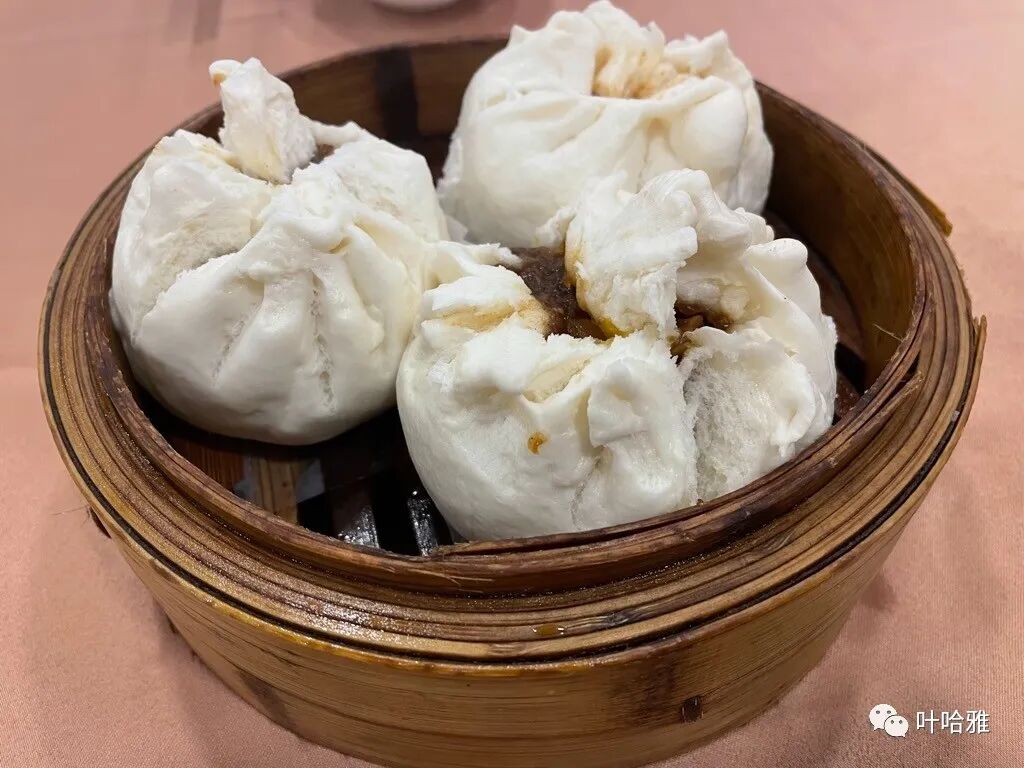
Lamb barbecue pork bun (char siu bao)
For Cantonese dim sum, the Hui Muslim restaurant makes it more authentic. Take this lamb barbecue pork bun (chashao bao), for example; it is unique to Guangzhou. Barbecue pork (chashao) means meat roasted on a fork, then wrapped using the bun-making technique, which is why it is called a chashao bao. The top of the bun naturally splits open after steaming. I eat this every time I visit, as it is hard to find such authentic and delicious chashao bao once I leave the Hui Muslim restaurant.
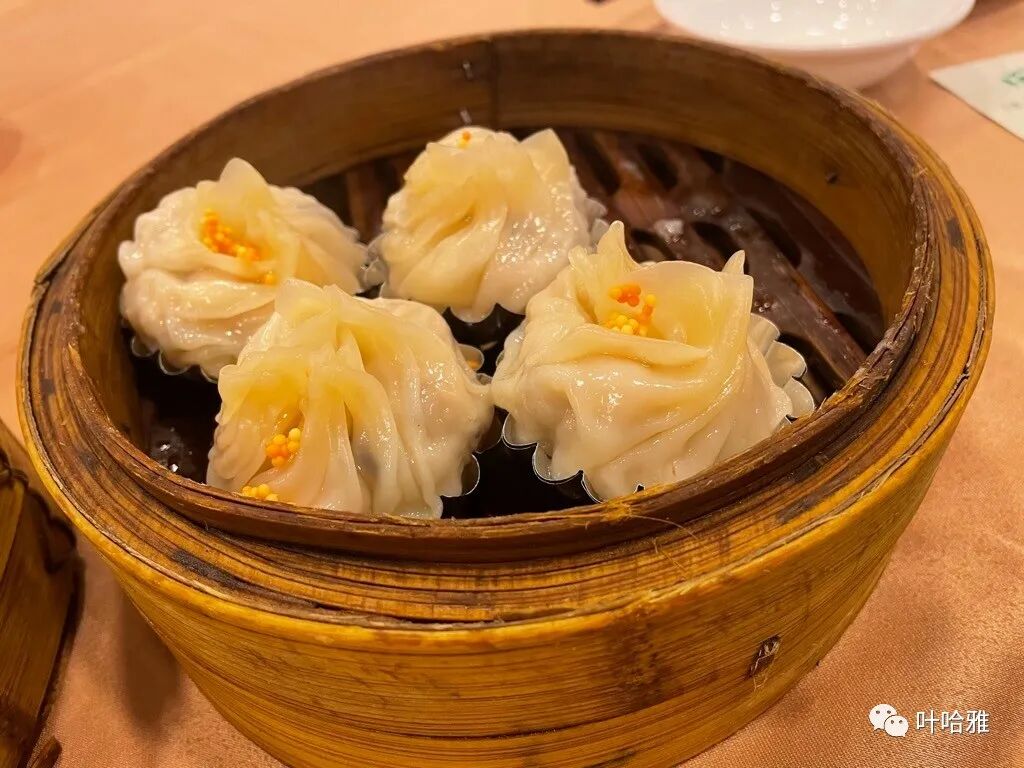
Chicken broth soup dumplings (xiaolongbao)
Soup dumplings (xiaolongbao) are one of my favorite breakfasts. When my appetite is not fully awake in the morning, I prefer delicate flour-based snacks. I might not have the appetite to finish a large steamed bun.
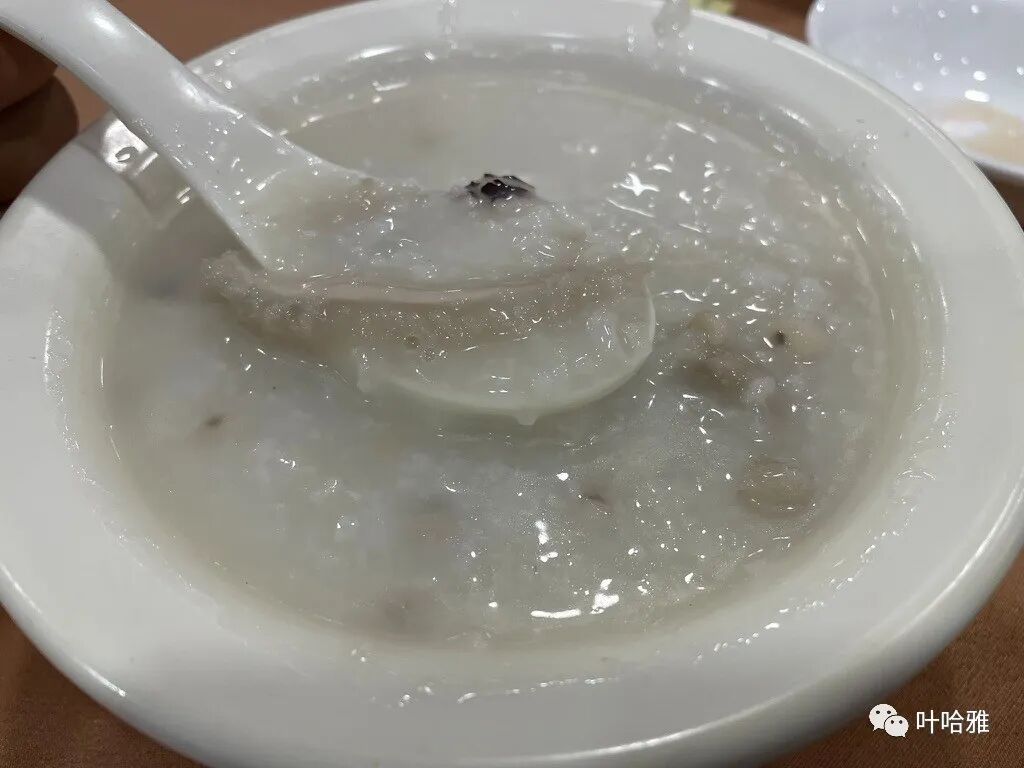
Job's tears and beef tripe porridge (yizhao niudu zhou)
Being able to drink various nutritious porridges for breakfast is something I dare not expect in Beijing. However, I have to complain about the porridge at the Hui Muslim restaurant. It does not taste like it was freshly cooked this morning; it tastes like a pre-made product that was heated up. Freshly cooked porridge has a thicker texture, and in this regard, it is not as good as the Xinjiang Building.
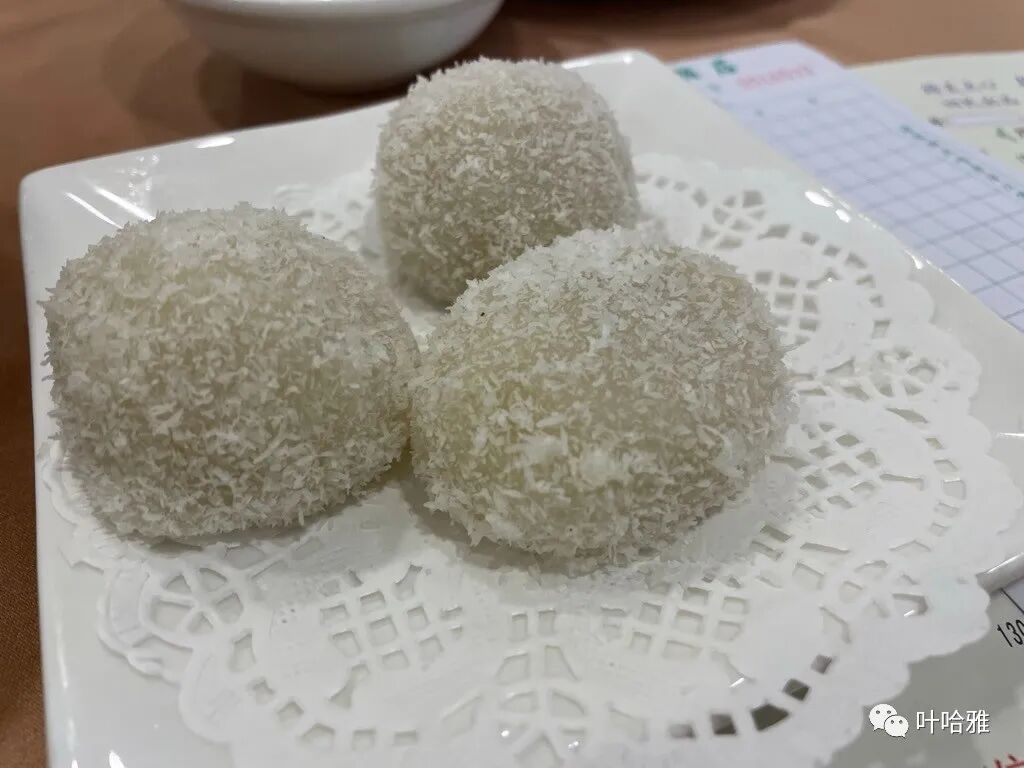
Coconut sticky rice cake (yexiang nuomici)
The taste of the dim sum is quite good, but the appearance is plain. It is not as delicate as the ones made at the Xinjiang Building, so it is not suitable for taking photos to post on social media. Many friends have told me that the service at the Hui Muslim restaurant is poor. Although I did not experience this myself, in terms of small details, the dining comfort at the Xinjiang Building is slightly better.
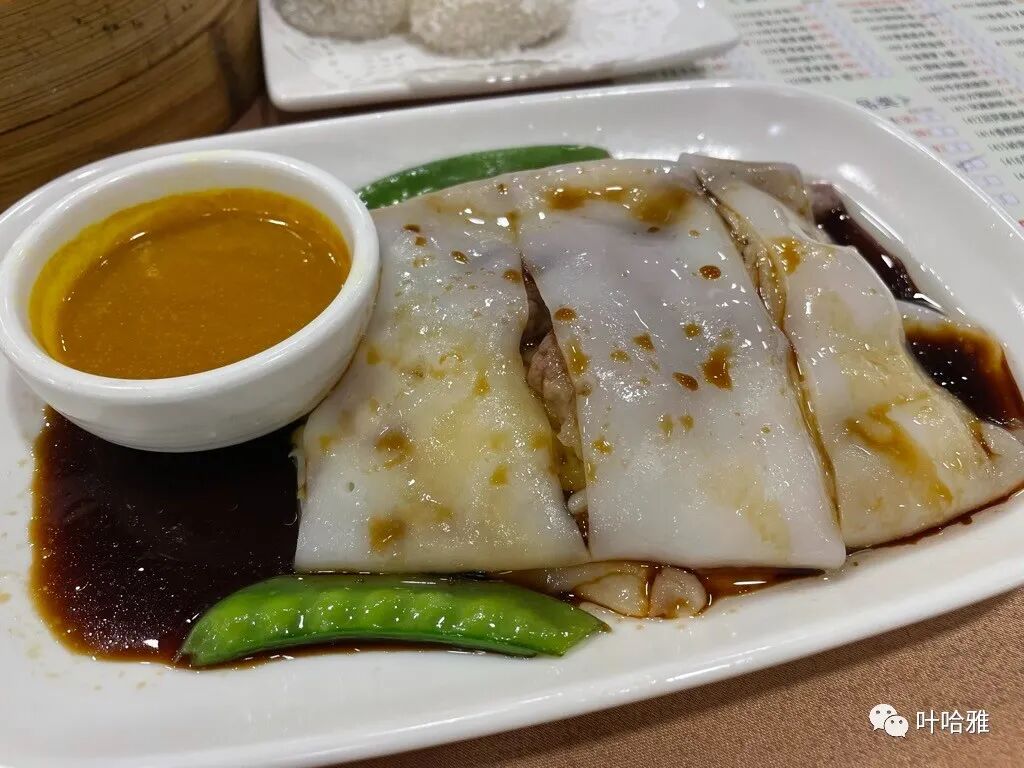
Curry beef rice noodle rolls (gali niurou changfen)
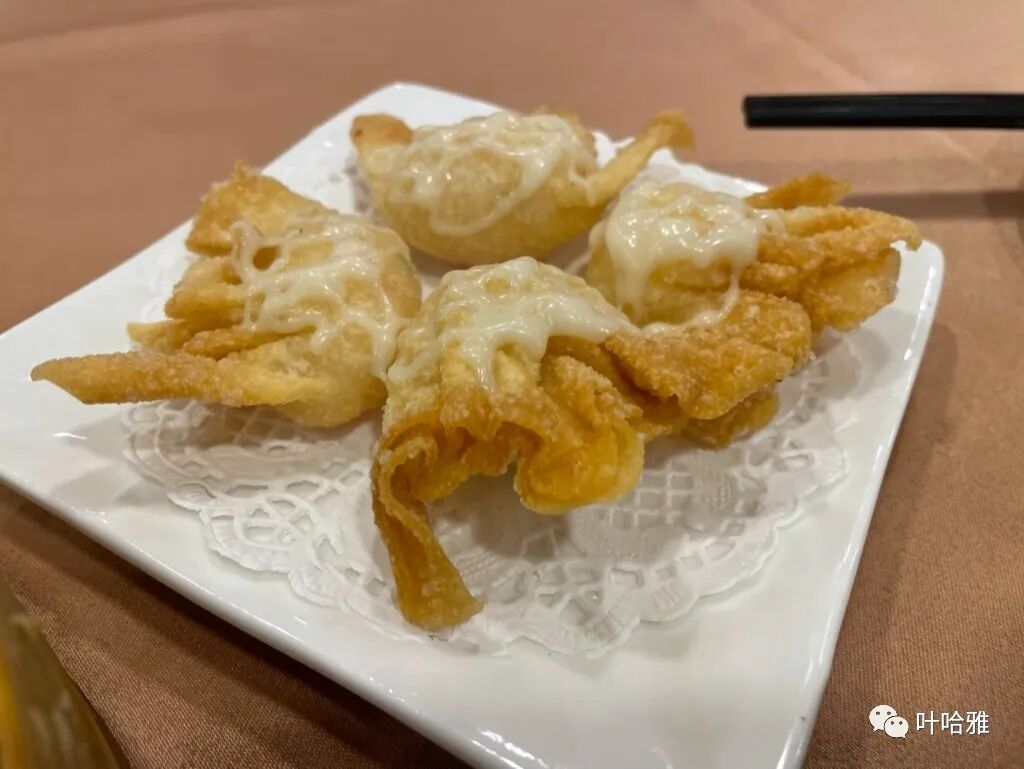
Salad shrimp dumplings (shali mingxia jiao)
The dim sum trio platter I ate today tasted a bit salty. It was not this salty when I had it before.
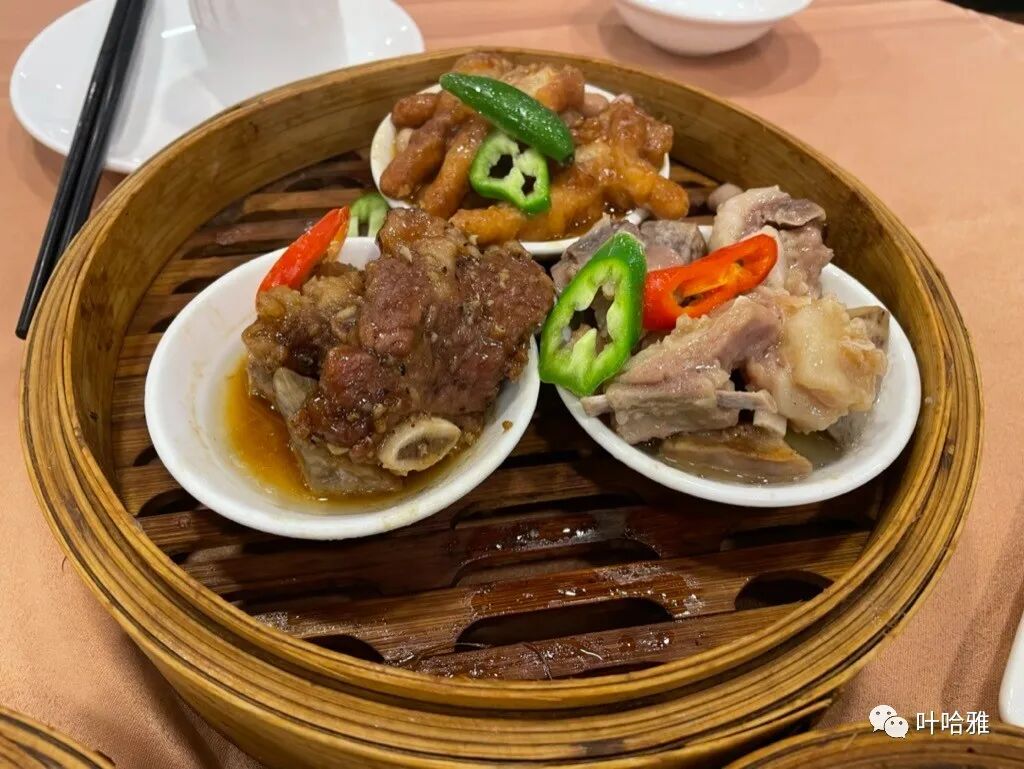
Dim sum trio platter (diansin sanshi pinpan)
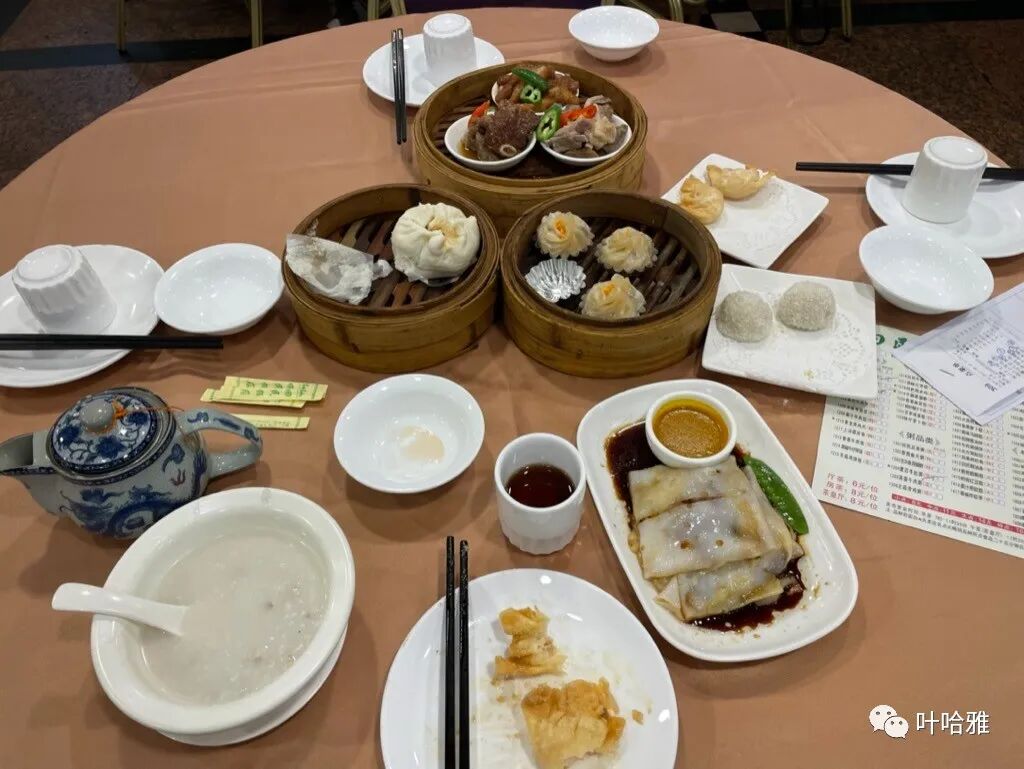
3
Ma Xiaohuo Handmade Pulled Noodles (lamian)
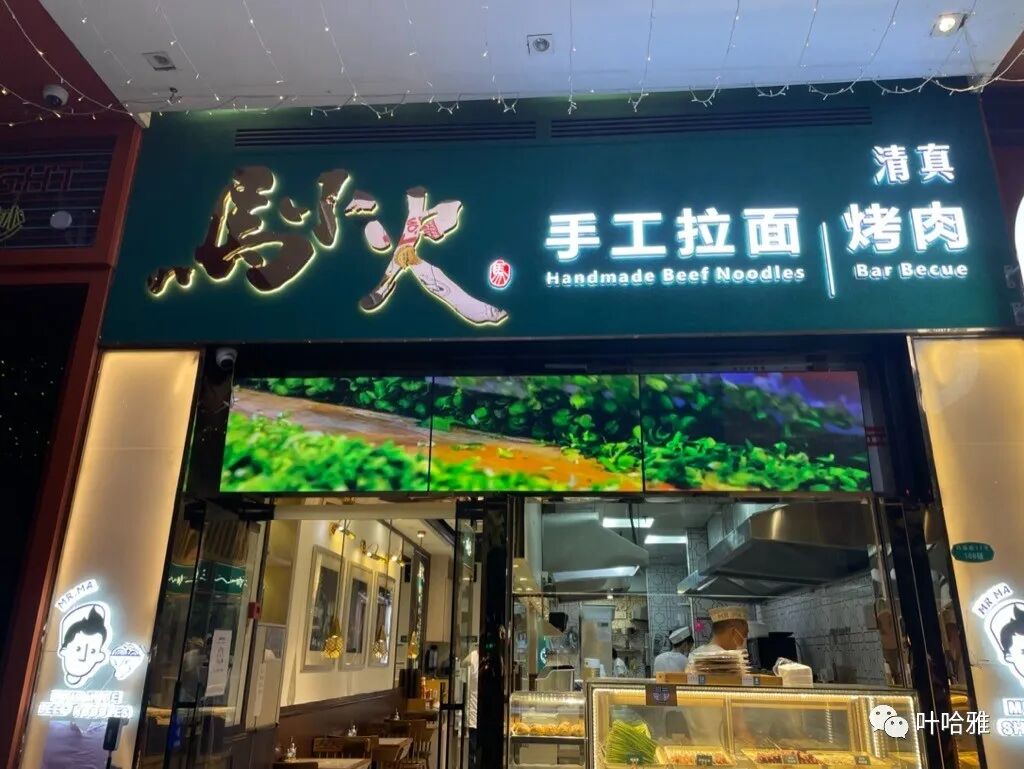
I found this place by accident. I was catching up with a friend at a cafe, but they felt the air conditioning was too cold, so we moved outside. Suddenly, a storm hit Guangzhou. We ducked into this little shop to escape the rain, ordered some food, and were surprised by how good it tasted.
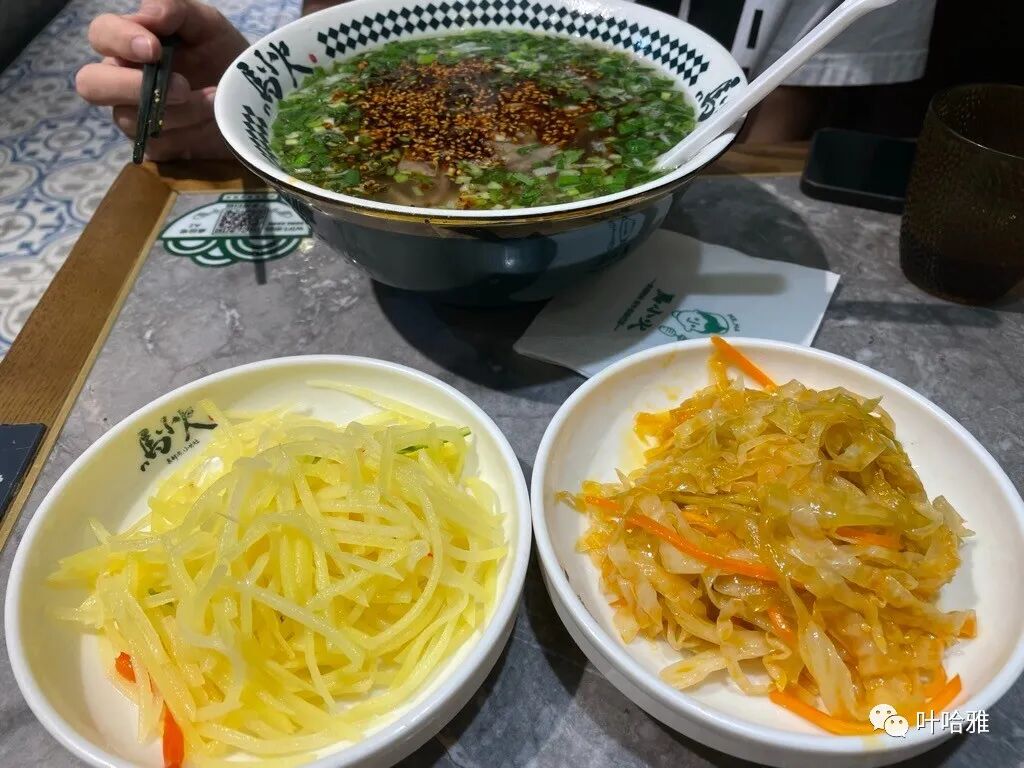
My friend had a bowl of pulled noodles, and I ordered a portion of Xinjiang rice noodles (mifen). The rice noodles came with plenty of toppings and tasted great. The shop is clean and bright. It is small, but the dining experience is very comfortable. This is a chain, and there are currently three branches in Guangzhou.
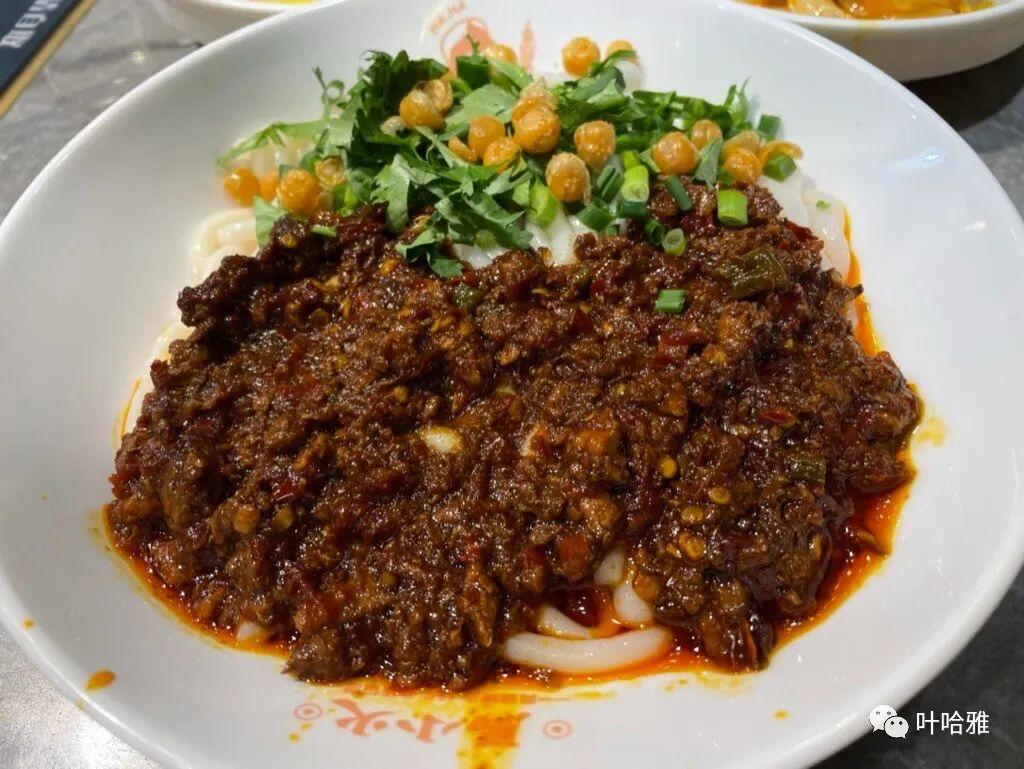
4
ANTALYA Turkish Restaurant
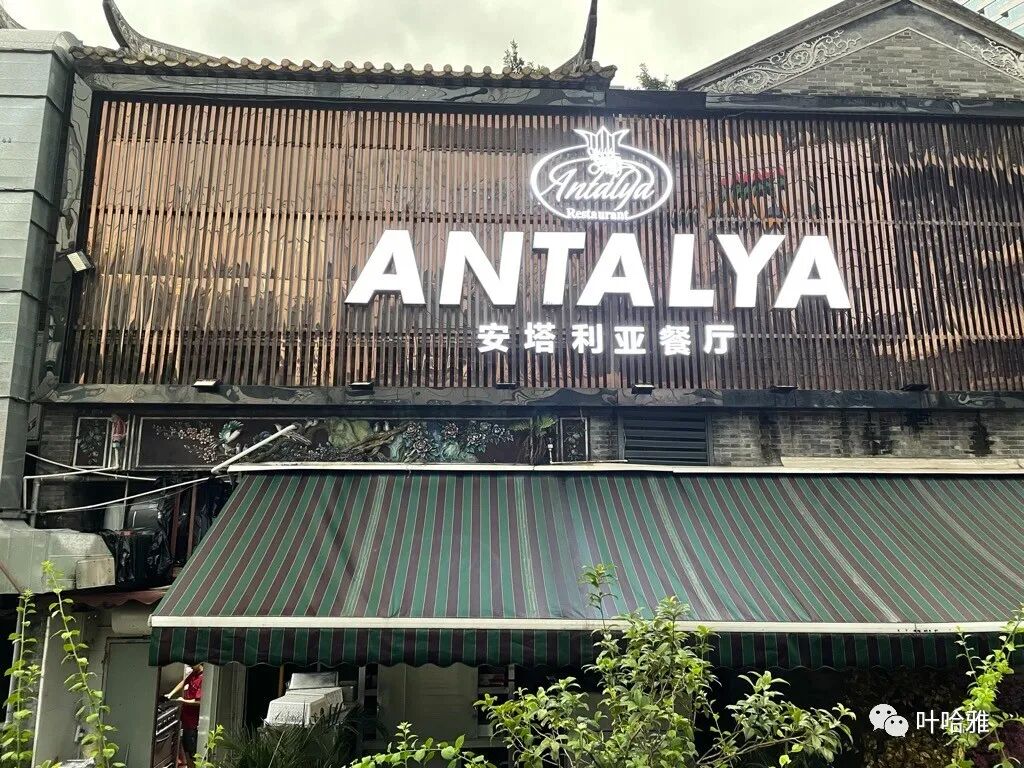
The Antalya restaurant in Liede was the first place we chose for our team building. The second floor has Central Asian-style decor where you take off your shoes and sit on rugs. You used to be able to experience this at Rumi's Secret in Beijing, but unfortunately, that location has closed. I heard a new Rumi's Secret opened in Urumqi, and I hope they do well.
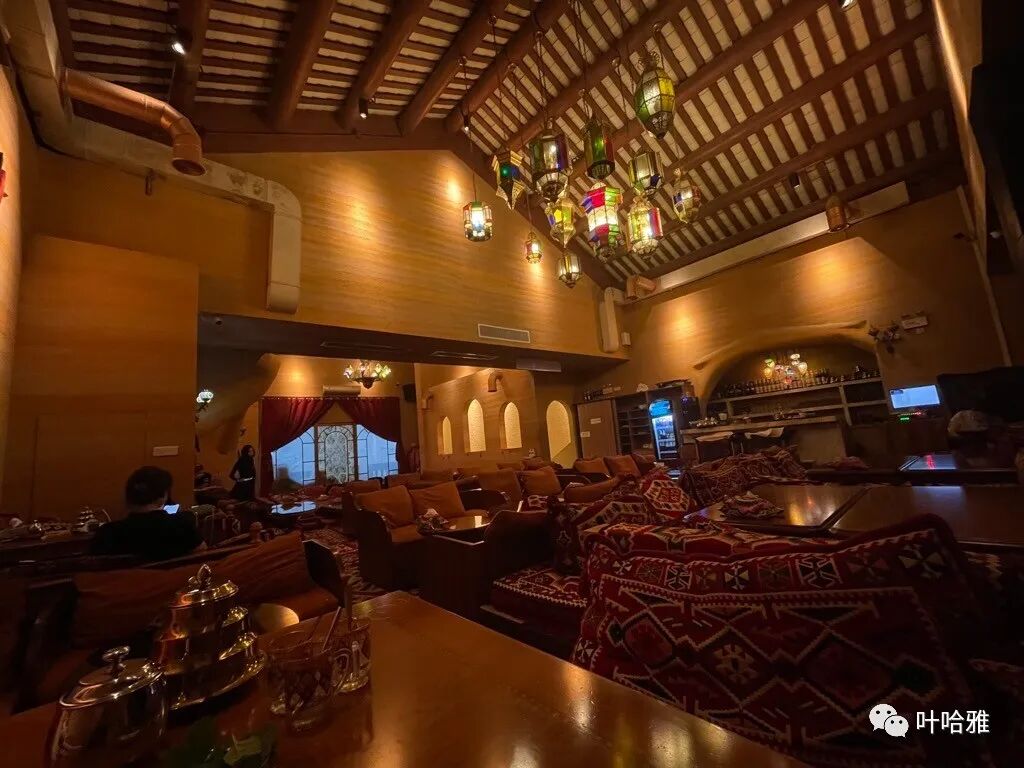
For Middle Eastern cuisine, black tea and the pastry baklava are must-haves. I also had my favorite Turkish coffee. No matter if it is day or night, I always have a cup when I eat Turkish food.
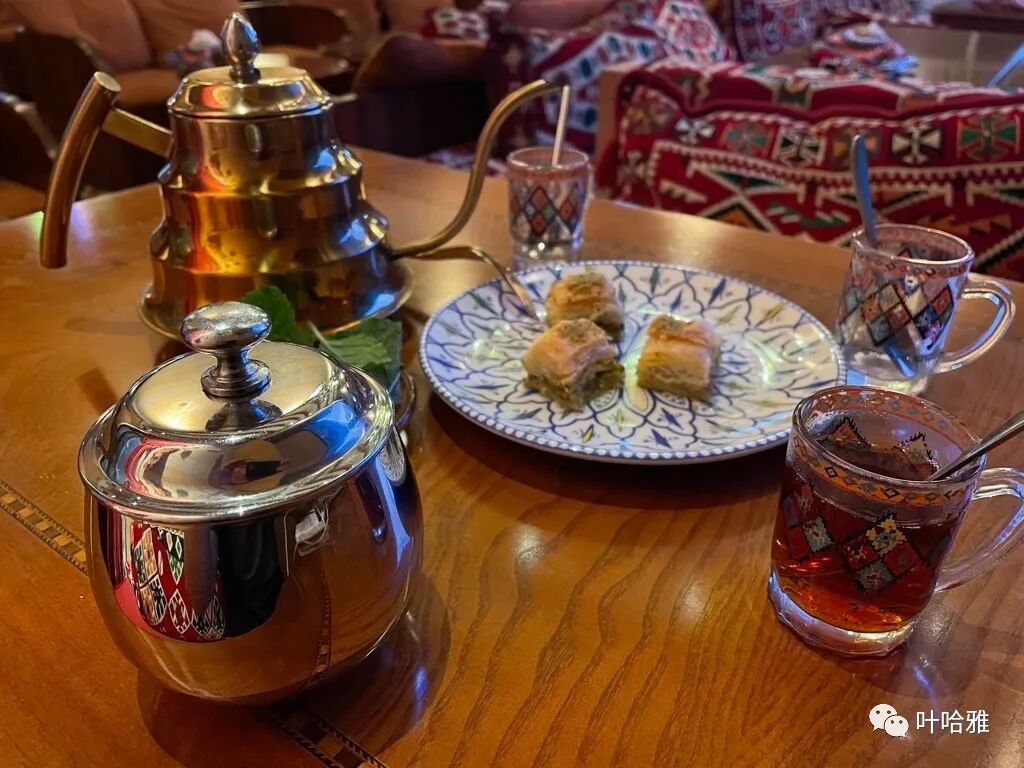
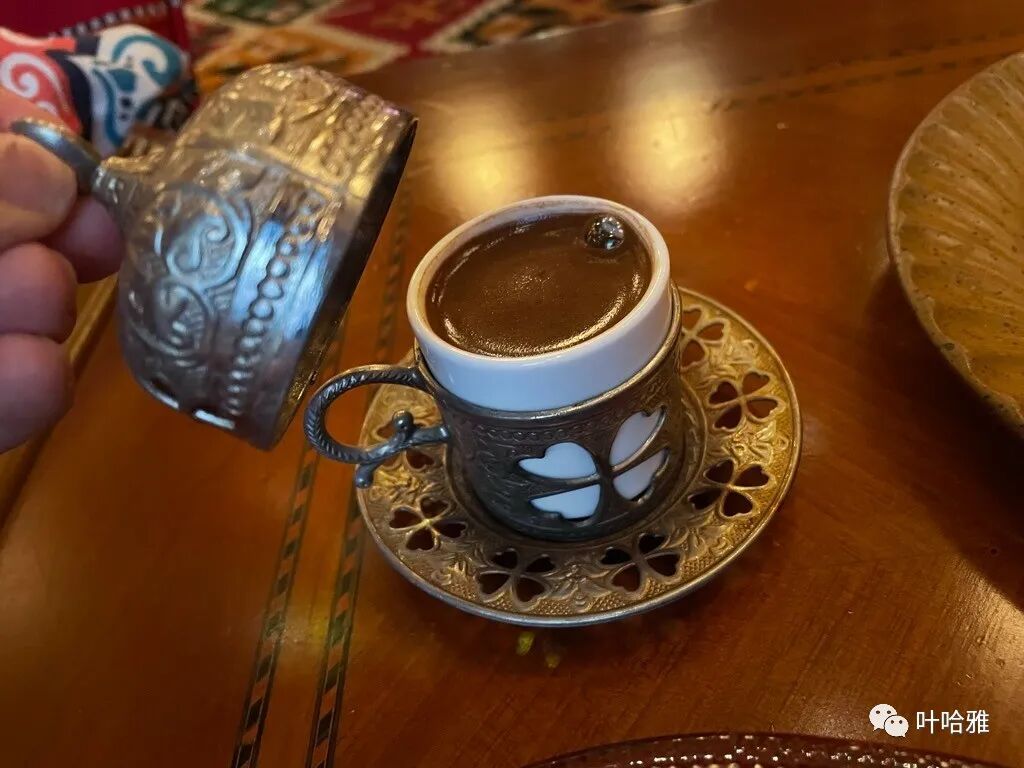
Besides being thick and containing coffee grounds, the coffee cup is a highlight of Turkish coffee. It must not be served in a clear glass; it has to be in an exquisite porcelain cup to be authentic.
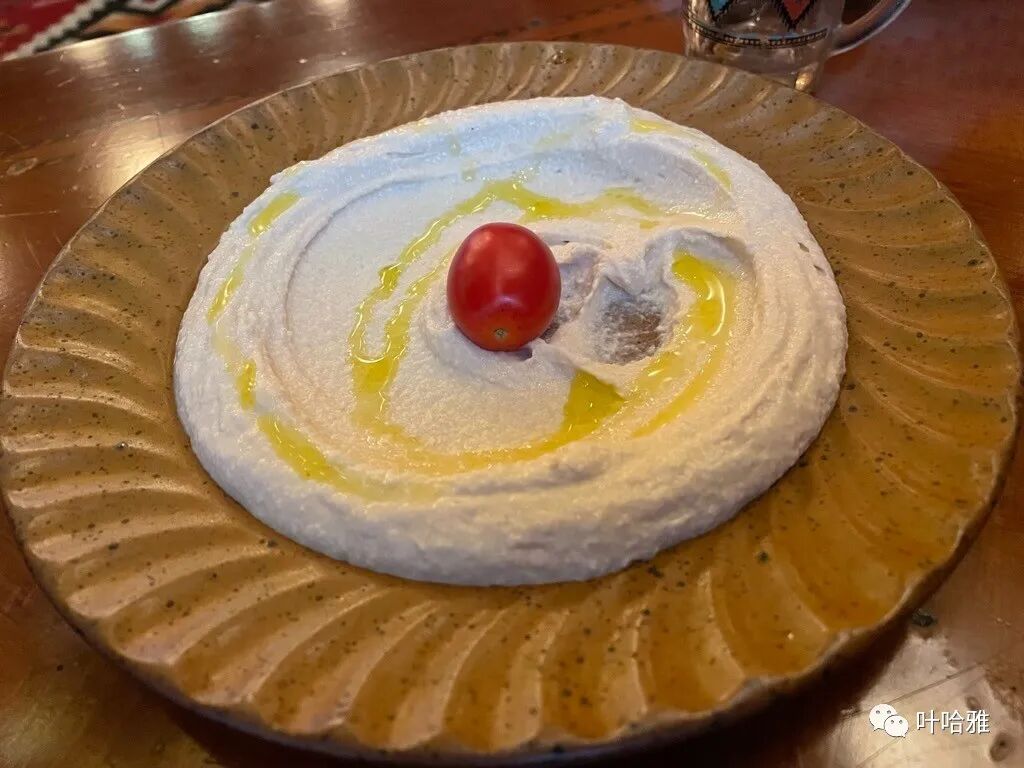
Hummus
The overall feel of this restaurant is just like Rumi's Secret, and the prices are similar, averaging about 200 yuan per person. The flavors are a bit localized and milder, which suits Chinese tastes better.
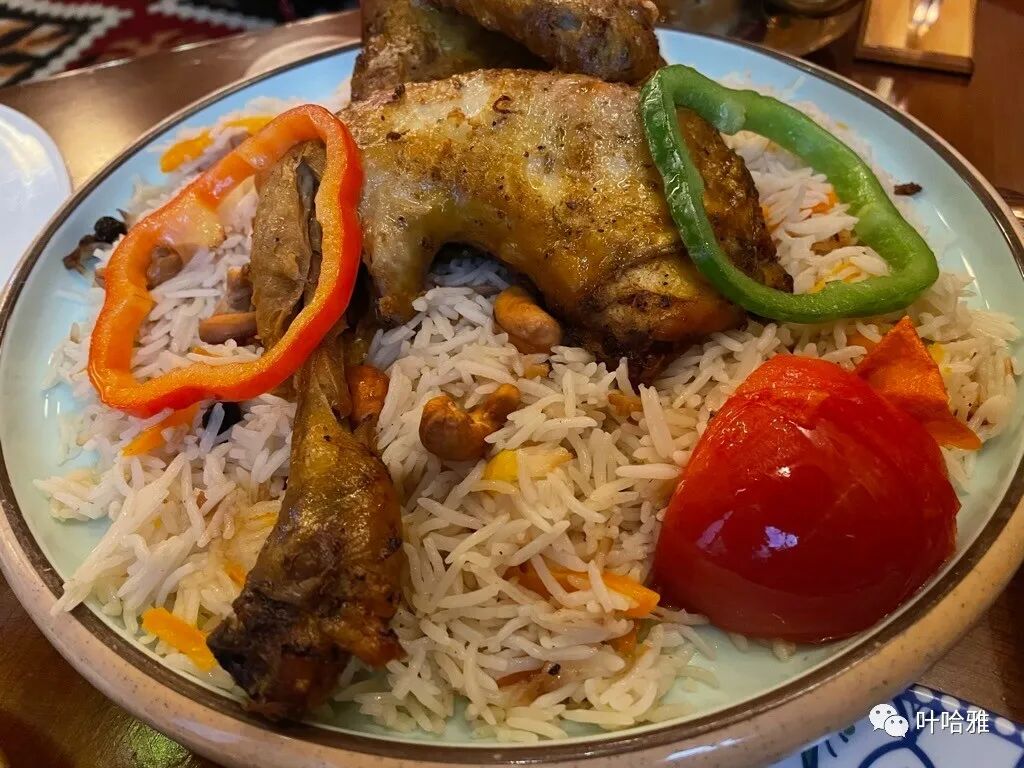
Chicken leg with Arabic rice
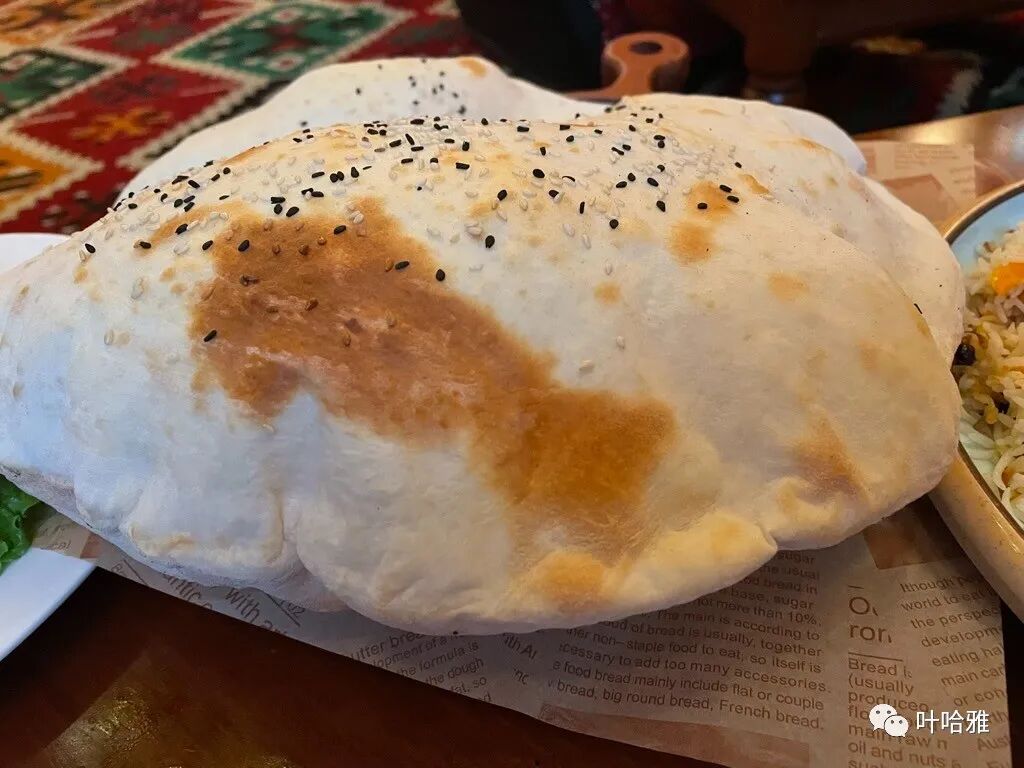
Hollow balloon bread
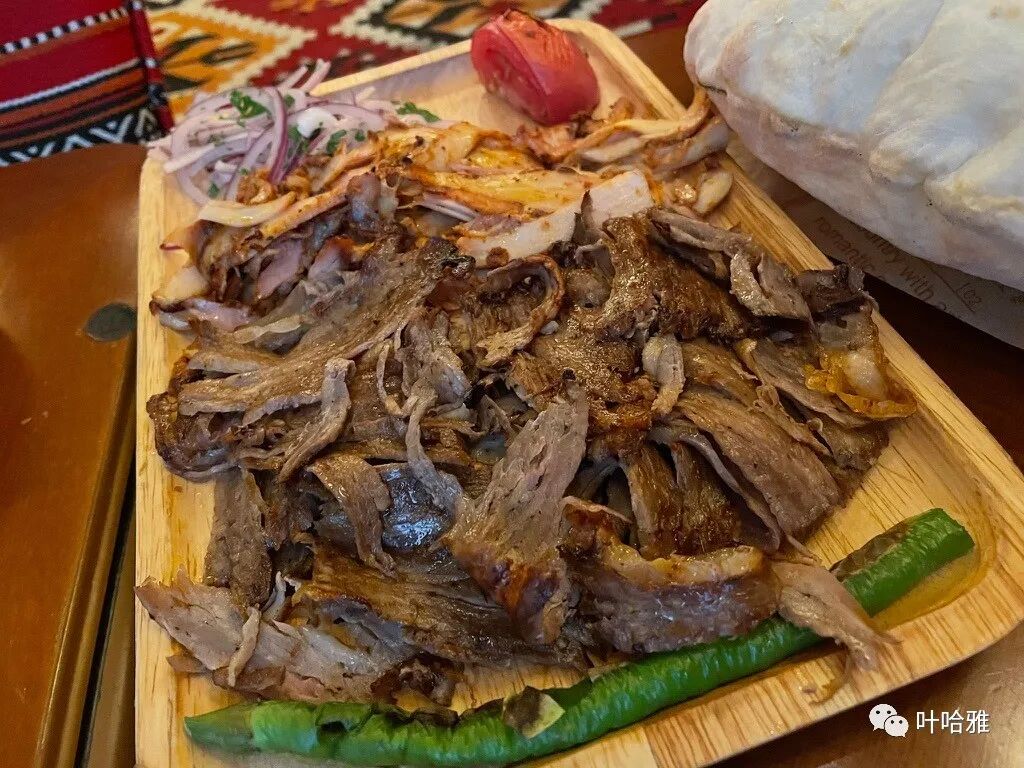
Chicken and beef mixed kebab platter
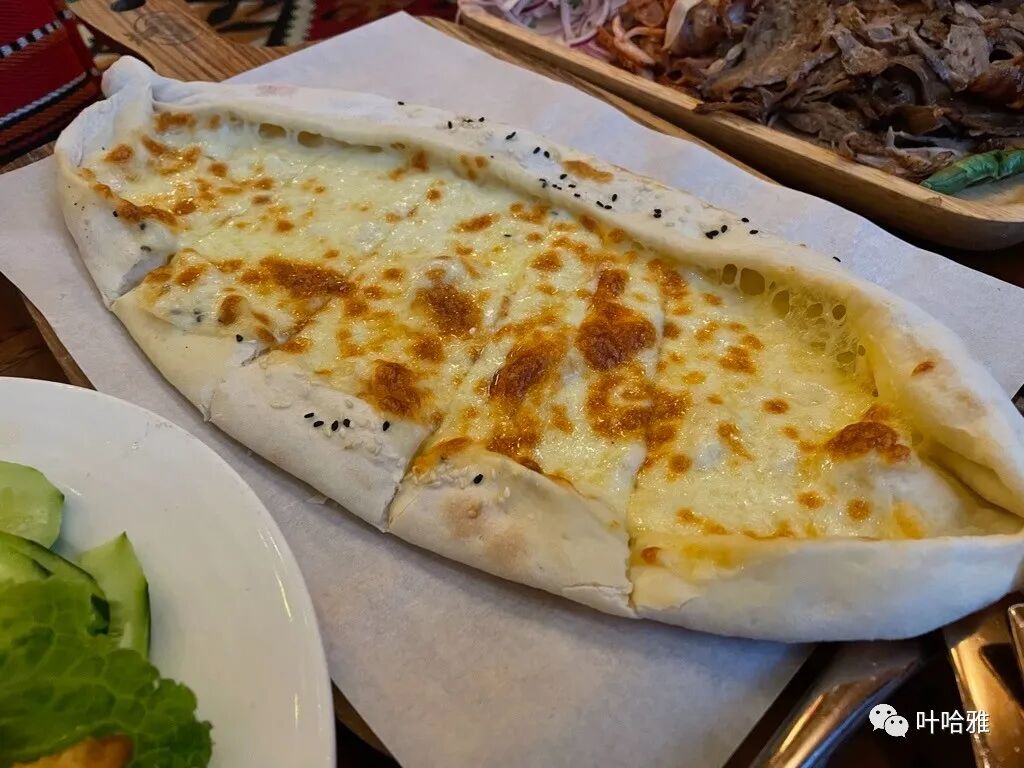
Cheese flatbread (pide)
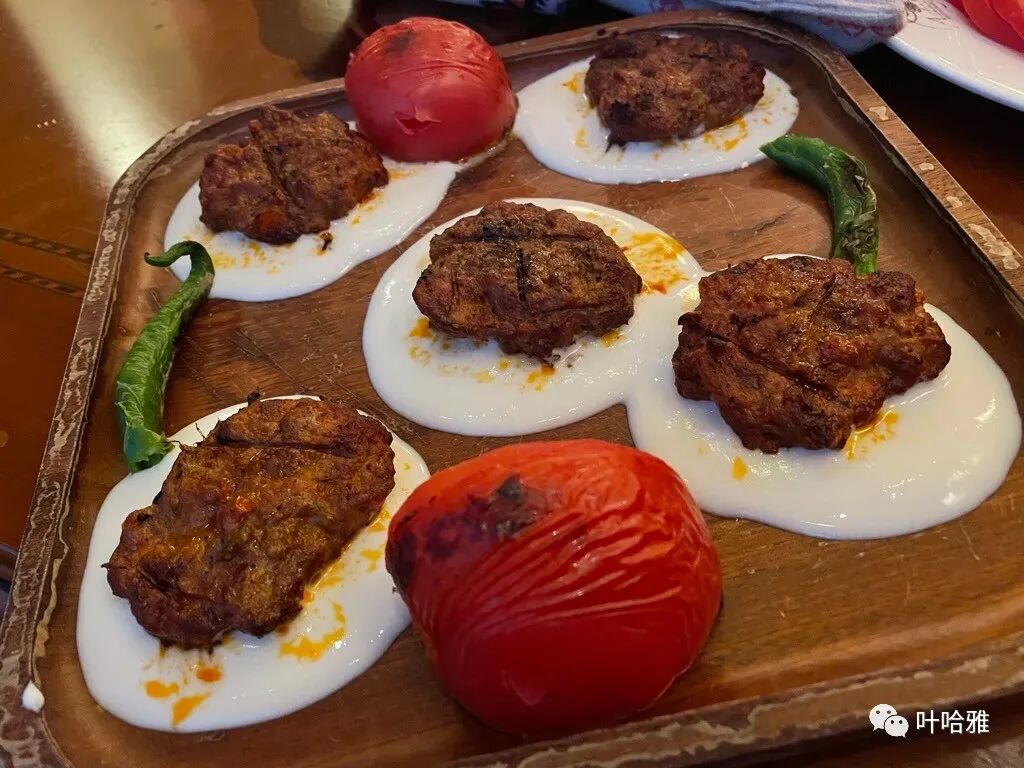
Lamb pie served with yogurt
I have to say a few words about this final ice cream. It is not as good as Kubei in Beijing. Kubei's ice cream comes from MADO, a Turkish ice cream shop that uses goat milk as its main ingredient. I will introduce the MADO ice cream shop in Guangzhou specifically later.
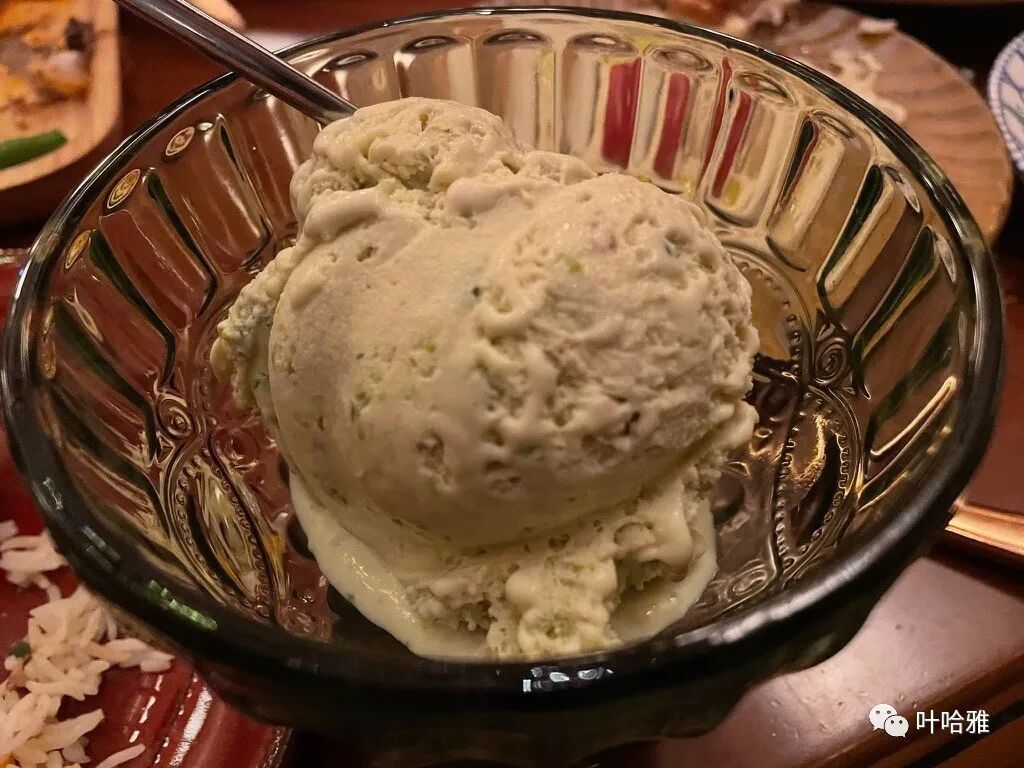
Ice cream
5
MADO Turkish Ice Cream and Coffee Shop
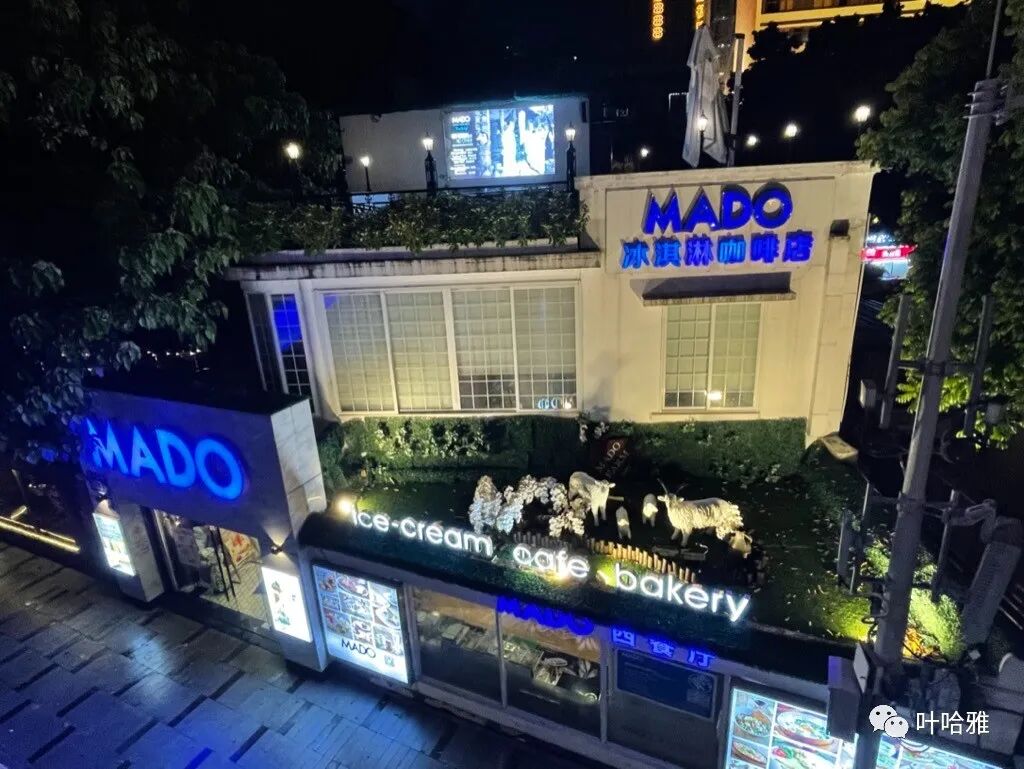
MADO is very famous and I had heard of it for a long time. I kept thinking about the rich milky flavor of the MADO ice cream I ate in Beijing. Before coming here this time, I checked and found that there are two branches in Guangzhou. We ate at MADO twice because most of the members of our Guangzhou team are women who love it, so I had to arrange it.
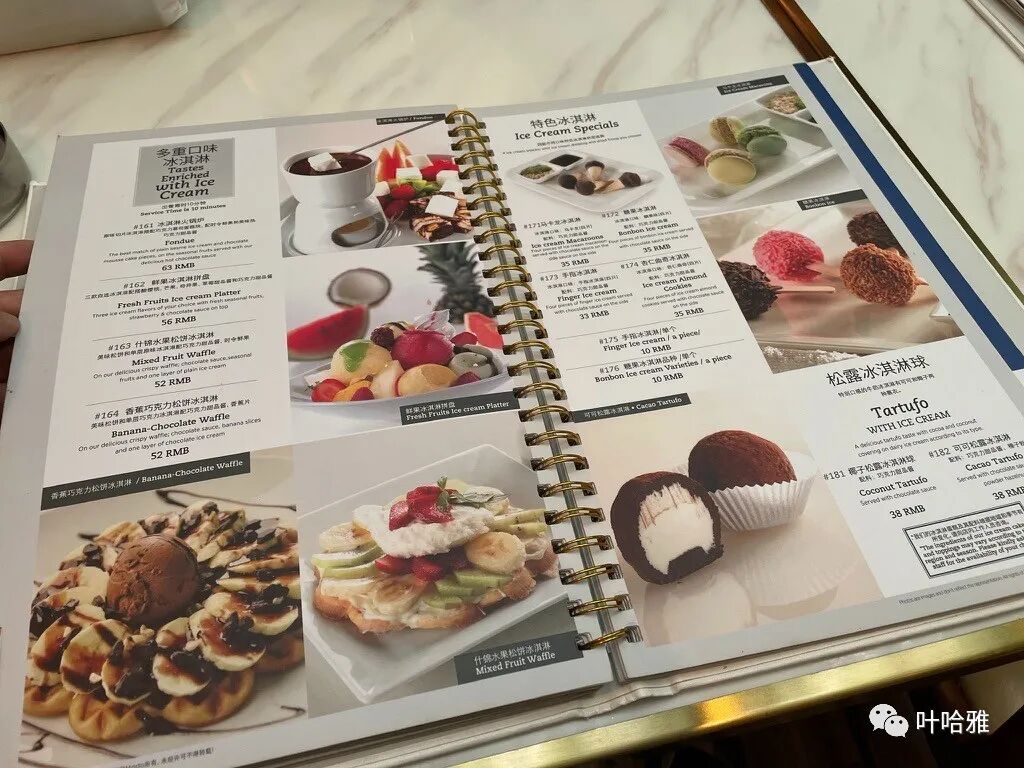
The ice cream shop has a wide variety of sweets and also serves main courses of Turkish cuisine. However, the quality of the main courses is not as good as the ice cream, so I suggest only eating ice cream there.
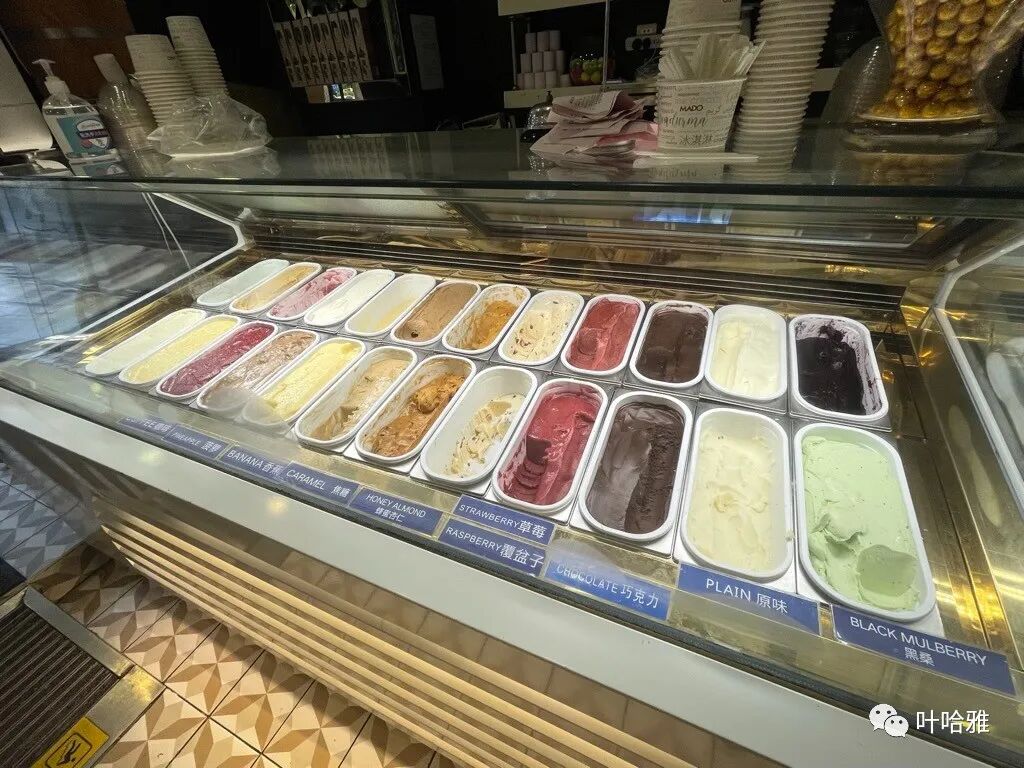
When you enter the shop, you can order ice cream first. You can mix and match from over twenty flavors. You can order a four-layer serving with four different flavors, which is the best value.
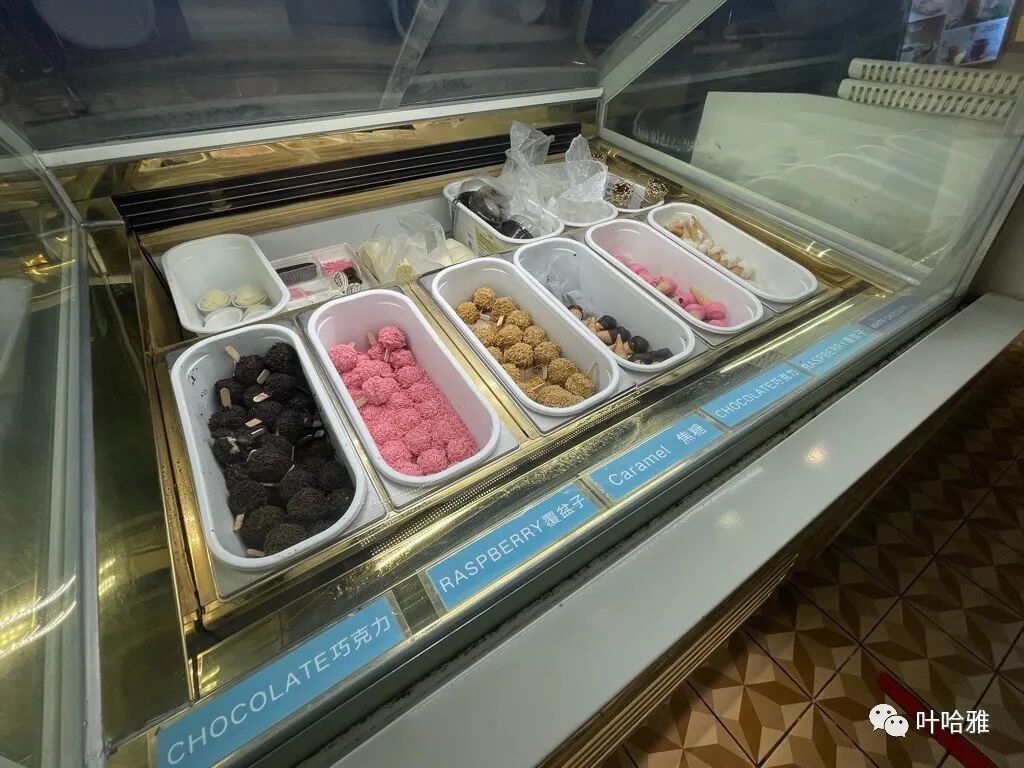
You can also sprinkle various toppings on the ice cream. I like the original handmade ice cream the best. It has the silkiest texture and is full of milky flavor. None of the other flavored ice creams are as good as the original.
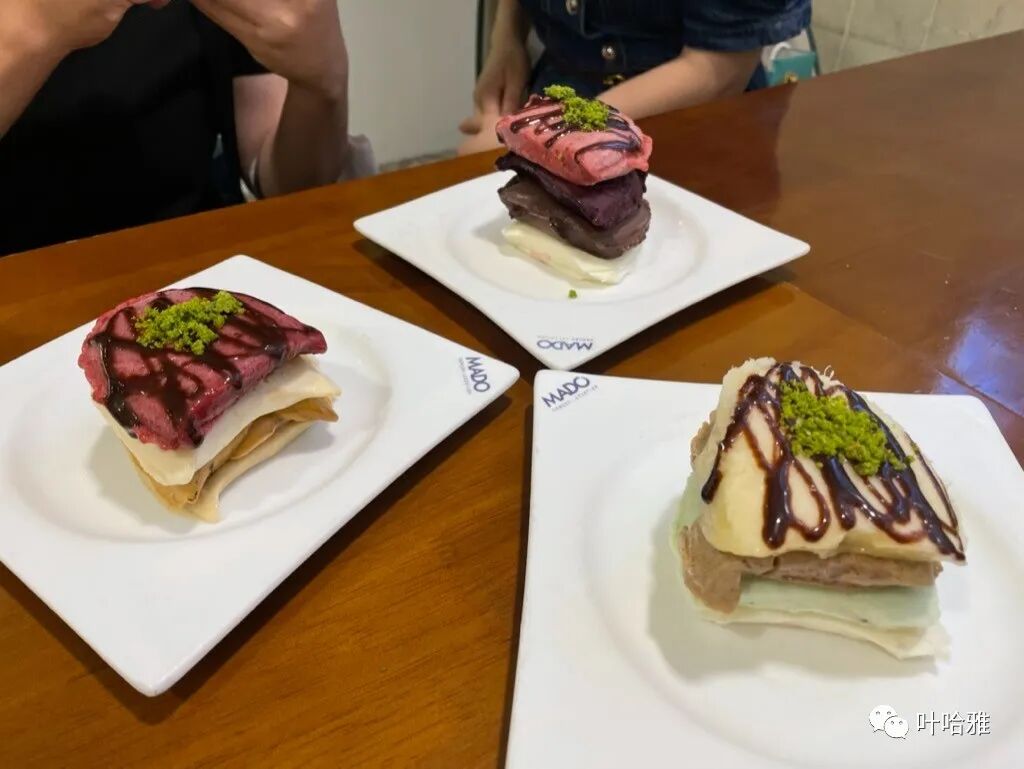
The girls love the raspberry flavor. Raspberries are red, sweet, and tart, and Lu Xun even mentioned them in his writing.
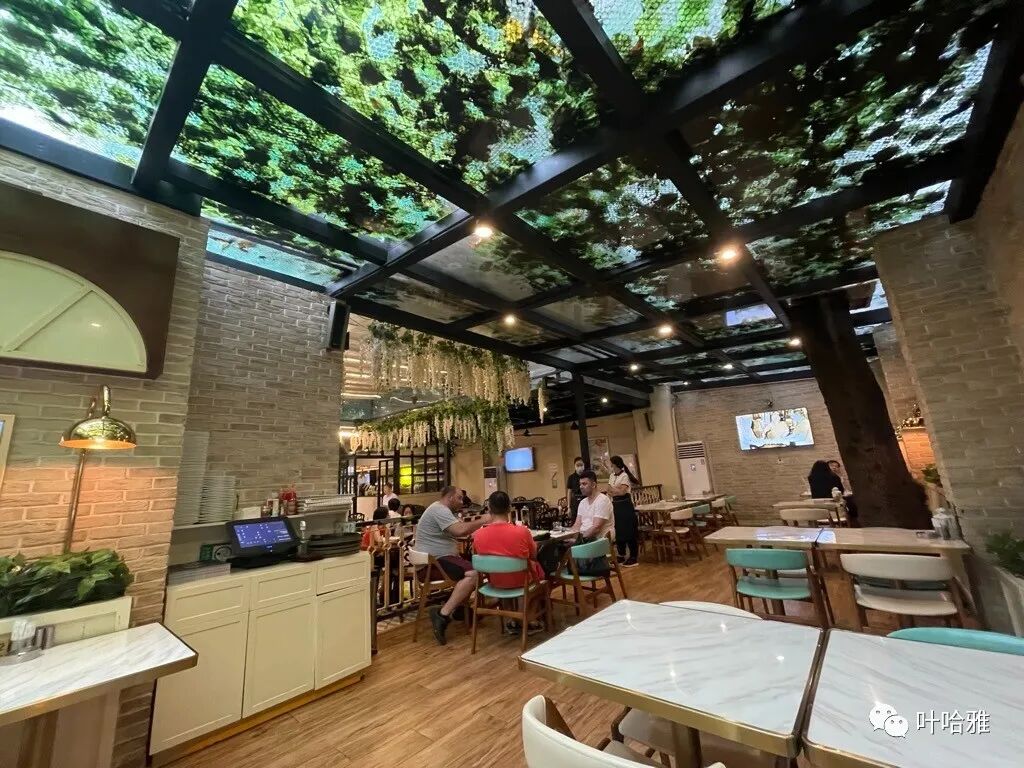
The customers at the Turkish restaurants in Guangzhou are mostly foreigners. They like to chat and smoke shisha in the cafes.
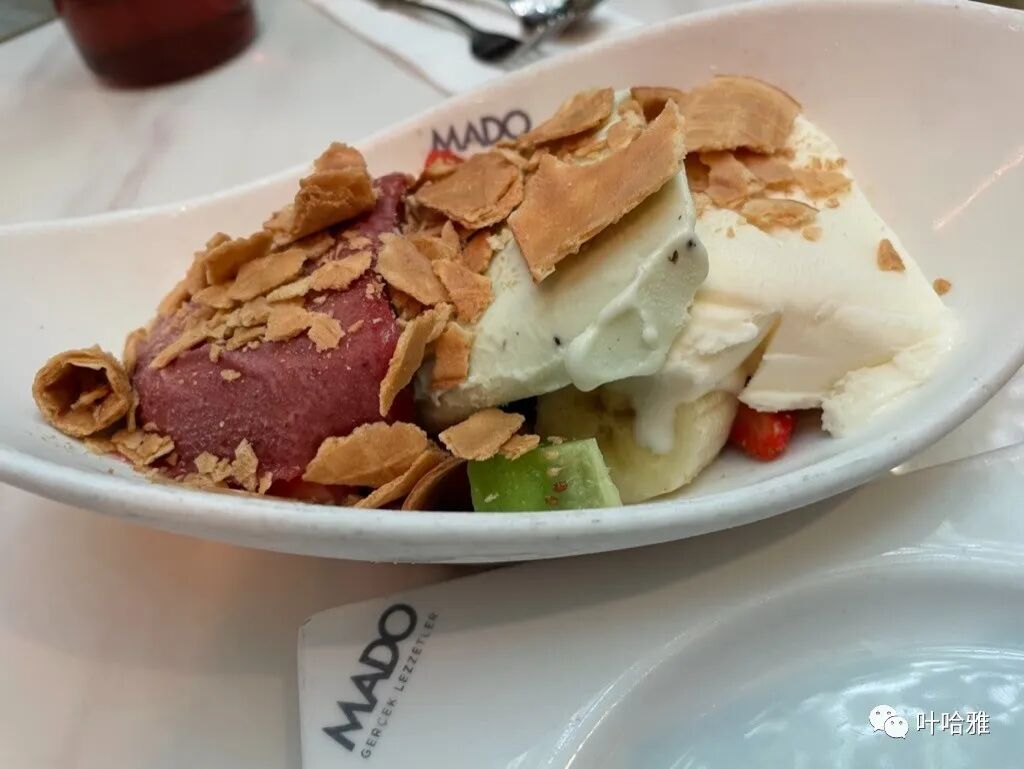
Sultan's Ship
If you see the colorful ice cream on the menu and don't know what to pick, I suggest the handmade ice cream. The original flavor is the best, so don't add any extra toppings.
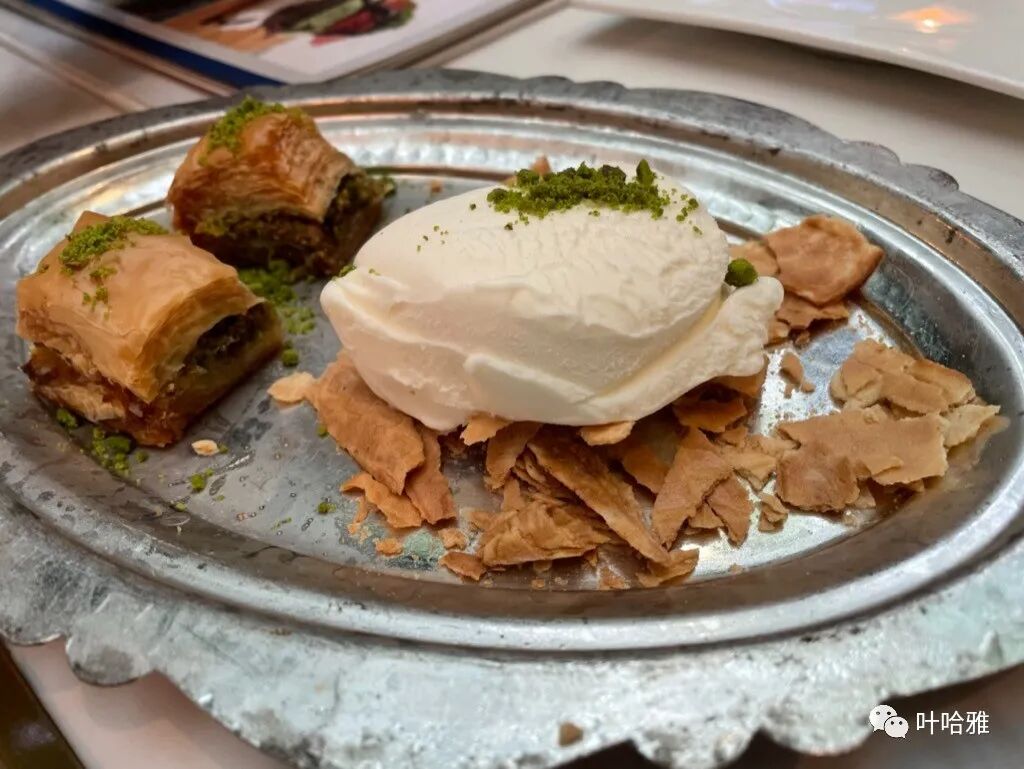
Handmade ice cream
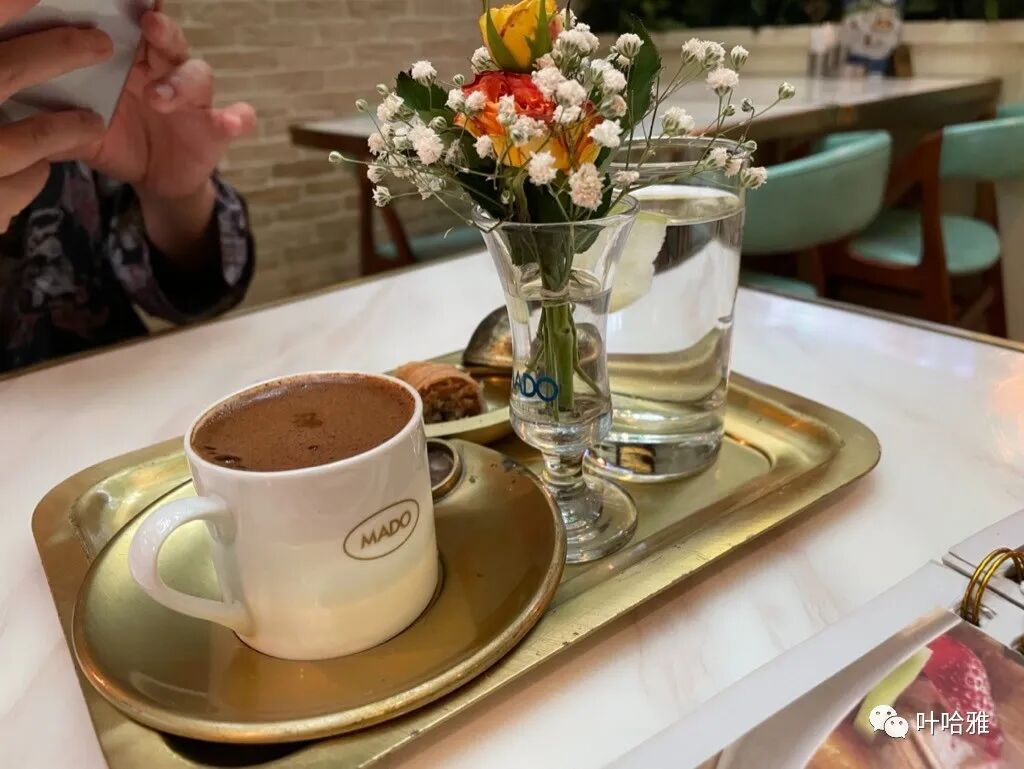
The Turkish coffee is made so delicately and even comes with a small flower for decoration. I felt happy the moment I walked into this shop, and eating dessert always puts me in a good mood. I really hope they open a branch in Beijing, where many people still love eating ice cream even in the winter.
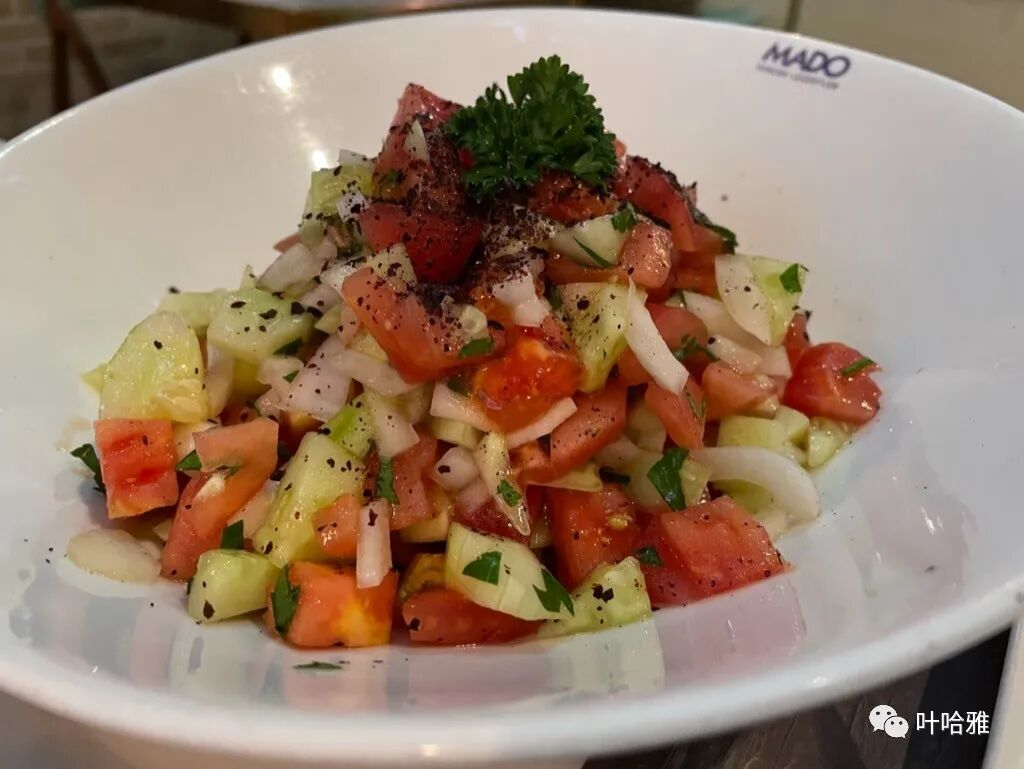
Shepherd's salad
The main courses are just average and don't taste as good as those at Turkish restaurants that specialize in full meals. It is better to come here for afternoon tea or a late-night snack to have ice cream and desserts.
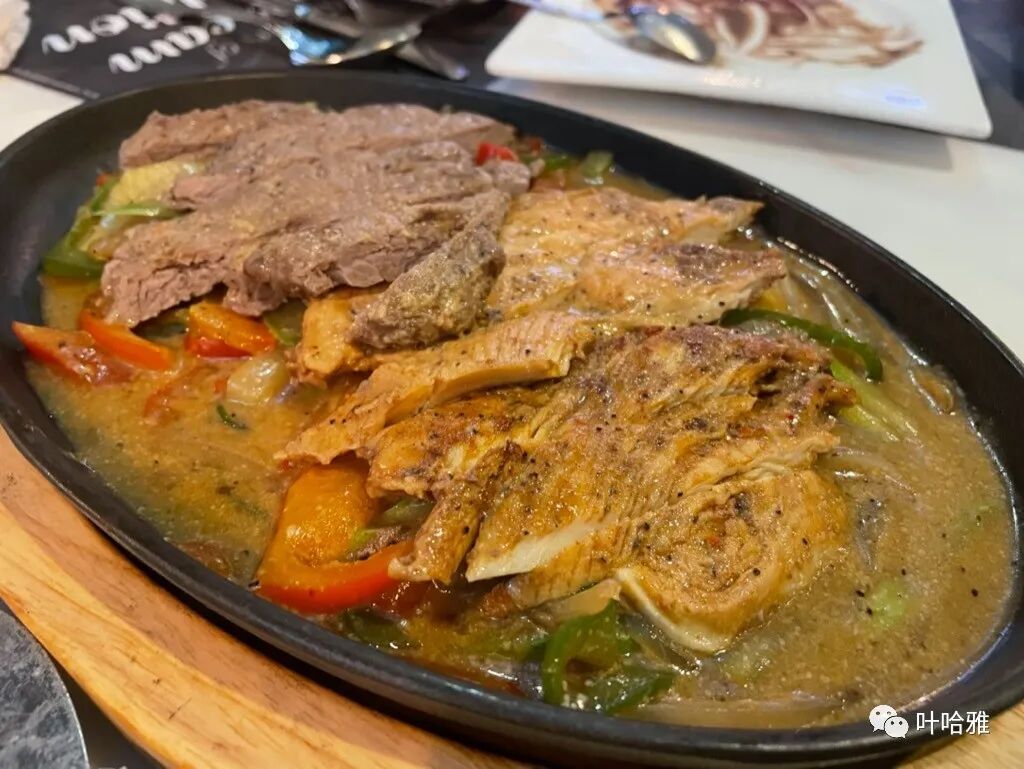
Mexican grilled meat wrap
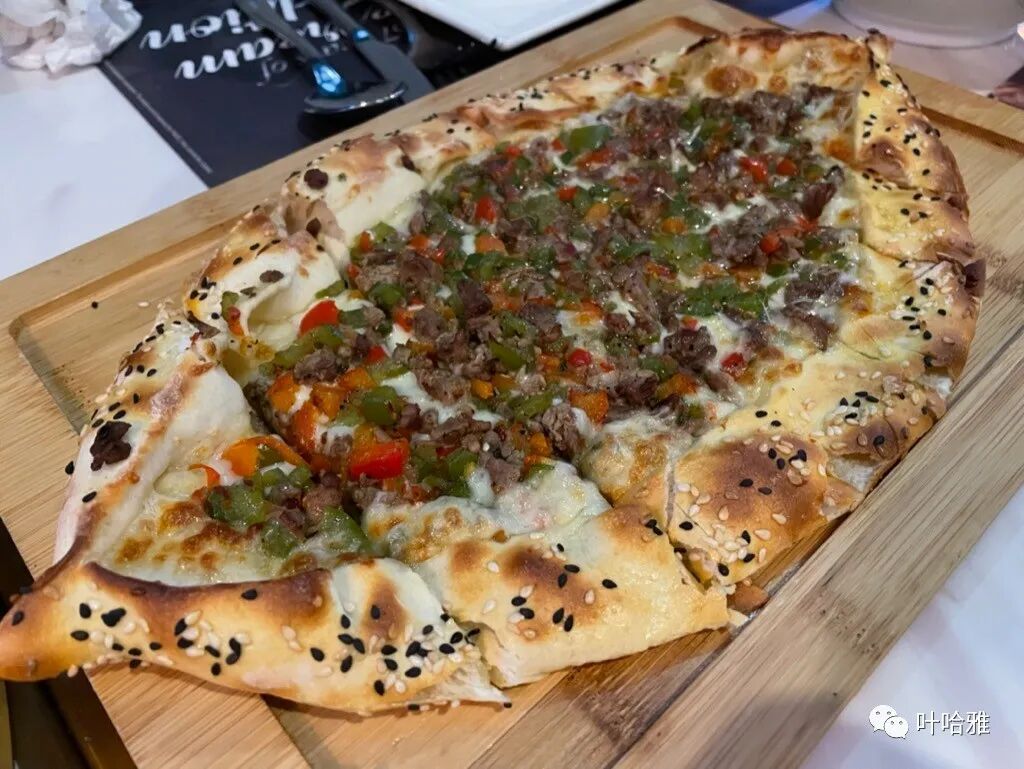
Turkish stuffed pie
6
Pandan Indonesian
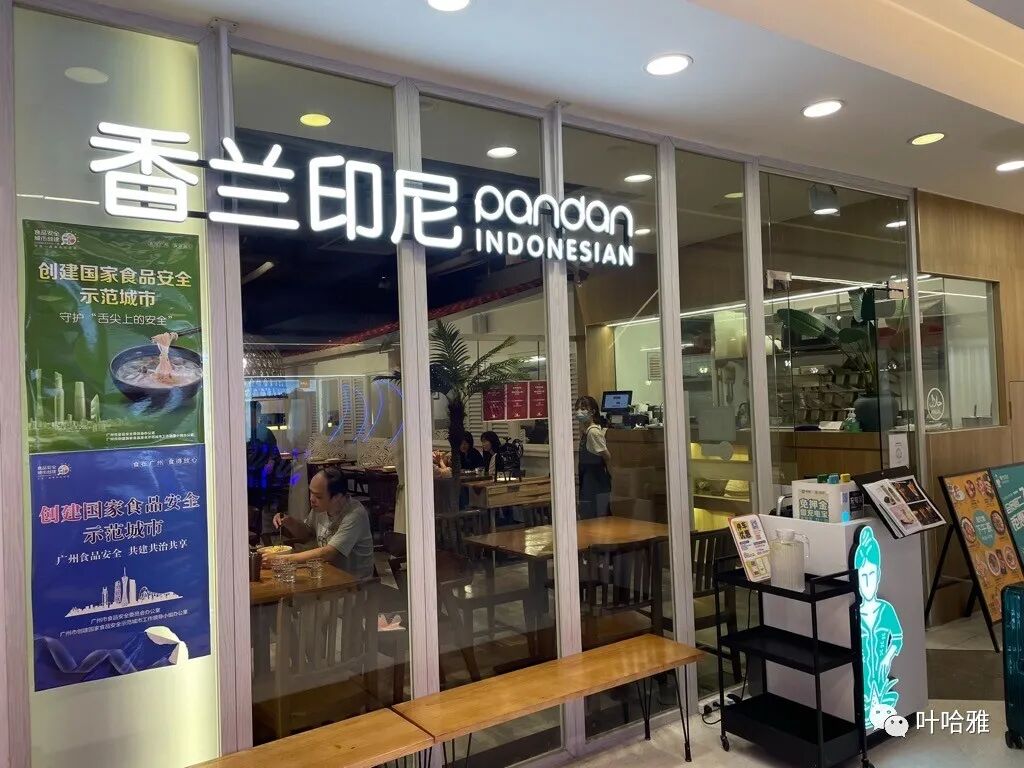
The highlight of my Guangzhou trip is this Indonesian restaurant. Since all the Southeast Asian halal restaurants in Beijing closed down, I haven't had authentic Nanyang-style food near home. The last time I had Indonesian food was in Indonesia before the pandemic, but I didn't even find food this good there.
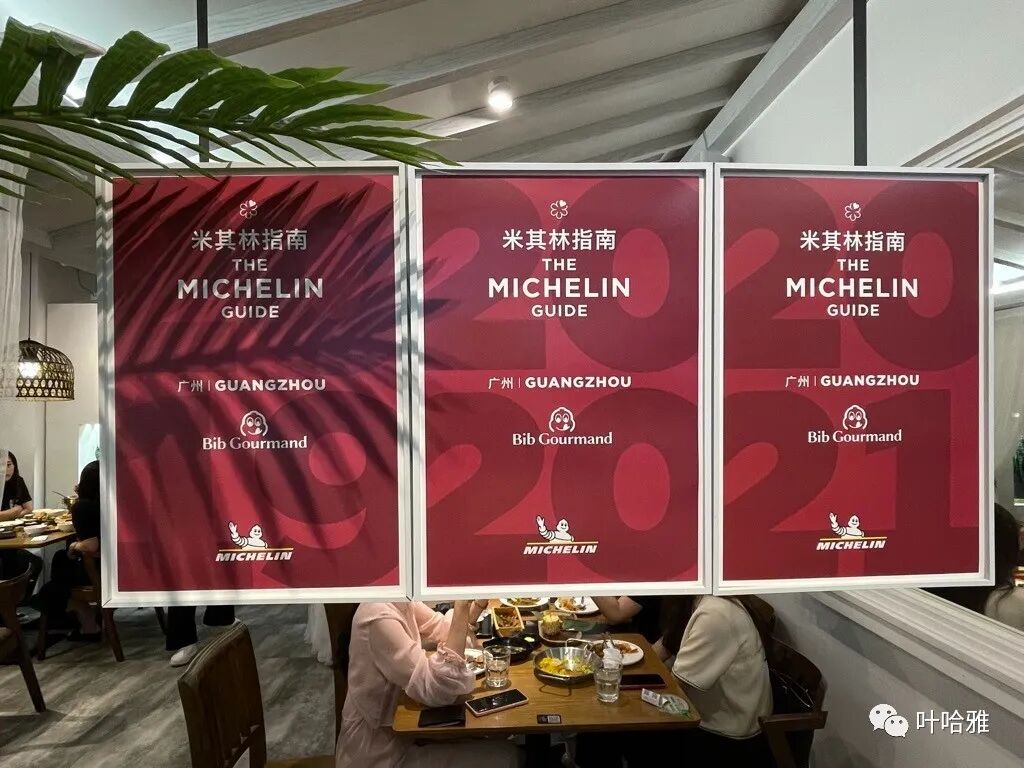
First, it is recommended because it made the Michelin Bib Gourmand list. This is Michelin's list for affordable restaurants, with an average cost per person under 100 yuan. Being on this list in a food city like Guangzhou really says something.
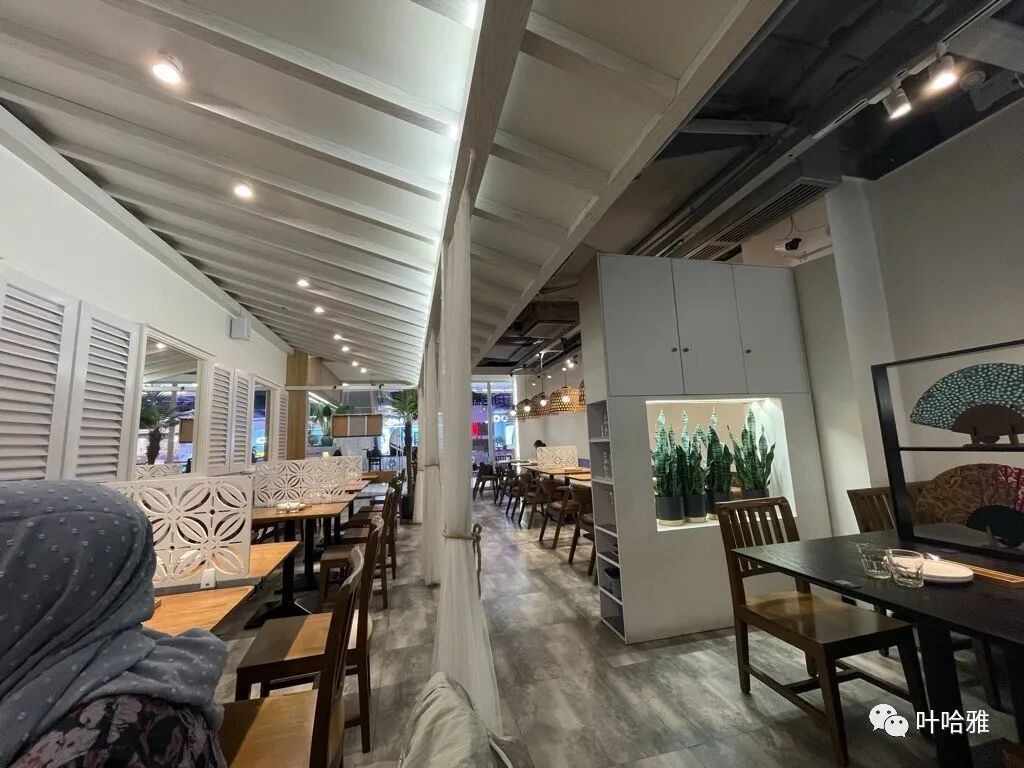
I think everything on their menu is a specialty. Basically every dish is delicious, including the drinks. I don't know how the owner and chef manage to hit the mark so perfectly for every diner's taste buds.
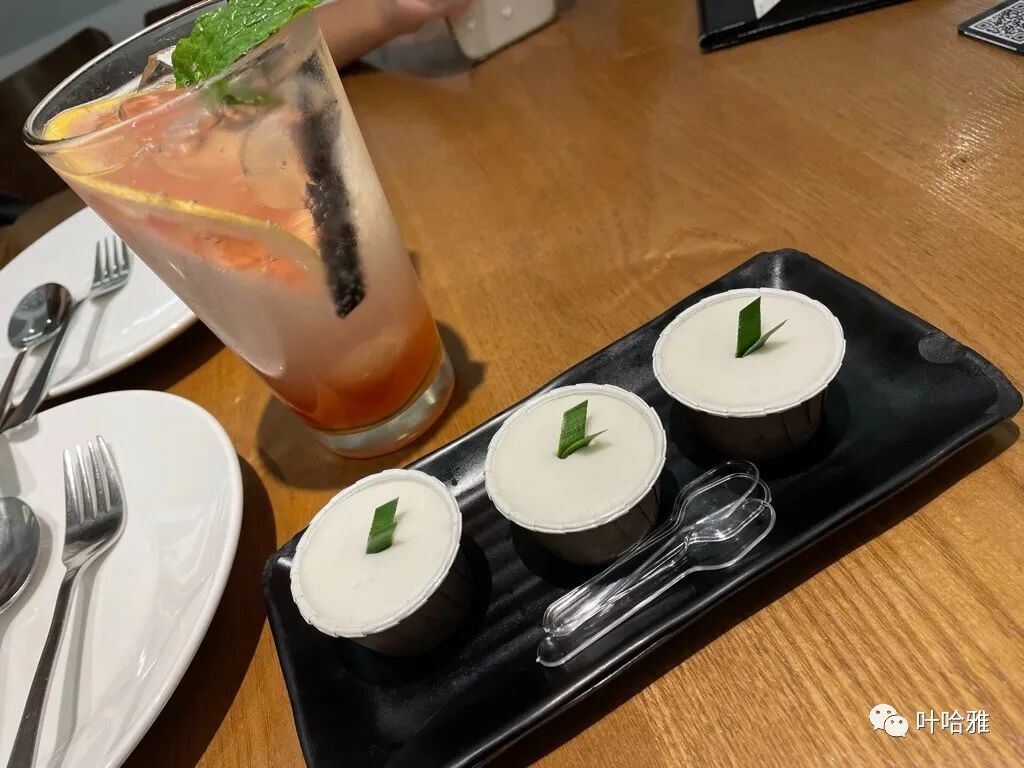
Fresh lime and lemongrass soda and pandan coconut custard cake (xianglan ruanxin yezhigao).
Many friends highly recommended this place before I even arrived in Guangzhou. My taste matches the general public's, so I had high expectations, but it was only after tasting it myself that I realized it truly lives up to its reputation.
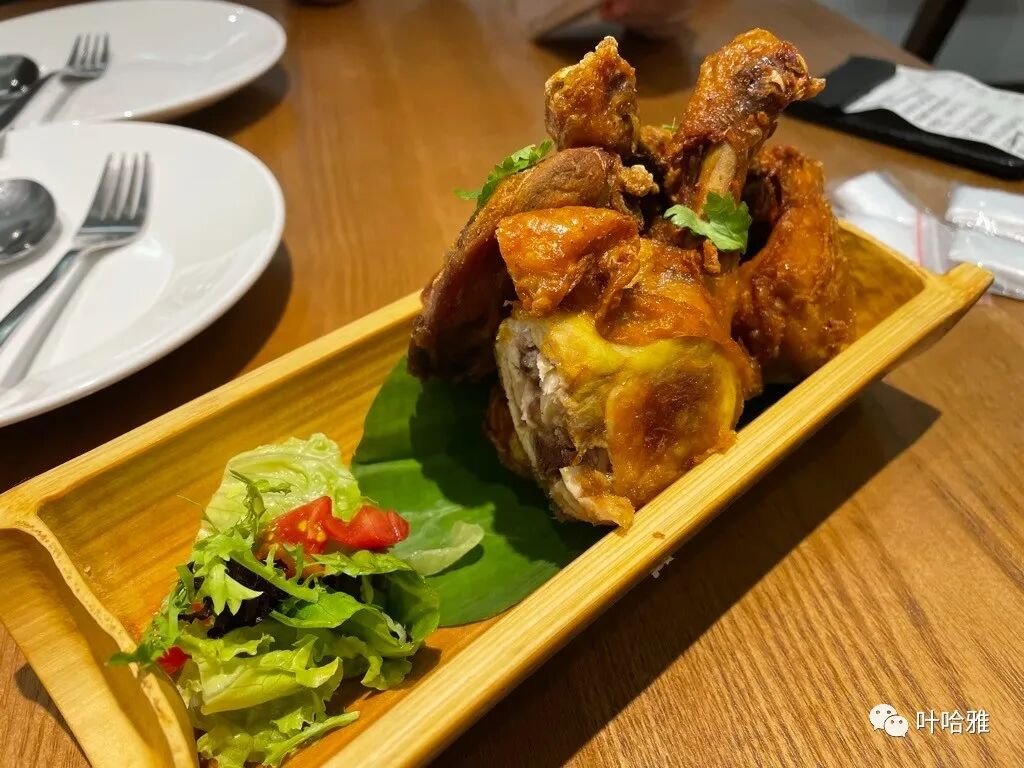
Bali crispy duck (balidao zangzangya).
Although the menu is large, the portions are small, which is perfect for someone like me who wants to try new things without wasting food. The restaurant doesn't sell alcohol, so I feel comfortable eating here. The staff mentioned the owner is an Indonesian Chinese.
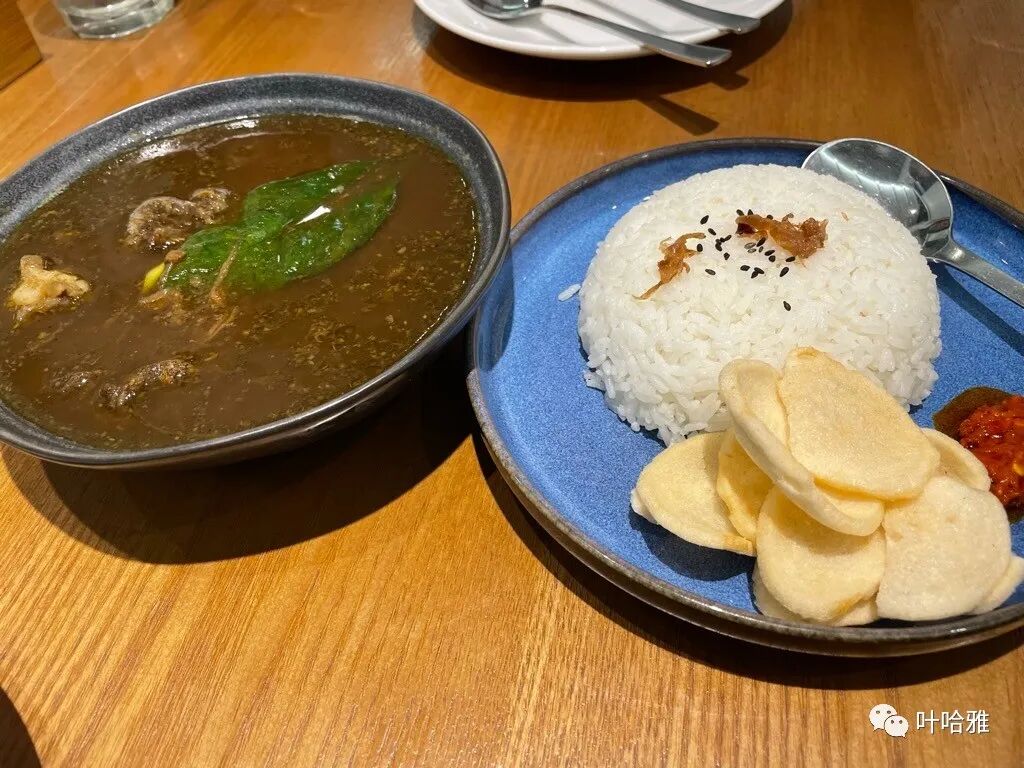
Black nut beef soup with rice (heirouguo niurou tangfan).
Because I have traveled in Indonesia, I know traditional Indonesian food doesn't usually focus on presentation. This restaurant clearly adapted to the local Guangzhou market, paying close attention to color combinations in every dish, which makes them look great in photos.
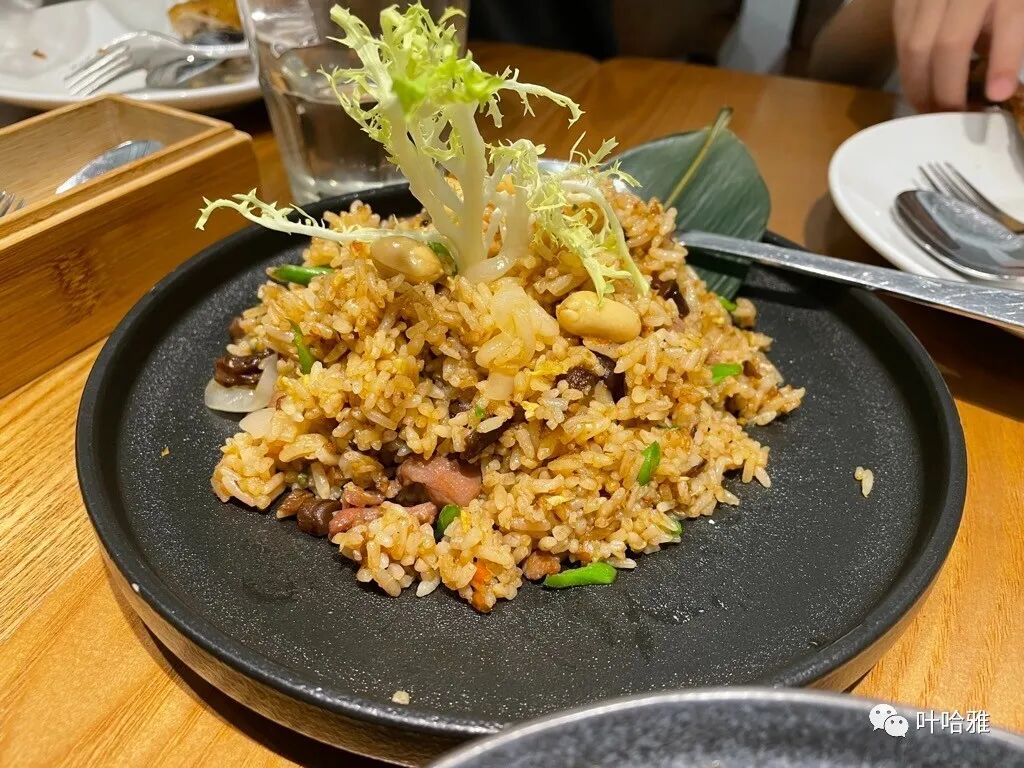
Rambutan beef fried rice (hongmaodan niurou chaofan).
Xianglan Indonesian restaurant has two locations in Guangzhou. Both have the same taste, and you have to wait in line during meal times.
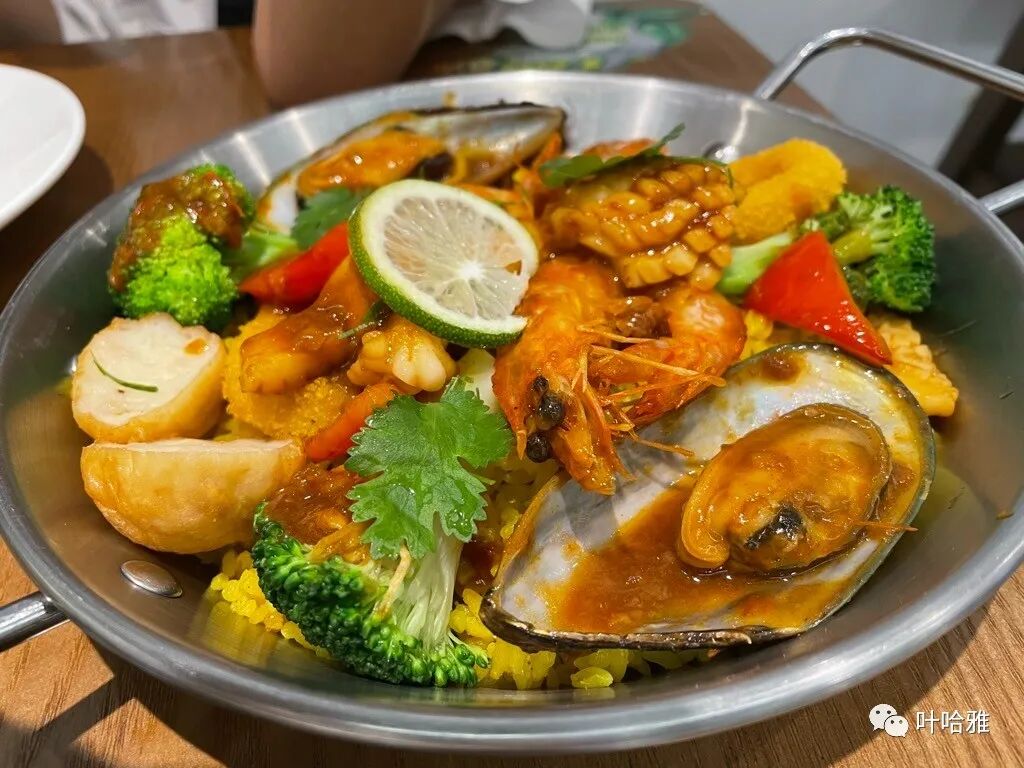
Seafood stew with turmeric rice (haixian hui huangjiangfan).
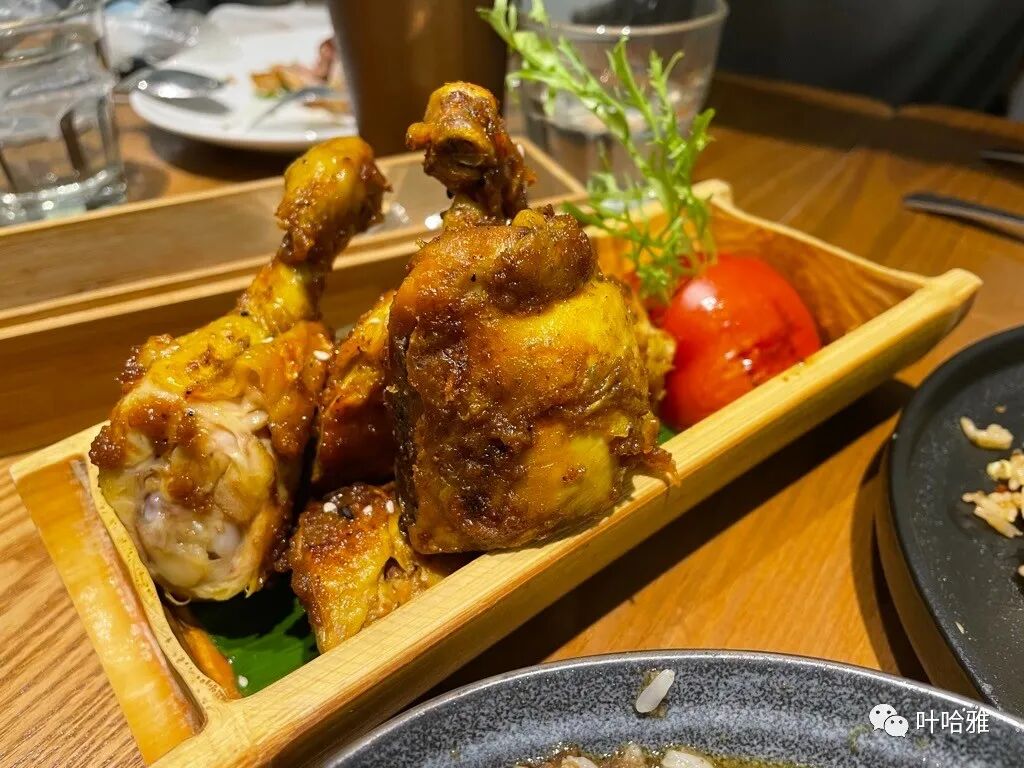
Roasted chicken with candlenut and garlic sauce
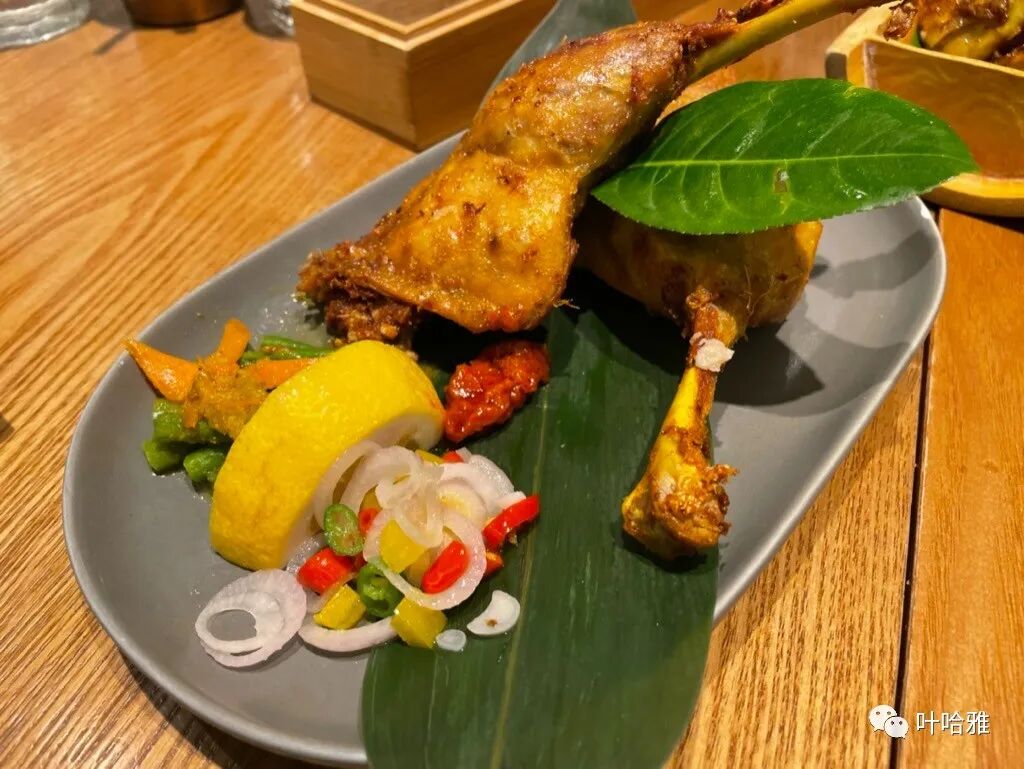
Deep-fried free-range chicken with lemongrass and turmeric
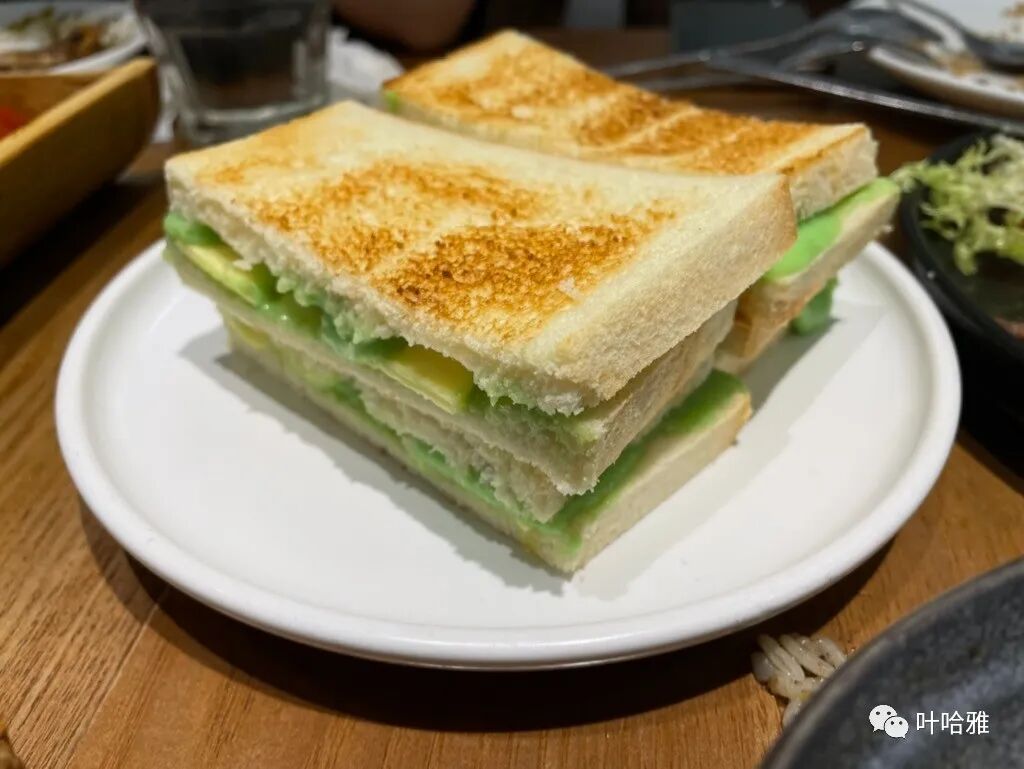
Toast with kaya jam and avocado
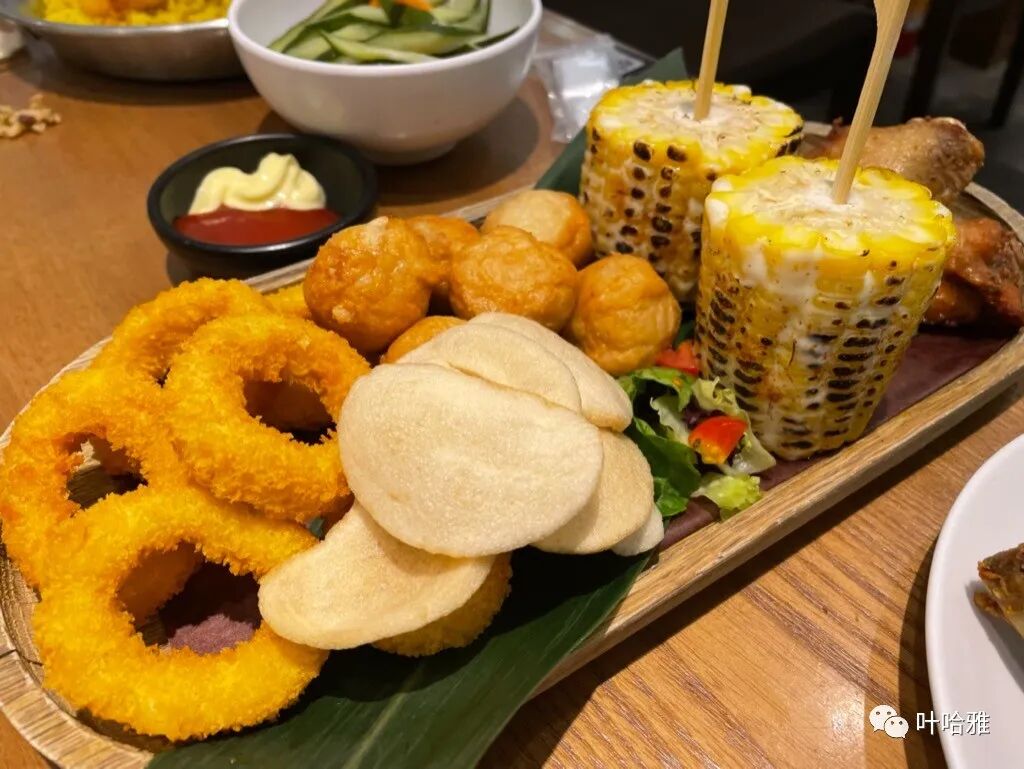
Snack platter
7
Sabah Restaurant
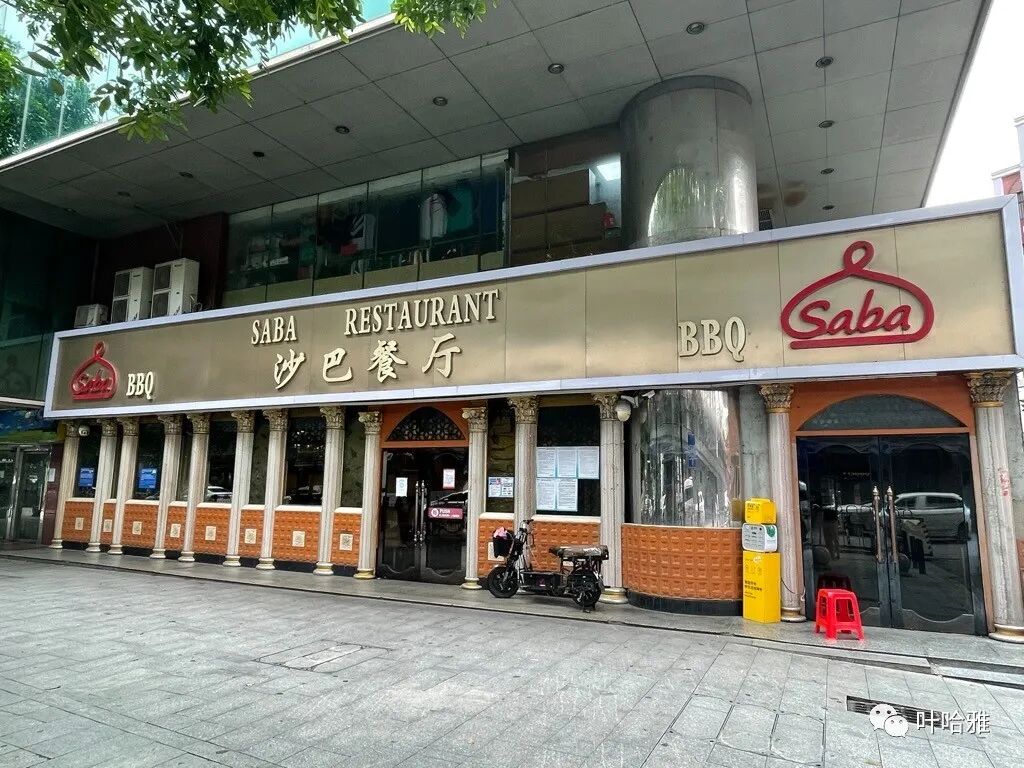
The name suggests a Southeast Asian style, but they also serve Middle Eastern dishes. My friend and I chose this place because we once traveled to Sabah together and have many great memories. Meeting up in Guangzhou now, it feels just like old times.
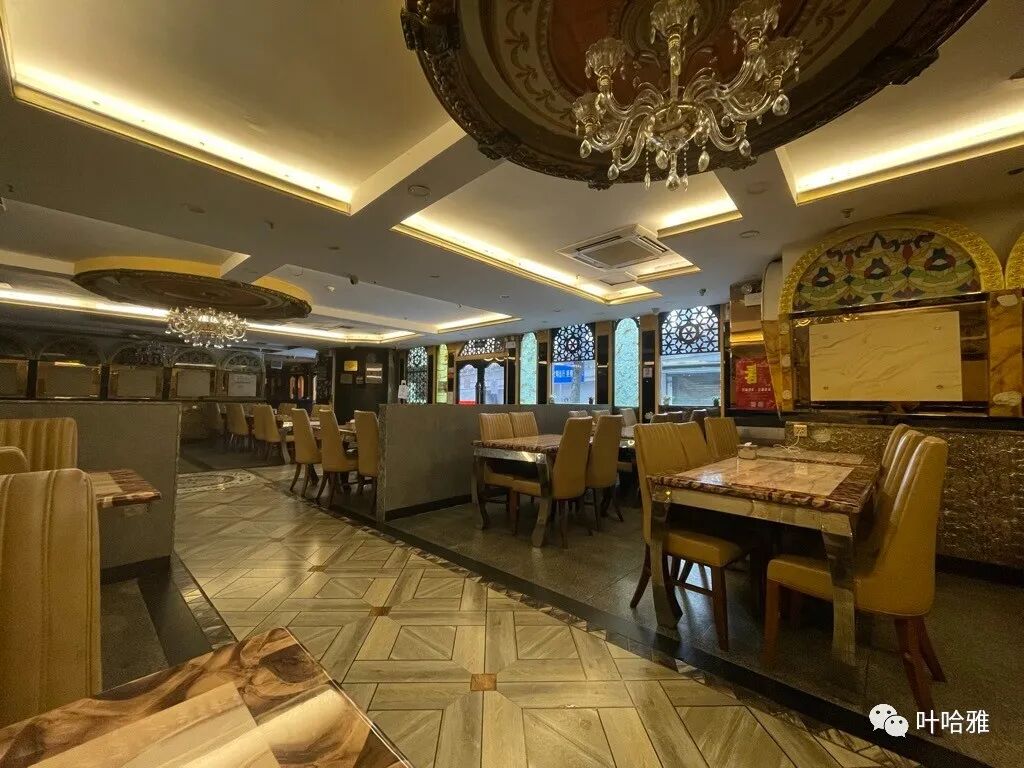
Inside, the restaurant was playing Quran recitations, and there is no alcohol served. I was surprised to see that most of the diners were Black. Since my first visit to Guangzhou in 2015, I noticed that over 80 percent of the brothers (dost) at Friday prayers (Jumu'ah) were Black. Today, the number of Black people in Guangzhou has dropped significantly, and it is rare to see them even on Jumu'ah.
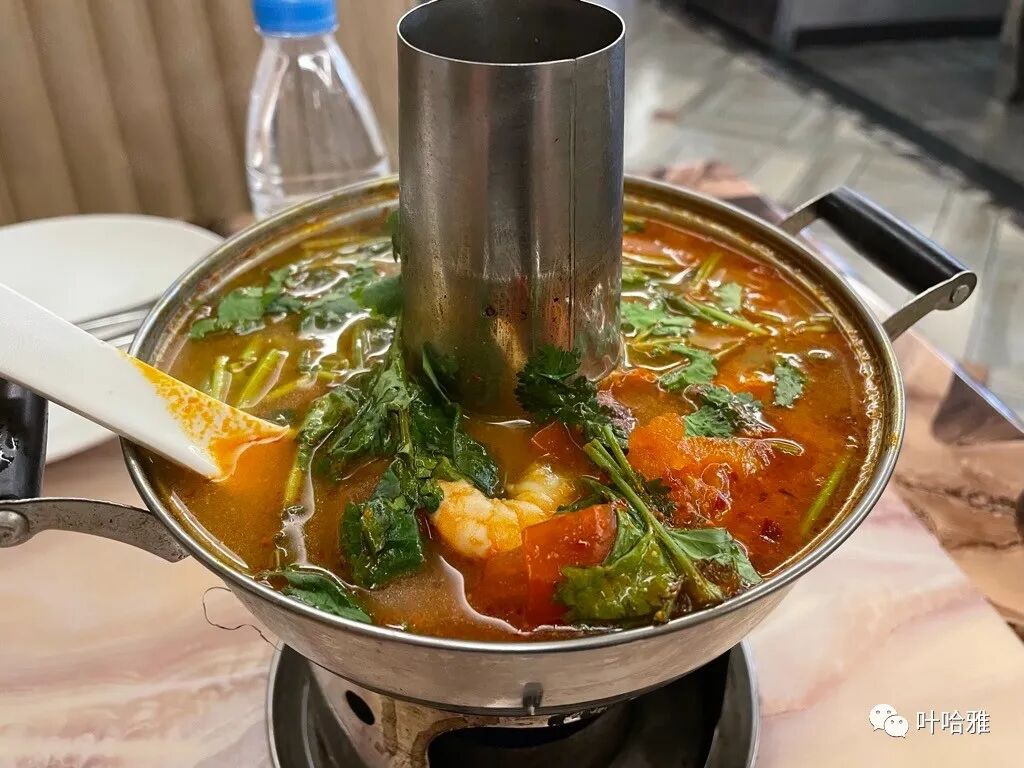
Tom yum soup
The menu starts with Thai food, followed by Chinese and Western dishes. I chose the tom yum soup, and they actually served it in a small hot pot.
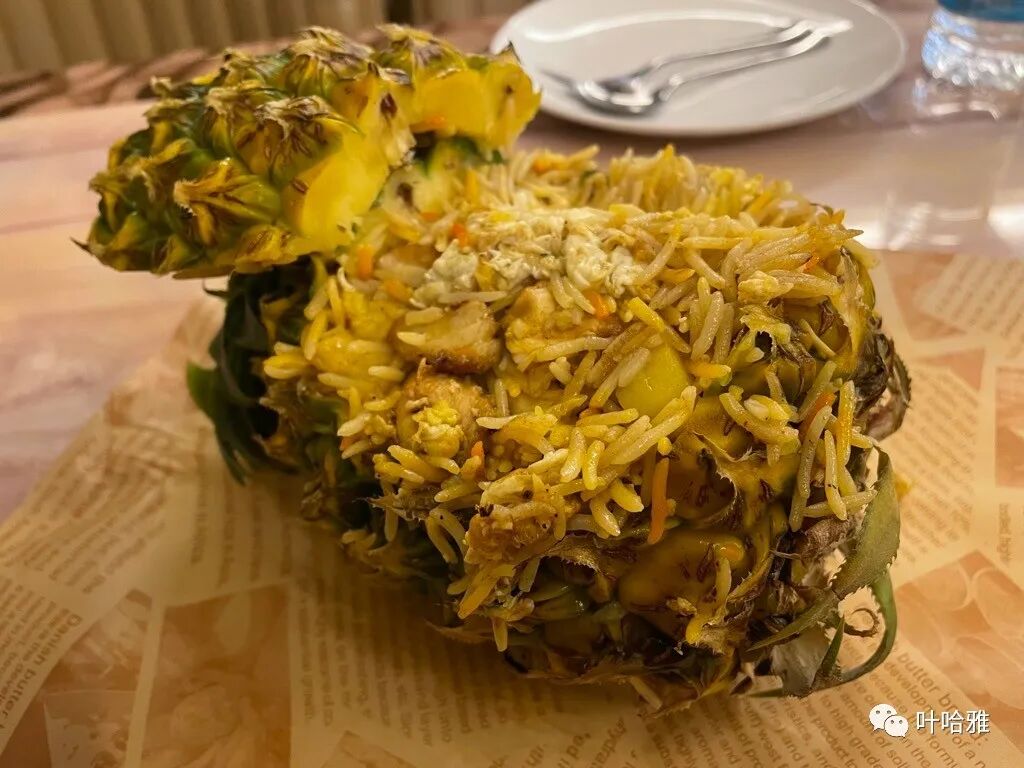
Pineapple fried rice
I loved eating pineapple fried rice when I traveled in Malaysia. The taste here was just average. Maybe the setting was wrong, so it didn't feel right. Sometimes, enjoying good food requires the right state of mind.
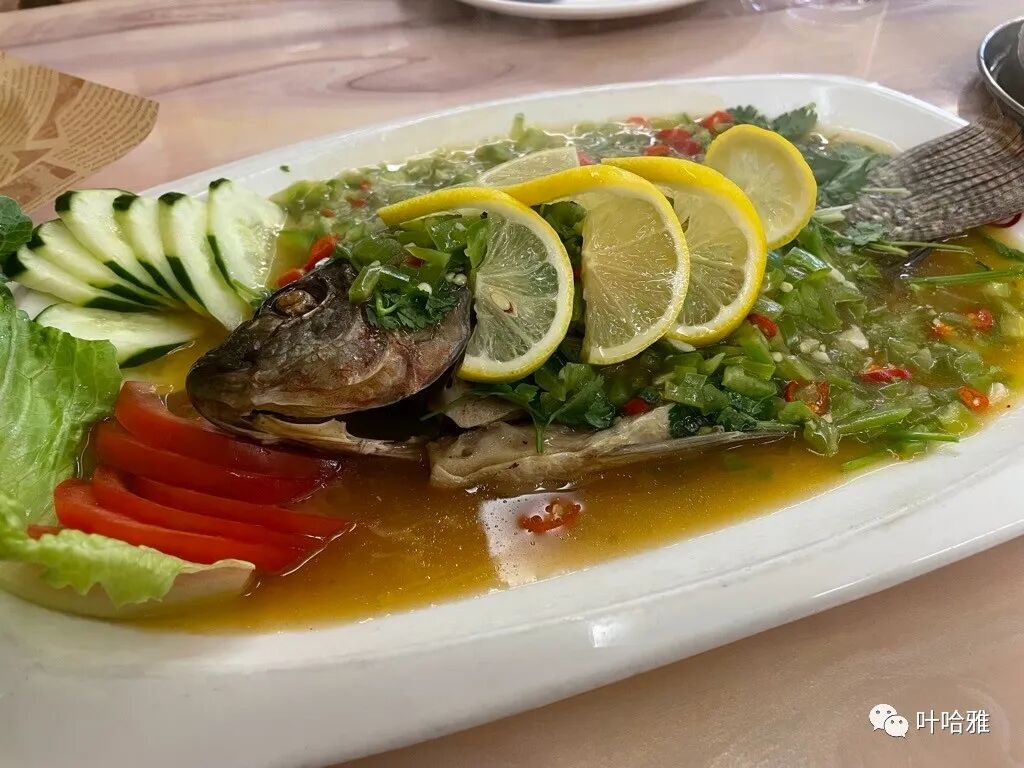
Lemon tilapia
I chose dishes we ate while traveling in Thailand and Malaysia. I haven't been abroad for nearly three years, so I'm reminiscing about the days when I wandered the world.
8
AL MANARA Lebanese Restaurant
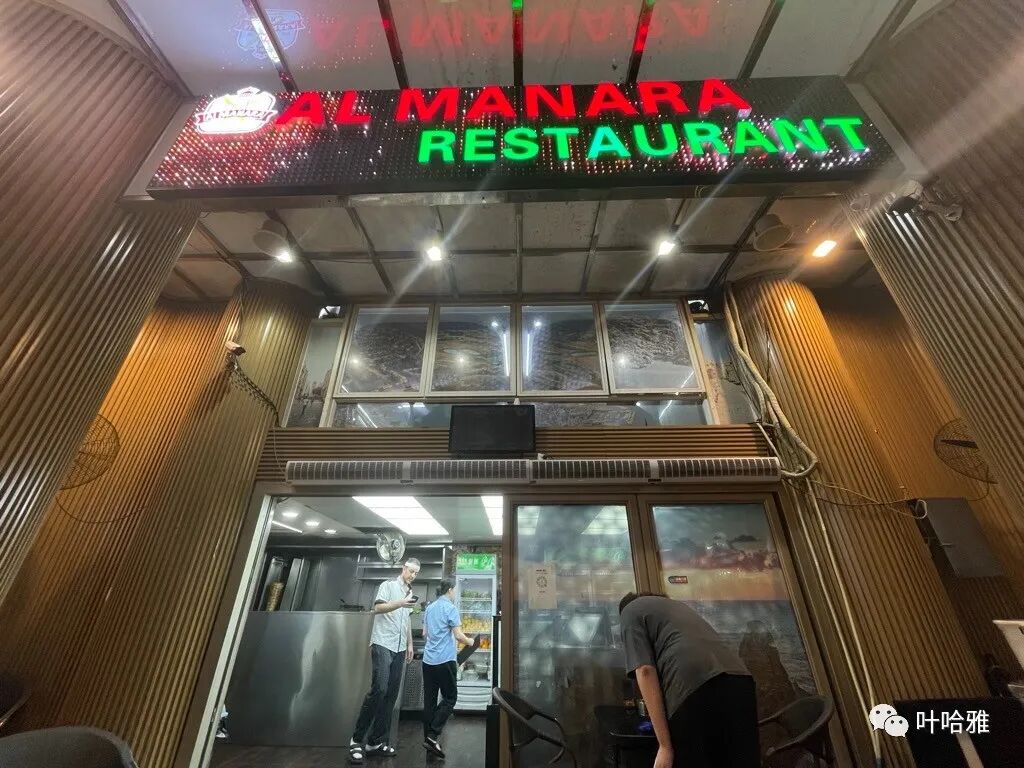
There used to be two Lebanese restaurants in Guangzhou. I went to the other one only to find it had closed. This shop is a roadside storefront with no main dining hall, just a few tables set up at the entrance. It is very simple.
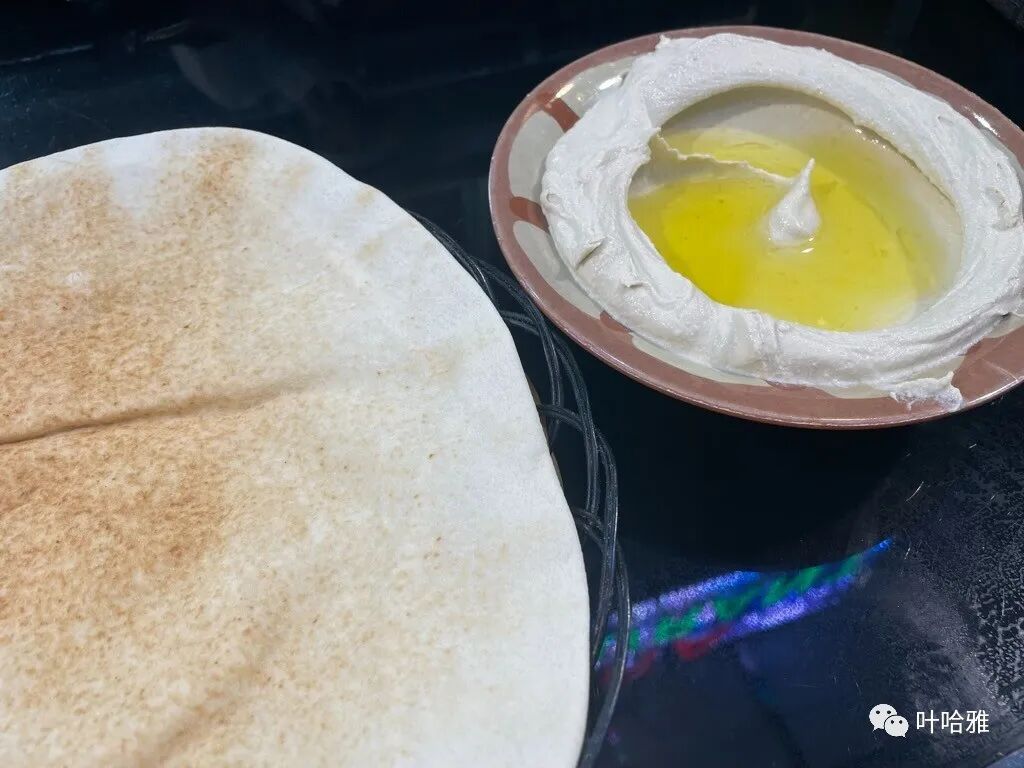
Hummus with Arabic flatbread (khubz)
A lady from Northeast China works here and speaks fluent Arabic. The person grilling the meat is a Lebanese Arab.
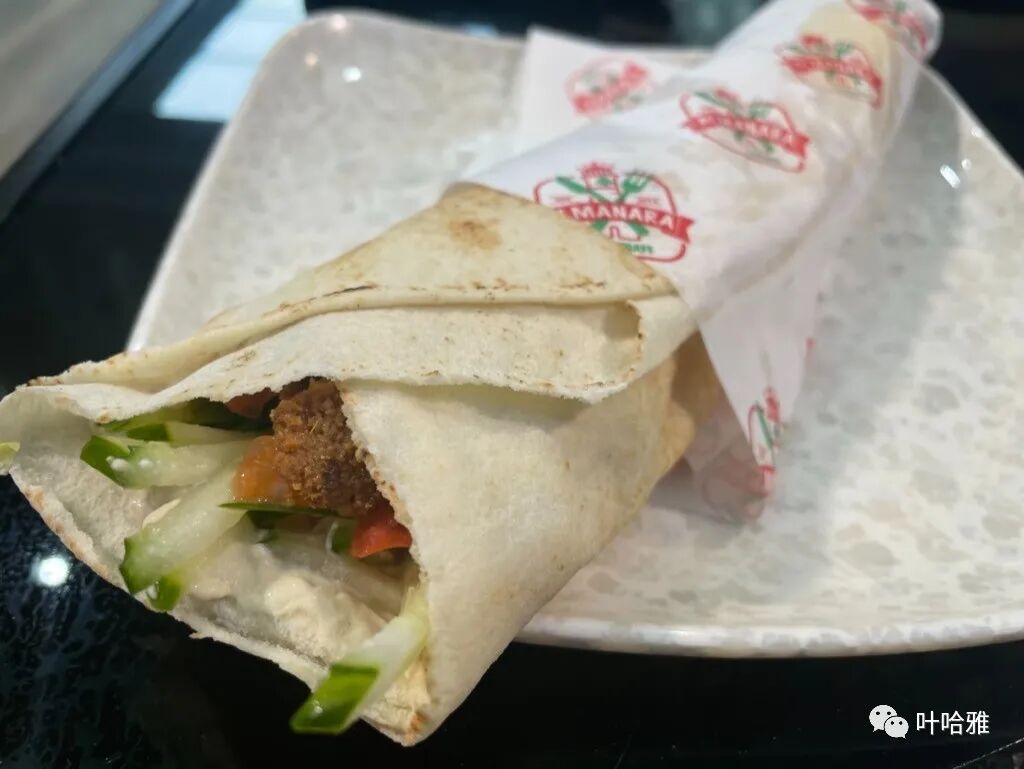
Falafel chicken wrap
Although this Lebanese restaurant doesn't have as nice an environment as Alameen in Beijing, the taste is quite authentic and the prices are affordable. Overall, it is not as good as the Lebanese restaurants in Beijing, which makes me feel a bit better.
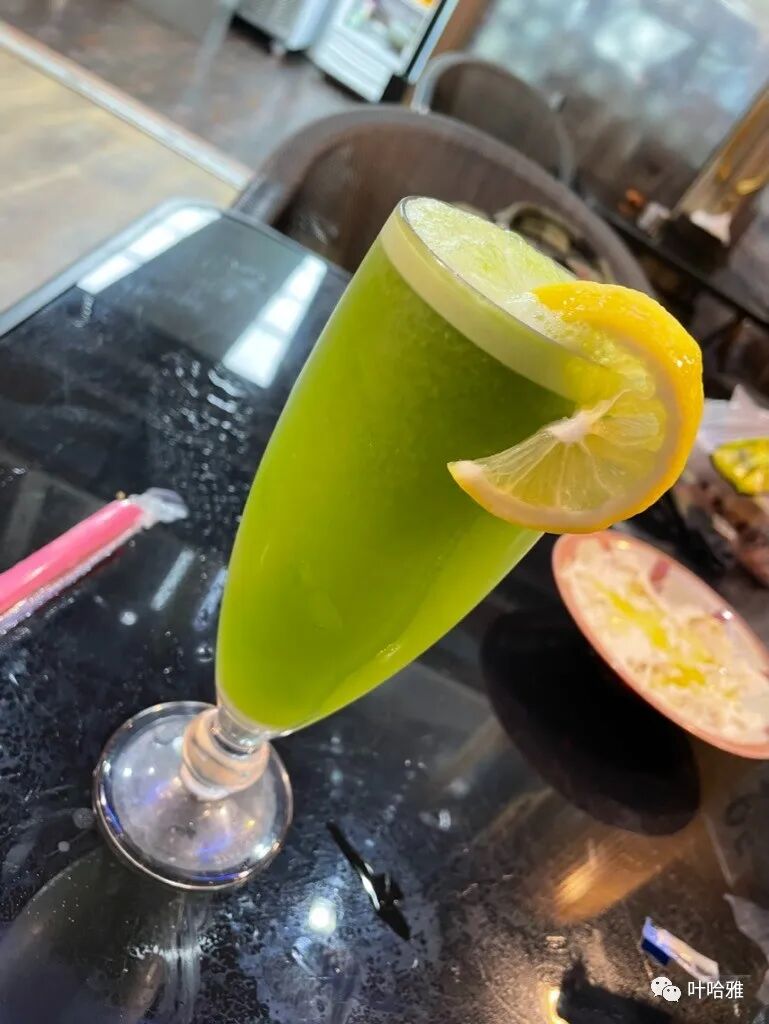
Lemon mint drink
9
AMADA Turkish Middle Eastern Cuisine
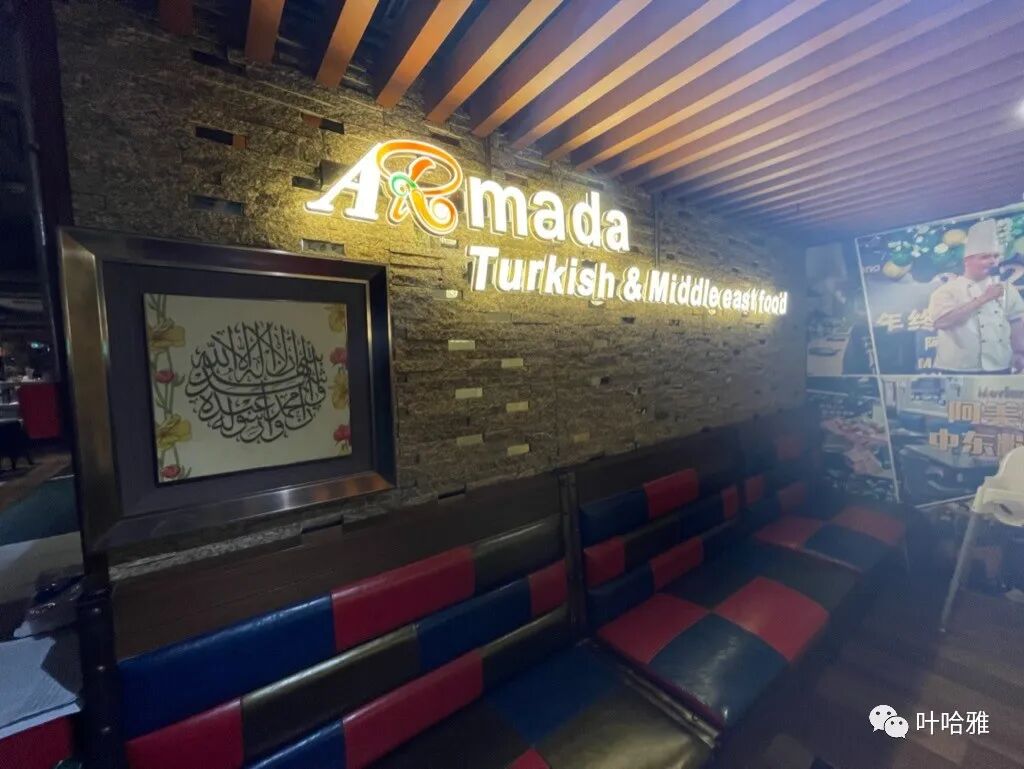
Most halal Western restaurants in Guangzhou are run by Turkish people. This place, Amanda, is one of them. It is near Xiaobei, a neighborhood where many Muslims live. One alley there is full of small Muslim shops, mostly run by people from Northwest China.
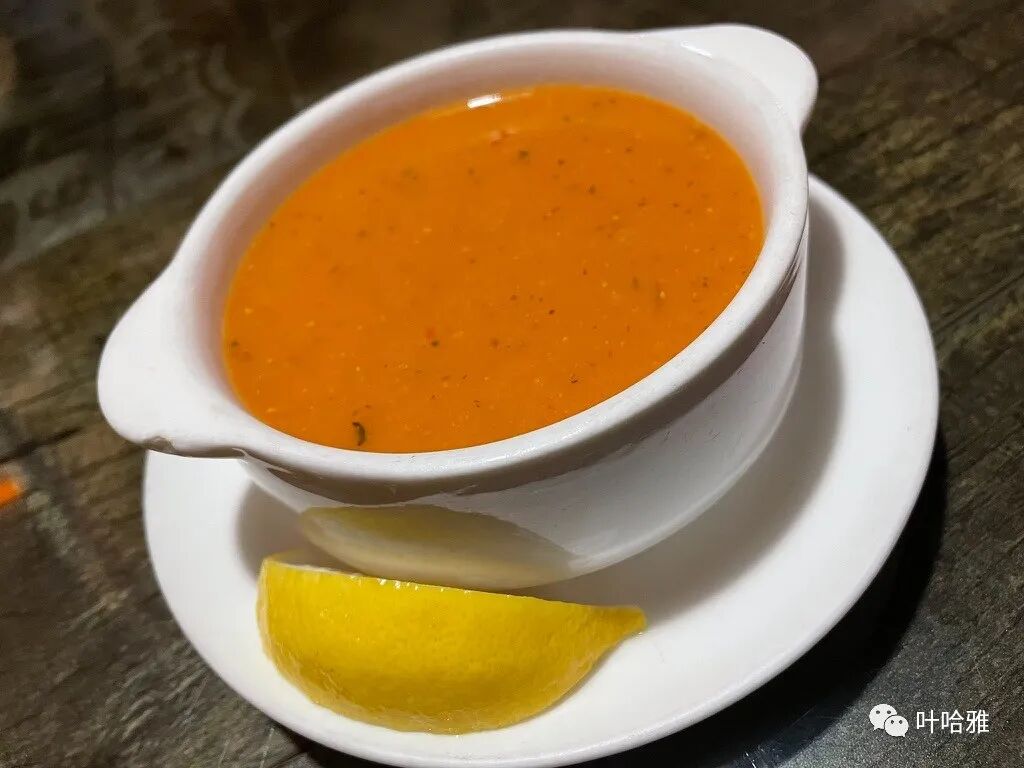
Assorted flavor soup (baiwei tang)
My friends in Guangzhou had never been to this restaurant, so I brought them here to check it out. Once inside, I noticed the waitresses wore headscarves. It is an alcohol-free restaurant, just like most foreign halal restaurants in Guangzhou.
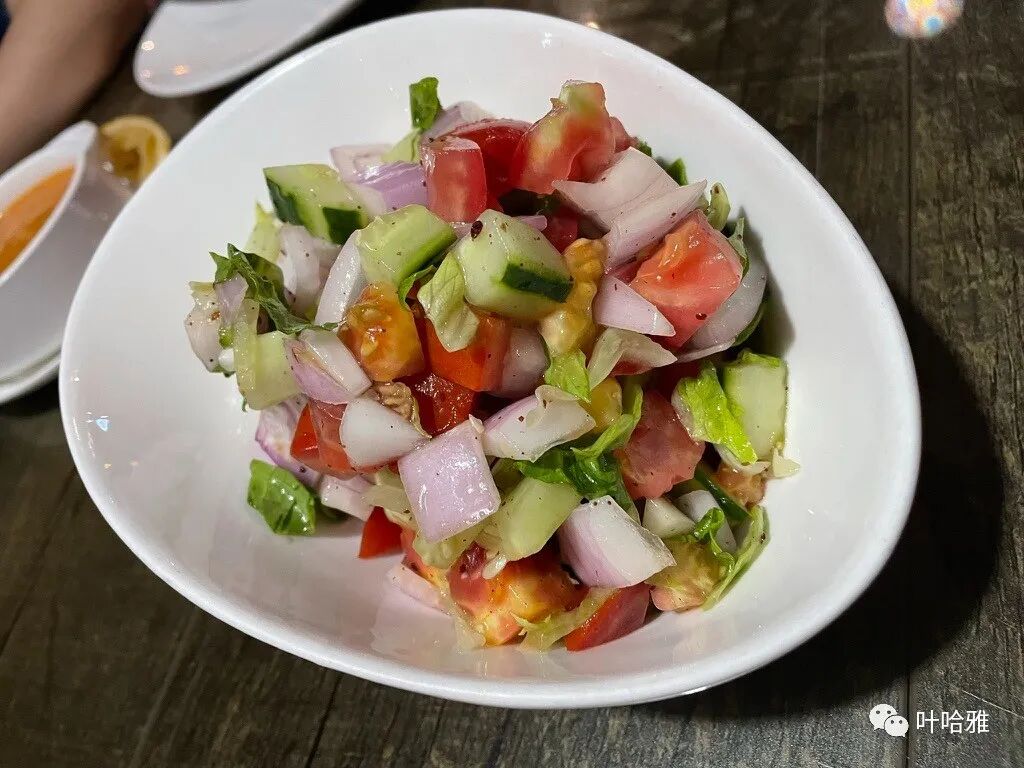
Shepherd's salad
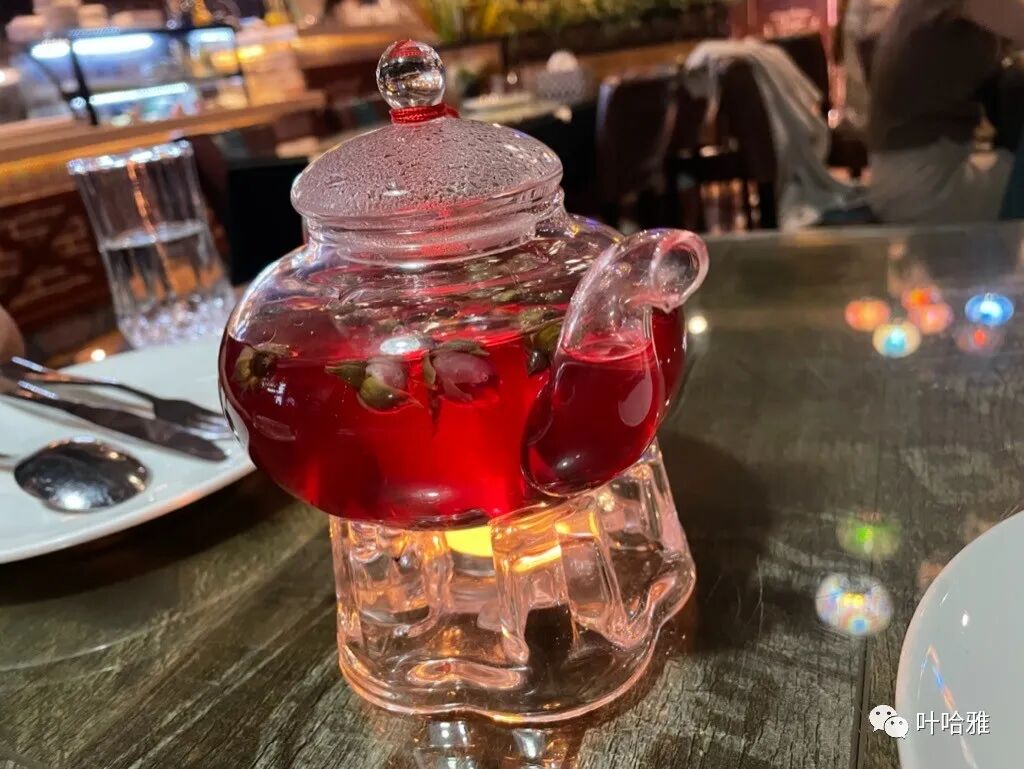
Rose black tea
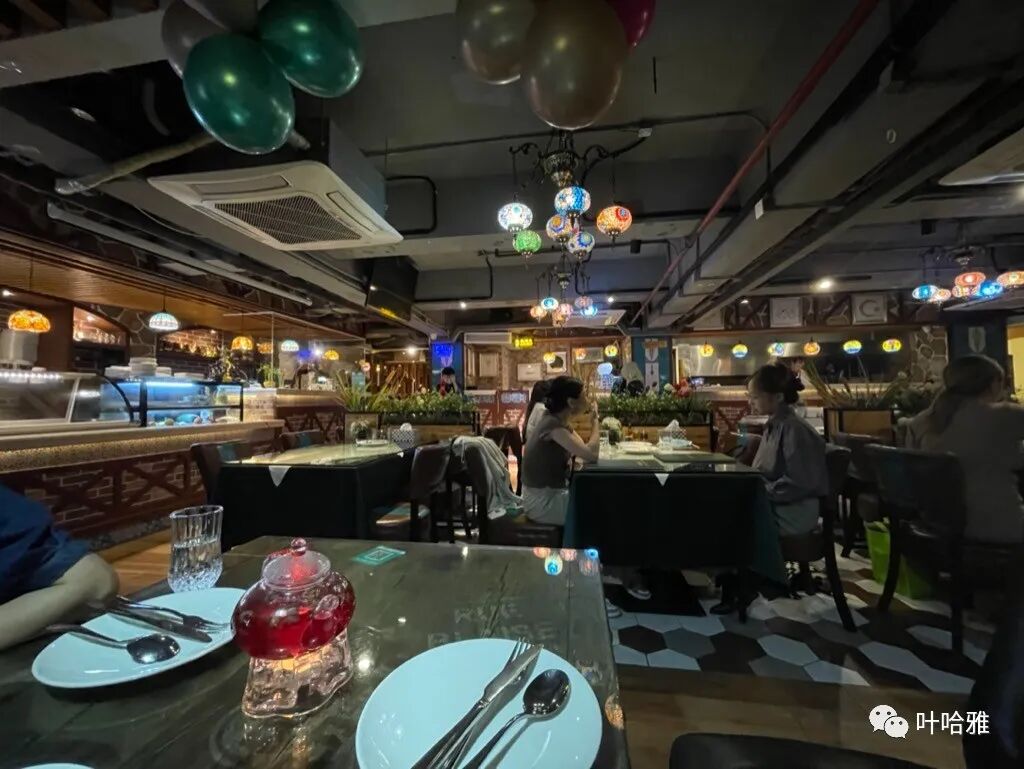
The ladies loved the rose black tea. I saw a Moroccan specialty, tagine (tajiguo), on the menu and ordered it. Guangzhou used to have a Moroccan restaurant, but it closed during the pandemic.
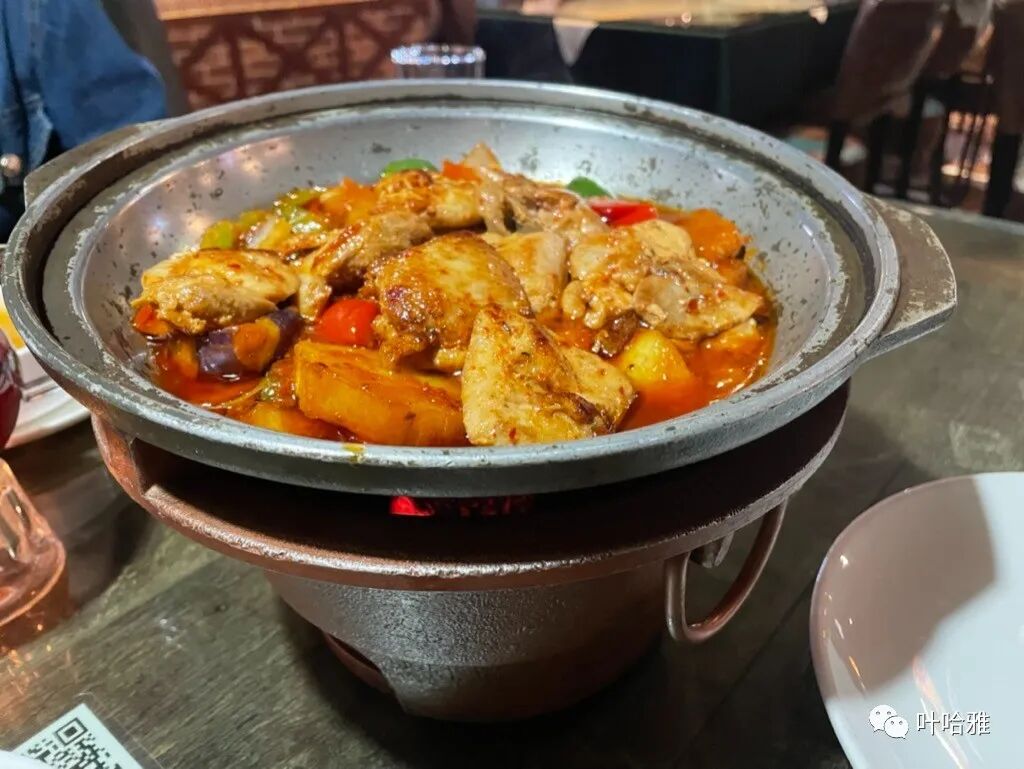
Chicken and eggplant tagine (jirou qiezi tajiguo)
The grilled meat and meals here are delicious, better than the main courses at MADO. MADO is nearby, so after we finished eating, we strolled over there for ice cream.
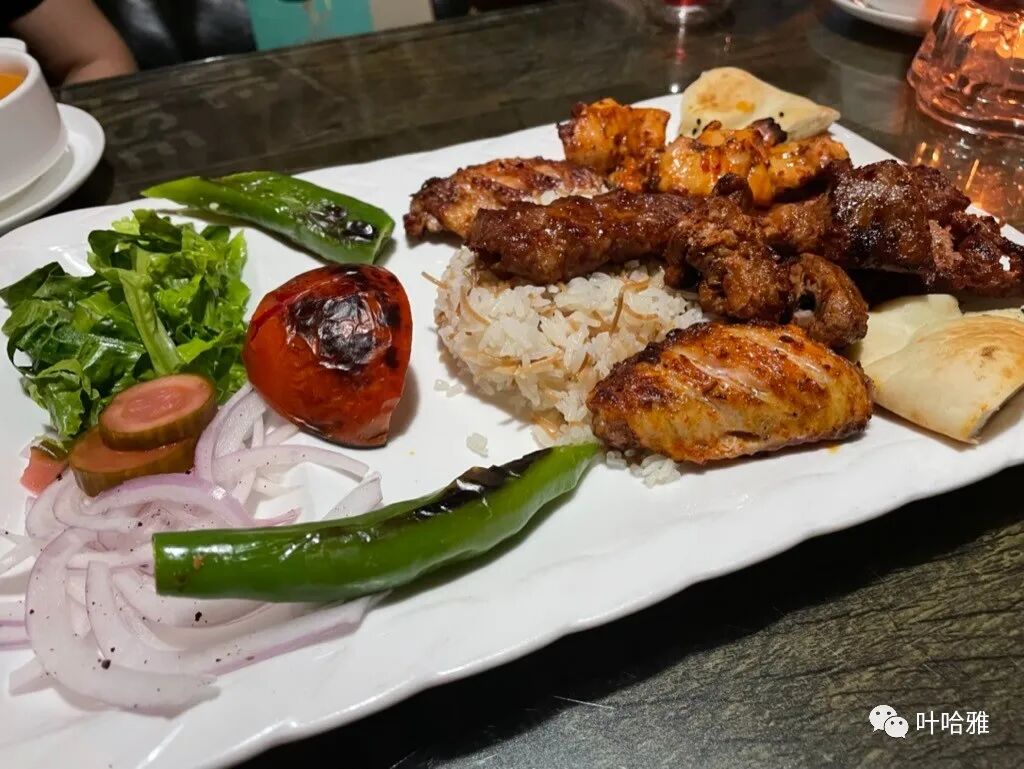
Mixed grilled meat platter
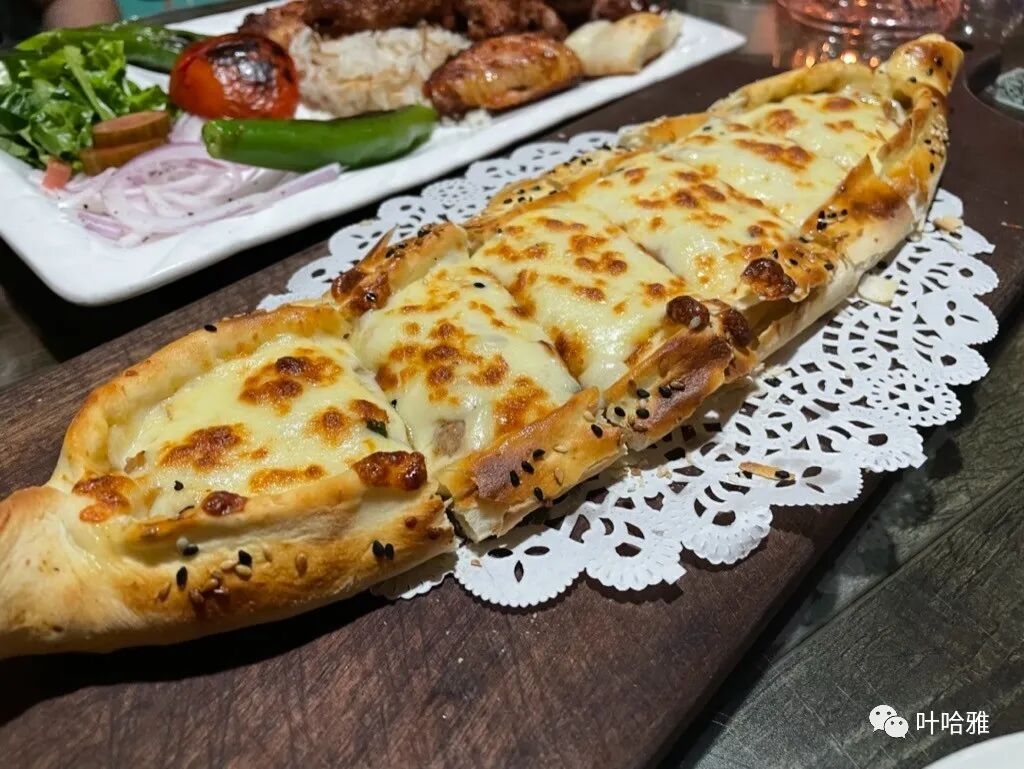
Cheese and tenderloin pizza
After dessert, we walked around Xiaobei. The street is lined with small halal shops, making it feel just like Dongguan in Xining.
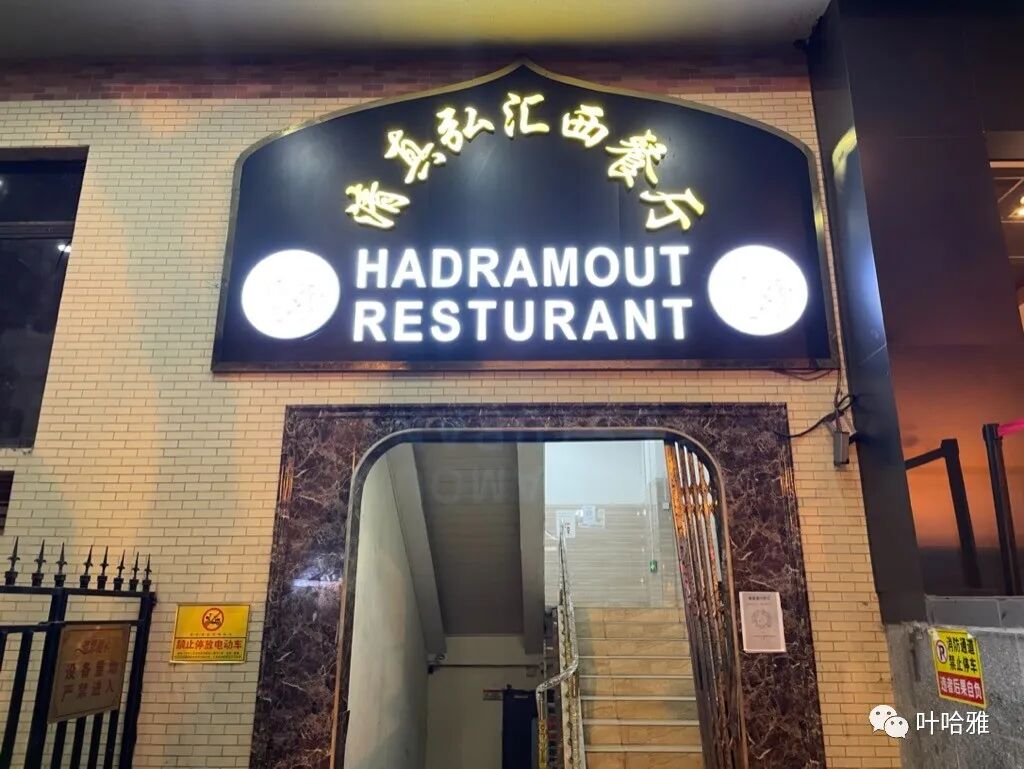
As a shantytown area in Guangzhou, this street in Xiaobei is reportedly slated for demolition and renovation. It will be hard to find such a lively, authentic neighborhood in a first-tier city in the future; Beijing no longer has any.
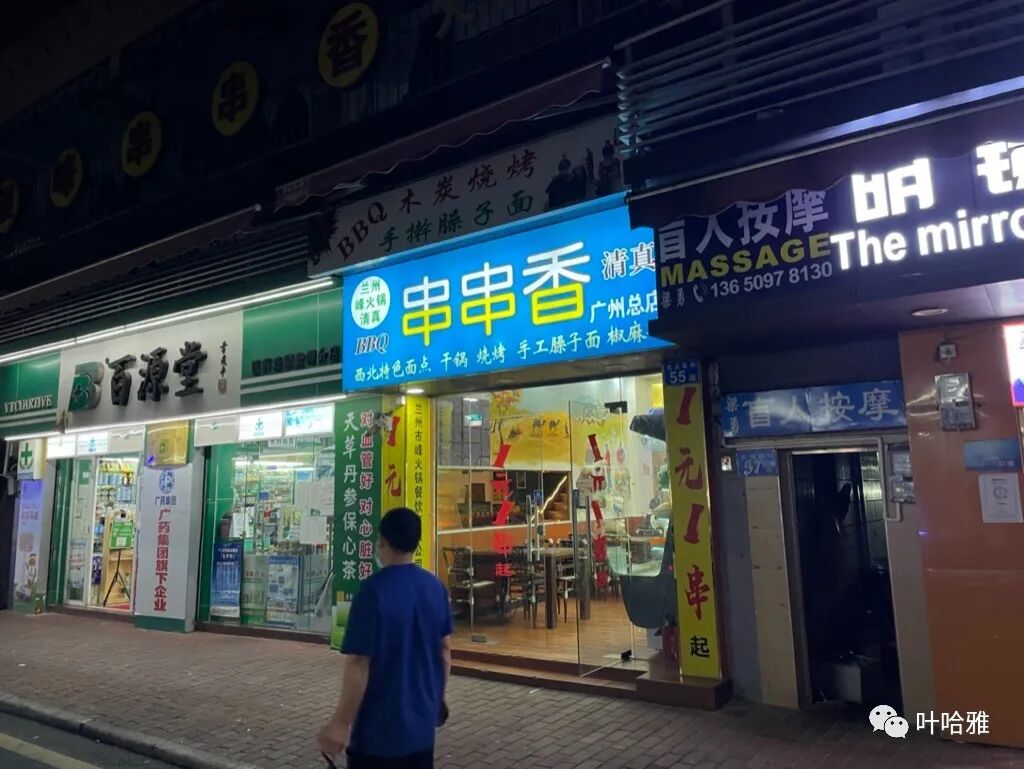
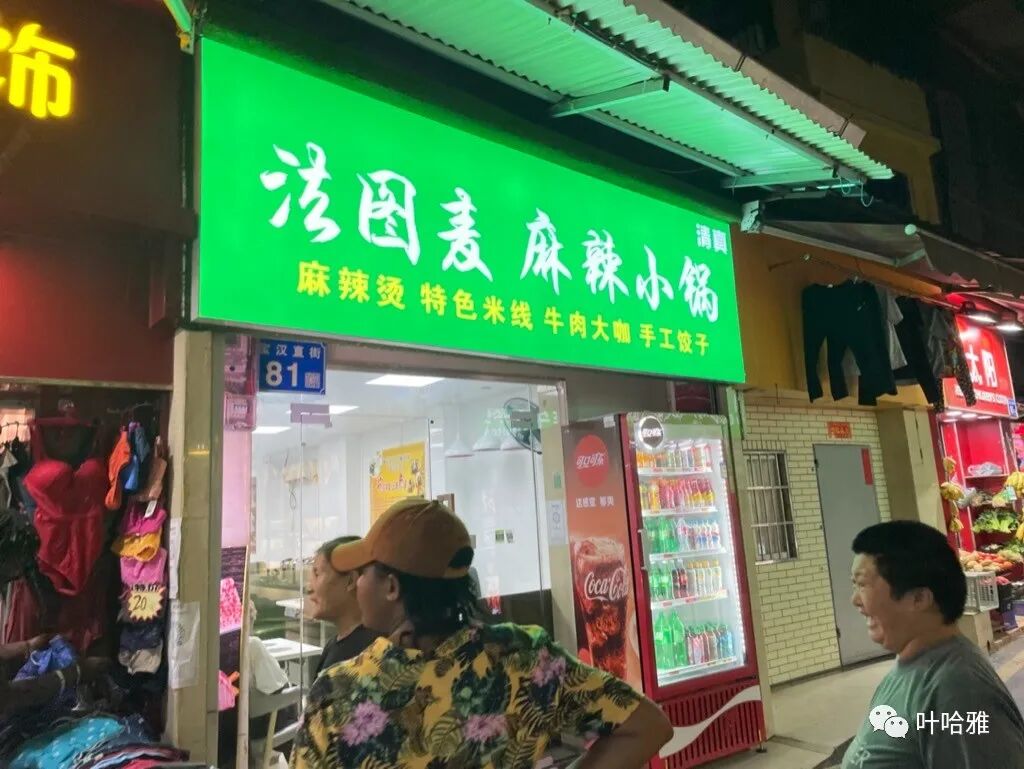
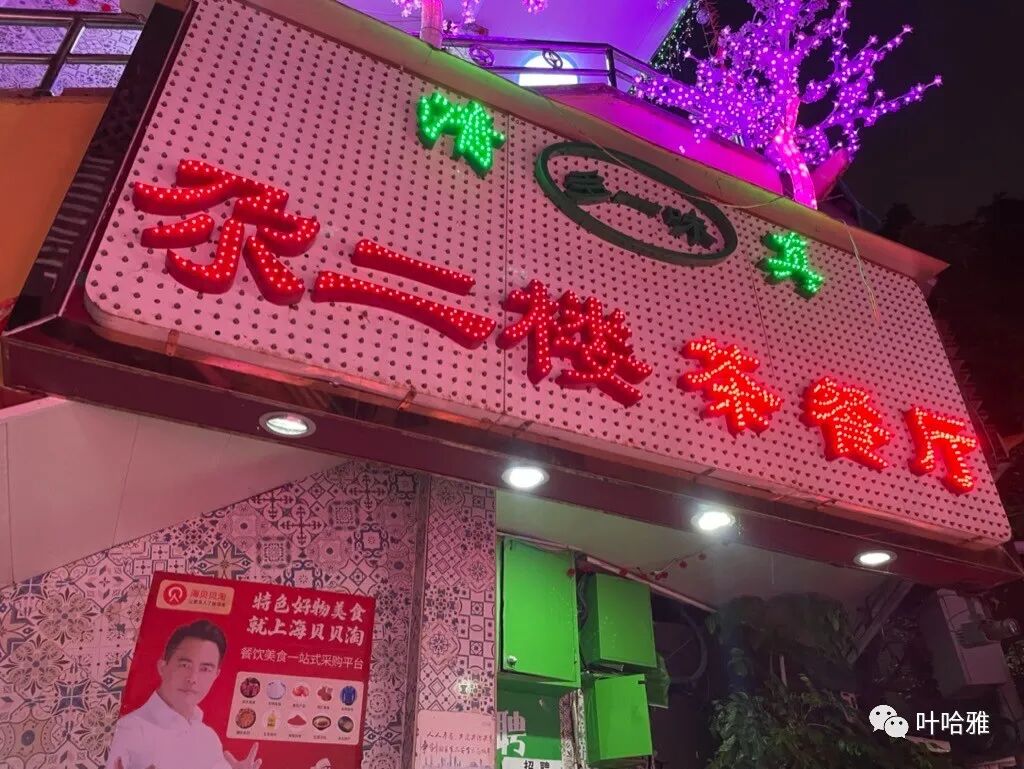
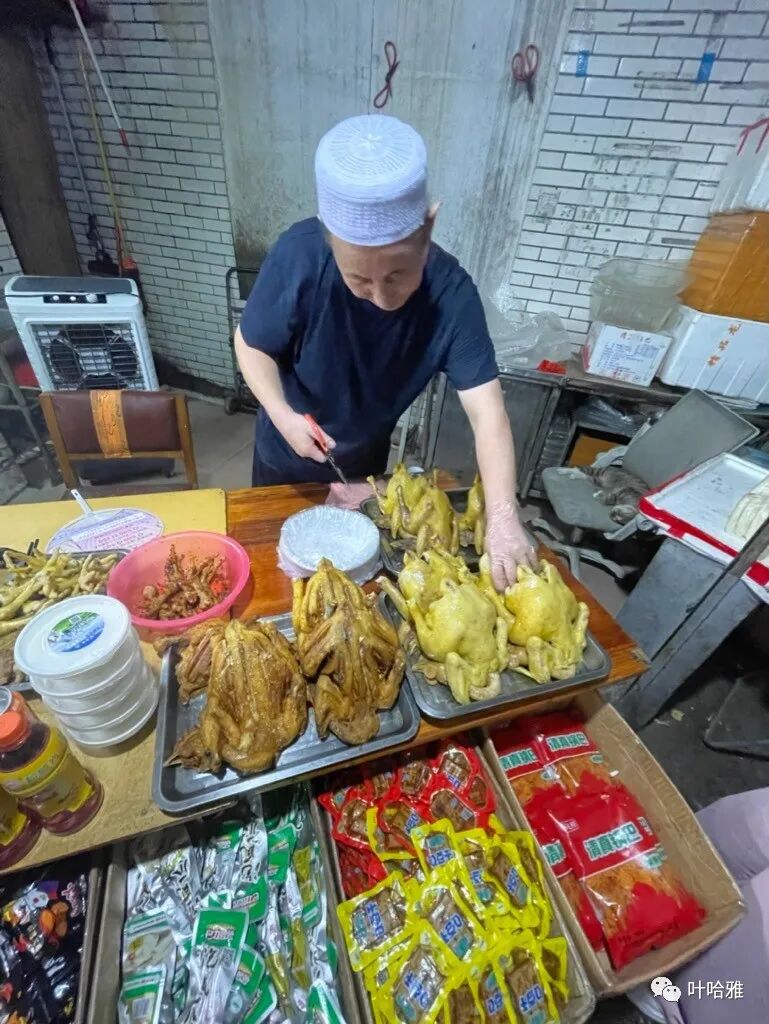
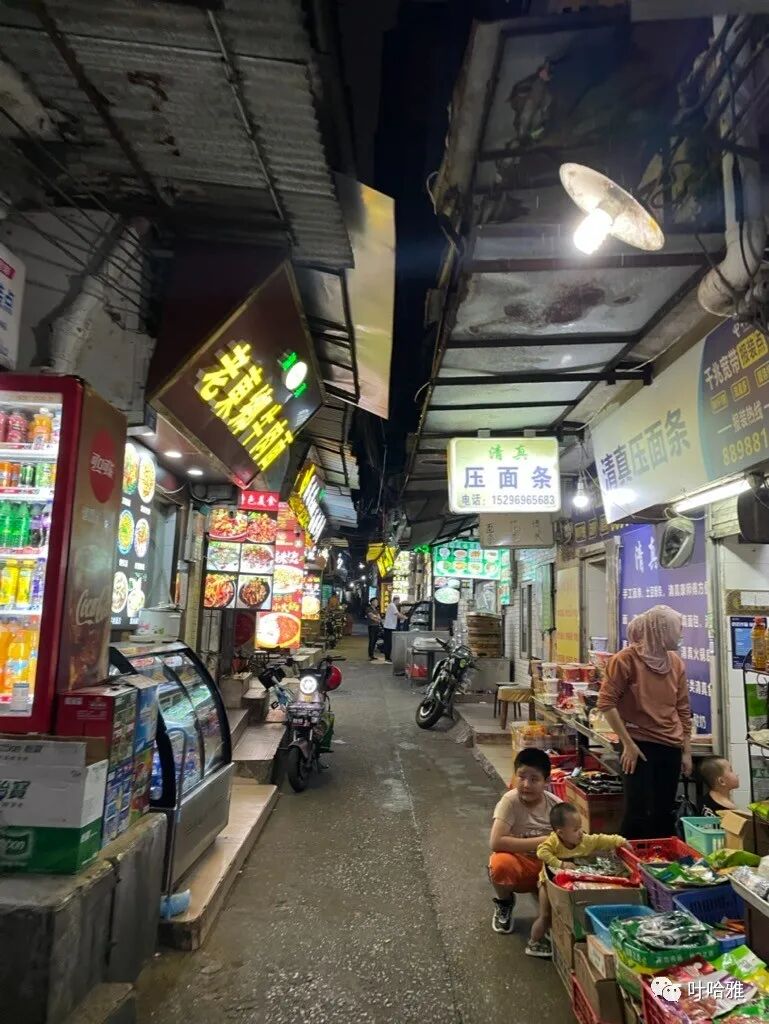
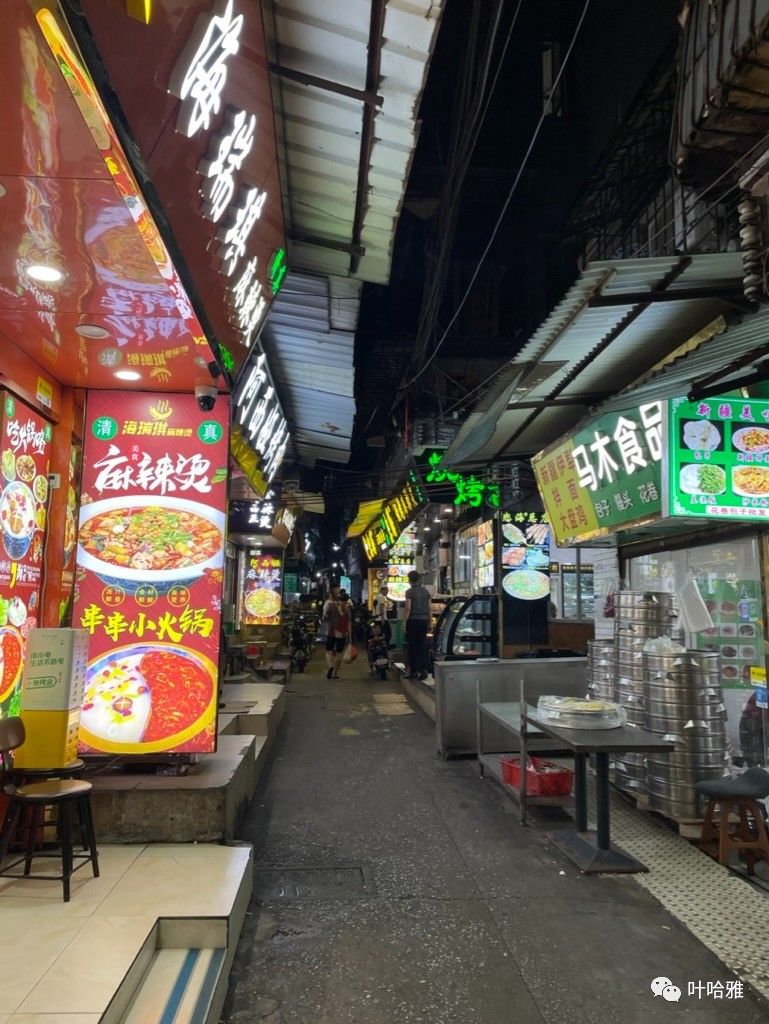
My friend led me to a shop that sells shaved ice yogurt (baobing suannai). We bought two cups. The taste was exactly the same as the one sold at the Grand Bazaar in Urumqi. The original flavor is very sour, but you can add sugar. I heard that people have to line up to buy it during peak hours.
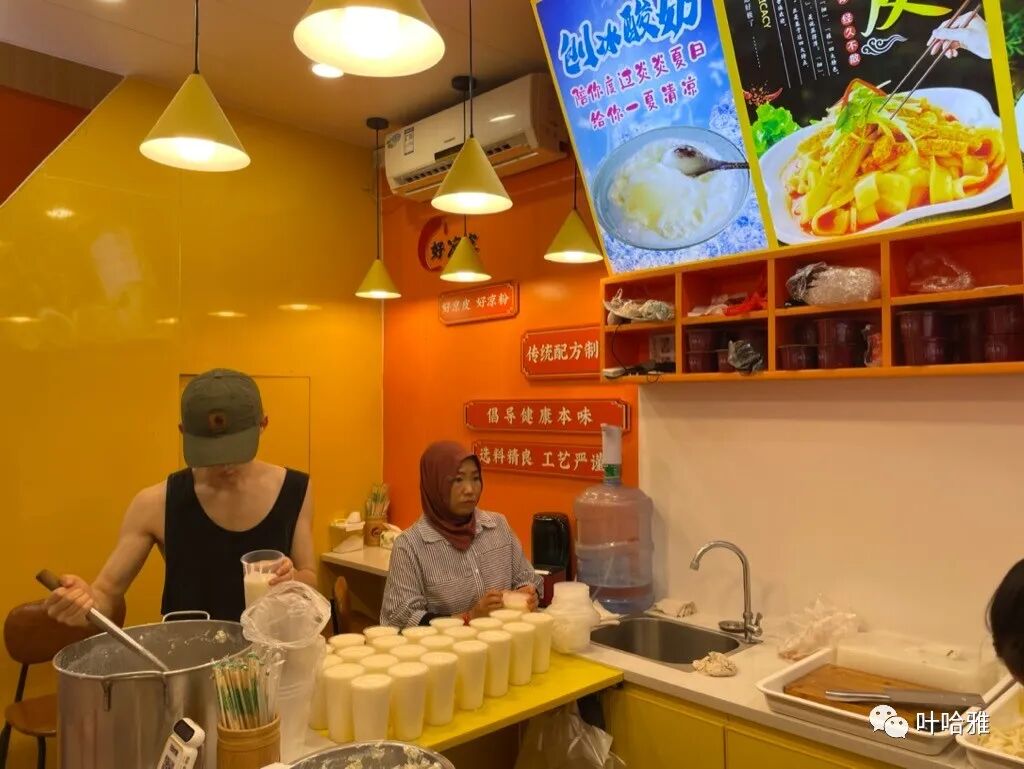
Our halal team-building trip in Guangzhou has come to an end. My next stop is Zhaoqing, Guangdong. Zhaoqing has two mosques, one local halal restaurant, and a large ancient cemetery for Hui Muslims. I will share more details in my next article.

Best Halal Restaurant in Guangzhou China: Xiaobei Halal Food, Cantonese Morning Tea and Middle Eastern Cuisine
Articles • yusuf908 posted the article • 0 comments • 280 views • 2026-05-23 08:23
Summary: This 2025 Guangzhou halal food map follows Xiaobei, Shangbu, no-alcohol halal dining, Asia International Hotel, Cantonese morning tea, Baghdad Cuisine, American-style barbecue, Xinjiang Mansion, Hui Muslim Restaurant, Antalya, MADO, Indonesian food, Lebanese food, and Middle Eastern restaurants.
I have been to Guangzhou at least five times. This time, a business trip gave me the chance to dine at several high-quality restaurants. I have a feeling that the variety of halal food in Guangzhou is now close to that of Beijing. It is worth noting that most halal restaurants in Guangzhou do not sell alcohol, which is extremely rare in Beijing. As both are top-tier cities, I think Guangzhou manages this because of an unspoken agreement among the restaurants. In the Xiaobei and Shangbu areas, where many halal restaurants are clustered, most do not sell alcohol. However, restaurants outside these areas do. This is just like in Xi'an, where halal restaurants in the Muslim Quarter (Huifang) do not sell alcohol, but those that open elsewhere do. This kind of agreement seems unlikely in Beijing, where most halal restaurants operate like lone wolves and find it hard to reach such a consensus.
The list of restaurants introduced in this issue is as follows:
1. Asia International Hotel · Asia Fengcai Xinjiang Restaurant
2. Yishanggong Cantonese Morning Tea (Guangshi Zaocha)
3. Baghdad Cuisine Restaurant
4. Yiyun Niudao American-style Barbecue
5. Xinjiang Mansion Cantonese Morning Tea (Guangshi Zaocha)
6. Hui Muslim Restaurant (Huimin Fandian)
7. Ma Xiaohuo Handmade Pulled Noodles (Lamian) and Barbecue
8. ANTALYA Turkish Restaurant
9. MADO Turkish Ice Cream Shop
10. Xianglan Indonesian Restaurant
11. Saba Restaurant
12. AL MANARA Lebanese Restaurant
13. ARMADA Middle Eastern Cuisine
1. Asia International Hotel · Asia Fengcai Xinjiang Restaurant
I heard before coming that the Asia International Hotel in Guangzhou had a halal restaurant, so I specifically stayed there for one night. It is an old five-star hotel located in Xiaobei. The facilities are quite dated, which felt like a big drop compared to the Mandarin Oriental where I stayed the night before. However, the hotel has an excellent location and view. The 45th floor is a revolving buffet restaurant where breakfast is served, and the hotel has a dedicated halal section.
Most guests staying at this hotel are foreigners, primarily Arabs, so there is also an Arabic restaurant on the first floor.
A Xinjiang restaurant called Asia Fengcai opened on the ninth floor of the hotel. Even though it is inside a five-star hotel, the prices are quite affordable, with an average cost of around 100 yuan per person.
Asia Fengcai is run by people from Ningxia, so the restaurant serves both Ningxia-style northwestern dishes and Xinjiang cuisine.
I tried the peppercorn chicken (jiaomaji) and hand-grabbed meat (shouzhuarou) for you, and both tasted good. The peppercorn chicken is on the spicier side.
Their hand-grabbed rice (shouzhuafan) is also excellent. They use quality ingredients and include everything that should be in it, which earned praise from my friend.
2. Yishanggong Cantonese Morning Tea (Guangshi Zaocha)
Yishanggong is the third halal morning tea restaurant in Guangzhou. It is also in Xiaobei, just 400 meters from the Asia International Hotel. I ate there twice and basically tried everything on the menu. Compared to the Xinjiang Building, this place is not as refined, but it has its own style. The service is better than at the Hui Muslim Restaurant (Huimin Fandian), and overall, it offers great value for money.
Morning tea is served from 7:00 to 15:00. You get a 22% discount if you pay before 10:00, and a 12% discount if you pay before 12:00. They only serve morning tea during the day, but switch to Korean barbecue and hot pot for dinner.
The servers here help rinse the bowls for you, which saves me the trouble. I would not mind skipping it, but rinsing bowls is a local habit for people in Guangzhou.
Of all the dim sum I tried here, I did not like their chicken char siu bao. I think the lamb char siu bao at the Hui Muslim restaurant tastes better. Everything else was delicious, and the dim sum is made to order, not pre-made.
The waitress wears a hijab and is very warm and attentive. The restaurant is alcohol-free.
3. Baghdad Cuisine Restaurant
The number of foreign restaurants in Xiaobei rivals Sanlitun in Beijing. This one serves Iraqi food, and I also found Amman, Guinean, and Liberian restaurants nearby, which are cuisines you cannot find in Beijing.
Baghdad Restaurant is on the fourth floor, right above the Amman restaurant.
A friend invited me to eat here because her crush is an Iraqi guy who is currently in Baghdad.
They serve a complimentary bowl of lentil soup before the meal, which helps with digestion.
We ordered grilled pomfret and a lamb leg rice dish. The lamb leg rice was especially good; the lamb was tender and juicy, and the long-grain rice was fluffy and not sticky.
4. Yiyun Niudao American-style Barbecue
A brother from Guangzhou brought me here. He said it is rare to find halal American-style barbecue in China, so he wanted me to try it. The last time I had halal American barbecue was in Dubai, and that meal was truly satisfying.
This shop is in Shangbu, an area where Yunnan Hui Muslims gather. Yunnan people rarely move north; they prefer coming to Guangzhou and Sanya. This shop does not sell alcohol.
My friend recommended the slow-roasted Angus steak and roasted lamb chops. They smell great. The slow-cooked Angus has a strong smoky flavor, and the lamb chops are tender and have no gamey taste. Even without alcohol, the shop is very busy. You have to wait in line during peak hours. It is best to book ahead for barbecue so you do not miss out.
Even their Xinjiang kvass (gewasi) tastes great. It is a non-alcoholic fermented drink that pairs perfectly with barbecue. The shop is not expensive, with an average cost of about 100 yuan per person.
Next, I filmed some restaurants near Shangbu. They mostly serve Yunnan flavors, including Zhaotong small meat skewers (xiaorouchuan).
5. Xinjiang Mansion Cantonese Morning Tea (Guangshi Zaocha)
Many people recommend the Hui Muslim Restaurant when talking about morning tea in Guangzhou. If I had to choose, I prefer the morning tea at the Xinjiang Building. Although they have not been making Cantonese morning tea for long, their food variety and service are better than the Hui Muslim Restaurant.
The morning tea here includes traditional Cantonese dishes and some new creations, especially those using Xinjiang ingredients. This is easier for northern tourists to enjoy, as outsiders might not be used to many authentic local snacks.
Morning tea originally just meant drinking tea in the morning. However, people started pairing it with snacks, and these snacks became so rich that they are now the soul of morning tea.
After sitting down, the waiter will follow the rules and ask what tea you want. You can choose from black tea, green tea, flower tea, or Pu'er. You are also welcome to bring your own tea bags. Then, they give you a menu to check off the snacks you want.
The first step of morning tea is washing the tea set. The basin in the top right corner is not for trash, but for cleaning tableware. Even though the tea set is already clean, Guangzhou locals like to scald it with hot water again. I follow the local custom and do the same, even though I do not really worry about whether the dishes are clean.
Cordyceps flower and Qingyuan chicken porridge (chongcaohua qingyuan huaji zhou)
Breakfast in Beijing, specifically in Niujie, is always soy milk, fried dough cakes (youbing), lamb offal soup (yangza), fried tofu soup (doupaotang), and baked flatbread with fried dough (huoshao jia youbing). This is not friendly for someone like me who goes to the gym every day. I like to change my meals up, so breakfast is the hardest part of my day. If I want a balanced breakfast, I have to make it myself.
Steamed chicken feet with golden garlic sauce (jinjiang suanxiang zheng fengzhua)
If you eat morning tea alone in Guangzhou, you can order about three dishes based on the portion sizes. You can eat something different every day for about half a month. After that, you can start the cycle over again, which gives people a reason to get up early every day.
Qingyuan chicken bun (qingyuan jirou bao)
Cantonese morning tea is mostly light and contains no spicy flavors, making it suitable for children and people with sensitive stomachs.
Beef short ribs in black pepper sauce (heijiao shaozhi niuzaigu)
Morning tea is served from 7:00 AM to 11:30 AM. On weekdays, you mostly see local Guangzhou people drinking tea. They have money and time. According to my Guangzhou friends, they do not care much about how they dress. They might go out in a worn-out tank top and flip-flops, but they are very particular about food. They believe that what you put in your stomach is what really matters, which shows the practical nature of Guangzhou people.
Supreme shrimp and chicken dumpling (xianxia jili shaomai huang)
My taste preferences have changed over the years. I do not have much of an appetite for large, heavy-flavored meals anymore. I focus more on healthy eating and prefer light, small, and delicate food. My love for Cantonese morning tea grows every day, but unfortunately, I cannot find it in Beijing yet.
Mango coconut milk cake (xiangmang yezhigao)
I once had Wuzhong morning tea in Wuzhong, Ningxia, and I think this is a very promising and innovative way to do breakfast.
Pan-fried curry beef buns (shengjian gali niurou bao)
If you are trying Cantonese morning tea for the first time, I think you must order the barbecue pork buns (chashao bao) and pan-fried buns (shengjian bao). Rice noodle rolls (changfen), shrimp dumplings (xiajiao), and steamed chicken feet (zheng fengzhua) are also the best dishes to represent Cantonese cuisine. You might not get used to the taste, but you should definitely try them.
Thai-style chilled durian mochi (taishi bingpi xue liulian)
You should also try the small Cantonese desserts. They are delicately made and look beautiful. They come in portions of three, which is a hint that you should bring two friends along.
Swan-shaped durian pastry (tiane liulian su)
This swan-shaped durian pastry is a new addition. When I came here last time, it was just the regular gold-medal durian pastry (jinpai liulian su), so they really put effort into the shape this time.
Pan-fried water chestnut cake (xiangjian mati gao)
Beef brisket egg noodles (niunan tang danmian)
Cantonese-style noodle soup and rice noodle rolls have a fresh, slightly sweet taste that many women enjoy. I don't particularly like them, as I prefer the salty and savory style of Northwest Chinese noodles, but since I am in Guangzhou, it is worth trying a bite.
Chestnut and mushroom chicken rice noodle rolls (jinli xianggu jirou changfen)
The yogurt cake and egg tarts are a kind of innovative fusion dish because they use dairy products from Xinjiang. Green vegetables hold an important place in Cantonese cuisine. Guangzhou people must have green vegetables with their meals, and here, green vegetables only refer to leafy greens; gourds and root vegetables do not count.
Xinjiang smooth yogurt cake (suannai gao)
Xinjiang milk egg tart (puta)
Boiled Ningxia choy sum (caixin)
People in Guangzhou care a lot about healthy eating. They want fresh ingredients and balanced nutrition. They cook with all kinds of land and sea animals. You can find these dishes at morning tea, which lasts until lunch. After a midday break, people go back for afternoon tea. When it gets dark and cool outside, there is a late-night snack culture. You can spend the whole day eating.
Original juice bamboo shoot shrimp dumpling (xiajiao huang)
Mango pomelo sago (yangzhi ganlu)
Malay satay beef tripe (jinjian du)
Dried fish and peanut congee (chaiyu huasheng zhou)
Healthy sesame cake (zhima gao)
Southeast Asian shrimp red rice noodle roll (hongmi changfen)
6. Hui Muslim Restaurant (Huimin Fandian)
Huimin Restaurant is a state-run Guangzhou classic that has been open for over half a century. Most of the customers are local people from the neighborhood. I asked my local friends in Guangzhou, and they approve of the food quality here. They serve morning tea, afternoon tea, and regular meals. If you come for morning tea on a weekday, you get a discount.
Inside the restaurant, a sign says they serve Hui Muslims before 9 a.m., but when I arrived before 9, I mostly saw local residents of all backgrounds. The restaurant has a strong state-run vibe, and the service is okay. The tea set is not as fancy as the one at Xinjiang Mansion. You only get one teacup and one teapot, and the space is smaller and noisier.
Lamb barbecue bun (yangrou chashaobao)
For Cantonese-style dim sum, the Hui Muslim restaurant makes it more authentic. Take this lamb barbecue bun, for example; it is the only one of its kind in Guangzhou. Barbecue pork (chashao) means roasting meat on a fork, then wrapping it in dough to make a bun. When steamed, the top of the bun splits open naturally. I eat this every time I come here, as it is hard to find such authentic and delicious barbecue buns once you leave this restaurant.
Chicken broth soup dumpling (jizhi xiaolongbao)
Soup dumplings are one of my favorite breakfasts. When my appetite is not fully awake in the morning, I prefer delicate flour-based snacks. I might not have the appetite to finish a large steamed bun.
Job's tears and beef tripe porridge (yizhao niudu zhou)
In Beijing, I would never expect to find such a variety of nutritious porridge for breakfast. I have to complain about the porridge here, though. It does not taste like it was freshly cooked this morning; it tastes like it was reheated from a pre-made batch. Freshly cooked porridge has a thicker texture, and this place is not as good as Xinjiang Mansion in that regard.
Coconut sticky rice cake (yexiang nuomici)
The dim sum tastes pretty good, but it looks plain. It is not as refined as the food at Xinjiang Mansion, so it is not great for taking photos to post on social media. Many friends have told me the service at the Hui Muslim restaurant is bad. I did not experience that myself, but in terms of small details, Xinjiang Mansion is definitely more comfortable for dining.
Curry beef rice noodle roll (gali niurou changfen)
Shrimp salad dumplings (shalü mingxia jiao)
The dim sum platter I had today tasted a bit salty; it wasn't this salty before.
Three-item dim sum platter
7. Ma Xiaohuo Handmade Pulled Noodles and Barbecue
I ended up at this shop by accident. I was catching up with a friend at a cafe, but they felt the air conditioning was too strong, so we moved outside. Suddenly, a storm hit Guangzhou. We ducked into this little shop to escape the rain, ordered some food, and were surprised by how good it was.
My friend had a bowl of pulled noodles (lamian), and I ordered a portion of Xinjiang rice noodles (xinjiang mifen). The rice noodles came with plenty of toppings and tasted great. The shop was clean and bright. Although it was small, the dining experience was very comfortable. It is a chain, and there are currently three branches in Guangzhou.
8. ANTALYA Turkish Restaurant
Antalya Restaurant's Liede branch was the first place we chose for our team building. The second floor has Central Asian-style decor where you take off your shoes and sit on carpets. You used to be able to experience this at Rumi's Secret in Beijing, but unfortunately, that location closed. However, a new Rumi's Secret opened in Urumqi, and I visited it the year before last; the environment there is even better.
For Middle Eastern cuisine, black tea and baklava are must-haves, along with my favorite Turkish coffee. Whether it is day or night, I always have a cup whenever I eat Turkish food.
Besides its rich texture and coffee grounds, a highlight of Turkish coffee is the cup. It must not be served in a clear glass; it has to be in an exquisite porcelain cup to be authentic.
Hummus (yingzuidou ni)
The overall feel of this restaurant is just like Rumi's Secret, and the prices are similar, averaging about 200 yuan per person. The flavors are a bit localized and lighter, which suits Chinese tastes better.
Chicken leg with Arabic rice.
Hollow balloon bread.
Mixed chicken and beef kebab platter.
Cheese flatbread (pide).
Lamb patty with yogurt.
I have to say a few words about this final ice cream; it is not as good as MADO, a Turkish ice cream brand that uses goat milk. I will introduce the MADO ice cream shop in Guangzhou specifically later.
Ice cream.
9. MADO Turkish Ice Cream and Coffee Shop.
MADO is very famous, and I had heard of it for a long time. I still remember the rich milky flavor of the MADO ice cream I ate in Beijing. Before coming here, I checked and found that there are two branches in Guangzhou. We ate at MADO twice because most of the members in my Guangzhou group are women who love it, so I had to arrange it.
The ice cream shop has a wide variety of sweets and also serves full meals. It is Turkish cuisine, but the quality of the meals is not as good as the ice cream, so I suggest only eating ice cream there.
When you enter the shop, you can order ice cream first. You can mix and match from over twenty flavors. You can order a four-layer serving with four different flavors, which is the best value.
You can also sprinkle various toppings on the ice cream. I like the original handmade ice cream the best; it has the silkiest texture and a full milky flavor. The other flavored ice creams are not as good as the original.
The girls love the raspberry flavor. Raspberries are red, sweet, and tart, and Lu Xun even mentioned them in his writing.
The Turkish restaurants in Guangzhou are mostly filled with foreigners who enjoy chatting and smoking shisha in the cafes.
Sultan's Boat
If you see the colorful ice cream on the menu and don't know what to pick, I suggest getting the handmade ice cream in the original flavor. It is the best and does not need any extra toppings.
Handmade ice cream
The Turkish coffee is made so delicately and even comes with a small flower for decoration. I felt happy as soon as I walked into this shop, and eating dessert always puts me in a good mood. I really hope they open a branch in Beijing, where many people still love eating ice cream even in the winter.
Shepherd's salad
The main courses are just average and do not taste as good as those at Turkish restaurants that specialize in full meals. It is better to come here for afternoon tea or a late-night snack to have ice cream and desserts.
Mexican grilled meat wrap
Turkish stuffed flatbread (pide)
10. Xianglan Indonesian Restaurant
Ever since the Southeast Asian halal restaurants in Beijing all closed down, I have not been able to find authentic Nanyang-style food near my home. The last time I had Indonesian food was in Kuala Lumpur, but I did not even eat Indonesian food this good while I was in Indonesia.
The first reason to recommend this place is that it made the Michelin Bib Gourmand list. This is Michelin's list for affordable restaurants, with an average cost per person under 100 yuan. Being on this list in a food city like Guangzhou really says something.
I think everything on their menu is a specialty. Basically every dish is delicious, including the drinks. I don't know how the owner and the chef manage to hit the mark so perfectly for every diner's taste buds.
Fresh lime and lemongrass soda and pandan coconut custard cake (pandan ruanxin yezhigao).
Many friends highly recommended this place to me before I even arrived in Guangzhou. My taste matches the general public's, so I had high expectations, but it was only after tasting it myself that I realized it truly lives up to its reputation.
Bali crispy duck (Bali dao zangzang ya).
Although this restaurant has many dishes, the portions are small. This is perfect for someone like me who wants to try new things without wasting food. Also, they don't sell alcohol, which gives me peace of mind while eating. The staff mentioned that the owner is an Indonesian Chinese.
Black nut beef soup rice (heirouguo niurou tangfan).
Since I have traveled in Indonesia, I know that traditional Indonesian food doesn't usually focus on presentation. However, this restaurant has clearly adapted to the local style in Guangzhou. They pay close attention to color combinations in every dish, so they look great in photos.
Rambutan beef fried rice (hongmaodan niurou chaofan).
There is only one Xianglan Indonesian restaurant left in Guangzhou, and you have to wait in line during meal times.
Seafood turmeric rice (haixian hui huangjiangfan).
Grilled chicken with candlenut garlic sauce (shili suanrongjiang kaoji).
Lemongrass and turmeric fried chicken (xiangmao huangjiang zha tuji).
Kaya and avocado toast (kaye niuyouguo kao tusi).
Snack platter.
11. Saba Restaurant
The name makes it clear this is a Southeast Asian restaurant, but they also serve Middle Eastern food. My friend and I chose this place because we once traveled to Sabah together and have many great memories. Meeting up in Guangzhou now, things feel just like they used to.
When we walked in, the restaurant was playing Quran recitations, and they do not serve alcohol. I was surprised to see that most of the diners were Black. Since my first visit to Guangzhou in 2015, I noticed that over 80 percent of the friends (dosti) at Friday prayers (Jumu'ah) were Black. Today, the number of Black people in Guangzhou has dropped by more than half, and it is rare to see them at Friday prayers now.
Tom yum soup (dongyingong tang).
The menu starts with Thai dishes, followed by Chinese and Western food. I chose the tom yum soup, and they actually served it in a small hot pot.
Pineapple fried rice (boluo chaofan).
I loved eating pineapple fried rice when I traveled in Malaysia. The version here was just okay. Maybe the setting was wrong, so it didn't taste right. Sometimes you need the right mood to enjoy good food.
Lemon tilapia (ningmeng luofeiyu).
I picked dishes we had eaten while traveling in Thailand and Malaysia to reminisce about our time wandering the world.
12. AL MANARA Lebanese Restaurant
Guangzhou used to have two Lebanese restaurants. I went to the other one only to find it had closed. This shop is a roadside storefront with no main dining hall, just a few tables set up outside. It is very simple.
Chickpea puree (hummus) with Arabic flatbread (khubz)
A lady from Northeast China works here and speaks fluent Arabic. The person grilling the meat is a Lebanese Arab.
Chickpea fritter (falafel) chicken wrap
This Lebanese restaurant does not have as nice an environment as Alameen in Beijing, but the taste is authentic and the prices are affordable. Overall, it is not as good as the Lebanese restaurants in Beijing, which makes me feel a bit better.
Lemon mint drink
13. ARMADA Middle Eastern Cuisine
Most halal Western restaurants in Guangzhou are run by Turkish people. This place, Armada, is the same and is located near Xiaobei.
Assorted flavor soup (mercimek corbasi)
My friends in Guangzhou had never been to this shop, so I brought them here to check it out. Once inside, I noticed the waitresses were wearing headscarves (hijab). It is an alcohol-free restaurant.
Shepherd's salad
Rose black tea
The ladies love drinking rose black tea. I saw a Moroccan specialty tagine on the menu, so I ordered it. Guangzhou used to have a Moroccan restaurant, but it closed down during the pandemic.
Chicken and eggplant tagine
The restaurant's grilled meat and meals are all delicious, better than the main courses at MADO.
Mixed grilled meat platter
Cheese and tenderloin pizza view all
Summary: This 2025 Guangzhou halal food map follows Xiaobei, Shangbu, no-alcohol halal dining, Asia International Hotel, Cantonese morning tea, Baghdad Cuisine, American-style barbecue, Xinjiang Mansion, Hui Muslim Restaurant, Antalya, MADO, Indonesian food, Lebanese food, and Middle Eastern restaurants.
I have been to Guangzhou at least five times. This time, a business trip gave me the chance to dine at several high-quality restaurants. I have a feeling that the variety of halal food in Guangzhou is now close to that of Beijing. It is worth noting that most halal restaurants in Guangzhou do not sell alcohol, which is extremely rare in Beijing. As both are top-tier cities, I think Guangzhou manages this because of an unspoken agreement among the restaurants. In the Xiaobei and Shangbu areas, where many halal restaurants are clustered, most do not sell alcohol. However, restaurants outside these areas do. This is just like in Xi'an, where halal restaurants in the Muslim Quarter (Huifang) do not sell alcohol, but those that open elsewhere do. This kind of agreement seems unlikely in Beijing, where most halal restaurants operate like lone wolves and find it hard to reach such a consensus.
The list of restaurants introduced in this issue is as follows:
1. Asia International Hotel · Asia Fengcai Xinjiang Restaurant
2. Yishanggong Cantonese Morning Tea (Guangshi Zaocha)
3. Baghdad Cuisine Restaurant
4. Yiyun Niudao American-style Barbecue
5. Xinjiang Mansion Cantonese Morning Tea (Guangshi Zaocha)
6. Hui Muslim Restaurant (Huimin Fandian)
7. Ma Xiaohuo Handmade Pulled Noodles (Lamian) and Barbecue
8. ANTALYA Turkish Restaurant
9. MADO Turkish Ice Cream Shop
10. Xianglan Indonesian Restaurant
11. Saba Restaurant
12. AL MANARA Lebanese Restaurant
13. ARMADA Middle Eastern Cuisine
1. Asia International Hotel · Asia Fengcai Xinjiang Restaurant
I heard before coming that the Asia International Hotel in Guangzhou had a halal restaurant, so I specifically stayed there for one night. It is an old five-star hotel located in Xiaobei. The facilities are quite dated, which felt like a big drop compared to the Mandarin Oriental where I stayed the night before. However, the hotel has an excellent location and view. The 45th floor is a revolving buffet restaurant where breakfast is served, and the hotel has a dedicated halal section.
Most guests staying at this hotel are foreigners, primarily Arabs, so there is also an Arabic restaurant on the first floor.
A Xinjiang restaurant called Asia Fengcai opened on the ninth floor of the hotel. Even though it is inside a five-star hotel, the prices are quite affordable, with an average cost of around 100 yuan per person.
Asia Fengcai is run by people from Ningxia, so the restaurant serves both Ningxia-style northwestern dishes and Xinjiang cuisine.
I tried the peppercorn chicken (jiaomaji) and hand-grabbed meat (shouzhuarou) for you, and both tasted good. The peppercorn chicken is on the spicier side.
Their hand-grabbed rice (shouzhuafan) is also excellent. They use quality ingredients and include everything that should be in it, which earned praise from my friend.
2. Yishanggong Cantonese Morning Tea (Guangshi Zaocha)
Yishanggong is the third halal morning tea restaurant in Guangzhou. It is also in Xiaobei, just 400 meters from the Asia International Hotel. I ate there twice and basically tried everything on the menu. Compared to the Xinjiang Building, this place is not as refined, but it has its own style. The service is better than at the Hui Muslim Restaurant (Huimin Fandian), and overall, it offers great value for money.
Morning tea is served from 7:00 to 15:00. You get a 22% discount if you pay before 10:00, and a 12% discount if you pay before 12:00. They only serve morning tea during the day, but switch to Korean barbecue and hot pot for dinner.
The servers here help rinse the bowls for you, which saves me the trouble. I would not mind skipping it, but rinsing bowls is a local habit for people in Guangzhou.
Of all the dim sum I tried here, I did not like their chicken char siu bao. I think the lamb char siu bao at the Hui Muslim restaurant tastes better. Everything else was delicious, and the dim sum is made to order, not pre-made.
The waitress wears a hijab and is very warm and attentive. The restaurant is alcohol-free.
3. Baghdad Cuisine Restaurant
The number of foreign restaurants in Xiaobei rivals Sanlitun in Beijing. This one serves Iraqi food, and I also found Amman, Guinean, and Liberian restaurants nearby, which are cuisines you cannot find in Beijing.
Baghdad Restaurant is on the fourth floor, right above the Amman restaurant.
A friend invited me to eat here because her crush is an Iraqi guy who is currently in Baghdad.
They serve a complimentary bowl of lentil soup before the meal, which helps with digestion.
We ordered grilled pomfret and a lamb leg rice dish. The lamb leg rice was especially good; the lamb was tender and juicy, and the long-grain rice was fluffy and not sticky.
4. Yiyun Niudao American-style Barbecue
A brother from Guangzhou brought me here. He said it is rare to find halal American-style barbecue in China, so he wanted me to try it. The last time I had halal American barbecue was in Dubai, and that meal was truly satisfying.
This shop is in Shangbu, an area where Yunnan Hui Muslims gather. Yunnan people rarely move north; they prefer coming to Guangzhou and Sanya. This shop does not sell alcohol.
My friend recommended the slow-roasted Angus steak and roasted lamb chops. They smell great. The slow-cooked Angus has a strong smoky flavor, and the lamb chops are tender and have no gamey taste. Even without alcohol, the shop is very busy. You have to wait in line during peak hours. It is best to book ahead for barbecue so you do not miss out.
Even their Xinjiang kvass (gewasi) tastes great. It is a non-alcoholic fermented drink that pairs perfectly with barbecue. The shop is not expensive, with an average cost of about 100 yuan per person.
Next, I filmed some restaurants near Shangbu. They mostly serve Yunnan flavors, including Zhaotong small meat skewers (xiaorouchuan).
5. Xinjiang Mansion Cantonese Morning Tea (Guangshi Zaocha)
Many people recommend the Hui Muslim Restaurant when talking about morning tea in Guangzhou. If I had to choose, I prefer the morning tea at the Xinjiang Building. Although they have not been making Cantonese morning tea for long, their food variety and service are better than the Hui Muslim Restaurant.
The morning tea here includes traditional Cantonese dishes and some new creations, especially those using Xinjiang ingredients. This is easier for northern tourists to enjoy, as outsiders might not be used to many authentic local snacks.
Morning tea originally just meant drinking tea in the morning. However, people started pairing it with snacks, and these snacks became so rich that they are now the soul of morning tea.
After sitting down, the waiter will follow the rules and ask what tea you want. You can choose from black tea, green tea, flower tea, or Pu'er. You are also welcome to bring your own tea bags. Then, they give you a menu to check off the snacks you want.
The first step of morning tea is washing the tea set. The basin in the top right corner is not for trash, but for cleaning tableware. Even though the tea set is already clean, Guangzhou locals like to scald it with hot water again. I follow the local custom and do the same, even though I do not really worry about whether the dishes are clean.
Cordyceps flower and Qingyuan chicken porridge (chongcaohua qingyuan huaji zhou)
Breakfast in Beijing, specifically in Niujie, is always soy milk, fried dough cakes (youbing), lamb offal soup (yangza), fried tofu soup (doupaotang), and baked flatbread with fried dough (huoshao jia youbing). This is not friendly for someone like me who goes to the gym every day. I like to change my meals up, so breakfast is the hardest part of my day. If I want a balanced breakfast, I have to make it myself.
Steamed chicken feet with golden garlic sauce (jinjiang suanxiang zheng fengzhua)
If you eat morning tea alone in Guangzhou, you can order about three dishes based on the portion sizes. You can eat something different every day for about half a month. After that, you can start the cycle over again, which gives people a reason to get up early every day.
Qingyuan chicken bun (qingyuan jirou bao)
Cantonese morning tea is mostly light and contains no spicy flavors, making it suitable for children and people with sensitive stomachs.
Beef short ribs in black pepper sauce (heijiao shaozhi niuzaigu)
Morning tea is served from 7:00 AM to 11:30 AM. On weekdays, you mostly see local Guangzhou people drinking tea. They have money and time. According to my Guangzhou friends, they do not care much about how they dress. They might go out in a worn-out tank top and flip-flops, but they are very particular about food. They believe that what you put in your stomach is what really matters, which shows the practical nature of Guangzhou people.
Supreme shrimp and chicken dumpling (xianxia jili shaomai huang)
My taste preferences have changed over the years. I do not have much of an appetite for large, heavy-flavored meals anymore. I focus more on healthy eating and prefer light, small, and delicate food. My love for Cantonese morning tea grows every day, but unfortunately, I cannot find it in Beijing yet.
Mango coconut milk cake (xiangmang yezhigao)
I once had Wuzhong morning tea in Wuzhong, Ningxia, and I think this is a very promising and innovative way to do breakfast.
Pan-fried curry beef buns (shengjian gali niurou bao)
If you are trying Cantonese morning tea for the first time, I think you must order the barbecue pork buns (chashao bao) and pan-fried buns (shengjian bao). Rice noodle rolls (changfen), shrimp dumplings (xiajiao), and steamed chicken feet (zheng fengzhua) are also the best dishes to represent Cantonese cuisine. You might not get used to the taste, but you should definitely try them.
Thai-style chilled durian mochi (taishi bingpi xue liulian)
You should also try the small Cantonese desserts. They are delicately made and look beautiful. They come in portions of three, which is a hint that you should bring two friends along.
Swan-shaped durian pastry (tiane liulian su)
This swan-shaped durian pastry is a new addition. When I came here last time, it was just the regular gold-medal durian pastry (jinpai liulian su), so they really put effort into the shape this time.
Pan-fried water chestnut cake (xiangjian mati gao)
Beef brisket egg noodles (niunan tang danmian)
Cantonese-style noodle soup and rice noodle rolls have a fresh, slightly sweet taste that many women enjoy. I don't particularly like them, as I prefer the salty and savory style of Northwest Chinese noodles, but since I am in Guangzhou, it is worth trying a bite.
Chestnut and mushroom chicken rice noodle rolls (jinli xianggu jirou changfen)
The yogurt cake and egg tarts are a kind of innovative fusion dish because they use dairy products from Xinjiang. Green vegetables hold an important place in Cantonese cuisine. Guangzhou people must have green vegetables with their meals, and here, green vegetables only refer to leafy greens; gourds and root vegetables do not count.
Xinjiang smooth yogurt cake (suannai gao)
Xinjiang milk egg tart (puta)
Boiled Ningxia choy sum (caixin)
People in Guangzhou care a lot about healthy eating. They want fresh ingredients and balanced nutrition. They cook with all kinds of land and sea animals. You can find these dishes at morning tea, which lasts until lunch. After a midday break, people go back for afternoon tea. When it gets dark and cool outside, there is a late-night snack culture. You can spend the whole day eating.
Original juice bamboo shoot shrimp dumpling (xiajiao huang)
Mango pomelo sago (yangzhi ganlu)
Malay satay beef tripe (jinjian du)
Dried fish and peanut congee (chaiyu huasheng zhou)
Healthy sesame cake (zhima gao)
Southeast Asian shrimp red rice noodle roll (hongmi changfen)
6. Hui Muslim Restaurant (Huimin Fandian)
Huimin Restaurant is a state-run Guangzhou classic that has been open for over half a century. Most of the customers are local people from the neighborhood. I asked my local friends in Guangzhou, and they approve of the food quality here. They serve morning tea, afternoon tea, and regular meals. If you come for morning tea on a weekday, you get a discount.
Inside the restaurant, a sign says they serve Hui Muslims before 9 a.m., but when I arrived before 9, I mostly saw local residents of all backgrounds. The restaurant has a strong state-run vibe, and the service is okay. The tea set is not as fancy as the one at Xinjiang Mansion. You only get one teacup and one teapot, and the space is smaller and noisier.
Lamb barbecue bun (yangrou chashaobao)
For Cantonese-style dim sum, the Hui Muslim restaurant makes it more authentic. Take this lamb barbecue bun, for example; it is the only one of its kind in Guangzhou. Barbecue pork (chashao) means roasting meat on a fork, then wrapping it in dough to make a bun. When steamed, the top of the bun splits open naturally. I eat this every time I come here, as it is hard to find such authentic and delicious barbecue buns once you leave this restaurant.
Chicken broth soup dumpling (jizhi xiaolongbao)
Soup dumplings are one of my favorite breakfasts. When my appetite is not fully awake in the morning, I prefer delicate flour-based snacks. I might not have the appetite to finish a large steamed bun.
Job's tears and beef tripe porridge (yizhao niudu zhou)
In Beijing, I would never expect to find such a variety of nutritious porridge for breakfast. I have to complain about the porridge here, though. It does not taste like it was freshly cooked this morning; it tastes like it was reheated from a pre-made batch. Freshly cooked porridge has a thicker texture, and this place is not as good as Xinjiang Mansion in that regard.
Coconut sticky rice cake (yexiang nuomici)
The dim sum tastes pretty good, but it looks plain. It is not as refined as the food at Xinjiang Mansion, so it is not great for taking photos to post on social media. Many friends have told me the service at the Hui Muslim restaurant is bad. I did not experience that myself, but in terms of small details, Xinjiang Mansion is definitely more comfortable for dining.
Curry beef rice noodle roll (gali niurou changfen)
Shrimp salad dumplings (shalü mingxia jiao)
The dim sum platter I had today tasted a bit salty; it wasn't this salty before.
Three-item dim sum platter
7. Ma Xiaohuo Handmade Pulled Noodles and Barbecue
I ended up at this shop by accident. I was catching up with a friend at a cafe, but they felt the air conditioning was too strong, so we moved outside. Suddenly, a storm hit Guangzhou. We ducked into this little shop to escape the rain, ordered some food, and were surprised by how good it was.
My friend had a bowl of pulled noodles (lamian), and I ordered a portion of Xinjiang rice noodles (xinjiang mifen). The rice noodles came with plenty of toppings and tasted great. The shop was clean and bright. Although it was small, the dining experience was very comfortable. It is a chain, and there are currently three branches in Guangzhou.
8. ANTALYA Turkish Restaurant
Antalya Restaurant's Liede branch was the first place we chose for our team building. The second floor has Central Asian-style decor where you take off your shoes and sit on carpets. You used to be able to experience this at Rumi's Secret in Beijing, but unfortunately, that location closed. However, a new Rumi's Secret opened in Urumqi, and I visited it the year before last; the environment there is even better.
For Middle Eastern cuisine, black tea and baklava are must-haves, along with my favorite Turkish coffee. Whether it is day or night, I always have a cup whenever I eat Turkish food.
Besides its rich texture and coffee grounds, a highlight of Turkish coffee is the cup. It must not be served in a clear glass; it has to be in an exquisite porcelain cup to be authentic.
Hummus (yingzuidou ni)
The overall feel of this restaurant is just like Rumi's Secret, and the prices are similar, averaging about 200 yuan per person. The flavors are a bit localized and lighter, which suits Chinese tastes better.
Chicken leg with Arabic rice.
Hollow balloon bread.
Mixed chicken and beef kebab platter.
Cheese flatbread (pide).
Lamb patty with yogurt.
I have to say a few words about this final ice cream; it is not as good as MADO, a Turkish ice cream brand that uses goat milk. I will introduce the MADO ice cream shop in Guangzhou specifically later.
Ice cream.
9. MADO Turkish Ice Cream and Coffee Shop.
MADO is very famous, and I had heard of it for a long time. I still remember the rich milky flavor of the MADO ice cream I ate in Beijing. Before coming here, I checked and found that there are two branches in Guangzhou. We ate at MADO twice because most of the members in my Guangzhou group are women who love it, so I had to arrange it.
The ice cream shop has a wide variety of sweets and also serves full meals. It is Turkish cuisine, but the quality of the meals is not as good as the ice cream, so I suggest only eating ice cream there.
When you enter the shop, you can order ice cream first. You can mix and match from over twenty flavors. You can order a four-layer serving with four different flavors, which is the best value.
You can also sprinkle various toppings on the ice cream. I like the original handmade ice cream the best; it has the silkiest texture and a full milky flavor. The other flavored ice creams are not as good as the original.
The girls love the raspberry flavor. Raspberries are red, sweet, and tart, and Lu Xun even mentioned them in his writing.
The Turkish restaurants in Guangzhou are mostly filled with foreigners who enjoy chatting and smoking shisha in the cafes.
Sultan's Boat
If you see the colorful ice cream on the menu and don't know what to pick, I suggest getting the handmade ice cream in the original flavor. It is the best and does not need any extra toppings.
Handmade ice cream
The Turkish coffee is made so delicately and even comes with a small flower for decoration. I felt happy as soon as I walked into this shop, and eating dessert always puts me in a good mood. I really hope they open a branch in Beijing, where many people still love eating ice cream even in the winter.
Shepherd's salad
The main courses are just average and do not taste as good as those at Turkish restaurants that specialize in full meals. It is better to come here for afternoon tea or a late-night snack to have ice cream and desserts.
Mexican grilled meat wrap
Turkish stuffed flatbread (pide)
10. Xianglan Indonesian Restaurant
Ever since the Southeast Asian halal restaurants in Beijing all closed down, I have not been able to find authentic Nanyang-style food near my home. The last time I had Indonesian food was in Kuala Lumpur, but I did not even eat Indonesian food this good while I was in Indonesia.
The first reason to recommend this place is that it made the Michelin Bib Gourmand list. This is Michelin's list for affordable restaurants, with an average cost per person under 100 yuan. Being on this list in a food city like Guangzhou really says something.
I think everything on their menu is a specialty. Basically every dish is delicious, including the drinks. I don't know how the owner and the chef manage to hit the mark so perfectly for every diner's taste buds.
Fresh lime and lemongrass soda and pandan coconut custard cake (pandan ruanxin yezhigao).
Many friends highly recommended this place to me before I even arrived in Guangzhou. My taste matches the general public's, so I had high expectations, but it was only after tasting it myself that I realized it truly lives up to its reputation.
Bali crispy duck (Bali dao zangzang ya).
Although this restaurant has many dishes, the portions are small. This is perfect for someone like me who wants to try new things without wasting food. Also, they don't sell alcohol, which gives me peace of mind while eating. The staff mentioned that the owner is an Indonesian Chinese.
Black nut beef soup rice (heirouguo niurou tangfan).
Since I have traveled in Indonesia, I know that traditional Indonesian food doesn't usually focus on presentation. However, this restaurant has clearly adapted to the local style in Guangzhou. They pay close attention to color combinations in every dish, so they look great in photos.
Rambutan beef fried rice (hongmaodan niurou chaofan).
There is only one Xianglan Indonesian restaurant left in Guangzhou, and you have to wait in line during meal times.
Seafood turmeric rice (haixian hui huangjiangfan).
Grilled chicken with candlenut garlic sauce (shili suanrongjiang kaoji).
Lemongrass and turmeric fried chicken (xiangmao huangjiang zha tuji).
Kaya and avocado toast (kaye niuyouguo kao tusi).
Snack platter.
11. Saba Restaurant
The name makes it clear this is a Southeast Asian restaurant, but they also serve Middle Eastern food. My friend and I chose this place because we once traveled to Sabah together and have many great memories. Meeting up in Guangzhou now, things feel just like they used to.
When we walked in, the restaurant was playing Quran recitations, and they do not serve alcohol. I was surprised to see that most of the diners were Black. Since my first visit to Guangzhou in 2015, I noticed that over 80 percent of the friends (dosti) at Friday prayers (Jumu'ah) were Black. Today, the number of Black people in Guangzhou has dropped by more than half, and it is rare to see them at Friday prayers now.
Tom yum soup (dongyingong tang).
The menu starts with Thai dishes, followed by Chinese and Western food. I chose the tom yum soup, and they actually served it in a small hot pot.
Pineapple fried rice (boluo chaofan).
I loved eating pineapple fried rice when I traveled in Malaysia. The version here was just okay. Maybe the setting was wrong, so it didn't taste right. Sometimes you need the right mood to enjoy good food.
Lemon tilapia (ningmeng luofeiyu).
I picked dishes we had eaten while traveling in Thailand and Malaysia to reminisce about our time wandering the world.
12. AL MANARA Lebanese Restaurant
Guangzhou used to have two Lebanese restaurants. I went to the other one only to find it had closed. This shop is a roadside storefront with no main dining hall, just a few tables set up outside. It is very simple.
Chickpea puree (hummus) with Arabic flatbread (khubz)
A lady from Northeast China works here and speaks fluent Arabic. The person grilling the meat is a Lebanese Arab.
Chickpea fritter (falafel) chicken wrap
This Lebanese restaurant does not have as nice an environment as Alameen in Beijing, but the taste is authentic and the prices are affordable. Overall, it is not as good as the Lebanese restaurants in Beijing, which makes me feel a bit better.
Lemon mint drink
13. ARMADA Middle Eastern Cuisine
Most halal Western restaurants in Guangzhou are run by Turkish people. This place, Armada, is the same and is located near Xiaobei.
Assorted flavor soup (mercimek corbasi)
My friends in Guangzhou had never been to this shop, so I brought them here to check it out. Once inside, I noticed the waitresses were wearing headscarves (hijab). It is an alcohol-free restaurant.
Shepherd's salad
Rose black tea
The ladies love drinking rose black tea. I saw a Moroccan specialty tagine on the menu, so I ordered it. Guangzhou used to have a Moroccan restaurant, but it closed down during the pandemic.
Chicken and eggplant tagine
The restaurant's grilled meat and meals are all delicious, better than the main courses at MADO.
Mixed grilled meat platter
Cheese and tenderloin pizza
Halal Cantonese Food Guangzhou: Muslim-Friendly Yum Cha, Xinjiang Building and Local Dim Sum
Articles • yusuf908 posted the article • 0 comments • 300 views • 2026-05-22 11:47
Summary: This Guangzhou halal food guide compares Muslim-friendly Cantonese morning tea, including Xinjiang Building yum cha, local dim sum, halal Cantonese dishes, and practical food notes for Muslim travelers.
A Halal Food Tour in Guangzhou: Where to Find the Best Cantonese Morning Tea (Yum Cha)? is presented here as a firsthand travel account in clear English, beginning with this scene: I wrote a halal travel map for Guangzhou in 2019, mainly introducing all the mosques in the city. The account keeps its focus on Halal Travel, Yiwu Food, Mosque Travel while preserving the names, places, food, and historical details from the Chinese source.
I wrote a halal travel map for Guangzhou in 2019, mainly introducing all the mosques in the city. The food section was a bit thin because I traveled alone back then. I visited Guangzhou again in 2022. First, I wanted to treat my team in Guangzhou, whom I had never met in person. I manage an insurance brokerage team with members across the country, and Guangzhou is our second-largest branch after Beijing. Second, I wanted to visit many of Guangzhou's unique halal restaurants. When I traveled alone, I couldn't eat much, but with the team, we could order all the big dishes we wanted without wasting food.
1
Xinjiang Building Bazaar Food
When people talk about having morning tea (yum cha) in Guangzhou, many recommend the Huimin Restaurant. But if I had to choose, I prefer the morning tea at the Xinjiang Building. Although they haven't been serving Cantonese morning tea for very long, they do better than the Huimin Restaurant in terms of variety, environment, and service.
Their morning tea menu includes both traditional Cantonese dishes and some creative options, especially those combined with Xinjiang ingredients. This is easier for northern tourists to accept, as many authentic local snacks can be hard for outsiders to get used to.
Morning tea originally just meant coming to drink tea in the morning. However, people started pairing it with snacks, and these snacks became so rich that they eventually became the soul of the morning tea experience.
After sitting down, the waiter will follow the custom and ask what tea you want. You can choose from black tea, green tea, flower tea, or pu-erh tea. You are even welcome to bring your own tea bags. Then, they give you a menu to check off the snacks you want.
The first step of having morning tea is washing the tea set. The basin in the top right corner is not for trash, but for washing the tableware. Even though the tea sets are already clean, Guangzhou locals are used to scalding them with hot water again. I follow the local customs and do the same, even though I don't really worry about whether the tableware is clean.
Cordyceps flower and Qingyuan chicken porridge
Breakfast in Beijing, specifically in Niujie, is always soy milk, fried dough cakes (youbing), lamb offal soup (yangza), fried tofu soup (doupaotang), and baked flatbread with fried dough (huoshao jia youbing). For someone like me who goes to the gym every day, this isn't very friendly. I like to change things up for every meal, so breakfast is the biggest headache for me. If I want a nutritionally balanced breakfast, I have to make it myself.
Steamed chicken feet with golden garlic sauce (jinjiang suanxiang zheng fengzhua)
If you eat morning tea alone in Guangzhou, you can usually manage about three dishes based on the portion sizes. You can eat something different every day for about half a month. After that, you can start the cycle over again, which gives you a reason to get up early every day.
Qingyuan chicken bun
Cantonese morning tea is mostly light and not spicy, making it perfect for kids or people with sensitive stomachs.
Beef short ribs in black pepper sauce
Morning tea is served from 7:00 a.m. to 11:30 a.m. If you visit on a weekday, you will mostly see locals drinking tea. These locals have both money and time. As my Guangzhou friends say, they do not care much about how they dress. They might head out in a worn-out tank top and flip-flops, but they are very picky about their food. They believe that what you put in your stomach is what really matters, which shows the practical nature of Guangzhou people.
Shrimp and chicken dumpling (shaomai)
My taste has changed over the years. I do not have much of an appetite for large portions or heavy flavors anymore. I focus more on healthy eating and prefer light, small, and delicate food. My love for Cantonese morning tea grows every day, but unfortunately, you cannot find it in Beijing yet.
Mango coconut milk cake
I had Wuzhong morning tea in Wuzhong, Ningxia, last year and thought it was a very promising and innovative way to do breakfast. The Muhelan restaurant, which is opening soon in Beijing, plans to bring Wuzhong morning tea to the city. I hope it can take root and grow here.
Pan-fried curry beef bun
If it is your first time having Cantonese morning tea, I think you must order the barbecue pork bun (char siu bao) and the pan-fried bun (shengjian bao). Also, rice noodle rolls (changfen), shrimp dumplings (xiajiao), and steamed chicken feet are the best dishes to represent Cantonese cuisine. You might not know if you will like them, but you should definitely give them a try.
Thai-style chilled durian mochi
You should also try the small Cantonese desserts. They are made with care and look beautiful. They come in portions of three, which is a hint that you should bring two friends along.
Swan-shaped durian pastry (tian'e liulian su)
This swan-shaped durian pastry is a new addition. When I visited last time, they only had the regular gold-medal durian pastry, so they really put effort into the design this time.
Pan-fried water chestnut cake (xiangjian mati gao)
On this trip to Guangzhou, I ate dim sum for three days in a row, twice at the Xinjiang Building and once at the Hui Muslim Restaurant. My experience at the Xinjiang Building was even better than my last visit. I even ran into some fellow villagers from Shadian there and learned that Guangzhou and Sanya are the favorite vacation spots for people from Shadian.
Beef brisket egg noodle soup (niunan tang danmian)
Cantonese-style noodle soup and rice noodle rolls (changfen) have a fresh, slightly sweet taste that many girls love. I don't particularly like them, as I prefer the salty and savory style of Northwest Chinese noodles. But since I am in Guangzhou, it is worth trying.
Chestnut and mushroom chicken rice noodle rolls (jinli xianggu jirou changfen)
The yogurt cake and egg tarts are a creative fusion dish because they use dairy products from Xinjiang. Green vegetables hold an important place in Cantonese cuisine. For Guangzhou locals, a meal must include green vegetables, which specifically refers to leafy greens; gourds and root vegetables do not count.
Xinjiang smooth yogurt cake (Xinjiang xianghua suannai gao)
Xinjiang milk Portuguese-style egg tart (Xinjiang niunai puta)
Blanched Ningxia flowering cabbage (baizhuo Ningxia caixin)
Guangzhou people place great importance on food as medicine. They demand fresh ingredients and a balanced diet, using everything from land, sea, and air in their cooking. You can even find these in dim sum. Dim sum can last until lunchtime, then you take a break, have afternoon tea, and once it gets dark and cool outside, there is a late-night snack culture. You can spend the entire day just eating.
Original flavor bamboo shoot tip shrimp dumpling (shrimp dumpling)
Mango pomelo sago (yangzhi ganlu)
Malaysian satay beef tripe
Dried fish and peanut congee
Healthy sesame cake
Southeast Asian fresh shrimp red rice noodle roll
2
Hui Muslim Restaurant
Hui Muslim Restaurant is a long-standing state-run spot in Guangzhou that has been open for over half a century. Most people eating here are local Guangzhou residents from the neighborhood. I asked my local friends in Guangzhou, and they approve of the food quality here. They serve morning tea, afternoon tea, and regular meals, and there is a discount for morning tea on weekdays.
Inside the restaurant, there is a sign saying they welcome Hui Muslim brothers and sisters before 9 a.m. However, when I arrived before 9 a.m., I mostly saw local residents of all backgrounds. The restaurant has a strong state-run vibe, and the service is decent. The tea set is not as fancy as the one at Xinjiang Mansion; it is just one teacup and one teapot. The environment is also noisier because the space is small.
Lamb barbecue pork bun (char siu bao)
For Cantonese dim sum, the Hui Muslim restaurant makes it more authentic. Take this lamb barbecue pork bun (chashao bao), for example; it is unique to Guangzhou. Barbecue pork (chashao) means meat roasted on a fork, then wrapped using the bun-making technique, which is why it is called a chashao bao. The top of the bun naturally splits open after steaming. I eat this every time I visit, as it is hard to find such authentic and delicious chashao bao once I leave the Hui Muslim restaurant.
Chicken broth soup dumplings (xiaolongbao)
Soup dumplings (xiaolongbao) are one of my favorite breakfasts. When my appetite is not fully awake in the morning, I prefer delicate flour-based snacks. I might not have the appetite to finish a large steamed bun.
Job's tears and beef tripe porridge (yizhao niudu zhou)
Being able to drink various nutritious porridges for breakfast is something I dare not expect in Beijing. However, I have to complain about the porridge at the Hui Muslim restaurant. It does not taste like it was freshly cooked this morning; it tastes like a pre-made product that was heated up. Freshly cooked porridge has a thicker texture, and in this regard, it is not as good as the Xinjiang Building.
Coconut sticky rice cake (yexiang nuomici)
The taste of the dim sum is quite good, but the appearance is plain. It is not as delicate as the ones made at the Xinjiang Building, so it is not suitable for taking photos to post on social media. Many friends have told me that the service at the Hui Muslim restaurant is poor. Although I did not experience this myself, in terms of small details, the dining comfort at the Xinjiang Building is slightly better.
Curry beef rice noodle rolls (gali niurou changfen)
Salad shrimp dumplings (shali mingxia jiao)
The dim sum trio platter I ate today tasted a bit salty. It was not this salty when I had it before.
Dim sum trio platter (diansin sanshi pinpan)
3
Ma Xiaohuo Handmade Pulled Noodles (lamian)
I found this place by accident. I was catching up with a friend at a cafe, but they felt the air conditioning was too cold, so we moved outside. Suddenly, a storm hit Guangzhou. We ducked into this little shop to escape the rain, ordered some food, and were surprised by how good it tasted.
My friend had a bowl of pulled noodles, and I ordered a portion of Xinjiang rice noodles (mifen). The rice noodles came with plenty of toppings and tasted great. The shop is clean and bright. It is small, but the dining experience is very comfortable. This is a chain, and there are currently three branches in Guangzhou.
4
ANTALYA Turkish Restaurant
The Antalya restaurant in Liede was the first place we chose for our team building. The second floor has Central Asian-style decor where you take off your shoes and sit on rugs. You used to be able to experience this at Rumi's Secret in Beijing, but unfortunately, that location has closed. I heard a new Rumi's Secret opened in Urumqi, and I hope they do well.
For Middle Eastern cuisine, black tea and the pastry baklava are must-haves. I also had my favorite Turkish coffee. No matter if it is day or night, I always have a cup when I eat Turkish food.
Besides being thick and containing coffee grounds, the coffee cup is a highlight of Turkish coffee. It must not be served in a clear glass; it has to be in an exquisite porcelain cup to be authentic.
Hummus
The overall feel of this restaurant is just like Rumi's Secret, and the prices are similar, averaging about 200 yuan per person. The flavors are a bit localized and milder, which suits Chinese tastes better.
Chicken leg with Arabic rice
Hollow balloon bread
Chicken and beef mixed kebab platter
Cheese flatbread (pide)
Lamb pie served with yogurt
I have to say a few words about this final ice cream. It is not as good as Kubei in Beijing. Kubei's ice cream comes from MADO, a Turkish ice cream shop that uses goat milk as its main ingredient. I will introduce the MADO ice cream shop in Guangzhou specifically later.
Ice cream
5
MADO Turkish Ice Cream and Coffee Shop
MADO is very famous and I had heard of it for a long time. I kept thinking about the rich milky flavor of the MADO ice cream I ate in Beijing. Before coming here this time, I checked and found that there are two branches in Guangzhou. We ate at MADO twice because most of the members of our Guangzhou team are women who love it, so I had to arrange it.
The ice cream shop has a wide variety of sweets and also serves main courses of Turkish cuisine. However, the quality of the main courses is not as good as the ice cream, so I suggest only eating ice cream there.
When you enter the shop, you can order ice cream first. You can mix and match from over twenty flavors. You can order a four-layer serving with four different flavors, which is the best value.
You can also sprinkle various toppings on the ice cream. I like the original handmade ice cream the best. It has the silkiest texture and is full of milky flavor. None of the other flavored ice creams are as good as the original.
The girls love the raspberry flavor. Raspberries are red, sweet, and tart, and Lu Xun even mentioned them in his writing.
The customers at the Turkish restaurants in Guangzhou are mostly foreigners. They like to chat and smoke shisha in the cafes.
Sultan's Ship
If you see the colorful ice cream on the menu and don't know what to pick, I suggest the handmade ice cream. The original flavor is the best, so don't add any extra toppings.
Handmade ice cream
The Turkish coffee is made so delicately and even comes with a small flower for decoration. I felt happy the moment I walked into this shop, and eating dessert always puts me in a good mood. I really hope they open a branch in Beijing, where many people still love eating ice cream even in the winter.
Shepherd's salad
The main courses are just average and don't taste as good as those at Turkish restaurants that specialize in full meals. It is better to come here for afternoon tea or a late-night snack to have ice cream and desserts.
Mexican grilled meat wrap
Turkish stuffed pie
6
Pandan Indonesian
The highlight of my Guangzhou trip is this Indonesian restaurant. Since all the Southeast Asian halal restaurants in Beijing closed down, I haven't had authentic Nanyang-style food near home. The last time I had Indonesian food was in Indonesia before the pandemic, but I didn't even find food this good there.
First, it is recommended because it made the Michelin Bib Gourmand list. This is Michelin's list for affordable restaurants, with an average cost per person under 100 yuan. Being on this list in a food city like Guangzhou really says something.
I think everything on their menu is a specialty. Basically every dish is delicious, including the drinks. I don't know how the owner and chef manage to hit the mark so perfectly for every diner's taste buds.
Fresh lime and lemongrass soda and pandan coconut custard cake (xianglan ruanxin yezhigao).
Many friends highly recommended this place before I even arrived in Guangzhou. My taste matches the general public's, so I had high expectations, but it was only after tasting it myself that I realized it truly lives up to its reputation.
Bali crispy duck (balidao zangzangya).
Although the menu is large, the portions are small, which is perfect for someone like me who wants to try new things without wasting food. The restaurant doesn't sell alcohol, so I feel comfortable eating here. The staff mentioned the owner is an Indonesian Chinese.
Black nut beef soup with rice (heirouguo niurou tangfan).
Because I have traveled in Indonesia, I know traditional Indonesian food doesn't usually focus on presentation. This restaurant clearly adapted to the local Guangzhou market, paying close attention to color combinations in every dish, which makes them look great in photos.
Rambutan beef fried rice (hongmaodan niurou chaofan).
Xianglan Indonesian restaurant has two locations in Guangzhou. Both have the same taste, and you have to wait in line during meal times.
Seafood stew with turmeric rice (haixian hui huangjiangfan).
Roasted chicken with candlenut and garlic sauce
Deep-fried free-range chicken with lemongrass and turmeric
Toast with kaya jam and avocado
Snack platter
7
Sabah Restaurant
The name suggests a Southeast Asian style, but they also serve Middle Eastern dishes. My friend and I chose this place because we once traveled to Sabah together and have many great memories. Meeting up in Guangzhou now, it feels just like old times.
Inside, the restaurant was playing Quran recitations, and there is no alcohol served. I was surprised to see that most of the diners were Black. Since my first visit to Guangzhou in 2015, I noticed that over 80 percent of the brothers (dost) at Friday prayers (Jumu'ah) were Black. Today, the number of Black people in Guangzhou has dropped significantly, and it is rare to see them even on Jumu'ah.
Tom yum soup
The menu starts with Thai food, followed by Chinese and Western dishes. I chose the tom yum soup, and they actually served it in a small hot pot.
Pineapple fried rice
I loved eating pineapple fried rice when I traveled in Malaysia. The taste here was just average. Maybe the setting was wrong, so it didn't feel right. Sometimes, enjoying good food requires the right state of mind.
Lemon tilapia
I chose dishes we ate while traveling in Thailand and Malaysia. I haven't been abroad for nearly three years, so I'm reminiscing about the days when I wandered the world.
8
AL MANARA Lebanese Restaurant
There used to be two Lebanese restaurants in Guangzhou. I went to the other one only to find it had closed. This shop is a roadside storefront with no main dining hall, just a few tables set up at the entrance. It is very simple.
Hummus with Arabic flatbread (khubz)
A lady from Northeast China works here and speaks fluent Arabic. The person grilling the meat is a Lebanese Arab.
Falafel chicken wrap
Although this Lebanese restaurant doesn't have as nice an environment as Alameen in Beijing, the taste is quite authentic and the prices are affordable. Overall, it is not as good as the Lebanese restaurants in Beijing, which makes me feel a bit better.
Lemon mint drink
9
AMADA Turkish Middle Eastern Cuisine
Most halal Western restaurants in Guangzhou are run by Turkish people. This place, Amanda, is one of them. It is near Xiaobei, a neighborhood where many Muslims live. One alley there is full of small Muslim shops, mostly run by people from Northwest China.
Assorted flavor soup (baiwei tang)
My friends in Guangzhou had never been to this restaurant, so I brought them here to check it out. Once inside, I noticed the waitresses wore headscarves. It is an alcohol-free restaurant, just like most foreign halal restaurants in Guangzhou.
Shepherd's salad
Rose black tea
The ladies loved the rose black tea. I saw a Moroccan specialty, tagine (tajiguo), on the menu and ordered it. Guangzhou used to have a Moroccan restaurant, but it closed during the pandemic.
Chicken and eggplant tagine (jirou qiezi tajiguo)
The grilled meat and meals here are delicious, better than the main courses at MADO. MADO is nearby, so after we finished eating, we strolled over there for ice cream.
Mixed grilled meat platter
Cheese and tenderloin pizza
After dessert, we walked around Xiaobei. The street is lined with small halal shops, making it feel just like Dongguan in Xining.
As a shantytown area in Guangzhou, this street in Xiaobei is reportedly slated for demolition and renovation. It will be hard to find such a lively, authentic neighborhood in a first-tier city in the future; Beijing no longer has any.
My friend led me to a shop that sells shaved ice yogurt (baobing suannai). We bought two cups. The taste was exactly the same as the one sold at the Grand Bazaar in Urumqi. The original flavor is very sour, but you can add sugar. I heard that people have to line up to buy it during peak hours.
Our halal team-building trip in Guangzhou has come to an end. My next stop is Zhaoqing, Guangdong. Zhaoqing has two mosques, one local halal restaurant, and a large ancient cemetery for Hui Muslims. I will share more details in my next article. view all
Summary: This Guangzhou halal food guide compares Muslim-friendly Cantonese morning tea, including Xinjiang Building yum cha, local dim sum, halal Cantonese dishes, and practical food notes for Muslim travelers.
A Halal Food Tour in Guangzhou: Where to Find the Best Cantonese Morning Tea (Yum Cha)? is presented here as a firsthand travel account in clear English, beginning with this scene: I wrote a halal travel map for Guangzhou in 2019, mainly introducing all the mosques in the city. The account keeps its focus on Halal Travel, Yiwu Food, Mosque Travel while preserving the names, places, food, and historical details from the Chinese source.
I wrote a halal travel map for Guangzhou in 2019, mainly introducing all the mosques in the city. The food section was a bit thin because I traveled alone back then. I visited Guangzhou again in 2022. First, I wanted to treat my team in Guangzhou, whom I had never met in person. I manage an insurance brokerage team with members across the country, and Guangzhou is our second-largest branch after Beijing. Second, I wanted to visit many of Guangzhou's unique halal restaurants. When I traveled alone, I couldn't eat much, but with the team, we could order all the big dishes we wanted without wasting food.
1
Xinjiang Building Bazaar Food
When people talk about having morning tea (yum cha) in Guangzhou, many recommend the Huimin Restaurant. But if I had to choose, I prefer the morning tea at the Xinjiang Building. Although they haven't been serving Cantonese morning tea for very long, they do better than the Huimin Restaurant in terms of variety, environment, and service.
Their morning tea menu includes both traditional Cantonese dishes and some creative options, especially those combined with Xinjiang ingredients. This is easier for northern tourists to accept, as many authentic local snacks can be hard for outsiders to get used to.
Morning tea originally just meant coming to drink tea in the morning. However, people started pairing it with snacks, and these snacks became so rich that they eventually became the soul of the morning tea experience.
After sitting down, the waiter will follow the custom and ask what tea you want. You can choose from black tea, green tea, flower tea, or pu-erh tea. You are even welcome to bring your own tea bags. Then, they give you a menu to check off the snacks you want.
The first step of having morning tea is washing the tea set. The basin in the top right corner is not for trash, but for washing the tableware. Even though the tea sets are already clean, Guangzhou locals are used to scalding them with hot water again. I follow the local customs and do the same, even though I don't really worry about whether the tableware is clean.
Cordyceps flower and Qingyuan chicken porridge
Breakfast in Beijing, specifically in Niujie, is always soy milk, fried dough cakes (youbing), lamb offal soup (yangza), fried tofu soup (doupaotang), and baked flatbread with fried dough (huoshao jia youbing). For someone like me who goes to the gym every day, this isn't very friendly. I like to change things up for every meal, so breakfast is the biggest headache for me. If I want a nutritionally balanced breakfast, I have to make it myself.
Steamed chicken feet with golden garlic sauce (jinjiang suanxiang zheng fengzhua)
If you eat morning tea alone in Guangzhou, you can usually manage about three dishes based on the portion sizes. You can eat something different every day for about half a month. After that, you can start the cycle over again, which gives you a reason to get up early every day.
Qingyuan chicken bun
Cantonese morning tea is mostly light and not spicy, making it perfect for kids or people with sensitive stomachs.
Beef short ribs in black pepper sauce
Morning tea is served from 7:00 a.m. to 11:30 a.m. If you visit on a weekday, you will mostly see locals drinking tea. These locals have both money and time. As my Guangzhou friends say, they do not care much about how they dress. They might head out in a worn-out tank top and flip-flops, but they are very picky about their food. They believe that what you put in your stomach is what really matters, which shows the practical nature of Guangzhou people.
Shrimp and chicken dumpling (shaomai)
My taste has changed over the years. I do not have much of an appetite for large portions or heavy flavors anymore. I focus more on healthy eating and prefer light, small, and delicate food. My love for Cantonese morning tea grows every day, but unfortunately, you cannot find it in Beijing yet.
Mango coconut milk cake
I had Wuzhong morning tea in Wuzhong, Ningxia, last year and thought it was a very promising and innovative way to do breakfast. The Muhelan restaurant, which is opening soon in Beijing, plans to bring Wuzhong morning tea to the city. I hope it can take root and grow here.
Pan-fried curry beef bun
If it is your first time having Cantonese morning tea, I think you must order the barbecue pork bun (char siu bao) and the pan-fried bun (shengjian bao). Also, rice noodle rolls (changfen), shrimp dumplings (xiajiao), and steamed chicken feet are the best dishes to represent Cantonese cuisine. You might not know if you will like them, but you should definitely give them a try.
Thai-style chilled durian mochi
You should also try the small Cantonese desserts. They are made with care and look beautiful. They come in portions of three, which is a hint that you should bring two friends along.
Swan-shaped durian pastry (tian'e liulian su)
This swan-shaped durian pastry is a new addition. When I visited last time, they only had the regular gold-medal durian pastry, so they really put effort into the design this time.
Pan-fried water chestnut cake (xiangjian mati gao)
On this trip to Guangzhou, I ate dim sum for three days in a row, twice at the Xinjiang Building and once at the Hui Muslim Restaurant. My experience at the Xinjiang Building was even better than my last visit. I even ran into some fellow villagers from Shadian there and learned that Guangzhou and Sanya are the favorite vacation spots for people from Shadian.
Beef brisket egg noodle soup (niunan tang danmian)
Cantonese-style noodle soup and rice noodle rolls (changfen) have a fresh, slightly sweet taste that many girls love. I don't particularly like them, as I prefer the salty and savory style of Northwest Chinese noodles. But since I am in Guangzhou, it is worth trying.
Chestnut and mushroom chicken rice noodle rolls (jinli xianggu jirou changfen)
The yogurt cake and egg tarts are a creative fusion dish because they use dairy products from Xinjiang. Green vegetables hold an important place in Cantonese cuisine. For Guangzhou locals, a meal must include green vegetables, which specifically refers to leafy greens; gourds and root vegetables do not count.
Xinjiang smooth yogurt cake (Xinjiang xianghua suannai gao)
Xinjiang milk Portuguese-style egg tart (Xinjiang niunai puta)
Blanched Ningxia flowering cabbage (baizhuo Ningxia caixin)
Guangzhou people place great importance on food as medicine. They demand fresh ingredients and a balanced diet, using everything from land, sea, and air in their cooking. You can even find these in dim sum. Dim sum can last until lunchtime, then you take a break, have afternoon tea, and once it gets dark and cool outside, there is a late-night snack culture. You can spend the entire day just eating.
Original flavor bamboo shoot tip shrimp dumpling (shrimp dumpling)
Mango pomelo sago (yangzhi ganlu)
Malaysian satay beef tripe
Dried fish and peanut congee
Healthy sesame cake
Southeast Asian fresh shrimp red rice noodle roll
2
Hui Muslim Restaurant
Hui Muslim Restaurant is a long-standing state-run spot in Guangzhou that has been open for over half a century. Most people eating here are local Guangzhou residents from the neighborhood. I asked my local friends in Guangzhou, and they approve of the food quality here. They serve morning tea, afternoon tea, and regular meals, and there is a discount for morning tea on weekdays.
Inside the restaurant, there is a sign saying they welcome Hui Muslim brothers and sisters before 9 a.m. However, when I arrived before 9 a.m., I mostly saw local residents of all backgrounds. The restaurant has a strong state-run vibe, and the service is decent. The tea set is not as fancy as the one at Xinjiang Mansion; it is just one teacup and one teapot. The environment is also noisier because the space is small.
Lamb barbecue pork bun (char siu bao)
For Cantonese dim sum, the Hui Muslim restaurant makes it more authentic. Take this lamb barbecue pork bun (chashao bao), for example; it is unique to Guangzhou. Barbecue pork (chashao) means meat roasted on a fork, then wrapped using the bun-making technique, which is why it is called a chashao bao. The top of the bun naturally splits open after steaming. I eat this every time I visit, as it is hard to find such authentic and delicious chashao bao once I leave the Hui Muslim restaurant.
Chicken broth soup dumplings (xiaolongbao)
Soup dumplings (xiaolongbao) are one of my favorite breakfasts. When my appetite is not fully awake in the morning, I prefer delicate flour-based snacks. I might not have the appetite to finish a large steamed bun.
Job's tears and beef tripe porridge (yizhao niudu zhou)
Being able to drink various nutritious porridges for breakfast is something I dare not expect in Beijing. However, I have to complain about the porridge at the Hui Muslim restaurant. It does not taste like it was freshly cooked this morning; it tastes like a pre-made product that was heated up. Freshly cooked porridge has a thicker texture, and in this regard, it is not as good as the Xinjiang Building.
Coconut sticky rice cake (yexiang nuomici)
The taste of the dim sum is quite good, but the appearance is plain. It is not as delicate as the ones made at the Xinjiang Building, so it is not suitable for taking photos to post on social media. Many friends have told me that the service at the Hui Muslim restaurant is poor. Although I did not experience this myself, in terms of small details, the dining comfort at the Xinjiang Building is slightly better.
Curry beef rice noodle rolls (gali niurou changfen)
Salad shrimp dumplings (shali mingxia jiao)
The dim sum trio platter I ate today tasted a bit salty. It was not this salty when I had it before.
Dim sum trio platter (diansin sanshi pinpan)
3
Ma Xiaohuo Handmade Pulled Noodles (lamian)
I found this place by accident. I was catching up with a friend at a cafe, but they felt the air conditioning was too cold, so we moved outside. Suddenly, a storm hit Guangzhou. We ducked into this little shop to escape the rain, ordered some food, and were surprised by how good it tasted.
My friend had a bowl of pulled noodles, and I ordered a portion of Xinjiang rice noodles (mifen). The rice noodles came with plenty of toppings and tasted great. The shop is clean and bright. It is small, but the dining experience is very comfortable. This is a chain, and there are currently three branches in Guangzhou.
4
ANTALYA Turkish Restaurant
The Antalya restaurant in Liede was the first place we chose for our team building. The second floor has Central Asian-style decor where you take off your shoes and sit on rugs. You used to be able to experience this at Rumi's Secret in Beijing, but unfortunately, that location has closed. I heard a new Rumi's Secret opened in Urumqi, and I hope they do well.
For Middle Eastern cuisine, black tea and the pastry baklava are must-haves. I also had my favorite Turkish coffee. No matter if it is day or night, I always have a cup when I eat Turkish food.
Besides being thick and containing coffee grounds, the coffee cup is a highlight of Turkish coffee. It must not be served in a clear glass; it has to be in an exquisite porcelain cup to be authentic.
Hummus
The overall feel of this restaurant is just like Rumi's Secret, and the prices are similar, averaging about 200 yuan per person. The flavors are a bit localized and milder, which suits Chinese tastes better.
Chicken leg with Arabic rice
Hollow balloon bread
Chicken and beef mixed kebab platter
Cheese flatbread (pide)
Lamb pie served with yogurt
I have to say a few words about this final ice cream. It is not as good as Kubei in Beijing. Kubei's ice cream comes from MADO, a Turkish ice cream shop that uses goat milk as its main ingredient. I will introduce the MADO ice cream shop in Guangzhou specifically later.
Ice cream
5
MADO Turkish Ice Cream and Coffee Shop
MADO is very famous and I had heard of it for a long time. I kept thinking about the rich milky flavor of the MADO ice cream I ate in Beijing. Before coming here this time, I checked and found that there are two branches in Guangzhou. We ate at MADO twice because most of the members of our Guangzhou team are women who love it, so I had to arrange it.
The ice cream shop has a wide variety of sweets and also serves main courses of Turkish cuisine. However, the quality of the main courses is not as good as the ice cream, so I suggest only eating ice cream there.
When you enter the shop, you can order ice cream first. You can mix and match from over twenty flavors. You can order a four-layer serving with four different flavors, which is the best value.
You can also sprinkle various toppings on the ice cream. I like the original handmade ice cream the best. It has the silkiest texture and is full of milky flavor. None of the other flavored ice creams are as good as the original.
The girls love the raspberry flavor. Raspberries are red, sweet, and tart, and Lu Xun even mentioned them in his writing.
The customers at the Turkish restaurants in Guangzhou are mostly foreigners. They like to chat and smoke shisha in the cafes.
Sultan's Ship
If you see the colorful ice cream on the menu and don't know what to pick, I suggest the handmade ice cream. The original flavor is the best, so don't add any extra toppings.
Handmade ice cream
The Turkish coffee is made so delicately and even comes with a small flower for decoration. I felt happy the moment I walked into this shop, and eating dessert always puts me in a good mood. I really hope they open a branch in Beijing, where many people still love eating ice cream even in the winter.
Shepherd's salad
The main courses are just average and don't taste as good as those at Turkish restaurants that specialize in full meals. It is better to come here for afternoon tea or a late-night snack to have ice cream and desserts.
Mexican grilled meat wrap
Turkish stuffed pie
6
Pandan Indonesian
The highlight of my Guangzhou trip is this Indonesian restaurant. Since all the Southeast Asian halal restaurants in Beijing closed down, I haven't had authentic Nanyang-style food near home. The last time I had Indonesian food was in Indonesia before the pandemic, but I didn't even find food this good there.
First, it is recommended because it made the Michelin Bib Gourmand list. This is Michelin's list for affordable restaurants, with an average cost per person under 100 yuan. Being on this list in a food city like Guangzhou really says something.
I think everything on their menu is a specialty. Basically every dish is delicious, including the drinks. I don't know how the owner and chef manage to hit the mark so perfectly for every diner's taste buds.
Fresh lime and lemongrass soda and pandan coconut custard cake (xianglan ruanxin yezhigao).
Many friends highly recommended this place before I even arrived in Guangzhou. My taste matches the general public's, so I had high expectations, but it was only after tasting it myself that I realized it truly lives up to its reputation.
Bali crispy duck (balidao zangzangya).
Although the menu is large, the portions are small, which is perfect for someone like me who wants to try new things without wasting food. The restaurant doesn't sell alcohol, so I feel comfortable eating here. The staff mentioned the owner is an Indonesian Chinese.
Black nut beef soup with rice (heirouguo niurou tangfan).
Because I have traveled in Indonesia, I know traditional Indonesian food doesn't usually focus on presentation. This restaurant clearly adapted to the local Guangzhou market, paying close attention to color combinations in every dish, which makes them look great in photos.
Rambutan beef fried rice (hongmaodan niurou chaofan).
Xianglan Indonesian restaurant has two locations in Guangzhou. Both have the same taste, and you have to wait in line during meal times.
Seafood stew with turmeric rice (haixian hui huangjiangfan).
Roasted chicken with candlenut and garlic sauce
Deep-fried free-range chicken with lemongrass and turmeric
Toast with kaya jam and avocado
Snack platter
7
Sabah Restaurant
The name suggests a Southeast Asian style, but they also serve Middle Eastern dishes. My friend and I chose this place because we once traveled to Sabah together and have many great memories. Meeting up in Guangzhou now, it feels just like old times.
Inside, the restaurant was playing Quran recitations, and there is no alcohol served. I was surprised to see that most of the diners were Black. Since my first visit to Guangzhou in 2015, I noticed that over 80 percent of the brothers (dost) at Friday prayers (Jumu'ah) were Black. Today, the number of Black people in Guangzhou has dropped significantly, and it is rare to see them even on Jumu'ah.
Tom yum soup
The menu starts with Thai food, followed by Chinese and Western dishes. I chose the tom yum soup, and they actually served it in a small hot pot.
Pineapple fried rice
I loved eating pineapple fried rice when I traveled in Malaysia. The taste here was just average. Maybe the setting was wrong, so it didn't feel right. Sometimes, enjoying good food requires the right state of mind.
Lemon tilapia
I chose dishes we ate while traveling in Thailand and Malaysia. I haven't been abroad for nearly three years, so I'm reminiscing about the days when I wandered the world.
8
AL MANARA Lebanese Restaurant
There used to be two Lebanese restaurants in Guangzhou. I went to the other one only to find it had closed. This shop is a roadside storefront with no main dining hall, just a few tables set up at the entrance. It is very simple.
Hummus with Arabic flatbread (khubz)
A lady from Northeast China works here and speaks fluent Arabic. The person grilling the meat is a Lebanese Arab.
Falafel chicken wrap
Although this Lebanese restaurant doesn't have as nice an environment as Alameen in Beijing, the taste is quite authentic and the prices are affordable. Overall, it is not as good as the Lebanese restaurants in Beijing, which makes me feel a bit better.
Lemon mint drink
9
AMADA Turkish Middle Eastern Cuisine
Most halal Western restaurants in Guangzhou are run by Turkish people. This place, Amanda, is one of them. It is near Xiaobei, a neighborhood where many Muslims live. One alley there is full of small Muslim shops, mostly run by people from Northwest China.
Assorted flavor soup (baiwei tang)
My friends in Guangzhou had never been to this restaurant, so I brought them here to check it out. Once inside, I noticed the waitresses wore headscarves. It is an alcohol-free restaurant, just like most foreign halal restaurants in Guangzhou.
Shepherd's salad
Rose black tea
The ladies loved the rose black tea. I saw a Moroccan specialty, tagine (tajiguo), on the menu and ordered it. Guangzhou used to have a Moroccan restaurant, but it closed during the pandemic.
Chicken and eggplant tagine (jirou qiezi tajiguo)
The grilled meat and meals here are delicious, better than the main courses at MADO. MADO is nearby, so after we finished eating, we strolled over there for ice cream.
Mixed grilled meat platter
Cheese and tenderloin pizza
After dessert, we walked around Xiaobei. The street is lined with small halal shops, making it feel just like Dongguan in Xining.
As a shantytown area in Guangzhou, this street in Xiaobei is reportedly slated for demolition and renovation. It will be hard to find such a lively, authentic neighborhood in a first-tier city in the future; Beijing no longer has any.
My friend led me to a shop that sells shaved ice yogurt (baobing suannai). We bought two cups. The taste was exactly the same as the one sold at the Grand Bazaar in Urumqi. The original flavor is very sour, but you can add sugar. I heard that people have to line up to buy it during peak hours.
Our halal team-building trip in Guangzhou has come to an end. My next stop is Zhaoqing, Guangdong. Zhaoqing has two mosques, one local halal restaurant, and a large ancient cemetery for Hui Muslims. I will share more details in my next article.
Huaisheng Mosque Guangzhou History: Xiaobei Road Halal Food and Muslim Quarter Guide
Articles • ali2007fr posted the article • 0 comments • 239 views • 2026-05-21 11:00
Summary: This Guangzhou halal travel map connects Huaisheng Mosque history, Xiaobei Road halal food, local restaurants, airport notes, and Muslim quarter details from the original article. The English version keeps each place, dish, and photo in source order.
During the reign of Emperor Gaozong of the Tang Dynasty, the government encouraged foreign investment, attracting people from the Middle East and South Asia to trade in Guangzhou. These foreigners were called 'fanke' (foreign guests). They made Guangzhou their home, married, had children, and raised families here. By the Song Dynasty, Guangzhou already had large residential areas and cemeteries for these foreign guests.
I have been to Guangzhou several times. Each visit was a bit rushed, but I still managed to find some traces of the local Muslim community.
Longxing Building (Longxing Lou)
There is a halal hand-pulled noodle shop near boarding gate B234 after the security checkpoint at Terminal 1 of Guangzhou Baiyun Airport.
The shop does not serve alcohol, and a noodle set meal costs 68 yuan.
I saw a group of foreign friends asking the waiter if the shop was halal.
Address:
Boarding gate B234, Terminal 1, Baiyun Airport
Hui Muslim Restaurant (Huimin Fandian)
Founded in 1956, the Hui Muslim Restaurant was established by several old halal Cantonese restaurants like 'Satangji' and 'Yunji'. Originally named 'Halal Canteen', it was renamed 'Hui Muslim Restaurant' in 1959. It is one of the authentic state-run Cantonese restaurants in Guangzhou. Signature dishes like barbecued lamb (yangrou chashao), water chestnut cake (mati gao), beef balls (niurou wan), and boiled Dongshan goat (baiqie dongshanyang) are all prepared using traditional Cantonese methods.
The Hui Muslim Restaurant is very popular among the local people in old Guangzhou, and you have to wait in line for lunch.
The sign above says 'reserved guests' because business is so busy that you need to book a table several days in advance.
You can tell the diners are locals from Guangzhou just by looking at them, and most are middle-aged or older.
People in Guangzhou have a habit of drinking morning tea. It starts at 7:30 a.m. and goes until 11:00 a.m. After lunch, they can have afternoon tea until dinner time.
Shunde steamed chicken with shallots (hongcong tou)
Seafood and tofu claypot (doufu bao)
Improved Cantonese-style fried dough (youxiang)
Hui Muslims crispy roast goose (shaoe)
Healthy lotus root claypot (bao)
Stir-fried beef with choy sum (caixin)
Tossed Shuidong mustard greens with fresh bean curd skin (zhuzhu)
Stewed baby bok choy with dried scallops (yaozhu) and chicken feet (fengzhua)
Lamb barbecue pork buns (chashao bao)
Address: No. 325 Zhongshan 6th Road, Yuexiu District, Guangzhou (Take Exit A of Ximenkou Metro Station, turn left, and walk 50 meters).
Xinjiang Mansion
Besides the Hui Muslim Restaurant, Xinjiang Mansion is another place in Guangzhou where you can find authentic halal Cantonese morning tea.
They start serving morning tea at 7:30 AM, and it was already packed when I arrived.
Most of the diners are local neighbors with plenty of time to sit and chat all morning.
In Guangzhou, people have a habit of washing their own tableware before eating. It is not because the restaurant does not clean them, but because locals prefer to pour hot water over the dishes themselves for peace of mind. The servers will proactively bring you a basin for this purpose.
For morning tea, you first choose your tea leaves, such as black tea or pu'er, though you can also bring your own. Once the tea is ready, you can sip it while enjoying your snacks.
Spicy shrimp wontons (xiangla zhi lao xianxia yuntun)
Cordyceps flower and Qingyuan chicken congee (chonghuacao qingyuan huaji zhou)
Xinjiang milk egg tart (xinjiang niunai puta)
Signature durian pastry (jinpai liulian su)
Medicinal herb chicken feet (yaoshan jijiao)
The morning tea at Xinjiang Mansion is a modern take on Cantonese morning tea, which is slightly different from the traditional style served at the Hui Muslim Restaurant.
Address:
76 Tianhe North Road, Guangzhou.
Lanzhou hand-pulled noodles (Lanzhou lamian).
Lanzhou hand-pulled noodles are everywhere in Guangzhou, so you do not need to worry about finding food here. I mention this specific shop because it is near the hotel where I stayed, and I would occasionally stop by for an extra meal. The owner's family is from Qinghai. The shop is small but very clean, and they do not serve alcohol or allow smoking.
The shop has been open for a while and has a great relationship with the local residents. I saw neighbors leave their house keys with the staff so their family members could pick them up when they got home. This kind of trust is very heartwarming.
Because foreigners often come here to eat, the shop has menus in three languages.
Some of my foreign friends are not Muslim, but they prefer to choose halal restaurants when traveling in China because they feel more at ease eating there.
Sometimes I think that running a small shop like this might not make a fortune, but the money earned is clean, and you do not have to answer to anyone. Keeping up with namaz and ensuring blessings for both this life and the next makes you the real winner.
Address: Next to Lavande Hotel, Zhongshan Avenue, Tianhe District, Guangzhou.
For friends (dosti) visiting Guangzhou, I suggest staying near the Guangzhou Hotel in Yuexiu District. There are four mosques in Yuexiu District, and you can find halal restaurants near all of them.
Huaisheng Mosque.
Huaisheng Mosque is also called the Light Tower Mosque (Guangta Si) because it has a light tower inside. It is the oldest mosque in Guangzhou.
There are many different theories about when the Huaisheng Mosque was first built. Long Feiliao’s article, "A Study of the Architectural Culture of the Tang Dynasty Huaisheng Light Tower Mosque in Guangzhou," and Zeng Zhaoxuan’s "A Study of the Construction Era of the Huaisheng Mosque Light Tower in Guangzhou" both argue that the mosque was completed in the first year of the Zhenguan era of the Tang Dynasty (627).
After conducting multiple studies, scholar Li Xinghua proposed that it is very likely that Islam was introduced in the early Tang Dynasty, and it is certainly earlier than the mosques in Quanzhou, so further research is necessary.
In 2015, I took a photo with the imam who was leading the namaz at the Huaisheng Mosque that day. The imam was from Pakistan and spoke fluent Mandarin and Cantonese.
Haopan Street Mosque
Located on Haopan Street, Renmin Middle Road, in the Yuexiu District, this mosque was first built during the Chenghua period of the Ming Dynasty (1465-1487).
After the Ming Emperor sent over a thousand Hui Muslim soldiers from Nanjing to be stationed in Guangzhou, they built a new city and dug the South City Moat. To make it easier for the families of the Hui Muslim soldiers to perform namaz, they raised funds to build several mosques, and the Haopan Mosque was one of them.
Xiaodongying Mosque
The Xiaodongying Mosque was built at the same time as the Haopan Street Mosque. After the Hui Muslim troops arrived in Guangzhou, they were divided into four camps: Dadong, Xiaodong, Xiying, and Zhutong. These were commonly known as the "Hui Muslim Camps" and were stationed inside and outside the city of Guangzhou. Today’s Xiaodongying Street is the former site of the Xiaodongying camp and is named after it. The Xiaodongying Mosque was once the home of civil organizations like the Guangzhou Muslim Youth Association and the Muslim Tongyi Association.
The Guangzhou Hotel is near the Xiaodongying Mosque, making it very convenient for dining, accommodation, and transportation.
Xianxian Mosque
The Xianxian Mosque is located in Lanpu Park on Huanshi Road in Guangzhou. It was originally called the Ancient Tomb of the Muslim Worthies and serves as the burial site for over 40 famous Arab Islamic missionaries led by Sa'd ibn Abi Waqqas.
As early as the beginning of the 7th century, the Arab Sa'd ibn Abi Waqqas came to Guangzhou to spread Islam. He later passed away in Guangzhou and was buried on the west side of what is now Lanpu Park. After he died, his followers inscribed the words Ancient Tomb of the Muslim Worthies on his tombstone.
The Xianxian Mosque was built in 2009, southwest of the ancient tomb. According to the legal rulings of Elder Juma, if a grave is next to a mosque and prayers are performed inside the mosque, the prayer is valid. If the grave is inside the mosque, the Hanbali school of jurisprudence considers the prayer invalid, but the other three major schools of jurisprudence consider the prayer valid, though praying with a grave in front of the worshiper is disliked.
Every Friday, there is a market on Lanpu Road near the mosque that feels a bit like the Grand Bazaar in Urumqi. Remember that it only happens on Fridays. view all
Summary: This Guangzhou halal travel map connects Huaisheng Mosque history, Xiaobei Road halal food, local restaurants, airport notes, and Muslim quarter details from the original article. The English version keeps each place, dish, and photo in source order.
During the reign of Emperor Gaozong of the Tang Dynasty, the government encouraged foreign investment, attracting people from the Middle East and South Asia to trade in Guangzhou. These foreigners were called 'fanke' (foreign guests). They made Guangzhou their home, married, had children, and raised families here. By the Song Dynasty, Guangzhou already had large residential areas and cemeteries for these foreign guests.
I have been to Guangzhou several times. Each visit was a bit rushed, but I still managed to find some traces of the local Muslim community.
Longxing Building (Longxing Lou)
There is a halal hand-pulled noodle shop near boarding gate B234 after the security checkpoint at Terminal 1 of Guangzhou Baiyun Airport.
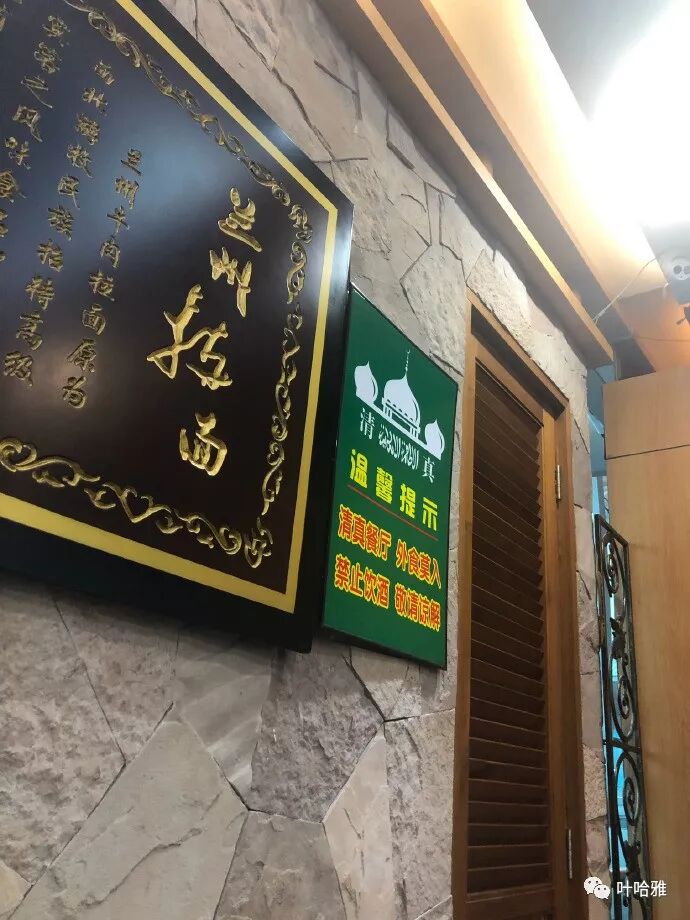
The shop does not serve alcohol, and a noodle set meal costs 68 yuan.
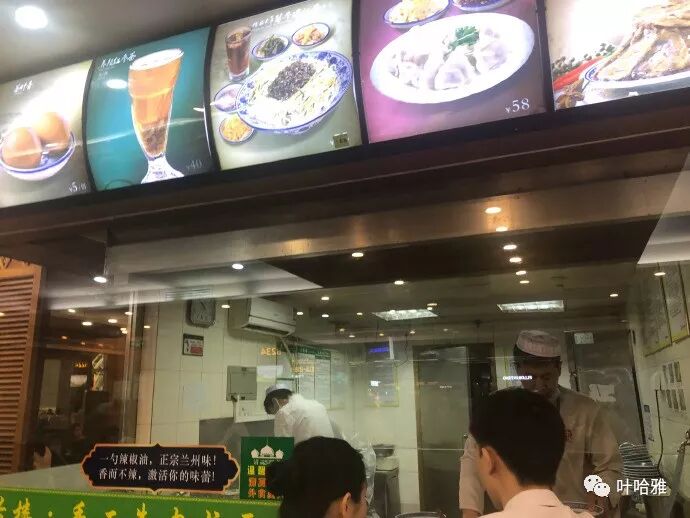
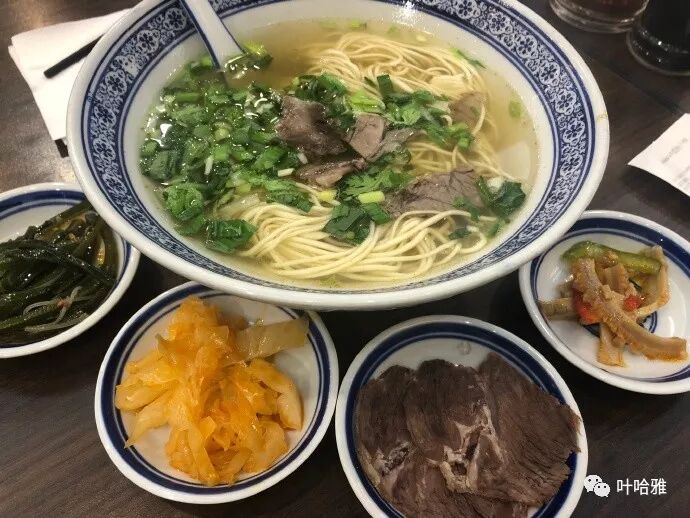
I saw a group of foreign friends asking the waiter if the shop was halal.
Address:
Boarding gate B234, Terminal 1, Baiyun Airport
Hui Muslim Restaurant (Huimin Fandian)
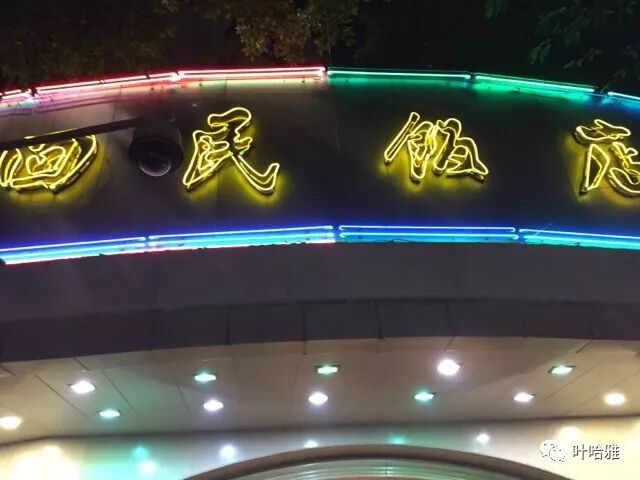
Founded in 1956, the Hui Muslim Restaurant was established by several old halal Cantonese restaurants like 'Satangji' and 'Yunji'. Originally named 'Halal Canteen', it was renamed 'Hui Muslim Restaurant' in 1959. It is one of the authentic state-run Cantonese restaurants in Guangzhou. Signature dishes like barbecued lamb (yangrou chashao), water chestnut cake (mati gao), beef balls (niurou wan), and boiled Dongshan goat (baiqie dongshanyang) are all prepared using traditional Cantonese methods.
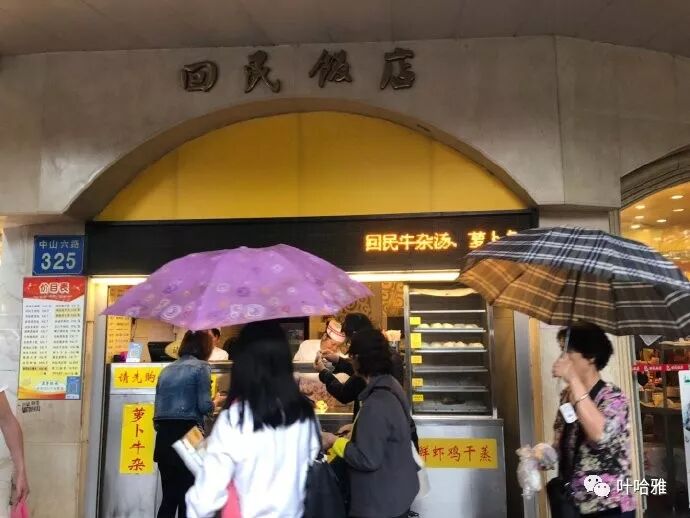
The Hui Muslim Restaurant is very popular among the local people in old Guangzhou, and you have to wait in line for lunch.
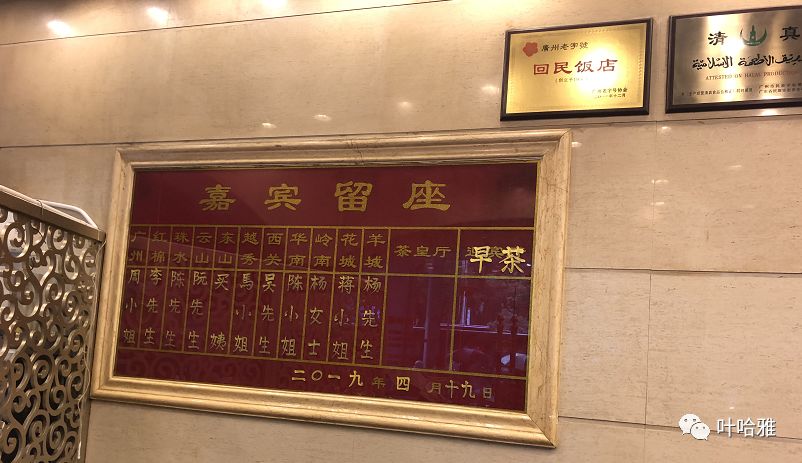
The sign above says 'reserved guests' because business is so busy that you need to book a table several days in advance.
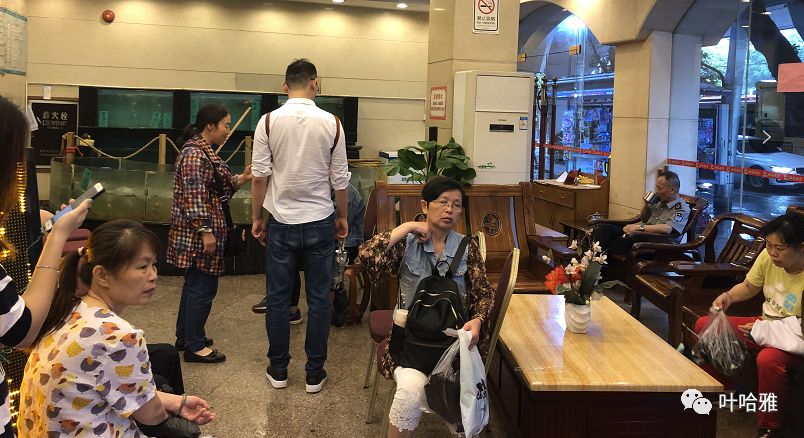
You can tell the diners are locals from Guangzhou just by looking at them, and most are middle-aged or older.
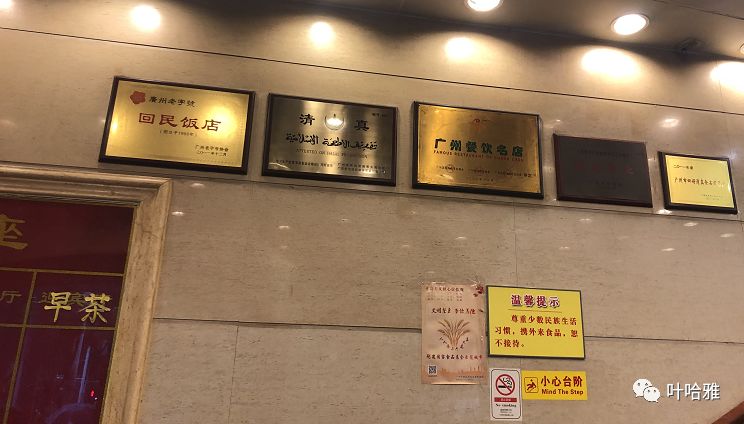
People in Guangzhou have a habit of drinking morning tea. It starts at 7:30 a.m. and goes until 11:00 a.m. After lunch, they can have afternoon tea until dinner time.
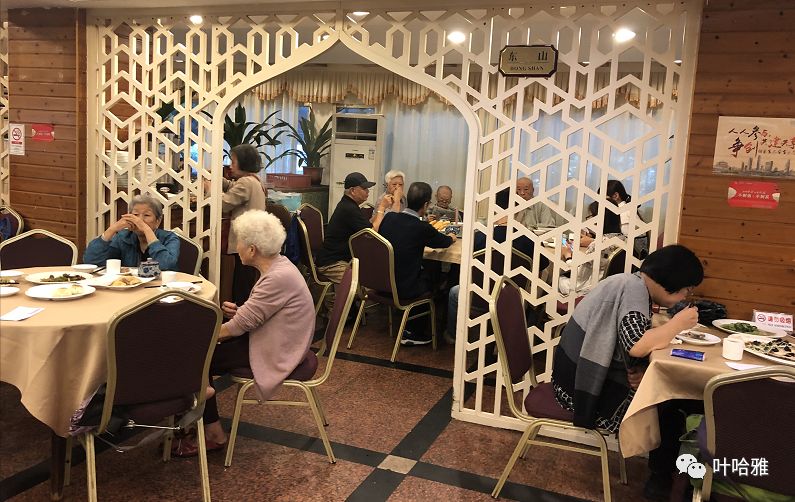
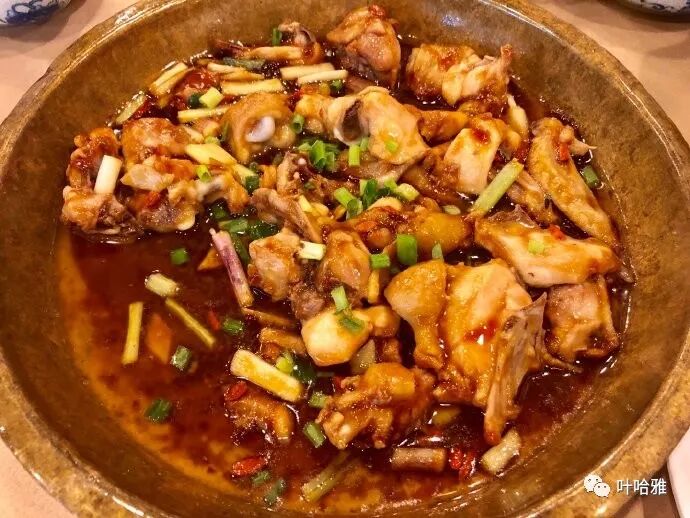
Shunde steamed chicken with shallots (hongcong tou)
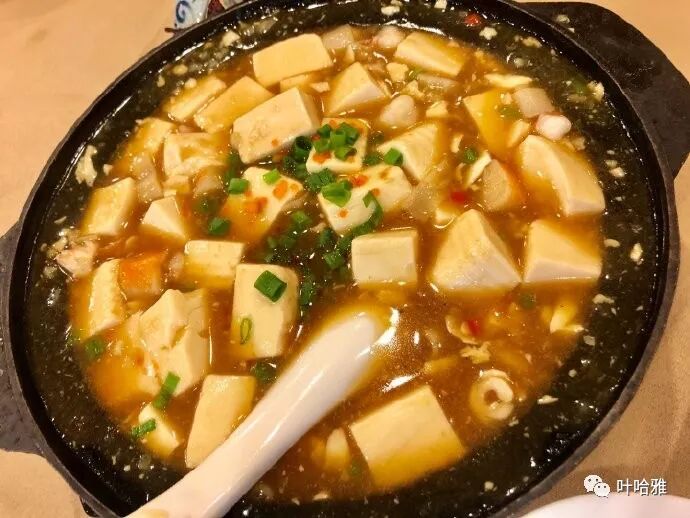
Seafood and tofu claypot (doufu bao)
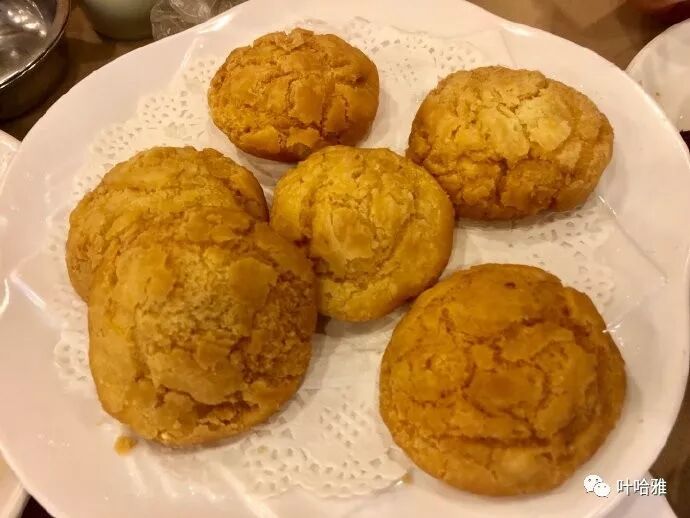
Improved Cantonese-style fried dough (youxiang)
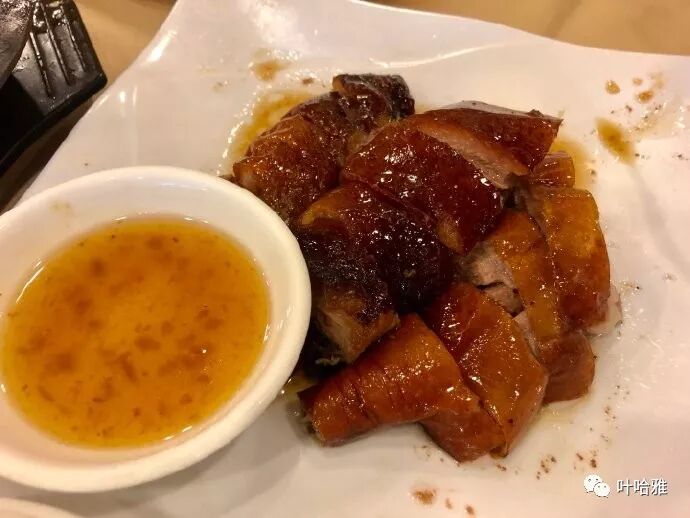
Hui Muslims crispy roast goose (shaoe)
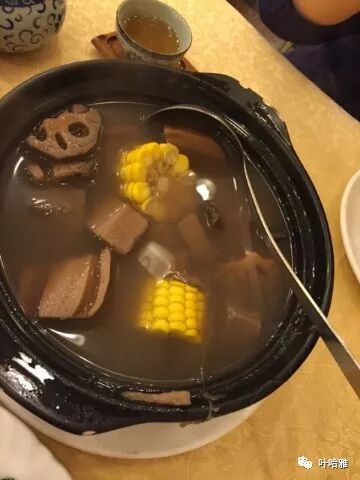
Healthy lotus root claypot (bao)
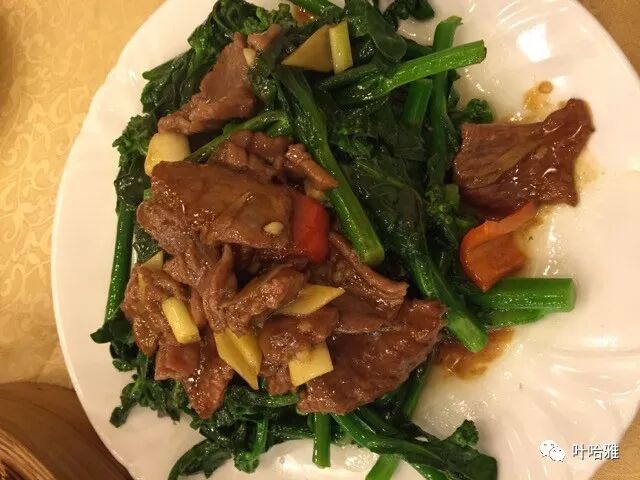
Stir-fried beef with choy sum (caixin)
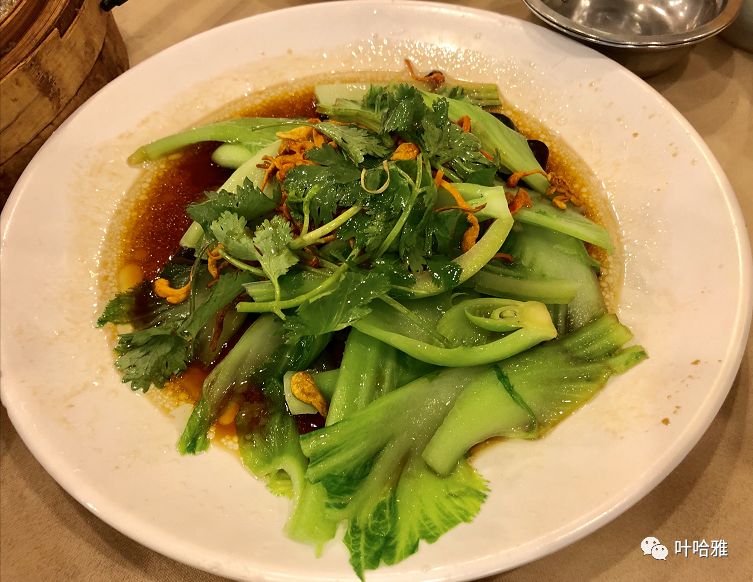
Tossed Shuidong mustard greens with fresh bean curd skin (zhuzhu)
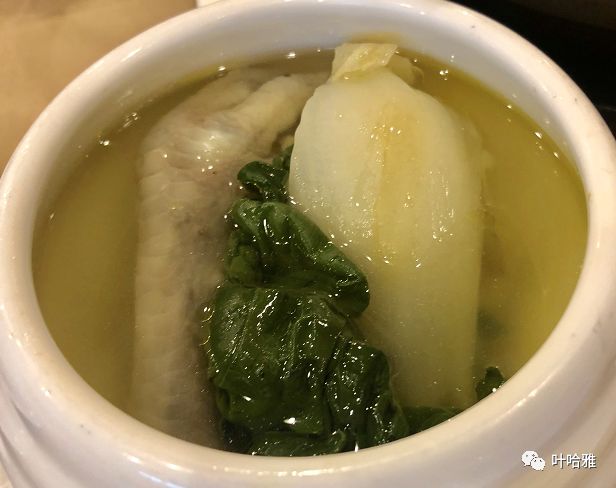
Stewed baby bok choy with dried scallops (yaozhu) and chicken feet (fengzhua)
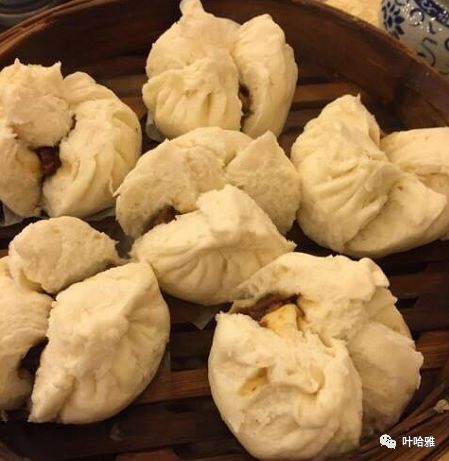
Lamb barbecue pork buns (chashao bao)
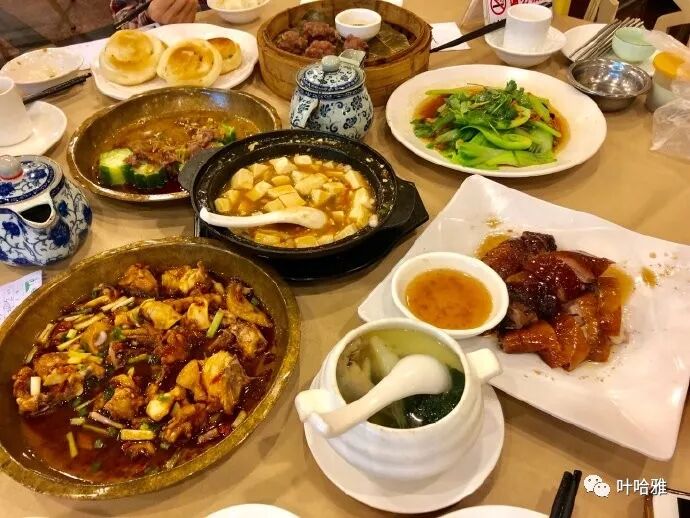
Address: No. 325 Zhongshan 6th Road, Yuexiu District, Guangzhou (Take Exit A of Ximenkou Metro Station, turn left, and walk 50 meters).
Xinjiang Mansion
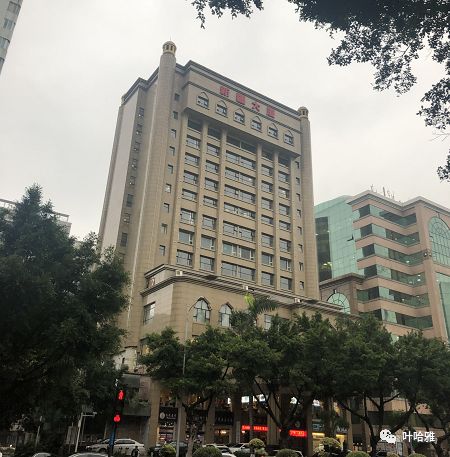
Besides the Hui Muslim Restaurant, Xinjiang Mansion is another place in Guangzhou where you can find authentic halal Cantonese morning tea.
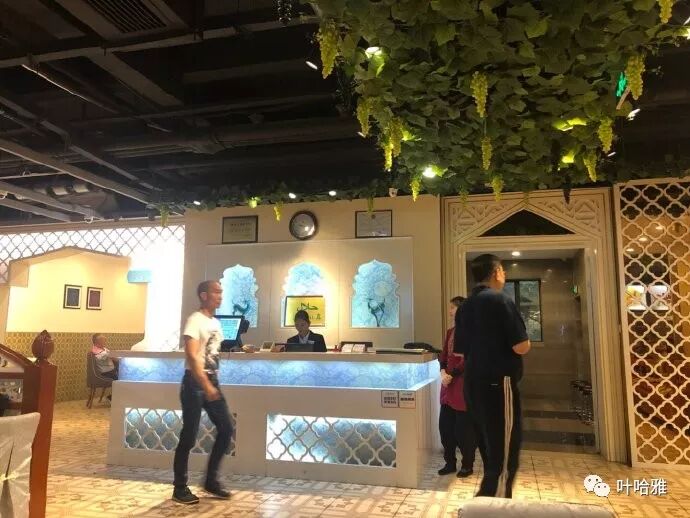
They start serving morning tea at 7:30 AM, and it was already packed when I arrived.
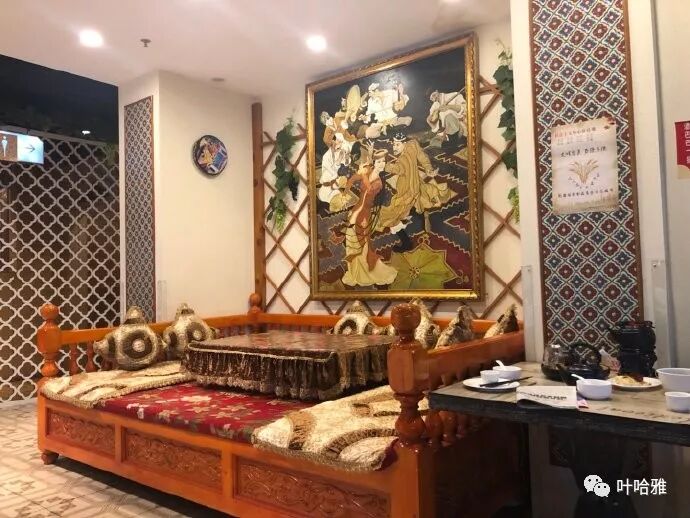
Most of the diners are local neighbors with plenty of time to sit and chat all morning.
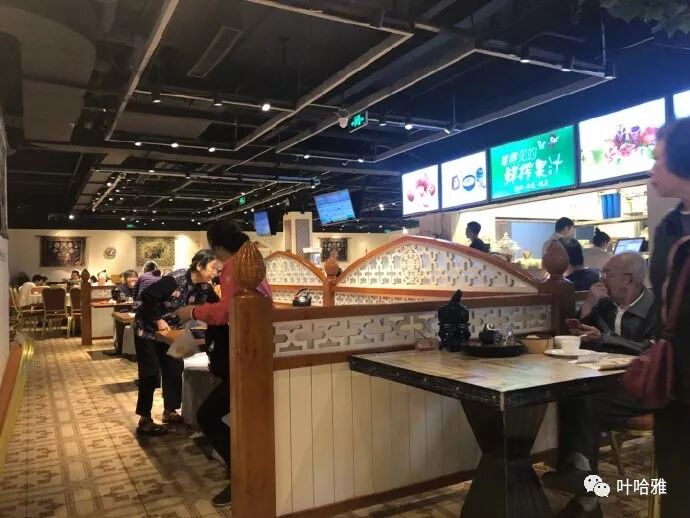
In Guangzhou, people have a habit of washing their own tableware before eating. It is not because the restaurant does not clean them, but because locals prefer to pour hot water over the dishes themselves for peace of mind. The servers will proactively bring you a basin for this purpose.
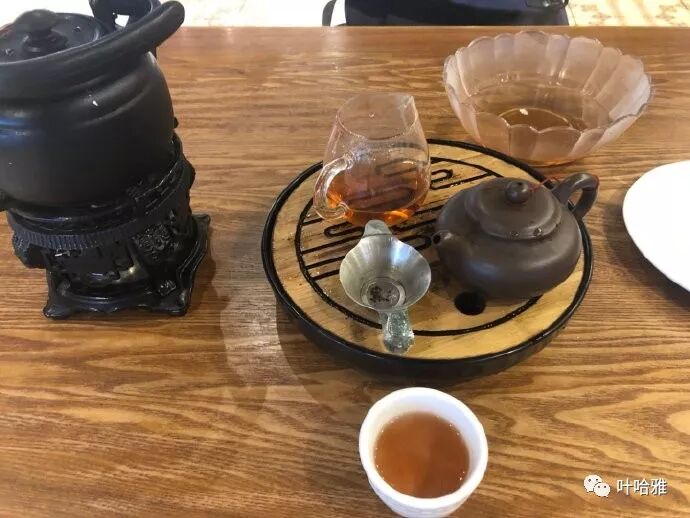
For morning tea, you first choose your tea leaves, such as black tea or pu'er, though you can also bring your own. Once the tea is ready, you can sip it while enjoying your snacks.
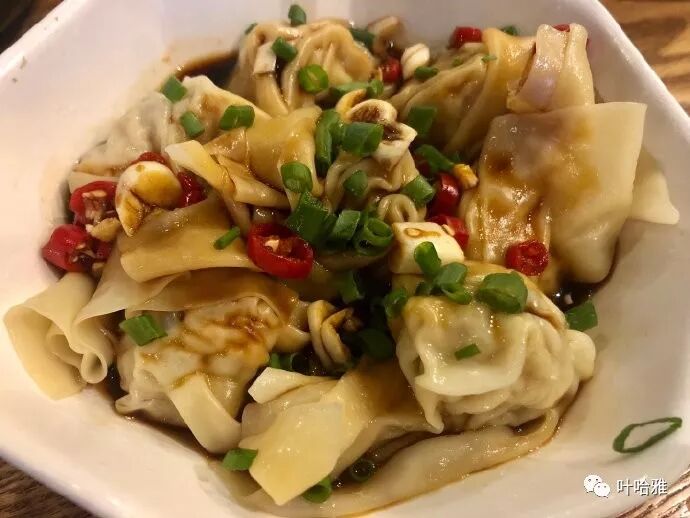
Spicy shrimp wontons (xiangla zhi lao xianxia yuntun)
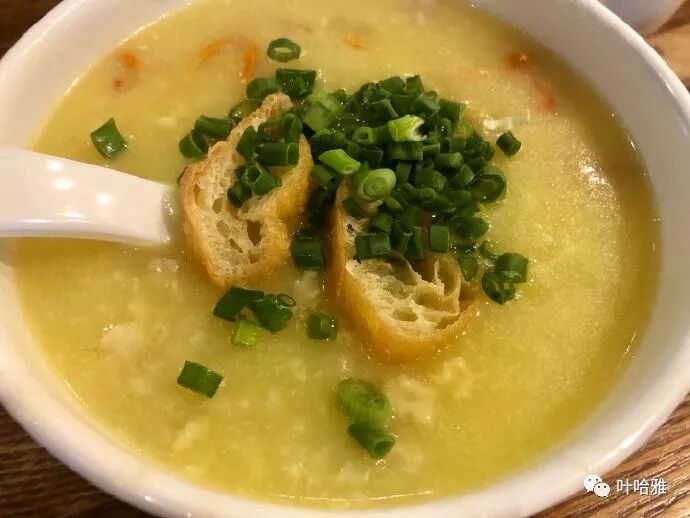
Cordyceps flower and Qingyuan chicken congee (chonghuacao qingyuan huaji zhou)
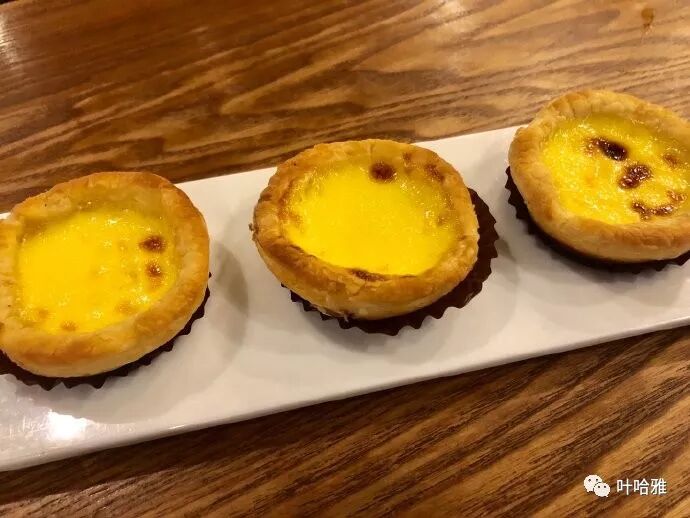
Xinjiang milk egg tart (xinjiang niunai puta)
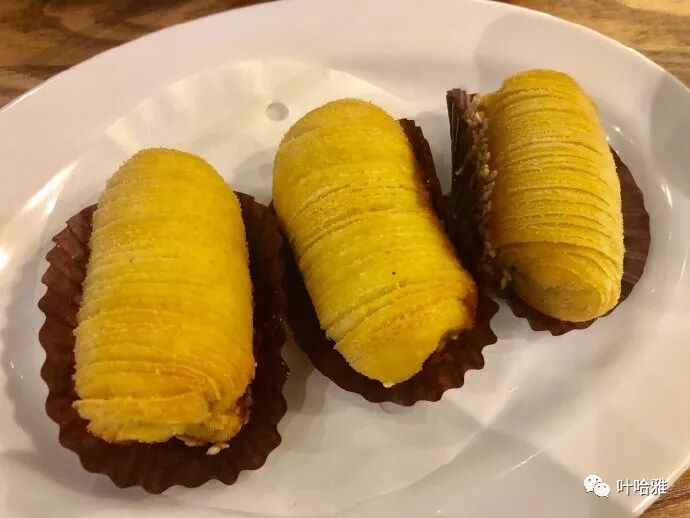
Signature durian pastry (jinpai liulian su)
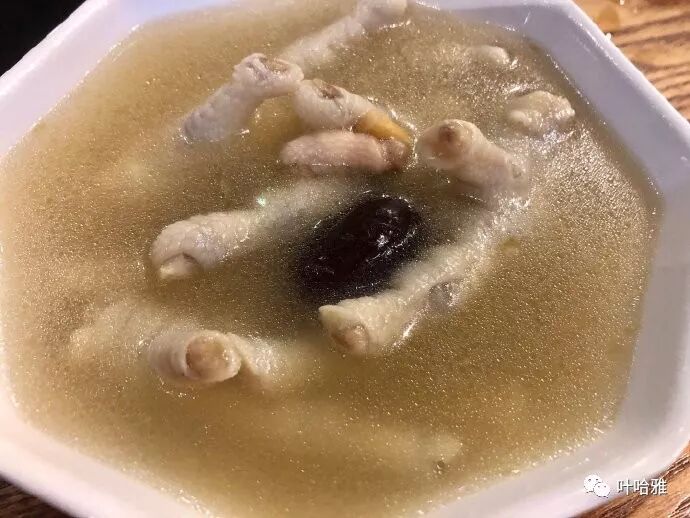
Medicinal herb chicken feet (yaoshan jijiao)
The morning tea at Xinjiang Mansion is a modern take on Cantonese morning tea, which is slightly different from the traditional style served at the Hui Muslim Restaurant.
Address:
76 Tianhe North Road, Guangzhou.
Lanzhou hand-pulled noodles (Lanzhou lamian).
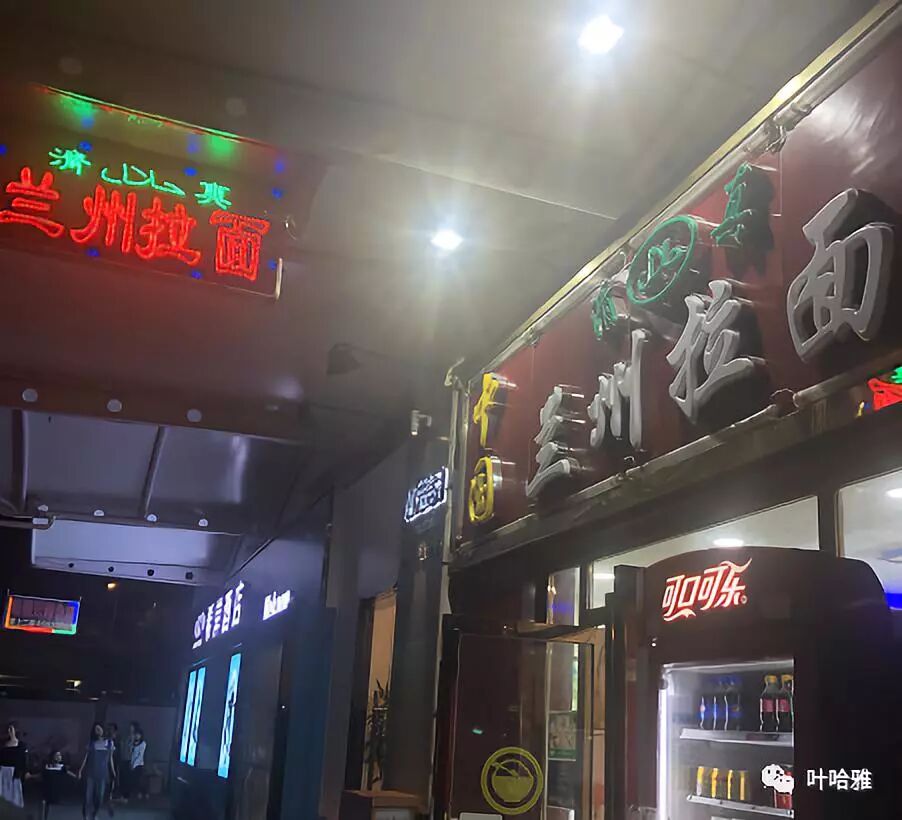
Lanzhou hand-pulled noodles are everywhere in Guangzhou, so you do not need to worry about finding food here. I mention this specific shop because it is near the hotel where I stayed, and I would occasionally stop by for an extra meal. The owner's family is from Qinghai. The shop is small but very clean, and they do not serve alcohol or allow smoking.
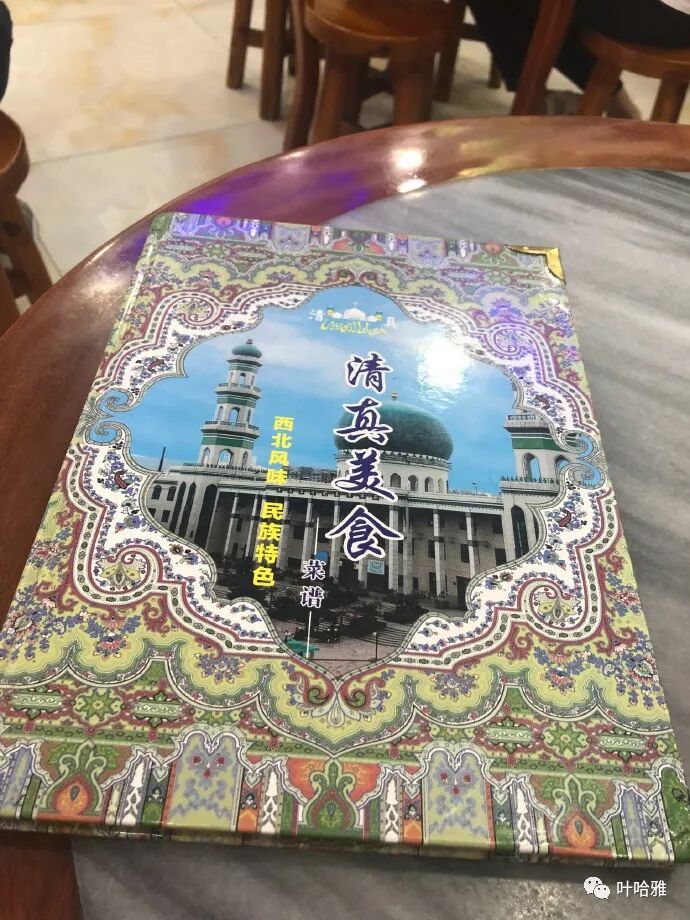
The shop has been open for a while and has a great relationship with the local residents. I saw neighbors leave their house keys with the staff so their family members could pick them up when they got home. This kind of trust is very heartwarming.
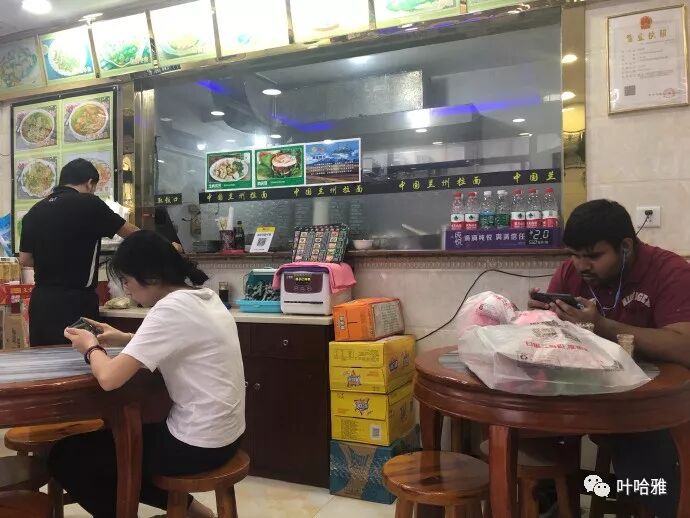
Because foreigners often come here to eat, the shop has menus in three languages.
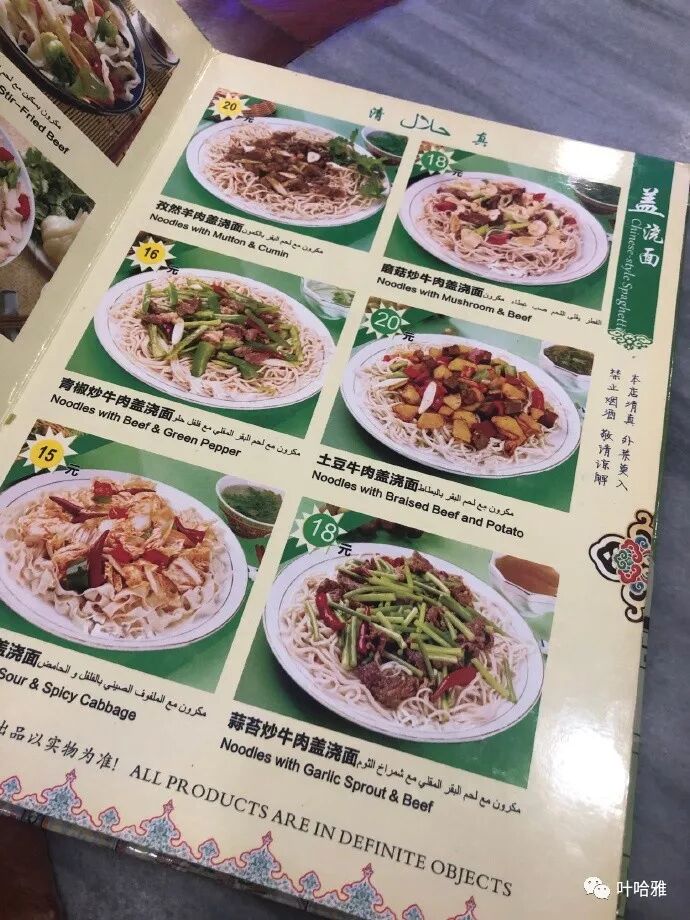
Some of my foreign friends are not Muslim, but they prefer to choose halal restaurants when traveling in China because they feel more at ease eating there.
Sometimes I think that running a small shop like this might not make a fortune, but the money earned is clean, and you do not have to answer to anyone. Keeping up with namaz and ensuring blessings for both this life and the next makes you the real winner.
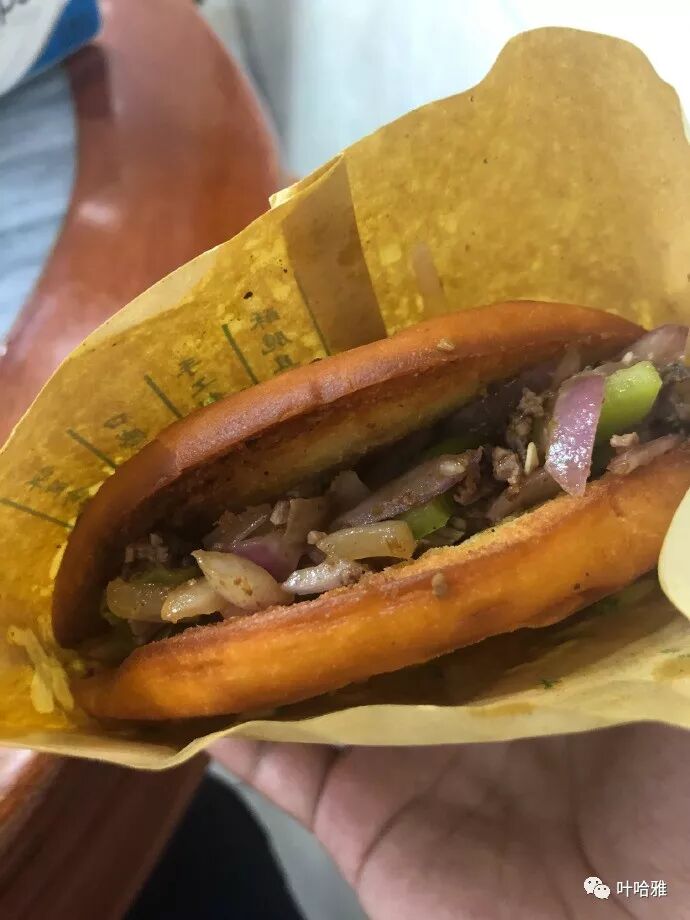
Address: Next to Lavande Hotel, Zhongshan Avenue, Tianhe District, Guangzhou.
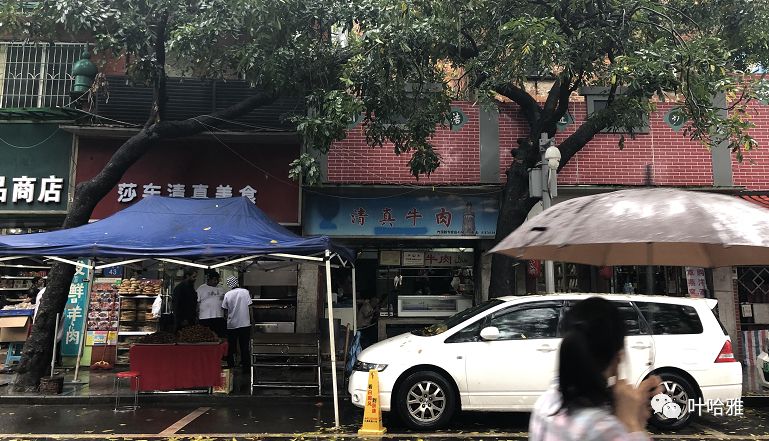
For friends (dosti) visiting Guangzhou, I suggest staying near the Guangzhou Hotel in Yuexiu District. There are four mosques in Yuexiu District, and you can find halal restaurants near all of them.
Huaisheng Mosque.
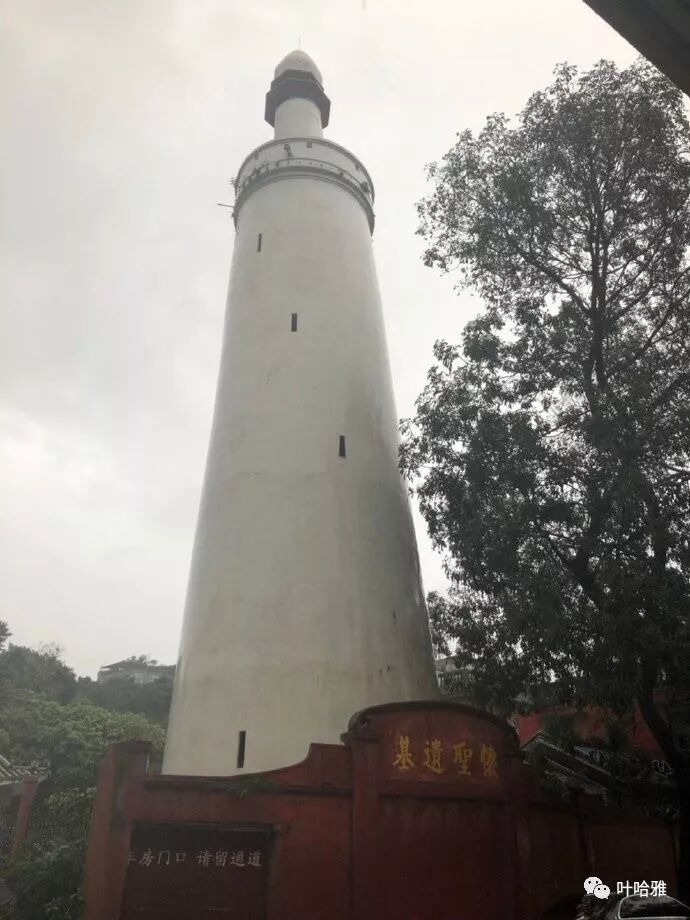
Huaisheng Mosque is also called the Light Tower Mosque (Guangta Si) because it has a light tower inside. It is the oldest mosque in Guangzhou.
There are many different theories about when the Huaisheng Mosque was first built. Long Feiliao’s article, "A Study of the Architectural Culture of the Tang Dynasty Huaisheng Light Tower Mosque in Guangzhou," and Zeng Zhaoxuan’s "A Study of the Construction Era of the Huaisheng Mosque Light Tower in Guangzhou" both argue that the mosque was completed in the first year of the Zhenguan era of the Tang Dynasty (627).
After conducting multiple studies, scholar Li Xinghua proposed that it is very likely that Islam was introduced in the early Tang Dynasty, and it is certainly earlier than the mosques in Quanzhou, so further research is necessary.
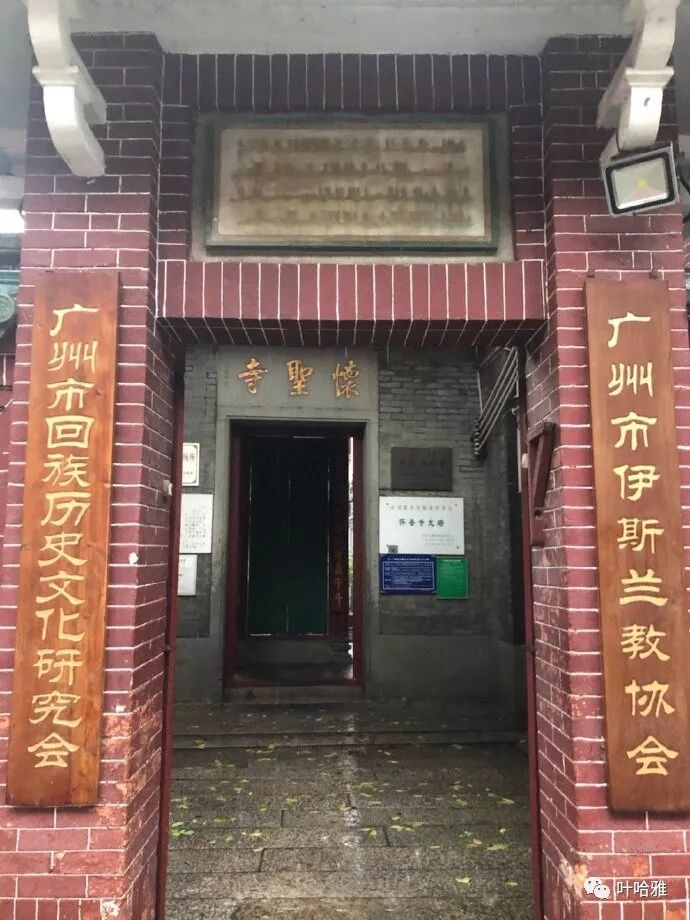
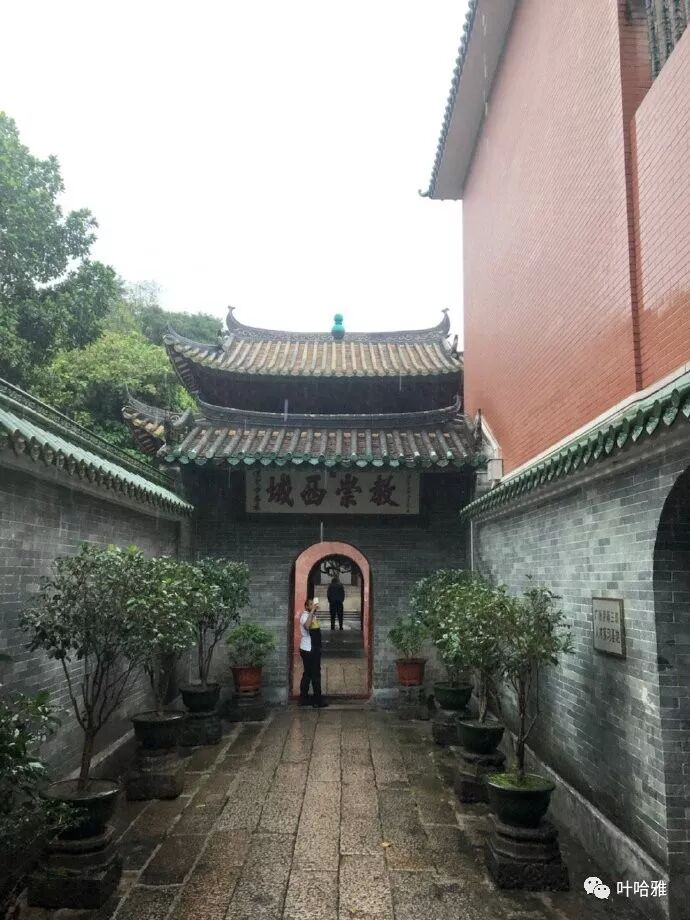
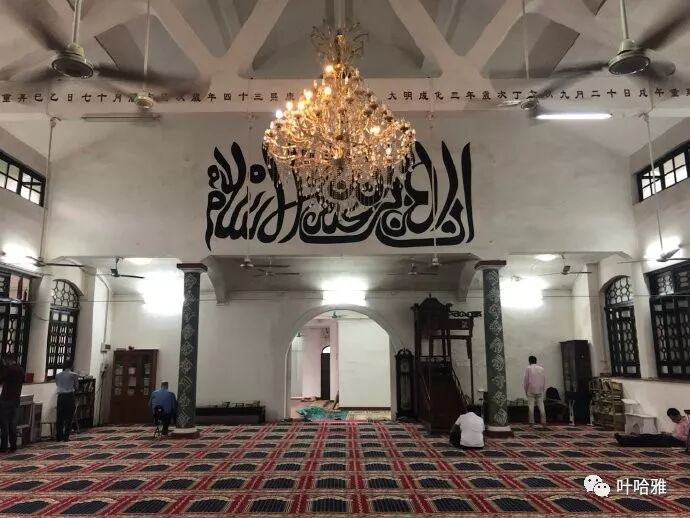
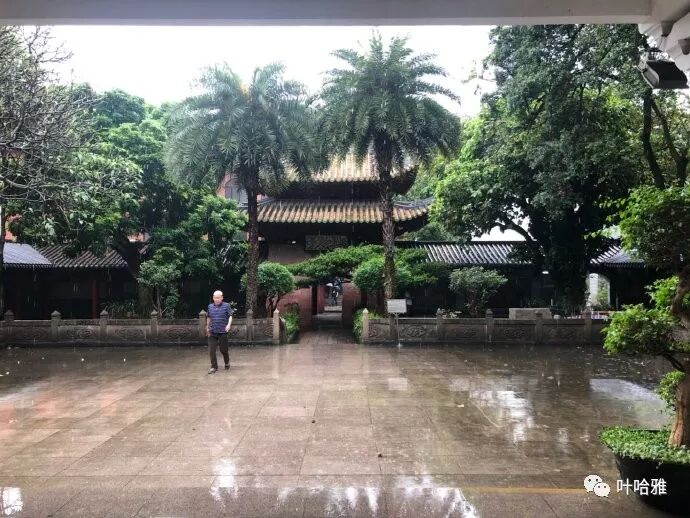
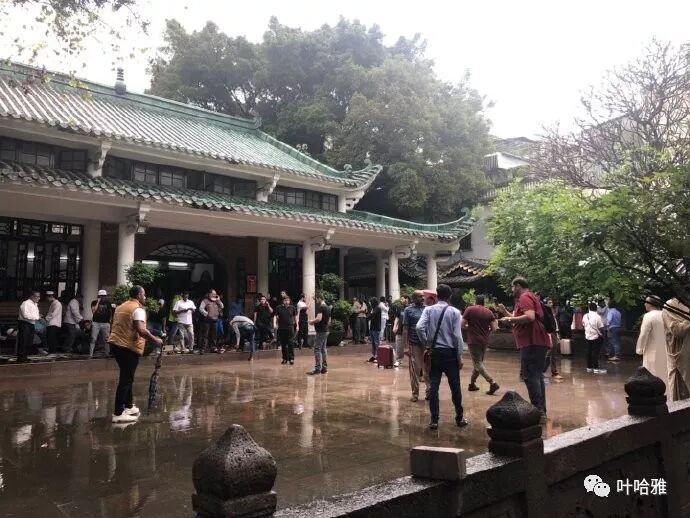
In 2015, I took a photo with the imam who was leading the namaz at the Huaisheng Mosque that day. The imam was from Pakistan and spoke fluent Mandarin and Cantonese.
Haopan Street Mosque
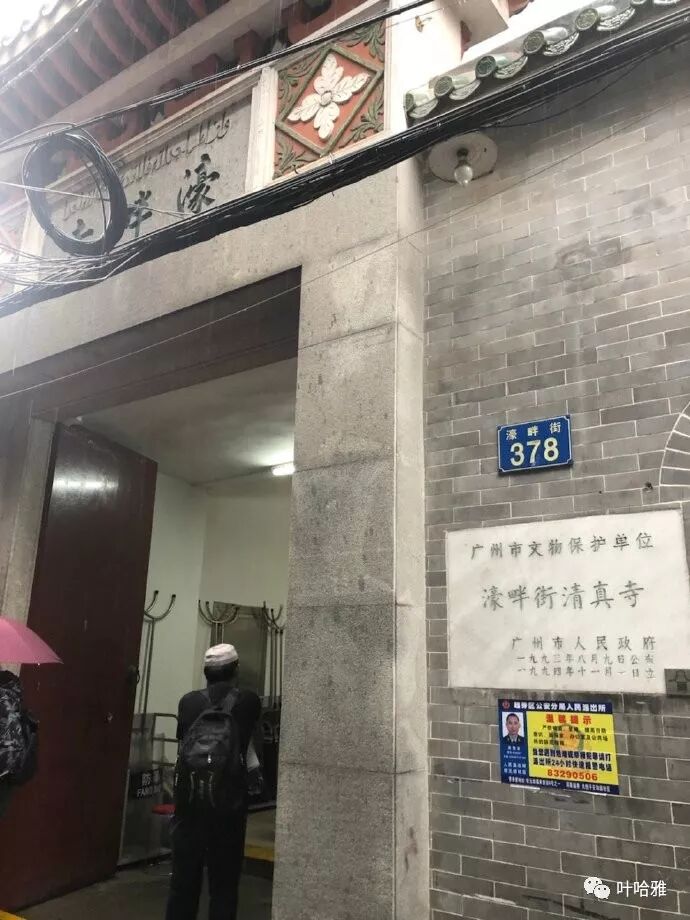
Located on Haopan Street, Renmin Middle Road, in the Yuexiu District, this mosque was first built during the Chenghua period of the Ming Dynasty (1465-1487).
After the Ming Emperor sent over a thousand Hui Muslim soldiers from Nanjing to be stationed in Guangzhou, they built a new city and dug the South City Moat. To make it easier for the families of the Hui Muslim soldiers to perform namaz, they raised funds to build several mosques, and the Haopan Mosque was one of them.
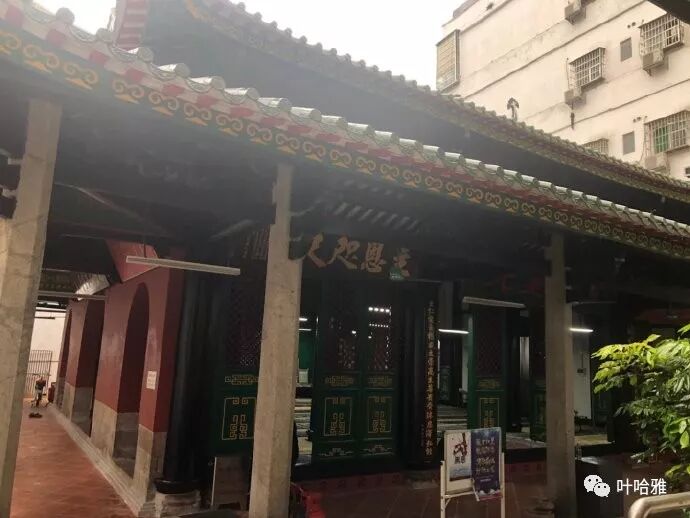
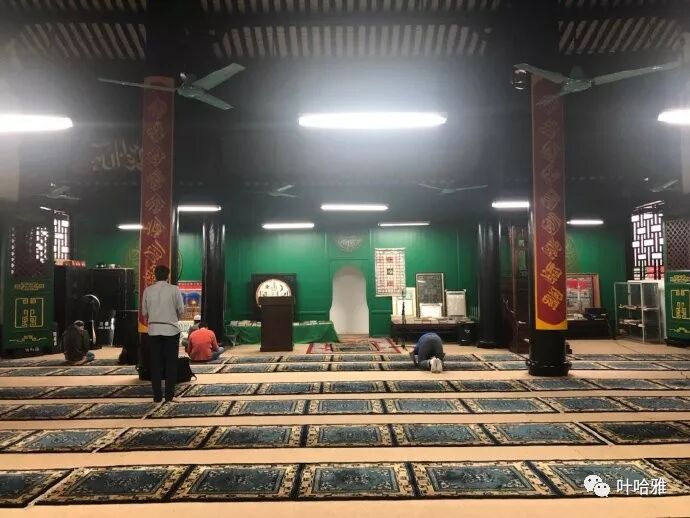
Xiaodongying Mosque
The Xiaodongying Mosque was built at the same time as the Haopan Street Mosque. After the Hui Muslim troops arrived in Guangzhou, they were divided into four camps: Dadong, Xiaodong, Xiying, and Zhutong. These were commonly known as the "Hui Muslim Camps" and were stationed inside and outside the city of Guangzhou. Today’s Xiaodongying Street is the former site of the Xiaodongying camp and is named after it. The Xiaodongying Mosque was once the home of civil organizations like the Guangzhou Muslim Youth Association and the Muslim Tongyi Association.
The Guangzhou Hotel is near the Xiaodongying Mosque, making it very convenient for dining, accommodation, and transportation.
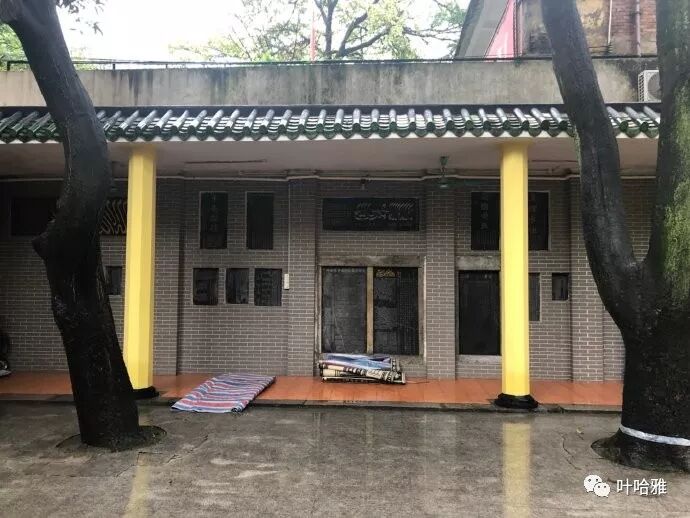
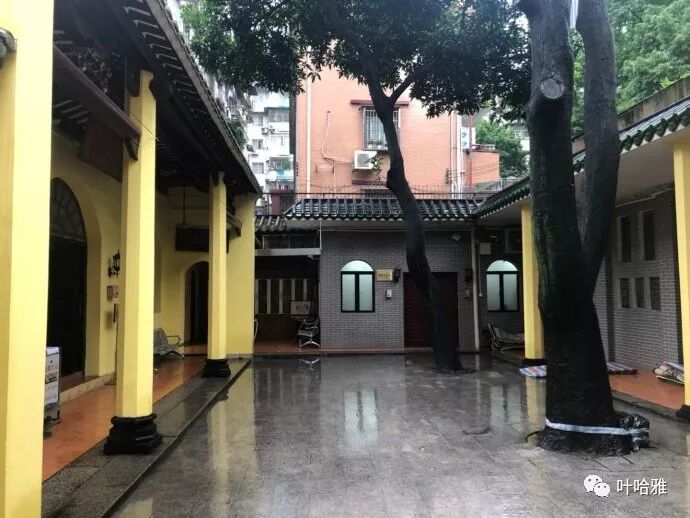
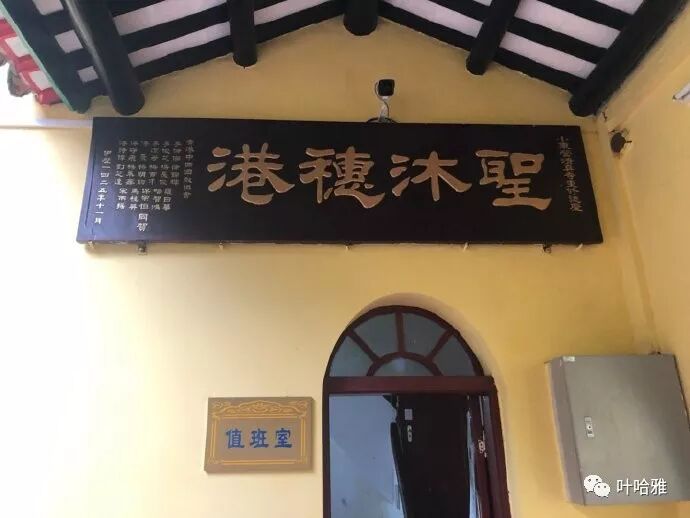
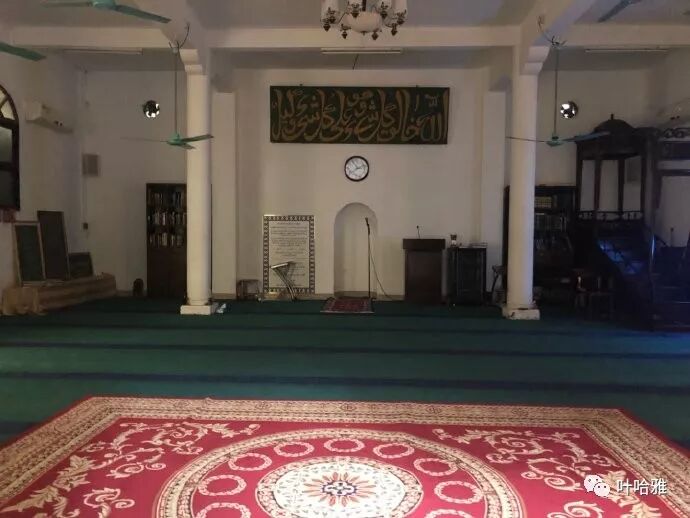
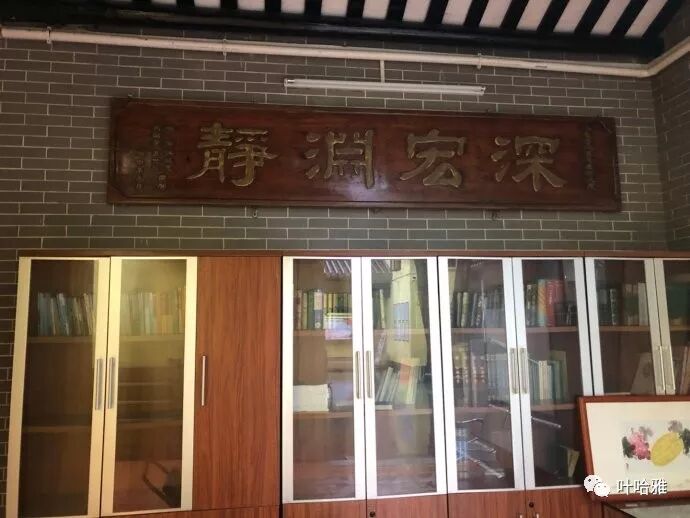
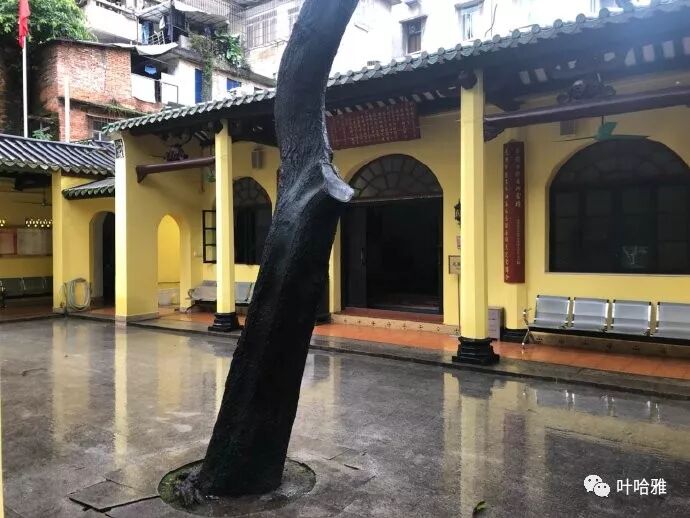
Xianxian Mosque
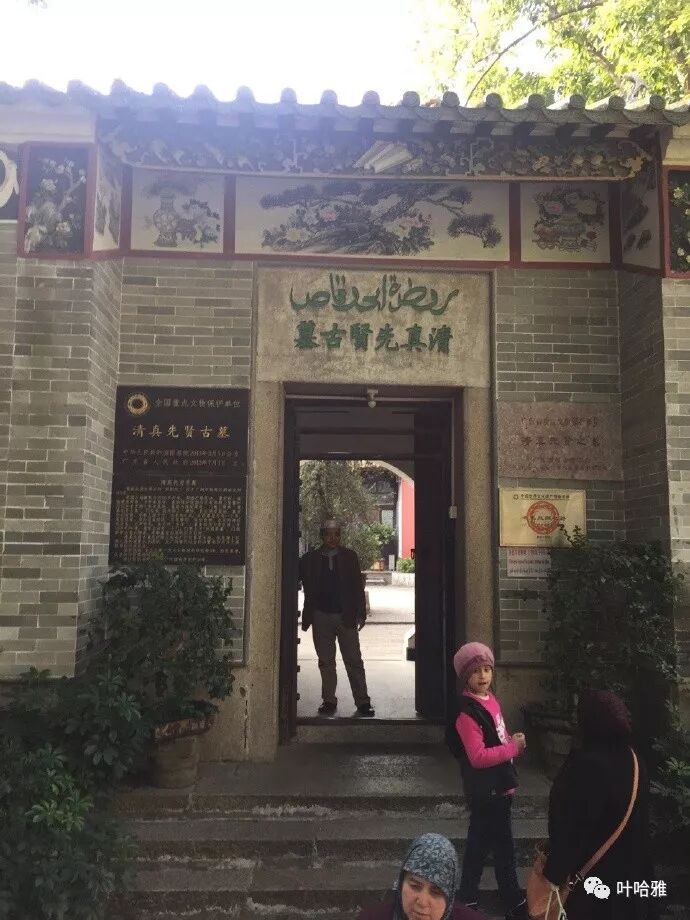
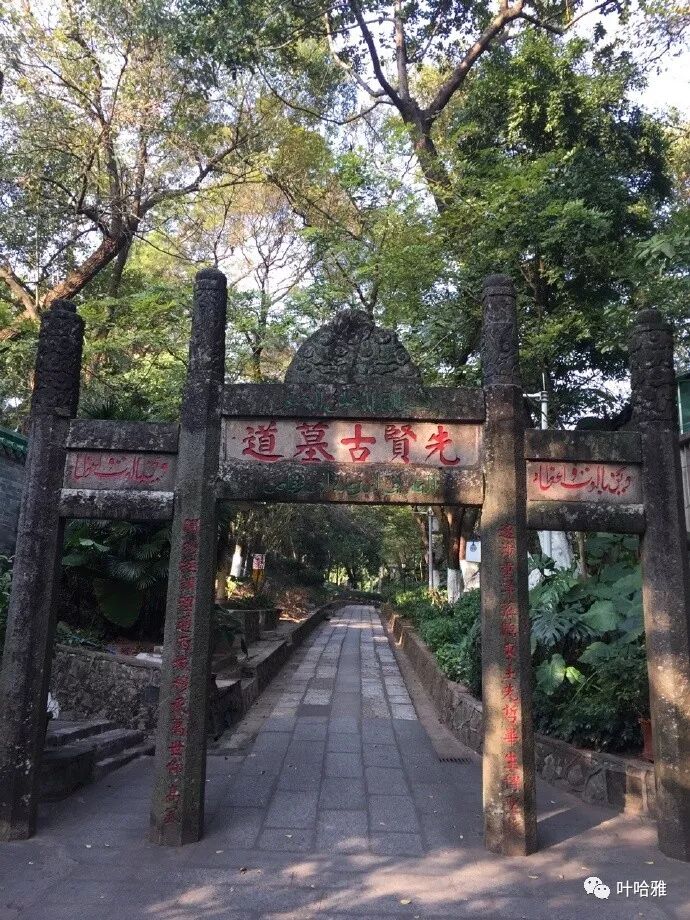
The Xianxian Mosque is located in Lanpu Park on Huanshi Road in Guangzhou. It was originally called the Ancient Tomb of the Muslim Worthies and serves as the burial site for over 40 famous Arab Islamic missionaries led by Sa'd ibn Abi Waqqas.
As early as the beginning of the 7th century, the Arab Sa'd ibn Abi Waqqas came to Guangzhou to spread Islam. He later passed away in Guangzhou and was buried on the west side of what is now Lanpu Park. After he died, his followers inscribed the words Ancient Tomb of the Muslim Worthies on his tombstone.
The Xianxian Mosque was built in 2009, southwest of the ancient tomb. According to the legal rulings of Elder Juma, if a grave is next to a mosque and prayers are performed inside the mosque, the prayer is valid. If the grave is inside the mosque, the Hanbali school of jurisprudence considers the prayer invalid, but the other three major schools of jurisprudence consider the prayer valid, though praying with a grave in front of the worshiper is disliked.
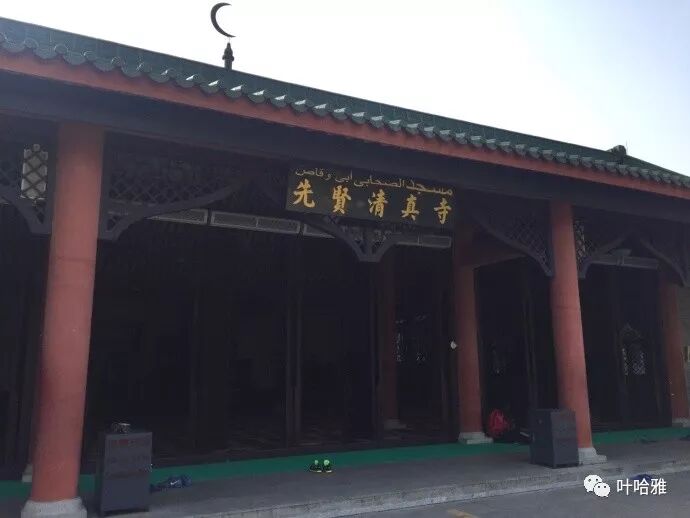
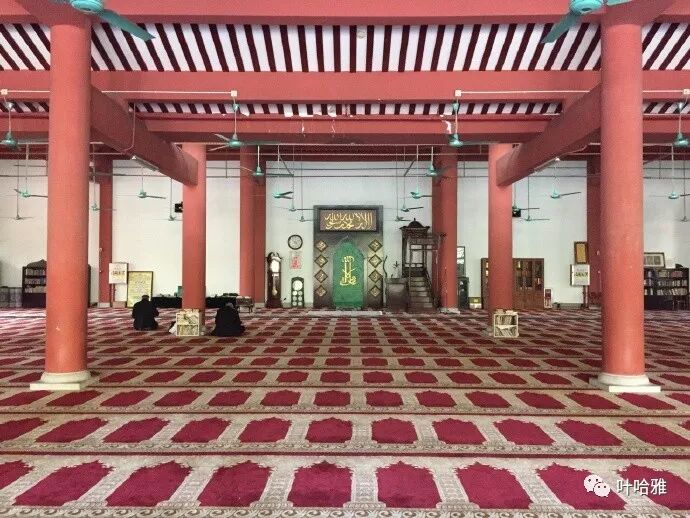
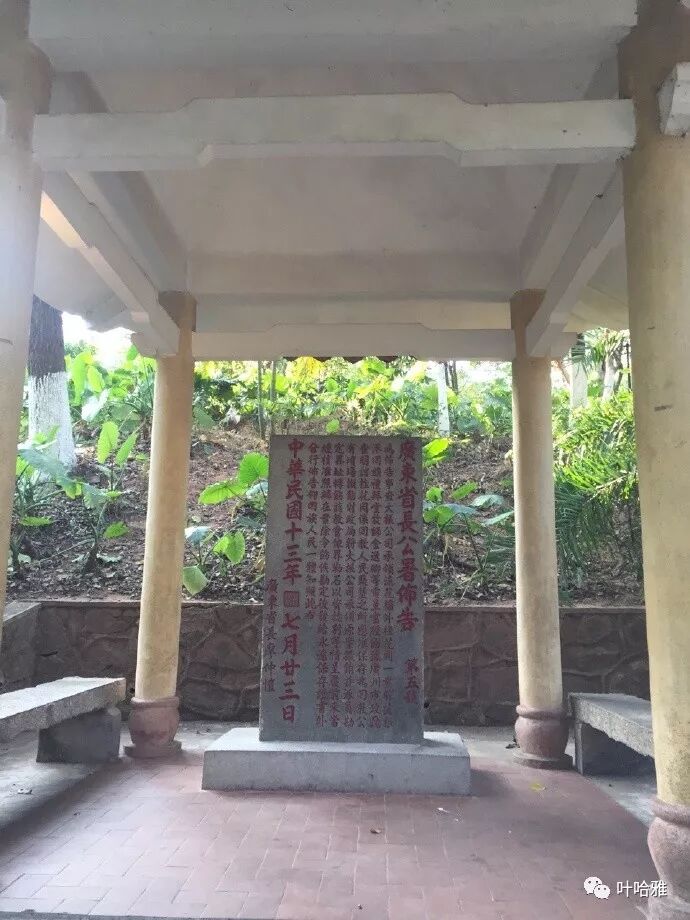
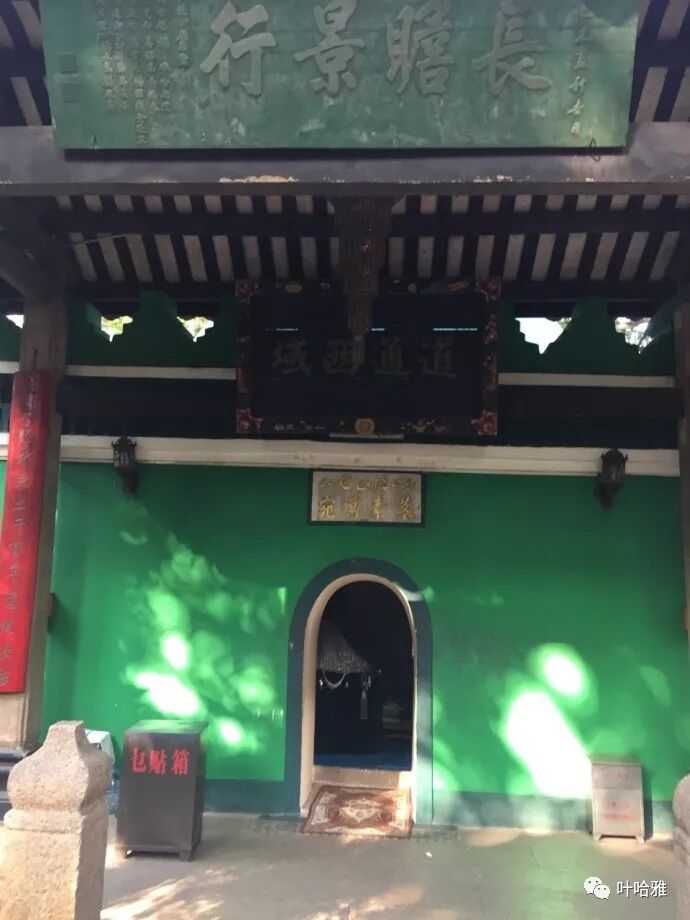
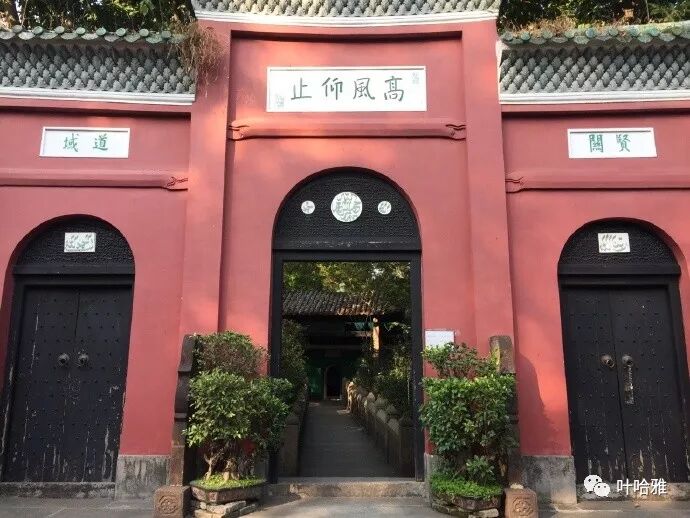
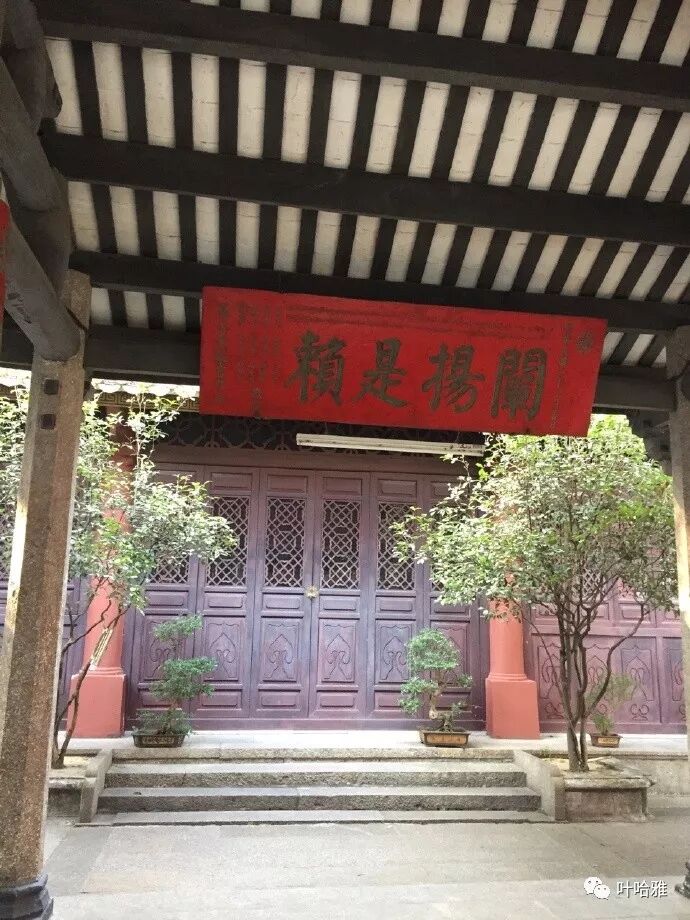
Every Friday, there is a market on Lanpu Road near the mosque that feels a bit like the Grand Bazaar in Urumqi. Remember that it only happens on Fridays.
Halal Food Guide: Guangzhou — Hui Youxiang and Yemeni Food
Articles • ali2007fr posted the article • 0 comments • 301 views • 2026-05-18 20:36
Summary: Halal Food Guide: Guangzhou — Hui Youxiang and Yemeni Food is presented here as a firsthand travel account in clear English, beginning with this scene: I left Macau on January 23, 2023, to visit the Macau mosque known as Moro Garden (Moro Yuan). The account keeps its focus on Guangzhou Halal Food, Yemeni Food, Hui Muslims while preserving the names, places, food, and historical details from the Chinese source.
I left Macau on January 23, 2023, to visit the Macau mosque known as Moro Garden (Moro Yuan). I ate delicious Indonesian Javanese food and wrote about it in my post, 'Moro Garden and Indonesian Food in Macau'. On the morning of January 25, I left Macau through the border gate to Zhuhai, then took a train to Guangzhou to start the second leg of my trip. This post covers the halal food I ate in Guangzhou. I will write about my visits to the mosque and the cemetery in the next post.
I took the subway from Guangzhou Station to Taojin and started with a Turkish breakfast at MADO. MADO is famous for its ice cream made from goat milk sourced from the high mountain pastures of Mount Ahir in southeastern Turkey. Mount Ahir is near the epicenter of the recent major earthquake in Turkey. I pray they can get through this difficult time.
MADO likely has the widest variety of breakfast options among Turkish restaurants in China. When I visited the Yiwu branch, I had the Sini breakfast for two, which came with a great selection of cheeses and jams. Since I was alone at the Guangzhou branch, I ordered the hot breakfast platter. It included grilled Turkish sausage (sujuk), grilled mushrooms with yellow cheese, grilled cheese, spring rolls filled with feta cheese, tomato and egg scramble (menemen), grilled peppers, grilled tomatoes, and fried potatoes, served with bread and Turkish black tea.
The earliest record of sujuk sausage appears in the 1070s in the 'Compendium of the Turkic Dialects' (Divan-u Lugat-it-Turk) by Mahmud al-Kashgari. Similar versions exist in many parts of the Balkans, the Middle East, and Central Asia. Turkish sujuk is mainly made by mixing ground beef with beef fat, sheep tail fat, salt, cumin, garlic, chili, and other spices, then stuffing it into casings to dehydrate and ferment.
The name for the tomato and egg scramble (menemen) comes from a town in Izmir, Turkey, and the word itself originally comes from Ancient Greek. Menemen served with bread is a classic Turkish breakfast combination. Besides tomatoes, eggs, and green peppers, this dish can also include onions, black pepper, oregano, garlic, and chili powder, depending on personal taste.
At noon, I met my friend (dosti) Chen Yong, whom I had known for a long time. He is both a staff member and a volunteer at the Huaisheng Mosque. My friend treated me to Shache Halal Food across from the Huaisheng Mosque. It is the closest halal restaurant to the mosque's minaret. When the oil-fried meat noodles (youyourou banmian) and kebabs arrived, they looked perfect, and they tasted even more authentic than I expected! I really did not expect to find such delicious Xinjiang food in Guangzhou; it was just as good as what I ate in Shache. The hand-pulled noodles (latiaozi) were very thin, showing years of skill, and the oil-fried meat was cooked just right—not too hard and not too soft. The best part was their kebabs. They were grilled over charcoal and were very fresh and tender. I could close my eyes and imagine I was back at a bazaar in Southern Xinjiang.
I rarely eat at Xinjiang restaurants when traveling in China because the taste often changes completely when the ingredients are different. But Shache Halal Food across from Huaisheng Mosque changed my mind. I will definitely eat there again next time I am in Guangzhou!
In the afternoon, I went to the Haopan Mosque in Guangzhou for the afternoon prayer (dhuhr) and met Master Yang, whom I had not seen in six years. Master Yang is a local Hui Muslim from Guangzhou and has been a mosque attendant at Haopan Mosque for 20 years. I drank tea and chatted with Master Yang, and I ate some fried dough (youxiang) made by local Guangzhou Hui Muslims for a charity event (chusan). This was my first time eating local Guangzhou youxiang. They were small, crispy, and sweet, almost like a pastry.
Haopan Mosque is located on the banks of the Nanhao, a tributary of the Pearl River. It was first built during the Chenghua period of the Ming Dynasty and rebuilt in 1706 (the 45th year of the Kangxi Emperor). A scripture school was opened here during the Qianlong period, and a Hui language university was opened during the Tongzhi period. They hired many famous scripture teachers from Nanjing, Gansu, and Yunnan, training a large number of imams and playing a major role in the development of Islam in Guangzhou, Hong Kong, and Macau.
In the afternoon, I went to visit the Ancient Cemetery of the Worthies in Guangzhou. There is a well in the south courtyard of the cemetery called the Well of the Worthies. Legend says it was built to commemorate the worthy Sa'd ibn Abi Waqqas. Many friends (dosti) drink a cup of water from the well after visiting the graves, and it really tastes sweet.
The Ancient Cemetery of the Worthies in Guangzhou is commonly known as the Huihui Cemetery, the Great Man's Cemetery, or the Echoing Cemetery. It has been a burial ground for Muslims in Guangzhou since the Tang Dynasty. The earliest record of the Ancient Cemetery of the Worthies comes from 'One Hundred Poems of the South Sea' (Nanhai Baiyong) written by Fang Xinru in 1206 (the second year of the Kaixi period of the Southern Song Dynasty): 'The tombs of the foreigners are ten miles west of the city, thousands of them, all with heads to the south and facing west.'
At the center of the ancient cemetery is the tomb of the legendary first worthy to come to China to preach, Sa'd ibn Abi Waqqas (Saheb Saad Wakkas). Records show the status of the Tomb of Waqqas (Wangesu mu) rose during the Yuan and Ming dynasties. The Ming dynasty book Guangzhou Prefecture Records (Guangzhou fuzhi) notes: Every year, people of all surnames must visit the tomb to pay respects and recite scriptures, a tradition that continues to this day. Countries in the Western Regions respected this influence. Every time they sailed thousands of miles to Guangzhou, they considered visiting the tomb an honor. Even the most noble visitors would crawl and bow in Guangzhou to show their utmost sincerity.
In the evening, I went to Hadramout Restaurant, a long-standing Yemeni eatery that has been in Guangzhou's Xiaobei area for over a decade. Hadramout is now the name of a province in eastern Yemen, but it is also a very ancient term once used to refer to the coastal plains of the southern Arabian Peninsula. Residents here established the Kingdom of Hadramout as early as 1000 BC, and the people of Ad mentioned in the ancient Quran are said to have lived here as well.
I visited Xiaobei in Guangzhou many times before 2019 and witnessed the glory of its Middle Eastern and African trade. Although the country has opened its borders again, the major trade centers have not yet recovered. The building where Hadramout is located used to be packed with shops doing foreign business, but now you can only feel the old bustle of Xiaobei inside their restaurant.
Although there are several Arab restaurants in Beijing, they are all concentrated in the Levant region on the eastern Mediterranean coast, such as Lebanon, Palestine, and Syria. While they are all Arab, the cuisines of the Levant, the Arabian Peninsula, and the North African Maghreb region each have their own characteristics and are all worth trying. Coming to Guangzhou this time, I really wanted to try Yemeni food that I cannot get in Beijing.
At Hadramout, I had the Yemeni specialty Zurbian lamb and saffron rice (Zurbian yangrou zanghonghua menfan), a major dish served at Yemeni weddings, breaking the fast, and birthdays. The portion of rice is very large, making it suitable for two people. They give you a lot of meat. You might not see it well in the photo, but the rice is actually buried under all that meat. The meat is braised until very tender, and the texture and flavor are both excellent.
When eating Yemeni rice, you should pair it with the Yemeni specialty spicy sauce Sahawiq. This spicy sauce is made with fresh chili peppers, cilantro, garlic, salt, cumin, and parsley, mixed with olive oil and sometimes tomatoes. Their meat broth is also free to drink, and I think it tastes quite good.
On the morning of January 26, I arrived right at 7:00 AM when the Guangzhou Hui Muslim Restaurant (Guangzhou Huimin fandian) opened for morning tea. Some elderly people had already taken seats, but there were still plenty of empty ones. Every time I visited Guangzhou before, I would go to the Hui Muslim Restaurant for morning tea, and I especially liked their lamb barbecue buns (yang chashaobao). Five years have passed in the blink of an eye, so I had to try them again on this trip.
The Hui Muslim Restaurant can be called the last tear of local halal food in Guangzhou, serving as the final witness to the city's once-thriving local halal dining industry. The Hui Muslim Restaurant started as a halal canteen in 1956, with chefs coming from local halal eateries like Gaosheng Tea House, the Hui Muslim Fengcheng Roasted Meat Shop, and the Halal Deji Roasted Meat Shop. In 1959, the canteen merged with the Huabei Hotel and took over the second branch of Satangji, renaming itself the Hui Muslim Grand Hotel. It took over the Hui Muslim Ice Room in 1964 and moved to its current location on Zhongshan 6th Road in 1975, where it has been for nearly 50 years. Due to complex historical reasons and the changes in the local Muslim community during the 20th century, the local halal dining industry in Guangzhou declined. As a restaurant with nearly 70 years of history, it is quite an achievement for the Hui Muslim Restaurant to still be here today.
In 2016, I posted an article on Douban called The Morning and Night of Guangzhou Hui Muslim Restaurant, and I ate there several times in a row back then. I checked the morning tea menu from that time, and it was only on its 52nd edition; now it is already on its 70th. Except for the price increases on the dim sum, the variety has basically stayed the same. Besides the lamb barbecue buns I wanted most, I also ordered steamed chicken feet, water chestnut cake, chicken biscuits, and curry beef rice noodle rolls (changfen). When eating alone, you cannot order many things. I wanted to order more, but unfortunately, I was too full. The barbecue buns are still filled with soft, slightly sweet lamb and paired with salted egg yolk, which is very delicious. This was my first time eating chicken biscuits (jizaibing). They are said to be a very traditional recipe from Hui Muslims in Guangzhou, mixing the flavors of fermented bean curd (nanru) and dried tangerine peel (chenpi) to take you right back to old Guangzhou.
You should really take your time with morning tea (zaocha), ordering a few items at a time and adding more as you go. But because I had to head to Zhaoqing that day, I ate in a rush. While the grandparents at the next table were still looking at the menu and chatting, I had basically finished my meal. Although it wasn't as amazing as the first time I had halal Cantonese morning tea, I still felt very satisfied after finishing. It felt like the three years of being stuck were finally over, and I was relieved to be able to travel across the land again.
By eight o'clock, the dining halls of the Hui Muslim restaurant were already full. If you don't want to get up early, buying some specialty steamed snacks at the takeout window by the entrance is a great option.
In the evening, I went to Sadda Restaurant, a long-standing Yemeni spot in Guangzhou's Xiaobei area that has been open for over a decade. Just like the Yemeni restaurant Honghui I visited the day before, they have regular tables and chairs, plus a room where you can sit on the floor to eat, just like in Yemen.
Sa'dah is an ancient capital in northwestern Yemen. It was founded in the late 9th century by Imam al-Hadi, the leader of the Zaydi branch of Shia Islam (the Five-Imam sect), and has been the stronghold of the Zaydi sect ever since. The Lasi dynasty founded by Imam al-Hadi lasted for over a thousand years (893-1962). The city of Sa'dah preserves the oldest Shia mosque on the Arabian Peninsula and many historical buildings from different periods, and it was added to the World Heritage Tentative List in 2002. After the Republic of Yemen was established, the Zaydis in the north and the Sunnis in the south were at odds for a long time. In 2004, Hussein al-Houthi, from the Zaydi Houthi tribe in Sa'dah, started the Houthi movement there. In 2011, they officially established a new government in Sa'dah, and the city has been under Houthi control ever since. During the 2015 war, the Arab coalition launched airstrikes on Sa'dah, and the city's oldest Great Mosque of Imam al-Hadi was severely damaged.
When you come to Guangzhou to eat at a Yemeni restaurant, you must try the classic Yemeni dish Fahsa, a lamb stew served with Mulawah flatbread. For Fahsa, the lamb must be stewed until it is very tender. It starts in a large pot and is then moved to a small stone pot to continue simmering. Besides ginger, garlic, and cumin, you must add a spice called fenugreek (hulbah) when stewing the meat. Fenugreek is actually what people in Northwest China often call xiangdouzi. People in the Northwest dry the leaves and grind them into powder to steam buns, while Yemenis grind the seeds to stew meat. Fenugreek seeds expand when they hit water, and they foam up very easily when you stir them in a bowl.
Mulawah flatbread is traditionally baked in an Arabian clay oven called a tannur. It is very fragrant with wheat and quite large. You can tear the flatbread apart to scoop up the Fahsa lamb stew, or soak it in the broth; both ways are delicious. Also, you should eat it with Sahawiq dipping sauce, which contains fresh green chili, cilantro, garlic, salt, cumin, and parsley.
Finally, here are a few photos of Baohan Straight Street in Xiaobei, Guangzhou, at night. This area is known as Guangzhou's Muslim street. view all
Summary: Halal Food Guide: Guangzhou — Hui Youxiang and Yemeni Food is presented here as a firsthand travel account in clear English, beginning with this scene: I left Macau on January 23, 2023, to visit the Macau mosque known as Moro Garden (Moro Yuan). The account keeps its focus on Guangzhou Halal Food, Yemeni Food, Hui Muslims while preserving the names, places, food, and historical details from the Chinese source.
I left Macau on January 23, 2023, to visit the Macau mosque known as Moro Garden (Moro Yuan). I ate delicious Indonesian Javanese food and wrote about it in my post, 'Moro Garden and Indonesian Food in Macau'. On the morning of January 25, I left Macau through the border gate to Zhuhai, then took a train to Guangzhou to start the second leg of my trip. This post covers the halal food I ate in Guangzhou. I will write about my visits to the mosque and the cemetery in the next post.
I took the subway from Guangzhou Station to Taojin and started with a Turkish breakfast at MADO. MADO is famous for its ice cream made from goat milk sourced from the high mountain pastures of Mount Ahir in southeastern Turkey. Mount Ahir is near the epicenter of the recent major earthquake in Turkey. I pray they can get through this difficult time.
MADO likely has the widest variety of breakfast options among Turkish restaurants in China. When I visited the Yiwu branch, I had the Sini breakfast for two, which came with a great selection of cheeses and jams. Since I was alone at the Guangzhou branch, I ordered the hot breakfast platter. It included grilled Turkish sausage (sujuk), grilled mushrooms with yellow cheese, grilled cheese, spring rolls filled with feta cheese, tomato and egg scramble (menemen), grilled peppers, grilled tomatoes, and fried potatoes, served with bread and Turkish black tea.
The earliest record of sujuk sausage appears in the 1070s in the 'Compendium of the Turkic Dialects' (Divan-u Lugat-it-Turk) by Mahmud al-Kashgari. Similar versions exist in many parts of the Balkans, the Middle East, and Central Asia. Turkish sujuk is mainly made by mixing ground beef with beef fat, sheep tail fat, salt, cumin, garlic, chili, and other spices, then stuffing it into casings to dehydrate and ferment.
The name for the tomato and egg scramble (menemen) comes from a town in Izmir, Turkey, and the word itself originally comes from Ancient Greek. Menemen served with bread is a classic Turkish breakfast combination. Besides tomatoes, eggs, and green peppers, this dish can also include onions, black pepper, oregano, garlic, and chili powder, depending on personal taste.
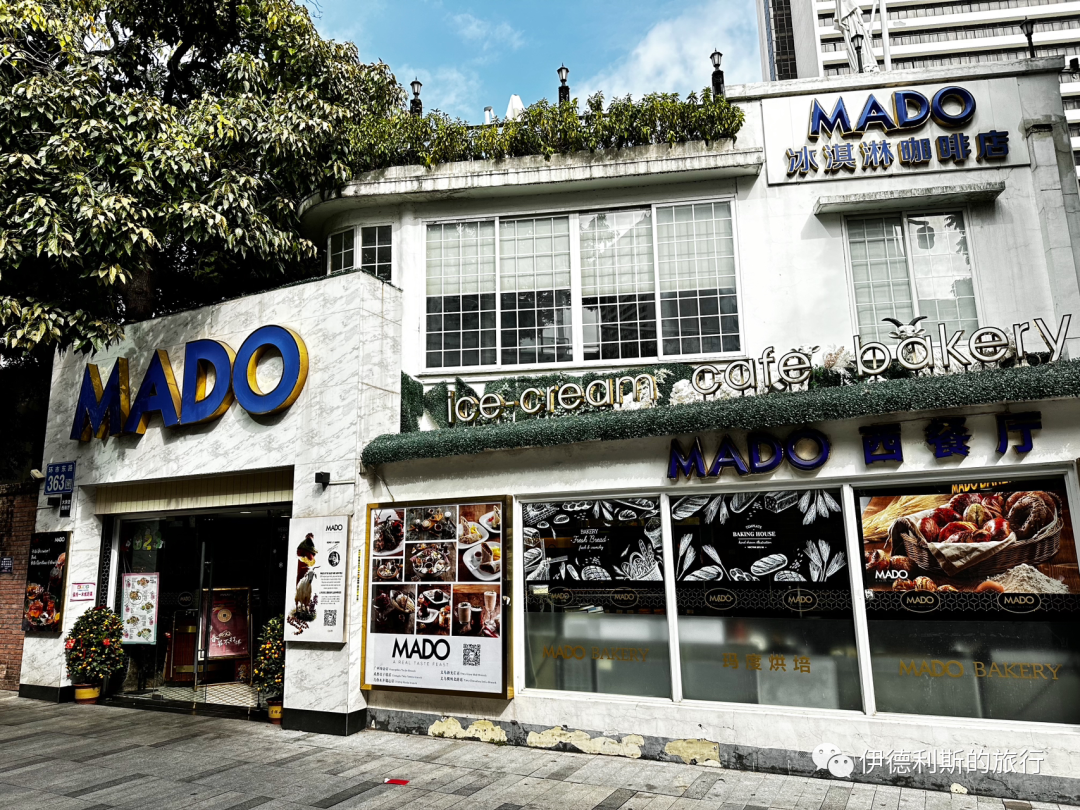
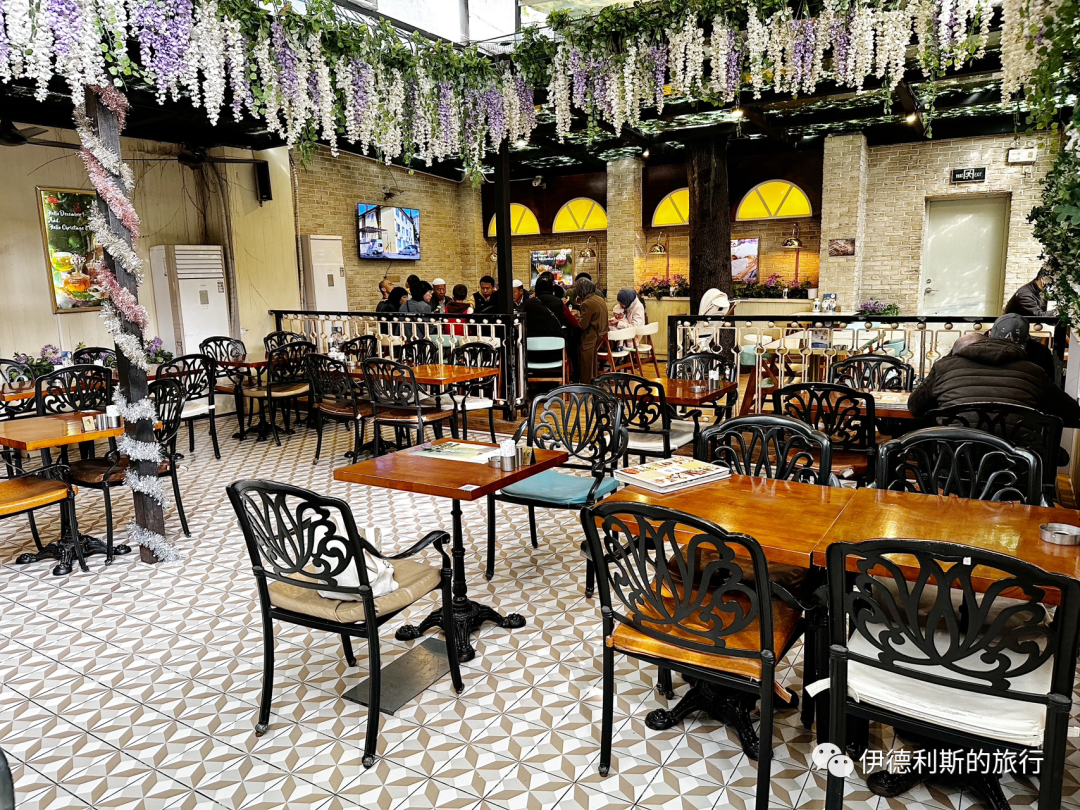
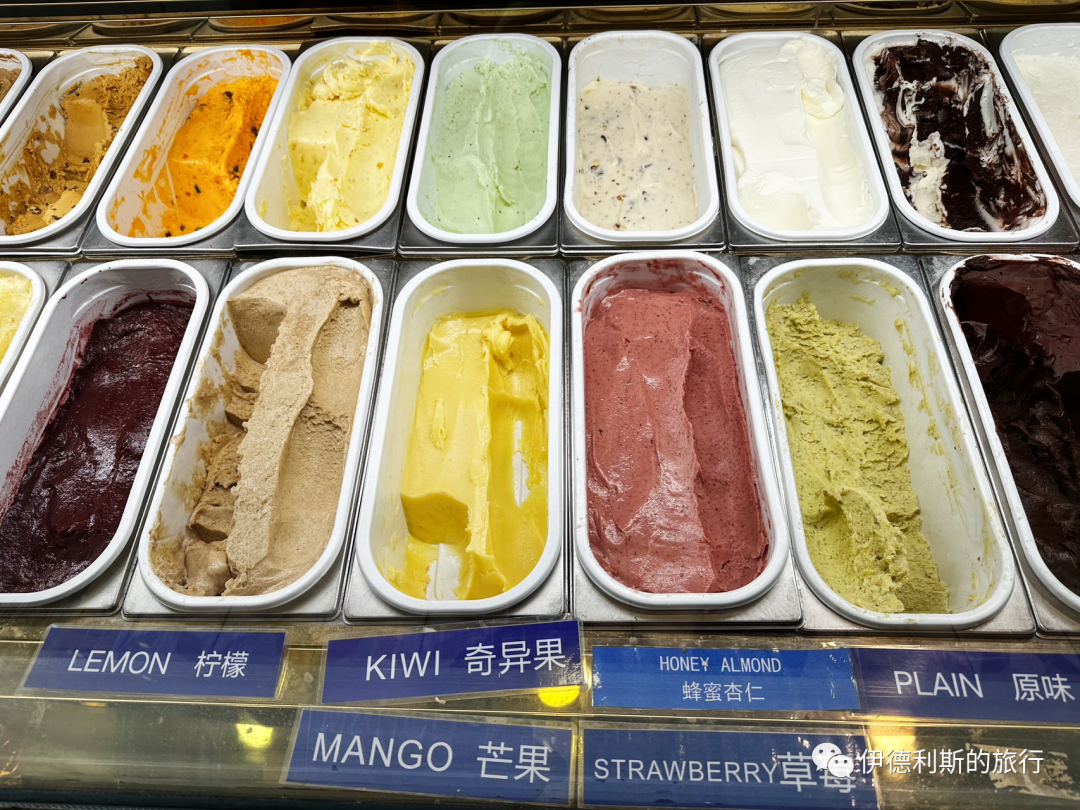
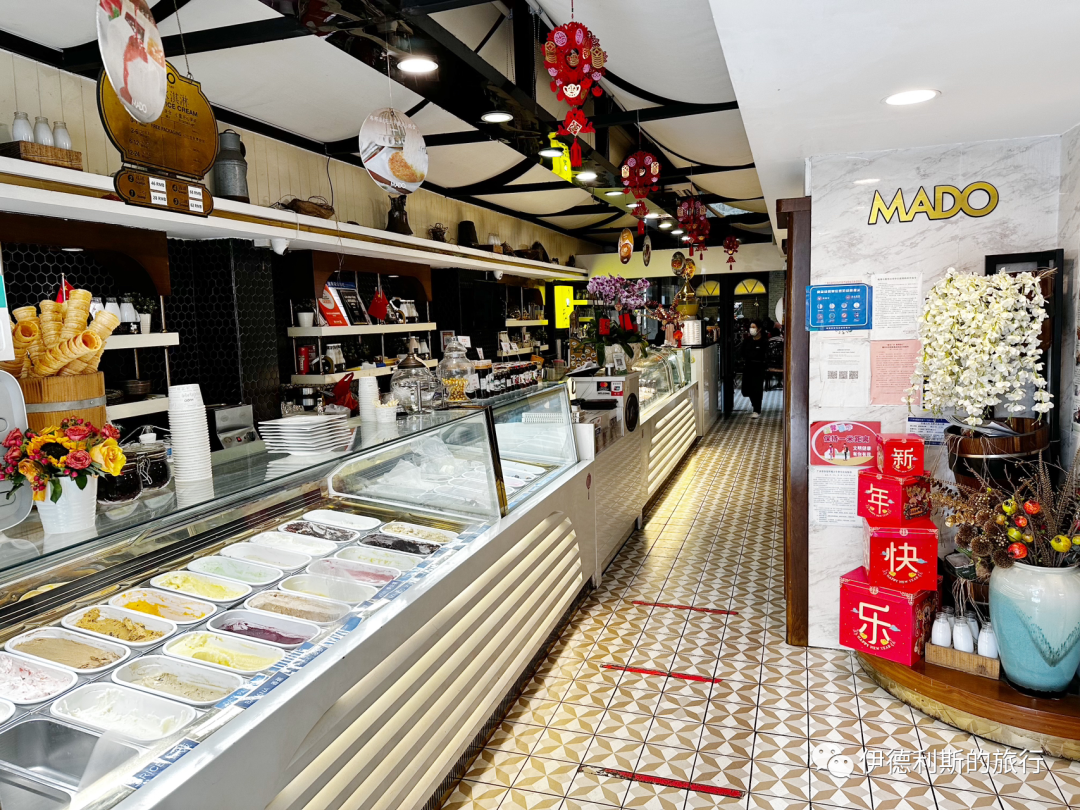
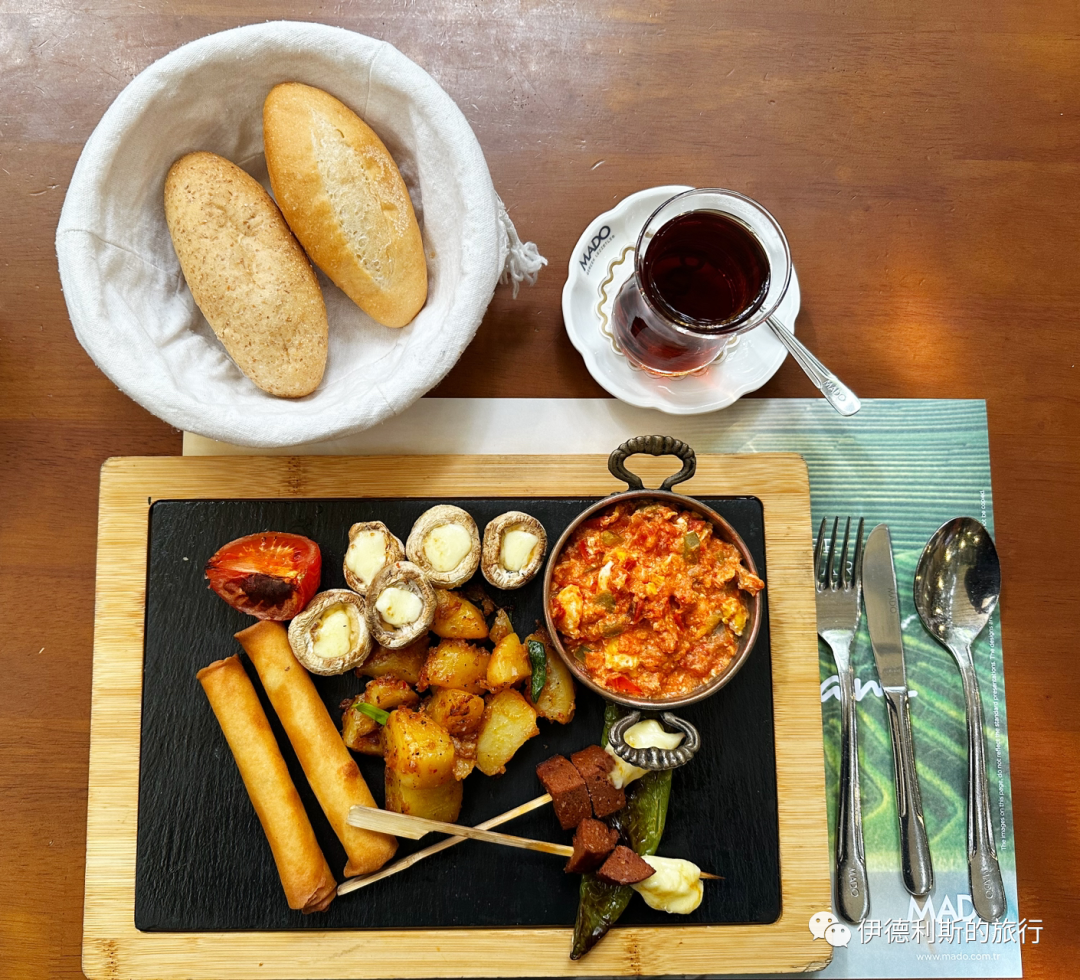
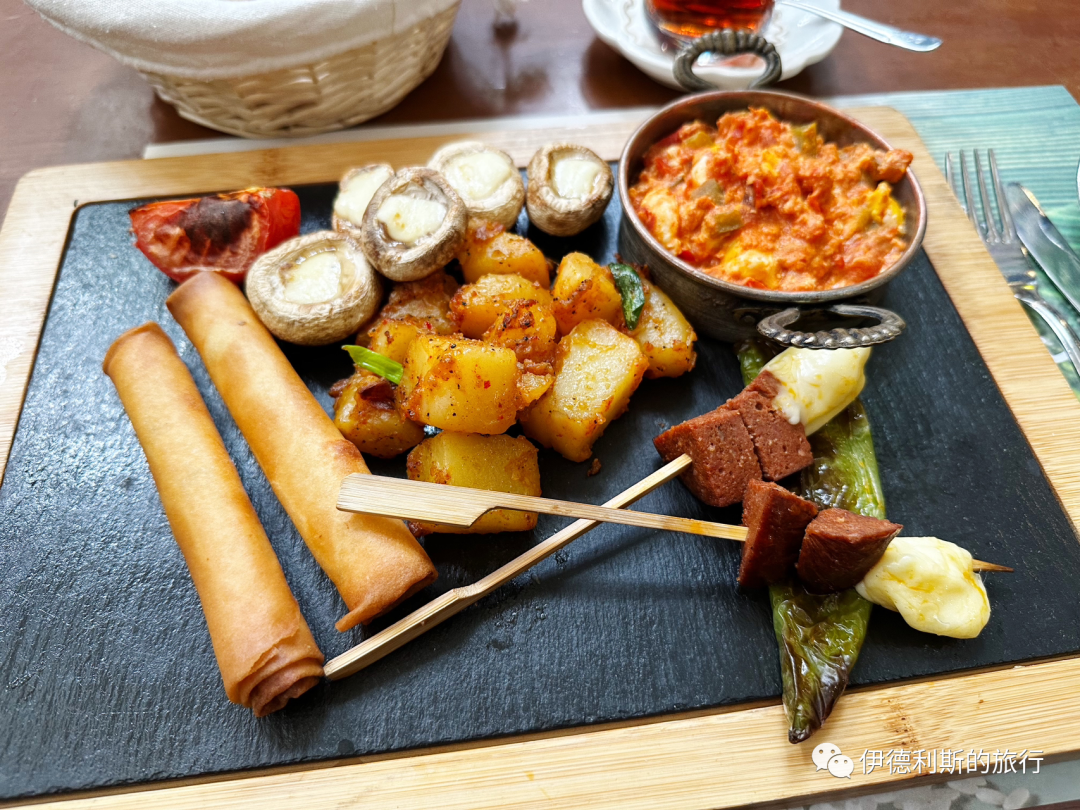
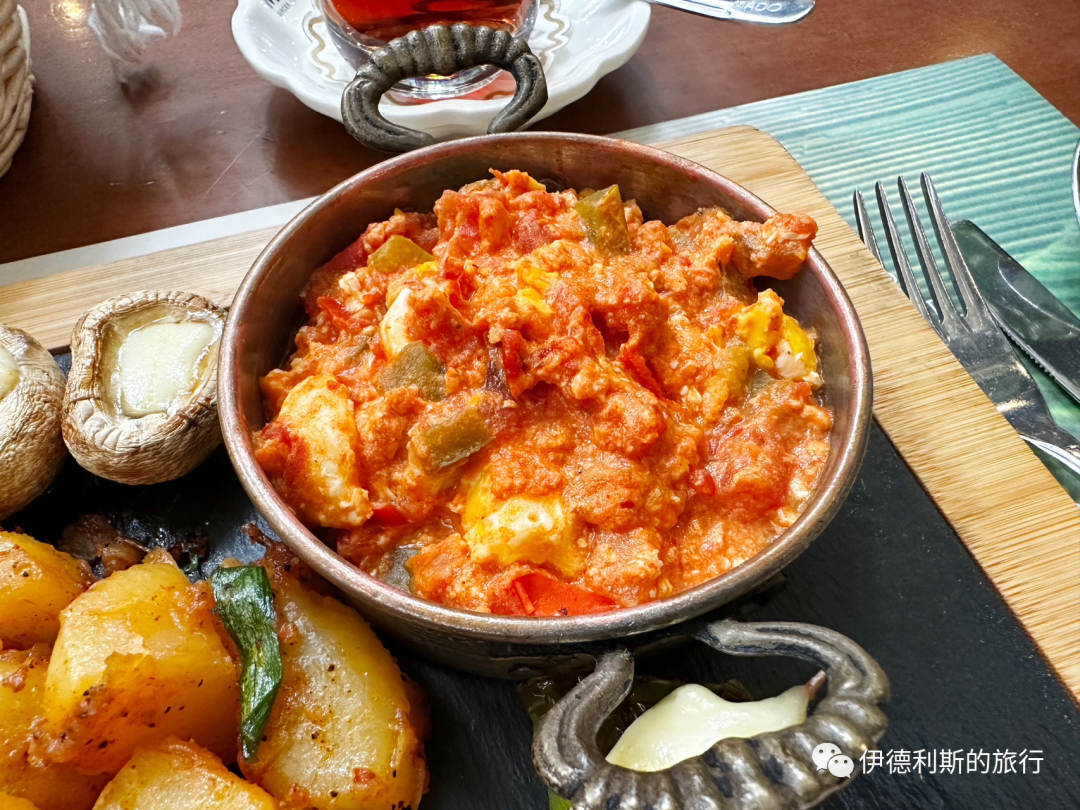
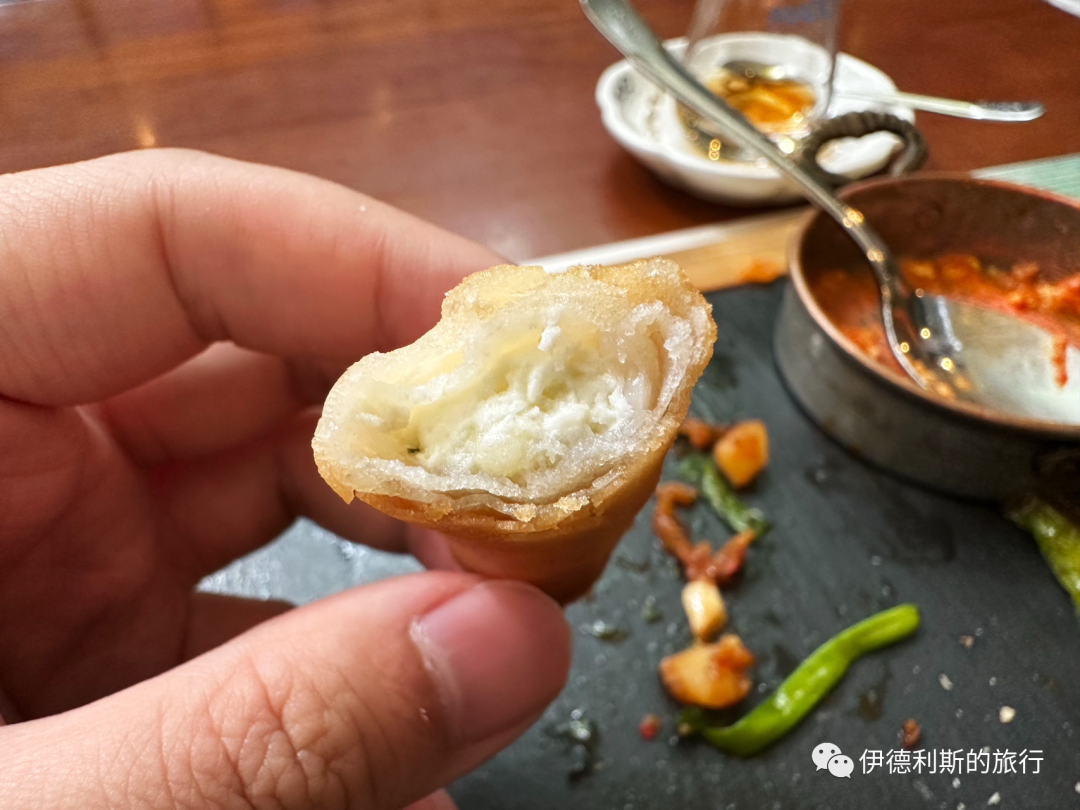
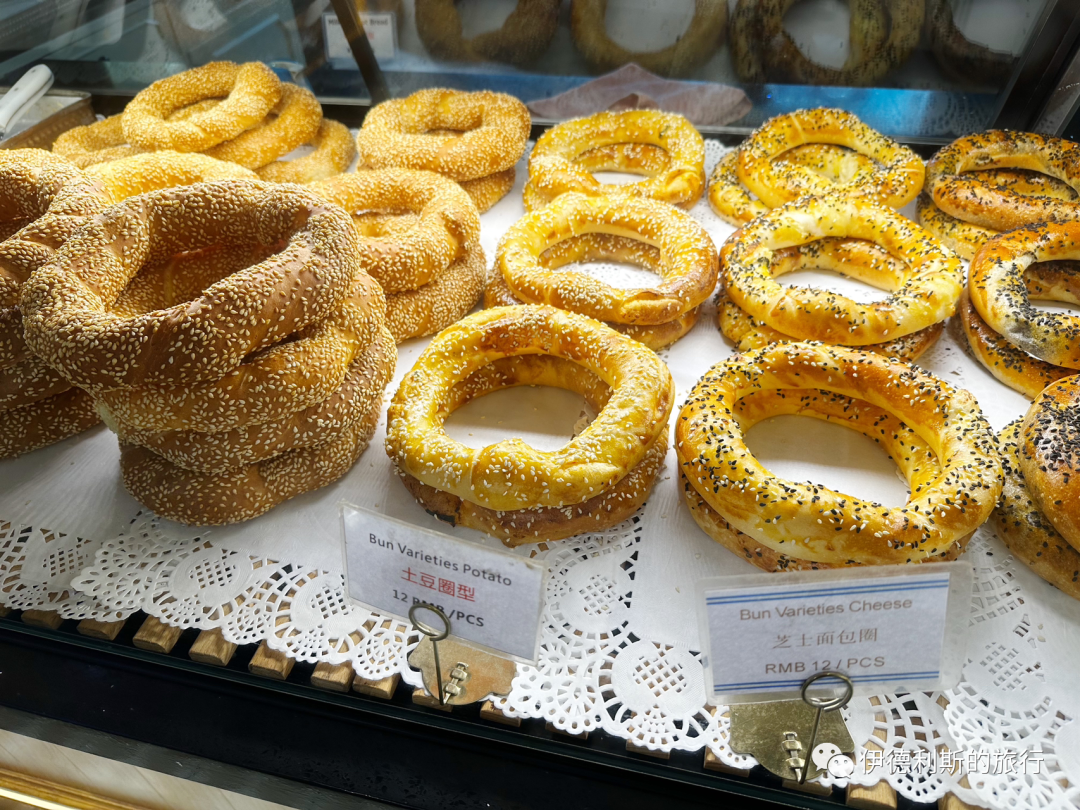
At noon, I met my friend (dosti) Chen Yong, whom I had known for a long time. He is both a staff member and a volunteer at the Huaisheng Mosque. My friend treated me to Shache Halal Food across from the Huaisheng Mosque. It is the closest halal restaurant to the mosque's minaret. When the oil-fried meat noodles (youyourou banmian) and kebabs arrived, they looked perfect, and they tasted even more authentic than I expected! I really did not expect to find such delicious Xinjiang food in Guangzhou; it was just as good as what I ate in Shache. The hand-pulled noodles (latiaozi) were very thin, showing years of skill, and the oil-fried meat was cooked just right—not too hard and not too soft. The best part was their kebabs. They were grilled over charcoal and were very fresh and tender. I could close my eyes and imagine I was back at a bazaar in Southern Xinjiang.
I rarely eat at Xinjiang restaurants when traveling in China because the taste often changes completely when the ingredients are different. But Shache Halal Food across from Huaisheng Mosque changed my mind. I will definitely eat there again next time I am in Guangzhou!
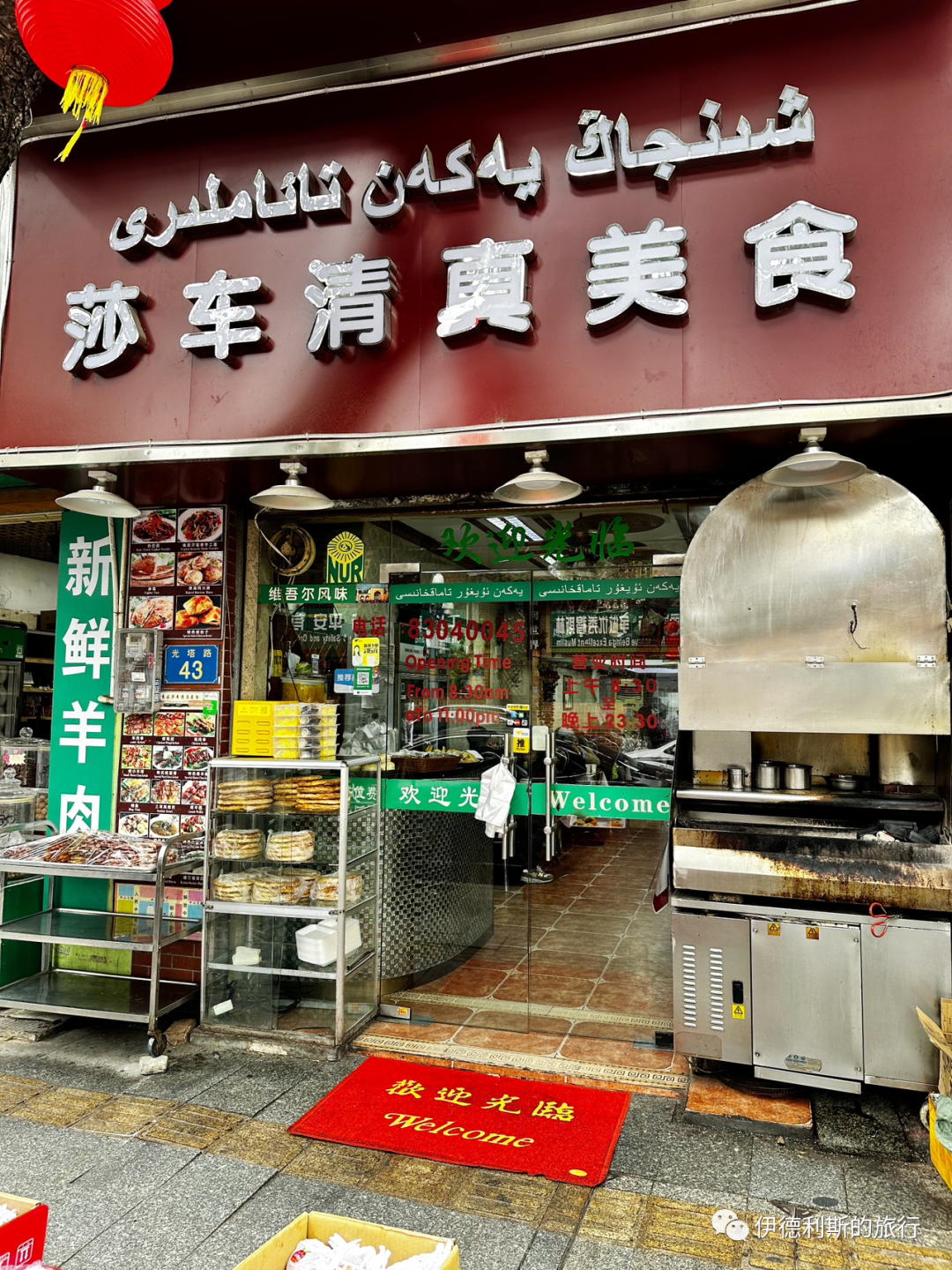
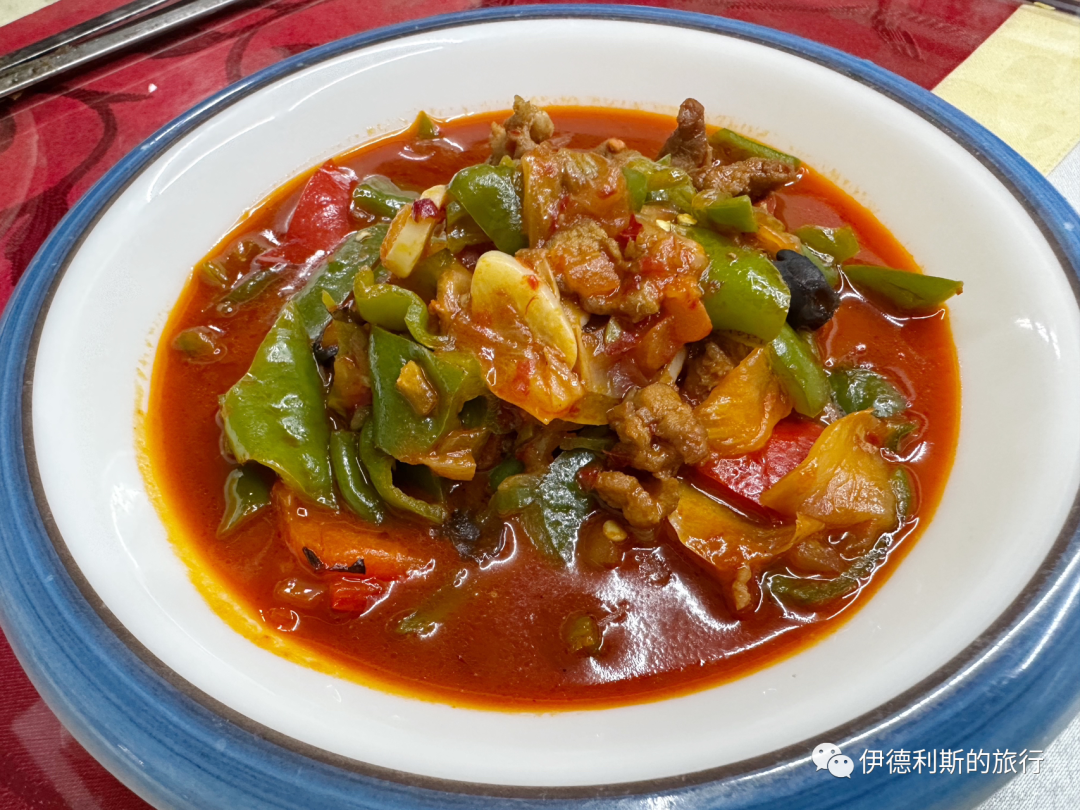
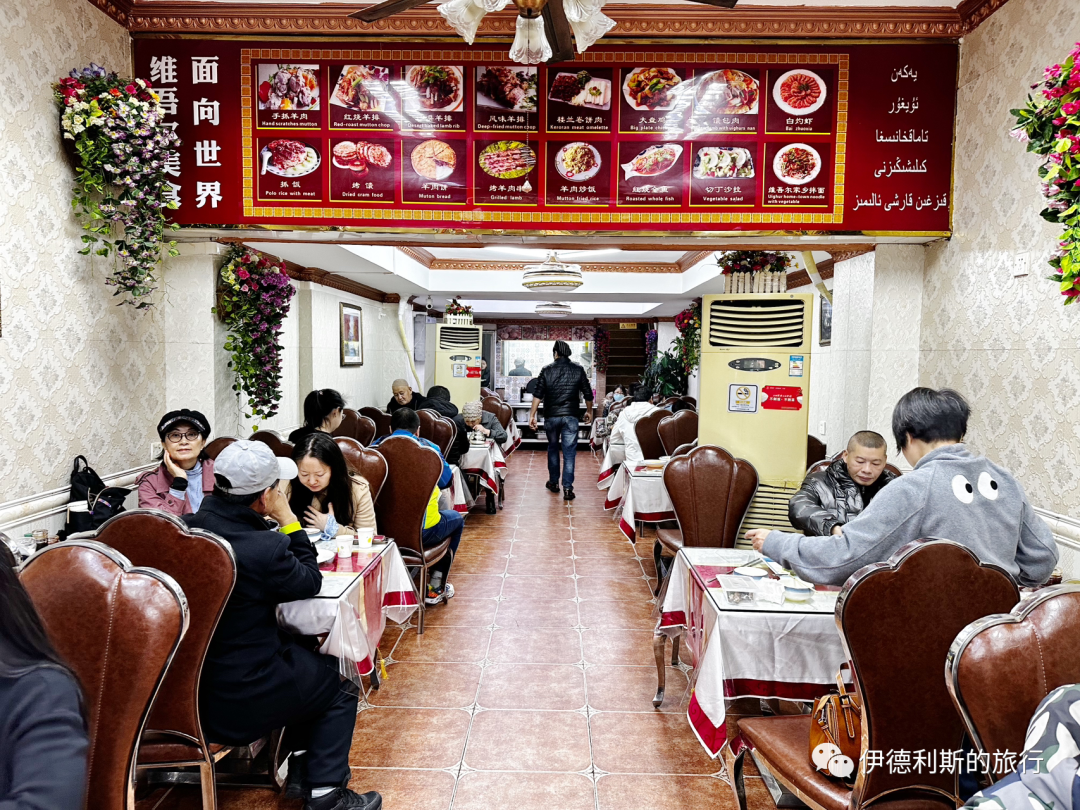
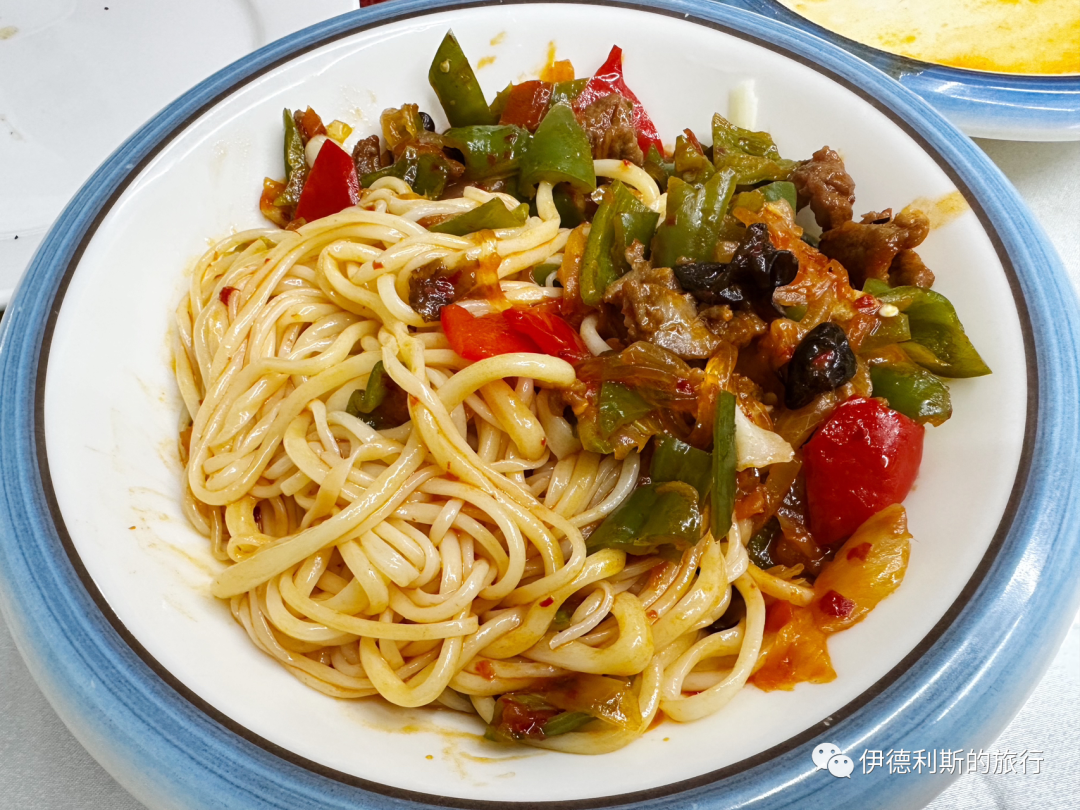
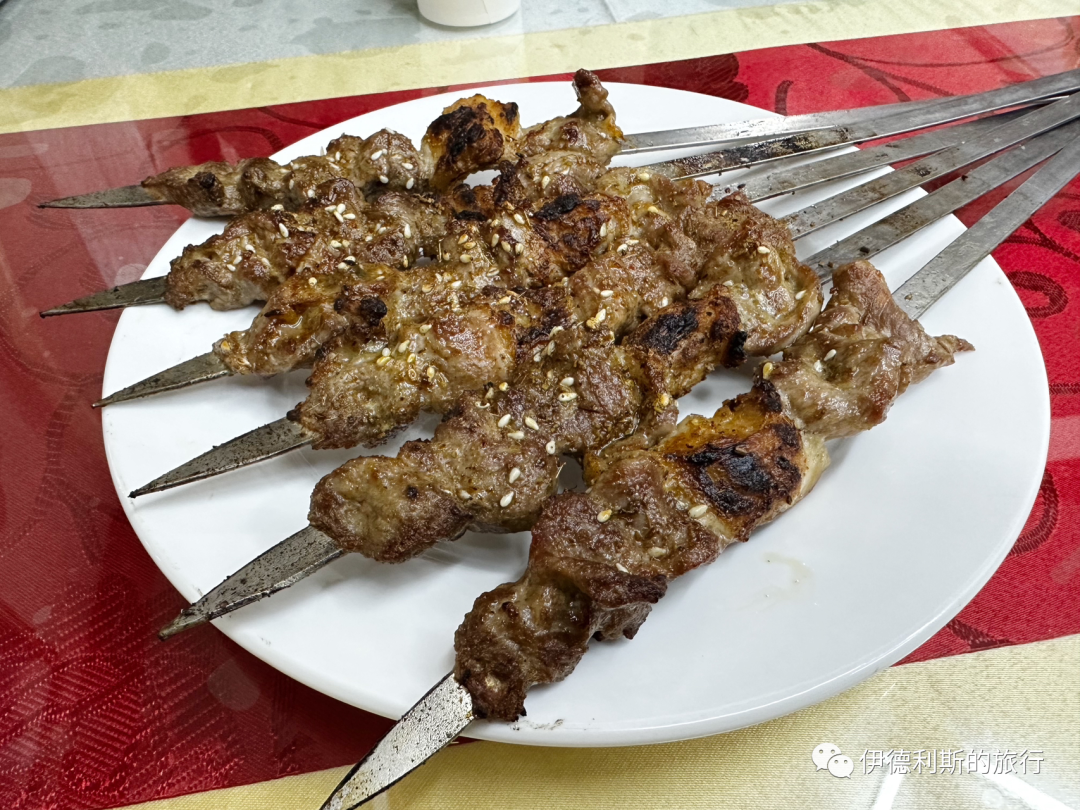
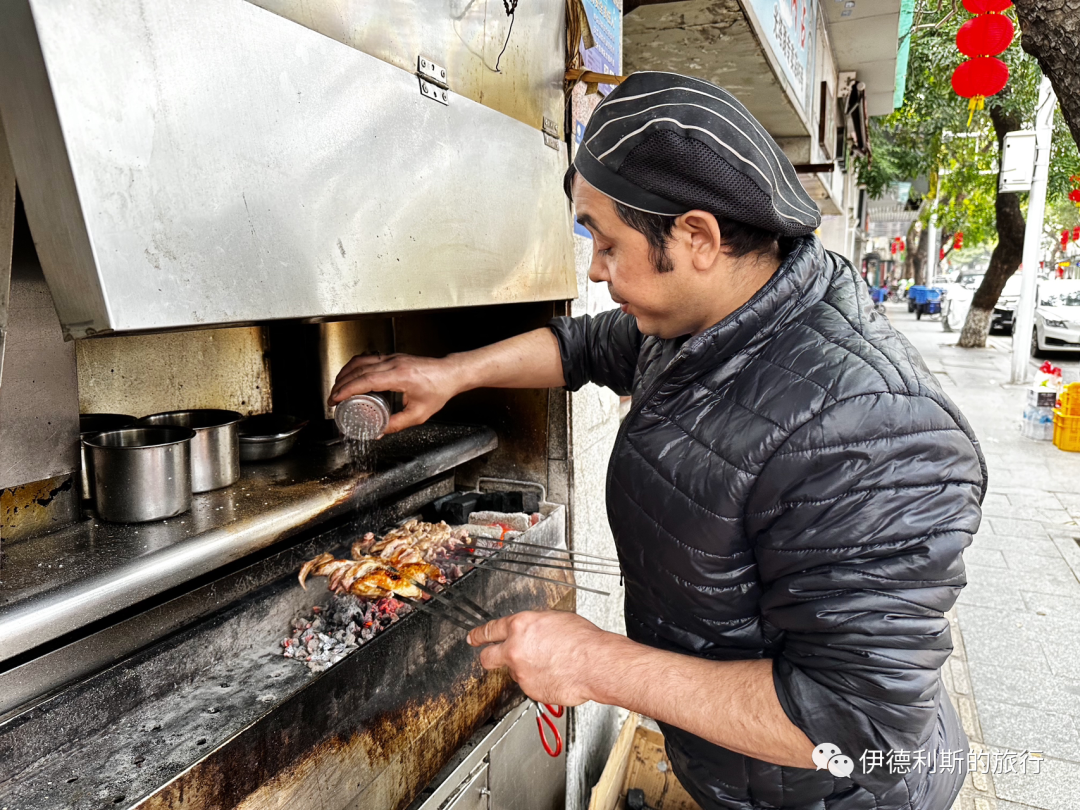
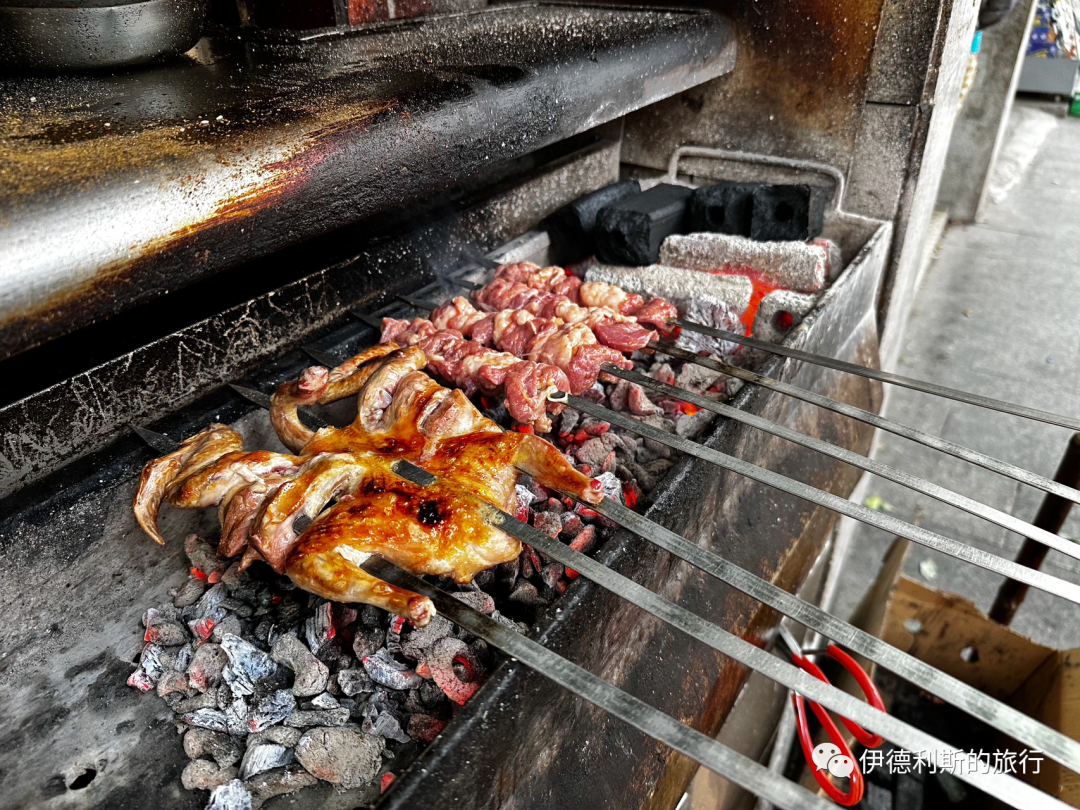
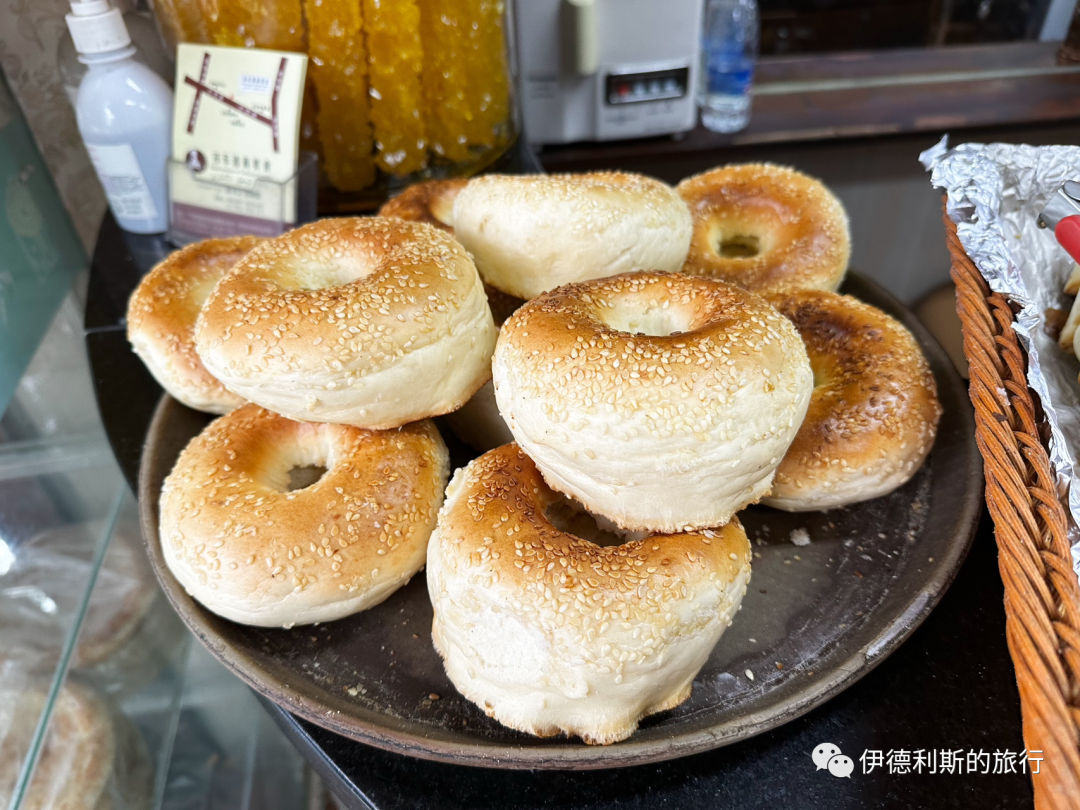
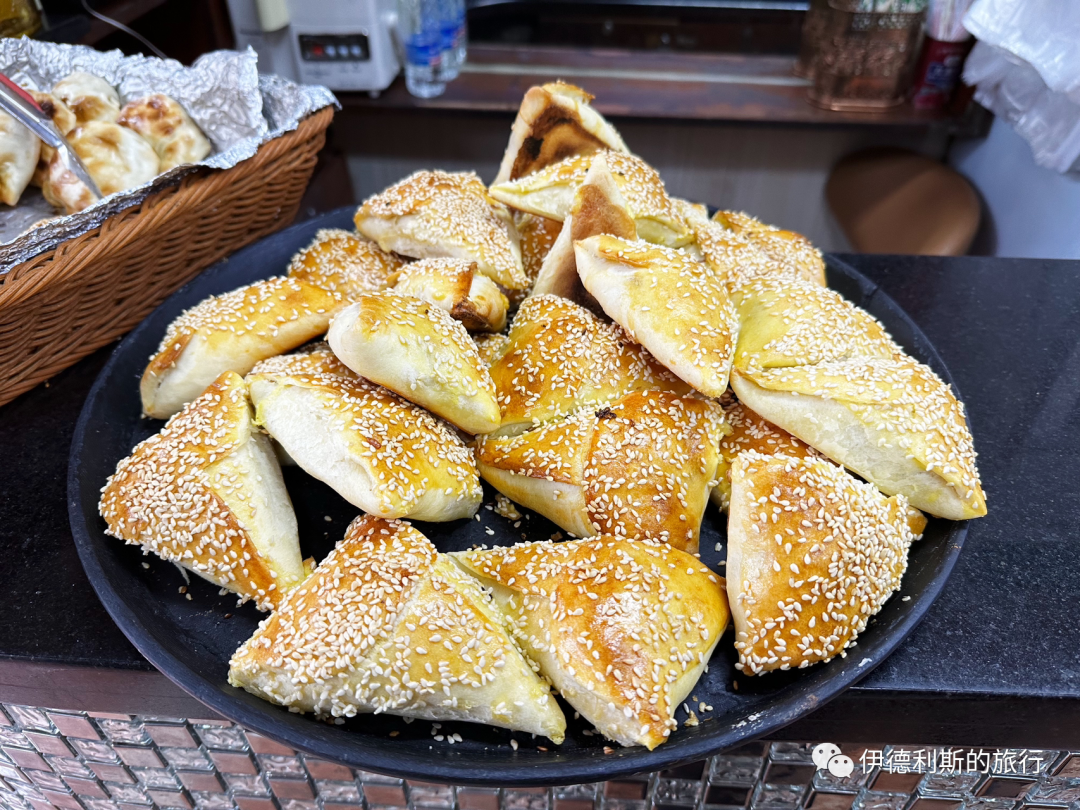
In the afternoon, I went to the Haopan Mosque in Guangzhou for the afternoon prayer (dhuhr) and met Master Yang, whom I had not seen in six years. Master Yang is a local Hui Muslim from Guangzhou and has been a mosque attendant at Haopan Mosque for 20 years. I drank tea and chatted with Master Yang, and I ate some fried dough (youxiang) made by local Guangzhou Hui Muslims for a charity event (chusan). This was my first time eating local Guangzhou youxiang. They were small, crispy, and sweet, almost like a pastry.
Haopan Mosque is located on the banks of the Nanhao, a tributary of the Pearl River. It was first built during the Chenghua period of the Ming Dynasty and rebuilt in 1706 (the 45th year of the Kangxi Emperor). A scripture school was opened here during the Qianlong period, and a Hui language university was opened during the Tongzhi period. They hired many famous scripture teachers from Nanjing, Gansu, and Yunnan, training a large number of imams and playing a major role in the development of Islam in Guangzhou, Hong Kong, and Macau.
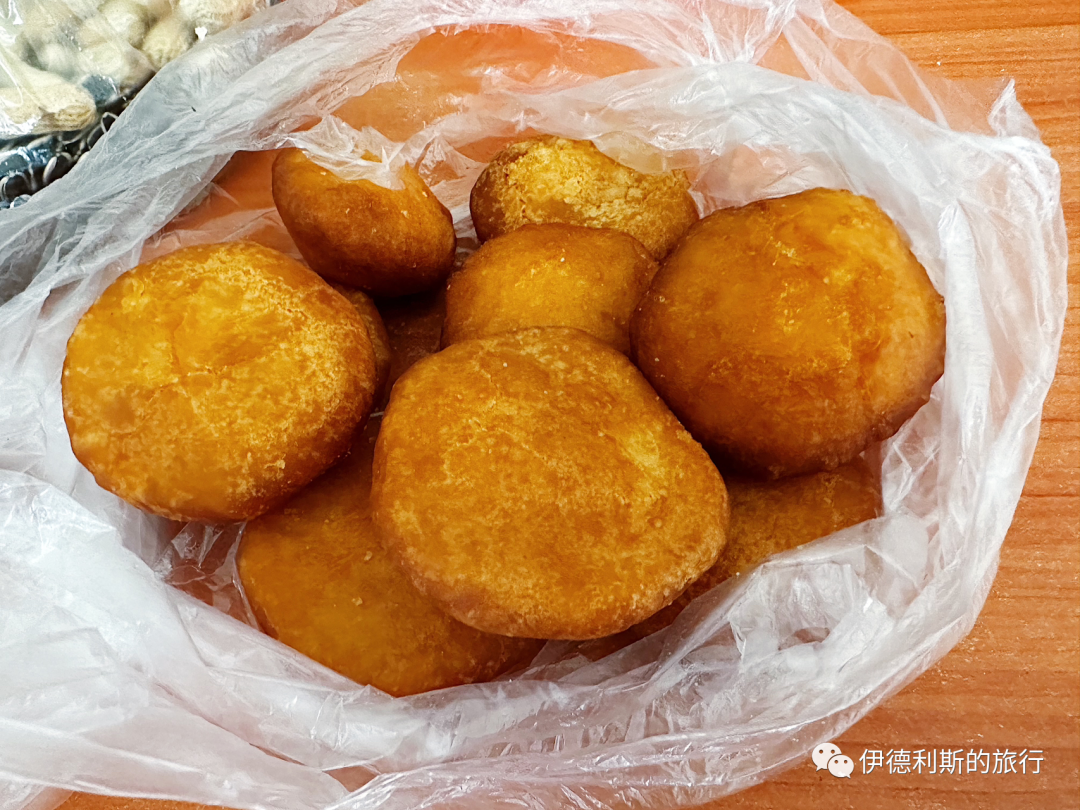
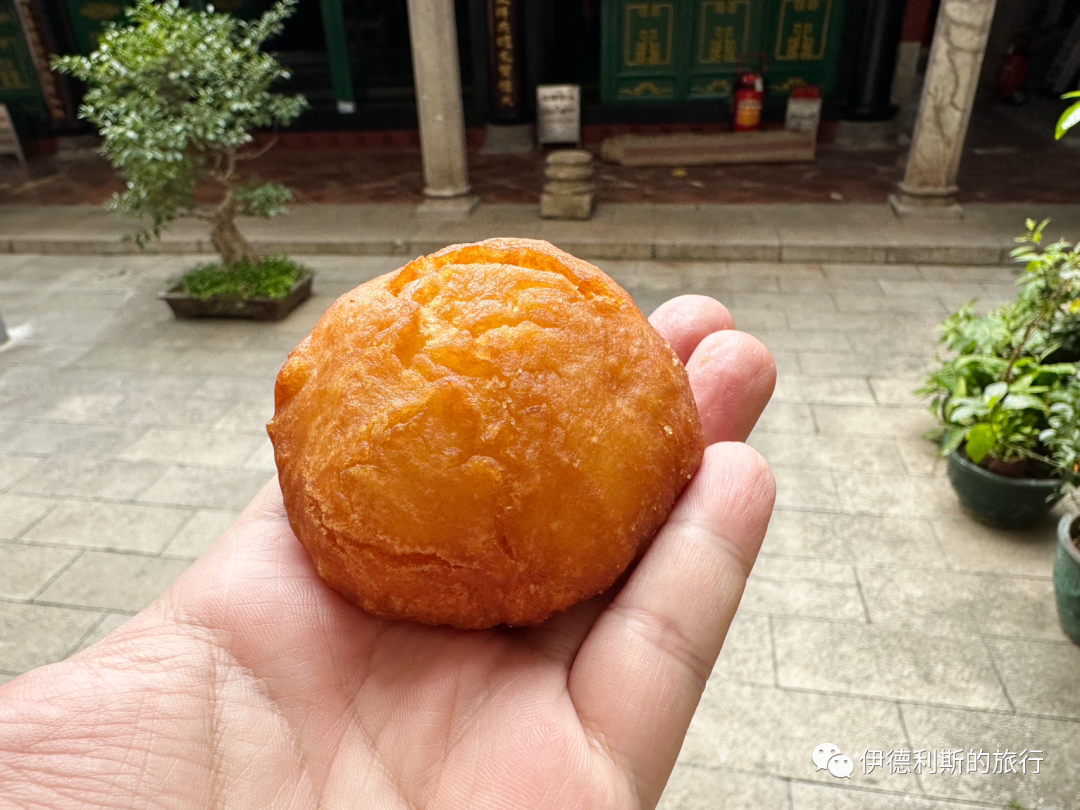
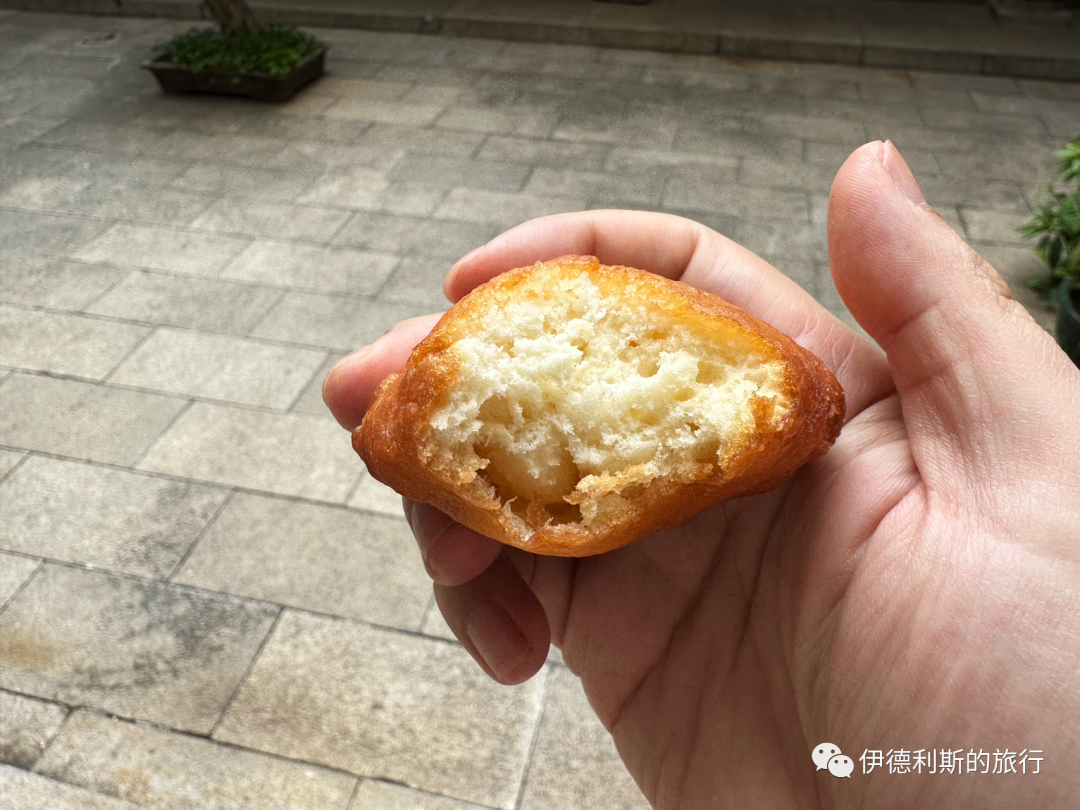
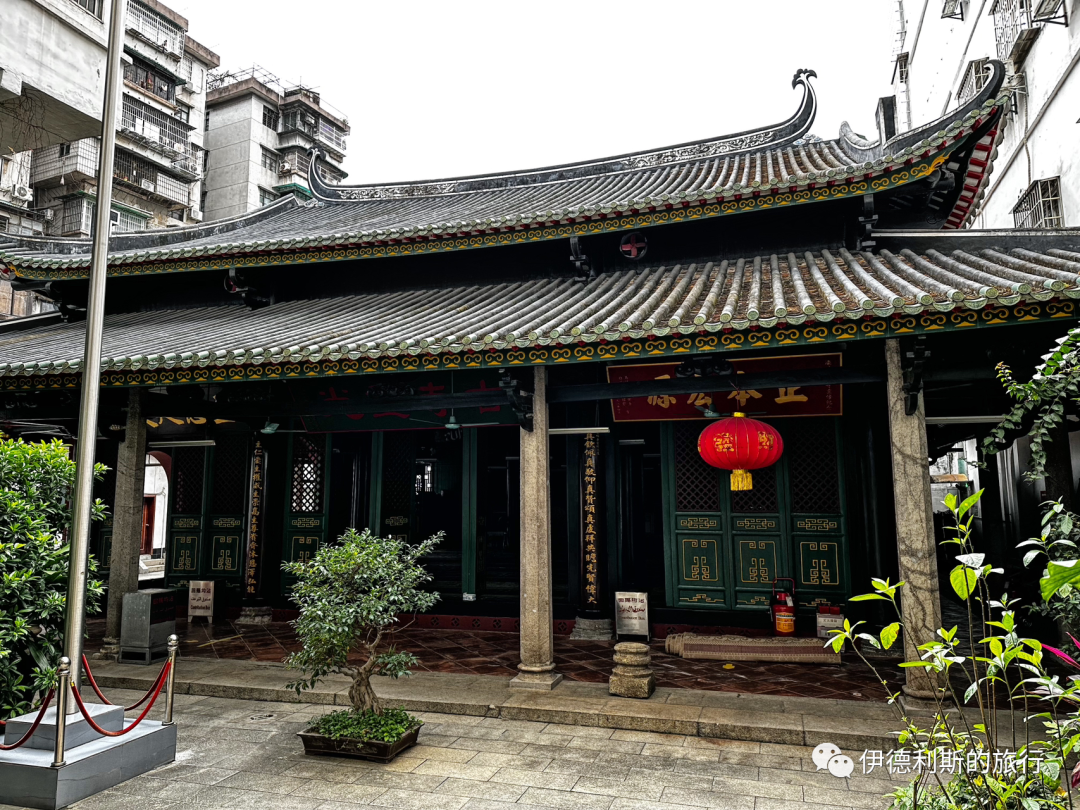
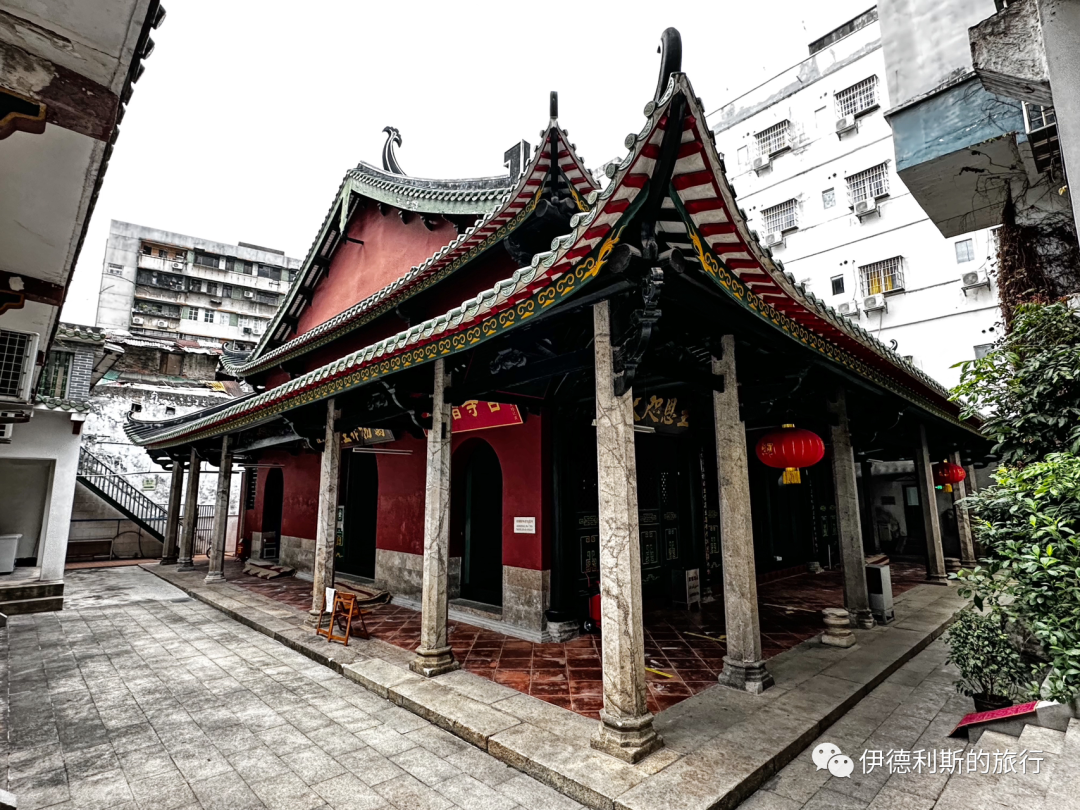
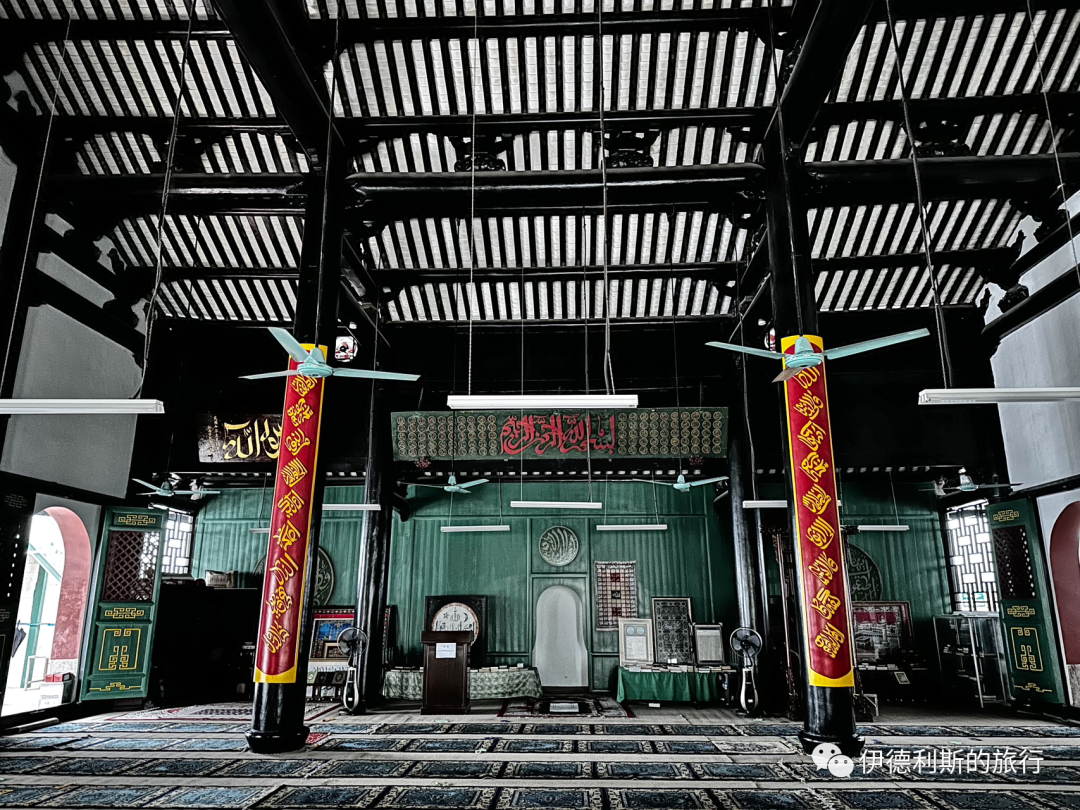
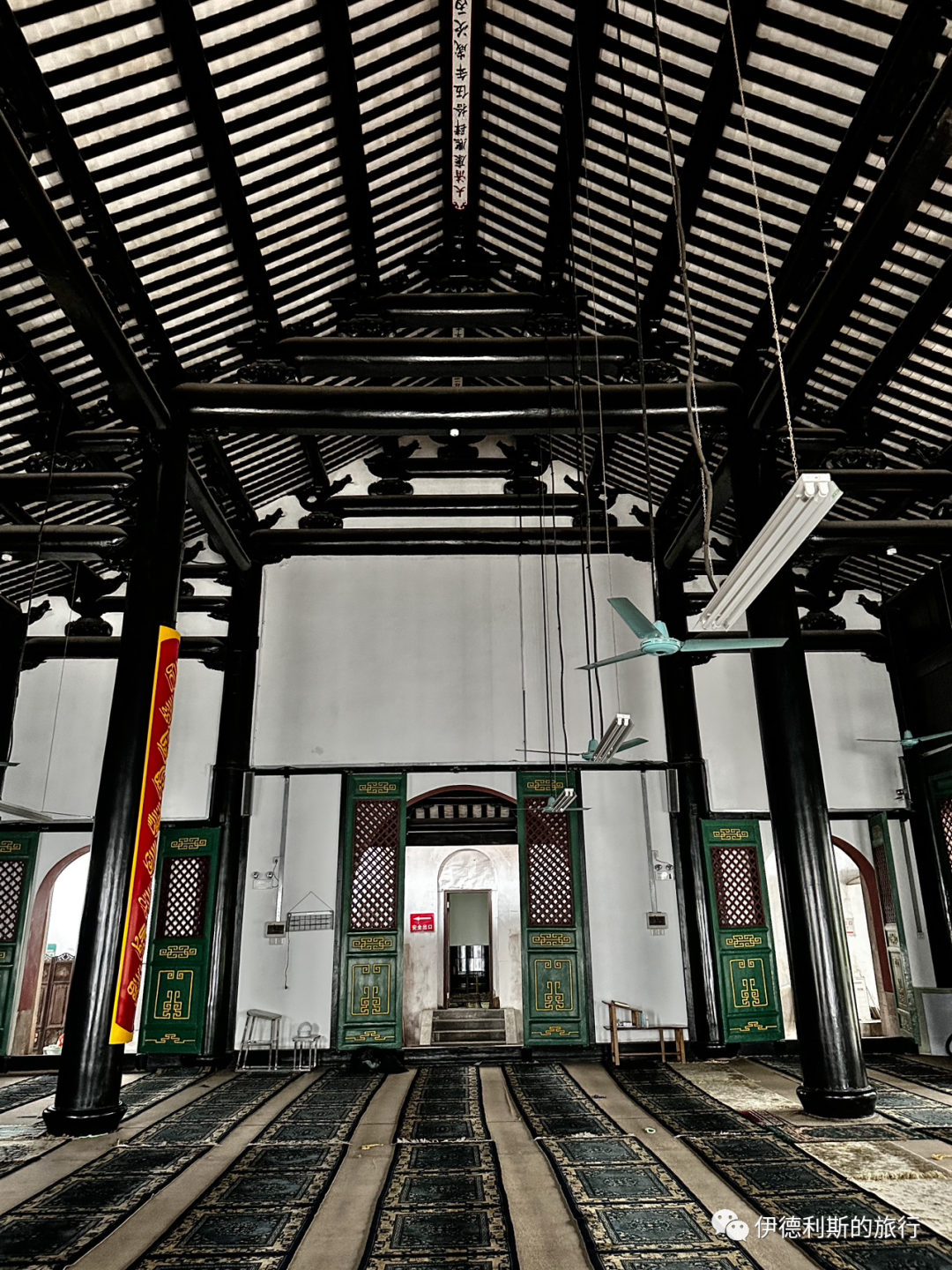
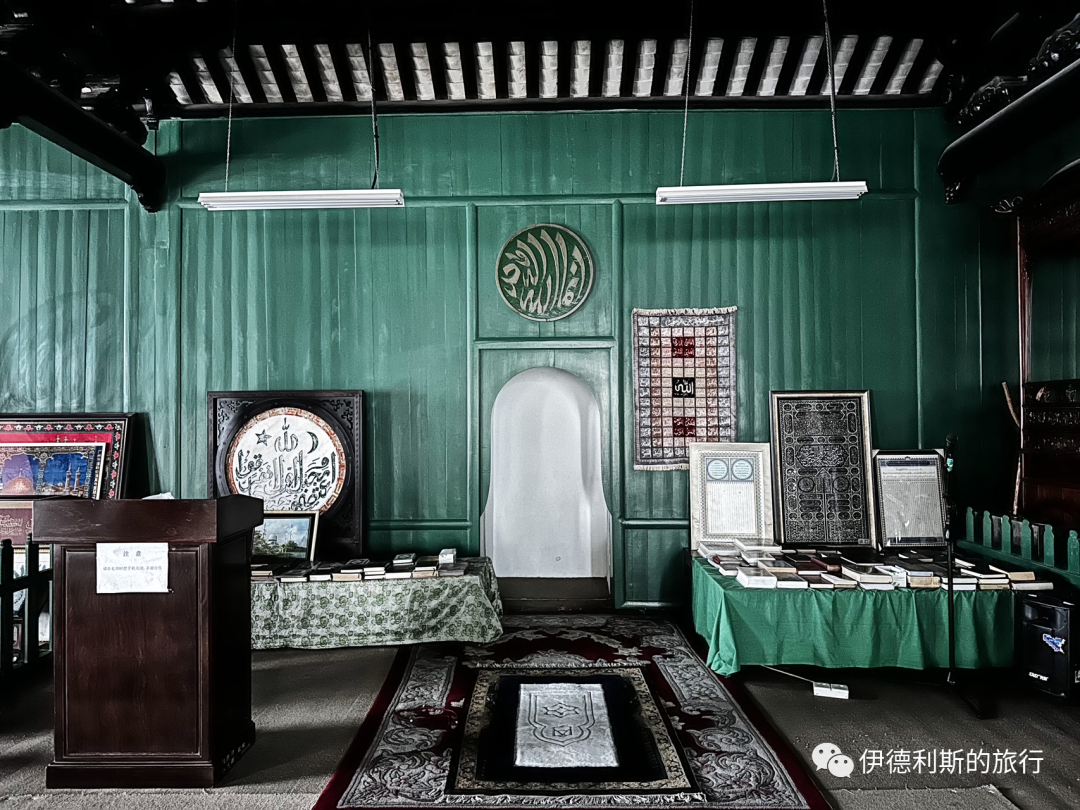
In the afternoon, I went to visit the Ancient Cemetery of the Worthies in Guangzhou. There is a well in the south courtyard of the cemetery called the Well of the Worthies. Legend says it was built to commemorate the worthy Sa'd ibn Abi Waqqas. Many friends (dosti) drink a cup of water from the well after visiting the graves, and it really tastes sweet.
The Ancient Cemetery of the Worthies in Guangzhou is commonly known as the Huihui Cemetery, the Great Man's Cemetery, or the Echoing Cemetery. It has been a burial ground for Muslims in Guangzhou since the Tang Dynasty. The earliest record of the Ancient Cemetery of the Worthies comes from 'One Hundred Poems of the South Sea' (Nanhai Baiyong) written by Fang Xinru in 1206 (the second year of the Kaixi period of the Southern Song Dynasty): 'The tombs of the foreigners are ten miles west of the city, thousands of them, all with heads to the south and facing west.'
At the center of the ancient cemetery is the tomb of the legendary first worthy to come to China to preach, Sa'd ibn Abi Waqqas (Saheb Saad Wakkas). Records show the status of the Tomb of Waqqas (Wangesu mu) rose during the Yuan and Ming dynasties. The Ming dynasty book Guangzhou Prefecture Records (Guangzhou fuzhi) notes: Every year, people of all surnames must visit the tomb to pay respects and recite scriptures, a tradition that continues to this day. Countries in the Western Regions respected this influence. Every time they sailed thousands of miles to Guangzhou, they considered visiting the tomb an honor. Even the most noble visitors would crawl and bow in Guangzhou to show their utmost sincerity.
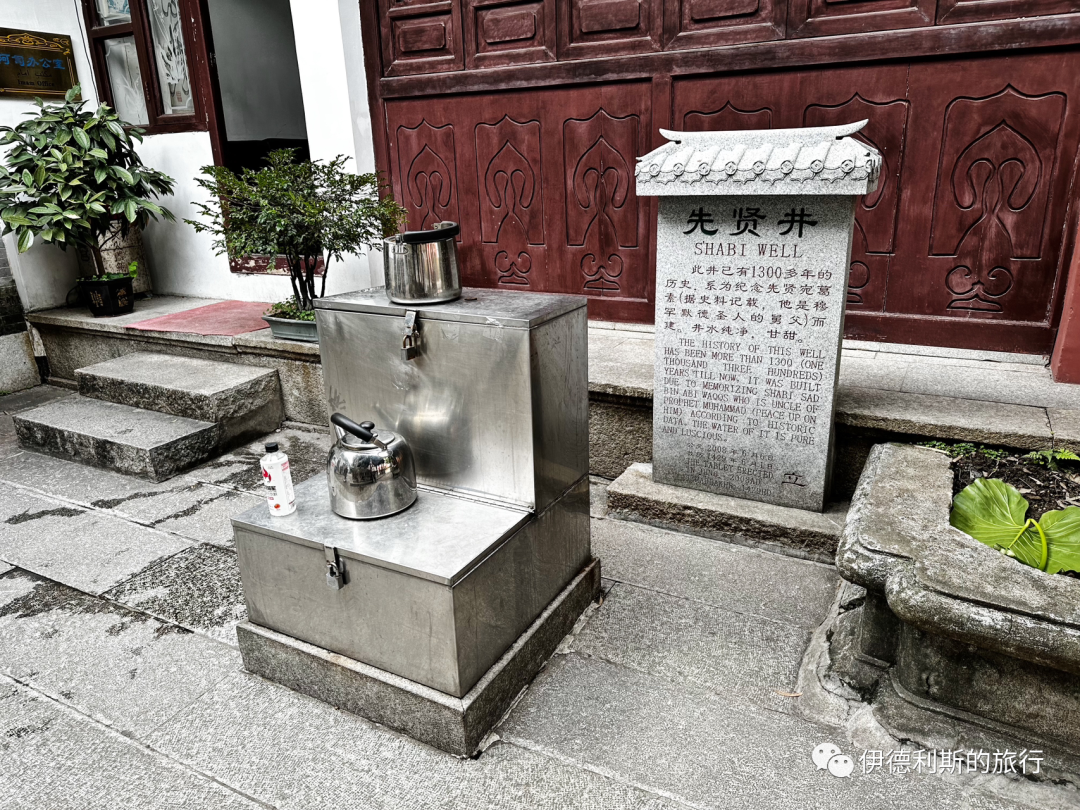
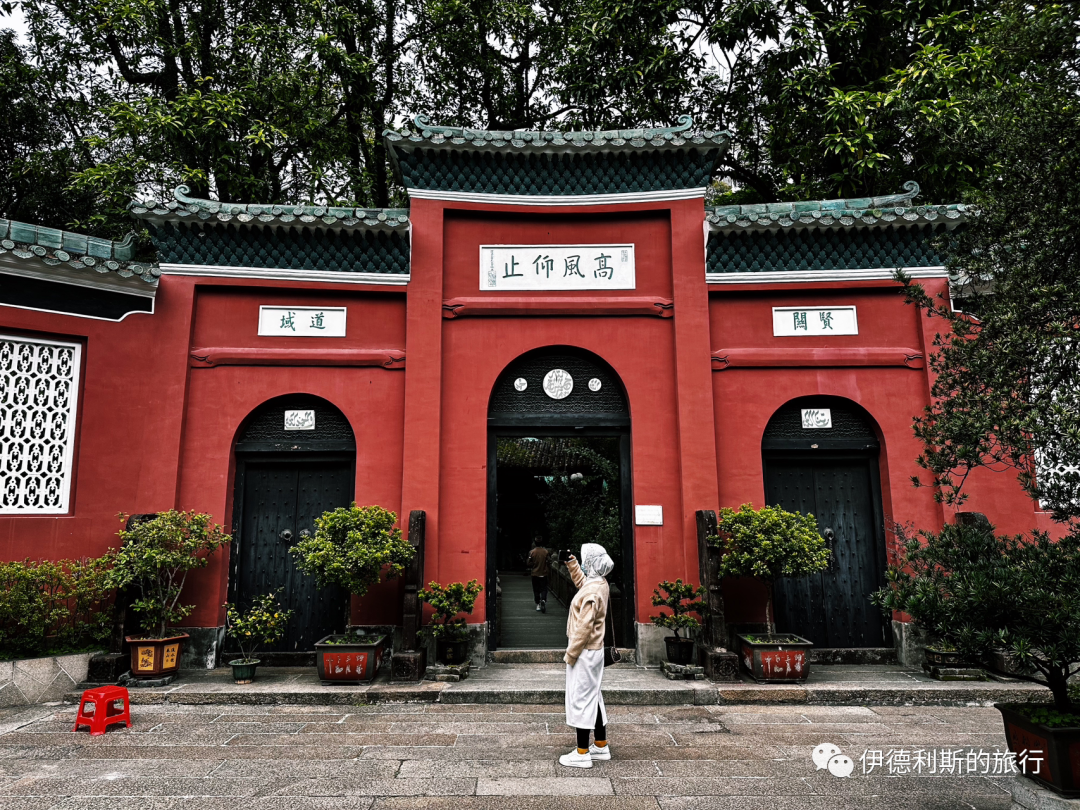
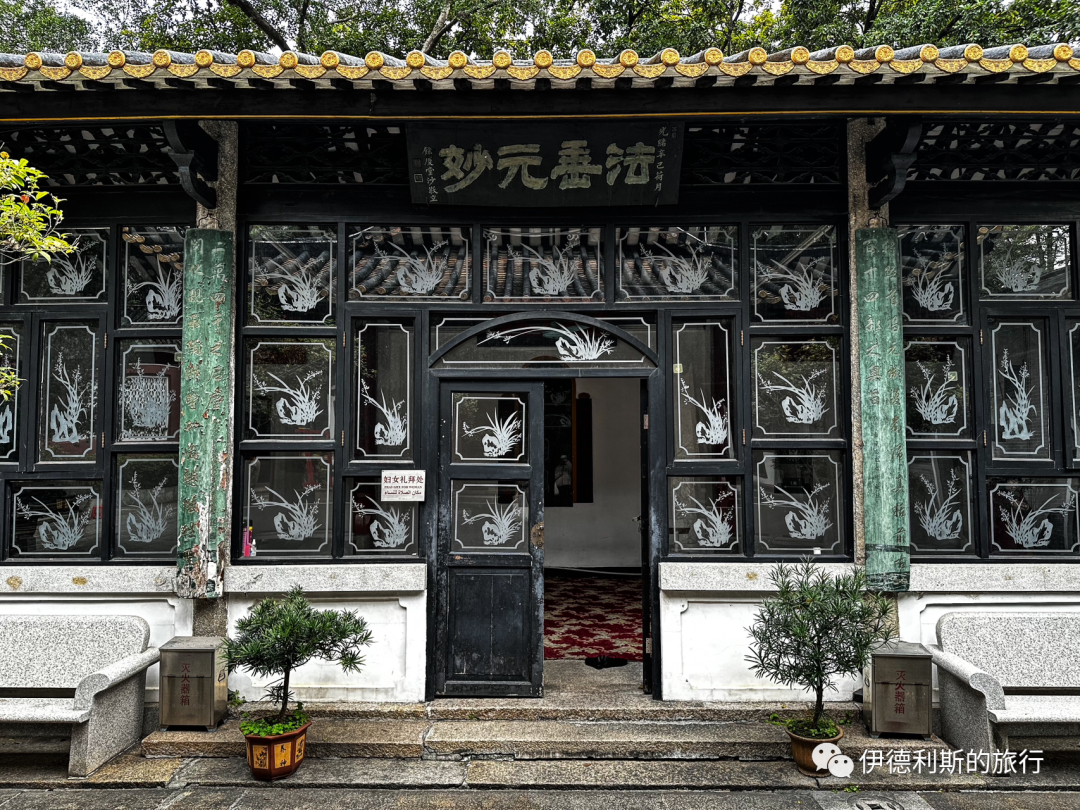
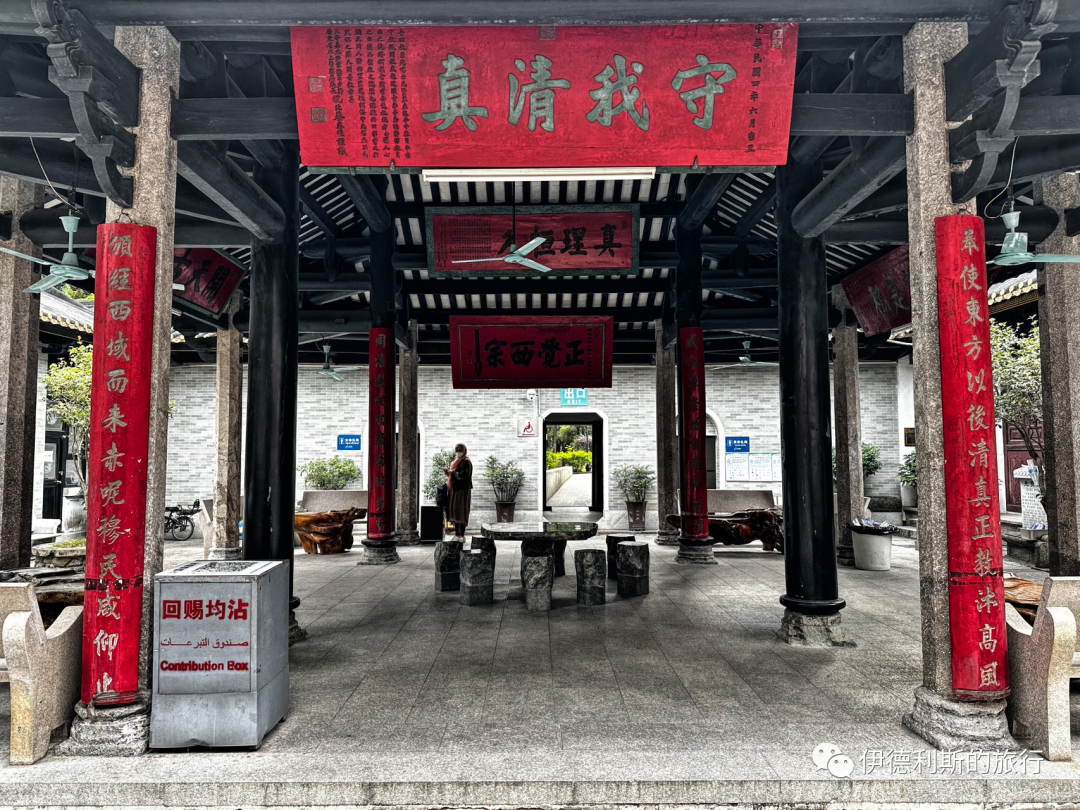
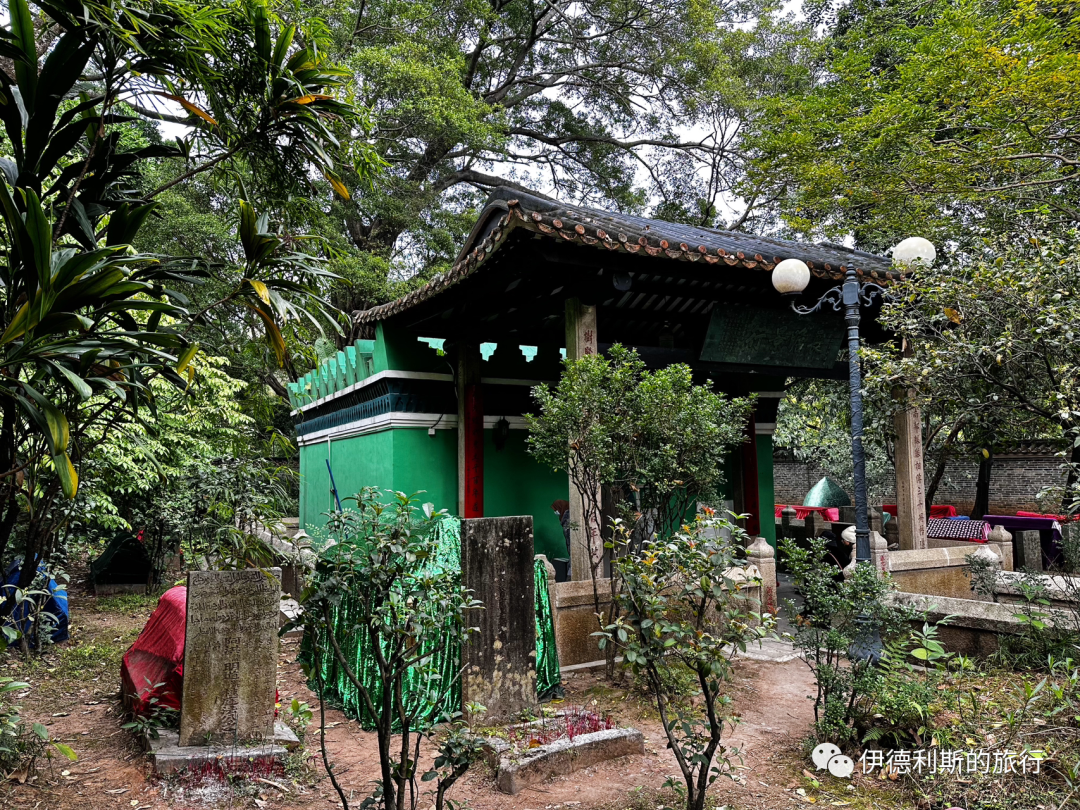
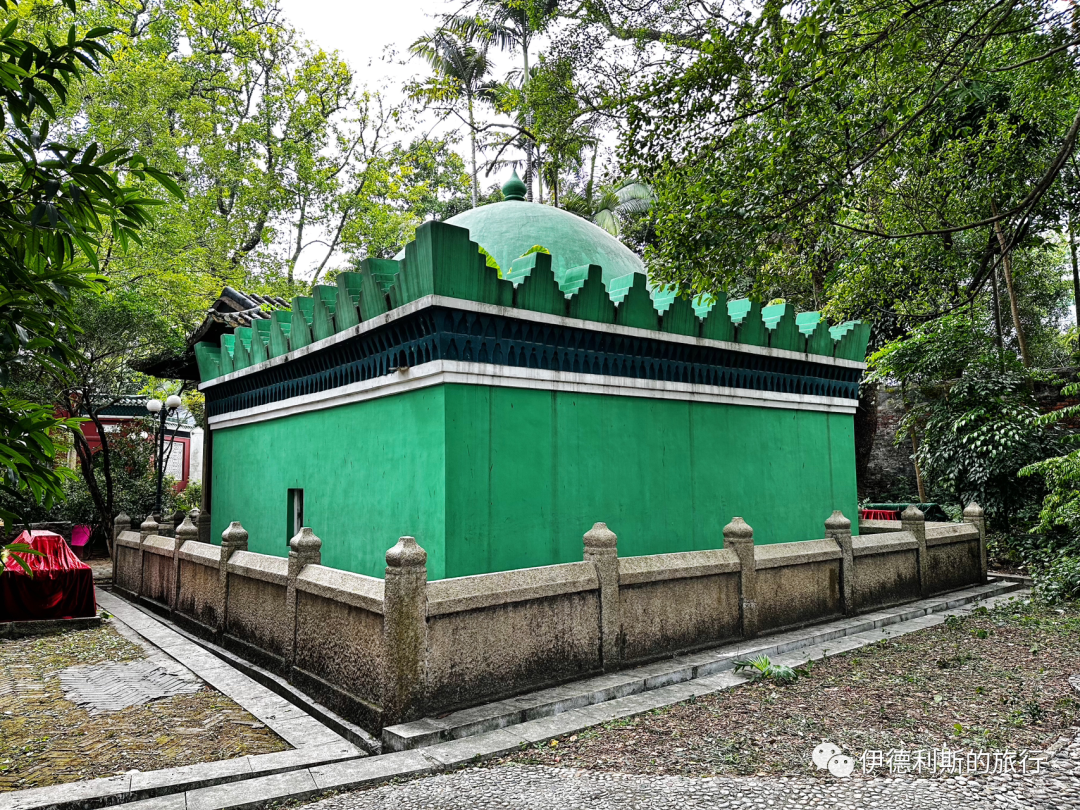
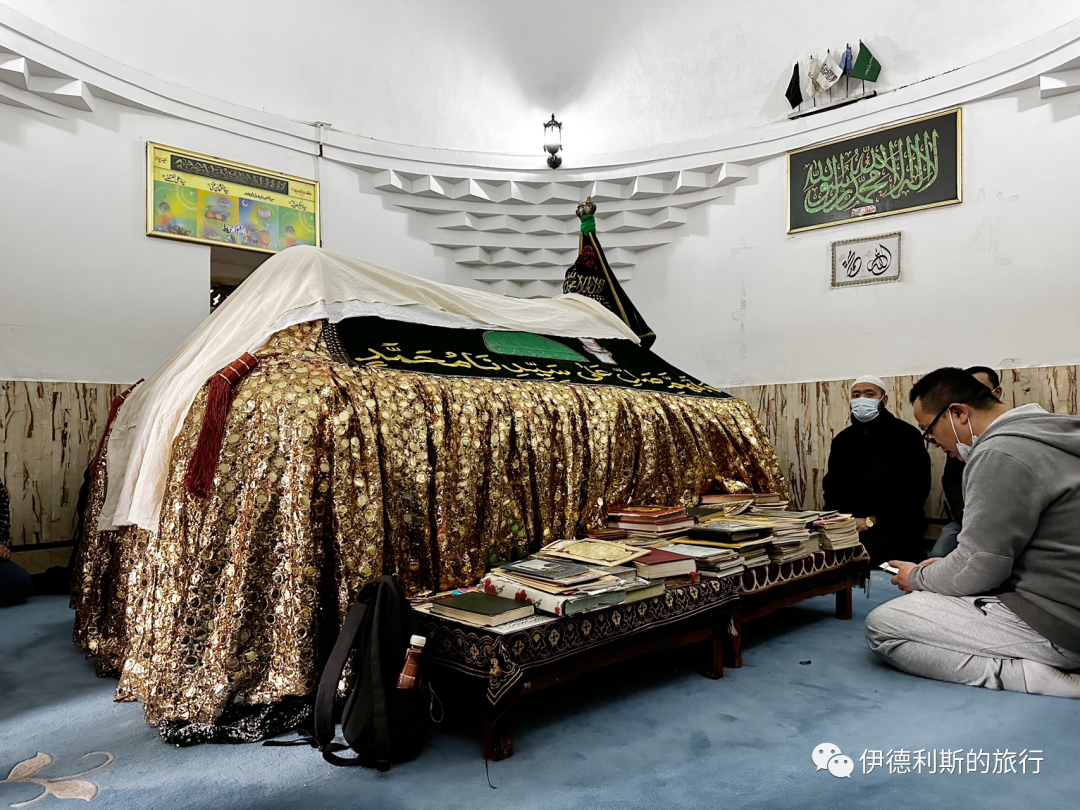
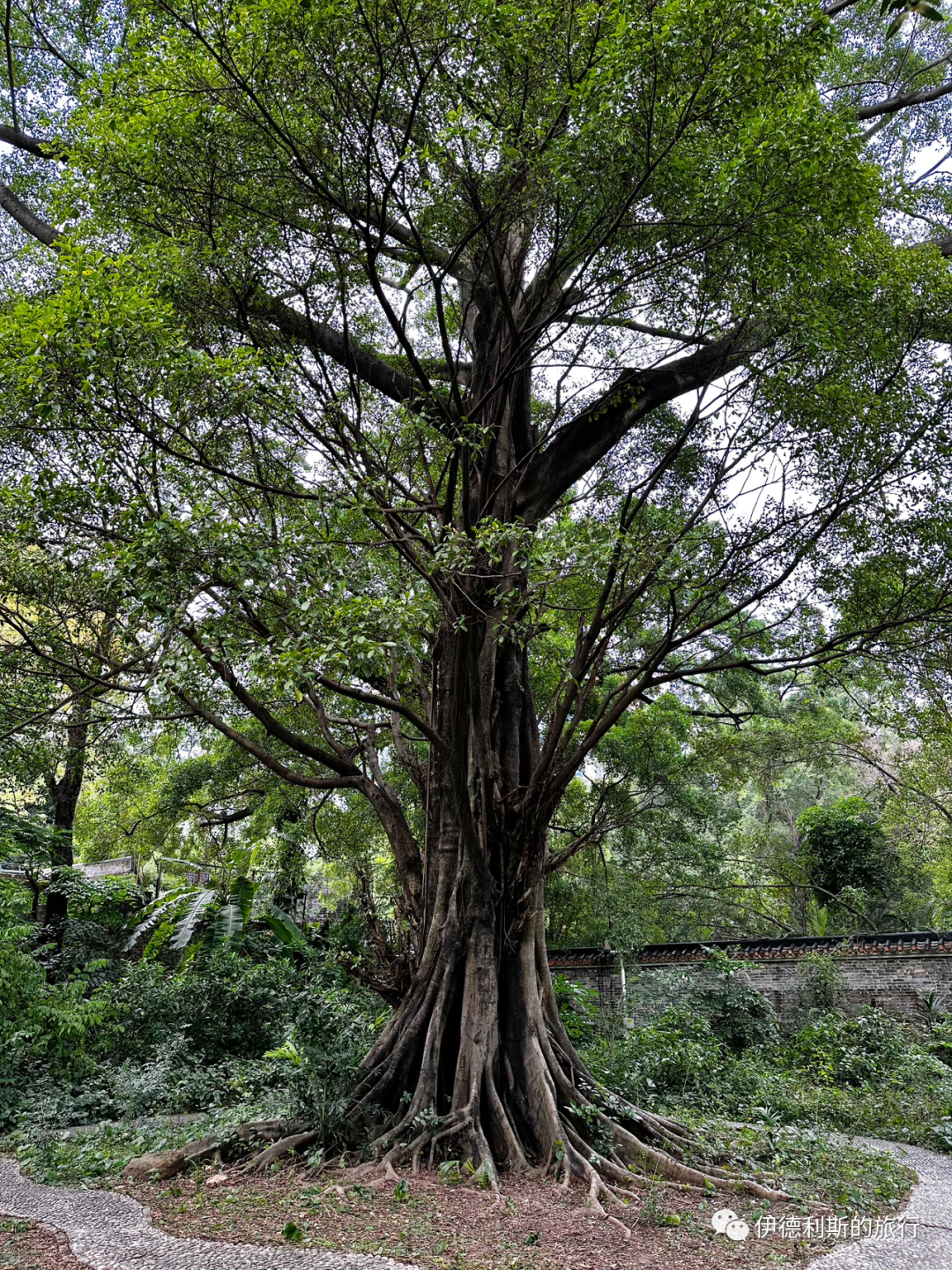
In the evening, I went to Hadramout Restaurant, a long-standing Yemeni eatery that has been in Guangzhou's Xiaobei area for over a decade. Hadramout is now the name of a province in eastern Yemen, but it is also a very ancient term once used to refer to the coastal plains of the southern Arabian Peninsula. Residents here established the Kingdom of Hadramout as early as 1000 BC, and the people of Ad mentioned in the ancient Quran are said to have lived here as well.
I visited Xiaobei in Guangzhou many times before 2019 and witnessed the glory of its Middle Eastern and African trade. Although the country has opened its borders again, the major trade centers have not yet recovered. The building where Hadramout is located used to be packed with shops doing foreign business, but now you can only feel the old bustle of Xiaobei inside their restaurant.
Although there are several Arab restaurants in Beijing, they are all concentrated in the Levant region on the eastern Mediterranean coast, such as Lebanon, Palestine, and Syria. While they are all Arab, the cuisines of the Levant, the Arabian Peninsula, and the North African Maghreb region each have their own characteristics and are all worth trying. Coming to Guangzhou this time, I really wanted to try Yemeni food that I cannot get in Beijing.
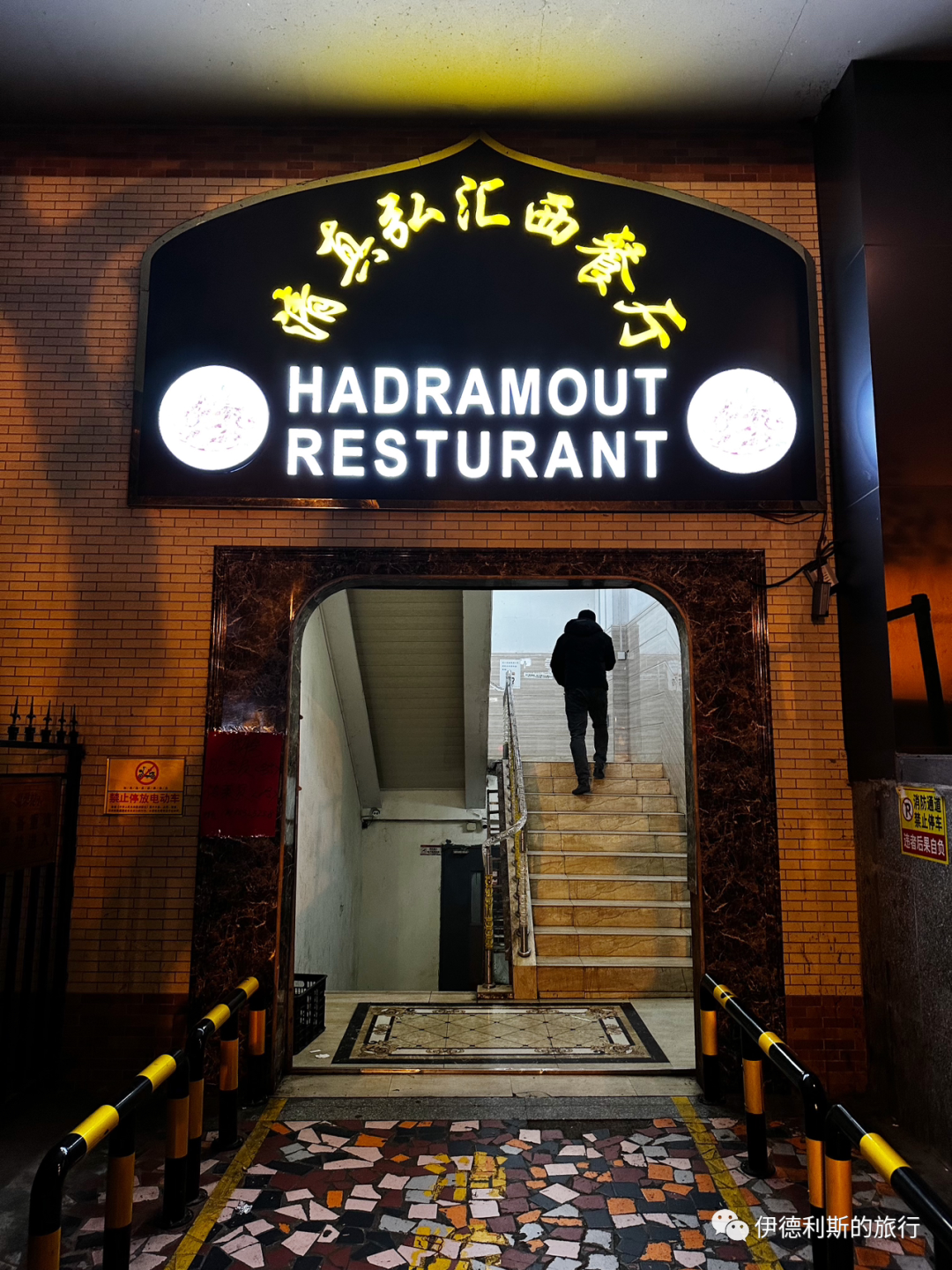
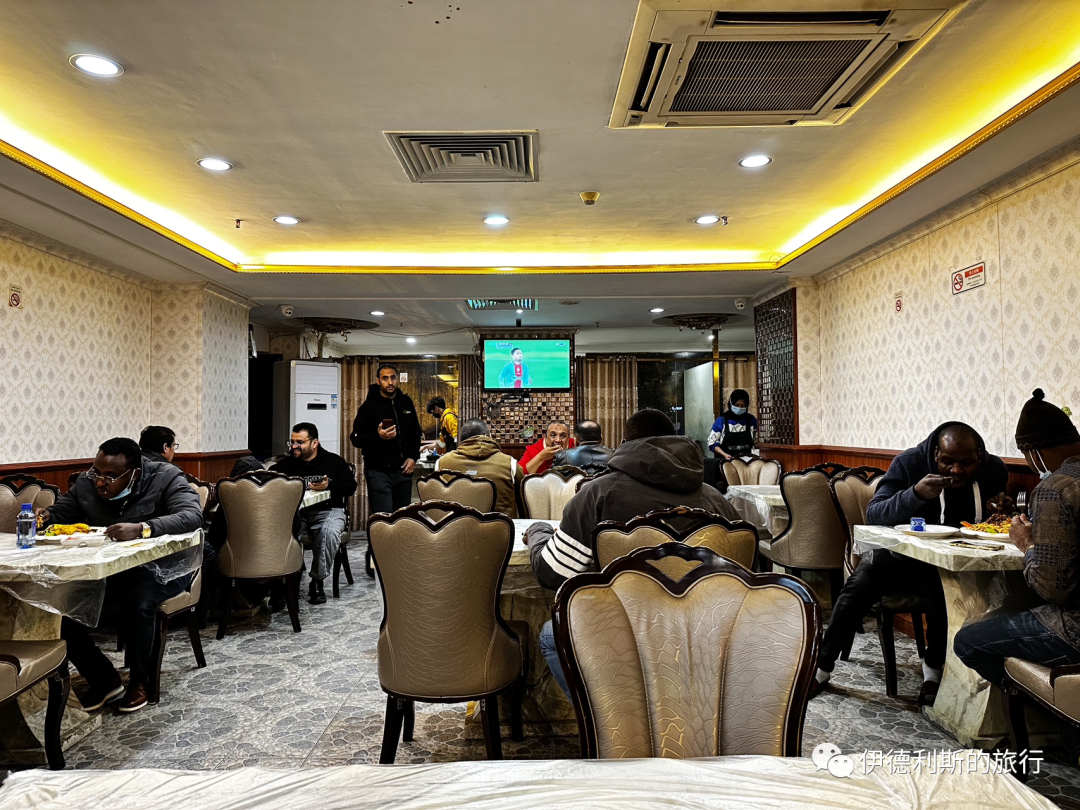
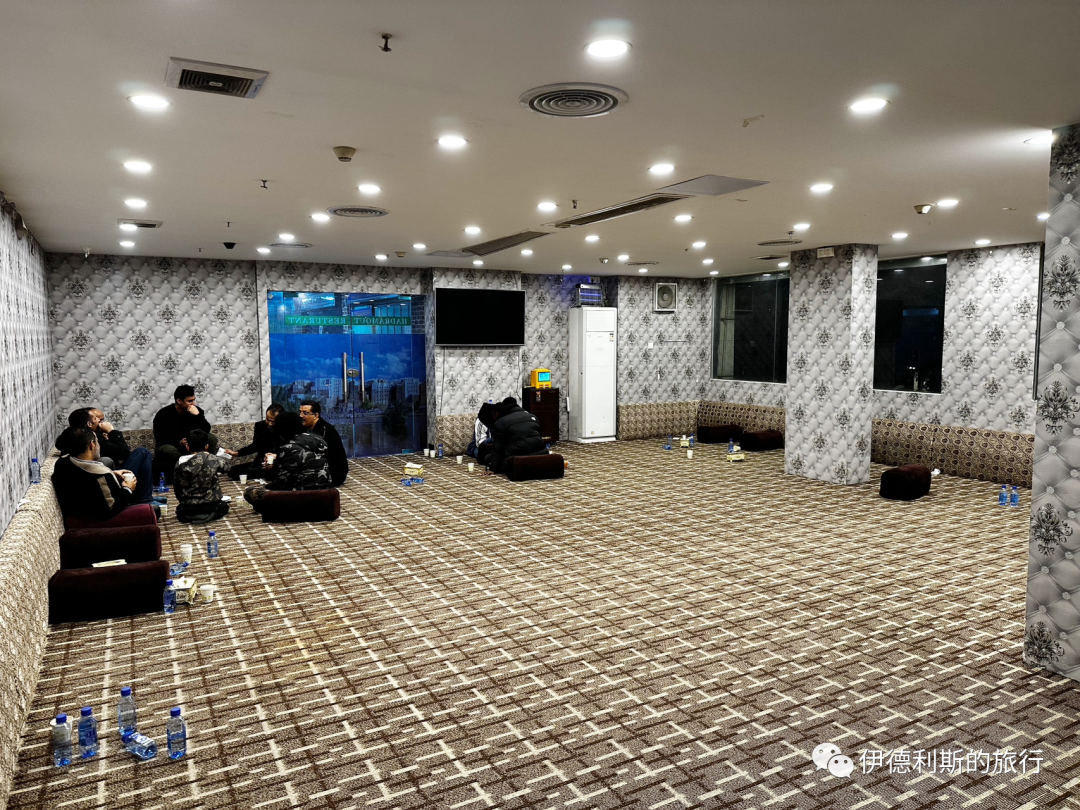
At Hadramout, I had the Yemeni specialty Zurbian lamb and saffron rice (Zurbian yangrou zanghonghua menfan), a major dish served at Yemeni weddings, breaking the fast, and birthdays. The portion of rice is very large, making it suitable for two people. They give you a lot of meat. You might not see it well in the photo, but the rice is actually buried under all that meat. The meat is braised until very tender, and the texture and flavor are both excellent.
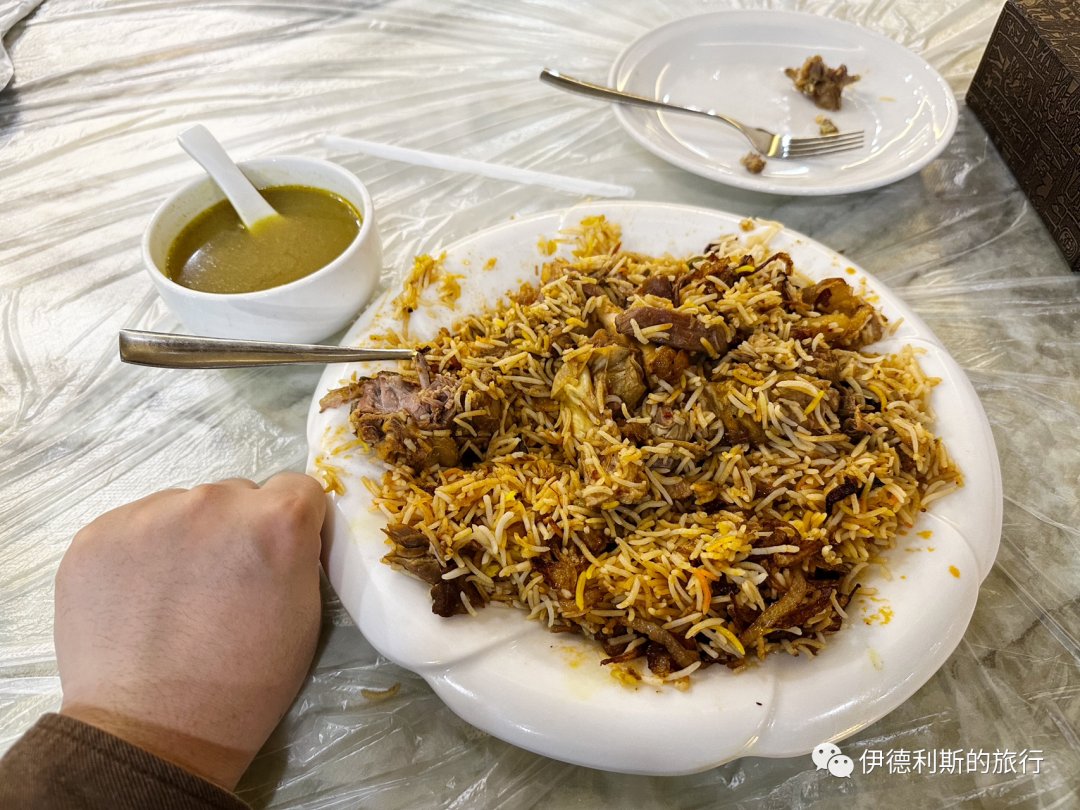
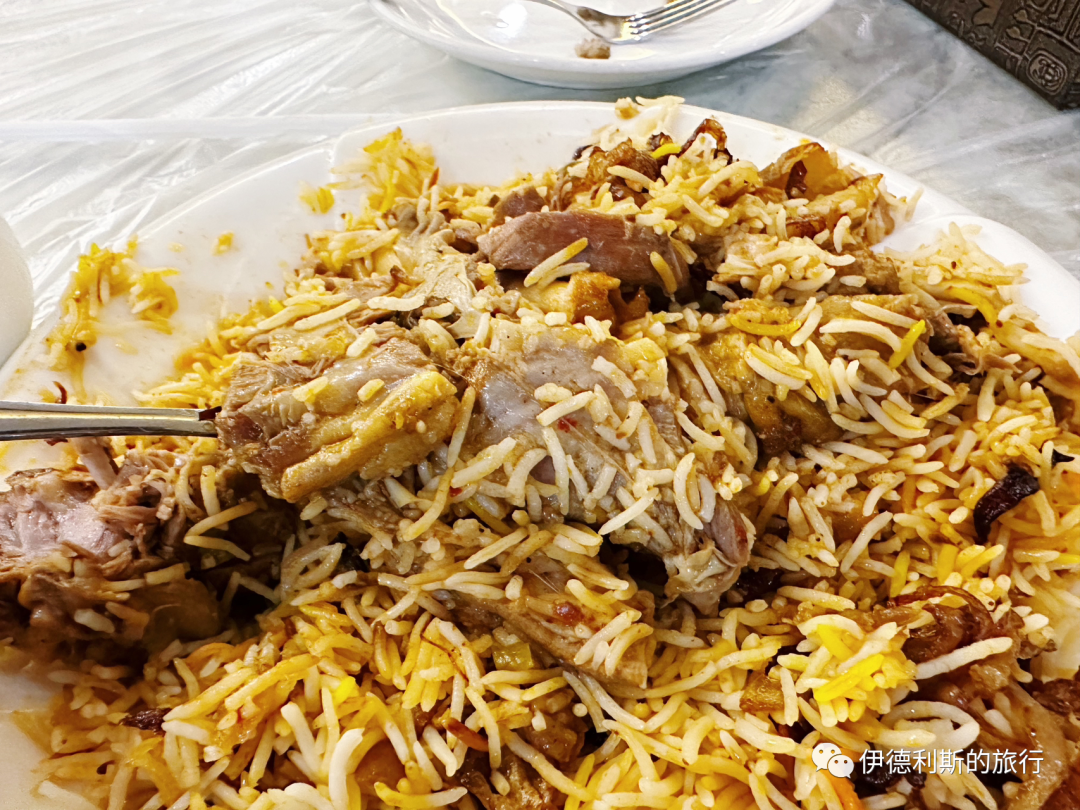
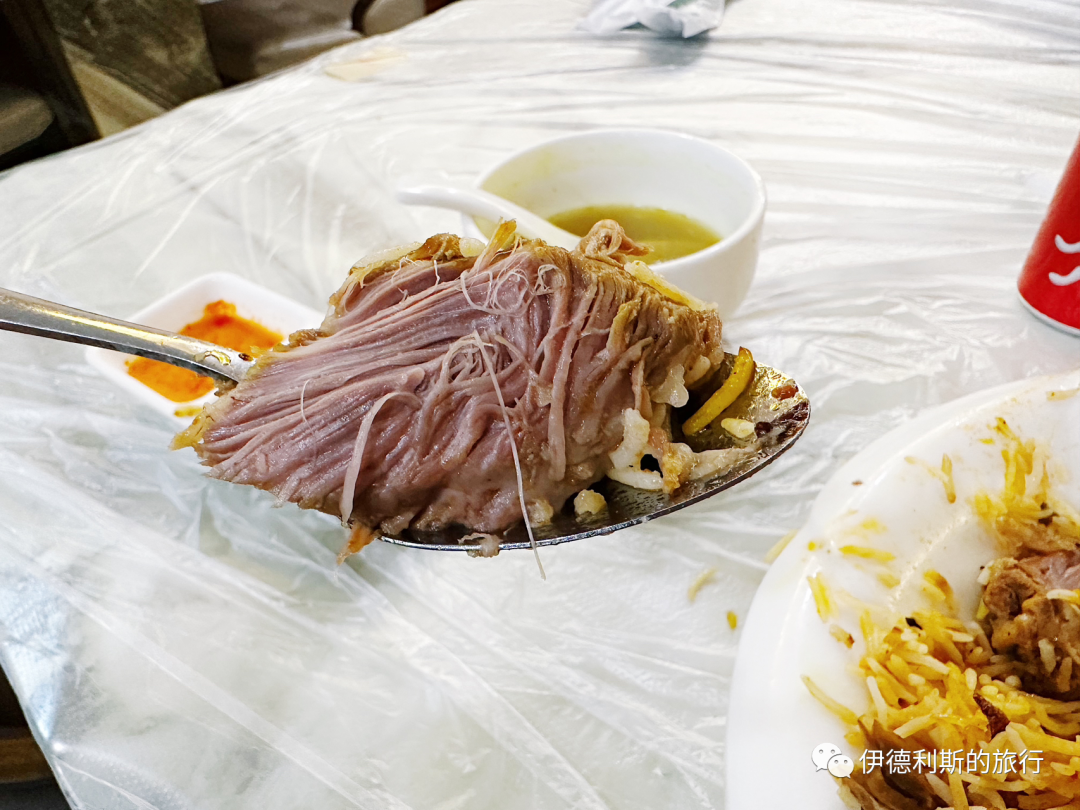
When eating Yemeni rice, you should pair it with the Yemeni specialty spicy sauce Sahawiq. This spicy sauce is made with fresh chili peppers, cilantro, garlic, salt, cumin, and parsley, mixed with olive oil and sometimes tomatoes. Their meat broth is also free to drink, and I think it tastes quite good.
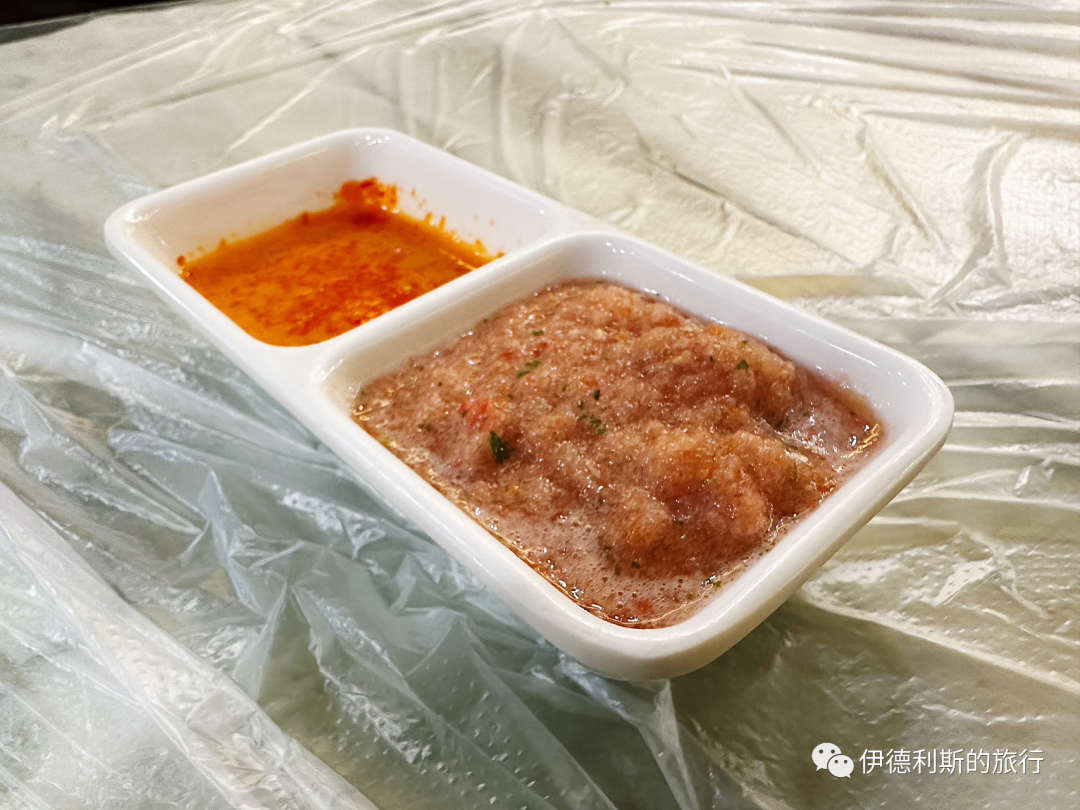
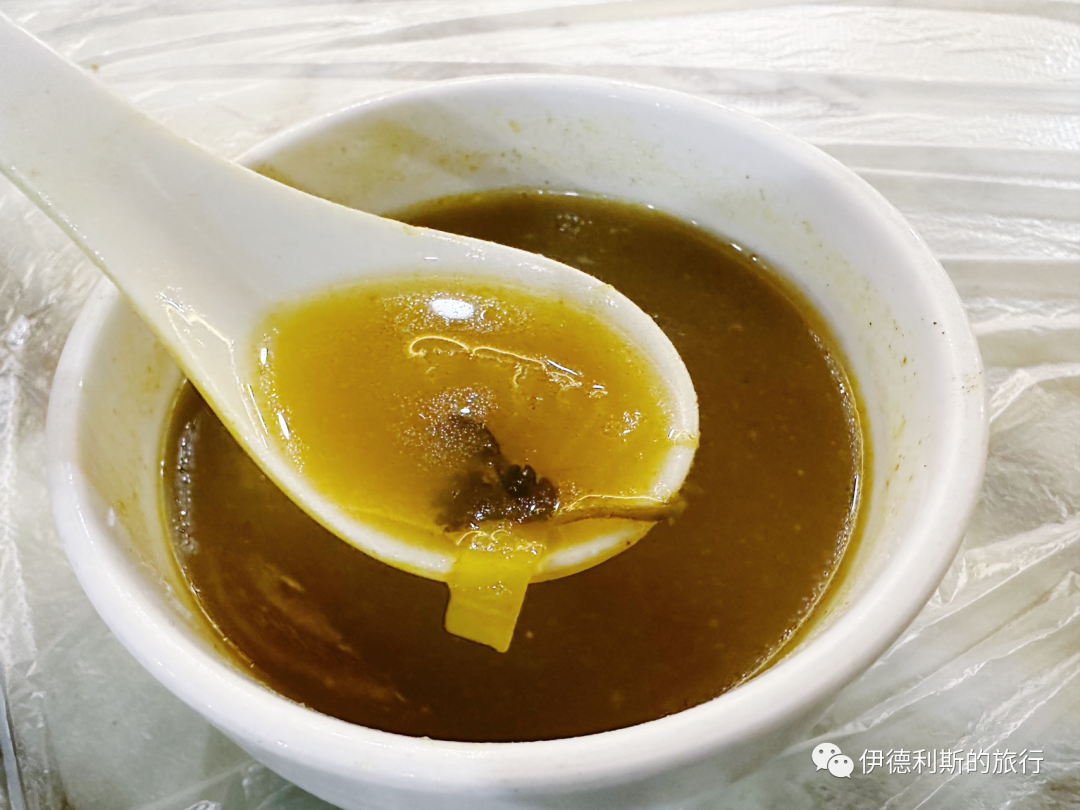
On the morning of January 26, I arrived right at 7:00 AM when the Guangzhou Hui Muslim Restaurant (Guangzhou Huimin fandian) opened for morning tea. Some elderly people had already taken seats, but there were still plenty of empty ones. Every time I visited Guangzhou before, I would go to the Hui Muslim Restaurant for morning tea, and I especially liked their lamb barbecue buns (yang chashaobao). Five years have passed in the blink of an eye, so I had to try them again on this trip.
The Hui Muslim Restaurant can be called the last tear of local halal food in Guangzhou, serving as the final witness to the city's once-thriving local halal dining industry. The Hui Muslim Restaurant started as a halal canteen in 1956, with chefs coming from local halal eateries like Gaosheng Tea House, the Hui Muslim Fengcheng Roasted Meat Shop, and the Halal Deji Roasted Meat Shop. In 1959, the canteen merged with the Huabei Hotel and took over the second branch of Satangji, renaming itself the Hui Muslim Grand Hotel. It took over the Hui Muslim Ice Room in 1964 and moved to its current location on Zhongshan 6th Road in 1975, where it has been for nearly 50 years. Due to complex historical reasons and the changes in the local Muslim community during the 20th century, the local halal dining industry in Guangzhou declined. As a restaurant with nearly 70 years of history, it is quite an achievement for the Hui Muslim Restaurant to still be here today.
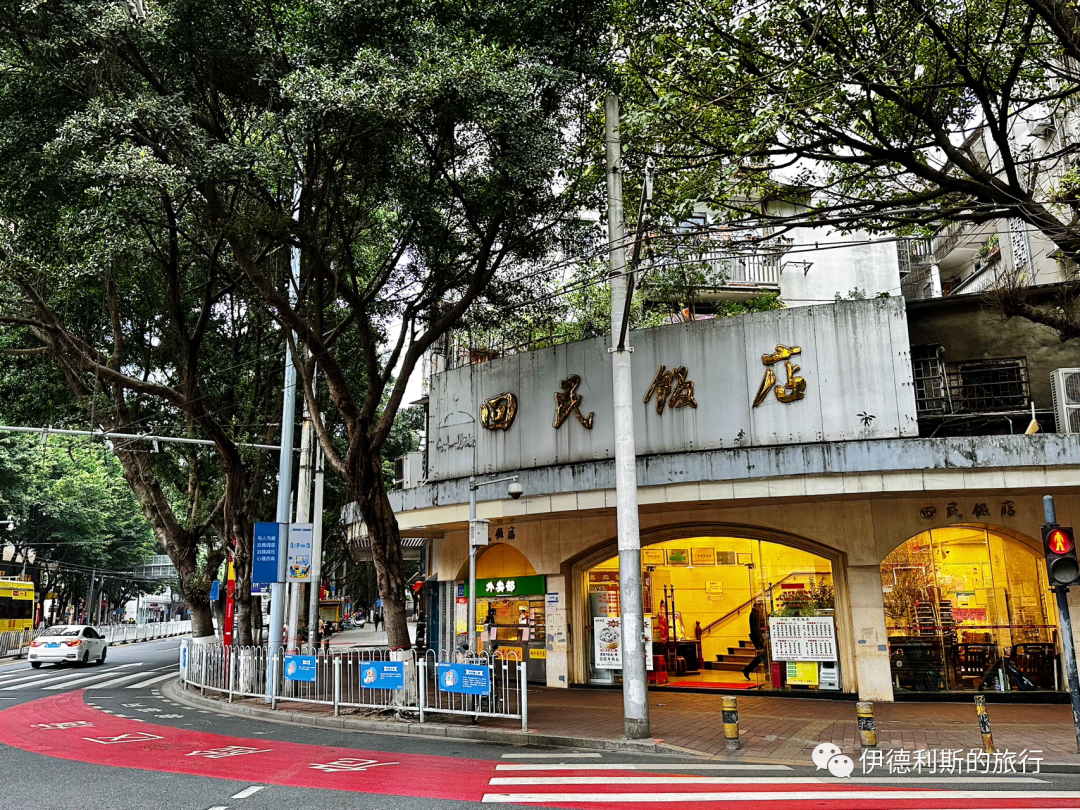
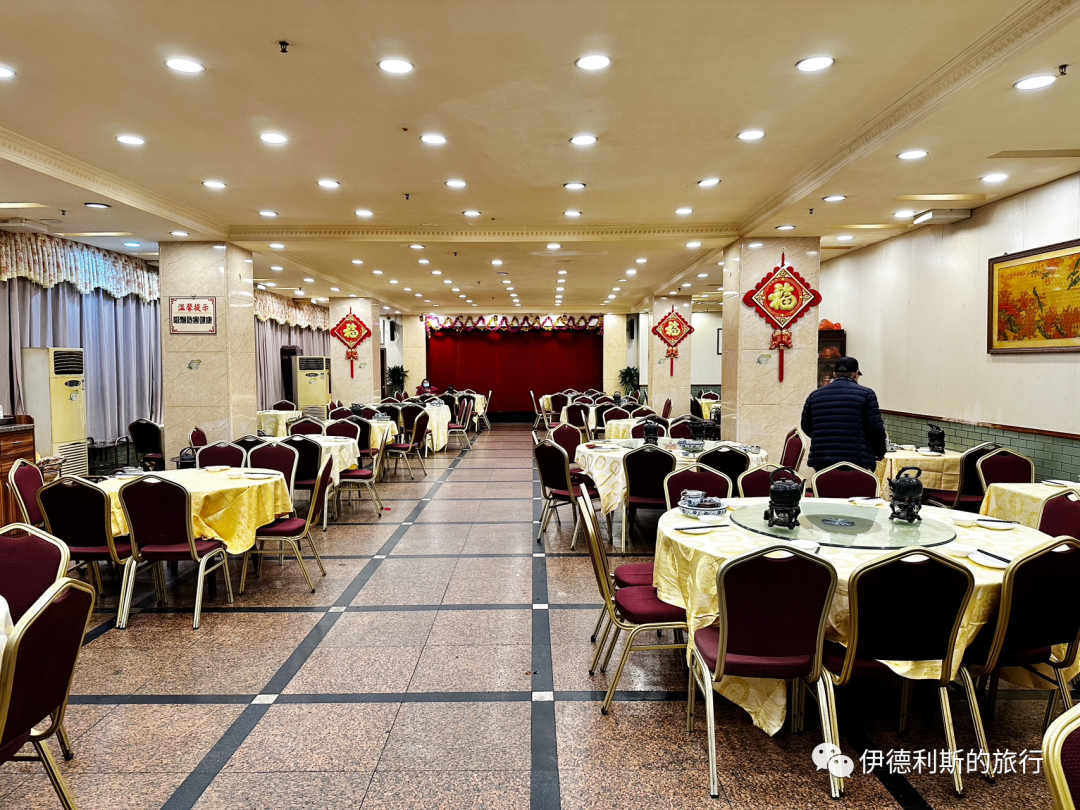
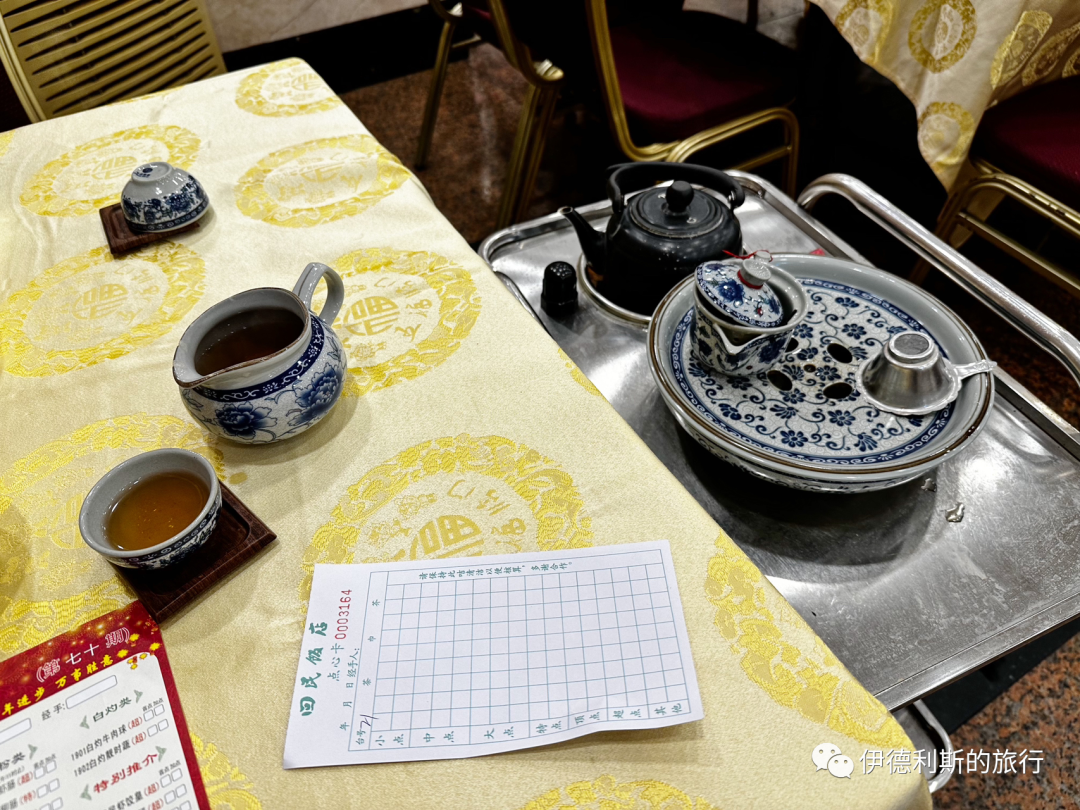
In 2016, I posted an article on Douban called The Morning and Night of Guangzhou Hui Muslim Restaurant, and I ate there several times in a row back then. I checked the morning tea menu from that time, and it was only on its 52nd edition; now it is already on its 70th. Except for the price increases on the dim sum, the variety has basically stayed the same. Besides the lamb barbecue buns I wanted most, I also ordered steamed chicken feet, water chestnut cake, chicken biscuits, and curry beef rice noodle rolls (changfen). When eating alone, you cannot order many things. I wanted to order more, but unfortunately, I was too full. The barbecue buns are still filled with soft, slightly sweet lamb and paired with salted egg yolk, which is very delicious. This was my first time eating chicken biscuits (jizaibing). They are said to be a very traditional recipe from Hui Muslims in Guangzhou, mixing the flavors of fermented bean curd (nanru) and dried tangerine peel (chenpi) to take you right back to old Guangzhou.
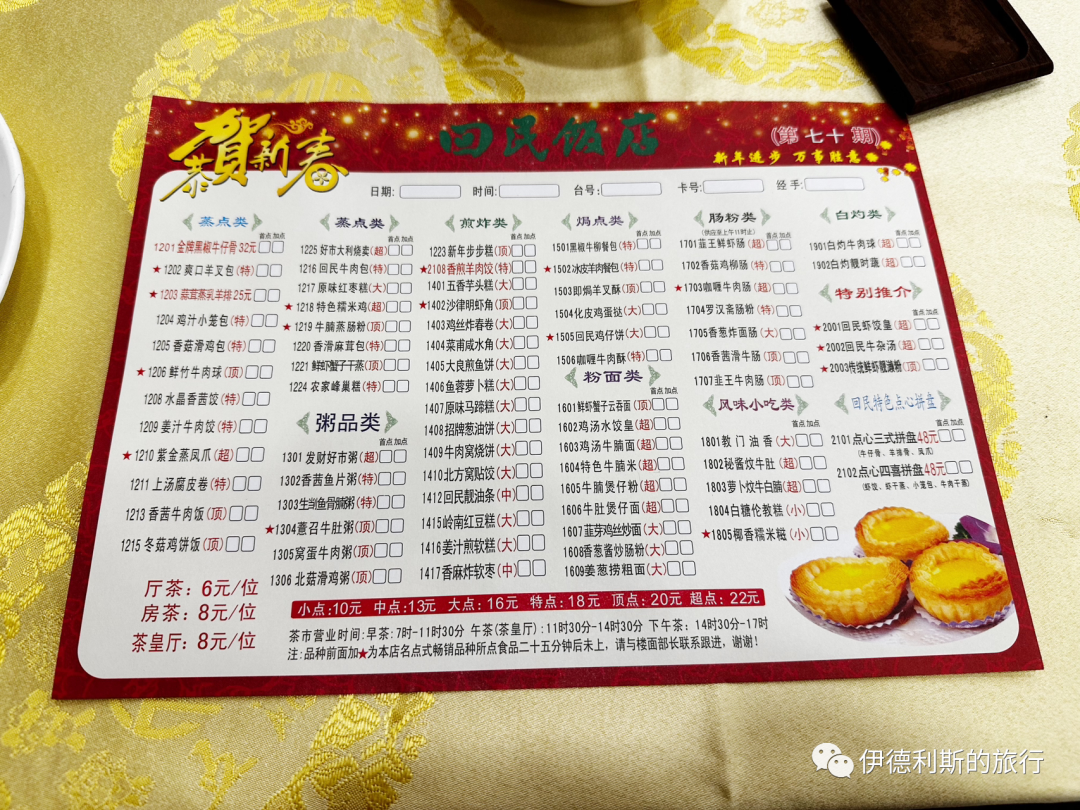
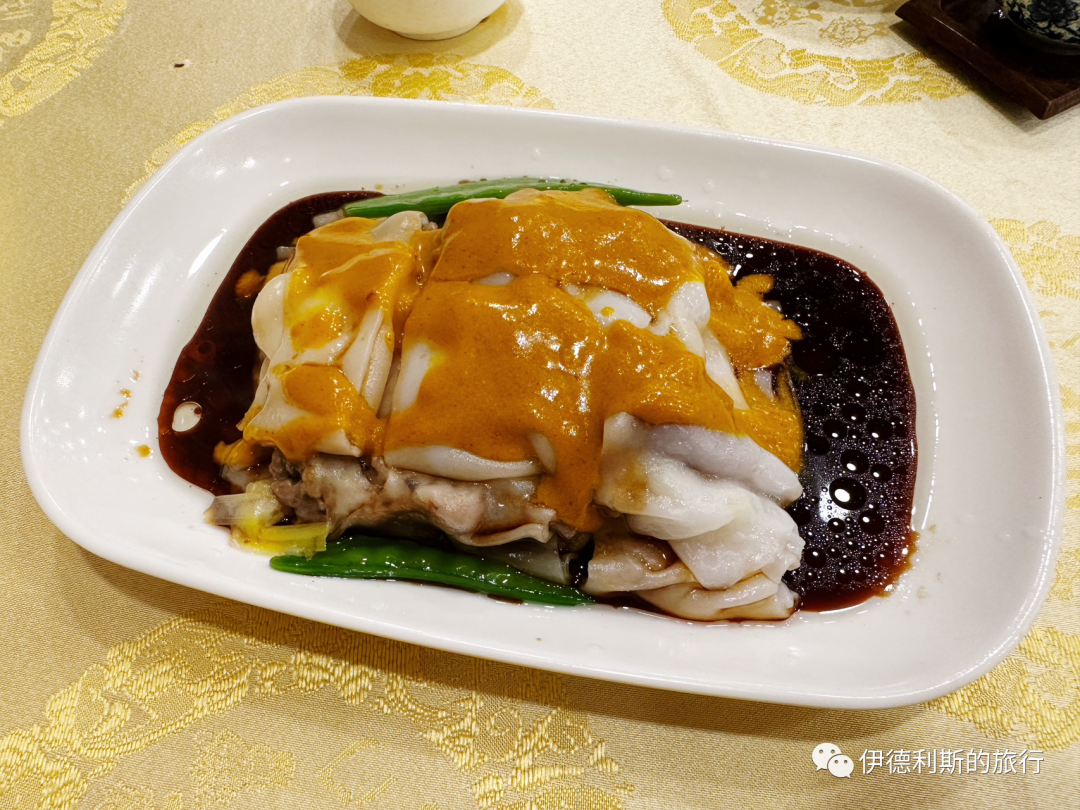
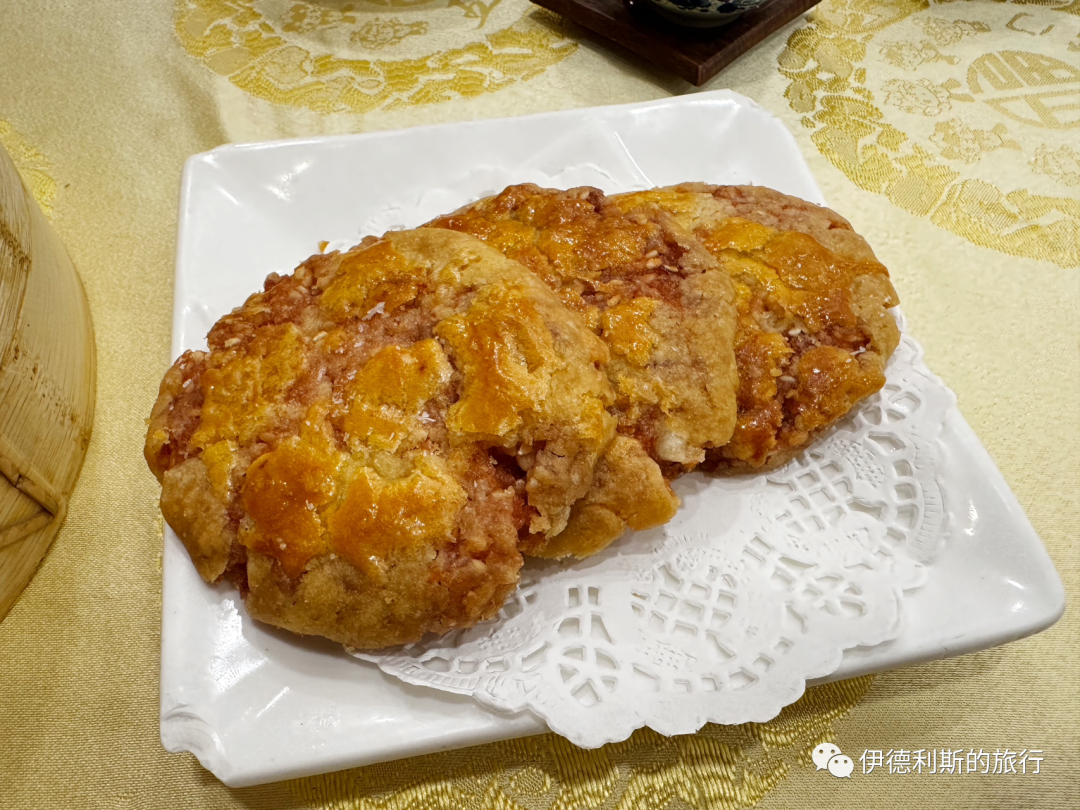
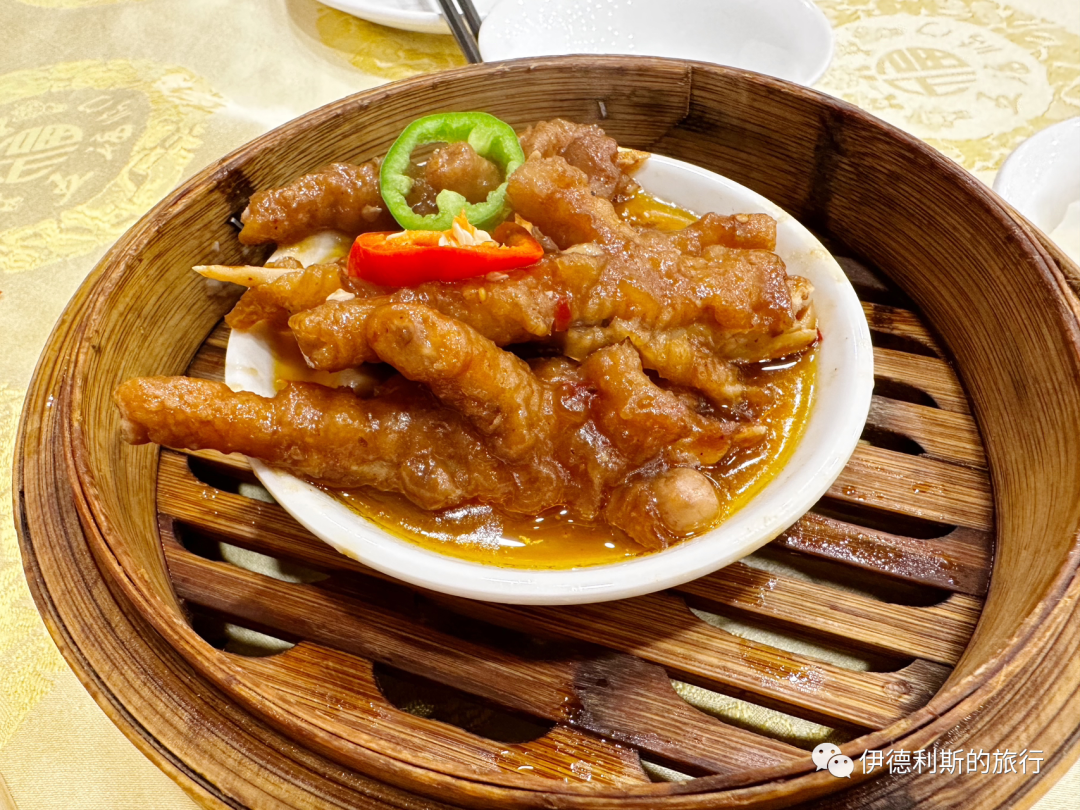
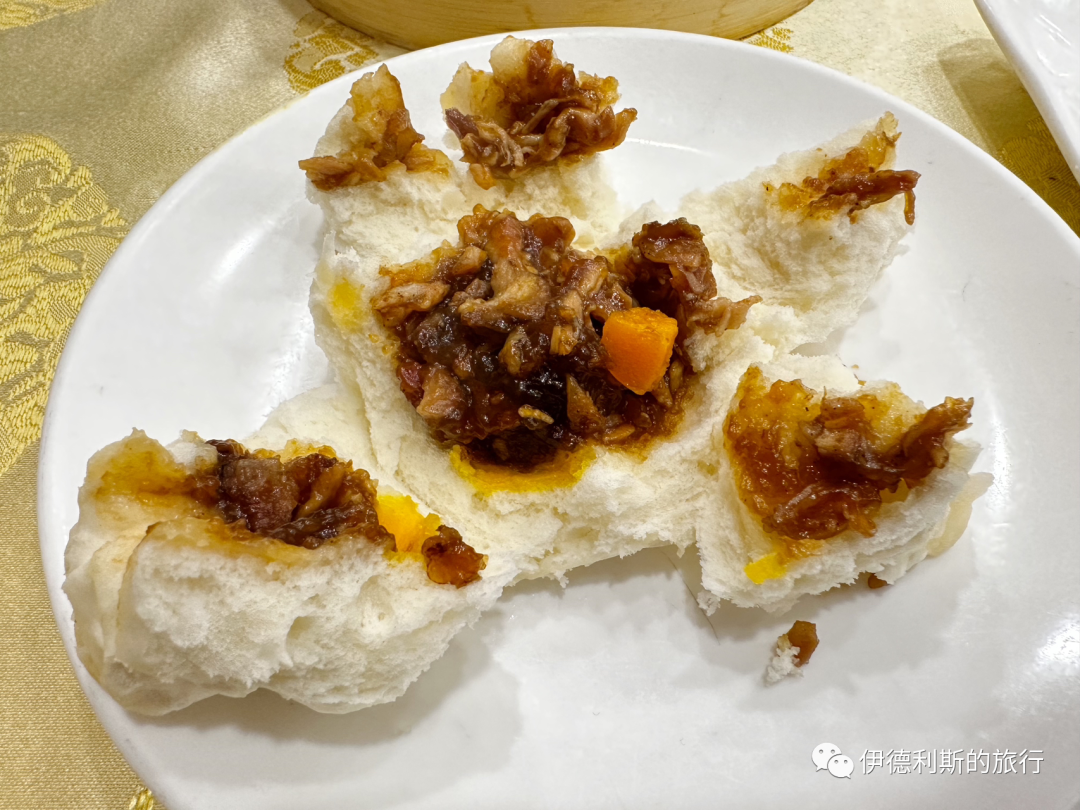
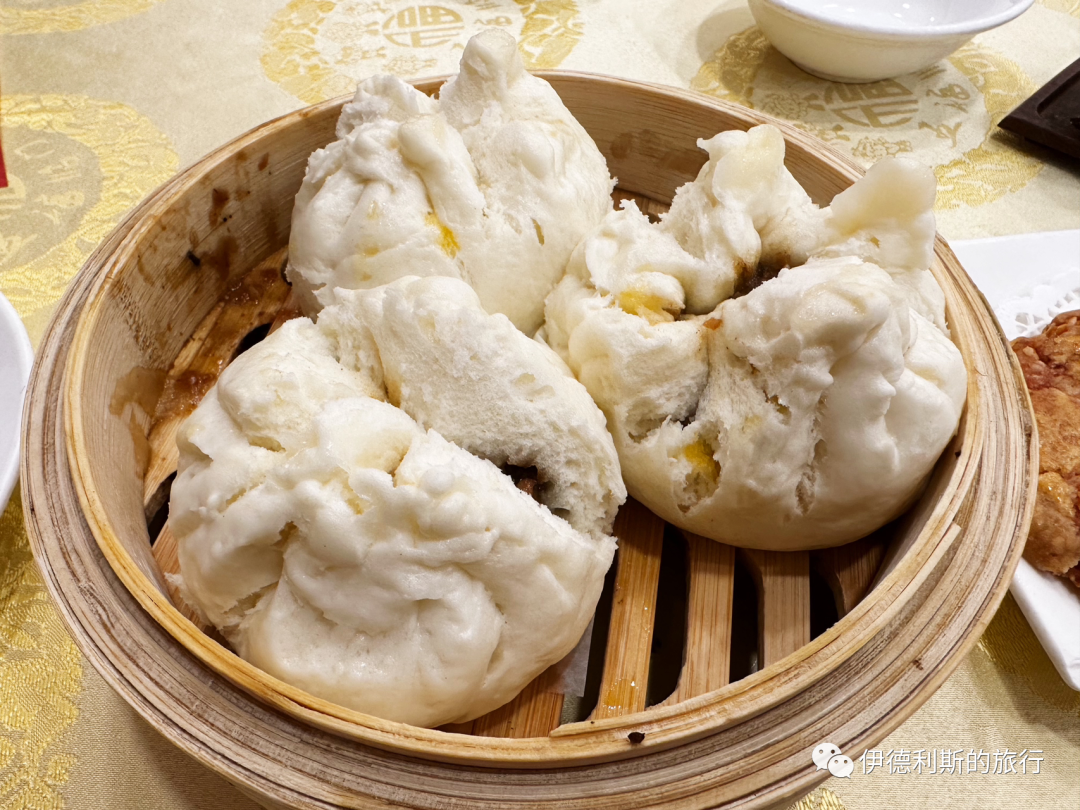
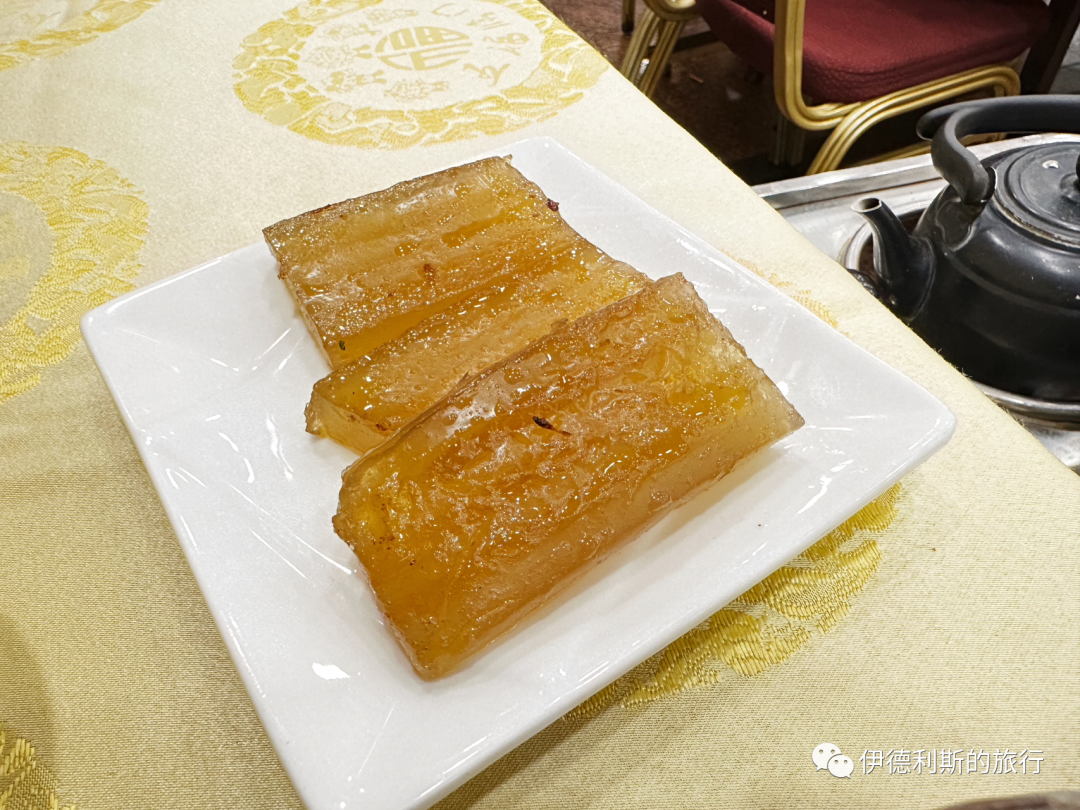
You should really take your time with morning tea (zaocha), ordering a few items at a time and adding more as you go. But because I had to head to Zhaoqing that day, I ate in a rush. While the grandparents at the next table were still looking at the menu and chatting, I had basically finished my meal. Although it wasn't as amazing as the first time I had halal Cantonese morning tea, I still felt very satisfied after finishing. It felt like the three years of being stuck were finally over, and I was relieved to be able to travel across the land again.
By eight o'clock, the dining halls of the Hui Muslim restaurant were already full. If you don't want to get up early, buying some specialty steamed snacks at the takeout window by the entrance is a great option.
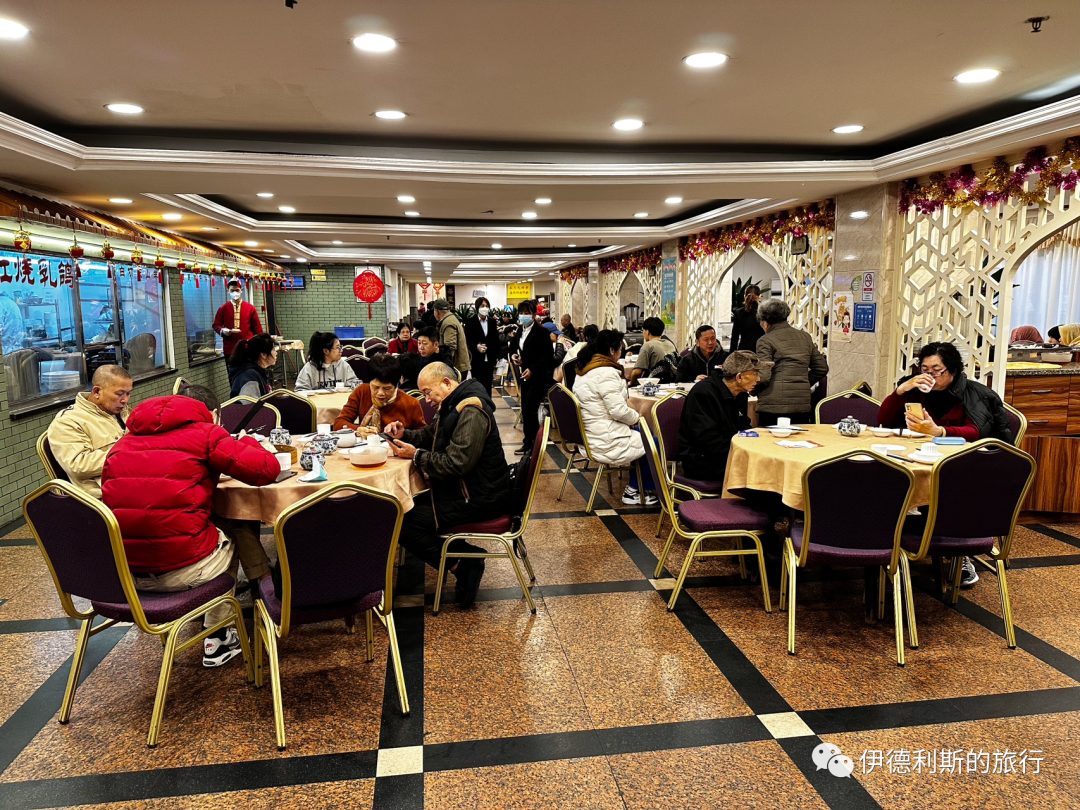
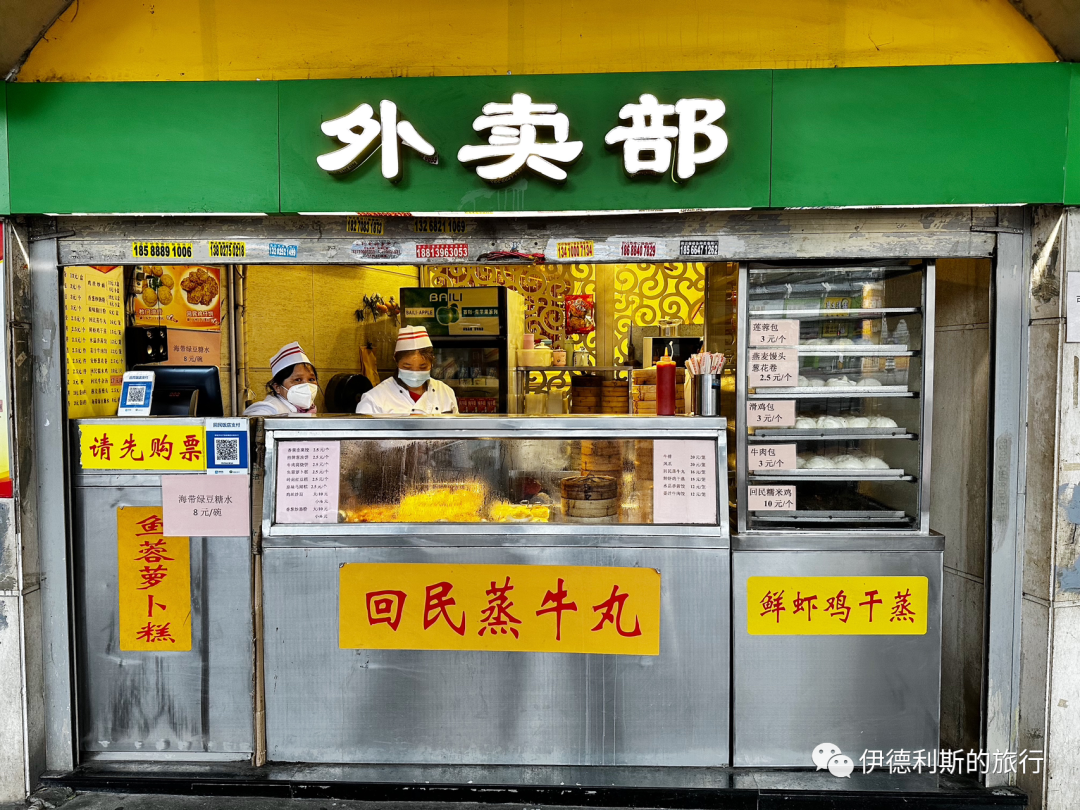
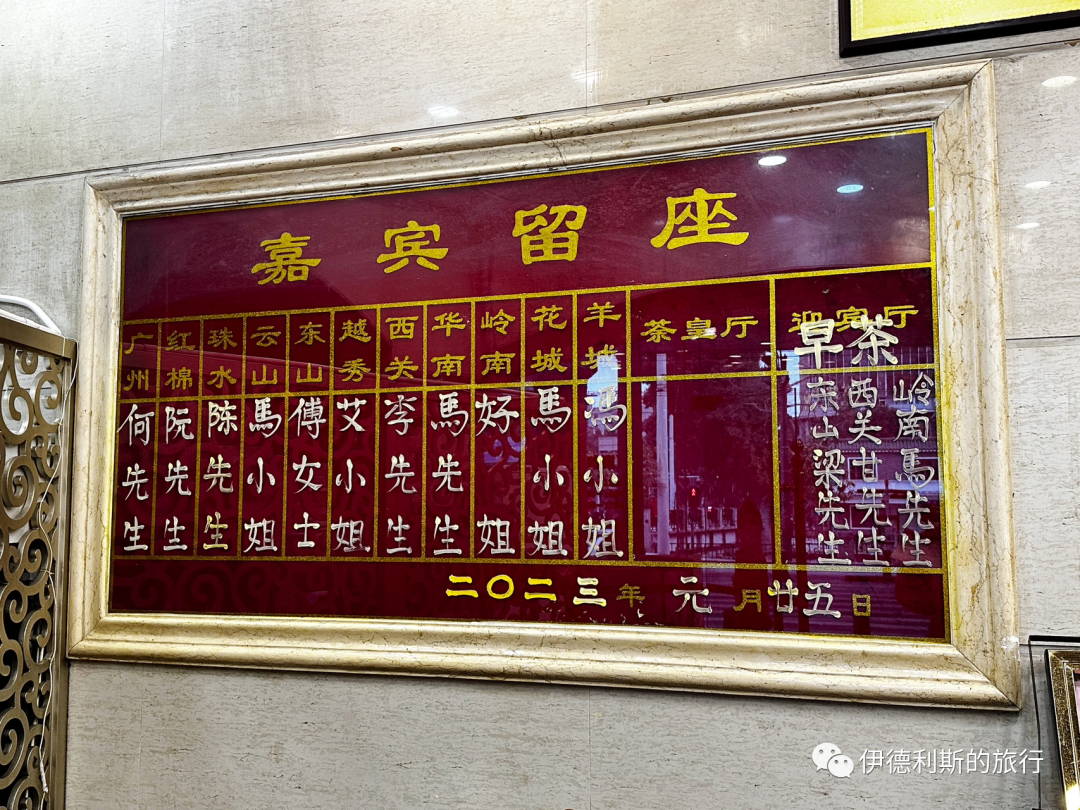
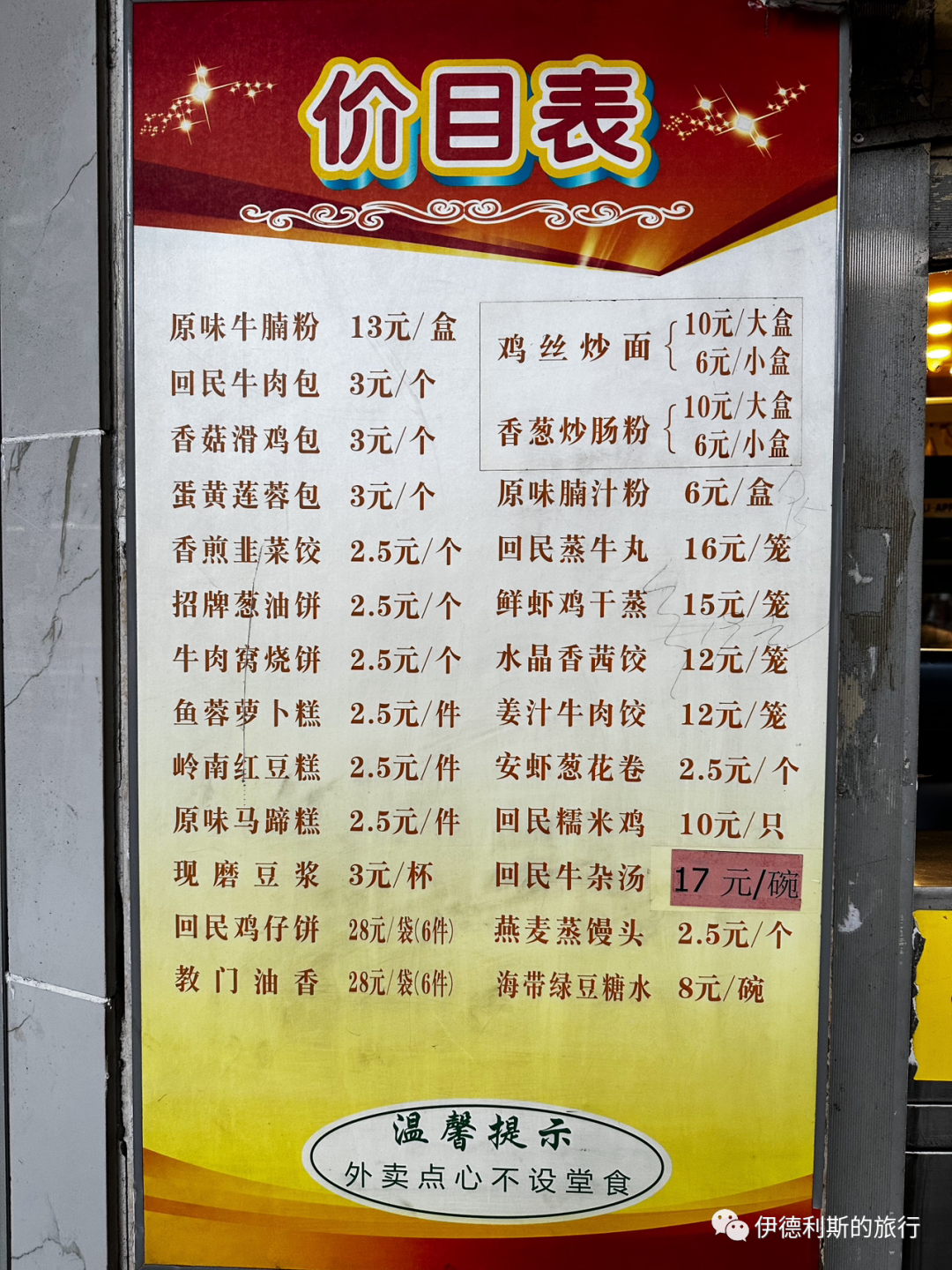
In the evening, I went to Sadda Restaurant, a long-standing Yemeni spot in Guangzhou's Xiaobei area that has been open for over a decade. Just like the Yemeni restaurant Honghui I visited the day before, they have regular tables and chairs, plus a room where you can sit on the floor to eat, just like in Yemen.
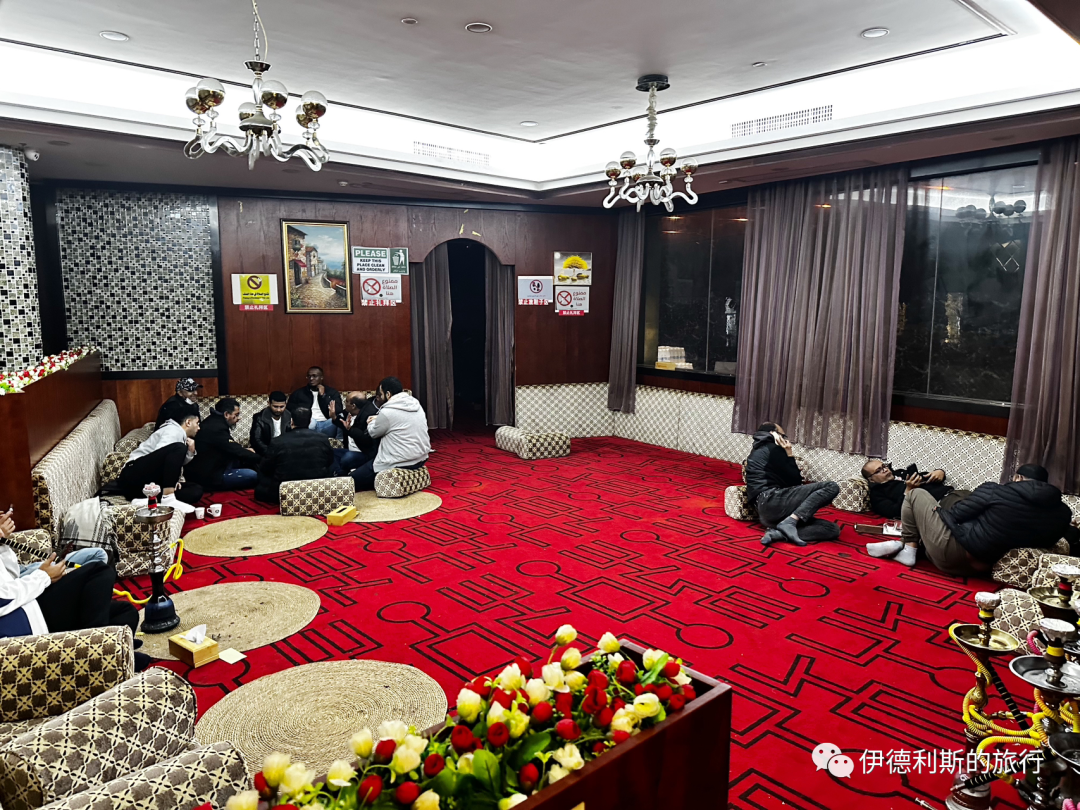
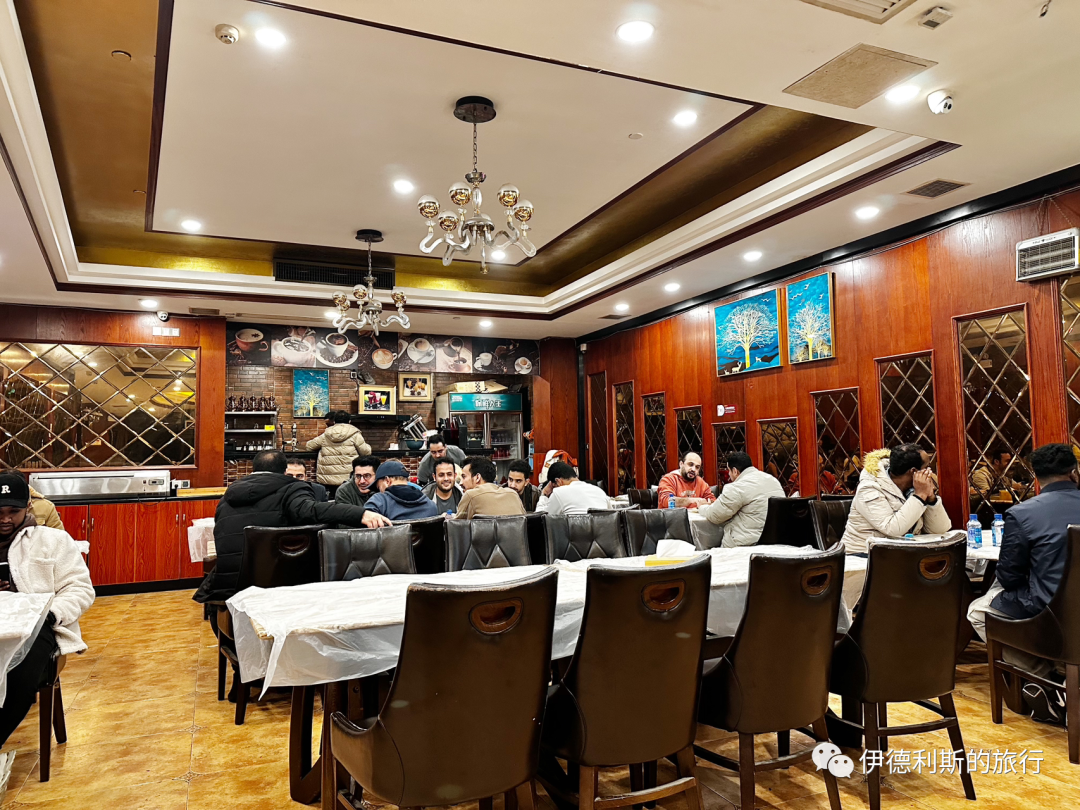
Sa'dah is an ancient capital in northwestern Yemen. It was founded in the late 9th century by Imam al-Hadi, the leader of the Zaydi branch of Shia Islam (the Five-Imam sect), and has been the stronghold of the Zaydi sect ever since. The Lasi dynasty founded by Imam al-Hadi lasted for over a thousand years (893-1962). The city of Sa'dah preserves the oldest Shia mosque on the Arabian Peninsula and many historical buildings from different periods, and it was added to the World Heritage Tentative List in 2002. After the Republic of Yemen was established, the Zaydis in the north and the Sunnis in the south were at odds for a long time. In 2004, Hussein al-Houthi, from the Zaydi Houthi tribe in Sa'dah, started the Houthi movement there. In 2011, they officially established a new government in Sa'dah, and the city has been under Houthi control ever since. During the 2015 war, the Arab coalition launched airstrikes on Sa'dah, and the city's oldest Great Mosque of Imam al-Hadi was severely damaged.
When you come to Guangzhou to eat at a Yemeni restaurant, you must try the classic Yemeni dish Fahsa, a lamb stew served with Mulawah flatbread. For Fahsa, the lamb must be stewed until it is very tender. It starts in a large pot and is then moved to a small stone pot to continue simmering. Besides ginger, garlic, and cumin, you must add a spice called fenugreek (hulbah) when stewing the meat. Fenugreek is actually what people in Northwest China often call xiangdouzi. People in the Northwest dry the leaves and grind them into powder to steam buns, while Yemenis grind the seeds to stew meat. Fenugreek seeds expand when they hit water, and they foam up very easily when you stir them in a bowl.
Mulawah flatbread is traditionally baked in an Arabian clay oven called a tannur. It is very fragrant with wheat and quite large. You can tear the flatbread apart to scoop up the Fahsa lamb stew, or soak it in the broth; both ways are delicious. Also, you should eat it with Sahawiq dipping sauce, which contains fresh green chili, cilantro, garlic, salt, cumin, and parsley.
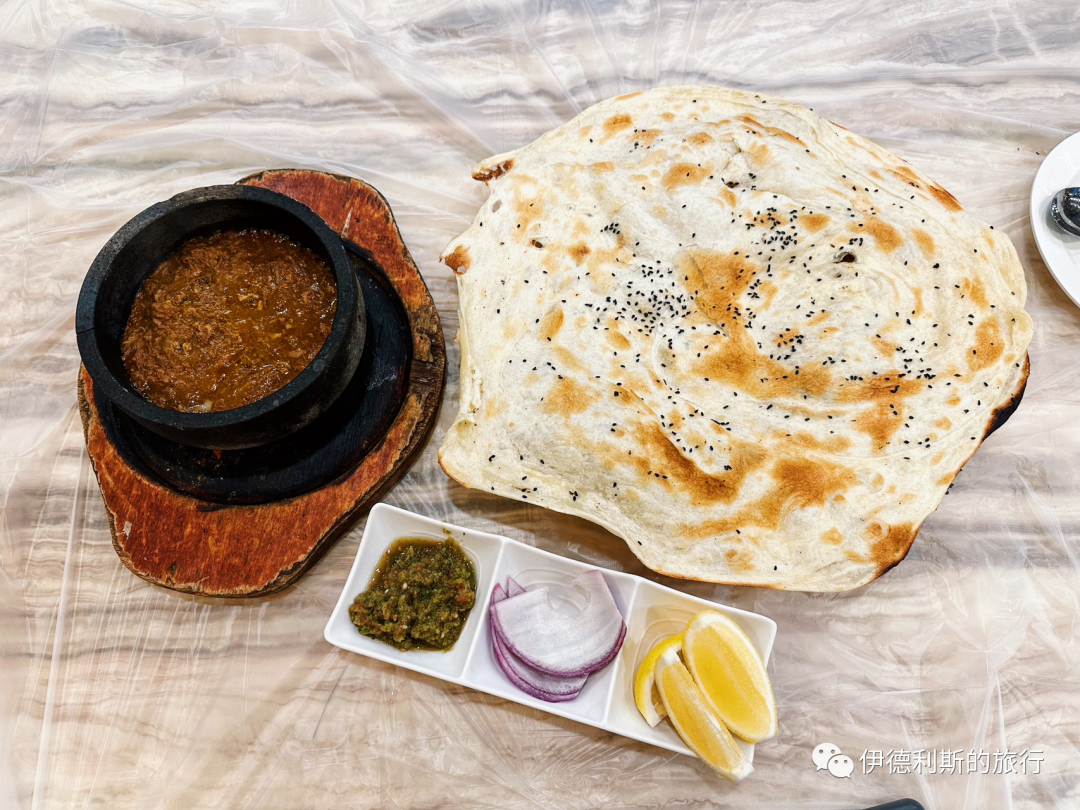
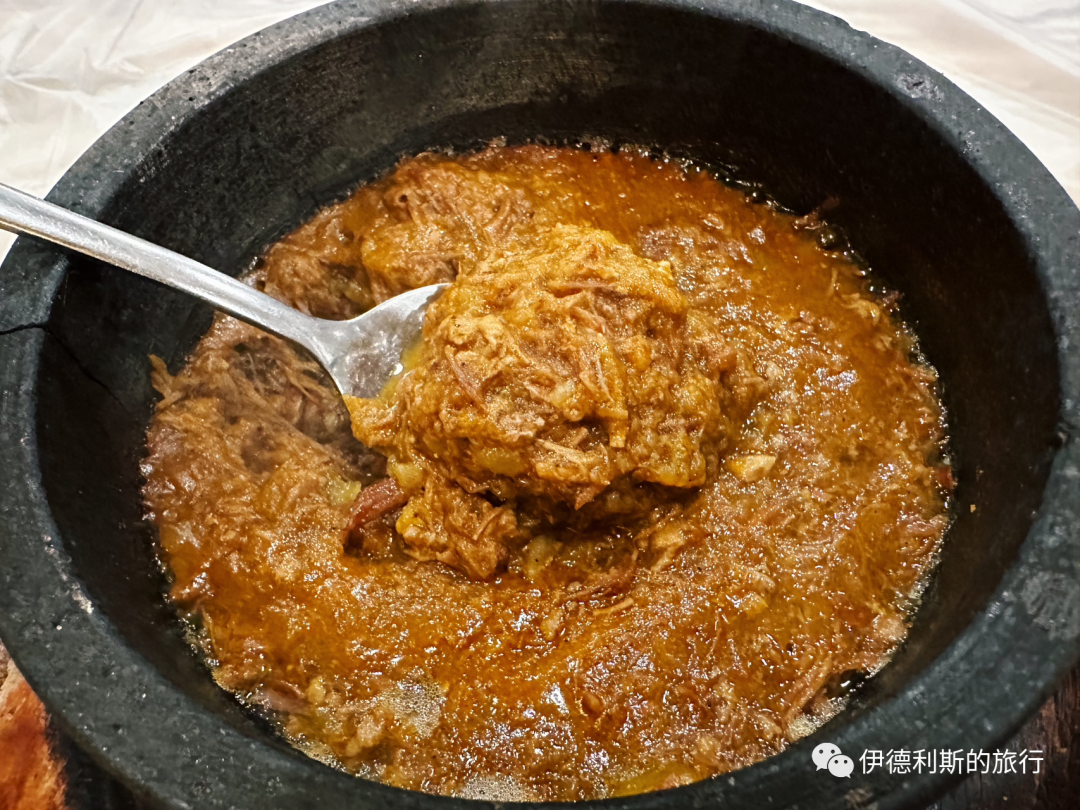
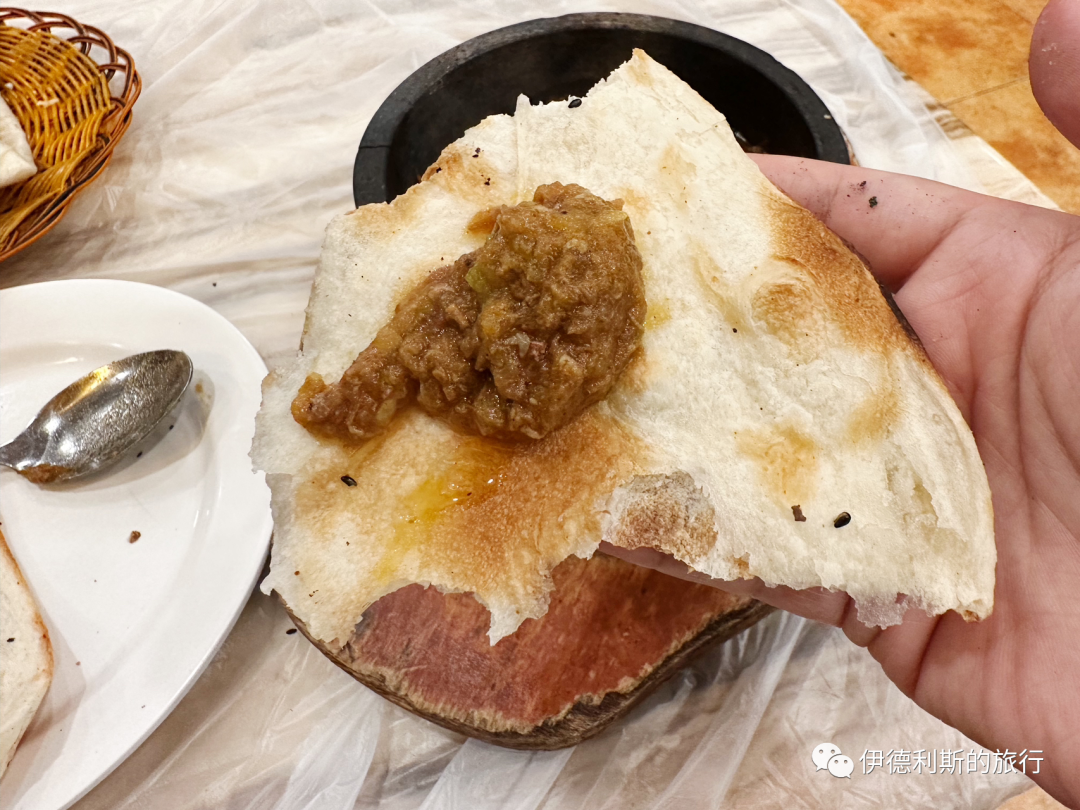
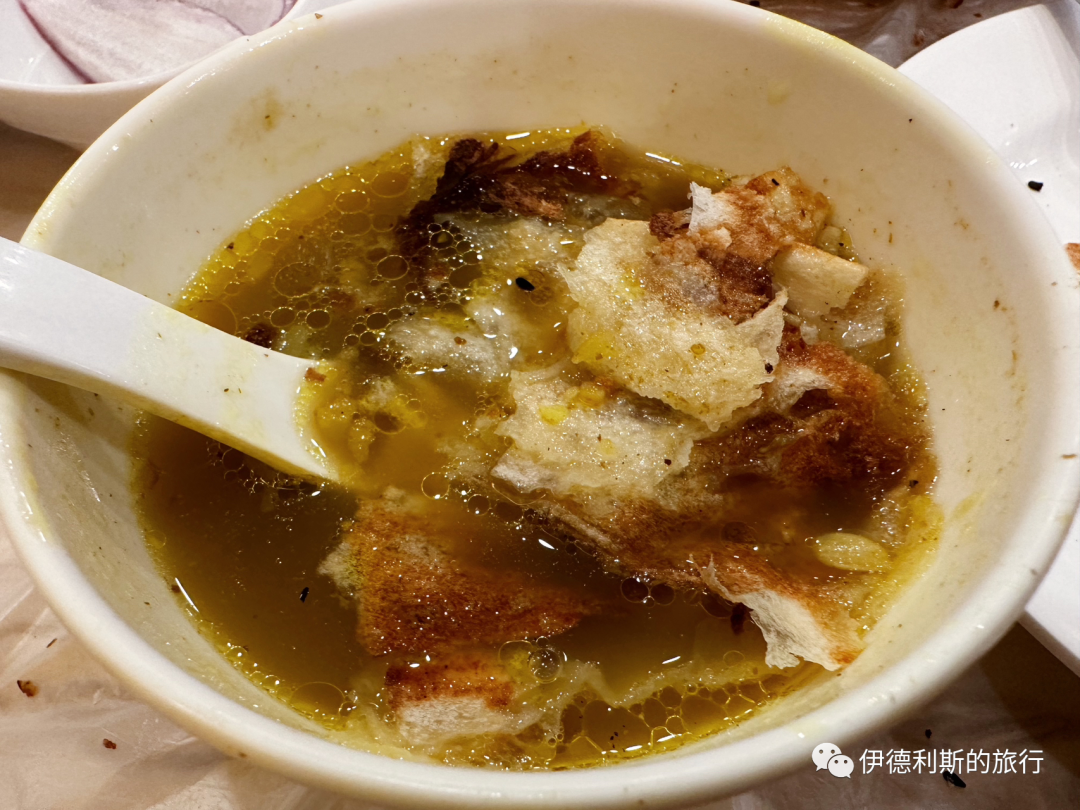
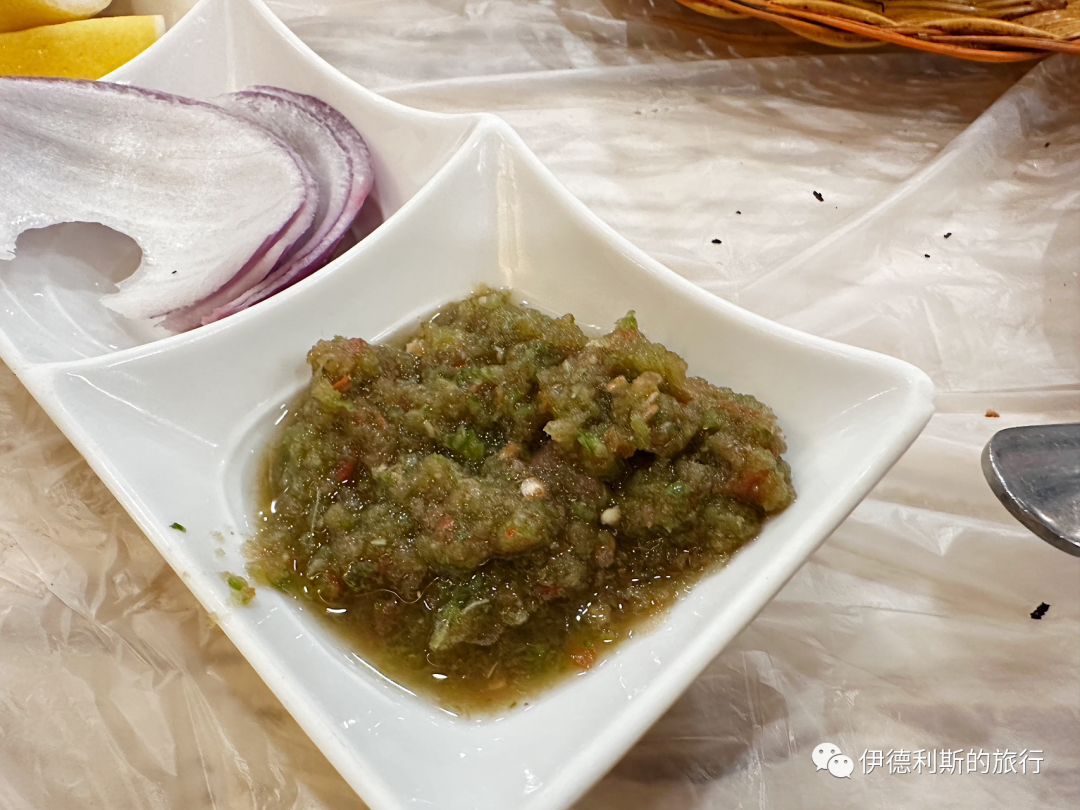
Finally, here are a few photos of Baohan Straight Street in Xiaobei, Guangzhou, at night. This area is known as Guangzhou's Muslim street.
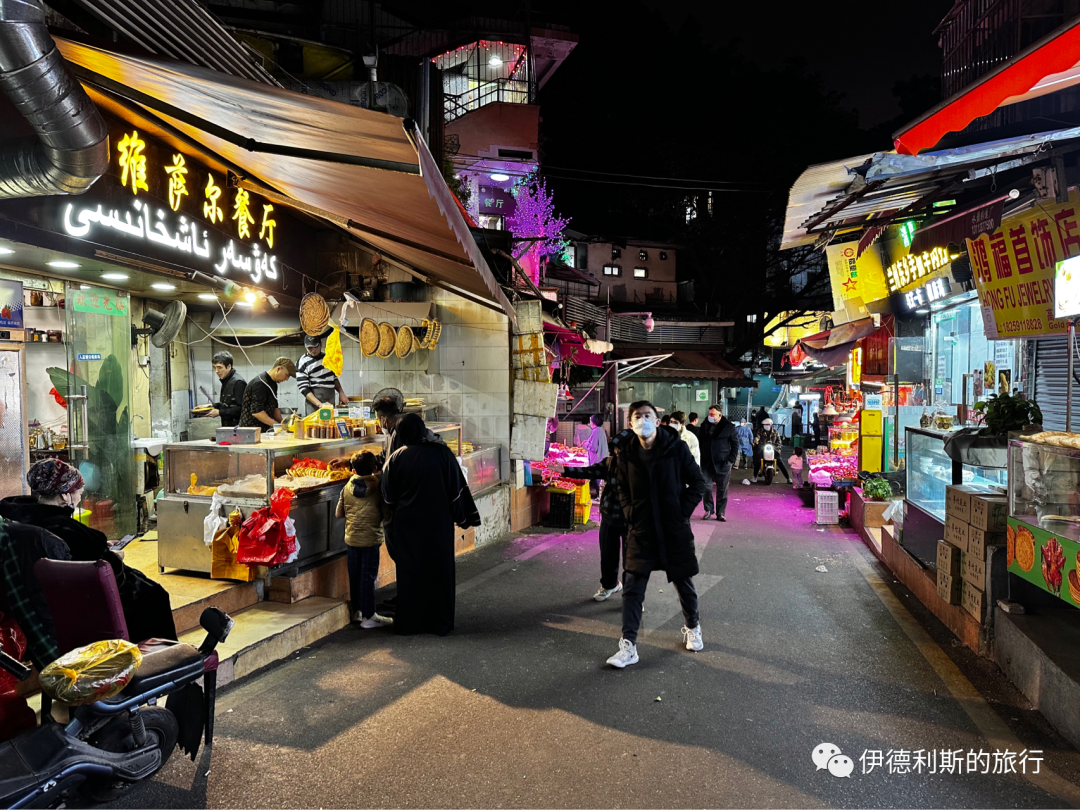
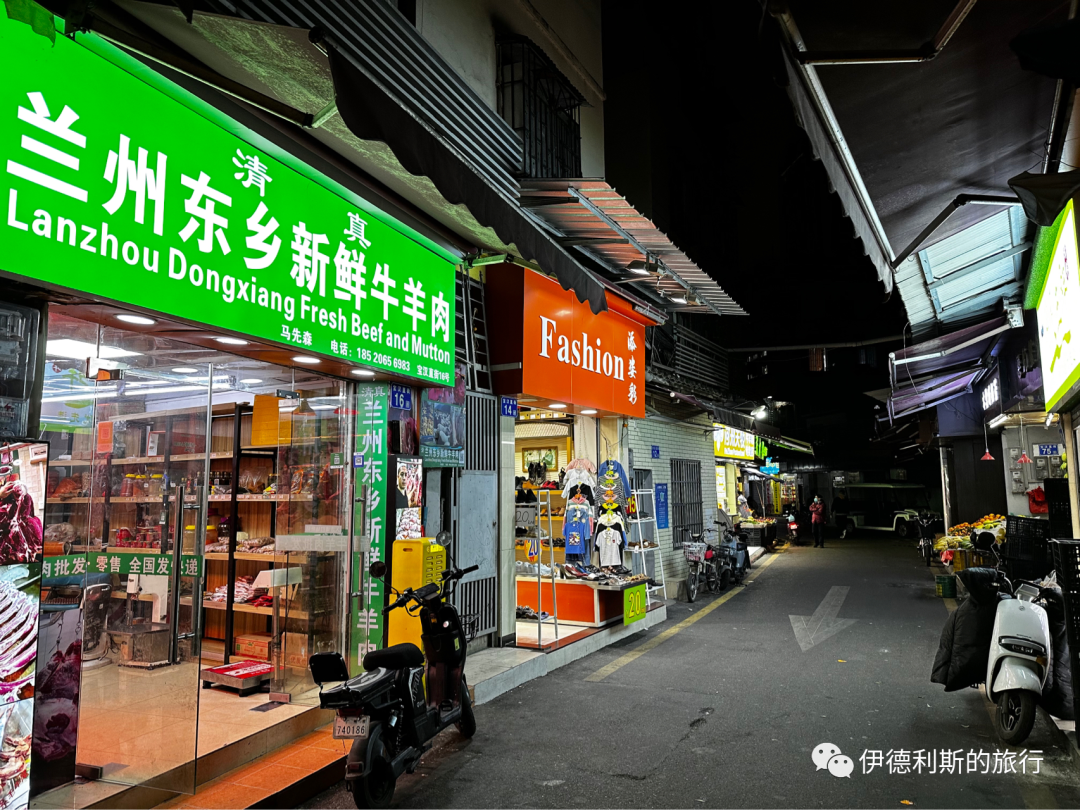
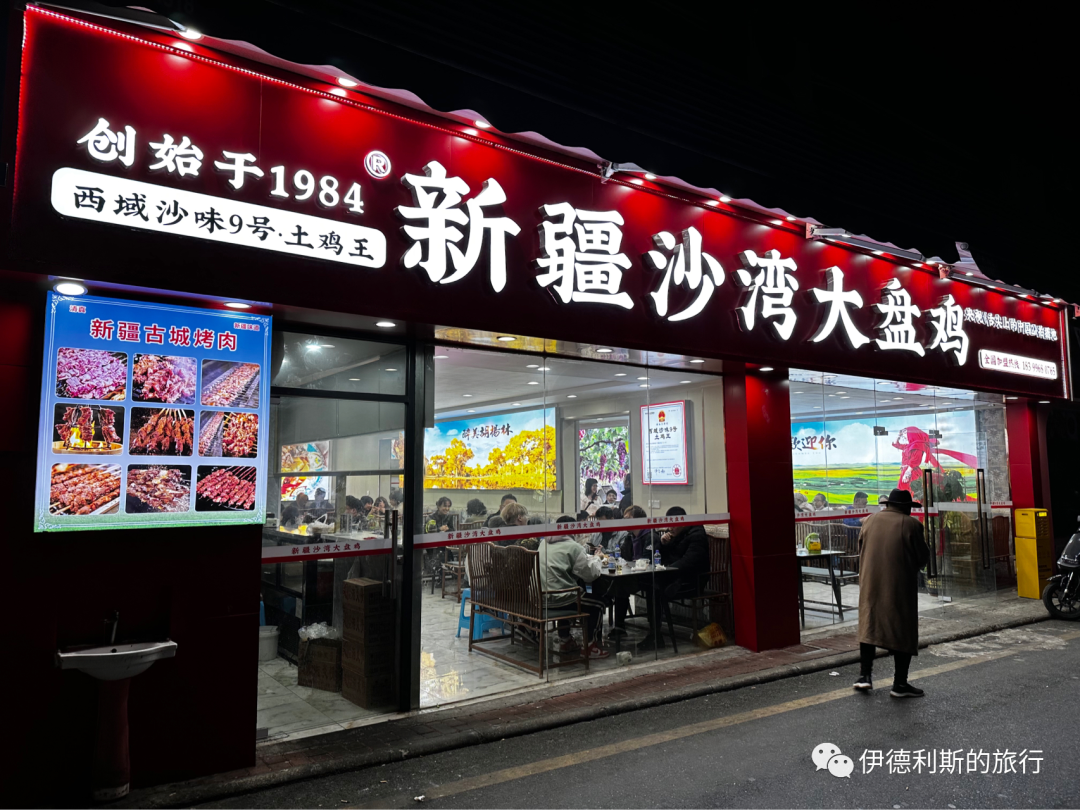
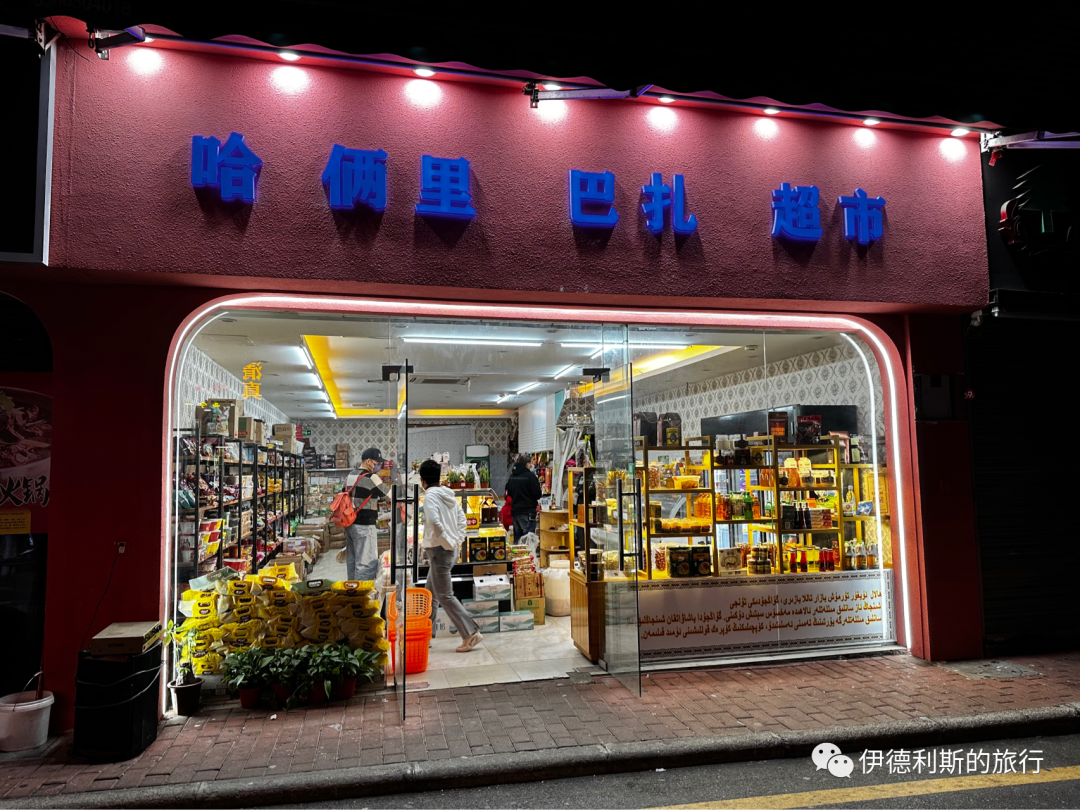
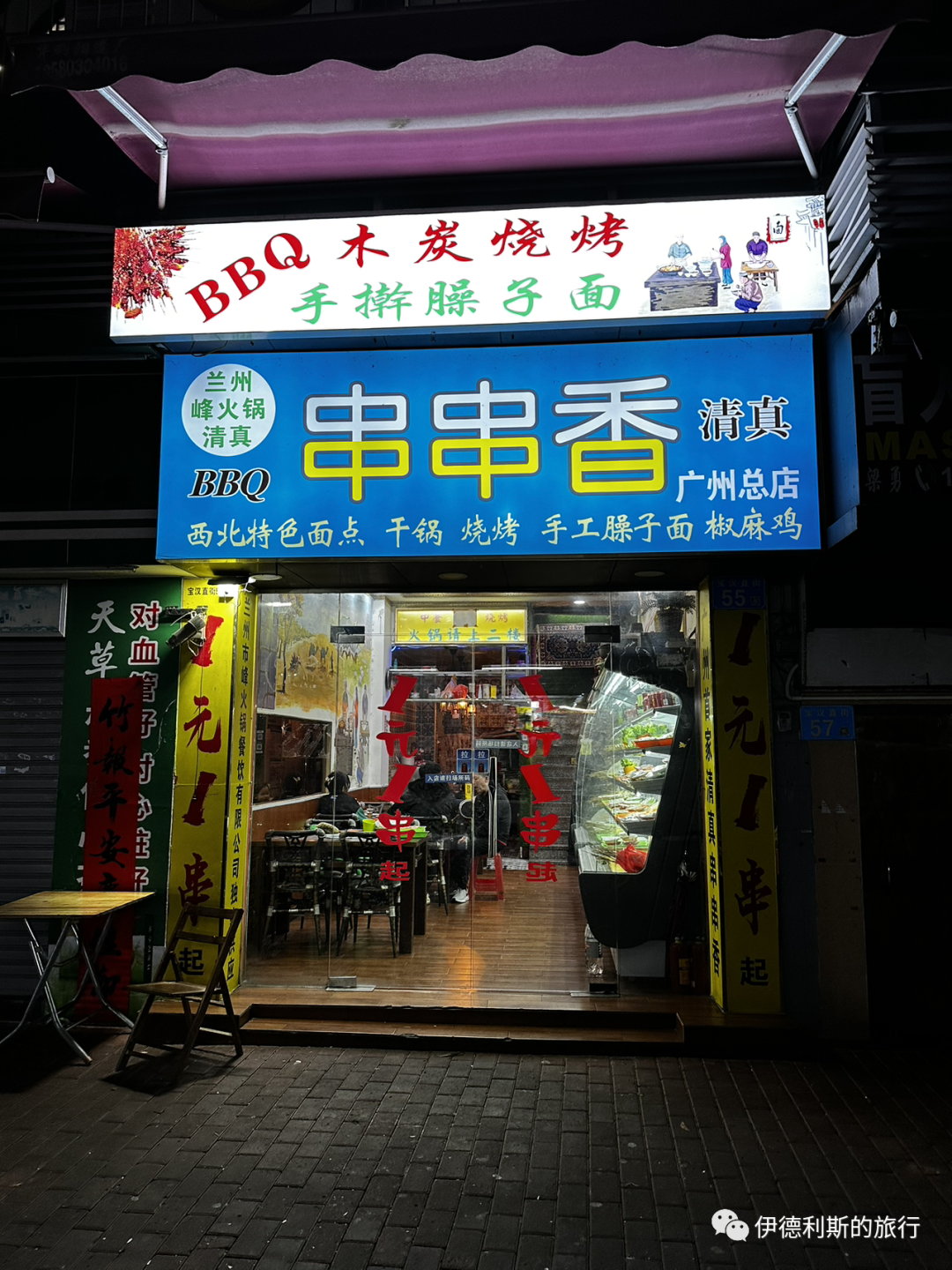
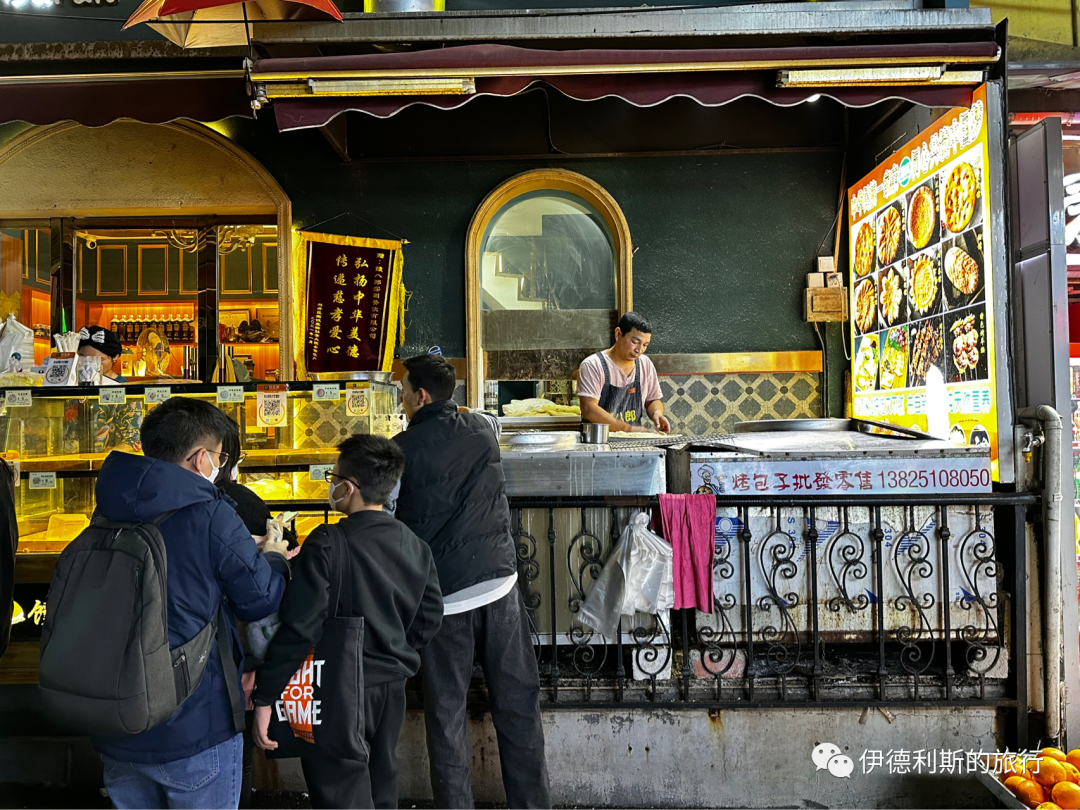
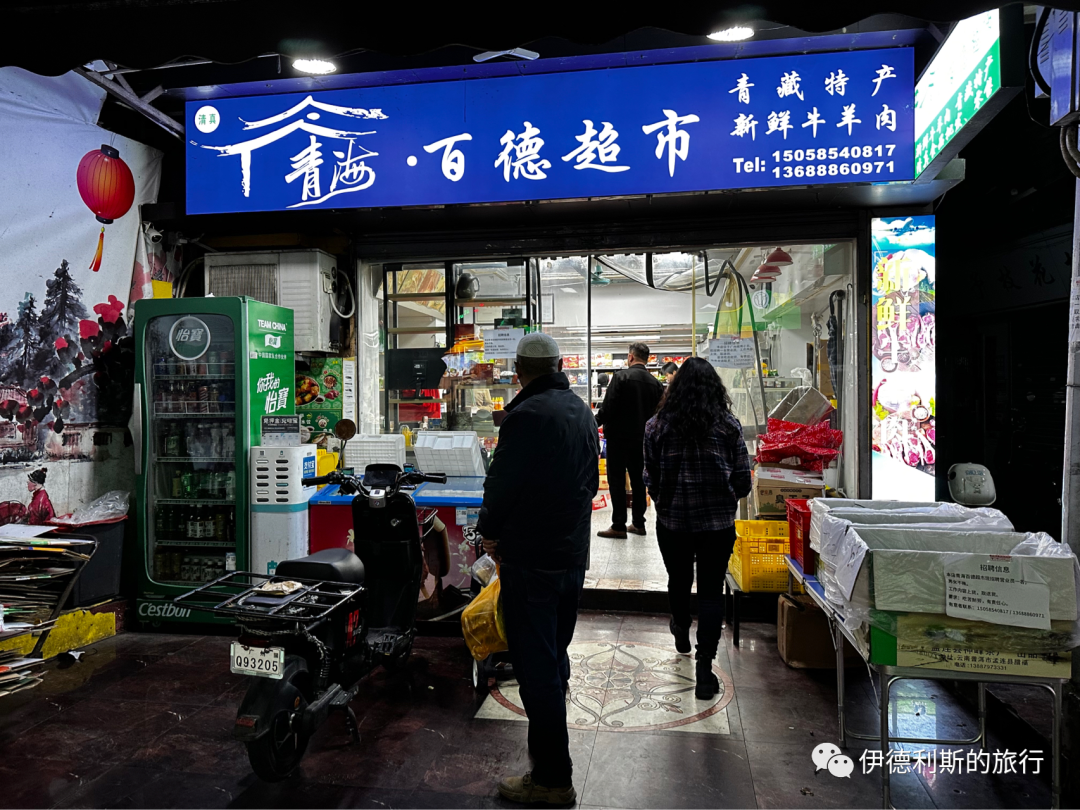
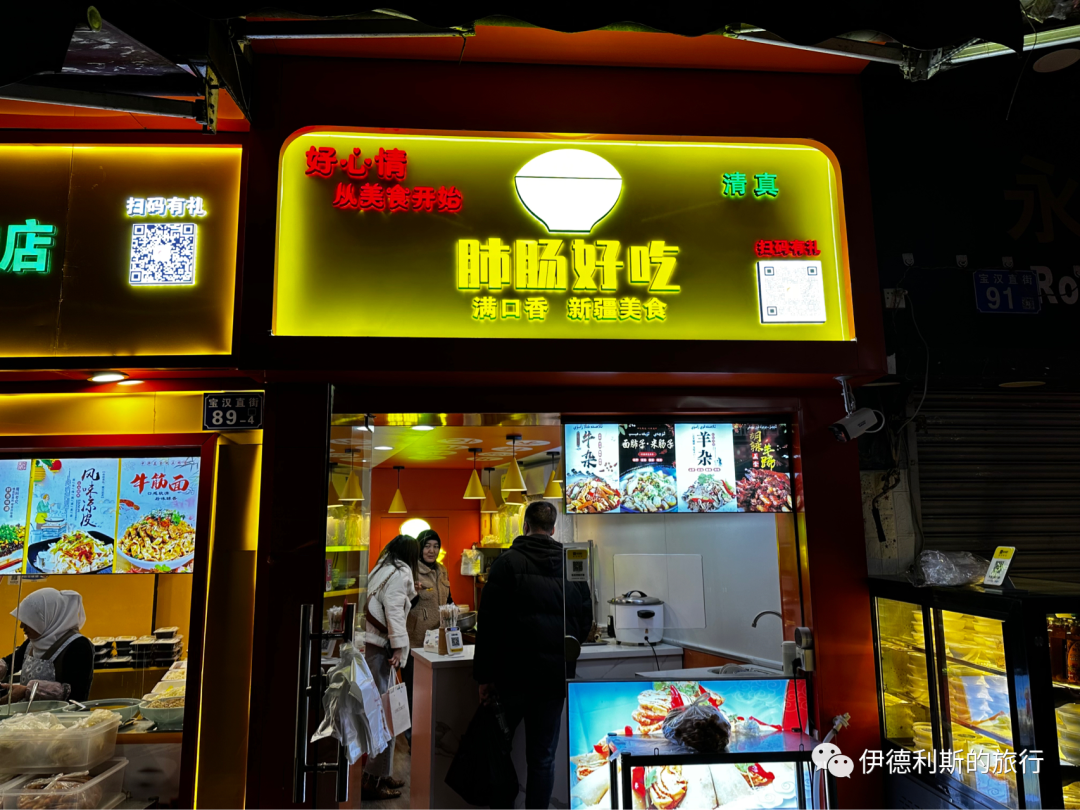
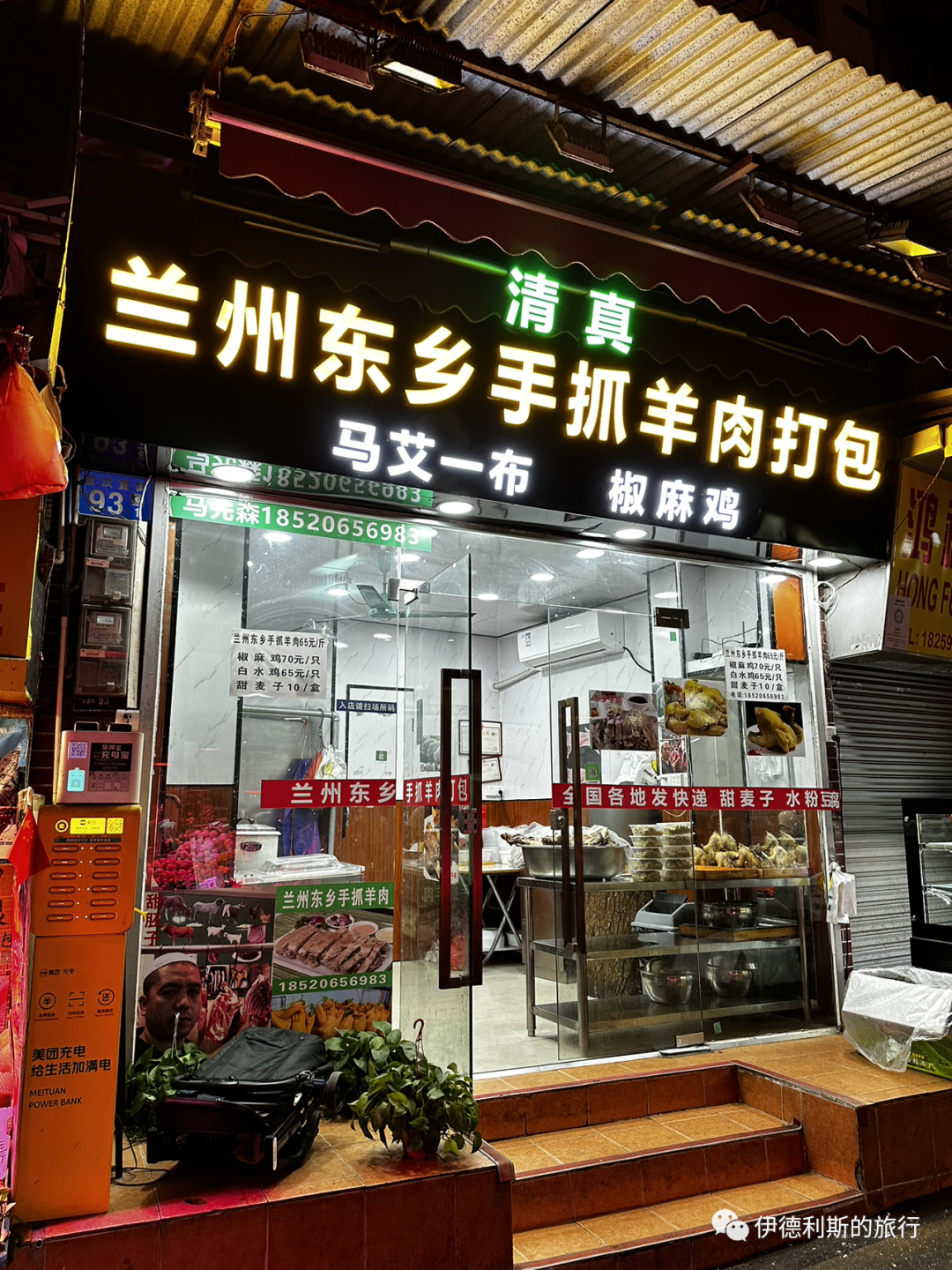
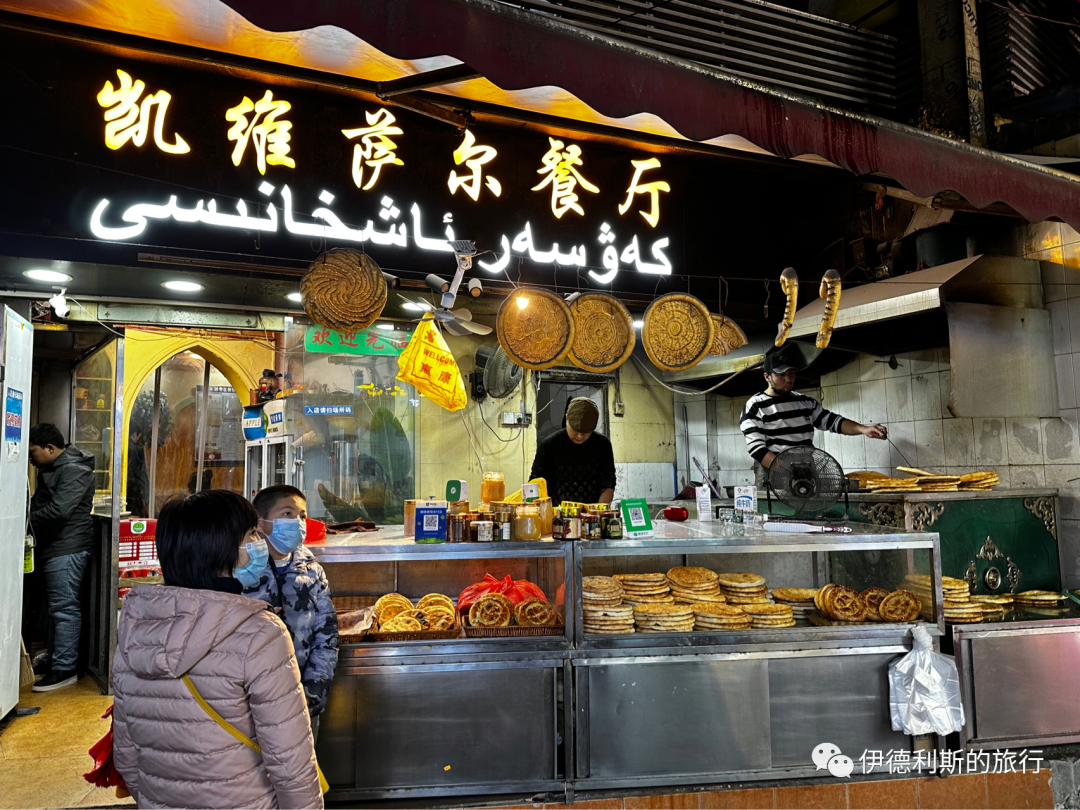
Guangzhou's 70-Year Halal Gem: Diving into Authentic Cantonese Muslim Food, Juicy Beef & Dim Sum at Huimin Restaurant
Articles • Hasan09 posted the article • 0 comments • 21 views • 4 days ago
Revisiting Guangzhou's 70-Year-Old Guangzhou Muslim Restaurant: Signature Halal Cantonese Dishes, Juicy Beef Meatballs, and a Yum Cha Deep Dive
Summary:
We're revisiting the Guangzhou Muslim Restaurant (Huimin Restaurant), a legendary spot in Yuexiu District that's been serving for seventy years. We did a dine-in deep dive into their signature crispy-skinned, juicy Halal roast duck, plump and bouncy Cantonese-style niurou wan (beef meatballs), and grabbed some classic jumbo jianjiao (pan-fried dumplings) from their takeaway window. Get ready to experience the iconic flavors of Guangzhou's largest Halal Cantonese old-timer.
It's been a minute since I hit up the Guangzhou Muslim Restaurant (Huimin Restaurant), and seriously, this place is a classic, old-school Cantonese Halal joint, widely known as the biggest Halal Cantonese restaurant in the city. Back when I used to work nearby, I'd always swing by their takeaway window for breakfast. Their jianjiao (pan-fried dumplings) were always huge and super filling, and the niurou wan (beef meatballs) were seriously substantial—one bite and you were set for the day.
This time, I made a special trip to dine in. Their signature Huimin niuzha tang (beef offal soup) was packed with a rich peppery kick, and the beef tripe was stewed to perfection—super tender and easy to chew. Paired with pickled daikon, it totally cuts through any richness. The ziran kaoyangpai (cumin-spiced roasted lamb ribs) had a hint of Cantonese char siu (barbecue pork) flavor, with a crispy exterior and juicy interior, and barely any gamey lamb taste. And their Huimin yuanyang ji (Muslim 鸳鸯 chicken) was a hit, with its crispy skin and tender meat, a total fave for many old-school Guangzhou locals. Overall, it’s classic old-Guangzhou flavor, with generous portions. Just a heads up, service at this long-standing spot can be a bit hit-or-miss, but the vibe is still that familiar, retro, old-school feel.
Restaurant Name: Guangzhou Muslim Restaurant (Huimin Restaurant)
Address: No. 325, Zhongshan 6th Road, Yuexiu District (110m walk from Exit A of Ximenkou Station, Line 1)
Average Spend: Around 70 RMB
Got any other secret Halal food spots you're loving? Drop your recs!
#GuangzhouFood #GuangzhouEats #GuangzhouOldSchoolEats #CantoneseHalal #HuiminRestaurant #XimenkouFood #GuangzhouTravel #BeefOffalSoup #LocalEats #MustEatGuangzhou view all
Revisiting Guangzhou's 70-Year-Old Guangzhou Muslim Restaurant: Signature Halal Cantonese Dishes, Juicy Beef Meatballs, and a Yum Cha Deep Dive
Summary:
We're revisiting the Guangzhou Muslim Restaurant (Huimin Restaurant), a legendary spot in Yuexiu District that's been serving for seventy years. We did a dine-in deep dive into their signature crispy-skinned, juicy Halal roast duck, plump and bouncy Cantonese-style niurou wan (beef meatballs), and grabbed some classic jumbo jianjiao (pan-fried dumplings) from their takeaway window. Get ready to experience the iconic flavors of Guangzhou's largest Halal Cantonese old-timer.
It's been a minute since I hit up the Guangzhou Muslim Restaurant (Huimin Restaurant), and seriously, this place is a classic, old-school Cantonese Halal joint, widely known as the biggest Halal Cantonese restaurant in the city. Back when I used to work nearby, I'd always swing by their takeaway window for breakfast. Their jianjiao (pan-fried dumplings) were always huge and super filling, and the niurou wan (beef meatballs) were seriously substantial—one bite and you were set for the day.
This time, I made a special trip to dine in. Their signature Huimin niuzha tang (beef offal soup) was packed with a rich peppery kick, and the beef tripe was stewed to perfection—super tender and easy to chew. Paired with pickled daikon, it totally cuts through any richness. The ziran kaoyangpai (cumin-spiced roasted lamb ribs) had a hint of Cantonese char siu (barbecue pork) flavor, with a crispy exterior and juicy interior, and barely any gamey lamb taste. And their Huimin yuanyang ji (Muslim 鸳鸯 chicken) was a hit, with its crispy skin and tender meat, a total fave for many old-school Guangzhou locals. Overall, it’s classic old-Guangzhou flavor, with generous portions. Just a heads up, service at this long-standing spot can be a bit hit-or-miss, but the vibe is still that familiar, retro, old-school feel.
Restaurant Name: Guangzhou Muslim Restaurant (Huimin Restaurant)
Address: No. 325, Zhongshan 6th Road, Yuexiu District (110m walk from Exit A of Ximenkou Station, Line 1)
Average Spend: Around 70 RMB
Got any other secret Halal food spots you're loving? Drop your recs!
#GuangzhouFood #GuangzhouEats #GuangzhouOldSchoolEats #CantoneseHalal #HuiminRestaurant #XimenkouFood #GuangzhouTravel #BeefOffalSoup #LocalEats #MustEatGuangzhou
Best Halal Restaurant in Guangzhou China: Xiaobei Halal Food, Cantonese Morning Tea and Middle Eastern Cuisine
Articles • yusuf908 posted the article • 0 comments • 360 views • 2026-05-24 00:17
Summary: This 2025 Guangzhou halal food map follows Xiaobei, Shangbu, no-alcohol halal dining, Asia International Hotel, Cantonese morning tea, Baghdad Cuisine, American-style barbecue, Xinjiang Mansion, Hui Muslim Restaurant, Antalya, MADO, Indonesian food, Lebanese food, and Middle Eastern restaurants.
I have been to Guangzhou at least five times. This time, a business trip gave me the chance to dine at several high-quality restaurants. I have a feeling that the variety of halal food in Guangzhou is now close to that of Beijing. It is worth noting that most halal restaurants in Guangzhou do not sell alcohol, which is extremely rare in Beijing. As both are top-tier cities, I think Guangzhou manages this because of an unspoken agreement among the restaurants. In the Xiaobei and Shangbu areas, where many halal restaurants are clustered, most do not sell alcohol. However, restaurants outside these areas do. This is just like in Xi'an, where halal restaurants in the Muslim Quarter (Huifang) do not sell alcohol, but those that open elsewhere do. This kind of agreement seems unlikely in Beijing, where most halal restaurants operate like lone wolves and find it hard to reach such a consensus.
The list of restaurants introduced in this issue is as follows:
1. Asia International Hotel · Asia Fengcai Xinjiang Restaurant
2. Yishanggong Cantonese Morning Tea (Guangshi Zaocha)
3. Baghdad Cuisine Restaurant
4. Yiyun Niudao American-style Barbecue
5. Xinjiang Mansion Cantonese Morning Tea (Guangshi Zaocha)
6. Hui Muslim Restaurant (Huimin Fandian)
7. Ma Xiaohuo Handmade Pulled Noodles (Lamian) and Barbecue
8. ANTALYA Turkish Restaurant
9. MADO Turkish Ice Cream Shop
10. Xianglan Indonesian Restaurant
11. Saba Restaurant
12. AL MANARA Lebanese Restaurant
13. ARMADA Middle Eastern Cuisine
1. Asia International Hotel · Asia Fengcai Xinjiang Restaurant
I heard before coming that the Asia International Hotel in Guangzhou had a halal restaurant, so I specifically stayed there for one night. It is an old five-star hotel located in Xiaobei. The facilities are quite dated, which felt like a big drop compared to the Mandarin Oriental where I stayed the night before. However, the hotel has an excellent location and view. The 45th floor is a revolving buffet restaurant where breakfast is served, and the hotel has a dedicated halal section.
Most guests staying at this hotel are foreigners, primarily Arabs, so there is also an Arabic restaurant on the first floor.
A Xinjiang restaurant called Asia Fengcai opened on the ninth floor of the hotel. Even though it is inside a five-star hotel, the prices are quite affordable, with an average cost of around 100 yuan per person.
Asia Fengcai is run by people from Ningxia, so the restaurant serves both Ningxia-style northwestern dishes and Xinjiang cuisine.
I tried the peppercorn chicken (jiaomaji) and hand-grabbed meat (shouzhuarou) for you, and both tasted good. The peppercorn chicken is on the spicier side.
Their hand-grabbed rice (shouzhuafan) is also excellent. They use quality ingredients and include everything that should be in it, which earned praise from my friend.
2. Yishanggong Cantonese Morning Tea (Guangshi Zaocha)
Yishanggong is the third halal morning tea restaurant in Guangzhou. It is also in Xiaobei, just 400 meters from the Asia International Hotel. I ate there twice and basically tried everything on the menu. Compared to the Xinjiang Building, this place is not as refined, but it has its own style. The service is better than at the Hui Muslim Restaurant (Huimin Fandian), and overall, it offers great value for money.
Morning tea is served from 7:00 to 15:00. You get a 22% discount if you pay before 10:00, and a 12% discount if you pay before 12:00. They only serve morning tea during the day, but switch to Korean barbecue and hot pot for dinner.
The servers here help rinse the bowls for you, which saves me the trouble. I would not mind skipping it, but rinsing bowls is a local habit for people in Guangzhou.
Of all the dim sum I tried here, I did not like their chicken char siu bao. I think the lamb char siu bao at the Hui Muslim restaurant tastes better. Everything else was delicious, and the dim sum is made to order, not pre-made.
The waitress wears a hijab and is very warm and attentive. The restaurant is alcohol-free.
3. Baghdad Cuisine Restaurant
The number of foreign restaurants in Xiaobei rivals Sanlitun in Beijing. This one serves Iraqi food, and I also found Amman, Guinean, and Liberian restaurants nearby, which are cuisines you cannot find in Beijing.
Baghdad Restaurant is on the fourth floor, right above the Amman restaurant.
A friend invited me to eat here because her crush is an Iraqi guy who is currently in Baghdad.
They serve a complimentary bowl of lentil soup before the meal, which helps with digestion.
We ordered grilled pomfret and a lamb leg rice dish. The lamb leg rice was especially good; the lamb was tender and juicy, and the long-grain rice was fluffy and not sticky.
4. Yiyun Niudao American-style Barbecue
A brother from Guangzhou brought me here. He said it is rare to find halal American-style barbecue in China, so he wanted me to try it. The last time I had halal American barbecue was in Dubai, and that meal was truly satisfying.
This shop is in Shangbu, an area where Yunnan Hui Muslims gather. Yunnan people rarely move north; they prefer coming to Guangzhou and Sanya. This shop does not sell alcohol.
My friend recommended the slow-roasted Angus steak and roasted lamb chops. They smell great. The slow-cooked Angus has a strong smoky flavor, and the lamb chops are tender and have no gamey taste. Even without alcohol, the shop is very busy. You have to wait in line during peak hours. It is best to book ahead for barbecue so you do not miss out.
Even their Xinjiang kvass (gewasi) tastes great. It is a non-alcoholic fermented drink that pairs perfectly with barbecue. The shop is not expensive, with an average cost of about 100 yuan per person.
Next, I filmed some restaurants near Shangbu. They mostly serve Yunnan flavors, including Zhaotong small meat skewers (xiaorouchuan).
5. Xinjiang Mansion Cantonese Morning Tea (Guangshi Zaocha)
Many people recommend the Hui Muslim Restaurant when talking about morning tea in Guangzhou. If I had to choose, I prefer the morning tea at the Xinjiang Building. Although they have not been making Cantonese morning tea for long, their food variety and service are better than the Hui Muslim Restaurant.
The morning tea here includes traditional Cantonese dishes and some new creations, especially those using Xinjiang ingredients. This is easier for northern tourists to enjoy, as outsiders might not be used to many authentic local snacks.
Morning tea originally just meant drinking tea in the morning. However, people started pairing it with snacks, and these snacks became so rich that they are now the soul of morning tea.
After sitting down, the waiter will follow the rules and ask what tea you want. You can choose from black tea, green tea, flower tea, or Pu'er. You are also welcome to bring your own tea bags. Then, they give you a menu to check off the snacks you want.
The first step of morning tea is washing the tea set. The basin in the top right corner is not for trash, but for cleaning tableware. Even though the tea set is already clean, Guangzhou locals like to scald it with hot water again. I follow the local custom and do the same, even though I do not really worry about whether the dishes are clean.
Cordyceps flower and Qingyuan chicken porridge (chongcaohua qingyuan huaji zhou)
Breakfast in Beijing, specifically in Niujie, is always soy milk, fried dough cakes (youbing), lamb offal soup (yangza), fried tofu soup (doupaotang), and baked flatbread with fried dough (huoshao jia youbing). This is not friendly for someone like me who goes to the gym every day. I like to change my meals up, so breakfast is the hardest part of my day. If I want a balanced breakfast, I have to make it myself.
Steamed chicken feet with golden garlic sauce (jinjiang suanxiang zheng fengzhua)
If you eat morning tea alone in Guangzhou, you can order about three dishes based on the portion sizes. You can eat something different every day for about half a month. After that, you can start the cycle over again, which gives people a reason to get up early every day.
Qingyuan chicken bun (qingyuan jirou bao)
Cantonese morning tea is mostly light and contains no spicy flavors, making it suitable for children and people with sensitive stomachs.
Beef short ribs in black pepper sauce (heijiao shaozhi niuzaigu)
Morning tea is served from 7:00 AM to 11:30 AM. On weekdays, you mostly see local Guangzhou people drinking tea. They have money and time. According to my Guangzhou friends, they do not care much about how they dress. They might go out in a worn-out tank top and flip-flops, but they are very particular about food. They believe that what you put in your stomach is what really matters, which shows the practical nature of Guangzhou people.
Supreme shrimp and chicken dumpling (xianxia jili shaomai huang)
My taste preferences have changed over the years. I do not have much of an appetite for large, heavy-flavored meals anymore. I focus more on healthy eating and prefer light, small, and delicate food. My love for Cantonese morning tea grows every day, but unfortunately, I cannot find it in Beijing yet.
Mango coconut milk cake (xiangmang yezhigao)
I once had Wuzhong morning tea in Wuzhong, Ningxia, and I think this is a very promising and innovative way to do breakfast.
Pan-fried curry beef buns (shengjian gali niurou bao)
If you are trying Cantonese morning tea for the first time, I think you must order the barbecue pork buns (chashao bao) and pan-fried buns (shengjian bao). Rice noodle rolls (changfen), shrimp dumplings (xiajiao), and steamed chicken feet (zheng fengzhua) are also the best dishes to represent Cantonese cuisine. You might not get used to the taste, but you should definitely try them.
Thai-style chilled durian mochi (taishi bingpi xue liulian)
You should also try the small Cantonese desserts. They are delicately made and look beautiful. They come in portions of three, which is a hint that you should bring two friends along.
Swan-shaped durian pastry (tiane liulian su)
This swan-shaped durian pastry is a new addition. When I came here last time, it was just the regular gold-medal durian pastry (jinpai liulian su), so they really put effort into the shape this time.
Pan-fried water chestnut cake (xiangjian mati gao)
Beef brisket egg noodles (niunan tang danmian)
Cantonese-style noodle soup and rice noodle rolls have a fresh, slightly sweet taste that many women enjoy. I don't particularly like them, as I prefer the salty and savory style of Northwest Chinese noodles, but since I am in Guangzhou, it is worth trying a bite.
Chestnut and mushroom chicken rice noodle rolls (jinli xianggu jirou changfen)
The yogurt cake and egg tarts are a kind of innovative fusion dish because they use dairy products from Xinjiang. Green vegetables hold an important place in Cantonese cuisine. Guangzhou people must have green vegetables with their meals, and here, green vegetables only refer to leafy greens; gourds and root vegetables do not count.
Xinjiang smooth yogurt cake (suannai gao)
Xinjiang milk egg tart (puta)
Boiled Ningxia choy sum (caixin)
People in Guangzhou care a lot about healthy eating. They want fresh ingredients and balanced nutrition. They cook with all kinds of land and sea animals. You can find these dishes at morning tea, which lasts until lunch. After a midday break, people go back for afternoon tea. When it gets dark and cool outside, there is a late-night snack culture. You can spend the whole day eating.
Original juice bamboo shoot shrimp dumpling (xiajiao huang)
Mango pomelo sago (yangzhi ganlu)
Malay satay beef tripe (jinjian du)
Dried fish and peanut congee (chaiyu huasheng zhou)
Healthy sesame cake (zhima gao)
Southeast Asian shrimp red rice noodle roll (hongmi changfen)
6. Hui Muslim Restaurant (Huimin Fandian)
Huimin Restaurant is a state-run Guangzhou classic that has been open for over half a century. Most of the customers are local people from the neighborhood. I asked my local friends in Guangzhou, and they approve of the food quality here. They serve morning tea, afternoon tea, and regular meals. If you come for morning tea on a weekday, you get a discount.
Inside the restaurant, a sign says they serve Hui Muslims before 9 a.m., but when I arrived before 9, I mostly saw local residents of all backgrounds. The restaurant has a strong state-run vibe, and the service is okay. The tea set is not as fancy as the one at Xinjiang Mansion. You only get one teacup and one teapot, and the space is smaller and noisier.
Lamb barbecue bun (yangrou chashaobao)
For Cantonese-style dim sum, the Hui Muslim restaurant makes it more authentic. Take this lamb barbecue bun, for example; it is the only one of its kind in Guangzhou. Barbecue pork (chashao) means roasting meat on a fork, then wrapping it in dough to make a bun. When steamed, the top of the bun splits open naturally. I eat this every time I come here, as it is hard to find such authentic and delicious barbecue buns once you leave this restaurant.
Chicken broth soup dumpling (jizhi xiaolongbao)
Soup dumplings are one of my favorite breakfasts. When my appetite is not fully awake in the morning, I prefer delicate flour-based snacks. I might not have the appetite to finish a large steamed bun.
Job's tears and beef tripe porridge (yizhao niudu zhou)
In Beijing, I would never expect to find such a variety of nutritious porridge for breakfast. I have to complain about the porridge here, though. It does not taste like it was freshly cooked this morning; it tastes like it was reheated from a pre-made batch. Freshly cooked porridge has a thicker texture, and this place is not as good as Xinjiang Mansion in that regard.
Coconut sticky rice cake (yexiang nuomici)
The dim sum tastes pretty good, but it looks plain. It is not as refined as the food at Xinjiang Mansion, so it is not great for taking photos to post on social media. Many friends have told me the service at the Hui Muslim restaurant is bad. I did not experience that myself, but in terms of small details, Xinjiang Mansion is definitely more comfortable for dining.
Curry beef rice noodle roll (gali niurou changfen)
Shrimp salad dumplings (shalü mingxia jiao)
The dim sum platter I had today tasted a bit salty; it wasn't this salty before.
Three-item dim sum platter
7. Ma Xiaohuo Handmade Pulled Noodles and Barbecue
I ended up at this shop by accident. I was catching up with a friend at a cafe, but they felt the air conditioning was too strong, so we moved outside. Suddenly, a storm hit Guangzhou. We ducked into this little shop to escape the rain, ordered some food, and were surprised by how good it was.
My friend had a bowl of pulled noodles (lamian), and I ordered a portion of Xinjiang rice noodles (xinjiang mifen). The rice noodles came with plenty of toppings and tasted great. The shop was clean and bright. Although it was small, the dining experience was very comfortable. It is a chain, and there are currently three branches in Guangzhou.
8. ANTALYA Turkish Restaurant
Antalya Restaurant's Liede branch was the first place we chose for our team building. The second floor has Central Asian-style decor where you take off your shoes and sit on carpets. You used to be able to experience this at Rumi's Secret in Beijing, but unfortunately, that location closed. However, a new Rumi's Secret opened in Urumqi, and I visited it the year before last; the environment there is even better.
For Middle Eastern cuisine, black tea and baklava are must-haves, along with my favorite Turkish coffee. Whether it is day or night, I always have a cup whenever I eat Turkish food.
Besides its rich texture and coffee grounds, a highlight of Turkish coffee is the cup. It must not be served in a clear glass; it has to be in an exquisite porcelain cup to be authentic.
Hummus (yingzuidou ni)
The overall feel of this restaurant is just like Rumi's Secret, and the prices are similar, averaging about 200 yuan per person. The flavors are a bit localized and lighter, which suits Chinese tastes better.
Chicken leg with Arabic rice.
Hollow balloon bread.
Mixed chicken and beef kebab platter.
Cheese flatbread (pide).
Lamb patty with yogurt.
I have to say a few words about this final ice cream; it is not as good as MADO, a Turkish ice cream brand that uses goat milk. I will introduce the MADO ice cream shop in Guangzhou specifically later.
Ice cream.
9. MADO Turkish Ice Cream and Coffee Shop.
MADO is very famous, and I had heard of it for a long time. I still remember the rich milky flavor of the MADO ice cream I ate in Beijing. Before coming here, I checked and found that there are two branches in Guangzhou. We ate at MADO twice because most of the members in my Guangzhou group are women who love it, so I had to arrange it.
The ice cream shop has a wide variety of sweets and also serves full meals. It is Turkish cuisine, but the quality of the meals is not as good as the ice cream, so I suggest only eating ice cream there.
When you enter the shop, you can order ice cream first. You can mix and match from over twenty flavors. You can order a four-layer serving with four different flavors, which is the best value.
You can also sprinkle various toppings on the ice cream. I like the original handmade ice cream the best; it has the silkiest texture and a full milky flavor. The other flavored ice creams are not as good as the original.
The girls love the raspberry flavor. Raspberries are red, sweet, and tart, and Lu Xun even mentioned them in his writing.
The Turkish restaurants in Guangzhou are mostly filled with foreigners who enjoy chatting and smoking shisha in the cafes.
Sultan's Boat
If you see the colorful ice cream on the menu and don't know what to pick, I suggest getting the handmade ice cream in the original flavor. It is the best and does not need any extra toppings.
Handmade ice cream
The Turkish coffee is made so delicately and even comes with a small flower for decoration. I felt happy as soon as I walked into this shop, and eating dessert always puts me in a good mood. I really hope they open a branch in Beijing, where many people still love eating ice cream even in the winter.
Shepherd's salad
The main courses are just average and do not taste as good as those at Turkish restaurants that specialize in full meals. It is better to come here for afternoon tea or a late-night snack to have ice cream and desserts.
Mexican grilled meat wrap
Turkish stuffed flatbread (pide)
10. Xianglan Indonesian Restaurant
Ever since the Southeast Asian halal restaurants in Beijing all closed down, I have not been able to find authentic Nanyang-style food near my home. The last time I had Indonesian food was in Kuala Lumpur, but I did not even eat Indonesian food this good while I was in Indonesia.
The first reason to recommend this place is that it made the Michelin Bib Gourmand list. This is Michelin's list for affordable restaurants, with an average cost per person under 100 yuan. Being on this list in a food city like Guangzhou really says something.
I think everything on their menu is a specialty. Basically every dish is delicious, including the drinks. I don't know how the owner and the chef manage to hit the mark so perfectly for every diner's taste buds.
Fresh lime and lemongrass soda and pandan coconut custard cake (pandan ruanxin yezhigao).
Many friends highly recommended this place to me before I even arrived in Guangzhou. My taste matches the general public's, so I had high expectations, but it was only after tasting it myself that I realized it truly lives up to its reputation.
Bali crispy duck (Bali dao zangzang ya).
Although this restaurant has many dishes, the portions are small. This is perfect for someone like me who wants to try new things without wasting food. Also, they don't sell alcohol, which gives me peace of mind while eating. The staff mentioned that the owner is an Indonesian Chinese.
Black nut beef soup rice (heirouguo niurou tangfan).
Since I have traveled in Indonesia, I know that traditional Indonesian food doesn't usually focus on presentation. However, this restaurant has clearly adapted to the local style in Guangzhou. They pay close attention to color combinations in every dish, so they look great in photos.
Rambutan beef fried rice (hongmaodan niurou chaofan).
There is only one Xianglan Indonesian restaurant left in Guangzhou, and you have to wait in line during meal times.
Seafood turmeric rice (haixian hui huangjiangfan).
Grilled chicken with candlenut garlic sauce (shili suanrongjiang kaoji).
Lemongrass and turmeric fried chicken (xiangmao huangjiang zha tuji).
Kaya and avocado toast (kaye niuyouguo kao tusi).
Snack platter.
11. Saba Restaurant
The name makes it clear this is a Southeast Asian restaurant, but they also serve Middle Eastern food. My friend and I chose this place because we once traveled to Sabah together and have many great memories. Meeting up in Guangzhou now, things feel just like they used to.
When we walked in, the restaurant was playing Quran recitations, and they do not serve alcohol. I was surprised to see that most of the diners were Black. Since my first visit to Guangzhou in 2015, I noticed that over 80 percent of the friends (dosti) at Friday prayers (Jumu'ah) were Black. Today, the number of Black people in Guangzhou has dropped by more than half, and it is rare to see them at Friday prayers now.
Tom yum soup (dongyingong tang).
The menu starts with Thai dishes, followed by Chinese and Western food. I chose the tom yum soup, and they actually served it in a small hot pot.
Pineapple fried rice (boluo chaofan).
I loved eating pineapple fried rice when I traveled in Malaysia. The version here was just okay. Maybe the setting was wrong, so it didn't taste right. Sometimes you need the right mood to enjoy good food.
Lemon tilapia (ningmeng luofeiyu).
I picked dishes we had eaten while traveling in Thailand and Malaysia to reminisce about our time wandering the world.
12. AL MANARA Lebanese Restaurant
Guangzhou used to have two Lebanese restaurants. I went to the other one only to find it had closed. This shop is a roadside storefront with no main dining hall, just a few tables set up outside. It is very simple.
Chickpea puree (hummus) with Arabic flatbread (khubz)
A lady from Northeast China works here and speaks fluent Arabic. The person grilling the meat is a Lebanese Arab.
Chickpea fritter (falafel) chicken wrap
This Lebanese restaurant does not have as nice an environment as Alameen in Beijing, but the taste is authentic and the prices are affordable. Overall, it is not as good as the Lebanese restaurants in Beijing, which makes me feel a bit better.
Lemon mint drink
13. ARMADA Middle Eastern Cuisine
Most halal Western restaurants in Guangzhou are run by Turkish people. This place, Armada, is the same and is located near Xiaobei.
Assorted flavor soup (mercimek corbasi)
My friends in Guangzhou had never been to this shop, so I brought them here to check it out. Once inside, I noticed the waitresses were wearing headscarves (hijab). It is an alcohol-free restaurant.
Shepherd's salad
Rose black tea
The ladies love drinking rose black tea. I saw a Moroccan specialty tagine on the menu, so I ordered it. Guangzhou used to have a Moroccan restaurant, but it closed down during the pandemic.
Chicken and eggplant tagine
The restaurant's grilled meat and meals are all delicious, better than the main courses at MADO.
Mixed grilled meat platter
Cheese and tenderloin pizza view all
Summary: This 2025 Guangzhou halal food map follows Xiaobei, Shangbu, no-alcohol halal dining, Asia International Hotel, Cantonese morning tea, Baghdad Cuisine, American-style barbecue, Xinjiang Mansion, Hui Muslim Restaurant, Antalya, MADO, Indonesian food, Lebanese food, and Middle Eastern restaurants.
I have been to Guangzhou at least five times. This time, a business trip gave me the chance to dine at several high-quality restaurants. I have a feeling that the variety of halal food in Guangzhou is now close to that of Beijing. It is worth noting that most halal restaurants in Guangzhou do not sell alcohol, which is extremely rare in Beijing. As both are top-tier cities, I think Guangzhou manages this because of an unspoken agreement among the restaurants. In the Xiaobei and Shangbu areas, where many halal restaurants are clustered, most do not sell alcohol. However, restaurants outside these areas do. This is just like in Xi'an, where halal restaurants in the Muslim Quarter (Huifang) do not sell alcohol, but those that open elsewhere do. This kind of agreement seems unlikely in Beijing, where most halal restaurants operate like lone wolves and find it hard to reach such a consensus.
The list of restaurants introduced in this issue is as follows:
1. Asia International Hotel · Asia Fengcai Xinjiang Restaurant
2. Yishanggong Cantonese Morning Tea (Guangshi Zaocha)
3. Baghdad Cuisine Restaurant
4. Yiyun Niudao American-style Barbecue
5. Xinjiang Mansion Cantonese Morning Tea (Guangshi Zaocha)
6. Hui Muslim Restaurant (Huimin Fandian)
7. Ma Xiaohuo Handmade Pulled Noodles (Lamian) and Barbecue
8. ANTALYA Turkish Restaurant
9. MADO Turkish Ice Cream Shop
10. Xianglan Indonesian Restaurant
11. Saba Restaurant
12. AL MANARA Lebanese Restaurant
13. ARMADA Middle Eastern Cuisine
1. Asia International Hotel · Asia Fengcai Xinjiang Restaurant
I heard before coming that the Asia International Hotel in Guangzhou had a halal restaurant, so I specifically stayed there for one night. It is an old five-star hotel located in Xiaobei. The facilities are quite dated, which felt like a big drop compared to the Mandarin Oriental where I stayed the night before. However, the hotel has an excellent location and view. The 45th floor is a revolving buffet restaurant where breakfast is served, and the hotel has a dedicated halal section.
Most guests staying at this hotel are foreigners, primarily Arabs, so there is also an Arabic restaurant on the first floor.
A Xinjiang restaurant called Asia Fengcai opened on the ninth floor of the hotel. Even though it is inside a five-star hotel, the prices are quite affordable, with an average cost of around 100 yuan per person.
Asia Fengcai is run by people from Ningxia, so the restaurant serves both Ningxia-style northwestern dishes and Xinjiang cuisine.
I tried the peppercorn chicken (jiaomaji) and hand-grabbed meat (shouzhuarou) for you, and both tasted good. The peppercorn chicken is on the spicier side.
Their hand-grabbed rice (shouzhuafan) is also excellent. They use quality ingredients and include everything that should be in it, which earned praise from my friend.
2. Yishanggong Cantonese Morning Tea (Guangshi Zaocha)
Yishanggong is the third halal morning tea restaurant in Guangzhou. It is also in Xiaobei, just 400 meters from the Asia International Hotel. I ate there twice and basically tried everything on the menu. Compared to the Xinjiang Building, this place is not as refined, but it has its own style. The service is better than at the Hui Muslim Restaurant (Huimin Fandian), and overall, it offers great value for money.
Morning tea is served from 7:00 to 15:00. You get a 22% discount if you pay before 10:00, and a 12% discount if you pay before 12:00. They only serve morning tea during the day, but switch to Korean barbecue and hot pot for dinner.
The servers here help rinse the bowls for you, which saves me the trouble. I would not mind skipping it, but rinsing bowls is a local habit for people in Guangzhou.
Of all the dim sum I tried here, I did not like their chicken char siu bao. I think the lamb char siu bao at the Hui Muslim restaurant tastes better. Everything else was delicious, and the dim sum is made to order, not pre-made.
The waitress wears a hijab and is very warm and attentive. The restaurant is alcohol-free.
3. Baghdad Cuisine Restaurant
The number of foreign restaurants in Xiaobei rivals Sanlitun in Beijing. This one serves Iraqi food, and I also found Amman, Guinean, and Liberian restaurants nearby, which are cuisines you cannot find in Beijing.
Baghdad Restaurant is on the fourth floor, right above the Amman restaurant.
A friend invited me to eat here because her crush is an Iraqi guy who is currently in Baghdad.
They serve a complimentary bowl of lentil soup before the meal, which helps with digestion.
We ordered grilled pomfret and a lamb leg rice dish. The lamb leg rice was especially good; the lamb was tender and juicy, and the long-grain rice was fluffy and not sticky.
4. Yiyun Niudao American-style Barbecue
A brother from Guangzhou brought me here. He said it is rare to find halal American-style barbecue in China, so he wanted me to try it. The last time I had halal American barbecue was in Dubai, and that meal was truly satisfying.
This shop is in Shangbu, an area where Yunnan Hui Muslims gather. Yunnan people rarely move north; they prefer coming to Guangzhou and Sanya. This shop does not sell alcohol.
My friend recommended the slow-roasted Angus steak and roasted lamb chops. They smell great. The slow-cooked Angus has a strong smoky flavor, and the lamb chops are tender and have no gamey taste. Even without alcohol, the shop is very busy. You have to wait in line during peak hours. It is best to book ahead for barbecue so you do not miss out.
Even their Xinjiang kvass (gewasi) tastes great. It is a non-alcoholic fermented drink that pairs perfectly with barbecue. The shop is not expensive, with an average cost of about 100 yuan per person.
Next, I filmed some restaurants near Shangbu. They mostly serve Yunnan flavors, including Zhaotong small meat skewers (xiaorouchuan).
5. Xinjiang Mansion Cantonese Morning Tea (Guangshi Zaocha)
Many people recommend the Hui Muslim Restaurant when talking about morning tea in Guangzhou. If I had to choose, I prefer the morning tea at the Xinjiang Building. Although they have not been making Cantonese morning tea for long, their food variety and service are better than the Hui Muslim Restaurant.
The morning tea here includes traditional Cantonese dishes and some new creations, especially those using Xinjiang ingredients. This is easier for northern tourists to enjoy, as outsiders might not be used to many authentic local snacks.
Morning tea originally just meant drinking tea in the morning. However, people started pairing it with snacks, and these snacks became so rich that they are now the soul of morning tea.
After sitting down, the waiter will follow the rules and ask what tea you want. You can choose from black tea, green tea, flower tea, or Pu'er. You are also welcome to bring your own tea bags. Then, they give you a menu to check off the snacks you want.
The first step of morning tea is washing the tea set. The basin in the top right corner is not for trash, but for cleaning tableware. Even though the tea set is already clean, Guangzhou locals like to scald it with hot water again. I follow the local custom and do the same, even though I do not really worry about whether the dishes are clean.
Cordyceps flower and Qingyuan chicken porridge (chongcaohua qingyuan huaji zhou)
Breakfast in Beijing, specifically in Niujie, is always soy milk, fried dough cakes (youbing), lamb offal soup (yangza), fried tofu soup (doupaotang), and baked flatbread with fried dough (huoshao jia youbing). This is not friendly for someone like me who goes to the gym every day. I like to change my meals up, so breakfast is the hardest part of my day. If I want a balanced breakfast, I have to make it myself.
Steamed chicken feet with golden garlic sauce (jinjiang suanxiang zheng fengzhua)
If you eat morning tea alone in Guangzhou, you can order about three dishes based on the portion sizes. You can eat something different every day for about half a month. After that, you can start the cycle over again, which gives people a reason to get up early every day.
Qingyuan chicken bun (qingyuan jirou bao)
Cantonese morning tea is mostly light and contains no spicy flavors, making it suitable for children and people with sensitive stomachs.
Beef short ribs in black pepper sauce (heijiao shaozhi niuzaigu)
Morning tea is served from 7:00 AM to 11:30 AM. On weekdays, you mostly see local Guangzhou people drinking tea. They have money and time. According to my Guangzhou friends, they do not care much about how they dress. They might go out in a worn-out tank top and flip-flops, but they are very particular about food. They believe that what you put in your stomach is what really matters, which shows the practical nature of Guangzhou people.
Supreme shrimp and chicken dumpling (xianxia jili shaomai huang)
My taste preferences have changed over the years. I do not have much of an appetite for large, heavy-flavored meals anymore. I focus more on healthy eating and prefer light, small, and delicate food. My love for Cantonese morning tea grows every day, but unfortunately, I cannot find it in Beijing yet.
Mango coconut milk cake (xiangmang yezhigao)
I once had Wuzhong morning tea in Wuzhong, Ningxia, and I think this is a very promising and innovative way to do breakfast.
Pan-fried curry beef buns (shengjian gali niurou bao)
If you are trying Cantonese morning tea for the first time, I think you must order the barbecue pork buns (chashao bao) and pan-fried buns (shengjian bao). Rice noodle rolls (changfen), shrimp dumplings (xiajiao), and steamed chicken feet (zheng fengzhua) are also the best dishes to represent Cantonese cuisine. You might not get used to the taste, but you should definitely try them.
Thai-style chilled durian mochi (taishi bingpi xue liulian)
You should also try the small Cantonese desserts. They are delicately made and look beautiful. They come in portions of three, which is a hint that you should bring two friends along.
Swan-shaped durian pastry (tiane liulian su)
This swan-shaped durian pastry is a new addition. When I came here last time, it was just the regular gold-medal durian pastry (jinpai liulian su), so they really put effort into the shape this time.
Pan-fried water chestnut cake (xiangjian mati gao)
Beef brisket egg noodles (niunan tang danmian)
Cantonese-style noodle soup and rice noodle rolls have a fresh, slightly sweet taste that many women enjoy. I don't particularly like them, as I prefer the salty and savory style of Northwest Chinese noodles, but since I am in Guangzhou, it is worth trying a bite.
Chestnut and mushroom chicken rice noodle rolls (jinli xianggu jirou changfen)
The yogurt cake and egg tarts are a kind of innovative fusion dish because they use dairy products from Xinjiang. Green vegetables hold an important place in Cantonese cuisine. Guangzhou people must have green vegetables with their meals, and here, green vegetables only refer to leafy greens; gourds and root vegetables do not count.
Xinjiang smooth yogurt cake (suannai gao)
Xinjiang milk egg tart (puta)
Boiled Ningxia choy sum (caixin)
People in Guangzhou care a lot about healthy eating. They want fresh ingredients and balanced nutrition. They cook with all kinds of land and sea animals. You can find these dishes at morning tea, which lasts until lunch. After a midday break, people go back for afternoon tea. When it gets dark and cool outside, there is a late-night snack culture. You can spend the whole day eating.
Original juice bamboo shoot shrimp dumpling (xiajiao huang)
Mango pomelo sago (yangzhi ganlu)
Malay satay beef tripe (jinjian du)
Dried fish and peanut congee (chaiyu huasheng zhou)
Healthy sesame cake (zhima gao)
Southeast Asian shrimp red rice noodle roll (hongmi changfen)
6. Hui Muslim Restaurant (Huimin Fandian)
Huimin Restaurant is a state-run Guangzhou classic that has been open for over half a century. Most of the customers are local people from the neighborhood. I asked my local friends in Guangzhou, and they approve of the food quality here. They serve morning tea, afternoon tea, and regular meals. If you come for morning tea on a weekday, you get a discount.
Inside the restaurant, a sign says they serve Hui Muslims before 9 a.m., but when I arrived before 9, I mostly saw local residents of all backgrounds. The restaurant has a strong state-run vibe, and the service is okay. The tea set is not as fancy as the one at Xinjiang Mansion. You only get one teacup and one teapot, and the space is smaller and noisier.
Lamb barbecue bun (yangrou chashaobao)
For Cantonese-style dim sum, the Hui Muslim restaurant makes it more authentic. Take this lamb barbecue bun, for example; it is the only one of its kind in Guangzhou. Barbecue pork (chashao) means roasting meat on a fork, then wrapping it in dough to make a bun. When steamed, the top of the bun splits open naturally. I eat this every time I come here, as it is hard to find such authentic and delicious barbecue buns once you leave this restaurant.
Chicken broth soup dumpling (jizhi xiaolongbao)
Soup dumplings are one of my favorite breakfasts. When my appetite is not fully awake in the morning, I prefer delicate flour-based snacks. I might not have the appetite to finish a large steamed bun.
Job's tears and beef tripe porridge (yizhao niudu zhou)
In Beijing, I would never expect to find such a variety of nutritious porridge for breakfast. I have to complain about the porridge here, though. It does not taste like it was freshly cooked this morning; it tastes like it was reheated from a pre-made batch. Freshly cooked porridge has a thicker texture, and this place is not as good as Xinjiang Mansion in that regard.
Coconut sticky rice cake (yexiang nuomici)
The dim sum tastes pretty good, but it looks plain. It is not as refined as the food at Xinjiang Mansion, so it is not great for taking photos to post on social media. Many friends have told me the service at the Hui Muslim restaurant is bad. I did not experience that myself, but in terms of small details, Xinjiang Mansion is definitely more comfortable for dining.
Curry beef rice noodle roll (gali niurou changfen)
Shrimp salad dumplings (shalü mingxia jiao)
The dim sum platter I had today tasted a bit salty; it wasn't this salty before.
Three-item dim sum platter
7. Ma Xiaohuo Handmade Pulled Noodles and Barbecue
I ended up at this shop by accident. I was catching up with a friend at a cafe, but they felt the air conditioning was too strong, so we moved outside. Suddenly, a storm hit Guangzhou. We ducked into this little shop to escape the rain, ordered some food, and were surprised by how good it was.
My friend had a bowl of pulled noodles (lamian), and I ordered a portion of Xinjiang rice noodles (xinjiang mifen). The rice noodles came with plenty of toppings and tasted great. The shop was clean and bright. Although it was small, the dining experience was very comfortable. It is a chain, and there are currently three branches in Guangzhou.
8. ANTALYA Turkish Restaurant
Antalya Restaurant's Liede branch was the first place we chose for our team building. The second floor has Central Asian-style decor where you take off your shoes and sit on carpets. You used to be able to experience this at Rumi's Secret in Beijing, but unfortunately, that location closed. However, a new Rumi's Secret opened in Urumqi, and I visited it the year before last; the environment there is even better.
For Middle Eastern cuisine, black tea and baklava are must-haves, along with my favorite Turkish coffee. Whether it is day or night, I always have a cup whenever I eat Turkish food.
Besides its rich texture and coffee grounds, a highlight of Turkish coffee is the cup. It must not be served in a clear glass; it has to be in an exquisite porcelain cup to be authentic.
Hummus (yingzuidou ni)
The overall feel of this restaurant is just like Rumi's Secret, and the prices are similar, averaging about 200 yuan per person. The flavors are a bit localized and lighter, which suits Chinese tastes better.
Chicken leg with Arabic rice.
Hollow balloon bread.
Mixed chicken and beef kebab platter.
Cheese flatbread (pide).
Lamb patty with yogurt.
I have to say a few words about this final ice cream; it is not as good as MADO, a Turkish ice cream brand that uses goat milk. I will introduce the MADO ice cream shop in Guangzhou specifically later.
Ice cream.
9. MADO Turkish Ice Cream and Coffee Shop.
MADO is very famous, and I had heard of it for a long time. I still remember the rich milky flavor of the MADO ice cream I ate in Beijing. Before coming here, I checked and found that there are two branches in Guangzhou. We ate at MADO twice because most of the members in my Guangzhou group are women who love it, so I had to arrange it.
The ice cream shop has a wide variety of sweets and also serves full meals. It is Turkish cuisine, but the quality of the meals is not as good as the ice cream, so I suggest only eating ice cream there.
When you enter the shop, you can order ice cream first. You can mix and match from over twenty flavors. You can order a four-layer serving with four different flavors, which is the best value.
You can also sprinkle various toppings on the ice cream. I like the original handmade ice cream the best; it has the silkiest texture and a full milky flavor. The other flavored ice creams are not as good as the original.
The girls love the raspberry flavor. Raspberries are red, sweet, and tart, and Lu Xun even mentioned them in his writing.
The Turkish restaurants in Guangzhou are mostly filled with foreigners who enjoy chatting and smoking shisha in the cafes.
Sultan's Boat
If you see the colorful ice cream on the menu and don't know what to pick, I suggest getting the handmade ice cream in the original flavor. It is the best and does not need any extra toppings.
Handmade ice cream
The Turkish coffee is made so delicately and even comes with a small flower for decoration. I felt happy as soon as I walked into this shop, and eating dessert always puts me in a good mood. I really hope they open a branch in Beijing, where many people still love eating ice cream even in the winter.
Shepherd's salad
The main courses are just average and do not taste as good as those at Turkish restaurants that specialize in full meals. It is better to come here for afternoon tea or a late-night snack to have ice cream and desserts.
Mexican grilled meat wrap
Turkish stuffed flatbread (pide)
10. Xianglan Indonesian Restaurant
Ever since the Southeast Asian halal restaurants in Beijing all closed down, I have not been able to find authentic Nanyang-style food near my home. The last time I had Indonesian food was in Kuala Lumpur, but I did not even eat Indonesian food this good while I was in Indonesia.
The first reason to recommend this place is that it made the Michelin Bib Gourmand list. This is Michelin's list for affordable restaurants, with an average cost per person under 100 yuan. Being on this list in a food city like Guangzhou really says something.
I think everything on their menu is a specialty. Basically every dish is delicious, including the drinks. I don't know how the owner and the chef manage to hit the mark so perfectly for every diner's taste buds.
Fresh lime and lemongrass soda and pandan coconut custard cake (pandan ruanxin yezhigao).
Many friends highly recommended this place to me before I even arrived in Guangzhou. My taste matches the general public's, so I had high expectations, but it was only after tasting it myself that I realized it truly lives up to its reputation.
Bali crispy duck (Bali dao zangzang ya).
Although this restaurant has many dishes, the portions are small. This is perfect for someone like me who wants to try new things without wasting food. Also, they don't sell alcohol, which gives me peace of mind while eating. The staff mentioned that the owner is an Indonesian Chinese.
Black nut beef soup rice (heirouguo niurou tangfan).
Since I have traveled in Indonesia, I know that traditional Indonesian food doesn't usually focus on presentation. However, this restaurant has clearly adapted to the local style in Guangzhou. They pay close attention to color combinations in every dish, so they look great in photos.
Rambutan beef fried rice (hongmaodan niurou chaofan).
There is only one Xianglan Indonesian restaurant left in Guangzhou, and you have to wait in line during meal times.
Seafood turmeric rice (haixian hui huangjiangfan).
Grilled chicken with candlenut garlic sauce (shili suanrongjiang kaoji).
Lemongrass and turmeric fried chicken (xiangmao huangjiang zha tuji).
Kaya and avocado toast (kaye niuyouguo kao tusi).
Snack platter.
11. Saba Restaurant
The name makes it clear this is a Southeast Asian restaurant, but they also serve Middle Eastern food. My friend and I chose this place because we once traveled to Sabah together and have many great memories. Meeting up in Guangzhou now, things feel just like they used to.
When we walked in, the restaurant was playing Quran recitations, and they do not serve alcohol. I was surprised to see that most of the diners were Black. Since my first visit to Guangzhou in 2015, I noticed that over 80 percent of the friends (dosti) at Friday prayers (Jumu'ah) were Black. Today, the number of Black people in Guangzhou has dropped by more than half, and it is rare to see them at Friday prayers now.
Tom yum soup (dongyingong tang).
The menu starts with Thai dishes, followed by Chinese and Western food. I chose the tom yum soup, and they actually served it in a small hot pot.
Pineapple fried rice (boluo chaofan).
I loved eating pineapple fried rice when I traveled in Malaysia. The version here was just okay. Maybe the setting was wrong, so it didn't taste right. Sometimes you need the right mood to enjoy good food.
Lemon tilapia (ningmeng luofeiyu).
I picked dishes we had eaten while traveling in Thailand and Malaysia to reminisce about our time wandering the world.
12. AL MANARA Lebanese Restaurant
Guangzhou used to have two Lebanese restaurants. I went to the other one only to find it had closed. This shop is a roadside storefront with no main dining hall, just a few tables set up outside. It is very simple.
Chickpea puree (hummus) with Arabic flatbread (khubz)
A lady from Northeast China works here and speaks fluent Arabic. The person grilling the meat is a Lebanese Arab.
Chickpea fritter (falafel) chicken wrap
This Lebanese restaurant does not have as nice an environment as Alameen in Beijing, but the taste is authentic and the prices are affordable. Overall, it is not as good as the Lebanese restaurants in Beijing, which makes me feel a bit better.
Lemon mint drink
13. ARMADA Middle Eastern Cuisine
Most halal Western restaurants in Guangzhou are run by Turkish people. This place, Armada, is the same and is located near Xiaobei.
Assorted flavor soup (mercimek corbasi)
My friends in Guangzhou had never been to this shop, so I brought them here to check it out. Once inside, I noticed the waitresses were wearing headscarves (hijab). It is an alcohol-free restaurant.
Shepherd's salad
Rose black tea
The ladies love drinking rose black tea. I saw a Moroccan specialty tagine on the menu, so I ordered it. Guangzhou used to have a Moroccan restaurant, but it closed down during the pandemic.
Chicken and eggplant tagine
The restaurant's grilled meat and meals are all delicious, better than the main courses at MADO.
Mixed grilled meat platter
Cheese and tenderloin pizza
Halal Cantonese Food Guangzhou: Muslim-Friendly Yum Cha, Xinjiang Building and Local Dim Sum
Articles • yusuf908 posted the article • 0 comments • 255 views • 2026-05-24 00:17
Summary: This Guangzhou halal food guide compares Muslim-friendly Cantonese morning tea, including Xinjiang Building yum cha, local dim sum, halal Cantonese dishes, and practical food notes for Muslim travelers.
A Halal Food Tour in Guangzhou: Where to Find the Best Cantonese Morning Tea (Yum Cha)? is presented here as a firsthand travel account in clear English, beginning with this scene: I wrote a halal travel map for Guangzhou in 2019, mainly introducing all the mosques in the city. The account keeps its focus on Halal Travel, Yiwu Food, Mosque Travel while preserving the names, places, food, and historical details from the Chinese source.
I wrote a halal travel map for Guangzhou in 2019, mainly introducing all the mosques in the city. The food section was a bit thin because I traveled alone back then. I visited Guangzhou again in 2022. First, I wanted to treat my team in Guangzhou, whom I had never met in person. I manage an insurance brokerage team with members across the country, and Guangzhou is our second-largest branch after Beijing. Second, I wanted to visit many of Guangzhou's unique halal restaurants. When I traveled alone, I couldn't eat much, but with the team, we could order all the big dishes we wanted without wasting food.
1
Xinjiang Building Bazaar Food
When people talk about having morning tea (yum cha) in Guangzhou, many recommend the Huimin Restaurant. But if I had to choose, I prefer the morning tea at the Xinjiang Building. Although they haven't been serving Cantonese morning tea for very long, they do better than the Huimin Restaurant in terms of variety, environment, and service.
Their morning tea menu includes both traditional Cantonese dishes and some creative options, especially those combined with Xinjiang ingredients. This is easier for northern tourists to accept, as many authentic local snacks can be hard for outsiders to get used to.
Morning tea originally just meant coming to drink tea in the morning. However, people started pairing it with snacks, and these snacks became so rich that they eventually became the soul of the morning tea experience.
After sitting down, the waiter will follow the custom and ask what tea you want. You can choose from black tea, green tea, flower tea, or pu-erh tea. You are even welcome to bring your own tea bags. Then, they give you a menu to check off the snacks you want.
The first step of having morning tea is washing the tea set. The basin in the top right corner is not for trash, but for washing the tableware. Even though the tea sets are already clean, Guangzhou locals are used to scalding them with hot water again. I follow the local customs and do the same, even though I don't really worry about whether the tableware is clean.
Cordyceps flower and Qingyuan chicken porridge
Breakfast in Beijing, specifically in Niujie, is always soy milk, fried dough cakes (youbing), lamb offal soup (yangza), fried tofu soup (doupaotang), and baked flatbread with fried dough (huoshao jia youbing). For someone like me who goes to the gym every day, this isn't very friendly. I like to change things up for every meal, so breakfast is the biggest headache for me. If I want a nutritionally balanced breakfast, I have to make it myself.
Steamed chicken feet with golden garlic sauce (jinjiang suanxiang zheng fengzhua)
If you eat morning tea alone in Guangzhou, you can usually manage about three dishes based on the portion sizes. You can eat something different every day for about half a month. After that, you can start the cycle over again, which gives you a reason to get up early every day.
Qingyuan chicken bun
Cantonese morning tea is mostly light and not spicy, making it perfect for kids or people with sensitive stomachs.
Beef short ribs in black pepper sauce
Morning tea is served from 7:00 a.m. to 11:30 a.m. If you visit on a weekday, you will mostly see locals drinking tea. These locals have both money and time. As my Guangzhou friends say, they do not care much about how they dress. They might head out in a worn-out tank top and flip-flops, but they are very picky about their food. They believe that what you put in your stomach is what really matters, which shows the practical nature of Guangzhou people.
Shrimp and chicken dumpling (shaomai)
My taste has changed over the years. I do not have much of an appetite for large portions or heavy flavors anymore. I focus more on healthy eating and prefer light, small, and delicate food. My love for Cantonese morning tea grows every day, but unfortunately, you cannot find it in Beijing yet.
Mango coconut milk cake
I had Wuzhong morning tea in Wuzhong, Ningxia, last year and thought it was a very promising and innovative way to do breakfast. The Muhelan restaurant, which is opening soon in Beijing, plans to bring Wuzhong morning tea to the city. I hope it can take root and grow here.
Pan-fried curry beef bun
If it is your first time having Cantonese morning tea, I think you must order the barbecue pork bun (char siu bao) and the pan-fried bun (shengjian bao). Also, rice noodle rolls (changfen), shrimp dumplings (xiajiao), and steamed chicken feet are the best dishes to represent Cantonese cuisine. You might not know if you will like them, but you should definitely give them a try.
Thai-style chilled durian mochi
You should also try the small Cantonese desserts. They are made with care and look beautiful. They come in portions of three, which is a hint that you should bring two friends along.
Swan-shaped durian pastry (tian'e liulian su)
This swan-shaped durian pastry is a new addition. When I visited last time, they only had the regular gold-medal durian pastry, so they really put effort into the design this time.
Pan-fried water chestnut cake (xiangjian mati gao)
On this trip to Guangzhou, I ate dim sum for three days in a row, twice at the Xinjiang Building and once at the Hui Muslim Restaurant. My experience at the Xinjiang Building was even better than my last visit. I even ran into some fellow villagers from Shadian there and learned that Guangzhou and Sanya are the favorite vacation spots for people from Shadian.
Beef brisket egg noodle soup (niunan tang danmian)
Cantonese-style noodle soup and rice noodle rolls (changfen) have a fresh, slightly sweet taste that many girls love. I don't particularly like them, as I prefer the salty and savory style of Northwest Chinese noodles. But since I am in Guangzhou, it is worth trying.
Chestnut and mushroom chicken rice noodle rolls (jinli xianggu jirou changfen)
The yogurt cake and egg tarts are a creative fusion dish because they use dairy products from Xinjiang. Green vegetables hold an important place in Cantonese cuisine. For Guangzhou locals, a meal must include green vegetables, which specifically refers to leafy greens; gourds and root vegetables do not count.
Xinjiang smooth yogurt cake (Xinjiang xianghua suannai gao)
Xinjiang milk Portuguese-style egg tart (Xinjiang niunai puta)
Blanched Ningxia flowering cabbage (baizhuo Ningxia caixin)
Guangzhou people place great importance on food as medicine. They demand fresh ingredients and a balanced diet, using everything from land, sea, and air in their cooking. You can even find these in dim sum. Dim sum can last until lunchtime, then you take a break, have afternoon tea, and once it gets dark and cool outside, there is a late-night snack culture. You can spend the entire day just eating.
Original flavor bamboo shoot tip shrimp dumpling (shrimp dumpling)
Mango pomelo sago (yangzhi ganlu)
Malaysian satay beef tripe
Dried fish and peanut congee
Healthy sesame cake
Southeast Asian fresh shrimp red rice noodle roll
2
Hui Muslim Restaurant
Hui Muslim Restaurant is a long-standing state-run spot in Guangzhou that has been open for over half a century. Most people eating here are local Guangzhou residents from the neighborhood. I asked my local friends in Guangzhou, and they approve of the food quality here. They serve morning tea, afternoon tea, and regular meals, and there is a discount for morning tea on weekdays.
Inside the restaurant, there is a sign saying they welcome Hui Muslim brothers and sisters before 9 a.m. However, when I arrived before 9 a.m., I mostly saw local residents of all backgrounds. The restaurant has a strong state-run vibe, and the service is decent. The tea set is not as fancy as the one at Xinjiang Mansion; it is just one teacup and one teapot. The environment is also noisier because the space is small.
Lamb barbecue pork bun (char siu bao)
For Cantonese dim sum, the Hui Muslim restaurant makes it more authentic. Take this lamb barbecue pork bun (chashao bao), for example; it is unique to Guangzhou. Barbecue pork (chashao) means meat roasted on a fork, then wrapped using the bun-making technique, which is why it is called a chashao bao. The top of the bun naturally splits open after steaming. I eat this every time I visit, as it is hard to find such authentic and delicious chashao bao once I leave the Hui Muslim restaurant.
Chicken broth soup dumplings (xiaolongbao)
Soup dumplings (xiaolongbao) are one of my favorite breakfasts. When my appetite is not fully awake in the morning, I prefer delicate flour-based snacks. I might not have the appetite to finish a large steamed bun.
Job's tears and beef tripe porridge (yizhao niudu zhou)
Being able to drink various nutritious porridges for breakfast is something I dare not expect in Beijing. However, I have to complain about the porridge at the Hui Muslim restaurant. It does not taste like it was freshly cooked this morning; it tastes like a pre-made product that was heated up. Freshly cooked porridge has a thicker texture, and in this regard, it is not as good as the Xinjiang Building.
Coconut sticky rice cake (yexiang nuomici)
The taste of the dim sum is quite good, but the appearance is plain. It is not as delicate as the ones made at the Xinjiang Building, so it is not suitable for taking photos to post on social media. Many friends have told me that the service at the Hui Muslim restaurant is poor. Although I did not experience this myself, in terms of small details, the dining comfort at the Xinjiang Building is slightly better.
Curry beef rice noodle rolls (gali niurou changfen)
Salad shrimp dumplings (shali mingxia jiao)
The dim sum trio platter I ate today tasted a bit salty. It was not this salty when I had it before.
Dim sum trio platter (diansin sanshi pinpan)
3
Ma Xiaohuo Handmade Pulled Noodles (lamian)
I found this place by accident. I was catching up with a friend at a cafe, but they felt the air conditioning was too cold, so we moved outside. Suddenly, a storm hit Guangzhou. We ducked into this little shop to escape the rain, ordered some food, and were surprised by how good it tasted.
My friend had a bowl of pulled noodles, and I ordered a portion of Xinjiang rice noodles (mifen). The rice noodles came with plenty of toppings and tasted great. The shop is clean and bright. It is small, but the dining experience is very comfortable. This is a chain, and there are currently three branches in Guangzhou.
4
ANTALYA Turkish Restaurant
The Antalya restaurant in Liede was the first place we chose for our team building. The second floor has Central Asian-style decor where you take off your shoes and sit on rugs. You used to be able to experience this at Rumi's Secret in Beijing, but unfortunately, that location has closed. I heard a new Rumi's Secret opened in Urumqi, and I hope they do well.
For Middle Eastern cuisine, black tea and the pastry baklava are must-haves. I also had my favorite Turkish coffee. No matter if it is day or night, I always have a cup when I eat Turkish food.
Besides being thick and containing coffee grounds, the coffee cup is a highlight of Turkish coffee. It must not be served in a clear glass; it has to be in an exquisite porcelain cup to be authentic.
Hummus
The overall feel of this restaurant is just like Rumi's Secret, and the prices are similar, averaging about 200 yuan per person. The flavors are a bit localized and milder, which suits Chinese tastes better.
Chicken leg with Arabic rice
Hollow balloon bread
Chicken and beef mixed kebab platter
Cheese flatbread (pide)
Lamb pie served with yogurt
I have to say a few words about this final ice cream. It is not as good as Kubei in Beijing. Kubei's ice cream comes from MADO, a Turkish ice cream shop that uses goat milk as its main ingredient. I will introduce the MADO ice cream shop in Guangzhou specifically later.
Ice cream
5
MADO Turkish Ice Cream and Coffee Shop
MADO is very famous and I had heard of it for a long time. I kept thinking about the rich milky flavor of the MADO ice cream I ate in Beijing. Before coming here this time, I checked and found that there are two branches in Guangzhou. We ate at MADO twice because most of the members of our Guangzhou team are women who love it, so I had to arrange it.
The ice cream shop has a wide variety of sweets and also serves main courses of Turkish cuisine. However, the quality of the main courses is not as good as the ice cream, so I suggest only eating ice cream there.
When you enter the shop, you can order ice cream first. You can mix and match from over twenty flavors. You can order a four-layer serving with four different flavors, which is the best value.
You can also sprinkle various toppings on the ice cream. I like the original handmade ice cream the best. It has the silkiest texture and is full of milky flavor. None of the other flavored ice creams are as good as the original.
The girls love the raspberry flavor. Raspberries are red, sweet, and tart, and Lu Xun even mentioned them in his writing.
The customers at the Turkish restaurants in Guangzhou are mostly foreigners. They like to chat and smoke shisha in the cafes.
Sultan's Ship
If you see the colorful ice cream on the menu and don't know what to pick, I suggest the handmade ice cream. The original flavor is the best, so don't add any extra toppings.
Handmade ice cream
The Turkish coffee is made so delicately and even comes with a small flower for decoration. I felt happy the moment I walked into this shop, and eating dessert always puts me in a good mood. I really hope they open a branch in Beijing, where many people still love eating ice cream even in the winter.
Shepherd's salad
The main courses are just average and don't taste as good as those at Turkish restaurants that specialize in full meals. It is better to come here for afternoon tea or a late-night snack to have ice cream and desserts.
Mexican grilled meat wrap
Turkish stuffed pie
6
Pandan Indonesian
The highlight of my Guangzhou trip is this Indonesian restaurant. Since all the Southeast Asian halal restaurants in Beijing closed down, I haven't had authentic Nanyang-style food near home. The last time I had Indonesian food was in Indonesia before the pandemic, but I didn't even find food this good there.
First, it is recommended because it made the Michelin Bib Gourmand list. This is Michelin's list for affordable restaurants, with an average cost per person under 100 yuan. Being on this list in a food city like Guangzhou really says something.
I think everything on their menu is a specialty. Basically every dish is delicious, including the drinks. I don't know how the owner and chef manage to hit the mark so perfectly for every diner's taste buds.
Fresh lime and lemongrass soda and pandan coconut custard cake (xianglan ruanxin yezhigao).
Many friends highly recommended this place before I even arrived in Guangzhou. My taste matches the general public's, so I had high expectations, but it was only after tasting it myself that I realized it truly lives up to its reputation.
Bali crispy duck (balidao zangzangya).
Although the menu is large, the portions are small, which is perfect for someone like me who wants to try new things without wasting food. The restaurant doesn't sell alcohol, so I feel comfortable eating here. The staff mentioned the owner is an Indonesian Chinese.
Black nut beef soup with rice (heirouguo niurou tangfan).
Because I have traveled in Indonesia, I know traditional Indonesian food doesn't usually focus on presentation. This restaurant clearly adapted to the local Guangzhou market, paying close attention to color combinations in every dish, which makes them look great in photos.
Rambutan beef fried rice (hongmaodan niurou chaofan).
Xianglan Indonesian restaurant has two locations in Guangzhou. Both have the same taste, and you have to wait in line during meal times.
Seafood stew with turmeric rice (haixian hui huangjiangfan).
Roasted chicken with candlenut and garlic sauce
Deep-fried free-range chicken with lemongrass and turmeric
Toast with kaya jam and avocado
Snack platter
7
Sabah Restaurant
The name suggests a Southeast Asian style, but they also serve Middle Eastern dishes. My friend and I chose this place because we once traveled to Sabah together and have many great memories. Meeting up in Guangzhou now, it feels just like old times.
Inside, the restaurant was playing Quran recitations, and there is no alcohol served. I was surprised to see that most of the diners were Black. Since my first visit to Guangzhou in 2015, I noticed that over 80 percent of the brothers (dost) at Friday prayers (Jumu'ah) were Black. Today, the number of Black people in Guangzhou has dropped significantly, and it is rare to see them even on Jumu'ah.
Tom yum soup
The menu starts with Thai food, followed by Chinese and Western dishes. I chose the tom yum soup, and they actually served it in a small hot pot.
Pineapple fried rice
I loved eating pineapple fried rice when I traveled in Malaysia. The taste here was just average. Maybe the setting was wrong, so it didn't feel right. Sometimes, enjoying good food requires the right state of mind.
Lemon tilapia
I chose dishes we ate while traveling in Thailand and Malaysia. I haven't been abroad for nearly three years, so I'm reminiscing about the days when I wandered the world.
8
AL MANARA Lebanese Restaurant
There used to be two Lebanese restaurants in Guangzhou. I went to the other one only to find it had closed. This shop is a roadside storefront with no main dining hall, just a few tables set up at the entrance. It is very simple.
Hummus with Arabic flatbread (khubz)
A lady from Northeast China works here and speaks fluent Arabic. The person grilling the meat is a Lebanese Arab.
Falafel chicken wrap
Although this Lebanese restaurant doesn't have as nice an environment as Alameen in Beijing, the taste is quite authentic and the prices are affordable. Overall, it is not as good as the Lebanese restaurants in Beijing, which makes me feel a bit better.
Lemon mint drink
9
AMADA Turkish Middle Eastern Cuisine
Most halal Western restaurants in Guangzhou are run by Turkish people. This place, Amanda, is one of them. It is near Xiaobei, a neighborhood where many Muslims live. One alley there is full of small Muslim shops, mostly run by people from Northwest China.
Assorted flavor soup (baiwei tang)
My friends in Guangzhou had never been to this restaurant, so I brought them here to check it out. Once inside, I noticed the waitresses wore headscarves. It is an alcohol-free restaurant, just like most foreign halal restaurants in Guangzhou.
Shepherd's salad
Rose black tea
The ladies loved the rose black tea. I saw a Moroccan specialty, tagine (tajiguo), on the menu and ordered it. Guangzhou used to have a Moroccan restaurant, but it closed during the pandemic.
Chicken and eggplant tagine (jirou qiezi tajiguo)
The grilled meat and meals here are delicious, better than the main courses at MADO. MADO is nearby, so after we finished eating, we strolled over there for ice cream.
Mixed grilled meat platter
Cheese and tenderloin pizza
After dessert, we walked around Xiaobei. The street is lined with small halal shops, making it feel just like Dongguan in Xining.
As a shantytown area in Guangzhou, this street in Xiaobei is reportedly slated for demolition and renovation. It will be hard to find such a lively, authentic neighborhood in a first-tier city in the future; Beijing no longer has any.
My friend led me to a shop that sells shaved ice yogurt (baobing suannai). We bought two cups. The taste was exactly the same as the one sold at the Grand Bazaar in Urumqi. The original flavor is very sour, but you can add sugar. I heard that people have to line up to buy it during peak hours.
Our halal team-building trip in Guangzhou has come to an end. My next stop is Zhaoqing, Guangdong. Zhaoqing has two mosques, one local halal restaurant, and a large ancient cemetery for Hui Muslims. I will share more details in my next article. view all
Summary: This Guangzhou halal food guide compares Muslim-friendly Cantonese morning tea, including Xinjiang Building yum cha, local dim sum, halal Cantonese dishes, and practical food notes for Muslim travelers.
A Halal Food Tour in Guangzhou: Where to Find the Best Cantonese Morning Tea (Yum Cha)? is presented here as a firsthand travel account in clear English, beginning with this scene: I wrote a halal travel map for Guangzhou in 2019, mainly introducing all the mosques in the city. The account keeps its focus on Halal Travel, Yiwu Food, Mosque Travel while preserving the names, places, food, and historical details from the Chinese source.
I wrote a halal travel map for Guangzhou in 2019, mainly introducing all the mosques in the city. The food section was a bit thin because I traveled alone back then. I visited Guangzhou again in 2022. First, I wanted to treat my team in Guangzhou, whom I had never met in person. I manage an insurance brokerage team with members across the country, and Guangzhou is our second-largest branch after Beijing. Second, I wanted to visit many of Guangzhou's unique halal restaurants. When I traveled alone, I couldn't eat much, but with the team, we could order all the big dishes we wanted without wasting food.
1
Xinjiang Building Bazaar Food
When people talk about having morning tea (yum cha) in Guangzhou, many recommend the Huimin Restaurant. But if I had to choose, I prefer the morning tea at the Xinjiang Building. Although they haven't been serving Cantonese morning tea for very long, they do better than the Huimin Restaurant in terms of variety, environment, and service.
Their morning tea menu includes both traditional Cantonese dishes and some creative options, especially those combined with Xinjiang ingredients. This is easier for northern tourists to accept, as many authentic local snacks can be hard for outsiders to get used to.
Morning tea originally just meant coming to drink tea in the morning. However, people started pairing it with snacks, and these snacks became so rich that they eventually became the soul of the morning tea experience.
After sitting down, the waiter will follow the custom and ask what tea you want. You can choose from black tea, green tea, flower tea, or pu-erh tea. You are even welcome to bring your own tea bags. Then, they give you a menu to check off the snacks you want.
The first step of having morning tea is washing the tea set. The basin in the top right corner is not for trash, but for washing the tableware. Even though the tea sets are already clean, Guangzhou locals are used to scalding them with hot water again. I follow the local customs and do the same, even though I don't really worry about whether the tableware is clean.
Cordyceps flower and Qingyuan chicken porridge
Breakfast in Beijing, specifically in Niujie, is always soy milk, fried dough cakes (youbing), lamb offal soup (yangza), fried tofu soup (doupaotang), and baked flatbread with fried dough (huoshao jia youbing). For someone like me who goes to the gym every day, this isn't very friendly. I like to change things up for every meal, so breakfast is the biggest headache for me. If I want a nutritionally balanced breakfast, I have to make it myself.
Steamed chicken feet with golden garlic sauce (jinjiang suanxiang zheng fengzhua)
If you eat morning tea alone in Guangzhou, you can usually manage about three dishes based on the portion sizes. You can eat something different every day for about half a month. After that, you can start the cycle over again, which gives you a reason to get up early every day.
Qingyuan chicken bun
Cantonese morning tea is mostly light and not spicy, making it perfect for kids or people with sensitive stomachs.
Beef short ribs in black pepper sauce
Morning tea is served from 7:00 a.m. to 11:30 a.m. If you visit on a weekday, you will mostly see locals drinking tea. These locals have both money and time. As my Guangzhou friends say, they do not care much about how they dress. They might head out in a worn-out tank top and flip-flops, but they are very picky about their food. They believe that what you put in your stomach is what really matters, which shows the practical nature of Guangzhou people.
Shrimp and chicken dumpling (shaomai)
My taste has changed over the years. I do not have much of an appetite for large portions or heavy flavors anymore. I focus more on healthy eating and prefer light, small, and delicate food. My love for Cantonese morning tea grows every day, but unfortunately, you cannot find it in Beijing yet.
Mango coconut milk cake
I had Wuzhong morning tea in Wuzhong, Ningxia, last year and thought it was a very promising and innovative way to do breakfast. The Muhelan restaurant, which is opening soon in Beijing, plans to bring Wuzhong morning tea to the city. I hope it can take root and grow here.
Pan-fried curry beef bun
If it is your first time having Cantonese morning tea, I think you must order the barbecue pork bun (char siu bao) and the pan-fried bun (shengjian bao). Also, rice noodle rolls (changfen), shrimp dumplings (xiajiao), and steamed chicken feet are the best dishes to represent Cantonese cuisine. You might not know if you will like them, but you should definitely give them a try.
Thai-style chilled durian mochi
You should also try the small Cantonese desserts. They are made with care and look beautiful. They come in portions of three, which is a hint that you should bring two friends along.
Swan-shaped durian pastry (tian'e liulian su)
This swan-shaped durian pastry is a new addition. When I visited last time, they only had the regular gold-medal durian pastry, so they really put effort into the design this time.
Pan-fried water chestnut cake (xiangjian mati gao)
On this trip to Guangzhou, I ate dim sum for three days in a row, twice at the Xinjiang Building and once at the Hui Muslim Restaurant. My experience at the Xinjiang Building was even better than my last visit. I even ran into some fellow villagers from Shadian there and learned that Guangzhou and Sanya are the favorite vacation spots for people from Shadian.
Beef brisket egg noodle soup (niunan tang danmian)
Cantonese-style noodle soup and rice noodle rolls (changfen) have a fresh, slightly sweet taste that many girls love. I don't particularly like them, as I prefer the salty and savory style of Northwest Chinese noodles. But since I am in Guangzhou, it is worth trying.
Chestnut and mushroom chicken rice noodle rolls (jinli xianggu jirou changfen)
The yogurt cake and egg tarts are a creative fusion dish because they use dairy products from Xinjiang. Green vegetables hold an important place in Cantonese cuisine. For Guangzhou locals, a meal must include green vegetables, which specifically refers to leafy greens; gourds and root vegetables do not count.
Xinjiang smooth yogurt cake (Xinjiang xianghua suannai gao)
Xinjiang milk Portuguese-style egg tart (Xinjiang niunai puta)
Blanched Ningxia flowering cabbage (baizhuo Ningxia caixin)
Guangzhou people place great importance on food as medicine. They demand fresh ingredients and a balanced diet, using everything from land, sea, and air in their cooking. You can even find these in dim sum. Dim sum can last until lunchtime, then you take a break, have afternoon tea, and once it gets dark and cool outside, there is a late-night snack culture. You can spend the entire day just eating.
Original flavor bamboo shoot tip shrimp dumpling (shrimp dumpling)
Mango pomelo sago (yangzhi ganlu)
Malaysian satay beef tripe
Dried fish and peanut congee
Healthy sesame cake
Southeast Asian fresh shrimp red rice noodle roll
2
Hui Muslim Restaurant
Hui Muslim Restaurant is a long-standing state-run spot in Guangzhou that has been open for over half a century. Most people eating here are local Guangzhou residents from the neighborhood. I asked my local friends in Guangzhou, and they approve of the food quality here. They serve morning tea, afternoon tea, and regular meals, and there is a discount for morning tea on weekdays.
Inside the restaurant, there is a sign saying they welcome Hui Muslim brothers and sisters before 9 a.m. However, when I arrived before 9 a.m., I mostly saw local residents of all backgrounds. The restaurant has a strong state-run vibe, and the service is decent. The tea set is not as fancy as the one at Xinjiang Mansion; it is just one teacup and one teapot. The environment is also noisier because the space is small.
Lamb barbecue pork bun (char siu bao)
For Cantonese dim sum, the Hui Muslim restaurant makes it more authentic. Take this lamb barbecue pork bun (chashao bao), for example; it is unique to Guangzhou. Barbecue pork (chashao) means meat roasted on a fork, then wrapped using the bun-making technique, which is why it is called a chashao bao. The top of the bun naturally splits open after steaming. I eat this every time I visit, as it is hard to find such authentic and delicious chashao bao once I leave the Hui Muslim restaurant.
Chicken broth soup dumplings (xiaolongbao)
Soup dumplings (xiaolongbao) are one of my favorite breakfasts. When my appetite is not fully awake in the morning, I prefer delicate flour-based snacks. I might not have the appetite to finish a large steamed bun.
Job's tears and beef tripe porridge (yizhao niudu zhou)
Being able to drink various nutritious porridges for breakfast is something I dare not expect in Beijing. However, I have to complain about the porridge at the Hui Muslim restaurant. It does not taste like it was freshly cooked this morning; it tastes like a pre-made product that was heated up. Freshly cooked porridge has a thicker texture, and in this regard, it is not as good as the Xinjiang Building.
Coconut sticky rice cake (yexiang nuomici)
The taste of the dim sum is quite good, but the appearance is plain. It is not as delicate as the ones made at the Xinjiang Building, so it is not suitable for taking photos to post on social media. Many friends have told me that the service at the Hui Muslim restaurant is poor. Although I did not experience this myself, in terms of small details, the dining comfort at the Xinjiang Building is slightly better.
Curry beef rice noodle rolls (gali niurou changfen)
Salad shrimp dumplings (shali mingxia jiao)
The dim sum trio platter I ate today tasted a bit salty. It was not this salty when I had it before.
Dim sum trio platter (diansin sanshi pinpan)
3
Ma Xiaohuo Handmade Pulled Noodles (lamian)
I found this place by accident. I was catching up with a friend at a cafe, but they felt the air conditioning was too cold, so we moved outside. Suddenly, a storm hit Guangzhou. We ducked into this little shop to escape the rain, ordered some food, and were surprised by how good it tasted.
My friend had a bowl of pulled noodles, and I ordered a portion of Xinjiang rice noodles (mifen). The rice noodles came with plenty of toppings and tasted great. The shop is clean and bright. It is small, but the dining experience is very comfortable. This is a chain, and there are currently three branches in Guangzhou.
4
ANTALYA Turkish Restaurant
The Antalya restaurant in Liede was the first place we chose for our team building. The second floor has Central Asian-style decor where you take off your shoes and sit on rugs. You used to be able to experience this at Rumi's Secret in Beijing, but unfortunately, that location has closed. I heard a new Rumi's Secret opened in Urumqi, and I hope they do well.
For Middle Eastern cuisine, black tea and the pastry baklava are must-haves. I also had my favorite Turkish coffee. No matter if it is day or night, I always have a cup when I eat Turkish food.
Besides being thick and containing coffee grounds, the coffee cup is a highlight of Turkish coffee. It must not be served in a clear glass; it has to be in an exquisite porcelain cup to be authentic.
Hummus
The overall feel of this restaurant is just like Rumi's Secret, and the prices are similar, averaging about 200 yuan per person. The flavors are a bit localized and milder, which suits Chinese tastes better.
Chicken leg with Arabic rice
Hollow balloon bread
Chicken and beef mixed kebab platter
Cheese flatbread (pide)
Lamb pie served with yogurt
I have to say a few words about this final ice cream. It is not as good as Kubei in Beijing. Kubei's ice cream comes from MADO, a Turkish ice cream shop that uses goat milk as its main ingredient. I will introduce the MADO ice cream shop in Guangzhou specifically later.
Ice cream
5
MADO Turkish Ice Cream and Coffee Shop
MADO is very famous and I had heard of it for a long time. I kept thinking about the rich milky flavor of the MADO ice cream I ate in Beijing. Before coming here this time, I checked and found that there are two branches in Guangzhou. We ate at MADO twice because most of the members of our Guangzhou team are women who love it, so I had to arrange it.
The ice cream shop has a wide variety of sweets and also serves main courses of Turkish cuisine. However, the quality of the main courses is not as good as the ice cream, so I suggest only eating ice cream there.
When you enter the shop, you can order ice cream first. You can mix and match from over twenty flavors. You can order a four-layer serving with four different flavors, which is the best value.
You can also sprinkle various toppings on the ice cream. I like the original handmade ice cream the best. It has the silkiest texture and is full of milky flavor. None of the other flavored ice creams are as good as the original.
The girls love the raspberry flavor. Raspberries are red, sweet, and tart, and Lu Xun even mentioned them in his writing.
The customers at the Turkish restaurants in Guangzhou are mostly foreigners. They like to chat and smoke shisha in the cafes.
Sultan's Ship
If you see the colorful ice cream on the menu and don't know what to pick, I suggest the handmade ice cream. The original flavor is the best, so don't add any extra toppings.
Handmade ice cream
The Turkish coffee is made so delicately and even comes with a small flower for decoration. I felt happy the moment I walked into this shop, and eating dessert always puts me in a good mood. I really hope they open a branch in Beijing, where many people still love eating ice cream even in the winter.
Shepherd's salad
The main courses are just average and don't taste as good as those at Turkish restaurants that specialize in full meals. It is better to come here for afternoon tea or a late-night snack to have ice cream and desserts.
Mexican grilled meat wrap
Turkish stuffed pie
6
Pandan Indonesian
The highlight of my Guangzhou trip is this Indonesian restaurant. Since all the Southeast Asian halal restaurants in Beijing closed down, I haven't had authentic Nanyang-style food near home. The last time I had Indonesian food was in Indonesia before the pandemic, but I didn't even find food this good there.
First, it is recommended because it made the Michelin Bib Gourmand list. This is Michelin's list for affordable restaurants, with an average cost per person under 100 yuan. Being on this list in a food city like Guangzhou really says something.
I think everything on their menu is a specialty. Basically every dish is delicious, including the drinks. I don't know how the owner and chef manage to hit the mark so perfectly for every diner's taste buds.
Fresh lime and lemongrass soda and pandan coconut custard cake (xianglan ruanxin yezhigao).
Many friends highly recommended this place before I even arrived in Guangzhou. My taste matches the general public's, so I had high expectations, but it was only after tasting it myself that I realized it truly lives up to its reputation.
Bali crispy duck (balidao zangzangya).
Although the menu is large, the portions are small, which is perfect for someone like me who wants to try new things without wasting food. The restaurant doesn't sell alcohol, so I feel comfortable eating here. The staff mentioned the owner is an Indonesian Chinese.
Black nut beef soup with rice (heirouguo niurou tangfan).
Because I have traveled in Indonesia, I know traditional Indonesian food doesn't usually focus on presentation. This restaurant clearly adapted to the local Guangzhou market, paying close attention to color combinations in every dish, which makes them look great in photos.
Rambutan beef fried rice (hongmaodan niurou chaofan).
Xianglan Indonesian restaurant has two locations in Guangzhou. Both have the same taste, and you have to wait in line during meal times.
Seafood stew with turmeric rice (haixian hui huangjiangfan).
Roasted chicken with candlenut and garlic sauce
Deep-fried free-range chicken with lemongrass and turmeric
Toast with kaya jam and avocado
Snack platter
7
Sabah Restaurant
The name suggests a Southeast Asian style, but they also serve Middle Eastern dishes. My friend and I chose this place because we once traveled to Sabah together and have many great memories. Meeting up in Guangzhou now, it feels just like old times.
Inside, the restaurant was playing Quran recitations, and there is no alcohol served. I was surprised to see that most of the diners were Black. Since my first visit to Guangzhou in 2015, I noticed that over 80 percent of the brothers (dost) at Friday prayers (Jumu'ah) were Black. Today, the number of Black people in Guangzhou has dropped significantly, and it is rare to see them even on Jumu'ah.
Tom yum soup
The menu starts with Thai food, followed by Chinese and Western dishes. I chose the tom yum soup, and they actually served it in a small hot pot.
Pineapple fried rice
I loved eating pineapple fried rice when I traveled in Malaysia. The taste here was just average. Maybe the setting was wrong, so it didn't feel right. Sometimes, enjoying good food requires the right state of mind.
Lemon tilapia
I chose dishes we ate while traveling in Thailand and Malaysia. I haven't been abroad for nearly three years, so I'm reminiscing about the days when I wandered the world.
8
AL MANARA Lebanese Restaurant
There used to be two Lebanese restaurants in Guangzhou. I went to the other one only to find it had closed. This shop is a roadside storefront with no main dining hall, just a few tables set up at the entrance. It is very simple.
Hummus with Arabic flatbread (khubz)
A lady from Northeast China works here and speaks fluent Arabic. The person grilling the meat is a Lebanese Arab.
Falafel chicken wrap
Although this Lebanese restaurant doesn't have as nice an environment as Alameen in Beijing, the taste is quite authentic and the prices are affordable. Overall, it is not as good as the Lebanese restaurants in Beijing, which makes me feel a bit better.
Lemon mint drink
9
AMADA Turkish Middle Eastern Cuisine
Most halal Western restaurants in Guangzhou are run by Turkish people. This place, Amanda, is one of them. It is near Xiaobei, a neighborhood where many Muslims live. One alley there is full of small Muslim shops, mostly run by people from Northwest China.
Assorted flavor soup (baiwei tang)
My friends in Guangzhou had never been to this restaurant, so I brought them here to check it out. Once inside, I noticed the waitresses wore headscarves. It is an alcohol-free restaurant, just like most foreign halal restaurants in Guangzhou.
Shepherd's salad
Rose black tea
The ladies loved the rose black tea. I saw a Moroccan specialty, tagine (tajiguo), on the menu and ordered it. Guangzhou used to have a Moroccan restaurant, but it closed during the pandemic.
Chicken and eggplant tagine (jirou qiezi tajiguo)
The grilled meat and meals here are delicious, better than the main courses at MADO. MADO is nearby, so after we finished eating, we strolled over there for ice cream.
Mixed grilled meat platter
Cheese and tenderloin pizza
After dessert, we walked around Xiaobei. The street is lined with small halal shops, making it feel just like Dongguan in Xining.
As a shantytown area in Guangzhou, this street in Xiaobei is reportedly slated for demolition and renovation. It will be hard to find such a lively, authentic neighborhood in a first-tier city in the future; Beijing no longer has any.
My friend led me to a shop that sells shaved ice yogurt (baobing suannai). We bought two cups. The taste was exactly the same as the one sold at the Grand Bazaar in Urumqi. The original flavor is very sour, but you can add sugar. I heard that people have to line up to buy it during peak hours.
Our halal team-building trip in Guangzhou has come to an end. My next stop is Zhaoqing, Guangdong. Zhaoqing has two mosques, one local halal restaurant, and a large ancient cemetery for Hui Muslims. I will share more details in my next article.
Best Halal Restaurant in Guangzhou China: Xiaobei Halal Food, Cantonese Morning Tea and Middle Eastern Cuisine
Articles • yusuf908 posted the article • 0 comments • 280 views • 2026-05-23 08:23
Summary: This 2025 Guangzhou halal food map follows Xiaobei, Shangbu, no-alcohol halal dining, Asia International Hotel, Cantonese morning tea, Baghdad Cuisine, American-style barbecue, Xinjiang Mansion, Hui Muslim Restaurant, Antalya, MADO, Indonesian food, Lebanese food, and Middle Eastern restaurants.
I have been to Guangzhou at least five times. This time, a business trip gave me the chance to dine at several high-quality restaurants. I have a feeling that the variety of halal food in Guangzhou is now close to that of Beijing. It is worth noting that most halal restaurants in Guangzhou do not sell alcohol, which is extremely rare in Beijing. As both are top-tier cities, I think Guangzhou manages this because of an unspoken agreement among the restaurants. In the Xiaobei and Shangbu areas, where many halal restaurants are clustered, most do not sell alcohol. However, restaurants outside these areas do. This is just like in Xi'an, where halal restaurants in the Muslim Quarter (Huifang) do not sell alcohol, but those that open elsewhere do. This kind of agreement seems unlikely in Beijing, where most halal restaurants operate like lone wolves and find it hard to reach such a consensus.
The list of restaurants introduced in this issue is as follows:
1. Asia International Hotel · Asia Fengcai Xinjiang Restaurant
2. Yishanggong Cantonese Morning Tea (Guangshi Zaocha)
3. Baghdad Cuisine Restaurant
4. Yiyun Niudao American-style Barbecue
5. Xinjiang Mansion Cantonese Morning Tea (Guangshi Zaocha)
6. Hui Muslim Restaurant (Huimin Fandian)
7. Ma Xiaohuo Handmade Pulled Noodles (Lamian) and Barbecue
8. ANTALYA Turkish Restaurant
9. MADO Turkish Ice Cream Shop
10. Xianglan Indonesian Restaurant
11. Saba Restaurant
12. AL MANARA Lebanese Restaurant
13. ARMADA Middle Eastern Cuisine
1. Asia International Hotel · Asia Fengcai Xinjiang Restaurant
I heard before coming that the Asia International Hotel in Guangzhou had a halal restaurant, so I specifically stayed there for one night. It is an old five-star hotel located in Xiaobei. The facilities are quite dated, which felt like a big drop compared to the Mandarin Oriental where I stayed the night before. However, the hotel has an excellent location and view. The 45th floor is a revolving buffet restaurant where breakfast is served, and the hotel has a dedicated halal section.
Most guests staying at this hotel are foreigners, primarily Arabs, so there is also an Arabic restaurant on the first floor.
A Xinjiang restaurant called Asia Fengcai opened on the ninth floor of the hotel. Even though it is inside a five-star hotel, the prices are quite affordable, with an average cost of around 100 yuan per person.
Asia Fengcai is run by people from Ningxia, so the restaurant serves both Ningxia-style northwestern dishes and Xinjiang cuisine.
I tried the peppercorn chicken (jiaomaji) and hand-grabbed meat (shouzhuarou) for you, and both tasted good. The peppercorn chicken is on the spicier side.
Their hand-grabbed rice (shouzhuafan) is also excellent. They use quality ingredients and include everything that should be in it, which earned praise from my friend.
2. Yishanggong Cantonese Morning Tea (Guangshi Zaocha)
Yishanggong is the third halal morning tea restaurant in Guangzhou. It is also in Xiaobei, just 400 meters from the Asia International Hotel. I ate there twice and basically tried everything on the menu. Compared to the Xinjiang Building, this place is not as refined, but it has its own style. The service is better than at the Hui Muslim Restaurant (Huimin Fandian), and overall, it offers great value for money.
Morning tea is served from 7:00 to 15:00. You get a 22% discount if you pay before 10:00, and a 12% discount if you pay before 12:00. They only serve morning tea during the day, but switch to Korean barbecue and hot pot for dinner.
The servers here help rinse the bowls for you, which saves me the trouble. I would not mind skipping it, but rinsing bowls is a local habit for people in Guangzhou.
Of all the dim sum I tried here, I did not like their chicken char siu bao. I think the lamb char siu bao at the Hui Muslim restaurant tastes better. Everything else was delicious, and the dim sum is made to order, not pre-made.
The waitress wears a hijab and is very warm and attentive. The restaurant is alcohol-free.
3. Baghdad Cuisine Restaurant
The number of foreign restaurants in Xiaobei rivals Sanlitun in Beijing. This one serves Iraqi food, and I also found Amman, Guinean, and Liberian restaurants nearby, which are cuisines you cannot find in Beijing.
Baghdad Restaurant is on the fourth floor, right above the Amman restaurant.
A friend invited me to eat here because her crush is an Iraqi guy who is currently in Baghdad.
They serve a complimentary bowl of lentil soup before the meal, which helps with digestion.
We ordered grilled pomfret and a lamb leg rice dish. The lamb leg rice was especially good; the lamb was tender and juicy, and the long-grain rice was fluffy and not sticky.
4. Yiyun Niudao American-style Barbecue
A brother from Guangzhou brought me here. He said it is rare to find halal American-style barbecue in China, so he wanted me to try it. The last time I had halal American barbecue was in Dubai, and that meal was truly satisfying.
This shop is in Shangbu, an area where Yunnan Hui Muslims gather. Yunnan people rarely move north; they prefer coming to Guangzhou and Sanya. This shop does not sell alcohol.
My friend recommended the slow-roasted Angus steak and roasted lamb chops. They smell great. The slow-cooked Angus has a strong smoky flavor, and the lamb chops are tender and have no gamey taste. Even without alcohol, the shop is very busy. You have to wait in line during peak hours. It is best to book ahead for barbecue so you do not miss out.
Even their Xinjiang kvass (gewasi) tastes great. It is a non-alcoholic fermented drink that pairs perfectly with barbecue. The shop is not expensive, with an average cost of about 100 yuan per person.
Next, I filmed some restaurants near Shangbu. They mostly serve Yunnan flavors, including Zhaotong small meat skewers (xiaorouchuan).
5. Xinjiang Mansion Cantonese Morning Tea (Guangshi Zaocha)
Many people recommend the Hui Muslim Restaurant when talking about morning tea in Guangzhou. If I had to choose, I prefer the morning tea at the Xinjiang Building. Although they have not been making Cantonese morning tea for long, their food variety and service are better than the Hui Muslim Restaurant.
The morning tea here includes traditional Cantonese dishes and some new creations, especially those using Xinjiang ingredients. This is easier for northern tourists to enjoy, as outsiders might not be used to many authentic local snacks.
Morning tea originally just meant drinking tea in the morning. However, people started pairing it with snacks, and these snacks became so rich that they are now the soul of morning tea.
After sitting down, the waiter will follow the rules and ask what tea you want. You can choose from black tea, green tea, flower tea, or Pu'er. You are also welcome to bring your own tea bags. Then, they give you a menu to check off the snacks you want.
The first step of morning tea is washing the tea set. The basin in the top right corner is not for trash, but for cleaning tableware. Even though the tea set is already clean, Guangzhou locals like to scald it with hot water again. I follow the local custom and do the same, even though I do not really worry about whether the dishes are clean.
Cordyceps flower and Qingyuan chicken porridge (chongcaohua qingyuan huaji zhou)
Breakfast in Beijing, specifically in Niujie, is always soy milk, fried dough cakes (youbing), lamb offal soup (yangza), fried tofu soup (doupaotang), and baked flatbread with fried dough (huoshao jia youbing). This is not friendly for someone like me who goes to the gym every day. I like to change my meals up, so breakfast is the hardest part of my day. If I want a balanced breakfast, I have to make it myself.
Steamed chicken feet with golden garlic sauce (jinjiang suanxiang zheng fengzhua)
If you eat morning tea alone in Guangzhou, you can order about three dishes based on the portion sizes. You can eat something different every day for about half a month. After that, you can start the cycle over again, which gives people a reason to get up early every day.
Qingyuan chicken bun (qingyuan jirou bao)
Cantonese morning tea is mostly light and contains no spicy flavors, making it suitable for children and people with sensitive stomachs.
Beef short ribs in black pepper sauce (heijiao shaozhi niuzaigu)
Morning tea is served from 7:00 AM to 11:30 AM. On weekdays, you mostly see local Guangzhou people drinking tea. They have money and time. According to my Guangzhou friends, they do not care much about how they dress. They might go out in a worn-out tank top and flip-flops, but they are very particular about food. They believe that what you put in your stomach is what really matters, which shows the practical nature of Guangzhou people.
Supreme shrimp and chicken dumpling (xianxia jili shaomai huang)
My taste preferences have changed over the years. I do not have much of an appetite for large, heavy-flavored meals anymore. I focus more on healthy eating and prefer light, small, and delicate food. My love for Cantonese morning tea grows every day, but unfortunately, I cannot find it in Beijing yet.
Mango coconut milk cake (xiangmang yezhigao)
I once had Wuzhong morning tea in Wuzhong, Ningxia, and I think this is a very promising and innovative way to do breakfast.
Pan-fried curry beef buns (shengjian gali niurou bao)
If you are trying Cantonese morning tea for the first time, I think you must order the barbecue pork buns (chashao bao) and pan-fried buns (shengjian bao). Rice noodle rolls (changfen), shrimp dumplings (xiajiao), and steamed chicken feet (zheng fengzhua) are also the best dishes to represent Cantonese cuisine. You might not get used to the taste, but you should definitely try them.
Thai-style chilled durian mochi (taishi bingpi xue liulian)
You should also try the small Cantonese desserts. They are delicately made and look beautiful. They come in portions of three, which is a hint that you should bring two friends along.
Swan-shaped durian pastry (tiane liulian su)
This swan-shaped durian pastry is a new addition. When I came here last time, it was just the regular gold-medal durian pastry (jinpai liulian su), so they really put effort into the shape this time.
Pan-fried water chestnut cake (xiangjian mati gao)
Beef brisket egg noodles (niunan tang danmian)
Cantonese-style noodle soup and rice noodle rolls have a fresh, slightly sweet taste that many women enjoy. I don't particularly like them, as I prefer the salty and savory style of Northwest Chinese noodles, but since I am in Guangzhou, it is worth trying a bite.
Chestnut and mushroom chicken rice noodle rolls (jinli xianggu jirou changfen)
The yogurt cake and egg tarts are a kind of innovative fusion dish because they use dairy products from Xinjiang. Green vegetables hold an important place in Cantonese cuisine. Guangzhou people must have green vegetables with their meals, and here, green vegetables only refer to leafy greens; gourds and root vegetables do not count.
Xinjiang smooth yogurt cake (suannai gao)
Xinjiang milk egg tart (puta)
Boiled Ningxia choy sum (caixin)
People in Guangzhou care a lot about healthy eating. They want fresh ingredients and balanced nutrition. They cook with all kinds of land and sea animals. You can find these dishes at morning tea, which lasts until lunch. After a midday break, people go back for afternoon tea. When it gets dark and cool outside, there is a late-night snack culture. You can spend the whole day eating.
Original juice bamboo shoot shrimp dumpling (xiajiao huang)
Mango pomelo sago (yangzhi ganlu)
Malay satay beef tripe (jinjian du)
Dried fish and peanut congee (chaiyu huasheng zhou)
Healthy sesame cake (zhima gao)
Southeast Asian shrimp red rice noodle roll (hongmi changfen)
6. Hui Muslim Restaurant (Huimin Fandian)
Huimin Restaurant is a state-run Guangzhou classic that has been open for over half a century. Most of the customers are local people from the neighborhood. I asked my local friends in Guangzhou, and they approve of the food quality here. They serve morning tea, afternoon tea, and regular meals. If you come for morning tea on a weekday, you get a discount.
Inside the restaurant, a sign says they serve Hui Muslims before 9 a.m., but when I arrived before 9, I mostly saw local residents of all backgrounds. The restaurant has a strong state-run vibe, and the service is okay. The tea set is not as fancy as the one at Xinjiang Mansion. You only get one teacup and one teapot, and the space is smaller and noisier.
Lamb barbecue bun (yangrou chashaobao)
For Cantonese-style dim sum, the Hui Muslim restaurant makes it more authentic. Take this lamb barbecue bun, for example; it is the only one of its kind in Guangzhou. Barbecue pork (chashao) means roasting meat on a fork, then wrapping it in dough to make a bun. When steamed, the top of the bun splits open naturally. I eat this every time I come here, as it is hard to find such authentic and delicious barbecue buns once you leave this restaurant.
Chicken broth soup dumpling (jizhi xiaolongbao)
Soup dumplings are one of my favorite breakfasts. When my appetite is not fully awake in the morning, I prefer delicate flour-based snacks. I might not have the appetite to finish a large steamed bun.
Job's tears and beef tripe porridge (yizhao niudu zhou)
In Beijing, I would never expect to find such a variety of nutritious porridge for breakfast. I have to complain about the porridge here, though. It does not taste like it was freshly cooked this morning; it tastes like it was reheated from a pre-made batch. Freshly cooked porridge has a thicker texture, and this place is not as good as Xinjiang Mansion in that regard.
Coconut sticky rice cake (yexiang nuomici)
The dim sum tastes pretty good, but it looks plain. It is not as refined as the food at Xinjiang Mansion, so it is not great for taking photos to post on social media. Many friends have told me the service at the Hui Muslim restaurant is bad. I did not experience that myself, but in terms of small details, Xinjiang Mansion is definitely more comfortable for dining.
Curry beef rice noodle roll (gali niurou changfen)
Shrimp salad dumplings (shalü mingxia jiao)
The dim sum platter I had today tasted a bit salty; it wasn't this salty before.
Three-item dim sum platter
7. Ma Xiaohuo Handmade Pulled Noodles and Barbecue
I ended up at this shop by accident. I was catching up with a friend at a cafe, but they felt the air conditioning was too strong, so we moved outside. Suddenly, a storm hit Guangzhou. We ducked into this little shop to escape the rain, ordered some food, and were surprised by how good it was.
My friend had a bowl of pulled noodles (lamian), and I ordered a portion of Xinjiang rice noodles (xinjiang mifen). The rice noodles came with plenty of toppings and tasted great. The shop was clean and bright. Although it was small, the dining experience was very comfortable. It is a chain, and there are currently three branches in Guangzhou.
8. ANTALYA Turkish Restaurant
Antalya Restaurant's Liede branch was the first place we chose for our team building. The second floor has Central Asian-style decor where you take off your shoes and sit on carpets. You used to be able to experience this at Rumi's Secret in Beijing, but unfortunately, that location closed. However, a new Rumi's Secret opened in Urumqi, and I visited it the year before last; the environment there is even better.
For Middle Eastern cuisine, black tea and baklava are must-haves, along with my favorite Turkish coffee. Whether it is day or night, I always have a cup whenever I eat Turkish food.
Besides its rich texture and coffee grounds, a highlight of Turkish coffee is the cup. It must not be served in a clear glass; it has to be in an exquisite porcelain cup to be authentic.
Hummus (yingzuidou ni)
The overall feel of this restaurant is just like Rumi's Secret, and the prices are similar, averaging about 200 yuan per person. The flavors are a bit localized and lighter, which suits Chinese tastes better.
Chicken leg with Arabic rice.
Hollow balloon bread.
Mixed chicken and beef kebab platter.
Cheese flatbread (pide).
Lamb patty with yogurt.
I have to say a few words about this final ice cream; it is not as good as MADO, a Turkish ice cream brand that uses goat milk. I will introduce the MADO ice cream shop in Guangzhou specifically later.
Ice cream.
9. MADO Turkish Ice Cream and Coffee Shop.
MADO is very famous, and I had heard of it for a long time. I still remember the rich milky flavor of the MADO ice cream I ate in Beijing. Before coming here, I checked and found that there are two branches in Guangzhou. We ate at MADO twice because most of the members in my Guangzhou group are women who love it, so I had to arrange it.
The ice cream shop has a wide variety of sweets and also serves full meals. It is Turkish cuisine, but the quality of the meals is not as good as the ice cream, so I suggest only eating ice cream there.
When you enter the shop, you can order ice cream first. You can mix and match from over twenty flavors. You can order a four-layer serving with four different flavors, which is the best value.
You can also sprinkle various toppings on the ice cream. I like the original handmade ice cream the best; it has the silkiest texture and a full milky flavor. The other flavored ice creams are not as good as the original.
The girls love the raspberry flavor. Raspberries are red, sweet, and tart, and Lu Xun even mentioned them in his writing.
The Turkish restaurants in Guangzhou are mostly filled with foreigners who enjoy chatting and smoking shisha in the cafes.
Sultan's Boat
If you see the colorful ice cream on the menu and don't know what to pick, I suggest getting the handmade ice cream in the original flavor. It is the best and does not need any extra toppings.
Handmade ice cream
The Turkish coffee is made so delicately and even comes with a small flower for decoration. I felt happy as soon as I walked into this shop, and eating dessert always puts me in a good mood. I really hope they open a branch in Beijing, where many people still love eating ice cream even in the winter.
Shepherd's salad
The main courses are just average and do not taste as good as those at Turkish restaurants that specialize in full meals. It is better to come here for afternoon tea or a late-night snack to have ice cream and desserts.
Mexican grilled meat wrap
Turkish stuffed flatbread (pide)
10. Xianglan Indonesian Restaurant
Ever since the Southeast Asian halal restaurants in Beijing all closed down, I have not been able to find authentic Nanyang-style food near my home. The last time I had Indonesian food was in Kuala Lumpur, but I did not even eat Indonesian food this good while I was in Indonesia.
The first reason to recommend this place is that it made the Michelin Bib Gourmand list. This is Michelin's list for affordable restaurants, with an average cost per person under 100 yuan. Being on this list in a food city like Guangzhou really says something.
I think everything on their menu is a specialty. Basically every dish is delicious, including the drinks. I don't know how the owner and the chef manage to hit the mark so perfectly for every diner's taste buds.
Fresh lime and lemongrass soda and pandan coconut custard cake (pandan ruanxin yezhigao).
Many friends highly recommended this place to me before I even arrived in Guangzhou. My taste matches the general public's, so I had high expectations, but it was only after tasting it myself that I realized it truly lives up to its reputation.
Bali crispy duck (Bali dao zangzang ya).
Although this restaurant has many dishes, the portions are small. This is perfect for someone like me who wants to try new things without wasting food. Also, they don't sell alcohol, which gives me peace of mind while eating. The staff mentioned that the owner is an Indonesian Chinese.
Black nut beef soup rice (heirouguo niurou tangfan).
Since I have traveled in Indonesia, I know that traditional Indonesian food doesn't usually focus on presentation. However, this restaurant has clearly adapted to the local style in Guangzhou. They pay close attention to color combinations in every dish, so they look great in photos.
Rambutan beef fried rice (hongmaodan niurou chaofan).
There is only one Xianglan Indonesian restaurant left in Guangzhou, and you have to wait in line during meal times.
Seafood turmeric rice (haixian hui huangjiangfan).
Grilled chicken with candlenut garlic sauce (shili suanrongjiang kaoji).
Lemongrass and turmeric fried chicken (xiangmao huangjiang zha tuji).
Kaya and avocado toast (kaye niuyouguo kao tusi).
Snack platter.
11. Saba Restaurant
The name makes it clear this is a Southeast Asian restaurant, but they also serve Middle Eastern food. My friend and I chose this place because we once traveled to Sabah together and have many great memories. Meeting up in Guangzhou now, things feel just like they used to.
When we walked in, the restaurant was playing Quran recitations, and they do not serve alcohol. I was surprised to see that most of the diners were Black. Since my first visit to Guangzhou in 2015, I noticed that over 80 percent of the friends (dosti) at Friday prayers (Jumu'ah) were Black. Today, the number of Black people in Guangzhou has dropped by more than half, and it is rare to see them at Friday prayers now.
Tom yum soup (dongyingong tang).
The menu starts with Thai dishes, followed by Chinese and Western food. I chose the tom yum soup, and they actually served it in a small hot pot.
Pineapple fried rice (boluo chaofan).
I loved eating pineapple fried rice when I traveled in Malaysia. The version here was just okay. Maybe the setting was wrong, so it didn't taste right. Sometimes you need the right mood to enjoy good food.
Lemon tilapia (ningmeng luofeiyu).
I picked dishes we had eaten while traveling in Thailand and Malaysia to reminisce about our time wandering the world.
12. AL MANARA Lebanese Restaurant
Guangzhou used to have two Lebanese restaurants. I went to the other one only to find it had closed. This shop is a roadside storefront with no main dining hall, just a few tables set up outside. It is very simple.
Chickpea puree (hummus) with Arabic flatbread (khubz)
A lady from Northeast China works here and speaks fluent Arabic. The person grilling the meat is a Lebanese Arab.
Chickpea fritter (falafel) chicken wrap
This Lebanese restaurant does not have as nice an environment as Alameen in Beijing, but the taste is authentic and the prices are affordable. Overall, it is not as good as the Lebanese restaurants in Beijing, which makes me feel a bit better.
Lemon mint drink
13. ARMADA Middle Eastern Cuisine
Most halal Western restaurants in Guangzhou are run by Turkish people. This place, Armada, is the same and is located near Xiaobei.
Assorted flavor soup (mercimek corbasi)
My friends in Guangzhou had never been to this shop, so I brought them here to check it out. Once inside, I noticed the waitresses were wearing headscarves (hijab). It is an alcohol-free restaurant.
Shepherd's salad
Rose black tea
The ladies love drinking rose black tea. I saw a Moroccan specialty tagine on the menu, so I ordered it. Guangzhou used to have a Moroccan restaurant, but it closed down during the pandemic.
Chicken and eggplant tagine
The restaurant's grilled meat and meals are all delicious, better than the main courses at MADO.
Mixed grilled meat platter
Cheese and tenderloin pizza view all
Summary: This 2025 Guangzhou halal food map follows Xiaobei, Shangbu, no-alcohol halal dining, Asia International Hotel, Cantonese morning tea, Baghdad Cuisine, American-style barbecue, Xinjiang Mansion, Hui Muslim Restaurant, Antalya, MADO, Indonesian food, Lebanese food, and Middle Eastern restaurants.
I have been to Guangzhou at least five times. This time, a business trip gave me the chance to dine at several high-quality restaurants. I have a feeling that the variety of halal food in Guangzhou is now close to that of Beijing. It is worth noting that most halal restaurants in Guangzhou do not sell alcohol, which is extremely rare in Beijing. As both are top-tier cities, I think Guangzhou manages this because of an unspoken agreement among the restaurants. In the Xiaobei and Shangbu areas, where many halal restaurants are clustered, most do not sell alcohol. However, restaurants outside these areas do. This is just like in Xi'an, where halal restaurants in the Muslim Quarter (Huifang) do not sell alcohol, but those that open elsewhere do. This kind of agreement seems unlikely in Beijing, where most halal restaurants operate like lone wolves and find it hard to reach such a consensus.
The list of restaurants introduced in this issue is as follows:
1. Asia International Hotel · Asia Fengcai Xinjiang Restaurant
2. Yishanggong Cantonese Morning Tea (Guangshi Zaocha)
3. Baghdad Cuisine Restaurant
4. Yiyun Niudao American-style Barbecue
5. Xinjiang Mansion Cantonese Morning Tea (Guangshi Zaocha)
6. Hui Muslim Restaurant (Huimin Fandian)
7. Ma Xiaohuo Handmade Pulled Noodles (Lamian) and Barbecue
8. ANTALYA Turkish Restaurant
9. MADO Turkish Ice Cream Shop
10. Xianglan Indonesian Restaurant
11. Saba Restaurant
12. AL MANARA Lebanese Restaurant
13. ARMADA Middle Eastern Cuisine
1. Asia International Hotel · Asia Fengcai Xinjiang Restaurant
I heard before coming that the Asia International Hotel in Guangzhou had a halal restaurant, so I specifically stayed there for one night. It is an old five-star hotel located in Xiaobei. The facilities are quite dated, which felt like a big drop compared to the Mandarin Oriental where I stayed the night before. However, the hotel has an excellent location and view. The 45th floor is a revolving buffet restaurant where breakfast is served, and the hotel has a dedicated halal section.
Most guests staying at this hotel are foreigners, primarily Arabs, so there is also an Arabic restaurant on the first floor.
A Xinjiang restaurant called Asia Fengcai opened on the ninth floor of the hotel. Even though it is inside a five-star hotel, the prices are quite affordable, with an average cost of around 100 yuan per person.
Asia Fengcai is run by people from Ningxia, so the restaurant serves both Ningxia-style northwestern dishes and Xinjiang cuisine.
I tried the peppercorn chicken (jiaomaji) and hand-grabbed meat (shouzhuarou) for you, and both tasted good. The peppercorn chicken is on the spicier side.
Their hand-grabbed rice (shouzhuafan) is also excellent. They use quality ingredients and include everything that should be in it, which earned praise from my friend.
2. Yishanggong Cantonese Morning Tea (Guangshi Zaocha)
Yishanggong is the third halal morning tea restaurant in Guangzhou. It is also in Xiaobei, just 400 meters from the Asia International Hotel. I ate there twice and basically tried everything on the menu. Compared to the Xinjiang Building, this place is not as refined, but it has its own style. The service is better than at the Hui Muslim Restaurant (Huimin Fandian), and overall, it offers great value for money.
Morning tea is served from 7:00 to 15:00. You get a 22% discount if you pay before 10:00, and a 12% discount if you pay before 12:00. They only serve morning tea during the day, but switch to Korean barbecue and hot pot for dinner.
The servers here help rinse the bowls for you, which saves me the trouble. I would not mind skipping it, but rinsing bowls is a local habit for people in Guangzhou.
Of all the dim sum I tried here, I did not like their chicken char siu bao. I think the lamb char siu bao at the Hui Muslim restaurant tastes better. Everything else was delicious, and the dim sum is made to order, not pre-made.
The waitress wears a hijab and is very warm and attentive. The restaurant is alcohol-free.
3. Baghdad Cuisine Restaurant
The number of foreign restaurants in Xiaobei rivals Sanlitun in Beijing. This one serves Iraqi food, and I also found Amman, Guinean, and Liberian restaurants nearby, which are cuisines you cannot find in Beijing.
Baghdad Restaurant is on the fourth floor, right above the Amman restaurant.
A friend invited me to eat here because her crush is an Iraqi guy who is currently in Baghdad.
They serve a complimentary bowl of lentil soup before the meal, which helps with digestion.
We ordered grilled pomfret and a lamb leg rice dish. The lamb leg rice was especially good; the lamb was tender and juicy, and the long-grain rice was fluffy and not sticky.
4. Yiyun Niudao American-style Barbecue
A brother from Guangzhou brought me here. He said it is rare to find halal American-style barbecue in China, so he wanted me to try it. The last time I had halal American barbecue was in Dubai, and that meal was truly satisfying.
This shop is in Shangbu, an area where Yunnan Hui Muslims gather. Yunnan people rarely move north; they prefer coming to Guangzhou and Sanya. This shop does not sell alcohol.
My friend recommended the slow-roasted Angus steak and roasted lamb chops. They smell great. The slow-cooked Angus has a strong smoky flavor, and the lamb chops are tender and have no gamey taste. Even without alcohol, the shop is very busy. You have to wait in line during peak hours. It is best to book ahead for barbecue so you do not miss out.
Even their Xinjiang kvass (gewasi) tastes great. It is a non-alcoholic fermented drink that pairs perfectly with barbecue. The shop is not expensive, with an average cost of about 100 yuan per person.
Next, I filmed some restaurants near Shangbu. They mostly serve Yunnan flavors, including Zhaotong small meat skewers (xiaorouchuan).
5. Xinjiang Mansion Cantonese Morning Tea (Guangshi Zaocha)
Many people recommend the Hui Muslim Restaurant when talking about morning tea in Guangzhou. If I had to choose, I prefer the morning tea at the Xinjiang Building. Although they have not been making Cantonese morning tea for long, their food variety and service are better than the Hui Muslim Restaurant.
The morning tea here includes traditional Cantonese dishes and some new creations, especially those using Xinjiang ingredients. This is easier for northern tourists to enjoy, as outsiders might not be used to many authentic local snacks.
Morning tea originally just meant drinking tea in the morning. However, people started pairing it with snacks, and these snacks became so rich that they are now the soul of morning tea.
After sitting down, the waiter will follow the rules and ask what tea you want. You can choose from black tea, green tea, flower tea, or Pu'er. You are also welcome to bring your own tea bags. Then, they give you a menu to check off the snacks you want.
The first step of morning tea is washing the tea set. The basin in the top right corner is not for trash, but for cleaning tableware. Even though the tea set is already clean, Guangzhou locals like to scald it with hot water again. I follow the local custom and do the same, even though I do not really worry about whether the dishes are clean.
Cordyceps flower and Qingyuan chicken porridge (chongcaohua qingyuan huaji zhou)
Breakfast in Beijing, specifically in Niujie, is always soy milk, fried dough cakes (youbing), lamb offal soup (yangza), fried tofu soup (doupaotang), and baked flatbread with fried dough (huoshao jia youbing). This is not friendly for someone like me who goes to the gym every day. I like to change my meals up, so breakfast is the hardest part of my day. If I want a balanced breakfast, I have to make it myself.
Steamed chicken feet with golden garlic sauce (jinjiang suanxiang zheng fengzhua)
If you eat morning tea alone in Guangzhou, you can order about three dishes based on the portion sizes. You can eat something different every day for about half a month. After that, you can start the cycle over again, which gives people a reason to get up early every day.
Qingyuan chicken bun (qingyuan jirou bao)
Cantonese morning tea is mostly light and contains no spicy flavors, making it suitable for children and people with sensitive stomachs.
Beef short ribs in black pepper sauce (heijiao shaozhi niuzaigu)
Morning tea is served from 7:00 AM to 11:30 AM. On weekdays, you mostly see local Guangzhou people drinking tea. They have money and time. According to my Guangzhou friends, they do not care much about how they dress. They might go out in a worn-out tank top and flip-flops, but they are very particular about food. They believe that what you put in your stomach is what really matters, which shows the practical nature of Guangzhou people.
Supreme shrimp and chicken dumpling (xianxia jili shaomai huang)
My taste preferences have changed over the years. I do not have much of an appetite for large, heavy-flavored meals anymore. I focus more on healthy eating and prefer light, small, and delicate food. My love for Cantonese morning tea grows every day, but unfortunately, I cannot find it in Beijing yet.
Mango coconut milk cake (xiangmang yezhigao)
I once had Wuzhong morning tea in Wuzhong, Ningxia, and I think this is a very promising and innovative way to do breakfast.
Pan-fried curry beef buns (shengjian gali niurou bao)
If you are trying Cantonese morning tea for the first time, I think you must order the barbecue pork buns (chashao bao) and pan-fried buns (shengjian bao). Rice noodle rolls (changfen), shrimp dumplings (xiajiao), and steamed chicken feet (zheng fengzhua) are also the best dishes to represent Cantonese cuisine. You might not get used to the taste, but you should definitely try them.
Thai-style chilled durian mochi (taishi bingpi xue liulian)
You should also try the small Cantonese desserts. They are delicately made and look beautiful. They come in portions of three, which is a hint that you should bring two friends along.
Swan-shaped durian pastry (tiane liulian su)
This swan-shaped durian pastry is a new addition. When I came here last time, it was just the regular gold-medal durian pastry (jinpai liulian su), so they really put effort into the shape this time.
Pan-fried water chestnut cake (xiangjian mati gao)
Beef brisket egg noodles (niunan tang danmian)
Cantonese-style noodle soup and rice noodle rolls have a fresh, slightly sweet taste that many women enjoy. I don't particularly like them, as I prefer the salty and savory style of Northwest Chinese noodles, but since I am in Guangzhou, it is worth trying a bite.
Chestnut and mushroom chicken rice noodle rolls (jinli xianggu jirou changfen)
The yogurt cake and egg tarts are a kind of innovative fusion dish because they use dairy products from Xinjiang. Green vegetables hold an important place in Cantonese cuisine. Guangzhou people must have green vegetables with their meals, and here, green vegetables only refer to leafy greens; gourds and root vegetables do not count.
Xinjiang smooth yogurt cake (suannai gao)
Xinjiang milk egg tart (puta)
Boiled Ningxia choy sum (caixin)
People in Guangzhou care a lot about healthy eating. They want fresh ingredients and balanced nutrition. They cook with all kinds of land and sea animals. You can find these dishes at morning tea, which lasts until lunch. After a midday break, people go back for afternoon tea. When it gets dark and cool outside, there is a late-night snack culture. You can spend the whole day eating.
Original juice bamboo shoot shrimp dumpling (xiajiao huang)
Mango pomelo sago (yangzhi ganlu)
Malay satay beef tripe (jinjian du)
Dried fish and peanut congee (chaiyu huasheng zhou)
Healthy sesame cake (zhima gao)
Southeast Asian shrimp red rice noodle roll (hongmi changfen)
6. Hui Muslim Restaurant (Huimin Fandian)
Huimin Restaurant is a state-run Guangzhou classic that has been open for over half a century. Most of the customers are local people from the neighborhood. I asked my local friends in Guangzhou, and they approve of the food quality here. They serve morning tea, afternoon tea, and regular meals. If you come for morning tea on a weekday, you get a discount.
Inside the restaurant, a sign says they serve Hui Muslims before 9 a.m., but when I arrived before 9, I mostly saw local residents of all backgrounds. The restaurant has a strong state-run vibe, and the service is okay. The tea set is not as fancy as the one at Xinjiang Mansion. You only get one teacup and one teapot, and the space is smaller and noisier.
Lamb barbecue bun (yangrou chashaobao)
For Cantonese-style dim sum, the Hui Muslim restaurant makes it more authentic. Take this lamb barbecue bun, for example; it is the only one of its kind in Guangzhou. Barbecue pork (chashao) means roasting meat on a fork, then wrapping it in dough to make a bun. When steamed, the top of the bun splits open naturally. I eat this every time I come here, as it is hard to find such authentic and delicious barbecue buns once you leave this restaurant.
Chicken broth soup dumpling (jizhi xiaolongbao)
Soup dumplings are one of my favorite breakfasts. When my appetite is not fully awake in the morning, I prefer delicate flour-based snacks. I might not have the appetite to finish a large steamed bun.
Job's tears and beef tripe porridge (yizhao niudu zhou)
In Beijing, I would never expect to find such a variety of nutritious porridge for breakfast. I have to complain about the porridge here, though. It does not taste like it was freshly cooked this morning; it tastes like it was reheated from a pre-made batch. Freshly cooked porridge has a thicker texture, and this place is not as good as Xinjiang Mansion in that regard.
Coconut sticky rice cake (yexiang nuomici)
The dim sum tastes pretty good, but it looks plain. It is not as refined as the food at Xinjiang Mansion, so it is not great for taking photos to post on social media. Many friends have told me the service at the Hui Muslim restaurant is bad. I did not experience that myself, but in terms of small details, Xinjiang Mansion is definitely more comfortable for dining.
Curry beef rice noodle roll (gali niurou changfen)
Shrimp salad dumplings (shalü mingxia jiao)
The dim sum platter I had today tasted a bit salty; it wasn't this salty before.
Three-item dim sum platter
7. Ma Xiaohuo Handmade Pulled Noodles and Barbecue
I ended up at this shop by accident. I was catching up with a friend at a cafe, but they felt the air conditioning was too strong, so we moved outside. Suddenly, a storm hit Guangzhou. We ducked into this little shop to escape the rain, ordered some food, and were surprised by how good it was.
My friend had a bowl of pulled noodles (lamian), and I ordered a portion of Xinjiang rice noodles (xinjiang mifen). The rice noodles came with plenty of toppings and tasted great. The shop was clean and bright. Although it was small, the dining experience was very comfortable. It is a chain, and there are currently three branches in Guangzhou.
8. ANTALYA Turkish Restaurant
Antalya Restaurant's Liede branch was the first place we chose for our team building. The second floor has Central Asian-style decor where you take off your shoes and sit on carpets. You used to be able to experience this at Rumi's Secret in Beijing, but unfortunately, that location closed. However, a new Rumi's Secret opened in Urumqi, and I visited it the year before last; the environment there is even better.
For Middle Eastern cuisine, black tea and baklava are must-haves, along with my favorite Turkish coffee. Whether it is day or night, I always have a cup whenever I eat Turkish food.
Besides its rich texture and coffee grounds, a highlight of Turkish coffee is the cup. It must not be served in a clear glass; it has to be in an exquisite porcelain cup to be authentic.
Hummus (yingzuidou ni)
The overall feel of this restaurant is just like Rumi's Secret, and the prices are similar, averaging about 200 yuan per person. The flavors are a bit localized and lighter, which suits Chinese tastes better.
Chicken leg with Arabic rice.
Hollow balloon bread.
Mixed chicken and beef kebab platter.
Cheese flatbread (pide).
Lamb patty with yogurt.
I have to say a few words about this final ice cream; it is not as good as MADO, a Turkish ice cream brand that uses goat milk. I will introduce the MADO ice cream shop in Guangzhou specifically later.
Ice cream.
9. MADO Turkish Ice Cream and Coffee Shop.
MADO is very famous, and I had heard of it for a long time. I still remember the rich milky flavor of the MADO ice cream I ate in Beijing. Before coming here, I checked and found that there are two branches in Guangzhou. We ate at MADO twice because most of the members in my Guangzhou group are women who love it, so I had to arrange it.
The ice cream shop has a wide variety of sweets and also serves full meals. It is Turkish cuisine, but the quality of the meals is not as good as the ice cream, so I suggest only eating ice cream there.
When you enter the shop, you can order ice cream first. You can mix and match from over twenty flavors. You can order a four-layer serving with four different flavors, which is the best value.
You can also sprinkle various toppings on the ice cream. I like the original handmade ice cream the best; it has the silkiest texture and a full milky flavor. The other flavored ice creams are not as good as the original.
The girls love the raspberry flavor. Raspberries are red, sweet, and tart, and Lu Xun even mentioned them in his writing.
The Turkish restaurants in Guangzhou are mostly filled with foreigners who enjoy chatting and smoking shisha in the cafes.
Sultan's Boat
If you see the colorful ice cream on the menu and don't know what to pick, I suggest getting the handmade ice cream in the original flavor. It is the best and does not need any extra toppings.
Handmade ice cream
The Turkish coffee is made so delicately and even comes with a small flower for decoration. I felt happy as soon as I walked into this shop, and eating dessert always puts me in a good mood. I really hope they open a branch in Beijing, where many people still love eating ice cream even in the winter.
Shepherd's salad
The main courses are just average and do not taste as good as those at Turkish restaurants that specialize in full meals. It is better to come here for afternoon tea or a late-night snack to have ice cream and desserts.
Mexican grilled meat wrap
Turkish stuffed flatbread (pide)
10. Xianglan Indonesian Restaurant
Ever since the Southeast Asian halal restaurants in Beijing all closed down, I have not been able to find authentic Nanyang-style food near my home. The last time I had Indonesian food was in Kuala Lumpur, but I did not even eat Indonesian food this good while I was in Indonesia.
The first reason to recommend this place is that it made the Michelin Bib Gourmand list. This is Michelin's list for affordable restaurants, with an average cost per person under 100 yuan. Being on this list in a food city like Guangzhou really says something.
I think everything on their menu is a specialty. Basically every dish is delicious, including the drinks. I don't know how the owner and the chef manage to hit the mark so perfectly for every diner's taste buds.
Fresh lime and lemongrass soda and pandan coconut custard cake (pandan ruanxin yezhigao).
Many friends highly recommended this place to me before I even arrived in Guangzhou. My taste matches the general public's, so I had high expectations, but it was only after tasting it myself that I realized it truly lives up to its reputation.
Bali crispy duck (Bali dao zangzang ya).
Although this restaurant has many dishes, the portions are small. This is perfect for someone like me who wants to try new things without wasting food. Also, they don't sell alcohol, which gives me peace of mind while eating. The staff mentioned that the owner is an Indonesian Chinese.
Black nut beef soup rice (heirouguo niurou tangfan).
Since I have traveled in Indonesia, I know that traditional Indonesian food doesn't usually focus on presentation. However, this restaurant has clearly adapted to the local style in Guangzhou. They pay close attention to color combinations in every dish, so they look great in photos.
Rambutan beef fried rice (hongmaodan niurou chaofan).
There is only one Xianglan Indonesian restaurant left in Guangzhou, and you have to wait in line during meal times.
Seafood turmeric rice (haixian hui huangjiangfan).
Grilled chicken with candlenut garlic sauce (shili suanrongjiang kaoji).
Lemongrass and turmeric fried chicken (xiangmao huangjiang zha tuji).
Kaya and avocado toast (kaye niuyouguo kao tusi).
Snack platter.
11. Saba Restaurant
The name makes it clear this is a Southeast Asian restaurant, but they also serve Middle Eastern food. My friend and I chose this place because we once traveled to Sabah together and have many great memories. Meeting up in Guangzhou now, things feel just like they used to.
When we walked in, the restaurant was playing Quran recitations, and they do not serve alcohol. I was surprised to see that most of the diners were Black. Since my first visit to Guangzhou in 2015, I noticed that over 80 percent of the friends (dosti) at Friday prayers (Jumu'ah) were Black. Today, the number of Black people in Guangzhou has dropped by more than half, and it is rare to see them at Friday prayers now.
Tom yum soup (dongyingong tang).
The menu starts with Thai dishes, followed by Chinese and Western food. I chose the tom yum soup, and they actually served it in a small hot pot.
Pineapple fried rice (boluo chaofan).
I loved eating pineapple fried rice when I traveled in Malaysia. The version here was just okay. Maybe the setting was wrong, so it didn't taste right. Sometimes you need the right mood to enjoy good food.
Lemon tilapia (ningmeng luofeiyu).
I picked dishes we had eaten while traveling in Thailand and Malaysia to reminisce about our time wandering the world.
12. AL MANARA Lebanese Restaurant
Guangzhou used to have two Lebanese restaurants. I went to the other one only to find it had closed. This shop is a roadside storefront with no main dining hall, just a few tables set up outside. It is very simple.
Chickpea puree (hummus) with Arabic flatbread (khubz)
A lady from Northeast China works here and speaks fluent Arabic. The person grilling the meat is a Lebanese Arab.
Chickpea fritter (falafel) chicken wrap
This Lebanese restaurant does not have as nice an environment as Alameen in Beijing, but the taste is authentic and the prices are affordable. Overall, it is not as good as the Lebanese restaurants in Beijing, which makes me feel a bit better.
Lemon mint drink
13. ARMADA Middle Eastern Cuisine
Most halal Western restaurants in Guangzhou are run by Turkish people. This place, Armada, is the same and is located near Xiaobei.
Assorted flavor soup (mercimek corbasi)
My friends in Guangzhou had never been to this shop, so I brought them here to check it out. Once inside, I noticed the waitresses were wearing headscarves (hijab). It is an alcohol-free restaurant.
Shepherd's salad
Rose black tea
The ladies love drinking rose black tea. I saw a Moroccan specialty tagine on the menu, so I ordered it. Guangzhou used to have a Moroccan restaurant, but it closed down during the pandemic.
Chicken and eggplant tagine
The restaurant's grilled meat and meals are all delicious, better than the main courses at MADO.
Mixed grilled meat platter
Cheese and tenderloin pizza
Halal Cantonese Food Guangzhou: Muslim-Friendly Yum Cha, Xinjiang Building and Local Dim Sum
Articles • yusuf908 posted the article • 0 comments • 300 views • 2026-05-22 11:47
Summary: This Guangzhou halal food guide compares Muslim-friendly Cantonese morning tea, including Xinjiang Building yum cha, local dim sum, halal Cantonese dishes, and practical food notes for Muslim travelers.
A Halal Food Tour in Guangzhou: Where to Find the Best Cantonese Morning Tea (Yum Cha)? is presented here as a firsthand travel account in clear English, beginning with this scene: I wrote a halal travel map for Guangzhou in 2019, mainly introducing all the mosques in the city. The account keeps its focus on Halal Travel, Yiwu Food, Mosque Travel while preserving the names, places, food, and historical details from the Chinese source.
I wrote a halal travel map for Guangzhou in 2019, mainly introducing all the mosques in the city. The food section was a bit thin because I traveled alone back then. I visited Guangzhou again in 2022. First, I wanted to treat my team in Guangzhou, whom I had never met in person. I manage an insurance brokerage team with members across the country, and Guangzhou is our second-largest branch after Beijing. Second, I wanted to visit many of Guangzhou's unique halal restaurants. When I traveled alone, I couldn't eat much, but with the team, we could order all the big dishes we wanted without wasting food.
1
Xinjiang Building Bazaar Food
When people talk about having morning tea (yum cha) in Guangzhou, many recommend the Huimin Restaurant. But if I had to choose, I prefer the morning tea at the Xinjiang Building. Although they haven't been serving Cantonese morning tea for very long, they do better than the Huimin Restaurant in terms of variety, environment, and service.
Their morning tea menu includes both traditional Cantonese dishes and some creative options, especially those combined with Xinjiang ingredients. This is easier for northern tourists to accept, as many authentic local snacks can be hard for outsiders to get used to.
Morning tea originally just meant coming to drink tea in the morning. However, people started pairing it with snacks, and these snacks became so rich that they eventually became the soul of the morning tea experience.
After sitting down, the waiter will follow the custom and ask what tea you want. You can choose from black tea, green tea, flower tea, or pu-erh tea. You are even welcome to bring your own tea bags. Then, they give you a menu to check off the snacks you want.
The first step of having morning tea is washing the tea set. The basin in the top right corner is not for trash, but for washing the tableware. Even though the tea sets are already clean, Guangzhou locals are used to scalding them with hot water again. I follow the local customs and do the same, even though I don't really worry about whether the tableware is clean.
Cordyceps flower and Qingyuan chicken porridge
Breakfast in Beijing, specifically in Niujie, is always soy milk, fried dough cakes (youbing), lamb offal soup (yangza), fried tofu soup (doupaotang), and baked flatbread with fried dough (huoshao jia youbing). For someone like me who goes to the gym every day, this isn't very friendly. I like to change things up for every meal, so breakfast is the biggest headache for me. If I want a nutritionally balanced breakfast, I have to make it myself.
Steamed chicken feet with golden garlic sauce (jinjiang suanxiang zheng fengzhua)
If you eat morning tea alone in Guangzhou, you can usually manage about three dishes based on the portion sizes. You can eat something different every day for about half a month. After that, you can start the cycle over again, which gives you a reason to get up early every day.
Qingyuan chicken bun
Cantonese morning tea is mostly light and not spicy, making it perfect for kids or people with sensitive stomachs.
Beef short ribs in black pepper sauce
Morning tea is served from 7:00 a.m. to 11:30 a.m. If you visit on a weekday, you will mostly see locals drinking tea. These locals have both money and time. As my Guangzhou friends say, they do not care much about how they dress. They might head out in a worn-out tank top and flip-flops, but they are very picky about their food. They believe that what you put in your stomach is what really matters, which shows the practical nature of Guangzhou people.
Shrimp and chicken dumpling (shaomai)
My taste has changed over the years. I do not have much of an appetite for large portions or heavy flavors anymore. I focus more on healthy eating and prefer light, small, and delicate food. My love for Cantonese morning tea grows every day, but unfortunately, you cannot find it in Beijing yet.
Mango coconut milk cake
I had Wuzhong morning tea in Wuzhong, Ningxia, last year and thought it was a very promising and innovative way to do breakfast. The Muhelan restaurant, which is opening soon in Beijing, plans to bring Wuzhong morning tea to the city. I hope it can take root and grow here.
Pan-fried curry beef bun
If it is your first time having Cantonese morning tea, I think you must order the barbecue pork bun (char siu bao) and the pan-fried bun (shengjian bao). Also, rice noodle rolls (changfen), shrimp dumplings (xiajiao), and steamed chicken feet are the best dishes to represent Cantonese cuisine. You might not know if you will like them, but you should definitely give them a try.
Thai-style chilled durian mochi
You should also try the small Cantonese desserts. They are made with care and look beautiful. They come in portions of three, which is a hint that you should bring two friends along.
Swan-shaped durian pastry (tian'e liulian su)
This swan-shaped durian pastry is a new addition. When I visited last time, they only had the regular gold-medal durian pastry, so they really put effort into the design this time.
Pan-fried water chestnut cake (xiangjian mati gao)
On this trip to Guangzhou, I ate dim sum for three days in a row, twice at the Xinjiang Building and once at the Hui Muslim Restaurant. My experience at the Xinjiang Building was even better than my last visit. I even ran into some fellow villagers from Shadian there and learned that Guangzhou and Sanya are the favorite vacation spots for people from Shadian.
Beef brisket egg noodle soup (niunan tang danmian)
Cantonese-style noodle soup and rice noodle rolls (changfen) have a fresh, slightly sweet taste that many girls love. I don't particularly like them, as I prefer the salty and savory style of Northwest Chinese noodles. But since I am in Guangzhou, it is worth trying.
Chestnut and mushroom chicken rice noodle rolls (jinli xianggu jirou changfen)
The yogurt cake and egg tarts are a creative fusion dish because they use dairy products from Xinjiang. Green vegetables hold an important place in Cantonese cuisine. For Guangzhou locals, a meal must include green vegetables, which specifically refers to leafy greens; gourds and root vegetables do not count.
Xinjiang smooth yogurt cake (Xinjiang xianghua suannai gao)
Xinjiang milk Portuguese-style egg tart (Xinjiang niunai puta)
Blanched Ningxia flowering cabbage (baizhuo Ningxia caixin)
Guangzhou people place great importance on food as medicine. They demand fresh ingredients and a balanced diet, using everything from land, sea, and air in their cooking. You can even find these in dim sum. Dim sum can last until lunchtime, then you take a break, have afternoon tea, and once it gets dark and cool outside, there is a late-night snack culture. You can spend the entire day just eating.
Original flavor bamboo shoot tip shrimp dumpling (shrimp dumpling)
Mango pomelo sago (yangzhi ganlu)
Malaysian satay beef tripe
Dried fish and peanut congee
Healthy sesame cake
Southeast Asian fresh shrimp red rice noodle roll
2
Hui Muslim Restaurant
Hui Muslim Restaurant is a long-standing state-run spot in Guangzhou that has been open for over half a century. Most people eating here are local Guangzhou residents from the neighborhood. I asked my local friends in Guangzhou, and they approve of the food quality here. They serve morning tea, afternoon tea, and regular meals, and there is a discount for morning tea on weekdays.
Inside the restaurant, there is a sign saying they welcome Hui Muslim brothers and sisters before 9 a.m. However, when I arrived before 9 a.m., I mostly saw local residents of all backgrounds. The restaurant has a strong state-run vibe, and the service is decent. The tea set is not as fancy as the one at Xinjiang Mansion; it is just one teacup and one teapot. The environment is also noisier because the space is small.
Lamb barbecue pork bun (char siu bao)
For Cantonese dim sum, the Hui Muslim restaurant makes it more authentic. Take this lamb barbecue pork bun (chashao bao), for example; it is unique to Guangzhou. Barbecue pork (chashao) means meat roasted on a fork, then wrapped using the bun-making technique, which is why it is called a chashao bao. The top of the bun naturally splits open after steaming. I eat this every time I visit, as it is hard to find such authentic and delicious chashao bao once I leave the Hui Muslim restaurant.
Chicken broth soup dumplings (xiaolongbao)
Soup dumplings (xiaolongbao) are one of my favorite breakfasts. When my appetite is not fully awake in the morning, I prefer delicate flour-based snacks. I might not have the appetite to finish a large steamed bun.
Job's tears and beef tripe porridge (yizhao niudu zhou)
Being able to drink various nutritious porridges for breakfast is something I dare not expect in Beijing. However, I have to complain about the porridge at the Hui Muslim restaurant. It does not taste like it was freshly cooked this morning; it tastes like a pre-made product that was heated up. Freshly cooked porridge has a thicker texture, and in this regard, it is not as good as the Xinjiang Building.
Coconut sticky rice cake (yexiang nuomici)
The taste of the dim sum is quite good, but the appearance is plain. It is not as delicate as the ones made at the Xinjiang Building, so it is not suitable for taking photos to post on social media. Many friends have told me that the service at the Hui Muslim restaurant is poor. Although I did not experience this myself, in terms of small details, the dining comfort at the Xinjiang Building is slightly better.
Curry beef rice noodle rolls (gali niurou changfen)
Salad shrimp dumplings (shali mingxia jiao)
The dim sum trio platter I ate today tasted a bit salty. It was not this salty when I had it before.
Dim sum trio platter (diansin sanshi pinpan)
3
Ma Xiaohuo Handmade Pulled Noodles (lamian)
I found this place by accident. I was catching up with a friend at a cafe, but they felt the air conditioning was too cold, so we moved outside. Suddenly, a storm hit Guangzhou. We ducked into this little shop to escape the rain, ordered some food, and were surprised by how good it tasted.
My friend had a bowl of pulled noodles, and I ordered a portion of Xinjiang rice noodles (mifen). The rice noodles came with plenty of toppings and tasted great. The shop is clean and bright. It is small, but the dining experience is very comfortable. This is a chain, and there are currently three branches in Guangzhou.
4
ANTALYA Turkish Restaurant
The Antalya restaurant in Liede was the first place we chose for our team building. The second floor has Central Asian-style decor where you take off your shoes and sit on rugs. You used to be able to experience this at Rumi's Secret in Beijing, but unfortunately, that location has closed. I heard a new Rumi's Secret opened in Urumqi, and I hope they do well.
For Middle Eastern cuisine, black tea and the pastry baklava are must-haves. I also had my favorite Turkish coffee. No matter if it is day or night, I always have a cup when I eat Turkish food.
Besides being thick and containing coffee grounds, the coffee cup is a highlight of Turkish coffee. It must not be served in a clear glass; it has to be in an exquisite porcelain cup to be authentic.
Hummus
The overall feel of this restaurant is just like Rumi's Secret, and the prices are similar, averaging about 200 yuan per person. The flavors are a bit localized and milder, which suits Chinese tastes better.
Chicken leg with Arabic rice
Hollow balloon bread
Chicken and beef mixed kebab platter
Cheese flatbread (pide)
Lamb pie served with yogurt
I have to say a few words about this final ice cream. It is not as good as Kubei in Beijing. Kubei's ice cream comes from MADO, a Turkish ice cream shop that uses goat milk as its main ingredient. I will introduce the MADO ice cream shop in Guangzhou specifically later.
Ice cream
5
MADO Turkish Ice Cream and Coffee Shop
MADO is very famous and I had heard of it for a long time. I kept thinking about the rich milky flavor of the MADO ice cream I ate in Beijing. Before coming here this time, I checked and found that there are two branches in Guangzhou. We ate at MADO twice because most of the members of our Guangzhou team are women who love it, so I had to arrange it.
The ice cream shop has a wide variety of sweets and also serves main courses of Turkish cuisine. However, the quality of the main courses is not as good as the ice cream, so I suggest only eating ice cream there.
When you enter the shop, you can order ice cream first. You can mix and match from over twenty flavors. You can order a four-layer serving with four different flavors, which is the best value.
You can also sprinkle various toppings on the ice cream. I like the original handmade ice cream the best. It has the silkiest texture and is full of milky flavor. None of the other flavored ice creams are as good as the original.
The girls love the raspberry flavor. Raspberries are red, sweet, and tart, and Lu Xun even mentioned them in his writing.
The customers at the Turkish restaurants in Guangzhou are mostly foreigners. They like to chat and smoke shisha in the cafes.
Sultan's Ship
If you see the colorful ice cream on the menu and don't know what to pick, I suggest the handmade ice cream. The original flavor is the best, so don't add any extra toppings.
Handmade ice cream
The Turkish coffee is made so delicately and even comes with a small flower for decoration. I felt happy the moment I walked into this shop, and eating dessert always puts me in a good mood. I really hope they open a branch in Beijing, where many people still love eating ice cream even in the winter.
Shepherd's salad
The main courses are just average and don't taste as good as those at Turkish restaurants that specialize in full meals. It is better to come here for afternoon tea or a late-night snack to have ice cream and desserts.
Mexican grilled meat wrap
Turkish stuffed pie
6
Pandan Indonesian
The highlight of my Guangzhou trip is this Indonesian restaurant. Since all the Southeast Asian halal restaurants in Beijing closed down, I haven't had authentic Nanyang-style food near home. The last time I had Indonesian food was in Indonesia before the pandemic, but I didn't even find food this good there.
First, it is recommended because it made the Michelin Bib Gourmand list. This is Michelin's list for affordable restaurants, with an average cost per person under 100 yuan. Being on this list in a food city like Guangzhou really says something.
I think everything on their menu is a specialty. Basically every dish is delicious, including the drinks. I don't know how the owner and chef manage to hit the mark so perfectly for every diner's taste buds.
Fresh lime and lemongrass soda and pandan coconut custard cake (xianglan ruanxin yezhigao).
Many friends highly recommended this place before I even arrived in Guangzhou. My taste matches the general public's, so I had high expectations, but it was only after tasting it myself that I realized it truly lives up to its reputation.
Bali crispy duck (balidao zangzangya).
Although the menu is large, the portions are small, which is perfect for someone like me who wants to try new things without wasting food. The restaurant doesn't sell alcohol, so I feel comfortable eating here. The staff mentioned the owner is an Indonesian Chinese.
Black nut beef soup with rice (heirouguo niurou tangfan).
Because I have traveled in Indonesia, I know traditional Indonesian food doesn't usually focus on presentation. This restaurant clearly adapted to the local Guangzhou market, paying close attention to color combinations in every dish, which makes them look great in photos.
Rambutan beef fried rice (hongmaodan niurou chaofan).
Xianglan Indonesian restaurant has two locations in Guangzhou. Both have the same taste, and you have to wait in line during meal times.
Seafood stew with turmeric rice (haixian hui huangjiangfan).
Roasted chicken with candlenut and garlic sauce
Deep-fried free-range chicken with lemongrass and turmeric
Toast with kaya jam and avocado
Snack platter
7
Sabah Restaurant
The name suggests a Southeast Asian style, but they also serve Middle Eastern dishes. My friend and I chose this place because we once traveled to Sabah together and have many great memories. Meeting up in Guangzhou now, it feels just like old times.
Inside, the restaurant was playing Quran recitations, and there is no alcohol served. I was surprised to see that most of the diners were Black. Since my first visit to Guangzhou in 2015, I noticed that over 80 percent of the brothers (dost) at Friday prayers (Jumu'ah) were Black. Today, the number of Black people in Guangzhou has dropped significantly, and it is rare to see them even on Jumu'ah.
Tom yum soup
The menu starts with Thai food, followed by Chinese and Western dishes. I chose the tom yum soup, and they actually served it in a small hot pot.
Pineapple fried rice
I loved eating pineapple fried rice when I traveled in Malaysia. The taste here was just average. Maybe the setting was wrong, so it didn't feel right. Sometimes, enjoying good food requires the right state of mind.
Lemon tilapia
I chose dishes we ate while traveling in Thailand and Malaysia. I haven't been abroad for nearly three years, so I'm reminiscing about the days when I wandered the world.
8
AL MANARA Lebanese Restaurant
There used to be two Lebanese restaurants in Guangzhou. I went to the other one only to find it had closed. This shop is a roadside storefront with no main dining hall, just a few tables set up at the entrance. It is very simple.
Hummus with Arabic flatbread (khubz)
A lady from Northeast China works here and speaks fluent Arabic. The person grilling the meat is a Lebanese Arab.
Falafel chicken wrap
Although this Lebanese restaurant doesn't have as nice an environment as Alameen in Beijing, the taste is quite authentic and the prices are affordable. Overall, it is not as good as the Lebanese restaurants in Beijing, which makes me feel a bit better.
Lemon mint drink
9
AMADA Turkish Middle Eastern Cuisine
Most halal Western restaurants in Guangzhou are run by Turkish people. This place, Amanda, is one of them. It is near Xiaobei, a neighborhood where many Muslims live. One alley there is full of small Muslim shops, mostly run by people from Northwest China.
Assorted flavor soup (baiwei tang)
My friends in Guangzhou had never been to this restaurant, so I brought them here to check it out. Once inside, I noticed the waitresses wore headscarves. It is an alcohol-free restaurant, just like most foreign halal restaurants in Guangzhou.
Shepherd's salad
Rose black tea
The ladies loved the rose black tea. I saw a Moroccan specialty, tagine (tajiguo), on the menu and ordered it. Guangzhou used to have a Moroccan restaurant, but it closed during the pandemic.
Chicken and eggplant tagine (jirou qiezi tajiguo)
The grilled meat and meals here are delicious, better than the main courses at MADO. MADO is nearby, so after we finished eating, we strolled over there for ice cream.
Mixed grilled meat platter
Cheese and tenderloin pizza
After dessert, we walked around Xiaobei. The street is lined with small halal shops, making it feel just like Dongguan in Xining.
As a shantytown area in Guangzhou, this street in Xiaobei is reportedly slated for demolition and renovation. It will be hard to find such a lively, authentic neighborhood in a first-tier city in the future; Beijing no longer has any.
My friend led me to a shop that sells shaved ice yogurt (baobing suannai). We bought two cups. The taste was exactly the same as the one sold at the Grand Bazaar in Urumqi. The original flavor is very sour, but you can add sugar. I heard that people have to line up to buy it during peak hours.
Our halal team-building trip in Guangzhou has come to an end. My next stop is Zhaoqing, Guangdong. Zhaoqing has two mosques, one local halal restaurant, and a large ancient cemetery for Hui Muslims. I will share more details in my next article. view all
Summary: This Guangzhou halal food guide compares Muslim-friendly Cantonese morning tea, including Xinjiang Building yum cha, local dim sum, halal Cantonese dishes, and practical food notes for Muslim travelers.
A Halal Food Tour in Guangzhou: Where to Find the Best Cantonese Morning Tea (Yum Cha)? is presented here as a firsthand travel account in clear English, beginning with this scene: I wrote a halal travel map for Guangzhou in 2019, mainly introducing all the mosques in the city. The account keeps its focus on Halal Travel, Yiwu Food, Mosque Travel while preserving the names, places, food, and historical details from the Chinese source.
I wrote a halal travel map for Guangzhou in 2019, mainly introducing all the mosques in the city. The food section was a bit thin because I traveled alone back then. I visited Guangzhou again in 2022. First, I wanted to treat my team in Guangzhou, whom I had never met in person. I manage an insurance brokerage team with members across the country, and Guangzhou is our second-largest branch after Beijing. Second, I wanted to visit many of Guangzhou's unique halal restaurants. When I traveled alone, I couldn't eat much, but with the team, we could order all the big dishes we wanted without wasting food.
1
Xinjiang Building Bazaar Food
When people talk about having morning tea (yum cha) in Guangzhou, many recommend the Huimin Restaurant. But if I had to choose, I prefer the morning tea at the Xinjiang Building. Although they haven't been serving Cantonese morning tea for very long, they do better than the Huimin Restaurant in terms of variety, environment, and service.
Their morning tea menu includes both traditional Cantonese dishes and some creative options, especially those combined with Xinjiang ingredients. This is easier for northern tourists to accept, as many authentic local snacks can be hard for outsiders to get used to.
Morning tea originally just meant coming to drink tea in the morning. However, people started pairing it with snacks, and these snacks became so rich that they eventually became the soul of the morning tea experience.
After sitting down, the waiter will follow the custom and ask what tea you want. You can choose from black tea, green tea, flower tea, or pu-erh tea. You are even welcome to bring your own tea bags. Then, they give you a menu to check off the snacks you want.
The first step of having morning tea is washing the tea set. The basin in the top right corner is not for trash, but for washing the tableware. Even though the tea sets are already clean, Guangzhou locals are used to scalding them with hot water again. I follow the local customs and do the same, even though I don't really worry about whether the tableware is clean.
Cordyceps flower and Qingyuan chicken porridge
Breakfast in Beijing, specifically in Niujie, is always soy milk, fried dough cakes (youbing), lamb offal soup (yangza), fried tofu soup (doupaotang), and baked flatbread with fried dough (huoshao jia youbing). For someone like me who goes to the gym every day, this isn't very friendly. I like to change things up for every meal, so breakfast is the biggest headache for me. If I want a nutritionally balanced breakfast, I have to make it myself.
Steamed chicken feet with golden garlic sauce (jinjiang suanxiang zheng fengzhua)
If you eat morning tea alone in Guangzhou, you can usually manage about three dishes based on the portion sizes. You can eat something different every day for about half a month. After that, you can start the cycle over again, which gives you a reason to get up early every day.
Qingyuan chicken bun
Cantonese morning tea is mostly light and not spicy, making it perfect for kids or people with sensitive stomachs.
Beef short ribs in black pepper sauce
Morning tea is served from 7:00 a.m. to 11:30 a.m. If you visit on a weekday, you will mostly see locals drinking tea. These locals have both money and time. As my Guangzhou friends say, they do not care much about how they dress. They might head out in a worn-out tank top and flip-flops, but they are very picky about their food. They believe that what you put in your stomach is what really matters, which shows the practical nature of Guangzhou people.
Shrimp and chicken dumpling (shaomai)
My taste has changed over the years. I do not have much of an appetite for large portions or heavy flavors anymore. I focus more on healthy eating and prefer light, small, and delicate food. My love for Cantonese morning tea grows every day, but unfortunately, you cannot find it in Beijing yet.
Mango coconut milk cake
I had Wuzhong morning tea in Wuzhong, Ningxia, last year and thought it was a very promising and innovative way to do breakfast. The Muhelan restaurant, which is opening soon in Beijing, plans to bring Wuzhong morning tea to the city. I hope it can take root and grow here.
Pan-fried curry beef bun
If it is your first time having Cantonese morning tea, I think you must order the barbecue pork bun (char siu bao) and the pan-fried bun (shengjian bao). Also, rice noodle rolls (changfen), shrimp dumplings (xiajiao), and steamed chicken feet are the best dishes to represent Cantonese cuisine. You might not know if you will like them, but you should definitely give them a try.
Thai-style chilled durian mochi
You should also try the small Cantonese desserts. They are made with care and look beautiful. They come in portions of three, which is a hint that you should bring two friends along.
Swan-shaped durian pastry (tian'e liulian su)
This swan-shaped durian pastry is a new addition. When I visited last time, they only had the regular gold-medal durian pastry, so they really put effort into the design this time.
Pan-fried water chestnut cake (xiangjian mati gao)
On this trip to Guangzhou, I ate dim sum for three days in a row, twice at the Xinjiang Building and once at the Hui Muslim Restaurant. My experience at the Xinjiang Building was even better than my last visit. I even ran into some fellow villagers from Shadian there and learned that Guangzhou and Sanya are the favorite vacation spots for people from Shadian.
Beef brisket egg noodle soup (niunan tang danmian)
Cantonese-style noodle soup and rice noodle rolls (changfen) have a fresh, slightly sweet taste that many girls love. I don't particularly like them, as I prefer the salty and savory style of Northwest Chinese noodles. But since I am in Guangzhou, it is worth trying.
Chestnut and mushroom chicken rice noodle rolls (jinli xianggu jirou changfen)
The yogurt cake and egg tarts are a creative fusion dish because they use dairy products from Xinjiang. Green vegetables hold an important place in Cantonese cuisine. For Guangzhou locals, a meal must include green vegetables, which specifically refers to leafy greens; gourds and root vegetables do not count.
Xinjiang smooth yogurt cake (Xinjiang xianghua suannai gao)
Xinjiang milk Portuguese-style egg tart (Xinjiang niunai puta)
Blanched Ningxia flowering cabbage (baizhuo Ningxia caixin)
Guangzhou people place great importance on food as medicine. They demand fresh ingredients and a balanced diet, using everything from land, sea, and air in their cooking. You can even find these in dim sum. Dim sum can last until lunchtime, then you take a break, have afternoon tea, and once it gets dark and cool outside, there is a late-night snack culture. You can spend the entire day just eating.
Original flavor bamboo shoot tip shrimp dumpling (shrimp dumpling)
Mango pomelo sago (yangzhi ganlu)
Malaysian satay beef tripe
Dried fish and peanut congee
Healthy sesame cake
Southeast Asian fresh shrimp red rice noodle roll
2
Hui Muslim Restaurant
Hui Muslim Restaurant is a long-standing state-run spot in Guangzhou that has been open for over half a century. Most people eating here are local Guangzhou residents from the neighborhood. I asked my local friends in Guangzhou, and they approve of the food quality here. They serve morning tea, afternoon tea, and regular meals, and there is a discount for morning tea on weekdays.
Inside the restaurant, there is a sign saying they welcome Hui Muslim brothers and sisters before 9 a.m. However, when I arrived before 9 a.m., I mostly saw local residents of all backgrounds. The restaurant has a strong state-run vibe, and the service is decent. The tea set is not as fancy as the one at Xinjiang Mansion; it is just one teacup and one teapot. The environment is also noisier because the space is small.
Lamb barbecue pork bun (char siu bao)
For Cantonese dim sum, the Hui Muslim restaurant makes it more authentic. Take this lamb barbecue pork bun (chashao bao), for example; it is unique to Guangzhou. Barbecue pork (chashao) means meat roasted on a fork, then wrapped using the bun-making technique, which is why it is called a chashao bao. The top of the bun naturally splits open after steaming. I eat this every time I visit, as it is hard to find such authentic and delicious chashao bao once I leave the Hui Muslim restaurant.
Chicken broth soup dumplings (xiaolongbao)
Soup dumplings (xiaolongbao) are one of my favorite breakfasts. When my appetite is not fully awake in the morning, I prefer delicate flour-based snacks. I might not have the appetite to finish a large steamed bun.
Job's tears and beef tripe porridge (yizhao niudu zhou)
Being able to drink various nutritious porridges for breakfast is something I dare not expect in Beijing. However, I have to complain about the porridge at the Hui Muslim restaurant. It does not taste like it was freshly cooked this morning; it tastes like a pre-made product that was heated up. Freshly cooked porridge has a thicker texture, and in this regard, it is not as good as the Xinjiang Building.
Coconut sticky rice cake (yexiang nuomici)
The taste of the dim sum is quite good, but the appearance is plain. It is not as delicate as the ones made at the Xinjiang Building, so it is not suitable for taking photos to post on social media. Many friends have told me that the service at the Hui Muslim restaurant is poor. Although I did not experience this myself, in terms of small details, the dining comfort at the Xinjiang Building is slightly better.
Curry beef rice noodle rolls (gali niurou changfen)
Salad shrimp dumplings (shali mingxia jiao)
The dim sum trio platter I ate today tasted a bit salty. It was not this salty when I had it before.
Dim sum trio platter (diansin sanshi pinpan)
3
Ma Xiaohuo Handmade Pulled Noodles (lamian)
I found this place by accident. I was catching up with a friend at a cafe, but they felt the air conditioning was too cold, so we moved outside. Suddenly, a storm hit Guangzhou. We ducked into this little shop to escape the rain, ordered some food, and were surprised by how good it tasted.
My friend had a bowl of pulled noodles, and I ordered a portion of Xinjiang rice noodles (mifen). The rice noodles came with plenty of toppings and tasted great. The shop is clean and bright. It is small, but the dining experience is very comfortable. This is a chain, and there are currently three branches in Guangzhou.
4
ANTALYA Turkish Restaurant
The Antalya restaurant in Liede was the first place we chose for our team building. The second floor has Central Asian-style decor where you take off your shoes and sit on rugs. You used to be able to experience this at Rumi's Secret in Beijing, but unfortunately, that location has closed. I heard a new Rumi's Secret opened in Urumqi, and I hope they do well.
For Middle Eastern cuisine, black tea and the pastry baklava are must-haves. I also had my favorite Turkish coffee. No matter if it is day or night, I always have a cup when I eat Turkish food.
Besides being thick and containing coffee grounds, the coffee cup is a highlight of Turkish coffee. It must not be served in a clear glass; it has to be in an exquisite porcelain cup to be authentic.
Hummus
The overall feel of this restaurant is just like Rumi's Secret, and the prices are similar, averaging about 200 yuan per person. The flavors are a bit localized and milder, which suits Chinese tastes better.
Chicken leg with Arabic rice
Hollow balloon bread
Chicken and beef mixed kebab platter
Cheese flatbread (pide)
Lamb pie served with yogurt
I have to say a few words about this final ice cream. It is not as good as Kubei in Beijing. Kubei's ice cream comes from MADO, a Turkish ice cream shop that uses goat milk as its main ingredient. I will introduce the MADO ice cream shop in Guangzhou specifically later.
Ice cream
5
MADO Turkish Ice Cream and Coffee Shop
MADO is very famous and I had heard of it for a long time. I kept thinking about the rich milky flavor of the MADO ice cream I ate in Beijing. Before coming here this time, I checked and found that there are two branches in Guangzhou. We ate at MADO twice because most of the members of our Guangzhou team are women who love it, so I had to arrange it.
The ice cream shop has a wide variety of sweets and also serves main courses of Turkish cuisine. However, the quality of the main courses is not as good as the ice cream, so I suggest only eating ice cream there.
When you enter the shop, you can order ice cream first. You can mix and match from over twenty flavors. You can order a four-layer serving with four different flavors, which is the best value.
You can also sprinkle various toppings on the ice cream. I like the original handmade ice cream the best. It has the silkiest texture and is full of milky flavor. None of the other flavored ice creams are as good as the original.
The girls love the raspberry flavor. Raspberries are red, sweet, and tart, and Lu Xun even mentioned them in his writing.
The customers at the Turkish restaurants in Guangzhou are mostly foreigners. They like to chat and smoke shisha in the cafes.
Sultan's Ship
If you see the colorful ice cream on the menu and don't know what to pick, I suggest the handmade ice cream. The original flavor is the best, so don't add any extra toppings.
Handmade ice cream
The Turkish coffee is made so delicately and even comes with a small flower for decoration. I felt happy the moment I walked into this shop, and eating dessert always puts me in a good mood. I really hope they open a branch in Beijing, where many people still love eating ice cream even in the winter.
Shepherd's salad
The main courses are just average and don't taste as good as those at Turkish restaurants that specialize in full meals. It is better to come here for afternoon tea or a late-night snack to have ice cream and desserts.
Mexican grilled meat wrap
Turkish stuffed pie
6
Pandan Indonesian
The highlight of my Guangzhou trip is this Indonesian restaurant. Since all the Southeast Asian halal restaurants in Beijing closed down, I haven't had authentic Nanyang-style food near home. The last time I had Indonesian food was in Indonesia before the pandemic, but I didn't even find food this good there.
First, it is recommended because it made the Michelin Bib Gourmand list. This is Michelin's list for affordable restaurants, with an average cost per person under 100 yuan. Being on this list in a food city like Guangzhou really says something.
I think everything on their menu is a specialty. Basically every dish is delicious, including the drinks. I don't know how the owner and chef manage to hit the mark so perfectly for every diner's taste buds.
Fresh lime and lemongrass soda and pandan coconut custard cake (xianglan ruanxin yezhigao).
Many friends highly recommended this place before I even arrived in Guangzhou. My taste matches the general public's, so I had high expectations, but it was only after tasting it myself that I realized it truly lives up to its reputation.
Bali crispy duck (balidao zangzangya).
Although the menu is large, the portions are small, which is perfect for someone like me who wants to try new things without wasting food. The restaurant doesn't sell alcohol, so I feel comfortable eating here. The staff mentioned the owner is an Indonesian Chinese.
Black nut beef soup with rice (heirouguo niurou tangfan).
Because I have traveled in Indonesia, I know traditional Indonesian food doesn't usually focus on presentation. This restaurant clearly adapted to the local Guangzhou market, paying close attention to color combinations in every dish, which makes them look great in photos.
Rambutan beef fried rice (hongmaodan niurou chaofan).
Xianglan Indonesian restaurant has two locations in Guangzhou. Both have the same taste, and you have to wait in line during meal times.
Seafood stew with turmeric rice (haixian hui huangjiangfan).
Roasted chicken with candlenut and garlic sauce
Deep-fried free-range chicken with lemongrass and turmeric
Toast with kaya jam and avocado
Snack platter
7
Sabah Restaurant
The name suggests a Southeast Asian style, but they also serve Middle Eastern dishes. My friend and I chose this place because we once traveled to Sabah together and have many great memories. Meeting up in Guangzhou now, it feels just like old times.
Inside, the restaurant was playing Quran recitations, and there is no alcohol served. I was surprised to see that most of the diners were Black. Since my first visit to Guangzhou in 2015, I noticed that over 80 percent of the brothers (dost) at Friday prayers (Jumu'ah) were Black. Today, the number of Black people in Guangzhou has dropped significantly, and it is rare to see them even on Jumu'ah.
Tom yum soup
The menu starts with Thai food, followed by Chinese and Western dishes. I chose the tom yum soup, and they actually served it in a small hot pot.
Pineapple fried rice
I loved eating pineapple fried rice when I traveled in Malaysia. The taste here was just average. Maybe the setting was wrong, so it didn't feel right. Sometimes, enjoying good food requires the right state of mind.
Lemon tilapia
I chose dishes we ate while traveling in Thailand and Malaysia. I haven't been abroad for nearly three years, so I'm reminiscing about the days when I wandered the world.
8
AL MANARA Lebanese Restaurant
There used to be two Lebanese restaurants in Guangzhou. I went to the other one only to find it had closed. This shop is a roadside storefront with no main dining hall, just a few tables set up at the entrance. It is very simple.
Hummus with Arabic flatbread (khubz)
A lady from Northeast China works here and speaks fluent Arabic. The person grilling the meat is a Lebanese Arab.
Falafel chicken wrap
Although this Lebanese restaurant doesn't have as nice an environment as Alameen in Beijing, the taste is quite authentic and the prices are affordable. Overall, it is not as good as the Lebanese restaurants in Beijing, which makes me feel a bit better.
Lemon mint drink
9
AMADA Turkish Middle Eastern Cuisine
Most halal Western restaurants in Guangzhou are run by Turkish people. This place, Amanda, is one of them. It is near Xiaobei, a neighborhood where many Muslims live. One alley there is full of small Muslim shops, mostly run by people from Northwest China.
Assorted flavor soup (baiwei tang)
My friends in Guangzhou had never been to this restaurant, so I brought them here to check it out. Once inside, I noticed the waitresses wore headscarves. It is an alcohol-free restaurant, just like most foreign halal restaurants in Guangzhou.
Shepherd's salad
Rose black tea
The ladies loved the rose black tea. I saw a Moroccan specialty, tagine (tajiguo), on the menu and ordered it. Guangzhou used to have a Moroccan restaurant, but it closed during the pandemic.
Chicken and eggplant tagine (jirou qiezi tajiguo)
The grilled meat and meals here are delicious, better than the main courses at MADO. MADO is nearby, so after we finished eating, we strolled over there for ice cream.
Mixed grilled meat platter
Cheese and tenderloin pizza
After dessert, we walked around Xiaobei. The street is lined with small halal shops, making it feel just like Dongguan in Xining.
As a shantytown area in Guangzhou, this street in Xiaobei is reportedly slated for demolition and renovation. It will be hard to find such a lively, authentic neighborhood in a first-tier city in the future; Beijing no longer has any.
My friend led me to a shop that sells shaved ice yogurt (baobing suannai). We bought two cups. The taste was exactly the same as the one sold at the Grand Bazaar in Urumqi. The original flavor is very sour, but you can add sugar. I heard that people have to line up to buy it during peak hours.
Our halal team-building trip in Guangzhou has come to an end. My next stop is Zhaoqing, Guangdong. Zhaoqing has two mosques, one local halal restaurant, and a large ancient cemetery for Hui Muslims. I will share more details in my next article.
Huaisheng Mosque Guangzhou History: Xiaobei Road Halal Food and Muslim Quarter Guide
Articles • ali2007fr posted the article • 0 comments • 239 views • 2026-05-21 11:00
Summary: This Guangzhou halal travel map connects Huaisheng Mosque history, Xiaobei Road halal food, local restaurants, airport notes, and Muslim quarter details from the original article. The English version keeps each place, dish, and photo in source order.
During the reign of Emperor Gaozong of the Tang Dynasty, the government encouraged foreign investment, attracting people from the Middle East and South Asia to trade in Guangzhou. These foreigners were called 'fanke' (foreign guests). They made Guangzhou their home, married, had children, and raised families here. By the Song Dynasty, Guangzhou already had large residential areas and cemeteries for these foreign guests.
I have been to Guangzhou several times. Each visit was a bit rushed, but I still managed to find some traces of the local Muslim community.
Longxing Building (Longxing Lou)
There is a halal hand-pulled noodle shop near boarding gate B234 after the security checkpoint at Terminal 1 of Guangzhou Baiyun Airport.
The shop does not serve alcohol, and a noodle set meal costs 68 yuan.
I saw a group of foreign friends asking the waiter if the shop was halal.
Address:
Boarding gate B234, Terminal 1, Baiyun Airport
Hui Muslim Restaurant (Huimin Fandian)
Founded in 1956, the Hui Muslim Restaurant was established by several old halal Cantonese restaurants like 'Satangji' and 'Yunji'. Originally named 'Halal Canteen', it was renamed 'Hui Muslim Restaurant' in 1959. It is one of the authentic state-run Cantonese restaurants in Guangzhou. Signature dishes like barbecued lamb (yangrou chashao), water chestnut cake (mati gao), beef balls (niurou wan), and boiled Dongshan goat (baiqie dongshanyang) are all prepared using traditional Cantonese methods.
The Hui Muslim Restaurant is very popular among the local people in old Guangzhou, and you have to wait in line for lunch.
The sign above says 'reserved guests' because business is so busy that you need to book a table several days in advance.
You can tell the diners are locals from Guangzhou just by looking at them, and most are middle-aged or older.
People in Guangzhou have a habit of drinking morning tea. It starts at 7:30 a.m. and goes until 11:00 a.m. After lunch, they can have afternoon tea until dinner time.
Shunde steamed chicken with shallots (hongcong tou)
Seafood and tofu claypot (doufu bao)
Improved Cantonese-style fried dough (youxiang)
Hui Muslims crispy roast goose (shaoe)
Healthy lotus root claypot (bao)
Stir-fried beef with choy sum (caixin)
Tossed Shuidong mustard greens with fresh bean curd skin (zhuzhu)
Stewed baby bok choy with dried scallops (yaozhu) and chicken feet (fengzhua)
Lamb barbecue pork buns (chashao bao)
Address: No. 325 Zhongshan 6th Road, Yuexiu District, Guangzhou (Take Exit A of Ximenkou Metro Station, turn left, and walk 50 meters).
Xinjiang Mansion
Besides the Hui Muslim Restaurant, Xinjiang Mansion is another place in Guangzhou where you can find authentic halal Cantonese morning tea.
They start serving morning tea at 7:30 AM, and it was already packed when I arrived.
Most of the diners are local neighbors with plenty of time to sit and chat all morning.
In Guangzhou, people have a habit of washing their own tableware before eating. It is not because the restaurant does not clean them, but because locals prefer to pour hot water over the dishes themselves for peace of mind. The servers will proactively bring you a basin for this purpose.
For morning tea, you first choose your tea leaves, such as black tea or pu'er, though you can also bring your own. Once the tea is ready, you can sip it while enjoying your snacks.
Spicy shrimp wontons (xiangla zhi lao xianxia yuntun)
Cordyceps flower and Qingyuan chicken congee (chonghuacao qingyuan huaji zhou)
Xinjiang milk egg tart (xinjiang niunai puta)
Signature durian pastry (jinpai liulian su)
Medicinal herb chicken feet (yaoshan jijiao)
The morning tea at Xinjiang Mansion is a modern take on Cantonese morning tea, which is slightly different from the traditional style served at the Hui Muslim Restaurant.
Address:
76 Tianhe North Road, Guangzhou.
Lanzhou hand-pulled noodles (Lanzhou lamian).
Lanzhou hand-pulled noodles are everywhere in Guangzhou, so you do not need to worry about finding food here. I mention this specific shop because it is near the hotel where I stayed, and I would occasionally stop by for an extra meal. The owner's family is from Qinghai. The shop is small but very clean, and they do not serve alcohol or allow smoking.
The shop has been open for a while and has a great relationship with the local residents. I saw neighbors leave their house keys with the staff so their family members could pick them up when they got home. This kind of trust is very heartwarming.
Because foreigners often come here to eat, the shop has menus in three languages.
Some of my foreign friends are not Muslim, but they prefer to choose halal restaurants when traveling in China because they feel more at ease eating there.
Sometimes I think that running a small shop like this might not make a fortune, but the money earned is clean, and you do not have to answer to anyone. Keeping up with namaz and ensuring blessings for both this life and the next makes you the real winner.
Address: Next to Lavande Hotel, Zhongshan Avenue, Tianhe District, Guangzhou.
For friends (dosti) visiting Guangzhou, I suggest staying near the Guangzhou Hotel in Yuexiu District. There are four mosques in Yuexiu District, and you can find halal restaurants near all of them.
Huaisheng Mosque.
Huaisheng Mosque is also called the Light Tower Mosque (Guangta Si) because it has a light tower inside. It is the oldest mosque in Guangzhou.
There are many different theories about when the Huaisheng Mosque was first built. Long Feiliao’s article, "A Study of the Architectural Culture of the Tang Dynasty Huaisheng Light Tower Mosque in Guangzhou," and Zeng Zhaoxuan’s "A Study of the Construction Era of the Huaisheng Mosque Light Tower in Guangzhou" both argue that the mosque was completed in the first year of the Zhenguan era of the Tang Dynasty (627).
After conducting multiple studies, scholar Li Xinghua proposed that it is very likely that Islam was introduced in the early Tang Dynasty, and it is certainly earlier than the mosques in Quanzhou, so further research is necessary.
In 2015, I took a photo with the imam who was leading the namaz at the Huaisheng Mosque that day. The imam was from Pakistan and spoke fluent Mandarin and Cantonese.
Haopan Street Mosque
Located on Haopan Street, Renmin Middle Road, in the Yuexiu District, this mosque was first built during the Chenghua period of the Ming Dynasty (1465-1487).
After the Ming Emperor sent over a thousand Hui Muslim soldiers from Nanjing to be stationed in Guangzhou, they built a new city and dug the South City Moat. To make it easier for the families of the Hui Muslim soldiers to perform namaz, they raised funds to build several mosques, and the Haopan Mosque was one of them.
Xiaodongying Mosque
The Xiaodongying Mosque was built at the same time as the Haopan Street Mosque. After the Hui Muslim troops arrived in Guangzhou, they were divided into four camps: Dadong, Xiaodong, Xiying, and Zhutong. These were commonly known as the "Hui Muslim Camps" and were stationed inside and outside the city of Guangzhou. Today’s Xiaodongying Street is the former site of the Xiaodongying camp and is named after it. The Xiaodongying Mosque was once the home of civil organizations like the Guangzhou Muslim Youth Association and the Muslim Tongyi Association.
The Guangzhou Hotel is near the Xiaodongying Mosque, making it very convenient for dining, accommodation, and transportation.
Xianxian Mosque
The Xianxian Mosque is located in Lanpu Park on Huanshi Road in Guangzhou. It was originally called the Ancient Tomb of the Muslim Worthies and serves as the burial site for over 40 famous Arab Islamic missionaries led by Sa'd ibn Abi Waqqas.
As early as the beginning of the 7th century, the Arab Sa'd ibn Abi Waqqas came to Guangzhou to spread Islam. He later passed away in Guangzhou and was buried on the west side of what is now Lanpu Park. After he died, his followers inscribed the words Ancient Tomb of the Muslim Worthies on his tombstone.
The Xianxian Mosque was built in 2009, southwest of the ancient tomb. According to the legal rulings of Elder Juma, if a grave is next to a mosque and prayers are performed inside the mosque, the prayer is valid. If the grave is inside the mosque, the Hanbali school of jurisprudence considers the prayer invalid, but the other three major schools of jurisprudence consider the prayer valid, though praying with a grave in front of the worshiper is disliked.
Every Friday, there is a market on Lanpu Road near the mosque that feels a bit like the Grand Bazaar in Urumqi. Remember that it only happens on Fridays. view all
Summary: This Guangzhou halal travel map connects Huaisheng Mosque history, Xiaobei Road halal food, local restaurants, airport notes, and Muslim quarter details from the original article. The English version keeps each place, dish, and photo in source order.
During the reign of Emperor Gaozong of the Tang Dynasty, the government encouraged foreign investment, attracting people from the Middle East and South Asia to trade in Guangzhou. These foreigners were called 'fanke' (foreign guests). They made Guangzhou their home, married, had children, and raised families here. By the Song Dynasty, Guangzhou already had large residential areas and cemeteries for these foreign guests.
I have been to Guangzhou several times. Each visit was a bit rushed, but I still managed to find some traces of the local Muslim community.
Longxing Building (Longxing Lou)
There is a halal hand-pulled noodle shop near boarding gate B234 after the security checkpoint at Terminal 1 of Guangzhou Baiyun Airport.
The shop does not serve alcohol, and a noodle set meal costs 68 yuan.
I saw a group of foreign friends asking the waiter if the shop was halal.
Address:
Boarding gate B234, Terminal 1, Baiyun Airport
Hui Muslim Restaurant (Huimin Fandian)
Founded in 1956, the Hui Muslim Restaurant was established by several old halal Cantonese restaurants like 'Satangji' and 'Yunji'. Originally named 'Halal Canteen', it was renamed 'Hui Muslim Restaurant' in 1959. It is one of the authentic state-run Cantonese restaurants in Guangzhou. Signature dishes like barbecued lamb (yangrou chashao), water chestnut cake (mati gao), beef balls (niurou wan), and boiled Dongshan goat (baiqie dongshanyang) are all prepared using traditional Cantonese methods.
The Hui Muslim Restaurant is very popular among the local people in old Guangzhou, and you have to wait in line for lunch.
The sign above says 'reserved guests' because business is so busy that you need to book a table several days in advance.
You can tell the diners are locals from Guangzhou just by looking at them, and most are middle-aged or older.
People in Guangzhou have a habit of drinking morning tea. It starts at 7:30 a.m. and goes until 11:00 a.m. After lunch, they can have afternoon tea until dinner time.
Shunde steamed chicken with shallots (hongcong tou)
Seafood and tofu claypot (doufu bao)
Improved Cantonese-style fried dough (youxiang)
Hui Muslims crispy roast goose (shaoe)
Healthy lotus root claypot (bao)
Stir-fried beef with choy sum (caixin)
Tossed Shuidong mustard greens with fresh bean curd skin (zhuzhu)
Stewed baby bok choy with dried scallops (yaozhu) and chicken feet (fengzhua)
Lamb barbecue pork buns (chashao bao)
Address: No. 325 Zhongshan 6th Road, Yuexiu District, Guangzhou (Take Exit A of Ximenkou Metro Station, turn left, and walk 50 meters).
Xinjiang Mansion
Besides the Hui Muslim Restaurant, Xinjiang Mansion is another place in Guangzhou where you can find authentic halal Cantonese morning tea.
They start serving morning tea at 7:30 AM, and it was already packed when I arrived.
Most of the diners are local neighbors with plenty of time to sit and chat all morning.
In Guangzhou, people have a habit of washing their own tableware before eating. It is not because the restaurant does not clean them, but because locals prefer to pour hot water over the dishes themselves for peace of mind. The servers will proactively bring you a basin for this purpose.
For morning tea, you first choose your tea leaves, such as black tea or pu'er, though you can also bring your own. Once the tea is ready, you can sip it while enjoying your snacks.
Spicy shrimp wontons (xiangla zhi lao xianxia yuntun)
Cordyceps flower and Qingyuan chicken congee (chonghuacao qingyuan huaji zhou)
Xinjiang milk egg tart (xinjiang niunai puta)
Signature durian pastry (jinpai liulian su)
Medicinal herb chicken feet (yaoshan jijiao)
The morning tea at Xinjiang Mansion is a modern take on Cantonese morning tea, which is slightly different from the traditional style served at the Hui Muslim Restaurant.
Address:
76 Tianhe North Road, Guangzhou.
Lanzhou hand-pulled noodles (Lanzhou lamian).
Lanzhou hand-pulled noodles are everywhere in Guangzhou, so you do not need to worry about finding food here. I mention this specific shop because it is near the hotel where I stayed, and I would occasionally stop by for an extra meal. The owner's family is from Qinghai. The shop is small but very clean, and they do not serve alcohol or allow smoking.
The shop has been open for a while and has a great relationship with the local residents. I saw neighbors leave their house keys with the staff so their family members could pick them up when they got home. This kind of trust is very heartwarming.
Because foreigners often come here to eat, the shop has menus in three languages.
Some of my foreign friends are not Muslim, but they prefer to choose halal restaurants when traveling in China because they feel more at ease eating there.
Sometimes I think that running a small shop like this might not make a fortune, but the money earned is clean, and you do not have to answer to anyone. Keeping up with namaz and ensuring blessings for both this life and the next makes you the real winner.
Address: Next to Lavande Hotel, Zhongshan Avenue, Tianhe District, Guangzhou.
For friends (dosti) visiting Guangzhou, I suggest staying near the Guangzhou Hotel in Yuexiu District. There are four mosques in Yuexiu District, and you can find halal restaurants near all of them.
Huaisheng Mosque.
Huaisheng Mosque is also called the Light Tower Mosque (Guangta Si) because it has a light tower inside. It is the oldest mosque in Guangzhou.
There are many different theories about when the Huaisheng Mosque was first built. Long Feiliao’s article, "A Study of the Architectural Culture of the Tang Dynasty Huaisheng Light Tower Mosque in Guangzhou," and Zeng Zhaoxuan’s "A Study of the Construction Era of the Huaisheng Mosque Light Tower in Guangzhou" both argue that the mosque was completed in the first year of the Zhenguan era of the Tang Dynasty (627).
After conducting multiple studies, scholar Li Xinghua proposed that it is very likely that Islam was introduced in the early Tang Dynasty, and it is certainly earlier than the mosques in Quanzhou, so further research is necessary.
In 2015, I took a photo with the imam who was leading the namaz at the Huaisheng Mosque that day. The imam was from Pakistan and spoke fluent Mandarin and Cantonese.
Haopan Street Mosque
Located on Haopan Street, Renmin Middle Road, in the Yuexiu District, this mosque was first built during the Chenghua period of the Ming Dynasty (1465-1487).
After the Ming Emperor sent over a thousand Hui Muslim soldiers from Nanjing to be stationed in Guangzhou, they built a new city and dug the South City Moat. To make it easier for the families of the Hui Muslim soldiers to perform namaz, they raised funds to build several mosques, and the Haopan Mosque was one of them.
Xiaodongying Mosque
The Xiaodongying Mosque was built at the same time as the Haopan Street Mosque. After the Hui Muslim troops arrived in Guangzhou, they were divided into four camps: Dadong, Xiaodong, Xiying, and Zhutong. These were commonly known as the "Hui Muslim Camps" and were stationed inside and outside the city of Guangzhou. Today’s Xiaodongying Street is the former site of the Xiaodongying camp and is named after it. The Xiaodongying Mosque was once the home of civil organizations like the Guangzhou Muslim Youth Association and the Muslim Tongyi Association.
The Guangzhou Hotel is near the Xiaodongying Mosque, making it very convenient for dining, accommodation, and transportation.
Xianxian Mosque
The Xianxian Mosque is located in Lanpu Park on Huanshi Road in Guangzhou. It was originally called the Ancient Tomb of the Muslim Worthies and serves as the burial site for over 40 famous Arab Islamic missionaries led by Sa'd ibn Abi Waqqas.
As early as the beginning of the 7th century, the Arab Sa'd ibn Abi Waqqas came to Guangzhou to spread Islam. He later passed away in Guangzhou and was buried on the west side of what is now Lanpu Park. After he died, his followers inscribed the words Ancient Tomb of the Muslim Worthies on his tombstone.
The Xianxian Mosque was built in 2009, southwest of the ancient tomb. According to the legal rulings of Elder Juma, if a grave is next to a mosque and prayers are performed inside the mosque, the prayer is valid. If the grave is inside the mosque, the Hanbali school of jurisprudence considers the prayer invalid, but the other three major schools of jurisprudence consider the prayer valid, though praying with a grave in front of the worshiper is disliked.
Every Friday, there is a market on Lanpu Road near the mosque that feels a bit like the Grand Bazaar in Urumqi. Remember that it only happens on Fridays.
Halal Food Guide: Guangzhou — Hui Youxiang and Yemeni Food
Articles • ali2007fr posted the article • 0 comments • 301 views • 2026-05-18 20:36
Summary: Halal Food Guide: Guangzhou — Hui Youxiang and Yemeni Food is presented here as a firsthand travel account in clear English, beginning with this scene: I left Macau on January 23, 2023, to visit the Macau mosque known as Moro Garden (Moro Yuan). The account keeps its focus on Guangzhou Halal Food, Yemeni Food, Hui Muslims while preserving the names, places, food, and historical details from the Chinese source.
I left Macau on January 23, 2023, to visit the Macau mosque known as Moro Garden (Moro Yuan). I ate delicious Indonesian Javanese food and wrote about it in my post, 'Moro Garden and Indonesian Food in Macau'. On the morning of January 25, I left Macau through the border gate to Zhuhai, then took a train to Guangzhou to start the second leg of my trip. This post covers the halal food I ate in Guangzhou. I will write about my visits to the mosque and the cemetery in the next post.
I took the subway from Guangzhou Station to Taojin and started with a Turkish breakfast at MADO. MADO is famous for its ice cream made from goat milk sourced from the high mountain pastures of Mount Ahir in southeastern Turkey. Mount Ahir is near the epicenter of the recent major earthquake in Turkey. I pray they can get through this difficult time.
MADO likely has the widest variety of breakfast options among Turkish restaurants in China. When I visited the Yiwu branch, I had the Sini breakfast for two, which came with a great selection of cheeses and jams. Since I was alone at the Guangzhou branch, I ordered the hot breakfast platter. It included grilled Turkish sausage (sujuk), grilled mushrooms with yellow cheese, grilled cheese, spring rolls filled with feta cheese, tomato and egg scramble (menemen), grilled peppers, grilled tomatoes, and fried potatoes, served with bread and Turkish black tea.
The earliest record of sujuk sausage appears in the 1070s in the 'Compendium of the Turkic Dialects' (Divan-u Lugat-it-Turk) by Mahmud al-Kashgari. Similar versions exist in many parts of the Balkans, the Middle East, and Central Asia. Turkish sujuk is mainly made by mixing ground beef with beef fat, sheep tail fat, salt, cumin, garlic, chili, and other spices, then stuffing it into casings to dehydrate and ferment.
The name for the tomato and egg scramble (menemen) comes from a town in Izmir, Turkey, and the word itself originally comes from Ancient Greek. Menemen served with bread is a classic Turkish breakfast combination. Besides tomatoes, eggs, and green peppers, this dish can also include onions, black pepper, oregano, garlic, and chili powder, depending on personal taste.
At noon, I met my friend (dosti) Chen Yong, whom I had known for a long time. He is both a staff member and a volunteer at the Huaisheng Mosque. My friend treated me to Shache Halal Food across from the Huaisheng Mosque. It is the closest halal restaurant to the mosque's minaret. When the oil-fried meat noodles (youyourou banmian) and kebabs arrived, they looked perfect, and they tasted even more authentic than I expected! I really did not expect to find such delicious Xinjiang food in Guangzhou; it was just as good as what I ate in Shache. The hand-pulled noodles (latiaozi) were very thin, showing years of skill, and the oil-fried meat was cooked just right—not too hard and not too soft. The best part was their kebabs. They were grilled over charcoal and were very fresh and tender. I could close my eyes and imagine I was back at a bazaar in Southern Xinjiang.
I rarely eat at Xinjiang restaurants when traveling in China because the taste often changes completely when the ingredients are different. But Shache Halal Food across from Huaisheng Mosque changed my mind. I will definitely eat there again next time I am in Guangzhou!
In the afternoon, I went to the Haopan Mosque in Guangzhou for the afternoon prayer (dhuhr) and met Master Yang, whom I had not seen in six years. Master Yang is a local Hui Muslim from Guangzhou and has been a mosque attendant at Haopan Mosque for 20 years. I drank tea and chatted with Master Yang, and I ate some fried dough (youxiang) made by local Guangzhou Hui Muslims for a charity event (chusan). This was my first time eating local Guangzhou youxiang. They were small, crispy, and sweet, almost like a pastry.
Haopan Mosque is located on the banks of the Nanhao, a tributary of the Pearl River. It was first built during the Chenghua period of the Ming Dynasty and rebuilt in 1706 (the 45th year of the Kangxi Emperor). A scripture school was opened here during the Qianlong period, and a Hui language university was opened during the Tongzhi period. They hired many famous scripture teachers from Nanjing, Gansu, and Yunnan, training a large number of imams and playing a major role in the development of Islam in Guangzhou, Hong Kong, and Macau.
In the afternoon, I went to visit the Ancient Cemetery of the Worthies in Guangzhou. There is a well in the south courtyard of the cemetery called the Well of the Worthies. Legend says it was built to commemorate the worthy Sa'd ibn Abi Waqqas. Many friends (dosti) drink a cup of water from the well after visiting the graves, and it really tastes sweet.
The Ancient Cemetery of the Worthies in Guangzhou is commonly known as the Huihui Cemetery, the Great Man's Cemetery, or the Echoing Cemetery. It has been a burial ground for Muslims in Guangzhou since the Tang Dynasty. The earliest record of the Ancient Cemetery of the Worthies comes from 'One Hundred Poems of the South Sea' (Nanhai Baiyong) written by Fang Xinru in 1206 (the second year of the Kaixi period of the Southern Song Dynasty): 'The tombs of the foreigners are ten miles west of the city, thousands of them, all with heads to the south and facing west.'
At the center of the ancient cemetery is the tomb of the legendary first worthy to come to China to preach, Sa'd ibn Abi Waqqas (Saheb Saad Wakkas). Records show the status of the Tomb of Waqqas (Wangesu mu) rose during the Yuan and Ming dynasties. The Ming dynasty book Guangzhou Prefecture Records (Guangzhou fuzhi) notes: Every year, people of all surnames must visit the tomb to pay respects and recite scriptures, a tradition that continues to this day. Countries in the Western Regions respected this influence. Every time they sailed thousands of miles to Guangzhou, they considered visiting the tomb an honor. Even the most noble visitors would crawl and bow in Guangzhou to show their utmost sincerity.
In the evening, I went to Hadramout Restaurant, a long-standing Yemeni eatery that has been in Guangzhou's Xiaobei area for over a decade. Hadramout is now the name of a province in eastern Yemen, but it is also a very ancient term once used to refer to the coastal plains of the southern Arabian Peninsula. Residents here established the Kingdom of Hadramout as early as 1000 BC, and the people of Ad mentioned in the ancient Quran are said to have lived here as well.
I visited Xiaobei in Guangzhou many times before 2019 and witnessed the glory of its Middle Eastern and African trade. Although the country has opened its borders again, the major trade centers have not yet recovered. The building where Hadramout is located used to be packed with shops doing foreign business, but now you can only feel the old bustle of Xiaobei inside their restaurant.
Although there are several Arab restaurants in Beijing, they are all concentrated in the Levant region on the eastern Mediterranean coast, such as Lebanon, Palestine, and Syria. While they are all Arab, the cuisines of the Levant, the Arabian Peninsula, and the North African Maghreb region each have their own characteristics and are all worth trying. Coming to Guangzhou this time, I really wanted to try Yemeni food that I cannot get in Beijing.
At Hadramout, I had the Yemeni specialty Zurbian lamb and saffron rice (Zurbian yangrou zanghonghua menfan), a major dish served at Yemeni weddings, breaking the fast, and birthdays. The portion of rice is very large, making it suitable for two people. They give you a lot of meat. You might not see it well in the photo, but the rice is actually buried under all that meat. The meat is braised until very tender, and the texture and flavor are both excellent.
When eating Yemeni rice, you should pair it with the Yemeni specialty spicy sauce Sahawiq. This spicy sauce is made with fresh chili peppers, cilantro, garlic, salt, cumin, and parsley, mixed with olive oil and sometimes tomatoes. Their meat broth is also free to drink, and I think it tastes quite good.
On the morning of January 26, I arrived right at 7:00 AM when the Guangzhou Hui Muslim Restaurant (Guangzhou Huimin fandian) opened for morning tea. Some elderly people had already taken seats, but there were still plenty of empty ones. Every time I visited Guangzhou before, I would go to the Hui Muslim Restaurant for morning tea, and I especially liked their lamb barbecue buns (yang chashaobao). Five years have passed in the blink of an eye, so I had to try them again on this trip.
The Hui Muslim Restaurant can be called the last tear of local halal food in Guangzhou, serving as the final witness to the city's once-thriving local halal dining industry. The Hui Muslim Restaurant started as a halal canteen in 1956, with chefs coming from local halal eateries like Gaosheng Tea House, the Hui Muslim Fengcheng Roasted Meat Shop, and the Halal Deji Roasted Meat Shop. In 1959, the canteen merged with the Huabei Hotel and took over the second branch of Satangji, renaming itself the Hui Muslim Grand Hotel. It took over the Hui Muslim Ice Room in 1964 and moved to its current location on Zhongshan 6th Road in 1975, where it has been for nearly 50 years. Due to complex historical reasons and the changes in the local Muslim community during the 20th century, the local halal dining industry in Guangzhou declined. As a restaurant with nearly 70 years of history, it is quite an achievement for the Hui Muslim Restaurant to still be here today.
In 2016, I posted an article on Douban called The Morning and Night of Guangzhou Hui Muslim Restaurant, and I ate there several times in a row back then. I checked the morning tea menu from that time, and it was only on its 52nd edition; now it is already on its 70th. Except for the price increases on the dim sum, the variety has basically stayed the same. Besides the lamb barbecue buns I wanted most, I also ordered steamed chicken feet, water chestnut cake, chicken biscuits, and curry beef rice noodle rolls (changfen). When eating alone, you cannot order many things. I wanted to order more, but unfortunately, I was too full. The barbecue buns are still filled with soft, slightly sweet lamb and paired with salted egg yolk, which is very delicious. This was my first time eating chicken biscuits (jizaibing). They are said to be a very traditional recipe from Hui Muslims in Guangzhou, mixing the flavors of fermented bean curd (nanru) and dried tangerine peel (chenpi) to take you right back to old Guangzhou.
You should really take your time with morning tea (zaocha), ordering a few items at a time and adding more as you go. But because I had to head to Zhaoqing that day, I ate in a rush. While the grandparents at the next table were still looking at the menu and chatting, I had basically finished my meal. Although it wasn't as amazing as the first time I had halal Cantonese morning tea, I still felt very satisfied after finishing. It felt like the three years of being stuck were finally over, and I was relieved to be able to travel across the land again.
By eight o'clock, the dining halls of the Hui Muslim restaurant were already full. If you don't want to get up early, buying some specialty steamed snacks at the takeout window by the entrance is a great option.
In the evening, I went to Sadda Restaurant, a long-standing Yemeni spot in Guangzhou's Xiaobei area that has been open for over a decade. Just like the Yemeni restaurant Honghui I visited the day before, they have regular tables and chairs, plus a room where you can sit on the floor to eat, just like in Yemen.
Sa'dah is an ancient capital in northwestern Yemen. It was founded in the late 9th century by Imam al-Hadi, the leader of the Zaydi branch of Shia Islam (the Five-Imam sect), and has been the stronghold of the Zaydi sect ever since. The Lasi dynasty founded by Imam al-Hadi lasted for over a thousand years (893-1962). The city of Sa'dah preserves the oldest Shia mosque on the Arabian Peninsula and many historical buildings from different periods, and it was added to the World Heritage Tentative List in 2002. After the Republic of Yemen was established, the Zaydis in the north and the Sunnis in the south were at odds for a long time. In 2004, Hussein al-Houthi, from the Zaydi Houthi tribe in Sa'dah, started the Houthi movement there. In 2011, they officially established a new government in Sa'dah, and the city has been under Houthi control ever since. During the 2015 war, the Arab coalition launched airstrikes on Sa'dah, and the city's oldest Great Mosque of Imam al-Hadi was severely damaged.
When you come to Guangzhou to eat at a Yemeni restaurant, you must try the classic Yemeni dish Fahsa, a lamb stew served with Mulawah flatbread. For Fahsa, the lamb must be stewed until it is very tender. It starts in a large pot and is then moved to a small stone pot to continue simmering. Besides ginger, garlic, and cumin, you must add a spice called fenugreek (hulbah) when stewing the meat. Fenugreek is actually what people in Northwest China often call xiangdouzi. People in the Northwest dry the leaves and grind them into powder to steam buns, while Yemenis grind the seeds to stew meat. Fenugreek seeds expand when they hit water, and they foam up very easily when you stir them in a bowl.
Mulawah flatbread is traditionally baked in an Arabian clay oven called a tannur. It is very fragrant with wheat and quite large. You can tear the flatbread apart to scoop up the Fahsa lamb stew, or soak it in the broth; both ways are delicious. Also, you should eat it with Sahawiq dipping sauce, which contains fresh green chili, cilantro, garlic, salt, cumin, and parsley.
Finally, here are a few photos of Baohan Straight Street in Xiaobei, Guangzhou, at night. This area is known as Guangzhou's Muslim street. view all
Summary: Halal Food Guide: Guangzhou — Hui Youxiang and Yemeni Food is presented here as a firsthand travel account in clear English, beginning with this scene: I left Macau on January 23, 2023, to visit the Macau mosque known as Moro Garden (Moro Yuan). The account keeps its focus on Guangzhou Halal Food, Yemeni Food, Hui Muslims while preserving the names, places, food, and historical details from the Chinese source.
I left Macau on January 23, 2023, to visit the Macau mosque known as Moro Garden (Moro Yuan). I ate delicious Indonesian Javanese food and wrote about it in my post, 'Moro Garden and Indonesian Food in Macau'. On the morning of January 25, I left Macau through the border gate to Zhuhai, then took a train to Guangzhou to start the second leg of my trip. This post covers the halal food I ate in Guangzhou. I will write about my visits to the mosque and the cemetery in the next post.
I took the subway from Guangzhou Station to Taojin and started with a Turkish breakfast at MADO. MADO is famous for its ice cream made from goat milk sourced from the high mountain pastures of Mount Ahir in southeastern Turkey. Mount Ahir is near the epicenter of the recent major earthquake in Turkey. I pray they can get through this difficult time.
MADO likely has the widest variety of breakfast options among Turkish restaurants in China. When I visited the Yiwu branch, I had the Sini breakfast for two, which came with a great selection of cheeses and jams. Since I was alone at the Guangzhou branch, I ordered the hot breakfast platter. It included grilled Turkish sausage (sujuk), grilled mushrooms with yellow cheese, grilled cheese, spring rolls filled with feta cheese, tomato and egg scramble (menemen), grilled peppers, grilled tomatoes, and fried potatoes, served with bread and Turkish black tea.
The earliest record of sujuk sausage appears in the 1070s in the 'Compendium of the Turkic Dialects' (Divan-u Lugat-it-Turk) by Mahmud al-Kashgari. Similar versions exist in many parts of the Balkans, the Middle East, and Central Asia. Turkish sujuk is mainly made by mixing ground beef with beef fat, sheep tail fat, salt, cumin, garlic, chili, and other spices, then stuffing it into casings to dehydrate and ferment.
The name for the tomato and egg scramble (menemen) comes from a town in Izmir, Turkey, and the word itself originally comes from Ancient Greek. Menemen served with bread is a classic Turkish breakfast combination. Besides tomatoes, eggs, and green peppers, this dish can also include onions, black pepper, oregano, garlic, and chili powder, depending on personal taste.
At noon, I met my friend (dosti) Chen Yong, whom I had known for a long time. He is both a staff member and a volunteer at the Huaisheng Mosque. My friend treated me to Shache Halal Food across from the Huaisheng Mosque. It is the closest halal restaurant to the mosque's minaret. When the oil-fried meat noodles (youyourou banmian) and kebabs arrived, they looked perfect, and they tasted even more authentic than I expected! I really did not expect to find such delicious Xinjiang food in Guangzhou; it was just as good as what I ate in Shache. The hand-pulled noodles (latiaozi) were very thin, showing years of skill, and the oil-fried meat was cooked just right—not too hard and not too soft. The best part was their kebabs. They were grilled over charcoal and were very fresh and tender. I could close my eyes and imagine I was back at a bazaar in Southern Xinjiang.
I rarely eat at Xinjiang restaurants when traveling in China because the taste often changes completely when the ingredients are different. But Shache Halal Food across from Huaisheng Mosque changed my mind. I will definitely eat there again next time I am in Guangzhou!
In the afternoon, I went to the Haopan Mosque in Guangzhou for the afternoon prayer (dhuhr) and met Master Yang, whom I had not seen in six years. Master Yang is a local Hui Muslim from Guangzhou and has been a mosque attendant at Haopan Mosque for 20 years. I drank tea and chatted with Master Yang, and I ate some fried dough (youxiang) made by local Guangzhou Hui Muslims for a charity event (chusan). This was my first time eating local Guangzhou youxiang. They were small, crispy, and sweet, almost like a pastry.
Haopan Mosque is located on the banks of the Nanhao, a tributary of the Pearl River. It was first built during the Chenghua period of the Ming Dynasty and rebuilt in 1706 (the 45th year of the Kangxi Emperor). A scripture school was opened here during the Qianlong period, and a Hui language university was opened during the Tongzhi period. They hired many famous scripture teachers from Nanjing, Gansu, and Yunnan, training a large number of imams and playing a major role in the development of Islam in Guangzhou, Hong Kong, and Macau.
In the afternoon, I went to visit the Ancient Cemetery of the Worthies in Guangzhou. There is a well in the south courtyard of the cemetery called the Well of the Worthies. Legend says it was built to commemorate the worthy Sa'd ibn Abi Waqqas. Many friends (dosti) drink a cup of water from the well after visiting the graves, and it really tastes sweet.
The Ancient Cemetery of the Worthies in Guangzhou is commonly known as the Huihui Cemetery, the Great Man's Cemetery, or the Echoing Cemetery. It has been a burial ground for Muslims in Guangzhou since the Tang Dynasty. The earliest record of the Ancient Cemetery of the Worthies comes from 'One Hundred Poems of the South Sea' (Nanhai Baiyong) written by Fang Xinru in 1206 (the second year of the Kaixi period of the Southern Song Dynasty): 'The tombs of the foreigners are ten miles west of the city, thousands of them, all with heads to the south and facing west.'
At the center of the ancient cemetery is the tomb of the legendary first worthy to come to China to preach, Sa'd ibn Abi Waqqas (Saheb Saad Wakkas). Records show the status of the Tomb of Waqqas (Wangesu mu) rose during the Yuan and Ming dynasties. The Ming dynasty book Guangzhou Prefecture Records (Guangzhou fuzhi) notes: Every year, people of all surnames must visit the tomb to pay respects and recite scriptures, a tradition that continues to this day. Countries in the Western Regions respected this influence. Every time they sailed thousands of miles to Guangzhou, they considered visiting the tomb an honor. Even the most noble visitors would crawl and bow in Guangzhou to show their utmost sincerity.
In the evening, I went to Hadramout Restaurant, a long-standing Yemeni eatery that has been in Guangzhou's Xiaobei area for over a decade. Hadramout is now the name of a province in eastern Yemen, but it is also a very ancient term once used to refer to the coastal plains of the southern Arabian Peninsula. Residents here established the Kingdom of Hadramout as early as 1000 BC, and the people of Ad mentioned in the ancient Quran are said to have lived here as well.
I visited Xiaobei in Guangzhou many times before 2019 and witnessed the glory of its Middle Eastern and African trade. Although the country has opened its borders again, the major trade centers have not yet recovered. The building where Hadramout is located used to be packed with shops doing foreign business, but now you can only feel the old bustle of Xiaobei inside their restaurant.
Although there are several Arab restaurants in Beijing, they are all concentrated in the Levant region on the eastern Mediterranean coast, such as Lebanon, Palestine, and Syria. While they are all Arab, the cuisines of the Levant, the Arabian Peninsula, and the North African Maghreb region each have their own characteristics and are all worth trying. Coming to Guangzhou this time, I really wanted to try Yemeni food that I cannot get in Beijing.
At Hadramout, I had the Yemeni specialty Zurbian lamb and saffron rice (Zurbian yangrou zanghonghua menfan), a major dish served at Yemeni weddings, breaking the fast, and birthdays. The portion of rice is very large, making it suitable for two people. They give you a lot of meat. You might not see it well in the photo, but the rice is actually buried under all that meat. The meat is braised until very tender, and the texture and flavor are both excellent.
When eating Yemeni rice, you should pair it with the Yemeni specialty spicy sauce Sahawiq. This spicy sauce is made with fresh chili peppers, cilantro, garlic, salt, cumin, and parsley, mixed with olive oil and sometimes tomatoes. Their meat broth is also free to drink, and I think it tastes quite good.
On the morning of January 26, I arrived right at 7:00 AM when the Guangzhou Hui Muslim Restaurant (Guangzhou Huimin fandian) opened for morning tea. Some elderly people had already taken seats, but there were still plenty of empty ones. Every time I visited Guangzhou before, I would go to the Hui Muslim Restaurant for morning tea, and I especially liked their lamb barbecue buns (yang chashaobao). Five years have passed in the blink of an eye, so I had to try them again on this trip.
The Hui Muslim Restaurant can be called the last tear of local halal food in Guangzhou, serving as the final witness to the city's once-thriving local halal dining industry. The Hui Muslim Restaurant started as a halal canteen in 1956, with chefs coming from local halal eateries like Gaosheng Tea House, the Hui Muslim Fengcheng Roasted Meat Shop, and the Halal Deji Roasted Meat Shop. In 1959, the canteen merged with the Huabei Hotel and took over the second branch of Satangji, renaming itself the Hui Muslim Grand Hotel. It took over the Hui Muslim Ice Room in 1964 and moved to its current location on Zhongshan 6th Road in 1975, where it has been for nearly 50 years. Due to complex historical reasons and the changes in the local Muslim community during the 20th century, the local halal dining industry in Guangzhou declined. As a restaurant with nearly 70 years of history, it is quite an achievement for the Hui Muslim Restaurant to still be here today.
In 2016, I posted an article on Douban called The Morning and Night of Guangzhou Hui Muslim Restaurant, and I ate there several times in a row back then. I checked the morning tea menu from that time, and it was only on its 52nd edition; now it is already on its 70th. Except for the price increases on the dim sum, the variety has basically stayed the same. Besides the lamb barbecue buns I wanted most, I also ordered steamed chicken feet, water chestnut cake, chicken biscuits, and curry beef rice noodle rolls (changfen). When eating alone, you cannot order many things. I wanted to order more, but unfortunately, I was too full. The barbecue buns are still filled with soft, slightly sweet lamb and paired with salted egg yolk, which is very delicious. This was my first time eating chicken biscuits (jizaibing). They are said to be a very traditional recipe from Hui Muslims in Guangzhou, mixing the flavors of fermented bean curd (nanru) and dried tangerine peel (chenpi) to take you right back to old Guangzhou.
You should really take your time with morning tea (zaocha), ordering a few items at a time and adding more as you go. But because I had to head to Zhaoqing that day, I ate in a rush. While the grandparents at the next table were still looking at the menu and chatting, I had basically finished my meal. Although it wasn't as amazing as the first time I had halal Cantonese morning tea, I still felt very satisfied after finishing. It felt like the three years of being stuck were finally over, and I was relieved to be able to travel across the land again.
By eight o'clock, the dining halls of the Hui Muslim restaurant were already full. If you don't want to get up early, buying some specialty steamed snacks at the takeout window by the entrance is a great option.
In the evening, I went to Sadda Restaurant, a long-standing Yemeni spot in Guangzhou's Xiaobei area that has been open for over a decade. Just like the Yemeni restaurant Honghui I visited the day before, they have regular tables and chairs, plus a room where you can sit on the floor to eat, just like in Yemen.
Sa'dah is an ancient capital in northwestern Yemen. It was founded in the late 9th century by Imam al-Hadi, the leader of the Zaydi branch of Shia Islam (the Five-Imam sect), and has been the stronghold of the Zaydi sect ever since. The Lasi dynasty founded by Imam al-Hadi lasted for over a thousand years (893-1962). The city of Sa'dah preserves the oldest Shia mosque on the Arabian Peninsula and many historical buildings from different periods, and it was added to the World Heritage Tentative List in 2002. After the Republic of Yemen was established, the Zaydis in the north and the Sunnis in the south were at odds for a long time. In 2004, Hussein al-Houthi, from the Zaydi Houthi tribe in Sa'dah, started the Houthi movement there. In 2011, they officially established a new government in Sa'dah, and the city has been under Houthi control ever since. During the 2015 war, the Arab coalition launched airstrikes on Sa'dah, and the city's oldest Great Mosque of Imam al-Hadi was severely damaged.
When you come to Guangzhou to eat at a Yemeni restaurant, you must try the classic Yemeni dish Fahsa, a lamb stew served with Mulawah flatbread. For Fahsa, the lamb must be stewed until it is very tender. It starts in a large pot and is then moved to a small stone pot to continue simmering. Besides ginger, garlic, and cumin, you must add a spice called fenugreek (hulbah) when stewing the meat. Fenugreek is actually what people in Northwest China often call xiangdouzi. People in the Northwest dry the leaves and grind them into powder to steam buns, while Yemenis grind the seeds to stew meat. Fenugreek seeds expand when they hit water, and they foam up very easily when you stir them in a bowl.
Mulawah flatbread is traditionally baked in an Arabian clay oven called a tannur. It is very fragrant with wheat and quite large. You can tear the flatbread apart to scoop up the Fahsa lamb stew, or soak it in the broth; both ways are delicious. Also, you should eat it with Sahawiq dipping sauce, which contains fresh green chili, cilantro, garlic, salt, cumin, and parsley.
Finally, here are a few photos of Baohan Straight Street in Xiaobei, Guangzhou, at night. This area is known as Guangzhou's Muslim street.