

Guangzhou Muslims
Halal Travel Guide: Guangzhou Huaisheng Mosque — Sage Tomb and Muslim History (Part 1)
Articles • ali2007fr posted the article • 0 comments • 187 views • 2026-05-18 20:36
Reposted from the web
Summary: Guangzhou Huaisheng Mosque — Sage Tomb and Muslim History is presented here as a firsthand travel account in clear English, beginning with this scene: I left Macau on January 23, 2023, to visit the Macau mosque known as Moro Garden (Moro Yuan). The account keeps its focus on Huaisheng Mosque, Guangzhou Muslims, Sage Tomb while preserving the names, places, food, and historical details from the Chinese source.
I left Macau on January 23, 2023, to visit the Macau mosque known as Moro Garden (Moro Yuan). I ate delicious Indonesian Javanese food and wrote about it in my post, 'Moro Garden and Indonesian Food in Macau'. I arrived in Guangzhou on January 25, visited a friend (dosti), and ate various halal foods, which I posted about in "Hui Muslim Fried Dough (youxiang) and Yemeni Food in Guangzhou." On the afternoon of January 25, after Chen Yong and I finished our afternoon prayer (namaz) at Huaisheng Mosque, we took a good look around the mosque, which I hadn't visited in years, and then went to pay our respects at the Ancient Tomb of the Worthies (Xianxian Gumu).
The Foreigner Quarter (fanfang) of Guangzhou during the Tang and Song dynasties.
Huaisheng Mosque was once the heart of the Guangzhou Foreigner Quarter and the starting point for the faith entering China.
According to the Old Book of Tang, Records of the Arabs: "In the second year of Yonghui (651 AD), they first sent envoys to offer tribute." This was during the reign of Caliph Uthman. He sent Arab armies to conquer the Sassanid Empire of Persia and took control of the entire Persian Gulf, which led Arab and Persian merchant ships to sail continuously eastward until they reached Guangzhou. During the reign of Emperor Xuanzong of Tang, the government twice ordered a ban on trade with the Western Regions (in 714 and 743) and blocked land trade. Because of this, Guangzhou suddenly became the largest overseas trading port of the Tang Dynasty, and a large number of Arab and Persian merchants flooded into the city. According to the Record of the Eastern Expedition of the Great Tang Monk, when Jianzhen arrived in Guangzhou in 742, he saw "countless large ships from Brahman, Persia, and Kunlun in the river, all loaded with spices, medicines, and treasures, piled up like mountains." The ships were sixty to seventy feet deep. People from the Lion Kingdom (Sri Lanka), the Arab Kingdom (Dashi), Gutang, White Barbarians, and Red Barbarians came and went, living there in great variety.
More and more Arabs and Persians lived and stayed in Guangzhou, gradually forming a residential area recorded in historical books as the "Foreigner Quarter" (fanfang). In 827 (the third year of the Baoli era of the Tang Dynasty), Fang Qianli wrote in Miscellaneous Records of Exile: "Recently, in the Guangzhou Foreigner Quarter, the food offered often used honey and musk." This is the earliest clear record of the Guangzhou Foreigner Quarter. Additionally, the Arabic notes collected in 851, Accounts of China and India, contain detailed descriptions of Muslims in Tang Dynasty Guangzhou, specifically mentioning: "There is one Muslim imam and one mosque there." This is the earliest record of the faith in Guangzhou.
At the end of the Tang Dynasty, the rebel army of Huang Chao captured Guangzhou, and most of the Muslims were massacred. Trade between the Persian Gulf and Guangzhou did not recover until the Song Dynasty, when the Foreigner Quarter was rebuilt. The Northern Song geographer Zhu Yu recorded in Pingzhou Table Talk what his father, Zhu Fu, saw while serving as an official in Guangzhou between 1099 and 1102: "In the Guangzhou Foreigner Quarter, people from various overseas countries live together, and a Foreigner Chief (fanzhang) is appointed to manage the affairs of the quarter." He is specifically responsible for inviting foreign merchants to pay tribute, using foreign officials for this purpose. You can see that the Foreigner Quarter had a certain degree of autonomy at that time.
At the end of the Song and the beginning of the Yuan dynasties, Guangzhou suffered from war. Many Arab and Persian merchants moved to Quanzhou and other coastal cities to live. After the Yuan Dynasty, Quanzhou replaced Guangzhou as the number one trading port, and the Guangzhou Foreigner Quarter gradually declined.
The Light Tower (Guangta) of Huaisheng Mosque.
Today, the most important historical witness to the Guangzhou Foreigner Quarter is the Light Tower of Huaisheng Mosque. The Light Tower is in the southwest corner of Huaisheng Mosque. The 36-meter-tall cylindrical tower body is coated with shell lime and has small windows in the middle. Inside the tower, there are two brick spiral staircases that wind upward without intersecting, leading directly to the platform at the top of the tower. The base of the tower has a 3.5-meter-thick foundation made of red rice stone, and there are wooden piles several meters deep underneath, which is why it has stood for a thousand years without collapsing.
The Light Tower was first called the "Foreigner Tower" (fanta), and during the Song and Yuan dynasties, it was also called the "Huaisheng Tower." It was only after the Qing Dynasty that it began to be called the "Light Tower," a name that is still used today. to being a minaret (bangkelou), the Light Tower also served as a navigational lighthouse, and the golden rooster on top of the tower that could rotate with the wind also acted as a wind vane. Although the Light Tower is no longer near the shipping channel due to the southward shift of the Pearl River, it remains an important witness to Guangzhou as a commercial metropolis.
According to the Ming Dynasty Jiajing edition of the Guangzhou Gazetteer, Records of Foreign Affairs: "(Huaisheng Mosque) is two miles west inside the government city, built by foreigners during the Tang Dynasty, with a Foreigner Tower built inside." Most of the early records about the Light Tower currently come from the Song Dynasty. In 1088 (the third year of the Yuanyou era of the Northern Song Dynasty), Guo Xiangzheng, then the prefect of Duanzhou, climbed the Light Tower of Huaisheng Mosque with Jiang Zhiqi, the governor of Guangzhou, and wrote two poems: "Climbing the Foreigner Tower with Ying Shu" and "Presenting to Governor Jiang at Yuewang Terrace in Guangzhou."
During the Southern Song Dynasty, Fang Xinru and Yue Ke both recorded the Light Tower (Guangta) of the Huaisheng Mosque. In 1206 (the second year of the Kaixi era of the Southern Song), Fang Xinru wrote in 'One Hundred Poems of the South Sea' (Nanhai Baiyong): 'The Foreign Tower (Fanta) began in the Tang Dynasty and is called the Huaisheng Tower. It rises straight up, measuring sixteen zhang and five chi in height, with no levels inside. At the top sits a golden rooster that turns with the wind. Every year in the fifth or sixth lunar month, foreigners climb to the very top at the fifth watch to call out the name of Allah and pray for favorable winds. Below it is a mosque (libaitang).'
Yue Fei's grandson, the Southern Song writer Yue Ke, came to Guangzhou with his father in 1192 at the age of ten. In his book 'Notes on the History of the Song' (Tuo Shi), in the section 'Foreigners in Panyu' (Panyu Hailiao), he described the Muslim community in Guangzhou at that time in detail, including a specific description of the Light Tower: 'Behind it is a stupa that reaches into the clouds. Its style is unlike other towers; it is surrounded by bricks to form a large base, built up layer by layer, and covered with plaster on the outside, looking like a silver brush.' There is a door at the bottom. You climb the stairs inside, spiraling around like a snail shell, and you cannot see the steps from the outside. Every few dozen steps, there is an opening. In the fourth or fifth lunar month, when the ships are about to arrive, the foreigners enter the tower and call out through the openings to pray for the south wind, which often works. At the very top, there is a huge golden rooster that replaces the traditional wheel, though it is now missing one foot.
In the stele pavilion next to the main hall of the Huaisheng Mosque stands a replica of the stele commemorating the reconstruction of the Huaisheng Mosque and Tower in 1350 (the tenth year of the Zhizheng era of the Yuan Dynasty). This Yuan Dynasty stone stele was originally the most important religious inscription for the Huaisheng Mosque and all of Guangzhou, but it was unfortunately destroyed between 1966 and 1976. What we see now is a replica made from rubbings.
The inscription was written by Guo Jia, an official in the Guangdong Pacification Commission, calligraphed by the official Sa-di-mi-shi, and the title was carved by the official Seng Jiane. It is divided into Arabic and Chinese sections. The Arabic section at the top includes religious teachings and a dua, mentioning that the mosque was rebuilt by Masoud and the commander Mahamu, who was the Guangdong Pacification Commissioner at the time.
The Chinese section below describes the Light Tower in detail. It mentions that the Huaisheng Mosque suffered a fire in 1343 (the third year of the Zhizheng era) and was rebuilt in 1350 (the tenth year of the Zhizheng era), with only the Light Tower surviving the fire: 'At the foot of White Cloud Mountain, by the slope of Po Mountain, there is a pagoda. Its design is from the Western Regions, standing tall like stone.' 'It is something unseen in the Central Plains, and legend says it began in the Tang Dynasty... When the mosque was destroyed in the year of Guiwei of the Zhizheng era, the halls were left empty.' It also mentions that there was a golden rooster on top of the tower at the time, which served as a tool for passing ships to observe the wind direction. It also mentions that the imam (zhuchi) of the Huaisheng Mosque at the time was named Haji Hasaan.
During the Yuan Dynasty, the status of the Semu people rose, and many held important positions across the country. In the Guangdong region, this included Pu Shougeng, the military commander of Fujian and Guangdong; Mahamu, the Guangdong Pacification Commissioner; Pu Dexing, the deputy commander; and Lamadan, the salt commissioner of Guanghai. In 1347 (the seventh year of the Zhizheng era), the great traveler Ibn Battuta arrived in Guangzhou. In his 'Travels of Ibn Battuta,' he recorded: 'One area of the city is a Muslim residential district, which contains a mosque and a lodge, and has a judge and a sheikh... We stayed with Aohadunding Xizhalai, a kind and wealthy man, for fourteen days. During this time, the judge and other Muslims came one after another to send precious gifts, and every day they held banquets and invited singers to perform.'
After the Huaisheng Mosque was rebuilt in 1350 (the tenth year of the Zhizheng era), it was rebuilt twice more during the Ming Dynasty's Chenghua era and the Qing Dynasty's Kangxi era, and renovated three times during the Daoguang, Xianfeng, and Tongzhi eras. The stone railings around the current main hall have a style from the Yuan and Ming dynasties, while the Moon-Watching Pavilion (Kanyuelou) with its double-eaved hip-and-gable roof reflects the style after the Ming and Qing renovations.
During the Republic of China era, the Huaisheng Mosque in Guangzhou gradually fell into disrepair. The land around the Light Tower was occupied by nearby residents, and the tower gate was buried. In 1934, the Guangdong branch of the Chinese Muslim Association raised nearly 20,000 small silver coins through donations, reclaimed the occupied land around the Light Tower, and reinforced the tower.
After the reinforcement was completed, two stone steles, one in Chinese and one in Arabic, were carved and embedded at the base of the tower. Only the Arabic stele remains today, written by Ma Ruitu, an imam living in Guangzhou. Ma Ruitu was from Daying, Yuxi, Yunnan. He came from a family of Islamic scholars and served as the imam of the Haopan Mosque and Nansheng Mosque in Guangzhou after 1927.
To prevent termite damage, the Huaisheng Mosque also demolished the original brick-and-wood main hall in 1935 and rebuilt it as a reinforced concrete structure, while still maintaining the previous double-eaved hip-and-gable roof design.
Plaques of the Huaisheng Mosque.
There are many Qing Dynasty plaques inside the Huaisheng Mosque, which reflect the prosperity of the Muslim community in Guangzhou during that time.
In 1698 (the Kangxi era), the imperial guard and scholar Gai Rixin inscribed the 'Grace of the Emperor for All Time' plaque.
In 1698 (the Kangxi era), the scholar and Hanlin Academy official Tie Fanjin inscribed the 'Righteous Heart and Sincere Intent' plaque.
In 1698 (the Kangxi era), the official Yang Guolin erected the 'Great Mercy for the World' plaque.
In 1721 (the Kangxi era), the military official Yan Guangwu erected the 'Utmost Sincerity Never Ceases' plaque.
In 1755 (the Qianlong era), the military official Li Xianxiang inscribed the 'Following the Past and Opening the Future' plaque.
In 1846 (the Daoguang era), the committee members jointly erected the 'Sharing the Muslim Gift' plaque.
In 1867 (the Tongzhi era), the military official Bao Yingxiong erected the 'Overlapping Blessings from the Lord' plaque.
In the 26th year of the Guangxu reign (1900), Yang Shu, a second-rank official with a peacock feather and special imperial appointment, and Yang Xun, a fourth-rank official with a peacock feather and a member of the Plain Red Banner Han Army, dedicated the 'Grace Shared by All' plaque.
In the 31st year of the Guangxu reign (1905), the officials, elders, and managers of the Huaisheng Mosque (Guangta Si) dedicated the 'Benevolent Rain and Kind Clouds' plaque to celebrate the birthday of Master Ma.
Donation tablets inside the stele corridor of the Huaisheng Mosque.
The 1761 tablet regarding the purchase of a shop by the Elderly Association records that in 1716, Ma Kuan and 27 other Hui Muslim families formed an association to buy a shop across from the Haopan Mosque, using the rent to cover funeral expenses for their members. Over 40 years later, after all the families had finished their funeral needs, their descendants followed their ancestors' wishes and donated the shop to the Haopan Mosque and the Huaisheng Mosque.
The 1770 tablet regarding the donation of a shop at the end of Haopan Street to the four mosques in the old and new cities records that Yang Yuanxiu, following his brother Yang Yuanzhen's dying wish, donated a shop to the Huaisheng, Haopan, Nansheng, and Xiaodongying mosques to fund their religious schools and teacher salaries.
The 1783 tablet from the Jiangnan guests in Foshan records that although many Hui Muslims lived in Foshan, they had never built a mosque. In 1708 (the 47th year of the Kangxi reign), Hui Muslims from Jiangnan who were doing business in Foshan bought a house from a Mr. Wang in Qingyun Lane, Panyong, and built a mosque. Later, because all the Hui Muslims in Foshan moved to Guangzhou, the mosque was left unmanaged and was occupied by local thugs during the Qianlong reign. Jiangnan Hui Muslims living in Guangzhou consulted with the teachers of the Guangzhou mosques and sold the Foshan mosque, donating the funds to the Huaisheng, Xiaodongying, Haopan, and Nansheng mosques in Guangzhou, and the mosque in Sanya's Huixin Village (Hainan Sanya Huixin Cun).
The 1903 tablet regarding the donation of a house by Lin Liye and others records that twenty Hui Muslim women donated a house at the entrance of Taojia Lane to the Huaisheng Mosque's public fund, with the rent used for prayers on the anniversary of the saintly Lady Fatimah (Fatumei Shenghui).
The 1841 tablet regarding the donation of a house by Mrs. Jin Zhang records that she donated a house she owned in Nansheng Lane to the Huaisheng Mosque to support religious studies.
The 1855 tablet regarding Liu Jicai's donation to education records that he donated a house he owned at the entrance of Cuifu Street to the Huaisheng Mosque to supplement religious study funds.
The 1864 tablet regarding the sale of a shop by He Qieben records that a Manchu named He Qieben, needing money urgently, sold his late father's shop on Dashi Street to the Huaisheng Mosque through a middleman, Cun Gui of the Plain Red Banner Manchu.
The 1848 tablet regarding the donation of funds by 37 people to the Huaisheng Mosque records that 37 Hui Muslims pooled money to buy a shop on Guangta Street, with the rent deposited into the Huaisheng Mosque's public fund to cover the annual Isra and Mi'raj (Dengxiao) expenses.
The 1863 tablet regarding the donation to the Huaisheng Mosque school records that Hai Tingchen donated two properties he owned inside the Guide Gate at the Four Archways (Si Pai Lou) and in Qingyun Lane to the Huaisheng Mosque to supplement religious study funds. Additionally, the Shunsheng Hall donated a house in Guangta Foot Lane to the Huaisheng Mosque to supplement religious study funds.
The 1841 tablet regarding the donation of a house for the Huaisheng Mosque school records that Ma Buqing donated a house he bought on Changtang Street inside the Wenming Gate to the Huaisheng Mosque to serve as a school, with funds used for teaching and annual memorial services.
The 1913 tablet regarding the Huaisheng Mosque's property purchase records that the mosque sold a jade shop and bought three houses located at 20 Agate Lane (Manaoxiang), 7 Huodui Lane in Tao Street, and 21 Huilong Lane.
Ancient Tombs of the Worthies (Xianxian Gumu).
After leaving the Huaisheng Mosque, I went to visit the Ancient Tombs of the Worthies. The Ancient Cemetery of the Worthies in Guangzhou is commonly known as the Huihui Cemetery, the Great Man's Cemetery, or the Echoing Cemetery. It has been a burial ground for Muslims in Guangzhou since the Tang Dynasty. The earliest record of the Ancient Cemetery of the Worthies comes from 'One Hundred Poems of the South Sea' (Nanhai Baiyong) written by Fang Xinru in 1206 (the second year of the Kaixi period of the Southern Song Dynasty): 'The tombs of the foreigners are ten miles west of the city, thousands of them, all with heads to the south and facing west.'
At the center of the ancient tombs lies the legendary Sa'd ibn Abi Waqqas, the first person to come to China to spread the faith. Records show the status of the Tomb of Waqqas (Wangesu mu) rose during the Yuan and Ming dynasties. The Ming dynasty book Guangzhou Prefecture Records (Guangzhou fuzhi) notes: Every year, people of all surnames must visit the tomb to pay respects and recite scriptures, a tradition that continues to this day. Countries in the Western Regions respected this influence. Every time they sailed thousands of miles to Guangzhou, they considered visiting the tomb an honor. Even the most noble visitors would crawl and bow in Guangzhou to show their utmost sincerity.
The Ancient Tombs of the Worthies were renovated several times during the Jiaqing, Daoguang, and Republican periods. Traditionally, on the 27th day of the 11th month of the Islamic calendar, Guangzhou Muslims hold a memorial service at the tombs, known as the 'Master's Anniversary' (Daren Ji).
The tomb path outside the cemetery has north and south entrances. At the south end stands a stone archway inscribed with 'Path to the Ancient Tombs of the Worthies,' featuring a couplet: 'Traveling across the vast ocean to reach the Eastern Land, the ancient sage spent his life spreading the holy teachings;' 'Explaining the scriptures and teachings with wisdom reaching the Western Regions, the Muslim people look up to this peak for all generations.'
Passing through the stone archway, you can see the 'Proclamation No. 5 of the Guangdong Provincial Government' written by Governor Liao Zhongkai in 1924, which records that he sent people to survey the boundaries of the 'Muslim Public Cemetery' at Guihuagang and set up stone markers to protect the cemetery from encroachment.
South Courtyard of the cemetery.
Continuing along the tomb path, you arrive at the cemetery of the Ancient Tombs of the Worthies. The cemetery is surrounded by a blue brick wall. The main gate is inscribed with Ancient Tomb of the Muslim Worthies (Qingzhen Xianxian Gumu). On the back, there are plaques donated by the congregation of the Huaisheng Mosque in Guangzhou, dating back to the first year of the Xuantong reign (1909) and the second year of the Xuantong reign (1910). These plaques feature the Islamic declaration of faith and the phrase Goodness has its reward.
The cemetery is divided into north and south courtyards. The south courtyard includes a reception room, a lounge, a water room, and a women's prayer hall. In the center stands a square pavilion decorated with many plaques and couplets. The courtyard also houses the Worthies' Well (Xianxian Jing), which provides sweet water.
Some plaques and couplets in the south courtyard:
In the tenth year of the Jiaqing reign (1805), Xu Wenmo, a military official holding the title of Jiyong Baturu and commander of the Guangdong Gao-Lian-Luo region, donated the plaque inscribed with True Enlightenment of the Western School (Zhengjue Xizong).
In 1913, a group of people donated the plaque inscribed with Spreading the Faith (Chanyang Shilai), calligraphed by Ma Yongkuan.
In 1924, a group of people donated the plaque inscribed with Ancient Faith that Opened the Heavens (Kaitian Gujiao).
A memorial archway separates the north and south courtyards. It features a stone plaque from the first year of the Yongzheng reign (1723) inscribed with High Virtue to be Admired (Gaofeng Yangzhi).
The north courtyard of the cemetery.
Passing through the archway, you find a granite path with stone railings, rebuilt in the Wuxu year of the Daoguang reign (1838) by the Baodunhe Hall. The Baodunhe Hall was a prominent family of Hui Muslims in Guangzhou. The sixth-generation member, Bao Antai, served as a postal official in Guangdong during the Daoguang reign. The ancestral graves of the Baodunhe Hall are also located on the north side of the Ancient Tomb of the Muslim Worthies, which I will introduce later in this article.
At the end of the path lies the tomb chamber of Waqqas. The tomb chamber is a domed building with a porch added later. The two outer stone pillars are carved with a couplet from the Jiawu year of the Guangxi reign (1894), donated by Cai Jinzhang, the Guangdong land forces commander: Spreading the holy teachings in the southern land, passed down through generations, thirty volumes strictly following the divine instructions; Establishing a virtuous reputation in the eastern Guangdong, standing tall and independent, for thousands of years all look up to this model.
The two inner stone pillars feature a wooden couplet carved in the eleventh year of the Jiaqing reign (1806) by Hu Changqing, a scholar from Guilin: Receiving the holy teachings from the West, the source of the heart inherited for fifty generations; Serving the heavenly scriptures in the eastern land, the tradition remains for thousands of years.
In the center hangs a plaque from the Yiwei year of the Guangxi reign (1895), donated by Xu Yingzhong, the imam of Huaisheng Mosque, and others, inscribed with Long-lasting Respect and Far-reaching Journey (Changzhan Yuanxing).
Inside the tomb chamber is a dome built with corbelled masonry. Because it creates a loud echo when reciting the Quran inside, it is also called the Echoing Tomb (Xiangfen). Under the dome lies the tombstone of the worthy Waqqas, covered with multiple layers of burial cloths placed by visitors.
Graves around the tomb chamber.
There are many Muslim graves surrounding the tomb chamber.
The tombstone of the Turkish Haji Mekemede, carved in the sixteenth year of the Qianlong reign (1751). The inscription records that he was from Rome (the Anatolia region). He traveled to Guangzhou in 1749 specifically to pay respects to the worthy Waqqas, stayed at the Da'erkaha Mosque, and passed away two years later. It is currently impossible to verify exactly which mosque the Da'erkaha Mosque refers to.
The tombstone of Yang Wendeng, carved in the twenty-fifth year of the Qianlong reign (1757), written by his close friend Zhamalunding. The inscription records that Yang Wendeng, whose religious name was De-ya-ao-ding, was a scholar of Islamic law who lived to be 87 years old.
The tombstone of the forty worthies from Medina, re-carved in the seventh year of the Jiaqing reign (1802). The inscription records that the forty worthies from Medina were sent by the Prophet Muhammad to accompany Waqqas to China to spread the faith. During a congregational prayer, they were all killed by bandits and became martyrs (shahid).
The tombstone of General Zhang Delu, carved in the twelfth year of the Guangxi reign (1886), written by Haji Salih. According to the inscription, General Zhang Delu, whose religious name was Du-wu-da Ge-ma-lun-ding, was originally from Tianjin. He served as a commander in Gaozhou and Chaozhou in Guangdong, Guzhou in Guizhou, and Qiongzhou. He was highly respected and used his own money and effort to help mosques and schools. He passed away while in office at the age of 52.
The tombstone of the worthy Erbudanglexi (Abdullah), carved in the fifteenth year of the Guangxi reign (1889) and the sixteenth year of the Guangxi reign (1890). The inscription records that the person buried here was named Abdullah ibn Shaaban. He was from Mecca and was an elder of the Shadhili school. He arrived in Guangzhou by boat in 1886. He preached in the provinces of Jiangnan, Henan, Shaanxi, and Gansu. Two years later, he returned to Guangzhou to continue teaching students. He passed away in 1889 at the age of 46 due to illness from overwork.
The tombstone of General Cai Jinzhang, who held the title of Jianwei General, was carved in the 20th year of the Guangxu reign (1894). Cai Jinzhang was from Shouzhou, Anhui. He served as a regional commander for the Guangdong and Guangxi provinces, a land force commander in Guangdong, a regional commander in Guangxi, and a leader of various defense battalions in Guangxi. He also commanded all military forces in Guangji and Guangsheng, Guangdong, and helped manage provincial military affairs.
The tombstone of Haji Ma Xiaoxian was carved in the 25th year of the Guangxu reign (1899). Ma Xiaoxian was from Hezhou, Gansu. By age 24, he had finished studying 11 religious texts, which allowed him to wear the robes and lead the congregation as an imam. He came to Guangzhou to preach and passed away at the age of 85 in a school.
The tombstone of Haji Fa Mingdao, an imam, was carved in the third year of the Xuantong reign (1911). Imam Fa Mingdao, whose religious name was Muhammad Umar, was from Hezhou, Gansu. He studied and preached at the Haopan Mosque in Guangzhou and later passed away in the city.
The tombstone of Haji Sheikh Zhang Jinxiu was carved in 1913. Zhang Jinxiu, whose religious name was Sahri Muhammad Shams al-Din, was from Hezhou, Gansu. He studied and preached in Guangzhou and eventually passed away there.
The tombstone of the elder imam Ma Yunting was carved in 1929. Ma Yunting was from Eshan County, Yunnan. His mother once ran a teacher training school for women in Guangzhou. He later came to Guangzhou to preach for 28 years, gained great respect, and passed away at age 80.
The tombstone of Ma Zhaofang was carved in the sixth year of the Daoguang reign (1826).
The tombstone of Zhang Xiaode was carved in the 26th year of the Guangxu reign (1846). He was from Deping County, Jinan Prefecture, Shandong. Deping County was abolished in 1956, and its former seat is now Deping Town in Lingyi County.
Inside the cemetery is the Hong Family Charity Land stele, carved in the 36th year of the Kangxi reign (1697). It records that Hong Yusheng, a Hui Muslim from Linqing, Shandong, followed the Qing army to Guangzhou as part of the Plain Yellow Banner. His son, Hong Yugong, died young in Guangzhou, and his daughter-in-law, surnamed Ma, remained chaste and filial until her death. Consequently, Hong Yusheng and his wife bought a plot of land on Dashe Mountain outside the North Gate of Guangzhou, which contained over a thousand grave sites. Except for the burial of his daughter-in-law, the rest was donated as a public cemetery for Muslims. The text was written by Ma Xi, a candidate for prefect in Jiangning, who was a Muslim official.
Graves on the southwest side of the cemetery.
There are many Muslim graves on the southwest side of the Ancient Tomb of the Worthies. This area was reorganized in 2010 after scattered old graves around the tomb were moved here.
Among them are two very precious Song Dynasty Muslim tomb cover stones, which are shaped the same as those from the same period in Quanzhou. One of them has a stone tablet in front of it, carved in 1948, stating that it is the tomb of Sa Yihu, the ancestor of the Sa family in Guangdong, re-erected by his descendants. The top of the other cover stone is carved with Arabic text: The Prophet said, when you are in doubt, seek advice from those in the graves! In the grave, there is either a garden of paradise or a pit of hellfire. The Sa family Hui Muslims are one of the only two remaining descendants of the foreign merchants from the Tang and Song dynasties in Guangzhou, having lived in the city for over a thousand years.
During the Song Dynasty, the overland Silk Road became difficult to travel due to wars with the Liao, Western Xia, and Jin dynasties, but maritime trade continued to grow in scale. Arab and Persian merchants dominated Indian Ocean trade during this period. They did business in cities like Guangzhou, Quanzhou, Yangzhou, and Hangzhou, playing a major role in the religious and economic development of the southeastern coastal regions. According to the Song Huiyao Gao, in 1028 (the sixth year of the Tiansheng reign of the Song Dynasty), Emperor Renzong issued a special decree to strengthen import trade in Guangzhou: Guangzhou has seen few foreign ships lately; the local government and the transport commission should invite and settle them. After this, many Muslim merchants settled in Guangzhou, and the foreign quarter (fanfang) that had been destroyed during the Huang Chao Rebellion at the end of the Tang Dynasty was rebuilt.
However, between 1276 and 1278, the two-year war between the Southern Song and the Mongol army caused devastating damage to Guangzhou. Muslim merchants left the city to escape the chaos, and many moved to Quanzhou. Today, among the local Hui Muslims in Guangzhou, only the Sa family can be verified as descendants of the Tang and Song foreign merchants; all other Hui Muslims moved here after the Ming and Qing dynasties. The Pu family, who have lived in Zhugang and Pu villages in Guangzhou for generations, are also descendants of foreign visitors from the Tang and Song dynasties. However, they no longer show any signs of their foreign ancestry and their customs are exactly the same as the local Han people.
According to the Sa Family Genealogy of the Two Yue Regions, our clan's history began with the Muslim people, established its roots in China, flourished during the Tang dynasty, continued through the Song, rose during the Yuan, branched out in the Ming, and spread across eastern and western Guangdong. According to the Guangzhou Prefecture Records, during the Zhizheng era of the Yuan dynasty, seventeen families led by Sa Dula guarded the Ancient Tomb of the Worthies and the mosque outside the North Gate. The Sa Family Genealogy of the Two Yue Regions records that Sa Dula was a descendant of the Sa family. When the Qing army attacked Guangzhou at the end of the Ming dynasty, one of the three loyal Muslim defenders who died for the city was named Sa Zhifu. According to the Sa family records, the Sa and Sa families are one, and he was also a descendant of the Sa family.
To the southwest of the cemetery is the tomb of Imam Ma Renfeng of the Huaisheng Mosque in Guangzhou. Imam Ma Renfeng was a local Hui Muslim from Guangzhou. He studied the scriptures under Imam Wang Zhizhou from a young age. After completing his training, he began serving as an imam at the Huaisheng Mosque in 1912 and became the head imam in 1928. After 1938, to escape the threats and pressure of the Japanese army, Imam Ma fled to the Baihedong refugee camp. He later moved to Hong Kong and served as an imam at the Hong Kong Chinese Muslim Fraternity Association. In 1954, while attending the National Day celebrations, Imam Ma suffered a sudden brain hemorrhage from excitement and passed away at the age of 60.
There are also many tombs of Guangzhou Hui Muslims from the Qing dynasty nearby.
The stele corridor on the east side of the cemetery.
Directly east of the cemetery is a stele corridor that preserves a series of stone inscriptions from the Ancient Tomb of the Worthies. The row on the far left mostly concerns the protection of the Muslim cemetery. From left to right, they are as follows:
A reward notice stele from the Guangzhou Prefecture during the Guangxu era. It reiterates the official ban on protecting the Muslim cemetery and encourages the public to arrest offenders.
A boundary marker stele for the protection of the Muslim cemetery, carved in 1924. In 1924, after Guangzhou Hui Muslims successfully opposed the Dazhen Company's attempt to claim land outside the North Gate, they held a city-wide celebration at the mosque outside the North Gate. They invited prominent Hui Muslims from Hong Kong and Macau to attend, and the assembly decided to set up boundary markers at all Muslim cemeteries to protect them.
A stele commemorating the renovation of the Ancient Tomb of the Worthies in the 17th year of the Jiaqing era (1812). The original stele was carved in the 29th year of the Kangxi era (1690) and recorded the renovation of the Ancient Tomb of the Worthies by Hui Muslims like Sun Ying. It was re-carved in 1812 by Liu Chengzhang and others from the Guangta Mosque.
A 1878 official notice from the Guangzhou Prefecture strictly forbidding the destruction of graves and the sale of land by local workers. It was issued by Guangzhou Prefect Feng Taisong to protect the cemetery outside the North Gate and was originally placed next to the mosque there.
A 1925 notice from the Guangzhou Finance Bureau, signed by Director Wang Tang, declaring the preservation of the Muslim cemetery. The Guangzhou Municipal Construction Commission verified and approved the map of the public Muslim cemetery surveyed and drawn by Hui Muslim representative Ma Yunting and others, confirming the boundaries and area of the cemetery.
Embedded in the stele corridor is a series of donation steles, mostly recording the donation of property and land by Guangzhou Hui Muslims during the Qing dynasty and the Republic of China:
A 1779 stele recording a collective donation to repair abandoned graves and fill in ponds. It records that the elders of the four mosques in Guangzhou (Huaisheng, Haopan, Nansheng, and Xiaodongying) raised funds to buy a house belonging to the Ma family in Nanshengli, using the rent to repair the Ancient Tomb of the Worthies.
A 1785 stele recording a house donation by overseas Muslims. It records that overseas Muslims Palalibike and Tanni, out of respect for the worthy Wan Gesu, bought a house in Nanshengli and donated it to the Huaisheng Mosque, requesting that the mosque go to the ancient tomb to perform dua on the anniversary of the worthy's passing.
A 1815 stele recording the conversion of houses donated by Elder Yang into shops. It records that Guangzhou Hui Muslim Elder Yang Yuanzhen donated a house in the western section of Haopan Street to the four mosques in 1759 to support scriptural studies. Later, because the house fell into disrepair and no one managed it, the Dai Wanli shop in Yuxianfang took the lead in converting the house into a storefront. They used the rent for scriptural studies and religious anniversaries, and the remaining money was given to the Ancient Tomb of the Worthies to perform the anniversary rites for Wan Gesu.
A 1830 stele recording the donation of property by the Tuo Yang family. It records that after the Hui Muslim Tuo Yang passed away, she donated two houses in Nanshengli and Luohuata Street to the public fund of the four mosques, requesting that the presiding teacher be invited to the tomb to perform dua on her anniversary.
A 1828 stele recording a house donation by Yang Xilong for his late uncle. It records that Changsha Hui Muslim Yang Yuanxun came to Guangzhou to study for over 20 years. After he passed away and was buried in Zoumagang, his nephew Xilong bought a shop at the entrance of Tonglong Lane inside the North Gate and donated it to the public fund of the four mosques. It was used for religious anniversaries and the anniversary of the worthy Wan Gesu, and to invite the presiding teacher to the tomb to recite scriptures and perform dua on his uncle's anniversary.
A 1864 stele recording the donation of merit money to the mosques by the Xiangmao firm. It records that Yunnan Hui Muslims Ma Dahe and Ming Qizhong brought funds from the Xiangmao firm in Tengchong, Yunnan, to do business in Guangzhou. Unfortunately, both passed away and were buried outside the North Gate. Because of the unrest in Yunnan at the time, the status of the Xiangmao firm was unknown, so the funds they left behind were donated to the four mosques in Guangzhou to purchase property for merit. Every year during Ramadan, dua is performed for the Xiangmao firm, Ma Dahe, and Ming Qizhong.
A 1827 stele recording the donation of property by the Sa Bu family. It records that because the Guangzhou Hui Muslim Sa Bu had no children, she donated the rent of a house in Nanshengli to the public fund of the four mosques after her death. Every year on her anniversary, a portion of the money is used to invite the teachers of the four mosques to recite scriptures and perform dua at her tomb. The public fund of the four mosques refers to the funds raised by the Muslim communities of the Huaisheng, Haopan, Nansheng, and Xiaodongying mosques. The rent is collected in a public fund and used for religious activities, helping the poor, and funeral arrangements for the deceased.
A 1829 stele recording the donation of silver to buy a house by Li Yingxiang. It records that former Guangzhou Assistant Commander Li Yingxiang bought a house in Zhanjiayuan inside the North Gate and donated it to the public fund of the four mosques to help the poor.
The 1693 public field stele at this mosque records that Huaisheng Mosque bought land outside the North Gate of Guangzhou after Li Mingfeng died. Tenant farmers worked the land, and the rent money supported mosque affairs. The Yu Yingxiang and Yu Ying'ao mentioned in the stele were the surviving sons of Yu Fengqi, one of the Three Loyalists of Islam.
Tomb of the Three Loyalists of Islam
On the east side of the cemetery stands the Tomb of the Three Loyalists of Islam and the Three Loyalists Pavilion. They were built to honor three Hui Muslim generals—Yu Fengqi, Sa Zhifu, and Ma Chengzu—who died heroically defending Guangzhou against the Qing army. In 1650, Shang Kexi and Geng Jimao led the Qing army to surround Guangzhou. Southern Ming Governor Du Yonghe led his troops to hold the city. After an eight-month siege, the Qing army used heavy artillery to blast the city walls. They entered through the collapsed sections and took the city after several days of intense street fighting.
Among the Three Loyalists of Islam, Ma Chengzu was the first to be recorded. Qu Dajun, a famous scholar from the late Ming and early Qing dynasties, wrote in his book 'Records of Martyrs of the Four Ming Reigns' that Ma Chengzu was a high-ranking commander of the Guangzhou Right Guard. He defended Wuyang Gate and died in battle alongside his sons, Zongbao and Zongren, when Guangzhou fell. Nearly 40 years later, Qu Dajun met Yu Ying'ao, the son of another martyr, Yu Fengqi, on the streets of Guangzhou. He learned of Yu Fengqi's heroic deeds and wrote the 'Stele for the Ming Dynasty Commander Yu,' commonly known as the 'Three Loyalists of the Faith' stele.
The stele records that Yu Fengqi was a descendant of the Uyghur people. His ancestor Yu Shifu and Ma Chengzu's ancestor Mahema were both military leaders in Nanjing. They helped suppress rebellions in Guangdong and Guangxi during the Chenghua period of the Ming dynasty and settled in the Hui Muslim camp in Guangzhou. During the 1650 siege of Guangzhou, Yu Fengqi served as a commander and was responsible for defending the South Gate. When Guangzhou fell, Governor Du Yonghe led his officers to open the gates and flee. Some people urged Yu Fengqi to run away, but he scolded them. When the Qing army arrived, Yu Fengqi hanged himself at home to die for his country. Over a hundred people in his household were captured and killed, but his sons Yu Ying'ao and Yu Yingxiang survived because they were studying with a teacher outside the city.
During the Qianlong period, Qu Dajun's works were banned and destroyed, and Yu Fengqi's tombstone disappeared. The current stele inside the Three Loyalists Pavilion was re-erected by the Islamic Association. view all
Summary: Guangzhou Huaisheng Mosque — Sage Tomb and Muslim History is presented here as a firsthand travel account in clear English, beginning with this scene: I left Macau on January 23, 2023, to visit the Macau mosque known as Moro Garden (Moro Yuan). The account keeps its focus on Huaisheng Mosque, Guangzhou Muslims, Sage Tomb while preserving the names, places, food, and historical details from the Chinese source.
I left Macau on January 23, 2023, to visit the Macau mosque known as Moro Garden (Moro Yuan). I ate delicious Indonesian Javanese food and wrote about it in my post, 'Moro Garden and Indonesian Food in Macau'. I arrived in Guangzhou on January 25, visited a friend (dosti), and ate various halal foods, which I posted about in "Hui Muslim Fried Dough (youxiang) and Yemeni Food in Guangzhou." On the afternoon of January 25, after Chen Yong and I finished our afternoon prayer (namaz) at Huaisheng Mosque, we took a good look around the mosque, which I hadn't visited in years, and then went to pay our respects at the Ancient Tomb of the Worthies (Xianxian Gumu).
The Foreigner Quarter (fanfang) of Guangzhou during the Tang and Song dynasties.
Huaisheng Mosque was once the heart of the Guangzhou Foreigner Quarter and the starting point for the faith entering China.
According to the Old Book of Tang, Records of the Arabs: "In the second year of Yonghui (651 AD), they first sent envoys to offer tribute." This was during the reign of Caliph Uthman. He sent Arab armies to conquer the Sassanid Empire of Persia and took control of the entire Persian Gulf, which led Arab and Persian merchant ships to sail continuously eastward until they reached Guangzhou. During the reign of Emperor Xuanzong of Tang, the government twice ordered a ban on trade with the Western Regions (in 714 and 743) and blocked land trade. Because of this, Guangzhou suddenly became the largest overseas trading port of the Tang Dynasty, and a large number of Arab and Persian merchants flooded into the city. According to the Record of the Eastern Expedition of the Great Tang Monk, when Jianzhen arrived in Guangzhou in 742, he saw "countless large ships from Brahman, Persia, and Kunlun in the river, all loaded with spices, medicines, and treasures, piled up like mountains." The ships were sixty to seventy feet deep. People from the Lion Kingdom (Sri Lanka), the Arab Kingdom (Dashi), Gutang, White Barbarians, and Red Barbarians came and went, living there in great variety.
More and more Arabs and Persians lived and stayed in Guangzhou, gradually forming a residential area recorded in historical books as the "Foreigner Quarter" (fanfang). In 827 (the third year of the Baoli era of the Tang Dynasty), Fang Qianli wrote in Miscellaneous Records of Exile: "Recently, in the Guangzhou Foreigner Quarter, the food offered often used honey and musk." This is the earliest clear record of the Guangzhou Foreigner Quarter. Additionally, the Arabic notes collected in 851, Accounts of China and India, contain detailed descriptions of Muslims in Tang Dynasty Guangzhou, specifically mentioning: "There is one Muslim imam and one mosque there." This is the earliest record of the faith in Guangzhou.
At the end of the Tang Dynasty, the rebel army of Huang Chao captured Guangzhou, and most of the Muslims were massacred. Trade between the Persian Gulf and Guangzhou did not recover until the Song Dynasty, when the Foreigner Quarter was rebuilt. The Northern Song geographer Zhu Yu recorded in Pingzhou Table Talk what his father, Zhu Fu, saw while serving as an official in Guangzhou between 1099 and 1102: "In the Guangzhou Foreigner Quarter, people from various overseas countries live together, and a Foreigner Chief (fanzhang) is appointed to manage the affairs of the quarter." He is specifically responsible for inviting foreign merchants to pay tribute, using foreign officials for this purpose. You can see that the Foreigner Quarter had a certain degree of autonomy at that time.
At the end of the Song and the beginning of the Yuan dynasties, Guangzhou suffered from war. Many Arab and Persian merchants moved to Quanzhou and other coastal cities to live. After the Yuan Dynasty, Quanzhou replaced Guangzhou as the number one trading port, and the Guangzhou Foreigner Quarter gradually declined.
The Light Tower (Guangta) of Huaisheng Mosque.
Today, the most important historical witness to the Guangzhou Foreigner Quarter is the Light Tower of Huaisheng Mosque. The Light Tower is in the southwest corner of Huaisheng Mosque. The 36-meter-tall cylindrical tower body is coated with shell lime and has small windows in the middle. Inside the tower, there are two brick spiral staircases that wind upward without intersecting, leading directly to the platform at the top of the tower. The base of the tower has a 3.5-meter-thick foundation made of red rice stone, and there are wooden piles several meters deep underneath, which is why it has stood for a thousand years without collapsing.
The Light Tower was first called the "Foreigner Tower" (fanta), and during the Song and Yuan dynasties, it was also called the "Huaisheng Tower." It was only after the Qing Dynasty that it began to be called the "Light Tower," a name that is still used today. to being a minaret (bangkelou), the Light Tower also served as a navigational lighthouse, and the golden rooster on top of the tower that could rotate with the wind also acted as a wind vane. Although the Light Tower is no longer near the shipping channel due to the southward shift of the Pearl River, it remains an important witness to Guangzhou as a commercial metropolis.
According to the Ming Dynasty Jiajing edition of the Guangzhou Gazetteer, Records of Foreign Affairs: "(Huaisheng Mosque) is two miles west inside the government city, built by foreigners during the Tang Dynasty, with a Foreigner Tower built inside." Most of the early records about the Light Tower currently come from the Song Dynasty. In 1088 (the third year of the Yuanyou era of the Northern Song Dynasty), Guo Xiangzheng, then the prefect of Duanzhou, climbed the Light Tower of Huaisheng Mosque with Jiang Zhiqi, the governor of Guangzhou, and wrote two poems: "Climbing the Foreigner Tower with Ying Shu" and "Presenting to Governor Jiang at Yuewang Terrace in Guangzhou."
During the Southern Song Dynasty, Fang Xinru and Yue Ke both recorded the Light Tower (Guangta) of the Huaisheng Mosque. In 1206 (the second year of the Kaixi era of the Southern Song), Fang Xinru wrote in 'One Hundred Poems of the South Sea' (Nanhai Baiyong): 'The Foreign Tower (Fanta) began in the Tang Dynasty and is called the Huaisheng Tower. It rises straight up, measuring sixteen zhang and five chi in height, with no levels inside. At the top sits a golden rooster that turns with the wind. Every year in the fifth or sixth lunar month, foreigners climb to the very top at the fifth watch to call out the name of Allah and pray for favorable winds. Below it is a mosque (libaitang).'
Yue Fei's grandson, the Southern Song writer Yue Ke, came to Guangzhou with his father in 1192 at the age of ten. In his book 'Notes on the History of the Song' (Tuo Shi), in the section 'Foreigners in Panyu' (Panyu Hailiao), he described the Muslim community in Guangzhou at that time in detail, including a specific description of the Light Tower: 'Behind it is a stupa that reaches into the clouds. Its style is unlike other towers; it is surrounded by bricks to form a large base, built up layer by layer, and covered with plaster on the outside, looking like a silver brush.' There is a door at the bottom. You climb the stairs inside, spiraling around like a snail shell, and you cannot see the steps from the outside. Every few dozen steps, there is an opening. In the fourth or fifth lunar month, when the ships are about to arrive, the foreigners enter the tower and call out through the openings to pray for the south wind, which often works. At the very top, there is a huge golden rooster that replaces the traditional wheel, though it is now missing one foot.
In the stele pavilion next to the main hall of the Huaisheng Mosque stands a replica of the stele commemorating the reconstruction of the Huaisheng Mosque and Tower in 1350 (the tenth year of the Zhizheng era of the Yuan Dynasty). This Yuan Dynasty stone stele was originally the most important religious inscription for the Huaisheng Mosque and all of Guangzhou, but it was unfortunately destroyed between 1966 and 1976. What we see now is a replica made from rubbings.
The inscription was written by Guo Jia, an official in the Guangdong Pacification Commission, calligraphed by the official Sa-di-mi-shi, and the title was carved by the official Seng Jiane. It is divided into Arabic and Chinese sections. The Arabic section at the top includes religious teachings and a dua, mentioning that the mosque was rebuilt by Masoud and the commander Mahamu, who was the Guangdong Pacification Commissioner at the time.
The Chinese section below describes the Light Tower in detail. It mentions that the Huaisheng Mosque suffered a fire in 1343 (the third year of the Zhizheng era) and was rebuilt in 1350 (the tenth year of the Zhizheng era), with only the Light Tower surviving the fire: 'At the foot of White Cloud Mountain, by the slope of Po Mountain, there is a pagoda. Its design is from the Western Regions, standing tall like stone.' 'It is something unseen in the Central Plains, and legend says it began in the Tang Dynasty... When the mosque was destroyed in the year of Guiwei of the Zhizheng era, the halls were left empty.' It also mentions that there was a golden rooster on top of the tower at the time, which served as a tool for passing ships to observe the wind direction. It also mentions that the imam (zhuchi) of the Huaisheng Mosque at the time was named Haji Hasaan.
During the Yuan Dynasty, the status of the Semu people rose, and many held important positions across the country. In the Guangdong region, this included Pu Shougeng, the military commander of Fujian and Guangdong; Mahamu, the Guangdong Pacification Commissioner; Pu Dexing, the deputy commander; and Lamadan, the salt commissioner of Guanghai. In 1347 (the seventh year of the Zhizheng era), the great traveler Ibn Battuta arrived in Guangzhou. In his 'Travels of Ibn Battuta,' he recorded: 'One area of the city is a Muslim residential district, which contains a mosque and a lodge, and has a judge and a sheikh... We stayed with Aohadunding Xizhalai, a kind and wealthy man, for fourteen days. During this time, the judge and other Muslims came one after another to send precious gifts, and every day they held banquets and invited singers to perform.'
After the Huaisheng Mosque was rebuilt in 1350 (the tenth year of the Zhizheng era), it was rebuilt twice more during the Ming Dynasty's Chenghua era and the Qing Dynasty's Kangxi era, and renovated three times during the Daoguang, Xianfeng, and Tongzhi eras. The stone railings around the current main hall have a style from the Yuan and Ming dynasties, while the Moon-Watching Pavilion (Kanyuelou) with its double-eaved hip-and-gable roof reflects the style after the Ming and Qing renovations.
During the Republic of China era, the Huaisheng Mosque in Guangzhou gradually fell into disrepair. The land around the Light Tower was occupied by nearby residents, and the tower gate was buried. In 1934, the Guangdong branch of the Chinese Muslim Association raised nearly 20,000 small silver coins through donations, reclaimed the occupied land around the Light Tower, and reinforced the tower.
After the reinforcement was completed, two stone steles, one in Chinese and one in Arabic, were carved and embedded at the base of the tower. Only the Arabic stele remains today, written by Ma Ruitu, an imam living in Guangzhou. Ma Ruitu was from Daying, Yuxi, Yunnan. He came from a family of Islamic scholars and served as the imam of the Haopan Mosque and Nansheng Mosque in Guangzhou after 1927.
To prevent termite damage, the Huaisheng Mosque also demolished the original brick-and-wood main hall in 1935 and rebuilt it as a reinforced concrete structure, while still maintaining the previous double-eaved hip-and-gable roof design.
Plaques of the Huaisheng Mosque.
There are many Qing Dynasty plaques inside the Huaisheng Mosque, which reflect the prosperity of the Muslim community in Guangzhou during that time.
In 1698 (the Kangxi era), the imperial guard and scholar Gai Rixin inscribed the 'Grace of the Emperor for All Time' plaque.
In 1698 (the Kangxi era), the scholar and Hanlin Academy official Tie Fanjin inscribed the 'Righteous Heart and Sincere Intent' plaque.
In 1698 (the Kangxi era), the official Yang Guolin erected the 'Great Mercy for the World' plaque.
In 1721 (the Kangxi era), the military official Yan Guangwu erected the 'Utmost Sincerity Never Ceases' plaque.
In 1755 (the Qianlong era), the military official Li Xianxiang inscribed the 'Following the Past and Opening the Future' plaque.
In 1846 (the Daoguang era), the committee members jointly erected the 'Sharing the Muslim Gift' plaque.
In 1867 (the Tongzhi era), the military official Bao Yingxiong erected the 'Overlapping Blessings from the Lord' plaque.
In the 26th year of the Guangxu reign (1900), Yang Shu, a second-rank official with a peacock feather and special imperial appointment, and Yang Xun, a fourth-rank official with a peacock feather and a member of the Plain Red Banner Han Army, dedicated the 'Grace Shared by All' plaque.
In the 31st year of the Guangxu reign (1905), the officials, elders, and managers of the Huaisheng Mosque (Guangta Si) dedicated the 'Benevolent Rain and Kind Clouds' plaque to celebrate the birthday of Master Ma.
Donation tablets inside the stele corridor of the Huaisheng Mosque.
The 1761 tablet regarding the purchase of a shop by the Elderly Association records that in 1716, Ma Kuan and 27 other Hui Muslim families formed an association to buy a shop across from the Haopan Mosque, using the rent to cover funeral expenses for their members. Over 40 years later, after all the families had finished their funeral needs, their descendants followed their ancestors' wishes and donated the shop to the Haopan Mosque and the Huaisheng Mosque.
The 1770 tablet regarding the donation of a shop at the end of Haopan Street to the four mosques in the old and new cities records that Yang Yuanxiu, following his brother Yang Yuanzhen's dying wish, donated a shop to the Huaisheng, Haopan, Nansheng, and Xiaodongying mosques to fund their religious schools and teacher salaries.
The 1783 tablet from the Jiangnan guests in Foshan records that although many Hui Muslims lived in Foshan, they had never built a mosque. In 1708 (the 47th year of the Kangxi reign), Hui Muslims from Jiangnan who were doing business in Foshan bought a house from a Mr. Wang in Qingyun Lane, Panyong, and built a mosque. Later, because all the Hui Muslims in Foshan moved to Guangzhou, the mosque was left unmanaged and was occupied by local thugs during the Qianlong reign. Jiangnan Hui Muslims living in Guangzhou consulted with the teachers of the Guangzhou mosques and sold the Foshan mosque, donating the funds to the Huaisheng, Xiaodongying, Haopan, and Nansheng mosques in Guangzhou, and the mosque in Sanya's Huixin Village (Hainan Sanya Huixin Cun).
The 1903 tablet regarding the donation of a house by Lin Liye and others records that twenty Hui Muslim women donated a house at the entrance of Taojia Lane to the Huaisheng Mosque's public fund, with the rent used for prayers on the anniversary of the saintly Lady Fatimah (Fatumei Shenghui).
The 1841 tablet regarding the donation of a house by Mrs. Jin Zhang records that she donated a house she owned in Nansheng Lane to the Huaisheng Mosque to support religious studies.
The 1855 tablet regarding Liu Jicai's donation to education records that he donated a house he owned at the entrance of Cuifu Street to the Huaisheng Mosque to supplement religious study funds.
The 1864 tablet regarding the sale of a shop by He Qieben records that a Manchu named He Qieben, needing money urgently, sold his late father's shop on Dashi Street to the Huaisheng Mosque through a middleman, Cun Gui of the Plain Red Banner Manchu.
The 1848 tablet regarding the donation of funds by 37 people to the Huaisheng Mosque records that 37 Hui Muslims pooled money to buy a shop on Guangta Street, with the rent deposited into the Huaisheng Mosque's public fund to cover the annual Isra and Mi'raj (Dengxiao) expenses.
The 1863 tablet regarding the donation to the Huaisheng Mosque school records that Hai Tingchen donated two properties he owned inside the Guide Gate at the Four Archways (Si Pai Lou) and in Qingyun Lane to the Huaisheng Mosque to supplement religious study funds. Additionally, the Shunsheng Hall donated a house in Guangta Foot Lane to the Huaisheng Mosque to supplement religious study funds.
The 1841 tablet regarding the donation of a house for the Huaisheng Mosque school records that Ma Buqing donated a house he bought on Changtang Street inside the Wenming Gate to the Huaisheng Mosque to serve as a school, with funds used for teaching and annual memorial services.
The 1913 tablet regarding the Huaisheng Mosque's property purchase records that the mosque sold a jade shop and bought three houses located at 20 Agate Lane (Manaoxiang), 7 Huodui Lane in Tao Street, and 21 Huilong Lane.
Ancient Tombs of the Worthies (Xianxian Gumu).
After leaving the Huaisheng Mosque, I went to visit the Ancient Tombs of the Worthies. The Ancient Cemetery of the Worthies in Guangzhou is commonly known as the Huihui Cemetery, the Great Man's Cemetery, or the Echoing Cemetery. It has been a burial ground for Muslims in Guangzhou since the Tang Dynasty. The earliest record of the Ancient Cemetery of the Worthies comes from 'One Hundred Poems of the South Sea' (Nanhai Baiyong) written by Fang Xinru in 1206 (the second year of the Kaixi period of the Southern Song Dynasty): 'The tombs of the foreigners are ten miles west of the city, thousands of them, all with heads to the south and facing west.'
At the center of the ancient tombs lies the legendary Sa'd ibn Abi Waqqas, the first person to come to China to spread the faith. Records show the status of the Tomb of Waqqas (Wangesu mu) rose during the Yuan and Ming dynasties. The Ming dynasty book Guangzhou Prefecture Records (Guangzhou fuzhi) notes: Every year, people of all surnames must visit the tomb to pay respects and recite scriptures, a tradition that continues to this day. Countries in the Western Regions respected this influence. Every time they sailed thousands of miles to Guangzhou, they considered visiting the tomb an honor. Even the most noble visitors would crawl and bow in Guangzhou to show their utmost sincerity.
The Ancient Tombs of the Worthies were renovated several times during the Jiaqing, Daoguang, and Republican periods. Traditionally, on the 27th day of the 11th month of the Islamic calendar, Guangzhou Muslims hold a memorial service at the tombs, known as the 'Master's Anniversary' (Daren Ji).
The tomb path outside the cemetery has north and south entrances. At the south end stands a stone archway inscribed with 'Path to the Ancient Tombs of the Worthies,' featuring a couplet: 'Traveling across the vast ocean to reach the Eastern Land, the ancient sage spent his life spreading the holy teachings;' 'Explaining the scriptures and teachings with wisdom reaching the Western Regions, the Muslim people look up to this peak for all generations.'
Passing through the stone archway, you can see the 'Proclamation No. 5 of the Guangdong Provincial Government' written by Governor Liao Zhongkai in 1924, which records that he sent people to survey the boundaries of the 'Muslim Public Cemetery' at Guihuagang and set up stone markers to protect the cemetery from encroachment.
South Courtyard of the cemetery.
Continuing along the tomb path, you arrive at the cemetery of the Ancient Tombs of the Worthies. The cemetery is surrounded by a blue brick wall. The main gate is inscribed with Ancient Tomb of the Muslim Worthies (Qingzhen Xianxian Gumu). On the back, there are plaques donated by the congregation of the Huaisheng Mosque in Guangzhou, dating back to the first year of the Xuantong reign (1909) and the second year of the Xuantong reign (1910). These plaques feature the Islamic declaration of faith and the phrase Goodness has its reward.
The cemetery is divided into north and south courtyards. The south courtyard includes a reception room, a lounge, a water room, and a women's prayer hall. In the center stands a square pavilion decorated with many plaques and couplets. The courtyard also houses the Worthies' Well (Xianxian Jing), which provides sweet water.
Some plaques and couplets in the south courtyard:
In the tenth year of the Jiaqing reign (1805), Xu Wenmo, a military official holding the title of Jiyong Baturu and commander of the Guangdong Gao-Lian-Luo region, donated the plaque inscribed with True Enlightenment of the Western School (Zhengjue Xizong).
In 1913, a group of people donated the plaque inscribed with Spreading the Faith (Chanyang Shilai), calligraphed by Ma Yongkuan.
In 1924, a group of people donated the plaque inscribed with Ancient Faith that Opened the Heavens (Kaitian Gujiao).
A memorial archway separates the north and south courtyards. It features a stone plaque from the first year of the Yongzheng reign (1723) inscribed with High Virtue to be Admired (Gaofeng Yangzhi).
The north courtyard of the cemetery.
Passing through the archway, you find a granite path with stone railings, rebuilt in the Wuxu year of the Daoguang reign (1838) by the Baodunhe Hall. The Baodunhe Hall was a prominent family of Hui Muslims in Guangzhou. The sixth-generation member, Bao Antai, served as a postal official in Guangdong during the Daoguang reign. The ancestral graves of the Baodunhe Hall are also located on the north side of the Ancient Tomb of the Muslim Worthies, which I will introduce later in this article.
At the end of the path lies the tomb chamber of Waqqas. The tomb chamber is a domed building with a porch added later. The two outer stone pillars are carved with a couplet from the Jiawu year of the Guangxi reign (1894), donated by Cai Jinzhang, the Guangdong land forces commander: Spreading the holy teachings in the southern land, passed down through generations, thirty volumes strictly following the divine instructions; Establishing a virtuous reputation in the eastern Guangdong, standing tall and independent, for thousands of years all look up to this model.
The two inner stone pillars feature a wooden couplet carved in the eleventh year of the Jiaqing reign (1806) by Hu Changqing, a scholar from Guilin: Receiving the holy teachings from the West, the source of the heart inherited for fifty generations; Serving the heavenly scriptures in the eastern land, the tradition remains for thousands of years.
In the center hangs a plaque from the Yiwei year of the Guangxi reign (1895), donated by Xu Yingzhong, the imam of Huaisheng Mosque, and others, inscribed with Long-lasting Respect and Far-reaching Journey (Changzhan Yuanxing).
Inside the tomb chamber is a dome built with corbelled masonry. Because it creates a loud echo when reciting the Quran inside, it is also called the Echoing Tomb (Xiangfen). Under the dome lies the tombstone of the worthy Waqqas, covered with multiple layers of burial cloths placed by visitors.
Graves around the tomb chamber.
There are many Muslim graves surrounding the tomb chamber.
The tombstone of the Turkish Haji Mekemede, carved in the sixteenth year of the Qianlong reign (1751). The inscription records that he was from Rome (the Anatolia region). He traveled to Guangzhou in 1749 specifically to pay respects to the worthy Waqqas, stayed at the Da'erkaha Mosque, and passed away two years later. It is currently impossible to verify exactly which mosque the Da'erkaha Mosque refers to.
The tombstone of Yang Wendeng, carved in the twenty-fifth year of the Qianlong reign (1757), written by his close friend Zhamalunding. The inscription records that Yang Wendeng, whose religious name was De-ya-ao-ding, was a scholar of Islamic law who lived to be 87 years old.
The tombstone of the forty worthies from Medina, re-carved in the seventh year of the Jiaqing reign (1802). The inscription records that the forty worthies from Medina were sent by the Prophet Muhammad to accompany Waqqas to China to spread the faith. During a congregational prayer, they were all killed by bandits and became martyrs (shahid).
The tombstone of General Zhang Delu, carved in the twelfth year of the Guangxi reign (1886), written by Haji Salih. According to the inscription, General Zhang Delu, whose religious name was Du-wu-da Ge-ma-lun-ding, was originally from Tianjin. He served as a commander in Gaozhou and Chaozhou in Guangdong, Guzhou in Guizhou, and Qiongzhou. He was highly respected and used his own money and effort to help mosques and schools. He passed away while in office at the age of 52.
The tombstone of the worthy Erbudanglexi (Abdullah), carved in the fifteenth year of the Guangxi reign (1889) and the sixteenth year of the Guangxi reign (1890). The inscription records that the person buried here was named Abdullah ibn Shaaban. He was from Mecca and was an elder of the Shadhili school. He arrived in Guangzhou by boat in 1886. He preached in the provinces of Jiangnan, Henan, Shaanxi, and Gansu. Two years later, he returned to Guangzhou to continue teaching students. He passed away in 1889 at the age of 46 due to illness from overwork.
The tombstone of General Cai Jinzhang, who held the title of Jianwei General, was carved in the 20th year of the Guangxu reign (1894). Cai Jinzhang was from Shouzhou, Anhui. He served as a regional commander for the Guangdong and Guangxi provinces, a land force commander in Guangdong, a regional commander in Guangxi, and a leader of various defense battalions in Guangxi. He also commanded all military forces in Guangji and Guangsheng, Guangdong, and helped manage provincial military affairs.
The tombstone of Haji Ma Xiaoxian was carved in the 25th year of the Guangxu reign (1899). Ma Xiaoxian was from Hezhou, Gansu. By age 24, he had finished studying 11 religious texts, which allowed him to wear the robes and lead the congregation as an imam. He came to Guangzhou to preach and passed away at the age of 85 in a school.
The tombstone of Haji Fa Mingdao, an imam, was carved in the third year of the Xuantong reign (1911). Imam Fa Mingdao, whose religious name was Muhammad Umar, was from Hezhou, Gansu. He studied and preached at the Haopan Mosque in Guangzhou and later passed away in the city.
The tombstone of Haji Sheikh Zhang Jinxiu was carved in 1913. Zhang Jinxiu, whose religious name was Sahri Muhammad Shams al-Din, was from Hezhou, Gansu. He studied and preached in Guangzhou and eventually passed away there.
The tombstone of the elder imam Ma Yunting was carved in 1929. Ma Yunting was from Eshan County, Yunnan. His mother once ran a teacher training school for women in Guangzhou. He later came to Guangzhou to preach for 28 years, gained great respect, and passed away at age 80.
The tombstone of Ma Zhaofang was carved in the sixth year of the Daoguang reign (1826).
The tombstone of Zhang Xiaode was carved in the 26th year of the Guangxu reign (1846). He was from Deping County, Jinan Prefecture, Shandong. Deping County was abolished in 1956, and its former seat is now Deping Town in Lingyi County.
Inside the cemetery is the Hong Family Charity Land stele, carved in the 36th year of the Kangxi reign (1697). It records that Hong Yusheng, a Hui Muslim from Linqing, Shandong, followed the Qing army to Guangzhou as part of the Plain Yellow Banner. His son, Hong Yugong, died young in Guangzhou, and his daughter-in-law, surnamed Ma, remained chaste and filial until her death. Consequently, Hong Yusheng and his wife bought a plot of land on Dashe Mountain outside the North Gate of Guangzhou, which contained over a thousand grave sites. Except for the burial of his daughter-in-law, the rest was donated as a public cemetery for Muslims. The text was written by Ma Xi, a candidate for prefect in Jiangning, who was a Muslim official.
Graves on the southwest side of the cemetery.
There are many Muslim graves on the southwest side of the Ancient Tomb of the Worthies. This area was reorganized in 2010 after scattered old graves around the tomb were moved here.
Among them are two very precious Song Dynasty Muslim tomb cover stones, which are shaped the same as those from the same period in Quanzhou. One of them has a stone tablet in front of it, carved in 1948, stating that it is the tomb of Sa Yihu, the ancestor of the Sa family in Guangdong, re-erected by his descendants. The top of the other cover stone is carved with Arabic text: The Prophet said, when you are in doubt, seek advice from those in the graves! In the grave, there is either a garden of paradise or a pit of hellfire. The Sa family Hui Muslims are one of the only two remaining descendants of the foreign merchants from the Tang and Song dynasties in Guangzhou, having lived in the city for over a thousand years.
During the Song Dynasty, the overland Silk Road became difficult to travel due to wars with the Liao, Western Xia, and Jin dynasties, but maritime trade continued to grow in scale. Arab and Persian merchants dominated Indian Ocean trade during this period. They did business in cities like Guangzhou, Quanzhou, Yangzhou, and Hangzhou, playing a major role in the religious and economic development of the southeastern coastal regions. According to the Song Huiyao Gao, in 1028 (the sixth year of the Tiansheng reign of the Song Dynasty), Emperor Renzong issued a special decree to strengthen import trade in Guangzhou: Guangzhou has seen few foreign ships lately; the local government and the transport commission should invite and settle them. After this, many Muslim merchants settled in Guangzhou, and the foreign quarter (fanfang) that had been destroyed during the Huang Chao Rebellion at the end of the Tang Dynasty was rebuilt.
However, between 1276 and 1278, the two-year war between the Southern Song and the Mongol army caused devastating damage to Guangzhou. Muslim merchants left the city to escape the chaos, and many moved to Quanzhou. Today, among the local Hui Muslims in Guangzhou, only the Sa family can be verified as descendants of the Tang and Song foreign merchants; all other Hui Muslims moved here after the Ming and Qing dynasties. The Pu family, who have lived in Zhugang and Pu villages in Guangzhou for generations, are also descendants of foreign visitors from the Tang and Song dynasties. However, they no longer show any signs of their foreign ancestry and their customs are exactly the same as the local Han people.
According to the Sa Family Genealogy of the Two Yue Regions, our clan's history began with the Muslim people, established its roots in China, flourished during the Tang dynasty, continued through the Song, rose during the Yuan, branched out in the Ming, and spread across eastern and western Guangdong. According to the Guangzhou Prefecture Records, during the Zhizheng era of the Yuan dynasty, seventeen families led by Sa Dula guarded the Ancient Tomb of the Worthies and the mosque outside the North Gate. The Sa Family Genealogy of the Two Yue Regions records that Sa Dula was a descendant of the Sa family. When the Qing army attacked Guangzhou at the end of the Ming dynasty, one of the three loyal Muslim defenders who died for the city was named Sa Zhifu. According to the Sa family records, the Sa and Sa families are one, and he was also a descendant of the Sa family.
To the southwest of the cemetery is the tomb of Imam Ma Renfeng of the Huaisheng Mosque in Guangzhou. Imam Ma Renfeng was a local Hui Muslim from Guangzhou. He studied the scriptures under Imam Wang Zhizhou from a young age. After completing his training, he began serving as an imam at the Huaisheng Mosque in 1912 and became the head imam in 1928. After 1938, to escape the threats and pressure of the Japanese army, Imam Ma fled to the Baihedong refugee camp. He later moved to Hong Kong and served as an imam at the Hong Kong Chinese Muslim Fraternity Association. In 1954, while attending the National Day celebrations, Imam Ma suffered a sudden brain hemorrhage from excitement and passed away at the age of 60.
There are also many tombs of Guangzhou Hui Muslims from the Qing dynasty nearby.
The stele corridor on the east side of the cemetery.
Directly east of the cemetery is a stele corridor that preserves a series of stone inscriptions from the Ancient Tomb of the Worthies. The row on the far left mostly concerns the protection of the Muslim cemetery. From left to right, they are as follows:
A reward notice stele from the Guangzhou Prefecture during the Guangxu era. It reiterates the official ban on protecting the Muslim cemetery and encourages the public to arrest offenders.
A boundary marker stele for the protection of the Muslim cemetery, carved in 1924. In 1924, after Guangzhou Hui Muslims successfully opposed the Dazhen Company's attempt to claim land outside the North Gate, they held a city-wide celebration at the mosque outside the North Gate. They invited prominent Hui Muslims from Hong Kong and Macau to attend, and the assembly decided to set up boundary markers at all Muslim cemeteries to protect them.
A stele commemorating the renovation of the Ancient Tomb of the Worthies in the 17th year of the Jiaqing era (1812). The original stele was carved in the 29th year of the Kangxi era (1690) and recorded the renovation of the Ancient Tomb of the Worthies by Hui Muslims like Sun Ying. It was re-carved in 1812 by Liu Chengzhang and others from the Guangta Mosque.
A 1878 official notice from the Guangzhou Prefecture strictly forbidding the destruction of graves and the sale of land by local workers. It was issued by Guangzhou Prefect Feng Taisong to protect the cemetery outside the North Gate and was originally placed next to the mosque there.
A 1925 notice from the Guangzhou Finance Bureau, signed by Director Wang Tang, declaring the preservation of the Muslim cemetery. The Guangzhou Municipal Construction Commission verified and approved the map of the public Muslim cemetery surveyed and drawn by Hui Muslim representative Ma Yunting and others, confirming the boundaries and area of the cemetery.
Embedded in the stele corridor is a series of donation steles, mostly recording the donation of property and land by Guangzhou Hui Muslims during the Qing dynasty and the Republic of China:
A 1779 stele recording a collective donation to repair abandoned graves and fill in ponds. It records that the elders of the four mosques in Guangzhou (Huaisheng, Haopan, Nansheng, and Xiaodongying) raised funds to buy a house belonging to the Ma family in Nanshengli, using the rent to repair the Ancient Tomb of the Worthies.
A 1785 stele recording a house donation by overseas Muslims. It records that overseas Muslims Palalibike and Tanni, out of respect for the worthy Wan Gesu, bought a house in Nanshengli and donated it to the Huaisheng Mosque, requesting that the mosque go to the ancient tomb to perform dua on the anniversary of the worthy's passing.
A 1815 stele recording the conversion of houses donated by Elder Yang into shops. It records that Guangzhou Hui Muslim Elder Yang Yuanzhen donated a house in the western section of Haopan Street to the four mosques in 1759 to support scriptural studies. Later, because the house fell into disrepair and no one managed it, the Dai Wanli shop in Yuxianfang took the lead in converting the house into a storefront. They used the rent for scriptural studies and religious anniversaries, and the remaining money was given to the Ancient Tomb of the Worthies to perform the anniversary rites for Wan Gesu.
A 1830 stele recording the donation of property by the Tuo Yang family. It records that after the Hui Muslim Tuo Yang passed away, she donated two houses in Nanshengli and Luohuata Street to the public fund of the four mosques, requesting that the presiding teacher be invited to the tomb to perform dua on her anniversary.
A 1828 stele recording a house donation by Yang Xilong for his late uncle. It records that Changsha Hui Muslim Yang Yuanxun came to Guangzhou to study for over 20 years. After he passed away and was buried in Zoumagang, his nephew Xilong bought a shop at the entrance of Tonglong Lane inside the North Gate and donated it to the public fund of the four mosques. It was used for religious anniversaries and the anniversary of the worthy Wan Gesu, and to invite the presiding teacher to the tomb to recite scriptures and perform dua on his uncle's anniversary.
A 1864 stele recording the donation of merit money to the mosques by the Xiangmao firm. It records that Yunnan Hui Muslims Ma Dahe and Ming Qizhong brought funds from the Xiangmao firm in Tengchong, Yunnan, to do business in Guangzhou. Unfortunately, both passed away and were buried outside the North Gate. Because of the unrest in Yunnan at the time, the status of the Xiangmao firm was unknown, so the funds they left behind were donated to the four mosques in Guangzhou to purchase property for merit. Every year during Ramadan, dua is performed for the Xiangmao firm, Ma Dahe, and Ming Qizhong.
A 1827 stele recording the donation of property by the Sa Bu family. It records that because the Guangzhou Hui Muslim Sa Bu had no children, she donated the rent of a house in Nanshengli to the public fund of the four mosques after her death. Every year on her anniversary, a portion of the money is used to invite the teachers of the four mosques to recite scriptures and perform dua at her tomb. The public fund of the four mosques refers to the funds raised by the Muslim communities of the Huaisheng, Haopan, Nansheng, and Xiaodongying mosques. The rent is collected in a public fund and used for religious activities, helping the poor, and funeral arrangements for the deceased.
A 1829 stele recording the donation of silver to buy a house by Li Yingxiang. It records that former Guangzhou Assistant Commander Li Yingxiang bought a house in Zhanjiayuan inside the North Gate and donated it to the public fund of the four mosques to help the poor.
The 1693 public field stele at this mosque records that Huaisheng Mosque bought land outside the North Gate of Guangzhou after Li Mingfeng died. Tenant farmers worked the land, and the rent money supported mosque affairs. The Yu Yingxiang and Yu Ying'ao mentioned in the stele were the surviving sons of Yu Fengqi, one of the Three Loyalists of Islam.
Tomb of the Three Loyalists of Islam
On the east side of the cemetery stands the Tomb of the Three Loyalists of Islam and the Three Loyalists Pavilion. They were built to honor three Hui Muslim generals—Yu Fengqi, Sa Zhifu, and Ma Chengzu—who died heroically defending Guangzhou against the Qing army. In 1650, Shang Kexi and Geng Jimao led the Qing army to surround Guangzhou. Southern Ming Governor Du Yonghe led his troops to hold the city. After an eight-month siege, the Qing army used heavy artillery to blast the city walls. They entered through the collapsed sections and took the city after several days of intense street fighting.
Among the Three Loyalists of Islam, Ma Chengzu was the first to be recorded. Qu Dajun, a famous scholar from the late Ming and early Qing dynasties, wrote in his book 'Records of Martyrs of the Four Ming Reigns' that Ma Chengzu was a high-ranking commander of the Guangzhou Right Guard. He defended Wuyang Gate and died in battle alongside his sons, Zongbao and Zongren, when Guangzhou fell. Nearly 40 years later, Qu Dajun met Yu Ying'ao, the son of another martyr, Yu Fengqi, on the streets of Guangzhou. He learned of Yu Fengqi's heroic deeds and wrote the 'Stele for the Ming Dynasty Commander Yu,' commonly known as the 'Three Loyalists of the Faith' stele.
The stele records that Yu Fengqi was a descendant of the Uyghur people. His ancestor Yu Shifu and Ma Chengzu's ancestor Mahema were both military leaders in Nanjing. They helped suppress rebellions in Guangdong and Guangxi during the Chenghua period of the Ming dynasty and settled in the Hui Muslim camp in Guangzhou. During the 1650 siege of Guangzhou, Yu Fengqi served as a commander and was responsible for defending the South Gate. When Guangzhou fell, Governor Du Yonghe led his officers to open the gates and flee. Some people urged Yu Fengqi to run away, but he scolded them. When the Qing army arrived, Yu Fengqi hanged himself at home to die for his country. Over a hundred people in his household were captured and killed, but his sons Yu Ying'ao and Yu Yingxiang survived because they were studying with a teacher outside the city.
During the Qianlong period, Qu Dajun's works were banned and destroyed, and Yu Fengqi's tombstone disappeared. The current stele inside the Three Loyalists Pavilion was re-erected by the Islamic Association. view all
Reposted from the web
Summary: Guangzhou Huaisheng Mosque — Sage Tomb and Muslim History is presented here as a firsthand travel account in clear English, beginning with this scene: I left Macau on January 23, 2023, to visit the Macau mosque known as Moro Garden (Moro Yuan). The account keeps its focus on Huaisheng Mosque, Guangzhou Muslims, Sage Tomb while preserving the names, places, food, and historical details from the Chinese source.
I left Macau on January 23, 2023, to visit the Macau mosque known as Moro Garden (Moro Yuan). I ate delicious Indonesian Javanese food and wrote about it in my post, 'Moro Garden and Indonesian Food in Macau'. I arrived in Guangzhou on January 25, visited a friend (dosti), and ate various halal foods, which I posted about in "Hui Muslim Fried Dough (youxiang) and Yemeni Food in Guangzhou." On the afternoon of January 25, after Chen Yong and I finished our afternoon prayer (namaz) at Huaisheng Mosque, we took a good look around the mosque, which I hadn't visited in years, and then went to pay our respects at the Ancient Tomb of the Worthies (Xianxian Gumu).
The Foreigner Quarter (fanfang) of Guangzhou during the Tang and Song dynasties.
Huaisheng Mosque was once the heart of the Guangzhou Foreigner Quarter and the starting point for the faith entering China.
According to the Old Book of Tang, Records of the Arabs: "In the second year of Yonghui (651 AD), they first sent envoys to offer tribute." This was during the reign of Caliph Uthman. He sent Arab armies to conquer the Sassanid Empire of Persia and took control of the entire Persian Gulf, which led Arab and Persian merchant ships to sail continuously eastward until they reached Guangzhou. During the reign of Emperor Xuanzong of Tang, the government twice ordered a ban on trade with the Western Regions (in 714 and 743) and blocked land trade. Because of this, Guangzhou suddenly became the largest overseas trading port of the Tang Dynasty, and a large number of Arab and Persian merchants flooded into the city. According to the Record of the Eastern Expedition of the Great Tang Monk, when Jianzhen arrived in Guangzhou in 742, he saw "countless large ships from Brahman, Persia, and Kunlun in the river, all loaded with spices, medicines, and treasures, piled up like mountains." The ships were sixty to seventy feet deep. People from the Lion Kingdom (Sri Lanka), the Arab Kingdom (Dashi), Gutang, White Barbarians, and Red Barbarians came and went, living there in great variety.
More and more Arabs and Persians lived and stayed in Guangzhou, gradually forming a residential area recorded in historical books as the "Foreigner Quarter" (fanfang). In 827 (the third year of the Baoli era of the Tang Dynasty), Fang Qianli wrote in Miscellaneous Records of Exile: "Recently, in the Guangzhou Foreigner Quarter, the food offered often used honey and musk." This is the earliest clear record of the Guangzhou Foreigner Quarter. Additionally, the Arabic notes collected in 851, Accounts of China and India, contain detailed descriptions of Muslims in Tang Dynasty Guangzhou, specifically mentioning: "There is one Muslim imam and one mosque there." This is the earliest record of the faith in Guangzhou.
At the end of the Tang Dynasty, the rebel army of Huang Chao captured Guangzhou, and most of the Muslims were massacred. Trade between the Persian Gulf and Guangzhou did not recover until the Song Dynasty, when the Foreigner Quarter was rebuilt. The Northern Song geographer Zhu Yu recorded in Pingzhou Table Talk what his father, Zhu Fu, saw while serving as an official in Guangzhou between 1099 and 1102: "In the Guangzhou Foreigner Quarter, people from various overseas countries live together, and a Foreigner Chief (fanzhang) is appointed to manage the affairs of the quarter." He is specifically responsible for inviting foreign merchants to pay tribute, using foreign officials for this purpose. You can see that the Foreigner Quarter had a certain degree of autonomy at that time.
At the end of the Song and the beginning of the Yuan dynasties, Guangzhou suffered from war. Many Arab and Persian merchants moved to Quanzhou and other coastal cities to live. After the Yuan Dynasty, Quanzhou replaced Guangzhou as the number one trading port, and the Guangzhou Foreigner Quarter gradually declined.
The Light Tower (Guangta) of Huaisheng Mosque.
Today, the most important historical witness to the Guangzhou Foreigner Quarter is the Light Tower of Huaisheng Mosque. The Light Tower is in the southwest corner of Huaisheng Mosque. The 36-meter-tall cylindrical tower body is coated with shell lime and has small windows in the middle. Inside the tower, there are two brick spiral staircases that wind upward without intersecting, leading directly to the platform at the top of the tower. The base of the tower has a 3.5-meter-thick foundation made of red rice stone, and there are wooden piles several meters deep underneath, which is why it has stood for a thousand years without collapsing.
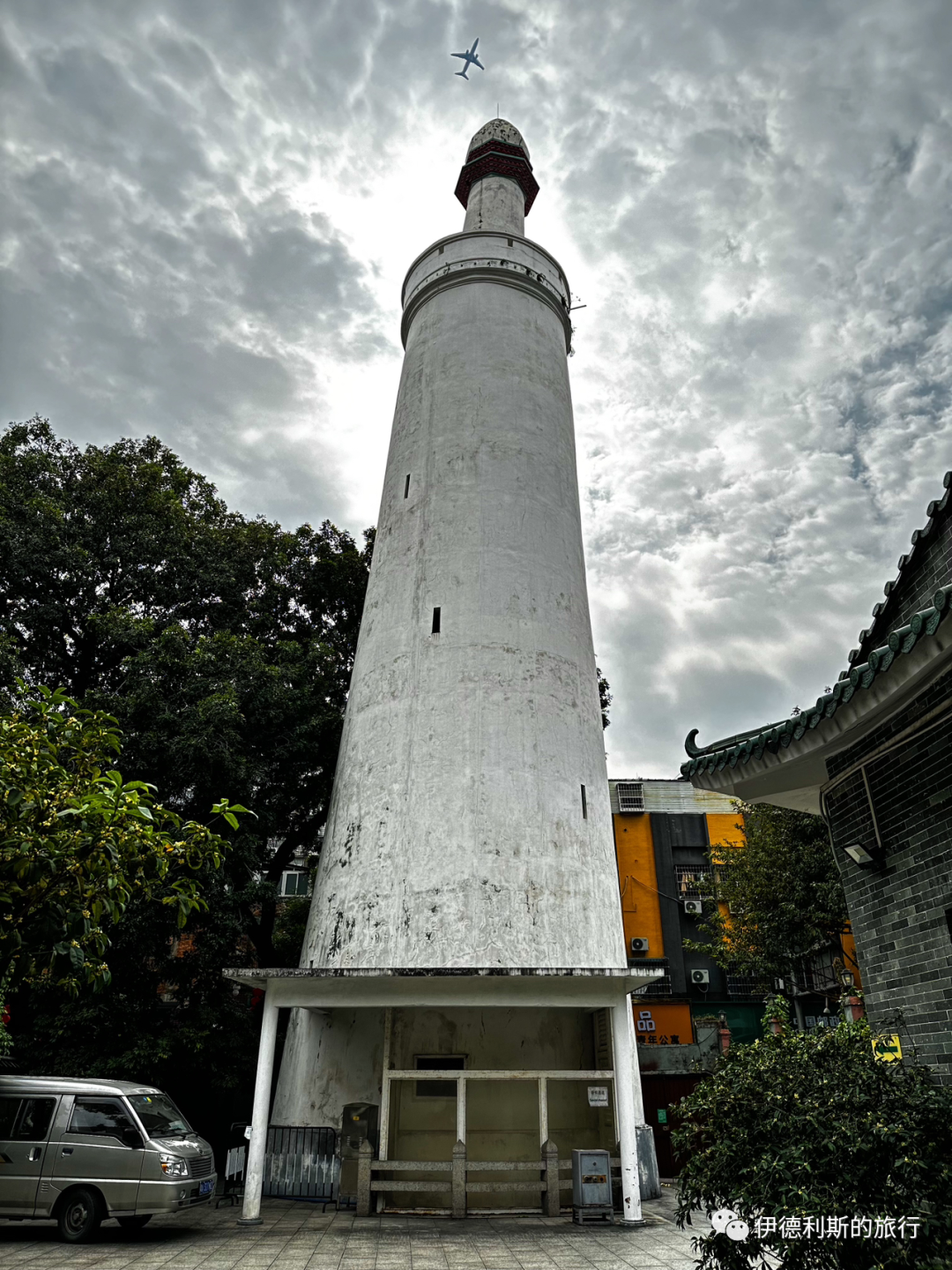
The Light Tower was first called the "Foreigner Tower" (fanta), and during the Song and Yuan dynasties, it was also called the "Huaisheng Tower." It was only after the Qing Dynasty that it began to be called the "Light Tower," a name that is still used today. to being a minaret (bangkelou), the Light Tower also served as a navigational lighthouse, and the golden rooster on top of the tower that could rotate with the wind also acted as a wind vane. Although the Light Tower is no longer near the shipping channel due to the southward shift of the Pearl River, it remains an important witness to Guangzhou as a commercial metropolis.
According to the Ming Dynasty Jiajing edition of the Guangzhou Gazetteer, Records of Foreign Affairs: "(Huaisheng Mosque) is two miles west inside the government city, built by foreigners during the Tang Dynasty, with a Foreigner Tower built inside." Most of the early records about the Light Tower currently come from the Song Dynasty. In 1088 (the third year of the Yuanyou era of the Northern Song Dynasty), Guo Xiangzheng, then the prefect of Duanzhou, climbed the Light Tower of Huaisheng Mosque with Jiang Zhiqi, the governor of Guangzhou, and wrote two poems: "Climbing the Foreigner Tower with Ying Shu" and "Presenting to Governor Jiang at Yuewang Terrace in Guangzhou."
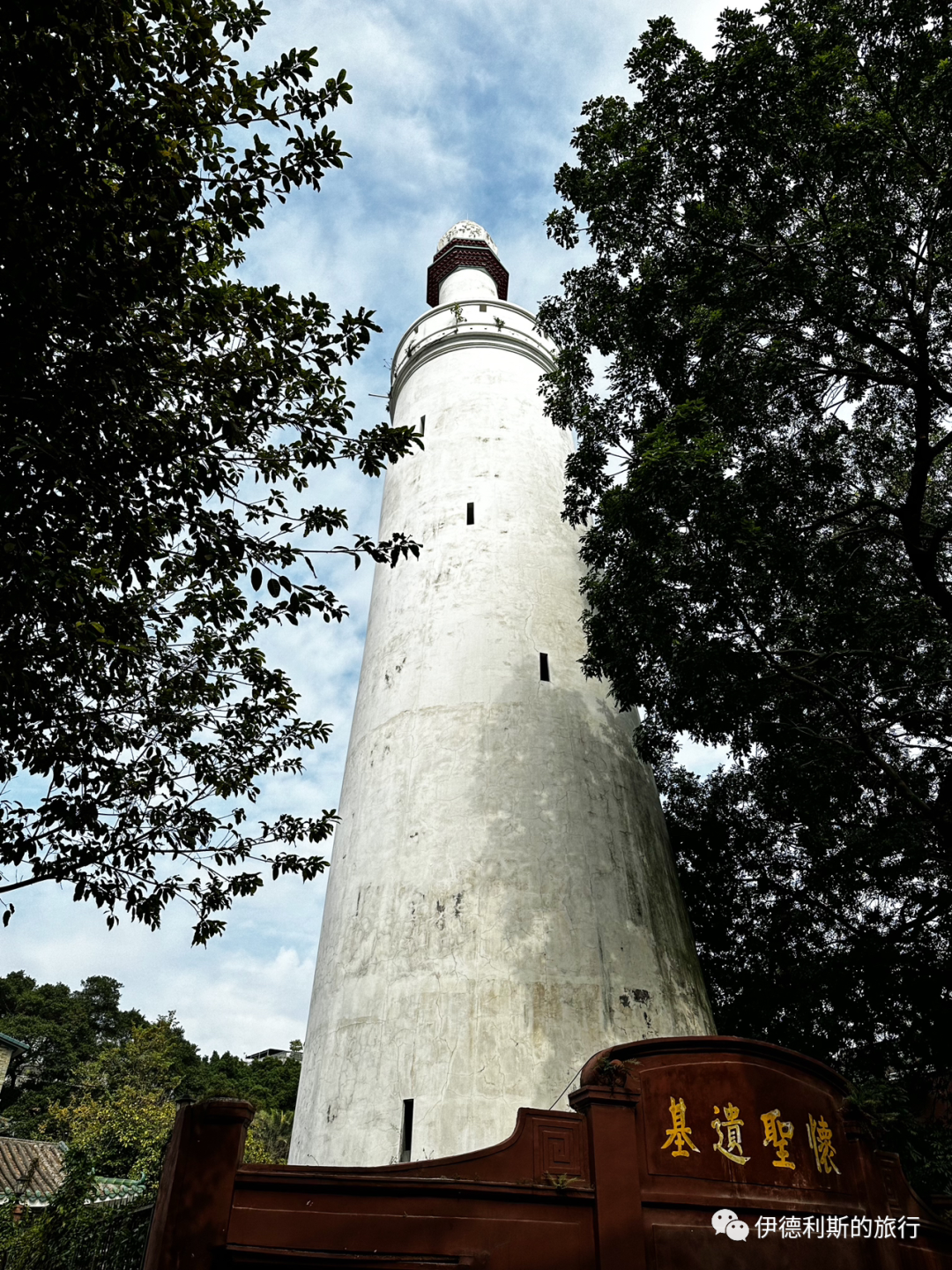
During the Southern Song Dynasty, Fang Xinru and Yue Ke both recorded the Light Tower (Guangta) of the Huaisheng Mosque. In 1206 (the second year of the Kaixi era of the Southern Song), Fang Xinru wrote in 'One Hundred Poems of the South Sea' (Nanhai Baiyong): 'The Foreign Tower (Fanta) began in the Tang Dynasty and is called the Huaisheng Tower. It rises straight up, measuring sixteen zhang and five chi in height, with no levels inside. At the top sits a golden rooster that turns with the wind. Every year in the fifth or sixth lunar month, foreigners climb to the very top at the fifth watch to call out the name of Allah and pray for favorable winds. Below it is a mosque (libaitang).'
Yue Fei's grandson, the Southern Song writer Yue Ke, came to Guangzhou with his father in 1192 at the age of ten. In his book 'Notes on the History of the Song' (Tuo Shi), in the section 'Foreigners in Panyu' (Panyu Hailiao), he described the Muslim community in Guangzhou at that time in detail, including a specific description of the Light Tower: 'Behind it is a stupa that reaches into the clouds. Its style is unlike other towers; it is surrounded by bricks to form a large base, built up layer by layer, and covered with plaster on the outside, looking like a silver brush.' There is a door at the bottom. You climb the stairs inside, spiraling around like a snail shell, and you cannot see the steps from the outside. Every few dozen steps, there is an opening. In the fourth or fifth lunar month, when the ships are about to arrive, the foreigners enter the tower and call out through the openings to pray for the south wind, which often works. At the very top, there is a huge golden rooster that replaces the traditional wheel, though it is now missing one foot.
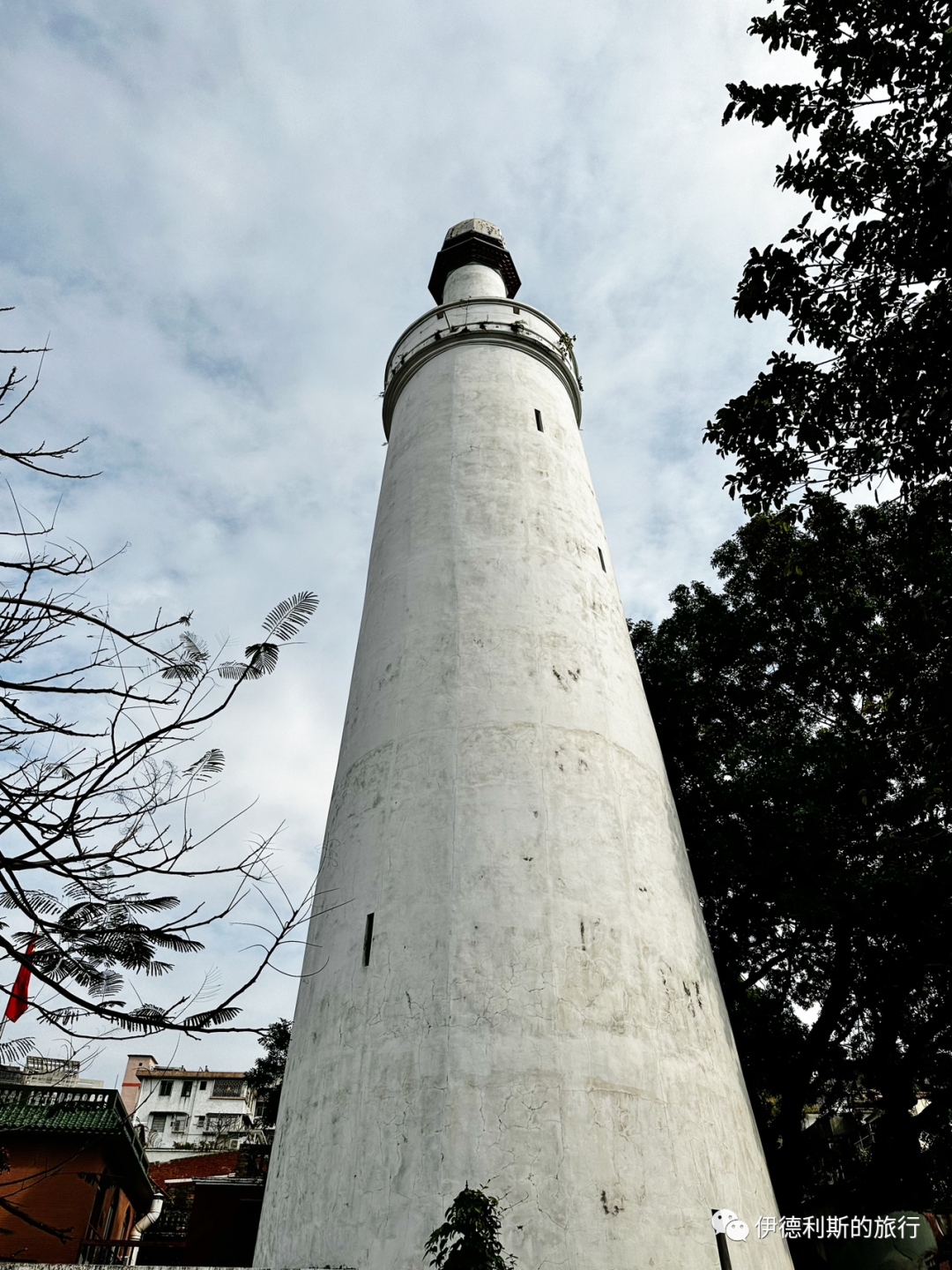
In the stele pavilion next to the main hall of the Huaisheng Mosque stands a replica of the stele commemorating the reconstruction of the Huaisheng Mosque and Tower in 1350 (the tenth year of the Zhizheng era of the Yuan Dynasty). This Yuan Dynasty stone stele was originally the most important religious inscription for the Huaisheng Mosque and all of Guangzhou, but it was unfortunately destroyed between 1966 and 1976. What we see now is a replica made from rubbings.
The inscription was written by Guo Jia, an official in the Guangdong Pacification Commission, calligraphed by the official Sa-di-mi-shi, and the title was carved by the official Seng Jiane. It is divided into Arabic and Chinese sections. The Arabic section at the top includes religious teachings and a dua, mentioning that the mosque was rebuilt by Masoud and the commander Mahamu, who was the Guangdong Pacification Commissioner at the time.
The Chinese section below describes the Light Tower in detail. It mentions that the Huaisheng Mosque suffered a fire in 1343 (the third year of the Zhizheng era) and was rebuilt in 1350 (the tenth year of the Zhizheng era), with only the Light Tower surviving the fire: 'At the foot of White Cloud Mountain, by the slope of Po Mountain, there is a pagoda. Its design is from the Western Regions, standing tall like stone.' 'It is something unseen in the Central Plains, and legend says it began in the Tang Dynasty... When the mosque was destroyed in the year of Guiwei of the Zhizheng era, the halls were left empty.' It also mentions that there was a golden rooster on top of the tower at the time, which served as a tool for passing ships to observe the wind direction. It also mentions that the imam (zhuchi) of the Huaisheng Mosque at the time was named Haji Hasaan.
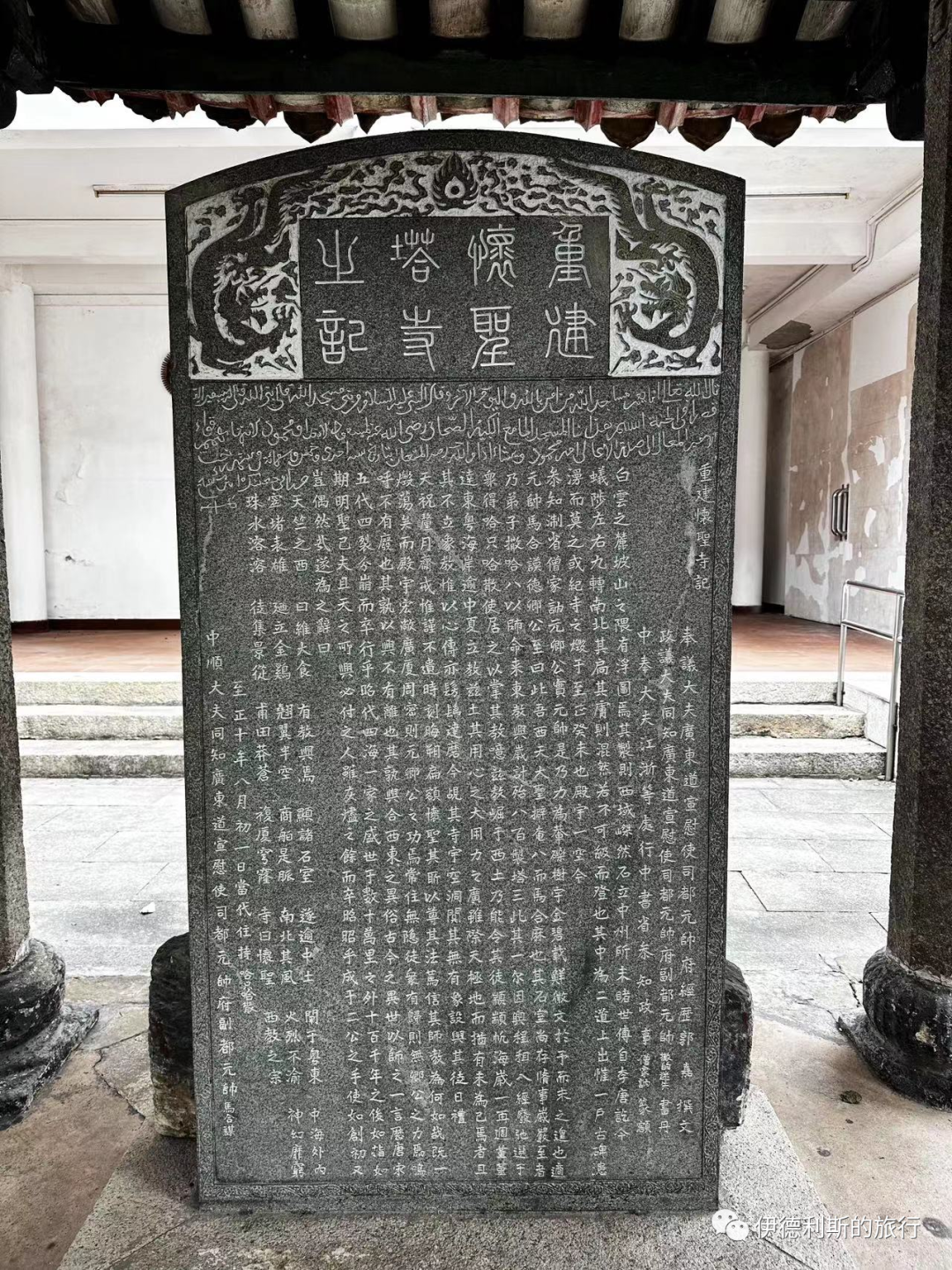
During the Yuan Dynasty, the status of the Semu people rose, and many held important positions across the country. In the Guangdong region, this included Pu Shougeng, the military commander of Fujian and Guangdong; Mahamu, the Guangdong Pacification Commissioner; Pu Dexing, the deputy commander; and Lamadan, the salt commissioner of Guanghai. In 1347 (the seventh year of the Zhizheng era), the great traveler Ibn Battuta arrived in Guangzhou. In his 'Travels of Ibn Battuta,' he recorded: 'One area of the city is a Muslim residential district, which contains a mosque and a lodge, and has a judge and a sheikh... We stayed with Aohadunding Xizhalai, a kind and wealthy man, for fourteen days. During this time, the judge and other Muslims came one after another to send precious gifts, and every day they held banquets and invited singers to perform.'
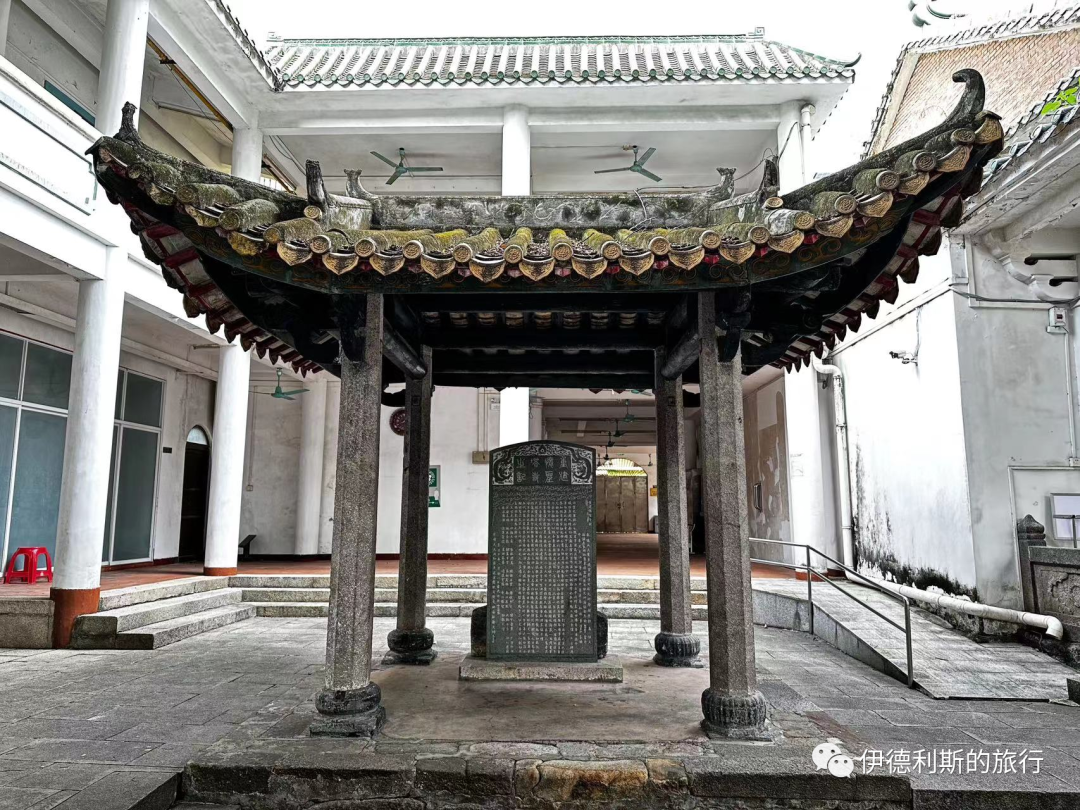
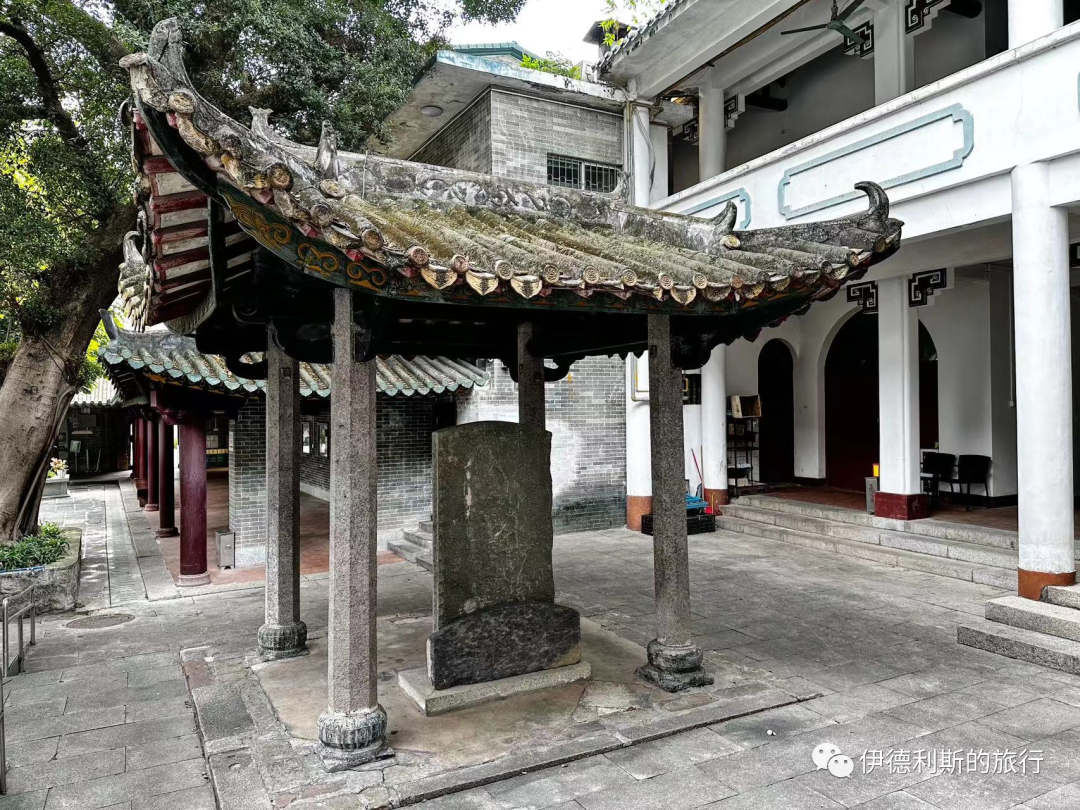
After the Huaisheng Mosque was rebuilt in 1350 (the tenth year of the Zhizheng era), it was rebuilt twice more during the Ming Dynasty's Chenghua era and the Qing Dynasty's Kangxi era, and renovated three times during the Daoguang, Xianfeng, and Tongzhi eras. The stone railings around the current main hall have a style from the Yuan and Ming dynasties, while the Moon-Watching Pavilion (Kanyuelou) with its double-eaved hip-and-gable roof reflects the style after the Ming and Qing renovations.
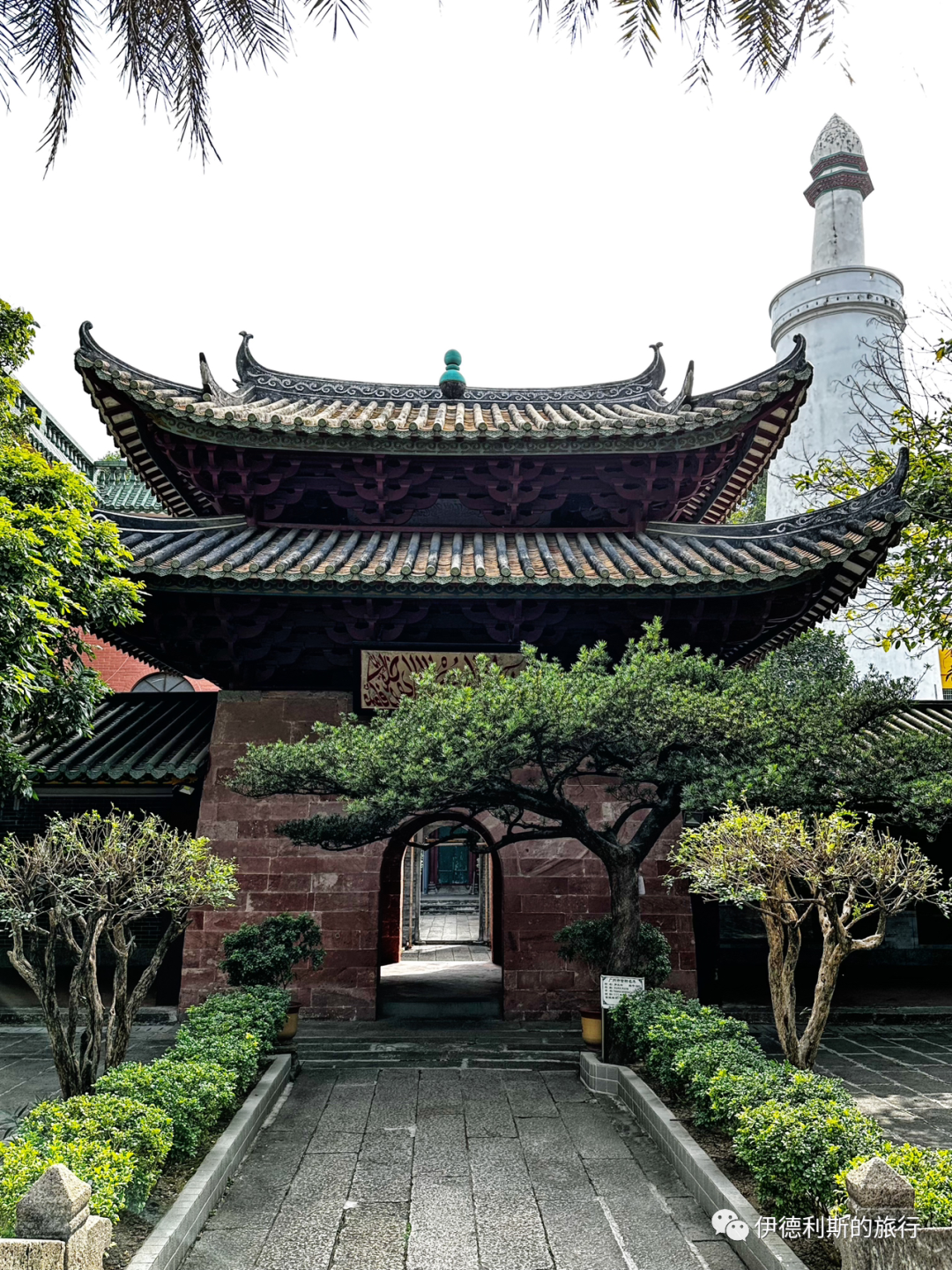
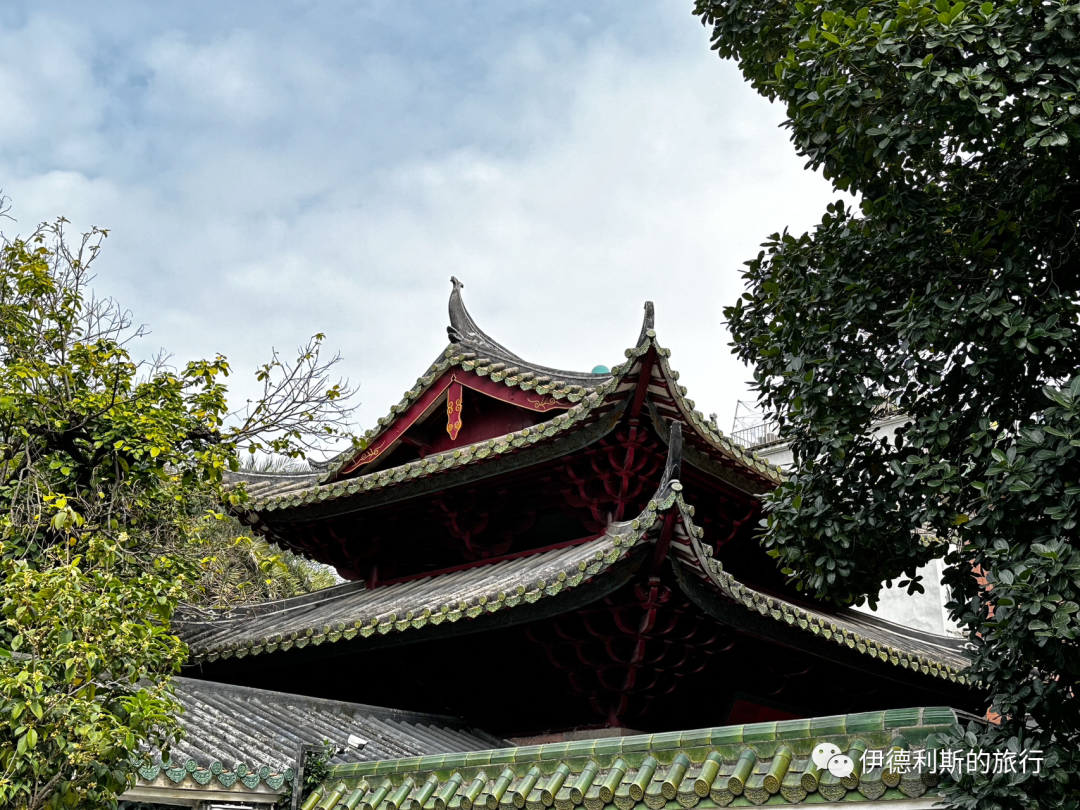
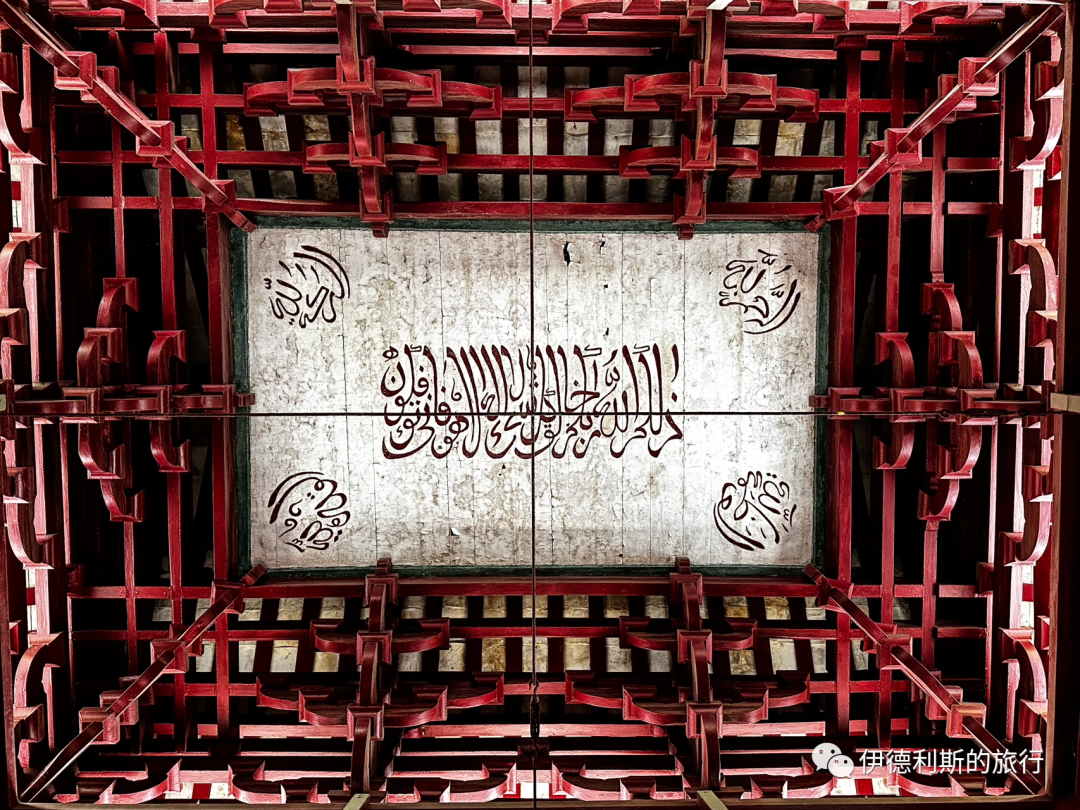
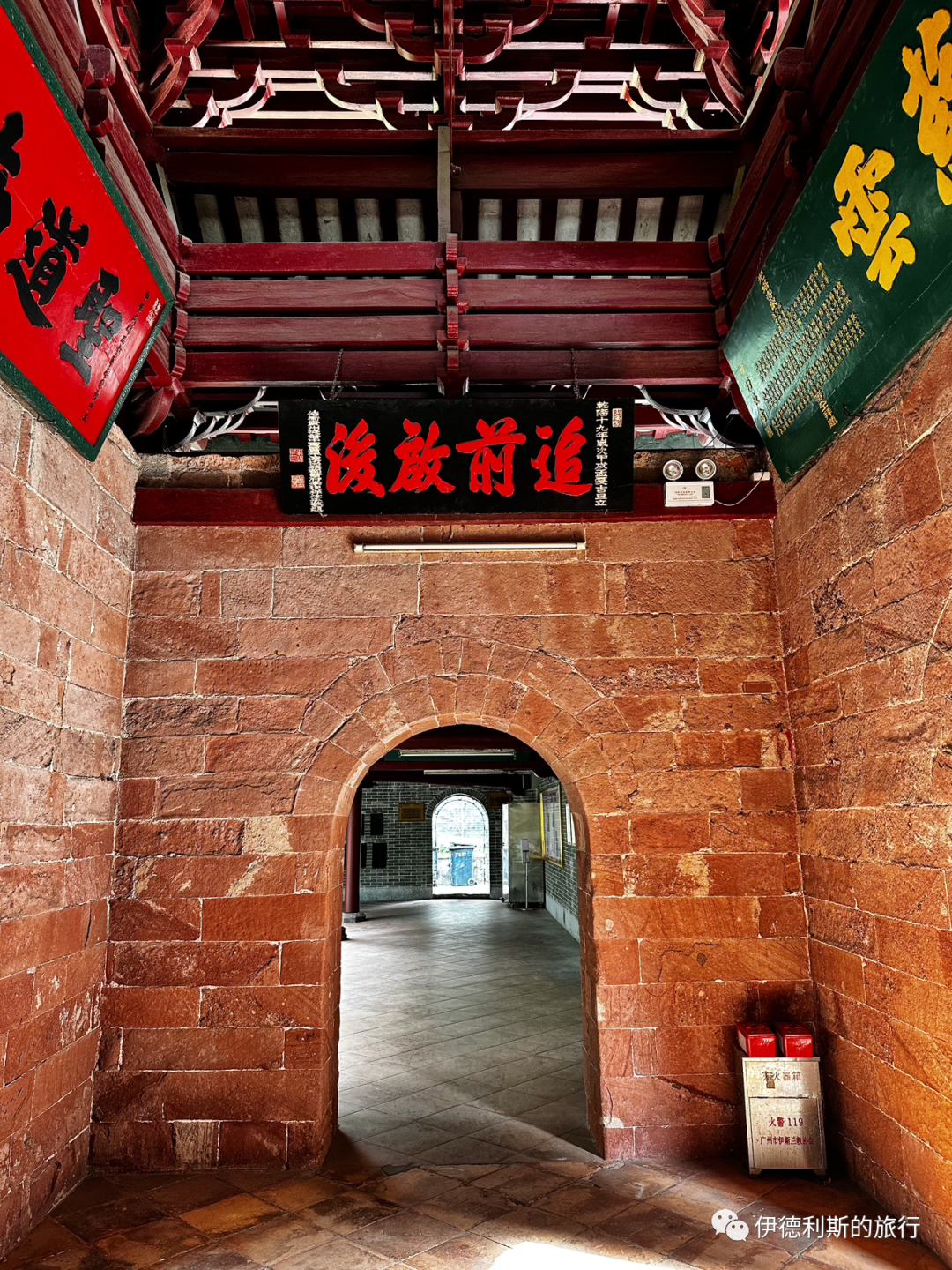
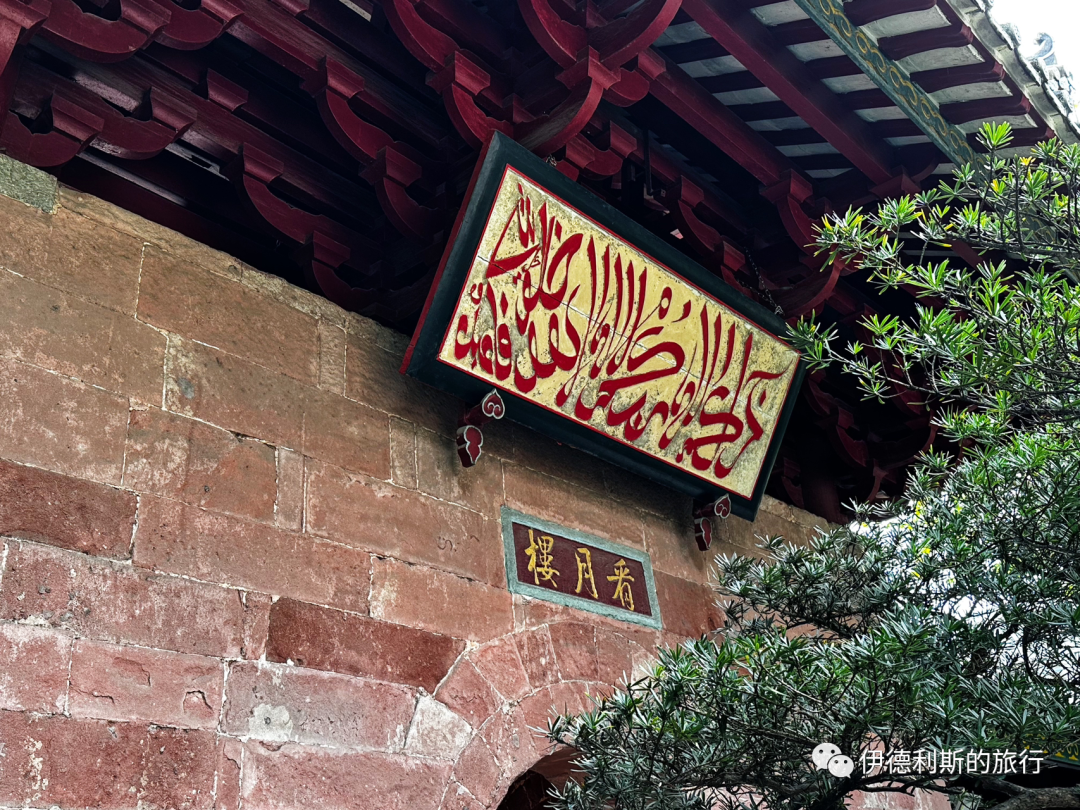
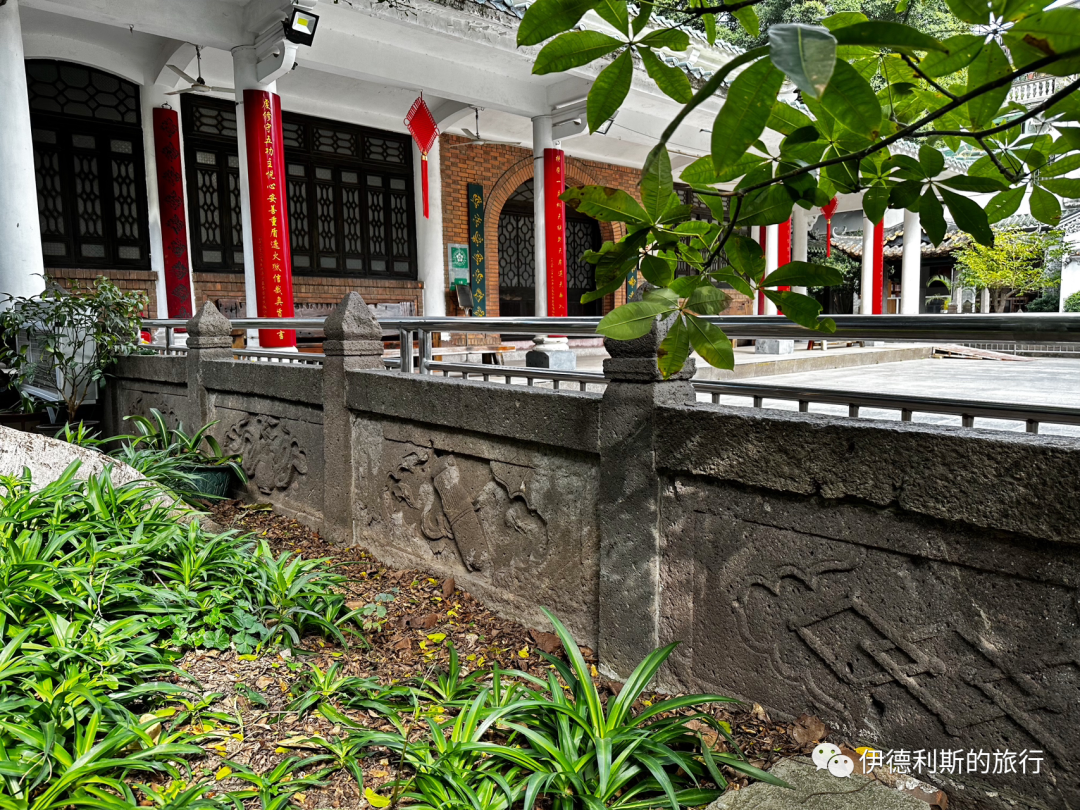
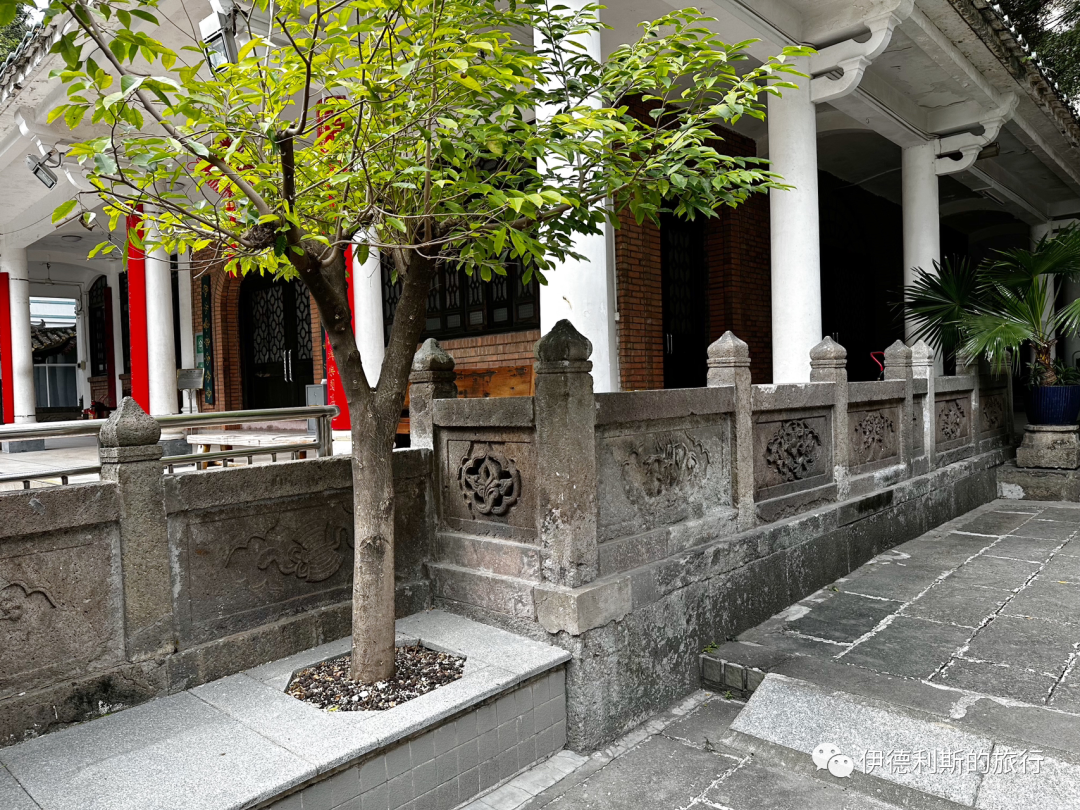
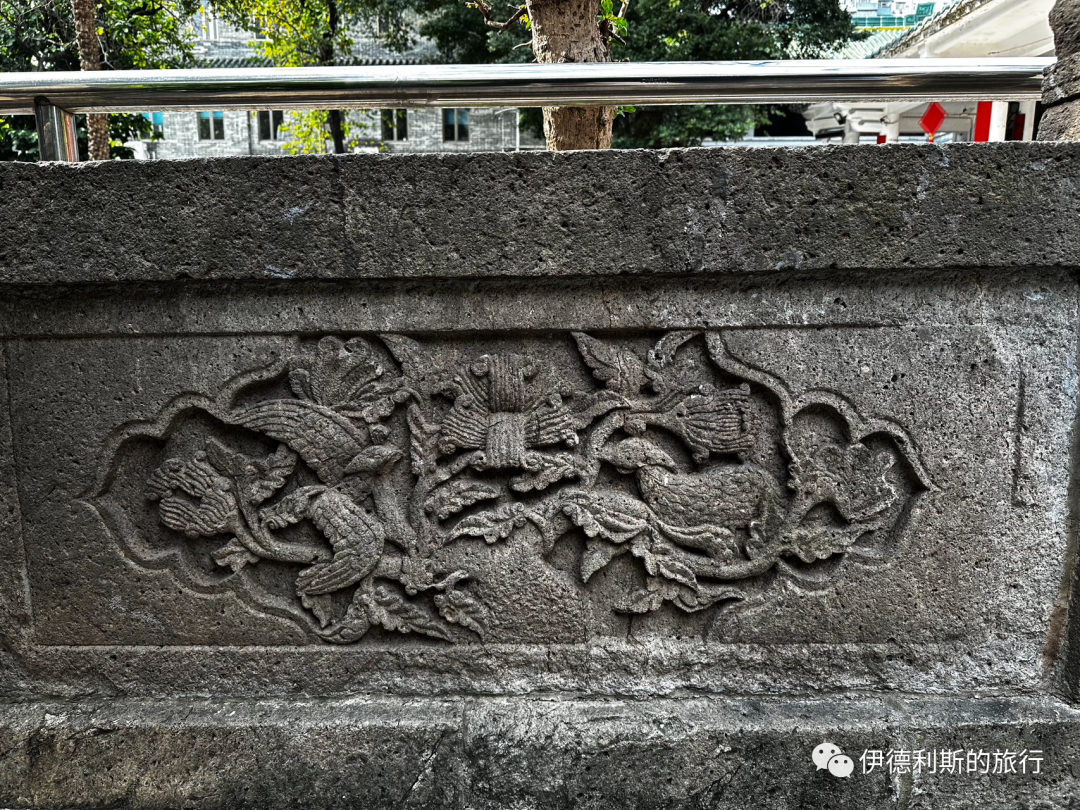
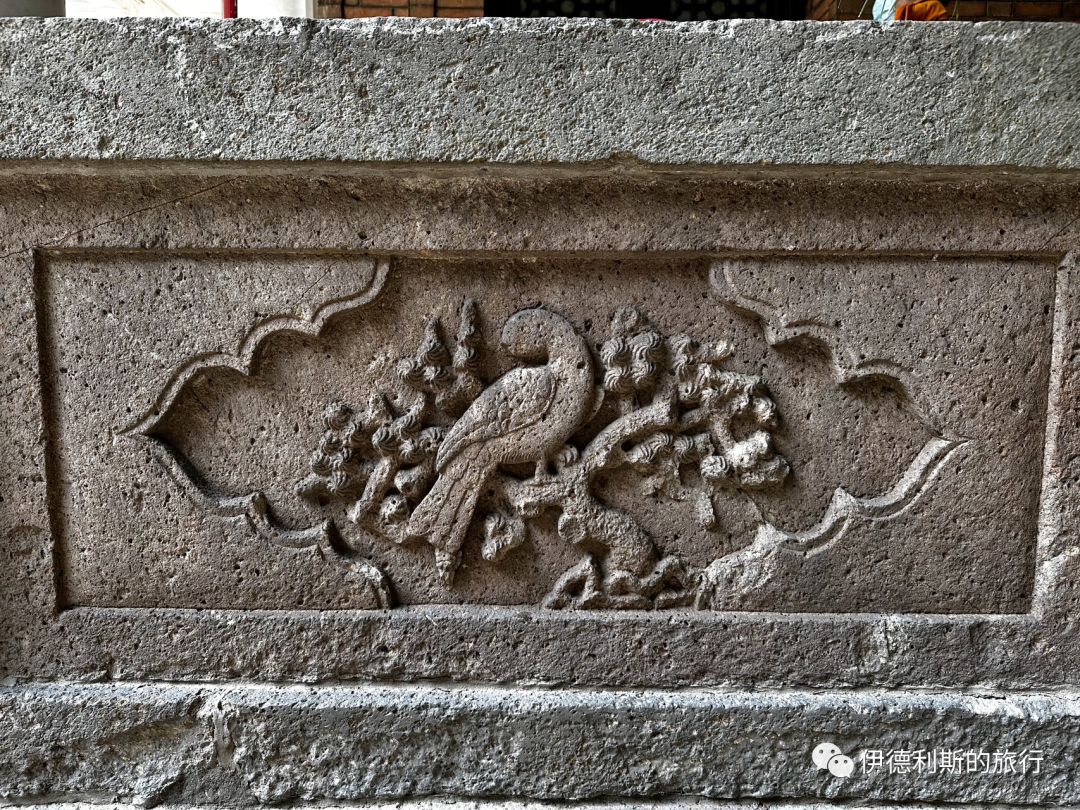
During the Republic of China era, the Huaisheng Mosque in Guangzhou gradually fell into disrepair. The land around the Light Tower was occupied by nearby residents, and the tower gate was buried. In 1934, the Guangdong branch of the Chinese Muslim Association raised nearly 20,000 small silver coins through donations, reclaimed the occupied land around the Light Tower, and reinforced the tower.
After the reinforcement was completed, two stone steles, one in Chinese and one in Arabic, were carved and embedded at the base of the tower. Only the Arabic stele remains today, written by Ma Ruitu, an imam living in Guangzhou. Ma Ruitu was from Daying, Yuxi, Yunnan. He came from a family of Islamic scholars and served as the imam of the Haopan Mosque and Nansheng Mosque in Guangzhou after 1927.
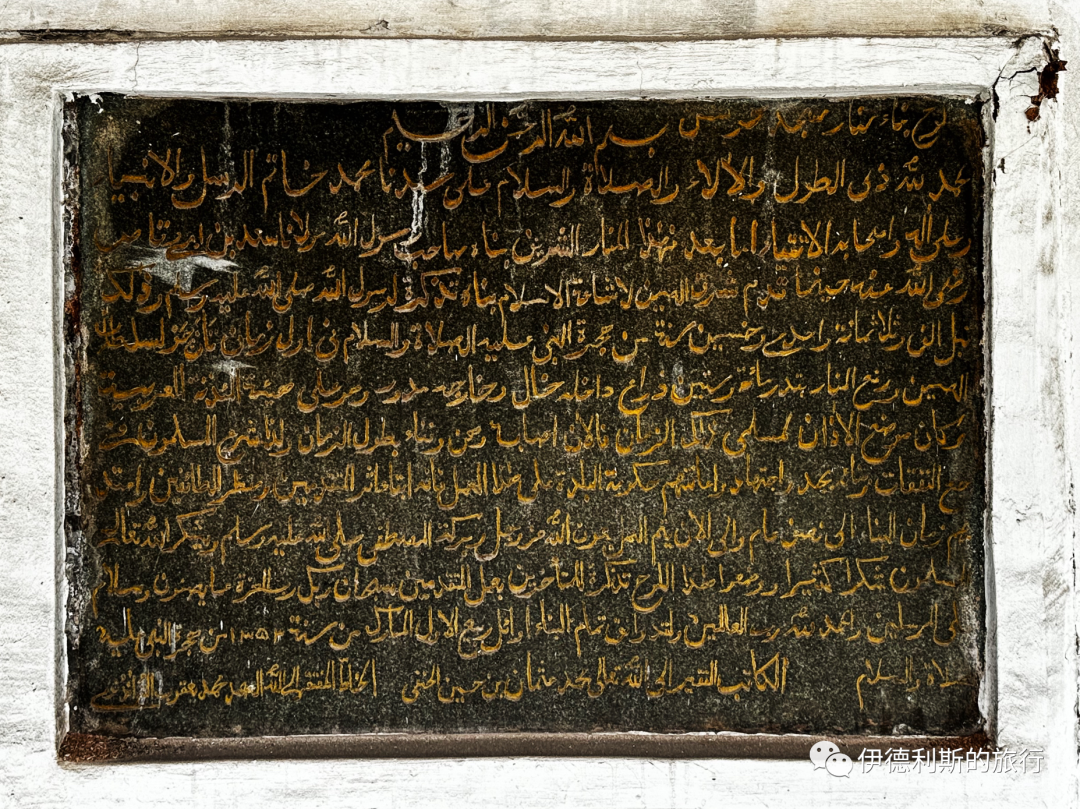
To prevent termite damage, the Huaisheng Mosque also demolished the original brick-and-wood main hall in 1935 and rebuilt it as a reinforced concrete structure, while still maintaining the previous double-eaved hip-and-gable roof design.
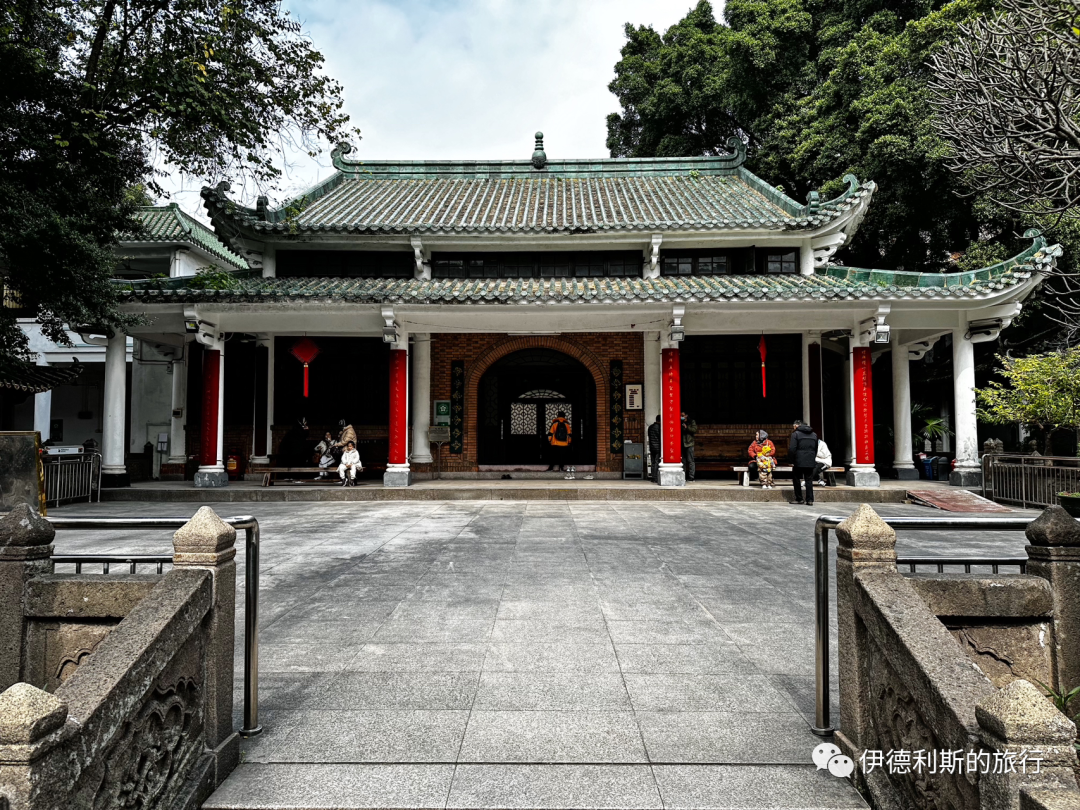
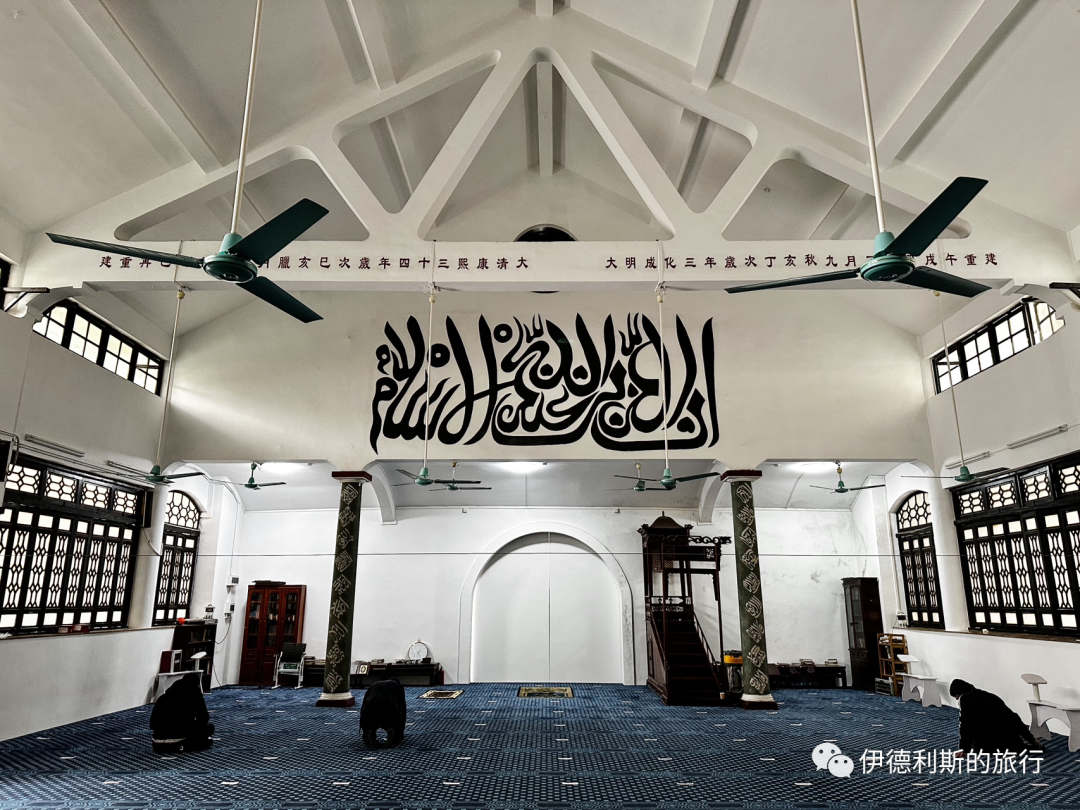
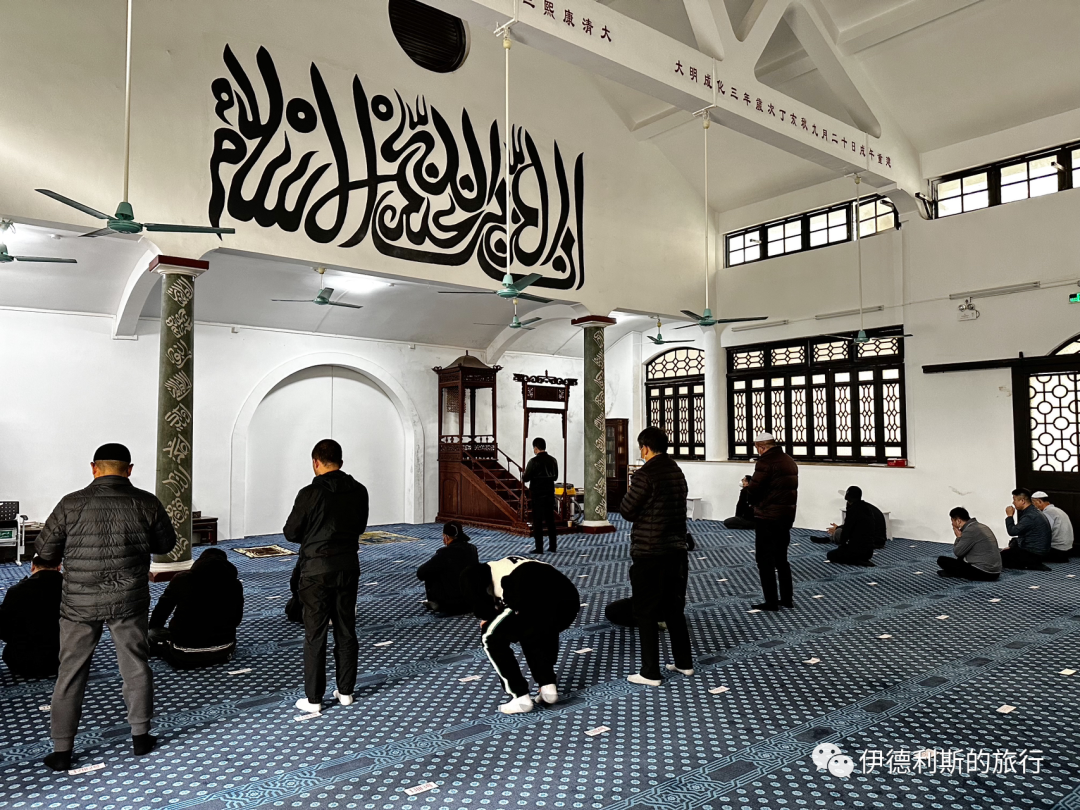
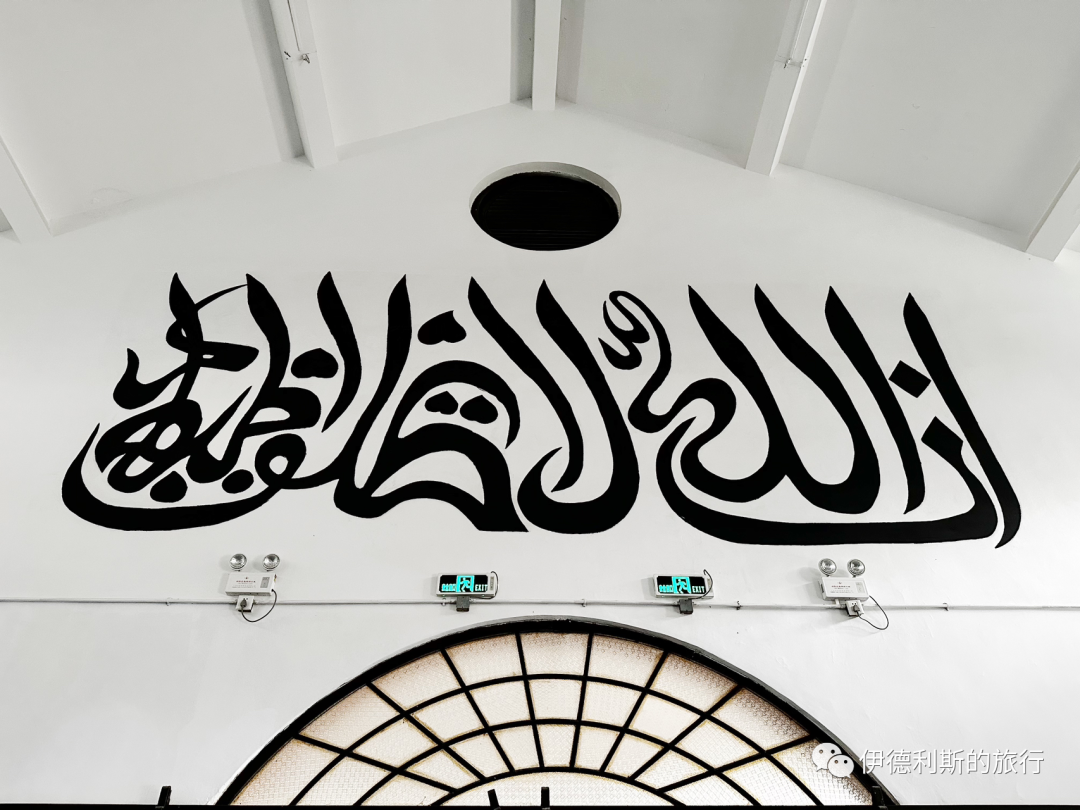
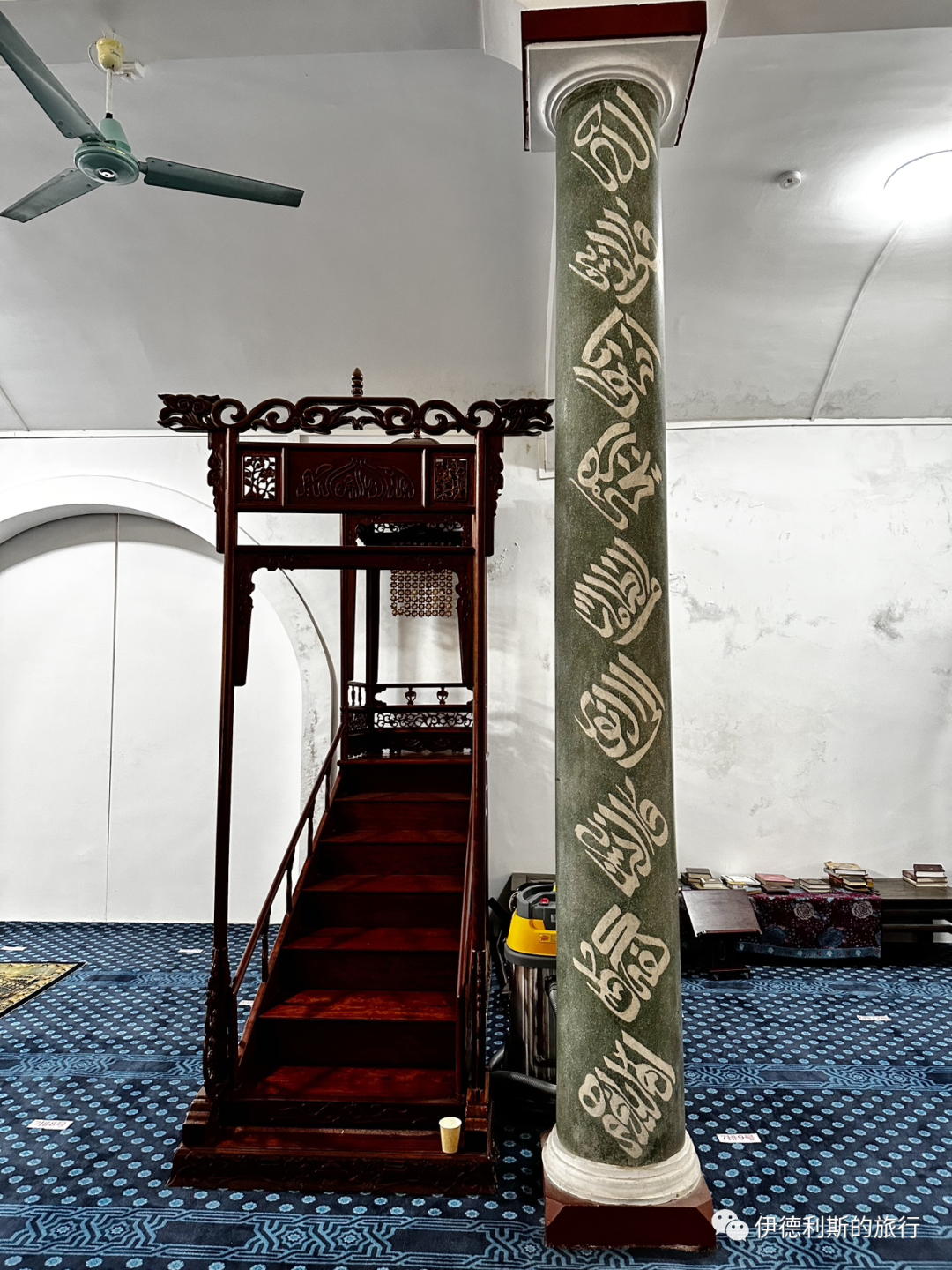
Plaques of the Huaisheng Mosque.
There are many Qing Dynasty plaques inside the Huaisheng Mosque, which reflect the prosperity of the Muslim community in Guangzhou during that time.
In 1698 (the Kangxi era), the imperial guard and scholar Gai Rixin inscribed the 'Grace of the Emperor for All Time' plaque.
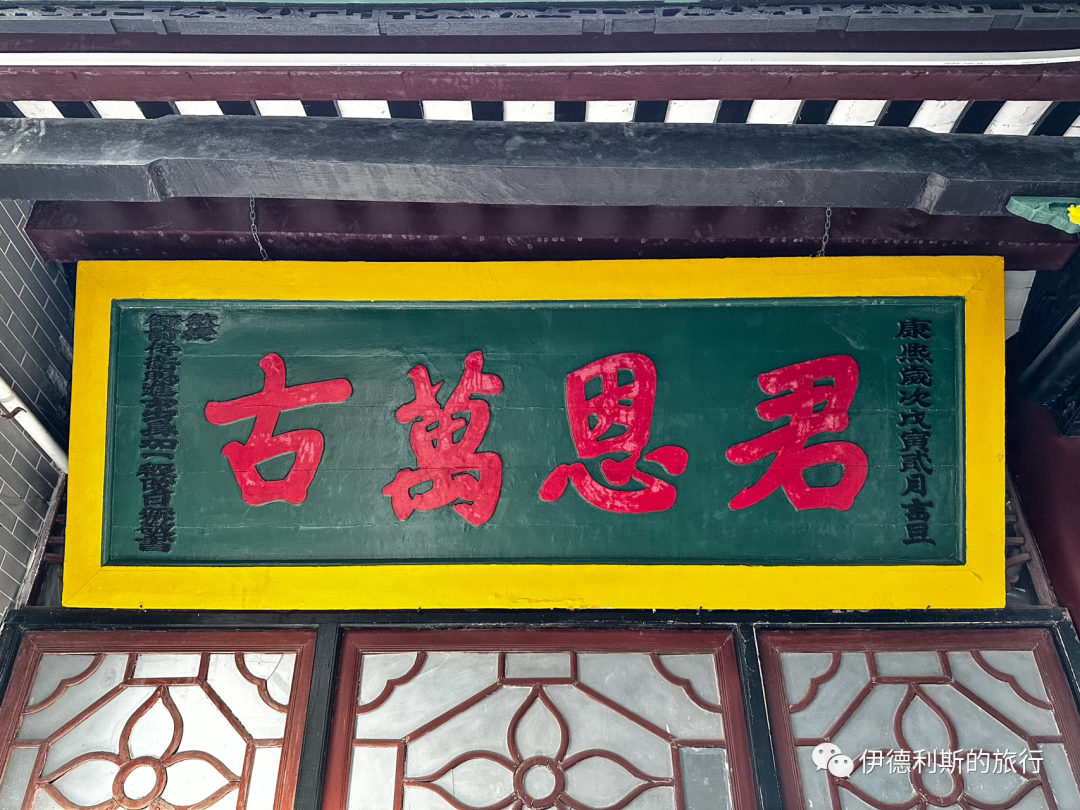
In 1698 (the Kangxi era), the scholar and Hanlin Academy official Tie Fanjin inscribed the 'Righteous Heart and Sincere Intent' plaque.
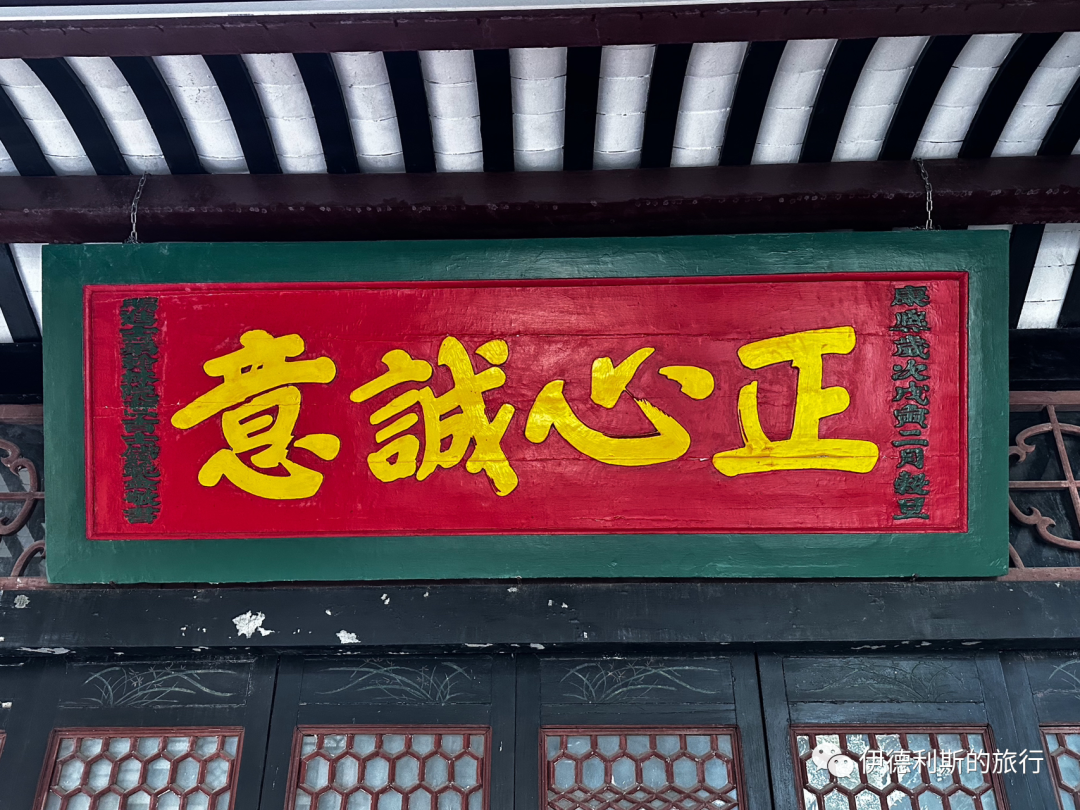
In 1698 (the Kangxi era), the official Yang Guolin erected the 'Great Mercy for the World' plaque.
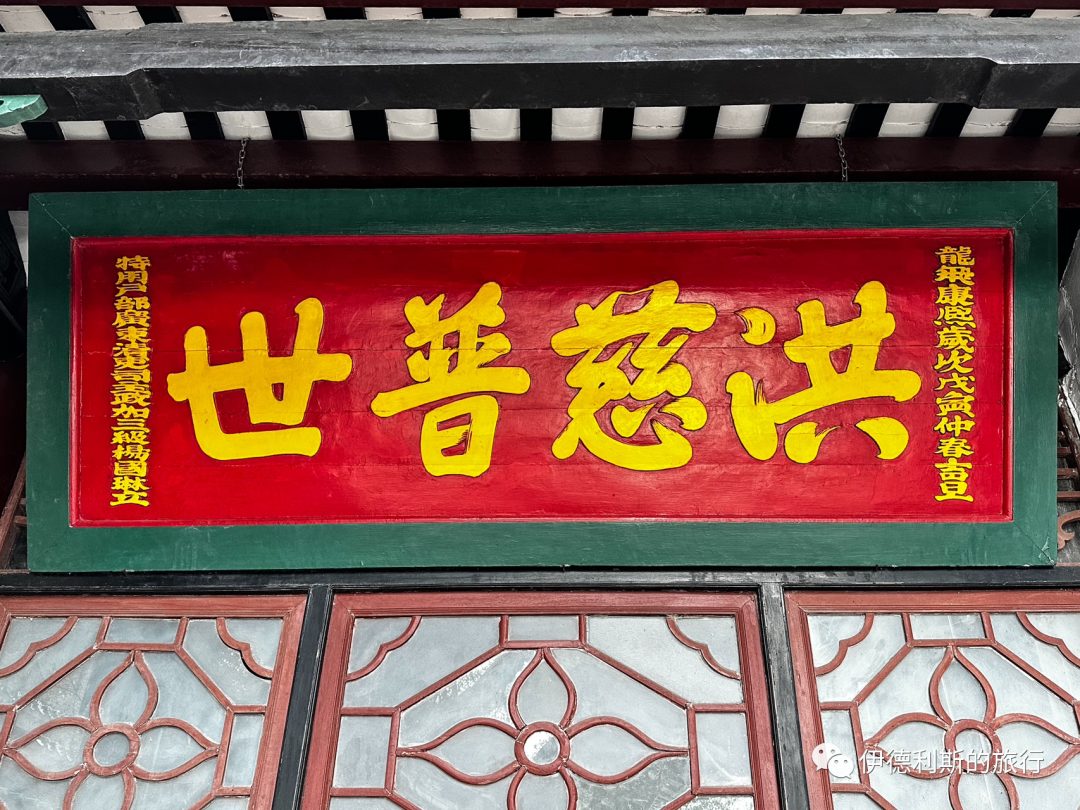
In 1721 (the Kangxi era), the military official Yan Guangwu erected the 'Utmost Sincerity Never Ceases' plaque.
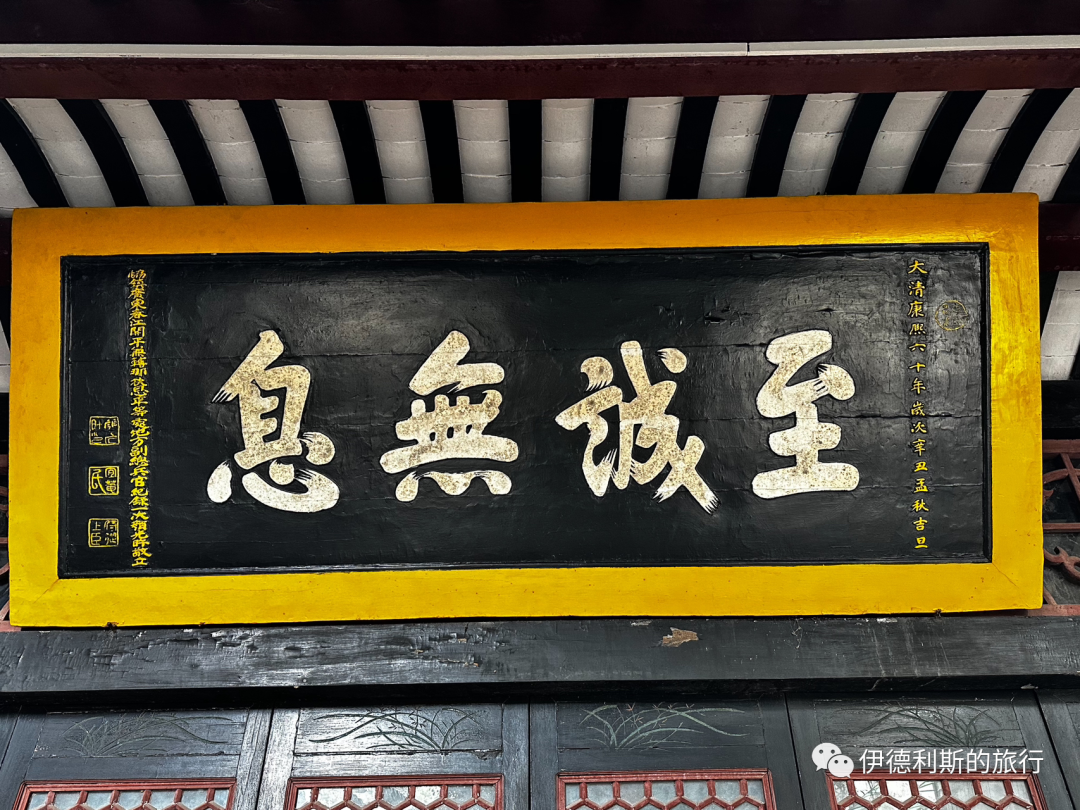
In 1755 (the Qianlong era), the military official Li Xianxiang inscribed the 'Following the Past and Opening the Future' plaque.
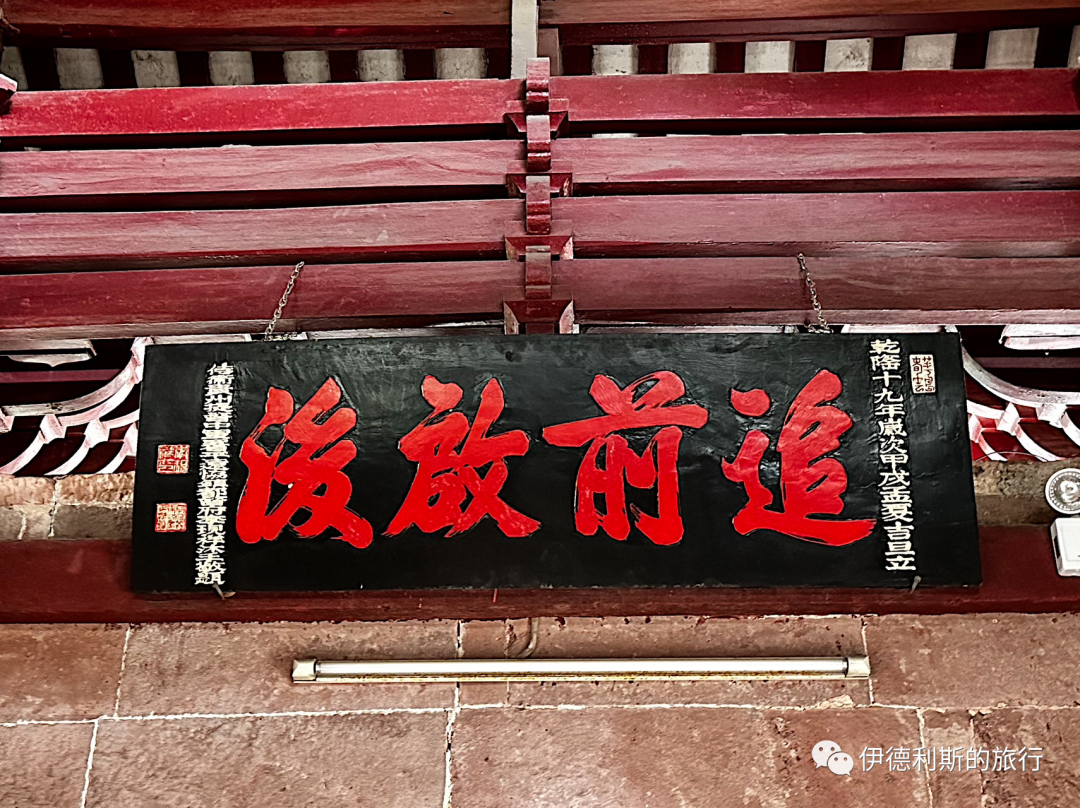
In 1846 (the Daoguang era), the committee members jointly erected the 'Sharing the Muslim Gift' plaque.
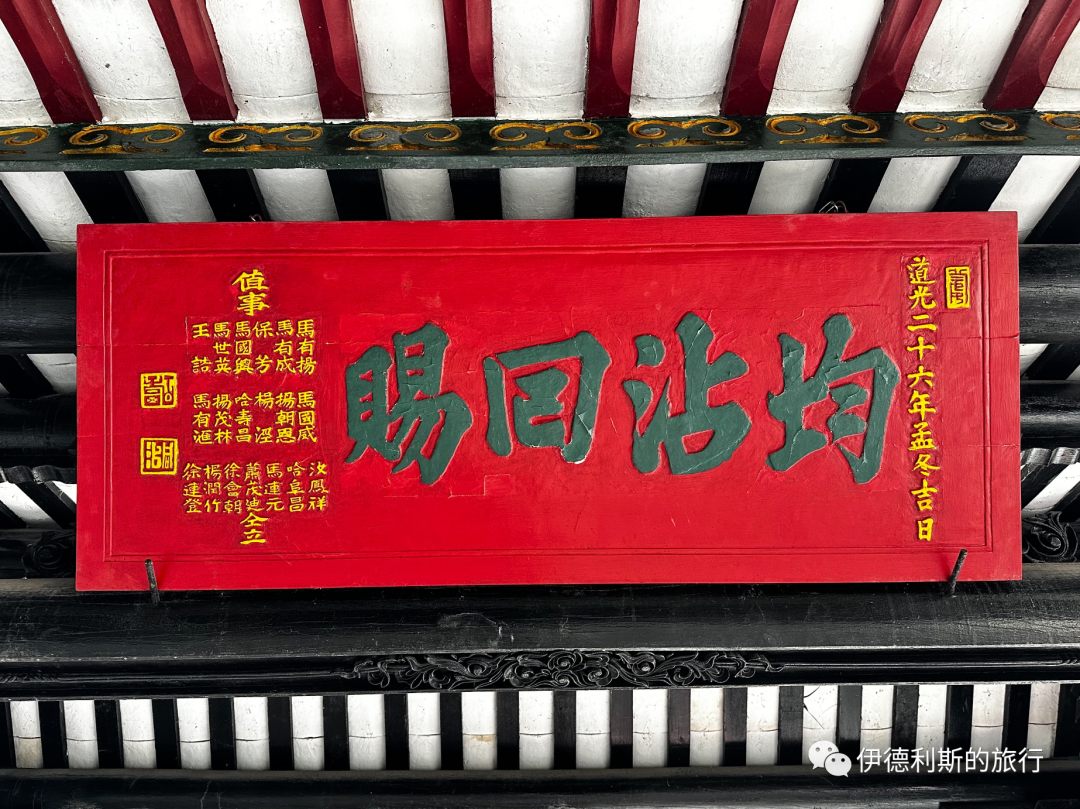
In 1867 (the Tongzhi era), the military official Bao Yingxiong erected the 'Overlapping Blessings from the Lord' plaque.
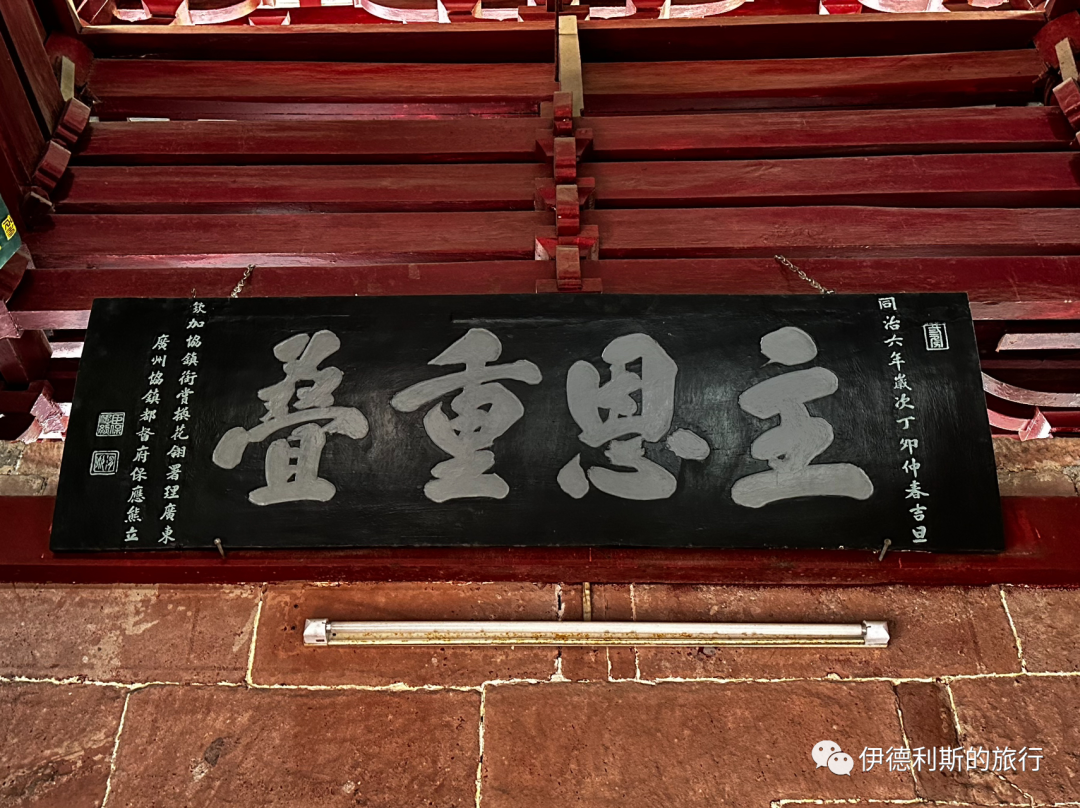
In the 26th year of the Guangxu reign (1900), Yang Shu, a second-rank official with a peacock feather and special imperial appointment, and Yang Xun, a fourth-rank official with a peacock feather and a member of the Plain Red Banner Han Army, dedicated the 'Grace Shared by All' plaque.
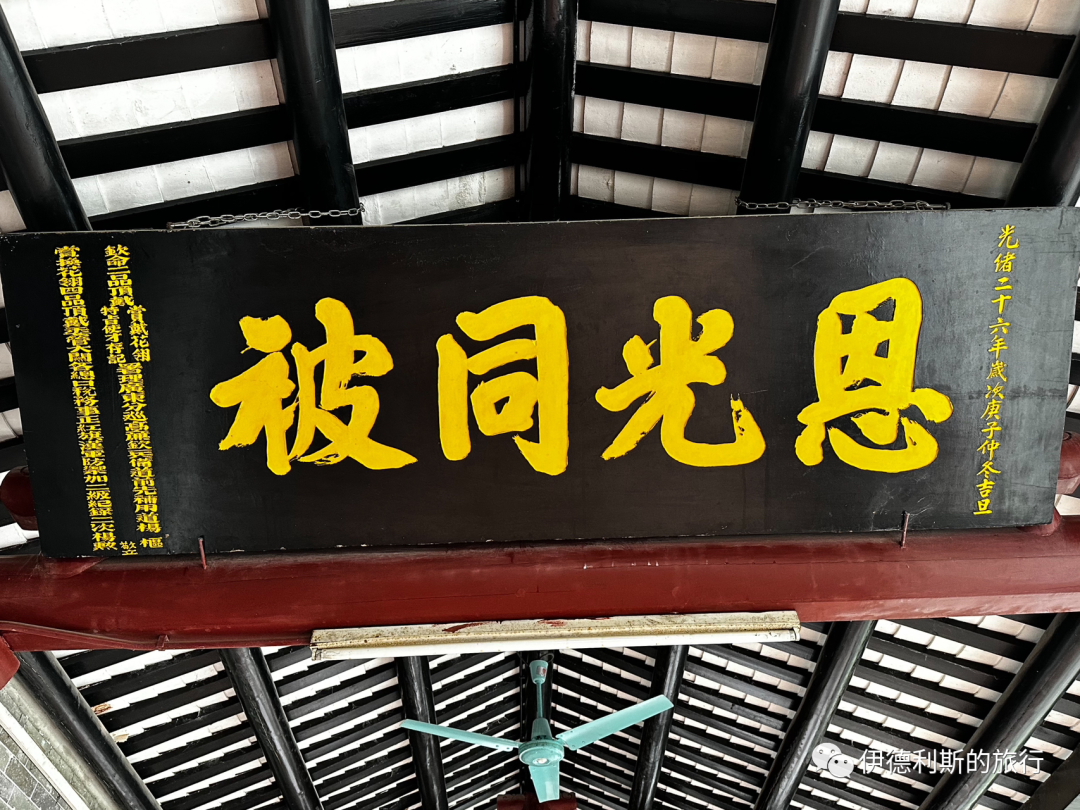
In the 31st year of the Guangxu reign (1905), the officials, elders, and managers of the Huaisheng Mosque (Guangta Si) dedicated the 'Benevolent Rain and Kind Clouds' plaque to celebrate the birthday of Master Ma.
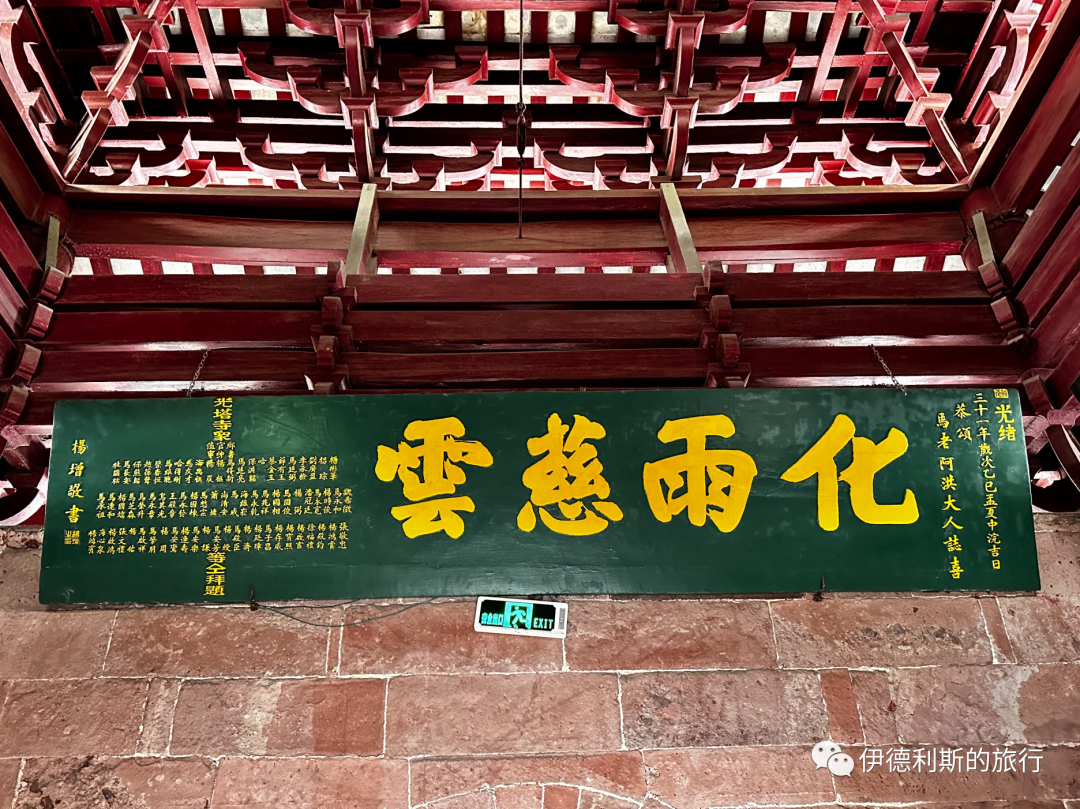
Donation tablets inside the stele corridor of the Huaisheng Mosque.
The 1761 tablet regarding the purchase of a shop by the Elderly Association records that in 1716, Ma Kuan and 27 other Hui Muslim families formed an association to buy a shop across from the Haopan Mosque, using the rent to cover funeral expenses for their members. Over 40 years later, after all the families had finished their funeral needs, their descendants followed their ancestors' wishes and donated the shop to the Haopan Mosque and the Huaisheng Mosque.
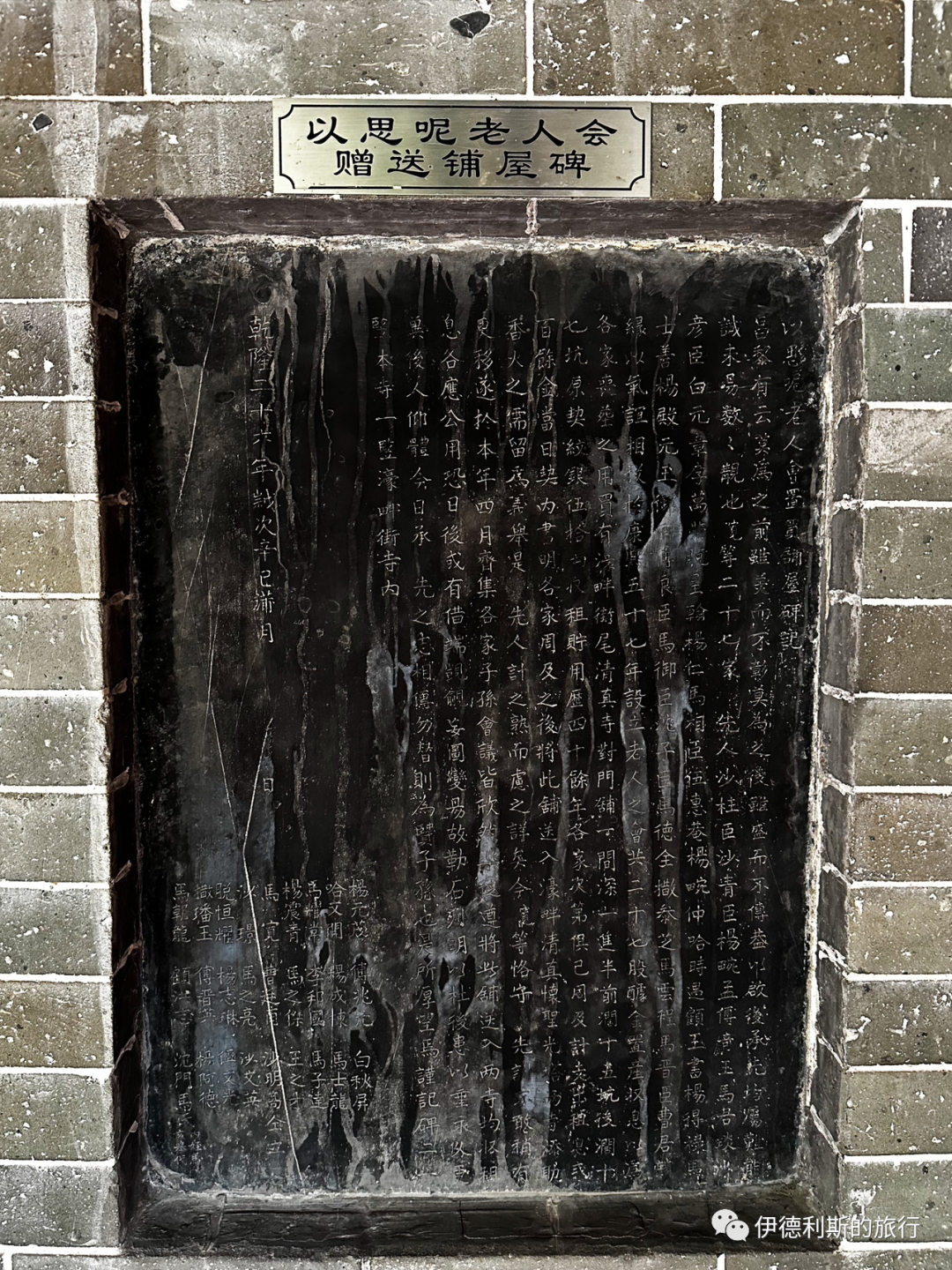
The 1770 tablet regarding the donation of a shop at the end of Haopan Street to the four mosques in the old and new cities records that Yang Yuanxiu, following his brother Yang Yuanzhen's dying wish, donated a shop to the Huaisheng, Haopan, Nansheng, and Xiaodongying mosques to fund their religious schools and teacher salaries.
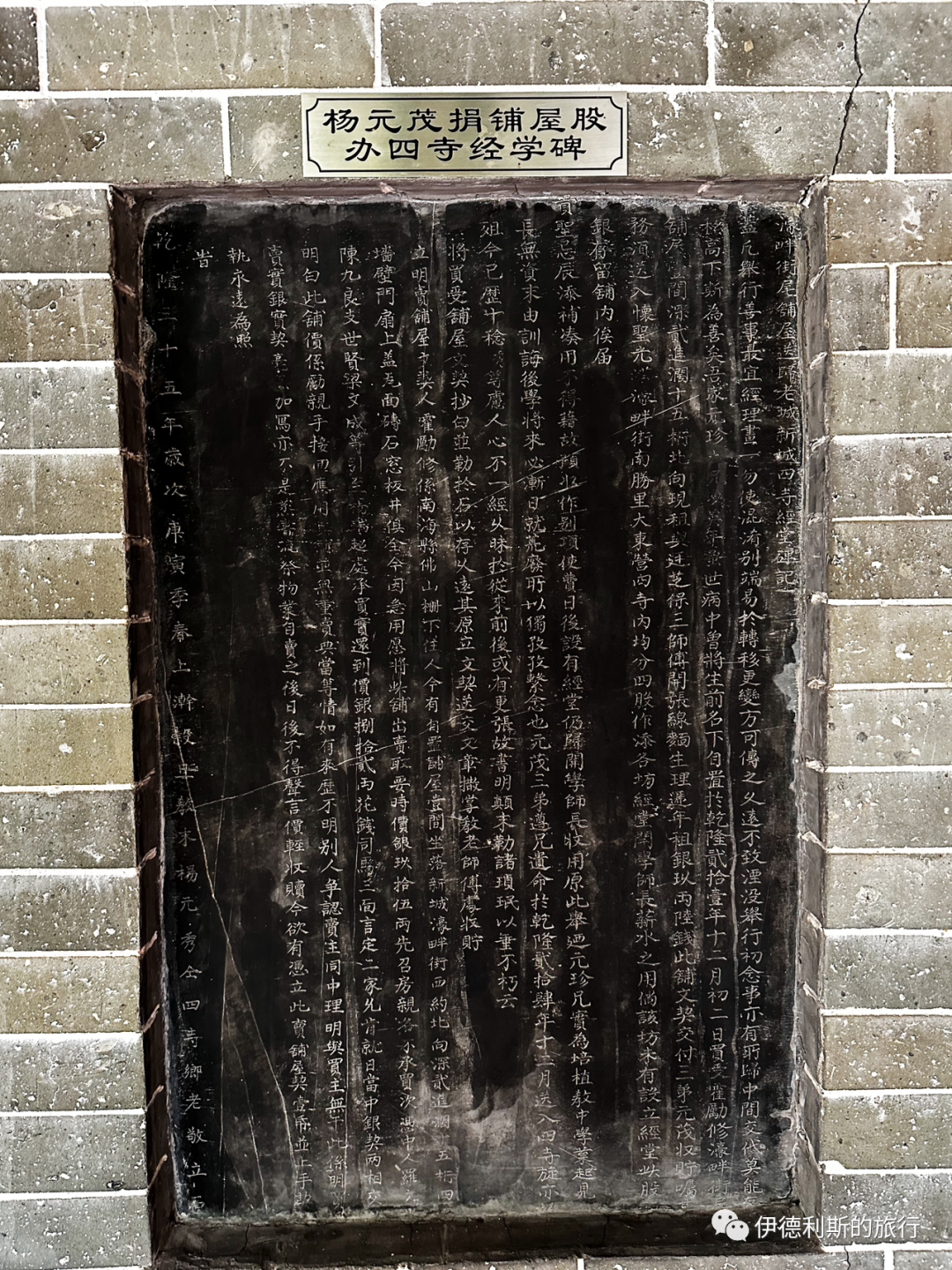
The 1783 tablet from the Jiangnan guests in Foshan records that although many Hui Muslims lived in Foshan, they had never built a mosque. In 1708 (the 47th year of the Kangxi reign), Hui Muslims from Jiangnan who were doing business in Foshan bought a house from a Mr. Wang in Qingyun Lane, Panyong, and built a mosque. Later, because all the Hui Muslims in Foshan moved to Guangzhou, the mosque was left unmanaged and was occupied by local thugs during the Qianlong reign. Jiangnan Hui Muslims living in Guangzhou consulted with the teachers of the Guangzhou mosques and sold the Foshan mosque, donating the funds to the Huaisheng, Xiaodongying, Haopan, and Nansheng mosques in Guangzhou, and the mosque in Sanya's Huixin Village (Hainan Sanya Huixin Cun).
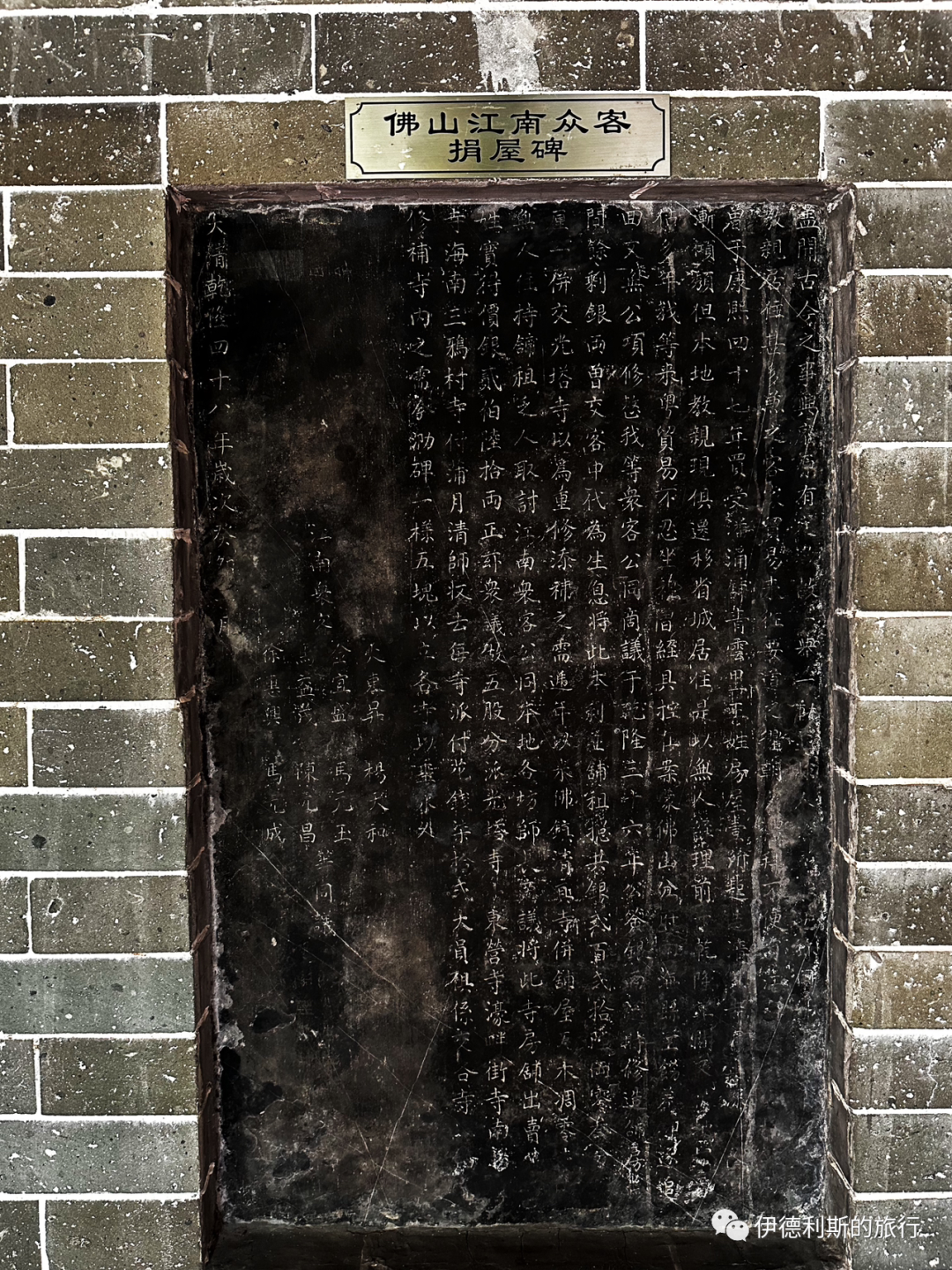
The 1903 tablet regarding the donation of a house by Lin Liye and others records that twenty Hui Muslim women donated a house at the entrance of Taojia Lane to the Huaisheng Mosque's public fund, with the rent used for prayers on the anniversary of the saintly Lady Fatimah (Fatumei Shenghui).
The 1841 tablet regarding the donation of a house by Mrs. Jin Zhang records that she donated a house she owned in Nansheng Lane to the Huaisheng Mosque to support religious studies.
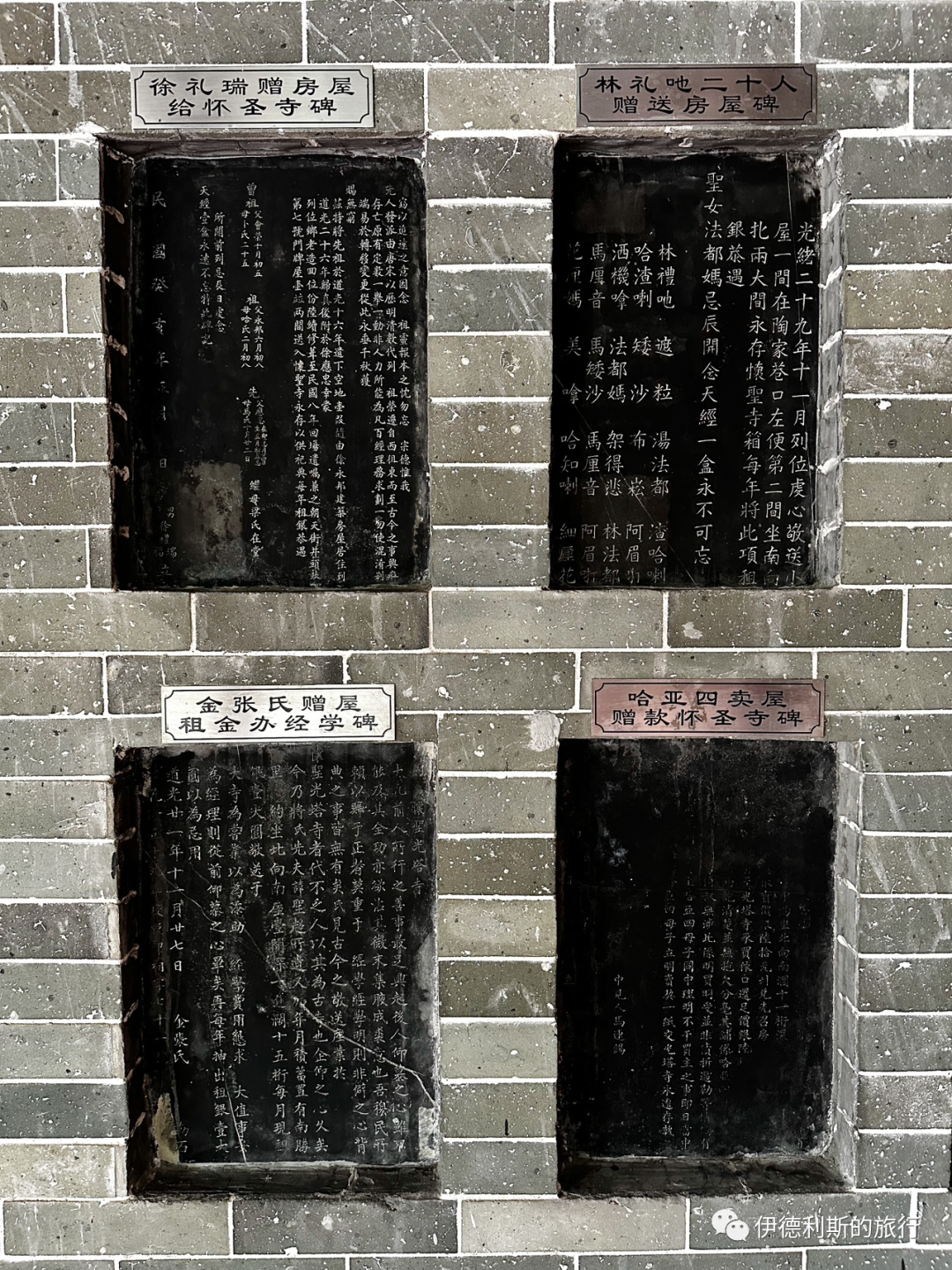
The 1855 tablet regarding Liu Jicai's donation to education records that he donated a house he owned at the entrance of Cuifu Street to the Huaisheng Mosque to supplement religious study funds.
The 1864 tablet regarding the sale of a shop by He Qieben records that a Manchu named He Qieben, needing money urgently, sold his late father's shop on Dashi Street to the Huaisheng Mosque through a middleman, Cun Gui of the Plain Red Banner Manchu.
The 1848 tablet regarding the donation of funds by 37 people to the Huaisheng Mosque records that 37 Hui Muslims pooled money to buy a shop on Guangta Street, with the rent deposited into the Huaisheng Mosque's public fund to cover the annual Isra and Mi'raj (Dengxiao) expenses.
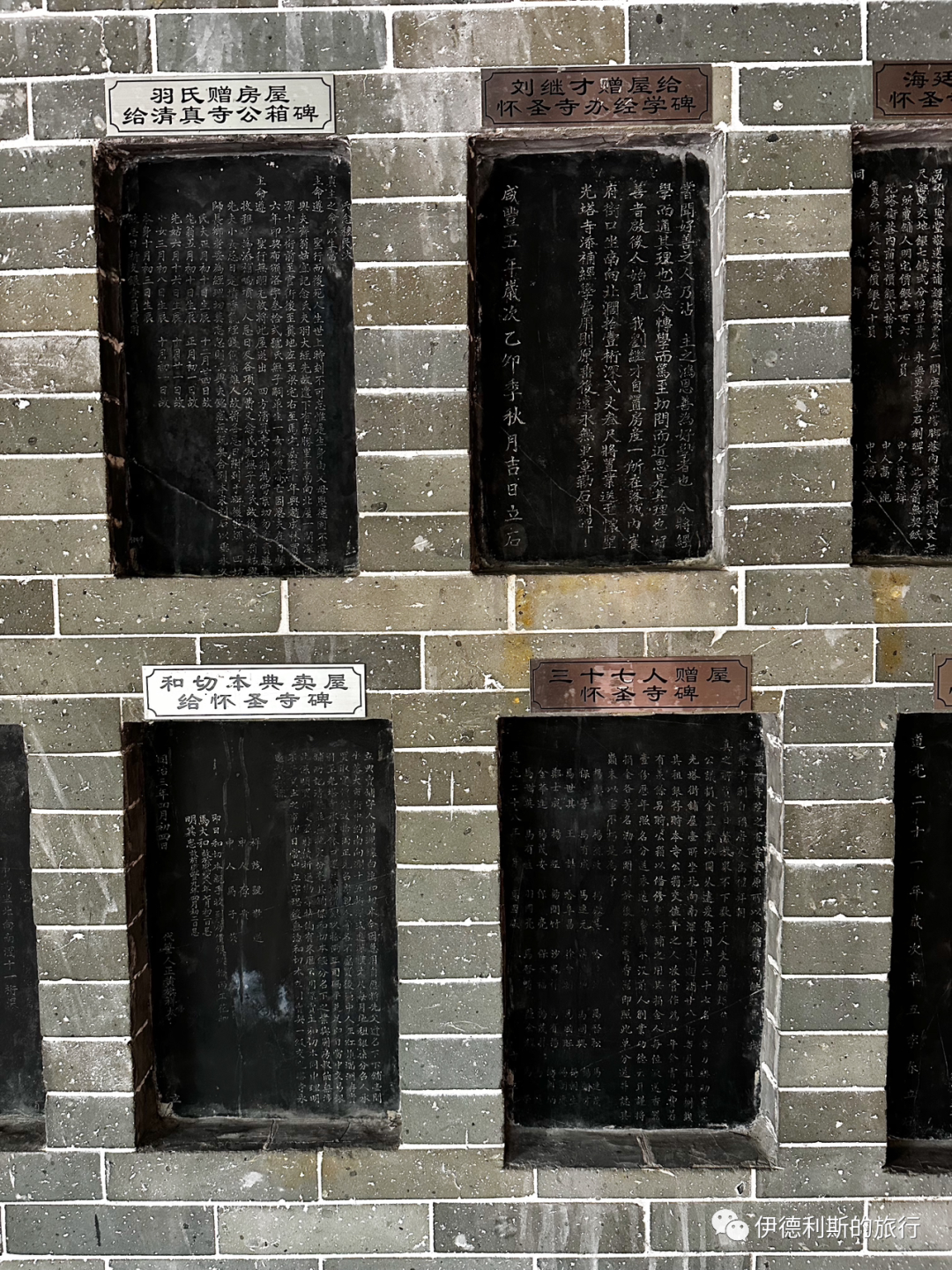
The 1863 tablet regarding the donation to the Huaisheng Mosque school records that Hai Tingchen donated two properties he owned inside the Guide Gate at the Four Archways (Si Pai Lou) and in Qingyun Lane to the Huaisheng Mosque to supplement religious study funds. Additionally, the Shunsheng Hall donated a house in Guangta Foot Lane to the Huaisheng Mosque to supplement religious study funds.
The 1841 tablet regarding the donation of a house for the Huaisheng Mosque school records that Ma Buqing donated a house he bought on Changtang Street inside the Wenming Gate to the Huaisheng Mosque to serve as a school, with funds used for teaching and annual memorial services.
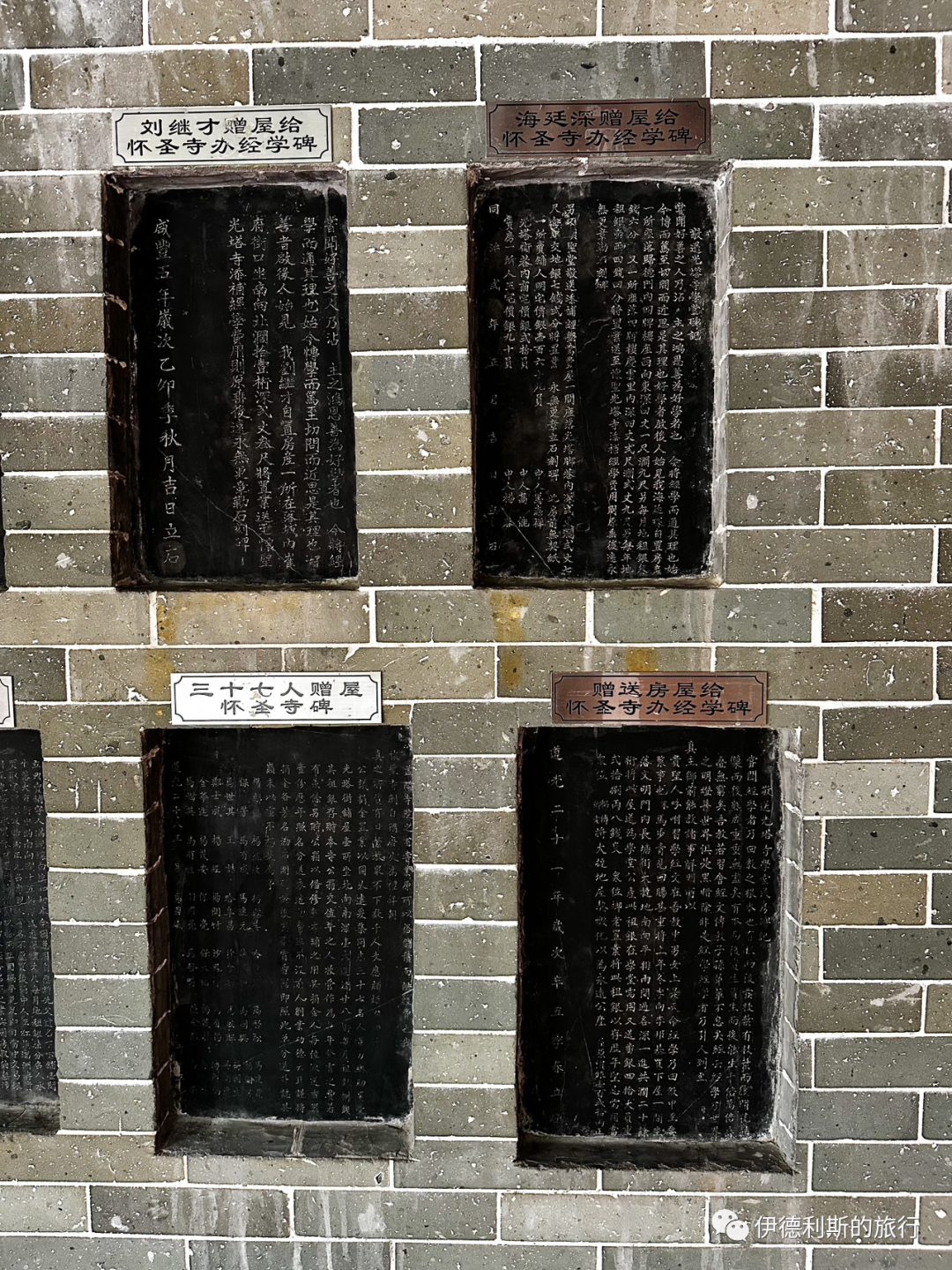
The 1913 tablet regarding the Huaisheng Mosque's property purchase records that the mosque sold a jade shop and bought three houses located at 20 Agate Lane (Manaoxiang), 7 Huodui Lane in Tao Street, and 21 Huilong Lane.
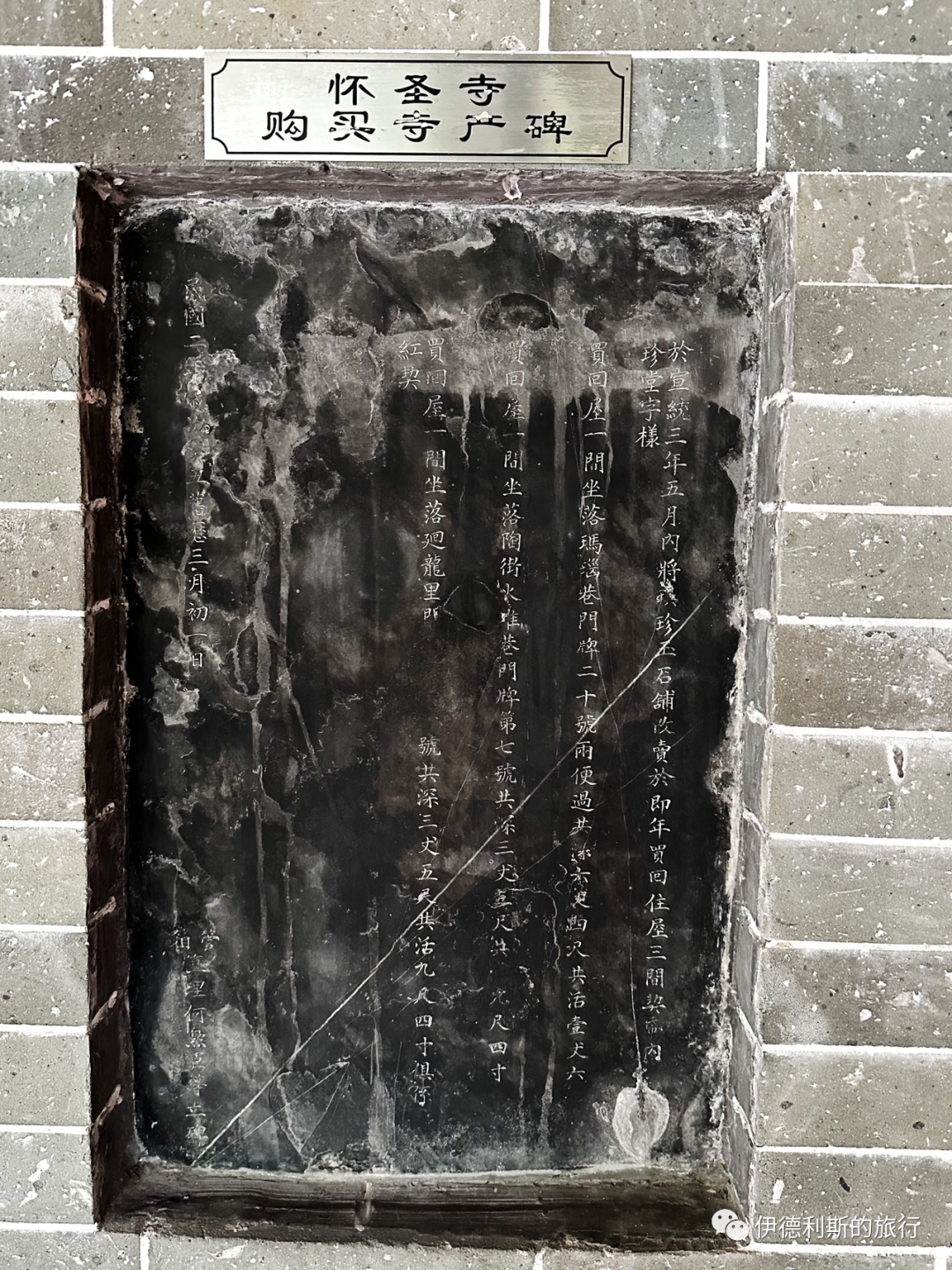
Ancient Tombs of the Worthies (Xianxian Gumu).
After leaving the Huaisheng Mosque, I went to visit the Ancient Tombs of the Worthies. The Ancient Cemetery of the Worthies in Guangzhou is commonly known as the Huihui Cemetery, the Great Man's Cemetery, or the Echoing Cemetery. It has been a burial ground for Muslims in Guangzhou since the Tang Dynasty. The earliest record of the Ancient Cemetery of the Worthies comes from 'One Hundred Poems of the South Sea' (Nanhai Baiyong) written by Fang Xinru in 1206 (the second year of the Kaixi period of the Southern Song Dynasty): 'The tombs of the foreigners are ten miles west of the city, thousands of them, all with heads to the south and facing west.'
At the center of the ancient tombs lies the legendary Sa'd ibn Abi Waqqas, the first person to come to China to spread the faith. Records show the status of the Tomb of Waqqas (Wangesu mu) rose during the Yuan and Ming dynasties. The Ming dynasty book Guangzhou Prefecture Records (Guangzhou fuzhi) notes: Every year, people of all surnames must visit the tomb to pay respects and recite scriptures, a tradition that continues to this day. Countries in the Western Regions respected this influence. Every time they sailed thousands of miles to Guangzhou, they considered visiting the tomb an honor. Even the most noble visitors would crawl and bow in Guangzhou to show their utmost sincerity.
The Ancient Tombs of the Worthies were renovated several times during the Jiaqing, Daoguang, and Republican periods. Traditionally, on the 27th day of the 11th month of the Islamic calendar, Guangzhou Muslims hold a memorial service at the tombs, known as the 'Master's Anniversary' (Daren Ji).
The tomb path outside the cemetery has north and south entrances. At the south end stands a stone archway inscribed with 'Path to the Ancient Tombs of the Worthies,' featuring a couplet: 'Traveling across the vast ocean to reach the Eastern Land, the ancient sage spent his life spreading the holy teachings;' 'Explaining the scriptures and teachings with wisdom reaching the Western Regions, the Muslim people look up to this peak for all generations.'
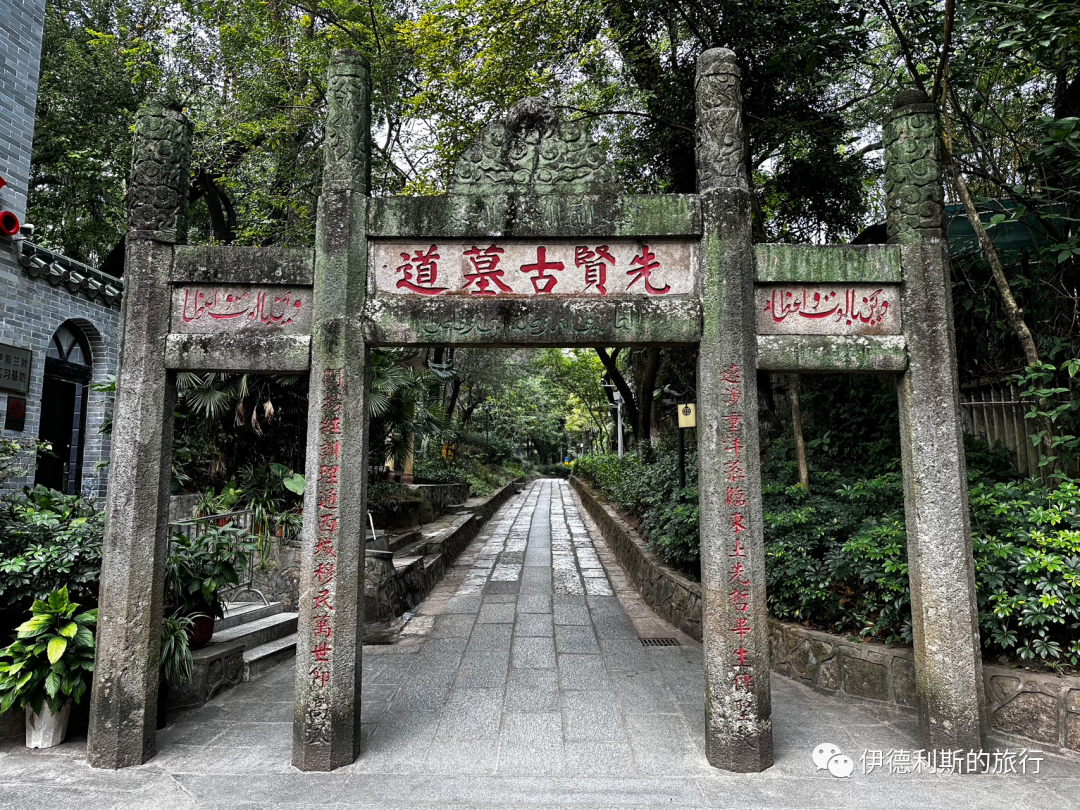
Passing through the stone archway, you can see the 'Proclamation No. 5 of the Guangdong Provincial Government' written by Governor Liao Zhongkai in 1924, which records that he sent people to survey the boundaries of the 'Muslim Public Cemetery' at Guihuagang and set up stone markers to protect the cemetery from encroachment.
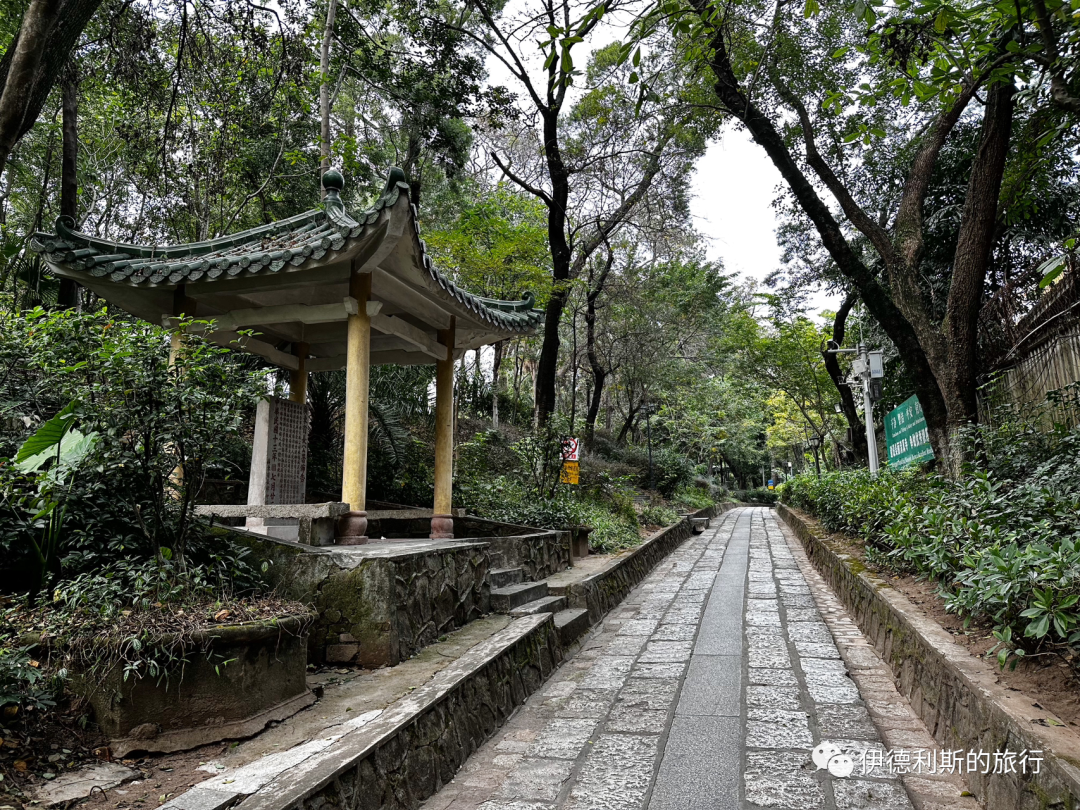
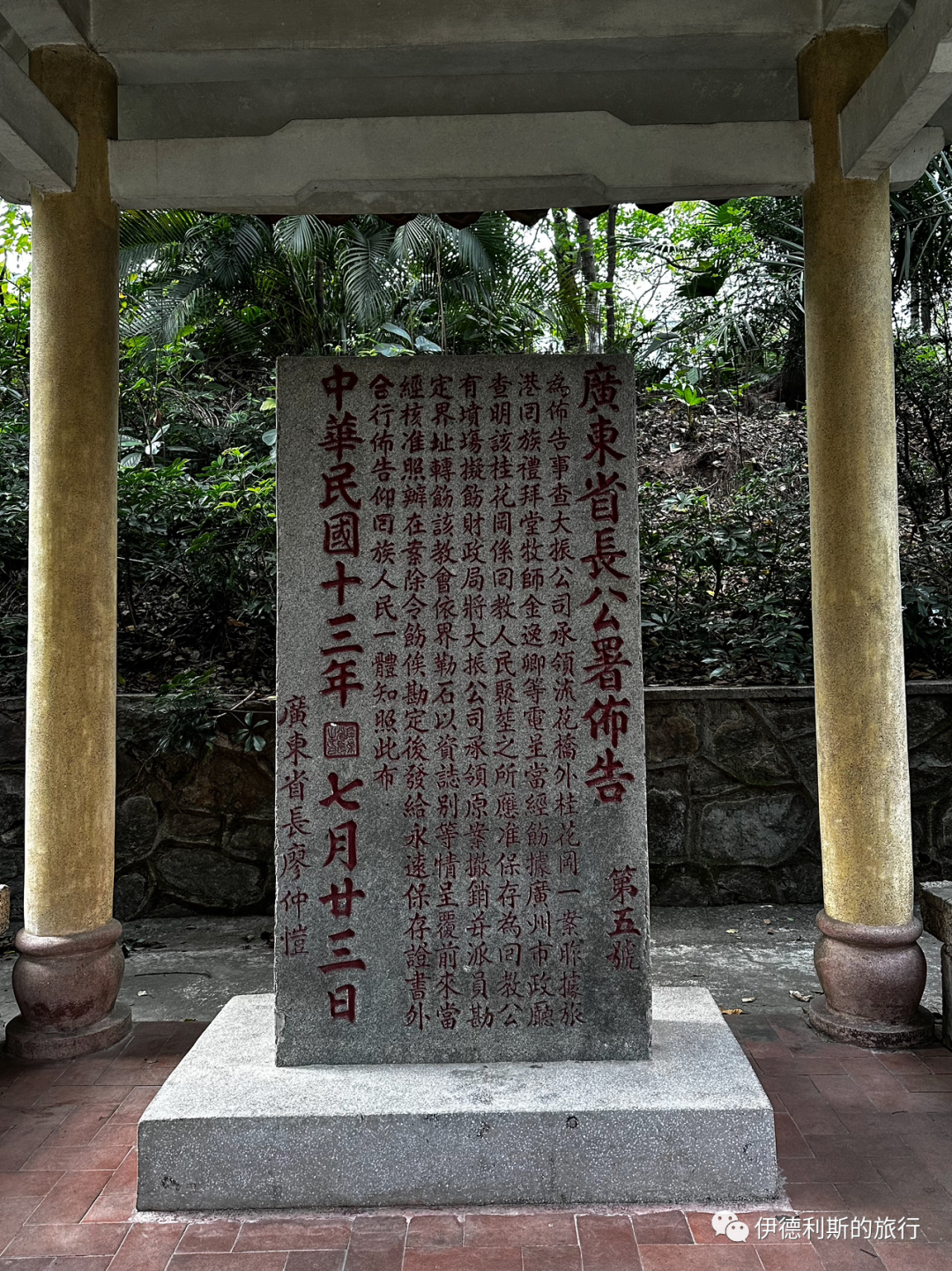
South Courtyard of the cemetery.
Continuing along the tomb path, you arrive at the cemetery of the Ancient Tombs of the Worthies. The cemetery is surrounded by a blue brick wall. The main gate is inscribed with Ancient Tomb of the Muslim Worthies (Qingzhen Xianxian Gumu). On the back, there are plaques donated by the congregation of the Huaisheng Mosque in Guangzhou, dating back to the first year of the Xuantong reign (1909) and the second year of the Xuantong reign (1910). These plaques feature the Islamic declaration of faith and the phrase Goodness has its reward.
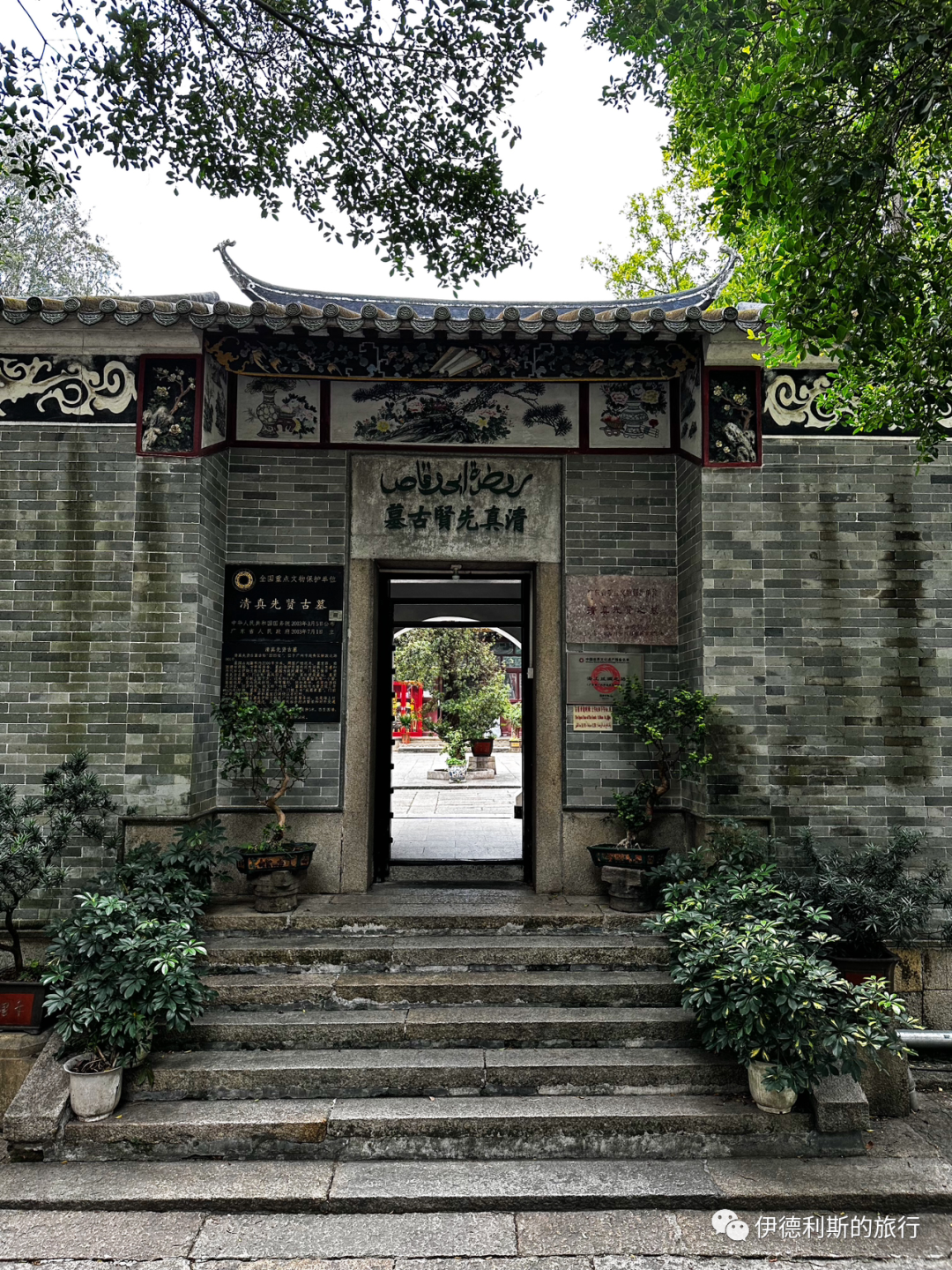
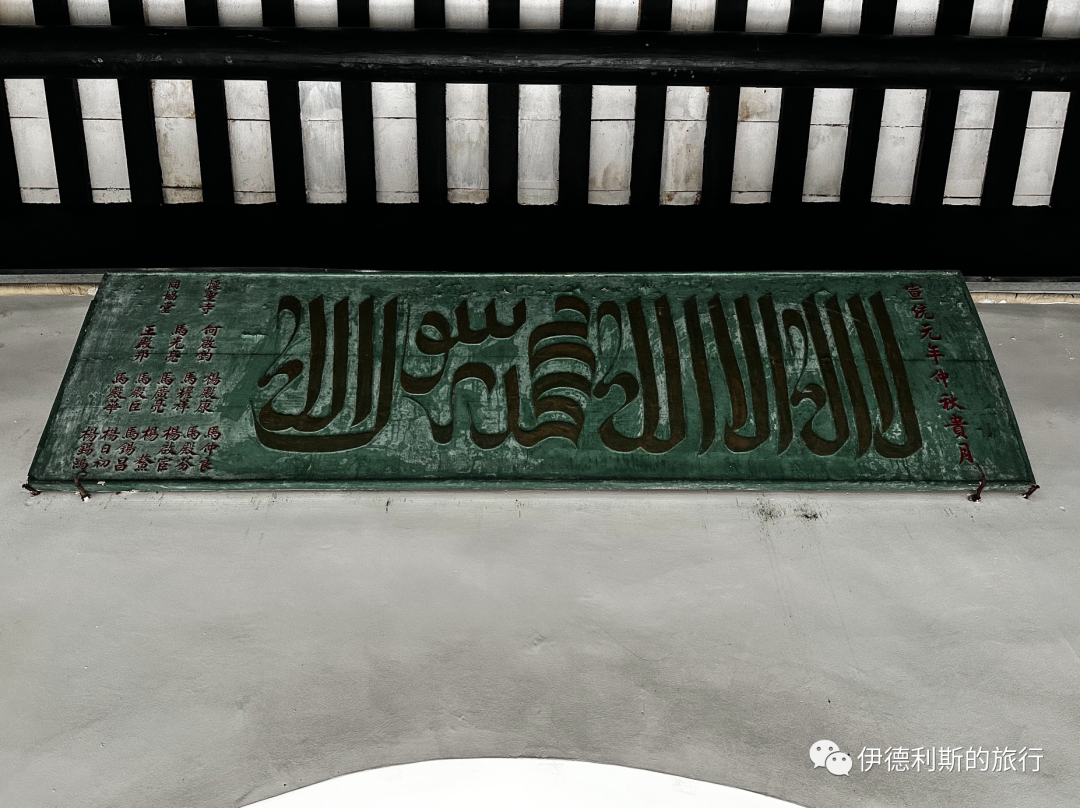
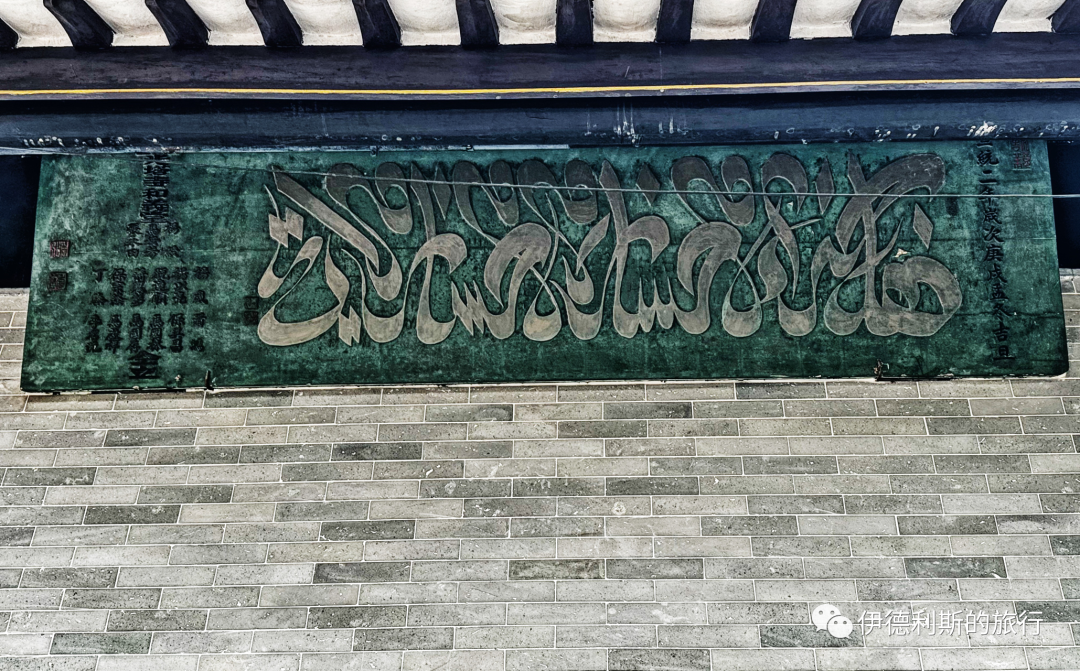
The cemetery is divided into north and south courtyards. The south courtyard includes a reception room, a lounge, a water room, and a women's prayer hall. In the center stands a square pavilion decorated with many plaques and couplets. The courtyard also houses the Worthies' Well (Xianxian Jing), which provides sweet water.
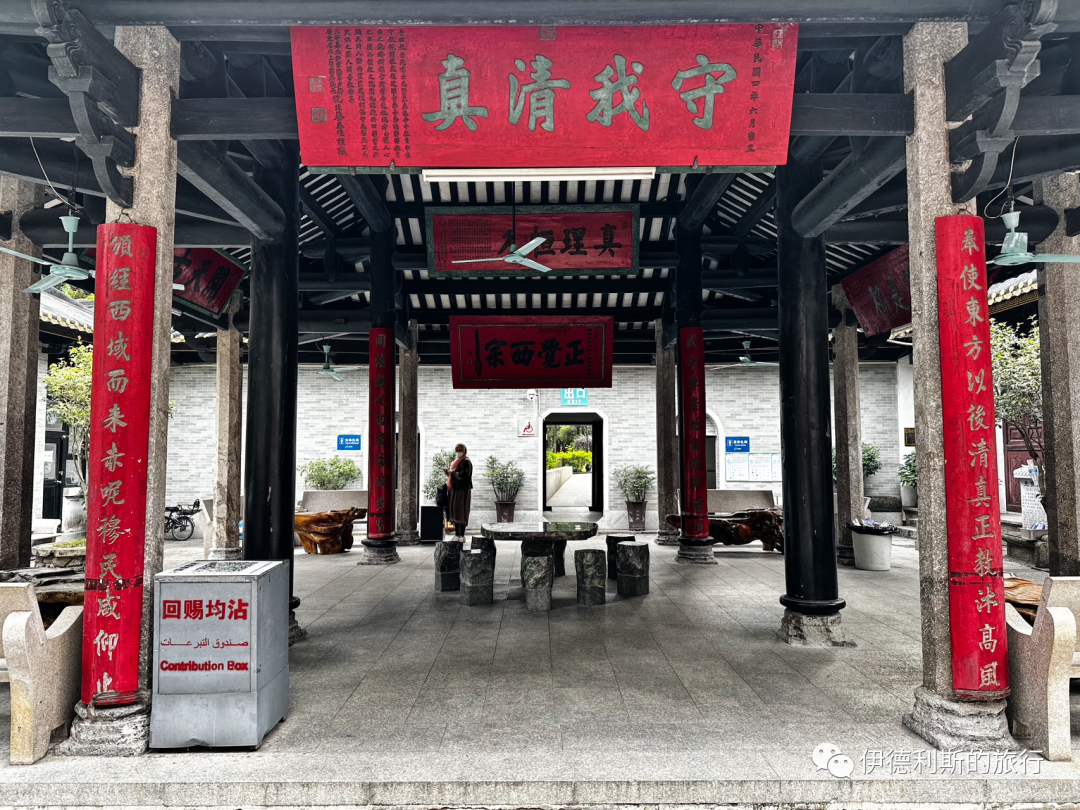
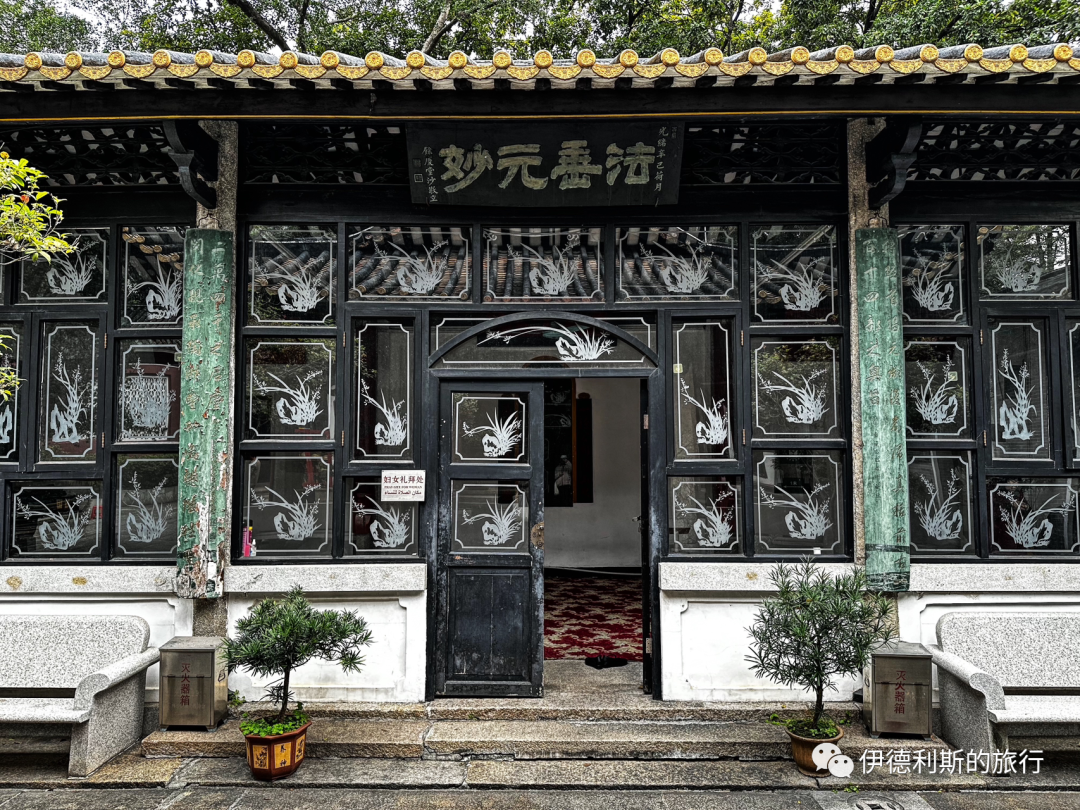
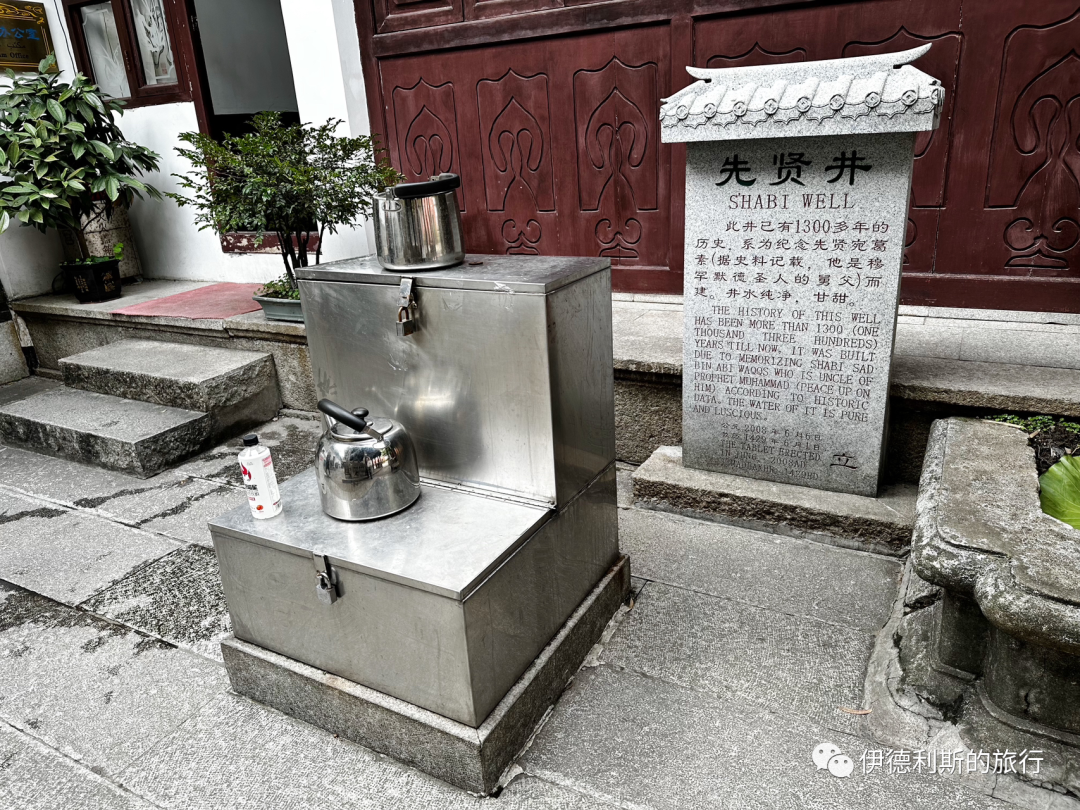
Some plaques and couplets in the south courtyard:
In the tenth year of the Jiaqing reign (1805), Xu Wenmo, a military official holding the title of Jiyong Baturu and commander of the Guangdong Gao-Lian-Luo region, donated the plaque inscribed with True Enlightenment of the Western School (Zhengjue Xizong).
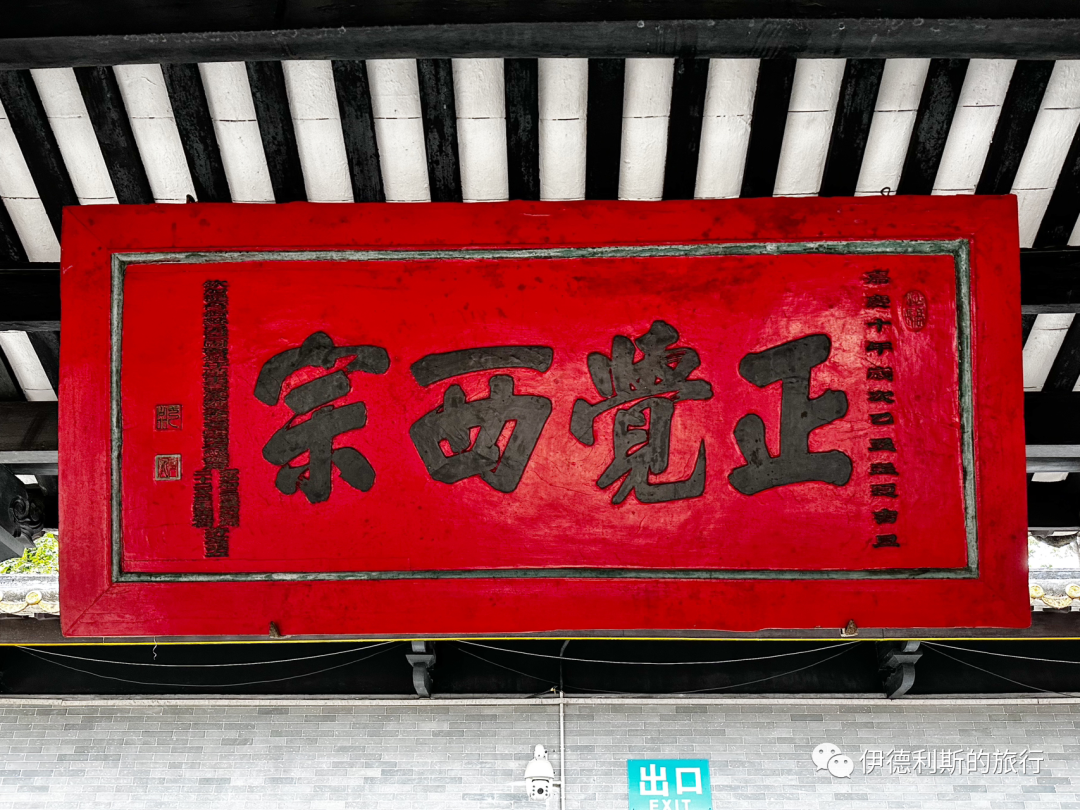
In 1913, a group of people donated the plaque inscribed with Spreading the Faith (Chanyang Shilai), calligraphed by Ma Yongkuan.
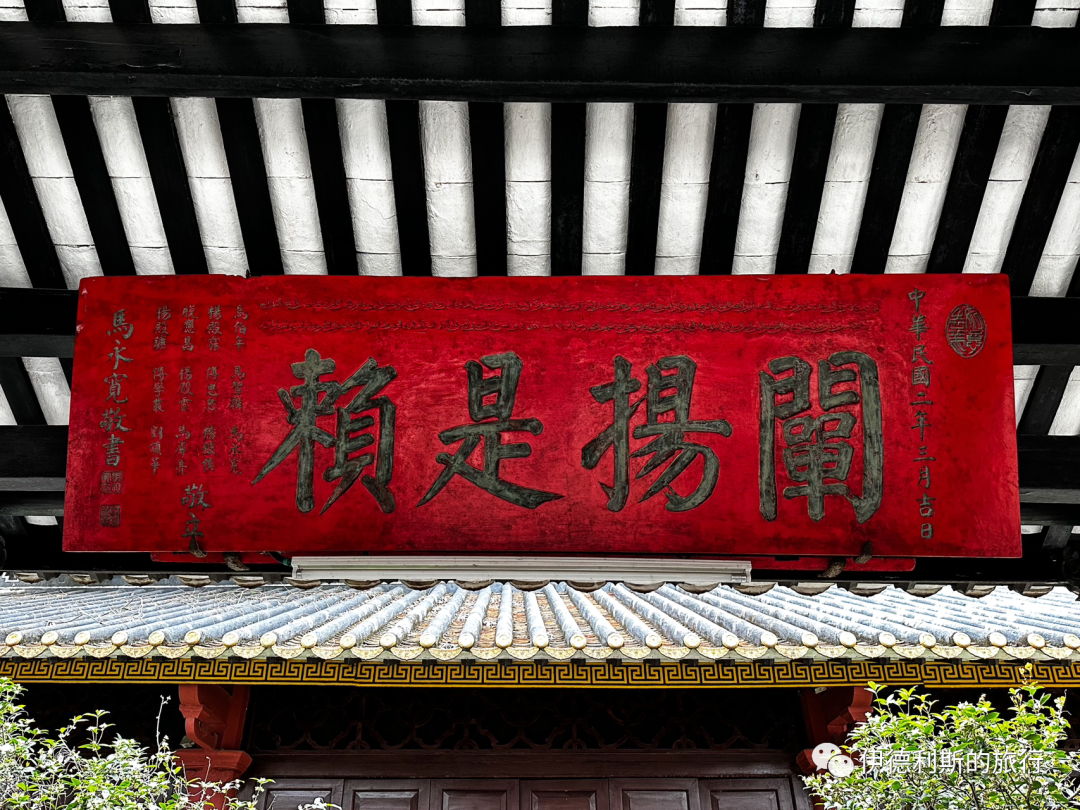
In 1924, a group of people donated the plaque inscribed with Ancient Faith that Opened the Heavens (Kaitian Gujiao).
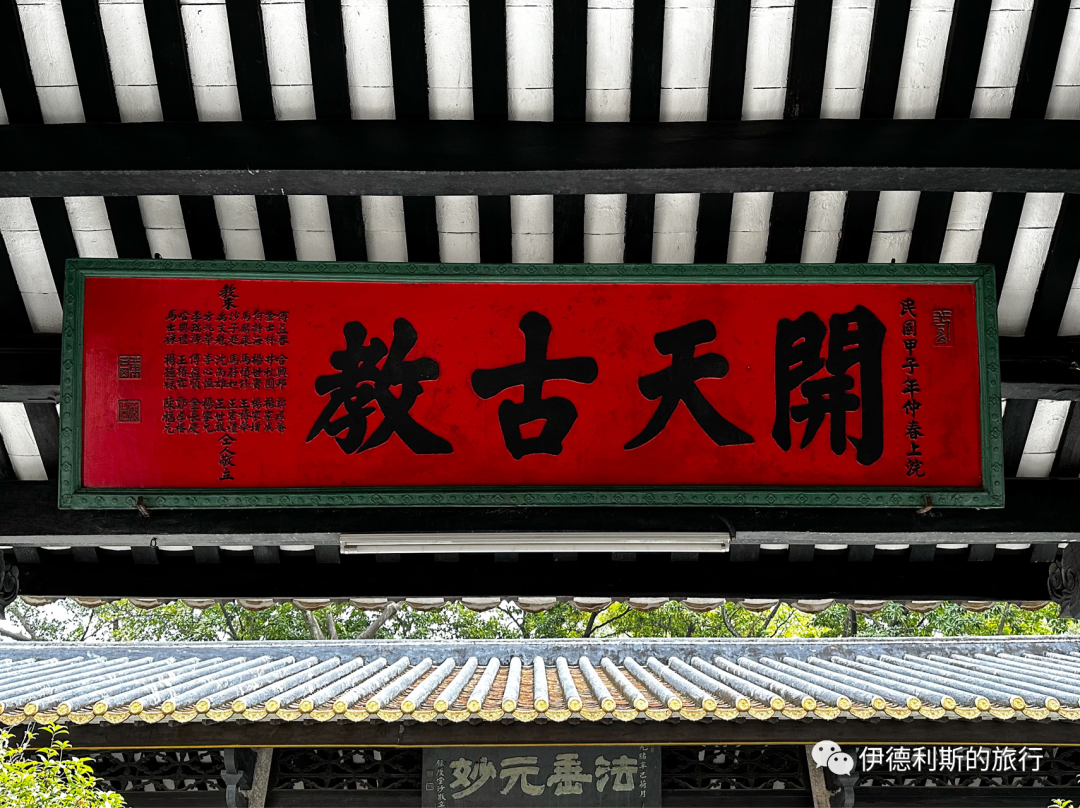
A memorial archway separates the north and south courtyards. It features a stone plaque from the first year of the Yongzheng reign (1723) inscribed with High Virtue to be Admired (Gaofeng Yangzhi).
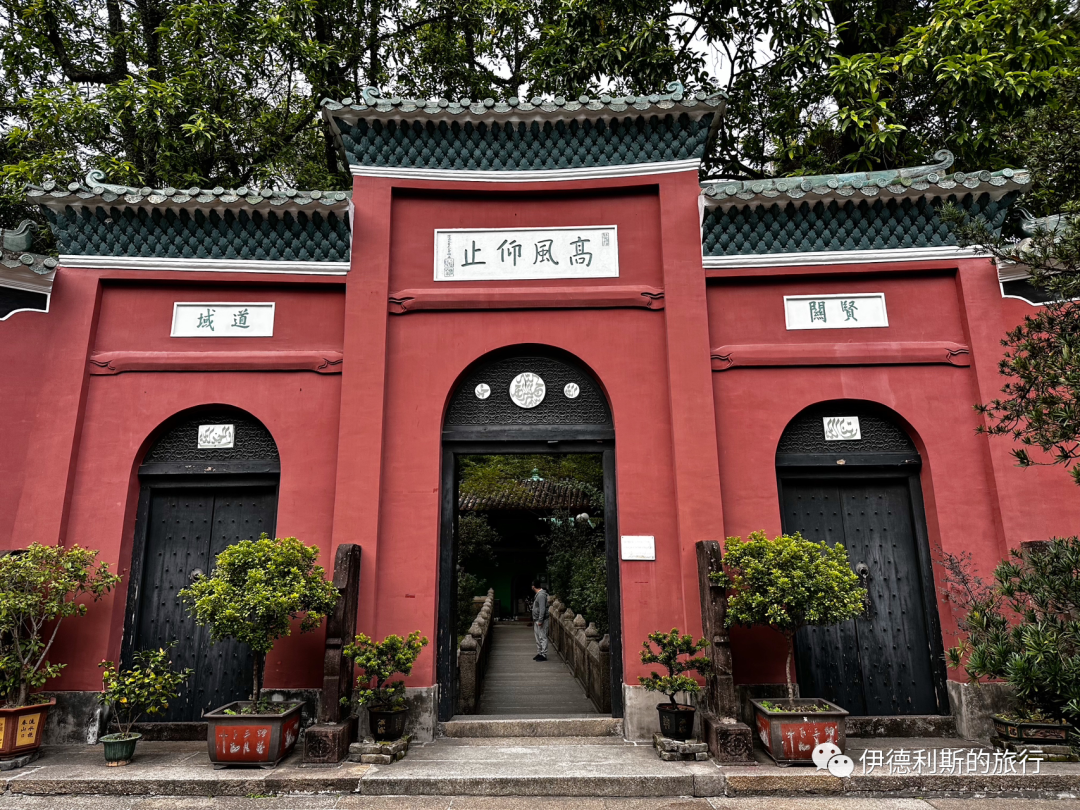
The north courtyard of the cemetery.
Passing through the archway, you find a granite path with stone railings, rebuilt in the Wuxu year of the Daoguang reign (1838) by the Baodunhe Hall. The Baodunhe Hall was a prominent family of Hui Muslims in Guangzhou. The sixth-generation member, Bao Antai, served as a postal official in Guangdong during the Daoguang reign. The ancestral graves of the Baodunhe Hall are also located on the north side of the Ancient Tomb of the Muslim Worthies, which I will introduce later in this article.
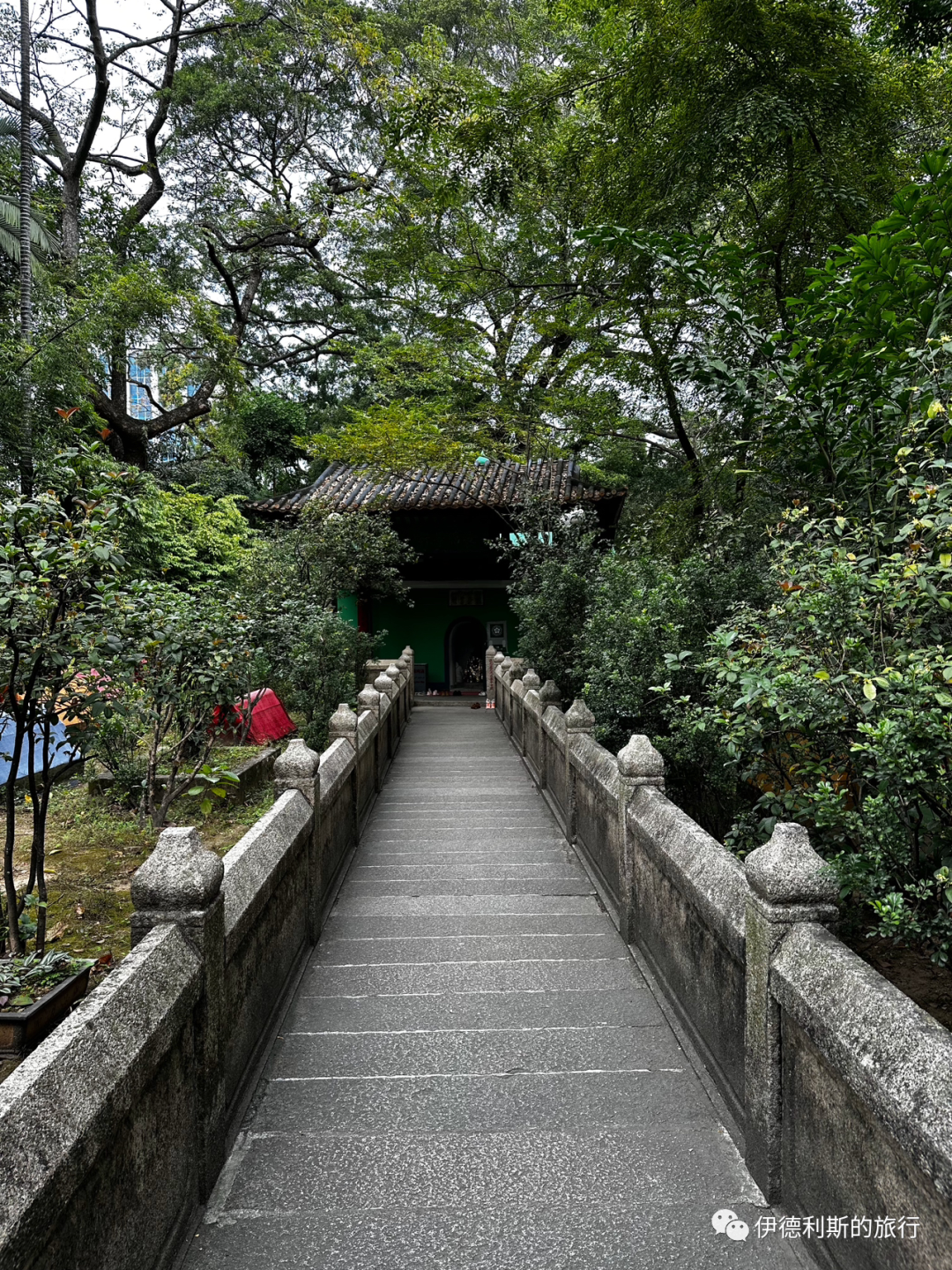
At the end of the path lies the tomb chamber of Waqqas. The tomb chamber is a domed building with a porch added later. The two outer stone pillars are carved with a couplet from the Jiawu year of the Guangxi reign (1894), donated by Cai Jinzhang, the Guangdong land forces commander: Spreading the holy teachings in the southern land, passed down through generations, thirty volumes strictly following the divine instructions; Establishing a virtuous reputation in the eastern Guangdong, standing tall and independent, for thousands of years all look up to this model.
The two inner stone pillars feature a wooden couplet carved in the eleventh year of the Jiaqing reign (1806) by Hu Changqing, a scholar from Guilin: Receiving the holy teachings from the West, the source of the heart inherited for fifty generations; Serving the heavenly scriptures in the eastern land, the tradition remains for thousands of years.
In the center hangs a plaque from the Yiwei year of the Guangxi reign (1895), donated by Xu Yingzhong, the imam of Huaisheng Mosque, and others, inscribed with Long-lasting Respect and Far-reaching Journey (Changzhan Yuanxing).
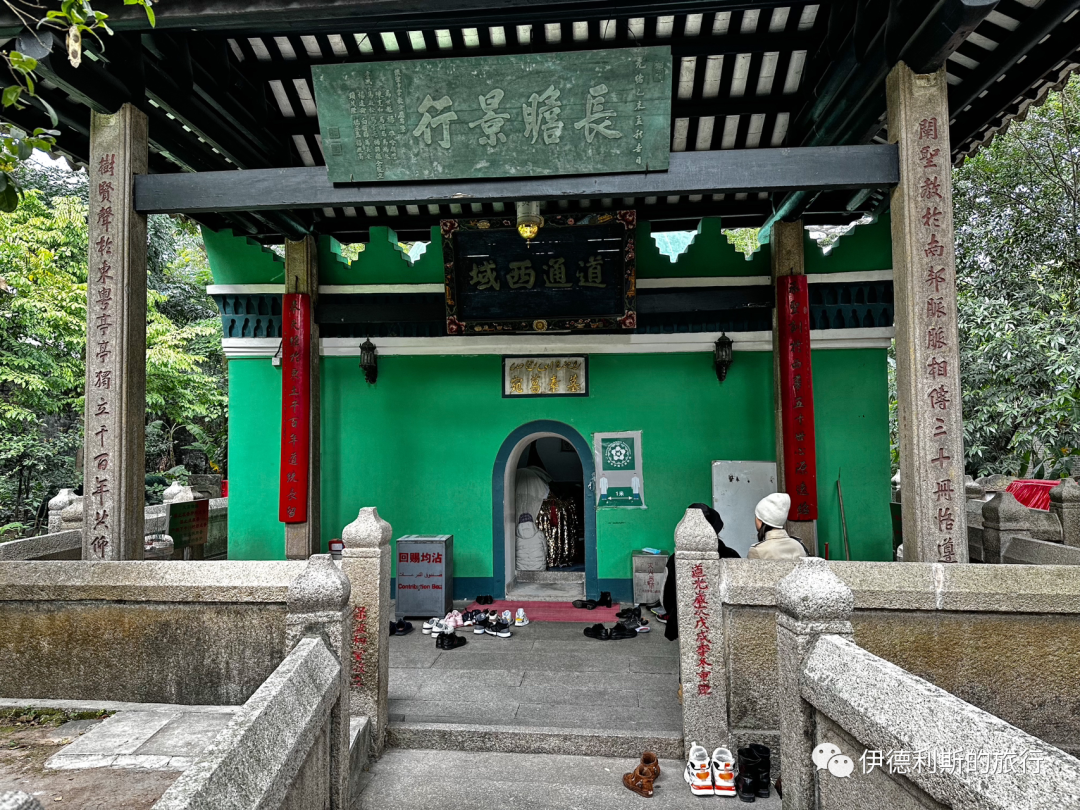
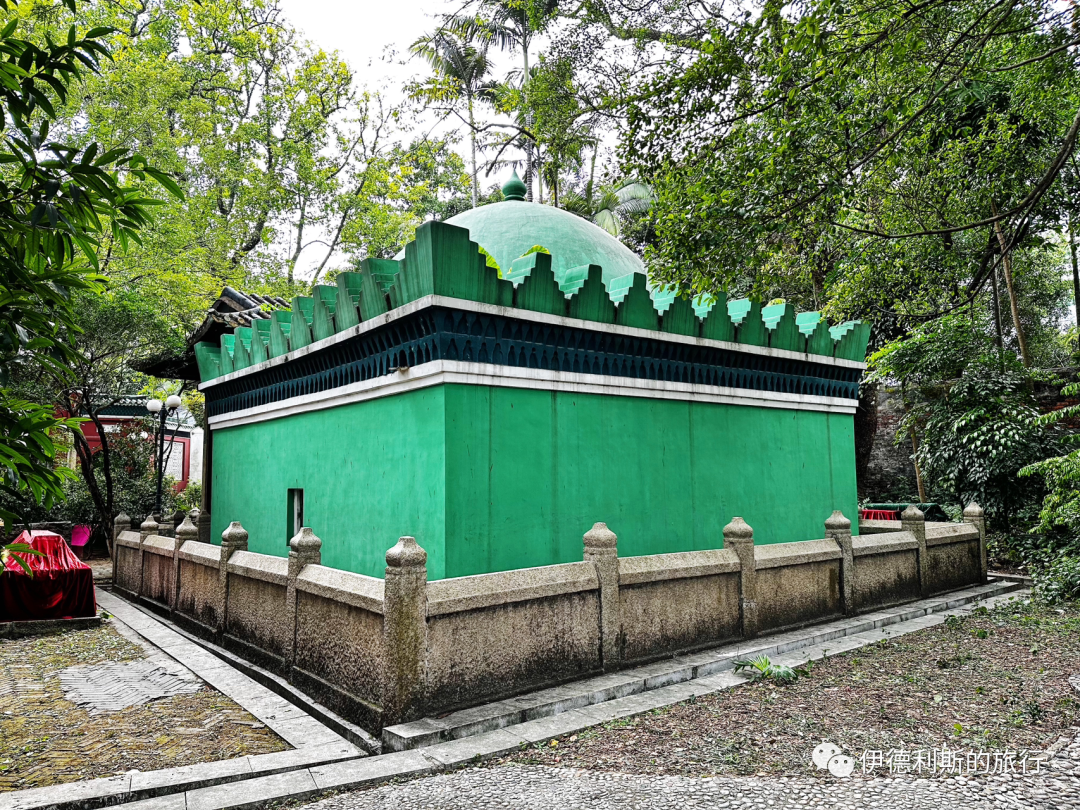
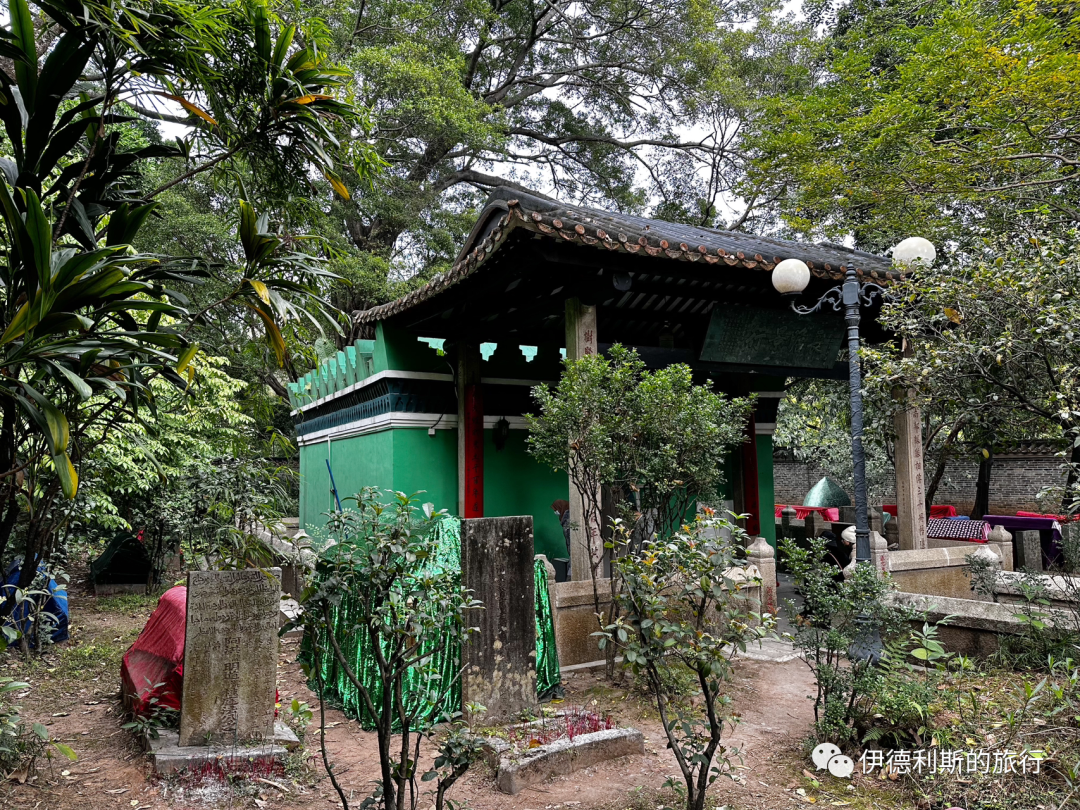
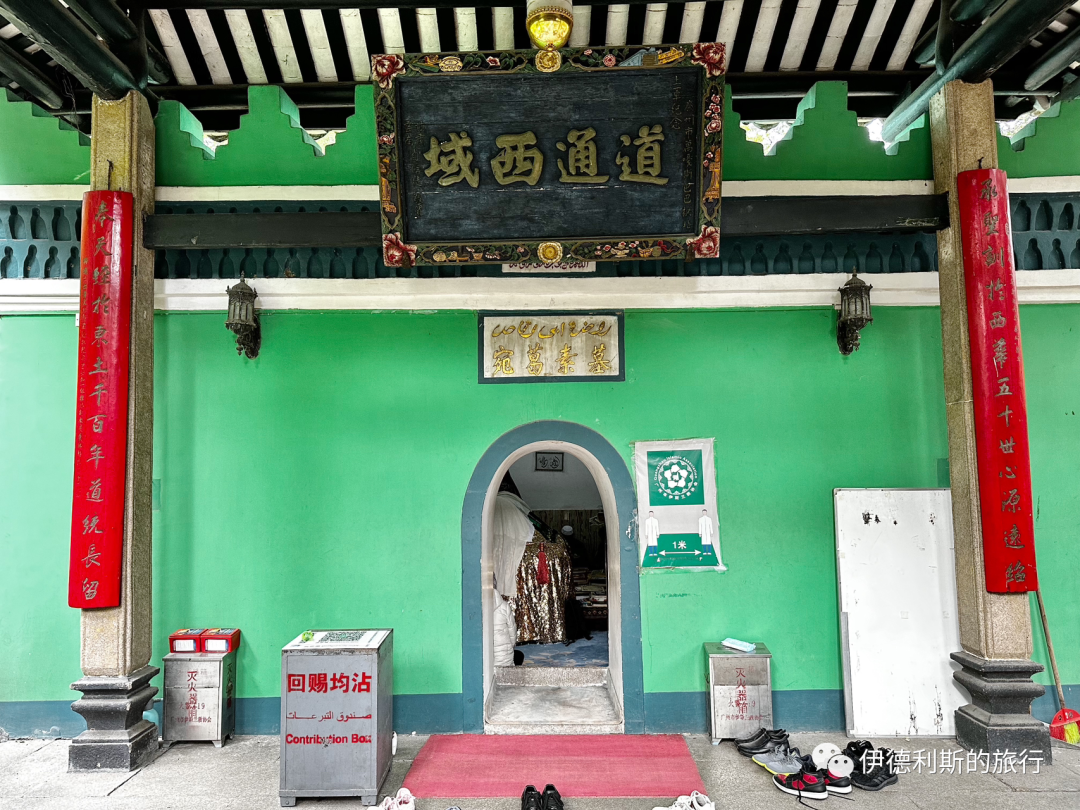
Inside the tomb chamber is a dome built with corbelled masonry. Because it creates a loud echo when reciting the Quran inside, it is also called the Echoing Tomb (Xiangfen). Under the dome lies the tombstone of the worthy Waqqas, covered with multiple layers of burial cloths placed by visitors.
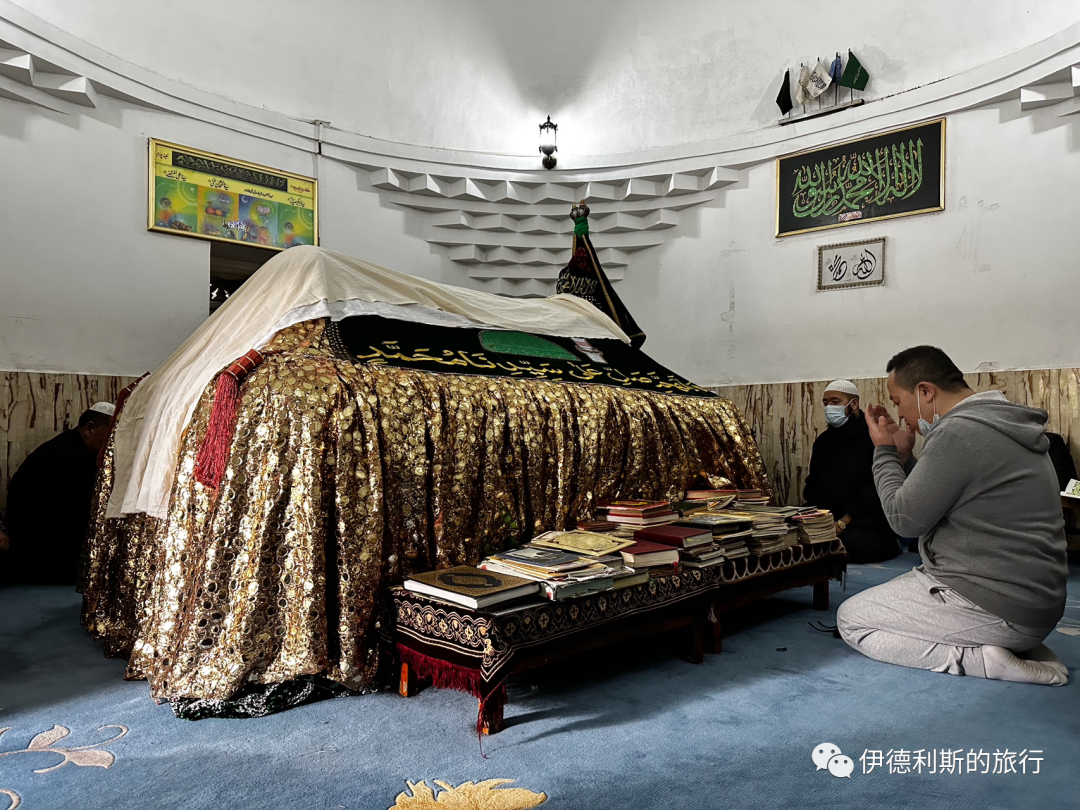
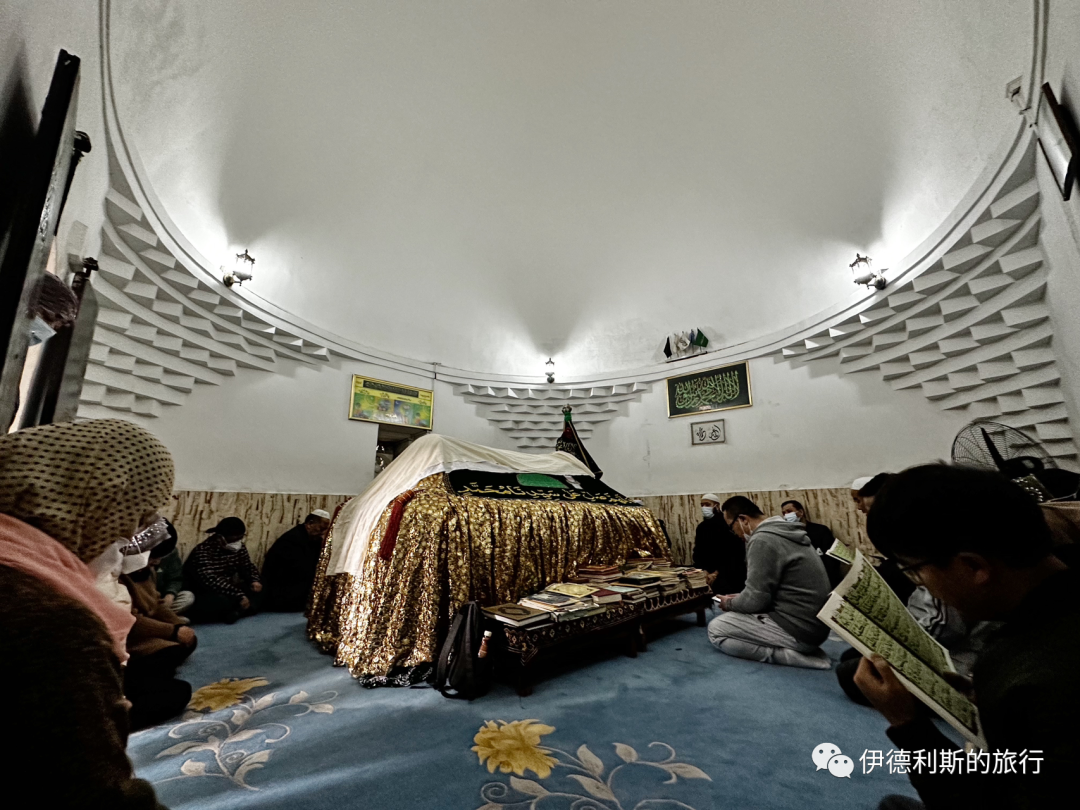
Graves around the tomb chamber.
There are many Muslim graves surrounding the tomb chamber.
The tombstone of the Turkish Haji Mekemede, carved in the sixteenth year of the Qianlong reign (1751). The inscription records that he was from Rome (the Anatolia region). He traveled to Guangzhou in 1749 specifically to pay respects to the worthy Waqqas, stayed at the Da'erkaha Mosque, and passed away two years later. It is currently impossible to verify exactly which mosque the Da'erkaha Mosque refers to.
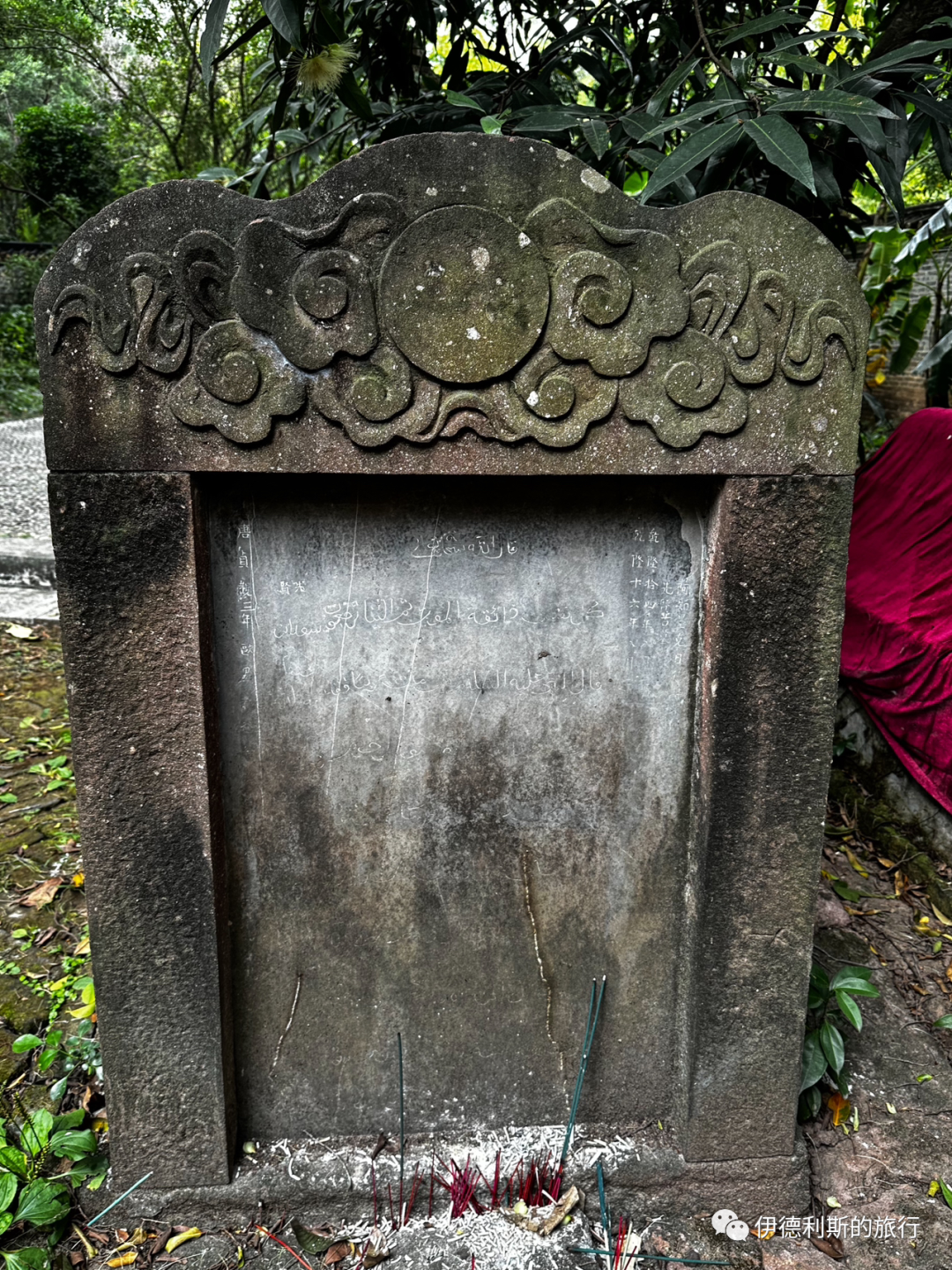
The tombstone of Yang Wendeng, carved in the twenty-fifth year of the Qianlong reign (1757), written by his close friend Zhamalunding. The inscription records that Yang Wendeng, whose religious name was De-ya-ao-ding, was a scholar of Islamic law who lived to be 87 years old.
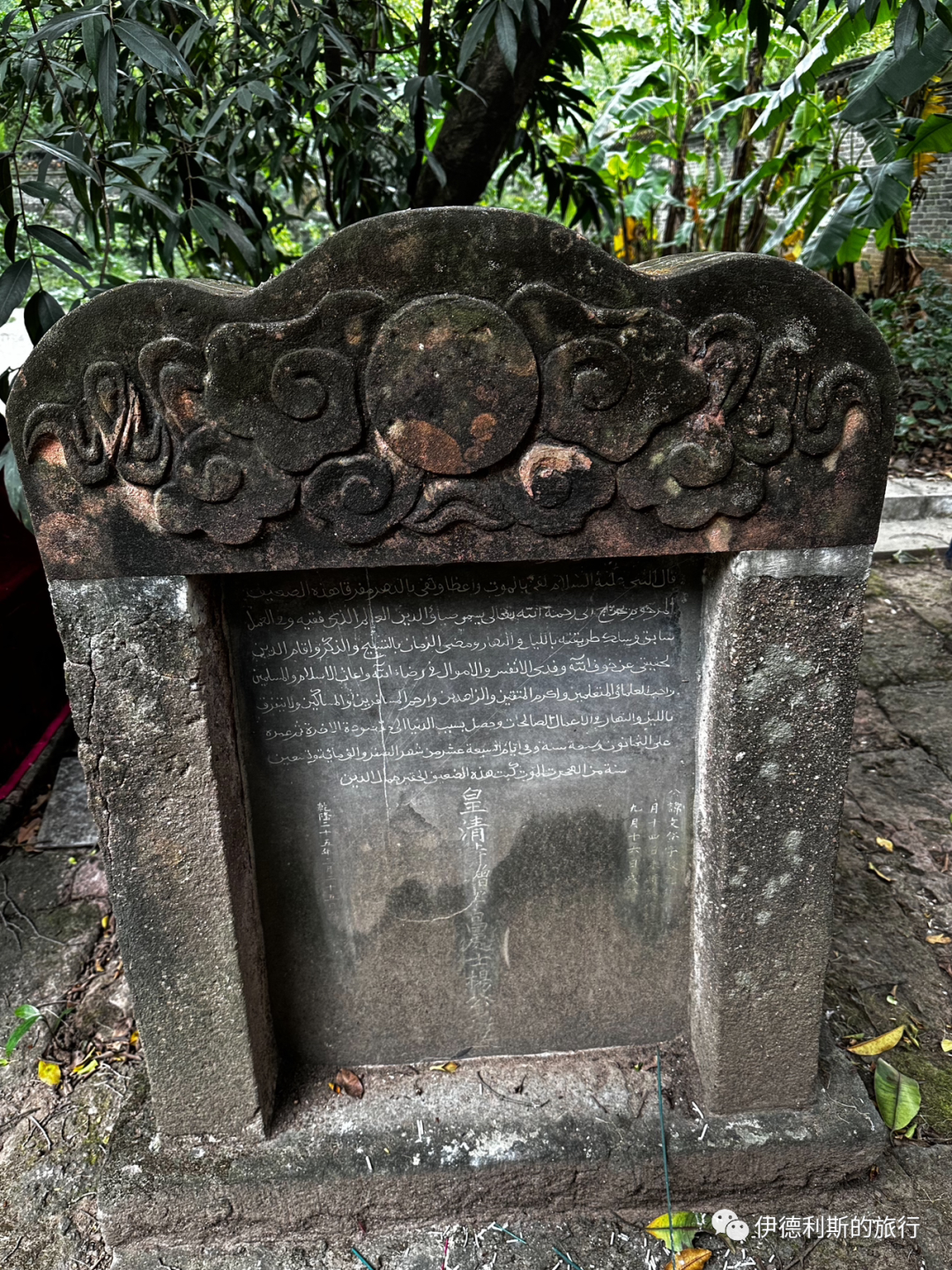
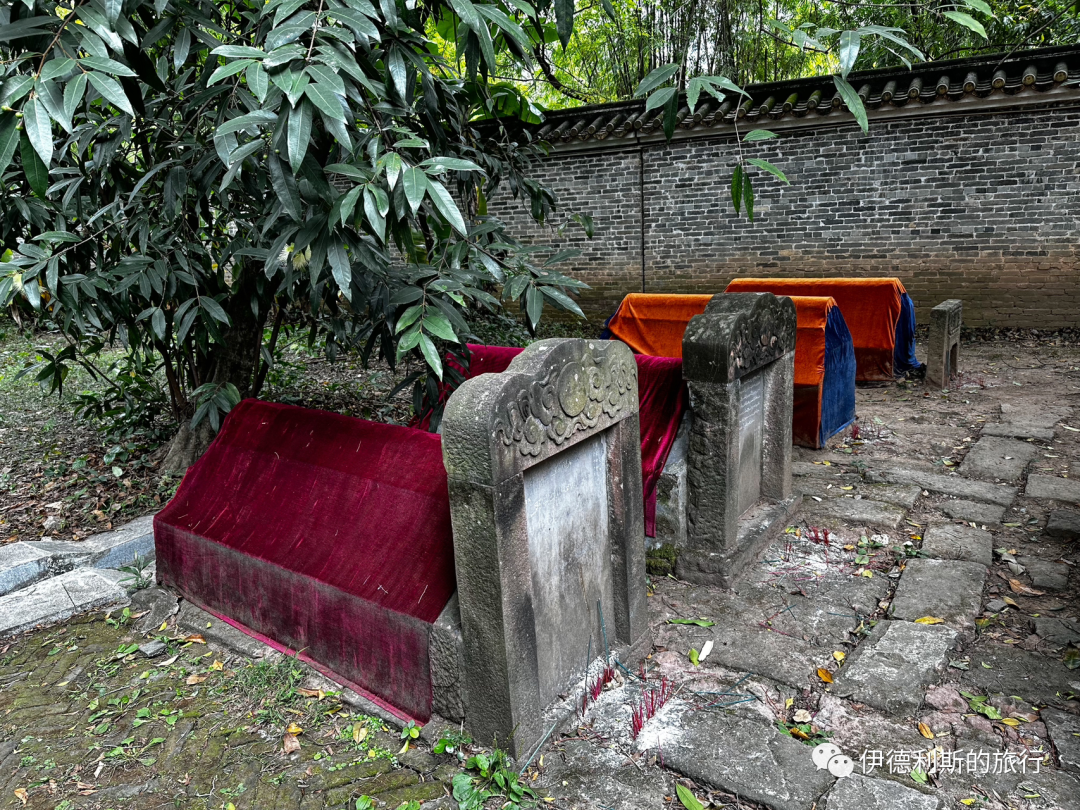
The tombstone of the forty worthies from Medina, re-carved in the seventh year of the Jiaqing reign (1802). The inscription records that the forty worthies from Medina were sent by the Prophet Muhammad to accompany Waqqas to China to spread the faith. During a congregational prayer, they were all killed by bandits and became martyrs (shahid).
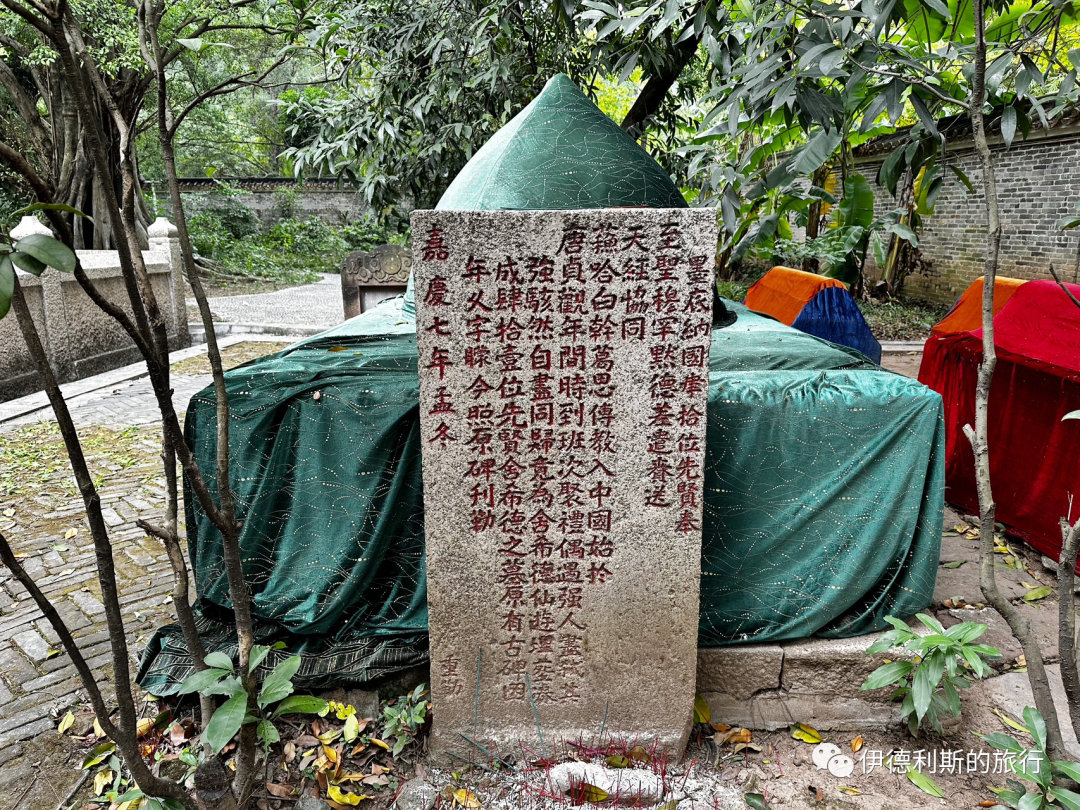
The tombstone of General Zhang Delu, carved in the twelfth year of the Guangxi reign (1886), written by Haji Salih. According to the inscription, General Zhang Delu, whose religious name was Du-wu-da Ge-ma-lun-ding, was originally from Tianjin. He served as a commander in Gaozhou and Chaozhou in Guangdong, Guzhou in Guizhou, and Qiongzhou. He was highly respected and used his own money and effort to help mosques and schools. He passed away while in office at the age of 52.
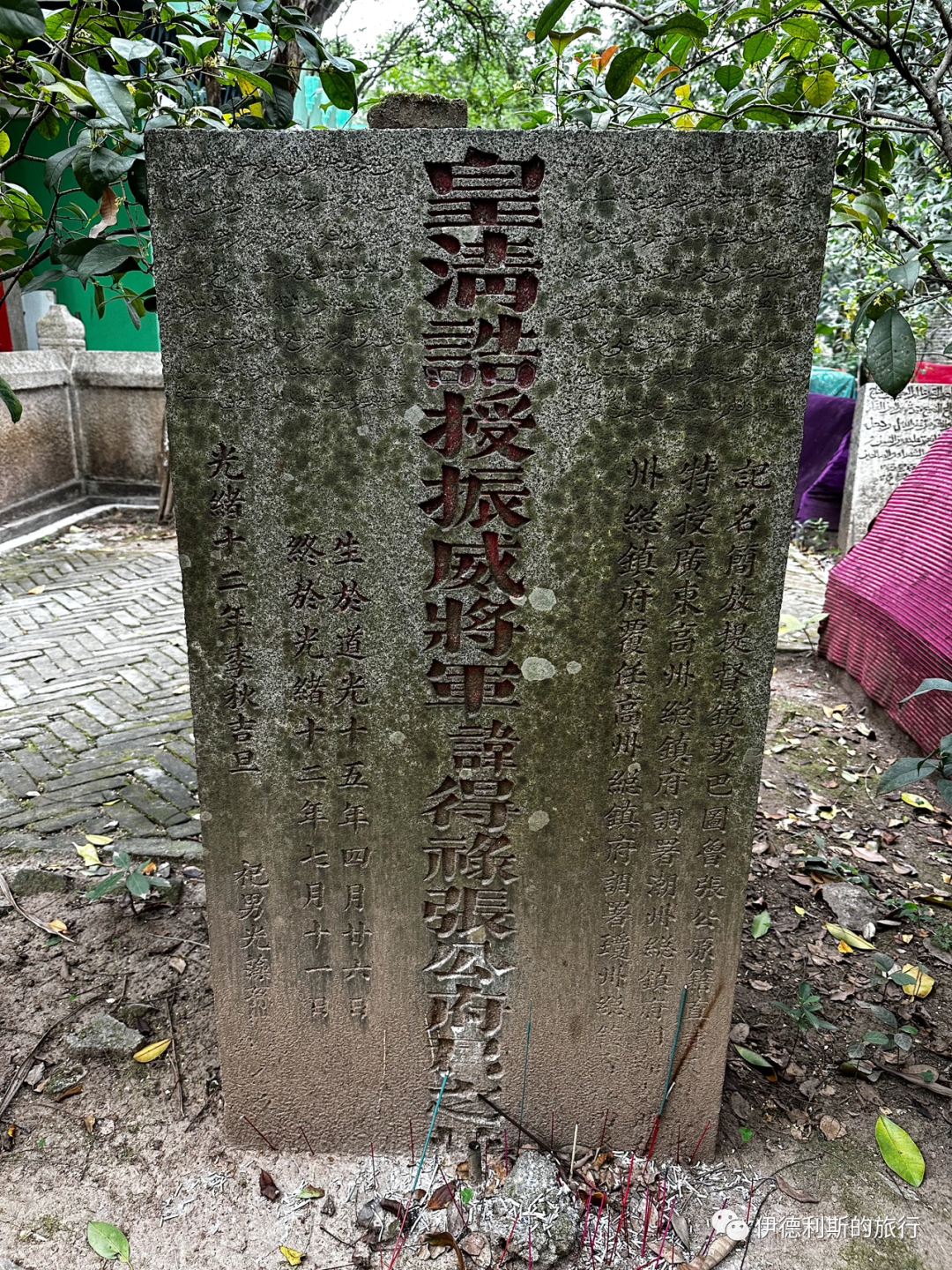
The tombstone of the worthy Erbudanglexi (Abdullah), carved in the fifteenth year of the Guangxi reign (1889) and the sixteenth year of the Guangxi reign (1890). The inscription records that the person buried here was named Abdullah ibn Shaaban. He was from Mecca and was an elder of the Shadhili school. He arrived in Guangzhou by boat in 1886. He preached in the provinces of Jiangnan, Henan, Shaanxi, and Gansu. Two years later, he returned to Guangzhou to continue teaching students. He passed away in 1889 at the age of 46 due to illness from overwork.
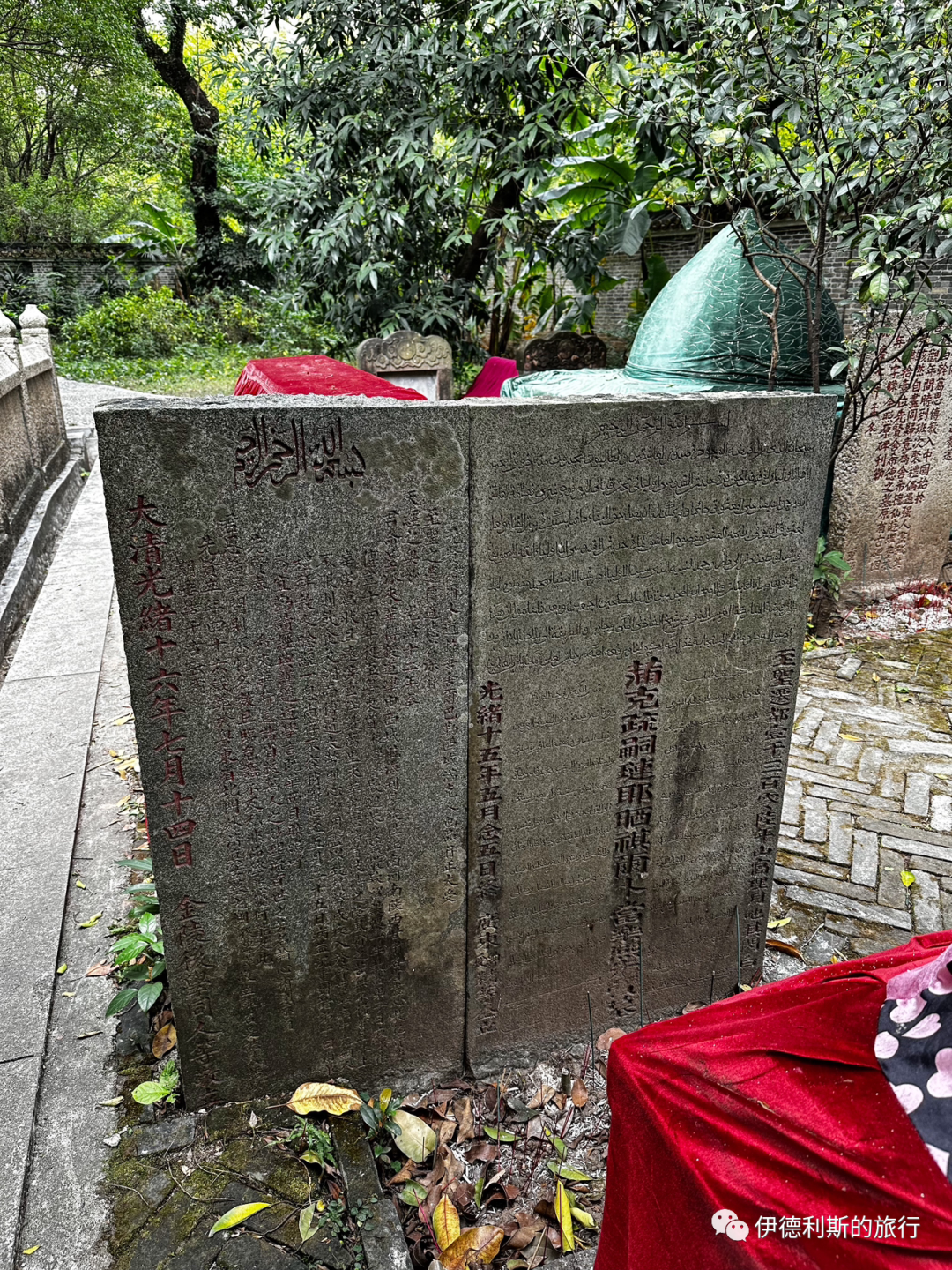
The tombstone of General Cai Jinzhang, who held the title of Jianwei General, was carved in the 20th year of the Guangxu reign (1894). Cai Jinzhang was from Shouzhou, Anhui. He served as a regional commander for the Guangdong and Guangxi provinces, a land force commander in Guangdong, a regional commander in Guangxi, and a leader of various defense battalions in Guangxi. He also commanded all military forces in Guangji and Guangsheng, Guangdong, and helped manage provincial military affairs.
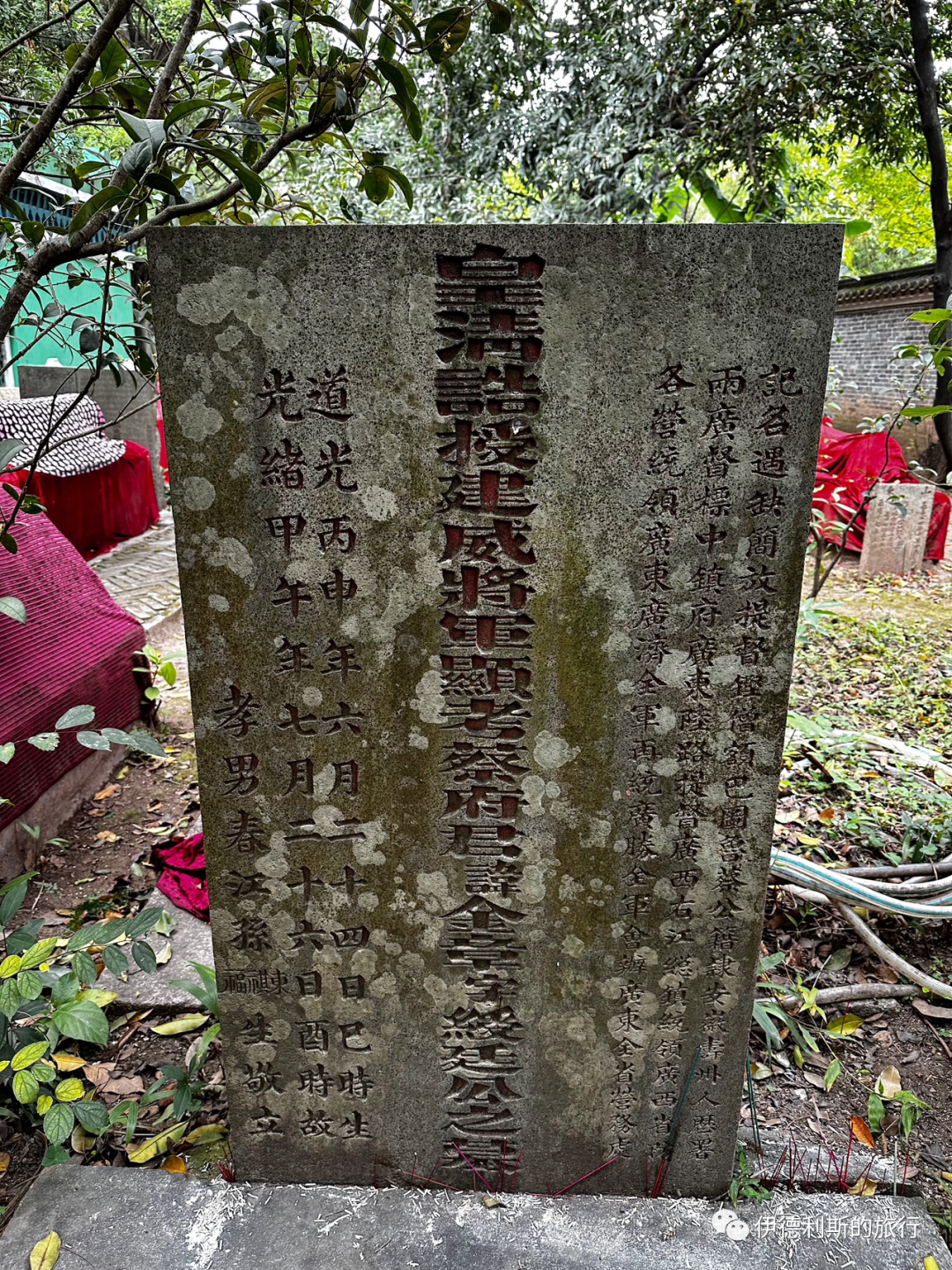
The tombstone of Haji Ma Xiaoxian was carved in the 25th year of the Guangxu reign (1899). Ma Xiaoxian was from Hezhou, Gansu. By age 24, he had finished studying 11 religious texts, which allowed him to wear the robes and lead the congregation as an imam. He came to Guangzhou to preach and passed away at the age of 85 in a school.
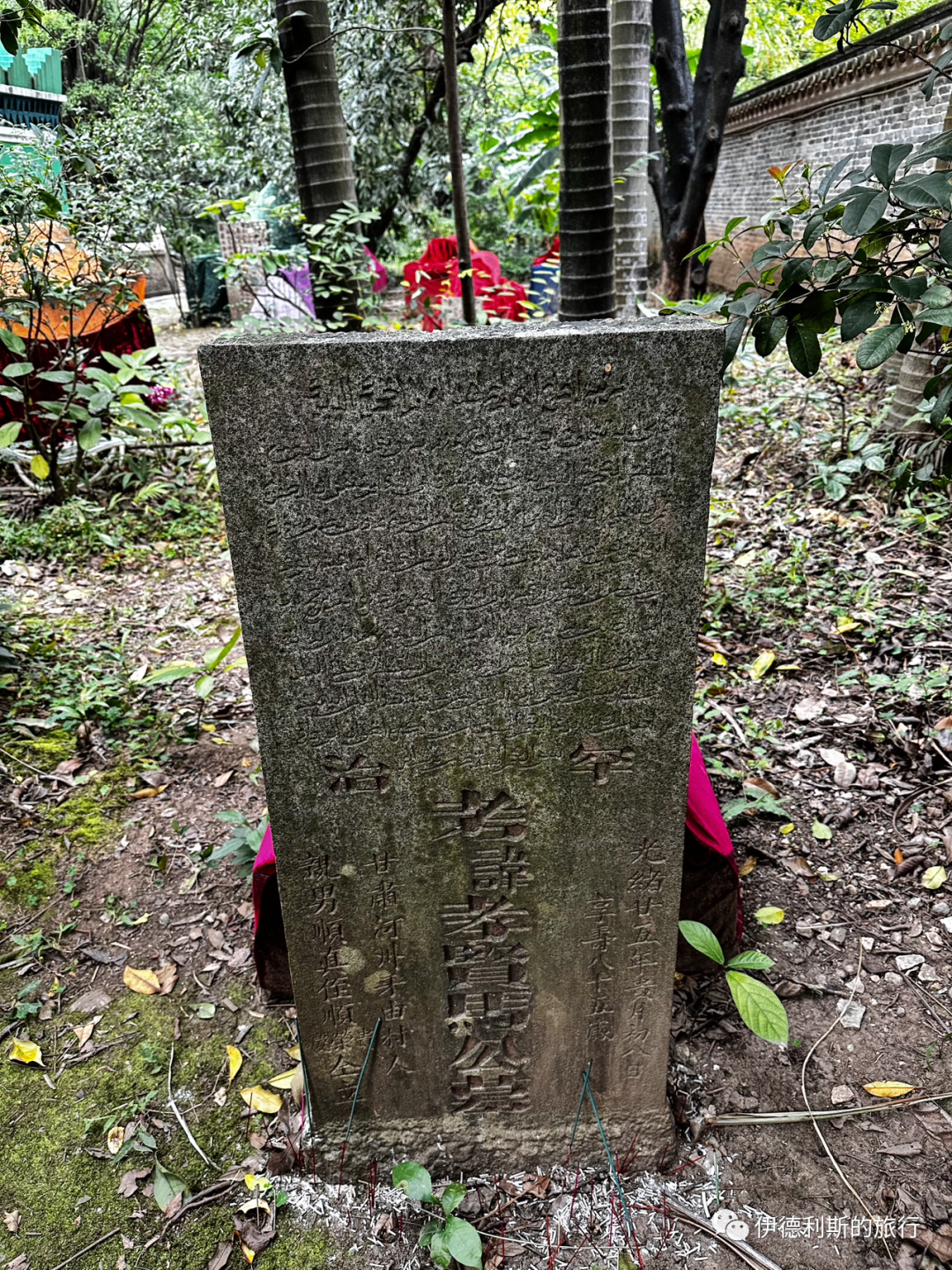
The tombstone of Haji Fa Mingdao, an imam, was carved in the third year of the Xuantong reign (1911). Imam Fa Mingdao, whose religious name was Muhammad Umar, was from Hezhou, Gansu. He studied and preached at the Haopan Mosque in Guangzhou and later passed away in the city.
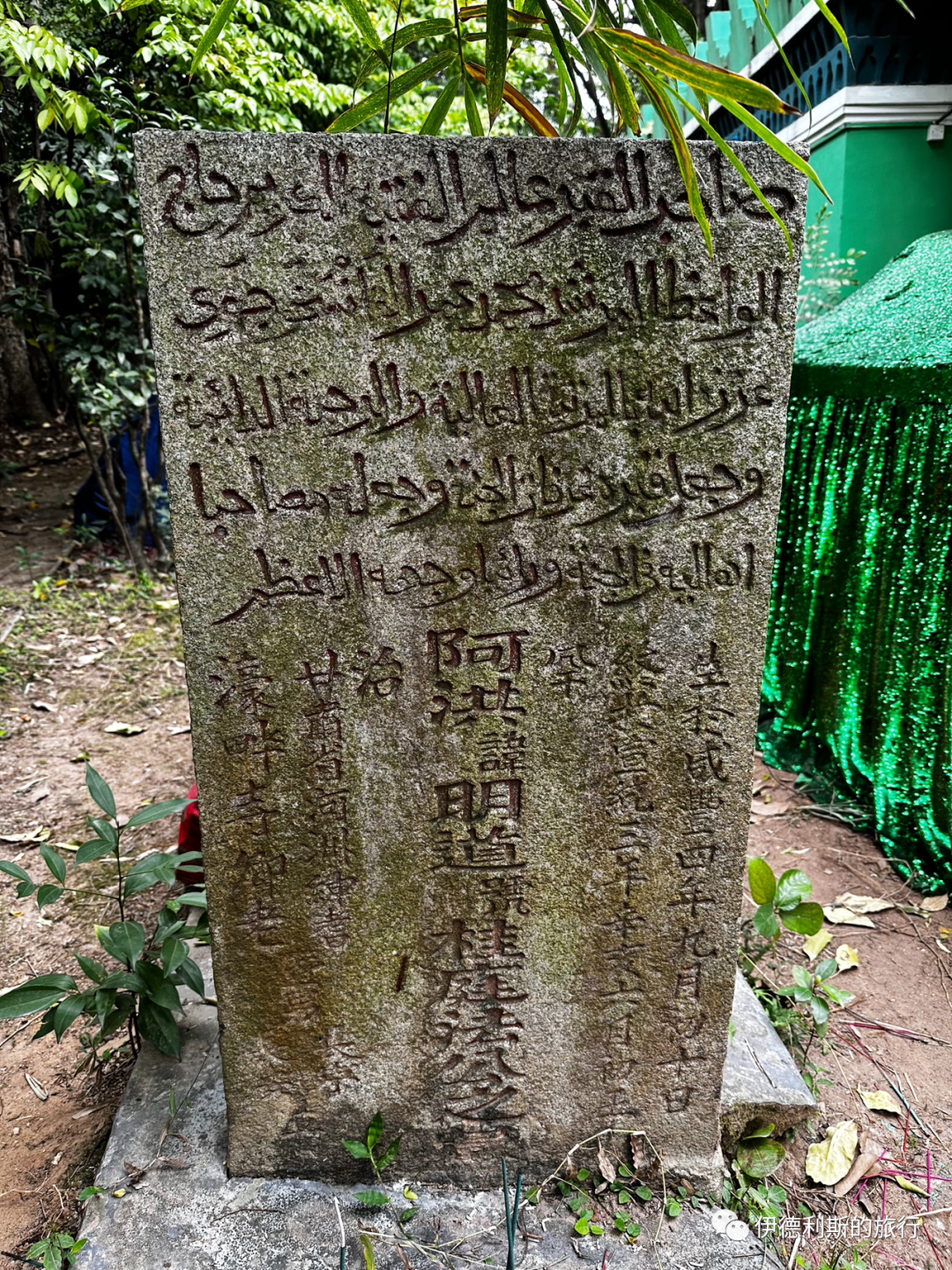
The tombstone of Haji Sheikh Zhang Jinxiu was carved in 1913. Zhang Jinxiu, whose religious name was Sahri Muhammad Shams al-Din, was from Hezhou, Gansu. He studied and preached in Guangzhou and eventually passed away there.
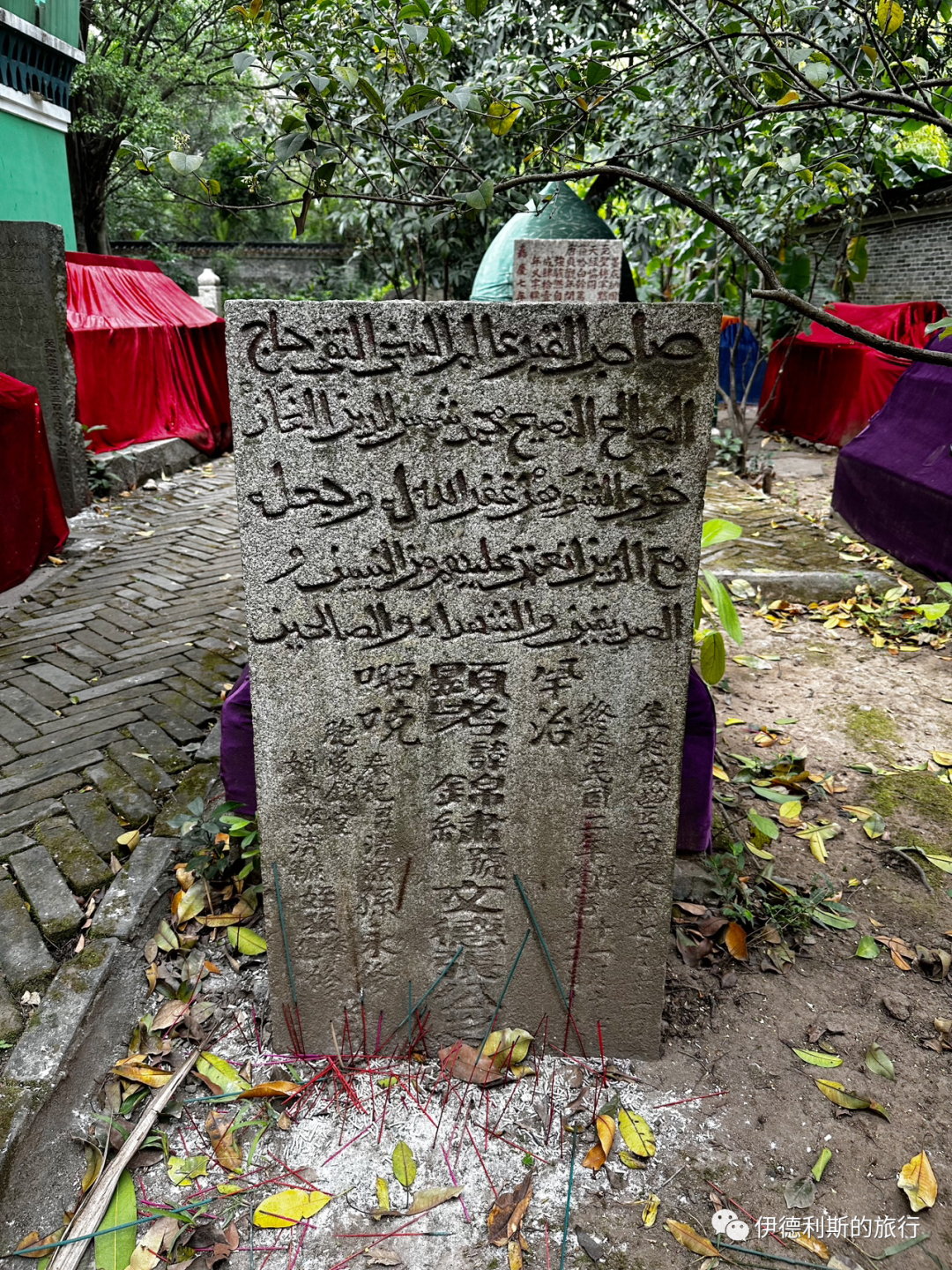
The tombstone of the elder imam Ma Yunting was carved in 1929. Ma Yunting was from Eshan County, Yunnan. His mother once ran a teacher training school for women in Guangzhou. He later came to Guangzhou to preach for 28 years, gained great respect, and passed away at age 80.
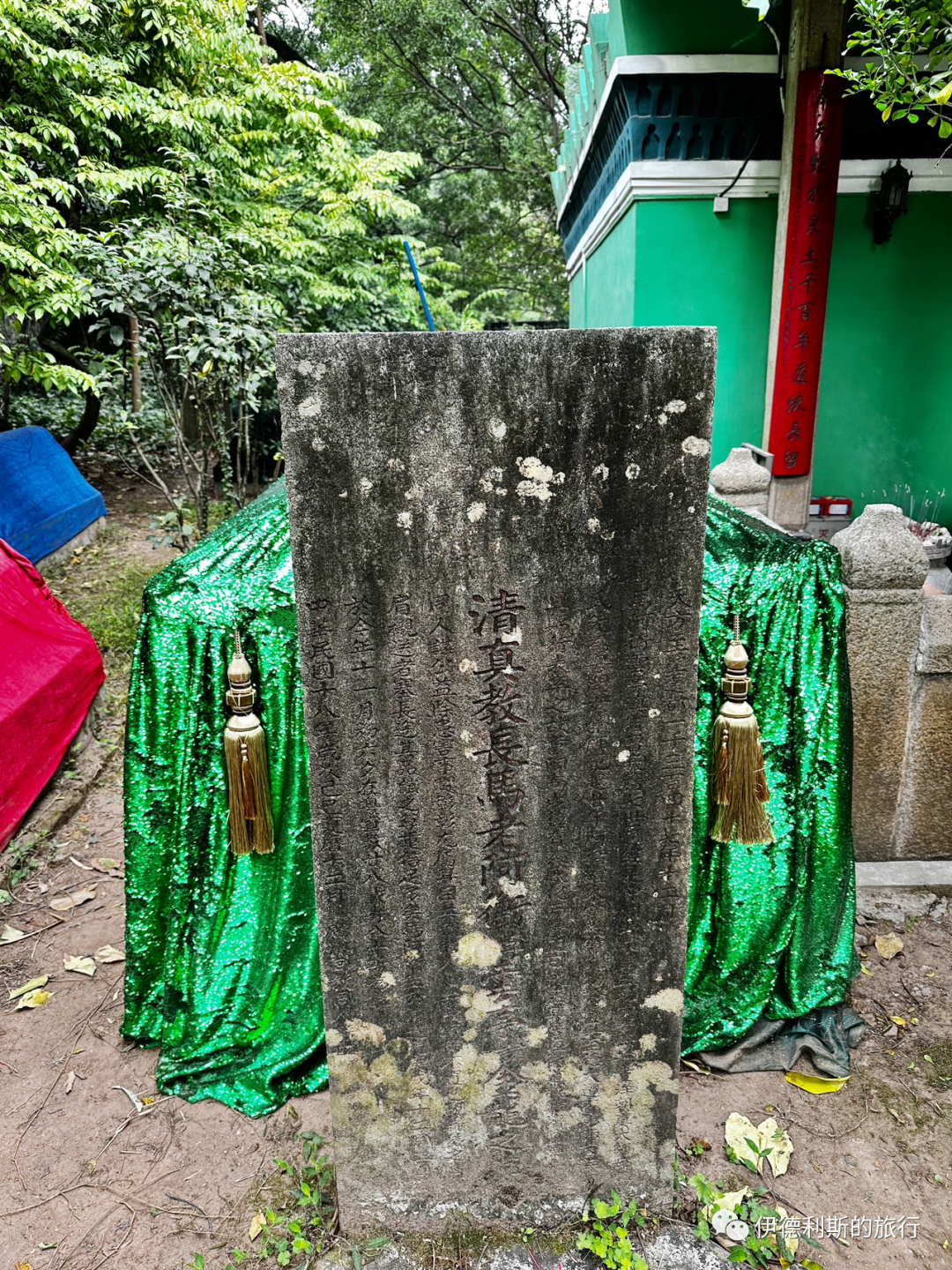
The tombstone of Ma Zhaofang was carved in the sixth year of the Daoguang reign (1826).
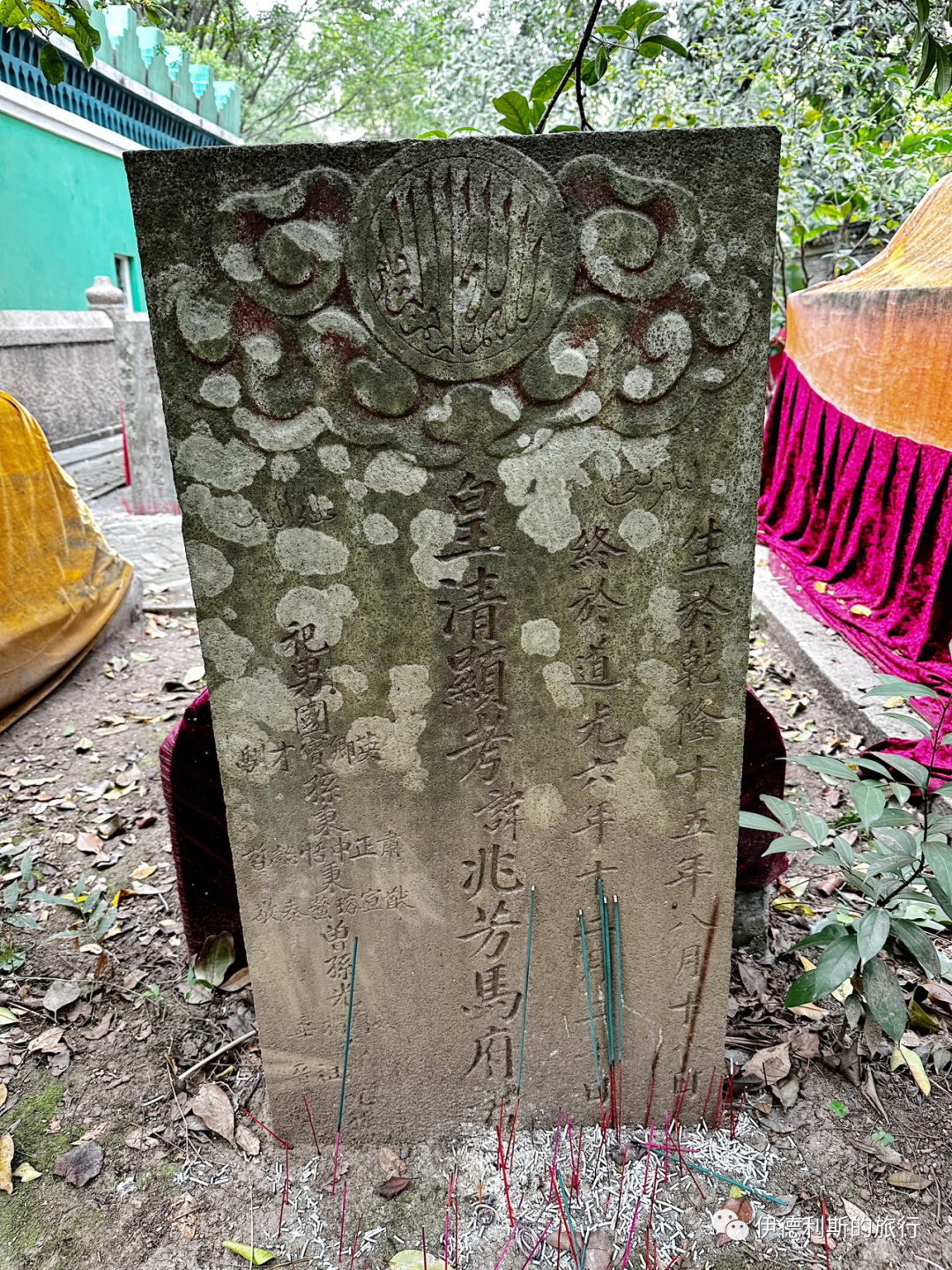
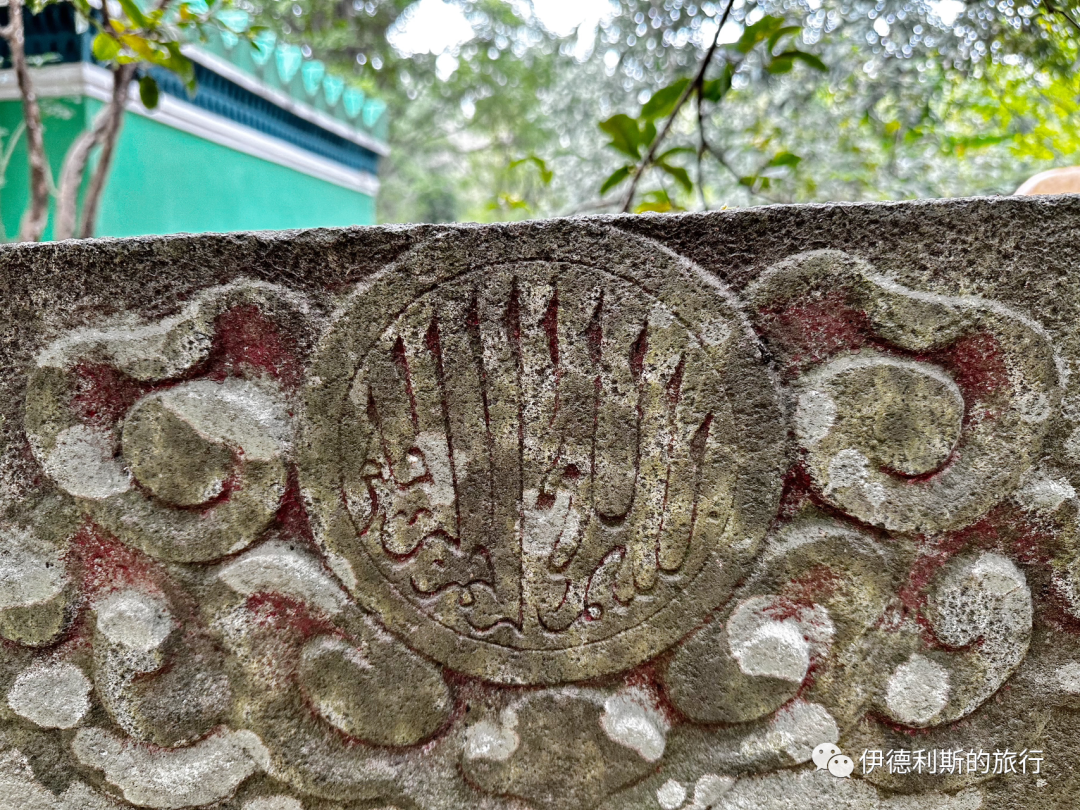
The tombstone of Zhang Xiaode was carved in the 26th year of the Guangxu reign (1846). He was from Deping County, Jinan Prefecture, Shandong. Deping County was abolished in 1956, and its former seat is now Deping Town in Lingyi County.
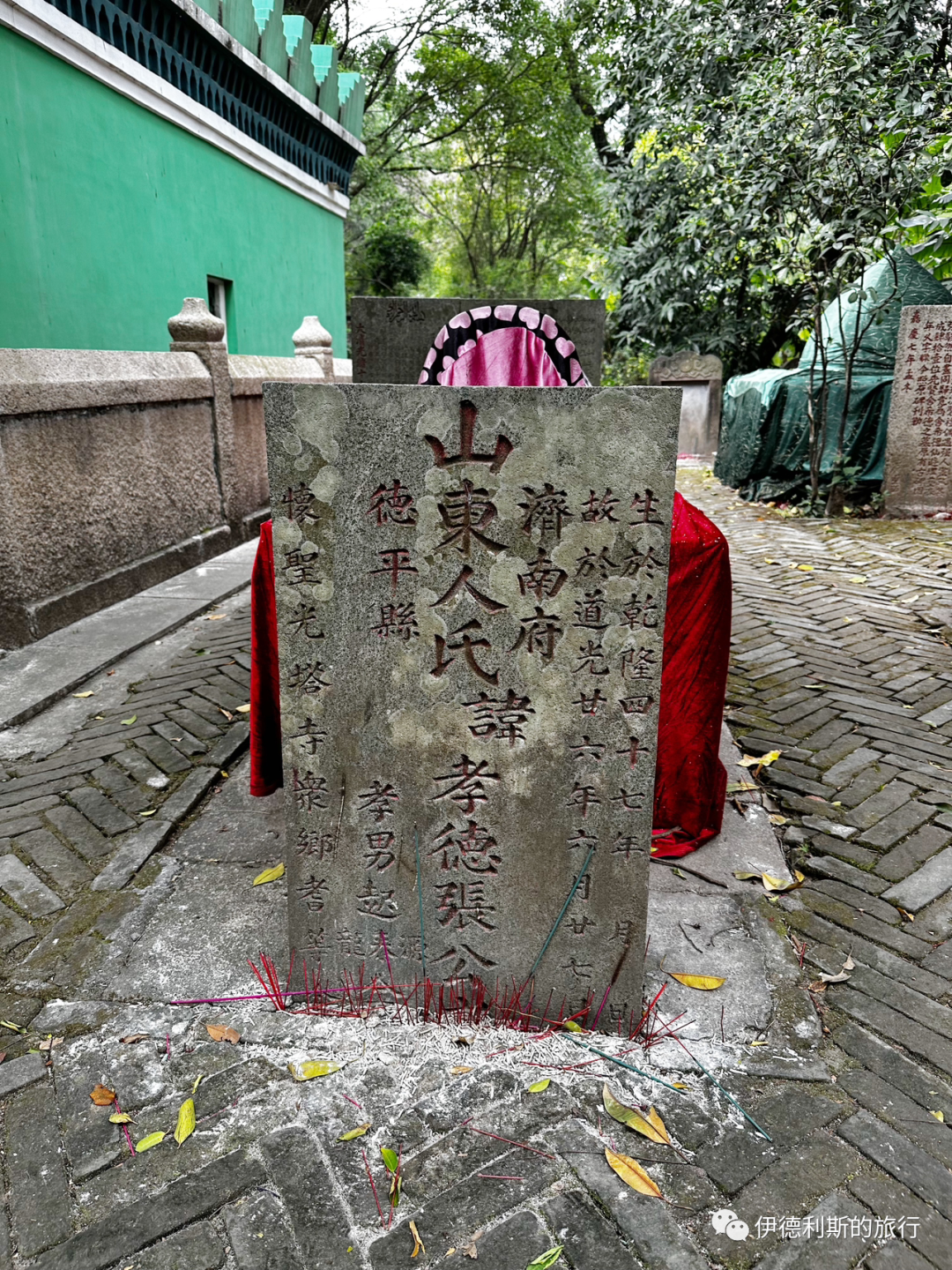
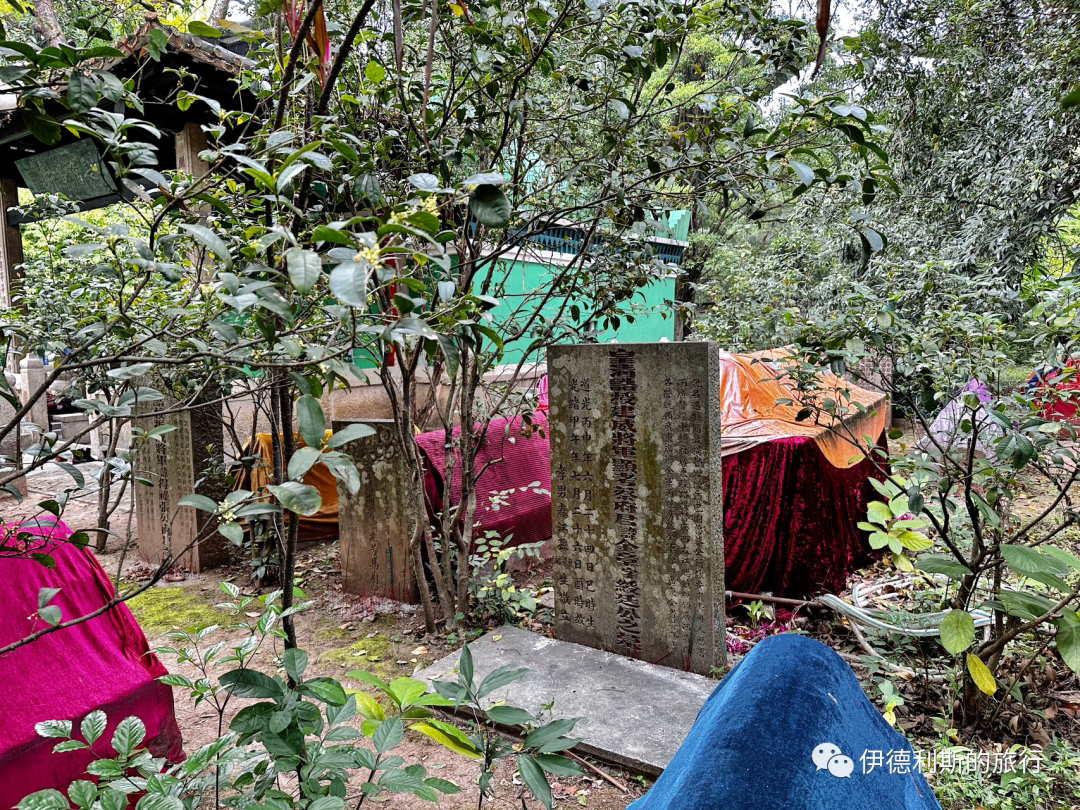
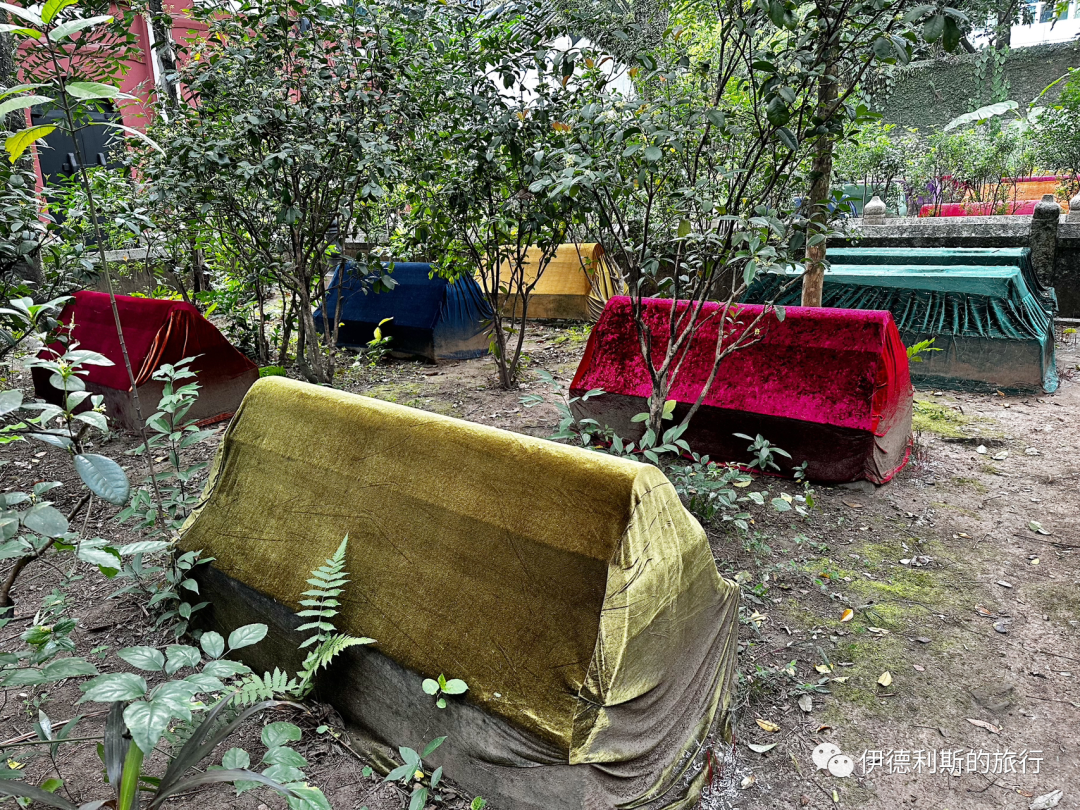
Inside the cemetery is the Hong Family Charity Land stele, carved in the 36th year of the Kangxi reign (1697). It records that Hong Yusheng, a Hui Muslim from Linqing, Shandong, followed the Qing army to Guangzhou as part of the Plain Yellow Banner. His son, Hong Yugong, died young in Guangzhou, and his daughter-in-law, surnamed Ma, remained chaste and filial until her death. Consequently, Hong Yusheng and his wife bought a plot of land on Dashe Mountain outside the North Gate of Guangzhou, which contained over a thousand grave sites. Except for the burial of his daughter-in-law, the rest was donated as a public cemetery for Muslims. The text was written by Ma Xi, a candidate for prefect in Jiangning, who was a Muslim official.
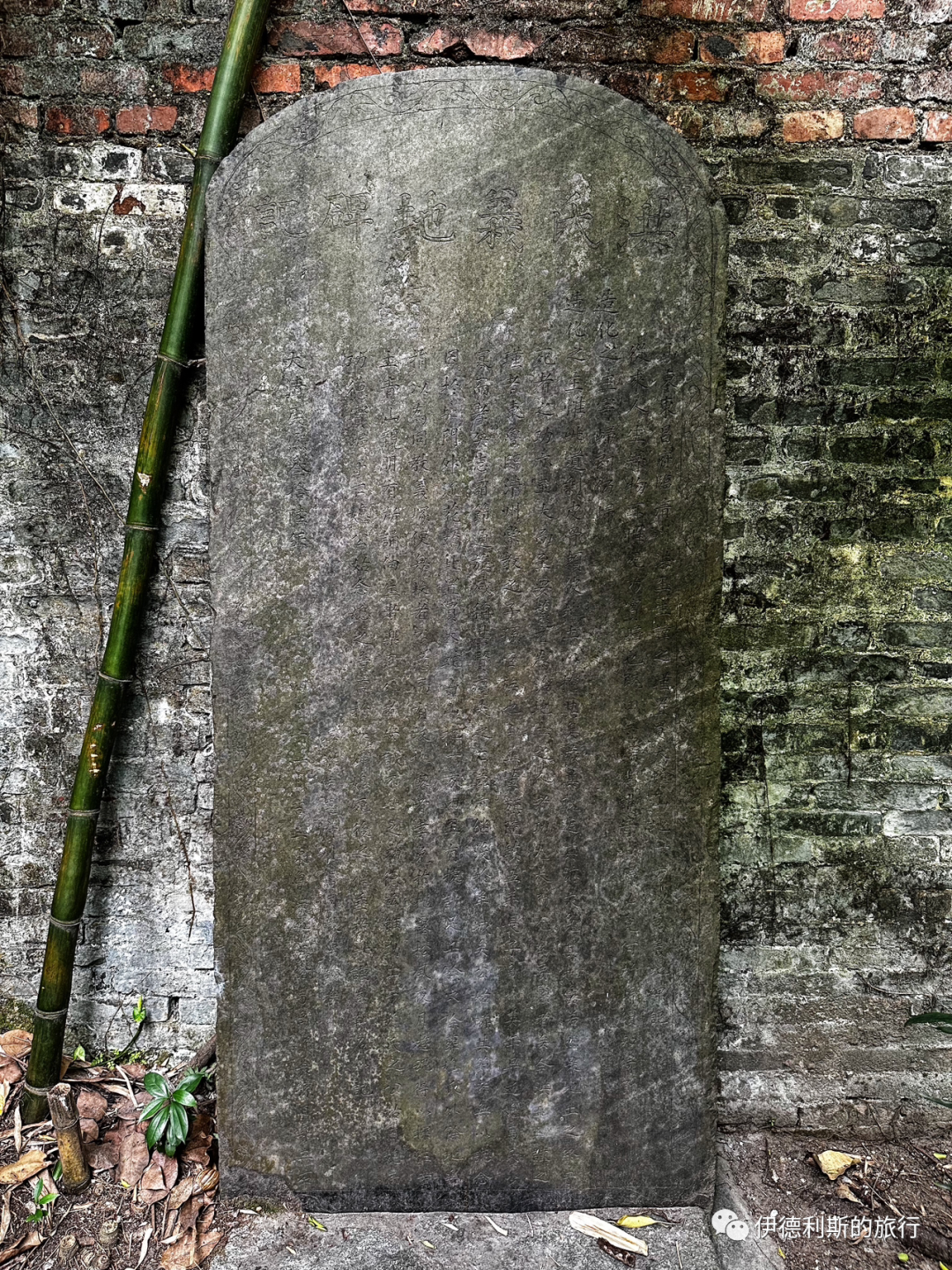
Graves on the southwest side of the cemetery.
There are many Muslim graves on the southwest side of the Ancient Tomb of the Worthies. This area was reorganized in 2010 after scattered old graves around the tomb were moved here.
Among them are two very precious Song Dynasty Muslim tomb cover stones, which are shaped the same as those from the same period in Quanzhou. One of them has a stone tablet in front of it, carved in 1948, stating that it is the tomb of Sa Yihu, the ancestor of the Sa family in Guangdong, re-erected by his descendants. The top of the other cover stone is carved with Arabic text: The Prophet said, when you are in doubt, seek advice from those in the graves! In the grave, there is either a garden of paradise or a pit of hellfire. The Sa family Hui Muslims are one of the only two remaining descendants of the foreign merchants from the Tang and Song dynasties in Guangzhou, having lived in the city for over a thousand years.
During the Song Dynasty, the overland Silk Road became difficult to travel due to wars with the Liao, Western Xia, and Jin dynasties, but maritime trade continued to grow in scale. Arab and Persian merchants dominated Indian Ocean trade during this period. They did business in cities like Guangzhou, Quanzhou, Yangzhou, and Hangzhou, playing a major role in the religious and economic development of the southeastern coastal regions. According to the Song Huiyao Gao, in 1028 (the sixth year of the Tiansheng reign of the Song Dynasty), Emperor Renzong issued a special decree to strengthen import trade in Guangzhou: Guangzhou has seen few foreign ships lately; the local government and the transport commission should invite and settle them. After this, many Muslim merchants settled in Guangzhou, and the foreign quarter (fanfang) that had been destroyed during the Huang Chao Rebellion at the end of the Tang Dynasty was rebuilt.
However, between 1276 and 1278, the two-year war between the Southern Song and the Mongol army caused devastating damage to Guangzhou. Muslim merchants left the city to escape the chaos, and many moved to Quanzhou. Today, among the local Hui Muslims in Guangzhou, only the Sa family can be verified as descendants of the Tang and Song foreign merchants; all other Hui Muslims moved here after the Ming and Qing dynasties. The Pu family, who have lived in Zhugang and Pu villages in Guangzhou for generations, are also descendants of foreign visitors from the Tang and Song dynasties. However, they no longer show any signs of their foreign ancestry and their customs are exactly the same as the local Han people.
According to the Sa Family Genealogy of the Two Yue Regions, our clan's history began with the Muslim people, established its roots in China, flourished during the Tang dynasty, continued through the Song, rose during the Yuan, branched out in the Ming, and spread across eastern and western Guangdong. According to the Guangzhou Prefecture Records, during the Zhizheng era of the Yuan dynasty, seventeen families led by Sa Dula guarded the Ancient Tomb of the Worthies and the mosque outside the North Gate. The Sa Family Genealogy of the Two Yue Regions records that Sa Dula was a descendant of the Sa family. When the Qing army attacked Guangzhou at the end of the Ming dynasty, one of the three loyal Muslim defenders who died for the city was named Sa Zhifu. According to the Sa family records, the Sa and Sa families are one, and he was also a descendant of the Sa family.
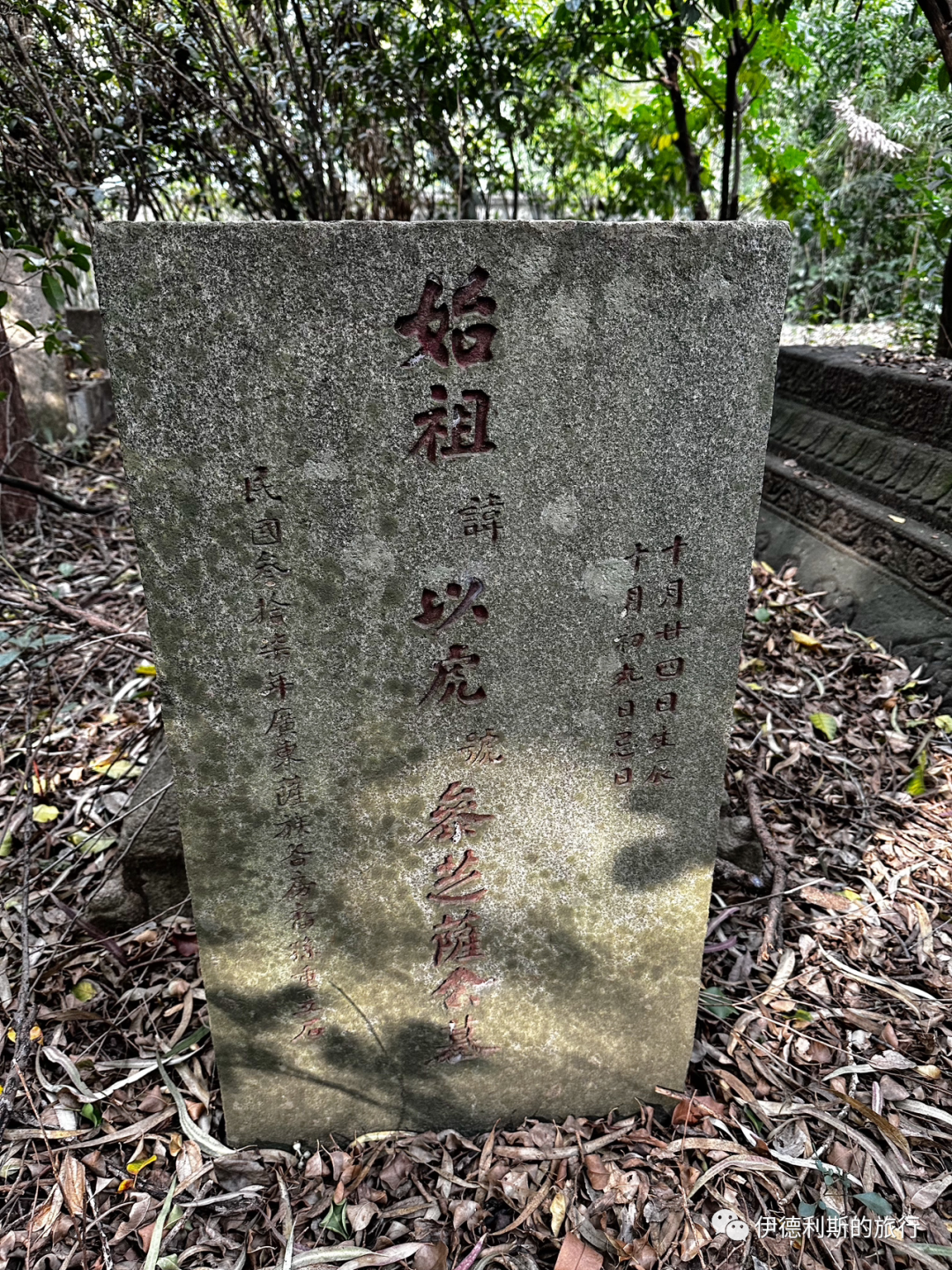
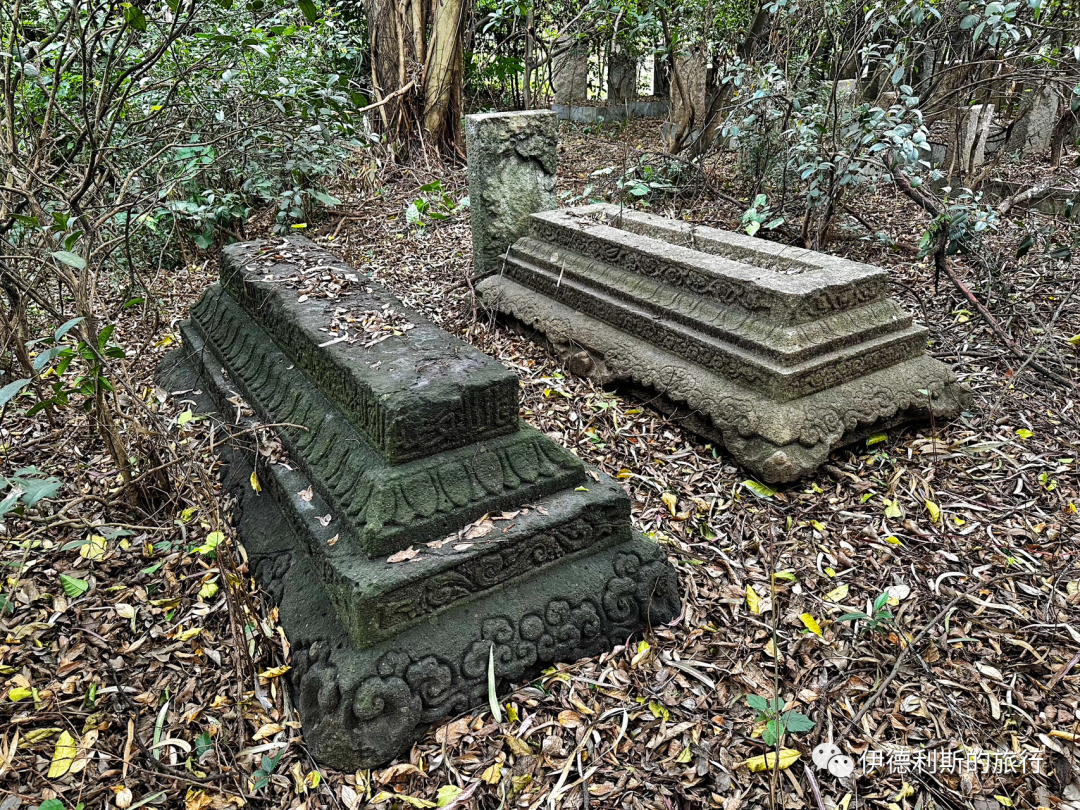
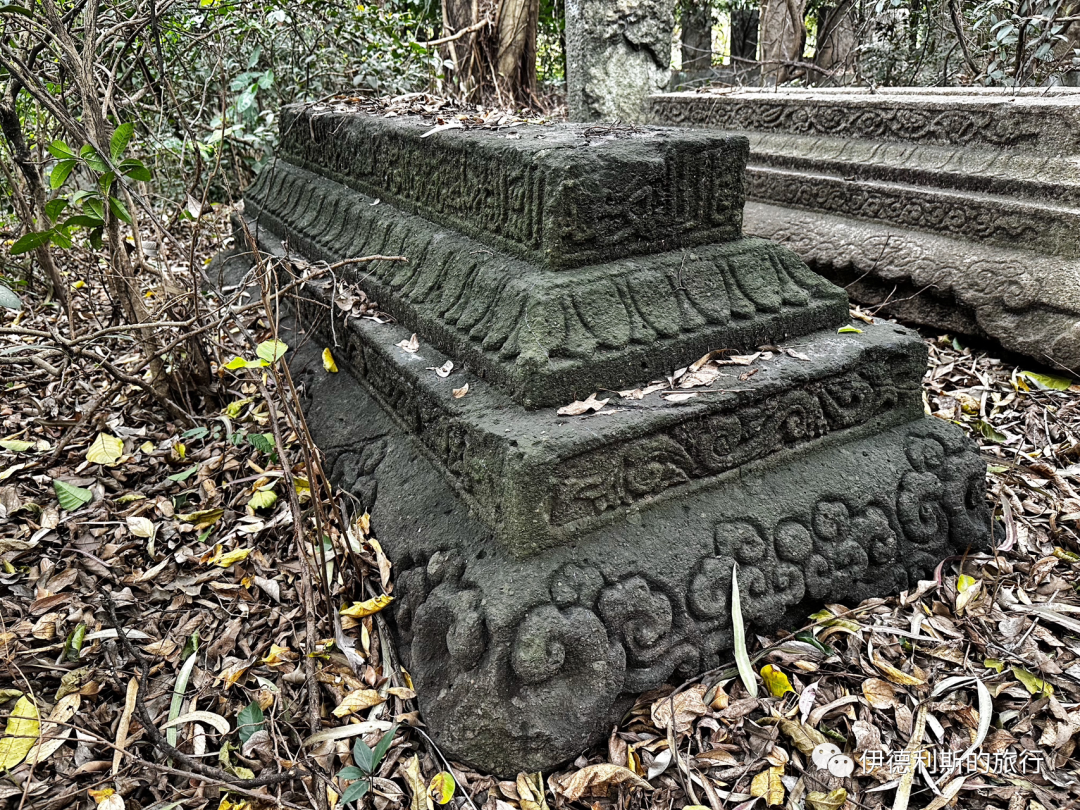
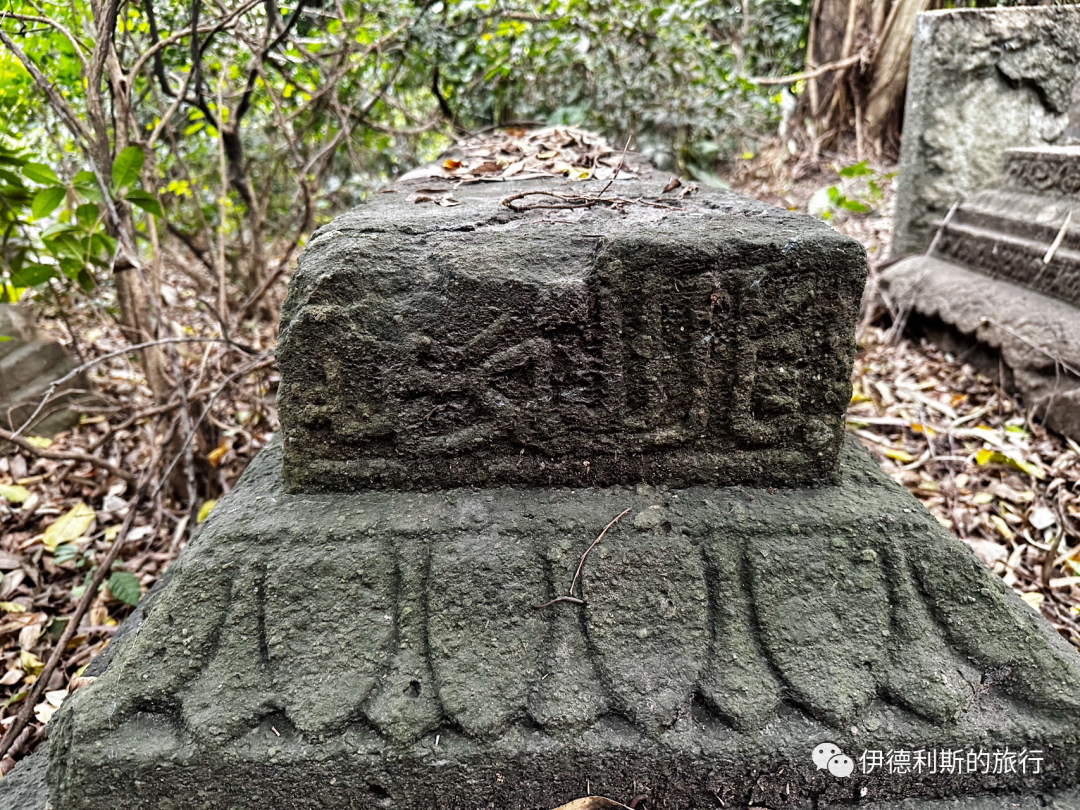
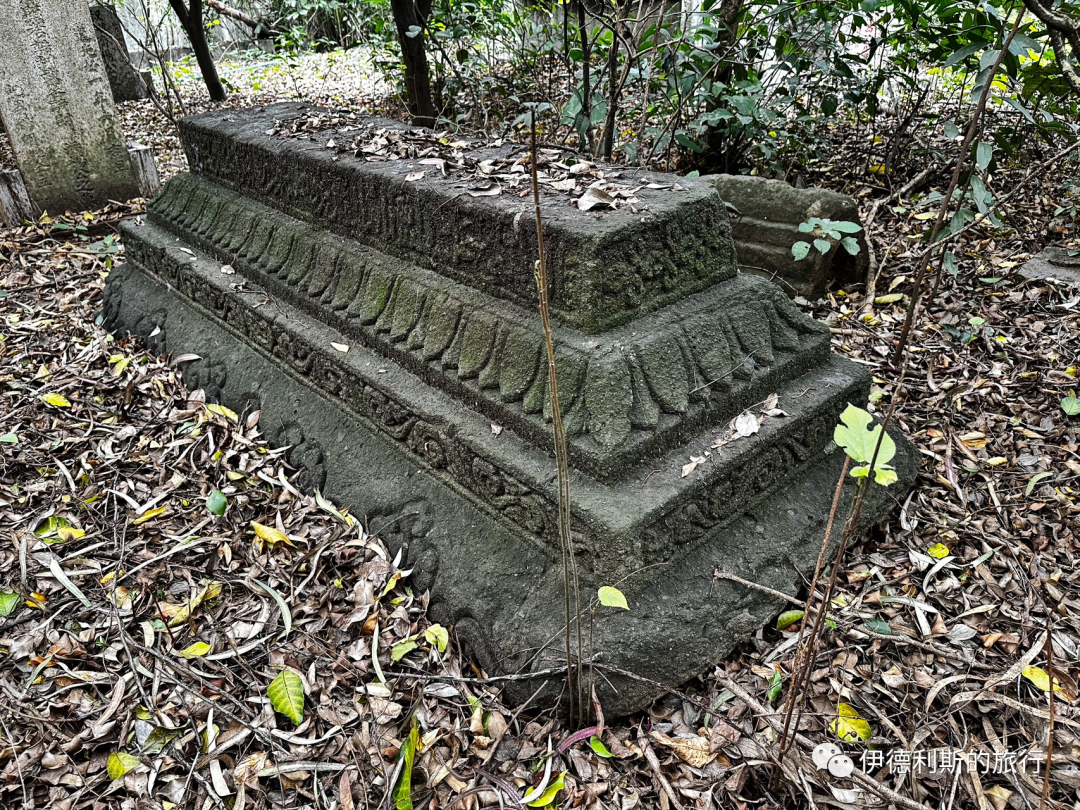
To the southwest of the cemetery is the tomb of Imam Ma Renfeng of the Huaisheng Mosque in Guangzhou. Imam Ma Renfeng was a local Hui Muslim from Guangzhou. He studied the scriptures under Imam Wang Zhizhou from a young age. After completing his training, he began serving as an imam at the Huaisheng Mosque in 1912 and became the head imam in 1928. After 1938, to escape the threats and pressure of the Japanese army, Imam Ma fled to the Baihedong refugee camp. He later moved to Hong Kong and served as an imam at the Hong Kong Chinese Muslim Fraternity Association. In 1954, while attending the National Day celebrations, Imam Ma suffered a sudden brain hemorrhage from excitement and passed away at the age of 60.
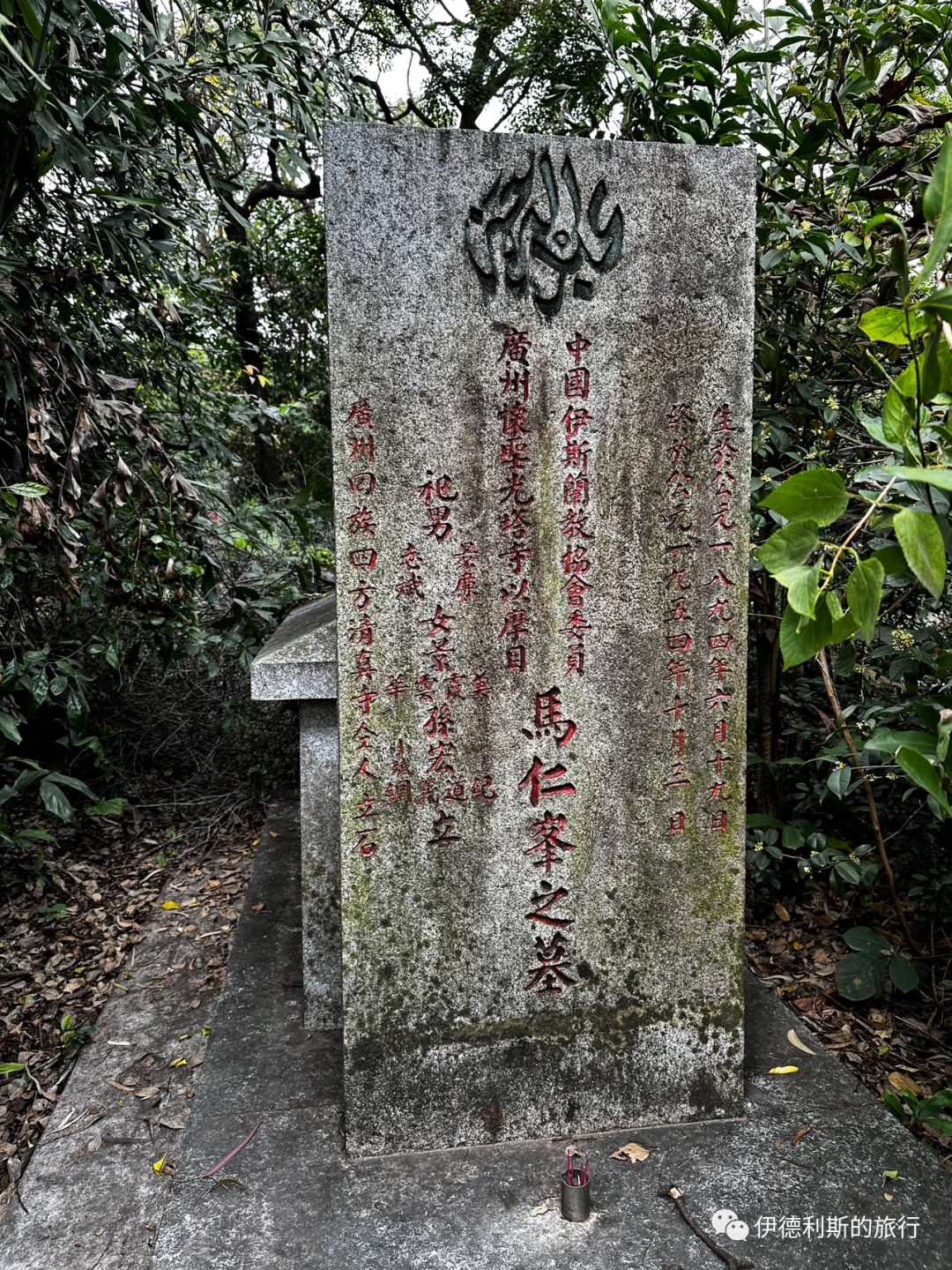
There are also many tombs of Guangzhou Hui Muslims from the Qing dynasty nearby.
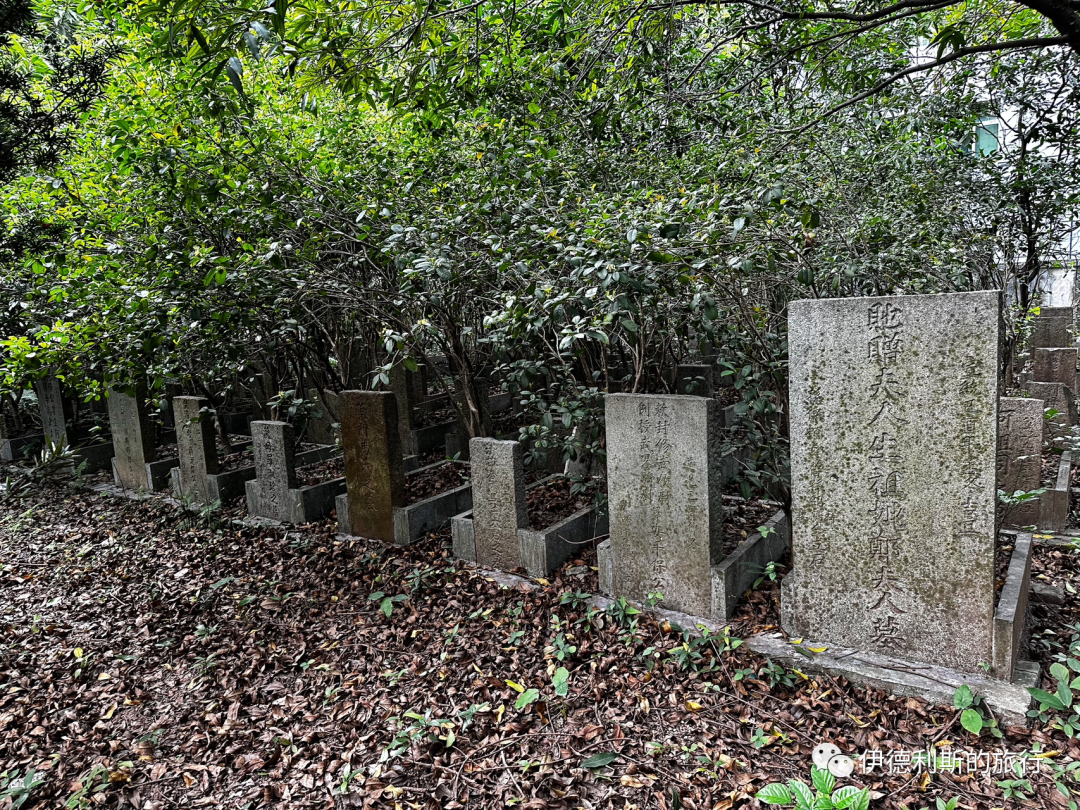
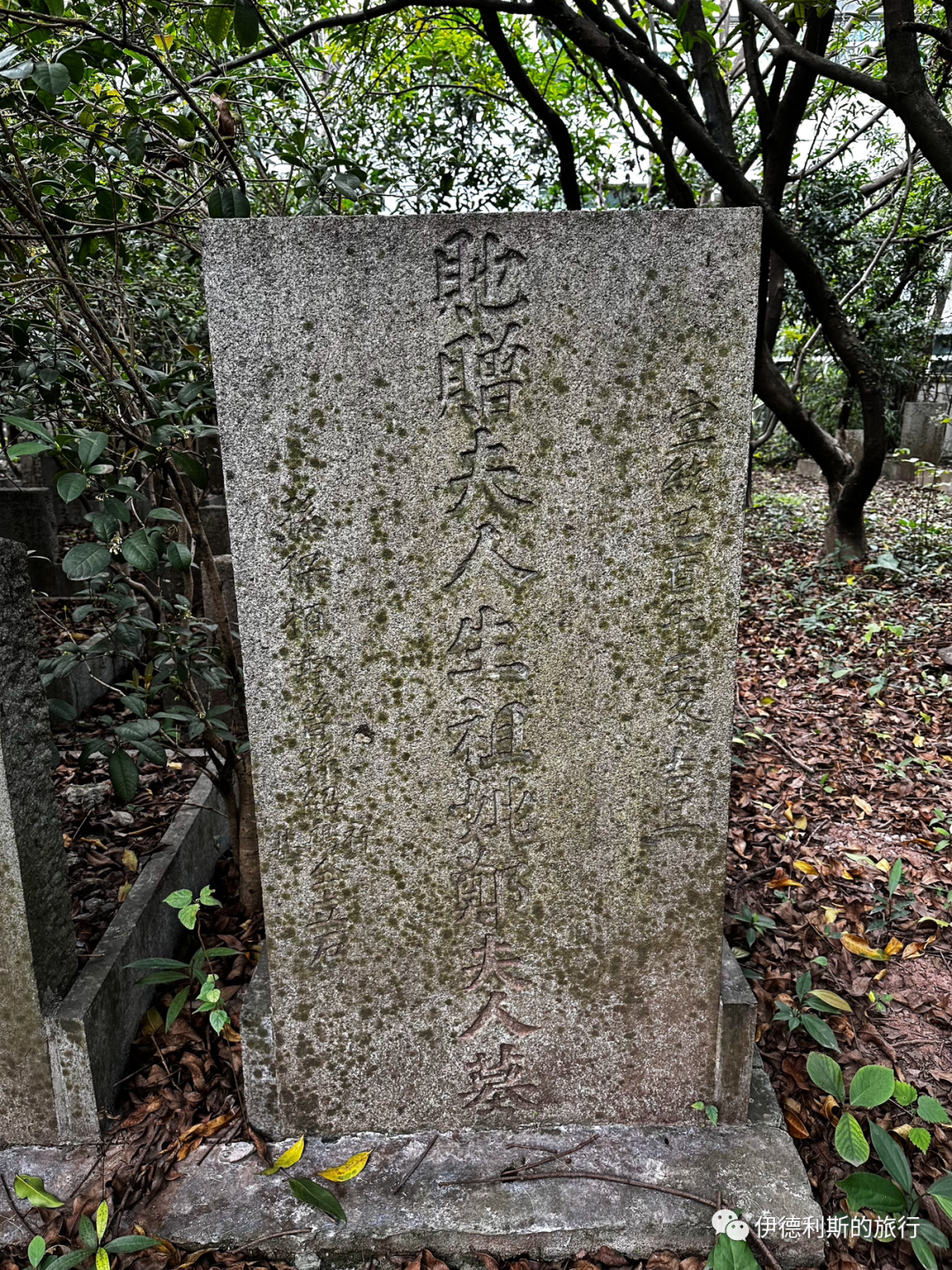
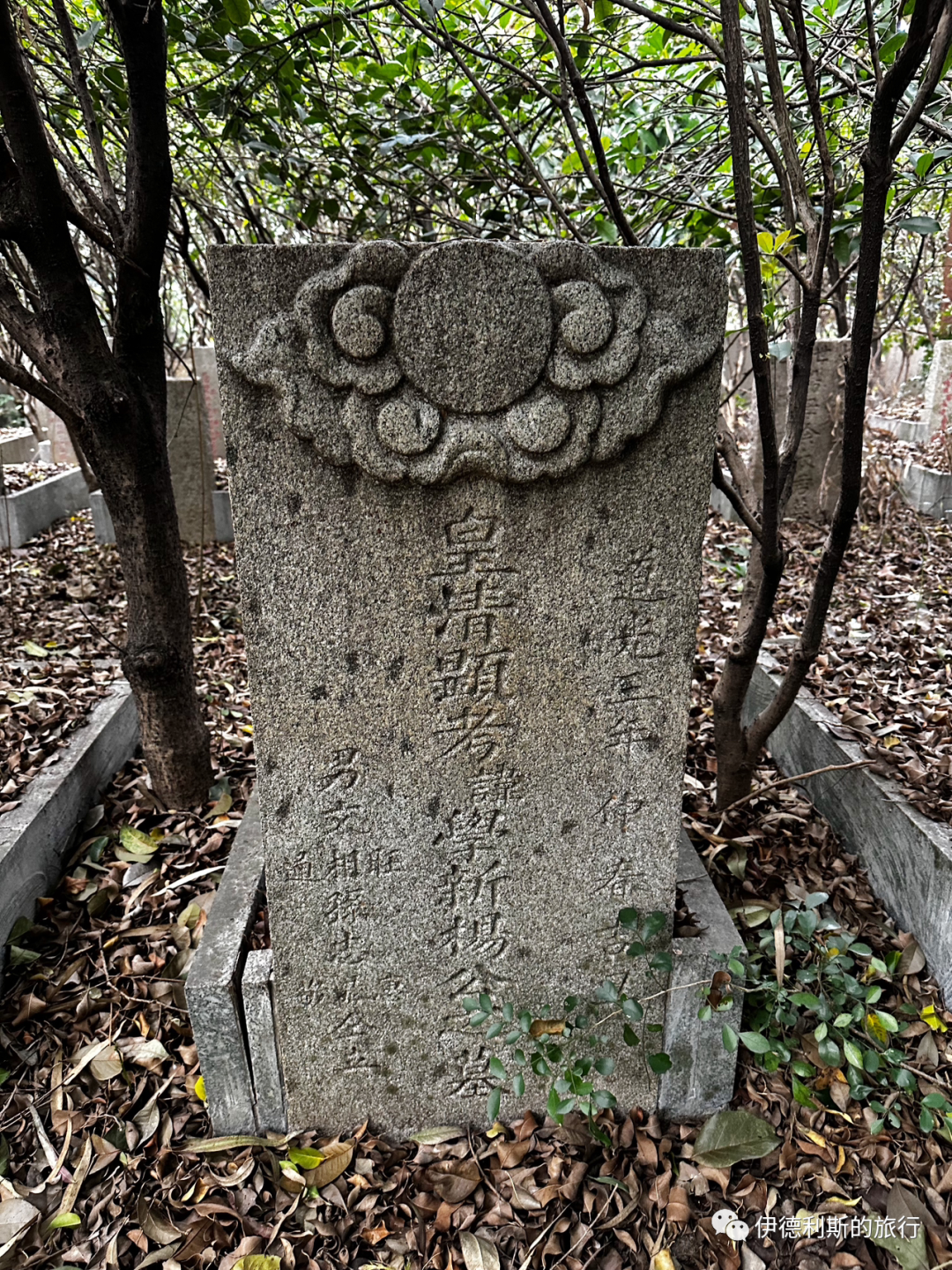
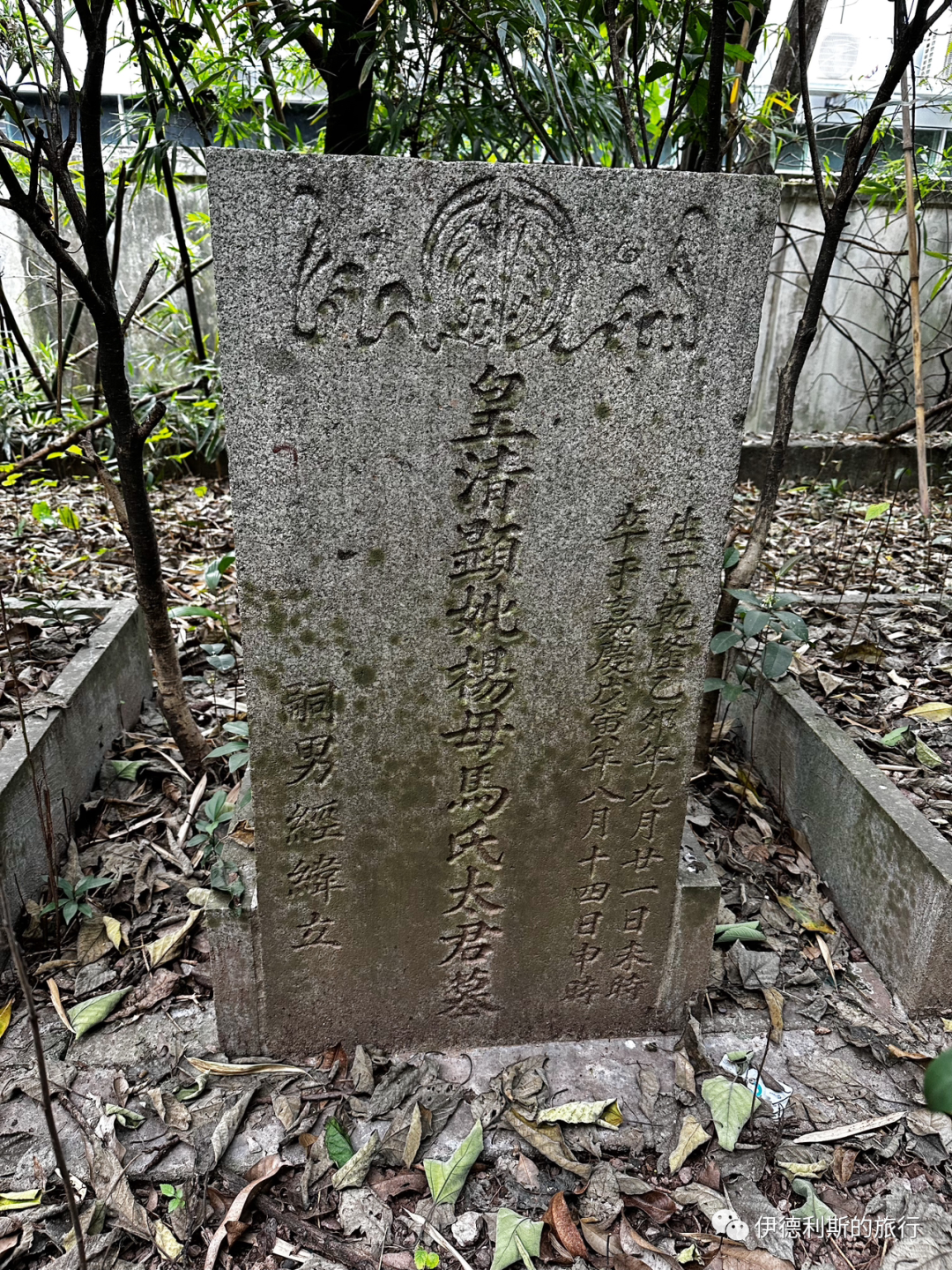
The stele corridor on the east side of the cemetery.
Directly east of the cemetery is a stele corridor that preserves a series of stone inscriptions from the Ancient Tomb of the Worthies. The row on the far left mostly concerns the protection of the Muslim cemetery. From left to right, they are as follows:
A reward notice stele from the Guangzhou Prefecture during the Guangxu era. It reiterates the official ban on protecting the Muslim cemetery and encourages the public to arrest offenders.
A boundary marker stele for the protection of the Muslim cemetery, carved in 1924. In 1924, after Guangzhou Hui Muslims successfully opposed the Dazhen Company's attempt to claim land outside the North Gate, they held a city-wide celebration at the mosque outside the North Gate. They invited prominent Hui Muslims from Hong Kong and Macau to attend, and the assembly decided to set up boundary markers at all Muslim cemeteries to protect them.
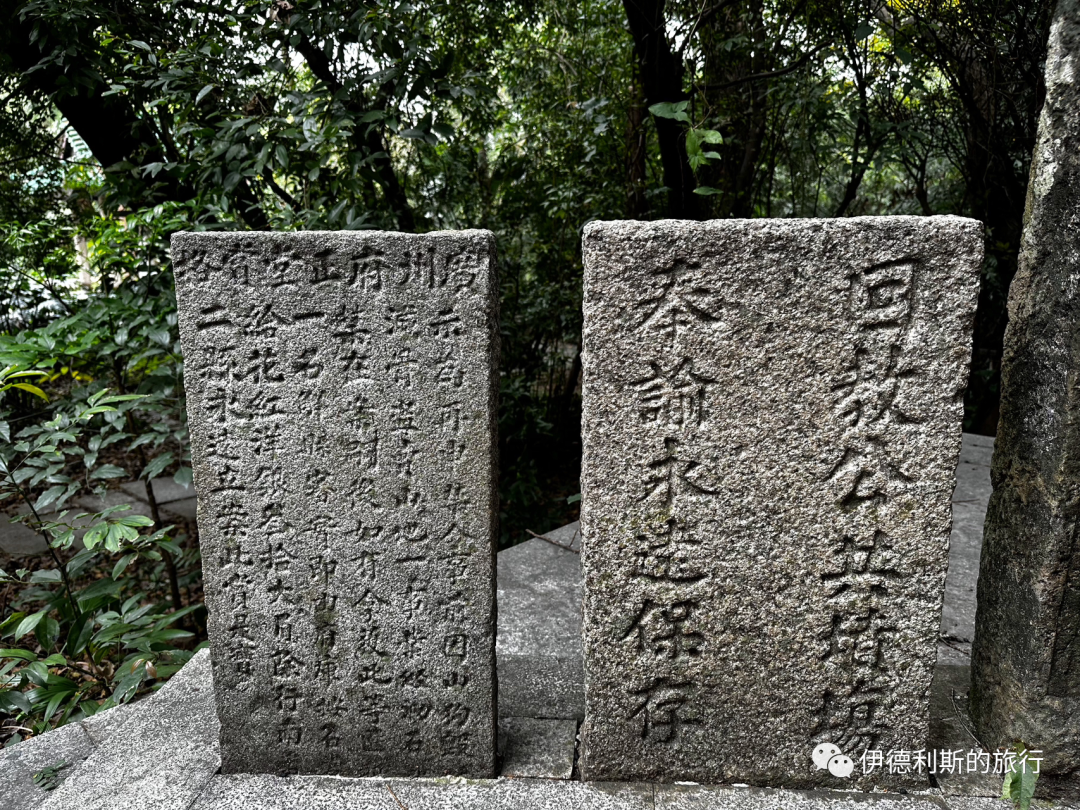
A stele commemorating the renovation of the Ancient Tomb of the Worthies in the 17th year of the Jiaqing era (1812). The original stele was carved in the 29th year of the Kangxi era (1690) and recorded the renovation of the Ancient Tomb of the Worthies by Hui Muslims like Sun Ying. It was re-carved in 1812 by Liu Chengzhang and others from the Guangta Mosque.
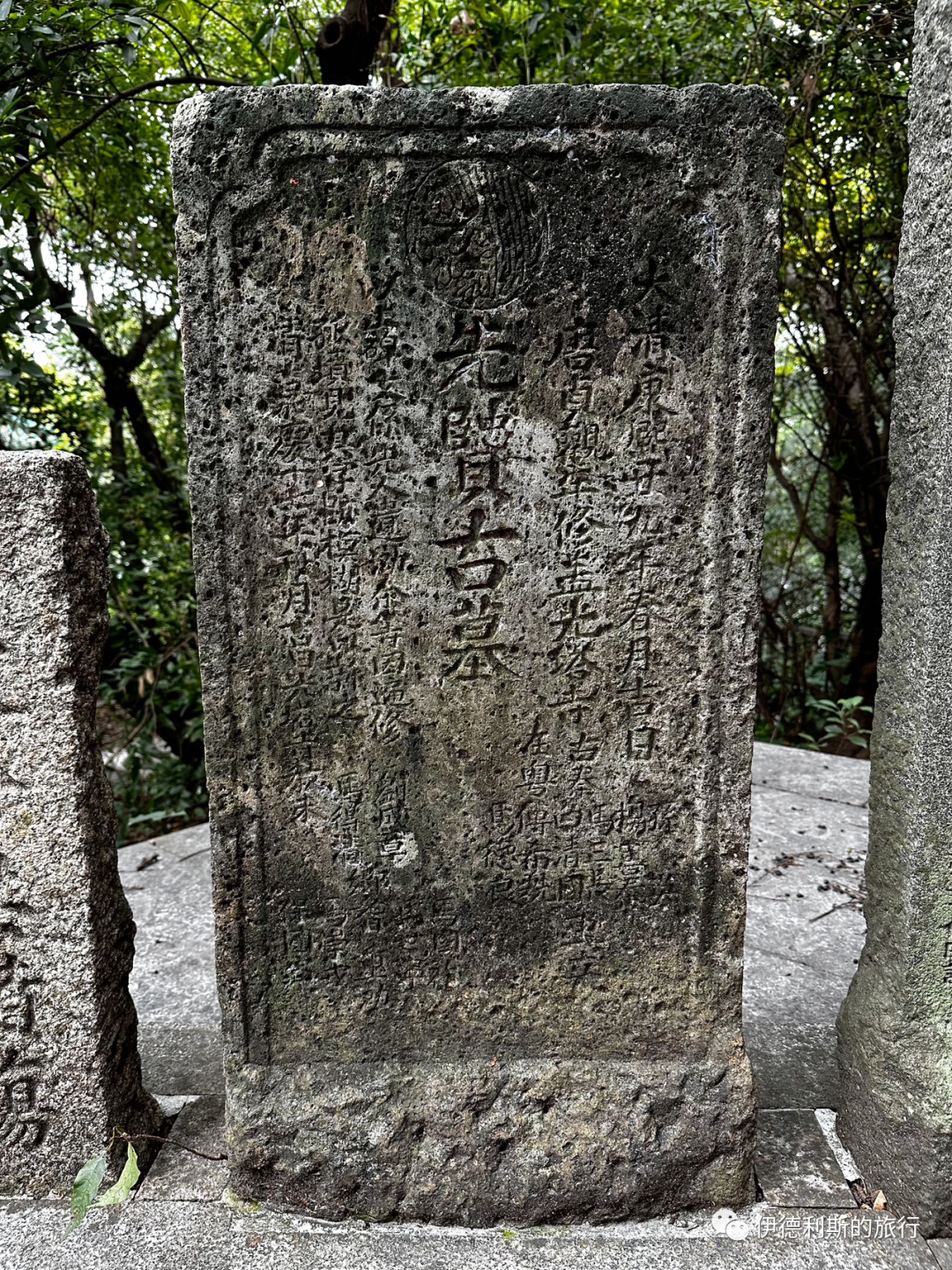
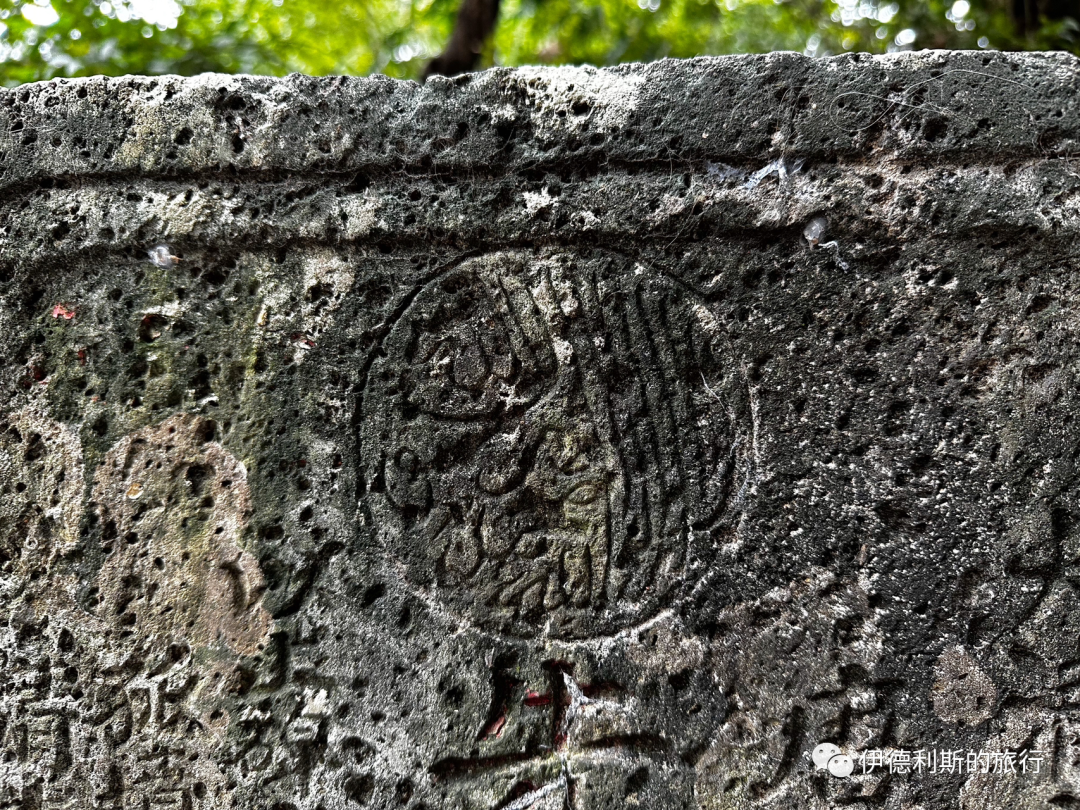
A 1878 official notice from the Guangzhou Prefecture strictly forbidding the destruction of graves and the sale of land by local workers. It was issued by Guangzhou Prefect Feng Taisong to protect the cemetery outside the North Gate and was originally placed next to the mosque there.
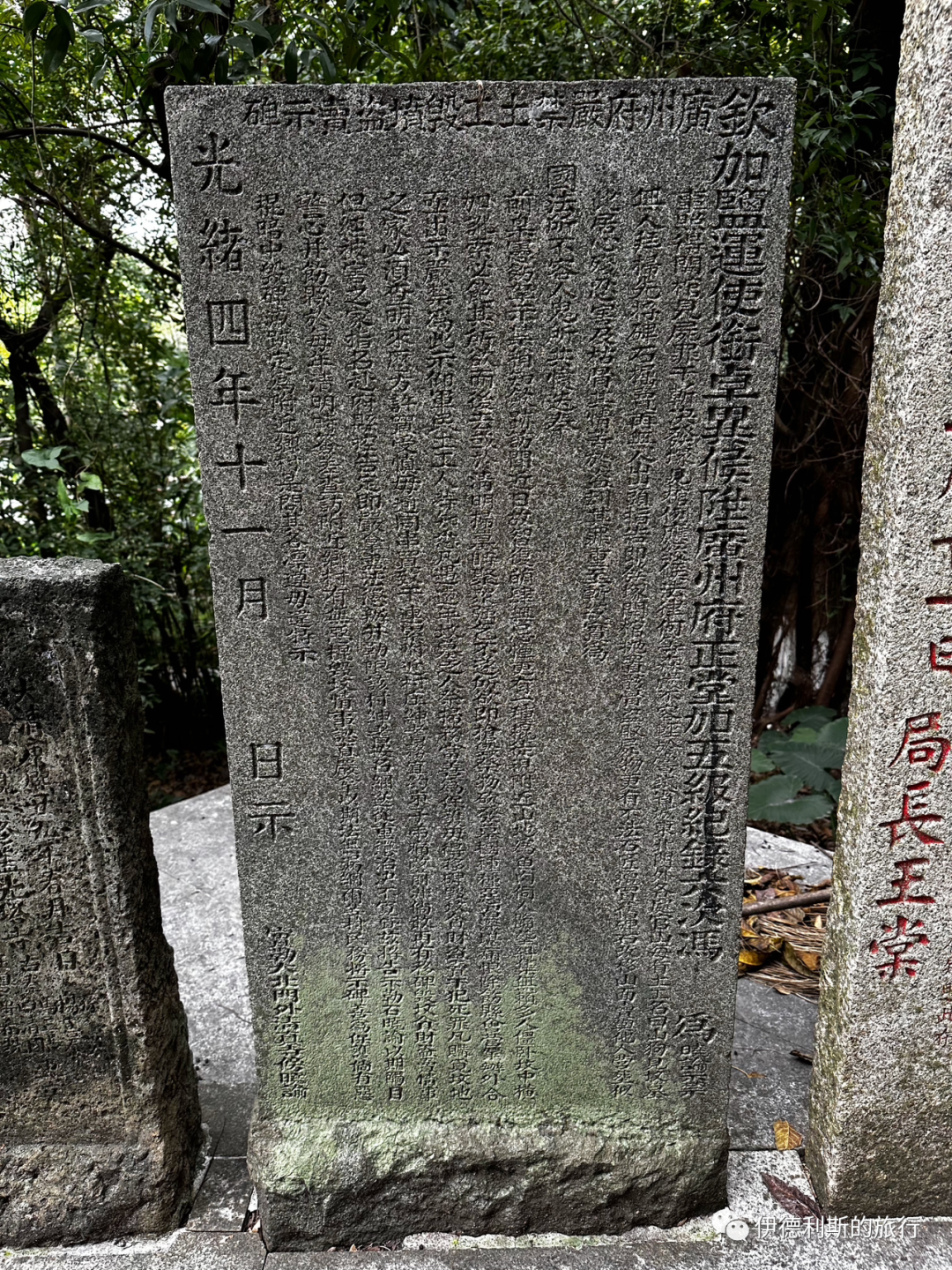
A 1925 notice from the Guangzhou Finance Bureau, signed by Director Wang Tang, declaring the preservation of the Muslim cemetery. The Guangzhou Municipal Construction Commission verified and approved the map of the public Muslim cemetery surveyed and drawn by Hui Muslim representative Ma Yunting and others, confirming the boundaries and area of the cemetery.
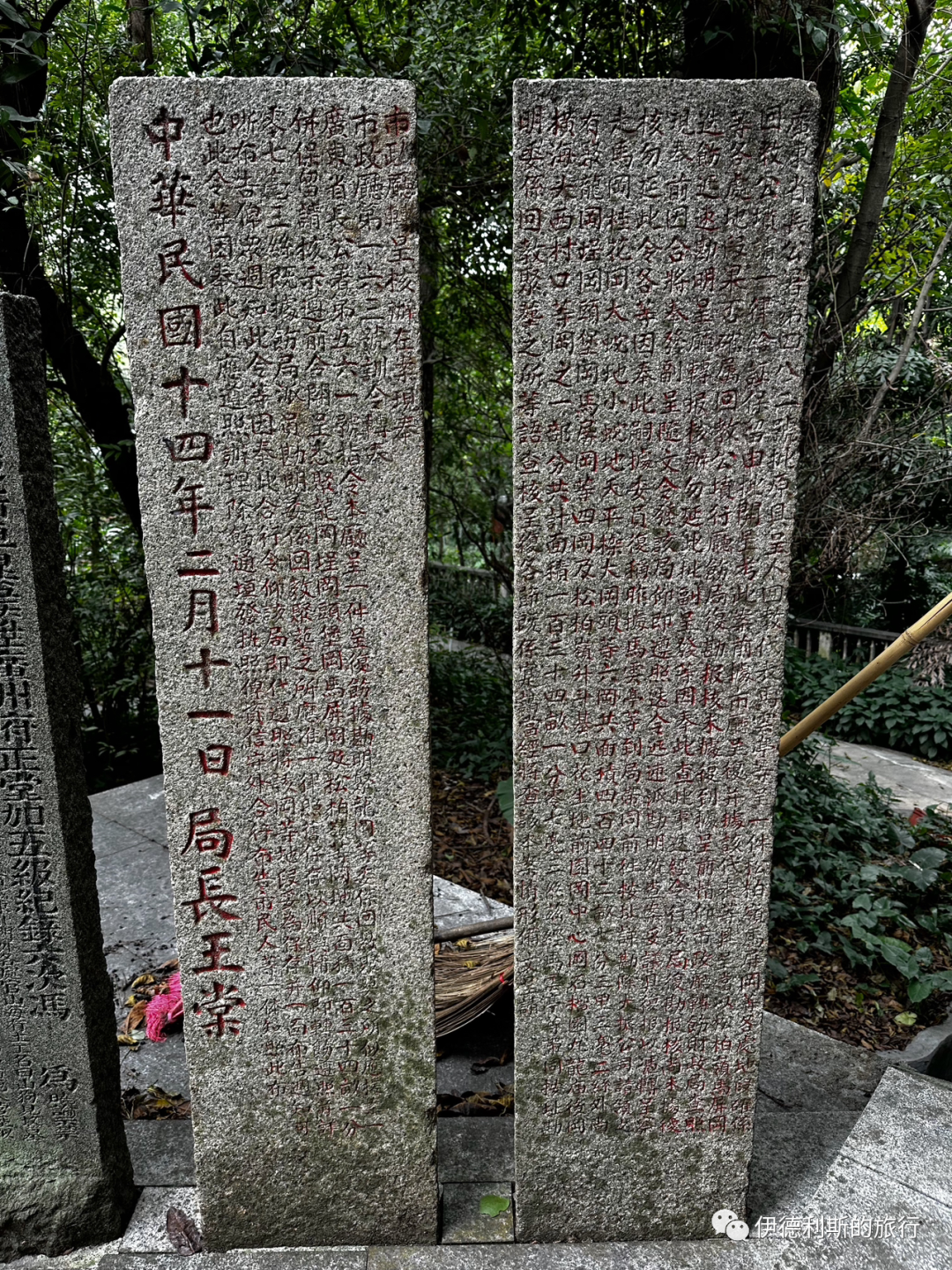
Embedded in the stele corridor is a series of donation steles, mostly recording the donation of property and land by Guangzhou Hui Muslims during the Qing dynasty and the Republic of China:
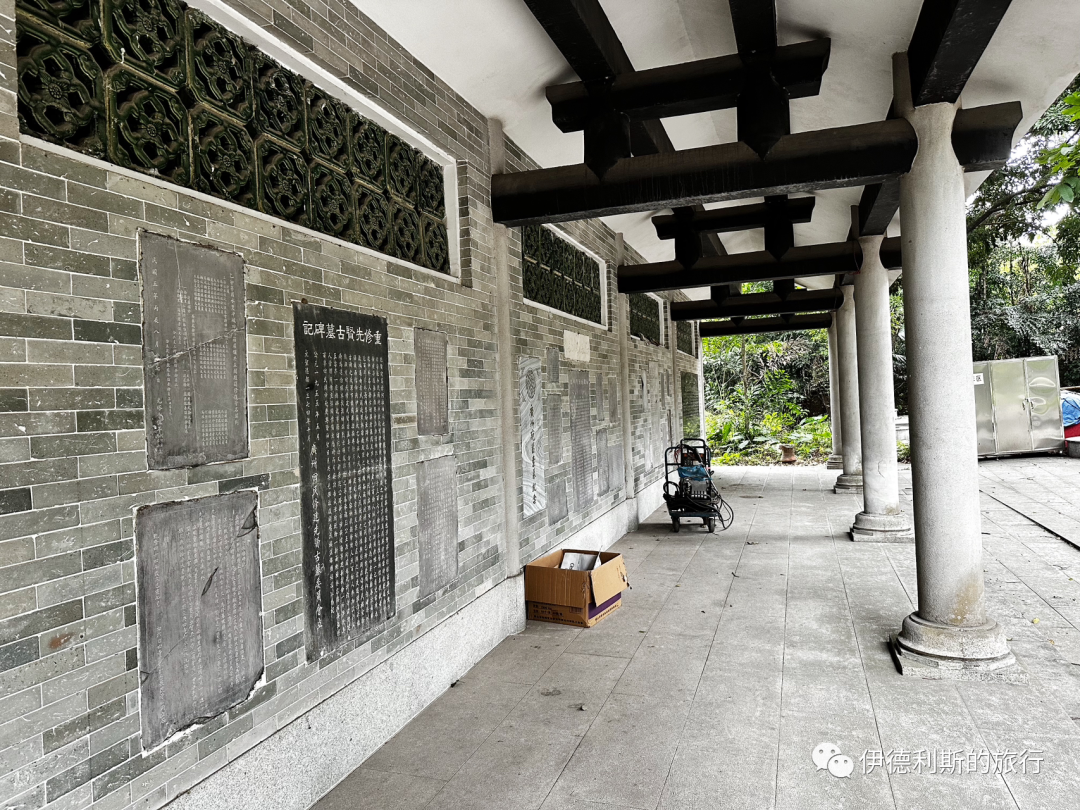
A 1779 stele recording a collective donation to repair abandoned graves and fill in ponds. It records that the elders of the four mosques in Guangzhou (Huaisheng, Haopan, Nansheng, and Xiaodongying) raised funds to buy a house belonging to the Ma family in Nanshengli, using the rent to repair the Ancient Tomb of the Worthies.
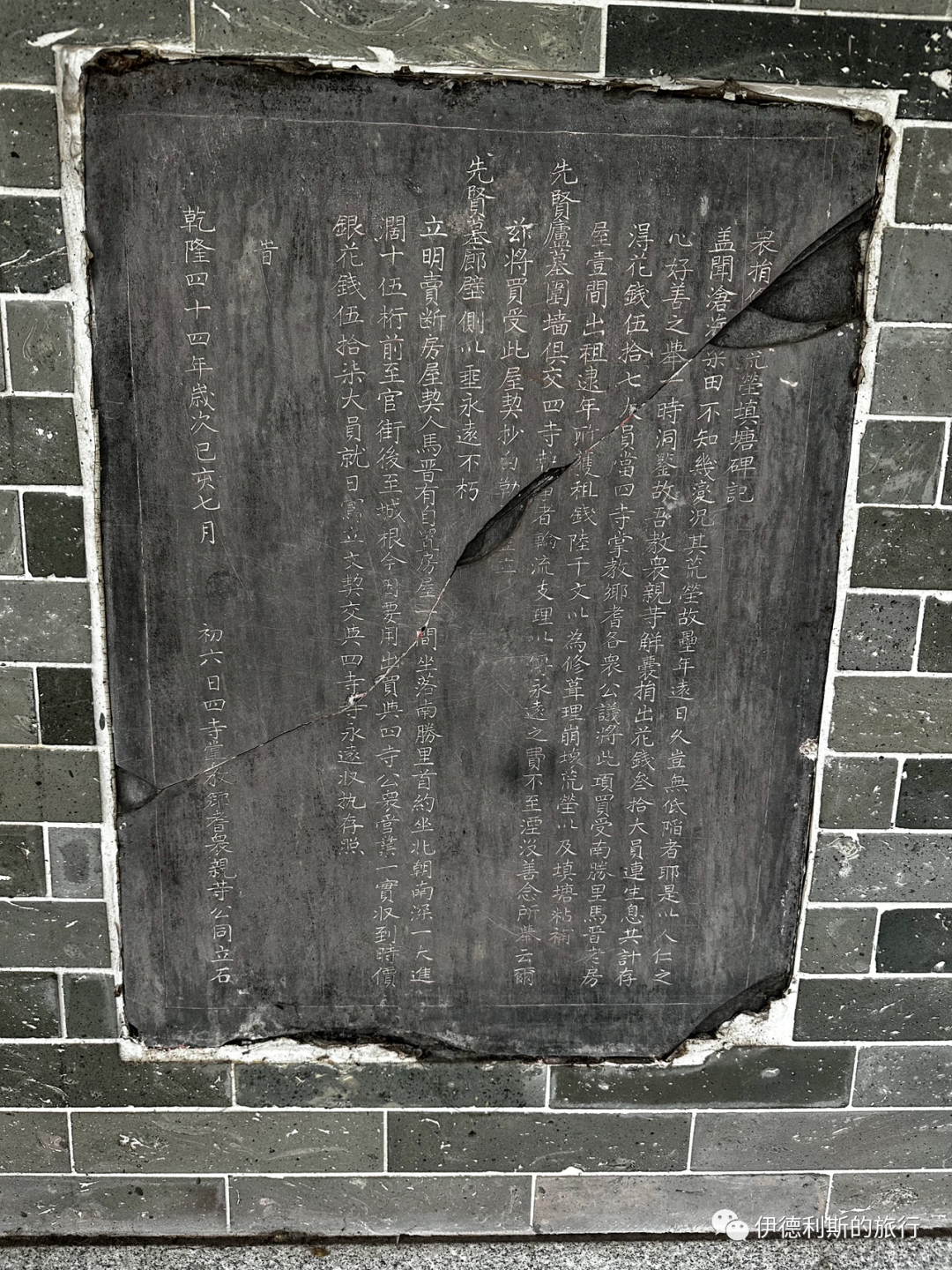
A 1785 stele recording a house donation by overseas Muslims. It records that overseas Muslims Palalibike and Tanni, out of respect for the worthy Wan Gesu, bought a house in Nanshengli and donated it to the Huaisheng Mosque, requesting that the mosque go to the ancient tomb to perform dua on the anniversary of the worthy's passing.
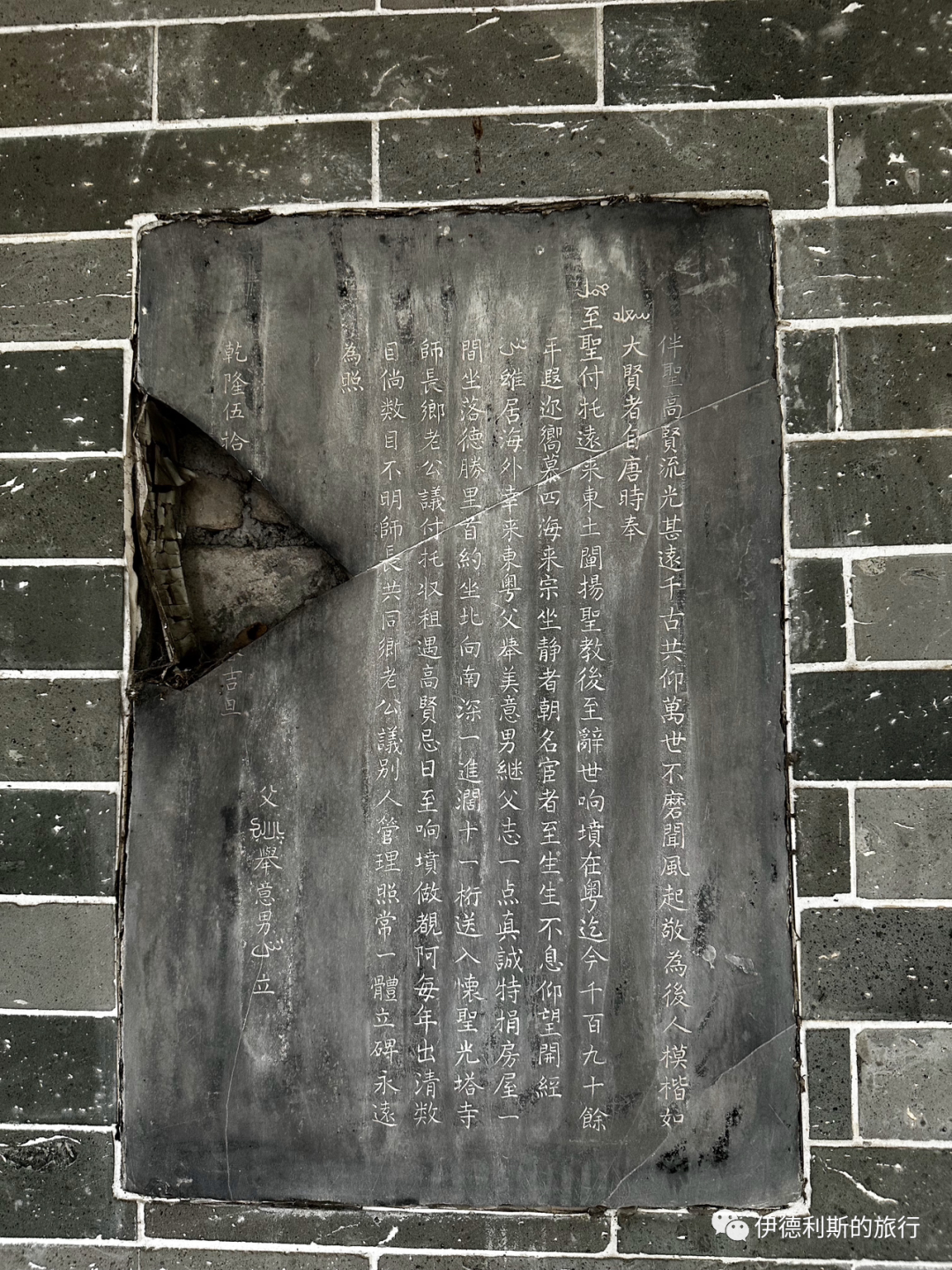
A 1815 stele recording the conversion of houses donated by Elder Yang into shops. It records that Guangzhou Hui Muslim Elder Yang Yuanzhen donated a house in the western section of Haopan Street to the four mosques in 1759 to support scriptural studies. Later, because the house fell into disrepair and no one managed it, the Dai Wanli shop in Yuxianfang took the lead in converting the house into a storefront. They used the rent for scriptural studies and religious anniversaries, and the remaining money was given to the Ancient Tomb of the Worthies to perform the anniversary rites for Wan Gesu.
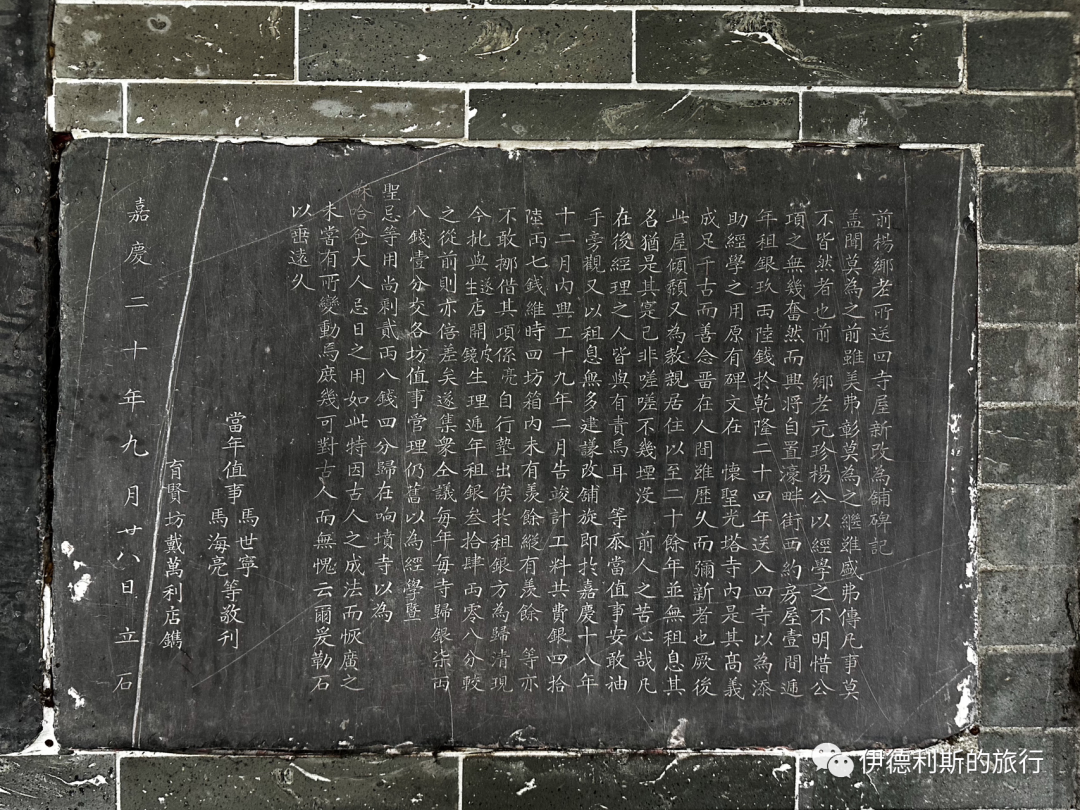
A 1830 stele recording the donation of property by the Tuo Yang family. It records that after the Hui Muslim Tuo Yang passed away, she donated two houses in Nanshengli and Luohuata Street to the public fund of the four mosques, requesting that the presiding teacher be invited to the tomb to perform dua on her anniversary.
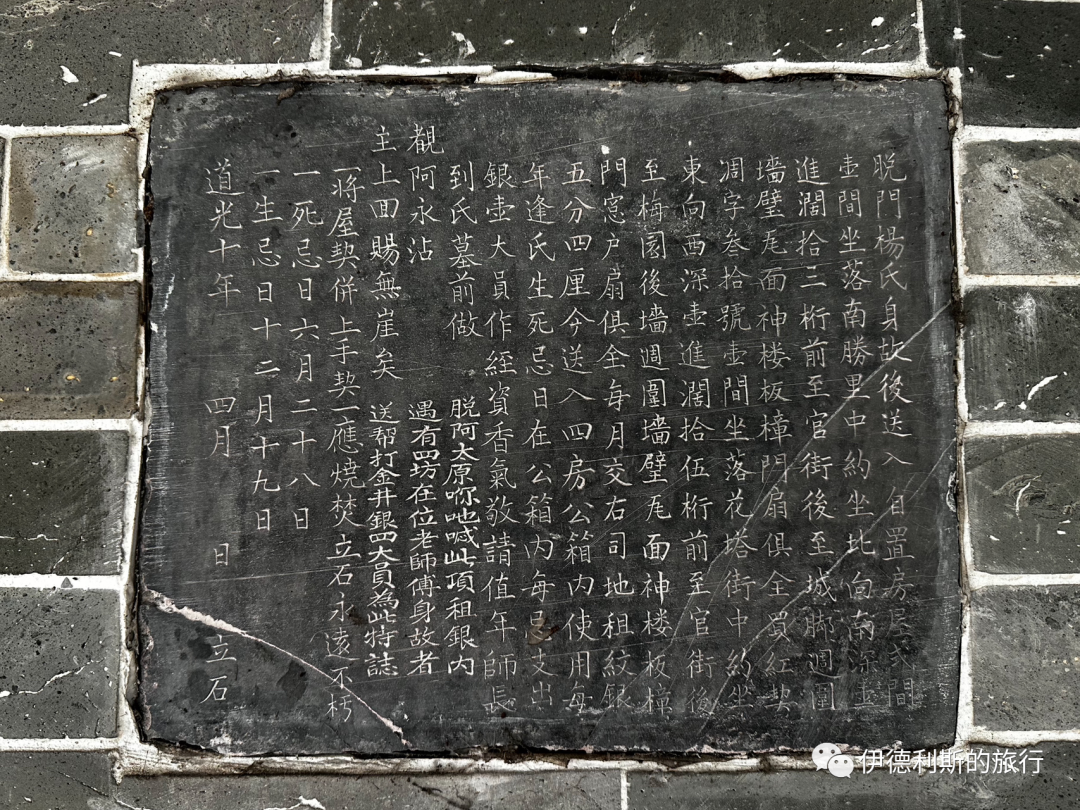
A 1828 stele recording a house donation by Yang Xilong for his late uncle. It records that Changsha Hui Muslim Yang Yuanxun came to Guangzhou to study for over 20 years. After he passed away and was buried in Zoumagang, his nephew Xilong bought a shop at the entrance of Tonglong Lane inside the North Gate and donated it to the public fund of the four mosques. It was used for religious anniversaries and the anniversary of the worthy Wan Gesu, and to invite the presiding teacher to the tomb to recite scriptures and perform dua on his uncle's anniversary.
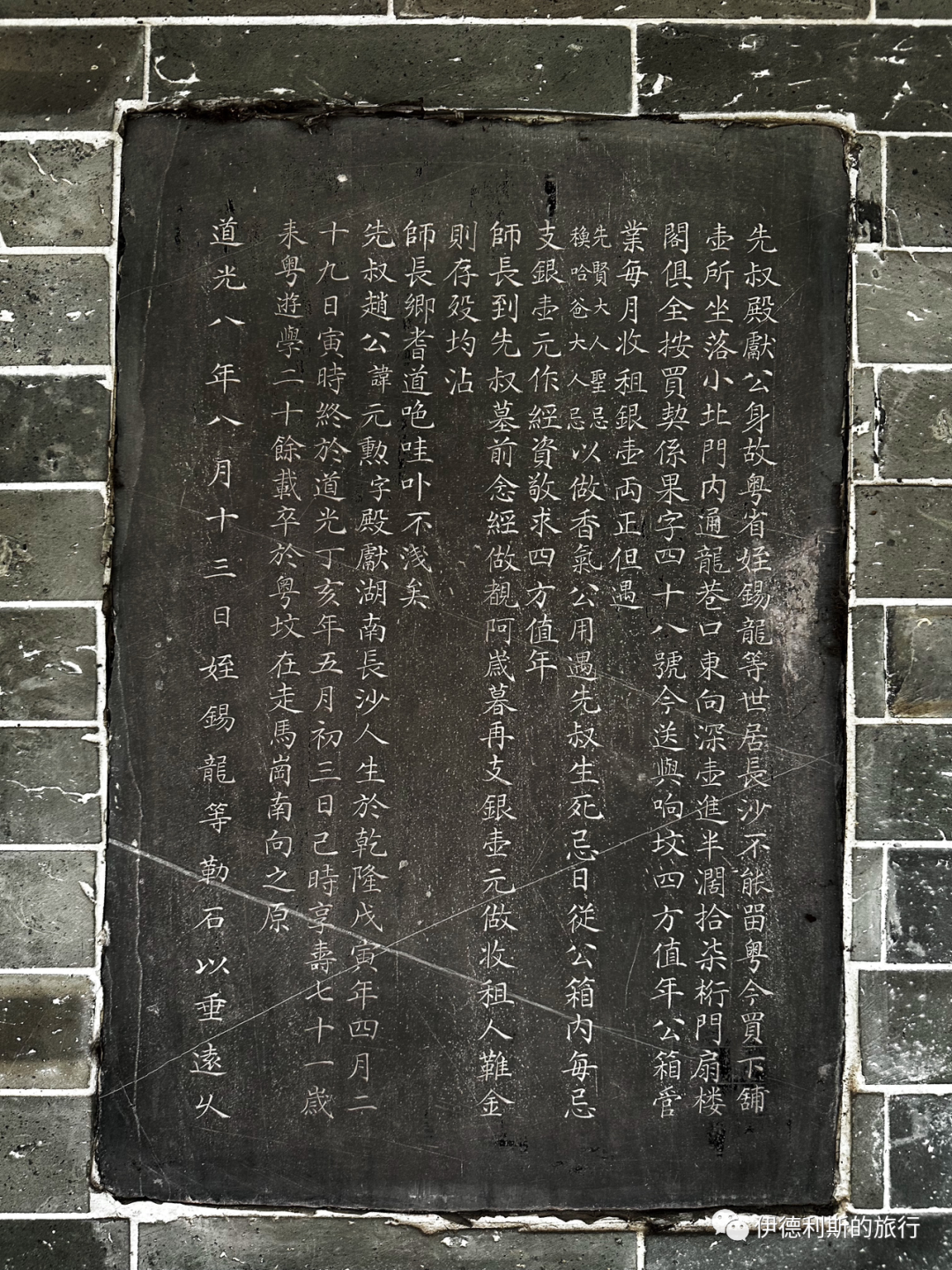
A 1864 stele recording the donation of merit money to the mosques by the Xiangmao firm. It records that Yunnan Hui Muslims Ma Dahe and Ming Qizhong brought funds from the Xiangmao firm in Tengchong, Yunnan, to do business in Guangzhou. Unfortunately, both passed away and were buried outside the North Gate. Because of the unrest in Yunnan at the time, the status of the Xiangmao firm was unknown, so the funds they left behind were donated to the four mosques in Guangzhou to purchase property for merit. Every year during Ramadan, dua is performed for the Xiangmao firm, Ma Dahe, and Ming Qizhong.
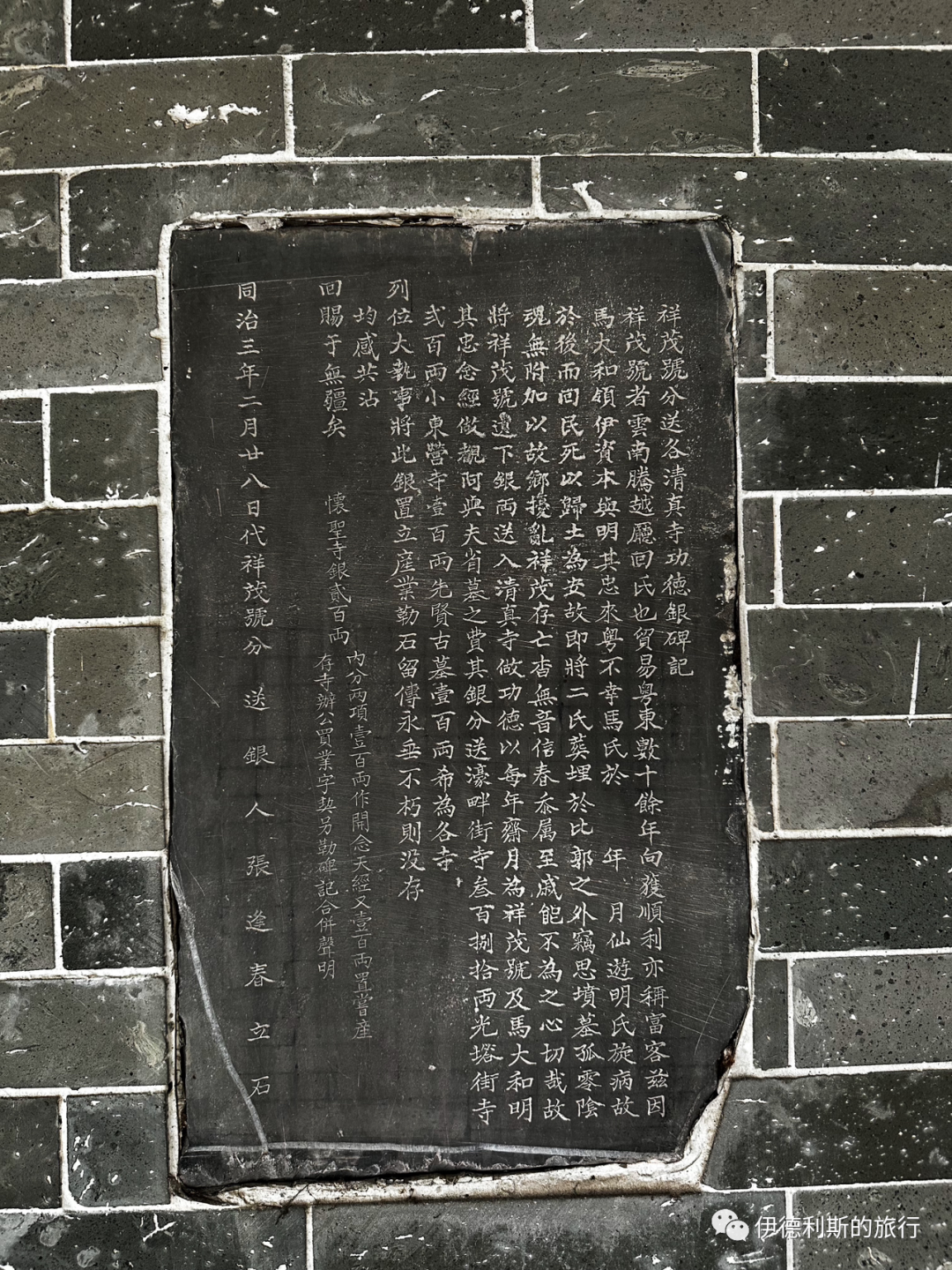
A 1827 stele recording the donation of property by the Sa Bu family. It records that because the Guangzhou Hui Muslim Sa Bu had no children, she donated the rent of a house in Nanshengli to the public fund of the four mosques after her death. Every year on her anniversary, a portion of the money is used to invite the teachers of the four mosques to recite scriptures and perform dua at her tomb. The public fund of the four mosques refers to the funds raised by the Muslim communities of the Huaisheng, Haopan, Nansheng, and Xiaodongying mosques. The rent is collected in a public fund and used for religious activities, helping the poor, and funeral arrangements for the deceased.
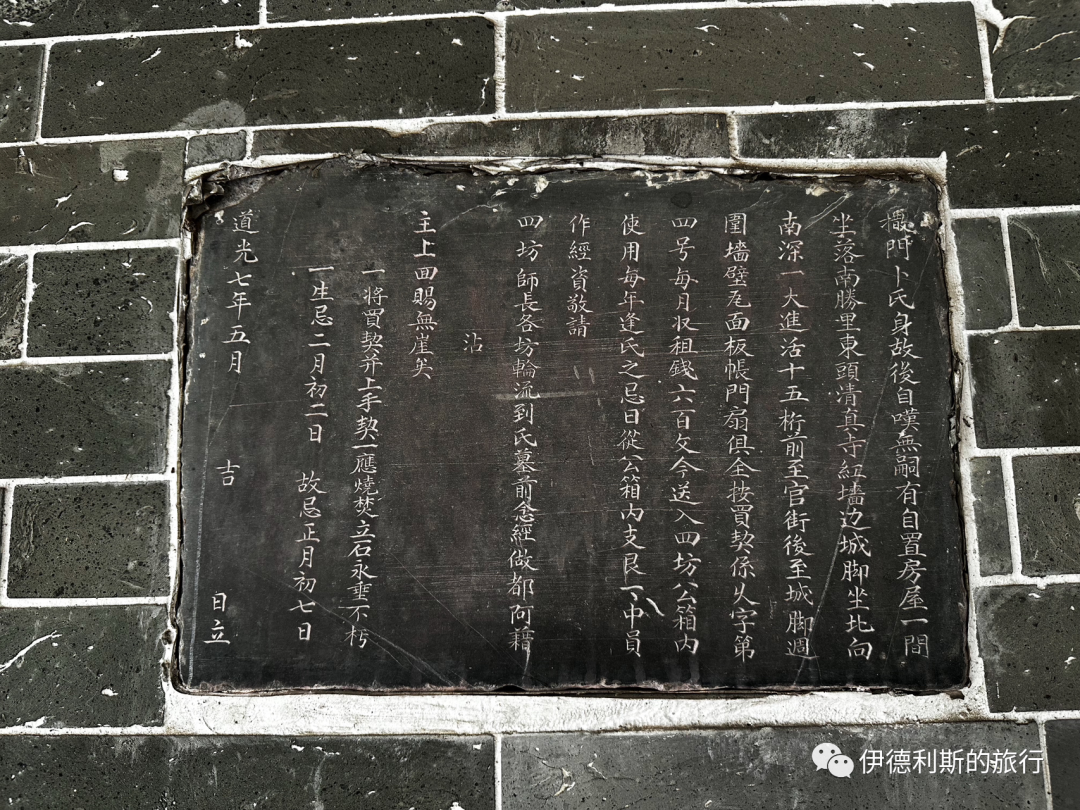
A 1829 stele recording the donation of silver to buy a house by Li Yingxiang. It records that former Guangzhou Assistant Commander Li Yingxiang bought a house in Zhanjiayuan inside the North Gate and donated it to the public fund of the four mosques to help the poor.
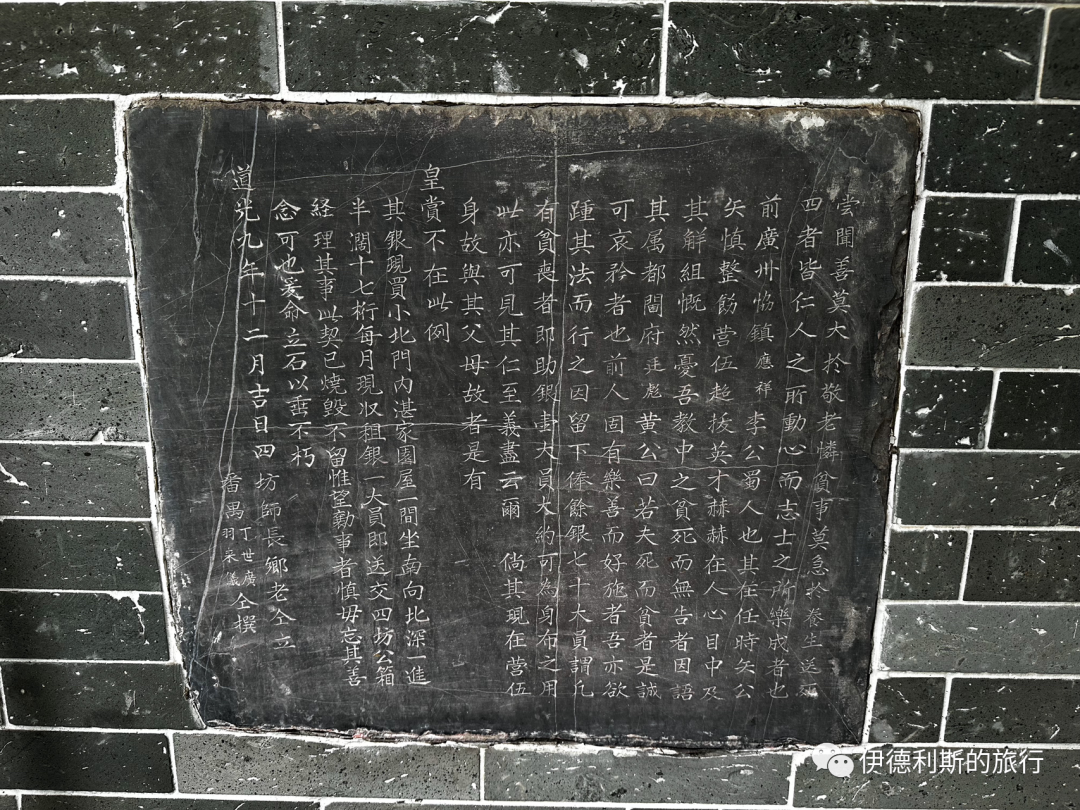
The 1693 public field stele at this mosque records that Huaisheng Mosque bought land outside the North Gate of Guangzhou after Li Mingfeng died. Tenant farmers worked the land, and the rent money supported mosque affairs. The Yu Yingxiang and Yu Ying'ao mentioned in the stele were the surviving sons of Yu Fengqi, one of the Three Loyalists of Islam.
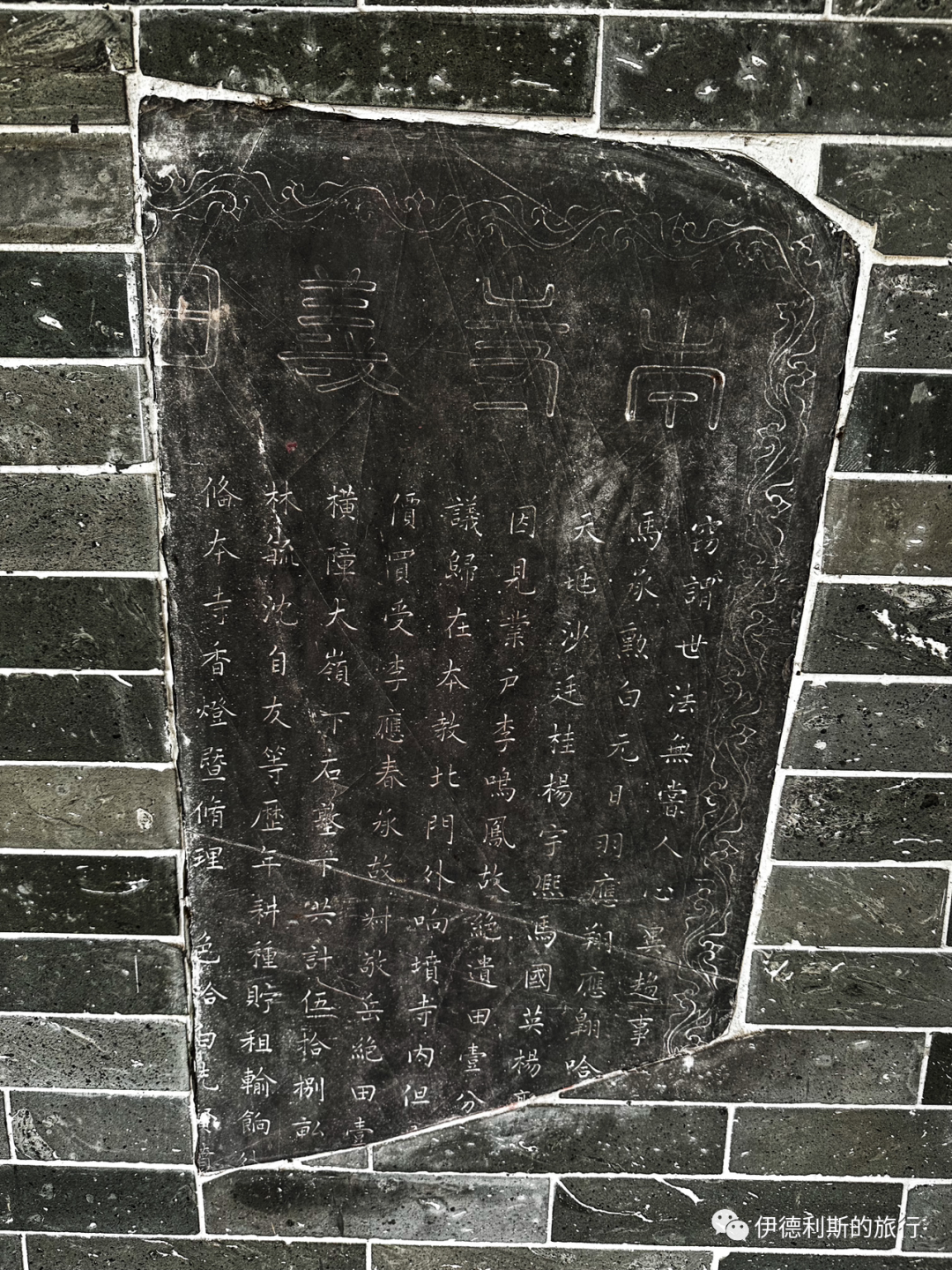
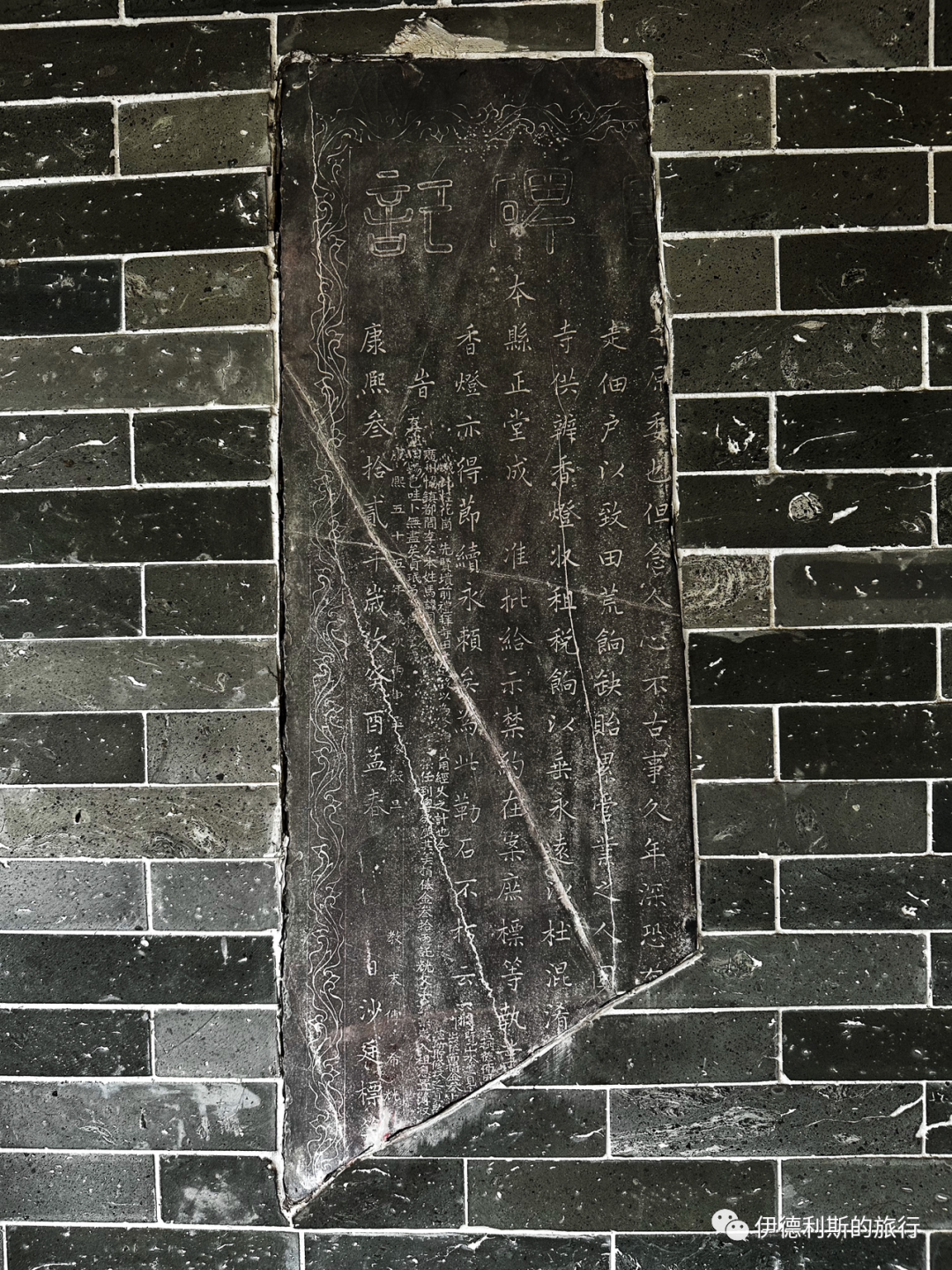
Tomb of the Three Loyalists of Islam
On the east side of the cemetery stands the Tomb of the Three Loyalists of Islam and the Three Loyalists Pavilion. They were built to honor three Hui Muslim generals—Yu Fengqi, Sa Zhifu, and Ma Chengzu—who died heroically defending Guangzhou against the Qing army. In 1650, Shang Kexi and Geng Jimao led the Qing army to surround Guangzhou. Southern Ming Governor Du Yonghe led his troops to hold the city. After an eight-month siege, the Qing army used heavy artillery to blast the city walls. They entered through the collapsed sections and took the city after several days of intense street fighting.
Among the Three Loyalists of Islam, Ma Chengzu was the first to be recorded. Qu Dajun, a famous scholar from the late Ming and early Qing dynasties, wrote in his book 'Records of Martyrs of the Four Ming Reigns' that Ma Chengzu was a high-ranking commander of the Guangzhou Right Guard. He defended Wuyang Gate and died in battle alongside his sons, Zongbao and Zongren, when Guangzhou fell. Nearly 40 years later, Qu Dajun met Yu Ying'ao, the son of another martyr, Yu Fengqi, on the streets of Guangzhou. He learned of Yu Fengqi's heroic deeds and wrote the 'Stele for the Ming Dynasty Commander Yu,' commonly known as the 'Three Loyalists of the Faith' stele.
The stele records that Yu Fengqi was a descendant of the Uyghur people. His ancestor Yu Shifu and Ma Chengzu's ancestor Mahema were both military leaders in Nanjing. They helped suppress rebellions in Guangdong and Guangxi during the Chenghua period of the Ming dynasty and settled in the Hui Muslim camp in Guangzhou. During the 1650 siege of Guangzhou, Yu Fengqi served as a commander and was responsible for defending the South Gate. When Guangzhou fell, Governor Du Yonghe led his officers to open the gates and flee. Some people urged Yu Fengqi to run away, but he scolded them. When the Qing army arrived, Yu Fengqi hanged himself at home to die for his country. Over a hundred people in his household were captured and killed, but his sons Yu Ying'ao and Yu Yingxiang survived because they were studying with a teacher outside the city.
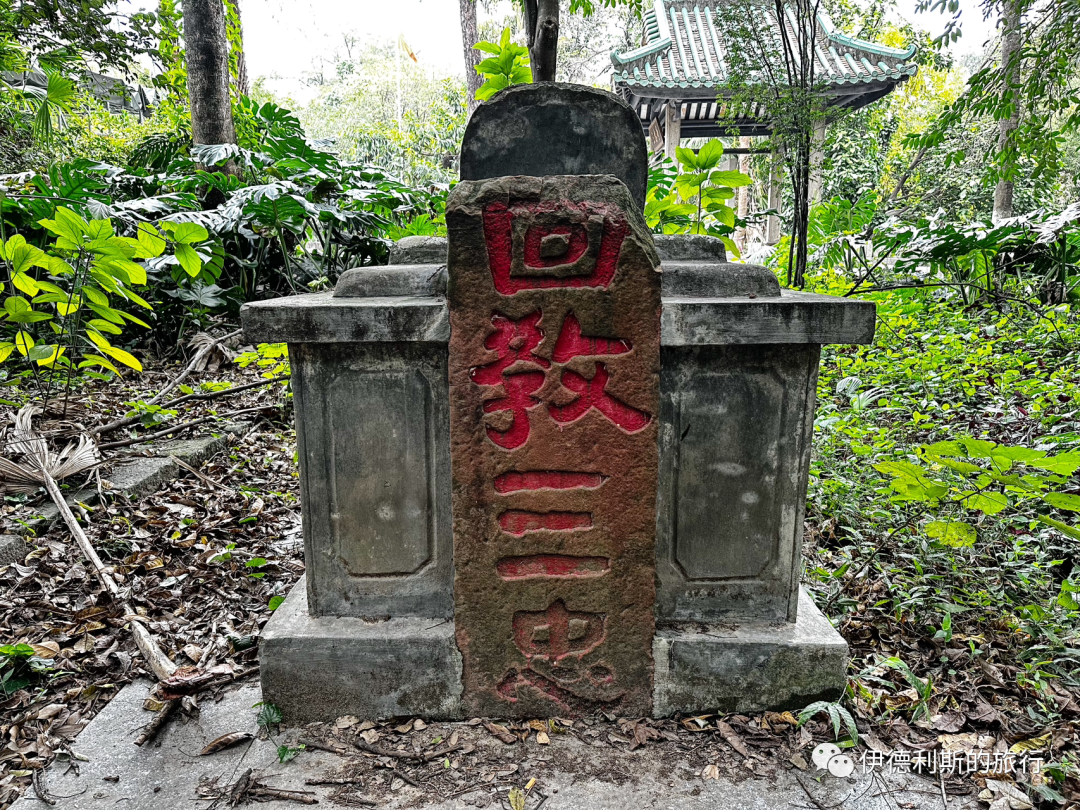
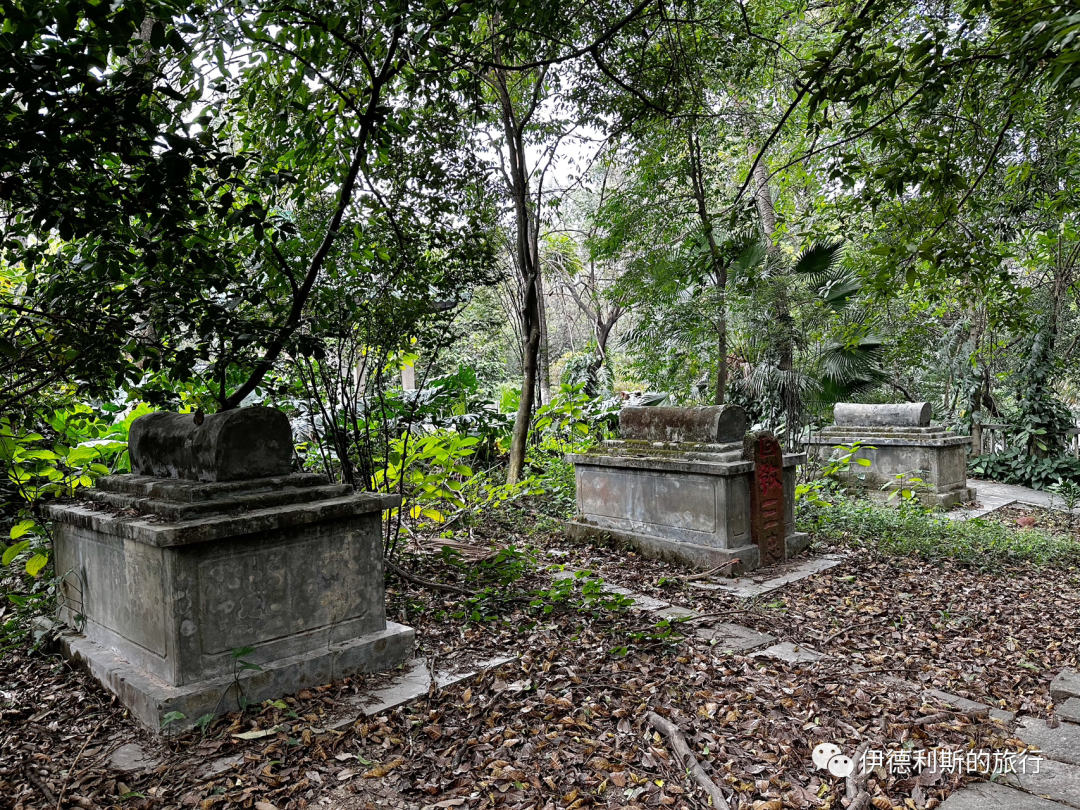
During the Qianlong period, Qu Dajun's works were banned and destroyed, and Yu Fengqi's tombstone disappeared. The current stele inside the Three Loyalists Pavilion was re-erected by the Islamic Association.
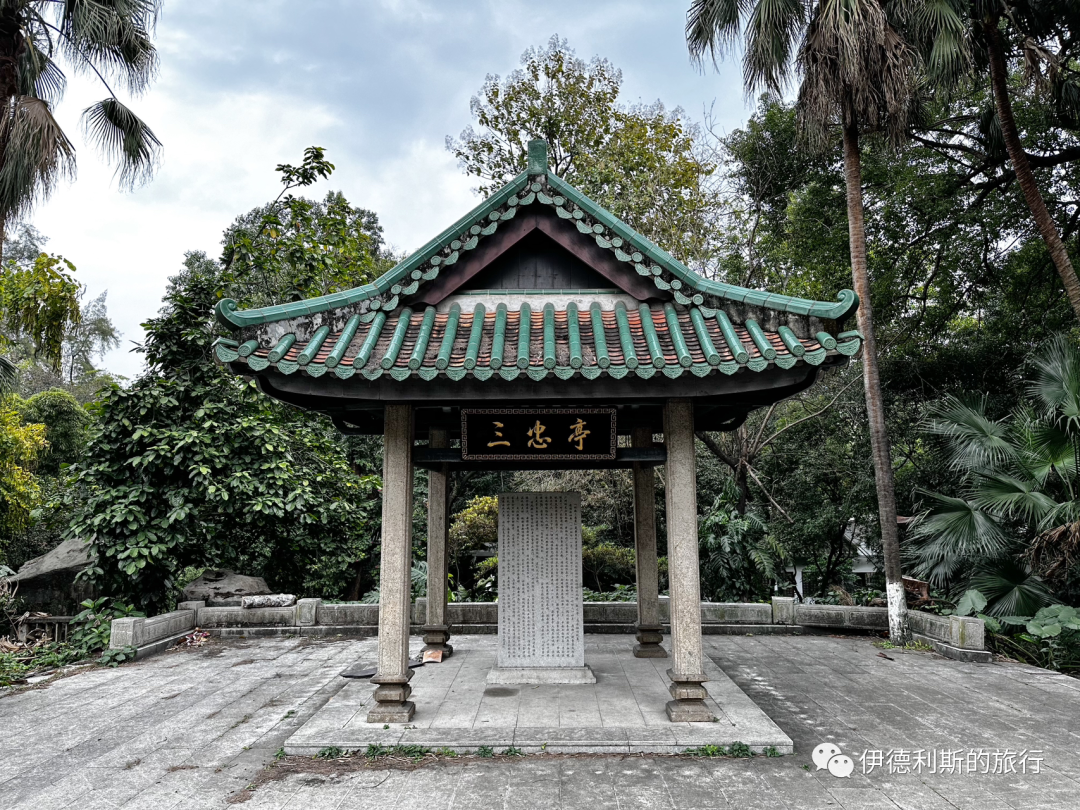
Summary: Guangzhou Huaisheng Mosque — Sage Tomb and Muslim History is presented here as a firsthand travel account in clear English, beginning with this scene: I left Macau on January 23, 2023, to visit the Macau mosque known as Moro Garden (Moro Yuan). The account keeps its focus on Huaisheng Mosque, Guangzhou Muslims, Sage Tomb while preserving the names, places, food, and historical details from the Chinese source.
I left Macau on January 23, 2023, to visit the Macau mosque known as Moro Garden (Moro Yuan). I ate delicious Indonesian Javanese food and wrote about it in my post, 'Moro Garden and Indonesian Food in Macau'. I arrived in Guangzhou on January 25, visited a friend (dosti), and ate various halal foods, which I posted about in "Hui Muslim Fried Dough (youxiang) and Yemeni Food in Guangzhou." On the afternoon of January 25, after Chen Yong and I finished our afternoon prayer (namaz) at Huaisheng Mosque, we took a good look around the mosque, which I hadn't visited in years, and then went to pay our respects at the Ancient Tomb of the Worthies (Xianxian Gumu).
The Foreigner Quarter (fanfang) of Guangzhou during the Tang and Song dynasties.
Huaisheng Mosque was once the heart of the Guangzhou Foreigner Quarter and the starting point for the faith entering China.
According to the Old Book of Tang, Records of the Arabs: "In the second year of Yonghui (651 AD), they first sent envoys to offer tribute." This was during the reign of Caliph Uthman. He sent Arab armies to conquer the Sassanid Empire of Persia and took control of the entire Persian Gulf, which led Arab and Persian merchant ships to sail continuously eastward until they reached Guangzhou. During the reign of Emperor Xuanzong of Tang, the government twice ordered a ban on trade with the Western Regions (in 714 and 743) and blocked land trade. Because of this, Guangzhou suddenly became the largest overseas trading port of the Tang Dynasty, and a large number of Arab and Persian merchants flooded into the city. According to the Record of the Eastern Expedition of the Great Tang Monk, when Jianzhen arrived in Guangzhou in 742, he saw "countless large ships from Brahman, Persia, and Kunlun in the river, all loaded with spices, medicines, and treasures, piled up like mountains." The ships were sixty to seventy feet deep. People from the Lion Kingdom (Sri Lanka), the Arab Kingdom (Dashi), Gutang, White Barbarians, and Red Barbarians came and went, living there in great variety.
More and more Arabs and Persians lived and stayed in Guangzhou, gradually forming a residential area recorded in historical books as the "Foreigner Quarter" (fanfang). In 827 (the third year of the Baoli era of the Tang Dynasty), Fang Qianli wrote in Miscellaneous Records of Exile: "Recently, in the Guangzhou Foreigner Quarter, the food offered often used honey and musk." This is the earliest clear record of the Guangzhou Foreigner Quarter. Additionally, the Arabic notes collected in 851, Accounts of China and India, contain detailed descriptions of Muslims in Tang Dynasty Guangzhou, specifically mentioning: "There is one Muslim imam and one mosque there." This is the earliest record of the faith in Guangzhou.
At the end of the Tang Dynasty, the rebel army of Huang Chao captured Guangzhou, and most of the Muslims were massacred. Trade between the Persian Gulf and Guangzhou did not recover until the Song Dynasty, when the Foreigner Quarter was rebuilt. The Northern Song geographer Zhu Yu recorded in Pingzhou Table Talk what his father, Zhu Fu, saw while serving as an official in Guangzhou between 1099 and 1102: "In the Guangzhou Foreigner Quarter, people from various overseas countries live together, and a Foreigner Chief (fanzhang) is appointed to manage the affairs of the quarter." He is specifically responsible for inviting foreign merchants to pay tribute, using foreign officials for this purpose. You can see that the Foreigner Quarter had a certain degree of autonomy at that time.
At the end of the Song and the beginning of the Yuan dynasties, Guangzhou suffered from war. Many Arab and Persian merchants moved to Quanzhou and other coastal cities to live. After the Yuan Dynasty, Quanzhou replaced Guangzhou as the number one trading port, and the Guangzhou Foreigner Quarter gradually declined.
The Light Tower (Guangta) of Huaisheng Mosque.
Today, the most important historical witness to the Guangzhou Foreigner Quarter is the Light Tower of Huaisheng Mosque. The Light Tower is in the southwest corner of Huaisheng Mosque. The 36-meter-tall cylindrical tower body is coated with shell lime and has small windows in the middle. Inside the tower, there are two brick spiral staircases that wind upward without intersecting, leading directly to the platform at the top of the tower. The base of the tower has a 3.5-meter-thick foundation made of red rice stone, and there are wooden piles several meters deep underneath, which is why it has stood for a thousand years without collapsing.
The Light Tower was first called the "Foreigner Tower" (fanta), and during the Song and Yuan dynasties, it was also called the "Huaisheng Tower." It was only after the Qing Dynasty that it began to be called the "Light Tower," a name that is still used today. to being a minaret (bangkelou), the Light Tower also served as a navigational lighthouse, and the golden rooster on top of the tower that could rotate with the wind also acted as a wind vane. Although the Light Tower is no longer near the shipping channel due to the southward shift of the Pearl River, it remains an important witness to Guangzhou as a commercial metropolis.
According to the Ming Dynasty Jiajing edition of the Guangzhou Gazetteer, Records of Foreign Affairs: "(Huaisheng Mosque) is two miles west inside the government city, built by foreigners during the Tang Dynasty, with a Foreigner Tower built inside." Most of the early records about the Light Tower currently come from the Song Dynasty. In 1088 (the third year of the Yuanyou era of the Northern Song Dynasty), Guo Xiangzheng, then the prefect of Duanzhou, climbed the Light Tower of Huaisheng Mosque with Jiang Zhiqi, the governor of Guangzhou, and wrote two poems: "Climbing the Foreigner Tower with Ying Shu" and "Presenting to Governor Jiang at Yuewang Terrace in Guangzhou."
During the Southern Song Dynasty, Fang Xinru and Yue Ke both recorded the Light Tower (Guangta) of the Huaisheng Mosque. In 1206 (the second year of the Kaixi era of the Southern Song), Fang Xinru wrote in 'One Hundred Poems of the South Sea' (Nanhai Baiyong): 'The Foreign Tower (Fanta) began in the Tang Dynasty and is called the Huaisheng Tower. It rises straight up, measuring sixteen zhang and five chi in height, with no levels inside. At the top sits a golden rooster that turns with the wind. Every year in the fifth or sixth lunar month, foreigners climb to the very top at the fifth watch to call out the name of Allah and pray for favorable winds. Below it is a mosque (libaitang).'
Yue Fei's grandson, the Southern Song writer Yue Ke, came to Guangzhou with his father in 1192 at the age of ten. In his book 'Notes on the History of the Song' (Tuo Shi), in the section 'Foreigners in Panyu' (Panyu Hailiao), he described the Muslim community in Guangzhou at that time in detail, including a specific description of the Light Tower: 'Behind it is a stupa that reaches into the clouds. Its style is unlike other towers; it is surrounded by bricks to form a large base, built up layer by layer, and covered with plaster on the outside, looking like a silver brush.' There is a door at the bottom. You climb the stairs inside, spiraling around like a snail shell, and you cannot see the steps from the outside. Every few dozen steps, there is an opening. In the fourth or fifth lunar month, when the ships are about to arrive, the foreigners enter the tower and call out through the openings to pray for the south wind, which often works. At the very top, there is a huge golden rooster that replaces the traditional wheel, though it is now missing one foot.
In the stele pavilion next to the main hall of the Huaisheng Mosque stands a replica of the stele commemorating the reconstruction of the Huaisheng Mosque and Tower in 1350 (the tenth year of the Zhizheng era of the Yuan Dynasty). This Yuan Dynasty stone stele was originally the most important religious inscription for the Huaisheng Mosque and all of Guangzhou, but it was unfortunately destroyed between 1966 and 1976. What we see now is a replica made from rubbings.
The inscription was written by Guo Jia, an official in the Guangdong Pacification Commission, calligraphed by the official Sa-di-mi-shi, and the title was carved by the official Seng Jiane. It is divided into Arabic and Chinese sections. The Arabic section at the top includes religious teachings and a dua, mentioning that the mosque was rebuilt by Masoud and the commander Mahamu, who was the Guangdong Pacification Commissioner at the time.
The Chinese section below describes the Light Tower in detail. It mentions that the Huaisheng Mosque suffered a fire in 1343 (the third year of the Zhizheng era) and was rebuilt in 1350 (the tenth year of the Zhizheng era), with only the Light Tower surviving the fire: 'At the foot of White Cloud Mountain, by the slope of Po Mountain, there is a pagoda. Its design is from the Western Regions, standing tall like stone.' 'It is something unseen in the Central Plains, and legend says it began in the Tang Dynasty... When the mosque was destroyed in the year of Guiwei of the Zhizheng era, the halls were left empty.' It also mentions that there was a golden rooster on top of the tower at the time, which served as a tool for passing ships to observe the wind direction. It also mentions that the imam (zhuchi) of the Huaisheng Mosque at the time was named Haji Hasaan.
During the Yuan Dynasty, the status of the Semu people rose, and many held important positions across the country. In the Guangdong region, this included Pu Shougeng, the military commander of Fujian and Guangdong; Mahamu, the Guangdong Pacification Commissioner; Pu Dexing, the deputy commander; and Lamadan, the salt commissioner of Guanghai. In 1347 (the seventh year of the Zhizheng era), the great traveler Ibn Battuta arrived in Guangzhou. In his 'Travels of Ibn Battuta,' he recorded: 'One area of the city is a Muslim residential district, which contains a mosque and a lodge, and has a judge and a sheikh... We stayed with Aohadunding Xizhalai, a kind and wealthy man, for fourteen days. During this time, the judge and other Muslims came one after another to send precious gifts, and every day they held banquets and invited singers to perform.'
After the Huaisheng Mosque was rebuilt in 1350 (the tenth year of the Zhizheng era), it was rebuilt twice more during the Ming Dynasty's Chenghua era and the Qing Dynasty's Kangxi era, and renovated three times during the Daoguang, Xianfeng, and Tongzhi eras. The stone railings around the current main hall have a style from the Yuan and Ming dynasties, while the Moon-Watching Pavilion (Kanyuelou) with its double-eaved hip-and-gable roof reflects the style after the Ming and Qing renovations.
During the Republic of China era, the Huaisheng Mosque in Guangzhou gradually fell into disrepair. The land around the Light Tower was occupied by nearby residents, and the tower gate was buried. In 1934, the Guangdong branch of the Chinese Muslim Association raised nearly 20,000 small silver coins through donations, reclaimed the occupied land around the Light Tower, and reinforced the tower.
After the reinforcement was completed, two stone steles, one in Chinese and one in Arabic, were carved and embedded at the base of the tower. Only the Arabic stele remains today, written by Ma Ruitu, an imam living in Guangzhou. Ma Ruitu was from Daying, Yuxi, Yunnan. He came from a family of Islamic scholars and served as the imam of the Haopan Mosque and Nansheng Mosque in Guangzhou after 1927.
To prevent termite damage, the Huaisheng Mosque also demolished the original brick-and-wood main hall in 1935 and rebuilt it as a reinforced concrete structure, while still maintaining the previous double-eaved hip-and-gable roof design.
Plaques of the Huaisheng Mosque.
There are many Qing Dynasty plaques inside the Huaisheng Mosque, which reflect the prosperity of the Muslim community in Guangzhou during that time.
In 1698 (the Kangxi era), the imperial guard and scholar Gai Rixin inscribed the 'Grace of the Emperor for All Time' plaque.
In 1698 (the Kangxi era), the scholar and Hanlin Academy official Tie Fanjin inscribed the 'Righteous Heart and Sincere Intent' plaque.
In 1698 (the Kangxi era), the official Yang Guolin erected the 'Great Mercy for the World' plaque.
In 1721 (the Kangxi era), the military official Yan Guangwu erected the 'Utmost Sincerity Never Ceases' plaque.
In 1755 (the Qianlong era), the military official Li Xianxiang inscribed the 'Following the Past and Opening the Future' plaque.
In 1846 (the Daoguang era), the committee members jointly erected the 'Sharing the Muslim Gift' plaque.
In 1867 (the Tongzhi era), the military official Bao Yingxiong erected the 'Overlapping Blessings from the Lord' plaque.
In the 26th year of the Guangxu reign (1900), Yang Shu, a second-rank official with a peacock feather and special imperial appointment, and Yang Xun, a fourth-rank official with a peacock feather and a member of the Plain Red Banner Han Army, dedicated the 'Grace Shared by All' plaque.
In the 31st year of the Guangxu reign (1905), the officials, elders, and managers of the Huaisheng Mosque (Guangta Si) dedicated the 'Benevolent Rain and Kind Clouds' plaque to celebrate the birthday of Master Ma.
Donation tablets inside the stele corridor of the Huaisheng Mosque.
The 1761 tablet regarding the purchase of a shop by the Elderly Association records that in 1716, Ma Kuan and 27 other Hui Muslim families formed an association to buy a shop across from the Haopan Mosque, using the rent to cover funeral expenses for their members. Over 40 years later, after all the families had finished their funeral needs, their descendants followed their ancestors' wishes and donated the shop to the Haopan Mosque and the Huaisheng Mosque.
The 1770 tablet regarding the donation of a shop at the end of Haopan Street to the four mosques in the old and new cities records that Yang Yuanxiu, following his brother Yang Yuanzhen's dying wish, donated a shop to the Huaisheng, Haopan, Nansheng, and Xiaodongying mosques to fund their religious schools and teacher salaries.
The 1783 tablet from the Jiangnan guests in Foshan records that although many Hui Muslims lived in Foshan, they had never built a mosque. In 1708 (the 47th year of the Kangxi reign), Hui Muslims from Jiangnan who were doing business in Foshan bought a house from a Mr. Wang in Qingyun Lane, Panyong, and built a mosque. Later, because all the Hui Muslims in Foshan moved to Guangzhou, the mosque was left unmanaged and was occupied by local thugs during the Qianlong reign. Jiangnan Hui Muslims living in Guangzhou consulted with the teachers of the Guangzhou mosques and sold the Foshan mosque, donating the funds to the Huaisheng, Xiaodongying, Haopan, and Nansheng mosques in Guangzhou, and the mosque in Sanya's Huixin Village (Hainan Sanya Huixin Cun).
The 1903 tablet regarding the donation of a house by Lin Liye and others records that twenty Hui Muslim women donated a house at the entrance of Taojia Lane to the Huaisheng Mosque's public fund, with the rent used for prayers on the anniversary of the saintly Lady Fatimah (Fatumei Shenghui).
The 1841 tablet regarding the donation of a house by Mrs. Jin Zhang records that she donated a house she owned in Nansheng Lane to the Huaisheng Mosque to support religious studies.
The 1855 tablet regarding Liu Jicai's donation to education records that he donated a house he owned at the entrance of Cuifu Street to the Huaisheng Mosque to supplement religious study funds.
The 1864 tablet regarding the sale of a shop by He Qieben records that a Manchu named He Qieben, needing money urgently, sold his late father's shop on Dashi Street to the Huaisheng Mosque through a middleman, Cun Gui of the Plain Red Banner Manchu.
The 1848 tablet regarding the donation of funds by 37 people to the Huaisheng Mosque records that 37 Hui Muslims pooled money to buy a shop on Guangta Street, with the rent deposited into the Huaisheng Mosque's public fund to cover the annual Isra and Mi'raj (Dengxiao) expenses.
The 1863 tablet regarding the donation to the Huaisheng Mosque school records that Hai Tingchen donated two properties he owned inside the Guide Gate at the Four Archways (Si Pai Lou) and in Qingyun Lane to the Huaisheng Mosque to supplement religious study funds. Additionally, the Shunsheng Hall donated a house in Guangta Foot Lane to the Huaisheng Mosque to supplement religious study funds.
The 1841 tablet regarding the donation of a house for the Huaisheng Mosque school records that Ma Buqing donated a house he bought on Changtang Street inside the Wenming Gate to the Huaisheng Mosque to serve as a school, with funds used for teaching and annual memorial services.
The 1913 tablet regarding the Huaisheng Mosque's property purchase records that the mosque sold a jade shop and bought three houses located at 20 Agate Lane (Manaoxiang), 7 Huodui Lane in Tao Street, and 21 Huilong Lane.
Ancient Tombs of the Worthies (Xianxian Gumu).
After leaving the Huaisheng Mosque, I went to visit the Ancient Tombs of the Worthies. The Ancient Cemetery of the Worthies in Guangzhou is commonly known as the Huihui Cemetery, the Great Man's Cemetery, or the Echoing Cemetery. It has been a burial ground for Muslims in Guangzhou since the Tang Dynasty. The earliest record of the Ancient Cemetery of the Worthies comes from 'One Hundred Poems of the South Sea' (Nanhai Baiyong) written by Fang Xinru in 1206 (the second year of the Kaixi period of the Southern Song Dynasty): 'The tombs of the foreigners are ten miles west of the city, thousands of them, all with heads to the south and facing west.'
At the center of the ancient tombs lies the legendary Sa'd ibn Abi Waqqas, the first person to come to China to spread the faith. Records show the status of the Tomb of Waqqas (Wangesu mu) rose during the Yuan and Ming dynasties. The Ming dynasty book Guangzhou Prefecture Records (Guangzhou fuzhi) notes: Every year, people of all surnames must visit the tomb to pay respects and recite scriptures, a tradition that continues to this day. Countries in the Western Regions respected this influence. Every time they sailed thousands of miles to Guangzhou, they considered visiting the tomb an honor. Even the most noble visitors would crawl and bow in Guangzhou to show their utmost sincerity.
The Ancient Tombs of the Worthies were renovated several times during the Jiaqing, Daoguang, and Republican periods. Traditionally, on the 27th day of the 11th month of the Islamic calendar, Guangzhou Muslims hold a memorial service at the tombs, known as the 'Master's Anniversary' (Daren Ji).
The tomb path outside the cemetery has north and south entrances. At the south end stands a stone archway inscribed with 'Path to the Ancient Tombs of the Worthies,' featuring a couplet: 'Traveling across the vast ocean to reach the Eastern Land, the ancient sage spent his life spreading the holy teachings;' 'Explaining the scriptures and teachings with wisdom reaching the Western Regions, the Muslim people look up to this peak for all generations.'
Passing through the stone archway, you can see the 'Proclamation No. 5 of the Guangdong Provincial Government' written by Governor Liao Zhongkai in 1924, which records that he sent people to survey the boundaries of the 'Muslim Public Cemetery' at Guihuagang and set up stone markers to protect the cemetery from encroachment.
South Courtyard of the cemetery.
Continuing along the tomb path, you arrive at the cemetery of the Ancient Tombs of the Worthies. The cemetery is surrounded by a blue brick wall. The main gate is inscribed with Ancient Tomb of the Muslim Worthies (Qingzhen Xianxian Gumu). On the back, there are plaques donated by the congregation of the Huaisheng Mosque in Guangzhou, dating back to the first year of the Xuantong reign (1909) and the second year of the Xuantong reign (1910). These plaques feature the Islamic declaration of faith and the phrase Goodness has its reward.
The cemetery is divided into north and south courtyards. The south courtyard includes a reception room, a lounge, a water room, and a women's prayer hall. In the center stands a square pavilion decorated with many plaques and couplets. The courtyard also houses the Worthies' Well (Xianxian Jing), which provides sweet water.
Some plaques and couplets in the south courtyard:
In the tenth year of the Jiaqing reign (1805), Xu Wenmo, a military official holding the title of Jiyong Baturu and commander of the Guangdong Gao-Lian-Luo region, donated the plaque inscribed with True Enlightenment of the Western School (Zhengjue Xizong).
In 1913, a group of people donated the plaque inscribed with Spreading the Faith (Chanyang Shilai), calligraphed by Ma Yongkuan.
In 1924, a group of people donated the plaque inscribed with Ancient Faith that Opened the Heavens (Kaitian Gujiao).
A memorial archway separates the north and south courtyards. It features a stone plaque from the first year of the Yongzheng reign (1723) inscribed with High Virtue to be Admired (Gaofeng Yangzhi).
The north courtyard of the cemetery.
Passing through the archway, you find a granite path with stone railings, rebuilt in the Wuxu year of the Daoguang reign (1838) by the Baodunhe Hall. The Baodunhe Hall was a prominent family of Hui Muslims in Guangzhou. The sixth-generation member, Bao Antai, served as a postal official in Guangdong during the Daoguang reign. The ancestral graves of the Baodunhe Hall are also located on the north side of the Ancient Tomb of the Muslim Worthies, which I will introduce later in this article.
At the end of the path lies the tomb chamber of Waqqas. The tomb chamber is a domed building with a porch added later. The two outer stone pillars are carved with a couplet from the Jiawu year of the Guangxi reign (1894), donated by Cai Jinzhang, the Guangdong land forces commander: Spreading the holy teachings in the southern land, passed down through generations, thirty volumes strictly following the divine instructions; Establishing a virtuous reputation in the eastern Guangdong, standing tall and independent, for thousands of years all look up to this model.
The two inner stone pillars feature a wooden couplet carved in the eleventh year of the Jiaqing reign (1806) by Hu Changqing, a scholar from Guilin: Receiving the holy teachings from the West, the source of the heart inherited for fifty generations; Serving the heavenly scriptures in the eastern land, the tradition remains for thousands of years.
In the center hangs a plaque from the Yiwei year of the Guangxi reign (1895), donated by Xu Yingzhong, the imam of Huaisheng Mosque, and others, inscribed with Long-lasting Respect and Far-reaching Journey (Changzhan Yuanxing).
Inside the tomb chamber is a dome built with corbelled masonry. Because it creates a loud echo when reciting the Quran inside, it is also called the Echoing Tomb (Xiangfen). Under the dome lies the tombstone of the worthy Waqqas, covered with multiple layers of burial cloths placed by visitors.
Graves around the tomb chamber.
There are many Muslim graves surrounding the tomb chamber.
The tombstone of the Turkish Haji Mekemede, carved in the sixteenth year of the Qianlong reign (1751). The inscription records that he was from Rome (the Anatolia region). He traveled to Guangzhou in 1749 specifically to pay respects to the worthy Waqqas, stayed at the Da'erkaha Mosque, and passed away two years later. It is currently impossible to verify exactly which mosque the Da'erkaha Mosque refers to.
The tombstone of Yang Wendeng, carved in the twenty-fifth year of the Qianlong reign (1757), written by his close friend Zhamalunding. The inscription records that Yang Wendeng, whose religious name was De-ya-ao-ding, was a scholar of Islamic law who lived to be 87 years old.
The tombstone of the forty worthies from Medina, re-carved in the seventh year of the Jiaqing reign (1802). The inscription records that the forty worthies from Medina were sent by the Prophet Muhammad to accompany Waqqas to China to spread the faith. During a congregational prayer, they were all killed by bandits and became martyrs (shahid).
The tombstone of General Zhang Delu, carved in the twelfth year of the Guangxi reign (1886), written by Haji Salih. According to the inscription, General Zhang Delu, whose religious name was Du-wu-da Ge-ma-lun-ding, was originally from Tianjin. He served as a commander in Gaozhou and Chaozhou in Guangdong, Guzhou in Guizhou, and Qiongzhou. He was highly respected and used his own money and effort to help mosques and schools. He passed away while in office at the age of 52.
The tombstone of the worthy Erbudanglexi (Abdullah), carved in the fifteenth year of the Guangxi reign (1889) and the sixteenth year of the Guangxi reign (1890). The inscription records that the person buried here was named Abdullah ibn Shaaban. He was from Mecca and was an elder of the Shadhili school. He arrived in Guangzhou by boat in 1886. He preached in the provinces of Jiangnan, Henan, Shaanxi, and Gansu. Two years later, he returned to Guangzhou to continue teaching students. He passed away in 1889 at the age of 46 due to illness from overwork.
The tombstone of General Cai Jinzhang, who held the title of Jianwei General, was carved in the 20th year of the Guangxu reign (1894). Cai Jinzhang was from Shouzhou, Anhui. He served as a regional commander for the Guangdong and Guangxi provinces, a land force commander in Guangdong, a regional commander in Guangxi, and a leader of various defense battalions in Guangxi. He also commanded all military forces in Guangji and Guangsheng, Guangdong, and helped manage provincial military affairs.
The tombstone of Haji Ma Xiaoxian was carved in the 25th year of the Guangxu reign (1899). Ma Xiaoxian was from Hezhou, Gansu. By age 24, he had finished studying 11 religious texts, which allowed him to wear the robes and lead the congregation as an imam. He came to Guangzhou to preach and passed away at the age of 85 in a school.
The tombstone of Haji Fa Mingdao, an imam, was carved in the third year of the Xuantong reign (1911). Imam Fa Mingdao, whose religious name was Muhammad Umar, was from Hezhou, Gansu. He studied and preached at the Haopan Mosque in Guangzhou and later passed away in the city.
The tombstone of Haji Sheikh Zhang Jinxiu was carved in 1913. Zhang Jinxiu, whose religious name was Sahri Muhammad Shams al-Din, was from Hezhou, Gansu. He studied and preached in Guangzhou and eventually passed away there.
The tombstone of the elder imam Ma Yunting was carved in 1929. Ma Yunting was from Eshan County, Yunnan. His mother once ran a teacher training school for women in Guangzhou. He later came to Guangzhou to preach for 28 years, gained great respect, and passed away at age 80.
The tombstone of Ma Zhaofang was carved in the sixth year of the Daoguang reign (1826).
The tombstone of Zhang Xiaode was carved in the 26th year of the Guangxu reign (1846). He was from Deping County, Jinan Prefecture, Shandong. Deping County was abolished in 1956, and its former seat is now Deping Town in Lingyi County.
Inside the cemetery is the Hong Family Charity Land stele, carved in the 36th year of the Kangxi reign (1697). It records that Hong Yusheng, a Hui Muslim from Linqing, Shandong, followed the Qing army to Guangzhou as part of the Plain Yellow Banner. His son, Hong Yugong, died young in Guangzhou, and his daughter-in-law, surnamed Ma, remained chaste and filial until her death. Consequently, Hong Yusheng and his wife bought a plot of land on Dashe Mountain outside the North Gate of Guangzhou, which contained over a thousand grave sites. Except for the burial of his daughter-in-law, the rest was donated as a public cemetery for Muslims. The text was written by Ma Xi, a candidate for prefect in Jiangning, who was a Muslim official.
Graves on the southwest side of the cemetery.
There are many Muslim graves on the southwest side of the Ancient Tomb of the Worthies. This area was reorganized in 2010 after scattered old graves around the tomb were moved here.
Among them are two very precious Song Dynasty Muslim tomb cover stones, which are shaped the same as those from the same period in Quanzhou. One of them has a stone tablet in front of it, carved in 1948, stating that it is the tomb of Sa Yihu, the ancestor of the Sa family in Guangdong, re-erected by his descendants. The top of the other cover stone is carved with Arabic text: The Prophet said, when you are in doubt, seek advice from those in the graves! In the grave, there is either a garden of paradise or a pit of hellfire. The Sa family Hui Muslims are one of the only two remaining descendants of the foreign merchants from the Tang and Song dynasties in Guangzhou, having lived in the city for over a thousand years.
During the Song Dynasty, the overland Silk Road became difficult to travel due to wars with the Liao, Western Xia, and Jin dynasties, but maritime trade continued to grow in scale. Arab and Persian merchants dominated Indian Ocean trade during this period. They did business in cities like Guangzhou, Quanzhou, Yangzhou, and Hangzhou, playing a major role in the religious and economic development of the southeastern coastal regions. According to the Song Huiyao Gao, in 1028 (the sixth year of the Tiansheng reign of the Song Dynasty), Emperor Renzong issued a special decree to strengthen import trade in Guangzhou: Guangzhou has seen few foreign ships lately; the local government and the transport commission should invite and settle them. After this, many Muslim merchants settled in Guangzhou, and the foreign quarter (fanfang) that had been destroyed during the Huang Chao Rebellion at the end of the Tang Dynasty was rebuilt.
However, between 1276 and 1278, the two-year war between the Southern Song and the Mongol army caused devastating damage to Guangzhou. Muslim merchants left the city to escape the chaos, and many moved to Quanzhou. Today, among the local Hui Muslims in Guangzhou, only the Sa family can be verified as descendants of the Tang and Song foreign merchants; all other Hui Muslims moved here after the Ming and Qing dynasties. The Pu family, who have lived in Zhugang and Pu villages in Guangzhou for generations, are also descendants of foreign visitors from the Tang and Song dynasties. However, they no longer show any signs of their foreign ancestry and their customs are exactly the same as the local Han people.
According to the Sa Family Genealogy of the Two Yue Regions, our clan's history began with the Muslim people, established its roots in China, flourished during the Tang dynasty, continued through the Song, rose during the Yuan, branched out in the Ming, and spread across eastern and western Guangdong. According to the Guangzhou Prefecture Records, during the Zhizheng era of the Yuan dynasty, seventeen families led by Sa Dula guarded the Ancient Tomb of the Worthies and the mosque outside the North Gate. The Sa Family Genealogy of the Two Yue Regions records that Sa Dula was a descendant of the Sa family. When the Qing army attacked Guangzhou at the end of the Ming dynasty, one of the three loyal Muslim defenders who died for the city was named Sa Zhifu. According to the Sa family records, the Sa and Sa families are one, and he was also a descendant of the Sa family.
To the southwest of the cemetery is the tomb of Imam Ma Renfeng of the Huaisheng Mosque in Guangzhou. Imam Ma Renfeng was a local Hui Muslim from Guangzhou. He studied the scriptures under Imam Wang Zhizhou from a young age. After completing his training, he began serving as an imam at the Huaisheng Mosque in 1912 and became the head imam in 1928. After 1938, to escape the threats and pressure of the Japanese army, Imam Ma fled to the Baihedong refugee camp. He later moved to Hong Kong and served as an imam at the Hong Kong Chinese Muslim Fraternity Association. In 1954, while attending the National Day celebrations, Imam Ma suffered a sudden brain hemorrhage from excitement and passed away at the age of 60.
There are also many tombs of Guangzhou Hui Muslims from the Qing dynasty nearby.
The stele corridor on the east side of the cemetery.
Directly east of the cemetery is a stele corridor that preserves a series of stone inscriptions from the Ancient Tomb of the Worthies. The row on the far left mostly concerns the protection of the Muslim cemetery. From left to right, they are as follows:
A reward notice stele from the Guangzhou Prefecture during the Guangxu era. It reiterates the official ban on protecting the Muslim cemetery and encourages the public to arrest offenders.
A boundary marker stele for the protection of the Muslim cemetery, carved in 1924. In 1924, after Guangzhou Hui Muslims successfully opposed the Dazhen Company's attempt to claim land outside the North Gate, they held a city-wide celebration at the mosque outside the North Gate. They invited prominent Hui Muslims from Hong Kong and Macau to attend, and the assembly decided to set up boundary markers at all Muslim cemeteries to protect them.
A stele commemorating the renovation of the Ancient Tomb of the Worthies in the 17th year of the Jiaqing era (1812). The original stele was carved in the 29th year of the Kangxi era (1690) and recorded the renovation of the Ancient Tomb of the Worthies by Hui Muslims like Sun Ying. It was re-carved in 1812 by Liu Chengzhang and others from the Guangta Mosque.
A 1878 official notice from the Guangzhou Prefecture strictly forbidding the destruction of graves and the sale of land by local workers. It was issued by Guangzhou Prefect Feng Taisong to protect the cemetery outside the North Gate and was originally placed next to the mosque there.
A 1925 notice from the Guangzhou Finance Bureau, signed by Director Wang Tang, declaring the preservation of the Muslim cemetery. The Guangzhou Municipal Construction Commission verified and approved the map of the public Muslim cemetery surveyed and drawn by Hui Muslim representative Ma Yunting and others, confirming the boundaries and area of the cemetery.
Embedded in the stele corridor is a series of donation steles, mostly recording the donation of property and land by Guangzhou Hui Muslims during the Qing dynasty and the Republic of China:
A 1779 stele recording a collective donation to repair abandoned graves and fill in ponds. It records that the elders of the four mosques in Guangzhou (Huaisheng, Haopan, Nansheng, and Xiaodongying) raised funds to buy a house belonging to the Ma family in Nanshengli, using the rent to repair the Ancient Tomb of the Worthies.
A 1785 stele recording a house donation by overseas Muslims. It records that overseas Muslims Palalibike and Tanni, out of respect for the worthy Wan Gesu, bought a house in Nanshengli and donated it to the Huaisheng Mosque, requesting that the mosque go to the ancient tomb to perform dua on the anniversary of the worthy's passing.
A 1815 stele recording the conversion of houses donated by Elder Yang into shops. It records that Guangzhou Hui Muslim Elder Yang Yuanzhen donated a house in the western section of Haopan Street to the four mosques in 1759 to support scriptural studies. Later, because the house fell into disrepair and no one managed it, the Dai Wanli shop in Yuxianfang took the lead in converting the house into a storefront. They used the rent for scriptural studies and religious anniversaries, and the remaining money was given to the Ancient Tomb of the Worthies to perform the anniversary rites for Wan Gesu.
A 1830 stele recording the donation of property by the Tuo Yang family. It records that after the Hui Muslim Tuo Yang passed away, she donated two houses in Nanshengli and Luohuata Street to the public fund of the four mosques, requesting that the presiding teacher be invited to the tomb to perform dua on her anniversary.
A 1828 stele recording a house donation by Yang Xilong for his late uncle. It records that Changsha Hui Muslim Yang Yuanxun came to Guangzhou to study for over 20 years. After he passed away and was buried in Zoumagang, his nephew Xilong bought a shop at the entrance of Tonglong Lane inside the North Gate and donated it to the public fund of the four mosques. It was used for religious anniversaries and the anniversary of the worthy Wan Gesu, and to invite the presiding teacher to the tomb to recite scriptures and perform dua on his uncle's anniversary.
A 1864 stele recording the donation of merit money to the mosques by the Xiangmao firm. It records that Yunnan Hui Muslims Ma Dahe and Ming Qizhong brought funds from the Xiangmao firm in Tengchong, Yunnan, to do business in Guangzhou. Unfortunately, both passed away and were buried outside the North Gate. Because of the unrest in Yunnan at the time, the status of the Xiangmao firm was unknown, so the funds they left behind were donated to the four mosques in Guangzhou to purchase property for merit. Every year during Ramadan, dua is performed for the Xiangmao firm, Ma Dahe, and Ming Qizhong.
A 1827 stele recording the donation of property by the Sa Bu family. It records that because the Guangzhou Hui Muslim Sa Bu had no children, she donated the rent of a house in Nanshengli to the public fund of the four mosques after her death. Every year on her anniversary, a portion of the money is used to invite the teachers of the four mosques to recite scriptures and perform dua at her tomb. The public fund of the four mosques refers to the funds raised by the Muslim communities of the Huaisheng, Haopan, Nansheng, and Xiaodongying mosques. The rent is collected in a public fund and used for religious activities, helping the poor, and funeral arrangements for the deceased.
A 1829 stele recording the donation of silver to buy a house by Li Yingxiang. It records that former Guangzhou Assistant Commander Li Yingxiang bought a house in Zhanjiayuan inside the North Gate and donated it to the public fund of the four mosques to help the poor.
The 1693 public field stele at this mosque records that Huaisheng Mosque bought land outside the North Gate of Guangzhou after Li Mingfeng died. Tenant farmers worked the land, and the rent money supported mosque affairs. The Yu Yingxiang and Yu Ying'ao mentioned in the stele were the surviving sons of Yu Fengqi, one of the Three Loyalists of Islam.
Tomb of the Three Loyalists of Islam
On the east side of the cemetery stands the Tomb of the Three Loyalists of Islam and the Three Loyalists Pavilion. They were built to honor three Hui Muslim generals—Yu Fengqi, Sa Zhifu, and Ma Chengzu—who died heroically defending Guangzhou against the Qing army. In 1650, Shang Kexi and Geng Jimao led the Qing army to surround Guangzhou. Southern Ming Governor Du Yonghe led his troops to hold the city. After an eight-month siege, the Qing army used heavy artillery to blast the city walls. They entered through the collapsed sections and took the city after several days of intense street fighting.
Among the Three Loyalists of Islam, Ma Chengzu was the first to be recorded. Qu Dajun, a famous scholar from the late Ming and early Qing dynasties, wrote in his book 'Records of Martyrs of the Four Ming Reigns' that Ma Chengzu was a high-ranking commander of the Guangzhou Right Guard. He defended Wuyang Gate and died in battle alongside his sons, Zongbao and Zongren, when Guangzhou fell. Nearly 40 years later, Qu Dajun met Yu Ying'ao, the son of another martyr, Yu Fengqi, on the streets of Guangzhou. He learned of Yu Fengqi's heroic deeds and wrote the 'Stele for the Ming Dynasty Commander Yu,' commonly known as the 'Three Loyalists of the Faith' stele.
The stele records that Yu Fengqi was a descendant of the Uyghur people. His ancestor Yu Shifu and Ma Chengzu's ancestor Mahema were both military leaders in Nanjing. They helped suppress rebellions in Guangdong and Guangxi during the Chenghua period of the Ming dynasty and settled in the Hui Muslim camp in Guangzhou. During the 1650 siege of Guangzhou, Yu Fengqi served as a commander and was responsible for defending the South Gate. When Guangzhou fell, Governor Du Yonghe led his officers to open the gates and flee. Some people urged Yu Fengqi to run away, but he scolded them. When the Qing army arrived, Yu Fengqi hanged himself at home to die for his country. Over a hundred people in his household were captured and killed, but his sons Yu Ying'ao and Yu Yingxiang survived because they were studying with a teacher outside the city.
During the Qianlong period, Qu Dajun's works were banned and destroyed, and Yu Fengqi's tombstone disappeared. The current stele inside the Three Loyalists Pavilion was re-erected by the Islamic Association.
Halal Travel Guide: Guangzhou Huaisheng Mosque — Sage Tomb and Muslim History (Part 2)
Articles • ali2007fr posted the article • 0 comments • 138 views • 2026-05-18 20:36
Reposted from the web
Summary: Guangzhou Huaisheng Mosque — Sage Tomb and Muslim History is presented here as a firsthand travel account in clear English, beginning with this scene: North of the Ancient Tomb of the Worthies (Xianxian Gumu), you will find the ancestral graves of the Bao Dunhe Tang family. The account keeps its focus on Huaisheng Mosque, Guangzhou Muslims, Sage Tomb while preserving the names, places, food, and historical details from the Chinese source.
The ancestral graves of the Bao Dunhe Tang family.
North of the Ancient Tomb of the Worthies (Xianxian Gumu), you will find the ancestral graves of the Bao Dunhe Tang family. The Bao family made significant contributions to the renovation of the Huaisheng Mosque, the Ancient Tomb of the Worthies, and the Xiaodongying Mosque. According to family records, the first ancestor of the Bao Dunhe Tang, A Bao Mu'er, moved from Xinjiang to Kunming Prefecture. The second generation, Bao Guowei, went to Nanjing for business during the Kangxi and Yongzheng reigns of the Qing Dynasty. Later, he brought his second son, Bao Tingzhi, to Guangzhou for business, and Bao Tingzhi's descendants settled in Guangzhou from then on.
Xianxian Mosque.
Historically, there has always been a mosque next to the Ancient Tomb of the Worthies. Past stone tablets referred to it as the Mosque Outside the Great North Gate or the Xianxian Mosque. In the fourth year of the Guangxu reign (1878), a stone tablet issued by the Guangzhou government to strictly forbid locals from destroying graves for theft was erected next to the mosque. The inscription reads, "A public notice posted next to the Mosque Outside the Great North Gate." The 1934 tablet commemorating the renovation of the Xianxian Mosque records, "The original structure of the mosque was rebuilt during the Kangxi reign of the Qing Dynasty, about 260 or 270 years ago." It is one of the six mosques in Guangdong. The six mosques in Guangzhou mentioned in the inscription are the Huaisheng Mosque, Haopan Mosque, Xiaodongying Mosque, Nansheng Mosque, Dongjiao Mosque, and Xianxian Mosque. It also records that Muslims from various districts in Guangzhou and Hong Kong donated funds to renovate the mosque in 1934.
In the book "History of Islam in Guangzhou" edited by Bao Yanzhong, it is suggested that the historical Xianxian Mosque was the south courtyard of the Ancient Tomb of the Worthies. However, Ma Jianchun presents a different view in his article "Guangzhou's 'Ancient Xianxian Mosque'—A Study of the Mosque Outside the Great North Gate." He believes that while the mosque was adjacent to the tomb garden, it was a separate building and quite large.
First, British scholar Marshall Broomhall recorded in Chapter 7, "Mosques and Muslim Graves in Guangzhou," of his 1911 book "Islam in China: A Neglected Problem," that "another mosque located about half a mile outside the North Gate of Guangzhou is a second point of interest." The mosque itself is a fine, large building... from its appearance, one can conclude that the courtyard was rebuilt in modern times. In this respect, the mosque is superior to most mosques in China. It was built with land purchased by the imperial court using tax revenue to meet the needs of construction and namaz," and he clarified that the mosque and the tomb were not in the same place: "Near the mosque is a small cemetery of about a quarter of an acre... here lie some of the earliest converts to Islam, and at the end of the cemetery sits the famous domed tomb of the Prophet's uncle." The 1934 renovation tablet also records that the renovated mosque was "a magnificent sight." Meanwhile, according to the 1955 "Tablet Record of the Three Loyal Graves of Muslims," "Later, the people of Guangdong, admiring the heroes, buried them in front of the Xianxian Mosque outside Liuhua Bridge, built a pavilion and erected a stone, naming it the Three Loyal Graves of the Hui Muslims to express their mourning." From this, Ma Jianchun infers that the original site of the Xianxian Mosque was located in the small woods behind the Three Loyal Graves of the Muslims.
It is still uncertain when the Xianxian Mosque disappeared. It was not until 2010 that 21 dormitory units southwest of the Ancient Tomb of the Worthies were demolished, and the cleared land allowed for the reconstruction of the main prayer hall. It was officially named the Xianxian Mosque in 2011 and is now one of the four existing mosques in Guangzhou.
If you are interested in the history of the faith in Guangzhou, I recommend reading "History of Islam in Guangzhou" edited by Bao Yanzhong and "Collection of Hui Muslim Tablet Inscriptions and Couplets in Guangzhou" edited by Ma Jianzhao. These two books were very helpful in organizing and editing this article. Finally, I would like to thank Chen Yong, a dost (friend), for correcting the information in this article. view all
Summary: Guangzhou Huaisheng Mosque — Sage Tomb and Muslim History is presented here as a firsthand travel account in clear English, beginning with this scene: North of the Ancient Tomb of the Worthies (Xianxian Gumu), you will find the ancestral graves of the Bao Dunhe Tang family. The account keeps its focus on Huaisheng Mosque, Guangzhou Muslims, Sage Tomb while preserving the names, places, food, and historical details from the Chinese source.
The ancestral graves of the Bao Dunhe Tang family.
North of the Ancient Tomb of the Worthies (Xianxian Gumu), you will find the ancestral graves of the Bao Dunhe Tang family. The Bao family made significant contributions to the renovation of the Huaisheng Mosque, the Ancient Tomb of the Worthies, and the Xiaodongying Mosque. According to family records, the first ancestor of the Bao Dunhe Tang, A Bao Mu'er, moved from Xinjiang to Kunming Prefecture. The second generation, Bao Guowei, went to Nanjing for business during the Kangxi and Yongzheng reigns of the Qing Dynasty. Later, he brought his second son, Bao Tingzhi, to Guangzhou for business, and Bao Tingzhi's descendants settled in Guangzhou from then on.
Xianxian Mosque.
Historically, there has always been a mosque next to the Ancient Tomb of the Worthies. Past stone tablets referred to it as the Mosque Outside the Great North Gate or the Xianxian Mosque. In the fourth year of the Guangxu reign (1878), a stone tablet issued by the Guangzhou government to strictly forbid locals from destroying graves for theft was erected next to the mosque. The inscription reads, "A public notice posted next to the Mosque Outside the Great North Gate." The 1934 tablet commemorating the renovation of the Xianxian Mosque records, "The original structure of the mosque was rebuilt during the Kangxi reign of the Qing Dynasty, about 260 or 270 years ago." It is one of the six mosques in Guangdong. The six mosques in Guangzhou mentioned in the inscription are the Huaisheng Mosque, Haopan Mosque, Xiaodongying Mosque, Nansheng Mosque, Dongjiao Mosque, and Xianxian Mosque. It also records that Muslims from various districts in Guangzhou and Hong Kong donated funds to renovate the mosque in 1934.
In the book "History of Islam in Guangzhou" edited by Bao Yanzhong, it is suggested that the historical Xianxian Mosque was the south courtyard of the Ancient Tomb of the Worthies. However, Ma Jianchun presents a different view in his article "Guangzhou's 'Ancient Xianxian Mosque'—A Study of the Mosque Outside the Great North Gate." He believes that while the mosque was adjacent to the tomb garden, it was a separate building and quite large.
First, British scholar Marshall Broomhall recorded in Chapter 7, "Mosques and Muslim Graves in Guangzhou," of his 1911 book "Islam in China: A Neglected Problem," that "another mosque located about half a mile outside the North Gate of Guangzhou is a second point of interest." The mosque itself is a fine, large building... from its appearance, one can conclude that the courtyard was rebuilt in modern times. In this respect, the mosque is superior to most mosques in China. It was built with land purchased by the imperial court using tax revenue to meet the needs of construction and namaz," and he clarified that the mosque and the tomb were not in the same place: "Near the mosque is a small cemetery of about a quarter of an acre... here lie some of the earliest converts to Islam, and at the end of the cemetery sits the famous domed tomb of the Prophet's uncle." The 1934 renovation tablet also records that the renovated mosque was "a magnificent sight." Meanwhile, according to the 1955 "Tablet Record of the Three Loyal Graves of Muslims," "Later, the people of Guangdong, admiring the heroes, buried them in front of the Xianxian Mosque outside Liuhua Bridge, built a pavilion and erected a stone, naming it the Three Loyal Graves of the Hui Muslims to express their mourning." From this, Ma Jianchun infers that the original site of the Xianxian Mosque was located in the small woods behind the Three Loyal Graves of the Muslims.
It is still uncertain when the Xianxian Mosque disappeared. It was not until 2010 that 21 dormitory units southwest of the Ancient Tomb of the Worthies were demolished, and the cleared land allowed for the reconstruction of the main prayer hall. It was officially named the Xianxian Mosque in 2011 and is now one of the four existing mosques in Guangzhou.
If you are interested in the history of the faith in Guangzhou, I recommend reading "History of Islam in Guangzhou" edited by Bao Yanzhong and "Collection of Hui Muslim Tablet Inscriptions and Couplets in Guangzhou" edited by Ma Jianzhao. These two books were very helpful in organizing and editing this article. Finally, I would like to thank Chen Yong, a dost (friend), for correcting the information in this article. view all
Reposted from the web
Summary: Guangzhou Huaisheng Mosque — Sage Tomb and Muslim History is presented here as a firsthand travel account in clear English, beginning with this scene: North of the Ancient Tomb of the Worthies (Xianxian Gumu), you will find the ancestral graves of the Bao Dunhe Tang family. The account keeps its focus on Huaisheng Mosque, Guangzhou Muslims, Sage Tomb while preserving the names, places, food, and historical details from the Chinese source.
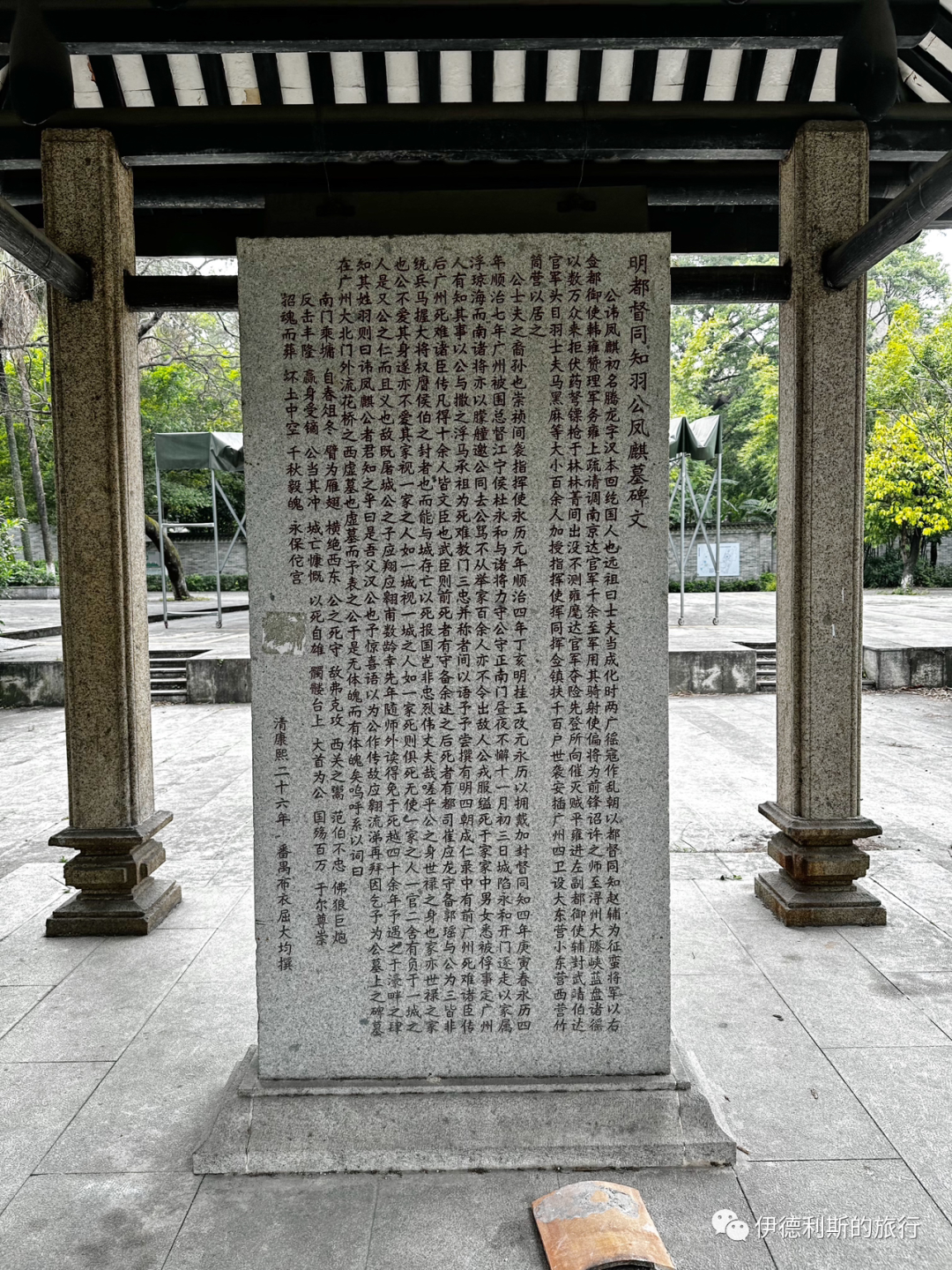
The ancestral graves of the Bao Dunhe Tang family.
North of the Ancient Tomb of the Worthies (Xianxian Gumu), you will find the ancestral graves of the Bao Dunhe Tang family. The Bao family made significant contributions to the renovation of the Huaisheng Mosque, the Ancient Tomb of the Worthies, and the Xiaodongying Mosque. According to family records, the first ancestor of the Bao Dunhe Tang, A Bao Mu'er, moved from Xinjiang to Kunming Prefecture. The second generation, Bao Guowei, went to Nanjing for business during the Kangxi and Yongzheng reigns of the Qing Dynasty. Later, he brought his second son, Bao Tingzhi, to Guangzhou for business, and Bao Tingzhi's descendants settled in Guangzhou from then on.
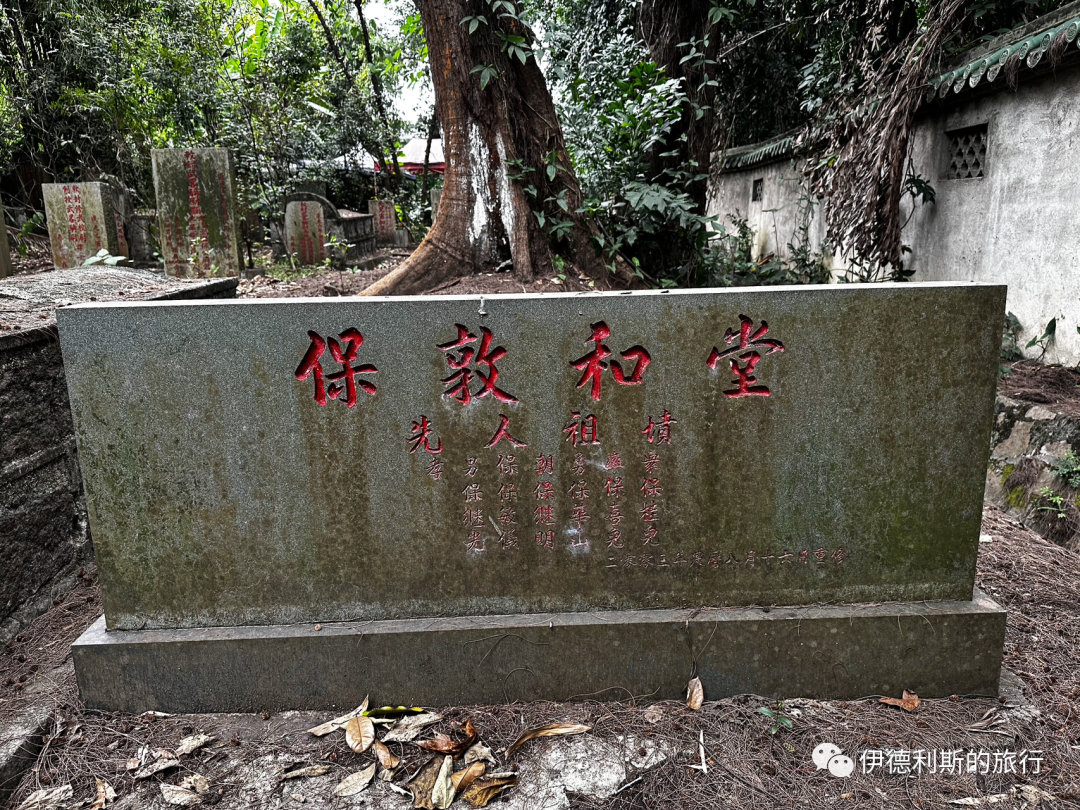
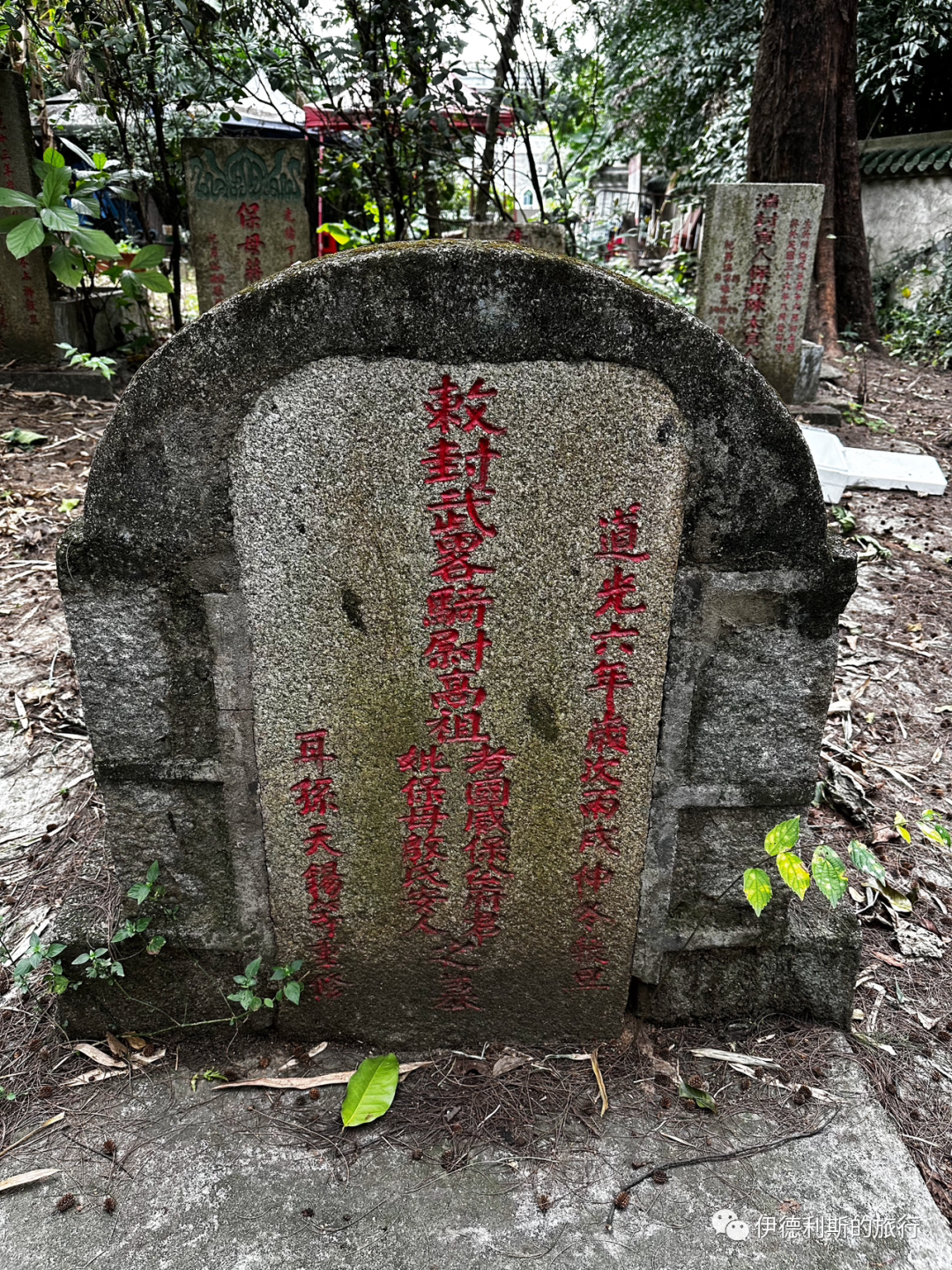
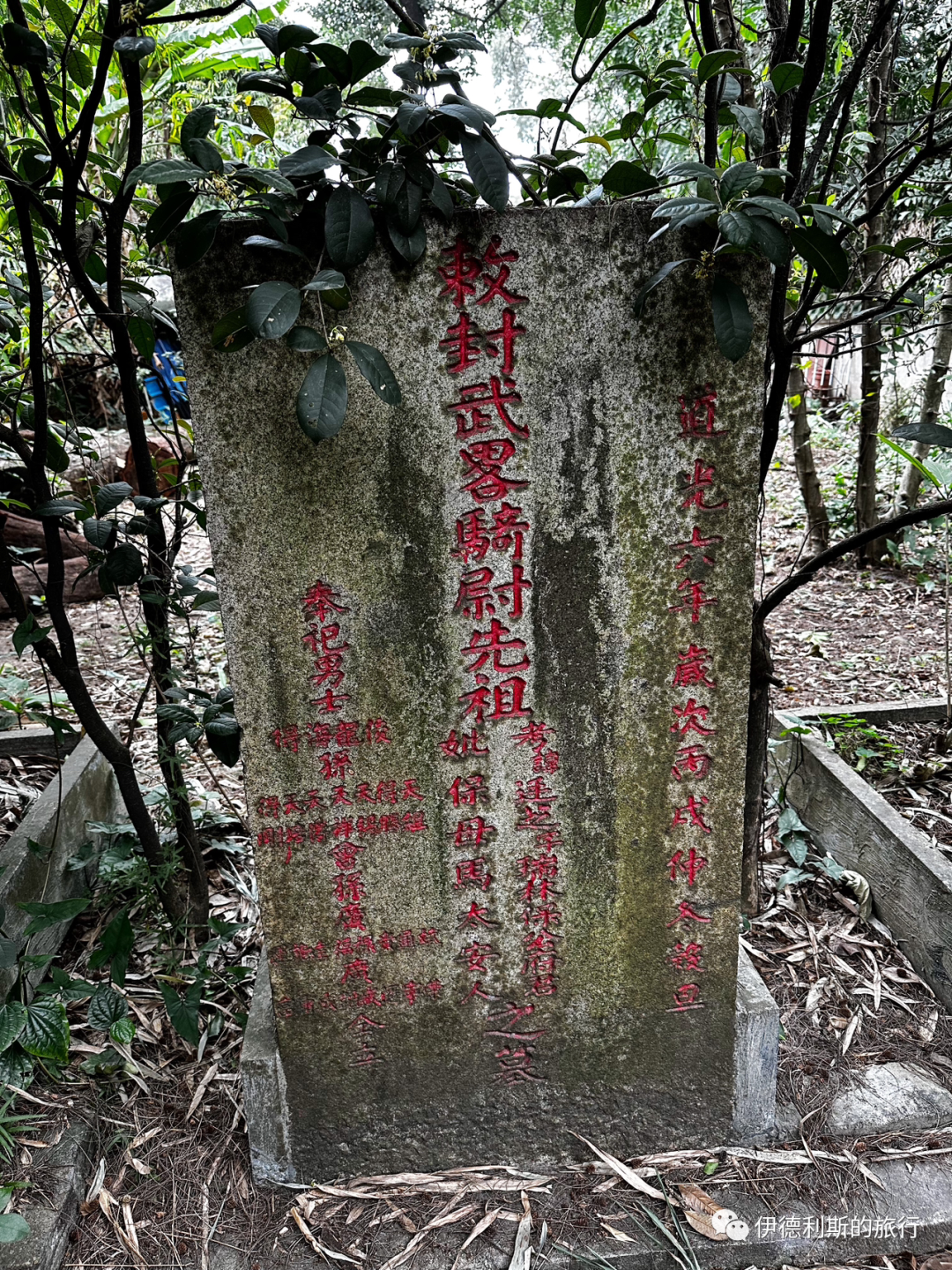
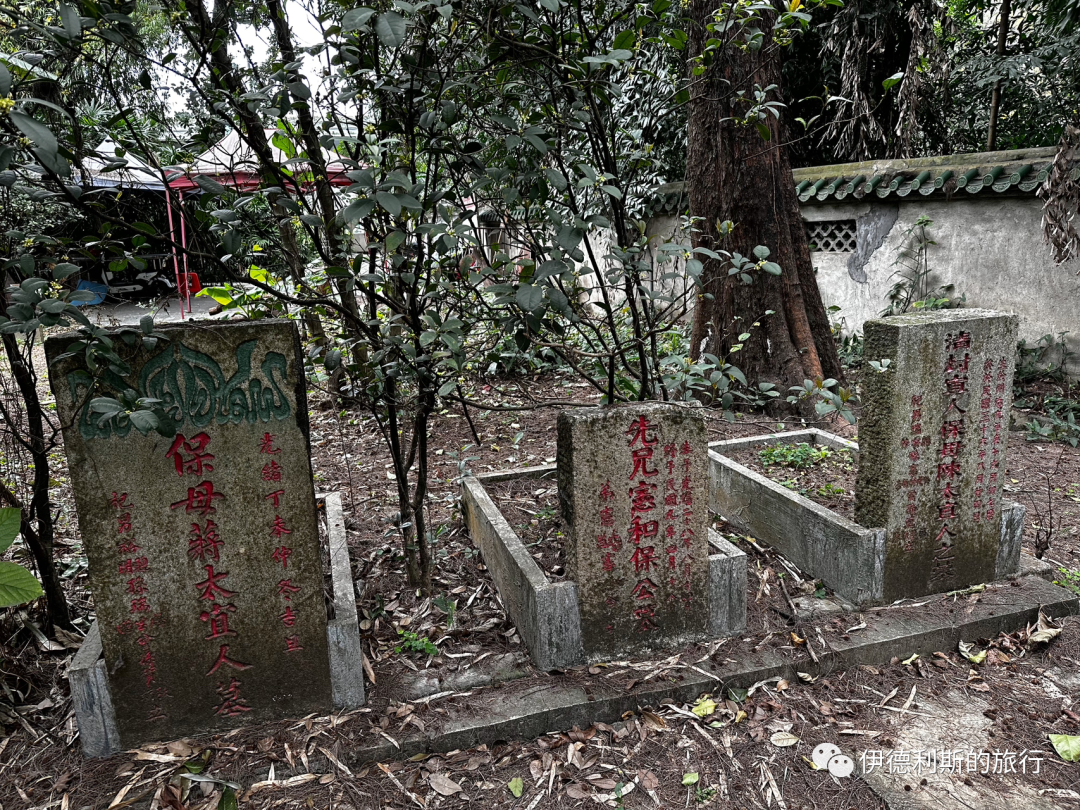
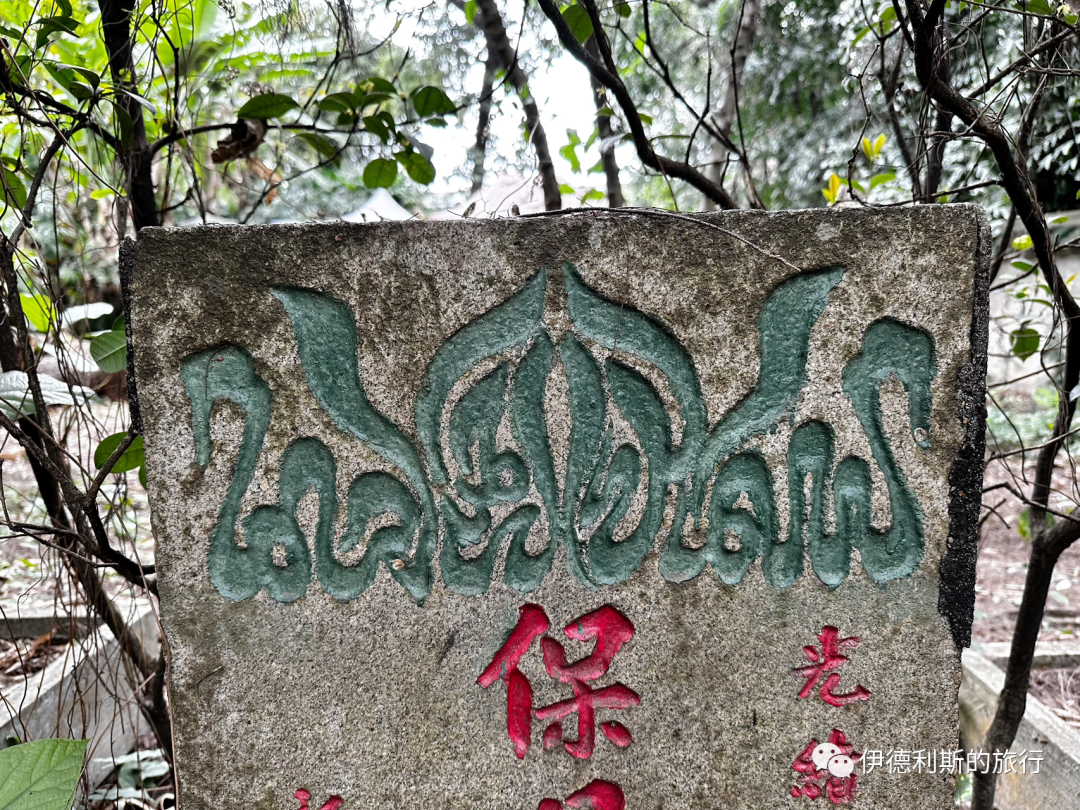
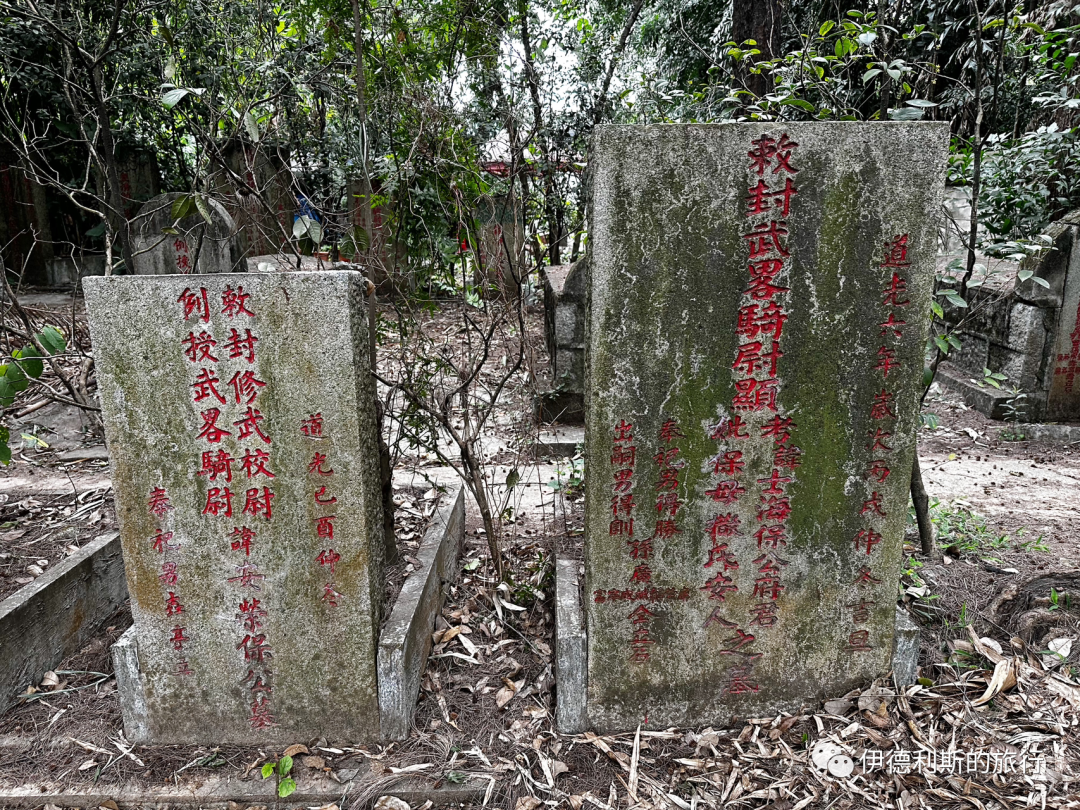
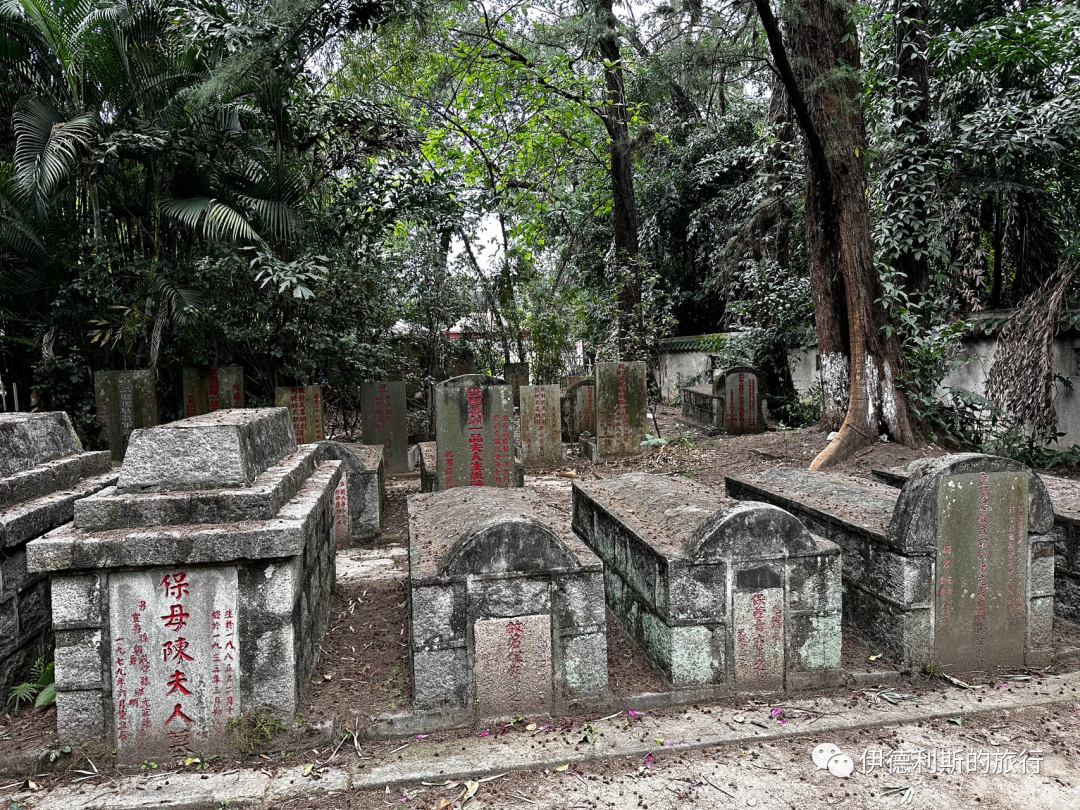
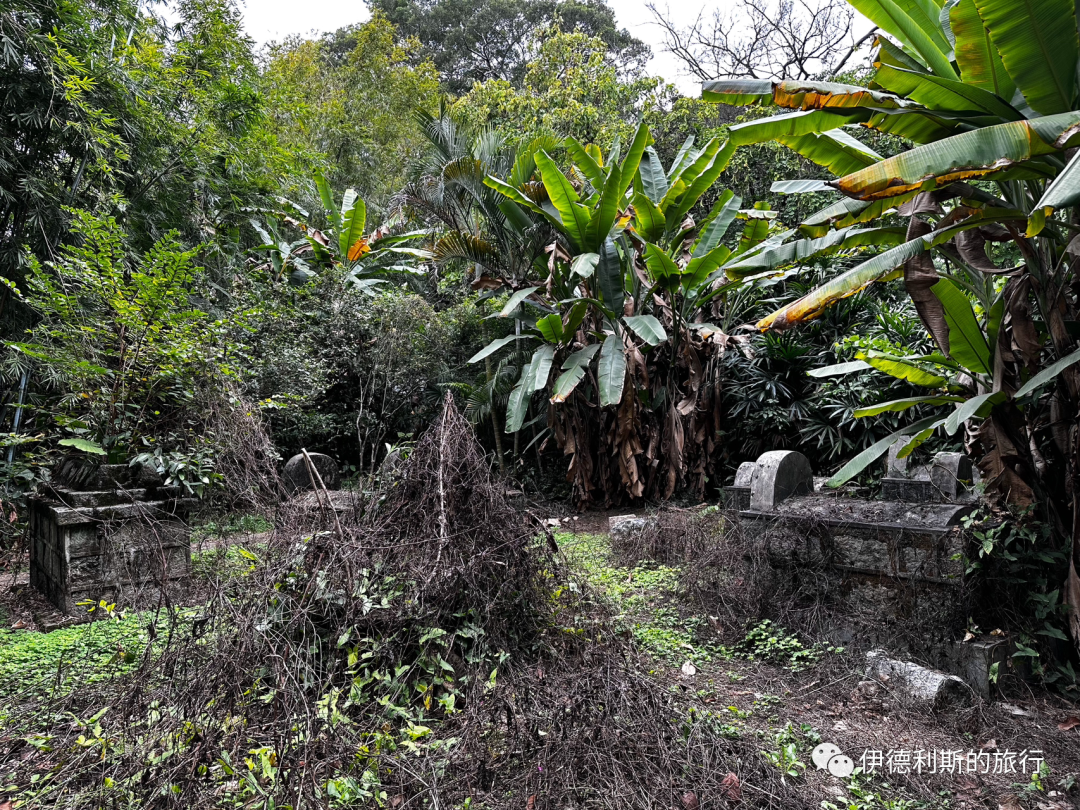
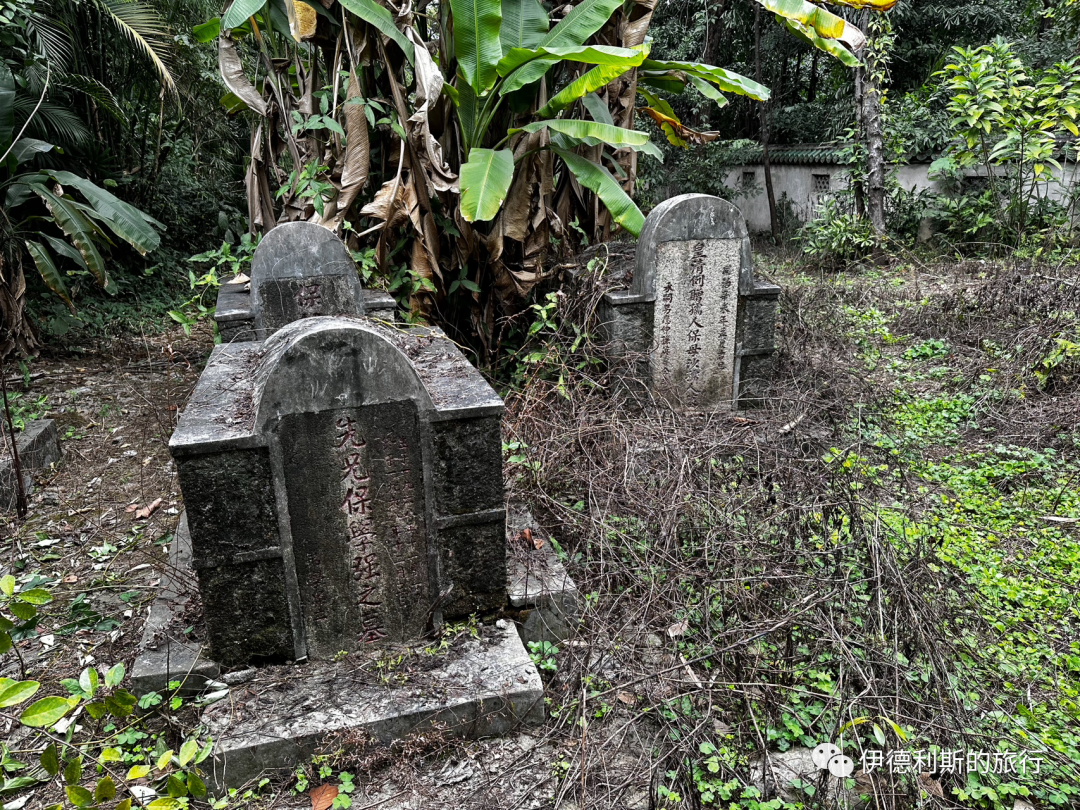
Xianxian Mosque.
Historically, there has always been a mosque next to the Ancient Tomb of the Worthies. Past stone tablets referred to it as the Mosque Outside the Great North Gate or the Xianxian Mosque. In the fourth year of the Guangxu reign (1878), a stone tablet issued by the Guangzhou government to strictly forbid locals from destroying graves for theft was erected next to the mosque. The inscription reads, "A public notice posted next to the Mosque Outside the Great North Gate." The 1934 tablet commemorating the renovation of the Xianxian Mosque records, "The original structure of the mosque was rebuilt during the Kangxi reign of the Qing Dynasty, about 260 or 270 years ago." It is one of the six mosques in Guangdong. The six mosques in Guangzhou mentioned in the inscription are the Huaisheng Mosque, Haopan Mosque, Xiaodongying Mosque, Nansheng Mosque, Dongjiao Mosque, and Xianxian Mosque. It also records that Muslims from various districts in Guangzhou and Hong Kong donated funds to renovate the mosque in 1934.
In the book "History of Islam in Guangzhou" edited by Bao Yanzhong, it is suggested that the historical Xianxian Mosque was the south courtyard of the Ancient Tomb of the Worthies. However, Ma Jianchun presents a different view in his article "Guangzhou's 'Ancient Xianxian Mosque'—A Study of the Mosque Outside the Great North Gate." He believes that while the mosque was adjacent to the tomb garden, it was a separate building and quite large.
First, British scholar Marshall Broomhall recorded in Chapter 7, "Mosques and Muslim Graves in Guangzhou," of his 1911 book "Islam in China: A Neglected Problem," that "another mosque located about half a mile outside the North Gate of Guangzhou is a second point of interest." The mosque itself is a fine, large building... from its appearance, one can conclude that the courtyard was rebuilt in modern times. In this respect, the mosque is superior to most mosques in China. It was built with land purchased by the imperial court using tax revenue to meet the needs of construction and namaz," and he clarified that the mosque and the tomb were not in the same place: "Near the mosque is a small cemetery of about a quarter of an acre... here lie some of the earliest converts to Islam, and at the end of the cemetery sits the famous domed tomb of the Prophet's uncle." The 1934 renovation tablet also records that the renovated mosque was "a magnificent sight." Meanwhile, according to the 1955 "Tablet Record of the Three Loyal Graves of Muslims," "Later, the people of Guangdong, admiring the heroes, buried them in front of the Xianxian Mosque outside Liuhua Bridge, built a pavilion and erected a stone, naming it the Three Loyal Graves of the Hui Muslims to express their mourning." From this, Ma Jianchun infers that the original site of the Xianxian Mosque was located in the small woods behind the Three Loyal Graves of the Muslims.
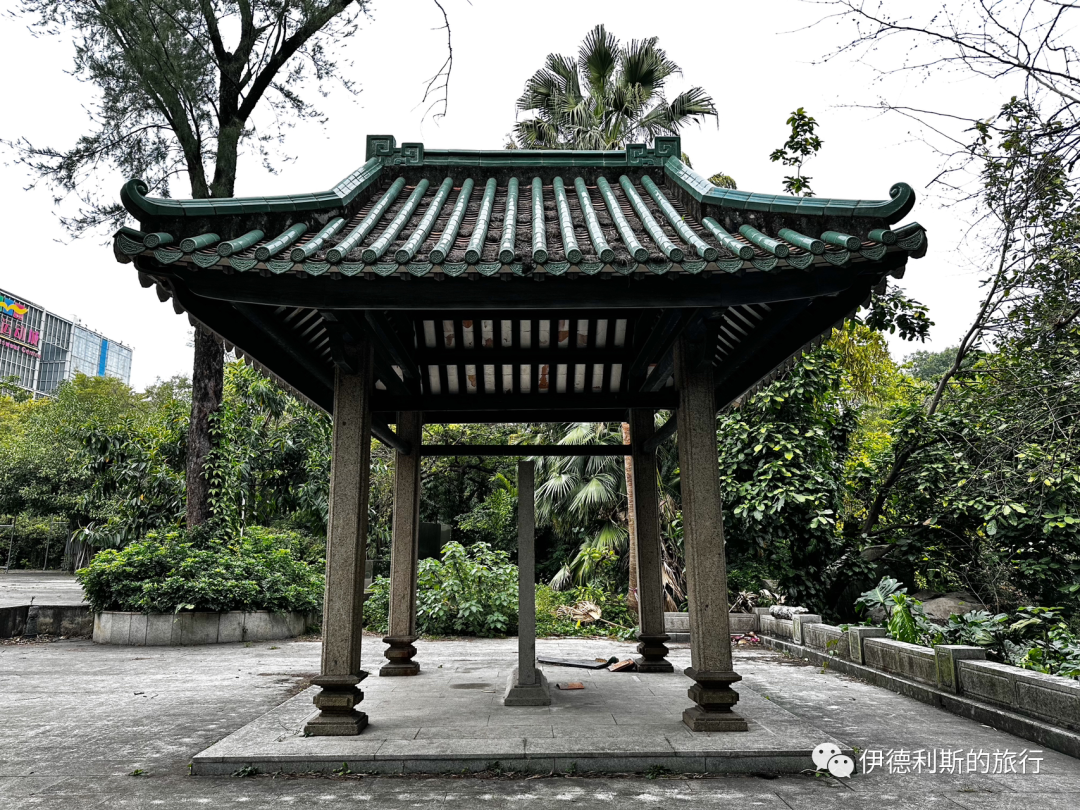
It is still uncertain when the Xianxian Mosque disappeared. It was not until 2010 that 21 dormitory units southwest of the Ancient Tomb of the Worthies were demolished, and the cleared land allowed for the reconstruction of the main prayer hall. It was officially named the Xianxian Mosque in 2011 and is now one of the four existing mosques in Guangzhou.
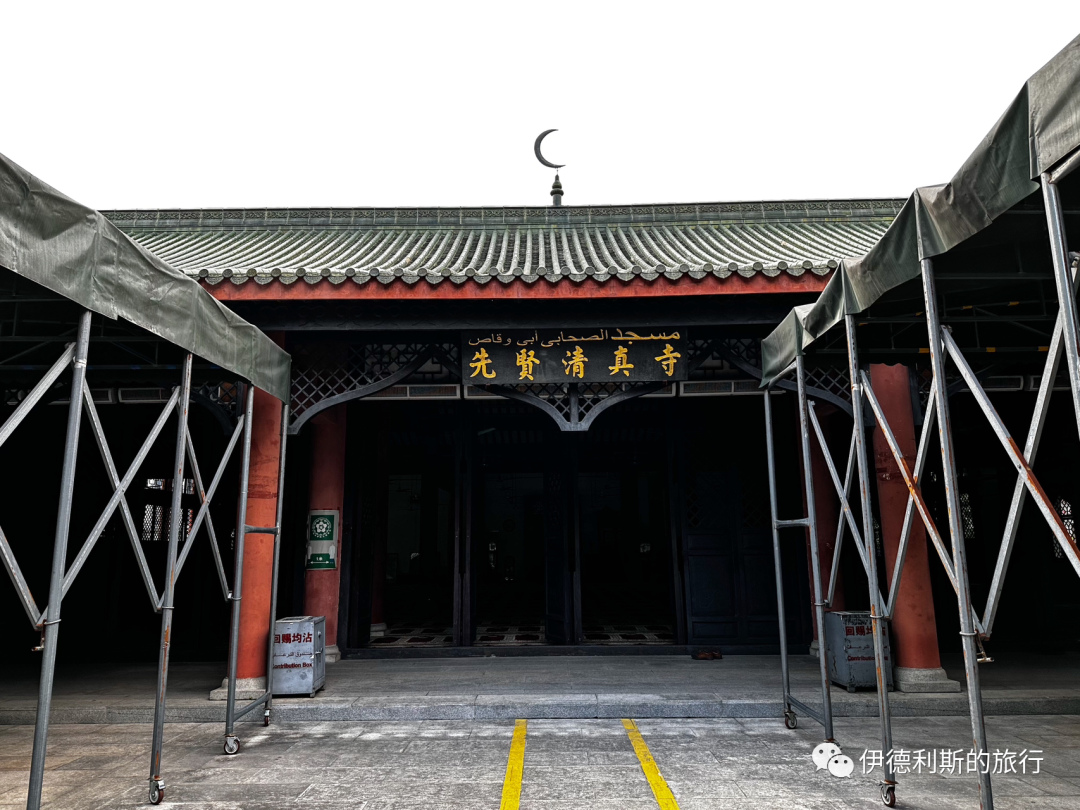
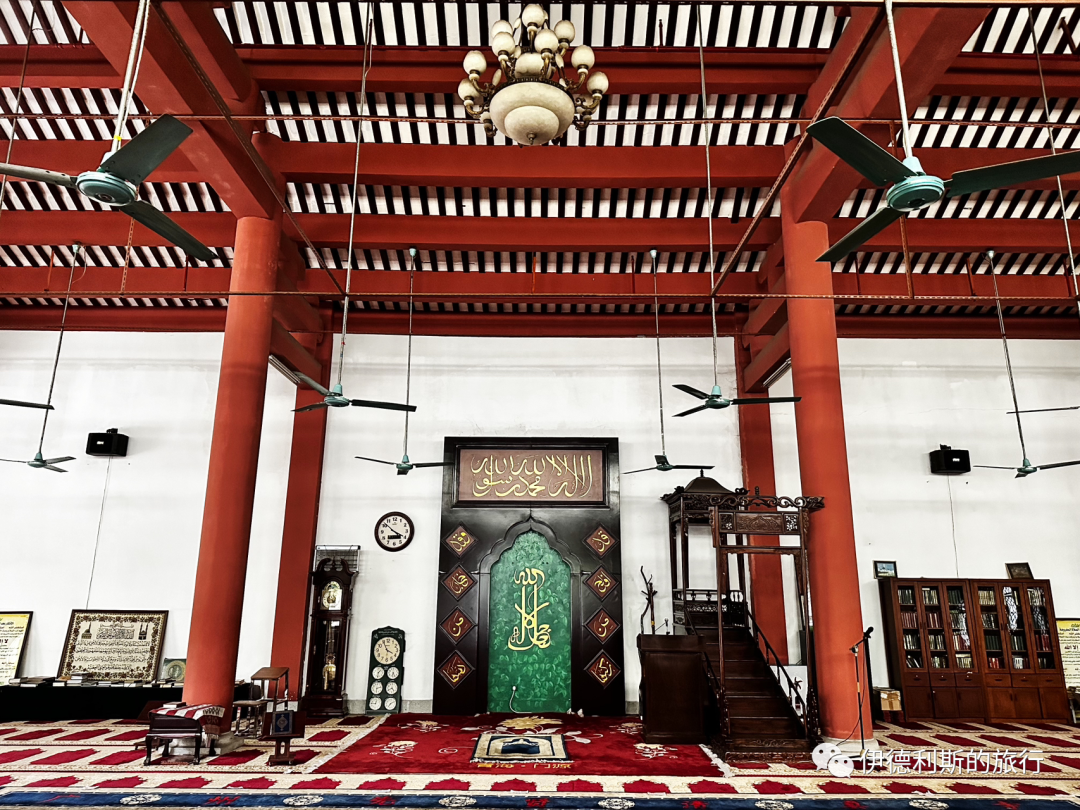
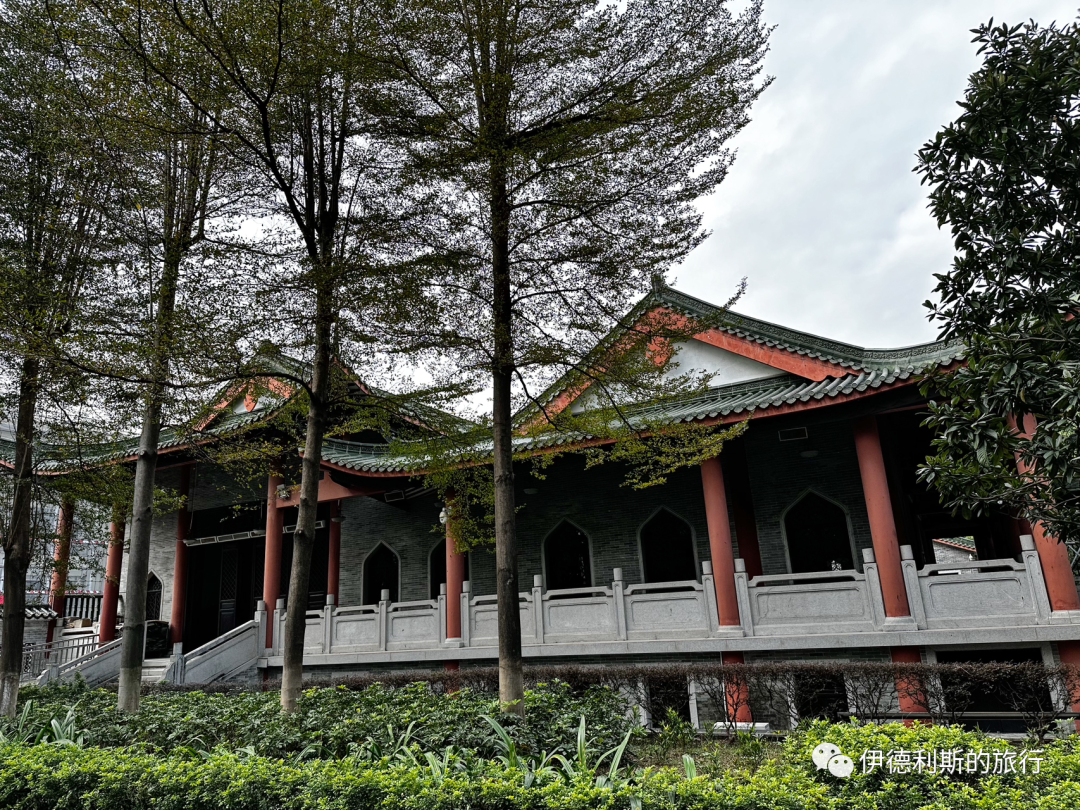
If you are interested in the history of the faith in Guangzhou, I recommend reading "History of Islam in Guangzhou" edited by Bao Yanzhong and "Collection of Hui Muslim Tablet Inscriptions and Couplets in Guangzhou" edited by Ma Jianzhao. These two books were very helpful in organizing and editing this article. Finally, I would like to thank Chen Yong, a dost (friend), for correcting the information in this article.
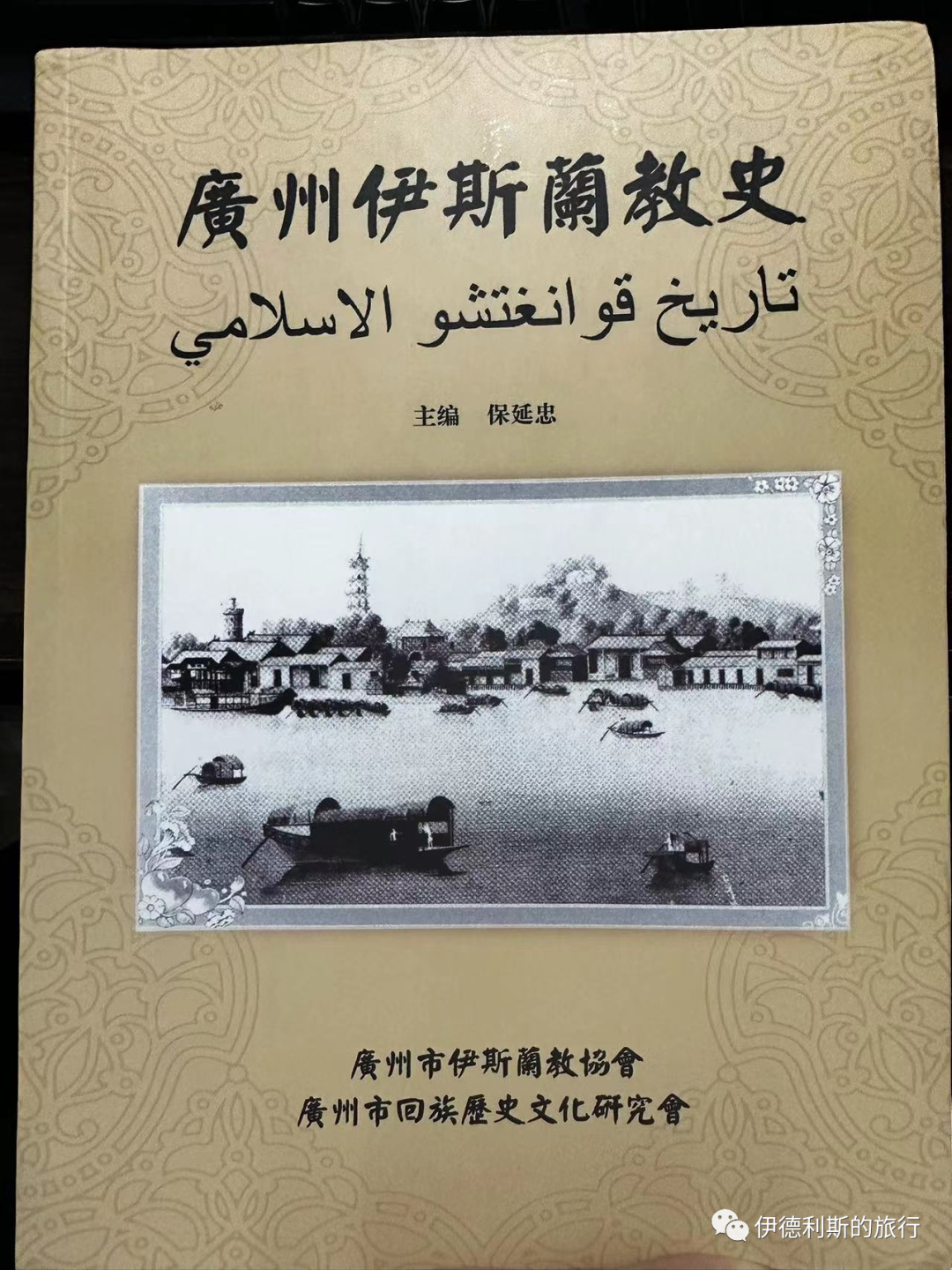
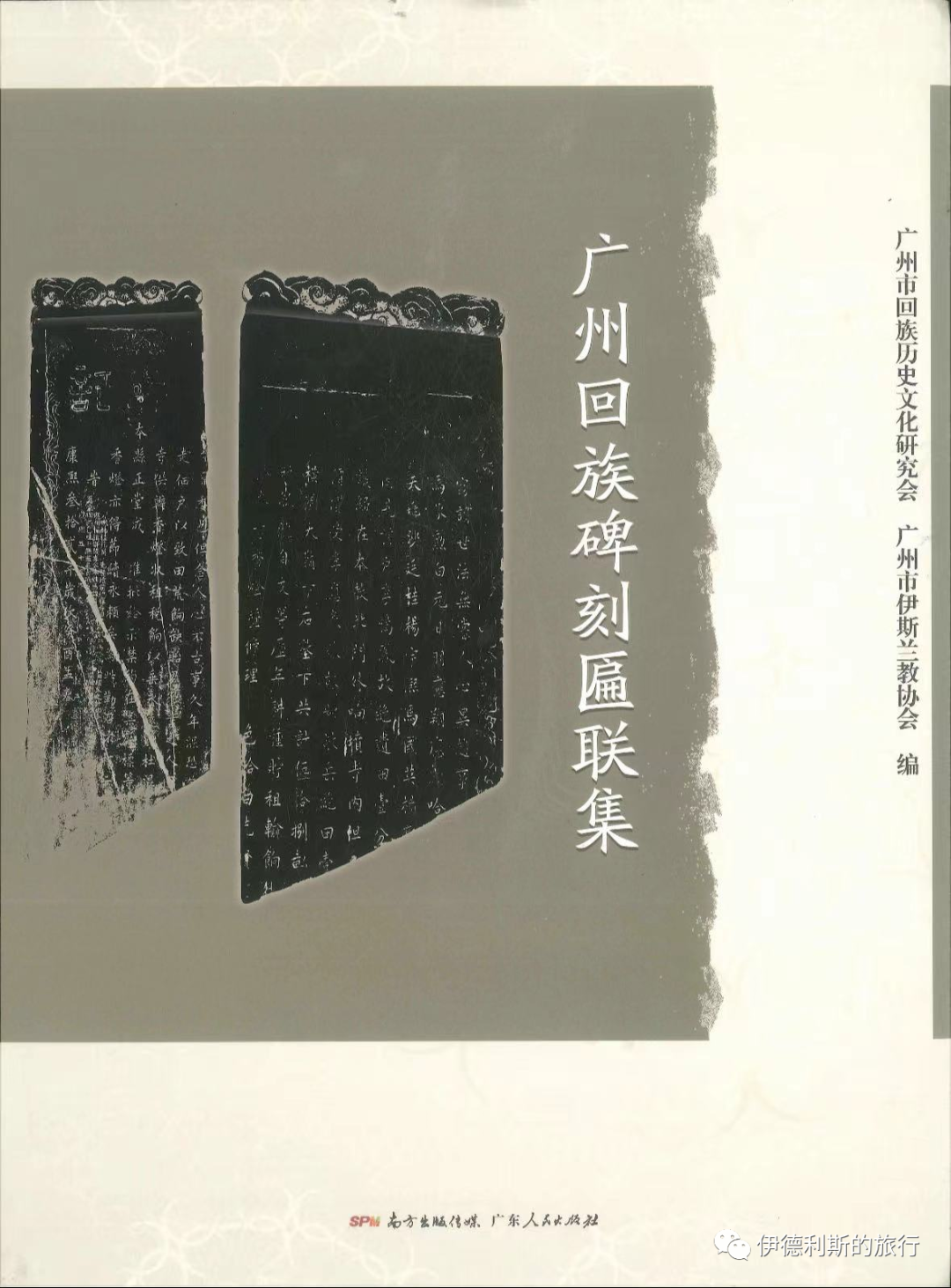
Summary: Guangzhou Huaisheng Mosque — Sage Tomb and Muslim History is presented here as a firsthand travel account in clear English, beginning with this scene: North of the Ancient Tomb of the Worthies (Xianxian Gumu), you will find the ancestral graves of the Bao Dunhe Tang family. The account keeps its focus on Huaisheng Mosque, Guangzhou Muslims, Sage Tomb while preserving the names, places, food, and historical details from the Chinese source.
The ancestral graves of the Bao Dunhe Tang family.
North of the Ancient Tomb of the Worthies (Xianxian Gumu), you will find the ancestral graves of the Bao Dunhe Tang family. The Bao family made significant contributions to the renovation of the Huaisheng Mosque, the Ancient Tomb of the Worthies, and the Xiaodongying Mosque. According to family records, the first ancestor of the Bao Dunhe Tang, A Bao Mu'er, moved from Xinjiang to Kunming Prefecture. The second generation, Bao Guowei, went to Nanjing for business during the Kangxi and Yongzheng reigns of the Qing Dynasty. Later, he brought his second son, Bao Tingzhi, to Guangzhou for business, and Bao Tingzhi's descendants settled in Guangzhou from then on.
Xianxian Mosque.
Historically, there has always been a mosque next to the Ancient Tomb of the Worthies. Past stone tablets referred to it as the Mosque Outside the Great North Gate or the Xianxian Mosque. In the fourth year of the Guangxu reign (1878), a stone tablet issued by the Guangzhou government to strictly forbid locals from destroying graves for theft was erected next to the mosque. The inscription reads, "A public notice posted next to the Mosque Outside the Great North Gate." The 1934 tablet commemorating the renovation of the Xianxian Mosque records, "The original structure of the mosque was rebuilt during the Kangxi reign of the Qing Dynasty, about 260 or 270 years ago." It is one of the six mosques in Guangdong. The six mosques in Guangzhou mentioned in the inscription are the Huaisheng Mosque, Haopan Mosque, Xiaodongying Mosque, Nansheng Mosque, Dongjiao Mosque, and Xianxian Mosque. It also records that Muslims from various districts in Guangzhou and Hong Kong donated funds to renovate the mosque in 1934.
In the book "History of Islam in Guangzhou" edited by Bao Yanzhong, it is suggested that the historical Xianxian Mosque was the south courtyard of the Ancient Tomb of the Worthies. However, Ma Jianchun presents a different view in his article "Guangzhou's 'Ancient Xianxian Mosque'—A Study of the Mosque Outside the Great North Gate." He believes that while the mosque was adjacent to the tomb garden, it was a separate building and quite large.
First, British scholar Marshall Broomhall recorded in Chapter 7, "Mosques and Muslim Graves in Guangzhou," of his 1911 book "Islam in China: A Neglected Problem," that "another mosque located about half a mile outside the North Gate of Guangzhou is a second point of interest." The mosque itself is a fine, large building... from its appearance, one can conclude that the courtyard was rebuilt in modern times. In this respect, the mosque is superior to most mosques in China. It was built with land purchased by the imperial court using tax revenue to meet the needs of construction and namaz," and he clarified that the mosque and the tomb were not in the same place: "Near the mosque is a small cemetery of about a quarter of an acre... here lie some of the earliest converts to Islam, and at the end of the cemetery sits the famous domed tomb of the Prophet's uncle." The 1934 renovation tablet also records that the renovated mosque was "a magnificent sight." Meanwhile, according to the 1955 "Tablet Record of the Three Loyal Graves of Muslims," "Later, the people of Guangdong, admiring the heroes, buried them in front of the Xianxian Mosque outside Liuhua Bridge, built a pavilion and erected a stone, naming it the Three Loyal Graves of the Hui Muslims to express their mourning." From this, Ma Jianchun infers that the original site of the Xianxian Mosque was located in the small woods behind the Three Loyal Graves of the Muslims.
It is still uncertain when the Xianxian Mosque disappeared. It was not until 2010 that 21 dormitory units southwest of the Ancient Tomb of the Worthies were demolished, and the cleared land allowed for the reconstruction of the main prayer hall. It was officially named the Xianxian Mosque in 2011 and is now one of the four existing mosques in Guangzhou.
If you are interested in the history of the faith in Guangzhou, I recommend reading "History of Islam in Guangzhou" edited by Bao Yanzhong and "Collection of Hui Muslim Tablet Inscriptions and Couplets in Guangzhou" edited by Ma Jianzhao. These two books were very helpful in organizing and editing this article. Finally, I would like to thank Chen Yong, a dost (friend), for correcting the information in this article.
Old Photos of Hui Muslims in Guangzhou and Sanya: Waseda Library Collection
Articles • ali2007fr posted the article • 0 comments • 164 views • 2026-05-18 01:58
Reposted from the web
Summary: Old Photos of Hui Muslims in Guangzhou and Sanya: Waseda Library Collection is presented here as a firsthand travel account in clear English, beginning with this scene: Waseda University Library holds a large collection of old photos from the Greater Japan Muslim Association (Dai-Nippon Kaikyo Kyokai, or DNKK). The account keeps its focus on Hui Muslims, Old Photos, Guangzhou Muslims while preserving the names, places, food, and historical details from the Chinese source.
Waseda University Library holds a large collection of old photos from the Greater Japan Muslim Association (Dai-Nippon Kaikyo Kyokai, or DNKK). The DNKK was a wartime Japanese research organization for Islam. It started in 1938 and closed in 1945. They traveled to China and took many old photos of Hui Muslims. You can view them all online now.
Address: https://www.wul.waseda.ac.jp/k ... t.pdf
Guangzhou
After the Tang Dynasty, many Muslims from Arabia and Persia came to Guangzhou for business, and many of them chose to settle down. These Muslims were called "foreign guests" (fanke), and the communities where they lived were known as "foreign quarters" (fanfang).
The heart of the Guangzhou foreign quarter was the Huaisheng Mosque. The Huaisheng Mosque was rebuilt many times after the Yuan Dynasty, and today only the minaret, known as the "Light Tower" (Guangta), remains from before the Yuan period. Legend says the Huaisheng Mosque was built during the Tang Dynasty, and the earliest discovered record of the Light Tower comes from the Northern Song Dynasty poet Guo Xiangzheng. He arrived in Guangzhou in the first lunar month of 1088 (the third year of the Yuanyou era) and left in the second month. During his stay, he climbed the Light Tower of the Huaisheng Mosque and wrote the poems "Climbing the Foreign Tower with Ying Shu" and "Presenting to Commander Jiang at the Yue Wang Terrace in Guangzhou."
During the Southern Song Dynasty, Fang Xinru and Yue Ke both recorded the Light Tower of the Huaisheng Mosque.
In 1206 (the second year of the Kaixi era of the Southern Song), Fang Xinru wrote in "One Hundred Poems of the South Sea" (Nanhai Baiyong): The foreign tower began in the Tang Dynasty and is called the Huaisheng Tower. It rises straight up, about 16.5 zhang high, with no stairs inside. A golden rooster sits on top, turning with the wind. Every year in the fifth or sixth month, the foreigners climb to the top at the fifth watch to call out the name of Allah and pray for favorable winds. Below it is a prayer hall.
Yue Fei's grandson, the Southern Song writer Yue Ke, came to Guangzhou with his father at age 10 in 1192. In the "Foreigners in Panyu" section of his book "History of the Desk" (Tuo Shi), he described the Muslim community in Guangzhou at that time: Behind it is a stupa that reaches into the clouds. Its style is unlike other towers. It is surrounded by bricks to form a large base, built up layer by layer, with a rounded exterior covered in plaster, looking like a silver brush. There is a door at the bottom. You climb the steps and turn inside like a spiral, and you cannot see the stairs from the outside. Every few dozen steps, there is an opening. In the fourth or fifth month of the year, when the ships are about to arrive, the foreigners enter the tower and call out from the openings to pray for the south wind, and it often works. At the very top, there is a large golden rooster that replaces the traditional wheel, though it is now missing one foot.
The 1350 (the tenth year of the Zhizheng era of the Yuan) "Record of Rebuilding Huaisheng Mosque" states that the mosque was destroyed in 1343 (the third year of the Zhizheng era) and rebuilt in 1350: At the foot of White Cloud Mountain and the slope of Po Mountain, there is a pagoda. Its style is from the Western Regions, standing tall like stone. It is something not seen in the Central Plains, and legend says it began in the Tang Dynasty... When the mosque was destroyed in the year of Guwei of the Zhizheng era, the halls were left empty.
The opening ceremony of the Huaisheng Mosque Islamic Elementary School in the 1930s.
The red sandstone wall of the Moon-Watching Tower (Wangyue Lou) was rebuilt in the Ming Dynasty, and the top was rebuilt in the Qing Dynasty.
The Cemetery of the Worthies (Xianxian Mu) in Guangzhou in June 1941.
The ancient Cemetery of the Worthies is commonly known as the Hui Muslim Grave, the Great Man's Grave, or the Echoing Grave, and it has been a burial ground for Muslims in Guangzhou since the Tang Dynasty. The earliest record of the ancient Cemetery of the Worthies comes from the 1206 (the second year of the Kaixi era of the Southern Song) book "One Hundred Poems of the South Sea" by Fang Xinru: The foreign graves are ten miles west of the city, with thousands of mounds, all facing west with their heads to the south. The whale-like waves barely spare those they swallow, yet even a dying fox turns its head toward its home hill. My eyes strain across thirty thousand miles of vastness, and though a thousand pieces of gold are here, this life is already over.
The heart of the Ancient Sages' Tomb is the burial site of Wangesu, an Islamic sage who legend says came to China during the Tang Dynasty to spread his faith. Wangesu is known as Saheb Saad Wakkas. Most historical records about his tomb date from the Ming and Qing dynasties. Sources for his arrival time vary: the Qing-era Guangzhou Prefecture Gazetteer says 629 (the third year of the Tang Zhenguan era), the Qing-era Tianfang Zhengxue says 632 (the sixth year of the Tang Zhenguan era), and the Qing-era stele record for the renovation of the Sage Saierde tomb even suggests he arrived during the Sui Dynasty. Regarding his identity, he is variously described as an uncle, cousin, general, or envoy of the Prophet Muhammad.
The Huihui people of Sanya
The Huihui people are a Muslim group living in Huihui Village and Huixin Village in Sanya, Hainan, with a population of nearly ten thousand. The Huihui language they speak belongs to the Austronesian language family and shares the same origin as the Chamic languages of southern Vietnam. The customs of the Huihui people are strongly influenced by local Hainan groups, yet they maintain a devout Islamic faith, making them a very unique group on China's southeast coast.
Starting in the 10th century, the Champa kingdom in southern Vietnam fought wars with Dai Viet, Chenla (Cambodia), and the Yuan Dynasty, causing many Arab and Persian merchants in Champa to sail across the sea to Hainan. The History of Song: Champa records that as early as 986, a Champa man named Pu Luo'e led over a hundred of his people to Danzhou, Hainan, to seek refuge.
During the Ming and Qing dynasties, Muslims living in places like Yazhou, Wanzhou, and Qiongshan in Hainan gradually moved to Suosanya Lifan Village (now Huixin Village in Sanya). During the Qing Dynasty, Muslim communities across Hainan underwent assimilation into Han, Li, or Dan cultures, leaving Suosanya Lifan Village as the only remaining Muslim community in Hainan, which eventually formed the modern Huihui people.
Some Huihui people also came from the mainland. The ancestors of the Ha family among the Huihui came from Shaanxi, later moving their whole family to Dadan Port in Yazhou, Hainan, before relocating to Suosanya Lifan Village with another group of Hui Muslims surnamed Liu during the late Ming and early Qing dynasties.
A mosque of the Huihui people in June 1941
A cemetery of the Huihui people
A wooden casket (tabu) used for transporting a body for burial view all
Summary: Old Photos of Hui Muslims in Guangzhou and Sanya: Waseda Library Collection is presented here as a firsthand travel account in clear English, beginning with this scene: Waseda University Library holds a large collection of old photos from the Greater Japan Muslim Association (Dai-Nippon Kaikyo Kyokai, or DNKK). The account keeps its focus on Hui Muslims, Old Photos, Guangzhou Muslims while preserving the names, places, food, and historical details from the Chinese source.
Waseda University Library holds a large collection of old photos from the Greater Japan Muslim Association (Dai-Nippon Kaikyo Kyokai, or DNKK). The DNKK was a wartime Japanese research organization for Islam. It started in 1938 and closed in 1945. They traveled to China and took many old photos of Hui Muslims. You can view them all online now.
Address: https://www.wul.waseda.ac.jp/k ... t.pdf
Guangzhou
After the Tang Dynasty, many Muslims from Arabia and Persia came to Guangzhou for business, and many of them chose to settle down. These Muslims were called "foreign guests" (fanke), and the communities where they lived were known as "foreign quarters" (fanfang).
The heart of the Guangzhou foreign quarter was the Huaisheng Mosque. The Huaisheng Mosque was rebuilt many times after the Yuan Dynasty, and today only the minaret, known as the "Light Tower" (Guangta), remains from before the Yuan period. Legend says the Huaisheng Mosque was built during the Tang Dynasty, and the earliest discovered record of the Light Tower comes from the Northern Song Dynasty poet Guo Xiangzheng. He arrived in Guangzhou in the first lunar month of 1088 (the third year of the Yuanyou era) and left in the second month. During his stay, he climbed the Light Tower of the Huaisheng Mosque and wrote the poems "Climbing the Foreign Tower with Ying Shu" and "Presenting to Commander Jiang at the Yue Wang Terrace in Guangzhou."
During the Southern Song Dynasty, Fang Xinru and Yue Ke both recorded the Light Tower of the Huaisheng Mosque.
In 1206 (the second year of the Kaixi era of the Southern Song), Fang Xinru wrote in "One Hundred Poems of the South Sea" (Nanhai Baiyong): The foreign tower began in the Tang Dynasty and is called the Huaisheng Tower. It rises straight up, about 16.5 zhang high, with no stairs inside. A golden rooster sits on top, turning with the wind. Every year in the fifth or sixth month, the foreigners climb to the top at the fifth watch to call out the name of Allah and pray for favorable winds. Below it is a prayer hall.
Yue Fei's grandson, the Southern Song writer Yue Ke, came to Guangzhou with his father at age 10 in 1192. In the "Foreigners in Panyu" section of his book "History of the Desk" (Tuo Shi), he described the Muslim community in Guangzhou at that time: Behind it is a stupa that reaches into the clouds. Its style is unlike other towers. It is surrounded by bricks to form a large base, built up layer by layer, with a rounded exterior covered in plaster, looking like a silver brush. There is a door at the bottom. You climb the steps and turn inside like a spiral, and you cannot see the stairs from the outside. Every few dozen steps, there is an opening. In the fourth or fifth month of the year, when the ships are about to arrive, the foreigners enter the tower and call out from the openings to pray for the south wind, and it often works. At the very top, there is a large golden rooster that replaces the traditional wheel, though it is now missing one foot.
The 1350 (the tenth year of the Zhizheng era of the Yuan) "Record of Rebuilding Huaisheng Mosque" states that the mosque was destroyed in 1343 (the third year of the Zhizheng era) and rebuilt in 1350: At the foot of White Cloud Mountain and the slope of Po Mountain, there is a pagoda. Its style is from the Western Regions, standing tall like stone. It is something not seen in the Central Plains, and legend says it began in the Tang Dynasty... When the mosque was destroyed in the year of Guwei of the Zhizheng era, the halls were left empty.
The opening ceremony of the Huaisheng Mosque Islamic Elementary School in the 1930s.
The red sandstone wall of the Moon-Watching Tower (Wangyue Lou) was rebuilt in the Ming Dynasty, and the top was rebuilt in the Qing Dynasty.
The Cemetery of the Worthies (Xianxian Mu) in Guangzhou in June 1941.
The ancient Cemetery of the Worthies is commonly known as the Hui Muslim Grave, the Great Man's Grave, or the Echoing Grave, and it has been a burial ground for Muslims in Guangzhou since the Tang Dynasty. The earliest record of the ancient Cemetery of the Worthies comes from the 1206 (the second year of the Kaixi era of the Southern Song) book "One Hundred Poems of the South Sea" by Fang Xinru: The foreign graves are ten miles west of the city, with thousands of mounds, all facing west with their heads to the south. The whale-like waves barely spare those they swallow, yet even a dying fox turns its head toward its home hill. My eyes strain across thirty thousand miles of vastness, and though a thousand pieces of gold are here, this life is already over.
The heart of the Ancient Sages' Tomb is the burial site of Wangesu, an Islamic sage who legend says came to China during the Tang Dynasty to spread his faith. Wangesu is known as Saheb Saad Wakkas. Most historical records about his tomb date from the Ming and Qing dynasties. Sources for his arrival time vary: the Qing-era Guangzhou Prefecture Gazetteer says 629 (the third year of the Tang Zhenguan era), the Qing-era Tianfang Zhengxue says 632 (the sixth year of the Tang Zhenguan era), and the Qing-era stele record for the renovation of the Sage Saierde tomb even suggests he arrived during the Sui Dynasty. Regarding his identity, he is variously described as an uncle, cousin, general, or envoy of the Prophet Muhammad.
The Huihui people of Sanya
The Huihui people are a Muslim group living in Huihui Village and Huixin Village in Sanya, Hainan, with a population of nearly ten thousand. The Huihui language they speak belongs to the Austronesian language family and shares the same origin as the Chamic languages of southern Vietnam. The customs of the Huihui people are strongly influenced by local Hainan groups, yet they maintain a devout Islamic faith, making them a very unique group on China's southeast coast.
Starting in the 10th century, the Champa kingdom in southern Vietnam fought wars with Dai Viet, Chenla (Cambodia), and the Yuan Dynasty, causing many Arab and Persian merchants in Champa to sail across the sea to Hainan. The History of Song: Champa records that as early as 986, a Champa man named Pu Luo'e led over a hundred of his people to Danzhou, Hainan, to seek refuge.
During the Ming and Qing dynasties, Muslims living in places like Yazhou, Wanzhou, and Qiongshan in Hainan gradually moved to Suosanya Lifan Village (now Huixin Village in Sanya). During the Qing Dynasty, Muslim communities across Hainan underwent assimilation into Han, Li, or Dan cultures, leaving Suosanya Lifan Village as the only remaining Muslim community in Hainan, which eventually formed the modern Huihui people.
Some Huihui people also came from the mainland. The ancestors of the Ha family among the Huihui came from Shaanxi, later moving their whole family to Dadan Port in Yazhou, Hainan, before relocating to Suosanya Lifan Village with another group of Hui Muslims surnamed Liu during the late Ming and early Qing dynasties.
A mosque of the Huihui people in June 1941
A cemetery of the Huihui people
A wooden casket (tabu) used for transporting a body for burial view all
Reposted from the web
Summary: Old Photos of Hui Muslims in Guangzhou and Sanya: Waseda Library Collection is presented here as a firsthand travel account in clear English, beginning with this scene: Waseda University Library holds a large collection of old photos from the Greater Japan Muslim Association (Dai-Nippon Kaikyo Kyokai, or DNKK). The account keeps its focus on Hui Muslims, Old Photos, Guangzhou Muslims while preserving the names, places, food, and historical details from the Chinese source.
Waseda University Library holds a large collection of old photos from the Greater Japan Muslim Association (Dai-Nippon Kaikyo Kyokai, or DNKK). The DNKK was a wartime Japanese research organization for Islam. It started in 1938 and closed in 1945. They traveled to China and took many old photos of Hui Muslims. You can view them all online now.
Address: https://www.wul.waseda.ac.jp/k ... t.pdf
Guangzhou
After the Tang Dynasty, many Muslims from Arabia and Persia came to Guangzhou for business, and many of them chose to settle down. These Muslims were called "foreign guests" (fanke), and the communities where they lived were known as "foreign quarters" (fanfang).
The heart of the Guangzhou foreign quarter was the Huaisheng Mosque. The Huaisheng Mosque was rebuilt many times after the Yuan Dynasty, and today only the minaret, known as the "Light Tower" (Guangta), remains from before the Yuan period. Legend says the Huaisheng Mosque was built during the Tang Dynasty, and the earliest discovered record of the Light Tower comes from the Northern Song Dynasty poet Guo Xiangzheng. He arrived in Guangzhou in the first lunar month of 1088 (the third year of the Yuanyou era) and left in the second month. During his stay, he climbed the Light Tower of the Huaisheng Mosque and wrote the poems "Climbing the Foreign Tower with Ying Shu" and "Presenting to Commander Jiang at the Yue Wang Terrace in Guangzhou."
During the Southern Song Dynasty, Fang Xinru and Yue Ke both recorded the Light Tower of the Huaisheng Mosque.
In 1206 (the second year of the Kaixi era of the Southern Song), Fang Xinru wrote in "One Hundred Poems of the South Sea" (Nanhai Baiyong): The foreign tower began in the Tang Dynasty and is called the Huaisheng Tower. It rises straight up, about 16.5 zhang high, with no stairs inside. A golden rooster sits on top, turning with the wind. Every year in the fifth or sixth month, the foreigners climb to the top at the fifth watch to call out the name of Allah and pray for favorable winds. Below it is a prayer hall.
Yue Fei's grandson, the Southern Song writer Yue Ke, came to Guangzhou with his father at age 10 in 1192. In the "Foreigners in Panyu" section of his book "History of the Desk" (Tuo Shi), he described the Muslim community in Guangzhou at that time: Behind it is a stupa that reaches into the clouds. Its style is unlike other towers. It is surrounded by bricks to form a large base, built up layer by layer, with a rounded exterior covered in plaster, looking like a silver brush. There is a door at the bottom. You climb the steps and turn inside like a spiral, and you cannot see the stairs from the outside. Every few dozen steps, there is an opening. In the fourth or fifth month of the year, when the ships are about to arrive, the foreigners enter the tower and call out from the openings to pray for the south wind, and it often works. At the very top, there is a large golden rooster that replaces the traditional wheel, though it is now missing one foot.
The 1350 (the tenth year of the Zhizheng era of the Yuan) "Record of Rebuilding Huaisheng Mosque" states that the mosque was destroyed in 1343 (the third year of the Zhizheng era) and rebuilt in 1350: At the foot of White Cloud Mountain and the slope of Po Mountain, there is a pagoda. Its style is from the Western Regions, standing tall like stone. It is something not seen in the Central Plains, and legend says it began in the Tang Dynasty... When the mosque was destroyed in the year of Guwei of the Zhizheng era, the halls were left empty.
The opening ceremony of the Huaisheng Mosque Islamic Elementary School in the 1930s.
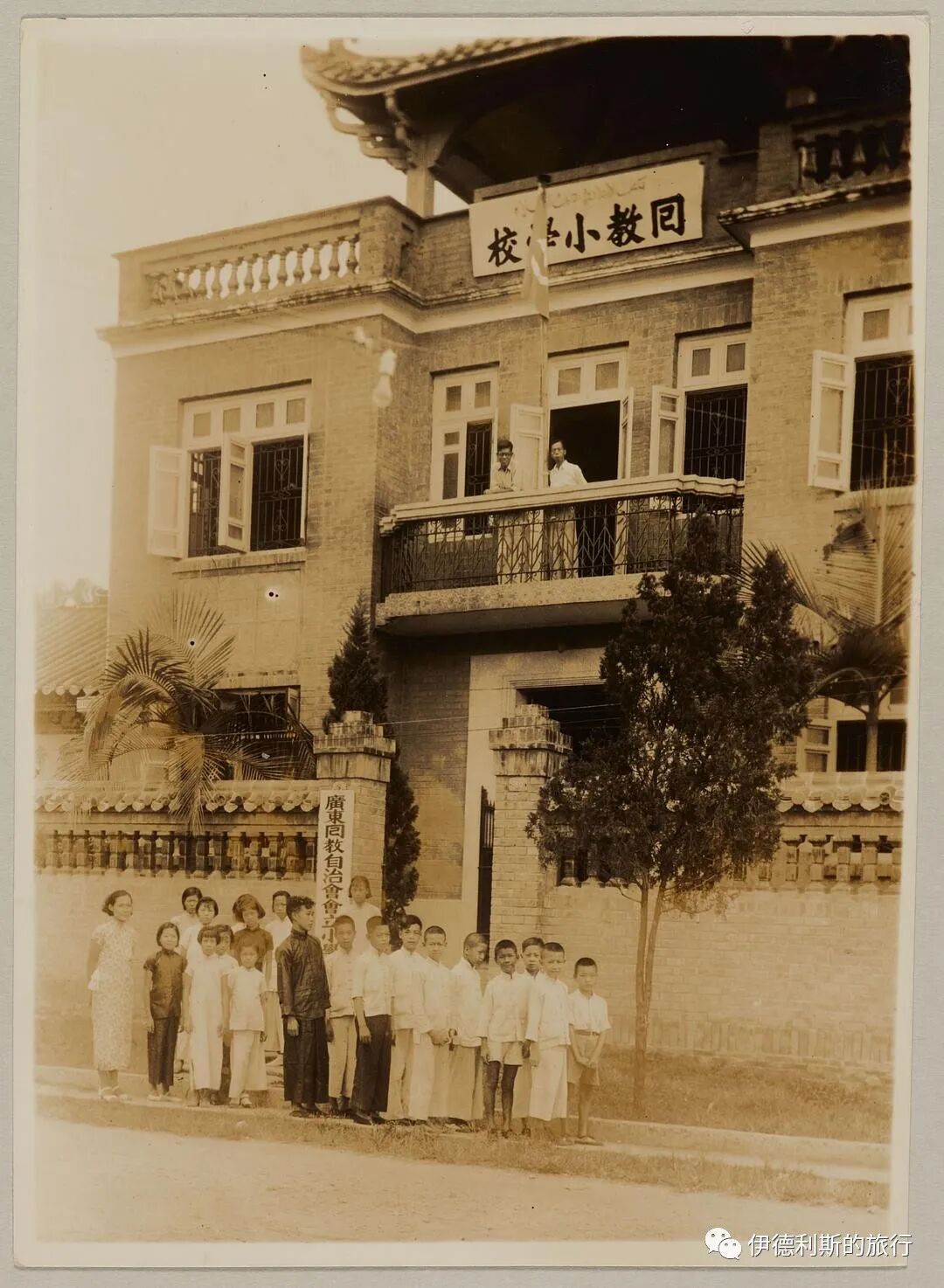
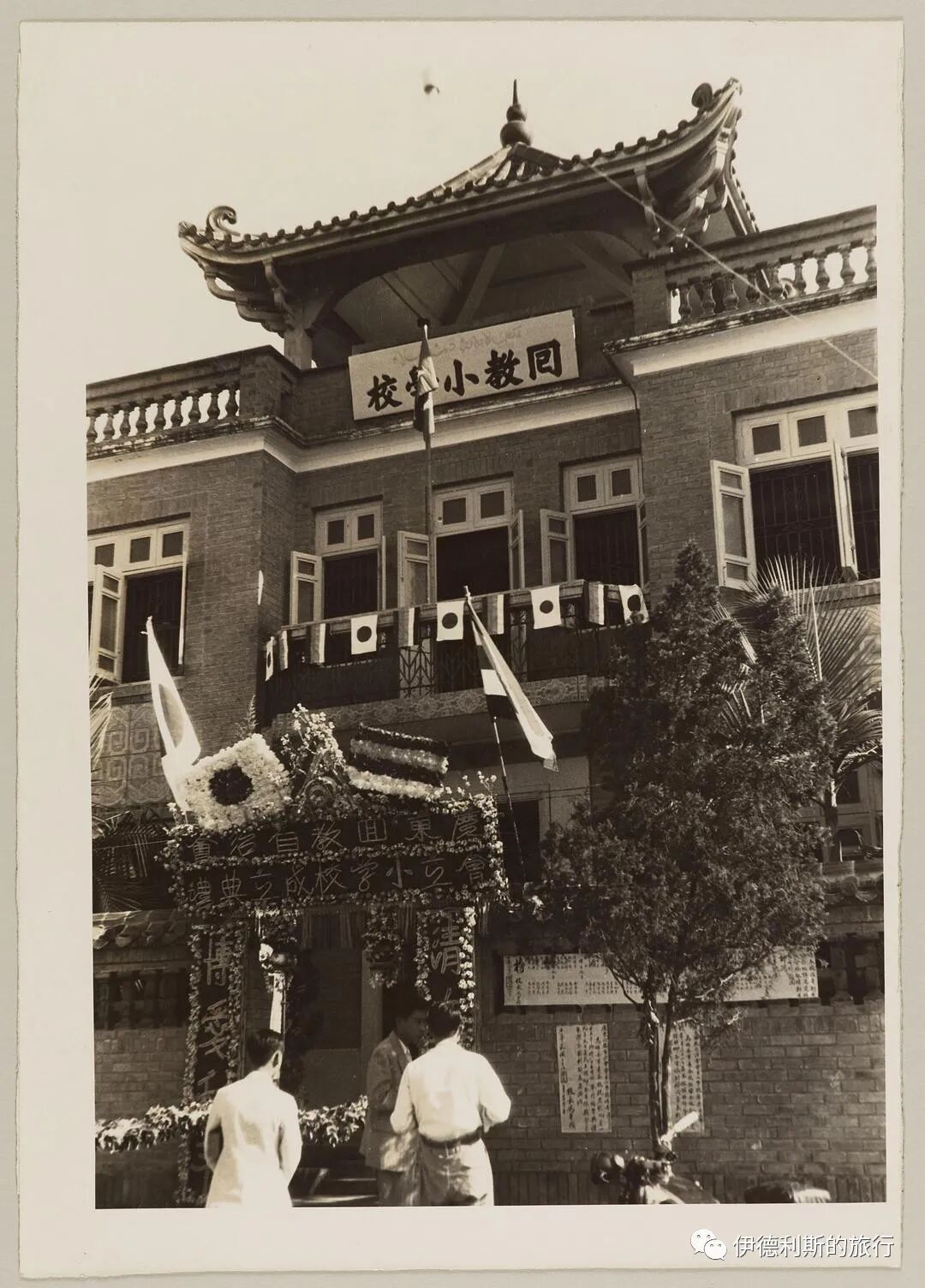
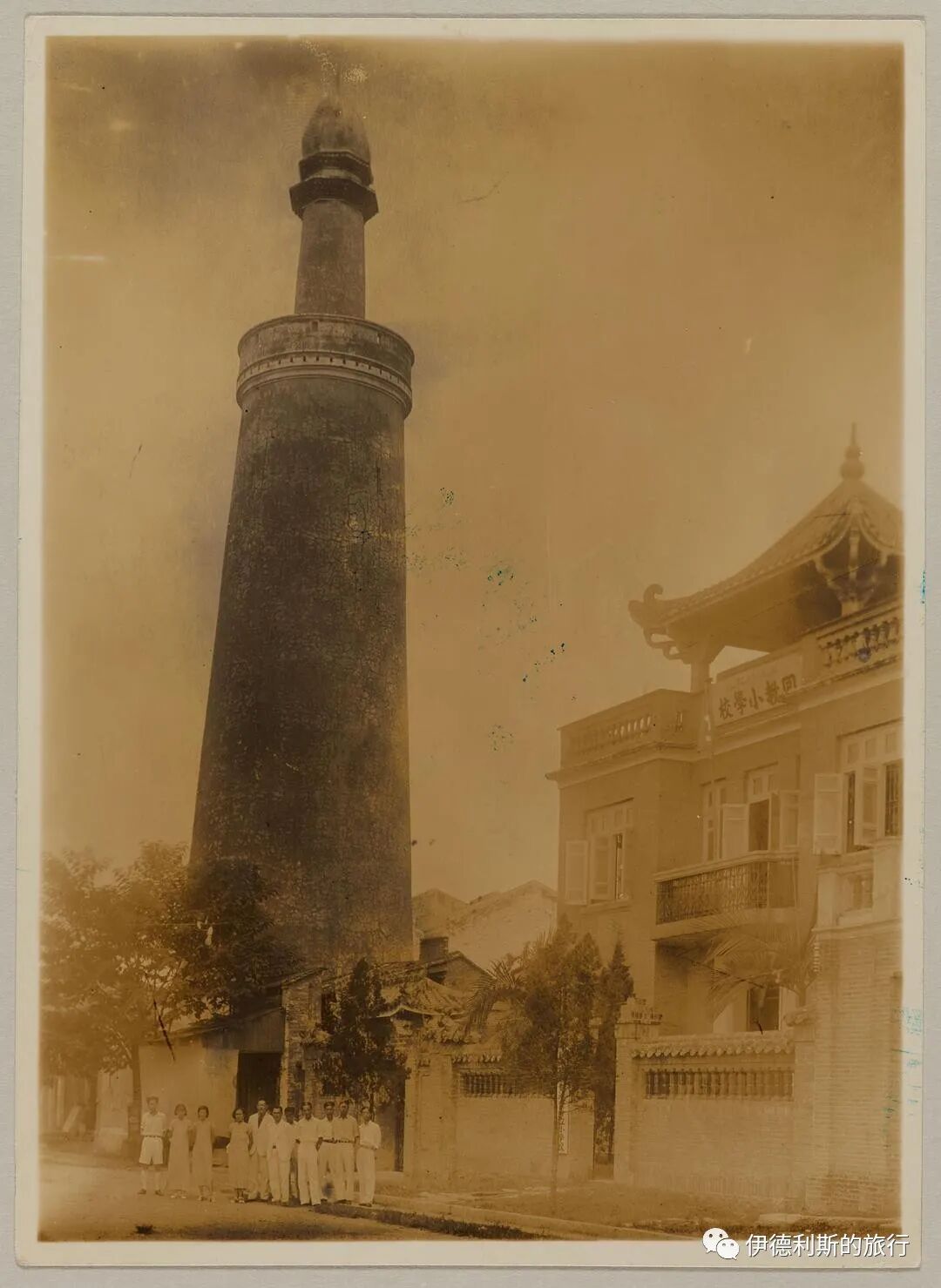
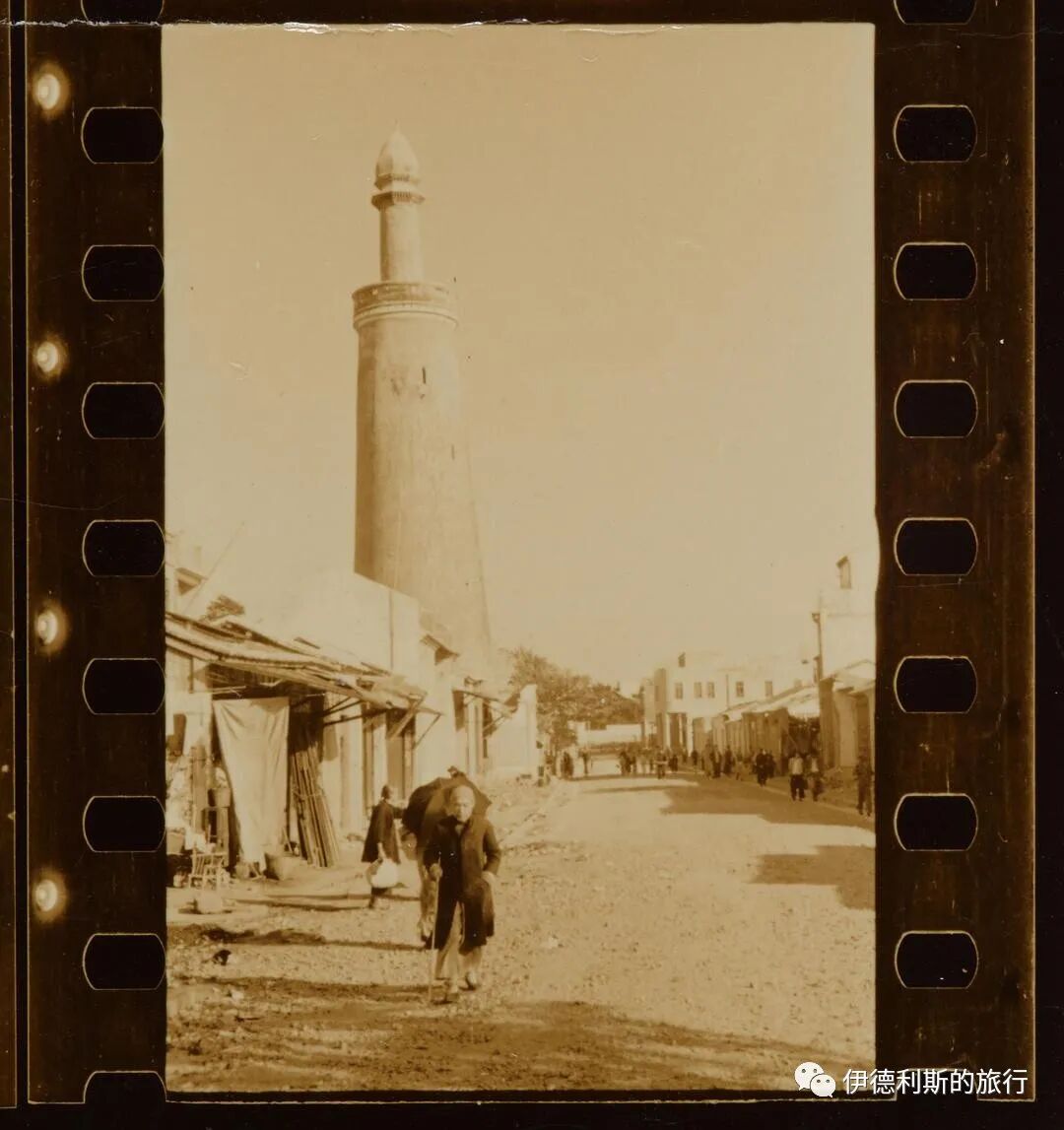
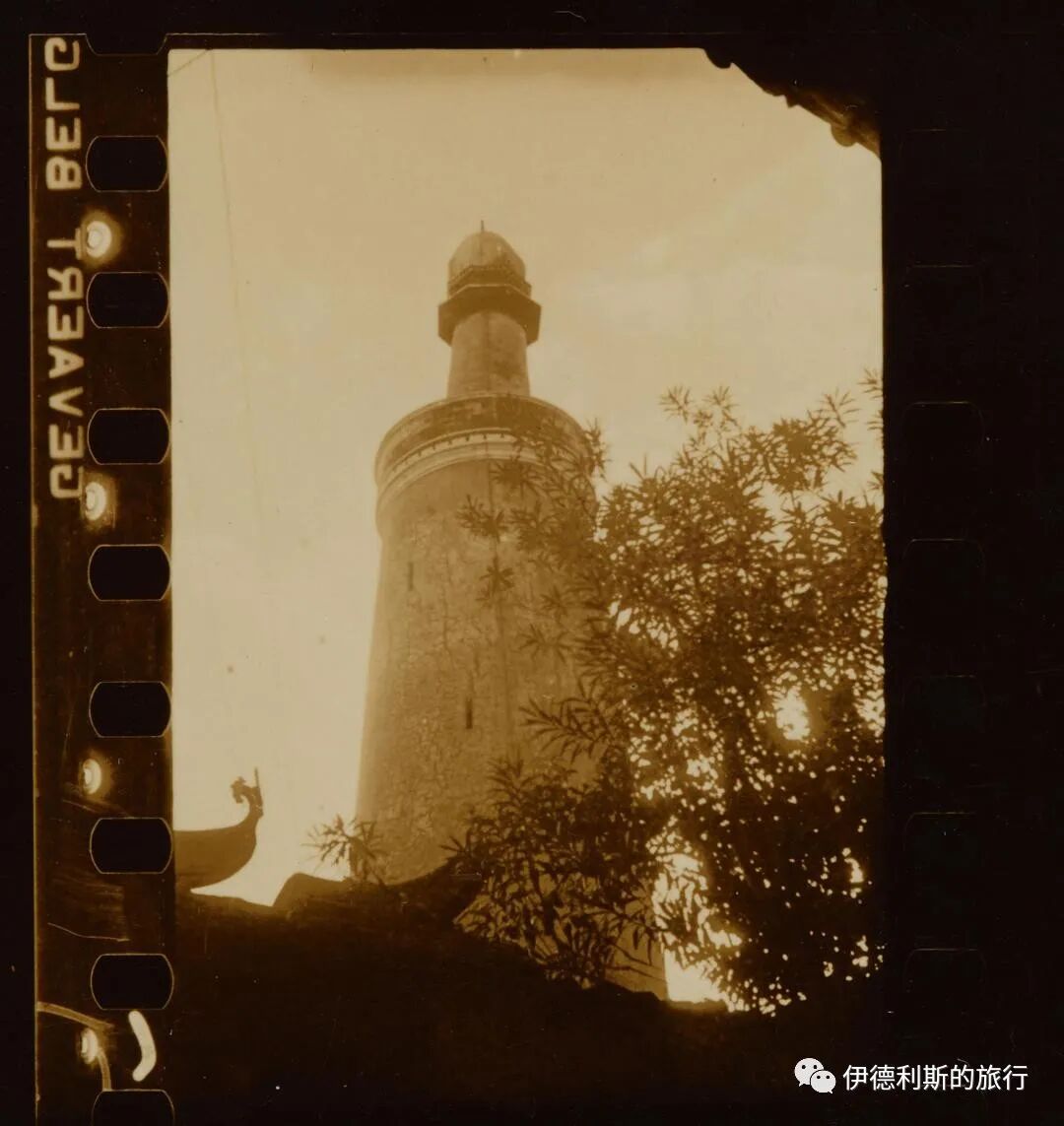
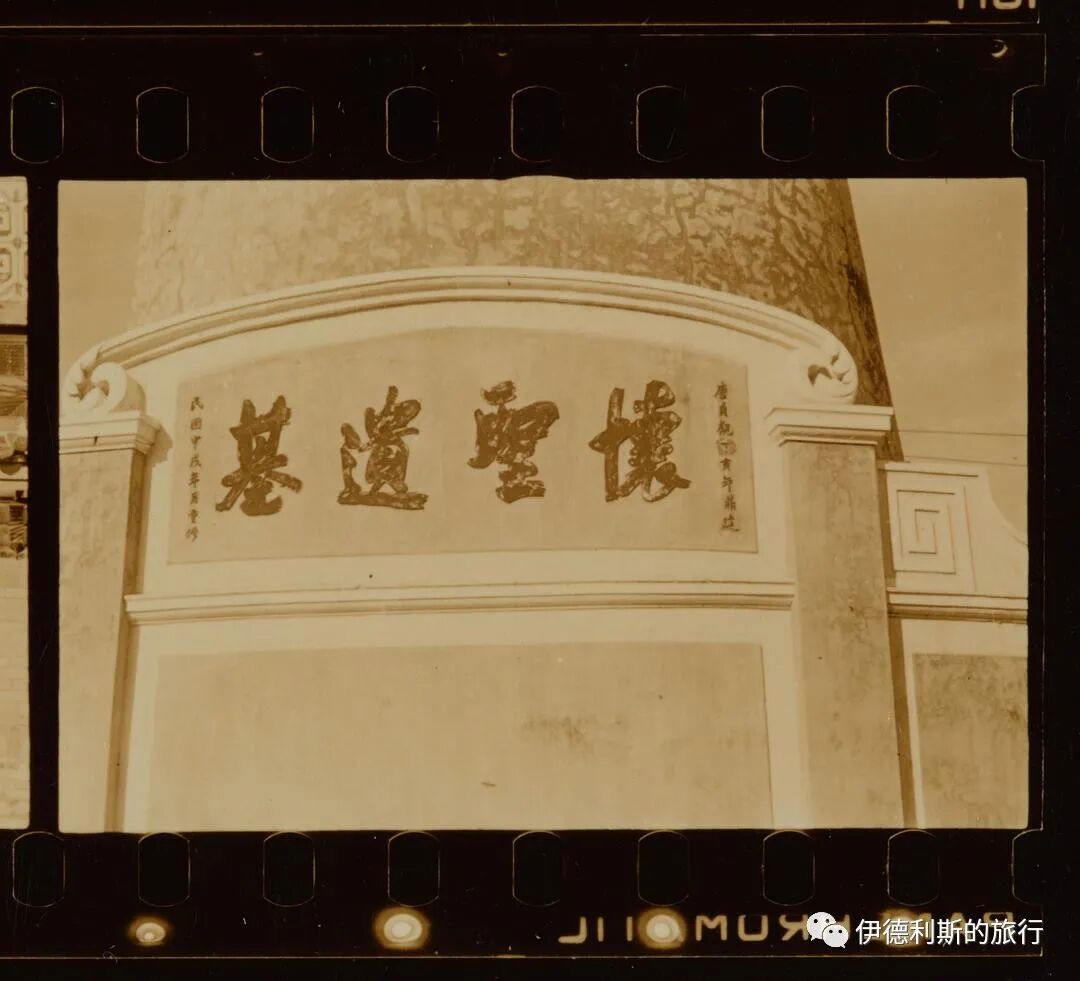
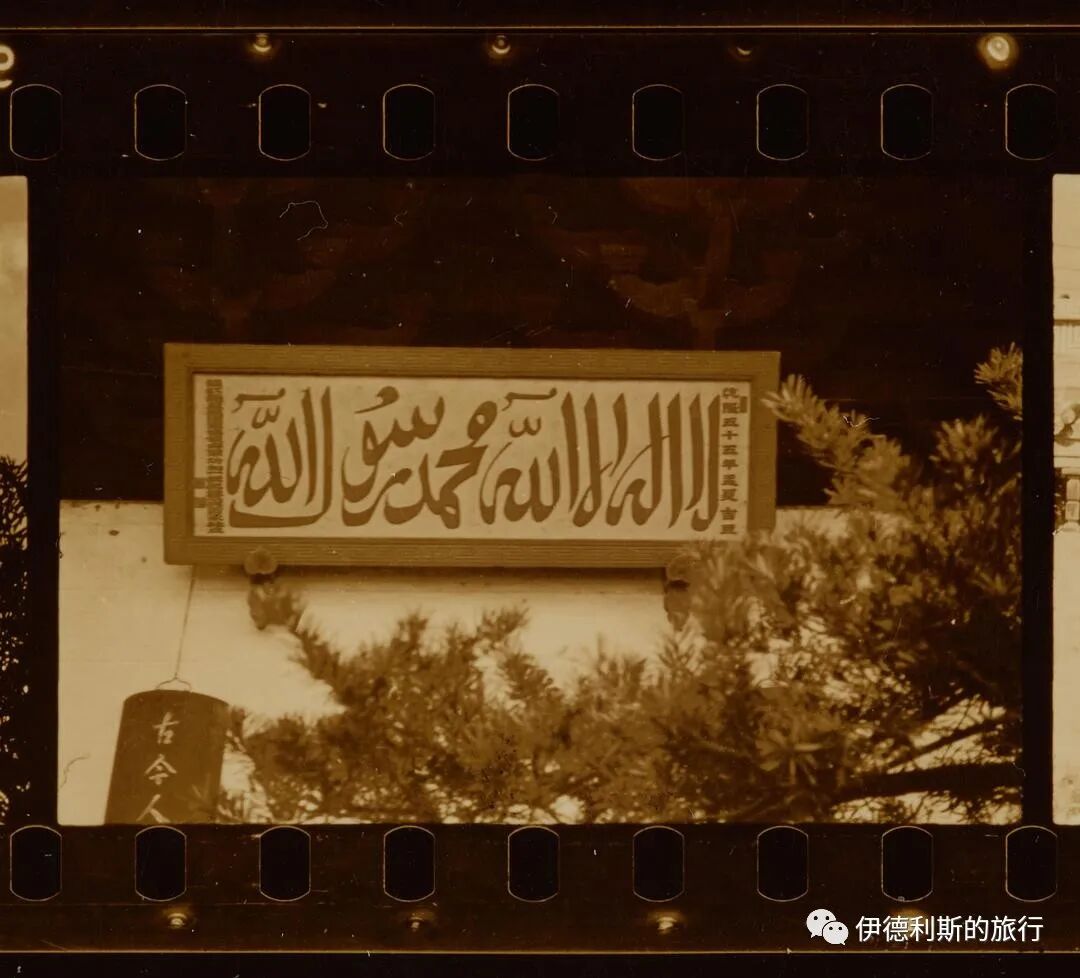
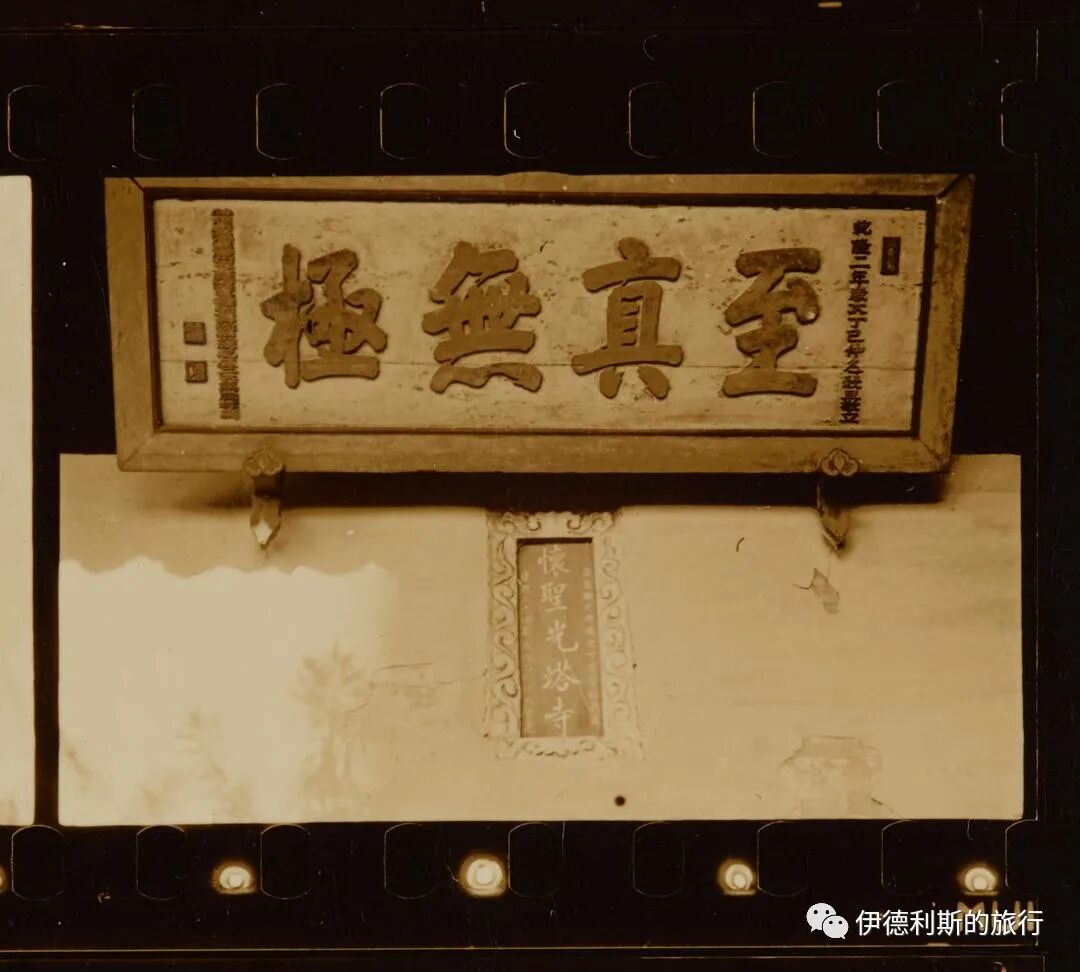
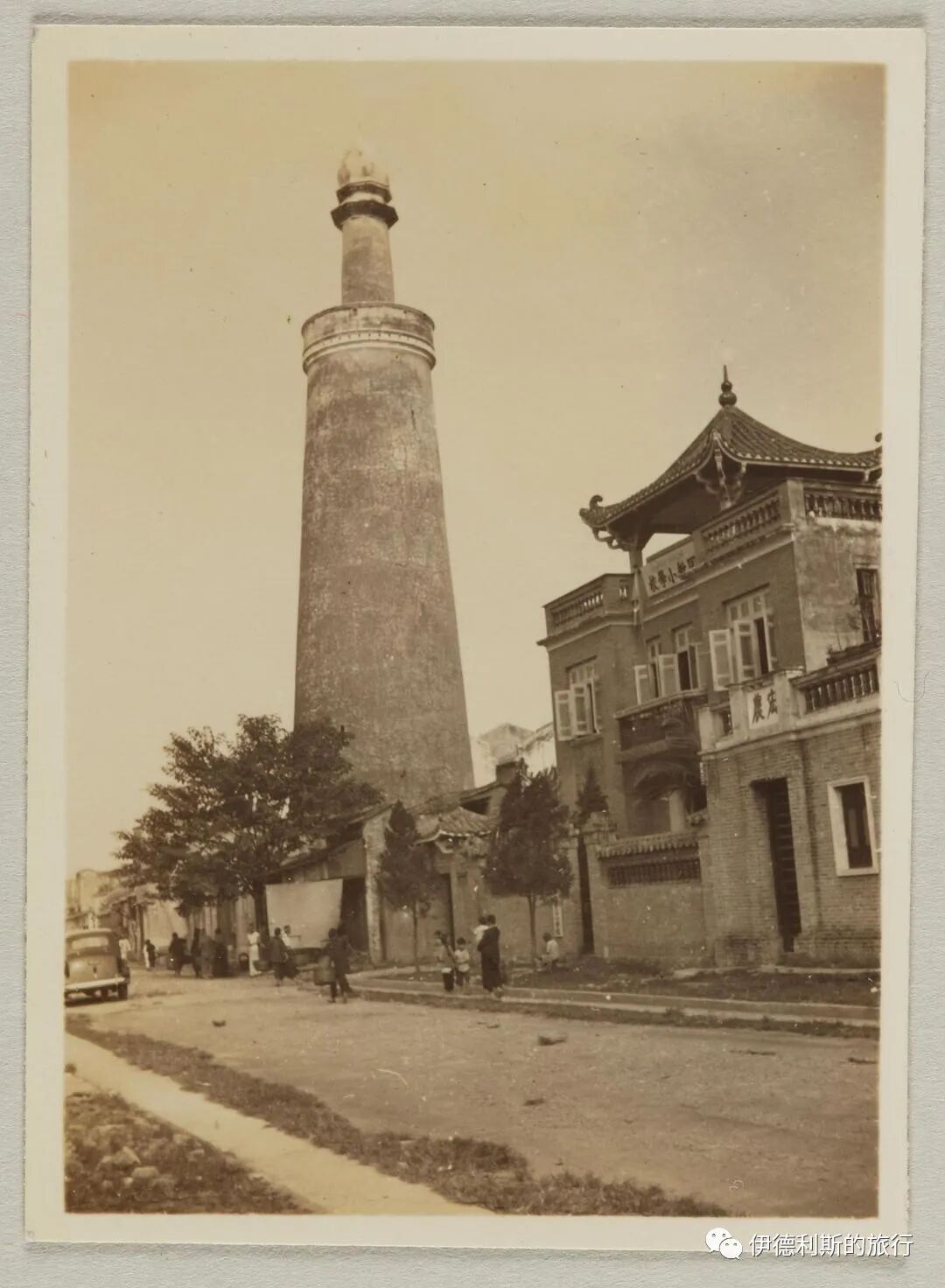
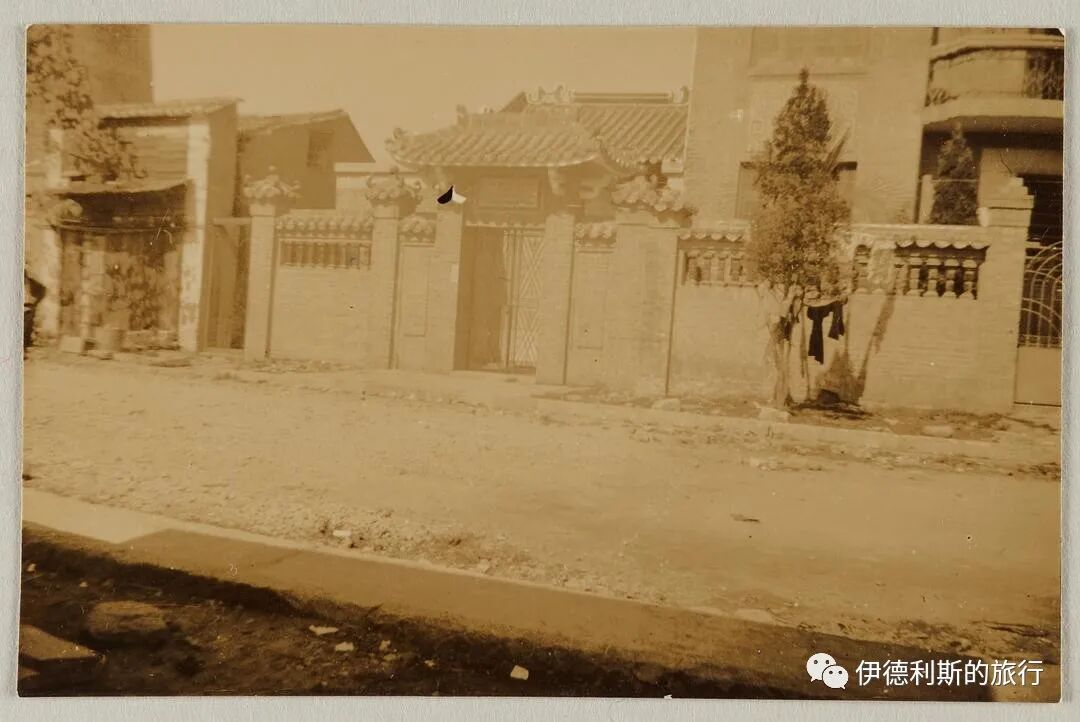
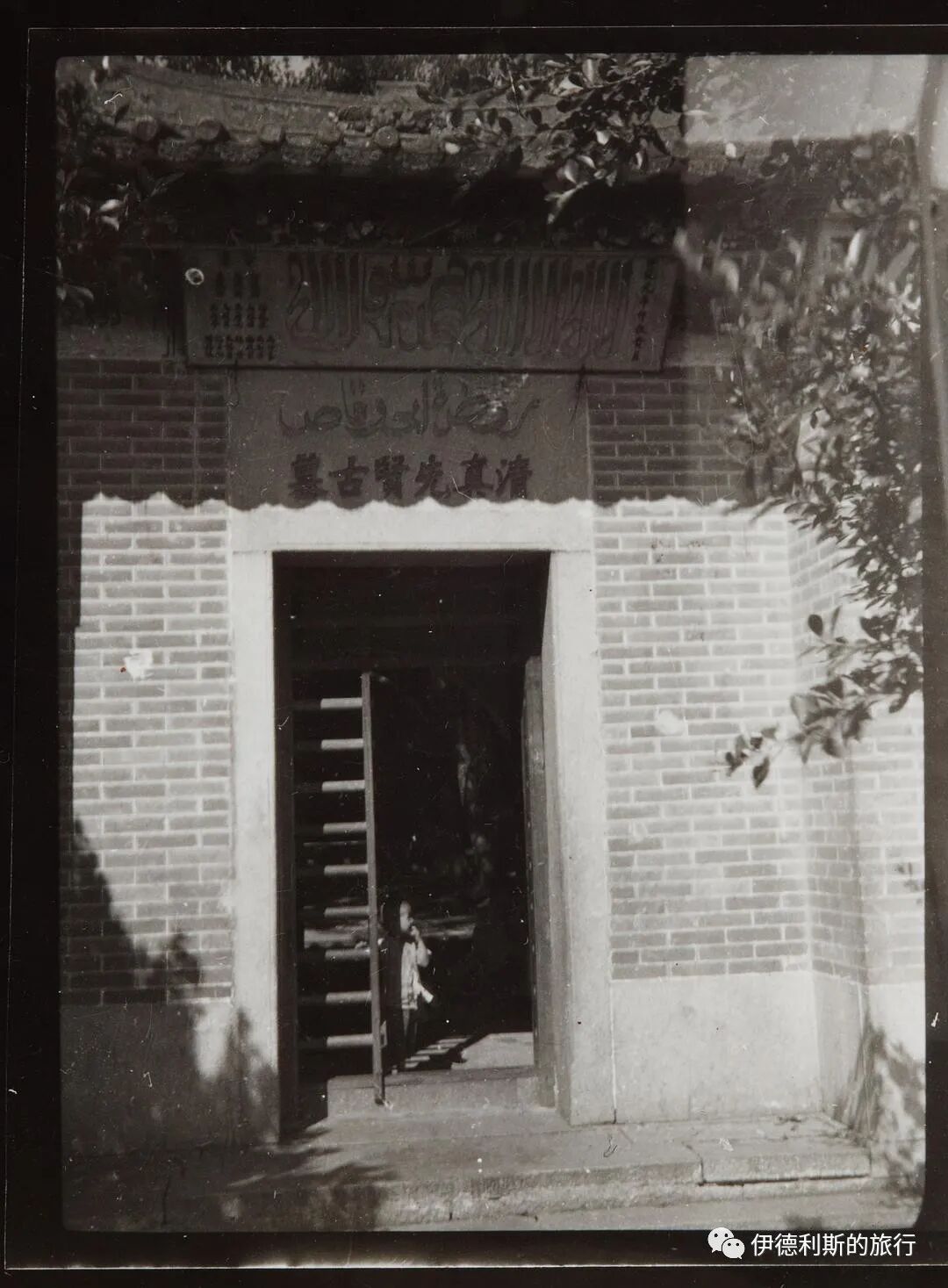
The red sandstone wall of the Moon-Watching Tower (Wangyue Lou) was rebuilt in the Ming Dynasty, and the top was rebuilt in the Qing Dynasty.
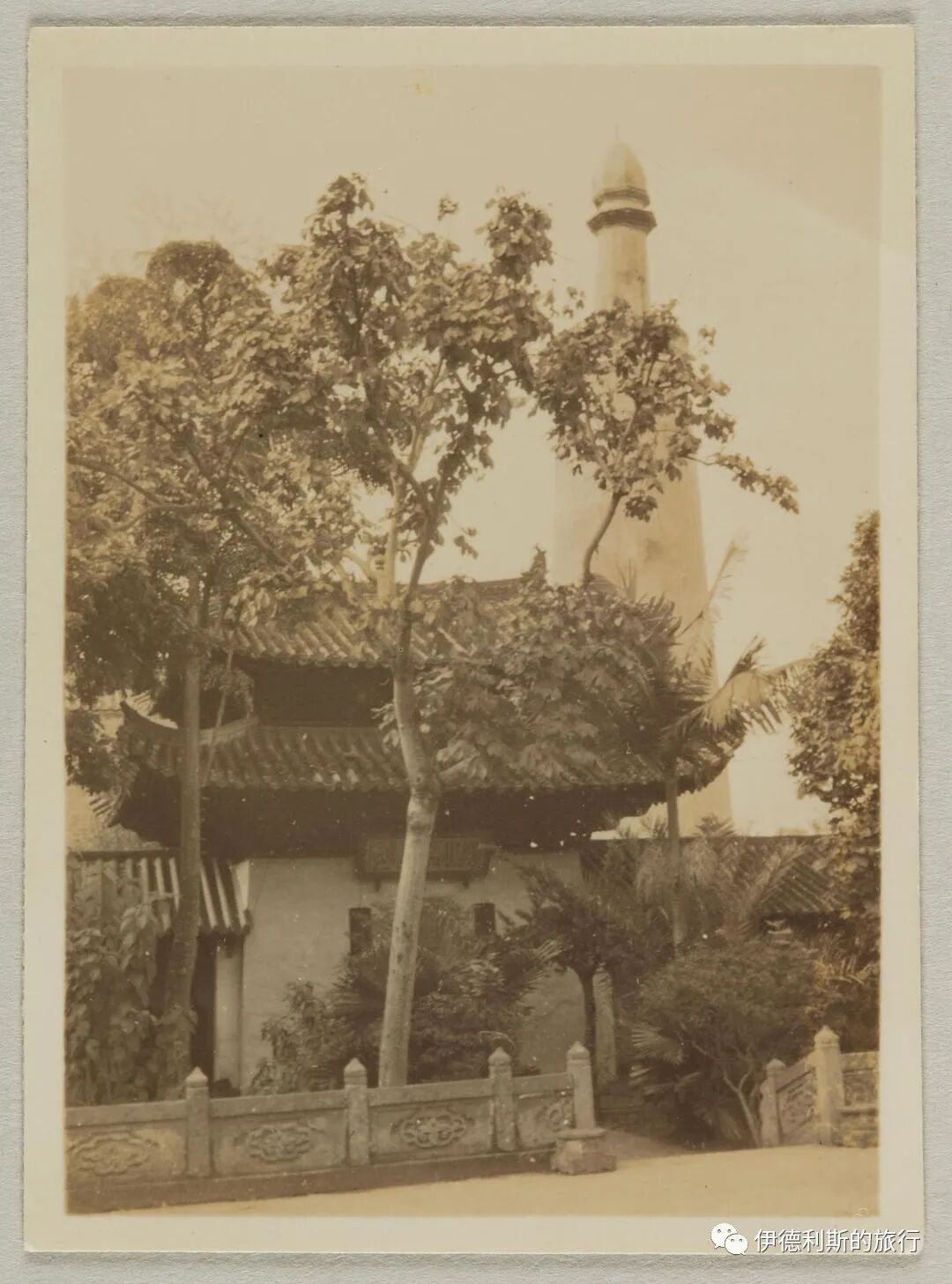
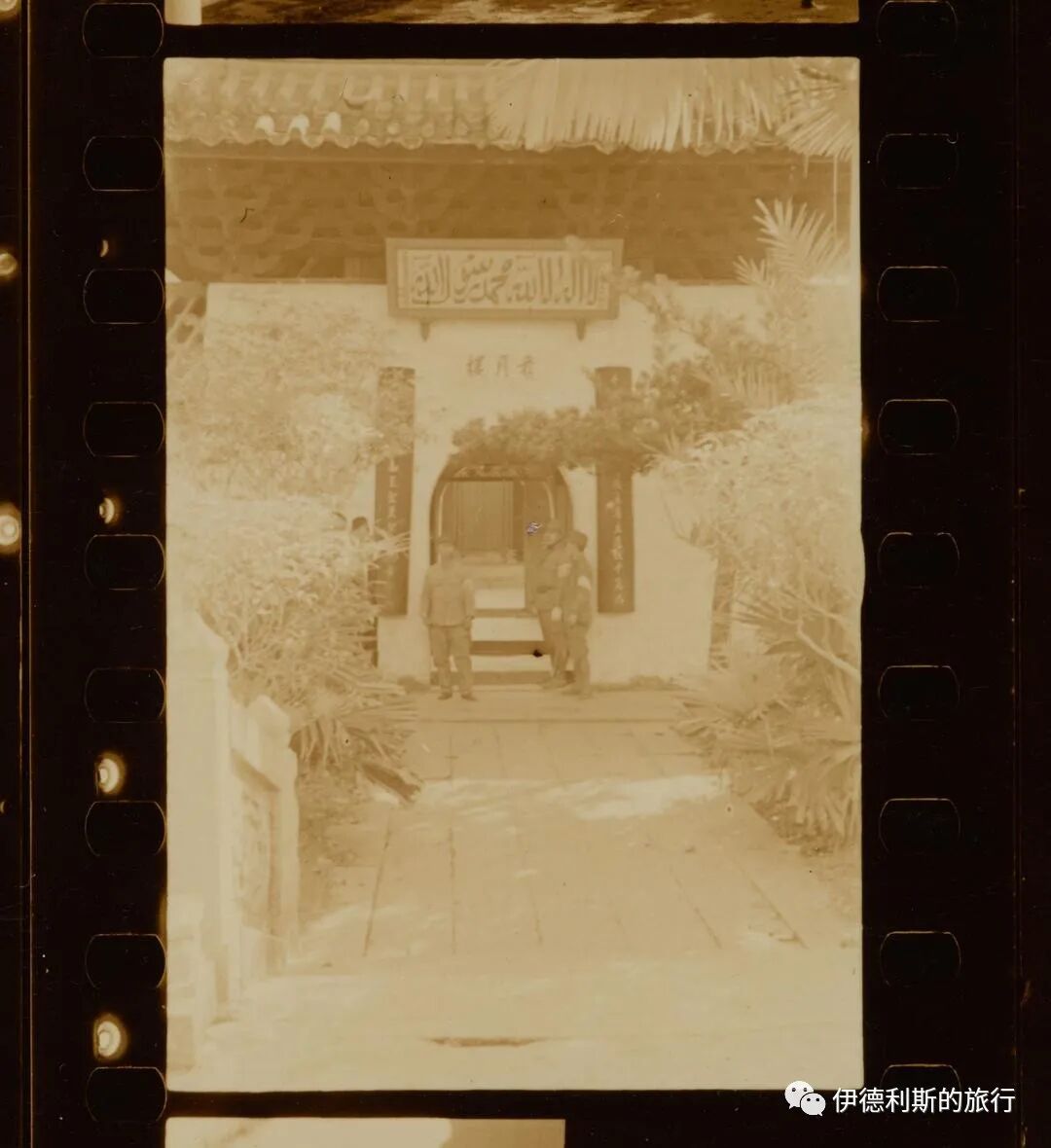
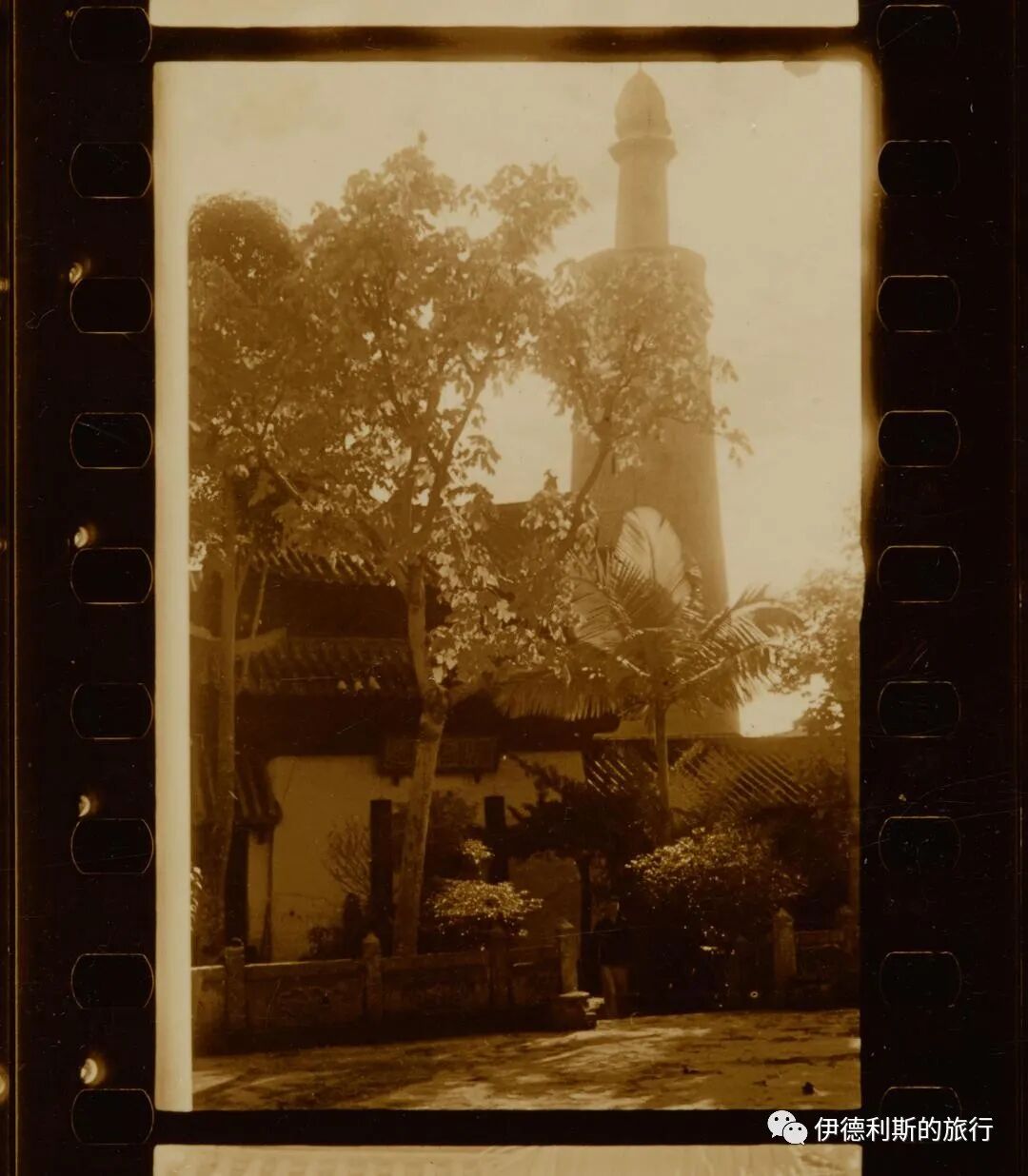
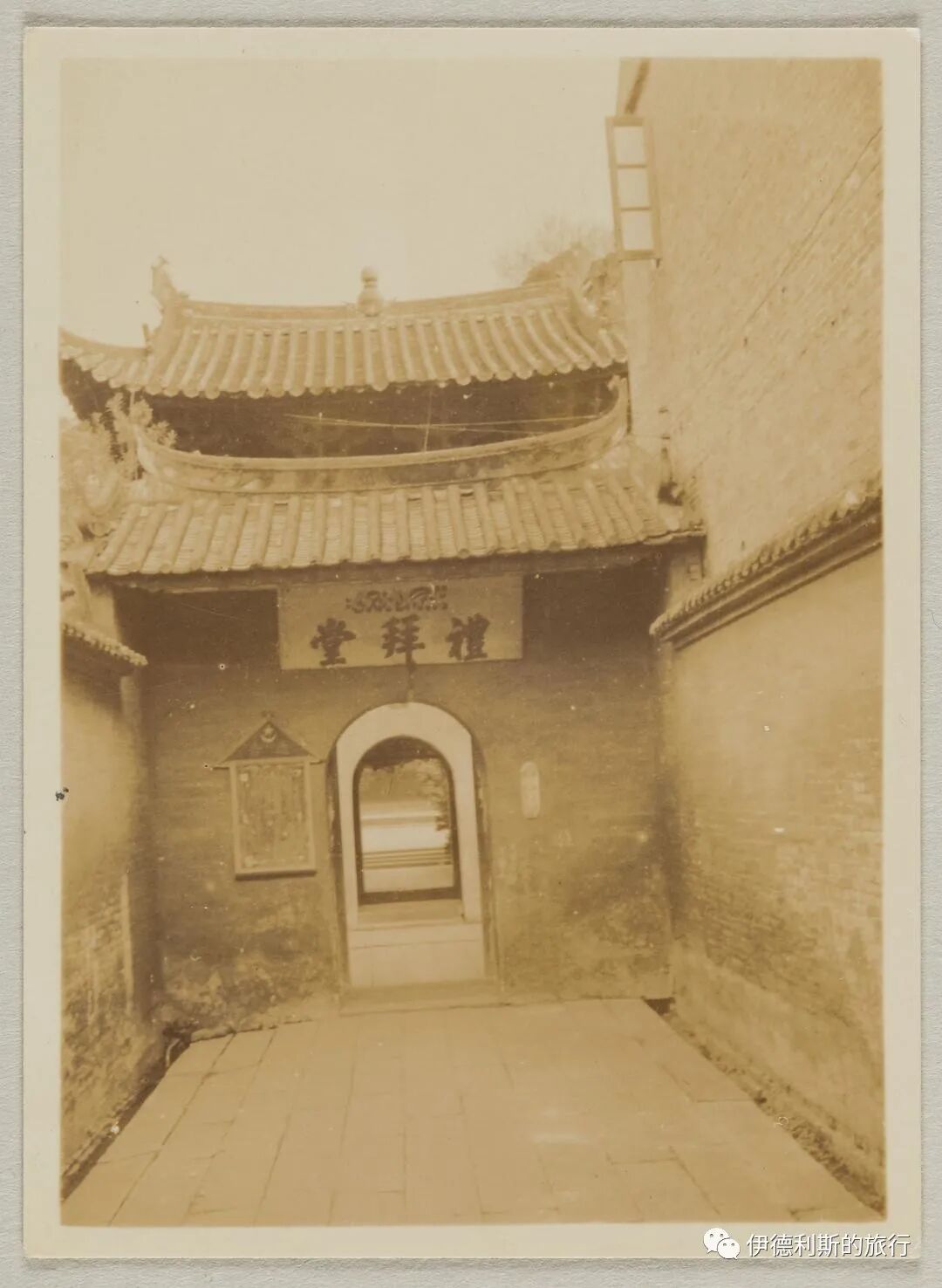
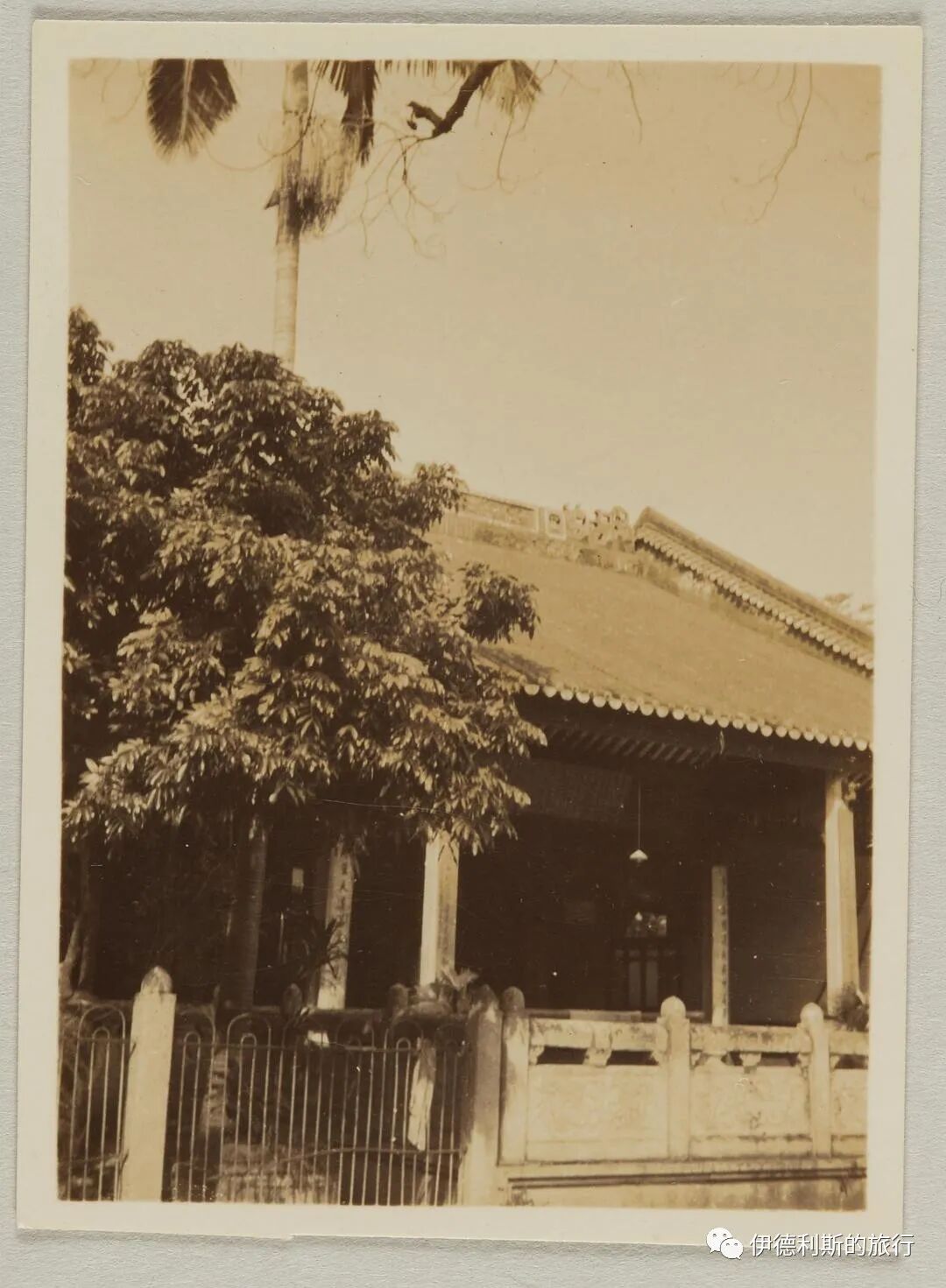
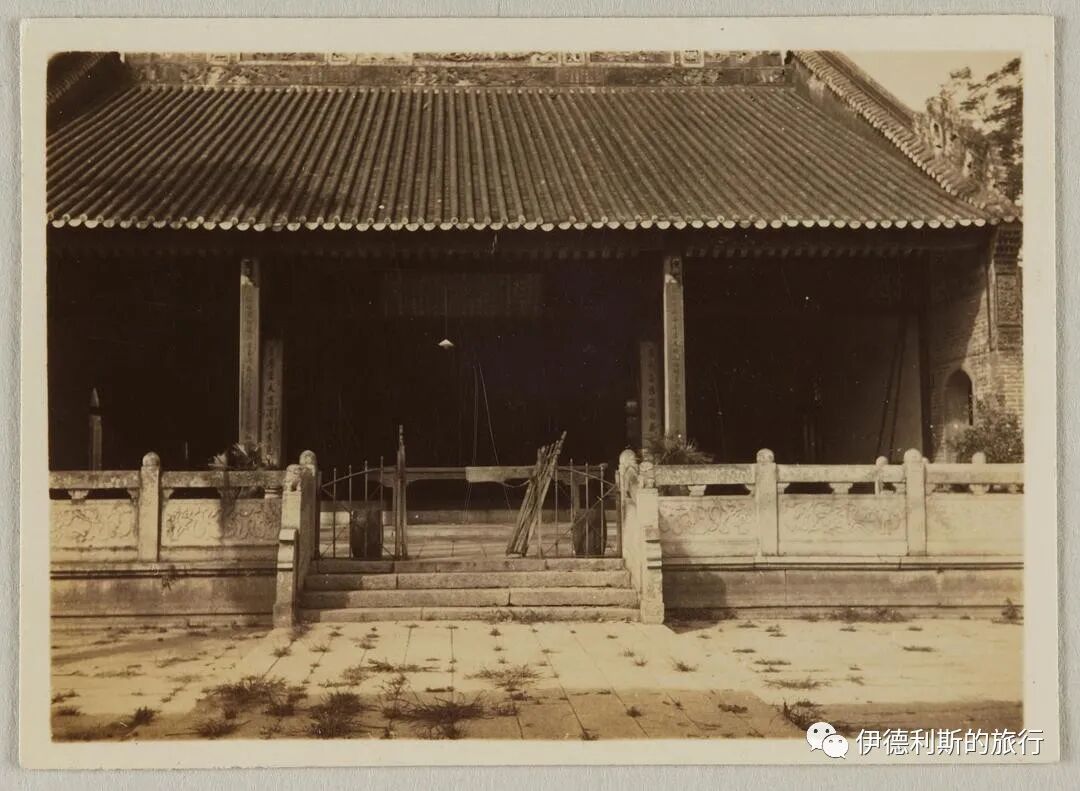
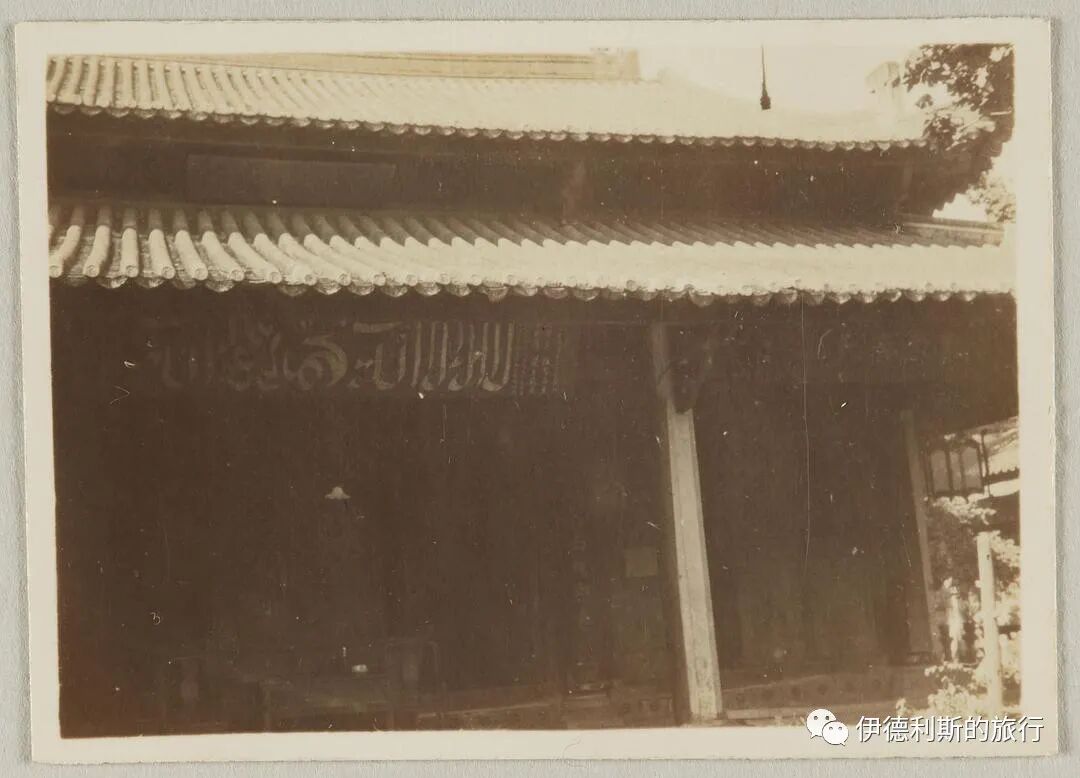
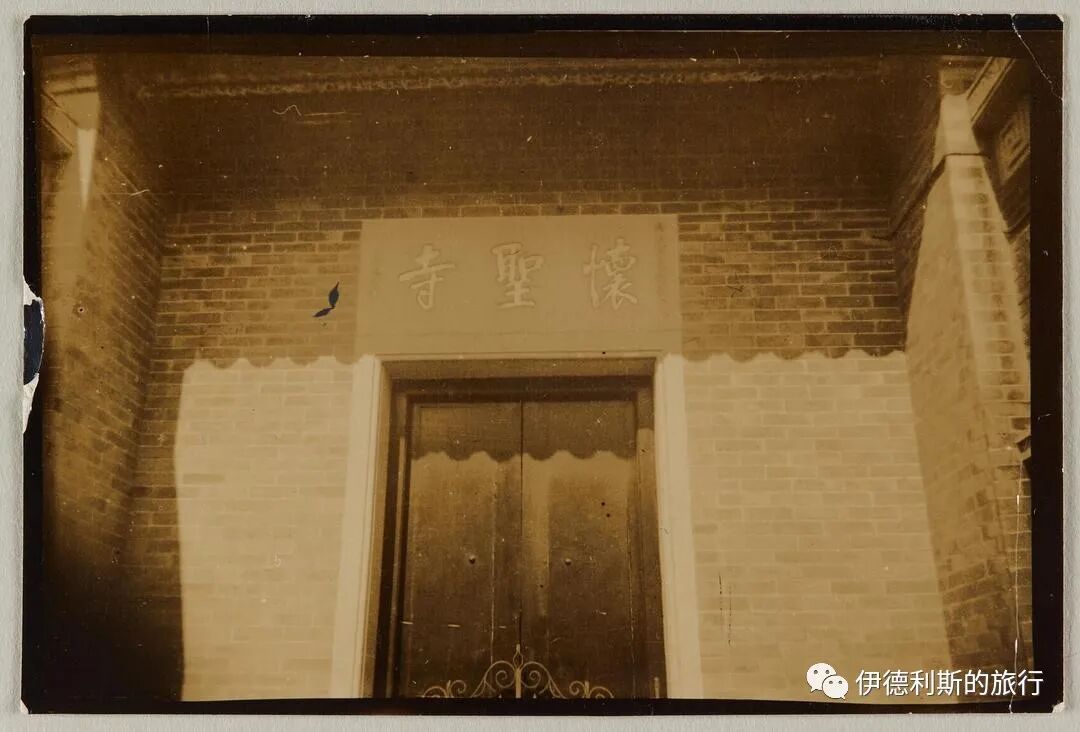
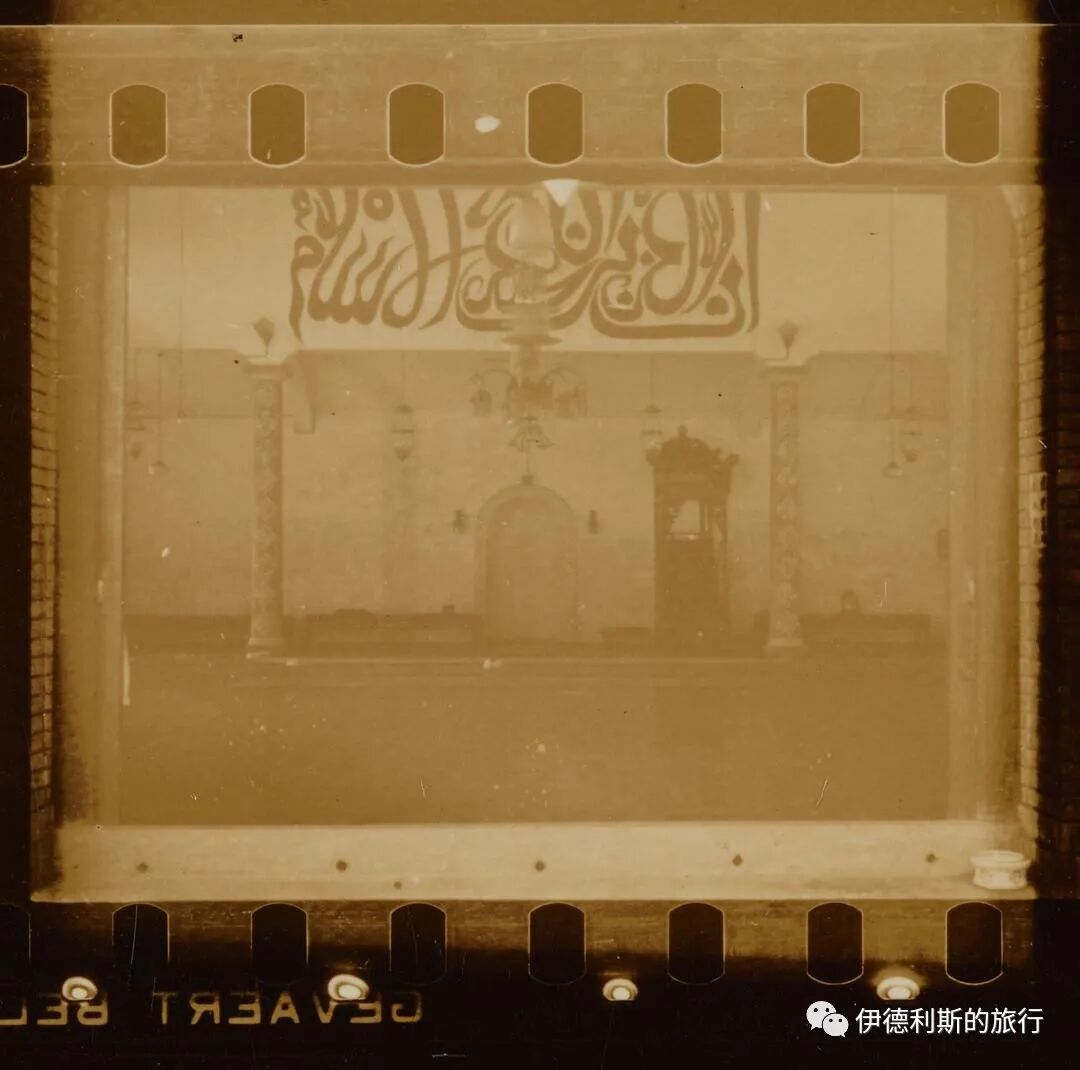
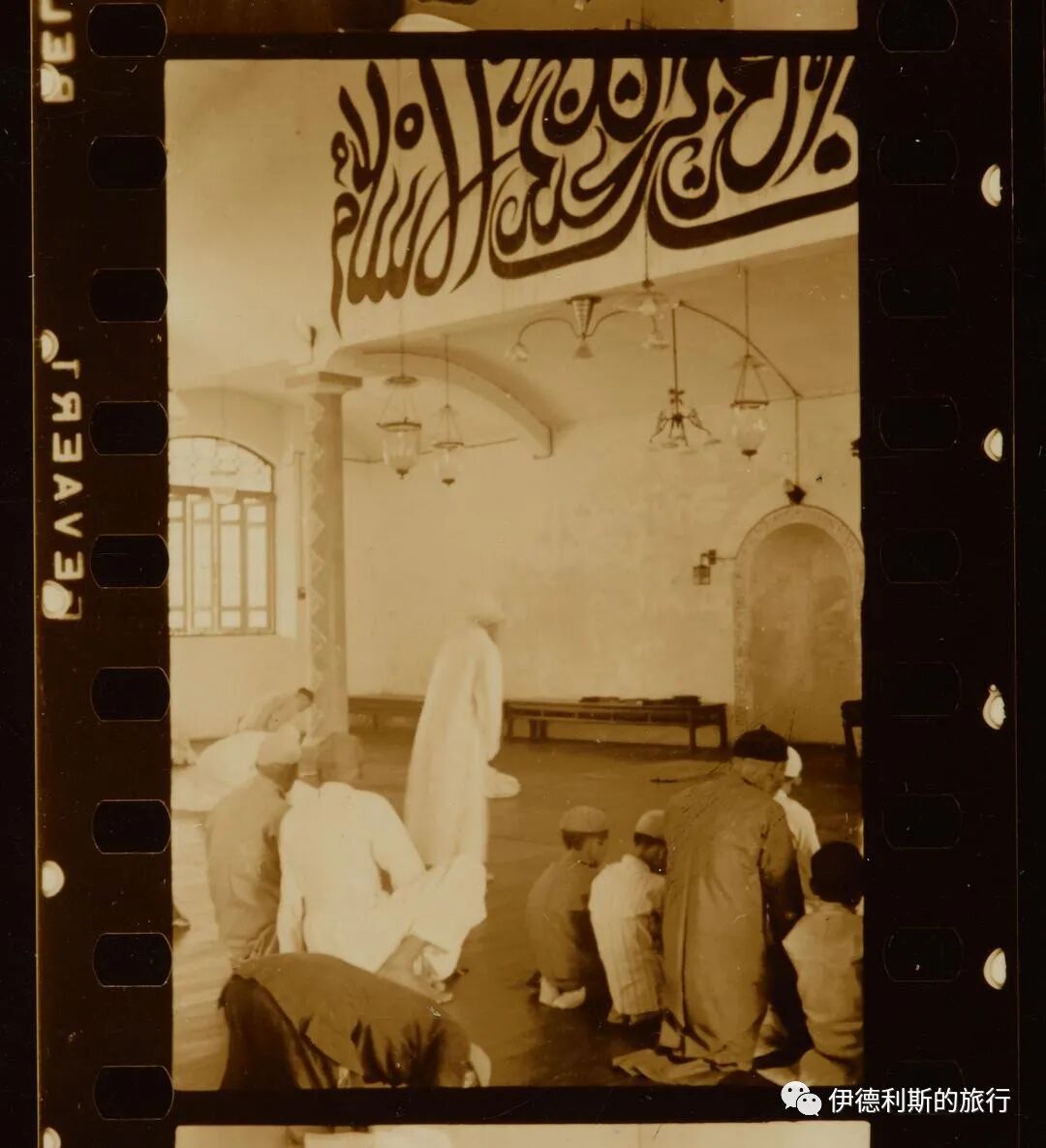
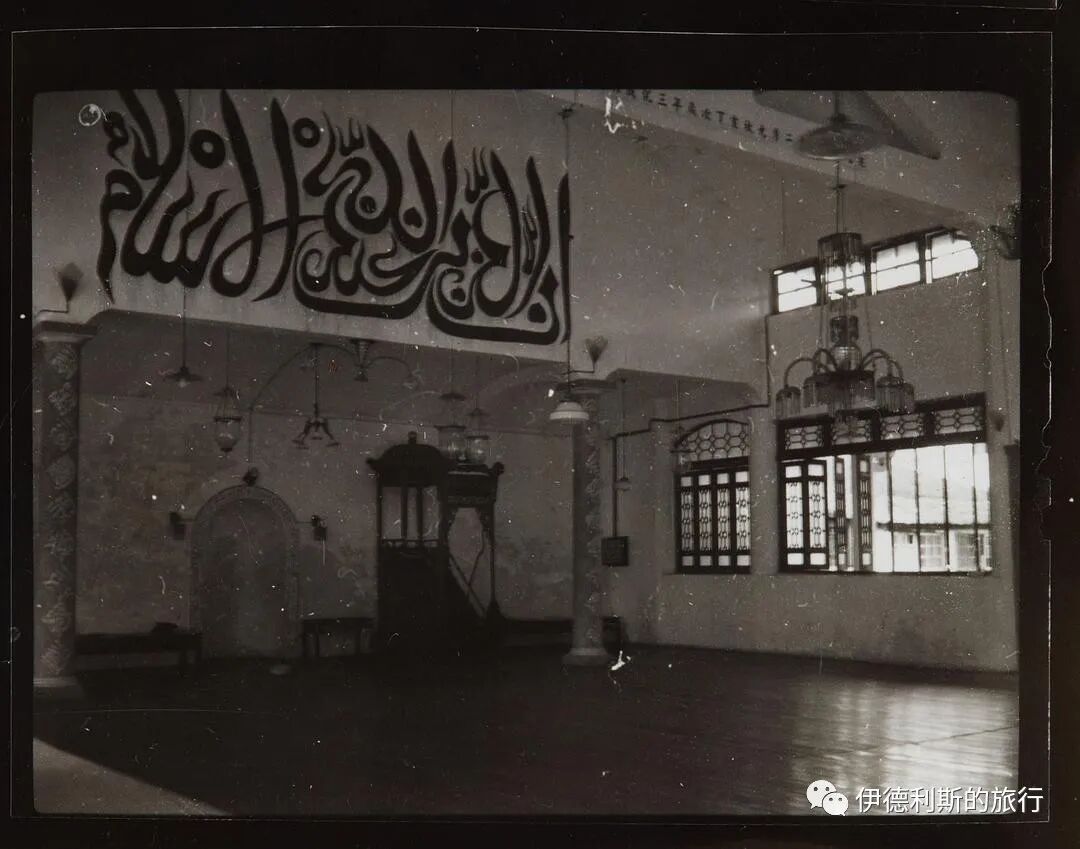
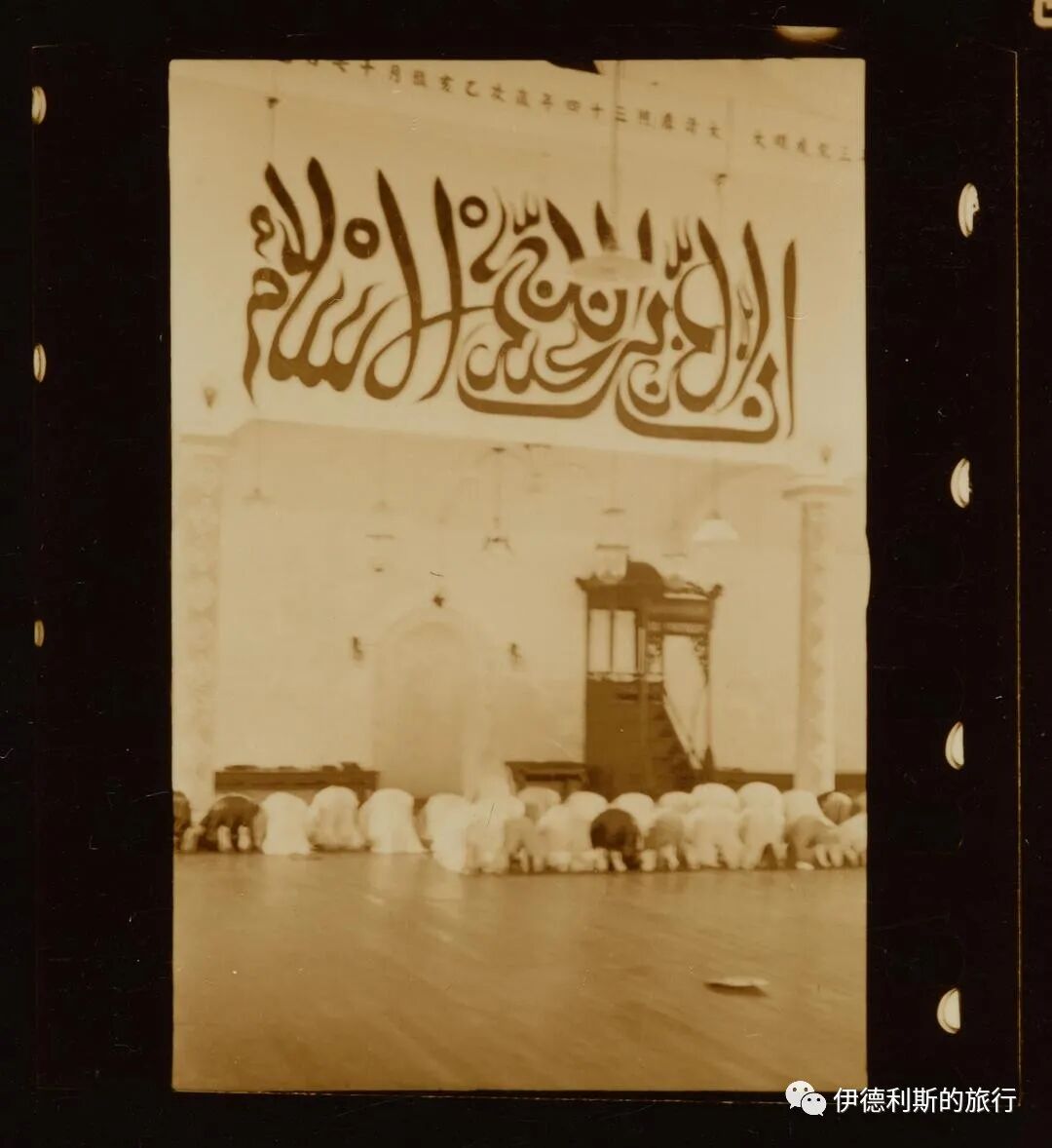
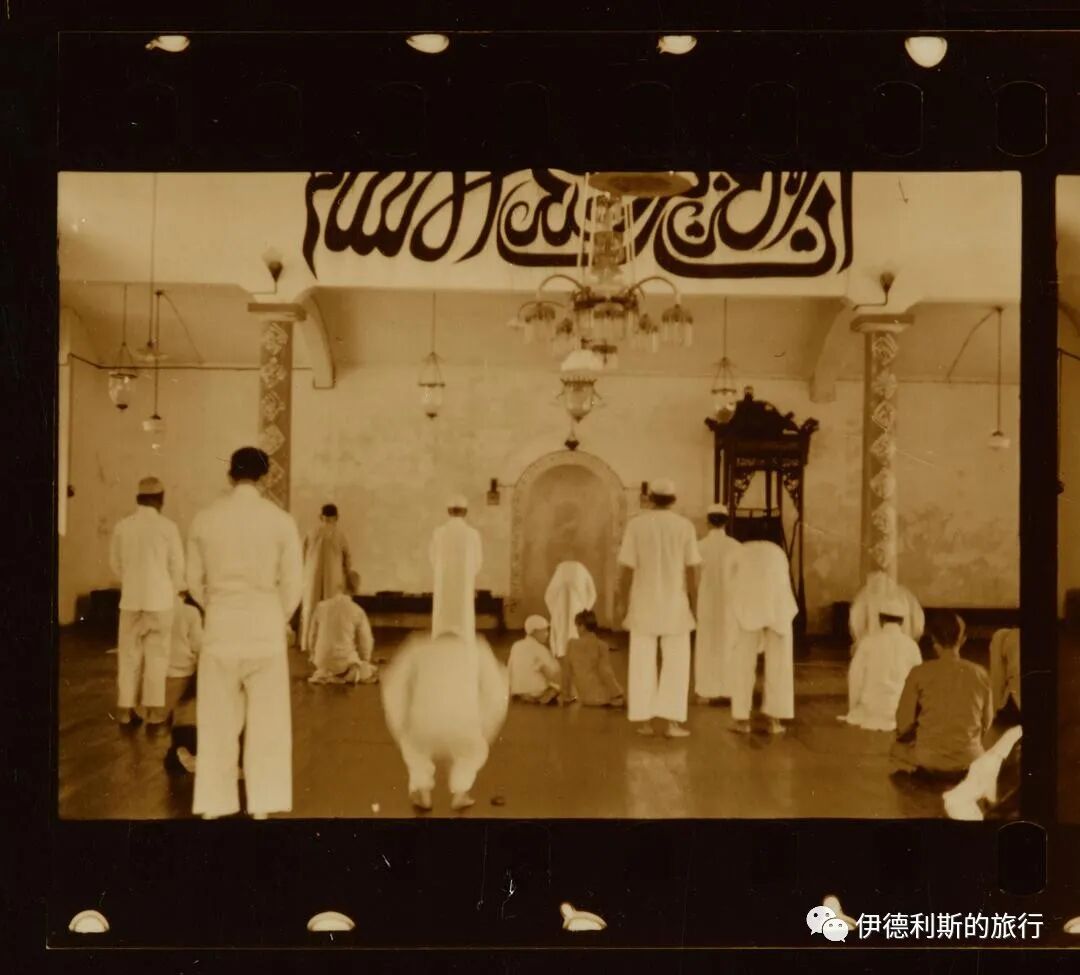
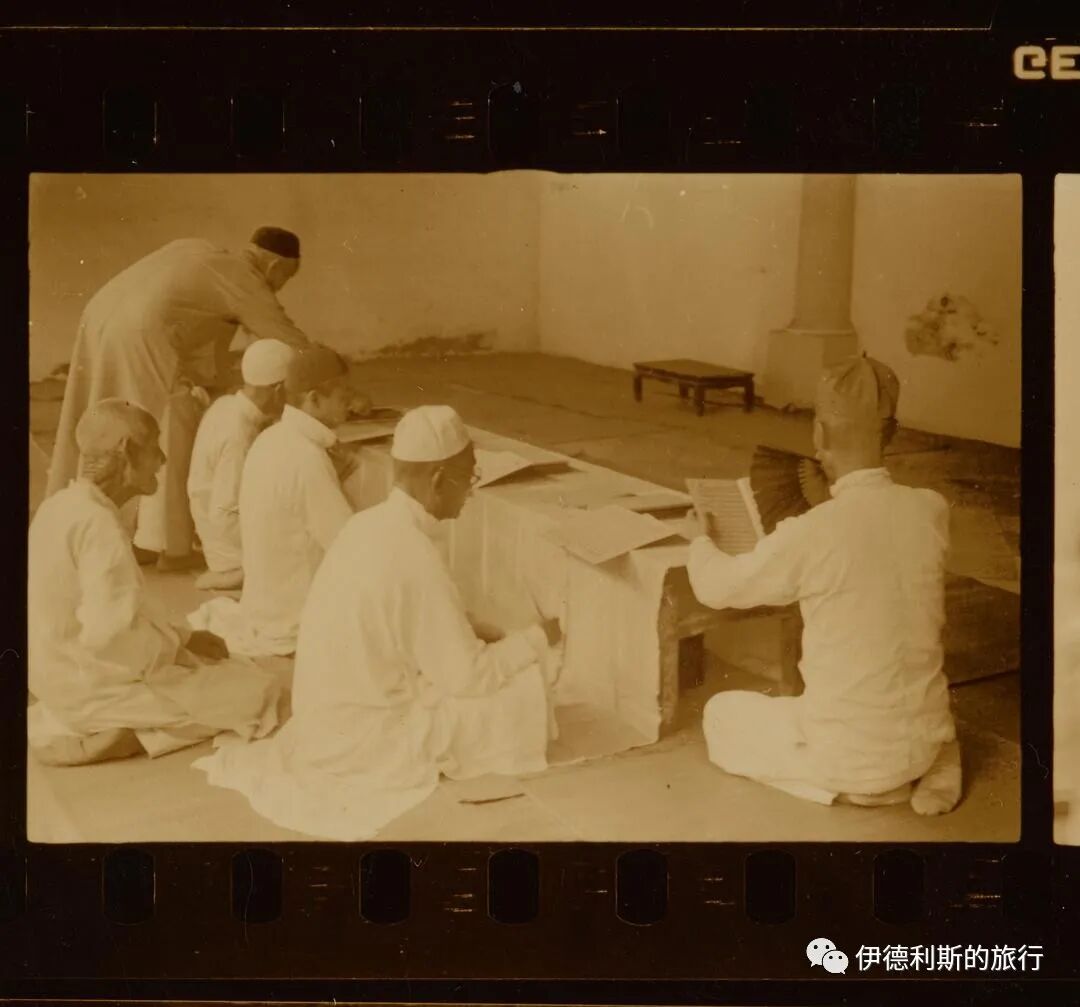
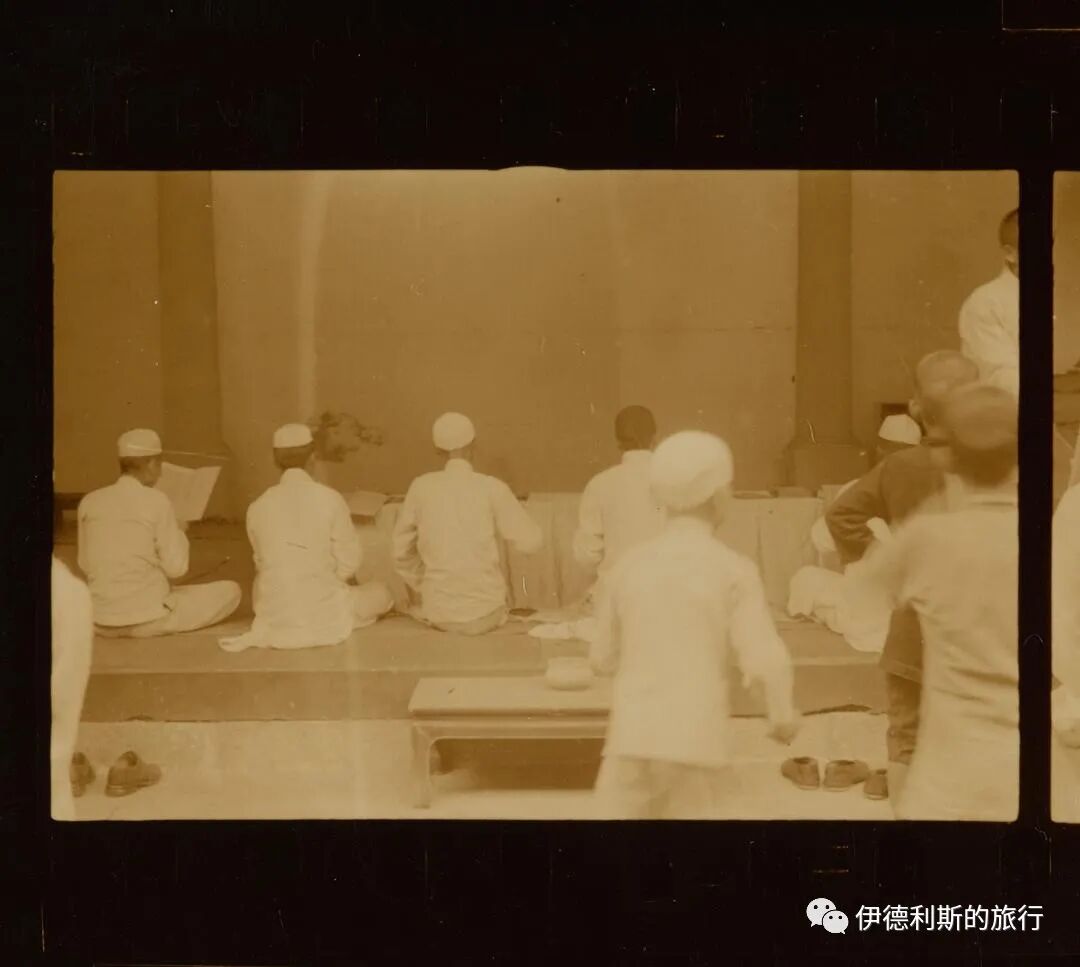
The Cemetery of the Worthies (Xianxian Mu) in Guangzhou in June 1941.
The ancient Cemetery of the Worthies is commonly known as the Hui Muslim Grave, the Great Man's Grave, or the Echoing Grave, and it has been a burial ground for Muslims in Guangzhou since the Tang Dynasty. The earliest record of the ancient Cemetery of the Worthies comes from the 1206 (the second year of the Kaixi era of the Southern Song) book "One Hundred Poems of the South Sea" by Fang Xinru: The foreign graves are ten miles west of the city, with thousands of mounds, all facing west with their heads to the south. The whale-like waves barely spare those they swallow, yet even a dying fox turns its head toward its home hill. My eyes strain across thirty thousand miles of vastness, and though a thousand pieces of gold are here, this life is already over.
The heart of the Ancient Sages' Tomb is the burial site of Wangesu, an Islamic sage who legend says came to China during the Tang Dynasty to spread his faith. Wangesu is known as Saheb Saad Wakkas. Most historical records about his tomb date from the Ming and Qing dynasties. Sources for his arrival time vary: the Qing-era Guangzhou Prefecture Gazetteer says 629 (the third year of the Tang Zhenguan era), the Qing-era Tianfang Zhengxue says 632 (the sixth year of the Tang Zhenguan era), and the Qing-era stele record for the renovation of the Sage Saierde tomb even suggests he arrived during the Sui Dynasty. Regarding his identity, he is variously described as an uncle, cousin, general, or envoy of the Prophet Muhammad.
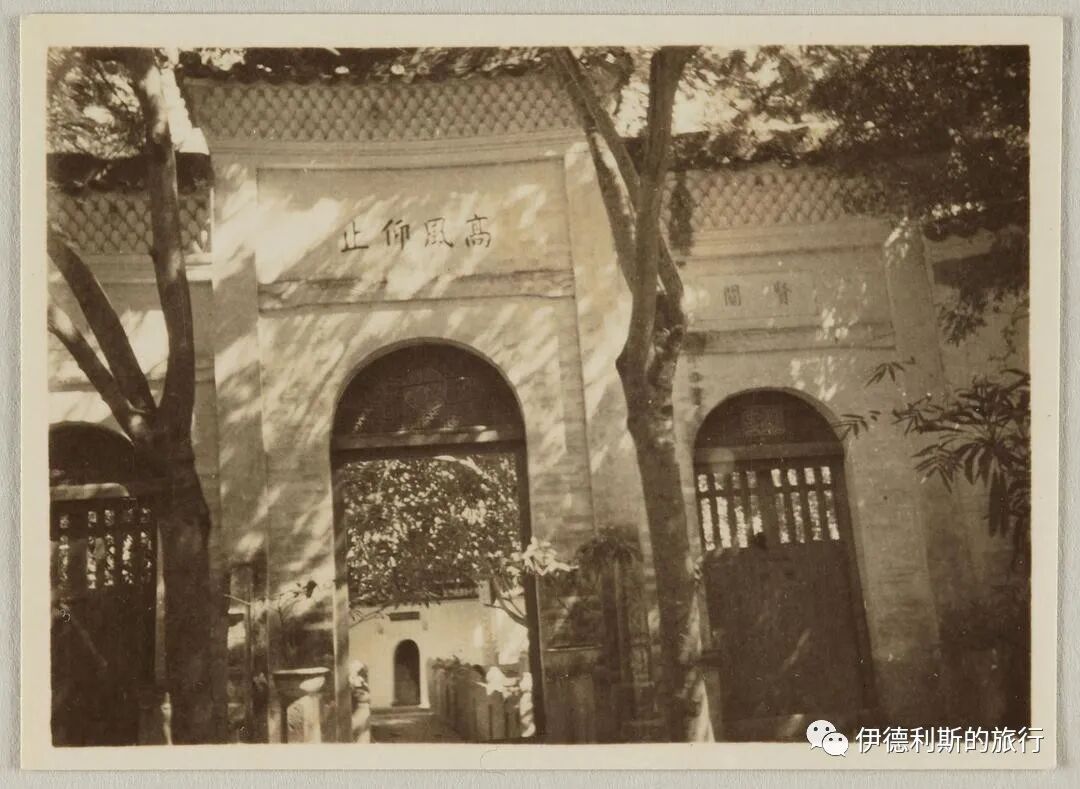
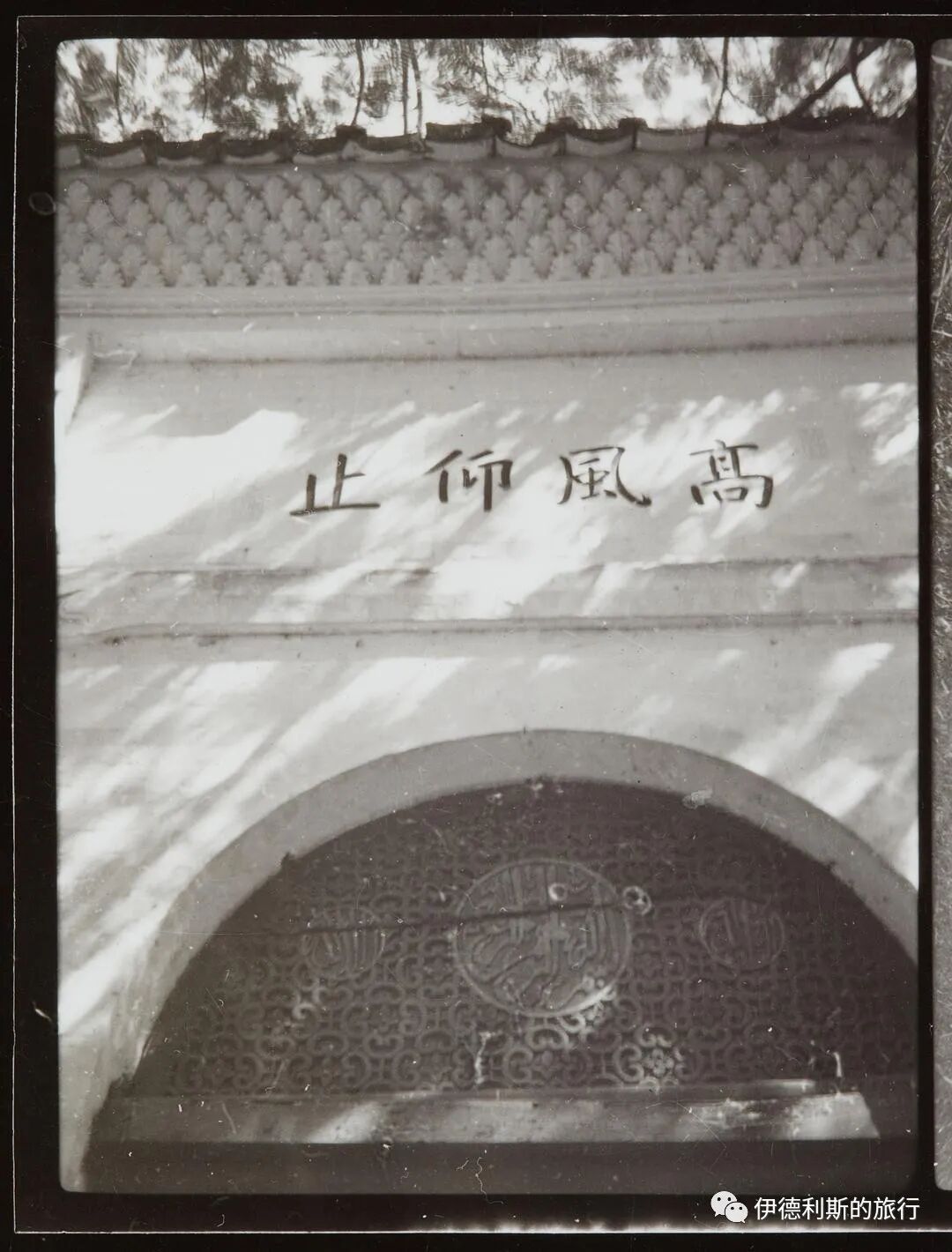
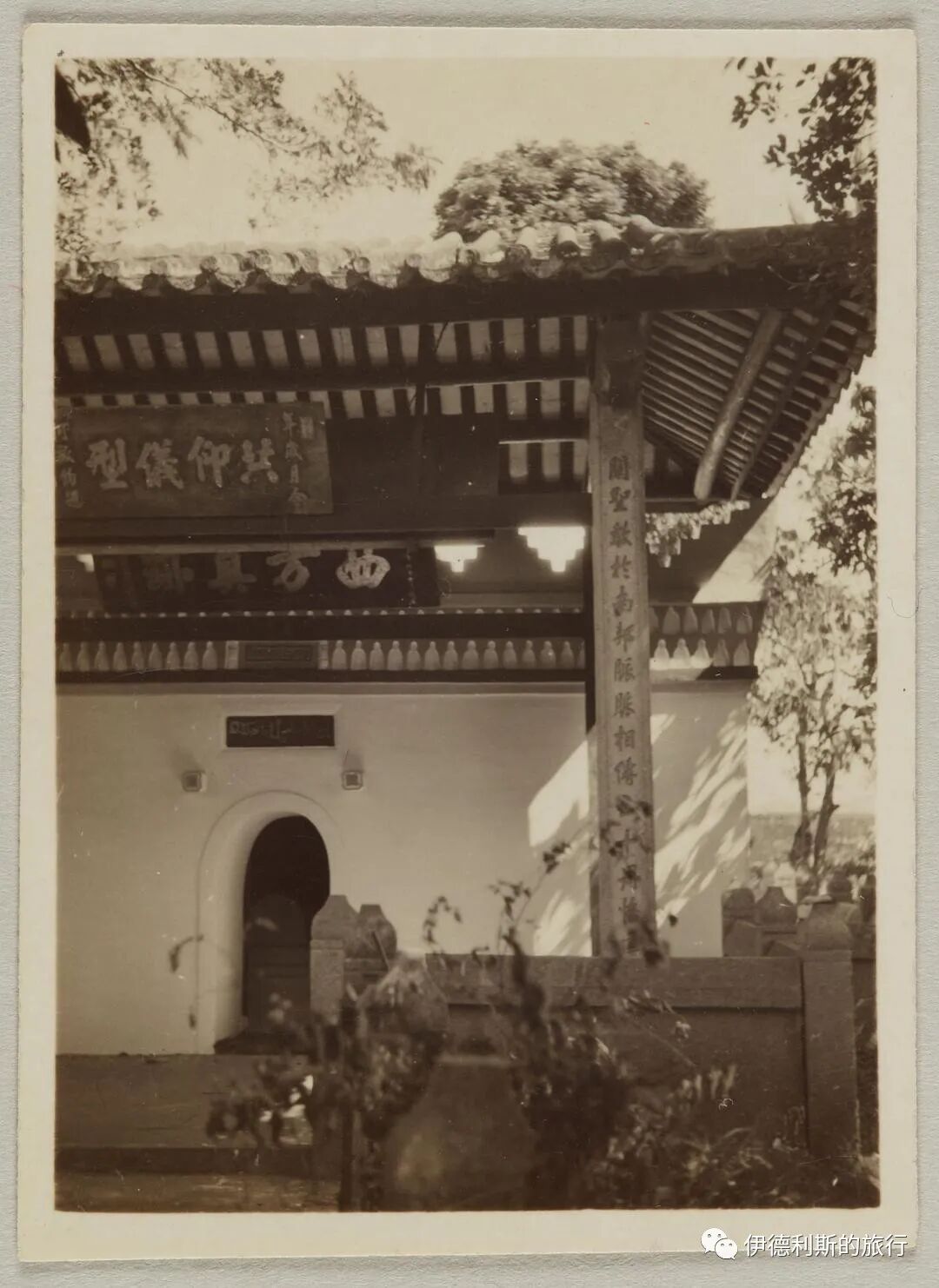
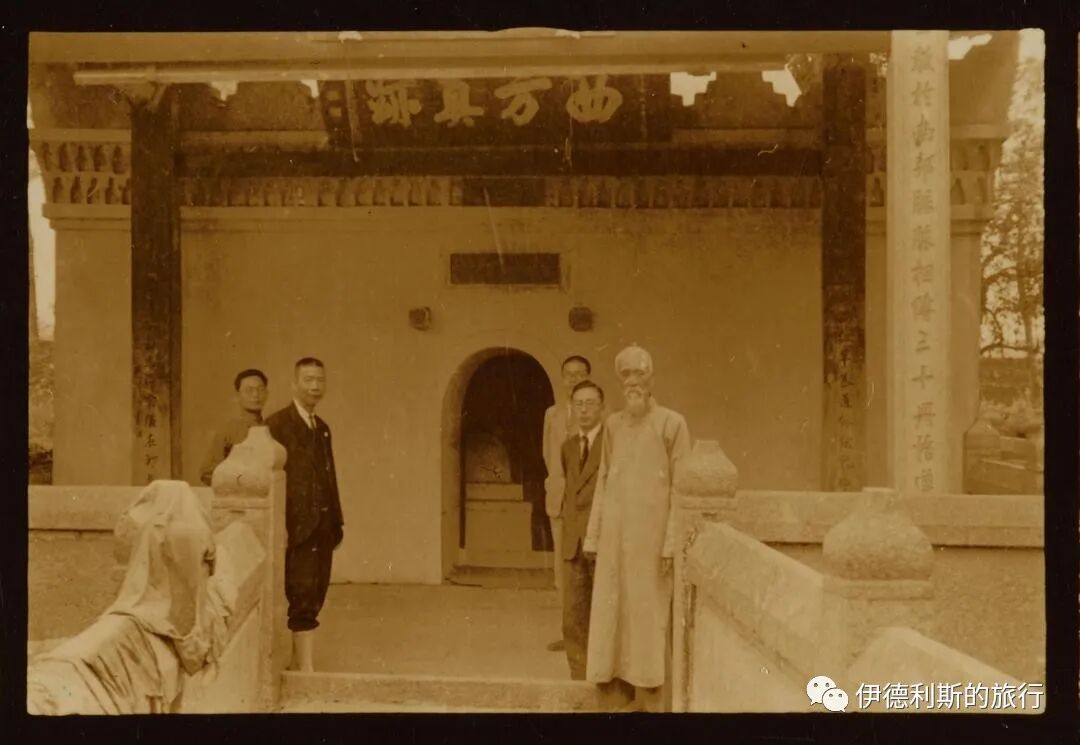
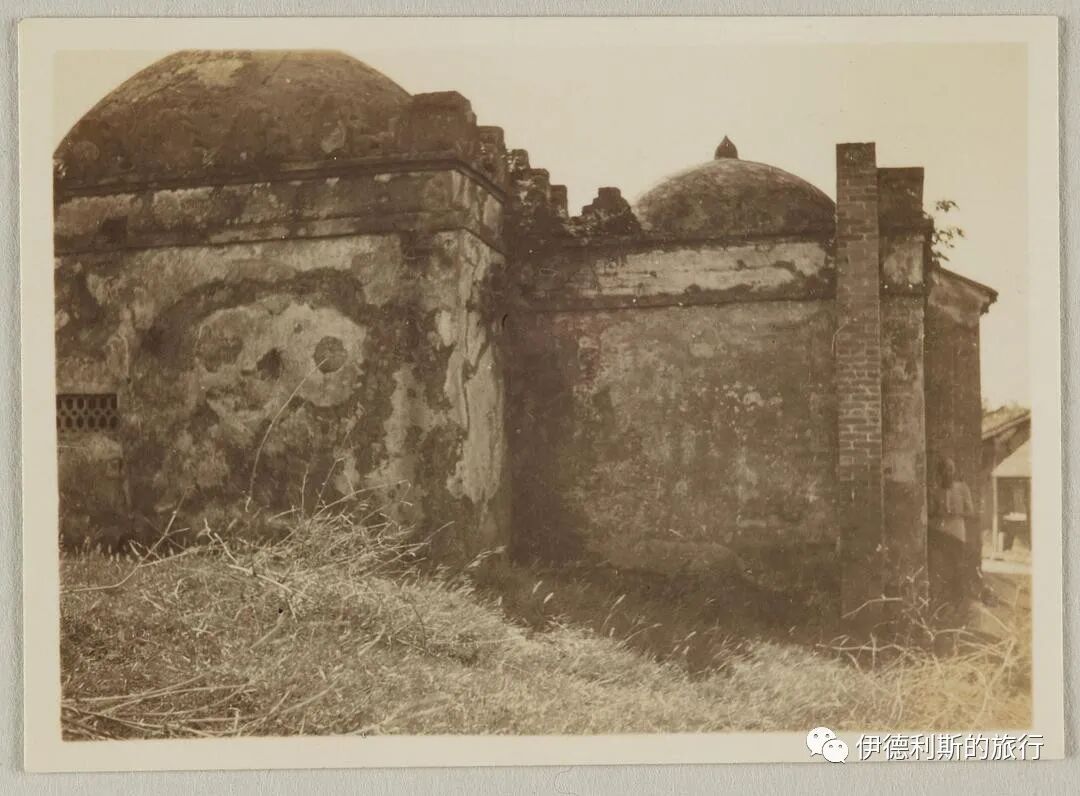
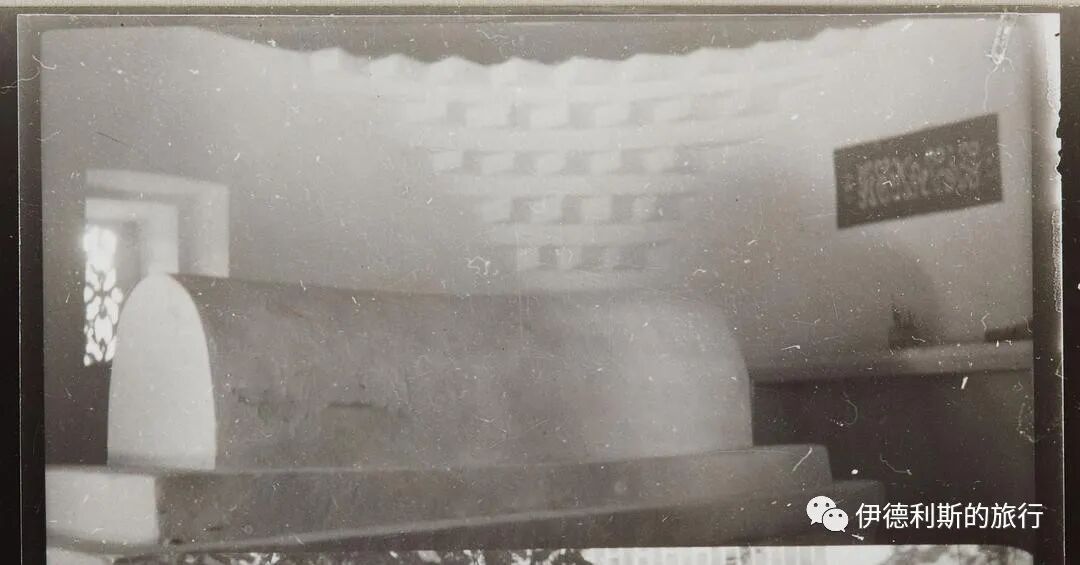
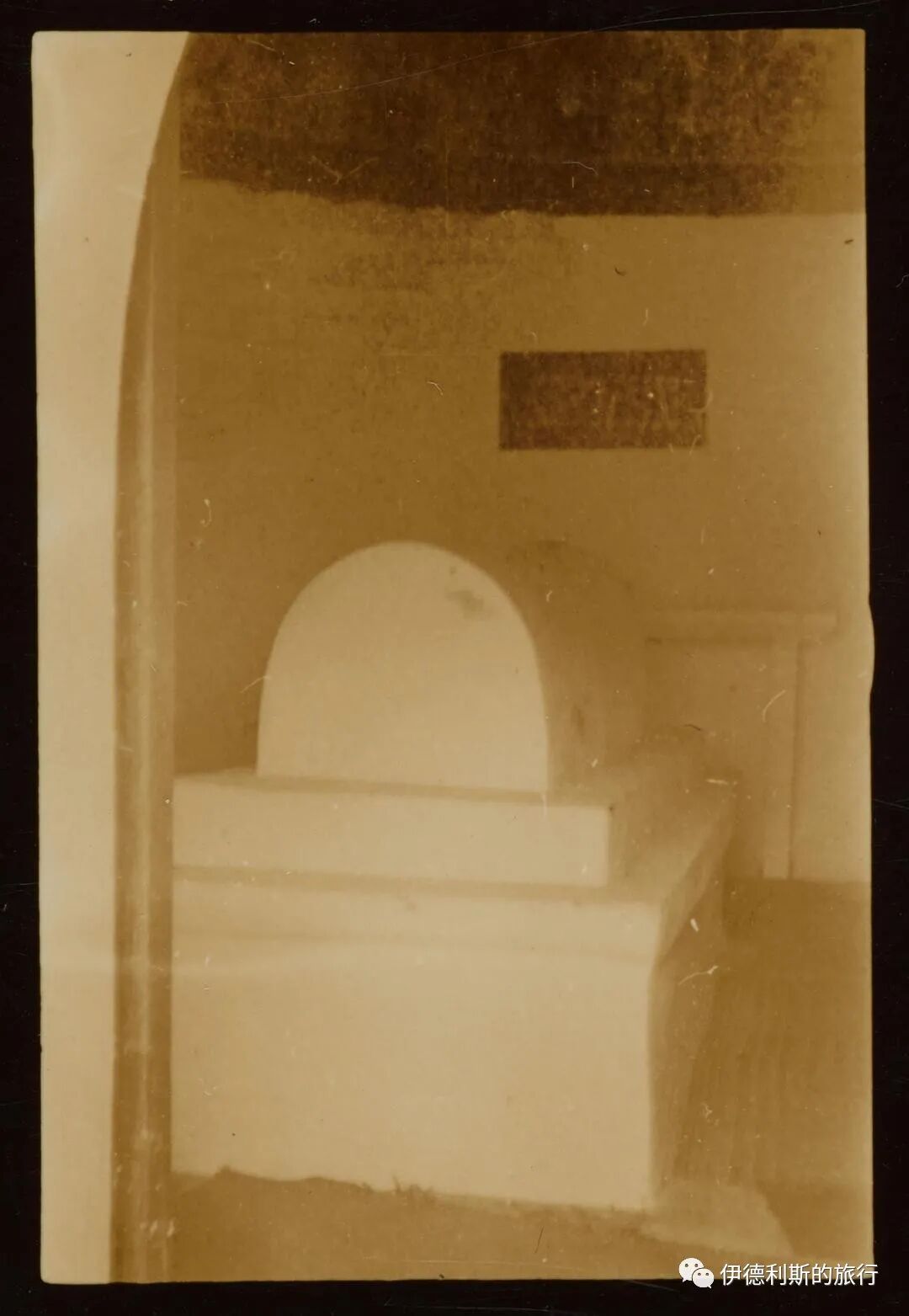
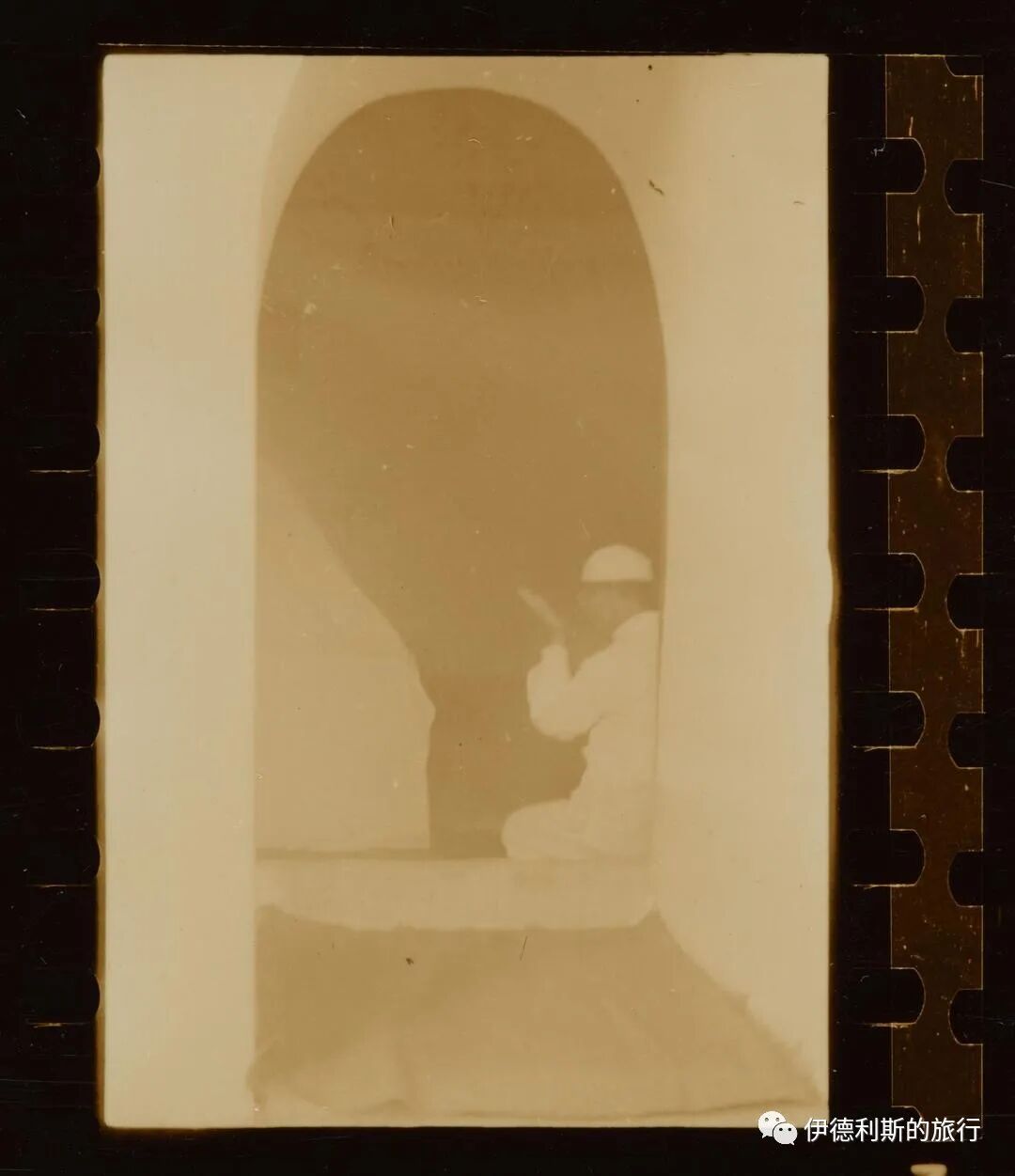
The Huihui people of Sanya
The Huihui people are a Muslim group living in Huihui Village and Huixin Village in Sanya, Hainan, with a population of nearly ten thousand. The Huihui language they speak belongs to the Austronesian language family and shares the same origin as the Chamic languages of southern Vietnam. The customs of the Huihui people are strongly influenced by local Hainan groups, yet they maintain a devout Islamic faith, making them a very unique group on China's southeast coast.
Starting in the 10th century, the Champa kingdom in southern Vietnam fought wars with Dai Viet, Chenla (Cambodia), and the Yuan Dynasty, causing many Arab and Persian merchants in Champa to sail across the sea to Hainan. The History of Song: Champa records that as early as 986, a Champa man named Pu Luo'e led over a hundred of his people to Danzhou, Hainan, to seek refuge.
During the Ming and Qing dynasties, Muslims living in places like Yazhou, Wanzhou, and Qiongshan in Hainan gradually moved to Suosanya Lifan Village (now Huixin Village in Sanya). During the Qing Dynasty, Muslim communities across Hainan underwent assimilation into Han, Li, or Dan cultures, leaving Suosanya Lifan Village as the only remaining Muslim community in Hainan, which eventually formed the modern Huihui people.
Some Huihui people also came from the mainland. The ancestors of the Ha family among the Huihui came from Shaanxi, later moving their whole family to Dadan Port in Yazhou, Hainan, before relocating to Suosanya Lifan Village with another group of Hui Muslims surnamed Liu during the late Ming and early Qing dynasties.
A mosque of the Huihui people in June 1941
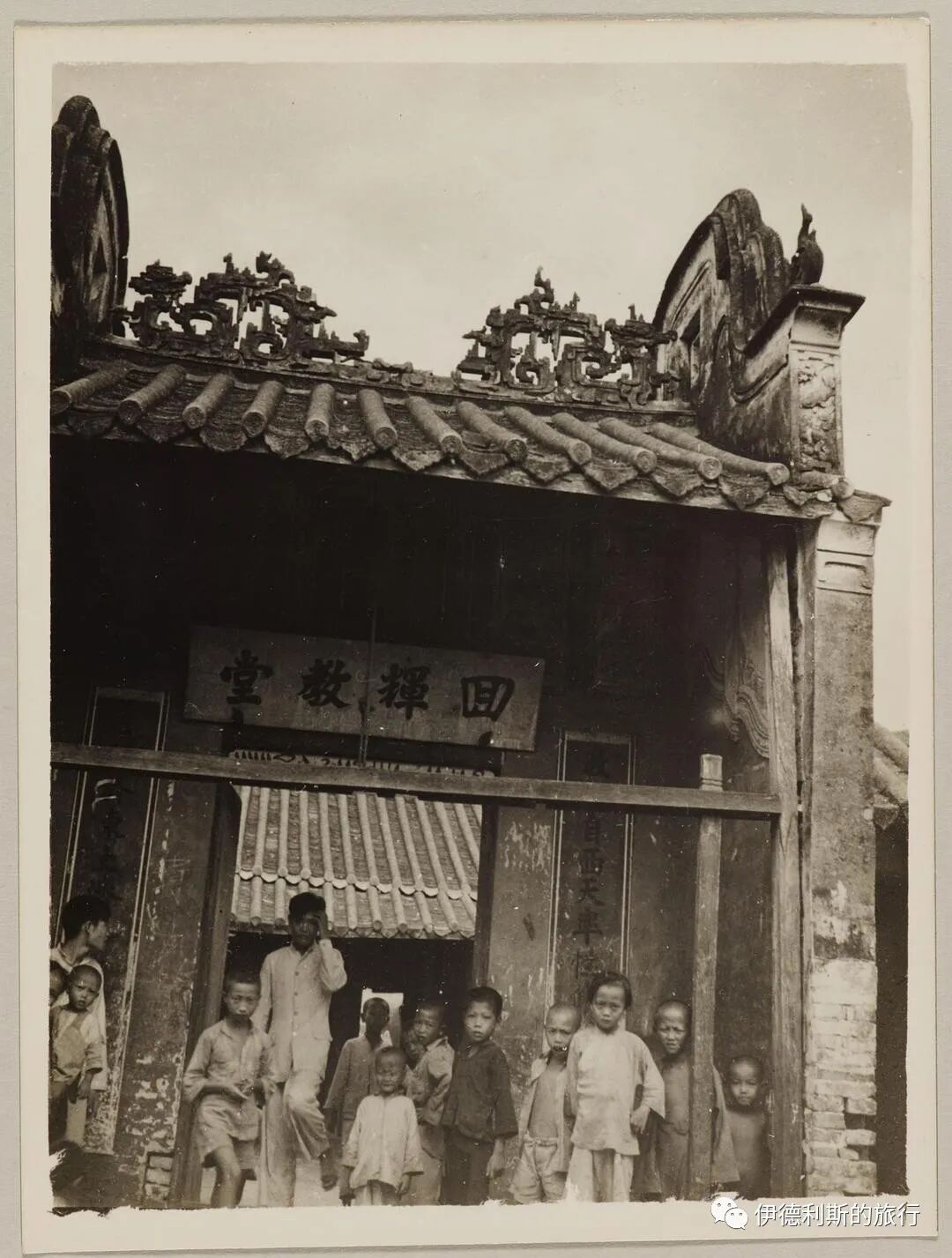
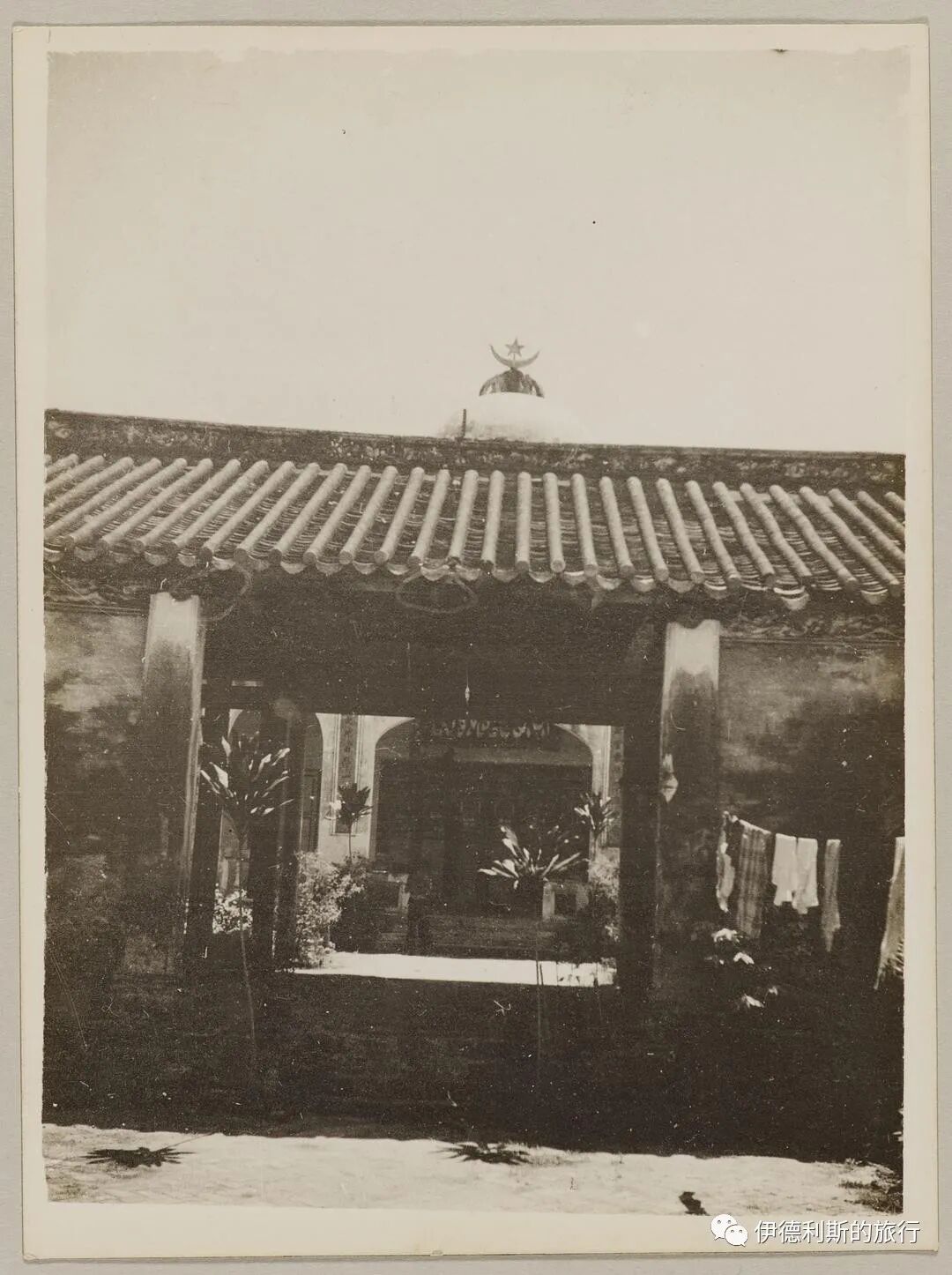
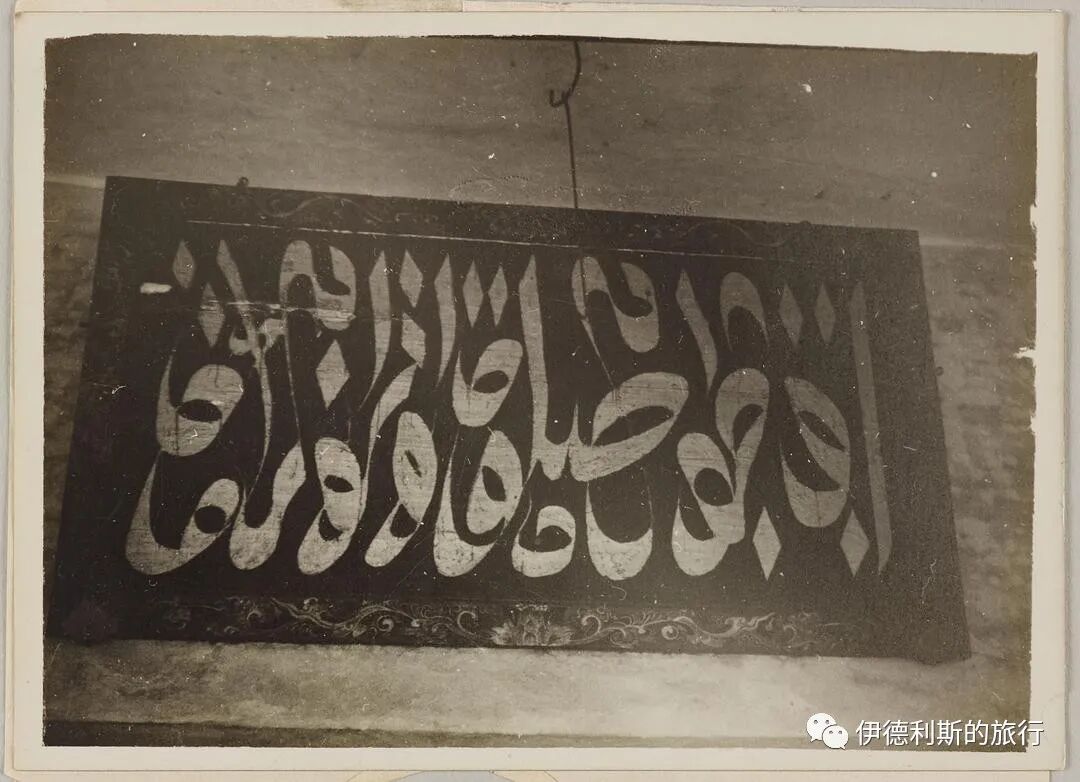
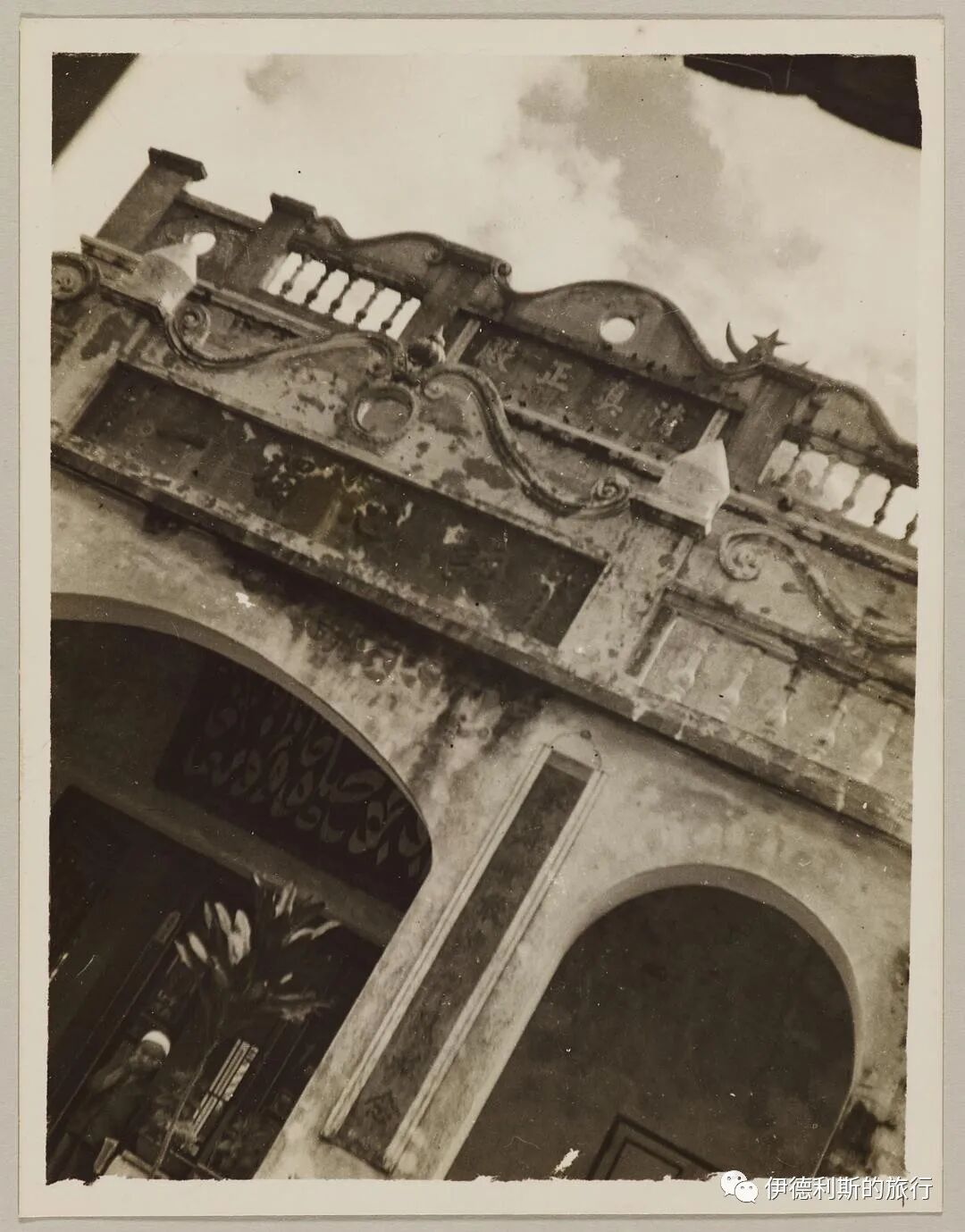
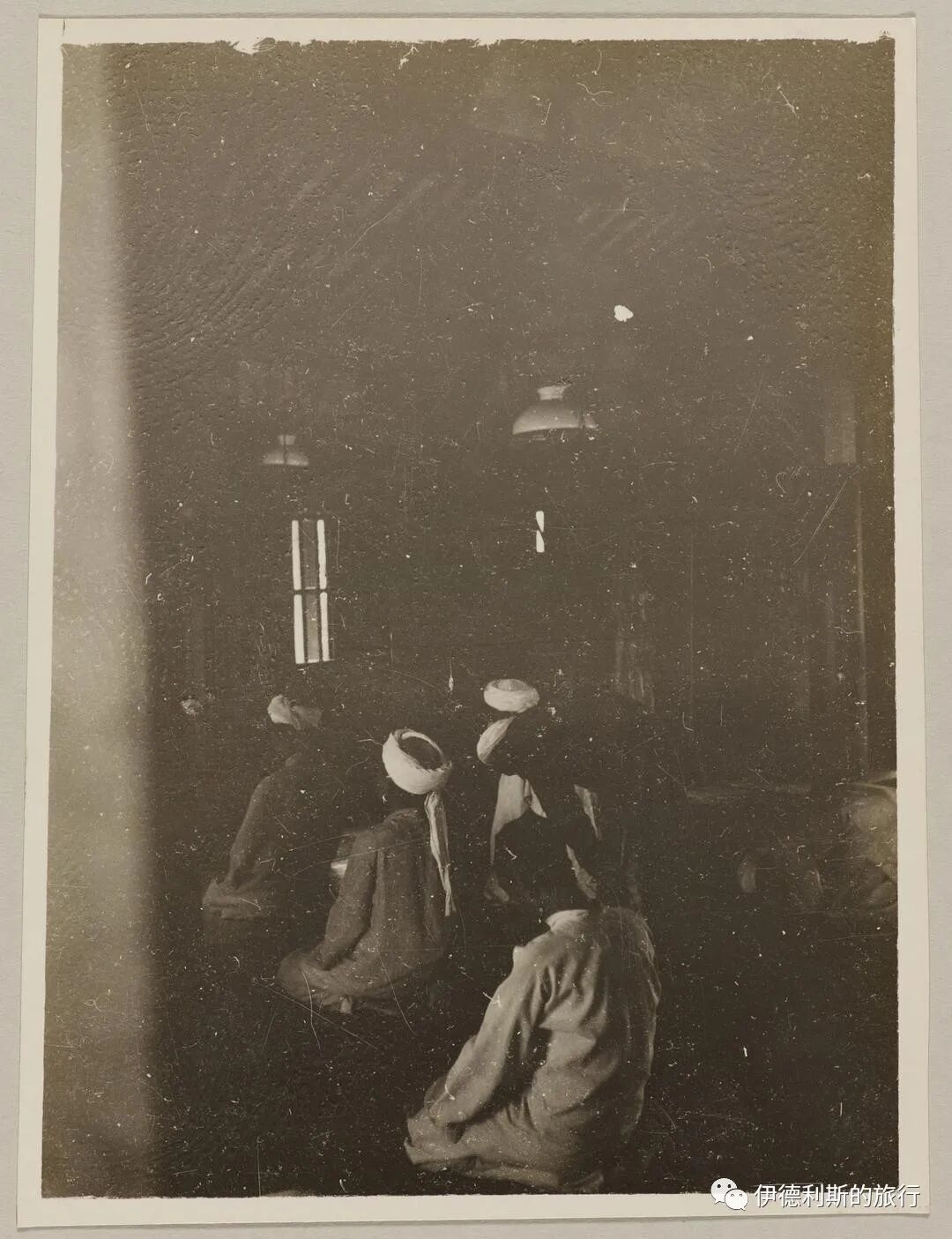
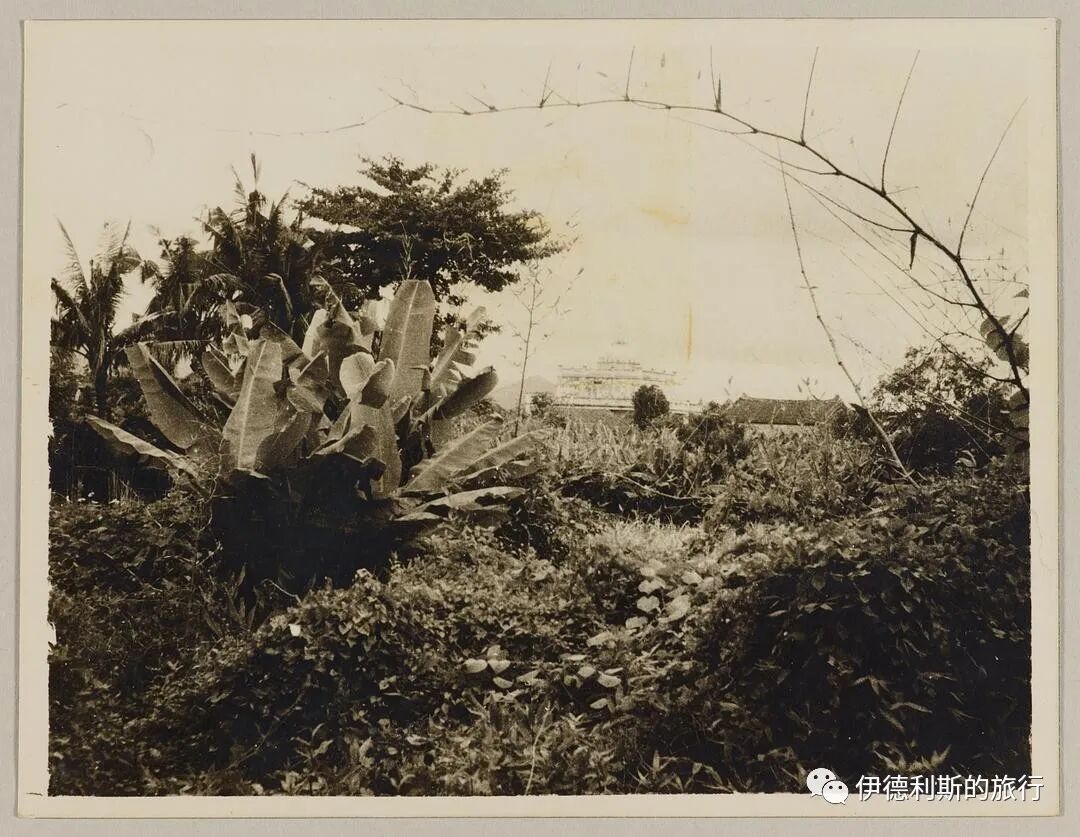
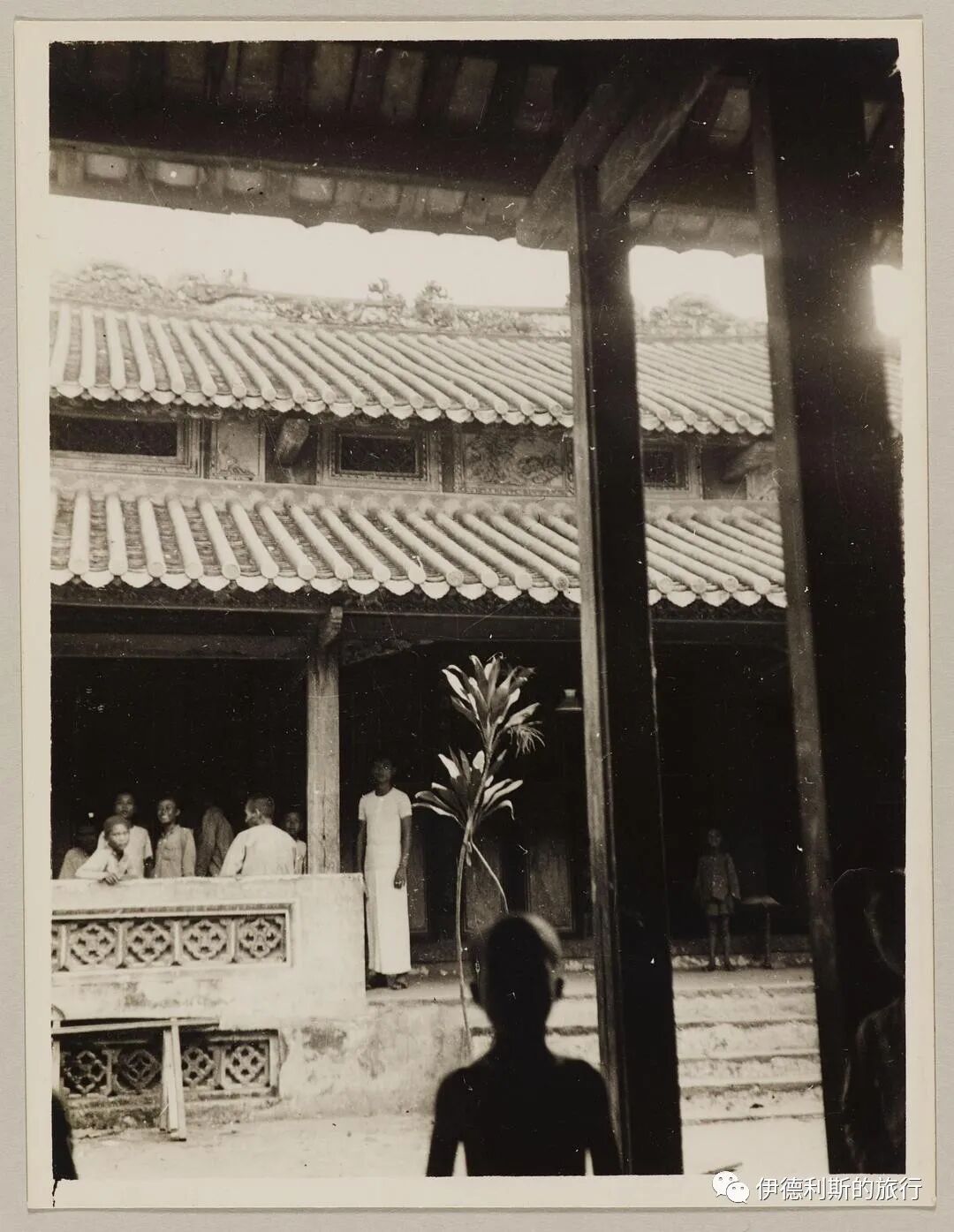
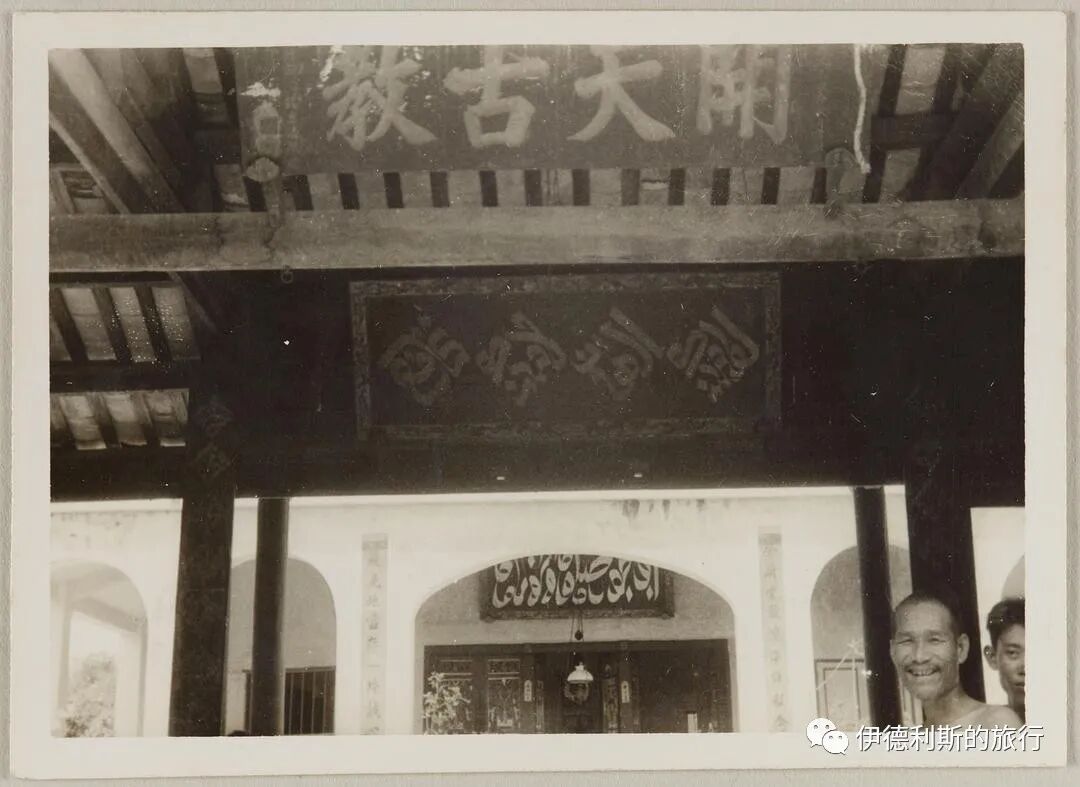
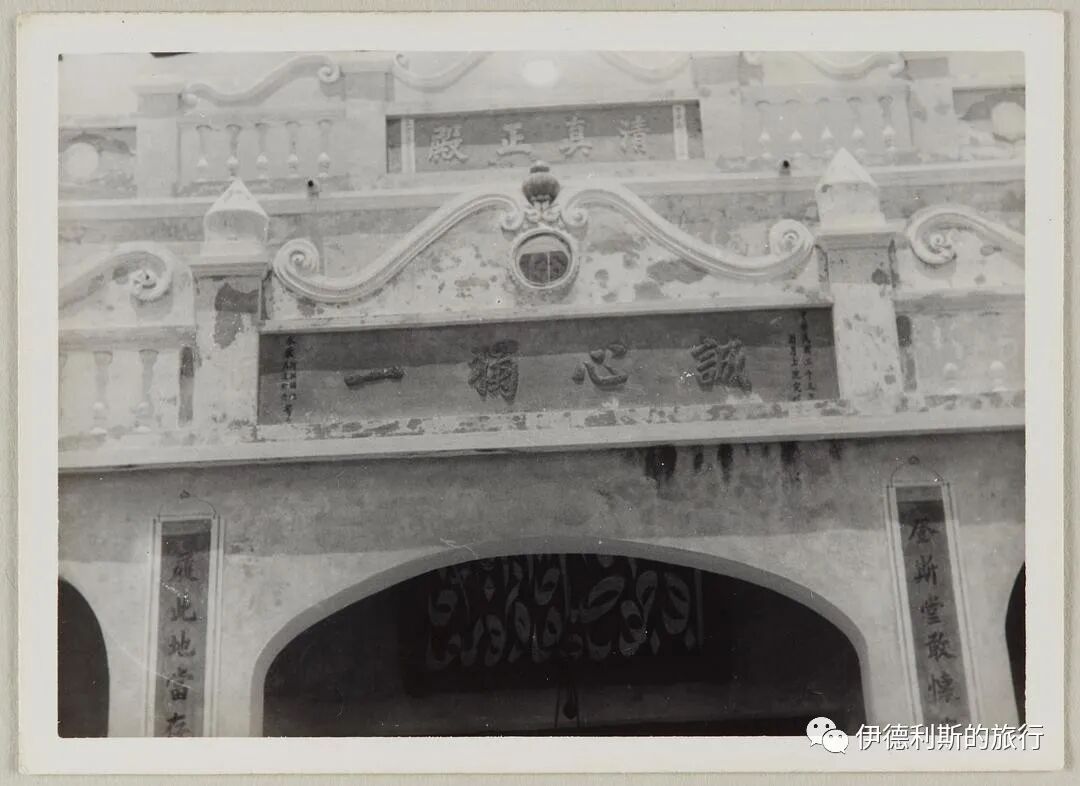
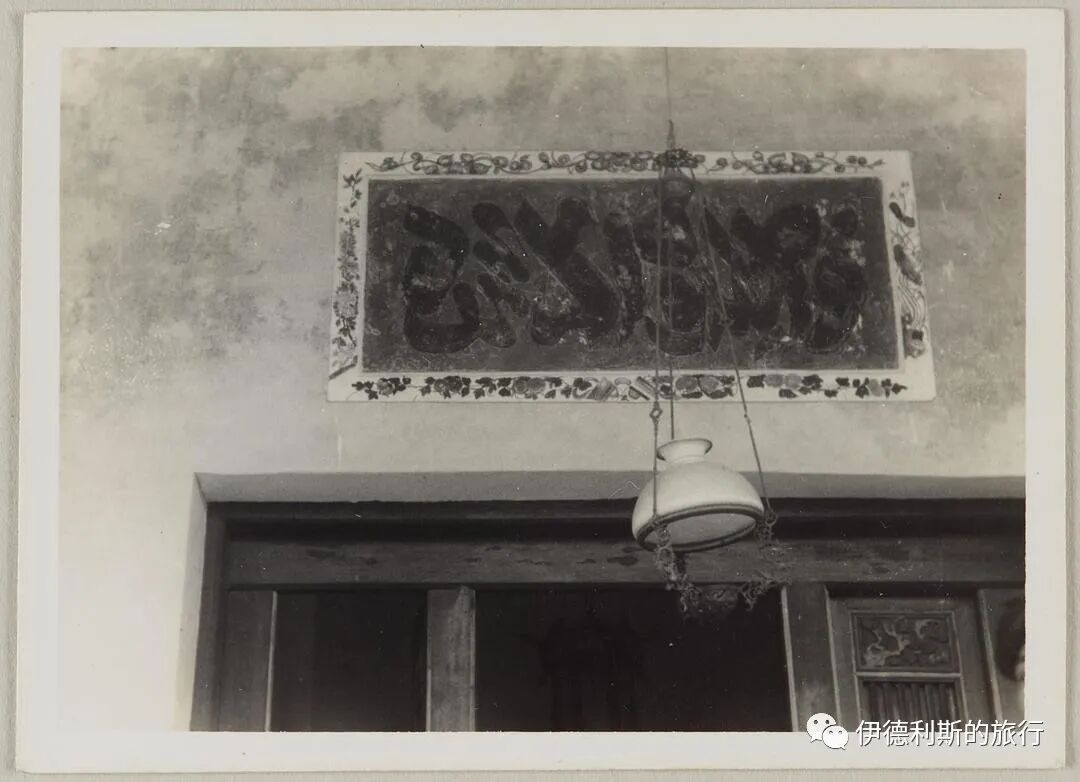
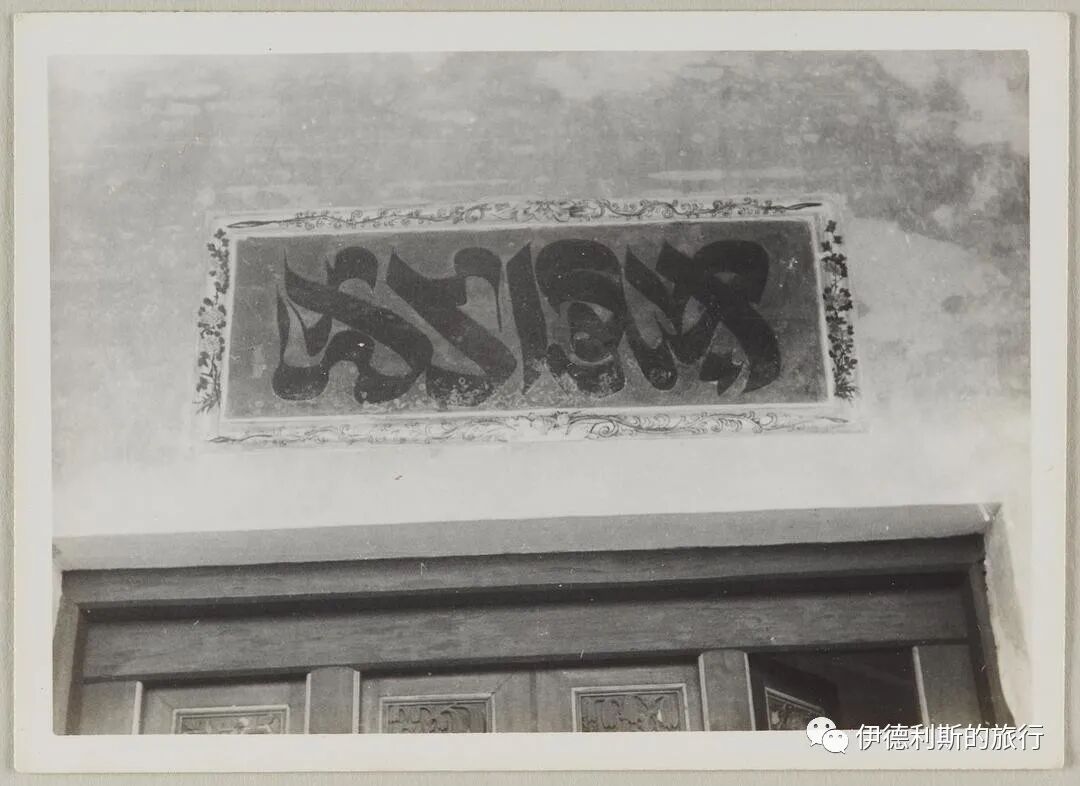
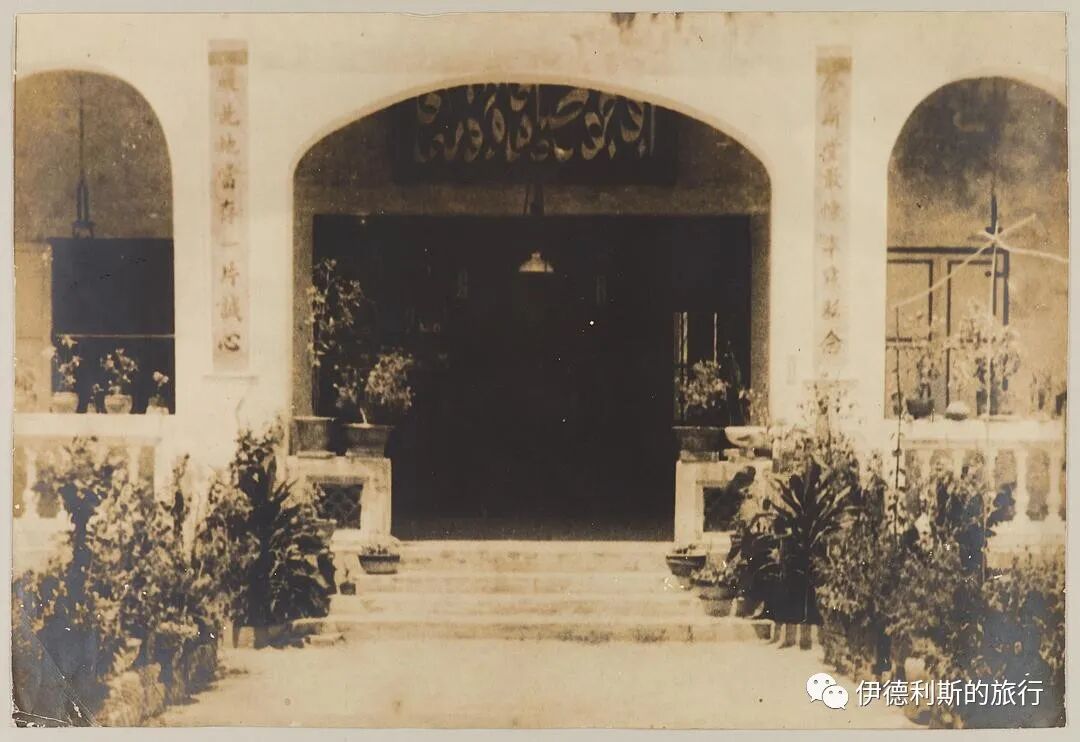
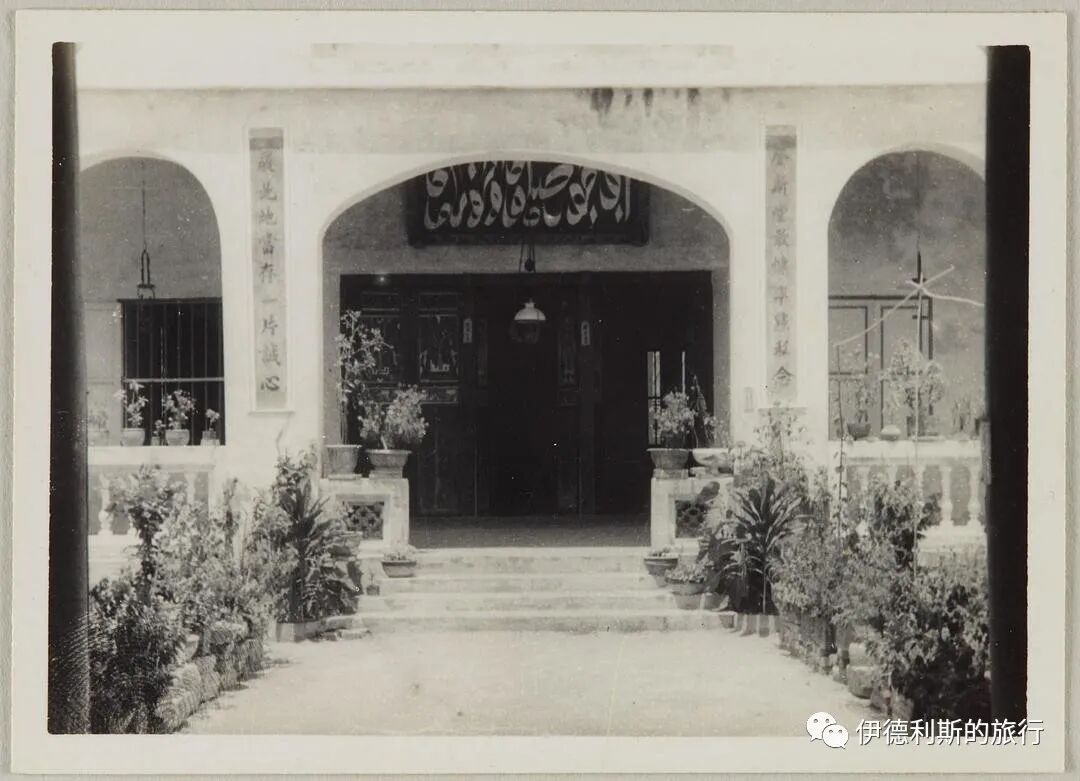
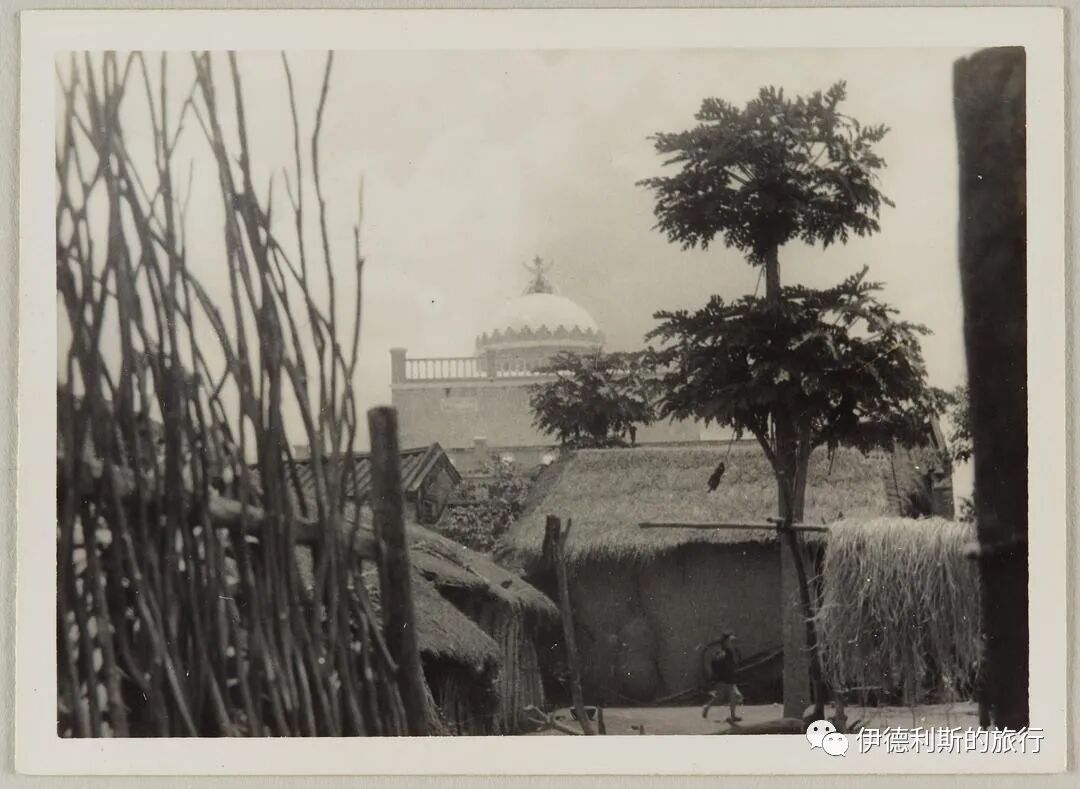
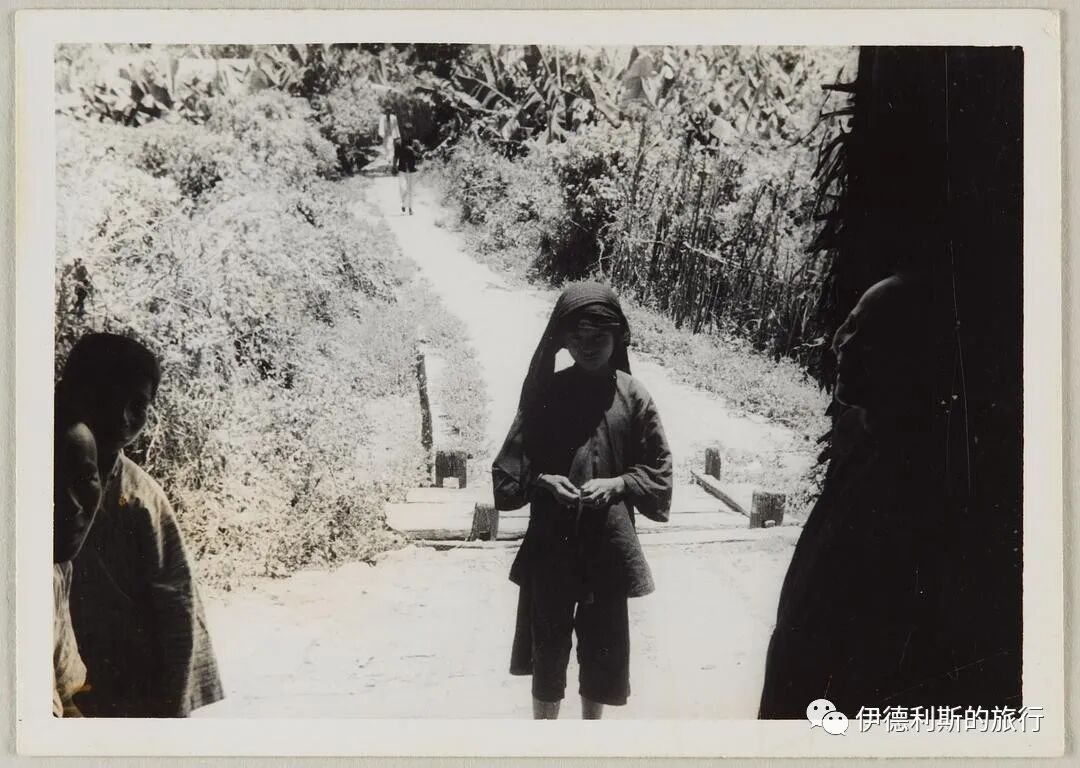
A cemetery of the Huihui people
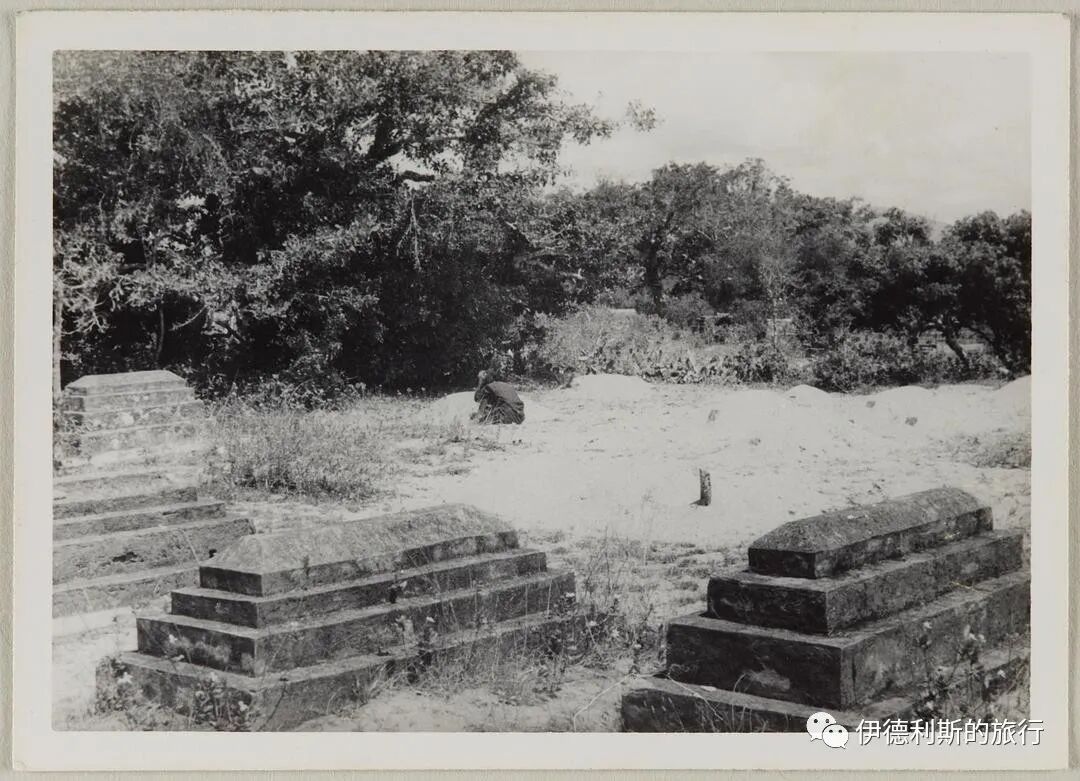
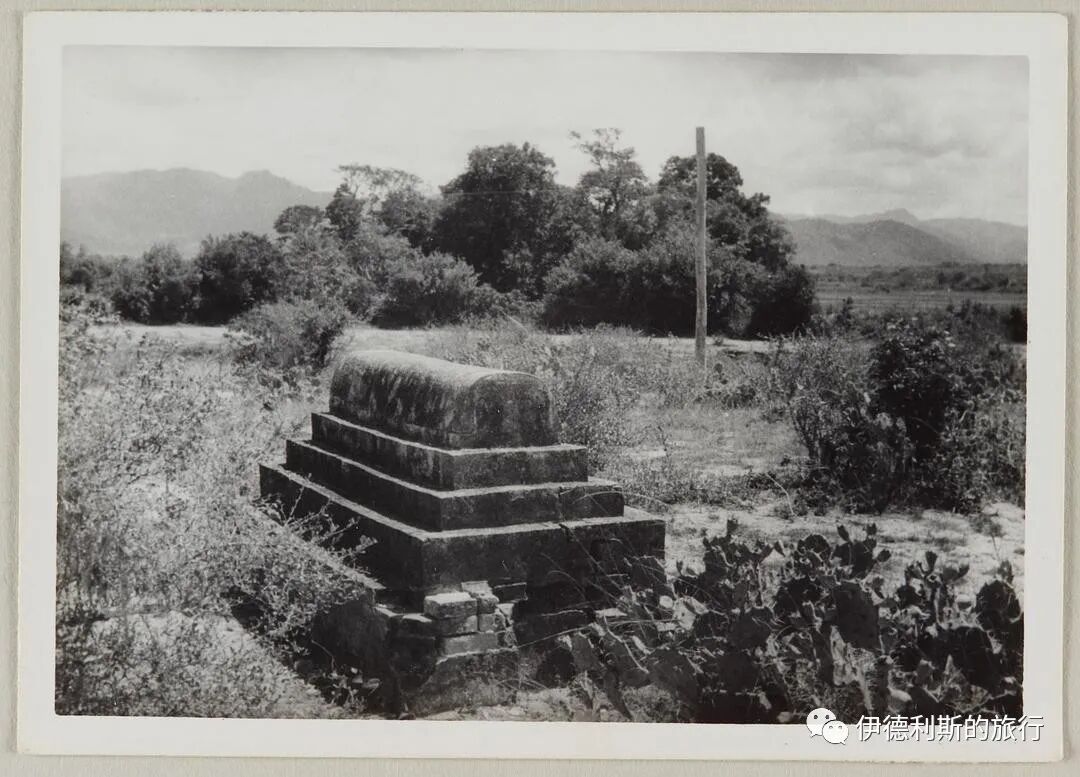
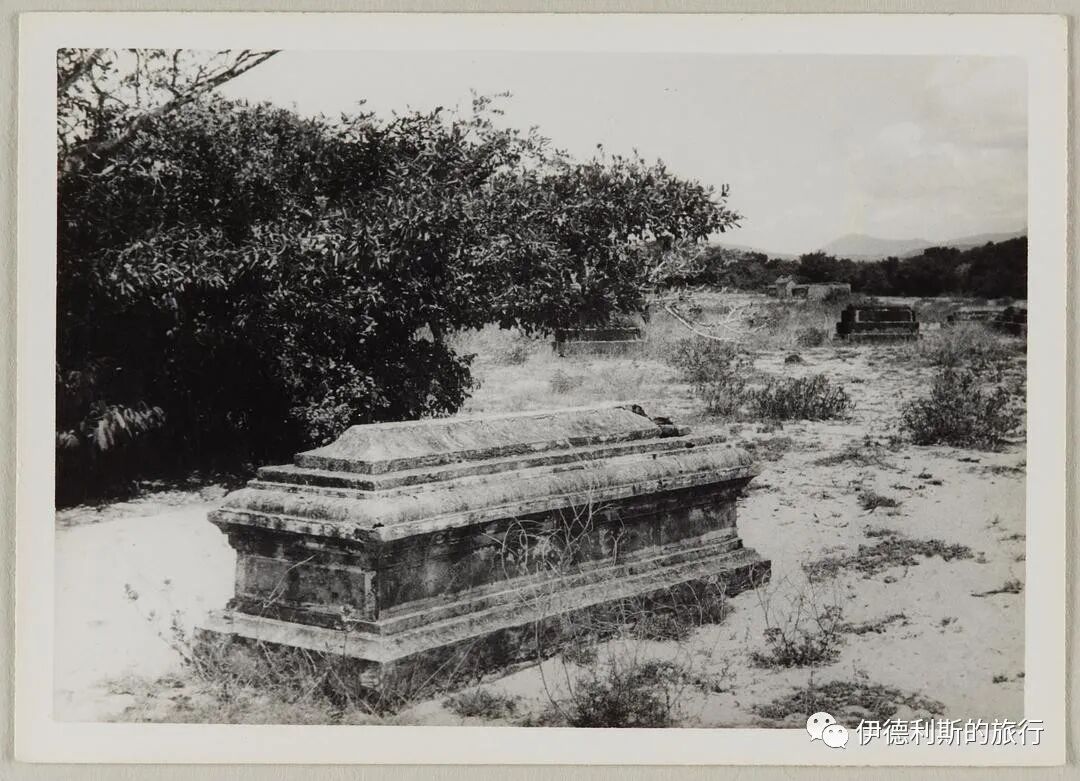
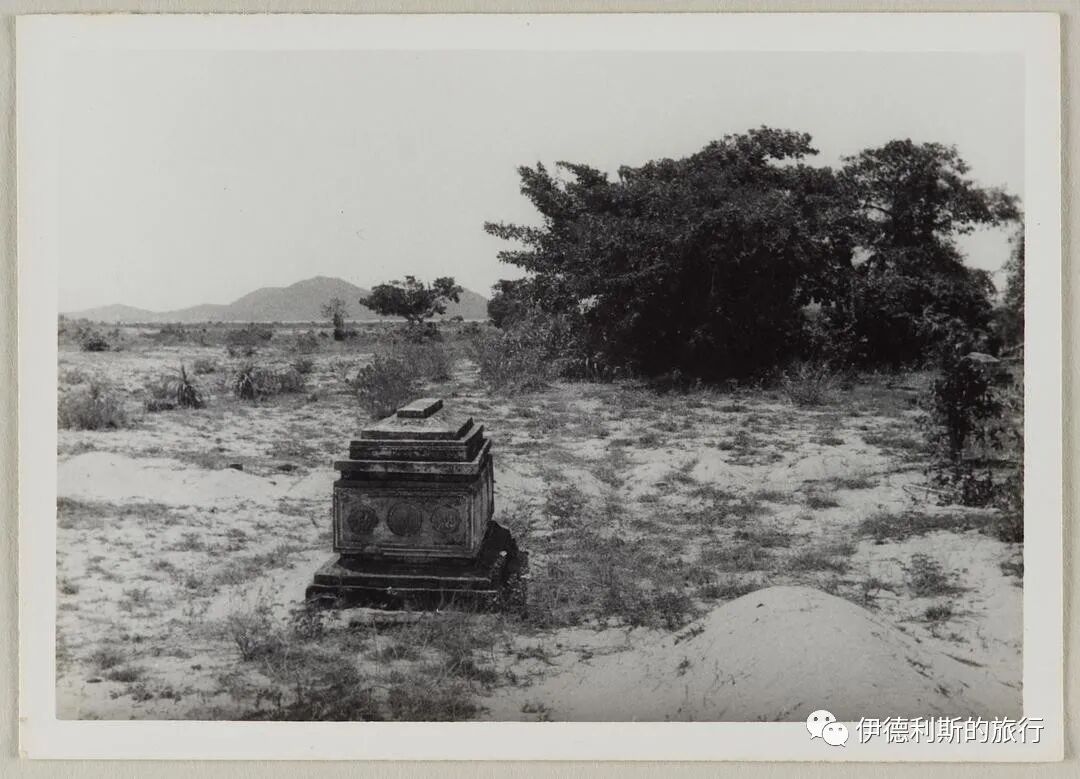
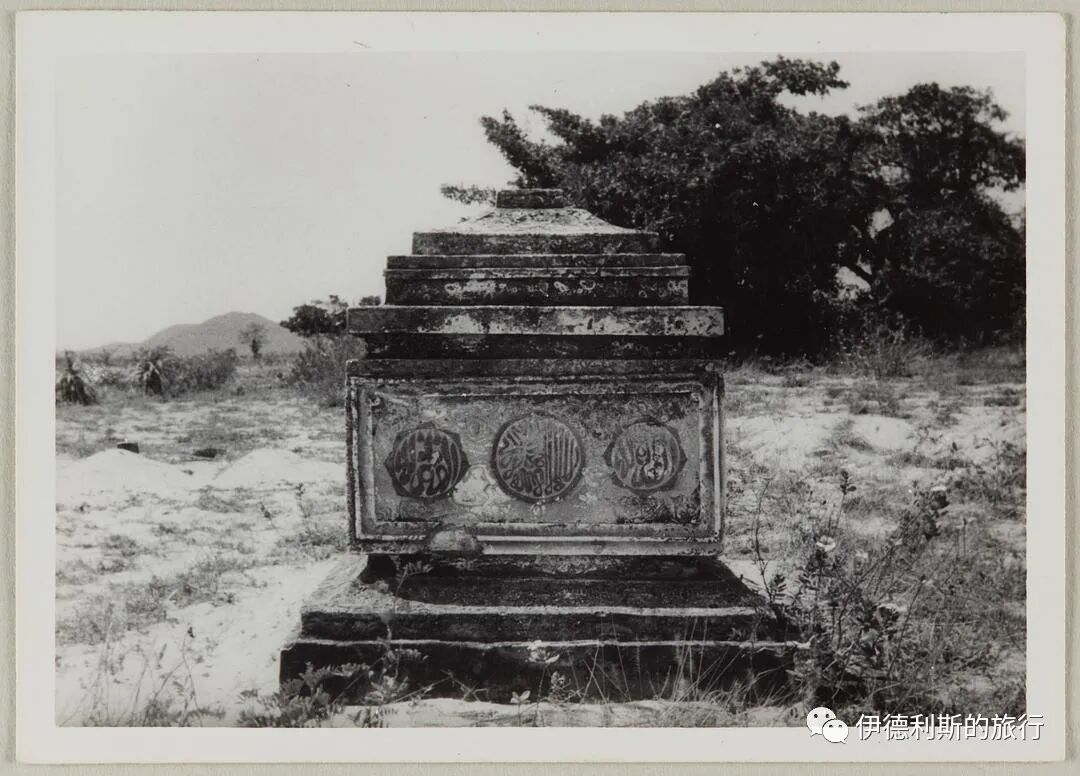
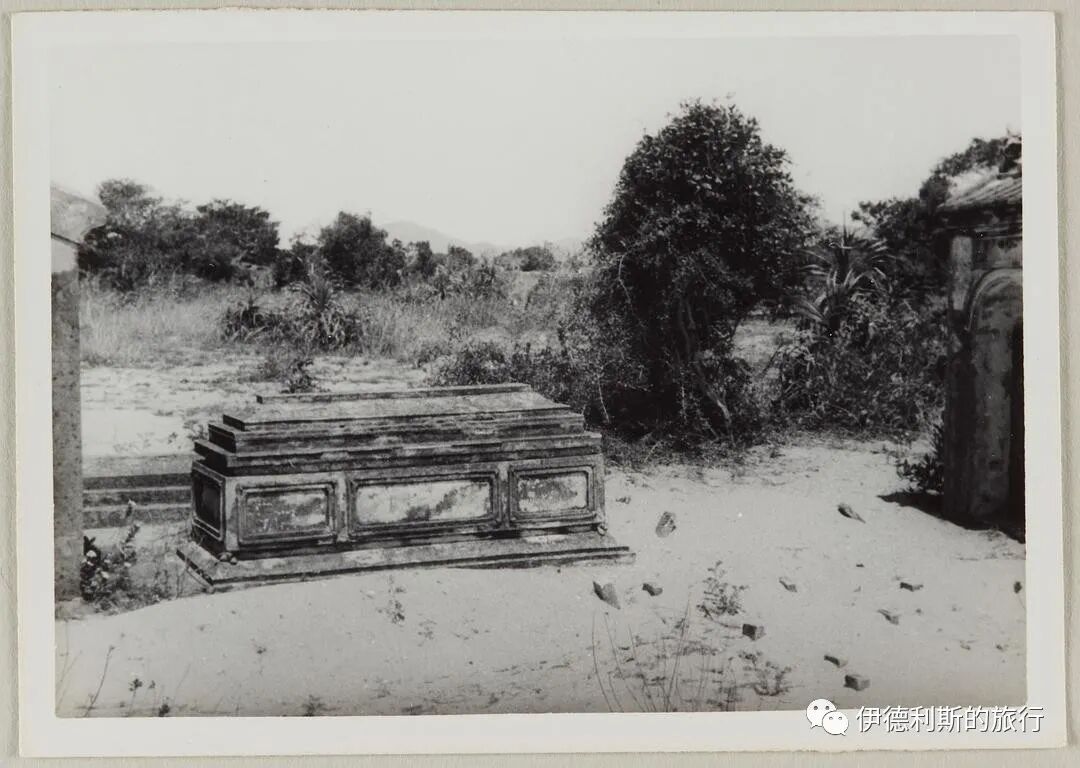
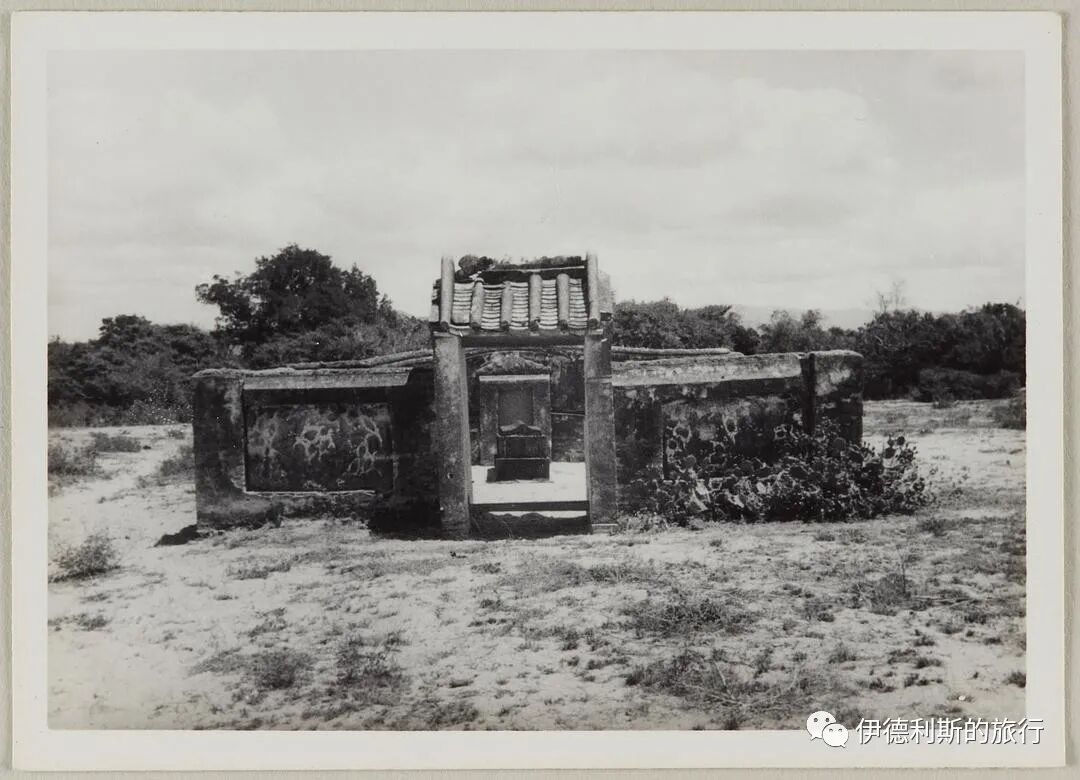
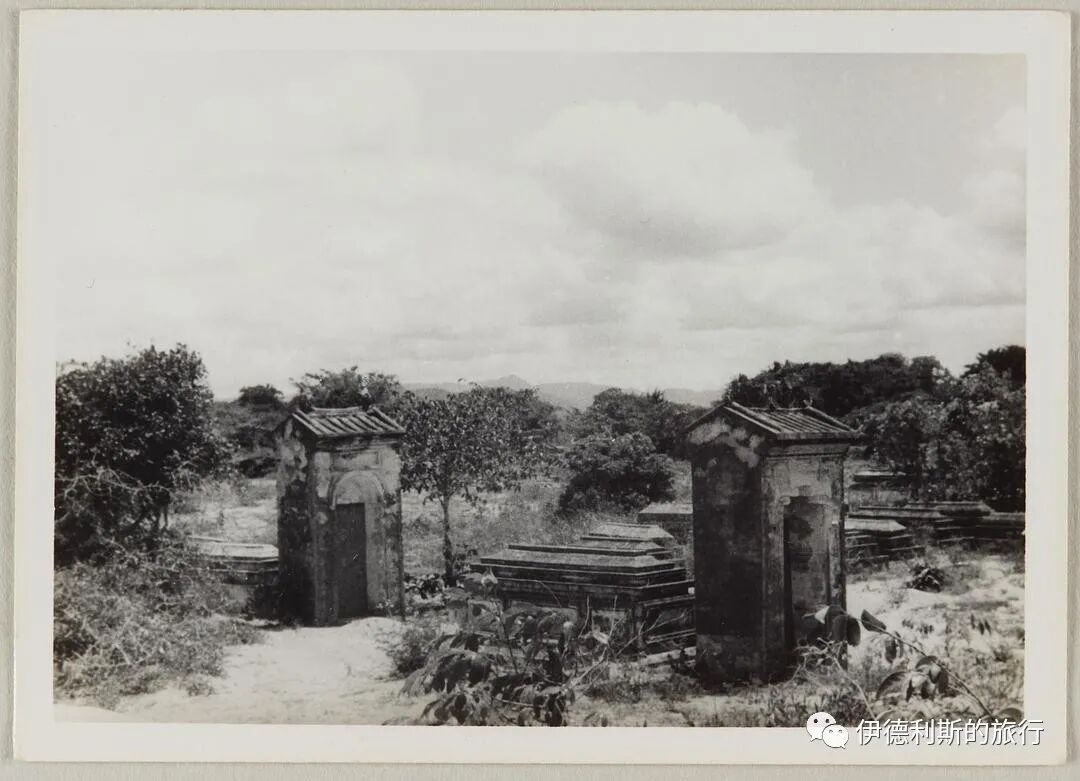
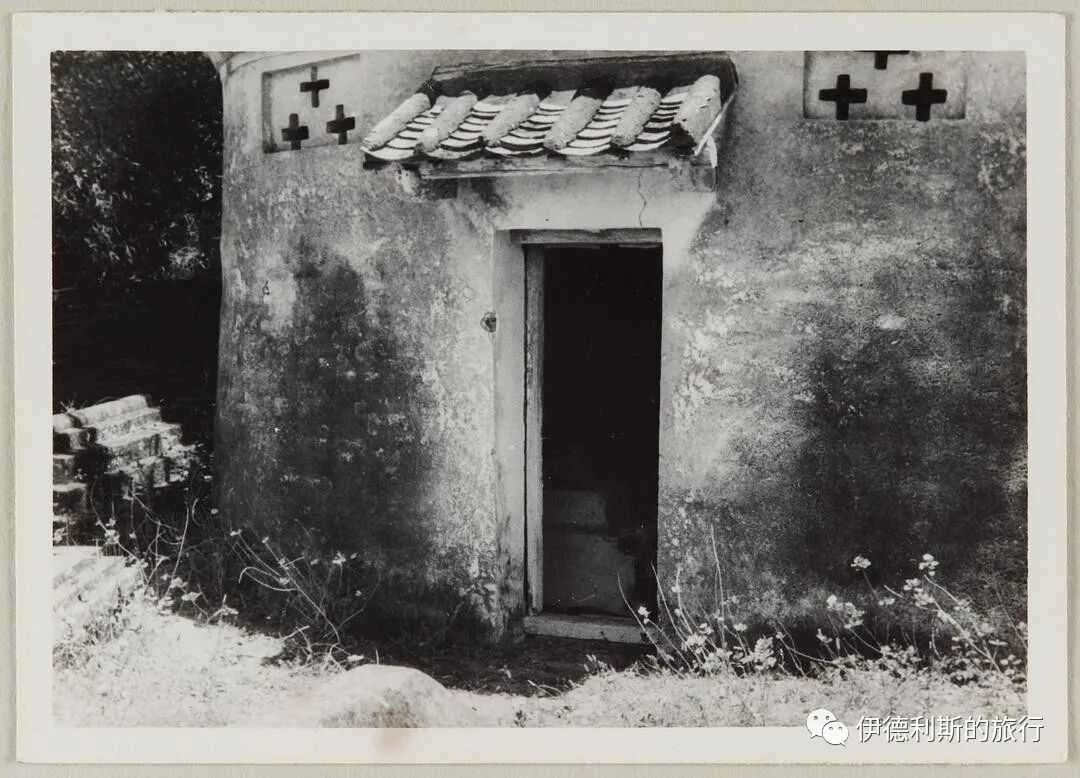
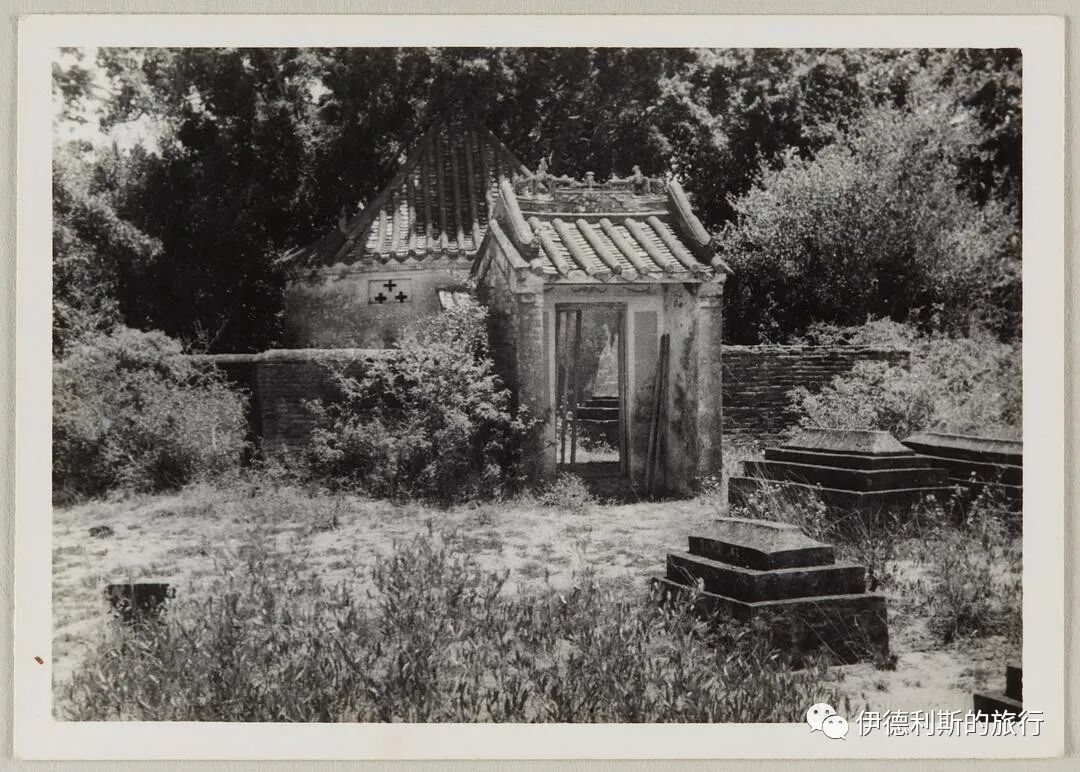
A wooden casket (tabu) used for transporting a body for burial
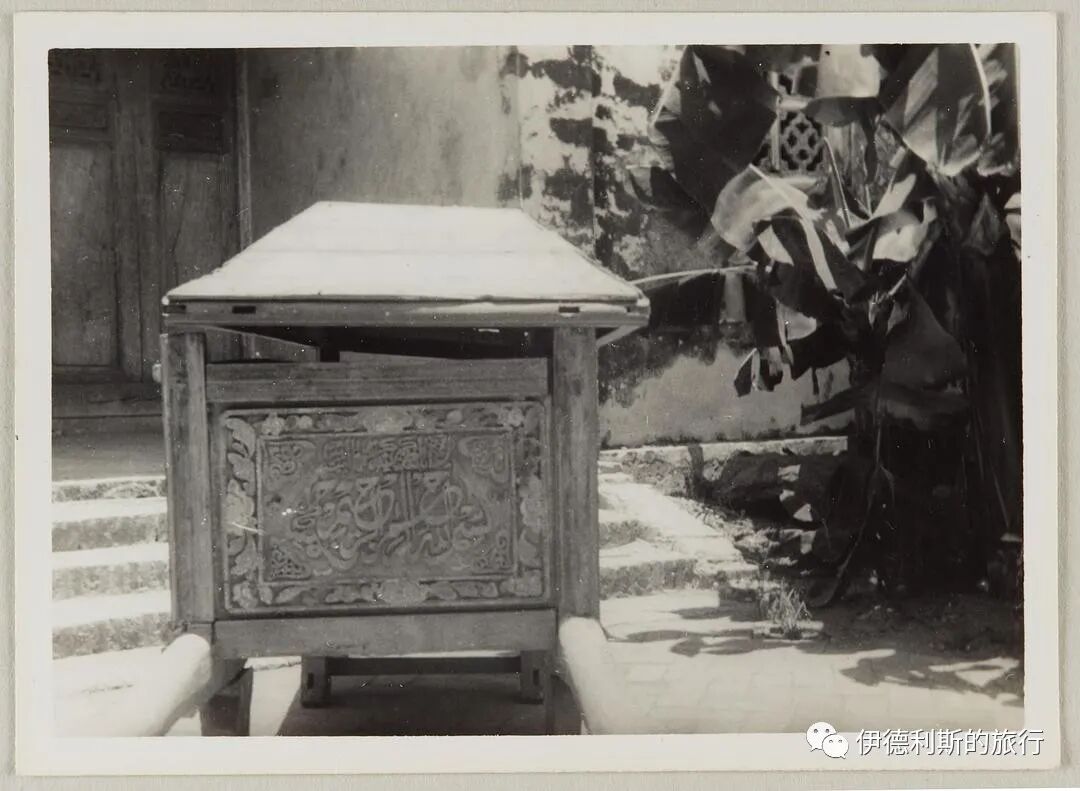
Summary: Old Photos of Hui Muslims in Guangzhou and Sanya: Waseda Library Collection is presented here as a firsthand travel account in clear English, beginning with this scene: Waseda University Library holds a large collection of old photos from the Greater Japan Muslim Association (Dai-Nippon Kaikyo Kyokai, or DNKK). The account keeps its focus on Hui Muslims, Old Photos, Guangzhou Muslims while preserving the names, places, food, and historical details from the Chinese source.
Waseda University Library holds a large collection of old photos from the Greater Japan Muslim Association (Dai-Nippon Kaikyo Kyokai, or DNKK). The DNKK was a wartime Japanese research organization for Islam. It started in 1938 and closed in 1945. They traveled to China and took many old photos of Hui Muslims. You can view them all online now.
Address: https://www.wul.waseda.ac.jp/k ... t.pdf
Guangzhou
After the Tang Dynasty, many Muslims from Arabia and Persia came to Guangzhou for business, and many of them chose to settle down. These Muslims were called "foreign guests" (fanke), and the communities where they lived were known as "foreign quarters" (fanfang).
The heart of the Guangzhou foreign quarter was the Huaisheng Mosque. The Huaisheng Mosque was rebuilt many times after the Yuan Dynasty, and today only the minaret, known as the "Light Tower" (Guangta), remains from before the Yuan period. Legend says the Huaisheng Mosque was built during the Tang Dynasty, and the earliest discovered record of the Light Tower comes from the Northern Song Dynasty poet Guo Xiangzheng. He arrived in Guangzhou in the first lunar month of 1088 (the third year of the Yuanyou era) and left in the second month. During his stay, he climbed the Light Tower of the Huaisheng Mosque and wrote the poems "Climbing the Foreign Tower with Ying Shu" and "Presenting to Commander Jiang at the Yue Wang Terrace in Guangzhou."
During the Southern Song Dynasty, Fang Xinru and Yue Ke both recorded the Light Tower of the Huaisheng Mosque.
In 1206 (the second year of the Kaixi era of the Southern Song), Fang Xinru wrote in "One Hundred Poems of the South Sea" (Nanhai Baiyong): The foreign tower began in the Tang Dynasty and is called the Huaisheng Tower. It rises straight up, about 16.5 zhang high, with no stairs inside. A golden rooster sits on top, turning with the wind. Every year in the fifth or sixth month, the foreigners climb to the top at the fifth watch to call out the name of Allah and pray for favorable winds. Below it is a prayer hall.
Yue Fei's grandson, the Southern Song writer Yue Ke, came to Guangzhou with his father at age 10 in 1192. In the "Foreigners in Panyu" section of his book "History of the Desk" (Tuo Shi), he described the Muslim community in Guangzhou at that time: Behind it is a stupa that reaches into the clouds. Its style is unlike other towers. It is surrounded by bricks to form a large base, built up layer by layer, with a rounded exterior covered in plaster, looking like a silver brush. There is a door at the bottom. You climb the steps and turn inside like a spiral, and you cannot see the stairs from the outside. Every few dozen steps, there is an opening. In the fourth or fifth month of the year, when the ships are about to arrive, the foreigners enter the tower and call out from the openings to pray for the south wind, and it often works. At the very top, there is a large golden rooster that replaces the traditional wheel, though it is now missing one foot.
The 1350 (the tenth year of the Zhizheng era of the Yuan) "Record of Rebuilding Huaisheng Mosque" states that the mosque was destroyed in 1343 (the third year of the Zhizheng era) and rebuilt in 1350: At the foot of White Cloud Mountain and the slope of Po Mountain, there is a pagoda. Its style is from the Western Regions, standing tall like stone. It is something not seen in the Central Plains, and legend says it began in the Tang Dynasty... When the mosque was destroyed in the year of Guwei of the Zhizheng era, the halls were left empty.
The opening ceremony of the Huaisheng Mosque Islamic Elementary School in the 1930s.
The red sandstone wall of the Moon-Watching Tower (Wangyue Lou) was rebuilt in the Ming Dynasty, and the top was rebuilt in the Qing Dynasty.
The Cemetery of the Worthies (Xianxian Mu) in Guangzhou in June 1941.
The ancient Cemetery of the Worthies is commonly known as the Hui Muslim Grave, the Great Man's Grave, or the Echoing Grave, and it has been a burial ground for Muslims in Guangzhou since the Tang Dynasty. The earliest record of the ancient Cemetery of the Worthies comes from the 1206 (the second year of the Kaixi era of the Southern Song) book "One Hundred Poems of the South Sea" by Fang Xinru: The foreign graves are ten miles west of the city, with thousands of mounds, all facing west with their heads to the south. The whale-like waves barely spare those they swallow, yet even a dying fox turns its head toward its home hill. My eyes strain across thirty thousand miles of vastness, and though a thousand pieces of gold are here, this life is already over.
The heart of the Ancient Sages' Tomb is the burial site of Wangesu, an Islamic sage who legend says came to China during the Tang Dynasty to spread his faith. Wangesu is known as Saheb Saad Wakkas. Most historical records about his tomb date from the Ming and Qing dynasties. Sources for his arrival time vary: the Qing-era Guangzhou Prefecture Gazetteer says 629 (the third year of the Tang Zhenguan era), the Qing-era Tianfang Zhengxue says 632 (the sixth year of the Tang Zhenguan era), and the Qing-era stele record for the renovation of the Sage Saierde tomb even suggests he arrived during the Sui Dynasty. Regarding his identity, he is variously described as an uncle, cousin, general, or envoy of the Prophet Muhammad.
The Huihui people of Sanya
The Huihui people are a Muslim group living in Huihui Village and Huixin Village in Sanya, Hainan, with a population of nearly ten thousand. The Huihui language they speak belongs to the Austronesian language family and shares the same origin as the Chamic languages of southern Vietnam. The customs of the Huihui people are strongly influenced by local Hainan groups, yet they maintain a devout Islamic faith, making them a very unique group on China's southeast coast.
Starting in the 10th century, the Champa kingdom in southern Vietnam fought wars with Dai Viet, Chenla (Cambodia), and the Yuan Dynasty, causing many Arab and Persian merchants in Champa to sail across the sea to Hainan. The History of Song: Champa records that as early as 986, a Champa man named Pu Luo'e led over a hundred of his people to Danzhou, Hainan, to seek refuge.
During the Ming and Qing dynasties, Muslims living in places like Yazhou, Wanzhou, and Qiongshan in Hainan gradually moved to Suosanya Lifan Village (now Huixin Village in Sanya). During the Qing Dynasty, Muslim communities across Hainan underwent assimilation into Han, Li, or Dan cultures, leaving Suosanya Lifan Village as the only remaining Muslim community in Hainan, which eventually formed the modern Huihui people.
Some Huihui people also came from the mainland. The ancestors of the Ha family among the Huihui came from Shaanxi, later moving their whole family to Dadan Port in Yazhou, Hainan, before relocating to Suosanya Lifan Village with another group of Hui Muslims surnamed Liu during the late Ming and early Qing dynasties.
A mosque of the Huihui people in June 1941
A cemetery of the Huihui people
A wooden casket (tabu) used for transporting a body for burial
Halal Travel Guide: Guangzhou Huaisheng Mosque — Sage Tomb and Muslim History (Part 1)
Articles • ali2007fr posted the article • 0 comments • 187 views • 2026-05-18 20:36
Reposted from the web
Summary: Guangzhou Huaisheng Mosque — Sage Tomb and Muslim History is presented here as a firsthand travel account in clear English, beginning with this scene: I left Macau on January 23, 2023, to visit the Macau mosque known as Moro Garden (Moro Yuan). The account keeps its focus on Huaisheng Mosque, Guangzhou Muslims, Sage Tomb while preserving the names, places, food, and historical details from the Chinese source.
I left Macau on January 23, 2023, to visit the Macau mosque known as Moro Garden (Moro Yuan). I ate delicious Indonesian Javanese food and wrote about it in my post, 'Moro Garden and Indonesian Food in Macau'. I arrived in Guangzhou on January 25, visited a friend (dosti), and ate various halal foods, which I posted about in "Hui Muslim Fried Dough (youxiang) and Yemeni Food in Guangzhou." On the afternoon of January 25, after Chen Yong and I finished our afternoon prayer (namaz) at Huaisheng Mosque, we took a good look around the mosque, which I hadn't visited in years, and then went to pay our respects at the Ancient Tomb of the Worthies (Xianxian Gumu).
The Foreigner Quarter (fanfang) of Guangzhou during the Tang and Song dynasties.
Huaisheng Mosque was once the heart of the Guangzhou Foreigner Quarter and the starting point for the faith entering China.
According to the Old Book of Tang, Records of the Arabs: "In the second year of Yonghui (651 AD), they first sent envoys to offer tribute." This was during the reign of Caliph Uthman. He sent Arab armies to conquer the Sassanid Empire of Persia and took control of the entire Persian Gulf, which led Arab and Persian merchant ships to sail continuously eastward until they reached Guangzhou. During the reign of Emperor Xuanzong of Tang, the government twice ordered a ban on trade with the Western Regions (in 714 and 743) and blocked land trade. Because of this, Guangzhou suddenly became the largest overseas trading port of the Tang Dynasty, and a large number of Arab and Persian merchants flooded into the city. According to the Record of the Eastern Expedition of the Great Tang Monk, when Jianzhen arrived in Guangzhou in 742, he saw "countless large ships from Brahman, Persia, and Kunlun in the river, all loaded with spices, medicines, and treasures, piled up like mountains." The ships were sixty to seventy feet deep. People from the Lion Kingdom (Sri Lanka), the Arab Kingdom (Dashi), Gutang, White Barbarians, and Red Barbarians came and went, living there in great variety.
More and more Arabs and Persians lived and stayed in Guangzhou, gradually forming a residential area recorded in historical books as the "Foreigner Quarter" (fanfang). In 827 (the third year of the Baoli era of the Tang Dynasty), Fang Qianli wrote in Miscellaneous Records of Exile: "Recently, in the Guangzhou Foreigner Quarter, the food offered often used honey and musk." This is the earliest clear record of the Guangzhou Foreigner Quarter. Additionally, the Arabic notes collected in 851, Accounts of China and India, contain detailed descriptions of Muslims in Tang Dynasty Guangzhou, specifically mentioning: "There is one Muslim imam and one mosque there." This is the earliest record of the faith in Guangzhou.
At the end of the Tang Dynasty, the rebel army of Huang Chao captured Guangzhou, and most of the Muslims were massacred. Trade between the Persian Gulf and Guangzhou did not recover until the Song Dynasty, when the Foreigner Quarter was rebuilt. The Northern Song geographer Zhu Yu recorded in Pingzhou Table Talk what his father, Zhu Fu, saw while serving as an official in Guangzhou between 1099 and 1102: "In the Guangzhou Foreigner Quarter, people from various overseas countries live together, and a Foreigner Chief (fanzhang) is appointed to manage the affairs of the quarter." He is specifically responsible for inviting foreign merchants to pay tribute, using foreign officials for this purpose. You can see that the Foreigner Quarter had a certain degree of autonomy at that time.
At the end of the Song and the beginning of the Yuan dynasties, Guangzhou suffered from war. Many Arab and Persian merchants moved to Quanzhou and other coastal cities to live. After the Yuan Dynasty, Quanzhou replaced Guangzhou as the number one trading port, and the Guangzhou Foreigner Quarter gradually declined.
The Light Tower (Guangta) of Huaisheng Mosque.
Today, the most important historical witness to the Guangzhou Foreigner Quarter is the Light Tower of Huaisheng Mosque. The Light Tower is in the southwest corner of Huaisheng Mosque. The 36-meter-tall cylindrical tower body is coated with shell lime and has small windows in the middle. Inside the tower, there are two brick spiral staircases that wind upward without intersecting, leading directly to the platform at the top of the tower. The base of the tower has a 3.5-meter-thick foundation made of red rice stone, and there are wooden piles several meters deep underneath, which is why it has stood for a thousand years without collapsing.
The Light Tower was first called the "Foreigner Tower" (fanta), and during the Song and Yuan dynasties, it was also called the "Huaisheng Tower." It was only after the Qing Dynasty that it began to be called the "Light Tower," a name that is still used today. to being a minaret (bangkelou), the Light Tower also served as a navigational lighthouse, and the golden rooster on top of the tower that could rotate with the wind also acted as a wind vane. Although the Light Tower is no longer near the shipping channel due to the southward shift of the Pearl River, it remains an important witness to Guangzhou as a commercial metropolis.
According to the Ming Dynasty Jiajing edition of the Guangzhou Gazetteer, Records of Foreign Affairs: "(Huaisheng Mosque) is two miles west inside the government city, built by foreigners during the Tang Dynasty, with a Foreigner Tower built inside." Most of the early records about the Light Tower currently come from the Song Dynasty. In 1088 (the third year of the Yuanyou era of the Northern Song Dynasty), Guo Xiangzheng, then the prefect of Duanzhou, climbed the Light Tower of Huaisheng Mosque with Jiang Zhiqi, the governor of Guangzhou, and wrote two poems: "Climbing the Foreigner Tower with Ying Shu" and "Presenting to Governor Jiang at Yuewang Terrace in Guangzhou."
During the Southern Song Dynasty, Fang Xinru and Yue Ke both recorded the Light Tower (Guangta) of the Huaisheng Mosque. In 1206 (the second year of the Kaixi era of the Southern Song), Fang Xinru wrote in 'One Hundred Poems of the South Sea' (Nanhai Baiyong): 'The Foreign Tower (Fanta) began in the Tang Dynasty and is called the Huaisheng Tower. It rises straight up, measuring sixteen zhang and five chi in height, with no levels inside. At the top sits a golden rooster that turns with the wind. Every year in the fifth or sixth lunar month, foreigners climb to the very top at the fifth watch to call out the name of Allah and pray for favorable winds. Below it is a mosque (libaitang).'
Yue Fei's grandson, the Southern Song writer Yue Ke, came to Guangzhou with his father in 1192 at the age of ten. In his book 'Notes on the History of the Song' (Tuo Shi), in the section 'Foreigners in Panyu' (Panyu Hailiao), he described the Muslim community in Guangzhou at that time in detail, including a specific description of the Light Tower: 'Behind it is a stupa that reaches into the clouds. Its style is unlike other towers; it is surrounded by bricks to form a large base, built up layer by layer, and covered with plaster on the outside, looking like a silver brush.' There is a door at the bottom. You climb the stairs inside, spiraling around like a snail shell, and you cannot see the steps from the outside. Every few dozen steps, there is an opening. In the fourth or fifth lunar month, when the ships are about to arrive, the foreigners enter the tower and call out through the openings to pray for the south wind, which often works. At the very top, there is a huge golden rooster that replaces the traditional wheel, though it is now missing one foot.
In the stele pavilion next to the main hall of the Huaisheng Mosque stands a replica of the stele commemorating the reconstruction of the Huaisheng Mosque and Tower in 1350 (the tenth year of the Zhizheng era of the Yuan Dynasty). This Yuan Dynasty stone stele was originally the most important religious inscription for the Huaisheng Mosque and all of Guangzhou, but it was unfortunately destroyed between 1966 and 1976. What we see now is a replica made from rubbings.
The inscription was written by Guo Jia, an official in the Guangdong Pacification Commission, calligraphed by the official Sa-di-mi-shi, and the title was carved by the official Seng Jiane. It is divided into Arabic and Chinese sections. The Arabic section at the top includes religious teachings and a dua, mentioning that the mosque was rebuilt by Masoud and the commander Mahamu, who was the Guangdong Pacification Commissioner at the time.
The Chinese section below describes the Light Tower in detail. It mentions that the Huaisheng Mosque suffered a fire in 1343 (the third year of the Zhizheng era) and was rebuilt in 1350 (the tenth year of the Zhizheng era), with only the Light Tower surviving the fire: 'At the foot of White Cloud Mountain, by the slope of Po Mountain, there is a pagoda. Its design is from the Western Regions, standing tall like stone.' 'It is something unseen in the Central Plains, and legend says it began in the Tang Dynasty... When the mosque was destroyed in the year of Guiwei of the Zhizheng era, the halls were left empty.' It also mentions that there was a golden rooster on top of the tower at the time, which served as a tool for passing ships to observe the wind direction. It also mentions that the imam (zhuchi) of the Huaisheng Mosque at the time was named Haji Hasaan.
During the Yuan Dynasty, the status of the Semu people rose, and many held important positions across the country. In the Guangdong region, this included Pu Shougeng, the military commander of Fujian and Guangdong; Mahamu, the Guangdong Pacification Commissioner; Pu Dexing, the deputy commander; and Lamadan, the salt commissioner of Guanghai. In 1347 (the seventh year of the Zhizheng era), the great traveler Ibn Battuta arrived in Guangzhou. In his 'Travels of Ibn Battuta,' he recorded: 'One area of the city is a Muslim residential district, which contains a mosque and a lodge, and has a judge and a sheikh... We stayed with Aohadunding Xizhalai, a kind and wealthy man, for fourteen days. During this time, the judge and other Muslims came one after another to send precious gifts, and every day they held banquets and invited singers to perform.'
After the Huaisheng Mosque was rebuilt in 1350 (the tenth year of the Zhizheng era), it was rebuilt twice more during the Ming Dynasty's Chenghua era and the Qing Dynasty's Kangxi era, and renovated three times during the Daoguang, Xianfeng, and Tongzhi eras. The stone railings around the current main hall have a style from the Yuan and Ming dynasties, while the Moon-Watching Pavilion (Kanyuelou) with its double-eaved hip-and-gable roof reflects the style after the Ming and Qing renovations.
During the Republic of China era, the Huaisheng Mosque in Guangzhou gradually fell into disrepair. The land around the Light Tower was occupied by nearby residents, and the tower gate was buried. In 1934, the Guangdong branch of the Chinese Muslim Association raised nearly 20,000 small silver coins through donations, reclaimed the occupied land around the Light Tower, and reinforced the tower.
After the reinforcement was completed, two stone steles, one in Chinese and one in Arabic, were carved and embedded at the base of the tower. Only the Arabic stele remains today, written by Ma Ruitu, an imam living in Guangzhou. Ma Ruitu was from Daying, Yuxi, Yunnan. He came from a family of Islamic scholars and served as the imam of the Haopan Mosque and Nansheng Mosque in Guangzhou after 1927.
To prevent termite damage, the Huaisheng Mosque also demolished the original brick-and-wood main hall in 1935 and rebuilt it as a reinforced concrete structure, while still maintaining the previous double-eaved hip-and-gable roof design.
Plaques of the Huaisheng Mosque.
There are many Qing Dynasty plaques inside the Huaisheng Mosque, which reflect the prosperity of the Muslim community in Guangzhou during that time.
In 1698 (the Kangxi era), the imperial guard and scholar Gai Rixin inscribed the 'Grace of the Emperor for All Time' plaque.
In 1698 (the Kangxi era), the scholar and Hanlin Academy official Tie Fanjin inscribed the 'Righteous Heart and Sincere Intent' plaque.
In 1698 (the Kangxi era), the official Yang Guolin erected the 'Great Mercy for the World' plaque.
In 1721 (the Kangxi era), the military official Yan Guangwu erected the 'Utmost Sincerity Never Ceases' plaque.
In 1755 (the Qianlong era), the military official Li Xianxiang inscribed the 'Following the Past and Opening the Future' plaque.
In 1846 (the Daoguang era), the committee members jointly erected the 'Sharing the Muslim Gift' plaque.
In 1867 (the Tongzhi era), the military official Bao Yingxiong erected the 'Overlapping Blessings from the Lord' plaque.
In the 26th year of the Guangxu reign (1900), Yang Shu, a second-rank official with a peacock feather and special imperial appointment, and Yang Xun, a fourth-rank official with a peacock feather and a member of the Plain Red Banner Han Army, dedicated the 'Grace Shared by All' plaque.
In the 31st year of the Guangxu reign (1905), the officials, elders, and managers of the Huaisheng Mosque (Guangta Si) dedicated the 'Benevolent Rain and Kind Clouds' plaque to celebrate the birthday of Master Ma.
Donation tablets inside the stele corridor of the Huaisheng Mosque.
The 1761 tablet regarding the purchase of a shop by the Elderly Association records that in 1716, Ma Kuan and 27 other Hui Muslim families formed an association to buy a shop across from the Haopan Mosque, using the rent to cover funeral expenses for their members. Over 40 years later, after all the families had finished their funeral needs, their descendants followed their ancestors' wishes and donated the shop to the Haopan Mosque and the Huaisheng Mosque.
The 1770 tablet regarding the donation of a shop at the end of Haopan Street to the four mosques in the old and new cities records that Yang Yuanxiu, following his brother Yang Yuanzhen's dying wish, donated a shop to the Huaisheng, Haopan, Nansheng, and Xiaodongying mosques to fund their religious schools and teacher salaries.
The 1783 tablet from the Jiangnan guests in Foshan records that although many Hui Muslims lived in Foshan, they had never built a mosque. In 1708 (the 47th year of the Kangxi reign), Hui Muslims from Jiangnan who were doing business in Foshan bought a house from a Mr. Wang in Qingyun Lane, Panyong, and built a mosque. Later, because all the Hui Muslims in Foshan moved to Guangzhou, the mosque was left unmanaged and was occupied by local thugs during the Qianlong reign. Jiangnan Hui Muslims living in Guangzhou consulted with the teachers of the Guangzhou mosques and sold the Foshan mosque, donating the funds to the Huaisheng, Xiaodongying, Haopan, and Nansheng mosques in Guangzhou, and the mosque in Sanya's Huixin Village (Hainan Sanya Huixin Cun).
The 1903 tablet regarding the donation of a house by Lin Liye and others records that twenty Hui Muslim women donated a house at the entrance of Taojia Lane to the Huaisheng Mosque's public fund, with the rent used for prayers on the anniversary of the saintly Lady Fatimah (Fatumei Shenghui).
The 1841 tablet regarding the donation of a house by Mrs. Jin Zhang records that she donated a house she owned in Nansheng Lane to the Huaisheng Mosque to support religious studies.
The 1855 tablet regarding Liu Jicai's donation to education records that he donated a house he owned at the entrance of Cuifu Street to the Huaisheng Mosque to supplement religious study funds.
The 1864 tablet regarding the sale of a shop by He Qieben records that a Manchu named He Qieben, needing money urgently, sold his late father's shop on Dashi Street to the Huaisheng Mosque through a middleman, Cun Gui of the Plain Red Banner Manchu.
The 1848 tablet regarding the donation of funds by 37 people to the Huaisheng Mosque records that 37 Hui Muslims pooled money to buy a shop on Guangta Street, with the rent deposited into the Huaisheng Mosque's public fund to cover the annual Isra and Mi'raj (Dengxiao) expenses.
The 1863 tablet regarding the donation to the Huaisheng Mosque school records that Hai Tingchen donated two properties he owned inside the Guide Gate at the Four Archways (Si Pai Lou) and in Qingyun Lane to the Huaisheng Mosque to supplement religious study funds. Additionally, the Shunsheng Hall donated a house in Guangta Foot Lane to the Huaisheng Mosque to supplement religious study funds.
The 1841 tablet regarding the donation of a house for the Huaisheng Mosque school records that Ma Buqing donated a house he bought on Changtang Street inside the Wenming Gate to the Huaisheng Mosque to serve as a school, with funds used for teaching and annual memorial services.
The 1913 tablet regarding the Huaisheng Mosque's property purchase records that the mosque sold a jade shop and bought three houses located at 20 Agate Lane (Manaoxiang), 7 Huodui Lane in Tao Street, and 21 Huilong Lane.
Ancient Tombs of the Worthies (Xianxian Gumu).
After leaving the Huaisheng Mosque, I went to visit the Ancient Tombs of the Worthies. The Ancient Cemetery of the Worthies in Guangzhou is commonly known as the Huihui Cemetery, the Great Man's Cemetery, or the Echoing Cemetery. It has been a burial ground for Muslims in Guangzhou since the Tang Dynasty. The earliest record of the Ancient Cemetery of the Worthies comes from 'One Hundred Poems of the South Sea' (Nanhai Baiyong) written by Fang Xinru in 1206 (the second year of the Kaixi period of the Southern Song Dynasty): 'The tombs of the foreigners are ten miles west of the city, thousands of them, all with heads to the south and facing west.'
At the center of the ancient tombs lies the legendary Sa'd ibn Abi Waqqas, the first person to come to China to spread the faith. Records show the status of the Tomb of Waqqas (Wangesu mu) rose during the Yuan and Ming dynasties. The Ming dynasty book Guangzhou Prefecture Records (Guangzhou fuzhi) notes: Every year, people of all surnames must visit the tomb to pay respects and recite scriptures, a tradition that continues to this day. Countries in the Western Regions respected this influence. Every time they sailed thousands of miles to Guangzhou, they considered visiting the tomb an honor. Even the most noble visitors would crawl and bow in Guangzhou to show their utmost sincerity.
The Ancient Tombs of the Worthies were renovated several times during the Jiaqing, Daoguang, and Republican periods. Traditionally, on the 27th day of the 11th month of the Islamic calendar, Guangzhou Muslims hold a memorial service at the tombs, known as the 'Master's Anniversary' (Daren Ji).
The tomb path outside the cemetery has north and south entrances. At the south end stands a stone archway inscribed with 'Path to the Ancient Tombs of the Worthies,' featuring a couplet: 'Traveling across the vast ocean to reach the Eastern Land, the ancient sage spent his life spreading the holy teachings;' 'Explaining the scriptures and teachings with wisdom reaching the Western Regions, the Muslim people look up to this peak for all generations.'
Passing through the stone archway, you can see the 'Proclamation No. 5 of the Guangdong Provincial Government' written by Governor Liao Zhongkai in 1924, which records that he sent people to survey the boundaries of the 'Muslim Public Cemetery' at Guihuagang and set up stone markers to protect the cemetery from encroachment.
South Courtyard of the cemetery.
Continuing along the tomb path, you arrive at the cemetery of the Ancient Tombs of the Worthies. The cemetery is surrounded by a blue brick wall. The main gate is inscribed with Ancient Tomb of the Muslim Worthies (Qingzhen Xianxian Gumu). On the back, there are plaques donated by the congregation of the Huaisheng Mosque in Guangzhou, dating back to the first year of the Xuantong reign (1909) and the second year of the Xuantong reign (1910). These plaques feature the Islamic declaration of faith and the phrase Goodness has its reward.
The cemetery is divided into north and south courtyards. The south courtyard includes a reception room, a lounge, a water room, and a women's prayer hall. In the center stands a square pavilion decorated with many plaques and couplets. The courtyard also houses the Worthies' Well (Xianxian Jing), which provides sweet water.
Some plaques and couplets in the south courtyard:
In the tenth year of the Jiaqing reign (1805), Xu Wenmo, a military official holding the title of Jiyong Baturu and commander of the Guangdong Gao-Lian-Luo region, donated the plaque inscribed with True Enlightenment of the Western School (Zhengjue Xizong).
In 1913, a group of people donated the plaque inscribed with Spreading the Faith (Chanyang Shilai), calligraphed by Ma Yongkuan.
In 1924, a group of people donated the plaque inscribed with Ancient Faith that Opened the Heavens (Kaitian Gujiao).
A memorial archway separates the north and south courtyards. It features a stone plaque from the first year of the Yongzheng reign (1723) inscribed with High Virtue to be Admired (Gaofeng Yangzhi).
The north courtyard of the cemetery.
Passing through the archway, you find a granite path with stone railings, rebuilt in the Wuxu year of the Daoguang reign (1838) by the Baodunhe Hall. The Baodunhe Hall was a prominent family of Hui Muslims in Guangzhou. The sixth-generation member, Bao Antai, served as a postal official in Guangdong during the Daoguang reign. The ancestral graves of the Baodunhe Hall are also located on the north side of the Ancient Tomb of the Muslim Worthies, which I will introduce later in this article.
At the end of the path lies the tomb chamber of Waqqas. The tomb chamber is a domed building with a porch added later. The two outer stone pillars are carved with a couplet from the Jiawu year of the Guangxi reign (1894), donated by Cai Jinzhang, the Guangdong land forces commander: Spreading the holy teachings in the southern land, passed down through generations, thirty volumes strictly following the divine instructions; Establishing a virtuous reputation in the eastern Guangdong, standing tall and independent, for thousands of years all look up to this model.
The two inner stone pillars feature a wooden couplet carved in the eleventh year of the Jiaqing reign (1806) by Hu Changqing, a scholar from Guilin: Receiving the holy teachings from the West, the source of the heart inherited for fifty generations; Serving the heavenly scriptures in the eastern land, the tradition remains for thousands of years.
In the center hangs a plaque from the Yiwei year of the Guangxi reign (1895), donated by Xu Yingzhong, the imam of Huaisheng Mosque, and others, inscribed with Long-lasting Respect and Far-reaching Journey (Changzhan Yuanxing).
Inside the tomb chamber is a dome built with corbelled masonry. Because it creates a loud echo when reciting the Quran inside, it is also called the Echoing Tomb (Xiangfen). Under the dome lies the tombstone of the worthy Waqqas, covered with multiple layers of burial cloths placed by visitors.
Graves around the tomb chamber.
There are many Muslim graves surrounding the tomb chamber.
The tombstone of the Turkish Haji Mekemede, carved in the sixteenth year of the Qianlong reign (1751). The inscription records that he was from Rome (the Anatolia region). He traveled to Guangzhou in 1749 specifically to pay respects to the worthy Waqqas, stayed at the Da'erkaha Mosque, and passed away two years later. It is currently impossible to verify exactly which mosque the Da'erkaha Mosque refers to.
The tombstone of Yang Wendeng, carved in the twenty-fifth year of the Qianlong reign (1757), written by his close friend Zhamalunding. The inscription records that Yang Wendeng, whose religious name was De-ya-ao-ding, was a scholar of Islamic law who lived to be 87 years old.
The tombstone of the forty worthies from Medina, re-carved in the seventh year of the Jiaqing reign (1802). The inscription records that the forty worthies from Medina were sent by the Prophet Muhammad to accompany Waqqas to China to spread the faith. During a congregational prayer, they were all killed by bandits and became martyrs (shahid).
The tombstone of General Zhang Delu, carved in the twelfth year of the Guangxi reign (1886), written by Haji Salih. According to the inscription, General Zhang Delu, whose religious name was Du-wu-da Ge-ma-lun-ding, was originally from Tianjin. He served as a commander in Gaozhou and Chaozhou in Guangdong, Guzhou in Guizhou, and Qiongzhou. He was highly respected and used his own money and effort to help mosques and schools. He passed away while in office at the age of 52.
The tombstone of the worthy Erbudanglexi (Abdullah), carved in the fifteenth year of the Guangxi reign (1889) and the sixteenth year of the Guangxi reign (1890). The inscription records that the person buried here was named Abdullah ibn Shaaban. He was from Mecca and was an elder of the Shadhili school. He arrived in Guangzhou by boat in 1886. He preached in the provinces of Jiangnan, Henan, Shaanxi, and Gansu. Two years later, he returned to Guangzhou to continue teaching students. He passed away in 1889 at the age of 46 due to illness from overwork.
The tombstone of General Cai Jinzhang, who held the title of Jianwei General, was carved in the 20th year of the Guangxu reign (1894). Cai Jinzhang was from Shouzhou, Anhui. He served as a regional commander for the Guangdong and Guangxi provinces, a land force commander in Guangdong, a regional commander in Guangxi, and a leader of various defense battalions in Guangxi. He also commanded all military forces in Guangji and Guangsheng, Guangdong, and helped manage provincial military affairs.
The tombstone of Haji Ma Xiaoxian was carved in the 25th year of the Guangxu reign (1899). Ma Xiaoxian was from Hezhou, Gansu. By age 24, he had finished studying 11 religious texts, which allowed him to wear the robes and lead the congregation as an imam. He came to Guangzhou to preach and passed away at the age of 85 in a school.
The tombstone of Haji Fa Mingdao, an imam, was carved in the third year of the Xuantong reign (1911). Imam Fa Mingdao, whose religious name was Muhammad Umar, was from Hezhou, Gansu. He studied and preached at the Haopan Mosque in Guangzhou and later passed away in the city.
The tombstone of Haji Sheikh Zhang Jinxiu was carved in 1913. Zhang Jinxiu, whose religious name was Sahri Muhammad Shams al-Din, was from Hezhou, Gansu. He studied and preached in Guangzhou and eventually passed away there.
The tombstone of the elder imam Ma Yunting was carved in 1929. Ma Yunting was from Eshan County, Yunnan. His mother once ran a teacher training school for women in Guangzhou. He later came to Guangzhou to preach for 28 years, gained great respect, and passed away at age 80.
The tombstone of Ma Zhaofang was carved in the sixth year of the Daoguang reign (1826).
The tombstone of Zhang Xiaode was carved in the 26th year of the Guangxu reign (1846). He was from Deping County, Jinan Prefecture, Shandong. Deping County was abolished in 1956, and its former seat is now Deping Town in Lingyi County.
Inside the cemetery is the Hong Family Charity Land stele, carved in the 36th year of the Kangxi reign (1697). It records that Hong Yusheng, a Hui Muslim from Linqing, Shandong, followed the Qing army to Guangzhou as part of the Plain Yellow Banner. His son, Hong Yugong, died young in Guangzhou, and his daughter-in-law, surnamed Ma, remained chaste and filial until her death. Consequently, Hong Yusheng and his wife bought a plot of land on Dashe Mountain outside the North Gate of Guangzhou, which contained over a thousand grave sites. Except for the burial of his daughter-in-law, the rest was donated as a public cemetery for Muslims. The text was written by Ma Xi, a candidate for prefect in Jiangning, who was a Muslim official.
Graves on the southwest side of the cemetery.
There are many Muslim graves on the southwest side of the Ancient Tomb of the Worthies. This area was reorganized in 2010 after scattered old graves around the tomb were moved here.
Among them are two very precious Song Dynasty Muslim tomb cover stones, which are shaped the same as those from the same period in Quanzhou. One of them has a stone tablet in front of it, carved in 1948, stating that it is the tomb of Sa Yihu, the ancestor of the Sa family in Guangdong, re-erected by his descendants. The top of the other cover stone is carved with Arabic text: The Prophet said, when you are in doubt, seek advice from those in the graves! In the grave, there is either a garden of paradise or a pit of hellfire. The Sa family Hui Muslims are one of the only two remaining descendants of the foreign merchants from the Tang and Song dynasties in Guangzhou, having lived in the city for over a thousand years.
During the Song Dynasty, the overland Silk Road became difficult to travel due to wars with the Liao, Western Xia, and Jin dynasties, but maritime trade continued to grow in scale. Arab and Persian merchants dominated Indian Ocean trade during this period. They did business in cities like Guangzhou, Quanzhou, Yangzhou, and Hangzhou, playing a major role in the religious and economic development of the southeastern coastal regions. According to the Song Huiyao Gao, in 1028 (the sixth year of the Tiansheng reign of the Song Dynasty), Emperor Renzong issued a special decree to strengthen import trade in Guangzhou: Guangzhou has seen few foreign ships lately; the local government and the transport commission should invite and settle them. After this, many Muslim merchants settled in Guangzhou, and the foreign quarter (fanfang) that had been destroyed during the Huang Chao Rebellion at the end of the Tang Dynasty was rebuilt.
However, between 1276 and 1278, the two-year war between the Southern Song and the Mongol army caused devastating damage to Guangzhou. Muslim merchants left the city to escape the chaos, and many moved to Quanzhou. Today, among the local Hui Muslims in Guangzhou, only the Sa family can be verified as descendants of the Tang and Song foreign merchants; all other Hui Muslims moved here after the Ming and Qing dynasties. The Pu family, who have lived in Zhugang and Pu villages in Guangzhou for generations, are also descendants of foreign visitors from the Tang and Song dynasties. However, they no longer show any signs of their foreign ancestry and their customs are exactly the same as the local Han people.
According to the Sa Family Genealogy of the Two Yue Regions, our clan's history began with the Muslim people, established its roots in China, flourished during the Tang dynasty, continued through the Song, rose during the Yuan, branched out in the Ming, and spread across eastern and western Guangdong. According to the Guangzhou Prefecture Records, during the Zhizheng era of the Yuan dynasty, seventeen families led by Sa Dula guarded the Ancient Tomb of the Worthies and the mosque outside the North Gate. The Sa Family Genealogy of the Two Yue Regions records that Sa Dula was a descendant of the Sa family. When the Qing army attacked Guangzhou at the end of the Ming dynasty, one of the three loyal Muslim defenders who died for the city was named Sa Zhifu. According to the Sa family records, the Sa and Sa families are one, and he was also a descendant of the Sa family.
To the southwest of the cemetery is the tomb of Imam Ma Renfeng of the Huaisheng Mosque in Guangzhou. Imam Ma Renfeng was a local Hui Muslim from Guangzhou. He studied the scriptures under Imam Wang Zhizhou from a young age. After completing his training, he began serving as an imam at the Huaisheng Mosque in 1912 and became the head imam in 1928. After 1938, to escape the threats and pressure of the Japanese army, Imam Ma fled to the Baihedong refugee camp. He later moved to Hong Kong and served as an imam at the Hong Kong Chinese Muslim Fraternity Association. In 1954, while attending the National Day celebrations, Imam Ma suffered a sudden brain hemorrhage from excitement and passed away at the age of 60.
There are also many tombs of Guangzhou Hui Muslims from the Qing dynasty nearby.
The stele corridor on the east side of the cemetery.
Directly east of the cemetery is a stele corridor that preserves a series of stone inscriptions from the Ancient Tomb of the Worthies. The row on the far left mostly concerns the protection of the Muslim cemetery. From left to right, they are as follows:
A reward notice stele from the Guangzhou Prefecture during the Guangxu era. It reiterates the official ban on protecting the Muslim cemetery and encourages the public to arrest offenders.
A boundary marker stele for the protection of the Muslim cemetery, carved in 1924. In 1924, after Guangzhou Hui Muslims successfully opposed the Dazhen Company's attempt to claim land outside the North Gate, they held a city-wide celebration at the mosque outside the North Gate. They invited prominent Hui Muslims from Hong Kong and Macau to attend, and the assembly decided to set up boundary markers at all Muslim cemeteries to protect them.
A stele commemorating the renovation of the Ancient Tomb of the Worthies in the 17th year of the Jiaqing era (1812). The original stele was carved in the 29th year of the Kangxi era (1690) and recorded the renovation of the Ancient Tomb of the Worthies by Hui Muslims like Sun Ying. It was re-carved in 1812 by Liu Chengzhang and others from the Guangta Mosque.
A 1878 official notice from the Guangzhou Prefecture strictly forbidding the destruction of graves and the sale of land by local workers. It was issued by Guangzhou Prefect Feng Taisong to protect the cemetery outside the North Gate and was originally placed next to the mosque there.
A 1925 notice from the Guangzhou Finance Bureau, signed by Director Wang Tang, declaring the preservation of the Muslim cemetery. The Guangzhou Municipal Construction Commission verified and approved the map of the public Muslim cemetery surveyed and drawn by Hui Muslim representative Ma Yunting and others, confirming the boundaries and area of the cemetery.
Embedded in the stele corridor is a series of donation steles, mostly recording the donation of property and land by Guangzhou Hui Muslims during the Qing dynasty and the Republic of China:
A 1779 stele recording a collective donation to repair abandoned graves and fill in ponds. It records that the elders of the four mosques in Guangzhou (Huaisheng, Haopan, Nansheng, and Xiaodongying) raised funds to buy a house belonging to the Ma family in Nanshengli, using the rent to repair the Ancient Tomb of the Worthies.
A 1785 stele recording a house donation by overseas Muslims. It records that overseas Muslims Palalibike and Tanni, out of respect for the worthy Wan Gesu, bought a house in Nanshengli and donated it to the Huaisheng Mosque, requesting that the mosque go to the ancient tomb to perform dua on the anniversary of the worthy's passing.
A 1815 stele recording the conversion of houses donated by Elder Yang into shops. It records that Guangzhou Hui Muslim Elder Yang Yuanzhen donated a house in the western section of Haopan Street to the four mosques in 1759 to support scriptural studies. Later, because the house fell into disrepair and no one managed it, the Dai Wanli shop in Yuxianfang took the lead in converting the house into a storefront. They used the rent for scriptural studies and religious anniversaries, and the remaining money was given to the Ancient Tomb of the Worthies to perform the anniversary rites for Wan Gesu.
A 1830 stele recording the donation of property by the Tuo Yang family. It records that after the Hui Muslim Tuo Yang passed away, she donated two houses in Nanshengli and Luohuata Street to the public fund of the four mosques, requesting that the presiding teacher be invited to the tomb to perform dua on her anniversary.
A 1828 stele recording a house donation by Yang Xilong for his late uncle. It records that Changsha Hui Muslim Yang Yuanxun came to Guangzhou to study for over 20 years. After he passed away and was buried in Zoumagang, his nephew Xilong bought a shop at the entrance of Tonglong Lane inside the North Gate and donated it to the public fund of the four mosques. It was used for religious anniversaries and the anniversary of the worthy Wan Gesu, and to invite the presiding teacher to the tomb to recite scriptures and perform dua on his uncle's anniversary.
A 1864 stele recording the donation of merit money to the mosques by the Xiangmao firm. It records that Yunnan Hui Muslims Ma Dahe and Ming Qizhong brought funds from the Xiangmao firm in Tengchong, Yunnan, to do business in Guangzhou. Unfortunately, both passed away and were buried outside the North Gate. Because of the unrest in Yunnan at the time, the status of the Xiangmao firm was unknown, so the funds they left behind were donated to the four mosques in Guangzhou to purchase property for merit. Every year during Ramadan, dua is performed for the Xiangmao firm, Ma Dahe, and Ming Qizhong.
A 1827 stele recording the donation of property by the Sa Bu family. It records that because the Guangzhou Hui Muslim Sa Bu had no children, she donated the rent of a house in Nanshengli to the public fund of the four mosques after her death. Every year on her anniversary, a portion of the money is used to invite the teachers of the four mosques to recite scriptures and perform dua at her tomb. The public fund of the four mosques refers to the funds raised by the Muslim communities of the Huaisheng, Haopan, Nansheng, and Xiaodongying mosques. The rent is collected in a public fund and used for religious activities, helping the poor, and funeral arrangements for the deceased.
A 1829 stele recording the donation of silver to buy a house by Li Yingxiang. It records that former Guangzhou Assistant Commander Li Yingxiang bought a house in Zhanjiayuan inside the North Gate and donated it to the public fund of the four mosques to help the poor.
The 1693 public field stele at this mosque records that Huaisheng Mosque bought land outside the North Gate of Guangzhou after Li Mingfeng died. Tenant farmers worked the land, and the rent money supported mosque affairs. The Yu Yingxiang and Yu Ying'ao mentioned in the stele were the surviving sons of Yu Fengqi, one of the Three Loyalists of Islam.
Tomb of the Three Loyalists of Islam
On the east side of the cemetery stands the Tomb of the Three Loyalists of Islam and the Three Loyalists Pavilion. They were built to honor three Hui Muslim generals—Yu Fengqi, Sa Zhifu, and Ma Chengzu—who died heroically defending Guangzhou against the Qing army. In 1650, Shang Kexi and Geng Jimao led the Qing army to surround Guangzhou. Southern Ming Governor Du Yonghe led his troops to hold the city. After an eight-month siege, the Qing army used heavy artillery to blast the city walls. They entered through the collapsed sections and took the city after several days of intense street fighting.
Among the Three Loyalists of Islam, Ma Chengzu was the first to be recorded. Qu Dajun, a famous scholar from the late Ming and early Qing dynasties, wrote in his book 'Records of Martyrs of the Four Ming Reigns' that Ma Chengzu was a high-ranking commander of the Guangzhou Right Guard. He defended Wuyang Gate and died in battle alongside his sons, Zongbao and Zongren, when Guangzhou fell. Nearly 40 years later, Qu Dajun met Yu Ying'ao, the son of another martyr, Yu Fengqi, on the streets of Guangzhou. He learned of Yu Fengqi's heroic deeds and wrote the 'Stele for the Ming Dynasty Commander Yu,' commonly known as the 'Three Loyalists of the Faith' stele.
The stele records that Yu Fengqi was a descendant of the Uyghur people. His ancestor Yu Shifu and Ma Chengzu's ancestor Mahema were both military leaders in Nanjing. They helped suppress rebellions in Guangdong and Guangxi during the Chenghua period of the Ming dynasty and settled in the Hui Muslim camp in Guangzhou. During the 1650 siege of Guangzhou, Yu Fengqi served as a commander and was responsible for defending the South Gate. When Guangzhou fell, Governor Du Yonghe led his officers to open the gates and flee. Some people urged Yu Fengqi to run away, but he scolded them. When the Qing army arrived, Yu Fengqi hanged himself at home to die for his country. Over a hundred people in his household were captured and killed, but his sons Yu Ying'ao and Yu Yingxiang survived because they were studying with a teacher outside the city.
During the Qianlong period, Qu Dajun's works were banned and destroyed, and Yu Fengqi's tombstone disappeared. The current stele inside the Three Loyalists Pavilion was re-erected by the Islamic Association. view all
Summary: Guangzhou Huaisheng Mosque — Sage Tomb and Muslim History is presented here as a firsthand travel account in clear English, beginning with this scene: I left Macau on January 23, 2023, to visit the Macau mosque known as Moro Garden (Moro Yuan). The account keeps its focus on Huaisheng Mosque, Guangzhou Muslims, Sage Tomb while preserving the names, places, food, and historical details from the Chinese source.
I left Macau on January 23, 2023, to visit the Macau mosque known as Moro Garden (Moro Yuan). I ate delicious Indonesian Javanese food and wrote about it in my post, 'Moro Garden and Indonesian Food in Macau'. I arrived in Guangzhou on January 25, visited a friend (dosti), and ate various halal foods, which I posted about in "Hui Muslim Fried Dough (youxiang) and Yemeni Food in Guangzhou." On the afternoon of January 25, after Chen Yong and I finished our afternoon prayer (namaz) at Huaisheng Mosque, we took a good look around the mosque, which I hadn't visited in years, and then went to pay our respects at the Ancient Tomb of the Worthies (Xianxian Gumu).
The Foreigner Quarter (fanfang) of Guangzhou during the Tang and Song dynasties.
Huaisheng Mosque was once the heart of the Guangzhou Foreigner Quarter and the starting point for the faith entering China.
According to the Old Book of Tang, Records of the Arabs: "In the second year of Yonghui (651 AD), they first sent envoys to offer tribute." This was during the reign of Caliph Uthman. He sent Arab armies to conquer the Sassanid Empire of Persia and took control of the entire Persian Gulf, which led Arab and Persian merchant ships to sail continuously eastward until they reached Guangzhou. During the reign of Emperor Xuanzong of Tang, the government twice ordered a ban on trade with the Western Regions (in 714 and 743) and blocked land trade. Because of this, Guangzhou suddenly became the largest overseas trading port of the Tang Dynasty, and a large number of Arab and Persian merchants flooded into the city. According to the Record of the Eastern Expedition of the Great Tang Monk, when Jianzhen arrived in Guangzhou in 742, he saw "countless large ships from Brahman, Persia, and Kunlun in the river, all loaded with spices, medicines, and treasures, piled up like mountains." The ships were sixty to seventy feet deep. People from the Lion Kingdom (Sri Lanka), the Arab Kingdom (Dashi), Gutang, White Barbarians, and Red Barbarians came and went, living there in great variety.
More and more Arabs and Persians lived and stayed in Guangzhou, gradually forming a residential area recorded in historical books as the "Foreigner Quarter" (fanfang). In 827 (the third year of the Baoli era of the Tang Dynasty), Fang Qianli wrote in Miscellaneous Records of Exile: "Recently, in the Guangzhou Foreigner Quarter, the food offered often used honey and musk." This is the earliest clear record of the Guangzhou Foreigner Quarter. Additionally, the Arabic notes collected in 851, Accounts of China and India, contain detailed descriptions of Muslims in Tang Dynasty Guangzhou, specifically mentioning: "There is one Muslim imam and one mosque there." This is the earliest record of the faith in Guangzhou.
At the end of the Tang Dynasty, the rebel army of Huang Chao captured Guangzhou, and most of the Muslims were massacred. Trade between the Persian Gulf and Guangzhou did not recover until the Song Dynasty, when the Foreigner Quarter was rebuilt. The Northern Song geographer Zhu Yu recorded in Pingzhou Table Talk what his father, Zhu Fu, saw while serving as an official in Guangzhou between 1099 and 1102: "In the Guangzhou Foreigner Quarter, people from various overseas countries live together, and a Foreigner Chief (fanzhang) is appointed to manage the affairs of the quarter." He is specifically responsible for inviting foreign merchants to pay tribute, using foreign officials for this purpose. You can see that the Foreigner Quarter had a certain degree of autonomy at that time.
At the end of the Song and the beginning of the Yuan dynasties, Guangzhou suffered from war. Many Arab and Persian merchants moved to Quanzhou and other coastal cities to live. After the Yuan Dynasty, Quanzhou replaced Guangzhou as the number one trading port, and the Guangzhou Foreigner Quarter gradually declined.
The Light Tower (Guangta) of Huaisheng Mosque.
Today, the most important historical witness to the Guangzhou Foreigner Quarter is the Light Tower of Huaisheng Mosque. The Light Tower is in the southwest corner of Huaisheng Mosque. The 36-meter-tall cylindrical tower body is coated with shell lime and has small windows in the middle. Inside the tower, there are two brick spiral staircases that wind upward without intersecting, leading directly to the platform at the top of the tower. The base of the tower has a 3.5-meter-thick foundation made of red rice stone, and there are wooden piles several meters deep underneath, which is why it has stood for a thousand years without collapsing.
The Light Tower was first called the "Foreigner Tower" (fanta), and during the Song and Yuan dynasties, it was also called the "Huaisheng Tower." It was only after the Qing Dynasty that it began to be called the "Light Tower," a name that is still used today. to being a minaret (bangkelou), the Light Tower also served as a navigational lighthouse, and the golden rooster on top of the tower that could rotate with the wind also acted as a wind vane. Although the Light Tower is no longer near the shipping channel due to the southward shift of the Pearl River, it remains an important witness to Guangzhou as a commercial metropolis.
According to the Ming Dynasty Jiajing edition of the Guangzhou Gazetteer, Records of Foreign Affairs: "(Huaisheng Mosque) is two miles west inside the government city, built by foreigners during the Tang Dynasty, with a Foreigner Tower built inside." Most of the early records about the Light Tower currently come from the Song Dynasty. In 1088 (the third year of the Yuanyou era of the Northern Song Dynasty), Guo Xiangzheng, then the prefect of Duanzhou, climbed the Light Tower of Huaisheng Mosque with Jiang Zhiqi, the governor of Guangzhou, and wrote two poems: "Climbing the Foreigner Tower with Ying Shu" and "Presenting to Governor Jiang at Yuewang Terrace in Guangzhou."
During the Southern Song Dynasty, Fang Xinru and Yue Ke both recorded the Light Tower (Guangta) of the Huaisheng Mosque. In 1206 (the second year of the Kaixi era of the Southern Song), Fang Xinru wrote in 'One Hundred Poems of the South Sea' (Nanhai Baiyong): 'The Foreign Tower (Fanta) began in the Tang Dynasty and is called the Huaisheng Tower. It rises straight up, measuring sixteen zhang and five chi in height, with no levels inside. At the top sits a golden rooster that turns with the wind. Every year in the fifth or sixth lunar month, foreigners climb to the very top at the fifth watch to call out the name of Allah and pray for favorable winds. Below it is a mosque (libaitang).'
Yue Fei's grandson, the Southern Song writer Yue Ke, came to Guangzhou with his father in 1192 at the age of ten. In his book 'Notes on the History of the Song' (Tuo Shi), in the section 'Foreigners in Panyu' (Panyu Hailiao), he described the Muslim community in Guangzhou at that time in detail, including a specific description of the Light Tower: 'Behind it is a stupa that reaches into the clouds. Its style is unlike other towers; it is surrounded by bricks to form a large base, built up layer by layer, and covered with plaster on the outside, looking like a silver brush.' There is a door at the bottom. You climb the stairs inside, spiraling around like a snail shell, and you cannot see the steps from the outside. Every few dozen steps, there is an opening. In the fourth or fifth lunar month, when the ships are about to arrive, the foreigners enter the tower and call out through the openings to pray for the south wind, which often works. At the very top, there is a huge golden rooster that replaces the traditional wheel, though it is now missing one foot.
In the stele pavilion next to the main hall of the Huaisheng Mosque stands a replica of the stele commemorating the reconstruction of the Huaisheng Mosque and Tower in 1350 (the tenth year of the Zhizheng era of the Yuan Dynasty). This Yuan Dynasty stone stele was originally the most important religious inscription for the Huaisheng Mosque and all of Guangzhou, but it was unfortunately destroyed between 1966 and 1976. What we see now is a replica made from rubbings.
The inscription was written by Guo Jia, an official in the Guangdong Pacification Commission, calligraphed by the official Sa-di-mi-shi, and the title was carved by the official Seng Jiane. It is divided into Arabic and Chinese sections. The Arabic section at the top includes religious teachings and a dua, mentioning that the mosque was rebuilt by Masoud and the commander Mahamu, who was the Guangdong Pacification Commissioner at the time.
The Chinese section below describes the Light Tower in detail. It mentions that the Huaisheng Mosque suffered a fire in 1343 (the third year of the Zhizheng era) and was rebuilt in 1350 (the tenth year of the Zhizheng era), with only the Light Tower surviving the fire: 'At the foot of White Cloud Mountain, by the slope of Po Mountain, there is a pagoda. Its design is from the Western Regions, standing tall like stone.' 'It is something unseen in the Central Plains, and legend says it began in the Tang Dynasty... When the mosque was destroyed in the year of Guiwei of the Zhizheng era, the halls were left empty.' It also mentions that there was a golden rooster on top of the tower at the time, which served as a tool for passing ships to observe the wind direction. It also mentions that the imam (zhuchi) of the Huaisheng Mosque at the time was named Haji Hasaan.
During the Yuan Dynasty, the status of the Semu people rose, and many held important positions across the country. In the Guangdong region, this included Pu Shougeng, the military commander of Fujian and Guangdong; Mahamu, the Guangdong Pacification Commissioner; Pu Dexing, the deputy commander; and Lamadan, the salt commissioner of Guanghai. In 1347 (the seventh year of the Zhizheng era), the great traveler Ibn Battuta arrived in Guangzhou. In his 'Travels of Ibn Battuta,' he recorded: 'One area of the city is a Muslim residential district, which contains a mosque and a lodge, and has a judge and a sheikh... We stayed with Aohadunding Xizhalai, a kind and wealthy man, for fourteen days. During this time, the judge and other Muslims came one after another to send precious gifts, and every day they held banquets and invited singers to perform.'
After the Huaisheng Mosque was rebuilt in 1350 (the tenth year of the Zhizheng era), it was rebuilt twice more during the Ming Dynasty's Chenghua era and the Qing Dynasty's Kangxi era, and renovated three times during the Daoguang, Xianfeng, and Tongzhi eras. The stone railings around the current main hall have a style from the Yuan and Ming dynasties, while the Moon-Watching Pavilion (Kanyuelou) with its double-eaved hip-and-gable roof reflects the style after the Ming and Qing renovations.
During the Republic of China era, the Huaisheng Mosque in Guangzhou gradually fell into disrepair. The land around the Light Tower was occupied by nearby residents, and the tower gate was buried. In 1934, the Guangdong branch of the Chinese Muslim Association raised nearly 20,000 small silver coins through donations, reclaimed the occupied land around the Light Tower, and reinforced the tower.
After the reinforcement was completed, two stone steles, one in Chinese and one in Arabic, were carved and embedded at the base of the tower. Only the Arabic stele remains today, written by Ma Ruitu, an imam living in Guangzhou. Ma Ruitu was from Daying, Yuxi, Yunnan. He came from a family of Islamic scholars and served as the imam of the Haopan Mosque and Nansheng Mosque in Guangzhou after 1927.
To prevent termite damage, the Huaisheng Mosque also demolished the original brick-and-wood main hall in 1935 and rebuilt it as a reinforced concrete structure, while still maintaining the previous double-eaved hip-and-gable roof design.
Plaques of the Huaisheng Mosque.
There are many Qing Dynasty plaques inside the Huaisheng Mosque, which reflect the prosperity of the Muslim community in Guangzhou during that time.
In 1698 (the Kangxi era), the imperial guard and scholar Gai Rixin inscribed the 'Grace of the Emperor for All Time' plaque.
In 1698 (the Kangxi era), the scholar and Hanlin Academy official Tie Fanjin inscribed the 'Righteous Heart and Sincere Intent' plaque.
In 1698 (the Kangxi era), the official Yang Guolin erected the 'Great Mercy for the World' plaque.
In 1721 (the Kangxi era), the military official Yan Guangwu erected the 'Utmost Sincerity Never Ceases' plaque.
In 1755 (the Qianlong era), the military official Li Xianxiang inscribed the 'Following the Past and Opening the Future' plaque.
In 1846 (the Daoguang era), the committee members jointly erected the 'Sharing the Muslim Gift' plaque.
In 1867 (the Tongzhi era), the military official Bao Yingxiong erected the 'Overlapping Blessings from the Lord' plaque.
In the 26th year of the Guangxu reign (1900), Yang Shu, a second-rank official with a peacock feather and special imperial appointment, and Yang Xun, a fourth-rank official with a peacock feather and a member of the Plain Red Banner Han Army, dedicated the 'Grace Shared by All' plaque.
In the 31st year of the Guangxu reign (1905), the officials, elders, and managers of the Huaisheng Mosque (Guangta Si) dedicated the 'Benevolent Rain and Kind Clouds' plaque to celebrate the birthday of Master Ma.
Donation tablets inside the stele corridor of the Huaisheng Mosque.
The 1761 tablet regarding the purchase of a shop by the Elderly Association records that in 1716, Ma Kuan and 27 other Hui Muslim families formed an association to buy a shop across from the Haopan Mosque, using the rent to cover funeral expenses for their members. Over 40 years later, after all the families had finished their funeral needs, their descendants followed their ancestors' wishes and donated the shop to the Haopan Mosque and the Huaisheng Mosque.
The 1770 tablet regarding the donation of a shop at the end of Haopan Street to the four mosques in the old and new cities records that Yang Yuanxiu, following his brother Yang Yuanzhen's dying wish, donated a shop to the Huaisheng, Haopan, Nansheng, and Xiaodongying mosques to fund their religious schools and teacher salaries.
The 1783 tablet from the Jiangnan guests in Foshan records that although many Hui Muslims lived in Foshan, they had never built a mosque. In 1708 (the 47th year of the Kangxi reign), Hui Muslims from Jiangnan who were doing business in Foshan bought a house from a Mr. Wang in Qingyun Lane, Panyong, and built a mosque. Later, because all the Hui Muslims in Foshan moved to Guangzhou, the mosque was left unmanaged and was occupied by local thugs during the Qianlong reign. Jiangnan Hui Muslims living in Guangzhou consulted with the teachers of the Guangzhou mosques and sold the Foshan mosque, donating the funds to the Huaisheng, Xiaodongying, Haopan, and Nansheng mosques in Guangzhou, and the mosque in Sanya's Huixin Village (Hainan Sanya Huixin Cun).
The 1903 tablet regarding the donation of a house by Lin Liye and others records that twenty Hui Muslim women donated a house at the entrance of Taojia Lane to the Huaisheng Mosque's public fund, with the rent used for prayers on the anniversary of the saintly Lady Fatimah (Fatumei Shenghui).
The 1841 tablet regarding the donation of a house by Mrs. Jin Zhang records that she donated a house she owned in Nansheng Lane to the Huaisheng Mosque to support religious studies.
The 1855 tablet regarding Liu Jicai's donation to education records that he donated a house he owned at the entrance of Cuifu Street to the Huaisheng Mosque to supplement religious study funds.
The 1864 tablet regarding the sale of a shop by He Qieben records that a Manchu named He Qieben, needing money urgently, sold his late father's shop on Dashi Street to the Huaisheng Mosque through a middleman, Cun Gui of the Plain Red Banner Manchu.
The 1848 tablet regarding the donation of funds by 37 people to the Huaisheng Mosque records that 37 Hui Muslims pooled money to buy a shop on Guangta Street, with the rent deposited into the Huaisheng Mosque's public fund to cover the annual Isra and Mi'raj (Dengxiao) expenses.
The 1863 tablet regarding the donation to the Huaisheng Mosque school records that Hai Tingchen donated two properties he owned inside the Guide Gate at the Four Archways (Si Pai Lou) and in Qingyun Lane to the Huaisheng Mosque to supplement religious study funds. Additionally, the Shunsheng Hall donated a house in Guangta Foot Lane to the Huaisheng Mosque to supplement religious study funds.
The 1841 tablet regarding the donation of a house for the Huaisheng Mosque school records that Ma Buqing donated a house he bought on Changtang Street inside the Wenming Gate to the Huaisheng Mosque to serve as a school, with funds used for teaching and annual memorial services.
The 1913 tablet regarding the Huaisheng Mosque's property purchase records that the mosque sold a jade shop and bought three houses located at 20 Agate Lane (Manaoxiang), 7 Huodui Lane in Tao Street, and 21 Huilong Lane.
Ancient Tombs of the Worthies (Xianxian Gumu).
After leaving the Huaisheng Mosque, I went to visit the Ancient Tombs of the Worthies. The Ancient Cemetery of the Worthies in Guangzhou is commonly known as the Huihui Cemetery, the Great Man's Cemetery, or the Echoing Cemetery. It has been a burial ground for Muslims in Guangzhou since the Tang Dynasty. The earliest record of the Ancient Cemetery of the Worthies comes from 'One Hundred Poems of the South Sea' (Nanhai Baiyong) written by Fang Xinru in 1206 (the second year of the Kaixi period of the Southern Song Dynasty): 'The tombs of the foreigners are ten miles west of the city, thousands of them, all with heads to the south and facing west.'
At the center of the ancient tombs lies the legendary Sa'd ibn Abi Waqqas, the first person to come to China to spread the faith. Records show the status of the Tomb of Waqqas (Wangesu mu) rose during the Yuan and Ming dynasties. The Ming dynasty book Guangzhou Prefecture Records (Guangzhou fuzhi) notes: Every year, people of all surnames must visit the tomb to pay respects and recite scriptures, a tradition that continues to this day. Countries in the Western Regions respected this influence. Every time they sailed thousands of miles to Guangzhou, they considered visiting the tomb an honor. Even the most noble visitors would crawl and bow in Guangzhou to show their utmost sincerity.
The Ancient Tombs of the Worthies were renovated several times during the Jiaqing, Daoguang, and Republican periods. Traditionally, on the 27th day of the 11th month of the Islamic calendar, Guangzhou Muslims hold a memorial service at the tombs, known as the 'Master's Anniversary' (Daren Ji).
The tomb path outside the cemetery has north and south entrances. At the south end stands a stone archway inscribed with 'Path to the Ancient Tombs of the Worthies,' featuring a couplet: 'Traveling across the vast ocean to reach the Eastern Land, the ancient sage spent his life spreading the holy teachings;' 'Explaining the scriptures and teachings with wisdom reaching the Western Regions, the Muslim people look up to this peak for all generations.'
Passing through the stone archway, you can see the 'Proclamation No. 5 of the Guangdong Provincial Government' written by Governor Liao Zhongkai in 1924, which records that he sent people to survey the boundaries of the 'Muslim Public Cemetery' at Guihuagang and set up stone markers to protect the cemetery from encroachment.
South Courtyard of the cemetery.
Continuing along the tomb path, you arrive at the cemetery of the Ancient Tombs of the Worthies. The cemetery is surrounded by a blue brick wall. The main gate is inscribed with Ancient Tomb of the Muslim Worthies (Qingzhen Xianxian Gumu). On the back, there are plaques donated by the congregation of the Huaisheng Mosque in Guangzhou, dating back to the first year of the Xuantong reign (1909) and the second year of the Xuantong reign (1910). These plaques feature the Islamic declaration of faith and the phrase Goodness has its reward.
The cemetery is divided into north and south courtyards. The south courtyard includes a reception room, a lounge, a water room, and a women's prayer hall. In the center stands a square pavilion decorated with many plaques and couplets. The courtyard also houses the Worthies' Well (Xianxian Jing), which provides sweet water.
Some plaques and couplets in the south courtyard:
In the tenth year of the Jiaqing reign (1805), Xu Wenmo, a military official holding the title of Jiyong Baturu and commander of the Guangdong Gao-Lian-Luo region, donated the plaque inscribed with True Enlightenment of the Western School (Zhengjue Xizong).
In 1913, a group of people donated the plaque inscribed with Spreading the Faith (Chanyang Shilai), calligraphed by Ma Yongkuan.
In 1924, a group of people donated the plaque inscribed with Ancient Faith that Opened the Heavens (Kaitian Gujiao).
A memorial archway separates the north and south courtyards. It features a stone plaque from the first year of the Yongzheng reign (1723) inscribed with High Virtue to be Admired (Gaofeng Yangzhi).
The north courtyard of the cemetery.
Passing through the archway, you find a granite path with stone railings, rebuilt in the Wuxu year of the Daoguang reign (1838) by the Baodunhe Hall. The Baodunhe Hall was a prominent family of Hui Muslims in Guangzhou. The sixth-generation member, Bao Antai, served as a postal official in Guangdong during the Daoguang reign. The ancestral graves of the Baodunhe Hall are also located on the north side of the Ancient Tomb of the Muslim Worthies, which I will introduce later in this article.
At the end of the path lies the tomb chamber of Waqqas. The tomb chamber is a domed building with a porch added later. The two outer stone pillars are carved with a couplet from the Jiawu year of the Guangxi reign (1894), donated by Cai Jinzhang, the Guangdong land forces commander: Spreading the holy teachings in the southern land, passed down through generations, thirty volumes strictly following the divine instructions; Establishing a virtuous reputation in the eastern Guangdong, standing tall and independent, for thousands of years all look up to this model.
The two inner stone pillars feature a wooden couplet carved in the eleventh year of the Jiaqing reign (1806) by Hu Changqing, a scholar from Guilin: Receiving the holy teachings from the West, the source of the heart inherited for fifty generations; Serving the heavenly scriptures in the eastern land, the tradition remains for thousands of years.
In the center hangs a plaque from the Yiwei year of the Guangxi reign (1895), donated by Xu Yingzhong, the imam of Huaisheng Mosque, and others, inscribed with Long-lasting Respect and Far-reaching Journey (Changzhan Yuanxing).
Inside the tomb chamber is a dome built with corbelled masonry. Because it creates a loud echo when reciting the Quran inside, it is also called the Echoing Tomb (Xiangfen). Under the dome lies the tombstone of the worthy Waqqas, covered with multiple layers of burial cloths placed by visitors.
Graves around the tomb chamber.
There are many Muslim graves surrounding the tomb chamber.
The tombstone of the Turkish Haji Mekemede, carved in the sixteenth year of the Qianlong reign (1751). The inscription records that he was from Rome (the Anatolia region). He traveled to Guangzhou in 1749 specifically to pay respects to the worthy Waqqas, stayed at the Da'erkaha Mosque, and passed away two years later. It is currently impossible to verify exactly which mosque the Da'erkaha Mosque refers to.
The tombstone of Yang Wendeng, carved in the twenty-fifth year of the Qianlong reign (1757), written by his close friend Zhamalunding. The inscription records that Yang Wendeng, whose religious name was De-ya-ao-ding, was a scholar of Islamic law who lived to be 87 years old.
The tombstone of the forty worthies from Medina, re-carved in the seventh year of the Jiaqing reign (1802). The inscription records that the forty worthies from Medina were sent by the Prophet Muhammad to accompany Waqqas to China to spread the faith. During a congregational prayer, they were all killed by bandits and became martyrs (shahid).
The tombstone of General Zhang Delu, carved in the twelfth year of the Guangxi reign (1886), written by Haji Salih. According to the inscription, General Zhang Delu, whose religious name was Du-wu-da Ge-ma-lun-ding, was originally from Tianjin. He served as a commander in Gaozhou and Chaozhou in Guangdong, Guzhou in Guizhou, and Qiongzhou. He was highly respected and used his own money and effort to help mosques and schools. He passed away while in office at the age of 52.
The tombstone of the worthy Erbudanglexi (Abdullah), carved in the fifteenth year of the Guangxi reign (1889) and the sixteenth year of the Guangxi reign (1890). The inscription records that the person buried here was named Abdullah ibn Shaaban. He was from Mecca and was an elder of the Shadhili school. He arrived in Guangzhou by boat in 1886. He preached in the provinces of Jiangnan, Henan, Shaanxi, and Gansu. Two years later, he returned to Guangzhou to continue teaching students. He passed away in 1889 at the age of 46 due to illness from overwork.
The tombstone of General Cai Jinzhang, who held the title of Jianwei General, was carved in the 20th year of the Guangxu reign (1894). Cai Jinzhang was from Shouzhou, Anhui. He served as a regional commander for the Guangdong and Guangxi provinces, a land force commander in Guangdong, a regional commander in Guangxi, and a leader of various defense battalions in Guangxi. He also commanded all military forces in Guangji and Guangsheng, Guangdong, and helped manage provincial military affairs.
The tombstone of Haji Ma Xiaoxian was carved in the 25th year of the Guangxu reign (1899). Ma Xiaoxian was from Hezhou, Gansu. By age 24, he had finished studying 11 religious texts, which allowed him to wear the robes and lead the congregation as an imam. He came to Guangzhou to preach and passed away at the age of 85 in a school.
The tombstone of Haji Fa Mingdao, an imam, was carved in the third year of the Xuantong reign (1911). Imam Fa Mingdao, whose religious name was Muhammad Umar, was from Hezhou, Gansu. He studied and preached at the Haopan Mosque in Guangzhou and later passed away in the city.
The tombstone of Haji Sheikh Zhang Jinxiu was carved in 1913. Zhang Jinxiu, whose religious name was Sahri Muhammad Shams al-Din, was from Hezhou, Gansu. He studied and preached in Guangzhou and eventually passed away there.
The tombstone of the elder imam Ma Yunting was carved in 1929. Ma Yunting was from Eshan County, Yunnan. His mother once ran a teacher training school for women in Guangzhou. He later came to Guangzhou to preach for 28 years, gained great respect, and passed away at age 80.
The tombstone of Ma Zhaofang was carved in the sixth year of the Daoguang reign (1826).
The tombstone of Zhang Xiaode was carved in the 26th year of the Guangxu reign (1846). He was from Deping County, Jinan Prefecture, Shandong. Deping County was abolished in 1956, and its former seat is now Deping Town in Lingyi County.
Inside the cemetery is the Hong Family Charity Land stele, carved in the 36th year of the Kangxi reign (1697). It records that Hong Yusheng, a Hui Muslim from Linqing, Shandong, followed the Qing army to Guangzhou as part of the Plain Yellow Banner. His son, Hong Yugong, died young in Guangzhou, and his daughter-in-law, surnamed Ma, remained chaste and filial until her death. Consequently, Hong Yusheng and his wife bought a plot of land on Dashe Mountain outside the North Gate of Guangzhou, which contained over a thousand grave sites. Except for the burial of his daughter-in-law, the rest was donated as a public cemetery for Muslims. The text was written by Ma Xi, a candidate for prefect in Jiangning, who was a Muslim official.
Graves on the southwest side of the cemetery.
There are many Muslim graves on the southwest side of the Ancient Tomb of the Worthies. This area was reorganized in 2010 after scattered old graves around the tomb were moved here.
Among them are two very precious Song Dynasty Muslim tomb cover stones, which are shaped the same as those from the same period in Quanzhou. One of them has a stone tablet in front of it, carved in 1948, stating that it is the tomb of Sa Yihu, the ancestor of the Sa family in Guangdong, re-erected by his descendants. The top of the other cover stone is carved with Arabic text: The Prophet said, when you are in doubt, seek advice from those in the graves! In the grave, there is either a garden of paradise or a pit of hellfire. The Sa family Hui Muslims are one of the only two remaining descendants of the foreign merchants from the Tang and Song dynasties in Guangzhou, having lived in the city for over a thousand years.
During the Song Dynasty, the overland Silk Road became difficult to travel due to wars with the Liao, Western Xia, and Jin dynasties, but maritime trade continued to grow in scale. Arab and Persian merchants dominated Indian Ocean trade during this period. They did business in cities like Guangzhou, Quanzhou, Yangzhou, and Hangzhou, playing a major role in the religious and economic development of the southeastern coastal regions. According to the Song Huiyao Gao, in 1028 (the sixth year of the Tiansheng reign of the Song Dynasty), Emperor Renzong issued a special decree to strengthen import trade in Guangzhou: Guangzhou has seen few foreign ships lately; the local government and the transport commission should invite and settle them. After this, many Muslim merchants settled in Guangzhou, and the foreign quarter (fanfang) that had been destroyed during the Huang Chao Rebellion at the end of the Tang Dynasty was rebuilt.
However, between 1276 and 1278, the two-year war between the Southern Song and the Mongol army caused devastating damage to Guangzhou. Muslim merchants left the city to escape the chaos, and many moved to Quanzhou. Today, among the local Hui Muslims in Guangzhou, only the Sa family can be verified as descendants of the Tang and Song foreign merchants; all other Hui Muslims moved here after the Ming and Qing dynasties. The Pu family, who have lived in Zhugang and Pu villages in Guangzhou for generations, are also descendants of foreign visitors from the Tang and Song dynasties. However, they no longer show any signs of their foreign ancestry and their customs are exactly the same as the local Han people.
According to the Sa Family Genealogy of the Two Yue Regions, our clan's history began with the Muslim people, established its roots in China, flourished during the Tang dynasty, continued through the Song, rose during the Yuan, branched out in the Ming, and spread across eastern and western Guangdong. According to the Guangzhou Prefecture Records, during the Zhizheng era of the Yuan dynasty, seventeen families led by Sa Dula guarded the Ancient Tomb of the Worthies and the mosque outside the North Gate. The Sa Family Genealogy of the Two Yue Regions records that Sa Dula was a descendant of the Sa family. When the Qing army attacked Guangzhou at the end of the Ming dynasty, one of the three loyal Muslim defenders who died for the city was named Sa Zhifu. According to the Sa family records, the Sa and Sa families are one, and he was also a descendant of the Sa family.
To the southwest of the cemetery is the tomb of Imam Ma Renfeng of the Huaisheng Mosque in Guangzhou. Imam Ma Renfeng was a local Hui Muslim from Guangzhou. He studied the scriptures under Imam Wang Zhizhou from a young age. After completing his training, he began serving as an imam at the Huaisheng Mosque in 1912 and became the head imam in 1928. After 1938, to escape the threats and pressure of the Japanese army, Imam Ma fled to the Baihedong refugee camp. He later moved to Hong Kong and served as an imam at the Hong Kong Chinese Muslim Fraternity Association. In 1954, while attending the National Day celebrations, Imam Ma suffered a sudden brain hemorrhage from excitement and passed away at the age of 60.
There are also many tombs of Guangzhou Hui Muslims from the Qing dynasty nearby.
The stele corridor on the east side of the cemetery.
Directly east of the cemetery is a stele corridor that preserves a series of stone inscriptions from the Ancient Tomb of the Worthies. The row on the far left mostly concerns the protection of the Muslim cemetery. From left to right, they are as follows:
A reward notice stele from the Guangzhou Prefecture during the Guangxu era. It reiterates the official ban on protecting the Muslim cemetery and encourages the public to arrest offenders.
A boundary marker stele for the protection of the Muslim cemetery, carved in 1924. In 1924, after Guangzhou Hui Muslims successfully opposed the Dazhen Company's attempt to claim land outside the North Gate, they held a city-wide celebration at the mosque outside the North Gate. They invited prominent Hui Muslims from Hong Kong and Macau to attend, and the assembly decided to set up boundary markers at all Muslim cemeteries to protect them.
A stele commemorating the renovation of the Ancient Tomb of the Worthies in the 17th year of the Jiaqing era (1812). The original stele was carved in the 29th year of the Kangxi era (1690) and recorded the renovation of the Ancient Tomb of the Worthies by Hui Muslims like Sun Ying. It was re-carved in 1812 by Liu Chengzhang and others from the Guangta Mosque.
A 1878 official notice from the Guangzhou Prefecture strictly forbidding the destruction of graves and the sale of land by local workers. It was issued by Guangzhou Prefect Feng Taisong to protect the cemetery outside the North Gate and was originally placed next to the mosque there.
A 1925 notice from the Guangzhou Finance Bureau, signed by Director Wang Tang, declaring the preservation of the Muslim cemetery. The Guangzhou Municipal Construction Commission verified and approved the map of the public Muslim cemetery surveyed and drawn by Hui Muslim representative Ma Yunting and others, confirming the boundaries and area of the cemetery.
Embedded in the stele corridor is a series of donation steles, mostly recording the donation of property and land by Guangzhou Hui Muslims during the Qing dynasty and the Republic of China:
A 1779 stele recording a collective donation to repair abandoned graves and fill in ponds. It records that the elders of the four mosques in Guangzhou (Huaisheng, Haopan, Nansheng, and Xiaodongying) raised funds to buy a house belonging to the Ma family in Nanshengli, using the rent to repair the Ancient Tomb of the Worthies.
A 1785 stele recording a house donation by overseas Muslims. It records that overseas Muslims Palalibike and Tanni, out of respect for the worthy Wan Gesu, bought a house in Nanshengli and donated it to the Huaisheng Mosque, requesting that the mosque go to the ancient tomb to perform dua on the anniversary of the worthy's passing.
A 1815 stele recording the conversion of houses donated by Elder Yang into shops. It records that Guangzhou Hui Muslim Elder Yang Yuanzhen donated a house in the western section of Haopan Street to the four mosques in 1759 to support scriptural studies. Later, because the house fell into disrepair and no one managed it, the Dai Wanli shop in Yuxianfang took the lead in converting the house into a storefront. They used the rent for scriptural studies and religious anniversaries, and the remaining money was given to the Ancient Tomb of the Worthies to perform the anniversary rites for Wan Gesu.
A 1830 stele recording the donation of property by the Tuo Yang family. It records that after the Hui Muslim Tuo Yang passed away, she donated two houses in Nanshengli and Luohuata Street to the public fund of the four mosques, requesting that the presiding teacher be invited to the tomb to perform dua on her anniversary.
A 1828 stele recording a house donation by Yang Xilong for his late uncle. It records that Changsha Hui Muslim Yang Yuanxun came to Guangzhou to study for over 20 years. After he passed away and was buried in Zoumagang, his nephew Xilong bought a shop at the entrance of Tonglong Lane inside the North Gate and donated it to the public fund of the four mosques. It was used for religious anniversaries and the anniversary of the worthy Wan Gesu, and to invite the presiding teacher to the tomb to recite scriptures and perform dua on his uncle's anniversary.
A 1864 stele recording the donation of merit money to the mosques by the Xiangmao firm. It records that Yunnan Hui Muslims Ma Dahe and Ming Qizhong brought funds from the Xiangmao firm in Tengchong, Yunnan, to do business in Guangzhou. Unfortunately, both passed away and were buried outside the North Gate. Because of the unrest in Yunnan at the time, the status of the Xiangmao firm was unknown, so the funds they left behind were donated to the four mosques in Guangzhou to purchase property for merit. Every year during Ramadan, dua is performed for the Xiangmao firm, Ma Dahe, and Ming Qizhong.
A 1827 stele recording the donation of property by the Sa Bu family. It records that because the Guangzhou Hui Muslim Sa Bu had no children, she donated the rent of a house in Nanshengli to the public fund of the four mosques after her death. Every year on her anniversary, a portion of the money is used to invite the teachers of the four mosques to recite scriptures and perform dua at her tomb. The public fund of the four mosques refers to the funds raised by the Muslim communities of the Huaisheng, Haopan, Nansheng, and Xiaodongying mosques. The rent is collected in a public fund and used for religious activities, helping the poor, and funeral arrangements for the deceased.
A 1829 stele recording the donation of silver to buy a house by Li Yingxiang. It records that former Guangzhou Assistant Commander Li Yingxiang bought a house in Zhanjiayuan inside the North Gate and donated it to the public fund of the four mosques to help the poor.
The 1693 public field stele at this mosque records that Huaisheng Mosque bought land outside the North Gate of Guangzhou after Li Mingfeng died. Tenant farmers worked the land, and the rent money supported mosque affairs. The Yu Yingxiang and Yu Ying'ao mentioned in the stele were the surviving sons of Yu Fengqi, one of the Three Loyalists of Islam.
Tomb of the Three Loyalists of Islam
On the east side of the cemetery stands the Tomb of the Three Loyalists of Islam and the Three Loyalists Pavilion. They were built to honor three Hui Muslim generals—Yu Fengqi, Sa Zhifu, and Ma Chengzu—who died heroically defending Guangzhou against the Qing army. In 1650, Shang Kexi and Geng Jimao led the Qing army to surround Guangzhou. Southern Ming Governor Du Yonghe led his troops to hold the city. After an eight-month siege, the Qing army used heavy artillery to blast the city walls. They entered through the collapsed sections and took the city after several days of intense street fighting.
Among the Three Loyalists of Islam, Ma Chengzu was the first to be recorded. Qu Dajun, a famous scholar from the late Ming and early Qing dynasties, wrote in his book 'Records of Martyrs of the Four Ming Reigns' that Ma Chengzu was a high-ranking commander of the Guangzhou Right Guard. He defended Wuyang Gate and died in battle alongside his sons, Zongbao and Zongren, when Guangzhou fell. Nearly 40 years later, Qu Dajun met Yu Ying'ao, the son of another martyr, Yu Fengqi, on the streets of Guangzhou. He learned of Yu Fengqi's heroic deeds and wrote the 'Stele for the Ming Dynasty Commander Yu,' commonly known as the 'Three Loyalists of the Faith' stele.
The stele records that Yu Fengqi was a descendant of the Uyghur people. His ancestor Yu Shifu and Ma Chengzu's ancestor Mahema were both military leaders in Nanjing. They helped suppress rebellions in Guangdong and Guangxi during the Chenghua period of the Ming dynasty and settled in the Hui Muslim camp in Guangzhou. During the 1650 siege of Guangzhou, Yu Fengqi served as a commander and was responsible for defending the South Gate. When Guangzhou fell, Governor Du Yonghe led his officers to open the gates and flee. Some people urged Yu Fengqi to run away, but he scolded them. When the Qing army arrived, Yu Fengqi hanged himself at home to die for his country. Over a hundred people in his household were captured and killed, but his sons Yu Ying'ao and Yu Yingxiang survived because they were studying with a teacher outside the city.
During the Qianlong period, Qu Dajun's works were banned and destroyed, and Yu Fengqi's tombstone disappeared. The current stele inside the Three Loyalists Pavilion was re-erected by the Islamic Association. view all
Reposted from the web
Summary: Guangzhou Huaisheng Mosque — Sage Tomb and Muslim History is presented here as a firsthand travel account in clear English, beginning with this scene: I left Macau on January 23, 2023, to visit the Macau mosque known as Moro Garden (Moro Yuan). The account keeps its focus on Huaisheng Mosque, Guangzhou Muslims, Sage Tomb while preserving the names, places, food, and historical details from the Chinese source.
I left Macau on January 23, 2023, to visit the Macau mosque known as Moro Garden (Moro Yuan). I ate delicious Indonesian Javanese food and wrote about it in my post, 'Moro Garden and Indonesian Food in Macau'. I arrived in Guangzhou on January 25, visited a friend (dosti), and ate various halal foods, which I posted about in "Hui Muslim Fried Dough (youxiang) and Yemeni Food in Guangzhou." On the afternoon of January 25, after Chen Yong and I finished our afternoon prayer (namaz) at Huaisheng Mosque, we took a good look around the mosque, which I hadn't visited in years, and then went to pay our respects at the Ancient Tomb of the Worthies (Xianxian Gumu).
The Foreigner Quarter (fanfang) of Guangzhou during the Tang and Song dynasties.
Huaisheng Mosque was once the heart of the Guangzhou Foreigner Quarter and the starting point for the faith entering China.
According to the Old Book of Tang, Records of the Arabs: "In the second year of Yonghui (651 AD), they first sent envoys to offer tribute." This was during the reign of Caliph Uthman. He sent Arab armies to conquer the Sassanid Empire of Persia and took control of the entire Persian Gulf, which led Arab and Persian merchant ships to sail continuously eastward until they reached Guangzhou. During the reign of Emperor Xuanzong of Tang, the government twice ordered a ban on trade with the Western Regions (in 714 and 743) and blocked land trade. Because of this, Guangzhou suddenly became the largest overseas trading port of the Tang Dynasty, and a large number of Arab and Persian merchants flooded into the city. According to the Record of the Eastern Expedition of the Great Tang Monk, when Jianzhen arrived in Guangzhou in 742, he saw "countless large ships from Brahman, Persia, and Kunlun in the river, all loaded with spices, medicines, and treasures, piled up like mountains." The ships were sixty to seventy feet deep. People from the Lion Kingdom (Sri Lanka), the Arab Kingdom (Dashi), Gutang, White Barbarians, and Red Barbarians came and went, living there in great variety.
More and more Arabs and Persians lived and stayed in Guangzhou, gradually forming a residential area recorded in historical books as the "Foreigner Quarter" (fanfang). In 827 (the third year of the Baoli era of the Tang Dynasty), Fang Qianli wrote in Miscellaneous Records of Exile: "Recently, in the Guangzhou Foreigner Quarter, the food offered often used honey and musk." This is the earliest clear record of the Guangzhou Foreigner Quarter. Additionally, the Arabic notes collected in 851, Accounts of China and India, contain detailed descriptions of Muslims in Tang Dynasty Guangzhou, specifically mentioning: "There is one Muslim imam and one mosque there." This is the earliest record of the faith in Guangzhou.
At the end of the Tang Dynasty, the rebel army of Huang Chao captured Guangzhou, and most of the Muslims were massacred. Trade between the Persian Gulf and Guangzhou did not recover until the Song Dynasty, when the Foreigner Quarter was rebuilt. The Northern Song geographer Zhu Yu recorded in Pingzhou Table Talk what his father, Zhu Fu, saw while serving as an official in Guangzhou between 1099 and 1102: "In the Guangzhou Foreigner Quarter, people from various overseas countries live together, and a Foreigner Chief (fanzhang) is appointed to manage the affairs of the quarter." He is specifically responsible for inviting foreign merchants to pay tribute, using foreign officials for this purpose. You can see that the Foreigner Quarter had a certain degree of autonomy at that time.
At the end of the Song and the beginning of the Yuan dynasties, Guangzhou suffered from war. Many Arab and Persian merchants moved to Quanzhou and other coastal cities to live. After the Yuan Dynasty, Quanzhou replaced Guangzhou as the number one trading port, and the Guangzhou Foreigner Quarter gradually declined.
The Light Tower (Guangta) of Huaisheng Mosque.
Today, the most important historical witness to the Guangzhou Foreigner Quarter is the Light Tower of Huaisheng Mosque. The Light Tower is in the southwest corner of Huaisheng Mosque. The 36-meter-tall cylindrical tower body is coated with shell lime and has small windows in the middle. Inside the tower, there are two brick spiral staircases that wind upward without intersecting, leading directly to the platform at the top of the tower. The base of the tower has a 3.5-meter-thick foundation made of red rice stone, and there are wooden piles several meters deep underneath, which is why it has stood for a thousand years without collapsing.
The Light Tower was first called the "Foreigner Tower" (fanta), and during the Song and Yuan dynasties, it was also called the "Huaisheng Tower." It was only after the Qing Dynasty that it began to be called the "Light Tower," a name that is still used today. to being a minaret (bangkelou), the Light Tower also served as a navigational lighthouse, and the golden rooster on top of the tower that could rotate with the wind also acted as a wind vane. Although the Light Tower is no longer near the shipping channel due to the southward shift of the Pearl River, it remains an important witness to Guangzhou as a commercial metropolis.
According to the Ming Dynasty Jiajing edition of the Guangzhou Gazetteer, Records of Foreign Affairs: "(Huaisheng Mosque) is two miles west inside the government city, built by foreigners during the Tang Dynasty, with a Foreigner Tower built inside." Most of the early records about the Light Tower currently come from the Song Dynasty. In 1088 (the third year of the Yuanyou era of the Northern Song Dynasty), Guo Xiangzheng, then the prefect of Duanzhou, climbed the Light Tower of Huaisheng Mosque with Jiang Zhiqi, the governor of Guangzhou, and wrote two poems: "Climbing the Foreigner Tower with Ying Shu" and "Presenting to Governor Jiang at Yuewang Terrace in Guangzhou."
During the Southern Song Dynasty, Fang Xinru and Yue Ke both recorded the Light Tower (Guangta) of the Huaisheng Mosque. In 1206 (the second year of the Kaixi era of the Southern Song), Fang Xinru wrote in 'One Hundred Poems of the South Sea' (Nanhai Baiyong): 'The Foreign Tower (Fanta) began in the Tang Dynasty and is called the Huaisheng Tower. It rises straight up, measuring sixteen zhang and five chi in height, with no levels inside. At the top sits a golden rooster that turns with the wind. Every year in the fifth or sixth lunar month, foreigners climb to the very top at the fifth watch to call out the name of Allah and pray for favorable winds. Below it is a mosque (libaitang).'
Yue Fei's grandson, the Southern Song writer Yue Ke, came to Guangzhou with his father in 1192 at the age of ten. In his book 'Notes on the History of the Song' (Tuo Shi), in the section 'Foreigners in Panyu' (Panyu Hailiao), he described the Muslim community in Guangzhou at that time in detail, including a specific description of the Light Tower: 'Behind it is a stupa that reaches into the clouds. Its style is unlike other towers; it is surrounded by bricks to form a large base, built up layer by layer, and covered with plaster on the outside, looking like a silver brush.' There is a door at the bottom. You climb the stairs inside, spiraling around like a snail shell, and you cannot see the steps from the outside. Every few dozen steps, there is an opening. In the fourth or fifth lunar month, when the ships are about to arrive, the foreigners enter the tower and call out through the openings to pray for the south wind, which often works. At the very top, there is a huge golden rooster that replaces the traditional wheel, though it is now missing one foot.
In the stele pavilion next to the main hall of the Huaisheng Mosque stands a replica of the stele commemorating the reconstruction of the Huaisheng Mosque and Tower in 1350 (the tenth year of the Zhizheng era of the Yuan Dynasty). This Yuan Dynasty stone stele was originally the most important religious inscription for the Huaisheng Mosque and all of Guangzhou, but it was unfortunately destroyed between 1966 and 1976. What we see now is a replica made from rubbings.
The inscription was written by Guo Jia, an official in the Guangdong Pacification Commission, calligraphed by the official Sa-di-mi-shi, and the title was carved by the official Seng Jiane. It is divided into Arabic and Chinese sections. The Arabic section at the top includes religious teachings and a dua, mentioning that the mosque was rebuilt by Masoud and the commander Mahamu, who was the Guangdong Pacification Commissioner at the time.
The Chinese section below describes the Light Tower in detail. It mentions that the Huaisheng Mosque suffered a fire in 1343 (the third year of the Zhizheng era) and was rebuilt in 1350 (the tenth year of the Zhizheng era), with only the Light Tower surviving the fire: 'At the foot of White Cloud Mountain, by the slope of Po Mountain, there is a pagoda. Its design is from the Western Regions, standing tall like stone.' 'It is something unseen in the Central Plains, and legend says it began in the Tang Dynasty... When the mosque was destroyed in the year of Guiwei of the Zhizheng era, the halls were left empty.' It also mentions that there was a golden rooster on top of the tower at the time, which served as a tool for passing ships to observe the wind direction. It also mentions that the imam (zhuchi) of the Huaisheng Mosque at the time was named Haji Hasaan.
During the Yuan Dynasty, the status of the Semu people rose, and many held important positions across the country. In the Guangdong region, this included Pu Shougeng, the military commander of Fujian and Guangdong; Mahamu, the Guangdong Pacification Commissioner; Pu Dexing, the deputy commander; and Lamadan, the salt commissioner of Guanghai. In 1347 (the seventh year of the Zhizheng era), the great traveler Ibn Battuta arrived in Guangzhou. In his 'Travels of Ibn Battuta,' he recorded: 'One area of the city is a Muslim residential district, which contains a mosque and a lodge, and has a judge and a sheikh... We stayed with Aohadunding Xizhalai, a kind and wealthy man, for fourteen days. During this time, the judge and other Muslims came one after another to send precious gifts, and every day they held banquets and invited singers to perform.'
After the Huaisheng Mosque was rebuilt in 1350 (the tenth year of the Zhizheng era), it was rebuilt twice more during the Ming Dynasty's Chenghua era and the Qing Dynasty's Kangxi era, and renovated three times during the Daoguang, Xianfeng, and Tongzhi eras. The stone railings around the current main hall have a style from the Yuan and Ming dynasties, while the Moon-Watching Pavilion (Kanyuelou) with its double-eaved hip-and-gable roof reflects the style after the Ming and Qing renovations.
During the Republic of China era, the Huaisheng Mosque in Guangzhou gradually fell into disrepair. The land around the Light Tower was occupied by nearby residents, and the tower gate was buried. In 1934, the Guangdong branch of the Chinese Muslim Association raised nearly 20,000 small silver coins through donations, reclaimed the occupied land around the Light Tower, and reinforced the tower.
After the reinforcement was completed, two stone steles, one in Chinese and one in Arabic, were carved and embedded at the base of the tower. Only the Arabic stele remains today, written by Ma Ruitu, an imam living in Guangzhou. Ma Ruitu was from Daying, Yuxi, Yunnan. He came from a family of Islamic scholars and served as the imam of the Haopan Mosque and Nansheng Mosque in Guangzhou after 1927.
To prevent termite damage, the Huaisheng Mosque also demolished the original brick-and-wood main hall in 1935 and rebuilt it as a reinforced concrete structure, while still maintaining the previous double-eaved hip-and-gable roof design.
Plaques of the Huaisheng Mosque.
There are many Qing Dynasty plaques inside the Huaisheng Mosque, which reflect the prosperity of the Muslim community in Guangzhou during that time.
In 1698 (the Kangxi era), the imperial guard and scholar Gai Rixin inscribed the 'Grace of the Emperor for All Time' plaque.
In 1698 (the Kangxi era), the scholar and Hanlin Academy official Tie Fanjin inscribed the 'Righteous Heart and Sincere Intent' plaque.
In 1698 (the Kangxi era), the official Yang Guolin erected the 'Great Mercy for the World' plaque.
In 1721 (the Kangxi era), the military official Yan Guangwu erected the 'Utmost Sincerity Never Ceases' plaque.
In 1755 (the Qianlong era), the military official Li Xianxiang inscribed the 'Following the Past and Opening the Future' plaque.
In 1846 (the Daoguang era), the committee members jointly erected the 'Sharing the Muslim Gift' plaque.
In 1867 (the Tongzhi era), the military official Bao Yingxiong erected the 'Overlapping Blessings from the Lord' plaque.
In the 26th year of the Guangxu reign (1900), Yang Shu, a second-rank official with a peacock feather and special imperial appointment, and Yang Xun, a fourth-rank official with a peacock feather and a member of the Plain Red Banner Han Army, dedicated the 'Grace Shared by All' plaque.
In the 31st year of the Guangxu reign (1905), the officials, elders, and managers of the Huaisheng Mosque (Guangta Si) dedicated the 'Benevolent Rain and Kind Clouds' plaque to celebrate the birthday of Master Ma.
Donation tablets inside the stele corridor of the Huaisheng Mosque.
The 1761 tablet regarding the purchase of a shop by the Elderly Association records that in 1716, Ma Kuan and 27 other Hui Muslim families formed an association to buy a shop across from the Haopan Mosque, using the rent to cover funeral expenses for their members. Over 40 years later, after all the families had finished their funeral needs, their descendants followed their ancestors' wishes and donated the shop to the Haopan Mosque and the Huaisheng Mosque.
The 1770 tablet regarding the donation of a shop at the end of Haopan Street to the four mosques in the old and new cities records that Yang Yuanxiu, following his brother Yang Yuanzhen's dying wish, donated a shop to the Huaisheng, Haopan, Nansheng, and Xiaodongying mosques to fund their religious schools and teacher salaries.
The 1783 tablet from the Jiangnan guests in Foshan records that although many Hui Muslims lived in Foshan, they had never built a mosque. In 1708 (the 47th year of the Kangxi reign), Hui Muslims from Jiangnan who were doing business in Foshan bought a house from a Mr. Wang in Qingyun Lane, Panyong, and built a mosque. Later, because all the Hui Muslims in Foshan moved to Guangzhou, the mosque was left unmanaged and was occupied by local thugs during the Qianlong reign. Jiangnan Hui Muslims living in Guangzhou consulted with the teachers of the Guangzhou mosques and sold the Foshan mosque, donating the funds to the Huaisheng, Xiaodongying, Haopan, and Nansheng mosques in Guangzhou, and the mosque in Sanya's Huixin Village (Hainan Sanya Huixin Cun).
The 1903 tablet regarding the donation of a house by Lin Liye and others records that twenty Hui Muslim women donated a house at the entrance of Taojia Lane to the Huaisheng Mosque's public fund, with the rent used for prayers on the anniversary of the saintly Lady Fatimah (Fatumei Shenghui).
The 1841 tablet regarding the donation of a house by Mrs. Jin Zhang records that she donated a house she owned in Nansheng Lane to the Huaisheng Mosque to support religious studies.
The 1855 tablet regarding Liu Jicai's donation to education records that he donated a house he owned at the entrance of Cuifu Street to the Huaisheng Mosque to supplement religious study funds.
The 1864 tablet regarding the sale of a shop by He Qieben records that a Manchu named He Qieben, needing money urgently, sold his late father's shop on Dashi Street to the Huaisheng Mosque through a middleman, Cun Gui of the Plain Red Banner Manchu.
The 1848 tablet regarding the donation of funds by 37 people to the Huaisheng Mosque records that 37 Hui Muslims pooled money to buy a shop on Guangta Street, with the rent deposited into the Huaisheng Mosque's public fund to cover the annual Isra and Mi'raj (Dengxiao) expenses.
The 1863 tablet regarding the donation to the Huaisheng Mosque school records that Hai Tingchen donated two properties he owned inside the Guide Gate at the Four Archways (Si Pai Lou) and in Qingyun Lane to the Huaisheng Mosque to supplement religious study funds. Additionally, the Shunsheng Hall donated a house in Guangta Foot Lane to the Huaisheng Mosque to supplement religious study funds.
The 1841 tablet regarding the donation of a house for the Huaisheng Mosque school records that Ma Buqing donated a house he bought on Changtang Street inside the Wenming Gate to the Huaisheng Mosque to serve as a school, with funds used for teaching and annual memorial services.
The 1913 tablet regarding the Huaisheng Mosque's property purchase records that the mosque sold a jade shop and bought three houses located at 20 Agate Lane (Manaoxiang), 7 Huodui Lane in Tao Street, and 21 Huilong Lane.
Ancient Tombs of the Worthies (Xianxian Gumu).
After leaving the Huaisheng Mosque, I went to visit the Ancient Tombs of the Worthies. The Ancient Cemetery of the Worthies in Guangzhou is commonly known as the Huihui Cemetery, the Great Man's Cemetery, or the Echoing Cemetery. It has been a burial ground for Muslims in Guangzhou since the Tang Dynasty. The earliest record of the Ancient Cemetery of the Worthies comes from 'One Hundred Poems of the South Sea' (Nanhai Baiyong) written by Fang Xinru in 1206 (the second year of the Kaixi period of the Southern Song Dynasty): 'The tombs of the foreigners are ten miles west of the city, thousands of them, all with heads to the south and facing west.'
At the center of the ancient tombs lies the legendary Sa'd ibn Abi Waqqas, the first person to come to China to spread the faith. Records show the status of the Tomb of Waqqas (Wangesu mu) rose during the Yuan and Ming dynasties. The Ming dynasty book Guangzhou Prefecture Records (Guangzhou fuzhi) notes: Every year, people of all surnames must visit the tomb to pay respects and recite scriptures, a tradition that continues to this day. Countries in the Western Regions respected this influence. Every time they sailed thousands of miles to Guangzhou, they considered visiting the tomb an honor. Even the most noble visitors would crawl and bow in Guangzhou to show their utmost sincerity.
The Ancient Tombs of the Worthies were renovated several times during the Jiaqing, Daoguang, and Republican periods. Traditionally, on the 27th day of the 11th month of the Islamic calendar, Guangzhou Muslims hold a memorial service at the tombs, known as the 'Master's Anniversary' (Daren Ji).
The tomb path outside the cemetery has north and south entrances. At the south end stands a stone archway inscribed with 'Path to the Ancient Tombs of the Worthies,' featuring a couplet: 'Traveling across the vast ocean to reach the Eastern Land, the ancient sage spent his life spreading the holy teachings;' 'Explaining the scriptures and teachings with wisdom reaching the Western Regions, the Muslim people look up to this peak for all generations.'
Passing through the stone archway, you can see the 'Proclamation No. 5 of the Guangdong Provincial Government' written by Governor Liao Zhongkai in 1924, which records that he sent people to survey the boundaries of the 'Muslim Public Cemetery' at Guihuagang and set up stone markers to protect the cemetery from encroachment.
South Courtyard of the cemetery.
Continuing along the tomb path, you arrive at the cemetery of the Ancient Tombs of the Worthies. The cemetery is surrounded by a blue brick wall. The main gate is inscribed with Ancient Tomb of the Muslim Worthies (Qingzhen Xianxian Gumu). On the back, there are plaques donated by the congregation of the Huaisheng Mosque in Guangzhou, dating back to the first year of the Xuantong reign (1909) and the second year of the Xuantong reign (1910). These plaques feature the Islamic declaration of faith and the phrase Goodness has its reward.
The cemetery is divided into north and south courtyards. The south courtyard includes a reception room, a lounge, a water room, and a women's prayer hall. In the center stands a square pavilion decorated with many plaques and couplets. The courtyard also houses the Worthies' Well (Xianxian Jing), which provides sweet water.
Some plaques and couplets in the south courtyard:
In the tenth year of the Jiaqing reign (1805), Xu Wenmo, a military official holding the title of Jiyong Baturu and commander of the Guangdong Gao-Lian-Luo region, donated the plaque inscribed with True Enlightenment of the Western School (Zhengjue Xizong).
In 1913, a group of people donated the plaque inscribed with Spreading the Faith (Chanyang Shilai), calligraphed by Ma Yongkuan.
In 1924, a group of people donated the plaque inscribed with Ancient Faith that Opened the Heavens (Kaitian Gujiao).
A memorial archway separates the north and south courtyards. It features a stone plaque from the first year of the Yongzheng reign (1723) inscribed with High Virtue to be Admired (Gaofeng Yangzhi).
The north courtyard of the cemetery.
Passing through the archway, you find a granite path with stone railings, rebuilt in the Wuxu year of the Daoguang reign (1838) by the Baodunhe Hall. The Baodunhe Hall was a prominent family of Hui Muslims in Guangzhou. The sixth-generation member, Bao Antai, served as a postal official in Guangdong during the Daoguang reign. The ancestral graves of the Baodunhe Hall are also located on the north side of the Ancient Tomb of the Muslim Worthies, which I will introduce later in this article.
At the end of the path lies the tomb chamber of Waqqas. The tomb chamber is a domed building with a porch added later. The two outer stone pillars are carved with a couplet from the Jiawu year of the Guangxi reign (1894), donated by Cai Jinzhang, the Guangdong land forces commander: Spreading the holy teachings in the southern land, passed down through generations, thirty volumes strictly following the divine instructions; Establishing a virtuous reputation in the eastern Guangdong, standing tall and independent, for thousands of years all look up to this model.
The two inner stone pillars feature a wooden couplet carved in the eleventh year of the Jiaqing reign (1806) by Hu Changqing, a scholar from Guilin: Receiving the holy teachings from the West, the source of the heart inherited for fifty generations; Serving the heavenly scriptures in the eastern land, the tradition remains for thousands of years.
In the center hangs a plaque from the Yiwei year of the Guangxi reign (1895), donated by Xu Yingzhong, the imam of Huaisheng Mosque, and others, inscribed with Long-lasting Respect and Far-reaching Journey (Changzhan Yuanxing).
Inside the tomb chamber is a dome built with corbelled masonry. Because it creates a loud echo when reciting the Quran inside, it is also called the Echoing Tomb (Xiangfen). Under the dome lies the tombstone of the worthy Waqqas, covered with multiple layers of burial cloths placed by visitors.
Graves around the tomb chamber.
There are many Muslim graves surrounding the tomb chamber.
The tombstone of the Turkish Haji Mekemede, carved in the sixteenth year of the Qianlong reign (1751). The inscription records that he was from Rome (the Anatolia region). He traveled to Guangzhou in 1749 specifically to pay respects to the worthy Waqqas, stayed at the Da'erkaha Mosque, and passed away two years later. It is currently impossible to verify exactly which mosque the Da'erkaha Mosque refers to.
The tombstone of Yang Wendeng, carved in the twenty-fifth year of the Qianlong reign (1757), written by his close friend Zhamalunding. The inscription records that Yang Wendeng, whose religious name was De-ya-ao-ding, was a scholar of Islamic law who lived to be 87 years old.
The tombstone of the forty worthies from Medina, re-carved in the seventh year of the Jiaqing reign (1802). The inscription records that the forty worthies from Medina were sent by the Prophet Muhammad to accompany Waqqas to China to spread the faith. During a congregational prayer, they were all killed by bandits and became martyrs (shahid).
The tombstone of General Zhang Delu, carved in the twelfth year of the Guangxi reign (1886), written by Haji Salih. According to the inscription, General Zhang Delu, whose religious name was Du-wu-da Ge-ma-lun-ding, was originally from Tianjin. He served as a commander in Gaozhou and Chaozhou in Guangdong, Guzhou in Guizhou, and Qiongzhou. He was highly respected and used his own money and effort to help mosques and schools. He passed away while in office at the age of 52.
The tombstone of the worthy Erbudanglexi (Abdullah), carved in the fifteenth year of the Guangxi reign (1889) and the sixteenth year of the Guangxi reign (1890). The inscription records that the person buried here was named Abdullah ibn Shaaban. He was from Mecca and was an elder of the Shadhili school. He arrived in Guangzhou by boat in 1886. He preached in the provinces of Jiangnan, Henan, Shaanxi, and Gansu. Two years later, he returned to Guangzhou to continue teaching students. He passed away in 1889 at the age of 46 due to illness from overwork.
The tombstone of General Cai Jinzhang, who held the title of Jianwei General, was carved in the 20th year of the Guangxu reign (1894). Cai Jinzhang was from Shouzhou, Anhui. He served as a regional commander for the Guangdong and Guangxi provinces, a land force commander in Guangdong, a regional commander in Guangxi, and a leader of various defense battalions in Guangxi. He also commanded all military forces in Guangji and Guangsheng, Guangdong, and helped manage provincial military affairs.
The tombstone of Haji Ma Xiaoxian was carved in the 25th year of the Guangxu reign (1899). Ma Xiaoxian was from Hezhou, Gansu. By age 24, he had finished studying 11 religious texts, which allowed him to wear the robes and lead the congregation as an imam. He came to Guangzhou to preach and passed away at the age of 85 in a school.
The tombstone of Haji Fa Mingdao, an imam, was carved in the third year of the Xuantong reign (1911). Imam Fa Mingdao, whose religious name was Muhammad Umar, was from Hezhou, Gansu. He studied and preached at the Haopan Mosque in Guangzhou and later passed away in the city.
The tombstone of Haji Sheikh Zhang Jinxiu was carved in 1913. Zhang Jinxiu, whose religious name was Sahri Muhammad Shams al-Din, was from Hezhou, Gansu. He studied and preached in Guangzhou and eventually passed away there.
The tombstone of the elder imam Ma Yunting was carved in 1929. Ma Yunting was from Eshan County, Yunnan. His mother once ran a teacher training school for women in Guangzhou. He later came to Guangzhou to preach for 28 years, gained great respect, and passed away at age 80.
The tombstone of Ma Zhaofang was carved in the sixth year of the Daoguang reign (1826).
The tombstone of Zhang Xiaode was carved in the 26th year of the Guangxu reign (1846). He was from Deping County, Jinan Prefecture, Shandong. Deping County was abolished in 1956, and its former seat is now Deping Town in Lingyi County.
Inside the cemetery is the Hong Family Charity Land stele, carved in the 36th year of the Kangxi reign (1697). It records that Hong Yusheng, a Hui Muslim from Linqing, Shandong, followed the Qing army to Guangzhou as part of the Plain Yellow Banner. His son, Hong Yugong, died young in Guangzhou, and his daughter-in-law, surnamed Ma, remained chaste and filial until her death. Consequently, Hong Yusheng and his wife bought a plot of land on Dashe Mountain outside the North Gate of Guangzhou, which contained over a thousand grave sites. Except for the burial of his daughter-in-law, the rest was donated as a public cemetery for Muslims. The text was written by Ma Xi, a candidate for prefect in Jiangning, who was a Muslim official.
Graves on the southwest side of the cemetery.
There are many Muslim graves on the southwest side of the Ancient Tomb of the Worthies. This area was reorganized in 2010 after scattered old graves around the tomb were moved here.
Among them are two very precious Song Dynasty Muslim tomb cover stones, which are shaped the same as those from the same period in Quanzhou. One of them has a stone tablet in front of it, carved in 1948, stating that it is the tomb of Sa Yihu, the ancestor of the Sa family in Guangdong, re-erected by his descendants. The top of the other cover stone is carved with Arabic text: The Prophet said, when you are in doubt, seek advice from those in the graves! In the grave, there is either a garden of paradise or a pit of hellfire. The Sa family Hui Muslims are one of the only two remaining descendants of the foreign merchants from the Tang and Song dynasties in Guangzhou, having lived in the city for over a thousand years.
During the Song Dynasty, the overland Silk Road became difficult to travel due to wars with the Liao, Western Xia, and Jin dynasties, but maritime trade continued to grow in scale. Arab and Persian merchants dominated Indian Ocean trade during this period. They did business in cities like Guangzhou, Quanzhou, Yangzhou, and Hangzhou, playing a major role in the religious and economic development of the southeastern coastal regions. According to the Song Huiyao Gao, in 1028 (the sixth year of the Tiansheng reign of the Song Dynasty), Emperor Renzong issued a special decree to strengthen import trade in Guangzhou: Guangzhou has seen few foreign ships lately; the local government and the transport commission should invite and settle them. After this, many Muslim merchants settled in Guangzhou, and the foreign quarter (fanfang) that had been destroyed during the Huang Chao Rebellion at the end of the Tang Dynasty was rebuilt.
However, between 1276 and 1278, the two-year war between the Southern Song and the Mongol army caused devastating damage to Guangzhou. Muslim merchants left the city to escape the chaos, and many moved to Quanzhou. Today, among the local Hui Muslims in Guangzhou, only the Sa family can be verified as descendants of the Tang and Song foreign merchants; all other Hui Muslims moved here after the Ming and Qing dynasties. The Pu family, who have lived in Zhugang and Pu villages in Guangzhou for generations, are also descendants of foreign visitors from the Tang and Song dynasties. However, they no longer show any signs of their foreign ancestry and their customs are exactly the same as the local Han people.
According to the Sa Family Genealogy of the Two Yue Regions, our clan's history began with the Muslim people, established its roots in China, flourished during the Tang dynasty, continued through the Song, rose during the Yuan, branched out in the Ming, and spread across eastern and western Guangdong. According to the Guangzhou Prefecture Records, during the Zhizheng era of the Yuan dynasty, seventeen families led by Sa Dula guarded the Ancient Tomb of the Worthies and the mosque outside the North Gate. The Sa Family Genealogy of the Two Yue Regions records that Sa Dula was a descendant of the Sa family. When the Qing army attacked Guangzhou at the end of the Ming dynasty, one of the three loyal Muslim defenders who died for the city was named Sa Zhifu. According to the Sa family records, the Sa and Sa families are one, and he was also a descendant of the Sa family.
To the southwest of the cemetery is the tomb of Imam Ma Renfeng of the Huaisheng Mosque in Guangzhou. Imam Ma Renfeng was a local Hui Muslim from Guangzhou. He studied the scriptures under Imam Wang Zhizhou from a young age. After completing his training, he began serving as an imam at the Huaisheng Mosque in 1912 and became the head imam in 1928. After 1938, to escape the threats and pressure of the Japanese army, Imam Ma fled to the Baihedong refugee camp. He later moved to Hong Kong and served as an imam at the Hong Kong Chinese Muslim Fraternity Association. In 1954, while attending the National Day celebrations, Imam Ma suffered a sudden brain hemorrhage from excitement and passed away at the age of 60.
There are also many tombs of Guangzhou Hui Muslims from the Qing dynasty nearby.
The stele corridor on the east side of the cemetery.
Directly east of the cemetery is a stele corridor that preserves a series of stone inscriptions from the Ancient Tomb of the Worthies. The row on the far left mostly concerns the protection of the Muslim cemetery. From left to right, they are as follows:
A reward notice stele from the Guangzhou Prefecture during the Guangxu era. It reiterates the official ban on protecting the Muslim cemetery and encourages the public to arrest offenders.
A boundary marker stele for the protection of the Muslim cemetery, carved in 1924. In 1924, after Guangzhou Hui Muslims successfully opposed the Dazhen Company's attempt to claim land outside the North Gate, they held a city-wide celebration at the mosque outside the North Gate. They invited prominent Hui Muslims from Hong Kong and Macau to attend, and the assembly decided to set up boundary markers at all Muslim cemeteries to protect them.
A stele commemorating the renovation of the Ancient Tomb of the Worthies in the 17th year of the Jiaqing era (1812). The original stele was carved in the 29th year of the Kangxi era (1690) and recorded the renovation of the Ancient Tomb of the Worthies by Hui Muslims like Sun Ying. It was re-carved in 1812 by Liu Chengzhang and others from the Guangta Mosque.
A 1878 official notice from the Guangzhou Prefecture strictly forbidding the destruction of graves and the sale of land by local workers. It was issued by Guangzhou Prefect Feng Taisong to protect the cemetery outside the North Gate and was originally placed next to the mosque there.
A 1925 notice from the Guangzhou Finance Bureau, signed by Director Wang Tang, declaring the preservation of the Muslim cemetery. The Guangzhou Municipal Construction Commission verified and approved the map of the public Muslim cemetery surveyed and drawn by Hui Muslim representative Ma Yunting and others, confirming the boundaries and area of the cemetery.
Embedded in the stele corridor is a series of donation steles, mostly recording the donation of property and land by Guangzhou Hui Muslims during the Qing dynasty and the Republic of China:
A 1779 stele recording a collective donation to repair abandoned graves and fill in ponds. It records that the elders of the four mosques in Guangzhou (Huaisheng, Haopan, Nansheng, and Xiaodongying) raised funds to buy a house belonging to the Ma family in Nanshengli, using the rent to repair the Ancient Tomb of the Worthies.
A 1785 stele recording a house donation by overseas Muslims. It records that overseas Muslims Palalibike and Tanni, out of respect for the worthy Wan Gesu, bought a house in Nanshengli and donated it to the Huaisheng Mosque, requesting that the mosque go to the ancient tomb to perform dua on the anniversary of the worthy's passing.
A 1815 stele recording the conversion of houses donated by Elder Yang into shops. It records that Guangzhou Hui Muslim Elder Yang Yuanzhen donated a house in the western section of Haopan Street to the four mosques in 1759 to support scriptural studies. Later, because the house fell into disrepair and no one managed it, the Dai Wanli shop in Yuxianfang took the lead in converting the house into a storefront. They used the rent for scriptural studies and religious anniversaries, and the remaining money was given to the Ancient Tomb of the Worthies to perform the anniversary rites for Wan Gesu.
A 1830 stele recording the donation of property by the Tuo Yang family. It records that after the Hui Muslim Tuo Yang passed away, she donated two houses in Nanshengli and Luohuata Street to the public fund of the four mosques, requesting that the presiding teacher be invited to the tomb to perform dua on her anniversary.
A 1828 stele recording a house donation by Yang Xilong for his late uncle. It records that Changsha Hui Muslim Yang Yuanxun came to Guangzhou to study for over 20 years. After he passed away and was buried in Zoumagang, his nephew Xilong bought a shop at the entrance of Tonglong Lane inside the North Gate and donated it to the public fund of the four mosques. It was used for religious anniversaries and the anniversary of the worthy Wan Gesu, and to invite the presiding teacher to the tomb to recite scriptures and perform dua on his uncle's anniversary.
A 1864 stele recording the donation of merit money to the mosques by the Xiangmao firm. It records that Yunnan Hui Muslims Ma Dahe and Ming Qizhong brought funds from the Xiangmao firm in Tengchong, Yunnan, to do business in Guangzhou. Unfortunately, both passed away and were buried outside the North Gate. Because of the unrest in Yunnan at the time, the status of the Xiangmao firm was unknown, so the funds they left behind were donated to the four mosques in Guangzhou to purchase property for merit. Every year during Ramadan, dua is performed for the Xiangmao firm, Ma Dahe, and Ming Qizhong.
A 1827 stele recording the donation of property by the Sa Bu family. It records that because the Guangzhou Hui Muslim Sa Bu had no children, she donated the rent of a house in Nanshengli to the public fund of the four mosques after her death. Every year on her anniversary, a portion of the money is used to invite the teachers of the four mosques to recite scriptures and perform dua at her tomb. The public fund of the four mosques refers to the funds raised by the Muslim communities of the Huaisheng, Haopan, Nansheng, and Xiaodongying mosques. The rent is collected in a public fund and used for religious activities, helping the poor, and funeral arrangements for the deceased.
A 1829 stele recording the donation of silver to buy a house by Li Yingxiang. It records that former Guangzhou Assistant Commander Li Yingxiang bought a house in Zhanjiayuan inside the North Gate and donated it to the public fund of the four mosques to help the poor.
The 1693 public field stele at this mosque records that Huaisheng Mosque bought land outside the North Gate of Guangzhou after Li Mingfeng died. Tenant farmers worked the land, and the rent money supported mosque affairs. The Yu Yingxiang and Yu Ying'ao mentioned in the stele were the surviving sons of Yu Fengqi, one of the Three Loyalists of Islam.
Tomb of the Three Loyalists of Islam
On the east side of the cemetery stands the Tomb of the Three Loyalists of Islam and the Three Loyalists Pavilion. They were built to honor three Hui Muslim generals—Yu Fengqi, Sa Zhifu, and Ma Chengzu—who died heroically defending Guangzhou against the Qing army. In 1650, Shang Kexi and Geng Jimao led the Qing army to surround Guangzhou. Southern Ming Governor Du Yonghe led his troops to hold the city. After an eight-month siege, the Qing army used heavy artillery to blast the city walls. They entered through the collapsed sections and took the city after several days of intense street fighting.
Among the Three Loyalists of Islam, Ma Chengzu was the first to be recorded. Qu Dajun, a famous scholar from the late Ming and early Qing dynasties, wrote in his book 'Records of Martyrs of the Four Ming Reigns' that Ma Chengzu was a high-ranking commander of the Guangzhou Right Guard. He defended Wuyang Gate and died in battle alongside his sons, Zongbao and Zongren, when Guangzhou fell. Nearly 40 years later, Qu Dajun met Yu Ying'ao, the son of another martyr, Yu Fengqi, on the streets of Guangzhou. He learned of Yu Fengqi's heroic deeds and wrote the 'Stele for the Ming Dynasty Commander Yu,' commonly known as the 'Three Loyalists of the Faith' stele.
The stele records that Yu Fengqi was a descendant of the Uyghur people. His ancestor Yu Shifu and Ma Chengzu's ancestor Mahema were both military leaders in Nanjing. They helped suppress rebellions in Guangdong and Guangxi during the Chenghua period of the Ming dynasty and settled in the Hui Muslim camp in Guangzhou. During the 1650 siege of Guangzhou, Yu Fengqi served as a commander and was responsible for defending the South Gate. When Guangzhou fell, Governor Du Yonghe led his officers to open the gates and flee. Some people urged Yu Fengqi to run away, but he scolded them. When the Qing army arrived, Yu Fengqi hanged himself at home to die for his country. Over a hundred people in his household were captured and killed, but his sons Yu Ying'ao and Yu Yingxiang survived because they were studying with a teacher outside the city.
During the Qianlong period, Qu Dajun's works were banned and destroyed, and Yu Fengqi's tombstone disappeared. The current stele inside the Three Loyalists Pavilion was re-erected by the Islamic Association.
Summary: Guangzhou Huaisheng Mosque — Sage Tomb and Muslim History is presented here as a firsthand travel account in clear English, beginning with this scene: I left Macau on January 23, 2023, to visit the Macau mosque known as Moro Garden (Moro Yuan). The account keeps its focus on Huaisheng Mosque, Guangzhou Muslims, Sage Tomb while preserving the names, places, food, and historical details from the Chinese source.
I left Macau on January 23, 2023, to visit the Macau mosque known as Moro Garden (Moro Yuan). I ate delicious Indonesian Javanese food and wrote about it in my post, 'Moro Garden and Indonesian Food in Macau'. I arrived in Guangzhou on January 25, visited a friend (dosti), and ate various halal foods, which I posted about in "Hui Muslim Fried Dough (youxiang) and Yemeni Food in Guangzhou." On the afternoon of January 25, after Chen Yong and I finished our afternoon prayer (namaz) at Huaisheng Mosque, we took a good look around the mosque, which I hadn't visited in years, and then went to pay our respects at the Ancient Tomb of the Worthies (Xianxian Gumu).
The Foreigner Quarter (fanfang) of Guangzhou during the Tang and Song dynasties.
Huaisheng Mosque was once the heart of the Guangzhou Foreigner Quarter and the starting point for the faith entering China.
According to the Old Book of Tang, Records of the Arabs: "In the second year of Yonghui (651 AD), they first sent envoys to offer tribute." This was during the reign of Caliph Uthman. He sent Arab armies to conquer the Sassanid Empire of Persia and took control of the entire Persian Gulf, which led Arab and Persian merchant ships to sail continuously eastward until they reached Guangzhou. During the reign of Emperor Xuanzong of Tang, the government twice ordered a ban on trade with the Western Regions (in 714 and 743) and blocked land trade. Because of this, Guangzhou suddenly became the largest overseas trading port of the Tang Dynasty, and a large number of Arab and Persian merchants flooded into the city. According to the Record of the Eastern Expedition of the Great Tang Monk, when Jianzhen arrived in Guangzhou in 742, he saw "countless large ships from Brahman, Persia, and Kunlun in the river, all loaded with spices, medicines, and treasures, piled up like mountains." The ships were sixty to seventy feet deep. People from the Lion Kingdom (Sri Lanka), the Arab Kingdom (Dashi), Gutang, White Barbarians, and Red Barbarians came and went, living there in great variety.
More and more Arabs and Persians lived and stayed in Guangzhou, gradually forming a residential area recorded in historical books as the "Foreigner Quarter" (fanfang). In 827 (the third year of the Baoli era of the Tang Dynasty), Fang Qianli wrote in Miscellaneous Records of Exile: "Recently, in the Guangzhou Foreigner Quarter, the food offered often used honey and musk." This is the earliest clear record of the Guangzhou Foreigner Quarter. Additionally, the Arabic notes collected in 851, Accounts of China and India, contain detailed descriptions of Muslims in Tang Dynasty Guangzhou, specifically mentioning: "There is one Muslim imam and one mosque there." This is the earliest record of the faith in Guangzhou.
At the end of the Tang Dynasty, the rebel army of Huang Chao captured Guangzhou, and most of the Muslims were massacred. Trade between the Persian Gulf and Guangzhou did not recover until the Song Dynasty, when the Foreigner Quarter was rebuilt. The Northern Song geographer Zhu Yu recorded in Pingzhou Table Talk what his father, Zhu Fu, saw while serving as an official in Guangzhou between 1099 and 1102: "In the Guangzhou Foreigner Quarter, people from various overseas countries live together, and a Foreigner Chief (fanzhang) is appointed to manage the affairs of the quarter." He is specifically responsible for inviting foreign merchants to pay tribute, using foreign officials for this purpose. You can see that the Foreigner Quarter had a certain degree of autonomy at that time.
At the end of the Song and the beginning of the Yuan dynasties, Guangzhou suffered from war. Many Arab and Persian merchants moved to Quanzhou and other coastal cities to live. After the Yuan Dynasty, Quanzhou replaced Guangzhou as the number one trading port, and the Guangzhou Foreigner Quarter gradually declined.
The Light Tower (Guangta) of Huaisheng Mosque.
Today, the most important historical witness to the Guangzhou Foreigner Quarter is the Light Tower of Huaisheng Mosque. The Light Tower is in the southwest corner of Huaisheng Mosque. The 36-meter-tall cylindrical tower body is coated with shell lime and has small windows in the middle. Inside the tower, there are two brick spiral staircases that wind upward without intersecting, leading directly to the platform at the top of the tower. The base of the tower has a 3.5-meter-thick foundation made of red rice stone, and there are wooden piles several meters deep underneath, which is why it has stood for a thousand years without collapsing.
The Light Tower was first called the "Foreigner Tower" (fanta), and during the Song and Yuan dynasties, it was also called the "Huaisheng Tower." It was only after the Qing Dynasty that it began to be called the "Light Tower," a name that is still used today. to being a minaret (bangkelou), the Light Tower also served as a navigational lighthouse, and the golden rooster on top of the tower that could rotate with the wind also acted as a wind vane. Although the Light Tower is no longer near the shipping channel due to the southward shift of the Pearl River, it remains an important witness to Guangzhou as a commercial metropolis.
According to the Ming Dynasty Jiajing edition of the Guangzhou Gazetteer, Records of Foreign Affairs: "(Huaisheng Mosque) is two miles west inside the government city, built by foreigners during the Tang Dynasty, with a Foreigner Tower built inside." Most of the early records about the Light Tower currently come from the Song Dynasty. In 1088 (the third year of the Yuanyou era of the Northern Song Dynasty), Guo Xiangzheng, then the prefect of Duanzhou, climbed the Light Tower of Huaisheng Mosque with Jiang Zhiqi, the governor of Guangzhou, and wrote two poems: "Climbing the Foreigner Tower with Ying Shu" and "Presenting to Governor Jiang at Yuewang Terrace in Guangzhou."
During the Southern Song Dynasty, Fang Xinru and Yue Ke both recorded the Light Tower (Guangta) of the Huaisheng Mosque. In 1206 (the second year of the Kaixi era of the Southern Song), Fang Xinru wrote in 'One Hundred Poems of the South Sea' (Nanhai Baiyong): 'The Foreign Tower (Fanta) began in the Tang Dynasty and is called the Huaisheng Tower. It rises straight up, measuring sixteen zhang and five chi in height, with no levels inside. At the top sits a golden rooster that turns with the wind. Every year in the fifth or sixth lunar month, foreigners climb to the very top at the fifth watch to call out the name of Allah and pray for favorable winds. Below it is a mosque (libaitang).'
Yue Fei's grandson, the Southern Song writer Yue Ke, came to Guangzhou with his father in 1192 at the age of ten. In his book 'Notes on the History of the Song' (Tuo Shi), in the section 'Foreigners in Panyu' (Panyu Hailiao), he described the Muslim community in Guangzhou at that time in detail, including a specific description of the Light Tower: 'Behind it is a stupa that reaches into the clouds. Its style is unlike other towers; it is surrounded by bricks to form a large base, built up layer by layer, and covered with plaster on the outside, looking like a silver brush.' There is a door at the bottom. You climb the stairs inside, spiraling around like a snail shell, and you cannot see the steps from the outside. Every few dozen steps, there is an opening. In the fourth or fifth lunar month, when the ships are about to arrive, the foreigners enter the tower and call out through the openings to pray for the south wind, which often works. At the very top, there is a huge golden rooster that replaces the traditional wheel, though it is now missing one foot.
In the stele pavilion next to the main hall of the Huaisheng Mosque stands a replica of the stele commemorating the reconstruction of the Huaisheng Mosque and Tower in 1350 (the tenth year of the Zhizheng era of the Yuan Dynasty). This Yuan Dynasty stone stele was originally the most important religious inscription for the Huaisheng Mosque and all of Guangzhou, but it was unfortunately destroyed between 1966 and 1976. What we see now is a replica made from rubbings.
The inscription was written by Guo Jia, an official in the Guangdong Pacification Commission, calligraphed by the official Sa-di-mi-shi, and the title was carved by the official Seng Jiane. It is divided into Arabic and Chinese sections. The Arabic section at the top includes religious teachings and a dua, mentioning that the mosque was rebuilt by Masoud and the commander Mahamu, who was the Guangdong Pacification Commissioner at the time.
The Chinese section below describes the Light Tower in detail. It mentions that the Huaisheng Mosque suffered a fire in 1343 (the third year of the Zhizheng era) and was rebuilt in 1350 (the tenth year of the Zhizheng era), with only the Light Tower surviving the fire: 'At the foot of White Cloud Mountain, by the slope of Po Mountain, there is a pagoda. Its design is from the Western Regions, standing tall like stone.' 'It is something unseen in the Central Plains, and legend says it began in the Tang Dynasty... When the mosque was destroyed in the year of Guiwei of the Zhizheng era, the halls were left empty.' It also mentions that there was a golden rooster on top of the tower at the time, which served as a tool for passing ships to observe the wind direction. It also mentions that the imam (zhuchi) of the Huaisheng Mosque at the time was named Haji Hasaan.
During the Yuan Dynasty, the status of the Semu people rose, and many held important positions across the country. In the Guangdong region, this included Pu Shougeng, the military commander of Fujian and Guangdong; Mahamu, the Guangdong Pacification Commissioner; Pu Dexing, the deputy commander; and Lamadan, the salt commissioner of Guanghai. In 1347 (the seventh year of the Zhizheng era), the great traveler Ibn Battuta arrived in Guangzhou. In his 'Travels of Ibn Battuta,' he recorded: 'One area of the city is a Muslim residential district, which contains a mosque and a lodge, and has a judge and a sheikh... We stayed with Aohadunding Xizhalai, a kind and wealthy man, for fourteen days. During this time, the judge and other Muslims came one after another to send precious gifts, and every day they held banquets and invited singers to perform.'
After the Huaisheng Mosque was rebuilt in 1350 (the tenth year of the Zhizheng era), it was rebuilt twice more during the Ming Dynasty's Chenghua era and the Qing Dynasty's Kangxi era, and renovated three times during the Daoguang, Xianfeng, and Tongzhi eras. The stone railings around the current main hall have a style from the Yuan and Ming dynasties, while the Moon-Watching Pavilion (Kanyuelou) with its double-eaved hip-and-gable roof reflects the style after the Ming and Qing renovations.
During the Republic of China era, the Huaisheng Mosque in Guangzhou gradually fell into disrepair. The land around the Light Tower was occupied by nearby residents, and the tower gate was buried. In 1934, the Guangdong branch of the Chinese Muslim Association raised nearly 20,000 small silver coins through donations, reclaimed the occupied land around the Light Tower, and reinforced the tower.
After the reinforcement was completed, two stone steles, one in Chinese and one in Arabic, were carved and embedded at the base of the tower. Only the Arabic stele remains today, written by Ma Ruitu, an imam living in Guangzhou. Ma Ruitu was from Daying, Yuxi, Yunnan. He came from a family of Islamic scholars and served as the imam of the Haopan Mosque and Nansheng Mosque in Guangzhou after 1927.
To prevent termite damage, the Huaisheng Mosque also demolished the original brick-and-wood main hall in 1935 and rebuilt it as a reinforced concrete structure, while still maintaining the previous double-eaved hip-and-gable roof design.
Plaques of the Huaisheng Mosque.
There are many Qing Dynasty plaques inside the Huaisheng Mosque, which reflect the prosperity of the Muslim community in Guangzhou during that time.
In 1698 (the Kangxi era), the imperial guard and scholar Gai Rixin inscribed the 'Grace of the Emperor for All Time' plaque.
In 1698 (the Kangxi era), the scholar and Hanlin Academy official Tie Fanjin inscribed the 'Righteous Heart and Sincere Intent' plaque.
In 1698 (the Kangxi era), the official Yang Guolin erected the 'Great Mercy for the World' plaque.
In 1721 (the Kangxi era), the military official Yan Guangwu erected the 'Utmost Sincerity Never Ceases' plaque.
In 1755 (the Qianlong era), the military official Li Xianxiang inscribed the 'Following the Past and Opening the Future' plaque.
In 1846 (the Daoguang era), the committee members jointly erected the 'Sharing the Muslim Gift' plaque.
In 1867 (the Tongzhi era), the military official Bao Yingxiong erected the 'Overlapping Blessings from the Lord' plaque.
In the 26th year of the Guangxu reign (1900), Yang Shu, a second-rank official with a peacock feather and special imperial appointment, and Yang Xun, a fourth-rank official with a peacock feather and a member of the Plain Red Banner Han Army, dedicated the 'Grace Shared by All' plaque.
In the 31st year of the Guangxu reign (1905), the officials, elders, and managers of the Huaisheng Mosque (Guangta Si) dedicated the 'Benevolent Rain and Kind Clouds' plaque to celebrate the birthday of Master Ma.
Donation tablets inside the stele corridor of the Huaisheng Mosque.
The 1761 tablet regarding the purchase of a shop by the Elderly Association records that in 1716, Ma Kuan and 27 other Hui Muslim families formed an association to buy a shop across from the Haopan Mosque, using the rent to cover funeral expenses for their members. Over 40 years later, after all the families had finished their funeral needs, their descendants followed their ancestors' wishes and donated the shop to the Haopan Mosque and the Huaisheng Mosque.
The 1770 tablet regarding the donation of a shop at the end of Haopan Street to the four mosques in the old and new cities records that Yang Yuanxiu, following his brother Yang Yuanzhen's dying wish, donated a shop to the Huaisheng, Haopan, Nansheng, and Xiaodongying mosques to fund their religious schools and teacher salaries.
The 1783 tablet from the Jiangnan guests in Foshan records that although many Hui Muslims lived in Foshan, they had never built a mosque. In 1708 (the 47th year of the Kangxi reign), Hui Muslims from Jiangnan who were doing business in Foshan bought a house from a Mr. Wang in Qingyun Lane, Panyong, and built a mosque. Later, because all the Hui Muslims in Foshan moved to Guangzhou, the mosque was left unmanaged and was occupied by local thugs during the Qianlong reign. Jiangnan Hui Muslims living in Guangzhou consulted with the teachers of the Guangzhou mosques and sold the Foshan mosque, donating the funds to the Huaisheng, Xiaodongying, Haopan, and Nansheng mosques in Guangzhou, and the mosque in Sanya's Huixin Village (Hainan Sanya Huixin Cun).
The 1903 tablet regarding the donation of a house by Lin Liye and others records that twenty Hui Muslim women donated a house at the entrance of Taojia Lane to the Huaisheng Mosque's public fund, with the rent used for prayers on the anniversary of the saintly Lady Fatimah (Fatumei Shenghui).
The 1841 tablet regarding the donation of a house by Mrs. Jin Zhang records that she donated a house she owned in Nansheng Lane to the Huaisheng Mosque to support religious studies.
The 1855 tablet regarding Liu Jicai's donation to education records that he donated a house he owned at the entrance of Cuifu Street to the Huaisheng Mosque to supplement religious study funds.
The 1864 tablet regarding the sale of a shop by He Qieben records that a Manchu named He Qieben, needing money urgently, sold his late father's shop on Dashi Street to the Huaisheng Mosque through a middleman, Cun Gui of the Plain Red Banner Manchu.
The 1848 tablet regarding the donation of funds by 37 people to the Huaisheng Mosque records that 37 Hui Muslims pooled money to buy a shop on Guangta Street, with the rent deposited into the Huaisheng Mosque's public fund to cover the annual Isra and Mi'raj (Dengxiao) expenses.
The 1863 tablet regarding the donation to the Huaisheng Mosque school records that Hai Tingchen donated two properties he owned inside the Guide Gate at the Four Archways (Si Pai Lou) and in Qingyun Lane to the Huaisheng Mosque to supplement religious study funds. Additionally, the Shunsheng Hall donated a house in Guangta Foot Lane to the Huaisheng Mosque to supplement religious study funds.
The 1841 tablet regarding the donation of a house for the Huaisheng Mosque school records that Ma Buqing donated a house he bought on Changtang Street inside the Wenming Gate to the Huaisheng Mosque to serve as a school, with funds used for teaching and annual memorial services.
The 1913 tablet regarding the Huaisheng Mosque's property purchase records that the mosque sold a jade shop and bought three houses located at 20 Agate Lane (Manaoxiang), 7 Huodui Lane in Tao Street, and 21 Huilong Lane.
Ancient Tombs of the Worthies (Xianxian Gumu).
After leaving the Huaisheng Mosque, I went to visit the Ancient Tombs of the Worthies. The Ancient Cemetery of the Worthies in Guangzhou is commonly known as the Huihui Cemetery, the Great Man's Cemetery, or the Echoing Cemetery. It has been a burial ground for Muslims in Guangzhou since the Tang Dynasty. The earliest record of the Ancient Cemetery of the Worthies comes from 'One Hundred Poems of the South Sea' (Nanhai Baiyong) written by Fang Xinru in 1206 (the second year of the Kaixi period of the Southern Song Dynasty): 'The tombs of the foreigners are ten miles west of the city, thousands of them, all with heads to the south and facing west.'
At the center of the ancient tombs lies the legendary Sa'd ibn Abi Waqqas, the first person to come to China to spread the faith. Records show the status of the Tomb of Waqqas (Wangesu mu) rose during the Yuan and Ming dynasties. The Ming dynasty book Guangzhou Prefecture Records (Guangzhou fuzhi) notes: Every year, people of all surnames must visit the tomb to pay respects and recite scriptures, a tradition that continues to this day. Countries in the Western Regions respected this influence. Every time they sailed thousands of miles to Guangzhou, they considered visiting the tomb an honor. Even the most noble visitors would crawl and bow in Guangzhou to show their utmost sincerity.
The Ancient Tombs of the Worthies were renovated several times during the Jiaqing, Daoguang, and Republican periods. Traditionally, on the 27th day of the 11th month of the Islamic calendar, Guangzhou Muslims hold a memorial service at the tombs, known as the 'Master's Anniversary' (Daren Ji).
The tomb path outside the cemetery has north and south entrances. At the south end stands a stone archway inscribed with 'Path to the Ancient Tombs of the Worthies,' featuring a couplet: 'Traveling across the vast ocean to reach the Eastern Land, the ancient sage spent his life spreading the holy teachings;' 'Explaining the scriptures and teachings with wisdom reaching the Western Regions, the Muslim people look up to this peak for all generations.'
Passing through the stone archway, you can see the 'Proclamation No. 5 of the Guangdong Provincial Government' written by Governor Liao Zhongkai in 1924, which records that he sent people to survey the boundaries of the 'Muslim Public Cemetery' at Guihuagang and set up stone markers to protect the cemetery from encroachment.
South Courtyard of the cemetery.
Continuing along the tomb path, you arrive at the cemetery of the Ancient Tombs of the Worthies. The cemetery is surrounded by a blue brick wall. The main gate is inscribed with Ancient Tomb of the Muslim Worthies (Qingzhen Xianxian Gumu). On the back, there are plaques donated by the congregation of the Huaisheng Mosque in Guangzhou, dating back to the first year of the Xuantong reign (1909) and the second year of the Xuantong reign (1910). These plaques feature the Islamic declaration of faith and the phrase Goodness has its reward.
The cemetery is divided into north and south courtyards. The south courtyard includes a reception room, a lounge, a water room, and a women's prayer hall. In the center stands a square pavilion decorated with many plaques and couplets. The courtyard also houses the Worthies' Well (Xianxian Jing), which provides sweet water.
Some plaques and couplets in the south courtyard:
In the tenth year of the Jiaqing reign (1805), Xu Wenmo, a military official holding the title of Jiyong Baturu and commander of the Guangdong Gao-Lian-Luo region, donated the plaque inscribed with True Enlightenment of the Western School (Zhengjue Xizong).
In 1913, a group of people donated the plaque inscribed with Spreading the Faith (Chanyang Shilai), calligraphed by Ma Yongkuan.
In 1924, a group of people donated the plaque inscribed with Ancient Faith that Opened the Heavens (Kaitian Gujiao).
A memorial archway separates the north and south courtyards. It features a stone plaque from the first year of the Yongzheng reign (1723) inscribed with High Virtue to be Admired (Gaofeng Yangzhi).
The north courtyard of the cemetery.
Passing through the archway, you find a granite path with stone railings, rebuilt in the Wuxu year of the Daoguang reign (1838) by the Baodunhe Hall. The Baodunhe Hall was a prominent family of Hui Muslims in Guangzhou. The sixth-generation member, Bao Antai, served as a postal official in Guangdong during the Daoguang reign. The ancestral graves of the Baodunhe Hall are also located on the north side of the Ancient Tomb of the Muslim Worthies, which I will introduce later in this article.
At the end of the path lies the tomb chamber of Waqqas. The tomb chamber is a domed building with a porch added later. The two outer stone pillars are carved with a couplet from the Jiawu year of the Guangxi reign (1894), donated by Cai Jinzhang, the Guangdong land forces commander: Spreading the holy teachings in the southern land, passed down through generations, thirty volumes strictly following the divine instructions; Establishing a virtuous reputation in the eastern Guangdong, standing tall and independent, for thousands of years all look up to this model.
The two inner stone pillars feature a wooden couplet carved in the eleventh year of the Jiaqing reign (1806) by Hu Changqing, a scholar from Guilin: Receiving the holy teachings from the West, the source of the heart inherited for fifty generations; Serving the heavenly scriptures in the eastern land, the tradition remains for thousands of years.
In the center hangs a plaque from the Yiwei year of the Guangxi reign (1895), donated by Xu Yingzhong, the imam of Huaisheng Mosque, and others, inscribed with Long-lasting Respect and Far-reaching Journey (Changzhan Yuanxing).
Inside the tomb chamber is a dome built with corbelled masonry. Because it creates a loud echo when reciting the Quran inside, it is also called the Echoing Tomb (Xiangfen). Under the dome lies the tombstone of the worthy Waqqas, covered with multiple layers of burial cloths placed by visitors.
Graves around the tomb chamber.
There are many Muslim graves surrounding the tomb chamber.
The tombstone of the Turkish Haji Mekemede, carved in the sixteenth year of the Qianlong reign (1751). The inscription records that he was from Rome (the Anatolia region). He traveled to Guangzhou in 1749 specifically to pay respects to the worthy Waqqas, stayed at the Da'erkaha Mosque, and passed away two years later. It is currently impossible to verify exactly which mosque the Da'erkaha Mosque refers to.
The tombstone of Yang Wendeng, carved in the twenty-fifth year of the Qianlong reign (1757), written by his close friend Zhamalunding. The inscription records that Yang Wendeng, whose religious name was De-ya-ao-ding, was a scholar of Islamic law who lived to be 87 years old.
The tombstone of the forty worthies from Medina, re-carved in the seventh year of the Jiaqing reign (1802). The inscription records that the forty worthies from Medina were sent by the Prophet Muhammad to accompany Waqqas to China to spread the faith. During a congregational prayer, they were all killed by bandits and became martyrs (shahid).
The tombstone of General Zhang Delu, carved in the twelfth year of the Guangxi reign (1886), written by Haji Salih. According to the inscription, General Zhang Delu, whose religious name was Du-wu-da Ge-ma-lun-ding, was originally from Tianjin. He served as a commander in Gaozhou and Chaozhou in Guangdong, Guzhou in Guizhou, and Qiongzhou. He was highly respected and used his own money and effort to help mosques and schools. He passed away while in office at the age of 52.
The tombstone of the worthy Erbudanglexi (Abdullah), carved in the fifteenth year of the Guangxi reign (1889) and the sixteenth year of the Guangxi reign (1890). The inscription records that the person buried here was named Abdullah ibn Shaaban. He was from Mecca and was an elder of the Shadhili school. He arrived in Guangzhou by boat in 1886. He preached in the provinces of Jiangnan, Henan, Shaanxi, and Gansu. Two years later, he returned to Guangzhou to continue teaching students. He passed away in 1889 at the age of 46 due to illness from overwork.
The tombstone of General Cai Jinzhang, who held the title of Jianwei General, was carved in the 20th year of the Guangxu reign (1894). Cai Jinzhang was from Shouzhou, Anhui. He served as a regional commander for the Guangdong and Guangxi provinces, a land force commander in Guangdong, a regional commander in Guangxi, and a leader of various defense battalions in Guangxi. He also commanded all military forces in Guangji and Guangsheng, Guangdong, and helped manage provincial military affairs.
The tombstone of Haji Ma Xiaoxian was carved in the 25th year of the Guangxu reign (1899). Ma Xiaoxian was from Hezhou, Gansu. By age 24, he had finished studying 11 religious texts, which allowed him to wear the robes and lead the congregation as an imam. He came to Guangzhou to preach and passed away at the age of 85 in a school.
The tombstone of Haji Fa Mingdao, an imam, was carved in the third year of the Xuantong reign (1911). Imam Fa Mingdao, whose religious name was Muhammad Umar, was from Hezhou, Gansu. He studied and preached at the Haopan Mosque in Guangzhou and later passed away in the city.
The tombstone of Haji Sheikh Zhang Jinxiu was carved in 1913. Zhang Jinxiu, whose religious name was Sahri Muhammad Shams al-Din, was from Hezhou, Gansu. He studied and preached in Guangzhou and eventually passed away there.
The tombstone of the elder imam Ma Yunting was carved in 1929. Ma Yunting was from Eshan County, Yunnan. His mother once ran a teacher training school for women in Guangzhou. He later came to Guangzhou to preach for 28 years, gained great respect, and passed away at age 80.
The tombstone of Ma Zhaofang was carved in the sixth year of the Daoguang reign (1826).
The tombstone of Zhang Xiaode was carved in the 26th year of the Guangxu reign (1846). He was from Deping County, Jinan Prefecture, Shandong. Deping County was abolished in 1956, and its former seat is now Deping Town in Lingyi County.
Inside the cemetery is the Hong Family Charity Land stele, carved in the 36th year of the Kangxi reign (1697). It records that Hong Yusheng, a Hui Muslim from Linqing, Shandong, followed the Qing army to Guangzhou as part of the Plain Yellow Banner. His son, Hong Yugong, died young in Guangzhou, and his daughter-in-law, surnamed Ma, remained chaste and filial until her death. Consequently, Hong Yusheng and his wife bought a plot of land on Dashe Mountain outside the North Gate of Guangzhou, which contained over a thousand grave sites. Except for the burial of his daughter-in-law, the rest was donated as a public cemetery for Muslims. The text was written by Ma Xi, a candidate for prefect in Jiangning, who was a Muslim official.
Graves on the southwest side of the cemetery.
There are many Muslim graves on the southwest side of the Ancient Tomb of the Worthies. This area was reorganized in 2010 after scattered old graves around the tomb were moved here.
Among them are two very precious Song Dynasty Muslim tomb cover stones, which are shaped the same as those from the same period in Quanzhou. One of them has a stone tablet in front of it, carved in 1948, stating that it is the tomb of Sa Yihu, the ancestor of the Sa family in Guangdong, re-erected by his descendants. The top of the other cover stone is carved with Arabic text: The Prophet said, when you are in doubt, seek advice from those in the graves! In the grave, there is either a garden of paradise or a pit of hellfire. The Sa family Hui Muslims are one of the only two remaining descendants of the foreign merchants from the Tang and Song dynasties in Guangzhou, having lived in the city for over a thousand years.
During the Song Dynasty, the overland Silk Road became difficult to travel due to wars with the Liao, Western Xia, and Jin dynasties, but maritime trade continued to grow in scale. Arab and Persian merchants dominated Indian Ocean trade during this period. They did business in cities like Guangzhou, Quanzhou, Yangzhou, and Hangzhou, playing a major role in the religious and economic development of the southeastern coastal regions. According to the Song Huiyao Gao, in 1028 (the sixth year of the Tiansheng reign of the Song Dynasty), Emperor Renzong issued a special decree to strengthen import trade in Guangzhou: Guangzhou has seen few foreign ships lately; the local government and the transport commission should invite and settle them. After this, many Muslim merchants settled in Guangzhou, and the foreign quarter (fanfang) that had been destroyed during the Huang Chao Rebellion at the end of the Tang Dynasty was rebuilt.
However, between 1276 and 1278, the two-year war between the Southern Song and the Mongol army caused devastating damage to Guangzhou. Muslim merchants left the city to escape the chaos, and many moved to Quanzhou. Today, among the local Hui Muslims in Guangzhou, only the Sa family can be verified as descendants of the Tang and Song foreign merchants; all other Hui Muslims moved here after the Ming and Qing dynasties. The Pu family, who have lived in Zhugang and Pu villages in Guangzhou for generations, are also descendants of foreign visitors from the Tang and Song dynasties. However, they no longer show any signs of their foreign ancestry and their customs are exactly the same as the local Han people.
According to the Sa Family Genealogy of the Two Yue Regions, our clan's history began with the Muslim people, established its roots in China, flourished during the Tang dynasty, continued through the Song, rose during the Yuan, branched out in the Ming, and spread across eastern and western Guangdong. According to the Guangzhou Prefecture Records, during the Zhizheng era of the Yuan dynasty, seventeen families led by Sa Dula guarded the Ancient Tomb of the Worthies and the mosque outside the North Gate. The Sa Family Genealogy of the Two Yue Regions records that Sa Dula was a descendant of the Sa family. When the Qing army attacked Guangzhou at the end of the Ming dynasty, one of the three loyal Muslim defenders who died for the city was named Sa Zhifu. According to the Sa family records, the Sa and Sa families are one, and he was also a descendant of the Sa family.
To the southwest of the cemetery is the tomb of Imam Ma Renfeng of the Huaisheng Mosque in Guangzhou. Imam Ma Renfeng was a local Hui Muslim from Guangzhou. He studied the scriptures under Imam Wang Zhizhou from a young age. After completing his training, he began serving as an imam at the Huaisheng Mosque in 1912 and became the head imam in 1928. After 1938, to escape the threats and pressure of the Japanese army, Imam Ma fled to the Baihedong refugee camp. He later moved to Hong Kong and served as an imam at the Hong Kong Chinese Muslim Fraternity Association. In 1954, while attending the National Day celebrations, Imam Ma suffered a sudden brain hemorrhage from excitement and passed away at the age of 60.
There are also many tombs of Guangzhou Hui Muslims from the Qing dynasty nearby.
The stele corridor on the east side of the cemetery.
Directly east of the cemetery is a stele corridor that preserves a series of stone inscriptions from the Ancient Tomb of the Worthies. The row on the far left mostly concerns the protection of the Muslim cemetery. From left to right, they are as follows:
A reward notice stele from the Guangzhou Prefecture during the Guangxu era. It reiterates the official ban on protecting the Muslim cemetery and encourages the public to arrest offenders.
A boundary marker stele for the protection of the Muslim cemetery, carved in 1924. In 1924, after Guangzhou Hui Muslims successfully opposed the Dazhen Company's attempt to claim land outside the North Gate, they held a city-wide celebration at the mosque outside the North Gate. They invited prominent Hui Muslims from Hong Kong and Macau to attend, and the assembly decided to set up boundary markers at all Muslim cemeteries to protect them.
A stele commemorating the renovation of the Ancient Tomb of the Worthies in the 17th year of the Jiaqing era (1812). The original stele was carved in the 29th year of the Kangxi era (1690) and recorded the renovation of the Ancient Tomb of the Worthies by Hui Muslims like Sun Ying. It was re-carved in 1812 by Liu Chengzhang and others from the Guangta Mosque.
A 1878 official notice from the Guangzhou Prefecture strictly forbidding the destruction of graves and the sale of land by local workers. It was issued by Guangzhou Prefect Feng Taisong to protect the cemetery outside the North Gate and was originally placed next to the mosque there.
A 1925 notice from the Guangzhou Finance Bureau, signed by Director Wang Tang, declaring the preservation of the Muslim cemetery. The Guangzhou Municipal Construction Commission verified and approved the map of the public Muslim cemetery surveyed and drawn by Hui Muslim representative Ma Yunting and others, confirming the boundaries and area of the cemetery.
Embedded in the stele corridor is a series of donation steles, mostly recording the donation of property and land by Guangzhou Hui Muslims during the Qing dynasty and the Republic of China:
A 1779 stele recording a collective donation to repair abandoned graves and fill in ponds. It records that the elders of the four mosques in Guangzhou (Huaisheng, Haopan, Nansheng, and Xiaodongying) raised funds to buy a house belonging to the Ma family in Nanshengli, using the rent to repair the Ancient Tomb of the Worthies.
A 1785 stele recording a house donation by overseas Muslims. It records that overseas Muslims Palalibike and Tanni, out of respect for the worthy Wan Gesu, bought a house in Nanshengli and donated it to the Huaisheng Mosque, requesting that the mosque go to the ancient tomb to perform dua on the anniversary of the worthy's passing.
A 1815 stele recording the conversion of houses donated by Elder Yang into shops. It records that Guangzhou Hui Muslim Elder Yang Yuanzhen donated a house in the western section of Haopan Street to the four mosques in 1759 to support scriptural studies. Later, because the house fell into disrepair and no one managed it, the Dai Wanli shop in Yuxianfang took the lead in converting the house into a storefront. They used the rent for scriptural studies and religious anniversaries, and the remaining money was given to the Ancient Tomb of the Worthies to perform the anniversary rites for Wan Gesu.
A 1830 stele recording the donation of property by the Tuo Yang family. It records that after the Hui Muslim Tuo Yang passed away, she donated two houses in Nanshengli and Luohuata Street to the public fund of the four mosques, requesting that the presiding teacher be invited to the tomb to perform dua on her anniversary.
A 1828 stele recording a house donation by Yang Xilong for his late uncle. It records that Changsha Hui Muslim Yang Yuanxun came to Guangzhou to study for over 20 years. After he passed away and was buried in Zoumagang, his nephew Xilong bought a shop at the entrance of Tonglong Lane inside the North Gate and donated it to the public fund of the four mosques. It was used for religious anniversaries and the anniversary of the worthy Wan Gesu, and to invite the presiding teacher to the tomb to recite scriptures and perform dua on his uncle's anniversary.
A 1864 stele recording the donation of merit money to the mosques by the Xiangmao firm. It records that Yunnan Hui Muslims Ma Dahe and Ming Qizhong brought funds from the Xiangmao firm in Tengchong, Yunnan, to do business in Guangzhou. Unfortunately, both passed away and were buried outside the North Gate. Because of the unrest in Yunnan at the time, the status of the Xiangmao firm was unknown, so the funds they left behind were donated to the four mosques in Guangzhou to purchase property for merit. Every year during Ramadan, dua is performed for the Xiangmao firm, Ma Dahe, and Ming Qizhong.
A 1827 stele recording the donation of property by the Sa Bu family. It records that because the Guangzhou Hui Muslim Sa Bu had no children, she donated the rent of a house in Nanshengli to the public fund of the four mosques after her death. Every year on her anniversary, a portion of the money is used to invite the teachers of the four mosques to recite scriptures and perform dua at her tomb. The public fund of the four mosques refers to the funds raised by the Muslim communities of the Huaisheng, Haopan, Nansheng, and Xiaodongying mosques. The rent is collected in a public fund and used for religious activities, helping the poor, and funeral arrangements for the deceased.
A 1829 stele recording the donation of silver to buy a house by Li Yingxiang. It records that former Guangzhou Assistant Commander Li Yingxiang bought a house in Zhanjiayuan inside the North Gate and donated it to the public fund of the four mosques to help the poor.
The 1693 public field stele at this mosque records that Huaisheng Mosque bought land outside the North Gate of Guangzhou after Li Mingfeng died. Tenant farmers worked the land, and the rent money supported mosque affairs. The Yu Yingxiang and Yu Ying'ao mentioned in the stele were the surviving sons of Yu Fengqi, one of the Three Loyalists of Islam.
Tomb of the Three Loyalists of Islam
On the east side of the cemetery stands the Tomb of the Three Loyalists of Islam and the Three Loyalists Pavilion. They were built to honor three Hui Muslim generals—Yu Fengqi, Sa Zhifu, and Ma Chengzu—who died heroically defending Guangzhou against the Qing army. In 1650, Shang Kexi and Geng Jimao led the Qing army to surround Guangzhou. Southern Ming Governor Du Yonghe led his troops to hold the city. After an eight-month siege, the Qing army used heavy artillery to blast the city walls. They entered through the collapsed sections and took the city after several days of intense street fighting.
Among the Three Loyalists of Islam, Ma Chengzu was the first to be recorded. Qu Dajun, a famous scholar from the late Ming and early Qing dynasties, wrote in his book 'Records of Martyrs of the Four Ming Reigns' that Ma Chengzu was a high-ranking commander of the Guangzhou Right Guard. He defended Wuyang Gate and died in battle alongside his sons, Zongbao and Zongren, when Guangzhou fell. Nearly 40 years later, Qu Dajun met Yu Ying'ao, the son of another martyr, Yu Fengqi, on the streets of Guangzhou. He learned of Yu Fengqi's heroic deeds and wrote the 'Stele for the Ming Dynasty Commander Yu,' commonly known as the 'Three Loyalists of the Faith' stele.
The stele records that Yu Fengqi was a descendant of the Uyghur people. His ancestor Yu Shifu and Ma Chengzu's ancestor Mahema were both military leaders in Nanjing. They helped suppress rebellions in Guangdong and Guangxi during the Chenghua period of the Ming dynasty and settled in the Hui Muslim camp in Guangzhou. During the 1650 siege of Guangzhou, Yu Fengqi served as a commander and was responsible for defending the South Gate. When Guangzhou fell, Governor Du Yonghe led his officers to open the gates and flee. Some people urged Yu Fengqi to run away, but he scolded them. When the Qing army arrived, Yu Fengqi hanged himself at home to die for his country. Over a hundred people in his household were captured and killed, but his sons Yu Ying'ao and Yu Yingxiang survived because they were studying with a teacher outside the city.
During the Qianlong period, Qu Dajun's works were banned and destroyed, and Yu Fengqi's tombstone disappeared. The current stele inside the Three Loyalists Pavilion was re-erected by the Islamic Association.
Halal Travel Guide: Guangzhou Huaisheng Mosque — Sage Tomb and Muslim History (Part 2)
Articles • ali2007fr posted the article • 0 comments • 138 views • 2026-05-18 20:36
Reposted from the web
Summary: Guangzhou Huaisheng Mosque — Sage Tomb and Muslim History is presented here as a firsthand travel account in clear English, beginning with this scene: North of the Ancient Tomb of the Worthies (Xianxian Gumu), you will find the ancestral graves of the Bao Dunhe Tang family. The account keeps its focus on Huaisheng Mosque, Guangzhou Muslims, Sage Tomb while preserving the names, places, food, and historical details from the Chinese source.
The ancestral graves of the Bao Dunhe Tang family.
North of the Ancient Tomb of the Worthies (Xianxian Gumu), you will find the ancestral graves of the Bao Dunhe Tang family. The Bao family made significant contributions to the renovation of the Huaisheng Mosque, the Ancient Tomb of the Worthies, and the Xiaodongying Mosque. According to family records, the first ancestor of the Bao Dunhe Tang, A Bao Mu'er, moved from Xinjiang to Kunming Prefecture. The second generation, Bao Guowei, went to Nanjing for business during the Kangxi and Yongzheng reigns of the Qing Dynasty. Later, he brought his second son, Bao Tingzhi, to Guangzhou for business, and Bao Tingzhi's descendants settled in Guangzhou from then on.
Xianxian Mosque.
Historically, there has always been a mosque next to the Ancient Tomb of the Worthies. Past stone tablets referred to it as the Mosque Outside the Great North Gate or the Xianxian Mosque. In the fourth year of the Guangxu reign (1878), a stone tablet issued by the Guangzhou government to strictly forbid locals from destroying graves for theft was erected next to the mosque. The inscription reads, "A public notice posted next to the Mosque Outside the Great North Gate." The 1934 tablet commemorating the renovation of the Xianxian Mosque records, "The original structure of the mosque was rebuilt during the Kangxi reign of the Qing Dynasty, about 260 or 270 years ago." It is one of the six mosques in Guangdong. The six mosques in Guangzhou mentioned in the inscription are the Huaisheng Mosque, Haopan Mosque, Xiaodongying Mosque, Nansheng Mosque, Dongjiao Mosque, and Xianxian Mosque. It also records that Muslims from various districts in Guangzhou and Hong Kong donated funds to renovate the mosque in 1934.
In the book "History of Islam in Guangzhou" edited by Bao Yanzhong, it is suggested that the historical Xianxian Mosque was the south courtyard of the Ancient Tomb of the Worthies. However, Ma Jianchun presents a different view in his article "Guangzhou's 'Ancient Xianxian Mosque'—A Study of the Mosque Outside the Great North Gate." He believes that while the mosque was adjacent to the tomb garden, it was a separate building and quite large.
First, British scholar Marshall Broomhall recorded in Chapter 7, "Mosques and Muslim Graves in Guangzhou," of his 1911 book "Islam in China: A Neglected Problem," that "another mosque located about half a mile outside the North Gate of Guangzhou is a second point of interest." The mosque itself is a fine, large building... from its appearance, one can conclude that the courtyard was rebuilt in modern times. In this respect, the mosque is superior to most mosques in China. It was built with land purchased by the imperial court using tax revenue to meet the needs of construction and namaz," and he clarified that the mosque and the tomb were not in the same place: "Near the mosque is a small cemetery of about a quarter of an acre... here lie some of the earliest converts to Islam, and at the end of the cemetery sits the famous domed tomb of the Prophet's uncle." The 1934 renovation tablet also records that the renovated mosque was "a magnificent sight." Meanwhile, according to the 1955 "Tablet Record of the Three Loyal Graves of Muslims," "Later, the people of Guangdong, admiring the heroes, buried them in front of the Xianxian Mosque outside Liuhua Bridge, built a pavilion and erected a stone, naming it the Three Loyal Graves of the Hui Muslims to express their mourning." From this, Ma Jianchun infers that the original site of the Xianxian Mosque was located in the small woods behind the Three Loyal Graves of the Muslims.
It is still uncertain when the Xianxian Mosque disappeared. It was not until 2010 that 21 dormitory units southwest of the Ancient Tomb of the Worthies were demolished, and the cleared land allowed for the reconstruction of the main prayer hall. It was officially named the Xianxian Mosque in 2011 and is now one of the four existing mosques in Guangzhou.
If you are interested in the history of the faith in Guangzhou, I recommend reading "History of Islam in Guangzhou" edited by Bao Yanzhong and "Collection of Hui Muslim Tablet Inscriptions and Couplets in Guangzhou" edited by Ma Jianzhao. These two books were very helpful in organizing and editing this article. Finally, I would like to thank Chen Yong, a dost (friend), for correcting the information in this article. view all
Summary: Guangzhou Huaisheng Mosque — Sage Tomb and Muslim History is presented here as a firsthand travel account in clear English, beginning with this scene: North of the Ancient Tomb of the Worthies (Xianxian Gumu), you will find the ancestral graves of the Bao Dunhe Tang family. The account keeps its focus on Huaisheng Mosque, Guangzhou Muslims, Sage Tomb while preserving the names, places, food, and historical details from the Chinese source.
The ancestral graves of the Bao Dunhe Tang family.
North of the Ancient Tomb of the Worthies (Xianxian Gumu), you will find the ancestral graves of the Bao Dunhe Tang family. The Bao family made significant contributions to the renovation of the Huaisheng Mosque, the Ancient Tomb of the Worthies, and the Xiaodongying Mosque. According to family records, the first ancestor of the Bao Dunhe Tang, A Bao Mu'er, moved from Xinjiang to Kunming Prefecture. The second generation, Bao Guowei, went to Nanjing for business during the Kangxi and Yongzheng reigns of the Qing Dynasty. Later, he brought his second son, Bao Tingzhi, to Guangzhou for business, and Bao Tingzhi's descendants settled in Guangzhou from then on.
Xianxian Mosque.
Historically, there has always been a mosque next to the Ancient Tomb of the Worthies. Past stone tablets referred to it as the Mosque Outside the Great North Gate or the Xianxian Mosque. In the fourth year of the Guangxu reign (1878), a stone tablet issued by the Guangzhou government to strictly forbid locals from destroying graves for theft was erected next to the mosque. The inscription reads, "A public notice posted next to the Mosque Outside the Great North Gate." The 1934 tablet commemorating the renovation of the Xianxian Mosque records, "The original structure of the mosque was rebuilt during the Kangxi reign of the Qing Dynasty, about 260 or 270 years ago." It is one of the six mosques in Guangdong. The six mosques in Guangzhou mentioned in the inscription are the Huaisheng Mosque, Haopan Mosque, Xiaodongying Mosque, Nansheng Mosque, Dongjiao Mosque, and Xianxian Mosque. It also records that Muslims from various districts in Guangzhou and Hong Kong donated funds to renovate the mosque in 1934.
In the book "History of Islam in Guangzhou" edited by Bao Yanzhong, it is suggested that the historical Xianxian Mosque was the south courtyard of the Ancient Tomb of the Worthies. However, Ma Jianchun presents a different view in his article "Guangzhou's 'Ancient Xianxian Mosque'—A Study of the Mosque Outside the Great North Gate." He believes that while the mosque was adjacent to the tomb garden, it was a separate building and quite large.
First, British scholar Marshall Broomhall recorded in Chapter 7, "Mosques and Muslim Graves in Guangzhou," of his 1911 book "Islam in China: A Neglected Problem," that "another mosque located about half a mile outside the North Gate of Guangzhou is a second point of interest." The mosque itself is a fine, large building... from its appearance, one can conclude that the courtyard was rebuilt in modern times. In this respect, the mosque is superior to most mosques in China. It was built with land purchased by the imperial court using tax revenue to meet the needs of construction and namaz," and he clarified that the mosque and the tomb were not in the same place: "Near the mosque is a small cemetery of about a quarter of an acre... here lie some of the earliest converts to Islam, and at the end of the cemetery sits the famous domed tomb of the Prophet's uncle." The 1934 renovation tablet also records that the renovated mosque was "a magnificent sight." Meanwhile, according to the 1955 "Tablet Record of the Three Loyal Graves of Muslims," "Later, the people of Guangdong, admiring the heroes, buried them in front of the Xianxian Mosque outside Liuhua Bridge, built a pavilion and erected a stone, naming it the Three Loyal Graves of the Hui Muslims to express their mourning." From this, Ma Jianchun infers that the original site of the Xianxian Mosque was located in the small woods behind the Three Loyal Graves of the Muslims.
It is still uncertain when the Xianxian Mosque disappeared. It was not until 2010 that 21 dormitory units southwest of the Ancient Tomb of the Worthies were demolished, and the cleared land allowed for the reconstruction of the main prayer hall. It was officially named the Xianxian Mosque in 2011 and is now one of the four existing mosques in Guangzhou.
If you are interested in the history of the faith in Guangzhou, I recommend reading "History of Islam in Guangzhou" edited by Bao Yanzhong and "Collection of Hui Muslim Tablet Inscriptions and Couplets in Guangzhou" edited by Ma Jianzhao. These two books were very helpful in organizing and editing this article. Finally, I would like to thank Chen Yong, a dost (friend), for correcting the information in this article. view all
Reposted from the web
Summary: Guangzhou Huaisheng Mosque — Sage Tomb and Muslim History is presented here as a firsthand travel account in clear English, beginning with this scene: North of the Ancient Tomb of the Worthies (Xianxian Gumu), you will find the ancestral graves of the Bao Dunhe Tang family. The account keeps its focus on Huaisheng Mosque, Guangzhou Muslims, Sage Tomb while preserving the names, places, food, and historical details from the Chinese source.
The ancestral graves of the Bao Dunhe Tang family.
North of the Ancient Tomb of the Worthies (Xianxian Gumu), you will find the ancestral graves of the Bao Dunhe Tang family. The Bao family made significant contributions to the renovation of the Huaisheng Mosque, the Ancient Tomb of the Worthies, and the Xiaodongying Mosque. According to family records, the first ancestor of the Bao Dunhe Tang, A Bao Mu'er, moved from Xinjiang to Kunming Prefecture. The second generation, Bao Guowei, went to Nanjing for business during the Kangxi and Yongzheng reigns of the Qing Dynasty. Later, he brought his second son, Bao Tingzhi, to Guangzhou for business, and Bao Tingzhi's descendants settled in Guangzhou from then on.
Xianxian Mosque.
Historically, there has always been a mosque next to the Ancient Tomb of the Worthies. Past stone tablets referred to it as the Mosque Outside the Great North Gate or the Xianxian Mosque. In the fourth year of the Guangxu reign (1878), a stone tablet issued by the Guangzhou government to strictly forbid locals from destroying graves for theft was erected next to the mosque. The inscription reads, "A public notice posted next to the Mosque Outside the Great North Gate." The 1934 tablet commemorating the renovation of the Xianxian Mosque records, "The original structure of the mosque was rebuilt during the Kangxi reign of the Qing Dynasty, about 260 or 270 years ago." It is one of the six mosques in Guangdong. The six mosques in Guangzhou mentioned in the inscription are the Huaisheng Mosque, Haopan Mosque, Xiaodongying Mosque, Nansheng Mosque, Dongjiao Mosque, and Xianxian Mosque. It also records that Muslims from various districts in Guangzhou and Hong Kong donated funds to renovate the mosque in 1934.
In the book "History of Islam in Guangzhou" edited by Bao Yanzhong, it is suggested that the historical Xianxian Mosque was the south courtyard of the Ancient Tomb of the Worthies. However, Ma Jianchun presents a different view in his article "Guangzhou's 'Ancient Xianxian Mosque'—A Study of the Mosque Outside the Great North Gate." He believes that while the mosque was adjacent to the tomb garden, it was a separate building and quite large.
First, British scholar Marshall Broomhall recorded in Chapter 7, "Mosques and Muslim Graves in Guangzhou," of his 1911 book "Islam in China: A Neglected Problem," that "another mosque located about half a mile outside the North Gate of Guangzhou is a second point of interest." The mosque itself is a fine, large building... from its appearance, one can conclude that the courtyard was rebuilt in modern times. In this respect, the mosque is superior to most mosques in China. It was built with land purchased by the imperial court using tax revenue to meet the needs of construction and namaz," and he clarified that the mosque and the tomb were not in the same place: "Near the mosque is a small cemetery of about a quarter of an acre... here lie some of the earliest converts to Islam, and at the end of the cemetery sits the famous domed tomb of the Prophet's uncle." The 1934 renovation tablet also records that the renovated mosque was "a magnificent sight." Meanwhile, according to the 1955 "Tablet Record of the Three Loyal Graves of Muslims," "Later, the people of Guangdong, admiring the heroes, buried them in front of the Xianxian Mosque outside Liuhua Bridge, built a pavilion and erected a stone, naming it the Three Loyal Graves of the Hui Muslims to express their mourning." From this, Ma Jianchun infers that the original site of the Xianxian Mosque was located in the small woods behind the Three Loyal Graves of the Muslims.
It is still uncertain when the Xianxian Mosque disappeared. It was not until 2010 that 21 dormitory units southwest of the Ancient Tomb of the Worthies were demolished, and the cleared land allowed for the reconstruction of the main prayer hall. It was officially named the Xianxian Mosque in 2011 and is now one of the four existing mosques in Guangzhou.
If you are interested in the history of the faith in Guangzhou, I recommend reading "History of Islam in Guangzhou" edited by Bao Yanzhong and "Collection of Hui Muslim Tablet Inscriptions and Couplets in Guangzhou" edited by Ma Jianzhao. These two books were very helpful in organizing and editing this article. Finally, I would like to thank Chen Yong, a dost (friend), for correcting the information in this article.
Summary: Guangzhou Huaisheng Mosque — Sage Tomb and Muslim History is presented here as a firsthand travel account in clear English, beginning with this scene: North of the Ancient Tomb of the Worthies (Xianxian Gumu), you will find the ancestral graves of the Bao Dunhe Tang family. The account keeps its focus on Huaisheng Mosque, Guangzhou Muslims, Sage Tomb while preserving the names, places, food, and historical details from the Chinese source.
The ancestral graves of the Bao Dunhe Tang family.
North of the Ancient Tomb of the Worthies (Xianxian Gumu), you will find the ancestral graves of the Bao Dunhe Tang family. The Bao family made significant contributions to the renovation of the Huaisheng Mosque, the Ancient Tomb of the Worthies, and the Xiaodongying Mosque. According to family records, the first ancestor of the Bao Dunhe Tang, A Bao Mu'er, moved from Xinjiang to Kunming Prefecture. The second generation, Bao Guowei, went to Nanjing for business during the Kangxi and Yongzheng reigns of the Qing Dynasty. Later, he brought his second son, Bao Tingzhi, to Guangzhou for business, and Bao Tingzhi's descendants settled in Guangzhou from then on.
Xianxian Mosque.
Historically, there has always been a mosque next to the Ancient Tomb of the Worthies. Past stone tablets referred to it as the Mosque Outside the Great North Gate or the Xianxian Mosque. In the fourth year of the Guangxu reign (1878), a stone tablet issued by the Guangzhou government to strictly forbid locals from destroying graves for theft was erected next to the mosque. The inscription reads, "A public notice posted next to the Mosque Outside the Great North Gate." The 1934 tablet commemorating the renovation of the Xianxian Mosque records, "The original structure of the mosque was rebuilt during the Kangxi reign of the Qing Dynasty, about 260 or 270 years ago." It is one of the six mosques in Guangdong. The six mosques in Guangzhou mentioned in the inscription are the Huaisheng Mosque, Haopan Mosque, Xiaodongying Mosque, Nansheng Mosque, Dongjiao Mosque, and Xianxian Mosque. It also records that Muslims from various districts in Guangzhou and Hong Kong donated funds to renovate the mosque in 1934.
In the book "History of Islam in Guangzhou" edited by Bao Yanzhong, it is suggested that the historical Xianxian Mosque was the south courtyard of the Ancient Tomb of the Worthies. However, Ma Jianchun presents a different view in his article "Guangzhou's 'Ancient Xianxian Mosque'—A Study of the Mosque Outside the Great North Gate." He believes that while the mosque was adjacent to the tomb garden, it was a separate building and quite large.
First, British scholar Marshall Broomhall recorded in Chapter 7, "Mosques and Muslim Graves in Guangzhou," of his 1911 book "Islam in China: A Neglected Problem," that "another mosque located about half a mile outside the North Gate of Guangzhou is a second point of interest." The mosque itself is a fine, large building... from its appearance, one can conclude that the courtyard was rebuilt in modern times. In this respect, the mosque is superior to most mosques in China. It was built with land purchased by the imperial court using tax revenue to meet the needs of construction and namaz," and he clarified that the mosque and the tomb were not in the same place: "Near the mosque is a small cemetery of about a quarter of an acre... here lie some of the earliest converts to Islam, and at the end of the cemetery sits the famous domed tomb of the Prophet's uncle." The 1934 renovation tablet also records that the renovated mosque was "a magnificent sight." Meanwhile, according to the 1955 "Tablet Record of the Three Loyal Graves of Muslims," "Later, the people of Guangdong, admiring the heroes, buried them in front of the Xianxian Mosque outside Liuhua Bridge, built a pavilion and erected a stone, naming it the Three Loyal Graves of the Hui Muslims to express their mourning." From this, Ma Jianchun infers that the original site of the Xianxian Mosque was located in the small woods behind the Three Loyal Graves of the Muslims.
It is still uncertain when the Xianxian Mosque disappeared. It was not until 2010 that 21 dormitory units southwest of the Ancient Tomb of the Worthies were demolished, and the cleared land allowed for the reconstruction of the main prayer hall. It was officially named the Xianxian Mosque in 2011 and is now one of the four existing mosques in Guangzhou.
If you are interested in the history of the faith in Guangzhou, I recommend reading "History of Islam in Guangzhou" edited by Bao Yanzhong and "Collection of Hui Muslim Tablet Inscriptions and Couplets in Guangzhou" edited by Ma Jianzhao. These two books were very helpful in organizing and editing this article. Finally, I would like to thank Chen Yong, a dost (friend), for correcting the information in this article.
Old Photos of Hui Muslims in Guangzhou and Sanya: Waseda Library Collection
Articles • ali2007fr posted the article • 0 comments • 164 views • 2026-05-18 01:58
Reposted from the web
Summary: Old Photos of Hui Muslims in Guangzhou and Sanya: Waseda Library Collection is presented here as a firsthand travel account in clear English, beginning with this scene: Waseda University Library holds a large collection of old photos from the Greater Japan Muslim Association (Dai-Nippon Kaikyo Kyokai, or DNKK). The account keeps its focus on Hui Muslims, Old Photos, Guangzhou Muslims while preserving the names, places, food, and historical details from the Chinese source.
Waseda University Library holds a large collection of old photos from the Greater Japan Muslim Association (Dai-Nippon Kaikyo Kyokai, or DNKK). The DNKK was a wartime Japanese research organization for Islam. It started in 1938 and closed in 1945. They traveled to China and took many old photos of Hui Muslims. You can view them all online now.
Address: https://www.wul.waseda.ac.jp/k ... t.pdf
Guangzhou
After the Tang Dynasty, many Muslims from Arabia and Persia came to Guangzhou for business, and many of them chose to settle down. These Muslims were called "foreign guests" (fanke), and the communities where they lived were known as "foreign quarters" (fanfang).
The heart of the Guangzhou foreign quarter was the Huaisheng Mosque. The Huaisheng Mosque was rebuilt many times after the Yuan Dynasty, and today only the minaret, known as the "Light Tower" (Guangta), remains from before the Yuan period. Legend says the Huaisheng Mosque was built during the Tang Dynasty, and the earliest discovered record of the Light Tower comes from the Northern Song Dynasty poet Guo Xiangzheng. He arrived in Guangzhou in the first lunar month of 1088 (the third year of the Yuanyou era) and left in the second month. During his stay, he climbed the Light Tower of the Huaisheng Mosque and wrote the poems "Climbing the Foreign Tower with Ying Shu" and "Presenting to Commander Jiang at the Yue Wang Terrace in Guangzhou."
During the Southern Song Dynasty, Fang Xinru and Yue Ke both recorded the Light Tower of the Huaisheng Mosque.
In 1206 (the second year of the Kaixi era of the Southern Song), Fang Xinru wrote in "One Hundred Poems of the South Sea" (Nanhai Baiyong): The foreign tower began in the Tang Dynasty and is called the Huaisheng Tower. It rises straight up, about 16.5 zhang high, with no stairs inside. A golden rooster sits on top, turning with the wind. Every year in the fifth or sixth month, the foreigners climb to the top at the fifth watch to call out the name of Allah and pray for favorable winds. Below it is a prayer hall.
Yue Fei's grandson, the Southern Song writer Yue Ke, came to Guangzhou with his father at age 10 in 1192. In the "Foreigners in Panyu" section of his book "History of the Desk" (Tuo Shi), he described the Muslim community in Guangzhou at that time: Behind it is a stupa that reaches into the clouds. Its style is unlike other towers. It is surrounded by bricks to form a large base, built up layer by layer, with a rounded exterior covered in plaster, looking like a silver brush. There is a door at the bottom. You climb the steps and turn inside like a spiral, and you cannot see the stairs from the outside. Every few dozen steps, there is an opening. In the fourth or fifth month of the year, when the ships are about to arrive, the foreigners enter the tower and call out from the openings to pray for the south wind, and it often works. At the very top, there is a large golden rooster that replaces the traditional wheel, though it is now missing one foot.
The 1350 (the tenth year of the Zhizheng era of the Yuan) "Record of Rebuilding Huaisheng Mosque" states that the mosque was destroyed in 1343 (the third year of the Zhizheng era) and rebuilt in 1350: At the foot of White Cloud Mountain and the slope of Po Mountain, there is a pagoda. Its style is from the Western Regions, standing tall like stone. It is something not seen in the Central Plains, and legend says it began in the Tang Dynasty... When the mosque was destroyed in the year of Guwei of the Zhizheng era, the halls were left empty.
The opening ceremony of the Huaisheng Mosque Islamic Elementary School in the 1930s.
The red sandstone wall of the Moon-Watching Tower (Wangyue Lou) was rebuilt in the Ming Dynasty, and the top was rebuilt in the Qing Dynasty.
The Cemetery of the Worthies (Xianxian Mu) in Guangzhou in June 1941.
The ancient Cemetery of the Worthies is commonly known as the Hui Muslim Grave, the Great Man's Grave, or the Echoing Grave, and it has been a burial ground for Muslims in Guangzhou since the Tang Dynasty. The earliest record of the ancient Cemetery of the Worthies comes from the 1206 (the second year of the Kaixi era of the Southern Song) book "One Hundred Poems of the South Sea" by Fang Xinru: The foreign graves are ten miles west of the city, with thousands of mounds, all facing west with their heads to the south. The whale-like waves barely spare those they swallow, yet even a dying fox turns its head toward its home hill. My eyes strain across thirty thousand miles of vastness, and though a thousand pieces of gold are here, this life is already over.
The heart of the Ancient Sages' Tomb is the burial site of Wangesu, an Islamic sage who legend says came to China during the Tang Dynasty to spread his faith. Wangesu is known as Saheb Saad Wakkas. Most historical records about his tomb date from the Ming and Qing dynasties. Sources for his arrival time vary: the Qing-era Guangzhou Prefecture Gazetteer says 629 (the third year of the Tang Zhenguan era), the Qing-era Tianfang Zhengxue says 632 (the sixth year of the Tang Zhenguan era), and the Qing-era stele record for the renovation of the Sage Saierde tomb even suggests he arrived during the Sui Dynasty. Regarding his identity, he is variously described as an uncle, cousin, general, or envoy of the Prophet Muhammad.
The Huihui people of Sanya
The Huihui people are a Muslim group living in Huihui Village and Huixin Village in Sanya, Hainan, with a population of nearly ten thousand. The Huihui language they speak belongs to the Austronesian language family and shares the same origin as the Chamic languages of southern Vietnam. The customs of the Huihui people are strongly influenced by local Hainan groups, yet they maintain a devout Islamic faith, making them a very unique group on China's southeast coast.
Starting in the 10th century, the Champa kingdom in southern Vietnam fought wars with Dai Viet, Chenla (Cambodia), and the Yuan Dynasty, causing many Arab and Persian merchants in Champa to sail across the sea to Hainan. The History of Song: Champa records that as early as 986, a Champa man named Pu Luo'e led over a hundred of his people to Danzhou, Hainan, to seek refuge.
During the Ming and Qing dynasties, Muslims living in places like Yazhou, Wanzhou, and Qiongshan in Hainan gradually moved to Suosanya Lifan Village (now Huixin Village in Sanya). During the Qing Dynasty, Muslim communities across Hainan underwent assimilation into Han, Li, or Dan cultures, leaving Suosanya Lifan Village as the only remaining Muslim community in Hainan, which eventually formed the modern Huihui people.
Some Huihui people also came from the mainland. The ancestors of the Ha family among the Huihui came from Shaanxi, later moving their whole family to Dadan Port in Yazhou, Hainan, before relocating to Suosanya Lifan Village with another group of Hui Muslims surnamed Liu during the late Ming and early Qing dynasties.
A mosque of the Huihui people in June 1941
A cemetery of the Huihui people
A wooden casket (tabu) used for transporting a body for burial view all
Summary: Old Photos of Hui Muslims in Guangzhou and Sanya: Waseda Library Collection is presented here as a firsthand travel account in clear English, beginning with this scene: Waseda University Library holds a large collection of old photos from the Greater Japan Muslim Association (Dai-Nippon Kaikyo Kyokai, or DNKK). The account keeps its focus on Hui Muslims, Old Photos, Guangzhou Muslims while preserving the names, places, food, and historical details from the Chinese source.
Waseda University Library holds a large collection of old photos from the Greater Japan Muslim Association (Dai-Nippon Kaikyo Kyokai, or DNKK). The DNKK was a wartime Japanese research organization for Islam. It started in 1938 and closed in 1945. They traveled to China and took many old photos of Hui Muslims. You can view them all online now.
Address: https://www.wul.waseda.ac.jp/k ... t.pdf
Guangzhou
After the Tang Dynasty, many Muslims from Arabia and Persia came to Guangzhou for business, and many of them chose to settle down. These Muslims were called "foreign guests" (fanke), and the communities where they lived were known as "foreign quarters" (fanfang).
The heart of the Guangzhou foreign quarter was the Huaisheng Mosque. The Huaisheng Mosque was rebuilt many times after the Yuan Dynasty, and today only the minaret, known as the "Light Tower" (Guangta), remains from before the Yuan period. Legend says the Huaisheng Mosque was built during the Tang Dynasty, and the earliest discovered record of the Light Tower comes from the Northern Song Dynasty poet Guo Xiangzheng. He arrived in Guangzhou in the first lunar month of 1088 (the third year of the Yuanyou era) and left in the second month. During his stay, he climbed the Light Tower of the Huaisheng Mosque and wrote the poems "Climbing the Foreign Tower with Ying Shu" and "Presenting to Commander Jiang at the Yue Wang Terrace in Guangzhou."
During the Southern Song Dynasty, Fang Xinru and Yue Ke both recorded the Light Tower of the Huaisheng Mosque.
In 1206 (the second year of the Kaixi era of the Southern Song), Fang Xinru wrote in "One Hundred Poems of the South Sea" (Nanhai Baiyong): The foreign tower began in the Tang Dynasty and is called the Huaisheng Tower. It rises straight up, about 16.5 zhang high, with no stairs inside. A golden rooster sits on top, turning with the wind. Every year in the fifth or sixth month, the foreigners climb to the top at the fifth watch to call out the name of Allah and pray for favorable winds. Below it is a prayer hall.
Yue Fei's grandson, the Southern Song writer Yue Ke, came to Guangzhou with his father at age 10 in 1192. In the "Foreigners in Panyu" section of his book "History of the Desk" (Tuo Shi), he described the Muslim community in Guangzhou at that time: Behind it is a stupa that reaches into the clouds. Its style is unlike other towers. It is surrounded by bricks to form a large base, built up layer by layer, with a rounded exterior covered in plaster, looking like a silver brush. There is a door at the bottom. You climb the steps and turn inside like a spiral, and you cannot see the stairs from the outside. Every few dozen steps, there is an opening. In the fourth or fifth month of the year, when the ships are about to arrive, the foreigners enter the tower and call out from the openings to pray for the south wind, and it often works. At the very top, there is a large golden rooster that replaces the traditional wheel, though it is now missing one foot.
The 1350 (the tenth year of the Zhizheng era of the Yuan) "Record of Rebuilding Huaisheng Mosque" states that the mosque was destroyed in 1343 (the third year of the Zhizheng era) and rebuilt in 1350: At the foot of White Cloud Mountain and the slope of Po Mountain, there is a pagoda. Its style is from the Western Regions, standing tall like stone. It is something not seen in the Central Plains, and legend says it began in the Tang Dynasty... When the mosque was destroyed in the year of Guwei of the Zhizheng era, the halls were left empty.
The opening ceremony of the Huaisheng Mosque Islamic Elementary School in the 1930s.
The red sandstone wall of the Moon-Watching Tower (Wangyue Lou) was rebuilt in the Ming Dynasty, and the top was rebuilt in the Qing Dynasty.
The Cemetery of the Worthies (Xianxian Mu) in Guangzhou in June 1941.
The ancient Cemetery of the Worthies is commonly known as the Hui Muslim Grave, the Great Man's Grave, or the Echoing Grave, and it has been a burial ground for Muslims in Guangzhou since the Tang Dynasty. The earliest record of the ancient Cemetery of the Worthies comes from the 1206 (the second year of the Kaixi era of the Southern Song) book "One Hundred Poems of the South Sea" by Fang Xinru: The foreign graves are ten miles west of the city, with thousands of mounds, all facing west with their heads to the south. The whale-like waves barely spare those they swallow, yet even a dying fox turns its head toward its home hill. My eyes strain across thirty thousand miles of vastness, and though a thousand pieces of gold are here, this life is already over.
The heart of the Ancient Sages' Tomb is the burial site of Wangesu, an Islamic sage who legend says came to China during the Tang Dynasty to spread his faith. Wangesu is known as Saheb Saad Wakkas. Most historical records about his tomb date from the Ming and Qing dynasties. Sources for his arrival time vary: the Qing-era Guangzhou Prefecture Gazetteer says 629 (the third year of the Tang Zhenguan era), the Qing-era Tianfang Zhengxue says 632 (the sixth year of the Tang Zhenguan era), and the Qing-era stele record for the renovation of the Sage Saierde tomb even suggests he arrived during the Sui Dynasty. Regarding his identity, he is variously described as an uncle, cousin, general, or envoy of the Prophet Muhammad.
The Huihui people of Sanya
The Huihui people are a Muslim group living in Huihui Village and Huixin Village in Sanya, Hainan, with a population of nearly ten thousand. The Huihui language they speak belongs to the Austronesian language family and shares the same origin as the Chamic languages of southern Vietnam. The customs of the Huihui people are strongly influenced by local Hainan groups, yet they maintain a devout Islamic faith, making them a very unique group on China's southeast coast.
Starting in the 10th century, the Champa kingdom in southern Vietnam fought wars with Dai Viet, Chenla (Cambodia), and the Yuan Dynasty, causing many Arab and Persian merchants in Champa to sail across the sea to Hainan. The History of Song: Champa records that as early as 986, a Champa man named Pu Luo'e led over a hundred of his people to Danzhou, Hainan, to seek refuge.
During the Ming and Qing dynasties, Muslims living in places like Yazhou, Wanzhou, and Qiongshan in Hainan gradually moved to Suosanya Lifan Village (now Huixin Village in Sanya). During the Qing Dynasty, Muslim communities across Hainan underwent assimilation into Han, Li, or Dan cultures, leaving Suosanya Lifan Village as the only remaining Muslim community in Hainan, which eventually formed the modern Huihui people.
Some Huihui people also came from the mainland. The ancestors of the Ha family among the Huihui came from Shaanxi, later moving their whole family to Dadan Port in Yazhou, Hainan, before relocating to Suosanya Lifan Village with another group of Hui Muslims surnamed Liu during the late Ming and early Qing dynasties.
A mosque of the Huihui people in June 1941
A cemetery of the Huihui people
A wooden casket (tabu) used for transporting a body for burial view all
Reposted from the web
Summary: Old Photos of Hui Muslims in Guangzhou and Sanya: Waseda Library Collection is presented here as a firsthand travel account in clear English, beginning with this scene: Waseda University Library holds a large collection of old photos from the Greater Japan Muslim Association (Dai-Nippon Kaikyo Kyokai, or DNKK). The account keeps its focus on Hui Muslims, Old Photos, Guangzhou Muslims while preserving the names, places, food, and historical details from the Chinese source.
Waseda University Library holds a large collection of old photos from the Greater Japan Muslim Association (Dai-Nippon Kaikyo Kyokai, or DNKK). The DNKK was a wartime Japanese research organization for Islam. It started in 1938 and closed in 1945. They traveled to China and took many old photos of Hui Muslims. You can view them all online now.
Address: https://www.wul.waseda.ac.jp/k ... t.pdf
Guangzhou
After the Tang Dynasty, many Muslims from Arabia and Persia came to Guangzhou for business, and many of them chose to settle down. These Muslims were called "foreign guests" (fanke), and the communities where they lived were known as "foreign quarters" (fanfang).
The heart of the Guangzhou foreign quarter was the Huaisheng Mosque. The Huaisheng Mosque was rebuilt many times after the Yuan Dynasty, and today only the minaret, known as the "Light Tower" (Guangta), remains from before the Yuan period. Legend says the Huaisheng Mosque was built during the Tang Dynasty, and the earliest discovered record of the Light Tower comes from the Northern Song Dynasty poet Guo Xiangzheng. He arrived in Guangzhou in the first lunar month of 1088 (the third year of the Yuanyou era) and left in the second month. During his stay, he climbed the Light Tower of the Huaisheng Mosque and wrote the poems "Climbing the Foreign Tower with Ying Shu" and "Presenting to Commander Jiang at the Yue Wang Terrace in Guangzhou."
During the Southern Song Dynasty, Fang Xinru and Yue Ke both recorded the Light Tower of the Huaisheng Mosque.
In 1206 (the second year of the Kaixi era of the Southern Song), Fang Xinru wrote in "One Hundred Poems of the South Sea" (Nanhai Baiyong): The foreign tower began in the Tang Dynasty and is called the Huaisheng Tower. It rises straight up, about 16.5 zhang high, with no stairs inside. A golden rooster sits on top, turning with the wind. Every year in the fifth or sixth month, the foreigners climb to the top at the fifth watch to call out the name of Allah and pray for favorable winds. Below it is a prayer hall.
Yue Fei's grandson, the Southern Song writer Yue Ke, came to Guangzhou with his father at age 10 in 1192. In the "Foreigners in Panyu" section of his book "History of the Desk" (Tuo Shi), he described the Muslim community in Guangzhou at that time: Behind it is a stupa that reaches into the clouds. Its style is unlike other towers. It is surrounded by bricks to form a large base, built up layer by layer, with a rounded exterior covered in plaster, looking like a silver brush. There is a door at the bottom. You climb the steps and turn inside like a spiral, and you cannot see the stairs from the outside. Every few dozen steps, there is an opening. In the fourth or fifth month of the year, when the ships are about to arrive, the foreigners enter the tower and call out from the openings to pray for the south wind, and it often works. At the very top, there is a large golden rooster that replaces the traditional wheel, though it is now missing one foot.
The 1350 (the tenth year of the Zhizheng era of the Yuan) "Record of Rebuilding Huaisheng Mosque" states that the mosque was destroyed in 1343 (the third year of the Zhizheng era) and rebuilt in 1350: At the foot of White Cloud Mountain and the slope of Po Mountain, there is a pagoda. Its style is from the Western Regions, standing tall like stone. It is something not seen in the Central Plains, and legend says it began in the Tang Dynasty... When the mosque was destroyed in the year of Guwei of the Zhizheng era, the halls were left empty.
The opening ceremony of the Huaisheng Mosque Islamic Elementary School in the 1930s.
The red sandstone wall of the Moon-Watching Tower (Wangyue Lou) was rebuilt in the Ming Dynasty, and the top was rebuilt in the Qing Dynasty.
The Cemetery of the Worthies (Xianxian Mu) in Guangzhou in June 1941.
The ancient Cemetery of the Worthies is commonly known as the Hui Muslim Grave, the Great Man's Grave, or the Echoing Grave, and it has been a burial ground for Muslims in Guangzhou since the Tang Dynasty. The earliest record of the ancient Cemetery of the Worthies comes from the 1206 (the second year of the Kaixi era of the Southern Song) book "One Hundred Poems of the South Sea" by Fang Xinru: The foreign graves are ten miles west of the city, with thousands of mounds, all facing west with their heads to the south. The whale-like waves barely spare those they swallow, yet even a dying fox turns its head toward its home hill. My eyes strain across thirty thousand miles of vastness, and though a thousand pieces of gold are here, this life is already over.
The heart of the Ancient Sages' Tomb is the burial site of Wangesu, an Islamic sage who legend says came to China during the Tang Dynasty to spread his faith. Wangesu is known as Saheb Saad Wakkas. Most historical records about his tomb date from the Ming and Qing dynasties. Sources for his arrival time vary: the Qing-era Guangzhou Prefecture Gazetteer says 629 (the third year of the Tang Zhenguan era), the Qing-era Tianfang Zhengxue says 632 (the sixth year of the Tang Zhenguan era), and the Qing-era stele record for the renovation of the Sage Saierde tomb even suggests he arrived during the Sui Dynasty. Regarding his identity, he is variously described as an uncle, cousin, general, or envoy of the Prophet Muhammad.
The Huihui people of Sanya
The Huihui people are a Muslim group living in Huihui Village and Huixin Village in Sanya, Hainan, with a population of nearly ten thousand. The Huihui language they speak belongs to the Austronesian language family and shares the same origin as the Chamic languages of southern Vietnam. The customs of the Huihui people are strongly influenced by local Hainan groups, yet they maintain a devout Islamic faith, making them a very unique group on China's southeast coast.
Starting in the 10th century, the Champa kingdom in southern Vietnam fought wars with Dai Viet, Chenla (Cambodia), and the Yuan Dynasty, causing many Arab and Persian merchants in Champa to sail across the sea to Hainan. The History of Song: Champa records that as early as 986, a Champa man named Pu Luo'e led over a hundred of his people to Danzhou, Hainan, to seek refuge.
During the Ming and Qing dynasties, Muslims living in places like Yazhou, Wanzhou, and Qiongshan in Hainan gradually moved to Suosanya Lifan Village (now Huixin Village in Sanya). During the Qing Dynasty, Muslim communities across Hainan underwent assimilation into Han, Li, or Dan cultures, leaving Suosanya Lifan Village as the only remaining Muslim community in Hainan, which eventually formed the modern Huihui people.
Some Huihui people also came from the mainland. The ancestors of the Ha family among the Huihui came from Shaanxi, later moving their whole family to Dadan Port in Yazhou, Hainan, before relocating to Suosanya Lifan Village with another group of Hui Muslims surnamed Liu during the late Ming and early Qing dynasties.
A mosque of the Huihui people in June 1941
A cemetery of the Huihui people
A wooden casket (tabu) used for transporting a body for burial
Summary: Old Photos of Hui Muslims in Guangzhou and Sanya: Waseda Library Collection is presented here as a firsthand travel account in clear English, beginning with this scene: Waseda University Library holds a large collection of old photos from the Greater Japan Muslim Association (Dai-Nippon Kaikyo Kyokai, or DNKK). The account keeps its focus on Hui Muslims, Old Photos, Guangzhou Muslims while preserving the names, places, food, and historical details from the Chinese source.
Waseda University Library holds a large collection of old photos from the Greater Japan Muslim Association (Dai-Nippon Kaikyo Kyokai, or DNKK). The DNKK was a wartime Japanese research organization for Islam. It started in 1938 and closed in 1945. They traveled to China and took many old photos of Hui Muslims. You can view them all online now.
Address: https://www.wul.waseda.ac.jp/k ... t.pdf
Guangzhou
After the Tang Dynasty, many Muslims from Arabia and Persia came to Guangzhou for business, and many of them chose to settle down. These Muslims were called "foreign guests" (fanke), and the communities where they lived were known as "foreign quarters" (fanfang).
The heart of the Guangzhou foreign quarter was the Huaisheng Mosque. The Huaisheng Mosque was rebuilt many times after the Yuan Dynasty, and today only the minaret, known as the "Light Tower" (Guangta), remains from before the Yuan period. Legend says the Huaisheng Mosque was built during the Tang Dynasty, and the earliest discovered record of the Light Tower comes from the Northern Song Dynasty poet Guo Xiangzheng. He arrived in Guangzhou in the first lunar month of 1088 (the third year of the Yuanyou era) and left in the second month. During his stay, he climbed the Light Tower of the Huaisheng Mosque and wrote the poems "Climbing the Foreign Tower with Ying Shu" and "Presenting to Commander Jiang at the Yue Wang Terrace in Guangzhou."
During the Southern Song Dynasty, Fang Xinru and Yue Ke both recorded the Light Tower of the Huaisheng Mosque.
In 1206 (the second year of the Kaixi era of the Southern Song), Fang Xinru wrote in "One Hundred Poems of the South Sea" (Nanhai Baiyong): The foreign tower began in the Tang Dynasty and is called the Huaisheng Tower. It rises straight up, about 16.5 zhang high, with no stairs inside. A golden rooster sits on top, turning with the wind. Every year in the fifth or sixth month, the foreigners climb to the top at the fifth watch to call out the name of Allah and pray for favorable winds. Below it is a prayer hall.
Yue Fei's grandson, the Southern Song writer Yue Ke, came to Guangzhou with his father at age 10 in 1192. In the "Foreigners in Panyu" section of his book "History of the Desk" (Tuo Shi), he described the Muslim community in Guangzhou at that time: Behind it is a stupa that reaches into the clouds. Its style is unlike other towers. It is surrounded by bricks to form a large base, built up layer by layer, with a rounded exterior covered in plaster, looking like a silver brush. There is a door at the bottom. You climb the steps and turn inside like a spiral, and you cannot see the stairs from the outside. Every few dozen steps, there is an opening. In the fourth or fifth month of the year, when the ships are about to arrive, the foreigners enter the tower and call out from the openings to pray for the south wind, and it often works. At the very top, there is a large golden rooster that replaces the traditional wheel, though it is now missing one foot.
The 1350 (the tenth year of the Zhizheng era of the Yuan) "Record of Rebuilding Huaisheng Mosque" states that the mosque was destroyed in 1343 (the third year of the Zhizheng era) and rebuilt in 1350: At the foot of White Cloud Mountain and the slope of Po Mountain, there is a pagoda. Its style is from the Western Regions, standing tall like stone. It is something not seen in the Central Plains, and legend says it began in the Tang Dynasty... When the mosque was destroyed in the year of Guwei of the Zhizheng era, the halls were left empty.
The opening ceremony of the Huaisheng Mosque Islamic Elementary School in the 1930s.
The red sandstone wall of the Moon-Watching Tower (Wangyue Lou) was rebuilt in the Ming Dynasty, and the top was rebuilt in the Qing Dynasty.
The Cemetery of the Worthies (Xianxian Mu) in Guangzhou in June 1941.
The ancient Cemetery of the Worthies is commonly known as the Hui Muslim Grave, the Great Man's Grave, or the Echoing Grave, and it has been a burial ground for Muslims in Guangzhou since the Tang Dynasty. The earliest record of the ancient Cemetery of the Worthies comes from the 1206 (the second year of the Kaixi era of the Southern Song) book "One Hundred Poems of the South Sea" by Fang Xinru: The foreign graves are ten miles west of the city, with thousands of mounds, all facing west with their heads to the south. The whale-like waves barely spare those they swallow, yet even a dying fox turns its head toward its home hill. My eyes strain across thirty thousand miles of vastness, and though a thousand pieces of gold are here, this life is already over.
The heart of the Ancient Sages' Tomb is the burial site of Wangesu, an Islamic sage who legend says came to China during the Tang Dynasty to spread his faith. Wangesu is known as Saheb Saad Wakkas. Most historical records about his tomb date from the Ming and Qing dynasties. Sources for his arrival time vary: the Qing-era Guangzhou Prefecture Gazetteer says 629 (the third year of the Tang Zhenguan era), the Qing-era Tianfang Zhengxue says 632 (the sixth year of the Tang Zhenguan era), and the Qing-era stele record for the renovation of the Sage Saierde tomb even suggests he arrived during the Sui Dynasty. Regarding his identity, he is variously described as an uncle, cousin, general, or envoy of the Prophet Muhammad.
The Huihui people of Sanya
The Huihui people are a Muslim group living in Huihui Village and Huixin Village in Sanya, Hainan, with a population of nearly ten thousand. The Huihui language they speak belongs to the Austronesian language family and shares the same origin as the Chamic languages of southern Vietnam. The customs of the Huihui people are strongly influenced by local Hainan groups, yet they maintain a devout Islamic faith, making them a very unique group on China's southeast coast.
Starting in the 10th century, the Champa kingdom in southern Vietnam fought wars with Dai Viet, Chenla (Cambodia), and the Yuan Dynasty, causing many Arab and Persian merchants in Champa to sail across the sea to Hainan. The History of Song: Champa records that as early as 986, a Champa man named Pu Luo'e led over a hundred of his people to Danzhou, Hainan, to seek refuge.
During the Ming and Qing dynasties, Muslims living in places like Yazhou, Wanzhou, and Qiongshan in Hainan gradually moved to Suosanya Lifan Village (now Huixin Village in Sanya). During the Qing Dynasty, Muslim communities across Hainan underwent assimilation into Han, Li, or Dan cultures, leaving Suosanya Lifan Village as the only remaining Muslim community in Hainan, which eventually formed the modern Huihui people.
Some Huihui people also came from the mainland. The ancestors of the Ha family among the Huihui came from Shaanxi, later moving their whole family to Dadan Port in Yazhou, Hainan, before relocating to Suosanya Lifan Village with another group of Hui Muslims surnamed Liu during the late Ming and early Qing dynasties.
A mosque of the Huihui people in June 1941
A cemetery of the Huihui people
A wooden casket (tabu) used for transporting a body for burial