

Hui Villages
China Mosque Travel Guide Hebei Cangzhou: Old Mosques, Hui Villages and Muslim Heritage
Articles • yusuf908 posted the article • 0 comments • 171 views • 2026-05-23 23:15
Reposted from the web
Summary: This China Mosque Travel Guide keeps the original 2016 Cangzhou travel notes intact while making the route clear for Muslim readers. It is useful for China Muslim travel tips, halal food in China, Chinese Muslim food, and old mosque heritage in Hebei.
I visited the Hui Muslim community in Cangzhou twice, on November 26, 2016, and March 25, 2017. I will share my experiences here. Some information in this article comes from the book Cangzhou Hui Muslims by Wu Piqing.
The high-speed train from Beijing South Station to Cangzhou West Station takes only 50 minutes. At Beijing South Station, there is a fast-track entrance for the Beijing-Shanghai high-speed railway right at the subway exit. You can swipe your card to leave the subway and head straight to the train, which is very convenient.
When you leave Cangzhou West Station, you can take a metered taxi. It costs about a dozen yuan and takes 20 minutes to reach the mosque. When Cangzhou locals talk about the mosque, they usually mean the North Great Mosque (Qingzhen Beidasi) on the main street. It is the most magnificent mosque in Cangzhou. Once at the mosque, I first went to eat the famous Wu's All-Beef Soup (Wu Ji Quan Niu Tang).
From Wu's All-Beef Soup to the Cangzhou Hui Muslim district.
Wu's All-Beef Soup has cost fifty yuan a bowl for years. Don't let the price scare you; once you see the amount of beef, you will know it is worth it. You take dried beef from the counter and dip it in the boiling soup. The beef soup is incredibly delicious, and the beef is very fragrant. It keeps you full for a long time. You can eat all the flatbreads you want there. I chose this long, multi-grain flatbread, which goes perfectly with the soup.
After finishing the beef soup, I have to talk a bit about the Wu family of Cangzhou. The Wu family is an important branch of the Hui Muslims in Cangzhou, and they are closely linked to the city's history.
Like many canal cities, Cangzhou has had Hui Muslim merchants settling down with their families since the Yuan Dynasty. However, the Cangzhou city of that time was not the one we see today. It was located at the Old Prefecture City ruins, 20 kilometers southeast of the current city, where the famous Cangzhou Iron Lion stands.
In 1399, during the Jingnan Campaign, the Prince of Yan, Zhu Di, captured the old Cangzhou city. He killed thousands of surrendered soldiers and tens of thousands of residents, destroying the entire city. The Prince of Yan's sweep to the north became a major turning point in Cangzhou's history.
In 1404, after the war, Cangzhou began to rebuild. Zhu Di, who had gone from Prince of Yan to the Yongle Emperor, ordered the city moved to Changlu by the Grand Canal. He brought in residents from Shanxi, Shandong, and Anhui to settle there, forming the new Cangzhou city.
Just one year before the city was rebuilt, in 1403, the Wu family ancestor, Zuoyong, was appointed as the Assistant Prefect of the Cangzhou Salt Transport Commission in Hejian Prefecture, Zhili. He moved to Cangzhou from Shexian, Anhui. Cangzhou borders the Bohai Sea to the east and has had a thriving salt industry since ancient times. The Cangzhou Salt Transport Commission, established in the early Ming Dynasty, managed the local salt trade. The salt fields were located by the Grand Canal west of Cangzhou city. Transport was very convenient and cost-effective, making the salt popular along the canal.
a descendant of the Wu family, Wu Zhong, founded the famous Wu-style Baji martial arts during the reigns of the Yongzheng and Qianlong emperors, becoming the pride of Cangzhou's Hui Muslims.
Cangzhou North Great Mosque.
The area south of the city gate was an important passage to the canal. Most Hui Muslim artisans and small vendors chose to live there. In 1420, the Cangzhou North Great Mosque was built in the south of the city on land donated by the Wu family ancestor Yongzuo, marking the formal establishment of the Cangzhou Hui Muslim community.
The Fatimah Auntie Festival (Fatumei Gutai Hui), one of the two major festivals and two major gatherings in North China.
The North Mosque (Beidasi) in Cangzhou is grand, but it was badly damaged in the 1908 earthquake, which caused the main hall to tilt toward the south. Local legend says a famous Cangzhou craftsman named Master Jiang Ba dismantled the four walls of the hall, straightened the structure, and restored it. During the Cultural Revolution, the Cangzhou Instrument Factory took over the North Mosque. They tore down the hall and the south lecture hall, burned historic plaques, smashed the roof of the main hall, and removed the front gate.
The North Mosque was only fully repaired after the factory moved out in 1989. Its layout changed quite a bit to reach its current form.
Halal food near the North Mosque
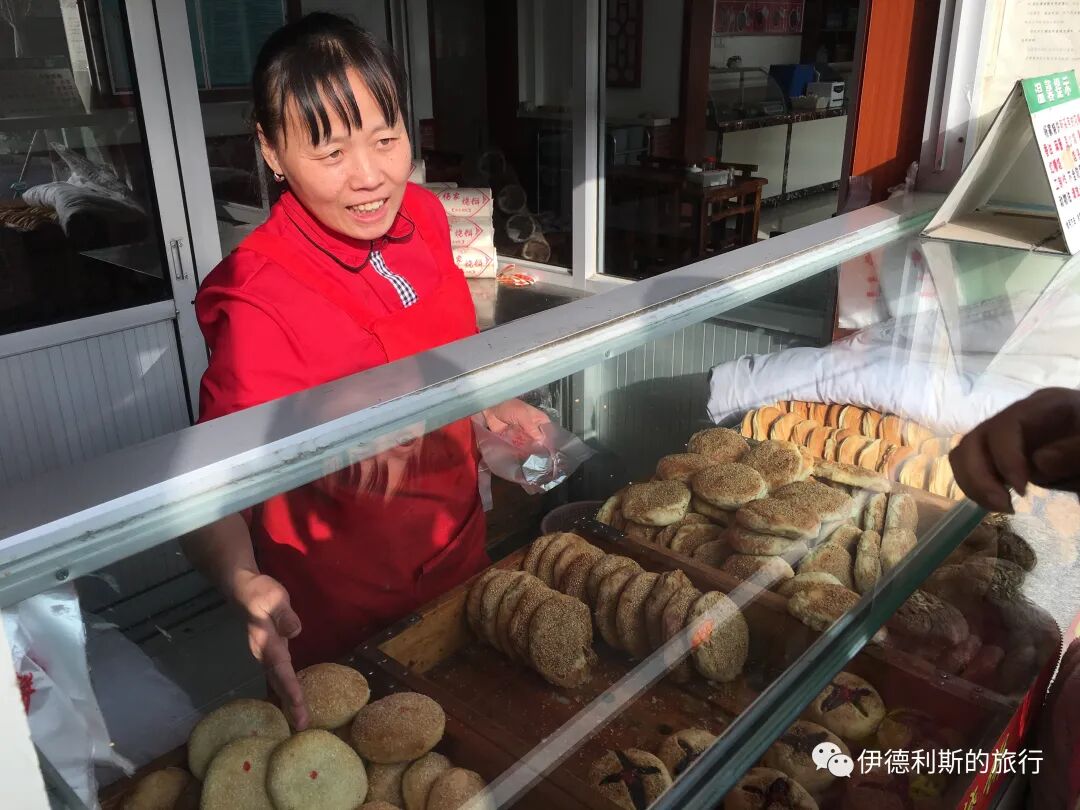
There are many small shops on both sides of the North Mosque gate. I bought some local specialty crispy candy (sutang) at the Wangji Crispy Candy and Pastry Shop. I only got to eat this during the Chinese New Year when I was a kid, so it brings back many memories.
Horseshoe-shaped crispy pastry (matisu) bought at the pastry department of the Cangzhou Halal Food Factory.
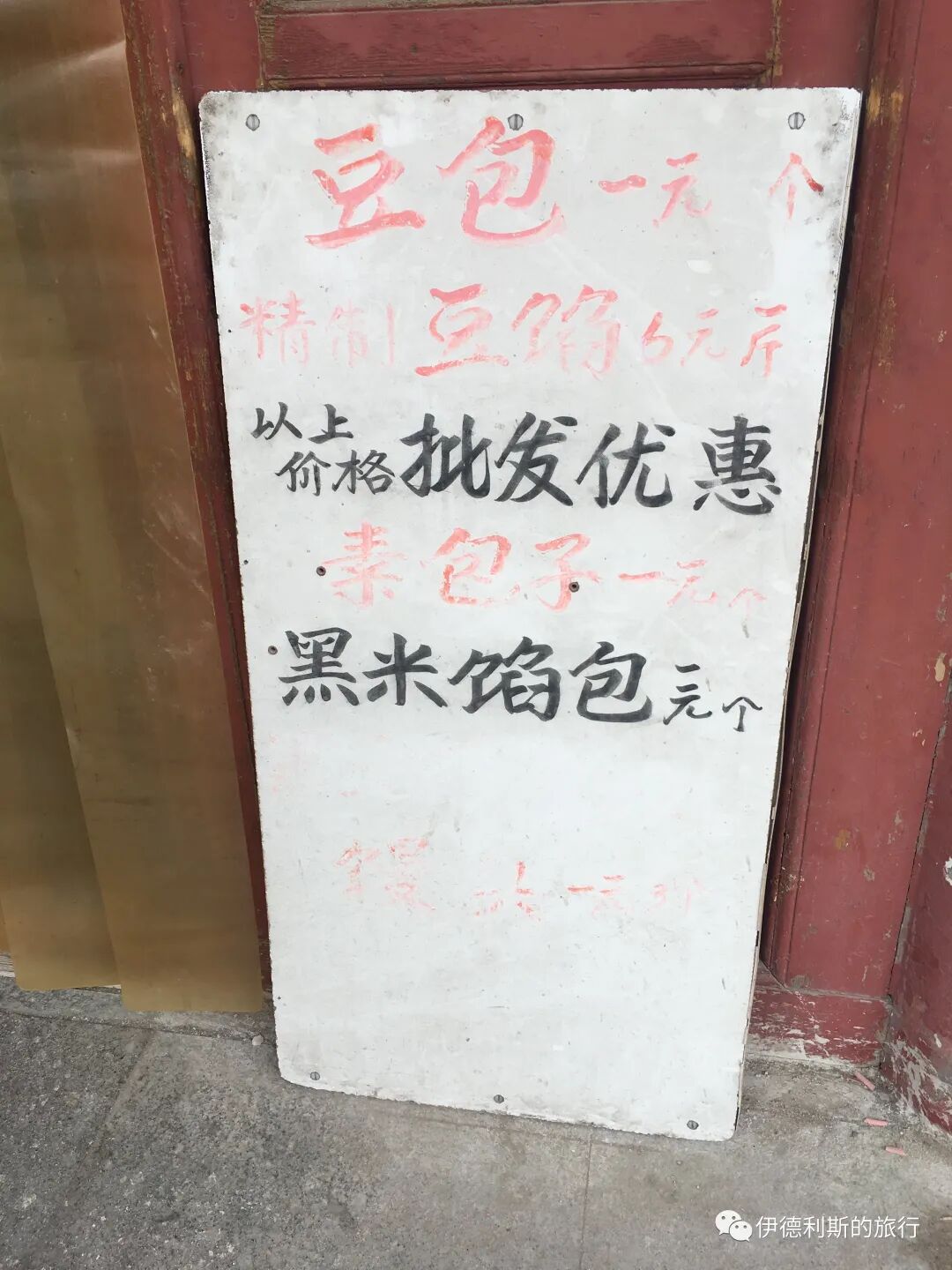
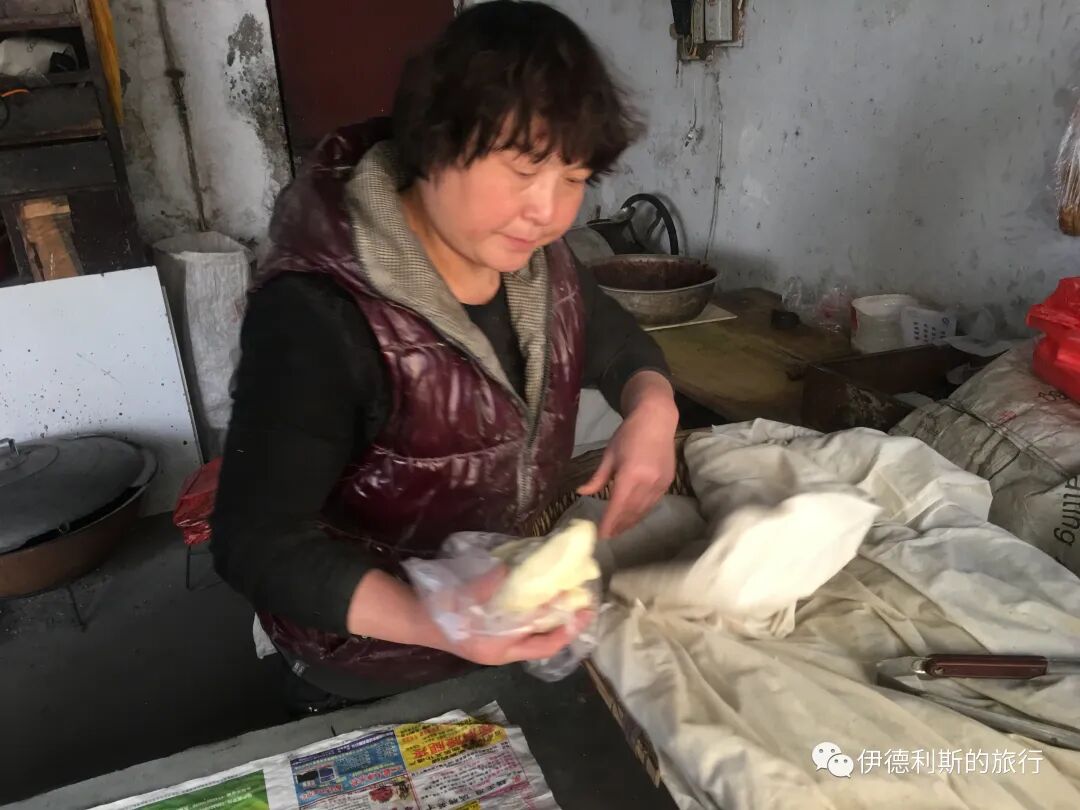
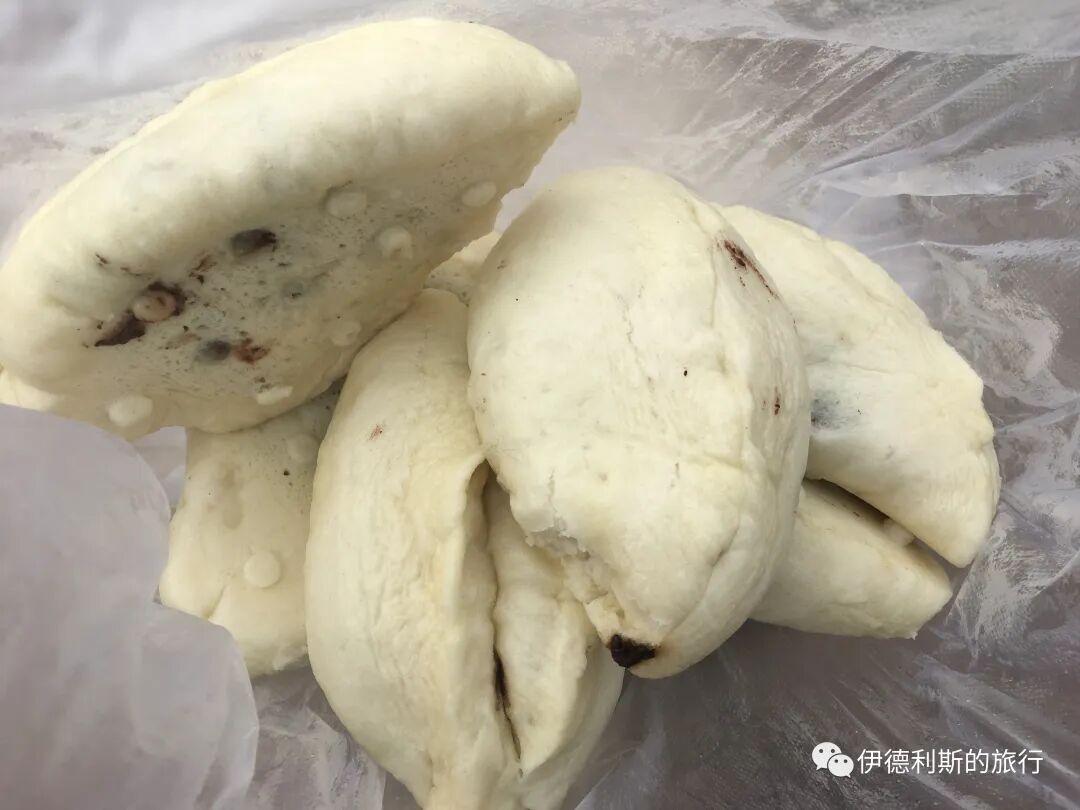
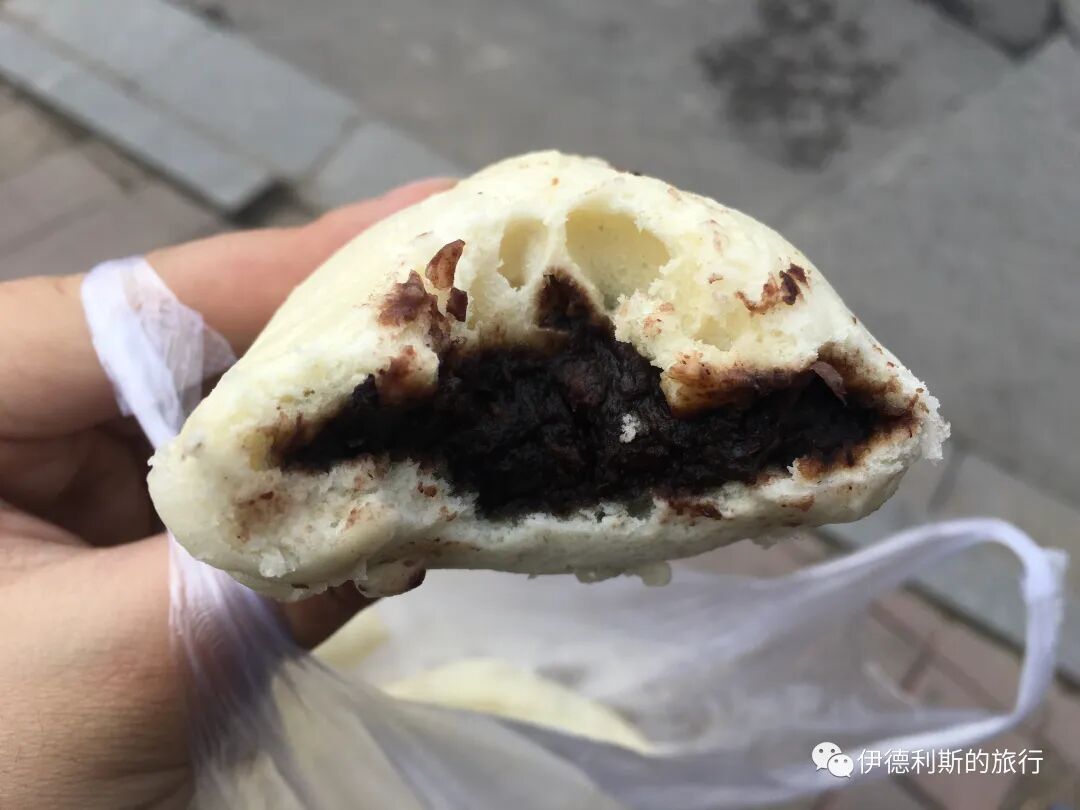
The halal red bean buns (doubao) next to the North Mosque are delicious. I bought a bunch both times I visited.
Women's Mosque (Qingzhen Nüsi)
Across from the North Mosque is the Women's Mosque, which was first built in 1666 (the fifth year of the Kangxi reign). The Women's Mosque used to be called the Inner City Mosque (Chengli Qingzhensi), and it was separated from the North Mosque by the south city wall of Cangzhou. The Inner City Mosque faced a similar fate to the North Mosque, suffering near-total destruction in the 1960s and 70s before being restored in the 1980s. In 1986, the Inner City Mosque became the Women's Mosque. It was rebuilt in 1993 to look the way it does today.
The Hui Muslim district in the south of Cangzhou city
South of the North Mosque is the Hui Muslim district. Although the houses have been rebuilt, the original street layout remains.
Halal food on Minzu Street
The heart of the southern Hui Muslim district is the Minzu Street food market, which is packed with all kinds of Hui Muslim snacks.
The East Mosque (Dongsi) is at the east end of the street.
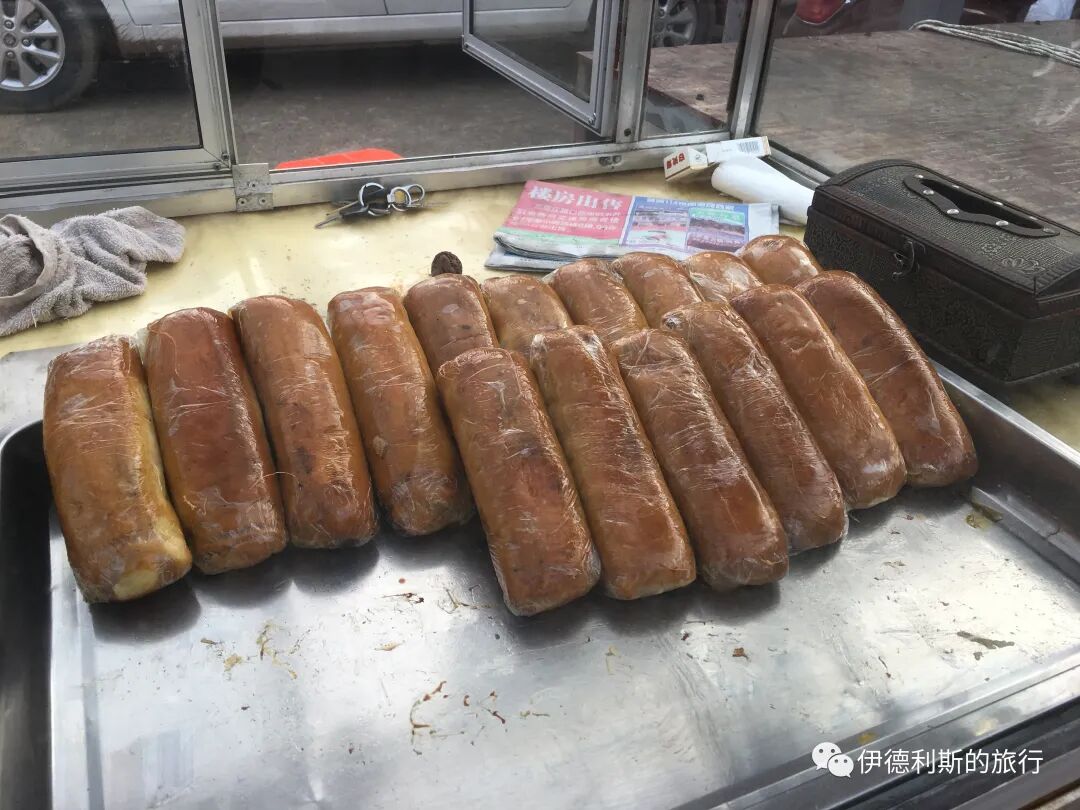
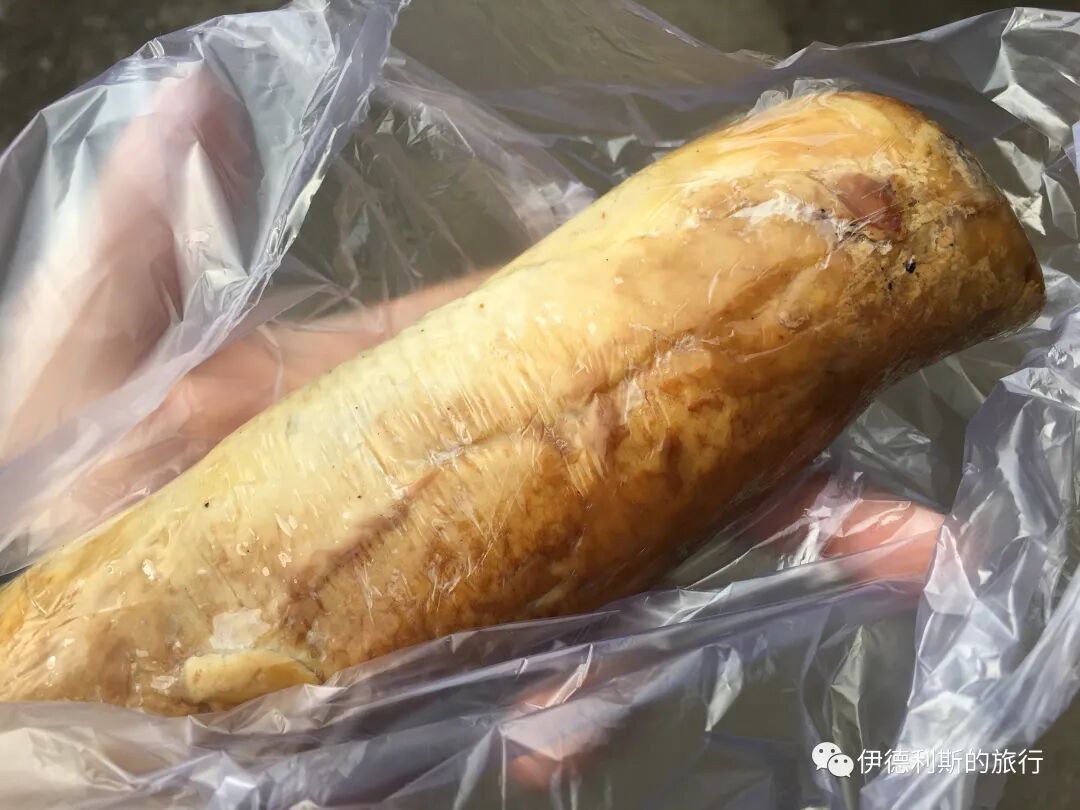
Liuji pine nut chicken legs (songhuajitui) are chicken sausages stuffed with pine nut jelly. They go perfectly with flatbread (laobing) or steamed buns (mantou).
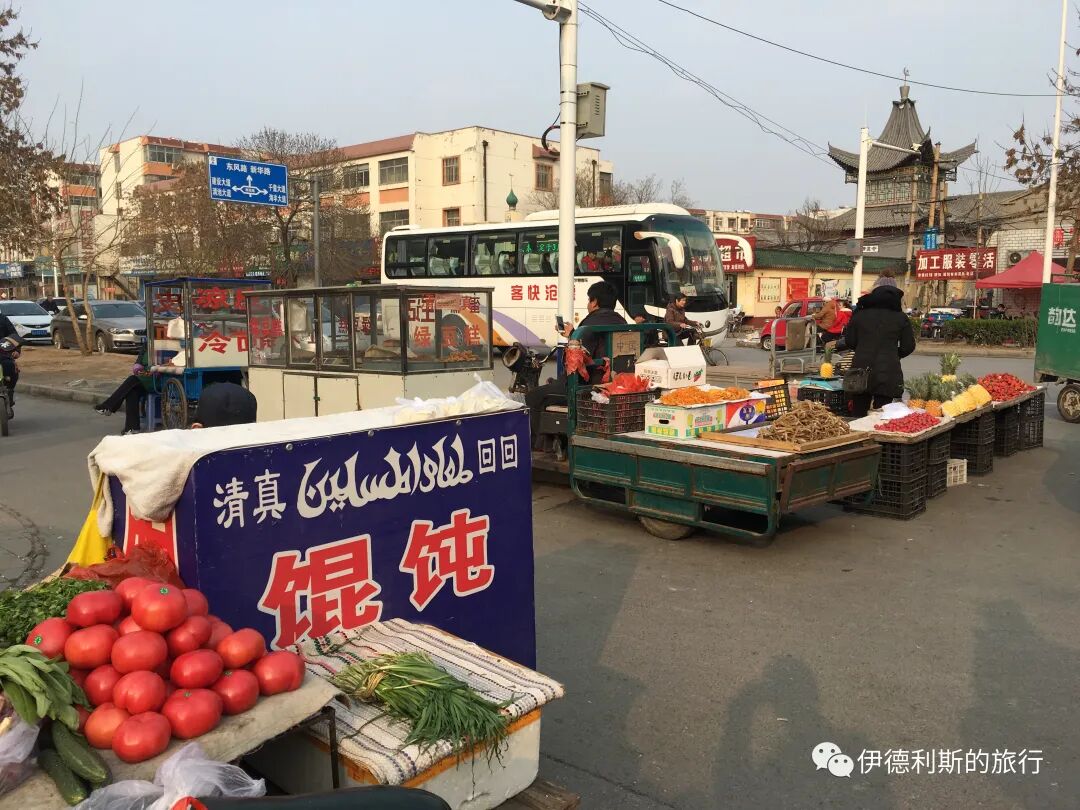
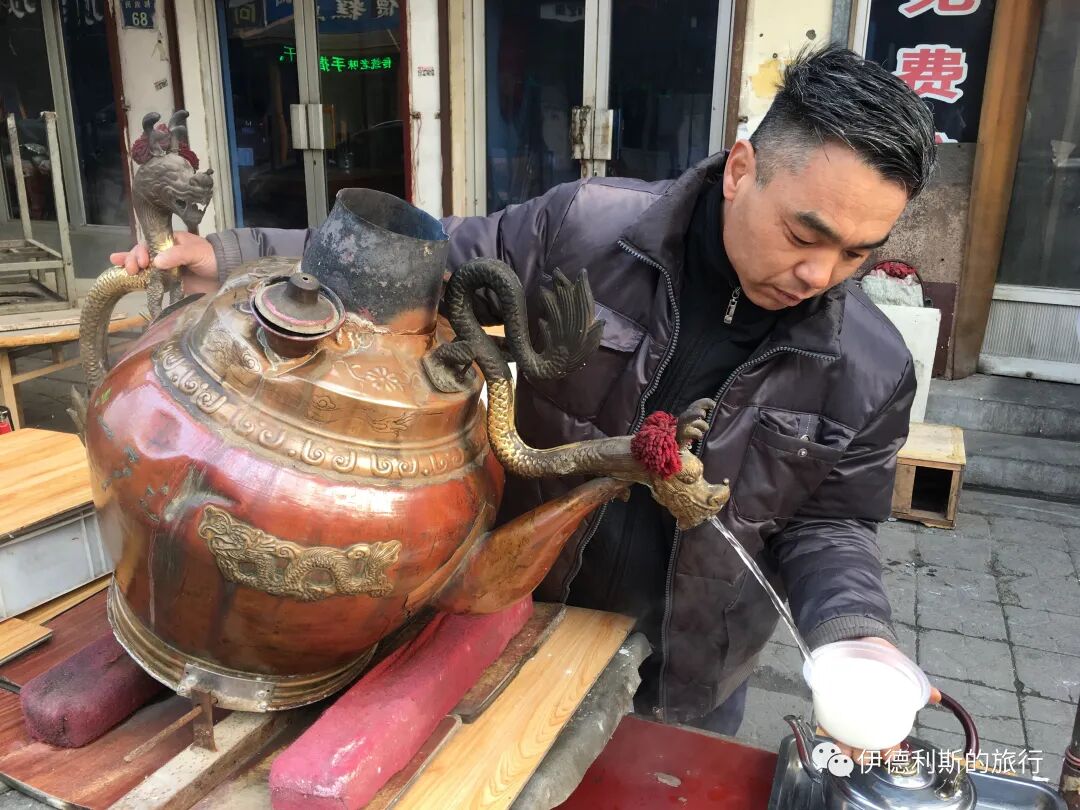
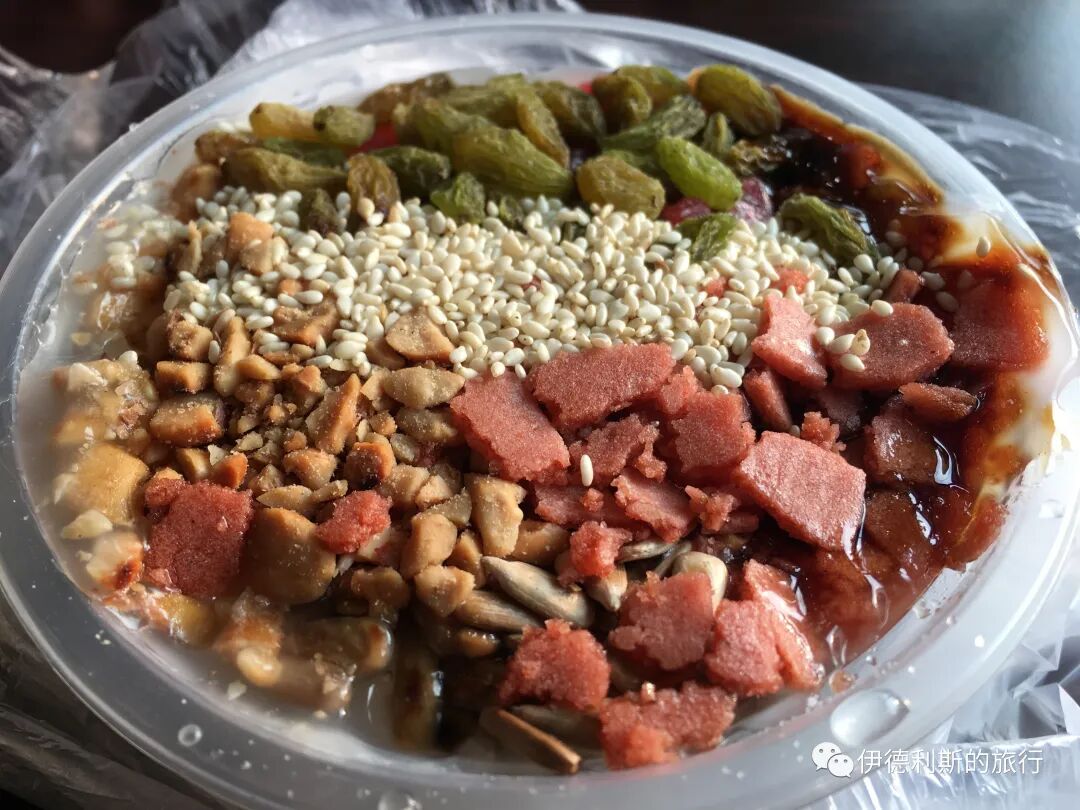
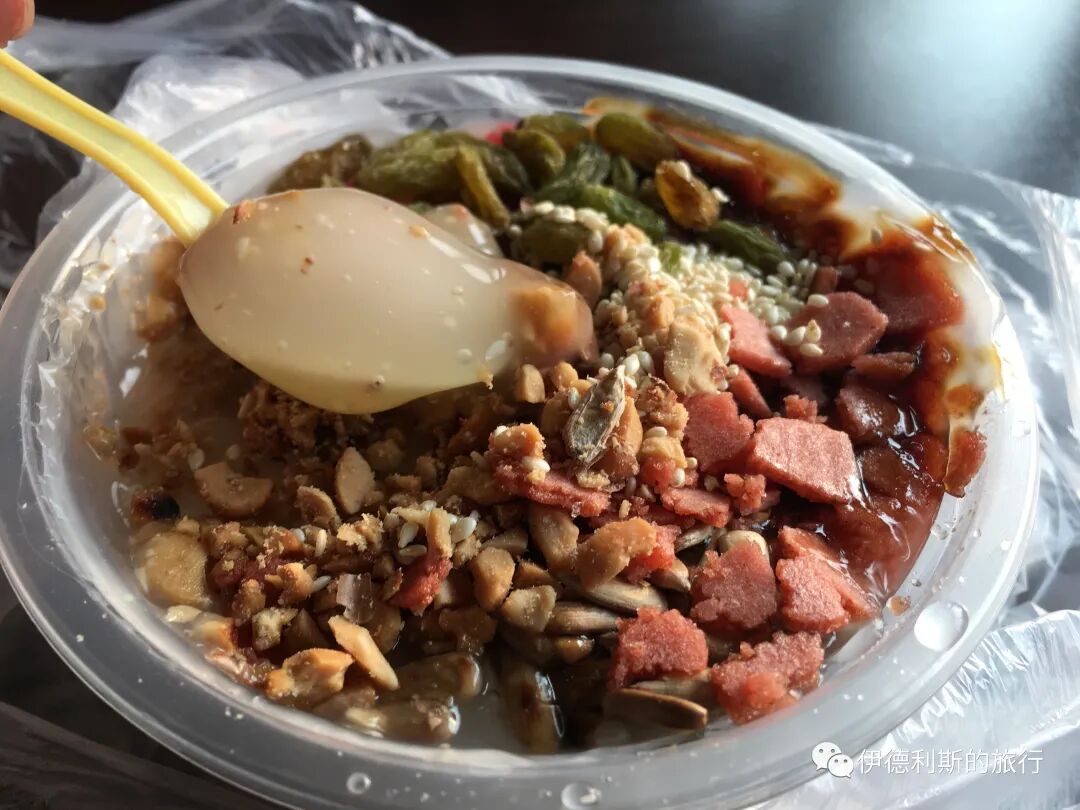
This is the third place outside of Beijing and Tianjin where I have had tea soup (chatang). The version in Cangzhou came from Tianjin along the Grand Canal, but this shop uses more ingredients and has a stronger flavor.
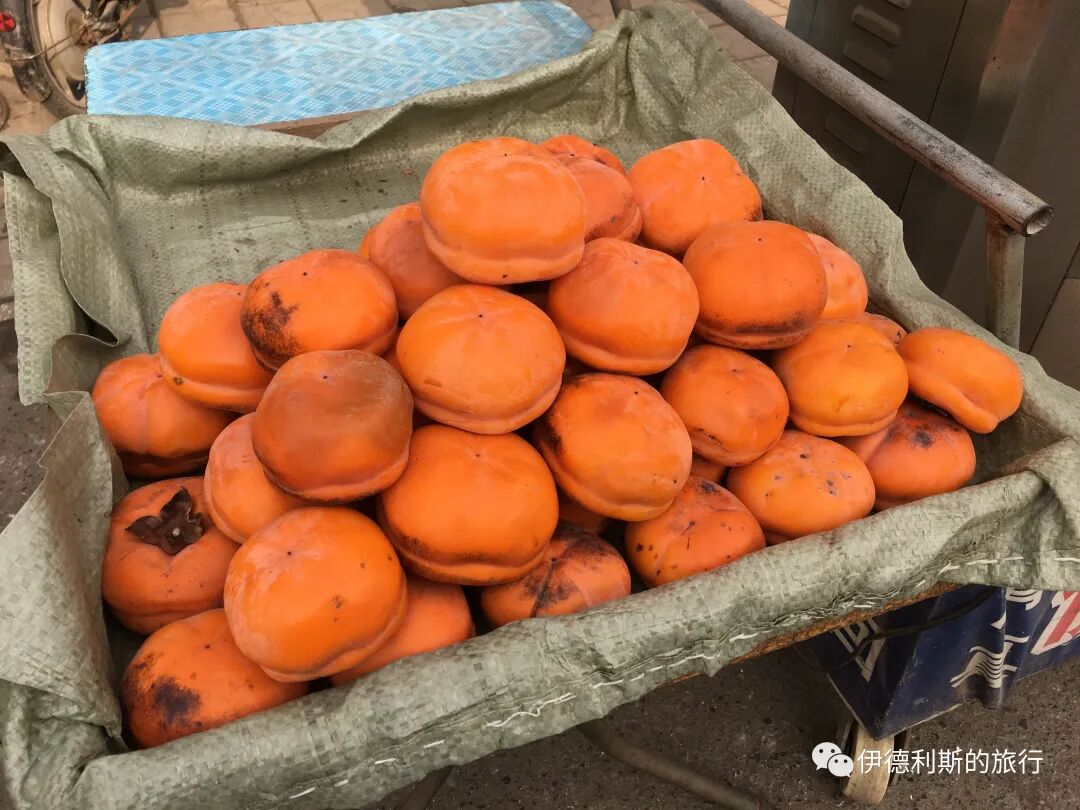
I bought two bags of five-spice peanuts. The black ones are addictive when eaten with tea.
I walked all the way to the west end of Minzu Street and had a pizza at Oumale.
Botou Yang family sesame flatbread (shaobing)
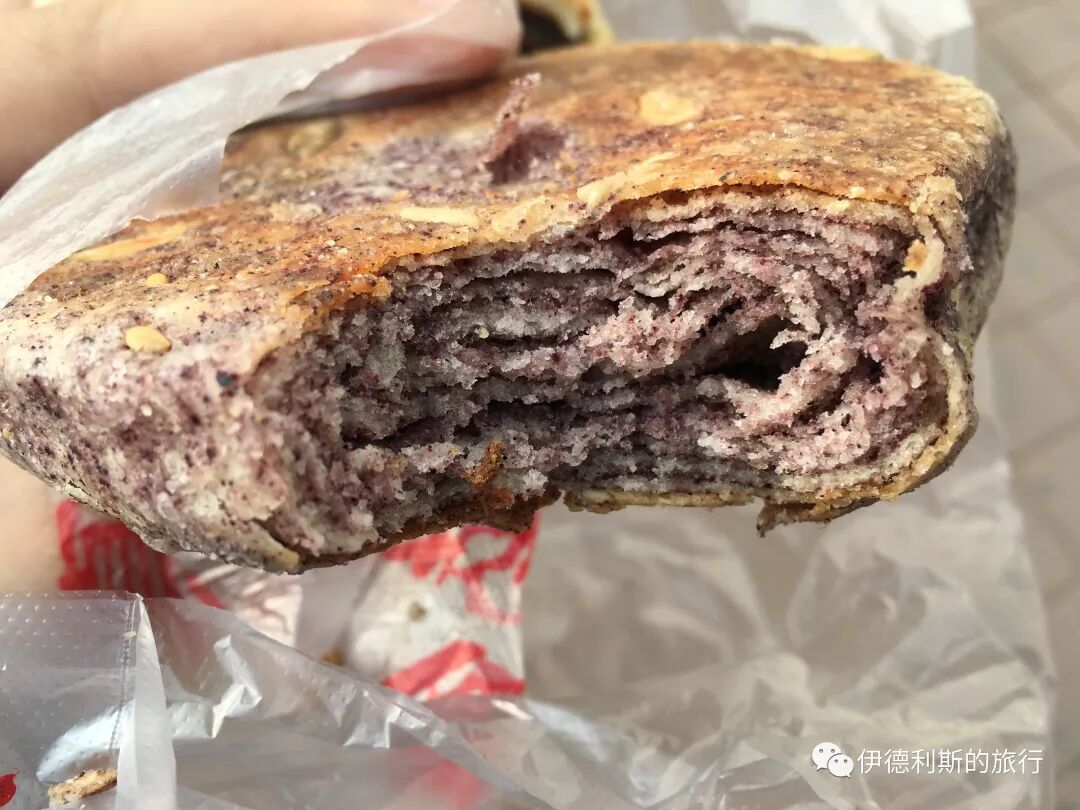
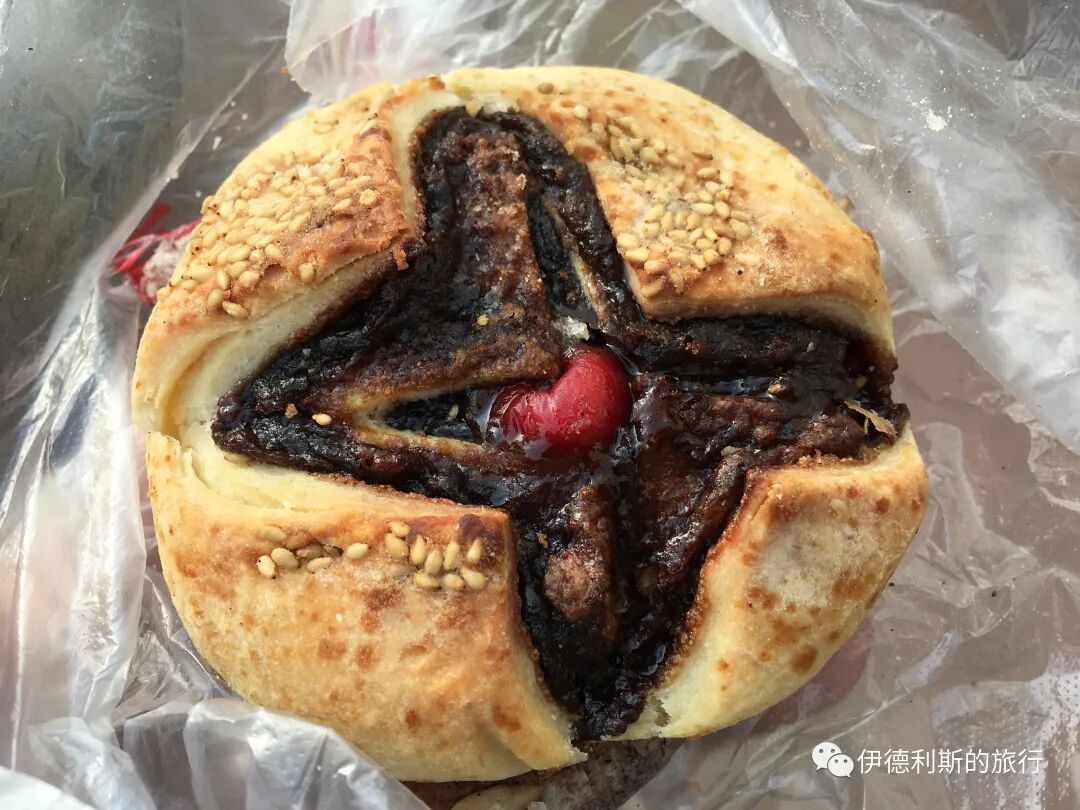
I bought sugar-filled triangular flatbreads (tang sanjiao shaobing) and black rice crispy flatbreads (heimi su shaobing) at the Cangzhou branch of Botou Yang Family Flatbreads (Yangjia shaobing).
Yang Yongchang, the founder of Yang Family Flatbreads, opened a roadside inn called Yongchang Store in the ancient canal town of Botou, south of Cangzhou, in the 1930s. He started making flatbreads then and continued until the business was closed during the public-private partnership transition in 1956. In 1979, Yang Family Flatbreads reopened. It became a Cangzhou municipal-level intangible cultural heritage site and developed many new varieties that taste as delicious as pastries.
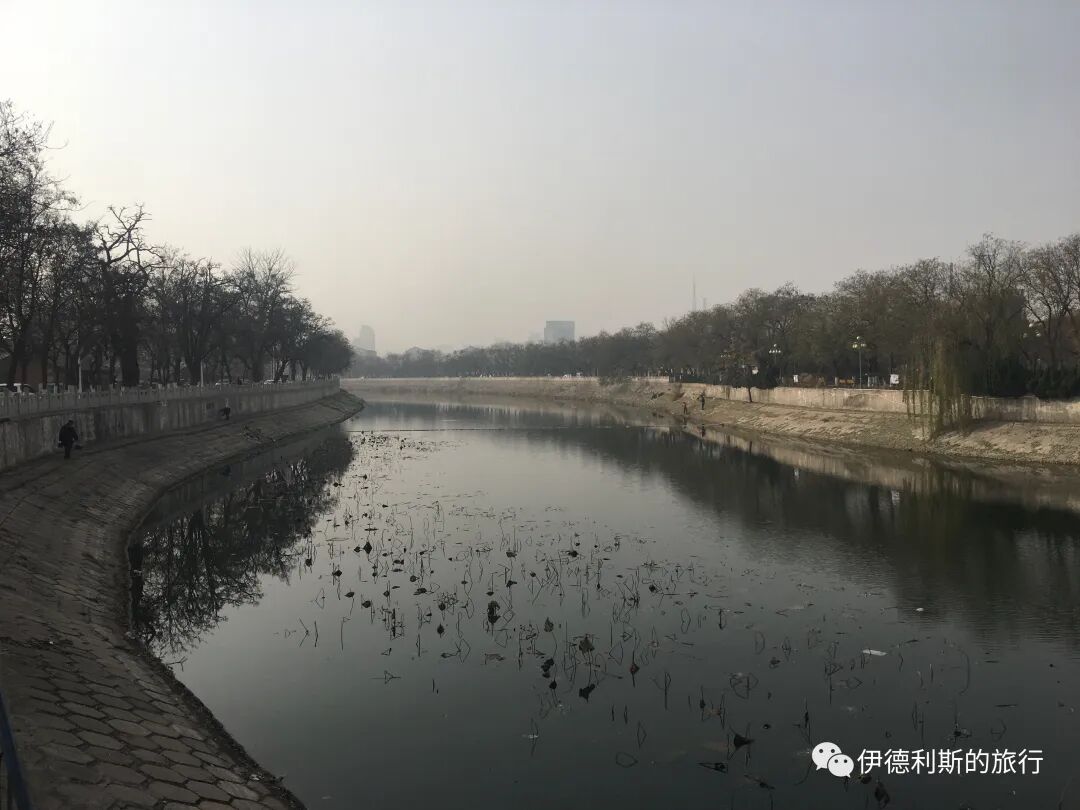
The Grand Canal in Cangzhou.
The canal wharf is not far from the west side of the Hui Muslim district in the south of the city. In 1411 (the ninth year of the Yongle reign), the Ming Dynasty cleared the silted-up section of the Grand Canal known as the Huitong River. This reopened the north-south water transport route, and the new Cangzhou city, which had moved from the old state city, became a hub for water transport.
At that time, many Hui Muslims made their living directly from water transport. The wealthiest boat owners rented out their ships or hired people for transport. Ordinary small boat owners made a living by ferrying, while the poorest Hui Muslims survived by pulling boats along the riverbank or carrying cargo at the wharf.
The convenience of water transport naturally led to a boom in business. Before the July 7th Incident, there were over five hundred halal restaurants in Cangzhou city. These included large establishments like Qinghua Restaurant and Tianqing Hall, as well as large tea houses like Wancheng Tea House. There were also various banks and grocery stores run by Hui Muslims, marking the peak of commercial activity for Cangzhou's Hui Muslims. (The Influence of the Canal on the Formation and Development of Hui Muslim Settlements in Cangzhou)
Until the 1960s, cargo ships still traveled constantly along the South Canal, and water transport in Cangzhou remained prosperous. However, by the 1970s, the water source for the South Canal channel deteriorated sharply and could no longer provide the water volume needed for transport, so the Cangzhou water transport wharves were abandoned.
Cangzhou has many Hui Muslim martial artists and schools. Besides the previously mentioned Wu-style Kaimen Baji Quan, there is also the famous Cha-Hua Quan. Cha-Hua Quan was created by Hui Muslims Cha Shangyi, Hua Zongqi, and Wu Dianzhang. It is also called Huihui Quan and is very popular among Hui Muslims in Shandong and Hebei.
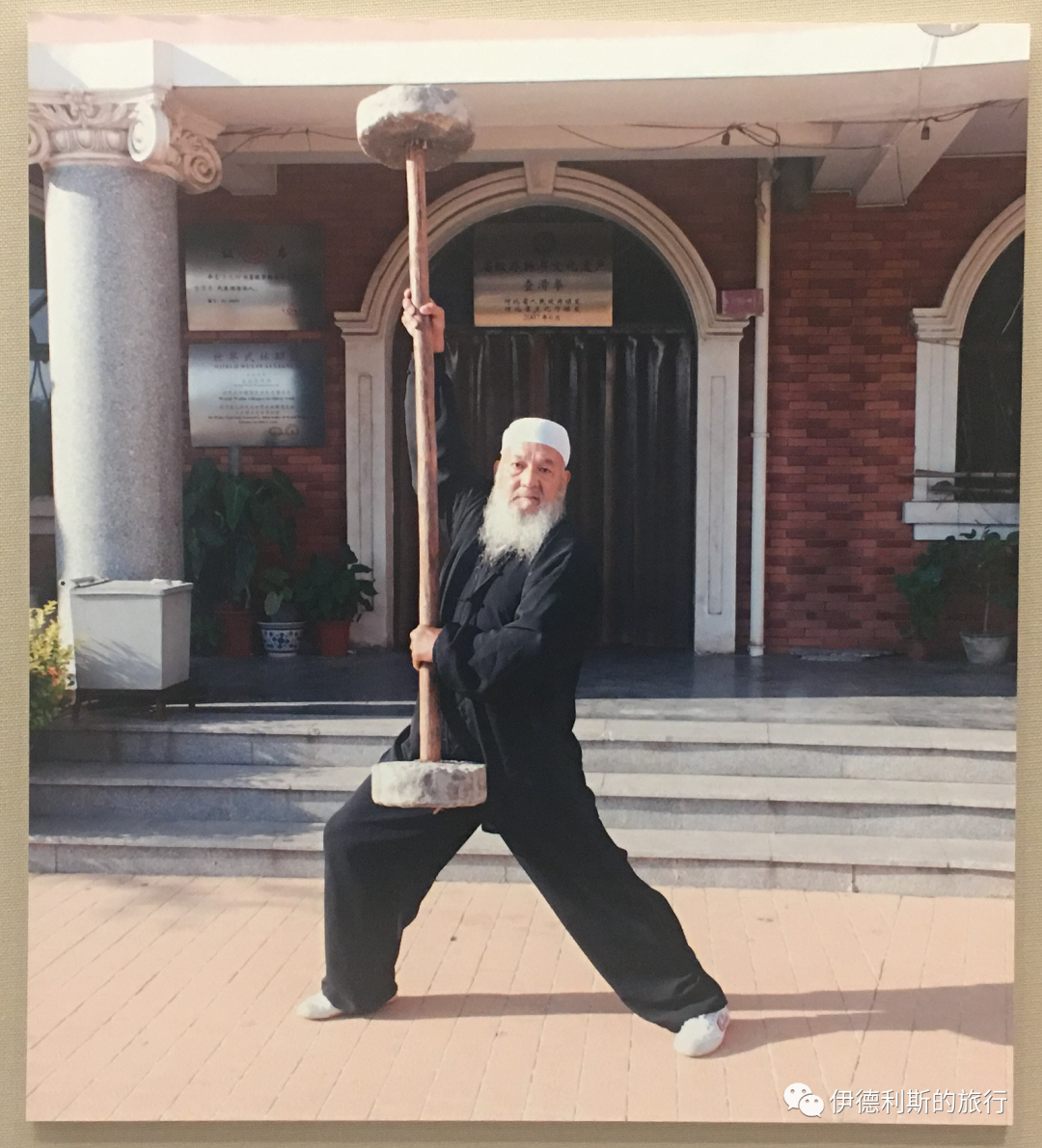
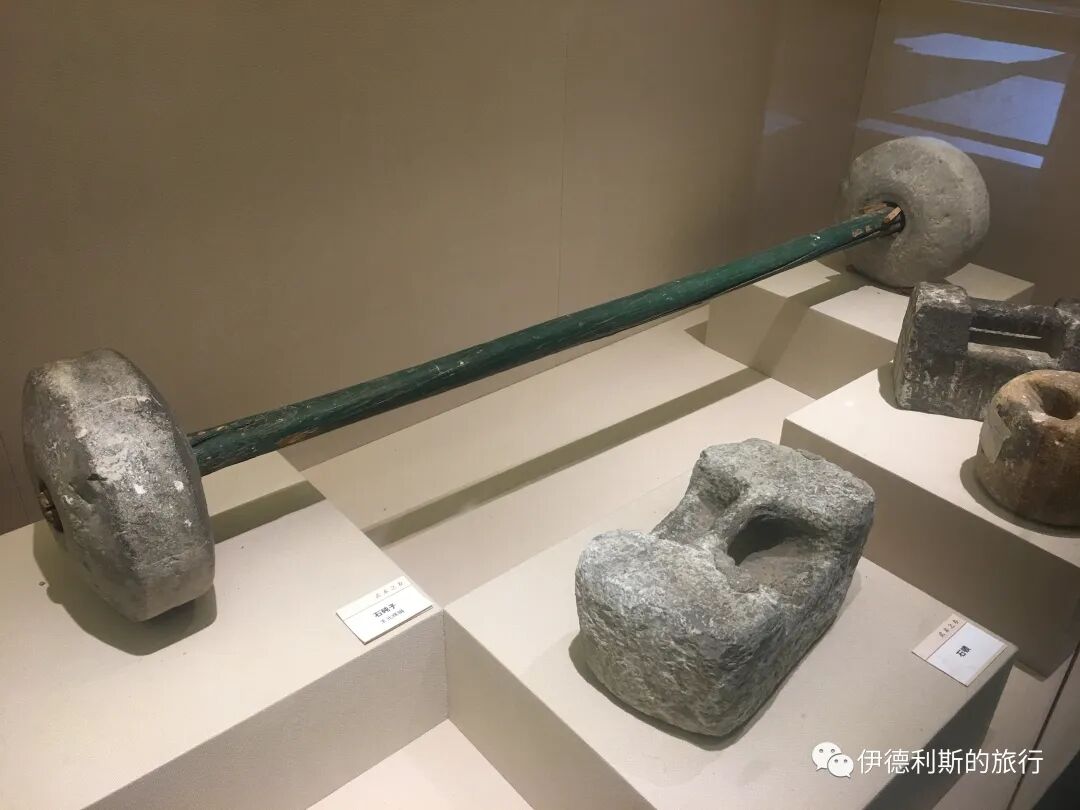
Wang Yuanxiang from Cangzhou is a fifth-generation successor of the Cha-Hua school and is skilled in using the long spear (daxing qiang). The longest spear in the picture below is the one he donated to the Cangzhou Museum.
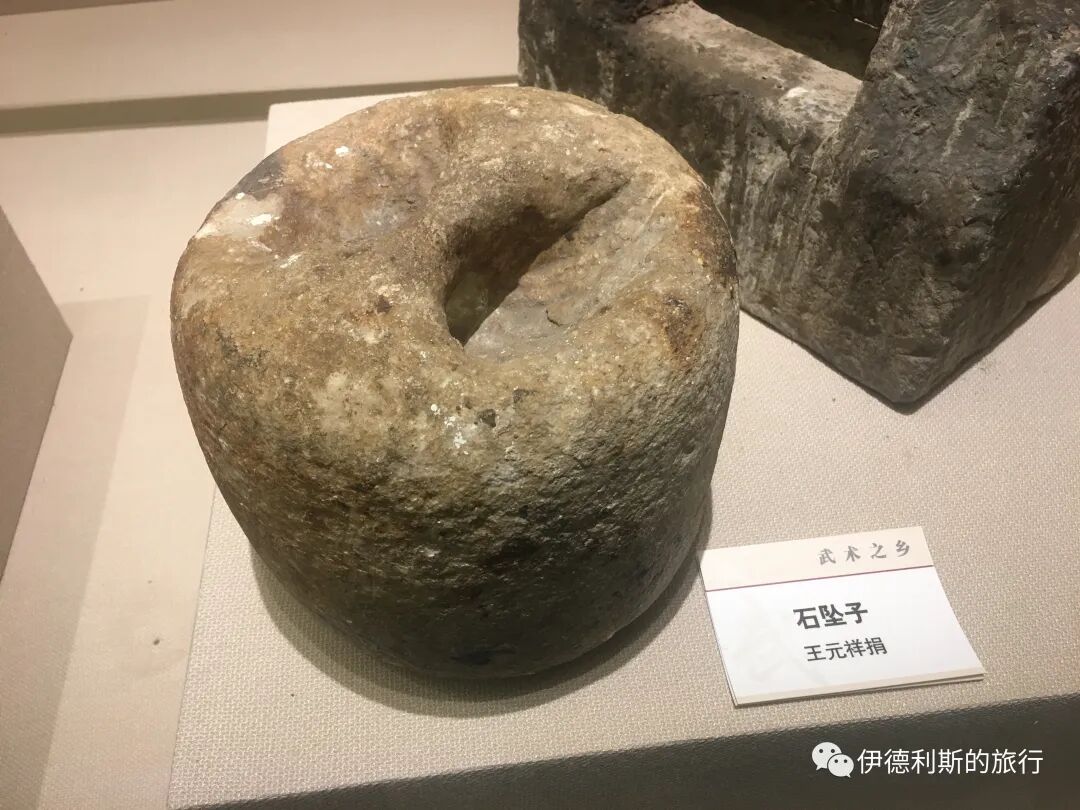
Practicing Cha-Hua Quan often requires the use of stone weights (shidun). The stone weight below was also donated by Wang Yuanxiang.
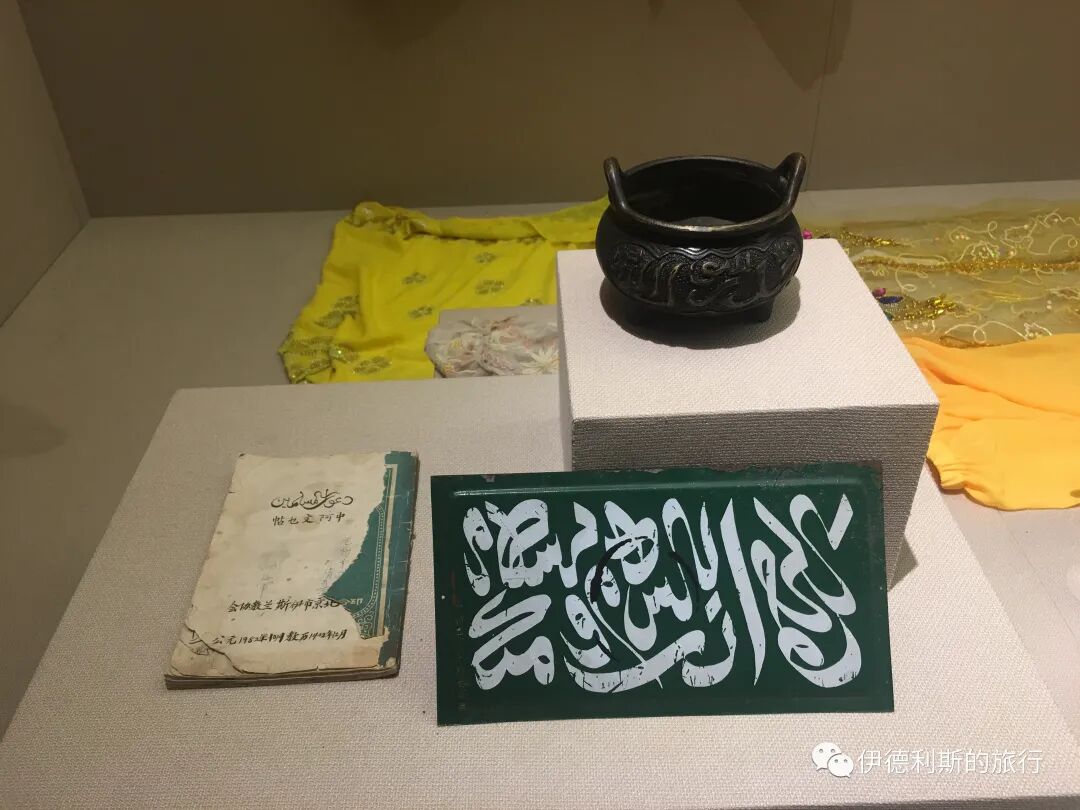
The religious exhibition cabinet at the Cangzhou Museum. view all
Summary: This China Mosque Travel Guide keeps the original 2016 Cangzhou travel notes intact while making the route clear for Muslim readers. It is useful for China Muslim travel tips, halal food in China, Chinese Muslim food, and old mosque heritage in Hebei.
I visited the Hui Muslim community in Cangzhou twice, on November 26, 2016, and March 25, 2017. I will share my experiences here. Some information in this article comes from the book Cangzhou Hui Muslims by Wu Piqing.
The high-speed train from Beijing South Station to Cangzhou West Station takes only 50 minutes. At Beijing South Station, there is a fast-track entrance for the Beijing-Shanghai high-speed railway right at the subway exit. You can swipe your card to leave the subway and head straight to the train, which is very convenient.
When you leave Cangzhou West Station, you can take a metered taxi. It costs about a dozen yuan and takes 20 minutes to reach the mosque. When Cangzhou locals talk about the mosque, they usually mean the North Great Mosque (Qingzhen Beidasi) on the main street. It is the most magnificent mosque in Cangzhou. Once at the mosque, I first went to eat the famous Wu's All-Beef Soup (Wu Ji Quan Niu Tang).
From Wu's All-Beef Soup to the Cangzhou Hui Muslim district.
Wu's All-Beef Soup has cost fifty yuan a bowl for years. Don't let the price scare you; once you see the amount of beef, you will know it is worth it. You take dried beef from the counter and dip it in the boiling soup. The beef soup is incredibly delicious, and the beef is very fragrant. It keeps you full for a long time. You can eat all the flatbreads you want there. I chose this long, multi-grain flatbread, which goes perfectly with the soup.
After finishing the beef soup, I have to talk a bit about the Wu family of Cangzhou. The Wu family is an important branch of the Hui Muslims in Cangzhou, and they are closely linked to the city's history.
Like many canal cities, Cangzhou has had Hui Muslim merchants settling down with their families since the Yuan Dynasty. However, the Cangzhou city of that time was not the one we see today. It was located at the Old Prefecture City ruins, 20 kilometers southeast of the current city, where the famous Cangzhou Iron Lion stands.
In 1399, during the Jingnan Campaign, the Prince of Yan, Zhu Di, captured the old Cangzhou city. He killed thousands of surrendered soldiers and tens of thousands of residents, destroying the entire city. The Prince of Yan's sweep to the north became a major turning point in Cangzhou's history.
In 1404, after the war, Cangzhou began to rebuild. Zhu Di, who had gone from Prince of Yan to the Yongle Emperor, ordered the city moved to Changlu by the Grand Canal. He brought in residents from Shanxi, Shandong, and Anhui to settle there, forming the new Cangzhou city.
Just one year before the city was rebuilt, in 1403, the Wu family ancestor, Zuoyong, was appointed as the Assistant Prefect of the Cangzhou Salt Transport Commission in Hejian Prefecture, Zhili. He moved to Cangzhou from Shexian, Anhui. Cangzhou borders the Bohai Sea to the east and has had a thriving salt industry since ancient times. The Cangzhou Salt Transport Commission, established in the early Ming Dynasty, managed the local salt trade. The salt fields were located by the Grand Canal west of Cangzhou city. Transport was very convenient and cost-effective, making the salt popular along the canal.
a descendant of the Wu family, Wu Zhong, founded the famous Wu-style Baji martial arts during the reigns of the Yongzheng and Qianlong emperors, becoming the pride of Cangzhou's Hui Muslims.
Cangzhou North Great Mosque.
The area south of the city gate was an important passage to the canal. Most Hui Muslim artisans and small vendors chose to live there. In 1420, the Cangzhou North Great Mosque was built in the south of the city on land donated by the Wu family ancestor Yongzuo, marking the formal establishment of the Cangzhou Hui Muslim community.
The Fatimah Auntie Festival (Fatumei Gutai Hui), one of the two major festivals and two major gatherings in North China.
The North Mosque (Beidasi) in Cangzhou is grand, but it was badly damaged in the 1908 earthquake, which caused the main hall to tilt toward the south. Local legend says a famous Cangzhou craftsman named Master Jiang Ba dismantled the four walls of the hall, straightened the structure, and restored it. During the Cultural Revolution, the Cangzhou Instrument Factory took over the North Mosque. They tore down the hall and the south lecture hall, burned historic plaques, smashed the roof of the main hall, and removed the front gate.
The North Mosque was only fully repaired after the factory moved out in 1989. Its layout changed quite a bit to reach its current form.
Halal food near the North Mosque
There are many small shops on both sides of the North Mosque gate. I bought some local specialty crispy candy (sutang) at the Wangji Crispy Candy and Pastry Shop. I only got to eat this during the Chinese New Year when I was a kid, so it brings back many memories.
Horseshoe-shaped crispy pastry (matisu) bought at the pastry department of the Cangzhou Halal Food Factory.
The halal red bean buns (doubao) next to the North Mosque are delicious. I bought a bunch both times I visited.
Women's Mosque (Qingzhen Nüsi)
Across from the North Mosque is the Women's Mosque, which was first built in 1666 (the fifth year of the Kangxi reign). The Women's Mosque used to be called the Inner City Mosque (Chengli Qingzhensi), and it was separated from the North Mosque by the south city wall of Cangzhou. The Inner City Mosque faced a similar fate to the North Mosque, suffering near-total destruction in the 1960s and 70s before being restored in the 1980s. In 1986, the Inner City Mosque became the Women's Mosque. It was rebuilt in 1993 to look the way it does today.
The Hui Muslim district in the south of Cangzhou city
South of the North Mosque is the Hui Muslim district. Although the houses have been rebuilt, the original street layout remains.
Halal food on Minzu Street
The heart of the southern Hui Muslim district is the Minzu Street food market, which is packed with all kinds of Hui Muslim snacks.
The East Mosque (Dongsi) is at the east end of the street.
Liuji pine nut chicken legs (songhuajitui) are chicken sausages stuffed with pine nut jelly. They go perfectly with flatbread (laobing) or steamed buns (mantou).
This is the third place outside of Beijing and Tianjin where I have had tea soup (chatang). The version in Cangzhou came from Tianjin along the Grand Canal, but this shop uses more ingredients and has a stronger flavor.
I bought two bags of five-spice peanuts. The black ones are addictive when eaten with tea.
I walked all the way to the west end of Minzu Street and had a pizza at Oumale.
Botou Yang family sesame flatbread (shaobing)
I bought sugar-filled triangular flatbreads (tang sanjiao shaobing) and black rice crispy flatbreads (heimi su shaobing) at the Cangzhou branch of Botou Yang Family Flatbreads (Yangjia shaobing).
Yang Yongchang, the founder of Yang Family Flatbreads, opened a roadside inn called Yongchang Store in the ancient canal town of Botou, south of Cangzhou, in the 1930s. He started making flatbreads then and continued until the business was closed during the public-private partnership transition in 1956. In 1979, Yang Family Flatbreads reopened. It became a Cangzhou municipal-level intangible cultural heritage site and developed many new varieties that taste as delicious as pastries.
The Grand Canal in Cangzhou.
The canal wharf is not far from the west side of the Hui Muslim district in the south of the city. In 1411 (the ninth year of the Yongle reign), the Ming Dynasty cleared the silted-up section of the Grand Canal known as the Huitong River. This reopened the north-south water transport route, and the new Cangzhou city, which had moved from the old state city, became a hub for water transport.
At that time, many Hui Muslims made their living directly from water transport. The wealthiest boat owners rented out their ships or hired people for transport. Ordinary small boat owners made a living by ferrying, while the poorest Hui Muslims survived by pulling boats along the riverbank or carrying cargo at the wharf.
The convenience of water transport naturally led to a boom in business. Before the July 7th Incident, there were over five hundred halal restaurants in Cangzhou city. These included large establishments like Qinghua Restaurant and Tianqing Hall, as well as large tea houses like Wancheng Tea House. There were also various banks and grocery stores run by Hui Muslims, marking the peak of commercial activity for Cangzhou's Hui Muslims. (The Influence of the Canal on the Formation and Development of Hui Muslim Settlements in Cangzhou)
Until the 1960s, cargo ships still traveled constantly along the South Canal, and water transport in Cangzhou remained prosperous. However, by the 1970s, the water source for the South Canal channel deteriorated sharply and could no longer provide the water volume needed for transport, so the Cangzhou water transport wharves were abandoned.
Cangzhou has many Hui Muslim martial artists and schools. Besides the previously mentioned Wu-style Kaimen Baji Quan, there is also the famous Cha-Hua Quan. Cha-Hua Quan was created by Hui Muslims Cha Shangyi, Hua Zongqi, and Wu Dianzhang. It is also called Huihui Quan and is very popular among Hui Muslims in Shandong and Hebei.
Wang Yuanxiang from Cangzhou is a fifth-generation successor of the Cha-Hua school and is skilled in using the long spear (daxing qiang). The longest spear in the picture below is the one he donated to the Cangzhou Museum.
Practicing Cha-Hua Quan often requires the use of stone weights (shidun). The stone weight below was also donated by Wang Yuanxiang.
The religious exhibition cabinet at the Cangzhou Museum. view all
Reposted from the web
Summary: This China Mosque Travel Guide keeps the original 2016 Cangzhou travel notes intact while making the route clear for Muslim readers. It is useful for China Muslim travel tips, halal food in China, Chinese Muslim food, and old mosque heritage in Hebei.
I visited the Hui Muslim community in Cangzhou twice, on November 26, 2016, and March 25, 2017. I will share my experiences here. Some information in this article comes from the book Cangzhou Hui Muslims by Wu Piqing.
The high-speed train from Beijing South Station to Cangzhou West Station takes only 50 minutes. At Beijing South Station, there is a fast-track entrance for the Beijing-Shanghai high-speed railway right at the subway exit. You can swipe your card to leave the subway and head straight to the train, which is very convenient.
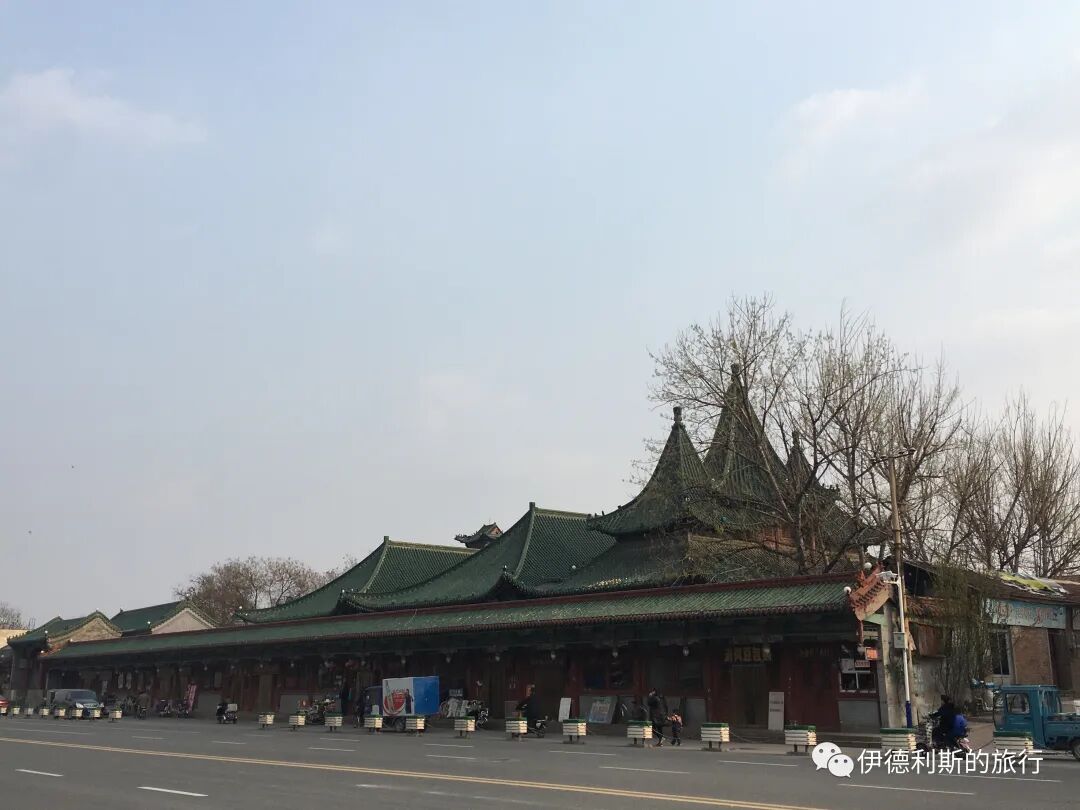
When you leave Cangzhou West Station, you can take a metered taxi. It costs about a dozen yuan and takes 20 minutes to reach the mosque. When Cangzhou locals talk about the mosque, they usually mean the North Great Mosque (Qingzhen Beidasi) on the main street. It is the most magnificent mosque in Cangzhou. Once at the mosque, I first went to eat the famous Wu's All-Beef Soup (Wu Ji Quan Niu Tang).
From Wu's All-Beef Soup to the Cangzhou Hui Muslim district.
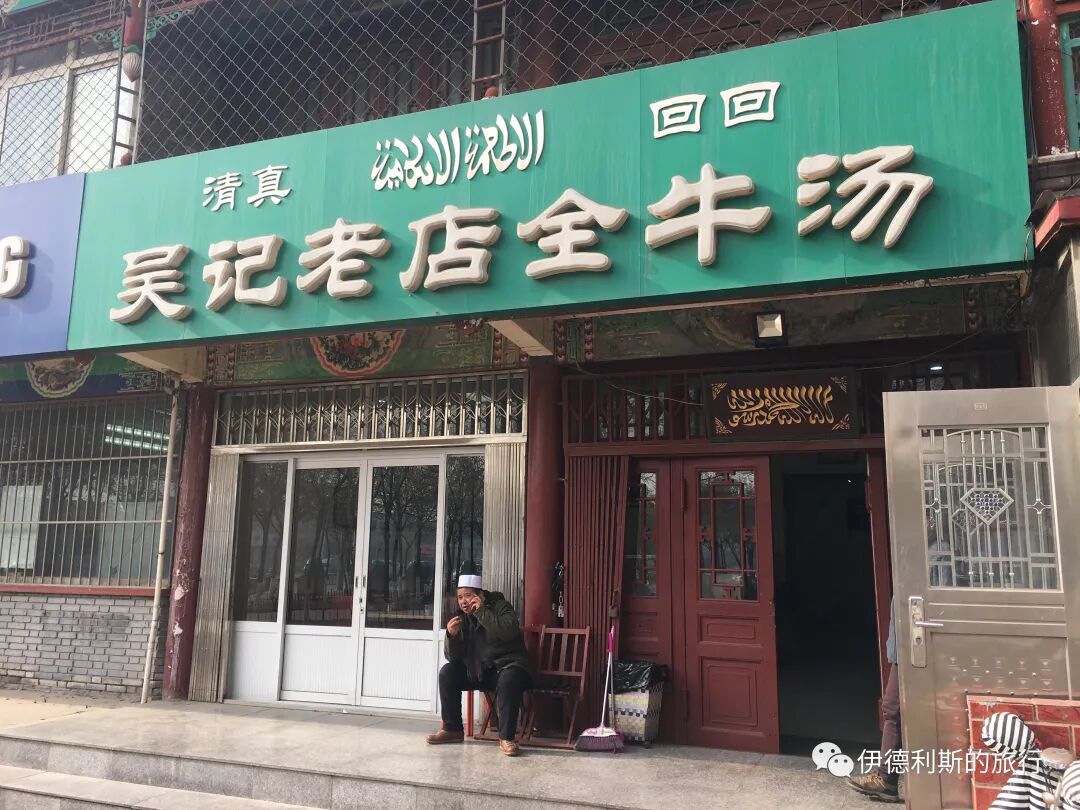
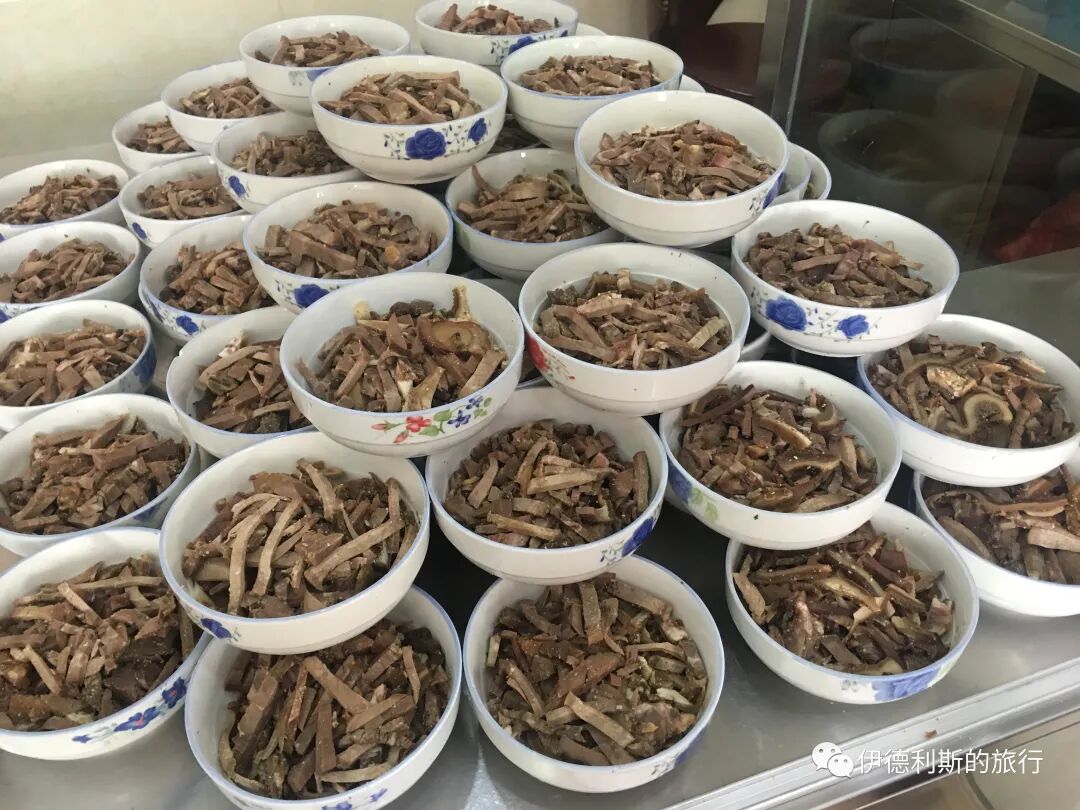
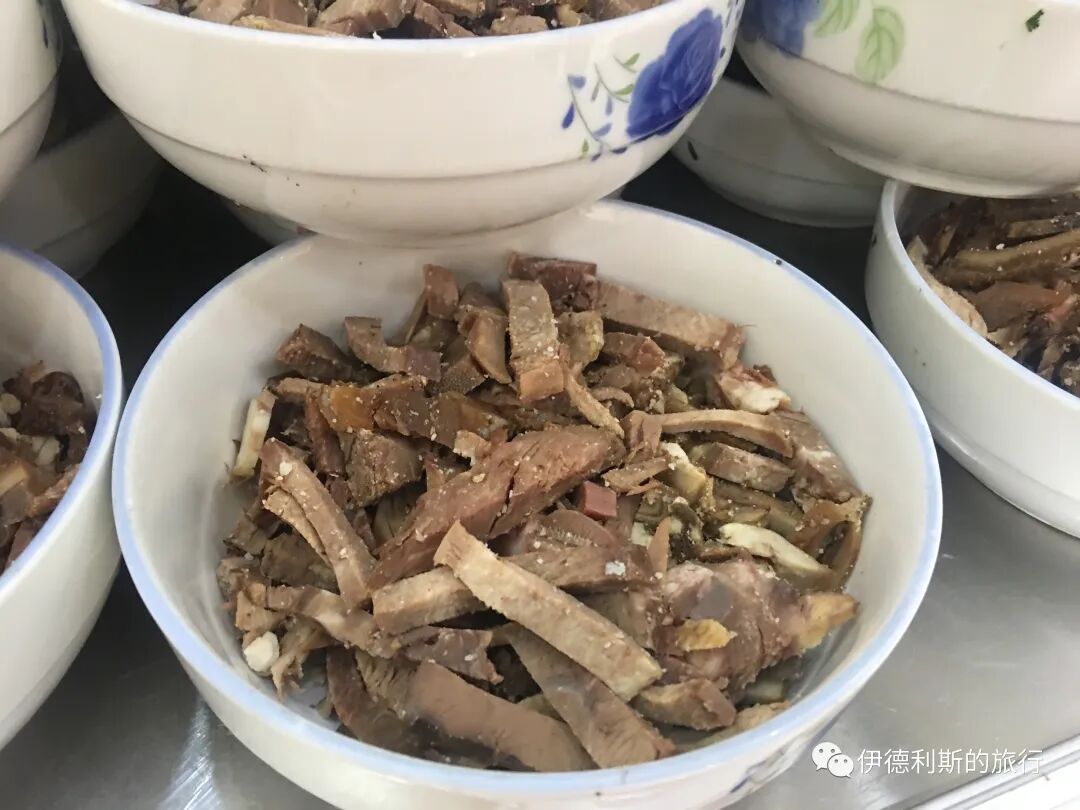
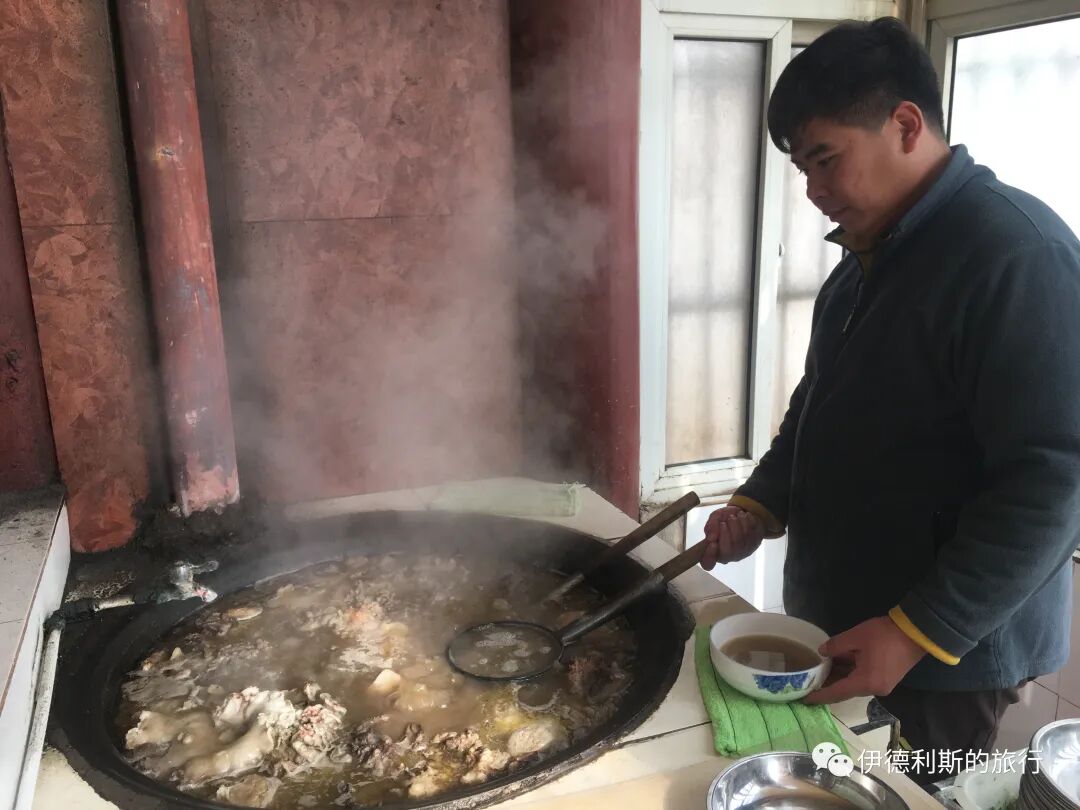
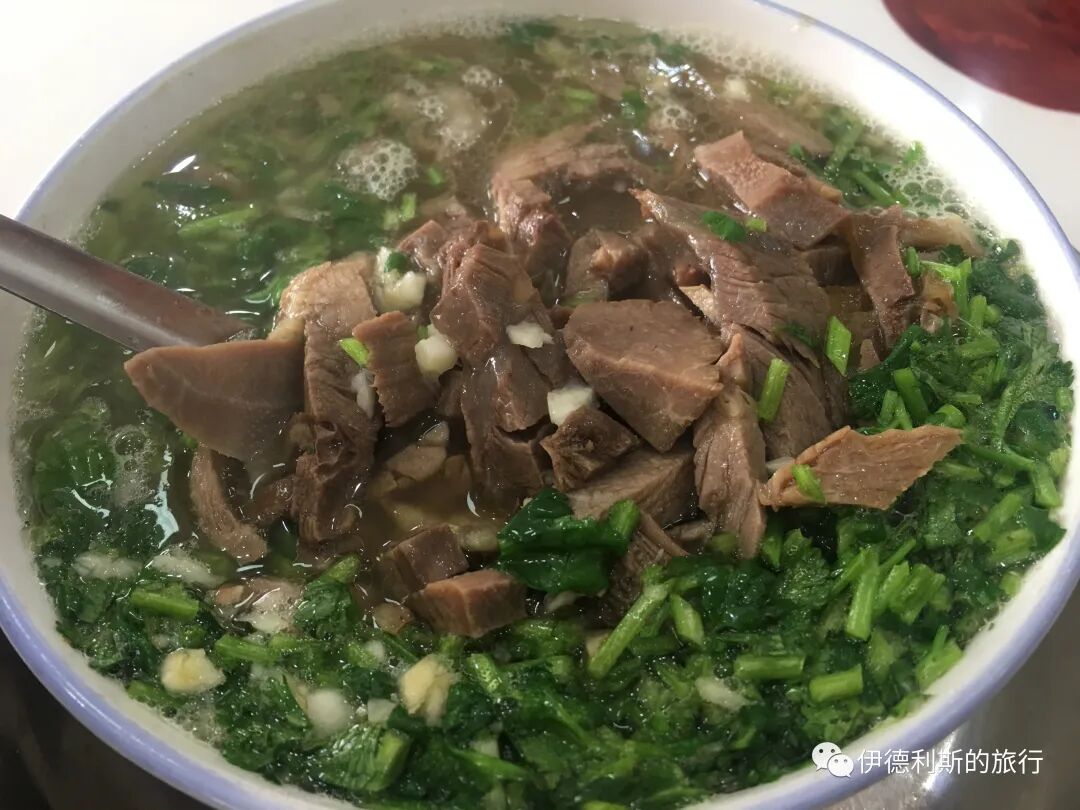
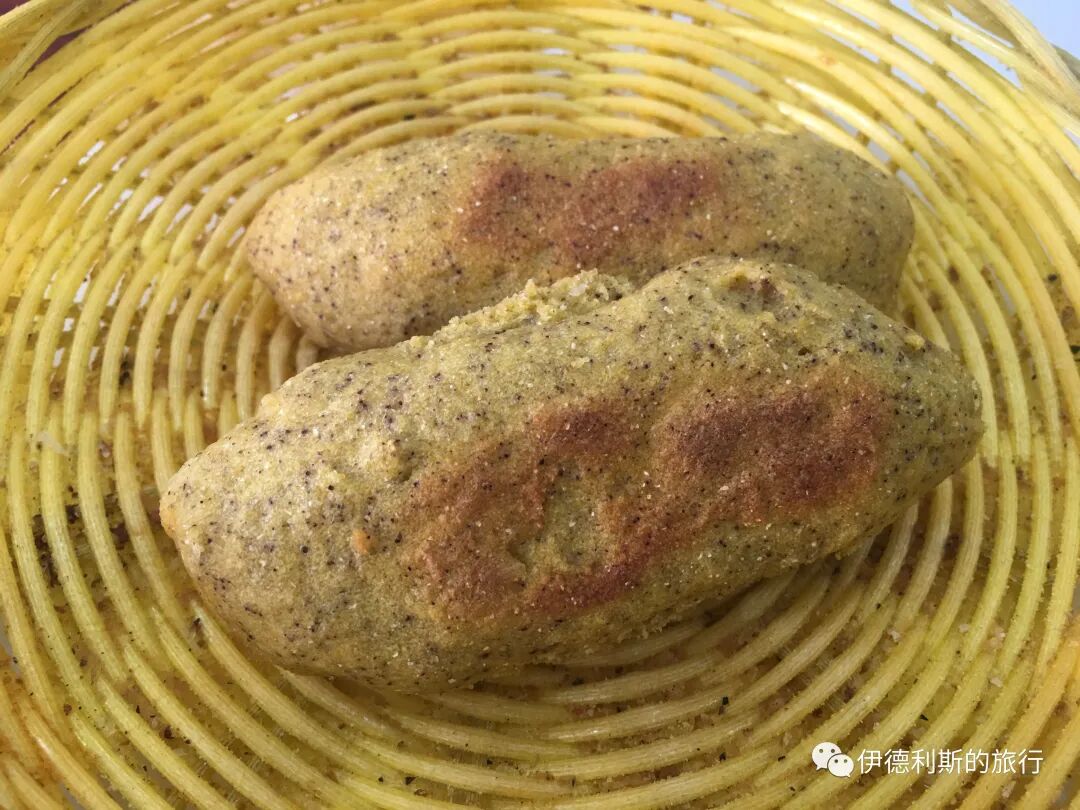
Wu's All-Beef Soup has cost fifty yuan a bowl for years. Don't let the price scare you; once you see the amount of beef, you will know it is worth it. You take dried beef from the counter and dip it in the boiling soup. The beef soup is incredibly delicious, and the beef is very fragrant. It keeps you full for a long time. You can eat all the flatbreads you want there. I chose this long, multi-grain flatbread, which goes perfectly with the soup.
After finishing the beef soup, I have to talk a bit about the Wu family of Cangzhou. The Wu family is an important branch of the Hui Muslims in Cangzhou, and they are closely linked to the city's history.
Like many canal cities, Cangzhou has had Hui Muslim merchants settling down with their families since the Yuan Dynasty. However, the Cangzhou city of that time was not the one we see today. It was located at the Old Prefecture City ruins, 20 kilometers southeast of the current city, where the famous Cangzhou Iron Lion stands.
In 1399, during the Jingnan Campaign, the Prince of Yan, Zhu Di, captured the old Cangzhou city. He killed thousands of surrendered soldiers and tens of thousands of residents, destroying the entire city. The Prince of Yan's sweep to the north became a major turning point in Cangzhou's history.
In 1404, after the war, Cangzhou began to rebuild. Zhu Di, who had gone from Prince of Yan to the Yongle Emperor, ordered the city moved to Changlu by the Grand Canal. He brought in residents from Shanxi, Shandong, and Anhui to settle there, forming the new Cangzhou city.
Just one year before the city was rebuilt, in 1403, the Wu family ancestor, Zuoyong, was appointed as the Assistant Prefect of the Cangzhou Salt Transport Commission in Hejian Prefecture, Zhili. He moved to Cangzhou from Shexian, Anhui. Cangzhou borders the Bohai Sea to the east and has had a thriving salt industry since ancient times. The Cangzhou Salt Transport Commission, established in the early Ming Dynasty, managed the local salt trade. The salt fields were located by the Grand Canal west of Cangzhou city. Transport was very convenient and cost-effective, making the salt popular along the canal.
a descendant of the Wu family, Wu Zhong, founded the famous Wu-style Baji martial arts during the reigns of the Yongzheng and Qianlong emperors, becoming the pride of Cangzhou's Hui Muslims.
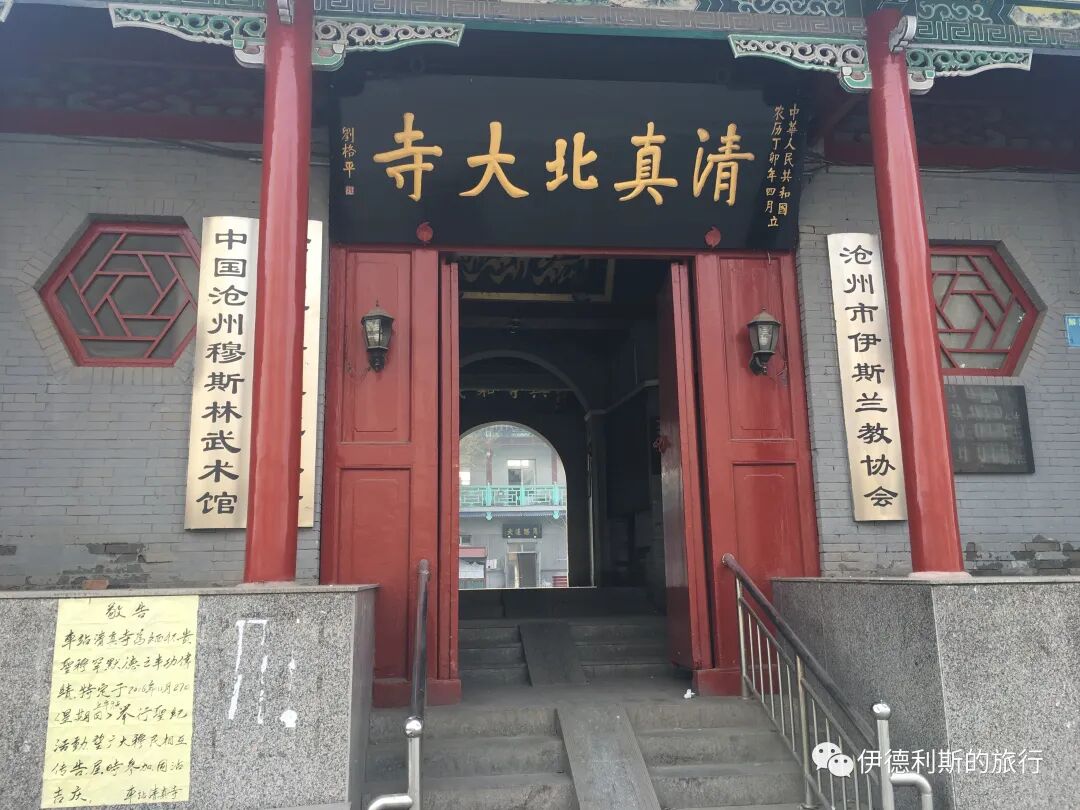
Cangzhou North Great Mosque.
The area south of the city gate was an important passage to the canal. Most Hui Muslim artisans and small vendors chose to live there. In 1420, the Cangzhou North Great Mosque was built in the south of the city on land donated by the Wu family ancestor Yongzuo, marking the formal establishment of the Cangzhou Hui Muslim community.
The Fatimah Auntie Festival (Fatumei Gutai Hui), one of the two major festivals and two major gatherings in North China.
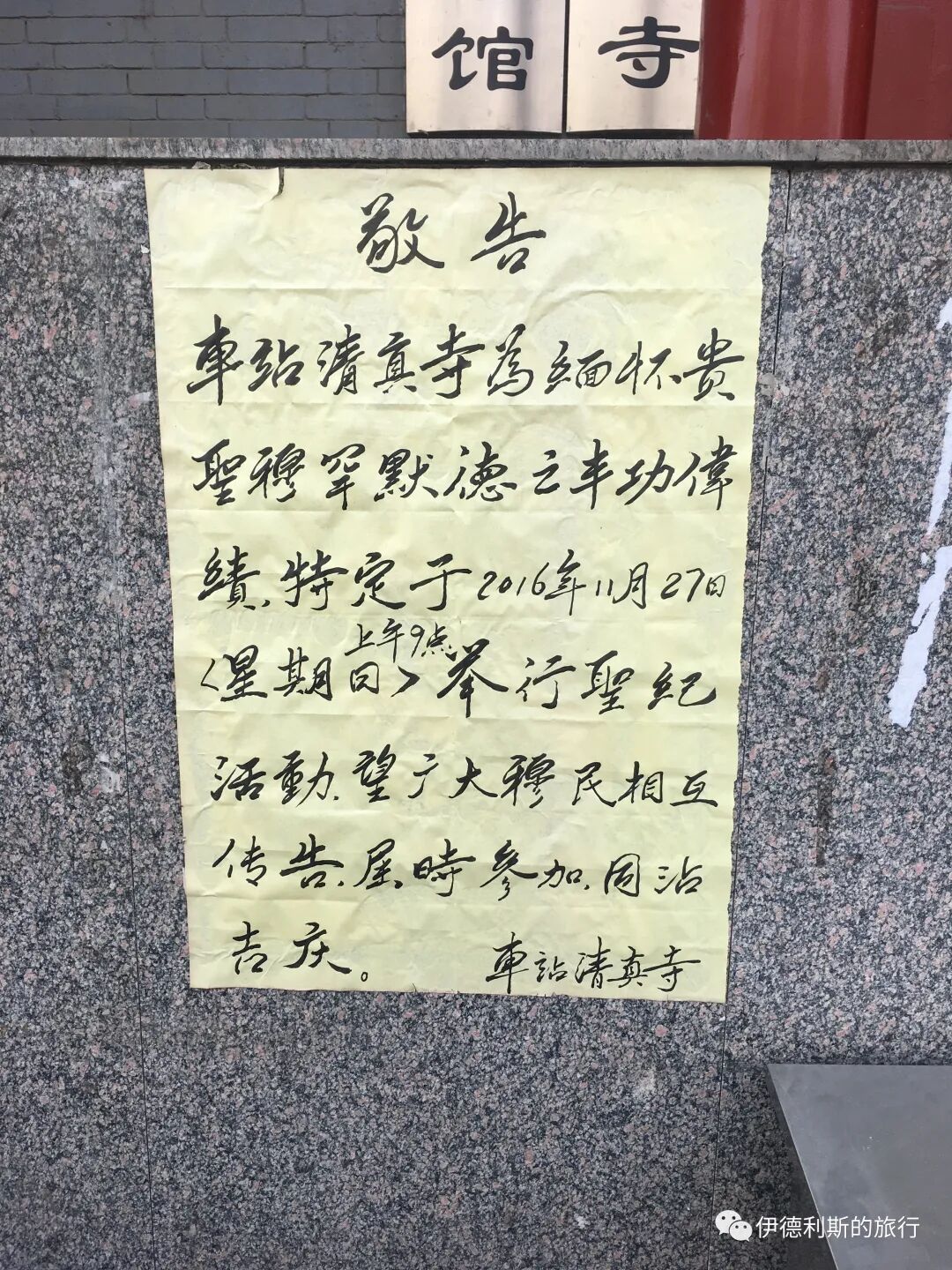
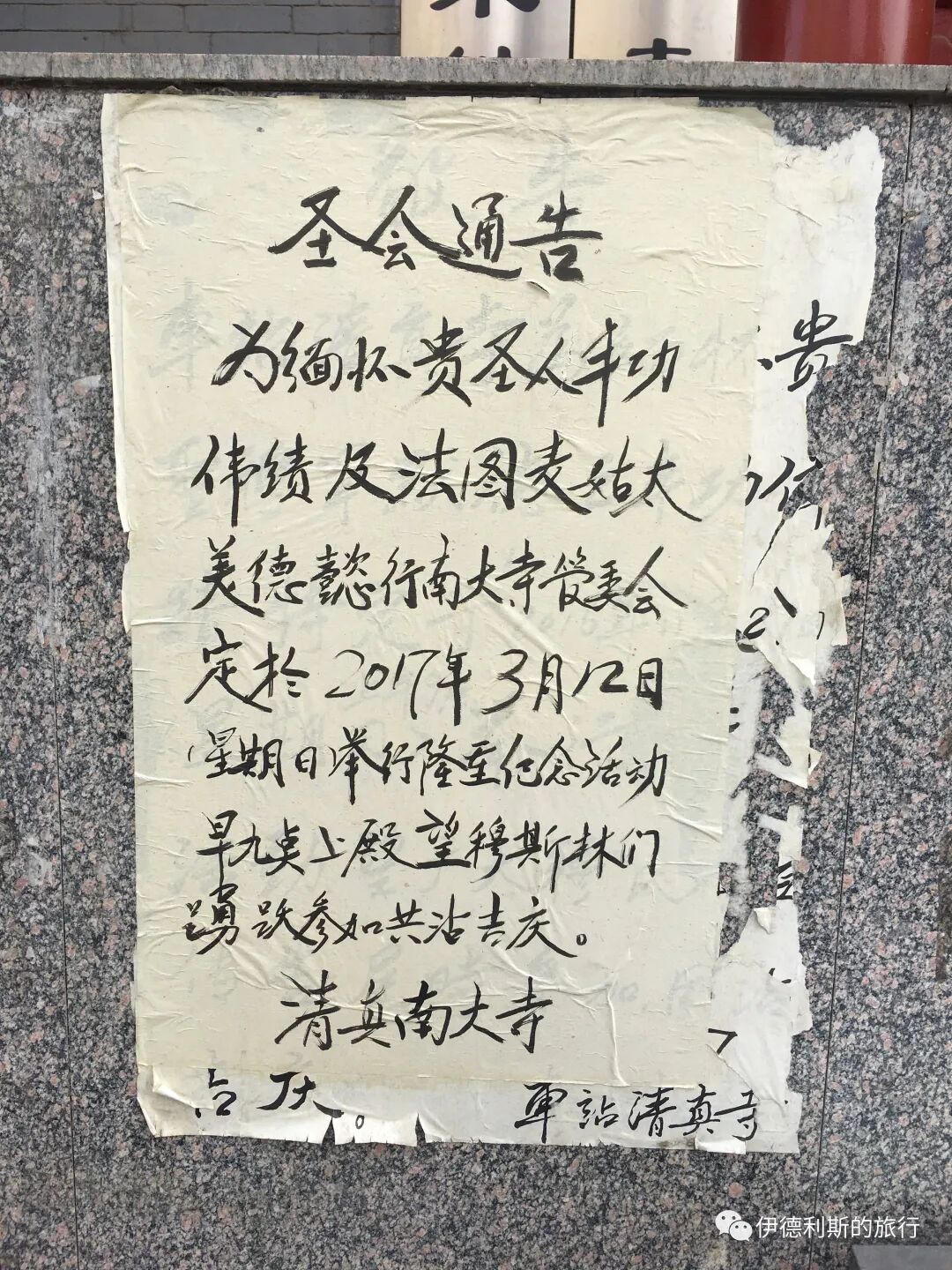
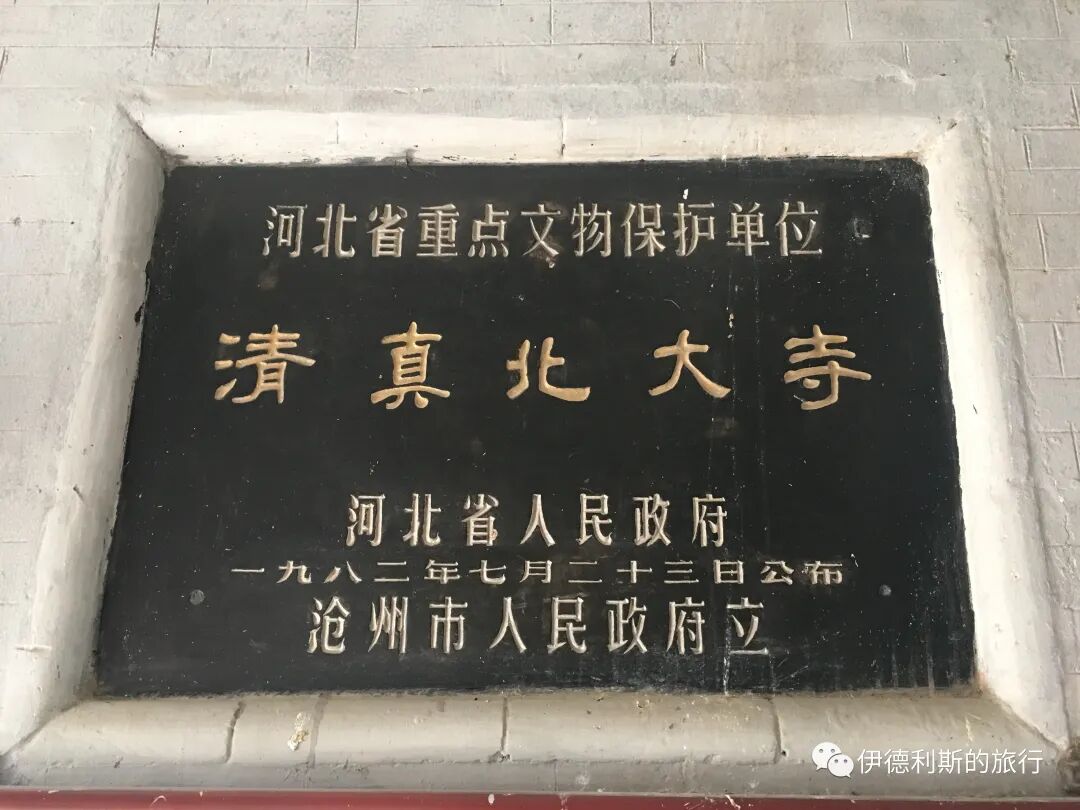
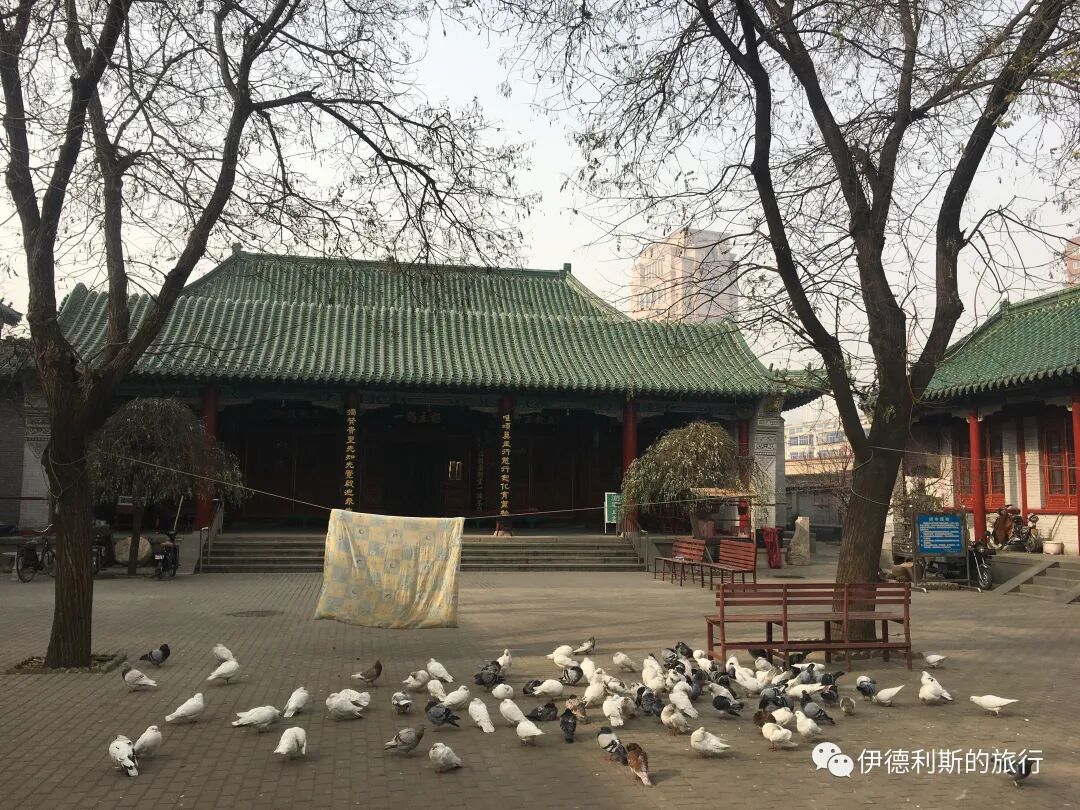
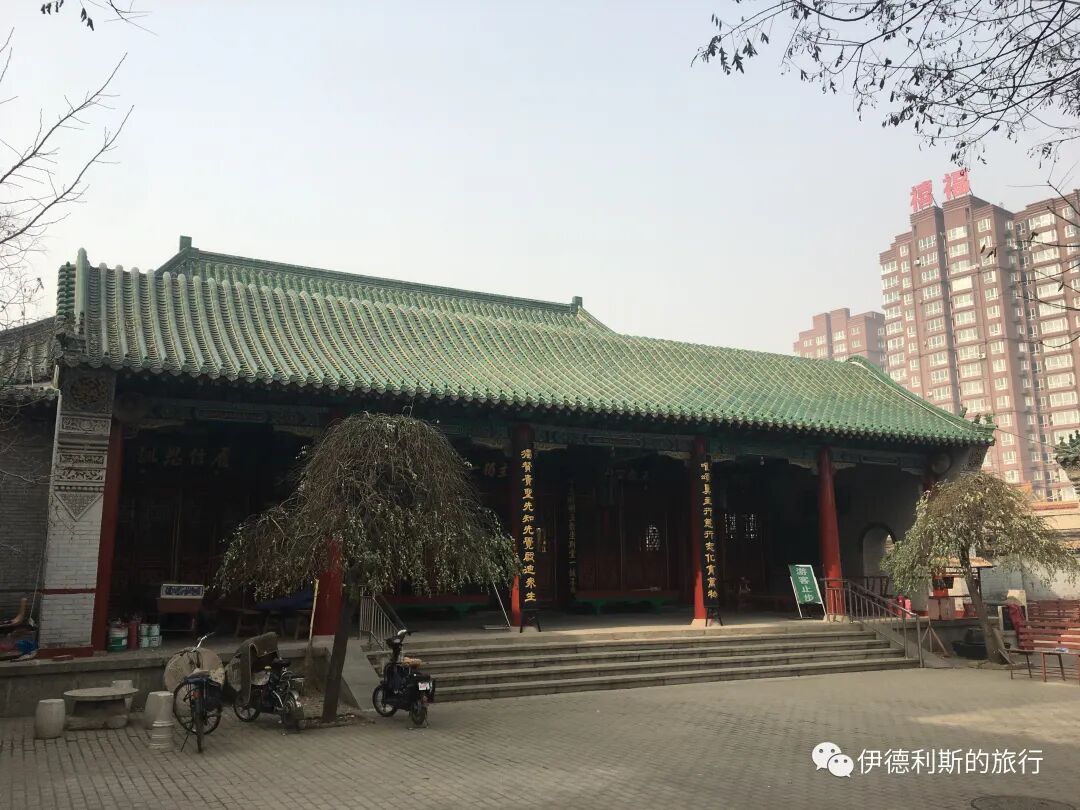
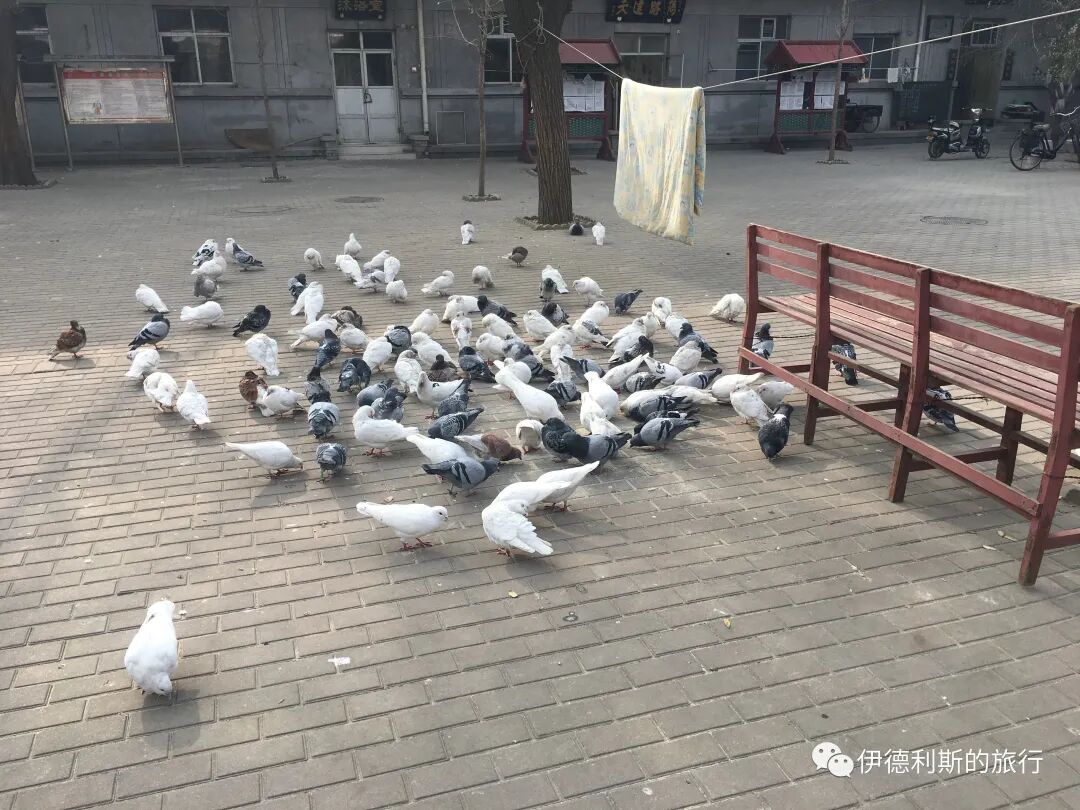
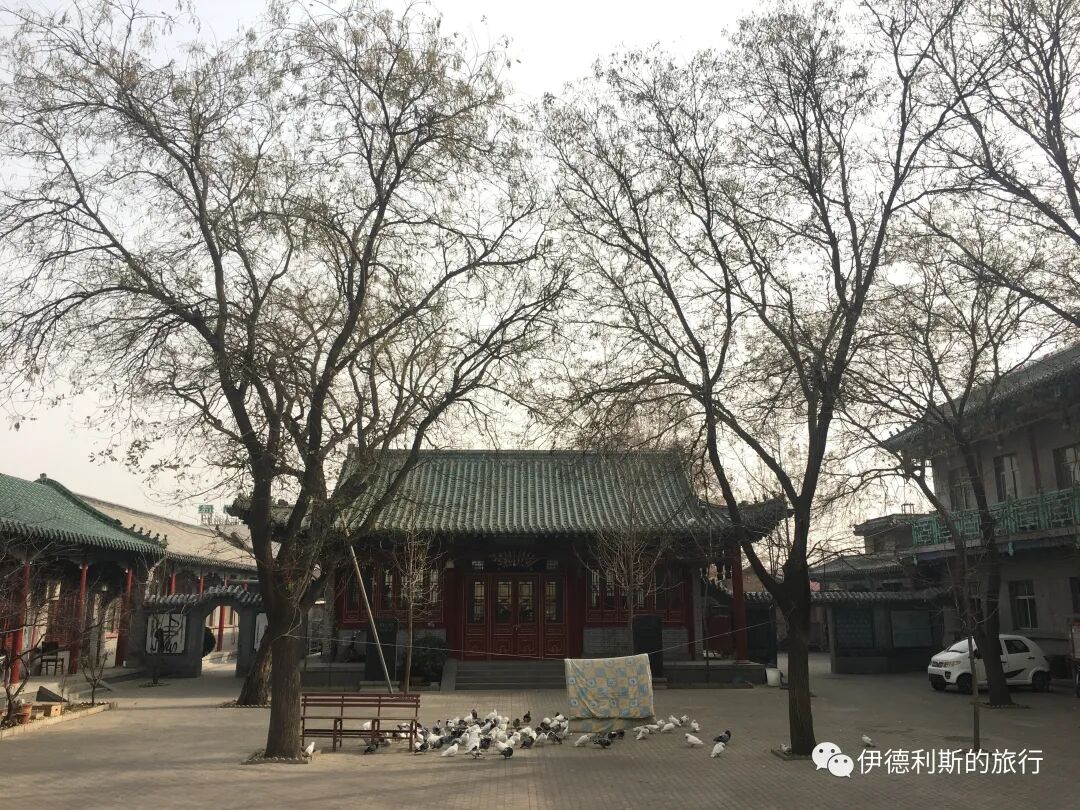
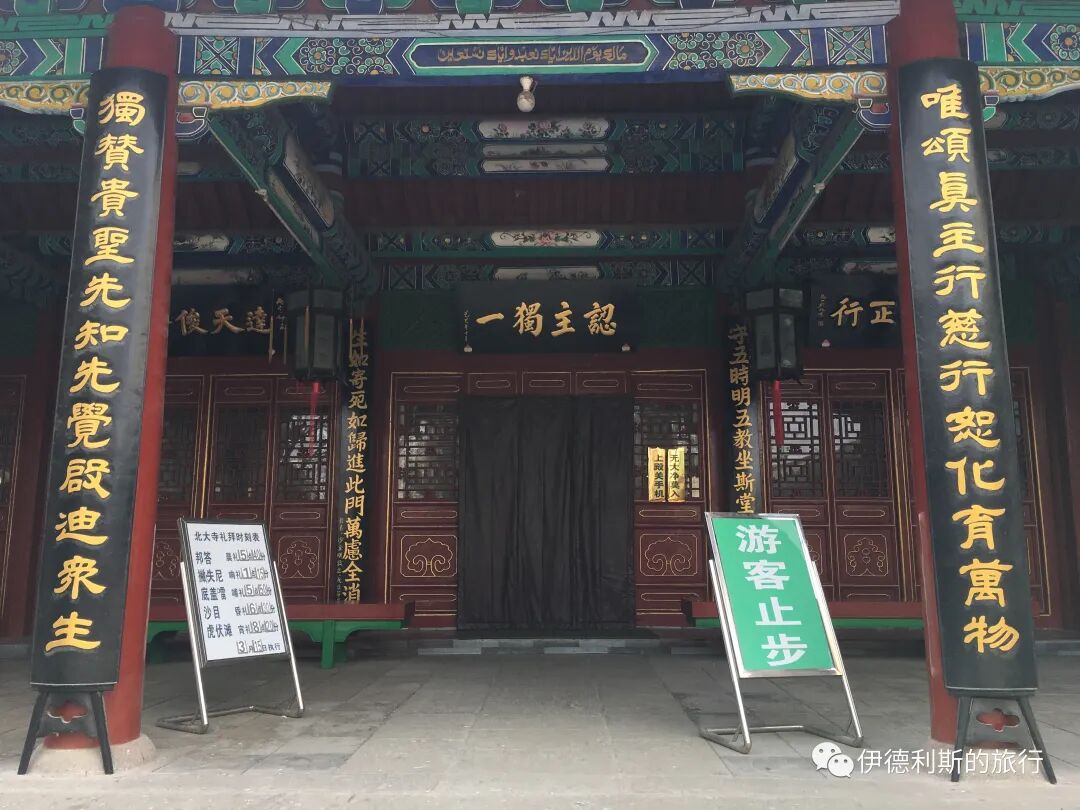
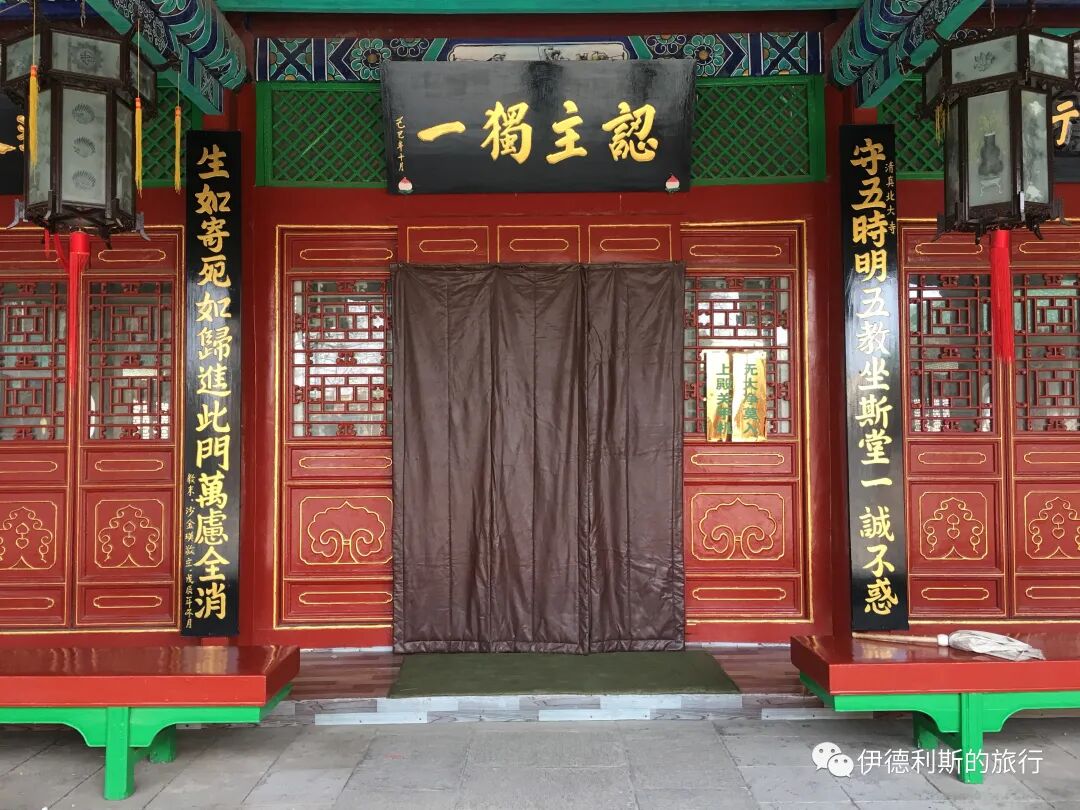
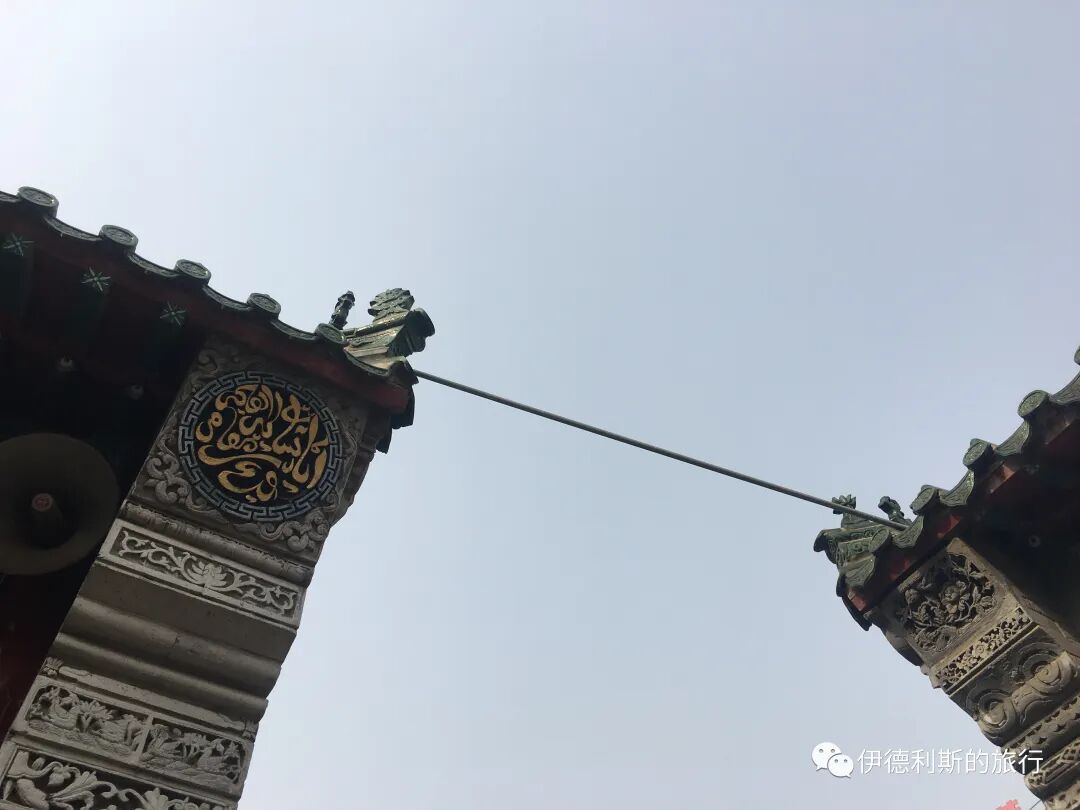
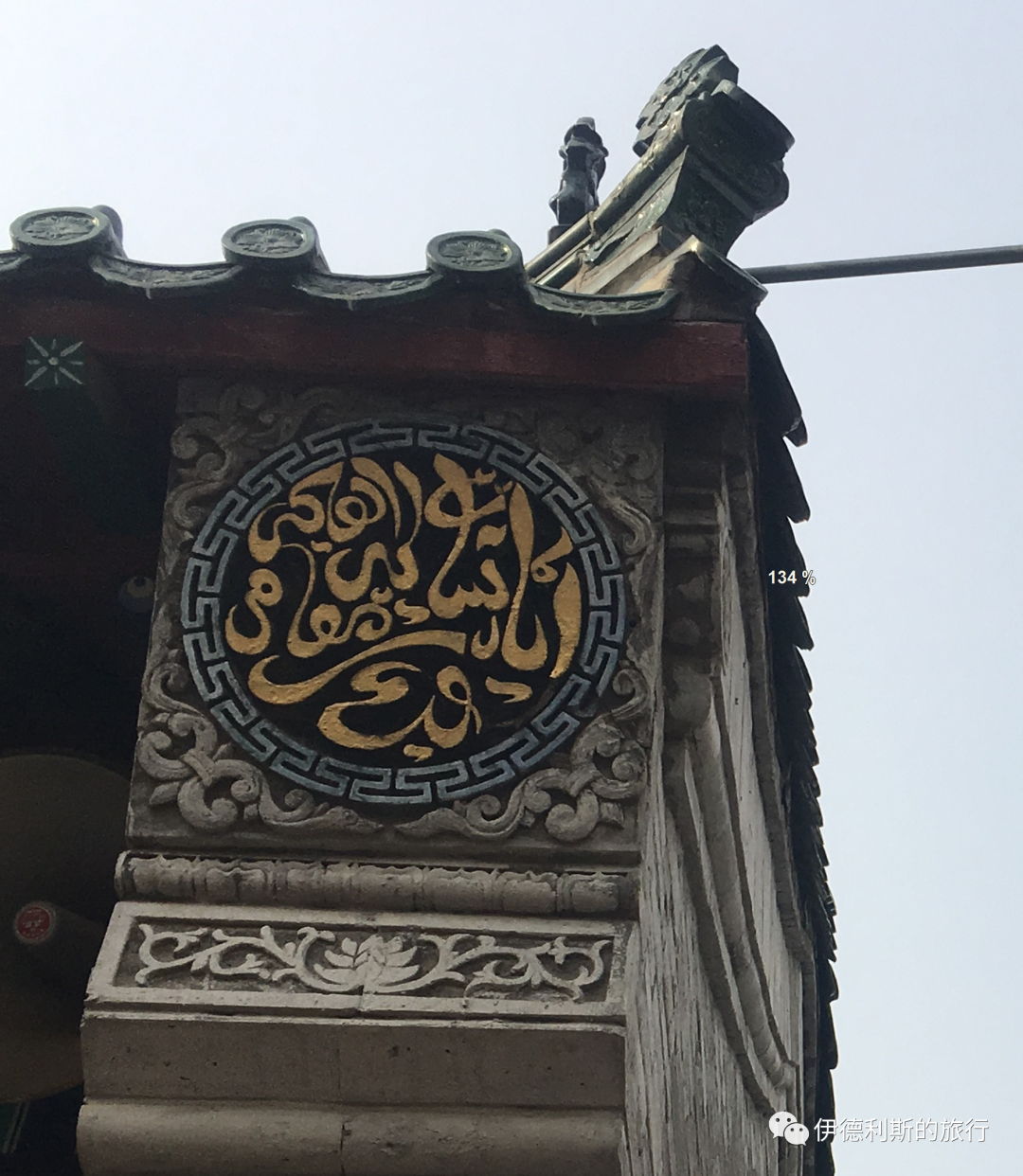
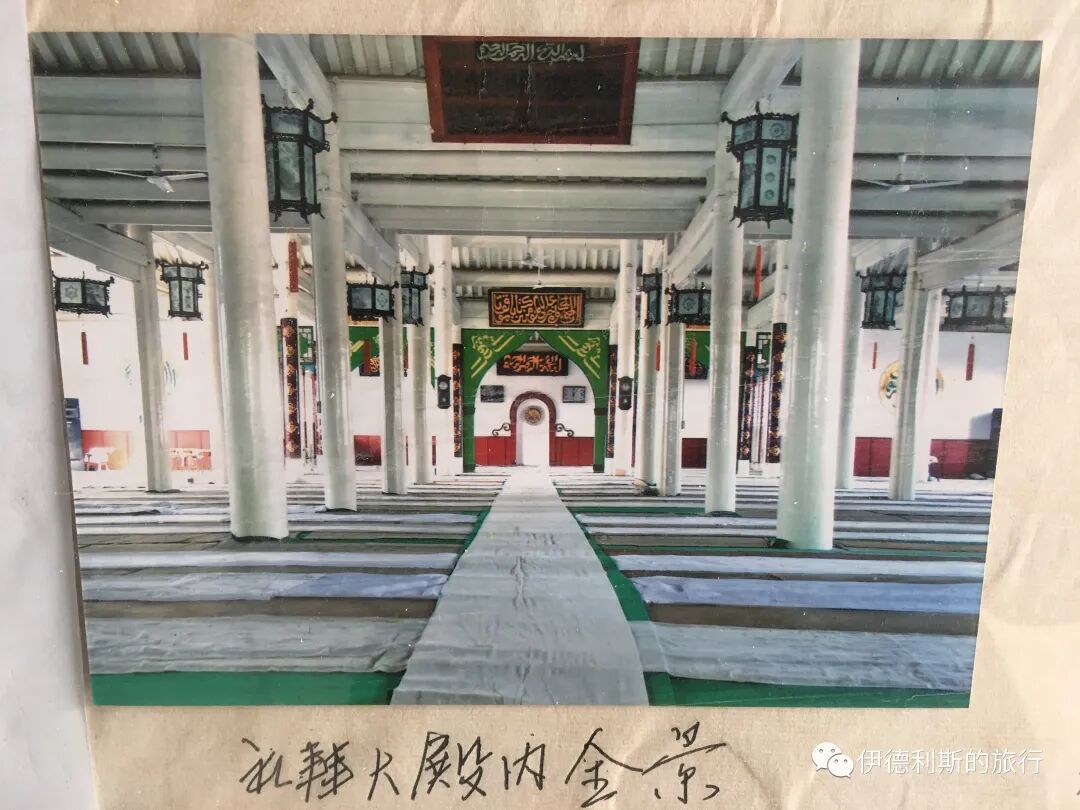
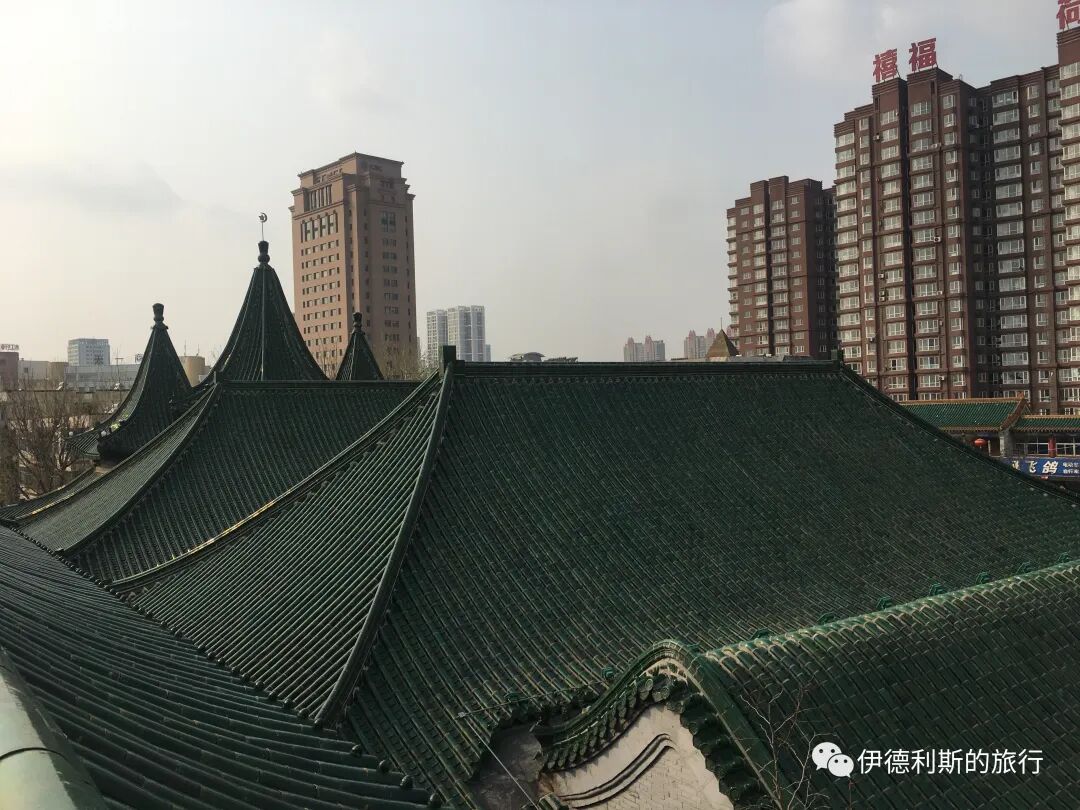
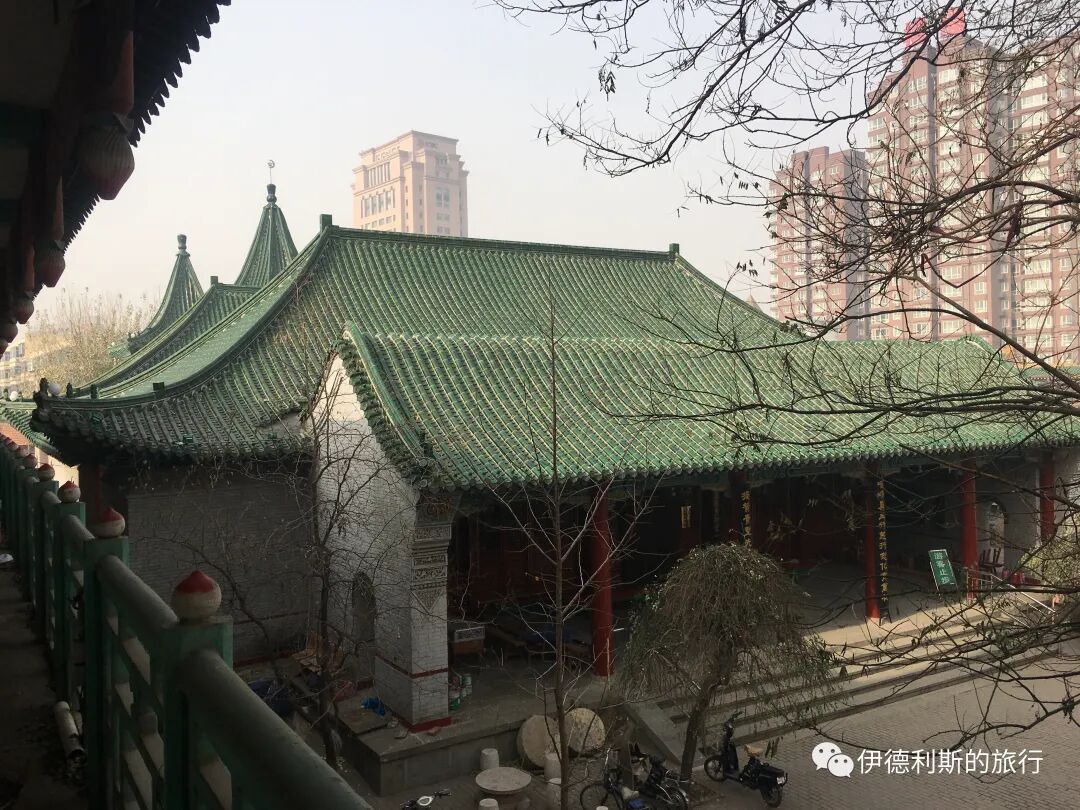
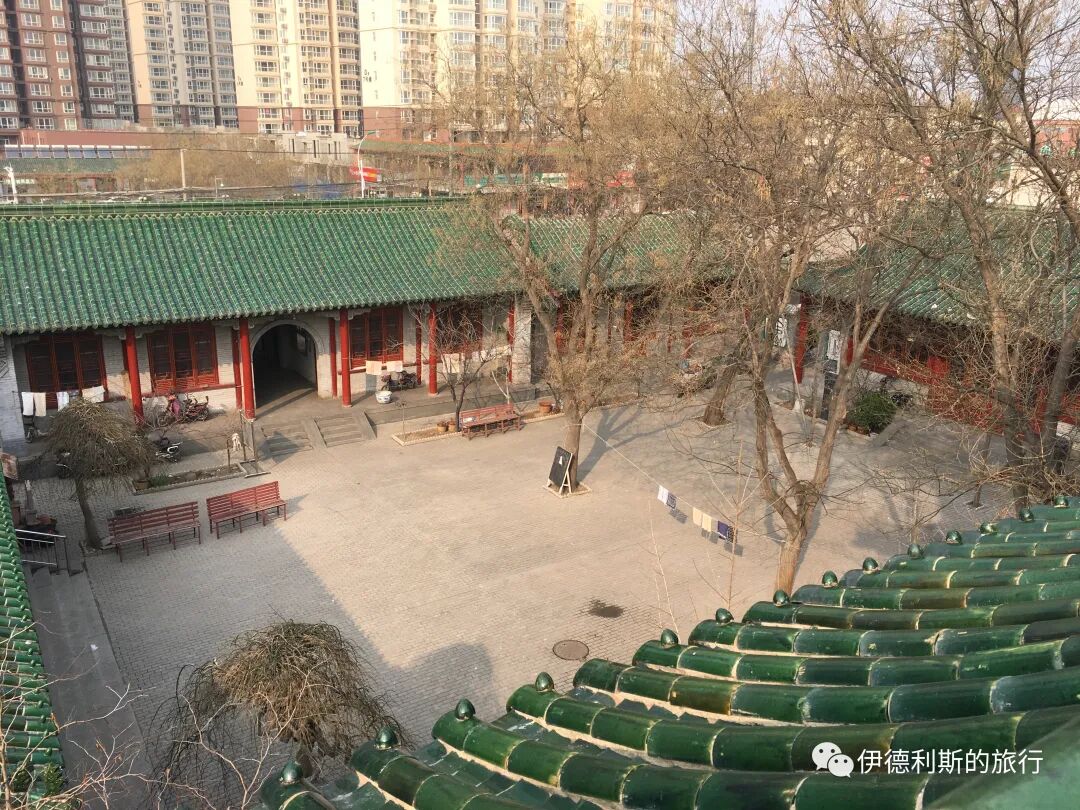
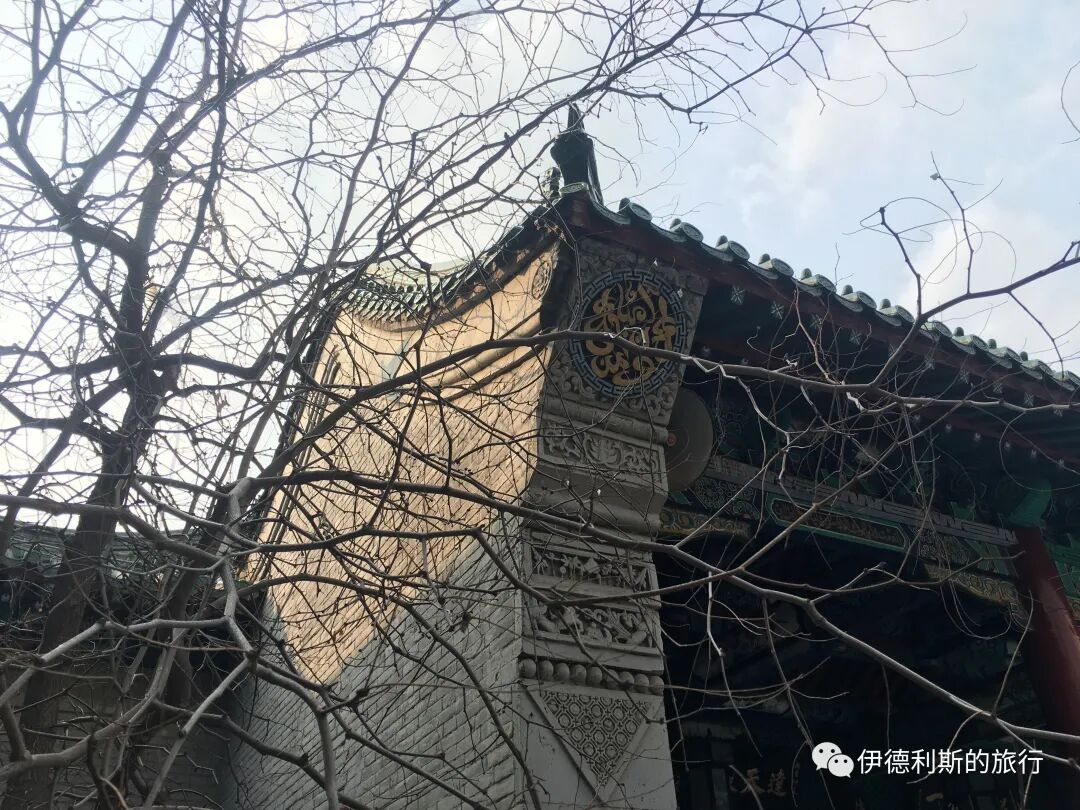
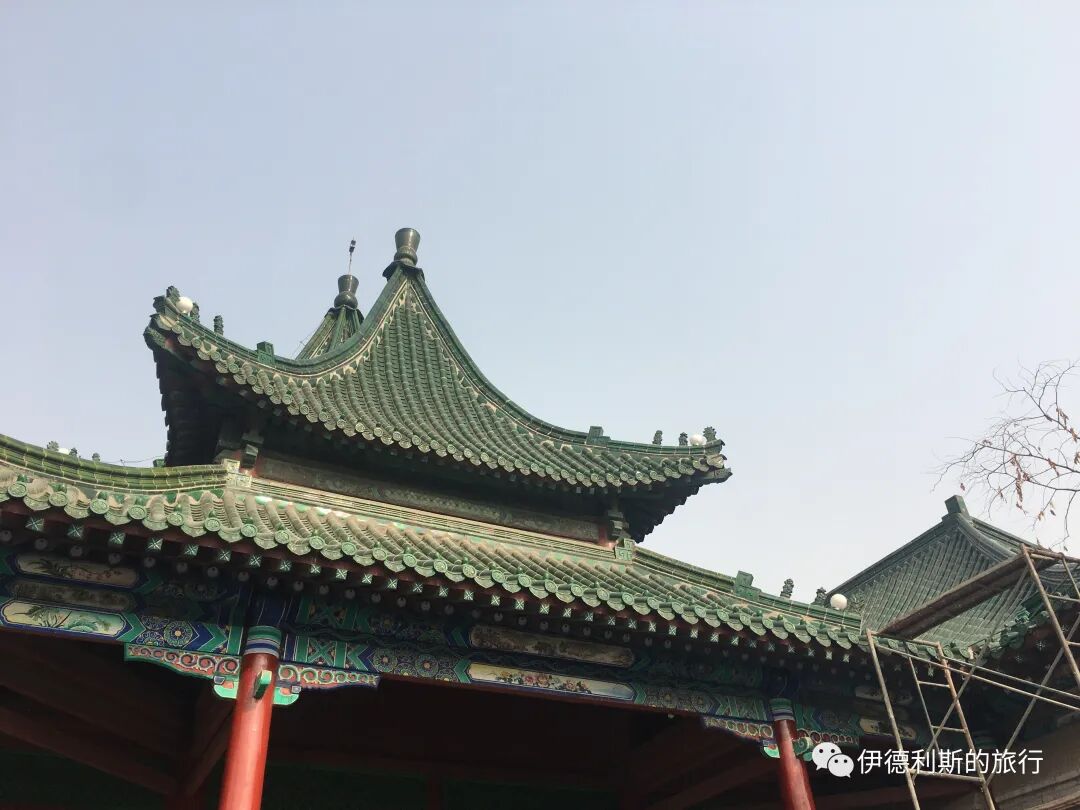
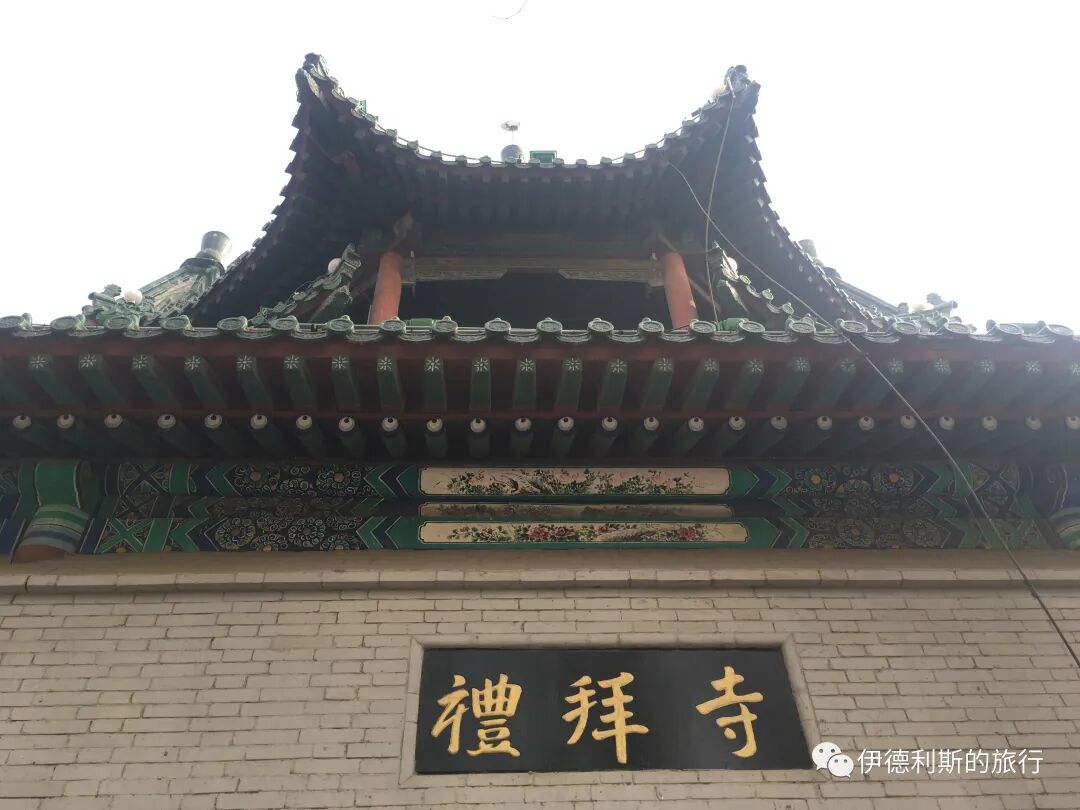
The North Mosque (Beidasi) in Cangzhou is grand, but it was badly damaged in the 1908 earthquake, which caused the main hall to tilt toward the south. Local legend says a famous Cangzhou craftsman named Master Jiang Ba dismantled the four walls of the hall, straightened the structure, and restored it. During the Cultural Revolution, the Cangzhou Instrument Factory took over the North Mosque. They tore down the hall and the south lecture hall, burned historic plaques, smashed the roof of the main hall, and removed the front gate.
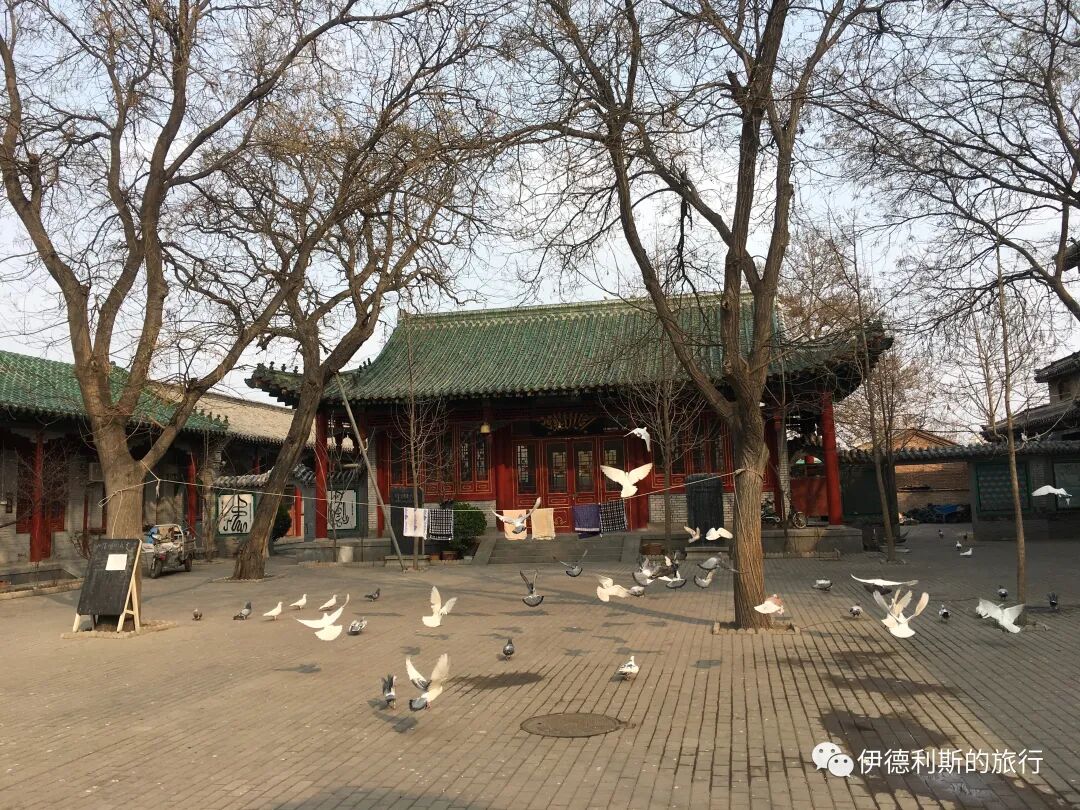
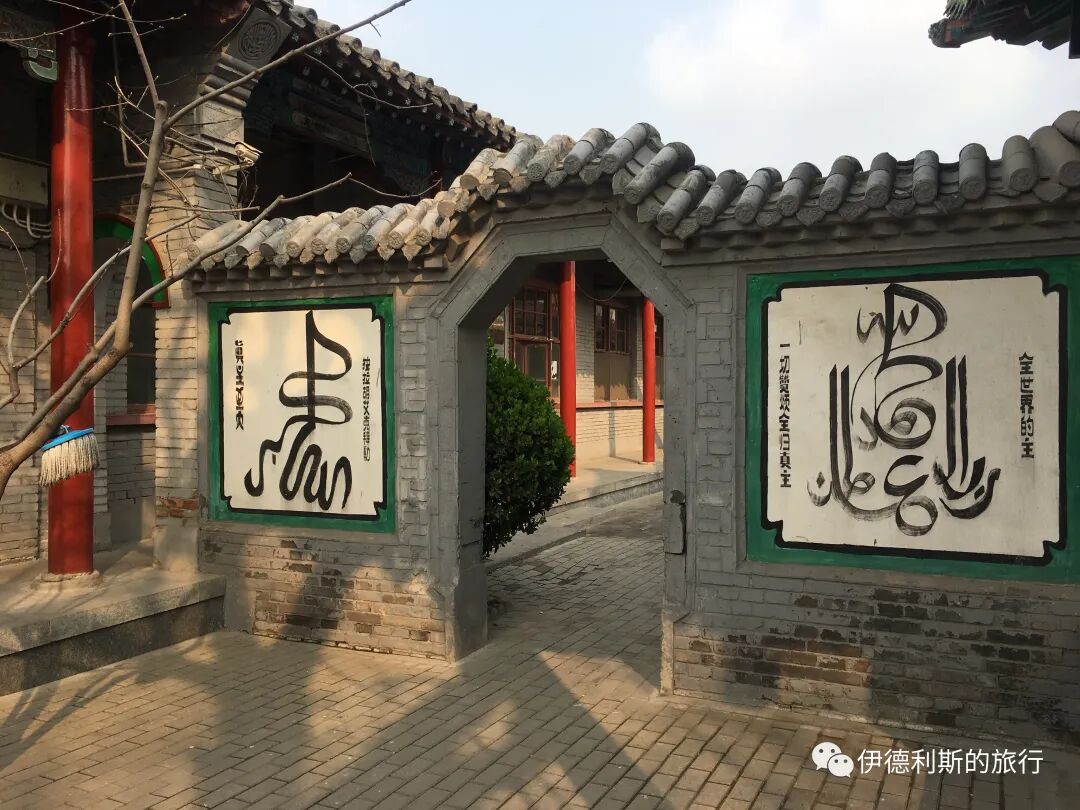
The North Mosque was only fully repaired after the factory moved out in 1989. Its layout changed quite a bit to reach its current form.
Halal food near the North Mosque
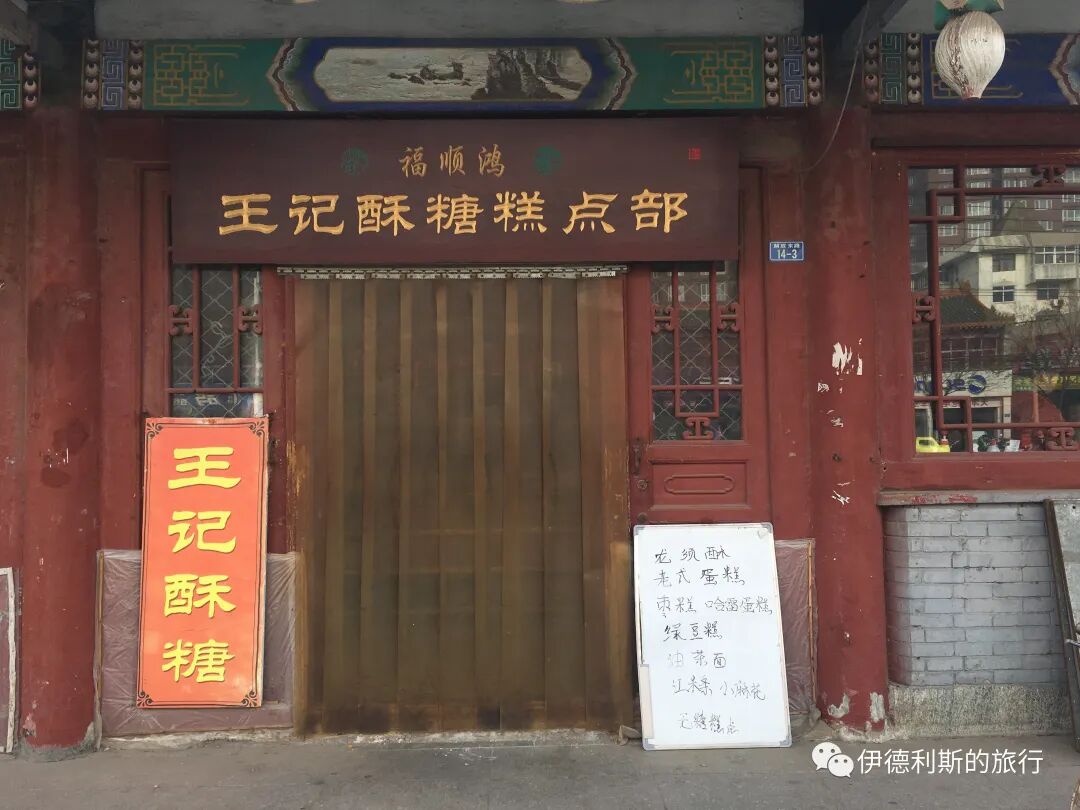
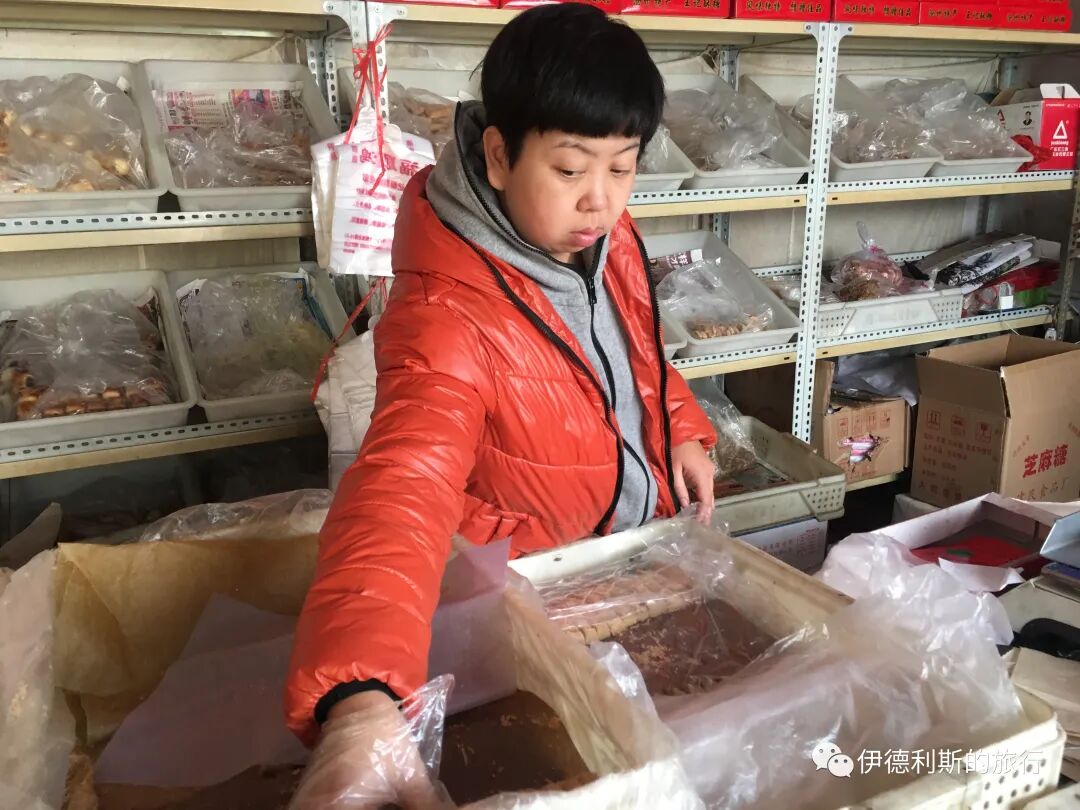
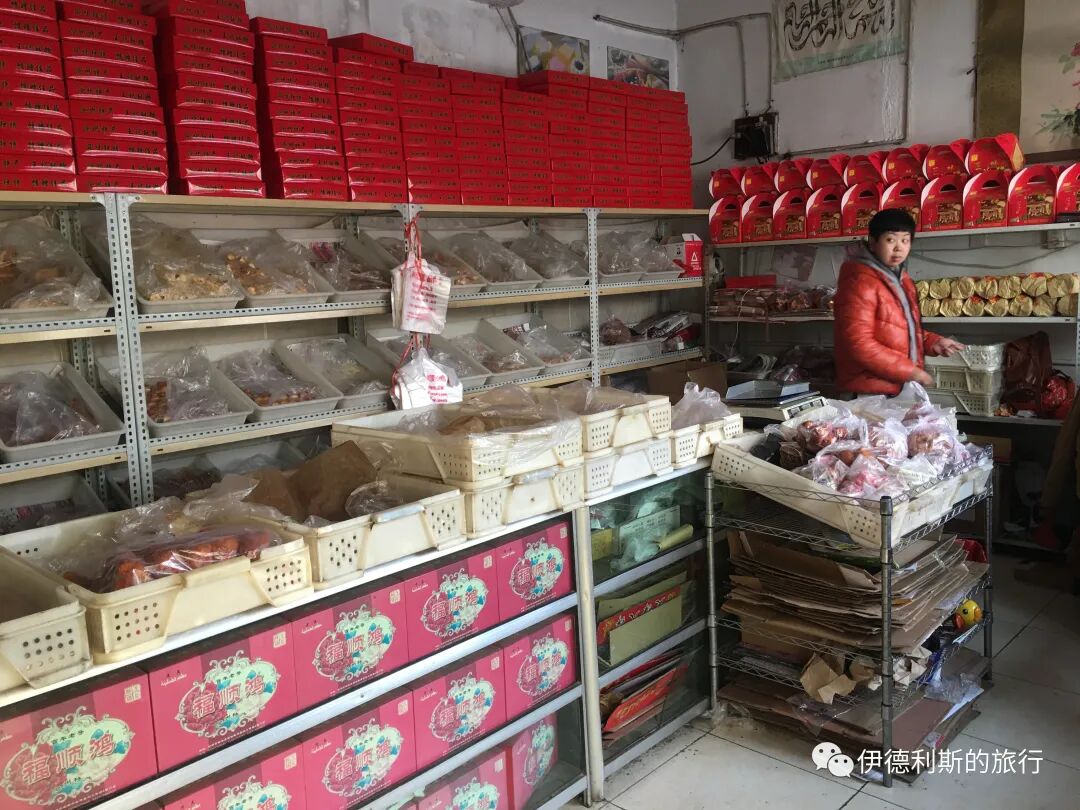
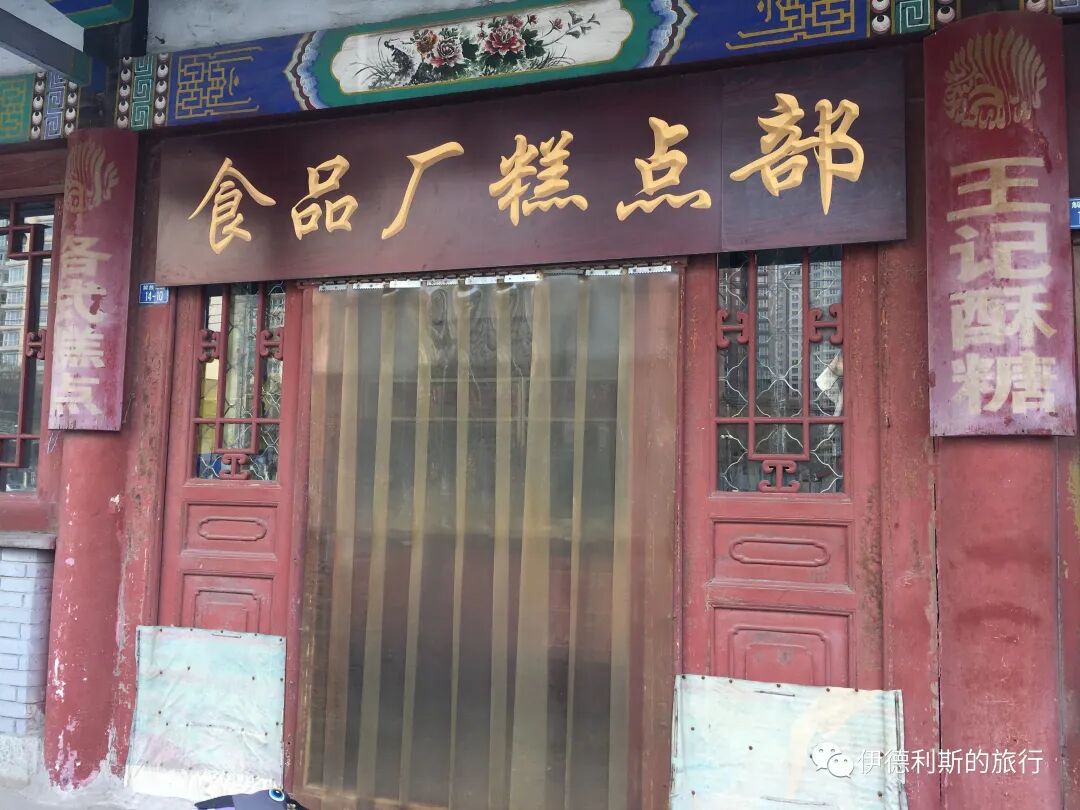
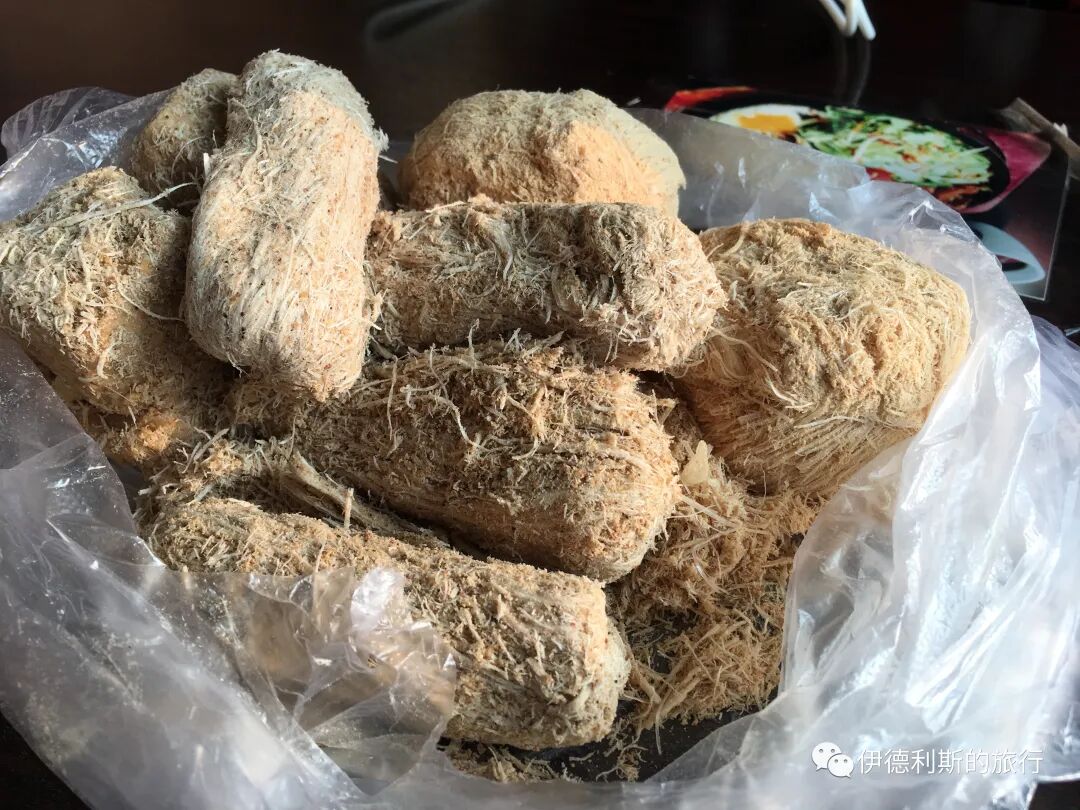
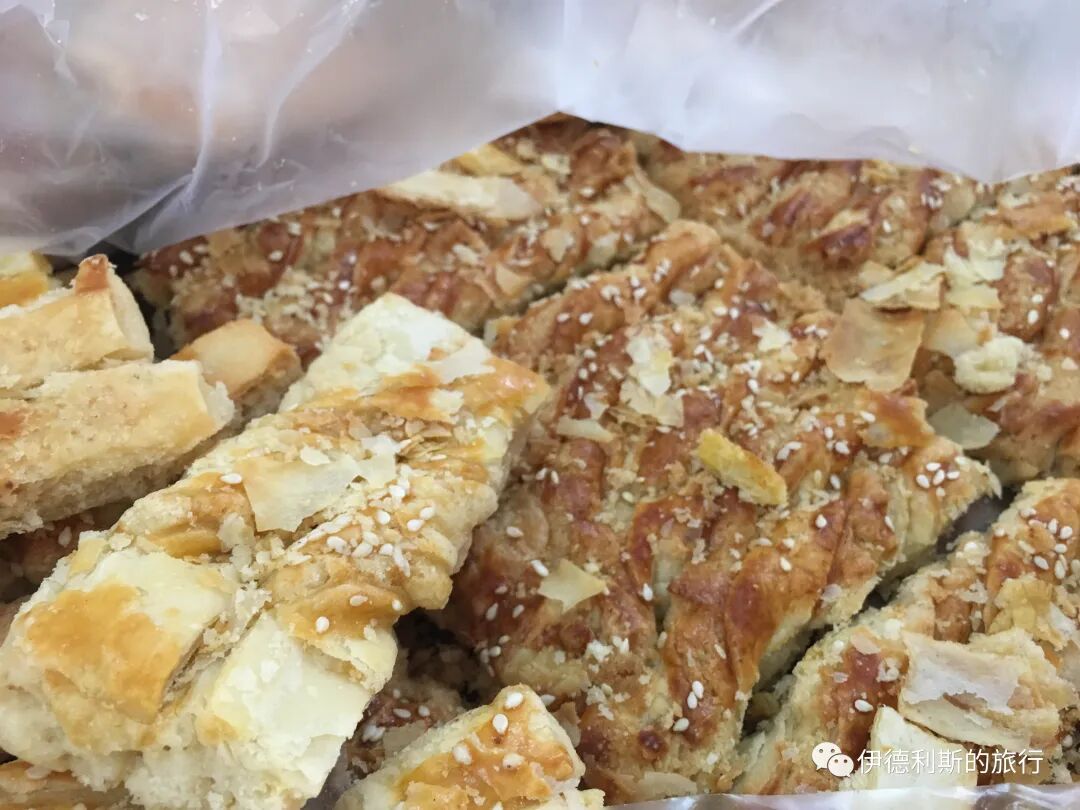
There are many small shops on both sides of the North Mosque gate. I bought some local specialty crispy candy (sutang) at the Wangji Crispy Candy and Pastry Shop. I only got to eat this during the Chinese New Year when I was a kid, so it brings back many memories.
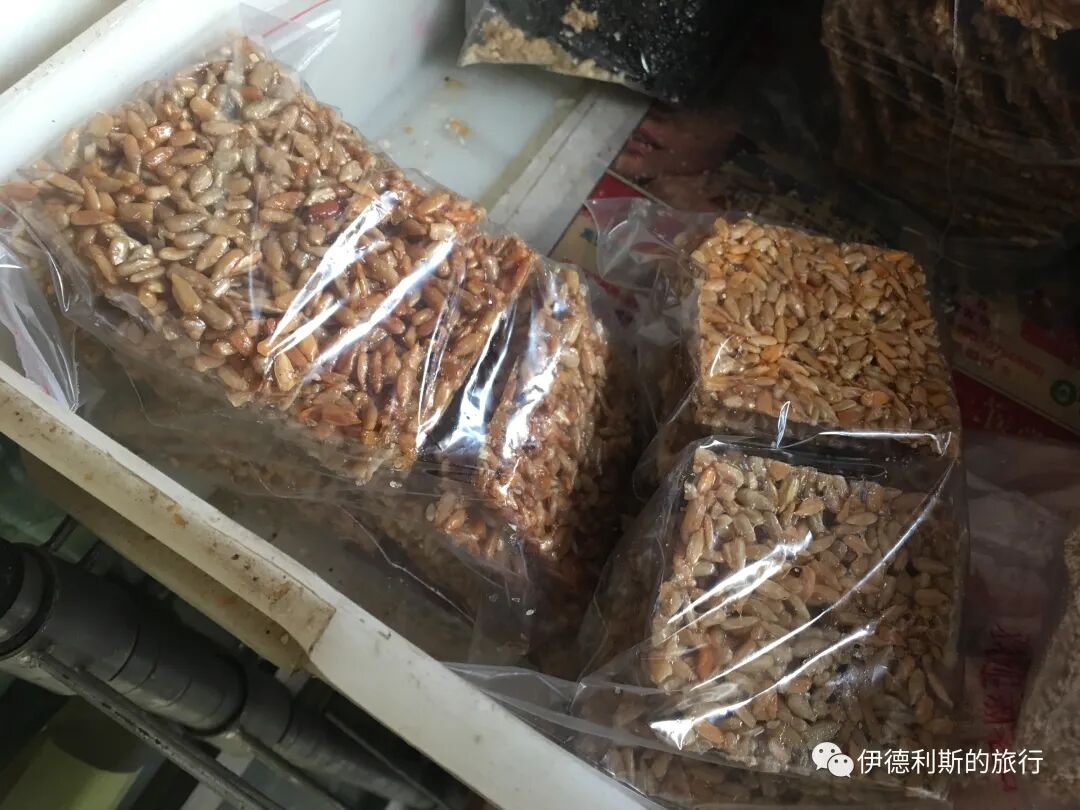
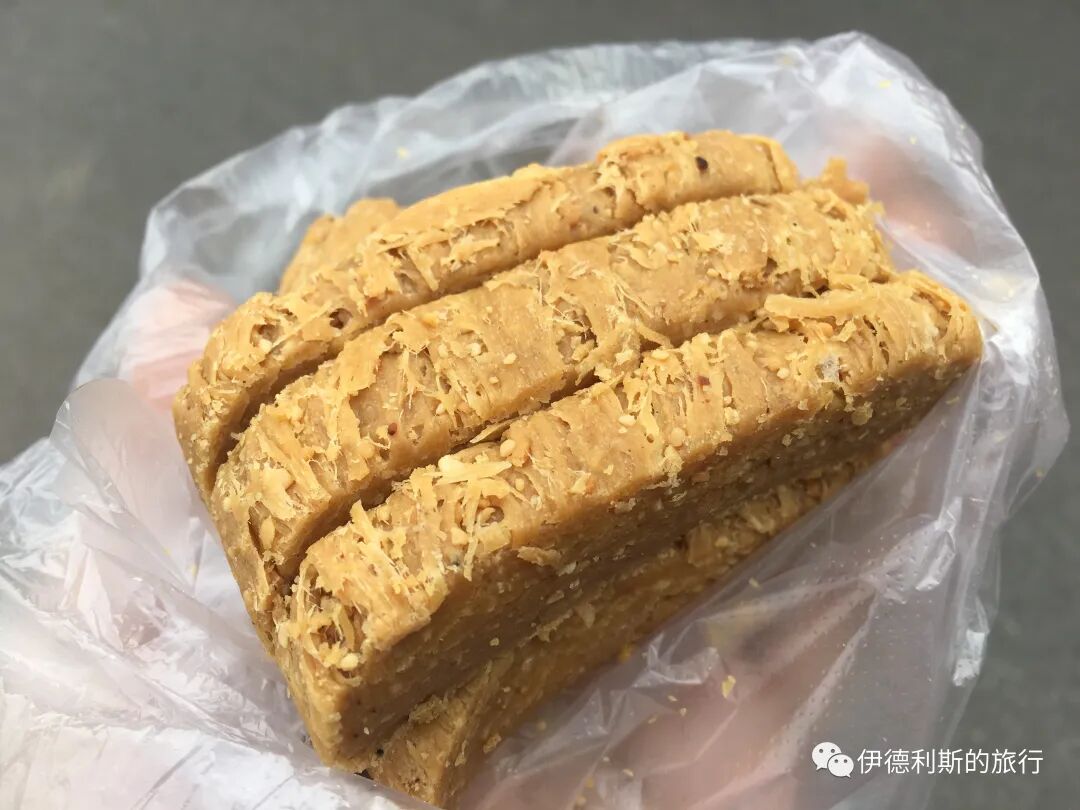
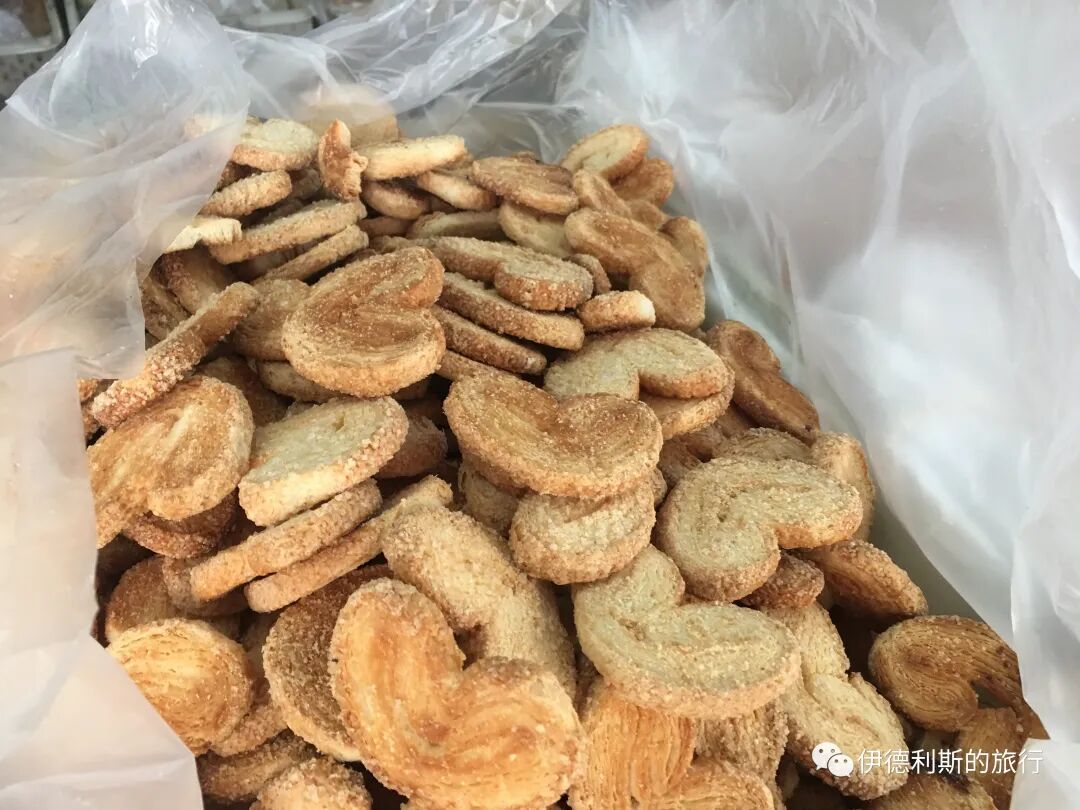
Horseshoe-shaped crispy pastry (matisu) bought at the pastry department of the Cangzhou Halal Food Factory.
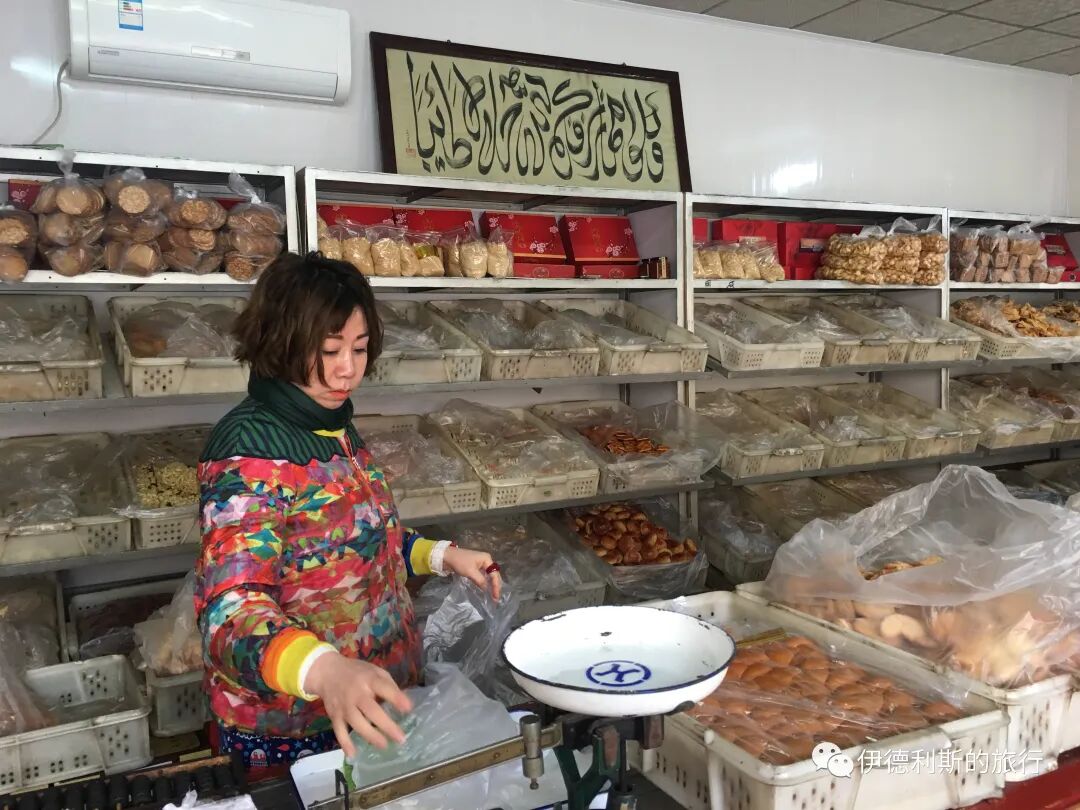
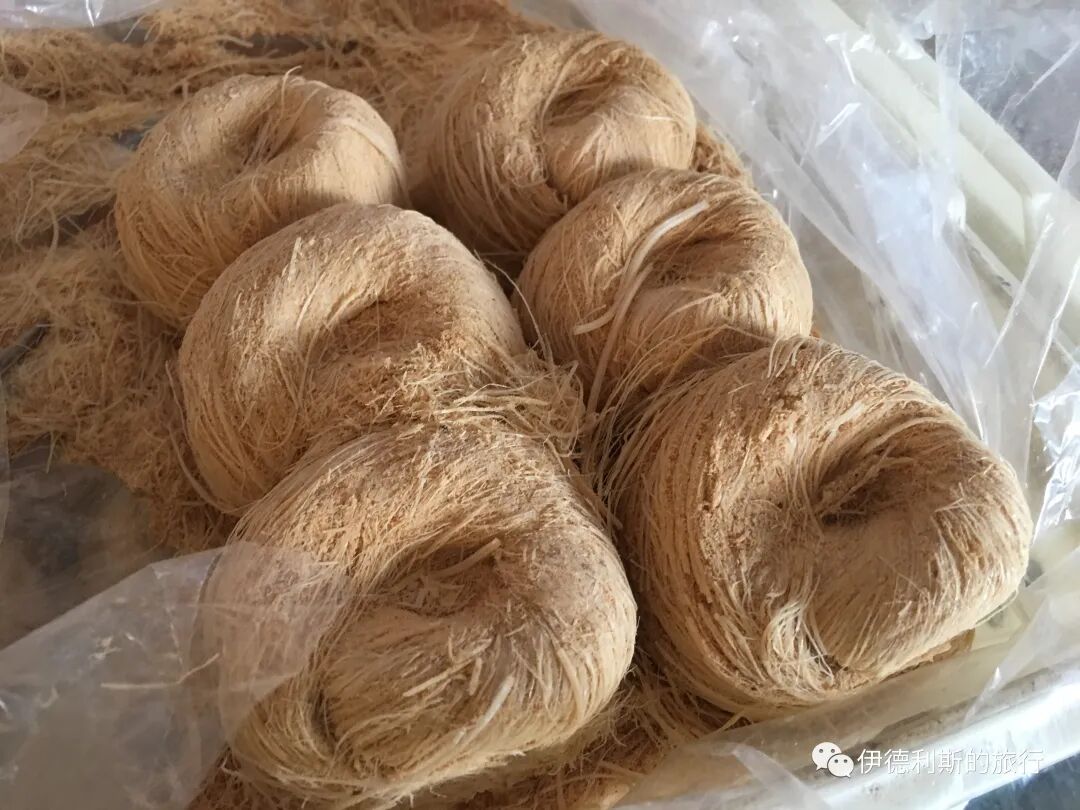
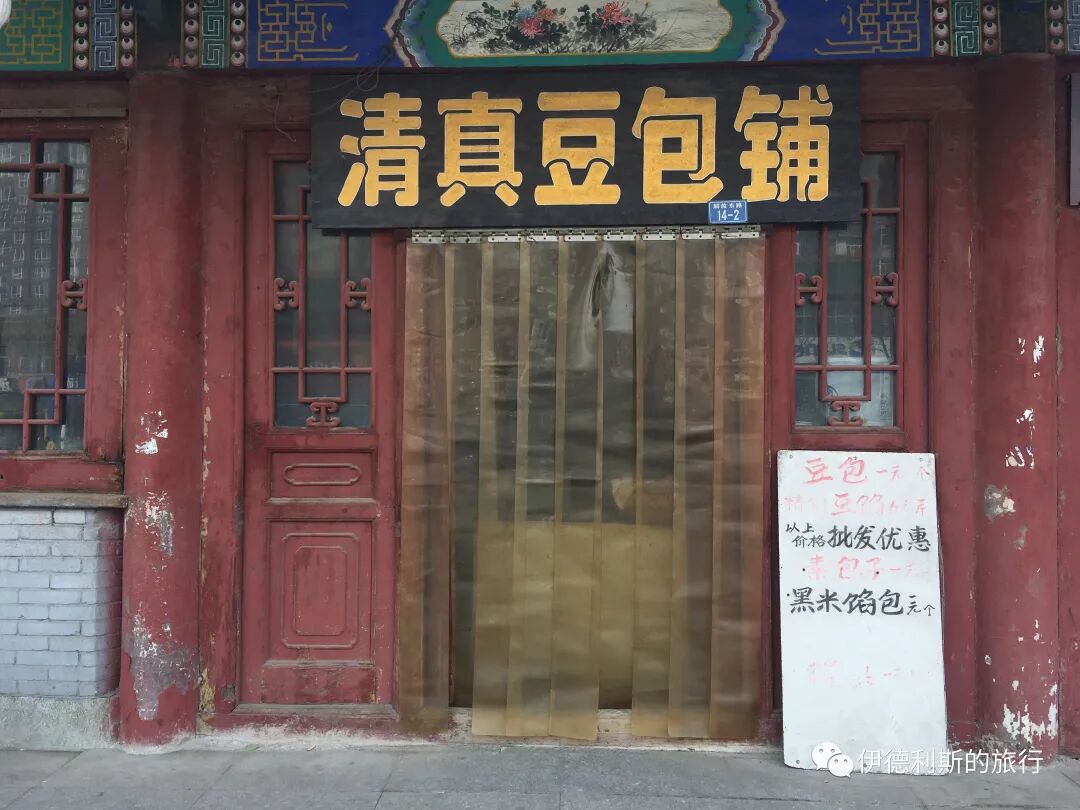
The halal red bean buns (doubao) next to the North Mosque are delicious. I bought a bunch both times I visited.
Women's Mosque (Qingzhen Nüsi)
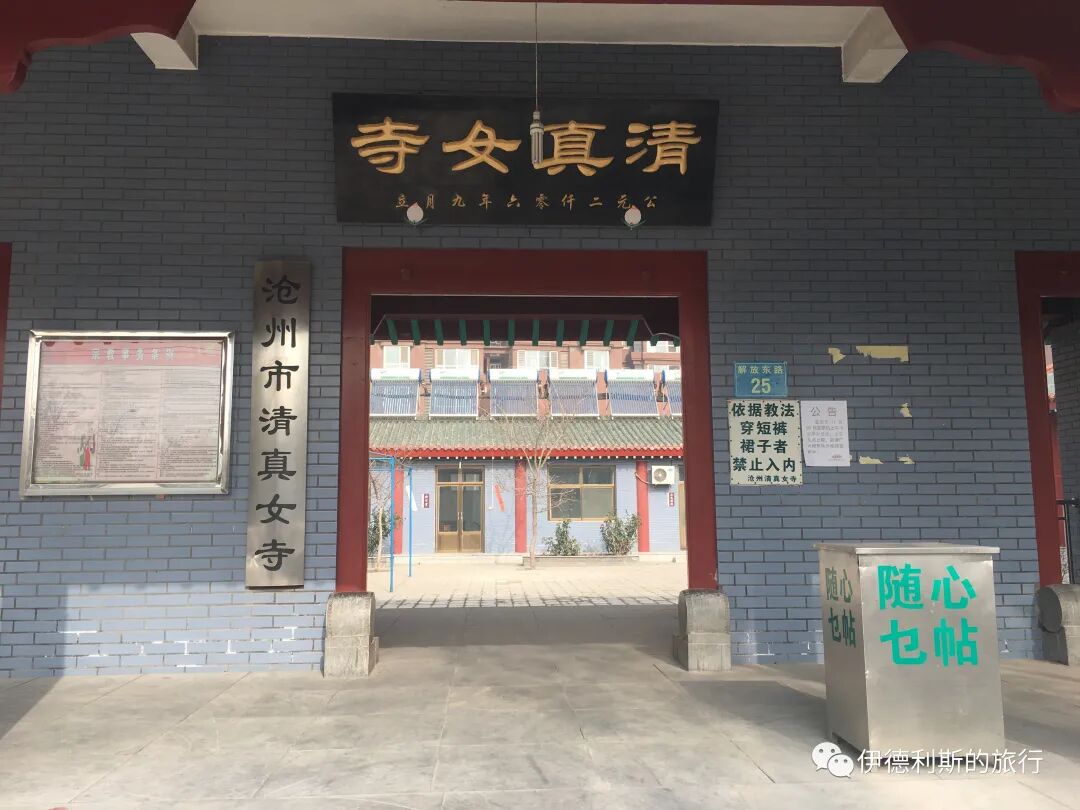
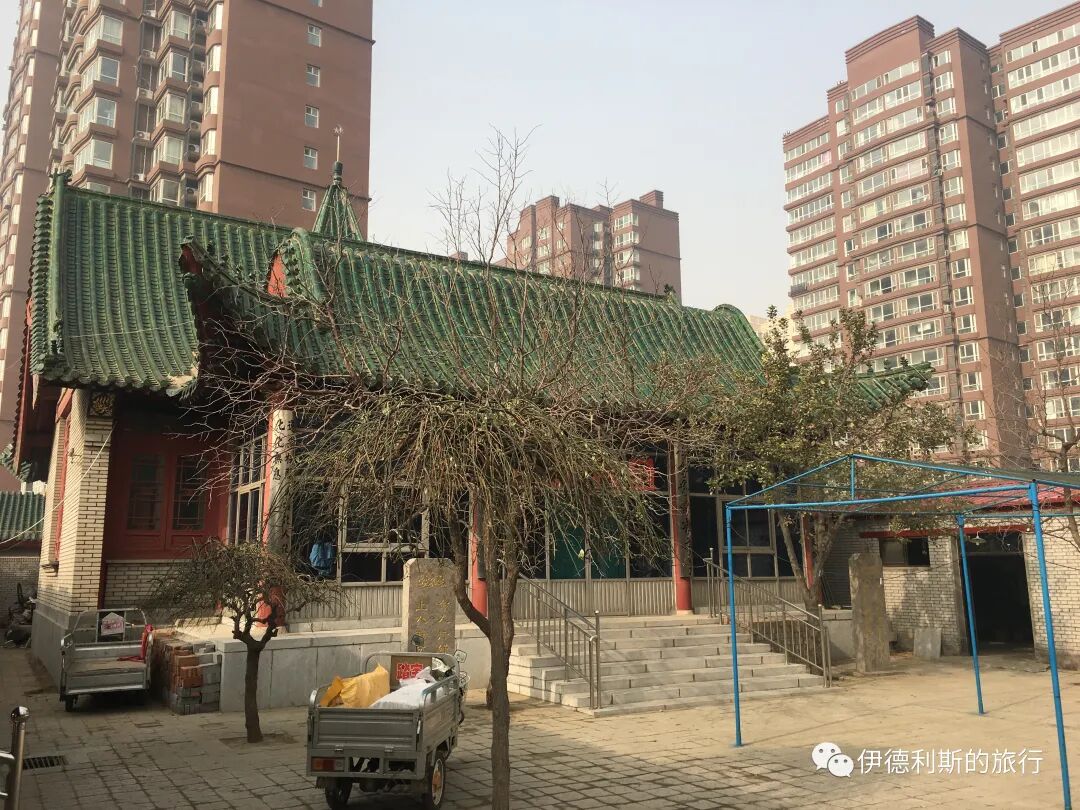
Across from the North Mosque is the Women's Mosque, which was first built in 1666 (the fifth year of the Kangxi reign). The Women's Mosque used to be called the Inner City Mosque (Chengli Qingzhensi), and it was separated from the North Mosque by the south city wall of Cangzhou. The Inner City Mosque faced a similar fate to the North Mosque, suffering near-total destruction in the 1960s and 70s before being restored in the 1980s. In 1986, the Inner City Mosque became the Women's Mosque. It was rebuilt in 1993 to look the way it does today.
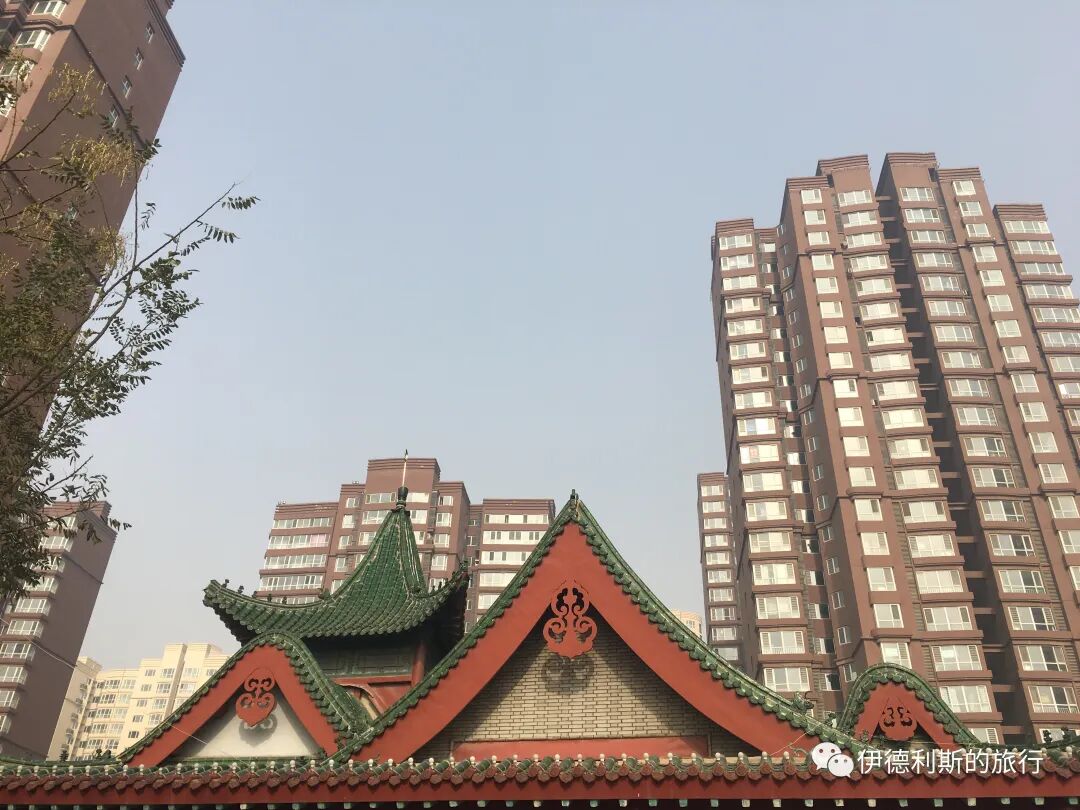
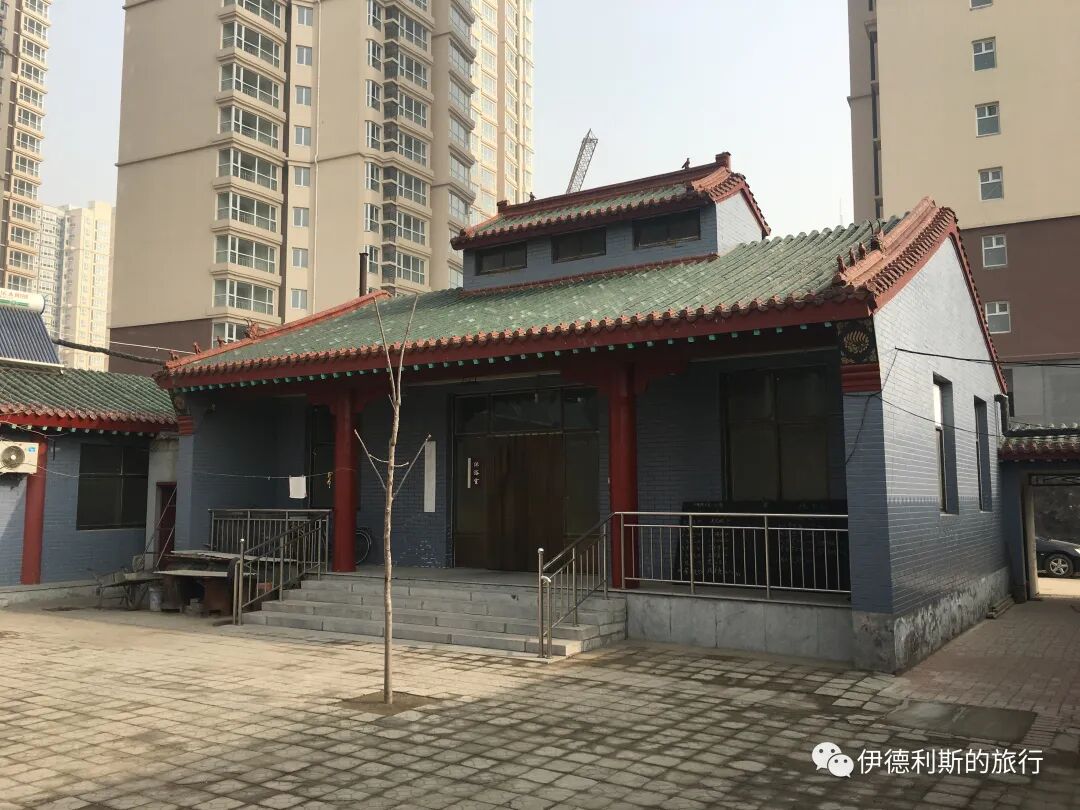
The Hui Muslim district in the south of Cangzhou city
South of the North Mosque is the Hui Muslim district. Although the houses have been rebuilt, the original street layout remains.
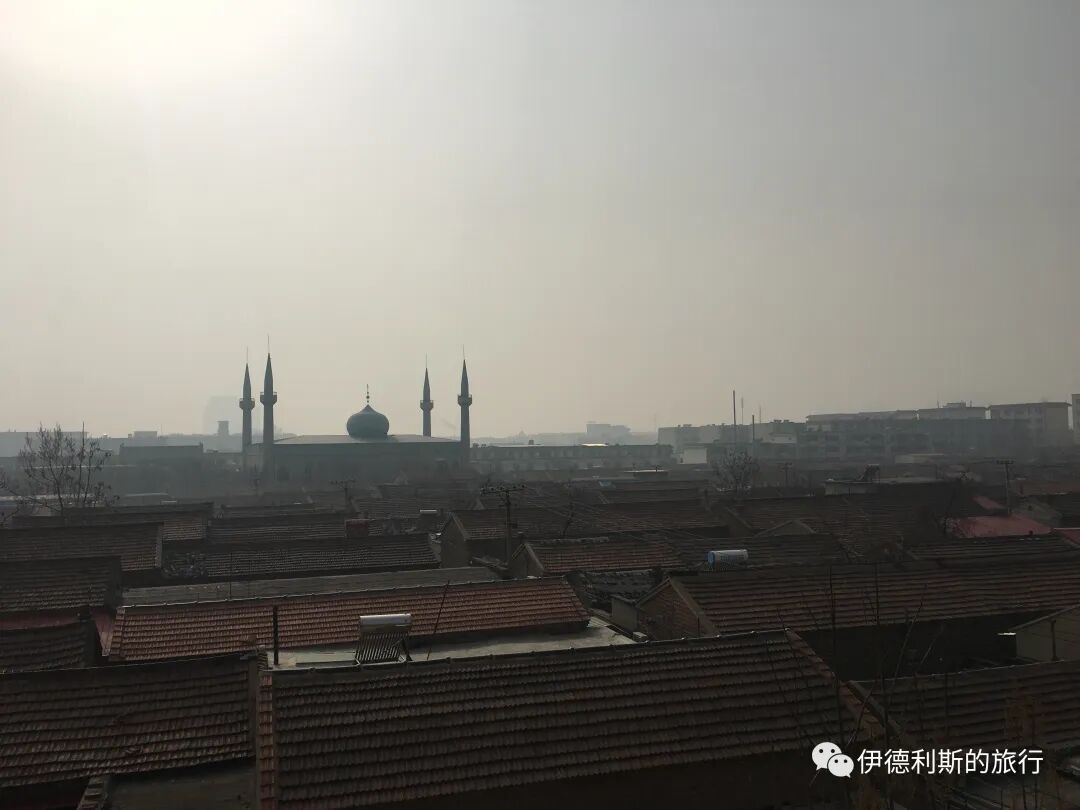
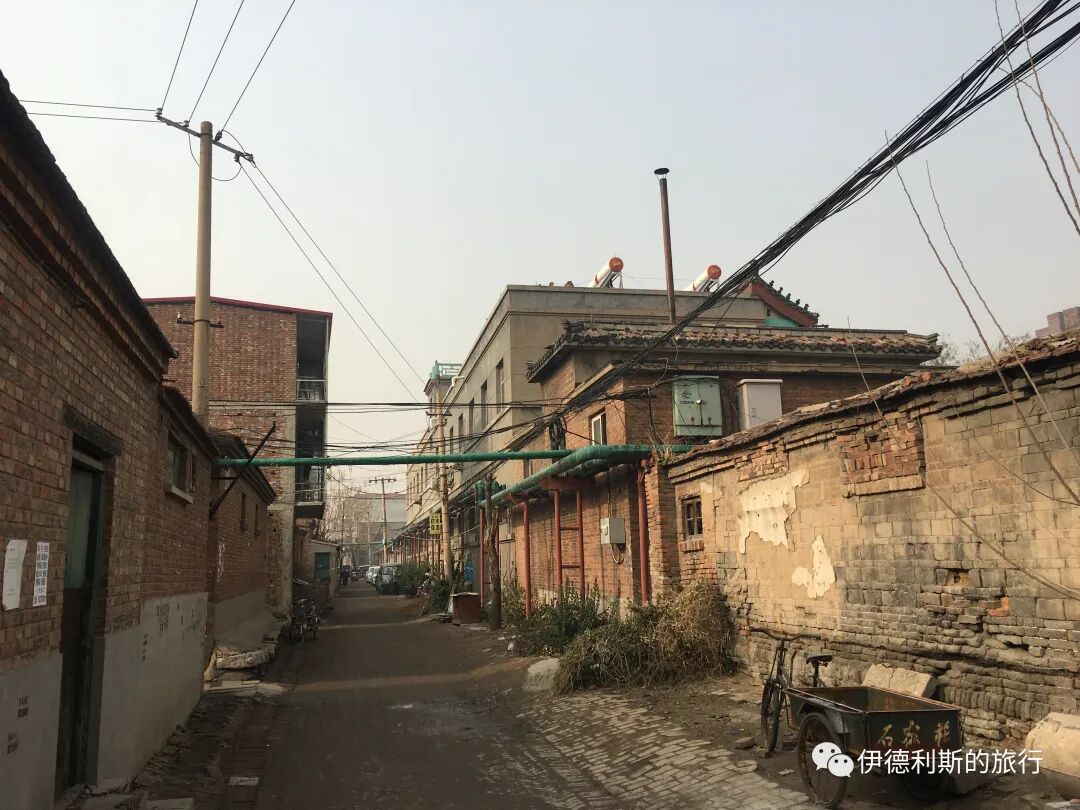
Halal food on Minzu Street
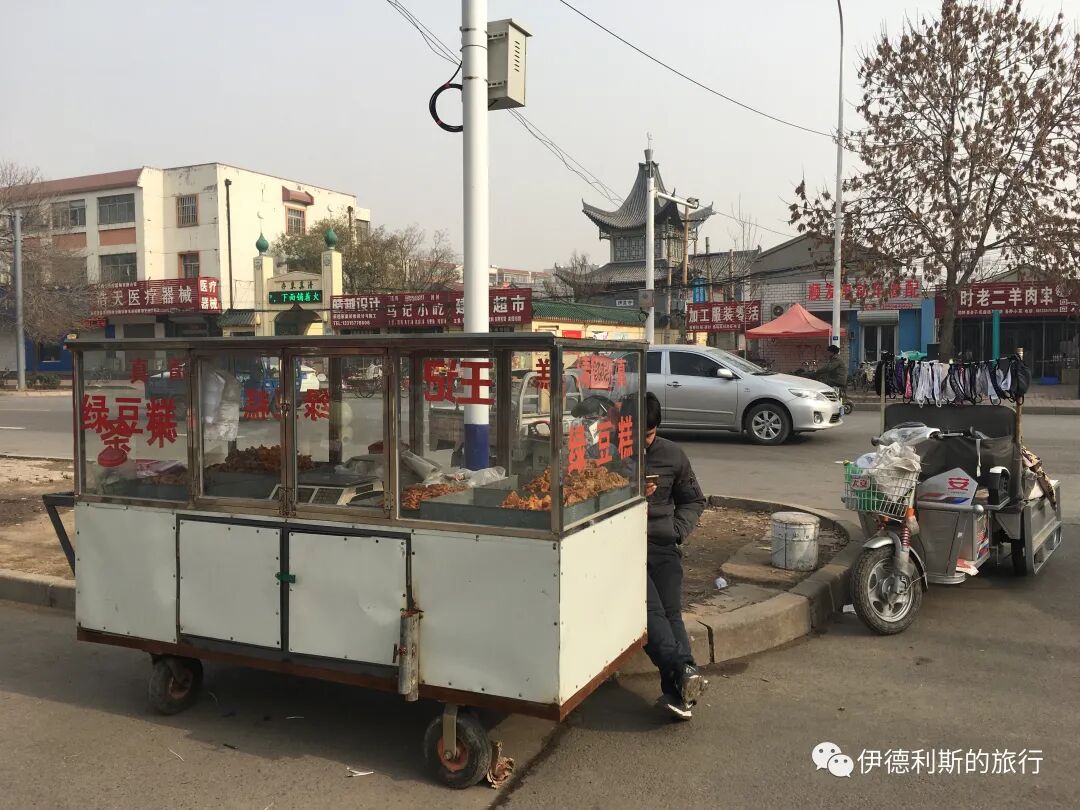
The heart of the southern Hui Muslim district is the Minzu Street food market, which is packed with all kinds of Hui Muslim snacks.
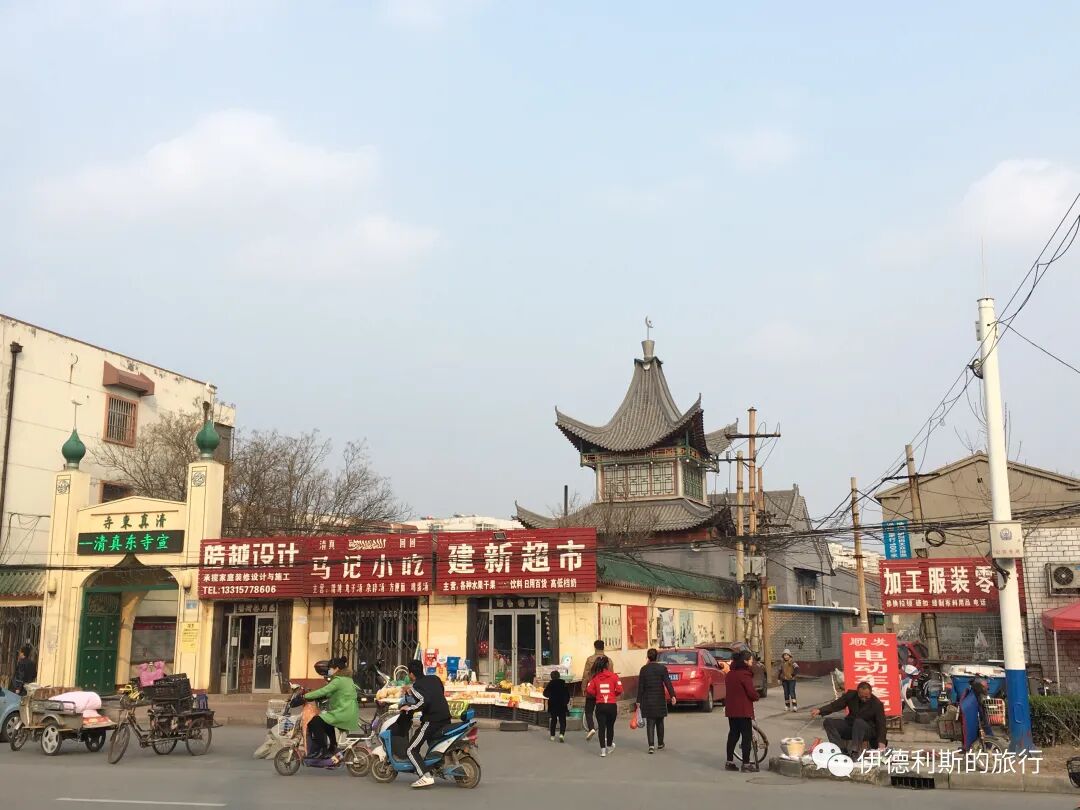
The East Mosque (Dongsi) is at the east end of the street.
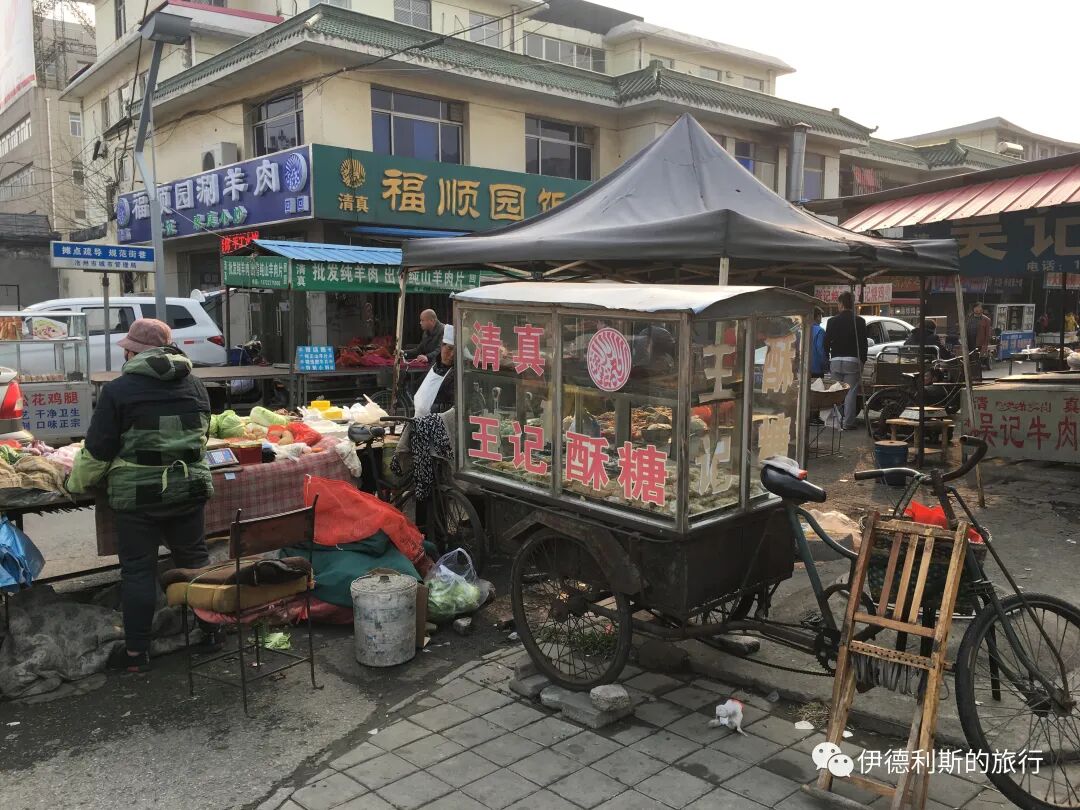
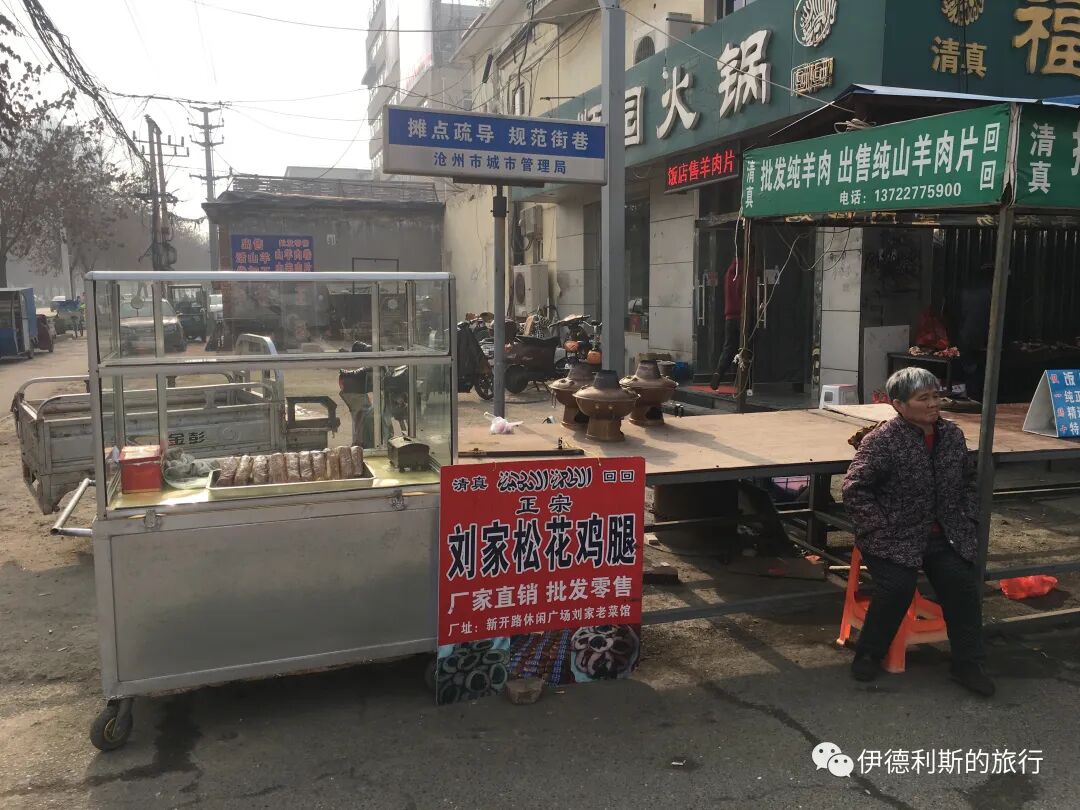
Liuji pine nut chicken legs (songhuajitui) are chicken sausages stuffed with pine nut jelly. They go perfectly with flatbread (laobing) or steamed buns (mantou).
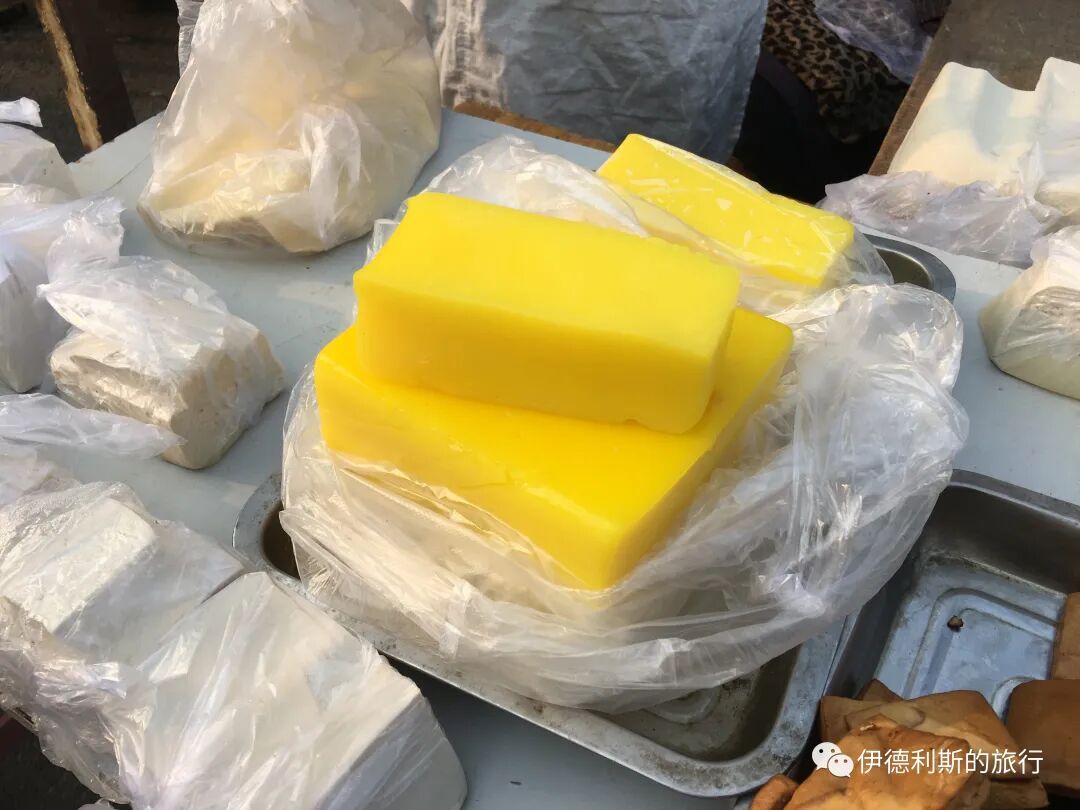
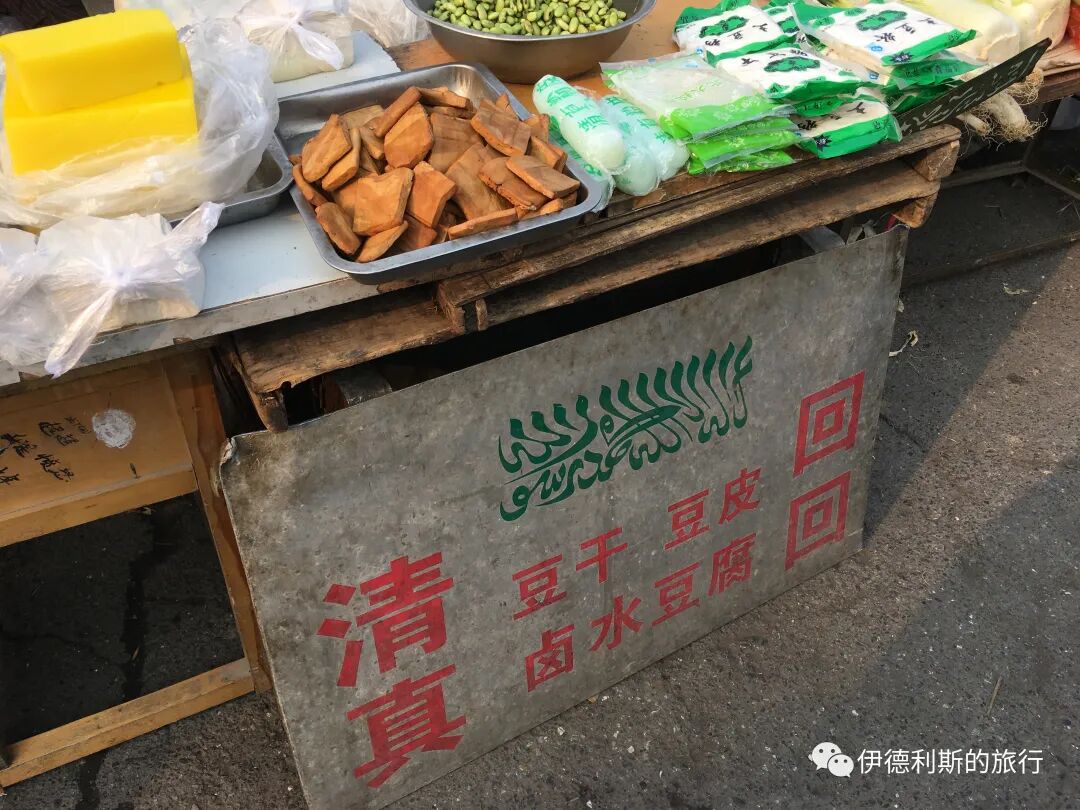
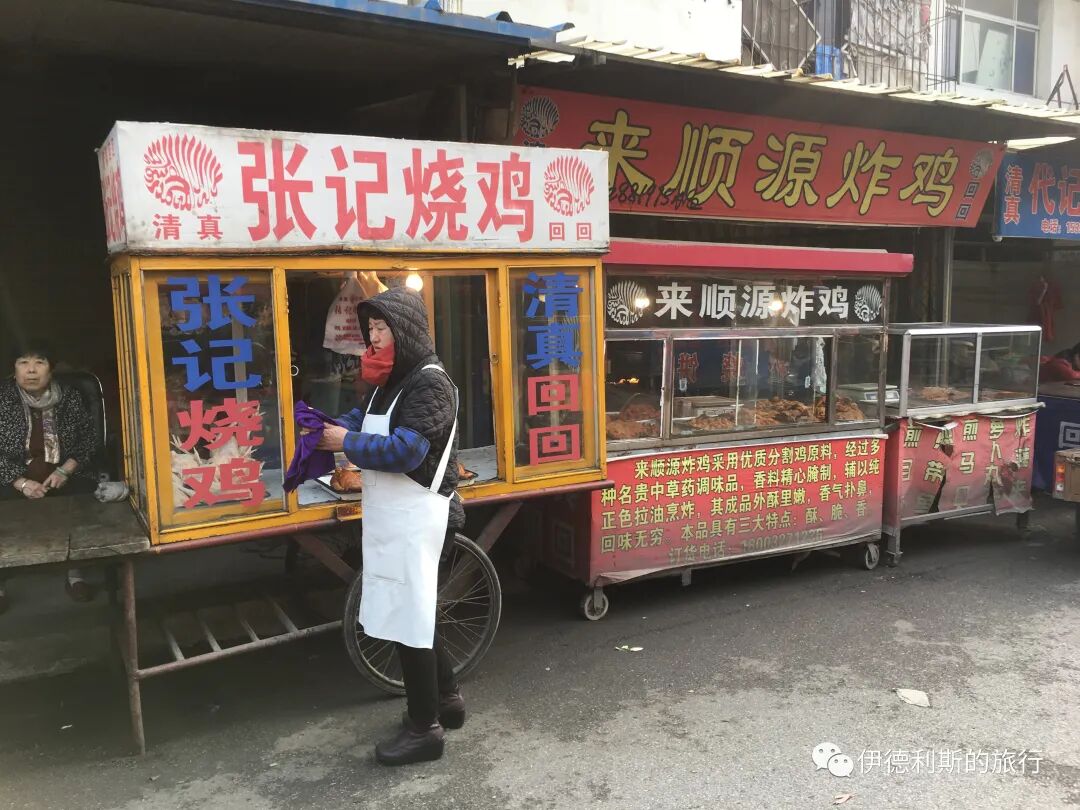
This is the third place outside of Beijing and Tianjin where I have had tea soup (chatang). The version in Cangzhou came from Tianjin along the Grand Canal, but this shop uses more ingredients and has a stronger flavor.
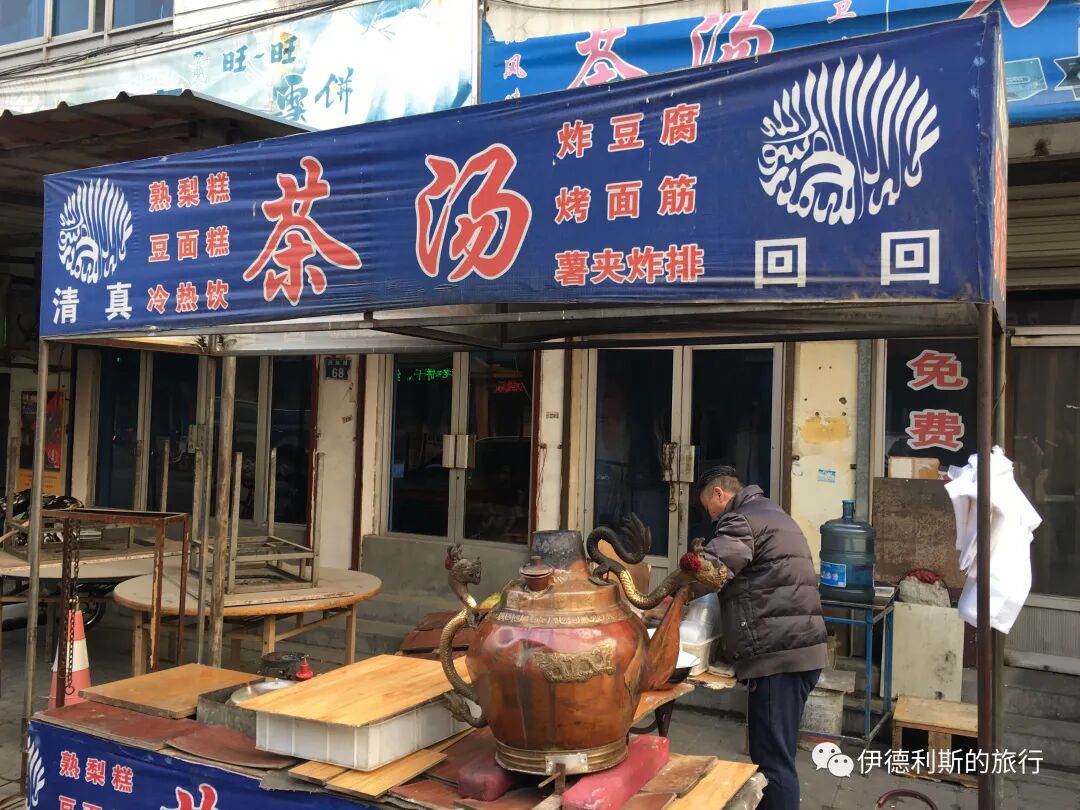
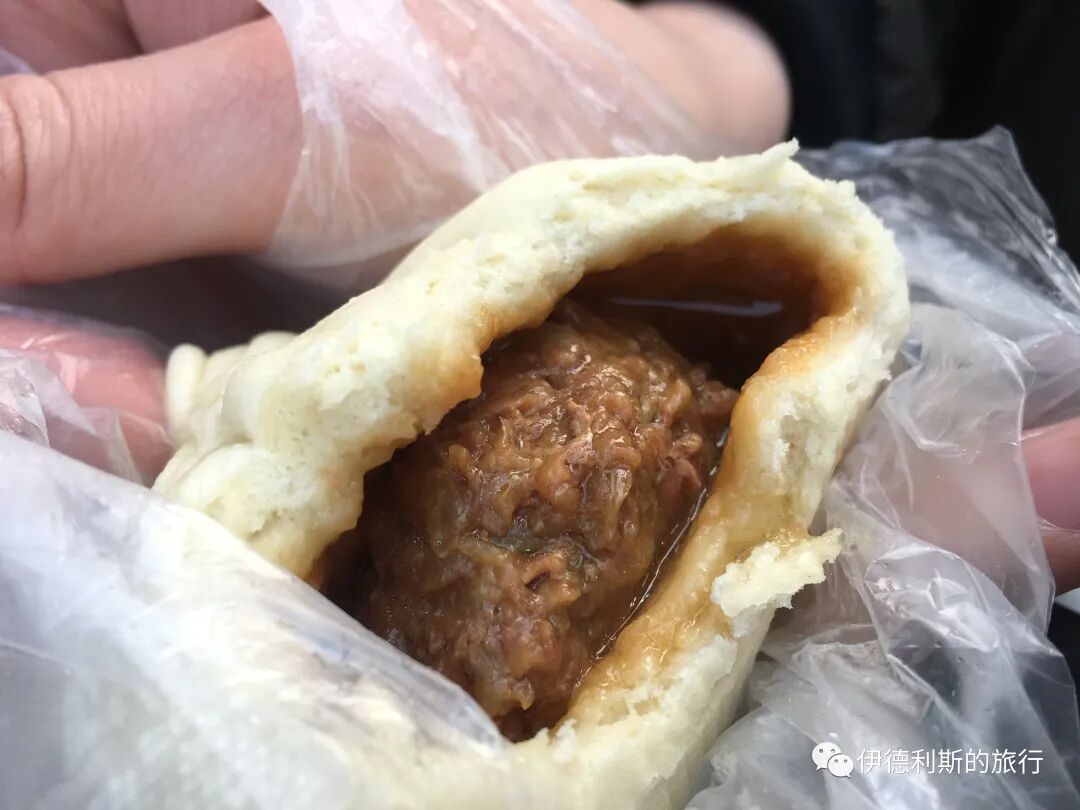
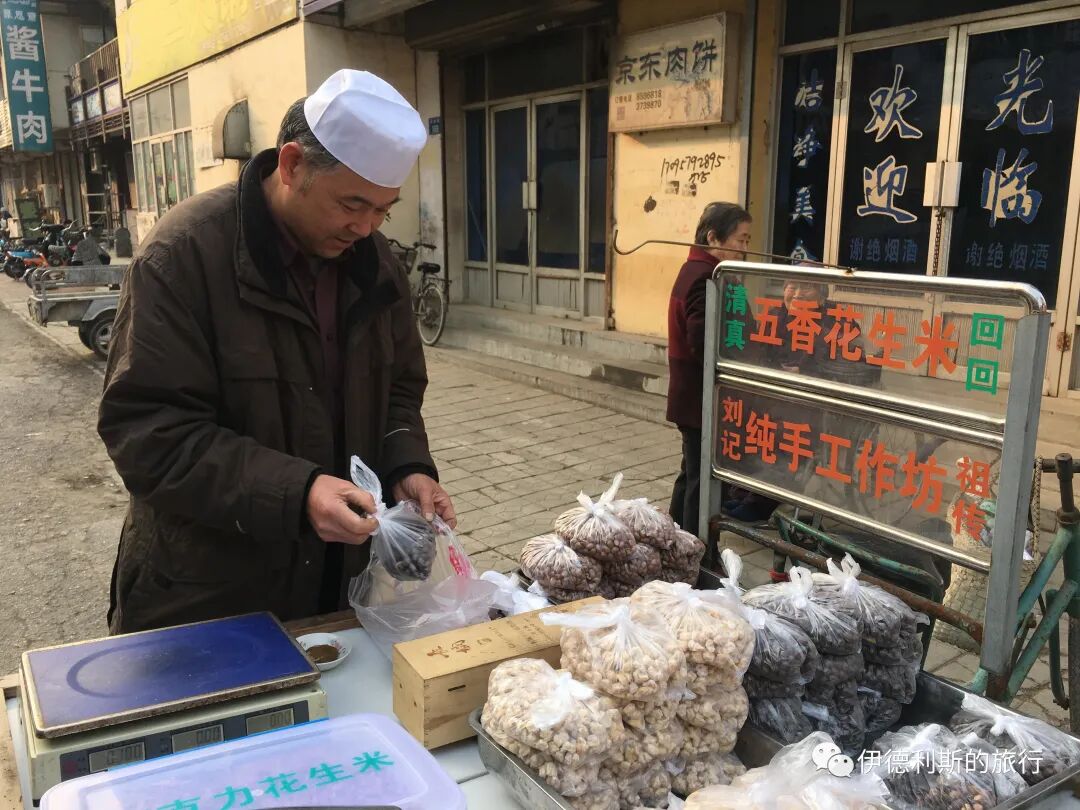
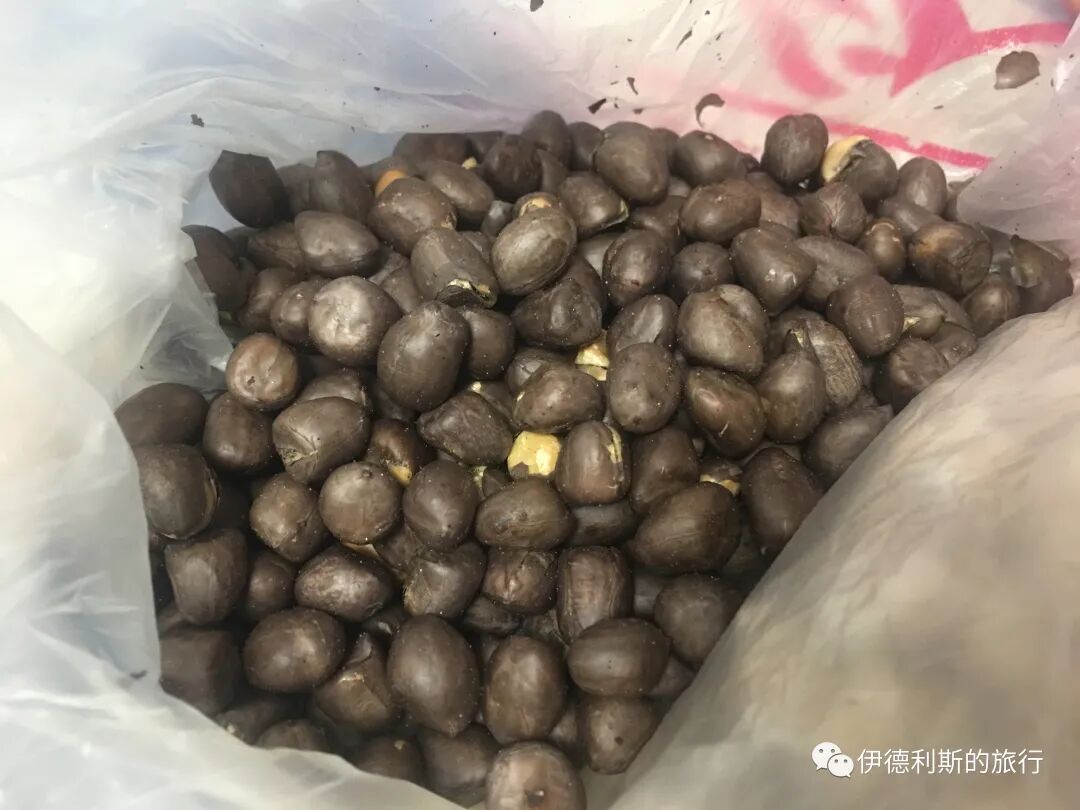
I bought two bags of five-spice peanuts. The black ones are addictive when eaten with tea.
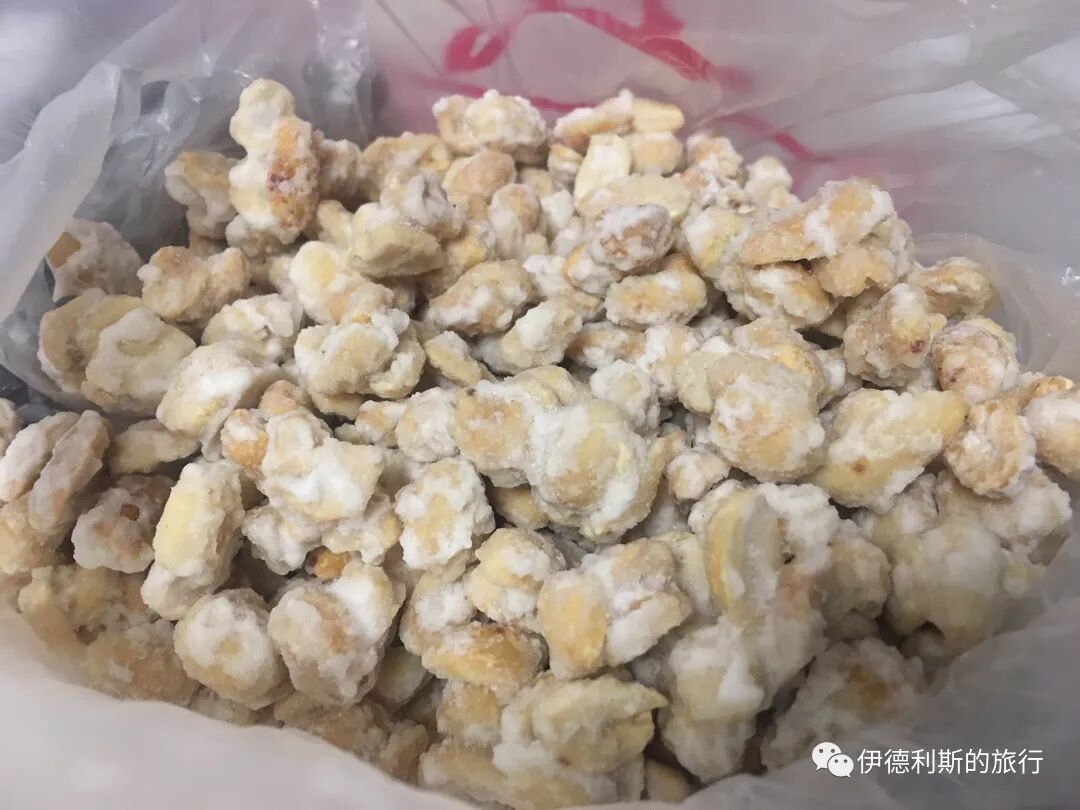
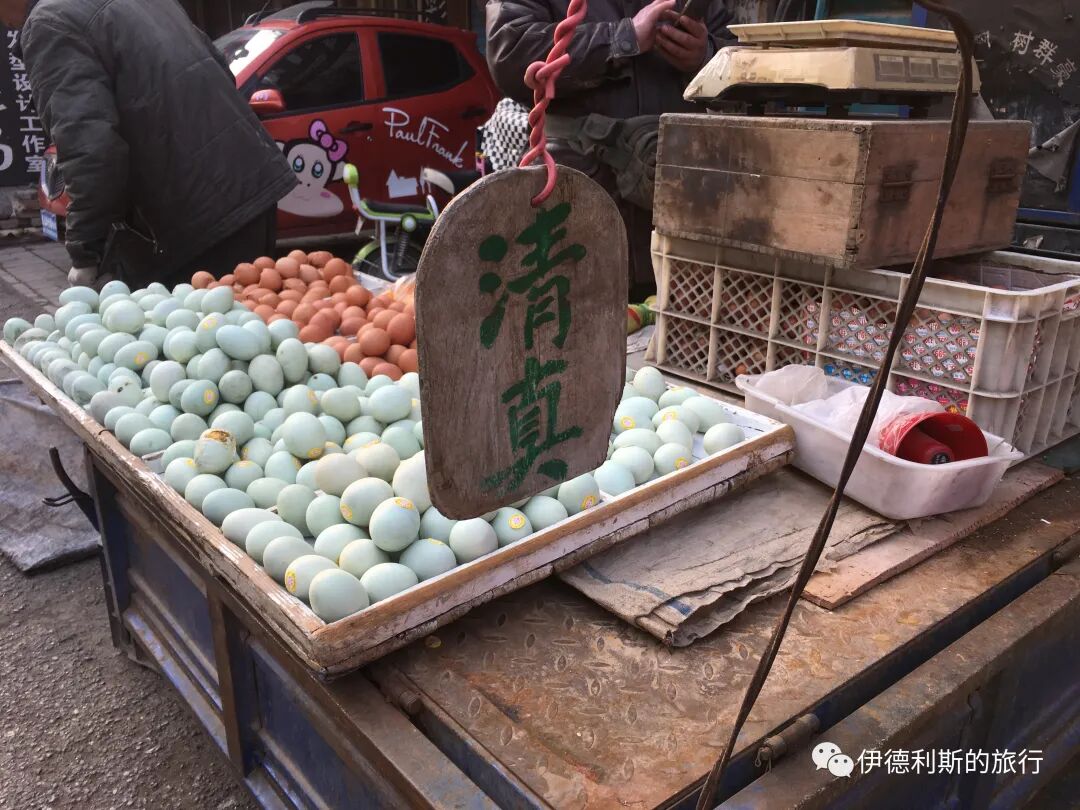
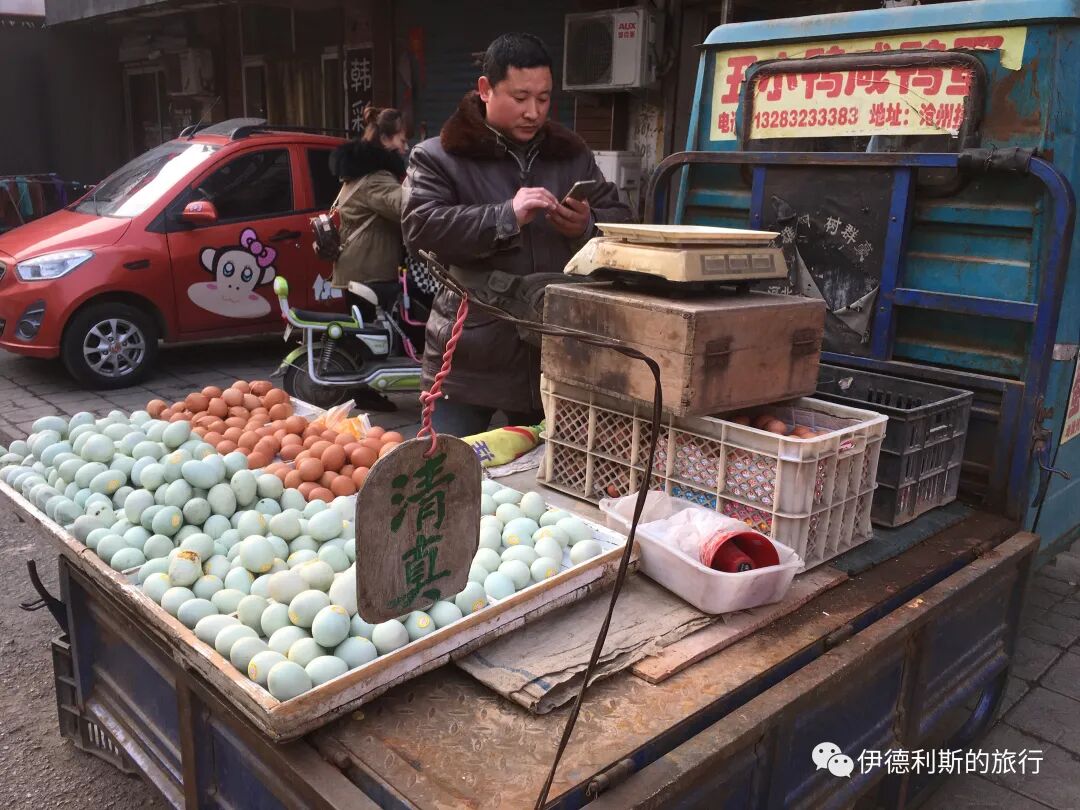
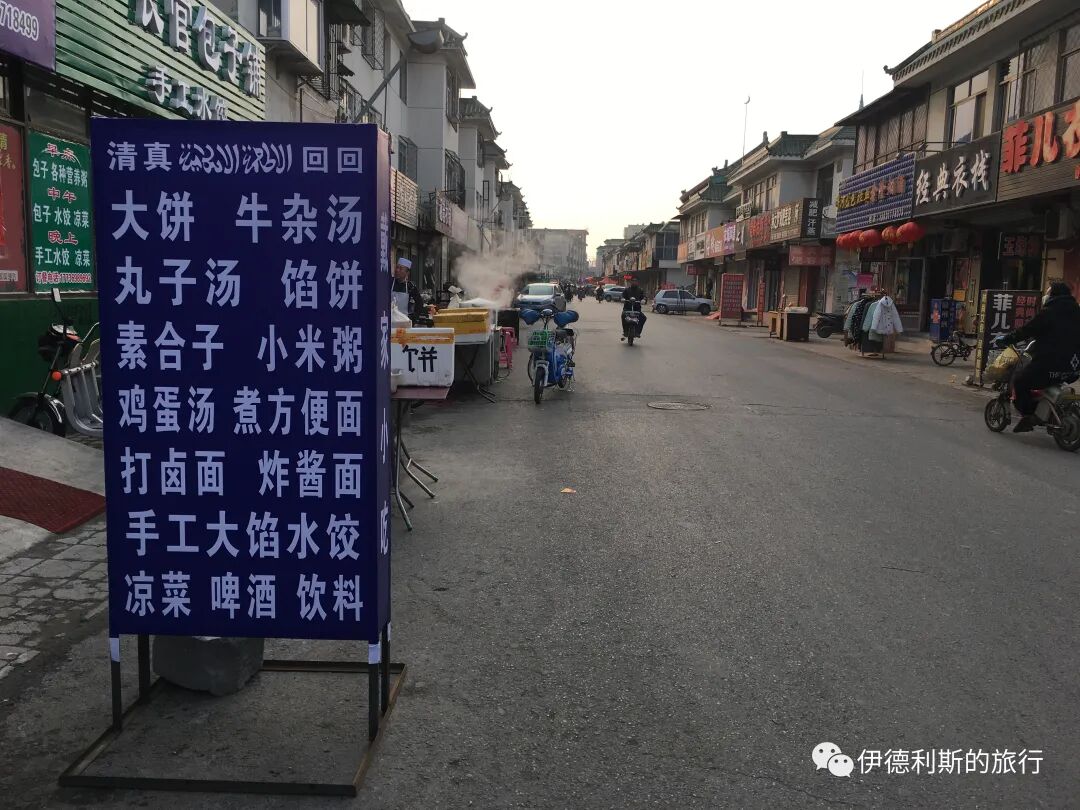
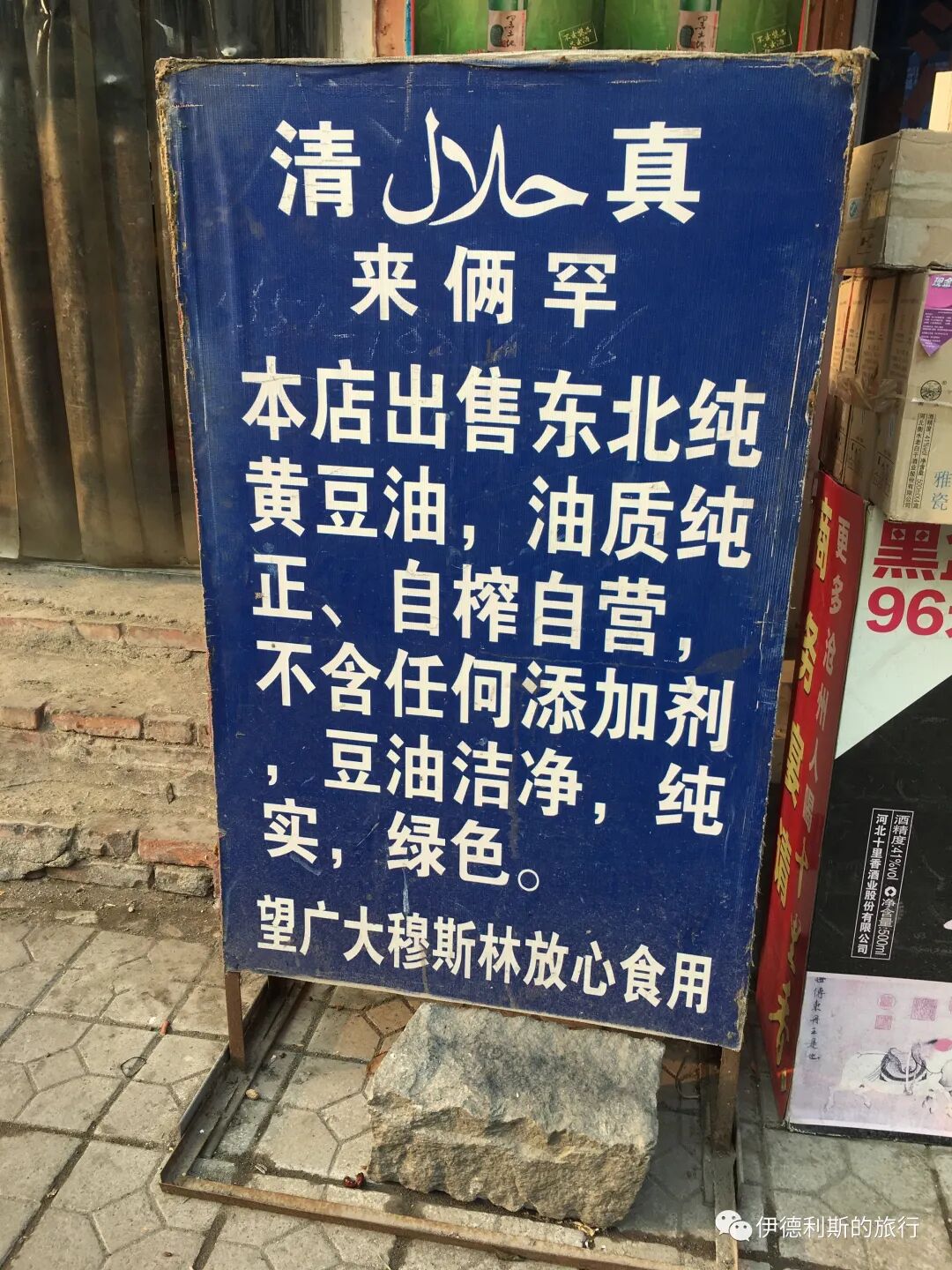
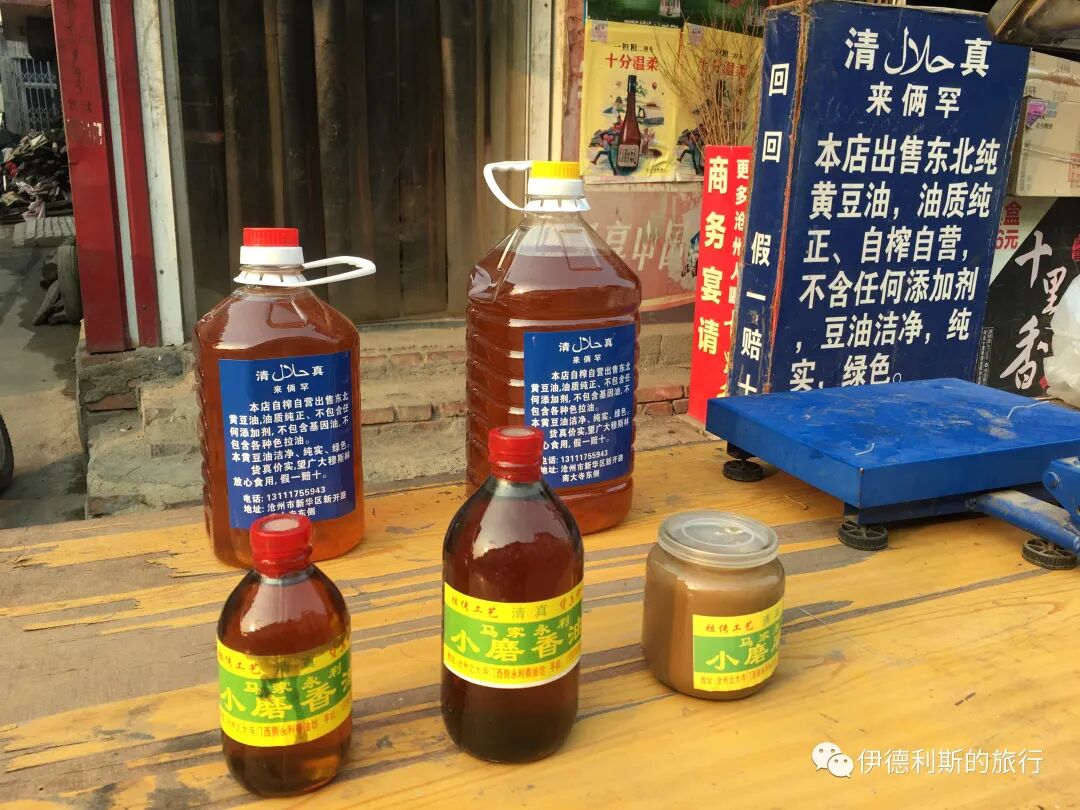
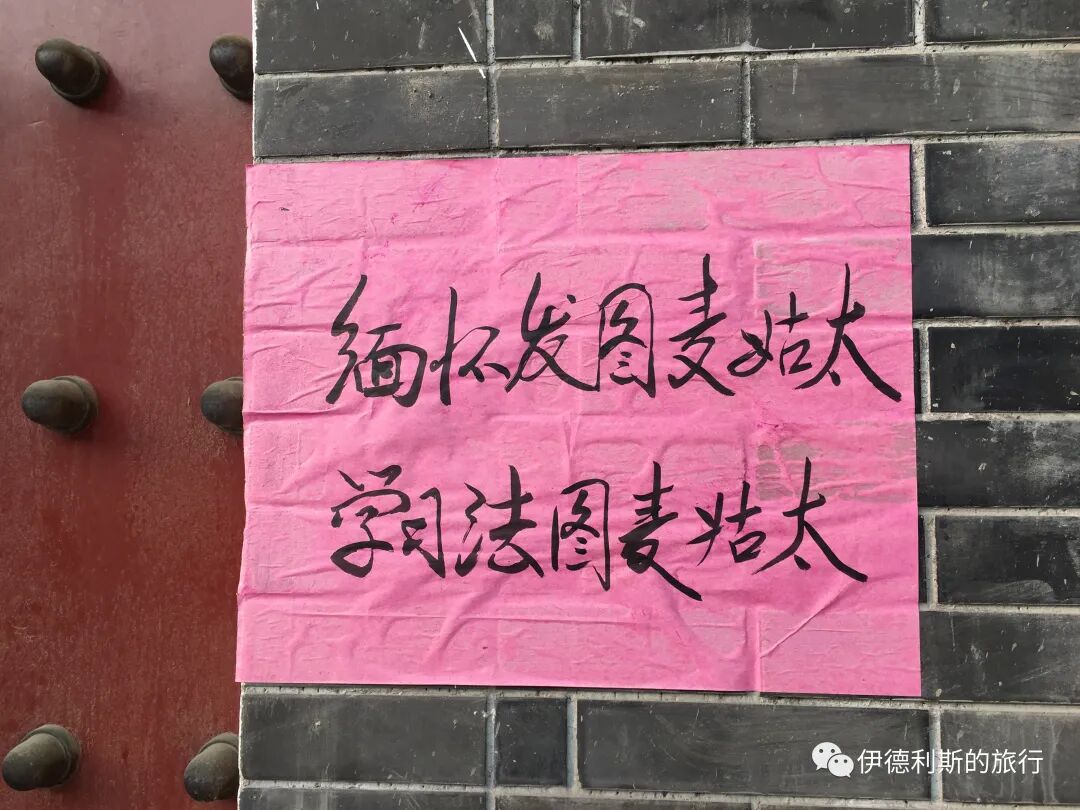
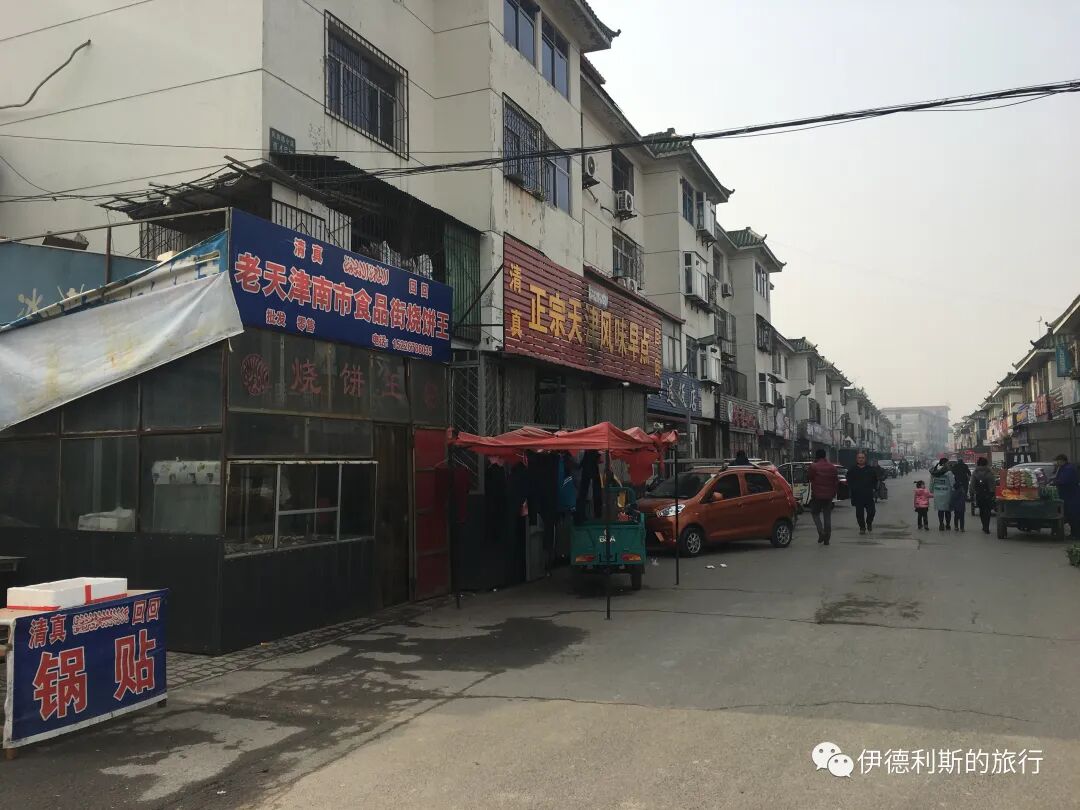
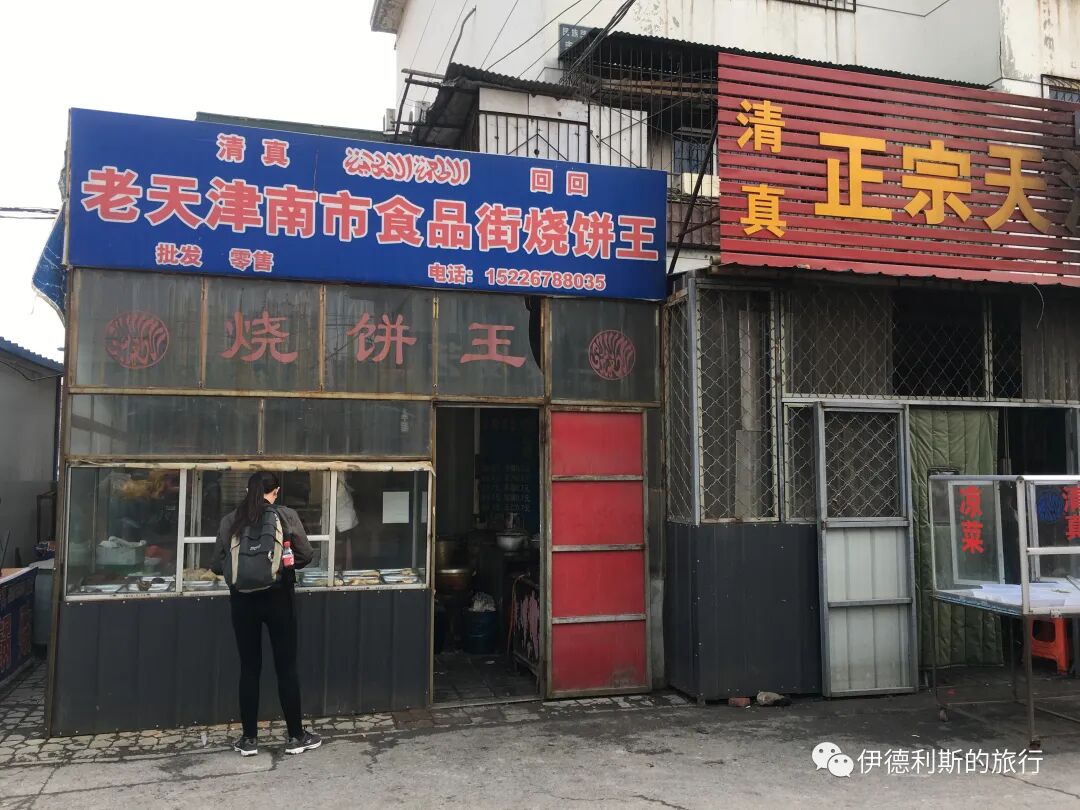
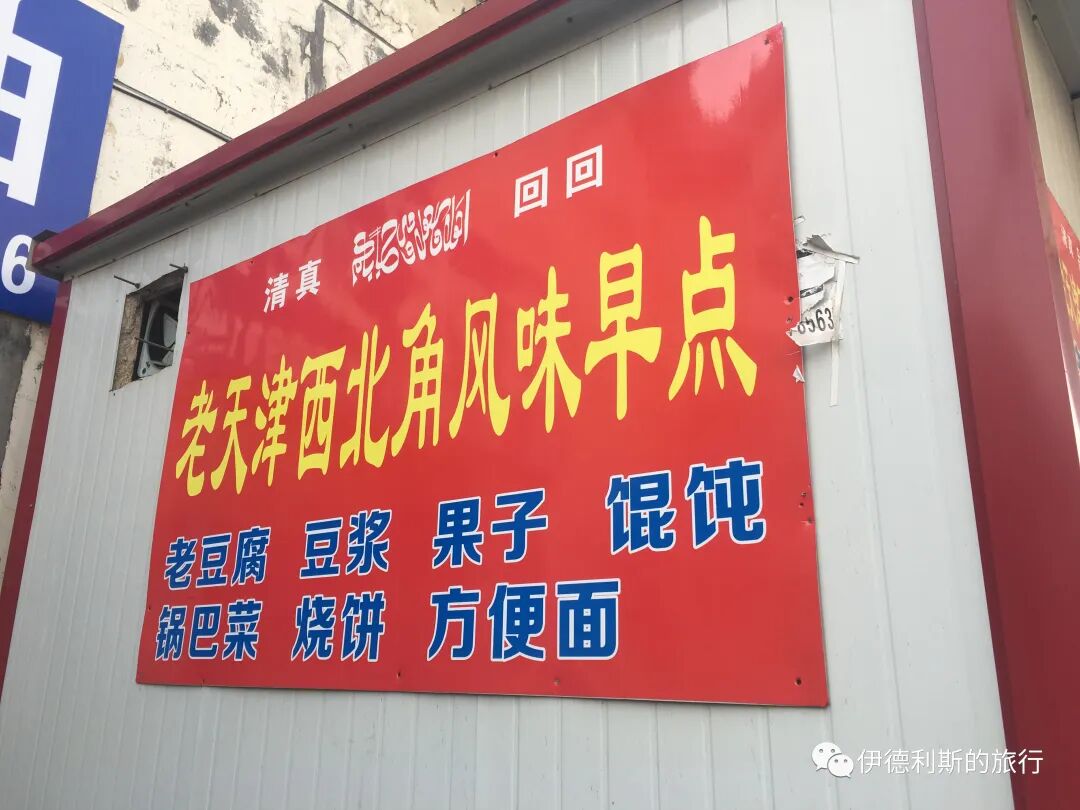
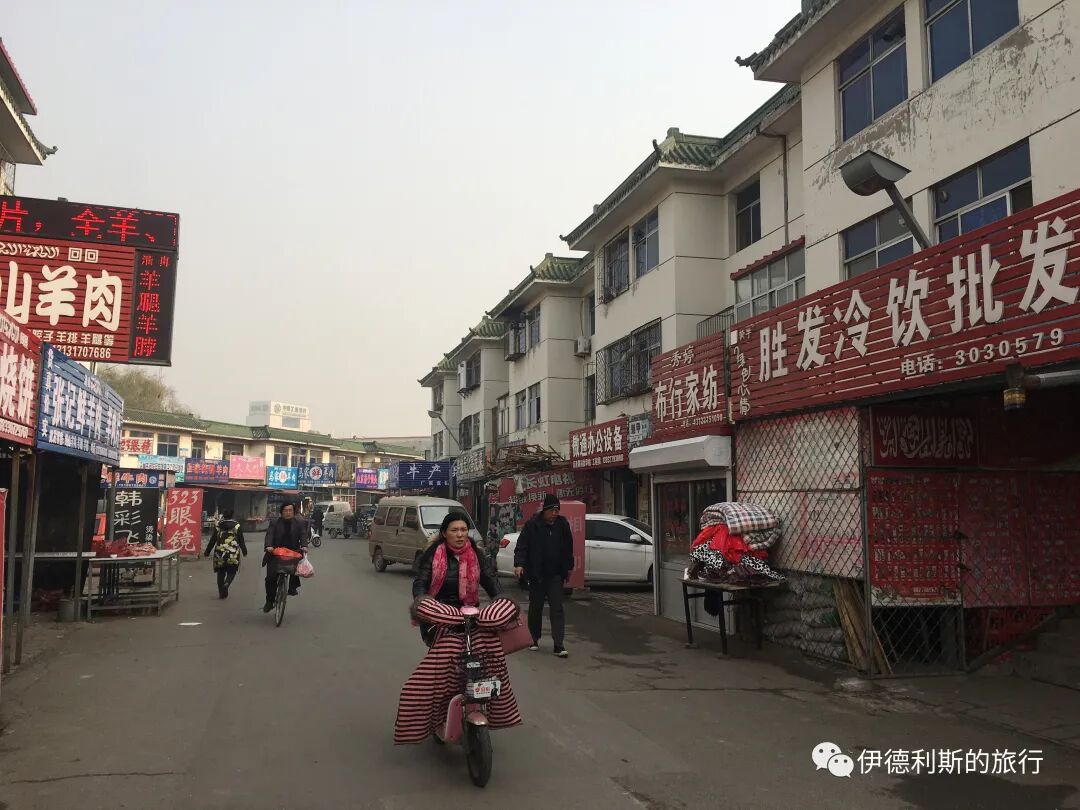
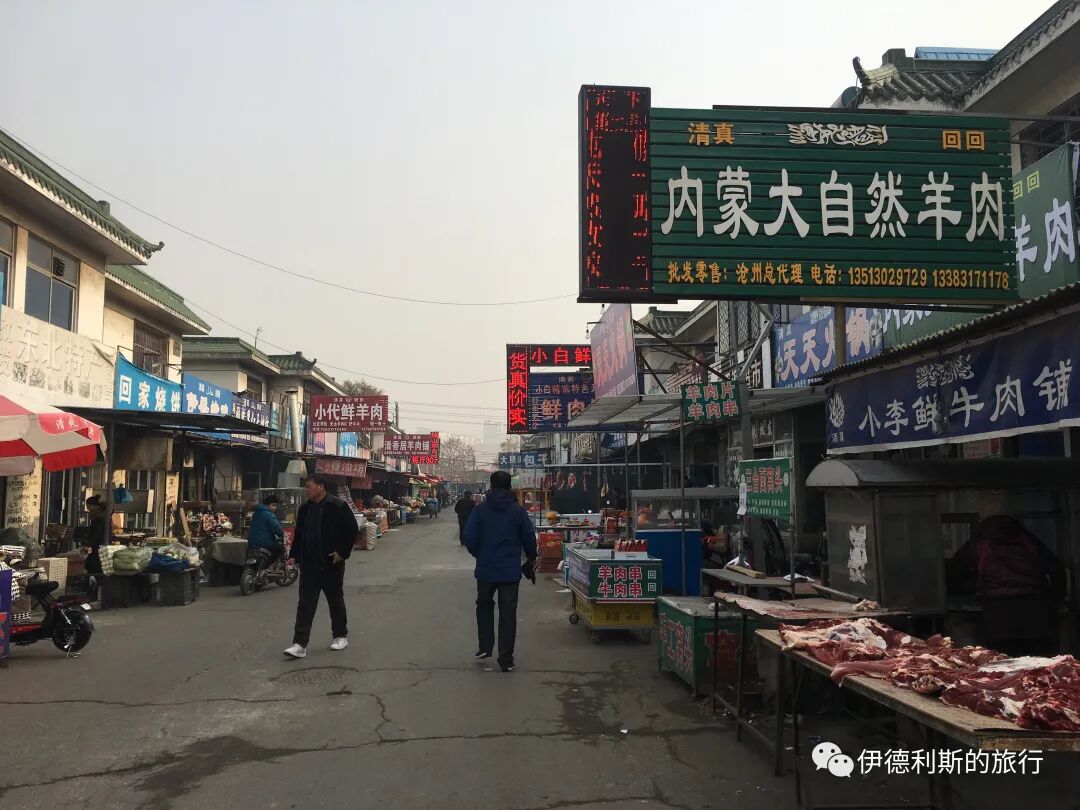
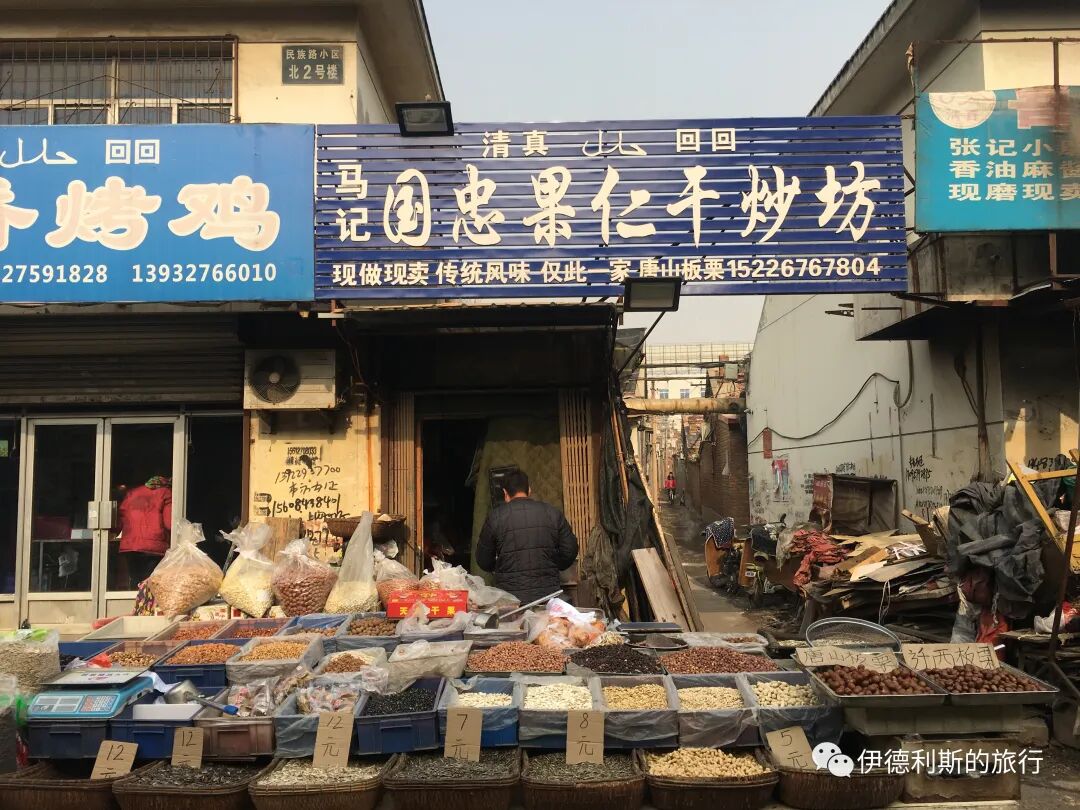
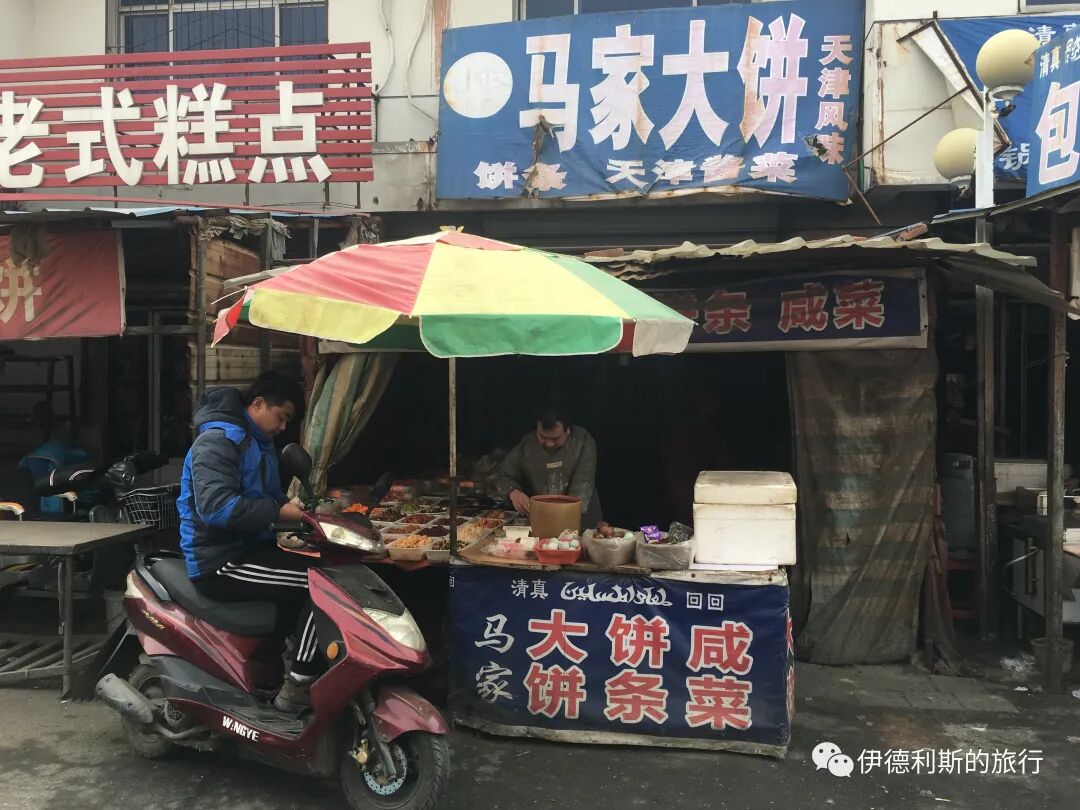
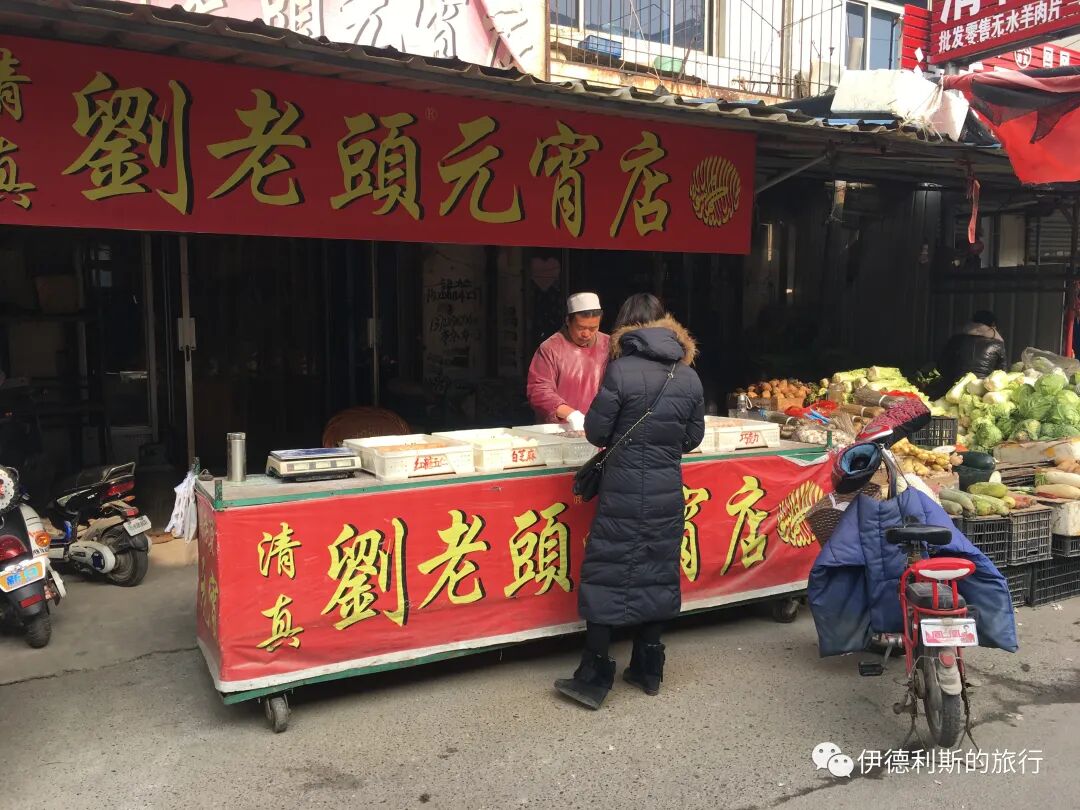
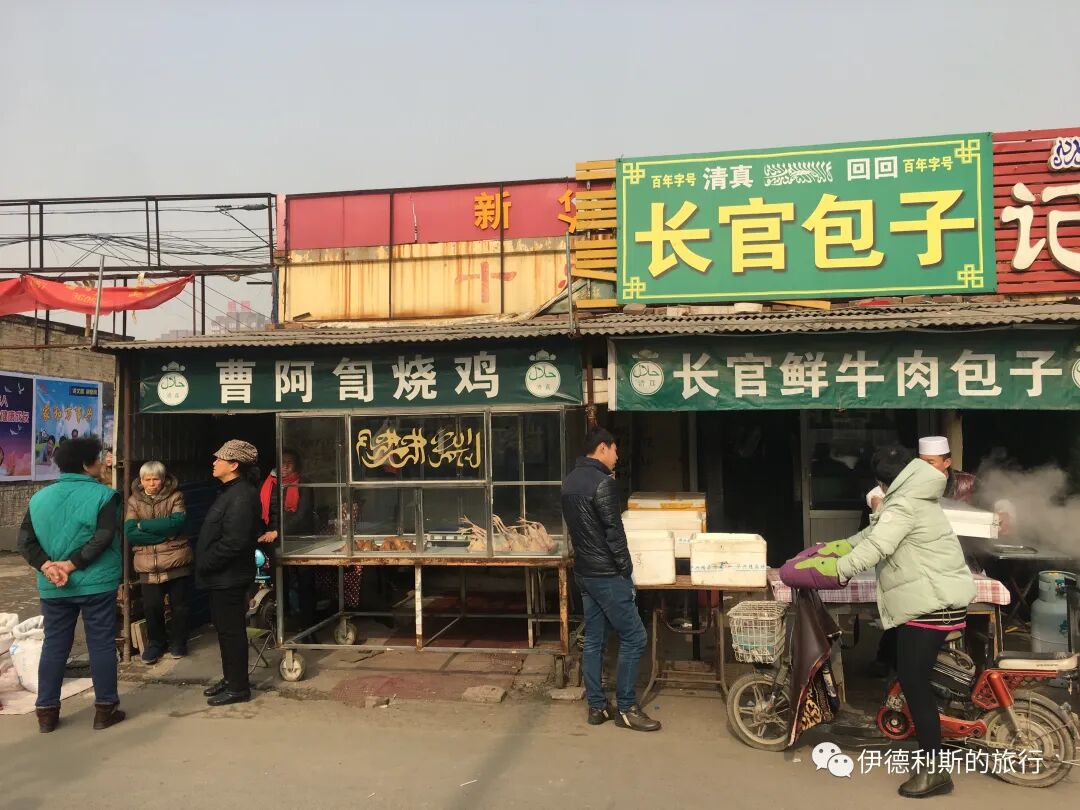
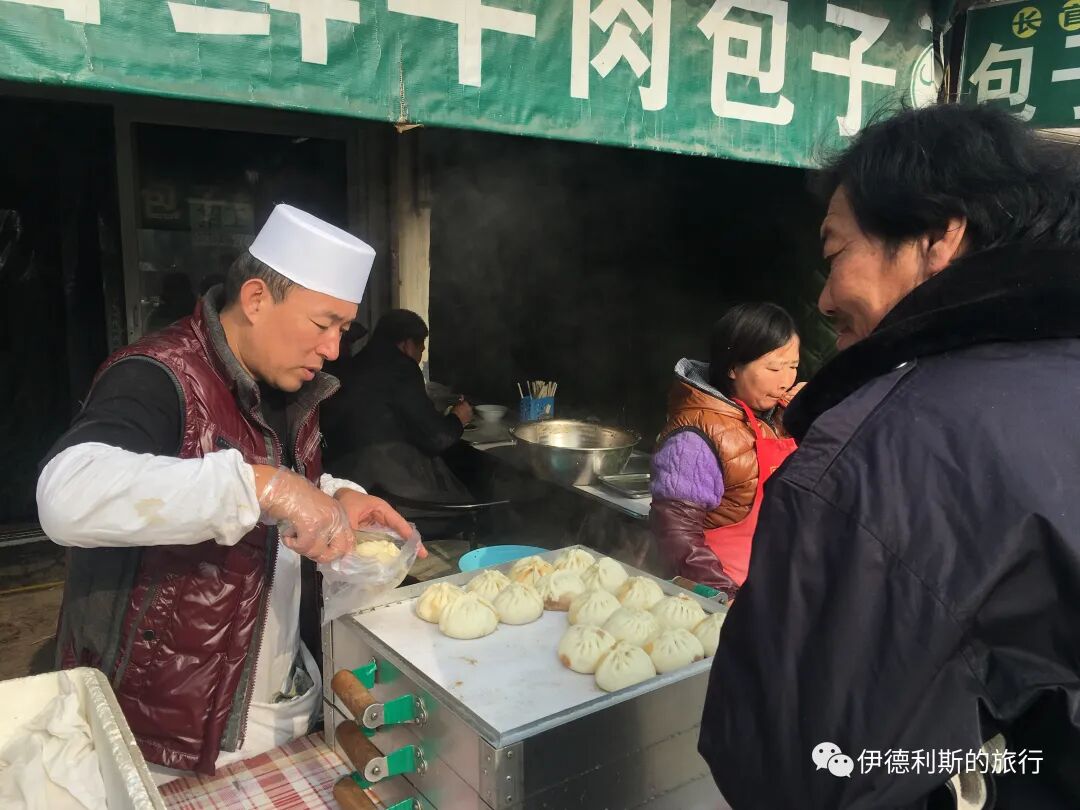
I walked all the way to the west end of Minzu Street and had a pizza at Oumale.
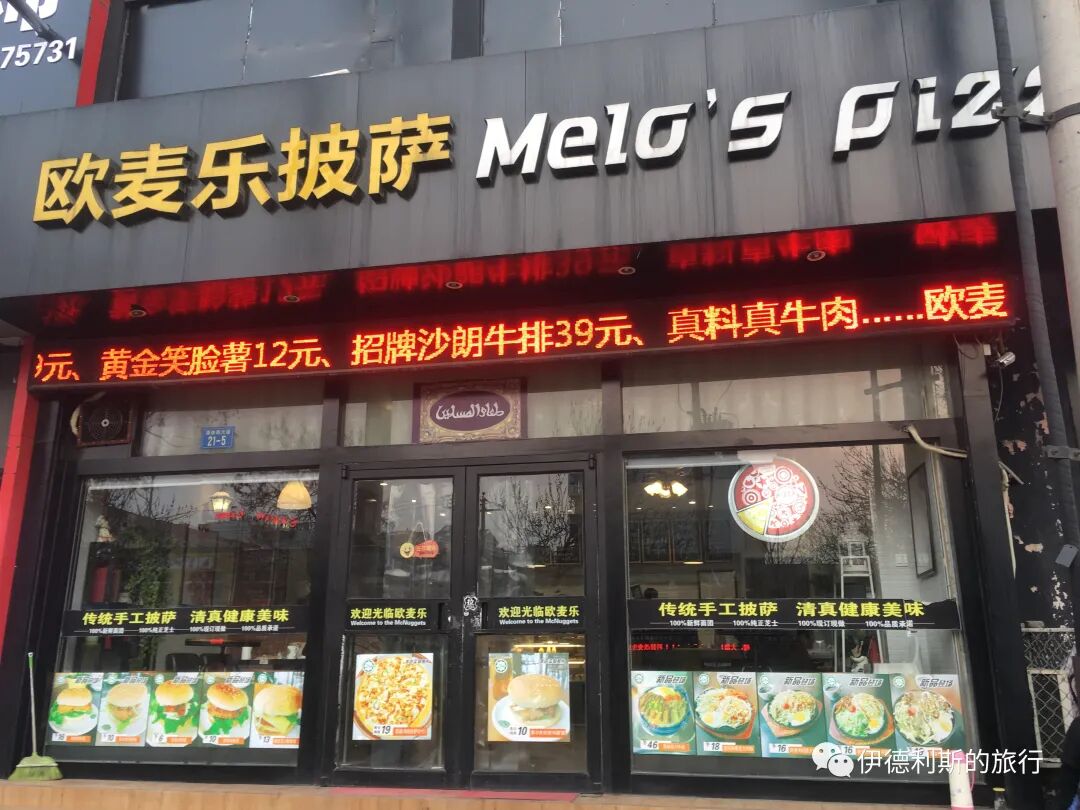
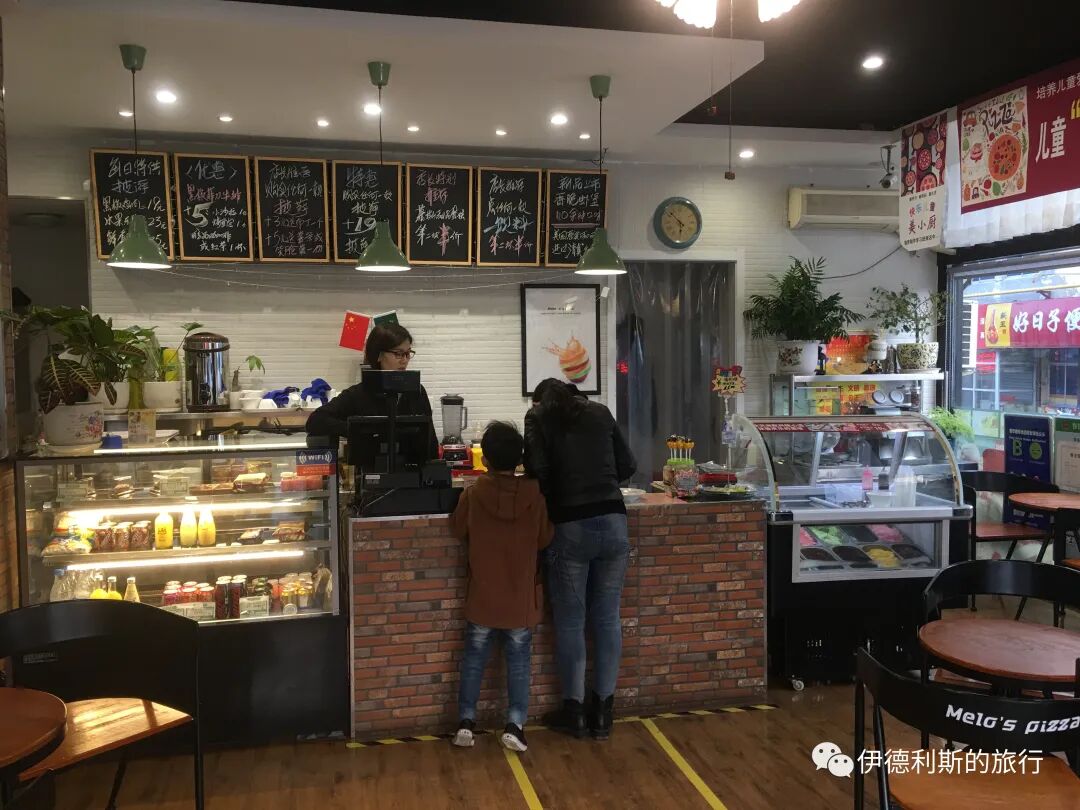
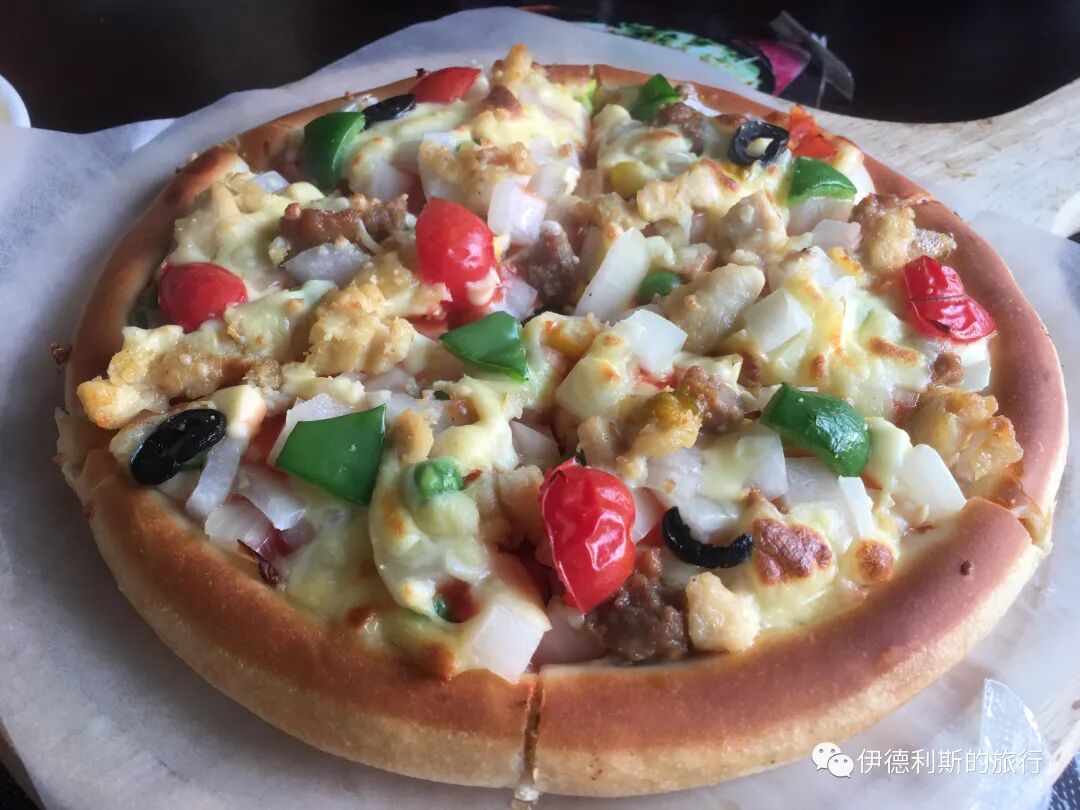
Botou Yang family sesame flatbread (shaobing)
I bought sugar-filled triangular flatbreads (tang sanjiao shaobing) and black rice crispy flatbreads (heimi su shaobing) at the Cangzhou branch of Botou Yang Family Flatbreads (Yangjia shaobing).
Yang Yongchang, the founder of Yang Family Flatbreads, opened a roadside inn called Yongchang Store in the ancient canal town of Botou, south of Cangzhou, in the 1930s. He started making flatbreads then and continued until the business was closed during the public-private partnership transition in 1956. In 1979, Yang Family Flatbreads reopened. It became a Cangzhou municipal-level intangible cultural heritage site and developed many new varieties that taste as delicious as pastries.
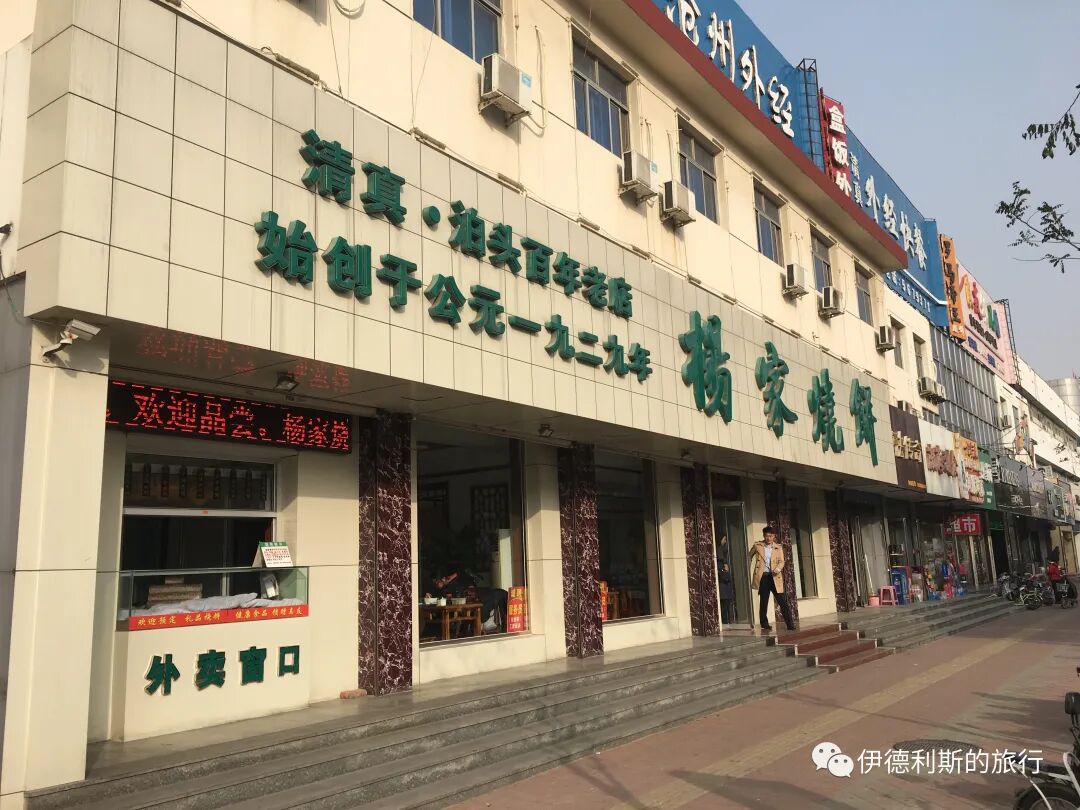
The Grand Canal in Cangzhou.
The canal wharf is not far from the west side of the Hui Muslim district in the south of the city. In 1411 (the ninth year of the Yongle reign), the Ming Dynasty cleared the silted-up section of the Grand Canal known as the Huitong River. This reopened the north-south water transport route, and the new Cangzhou city, which had moved from the old state city, became a hub for water transport.
At that time, many Hui Muslims made their living directly from water transport. The wealthiest boat owners rented out their ships or hired people for transport. Ordinary small boat owners made a living by ferrying, while the poorest Hui Muslims survived by pulling boats along the riverbank or carrying cargo at the wharf.
The convenience of water transport naturally led to a boom in business. Before the July 7th Incident, there were over five hundred halal restaurants in Cangzhou city. These included large establishments like Qinghua Restaurant and Tianqing Hall, as well as large tea houses like Wancheng Tea House. There were also various banks and grocery stores run by Hui Muslims, marking the peak of commercial activity for Cangzhou's Hui Muslims. (The Influence of the Canal on the Formation and Development of Hui Muslim Settlements in Cangzhou)
Until the 1960s, cargo ships still traveled constantly along the South Canal, and water transport in Cangzhou remained prosperous. However, by the 1970s, the water source for the South Canal channel deteriorated sharply and could no longer provide the water volume needed for transport, so the Cangzhou water transport wharves were abandoned.
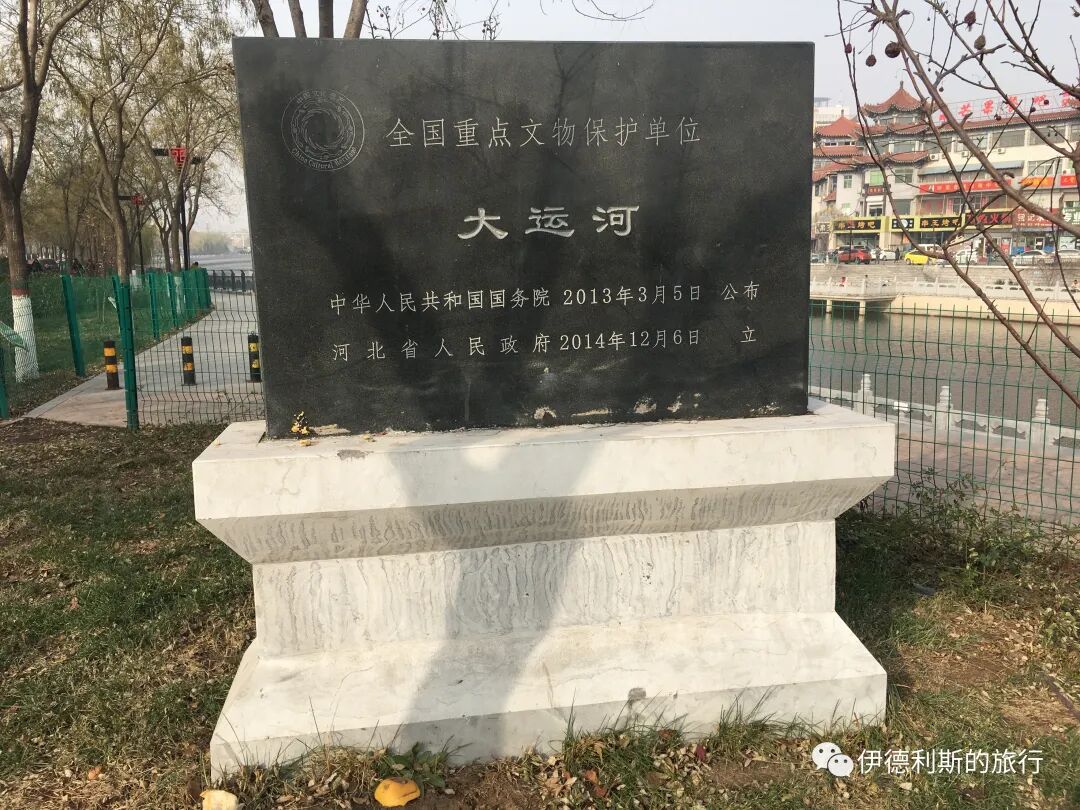
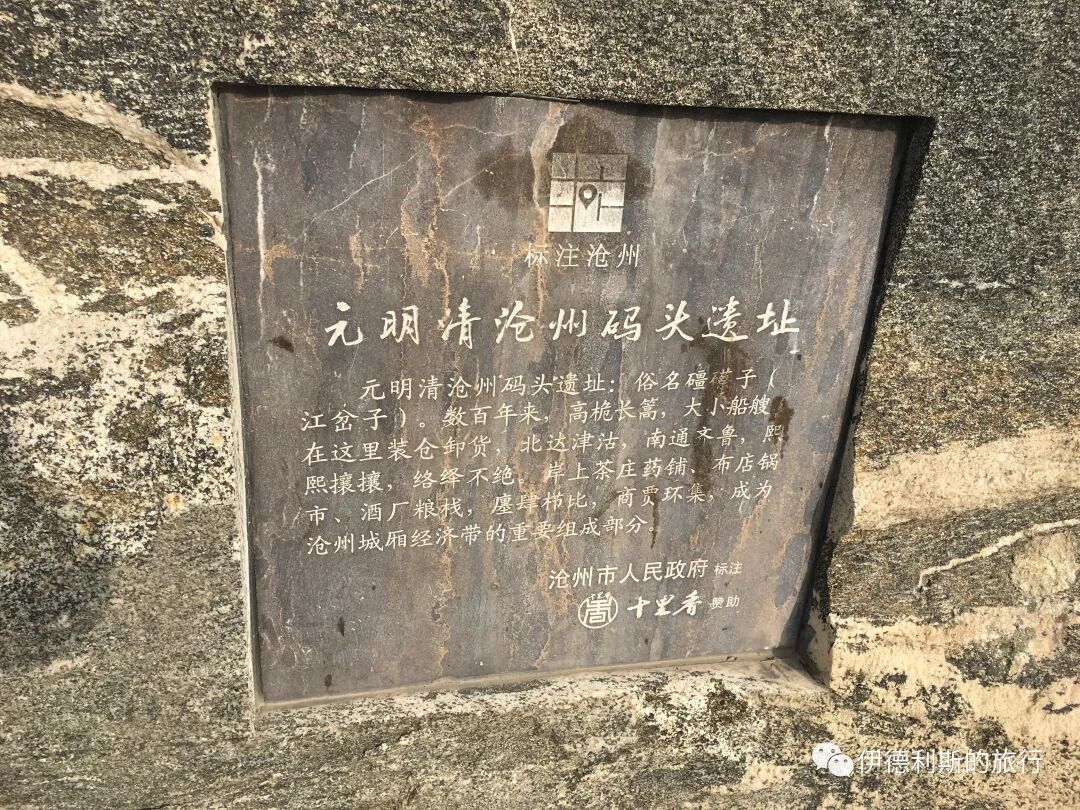
Cangzhou has many Hui Muslim martial artists and schools. Besides the previously mentioned Wu-style Kaimen Baji Quan, there is also the famous Cha-Hua Quan. Cha-Hua Quan was created by Hui Muslims Cha Shangyi, Hua Zongqi, and Wu Dianzhang. It is also called Huihui Quan and is very popular among Hui Muslims in Shandong and Hebei.
Wang Yuanxiang from Cangzhou is a fifth-generation successor of the Cha-Hua school and is skilled in using the long spear (daxing qiang). The longest spear in the picture below is the one he donated to the Cangzhou Museum.
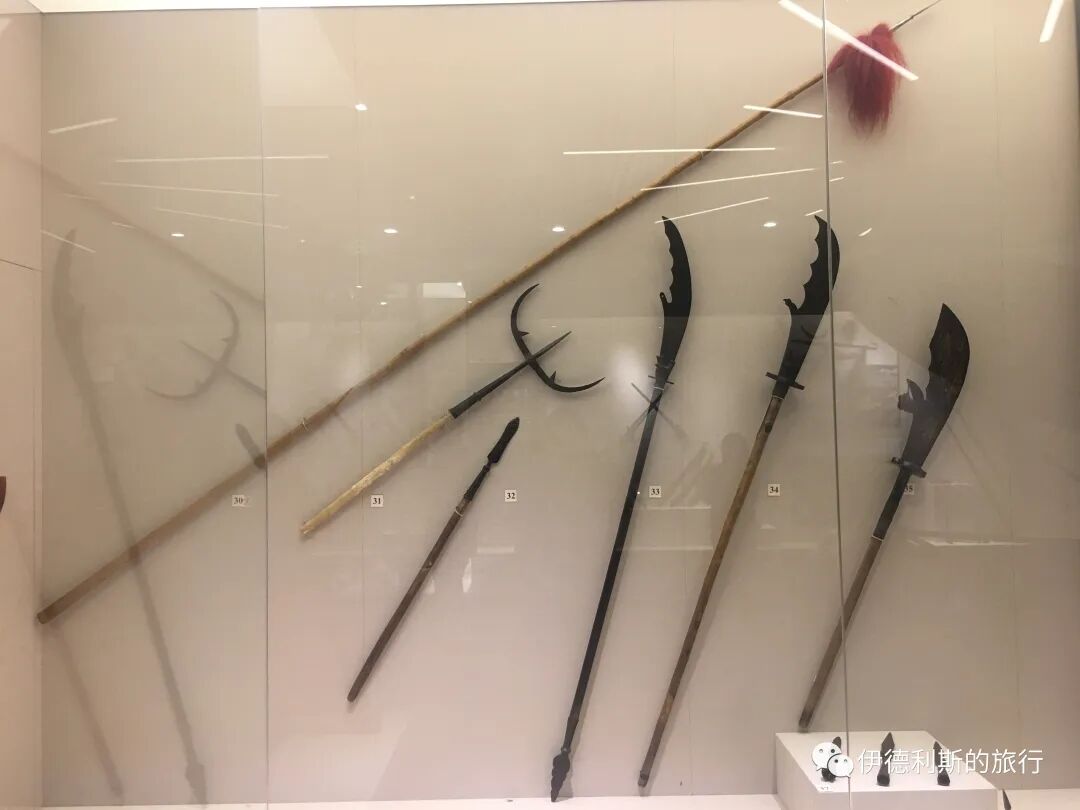
Practicing Cha-Hua Quan often requires the use of stone weights (shidun). The stone weight below was also donated by Wang Yuanxiang.
The religious exhibition cabinet at the Cangzhou Museum.
Summary: This China Mosque Travel Guide keeps the original 2016 Cangzhou travel notes intact while making the route clear for Muslim readers. It is useful for China Muslim travel tips, halal food in China, Chinese Muslim food, and old mosque heritage in Hebei.
I visited the Hui Muslim community in Cangzhou twice, on November 26, 2016, and March 25, 2017. I will share my experiences here. Some information in this article comes from the book Cangzhou Hui Muslims by Wu Piqing.
The high-speed train from Beijing South Station to Cangzhou West Station takes only 50 minutes. At Beijing South Station, there is a fast-track entrance for the Beijing-Shanghai high-speed railway right at the subway exit. You can swipe your card to leave the subway and head straight to the train, which is very convenient.
When you leave Cangzhou West Station, you can take a metered taxi. It costs about a dozen yuan and takes 20 minutes to reach the mosque. When Cangzhou locals talk about the mosque, they usually mean the North Great Mosque (Qingzhen Beidasi) on the main street. It is the most magnificent mosque in Cangzhou. Once at the mosque, I first went to eat the famous Wu's All-Beef Soup (Wu Ji Quan Niu Tang).
From Wu's All-Beef Soup to the Cangzhou Hui Muslim district.
Wu's All-Beef Soup has cost fifty yuan a bowl for years. Don't let the price scare you; once you see the amount of beef, you will know it is worth it. You take dried beef from the counter and dip it in the boiling soup. The beef soup is incredibly delicious, and the beef is very fragrant. It keeps you full for a long time. You can eat all the flatbreads you want there. I chose this long, multi-grain flatbread, which goes perfectly with the soup.
After finishing the beef soup, I have to talk a bit about the Wu family of Cangzhou. The Wu family is an important branch of the Hui Muslims in Cangzhou, and they are closely linked to the city's history.
Like many canal cities, Cangzhou has had Hui Muslim merchants settling down with their families since the Yuan Dynasty. However, the Cangzhou city of that time was not the one we see today. It was located at the Old Prefecture City ruins, 20 kilometers southeast of the current city, where the famous Cangzhou Iron Lion stands.
In 1399, during the Jingnan Campaign, the Prince of Yan, Zhu Di, captured the old Cangzhou city. He killed thousands of surrendered soldiers and tens of thousands of residents, destroying the entire city. The Prince of Yan's sweep to the north became a major turning point in Cangzhou's history.
In 1404, after the war, Cangzhou began to rebuild. Zhu Di, who had gone from Prince of Yan to the Yongle Emperor, ordered the city moved to Changlu by the Grand Canal. He brought in residents from Shanxi, Shandong, and Anhui to settle there, forming the new Cangzhou city.
Just one year before the city was rebuilt, in 1403, the Wu family ancestor, Zuoyong, was appointed as the Assistant Prefect of the Cangzhou Salt Transport Commission in Hejian Prefecture, Zhili. He moved to Cangzhou from Shexian, Anhui. Cangzhou borders the Bohai Sea to the east and has had a thriving salt industry since ancient times. The Cangzhou Salt Transport Commission, established in the early Ming Dynasty, managed the local salt trade. The salt fields were located by the Grand Canal west of Cangzhou city. Transport was very convenient and cost-effective, making the salt popular along the canal.
a descendant of the Wu family, Wu Zhong, founded the famous Wu-style Baji martial arts during the reigns of the Yongzheng and Qianlong emperors, becoming the pride of Cangzhou's Hui Muslims.
Cangzhou North Great Mosque.
The area south of the city gate was an important passage to the canal. Most Hui Muslim artisans and small vendors chose to live there. In 1420, the Cangzhou North Great Mosque was built in the south of the city on land donated by the Wu family ancestor Yongzuo, marking the formal establishment of the Cangzhou Hui Muslim community.
The Fatimah Auntie Festival (Fatumei Gutai Hui), one of the two major festivals and two major gatherings in North China.
The North Mosque (Beidasi) in Cangzhou is grand, but it was badly damaged in the 1908 earthquake, which caused the main hall to tilt toward the south. Local legend says a famous Cangzhou craftsman named Master Jiang Ba dismantled the four walls of the hall, straightened the structure, and restored it. During the Cultural Revolution, the Cangzhou Instrument Factory took over the North Mosque. They tore down the hall and the south lecture hall, burned historic plaques, smashed the roof of the main hall, and removed the front gate.
The North Mosque was only fully repaired after the factory moved out in 1989. Its layout changed quite a bit to reach its current form.
Halal food near the North Mosque
There are many small shops on both sides of the North Mosque gate. I bought some local specialty crispy candy (sutang) at the Wangji Crispy Candy and Pastry Shop. I only got to eat this during the Chinese New Year when I was a kid, so it brings back many memories.
Horseshoe-shaped crispy pastry (matisu) bought at the pastry department of the Cangzhou Halal Food Factory.
The halal red bean buns (doubao) next to the North Mosque are delicious. I bought a bunch both times I visited.
Women's Mosque (Qingzhen Nüsi)
Across from the North Mosque is the Women's Mosque, which was first built in 1666 (the fifth year of the Kangxi reign). The Women's Mosque used to be called the Inner City Mosque (Chengli Qingzhensi), and it was separated from the North Mosque by the south city wall of Cangzhou. The Inner City Mosque faced a similar fate to the North Mosque, suffering near-total destruction in the 1960s and 70s before being restored in the 1980s. In 1986, the Inner City Mosque became the Women's Mosque. It was rebuilt in 1993 to look the way it does today.
The Hui Muslim district in the south of Cangzhou city
South of the North Mosque is the Hui Muslim district. Although the houses have been rebuilt, the original street layout remains.
Halal food on Minzu Street
The heart of the southern Hui Muslim district is the Minzu Street food market, which is packed with all kinds of Hui Muslim snacks.
The East Mosque (Dongsi) is at the east end of the street.
Liuji pine nut chicken legs (songhuajitui) are chicken sausages stuffed with pine nut jelly. They go perfectly with flatbread (laobing) or steamed buns (mantou).
This is the third place outside of Beijing and Tianjin where I have had tea soup (chatang). The version in Cangzhou came from Tianjin along the Grand Canal, but this shop uses more ingredients and has a stronger flavor.
I bought two bags of five-spice peanuts. The black ones are addictive when eaten with tea.
I walked all the way to the west end of Minzu Street and had a pizza at Oumale.
Botou Yang family sesame flatbread (shaobing)
I bought sugar-filled triangular flatbreads (tang sanjiao shaobing) and black rice crispy flatbreads (heimi su shaobing) at the Cangzhou branch of Botou Yang Family Flatbreads (Yangjia shaobing).
Yang Yongchang, the founder of Yang Family Flatbreads, opened a roadside inn called Yongchang Store in the ancient canal town of Botou, south of Cangzhou, in the 1930s. He started making flatbreads then and continued until the business was closed during the public-private partnership transition in 1956. In 1979, Yang Family Flatbreads reopened. It became a Cangzhou municipal-level intangible cultural heritage site and developed many new varieties that taste as delicious as pastries.
The Grand Canal in Cangzhou.
The canal wharf is not far from the west side of the Hui Muslim district in the south of the city. In 1411 (the ninth year of the Yongle reign), the Ming Dynasty cleared the silted-up section of the Grand Canal known as the Huitong River. This reopened the north-south water transport route, and the new Cangzhou city, which had moved from the old state city, became a hub for water transport.
At that time, many Hui Muslims made their living directly from water transport. The wealthiest boat owners rented out their ships or hired people for transport. Ordinary small boat owners made a living by ferrying, while the poorest Hui Muslims survived by pulling boats along the riverbank or carrying cargo at the wharf.
The convenience of water transport naturally led to a boom in business. Before the July 7th Incident, there were over five hundred halal restaurants in Cangzhou city. These included large establishments like Qinghua Restaurant and Tianqing Hall, as well as large tea houses like Wancheng Tea House. There were also various banks and grocery stores run by Hui Muslims, marking the peak of commercial activity for Cangzhou's Hui Muslims. (The Influence of the Canal on the Formation and Development of Hui Muslim Settlements in Cangzhou)
Until the 1960s, cargo ships still traveled constantly along the South Canal, and water transport in Cangzhou remained prosperous. However, by the 1970s, the water source for the South Canal channel deteriorated sharply and could no longer provide the water volume needed for transport, so the Cangzhou water transport wharves were abandoned.
Cangzhou has many Hui Muslim martial artists and schools. Besides the previously mentioned Wu-style Kaimen Baji Quan, there is also the famous Cha-Hua Quan. Cha-Hua Quan was created by Hui Muslims Cha Shangyi, Hua Zongqi, and Wu Dianzhang. It is also called Huihui Quan and is very popular among Hui Muslims in Shandong and Hebei.
Wang Yuanxiang from Cangzhou is a fifth-generation successor of the Cha-Hua school and is skilled in using the long spear (daxing qiang). The longest spear in the picture below is the one he donated to the Cangzhou Museum.
Practicing Cha-Hua Quan often requires the use of stone weights (shidun). The stone weight below was also donated by Wang Yuanxiang.
The religious exhibition cabinet at the Cangzhou Museum.
China Mosque Travel Guide Beijing Miyun: Reservoir Mosques, Hui Villages and Muslim Heritage (Part 1)
Articles • yusuf908 posted the article • 0 comments • 181 views • 2026-05-23 23:06
Reposted from the web
Summary: China Mosque Travel Guide Beijing Miyun: Reservoir Mosques, Hui Villages and Muslim Heritage (Part 1) is presented here as a clear Muslim travel account, beginning with this scene: The weather in Beijing was perfect in late August. I drove northeast to Miyun to visit Hui Muslim communities in the Miyun urban area, Mujia Yu, Gubeikou, and Taishitun. The account keeps its focus on Miyun Mosques, Beijing Muslim Travel, Hui Villages while preserving the names, places, food, and historical details from the Chinese source.
The weather in Beijing was perfect in late August. I drove northeast to Miyun to visit Hui Muslim communities in the Miyun urban area, Mujia Yu, Gubeikou, and Taishitun. I tasted local halal food and learned about the history of the local Hui Muslims.
Miyun urban area
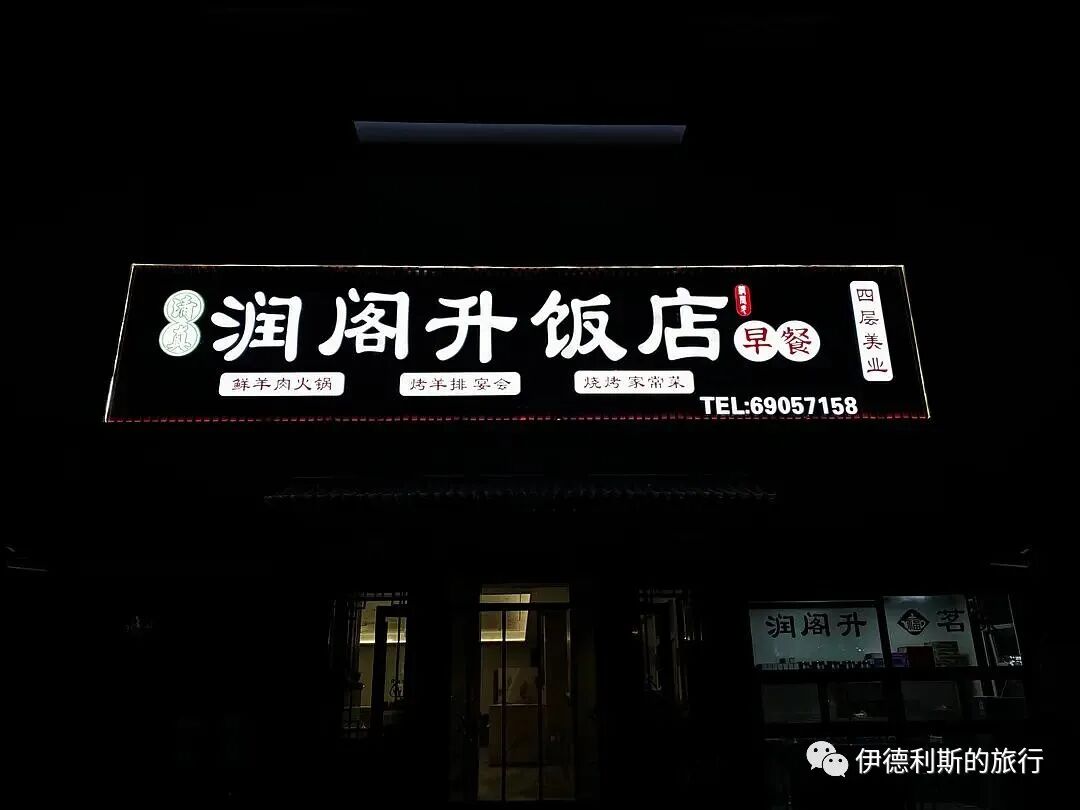
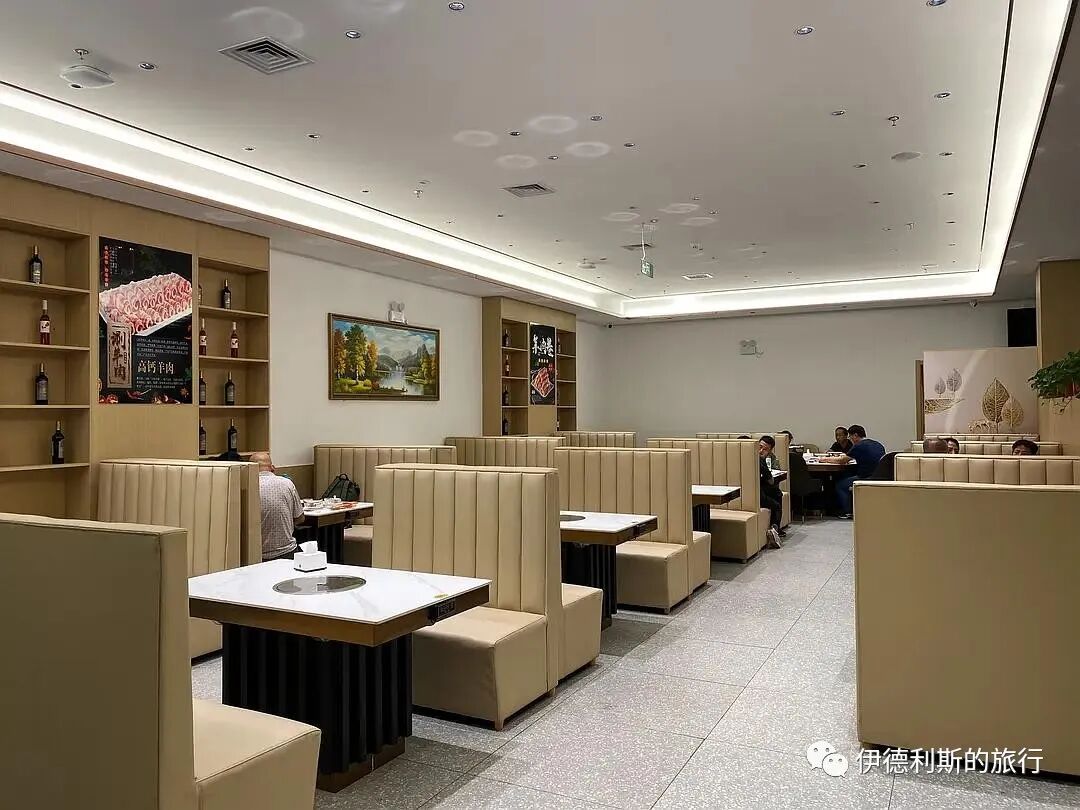
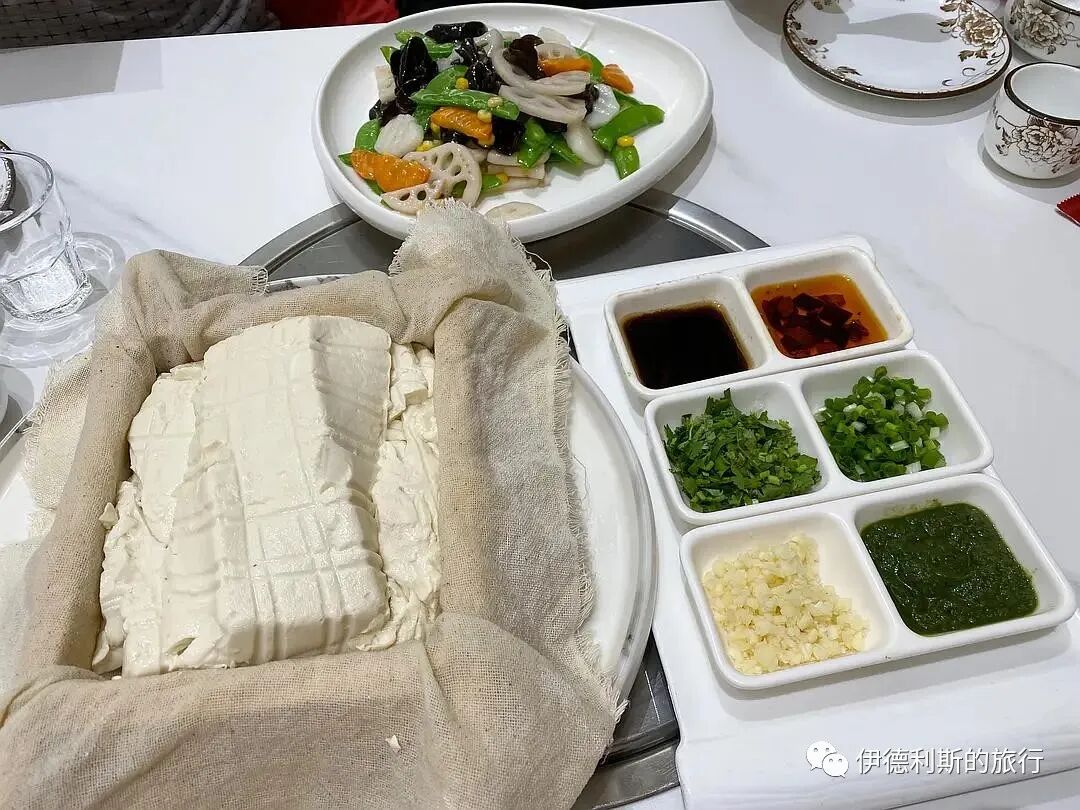
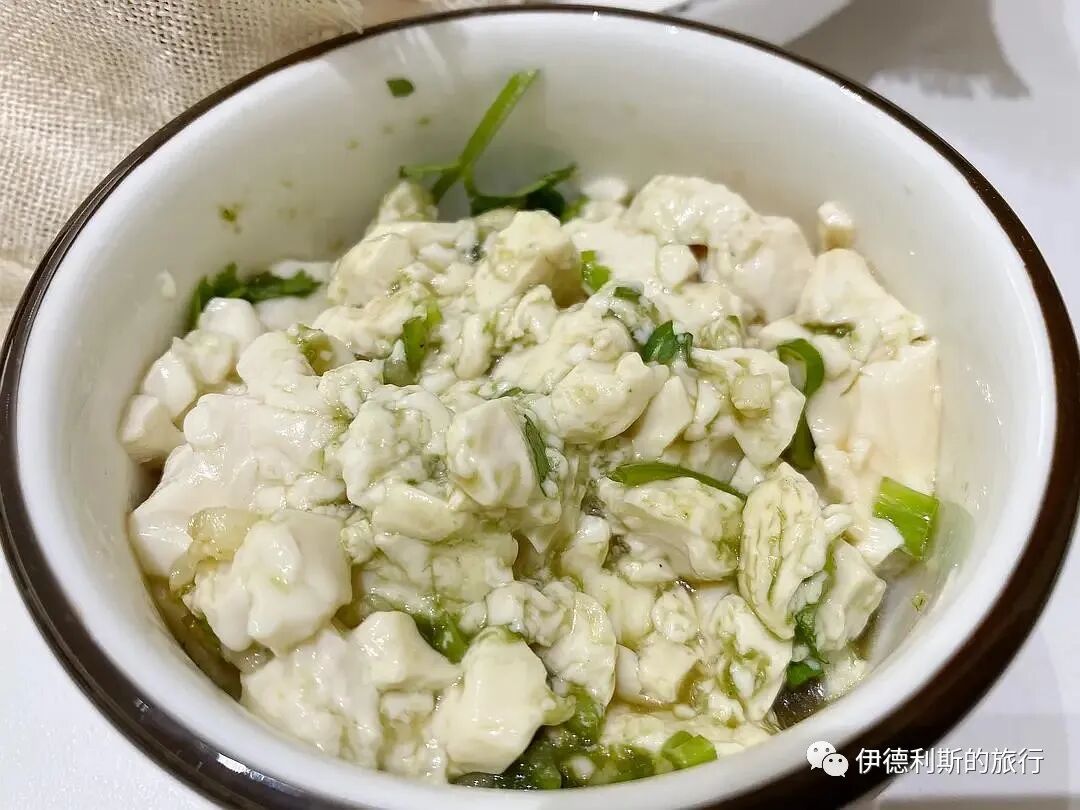
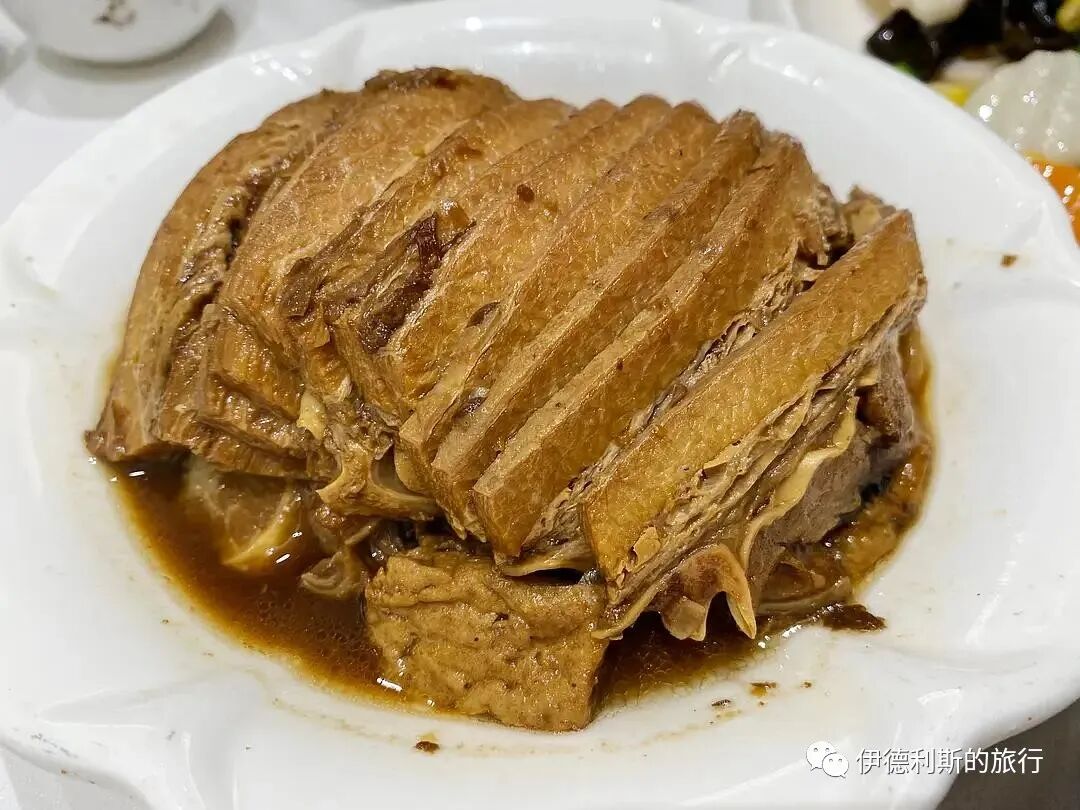
I drove to the Miyun urban area after work and arrived at Runge Sheng on Gulou South Street in the evening. The restaurant was recently renovated this year and has a great atmosphere. I ordered steamed tofu (kaibao doufu) and red-steamed beef. The tofu is steamed and then mixed with various seasonings. Adding chive flower sauce really makes it flavorful! The red-steamed beef had a great texture. It should be one of the eight classic Hui Muslim bowls (badawan), though Zainab and my father-in-law both said it was a bit salty. I guess I will be getting used to the salty taste of traditional Beijing suburban dishes for the next few days, haha.
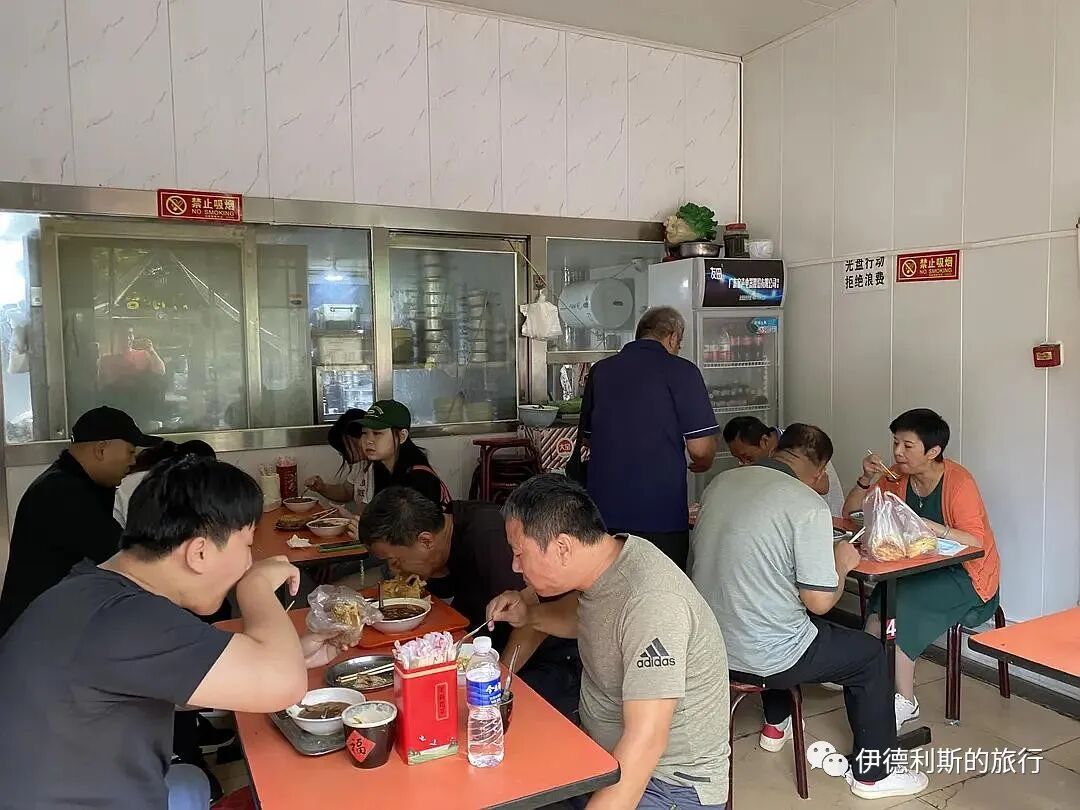
The next morning, I ate old-broth lamb offal soup (laotang yangza), beef dumpling soup (niurou yuanbao tang), and freshly fried meat flatbread (rou shaobing) at Changshun Zhai on Nangen Street in Miyun. The lamb offal was delicious, but my father-in-law and Zainab still could not get used to the salty taste of the traditional suburban food. The flatbread was fried until crispy, and the aroma of the sesame really came through. The dumpling soup with its thin skin and large filling was also very tasty.
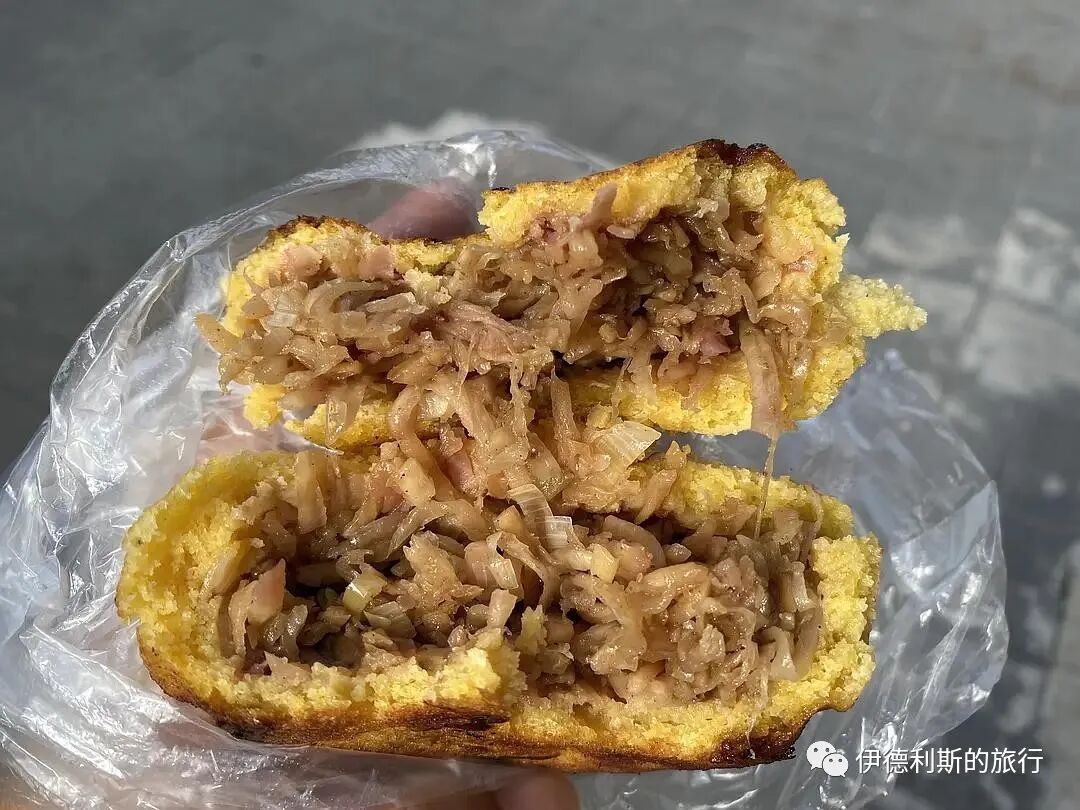
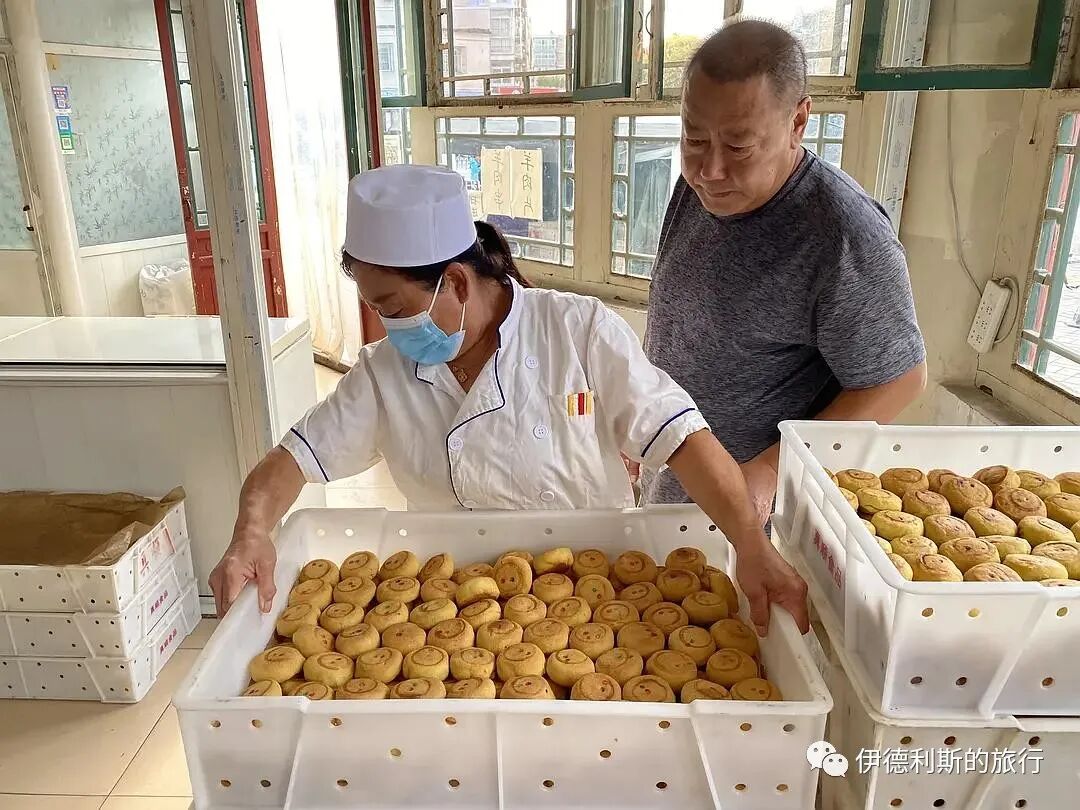
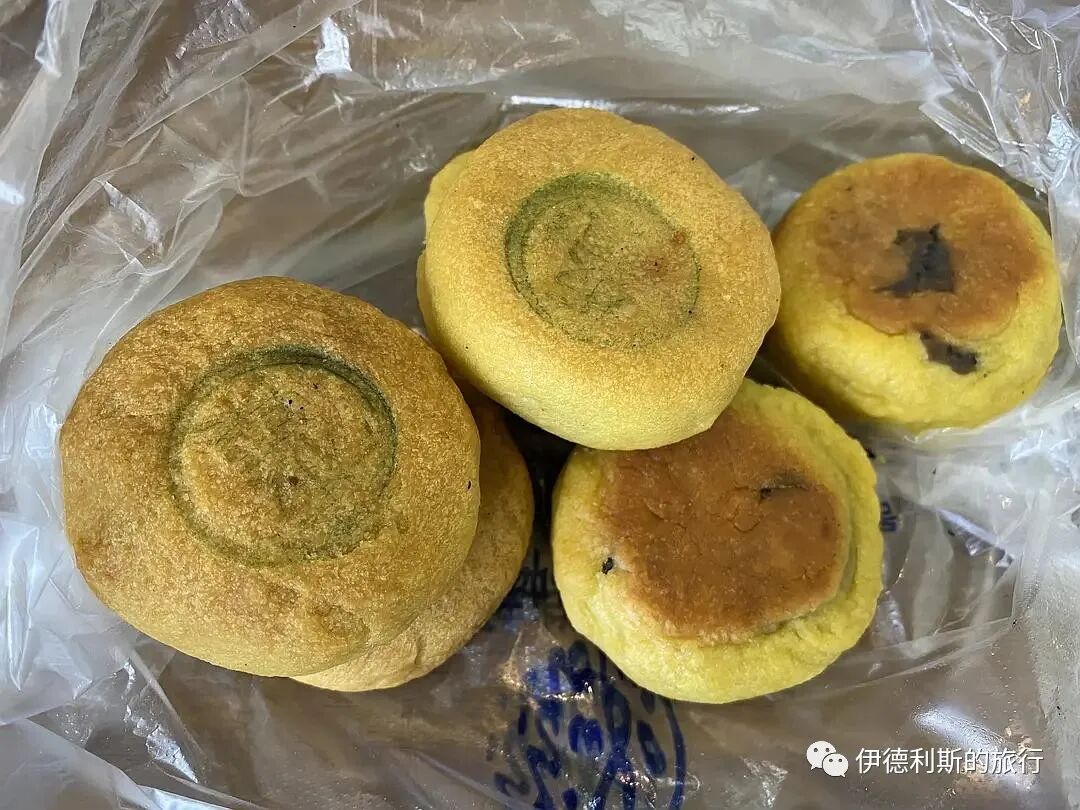
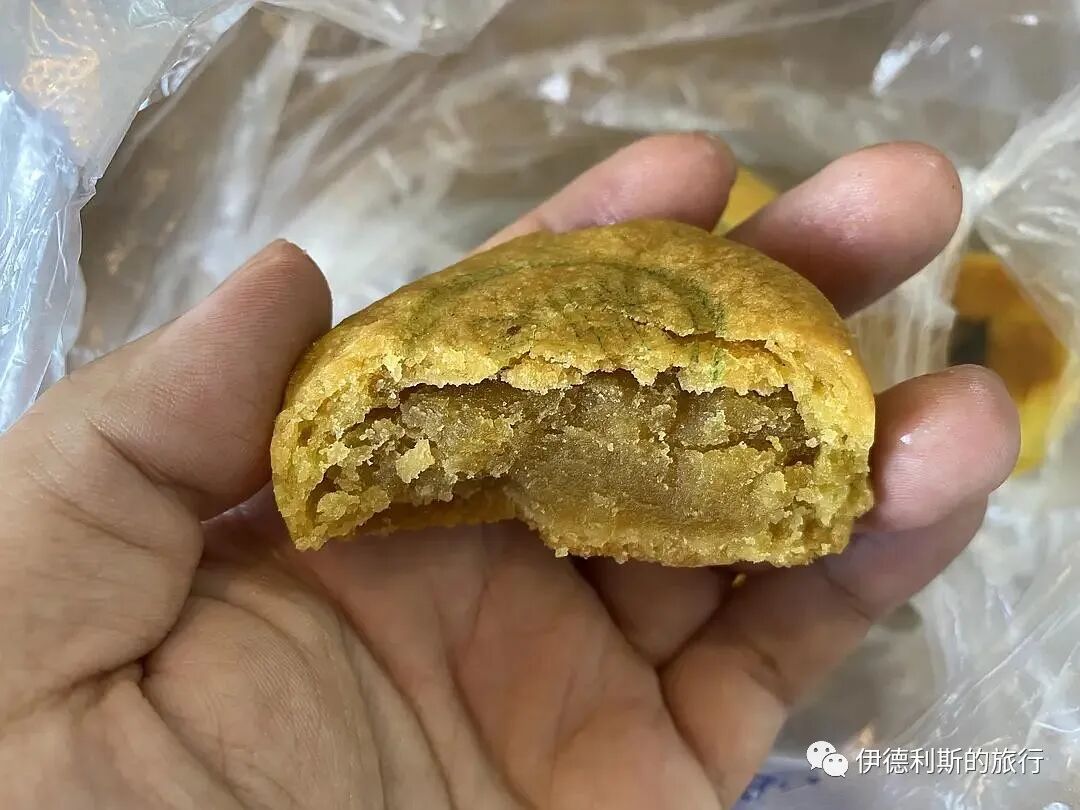
I bought radish-filled buns (xian bobo) at Guangju Zhai in front of the Miyun Mosque, and bought old-fashioned mooncakes with chestnut, five-nut, and black sesame fillings at Dongfang Zhenshun Bakery. Everything was delicious. Most of the halal signs here in Miyun use Persian blue, which is now consistent with the style outside the Great Wall.
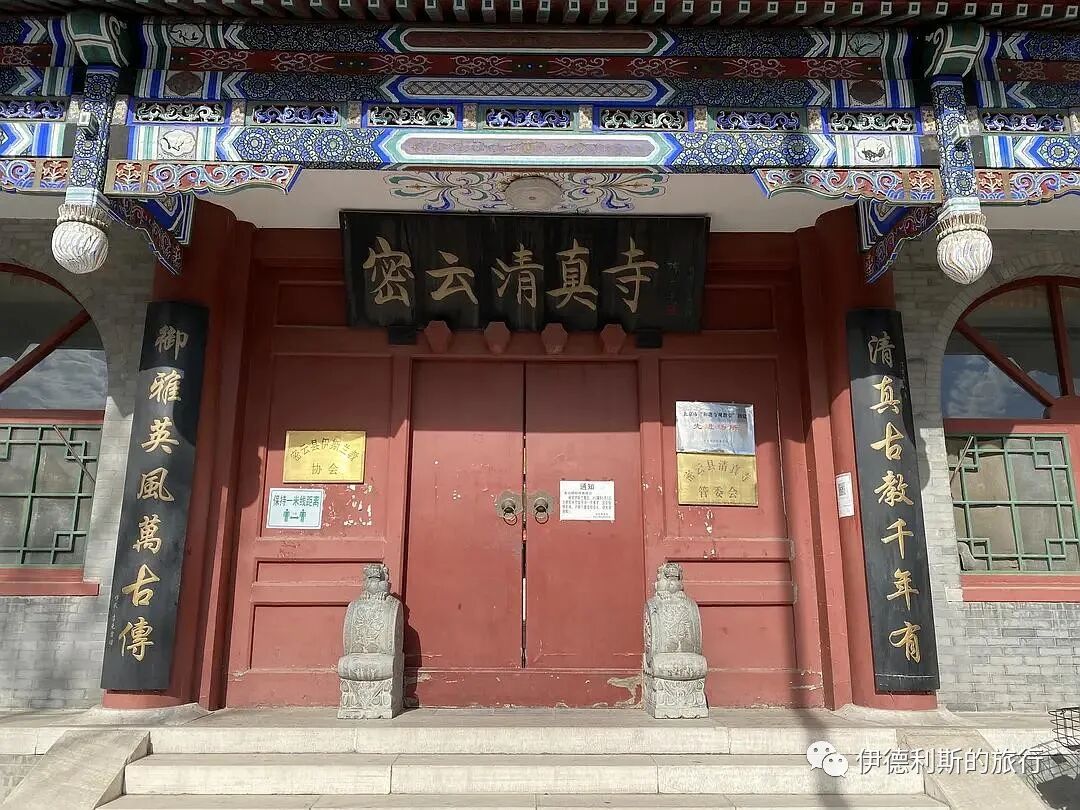
The Miyun Chengguan Mosque was first built during the Qing Dynasty and was relocated and rebuilt in 2006.
I went to visit the Rose Garden in Miyun in the morning.
I picked Gala apples and crabapples at the Fusi Apple Manor in Miyun.
I think the Miyun Baihe Urban Forest Park in the evening is just as good as the Olympic Forest Park! It is mainly very quiet.
Mujia Yu
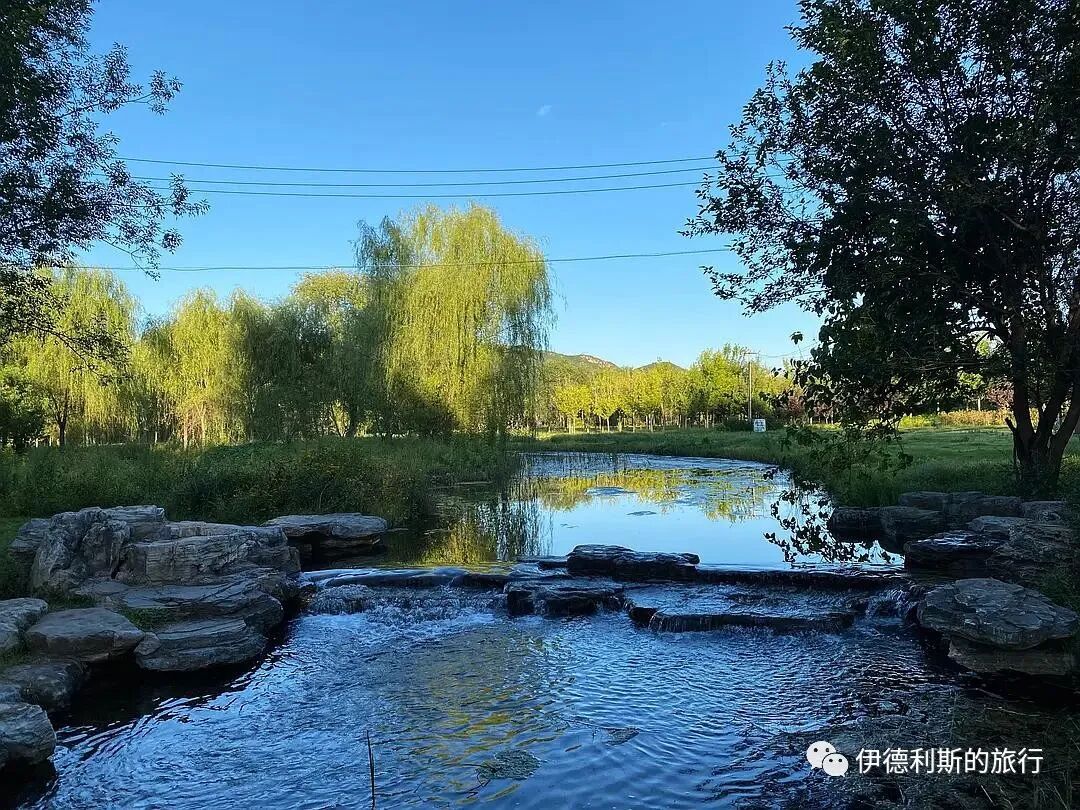
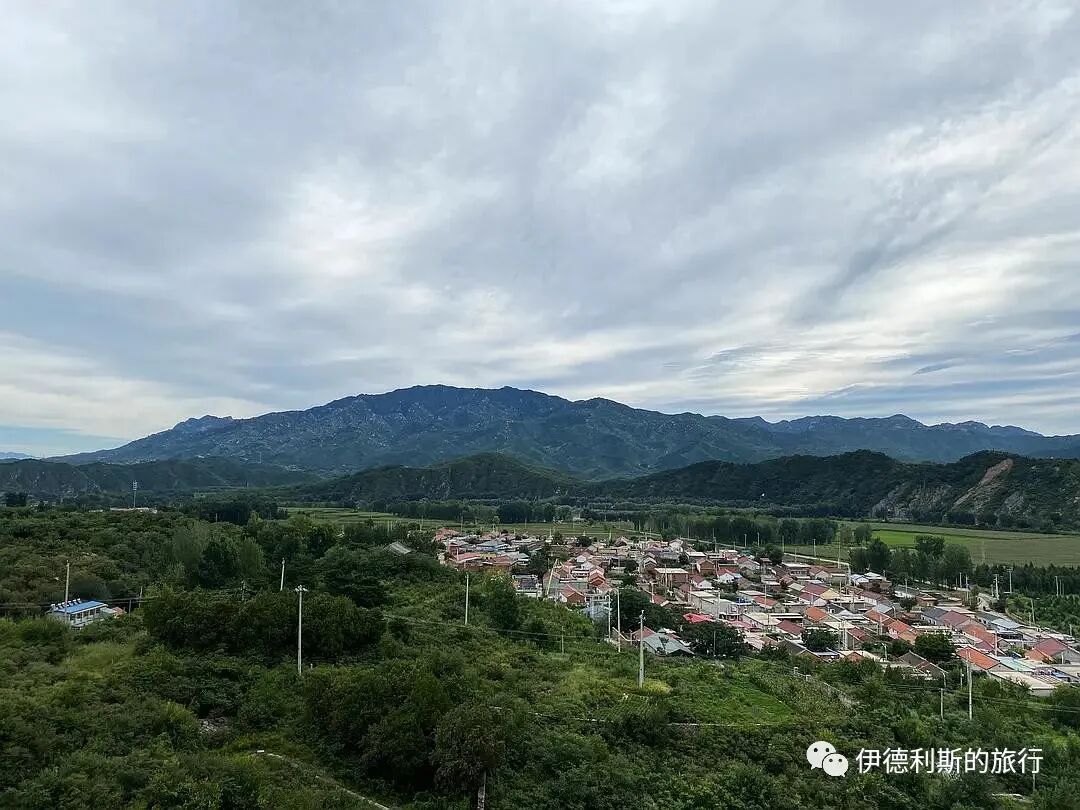
Mujia Yu Village, now called North Mujia Yu Hui Muslim Village, is located northeast of the Miyun urban area and south of the Miyun Reservoir. Historically, it was on the trade route from Gubeikou and the ancient Shixia City to the Miyun urban area. The Hui Muslims with the surname Mu came from Mujia Zhuang (today's Muncun) in Tianjin. They moved to Miyun during the Qianlong reign, and it has been over two hundred years since then.
According to the Mu Family Genealogy, the Mu ancestor was named Mu Chonghe. His ancestral home was Shayang Alley in Mu Jiazhai, Hangzhou. After being captured in the early Ming Dynasty, he moved to Guyi Alley inside Shuixi Gate in Nanjing. In 1404 (the second year of the Yongle reign of the Ming Dynasty), Mu Chonghe followed the Prince of Yan north. He transported imperial grain by canal boat to Tongzhou. On his return, he settled twelve miles north of Tianjin Wei and founded Mujia Zhuang, which was the earliest Hui Muslim village in Tianjin.
In 1771 (the 36th year of the Qianlong reign), Mu Chonghe's twelfth-generation grandson, Mu Guobao, was arrested for injuring someone while trying to stand up for justice at a market. He was rescued by his younger brother while being escorted. The two brothers fled Tianjin and came to Mengjiayu (today's South Mujia Yu Village) in Miyun to work. In less than ten years, they built houses, bought land, married, and had children, founding Mujia Yu. Mu Guobao was the first ancestor to move to Mujia Yu.
According to research by local scholar Cao Rongxin, Mujiayu was originally home to only the Mu family. Later, Hui Muslims with the surname Ha settled here after fleeing famine, followed by three Han Chinese families named Wang, Shi, and Hao who settled here while working as long-term laborers for the Mu family. When the Miyun Reservoir was built in 1958, the ancient city of Shixia was submerged. Hui Muslim families named Li, Cao, Ma, and Zhang from the ancient city, along with the Mu family from the former Qianchao Douzhuang (whose original ancestor was the younger brother of Mu Guobao), all moved to Mujiayu, eventually forming the village's current size.
Mu Chaoyu, the son of Mujiayu's original ancestor Mu Guobao, built the Mujiayu mosque on a small hill by the river east of the village in his later years. In 1946, the Mujiayu mosque was seized by the armed landlord group known as the Huohui from West Mujiayu. It was destroyed in 1948 during the liberation of Miyun, and only two pine trees remain today.
After 1949, Mujiayu used compensation funds to build six rooms on the west side of the village. They originally planned to rebuild the main prayer hall, but the project failed due to road construction. Later, the rooms were occupied by a collective canteen and other units. It was not until 1991 that the mosque was finally rebuilt on the west side of the road in the west part of the village.
The chickens and cats at Mujiayu mosque.
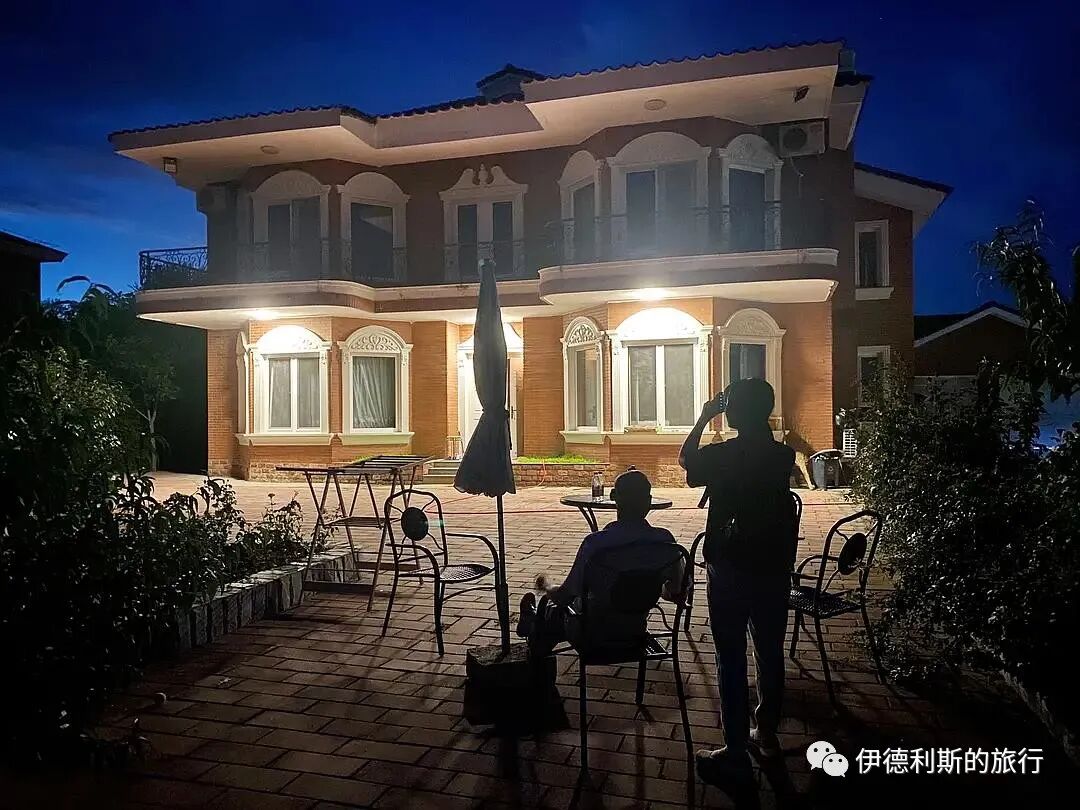
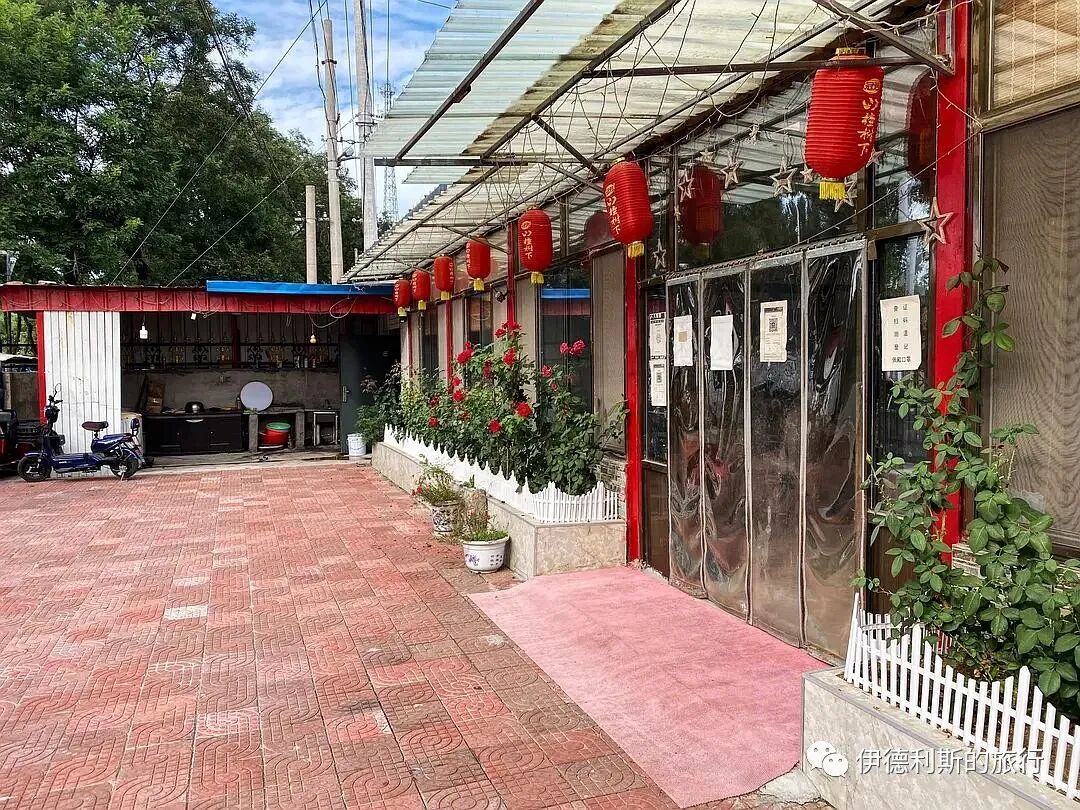
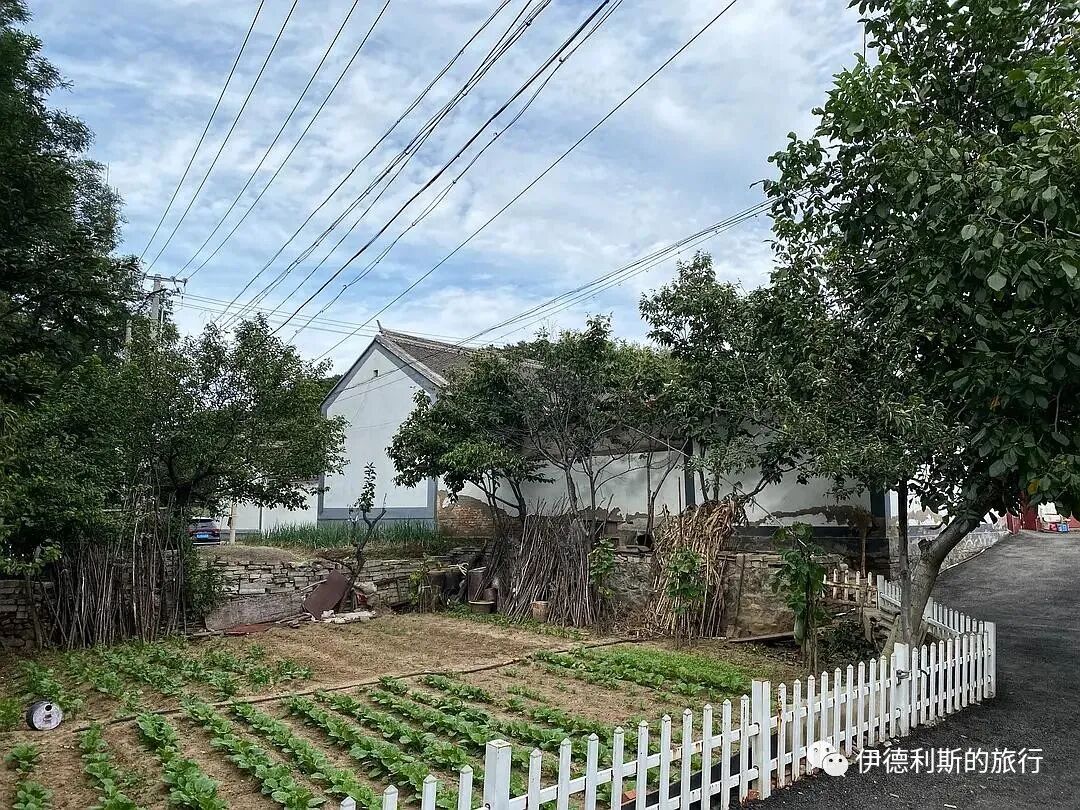
We stayed at Songning Yuan Su, not far east of Mujiayu. The suite cost over 100 yuan a day, and it is less than a 10-minute drive from the North Mujiayu Hui Muslim village. There is a crabapple tree and a peach tree in the courtyard, the view outside the window is lush and green, and you can faintly see the Chao River.
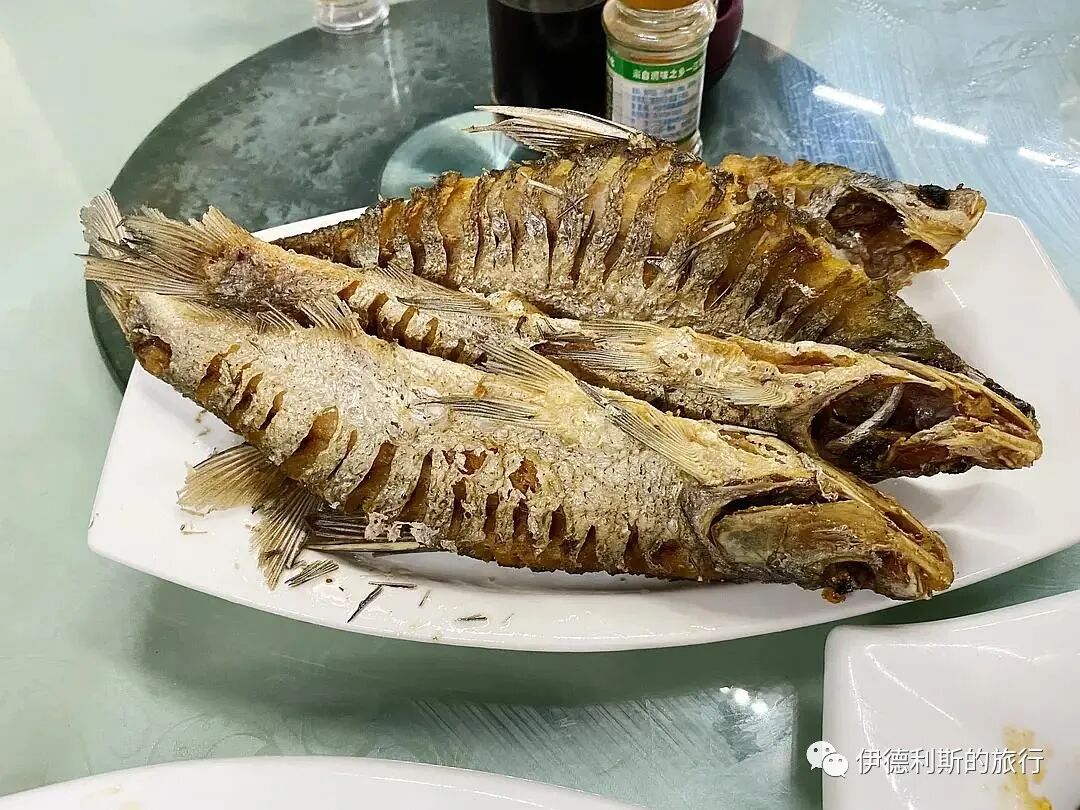
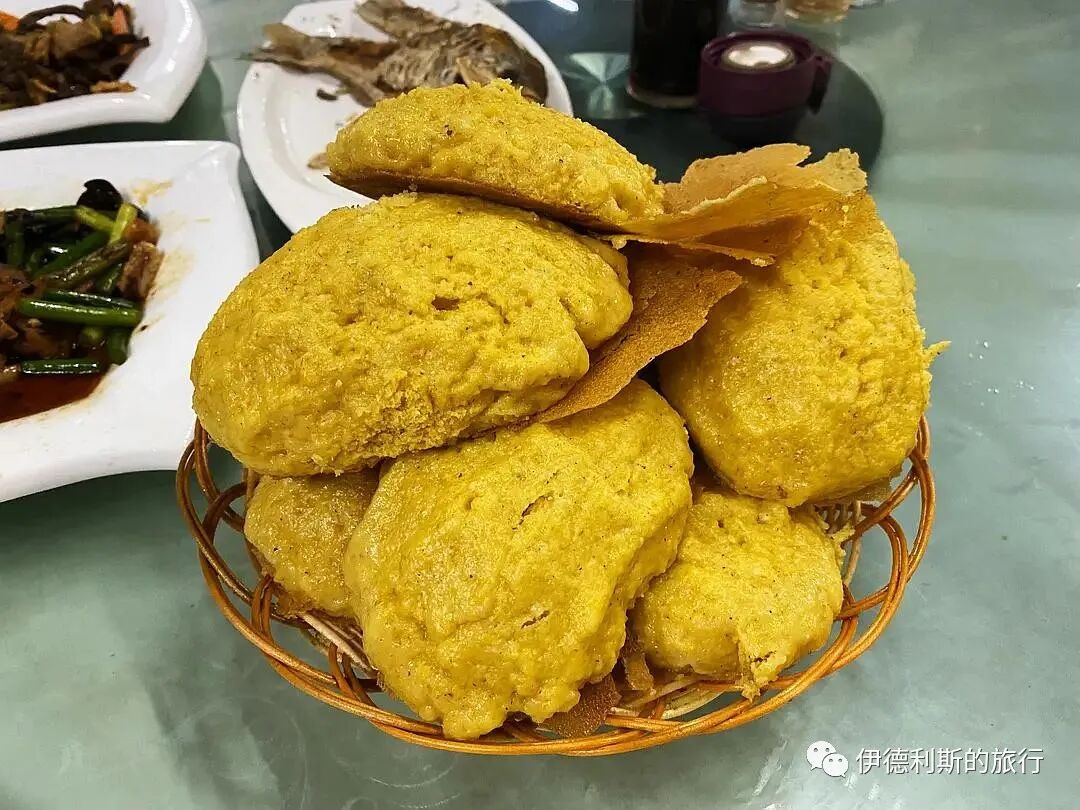
In the evening, we ate stir-fried beef with mountain mushrooms, stir-fried tofu with wood ear mushrooms, deep-fried sharp-belly fish (qiaozui), and cornmeal flatbreads (tiebingzi) at the Shanshui Tianyuan Ethnic Restaurant in Mujiayu. A large iron pot of freshly made cornmeal flatbreads only cost 15 yuan, and we couldn't finish it at all. The deep-fried fish was very satisfying, but the portion was huge. In short, eating at a farmhouse restaurant means big portions and good value, which reminded me of eating in Northeast China, haha.
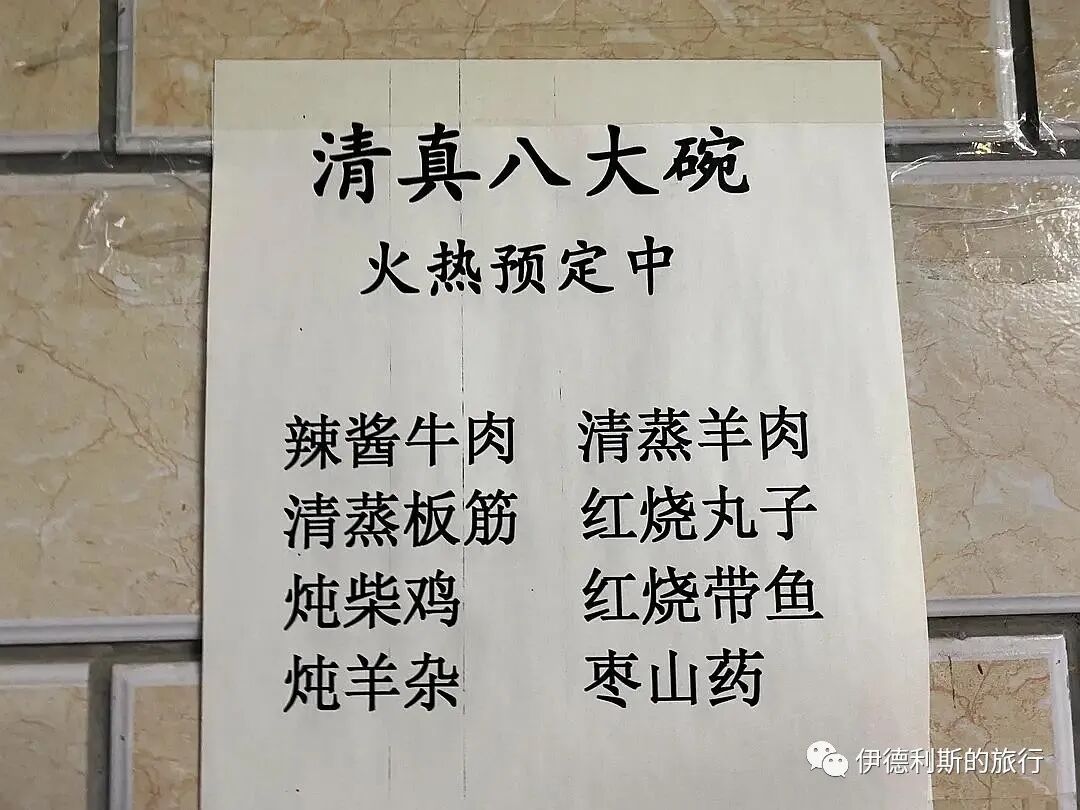
It is also worth mentioning that the Hui Muslim banquet known as the Eight Great Bowls (badawan) in Mujiayu has a long history. When the Miyun Reservoir was built in 1958, all residents of the Shixia ancient city in the submerged area were relocated. A group of Hui Muslims with the surname Li, who were skilled at making the Eight Great Bowls, moved to Mujiayu, which is how the current Mujiayu halal Eight Great Bowls came to be.
Back at the villa in the evening to watch the stars.
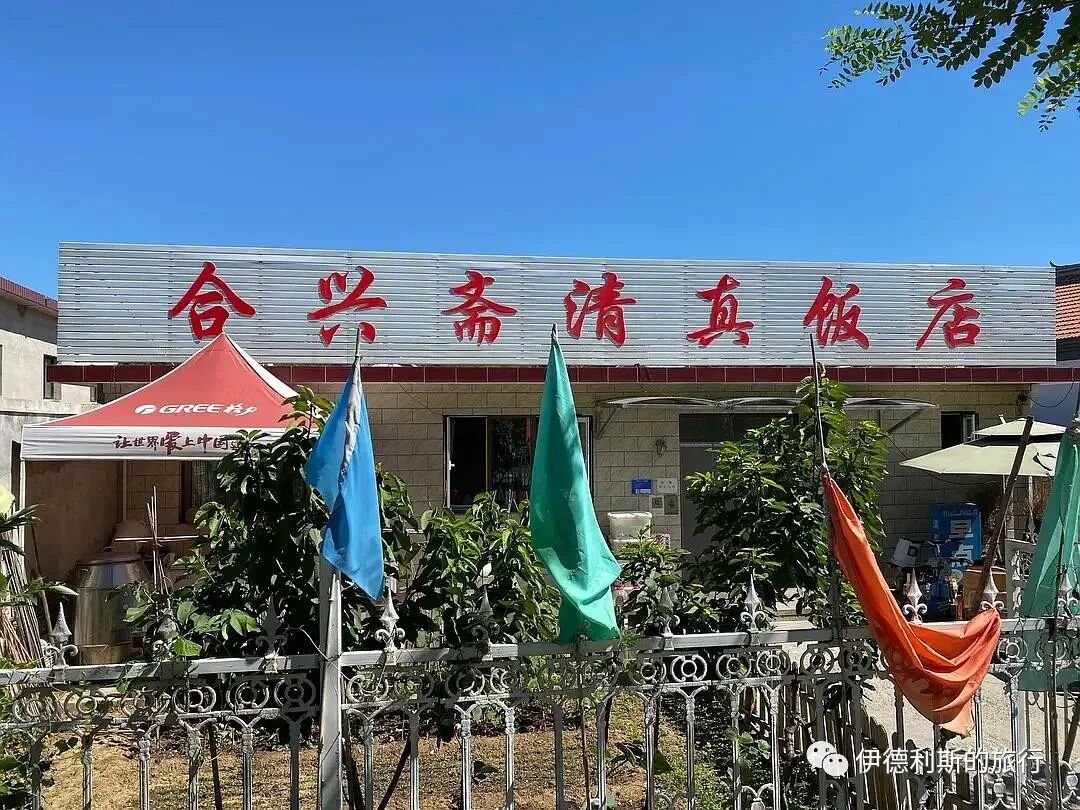
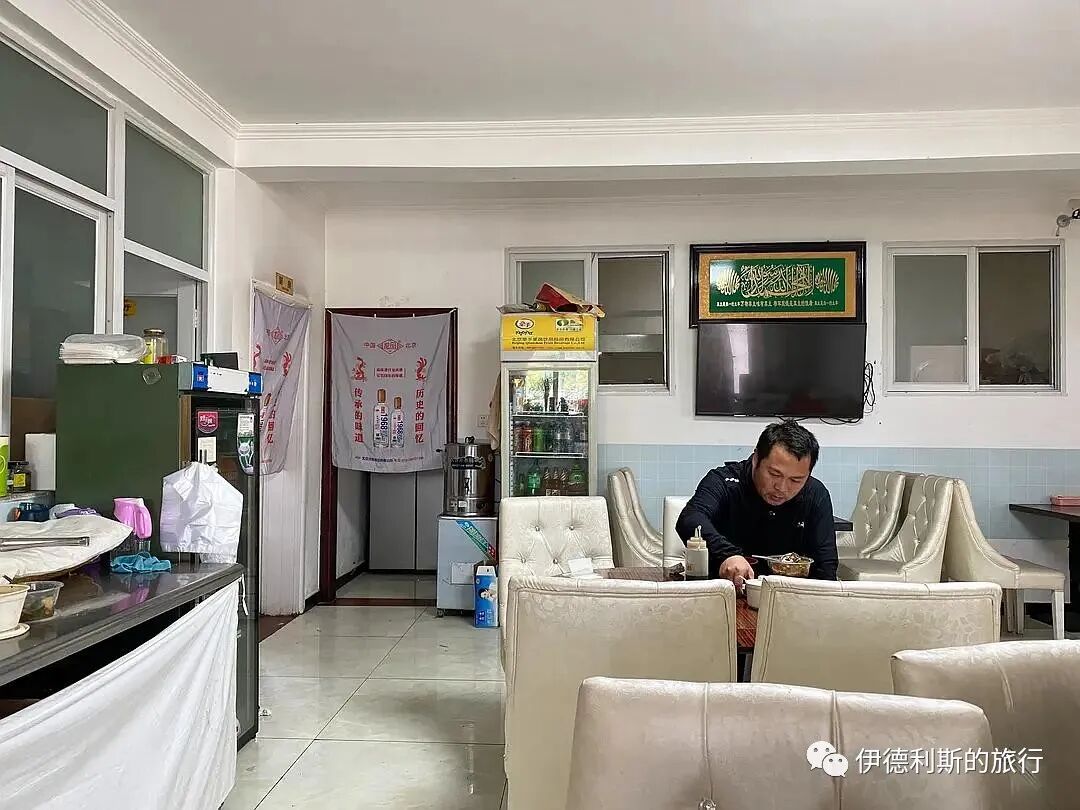
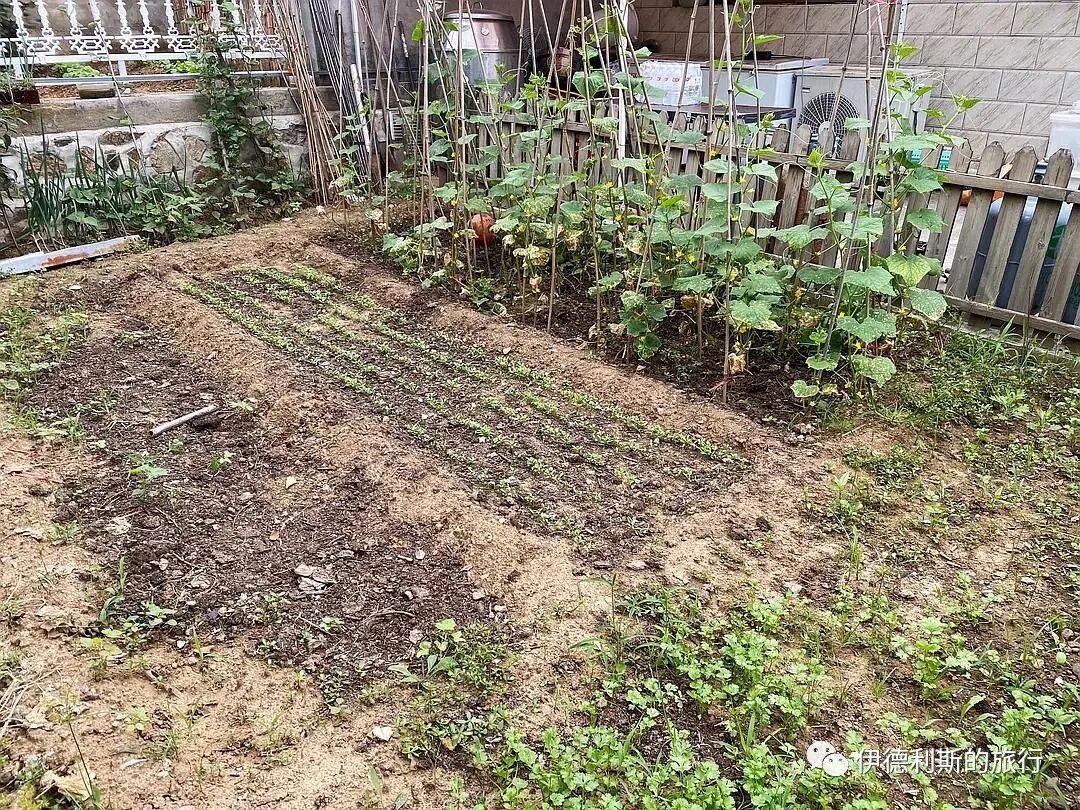
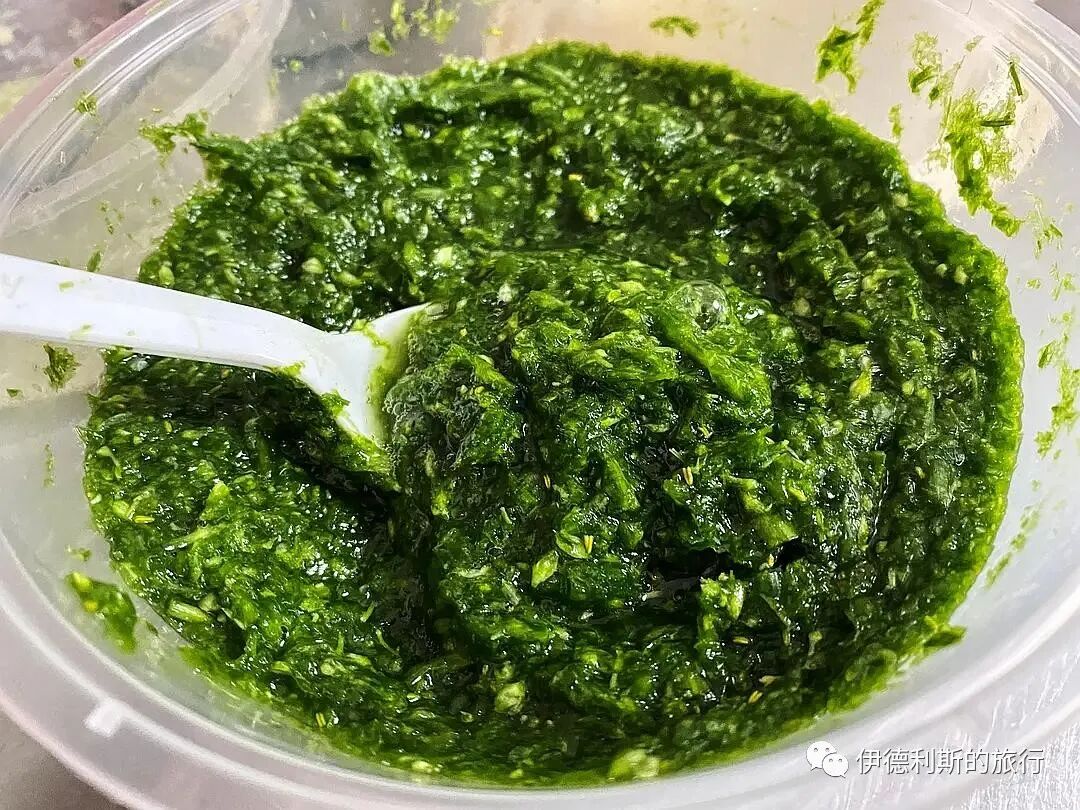
In the morning, we had tofu pudding (doufunao), soy milk, fried dough cakes (youbing), and meat-filled flatbreads (roushaobing) at the Hexingzhai Halal Restaurant in Mujiayu. They seem to be the only place in the North Mujiayu Hui Muslim village selling breakfast. Their homemade fresh chive flowers were especially delicious, and the meat-filled flatbreads were very flavorful.
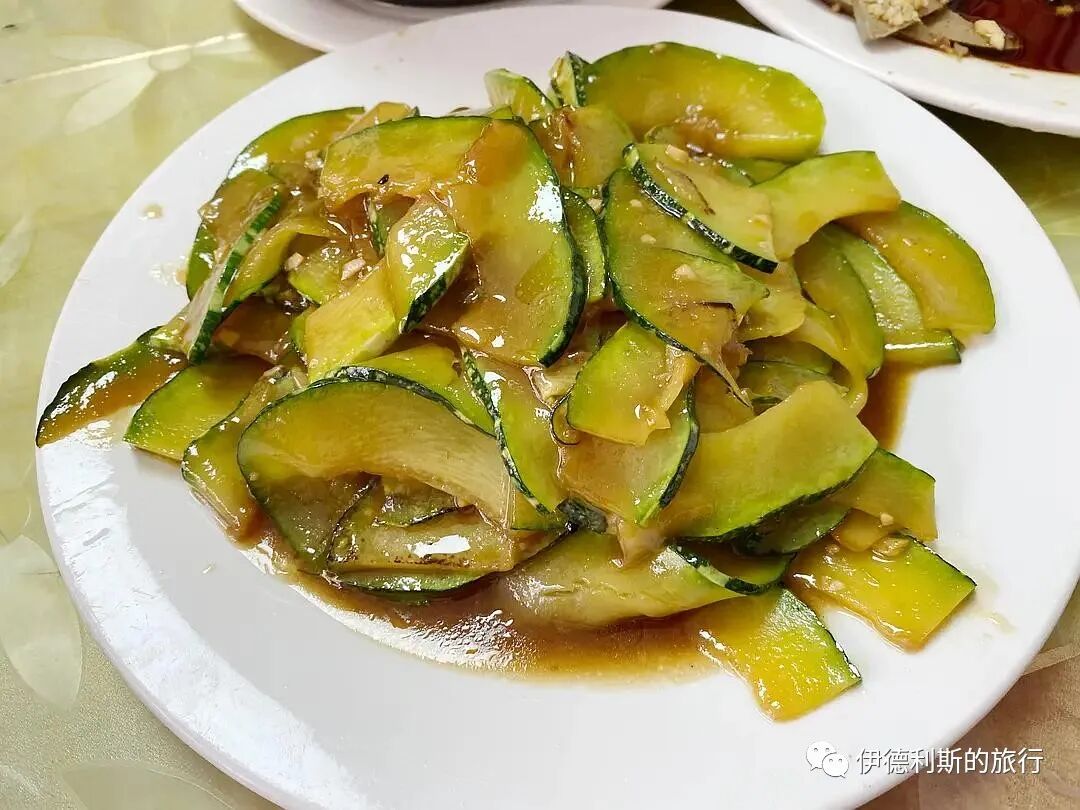
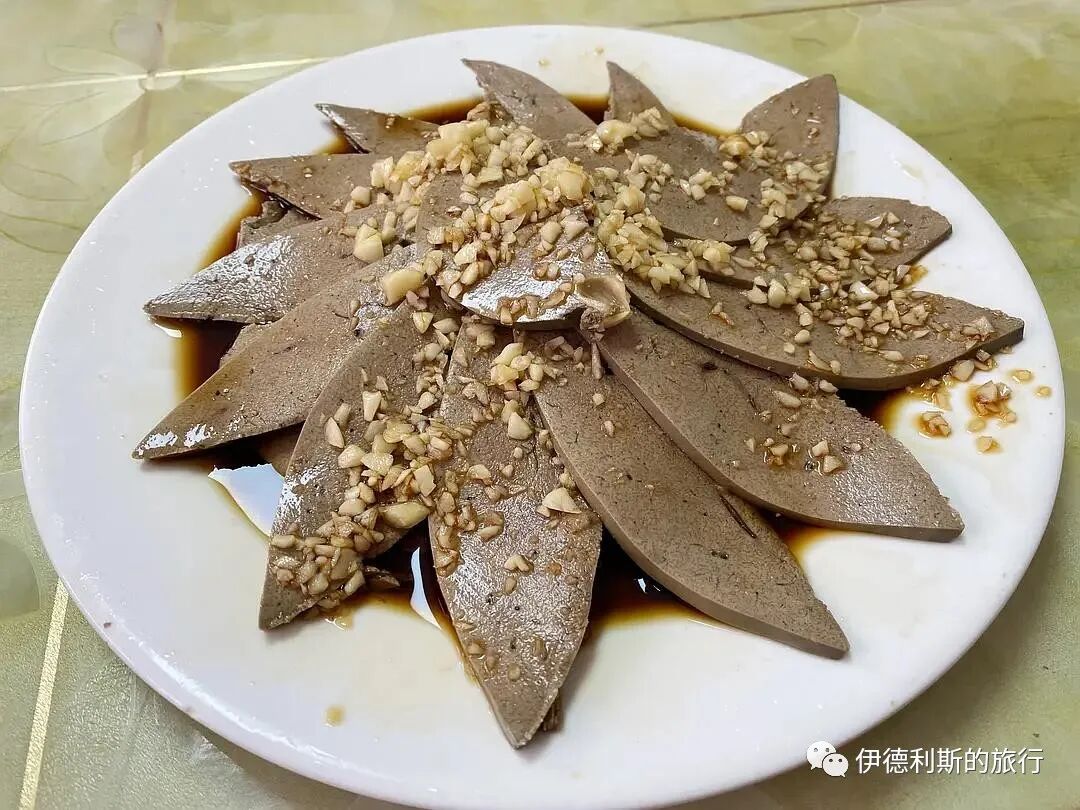
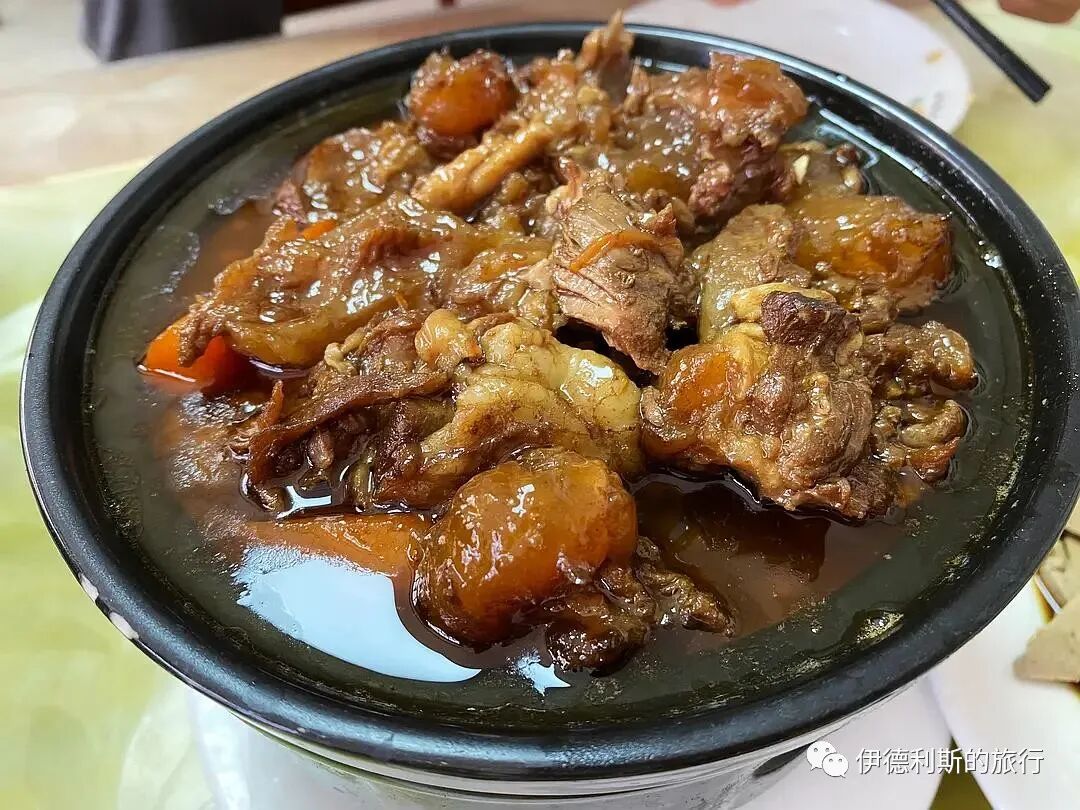
We ate beef pancakes, beef casserole, mixed lamb liver, and stir-fried pumpkin at the Fuhua Zhengxing Folk Restaurant in Mujiayu. This was our first time at a Miyun farmhouse restaurant, so we didn't have experience and ordered too much at once, haha. The flaky beef pancake was delicious! The mixed lamb liver was also very tasty, but the beef used was a bit fatty and gristly; it would have been better if it were leaner. The owner was very welcoming. As soon as he saw Zainab was pregnant, he quickly ushered us into a quiet room inside to eat.
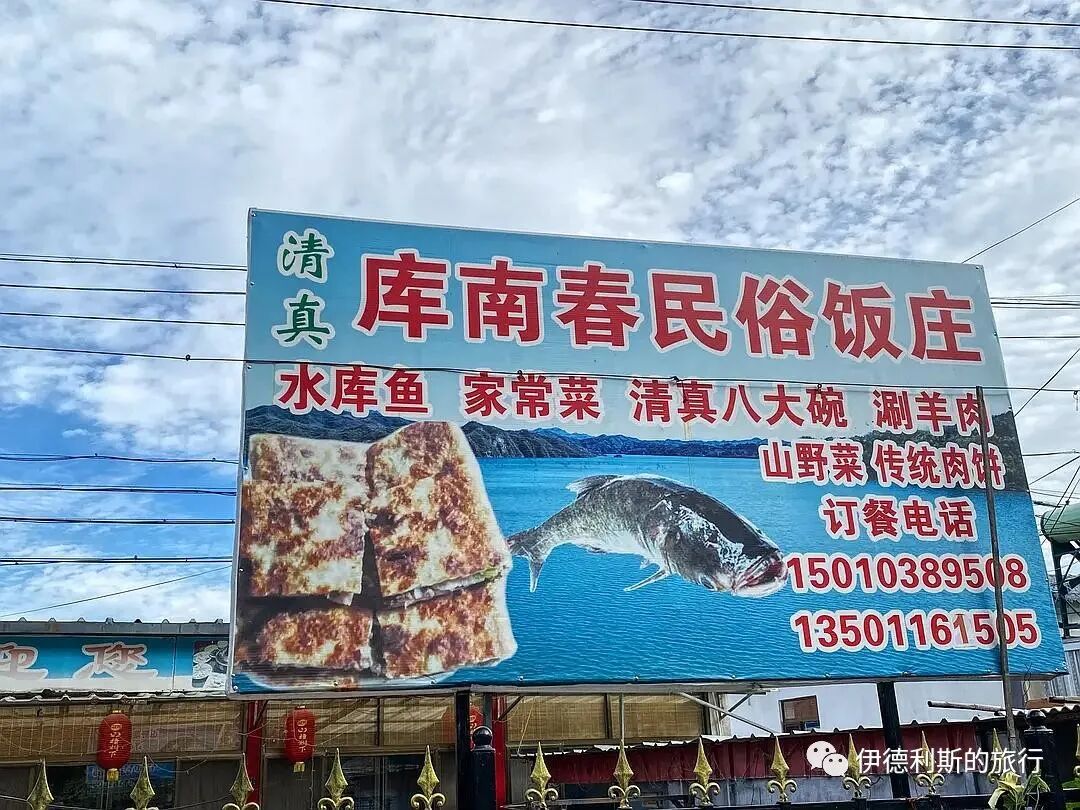
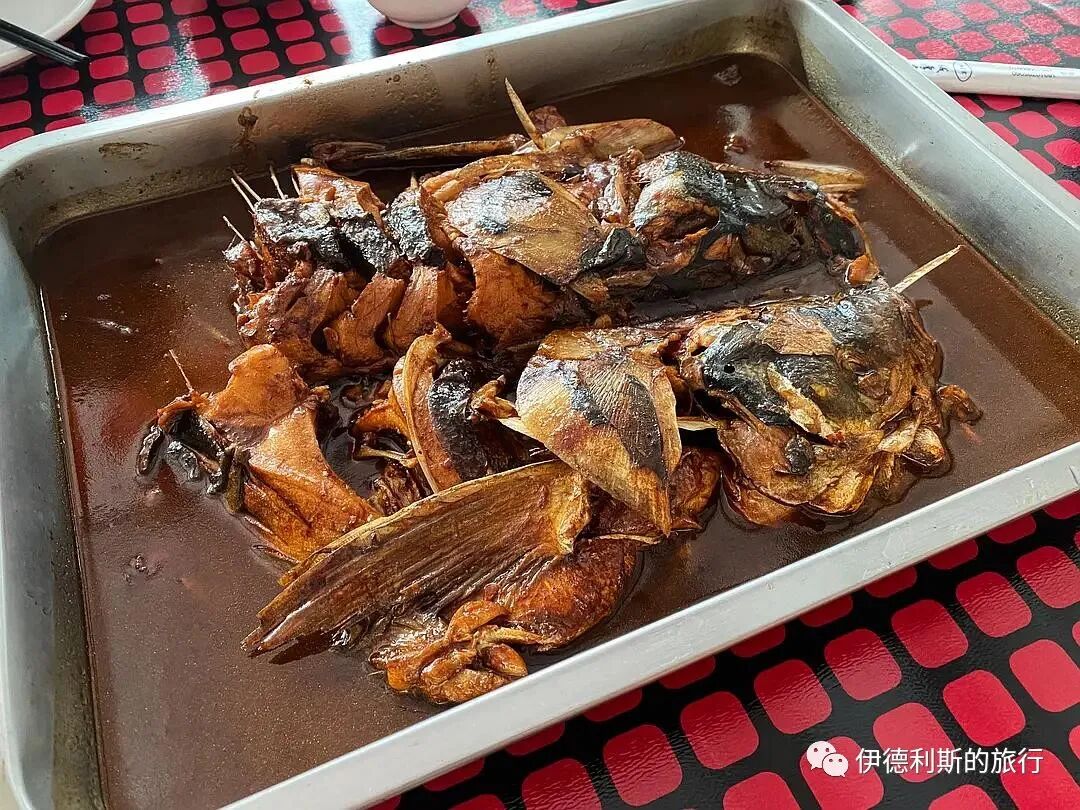
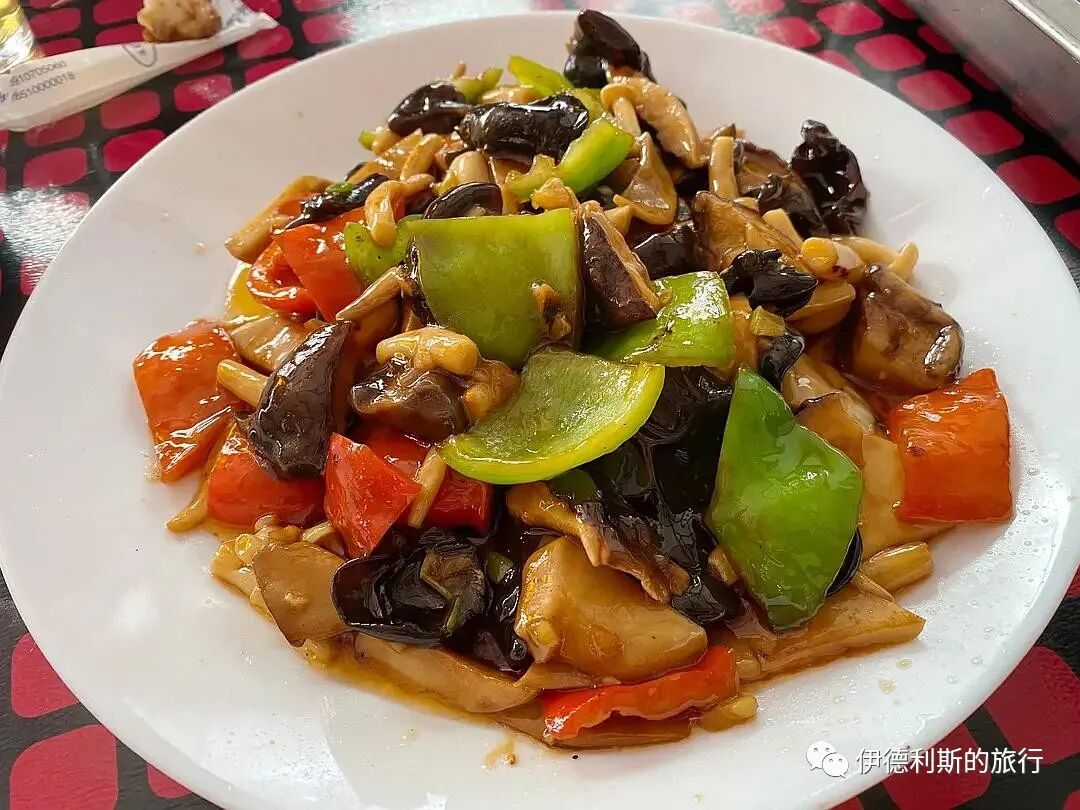
A halal farmhouse restaurant in Mujiayu called Kunanchun Folk Restaurant. We had fish head with flatbreads, which featured three jin of bighead carp served with freshly made homemade flatbreads, and we also ordered a dish of three types of mushrooms. We called ahead to ask for less salt and to have it stewed in advance, so we could eat as soon as we arrived. The reservoir fish wasn't as chewy as the rainbow trout we had last week, but it was a different kind of delicious. Everyone was very satisfied and still wanted more, saying we should eat a whole five or six-jin fish next time.
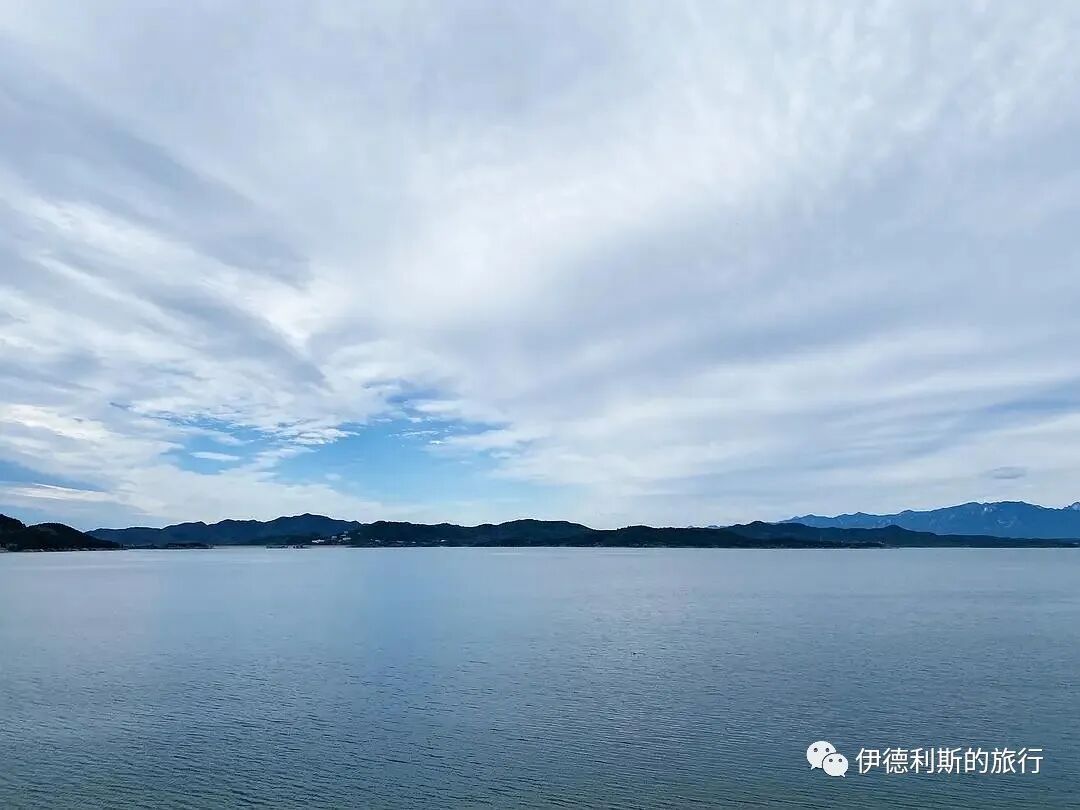
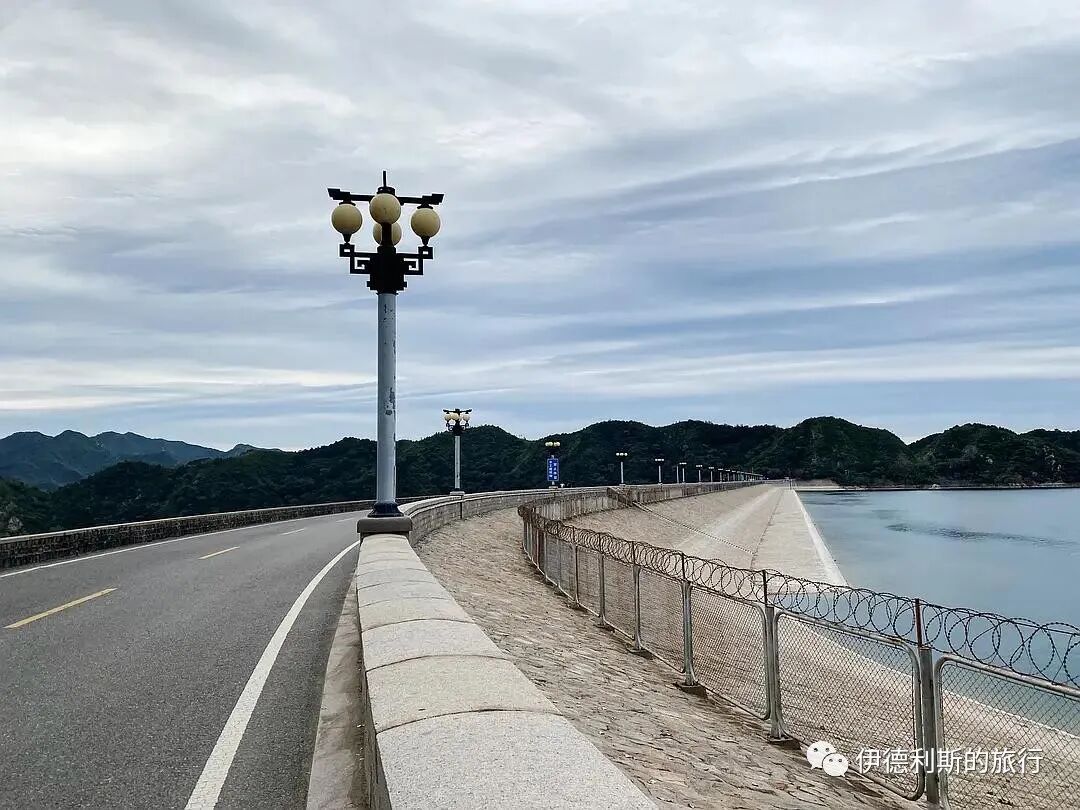
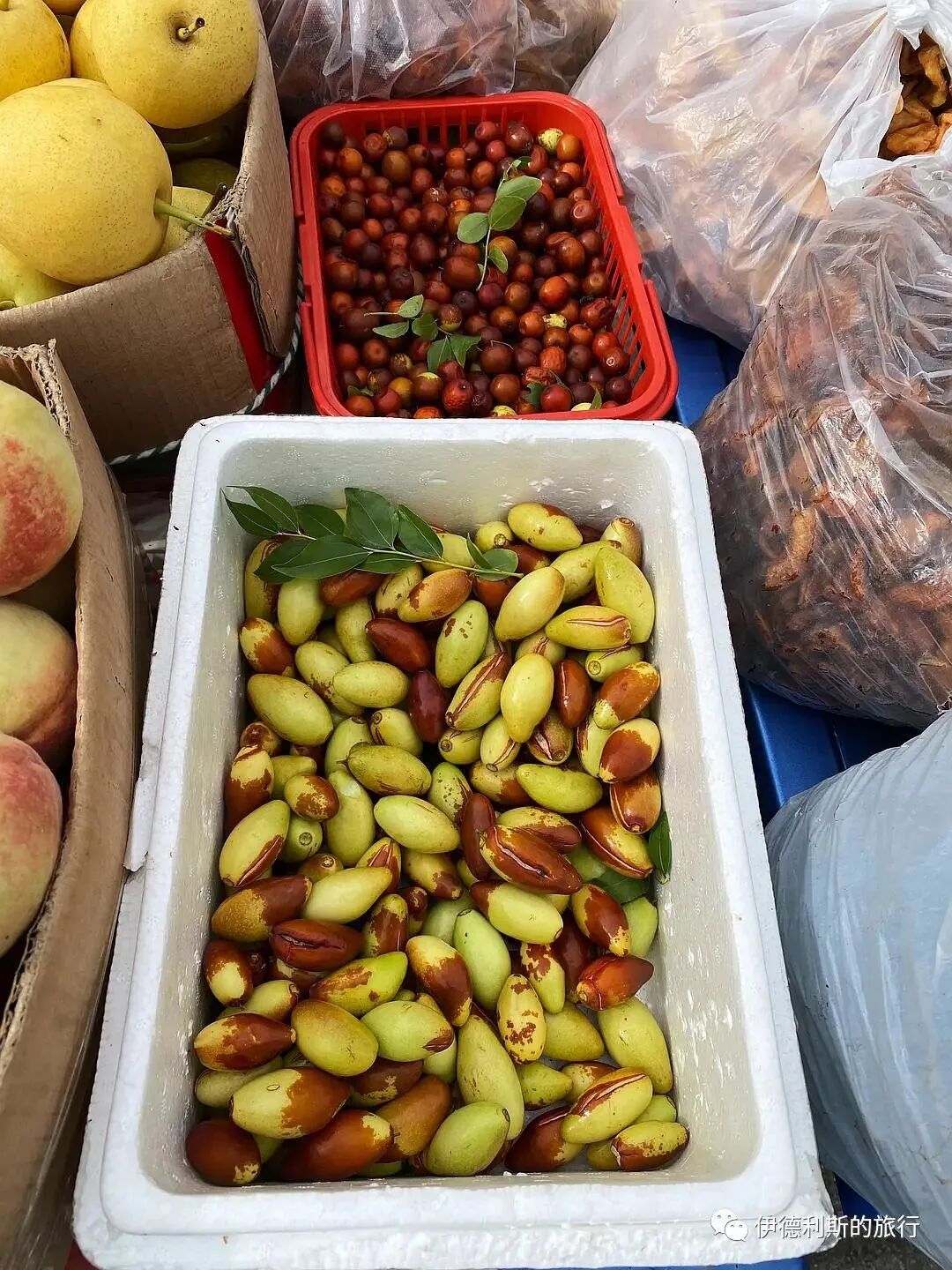
I enjoyed the view from the main dam of the Chaohe River at Miyun Reservoir, where villagers were also selling dates picked from the mountains.
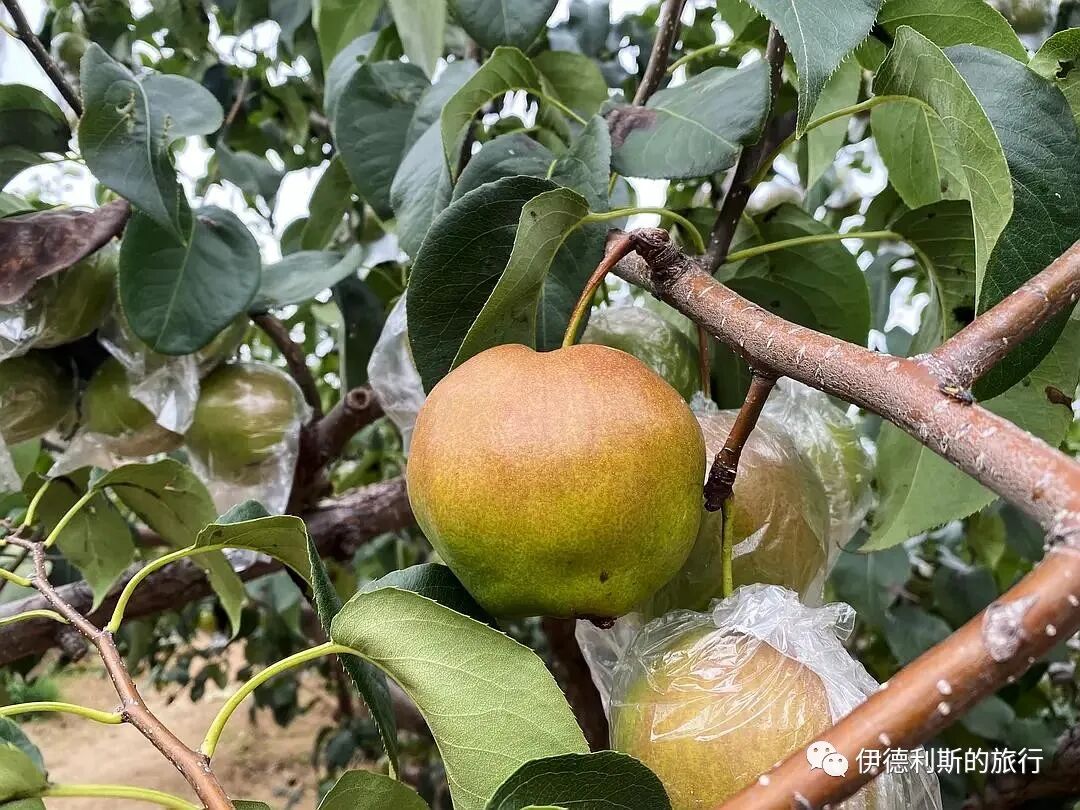
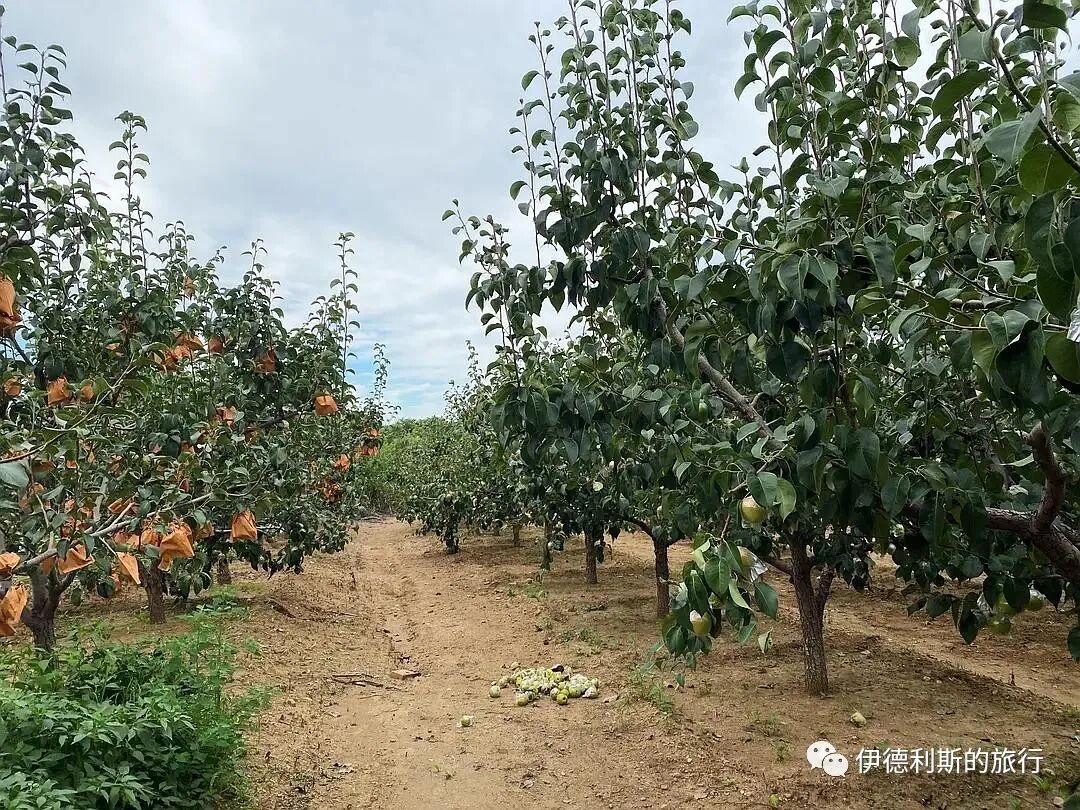
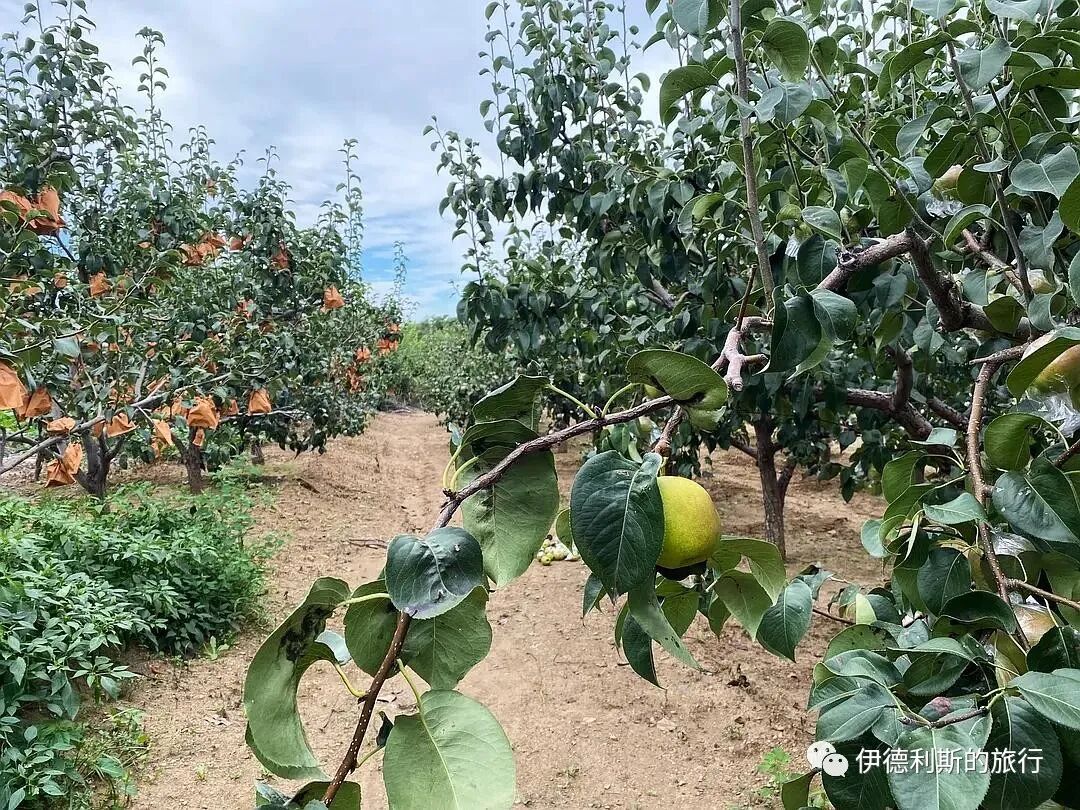
After leaving the dam, I went to a nearby orchard to pick some early-ripening pears. They were incredibly juicy and very sweet!
Gubeikou
I traveled along the east bank of Miyun Reservoir, heading toward Gubeikou.
I visited the Gubeikou mosque again after four months, but the Hui Muslim gentleman who holds the key wasn't home, so I couldn't get inside. For a detailed introduction to the Gubeikou mosque, you can check my diary entry from the spring, 'Visiting the Ancient Mosque in Gubeikou'.
During the Kangxi reign, Gubeikou was a vital military stronghold for the Emperor's campaigns against the Dzungars. It was also a key stop on the imperial road for his northern hunting trips and inspections, making it very important. In the 32nd year of the Kangxi reign (1693), a military camp called Liulin Camp was established in the mountains west of the river in Gubeikou, and heavily guarded by troops. In the 34th year of the Kangxi reign (1695), a Hui Muslim officer named Ma Jinliang was promoted to Commander-in-Chief of Gubeikou in Zhili due to his outstanding military service. In the 42nd year of the Kangxi reign (1703), he was promoted to Regional Commander of Zhili. People called him 'Commander Ma the Hui Muslim,' and he was stationed in Hexi Village, Gubeikou. While in Gubeikou, Ma Jinliang oversaw the renovation of the Gubeikou mosque. The current mosque is basically the same size as it was after that Kangxi-era renovation.
By the end of the Qing Dynasty, as the imperial road fell into disuse, Liulin Camp was disbanded in the 16th year of the Guangxu reign (1890), and Hexi Village gradually became quiet. After the 1960s, the Gubeikou mosque was taken over by the local brigade headquarters, and religious activities stopped. It was renovated in 2004 for the Olympics, but religious activities have not resumed to this day.
On the way, I found a small courtyard belonging to a Hui Muslim family in the village; the scenery was really nice. Most of the Hui Muslims in Gubeikou are descendants of the Qing Dynasty garrison, with surnames like Ma, Ha, Yang, Li, and Cao.
This century-old Hui Muslim house in Hexi Village belongs to a man named Ma. He said his family bought it from a Hui Muslim family named Yang over a hundred years ago. Because the walls are cracking, the owner said he plans to start renovations next year, so the original look of this century-old house might not be visible for much longer.
The image below is a map of the Gubeikou town market from 1938, divided into Hexi (west of the river) and Hedong (east of the river) by the Chaohe River.
Traveling from Hexi to Hedong, you find the only halal snack shop in Gubeikou. The owner is named Cao, and he is a local Hui Muslim from Gubeikou. The ancestors of the Cao family of Hui Muslims in North China were originally surnamed Li. Their ancestral home was in Erlanggang, Nanjing (which research suggests was a station for Semu people who surrendered to the Ming). During the Yongle reign, they followed the emperor to Beijing, but on the return trip, they stayed in Cangzhou due to illness and married into the Cao family, so their descendants changed their surname to Cao. The Cao family of Hui Muslims in Cangzhou later spread throughout North China, and one branch settled in Gubeikou during the Qing Dynasty.
Their shop is famous for selling sesame flatbread (shaobing) and lamb offal soup (yangza) in the morning, and they also serve lamb dumplings (yangrou jiaozi) and stir-fried pancakes (chaobing) at noon. It is just a small shop run by a husband and wife. Boss Cao looks a bit stern, but he is actually very friendly and chatted with me about the situation of the Hui Muslims in Gubeikou. He said that most of the Hui Muslims in Gubeikou have moved away now, and some of them have moved near the Miyun mosque. view all
Summary: China Mosque Travel Guide Beijing Miyun: Reservoir Mosques, Hui Villages and Muslim Heritage (Part 1) is presented here as a clear Muslim travel account, beginning with this scene: The weather in Beijing was perfect in late August. I drove northeast to Miyun to visit Hui Muslim communities in the Miyun urban area, Mujia Yu, Gubeikou, and Taishitun. The account keeps its focus on Miyun Mosques, Beijing Muslim Travel, Hui Villages while preserving the names, places, food, and historical details from the Chinese source.
The weather in Beijing was perfect in late August. I drove northeast to Miyun to visit Hui Muslim communities in the Miyun urban area, Mujia Yu, Gubeikou, and Taishitun. I tasted local halal food and learned about the history of the local Hui Muslims.
Miyun urban area
I drove to the Miyun urban area after work and arrived at Runge Sheng on Gulou South Street in the evening. The restaurant was recently renovated this year and has a great atmosphere. I ordered steamed tofu (kaibao doufu) and red-steamed beef. The tofu is steamed and then mixed with various seasonings. Adding chive flower sauce really makes it flavorful! The red-steamed beef had a great texture. It should be one of the eight classic Hui Muslim bowls (badawan), though Zainab and my father-in-law both said it was a bit salty. I guess I will be getting used to the salty taste of traditional Beijing suburban dishes for the next few days, haha.
The next morning, I ate old-broth lamb offal soup (laotang yangza), beef dumpling soup (niurou yuanbao tang), and freshly fried meat flatbread (rou shaobing) at Changshun Zhai on Nangen Street in Miyun. The lamb offal was delicious, but my father-in-law and Zainab still could not get used to the salty taste of the traditional suburban food. The flatbread was fried until crispy, and the aroma of the sesame really came through. The dumpling soup with its thin skin and large filling was also very tasty.
I bought radish-filled buns (xian bobo) at Guangju Zhai in front of the Miyun Mosque, and bought old-fashioned mooncakes with chestnut, five-nut, and black sesame fillings at Dongfang Zhenshun Bakery. Everything was delicious. Most of the halal signs here in Miyun use Persian blue, which is now consistent with the style outside the Great Wall.
The Miyun Chengguan Mosque was first built during the Qing Dynasty and was relocated and rebuilt in 2006.
I went to visit the Rose Garden in Miyun in the morning.
I picked Gala apples and crabapples at the Fusi Apple Manor in Miyun.
I think the Miyun Baihe Urban Forest Park in the evening is just as good as the Olympic Forest Park! It is mainly very quiet.
Mujia Yu
Mujia Yu Village, now called North Mujia Yu Hui Muslim Village, is located northeast of the Miyun urban area and south of the Miyun Reservoir. Historically, it was on the trade route from Gubeikou and the ancient Shixia City to the Miyun urban area. The Hui Muslims with the surname Mu came from Mujia Zhuang (today's Muncun) in Tianjin. They moved to Miyun during the Qianlong reign, and it has been over two hundred years since then.
According to the Mu Family Genealogy, the Mu ancestor was named Mu Chonghe. His ancestral home was Shayang Alley in Mu Jiazhai, Hangzhou. After being captured in the early Ming Dynasty, he moved to Guyi Alley inside Shuixi Gate in Nanjing. In 1404 (the second year of the Yongle reign of the Ming Dynasty), Mu Chonghe followed the Prince of Yan north. He transported imperial grain by canal boat to Tongzhou. On his return, he settled twelve miles north of Tianjin Wei and founded Mujia Zhuang, which was the earliest Hui Muslim village in Tianjin.
In 1771 (the 36th year of the Qianlong reign), Mu Chonghe's twelfth-generation grandson, Mu Guobao, was arrested for injuring someone while trying to stand up for justice at a market. He was rescued by his younger brother while being escorted. The two brothers fled Tianjin and came to Mengjiayu (today's South Mujia Yu Village) in Miyun to work. In less than ten years, they built houses, bought land, married, and had children, founding Mujia Yu. Mu Guobao was the first ancestor to move to Mujia Yu.
According to research by local scholar Cao Rongxin, Mujiayu was originally home to only the Mu family. Later, Hui Muslims with the surname Ha settled here after fleeing famine, followed by three Han Chinese families named Wang, Shi, and Hao who settled here while working as long-term laborers for the Mu family. When the Miyun Reservoir was built in 1958, the ancient city of Shixia was submerged. Hui Muslim families named Li, Cao, Ma, and Zhang from the ancient city, along with the Mu family from the former Qianchao Douzhuang (whose original ancestor was the younger brother of Mu Guobao), all moved to Mujiayu, eventually forming the village's current size.
Mu Chaoyu, the son of Mujiayu's original ancestor Mu Guobao, built the Mujiayu mosque on a small hill by the river east of the village in his later years. In 1946, the Mujiayu mosque was seized by the armed landlord group known as the Huohui from West Mujiayu. It was destroyed in 1948 during the liberation of Miyun, and only two pine trees remain today.
After 1949, Mujiayu used compensation funds to build six rooms on the west side of the village. They originally planned to rebuild the main prayer hall, but the project failed due to road construction. Later, the rooms were occupied by a collective canteen and other units. It was not until 1991 that the mosque was finally rebuilt on the west side of the road in the west part of the village.
The chickens and cats at Mujiayu mosque.
We stayed at Songning Yuan Su, not far east of Mujiayu. The suite cost over 100 yuan a day, and it is less than a 10-minute drive from the North Mujiayu Hui Muslim village. There is a crabapple tree and a peach tree in the courtyard, the view outside the window is lush and green, and you can faintly see the Chao River.
In the evening, we ate stir-fried beef with mountain mushrooms, stir-fried tofu with wood ear mushrooms, deep-fried sharp-belly fish (qiaozui), and cornmeal flatbreads (tiebingzi) at the Shanshui Tianyuan Ethnic Restaurant in Mujiayu. A large iron pot of freshly made cornmeal flatbreads only cost 15 yuan, and we couldn't finish it at all. The deep-fried fish was very satisfying, but the portion was huge. In short, eating at a farmhouse restaurant means big portions and good value, which reminded me of eating in Northeast China, haha.
It is also worth mentioning that the Hui Muslim banquet known as the Eight Great Bowls (badawan) in Mujiayu has a long history. When the Miyun Reservoir was built in 1958, all residents of the Shixia ancient city in the submerged area were relocated. A group of Hui Muslims with the surname Li, who were skilled at making the Eight Great Bowls, moved to Mujiayu, which is how the current Mujiayu halal Eight Great Bowls came to be.
Back at the villa in the evening to watch the stars.
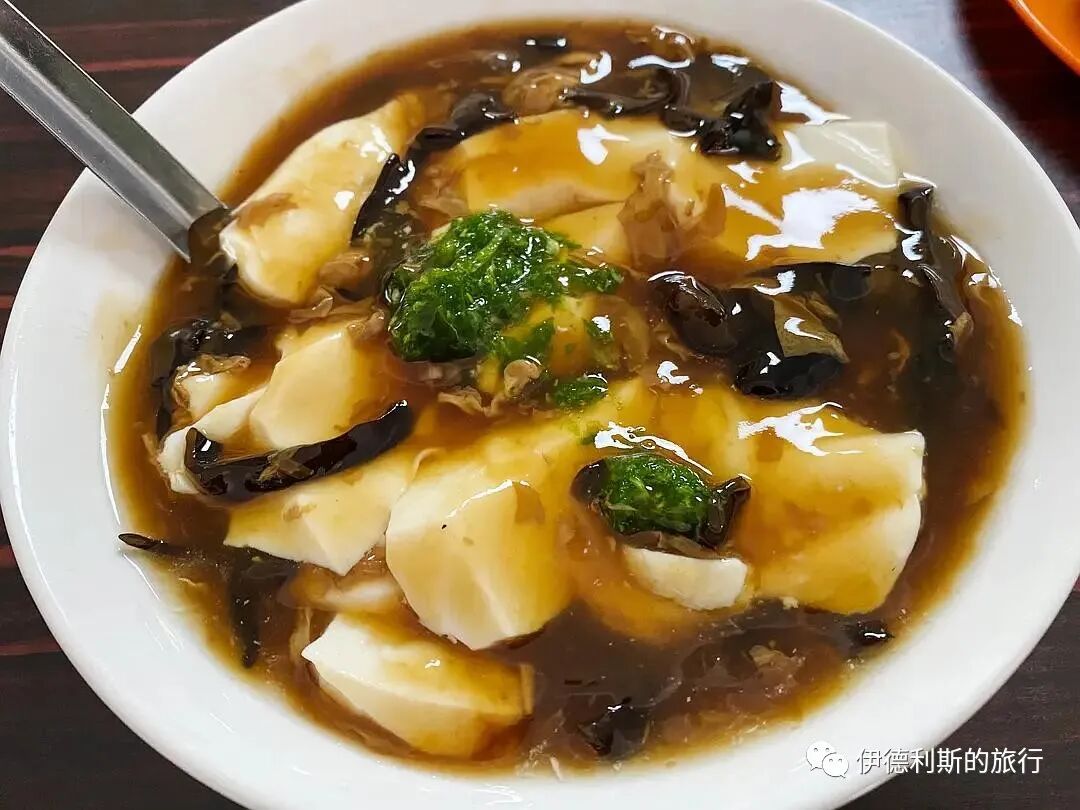
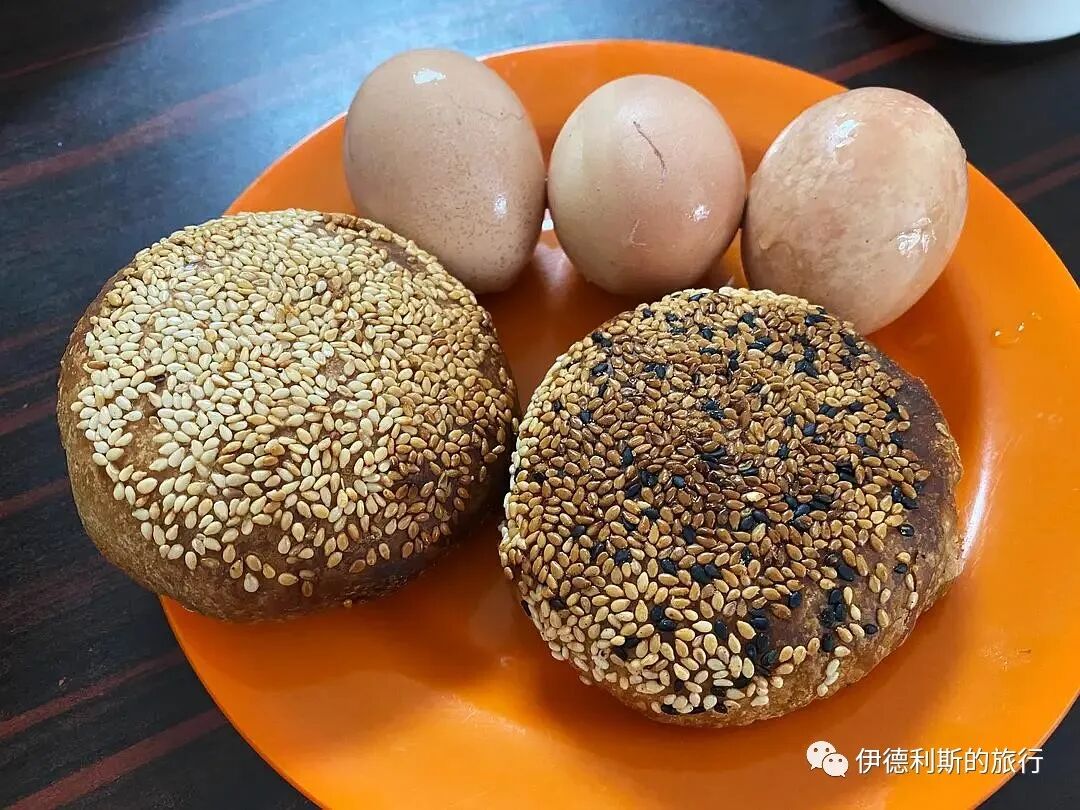
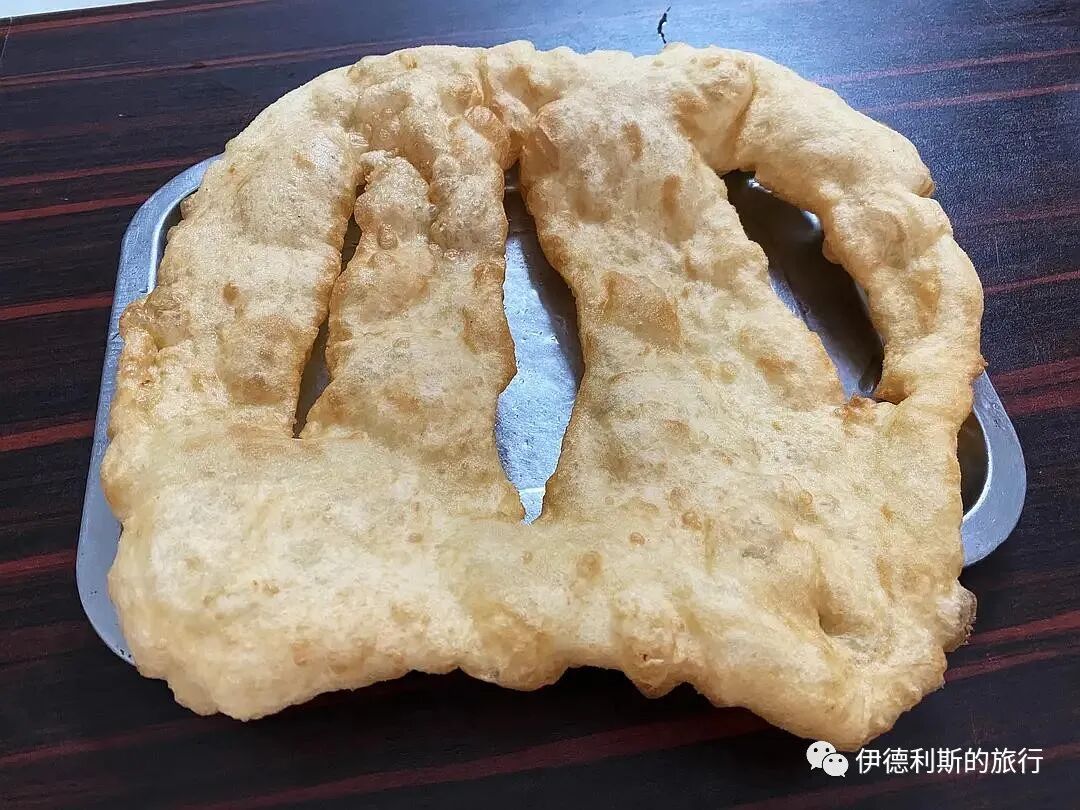
In the morning, we had tofu pudding (doufunao), soy milk, fried dough cakes (youbing), and meat-filled flatbreads (roushaobing) at the Hexingzhai Halal Restaurant in Mujiayu. They seem to be the only place in the North Mujiayu Hui Muslim village selling breakfast. Their homemade fresh chive flowers were especially delicious, and the meat-filled flatbreads were very flavorful.
We ate beef pancakes, beef casserole, mixed lamb liver, and stir-fried pumpkin at the Fuhua Zhengxing Folk Restaurant in Mujiayu. This was our first time at a Miyun farmhouse restaurant, so we didn't have experience and ordered too much at once, haha. The flaky beef pancake was delicious! The mixed lamb liver was also very tasty, but the beef used was a bit fatty and gristly; it would have been better if it were leaner. The owner was very welcoming. As soon as he saw Zainab was pregnant, he quickly ushered us into a quiet room inside to eat.
A halal farmhouse restaurant in Mujiayu called Kunanchun Folk Restaurant. We had fish head with flatbreads, which featured three jin of bighead carp served with freshly made homemade flatbreads, and we also ordered a dish of three types of mushrooms. We called ahead to ask for less salt and to have it stewed in advance, so we could eat as soon as we arrived. The reservoir fish wasn't as chewy as the rainbow trout we had last week, but it was a different kind of delicious. Everyone was very satisfied and still wanted more, saying we should eat a whole five or six-jin fish next time.
I enjoyed the view from the main dam of the Chaohe River at Miyun Reservoir, where villagers were also selling dates picked from the mountains.
After leaving the dam, I went to a nearby orchard to pick some early-ripening pears. They were incredibly juicy and very sweet!
Gubeikou
I traveled along the east bank of Miyun Reservoir, heading toward Gubeikou.
I visited the Gubeikou mosque again after four months, but the Hui Muslim gentleman who holds the key wasn't home, so I couldn't get inside. For a detailed introduction to the Gubeikou mosque, you can check my diary entry from the spring, 'Visiting the Ancient Mosque in Gubeikou'.
During the Kangxi reign, Gubeikou was a vital military stronghold for the Emperor's campaigns against the Dzungars. It was also a key stop on the imperial road for his northern hunting trips and inspections, making it very important. In the 32nd year of the Kangxi reign (1693), a military camp called Liulin Camp was established in the mountains west of the river in Gubeikou, and heavily guarded by troops. In the 34th year of the Kangxi reign (1695), a Hui Muslim officer named Ma Jinliang was promoted to Commander-in-Chief of Gubeikou in Zhili due to his outstanding military service. In the 42nd year of the Kangxi reign (1703), he was promoted to Regional Commander of Zhili. People called him 'Commander Ma the Hui Muslim,' and he was stationed in Hexi Village, Gubeikou. While in Gubeikou, Ma Jinliang oversaw the renovation of the Gubeikou mosque. The current mosque is basically the same size as it was after that Kangxi-era renovation.
By the end of the Qing Dynasty, as the imperial road fell into disuse, Liulin Camp was disbanded in the 16th year of the Guangxu reign (1890), and Hexi Village gradually became quiet. After the 1960s, the Gubeikou mosque was taken over by the local brigade headquarters, and religious activities stopped. It was renovated in 2004 for the Olympics, but religious activities have not resumed to this day.
On the way, I found a small courtyard belonging to a Hui Muslim family in the village; the scenery was really nice. Most of the Hui Muslims in Gubeikou are descendants of the Qing Dynasty garrison, with surnames like Ma, Ha, Yang, Li, and Cao.
This century-old Hui Muslim house in Hexi Village belongs to a man named Ma. He said his family bought it from a Hui Muslim family named Yang over a hundred years ago. Because the walls are cracking, the owner said he plans to start renovations next year, so the original look of this century-old house might not be visible for much longer.
The image below is a map of the Gubeikou town market from 1938, divided into Hexi (west of the river) and Hedong (east of the river) by the Chaohe River.
Traveling from Hexi to Hedong, you find the only halal snack shop in Gubeikou. The owner is named Cao, and he is a local Hui Muslim from Gubeikou. The ancestors of the Cao family of Hui Muslims in North China were originally surnamed Li. Their ancestral home was in Erlanggang, Nanjing (which research suggests was a station for Semu people who surrendered to the Ming). During the Yongle reign, they followed the emperor to Beijing, but on the return trip, they stayed in Cangzhou due to illness and married into the Cao family, so their descendants changed their surname to Cao. The Cao family of Hui Muslims in Cangzhou later spread throughout North China, and one branch settled in Gubeikou during the Qing Dynasty.
Their shop is famous for selling sesame flatbread (shaobing) and lamb offal soup (yangza) in the morning, and they also serve lamb dumplings (yangrou jiaozi) and stir-fried pancakes (chaobing) at noon. It is just a small shop run by a husband and wife. Boss Cao looks a bit stern, but he is actually very friendly and chatted with me about the situation of the Hui Muslims in Gubeikou. He said that most of the Hui Muslims in Gubeikou have moved away now, and some of them have moved near the Miyun mosque. view all
Reposted from the web
Summary: China Mosque Travel Guide Beijing Miyun: Reservoir Mosques, Hui Villages and Muslim Heritage (Part 1) is presented here as a clear Muslim travel account, beginning with this scene: The weather in Beijing was perfect in late August. I drove northeast to Miyun to visit Hui Muslim communities in the Miyun urban area, Mujia Yu, Gubeikou, and Taishitun. The account keeps its focus on Miyun Mosques, Beijing Muslim Travel, Hui Villages while preserving the names, places, food, and historical details from the Chinese source.
The weather in Beijing was perfect in late August. I drove northeast to Miyun to visit Hui Muslim communities in the Miyun urban area, Mujia Yu, Gubeikou, and Taishitun. I tasted local halal food and learned about the history of the local Hui Muslims.
Miyun urban area
I drove to the Miyun urban area after work and arrived at Runge Sheng on Gulou South Street in the evening. The restaurant was recently renovated this year and has a great atmosphere. I ordered steamed tofu (kaibao doufu) and red-steamed beef. The tofu is steamed and then mixed with various seasonings. Adding chive flower sauce really makes it flavorful! The red-steamed beef had a great texture. It should be one of the eight classic Hui Muslim bowls (badawan), though Zainab and my father-in-law both said it was a bit salty. I guess I will be getting used to the salty taste of traditional Beijing suburban dishes for the next few days, haha.
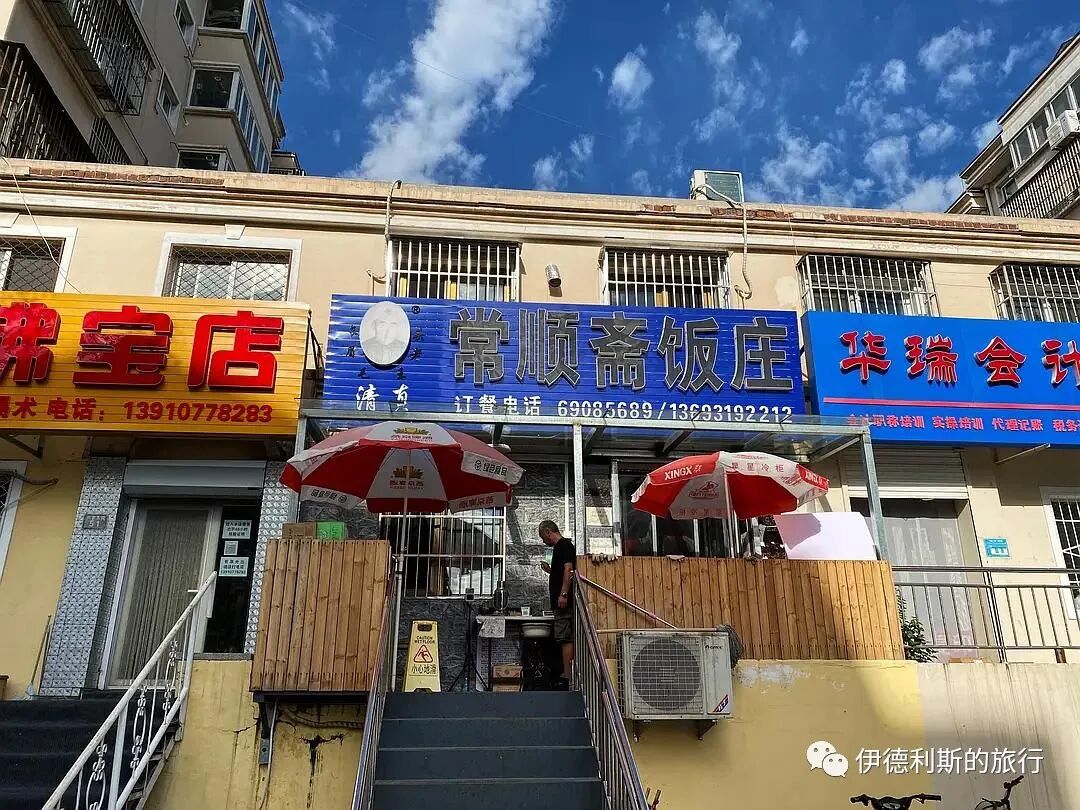
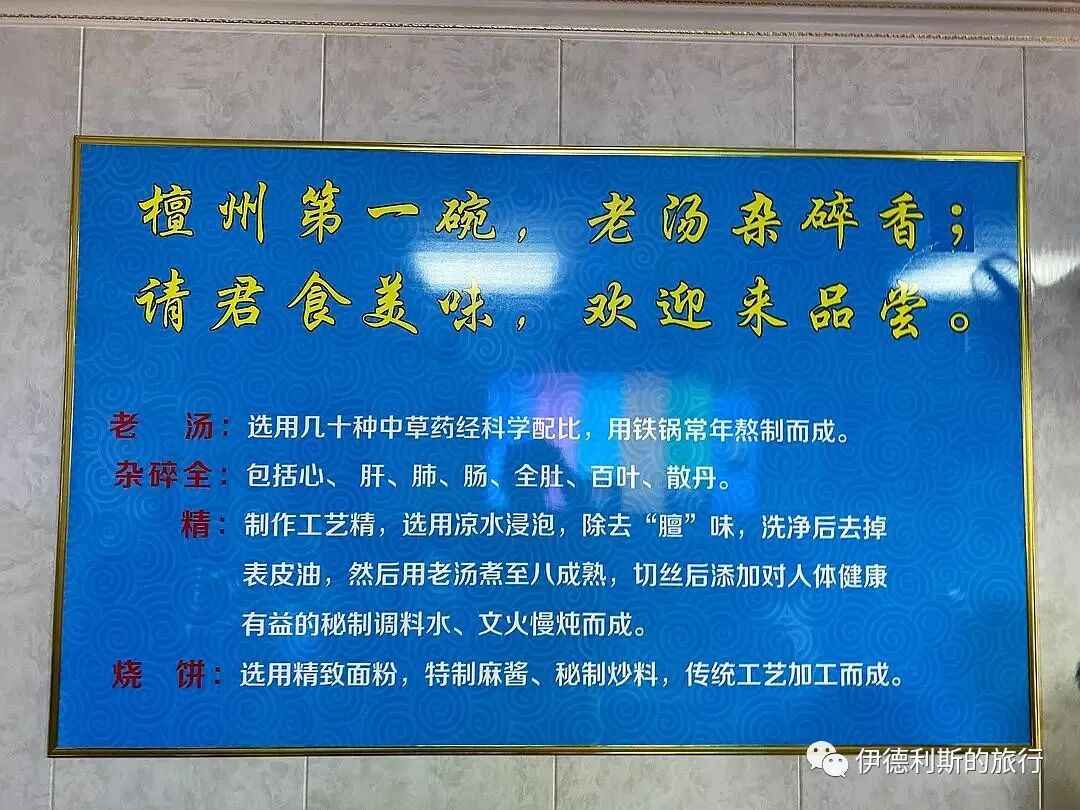
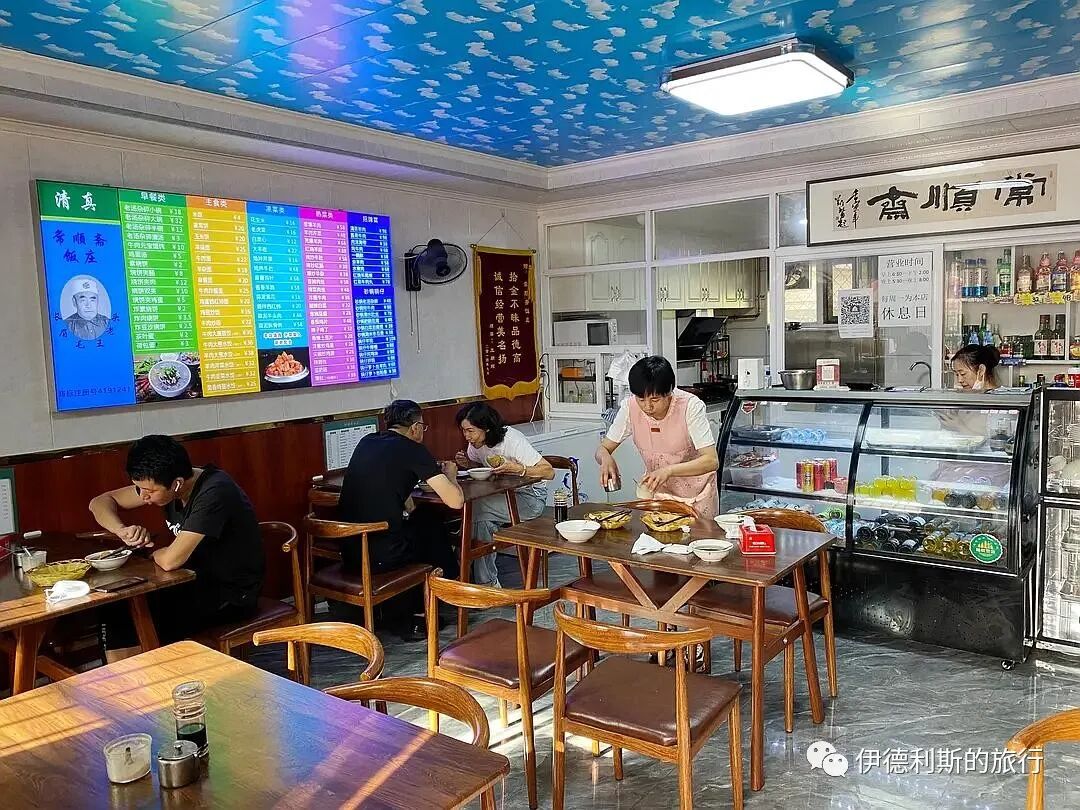
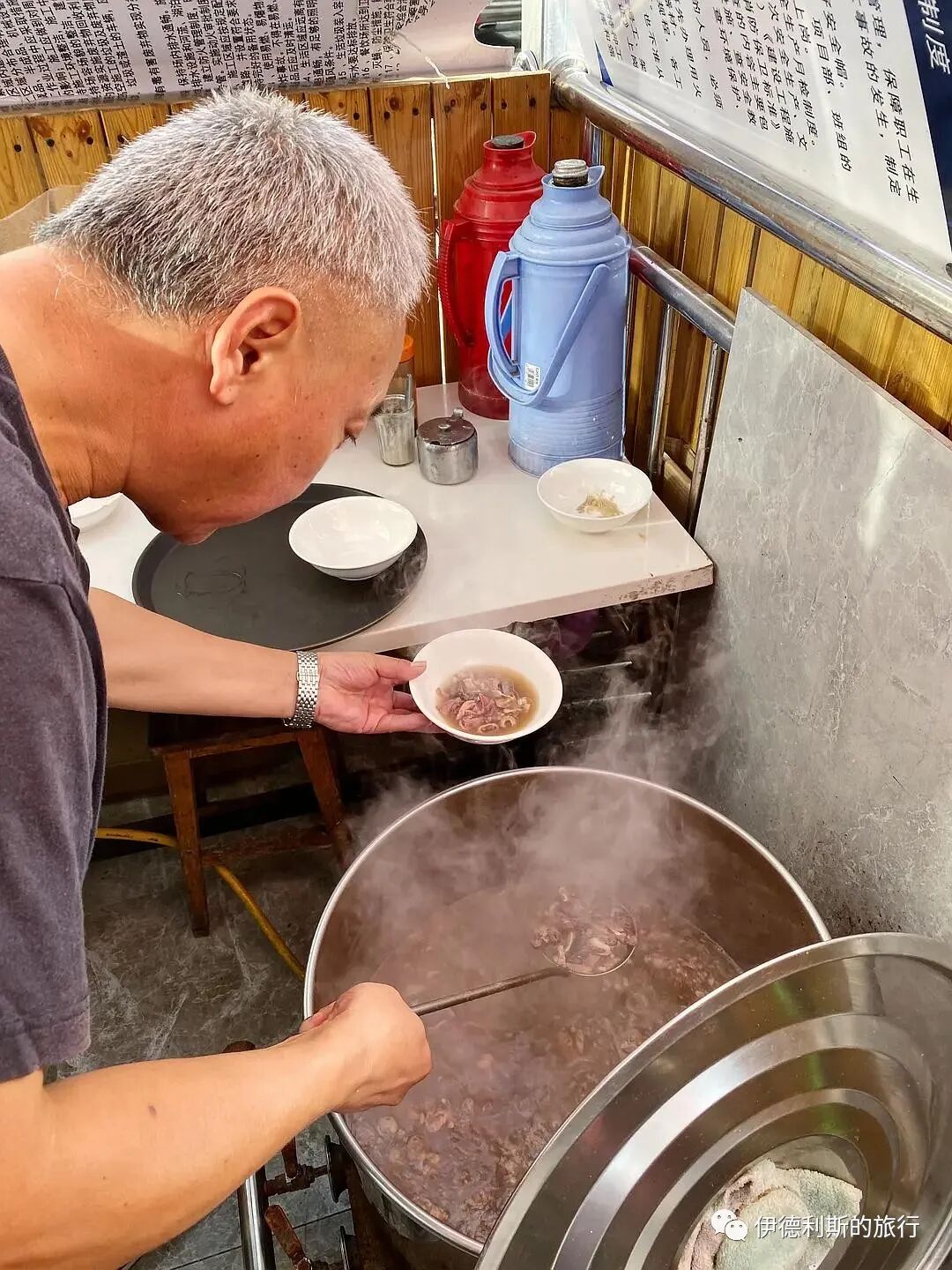
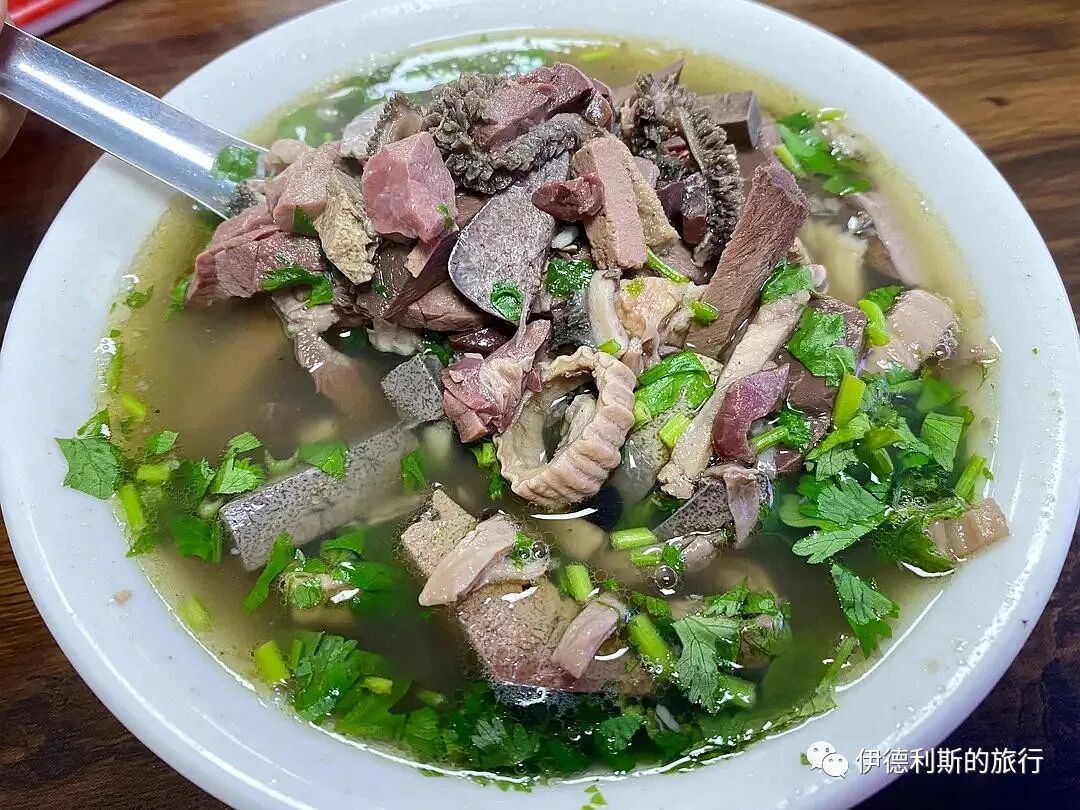
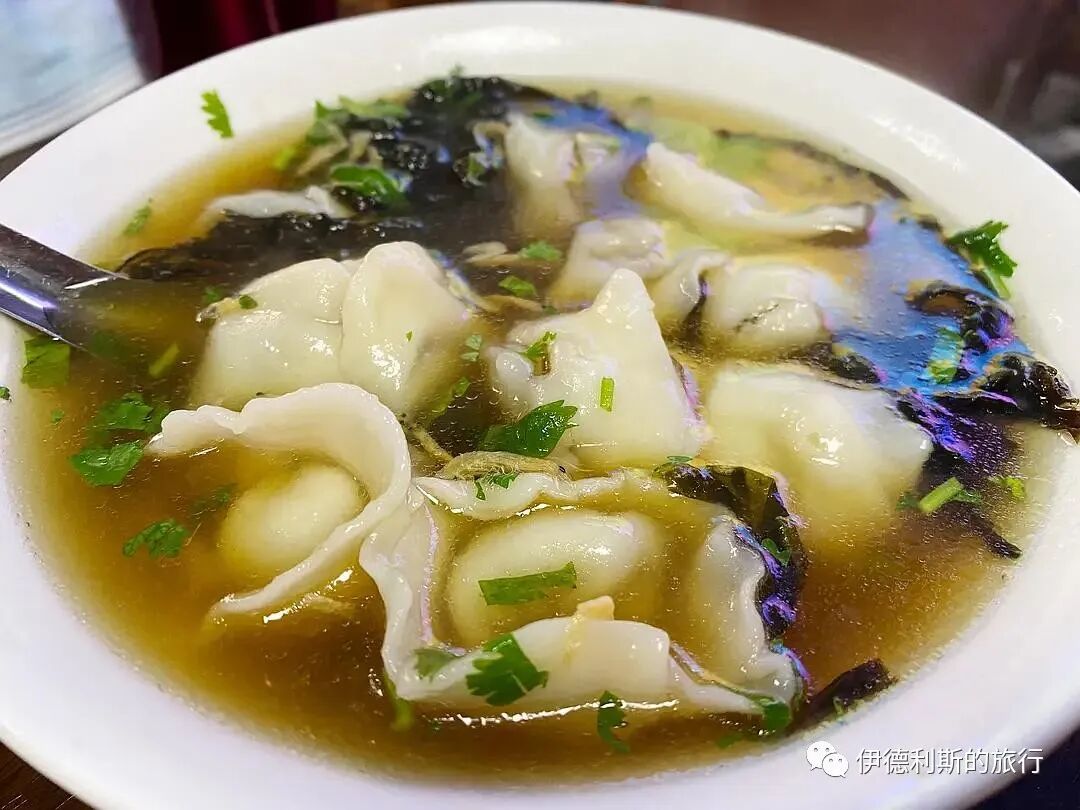
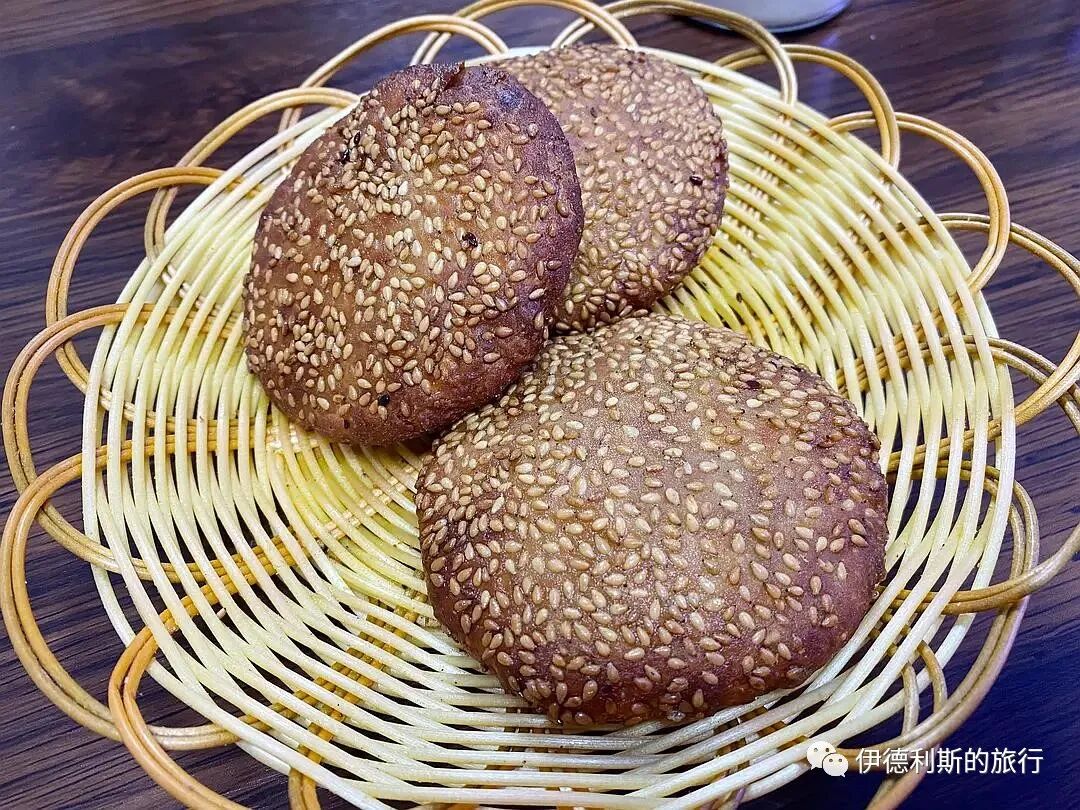
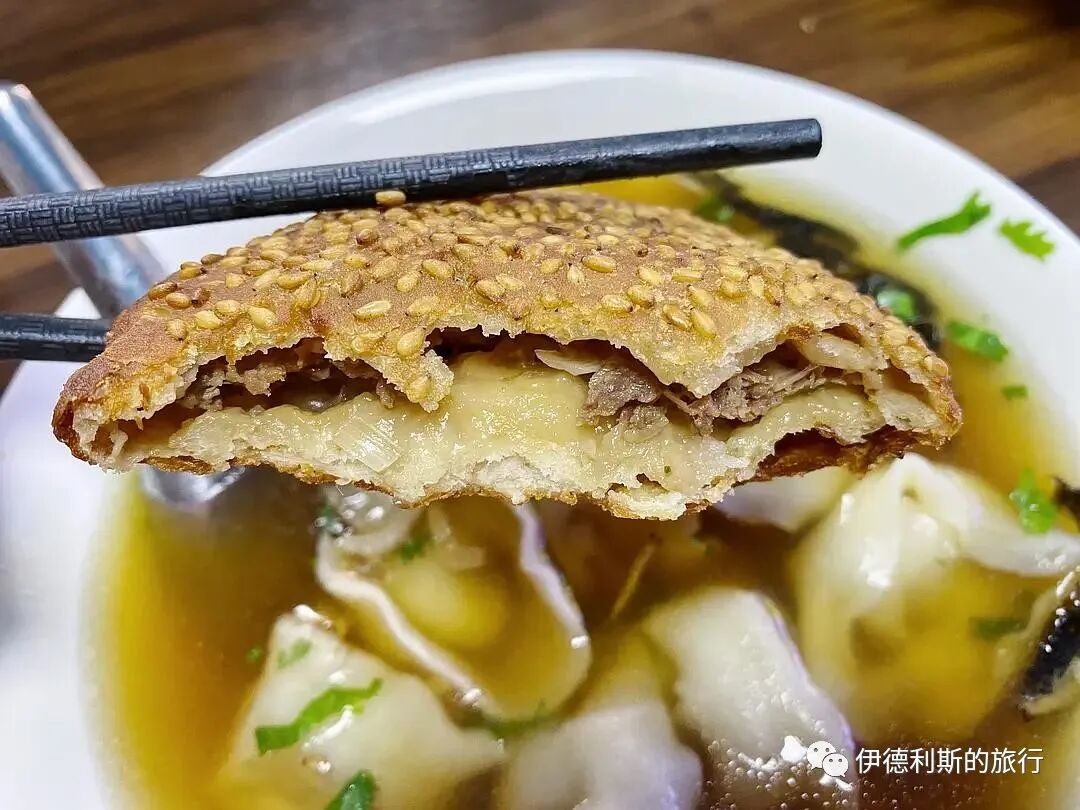
The next morning, I ate old-broth lamb offal soup (laotang yangza), beef dumpling soup (niurou yuanbao tang), and freshly fried meat flatbread (rou shaobing) at Changshun Zhai on Nangen Street in Miyun. The lamb offal was delicious, but my father-in-law and Zainab still could not get used to the salty taste of the traditional suburban food. The flatbread was fried until crispy, and the aroma of the sesame really came through. The dumpling soup with its thin skin and large filling was also very tasty.
I bought radish-filled buns (xian bobo) at Guangju Zhai in front of the Miyun Mosque, and bought old-fashioned mooncakes with chestnut, five-nut, and black sesame fillings at Dongfang Zhenshun Bakery. Everything was delicious. Most of the halal signs here in Miyun use Persian blue, which is now consistent with the style outside the Great Wall.
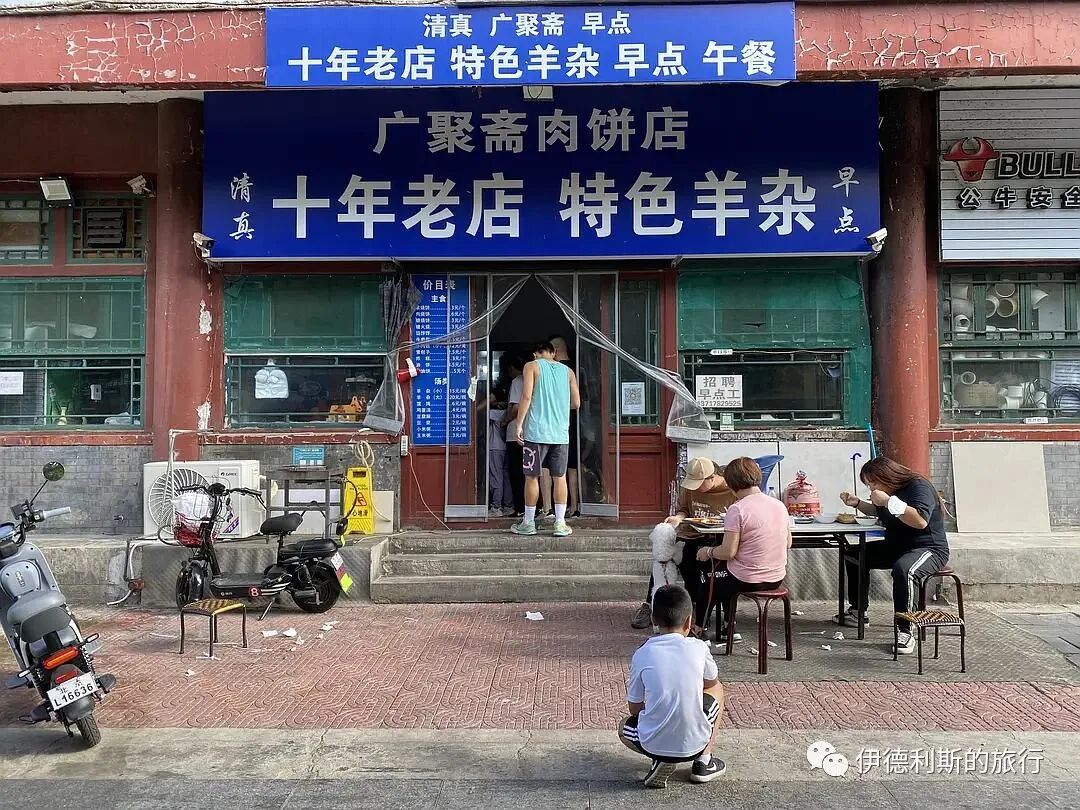
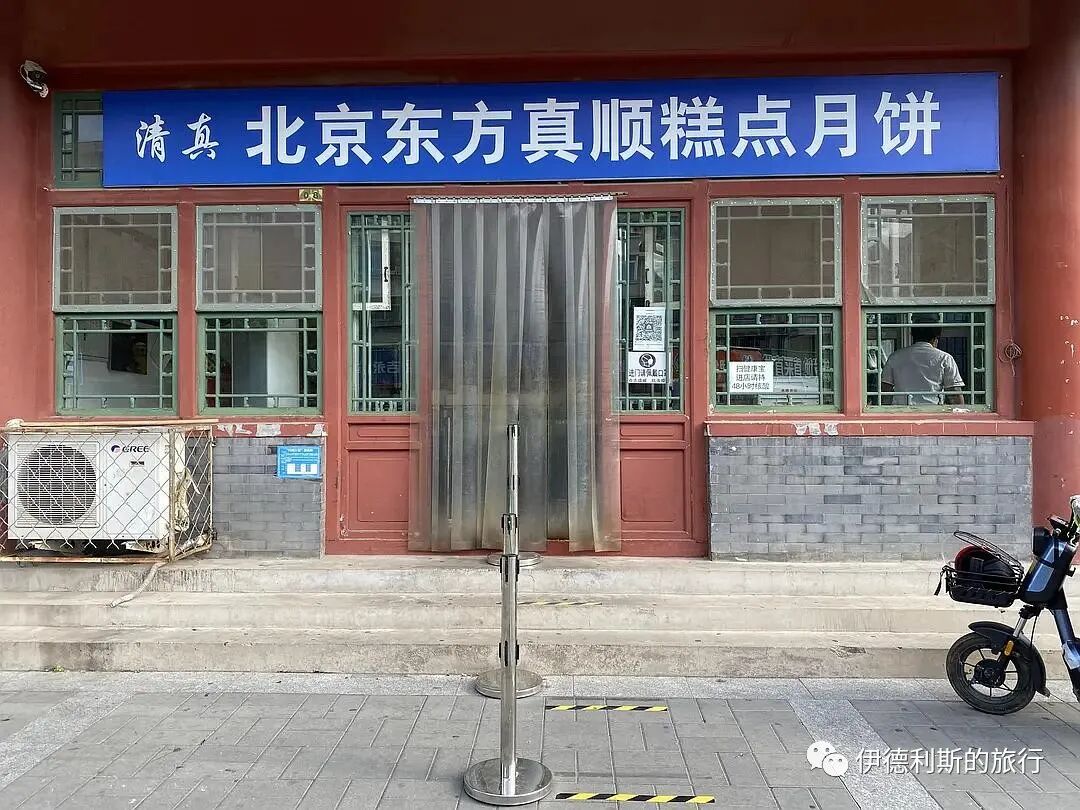
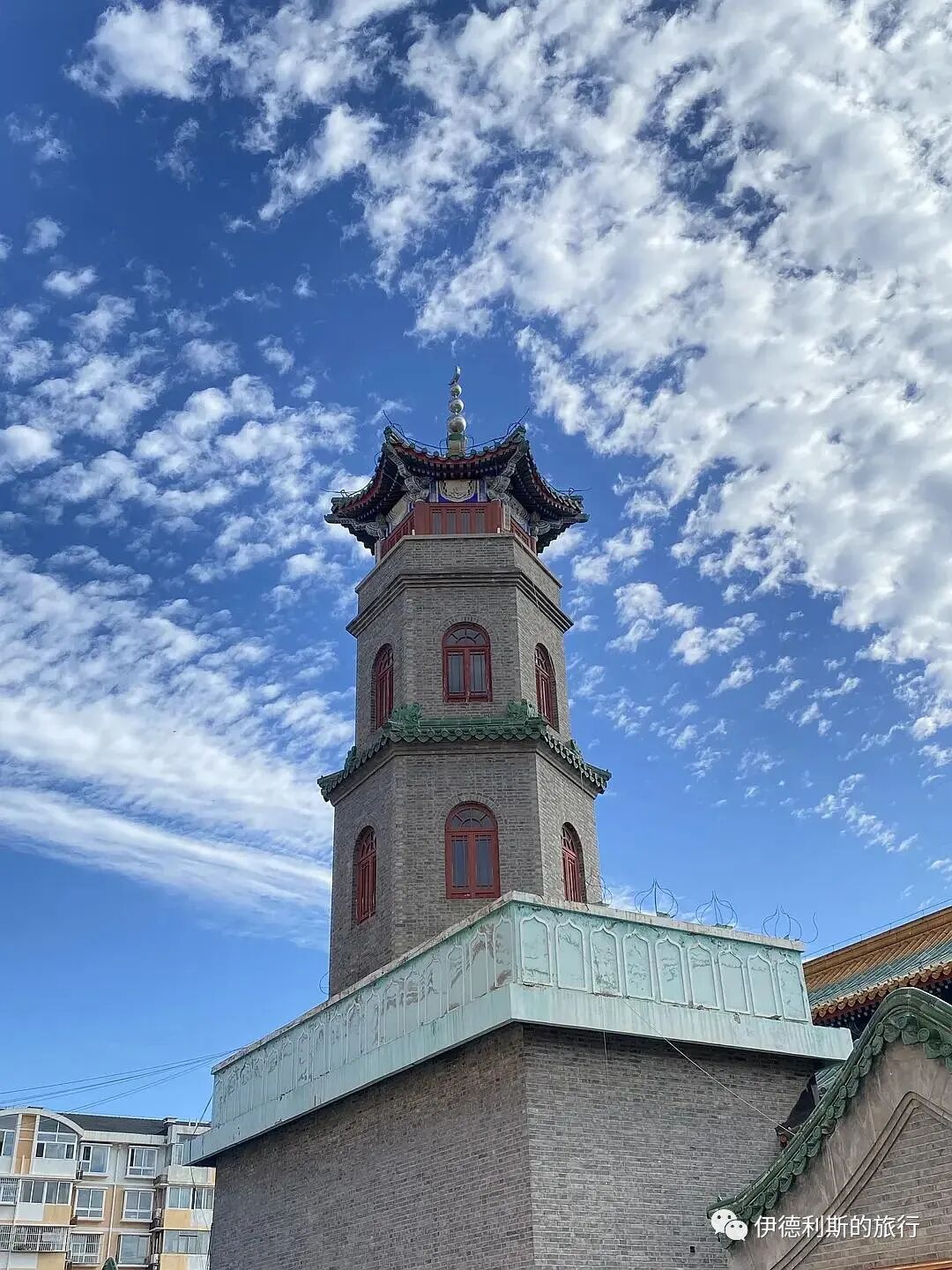
The Miyun Chengguan Mosque was first built during the Qing Dynasty and was relocated and rebuilt in 2006.
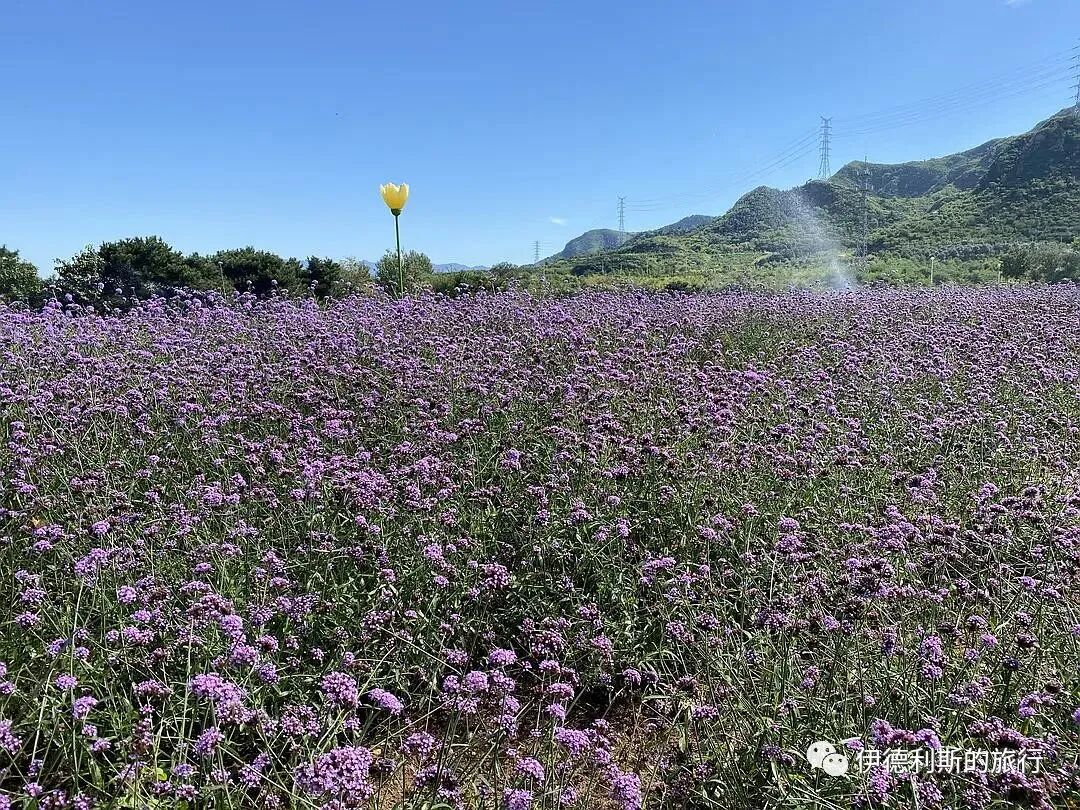
I went to visit the Rose Garden in Miyun in the morning.
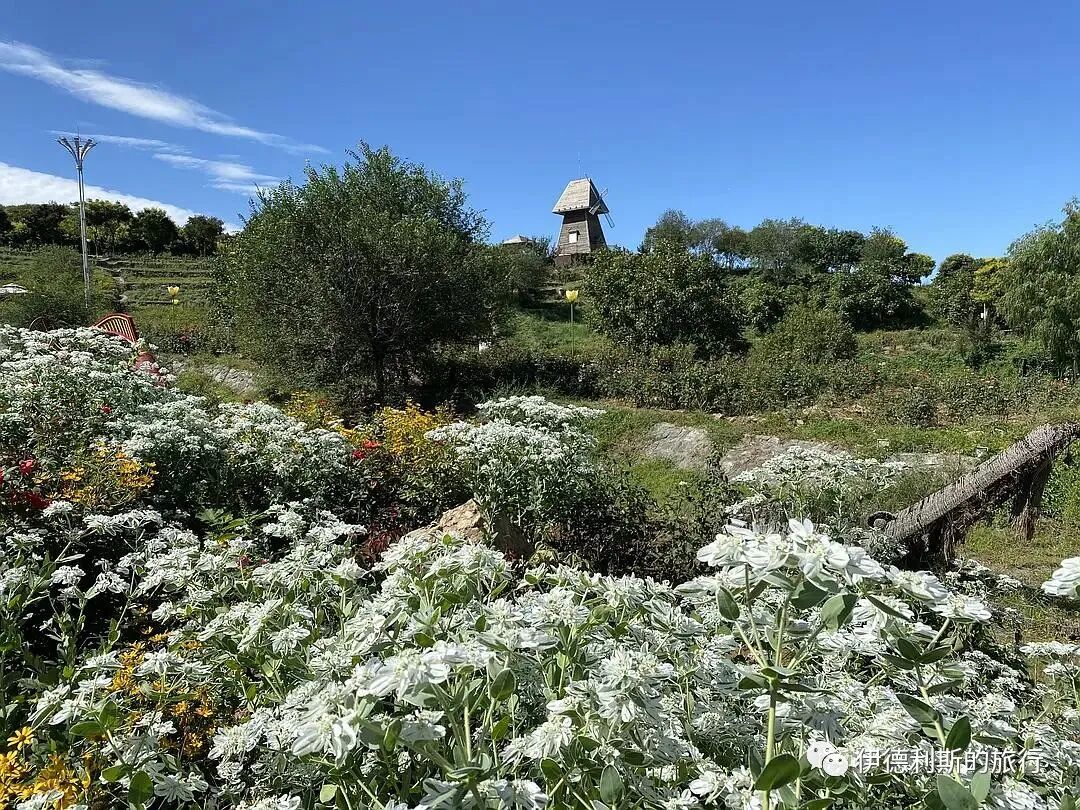
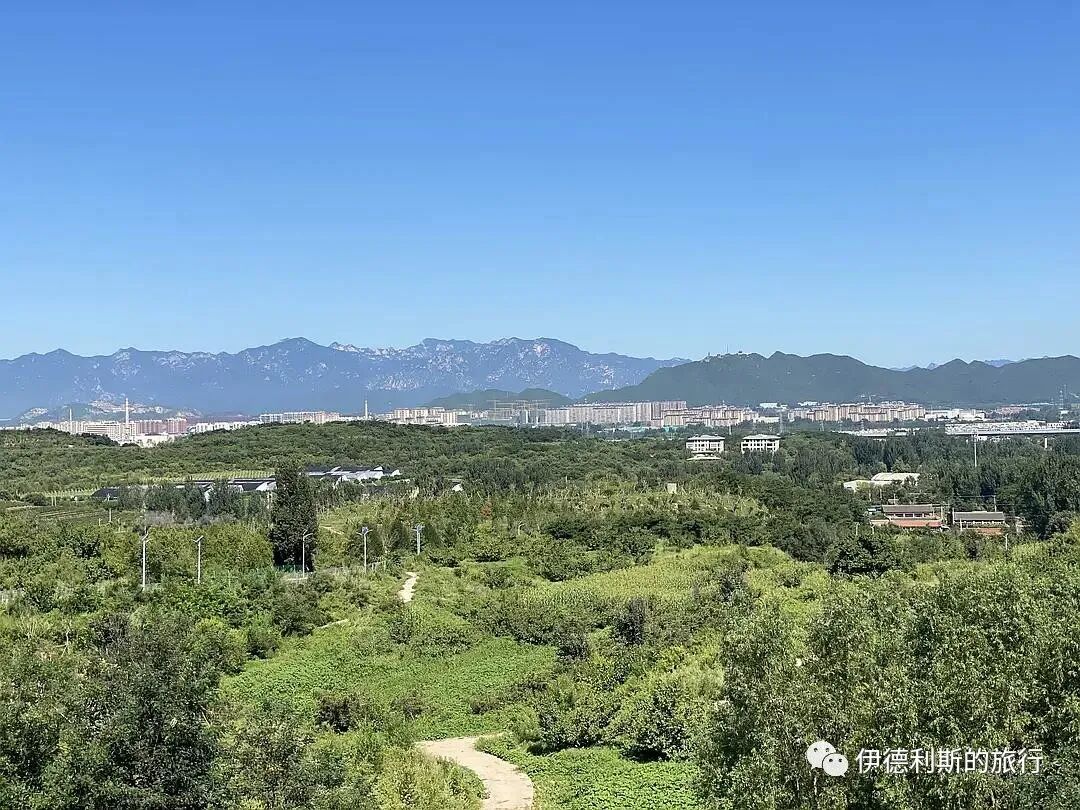
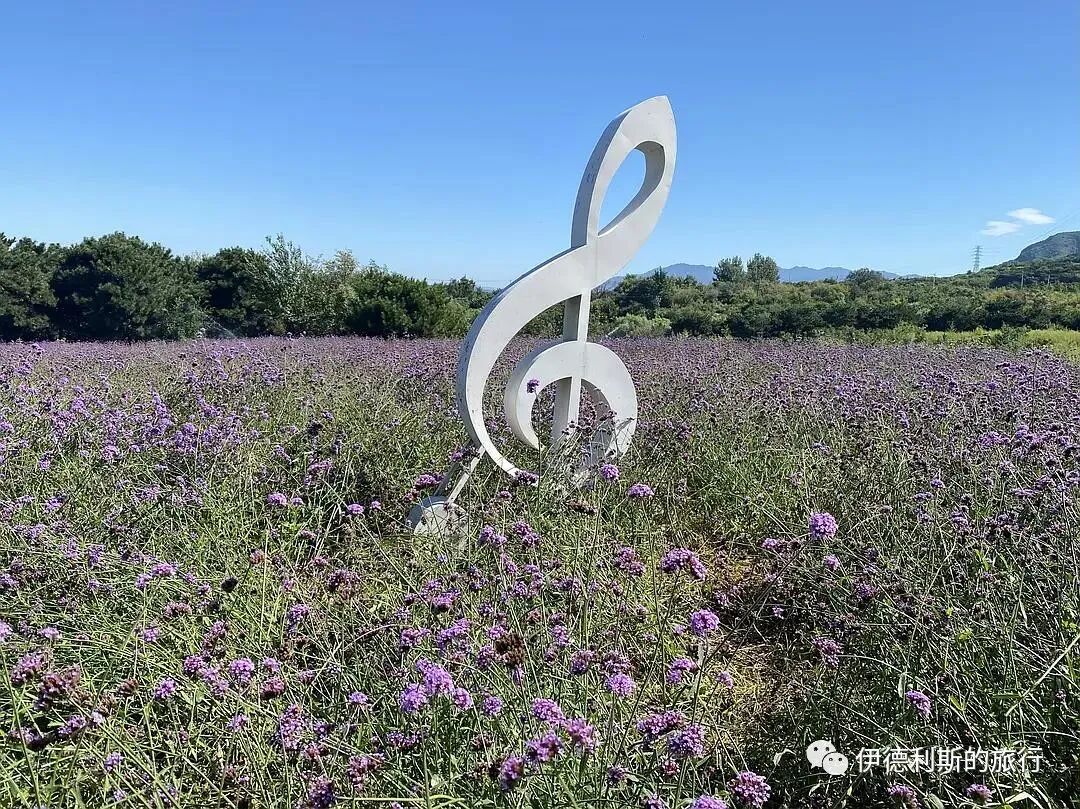
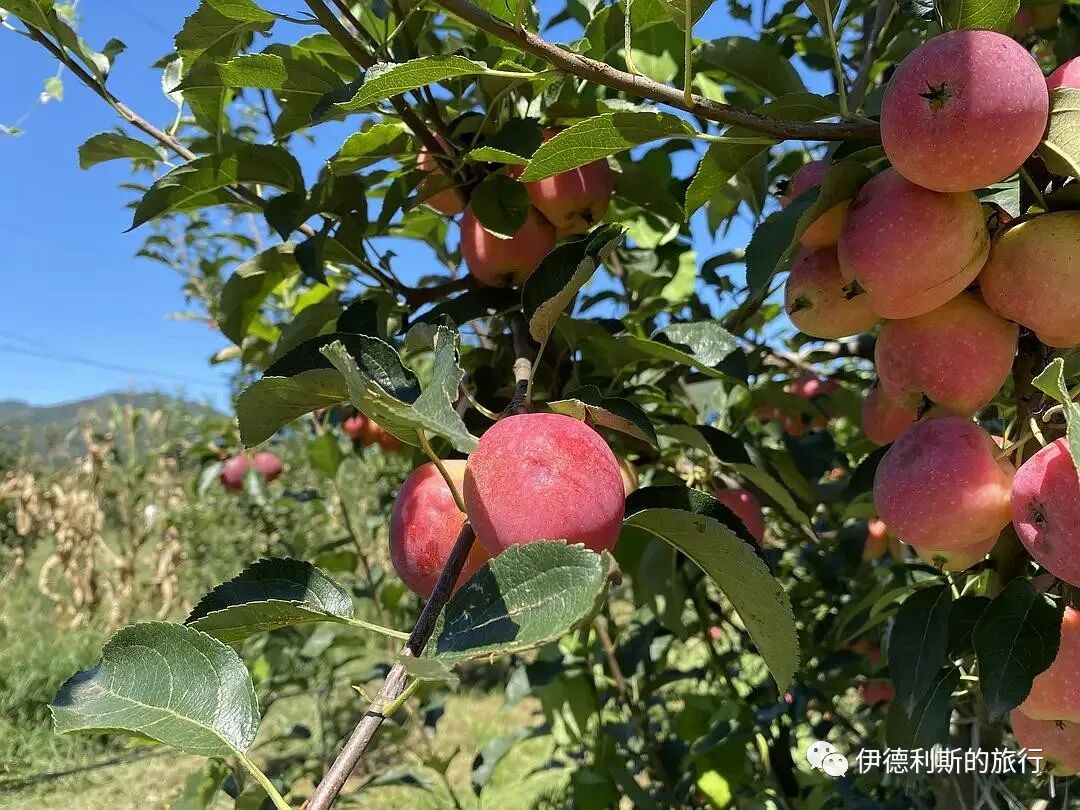
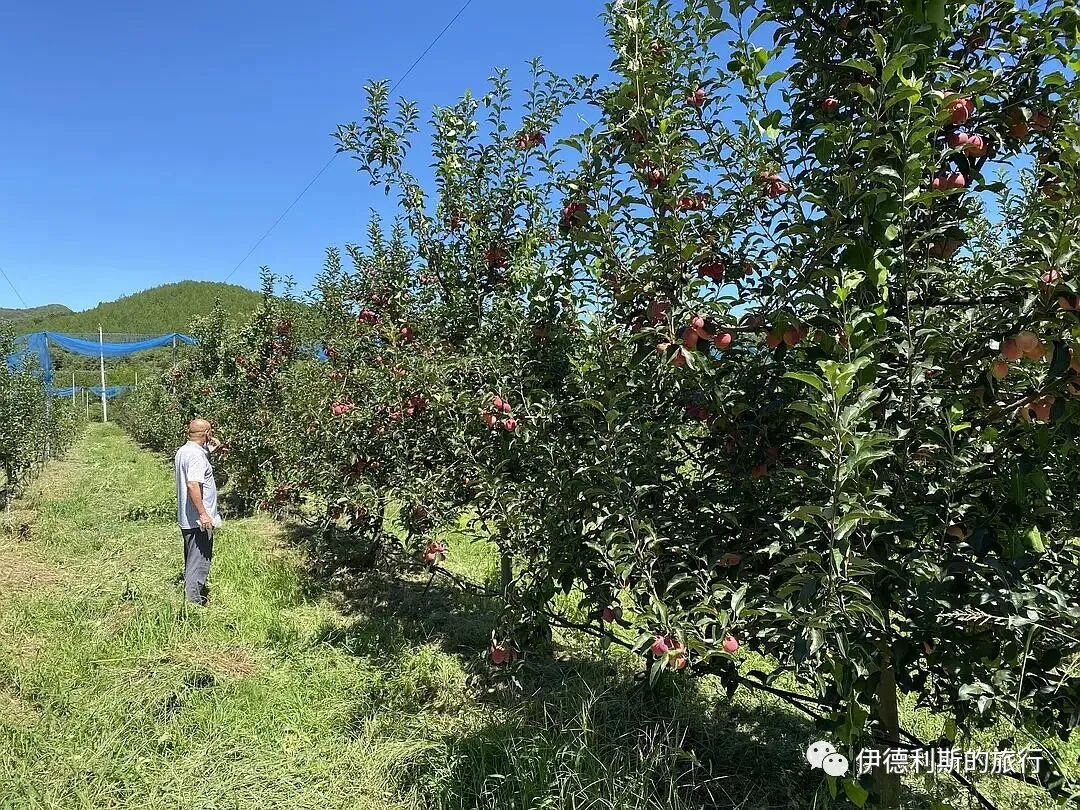
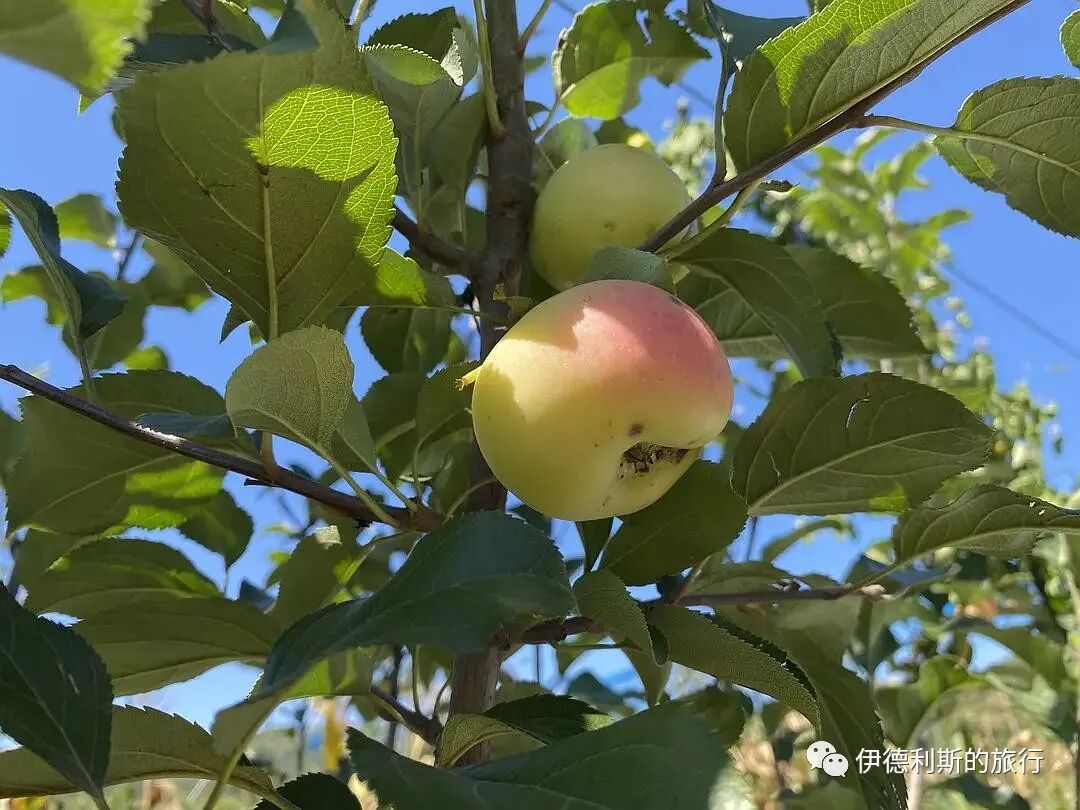
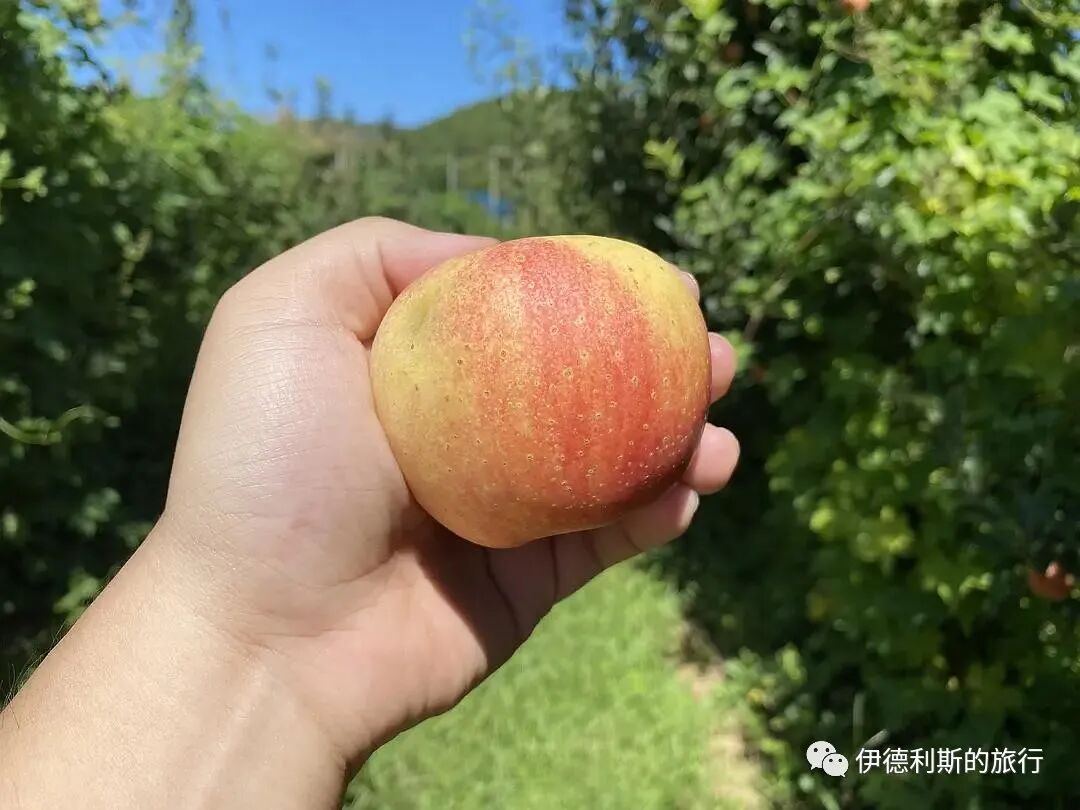
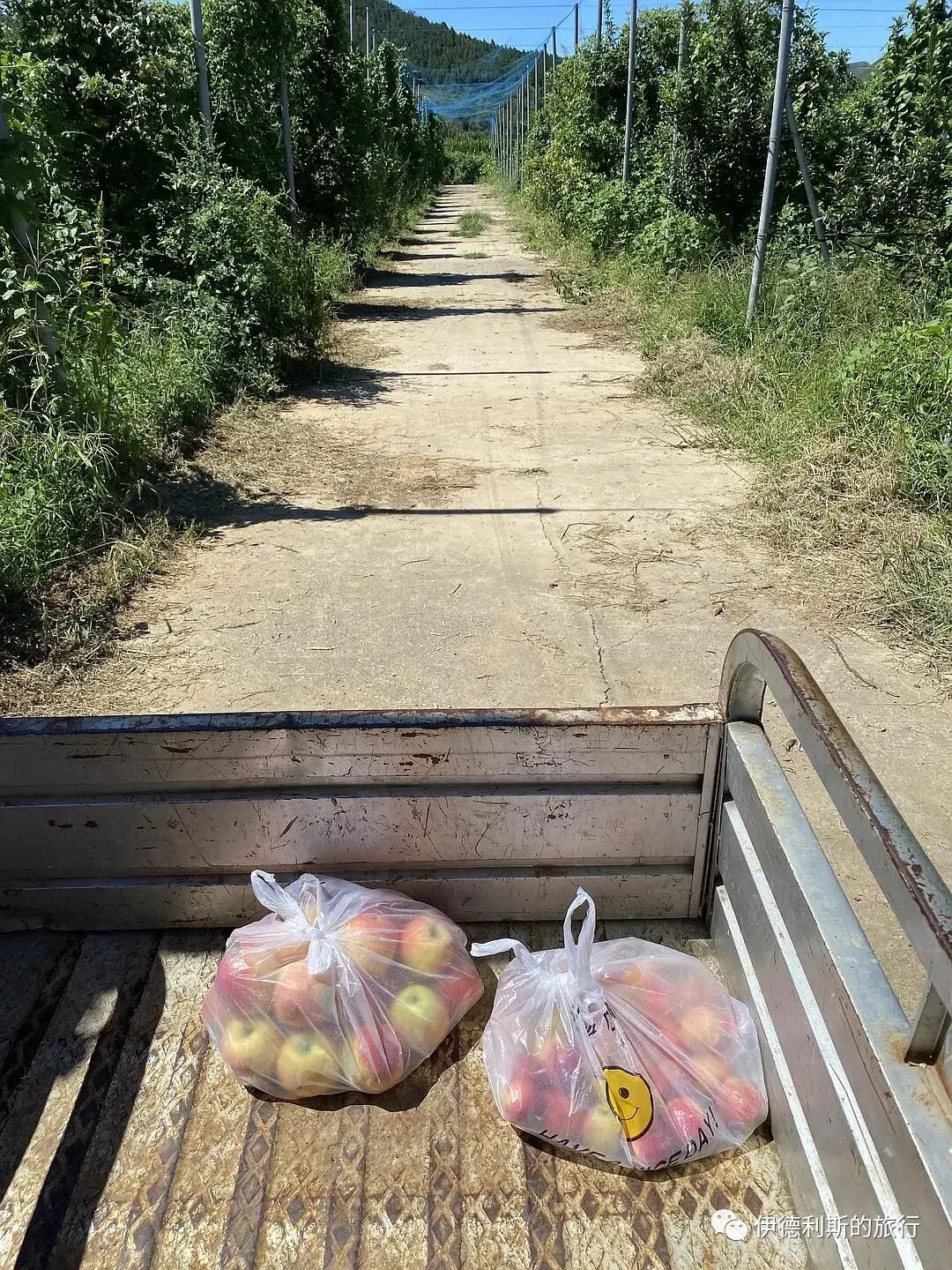
I picked Gala apples and crabapples at the Fusi Apple Manor in Miyun.
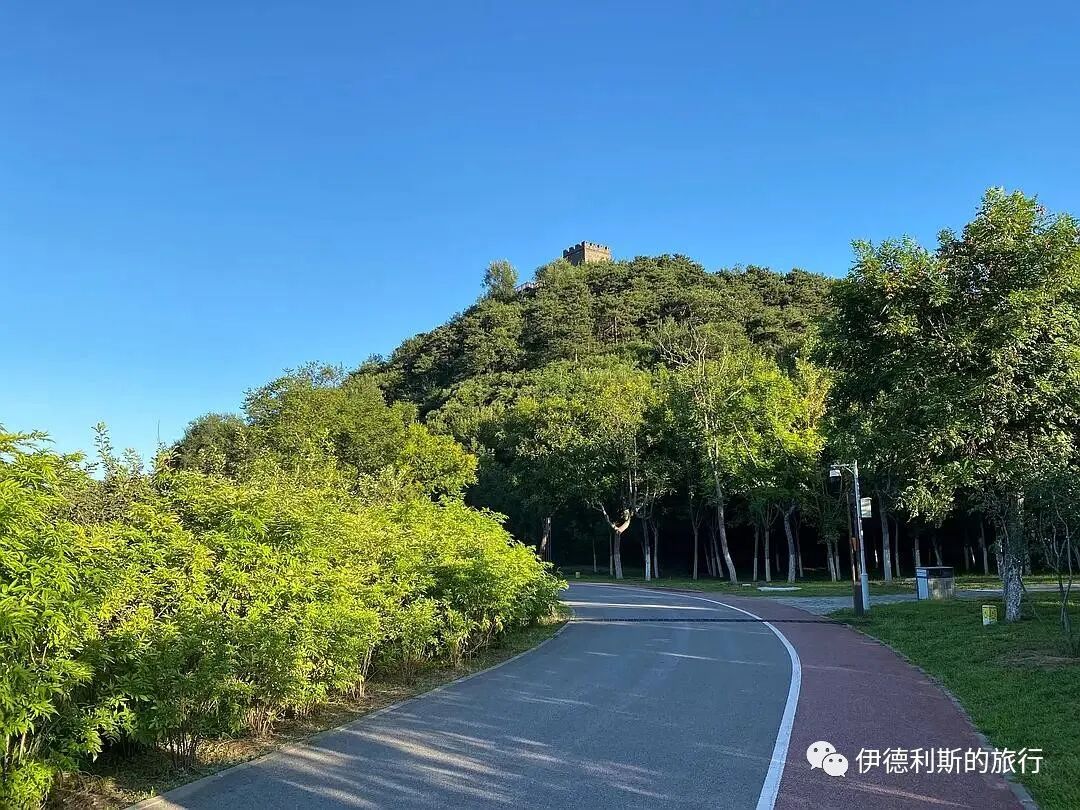
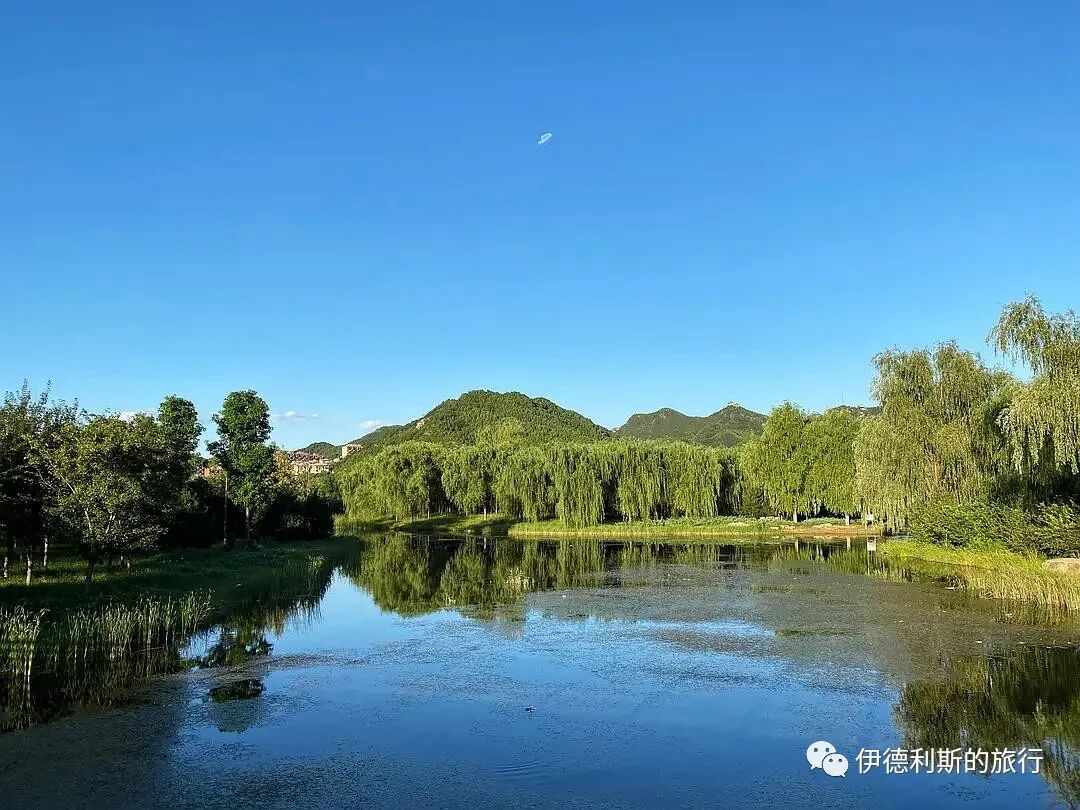
I think the Miyun Baihe Urban Forest Park in the evening is just as good as the Olympic Forest Park! It is mainly very quiet.
Mujia Yu
Mujia Yu Village, now called North Mujia Yu Hui Muslim Village, is located northeast of the Miyun urban area and south of the Miyun Reservoir. Historically, it was on the trade route from Gubeikou and the ancient Shixia City to the Miyun urban area. The Hui Muslims with the surname Mu came from Mujia Zhuang (today's Muncun) in Tianjin. They moved to Miyun during the Qianlong reign, and it has been over two hundred years since then.
According to the Mu Family Genealogy, the Mu ancestor was named Mu Chonghe. His ancestral home was Shayang Alley in Mu Jiazhai, Hangzhou. After being captured in the early Ming Dynasty, he moved to Guyi Alley inside Shuixi Gate in Nanjing. In 1404 (the second year of the Yongle reign of the Ming Dynasty), Mu Chonghe followed the Prince of Yan north. He transported imperial grain by canal boat to Tongzhou. On his return, he settled twelve miles north of Tianjin Wei and founded Mujia Zhuang, which was the earliest Hui Muslim village in Tianjin.
In 1771 (the 36th year of the Qianlong reign), Mu Chonghe's twelfth-generation grandson, Mu Guobao, was arrested for injuring someone while trying to stand up for justice at a market. He was rescued by his younger brother while being escorted. The two brothers fled Tianjin and came to Mengjiayu (today's South Mujia Yu Village) in Miyun to work. In less than ten years, they built houses, bought land, married, and had children, founding Mujia Yu. Mu Guobao was the first ancestor to move to Mujia Yu.
According to research by local scholar Cao Rongxin, Mujiayu was originally home to only the Mu family. Later, Hui Muslims with the surname Ha settled here after fleeing famine, followed by three Han Chinese families named Wang, Shi, and Hao who settled here while working as long-term laborers for the Mu family. When the Miyun Reservoir was built in 1958, the ancient city of Shixia was submerged. Hui Muslim families named Li, Cao, Ma, and Zhang from the ancient city, along with the Mu family from the former Qianchao Douzhuang (whose original ancestor was the younger brother of Mu Guobao), all moved to Mujiayu, eventually forming the village's current size.
Mu Chaoyu, the son of Mujiayu's original ancestor Mu Guobao, built the Mujiayu mosque on a small hill by the river east of the village in his later years. In 1946, the Mujiayu mosque was seized by the armed landlord group known as the Huohui from West Mujiayu. It was destroyed in 1948 during the liberation of Miyun, and only two pine trees remain today.
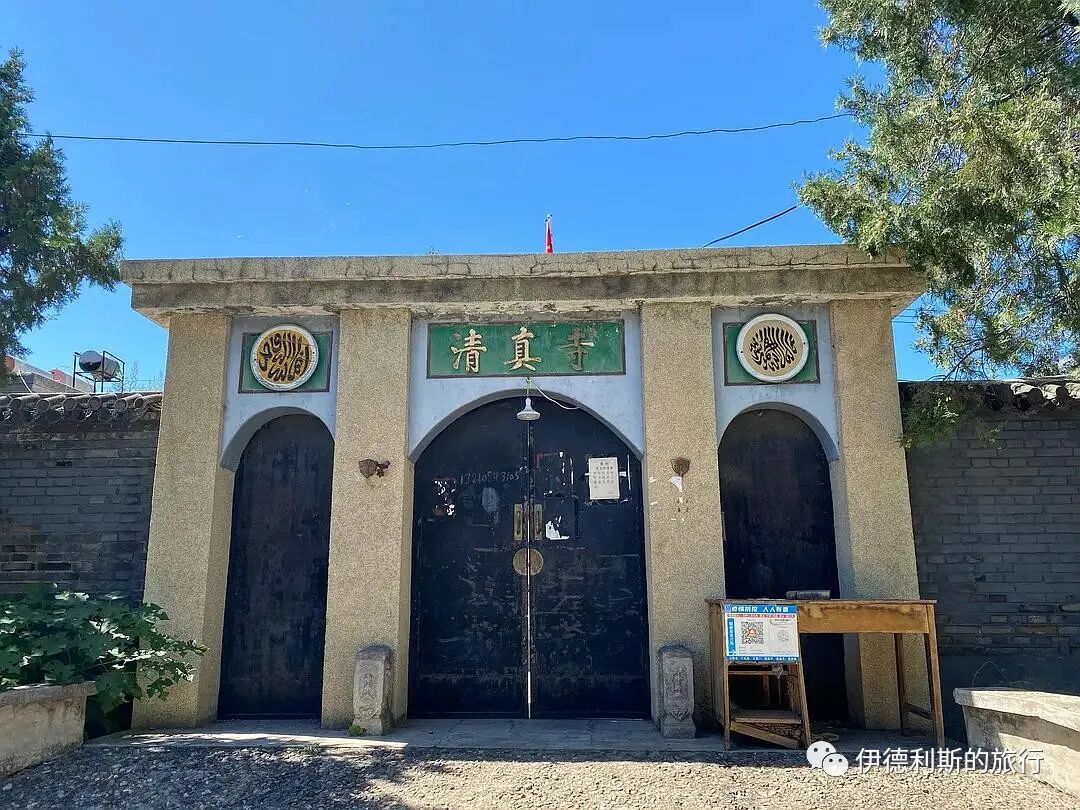
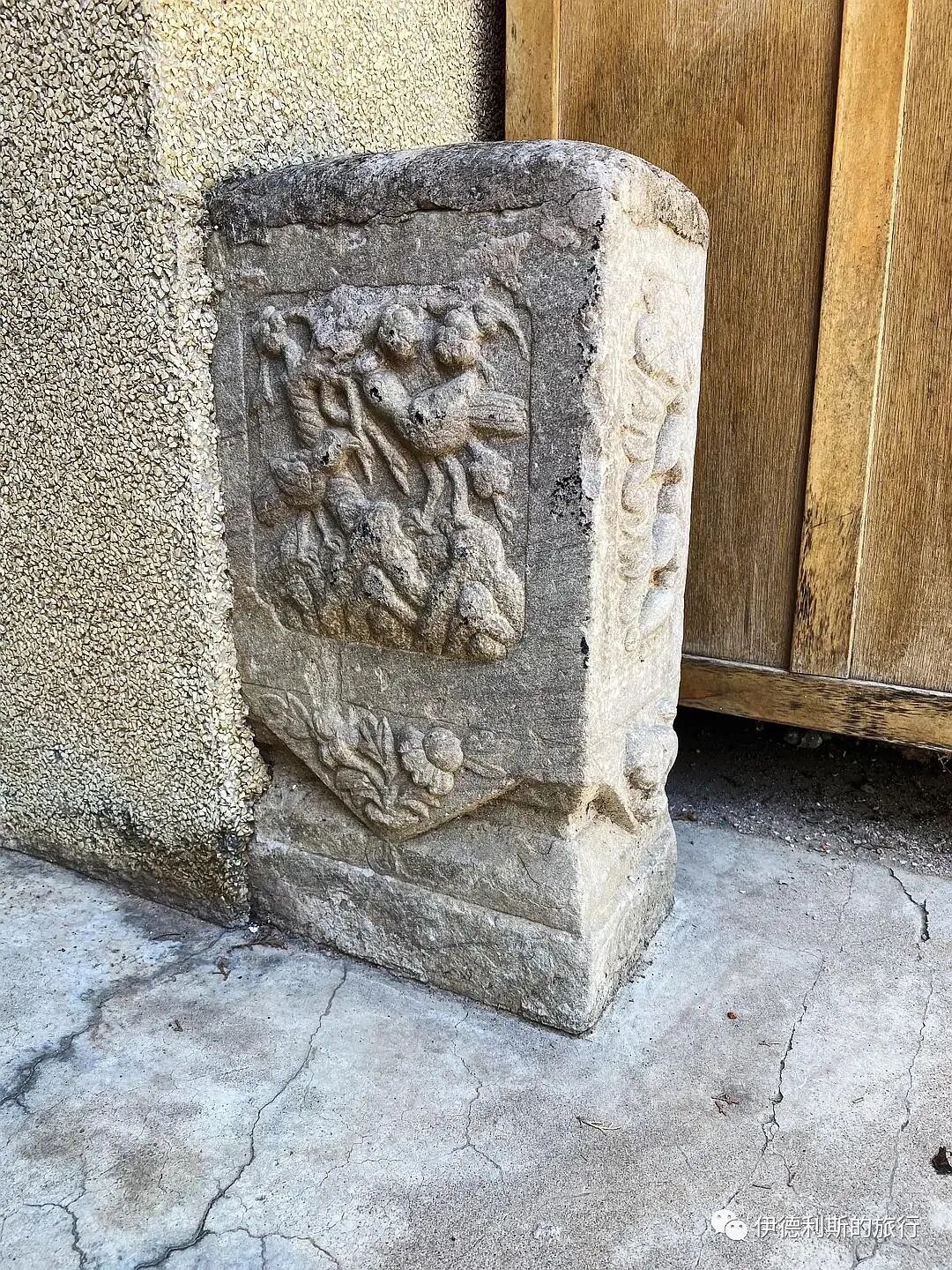
After 1949, Mujiayu used compensation funds to build six rooms on the west side of the village. They originally planned to rebuild the main prayer hall, but the project failed due to road construction. Later, the rooms were occupied by a collective canteen and other units. It was not until 1991 that the mosque was finally rebuilt on the west side of the road in the west part of the village.
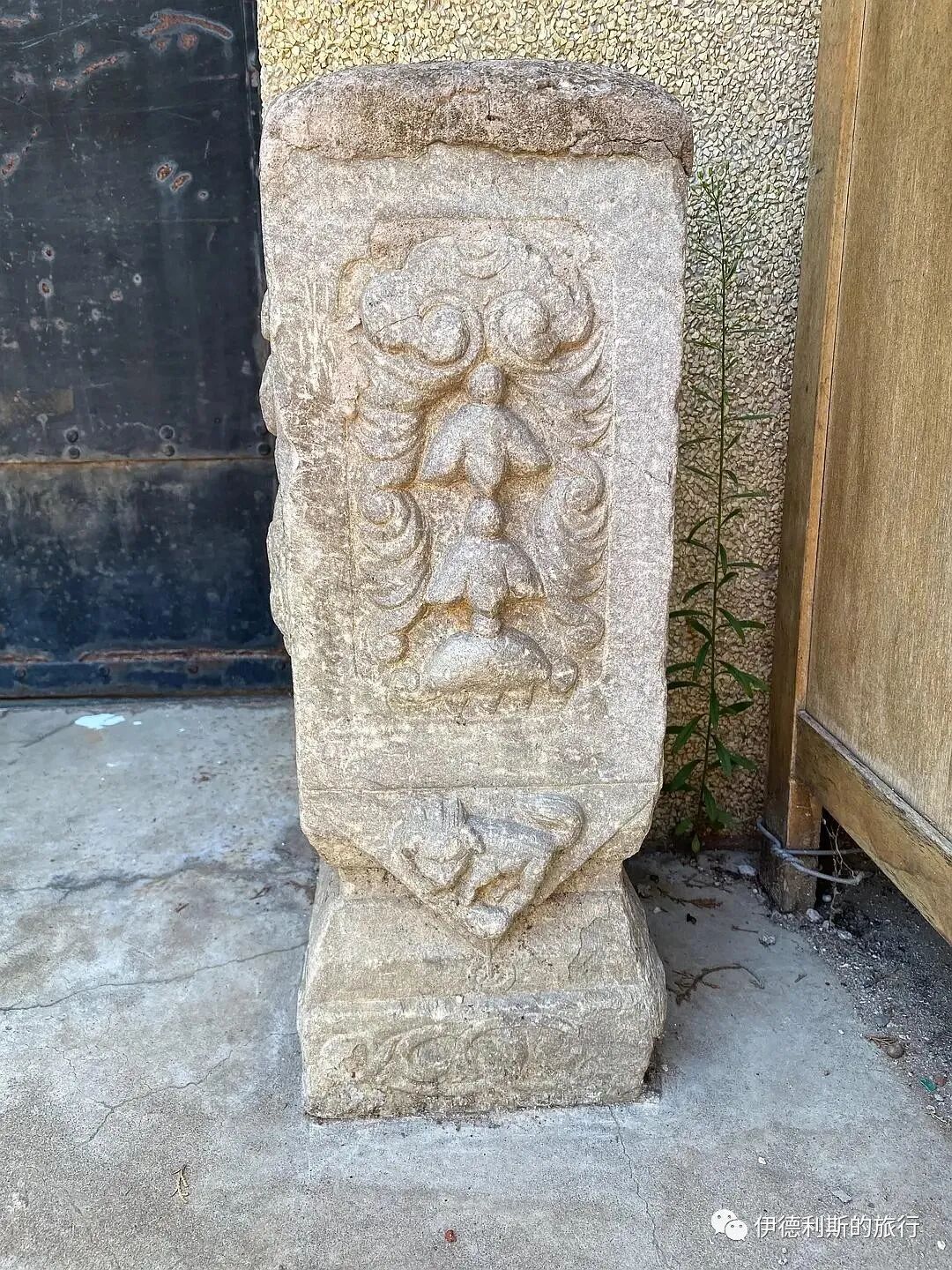
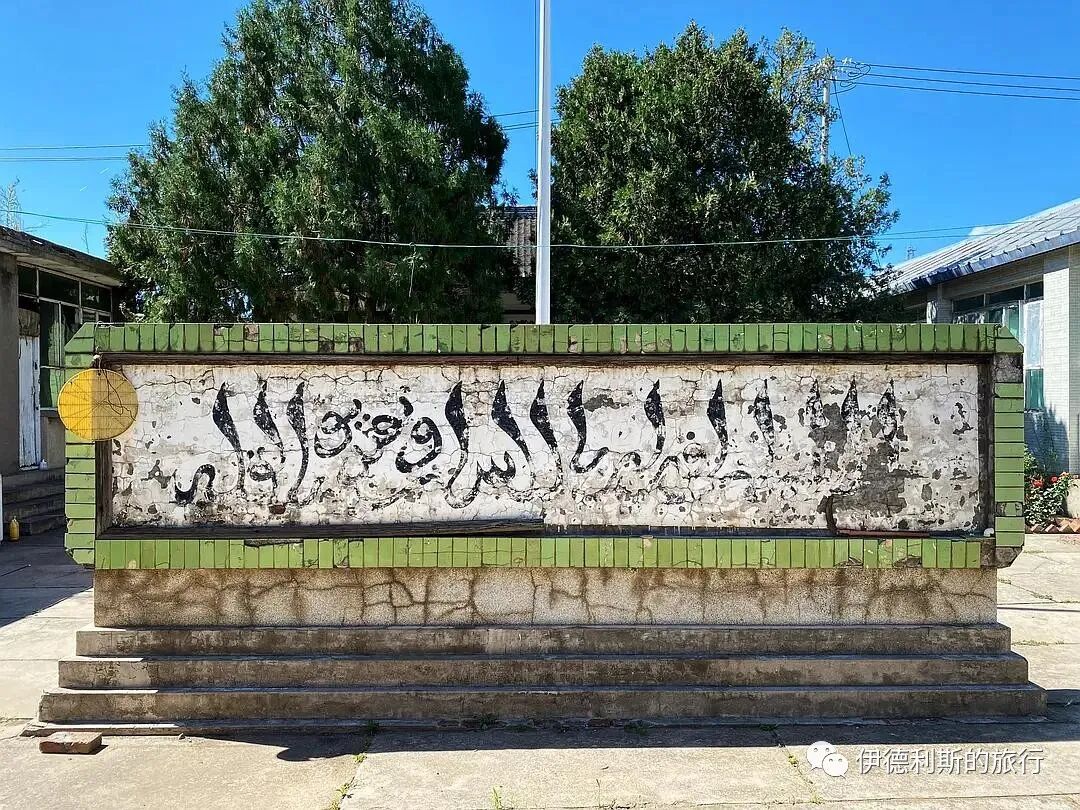
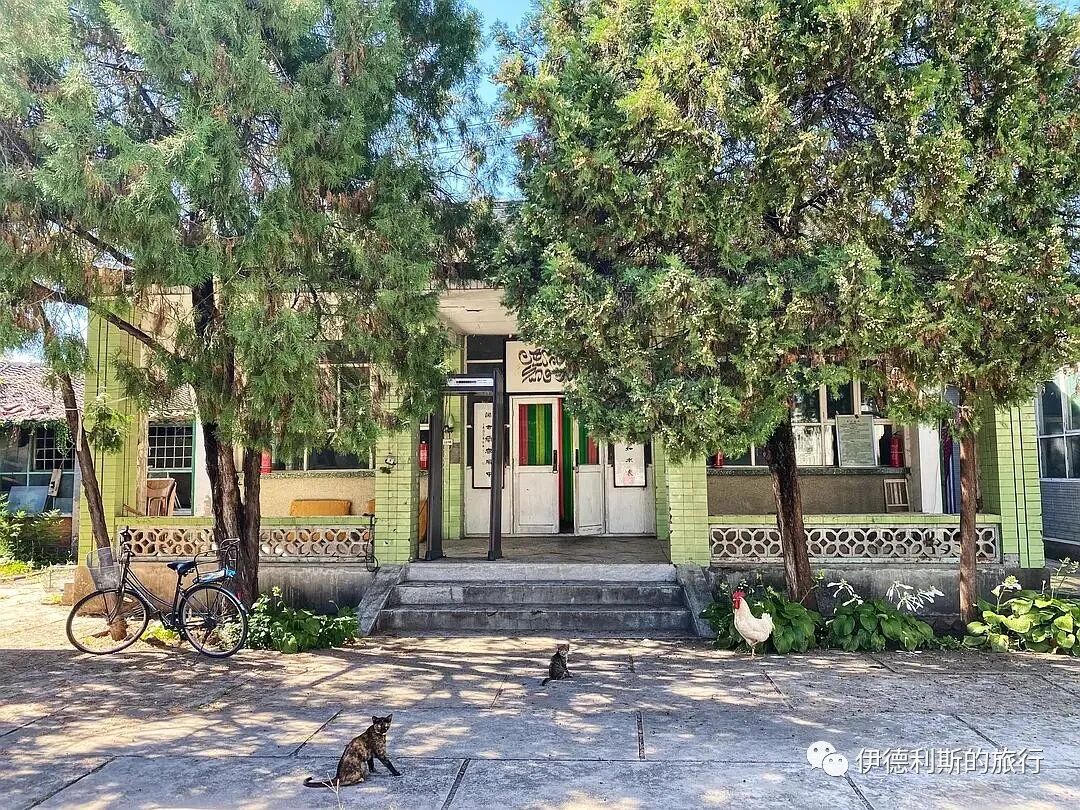
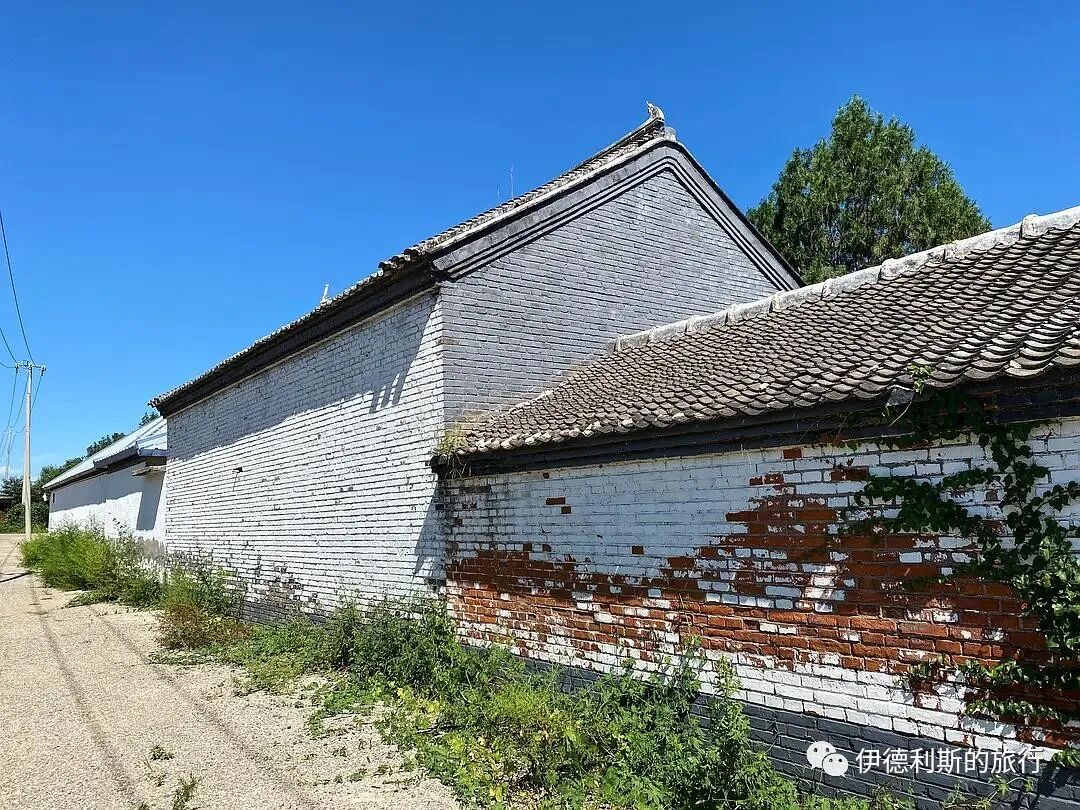
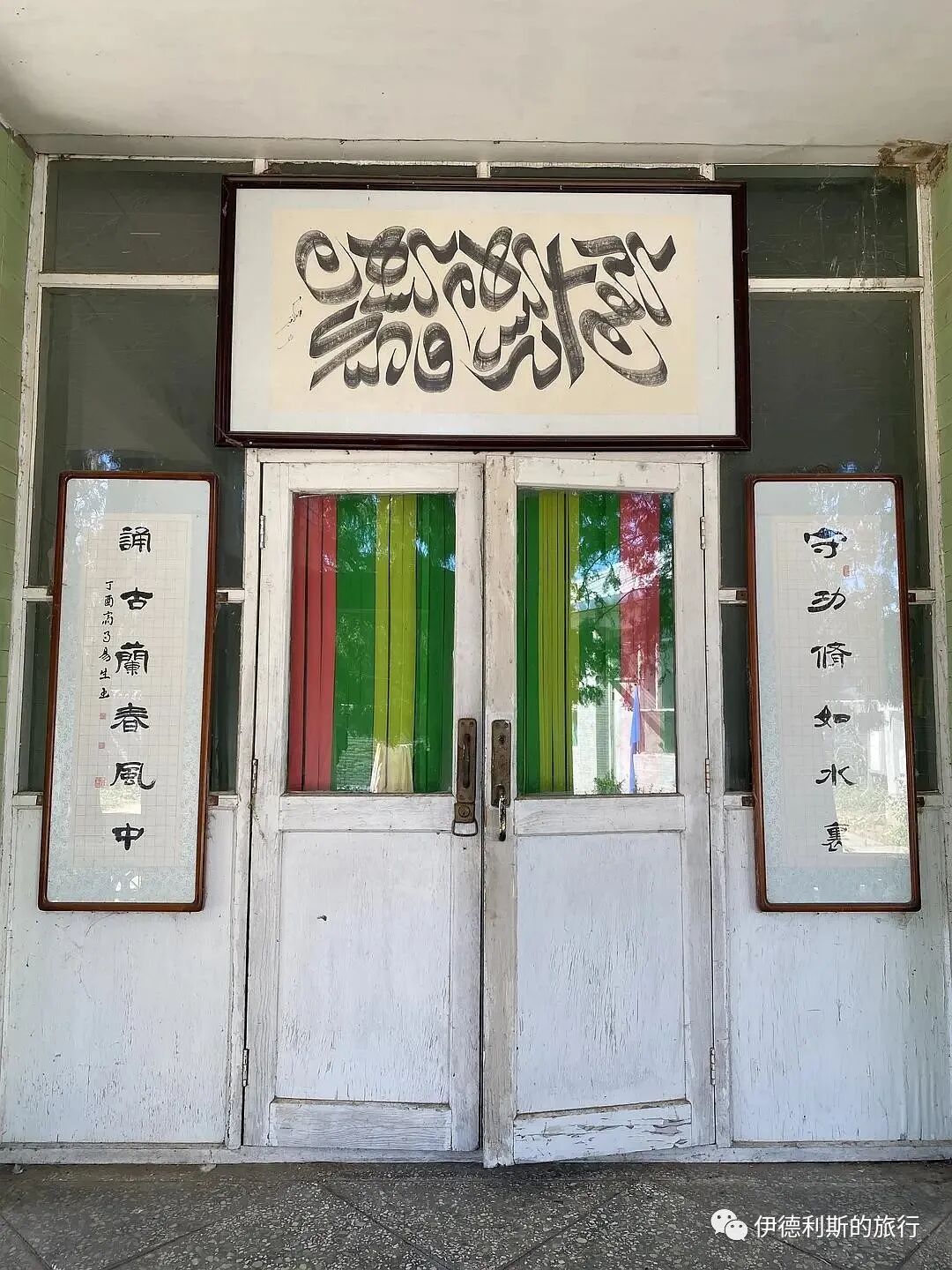
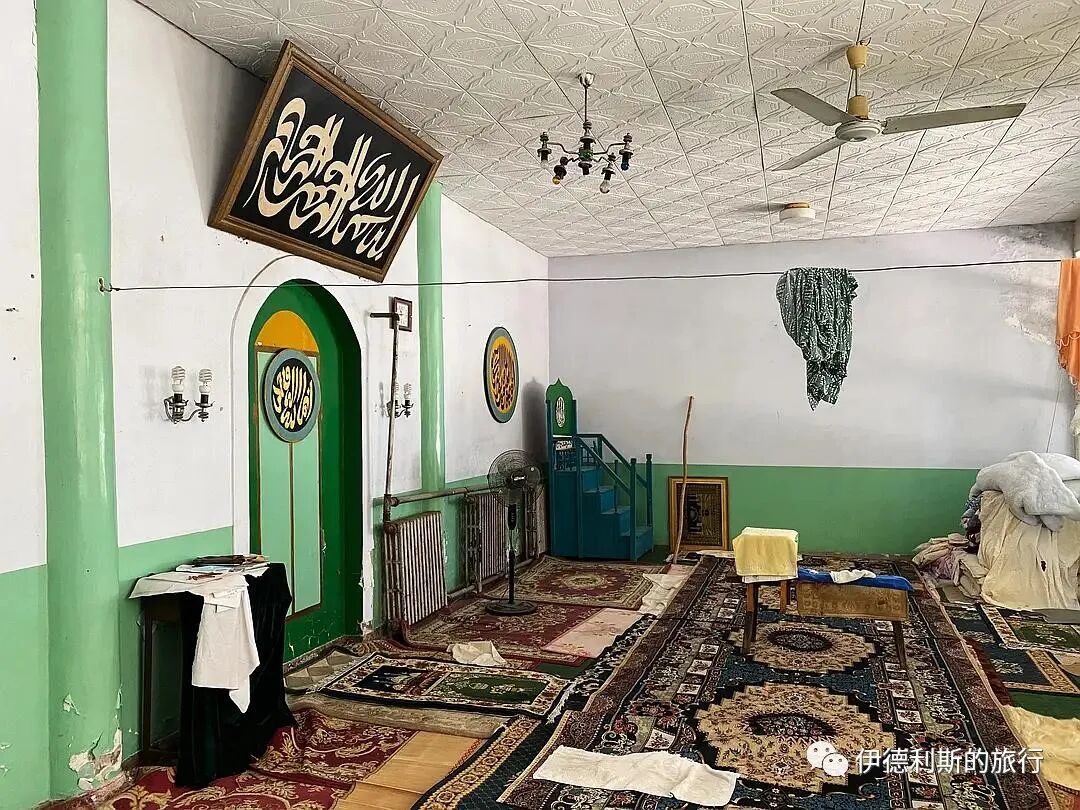
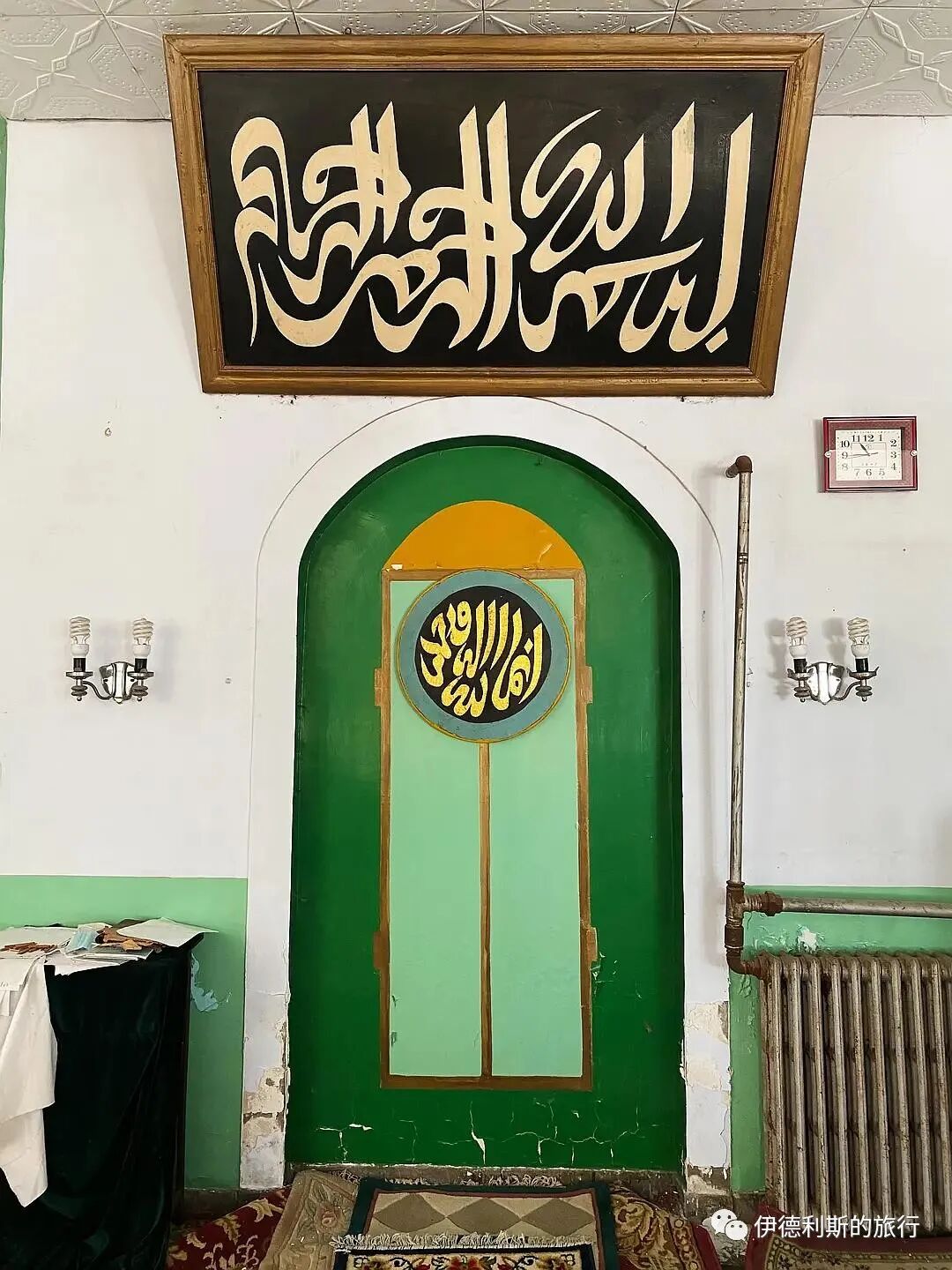
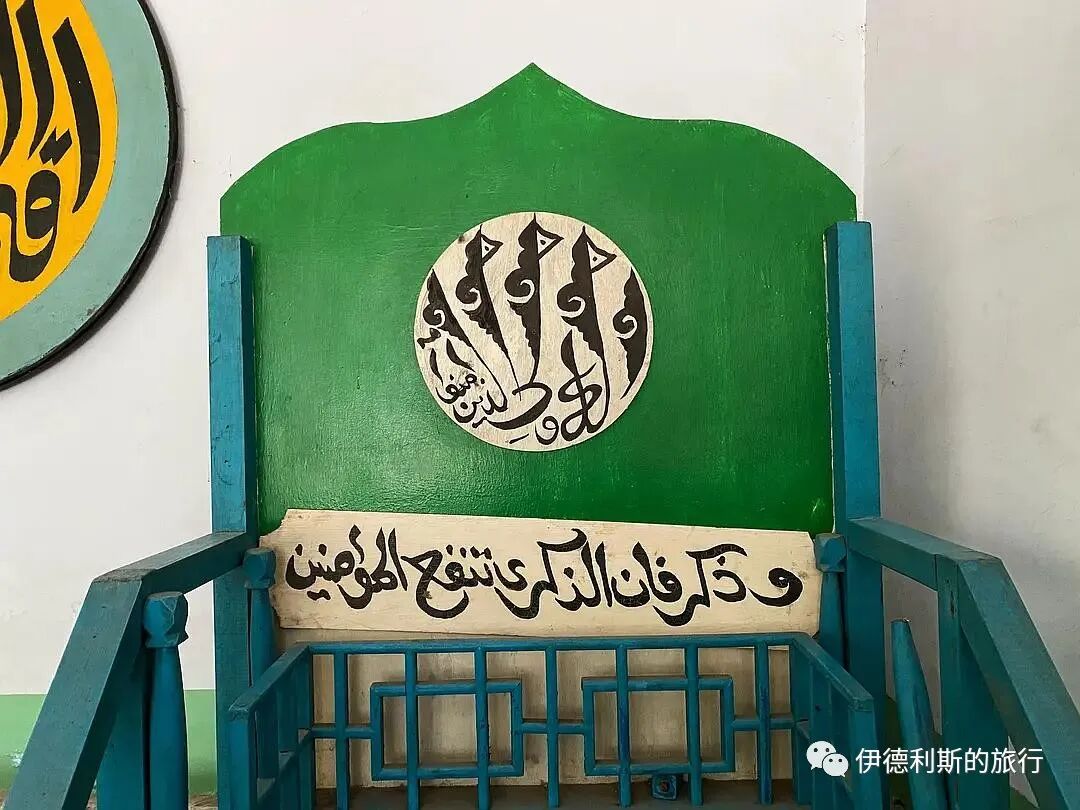
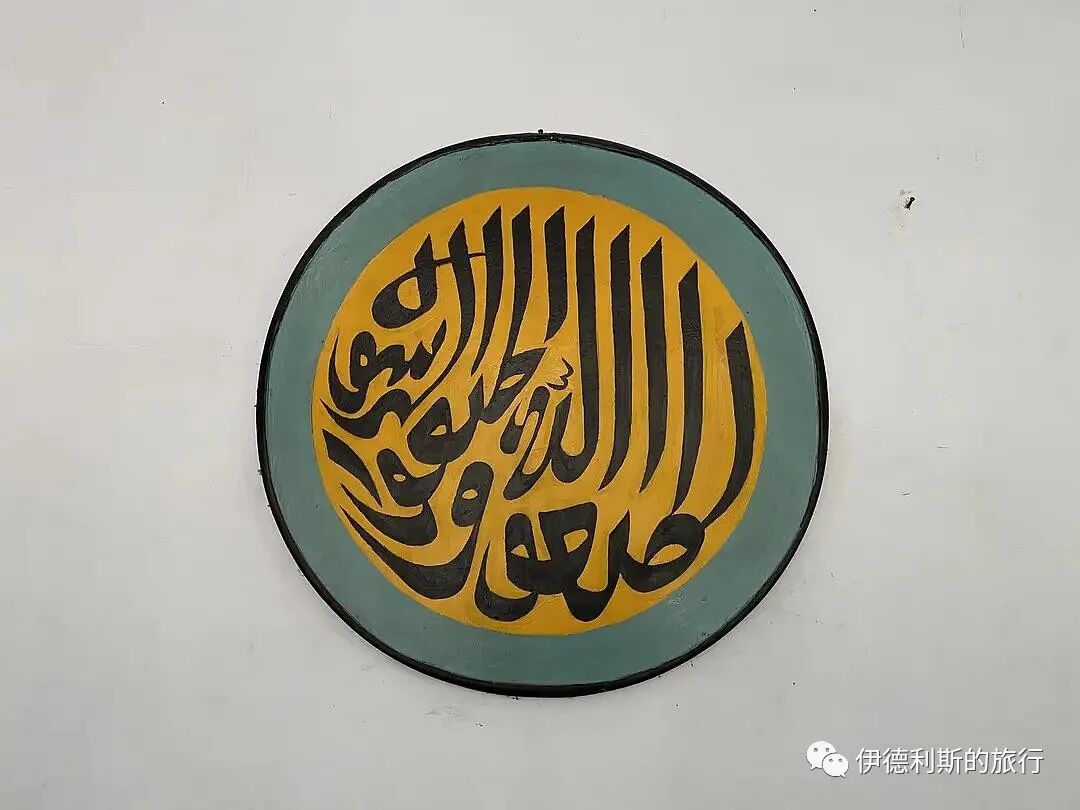
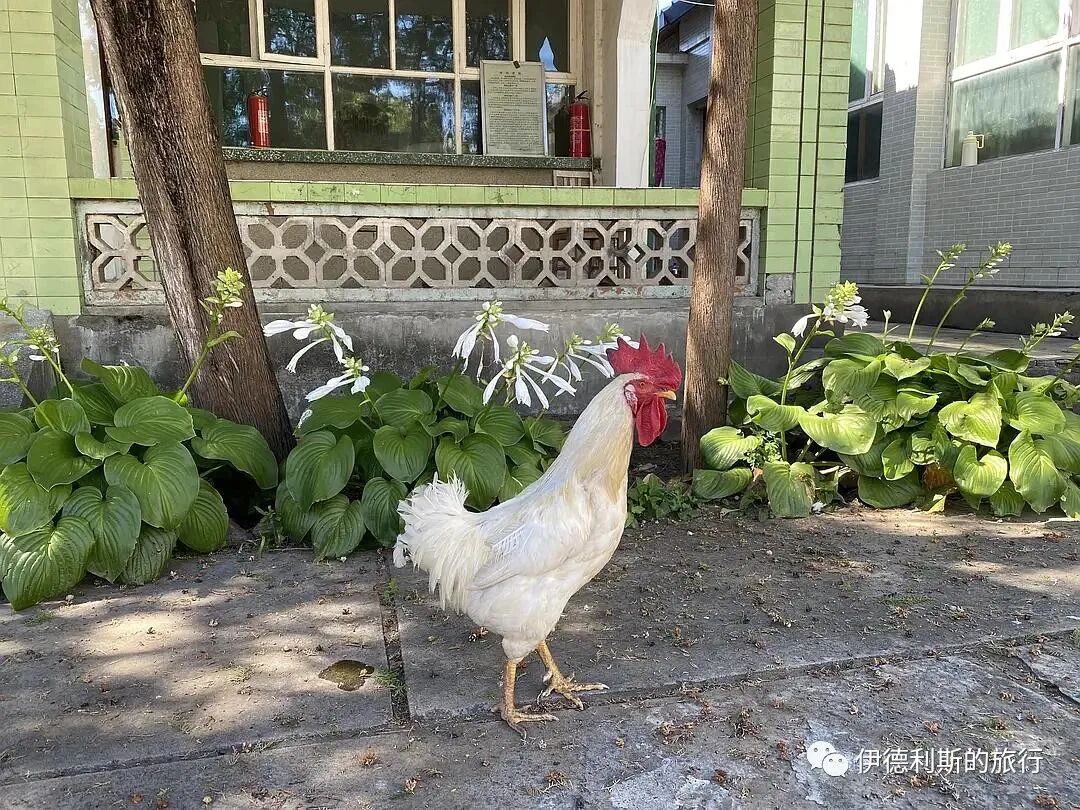
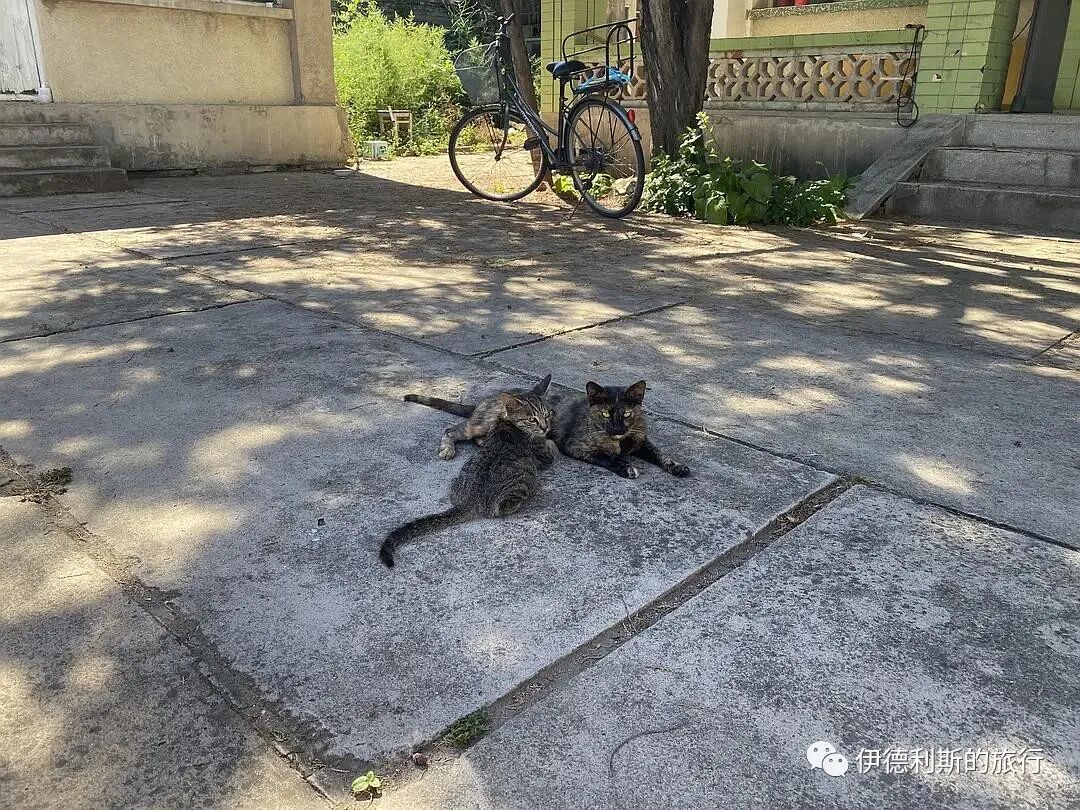
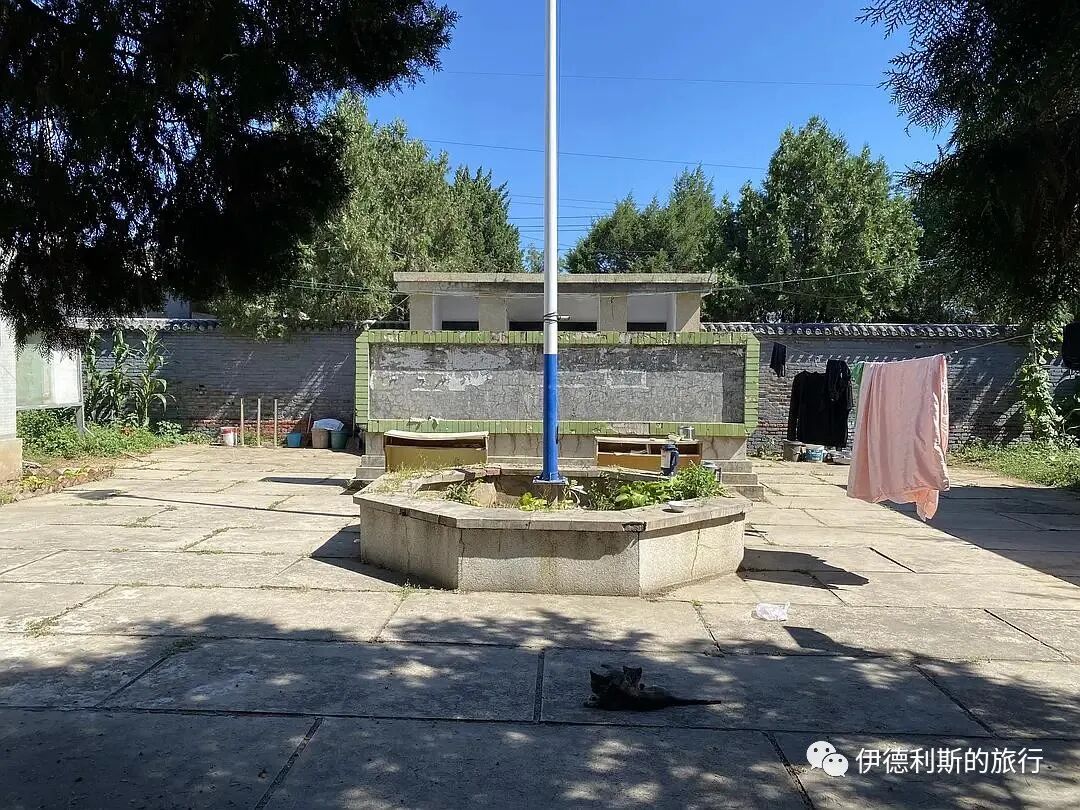
The chickens and cats at Mujiayu mosque.
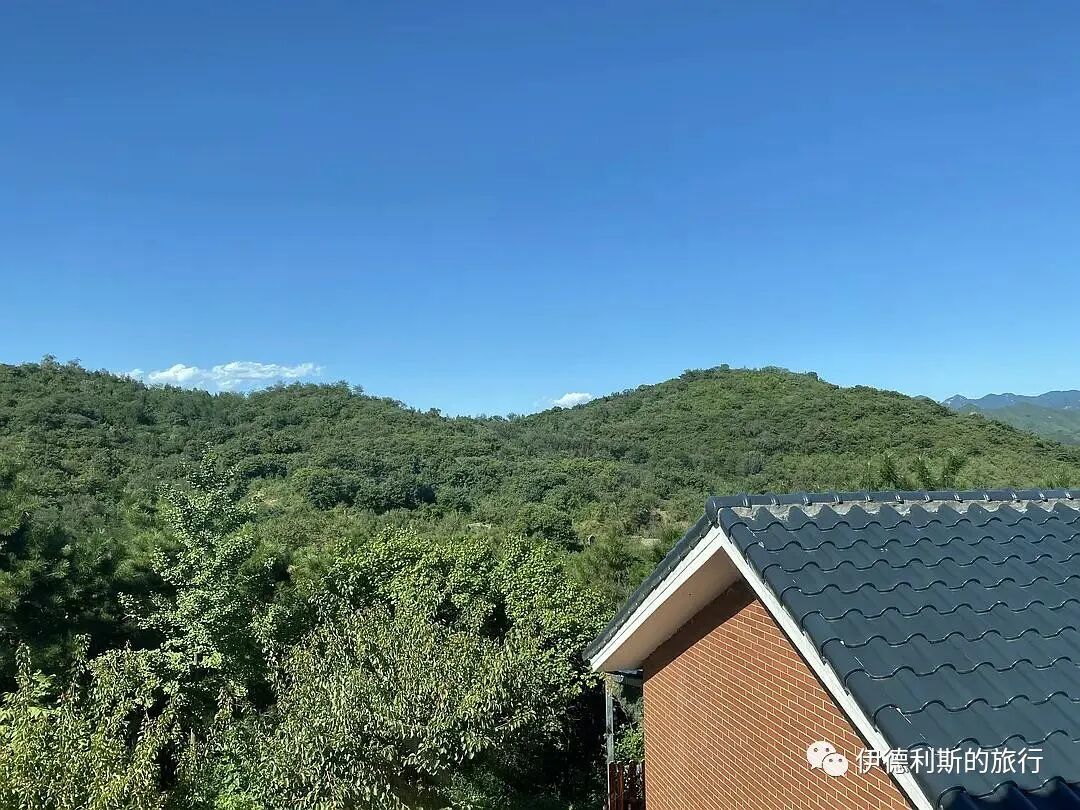
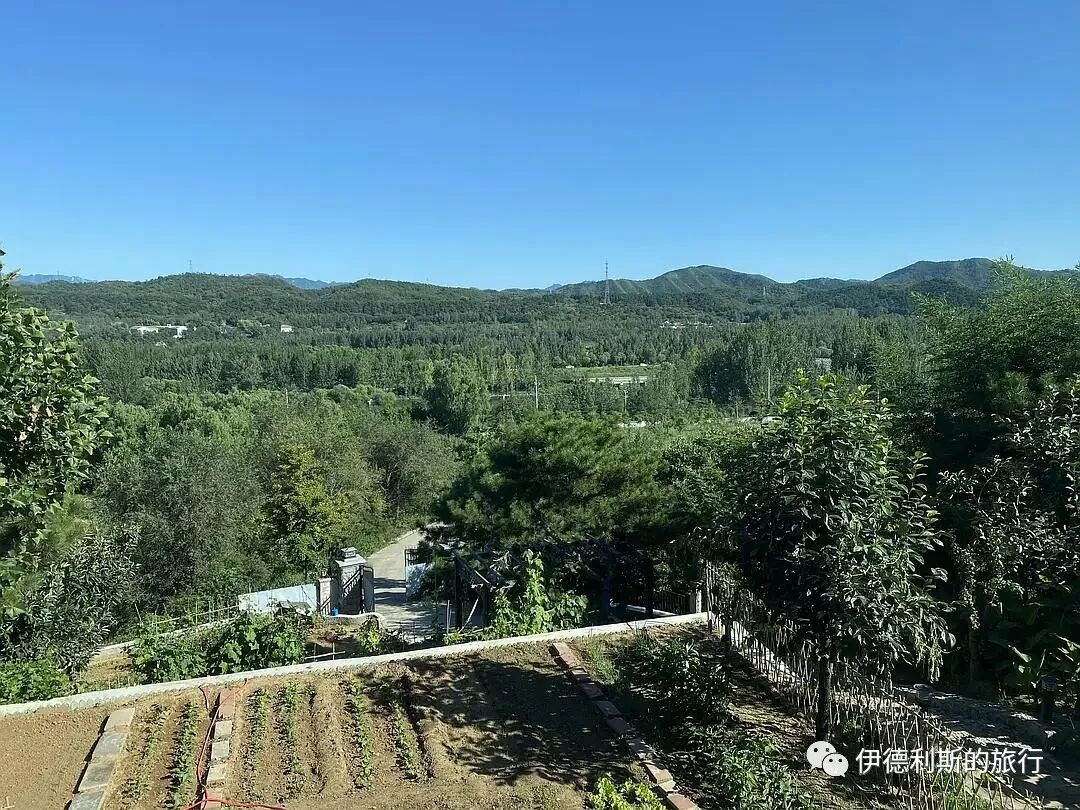
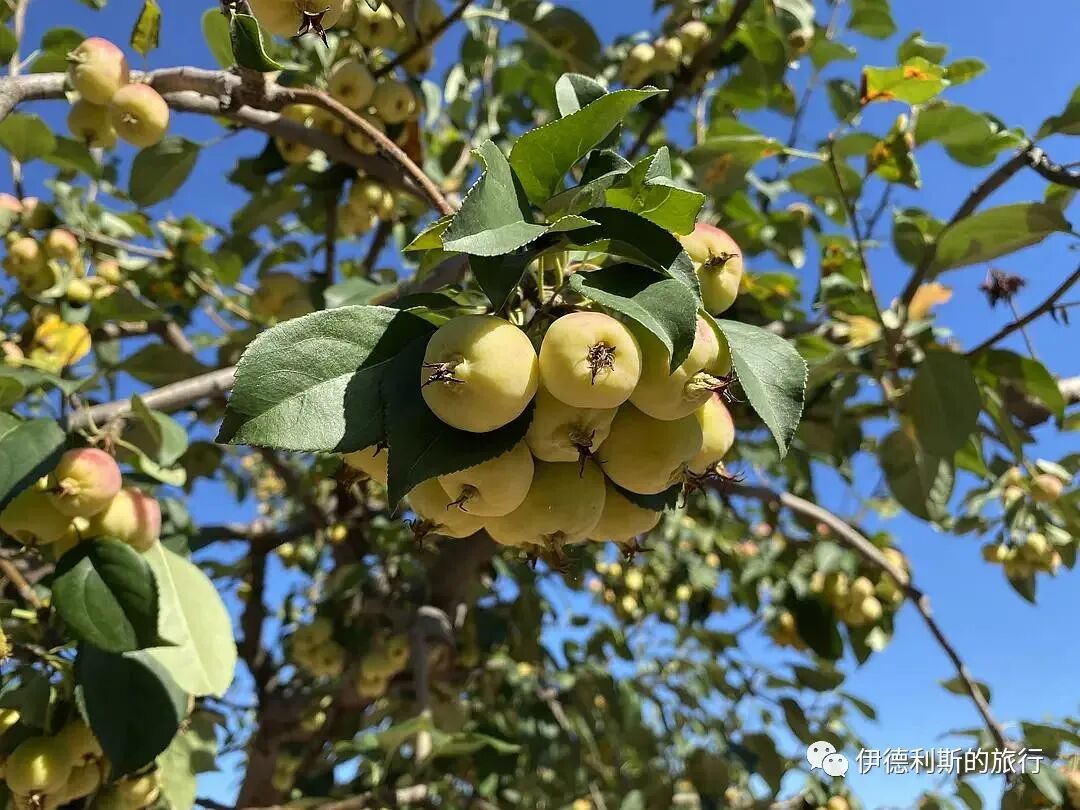
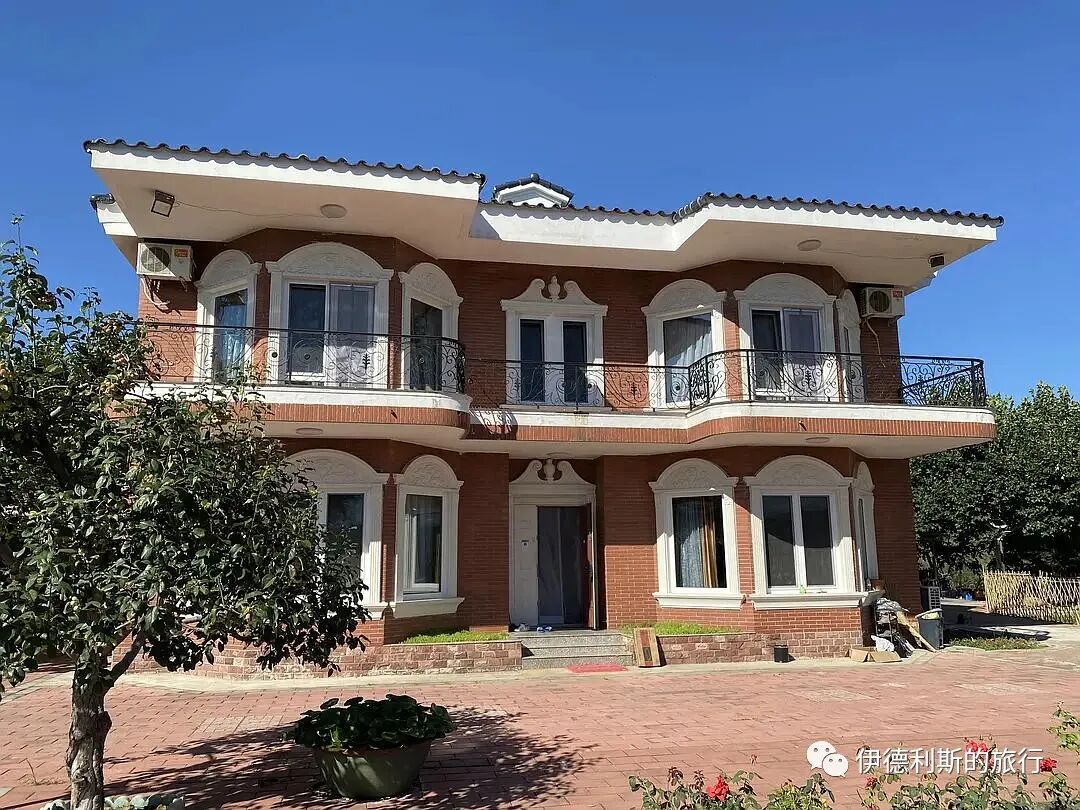
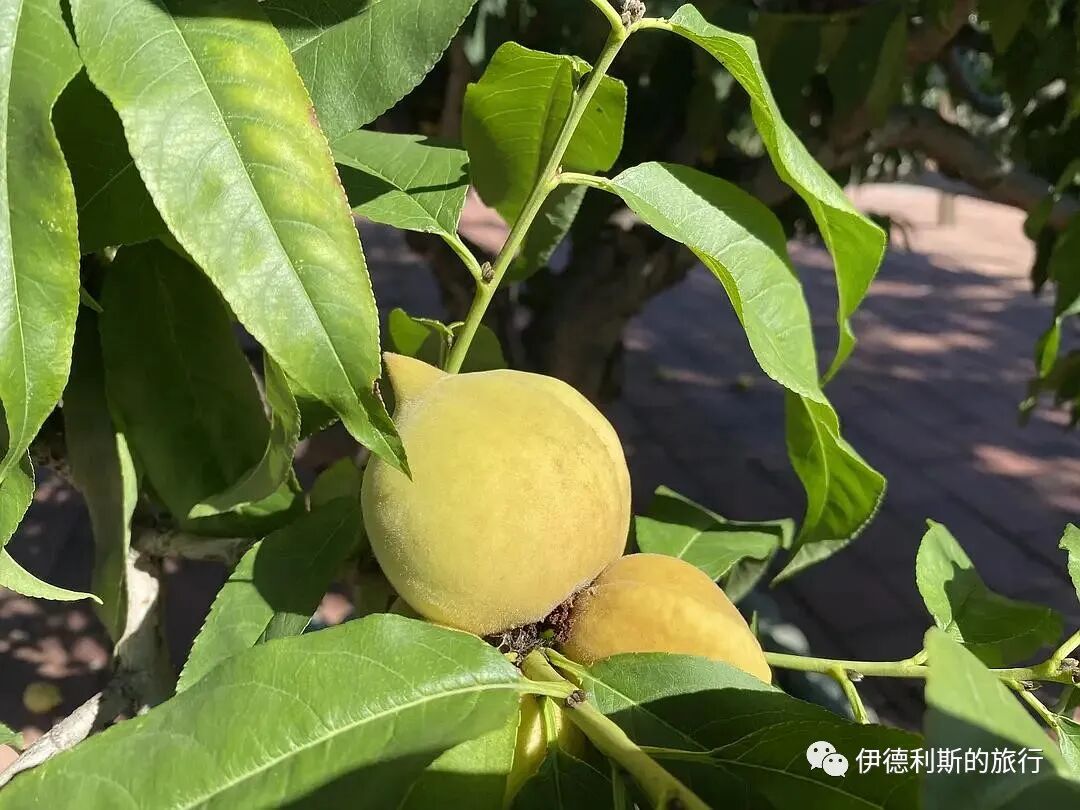
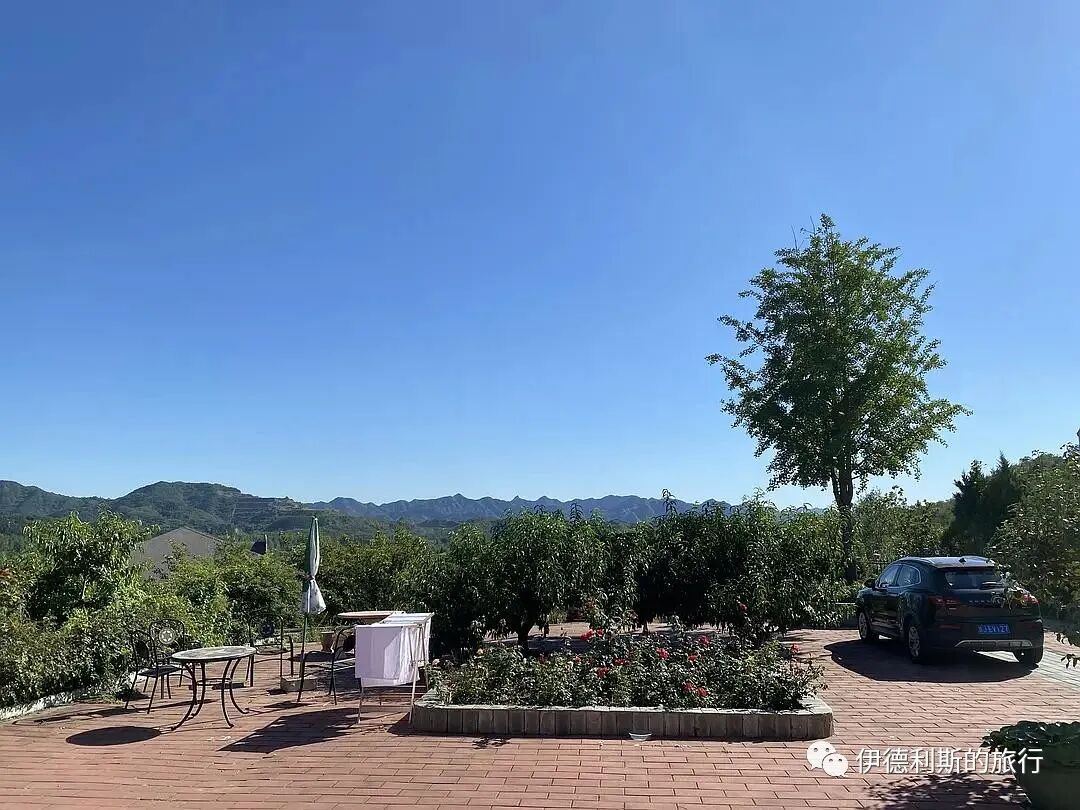
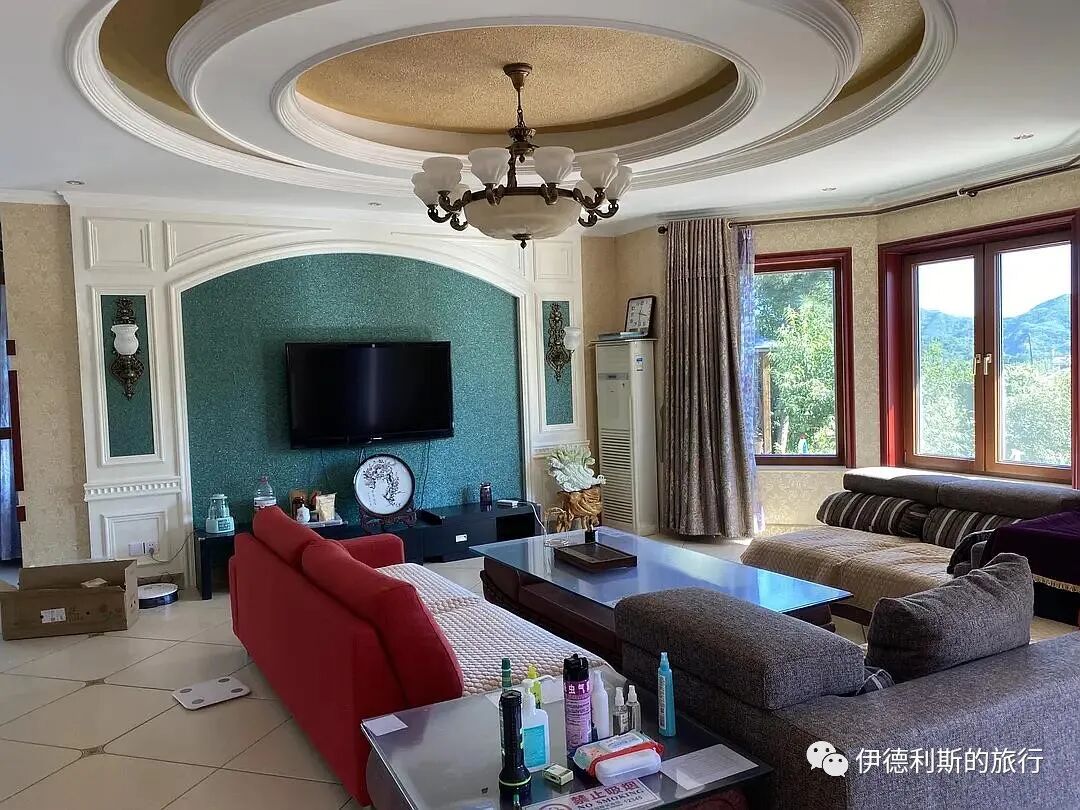
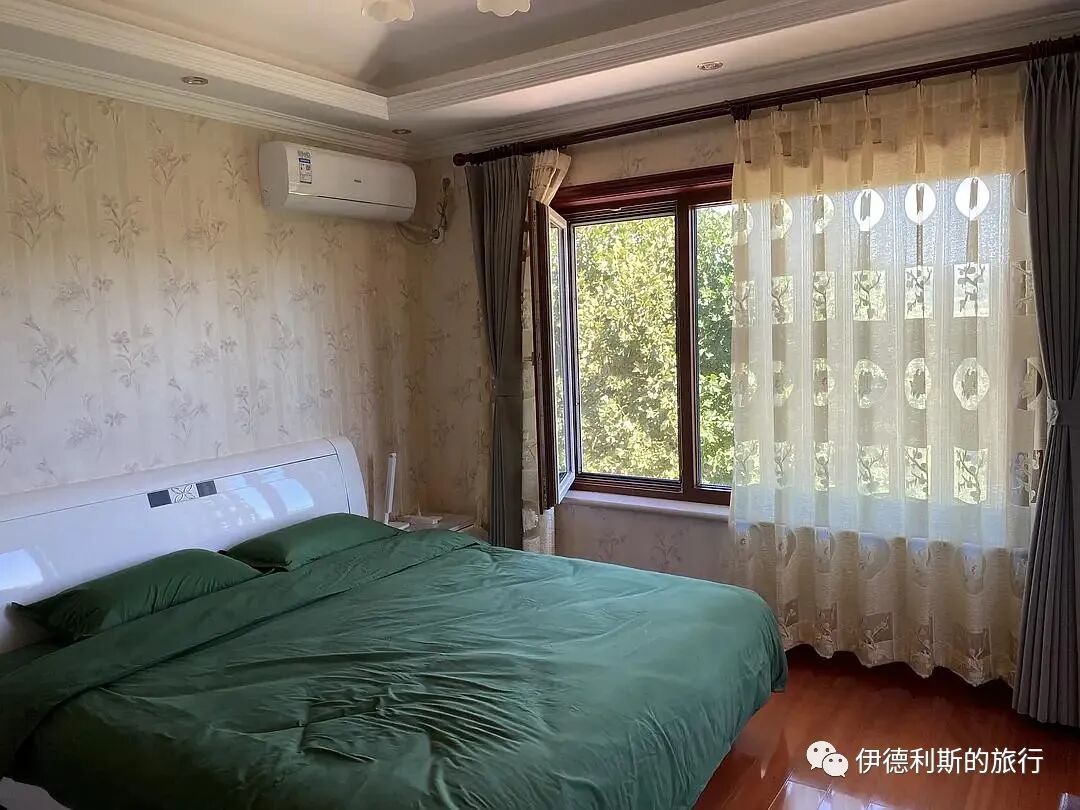
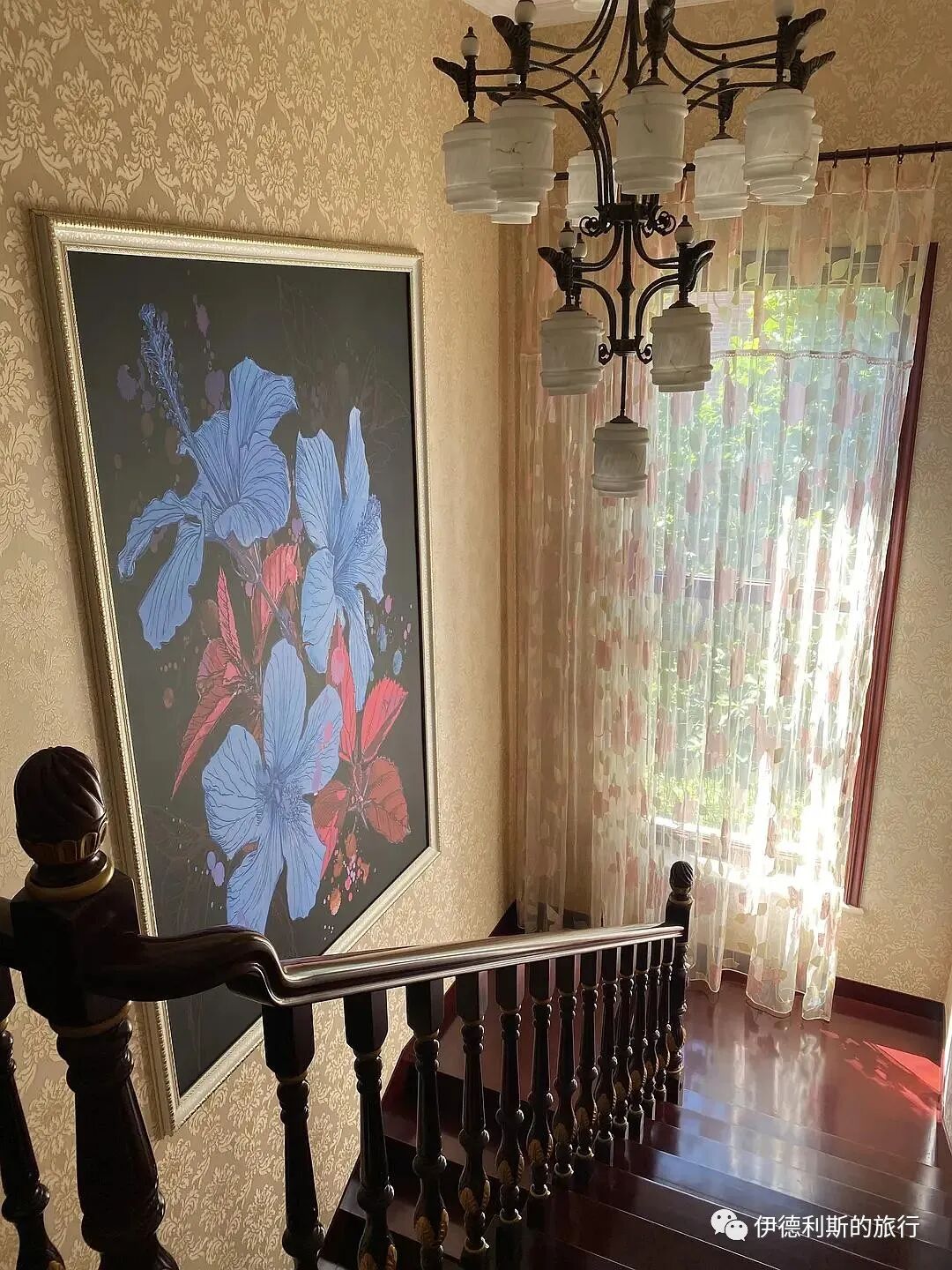
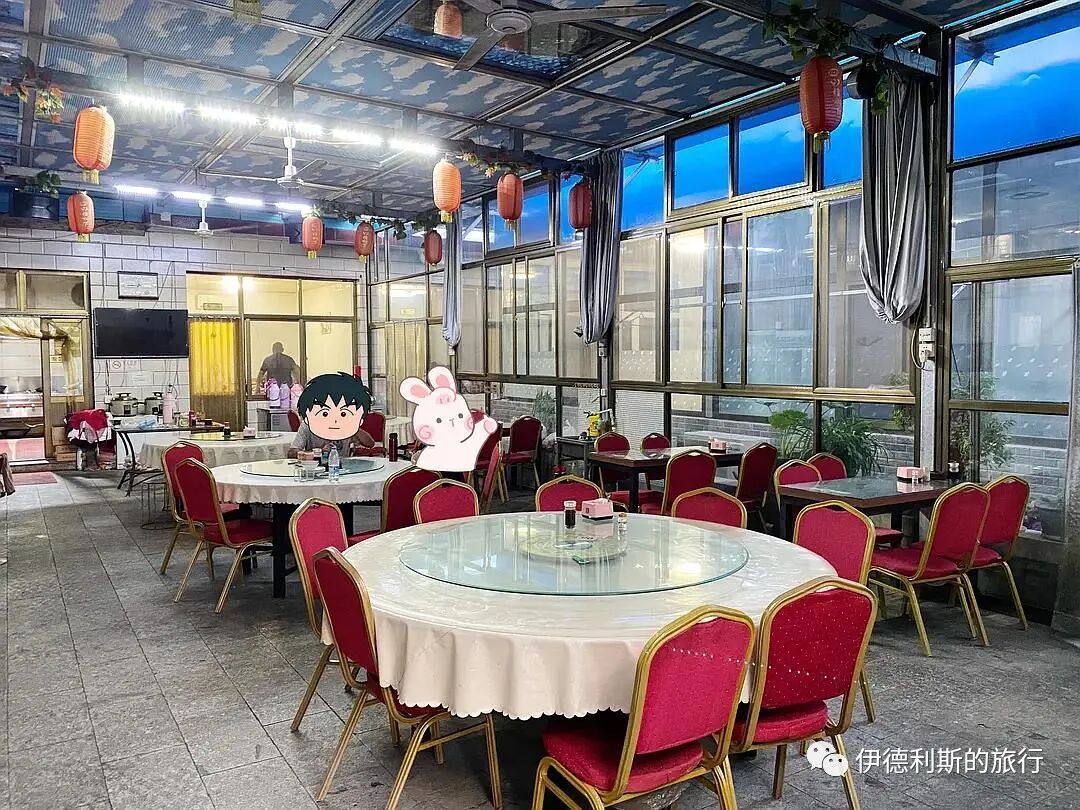
We stayed at Songning Yuan Su, not far east of Mujiayu. The suite cost over 100 yuan a day, and it is less than a 10-minute drive from the North Mujiayu Hui Muslim village. There is a crabapple tree and a peach tree in the courtyard, the view outside the window is lush and green, and you can faintly see the Chao River.
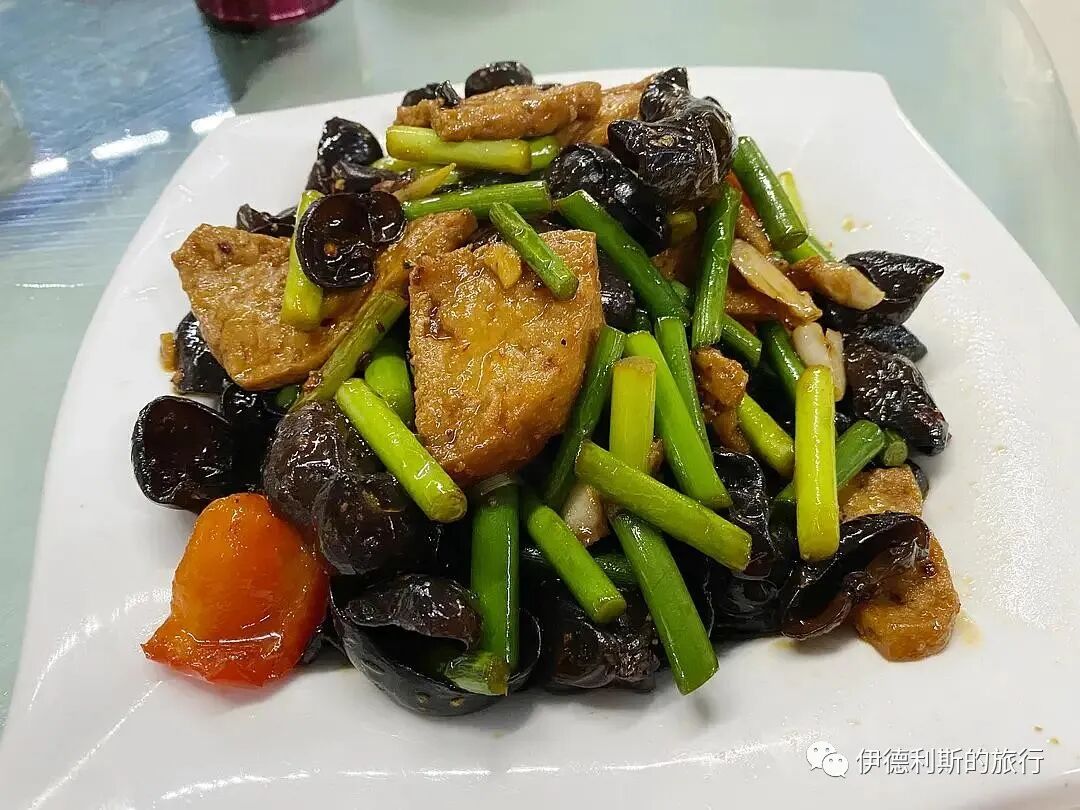
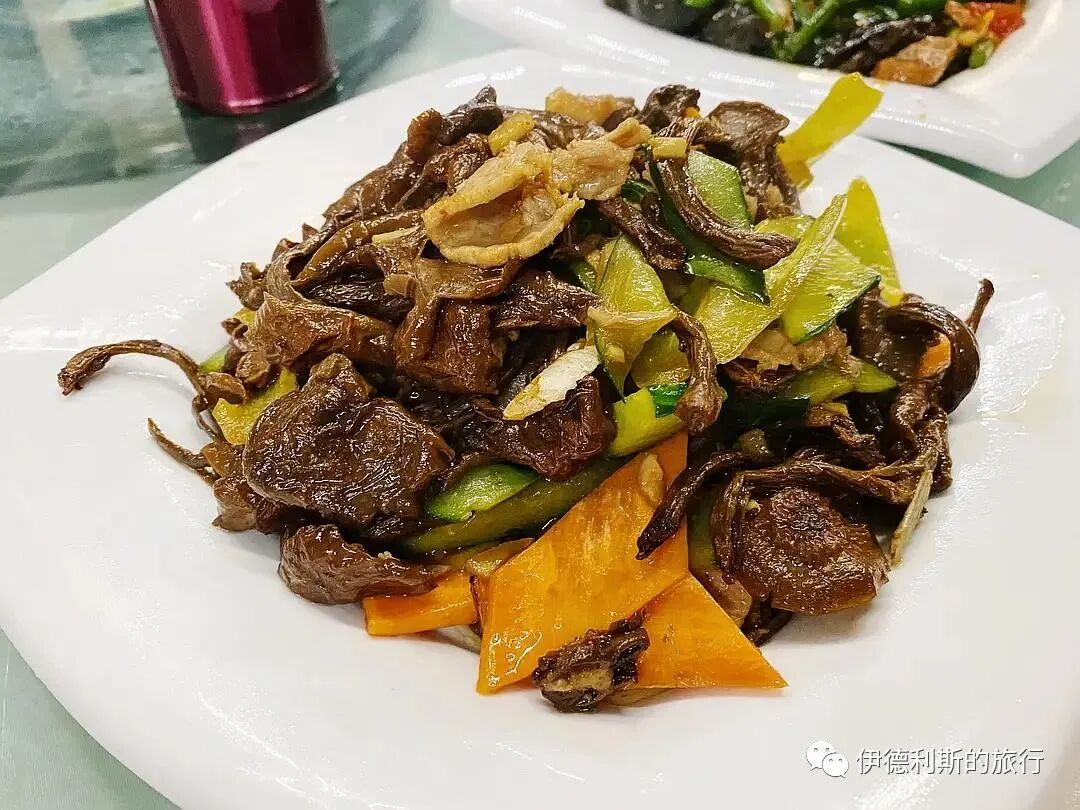
In the evening, we ate stir-fried beef with mountain mushrooms, stir-fried tofu with wood ear mushrooms, deep-fried sharp-belly fish (qiaozui), and cornmeal flatbreads (tiebingzi) at the Shanshui Tianyuan Ethnic Restaurant in Mujiayu. A large iron pot of freshly made cornmeal flatbreads only cost 15 yuan, and we couldn't finish it at all. The deep-fried fish was very satisfying, but the portion was huge. In short, eating at a farmhouse restaurant means big portions and good value, which reminded me of eating in Northeast China, haha.
It is also worth mentioning that the Hui Muslim banquet known as the Eight Great Bowls (badawan) in Mujiayu has a long history. When the Miyun Reservoir was built in 1958, all residents of the Shixia ancient city in the submerged area were relocated. A group of Hui Muslims with the surname Li, who were skilled at making the Eight Great Bowls, moved to Mujiayu, which is how the current Mujiayu halal Eight Great Bowls came to be.
Back at the villa in the evening to watch the stars.
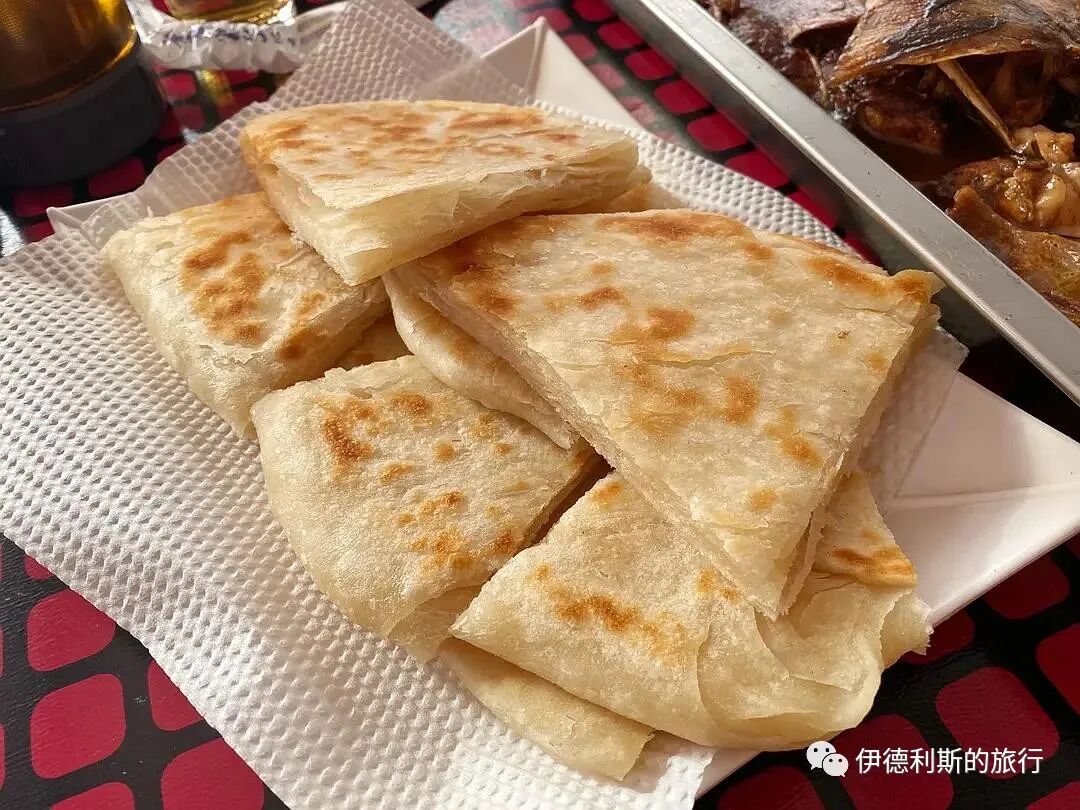
In the morning, we had tofu pudding (doufunao), soy milk, fried dough cakes (youbing), and meat-filled flatbreads (roushaobing) at the Hexingzhai Halal Restaurant in Mujiayu. They seem to be the only place in the North Mujiayu Hui Muslim village selling breakfast. Their homemade fresh chive flowers were especially delicious, and the meat-filled flatbreads were very flavorful.
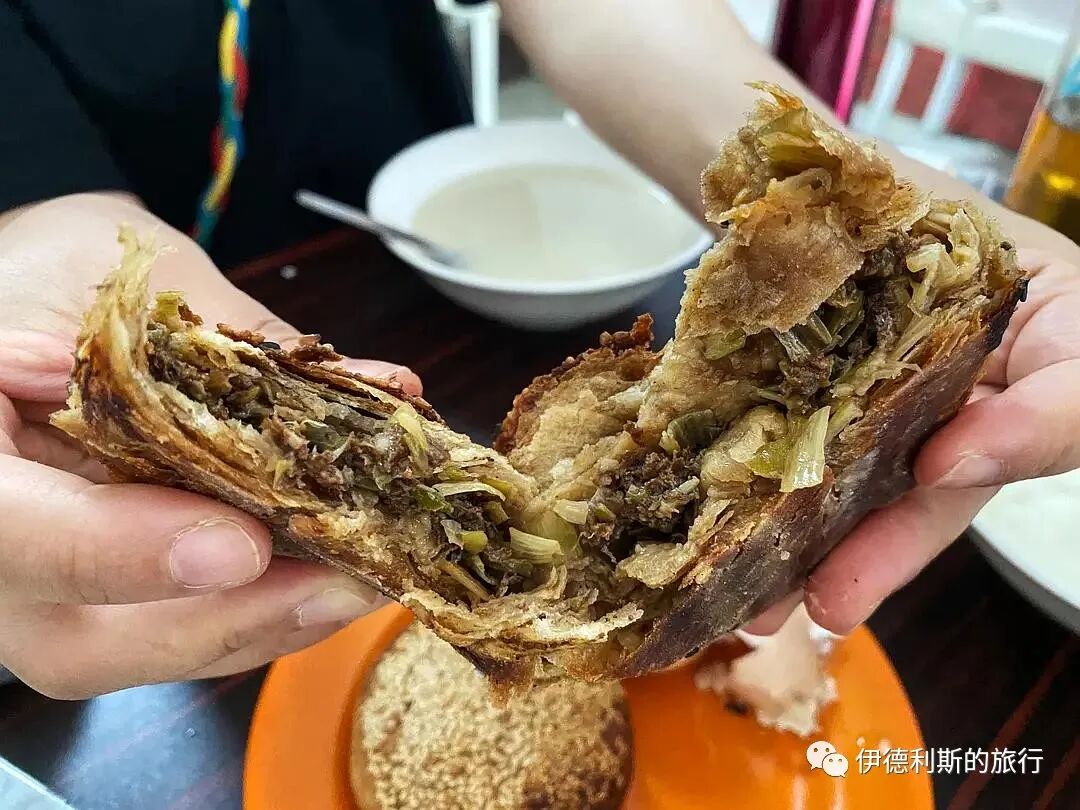
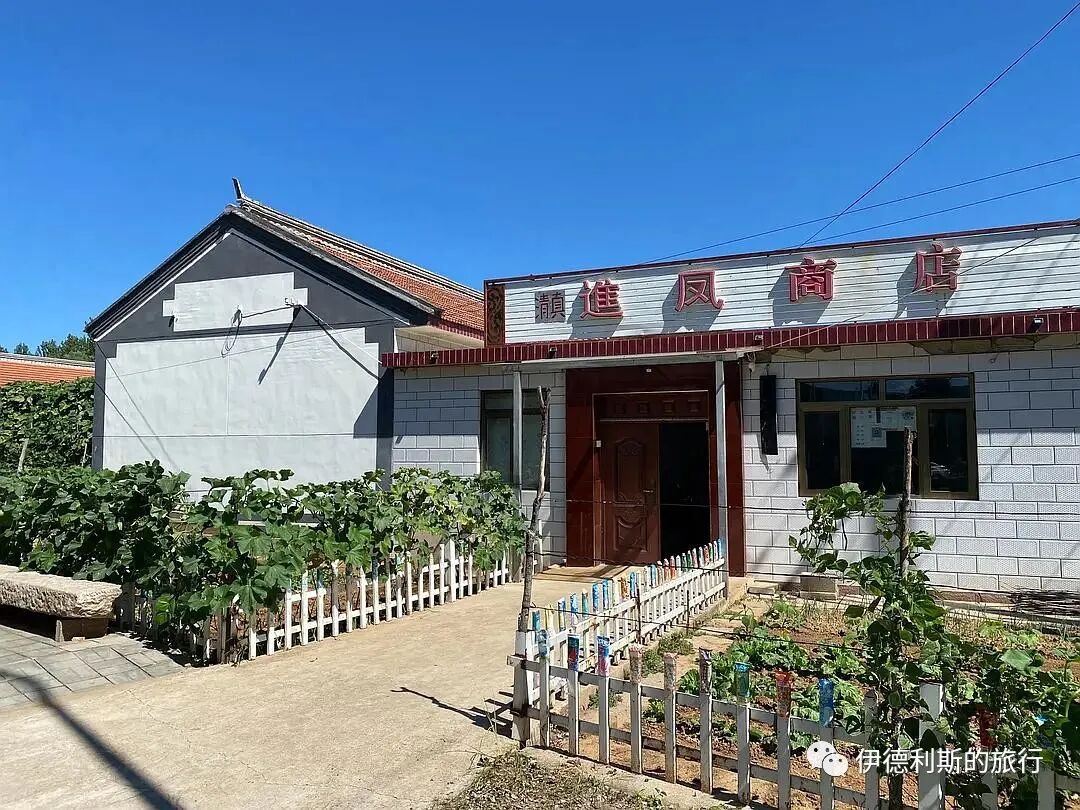
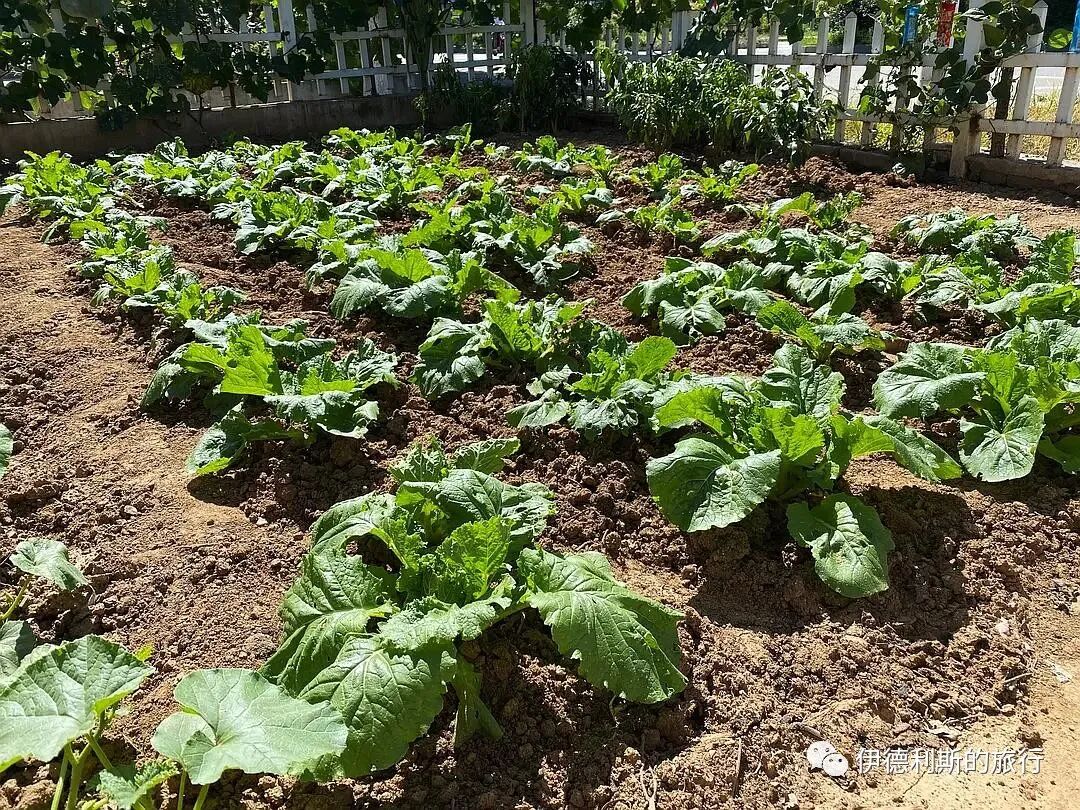
We ate beef pancakes, beef casserole, mixed lamb liver, and stir-fried pumpkin at the Fuhua Zhengxing Folk Restaurant in Mujiayu. This was our first time at a Miyun farmhouse restaurant, so we didn't have experience and ordered too much at once, haha. The flaky beef pancake was delicious! The mixed lamb liver was also very tasty, but the beef used was a bit fatty and gristly; it would have been better if it were leaner. The owner was very welcoming. As soon as he saw Zainab was pregnant, he quickly ushered us into a quiet room inside to eat.
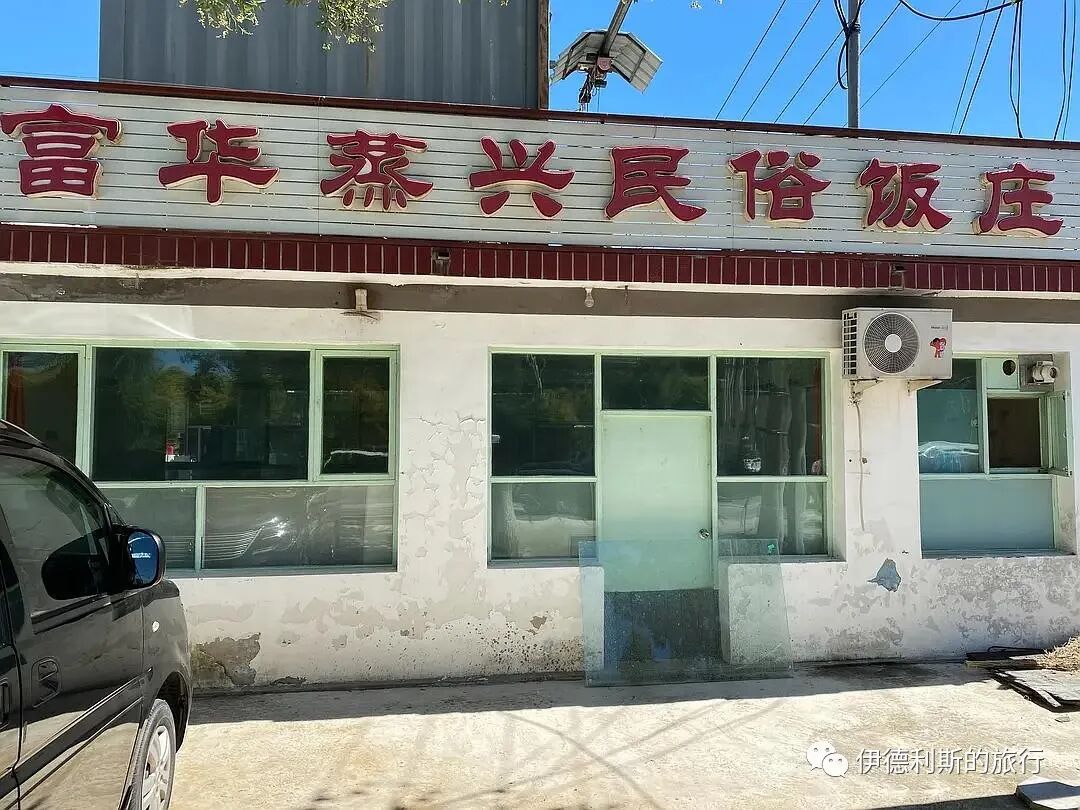
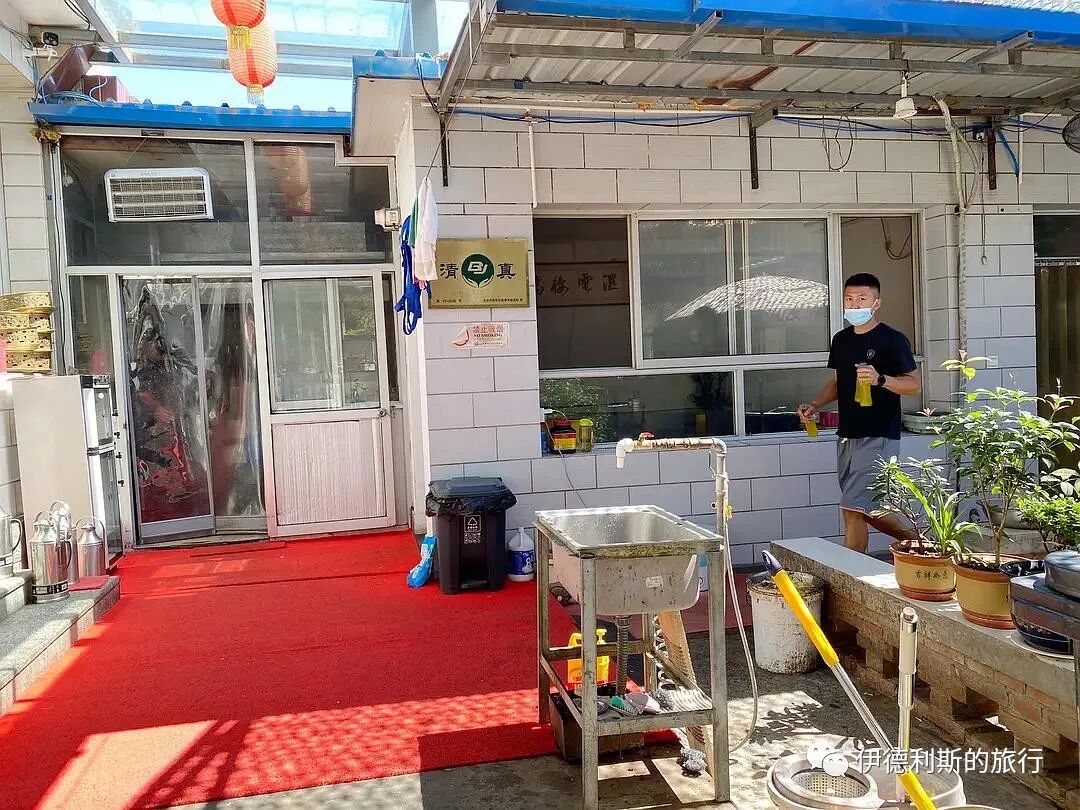
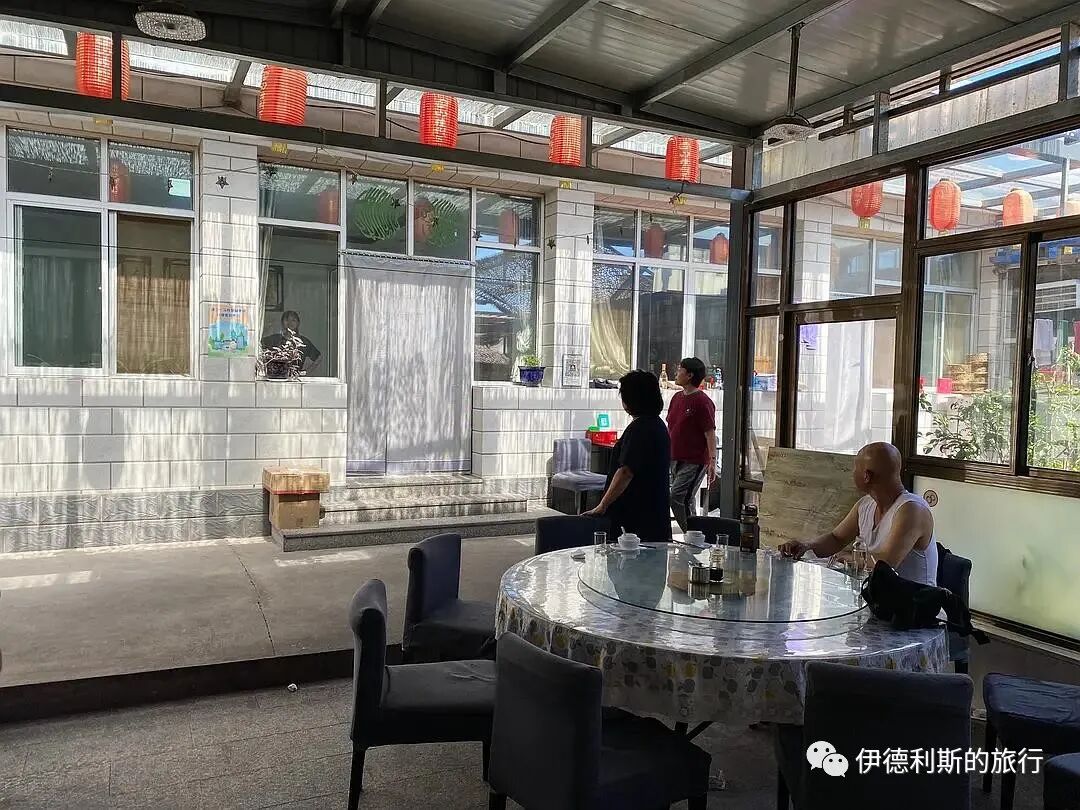
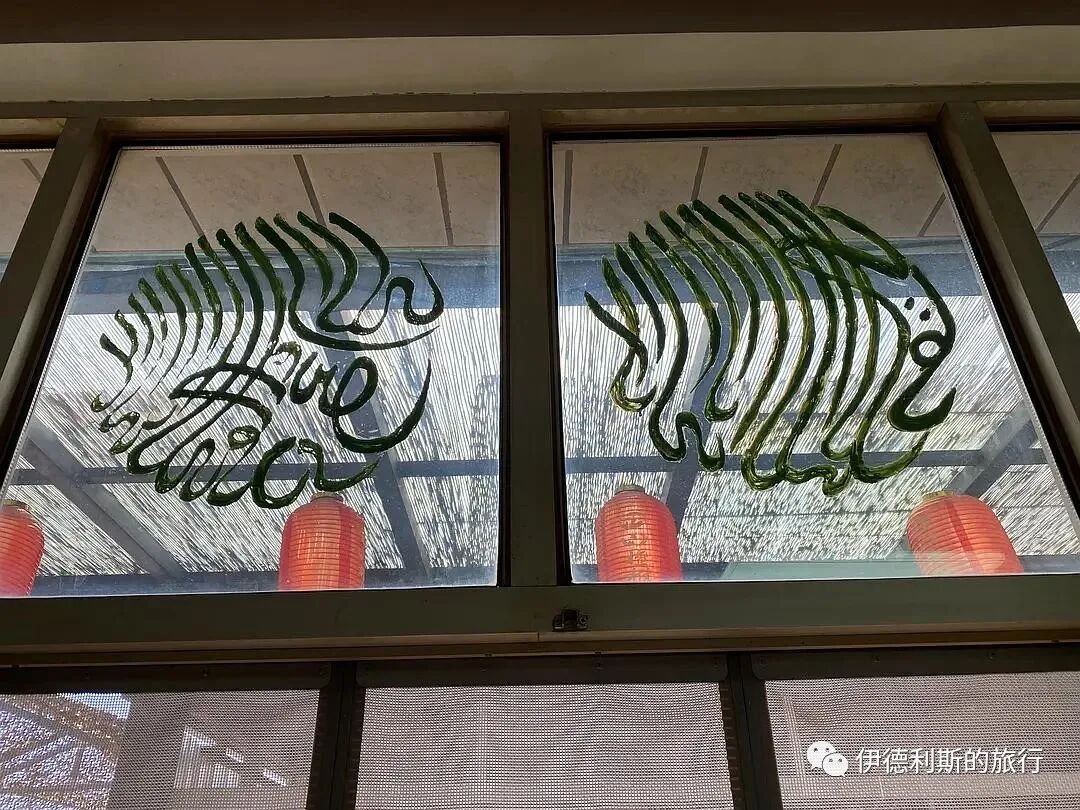
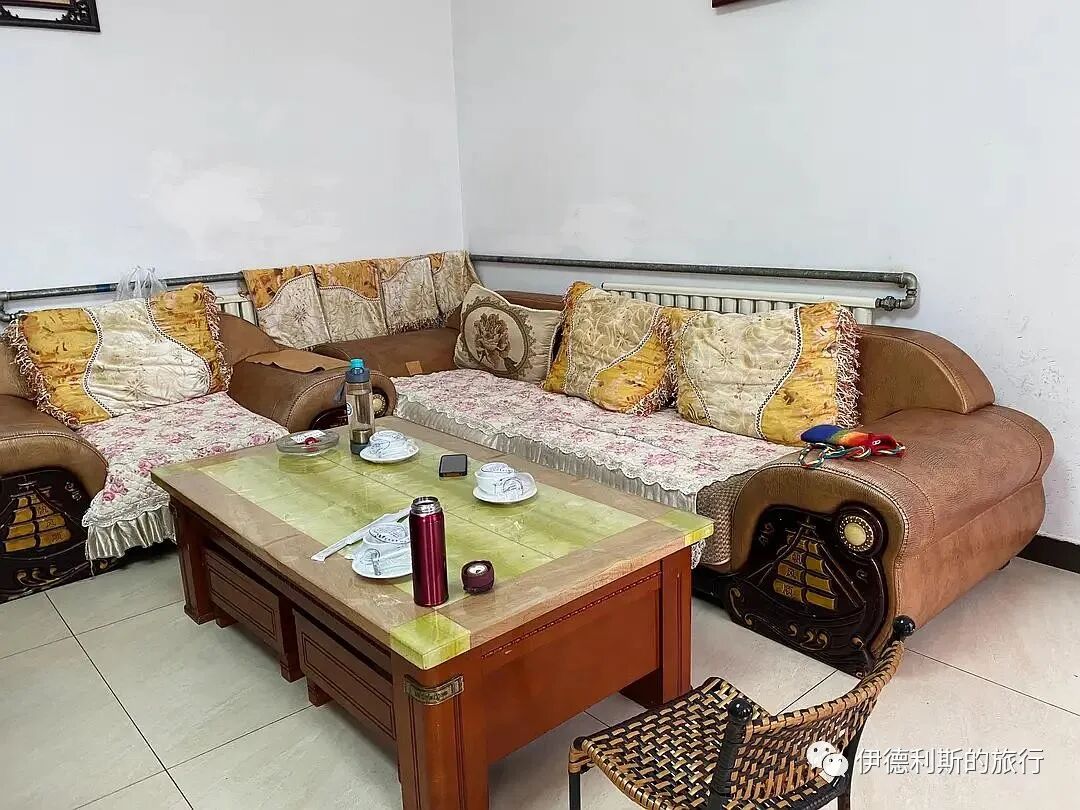
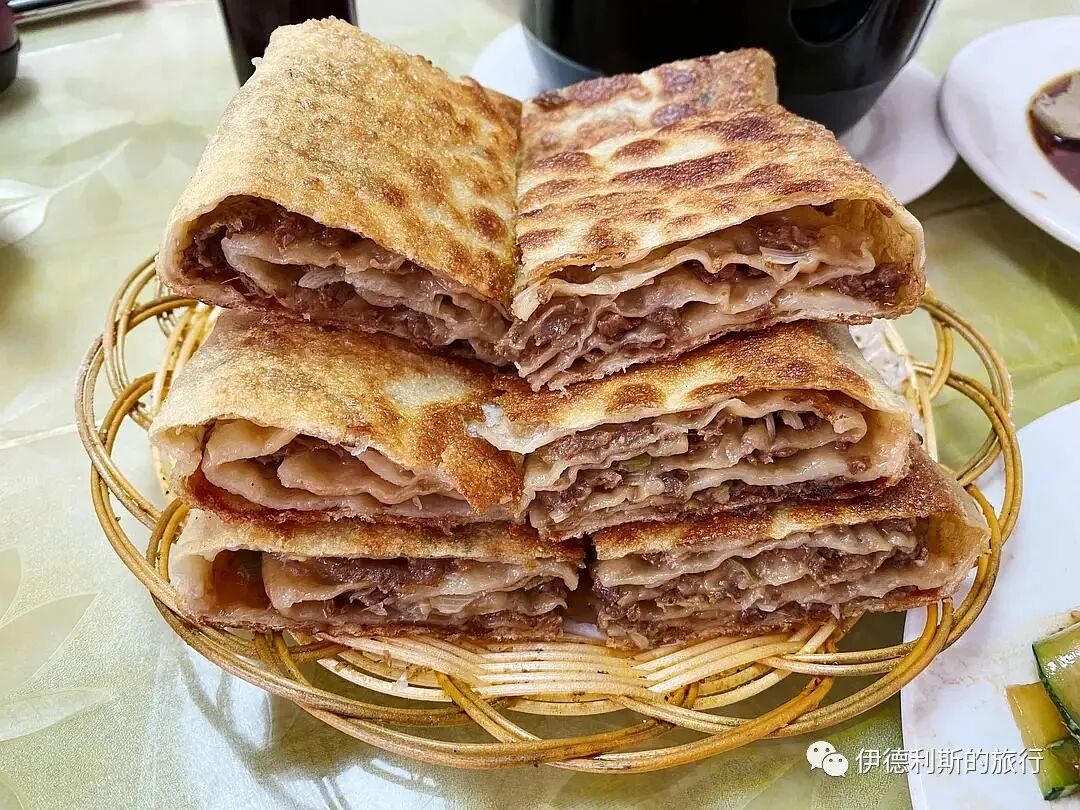
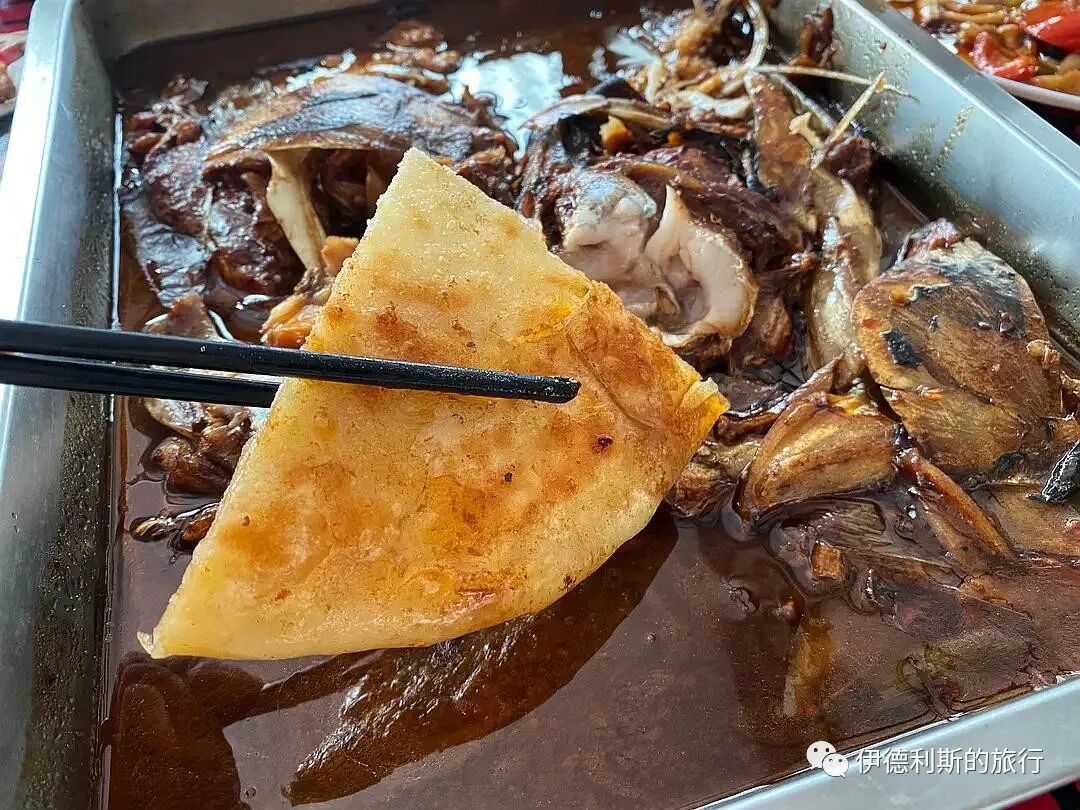
A halal farmhouse restaurant in Mujiayu called Kunanchun Folk Restaurant. We had fish head with flatbreads, which featured three jin of bighead carp served with freshly made homemade flatbreads, and we also ordered a dish of three types of mushrooms. We called ahead to ask for less salt and to have it stewed in advance, so we could eat as soon as we arrived. The reservoir fish wasn't as chewy as the rainbow trout we had last week, but it was a different kind of delicious. Everyone was very satisfied and still wanted more, saying we should eat a whole five or six-jin fish next time.
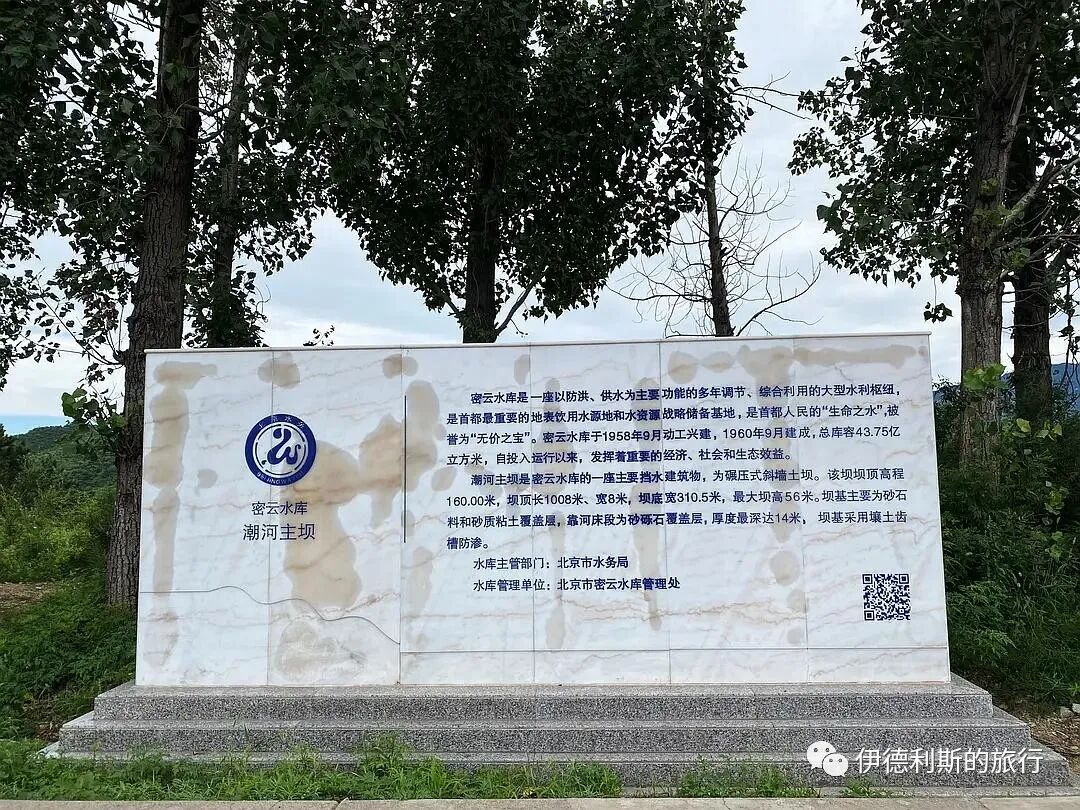
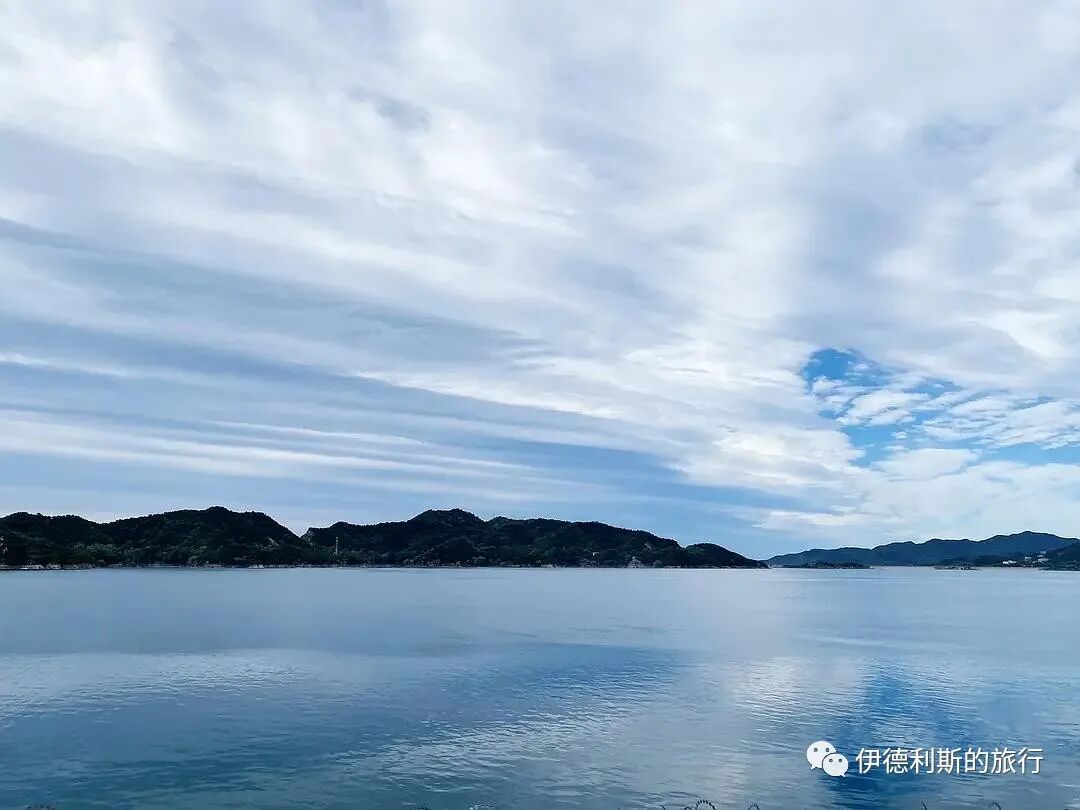
I enjoyed the view from the main dam of the Chaohe River at Miyun Reservoir, where villagers were also selling dates picked from the mountains.
After leaving the dam, I went to a nearby orchard to pick some early-ripening pears. They were incredibly juicy and very sweet!
Gubeikou
I traveled along the east bank of Miyun Reservoir, heading toward Gubeikou.
I visited the Gubeikou mosque again after four months, but the Hui Muslim gentleman who holds the key wasn't home, so I couldn't get inside. For a detailed introduction to the Gubeikou mosque, you can check my diary entry from the spring, 'Visiting the Ancient Mosque in Gubeikou'.
During the Kangxi reign, Gubeikou was a vital military stronghold for the Emperor's campaigns against the Dzungars. It was also a key stop on the imperial road for his northern hunting trips and inspections, making it very important. In the 32nd year of the Kangxi reign (1693), a military camp called Liulin Camp was established in the mountains west of the river in Gubeikou, and heavily guarded by troops. In the 34th year of the Kangxi reign (1695), a Hui Muslim officer named Ma Jinliang was promoted to Commander-in-Chief of Gubeikou in Zhili due to his outstanding military service. In the 42nd year of the Kangxi reign (1703), he was promoted to Regional Commander of Zhili. People called him 'Commander Ma the Hui Muslim,' and he was stationed in Hexi Village, Gubeikou. While in Gubeikou, Ma Jinliang oversaw the renovation of the Gubeikou mosque. The current mosque is basically the same size as it was after that Kangxi-era renovation.
By the end of the Qing Dynasty, as the imperial road fell into disuse, Liulin Camp was disbanded in the 16th year of the Guangxu reign (1890), and Hexi Village gradually became quiet. After the 1960s, the Gubeikou mosque was taken over by the local brigade headquarters, and religious activities stopped. It was renovated in 2004 for the Olympics, but religious activities have not resumed to this day.
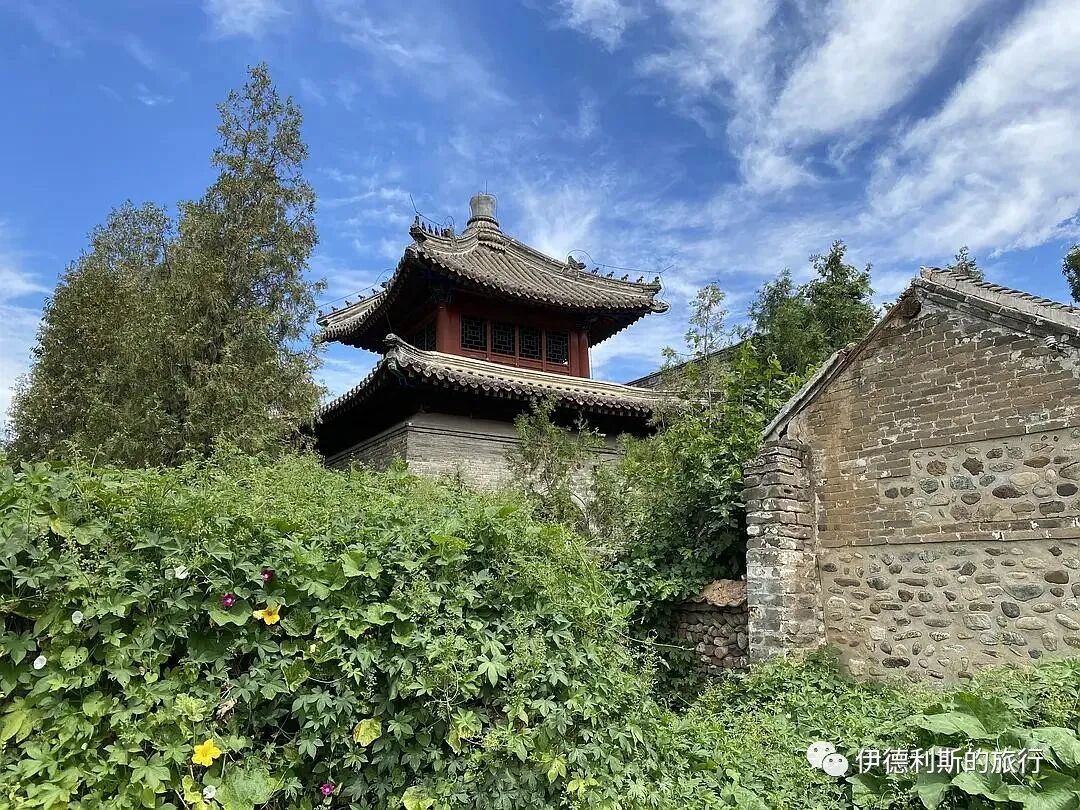
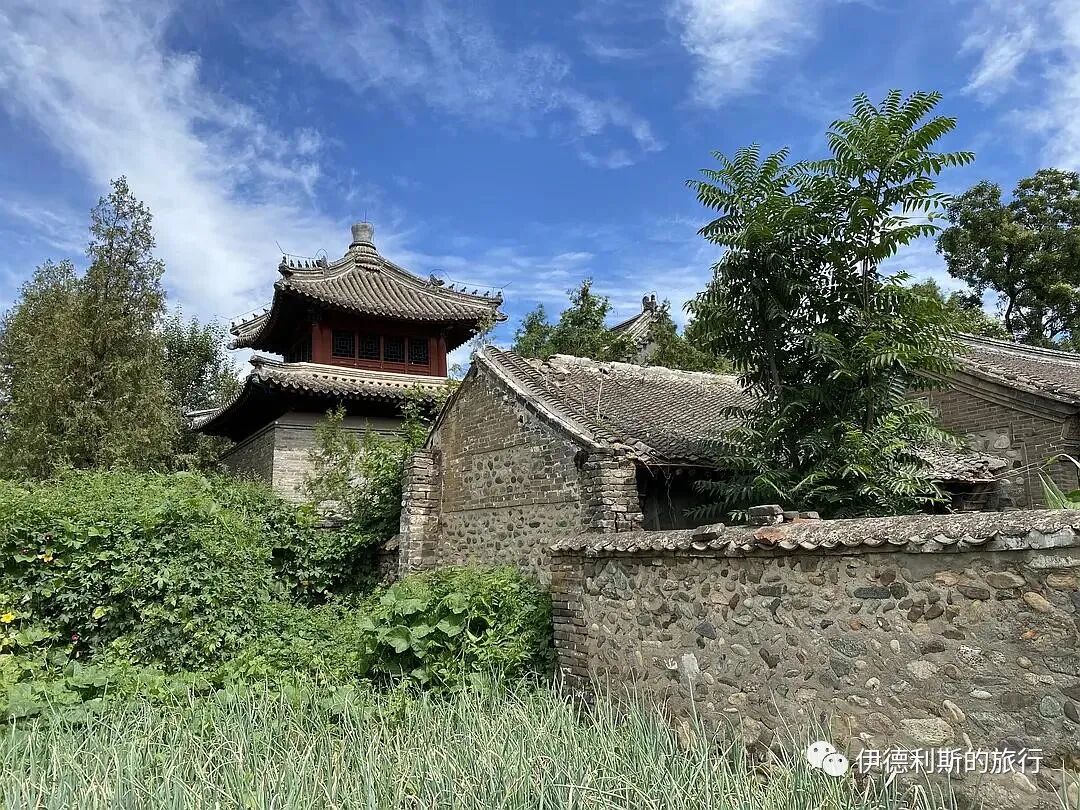
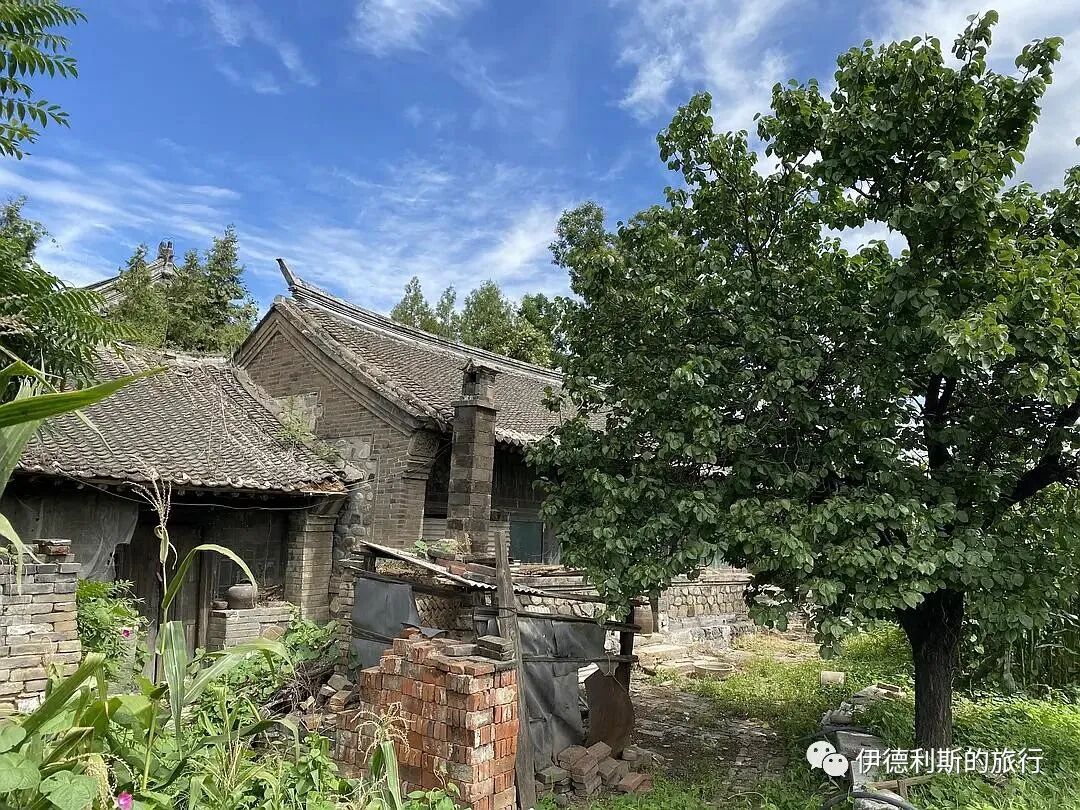
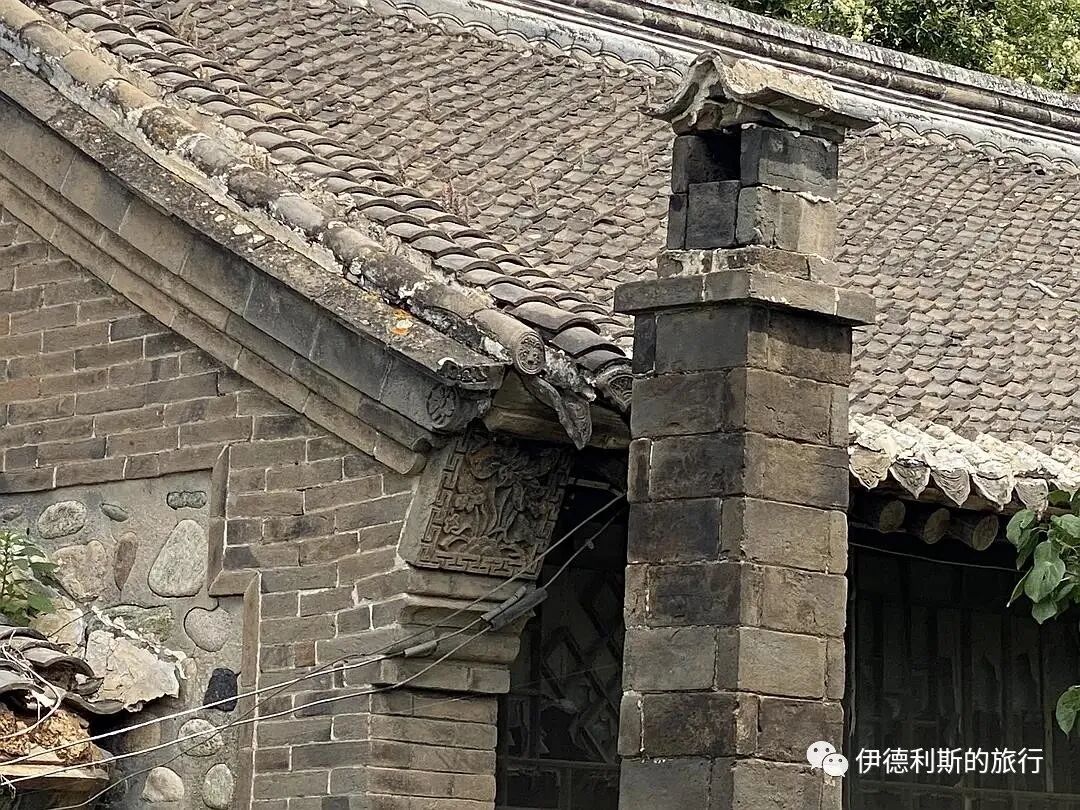
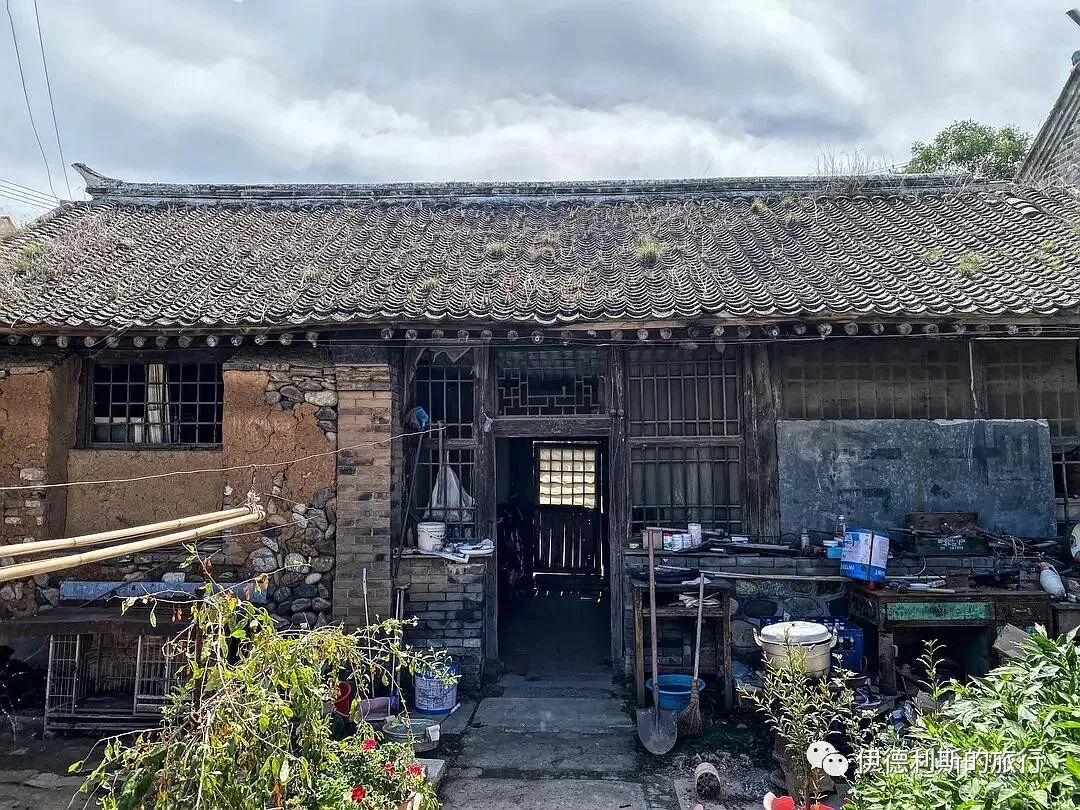
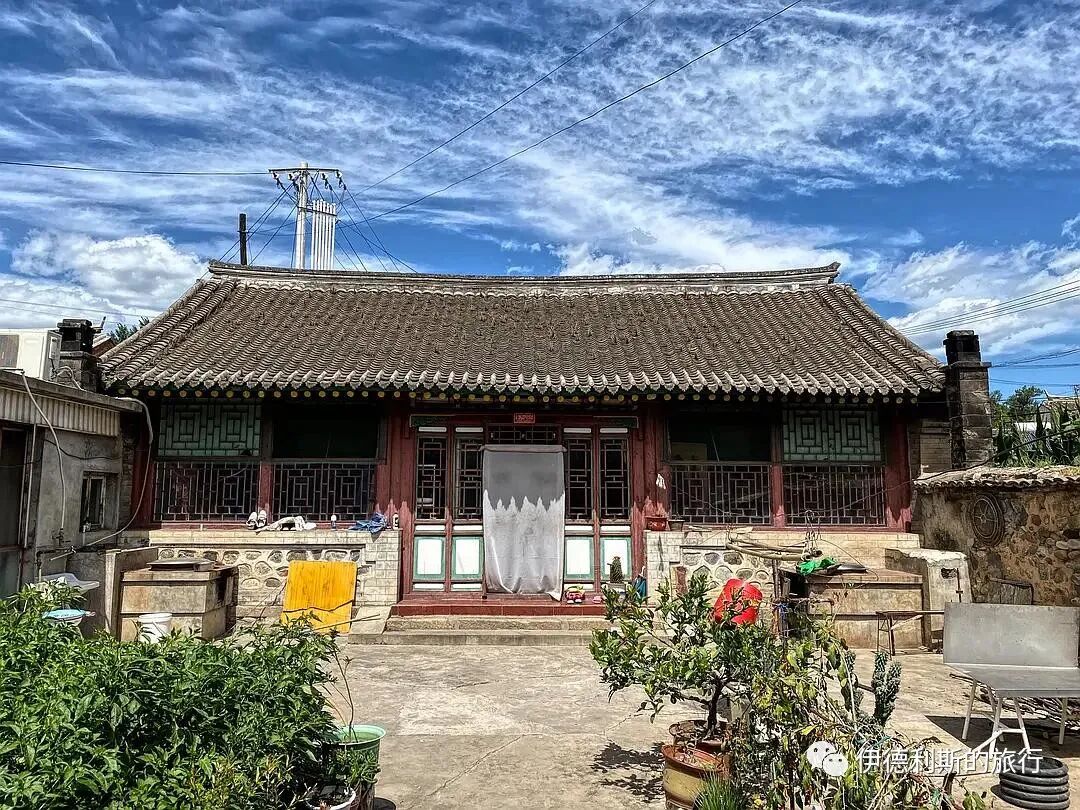
On the way, I found a small courtyard belonging to a Hui Muslim family in the village; the scenery was really nice. Most of the Hui Muslims in Gubeikou are descendants of the Qing Dynasty garrison, with surnames like Ma, Ha, Yang, Li, and Cao.
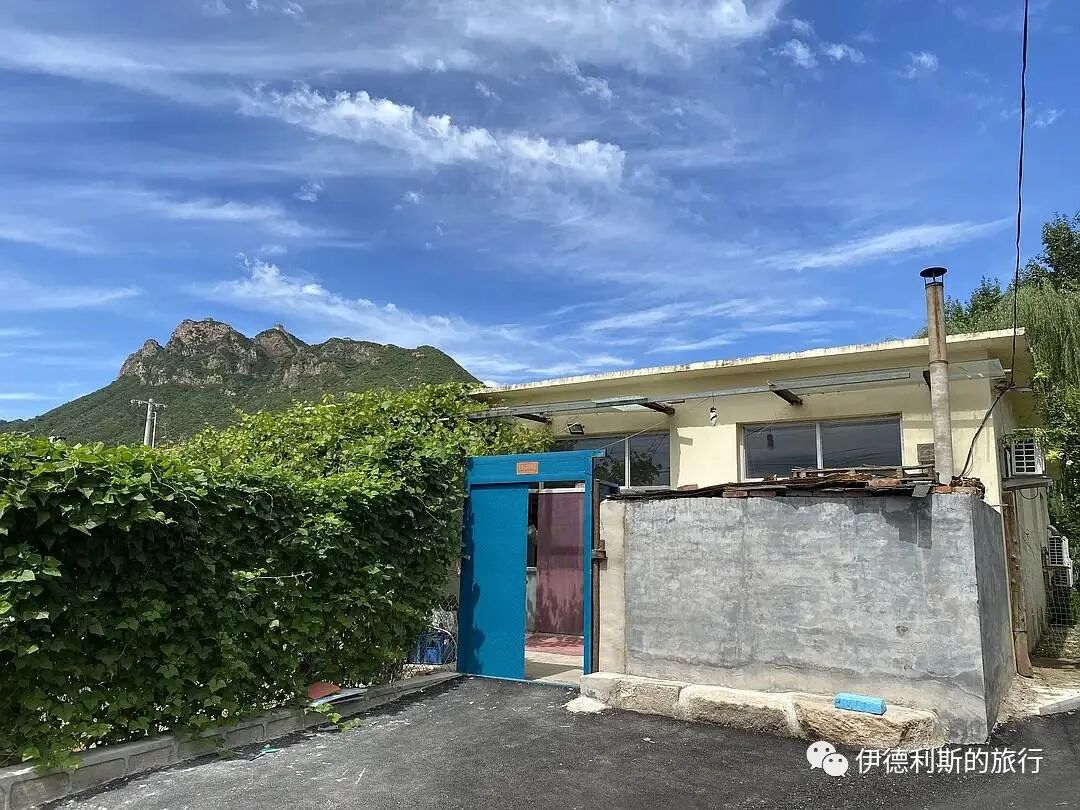
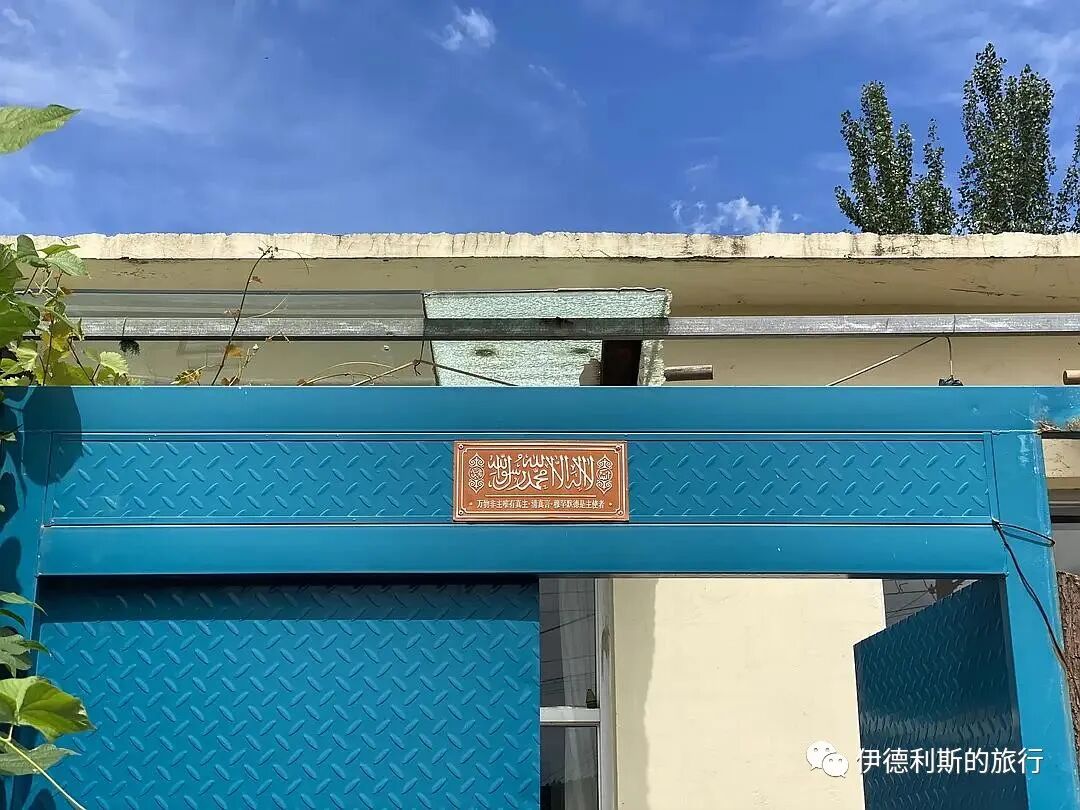
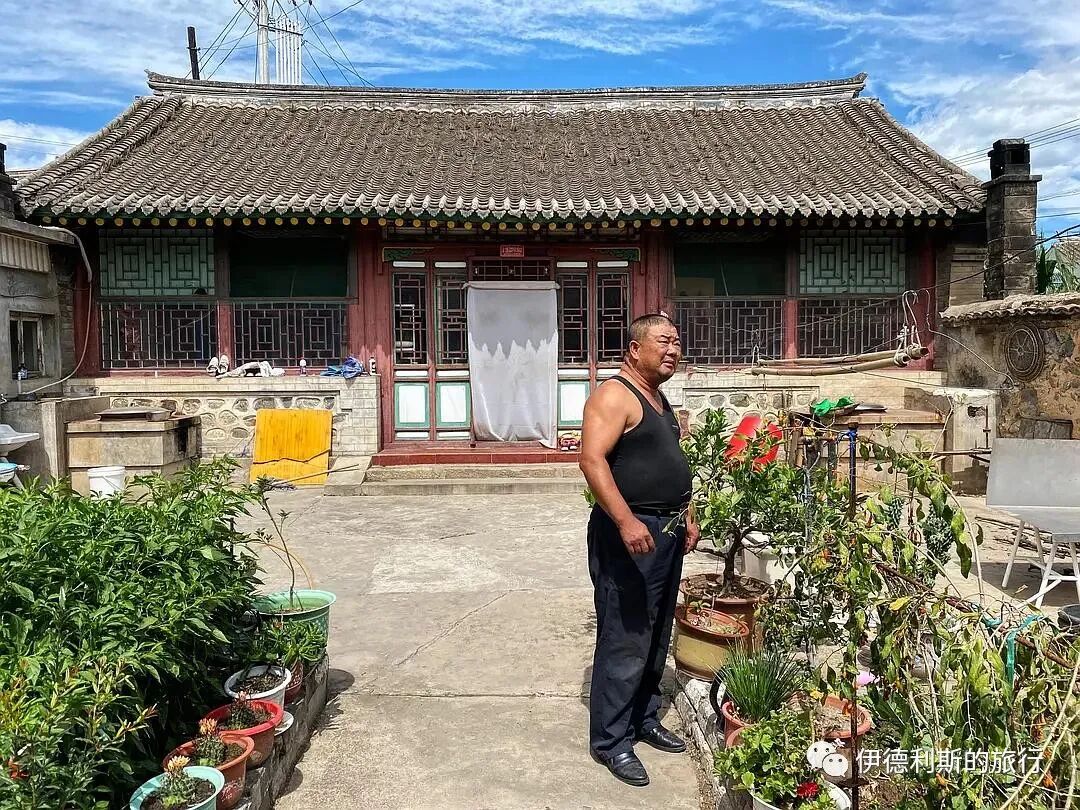
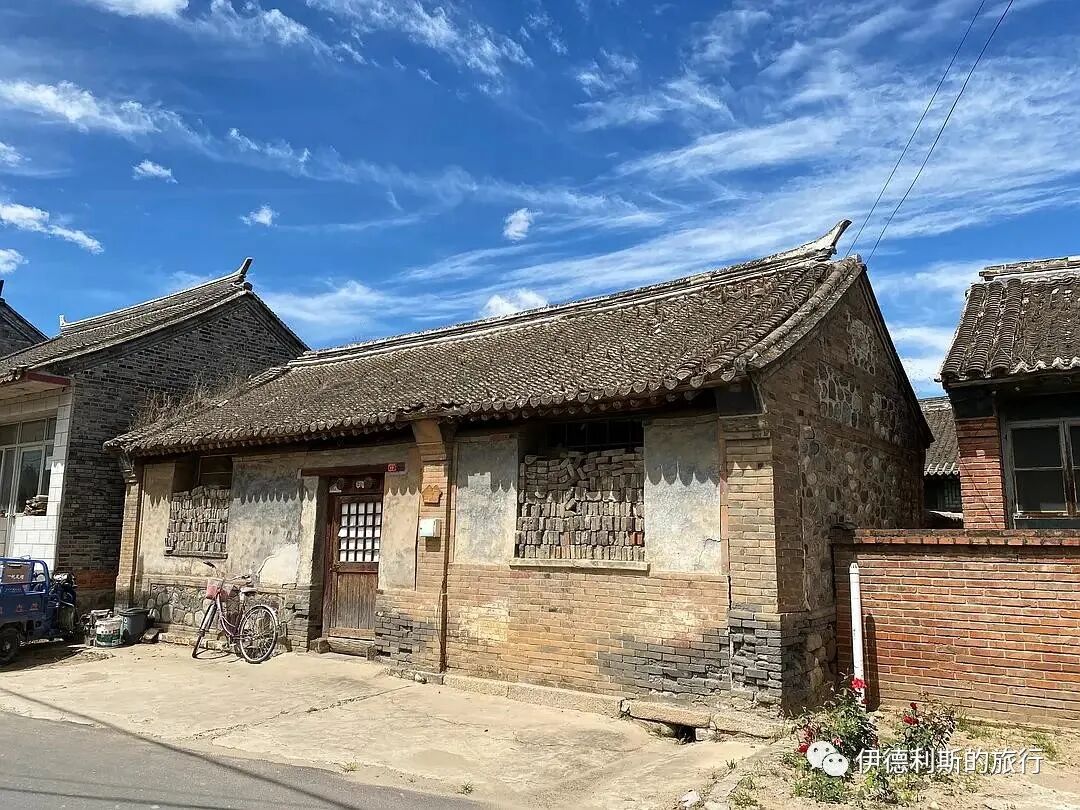
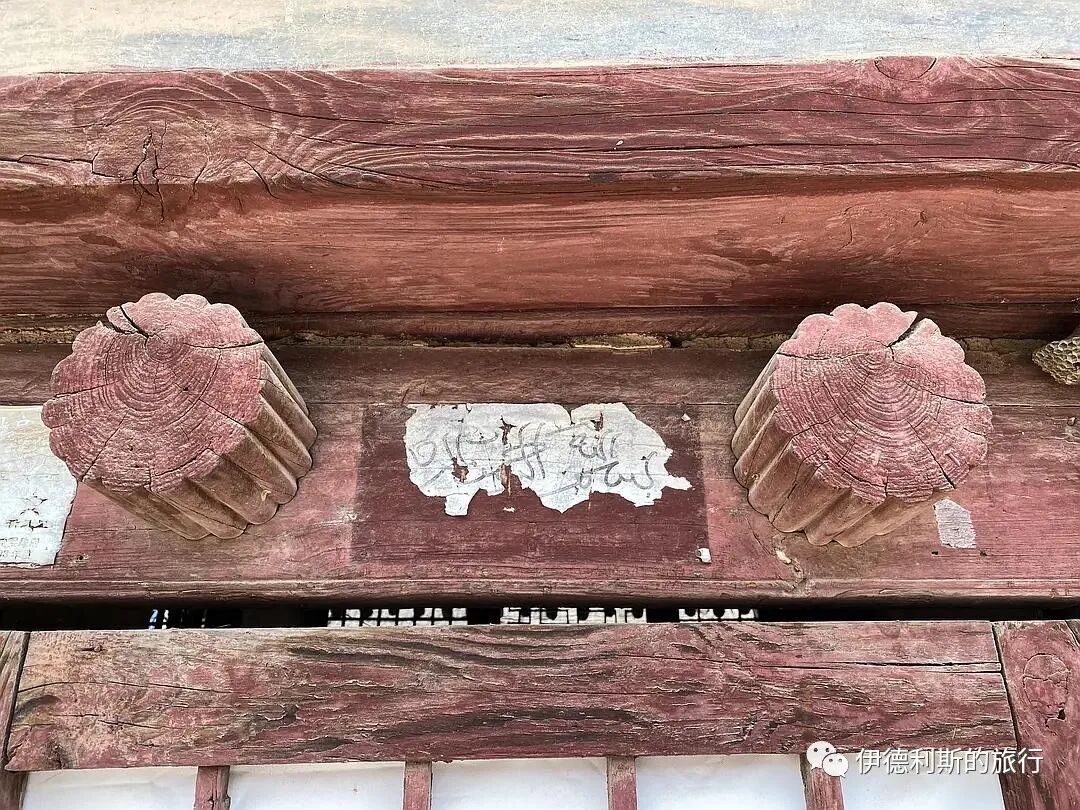
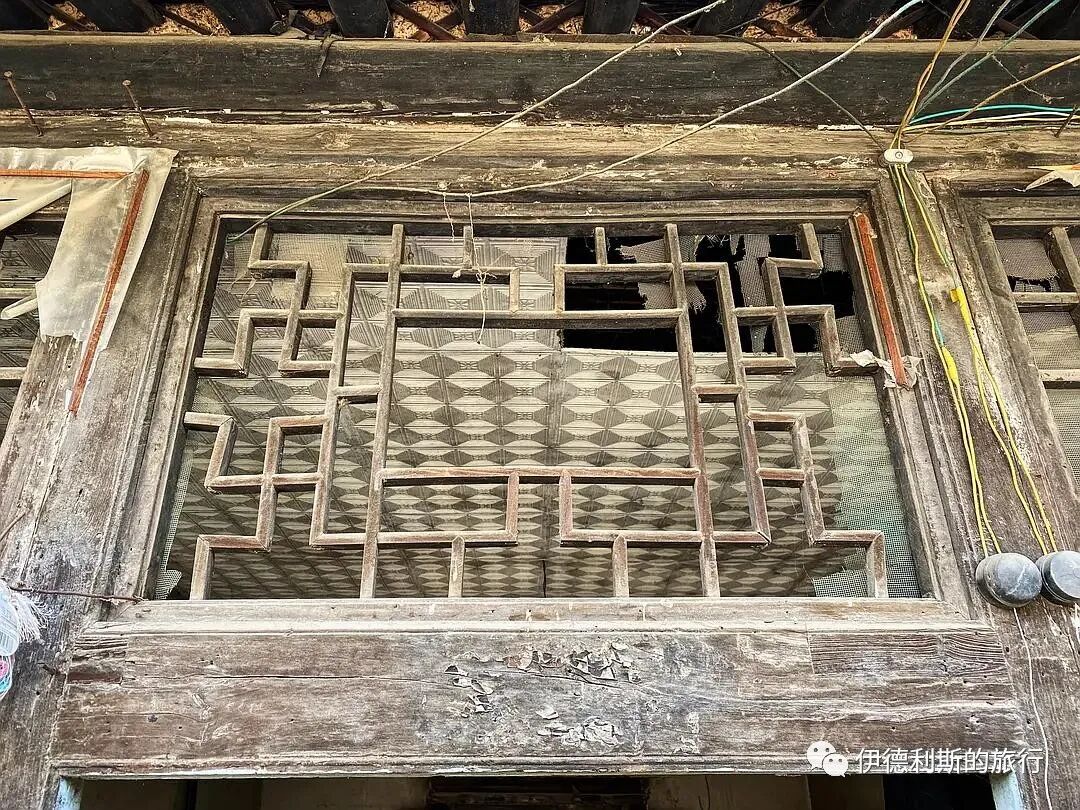
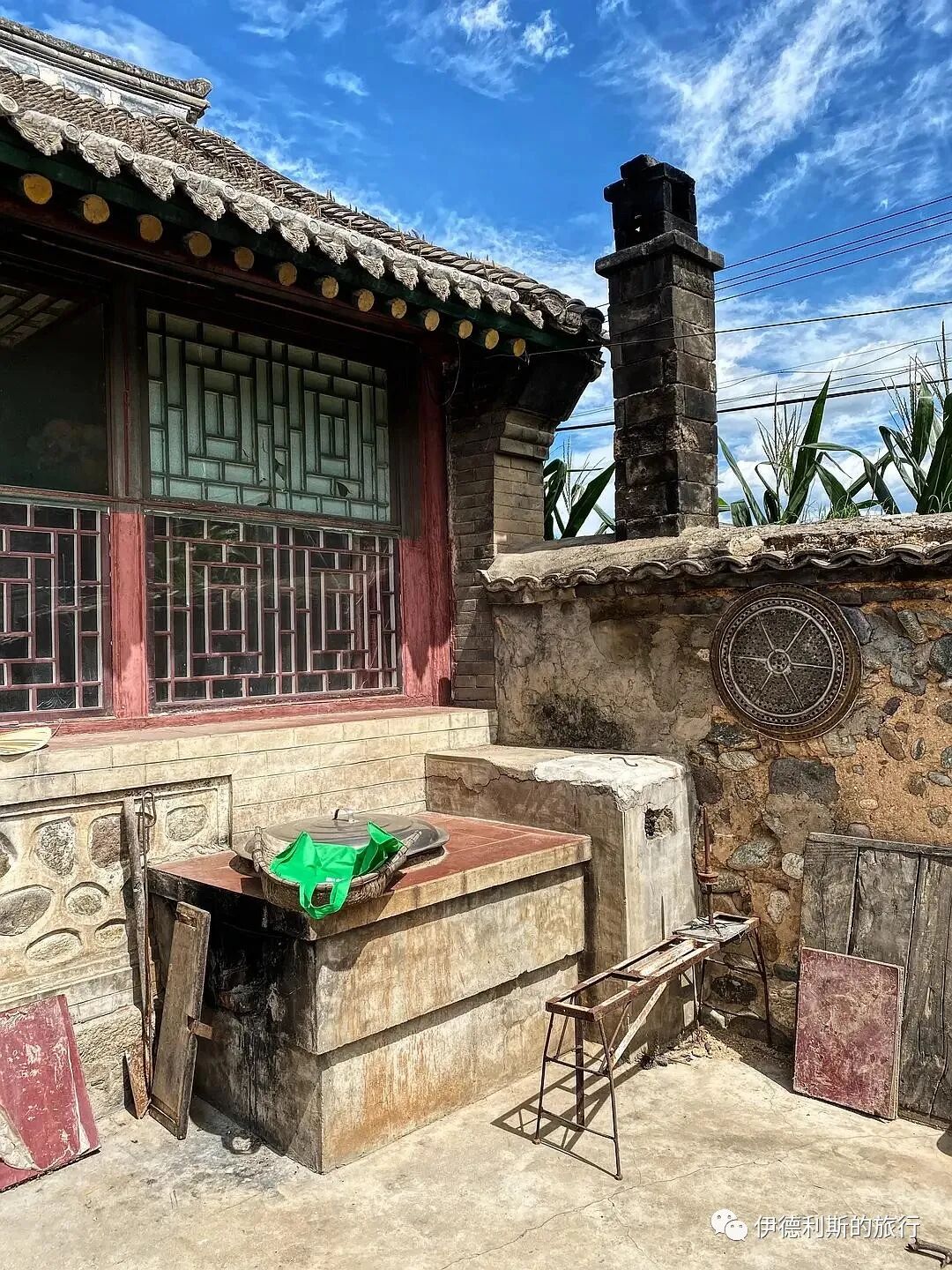
This century-old Hui Muslim house in Hexi Village belongs to a man named Ma. He said his family bought it from a Hui Muslim family named Yang over a hundred years ago. Because the walls are cracking, the owner said he plans to start renovations next year, so the original look of this century-old house might not be visible for much longer.
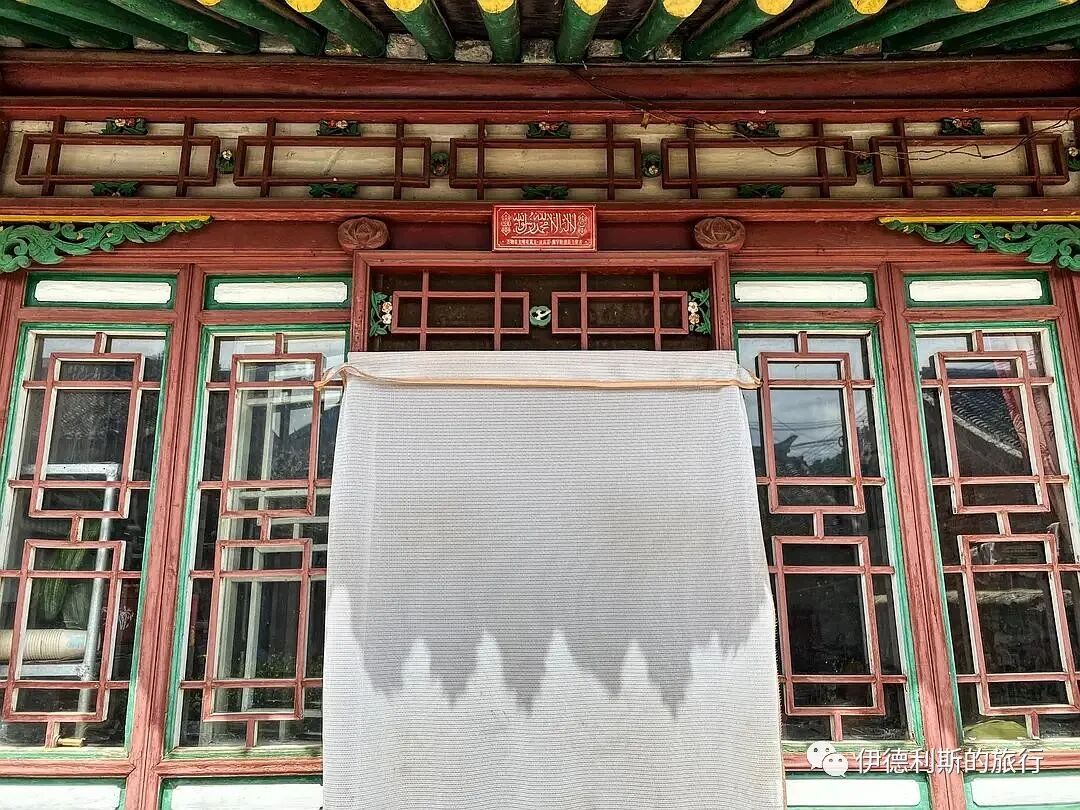
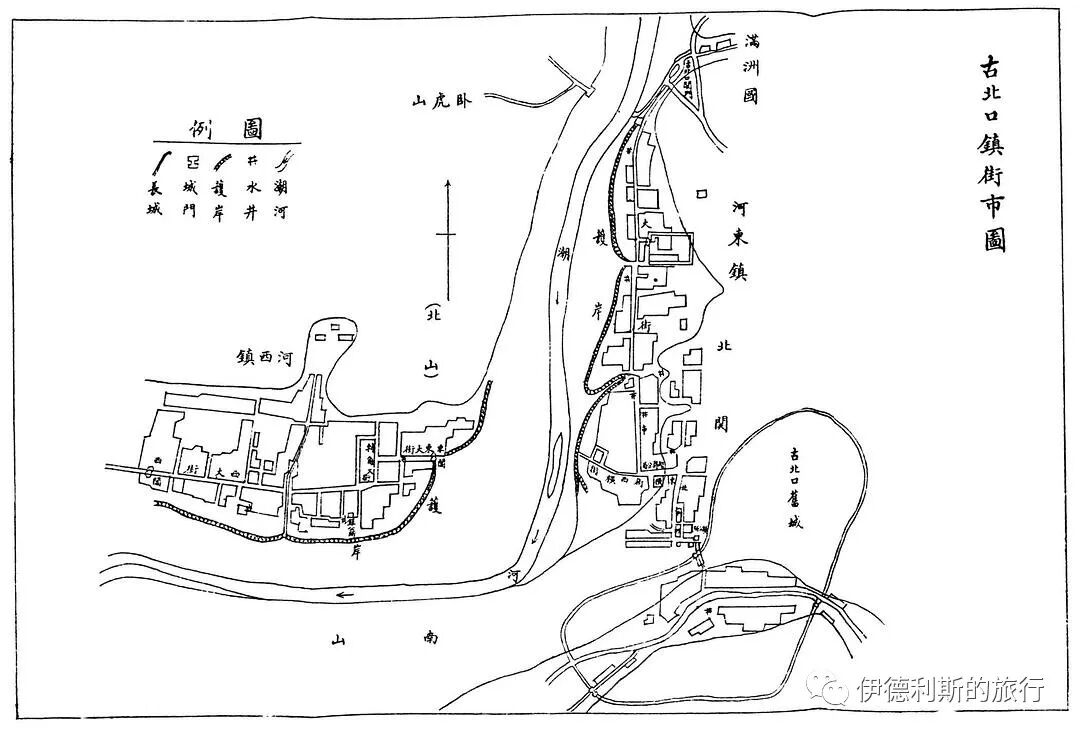
The image below is a map of the Gubeikou town market from 1938, divided into Hexi (west of the river) and Hedong (east of the river) by the Chaohe River.
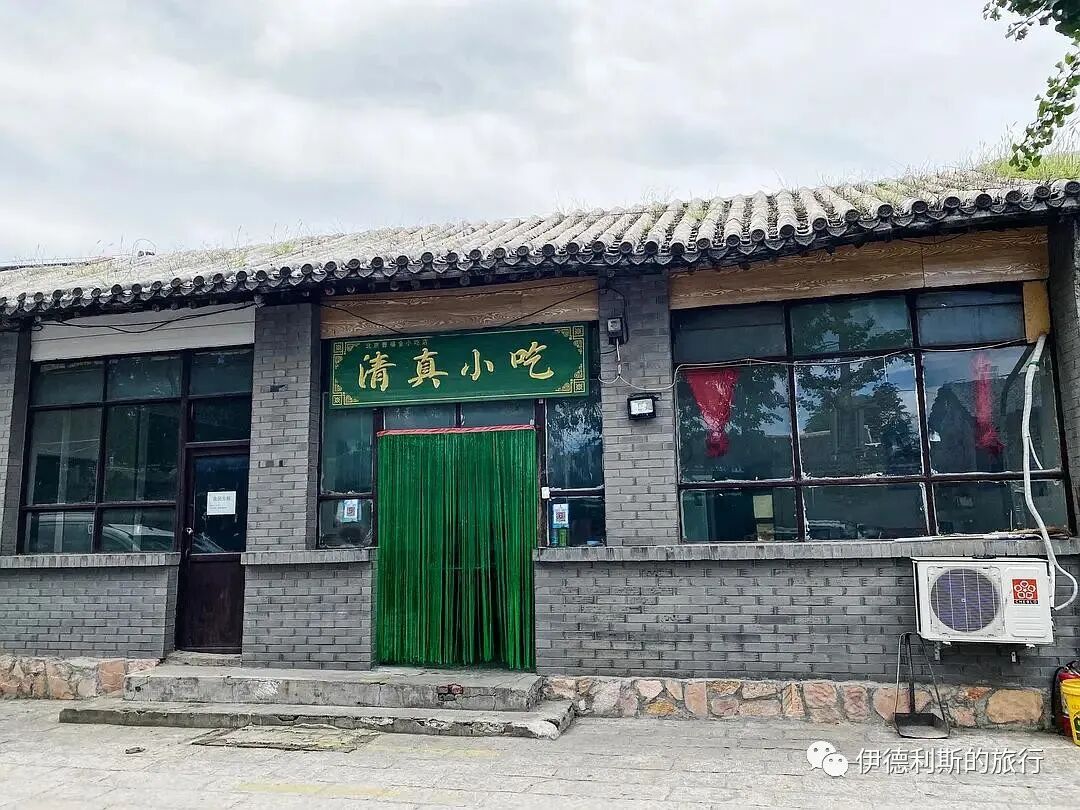
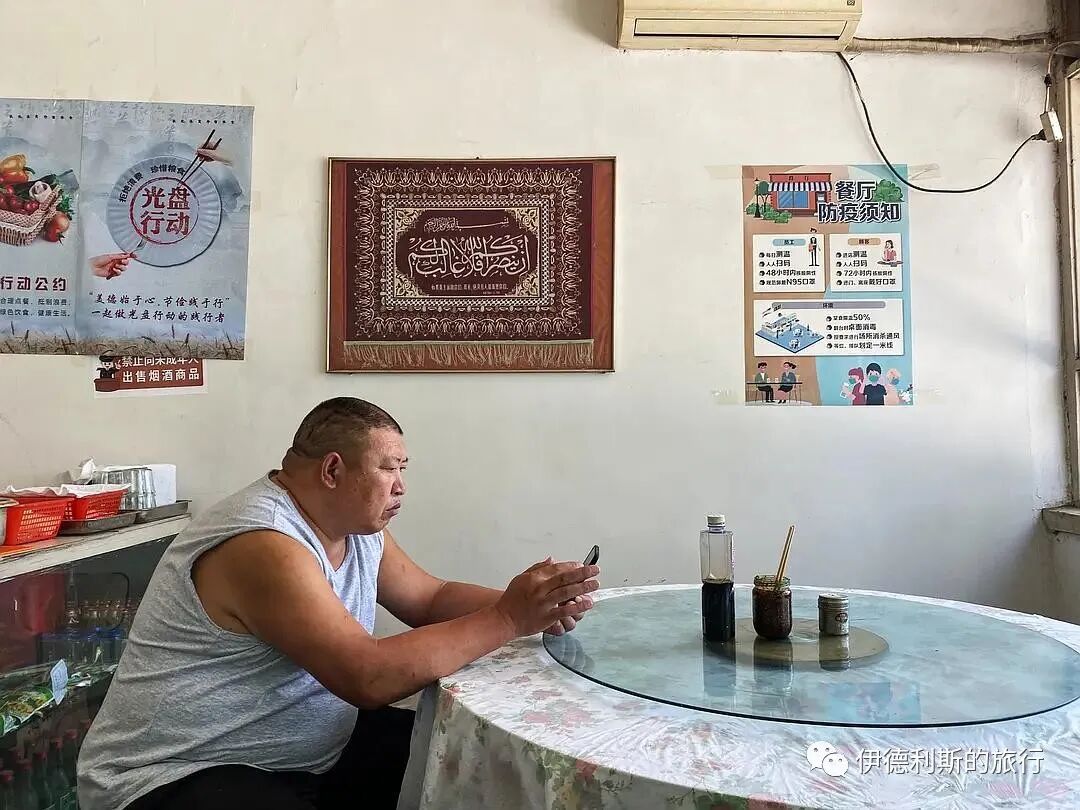
Traveling from Hexi to Hedong, you find the only halal snack shop in Gubeikou. The owner is named Cao, and he is a local Hui Muslim from Gubeikou. The ancestors of the Cao family of Hui Muslims in North China were originally surnamed Li. Their ancestral home was in Erlanggang, Nanjing (which research suggests was a station for Semu people who surrendered to the Ming). During the Yongle reign, they followed the emperor to Beijing, but on the return trip, they stayed in Cangzhou due to illness and married into the Cao family, so their descendants changed their surname to Cao. The Cao family of Hui Muslims in Cangzhou later spread throughout North China, and one branch settled in Gubeikou during the Qing Dynasty.
Their shop is famous for selling sesame flatbread (shaobing) and lamb offal soup (yangza) in the morning, and they also serve lamb dumplings (yangrou jiaozi) and stir-fried pancakes (chaobing) at noon. It is just a small shop run by a husband and wife. Boss Cao looks a bit stern, but he is actually very friendly and chatted with me about the situation of the Hui Muslims in Gubeikou. He said that most of the Hui Muslims in Gubeikou have moved away now, and some of them have moved near the Miyun mosque.
Summary: China Mosque Travel Guide Beijing Miyun: Reservoir Mosques, Hui Villages and Muslim Heritage (Part 1) is presented here as a clear Muslim travel account, beginning with this scene: The weather in Beijing was perfect in late August. I drove northeast to Miyun to visit Hui Muslim communities in the Miyun urban area, Mujia Yu, Gubeikou, and Taishitun. The account keeps its focus on Miyun Mosques, Beijing Muslim Travel, Hui Villages while preserving the names, places, food, and historical details from the Chinese source.
The weather in Beijing was perfect in late August. I drove northeast to Miyun to visit Hui Muslim communities in the Miyun urban area, Mujia Yu, Gubeikou, and Taishitun. I tasted local halal food and learned about the history of the local Hui Muslims.
Miyun urban area
I drove to the Miyun urban area after work and arrived at Runge Sheng on Gulou South Street in the evening. The restaurant was recently renovated this year and has a great atmosphere. I ordered steamed tofu (kaibao doufu) and red-steamed beef. The tofu is steamed and then mixed with various seasonings. Adding chive flower sauce really makes it flavorful! The red-steamed beef had a great texture. It should be one of the eight classic Hui Muslim bowls (badawan), though Zainab and my father-in-law both said it was a bit salty. I guess I will be getting used to the salty taste of traditional Beijing suburban dishes for the next few days, haha.
The next morning, I ate old-broth lamb offal soup (laotang yangza), beef dumpling soup (niurou yuanbao tang), and freshly fried meat flatbread (rou shaobing) at Changshun Zhai on Nangen Street in Miyun. The lamb offal was delicious, but my father-in-law and Zainab still could not get used to the salty taste of the traditional suburban food. The flatbread was fried until crispy, and the aroma of the sesame really came through. The dumpling soup with its thin skin and large filling was also very tasty.
I bought radish-filled buns (xian bobo) at Guangju Zhai in front of the Miyun Mosque, and bought old-fashioned mooncakes with chestnut, five-nut, and black sesame fillings at Dongfang Zhenshun Bakery. Everything was delicious. Most of the halal signs here in Miyun use Persian blue, which is now consistent with the style outside the Great Wall.
The Miyun Chengguan Mosque was first built during the Qing Dynasty and was relocated and rebuilt in 2006.
I went to visit the Rose Garden in Miyun in the morning.
I picked Gala apples and crabapples at the Fusi Apple Manor in Miyun.
I think the Miyun Baihe Urban Forest Park in the evening is just as good as the Olympic Forest Park! It is mainly very quiet.
Mujia Yu
Mujia Yu Village, now called North Mujia Yu Hui Muslim Village, is located northeast of the Miyun urban area and south of the Miyun Reservoir. Historically, it was on the trade route from Gubeikou and the ancient Shixia City to the Miyun urban area. The Hui Muslims with the surname Mu came from Mujia Zhuang (today's Muncun) in Tianjin. They moved to Miyun during the Qianlong reign, and it has been over two hundred years since then.
According to the Mu Family Genealogy, the Mu ancestor was named Mu Chonghe. His ancestral home was Shayang Alley in Mu Jiazhai, Hangzhou. After being captured in the early Ming Dynasty, he moved to Guyi Alley inside Shuixi Gate in Nanjing. In 1404 (the second year of the Yongle reign of the Ming Dynasty), Mu Chonghe followed the Prince of Yan north. He transported imperial grain by canal boat to Tongzhou. On his return, he settled twelve miles north of Tianjin Wei and founded Mujia Zhuang, which was the earliest Hui Muslim village in Tianjin.
In 1771 (the 36th year of the Qianlong reign), Mu Chonghe's twelfth-generation grandson, Mu Guobao, was arrested for injuring someone while trying to stand up for justice at a market. He was rescued by his younger brother while being escorted. The two brothers fled Tianjin and came to Mengjiayu (today's South Mujia Yu Village) in Miyun to work. In less than ten years, they built houses, bought land, married, and had children, founding Mujia Yu. Mu Guobao was the first ancestor to move to Mujia Yu.
According to research by local scholar Cao Rongxin, Mujiayu was originally home to only the Mu family. Later, Hui Muslims with the surname Ha settled here after fleeing famine, followed by three Han Chinese families named Wang, Shi, and Hao who settled here while working as long-term laborers for the Mu family. When the Miyun Reservoir was built in 1958, the ancient city of Shixia was submerged. Hui Muslim families named Li, Cao, Ma, and Zhang from the ancient city, along with the Mu family from the former Qianchao Douzhuang (whose original ancestor was the younger brother of Mu Guobao), all moved to Mujiayu, eventually forming the village's current size.
Mu Chaoyu, the son of Mujiayu's original ancestor Mu Guobao, built the Mujiayu mosque on a small hill by the river east of the village in his later years. In 1946, the Mujiayu mosque was seized by the armed landlord group known as the Huohui from West Mujiayu. It was destroyed in 1948 during the liberation of Miyun, and only two pine trees remain today.
After 1949, Mujiayu used compensation funds to build six rooms on the west side of the village. They originally planned to rebuild the main prayer hall, but the project failed due to road construction. Later, the rooms were occupied by a collective canteen and other units. It was not until 1991 that the mosque was finally rebuilt on the west side of the road in the west part of the village.
The chickens and cats at Mujiayu mosque.
We stayed at Songning Yuan Su, not far east of Mujiayu. The suite cost over 100 yuan a day, and it is less than a 10-minute drive from the North Mujiayu Hui Muslim village. There is a crabapple tree and a peach tree in the courtyard, the view outside the window is lush and green, and you can faintly see the Chao River.
In the evening, we ate stir-fried beef with mountain mushrooms, stir-fried tofu with wood ear mushrooms, deep-fried sharp-belly fish (qiaozui), and cornmeal flatbreads (tiebingzi) at the Shanshui Tianyuan Ethnic Restaurant in Mujiayu. A large iron pot of freshly made cornmeal flatbreads only cost 15 yuan, and we couldn't finish it at all. The deep-fried fish was very satisfying, but the portion was huge. In short, eating at a farmhouse restaurant means big portions and good value, which reminded me of eating in Northeast China, haha.
It is also worth mentioning that the Hui Muslim banquet known as the Eight Great Bowls (badawan) in Mujiayu has a long history. When the Miyun Reservoir was built in 1958, all residents of the Shixia ancient city in the submerged area were relocated. A group of Hui Muslims with the surname Li, who were skilled at making the Eight Great Bowls, moved to Mujiayu, which is how the current Mujiayu halal Eight Great Bowls came to be.
Back at the villa in the evening to watch the stars.
In the morning, we had tofu pudding (doufunao), soy milk, fried dough cakes (youbing), and meat-filled flatbreads (roushaobing) at the Hexingzhai Halal Restaurant in Mujiayu. They seem to be the only place in the North Mujiayu Hui Muslim village selling breakfast. Their homemade fresh chive flowers were especially delicious, and the meat-filled flatbreads were very flavorful.
We ate beef pancakes, beef casserole, mixed lamb liver, and stir-fried pumpkin at the Fuhua Zhengxing Folk Restaurant in Mujiayu. This was our first time at a Miyun farmhouse restaurant, so we didn't have experience and ordered too much at once, haha. The flaky beef pancake was delicious! The mixed lamb liver was also very tasty, but the beef used was a bit fatty and gristly; it would have been better if it were leaner. The owner was very welcoming. As soon as he saw Zainab was pregnant, he quickly ushered us into a quiet room inside to eat.
A halal farmhouse restaurant in Mujiayu called Kunanchun Folk Restaurant. We had fish head with flatbreads, which featured three jin of bighead carp served with freshly made homemade flatbreads, and we also ordered a dish of three types of mushrooms. We called ahead to ask for less salt and to have it stewed in advance, so we could eat as soon as we arrived. The reservoir fish wasn't as chewy as the rainbow trout we had last week, but it was a different kind of delicious. Everyone was very satisfied and still wanted more, saying we should eat a whole five or six-jin fish next time.
I enjoyed the view from the main dam of the Chaohe River at Miyun Reservoir, where villagers were also selling dates picked from the mountains.
After leaving the dam, I went to a nearby orchard to pick some early-ripening pears. They were incredibly juicy and very sweet!
Gubeikou
I traveled along the east bank of Miyun Reservoir, heading toward Gubeikou.
I visited the Gubeikou mosque again after four months, but the Hui Muslim gentleman who holds the key wasn't home, so I couldn't get inside. For a detailed introduction to the Gubeikou mosque, you can check my diary entry from the spring, 'Visiting the Ancient Mosque in Gubeikou'.
During the Kangxi reign, Gubeikou was a vital military stronghold for the Emperor's campaigns against the Dzungars. It was also a key stop on the imperial road for his northern hunting trips and inspections, making it very important. In the 32nd year of the Kangxi reign (1693), a military camp called Liulin Camp was established in the mountains west of the river in Gubeikou, and heavily guarded by troops. In the 34th year of the Kangxi reign (1695), a Hui Muslim officer named Ma Jinliang was promoted to Commander-in-Chief of Gubeikou in Zhili due to his outstanding military service. In the 42nd year of the Kangxi reign (1703), he was promoted to Regional Commander of Zhili. People called him 'Commander Ma the Hui Muslim,' and he was stationed in Hexi Village, Gubeikou. While in Gubeikou, Ma Jinliang oversaw the renovation of the Gubeikou mosque. The current mosque is basically the same size as it was after that Kangxi-era renovation.
By the end of the Qing Dynasty, as the imperial road fell into disuse, Liulin Camp was disbanded in the 16th year of the Guangxu reign (1890), and Hexi Village gradually became quiet. After the 1960s, the Gubeikou mosque was taken over by the local brigade headquarters, and religious activities stopped. It was renovated in 2004 for the Olympics, but religious activities have not resumed to this day.
On the way, I found a small courtyard belonging to a Hui Muslim family in the village; the scenery was really nice. Most of the Hui Muslims in Gubeikou are descendants of the Qing Dynasty garrison, with surnames like Ma, Ha, Yang, Li, and Cao.
This century-old Hui Muslim house in Hexi Village belongs to a man named Ma. He said his family bought it from a Hui Muslim family named Yang over a hundred years ago. Because the walls are cracking, the owner said he plans to start renovations next year, so the original look of this century-old house might not be visible for much longer.
The image below is a map of the Gubeikou town market from 1938, divided into Hexi (west of the river) and Hedong (east of the river) by the Chaohe River.
Traveling from Hexi to Hedong, you find the only halal snack shop in Gubeikou. The owner is named Cao, and he is a local Hui Muslim from Gubeikou. The ancestors of the Cao family of Hui Muslims in North China were originally surnamed Li. Their ancestral home was in Erlanggang, Nanjing (which research suggests was a station for Semu people who surrendered to the Ming). During the Yongle reign, they followed the emperor to Beijing, but on the return trip, they stayed in Cangzhou due to illness and married into the Cao family, so their descendants changed their surname to Cao. The Cao family of Hui Muslims in Cangzhou later spread throughout North China, and one branch settled in Gubeikou during the Qing Dynasty.
Their shop is famous for selling sesame flatbread (shaobing) and lamb offal soup (yangza) in the morning, and they also serve lamb dumplings (yangrou jiaozi) and stir-fried pancakes (chaobing) at noon. It is just a small shop run by a husband and wife. Boss Cao looks a bit stern, but he is actually very friendly and chatted with me about the situation of the Hui Muslims in Gubeikou. He said that most of the Hui Muslims in Gubeikou have moved away now, and some of them have moved near the Miyun mosque.
China Mosque Travel Guide Beijing Miyun: Reservoir Mosques, Hui Villages and Muslim Heritage (Part 2)
Articles • yusuf908 posted the article • 0 comments • 179 views • 2026-05-23 23:06
Reposted from the web
Summary: China Mosque Travel Guide Beijing Miyun: Reservoir Mosques, Hui Villages and Muslim Heritage (Part 2) is presented here as a clear Muslim travel account, beginning with this scene: In Gubeikou Town, there are still some Hui Muslims who hang door charms (men du'er), as well as halal beef and mutton shops. The account keeps its focus on Miyun Mosques, Beijing Muslim Travel, Hui Villages while preserving the names, places, food, and historical details from the Chinese source.
In Gubeikou Town, there are still some Hui Muslims who hang door charms (men du'er), as well as halal beef and mutton shops.
The rebuilt North Gate of the Gubeikou Town pass city.
Lotus flowers inside the Gubeikou Town pass city.
After eating, we headed to Gubei Water Town.
A distant view of the Simatai Great Wall.
After entering the scenic area, we took a sculling boat.
Not far after getting off the boat, there is a halal hot pot restaurant.
Gubei Water Town is truly a great place for the whole family to walk around. The walls covered in Boston ivy (pashanhuhu) will probably look beautiful in autumn.
When friends (dosti) come to visit Gubei Water Town, they usually go to this Tanghe Halal Restaurant. The building mimics the Hengchang Ruiji storefront on Dongsi Fourth Alley, giving it a classic, antique feel with a nice atmosphere.
Their menu is a bit of a mix, with the main dishes being big plate chicken (dapanji) and roasted mutton (shao yangrou). We looked at the big plate chicken ordered by other tables; it had too many potatoes and no wide belt noodles (pidaimian), with flatbread (nang) underneath instead, so we ordered the roasted mutton. They serve their roasted mutton like roast duck, with yellow bean sauce for dipping and lotus leaf pancakes (heye bing) for wrapping, which is pretty good. However, the roasted mutton wasn't fried crispy enough, and the flavor didn't soak in, making the fatty parts a bit greasy. It falls short of truly delicious roasted mutton, but I am satisfied to find a restaurant like this inside a scenic area.
Gubei Water Town at night.
The Gubei Water Town parking lot surrounds a real Ming Dynasty fortress, the Simatai Fortress, which was first built in the sixth year of the Hongwu reign. The houses inside look like they have been repaired or rebuilt, but they are not open to the public.
Taishitun.
There is no halal breakfast in Gubei Water Town. The closest place is the halal snack shop in Gubeikou Town for sesame flatbread (shaobing) and lamb offal soup (yangza), but we wanted a change of pace, so we drove south in the morning to the Yishun Halal Snack Shop in Taishitun Town.
The shop is run by local Hui Muslims from Taishitun. They are the only Hui Muslim family in Taishitun Town. There are dozens more families in Lugeshuang to the south, but this is the only local halal restaurant. The shop is actually on the edge of town, with a cornfield right behind it, giving it a very rural feel.
When we arrived after nine o'clock, they were already able to make their full menu. The dishes are similar to the Hui Muslim farmhouse food in Mujiayu, focusing on beef pancakes (niurou bing) and the eight great bowls (badawan) of the Hui Muslims, along with some home-style stir-fries. We ordered half a jin of beef pancakes, stir-fried eggs with tomatoes (muxu chao shizi), boiled lamb head (baishui yangtou), and tofu in a clay pot (shaguo doufu). Everything tasted quite good, making for a very rich breakfast, haha.
Then we drove around the Miyun Reservoir and went to play at Yunmeng Mountain.
Looking at the Miyun Reservoir from Yunmeng Mountain. view all
Summary: China Mosque Travel Guide Beijing Miyun: Reservoir Mosques, Hui Villages and Muslim Heritage (Part 2) is presented here as a clear Muslim travel account, beginning with this scene: In Gubeikou Town, there are still some Hui Muslims who hang door charms (men du'er), as well as halal beef and mutton shops. The account keeps its focus on Miyun Mosques, Beijing Muslim Travel, Hui Villages while preserving the names, places, food, and historical details from the Chinese source.
In Gubeikou Town, there are still some Hui Muslims who hang door charms (men du'er), as well as halal beef and mutton shops.
The rebuilt North Gate of the Gubeikou Town pass city.
Lotus flowers inside the Gubeikou Town pass city.
After eating, we headed to Gubei Water Town.
A distant view of the Simatai Great Wall.
After entering the scenic area, we took a sculling boat.
Not far after getting off the boat, there is a halal hot pot restaurant.
Gubei Water Town is truly a great place for the whole family to walk around. The walls covered in Boston ivy (pashanhuhu) will probably look beautiful in autumn.
When friends (dosti) come to visit Gubei Water Town, they usually go to this Tanghe Halal Restaurant. The building mimics the Hengchang Ruiji storefront on Dongsi Fourth Alley, giving it a classic, antique feel with a nice atmosphere.
Their menu is a bit of a mix, with the main dishes being big plate chicken (dapanji) and roasted mutton (shao yangrou). We looked at the big plate chicken ordered by other tables; it had too many potatoes and no wide belt noodles (pidaimian), with flatbread (nang) underneath instead, so we ordered the roasted mutton. They serve their roasted mutton like roast duck, with yellow bean sauce for dipping and lotus leaf pancakes (heye bing) for wrapping, which is pretty good. However, the roasted mutton wasn't fried crispy enough, and the flavor didn't soak in, making the fatty parts a bit greasy. It falls short of truly delicious roasted mutton, but I am satisfied to find a restaurant like this inside a scenic area.
Gubei Water Town at night.
The Gubei Water Town parking lot surrounds a real Ming Dynasty fortress, the Simatai Fortress, which was first built in the sixth year of the Hongwu reign. The houses inside look like they have been repaired or rebuilt, but they are not open to the public.
Taishitun.
There is no halal breakfast in Gubei Water Town. The closest place is the halal snack shop in Gubeikou Town for sesame flatbread (shaobing) and lamb offal soup (yangza), but we wanted a change of pace, so we drove south in the morning to the Yishun Halal Snack Shop in Taishitun Town.
The shop is run by local Hui Muslims from Taishitun. They are the only Hui Muslim family in Taishitun Town. There are dozens more families in Lugeshuang to the south, but this is the only local halal restaurant. The shop is actually on the edge of town, with a cornfield right behind it, giving it a very rural feel.
When we arrived after nine o'clock, they were already able to make their full menu. The dishes are similar to the Hui Muslim farmhouse food in Mujiayu, focusing on beef pancakes (niurou bing) and the eight great bowls (badawan) of the Hui Muslims, along with some home-style stir-fries. We ordered half a jin of beef pancakes, stir-fried eggs with tomatoes (muxu chao shizi), boiled lamb head (baishui yangtou), and tofu in a clay pot (shaguo doufu). Everything tasted quite good, making for a very rich breakfast, haha.
Then we drove around the Miyun Reservoir and went to play at Yunmeng Mountain.
Looking at the Miyun Reservoir from Yunmeng Mountain. view all
Reposted from the web
Summary: China Mosque Travel Guide Beijing Miyun: Reservoir Mosques, Hui Villages and Muslim Heritage (Part 2) is presented here as a clear Muslim travel account, beginning with this scene: In Gubeikou Town, there are still some Hui Muslims who hang door charms (men du'er), as well as halal beef and mutton shops. The account keeps its focus on Miyun Mosques, Beijing Muslim Travel, Hui Villages while preserving the names, places, food, and historical details from the Chinese source.
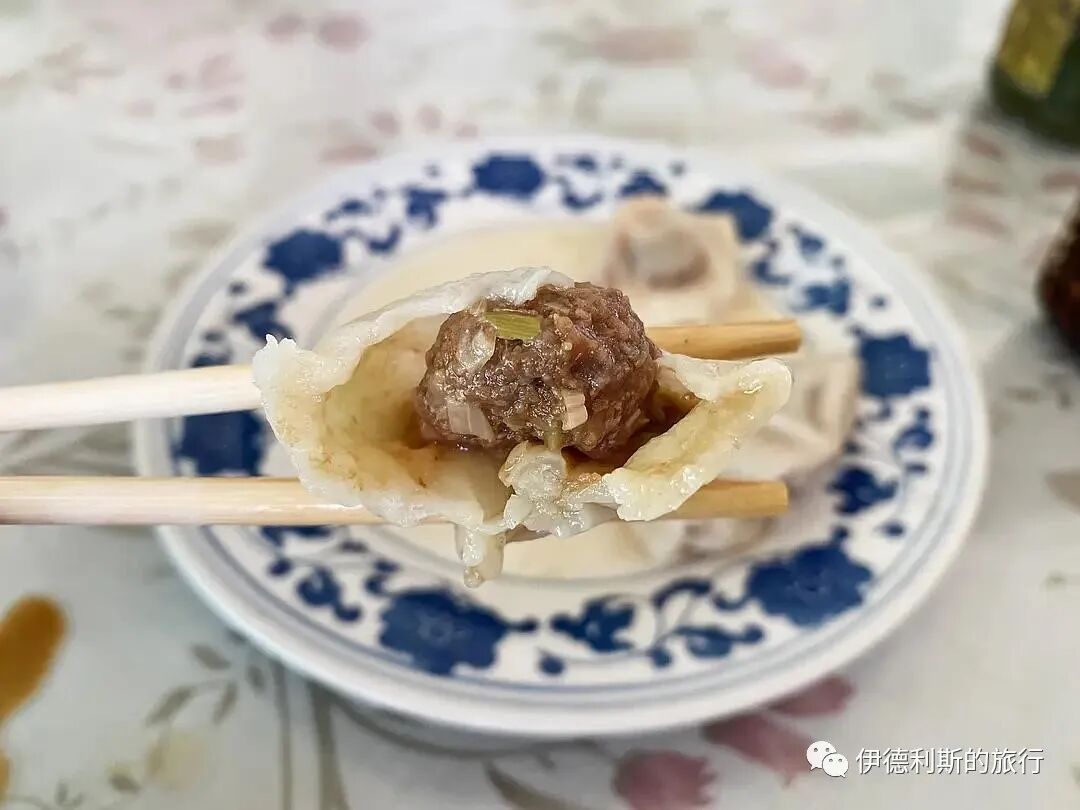
In Gubeikou Town, there are still some Hui Muslims who hang door charms (men du'er), as well as halal beef and mutton shops.
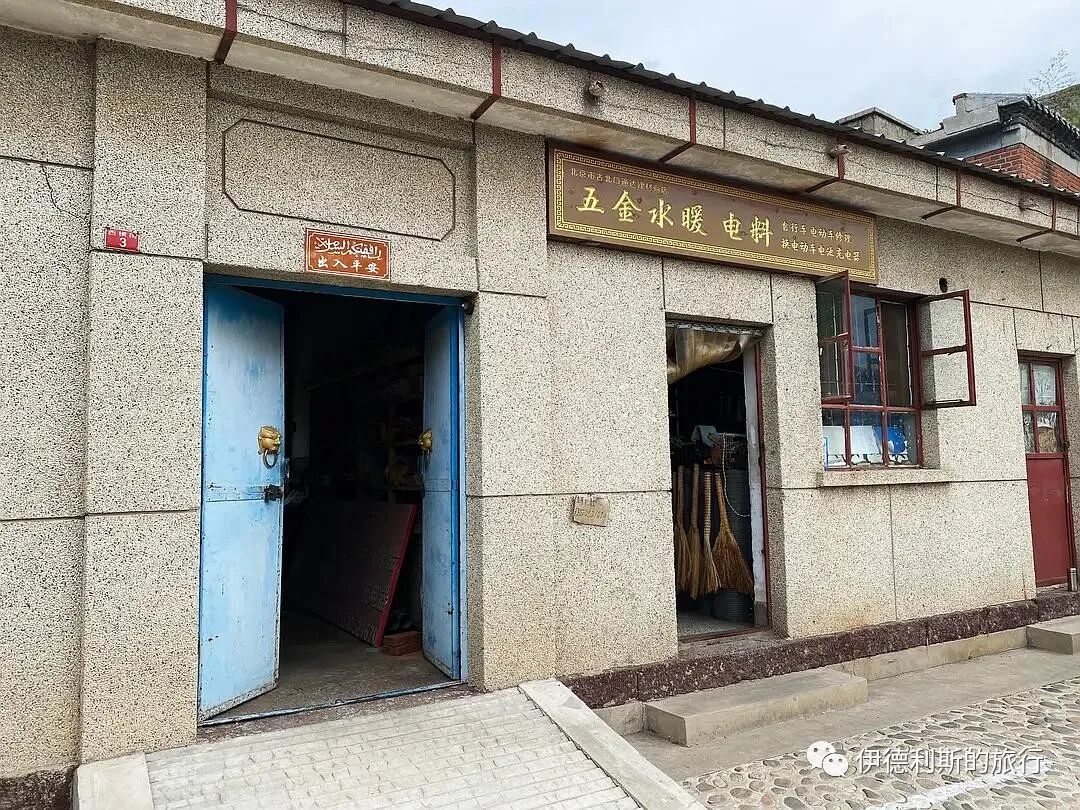
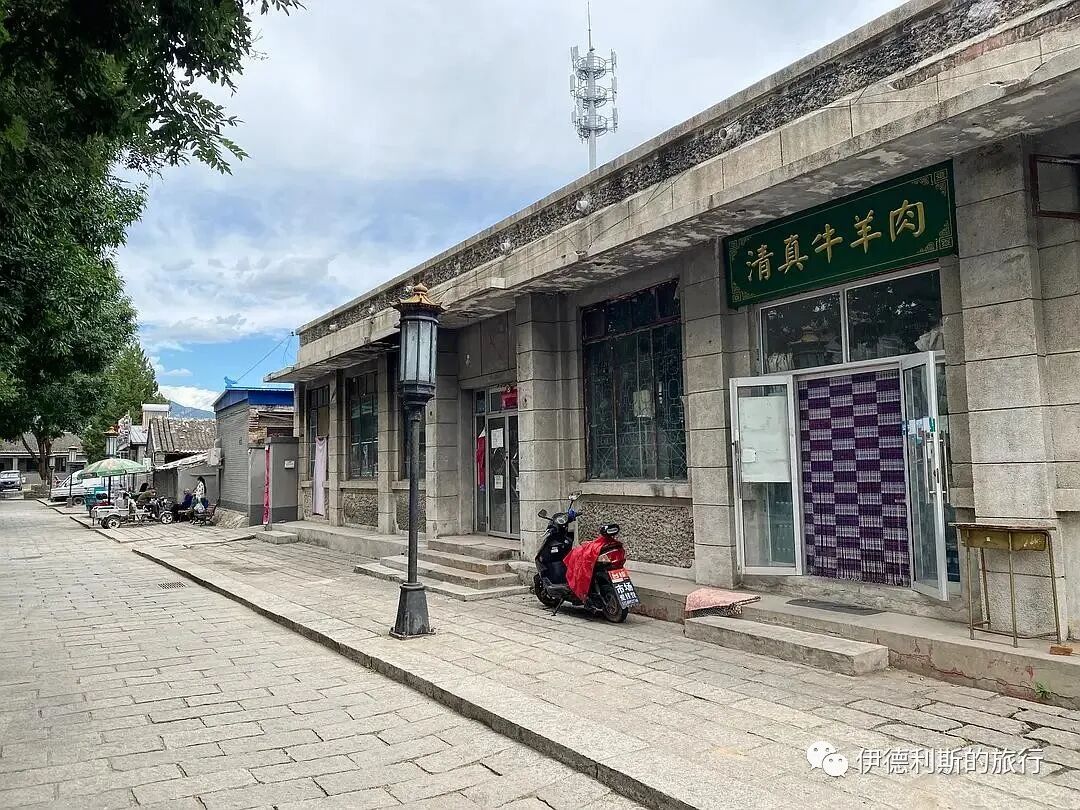
The rebuilt North Gate of the Gubeikou Town pass city.
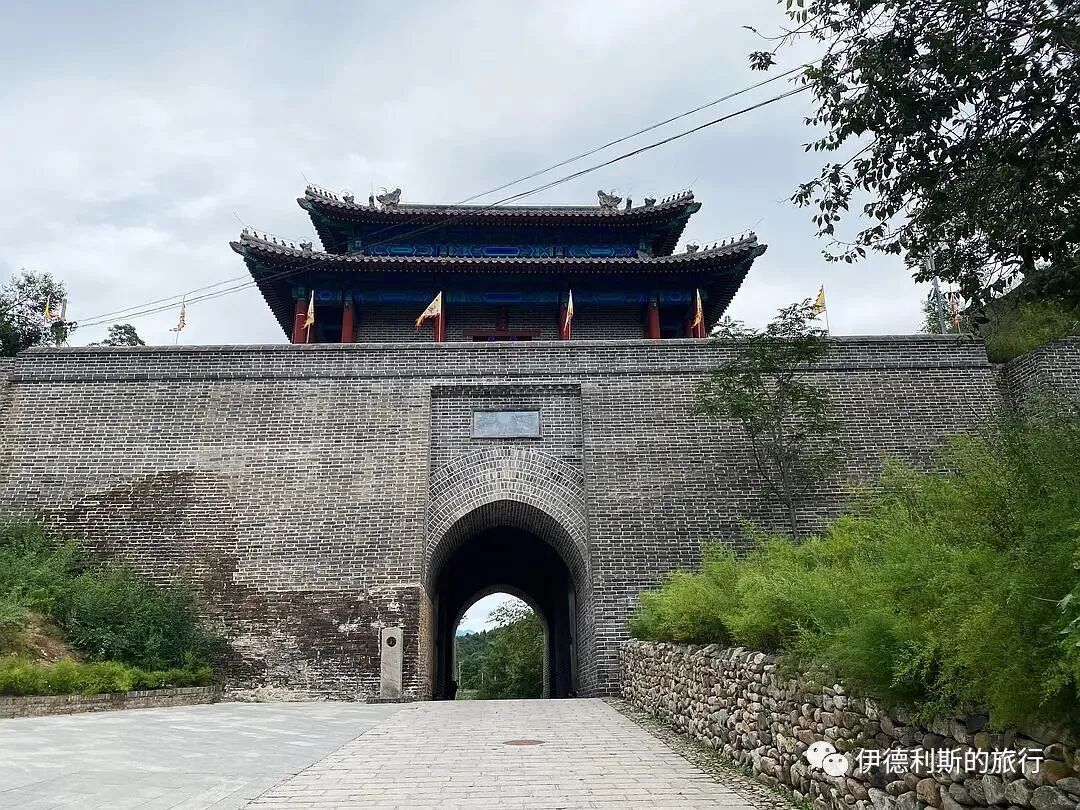
Lotus flowers inside the Gubeikou Town pass city.
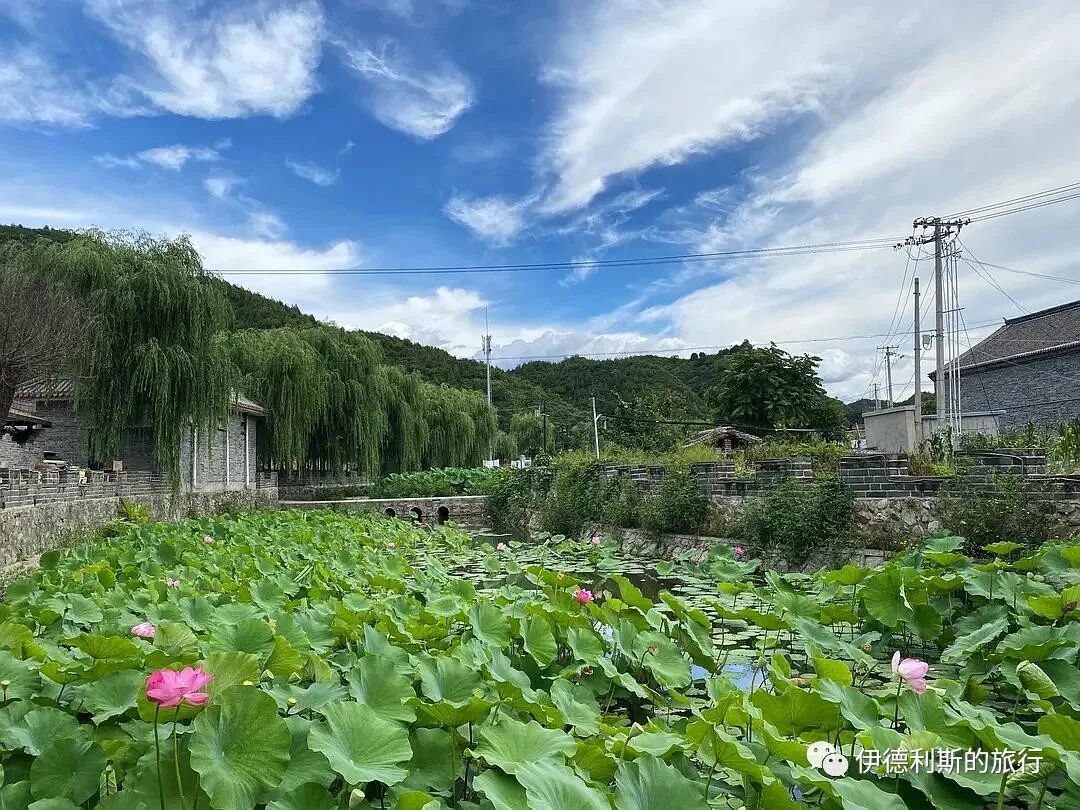
After eating, we headed to Gubei Water Town.
A distant view of the Simatai Great Wall.
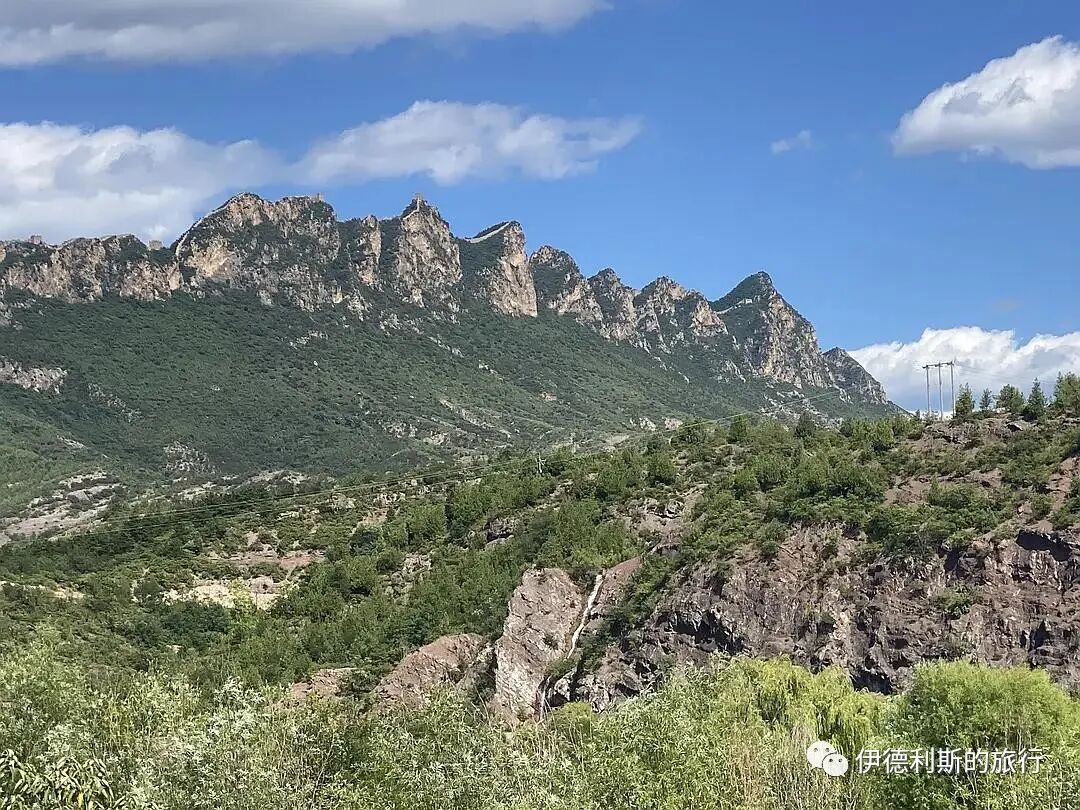
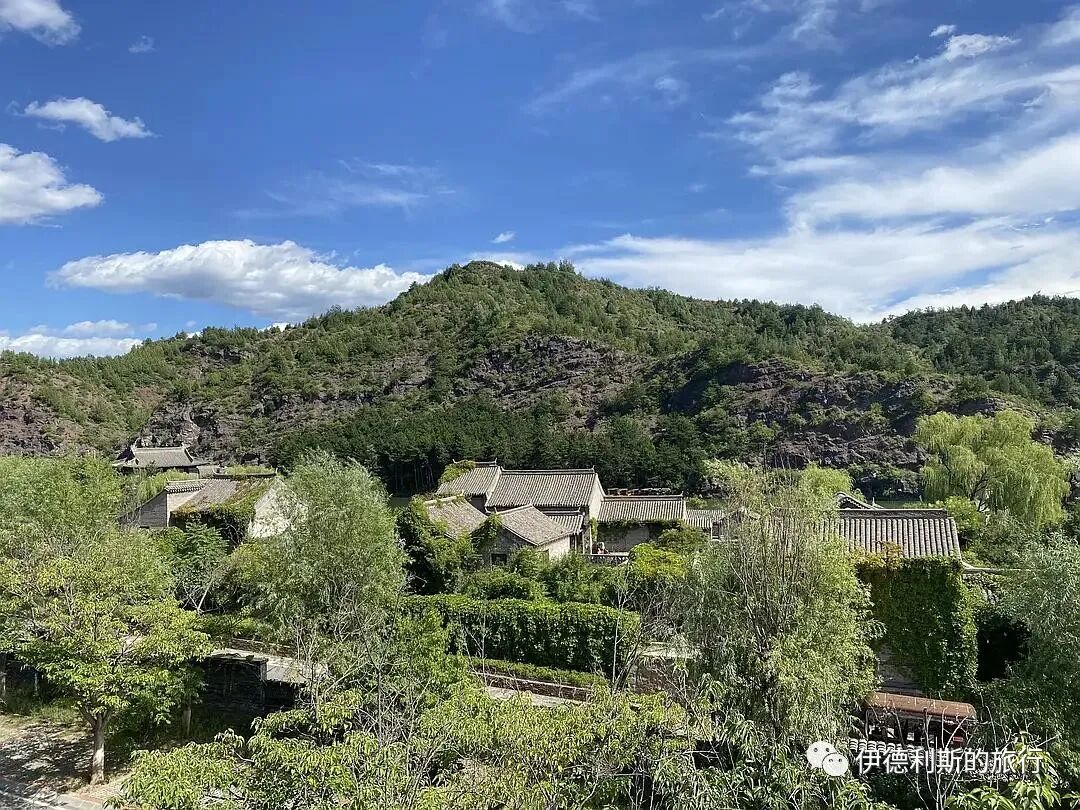
After entering the scenic area, we took a sculling boat.
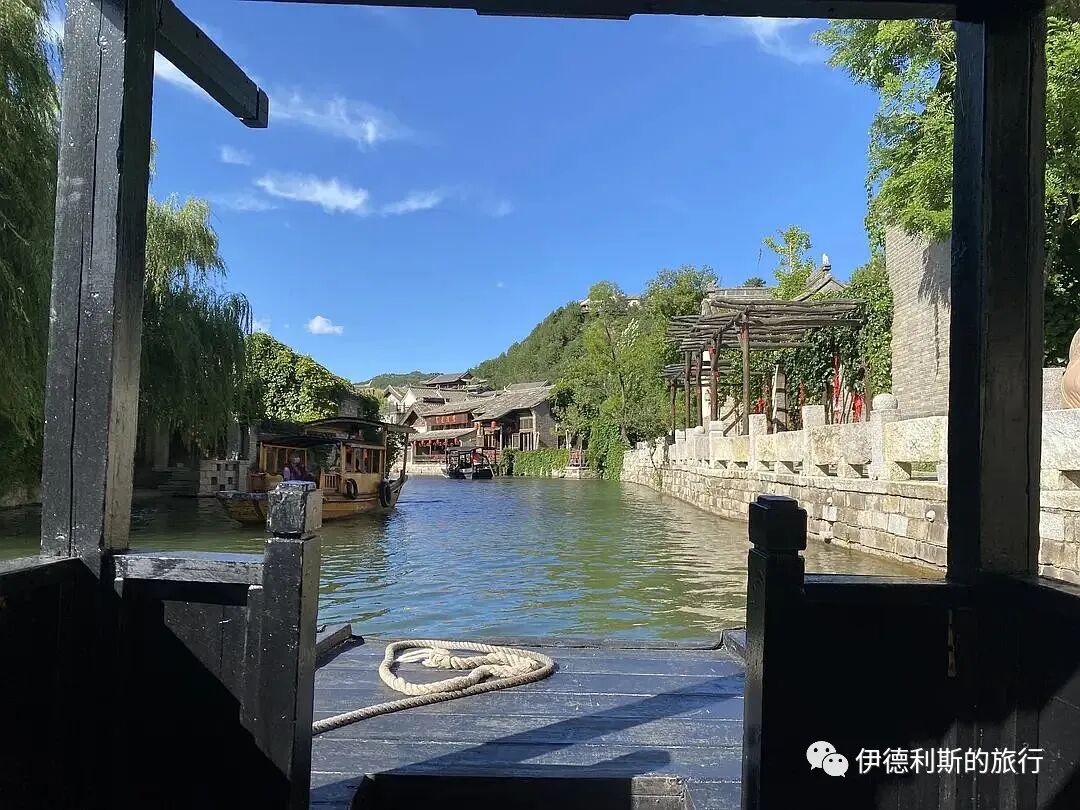
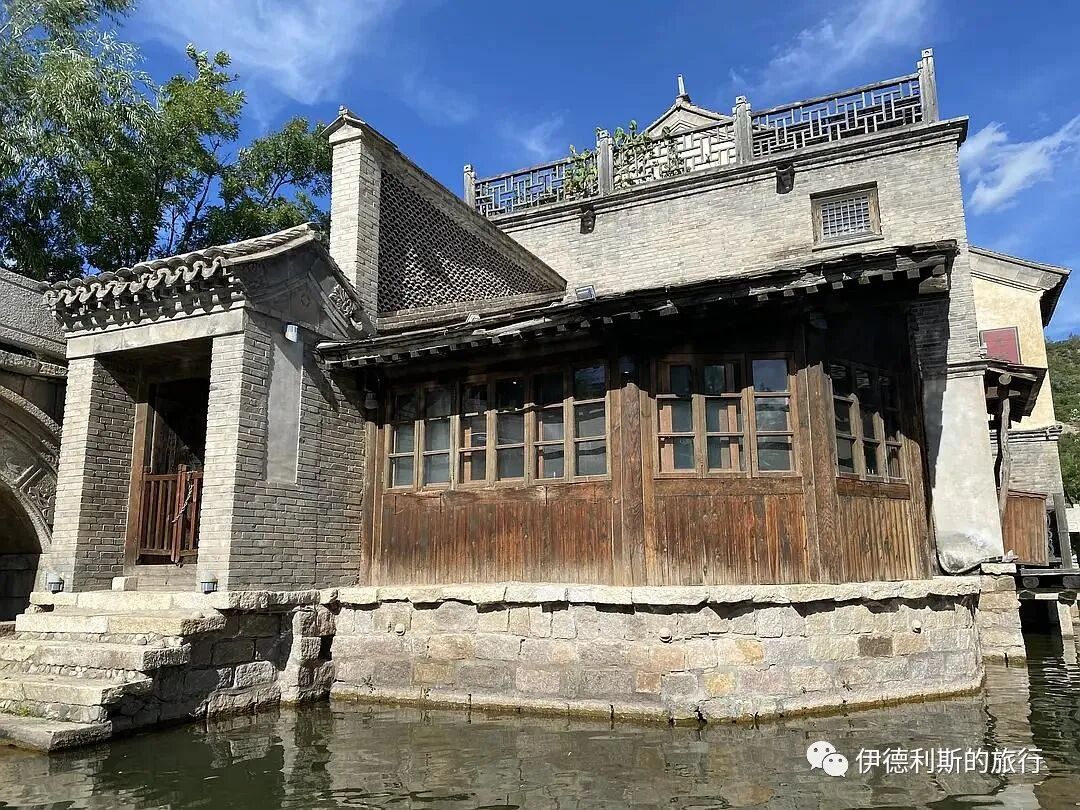
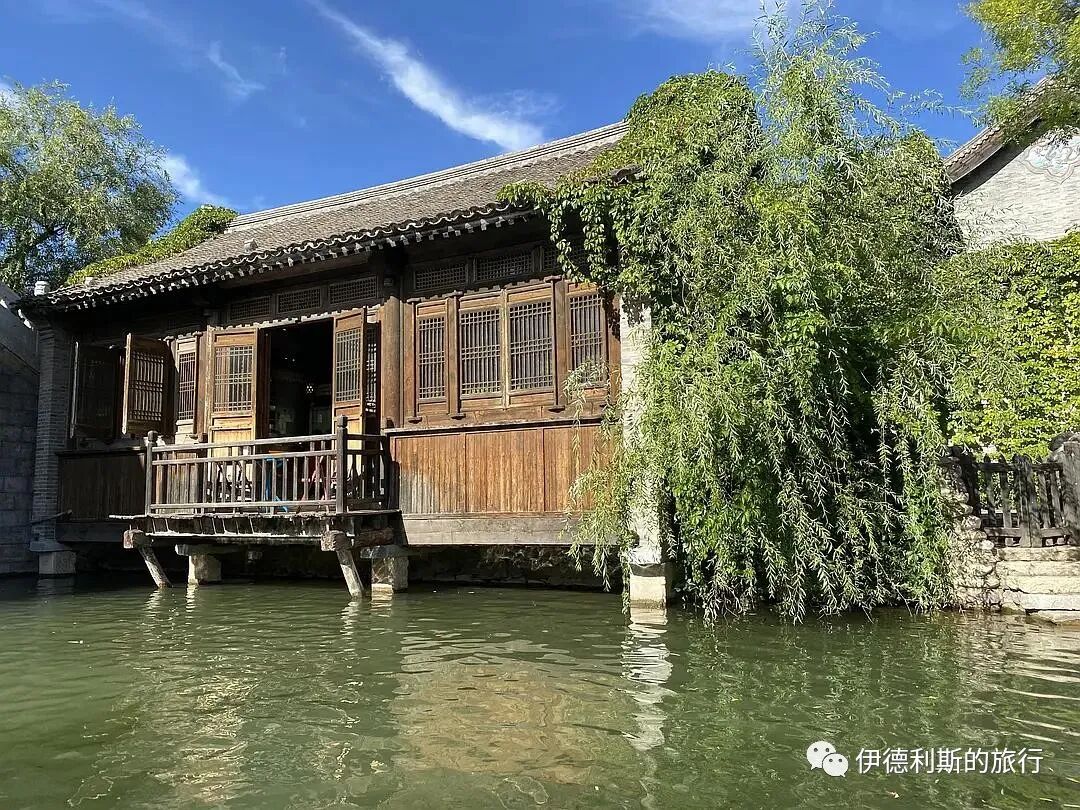
Not far after getting off the boat, there is a halal hot pot restaurant.
Gubei Water Town is truly a great place for the whole family to walk around. The walls covered in Boston ivy (pashanhuhu) will probably look beautiful in autumn.
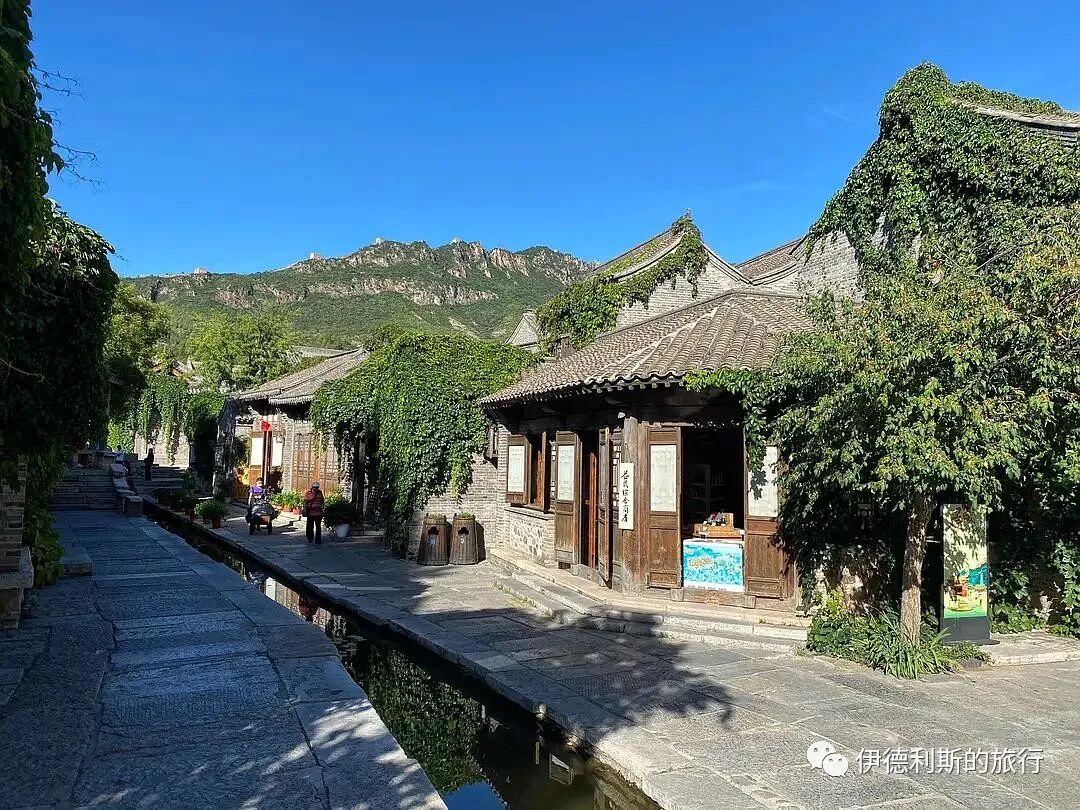
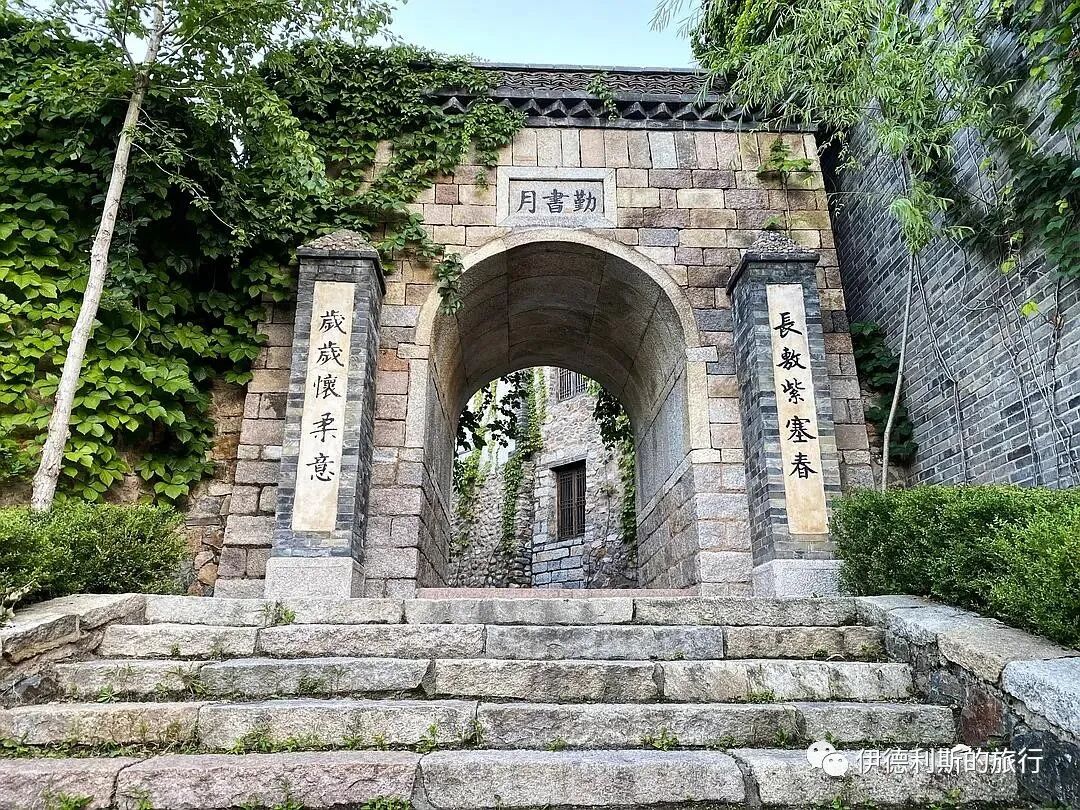
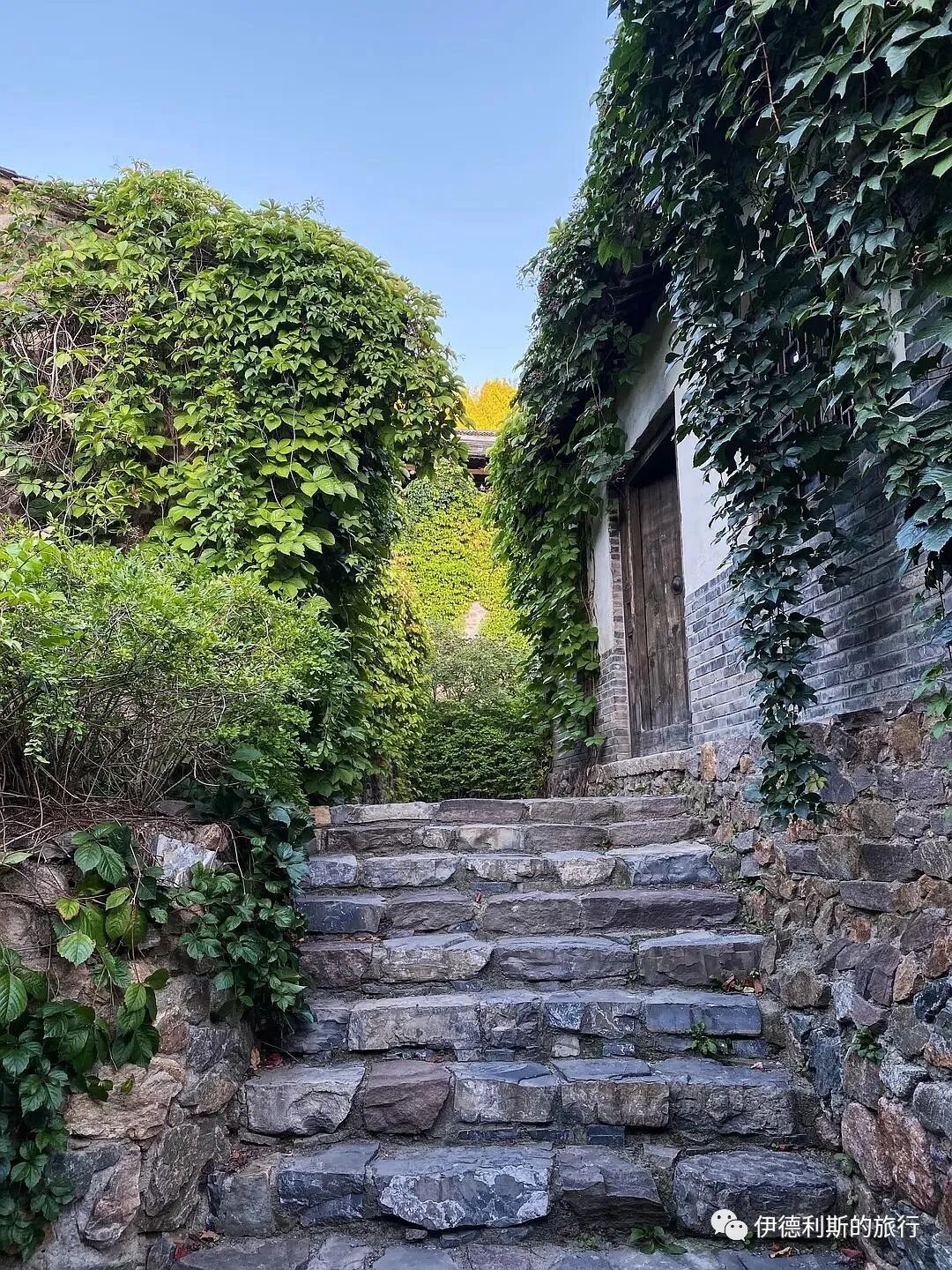
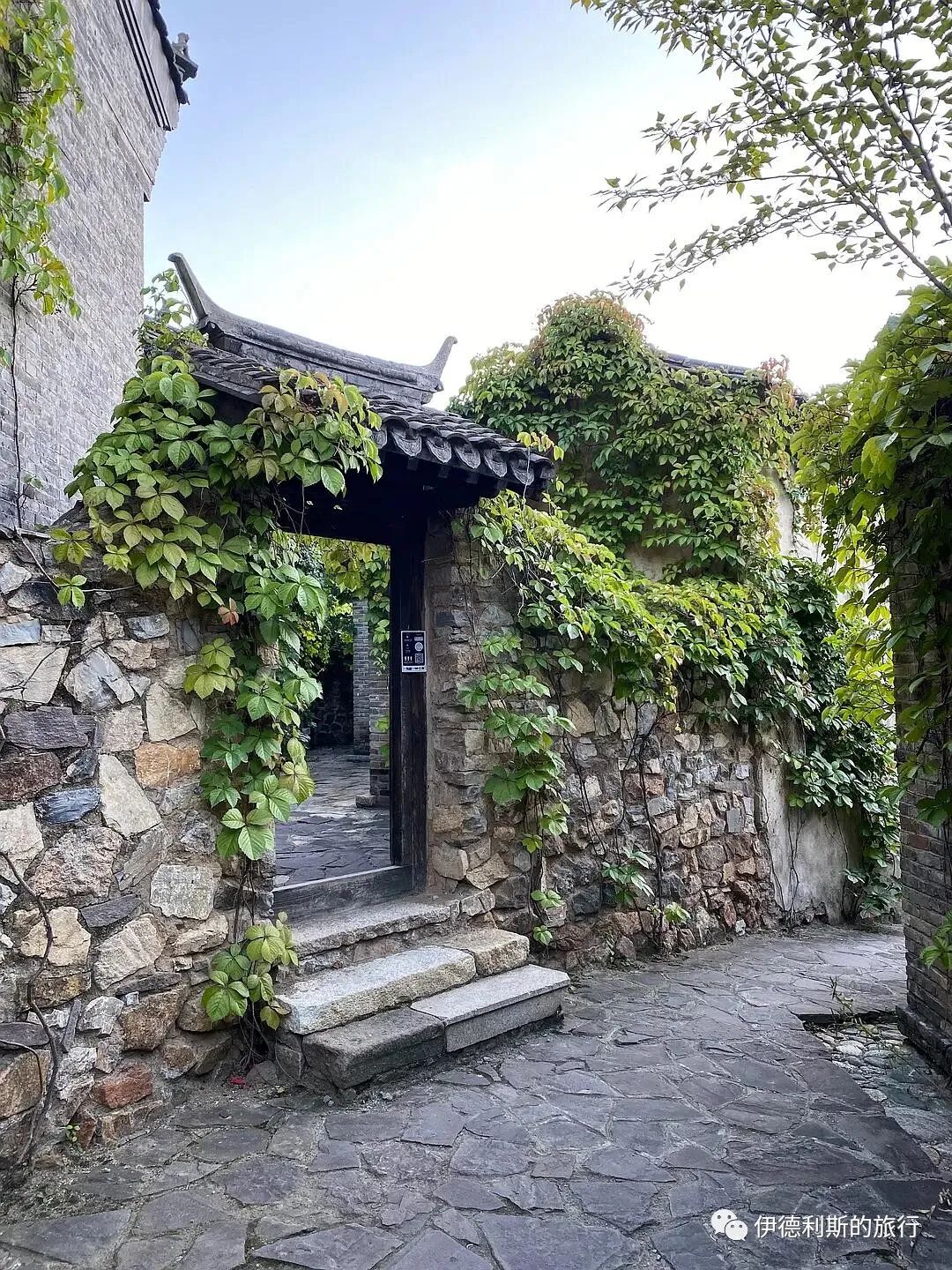
When friends (dosti) come to visit Gubei Water Town, they usually go to this Tanghe Halal Restaurant. The building mimics the Hengchang Ruiji storefront on Dongsi Fourth Alley, giving it a classic, antique feel with a nice atmosphere.
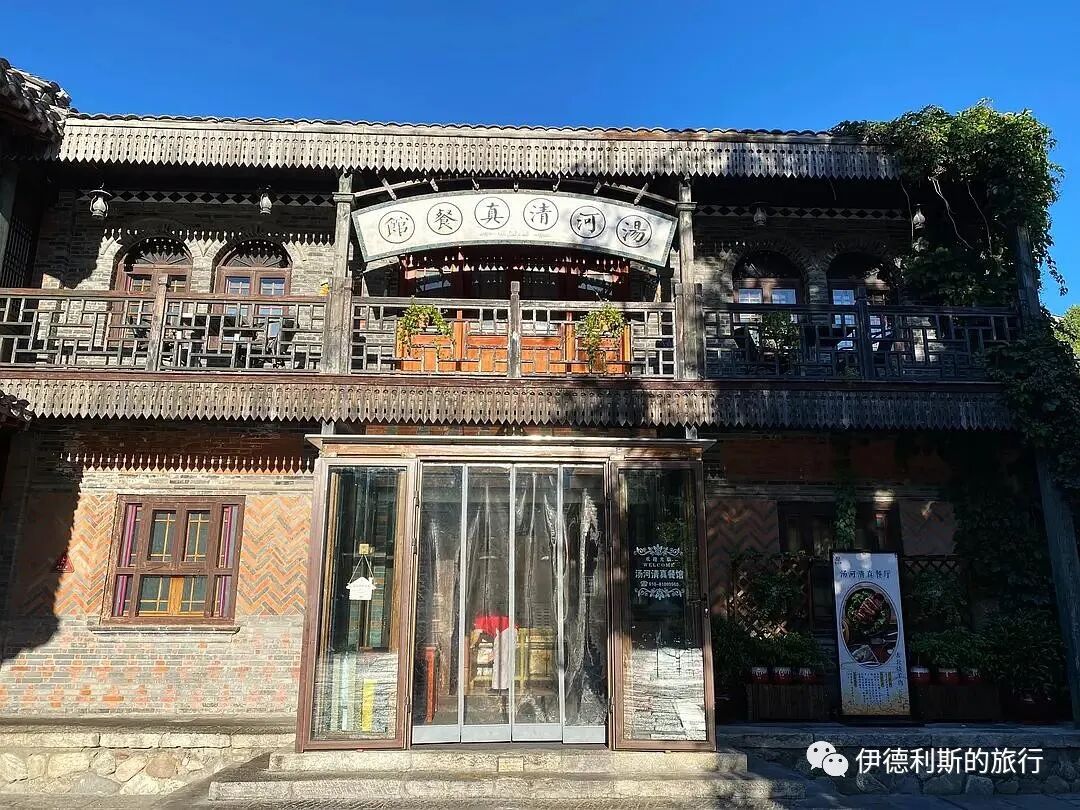
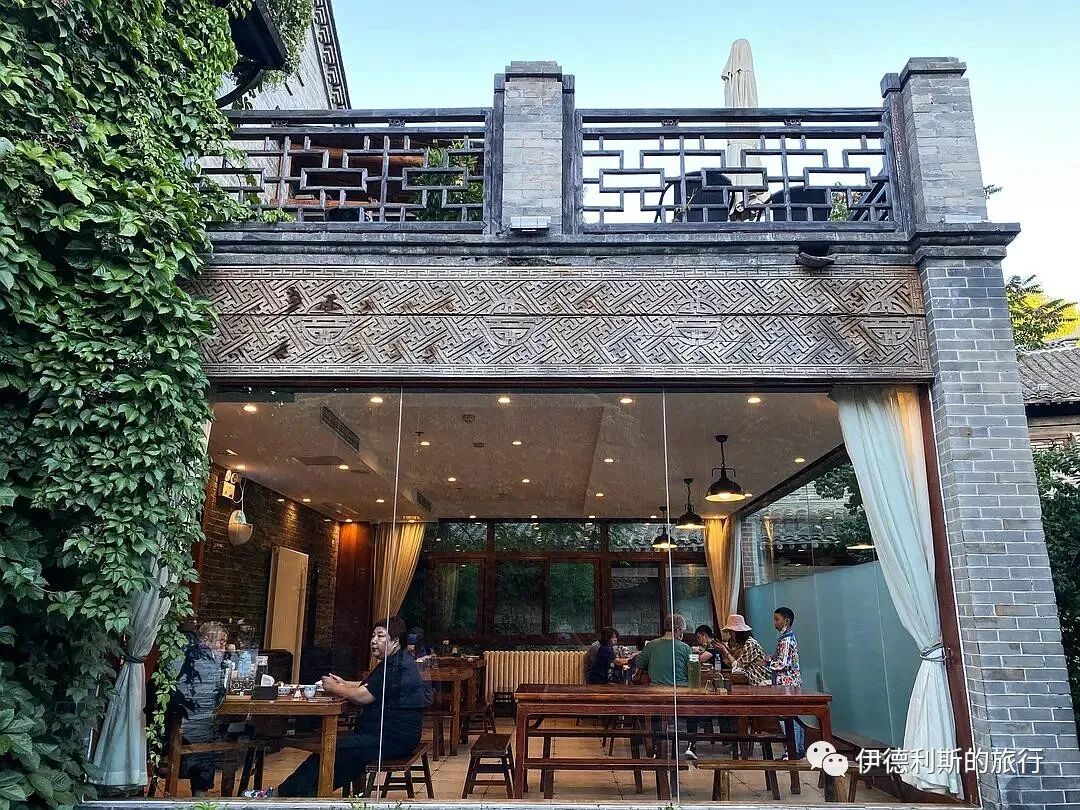
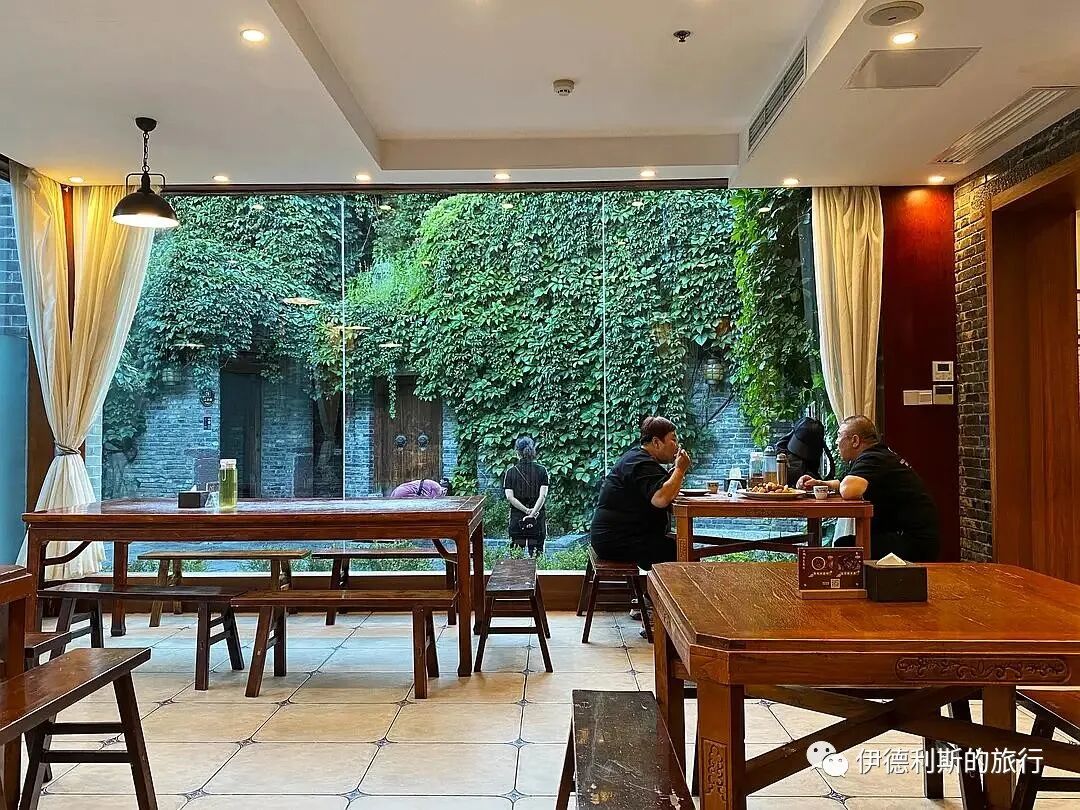
Their menu is a bit of a mix, with the main dishes being big plate chicken (dapanji) and roasted mutton (shao yangrou). We looked at the big plate chicken ordered by other tables; it had too many potatoes and no wide belt noodles (pidaimian), with flatbread (nang) underneath instead, so we ordered the roasted mutton. They serve their roasted mutton like roast duck, with yellow bean sauce for dipping and lotus leaf pancakes (heye bing) for wrapping, which is pretty good. However, the roasted mutton wasn't fried crispy enough, and the flavor didn't soak in, making the fatty parts a bit greasy. It falls short of truly delicious roasted mutton, but I am satisfied to find a restaurant like this inside a scenic area.
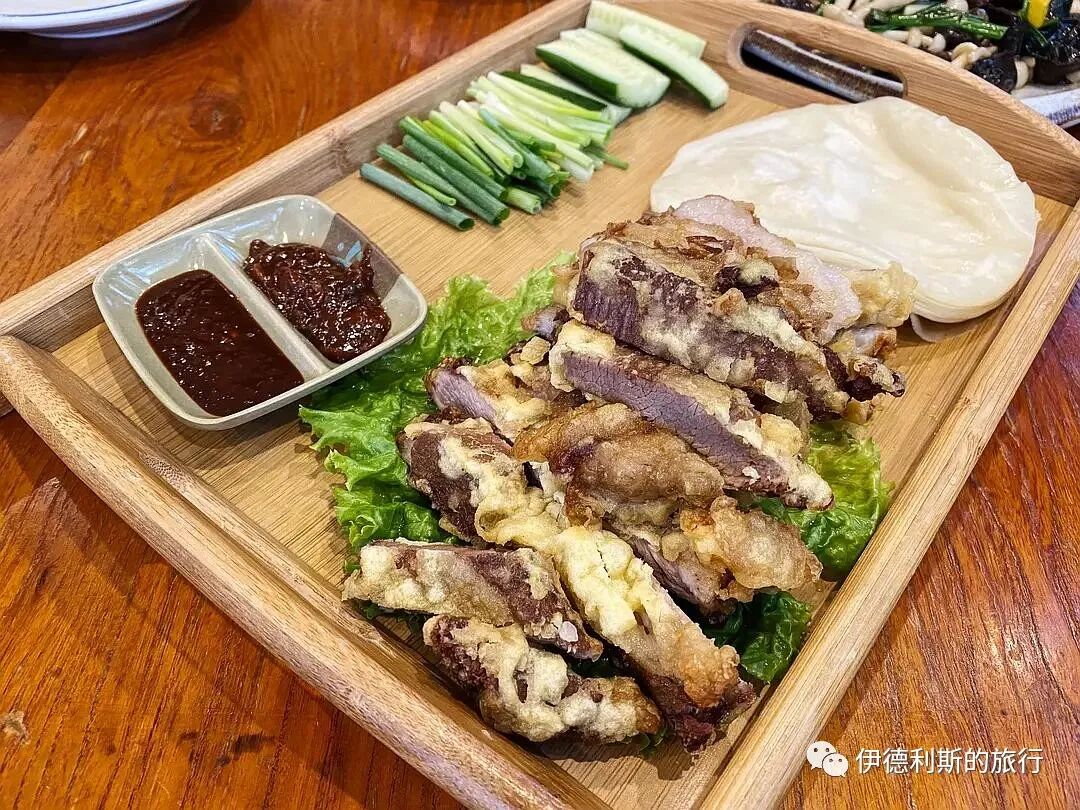
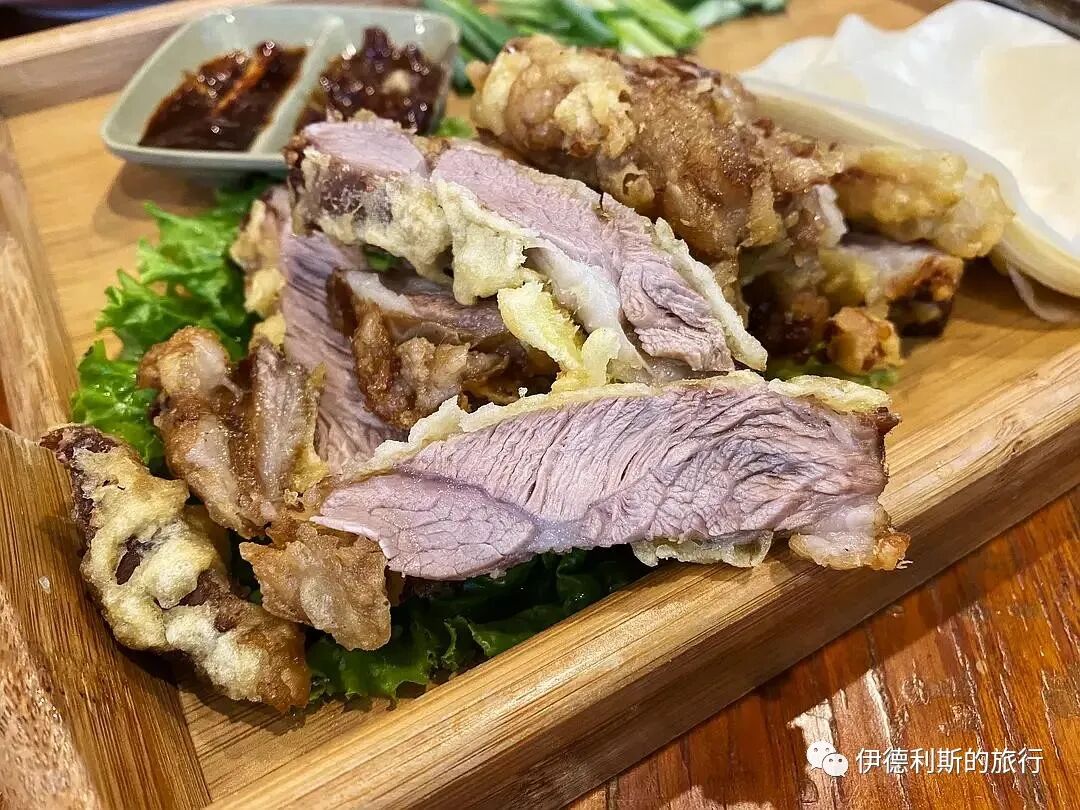
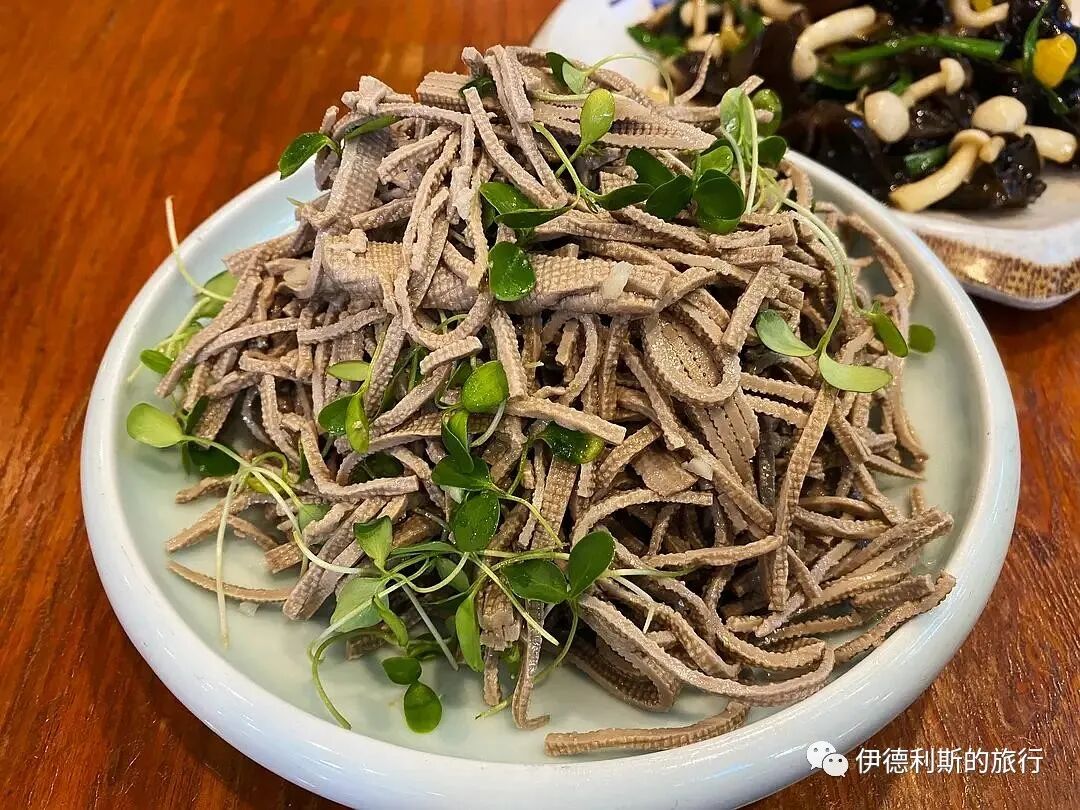
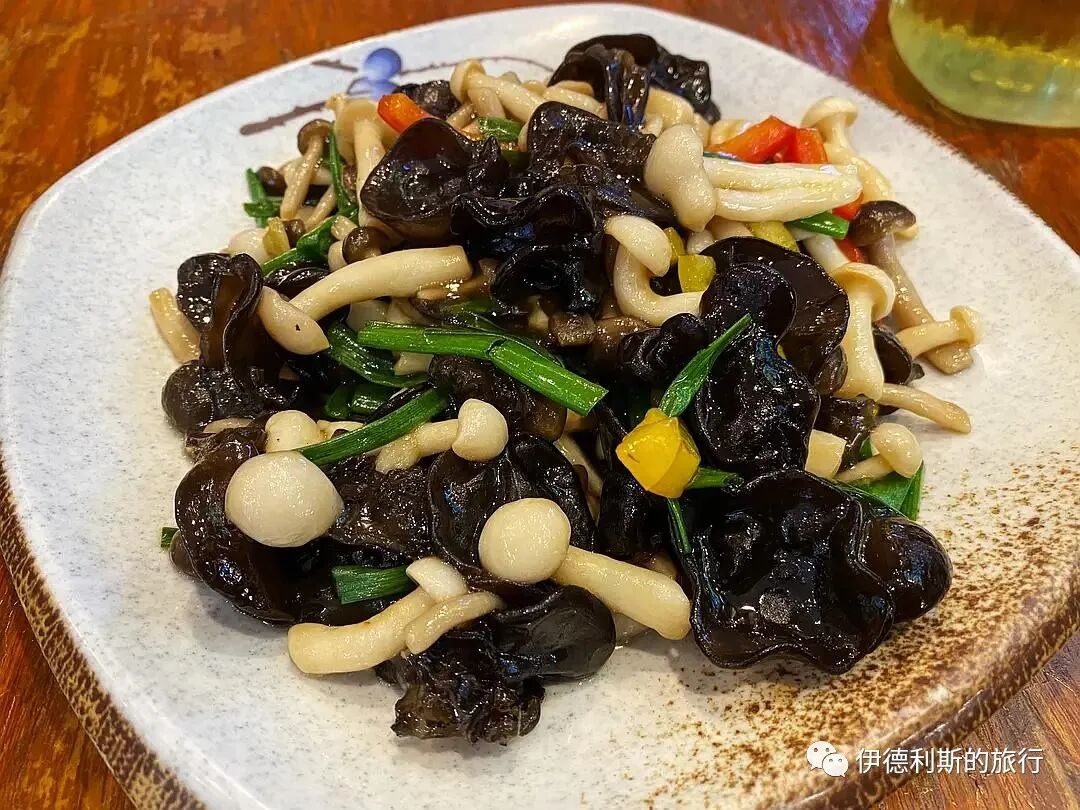
Gubei Water Town at night.
The Gubei Water Town parking lot surrounds a real Ming Dynasty fortress, the Simatai Fortress, which was first built in the sixth year of the Hongwu reign. The houses inside look like they have been repaired or rebuilt, but they are not open to the public.
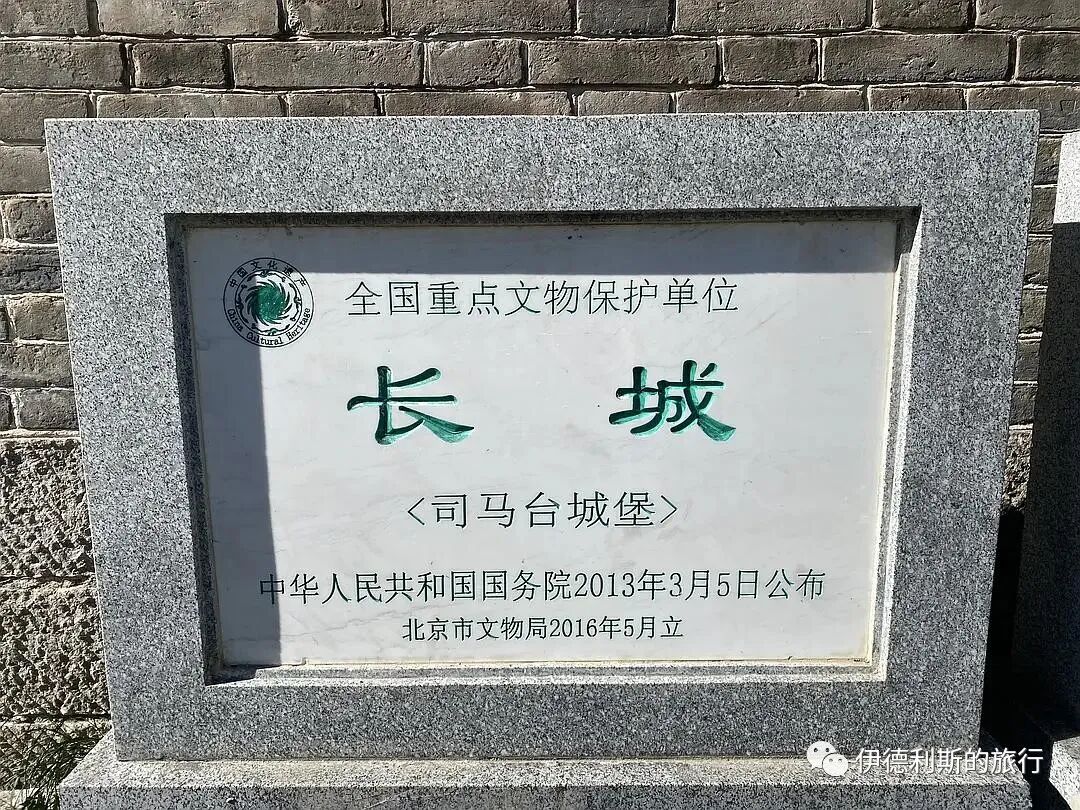
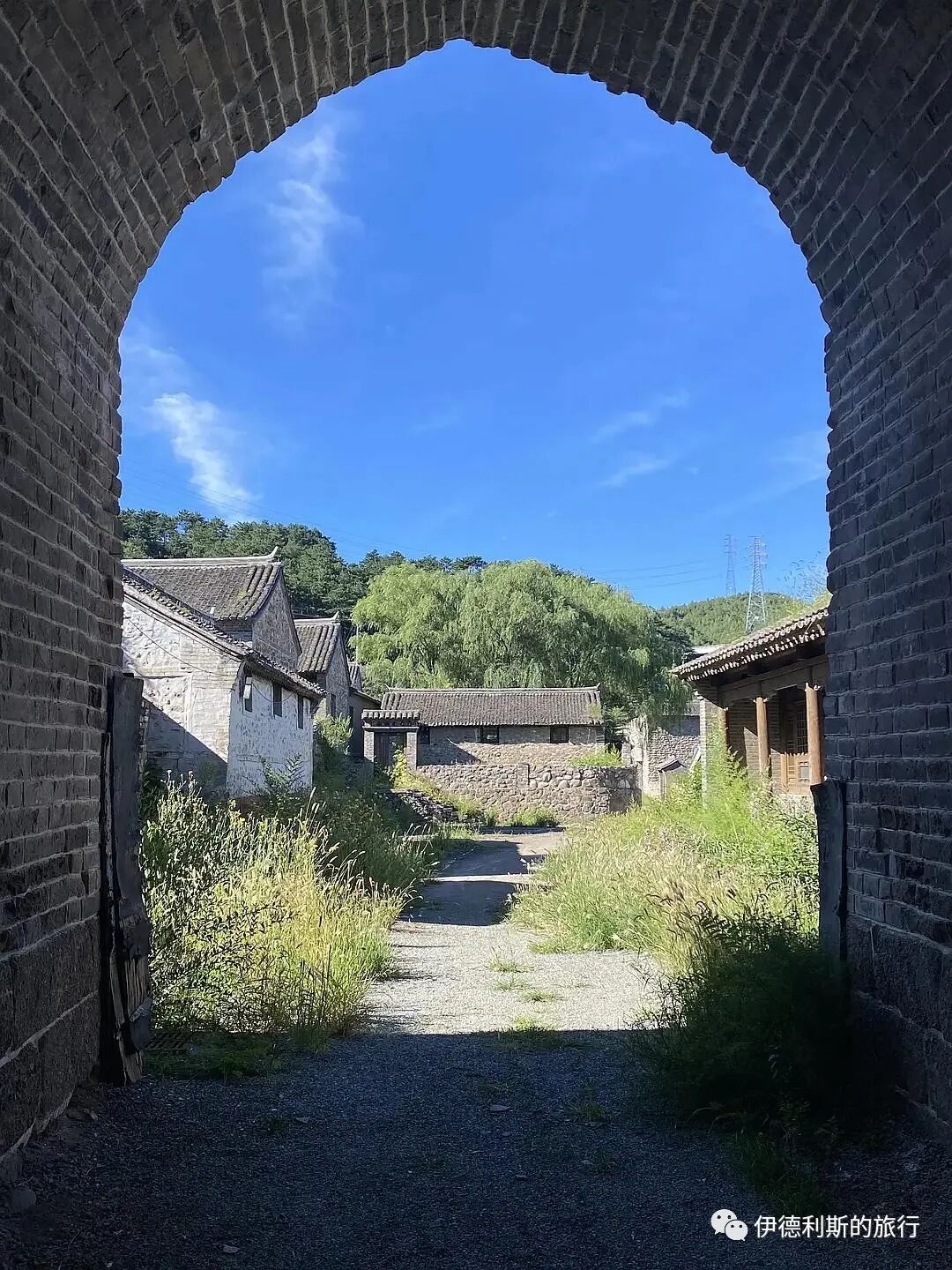
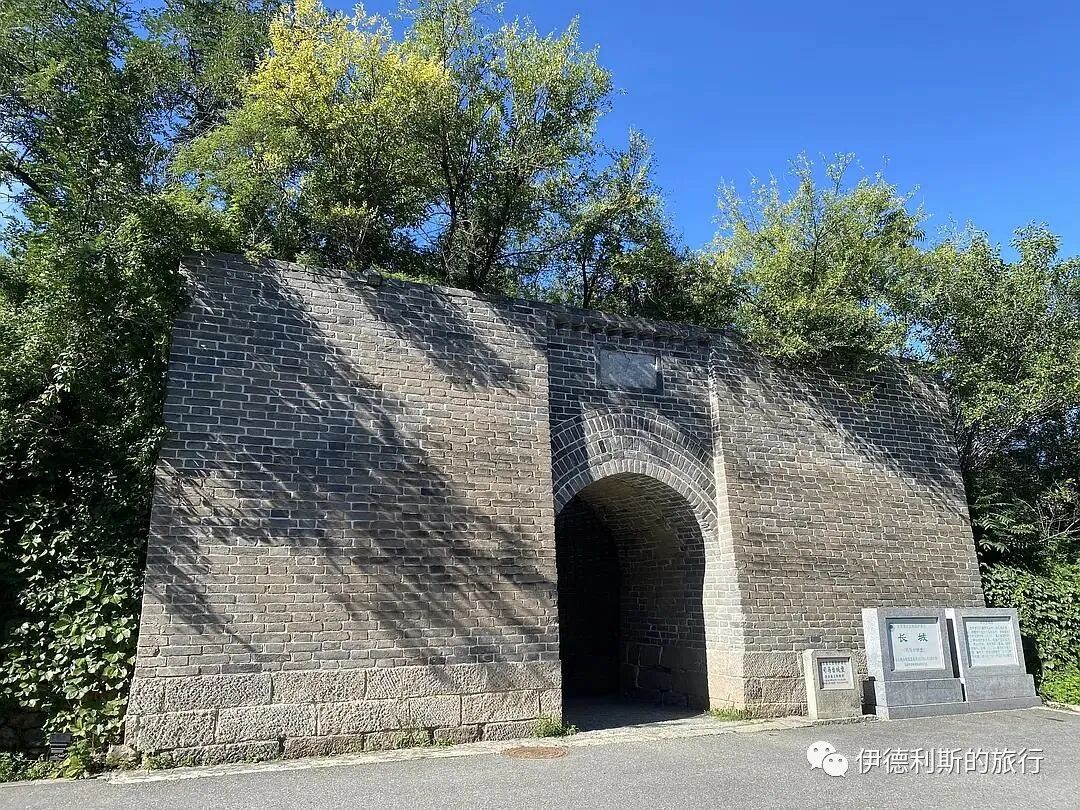
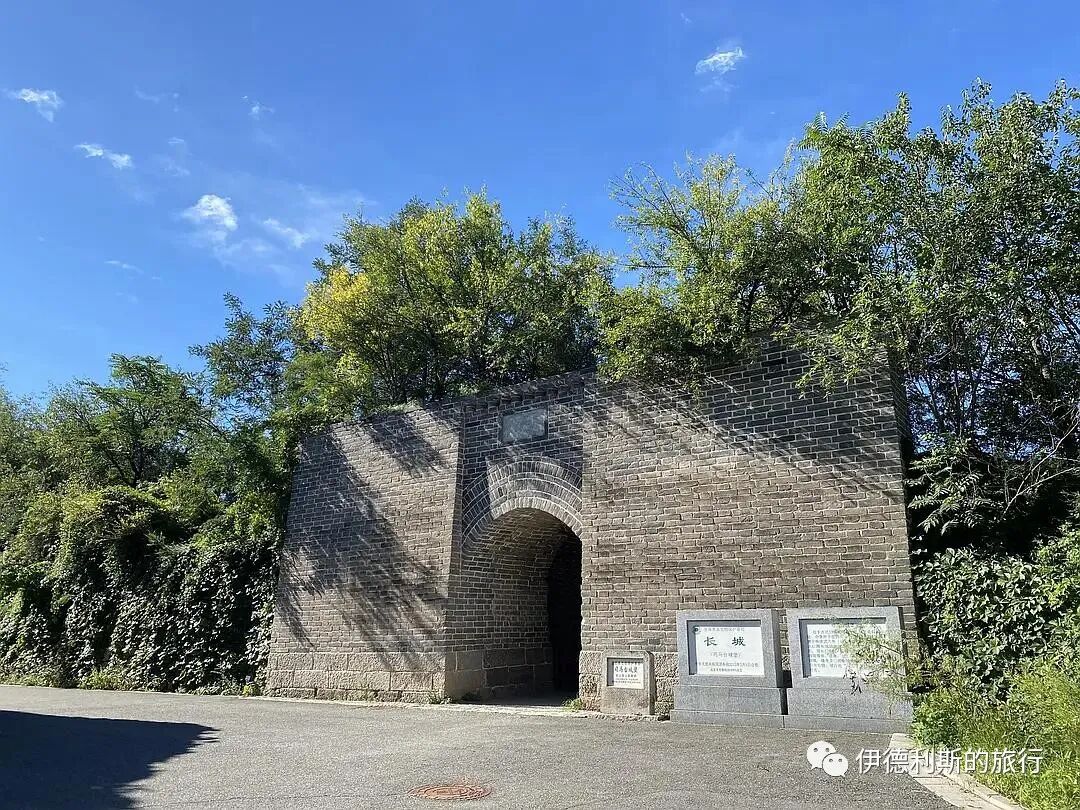
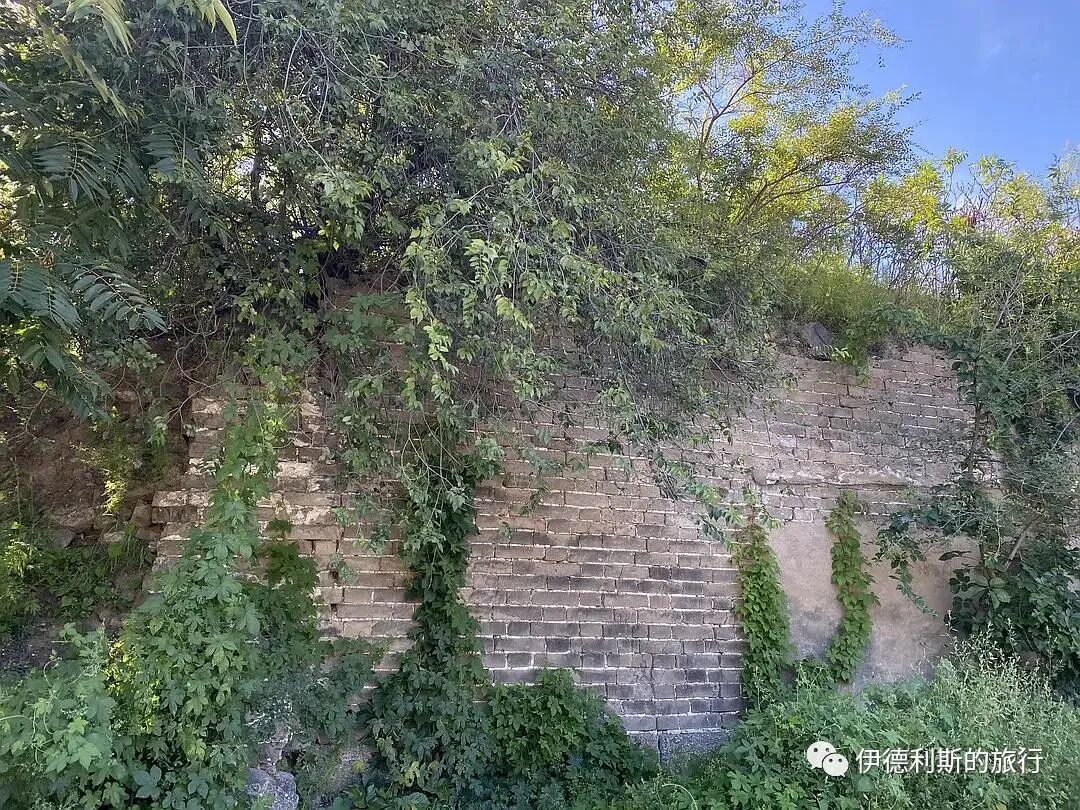
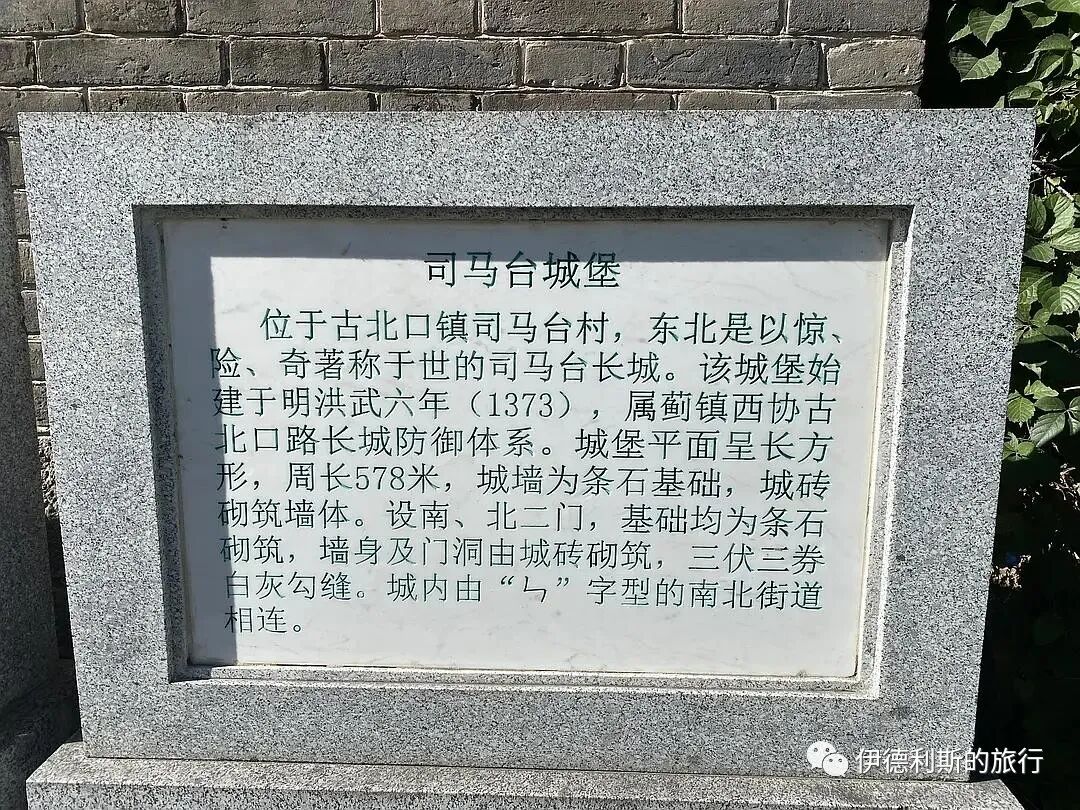
Taishitun.
There is no halal breakfast in Gubei Water Town. The closest place is the halal snack shop in Gubeikou Town for sesame flatbread (shaobing) and lamb offal soup (yangza), but we wanted a change of pace, so we drove south in the morning to the Yishun Halal Snack Shop in Taishitun Town.
The shop is run by local Hui Muslims from Taishitun. They are the only Hui Muslim family in Taishitun Town. There are dozens more families in Lugeshuang to the south, but this is the only local halal restaurant. The shop is actually on the edge of town, with a cornfield right behind it, giving it a very rural feel.
When we arrived after nine o'clock, they were already able to make their full menu. The dishes are similar to the Hui Muslim farmhouse food in Mujiayu, focusing on beef pancakes (niurou bing) and the eight great bowls (badawan) of the Hui Muslims, along with some home-style stir-fries. We ordered half a jin of beef pancakes, stir-fried eggs with tomatoes (muxu chao shizi), boiled lamb head (baishui yangtou), and tofu in a clay pot (shaguo doufu). Everything tasted quite good, making for a very rich breakfast, haha.
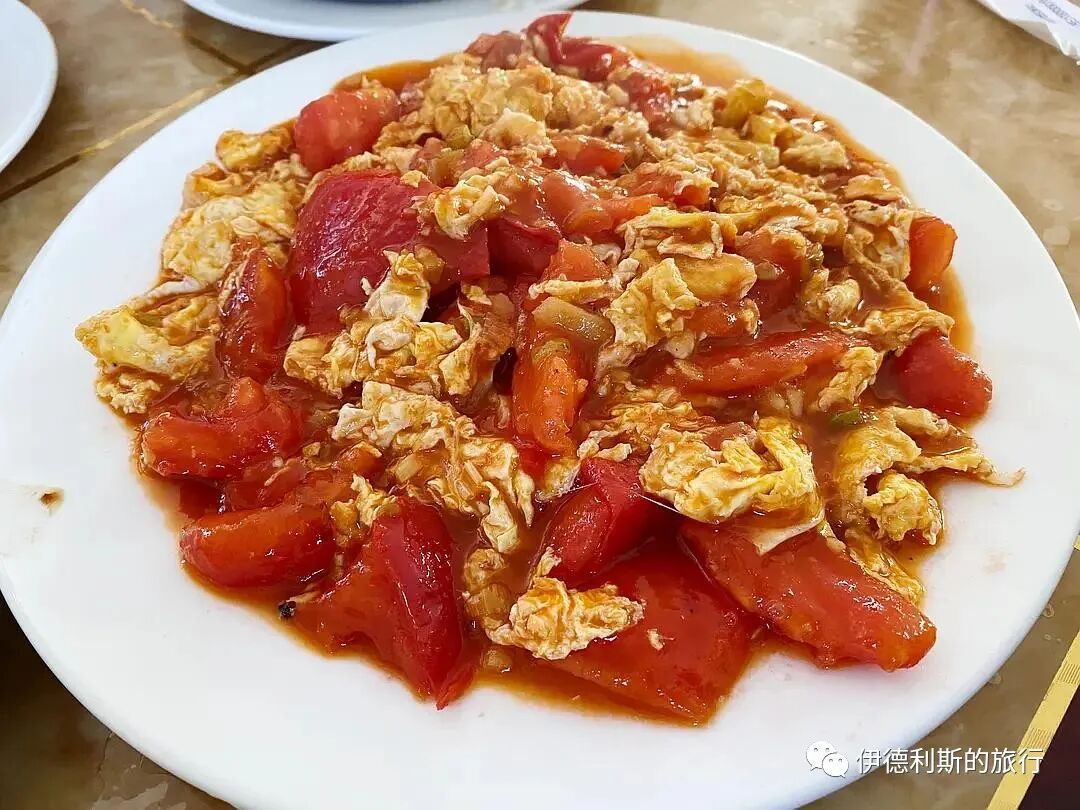
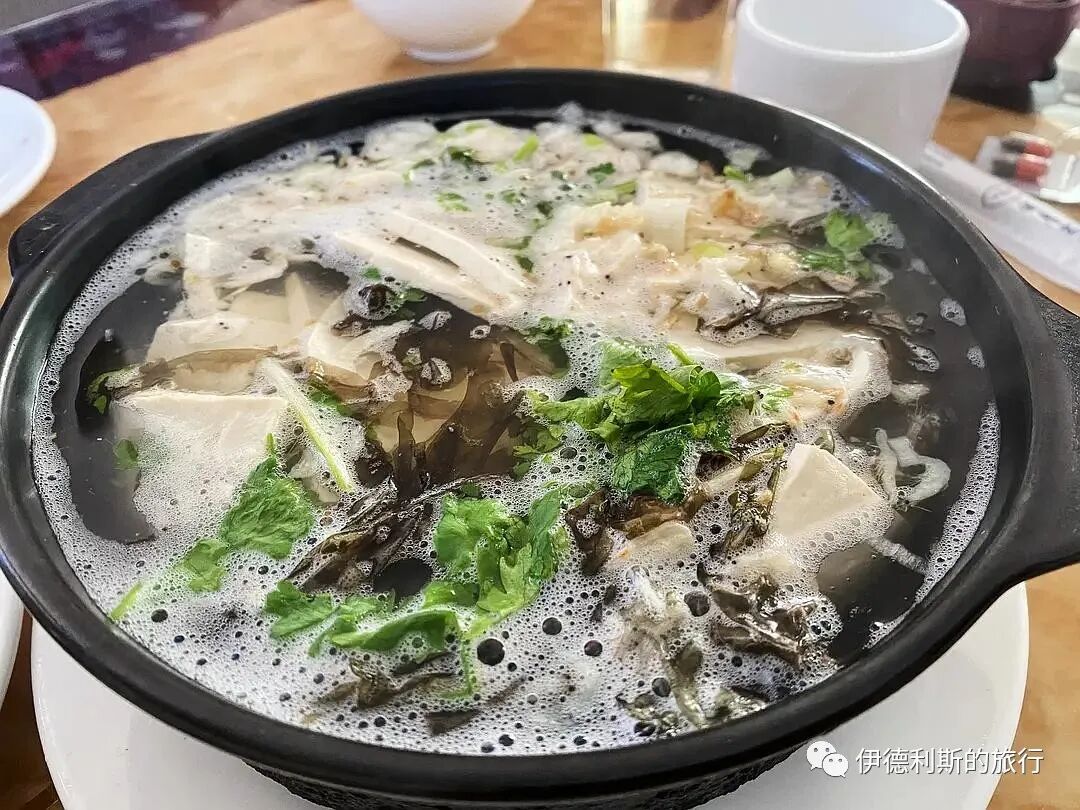
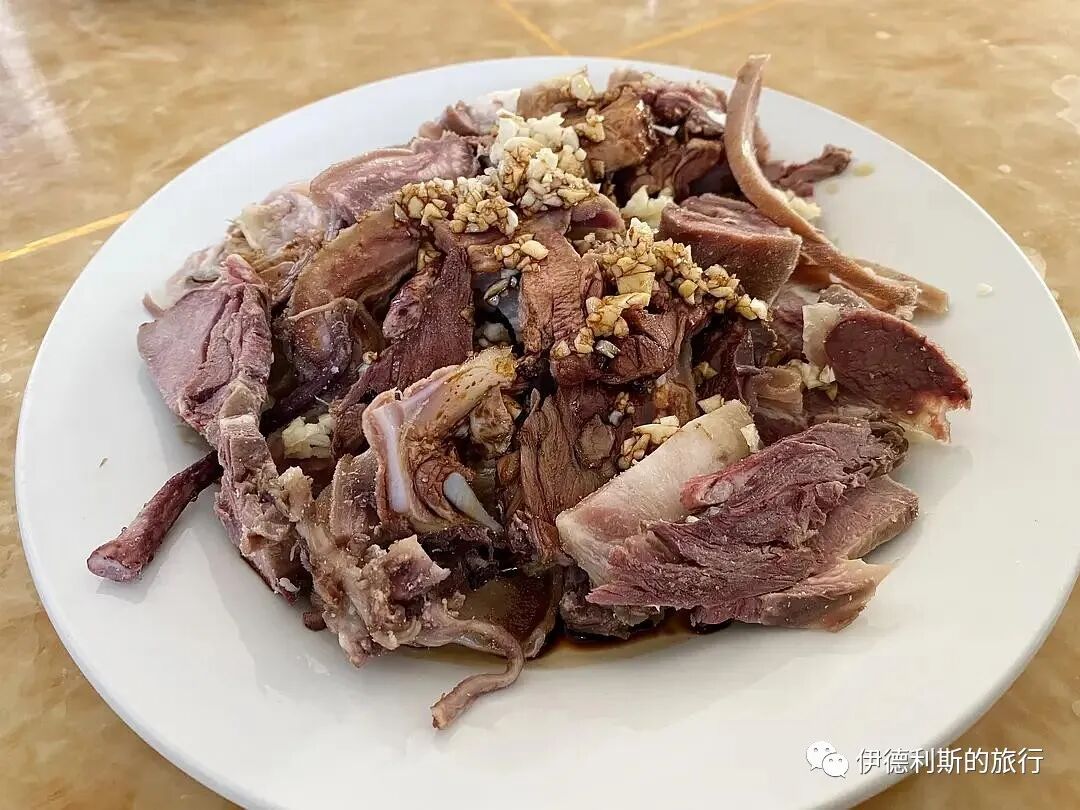
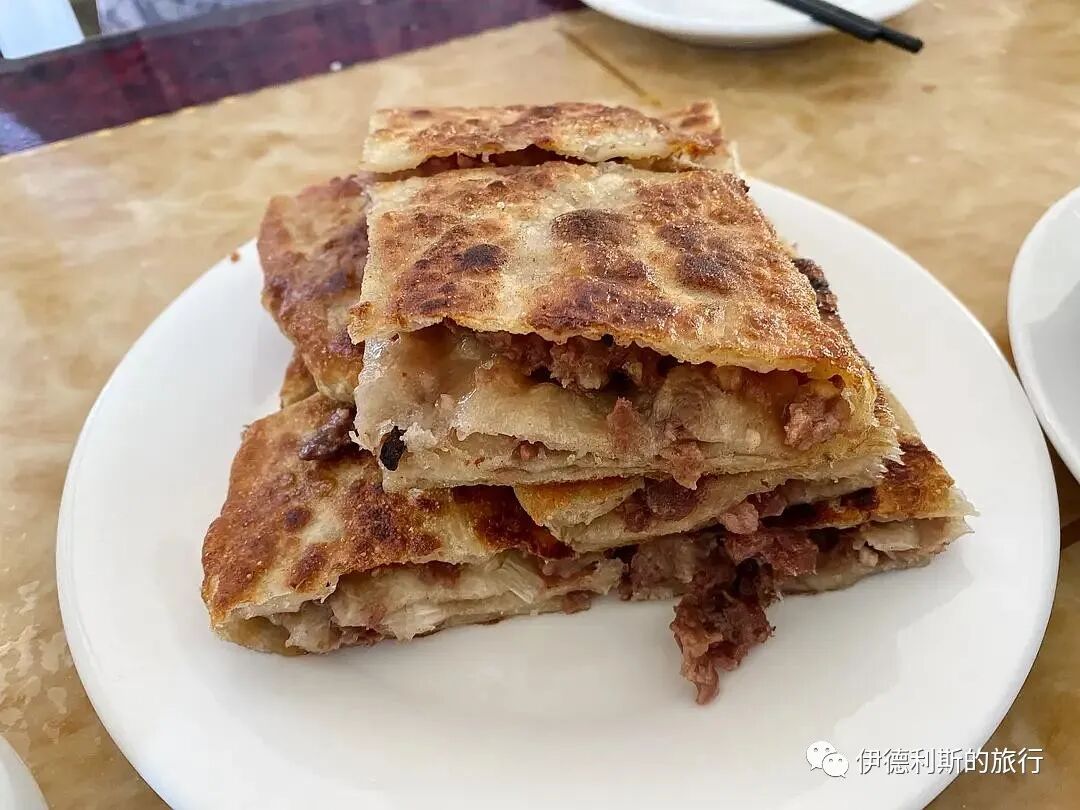
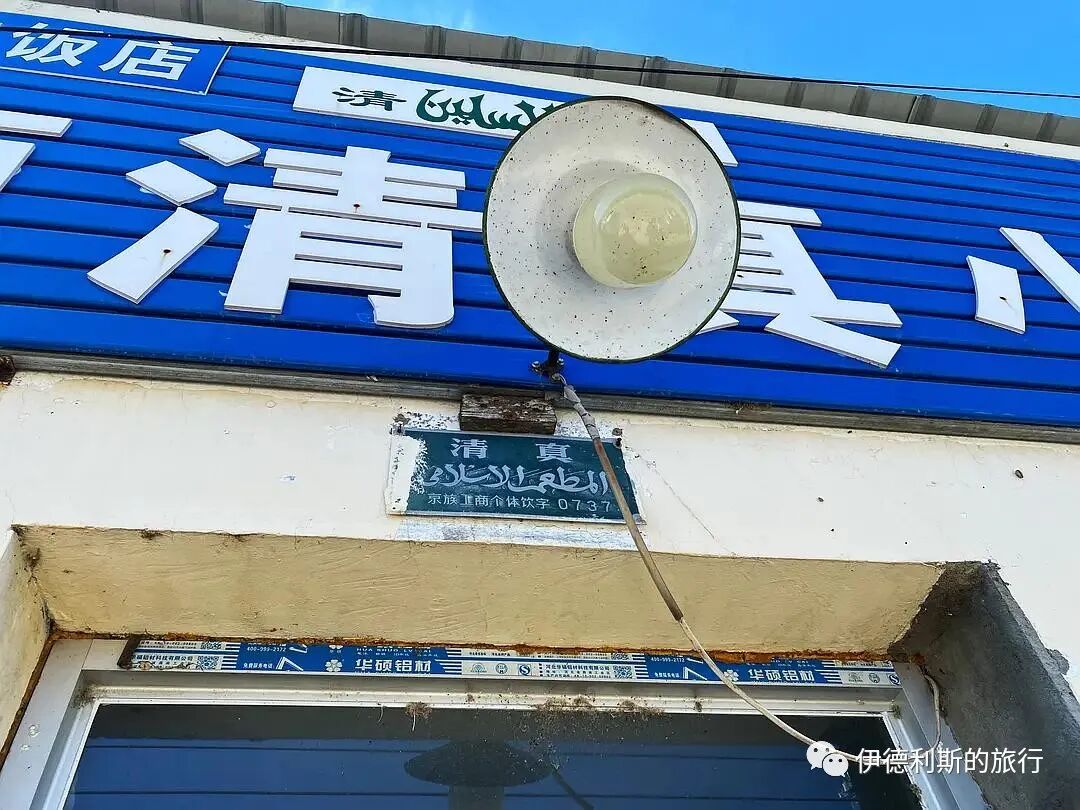
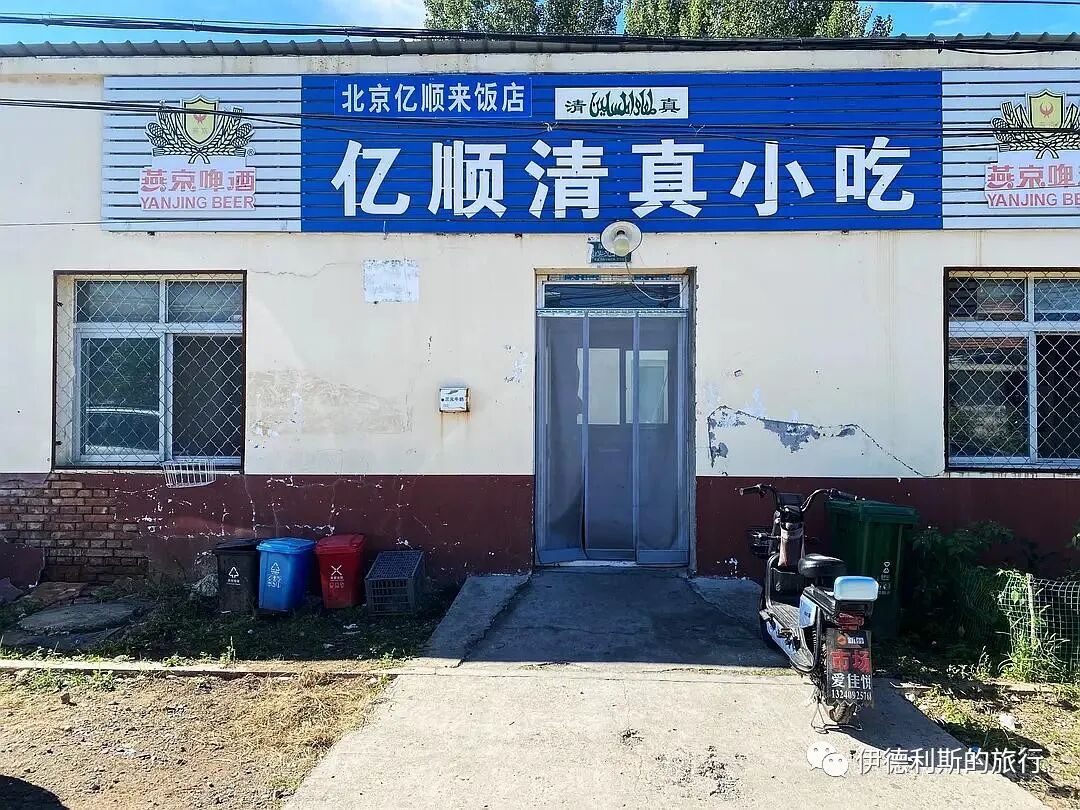
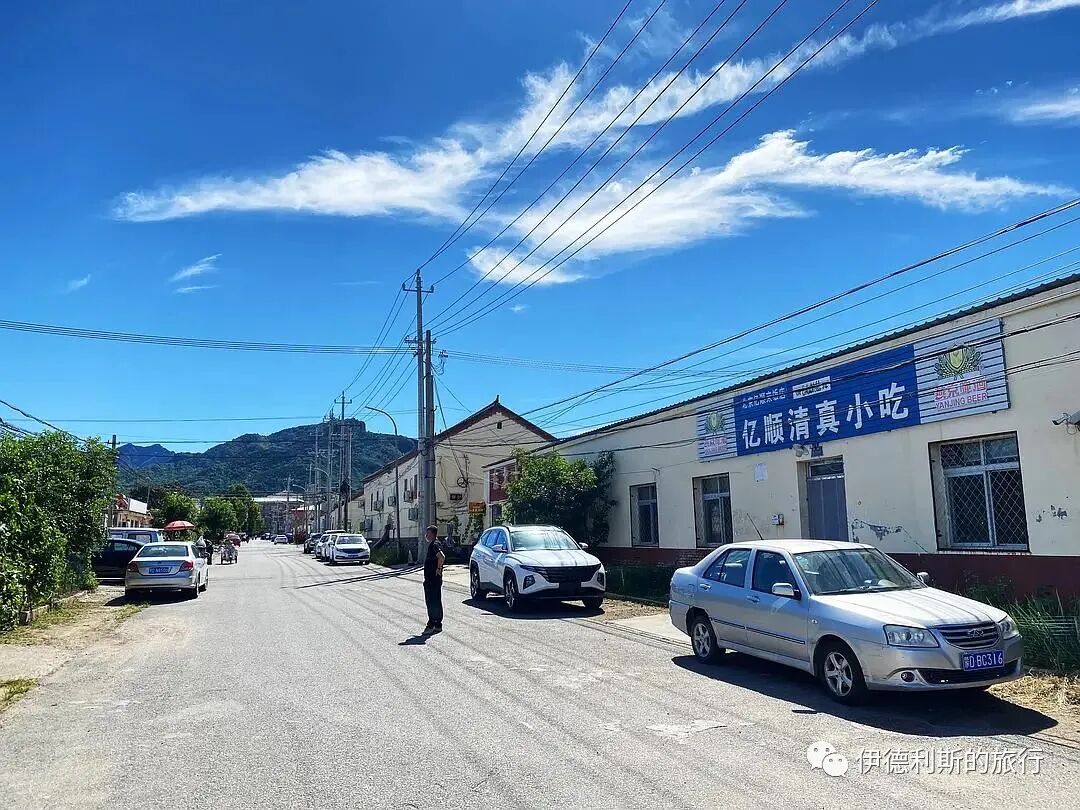
Then we drove around the Miyun Reservoir and went to play at Yunmeng Mountain.
Looking at the Miyun Reservoir from Yunmeng Mountain.
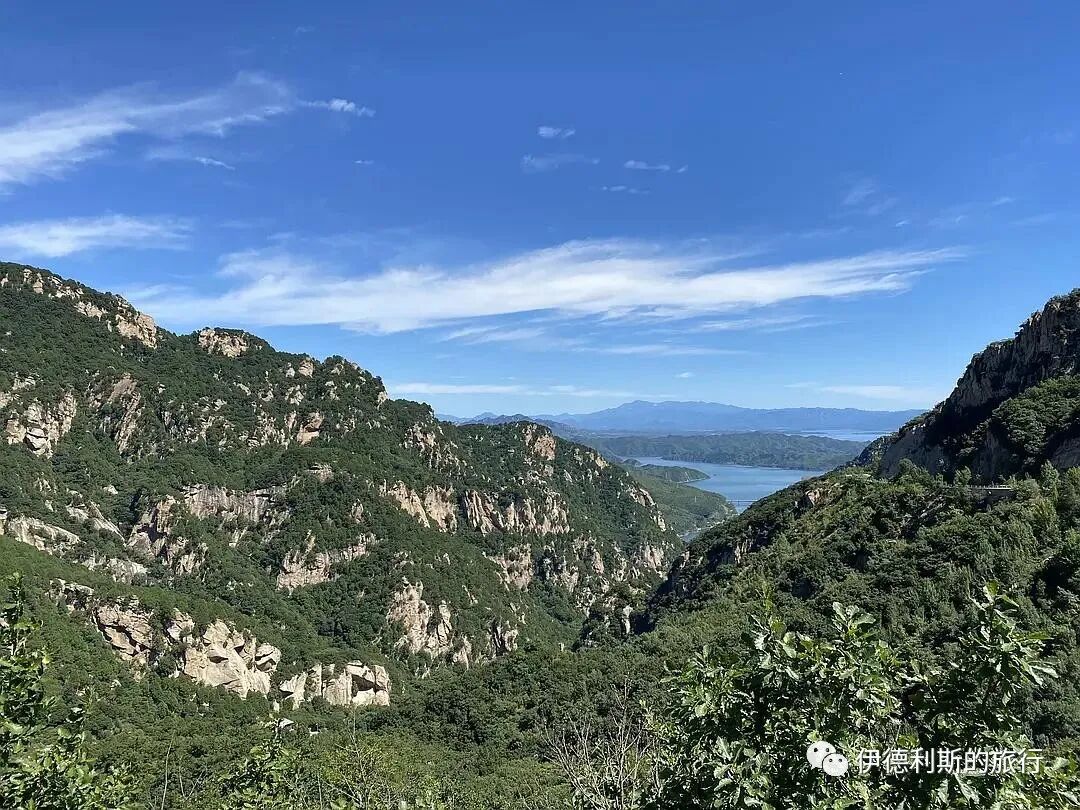
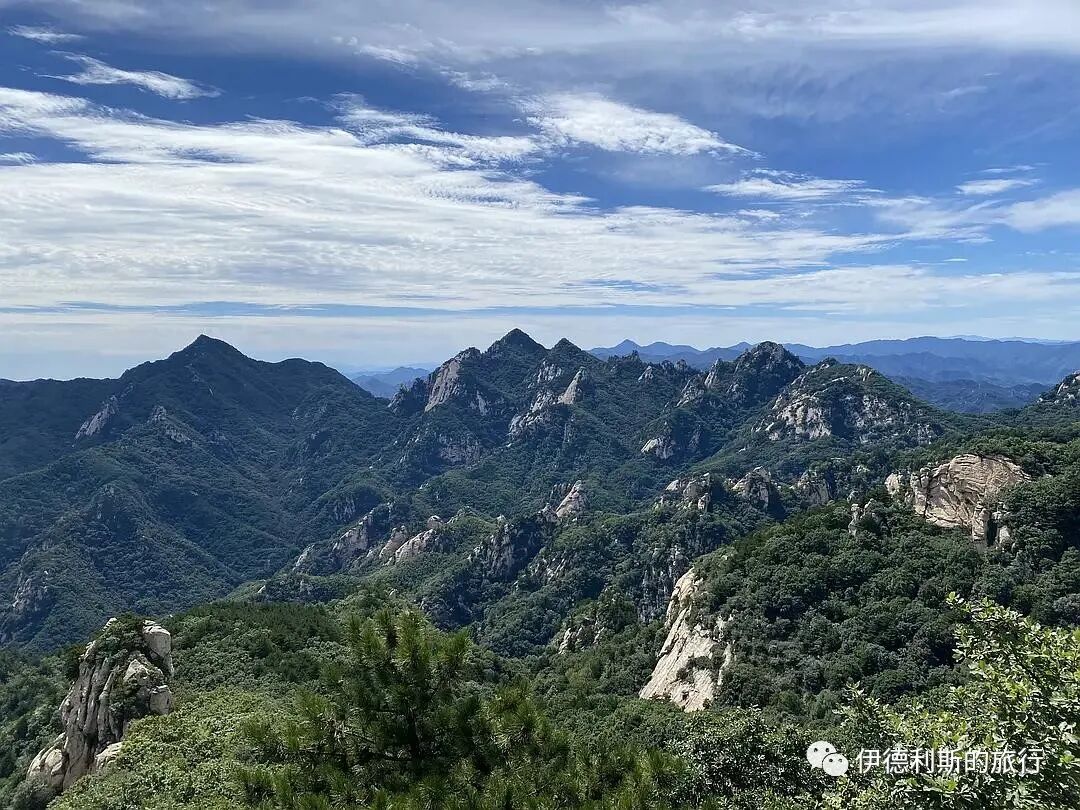
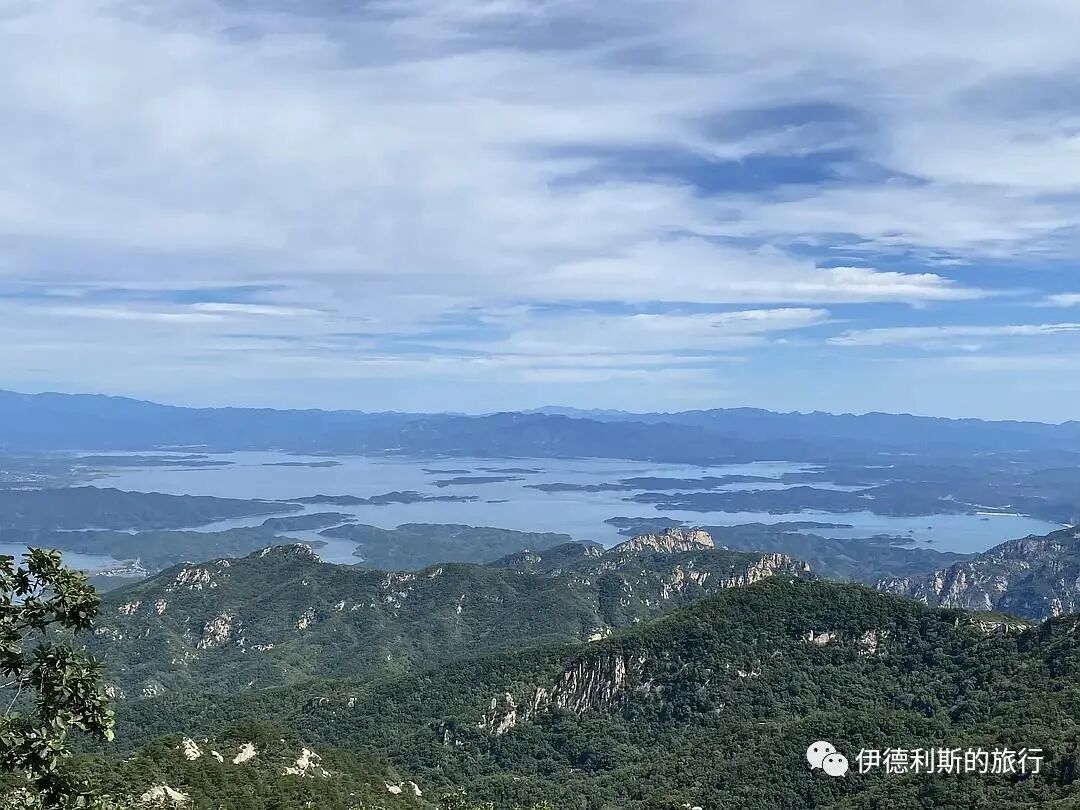
Summary: China Mosque Travel Guide Beijing Miyun: Reservoir Mosques, Hui Villages and Muslim Heritage (Part 2) is presented here as a clear Muslim travel account, beginning with this scene: In Gubeikou Town, there are still some Hui Muslims who hang door charms (men du'er), as well as halal beef and mutton shops. The account keeps its focus on Miyun Mosques, Beijing Muslim Travel, Hui Villages while preserving the names, places, food, and historical details from the Chinese source.
In Gubeikou Town, there are still some Hui Muslims who hang door charms (men du'er), as well as halal beef and mutton shops.
The rebuilt North Gate of the Gubeikou Town pass city.
Lotus flowers inside the Gubeikou Town pass city.
After eating, we headed to Gubei Water Town.
A distant view of the Simatai Great Wall.
After entering the scenic area, we took a sculling boat.
Not far after getting off the boat, there is a halal hot pot restaurant.
Gubei Water Town is truly a great place for the whole family to walk around. The walls covered in Boston ivy (pashanhuhu) will probably look beautiful in autumn.
When friends (dosti) come to visit Gubei Water Town, they usually go to this Tanghe Halal Restaurant. The building mimics the Hengchang Ruiji storefront on Dongsi Fourth Alley, giving it a classic, antique feel with a nice atmosphere.
Their menu is a bit of a mix, with the main dishes being big plate chicken (dapanji) and roasted mutton (shao yangrou). We looked at the big plate chicken ordered by other tables; it had too many potatoes and no wide belt noodles (pidaimian), with flatbread (nang) underneath instead, so we ordered the roasted mutton. They serve their roasted mutton like roast duck, with yellow bean sauce for dipping and lotus leaf pancakes (heye bing) for wrapping, which is pretty good. However, the roasted mutton wasn't fried crispy enough, and the flavor didn't soak in, making the fatty parts a bit greasy. It falls short of truly delicious roasted mutton, but I am satisfied to find a restaurant like this inside a scenic area.
Gubei Water Town at night.
The Gubei Water Town parking lot surrounds a real Ming Dynasty fortress, the Simatai Fortress, which was first built in the sixth year of the Hongwu reign. The houses inside look like they have been repaired or rebuilt, but they are not open to the public.
Taishitun.
There is no halal breakfast in Gubei Water Town. The closest place is the halal snack shop in Gubeikou Town for sesame flatbread (shaobing) and lamb offal soup (yangza), but we wanted a change of pace, so we drove south in the morning to the Yishun Halal Snack Shop in Taishitun Town.
The shop is run by local Hui Muslims from Taishitun. They are the only Hui Muslim family in Taishitun Town. There are dozens more families in Lugeshuang to the south, but this is the only local halal restaurant. The shop is actually on the edge of town, with a cornfield right behind it, giving it a very rural feel.
When we arrived after nine o'clock, they were already able to make their full menu. The dishes are similar to the Hui Muslim farmhouse food in Mujiayu, focusing on beef pancakes (niurou bing) and the eight great bowls (badawan) of the Hui Muslims, along with some home-style stir-fries. We ordered half a jin of beef pancakes, stir-fried eggs with tomatoes (muxu chao shizi), boiled lamb head (baishui yangtou), and tofu in a clay pot (shaguo doufu). Everything tasted quite good, making for a very rich breakfast, haha.
Then we drove around the Miyun Reservoir and went to play at Yunmeng Mountain.
Looking at the Miyun Reservoir from Yunmeng Mountain.
China Mosque Travel Guide Hebei Cangzhou: Old Mosques, Hui Villages and Muslim Heritage
Articles • yusuf908 posted the article • 0 comments • 171 views • 2026-05-23 23:15
Reposted from the web
Summary: This China Mosque Travel Guide keeps the original 2016 Cangzhou travel notes intact while making the route clear for Muslim readers. It is useful for China Muslim travel tips, halal food in China, Chinese Muslim food, and old mosque heritage in Hebei.
I visited the Hui Muslim community in Cangzhou twice, on November 26, 2016, and March 25, 2017. I will share my experiences here. Some information in this article comes from the book Cangzhou Hui Muslims by Wu Piqing.
The high-speed train from Beijing South Station to Cangzhou West Station takes only 50 minutes. At Beijing South Station, there is a fast-track entrance for the Beijing-Shanghai high-speed railway right at the subway exit. You can swipe your card to leave the subway and head straight to the train, which is very convenient.
When you leave Cangzhou West Station, you can take a metered taxi. It costs about a dozen yuan and takes 20 minutes to reach the mosque. When Cangzhou locals talk about the mosque, they usually mean the North Great Mosque (Qingzhen Beidasi) on the main street. It is the most magnificent mosque in Cangzhou. Once at the mosque, I first went to eat the famous Wu's All-Beef Soup (Wu Ji Quan Niu Tang).
From Wu's All-Beef Soup to the Cangzhou Hui Muslim district.
Wu's All-Beef Soup has cost fifty yuan a bowl for years. Don't let the price scare you; once you see the amount of beef, you will know it is worth it. You take dried beef from the counter and dip it in the boiling soup. The beef soup is incredibly delicious, and the beef is very fragrant. It keeps you full for a long time. You can eat all the flatbreads you want there. I chose this long, multi-grain flatbread, which goes perfectly with the soup.
After finishing the beef soup, I have to talk a bit about the Wu family of Cangzhou. The Wu family is an important branch of the Hui Muslims in Cangzhou, and they are closely linked to the city's history.
Like many canal cities, Cangzhou has had Hui Muslim merchants settling down with their families since the Yuan Dynasty. However, the Cangzhou city of that time was not the one we see today. It was located at the Old Prefecture City ruins, 20 kilometers southeast of the current city, where the famous Cangzhou Iron Lion stands.
In 1399, during the Jingnan Campaign, the Prince of Yan, Zhu Di, captured the old Cangzhou city. He killed thousands of surrendered soldiers and tens of thousands of residents, destroying the entire city. The Prince of Yan's sweep to the north became a major turning point in Cangzhou's history.
In 1404, after the war, Cangzhou began to rebuild. Zhu Di, who had gone from Prince of Yan to the Yongle Emperor, ordered the city moved to Changlu by the Grand Canal. He brought in residents from Shanxi, Shandong, and Anhui to settle there, forming the new Cangzhou city.
Just one year before the city was rebuilt, in 1403, the Wu family ancestor, Zuoyong, was appointed as the Assistant Prefect of the Cangzhou Salt Transport Commission in Hejian Prefecture, Zhili. He moved to Cangzhou from Shexian, Anhui. Cangzhou borders the Bohai Sea to the east and has had a thriving salt industry since ancient times. The Cangzhou Salt Transport Commission, established in the early Ming Dynasty, managed the local salt trade. The salt fields were located by the Grand Canal west of Cangzhou city. Transport was very convenient and cost-effective, making the salt popular along the canal.
a descendant of the Wu family, Wu Zhong, founded the famous Wu-style Baji martial arts during the reigns of the Yongzheng and Qianlong emperors, becoming the pride of Cangzhou's Hui Muslims.
Cangzhou North Great Mosque.
The area south of the city gate was an important passage to the canal. Most Hui Muslim artisans and small vendors chose to live there. In 1420, the Cangzhou North Great Mosque was built in the south of the city on land donated by the Wu family ancestor Yongzuo, marking the formal establishment of the Cangzhou Hui Muslim community.
The Fatimah Auntie Festival (Fatumei Gutai Hui), one of the two major festivals and two major gatherings in North China.
The North Mosque (Beidasi) in Cangzhou is grand, but it was badly damaged in the 1908 earthquake, which caused the main hall to tilt toward the south. Local legend says a famous Cangzhou craftsman named Master Jiang Ba dismantled the four walls of the hall, straightened the structure, and restored it. During the Cultural Revolution, the Cangzhou Instrument Factory took over the North Mosque. They tore down the hall and the south lecture hall, burned historic plaques, smashed the roof of the main hall, and removed the front gate.
The North Mosque was only fully repaired after the factory moved out in 1989. Its layout changed quite a bit to reach its current form.
Halal food near the North Mosque
There are many small shops on both sides of the North Mosque gate. I bought some local specialty crispy candy (sutang) at the Wangji Crispy Candy and Pastry Shop. I only got to eat this during the Chinese New Year when I was a kid, so it brings back many memories.
Horseshoe-shaped crispy pastry (matisu) bought at the pastry department of the Cangzhou Halal Food Factory.
The halal red bean buns (doubao) next to the North Mosque are delicious. I bought a bunch both times I visited.
Women's Mosque (Qingzhen Nüsi)
Across from the North Mosque is the Women's Mosque, which was first built in 1666 (the fifth year of the Kangxi reign). The Women's Mosque used to be called the Inner City Mosque (Chengli Qingzhensi), and it was separated from the North Mosque by the south city wall of Cangzhou. The Inner City Mosque faced a similar fate to the North Mosque, suffering near-total destruction in the 1960s and 70s before being restored in the 1980s. In 1986, the Inner City Mosque became the Women's Mosque. It was rebuilt in 1993 to look the way it does today.
The Hui Muslim district in the south of Cangzhou city
South of the North Mosque is the Hui Muslim district. Although the houses have been rebuilt, the original street layout remains.
Halal food on Minzu Street
The heart of the southern Hui Muslim district is the Minzu Street food market, which is packed with all kinds of Hui Muslim snacks.
The East Mosque (Dongsi) is at the east end of the street.
Liuji pine nut chicken legs (songhuajitui) are chicken sausages stuffed with pine nut jelly. They go perfectly with flatbread (laobing) or steamed buns (mantou).
This is the third place outside of Beijing and Tianjin where I have had tea soup (chatang). The version in Cangzhou came from Tianjin along the Grand Canal, but this shop uses more ingredients and has a stronger flavor.
I bought two bags of five-spice peanuts. The black ones are addictive when eaten with tea.
I walked all the way to the west end of Minzu Street and had a pizza at Oumale.
Botou Yang family sesame flatbread (shaobing)
I bought sugar-filled triangular flatbreads (tang sanjiao shaobing) and black rice crispy flatbreads (heimi su shaobing) at the Cangzhou branch of Botou Yang Family Flatbreads (Yangjia shaobing).
Yang Yongchang, the founder of Yang Family Flatbreads, opened a roadside inn called Yongchang Store in the ancient canal town of Botou, south of Cangzhou, in the 1930s. He started making flatbreads then and continued until the business was closed during the public-private partnership transition in 1956. In 1979, Yang Family Flatbreads reopened. It became a Cangzhou municipal-level intangible cultural heritage site and developed many new varieties that taste as delicious as pastries.
The Grand Canal in Cangzhou.
The canal wharf is not far from the west side of the Hui Muslim district in the south of the city. In 1411 (the ninth year of the Yongle reign), the Ming Dynasty cleared the silted-up section of the Grand Canal known as the Huitong River. This reopened the north-south water transport route, and the new Cangzhou city, which had moved from the old state city, became a hub for water transport.
At that time, many Hui Muslims made their living directly from water transport. The wealthiest boat owners rented out their ships or hired people for transport. Ordinary small boat owners made a living by ferrying, while the poorest Hui Muslims survived by pulling boats along the riverbank or carrying cargo at the wharf.
The convenience of water transport naturally led to a boom in business. Before the July 7th Incident, there were over five hundred halal restaurants in Cangzhou city. These included large establishments like Qinghua Restaurant and Tianqing Hall, as well as large tea houses like Wancheng Tea House. There were also various banks and grocery stores run by Hui Muslims, marking the peak of commercial activity for Cangzhou's Hui Muslims. (The Influence of the Canal on the Formation and Development of Hui Muslim Settlements in Cangzhou)
Until the 1960s, cargo ships still traveled constantly along the South Canal, and water transport in Cangzhou remained prosperous. However, by the 1970s, the water source for the South Canal channel deteriorated sharply and could no longer provide the water volume needed for transport, so the Cangzhou water transport wharves were abandoned.
Cangzhou has many Hui Muslim martial artists and schools. Besides the previously mentioned Wu-style Kaimen Baji Quan, there is also the famous Cha-Hua Quan. Cha-Hua Quan was created by Hui Muslims Cha Shangyi, Hua Zongqi, and Wu Dianzhang. It is also called Huihui Quan and is very popular among Hui Muslims in Shandong and Hebei.
Wang Yuanxiang from Cangzhou is a fifth-generation successor of the Cha-Hua school and is skilled in using the long spear (daxing qiang). The longest spear in the picture below is the one he donated to the Cangzhou Museum.
Practicing Cha-Hua Quan often requires the use of stone weights (shidun). The stone weight below was also donated by Wang Yuanxiang.
The religious exhibition cabinet at the Cangzhou Museum. view all
Summary: This China Mosque Travel Guide keeps the original 2016 Cangzhou travel notes intact while making the route clear for Muslim readers. It is useful for China Muslim travel tips, halal food in China, Chinese Muslim food, and old mosque heritage in Hebei.
I visited the Hui Muslim community in Cangzhou twice, on November 26, 2016, and March 25, 2017. I will share my experiences here. Some information in this article comes from the book Cangzhou Hui Muslims by Wu Piqing.
The high-speed train from Beijing South Station to Cangzhou West Station takes only 50 minutes. At Beijing South Station, there is a fast-track entrance for the Beijing-Shanghai high-speed railway right at the subway exit. You can swipe your card to leave the subway and head straight to the train, which is very convenient.
When you leave Cangzhou West Station, you can take a metered taxi. It costs about a dozen yuan and takes 20 minutes to reach the mosque. When Cangzhou locals talk about the mosque, they usually mean the North Great Mosque (Qingzhen Beidasi) on the main street. It is the most magnificent mosque in Cangzhou. Once at the mosque, I first went to eat the famous Wu's All-Beef Soup (Wu Ji Quan Niu Tang).
From Wu's All-Beef Soup to the Cangzhou Hui Muslim district.
Wu's All-Beef Soup has cost fifty yuan a bowl for years. Don't let the price scare you; once you see the amount of beef, you will know it is worth it. You take dried beef from the counter and dip it in the boiling soup. The beef soup is incredibly delicious, and the beef is very fragrant. It keeps you full for a long time. You can eat all the flatbreads you want there. I chose this long, multi-grain flatbread, which goes perfectly with the soup.
After finishing the beef soup, I have to talk a bit about the Wu family of Cangzhou. The Wu family is an important branch of the Hui Muslims in Cangzhou, and they are closely linked to the city's history.
Like many canal cities, Cangzhou has had Hui Muslim merchants settling down with their families since the Yuan Dynasty. However, the Cangzhou city of that time was not the one we see today. It was located at the Old Prefecture City ruins, 20 kilometers southeast of the current city, where the famous Cangzhou Iron Lion stands.
In 1399, during the Jingnan Campaign, the Prince of Yan, Zhu Di, captured the old Cangzhou city. He killed thousands of surrendered soldiers and tens of thousands of residents, destroying the entire city. The Prince of Yan's sweep to the north became a major turning point in Cangzhou's history.
In 1404, after the war, Cangzhou began to rebuild. Zhu Di, who had gone from Prince of Yan to the Yongle Emperor, ordered the city moved to Changlu by the Grand Canal. He brought in residents from Shanxi, Shandong, and Anhui to settle there, forming the new Cangzhou city.
Just one year before the city was rebuilt, in 1403, the Wu family ancestor, Zuoyong, was appointed as the Assistant Prefect of the Cangzhou Salt Transport Commission in Hejian Prefecture, Zhili. He moved to Cangzhou from Shexian, Anhui. Cangzhou borders the Bohai Sea to the east and has had a thriving salt industry since ancient times. The Cangzhou Salt Transport Commission, established in the early Ming Dynasty, managed the local salt trade. The salt fields were located by the Grand Canal west of Cangzhou city. Transport was very convenient and cost-effective, making the salt popular along the canal.
a descendant of the Wu family, Wu Zhong, founded the famous Wu-style Baji martial arts during the reigns of the Yongzheng and Qianlong emperors, becoming the pride of Cangzhou's Hui Muslims.
Cangzhou North Great Mosque.
The area south of the city gate was an important passage to the canal. Most Hui Muslim artisans and small vendors chose to live there. In 1420, the Cangzhou North Great Mosque was built in the south of the city on land donated by the Wu family ancestor Yongzuo, marking the formal establishment of the Cangzhou Hui Muslim community.
The Fatimah Auntie Festival (Fatumei Gutai Hui), one of the two major festivals and two major gatherings in North China.
The North Mosque (Beidasi) in Cangzhou is grand, but it was badly damaged in the 1908 earthquake, which caused the main hall to tilt toward the south. Local legend says a famous Cangzhou craftsman named Master Jiang Ba dismantled the four walls of the hall, straightened the structure, and restored it. During the Cultural Revolution, the Cangzhou Instrument Factory took over the North Mosque. They tore down the hall and the south lecture hall, burned historic plaques, smashed the roof of the main hall, and removed the front gate.
The North Mosque was only fully repaired after the factory moved out in 1989. Its layout changed quite a bit to reach its current form.
Halal food near the North Mosque
There are many small shops on both sides of the North Mosque gate. I bought some local specialty crispy candy (sutang) at the Wangji Crispy Candy and Pastry Shop. I only got to eat this during the Chinese New Year when I was a kid, so it brings back many memories.
Horseshoe-shaped crispy pastry (matisu) bought at the pastry department of the Cangzhou Halal Food Factory.
The halal red bean buns (doubao) next to the North Mosque are delicious. I bought a bunch both times I visited.
Women's Mosque (Qingzhen Nüsi)
Across from the North Mosque is the Women's Mosque, which was first built in 1666 (the fifth year of the Kangxi reign). The Women's Mosque used to be called the Inner City Mosque (Chengli Qingzhensi), and it was separated from the North Mosque by the south city wall of Cangzhou. The Inner City Mosque faced a similar fate to the North Mosque, suffering near-total destruction in the 1960s and 70s before being restored in the 1980s. In 1986, the Inner City Mosque became the Women's Mosque. It was rebuilt in 1993 to look the way it does today.
The Hui Muslim district in the south of Cangzhou city
South of the North Mosque is the Hui Muslim district. Although the houses have been rebuilt, the original street layout remains.
Halal food on Minzu Street
The heart of the southern Hui Muslim district is the Minzu Street food market, which is packed with all kinds of Hui Muslim snacks.
The East Mosque (Dongsi) is at the east end of the street.
Liuji pine nut chicken legs (songhuajitui) are chicken sausages stuffed with pine nut jelly. They go perfectly with flatbread (laobing) or steamed buns (mantou).
This is the third place outside of Beijing and Tianjin where I have had tea soup (chatang). The version in Cangzhou came from Tianjin along the Grand Canal, but this shop uses more ingredients and has a stronger flavor.
I bought two bags of five-spice peanuts. The black ones are addictive when eaten with tea.
I walked all the way to the west end of Minzu Street and had a pizza at Oumale.
Botou Yang family sesame flatbread (shaobing)
I bought sugar-filled triangular flatbreads (tang sanjiao shaobing) and black rice crispy flatbreads (heimi su shaobing) at the Cangzhou branch of Botou Yang Family Flatbreads (Yangjia shaobing).
Yang Yongchang, the founder of Yang Family Flatbreads, opened a roadside inn called Yongchang Store in the ancient canal town of Botou, south of Cangzhou, in the 1930s. He started making flatbreads then and continued until the business was closed during the public-private partnership transition in 1956. In 1979, Yang Family Flatbreads reopened. It became a Cangzhou municipal-level intangible cultural heritage site and developed many new varieties that taste as delicious as pastries.
The Grand Canal in Cangzhou.
The canal wharf is not far from the west side of the Hui Muslim district in the south of the city. In 1411 (the ninth year of the Yongle reign), the Ming Dynasty cleared the silted-up section of the Grand Canal known as the Huitong River. This reopened the north-south water transport route, and the new Cangzhou city, which had moved from the old state city, became a hub for water transport.
At that time, many Hui Muslims made their living directly from water transport. The wealthiest boat owners rented out their ships or hired people for transport. Ordinary small boat owners made a living by ferrying, while the poorest Hui Muslims survived by pulling boats along the riverbank or carrying cargo at the wharf.
The convenience of water transport naturally led to a boom in business. Before the July 7th Incident, there were over five hundred halal restaurants in Cangzhou city. These included large establishments like Qinghua Restaurant and Tianqing Hall, as well as large tea houses like Wancheng Tea House. There were also various banks and grocery stores run by Hui Muslims, marking the peak of commercial activity for Cangzhou's Hui Muslims. (The Influence of the Canal on the Formation and Development of Hui Muslim Settlements in Cangzhou)
Until the 1960s, cargo ships still traveled constantly along the South Canal, and water transport in Cangzhou remained prosperous. However, by the 1970s, the water source for the South Canal channel deteriorated sharply and could no longer provide the water volume needed for transport, so the Cangzhou water transport wharves were abandoned.
Cangzhou has many Hui Muslim martial artists and schools. Besides the previously mentioned Wu-style Kaimen Baji Quan, there is also the famous Cha-Hua Quan. Cha-Hua Quan was created by Hui Muslims Cha Shangyi, Hua Zongqi, and Wu Dianzhang. It is also called Huihui Quan and is very popular among Hui Muslims in Shandong and Hebei.
Wang Yuanxiang from Cangzhou is a fifth-generation successor of the Cha-Hua school and is skilled in using the long spear (daxing qiang). The longest spear in the picture below is the one he donated to the Cangzhou Museum.
Practicing Cha-Hua Quan often requires the use of stone weights (shidun). The stone weight below was also donated by Wang Yuanxiang.
The religious exhibition cabinet at the Cangzhou Museum. view all
Reposted from the web
Summary: This China Mosque Travel Guide keeps the original 2016 Cangzhou travel notes intact while making the route clear for Muslim readers. It is useful for China Muslim travel tips, halal food in China, Chinese Muslim food, and old mosque heritage in Hebei.
I visited the Hui Muslim community in Cangzhou twice, on November 26, 2016, and March 25, 2017. I will share my experiences here. Some information in this article comes from the book Cangzhou Hui Muslims by Wu Piqing.
The high-speed train from Beijing South Station to Cangzhou West Station takes only 50 minutes. At Beijing South Station, there is a fast-track entrance for the Beijing-Shanghai high-speed railway right at the subway exit. You can swipe your card to leave the subway and head straight to the train, which is very convenient.
When you leave Cangzhou West Station, you can take a metered taxi. It costs about a dozen yuan and takes 20 minutes to reach the mosque. When Cangzhou locals talk about the mosque, they usually mean the North Great Mosque (Qingzhen Beidasi) on the main street. It is the most magnificent mosque in Cangzhou. Once at the mosque, I first went to eat the famous Wu's All-Beef Soup (Wu Ji Quan Niu Tang).
From Wu's All-Beef Soup to the Cangzhou Hui Muslim district.
Wu's All-Beef Soup has cost fifty yuan a bowl for years. Don't let the price scare you; once you see the amount of beef, you will know it is worth it. You take dried beef from the counter and dip it in the boiling soup. The beef soup is incredibly delicious, and the beef is very fragrant. It keeps you full for a long time. You can eat all the flatbreads you want there. I chose this long, multi-grain flatbread, which goes perfectly with the soup.
After finishing the beef soup, I have to talk a bit about the Wu family of Cangzhou. The Wu family is an important branch of the Hui Muslims in Cangzhou, and they are closely linked to the city's history.
Like many canal cities, Cangzhou has had Hui Muslim merchants settling down with their families since the Yuan Dynasty. However, the Cangzhou city of that time was not the one we see today. It was located at the Old Prefecture City ruins, 20 kilometers southeast of the current city, where the famous Cangzhou Iron Lion stands.
In 1399, during the Jingnan Campaign, the Prince of Yan, Zhu Di, captured the old Cangzhou city. He killed thousands of surrendered soldiers and tens of thousands of residents, destroying the entire city. The Prince of Yan's sweep to the north became a major turning point in Cangzhou's history.
In 1404, after the war, Cangzhou began to rebuild. Zhu Di, who had gone from Prince of Yan to the Yongle Emperor, ordered the city moved to Changlu by the Grand Canal. He brought in residents from Shanxi, Shandong, and Anhui to settle there, forming the new Cangzhou city.
Just one year before the city was rebuilt, in 1403, the Wu family ancestor, Zuoyong, was appointed as the Assistant Prefect of the Cangzhou Salt Transport Commission in Hejian Prefecture, Zhili. He moved to Cangzhou from Shexian, Anhui. Cangzhou borders the Bohai Sea to the east and has had a thriving salt industry since ancient times. The Cangzhou Salt Transport Commission, established in the early Ming Dynasty, managed the local salt trade. The salt fields were located by the Grand Canal west of Cangzhou city. Transport was very convenient and cost-effective, making the salt popular along the canal.
a descendant of the Wu family, Wu Zhong, founded the famous Wu-style Baji martial arts during the reigns of the Yongzheng and Qianlong emperors, becoming the pride of Cangzhou's Hui Muslims.
Cangzhou North Great Mosque.
The area south of the city gate was an important passage to the canal. Most Hui Muslim artisans and small vendors chose to live there. In 1420, the Cangzhou North Great Mosque was built in the south of the city on land donated by the Wu family ancestor Yongzuo, marking the formal establishment of the Cangzhou Hui Muslim community.
The Fatimah Auntie Festival (Fatumei Gutai Hui), one of the two major festivals and two major gatherings in North China.
The North Mosque (Beidasi) in Cangzhou is grand, but it was badly damaged in the 1908 earthquake, which caused the main hall to tilt toward the south. Local legend says a famous Cangzhou craftsman named Master Jiang Ba dismantled the four walls of the hall, straightened the structure, and restored it. During the Cultural Revolution, the Cangzhou Instrument Factory took over the North Mosque. They tore down the hall and the south lecture hall, burned historic plaques, smashed the roof of the main hall, and removed the front gate.
The North Mosque was only fully repaired after the factory moved out in 1989. Its layout changed quite a bit to reach its current form.
Halal food near the North Mosque
There are many small shops on both sides of the North Mosque gate. I bought some local specialty crispy candy (sutang) at the Wangji Crispy Candy and Pastry Shop. I only got to eat this during the Chinese New Year when I was a kid, so it brings back many memories.
Horseshoe-shaped crispy pastry (matisu) bought at the pastry department of the Cangzhou Halal Food Factory.
The halal red bean buns (doubao) next to the North Mosque are delicious. I bought a bunch both times I visited.
Women's Mosque (Qingzhen Nüsi)
Across from the North Mosque is the Women's Mosque, which was first built in 1666 (the fifth year of the Kangxi reign). The Women's Mosque used to be called the Inner City Mosque (Chengli Qingzhensi), and it was separated from the North Mosque by the south city wall of Cangzhou. The Inner City Mosque faced a similar fate to the North Mosque, suffering near-total destruction in the 1960s and 70s before being restored in the 1980s. In 1986, the Inner City Mosque became the Women's Mosque. It was rebuilt in 1993 to look the way it does today.
The Hui Muslim district in the south of Cangzhou city
South of the North Mosque is the Hui Muslim district. Although the houses have been rebuilt, the original street layout remains.
Halal food on Minzu Street
The heart of the southern Hui Muslim district is the Minzu Street food market, which is packed with all kinds of Hui Muslim snacks.
The East Mosque (Dongsi) is at the east end of the street.
Liuji pine nut chicken legs (songhuajitui) are chicken sausages stuffed with pine nut jelly. They go perfectly with flatbread (laobing) or steamed buns (mantou).
This is the third place outside of Beijing and Tianjin where I have had tea soup (chatang). The version in Cangzhou came from Tianjin along the Grand Canal, but this shop uses more ingredients and has a stronger flavor.
I bought two bags of five-spice peanuts. The black ones are addictive when eaten with tea.
I walked all the way to the west end of Minzu Street and had a pizza at Oumale.
Botou Yang family sesame flatbread (shaobing)
I bought sugar-filled triangular flatbreads (tang sanjiao shaobing) and black rice crispy flatbreads (heimi su shaobing) at the Cangzhou branch of Botou Yang Family Flatbreads (Yangjia shaobing).
Yang Yongchang, the founder of Yang Family Flatbreads, opened a roadside inn called Yongchang Store in the ancient canal town of Botou, south of Cangzhou, in the 1930s. He started making flatbreads then and continued until the business was closed during the public-private partnership transition in 1956. In 1979, Yang Family Flatbreads reopened. It became a Cangzhou municipal-level intangible cultural heritage site and developed many new varieties that taste as delicious as pastries.
The Grand Canal in Cangzhou.
The canal wharf is not far from the west side of the Hui Muslim district in the south of the city. In 1411 (the ninth year of the Yongle reign), the Ming Dynasty cleared the silted-up section of the Grand Canal known as the Huitong River. This reopened the north-south water transport route, and the new Cangzhou city, which had moved from the old state city, became a hub for water transport.
At that time, many Hui Muslims made their living directly from water transport. The wealthiest boat owners rented out their ships or hired people for transport. Ordinary small boat owners made a living by ferrying, while the poorest Hui Muslims survived by pulling boats along the riverbank or carrying cargo at the wharf.
The convenience of water transport naturally led to a boom in business. Before the July 7th Incident, there were over five hundred halal restaurants in Cangzhou city. These included large establishments like Qinghua Restaurant and Tianqing Hall, as well as large tea houses like Wancheng Tea House. There were also various banks and grocery stores run by Hui Muslims, marking the peak of commercial activity for Cangzhou's Hui Muslims. (The Influence of the Canal on the Formation and Development of Hui Muslim Settlements in Cangzhou)
Until the 1960s, cargo ships still traveled constantly along the South Canal, and water transport in Cangzhou remained prosperous. However, by the 1970s, the water source for the South Canal channel deteriorated sharply and could no longer provide the water volume needed for transport, so the Cangzhou water transport wharves were abandoned.
Cangzhou has many Hui Muslim martial artists and schools. Besides the previously mentioned Wu-style Kaimen Baji Quan, there is also the famous Cha-Hua Quan. Cha-Hua Quan was created by Hui Muslims Cha Shangyi, Hua Zongqi, and Wu Dianzhang. It is also called Huihui Quan and is very popular among Hui Muslims in Shandong and Hebei.
Wang Yuanxiang from Cangzhou is a fifth-generation successor of the Cha-Hua school and is skilled in using the long spear (daxing qiang). The longest spear in the picture below is the one he donated to the Cangzhou Museum.
Practicing Cha-Hua Quan often requires the use of stone weights (shidun). The stone weight below was also donated by Wang Yuanxiang.
The religious exhibition cabinet at the Cangzhou Museum.
Summary: This China Mosque Travel Guide keeps the original 2016 Cangzhou travel notes intact while making the route clear for Muslim readers. It is useful for China Muslim travel tips, halal food in China, Chinese Muslim food, and old mosque heritage in Hebei.
I visited the Hui Muslim community in Cangzhou twice, on November 26, 2016, and March 25, 2017. I will share my experiences here. Some information in this article comes from the book Cangzhou Hui Muslims by Wu Piqing.
The high-speed train from Beijing South Station to Cangzhou West Station takes only 50 minutes. At Beijing South Station, there is a fast-track entrance for the Beijing-Shanghai high-speed railway right at the subway exit. You can swipe your card to leave the subway and head straight to the train, which is very convenient.
When you leave Cangzhou West Station, you can take a metered taxi. It costs about a dozen yuan and takes 20 minutes to reach the mosque. When Cangzhou locals talk about the mosque, they usually mean the North Great Mosque (Qingzhen Beidasi) on the main street. It is the most magnificent mosque in Cangzhou. Once at the mosque, I first went to eat the famous Wu's All-Beef Soup (Wu Ji Quan Niu Tang).
From Wu's All-Beef Soup to the Cangzhou Hui Muslim district.
Wu's All-Beef Soup has cost fifty yuan a bowl for years. Don't let the price scare you; once you see the amount of beef, you will know it is worth it. You take dried beef from the counter and dip it in the boiling soup. The beef soup is incredibly delicious, and the beef is very fragrant. It keeps you full for a long time. You can eat all the flatbreads you want there. I chose this long, multi-grain flatbread, which goes perfectly with the soup.
After finishing the beef soup, I have to talk a bit about the Wu family of Cangzhou. The Wu family is an important branch of the Hui Muslims in Cangzhou, and they are closely linked to the city's history.
Like many canal cities, Cangzhou has had Hui Muslim merchants settling down with their families since the Yuan Dynasty. However, the Cangzhou city of that time was not the one we see today. It was located at the Old Prefecture City ruins, 20 kilometers southeast of the current city, where the famous Cangzhou Iron Lion stands.
In 1399, during the Jingnan Campaign, the Prince of Yan, Zhu Di, captured the old Cangzhou city. He killed thousands of surrendered soldiers and tens of thousands of residents, destroying the entire city. The Prince of Yan's sweep to the north became a major turning point in Cangzhou's history.
In 1404, after the war, Cangzhou began to rebuild. Zhu Di, who had gone from Prince of Yan to the Yongle Emperor, ordered the city moved to Changlu by the Grand Canal. He brought in residents from Shanxi, Shandong, and Anhui to settle there, forming the new Cangzhou city.
Just one year before the city was rebuilt, in 1403, the Wu family ancestor, Zuoyong, was appointed as the Assistant Prefect of the Cangzhou Salt Transport Commission in Hejian Prefecture, Zhili. He moved to Cangzhou from Shexian, Anhui. Cangzhou borders the Bohai Sea to the east and has had a thriving salt industry since ancient times. The Cangzhou Salt Transport Commission, established in the early Ming Dynasty, managed the local salt trade. The salt fields were located by the Grand Canal west of Cangzhou city. Transport was very convenient and cost-effective, making the salt popular along the canal.
a descendant of the Wu family, Wu Zhong, founded the famous Wu-style Baji martial arts during the reigns of the Yongzheng and Qianlong emperors, becoming the pride of Cangzhou's Hui Muslims.
Cangzhou North Great Mosque.
The area south of the city gate was an important passage to the canal. Most Hui Muslim artisans and small vendors chose to live there. In 1420, the Cangzhou North Great Mosque was built in the south of the city on land donated by the Wu family ancestor Yongzuo, marking the formal establishment of the Cangzhou Hui Muslim community.
The Fatimah Auntie Festival (Fatumei Gutai Hui), one of the two major festivals and two major gatherings in North China.
The North Mosque (Beidasi) in Cangzhou is grand, but it was badly damaged in the 1908 earthquake, which caused the main hall to tilt toward the south. Local legend says a famous Cangzhou craftsman named Master Jiang Ba dismantled the four walls of the hall, straightened the structure, and restored it. During the Cultural Revolution, the Cangzhou Instrument Factory took over the North Mosque. They tore down the hall and the south lecture hall, burned historic plaques, smashed the roof of the main hall, and removed the front gate.
The North Mosque was only fully repaired after the factory moved out in 1989. Its layout changed quite a bit to reach its current form.
Halal food near the North Mosque
There are many small shops on both sides of the North Mosque gate. I bought some local specialty crispy candy (sutang) at the Wangji Crispy Candy and Pastry Shop. I only got to eat this during the Chinese New Year when I was a kid, so it brings back many memories.
Horseshoe-shaped crispy pastry (matisu) bought at the pastry department of the Cangzhou Halal Food Factory.
The halal red bean buns (doubao) next to the North Mosque are delicious. I bought a bunch both times I visited.
Women's Mosque (Qingzhen Nüsi)
Across from the North Mosque is the Women's Mosque, which was first built in 1666 (the fifth year of the Kangxi reign). The Women's Mosque used to be called the Inner City Mosque (Chengli Qingzhensi), and it was separated from the North Mosque by the south city wall of Cangzhou. The Inner City Mosque faced a similar fate to the North Mosque, suffering near-total destruction in the 1960s and 70s before being restored in the 1980s. In 1986, the Inner City Mosque became the Women's Mosque. It was rebuilt in 1993 to look the way it does today.
The Hui Muslim district in the south of Cangzhou city
South of the North Mosque is the Hui Muslim district. Although the houses have been rebuilt, the original street layout remains.
Halal food on Minzu Street
The heart of the southern Hui Muslim district is the Minzu Street food market, which is packed with all kinds of Hui Muslim snacks.
The East Mosque (Dongsi) is at the east end of the street.
Liuji pine nut chicken legs (songhuajitui) are chicken sausages stuffed with pine nut jelly. They go perfectly with flatbread (laobing) or steamed buns (mantou).
This is the third place outside of Beijing and Tianjin where I have had tea soup (chatang). The version in Cangzhou came from Tianjin along the Grand Canal, but this shop uses more ingredients and has a stronger flavor.
I bought two bags of five-spice peanuts. The black ones are addictive when eaten with tea.
I walked all the way to the west end of Minzu Street and had a pizza at Oumale.
Botou Yang family sesame flatbread (shaobing)
I bought sugar-filled triangular flatbreads (tang sanjiao shaobing) and black rice crispy flatbreads (heimi su shaobing) at the Cangzhou branch of Botou Yang Family Flatbreads (Yangjia shaobing).
Yang Yongchang, the founder of Yang Family Flatbreads, opened a roadside inn called Yongchang Store in the ancient canal town of Botou, south of Cangzhou, in the 1930s. He started making flatbreads then and continued until the business was closed during the public-private partnership transition in 1956. In 1979, Yang Family Flatbreads reopened. It became a Cangzhou municipal-level intangible cultural heritage site and developed many new varieties that taste as delicious as pastries.
The Grand Canal in Cangzhou.
The canal wharf is not far from the west side of the Hui Muslim district in the south of the city. In 1411 (the ninth year of the Yongle reign), the Ming Dynasty cleared the silted-up section of the Grand Canal known as the Huitong River. This reopened the north-south water transport route, and the new Cangzhou city, which had moved from the old state city, became a hub for water transport.
At that time, many Hui Muslims made their living directly from water transport. The wealthiest boat owners rented out their ships or hired people for transport. Ordinary small boat owners made a living by ferrying, while the poorest Hui Muslims survived by pulling boats along the riverbank or carrying cargo at the wharf.
The convenience of water transport naturally led to a boom in business. Before the July 7th Incident, there were over five hundred halal restaurants in Cangzhou city. These included large establishments like Qinghua Restaurant and Tianqing Hall, as well as large tea houses like Wancheng Tea House. There were also various banks and grocery stores run by Hui Muslims, marking the peak of commercial activity for Cangzhou's Hui Muslims. (The Influence of the Canal on the Formation and Development of Hui Muslim Settlements in Cangzhou)
Until the 1960s, cargo ships still traveled constantly along the South Canal, and water transport in Cangzhou remained prosperous. However, by the 1970s, the water source for the South Canal channel deteriorated sharply and could no longer provide the water volume needed for transport, so the Cangzhou water transport wharves were abandoned.
Cangzhou has many Hui Muslim martial artists and schools. Besides the previously mentioned Wu-style Kaimen Baji Quan, there is also the famous Cha-Hua Quan. Cha-Hua Quan was created by Hui Muslims Cha Shangyi, Hua Zongqi, and Wu Dianzhang. It is also called Huihui Quan and is very popular among Hui Muslims in Shandong and Hebei.
Wang Yuanxiang from Cangzhou is a fifth-generation successor of the Cha-Hua school and is skilled in using the long spear (daxing qiang). The longest spear in the picture below is the one he donated to the Cangzhou Museum.
Practicing Cha-Hua Quan often requires the use of stone weights (shidun). The stone weight below was also donated by Wang Yuanxiang.
The religious exhibition cabinet at the Cangzhou Museum.
China Mosque Travel Guide Beijing Miyun: Reservoir Mosques, Hui Villages and Muslim Heritage (Part 1)
Articles • yusuf908 posted the article • 0 comments • 181 views • 2026-05-23 23:06
Reposted from the web
Summary: China Mosque Travel Guide Beijing Miyun: Reservoir Mosques, Hui Villages and Muslim Heritage (Part 1) is presented here as a clear Muslim travel account, beginning with this scene: The weather in Beijing was perfect in late August. I drove northeast to Miyun to visit Hui Muslim communities in the Miyun urban area, Mujia Yu, Gubeikou, and Taishitun. The account keeps its focus on Miyun Mosques, Beijing Muslim Travel, Hui Villages while preserving the names, places, food, and historical details from the Chinese source.
The weather in Beijing was perfect in late August. I drove northeast to Miyun to visit Hui Muslim communities in the Miyun urban area, Mujia Yu, Gubeikou, and Taishitun. I tasted local halal food and learned about the history of the local Hui Muslims.
Miyun urban area
I drove to the Miyun urban area after work and arrived at Runge Sheng on Gulou South Street in the evening. The restaurant was recently renovated this year and has a great atmosphere. I ordered steamed tofu (kaibao doufu) and red-steamed beef. The tofu is steamed and then mixed with various seasonings. Adding chive flower sauce really makes it flavorful! The red-steamed beef had a great texture. It should be one of the eight classic Hui Muslim bowls (badawan), though Zainab and my father-in-law both said it was a bit salty. I guess I will be getting used to the salty taste of traditional Beijing suburban dishes for the next few days, haha.
The next morning, I ate old-broth lamb offal soup (laotang yangza), beef dumpling soup (niurou yuanbao tang), and freshly fried meat flatbread (rou shaobing) at Changshun Zhai on Nangen Street in Miyun. The lamb offal was delicious, but my father-in-law and Zainab still could not get used to the salty taste of the traditional suburban food. The flatbread was fried until crispy, and the aroma of the sesame really came through. The dumpling soup with its thin skin and large filling was also very tasty.
I bought radish-filled buns (xian bobo) at Guangju Zhai in front of the Miyun Mosque, and bought old-fashioned mooncakes with chestnut, five-nut, and black sesame fillings at Dongfang Zhenshun Bakery. Everything was delicious. Most of the halal signs here in Miyun use Persian blue, which is now consistent with the style outside the Great Wall.
The Miyun Chengguan Mosque was first built during the Qing Dynasty and was relocated and rebuilt in 2006.
I went to visit the Rose Garden in Miyun in the morning.
I picked Gala apples and crabapples at the Fusi Apple Manor in Miyun.
I think the Miyun Baihe Urban Forest Park in the evening is just as good as the Olympic Forest Park! It is mainly very quiet.
Mujia Yu
Mujia Yu Village, now called North Mujia Yu Hui Muslim Village, is located northeast of the Miyun urban area and south of the Miyun Reservoir. Historically, it was on the trade route from Gubeikou and the ancient Shixia City to the Miyun urban area. The Hui Muslims with the surname Mu came from Mujia Zhuang (today's Muncun) in Tianjin. They moved to Miyun during the Qianlong reign, and it has been over two hundred years since then.
According to the Mu Family Genealogy, the Mu ancestor was named Mu Chonghe. His ancestral home was Shayang Alley in Mu Jiazhai, Hangzhou. After being captured in the early Ming Dynasty, he moved to Guyi Alley inside Shuixi Gate in Nanjing. In 1404 (the second year of the Yongle reign of the Ming Dynasty), Mu Chonghe followed the Prince of Yan north. He transported imperial grain by canal boat to Tongzhou. On his return, he settled twelve miles north of Tianjin Wei and founded Mujia Zhuang, which was the earliest Hui Muslim village in Tianjin.
In 1771 (the 36th year of the Qianlong reign), Mu Chonghe's twelfth-generation grandson, Mu Guobao, was arrested for injuring someone while trying to stand up for justice at a market. He was rescued by his younger brother while being escorted. The two brothers fled Tianjin and came to Mengjiayu (today's South Mujia Yu Village) in Miyun to work. In less than ten years, they built houses, bought land, married, and had children, founding Mujia Yu. Mu Guobao was the first ancestor to move to Mujia Yu.
According to research by local scholar Cao Rongxin, Mujiayu was originally home to only the Mu family. Later, Hui Muslims with the surname Ha settled here after fleeing famine, followed by three Han Chinese families named Wang, Shi, and Hao who settled here while working as long-term laborers for the Mu family. When the Miyun Reservoir was built in 1958, the ancient city of Shixia was submerged. Hui Muslim families named Li, Cao, Ma, and Zhang from the ancient city, along with the Mu family from the former Qianchao Douzhuang (whose original ancestor was the younger brother of Mu Guobao), all moved to Mujiayu, eventually forming the village's current size.
Mu Chaoyu, the son of Mujiayu's original ancestor Mu Guobao, built the Mujiayu mosque on a small hill by the river east of the village in his later years. In 1946, the Mujiayu mosque was seized by the armed landlord group known as the Huohui from West Mujiayu. It was destroyed in 1948 during the liberation of Miyun, and only two pine trees remain today.
After 1949, Mujiayu used compensation funds to build six rooms on the west side of the village. They originally planned to rebuild the main prayer hall, but the project failed due to road construction. Later, the rooms were occupied by a collective canteen and other units. It was not until 1991 that the mosque was finally rebuilt on the west side of the road in the west part of the village.
The chickens and cats at Mujiayu mosque.
We stayed at Songning Yuan Su, not far east of Mujiayu. The suite cost over 100 yuan a day, and it is less than a 10-minute drive from the North Mujiayu Hui Muslim village. There is a crabapple tree and a peach tree in the courtyard, the view outside the window is lush and green, and you can faintly see the Chao River.
In the evening, we ate stir-fried beef with mountain mushrooms, stir-fried tofu with wood ear mushrooms, deep-fried sharp-belly fish (qiaozui), and cornmeal flatbreads (tiebingzi) at the Shanshui Tianyuan Ethnic Restaurant in Mujiayu. A large iron pot of freshly made cornmeal flatbreads only cost 15 yuan, and we couldn't finish it at all. The deep-fried fish was very satisfying, but the portion was huge. In short, eating at a farmhouse restaurant means big portions and good value, which reminded me of eating in Northeast China, haha.
It is also worth mentioning that the Hui Muslim banquet known as the Eight Great Bowls (badawan) in Mujiayu has a long history. When the Miyun Reservoir was built in 1958, all residents of the Shixia ancient city in the submerged area were relocated. A group of Hui Muslims with the surname Li, who were skilled at making the Eight Great Bowls, moved to Mujiayu, which is how the current Mujiayu halal Eight Great Bowls came to be.
Back at the villa in the evening to watch the stars.
In the morning, we had tofu pudding (doufunao), soy milk, fried dough cakes (youbing), and meat-filled flatbreads (roushaobing) at the Hexingzhai Halal Restaurant in Mujiayu. They seem to be the only place in the North Mujiayu Hui Muslim village selling breakfast. Their homemade fresh chive flowers were especially delicious, and the meat-filled flatbreads were very flavorful.
We ate beef pancakes, beef casserole, mixed lamb liver, and stir-fried pumpkin at the Fuhua Zhengxing Folk Restaurant in Mujiayu. This was our first time at a Miyun farmhouse restaurant, so we didn't have experience and ordered too much at once, haha. The flaky beef pancake was delicious! The mixed lamb liver was also very tasty, but the beef used was a bit fatty and gristly; it would have been better if it were leaner. The owner was very welcoming. As soon as he saw Zainab was pregnant, he quickly ushered us into a quiet room inside to eat.
A halal farmhouse restaurant in Mujiayu called Kunanchun Folk Restaurant. We had fish head with flatbreads, which featured three jin of bighead carp served with freshly made homemade flatbreads, and we also ordered a dish of three types of mushrooms. We called ahead to ask for less salt and to have it stewed in advance, so we could eat as soon as we arrived. The reservoir fish wasn't as chewy as the rainbow trout we had last week, but it was a different kind of delicious. Everyone was very satisfied and still wanted more, saying we should eat a whole five or six-jin fish next time.
I enjoyed the view from the main dam of the Chaohe River at Miyun Reservoir, where villagers were also selling dates picked from the mountains.
After leaving the dam, I went to a nearby orchard to pick some early-ripening pears. They were incredibly juicy and very sweet!
Gubeikou
I traveled along the east bank of Miyun Reservoir, heading toward Gubeikou.
I visited the Gubeikou mosque again after four months, but the Hui Muslim gentleman who holds the key wasn't home, so I couldn't get inside. For a detailed introduction to the Gubeikou mosque, you can check my diary entry from the spring, 'Visiting the Ancient Mosque in Gubeikou'.
During the Kangxi reign, Gubeikou was a vital military stronghold for the Emperor's campaigns against the Dzungars. It was also a key stop on the imperial road for his northern hunting trips and inspections, making it very important. In the 32nd year of the Kangxi reign (1693), a military camp called Liulin Camp was established in the mountains west of the river in Gubeikou, and heavily guarded by troops. In the 34th year of the Kangxi reign (1695), a Hui Muslim officer named Ma Jinliang was promoted to Commander-in-Chief of Gubeikou in Zhili due to his outstanding military service. In the 42nd year of the Kangxi reign (1703), he was promoted to Regional Commander of Zhili. People called him 'Commander Ma the Hui Muslim,' and he was stationed in Hexi Village, Gubeikou. While in Gubeikou, Ma Jinliang oversaw the renovation of the Gubeikou mosque. The current mosque is basically the same size as it was after that Kangxi-era renovation.
By the end of the Qing Dynasty, as the imperial road fell into disuse, Liulin Camp was disbanded in the 16th year of the Guangxu reign (1890), and Hexi Village gradually became quiet. After the 1960s, the Gubeikou mosque was taken over by the local brigade headquarters, and religious activities stopped. It was renovated in 2004 for the Olympics, but religious activities have not resumed to this day.
On the way, I found a small courtyard belonging to a Hui Muslim family in the village; the scenery was really nice. Most of the Hui Muslims in Gubeikou are descendants of the Qing Dynasty garrison, with surnames like Ma, Ha, Yang, Li, and Cao.
This century-old Hui Muslim house in Hexi Village belongs to a man named Ma. He said his family bought it from a Hui Muslim family named Yang over a hundred years ago. Because the walls are cracking, the owner said he plans to start renovations next year, so the original look of this century-old house might not be visible for much longer.
The image below is a map of the Gubeikou town market from 1938, divided into Hexi (west of the river) and Hedong (east of the river) by the Chaohe River.
Traveling from Hexi to Hedong, you find the only halal snack shop in Gubeikou. The owner is named Cao, and he is a local Hui Muslim from Gubeikou. The ancestors of the Cao family of Hui Muslims in North China were originally surnamed Li. Their ancestral home was in Erlanggang, Nanjing (which research suggests was a station for Semu people who surrendered to the Ming). During the Yongle reign, they followed the emperor to Beijing, but on the return trip, they stayed in Cangzhou due to illness and married into the Cao family, so their descendants changed their surname to Cao. The Cao family of Hui Muslims in Cangzhou later spread throughout North China, and one branch settled in Gubeikou during the Qing Dynasty.
Their shop is famous for selling sesame flatbread (shaobing) and lamb offal soup (yangza) in the morning, and they also serve lamb dumplings (yangrou jiaozi) and stir-fried pancakes (chaobing) at noon. It is just a small shop run by a husband and wife. Boss Cao looks a bit stern, but he is actually very friendly and chatted with me about the situation of the Hui Muslims in Gubeikou. He said that most of the Hui Muslims in Gubeikou have moved away now, and some of them have moved near the Miyun mosque. view all
Summary: China Mosque Travel Guide Beijing Miyun: Reservoir Mosques, Hui Villages and Muslim Heritage (Part 1) is presented here as a clear Muslim travel account, beginning with this scene: The weather in Beijing was perfect in late August. I drove northeast to Miyun to visit Hui Muslim communities in the Miyun urban area, Mujia Yu, Gubeikou, and Taishitun. The account keeps its focus on Miyun Mosques, Beijing Muslim Travel, Hui Villages while preserving the names, places, food, and historical details from the Chinese source.
The weather in Beijing was perfect in late August. I drove northeast to Miyun to visit Hui Muslim communities in the Miyun urban area, Mujia Yu, Gubeikou, and Taishitun. I tasted local halal food and learned about the history of the local Hui Muslims.
Miyun urban area
I drove to the Miyun urban area after work and arrived at Runge Sheng on Gulou South Street in the evening. The restaurant was recently renovated this year and has a great atmosphere. I ordered steamed tofu (kaibao doufu) and red-steamed beef. The tofu is steamed and then mixed with various seasonings. Adding chive flower sauce really makes it flavorful! The red-steamed beef had a great texture. It should be one of the eight classic Hui Muslim bowls (badawan), though Zainab and my father-in-law both said it was a bit salty. I guess I will be getting used to the salty taste of traditional Beijing suburban dishes for the next few days, haha.
The next morning, I ate old-broth lamb offal soup (laotang yangza), beef dumpling soup (niurou yuanbao tang), and freshly fried meat flatbread (rou shaobing) at Changshun Zhai on Nangen Street in Miyun. The lamb offal was delicious, but my father-in-law and Zainab still could not get used to the salty taste of the traditional suburban food. The flatbread was fried until crispy, and the aroma of the sesame really came through. The dumpling soup with its thin skin and large filling was also very tasty.
I bought radish-filled buns (xian bobo) at Guangju Zhai in front of the Miyun Mosque, and bought old-fashioned mooncakes with chestnut, five-nut, and black sesame fillings at Dongfang Zhenshun Bakery. Everything was delicious. Most of the halal signs here in Miyun use Persian blue, which is now consistent with the style outside the Great Wall.
The Miyun Chengguan Mosque was first built during the Qing Dynasty and was relocated and rebuilt in 2006.
I went to visit the Rose Garden in Miyun in the morning.
I picked Gala apples and crabapples at the Fusi Apple Manor in Miyun.
I think the Miyun Baihe Urban Forest Park in the evening is just as good as the Olympic Forest Park! It is mainly very quiet.
Mujia Yu
Mujia Yu Village, now called North Mujia Yu Hui Muslim Village, is located northeast of the Miyun urban area and south of the Miyun Reservoir. Historically, it was on the trade route from Gubeikou and the ancient Shixia City to the Miyun urban area. The Hui Muslims with the surname Mu came from Mujia Zhuang (today's Muncun) in Tianjin. They moved to Miyun during the Qianlong reign, and it has been over two hundred years since then.
According to the Mu Family Genealogy, the Mu ancestor was named Mu Chonghe. His ancestral home was Shayang Alley in Mu Jiazhai, Hangzhou. After being captured in the early Ming Dynasty, he moved to Guyi Alley inside Shuixi Gate in Nanjing. In 1404 (the second year of the Yongle reign of the Ming Dynasty), Mu Chonghe followed the Prince of Yan north. He transported imperial grain by canal boat to Tongzhou. On his return, he settled twelve miles north of Tianjin Wei and founded Mujia Zhuang, which was the earliest Hui Muslim village in Tianjin.
In 1771 (the 36th year of the Qianlong reign), Mu Chonghe's twelfth-generation grandson, Mu Guobao, was arrested for injuring someone while trying to stand up for justice at a market. He was rescued by his younger brother while being escorted. The two brothers fled Tianjin and came to Mengjiayu (today's South Mujia Yu Village) in Miyun to work. In less than ten years, they built houses, bought land, married, and had children, founding Mujia Yu. Mu Guobao was the first ancestor to move to Mujia Yu.
According to research by local scholar Cao Rongxin, Mujiayu was originally home to only the Mu family. Later, Hui Muslims with the surname Ha settled here after fleeing famine, followed by three Han Chinese families named Wang, Shi, and Hao who settled here while working as long-term laborers for the Mu family. When the Miyun Reservoir was built in 1958, the ancient city of Shixia was submerged. Hui Muslim families named Li, Cao, Ma, and Zhang from the ancient city, along with the Mu family from the former Qianchao Douzhuang (whose original ancestor was the younger brother of Mu Guobao), all moved to Mujiayu, eventually forming the village's current size.
Mu Chaoyu, the son of Mujiayu's original ancestor Mu Guobao, built the Mujiayu mosque on a small hill by the river east of the village in his later years. In 1946, the Mujiayu mosque was seized by the armed landlord group known as the Huohui from West Mujiayu. It was destroyed in 1948 during the liberation of Miyun, and only two pine trees remain today.
After 1949, Mujiayu used compensation funds to build six rooms on the west side of the village. They originally planned to rebuild the main prayer hall, but the project failed due to road construction. Later, the rooms were occupied by a collective canteen and other units. It was not until 1991 that the mosque was finally rebuilt on the west side of the road in the west part of the village.
The chickens and cats at Mujiayu mosque.
We stayed at Songning Yuan Su, not far east of Mujiayu. The suite cost over 100 yuan a day, and it is less than a 10-minute drive from the North Mujiayu Hui Muslim village. There is a crabapple tree and a peach tree in the courtyard, the view outside the window is lush and green, and you can faintly see the Chao River.
In the evening, we ate stir-fried beef with mountain mushrooms, stir-fried tofu with wood ear mushrooms, deep-fried sharp-belly fish (qiaozui), and cornmeal flatbreads (tiebingzi) at the Shanshui Tianyuan Ethnic Restaurant in Mujiayu. A large iron pot of freshly made cornmeal flatbreads only cost 15 yuan, and we couldn't finish it at all. The deep-fried fish was very satisfying, but the portion was huge. In short, eating at a farmhouse restaurant means big portions and good value, which reminded me of eating in Northeast China, haha.
It is also worth mentioning that the Hui Muslim banquet known as the Eight Great Bowls (badawan) in Mujiayu has a long history. When the Miyun Reservoir was built in 1958, all residents of the Shixia ancient city in the submerged area were relocated. A group of Hui Muslims with the surname Li, who were skilled at making the Eight Great Bowls, moved to Mujiayu, which is how the current Mujiayu halal Eight Great Bowls came to be.
Back at the villa in the evening to watch the stars.
In the morning, we had tofu pudding (doufunao), soy milk, fried dough cakes (youbing), and meat-filled flatbreads (roushaobing) at the Hexingzhai Halal Restaurant in Mujiayu. They seem to be the only place in the North Mujiayu Hui Muslim village selling breakfast. Their homemade fresh chive flowers were especially delicious, and the meat-filled flatbreads were very flavorful.
We ate beef pancakes, beef casserole, mixed lamb liver, and stir-fried pumpkin at the Fuhua Zhengxing Folk Restaurant in Mujiayu. This was our first time at a Miyun farmhouse restaurant, so we didn't have experience and ordered too much at once, haha. The flaky beef pancake was delicious! The mixed lamb liver was also very tasty, but the beef used was a bit fatty and gristly; it would have been better if it were leaner. The owner was very welcoming. As soon as he saw Zainab was pregnant, he quickly ushered us into a quiet room inside to eat.
A halal farmhouse restaurant in Mujiayu called Kunanchun Folk Restaurant. We had fish head with flatbreads, which featured three jin of bighead carp served with freshly made homemade flatbreads, and we also ordered a dish of three types of mushrooms. We called ahead to ask for less salt and to have it stewed in advance, so we could eat as soon as we arrived. The reservoir fish wasn't as chewy as the rainbow trout we had last week, but it was a different kind of delicious. Everyone was very satisfied and still wanted more, saying we should eat a whole five or six-jin fish next time.
I enjoyed the view from the main dam of the Chaohe River at Miyun Reservoir, where villagers were also selling dates picked from the mountains.
After leaving the dam, I went to a nearby orchard to pick some early-ripening pears. They were incredibly juicy and very sweet!
Gubeikou
I traveled along the east bank of Miyun Reservoir, heading toward Gubeikou.
I visited the Gubeikou mosque again after four months, but the Hui Muslim gentleman who holds the key wasn't home, so I couldn't get inside. For a detailed introduction to the Gubeikou mosque, you can check my diary entry from the spring, 'Visiting the Ancient Mosque in Gubeikou'.
During the Kangxi reign, Gubeikou was a vital military stronghold for the Emperor's campaigns against the Dzungars. It was also a key stop on the imperial road for his northern hunting trips and inspections, making it very important. In the 32nd year of the Kangxi reign (1693), a military camp called Liulin Camp was established in the mountains west of the river in Gubeikou, and heavily guarded by troops. In the 34th year of the Kangxi reign (1695), a Hui Muslim officer named Ma Jinliang was promoted to Commander-in-Chief of Gubeikou in Zhili due to his outstanding military service. In the 42nd year of the Kangxi reign (1703), he was promoted to Regional Commander of Zhili. People called him 'Commander Ma the Hui Muslim,' and he was stationed in Hexi Village, Gubeikou. While in Gubeikou, Ma Jinliang oversaw the renovation of the Gubeikou mosque. The current mosque is basically the same size as it was after that Kangxi-era renovation.
By the end of the Qing Dynasty, as the imperial road fell into disuse, Liulin Camp was disbanded in the 16th year of the Guangxu reign (1890), and Hexi Village gradually became quiet. After the 1960s, the Gubeikou mosque was taken over by the local brigade headquarters, and religious activities stopped. It was renovated in 2004 for the Olympics, but religious activities have not resumed to this day.
On the way, I found a small courtyard belonging to a Hui Muslim family in the village; the scenery was really nice. Most of the Hui Muslims in Gubeikou are descendants of the Qing Dynasty garrison, with surnames like Ma, Ha, Yang, Li, and Cao.
This century-old Hui Muslim house in Hexi Village belongs to a man named Ma. He said his family bought it from a Hui Muslim family named Yang over a hundred years ago. Because the walls are cracking, the owner said he plans to start renovations next year, so the original look of this century-old house might not be visible for much longer.
The image below is a map of the Gubeikou town market from 1938, divided into Hexi (west of the river) and Hedong (east of the river) by the Chaohe River.
Traveling from Hexi to Hedong, you find the only halal snack shop in Gubeikou. The owner is named Cao, and he is a local Hui Muslim from Gubeikou. The ancestors of the Cao family of Hui Muslims in North China were originally surnamed Li. Their ancestral home was in Erlanggang, Nanjing (which research suggests was a station for Semu people who surrendered to the Ming). During the Yongle reign, they followed the emperor to Beijing, but on the return trip, they stayed in Cangzhou due to illness and married into the Cao family, so their descendants changed their surname to Cao. The Cao family of Hui Muslims in Cangzhou later spread throughout North China, and one branch settled in Gubeikou during the Qing Dynasty.
Their shop is famous for selling sesame flatbread (shaobing) and lamb offal soup (yangza) in the morning, and they also serve lamb dumplings (yangrou jiaozi) and stir-fried pancakes (chaobing) at noon. It is just a small shop run by a husband and wife. Boss Cao looks a bit stern, but he is actually very friendly and chatted with me about the situation of the Hui Muslims in Gubeikou. He said that most of the Hui Muslims in Gubeikou have moved away now, and some of them have moved near the Miyun mosque. view all
Reposted from the web
Summary: China Mosque Travel Guide Beijing Miyun: Reservoir Mosques, Hui Villages and Muslim Heritage (Part 1) is presented here as a clear Muslim travel account, beginning with this scene: The weather in Beijing was perfect in late August. I drove northeast to Miyun to visit Hui Muslim communities in the Miyun urban area, Mujia Yu, Gubeikou, and Taishitun. The account keeps its focus on Miyun Mosques, Beijing Muslim Travel, Hui Villages while preserving the names, places, food, and historical details from the Chinese source.
The weather in Beijing was perfect in late August. I drove northeast to Miyun to visit Hui Muslim communities in the Miyun urban area, Mujia Yu, Gubeikou, and Taishitun. I tasted local halal food and learned about the history of the local Hui Muslims.
Miyun urban area
I drove to the Miyun urban area after work and arrived at Runge Sheng on Gulou South Street in the evening. The restaurant was recently renovated this year and has a great atmosphere. I ordered steamed tofu (kaibao doufu) and red-steamed beef. The tofu is steamed and then mixed with various seasonings. Adding chive flower sauce really makes it flavorful! The red-steamed beef had a great texture. It should be one of the eight classic Hui Muslim bowls (badawan), though Zainab and my father-in-law both said it was a bit salty. I guess I will be getting used to the salty taste of traditional Beijing suburban dishes for the next few days, haha.
The next morning, I ate old-broth lamb offal soup (laotang yangza), beef dumpling soup (niurou yuanbao tang), and freshly fried meat flatbread (rou shaobing) at Changshun Zhai on Nangen Street in Miyun. The lamb offal was delicious, but my father-in-law and Zainab still could not get used to the salty taste of the traditional suburban food. The flatbread was fried until crispy, and the aroma of the sesame really came through. The dumpling soup with its thin skin and large filling was also very tasty.
I bought radish-filled buns (xian bobo) at Guangju Zhai in front of the Miyun Mosque, and bought old-fashioned mooncakes with chestnut, five-nut, and black sesame fillings at Dongfang Zhenshun Bakery. Everything was delicious. Most of the halal signs here in Miyun use Persian blue, which is now consistent with the style outside the Great Wall.
The Miyun Chengguan Mosque was first built during the Qing Dynasty and was relocated and rebuilt in 2006.
I went to visit the Rose Garden in Miyun in the morning.
I picked Gala apples and crabapples at the Fusi Apple Manor in Miyun.
I think the Miyun Baihe Urban Forest Park in the evening is just as good as the Olympic Forest Park! It is mainly very quiet.
Mujia Yu
Mujia Yu Village, now called North Mujia Yu Hui Muslim Village, is located northeast of the Miyun urban area and south of the Miyun Reservoir. Historically, it was on the trade route from Gubeikou and the ancient Shixia City to the Miyun urban area. The Hui Muslims with the surname Mu came from Mujia Zhuang (today's Muncun) in Tianjin. They moved to Miyun during the Qianlong reign, and it has been over two hundred years since then.
According to the Mu Family Genealogy, the Mu ancestor was named Mu Chonghe. His ancestral home was Shayang Alley in Mu Jiazhai, Hangzhou. After being captured in the early Ming Dynasty, he moved to Guyi Alley inside Shuixi Gate in Nanjing. In 1404 (the second year of the Yongle reign of the Ming Dynasty), Mu Chonghe followed the Prince of Yan north. He transported imperial grain by canal boat to Tongzhou. On his return, he settled twelve miles north of Tianjin Wei and founded Mujia Zhuang, which was the earliest Hui Muslim village in Tianjin.
In 1771 (the 36th year of the Qianlong reign), Mu Chonghe's twelfth-generation grandson, Mu Guobao, was arrested for injuring someone while trying to stand up for justice at a market. He was rescued by his younger brother while being escorted. The two brothers fled Tianjin and came to Mengjiayu (today's South Mujia Yu Village) in Miyun to work. In less than ten years, they built houses, bought land, married, and had children, founding Mujia Yu. Mu Guobao was the first ancestor to move to Mujia Yu.
According to research by local scholar Cao Rongxin, Mujiayu was originally home to only the Mu family. Later, Hui Muslims with the surname Ha settled here after fleeing famine, followed by three Han Chinese families named Wang, Shi, and Hao who settled here while working as long-term laborers for the Mu family. When the Miyun Reservoir was built in 1958, the ancient city of Shixia was submerged. Hui Muslim families named Li, Cao, Ma, and Zhang from the ancient city, along with the Mu family from the former Qianchao Douzhuang (whose original ancestor was the younger brother of Mu Guobao), all moved to Mujiayu, eventually forming the village's current size.
Mu Chaoyu, the son of Mujiayu's original ancestor Mu Guobao, built the Mujiayu mosque on a small hill by the river east of the village in his later years. In 1946, the Mujiayu mosque was seized by the armed landlord group known as the Huohui from West Mujiayu. It was destroyed in 1948 during the liberation of Miyun, and only two pine trees remain today.
After 1949, Mujiayu used compensation funds to build six rooms on the west side of the village. They originally planned to rebuild the main prayer hall, but the project failed due to road construction. Later, the rooms were occupied by a collective canteen and other units. It was not until 1991 that the mosque was finally rebuilt on the west side of the road in the west part of the village.
The chickens and cats at Mujiayu mosque.
We stayed at Songning Yuan Su, not far east of Mujiayu. The suite cost over 100 yuan a day, and it is less than a 10-minute drive from the North Mujiayu Hui Muslim village. There is a crabapple tree and a peach tree in the courtyard, the view outside the window is lush and green, and you can faintly see the Chao River.
In the evening, we ate stir-fried beef with mountain mushrooms, stir-fried tofu with wood ear mushrooms, deep-fried sharp-belly fish (qiaozui), and cornmeal flatbreads (tiebingzi) at the Shanshui Tianyuan Ethnic Restaurant in Mujiayu. A large iron pot of freshly made cornmeal flatbreads only cost 15 yuan, and we couldn't finish it at all. The deep-fried fish was very satisfying, but the portion was huge. In short, eating at a farmhouse restaurant means big portions and good value, which reminded me of eating in Northeast China, haha.
It is also worth mentioning that the Hui Muslim banquet known as the Eight Great Bowls (badawan) in Mujiayu has a long history. When the Miyun Reservoir was built in 1958, all residents of the Shixia ancient city in the submerged area were relocated. A group of Hui Muslims with the surname Li, who were skilled at making the Eight Great Bowls, moved to Mujiayu, which is how the current Mujiayu halal Eight Great Bowls came to be.
Back at the villa in the evening to watch the stars.
In the morning, we had tofu pudding (doufunao), soy milk, fried dough cakes (youbing), and meat-filled flatbreads (roushaobing) at the Hexingzhai Halal Restaurant in Mujiayu. They seem to be the only place in the North Mujiayu Hui Muslim village selling breakfast. Their homemade fresh chive flowers were especially delicious, and the meat-filled flatbreads were very flavorful.
We ate beef pancakes, beef casserole, mixed lamb liver, and stir-fried pumpkin at the Fuhua Zhengxing Folk Restaurant in Mujiayu. This was our first time at a Miyun farmhouse restaurant, so we didn't have experience and ordered too much at once, haha. The flaky beef pancake was delicious! The mixed lamb liver was also very tasty, but the beef used was a bit fatty and gristly; it would have been better if it were leaner. The owner was very welcoming. As soon as he saw Zainab was pregnant, he quickly ushered us into a quiet room inside to eat.
A halal farmhouse restaurant in Mujiayu called Kunanchun Folk Restaurant. We had fish head with flatbreads, which featured three jin of bighead carp served with freshly made homemade flatbreads, and we also ordered a dish of three types of mushrooms. We called ahead to ask for less salt and to have it stewed in advance, so we could eat as soon as we arrived. The reservoir fish wasn't as chewy as the rainbow trout we had last week, but it was a different kind of delicious. Everyone was very satisfied and still wanted more, saying we should eat a whole five or six-jin fish next time.
I enjoyed the view from the main dam of the Chaohe River at Miyun Reservoir, where villagers were also selling dates picked from the mountains.
After leaving the dam, I went to a nearby orchard to pick some early-ripening pears. They were incredibly juicy and very sweet!
Gubeikou
I traveled along the east bank of Miyun Reservoir, heading toward Gubeikou.
I visited the Gubeikou mosque again after four months, but the Hui Muslim gentleman who holds the key wasn't home, so I couldn't get inside. For a detailed introduction to the Gubeikou mosque, you can check my diary entry from the spring, 'Visiting the Ancient Mosque in Gubeikou'.
During the Kangxi reign, Gubeikou was a vital military stronghold for the Emperor's campaigns against the Dzungars. It was also a key stop on the imperial road for his northern hunting trips and inspections, making it very important. In the 32nd year of the Kangxi reign (1693), a military camp called Liulin Camp was established in the mountains west of the river in Gubeikou, and heavily guarded by troops. In the 34th year of the Kangxi reign (1695), a Hui Muslim officer named Ma Jinliang was promoted to Commander-in-Chief of Gubeikou in Zhili due to his outstanding military service. In the 42nd year of the Kangxi reign (1703), he was promoted to Regional Commander of Zhili. People called him 'Commander Ma the Hui Muslim,' and he was stationed in Hexi Village, Gubeikou. While in Gubeikou, Ma Jinliang oversaw the renovation of the Gubeikou mosque. The current mosque is basically the same size as it was after that Kangxi-era renovation.
By the end of the Qing Dynasty, as the imperial road fell into disuse, Liulin Camp was disbanded in the 16th year of the Guangxu reign (1890), and Hexi Village gradually became quiet. After the 1960s, the Gubeikou mosque was taken over by the local brigade headquarters, and religious activities stopped. It was renovated in 2004 for the Olympics, but religious activities have not resumed to this day.
On the way, I found a small courtyard belonging to a Hui Muslim family in the village; the scenery was really nice. Most of the Hui Muslims in Gubeikou are descendants of the Qing Dynasty garrison, with surnames like Ma, Ha, Yang, Li, and Cao.
This century-old Hui Muslim house in Hexi Village belongs to a man named Ma. He said his family bought it from a Hui Muslim family named Yang over a hundred years ago. Because the walls are cracking, the owner said he plans to start renovations next year, so the original look of this century-old house might not be visible for much longer.
The image below is a map of the Gubeikou town market from 1938, divided into Hexi (west of the river) and Hedong (east of the river) by the Chaohe River.
Traveling from Hexi to Hedong, you find the only halal snack shop in Gubeikou. The owner is named Cao, and he is a local Hui Muslim from Gubeikou. The ancestors of the Cao family of Hui Muslims in North China were originally surnamed Li. Their ancestral home was in Erlanggang, Nanjing (which research suggests was a station for Semu people who surrendered to the Ming). During the Yongle reign, they followed the emperor to Beijing, but on the return trip, they stayed in Cangzhou due to illness and married into the Cao family, so their descendants changed their surname to Cao. The Cao family of Hui Muslims in Cangzhou later spread throughout North China, and one branch settled in Gubeikou during the Qing Dynasty.
Their shop is famous for selling sesame flatbread (shaobing) and lamb offal soup (yangza) in the morning, and they also serve lamb dumplings (yangrou jiaozi) and stir-fried pancakes (chaobing) at noon. It is just a small shop run by a husband and wife. Boss Cao looks a bit stern, but he is actually very friendly and chatted with me about the situation of the Hui Muslims in Gubeikou. He said that most of the Hui Muslims in Gubeikou have moved away now, and some of them have moved near the Miyun mosque.
Summary: China Mosque Travel Guide Beijing Miyun: Reservoir Mosques, Hui Villages and Muslim Heritage (Part 1) is presented here as a clear Muslim travel account, beginning with this scene: The weather in Beijing was perfect in late August. I drove northeast to Miyun to visit Hui Muslim communities in the Miyun urban area, Mujia Yu, Gubeikou, and Taishitun. The account keeps its focus on Miyun Mosques, Beijing Muslim Travel, Hui Villages while preserving the names, places, food, and historical details from the Chinese source.
The weather in Beijing was perfect in late August. I drove northeast to Miyun to visit Hui Muslim communities in the Miyun urban area, Mujia Yu, Gubeikou, and Taishitun. I tasted local halal food and learned about the history of the local Hui Muslims.
Miyun urban area
I drove to the Miyun urban area after work and arrived at Runge Sheng on Gulou South Street in the evening. The restaurant was recently renovated this year and has a great atmosphere. I ordered steamed tofu (kaibao doufu) and red-steamed beef. The tofu is steamed and then mixed with various seasonings. Adding chive flower sauce really makes it flavorful! The red-steamed beef had a great texture. It should be one of the eight classic Hui Muslim bowls (badawan), though Zainab and my father-in-law both said it was a bit salty. I guess I will be getting used to the salty taste of traditional Beijing suburban dishes for the next few days, haha.
The next morning, I ate old-broth lamb offal soup (laotang yangza), beef dumpling soup (niurou yuanbao tang), and freshly fried meat flatbread (rou shaobing) at Changshun Zhai on Nangen Street in Miyun. The lamb offal was delicious, but my father-in-law and Zainab still could not get used to the salty taste of the traditional suburban food. The flatbread was fried until crispy, and the aroma of the sesame really came through. The dumpling soup with its thin skin and large filling was also very tasty.
I bought radish-filled buns (xian bobo) at Guangju Zhai in front of the Miyun Mosque, and bought old-fashioned mooncakes with chestnut, five-nut, and black sesame fillings at Dongfang Zhenshun Bakery. Everything was delicious. Most of the halal signs here in Miyun use Persian blue, which is now consistent with the style outside the Great Wall.
The Miyun Chengguan Mosque was first built during the Qing Dynasty and was relocated and rebuilt in 2006.
I went to visit the Rose Garden in Miyun in the morning.
I picked Gala apples and crabapples at the Fusi Apple Manor in Miyun.
I think the Miyun Baihe Urban Forest Park in the evening is just as good as the Olympic Forest Park! It is mainly very quiet.
Mujia Yu
Mujia Yu Village, now called North Mujia Yu Hui Muslim Village, is located northeast of the Miyun urban area and south of the Miyun Reservoir. Historically, it was on the trade route from Gubeikou and the ancient Shixia City to the Miyun urban area. The Hui Muslims with the surname Mu came from Mujia Zhuang (today's Muncun) in Tianjin. They moved to Miyun during the Qianlong reign, and it has been over two hundred years since then.
According to the Mu Family Genealogy, the Mu ancestor was named Mu Chonghe. His ancestral home was Shayang Alley in Mu Jiazhai, Hangzhou. After being captured in the early Ming Dynasty, he moved to Guyi Alley inside Shuixi Gate in Nanjing. In 1404 (the second year of the Yongle reign of the Ming Dynasty), Mu Chonghe followed the Prince of Yan north. He transported imperial grain by canal boat to Tongzhou. On his return, he settled twelve miles north of Tianjin Wei and founded Mujia Zhuang, which was the earliest Hui Muslim village in Tianjin.
In 1771 (the 36th year of the Qianlong reign), Mu Chonghe's twelfth-generation grandson, Mu Guobao, was arrested for injuring someone while trying to stand up for justice at a market. He was rescued by his younger brother while being escorted. The two brothers fled Tianjin and came to Mengjiayu (today's South Mujia Yu Village) in Miyun to work. In less than ten years, they built houses, bought land, married, and had children, founding Mujia Yu. Mu Guobao was the first ancestor to move to Mujia Yu.
According to research by local scholar Cao Rongxin, Mujiayu was originally home to only the Mu family. Later, Hui Muslims with the surname Ha settled here after fleeing famine, followed by three Han Chinese families named Wang, Shi, and Hao who settled here while working as long-term laborers for the Mu family. When the Miyun Reservoir was built in 1958, the ancient city of Shixia was submerged. Hui Muslim families named Li, Cao, Ma, and Zhang from the ancient city, along with the Mu family from the former Qianchao Douzhuang (whose original ancestor was the younger brother of Mu Guobao), all moved to Mujiayu, eventually forming the village's current size.
Mu Chaoyu, the son of Mujiayu's original ancestor Mu Guobao, built the Mujiayu mosque on a small hill by the river east of the village in his later years. In 1946, the Mujiayu mosque was seized by the armed landlord group known as the Huohui from West Mujiayu. It was destroyed in 1948 during the liberation of Miyun, and only two pine trees remain today.
After 1949, Mujiayu used compensation funds to build six rooms on the west side of the village. They originally planned to rebuild the main prayer hall, but the project failed due to road construction. Later, the rooms were occupied by a collective canteen and other units. It was not until 1991 that the mosque was finally rebuilt on the west side of the road in the west part of the village.
The chickens and cats at Mujiayu mosque.
We stayed at Songning Yuan Su, not far east of Mujiayu. The suite cost over 100 yuan a day, and it is less than a 10-minute drive from the North Mujiayu Hui Muslim village. There is a crabapple tree and a peach tree in the courtyard, the view outside the window is lush and green, and you can faintly see the Chao River.
In the evening, we ate stir-fried beef with mountain mushrooms, stir-fried tofu with wood ear mushrooms, deep-fried sharp-belly fish (qiaozui), and cornmeal flatbreads (tiebingzi) at the Shanshui Tianyuan Ethnic Restaurant in Mujiayu. A large iron pot of freshly made cornmeal flatbreads only cost 15 yuan, and we couldn't finish it at all. The deep-fried fish was very satisfying, but the portion was huge. In short, eating at a farmhouse restaurant means big portions and good value, which reminded me of eating in Northeast China, haha.
It is also worth mentioning that the Hui Muslim banquet known as the Eight Great Bowls (badawan) in Mujiayu has a long history. When the Miyun Reservoir was built in 1958, all residents of the Shixia ancient city in the submerged area were relocated. A group of Hui Muslims with the surname Li, who were skilled at making the Eight Great Bowls, moved to Mujiayu, which is how the current Mujiayu halal Eight Great Bowls came to be.
Back at the villa in the evening to watch the stars.
In the morning, we had tofu pudding (doufunao), soy milk, fried dough cakes (youbing), and meat-filled flatbreads (roushaobing) at the Hexingzhai Halal Restaurant in Mujiayu. They seem to be the only place in the North Mujiayu Hui Muslim village selling breakfast. Their homemade fresh chive flowers were especially delicious, and the meat-filled flatbreads were very flavorful.
We ate beef pancakes, beef casserole, mixed lamb liver, and stir-fried pumpkin at the Fuhua Zhengxing Folk Restaurant in Mujiayu. This was our first time at a Miyun farmhouse restaurant, so we didn't have experience and ordered too much at once, haha. The flaky beef pancake was delicious! The mixed lamb liver was also very tasty, but the beef used was a bit fatty and gristly; it would have been better if it were leaner. The owner was very welcoming. As soon as he saw Zainab was pregnant, he quickly ushered us into a quiet room inside to eat.
A halal farmhouse restaurant in Mujiayu called Kunanchun Folk Restaurant. We had fish head with flatbreads, which featured three jin of bighead carp served with freshly made homemade flatbreads, and we also ordered a dish of three types of mushrooms. We called ahead to ask for less salt and to have it stewed in advance, so we could eat as soon as we arrived. The reservoir fish wasn't as chewy as the rainbow trout we had last week, but it was a different kind of delicious. Everyone was very satisfied and still wanted more, saying we should eat a whole five or six-jin fish next time.
I enjoyed the view from the main dam of the Chaohe River at Miyun Reservoir, where villagers were also selling dates picked from the mountains.
After leaving the dam, I went to a nearby orchard to pick some early-ripening pears. They were incredibly juicy and very sweet!
Gubeikou
I traveled along the east bank of Miyun Reservoir, heading toward Gubeikou.
I visited the Gubeikou mosque again after four months, but the Hui Muslim gentleman who holds the key wasn't home, so I couldn't get inside. For a detailed introduction to the Gubeikou mosque, you can check my diary entry from the spring, 'Visiting the Ancient Mosque in Gubeikou'.
During the Kangxi reign, Gubeikou was a vital military stronghold for the Emperor's campaigns against the Dzungars. It was also a key stop on the imperial road for his northern hunting trips and inspections, making it very important. In the 32nd year of the Kangxi reign (1693), a military camp called Liulin Camp was established in the mountains west of the river in Gubeikou, and heavily guarded by troops. In the 34th year of the Kangxi reign (1695), a Hui Muslim officer named Ma Jinliang was promoted to Commander-in-Chief of Gubeikou in Zhili due to his outstanding military service. In the 42nd year of the Kangxi reign (1703), he was promoted to Regional Commander of Zhili. People called him 'Commander Ma the Hui Muslim,' and he was stationed in Hexi Village, Gubeikou. While in Gubeikou, Ma Jinliang oversaw the renovation of the Gubeikou mosque. The current mosque is basically the same size as it was after that Kangxi-era renovation.
By the end of the Qing Dynasty, as the imperial road fell into disuse, Liulin Camp was disbanded in the 16th year of the Guangxu reign (1890), and Hexi Village gradually became quiet. After the 1960s, the Gubeikou mosque was taken over by the local brigade headquarters, and religious activities stopped. It was renovated in 2004 for the Olympics, but religious activities have not resumed to this day.
On the way, I found a small courtyard belonging to a Hui Muslim family in the village; the scenery was really nice. Most of the Hui Muslims in Gubeikou are descendants of the Qing Dynasty garrison, with surnames like Ma, Ha, Yang, Li, and Cao.
This century-old Hui Muslim house in Hexi Village belongs to a man named Ma. He said his family bought it from a Hui Muslim family named Yang over a hundred years ago. Because the walls are cracking, the owner said he plans to start renovations next year, so the original look of this century-old house might not be visible for much longer.
The image below is a map of the Gubeikou town market from 1938, divided into Hexi (west of the river) and Hedong (east of the river) by the Chaohe River.
Traveling from Hexi to Hedong, you find the only halal snack shop in Gubeikou. The owner is named Cao, and he is a local Hui Muslim from Gubeikou. The ancestors of the Cao family of Hui Muslims in North China were originally surnamed Li. Their ancestral home was in Erlanggang, Nanjing (which research suggests was a station for Semu people who surrendered to the Ming). During the Yongle reign, they followed the emperor to Beijing, but on the return trip, they stayed in Cangzhou due to illness and married into the Cao family, so their descendants changed their surname to Cao. The Cao family of Hui Muslims in Cangzhou later spread throughout North China, and one branch settled in Gubeikou during the Qing Dynasty.
Their shop is famous for selling sesame flatbread (shaobing) and lamb offal soup (yangza) in the morning, and they also serve lamb dumplings (yangrou jiaozi) and stir-fried pancakes (chaobing) at noon. It is just a small shop run by a husband and wife. Boss Cao looks a bit stern, but he is actually very friendly and chatted with me about the situation of the Hui Muslims in Gubeikou. He said that most of the Hui Muslims in Gubeikou have moved away now, and some of them have moved near the Miyun mosque.
China Mosque Travel Guide Beijing Miyun: Reservoir Mosques, Hui Villages and Muslim Heritage (Part 2)
Articles • yusuf908 posted the article • 0 comments • 179 views • 2026-05-23 23:06
Reposted from the web
Summary: China Mosque Travel Guide Beijing Miyun: Reservoir Mosques, Hui Villages and Muslim Heritage (Part 2) is presented here as a clear Muslim travel account, beginning with this scene: In Gubeikou Town, there are still some Hui Muslims who hang door charms (men du'er), as well as halal beef and mutton shops. The account keeps its focus on Miyun Mosques, Beijing Muslim Travel, Hui Villages while preserving the names, places, food, and historical details from the Chinese source.
In Gubeikou Town, there are still some Hui Muslims who hang door charms (men du'er), as well as halal beef and mutton shops.
The rebuilt North Gate of the Gubeikou Town pass city.
Lotus flowers inside the Gubeikou Town pass city.
After eating, we headed to Gubei Water Town.
A distant view of the Simatai Great Wall.
After entering the scenic area, we took a sculling boat.
Not far after getting off the boat, there is a halal hot pot restaurant.
Gubei Water Town is truly a great place for the whole family to walk around. The walls covered in Boston ivy (pashanhuhu) will probably look beautiful in autumn.
When friends (dosti) come to visit Gubei Water Town, they usually go to this Tanghe Halal Restaurant. The building mimics the Hengchang Ruiji storefront on Dongsi Fourth Alley, giving it a classic, antique feel with a nice atmosphere.
Their menu is a bit of a mix, with the main dishes being big plate chicken (dapanji) and roasted mutton (shao yangrou). We looked at the big plate chicken ordered by other tables; it had too many potatoes and no wide belt noodles (pidaimian), with flatbread (nang) underneath instead, so we ordered the roasted mutton. They serve their roasted mutton like roast duck, with yellow bean sauce for dipping and lotus leaf pancakes (heye bing) for wrapping, which is pretty good. However, the roasted mutton wasn't fried crispy enough, and the flavor didn't soak in, making the fatty parts a bit greasy. It falls short of truly delicious roasted mutton, but I am satisfied to find a restaurant like this inside a scenic area.
Gubei Water Town at night.
The Gubei Water Town parking lot surrounds a real Ming Dynasty fortress, the Simatai Fortress, which was first built in the sixth year of the Hongwu reign. The houses inside look like they have been repaired or rebuilt, but they are not open to the public.
Taishitun.
There is no halal breakfast in Gubei Water Town. The closest place is the halal snack shop in Gubeikou Town for sesame flatbread (shaobing) and lamb offal soup (yangza), but we wanted a change of pace, so we drove south in the morning to the Yishun Halal Snack Shop in Taishitun Town.
The shop is run by local Hui Muslims from Taishitun. They are the only Hui Muslim family in Taishitun Town. There are dozens more families in Lugeshuang to the south, but this is the only local halal restaurant. The shop is actually on the edge of town, with a cornfield right behind it, giving it a very rural feel.
When we arrived after nine o'clock, they were already able to make their full menu. The dishes are similar to the Hui Muslim farmhouse food in Mujiayu, focusing on beef pancakes (niurou bing) and the eight great bowls (badawan) of the Hui Muslims, along with some home-style stir-fries. We ordered half a jin of beef pancakes, stir-fried eggs with tomatoes (muxu chao shizi), boiled lamb head (baishui yangtou), and tofu in a clay pot (shaguo doufu). Everything tasted quite good, making for a very rich breakfast, haha.
Then we drove around the Miyun Reservoir and went to play at Yunmeng Mountain.
Looking at the Miyun Reservoir from Yunmeng Mountain. view all
Summary: China Mosque Travel Guide Beijing Miyun: Reservoir Mosques, Hui Villages and Muslim Heritage (Part 2) is presented here as a clear Muslim travel account, beginning with this scene: In Gubeikou Town, there are still some Hui Muslims who hang door charms (men du'er), as well as halal beef and mutton shops. The account keeps its focus on Miyun Mosques, Beijing Muslim Travel, Hui Villages while preserving the names, places, food, and historical details from the Chinese source.
In Gubeikou Town, there are still some Hui Muslims who hang door charms (men du'er), as well as halal beef and mutton shops.
The rebuilt North Gate of the Gubeikou Town pass city.
Lotus flowers inside the Gubeikou Town pass city.
After eating, we headed to Gubei Water Town.
A distant view of the Simatai Great Wall.
After entering the scenic area, we took a sculling boat.
Not far after getting off the boat, there is a halal hot pot restaurant.
Gubei Water Town is truly a great place for the whole family to walk around. The walls covered in Boston ivy (pashanhuhu) will probably look beautiful in autumn.
When friends (dosti) come to visit Gubei Water Town, they usually go to this Tanghe Halal Restaurant. The building mimics the Hengchang Ruiji storefront on Dongsi Fourth Alley, giving it a classic, antique feel with a nice atmosphere.
Their menu is a bit of a mix, with the main dishes being big plate chicken (dapanji) and roasted mutton (shao yangrou). We looked at the big plate chicken ordered by other tables; it had too many potatoes and no wide belt noodles (pidaimian), with flatbread (nang) underneath instead, so we ordered the roasted mutton. They serve their roasted mutton like roast duck, with yellow bean sauce for dipping and lotus leaf pancakes (heye bing) for wrapping, which is pretty good. However, the roasted mutton wasn't fried crispy enough, and the flavor didn't soak in, making the fatty parts a bit greasy. It falls short of truly delicious roasted mutton, but I am satisfied to find a restaurant like this inside a scenic area.
Gubei Water Town at night.
The Gubei Water Town parking lot surrounds a real Ming Dynasty fortress, the Simatai Fortress, which was first built in the sixth year of the Hongwu reign. The houses inside look like they have been repaired or rebuilt, but they are not open to the public.
Taishitun.
There is no halal breakfast in Gubei Water Town. The closest place is the halal snack shop in Gubeikou Town for sesame flatbread (shaobing) and lamb offal soup (yangza), but we wanted a change of pace, so we drove south in the morning to the Yishun Halal Snack Shop in Taishitun Town.
The shop is run by local Hui Muslims from Taishitun. They are the only Hui Muslim family in Taishitun Town. There are dozens more families in Lugeshuang to the south, but this is the only local halal restaurant. The shop is actually on the edge of town, with a cornfield right behind it, giving it a very rural feel.
When we arrived after nine o'clock, they were already able to make their full menu. The dishes are similar to the Hui Muslim farmhouse food in Mujiayu, focusing on beef pancakes (niurou bing) and the eight great bowls (badawan) of the Hui Muslims, along with some home-style stir-fries. We ordered half a jin of beef pancakes, stir-fried eggs with tomatoes (muxu chao shizi), boiled lamb head (baishui yangtou), and tofu in a clay pot (shaguo doufu). Everything tasted quite good, making for a very rich breakfast, haha.
Then we drove around the Miyun Reservoir and went to play at Yunmeng Mountain.
Looking at the Miyun Reservoir from Yunmeng Mountain. view all
Reposted from the web
Summary: China Mosque Travel Guide Beijing Miyun: Reservoir Mosques, Hui Villages and Muslim Heritage (Part 2) is presented here as a clear Muslim travel account, beginning with this scene: In Gubeikou Town, there are still some Hui Muslims who hang door charms (men du'er), as well as halal beef and mutton shops. The account keeps its focus on Miyun Mosques, Beijing Muslim Travel, Hui Villages while preserving the names, places, food, and historical details from the Chinese source.
In Gubeikou Town, there are still some Hui Muslims who hang door charms (men du'er), as well as halal beef and mutton shops.
The rebuilt North Gate of the Gubeikou Town pass city.
Lotus flowers inside the Gubeikou Town pass city.
After eating, we headed to Gubei Water Town.
A distant view of the Simatai Great Wall.
After entering the scenic area, we took a sculling boat.
Not far after getting off the boat, there is a halal hot pot restaurant.
Gubei Water Town is truly a great place for the whole family to walk around. The walls covered in Boston ivy (pashanhuhu) will probably look beautiful in autumn.
When friends (dosti) come to visit Gubei Water Town, they usually go to this Tanghe Halal Restaurant. The building mimics the Hengchang Ruiji storefront on Dongsi Fourth Alley, giving it a classic, antique feel with a nice atmosphere.
Their menu is a bit of a mix, with the main dishes being big plate chicken (dapanji) and roasted mutton (shao yangrou). We looked at the big plate chicken ordered by other tables; it had too many potatoes and no wide belt noodles (pidaimian), with flatbread (nang) underneath instead, so we ordered the roasted mutton. They serve their roasted mutton like roast duck, with yellow bean sauce for dipping and lotus leaf pancakes (heye bing) for wrapping, which is pretty good. However, the roasted mutton wasn't fried crispy enough, and the flavor didn't soak in, making the fatty parts a bit greasy. It falls short of truly delicious roasted mutton, but I am satisfied to find a restaurant like this inside a scenic area.
Gubei Water Town at night.
The Gubei Water Town parking lot surrounds a real Ming Dynasty fortress, the Simatai Fortress, which was first built in the sixth year of the Hongwu reign. The houses inside look like they have been repaired or rebuilt, but they are not open to the public.
Taishitun.
There is no halal breakfast in Gubei Water Town. The closest place is the halal snack shop in Gubeikou Town for sesame flatbread (shaobing) and lamb offal soup (yangza), but we wanted a change of pace, so we drove south in the morning to the Yishun Halal Snack Shop in Taishitun Town.
The shop is run by local Hui Muslims from Taishitun. They are the only Hui Muslim family in Taishitun Town. There are dozens more families in Lugeshuang to the south, but this is the only local halal restaurant. The shop is actually on the edge of town, with a cornfield right behind it, giving it a very rural feel.
When we arrived after nine o'clock, they were already able to make their full menu. The dishes are similar to the Hui Muslim farmhouse food in Mujiayu, focusing on beef pancakes (niurou bing) and the eight great bowls (badawan) of the Hui Muslims, along with some home-style stir-fries. We ordered half a jin of beef pancakes, stir-fried eggs with tomatoes (muxu chao shizi), boiled lamb head (baishui yangtou), and tofu in a clay pot (shaguo doufu). Everything tasted quite good, making for a very rich breakfast, haha.
Then we drove around the Miyun Reservoir and went to play at Yunmeng Mountain.
Looking at the Miyun Reservoir from Yunmeng Mountain.
Summary: China Mosque Travel Guide Beijing Miyun: Reservoir Mosques, Hui Villages and Muslim Heritage (Part 2) is presented here as a clear Muslim travel account, beginning with this scene: In Gubeikou Town, there are still some Hui Muslims who hang door charms (men du'er), as well as halal beef and mutton shops. The account keeps its focus on Miyun Mosques, Beijing Muslim Travel, Hui Villages while preserving the names, places, food, and historical details from the Chinese source.
In Gubeikou Town, there are still some Hui Muslims who hang door charms (men du'er), as well as halal beef and mutton shops.
The rebuilt North Gate of the Gubeikou Town pass city.
Lotus flowers inside the Gubeikou Town pass city.
After eating, we headed to Gubei Water Town.
A distant view of the Simatai Great Wall.
After entering the scenic area, we took a sculling boat.
Not far after getting off the boat, there is a halal hot pot restaurant.
Gubei Water Town is truly a great place for the whole family to walk around. The walls covered in Boston ivy (pashanhuhu) will probably look beautiful in autumn.
When friends (dosti) come to visit Gubei Water Town, they usually go to this Tanghe Halal Restaurant. The building mimics the Hengchang Ruiji storefront on Dongsi Fourth Alley, giving it a classic, antique feel with a nice atmosphere.
Their menu is a bit of a mix, with the main dishes being big plate chicken (dapanji) and roasted mutton (shao yangrou). We looked at the big plate chicken ordered by other tables; it had too many potatoes and no wide belt noodles (pidaimian), with flatbread (nang) underneath instead, so we ordered the roasted mutton. They serve their roasted mutton like roast duck, with yellow bean sauce for dipping and lotus leaf pancakes (heye bing) for wrapping, which is pretty good. However, the roasted mutton wasn't fried crispy enough, and the flavor didn't soak in, making the fatty parts a bit greasy. It falls short of truly delicious roasted mutton, but I am satisfied to find a restaurant like this inside a scenic area.
Gubei Water Town at night.
The Gubei Water Town parking lot surrounds a real Ming Dynasty fortress, the Simatai Fortress, which was first built in the sixth year of the Hongwu reign. The houses inside look like they have been repaired or rebuilt, but they are not open to the public.
Taishitun.
There is no halal breakfast in Gubei Water Town. The closest place is the halal snack shop in Gubeikou Town for sesame flatbread (shaobing) and lamb offal soup (yangza), but we wanted a change of pace, so we drove south in the morning to the Yishun Halal Snack Shop in Taishitun Town.
The shop is run by local Hui Muslims from Taishitun. They are the only Hui Muslim family in Taishitun Town. There are dozens more families in Lugeshuang to the south, but this is the only local halal restaurant. The shop is actually on the edge of town, with a cornfield right behind it, giving it a very rural feel.
When we arrived after nine o'clock, they were already able to make their full menu. The dishes are similar to the Hui Muslim farmhouse food in Mujiayu, focusing on beef pancakes (niurou bing) and the eight great bowls (badawan) of the Hui Muslims, along with some home-style stir-fries. We ordered half a jin of beef pancakes, stir-fried eggs with tomatoes (muxu chao shizi), boiled lamb head (baishui yangtou), and tofu in a clay pot (shaguo doufu). Everything tasted quite good, making for a very rich breakfast, haha.
Then we drove around the Miyun Reservoir and went to play at Yunmeng Mountain.
Looking at the Miyun Reservoir from Yunmeng Mountain.