

Istanbul Travel
Istanbul Halal Food Notes — Part 1
Articles • ali2007fr posted the article • 0 comments • 140 views • 2026-05-18 07:59
Summary: Istanbul — Mosques, Turkish Food and Ottoman Streets is presented here as a firsthand travel account in clear English, beginning with this scene: I spent half a month traveling in Turkey from September to October 2018. While visiting historical sites in Istanbul, I tried some local food and would like to share it with you here. The account keeps its focus on Istanbul Travel, Turkish Food, Ottoman Heritage while preserving the names, places, food, and historical details from the Chinese source. This final block is 2 of 2.
Block 2 of 2
Main course
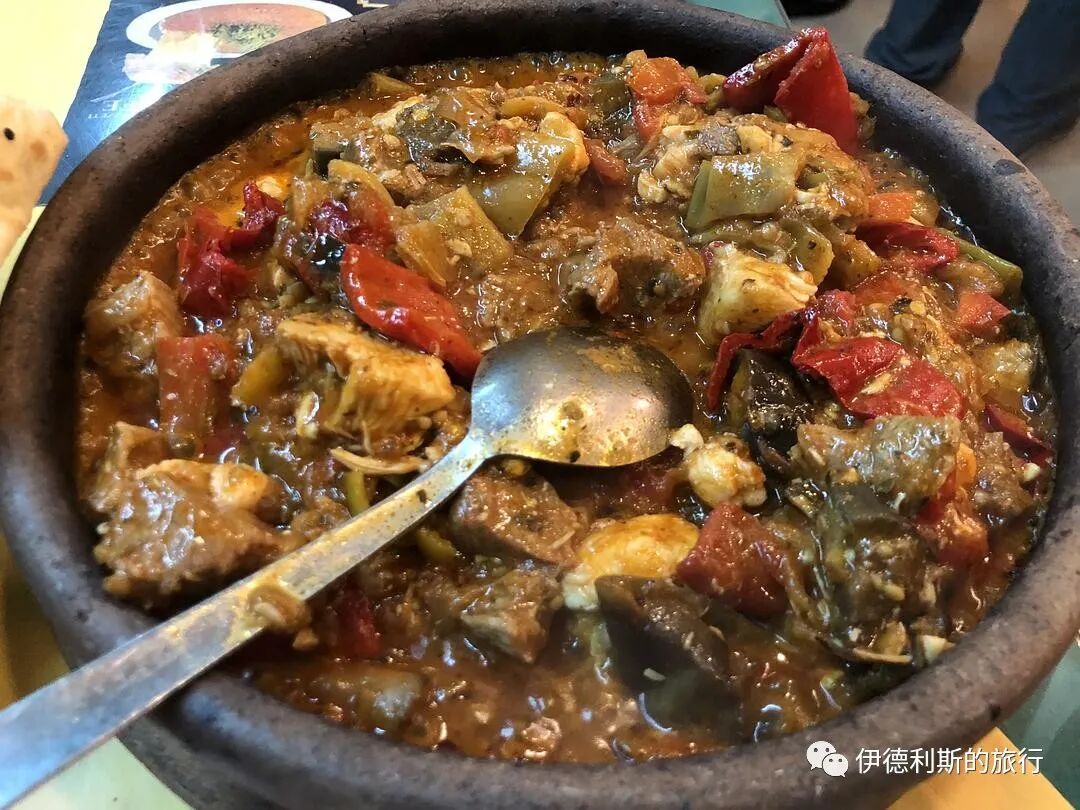
A type of kebab called testi kebab eaten at this restaurant called Urfalim Lahmacun. Testi kebab comes from Central Anatolia and the Black Sea region. Testi means jar or pot in Turkish, and it involves cooking various meats and vegetables in a clay pot.
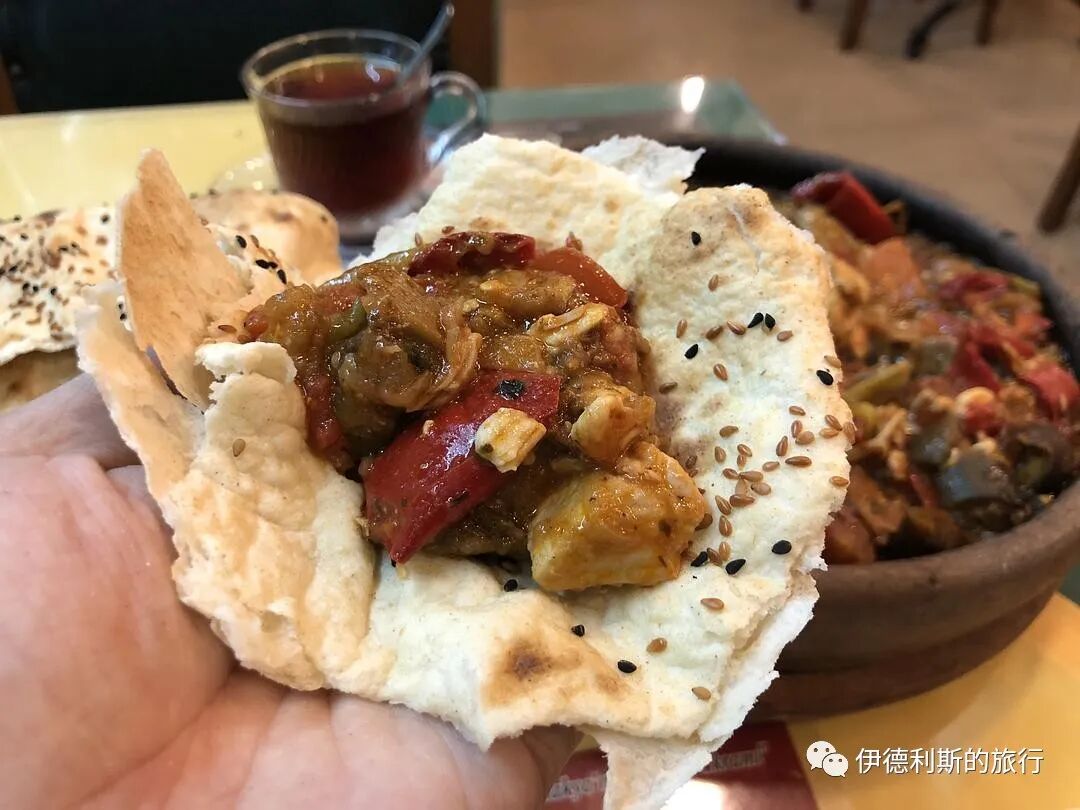
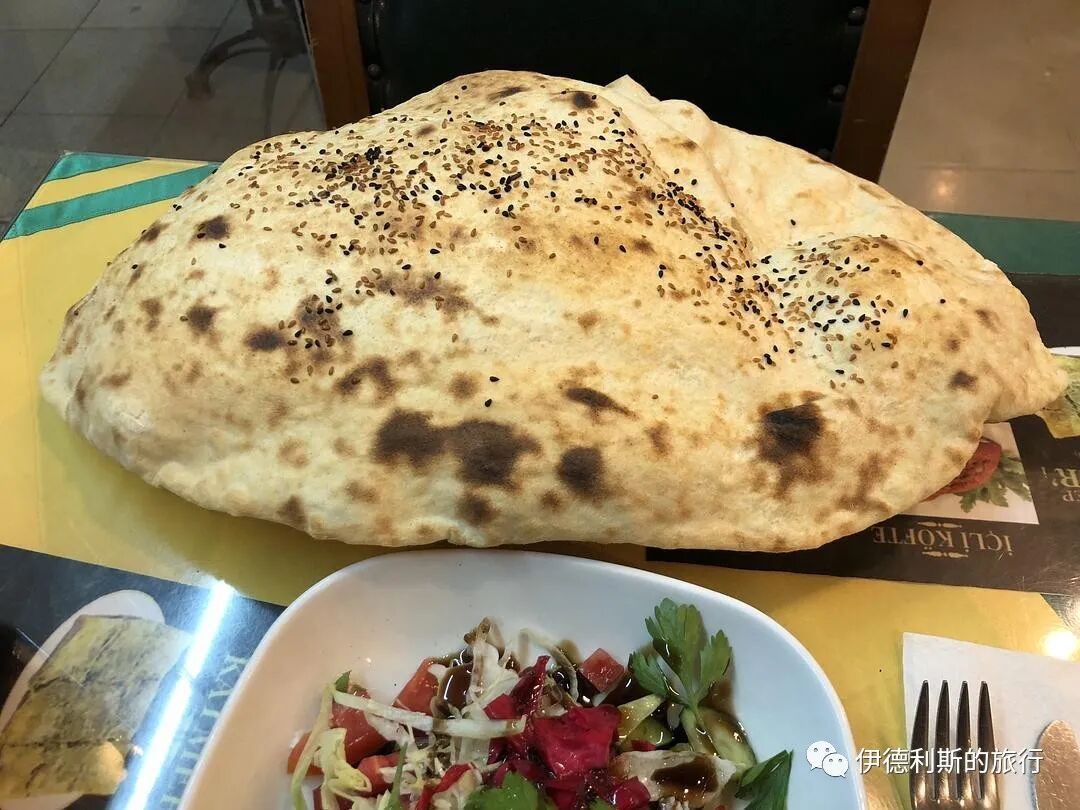
Arabic flatbread, which is very thin.
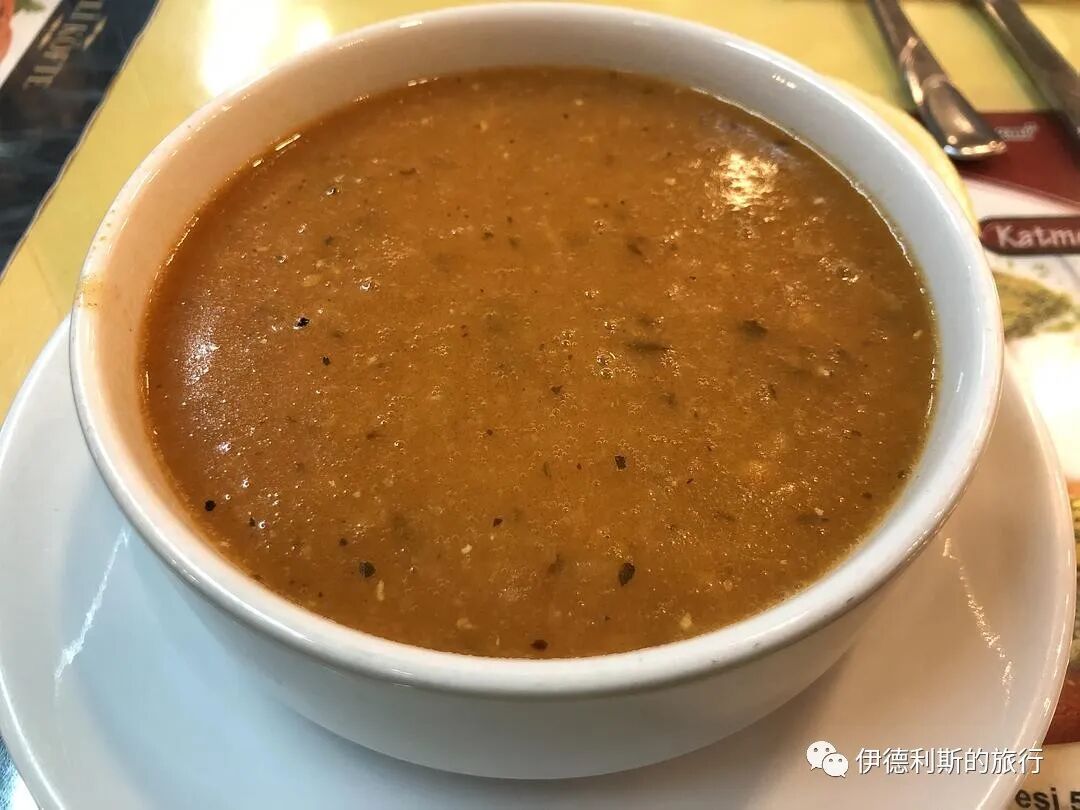
This soup is called ezogelin. It is made from crushed dried wheat and red lentils, with ingredients including rice, olive oil, butter, onions, garlic, tomatoes, chili peppers, dried mint, black pepper, and salt.
I had a dish called patlıcanlı kebab, which translates to eggplant kebab, at a bazaar next to the Rüstem Pasha Mosque in the evening, along with a drink called yayık ayran, which is a honey yogurt drink. view all
Summary: Istanbul — Mosques, Turkish Food and Ottoman Streets is presented here as a firsthand travel account in clear English, beginning with this scene: I spent half a month traveling in Turkey from September to October 2018. While visiting historical sites in Istanbul, I tried some local food and would like to share it with you here. The account keeps its focus on Istanbul Travel, Turkish Food, Ottoman Heritage while preserving the names, places, food, and historical details from the Chinese source. This final block is 2 of 2.
Block 2 of 2
Main course
A type of kebab called testi kebab eaten at this restaurant called Urfalim Lahmacun. Testi kebab comes from Central Anatolia and the Black Sea region. Testi means jar or pot in Turkish, and it involves cooking various meats and vegetables in a clay pot.
Arabic flatbread, which is very thin.
This soup is called ezogelin. It is made from crushed dried wheat and red lentils, with ingredients including rice, olive oil, butter, onions, garlic, tomatoes, chili peppers, dried mint, black pepper, and salt.
I had a dish called patlıcanlı kebab, which translates to eggplant kebab, at a bazaar next to the Rüstem Pasha Mosque in the evening, along with a drink called yayık ayran, which is a honey yogurt drink.
Halal Travel Guide: Istanbul — Mosques, Turkish Food and Ottoman Streets (Part 1 of 3)
Articles • ali2007fr posted the article • 0 comments • 126 views • 2026-05-18 07:52
Summary: Istanbul — Mosques, Turkish Food and Ottoman Streets is presented here as a firsthand travel account in clear English, beginning with this scene: I spent half a month traveling in Turkey from September to October 2018. While visiting historical sites in Istanbul, I tried some local food and would like to share it with you here. The account keeps its focus on Istanbul Travel, Turkish Food, Ottoman Heritage while preserving the names, places, food, and historical details from the Chinese source. This is part 1 of 3.
Part 1 of 3
I spent half a month traveling in Turkey from September to October 2018. While visiting historical sites in Istanbul, I tried some local food and would like to share it with you here.
Street food.
Simit is a type of bread ring popular in the former Ottoman territories and the Middle East, and it is a common street snack in Istanbul.
The word simit comes from the Arabic word samīd, which means white bread or fine flour. The earliest records of simit bread rings in Istanbul date back to 1525. By 1594, Istanbul had established the first regulations for the weight and price of simit bread rings. According to the famous 17th-century Ottoman traveler Evliya Çelebi, there were 70 simit bakeries in Istanbul in the 1630s.
Because of its low price, simit has become an important symbol for the working class in Turkey.
Roasted corn and boiled corn are street snacks just as common as the bread rings.
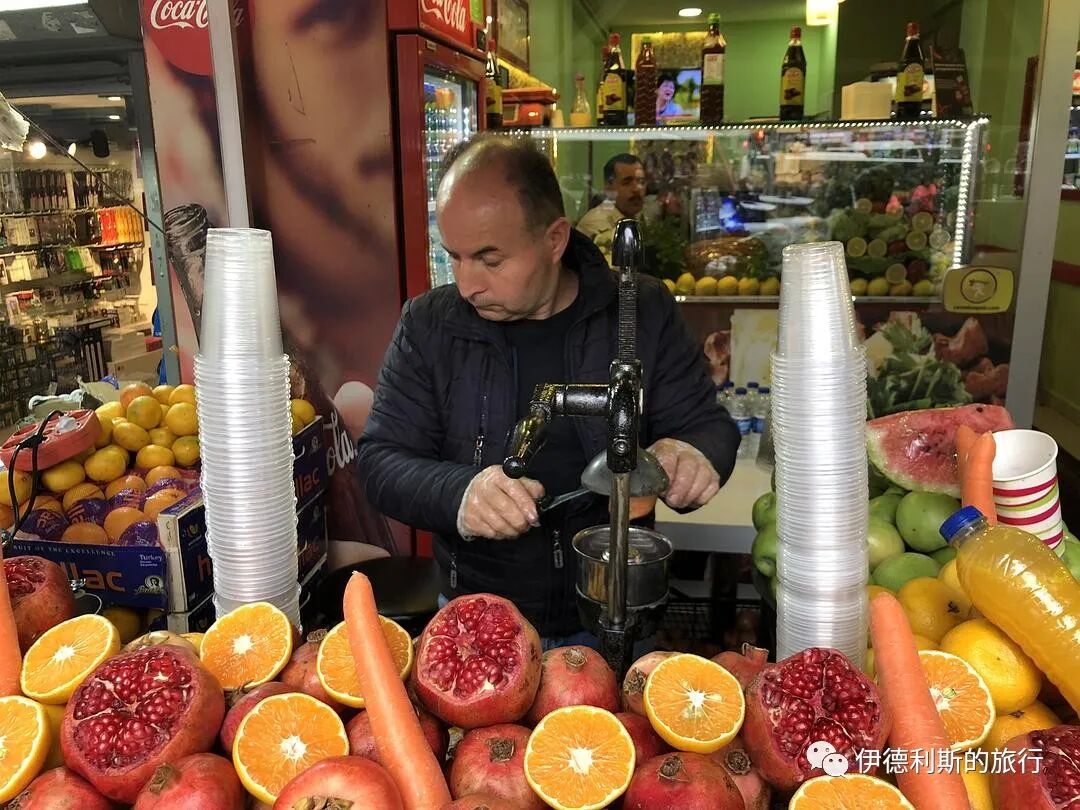
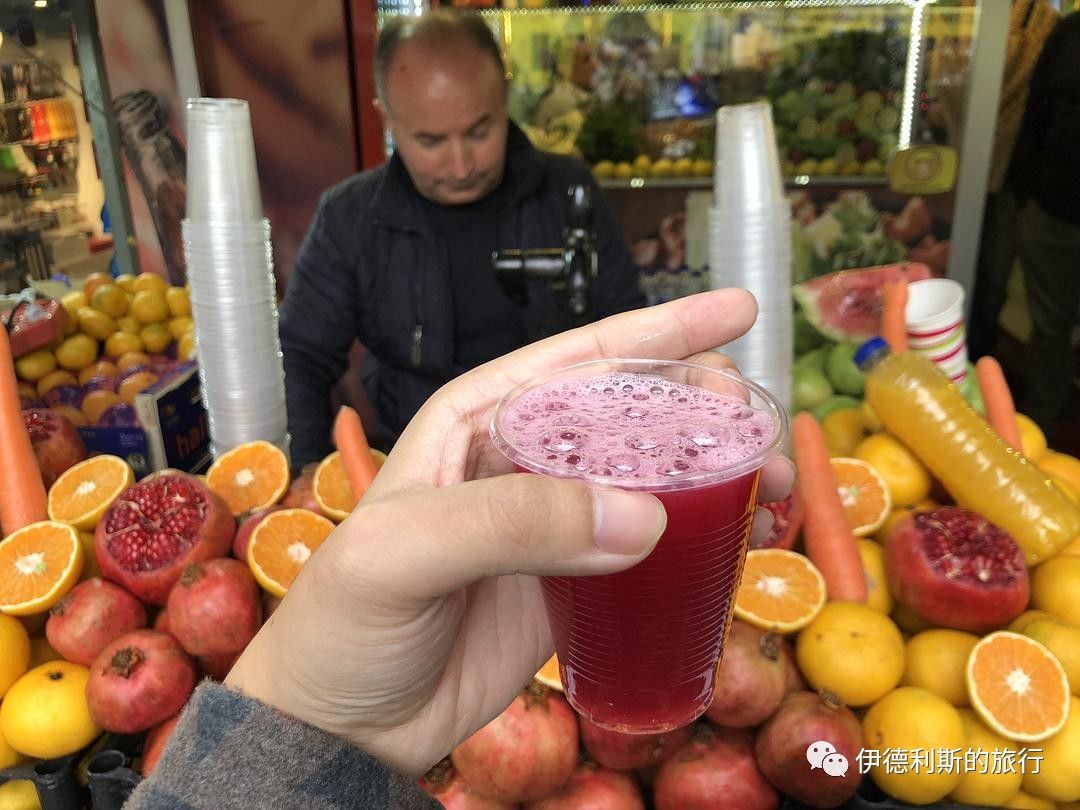
There are also various kinds of freshly squeezed fruit juices on the streets of Istanbul, and this time I had fresh pomegranate juice.
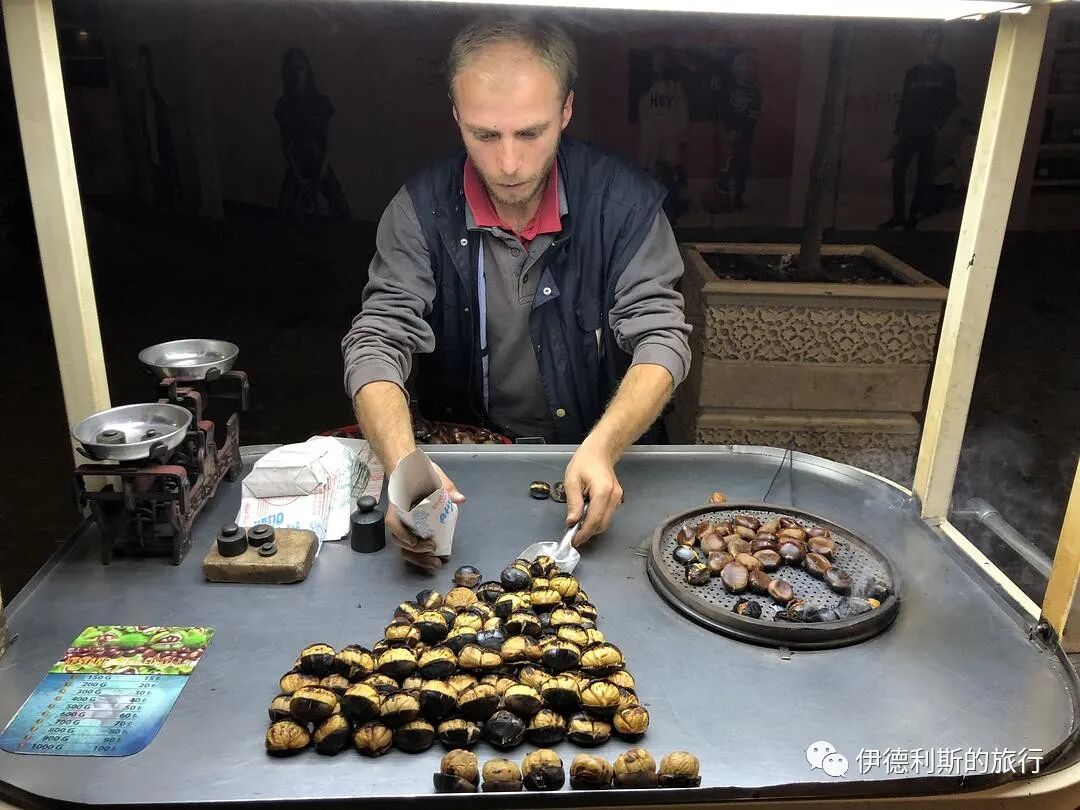
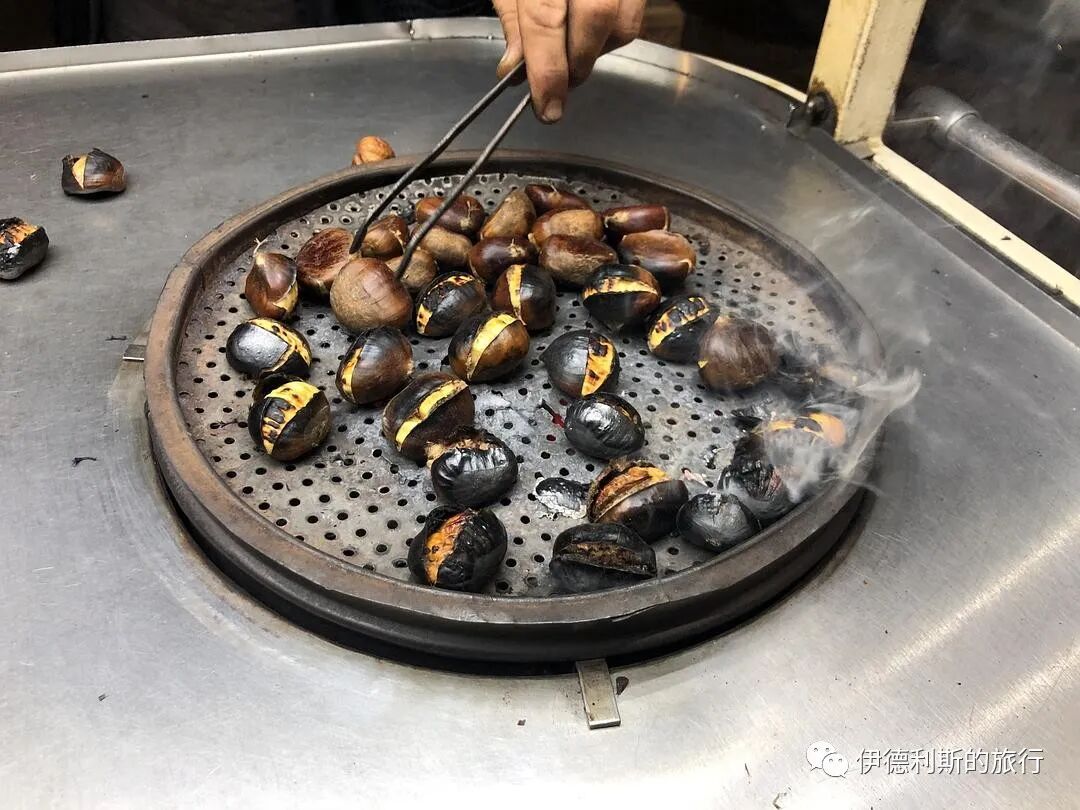
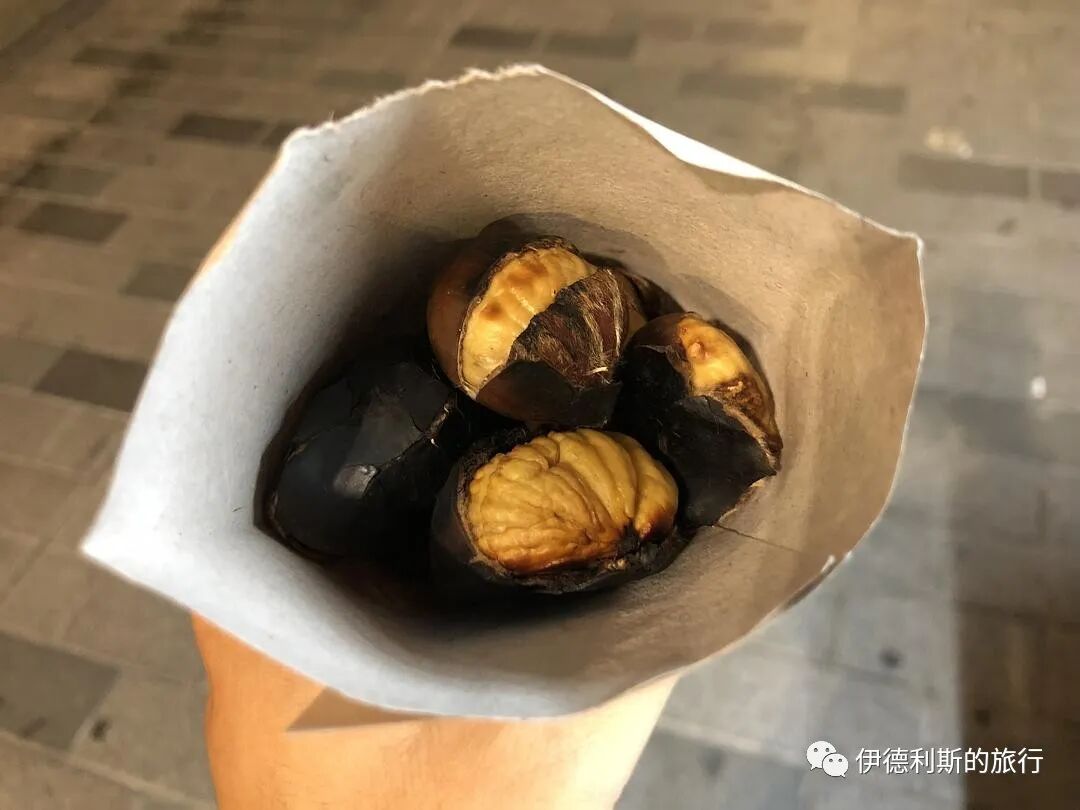
Autumn is the season for eating roasted chestnuts.
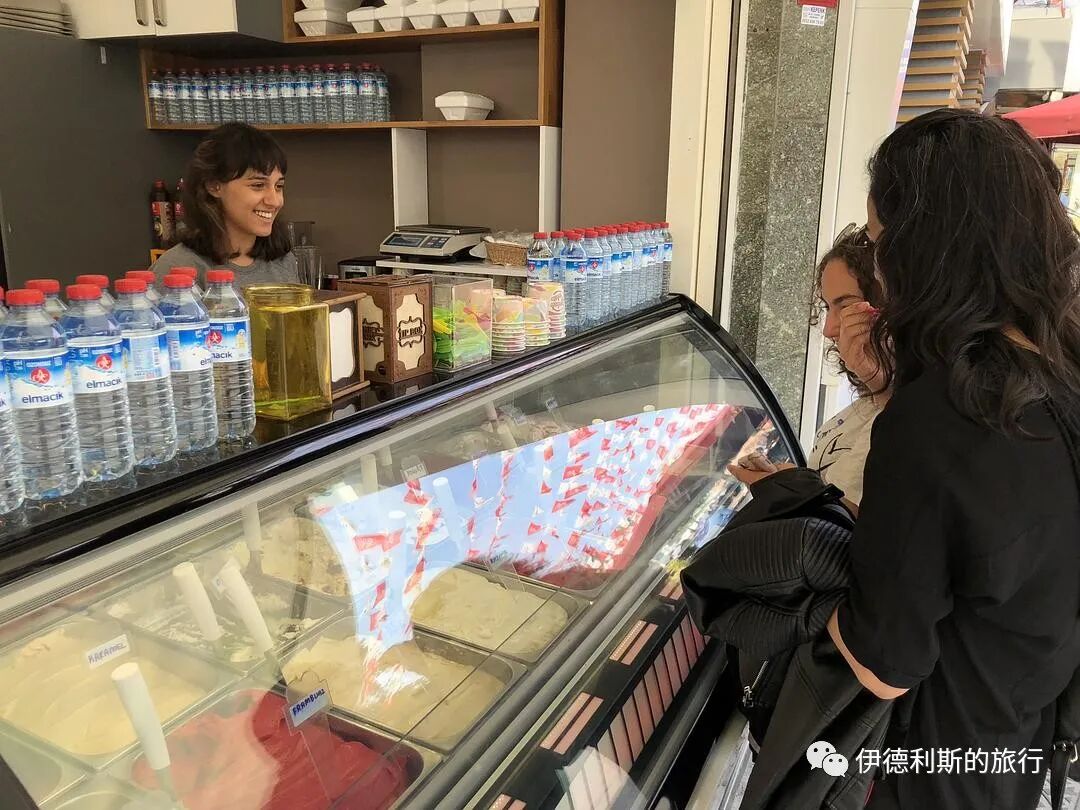
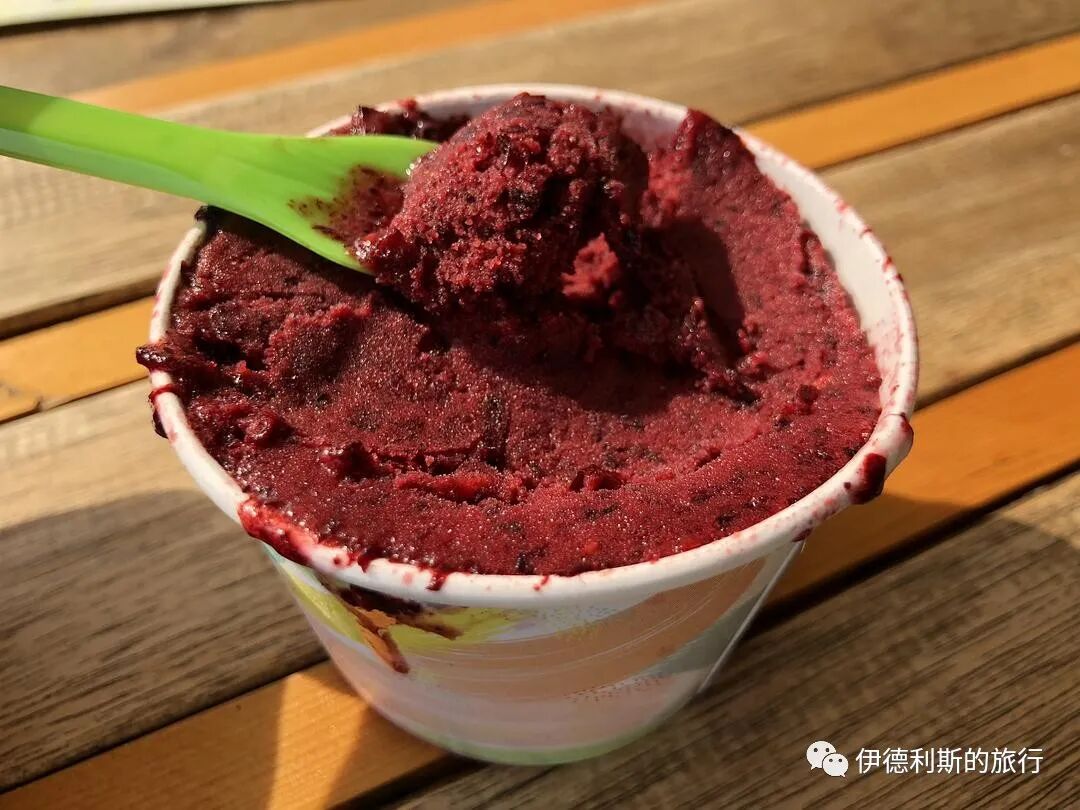
There are all kinds of ice cream shops on the streets of Istanbul. I had never eaten this black mulberry flavor before, and the young lady selling the ice cream was very sweet.
Desserts
1. Ashure porridge
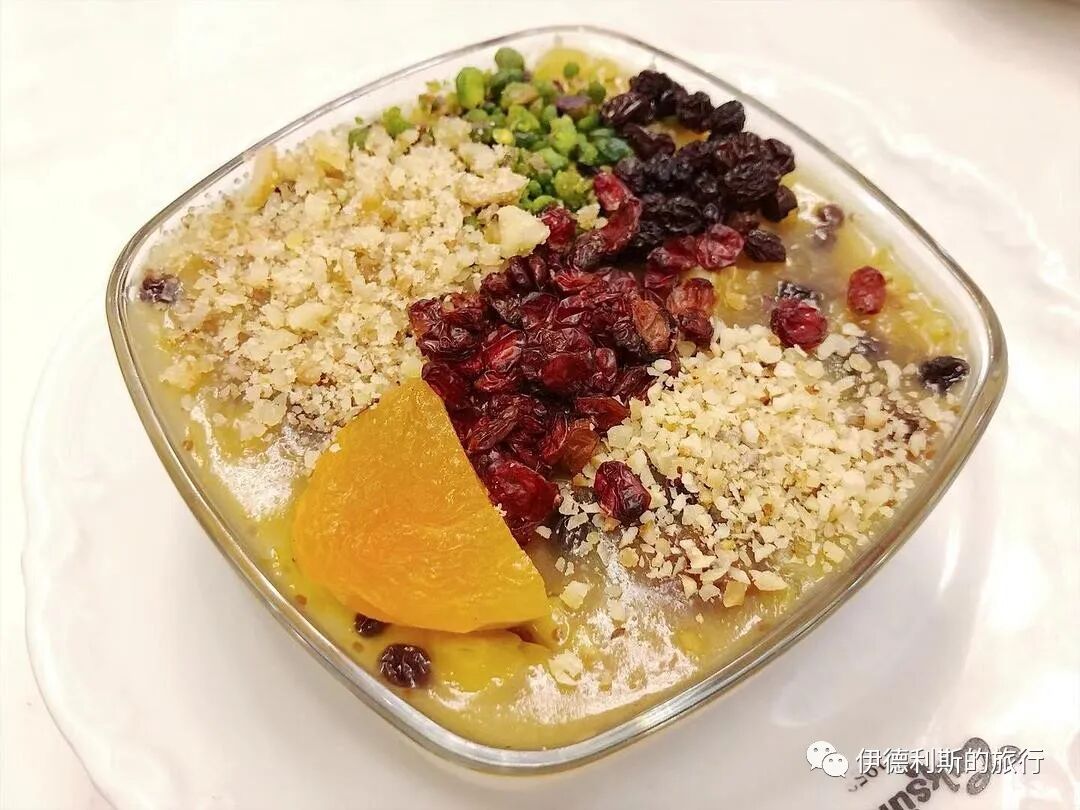
There are many dessert shops in Istanbul with a wide variety of traditional sweets, and there are many on Istiklal Avenue alone. I had Turkish Ashure porridge at a dessert shop called Taxim Süitiş.
The Turkish word Ashure comes from the Arabic word Āshūrā, which means tenth. On the tenth day of the first month (Muharram) of the Islamic calendar in the year 61, the family of the Prophet's grandson, Husayn, died while fleeing Mecca due to the pursuit of the Umayyad dynasty. This day has become an important memorial day for Shia and some Sunni Muslims. For Sunni Muslims, the Day of Ashura is also an important memorial day for many events, such as when the Prophet Musa (Moses) was pursued by the Pharaoh to the Red Sea and the sea parted to create a path for them to escape, when the Prophet Nuh (Noah) left the ark, and when the Prophet Muhammad arrived in Medina.
Ashure porridge was popularized in Turkey by the Alevis. To commemorate the martyrdom of the saint Ali, the Alevis do not eat meat on this day, but instead eat Ashure porridge made from grains, fruits, dried fruits, and nuts.
The Alevis respect the saint Ali just like the Shia, but their rituals are completely different from the Shia. The Alevis are actually an Islamic sect that blends Shia and Sufi beliefs, native Turkish animism, and some Sunni elements. They are more used to expressing their faith through music and dance in a gathering hall (cemevi).
For traditional Sunni Muslims in Turkey, people share Ashura porridge (ashure) with friends, relatives, neighbors, colleagues, and classmates on the Day of Ashura, regardless of their religious beliefs. Legend says that on the Day of Ashura, after the Prophet Nuh (Noah) landed his ark, his family prepared a meal to celebrate. Because their supplies were almost gone, they mixed the remaining grains and dried fruits together to make Ashura porridge.
The recipe for Ashura porridge is not fixed; traditionally it has at least 7 ingredients, and some people use 10 to match the theme of the tenth day. The Alevis always use 12 ingredients.
I bought a box of Turkish delight (lokum) as a gift at Hakki Zade, an old Ottoman brand and chain store on Istiklal Avenue.
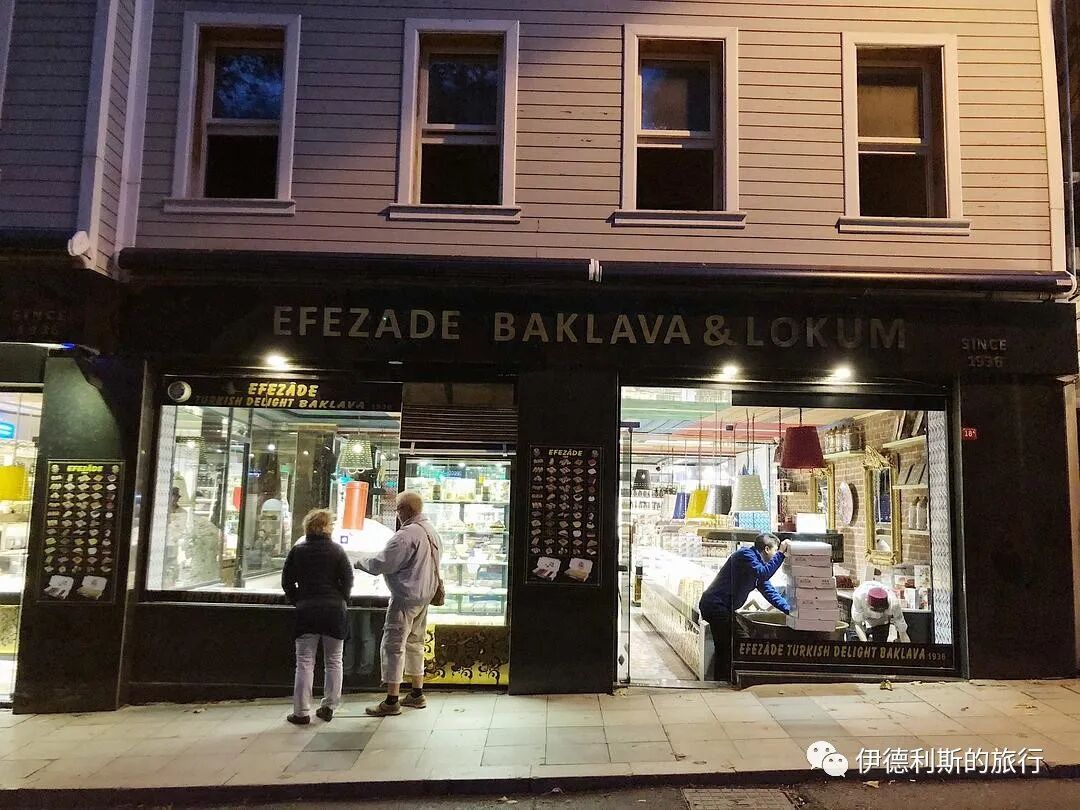
The dessert shop below, called Efezade, is not far southwest of the old Ottoman palace, and the words Baklava & Lokum above the shop name refer to Turkish pastries and Turkish delight.
Modern Turkish nut-filled pastry (baklava) is said to have come from the Ottoman court, where the Ottoman Sultan would distribute baklava on trays to the Janissaries during a procession on the 15th of Ramadan, a ceremony known as the Baklava Procession (Baklava Alayı).
There is no final conclusion about the origin of baklava in the pre-Ottoman era, but there are three mainstream views: the Byzantine Placenta pastry inherited from Rome, the layered pastry tradition of Central Asian Turks, and the Persian Lauzinaq pastry.
This young man was very enthusiastic and kept pestering me to teach him Chinese.
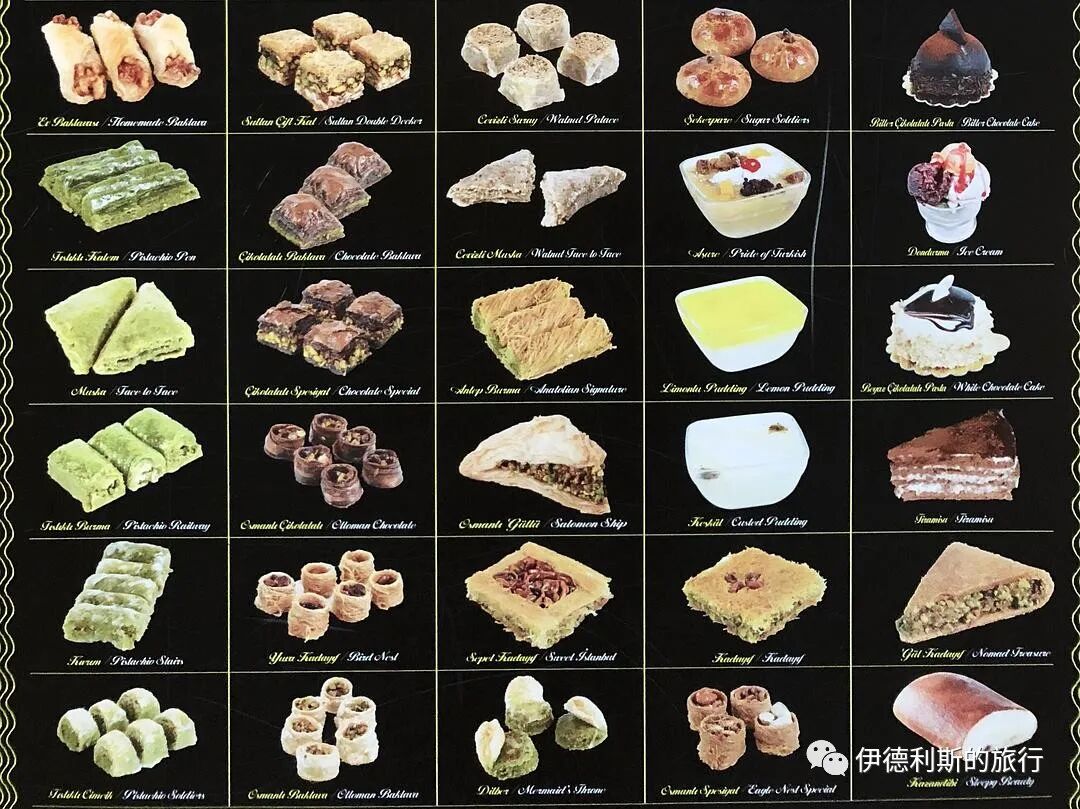
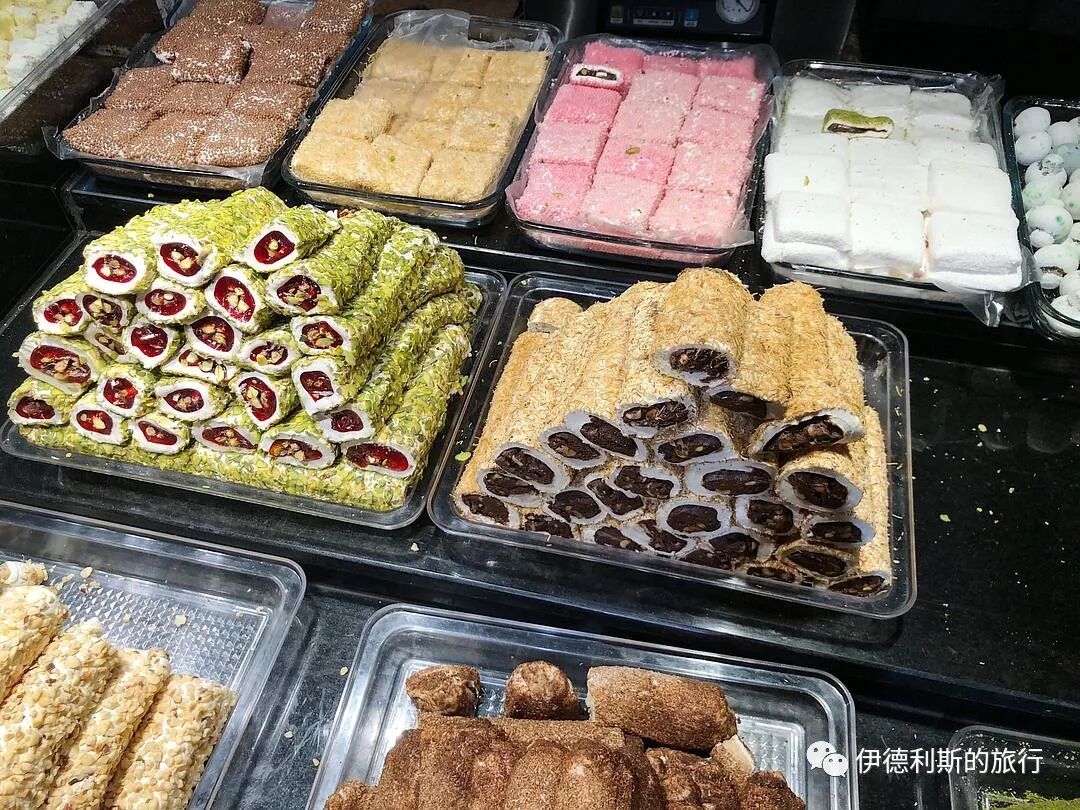
A diagram of various Turkish pastries.
The pastry in the bottom left of the picture below is called nightingale's nest (bülbül yuvası), which translates literally to 'nightingale's nest'.
There are also various types of Turkish delight (lokum). The word lokum comes from the Arabic 'al-halkum'. Arabs call Turkish delight 'rāḥatal-ḥulqūm', which means 'throat comfort'.
According to the Hacı Bekir company, Turkish delight was brought to Istanbul from his hometown of Kastamonu by the founder, Hacı Bekir, in 1777. Some historians question this claim because similar soft candies made from starch and sugar appeared in Arab and Persian lands centuries earlier.
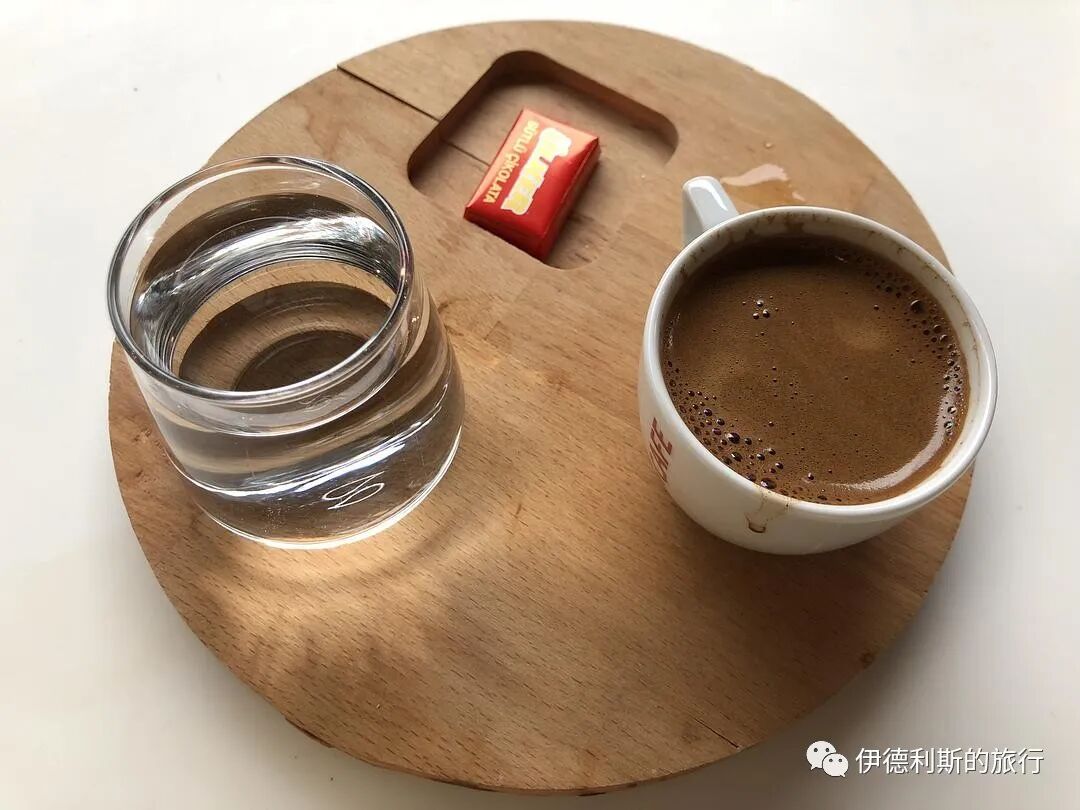
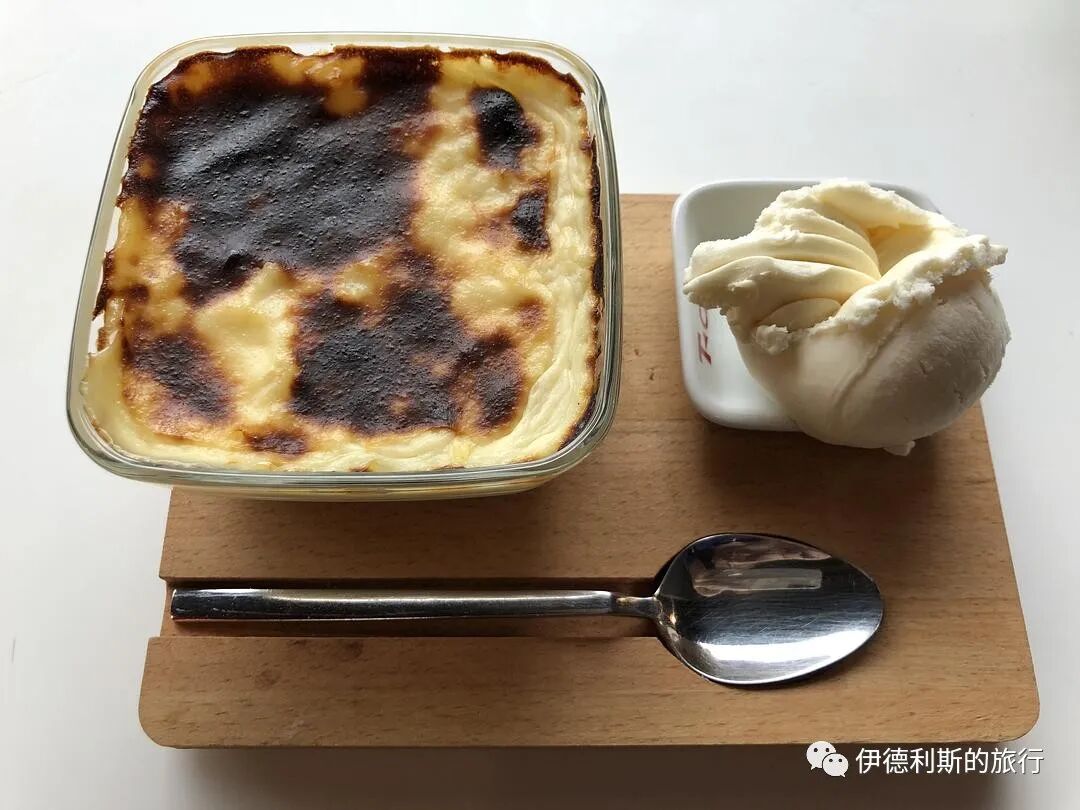
Turkish coffee served with pudding on the street.
In the early Ottoman Empire, strong coffee was banned as a medicine, but the Sultan eventually lifted the ban because it became so popular with the people.
Turkish coffee is recognized by UNESCO as part of Turkey's intangible cultural heritage.
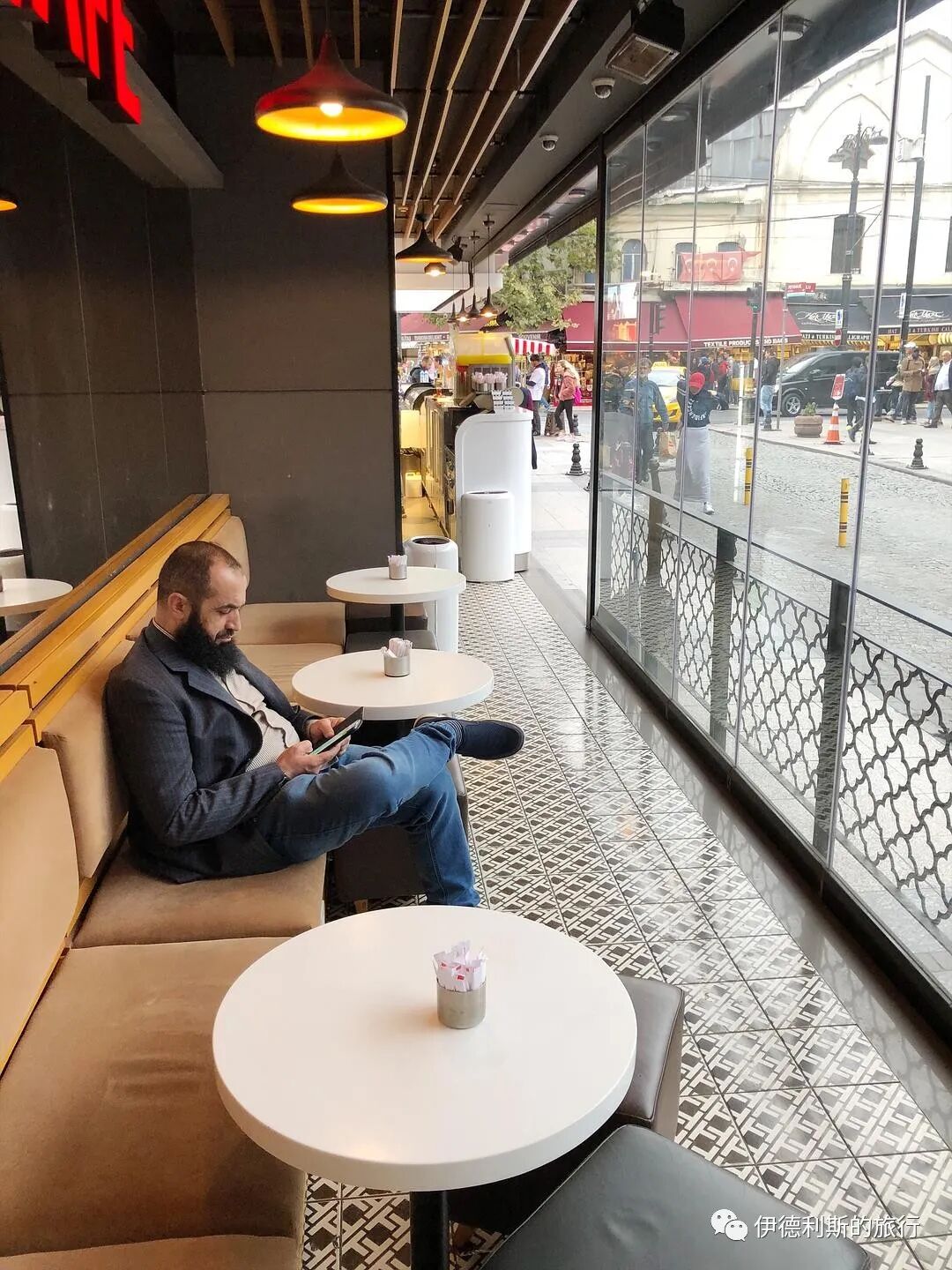
The picture below shows Vefa Bozacisi, the only boza shop in 19th-century Istanbul. It was opened in 1876 by brothers Haci Ibrahim and Haci Sadik in the Vefa district of Istanbul, near the entertainment center of the time, Direklerarası. It is still run by the great-grandchildren of Haci Sadik and Haci Ibrahim today.
Boza is a fermented grain drink popular in Turkey, Iran, the Balkans, Central Asia, and the Caucasus. In Turkey, it is usually made from fermented wheat. It is thick and tastes sweet with a hint of sourness.
In Chagatai Turkic, boza means a drink made from camel milk, while in Persian, büze is used to refer to millet. Central Asian Turkic people began calling fermented grain drinks, usually made from millet, boza in the 10th century. It later spread to the Caucasus and the Balkans and became an important town drink during the Ottoman Empire.
The snack in the picture below is called tulumba tatlısı, which is deep-fried dough soaked in syrup. It is widely popular in former Ottoman regions, including Turkey, the Balkans, and Armenia. It is also called balah alsham in Arab regions and is often eaten during Ramadan.
Main course
A type of kebab called testi kebab eaten at this restaurant called Urfalim Lahmacun. Testi kebab comes from Central Anatolia and the Black Sea region. Testi means jar or pot in Turkish, and it involves cooking various meats and vegetables in a clay pot.
Arabic flatbread, which is very thin.
This soup is called ezogelin. It is made from crushed dried wheat and red lentils, with ingredients including rice, olive oil, butter, onions, garlic, tomatoes, chili peppers, dried mint, black pepper, and salt.
I had a dish called patlıcanlı kebab, which translates to eggplant kebab, at a bazaar next to the Rüstem Pasha Mosque in the evening, along with a drink called yayık ayran, which is a honey yogurt drink. view all
Summary: Istanbul — Mosques, Turkish Food and Ottoman Streets is presented here as a firsthand travel account in clear English, beginning with this scene: I spent half a month traveling in Turkey from September to October 2018. While visiting historical sites in Istanbul, I tried some local food and would like to share it with you here. The account keeps its focus on Istanbul Travel, Turkish Food, Ottoman Heritage while preserving the names, places, food, and historical details from the Chinese source. This is part 1 of 3.
Part 1 of 3
I spent half a month traveling in Turkey from September to October 2018. While visiting historical sites in Istanbul, I tried some local food and would like to share it with you here.
Street food.
Simit is a type of bread ring popular in the former Ottoman territories and the Middle East, and it is a common street snack in Istanbul.
The word simit comes from the Arabic word samīd, which means white bread or fine flour. The earliest records of simit bread rings in Istanbul date back to 1525. By 1594, Istanbul had established the first regulations for the weight and price of simit bread rings. According to the famous 17th-century Ottoman traveler Evliya Çelebi, there were 70 simit bakeries in Istanbul in the 1630s.
Because of its low price, simit has become an important symbol for the working class in Turkey.
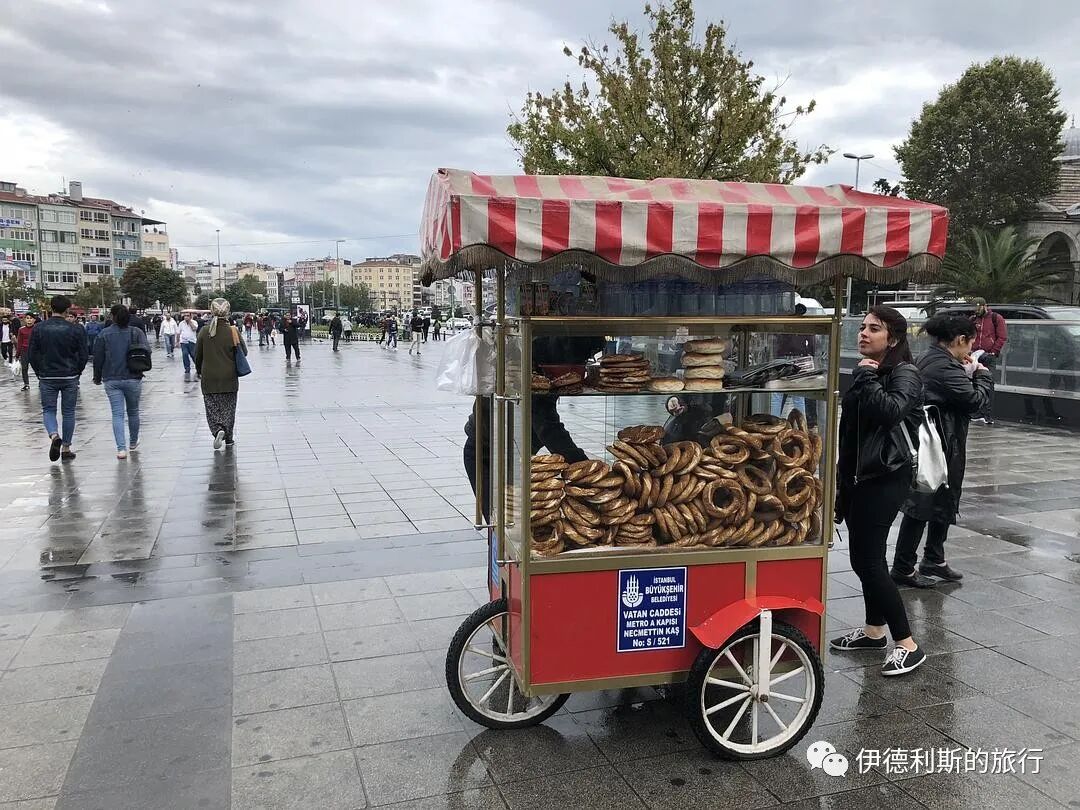
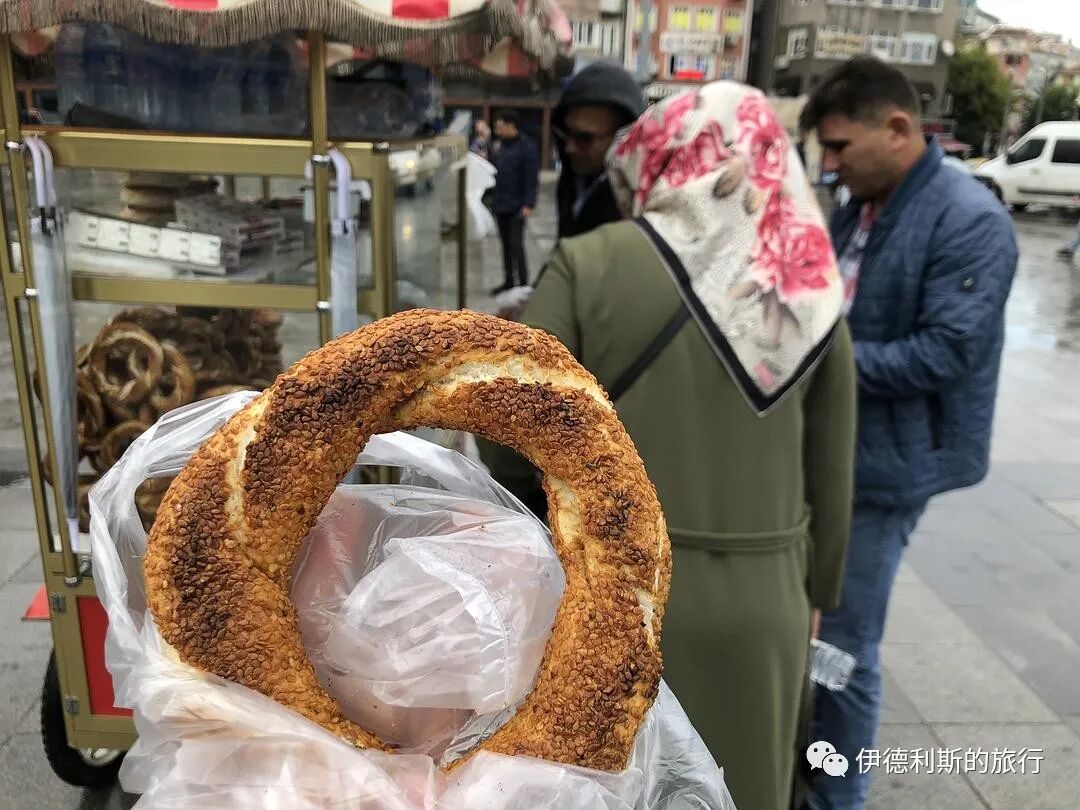
Roasted corn and boiled corn are street snacks just as common as the bread rings.
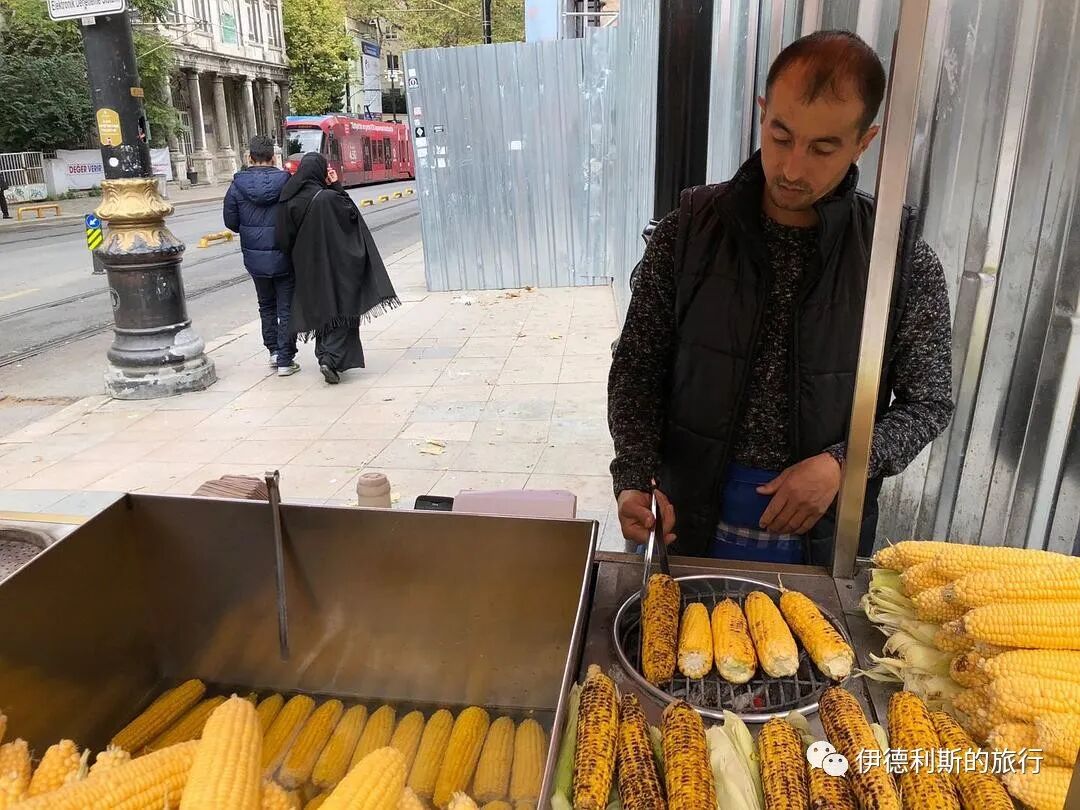
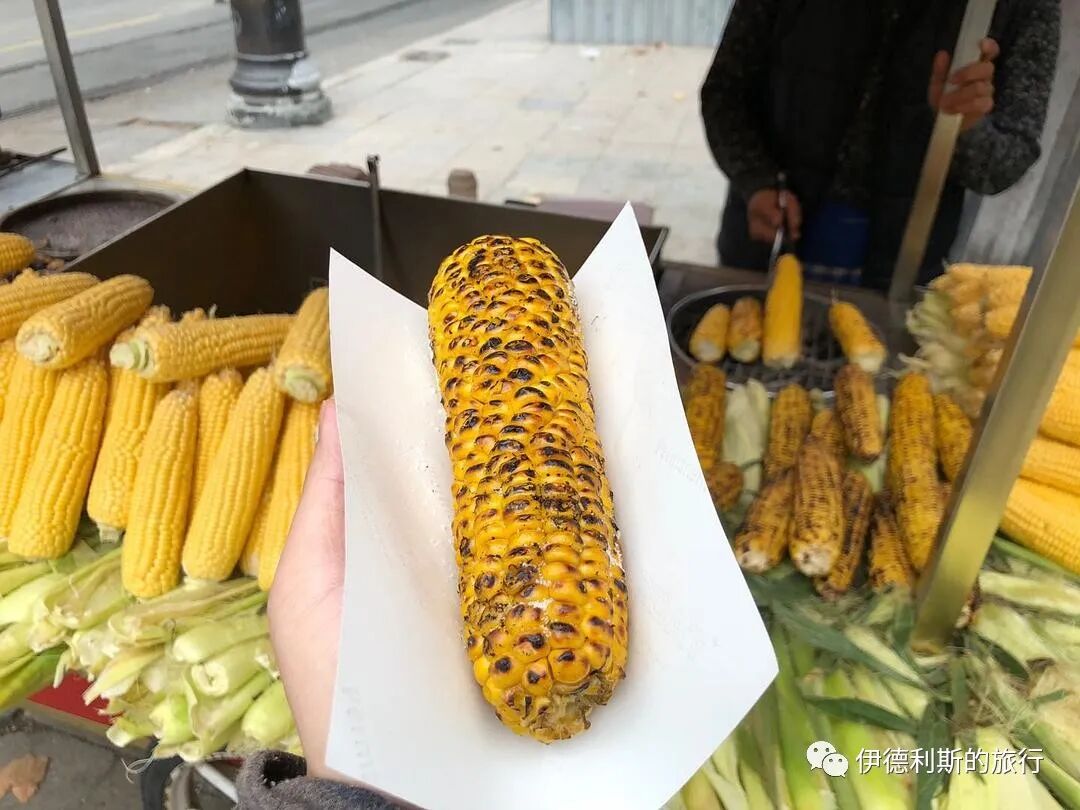
There are also various kinds of freshly squeezed fruit juices on the streets of Istanbul, and this time I had fresh pomegranate juice.
Autumn is the season for eating roasted chestnuts.
There are all kinds of ice cream shops on the streets of Istanbul. I had never eaten this black mulberry flavor before, and the young lady selling the ice cream was very sweet.
Desserts
1. Ashure porridge
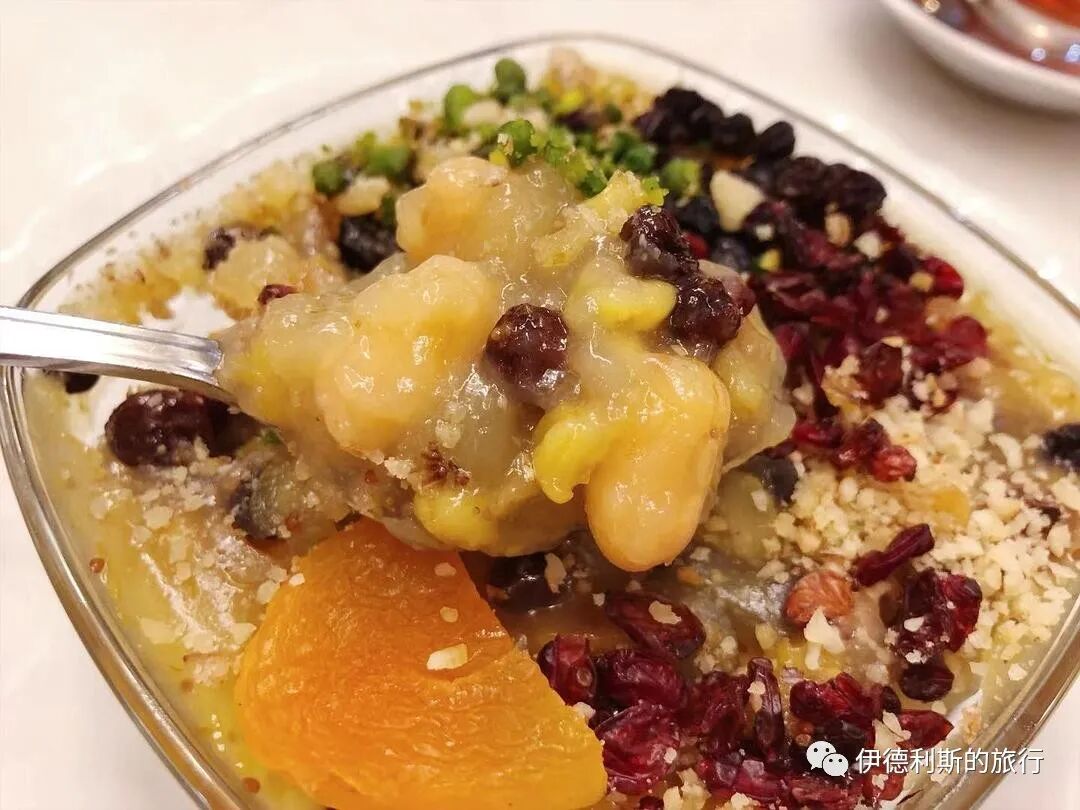
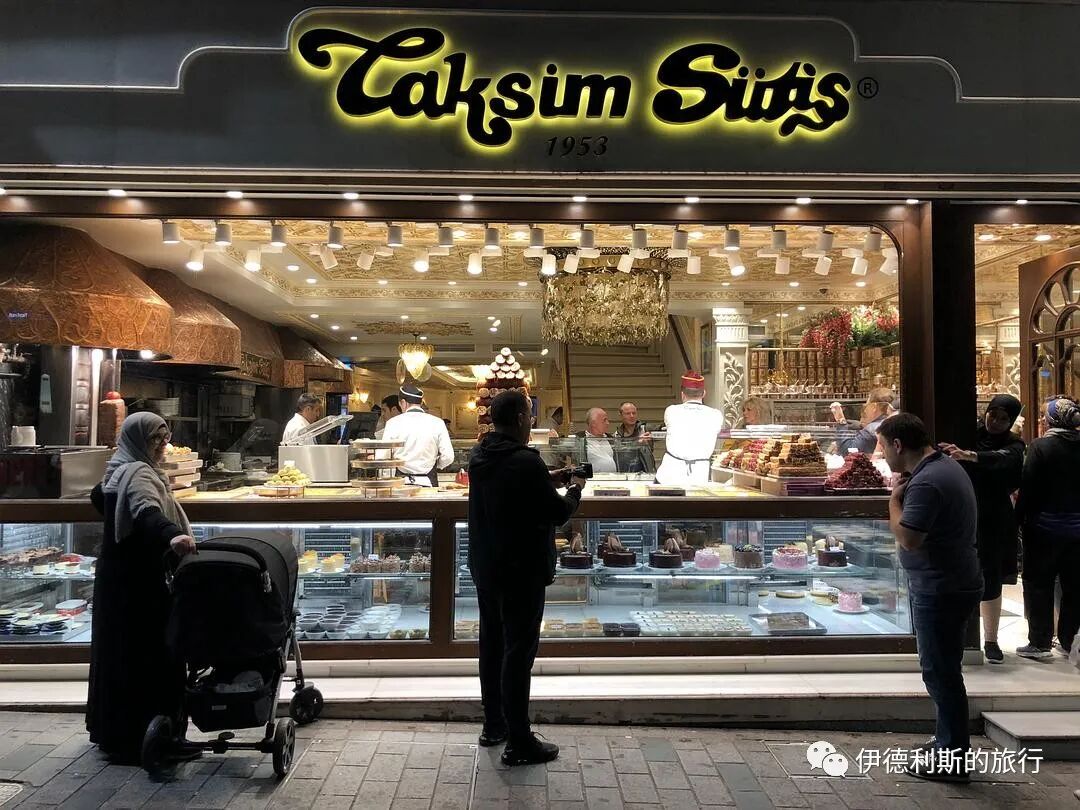
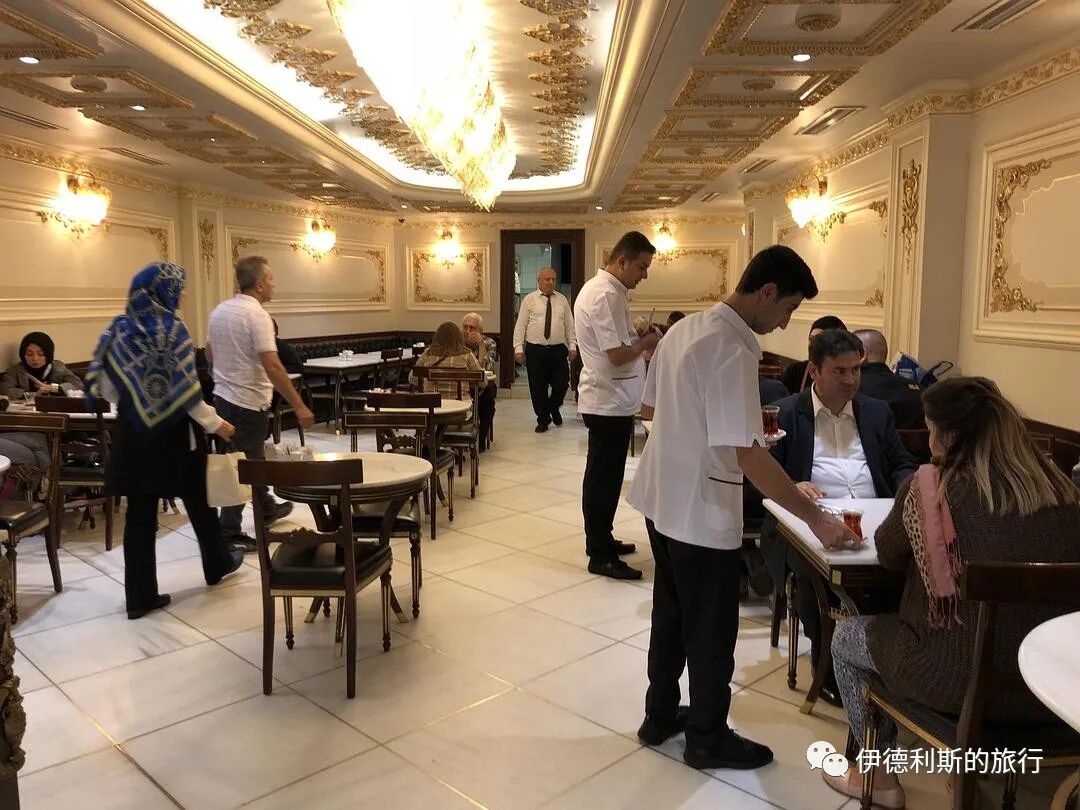
There are many dessert shops in Istanbul with a wide variety of traditional sweets, and there are many on Istiklal Avenue alone. I had Turkish Ashure porridge at a dessert shop called Taxim Süitiş.
The Turkish word Ashure comes from the Arabic word Āshūrā, which means tenth. On the tenth day of the first month (Muharram) of the Islamic calendar in the year 61, the family of the Prophet's grandson, Husayn, died while fleeing Mecca due to the pursuit of the Umayyad dynasty. This day has become an important memorial day for Shia and some Sunni Muslims. For Sunni Muslims, the Day of Ashura is also an important memorial day for many events, such as when the Prophet Musa (Moses) was pursued by the Pharaoh to the Red Sea and the sea parted to create a path for them to escape, when the Prophet Nuh (Noah) left the ark, and when the Prophet Muhammad arrived in Medina.
Ashure porridge was popularized in Turkey by the Alevis. To commemorate the martyrdom of the saint Ali, the Alevis do not eat meat on this day, but instead eat Ashure porridge made from grains, fruits, dried fruits, and nuts.
The Alevis respect the saint Ali just like the Shia, but their rituals are completely different from the Shia. The Alevis are actually an Islamic sect that blends Shia and Sufi beliefs, native Turkish animism, and some Sunni elements. They are more used to expressing their faith through music and dance in a gathering hall (cemevi).
For traditional Sunni Muslims in Turkey, people share Ashura porridge (ashure) with friends, relatives, neighbors, colleagues, and classmates on the Day of Ashura, regardless of their religious beliefs. Legend says that on the Day of Ashura, after the Prophet Nuh (Noah) landed his ark, his family prepared a meal to celebrate. Because their supplies were almost gone, they mixed the remaining grains and dried fruits together to make Ashura porridge.
The recipe for Ashura porridge is not fixed; traditionally it has at least 7 ingredients, and some people use 10 to match the theme of the tenth day. The Alevis always use 12 ingredients.
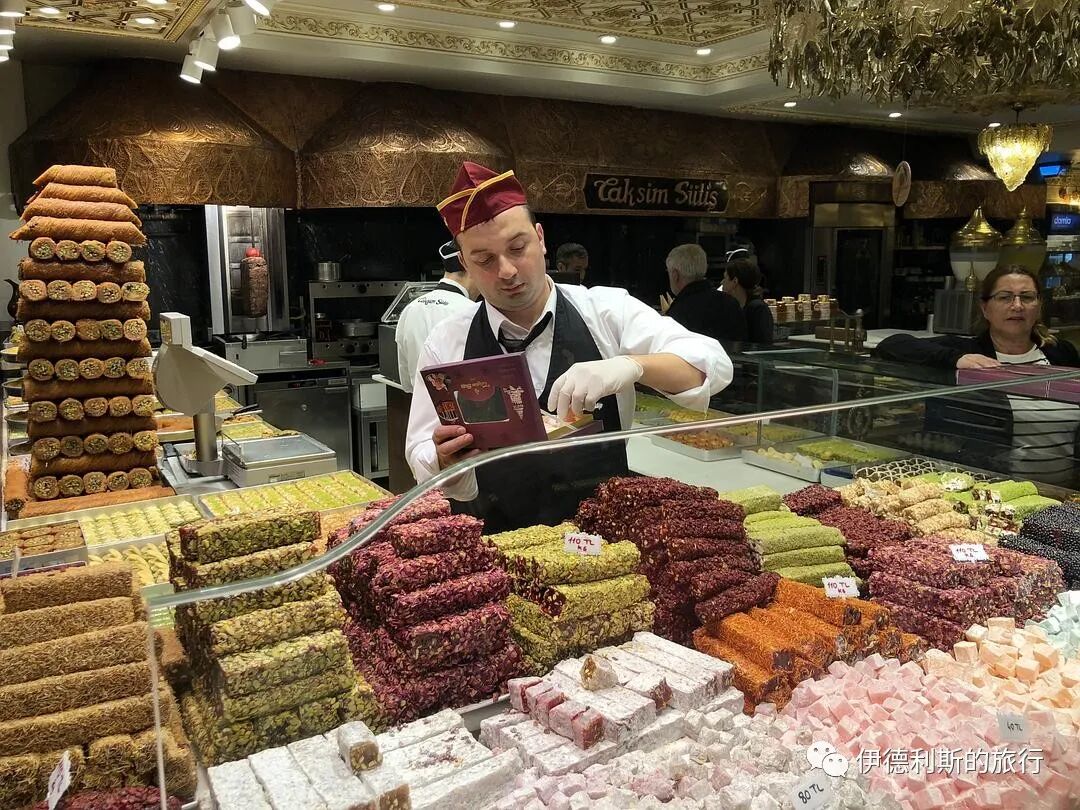
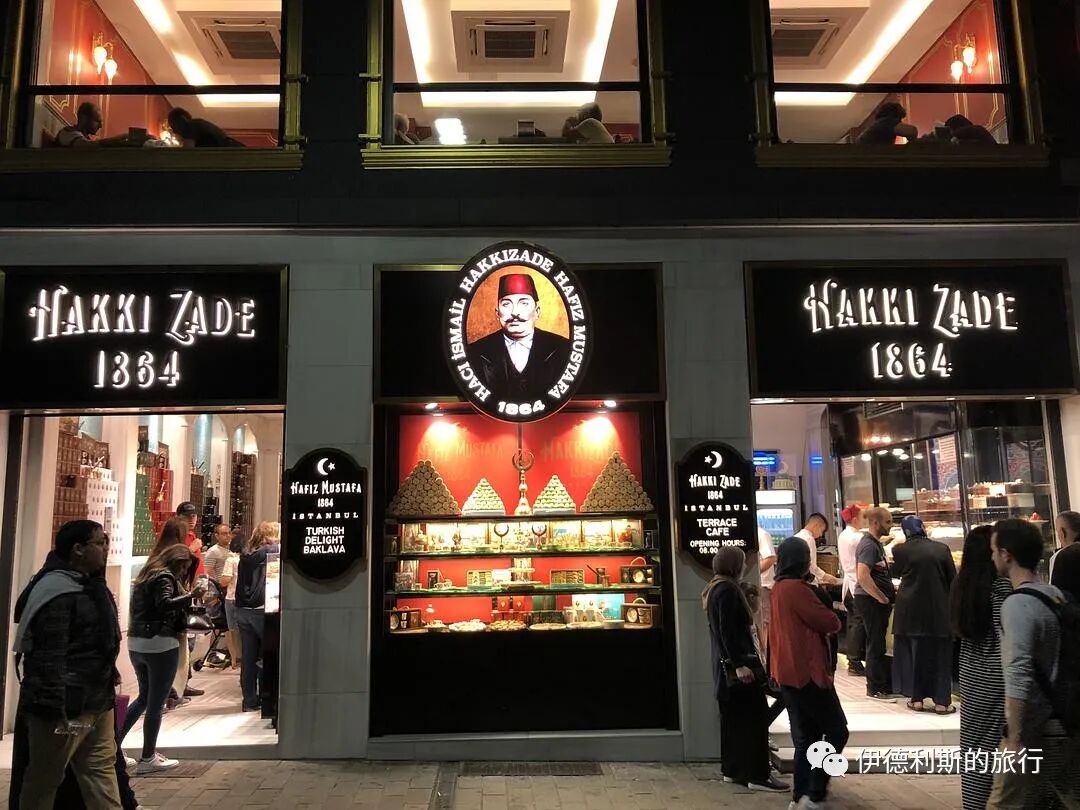
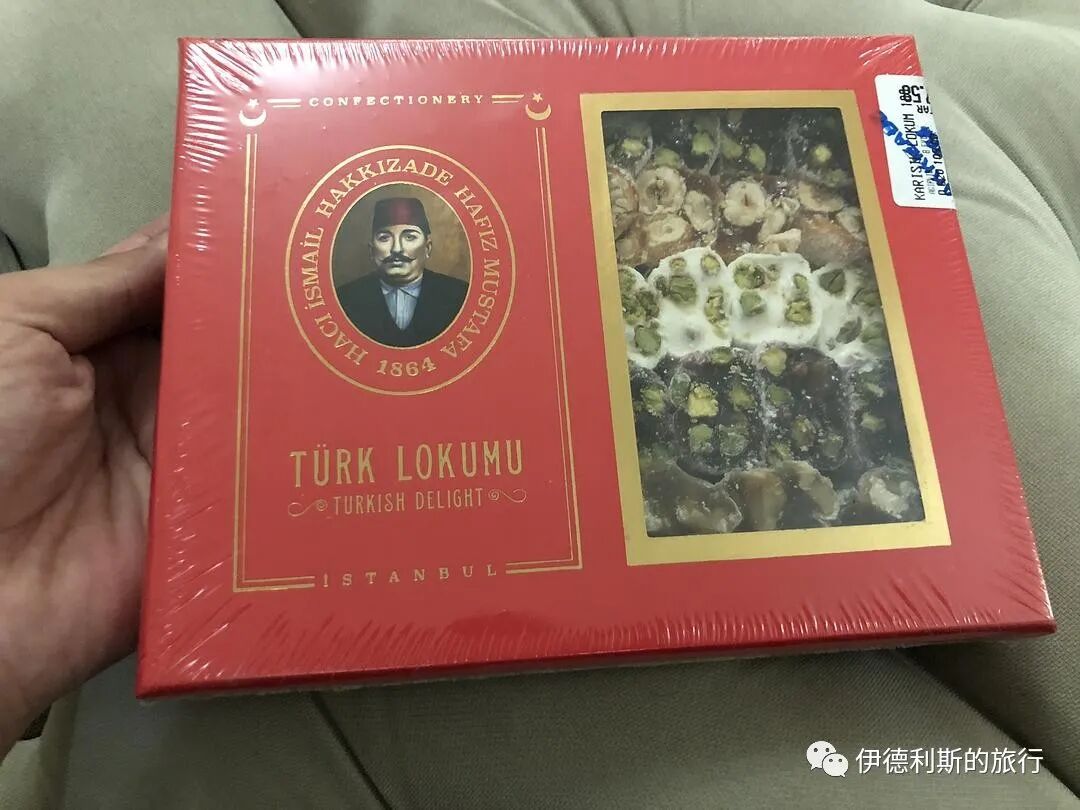
I bought a box of Turkish delight (lokum) as a gift at Hakki Zade, an old Ottoman brand and chain store on Istiklal Avenue.
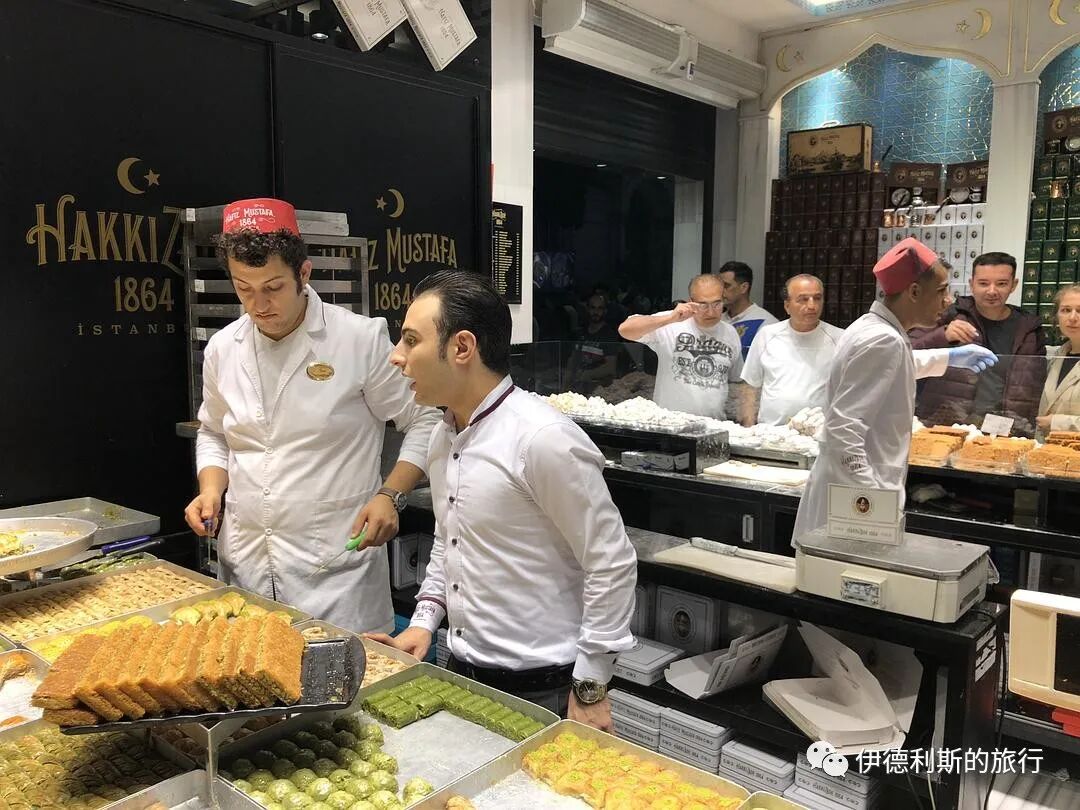
The dessert shop below, called Efezade, is not far southwest of the old Ottoman palace, and the words Baklava & Lokum above the shop name refer to Turkish pastries and Turkish delight.
Modern Turkish nut-filled pastry (baklava) is said to have come from the Ottoman court, where the Ottoman Sultan would distribute baklava on trays to the Janissaries during a procession on the 15th of Ramadan, a ceremony known as the Baklava Procession (Baklava Alayı).
There is no final conclusion about the origin of baklava in the pre-Ottoman era, but there are three mainstream views: the Byzantine Placenta pastry inherited from Rome, the layered pastry tradition of Central Asian Turks, and the Persian Lauzinaq pastry.
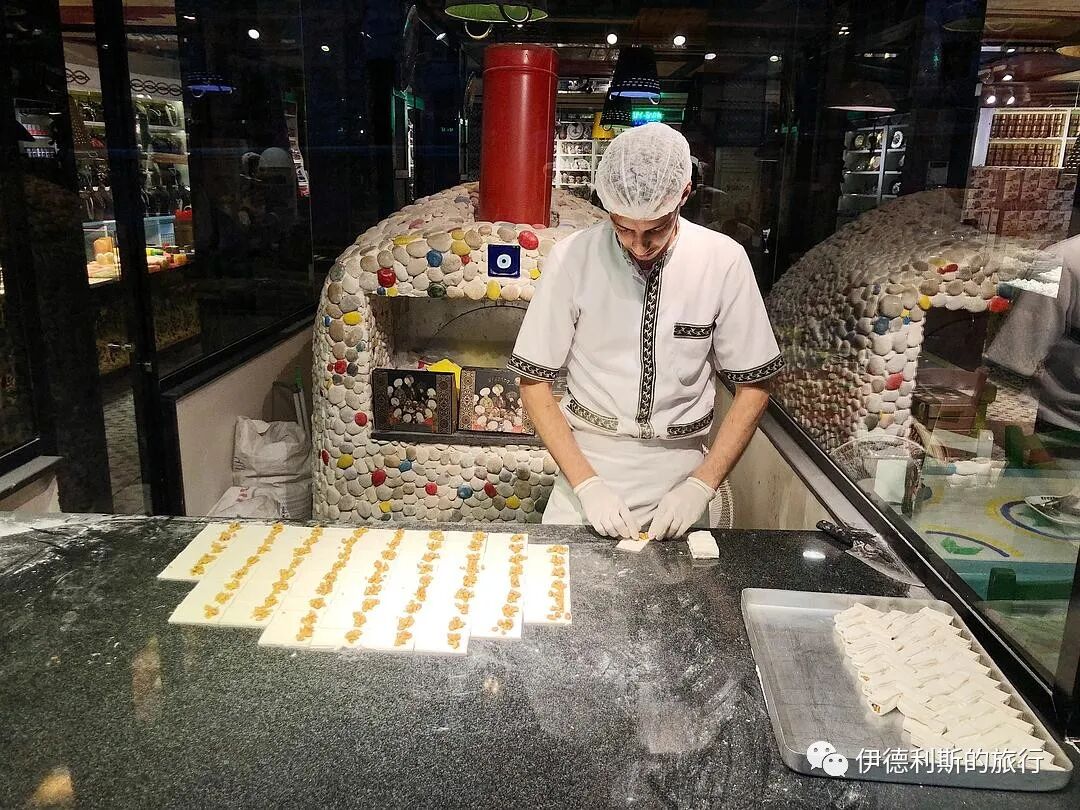
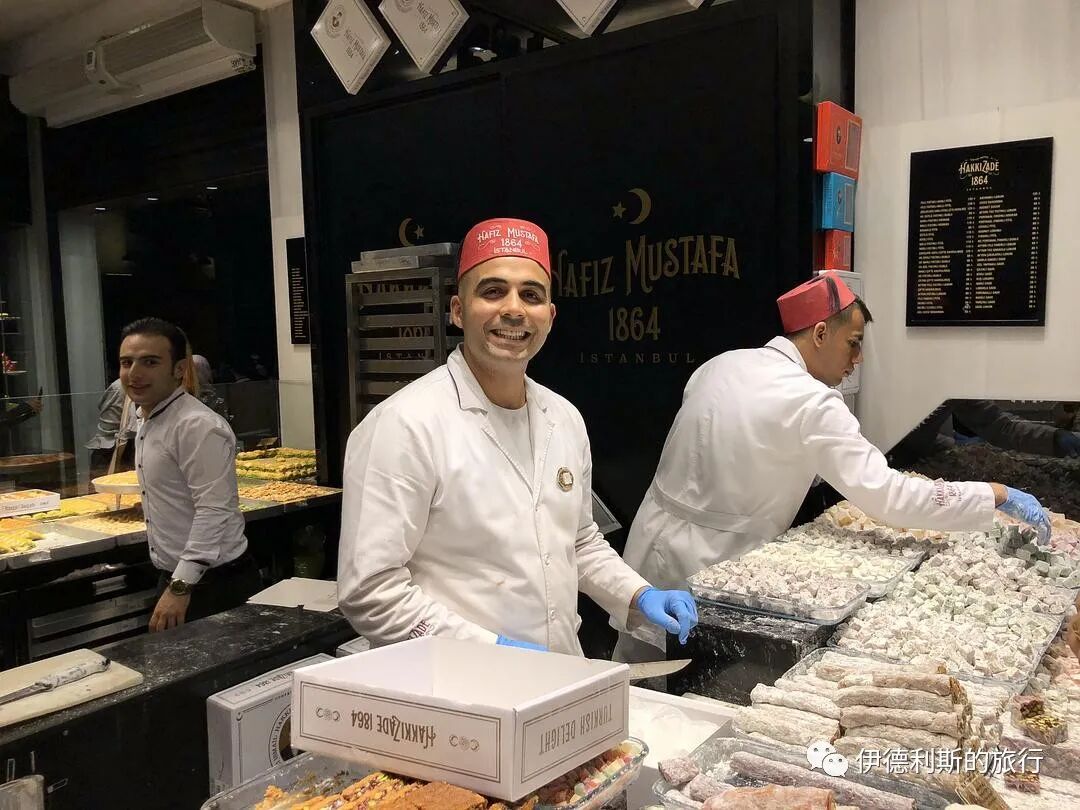
This young man was very enthusiastic and kept pestering me to teach him Chinese.
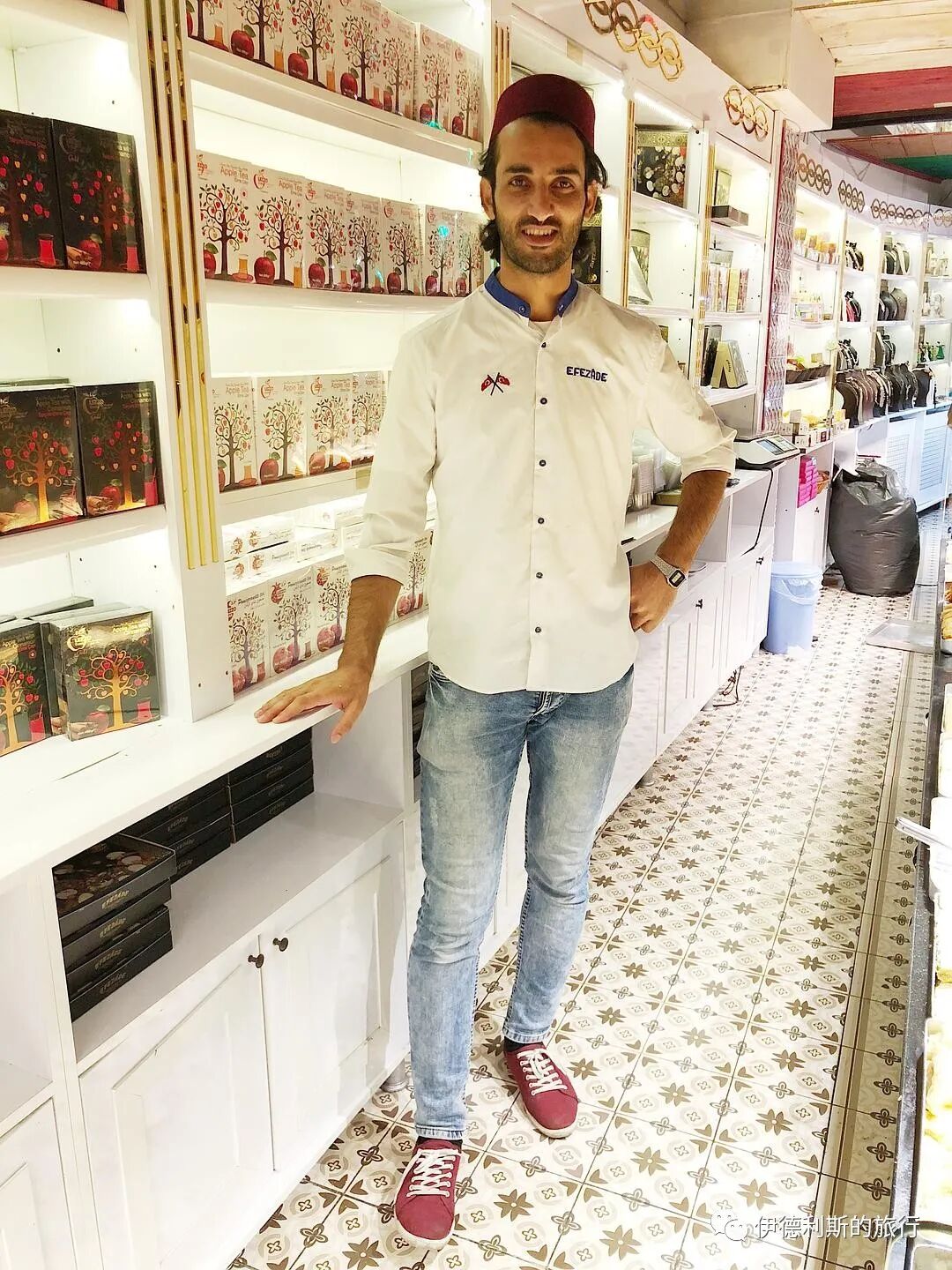
A diagram of various Turkish pastries.
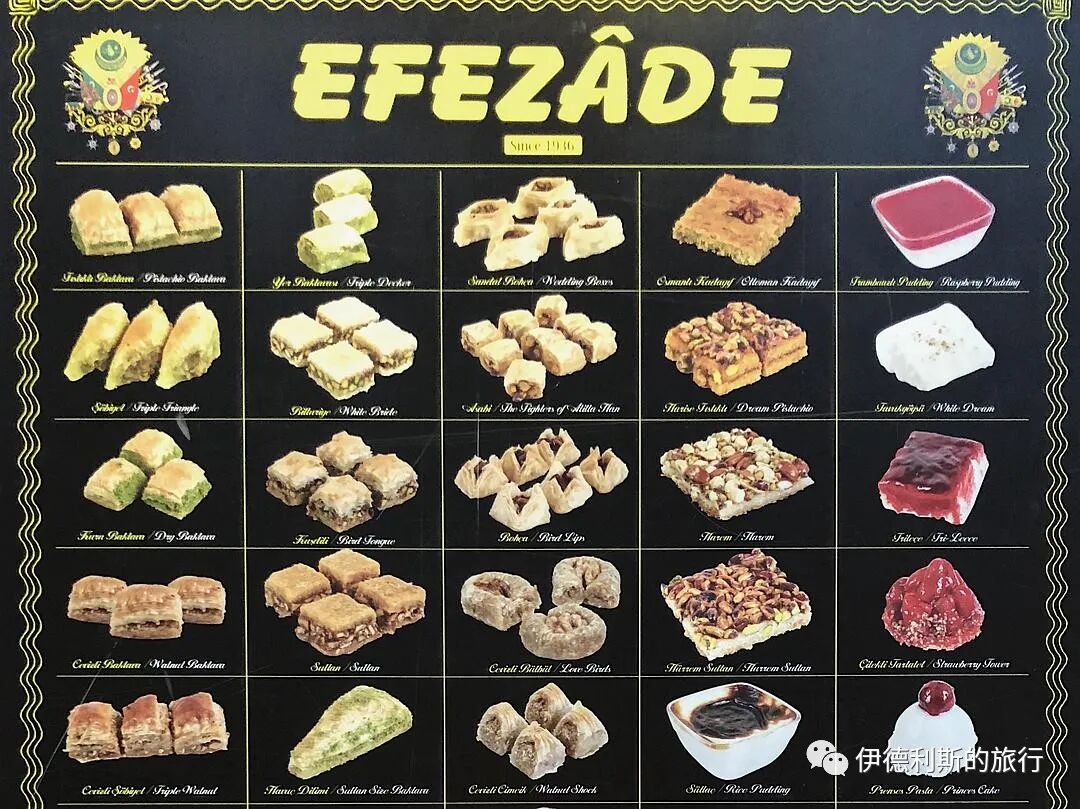
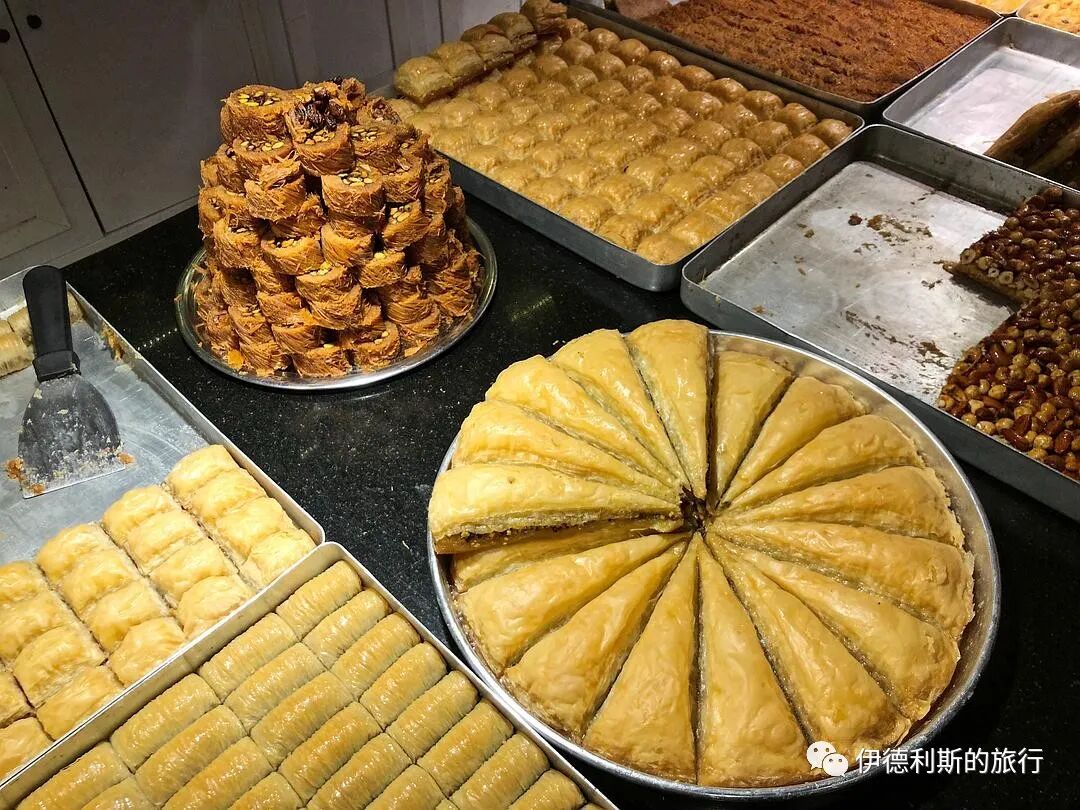
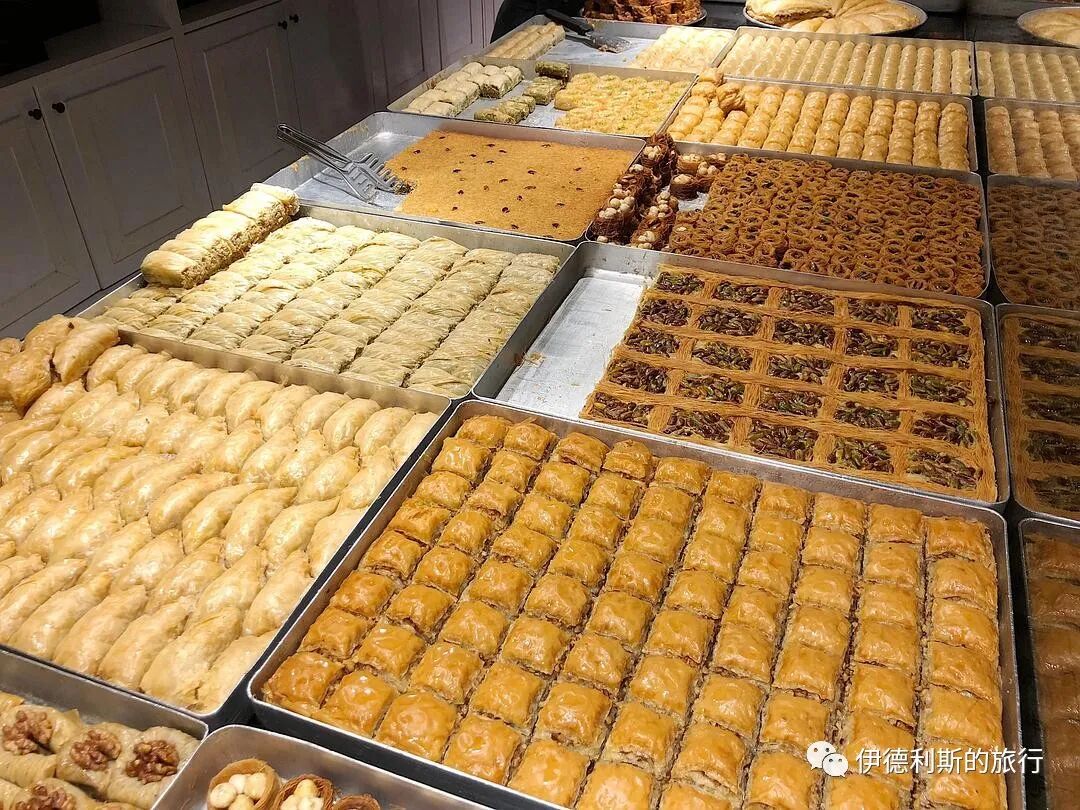
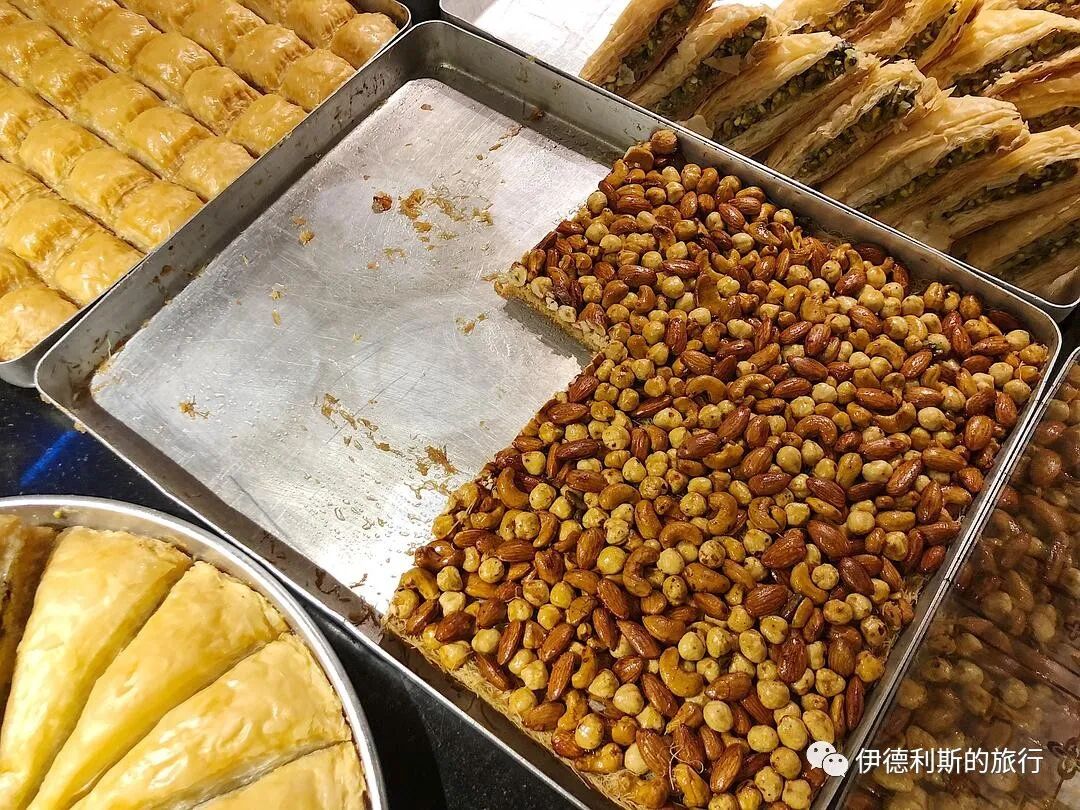
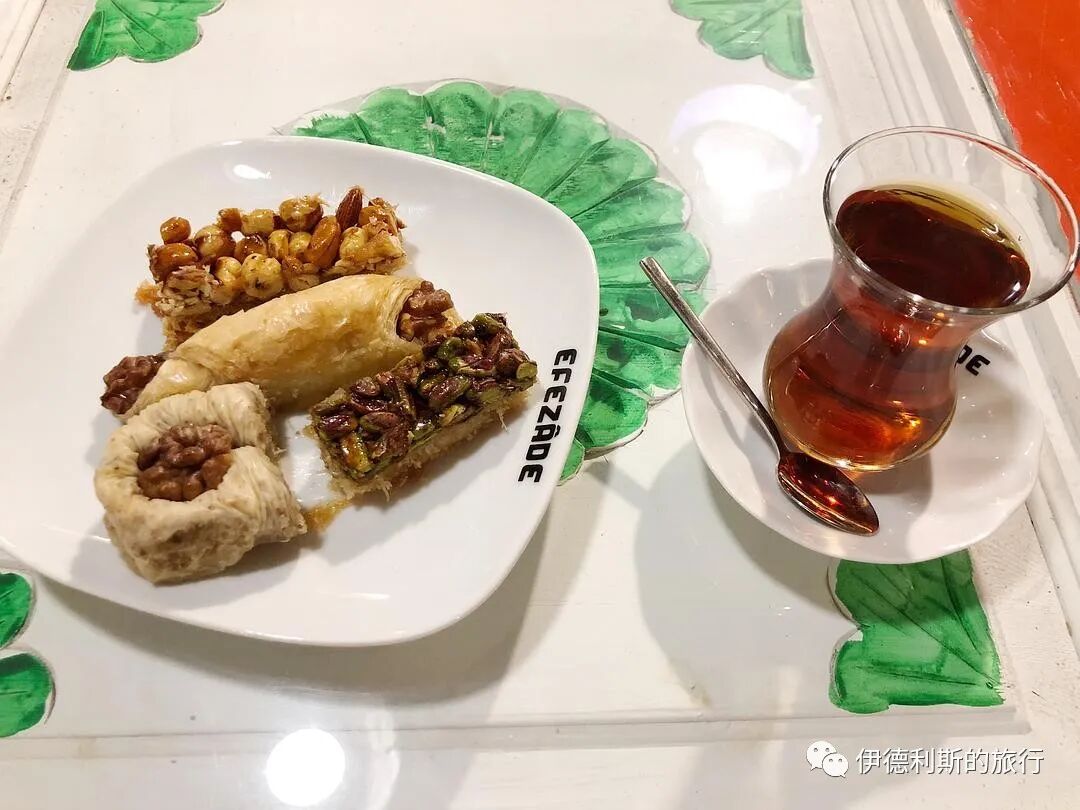
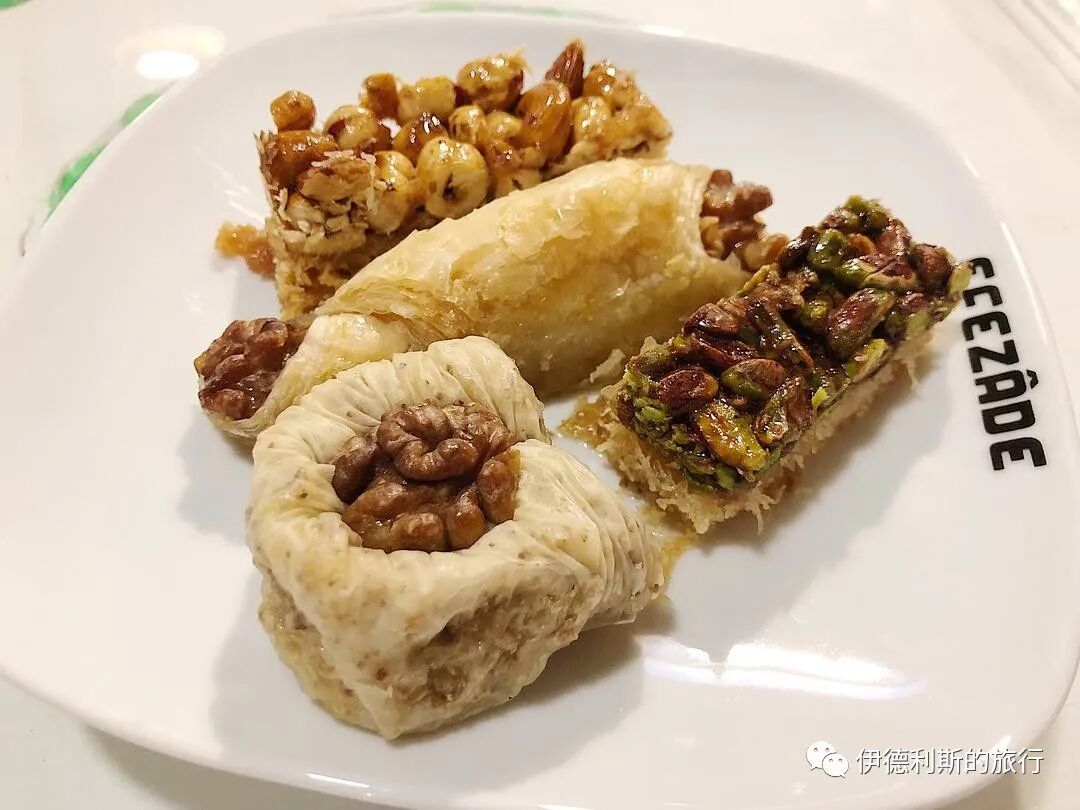
The pastry in the bottom left of the picture below is called nightingale's nest (bülbül yuvası), which translates literally to 'nightingale's nest'.
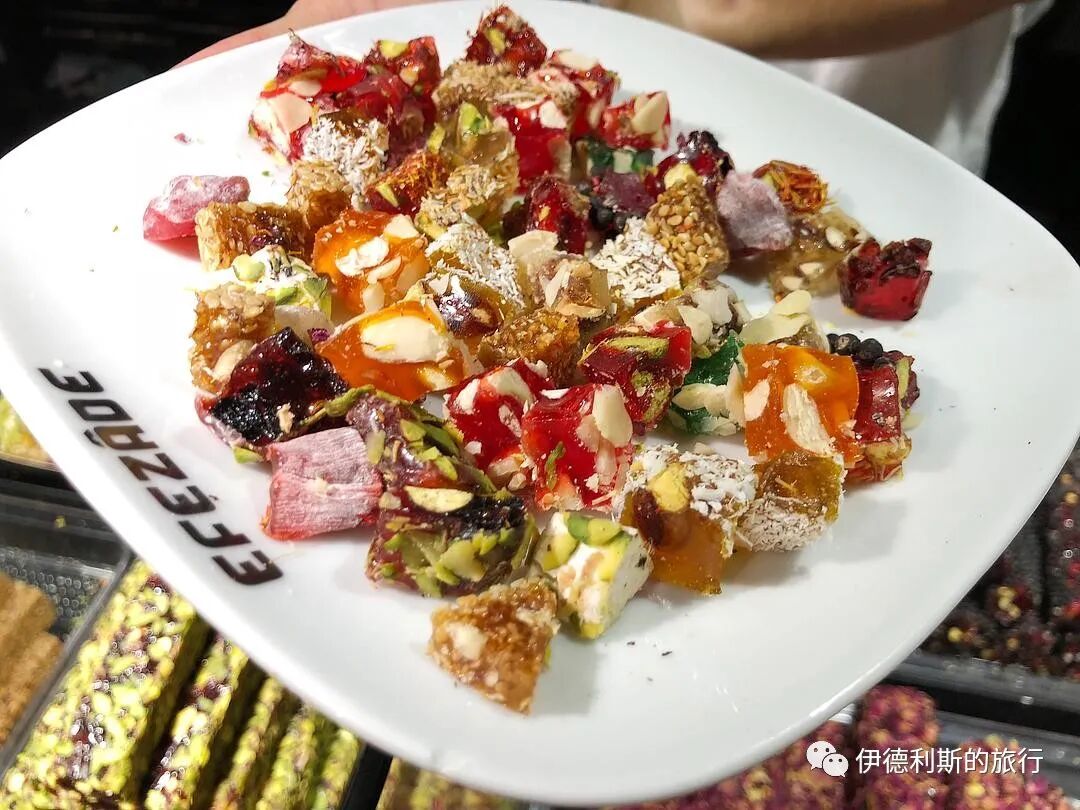
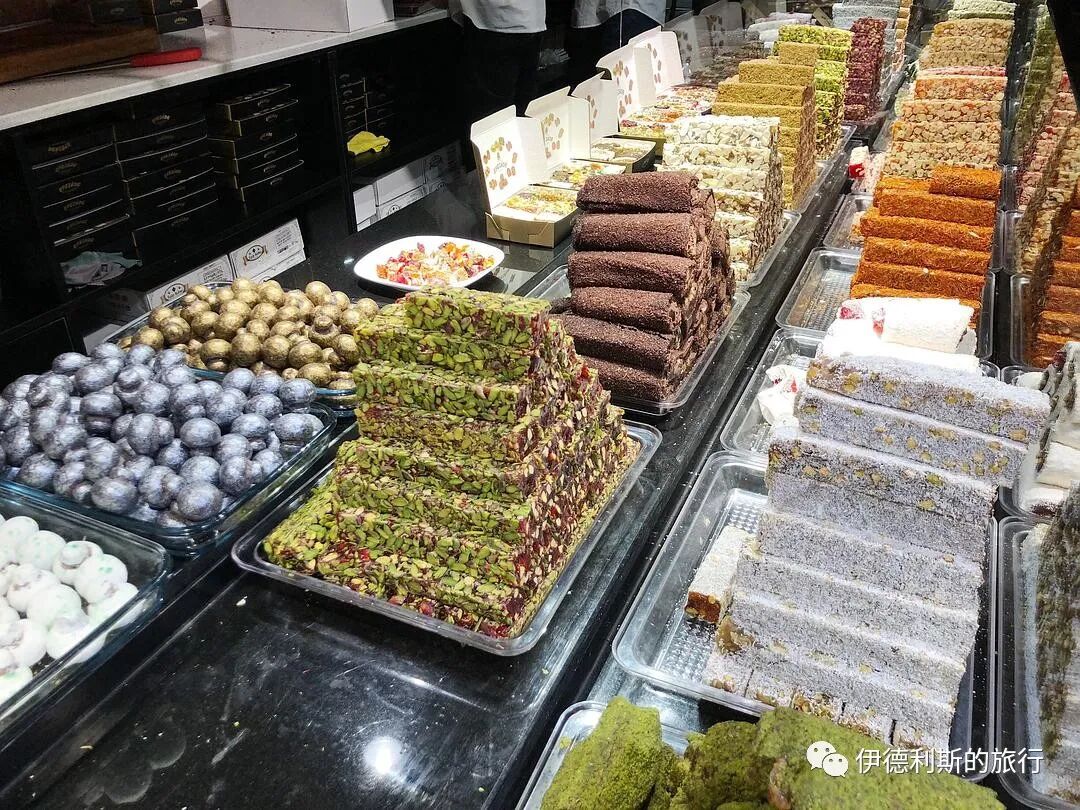
There are also various types of Turkish delight (lokum). The word lokum comes from the Arabic 'al-halkum'. Arabs call Turkish delight 'rāḥatal-ḥulqūm', which means 'throat comfort'.
According to the Hacı Bekir company, Turkish delight was brought to Istanbul from his hometown of Kastamonu by the founder, Hacı Bekir, in 1777. Some historians question this claim because similar soft candies made from starch and sugar appeared in Arab and Persian lands centuries earlier.
Turkish coffee served with pudding on the street.
In the early Ottoman Empire, strong coffee was banned as a medicine, but the Sultan eventually lifted the ban because it became so popular with the people.
Turkish coffee is recognized by UNESCO as part of Turkey's intangible cultural heritage.
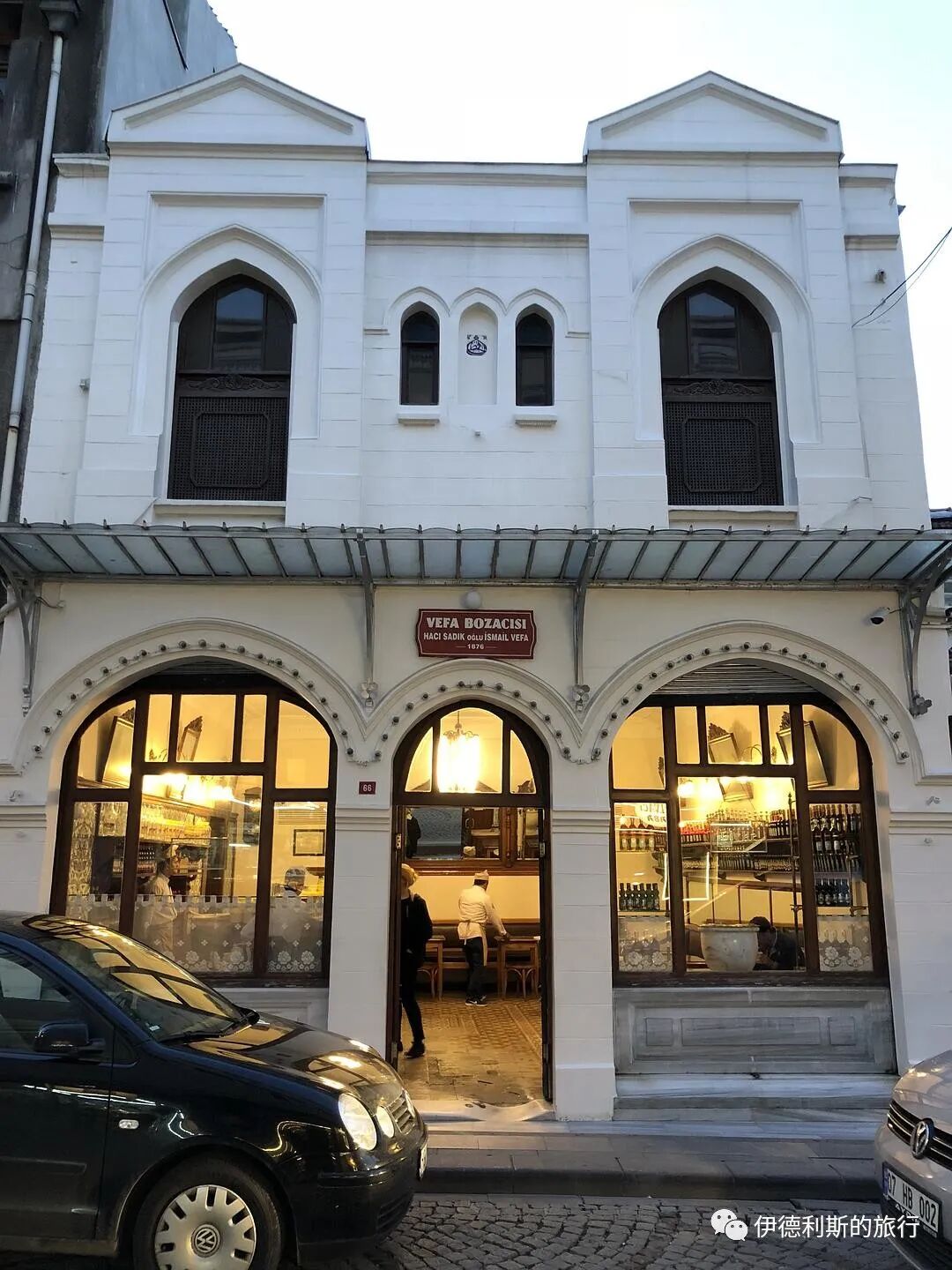
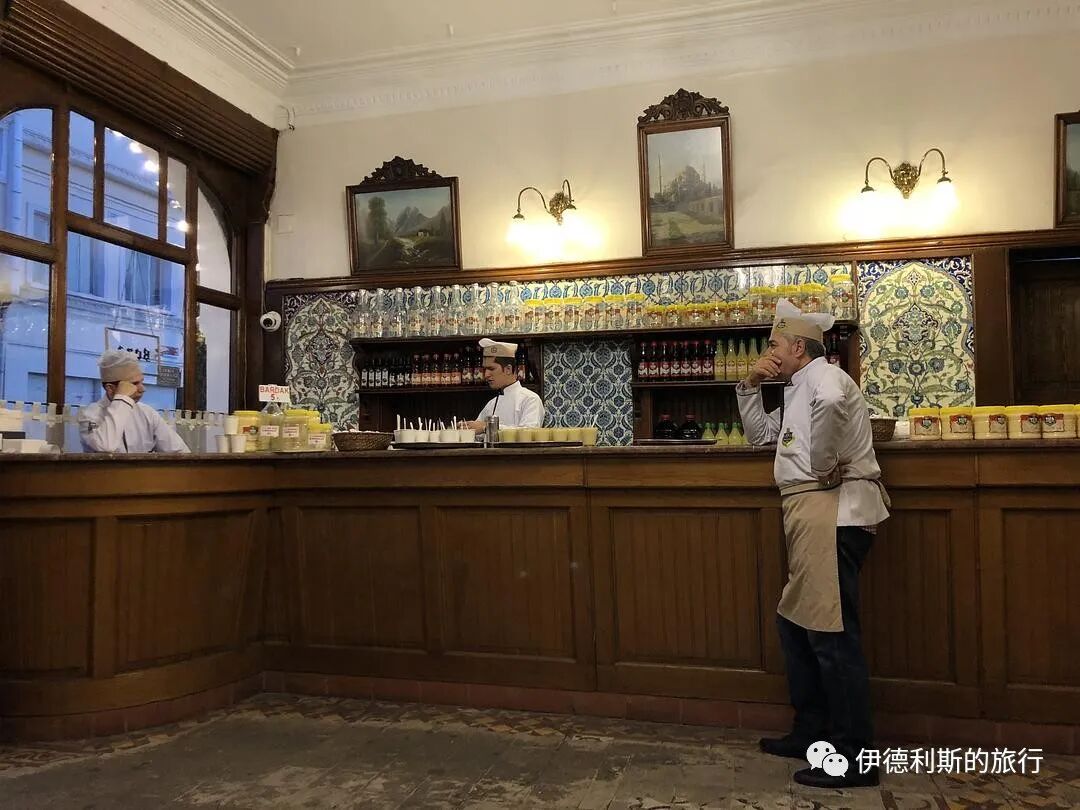
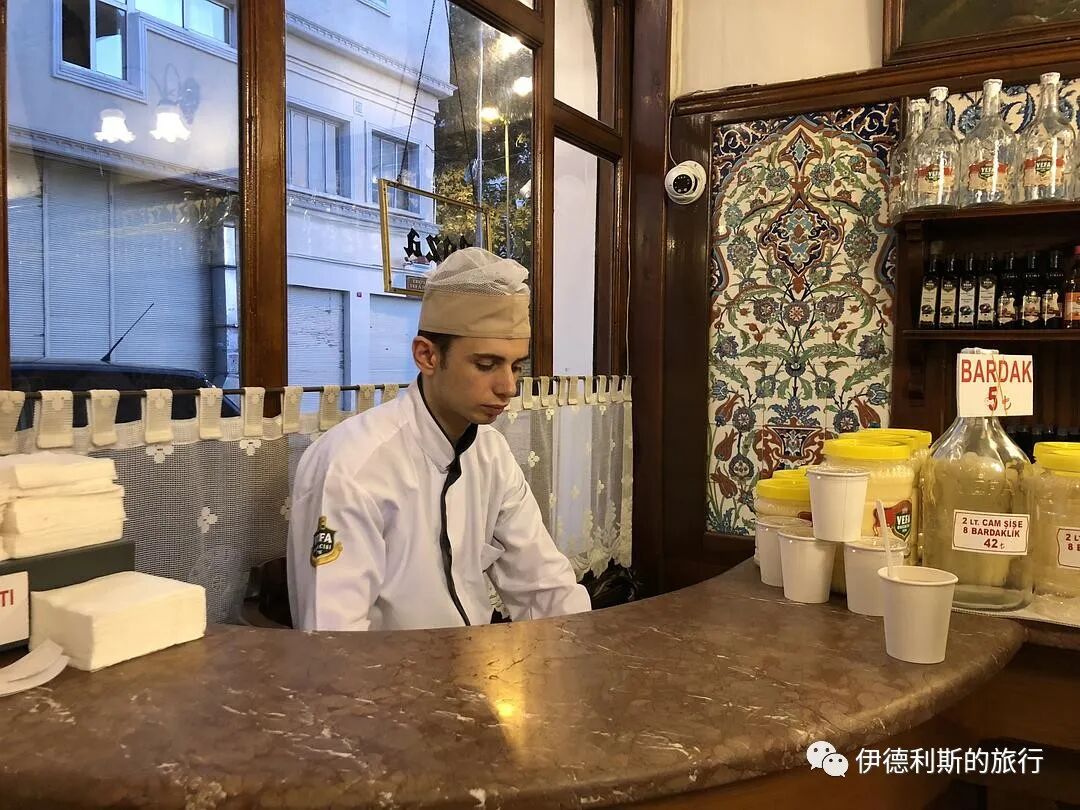
The picture below shows Vefa Bozacisi, the only boza shop in 19th-century Istanbul. It was opened in 1876 by brothers Haci Ibrahim and Haci Sadik in the Vefa district of Istanbul, near the entertainment center of the time, Direklerarası. It is still run by the great-grandchildren of Haci Sadik and Haci Ibrahim today.
Boza is a fermented grain drink popular in Turkey, Iran, the Balkans, Central Asia, and the Caucasus. In Turkey, it is usually made from fermented wheat. It is thick and tastes sweet with a hint of sourness.
In Chagatai Turkic, boza means a drink made from camel milk, while in Persian, büze is used to refer to millet. Central Asian Turkic people began calling fermented grain drinks, usually made from millet, boza in the 10th century. It later spread to the Caucasus and the Balkans and became an important town drink during the Ottoman Empire.
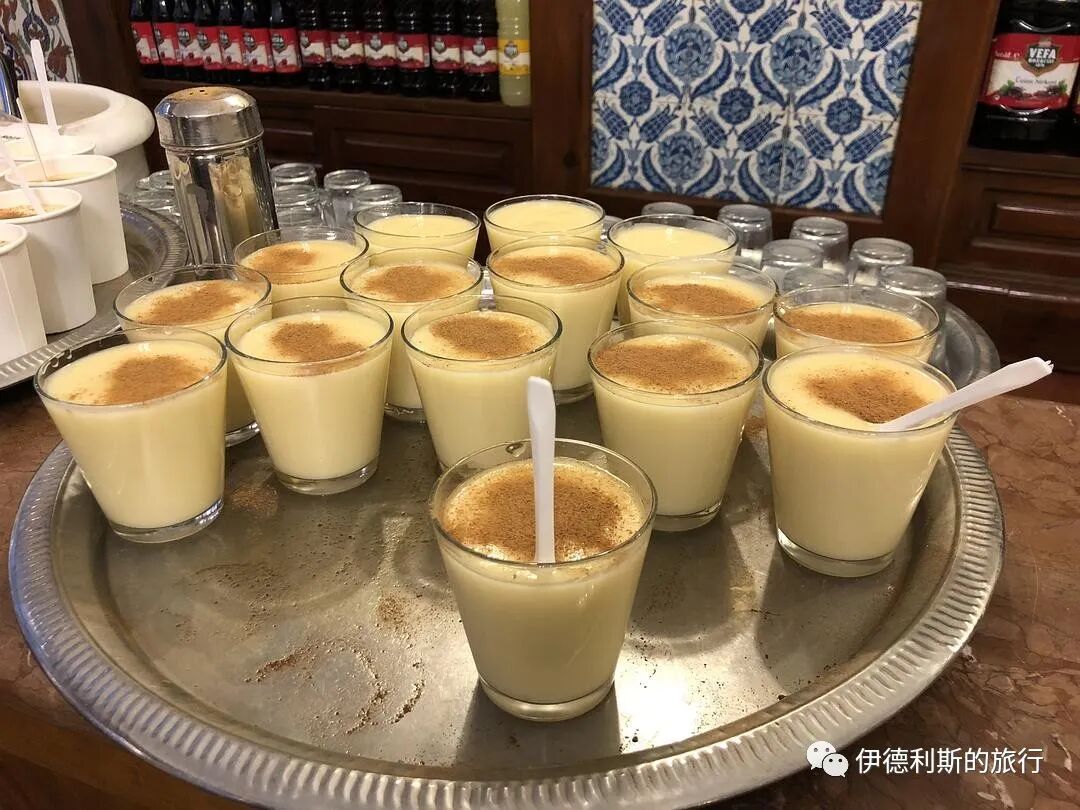
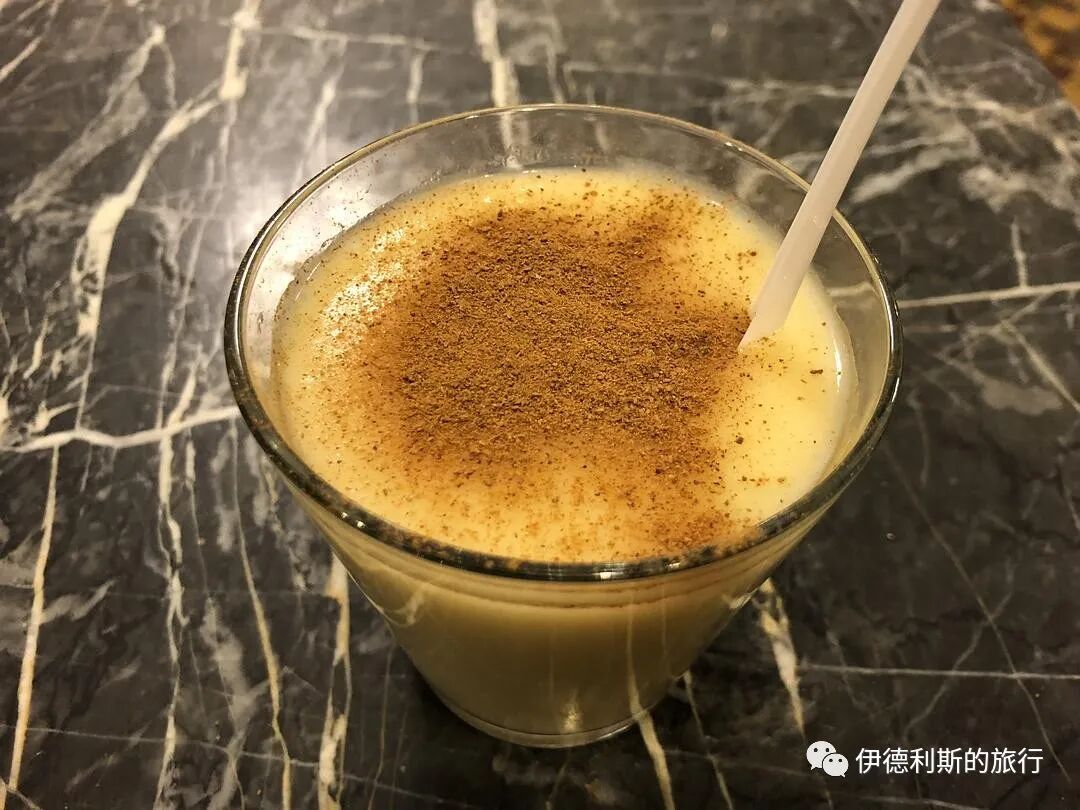
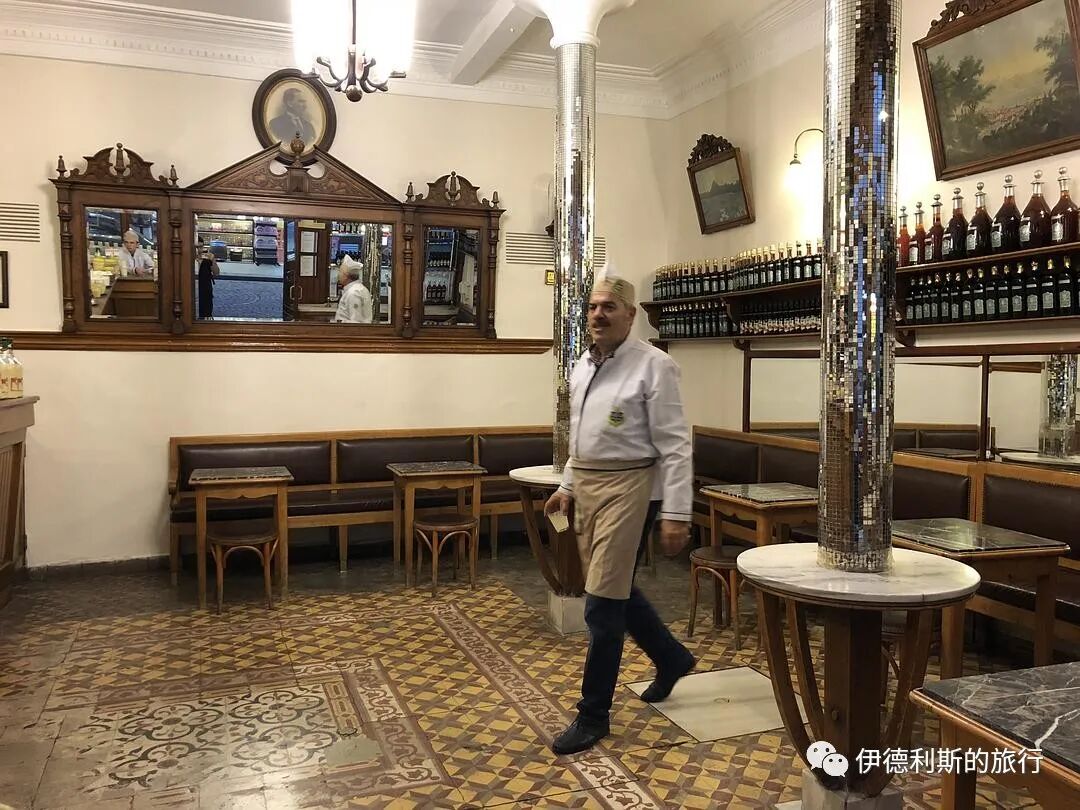
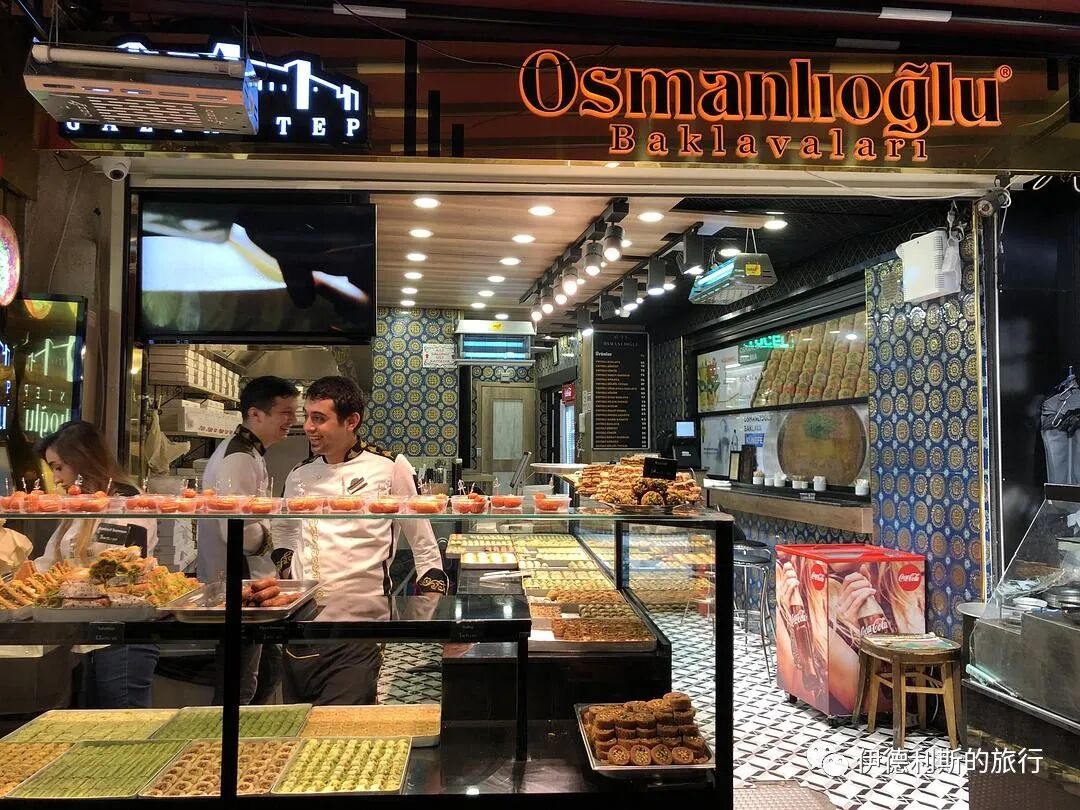
The snack in the picture below is called tulumba tatlısı, which is deep-fried dough soaked in syrup. It is widely popular in former Ottoman regions, including Turkey, the Balkans, and Armenia. It is also called balah alsham in Arab regions and is often eaten during Ramadan.
Main course
A type of kebab called testi kebab eaten at this restaurant called Urfalim Lahmacun. Testi kebab comes from Central Anatolia and the Black Sea region. Testi means jar or pot in Turkish, and it involves cooking various meats and vegetables in a clay pot.
Arabic flatbread, which is very thin.
This soup is called ezogelin. It is made from crushed dried wheat and red lentils, with ingredients including rice, olive oil, butter, onions, garlic, tomatoes, chili peppers, dried mint, black pepper, and salt.
I had a dish called patlıcanlı kebab, which translates to eggplant kebab, at a bazaar next to the Rüstem Pasha Mosque in the evening, along with a drink called yayık ayran, which is a honey yogurt drink.
Halal Travel Guide: Istanbul — Mosques, Turkish Food and Ottoman Streets (Part 1 of 3) — Section 2 of 2
Articles • ali2007fr posted the article • 0 comments • 130 views • 2026-05-18 07:52
Summary: Istanbul — Mosques, Turkish Food and Ottoman Streets is presented here as a firsthand travel account in clear English, beginning with this scene: I spent half a month traveling in Turkey from September to October 2018. While visiting historical sites in Istanbul, I tried some local food and would like to share it with you here. The account keeps its focus on Istanbul Travel, Turkish Food, Ottoman Heritage while preserving the names, places, food, and historical details from the Chinese source. This retry section is 2 of 2.
Section 2 of 2
Turkish coffee served with pudding on the street.
In the early Ottoman Empire, strong coffee was banned as a medicine, but the Sultan eventually lifted the ban because it became so popular with the people.
Turkish coffee is recognized by UNESCO as part of Turkey's intangible cultural heritage.
The picture below shows Vefa Bozacisi, the only boza shop in 19th-century Istanbul. It was opened in 1876 by brothers Haci Ibrahim and Haci Sadik in the Vefa district of Istanbul, near the entertainment center of the time, Direklerarası. It is still run by the great-grandchildren of Haci Sadik and Haci Ibrahim today.
Boza is a fermented grain drink popular in Turkey, Iran, the Balkans, Central Asia, and the Caucasus. In Turkey, it is usually made from fermented wheat. It is thick and tastes sweet with a hint of sourness.
In Chagatai Turkic, boza means a drink made from camel milk, while in Persian, büze is used to refer to millet. Central Asian Turkic people began calling fermented grain drinks, usually made from millet, boza in the 10th century. It later spread to the Caucasus and the Balkans and became an important town drink during the Ottoman Empire.
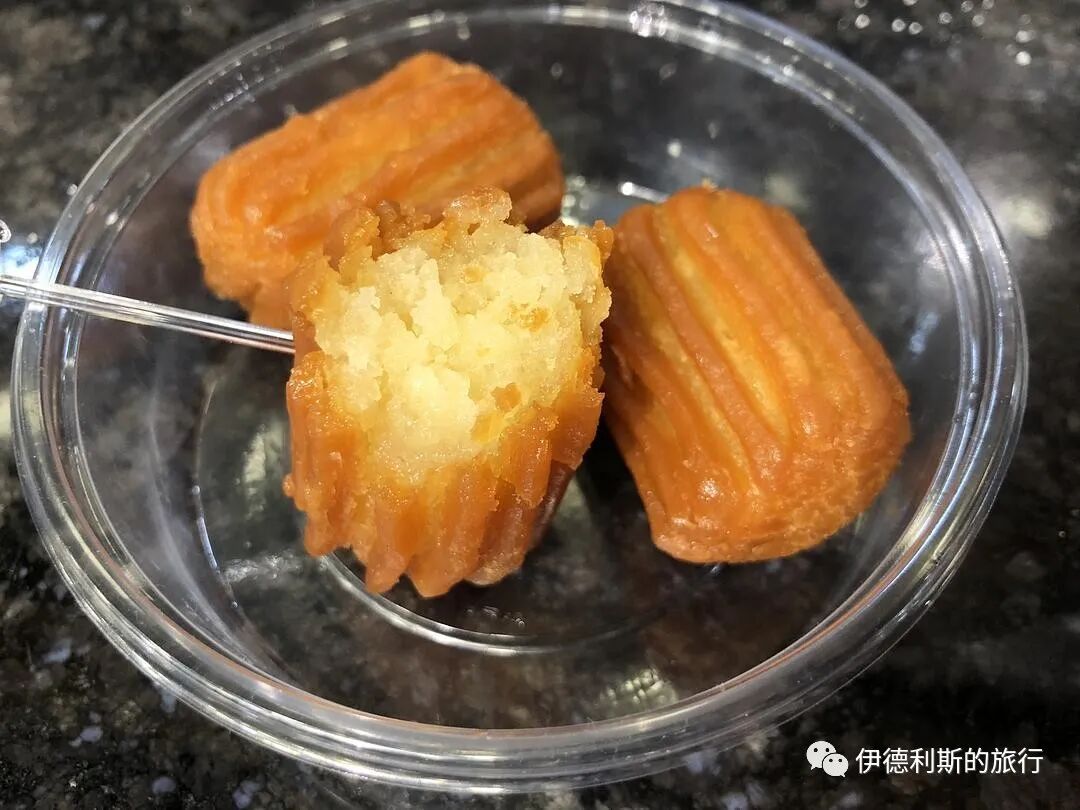
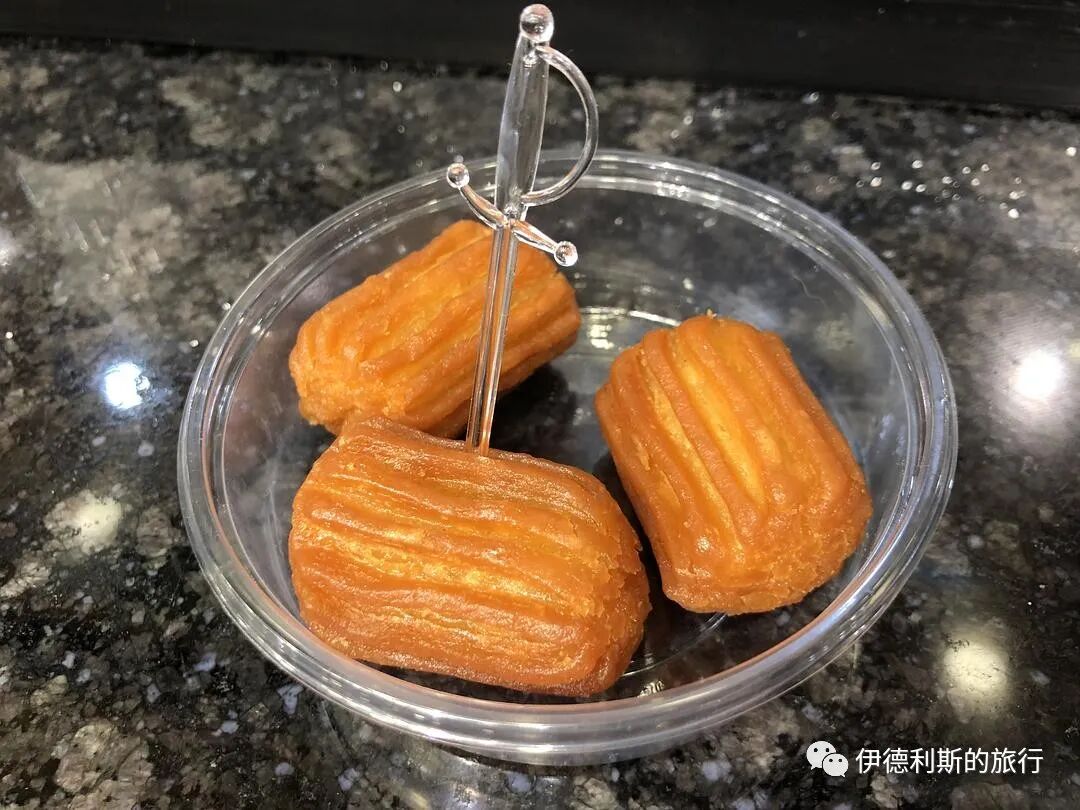
The snack in the picture below is called tulumba tatlısı, which is deep-fried dough soaked in syrup. It is widely popular in former Ottoman regions, including Turkey, the Balkans, and Armenia. It is also called balah alsham in Arab regions and is often eaten during Ramadan.
Main course
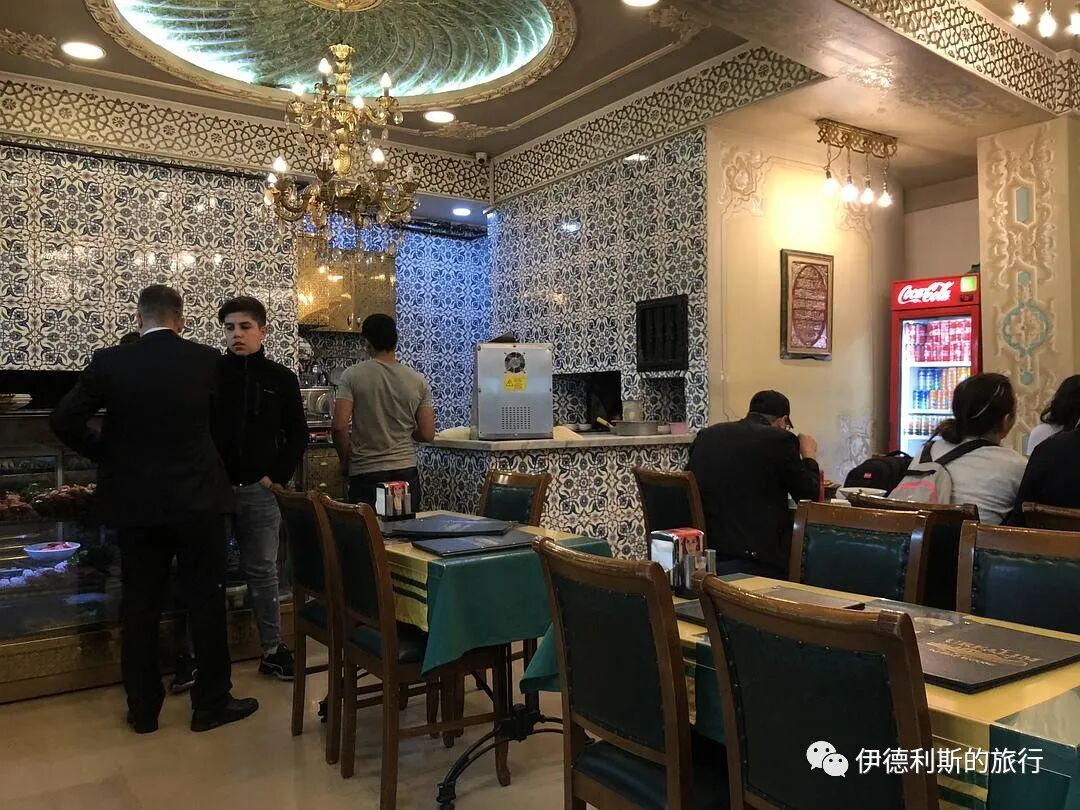
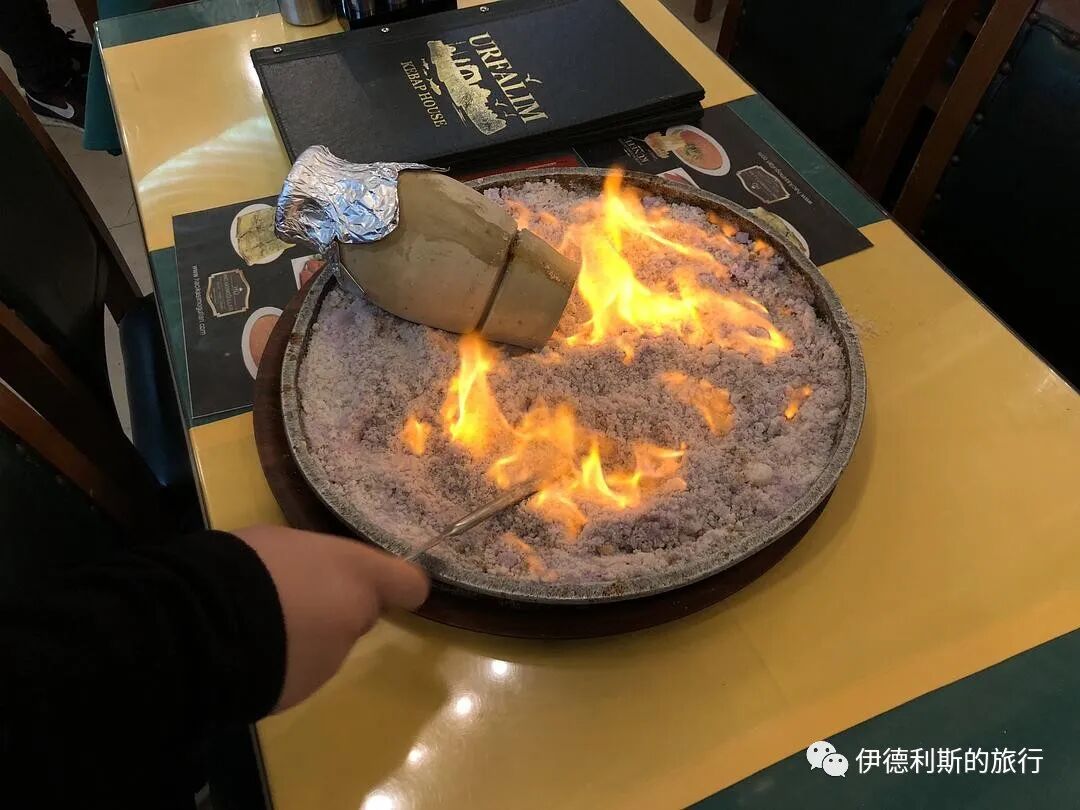
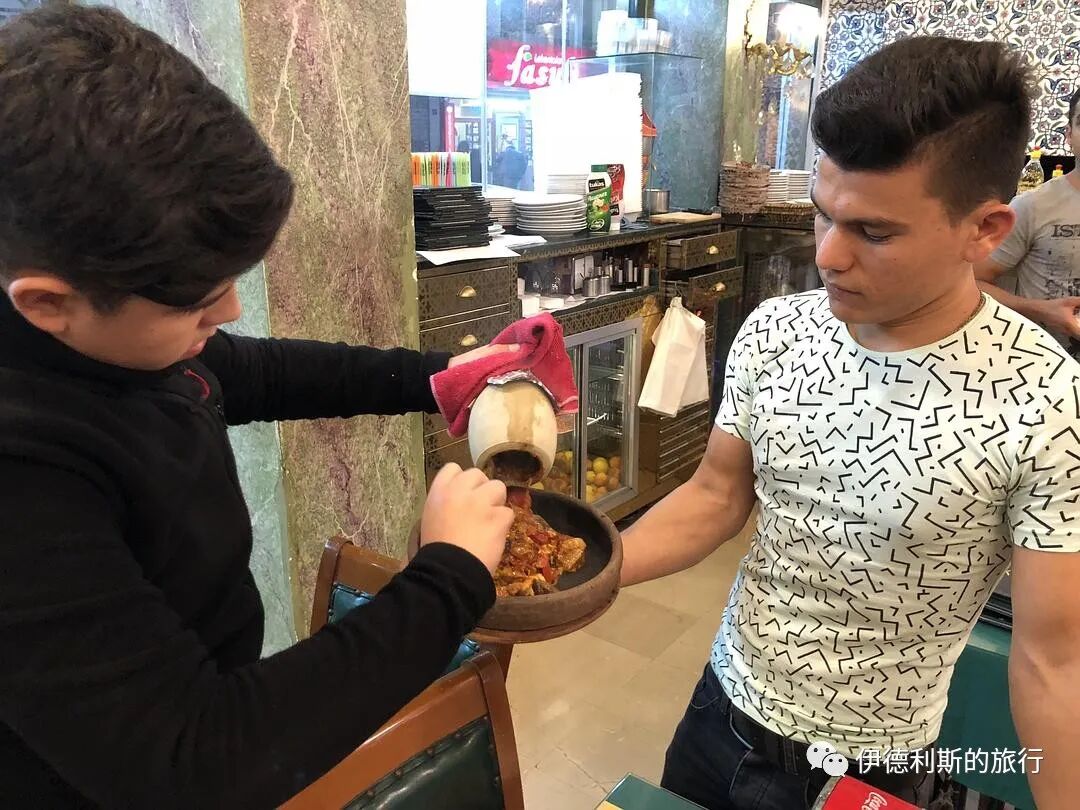
A type of kebab called testi kebab eaten at this restaurant called Urfalim Lahmacun. Testi kebab comes from Central Anatolia and the Black Sea region. Testi means jar or pot in Turkish, and it involves cooking various meats and vegetables in a clay pot.
Arabic flatbread, which is very thin.
This soup is called ezogelin. It is made from crushed dried wheat and red lentils, with ingredients including rice, olive oil, butter, onions, garlic, tomatoes, chili peppers, dried mint, black pepper, and salt.
I had a dish called patlıcanlı kebab, which translates to eggplant kebab, at a bazaar next to the Rüstem Pasha Mosque in the evening, along with a drink called yayık ayran, which is a honey yogurt drink. view all
Summary: Istanbul — Mosques, Turkish Food and Ottoman Streets is presented here as a firsthand travel account in clear English, beginning with this scene: I spent half a month traveling in Turkey from September to October 2018. While visiting historical sites in Istanbul, I tried some local food and would like to share it with you here. The account keeps its focus on Istanbul Travel, Turkish Food, Ottoman Heritage while preserving the names, places, food, and historical details from the Chinese source. This retry section is 2 of 2.
Section 2 of 2
Turkish coffee served with pudding on the street.
In the early Ottoman Empire, strong coffee was banned as a medicine, but the Sultan eventually lifted the ban because it became so popular with the people.
Turkish coffee is recognized by UNESCO as part of Turkey's intangible cultural heritage.
The picture below shows Vefa Bozacisi, the only boza shop in 19th-century Istanbul. It was opened in 1876 by brothers Haci Ibrahim and Haci Sadik in the Vefa district of Istanbul, near the entertainment center of the time, Direklerarası. It is still run by the great-grandchildren of Haci Sadik and Haci Ibrahim today.
Boza is a fermented grain drink popular in Turkey, Iran, the Balkans, Central Asia, and the Caucasus. In Turkey, it is usually made from fermented wheat. It is thick and tastes sweet with a hint of sourness.
In Chagatai Turkic, boza means a drink made from camel milk, while in Persian, büze is used to refer to millet. Central Asian Turkic people began calling fermented grain drinks, usually made from millet, boza in the 10th century. It later spread to the Caucasus and the Balkans and became an important town drink during the Ottoman Empire.
The snack in the picture below is called tulumba tatlısı, which is deep-fried dough soaked in syrup. It is widely popular in former Ottoman regions, including Turkey, the Balkans, and Armenia. It is also called balah alsham in Arab regions and is often eaten during Ramadan.
Main course
A type of kebab called testi kebab eaten at this restaurant called Urfalim Lahmacun. Testi kebab comes from Central Anatolia and the Black Sea region. Testi means jar or pot in Turkish, and it involves cooking various meats and vegetables in a clay pot.
Arabic flatbread, which is very thin.
This soup is called ezogelin. It is made from crushed dried wheat and red lentils, with ingredients including rice, olive oil, butter, onions, garlic, tomatoes, chili peppers, dried mint, black pepper, and salt.
I had a dish called patlıcanlı kebab, which translates to eggplant kebab, at a bazaar next to the Rüstem Pasha Mosque in the evening, along with a drink called yayık ayran, which is a honey yogurt drink.
Halal Travel Guide: Istanbul — Mosques, Turkish Food and Ottoman Streets (Part 1 of 3) — Section 2 of 2 — Block 2 of 2
Articles • ali2007fr posted the article • 0 comments • 129 views • 2026-05-18 07:52
Summary: Istanbul — Mosques, Turkish Food and Ottoman Streets is presented here as a firsthand travel account in clear English, beginning with this scene: I spent half a month traveling in Turkey from September to October 2018. While visiting historical sites in Istanbul, I tried some local food and would like to share it with you here. The account keeps its focus on Istanbul Travel, Turkish Food, Ottoman Heritage while preserving the names, places, food, and historical details from the Chinese source. This final block is 2 of 2.
Block 2 of 2
Main course
A type of kebab called testi kebab eaten at this restaurant called Urfalim Lahmacun. Testi kebab comes from Central Anatolia and the Black Sea region. Testi means jar or pot in Turkish, and it involves cooking various meats and vegetables in a clay pot.
Arabic flatbread, which is very thin.
This soup is called ezogelin. It is made from crushed dried wheat and red lentils, with ingredients including rice, olive oil, butter, onions, garlic, tomatoes, chili peppers, dried mint, black pepper, and salt.
I had a dish called patlıcanlı kebab, which translates to eggplant kebab, at a bazaar next to the Rüstem Pasha Mosque in the evening, along with a drink called yayık ayran, which is a honey yogurt drink. view all
Summary: Istanbul — Mosques, Turkish Food and Ottoman Streets is presented here as a firsthand travel account in clear English, beginning with this scene: I spent half a month traveling in Turkey from September to October 2018. While visiting historical sites in Istanbul, I tried some local food and would like to share it with you here. The account keeps its focus on Istanbul Travel, Turkish Food, Ottoman Heritage while preserving the names, places, food, and historical details from the Chinese source. This final block is 2 of 2.
Block 2 of 2
Main course
A type of kebab called testi kebab eaten at this restaurant called Urfalim Lahmacun. Testi kebab comes from Central Anatolia and the Black Sea region. Testi means jar or pot in Turkish, and it involves cooking various meats and vegetables in a clay pot.
Arabic flatbread, which is very thin.
This soup is called ezogelin. It is made from crushed dried wheat and red lentils, with ingredients including rice, olive oil, butter, onions, garlic, tomatoes, chili peppers, dried mint, black pepper, and salt.
I had a dish called patlıcanlı kebab, which translates to eggplant kebab, at a bazaar next to the Rüstem Pasha Mosque in the evening, along with a drink called yayık ayran, which is a honey yogurt drink.
Halal Travel Guide: Istanbul — Mosques, Turkish Food and Ottoman Streets (Part 1 of 3) — Section 2 of 2 — Block 1 of 2
Articles • ali2007fr posted the article • 0 comments • 163 views • 2026-05-18 07:46
Summary: Istanbul — Mosques, Turkish Food and Ottoman Streets is presented here as a firsthand travel account in clear English, beginning with this scene: I spent half a month traveling in Turkey from September to October 2018. While visiting historical sites in Istanbul, I tried some local food and would like to share it with you here. The account keeps its focus on Istanbul Travel, Turkish Food, Ottoman Heritage while preserving the names, places, food, and historical details from the Chinese source. This public article combines adjacent translated blocks from the same source section.
Block 1 of 2
Turkish coffee served with pudding on the street.
In the early Ottoman Empire, strong coffee was banned as a medicine, but the Sultan eventually lifted the ban because it became so popular with the people.
Turkish coffee is recognized by UNESCO as part of Turkey's intangible cultural heritage.
The picture below shows Vefa Bozacisi, the only boza shop in 19th-century Istanbul. It was opened in 1876 by brothers Haci Ibrahim and Haci Sadik in the Vefa district of Istanbul, near the entertainment center of the time, Direklerarası. It is still run by the great-grandchildren of Haci Sadik and Haci Ibrahim today.
Boza is a fermented grain drink popular in Turkey, Iran, the Balkans, Central Asia, and the Caucasus. In Turkey, it is usually made from fermented wheat. It is thick and tastes sweet with a hint of sourness.
In Chagatai Turkic, boza means a drink made from camel milk, while in Persian, büze is used to refer to millet. Central Asian Turkic people began calling fermented grain drinks, usually made from millet, boza in the 10th century. It later spread to the Caucasus and the Balkans and became an important town drink during the Ottoman Empire.
The snack in the picture below is called tulumba tatlısı, which is deep-fried dough soaked in syrup. It is widely popular in former Ottoman regions, including Turkey, the Balkans, and Armenia. It is also called balah alsham in Arab regions and is often eaten during Ramadan.
Main course
A type of kebab called testi kebab eaten at this restaurant called Urfalim Lahmacun. Testi kebab comes from Central Anatolia and the Black Sea region. Testi means jar or pot in Turkish, and it involves cooking various meats and vegetables in a clay pot.
Arabic flatbread, which is very thin.
This soup is called ezogelin. It is made from crushed dried wheat and red lentils, with ingredients including rice, olive oil, butter, onions, garlic, tomatoes, chili peppers, dried mint, black pepper, and salt.
I had a dish called patlıcanlı kebab, which translates to eggplant kebab, at a bazaar next to the Rüstem Pasha Mosque in the evening, along with a drink called yayık ayran, which is a honey yogurt drink. view all
Summary: Istanbul — Mosques, Turkish Food and Ottoman Streets is presented here as a firsthand travel account in clear English, beginning with this scene: I spent half a month traveling in Turkey from September to October 2018. While visiting historical sites in Istanbul, I tried some local food and would like to share it with you here. The account keeps its focus on Istanbul Travel, Turkish Food, Ottoman Heritage while preserving the names, places, food, and historical details from the Chinese source. This public article combines adjacent translated blocks from the same source section.
Block 1 of 2
Turkish coffee served with pudding on the street.
In the early Ottoman Empire, strong coffee was banned as a medicine, but the Sultan eventually lifted the ban because it became so popular with the people.
Turkish coffee is recognized by UNESCO as part of Turkey's intangible cultural heritage.
The picture below shows Vefa Bozacisi, the only boza shop in 19th-century Istanbul. It was opened in 1876 by brothers Haci Ibrahim and Haci Sadik in the Vefa district of Istanbul, near the entertainment center of the time, Direklerarası. It is still run by the great-grandchildren of Haci Sadik and Haci Ibrahim today.
Boza is a fermented grain drink popular in Turkey, Iran, the Balkans, Central Asia, and the Caucasus. In Turkey, it is usually made from fermented wheat. It is thick and tastes sweet with a hint of sourness.
In Chagatai Turkic, boza means a drink made from camel milk, while in Persian, büze is used to refer to millet. Central Asian Turkic people began calling fermented grain drinks, usually made from millet, boza in the 10th century. It later spread to the Caucasus and the Balkans and became an important town drink during the Ottoman Empire.
The snack in the picture below is called tulumba tatlısı, which is deep-fried dough soaked in syrup. It is widely popular in former Ottoman regions, including Turkey, the Balkans, and Armenia. It is also called balah alsham in Arab regions and is often eaten during Ramadan.
Main course
A type of kebab called testi kebab eaten at this restaurant called Urfalim Lahmacun. Testi kebab comes from Central Anatolia and the Black Sea region. Testi means jar or pot in Turkish, and it involves cooking various meats and vegetables in a clay pot.
Arabic flatbread, which is very thin.
This soup is called ezogelin. It is made from crushed dried wheat and red lentils, with ingredients including rice, olive oil, butter, onions, garlic, tomatoes, chili peppers, dried mint, black pepper, and salt.
I had a dish called patlıcanlı kebab, which translates to eggplant kebab, at a bazaar next to the Rüstem Pasha Mosque in the evening, along with a drink called yayık ayran, which is a honey yogurt drink.
Halal Travel Guide: Istanbul — Mosques, Turkish Food and Ottoman Streets (Part 1 of 3) — Section 1 of 2
Articles • ali2007fr posted the article • 0 comments • 187 views • 2026-05-18 07:44
Summary: Istanbul — Mosques, Turkish Food and Ottoman Streets is presented here as a firsthand travel account in clear English, beginning with this scene: I spent half a month traveling in Turkey from September to October 2018. While visiting historical sites in Istanbul, I tried some local food and would like to share it with you here. The account keeps its focus on Istanbul Travel, Turkish Food, Ottoman Heritage while preserving the names, places, food, and historical details from the Chinese source. This retry section is 1 of 2.
Section 1 of 2
I spent half a month traveling in Turkey from September to October 2018. While visiting historical sites in Istanbul, I tried some local food and would like to share it with you here.
Street food.
Simit is a type of bread ring popular in the former Ottoman territories and the Middle East, and it is a common street snack in Istanbul.
The word simit comes from the Arabic word samīd, which means white bread or fine flour. The earliest records of simit bread rings in Istanbul date back to 1525. By 1594, Istanbul had established the first regulations for the weight and price of simit bread rings. According to the famous 17th-century Ottoman traveler Evliya Çelebi, there were 70 simit bakeries in Istanbul in the 1630s.
Because of its low price, simit has become an important symbol for the working class in Turkey.
Roasted corn and boiled corn are street snacks just as common as the bread rings.
There are also various kinds of freshly squeezed fruit juices on the streets of Istanbul, and this time I had fresh pomegranate juice.
Autumn is the season for eating roasted chestnuts.
There are all kinds of ice cream shops on the streets of Istanbul. I had never eaten this black mulberry flavor before, and the young lady selling the ice cream was very sweet.
Desserts
1. Ashure porridge
There are many dessert shops in Istanbul with a wide variety of traditional sweets, and there are many on Istiklal Avenue alone. I had Turkish Ashure porridge at a dessert shop called Taxim Süitiş.
The Turkish word Ashure comes from the Arabic word Āshūrā, which means tenth. On the tenth day of the first month (Muharram) of the Islamic calendar in the year 61, the family of the Prophet's grandson, Husayn, died while fleeing Mecca due to the pursuit of the Umayyad dynasty. This day has become an important memorial day for Shia and some Sunni Muslims. For Sunni Muslims, the Day of Ashura is also an important memorial day for many events, such as when the Prophet Musa (Moses) was pursued by the Pharaoh to the Red Sea and the sea parted to create a path for them to escape, when the Prophet Nuh (Noah) left the ark, and when the Prophet Muhammad arrived in Medina.
Ashure porridge was popularized in Turkey by the Alevis. To commemorate the martyrdom of the saint Ali, the Alevis do not eat meat on this day, but instead eat Ashure porridge made from grains, fruits, dried fruits, and nuts.
The Alevis respect the saint Ali just like the Shia, but their rituals are completely different from the Shia. The Alevis are actually an Islamic sect that blends Shia and Sufi beliefs, native Turkish animism, and some Sunni elements. They are more used to expressing their faith through music and dance in a gathering hall (cemevi).
For traditional Sunni Muslims in Turkey, people share Ashura porridge (ashure) with friends, relatives, neighbors, colleagues, and classmates on the Day of Ashura, regardless of their religious beliefs. Legend says that on the Day of Ashura, after the Prophet Nuh (Noah) landed his ark, his family prepared a meal to celebrate. Because their supplies were almost gone, they mixed the remaining grains and dried fruits together to make Ashura porridge.
The recipe for Ashura porridge is not fixed; traditionally it has at least 7 ingredients, and some people use 10 to match the theme of the tenth day. The Alevis always use 12 ingredients.
I bought a box of Turkish delight (lokum) as a gift at Hakki Zade, an old Ottoman brand and chain store on Istiklal Avenue.
The dessert shop below, called Efezade, is not far southwest of the old Ottoman palace, and the words Baklava & Lokum above the shop name refer to Turkish pastries and Turkish delight.
Modern Turkish nut-filled pastry (baklava) is said to have come from the Ottoman court, where the Ottoman Sultan would distribute baklava on trays to the Janissaries during a procession on the 15th of Ramadan, a ceremony known as the Baklava Procession (Baklava Alayı).
There is no final conclusion about the origin of baklava in the pre-Ottoman era, but there are three mainstream views: the Byzantine Placenta pastry inherited from Rome, the layered pastry tradition of Central Asian Turks, and the Persian Lauzinaq pastry.
This young man was very enthusiastic and kept pestering me to teach him Chinese.
A diagram of various Turkish pastries.
The pastry in the bottom left of the picture below is called nightingale's nest (bülbül yuvası), which translates literally to 'nightingale's nest'.
There are also various types of Turkish delight (lokum). The word lokum comes from the Arabic 'al-halkum'. Arabs call Turkish delight 'rāḥatal-ḥulqūm', which means 'throat comfort'.
According to the Hacı Bekir company, Turkish delight was brought to Istanbul from his hometown of Kastamonu by the founder, Hacı Bekir, in 1777. Some historians question this claim because similar soft candies made from starch and sugar appeared in Arab and Persian lands centuries earlier. view all
Summary: Istanbul — Mosques, Turkish Food and Ottoman Streets is presented here as a firsthand travel account in clear English, beginning with this scene: I spent half a month traveling in Turkey from September to October 2018. While visiting historical sites in Istanbul, I tried some local food and would like to share it with you here. The account keeps its focus on Istanbul Travel, Turkish Food, Ottoman Heritage while preserving the names, places, food, and historical details from the Chinese source. This retry section is 1 of 2.
Section 1 of 2
I spent half a month traveling in Turkey from September to October 2018. While visiting historical sites in Istanbul, I tried some local food and would like to share it with you here.
Street food.
Simit is a type of bread ring popular in the former Ottoman territories and the Middle East, and it is a common street snack in Istanbul.
The word simit comes from the Arabic word samīd, which means white bread or fine flour. The earliest records of simit bread rings in Istanbul date back to 1525. By 1594, Istanbul had established the first regulations for the weight and price of simit bread rings. According to the famous 17th-century Ottoman traveler Evliya Çelebi, there were 70 simit bakeries in Istanbul in the 1630s.
Because of its low price, simit has become an important symbol for the working class in Turkey.
Roasted corn and boiled corn are street snacks just as common as the bread rings.
There are also various kinds of freshly squeezed fruit juices on the streets of Istanbul, and this time I had fresh pomegranate juice.
Autumn is the season for eating roasted chestnuts.
There are all kinds of ice cream shops on the streets of Istanbul. I had never eaten this black mulberry flavor before, and the young lady selling the ice cream was very sweet.
Desserts
1. Ashure porridge
There are many dessert shops in Istanbul with a wide variety of traditional sweets, and there are many on Istiklal Avenue alone. I had Turkish Ashure porridge at a dessert shop called Taxim Süitiş.
The Turkish word Ashure comes from the Arabic word Āshūrā, which means tenth. On the tenth day of the first month (Muharram) of the Islamic calendar in the year 61, the family of the Prophet's grandson, Husayn, died while fleeing Mecca due to the pursuit of the Umayyad dynasty. This day has become an important memorial day for Shia and some Sunni Muslims. For Sunni Muslims, the Day of Ashura is also an important memorial day for many events, such as when the Prophet Musa (Moses) was pursued by the Pharaoh to the Red Sea and the sea parted to create a path for them to escape, when the Prophet Nuh (Noah) left the ark, and when the Prophet Muhammad arrived in Medina.
Ashure porridge was popularized in Turkey by the Alevis. To commemorate the martyrdom of the saint Ali, the Alevis do not eat meat on this day, but instead eat Ashure porridge made from grains, fruits, dried fruits, and nuts.
The Alevis respect the saint Ali just like the Shia, but their rituals are completely different from the Shia. The Alevis are actually an Islamic sect that blends Shia and Sufi beliefs, native Turkish animism, and some Sunni elements. They are more used to expressing their faith through music and dance in a gathering hall (cemevi).
For traditional Sunni Muslims in Turkey, people share Ashura porridge (ashure) with friends, relatives, neighbors, colleagues, and classmates on the Day of Ashura, regardless of their religious beliefs. Legend says that on the Day of Ashura, after the Prophet Nuh (Noah) landed his ark, his family prepared a meal to celebrate. Because their supplies were almost gone, they mixed the remaining grains and dried fruits together to make Ashura porridge.
The recipe for Ashura porridge is not fixed; traditionally it has at least 7 ingredients, and some people use 10 to match the theme of the tenth day. The Alevis always use 12 ingredients.
I bought a box of Turkish delight (lokum) as a gift at Hakki Zade, an old Ottoman brand and chain store on Istiklal Avenue.
The dessert shop below, called Efezade, is not far southwest of the old Ottoman palace, and the words Baklava & Lokum above the shop name refer to Turkish pastries and Turkish delight.
Modern Turkish nut-filled pastry (baklava) is said to have come from the Ottoman court, where the Ottoman Sultan would distribute baklava on trays to the Janissaries during a procession on the 15th of Ramadan, a ceremony known as the Baklava Procession (Baklava Alayı).
There is no final conclusion about the origin of baklava in the pre-Ottoman era, but there are three mainstream views: the Byzantine Placenta pastry inherited from Rome, the layered pastry tradition of Central Asian Turks, and the Persian Lauzinaq pastry.
This young man was very enthusiastic and kept pestering me to teach him Chinese.
A diagram of various Turkish pastries.
The pastry in the bottom left of the picture below is called nightingale's nest (bülbül yuvası), which translates literally to 'nightingale's nest'.
There are also various types of Turkish delight (lokum). The word lokum comes from the Arabic 'al-halkum'. Arabs call Turkish delight 'rāḥatal-ḥulqūm', which means 'throat comfort'.
According to the Hacı Bekir company, Turkish delight was brought to Istanbul from his hometown of Kastamonu by the founder, Hacı Bekir, in 1777. Some historians question this claim because similar soft candies made from starch and sugar appeared in Arab and Persian lands centuries earlier.
Halal Travel Guide: Istanbul — Mosques, Turkish Food and Ottoman Streets (Part 3 of 3)
Articles • ali2007fr posted the article • 0 comments • 136 views • 2026-05-18 07:41
Summary: Istanbul — Mosques, Turkish Food and Ottoman Streets is presented here as a firsthand travel account in clear English, beginning with this scene: I spent half a month traveling in Turkey from September to October 2018. While visiting historical sites in Istanbul, I tried some local food and would like to share it with you here. The account keeps its focus on Istanbul Travel, Turkish Food, Ottoman Heritage while preserving the names, places, food, and historical details from the Chinese source. This is part 3 of 3.
Part 3 of 3 view all
Summary: Istanbul — Mosques, Turkish Food and Ottoman Streets is presented here as a firsthand travel account in clear English, beginning with this scene: I spent half a month traveling in Turkey from September to October 2018. While visiting historical sites in Istanbul, I tried some local food and would like to share it with you here. The account keeps its focus on Istanbul Travel, Turkish Food, Ottoman Heritage while preserving the names, places, food, and historical details from the Chinese source. This is part 3 of 3.
Part 3 of 3
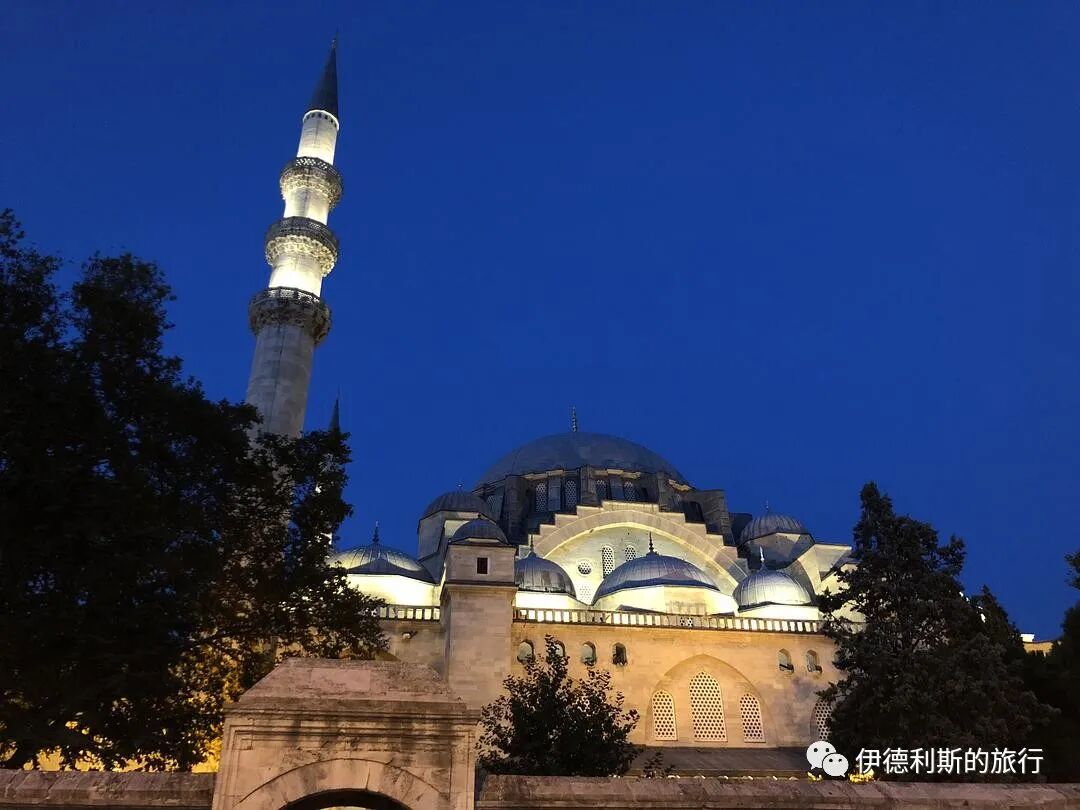
Halal Travel Guide: Istanbul — Mosques, Turkish Food and Ottoman Streets (Part 2 of 3)
Articles • ali2007fr posted the article • 0 comments • 151 views • 2026-05-18 07:41
Summary: Istanbul — Mosques, Turkish Food and Ottoman Streets is presented here as a firsthand travel account in clear English, beginning with this scene: I spent half a month traveling in Turkey from September to October 2018. While visiting historical sites in Istanbul, I tried some local food and would like to share it with you here. The account keeps its focus on Istanbul Travel, Turkish Food, Ottoman Heritage while preserving the names, places, food, and historical details from the Chinese source. This is part 2 of 3.
Part 2 of 3
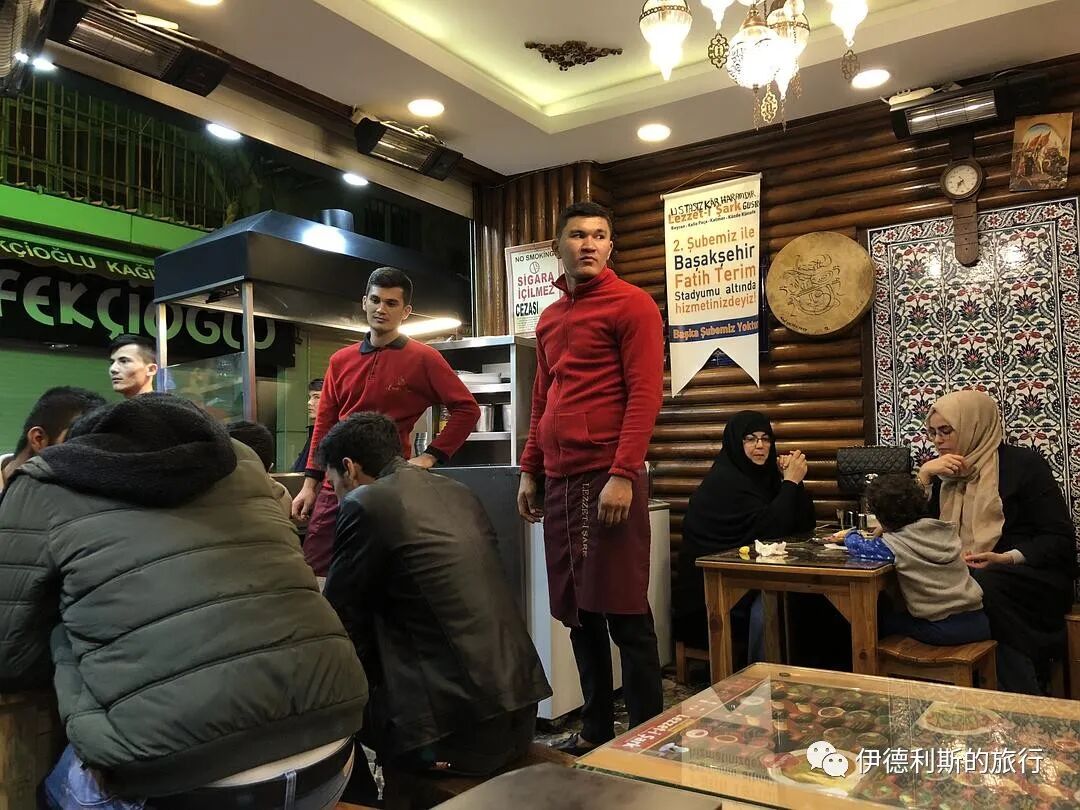
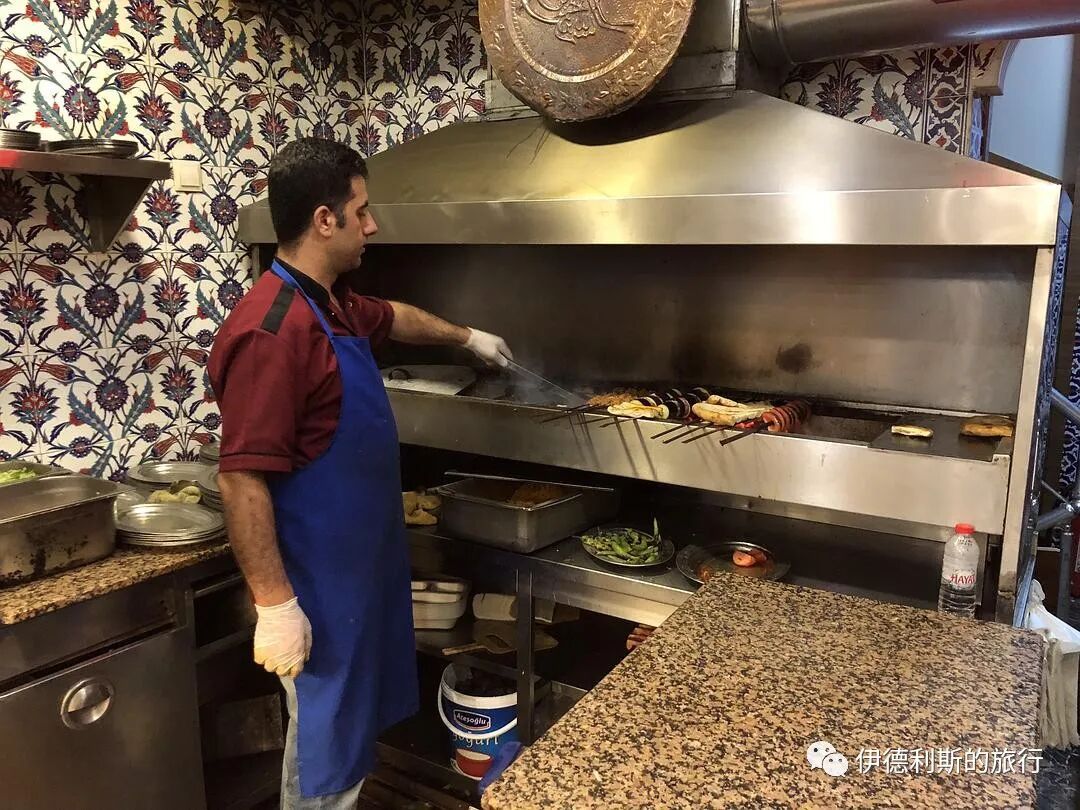
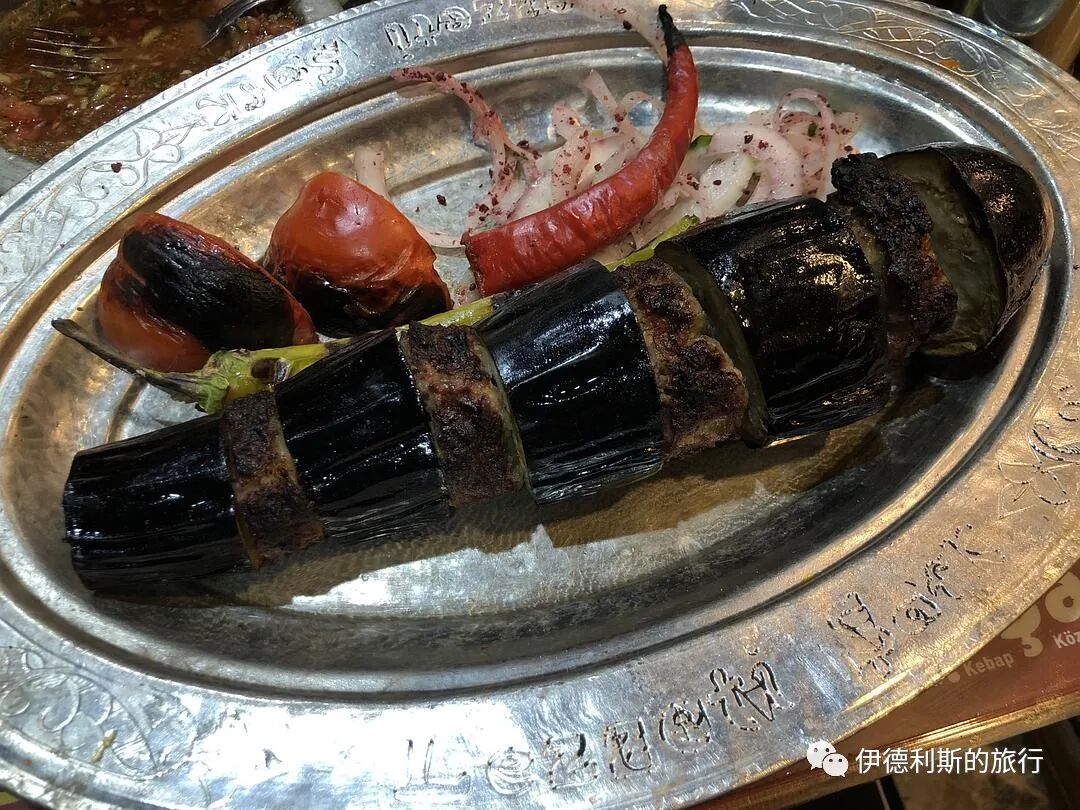
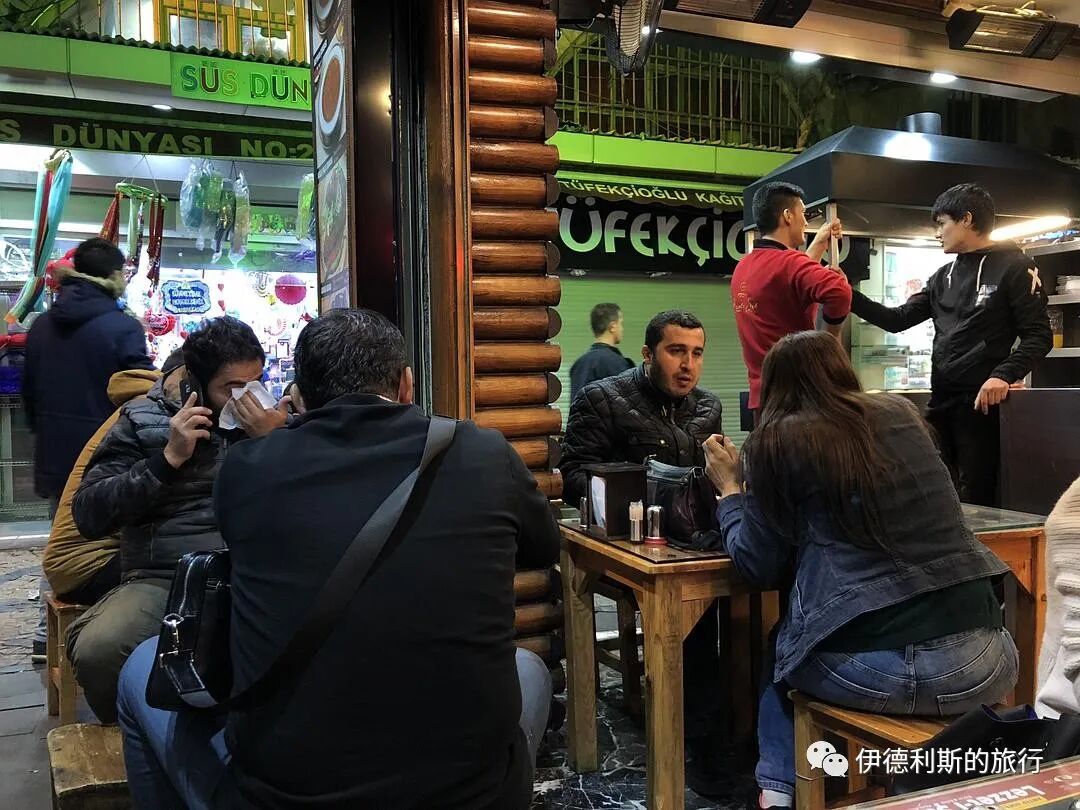
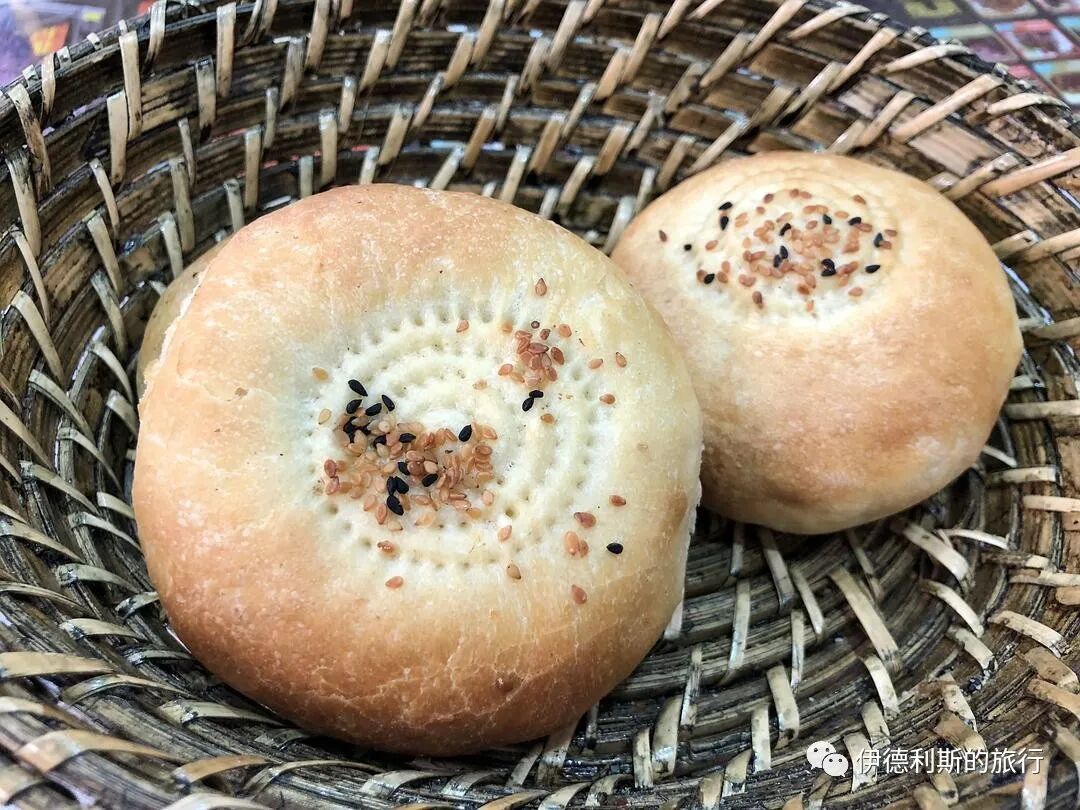
This place serves naan and a salad of onions, peppers, and tomatoes (pilahong) right away, which feels very Inner Asian. By the end of the meal, the Uzbek guy in the red shirt in the middle of the picture helped me peel all the eggplant skins and rolled them up with roasted tomatoes, which was very touching.
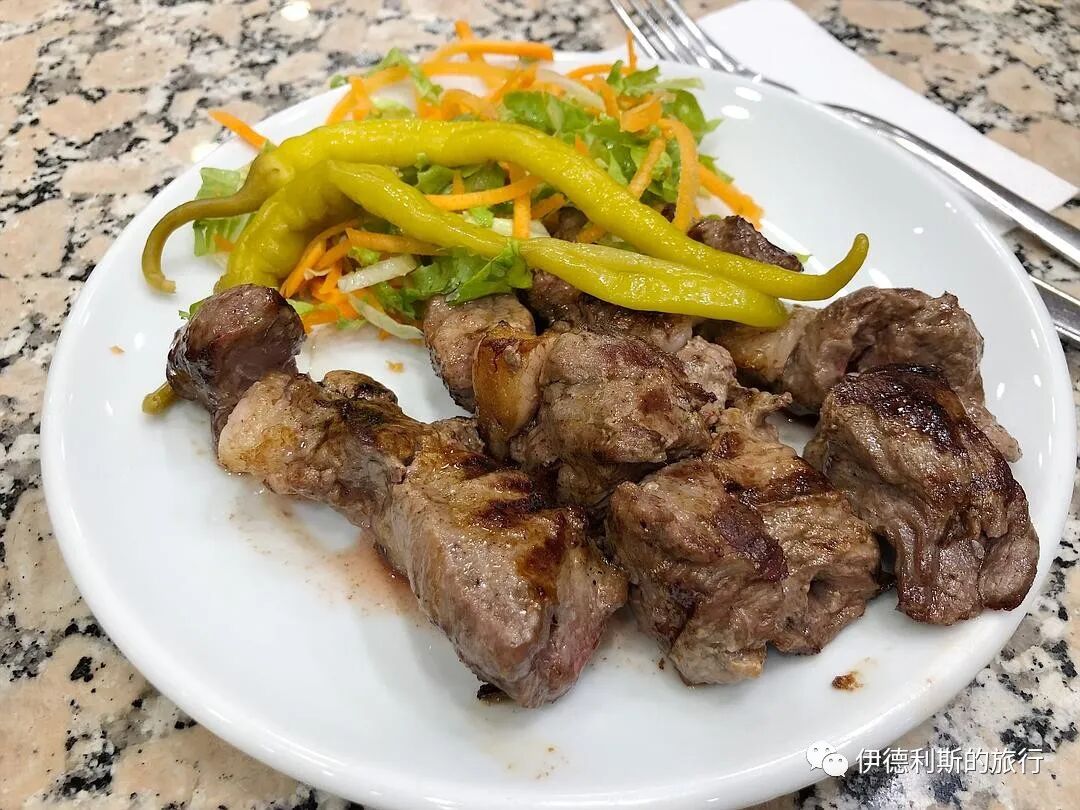
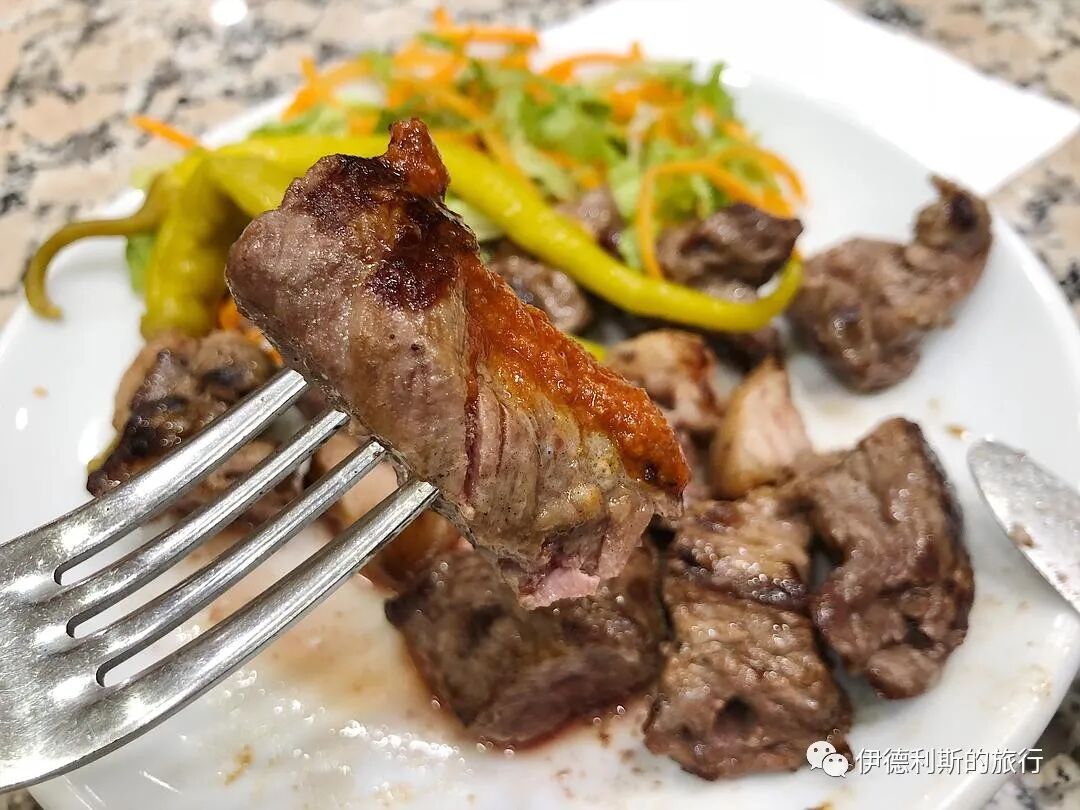
Roasted lamb eaten next to the Hagia Sophia, which was very fresh and tender.
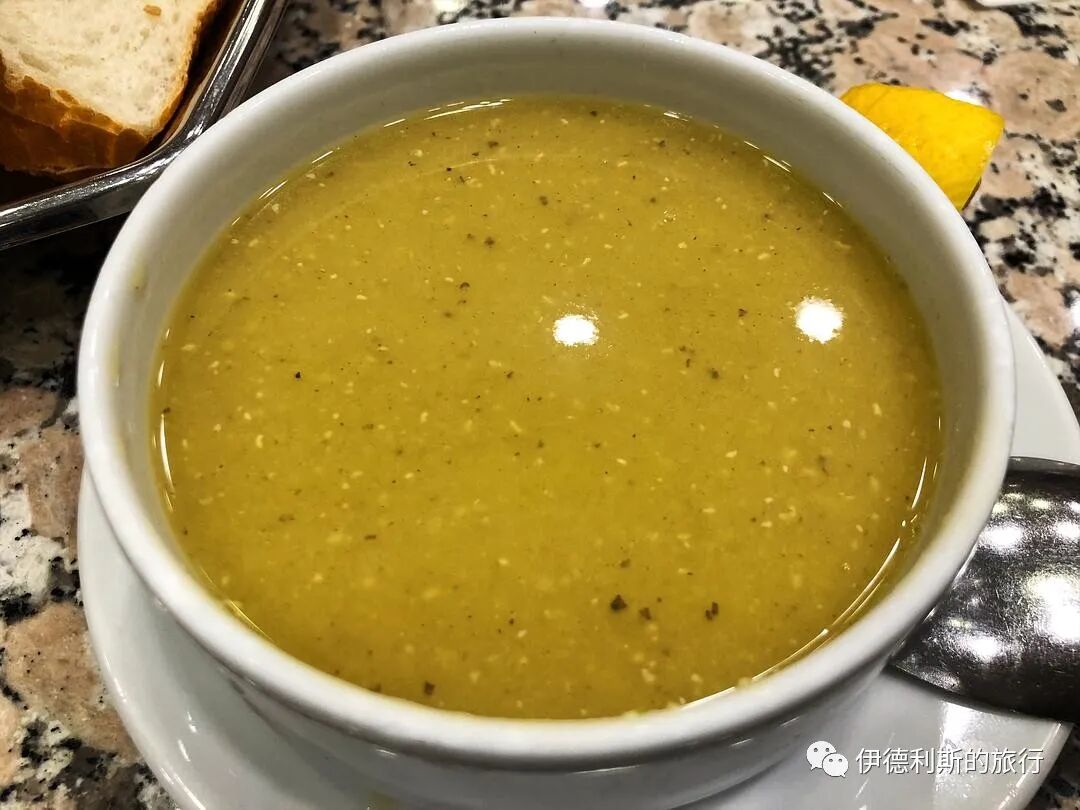
This soup is called chorba.
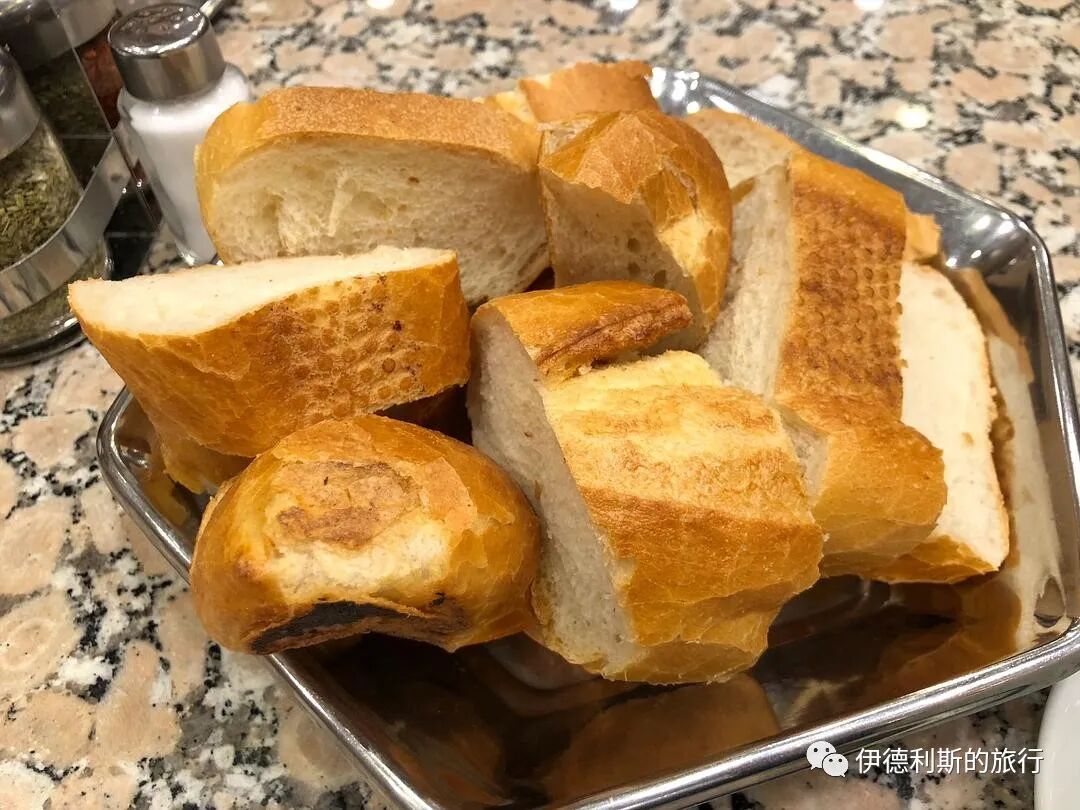
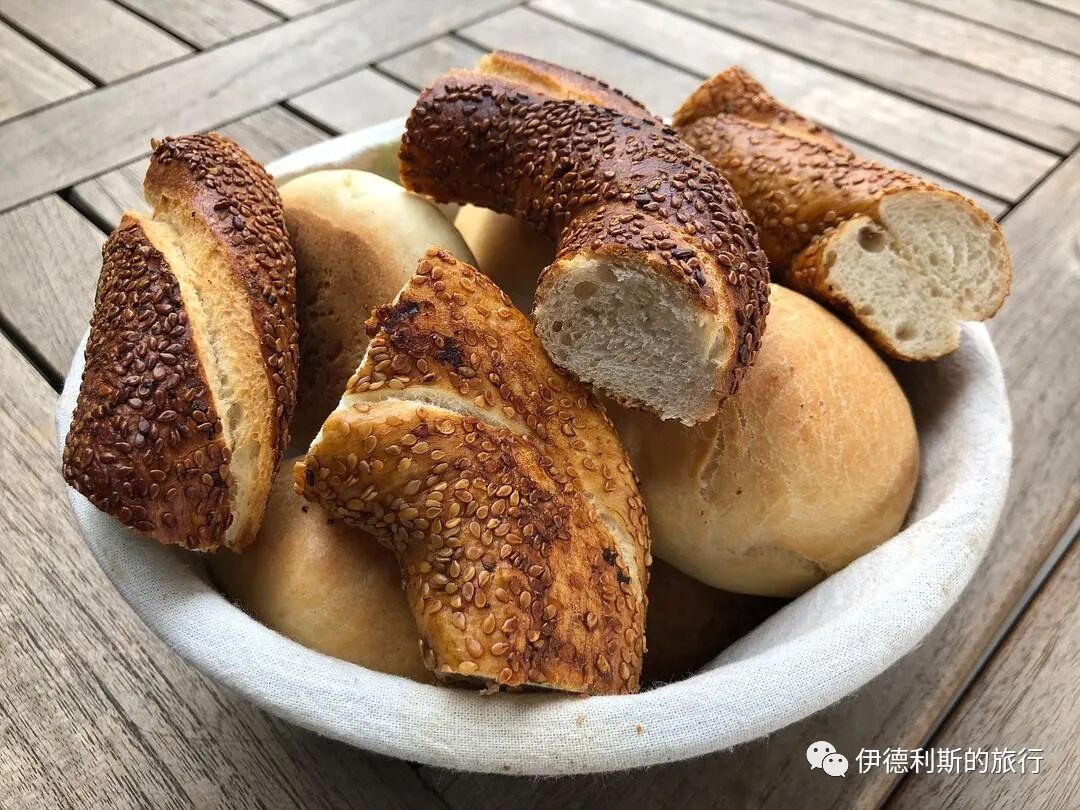
Bread in Turkish restaurants is free to eat.
Eat a flaky pastry (börek) at a flaky pastry shop. The word börek comes from Turkish and can refer to any food made with thin dough sheets (yufka). Börek originated in Anatolia and became popular in the Balkans and North Africa during the Ottoman Empire. It was especially popular in Ottoman Jewish communities, where it was known as one of the three major Ottoman Jewish pastries alongside boyos de pan and bulemas.
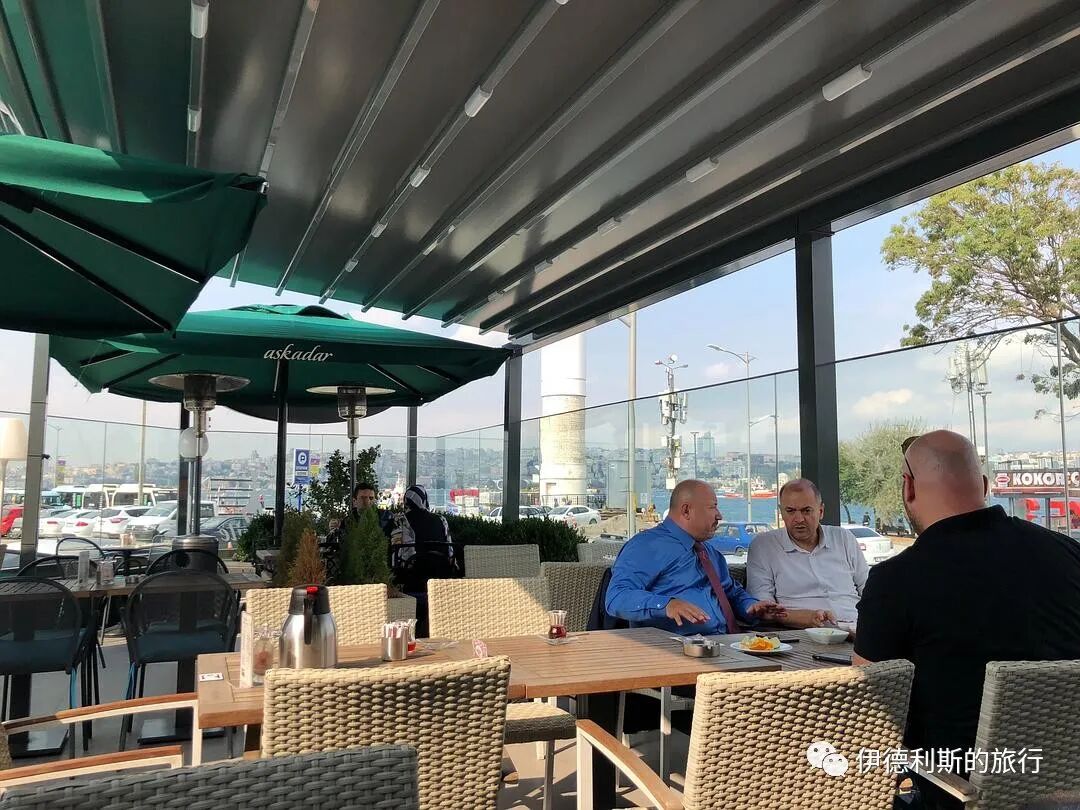
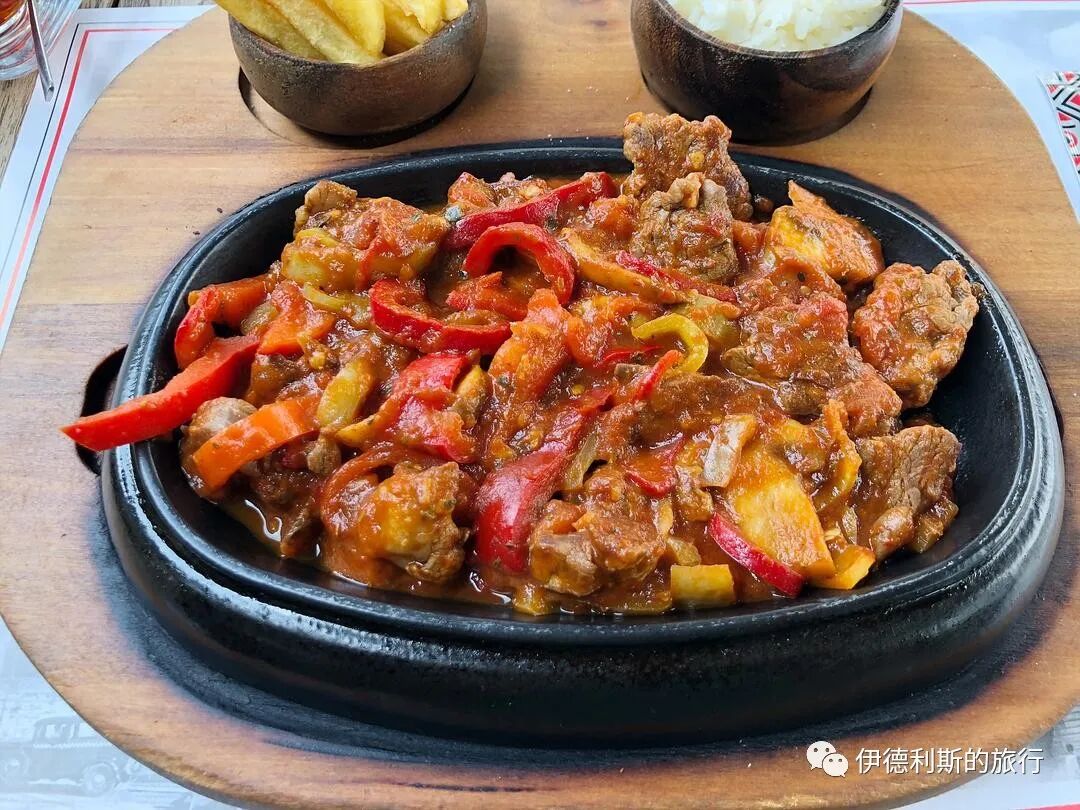
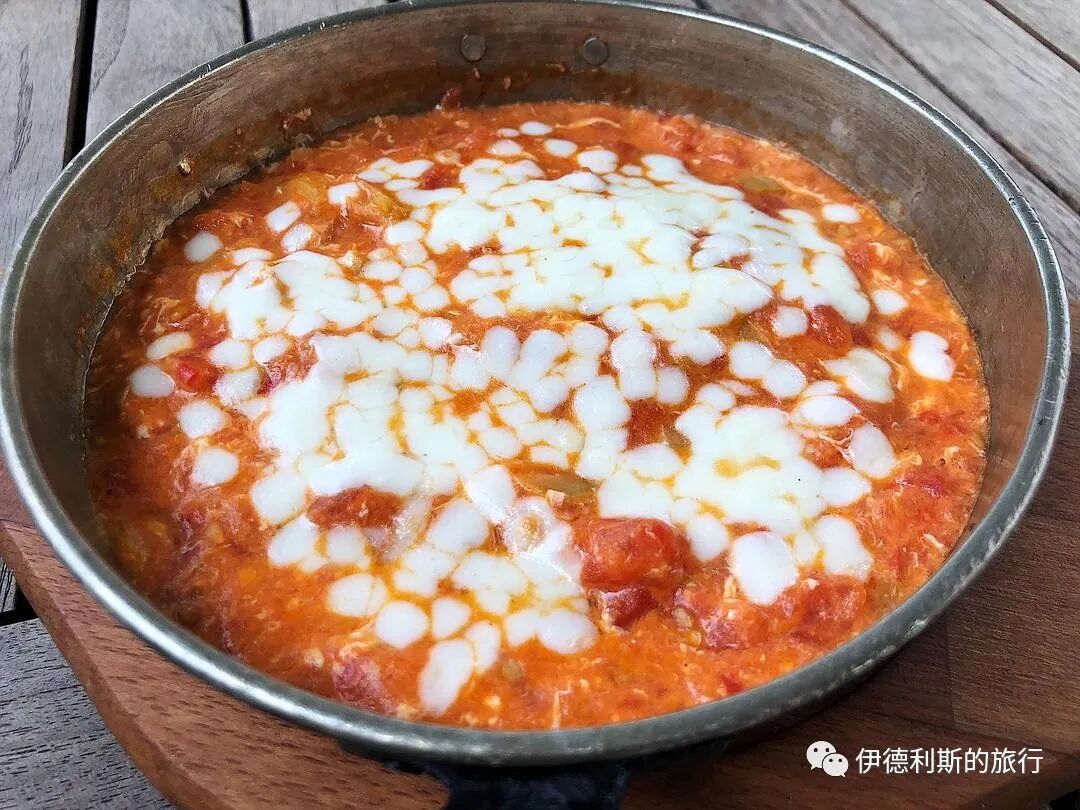
Eat iron-plate tomato grilled meat and scrambled eggs with vegetables (menemen) by the pier in the Asian district. Menemen is a Turkish food made of eggs, tomatoes, green peppers, and various spices, usually eaten for breakfast.
Foreign restaurants
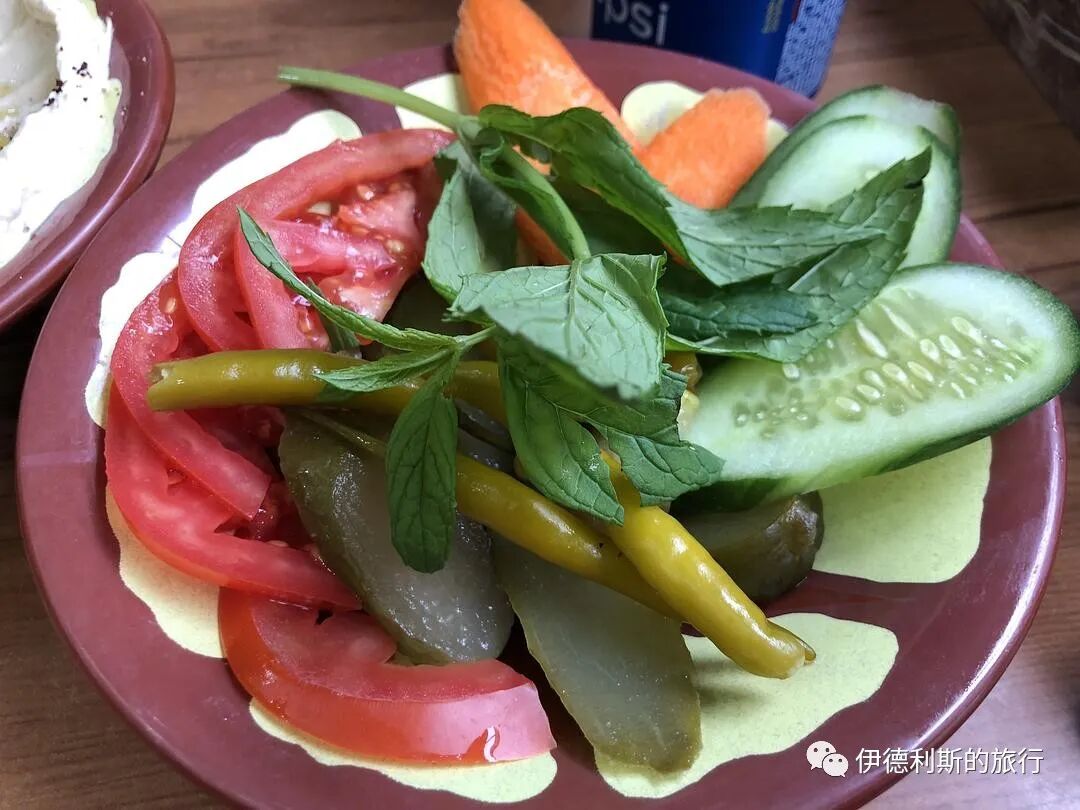
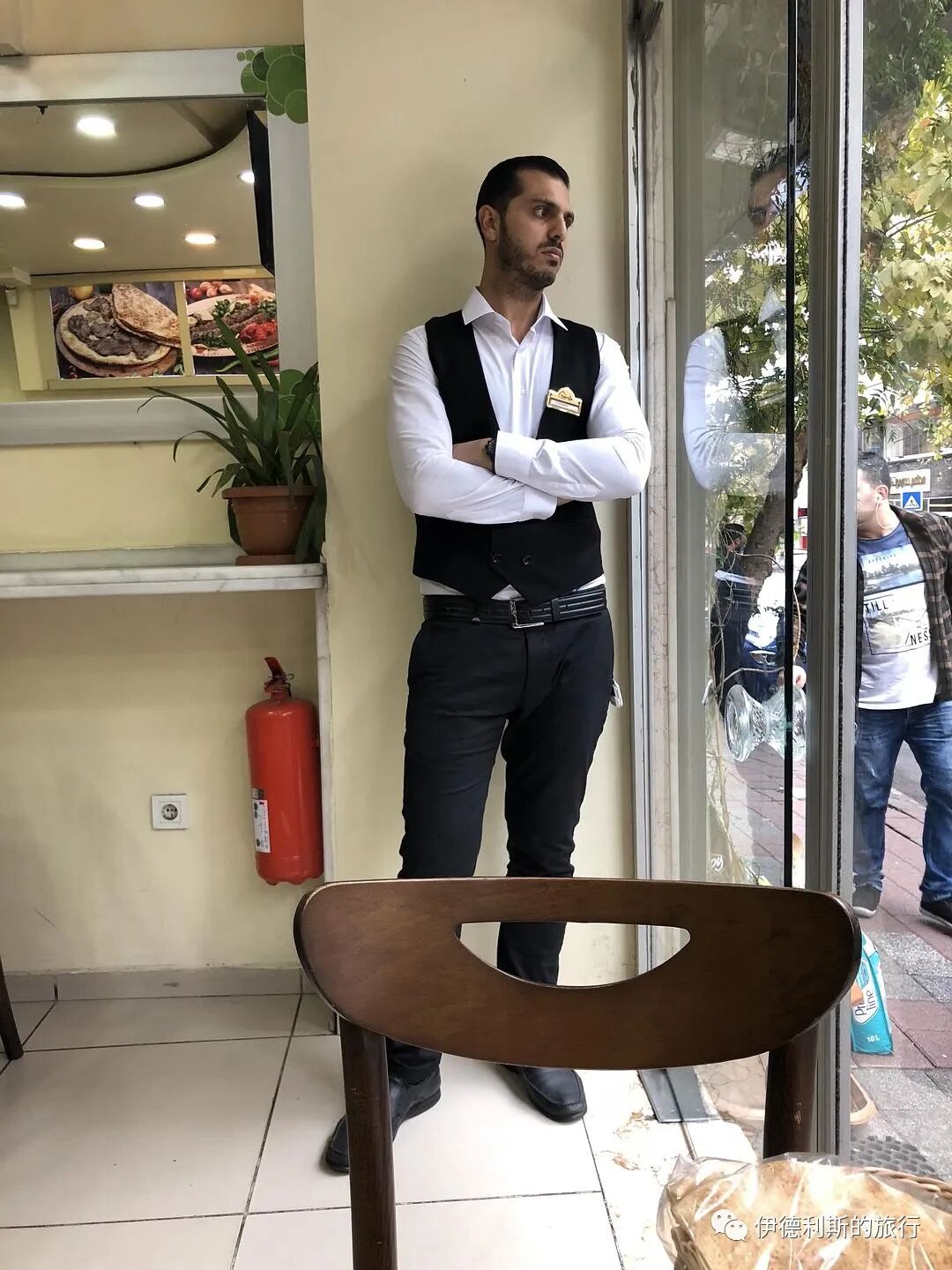
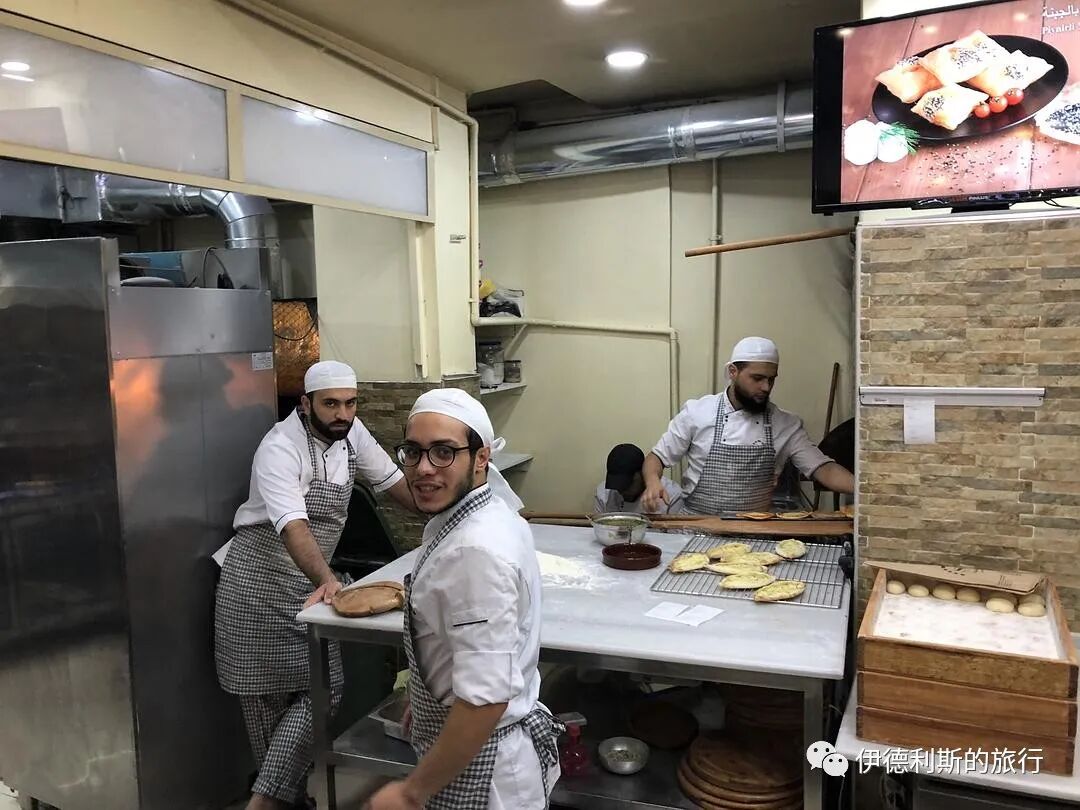
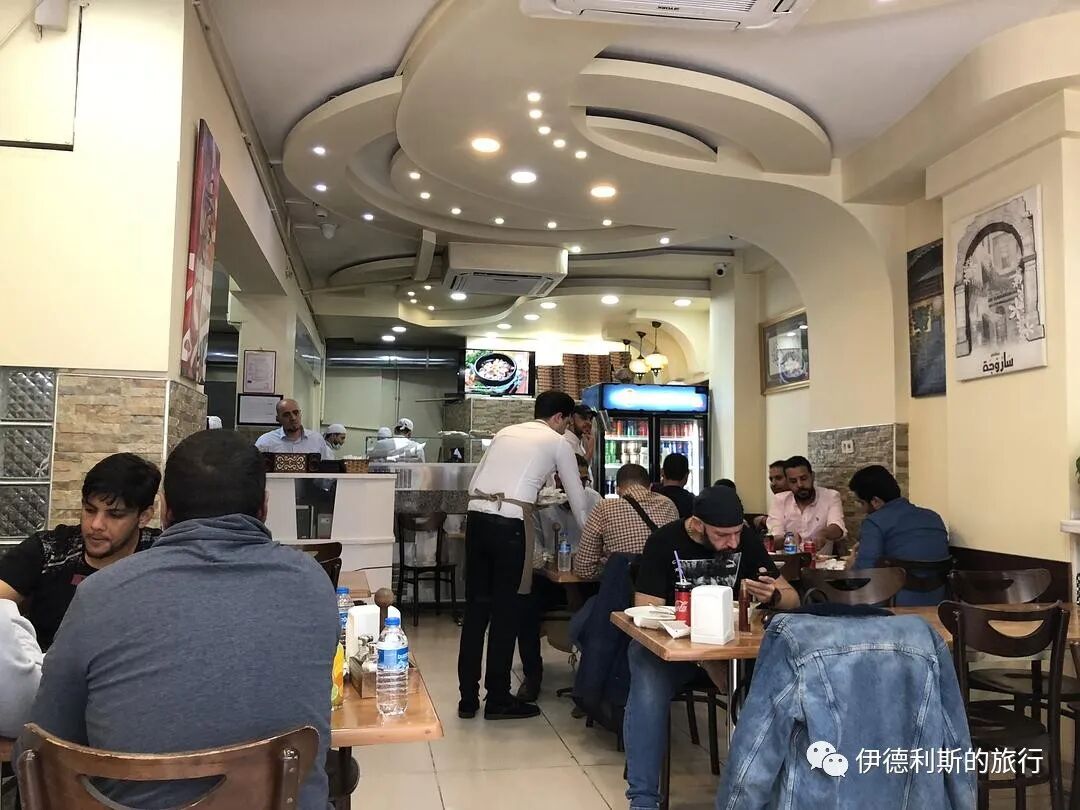
While visiting historical sites in Istanbul, I passed through a neighborhood of Syrian people in the Fatih district. I went into a Syrian restaurant called Saruja and ordered three dishes. When I looked them up later, I found they were all Levantine cuisine.
The Levant refers to the eastern Mediterranean coastal region, including modern-day Jordan, Lebanon, Israel, Palestine, Syria, and parts of Turkey near Syria. During the Ottoman era, many Levantine foods spread to Turkey and Armenia and became local delicacies. The first dish was a minced meat flatbread (lahmacun). I chose a pomegranate-flavored one, and it tasted quite unique. The Turkish word lahmacun comes from the Arabic "laḥm'ajīn," which translates to "meat with dough." During the Ottoman era, this meat flatbread spread to Turkey and Armenia. In different places, it is called "Arab pizza," "Lebanese pizza," "Syrian pizza," "Armenian pizza," and "Turkish pizza."
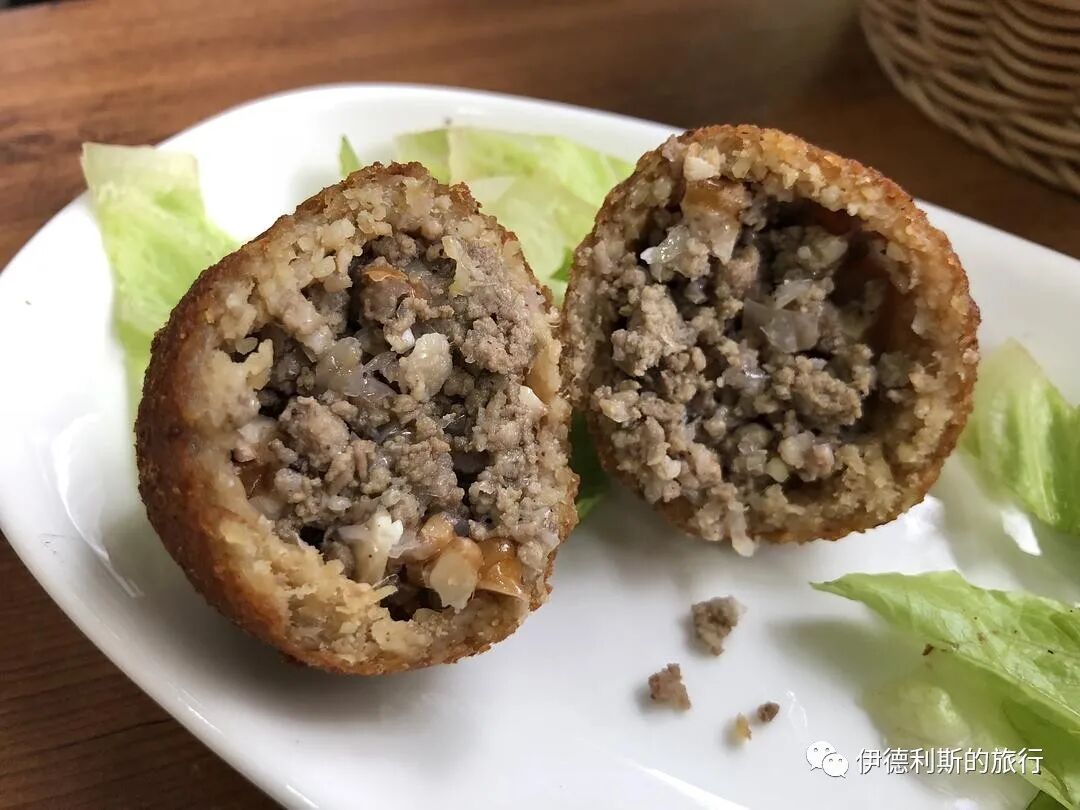
The second dish is called kibbeh, known in Turkish as "içli köfte." Kibbeh is the North Levantine dialect version of the classical Arabic word "kubbah," which translates to "ball." Kibbeh is made of cracked wheat wrapped around a filling of minced meat, chopped onions, and Middle Eastern spices like cinnamon, nutmeg, cloves, and allspice. Kibbeh is most famous in Aleppo, northern Syria, where there are 17 different flavors. Besides the original, they add yogurt, lemon juice, pomegranate molasses, or cherry sauce.
Besides spreading to Turkey and Armenia during the Ottoman era, kibbeh also spread to Latin America with Levantine immigrants in the late 19th and early 20th centuries.
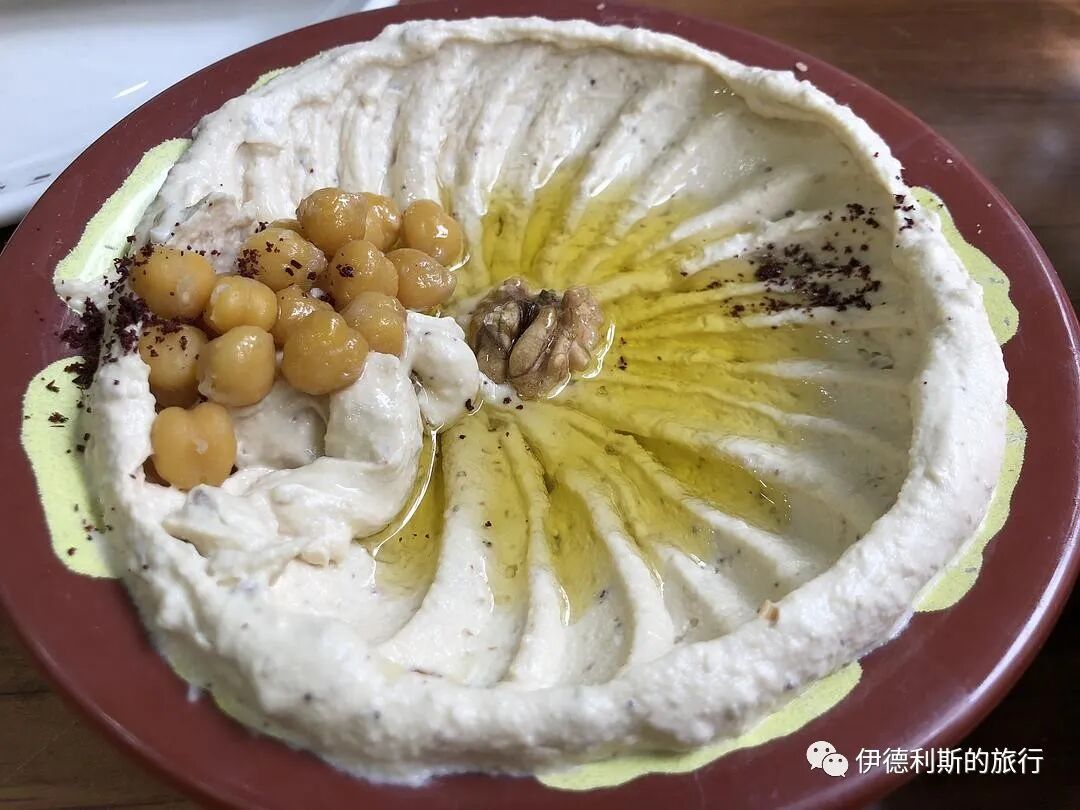
The third dish is chickpea puree (hummus). Hummus means "chickpea" in Arabic and is short for "ḥummuṣ bi ṭaḥīna" (chickpeas with sesame paste). Hummus is made by mixing chickpeas with sesame paste (tahini), olive oil, lemon juice, and garlic. It is very popular in the Middle East and the Mediterranean.
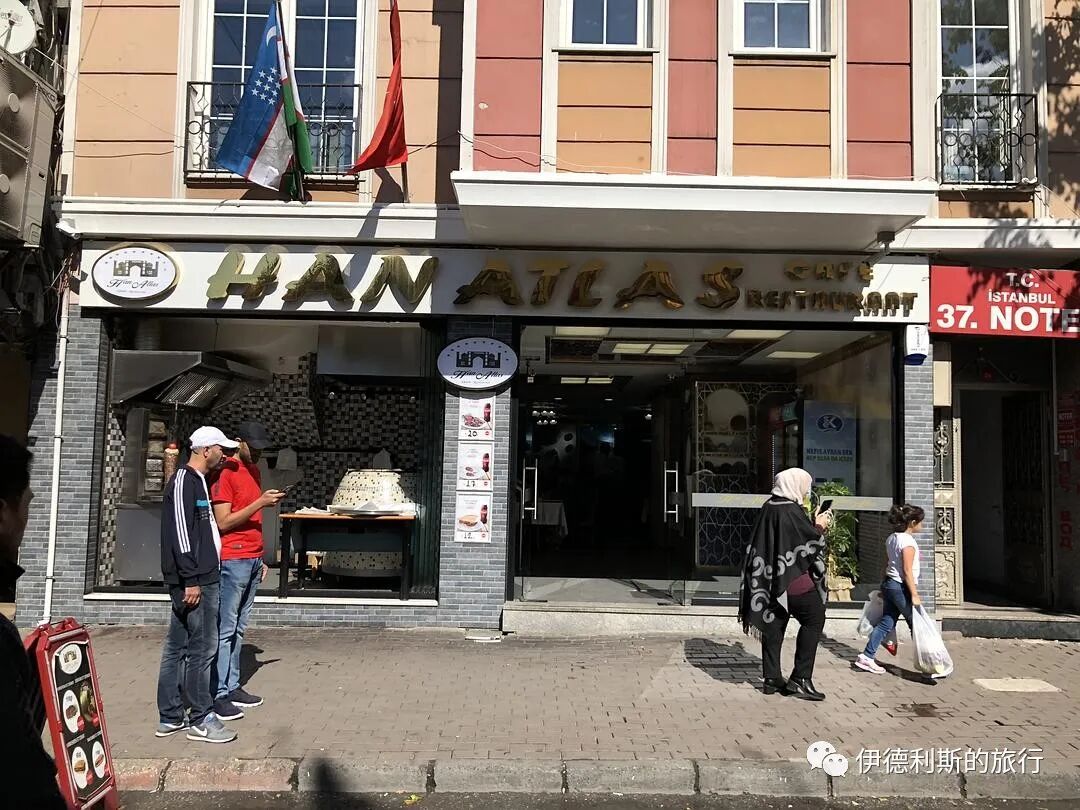
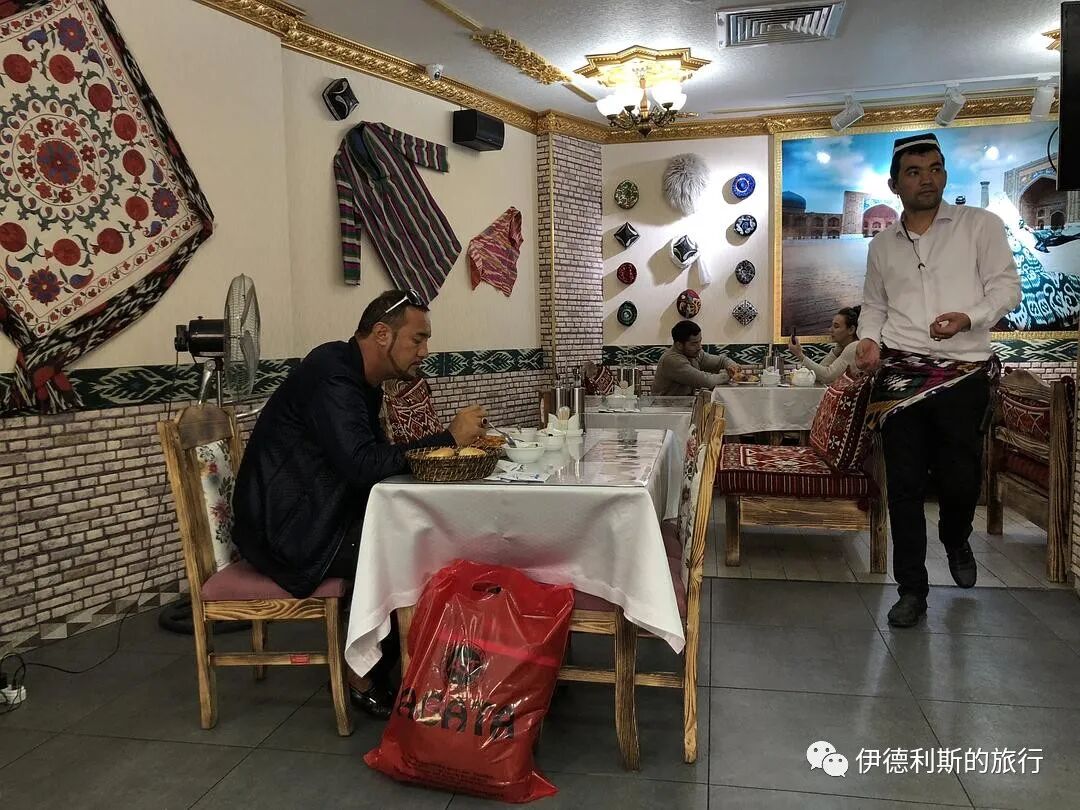
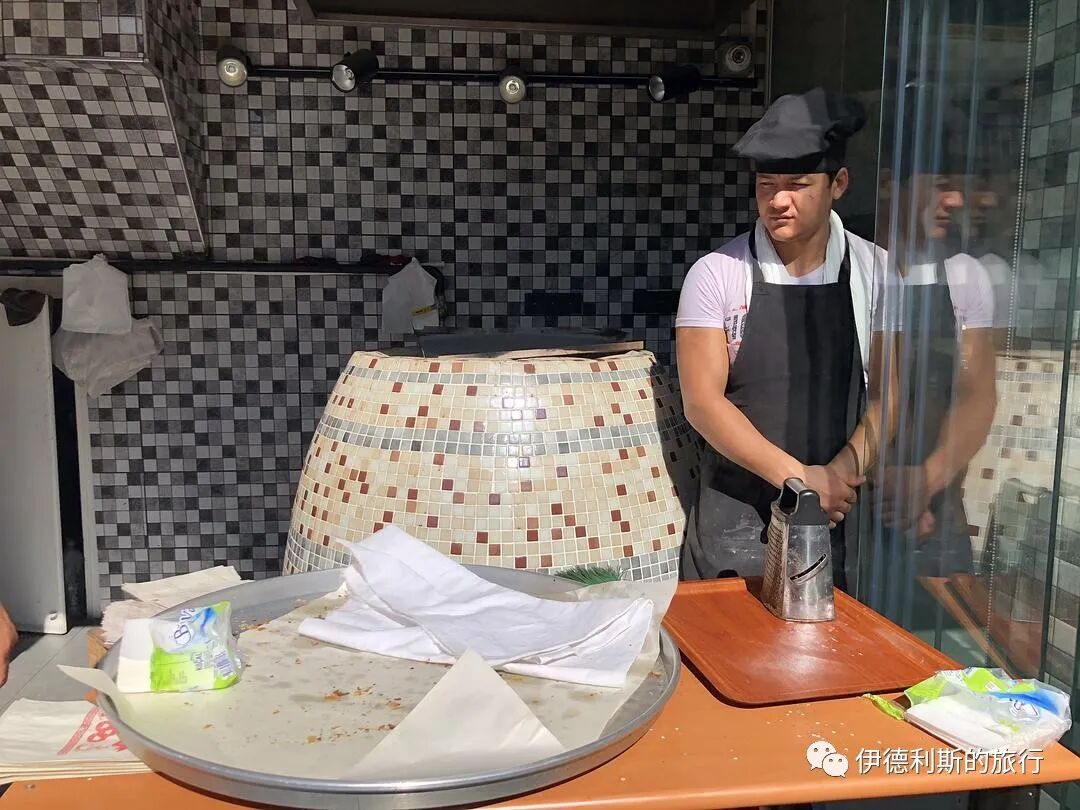
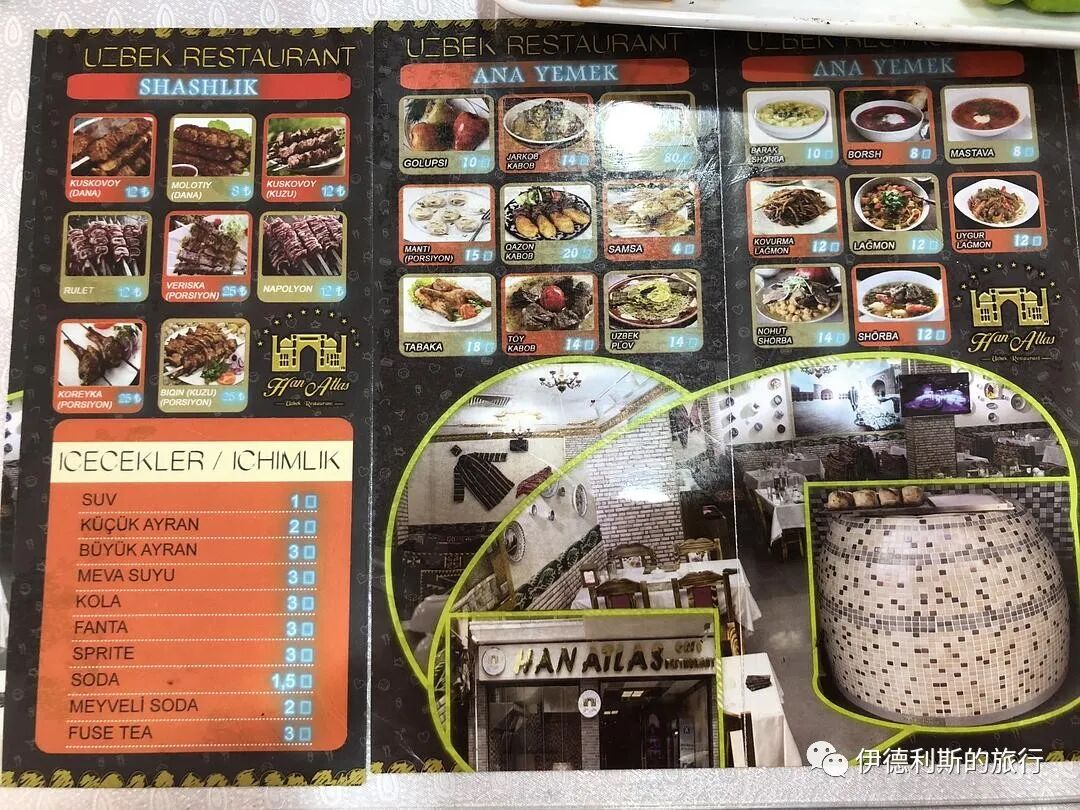
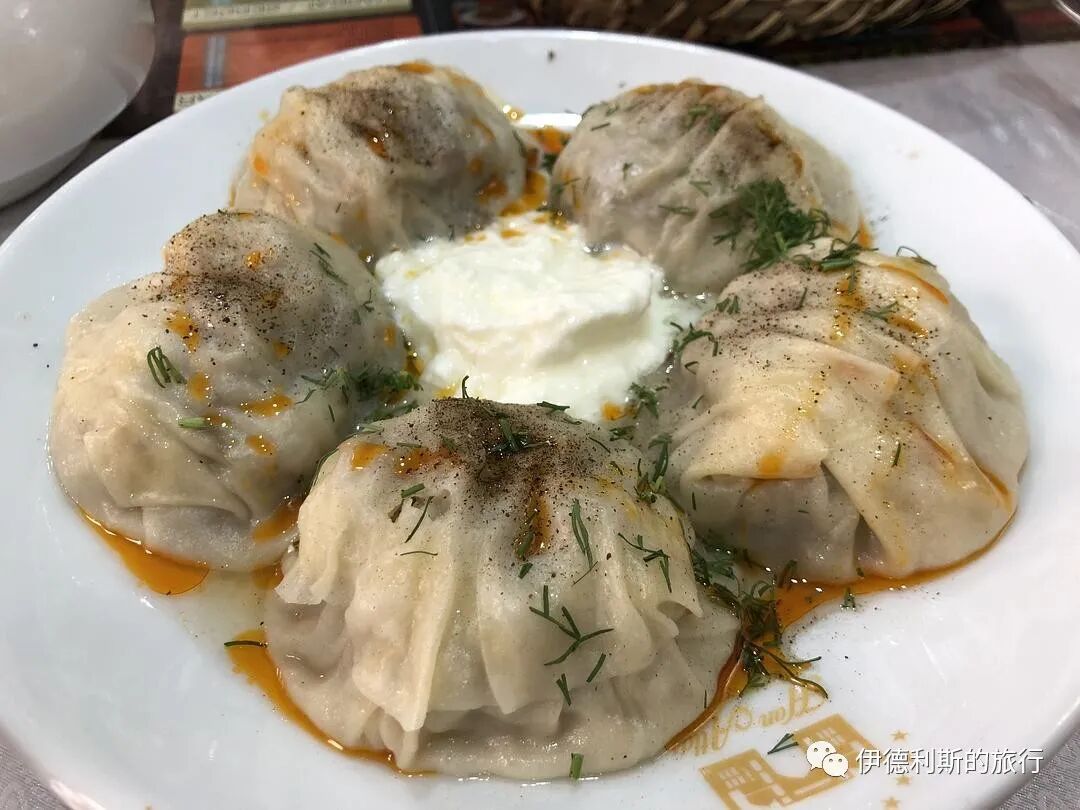
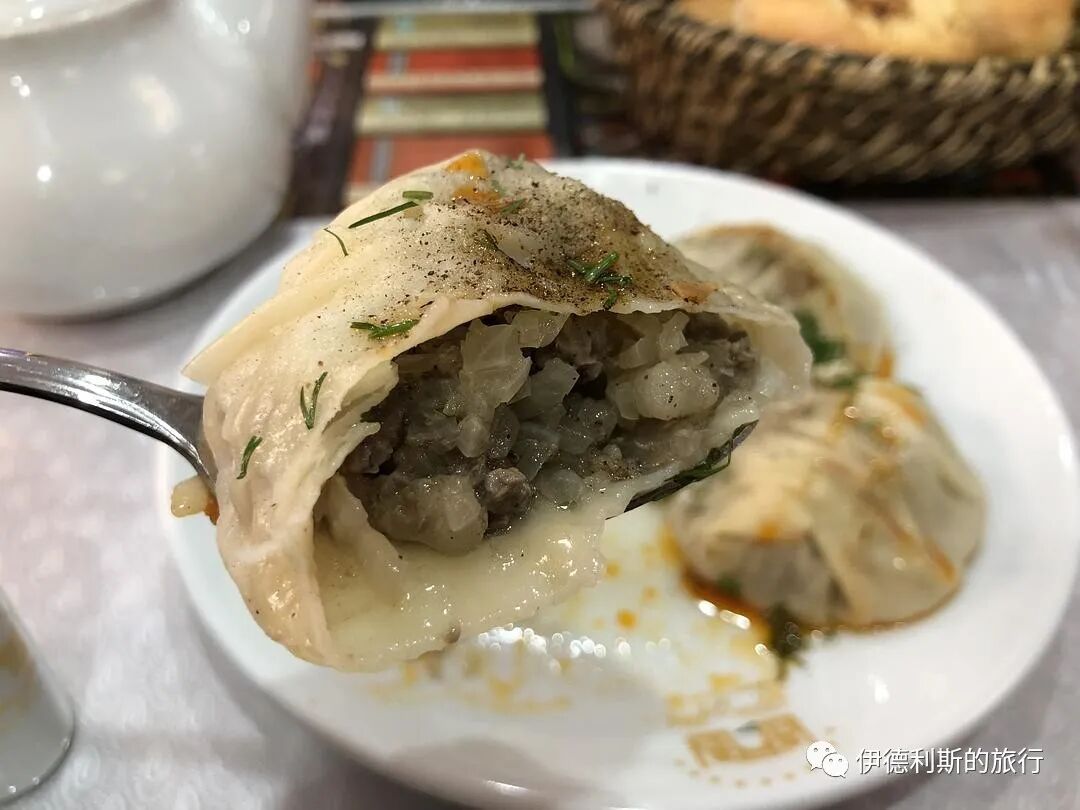
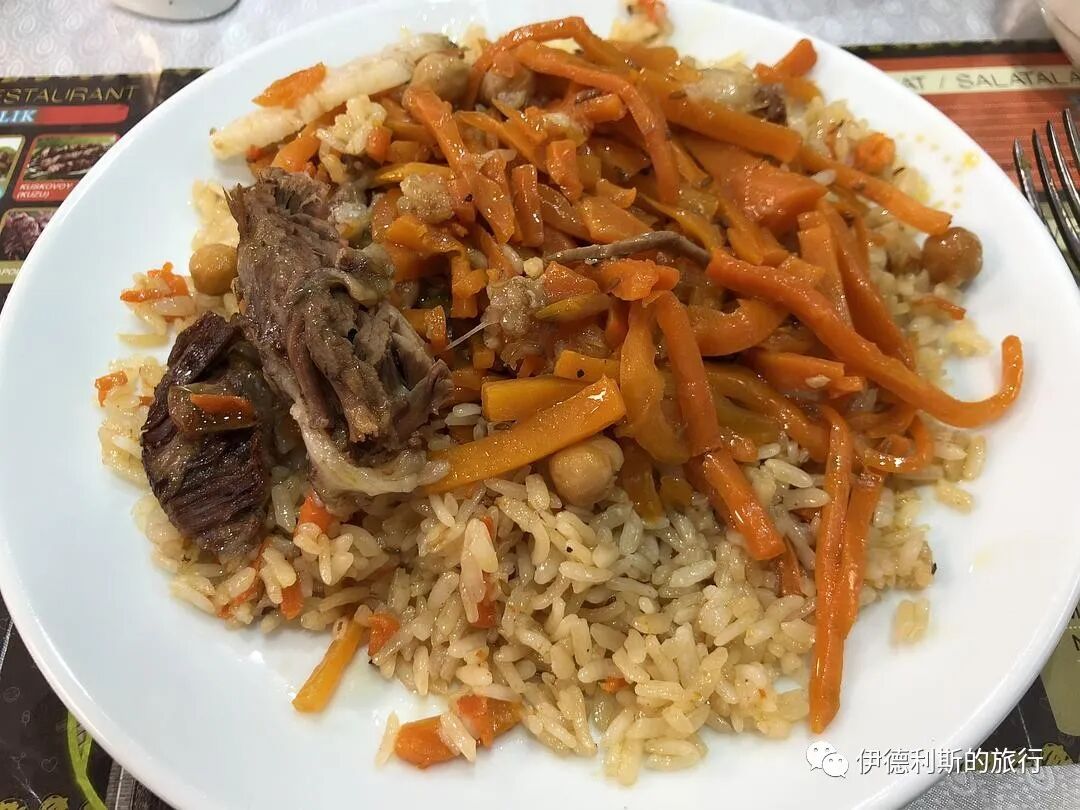
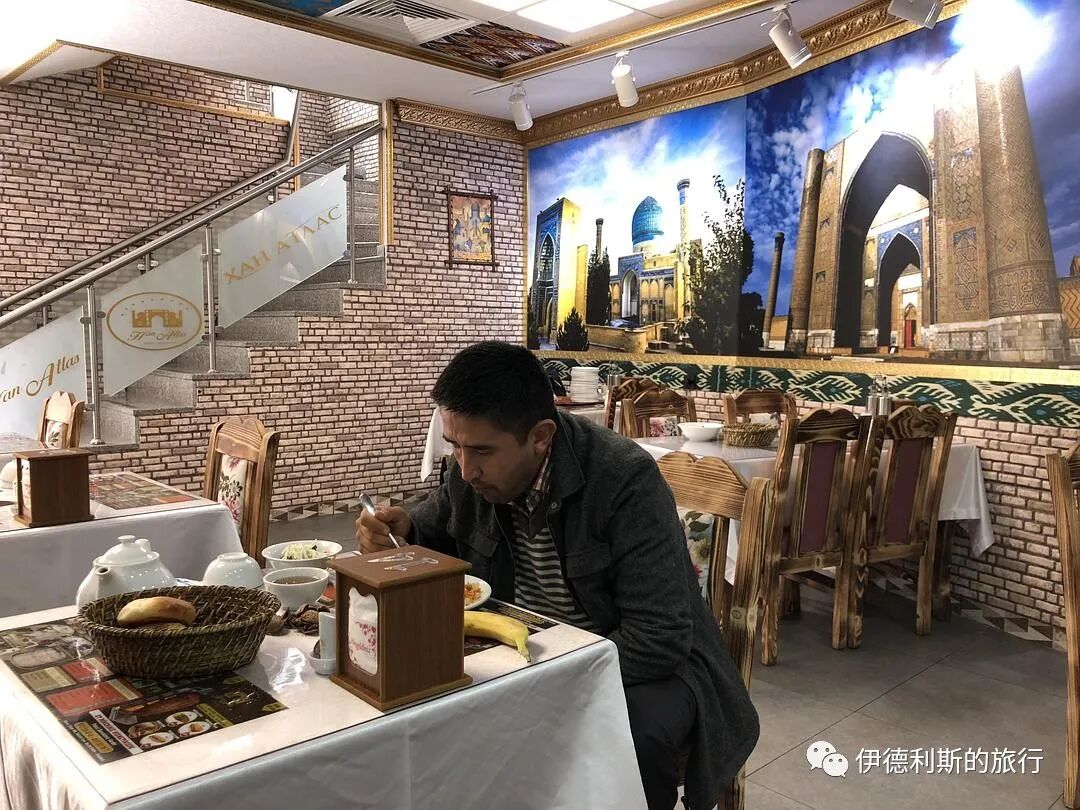
I ate pilaf (plov) and thin-skinned steamed buns (manti) at an Uzbek restaurant not far south of the Grand Bazaar. I have to praise these buns—the skin was incredibly thin! You cannot find them this thin in Beijing. A man sitting next to me spoke Chinese; he used to do business in Yiwu and Shanghai.
Grilled fish by the Golden Horn.
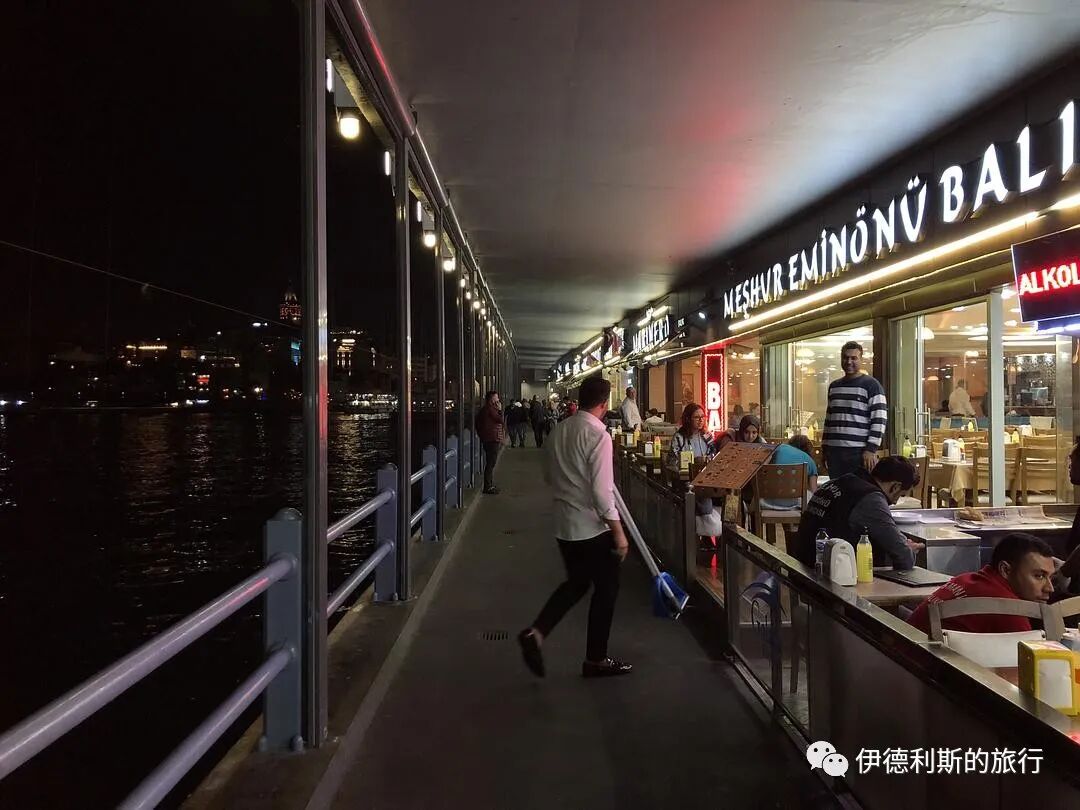
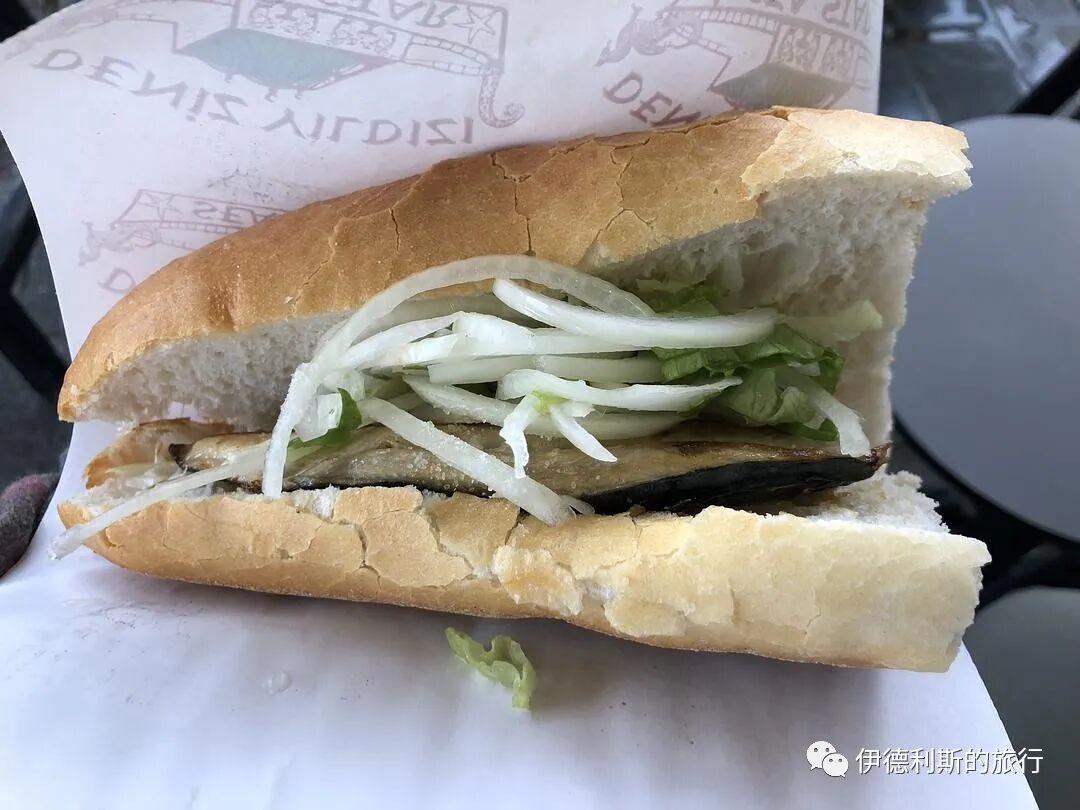
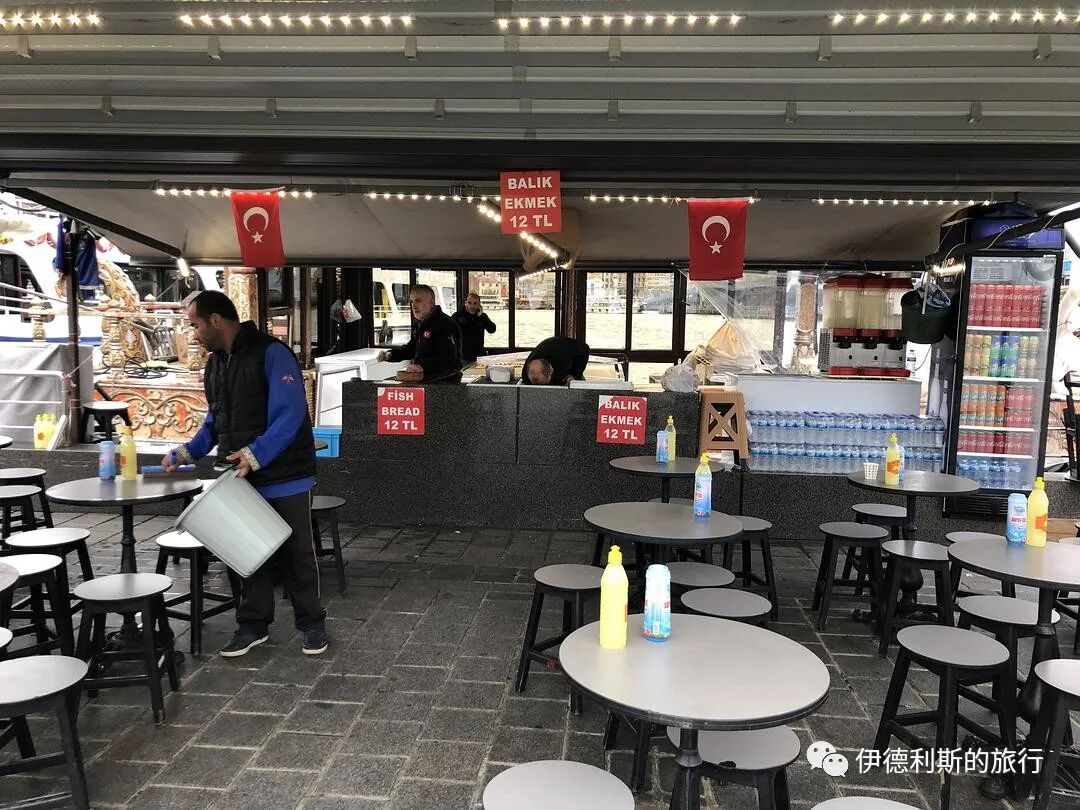
There are many places to eat grilled fish along the Golden Horn, and you can have it in a sandwich or just eat it on its own.
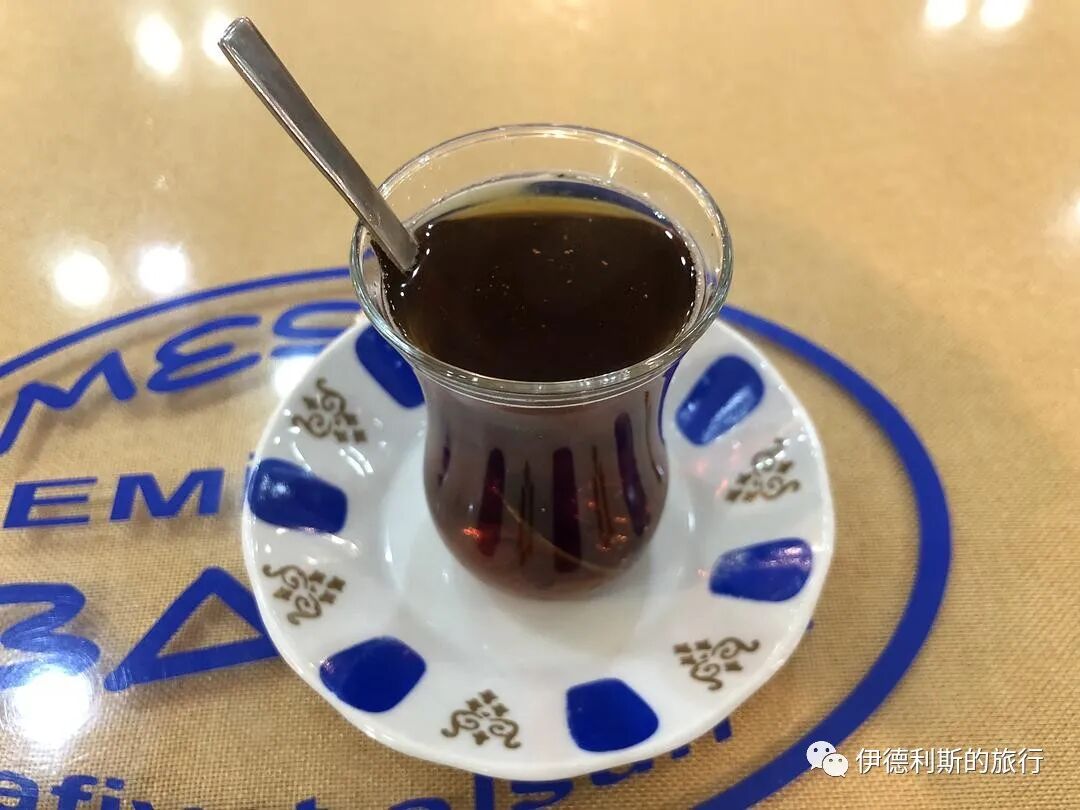
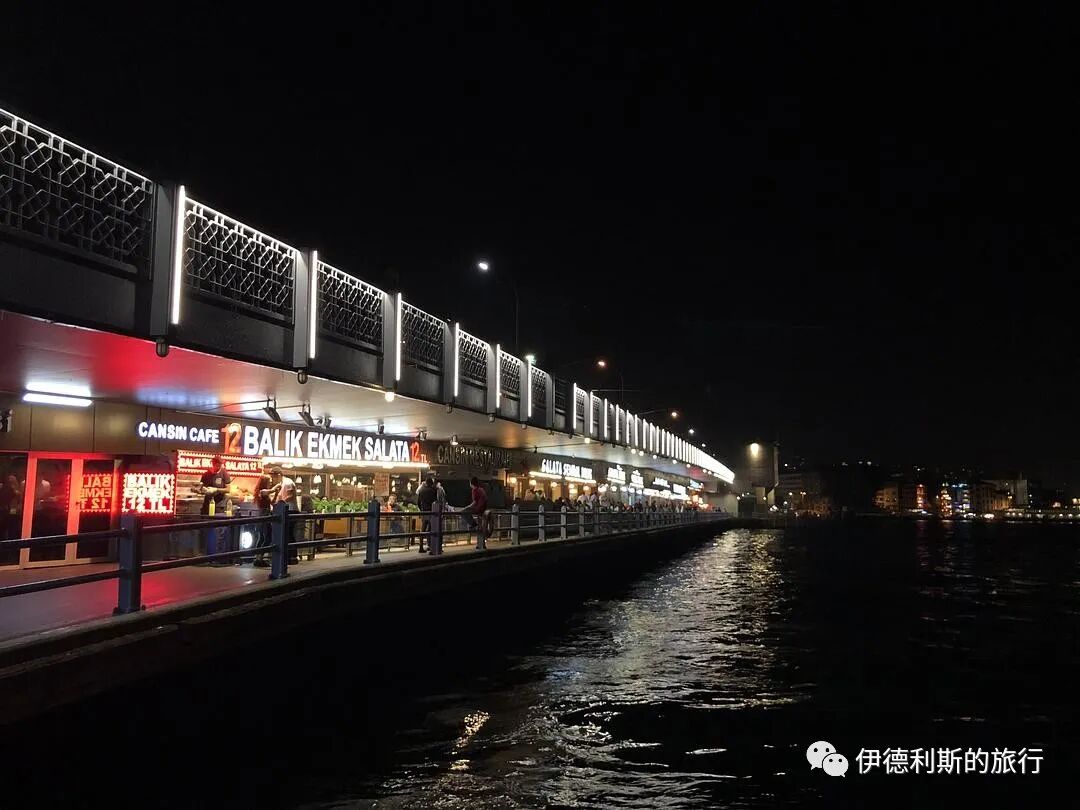
This restaurant is on the Galata Bridge. I ordered grilled salmon, and they gave me free tea after the meal.
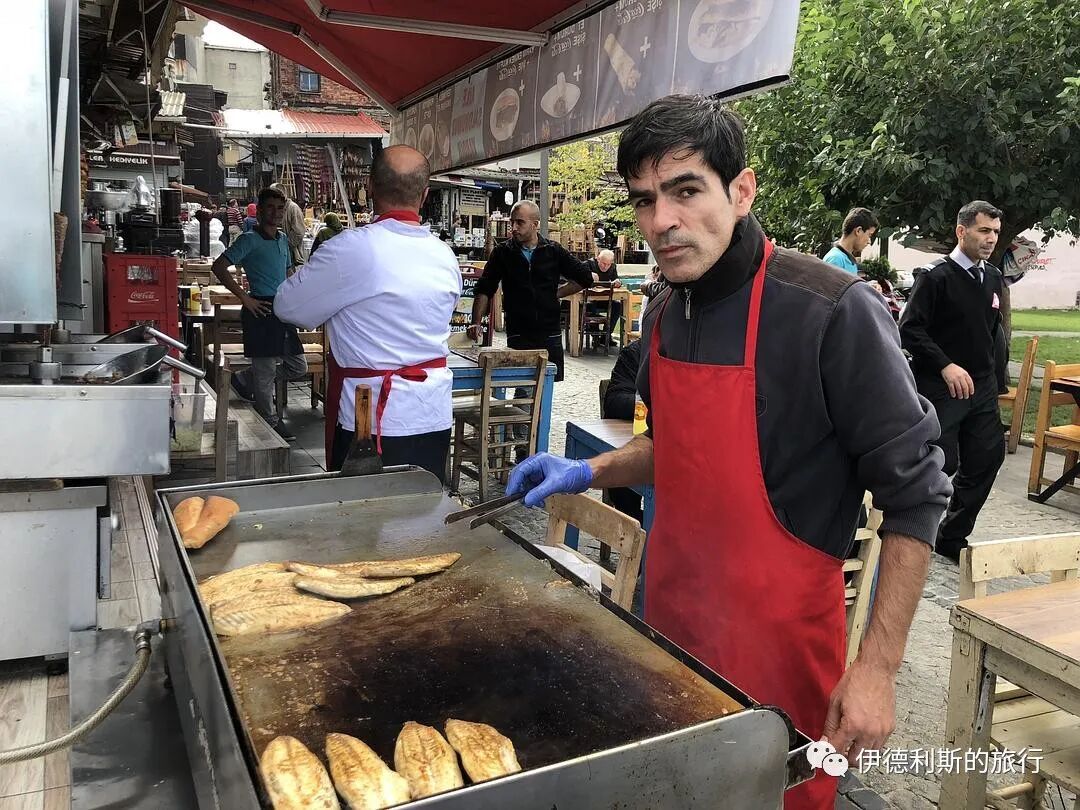
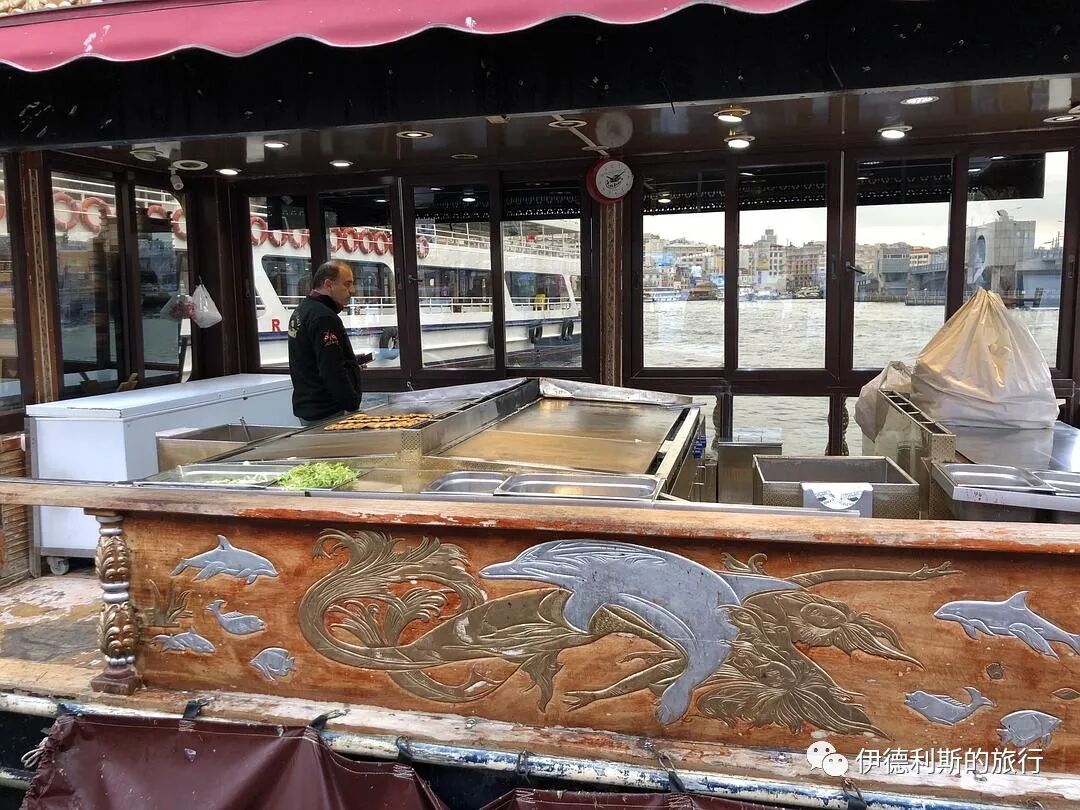
There are many street stalls selling grilled fish sandwiches next to the Eminonu pier on the Golden Horn.
Rice.
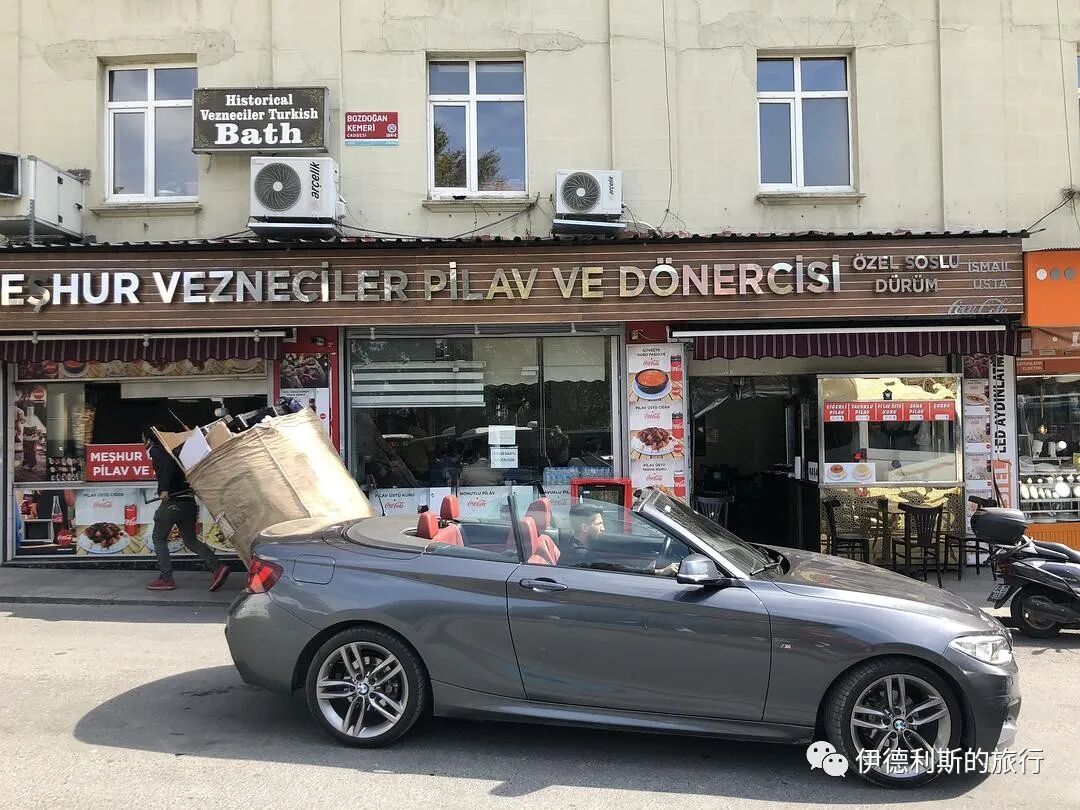
Turkish rice shops are called Pilavcisi. While pilav refers to pilaf in Central and South Asia, in Turkey, they just call plain white rice pilav.
I ate rice mixed with chicken and liver (Pilav ustu Tavuk-Ciger) at this shop.
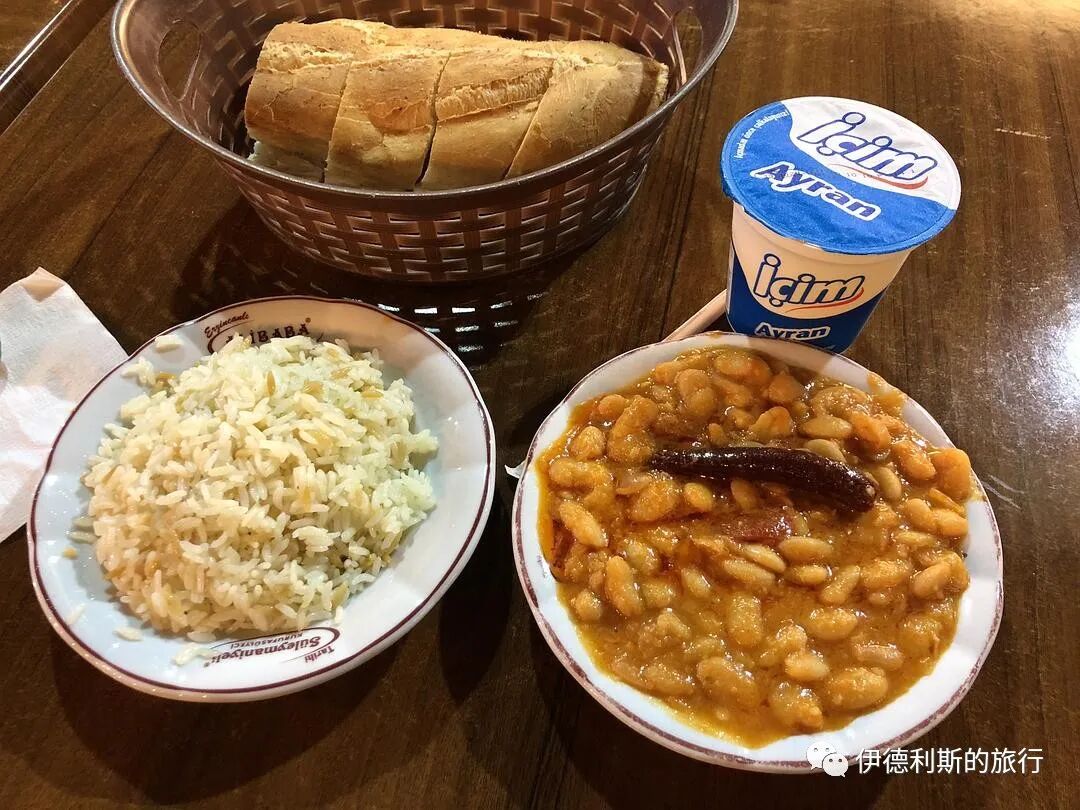
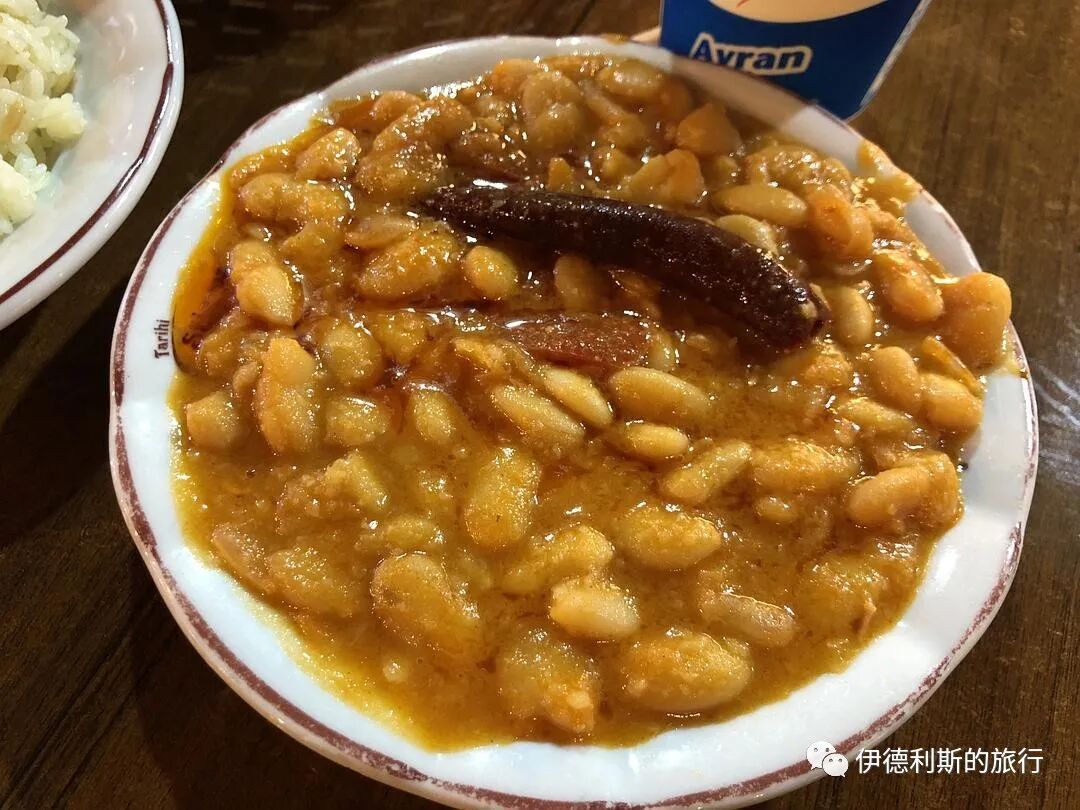
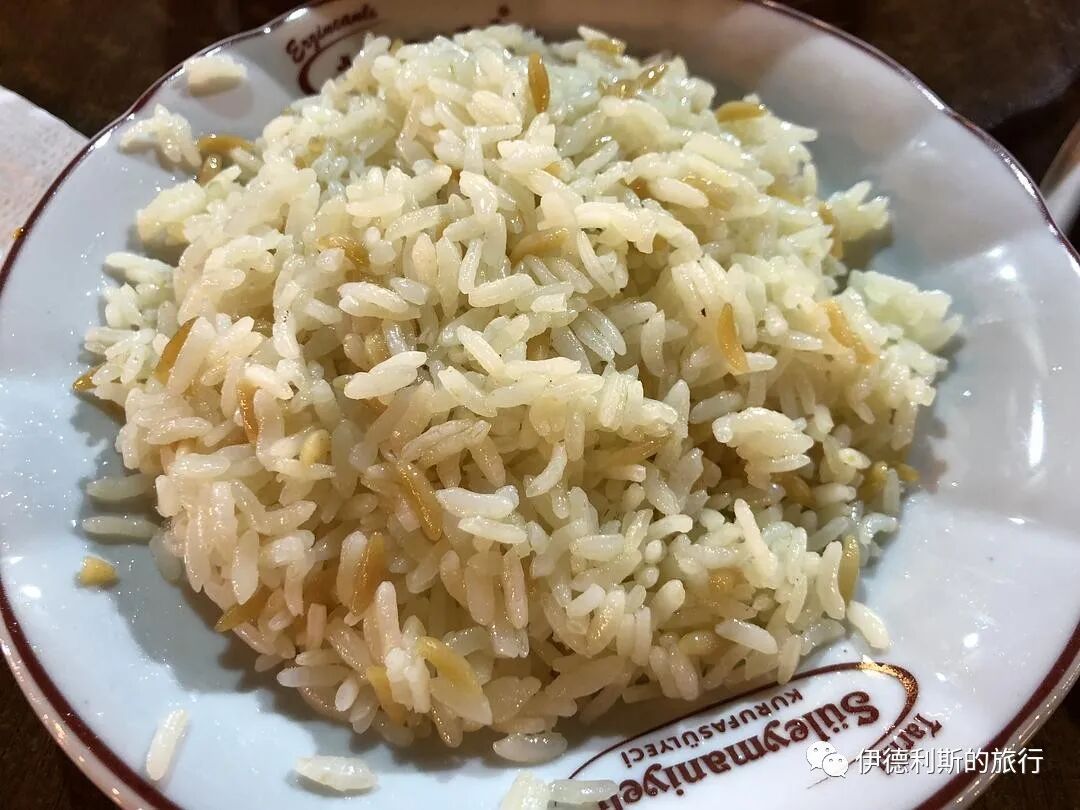
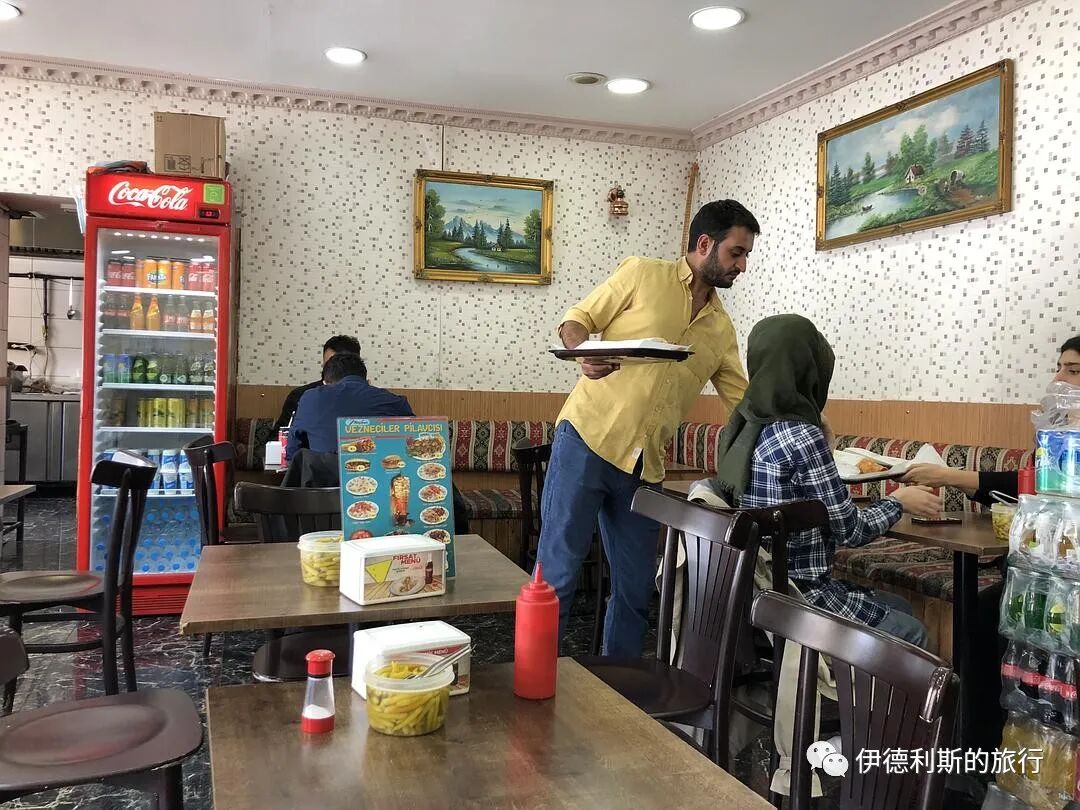
A street-facing section of one of the madrasas at the famous Suleymaniye Mosque is rented out to a restaurant called Ali Baba. This restaurant is known for its bean rice, or Kuru fasulye ve Pilav. Kuru fasulye is known as Turkey's national dish, made with white beans, olive oil, onions, and tomato paste. view all
Summary: Istanbul — Mosques, Turkish Food and Ottoman Streets is presented here as a firsthand travel account in clear English, beginning with this scene: I spent half a month traveling in Turkey from September to October 2018. While visiting historical sites in Istanbul, I tried some local food and would like to share it with you here. The account keeps its focus on Istanbul Travel, Turkish Food, Ottoman Heritage while preserving the names, places, food, and historical details from the Chinese source. This is part 2 of 3.
Part 2 of 3
This place serves naan and a salad of onions, peppers, and tomatoes (pilahong) right away, which feels very Inner Asian. By the end of the meal, the Uzbek guy in the red shirt in the middle of the picture helped me peel all the eggplant skins and rolled them up with roasted tomatoes, which was very touching.
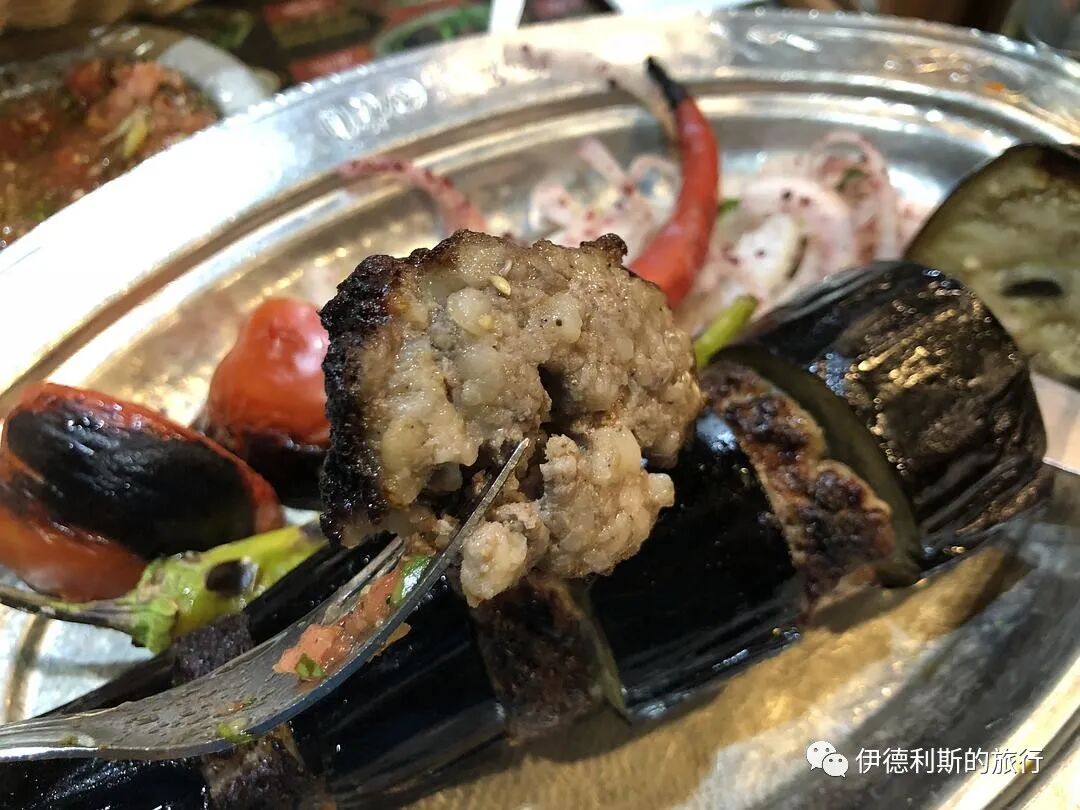
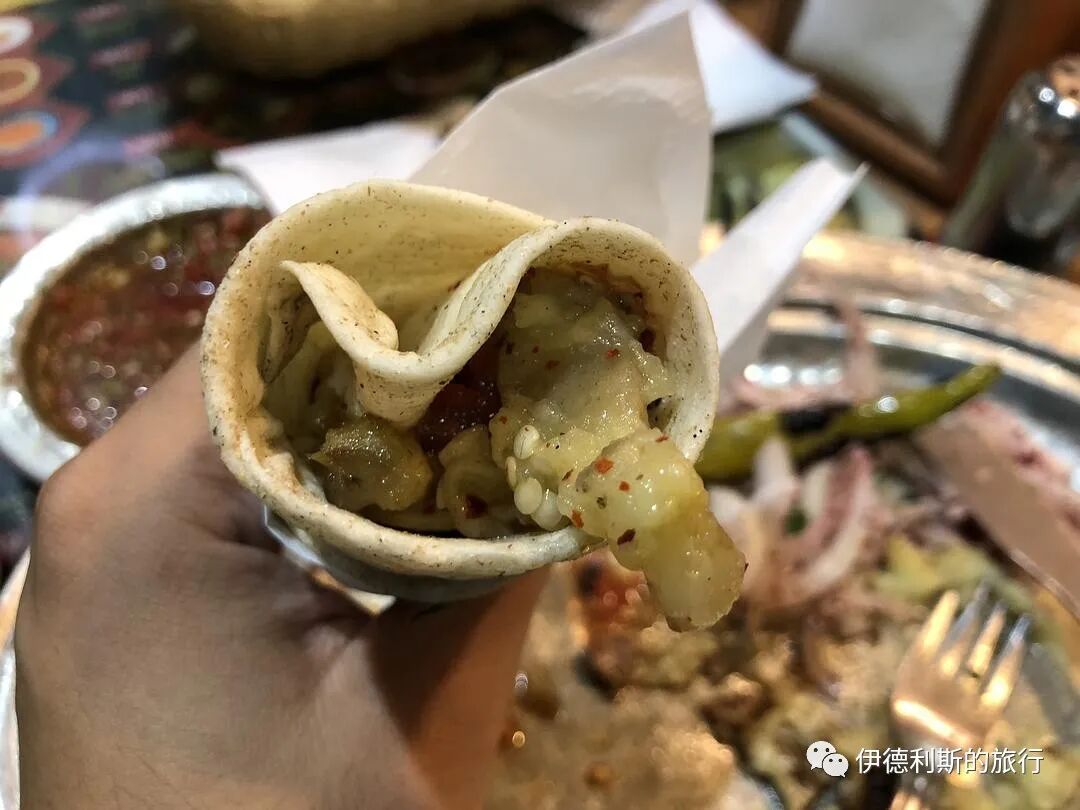
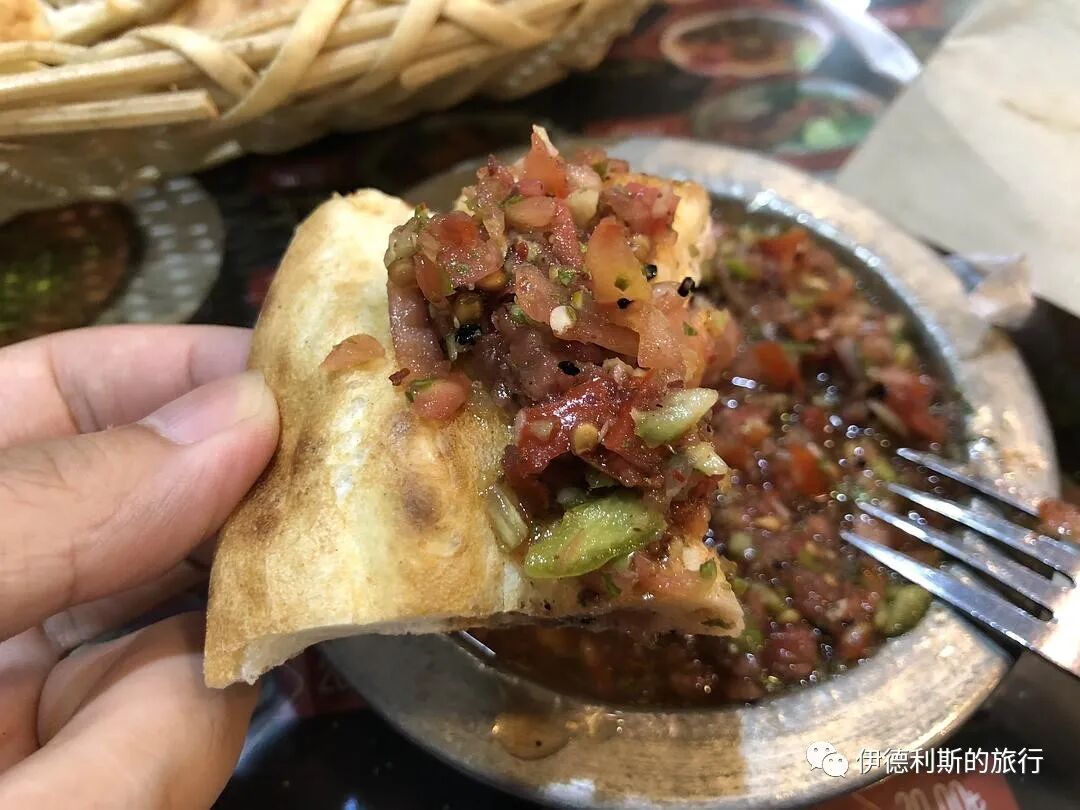
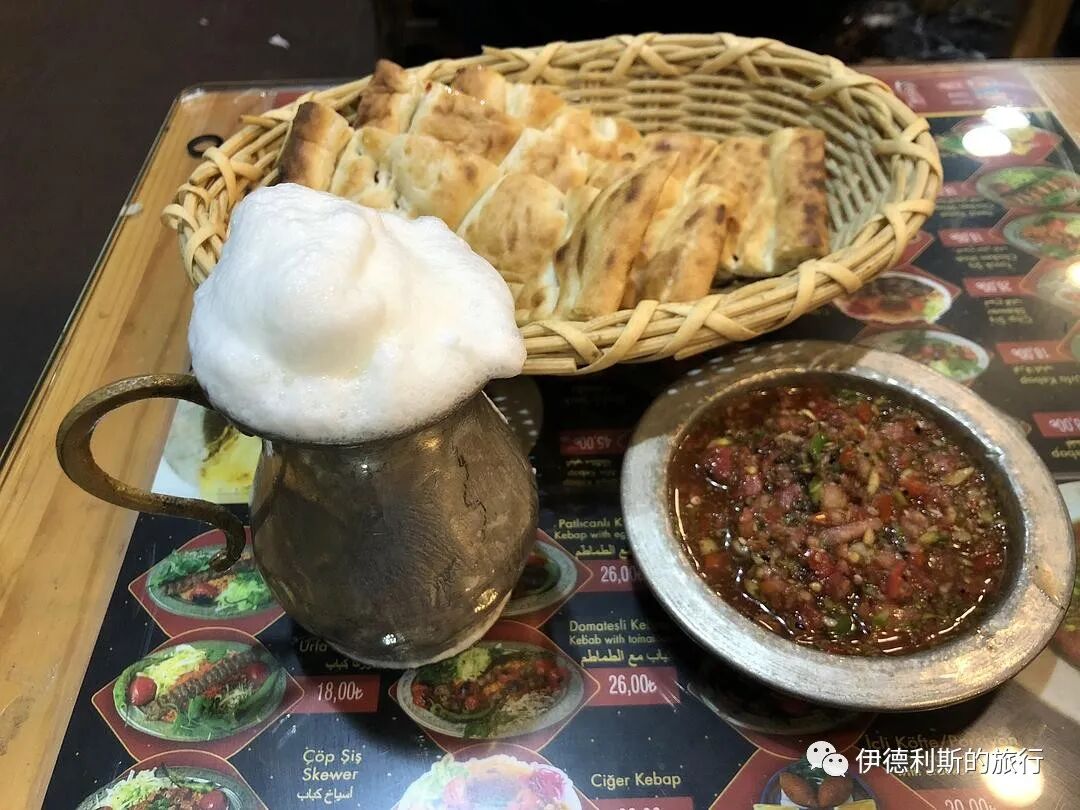
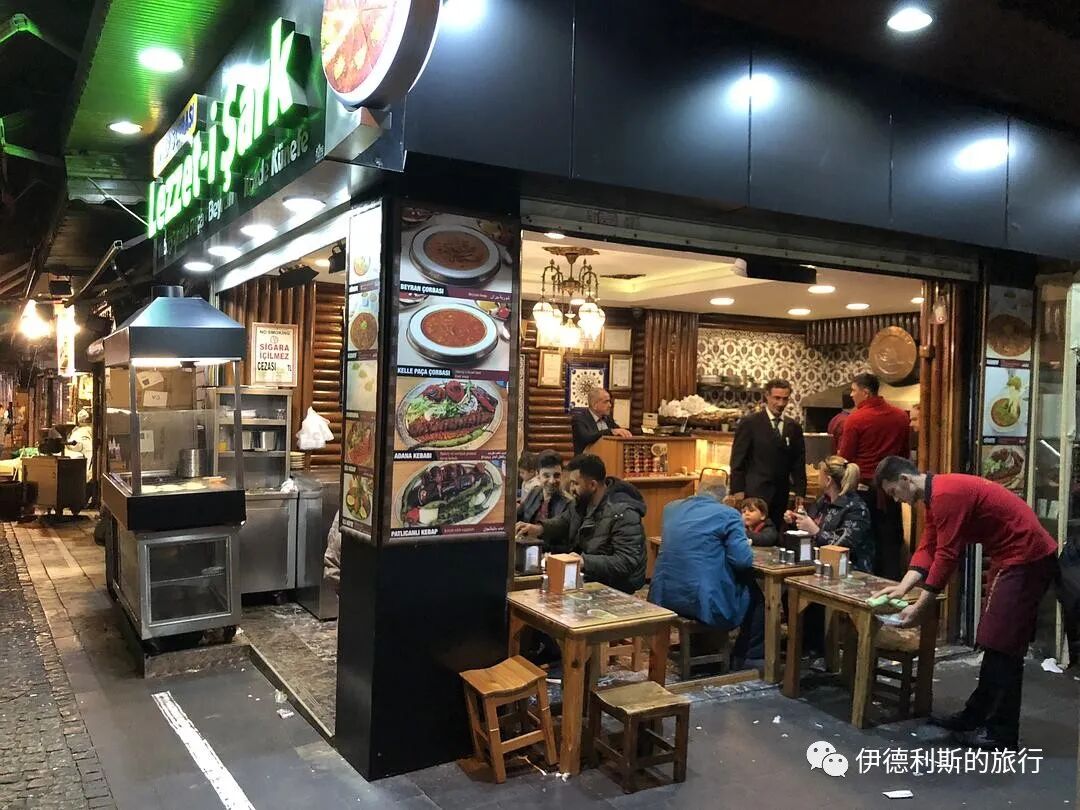
Roasted lamb eaten next to the Hagia Sophia, which was very fresh and tender.
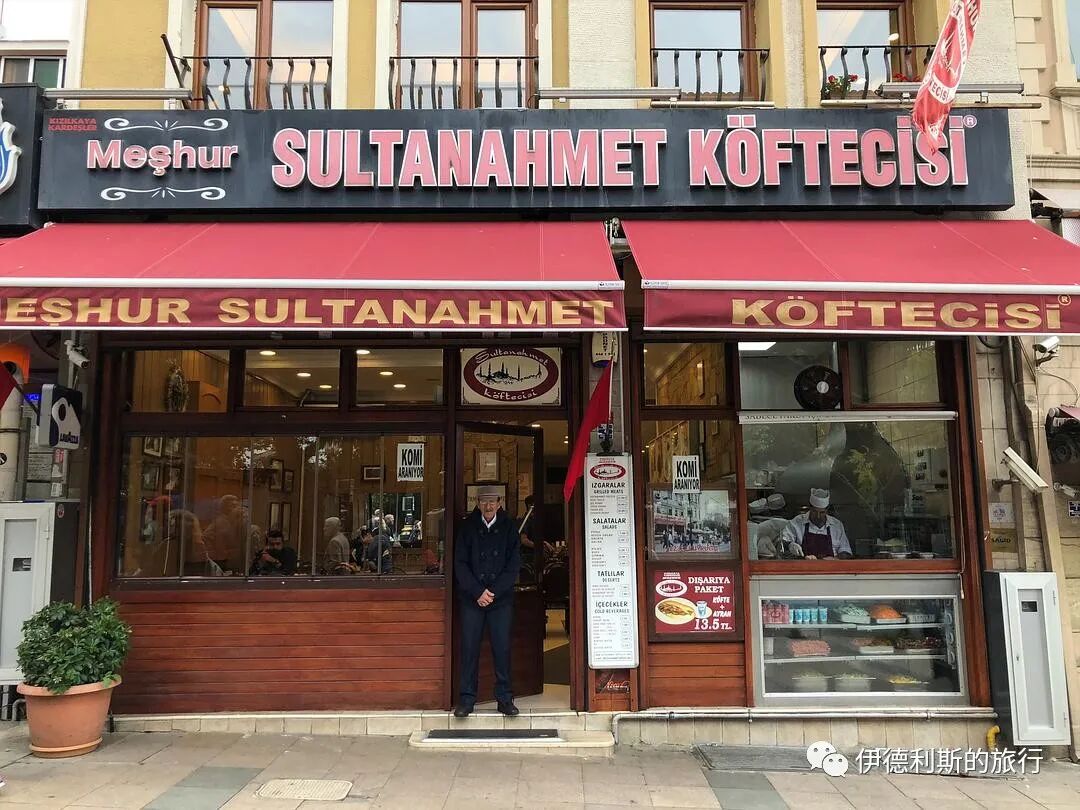
This soup is called chorba.
Bread in Turkish restaurants is free to eat.
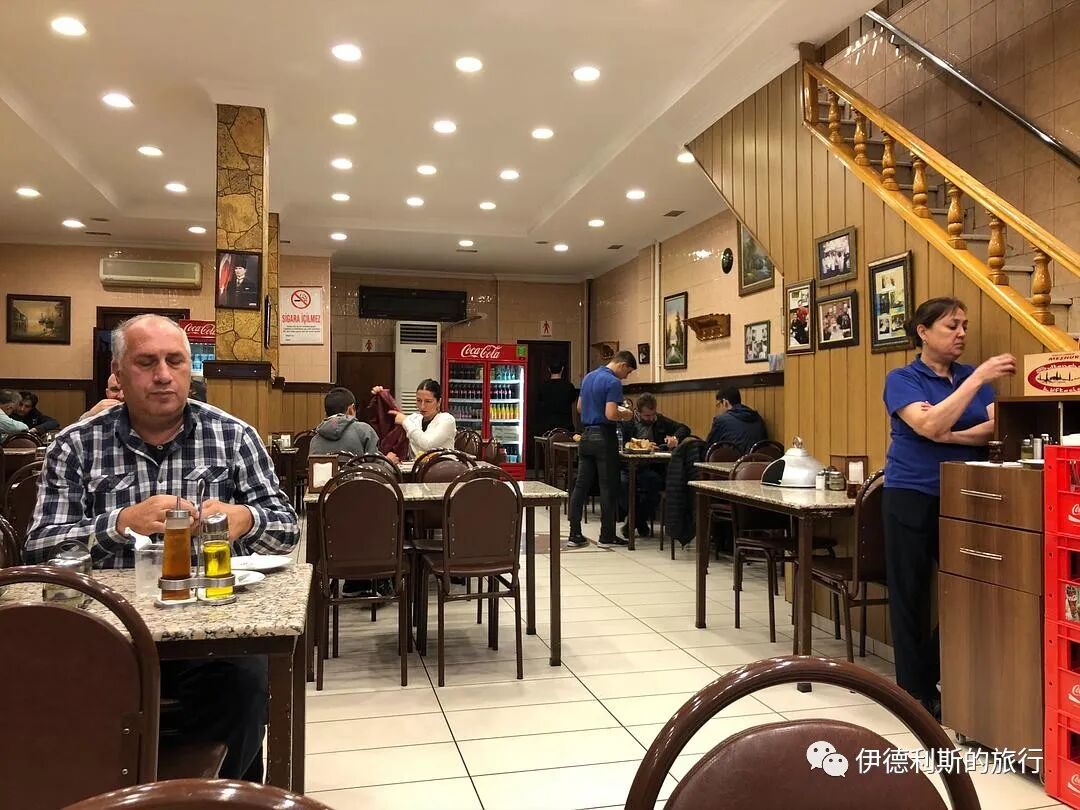
Eat a flaky pastry (börek) at a flaky pastry shop. The word börek comes from Turkish and can refer to any food made with thin dough sheets (yufka). Börek originated in Anatolia and became popular in the Balkans and North Africa during the Ottoman Empire. It was especially popular in Ottoman Jewish communities, where it was known as one of the three major Ottoman Jewish pastries alongside boyos de pan and bulemas.
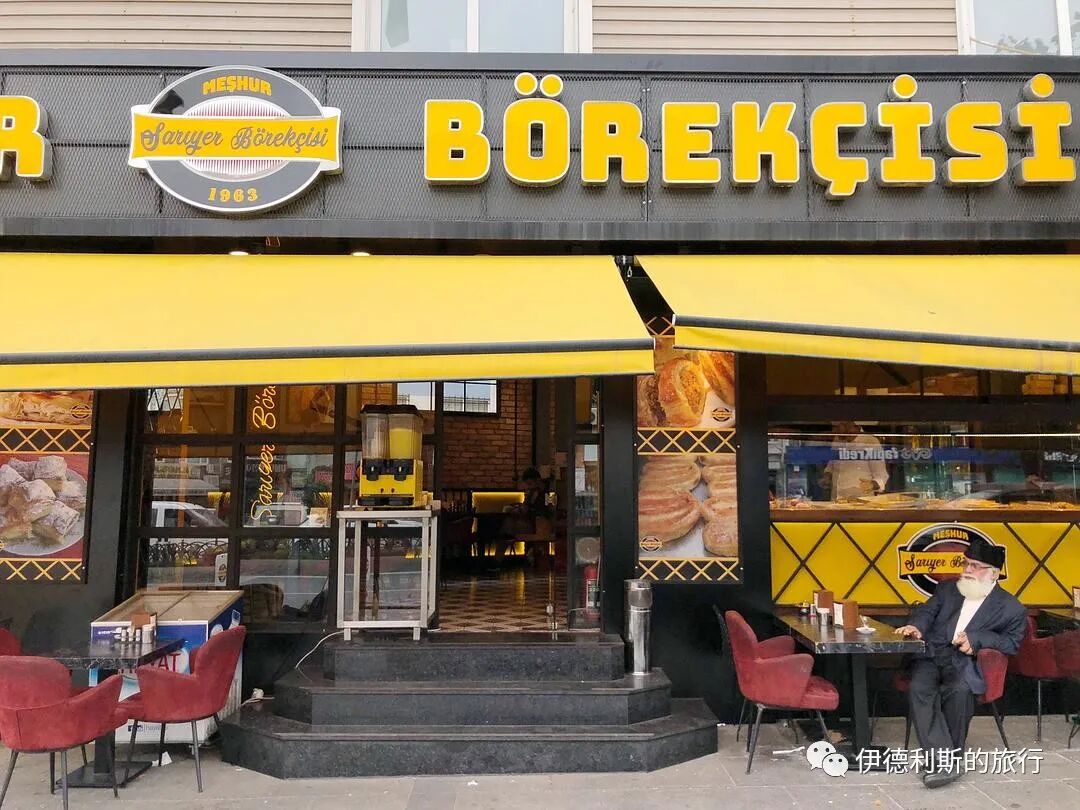
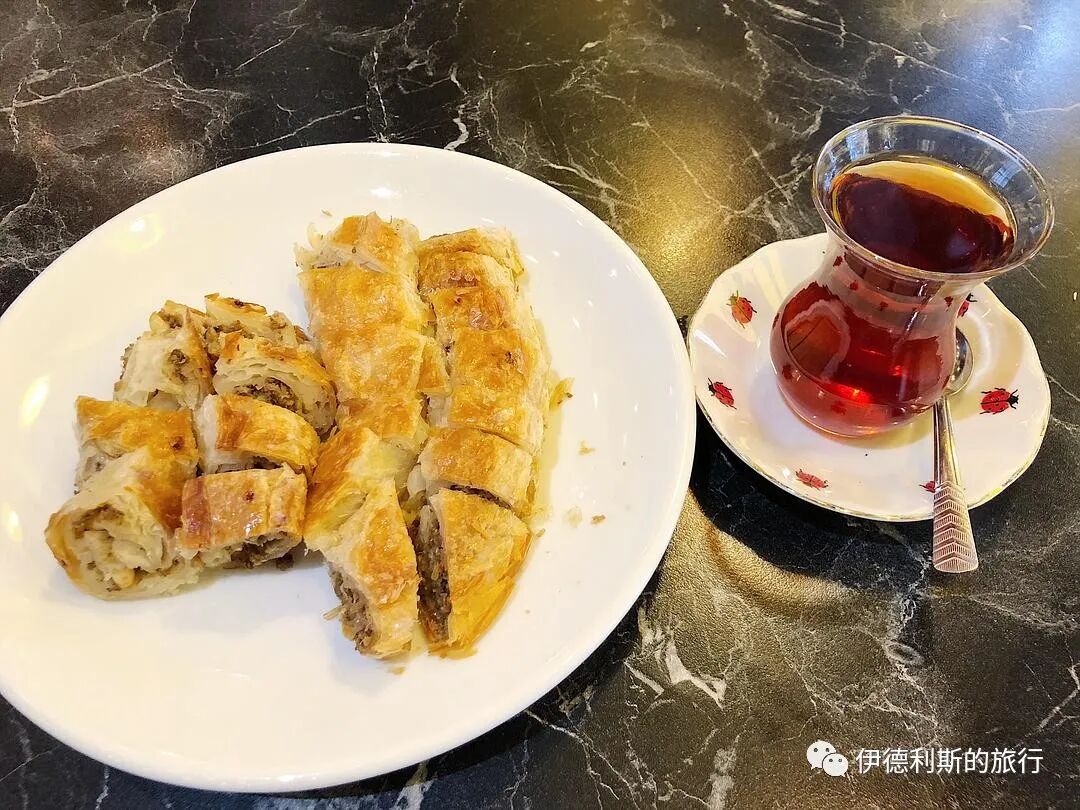
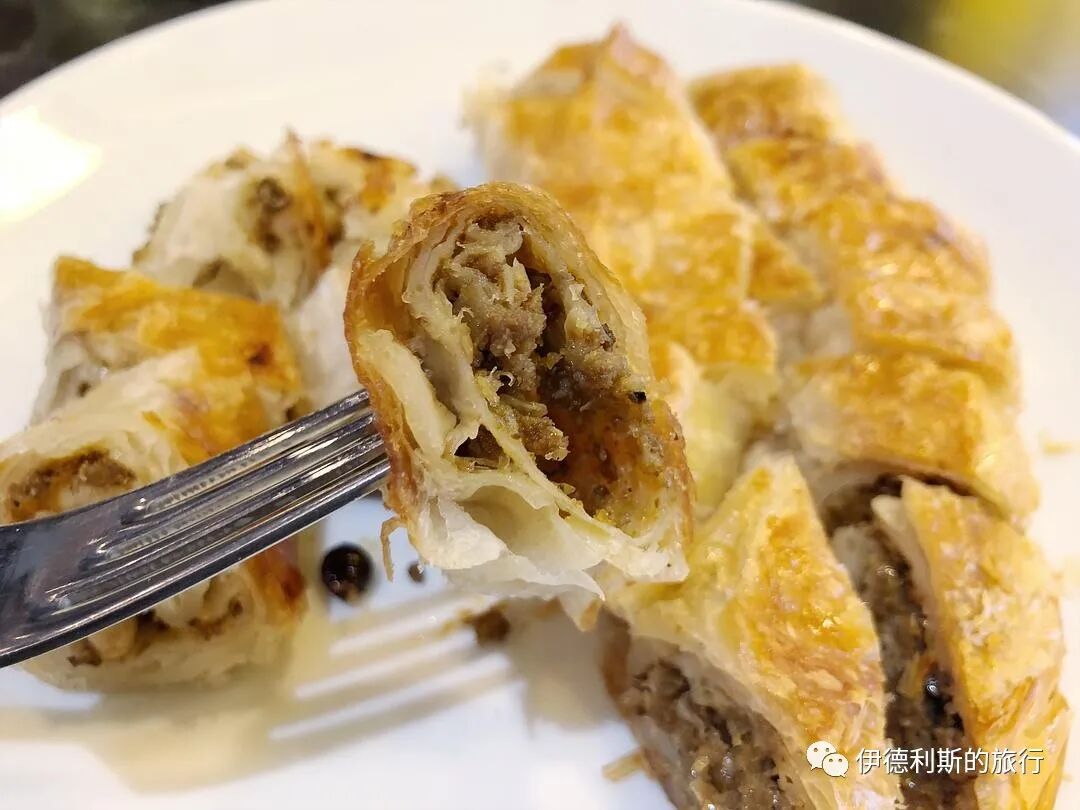
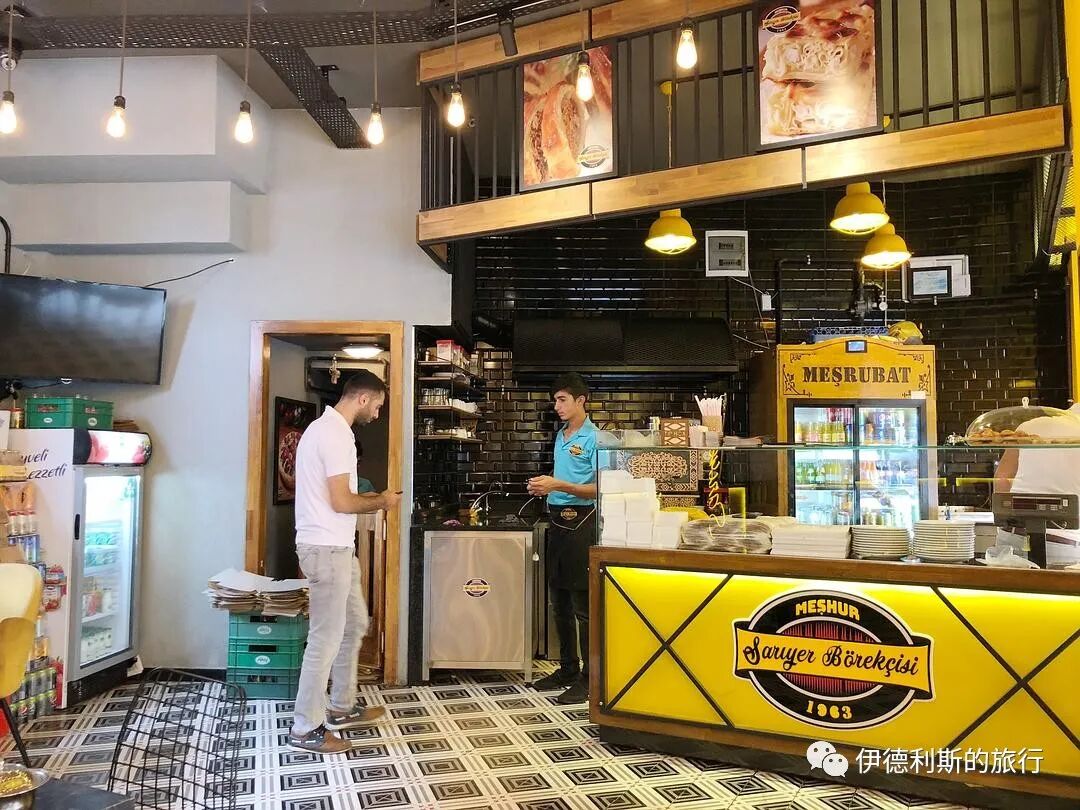
Eat iron-plate tomato grilled meat and scrambled eggs with vegetables (menemen) by the pier in the Asian district. Menemen is a Turkish food made of eggs, tomatoes, green peppers, and various spices, usually eaten for breakfast.
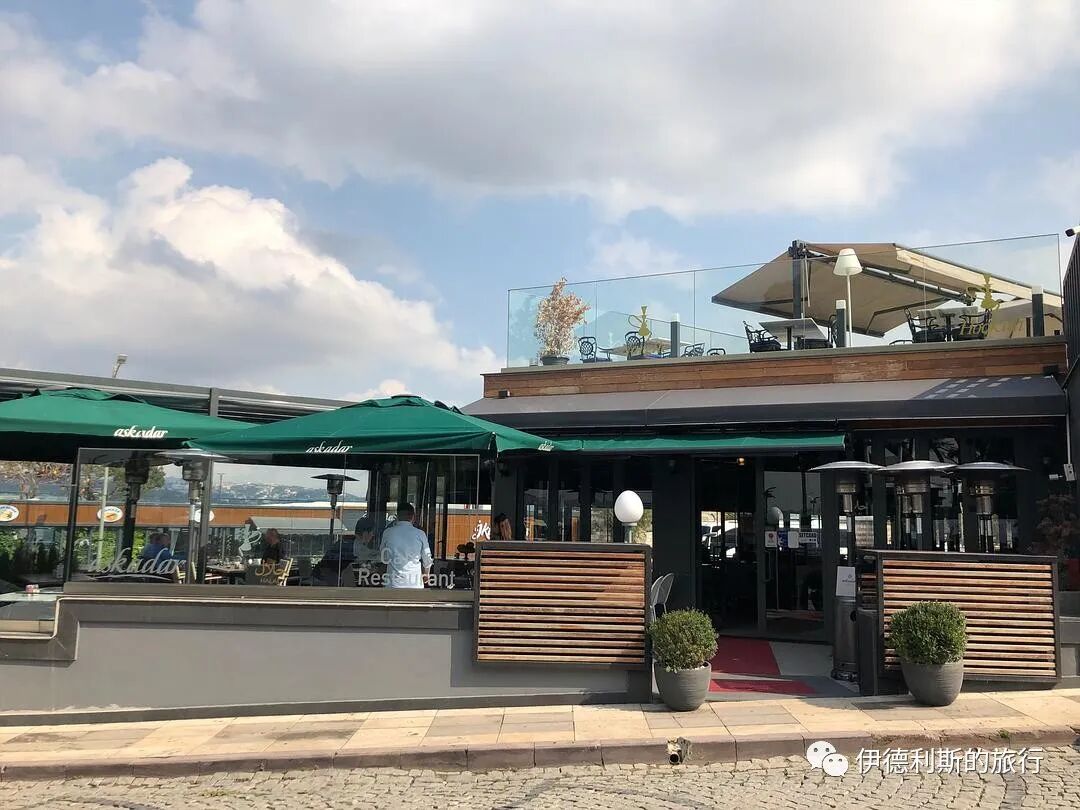
Foreign restaurants
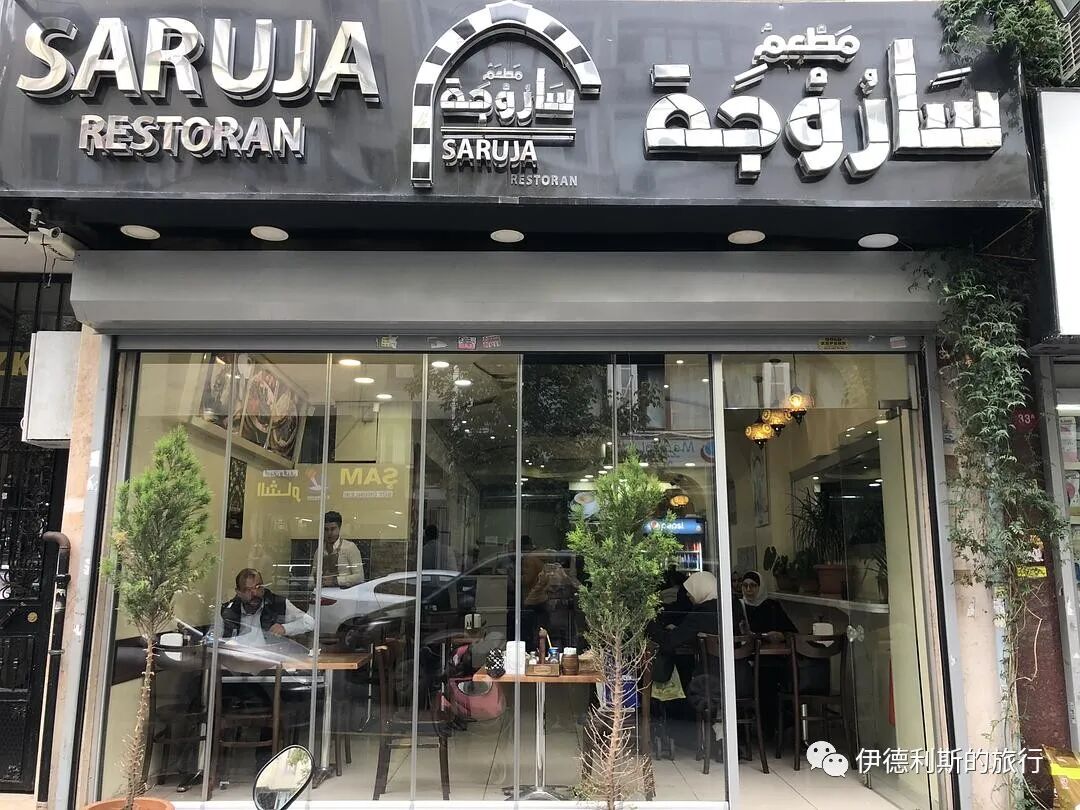
While visiting historical sites in Istanbul, I passed through a neighborhood of Syrian people in the Fatih district. I went into a Syrian restaurant called Saruja and ordered three dishes. When I looked them up later, I found they were all Levantine cuisine.
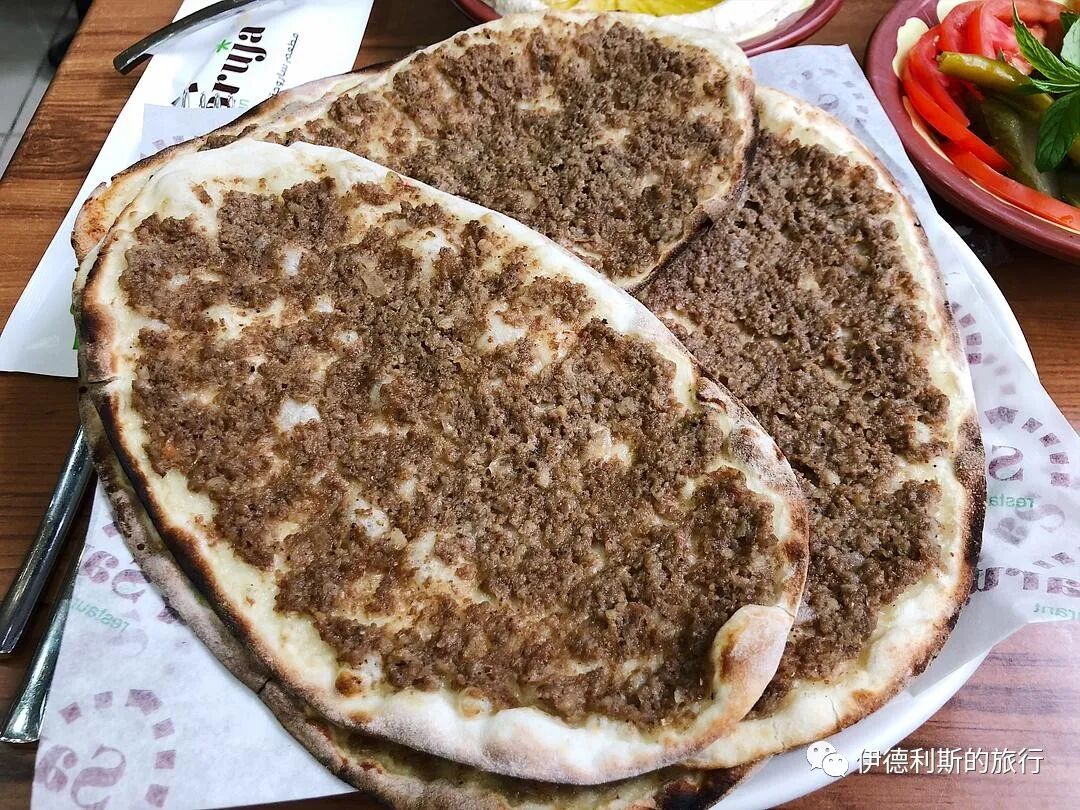
The Levant refers to the eastern Mediterranean coastal region, including modern-day Jordan, Lebanon, Israel, Palestine, Syria, and parts of Turkey near Syria. During the Ottoman era, many Levantine foods spread to Turkey and Armenia and became local delicacies. The first dish was a minced meat flatbread (lahmacun). I chose a pomegranate-flavored one, and it tasted quite unique. The Turkish word lahmacun comes from the Arabic "laḥm'ajīn," which translates to "meat with dough." During the Ottoman era, this meat flatbread spread to Turkey and Armenia. In different places, it is called "Arab pizza," "Lebanese pizza," "Syrian pizza," "Armenian pizza," and "Turkish pizza."
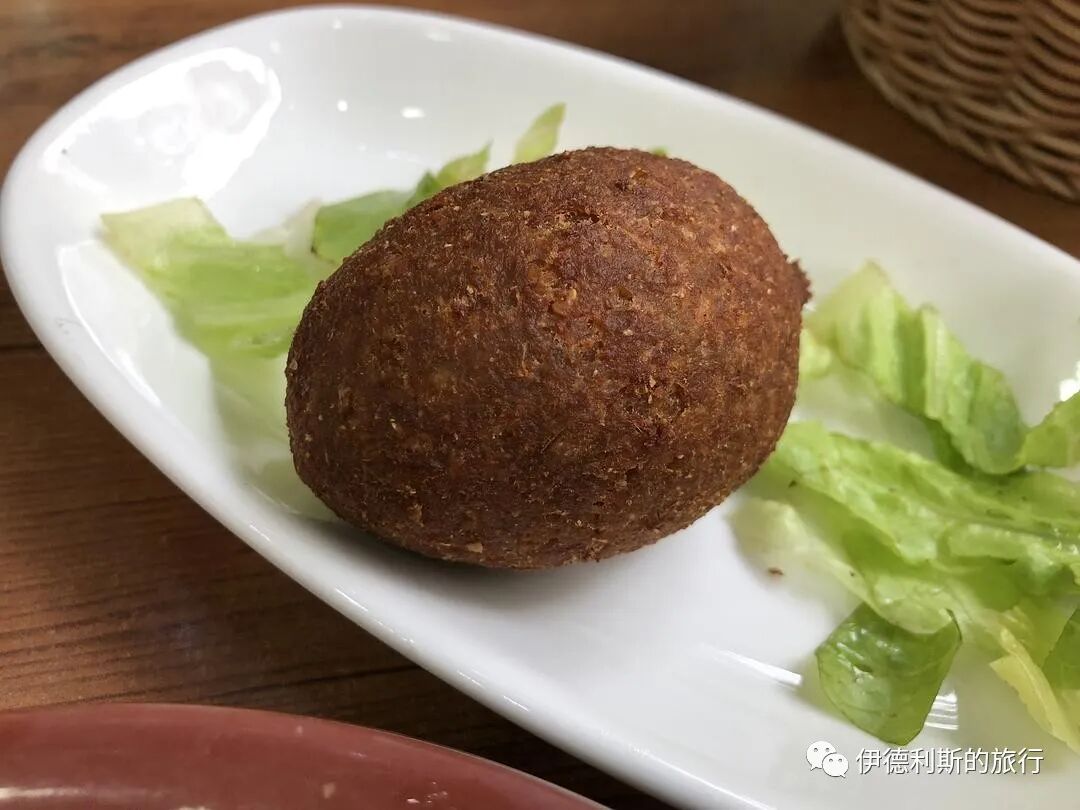
The second dish is called kibbeh, known in Turkish as "içli köfte." Kibbeh is the North Levantine dialect version of the classical Arabic word "kubbah," which translates to "ball." Kibbeh is made of cracked wheat wrapped around a filling of minced meat, chopped onions, and Middle Eastern spices like cinnamon, nutmeg, cloves, and allspice. Kibbeh is most famous in Aleppo, northern Syria, where there are 17 different flavors. Besides the original, they add yogurt, lemon juice, pomegranate molasses, or cherry sauce.
Besides spreading to Turkey and Armenia during the Ottoman era, kibbeh also spread to Latin America with Levantine immigrants in the late 19th and early 20th centuries.
The third dish is chickpea puree (hummus). Hummus means "chickpea" in Arabic and is short for "ḥummuṣ bi ṭaḥīna" (chickpeas with sesame paste). Hummus is made by mixing chickpeas with sesame paste (tahini), olive oil, lemon juice, and garlic. It is very popular in the Middle East and the Mediterranean.
I ate pilaf (plov) and thin-skinned steamed buns (manti) at an Uzbek restaurant not far south of the Grand Bazaar. I have to praise these buns—the skin was incredibly thin! You cannot find them this thin in Beijing. A man sitting next to me spoke Chinese; he used to do business in Yiwu and Shanghai.
Grilled fish by the Golden Horn.
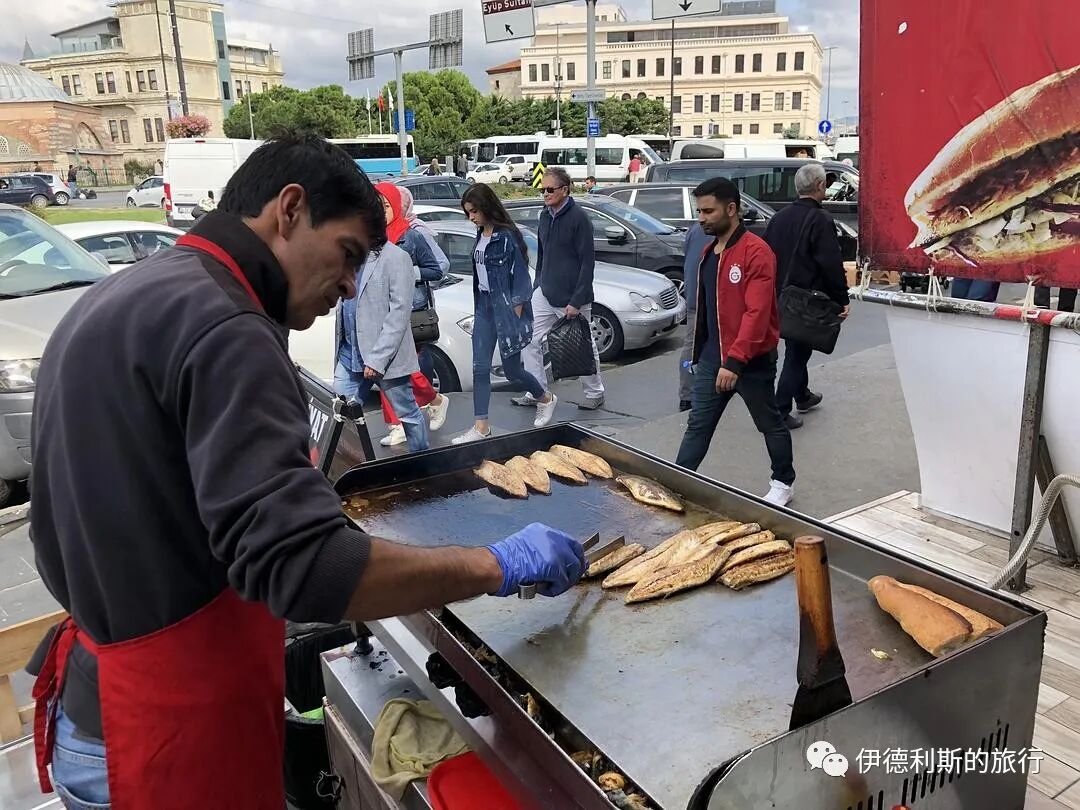
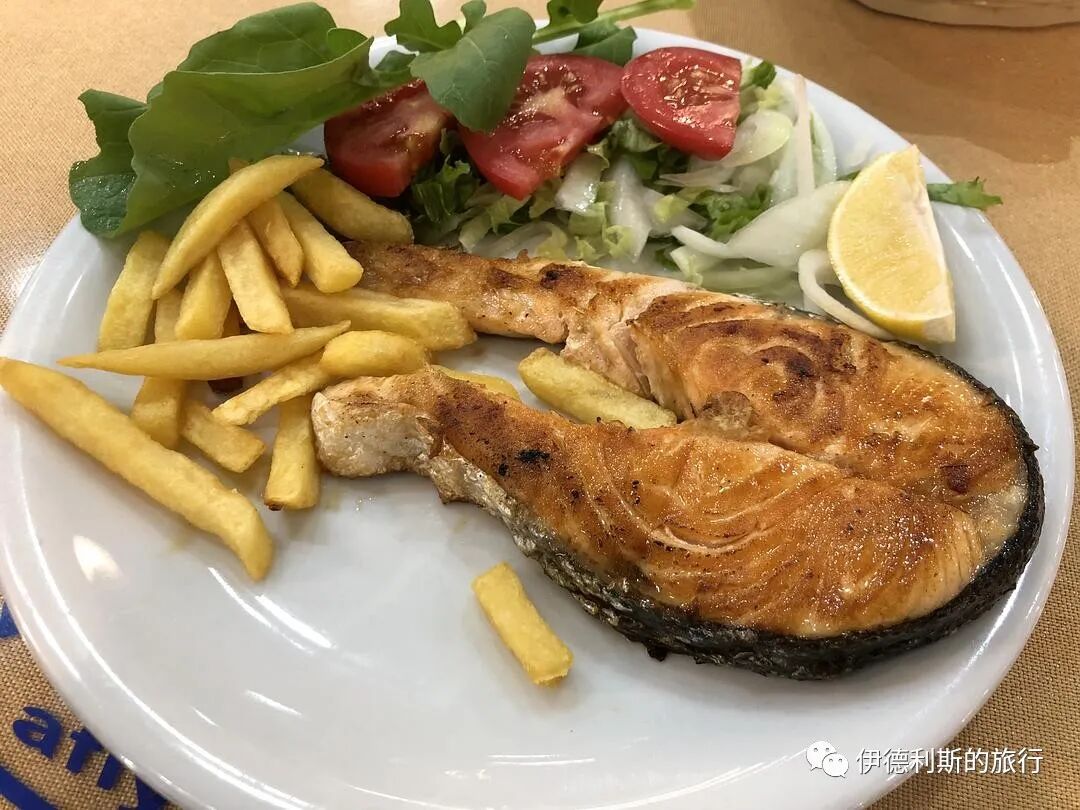
There are many places to eat grilled fish along the Golden Horn, and you can have it in a sandwich or just eat it on its own.
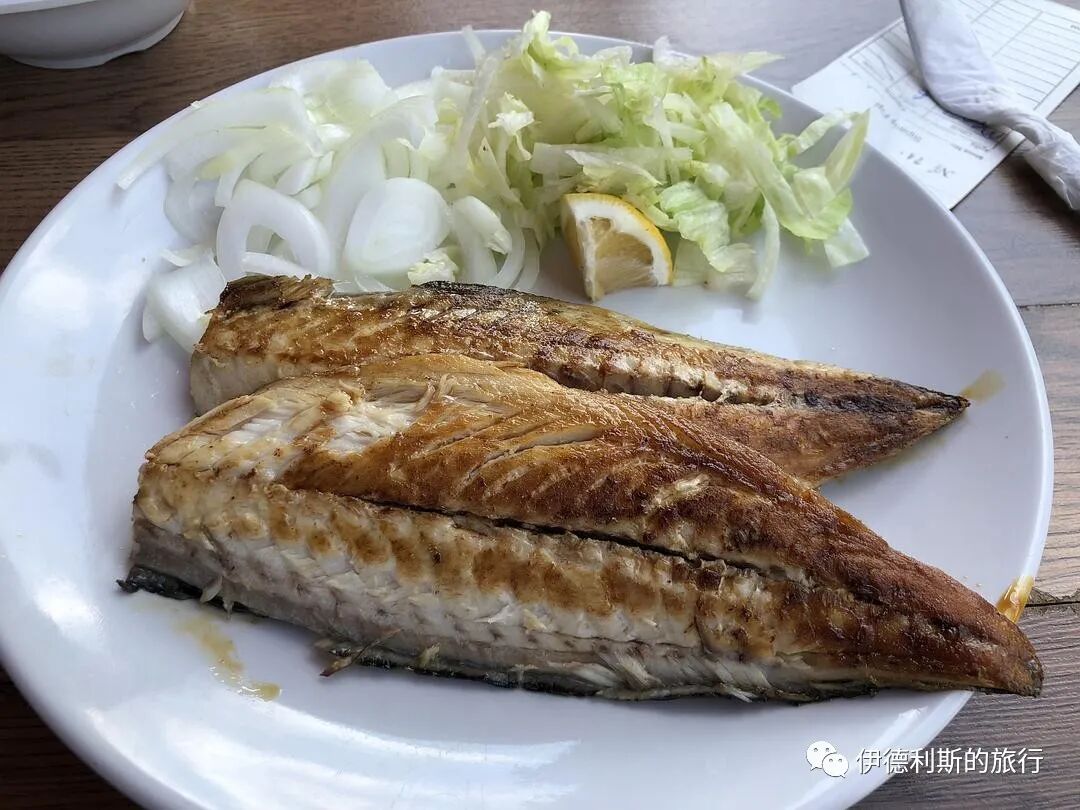
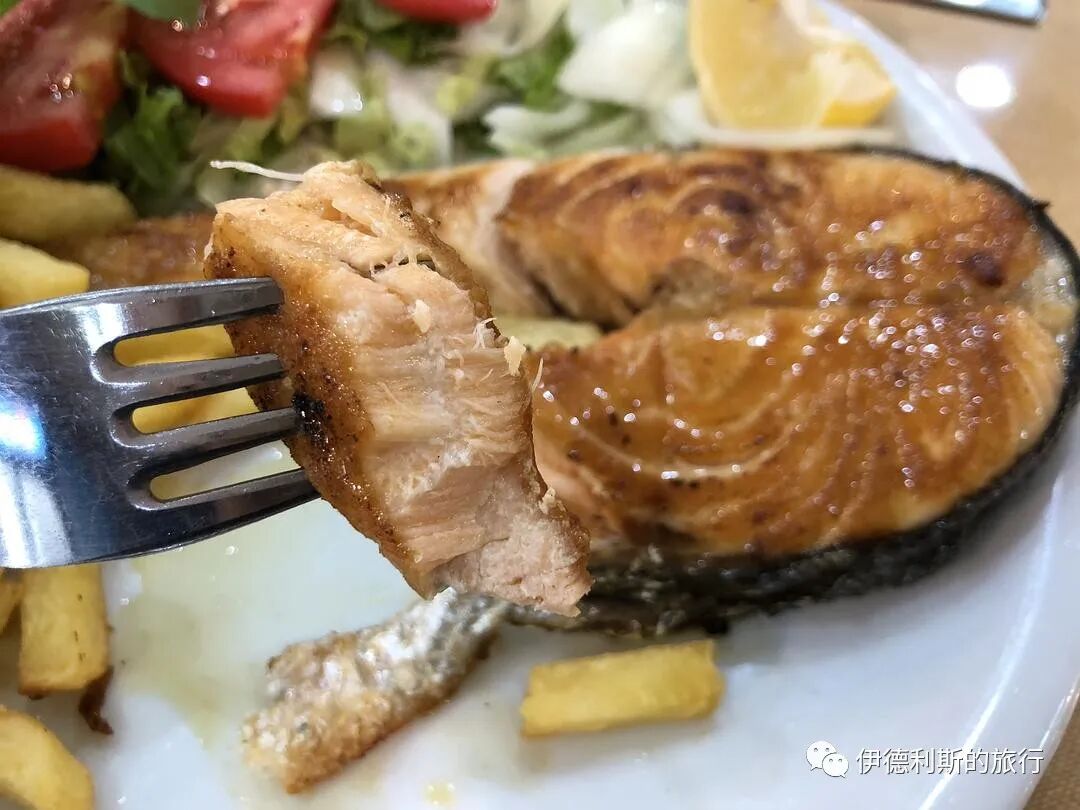
This restaurant is on the Galata Bridge. I ordered grilled salmon, and they gave me free tea after the meal.
There are many street stalls selling grilled fish sandwiches next to the Eminonu pier on the Golden Horn.
Rice.
Turkish rice shops are called Pilavcisi. While pilav refers to pilaf in Central and South Asia, in Turkey, they just call plain white rice pilav.
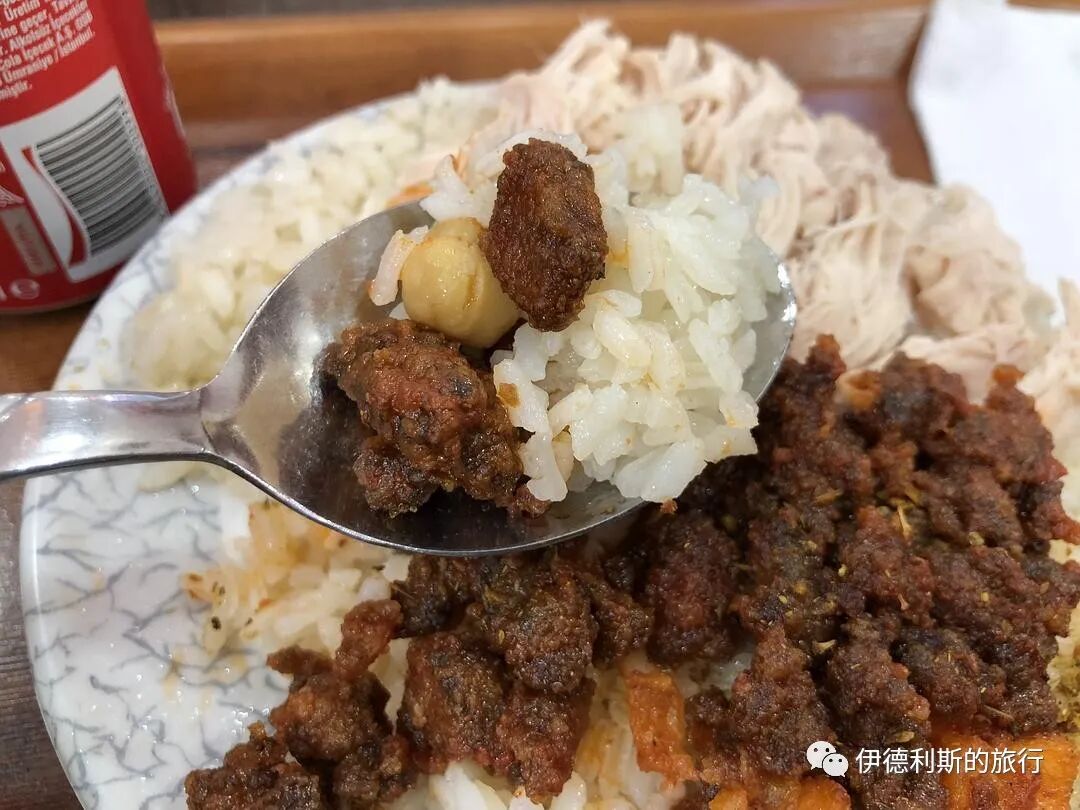
I ate rice mixed with chicken and liver (Pilav ustu Tavuk-Ciger) at this shop.
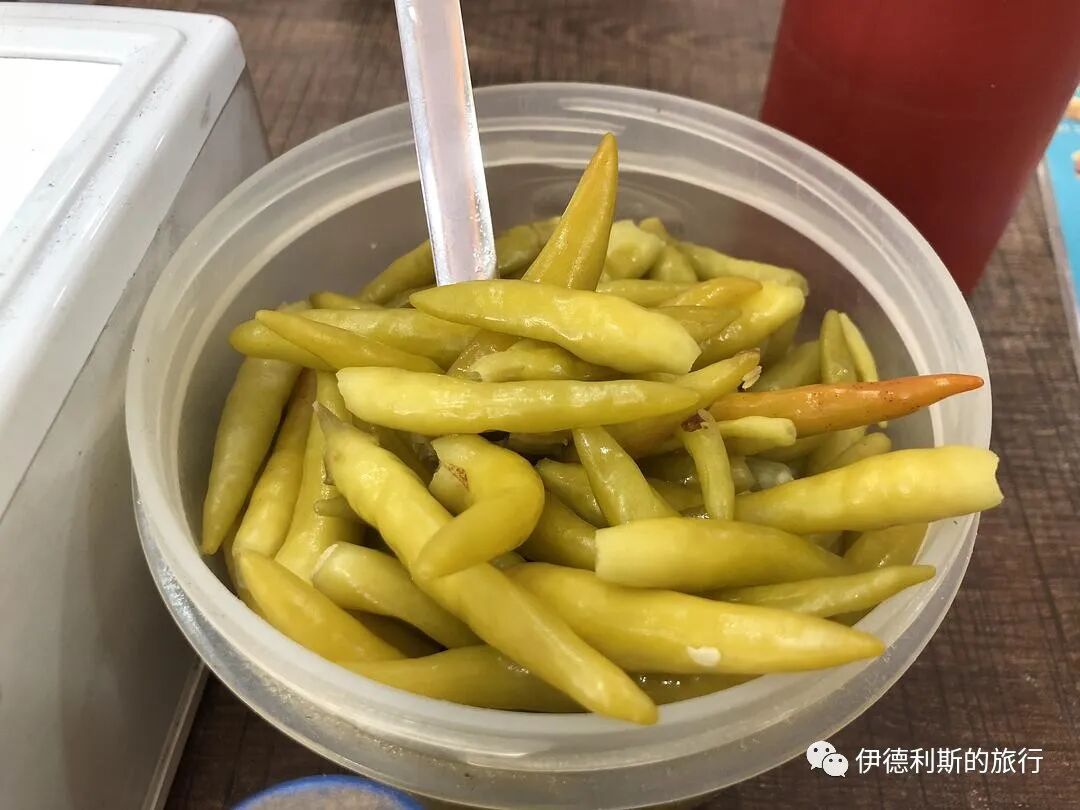
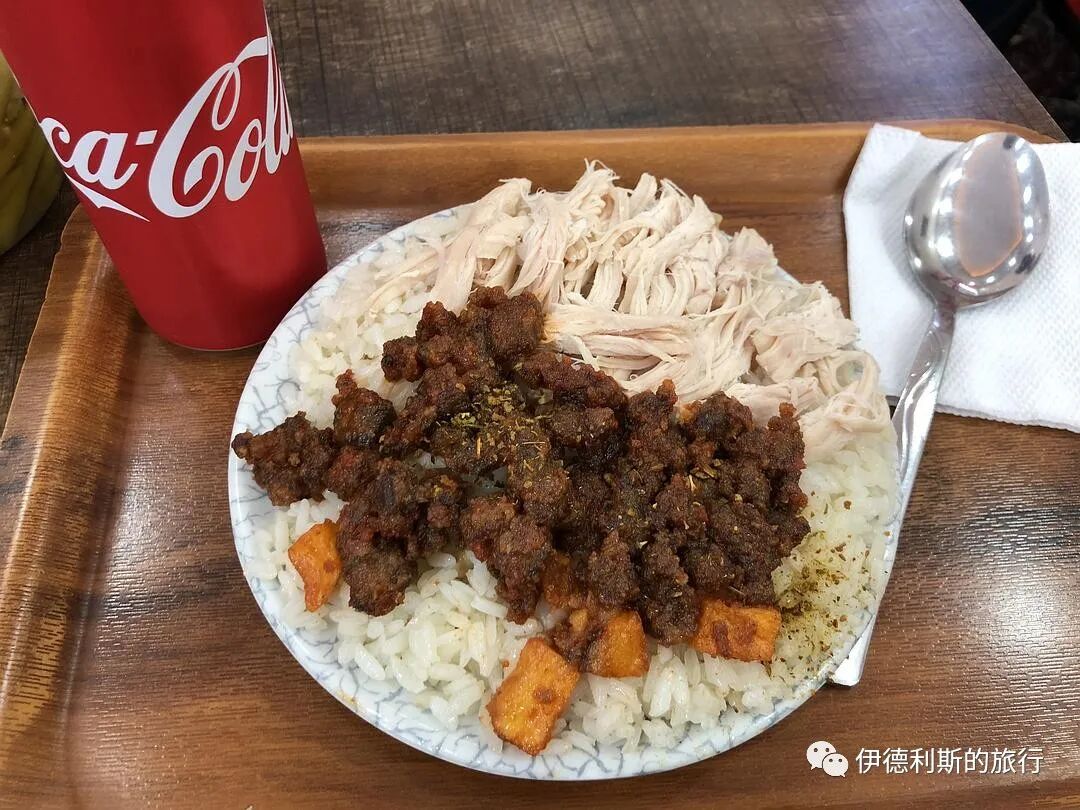
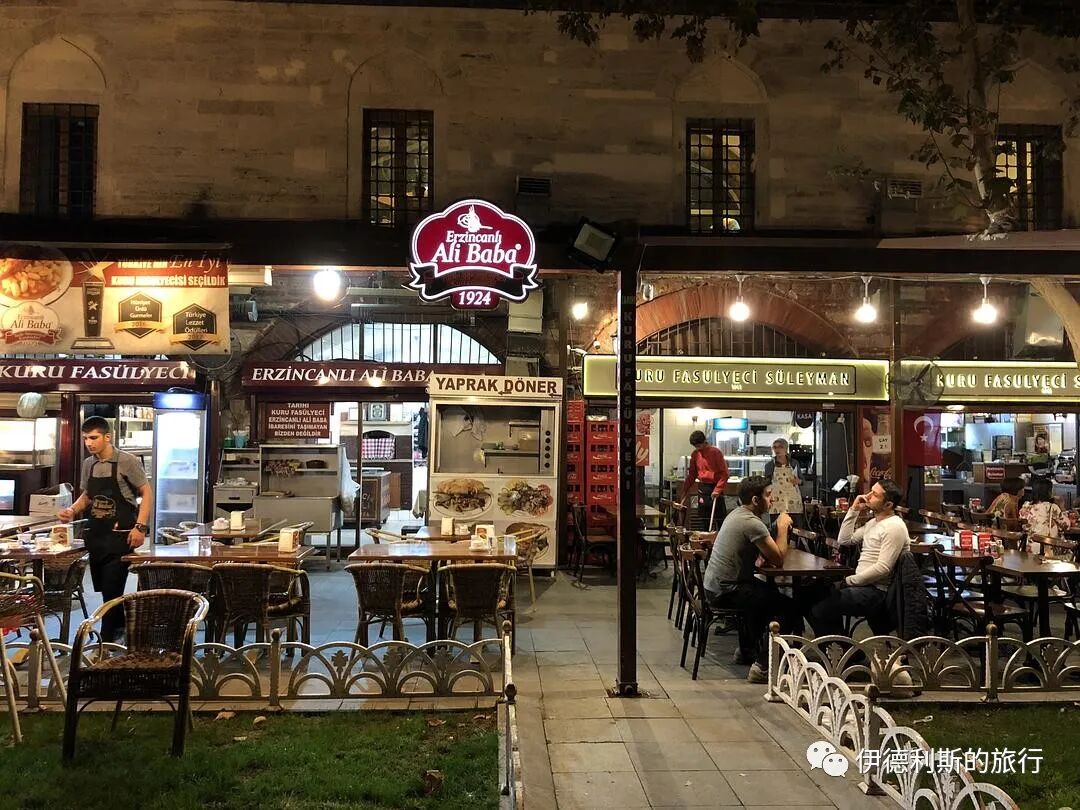
A street-facing section of one of the madrasas at the famous Suleymaniye Mosque is rented out to a restaurant called Ali Baba. This restaurant is known for its bean rice, or Kuru fasulye ve Pilav. Kuru fasulye is known as Turkey's national dish, made with white beans, olive oil, onions, and tomato paste.
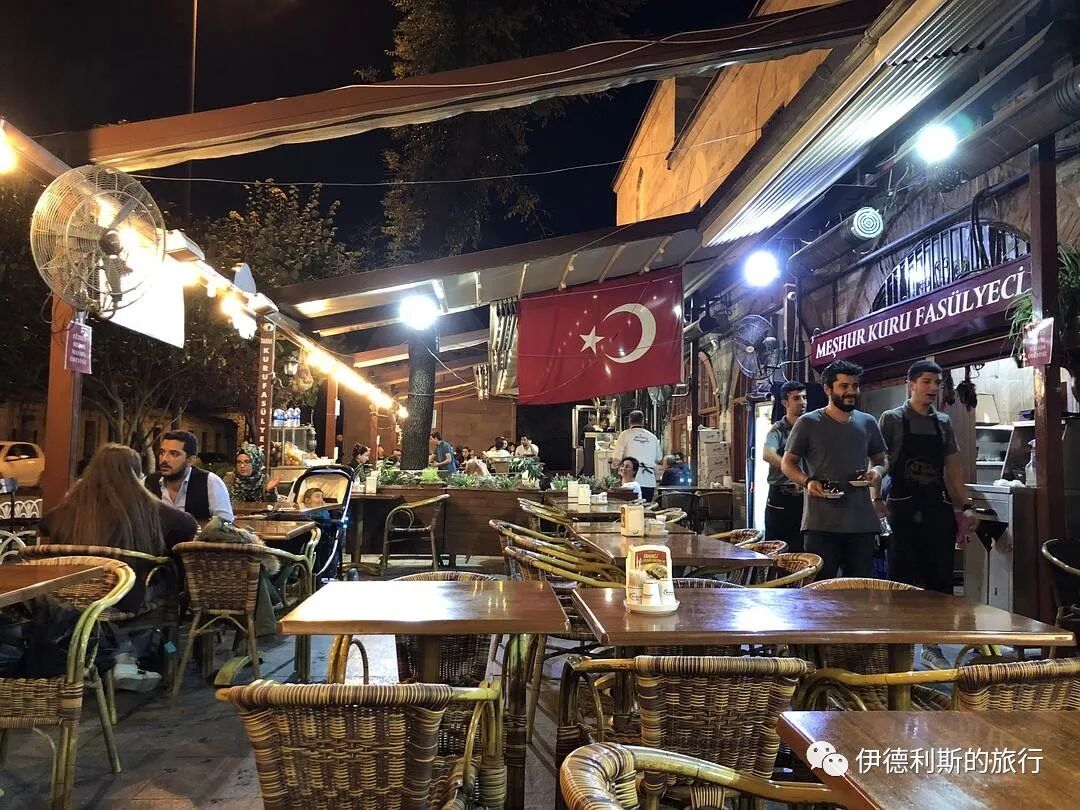
Halal Travel Guide: Istanbul — Mosques, Turkish Food and Ottoman Streets
Articles • ali2007fr posted the article • 0 comments • 144 views • 2026-05-18 07:39
Summary: Istanbul — Mosques, Turkish Food and Ottoman Streets is presented here as a firsthand travel account in clear English, beginning with this scene: I spent half a month traveling in Turkey from September to October 2018. While visiting historical sites in Istanbul, I tried some local food and would like to share it with you here. The account keeps its focus on Istanbul Travel, Turkish Food, Ottoman Heritage while preserving the names, places, food, and historical details from the Chinese source.
I spent half a month traveling in Turkey from September to October 2018. While visiting historical sites in Istanbul, I tried some local food and would like to share it with you here.
Street food.
Simit is a type of bread ring popular in the former Ottoman territories and the Middle East, and it is a common street snack in Istanbul.
The word simit comes from the Arabic word samīd, which means white bread or fine flour. The earliest records of simit bread rings in Istanbul date back to 1525. By 1594, Istanbul had established the first regulations for the weight and price of simit bread rings. According to the famous 17th-century Ottoman traveler Evliya Çelebi, there were 70 simit bakeries in Istanbul in the 1630s.
Because of its low price, simit has become an important symbol for the working class in Turkey.
Roasted corn and boiled corn are street snacks just as common as the bread rings.
There are also various kinds of freshly squeezed fruit juices on the streets of Istanbul, and this time I had fresh pomegranate juice.
Autumn is the season for eating roasted chestnuts.
There are all kinds of ice cream shops on the streets of Istanbul. I had never eaten this black mulberry flavor before, and the young lady selling the ice cream was very sweet.
Desserts
1. Ashure porridge
There are many dessert shops in Istanbul with a wide variety of traditional sweets, and there are many on Istiklal Avenue alone. I had Turkish Ashure porridge at a dessert shop called Taxim Süitiş.
The Turkish word Ashure comes from the Arabic word Āshūrā, which means tenth. On the tenth day of the first month (Muharram) of the Islamic calendar in the year 61, the family of the Prophet's grandson, Husayn, died while fleeing Mecca due to the pursuit of the Umayyad dynasty. This day has become an important memorial day for Shia and some Sunni Muslims. For Sunni Muslims, the Day of Ashura is also an important memorial day for many events, such as when the Prophet Musa (Moses) was pursued by the Pharaoh to the Red Sea and the sea parted to create a path for them to escape, when the Prophet Nuh (Noah) left the ark, and when the Prophet Muhammad arrived in Medina.
Ashure porridge was popularized in Turkey by the Alevis. To commemorate the martyrdom of the saint Ali, the Alevis do not eat meat on this day, but instead eat Ashure porridge made from grains, fruits, dried fruits, and nuts.
The Alevis respect the saint Ali just like the Shia, but their rituals are completely different from the Shia. The Alevis are actually an Islamic sect that blends Shia and Sufi beliefs, native Turkish animism, and some Sunni elements. They are more used to expressing their faith through music and dance in a gathering hall (cemevi).
For traditional Sunni Muslims in Turkey, people share Ashura porridge (ashure) with friends, relatives, neighbors, colleagues, and classmates on the Day of Ashura, regardless of their religious beliefs. Legend says that on the Day of Ashura, after the Prophet Nuh (Noah) landed his ark, his family prepared a meal to celebrate. Because their supplies were almost gone, they mixed the remaining grains and dried fruits together to make Ashura porridge.
The recipe for Ashura porridge is not fixed; traditionally it has at least 7 ingredients, and some people use 10 to match the theme of the tenth day. The Alevis always use 12 ingredients.
I bought a box of Turkish delight (lokum) as a gift at Hakki Zade, an old Ottoman brand and chain store on Istiklal Avenue.
The dessert shop below, called Efezade, is not far southwest of the old Ottoman palace, and the words Baklava & Lokum above the shop name refer to Turkish pastries and Turkish delight.
Modern Turkish nut-filled pastry (baklava) is said to have come from the Ottoman court, where the Ottoman Sultan would distribute baklava on trays to the Janissaries during a procession on the 15th of Ramadan, a ceremony known as the Baklava Procession (Baklava Alayı).
There is no final conclusion about the origin of baklava in the pre-Ottoman era, but there are three mainstream views: the Byzantine Placenta pastry inherited from Rome, the layered pastry tradition of Central Asian Turks, and the Persian Lauzinaq pastry.
This young man was very enthusiastic and kept pestering me to teach him Chinese.
A diagram of various Turkish pastries.
The pastry in the bottom left of the picture below is called nightingale's nest (bülbül yuvası), which translates literally to 'nightingale's nest'.
There are also various types of Turkish delight (lokum). The word lokum comes from the Arabic 'al-halkum'. Arabs call Turkish delight 'rāḥatal-ḥulqūm', which means 'throat comfort'.
According to the Hacı Bekir company, Turkish delight was brought to Istanbul from his hometown of Kastamonu by the founder, Hacı Bekir, in 1777. Some historians question this claim because similar soft candies made from starch and sugar appeared in Arab and Persian lands centuries earlier.
Turkish coffee served with pudding on the street.
In the early Ottoman Empire, strong coffee was banned as a medicine, but the Sultan eventually lifted the ban because it became so popular with the people.
Turkish coffee is recognized by UNESCO as part of Turkey's intangible cultural heritage.
The picture below shows Vefa Bozacisi, the only boza shop in 19th-century Istanbul. It was opened in 1876 by brothers Haci Ibrahim and Haci Sadik in the Vefa district of Istanbul, near the entertainment center of the time, Direklerarası. It is still run by the great-grandchildren of Haci Sadik and Haci Ibrahim today.
Boza is a fermented grain drink popular in Turkey, Iran, the Balkans, Central Asia, and the Caucasus. In Turkey, it is usually made from fermented wheat. It is thick and tastes sweet with a hint of sourness.
In Chagatai Turkic, boza means a drink made from camel milk, while in Persian, büze is used to refer to millet. Central Asian Turkic people began calling fermented grain drinks, usually made from millet, boza in the 10th century. It later spread to the Caucasus and the Balkans and became an important town drink during the Ottoman Empire.
The snack in the picture below is called tulumba tatlısı, which is deep-fried dough soaked in syrup. It is widely popular in former Ottoman regions, including Turkey, the Balkans, and Armenia. It is also called balah alsham in Arab regions and is often eaten during Ramadan.
Main course
A type of kebab called testi kebab eaten at this restaurant called Urfalim Lahmacun. Testi kebab comes from Central Anatolia and the Black Sea region. Testi means jar or pot in Turkish, and it involves cooking various meats and vegetables in a clay pot.
Arabic flatbread, which is very thin.
This soup is called ezogelin. It is made from crushed dried wheat and red lentils, with ingredients including rice, olive oil, butter, onions, garlic, tomatoes, chili peppers, dried mint, black pepper, and salt.
I had a dish called patlıcanlı kebab, which translates to eggplant kebab, at a bazaar next to the Rüstem Pasha Mosque in the evening, along with a drink called yayık ayran, which is a honey yogurt drink.
This place serves naan and a salad of onions, peppers, and tomatoes (pilahong) right away, which feels very Inner Asian. By the end of the meal, the Uzbek guy in the red shirt in the middle of the picture helped me peel all the eggplant skins and rolled them up with roasted tomatoes, which was very touching.
Roasted lamb eaten next to the Hagia Sophia, which was very fresh and tender.
This soup is called chorba.
Bread in Turkish restaurants is free to eat.
Eat a flaky pastry (börek) at a flaky pastry shop. The word börek comes from Turkish and can refer to any food made with thin dough sheets (yufka). Börek originated in Anatolia and became popular in the Balkans and North Africa during the Ottoman Empire. It was especially popular in Ottoman Jewish communities, where it was known as one of the three major Ottoman Jewish pastries alongside boyos de pan and bulemas.
Eat iron-plate tomato grilled meat and scrambled eggs with vegetables (menemen) by the pier in the Asian district. Menemen is a Turkish food made of eggs, tomatoes, green peppers, and various spices, usually eaten for breakfast.
Foreign restaurants
While visiting historical sites in Istanbul, I passed through a neighborhood of Syrian people in the Fatih district. I went into a Syrian restaurant called Saruja and ordered three dishes. When I looked them up later, I found they were all Levantine cuisine.
The Levant refers to the eastern Mediterranean coastal region, including modern-day Jordan, Lebanon, Israel, Palestine, Syria, and parts of Turkey near Syria. During the Ottoman era, many Levantine foods spread to Turkey and Armenia and became local delicacies. The first dish was a minced meat flatbread (lahmacun). I chose a pomegranate-flavored one, and it tasted quite unique. The Turkish word lahmacun comes from the Arabic "laḥm'ajīn," which translates to "meat with dough." During the Ottoman era, this meat flatbread spread to Turkey and Armenia. In different places, it is called "Arab pizza," "Lebanese pizza," "Syrian pizza," "Armenian pizza," and "Turkish pizza."
The second dish is called kibbeh, known in Turkish as "içli köfte." Kibbeh is the North Levantine dialect version of the classical Arabic word "kubbah," which translates to "ball." Kibbeh is made of cracked wheat wrapped around a filling of minced meat, chopped onions, and Middle Eastern spices like cinnamon, nutmeg, cloves, and allspice. Kibbeh is most famous in Aleppo, northern Syria, where there are 17 different flavors. Besides the original, they add yogurt, lemon juice, pomegranate molasses, or cherry sauce.
Besides spreading to Turkey and Armenia during the Ottoman era, kibbeh also spread to Latin America with Levantine immigrants in the late 19th and early 20th centuries.
The third dish is chickpea puree (hummus). Hummus means "chickpea" in Arabic and is short for "ḥummuṣ bi ṭaḥīna" (chickpeas with sesame paste). Hummus is made by mixing chickpeas with sesame paste (tahini), olive oil, lemon juice, and garlic. It is very popular in the Middle East and the Mediterranean.
I ate pilaf (plov) and thin-skinned steamed buns (manti) at an Uzbek restaurant not far south of the Grand Bazaar. I have to praise these buns—the skin was incredibly thin! You cannot find them this thin in Beijing. A man sitting next to me spoke Chinese; he used to do business in Yiwu and Shanghai.
Grilled fish by the Golden Horn.
There are many places to eat grilled fish along the Golden Horn, and you can have it in a sandwich or just eat it on its own.
This restaurant is on the Galata Bridge. I ordered grilled salmon, and they gave me free tea after the meal.
There are many street stalls selling grilled fish sandwiches next to the Eminonu pier on the Golden Horn.
Rice.
Turkish rice shops are called Pilavcisi. While pilav refers to pilaf in Central and South Asia, in Turkey, they just call plain white rice pilav.
I ate rice mixed with chicken and liver (Pilav ustu Tavuk-Ciger) at this shop.
A street-facing section of one of the madrasas at the famous Suleymaniye Mosque is rented out to a restaurant called Ali Baba. This restaurant is known for its bean rice, or Kuru fasulye ve Pilav. Kuru fasulye is known as Turkey's national dish, made with white beans, olive oil, onions, and tomato paste. view all
Summary: Istanbul — Mosques, Turkish Food and Ottoman Streets is presented here as a firsthand travel account in clear English, beginning with this scene: I spent half a month traveling in Turkey from September to October 2018. While visiting historical sites in Istanbul, I tried some local food and would like to share it with you here. The account keeps its focus on Istanbul Travel, Turkish Food, Ottoman Heritage while preserving the names, places, food, and historical details from the Chinese source.
I spent half a month traveling in Turkey from September to October 2018. While visiting historical sites in Istanbul, I tried some local food and would like to share it with you here.
Street food.
Simit is a type of bread ring popular in the former Ottoman territories and the Middle East, and it is a common street snack in Istanbul.
The word simit comes from the Arabic word samīd, which means white bread or fine flour. The earliest records of simit bread rings in Istanbul date back to 1525. By 1594, Istanbul had established the first regulations for the weight and price of simit bread rings. According to the famous 17th-century Ottoman traveler Evliya Çelebi, there were 70 simit bakeries in Istanbul in the 1630s.
Because of its low price, simit has become an important symbol for the working class in Turkey.
Roasted corn and boiled corn are street snacks just as common as the bread rings.
There are also various kinds of freshly squeezed fruit juices on the streets of Istanbul, and this time I had fresh pomegranate juice.
Autumn is the season for eating roasted chestnuts.
There are all kinds of ice cream shops on the streets of Istanbul. I had never eaten this black mulberry flavor before, and the young lady selling the ice cream was very sweet.
Desserts
1. Ashure porridge
There are many dessert shops in Istanbul with a wide variety of traditional sweets, and there are many on Istiklal Avenue alone. I had Turkish Ashure porridge at a dessert shop called Taxim Süitiş.
The Turkish word Ashure comes from the Arabic word Āshūrā, which means tenth. On the tenth day of the first month (Muharram) of the Islamic calendar in the year 61, the family of the Prophet's grandson, Husayn, died while fleeing Mecca due to the pursuit of the Umayyad dynasty. This day has become an important memorial day for Shia and some Sunni Muslims. For Sunni Muslims, the Day of Ashura is also an important memorial day for many events, such as when the Prophet Musa (Moses) was pursued by the Pharaoh to the Red Sea and the sea parted to create a path for them to escape, when the Prophet Nuh (Noah) left the ark, and when the Prophet Muhammad arrived in Medina.
Ashure porridge was popularized in Turkey by the Alevis. To commemorate the martyrdom of the saint Ali, the Alevis do not eat meat on this day, but instead eat Ashure porridge made from grains, fruits, dried fruits, and nuts.
The Alevis respect the saint Ali just like the Shia, but their rituals are completely different from the Shia. The Alevis are actually an Islamic sect that blends Shia and Sufi beliefs, native Turkish animism, and some Sunni elements. They are more used to expressing their faith through music and dance in a gathering hall (cemevi).
For traditional Sunni Muslims in Turkey, people share Ashura porridge (ashure) with friends, relatives, neighbors, colleagues, and classmates on the Day of Ashura, regardless of their religious beliefs. Legend says that on the Day of Ashura, after the Prophet Nuh (Noah) landed his ark, his family prepared a meal to celebrate. Because their supplies were almost gone, they mixed the remaining grains and dried fruits together to make Ashura porridge.
The recipe for Ashura porridge is not fixed; traditionally it has at least 7 ingredients, and some people use 10 to match the theme of the tenth day. The Alevis always use 12 ingredients.
I bought a box of Turkish delight (lokum) as a gift at Hakki Zade, an old Ottoman brand and chain store on Istiklal Avenue.
The dessert shop below, called Efezade, is not far southwest of the old Ottoman palace, and the words Baklava & Lokum above the shop name refer to Turkish pastries and Turkish delight.
Modern Turkish nut-filled pastry (baklava) is said to have come from the Ottoman court, where the Ottoman Sultan would distribute baklava on trays to the Janissaries during a procession on the 15th of Ramadan, a ceremony known as the Baklava Procession (Baklava Alayı).
There is no final conclusion about the origin of baklava in the pre-Ottoman era, but there are three mainstream views: the Byzantine Placenta pastry inherited from Rome, the layered pastry tradition of Central Asian Turks, and the Persian Lauzinaq pastry.
This young man was very enthusiastic and kept pestering me to teach him Chinese.
A diagram of various Turkish pastries.
The pastry in the bottom left of the picture below is called nightingale's nest (bülbül yuvası), which translates literally to 'nightingale's nest'.
There are also various types of Turkish delight (lokum). The word lokum comes from the Arabic 'al-halkum'. Arabs call Turkish delight 'rāḥatal-ḥulqūm', which means 'throat comfort'.
According to the Hacı Bekir company, Turkish delight was brought to Istanbul from his hometown of Kastamonu by the founder, Hacı Bekir, in 1777. Some historians question this claim because similar soft candies made from starch and sugar appeared in Arab and Persian lands centuries earlier.
Turkish coffee served with pudding on the street.
In the early Ottoman Empire, strong coffee was banned as a medicine, but the Sultan eventually lifted the ban because it became so popular with the people.
Turkish coffee is recognized by UNESCO as part of Turkey's intangible cultural heritage.
The picture below shows Vefa Bozacisi, the only boza shop in 19th-century Istanbul. It was opened in 1876 by brothers Haci Ibrahim and Haci Sadik in the Vefa district of Istanbul, near the entertainment center of the time, Direklerarası. It is still run by the great-grandchildren of Haci Sadik and Haci Ibrahim today.
Boza is a fermented grain drink popular in Turkey, Iran, the Balkans, Central Asia, and the Caucasus. In Turkey, it is usually made from fermented wheat. It is thick and tastes sweet with a hint of sourness.
In Chagatai Turkic, boza means a drink made from camel milk, while in Persian, büze is used to refer to millet. Central Asian Turkic people began calling fermented grain drinks, usually made from millet, boza in the 10th century. It later spread to the Caucasus and the Balkans and became an important town drink during the Ottoman Empire.
The snack in the picture below is called tulumba tatlısı, which is deep-fried dough soaked in syrup. It is widely popular in former Ottoman regions, including Turkey, the Balkans, and Armenia. It is also called balah alsham in Arab regions and is often eaten during Ramadan.
Main course
A type of kebab called testi kebab eaten at this restaurant called Urfalim Lahmacun. Testi kebab comes from Central Anatolia and the Black Sea region. Testi means jar or pot in Turkish, and it involves cooking various meats and vegetables in a clay pot.
Arabic flatbread, which is very thin.
This soup is called ezogelin. It is made from crushed dried wheat and red lentils, with ingredients including rice, olive oil, butter, onions, garlic, tomatoes, chili peppers, dried mint, black pepper, and salt.
I had a dish called patlıcanlı kebab, which translates to eggplant kebab, at a bazaar next to the Rüstem Pasha Mosque in the evening, along with a drink called yayık ayran, which is a honey yogurt drink.
This place serves naan and a salad of onions, peppers, and tomatoes (pilahong) right away, which feels very Inner Asian. By the end of the meal, the Uzbek guy in the red shirt in the middle of the picture helped me peel all the eggplant skins and rolled them up with roasted tomatoes, which was very touching.
Roasted lamb eaten next to the Hagia Sophia, which was very fresh and tender.
This soup is called chorba.
Bread in Turkish restaurants is free to eat.
Eat a flaky pastry (börek) at a flaky pastry shop. The word börek comes from Turkish and can refer to any food made with thin dough sheets (yufka). Börek originated in Anatolia and became popular in the Balkans and North Africa during the Ottoman Empire. It was especially popular in Ottoman Jewish communities, where it was known as one of the three major Ottoman Jewish pastries alongside boyos de pan and bulemas.
Eat iron-plate tomato grilled meat and scrambled eggs with vegetables (menemen) by the pier in the Asian district. Menemen is a Turkish food made of eggs, tomatoes, green peppers, and various spices, usually eaten for breakfast.
Foreign restaurants
While visiting historical sites in Istanbul, I passed through a neighborhood of Syrian people in the Fatih district. I went into a Syrian restaurant called Saruja and ordered three dishes. When I looked them up later, I found they were all Levantine cuisine.
The Levant refers to the eastern Mediterranean coastal region, including modern-day Jordan, Lebanon, Israel, Palestine, Syria, and parts of Turkey near Syria. During the Ottoman era, many Levantine foods spread to Turkey and Armenia and became local delicacies. The first dish was a minced meat flatbread (lahmacun). I chose a pomegranate-flavored one, and it tasted quite unique. The Turkish word lahmacun comes from the Arabic "laḥm'ajīn," which translates to "meat with dough." During the Ottoman era, this meat flatbread spread to Turkey and Armenia. In different places, it is called "Arab pizza," "Lebanese pizza," "Syrian pizza," "Armenian pizza," and "Turkish pizza."
The second dish is called kibbeh, known in Turkish as "içli köfte." Kibbeh is the North Levantine dialect version of the classical Arabic word "kubbah," which translates to "ball." Kibbeh is made of cracked wheat wrapped around a filling of minced meat, chopped onions, and Middle Eastern spices like cinnamon, nutmeg, cloves, and allspice. Kibbeh is most famous in Aleppo, northern Syria, where there are 17 different flavors. Besides the original, they add yogurt, lemon juice, pomegranate molasses, or cherry sauce.
Besides spreading to Turkey and Armenia during the Ottoman era, kibbeh also spread to Latin America with Levantine immigrants in the late 19th and early 20th centuries.
The third dish is chickpea puree (hummus). Hummus means "chickpea" in Arabic and is short for "ḥummuṣ bi ṭaḥīna" (chickpeas with sesame paste). Hummus is made by mixing chickpeas with sesame paste (tahini), olive oil, lemon juice, and garlic. It is very popular in the Middle East and the Mediterranean.
I ate pilaf (plov) and thin-skinned steamed buns (manti) at an Uzbek restaurant not far south of the Grand Bazaar. I have to praise these buns—the skin was incredibly thin! You cannot find them this thin in Beijing. A man sitting next to me spoke Chinese; he used to do business in Yiwu and Shanghai.
Grilled fish by the Golden Horn.
There are many places to eat grilled fish along the Golden Horn, and you can have it in a sandwich or just eat it on its own.
This restaurant is on the Galata Bridge. I ordered grilled salmon, and they gave me free tea after the meal.
There are many street stalls selling grilled fish sandwiches next to the Eminonu pier on the Golden Horn.
Rice.
Turkish rice shops are called Pilavcisi. While pilav refers to pilaf in Central and South Asia, in Turkey, they just call plain white rice pilav.
I ate rice mixed with chicken and liver (Pilav ustu Tavuk-Ciger) at this shop.
A street-facing section of one of the madrasas at the famous Suleymaniye Mosque is rented out to a restaurant called Ali Baba. This restaurant is known for its bean rice, or Kuru fasulye ve Pilav. Kuru fasulye is known as Turkey's national dish, made with white beans, olive oil, onions, and tomato paste.
Istanbul Halal Food Notes — Part 1
Articles • ali2007fr posted the article • 0 comments • 140 views • 2026-05-18 07:59
Summary: Istanbul — Mosques, Turkish Food and Ottoman Streets is presented here as a firsthand travel account in clear English, beginning with this scene: I spent half a month traveling in Turkey from September to October 2018. While visiting historical sites in Istanbul, I tried some local food and would like to share it with you here. The account keeps its focus on Istanbul Travel, Turkish Food, Ottoman Heritage while preserving the names, places, food, and historical details from the Chinese source. This final block is 2 of 2.
Block 2 of 2
Main course
A type of kebab called testi kebab eaten at this restaurant called Urfalim Lahmacun. Testi kebab comes from Central Anatolia and the Black Sea region. Testi means jar or pot in Turkish, and it involves cooking various meats and vegetables in a clay pot.
Arabic flatbread, which is very thin.
This soup is called ezogelin. It is made from crushed dried wheat and red lentils, with ingredients including rice, olive oil, butter, onions, garlic, tomatoes, chili peppers, dried mint, black pepper, and salt.
I had a dish called patlıcanlı kebab, which translates to eggplant kebab, at a bazaar next to the Rüstem Pasha Mosque in the evening, along with a drink called yayık ayran, which is a honey yogurt drink. view all
Summary: Istanbul — Mosques, Turkish Food and Ottoman Streets is presented here as a firsthand travel account in clear English, beginning with this scene: I spent half a month traveling in Turkey from September to October 2018. While visiting historical sites in Istanbul, I tried some local food and would like to share it with you here. The account keeps its focus on Istanbul Travel, Turkish Food, Ottoman Heritage while preserving the names, places, food, and historical details from the Chinese source. This final block is 2 of 2.
Block 2 of 2
Main course
A type of kebab called testi kebab eaten at this restaurant called Urfalim Lahmacun. Testi kebab comes from Central Anatolia and the Black Sea region. Testi means jar or pot in Turkish, and it involves cooking various meats and vegetables in a clay pot.
Arabic flatbread, which is very thin.
This soup is called ezogelin. It is made from crushed dried wheat and red lentils, with ingredients including rice, olive oil, butter, onions, garlic, tomatoes, chili peppers, dried mint, black pepper, and salt.
I had a dish called patlıcanlı kebab, which translates to eggplant kebab, at a bazaar next to the Rüstem Pasha Mosque in the evening, along with a drink called yayık ayran, which is a honey yogurt drink.
Halal Travel Guide: Istanbul — Mosques, Turkish Food and Ottoman Streets (Part 1 of 3)
Articles • ali2007fr posted the article • 0 comments • 126 views • 2026-05-18 07:52
Summary: Istanbul — Mosques, Turkish Food and Ottoman Streets is presented here as a firsthand travel account in clear English, beginning with this scene: I spent half a month traveling in Turkey from September to October 2018. While visiting historical sites in Istanbul, I tried some local food and would like to share it with you here. The account keeps its focus on Istanbul Travel, Turkish Food, Ottoman Heritage while preserving the names, places, food, and historical details from the Chinese source. This is part 1 of 3.
Part 1 of 3
I spent half a month traveling in Turkey from September to October 2018. While visiting historical sites in Istanbul, I tried some local food and would like to share it with you here.
Street food.
Simit is a type of bread ring popular in the former Ottoman territories and the Middle East, and it is a common street snack in Istanbul.
The word simit comes from the Arabic word samīd, which means white bread or fine flour. The earliest records of simit bread rings in Istanbul date back to 1525. By 1594, Istanbul had established the first regulations for the weight and price of simit bread rings. According to the famous 17th-century Ottoman traveler Evliya Çelebi, there were 70 simit bakeries in Istanbul in the 1630s.
Because of its low price, simit has become an important symbol for the working class in Turkey.
Roasted corn and boiled corn are street snacks just as common as the bread rings.
There are also various kinds of freshly squeezed fruit juices on the streets of Istanbul, and this time I had fresh pomegranate juice.
Autumn is the season for eating roasted chestnuts.
There are all kinds of ice cream shops on the streets of Istanbul. I had never eaten this black mulberry flavor before, and the young lady selling the ice cream was very sweet.
Desserts
1. Ashure porridge
There are many dessert shops in Istanbul with a wide variety of traditional sweets, and there are many on Istiklal Avenue alone. I had Turkish Ashure porridge at a dessert shop called Taxim Süitiş.
The Turkish word Ashure comes from the Arabic word Āshūrā, which means tenth. On the tenth day of the first month (Muharram) of the Islamic calendar in the year 61, the family of the Prophet's grandson, Husayn, died while fleeing Mecca due to the pursuit of the Umayyad dynasty. This day has become an important memorial day for Shia and some Sunni Muslims. For Sunni Muslims, the Day of Ashura is also an important memorial day for many events, such as when the Prophet Musa (Moses) was pursued by the Pharaoh to the Red Sea and the sea parted to create a path for them to escape, when the Prophet Nuh (Noah) left the ark, and when the Prophet Muhammad arrived in Medina.
Ashure porridge was popularized in Turkey by the Alevis. To commemorate the martyrdom of the saint Ali, the Alevis do not eat meat on this day, but instead eat Ashure porridge made from grains, fruits, dried fruits, and nuts.
The Alevis respect the saint Ali just like the Shia, but their rituals are completely different from the Shia. The Alevis are actually an Islamic sect that blends Shia and Sufi beliefs, native Turkish animism, and some Sunni elements. They are more used to expressing their faith through music and dance in a gathering hall (cemevi).
For traditional Sunni Muslims in Turkey, people share Ashura porridge (ashure) with friends, relatives, neighbors, colleagues, and classmates on the Day of Ashura, regardless of their religious beliefs. Legend says that on the Day of Ashura, after the Prophet Nuh (Noah) landed his ark, his family prepared a meal to celebrate. Because their supplies were almost gone, they mixed the remaining grains and dried fruits together to make Ashura porridge.
The recipe for Ashura porridge is not fixed; traditionally it has at least 7 ingredients, and some people use 10 to match the theme of the tenth day. The Alevis always use 12 ingredients.
I bought a box of Turkish delight (lokum) as a gift at Hakki Zade, an old Ottoman brand and chain store on Istiklal Avenue.
The dessert shop below, called Efezade, is not far southwest of the old Ottoman palace, and the words Baklava & Lokum above the shop name refer to Turkish pastries and Turkish delight.
Modern Turkish nut-filled pastry (baklava) is said to have come from the Ottoman court, where the Ottoman Sultan would distribute baklava on trays to the Janissaries during a procession on the 15th of Ramadan, a ceremony known as the Baklava Procession (Baklava Alayı).
There is no final conclusion about the origin of baklava in the pre-Ottoman era, but there are three mainstream views: the Byzantine Placenta pastry inherited from Rome, the layered pastry tradition of Central Asian Turks, and the Persian Lauzinaq pastry.
This young man was very enthusiastic and kept pestering me to teach him Chinese.
A diagram of various Turkish pastries.
The pastry in the bottom left of the picture below is called nightingale's nest (bülbül yuvası), which translates literally to 'nightingale's nest'.
There are also various types of Turkish delight (lokum). The word lokum comes from the Arabic 'al-halkum'. Arabs call Turkish delight 'rāḥatal-ḥulqūm', which means 'throat comfort'.
According to the Hacı Bekir company, Turkish delight was brought to Istanbul from his hometown of Kastamonu by the founder, Hacı Bekir, in 1777. Some historians question this claim because similar soft candies made from starch and sugar appeared in Arab and Persian lands centuries earlier.
Turkish coffee served with pudding on the street.
In the early Ottoman Empire, strong coffee was banned as a medicine, but the Sultan eventually lifted the ban because it became so popular with the people.
Turkish coffee is recognized by UNESCO as part of Turkey's intangible cultural heritage.
The picture below shows Vefa Bozacisi, the only boza shop in 19th-century Istanbul. It was opened in 1876 by brothers Haci Ibrahim and Haci Sadik in the Vefa district of Istanbul, near the entertainment center of the time, Direklerarası. It is still run by the great-grandchildren of Haci Sadik and Haci Ibrahim today.
Boza is a fermented grain drink popular in Turkey, Iran, the Balkans, Central Asia, and the Caucasus. In Turkey, it is usually made from fermented wheat. It is thick and tastes sweet with a hint of sourness.
In Chagatai Turkic, boza means a drink made from camel milk, while in Persian, büze is used to refer to millet. Central Asian Turkic people began calling fermented grain drinks, usually made from millet, boza in the 10th century. It later spread to the Caucasus and the Balkans and became an important town drink during the Ottoman Empire.
The snack in the picture below is called tulumba tatlısı, which is deep-fried dough soaked in syrup. It is widely popular in former Ottoman regions, including Turkey, the Balkans, and Armenia. It is also called balah alsham in Arab regions and is often eaten during Ramadan.
Main course
A type of kebab called testi kebab eaten at this restaurant called Urfalim Lahmacun. Testi kebab comes from Central Anatolia and the Black Sea region. Testi means jar or pot in Turkish, and it involves cooking various meats and vegetables in a clay pot.
Arabic flatbread, which is very thin.
This soup is called ezogelin. It is made from crushed dried wheat and red lentils, with ingredients including rice, olive oil, butter, onions, garlic, tomatoes, chili peppers, dried mint, black pepper, and salt.
I had a dish called patlıcanlı kebab, which translates to eggplant kebab, at a bazaar next to the Rüstem Pasha Mosque in the evening, along with a drink called yayık ayran, which is a honey yogurt drink. view all
Summary: Istanbul — Mosques, Turkish Food and Ottoman Streets is presented here as a firsthand travel account in clear English, beginning with this scene: I spent half a month traveling in Turkey from September to October 2018. While visiting historical sites in Istanbul, I tried some local food and would like to share it with you here. The account keeps its focus on Istanbul Travel, Turkish Food, Ottoman Heritage while preserving the names, places, food, and historical details from the Chinese source. This is part 1 of 3.
Part 1 of 3
I spent half a month traveling in Turkey from September to October 2018. While visiting historical sites in Istanbul, I tried some local food and would like to share it with you here.
Street food.
Simit is a type of bread ring popular in the former Ottoman territories and the Middle East, and it is a common street snack in Istanbul.
The word simit comes from the Arabic word samīd, which means white bread or fine flour. The earliest records of simit bread rings in Istanbul date back to 1525. By 1594, Istanbul had established the first regulations for the weight and price of simit bread rings. According to the famous 17th-century Ottoman traveler Evliya Çelebi, there were 70 simit bakeries in Istanbul in the 1630s.
Because of its low price, simit has become an important symbol for the working class in Turkey.
Roasted corn and boiled corn are street snacks just as common as the bread rings.
There are also various kinds of freshly squeezed fruit juices on the streets of Istanbul, and this time I had fresh pomegranate juice.
Autumn is the season for eating roasted chestnuts.
There are all kinds of ice cream shops on the streets of Istanbul. I had never eaten this black mulberry flavor before, and the young lady selling the ice cream was very sweet.
Desserts
1. Ashure porridge
There are many dessert shops in Istanbul with a wide variety of traditional sweets, and there are many on Istiklal Avenue alone. I had Turkish Ashure porridge at a dessert shop called Taxim Süitiş.
The Turkish word Ashure comes from the Arabic word Āshūrā, which means tenth. On the tenth day of the first month (Muharram) of the Islamic calendar in the year 61, the family of the Prophet's grandson, Husayn, died while fleeing Mecca due to the pursuit of the Umayyad dynasty. This day has become an important memorial day for Shia and some Sunni Muslims. For Sunni Muslims, the Day of Ashura is also an important memorial day for many events, such as when the Prophet Musa (Moses) was pursued by the Pharaoh to the Red Sea and the sea parted to create a path for them to escape, when the Prophet Nuh (Noah) left the ark, and when the Prophet Muhammad arrived in Medina.
Ashure porridge was popularized in Turkey by the Alevis. To commemorate the martyrdom of the saint Ali, the Alevis do not eat meat on this day, but instead eat Ashure porridge made from grains, fruits, dried fruits, and nuts.
The Alevis respect the saint Ali just like the Shia, but their rituals are completely different from the Shia. The Alevis are actually an Islamic sect that blends Shia and Sufi beliefs, native Turkish animism, and some Sunni elements. They are more used to expressing their faith through music and dance in a gathering hall (cemevi).
For traditional Sunni Muslims in Turkey, people share Ashura porridge (ashure) with friends, relatives, neighbors, colleagues, and classmates on the Day of Ashura, regardless of their religious beliefs. Legend says that on the Day of Ashura, after the Prophet Nuh (Noah) landed his ark, his family prepared a meal to celebrate. Because their supplies were almost gone, they mixed the remaining grains and dried fruits together to make Ashura porridge.
The recipe for Ashura porridge is not fixed; traditionally it has at least 7 ingredients, and some people use 10 to match the theme of the tenth day. The Alevis always use 12 ingredients.
I bought a box of Turkish delight (lokum) as a gift at Hakki Zade, an old Ottoman brand and chain store on Istiklal Avenue.
The dessert shop below, called Efezade, is not far southwest of the old Ottoman palace, and the words Baklava & Lokum above the shop name refer to Turkish pastries and Turkish delight.
Modern Turkish nut-filled pastry (baklava) is said to have come from the Ottoman court, where the Ottoman Sultan would distribute baklava on trays to the Janissaries during a procession on the 15th of Ramadan, a ceremony known as the Baklava Procession (Baklava Alayı).
There is no final conclusion about the origin of baklava in the pre-Ottoman era, but there are three mainstream views: the Byzantine Placenta pastry inherited from Rome, the layered pastry tradition of Central Asian Turks, and the Persian Lauzinaq pastry.
This young man was very enthusiastic and kept pestering me to teach him Chinese.
A diagram of various Turkish pastries.
The pastry in the bottom left of the picture below is called nightingale's nest (bülbül yuvası), which translates literally to 'nightingale's nest'.
There are also various types of Turkish delight (lokum). The word lokum comes from the Arabic 'al-halkum'. Arabs call Turkish delight 'rāḥatal-ḥulqūm', which means 'throat comfort'.
According to the Hacı Bekir company, Turkish delight was brought to Istanbul from his hometown of Kastamonu by the founder, Hacı Bekir, in 1777. Some historians question this claim because similar soft candies made from starch and sugar appeared in Arab and Persian lands centuries earlier.
Turkish coffee served with pudding on the street.
In the early Ottoman Empire, strong coffee was banned as a medicine, but the Sultan eventually lifted the ban because it became so popular with the people.
Turkish coffee is recognized by UNESCO as part of Turkey's intangible cultural heritage.
The picture below shows Vefa Bozacisi, the only boza shop in 19th-century Istanbul. It was opened in 1876 by brothers Haci Ibrahim and Haci Sadik in the Vefa district of Istanbul, near the entertainment center of the time, Direklerarası. It is still run by the great-grandchildren of Haci Sadik and Haci Ibrahim today.
Boza is a fermented grain drink popular in Turkey, Iran, the Balkans, Central Asia, and the Caucasus. In Turkey, it is usually made from fermented wheat. It is thick and tastes sweet with a hint of sourness.
In Chagatai Turkic, boza means a drink made from camel milk, while in Persian, büze is used to refer to millet. Central Asian Turkic people began calling fermented grain drinks, usually made from millet, boza in the 10th century. It later spread to the Caucasus and the Balkans and became an important town drink during the Ottoman Empire.
The snack in the picture below is called tulumba tatlısı, which is deep-fried dough soaked in syrup. It is widely popular in former Ottoman regions, including Turkey, the Balkans, and Armenia. It is also called balah alsham in Arab regions and is often eaten during Ramadan.
Main course
A type of kebab called testi kebab eaten at this restaurant called Urfalim Lahmacun. Testi kebab comes from Central Anatolia and the Black Sea region. Testi means jar or pot in Turkish, and it involves cooking various meats and vegetables in a clay pot.
Arabic flatbread, which is very thin.
This soup is called ezogelin. It is made from crushed dried wheat and red lentils, with ingredients including rice, olive oil, butter, onions, garlic, tomatoes, chili peppers, dried mint, black pepper, and salt.
I had a dish called patlıcanlı kebab, which translates to eggplant kebab, at a bazaar next to the Rüstem Pasha Mosque in the evening, along with a drink called yayık ayran, which is a honey yogurt drink.
Halal Travel Guide: Istanbul — Mosques, Turkish Food and Ottoman Streets (Part 1 of 3) — Section 2 of 2
Articles • ali2007fr posted the article • 0 comments • 130 views • 2026-05-18 07:52
Summary: Istanbul — Mosques, Turkish Food and Ottoman Streets is presented here as a firsthand travel account in clear English, beginning with this scene: I spent half a month traveling in Turkey from September to October 2018. While visiting historical sites in Istanbul, I tried some local food and would like to share it with you here. The account keeps its focus on Istanbul Travel, Turkish Food, Ottoman Heritage while preserving the names, places, food, and historical details from the Chinese source. This retry section is 2 of 2.
Section 2 of 2
Turkish coffee served with pudding on the street.
In the early Ottoman Empire, strong coffee was banned as a medicine, but the Sultan eventually lifted the ban because it became so popular with the people.
Turkish coffee is recognized by UNESCO as part of Turkey's intangible cultural heritage.
The picture below shows Vefa Bozacisi, the only boza shop in 19th-century Istanbul. It was opened in 1876 by brothers Haci Ibrahim and Haci Sadik in the Vefa district of Istanbul, near the entertainment center of the time, Direklerarası. It is still run by the great-grandchildren of Haci Sadik and Haci Ibrahim today.
Boza is a fermented grain drink popular in Turkey, Iran, the Balkans, Central Asia, and the Caucasus. In Turkey, it is usually made from fermented wheat. It is thick and tastes sweet with a hint of sourness.
In Chagatai Turkic, boza means a drink made from camel milk, while in Persian, büze is used to refer to millet. Central Asian Turkic people began calling fermented grain drinks, usually made from millet, boza in the 10th century. It later spread to the Caucasus and the Balkans and became an important town drink during the Ottoman Empire.
The snack in the picture below is called tulumba tatlısı, which is deep-fried dough soaked in syrup. It is widely popular in former Ottoman regions, including Turkey, the Balkans, and Armenia. It is also called balah alsham in Arab regions and is often eaten during Ramadan.
Main course
A type of kebab called testi kebab eaten at this restaurant called Urfalim Lahmacun. Testi kebab comes from Central Anatolia and the Black Sea region. Testi means jar or pot in Turkish, and it involves cooking various meats and vegetables in a clay pot.
Arabic flatbread, which is very thin.
This soup is called ezogelin. It is made from crushed dried wheat and red lentils, with ingredients including rice, olive oil, butter, onions, garlic, tomatoes, chili peppers, dried mint, black pepper, and salt.
I had a dish called patlıcanlı kebab, which translates to eggplant kebab, at a bazaar next to the Rüstem Pasha Mosque in the evening, along with a drink called yayık ayran, which is a honey yogurt drink. view all
Summary: Istanbul — Mosques, Turkish Food and Ottoman Streets is presented here as a firsthand travel account in clear English, beginning with this scene: I spent half a month traveling in Turkey from September to October 2018. While visiting historical sites in Istanbul, I tried some local food and would like to share it with you here. The account keeps its focus on Istanbul Travel, Turkish Food, Ottoman Heritage while preserving the names, places, food, and historical details from the Chinese source. This retry section is 2 of 2.
Section 2 of 2
Turkish coffee served with pudding on the street.
In the early Ottoman Empire, strong coffee was banned as a medicine, but the Sultan eventually lifted the ban because it became so popular with the people.
Turkish coffee is recognized by UNESCO as part of Turkey's intangible cultural heritage.
The picture below shows Vefa Bozacisi, the only boza shop in 19th-century Istanbul. It was opened in 1876 by brothers Haci Ibrahim and Haci Sadik in the Vefa district of Istanbul, near the entertainment center of the time, Direklerarası. It is still run by the great-grandchildren of Haci Sadik and Haci Ibrahim today.
Boza is a fermented grain drink popular in Turkey, Iran, the Balkans, Central Asia, and the Caucasus. In Turkey, it is usually made from fermented wheat. It is thick and tastes sweet with a hint of sourness.
In Chagatai Turkic, boza means a drink made from camel milk, while in Persian, büze is used to refer to millet. Central Asian Turkic people began calling fermented grain drinks, usually made from millet, boza in the 10th century. It later spread to the Caucasus and the Balkans and became an important town drink during the Ottoman Empire.
The snack in the picture below is called tulumba tatlısı, which is deep-fried dough soaked in syrup. It is widely popular in former Ottoman regions, including Turkey, the Balkans, and Armenia. It is also called balah alsham in Arab regions and is often eaten during Ramadan.
Main course
A type of kebab called testi kebab eaten at this restaurant called Urfalim Lahmacun. Testi kebab comes from Central Anatolia and the Black Sea region. Testi means jar or pot in Turkish, and it involves cooking various meats and vegetables in a clay pot.
Arabic flatbread, which is very thin.
This soup is called ezogelin. It is made from crushed dried wheat and red lentils, with ingredients including rice, olive oil, butter, onions, garlic, tomatoes, chili peppers, dried mint, black pepper, and salt.
I had a dish called patlıcanlı kebab, which translates to eggplant kebab, at a bazaar next to the Rüstem Pasha Mosque in the evening, along with a drink called yayık ayran, which is a honey yogurt drink.
Halal Travel Guide: Istanbul — Mosques, Turkish Food and Ottoman Streets (Part 1 of 3) — Section 2 of 2 — Block 2 of 2
Articles • ali2007fr posted the article • 0 comments • 129 views • 2026-05-18 07:52
Summary: Istanbul — Mosques, Turkish Food and Ottoman Streets is presented here as a firsthand travel account in clear English, beginning with this scene: I spent half a month traveling in Turkey from September to October 2018. While visiting historical sites in Istanbul, I tried some local food and would like to share it with you here. The account keeps its focus on Istanbul Travel, Turkish Food, Ottoman Heritage while preserving the names, places, food, and historical details from the Chinese source. This final block is 2 of 2.
Block 2 of 2
Main course
A type of kebab called testi kebab eaten at this restaurant called Urfalim Lahmacun. Testi kebab comes from Central Anatolia and the Black Sea region. Testi means jar or pot in Turkish, and it involves cooking various meats and vegetables in a clay pot.
Arabic flatbread, which is very thin.
This soup is called ezogelin. It is made from crushed dried wheat and red lentils, with ingredients including rice, olive oil, butter, onions, garlic, tomatoes, chili peppers, dried mint, black pepper, and salt.
I had a dish called patlıcanlı kebab, which translates to eggplant kebab, at a bazaar next to the Rüstem Pasha Mosque in the evening, along with a drink called yayık ayran, which is a honey yogurt drink. view all
Summary: Istanbul — Mosques, Turkish Food and Ottoman Streets is presented here as a firsthand travel account in clear English, beginning with this scene: I spent half a month traveling in Turkey from September to October 2018. While visiting historical sites in Istanbul, I tried some local food and would like to share it with you here. The account keeps its focus on Istanbul Travel, Turkish Food, Ottoman Heritage while preserving the names, places, food, and historical details from the Chinese source. This final block is 2 of 2.
Block 2 of 2
Main course
A type of kebab called testi kebab eaten at this restaurant called Urfalim Lahmacun. Testi kebab comes from Central Anatolia and the Black Sea region. Testi means jar or pot in Turkish, and it involves cooking various meats and vegetables in a clay pot.
Arabic flatbread, which is very thin.
This soup is called ezogelin. It is made from crushed dried wheat and red lentils, with ingredients including rice, olive oil, butter, onions, garlic, tomatoes, chili peppers, dried mint, black pepper, and salt.
I had a dish called patlıcanlı kebab, which translates to eggplant kebab, at a bazaar next to the Rüstem Pasha Mosque in the evening, along with a drink called yayık ayran, which is a honey yogurt drink.
Halal Travel Guide: Istanbul — Mosques, Turkish Food and Ottoman Streets (Part 1 of 3) — Section 2 of 2 — Block 1 of 2
Articles • ali2007fr posted the article • 0 comments • 163 views • 2026-05-18 07:46
Summary: Istanbul — Mosques, Turkish Food and Ottoman Streets is presented here as a firsthand travel account in clear English, beginning with this scene: I spent half a month traveling in Turkey from September to October 2018. While visiting historical sites in Istanbul, I tried some local food and would like to share it with you here. The account keeps its focus on Istanbul Travel, Turkish Food, Ottoman Heritage while preserving the names, places, food, and historical details from the Chinese source. This public article combines adjacent translated blocks from the same source section.
Block 1 of 2
Turkish coffee served with pudding on the street.
In the early Ottoman Empire, strong coffee was banned as a medicine, but the Sultan eventually lifted the ban because it became so popular with the people.
Turkish coffee is recognized by UNESCO as part of Turkey's intangible cultural heritage.
The picture below shows Vefa Bozacisi, the only boza shop in 19th-century Istanbul. It was opened in 1876 by brothers Haci Ibrahim and Haci Sadik in the Vefa district of Istanbul, near the entertainment center of the time, Direklerarası. It is still run by the great-grandchildren of Haci Sadik and Haci Ibrahim today.
Boza is a fermented grain drink popular in Turkey, Iran, the Balkans, Central Asia, and the Caucasus. In Turkey, it is usually made from fermented wheat. It is thick and tastes sweet with a hint of sourness.
In Chagatai Turkic, boza means a drink made from camel milk, while in Persian, büze is used to refer to millet. Central Asian Turkic people began calling fermented grain drinks, usually made from millet, boza in the 10th century. It later spread to the Caucasus and the Balkans and became an important town drink during the Ottoman Empire.
The snack in the picture below is called tulumba tatlısı, which is deep-fried dough soaked in syrup. It is widely popular in former Ottoman regions, including Turkey, the Balkans, and Armenia. It is also called balah alsham in Arab regions and is often eaten during Ramadan.
Main course
A type of kebab called testi kebab eaten at this restaurant called Urfalim Lahmacun. Testi kebab comes from Central Anatolia and the Black Sea region. Testi means jar or pot in Turkish, and it involves cooking various meats and vegetables in a clay pot.
Arabic flatbread, which is very thin.
This soup is called ezogelin. It is made from crushed dried wheat and red lentils, with ingredients including rice, olive oil, butter, onions, garlic, tomatoes, chili peppers, dried mint, black pepper, and salt.
I had a dish called patlıcanlı kebab, which translates to eggplant kebab, at a bazaar next to the Rüstem Pasha Mosque in the evening, along with a drink called yayık ayran, which is a honey yogurt drink. view all
Summary: Istanbul — Mosques, Turkish Food and Ottoman Streets is presented here as a firsthand travel account in clear English, beginning with this scene: I spent half a month traveling in Turkey from September to October 2018. While visiting historical sites in Istanbul, I tried some local food and would like to share it with you here. The account keeps its focus on Istanbul Travel, Turkish Food, Ottoman Heritage while preserving the names, places, food, and historical details from the Chinese source. This public article combines adjacent translated blocks from the same source section.
Block 1 of 2
Turkish coffee served with pudding on the street.
In the early Ottoman Empire, strong coffee was banned as a medicine, but the Sultan eventually lifted the ban because it became so popular with the people.
Turkish coffee is recognized by UNESCO as part of Turkey's intangible cultural heritage.
The picture below shows Vefa Bozacisi, the only boza shop in 19th-century Istanbul. It was opened in 1876 by brothers Haci Ibrahim and Haci Sadik in the Vefa district of Istanbul, near the entertainment center of the time, Direklerarası. It is still run by the great-grandchildren of Haci Sadik and Haci Ibrahim today.
Boza is a fermented grain drink popular in Turkey, Iran, the Balkans, Central Asia, and the Caucasus. In Turkey, it is usually made from fermented wheat. It is thick and tastes sweet with a hint of sourness.
In Chagatai Turkic, boza means a drink made from camel milk, while in Persian, büze is used to refer to millet. Central Asian Turkic people began calling fermented grain drinks, usually made from millet, boza in the 10th century. It later spread to the Caucasus and the Balkans and became an important town drink during the Ottoman Empire.
The snack in the picture below is called tulumba tatlısı, which is deep-fried dough soaked in syrup. It is widely popular in former Ottoman regions, including Turkey, the Balkans, and Armenia. It is also called balah alsham in Arab regions and is often eaten during Ramadan.
Main course
A type of kebab called testi kebab eaten at this restaurant called Urfalim Lahmacun. Testi kebab comes from Central Anatolia and the Black Sea region. Testi means jar or pot in Turkish, and it involves cooking various meats and vegetables in a clay pot.
Arabic flatbread, which is very thin.
This soup is called ezogelin. It is made from crushed dried wheat and red lentils, with ingredients including rice, olive oil, butter, onions, garlic, tomatoes, chili peppers, dried mint, black pepper, and salt.
I had a dish called patlıcanlı kebab, which translates to eggplant kebab, at a bazaar next to the Rüstem Pasha Mosque in the evening, along with a drink called yayık ayran, which is a honey yogurt drink.
Halal Travel Guide: Istanbul — Mosques, Turkish Food and Ottoman Streets (Part 1 of 3) — Section 1 of 2
Articles • ali2007fr posted the article • 0 comments • 187 views • 2026-05-18 07:44
Summary: Istanbul — Mosques, Turkish Food and Ottoman Streets is presented here as a firsthand travel account in clear English, beginning with this scene: I spent half a month traveling in Turkey from September to October 2018. While visiting historical sites in Istanbul, I tried some local food and would like to share it with you here. The account keeps its focus on Istanbul Travel, Turkish Food, Ottoman Heritage while preserving the names, places, food, and historical details from the Chinese source. This retry section is 1 of 2.
Section 1 of 2
I spent half a month traveling in Turkey from September to October 2018. While visiting historical sites in Istanbul, I tried some local food and would like to share it with you here.
Street food.
Simit is a type of bread ring popular in the former Ottoman territories and the Middle East, and it is a common street snack in Istanbul.
The word simit comes from the Arabic word samīd, which means white bread or fine flour. The earliest records of simit bread rings in Istanbul date back to 1525. By 1594, Istanbul had established the first regulations for the weight and price of simit bread rings. According to the famous 17th-century Ottoman traveler Evliya Çelebi, there were 70 simit bakeries in Istanbul in the 1630s.
Because of its low price, simit has become an important symbol for the working class in Turkey.
Roasted corn and boiled corn are street snacks just as common as the bread rings.
There are also various kinds of freshly squeezed fruit juices on the streets of Istanbul, and this time I had fresh pomegranate juice.
Autumn is the season for eating roasted chestnuts.
There are all kinds of ice cream shops on the streets of Istanbul. I had never eaten this black mulberry flavor before, and the young lady selling the ice cream was very sweet.
Desserts
1. Ashure porridge
There are many dessert shops in Istanbul with a wide variety of traditional sweets, and there are many on Istiklal Avenue alone. I had Turkish Ashure porridge at a dessert shop called Taxim Süitiş.
The Turkish word Ashure comes from the Arabic word Āshūrā, which means tenth. On the tenth day of the first month (Muharram) of the Islamic calendar in the year 61, the family of the Prophet's grandson, Husayn, died while fleeing Mecca due to the pursuit of the Umayyad dynasty. This day has become an important memorial day for Shia and some Sunni Muslims. For Sunni Muslims, the Day of Ashura is also an important memorial day for many events, such as when the Prophet Musa (Moses) was pursued by the Pharaoh to the Red Sea and the sea parted to create a path for them to escape, when the Prophet Nuh (Noah) left the ark, and when the Prophet Muhammad arrived in Medina.
Ashure porridge was popularized in Turkey by the Alevis. To commemorate the martyrdom of the saint Ali, the Alevis do not eat meat on this day, but instead eat Ashure porridge made from grains, fruits, dried fruits, and nuts.
The Alevis respect the saint Ali just like the Shia, but their rituals are completely different from the Shia. The Alevis are actually an Islamic sect that blends Shia and Sufi beliefs, native Turkish animism, and some Sunni elements. They are more used to expressing their faith through music and dance in a gathering hall (cemevi).
For traditional Sunni Muslims in Turkey, people share Ashura porridge (ashure) with friends, relatives, neighbors, colleagues, and classmates on the Day of Ashura, regardless of their religious beliefs. Legend says that on the Day of Ashura, after the Prophet Nuh (Noah) landed his ark, his family prepared a meal to celebrate. Because their supplies were almost gone, they mixed the remaining grains and dried fruits together to make Ashura porridge.
The recipe for Ashura porridge is not fixed; traditionally it has at least 7 ingredients, and some people use 10 to match the theme of the tenth day. The Alevis always use 12 ingredients.
I bought a box of Turkish delight (lokum) as a gift at Hakki Zade, an old Ottoman brand and chain store on Istiklal Avenue.
The dessert shop below, called Efezade, is not far southwest of the old Ottoman palace, and the words Baklava & Lokum above the shop name refer to Turkish pastries and Turkish delight.
Modern Turkish nut-filled pastry (baklava) is said to have come from the Ottoman court, where the Ottoman Sultan would distribute baklava on trays to the Janissaries during a procession on the 15th of Ramadan, a ceremony known as the Baklava Procession (Baklava Alayı).
There is no final conclusion about the origin of baklava in the pre-Ottoman era, but there are three mainstream views: the Byzantine Placenta pastry inherited from Rome, the layered pastry tradition of Central Asian Turks, and the Persian Lauzinaq pastry.
This young man was very enthusiastic and kept pestering me to teach him Chinese.
A diagram of various Turkish pastries.
The pastry in the bottom left of the picture below is called nightingale's nest (bülbül yuvası), which translates literally to 'nightingale's nest'.
There are also various types of Turkish delight (lokum). The word lokum comes from the Arabic 'al-halkum'. Arabs call Turkish delight 'rāḥatal-ḥulqūm', which means 'throat comfort'.
According to the Hacı Bekir company, Turkish delight was brought to Istanbul from his hometown of Kastamonu by the founder, Hacı Bekir, in 1777. Some historians question this claim because similar soft candies made from starch and sugar appeared in Arab and Persian lands centuries earlier. view all
Summary: Istanbul — Mosques, Turkish Food and Ottoman Streets is presented here as a firsthand travel account in clear English, beginning with this scene: I spent half a month traveling in Turkey from September to October 2018. While visiting historical sites in Istanbul, I tried some local food and would like to share it with you here. The account keeps its focus on Istanbul Travel, Turkish Food, Ottoman Heritage while preserving the names, places, food, and historical details from the Chinese source. This retry section is 1 of 2.
Section 1 of 2
I spent half a month traveling in Turkey from September to October 2018. While visiting historical sites in Istanbul, I tried some local food and would like to share it with you here.
Street food.
Simit is a type of bread ring popular in the former Ottoman territories and the Middle East, and it is a common street snack in Istanbul.
The word simit comes from the Arabic word samīd, which means white bread or fine flour. The earliest records of simit bread rings in Istanbul date back to 1525. By 1594, Istanbul had established the first regulations for the weight and price of simit bread rings. According to the famous 17th-century Ottoman traveler Evliya Çelebi, there were 70 simit bakeries in Istanbul in the 1630s.
Because of its low price, simit has become an important symbol for the working class in Turkey.
Roasted corn and boiled corn are street snacks just as common as the bread rings.
There are also various kinds of freshly squeezed fruit juices on the streets of Istanbul, and this time I had fresh pomegranate juice.
Autumn is the season for eating roasted chestnuts.
There are all kinds of ice cream shops on the streets of Istanbul. I had never eaten this black mulberry flavor before, and the young lady selling the ice cream was very sweet.
Desserts
1. Ashure porridge
There are many dessert shops in Istanbul with a wide variety of traditional sweets, and there are many on Istiklal Avenue alone. I had Turkish Ashure porridge at a dessert shop called Taxim Süitiş.
The Turkish word Ashure comes from the Arabic word Āshūrā, which means tenth. On the tenth day of the first month (Muharram) of the Islamic calendar in the year 61, the family of the Prophet's grandson, Husayn, died while fleeing Mecca due to the pursuit of the Umayyad dynasty. This day has become an important memorial day for Shia and some Sunni Muslims. For Sunni Muslims, the Day of Ashura is also an important memorial day for many events, such as when the Prophet Musa (Moses) was pursued by the Pharaoh to the Red Sea and the sea parted to create a path for them to escape, when the Prophet Nuh (Noah) left the ark, and when the Prophet Muhammad arrived in Medina.
Ashure porridge was popularized in Turkey by the Alevis. To commemorate the martyrdom of the saint Ali, the Alevis do not eat meat on this day, but instead eat Ashure porridge made from grains, fruits, dried fruits, and nuts.
The Alevis respect the saint Ali just like the Shia, but their rituals are completely different from the Shia. The Alevis are actually an Islamic sect that blends Shia and Sufi beliefs, native Turkish animism, and some Sunni elements. They are more used to expressing their faith through music and dance in a gathering hall (cemevi).
For traditional Sunni Muslims in Turkey, people share Ashura porridge (ashure) with friends, relatives, neighbors, colleagues, and classmates on the Day of Ashura, regardless of their religious beliefs. Legend says that on the Day of Ashura, after the Prophet Nuh (Noah) landed his ark, his family prepared a meal to celebrate. Because their supplies were almost gone, they mixed the remaining grains and dried fruits together to make Ashura porridge.
The recipe for Ashura porridge is not fixed; traditionally it has at least 7 ingredients, and some people use 10 to match the theme of the tenth day. The Alevis always use 12 ingredients.
I bought a box of Turkish delight (lokum) as a gift at Hakki Zade, an old Ottoman brand and chain store on Istiklal Avenue.
The dessert shop below, called Efezade, is not far southwest of the old Ottoman palace, and the words Baklava & Lokum above the shop name refer to Turkish pastries and Turkish delight.
Modern Turkish nut-filled pastry (baklava) is said to have come from the Ottoman court, where the Ottoman Sultan would distribute baklava on trays to the Janissaries during a procession on the 15th of Ramadan, a ceremony known as the Baklava Procession (Baklava Alayı).
There is no final conclusion about the origin of baklava in the pre-Ottoman era, but there are three mainstream views: the Byzantine Placenta pastry inherited from Rome, the layered pastry tradition of Central Asian Turks, and the Persian Lauzinaq pastry.
This young man was very enthusiastic and kept pestering me to teach him Chinese.
A diagram of various Turkish pastries.
The pastry in the bottom left of the picture below is called nightingale's nest (bülbül yuvası), which translates literally to 'nightingale's nest'.
There are also various types of Turkish delight (lokum). The word lokum comes from the Arabic 'al-halkum'. Arabs call Turkish delight 'rāḥatal-ḥulqūm', which means 'throat comfort'.
According to the Hacı Bekir company, Turkish delight was brought to Istanbul from his hometown of Kastamonu by the founder, Hacı Bekir, in 1777. Some historians question this claim because similar soft candies made from starch and sugar appeared in Arab and Persian lands centuries earlier.
Halal Travel Guide: Istanbul — Mosques, Turkish Food and Ottoman Streets (Part 3 of 3)
Articles • ali2007fr posted the article • 0 comments • 136 views • 2026-05-18 07:41
Summary: Istanbul — Mosques, Turkish Food and Ottoman Streets is presented here as a firsthand travel account in clear English, beginning with this scene: I spent half a month traveling in Turkey from September to October 2018. While visiting historical sites in Istanbul, I tried some local food and would like to share it with you here. The account keeps its focus on Istanbul Travel, Turkish Food, Ottoman Heritage while preserving the names, places, food, and historical details from the Chinese source. This is part 3 of 3.
Part 3 of 3 view all
Summary: Istanbul — Mosques, Turkish Food and Ottoman Streets is presented here as a firsthand travel account in clear English, beginning with this scene: I spent half a month traveling in Turkey from September to October 2018. While visiting historical sites in Istanbul, I tried some local food and would like to share it with you here. The account keeps its focus on Istanbul Travel, Turkish Food, Ottoman Heritage while preserving the names, places, food, and historical details from the Chinese source. This is part 3 of 3.
Part 3 of 3
Halal Travel Guide: Istanbul — Mosques, Turkish Food and Ottoman Streets (Part 2 of 3)
Articles • ali2007fr posted the article • 0 comments • 151 views • 2026-05-18 07:41
Summary: Istanbul — Mosques, Turkish Food and Ottoman Streets is presented here as a firsthand travel account in clear English, beginning with this scene: I spent half a month traveling in Turkey from September to October 2018. While visiting historical sites in Istanbul, I tried some local food and would like to share it with you here. The account keeps its focus on Istanbul Travel, Turkish Food, Ottoman Heritage while preserving the names, places, food, and historical details from the Chinese source. This is part 2 of 3.
Part 2 of 3
This place serves naan and a salad of onions, peppers, and tomatoes (pilahong) right away, which feels very Inner Asian. By the end of the meal, the Uzbek guy in the red shirt in the middle of the picture helped me peel all the eggplant skins and rolled them up with roasted tomatoes, which was very touching.
Roasted lamb eaten next to the Hagia Sophia, which was very fresh and tender.
This soup is called chorba.
Bread in Turkish restaurants is free to eat.
Eat a flaky pastry (börek) at a flaky pastry shop. The word börek comes from Turkish and can refer to any food made with thin dough sheets (yufka). Börek originated in Anatolia and became popular in the Balkans and North Africa during the Ottoman Empire. It was especially popular in Ottoman Jewish communities, where it was known as one of the three major Ottoman Jewish pastries alongside boyos de pan and bulemas.
Eat iron-plate tomato grilled meat and scrambled eggs with vegetables (menemen) by the pier in the Asian district. Menemen is a Turkish food made of eggs, tomatoes, green peppers, and various spices, usually eaten for breakfast.
Foreign restaurants
While visiting historical sites in Istanbul, I passed through a neighborhood of Syrian people in the Fatih district. I went into a Syrian restaurant called Saruja and ordered three dishes. When I looked them up later, I found they were all Levantine cuisine.
The Levant refers to the eastern Mediterranean coastal region, including modern-day Jordan, Lebanon, Israel, Palestine, Syria, and parts of Turkey near Syria. During the Ottoman era, many Levantine foods spread to Turkey and Armenia and became local delicacies. The first dish was a minced meat flatbread (lahmacun). I chose a pomegranate-flavored one, and it tasted quite unique. The Turkish word lahmacun comes from the Arabic "laḥm'ajīn," which translates to "meat with dough." During the Ottoman era, this meat flatbread spread to Turkey and Armenia. In different places, it is called "Arab pizza," "Lebanese pizza," "Syrian pizza," "Armenian pizza," and "Turkish pizza."
The second dish is called kibbeh, known in Turkish as "içli köfte." Kibbeh is the North Levantine dialect version of the classical Arabic word "kubbah," which translates to "ball." Kibbeh is made of cracked wheat wrapped around a filling of minced meat, chopped onions, and Middle Eastern spices like cinnamon, nutmeg, cloves, and allspice. Kibbeh is most famous in Aleppo, northern Syria, where there are 17 different flavors. Besides the original, they add yogurt, lemon juice, pomegranate molasses, or cherry sauce.
Besides spreading to Turkey and Armenia during the Ottoman era, kibbeh also spread to Latin America with Levantine immigrants in the late 19th and early 20th centuries.
The third dish is chickpea puree (hummus). Hummus means "chickpea" in Arabic and is short for "ḥummuṣ bi ṭaḥīna" (chickpeas with sesame paste). Hummus is made by mixing chickpeas with sesame paste (tahini), olive oil, lemon juice, and garlic. It is very popular in the Middle East and the Mediterranean.
I ate pilaf (plov) and thin-skinned steamed buns (manti) at an Uzbek restaurant not far south of the Grand Bazaar. I have to praise these buns—the skin was incredibly thin! You cannot find them this thin in Beijing. A man sitting next to me spoke Chinese; he used to do business in Yiwu and Shanghai.
Grilled fish by the Golden Horn.
There are many places to eat grilled fish along the Golden Horn, and you can have it in a sandwich or just eat it on its own.
This restaurant is on the Galata Bridge. I ordered grilled salmon, and they gave me free tea after the meal.
There are many street stalls selling grilled fish sandwiches next to the Eminonu pier on the Golden Horn.
Rice.
Turkish rice shops are called Pilavcisi. While pilav refers to pilaf in Central and South Asia, in Turkey, they just call plain white rice pilav.
I ate rice mixed with chicken and liver (Pilav ustu Tavuk-Ciger) at this shop.
A street-facing section of one of the madrasas at the famous Suleymaniye Mosque is rented out to a restaurant called Ali Baba. This restaurant is known for its bean rice, or Kuru fasulye ve Pilav. Kuru fasulye is known as Turkey's national dish, made with white beans, olive oil, onions, and tomato paste. view all
Summary: Istanbul — Mosques, Turkish Food and Ottoman Streets is presented here as a firsthand travel account in clear English, beginning with this scene: I spent half a month traveling in Turkey from September to October 2018. While visiting historical sites in Istanbul, I tried some local food and would like to share it with you here. The account keeps its focus on Istanbul Travel, Turkish Food, Ottoman Heritage while preserving the names, places, food, and historical details from the Chinese source. This is part 2 of 3.
Part 2 of 3
This place serves naan and a salad of onions, peppers, and tomatoes (pilahong) right away, which feels very Inner Asian. By the end of the meal, the Uzbek guy in the red shirt in the middle of the picture helped me peel all the eggplant skins and rolled them up with roasted tomatoes, which was very touching.
Roasted lamb eaten next to the Hagia Sophia, which was very fresh and tender.
This soup is called chorba.
Bread in Turkish restaurants is free to eat.
Eat a flaky pastry (börek) at a flaky pastry shop. The word börek comes from Turkish and can refer to any food made with thin dough sheets (yufka). Börek originated in Anatolia and became popular in the Balkans and North Africa during the Ottoman Empire. It was especially popular in Ottoman Jewish communities, where it was known as one of the three major Ottoman Jewish pastries alongside boyos de pan and bulemas.
Eat iron-plate tomato grilled meat and scrambled eggs with vegetables (menemen) by the pier in the Asian district. Menemen is a Turkish food made of eggs, tomatoes, green peppers, and various spices, usually eaten for breakfast.
Foreign restaurants
While visiting historical sites in Istanbul, I passed through a neighborhood of Syrian people in the Fatih district. I went into a Syrian restaurant called Saruja and ordered three dishes. When I looked them up later, I found they were all Levantine cuisine.
The Levant refers to the eastern Mediterranean coastal region, including modern-day Jordan, Lebanon, Israel, Palestine, Syria, and parts of Turkey near Syria. During the Ottoman era, many Levantine foods spread to Turkey and Armenia and became local delicacies. The first dish was a minced meat flatbread (lahmacun). I chose a pomegranate-flavored one, and it tasted quite unique. The Turkish word lahmacun comes from the Arabic "laḥm'ajīn," which translates to "meat with dough." During the Ottoman era, this meat flatbread spread to Turkey and Armenia. In different places, it is called "Arab pizza," "Lebanese pizza," "Syrian pizza," "Armenian pizza," and "Turkish pizza."
The second dish is called kibbeh, known in Turkish as "içli köfte." Kibbeh is the North Levantine dialect version of the classical Arabic word "kubbah," which translates to "ball." Kibbeh is made of cracked wheat wrapped around a filling of minced meat, chopped onions, and Middle Eastern spices like cinnamon, nutmeg, cloves, and allspice. Kibbeh is most famous in Aleppo, northern Syria, where there are 17 different flavors. Besides the original, they add yogurt, lemon juice, pomegranate molasses, or cherry sauce.
Besides spreading to Turkey and Armenia during the Ottoman era, kibbeh also spread to Latin America with Levantine immigrants in the late 19th and early 20th centuries.
The third dish is chickpea puree (hummus). Hummus means "chickpea" in Arabic and is short for "ḥummuṣ bi ṭaḥīna" (chickpeas with sesame paste). Hummus is made by mixing chickpeas with sesame paste (tahini), olive oil, lemon juice, and garlic. It is very popular in the Middle East and the Mediterranean.
I ate pilaf (plov) and thin-skinned steamed buns (manti) at an Uzbek restaurant not far south of the Grand Bazaar. I have to praise these buns—the skin was incredibly thin! You cannot find them this thin in Beijing. A man sitting next to me spoke Chinese; he used to do business in Yiwu and Shanghai.
Grilled fish by the Golden Horn.
There are many places to eat grilled fish along the Golden Horn, and you can have it in a sandwich or just eat it on its own.
This restaurant is on the Galata Bridge. I ordered grilled salmon, and they gave me free tea after the meal.
There are many street stalls selling grilled fish sandwiches next to the Eminonu pier on the Golden Horn.
Rice.
Turkish rice shops are called Pilavcisi. While pilav refers to pilaf in Central and South Asia, in Turkey, they just call plain white rice pilav.
I ate rice mixed with chicken and liver (Pilav ustu Tavuk-Ciger) at this shop.
A street-facing section of one of the madrasas at the famous Suleymaniye Mosque is rented out to a restaurant called Ali Baba. This restaurant is known for its bean rice, or Kuru fasulye ve Pilav. Kuru fasulye is known as Turkey's national dish, made with white beans, olive oil, onions, and tomato paste.
Halal Travel Guide: Istanbul — Mosques, Turkish Food and Ottoman Streets
Articles • ali2007fr posted the article • 0 comments • 144 views • 2026-05-18 07:39
Summary: Istanbul — Mosques, Turkish Food and Ottoman Streets is presented here as a firsthand travel account in clear English, beginning with this scene: I spent half a month traveling in Turkey from September to October 2018. While visiting historical sites in Istanbul, I tried some local food and would like to share it with you here. The account keeps its focus on Istanbul Travel, Turkish Food, Ottoman Heritage while preserving the names, places, food, and historical details from the Chinese source.
I spent half a month traveling in Turkey from September to October 2018. While visiting historical sites in Istanbul, I tried some local food and would like to share it with you here.
Street food.
Simit is a type of bread ring popular in the former Ottoman territories and the Middle East, and it is a common street snack in Istanbul.
The word simit comes from the Arabic word samīd, which means white bread or fine flour. The earliest records of simit bread rings in Istanbul date back to 1525. By 1594, Istanbul had established the first regulations for the weight and price of simit bread rings. According to the famous 17th-century Ottoman traveler Evliya Çelebi, there were 70 simit bakeries in Istanbul in the 1630s.
Because of its low price, simit has become an important symbol for the working class in Turkey.
Roasted corn and boiled corn are street snacks just as common as the bread rings.
There are also various kinds of freshly squeezed fruit juices on the streets of Istanbul, and this time I had fresh pomegranate juice.
Autumn is the season for eating roasted chestnuts.
There are all kinds of ice cream shops on the streets of Istanbul. I had never eaten this black mulberry flavor before, and the young lady selling the ice cream was very sweet.
Desserts
1. Ashure porridge
There are many dessert shops in Istanbul with a wide variety of traditional sweets, and there are many on Istiklal Avenue alone. I had Turkish Ashure porridge at a dessert shop called Taxim Süitiş.
The Turkish word Ashure comes from the Arabic word Āshūrā, which means tenth. On the tenth day of the first month (Muharram) of the Islamic calendar in the year 61, the family of the Prophet's grandson, Husayn, died while fleeing Mecca due to the pursuit of the Umayyad dynasty. This day has become an important memorial day for Shia and some Sunni Muslims. For Sunni Muslims, the Day of Ashura is also an important memorial day for many events, such as when the Prophet Musa (Moses) was pursued by the Pharaoh to the Red Sea and the sea parted to create a path for them to escape, when the Prophet Nuh (Noah) left the ark, and when the Prophet Muhammad arrived in Medina.
Ashure porridge was popularized in Turkey by the Alevis. To commemorate the martyrdom of the saint Ali, the Alevis do not eat meat on this day, but instead eat Ashure porridge made from grains, fruits, dried fruits, and nuts.
The Alevis respect the saint Ali just like the Shia, but their rituals are completely different from the Shia. The Alevis are actually an Islamic sect that blends Shia and Sufi beliefs, native Turkish animism, and some Sunni elements. They are more used to expressing their faith through music and dance in a gathering hall (cemevi).
For traditional Sunni Muslims in Turkey, people share Ashura porridge (ashure) with friends, relatives, neighbors, colleagues, and classmates on the Day of Ashura, regardless of their religious beliefs. Legend says that on the Day of Ashura, after the Prophet Nuh (Noah) landed his ark, his family prepared a meal to celebrate. Because their supplies were almost gone, they mixed the remaining grains and dried fruits together to make Ashura porridge.
The recipe for Ashura porridge is not fixed; traditionally it has at least 7 ingredients, and some people use 10 to match the theme of the tenth day. The Alevis always use 12 ingredients.
I bought a box of Turkish delight (lokum) as a gift at Hakki Zade, an old Ottoman brand and chain store on Istiklal Avenue.
The dessert shop below, called Efezade, is not far southwest of the old Ottoman palace, and the words Baklava & Lokum above the shop name refer to Turkish pastries and Turkish delight.
Modern Turkish nut-filled pastry (baklava) is said to have come from the Ottoman court, where the Ottoman Sultan would distribute baklava on trays to the Janissaries during a procession on the 15th of Ramadan, a ceremony known as the Baklava Procession (Baklava Alayı).
There is no final conclusion about the origin of baklava in the pre-Ottoman era, but there are three mainstream views: the Byzantine Placenta pastry inherited from Rome, the layered pastry tradition of Central Asian Turks, and the Persian Lauzinaq pastry.
This young man was very enthusiastic and kept pestering me to teach him Chinese.
A diagram of various Turkish pastries.
The pastry in the bottom left of the picture below is called nightingale's nest (bülbül yuvası), which translates literally to 'nightingale's nest'.
There are also various types of Turkish delight (lokum). The word lokum comes from the Arabic 'al-halkum'. Arabs call Turkish delight 'rāḥatal-ḥulqūm', which means 'throat comfort'.
According to the Hacı Bekir company, Turkish delight was brought to Istanbul from his hometown of Kastamonu by the founder, Hacı Bekir, in 1777. Some historians question this claim because similar soft candies made from starch and sugar appeared in Arab and Persian lands centuries earlier.
Turkish coffee served with pudding on the street.
In the early Ottoman Empire, strong coffee was banned as a medicine, but the Sultan eventually lifted the ban because it became so popular with the people.
Turkish coffee is recognized by UNESCO as part of Turkey's intangible cultural heritage.
The picture below shows Vefa Bozacisi, the only boza shop in 19th-century Istanbul. It was opened in 1876 by brothers Haci Ibrahim and Haci Sadik in the Vefa district of Istanbul, near the entertainment center of the time, Direklerarası. It is still run by the great-grandchildren of Haci Sadik and Haci Ibrahim today.
Boza is a fermented grain drink popular in Turkey, Iran, the Balkans, Central Asia, and the Caucasus. In Turkey, it is usually made from fermented wheat. It is thick and tastes sweet with a hint of sourness.
In Chagatai Turkic, boza means a drink made from camel milk, while in Persian, büze is used to refer to millet. Central Asian Turkic people began calling fermented grain drinks, usually made from millet, boza in the 10th century. It later spread to the Caucasus and the Balkans and became an important town drink during the Ottoman Empire.
The snack in the picture below is called tulumba tatlısı, which is deep-fried dough soaked in syrup. It is widely popular in former Ottoman regions, including Turkey, the Balkans, and Armenia. It is also called balah alsham in Arab regions and is often eaten during Ramadan.
Main course
A type of kebab called testi kebab eaten at this restaurant called Urfalim Lahmacun. Testi kebab comes from Central Anatolia and the Black Sea region. Testi means jar or pot in Turkish, and it involves cooking various meats and vegetables in a clay pot.
Arabic flatbread, which is very thin.
This soup is called ezogelin. It is made from crushed dried wheat and red lentils, with ingredients including rice, olive oil, butter, onions, garlic, tomatoes, chili peppers, dried mint, black pepper, and salt.
I had a dish called patlıcanlı kebab, which translates to eggplant kebab, at a bazaar next to the Rüstem Pasha Mosque in the evening, along with a drink called yayık ayran, which is a honey yogurt drink.
This place serves naan and a salad of onions, peppers, and tomatoes (pilahong) right away, which feels very Inner Asian. By the end of the meal, the Uzbek guy in the red shirt in the middle of the picture helped me peel all the eggplant skins and rolled them up with roasted tomatoes, which was very touching.
Roasted lamb eaten next to the Hagia Sophia, which was very fresh and tender.
This soup is called chorba.
Bread in Turkish restaurants is free to eat.
Eat a flaky pastry (börek) at a flaky pastry shop. The word börek comes from Turkish and can refer to any food made with thin dough sheets (yufka). Börek originated in Anatolia and became popular in the Balkans and North Africa during the Ottoman Empire. It was especially popular in Ottoman Jewish communities, where it was known as one of the three major Ottoman Jewish pastries alongside boyos de pan and bulemas.
Eat iron-plate tomato grilled meat and scrambled eggs with vegetables (menemen) by the pier in the Asian district. Menemen is a Turkish food made of eggs, tomatoes, green peppers, and various spices, usually eaten for breakfast.
Foreign restaurants
While visiting historical sites in Istanbul, I passed through a neighborhood of Syrian people in the Fatih district. I went into a Syrian restaurant called Saruja and ordered three dishes. When I looked them up later, I found they were all Levantine cuisine.
The Levant refers to the eastern Mediterranean coastal region, including modern-day Jordan, Lebanon, Israel, Palestine, Syria, and parts of Turkey near Syria. During the Ottoman era, many Levantine foods spread to Turkey and Armenia and became local delicacies. The first dish was a minced meat flatbread (lahmacun). I chose a pomegranate-flavored one, and it tasted quite unique. The Turkish word lahmacun comes from the Arabic "laḥm'ajīn," which translates to "meat with dough." During the Ottoman era, this meat flatbread spread to Turkey and Armenia. In different places, it is called "Arab pizza," "Lebanese pizza," "Syrian pizza," "Armenian pizza," and "Turkish pizza."
The second dish is called kibbeh, known in Turkish as "içli köfte." Kibbeh is the North Levantine dialect version of the classical Arabic word "kubbah," which translates to "ball." Kibbeh is made of cracked wheat wrapped around a filling of minced meat, chopped onions, and Middle Eastern spices like cinnamon, nutmeg, cloves, and allspice. Kibbeh is most famous in Aleppo, northern Syria, where there are 17 different flavors. Besides the original, they add yogurt, lemon juice, pomegranate molasses, or cherry sauce.
Besides spreading to Turkey and Armenia during the Ottoman era, kibbeh also spread to Latin America with Levantine immigrants in the late 19th and early 20th centuries.
The third dish is chickpea puree (hummus). Hummus means "chickpea" in Arabic and is short for "ḥummuṣ bi ṭaḥīna" (chickpeas with sesame paste). Hummus is made by mixing chickpeas with sesame paste (tahini), olive oil, lemon juice, and garlic. It is very popular in the Middle East and the Mediterranean.
I ate pilaf (plov) and thin-skinned steamed buns (manti) at an Uzbek restaurant not far south of the Grand Bazaar. I have to praise these buns—the skin was incredibly thin! You cannot find them this thin in Beijing. A man sitting next to me spoke Chinese; he used to do business in Yiwu and Shanghai.
Grilled fish by the Golden Horn.
There are many places to eat grilled fish along the Golden Horn, and you can have it in a sandwich or just eat it on its own.
This restaurant is on the Galata Bridge. I ordered grilled salmon, and they gave me free tea after the meal.
There are many street stalls selling grilled fish sandwiches next to the Eminonu pier on the Golden Horn.
Rice.
Turkish rice shops are called Pilavcisi. While pilav refers to pilaf in Central and South Asia, in Turkey, they just call plain white rice pilav.
I ate rice mixed with chicken and liver (Pilav ustu Tavuk-Ciger) at this shop.
A street-facing section of one of the madrasas at the famous Suleymaniye Mosque is rented out to a restaurant called Ali Baba. This restaurant is known for its bean rice, or Kuru fasulye ve Pilav. Kuru fasulye is known as Turkey's national dish, made with white beans, olive oil, onions, and tomato paste. view all
Summary: Istanbul — Mosques, Turkish Food and Ottoman Streets is presented here as a firsthand travel account in clear English, beginning with this scene: I spent half a month traveling in Turkey from September to October 2018. While visiting historical sites in Istanbul, I tried some local food and would like to share it with you here. The account keeps its focus on Istanbul Travel, Turkish Food, Ottoman Heritage while preserving the names, places, food, and historical details from the Chinese source.
I spent half a month traveling in Turkey from September to October 2018. While visiting historical sites in Istanbul, I tried some local food and would like to share it with you here.
Street food.
Simit is a type of bread ring popular in the former Ottoman territories and the Middle East, and it is a common street snack in Istanbul.
The word simit comes from the Arabic word samīd, which means white bread or fine flour. The earliest records of simit bread rings in Istanbul date back to 1525. By 1594, Istanbul had established the first regulations for the weight and price of simit bread rings. According to the famous 17th-century Ottoman traveler Evliya Çelebi, there were 70 simit bakeries in Istanbul in the 1630s.
Because of its low price, simit has become an important symbol for the working class in Turkey.
Roasted corn and boiled corn are street snacks just as common as the bread rings.
There are also various kinds of freshly squeezed fruit juices on the streets of Istanbul, and this time I had fresh pomegranate juice.
Autumn is the season for eating roasted chestnuts.
There are all kinds of ice cream shops on the streets of Istanbul. I had never eaten this black mulberry flavor before, and the young lady selling the ice cream was very sweet.
Desserts
1. Ashure porridge
There are many dessert shops in Istanbul with a wide variety of traditional sweets, and there are many on Istiklal Avenue alone. I had Turkish Ashure porridge at a dessert shop called Taxim Süitiş.
The Turkish word Ashure comes from the Arabic word Āshūrā, which means tenth. On the tenth day of the first month (Muharram) of the Islamic calendar in the year 61, the family of the Prophet's grandson, Husayn, died while fleeing Mecca due to the pursuit of the Umayyad dynasty. This day has become an important memorial day for Shia and some Sunni Muslims. For Sunni Muslims, the Day of Ashura is also an important memorial day for many events, such as when the Prophet Musa (Moses) was pursued by the Pharaoh to the Red Sea and the sea parted to create a path for them to escape, when the Prophet Nuh (Noah) left the ark, and when the Prophet Muhammad arrived in Medina.
Ashure porridge was popularized in Turkey by the Alevis. To commemorate the martyrdom of the saint Ali, the Alevis do not eat meat on this day, but instead eat Ashure porridge made from grains, fruits, dried fruits, and nuts.
The Alevis respect the saint Ali just like the Shia, but their rituals are completely different from the Shia. The Alevis are actually an Islamic sect that blends Shia and Sufi beliefs, native Turkish animism, and some Sunni elements. They are more used to expressing their faith through music and dance in a gathering hall (cemevi).
For traditional Sunni Muslims in Turkey, people share Ashura porridge (ashure) with friends, relatives, neighbors, colleagues, and classmates on the Day of Ashura, regardless of their religious beliefs. Legend says that on the Day of Ashura, after the Prophet Nuh (Noah) landed his ark, his family prepared a meal to celebrate. Because their supplies were almost gone, they mixed the remaining grains and dried fruits together to make Ashura porridge.
The recipe for Ashura porridge is not fixed; traditionally it has at least 7 ingredients, and some people use 10 to match the theme of the tenth day. The Alevis always use 12 ingredients.
I bought a box of Turkish delight (lokum) as a gift at Hakki Zade, an old Ottoman brand and chain store on Istiklal Avenue.
The dessert shop below, called Efezade, is not far southwest of the old Ottoman palace, and the words Baklava & Lokum above the shop name refer to Turkish pastries and Turkish delight.
Modern Turkish nut-filled pastry (baklava) is said to have come from the Ottoman court, where the Ottoman Sultan would distribute baklava on trays to the Janissaries during a procession on the 15th of Ramadan, a ceremony known as the Baklava Procession (Baklava Alayı).
There is no final conclusion about the origin of baklava in the pre-Ottoman era, but there are three mainstream views: the Byzantine Placenta pastry inherited from Rome, the layered pastry tradition of Central Asian Turks, and the Persian Lauzinaq pastry.
This young man was very enthusiastic and kept pestering me to teach him Chinese.
A diagram of various Turkish pastries.
The pastry in the bottom left of the picture below is called nightingale's nest (bülbül yuvası), which translates literally to 'nightingale's nest'.
There are also various types of Turkish delight (lokum). The word lokum comes from the Arabic 'al-halkum'. Arabs call Turkish delight 'rāḥatal-ḥulqūm', which means 'throat comfort'.
According to the Hacı Bekir company, Turkish delight was brought to Istanbul from his hometown of Kastamonu by the founder, Hacı Bekir, in 1777. Some historians question this claim because similar soft candies made from starch and sugar appeared in Arab and Persian lands centuries earlier.
Turkish coffee served with pudding on the street.
In the early Ottoman Empire, strong coffee was banned as a medicine, but the Sultan eventually lifted the ban because it became so popular with the people.
Turkish coffee is recognized by UNESCO as part of Turkey's intangible cultural heritage.
The picture below shows Vefa Bozacisi, the only boza shop in 19th-century Istanbul. It was opened in 1876 by brothers Haci Ibrahim and Haci Sadik in the Vefa district of Istanbul, near the entertainment center of the time, Direklerarası. It is still run by the great-grandchildren of Haci Sadik and Haci Ibrahim today.
Boza is a fermented grain drink popular in Turkey, Iran, the Balkans, Central Asia, and the Caucasus. In Turkey, it is usually made from fermented wheat. It is thick and tastes sweet with a hint of sourness.
In Chagatai Turkic, boza means a drink made from camel milk, while in Persian, büze is used to refer to millet. Central Asian Turkic people began calling fermented grain drinks, usually made from millet, boza in the 10th century. It later spread to the Caucasus and the Balkans and became an important town drink during the Ottoman Empire.
The snack in the picture below is called tulumba tatlısı, which is deep-fried dough soaked in syrup. It is widely popular in former Ottoman regions, including Turkey, the Balkans, and Armenia. It is also called balah alsham in Arab regions and is often eaten during Ramadan.
Main course
A type of kebab called testi kebab eaten at this restaurant called Urfalim Lahmacun. Testi kebab comes from Central Anatolia and the Black Sea region. Testi means jar or pot in Turkish, and it involves cooking various meats and vegetables in a clay pot.
Arabic flatbread, which is very thin.
This soup is called ezogelin. It is made from crushed dried wheat and red lentils, with ingredients including rice, olive oil, butter, onions, garlic, tomatoes, chili peppers, dried mint, black pepper, and salt.
I had a dish called patlıcanlı kebab, which translates to eggplant kebab, at a bazaar next to the Rüstem Pasha Mosque in the evening, along with a drink called yayık ayran, which is a honey yogurt drink.
This place serves naan and a salad of onions, peppers, and tomatoes (pilahong) right away, which feels very Inner Asian. By the end of the meal, the Uzbek guy in the red shirt in the middle of the picture helped me peel all the eggplant skins and rolled them up with roasted tomatoes, which was very touching.
Roasted lamb eaten next to the Hagia Sophia, which was very fresh and tender.
This soup is called chorba.
Bread in Turkish restaurants is free to eat.
Eat a flaky pastry (börek) at a flaky pastry shop. The word börek comes from Turkish and can refer to any food made with thin dough sheets (yufka). Börek originated in Anatolia and became popular in the Balkans and North Africa during the Ottoman Empire. It was especially popular in Ottoman Jewish communities, where it was known as one of the three major Ottoman Jewish pastries alongside boyos de pan and bulemas.
Eat iron-plate tomato grilled meat and scrambled eggs with vegetables (menemen) by the pier in the Asian district. Menemen is a Turkish food made of eggs, tomatoes, green peppers, and various spices, usually eaten for breakfast.
Foreign restaurants
While visiting historical sites in Istanbul, I passed through a neighborhood of Syrian people in the Fatih district. I went into a Syrian restaurant called Saruja and ordered three dishes. When I looked them up later, I found they were all Levantine cuisine.
The Levant refers to the eastern Mediterranean coastal region, including modern-day Jordan, Lebanon, Israel, Palestine, Syria, and parts of Turkey near Syria. During the Ottoman era, many Levantine foods spread to Turkey and Armenia and became local delicacies. The first dish was a minced meat flatbread (lahmacun). I chose a pomegranate-flavored one, and it tasted quite unique. The Turkish word lahmacun comes from the Arabic "laḥm'ajīn," which translates to "meat with dough." During the Ottoman era, this meat flatbread spread to Turkey and Armenia. In different places, it is called "Arab pizza," "Lebanese pizza," "Syrian pizza," "Armenian pizza," and "Turkish pizza."
The second dish is called kibbeh, known in Turkish as "içli köfte." Kibbeh is the North Levantine dialect version of the classical Arabic word "kubbah," which translates to "ball." Kibbeh is made of cracked wheat wrapped around a filling of minced meat, chopped onions, and Middle Eastern spices like cinnamon, nutmeg, cloves, and allspice. Kibbeh is most famous in Aleppo, northern Syria, where there are 17 different flavors. Besides the original, they add yogurt, lemon juice, pomegranate molasses, or cherry sauce.
Besides spreading to Turkey and Armenia during the Ottoman era, kibbeh also spread to Latin America with Levantine immigrants in the late 19th and early 20th centuries.
The third dish is chickpea puree (hummus). Hummus means "chickpea" in Arabic and is short for "ḥummuṣ bi ṭaḥīna" (chickpeas with sesame paste). Hummus is made by mixing chickpeas with sesame paste (tahini), olive oil, lemon juice, and garlic. It is very popular in the Middle East and the Mediterranean.
I ate pilaf (plov) and thin-skinned steamed buns (manti) at an Uzbek restaurant not far south of the Grand Bazaar. I have to praise these buns—the skin was incredibly thin! You cannot find them this thin in Beijing. A man sitting next to me spoke Chinese; he used to do business in Yiwu and Shanghai.
Grilled fish by the Golden Horn.
There are many places to eat grilled fish along the Golden Horn, and you can have it in a sandwich or just eat it on its own.
This restaurant is on the Galata Bridge. I ordered grilled salmon, and they gave me free tea after the meal.
There are many street stalls selling grilled fish sandwiches next to the Eminonu pier on the Golden Horn.
Rice.
Turkish rice shops are called Pilavcisi. While pilav refers to pilaf in Central and South Asia, in Turkey, they just call plain white rice pilav.
I ate rice mixed with chicken and liver (Pilav ustu Tavuk-Ciger) at this shop.
A street-facing section of one of the madrasas at the famous Suleymaniye Mosque is rented out to a restaurant called Ali Baba. This restaurant is known for its bean rice, or Kuru fasulye ve Pilav. Kuru fasulye is known as Turkey's national dish, made with white beans, olive oil, onions, and tomato paste.