

Java Islam
Halal Food Guide: Yogyakarta — Javanese Dishes, Markets and Muslim Food
Articles • ali2007fr posted the article • 0 comments • 154 views • 2026-05-18 07:38
Reposted from the web
Summary: Halal Food Guide: Yogyakarta — Javanese Dishes, Markets and Muslim Food is presented here as a firsthand travel account in clear English, beginning with this scene: Yogyakarta is an ancient cultural city in central Java that is still ruled by a sultan today. The account keeps its focus on Yogyakarta, Java Islam, Sultanate History while preserving the names, places, food, and historical details from the Chinese source.
Yogyakarta is an ancient cultural city in central Java that is still ruled by a sultan today. Beyond traditional Javanese architecture, gamelan music, and wayang shadow puppetry, Yogyakarta also has many local Javanese foods that I want to share with you.
1. Drinks
In the muggy tropical heat, drinking a cold street drink feels really good.
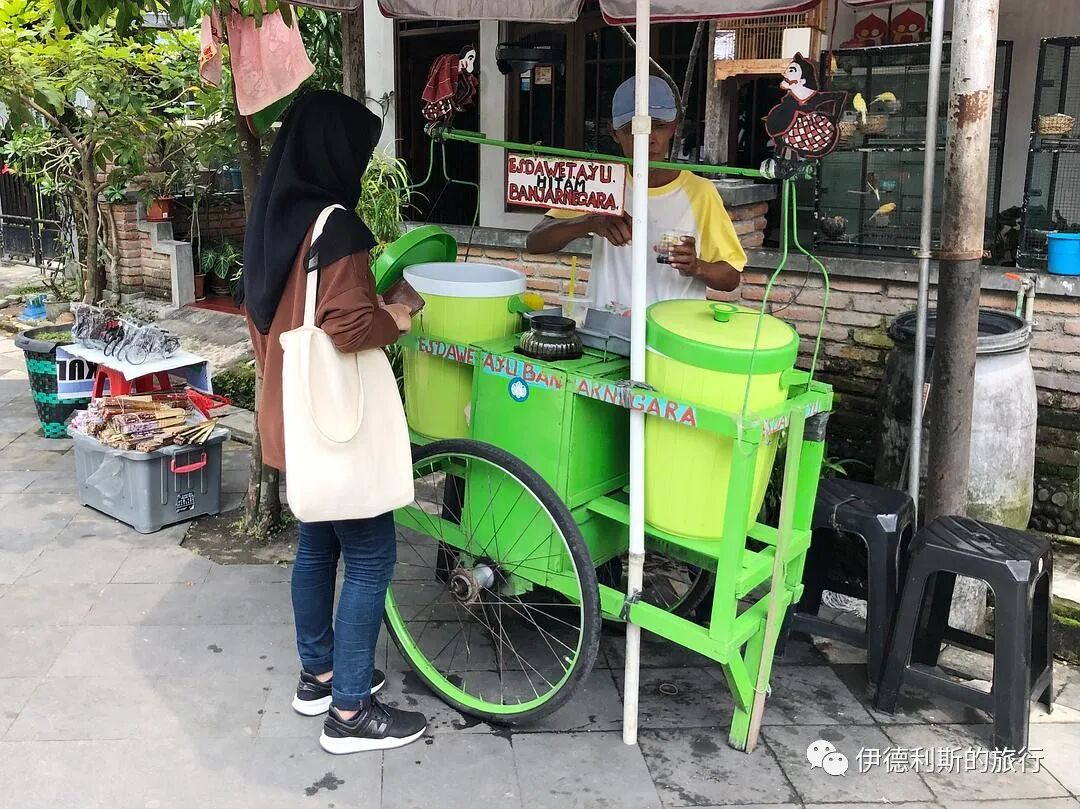
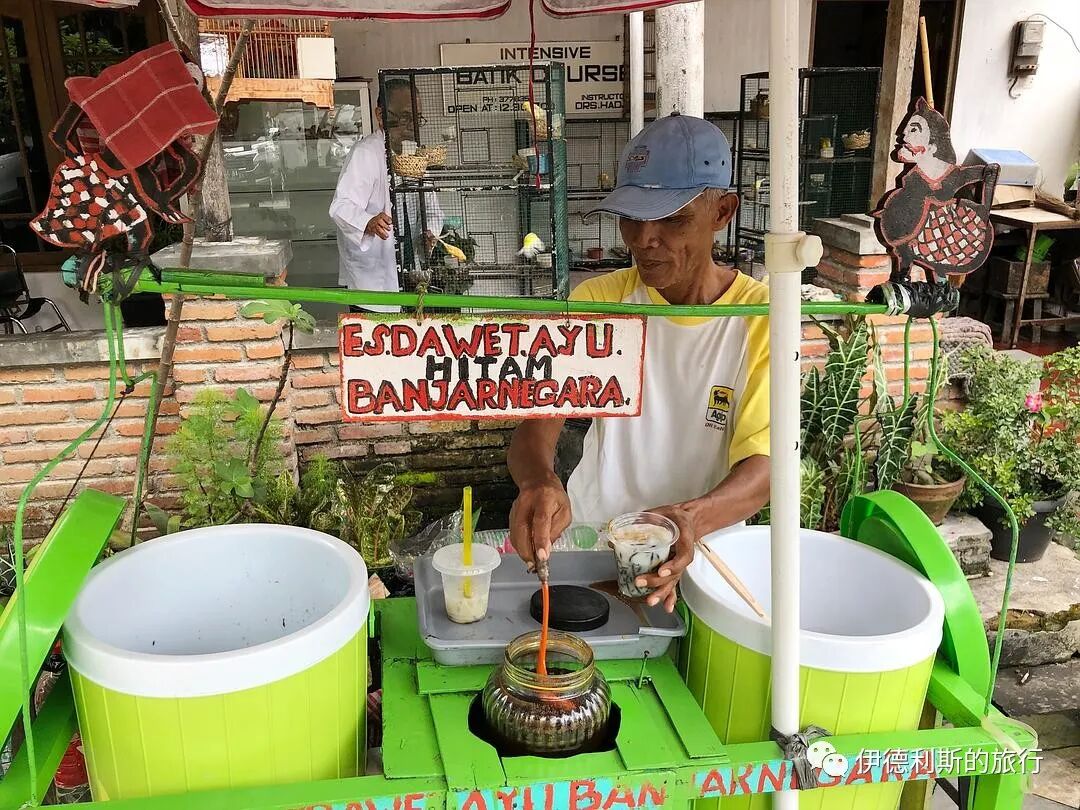
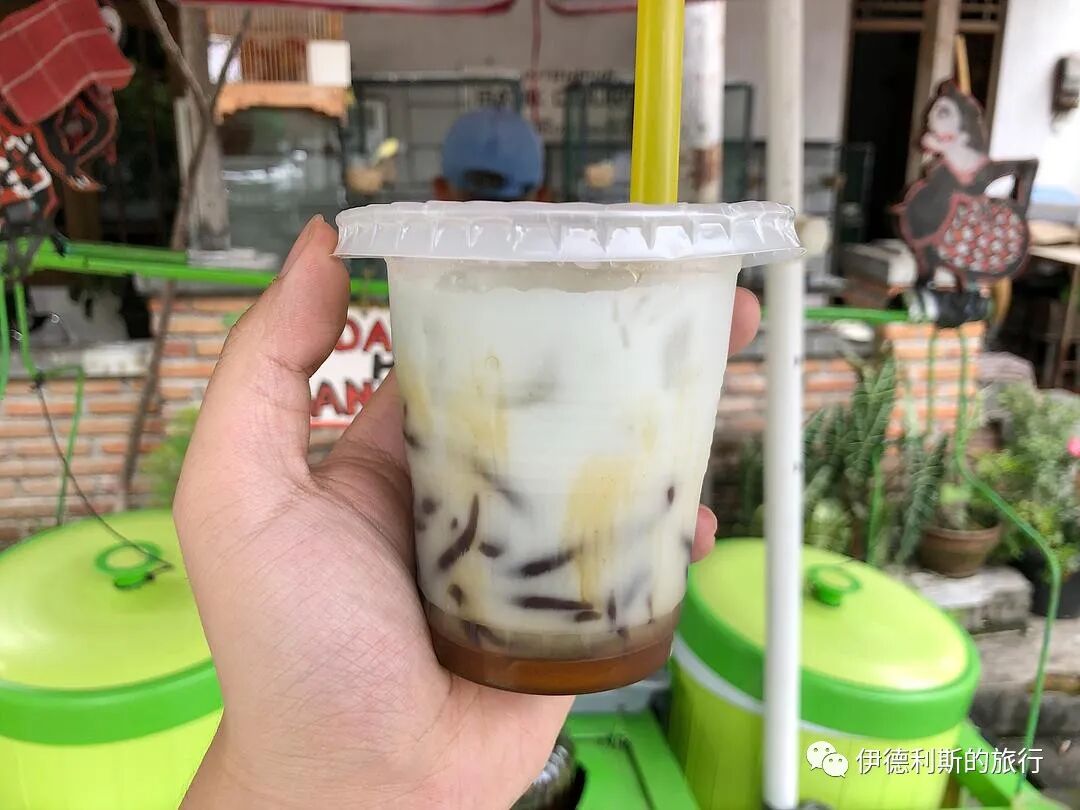
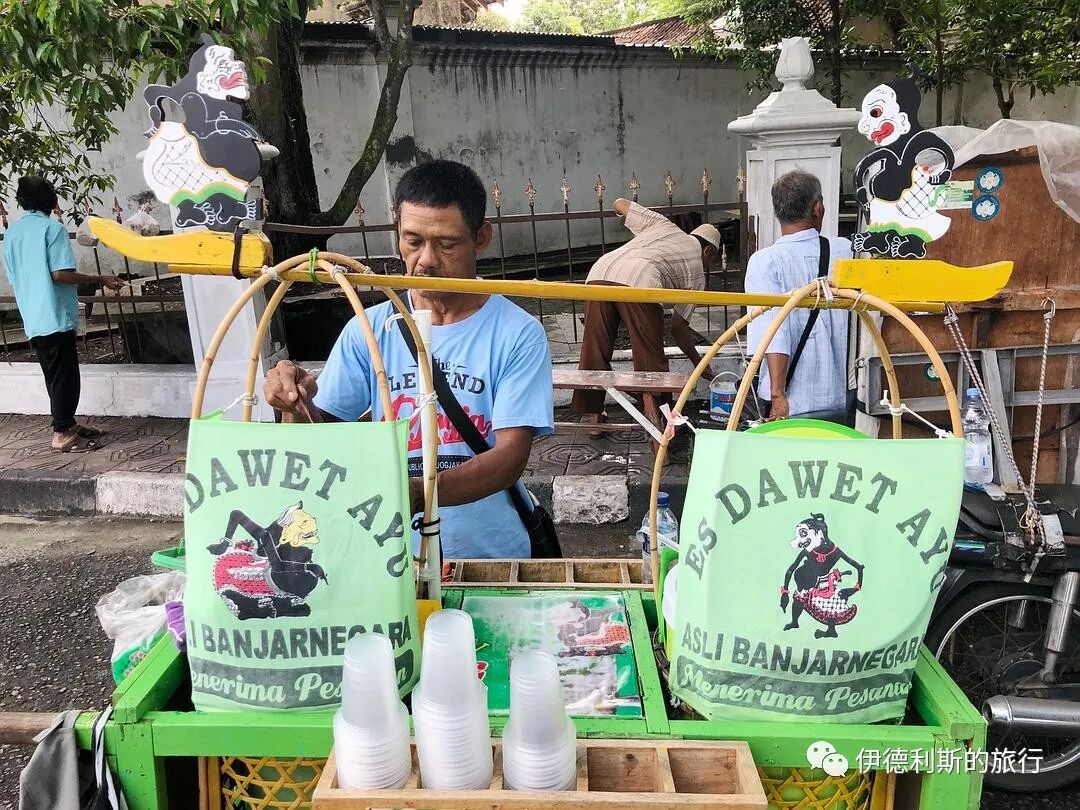
Es Dawet Ayu is a specialty iced drink from Central Java that comes from the small town of Banjarnegara. Its main ingredients are rice flour, glutinous rice flour, coconut milk, palm sugar syrup, and grass jelly.
Coconut water
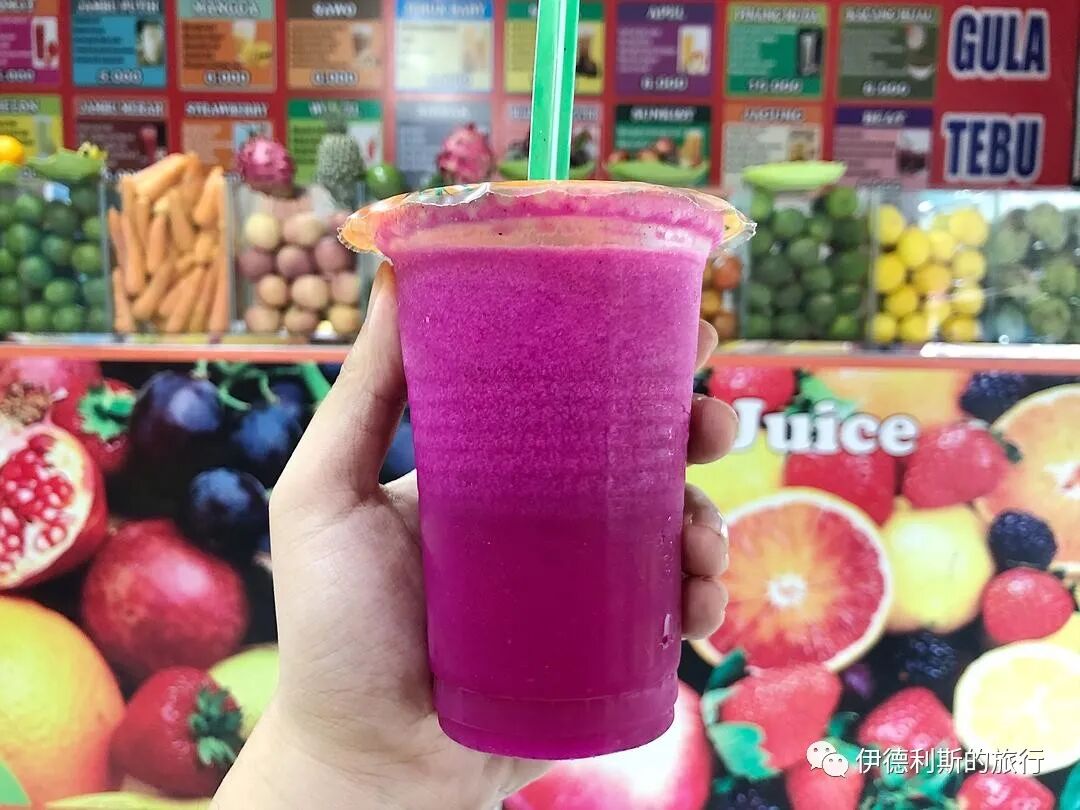
Freshly squeezed dragon fruit juice; the juice selection in Java is truly rich.
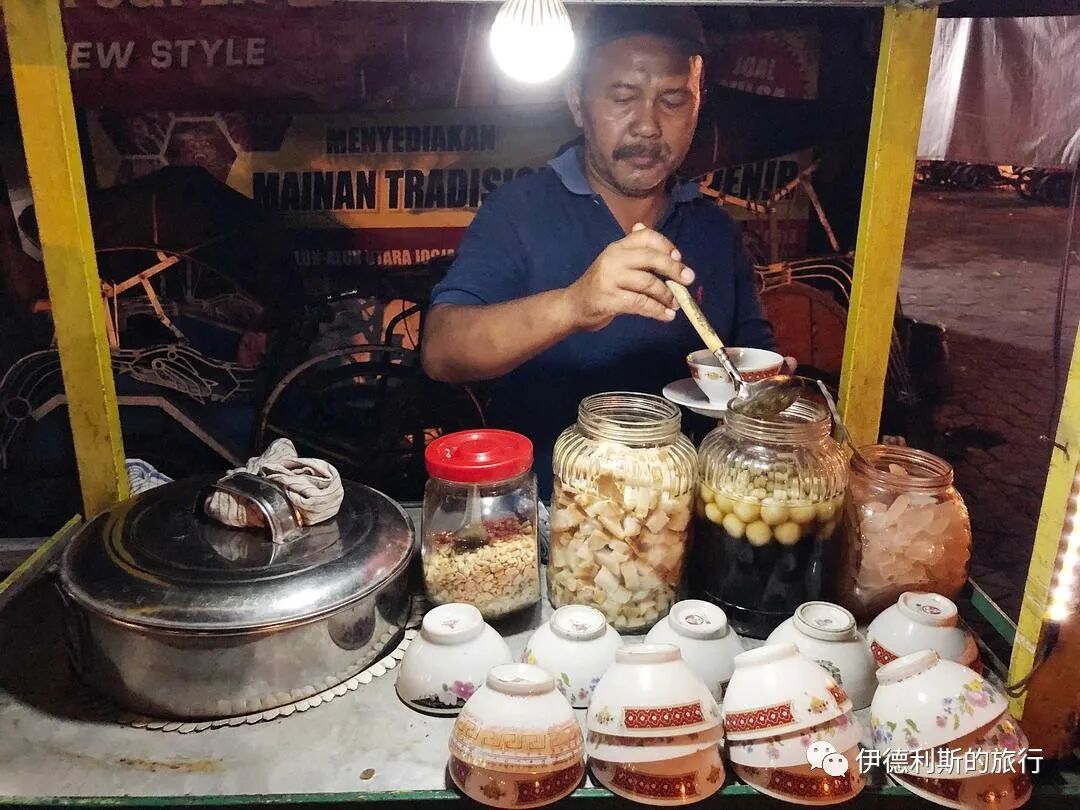
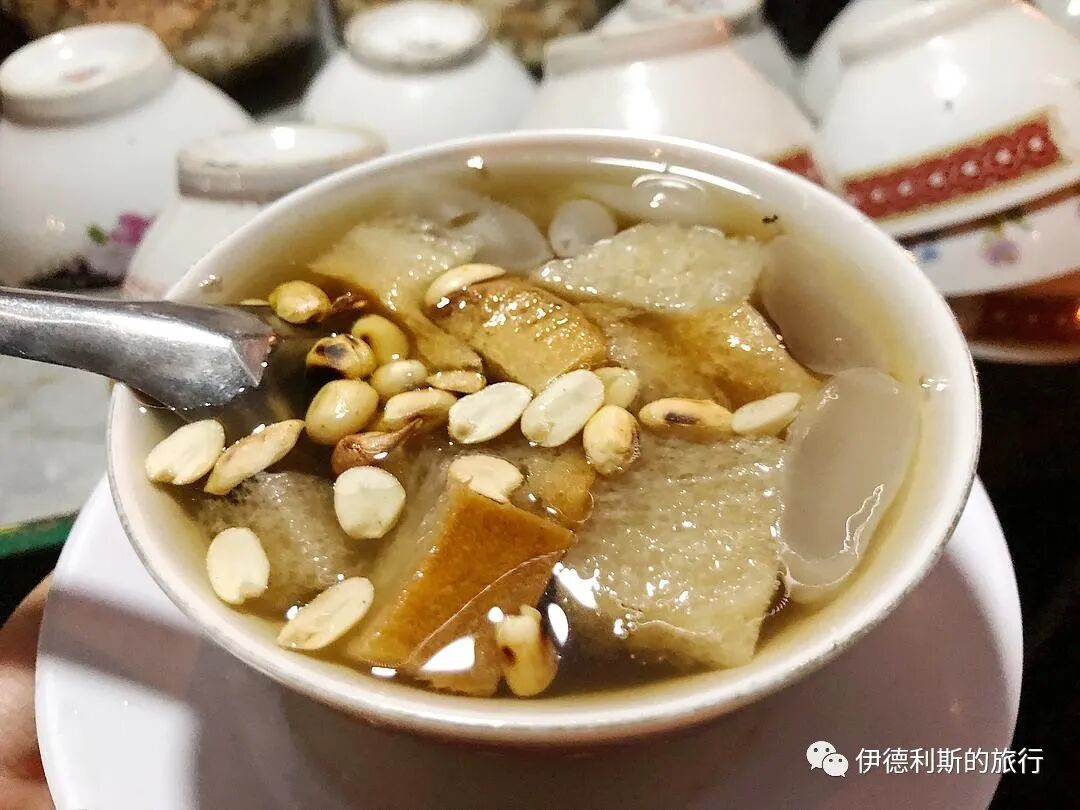
Sekoteng is a Javanese ginger-flavored hot drink that includes peanuts, bread slices, and rice balls. Hot drinks are relatively rare in Java, but it feels like the ginger helps remove dampness.
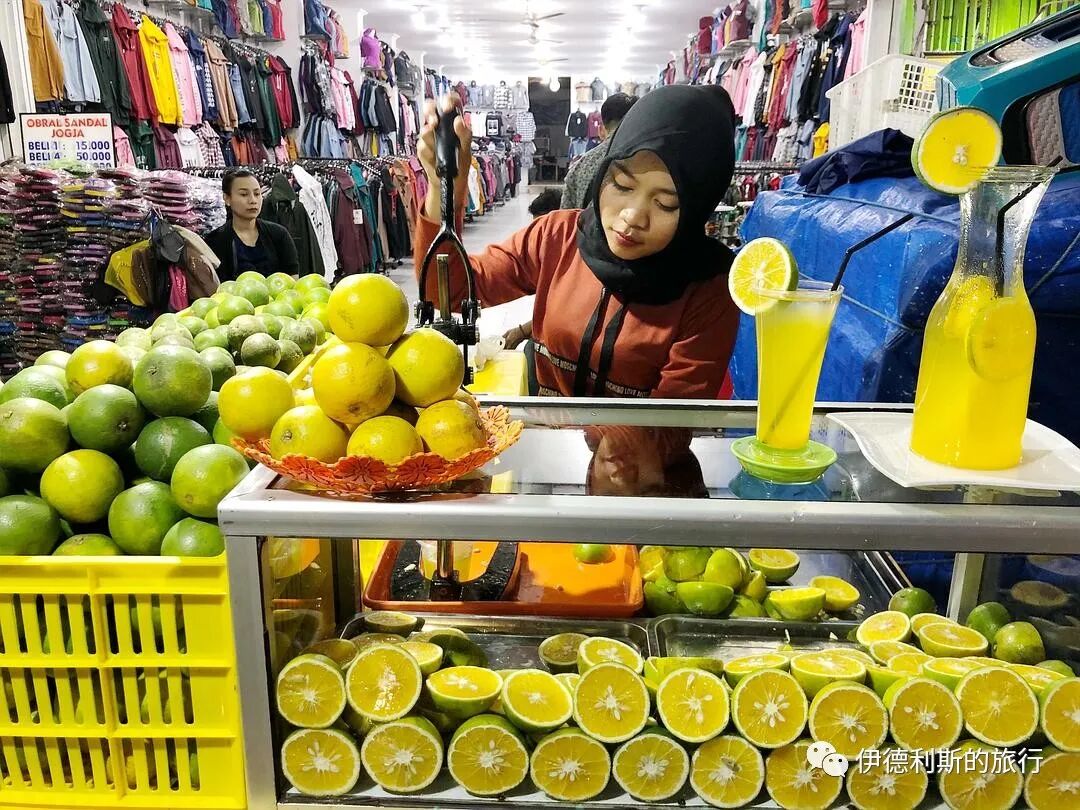
Freshly squeezed lemon juice
2. Snacks
Putu Bumbung is a pastry made by mixing glutinous rice flour with pandan leaf juice and palm sugar, then steaming it in bamboo tubes. You eat it with shredded coconut.
Pecel is a Javanese salad that usually includes spinach, amaranth, bean sprouts, water spinach, yardlong beans, cucumber, cassava leaves, and lemon basil. The sauce contains peanut butter, crushed peanuts, salt, palm sugar, tamarind juice, chili, galangal, kaffir lime leaves, and garlic. Pecel originated in Java and was later brought to Malaysia and Suriname by Javanese people.
3. Restaurants
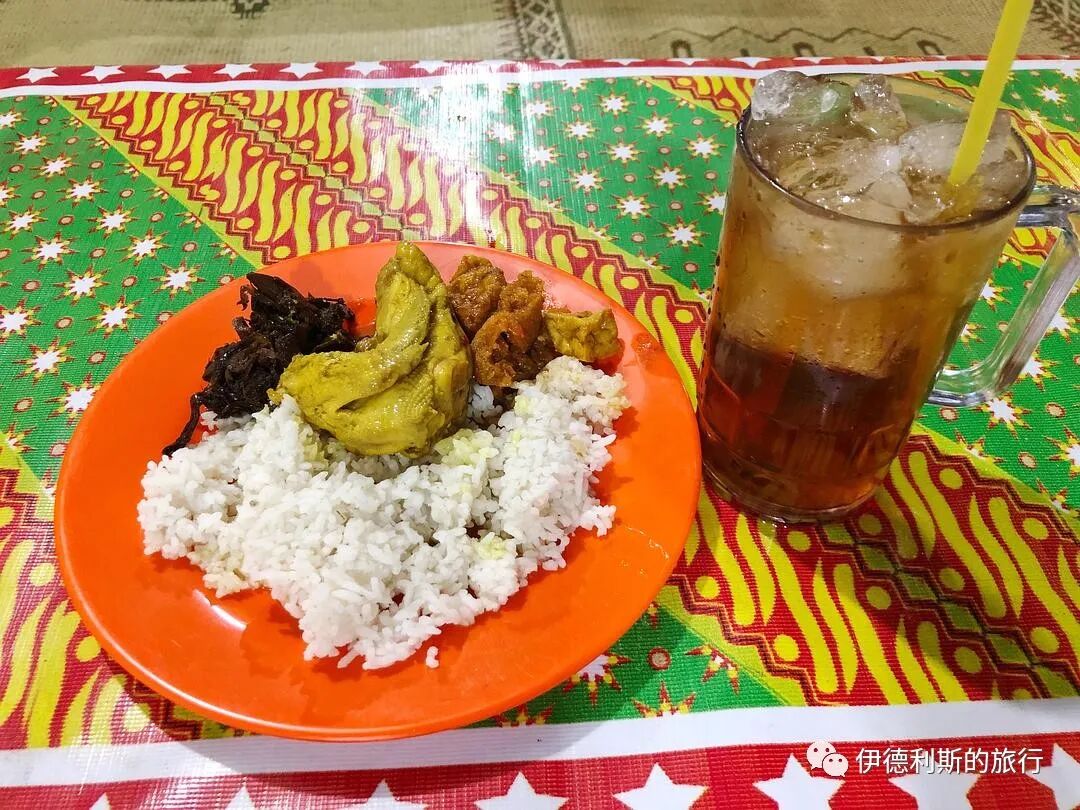
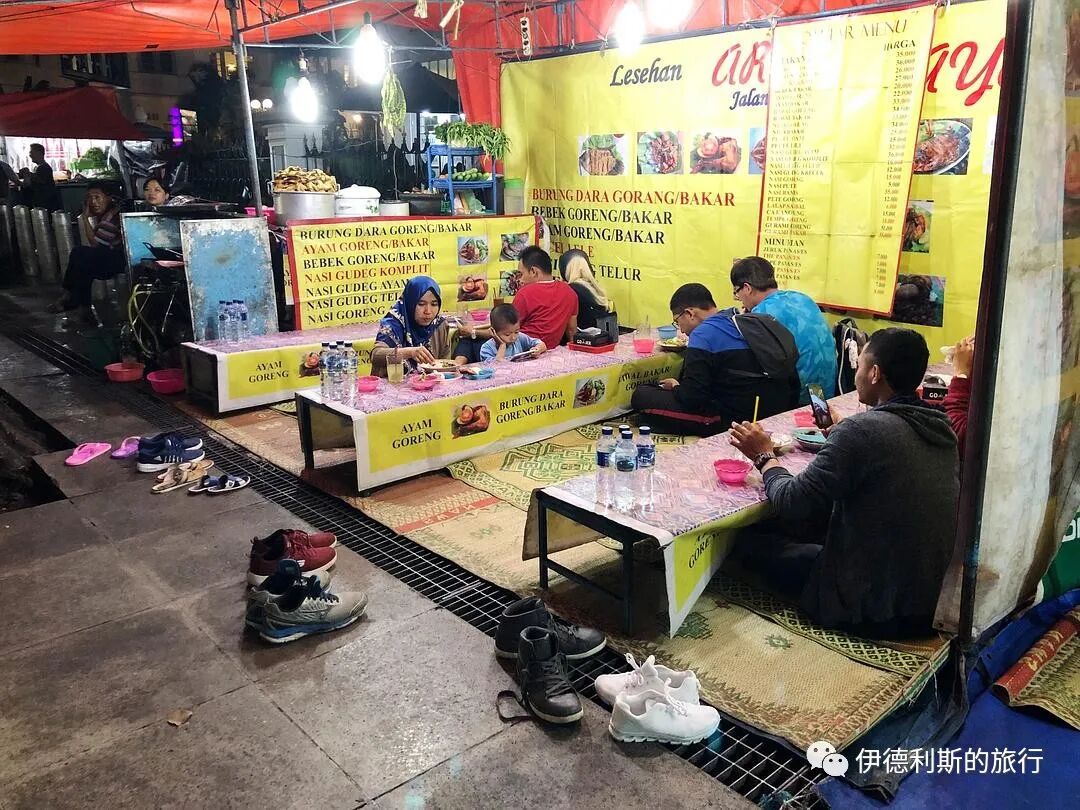
Lesehan is a Javanese style of dining where you sit cross-legged on the floor. The Malioboro night market in Yogyakarta is the birthplace of this dining style. I ate the Yogyakarta specialty, Gudeg rice with chicken. Gudeg is made by stewing unripe jackfruit, palm sugar, and coconut milk for several hours. The ingredients include shallots, ginger, garlic, coriander seeds, bay leaves, and teak leaves.
At a small shop specializing in fish cakes, I ordered the fish cake omelet (Lenggang) and fish cake noodles (Mie Laksan). The fish cakes were stuffed with tofu.
I ate meatball soup (Bakso) and grilled chicken skin (Thaichan Kulit Ayam) at a shop.
I had fried fish with Indonesian chili sauce (sambal) at this shop, and it was super spicy!
The breakfast at my hotel in Yogyakarta had a great variety of food.
On the left are Indonesian rice cakes (klepon), topped with shredded coconut and served on a banana leaf. Klepon is made from a mix of glutinous rice flour, palm sugar, and juice from pandan or dracaena leaves. On the right are Indonesian snacks (kue), known in Java as market snacks (jajan pasar), which play an important role in traditional Javanese ceremonies.
In the bottom right is eggplant with chili sauce (balado), a spicy sauce that comes from the island of Sumatra. In the bottom left is lemon basil chicken (ayam kemangi).
4. Royal Sultan Cuisine
Located next to the Yogyakarta Sultan's Palace, nDalem Joyokusuman was the home of Prince Gusti Haryo Haji Joyokusumo and is now open as a cultural center and restaurant. I ate Nasi Blawong and Telo ijo here. Nasi Blawong is a specialty dish of the Yogyakarta Sultan. It was once only served at the Sultan's birthday banquets, and the reddish Blawong rice used in it is considered sacred. Telo ijo is a cassava cake drizzled with pandan coconut milk.
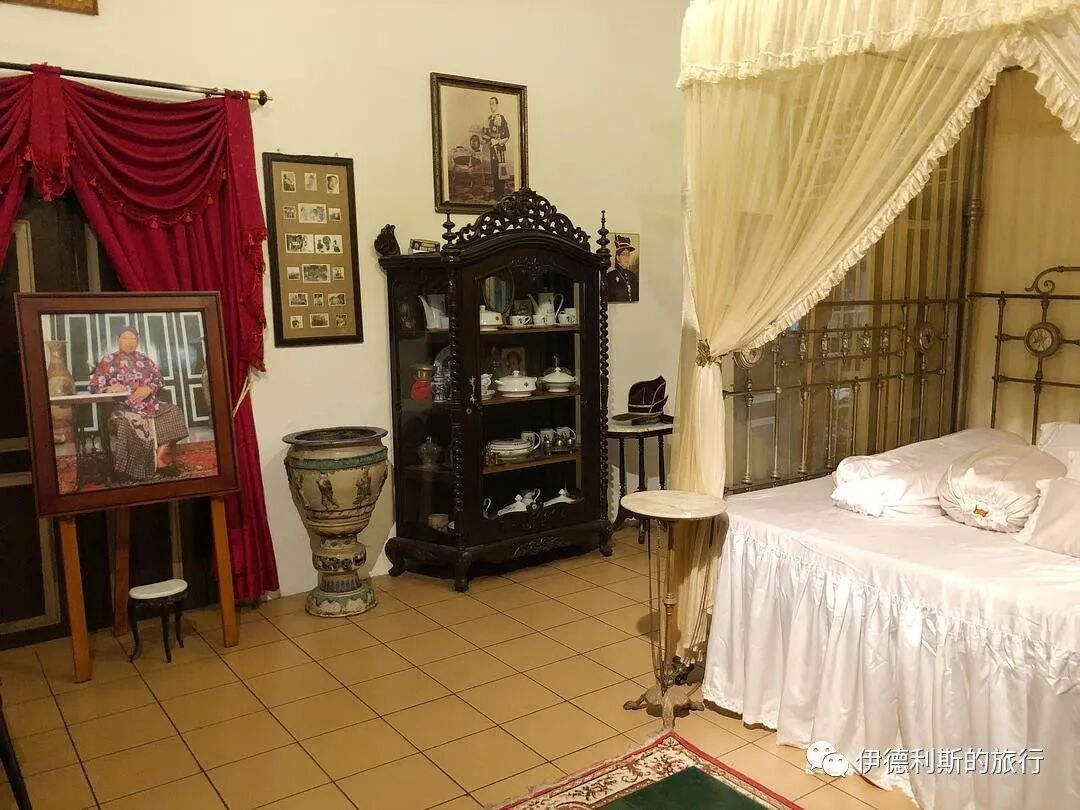
nDalem Joyokusuman was built in 1916 during the reign of the eighth Sultan of Yogyakarta, Hamengkubuwono VIII, and has been home to members of the Sultan's family ever since. The Peringgitan is the inner hall behind the main living room. It is where the prince's family spent their time and houses the valuable gifts the prince received.
The Sentong Kiwo was originally a guest room and now serves as an exhibition hall.
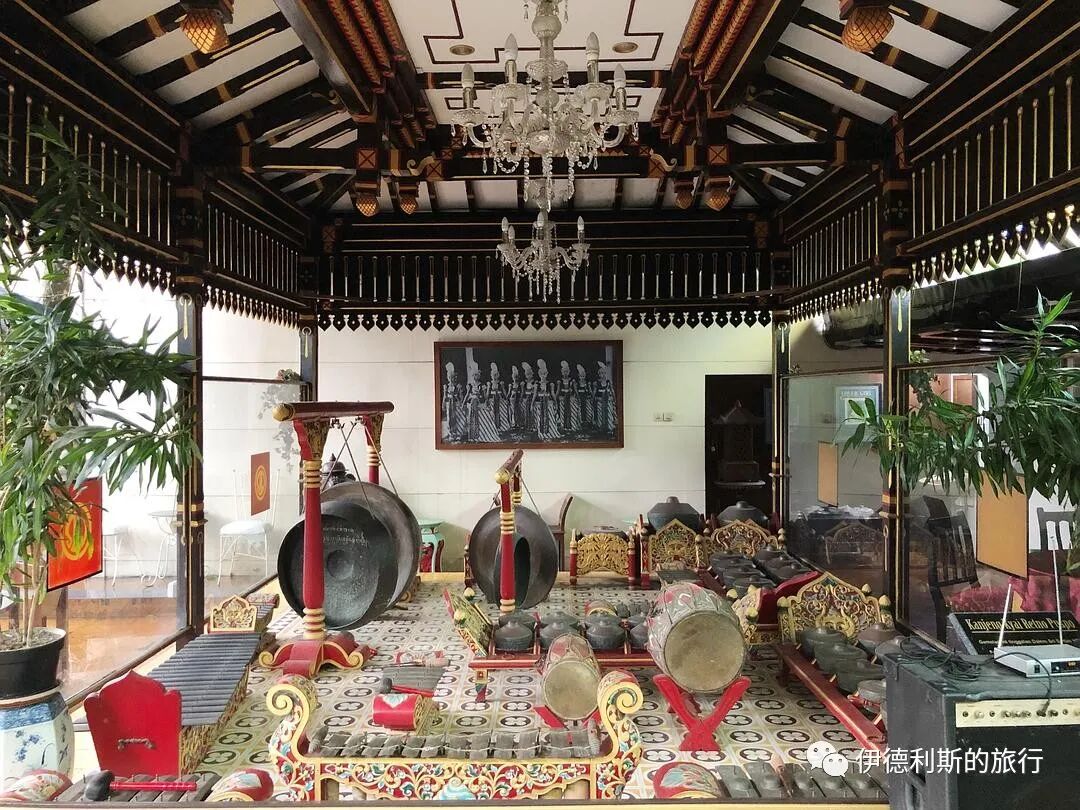
The area in the courtyard where gamelan music is performed.
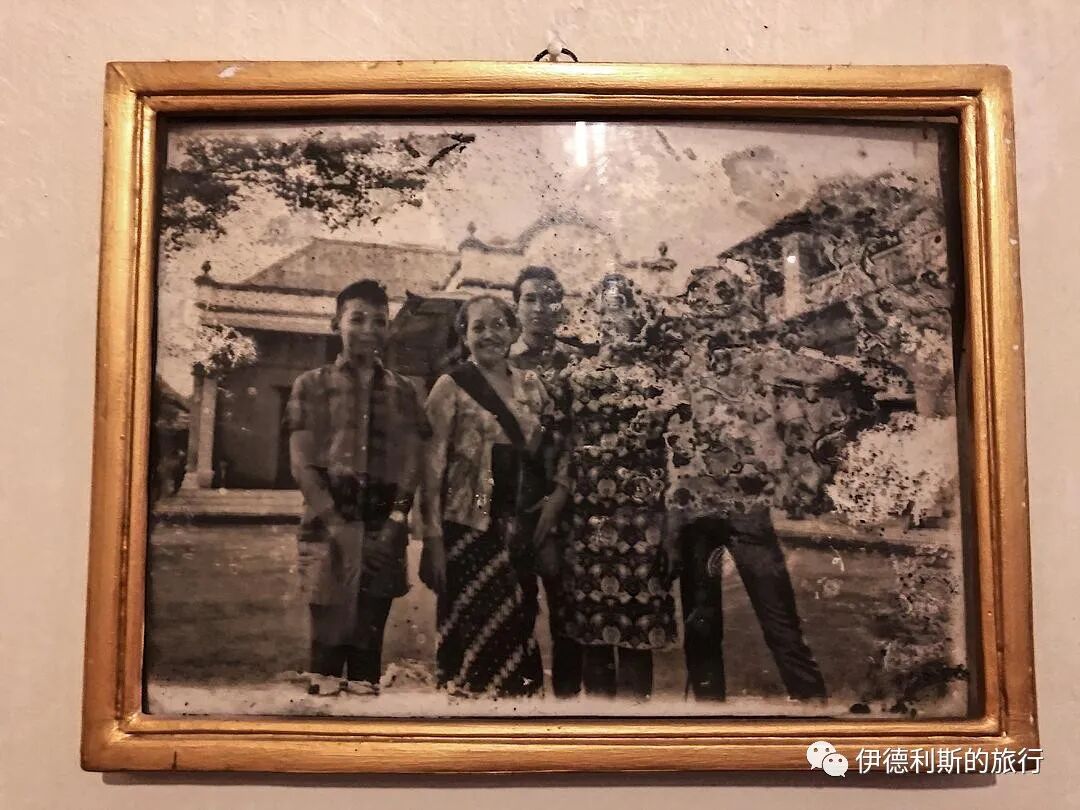
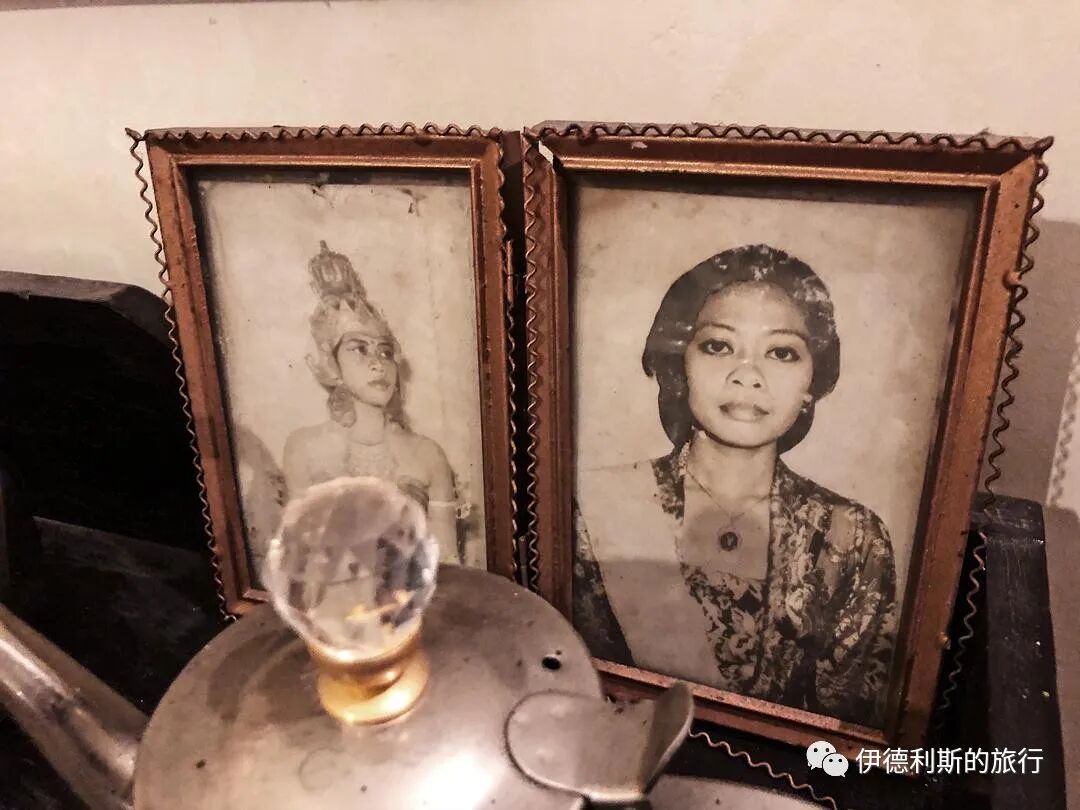
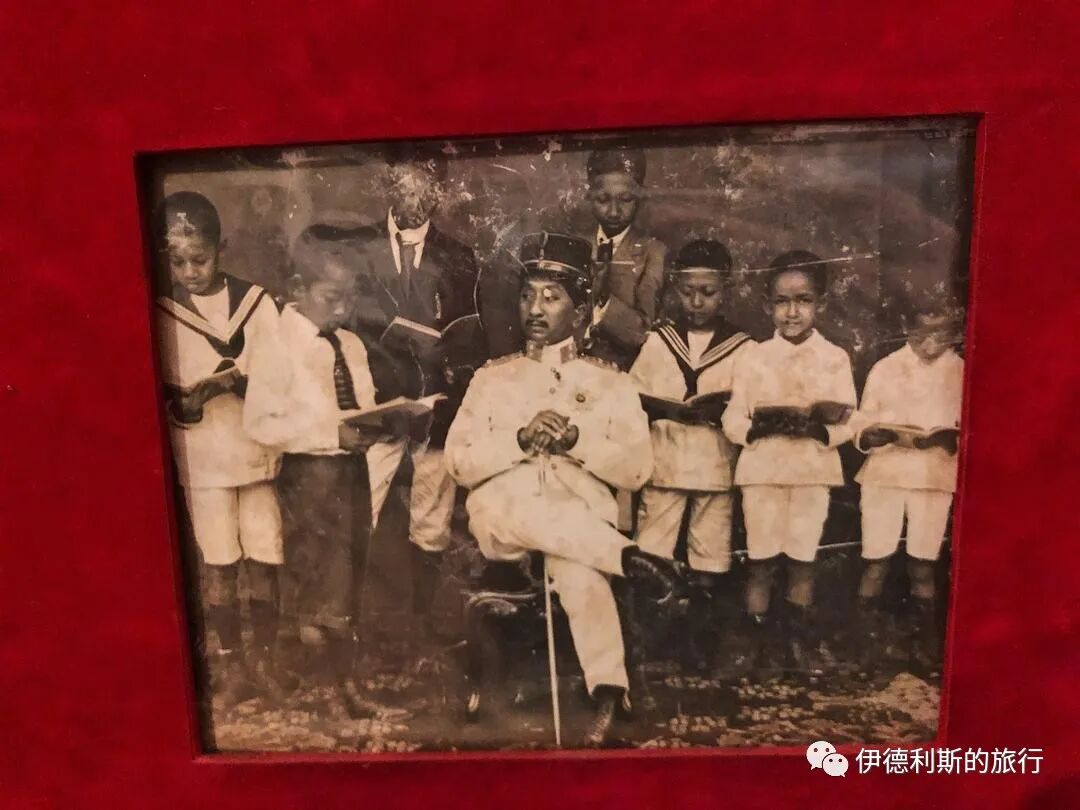
Photos of the prince's family when they were young. view all
Summary: Halal Food Guide: Yogyakarta — Javanese Dishes, Markets and Muslim Food is presented here as a firsthand travel account in clear English, beginning with this scene: Yogyakarta is an ancient cultural city in central Java that is still ruled by a sultan today. The account keeps its focus on Yogyakarta, Java Islam, Sultanate History while preserving the names, places, food, and historical details from the Chinese source.
Yogyakarta is an ancient cultural city in central Java that is still ruled by a sultan today. Beyond traditional Javanese architecture, gamelan music, and wayang shadow puppetry, Yogyakarta also has many local Javanese foods that I want to share with you.
1. Drinks
In the muggy tropical heat, drinking a cold street drink feels really good.
Es Dawet Ayu is a specialty iced drink from Central Java that comes from the small town of Banjarnegara. Its main ingredients are rice flour, glutinous rice flour, coconut milk, palm sugar syrup, and grass jelly.
Coconut water
Freshly squeezed dragon fruit juice; the juice selection in Java is truly rich.
Sekoteng is a Javanese ginger-flavored hot drink that includes peanuts, bread slices, and rice balls. Hot drinks are relatively rare in Java, but it feels like the ginger helps remove dampness.
Freshly squeezed lemon juice
2. Snacks
Putu Bumbung is a pastry made by mixing glutinous rice flour with pandan leaf juice and palm sugar, then steaming it in bamboo tubes. You eat it with shredded coconut.
Pecel is a Javanese salad that usually includes spinach, amaranth, bean sprouts, water spinach, yardlong beans, cucumber, cassava leaves, and lemon basil. The sauce contains peanut butter, crushed peanuts, salt, palm sugar, tamarind juice, chili, galangal, kaffir lime leaves, and garlic. Pecel originated in Java and was later brought to Malaysia and Suriname by Javanese people.
3. Restaurants
Lesehan is a Javanese style of dining where you sit cross-legged on the floor. The Malioboro night market in Yogyakarta is the birthplace of this dining style. I ate the Yogyakarta specialty, Gudeg rice with chicken. Gudeg is made by stewing unripe jackfruit, palm sugar, and coconut milk for several hours. The ingredients include shallots, ginger, garlic, coriander seeds, bay leaves, and teak leaves.
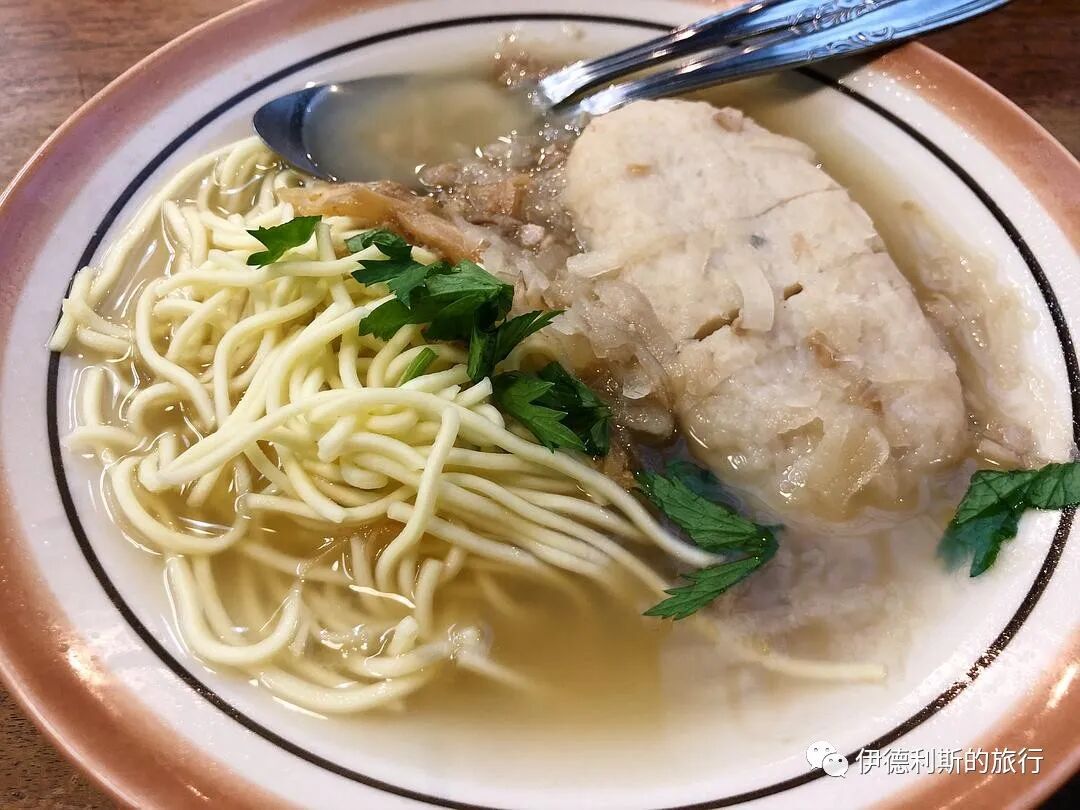
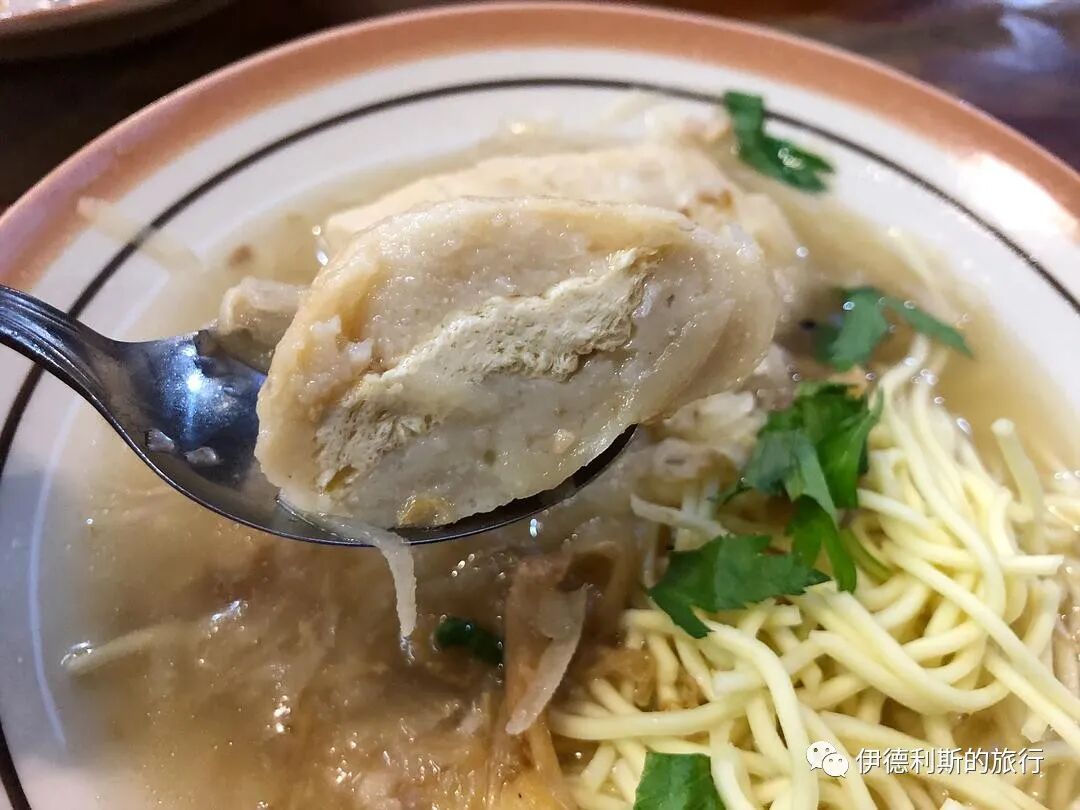
At a small shop specializing in fish cakes, I ordered the fish cake omelet (Lenggang) and fish cake noodles (Mie Laksan). The fish cakes were stuffed with tofu.
I ate meatball soup (Bakso) and grilled chicken skin (Thaichan Kulit Ayam) at a shop.
I had fried fish with Indonesian chili sauce (sambal) at this shop, and it was super spicy!
The breakfast at my hotel in Yogyakarta had a great variety of food.
On the left are Indonesian rice cakes (klepon), topped with shredded coconut and served on a banana leaf. Klepon is made from a mix of glutinous rice flour, palm sugar, and juice from pandan or dracaena leaves. On the right are Indonesian snacks (kue), known in Java as market snacks (jajan pasar), which play an important role in traditional Javanese ceremonies.
In the bottom right is eggplant with chili sauce (balado), a spicy sauce that comes from the island of Sumatra. In the bottom left is lemon basil chicken (ayam kemangi).
4. Royal Sultan Cuisine
Located next to the Yogyakarta Sultan's Palace, nDalem Joyokusuman was the home of Prince Gusti Haryo Haji Joyokusumo and is now open as a cultural center and restaurant. I ate Nasi Blawong and Telo ijo here. Nasi Blawong is a specialty dish of the Yogyakarta Sultan. It was once only served at the Sultan's birthday banquets, and the reddish Blawong rice used in it is considered sacred. Telo ijo is a cassava cake drizzled with pandan coconut milk.
nDalem Joyokusuman was built in 1916 during the reign of the eighth Sultan of Yogyakarta, Hamengkubuwono VIII, and has been home to members of the Sultan's family ever since. The Peringgitan is the inner hall behind the main living room. It is where the prince's family spent their time and houses the valuable gifts the prince received.
The Sentong Kiwo was originally a guest room and now serves as an exhibition hall.
The area in the courtyard where gamelan music is performed.
Photos of the prince's family when they were young. view all
Reposted from the web
Summary: Halal Food Guide: Yogyakarta — Javanese Dishes, Markets and Muslim Food is presented here as a firsthand travel account in clear English, beginning with this scene: Yogyakarta is an ancient cultural city in central Java that is still ruled by a sultan today. The account keeps its focus on Yogyakarta, Java Islam, Sultanate History while preserving the names, places, food, and historical details from the Chinese source.
Yogyakarta is an ancient cultural city in central Java that is still ruled by a sultan today. Beyond traditional Javanese architecture, gamelan music, and wayang shadow puppetry, Yogyakarta also has many local Javanese foods that I want to share with you.
1. Drinks
In the muggy tropical heat, drinking a cold street drink feels really good.
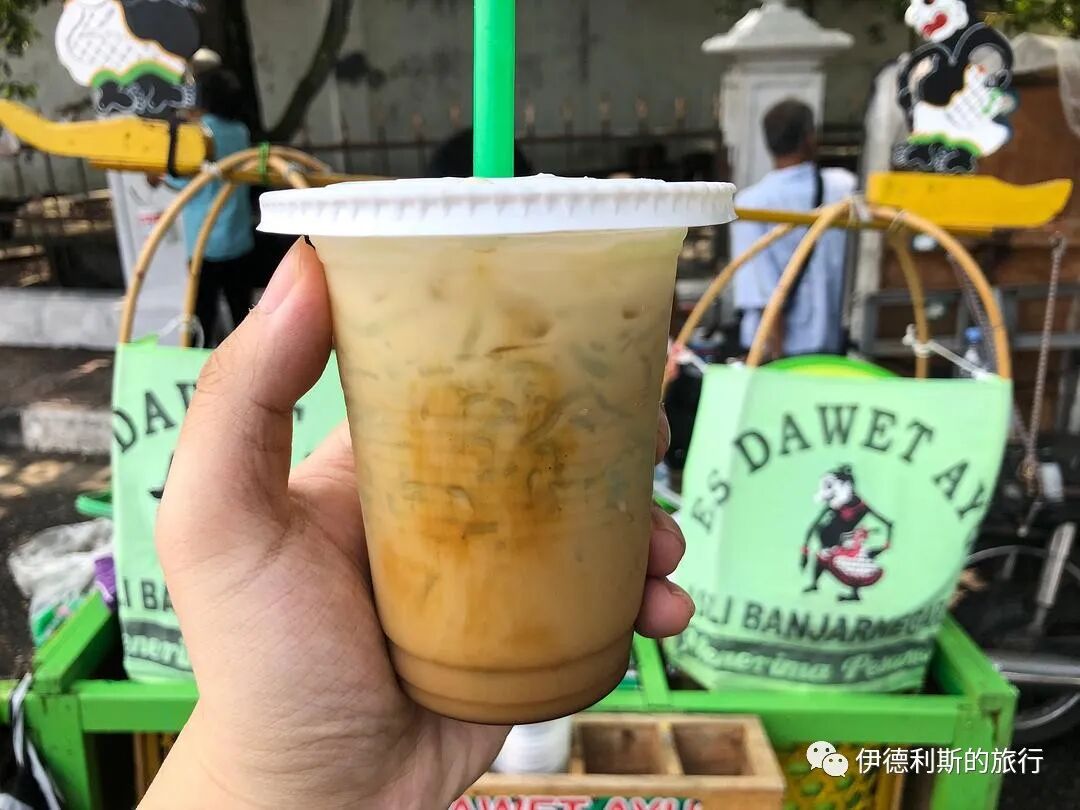
Es Dawet Ayu is a specialty iced drink from Central Java that comes from the small town of Banjarnegara. Its main ingredients are rice flour, glutinous rice flour, coconut milk, palm sugar syrup, and grass jelly.
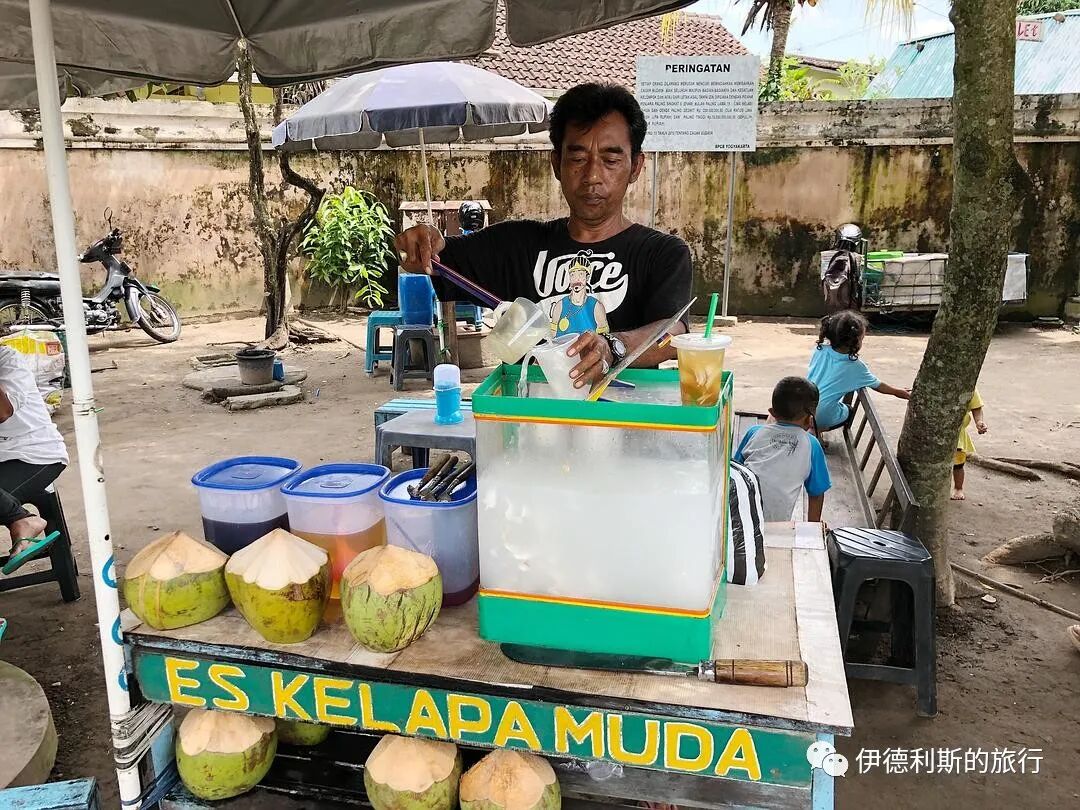
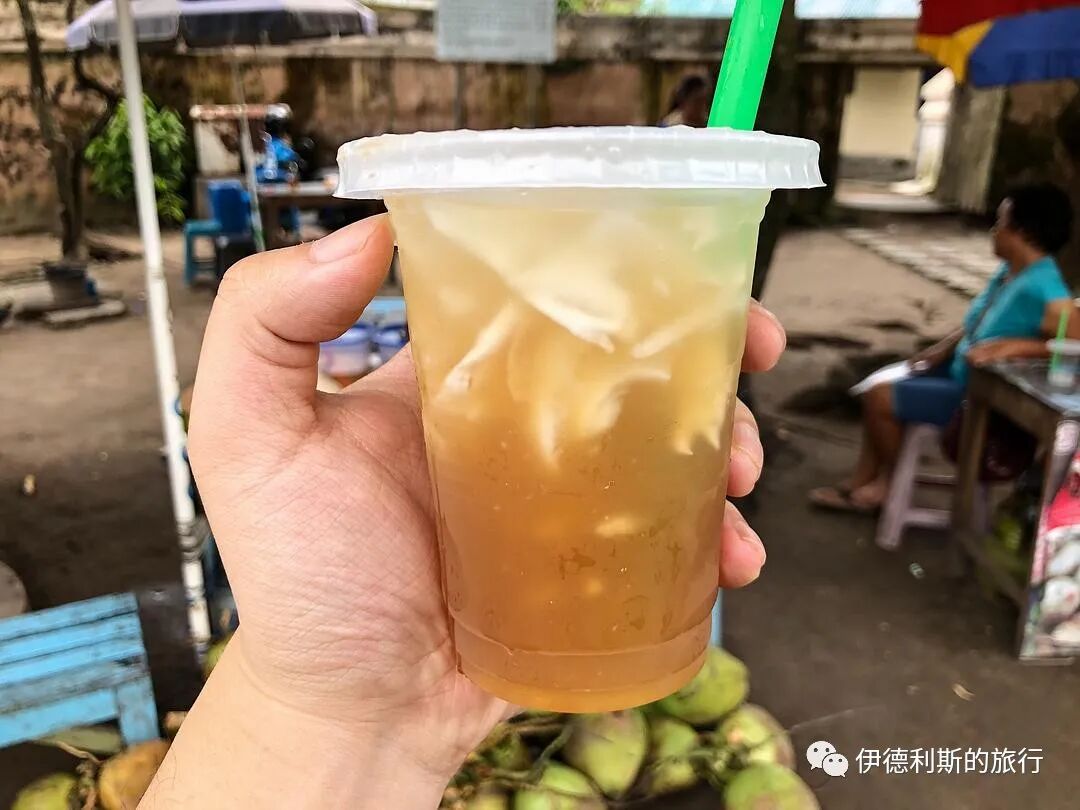
Coconut water
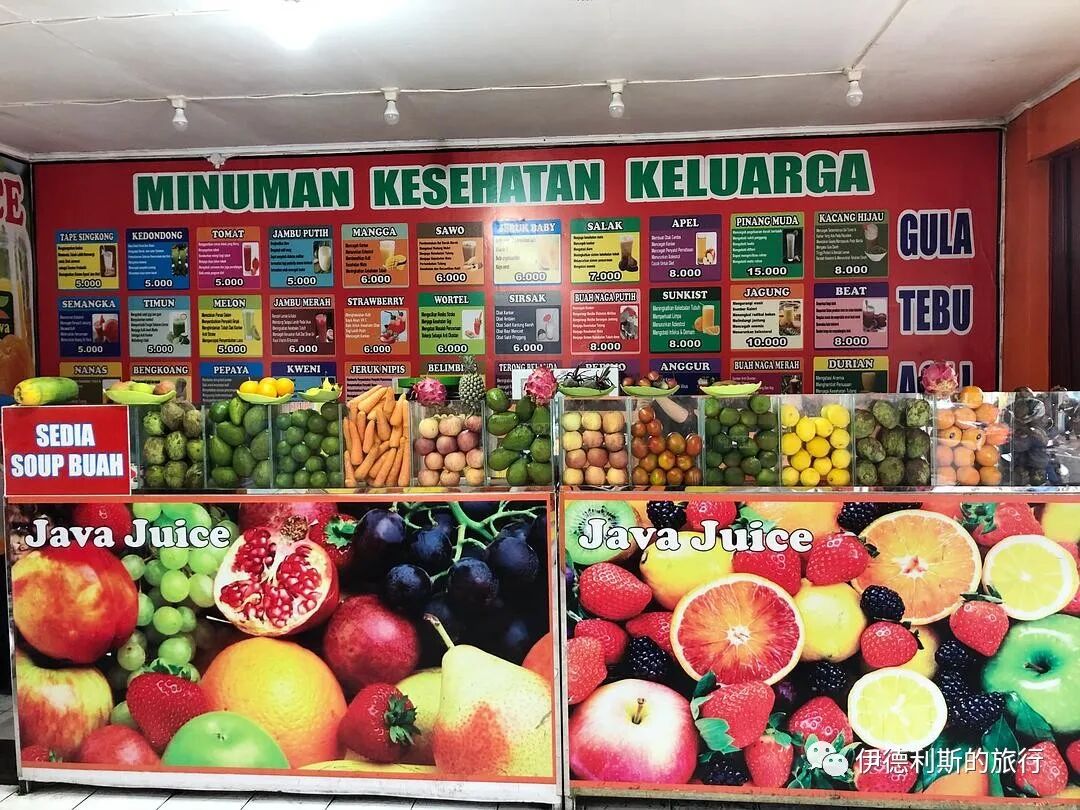
Freshly squeezed dragon fruit juice; the juice selection in Java is truly rich.
Sekoteng is a Javanese ginger-flavored hot drink that includes peanuts, bread slices, and rice balls. Hot drinks are relatively rare in Java, but it feels like the ginger helps remove dampness.
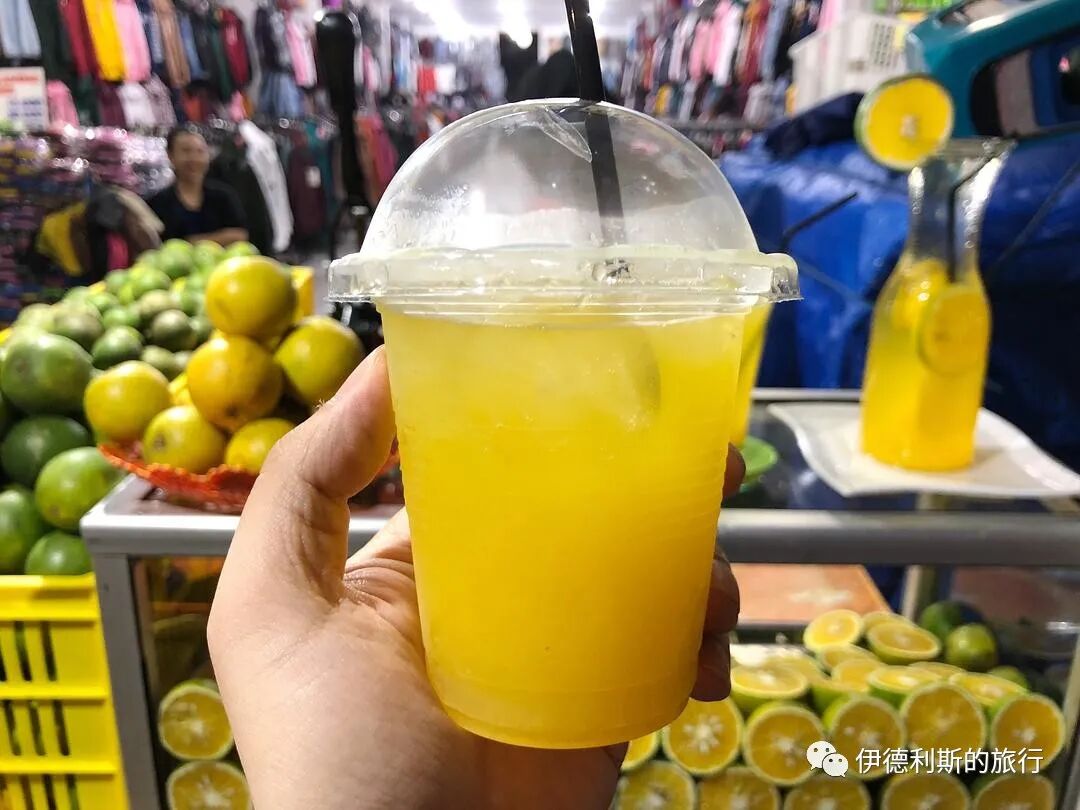
Freshly squeezed lemon juice
2. Snacks
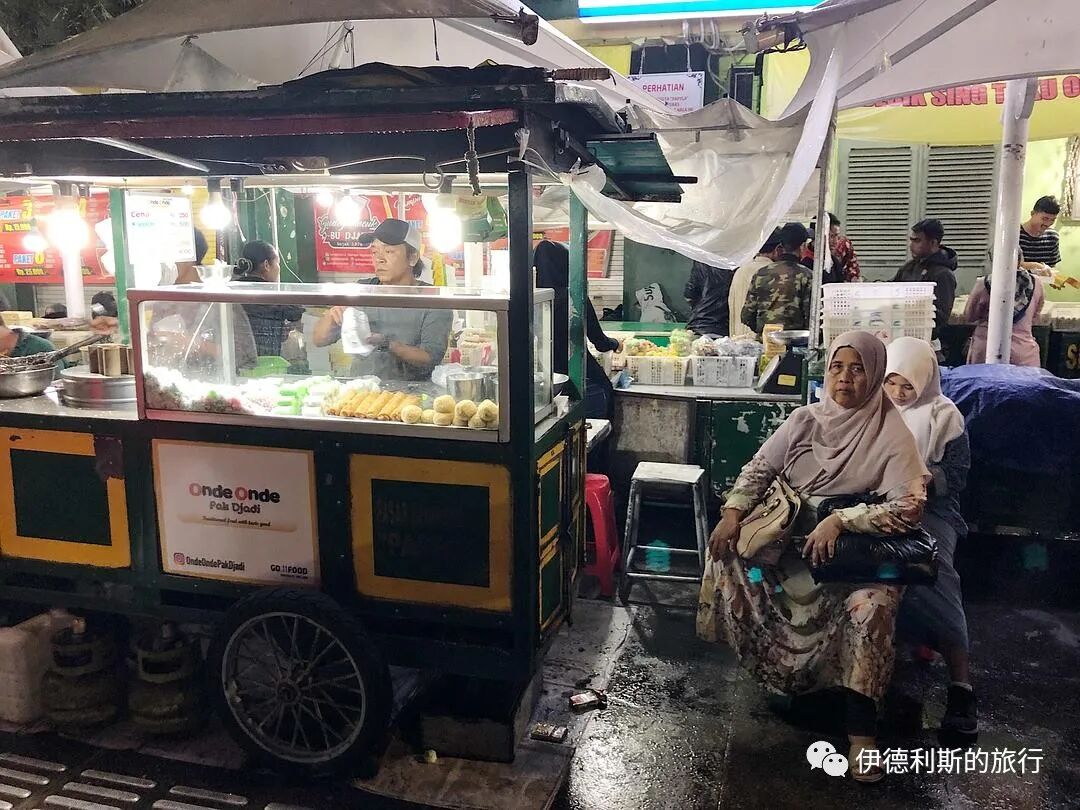
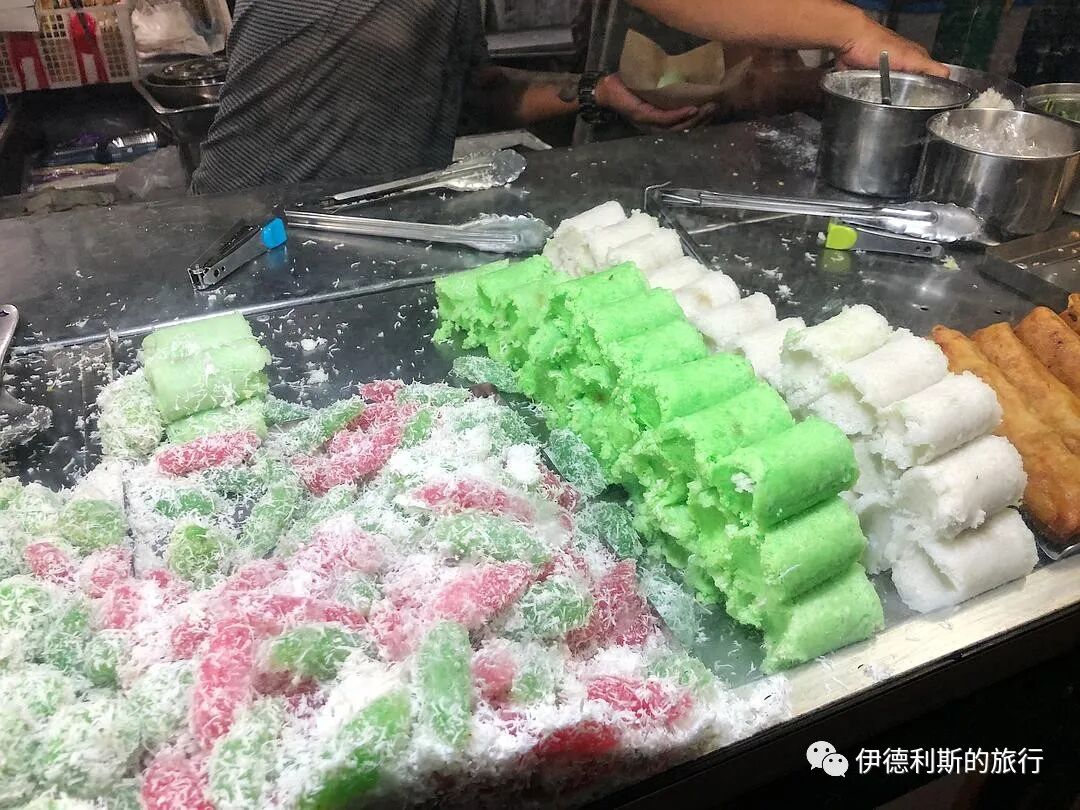
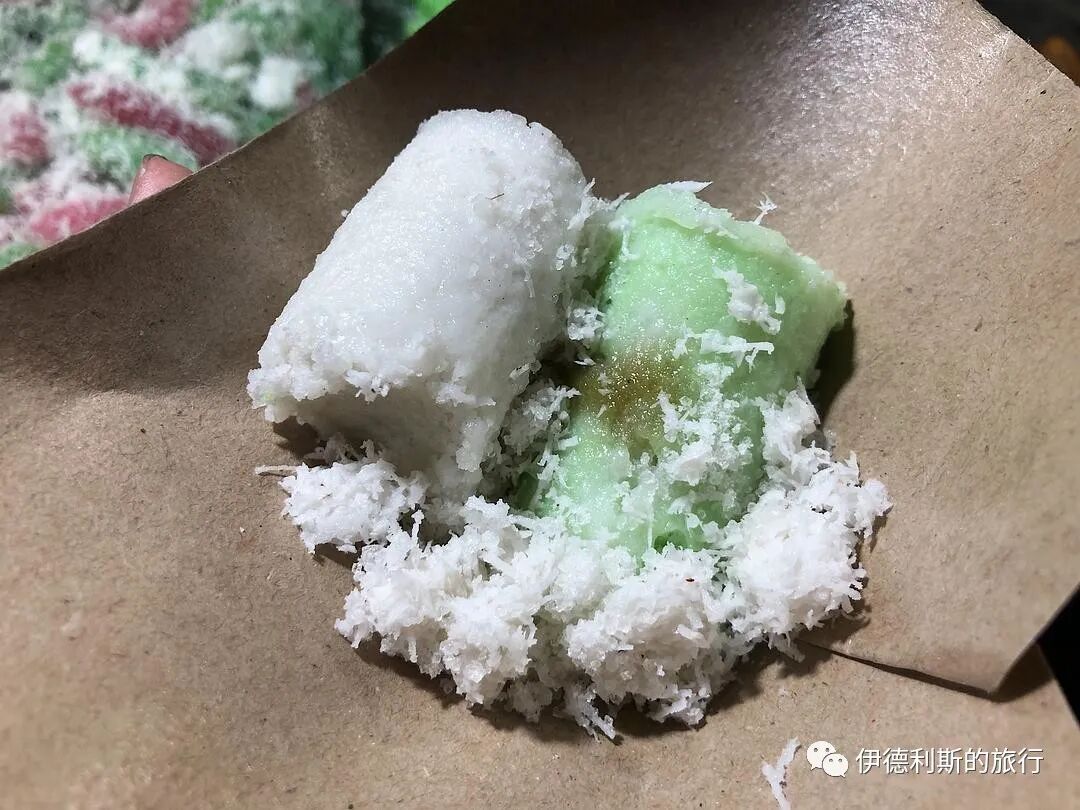
Putu Bumbung is a pastry made by mixing glutinous rice flour with pandan leaf juice and palm sugar, then steaming it in bamboo tubes. You eat it with shredded coconut.
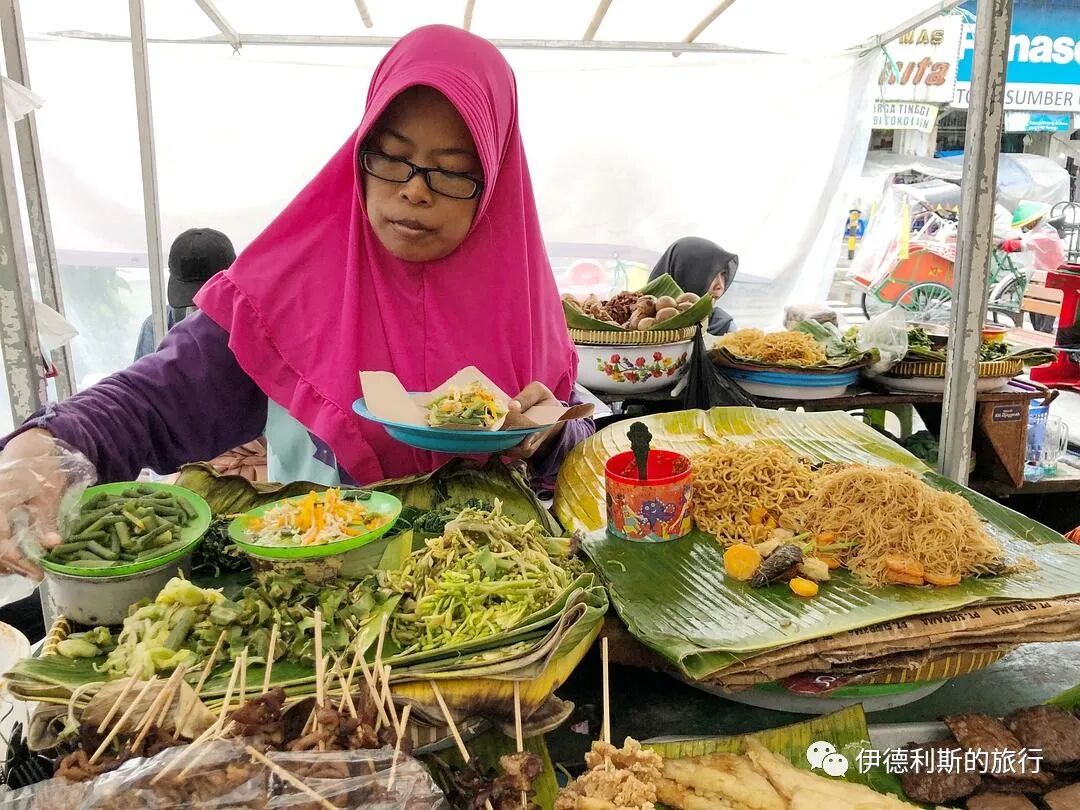
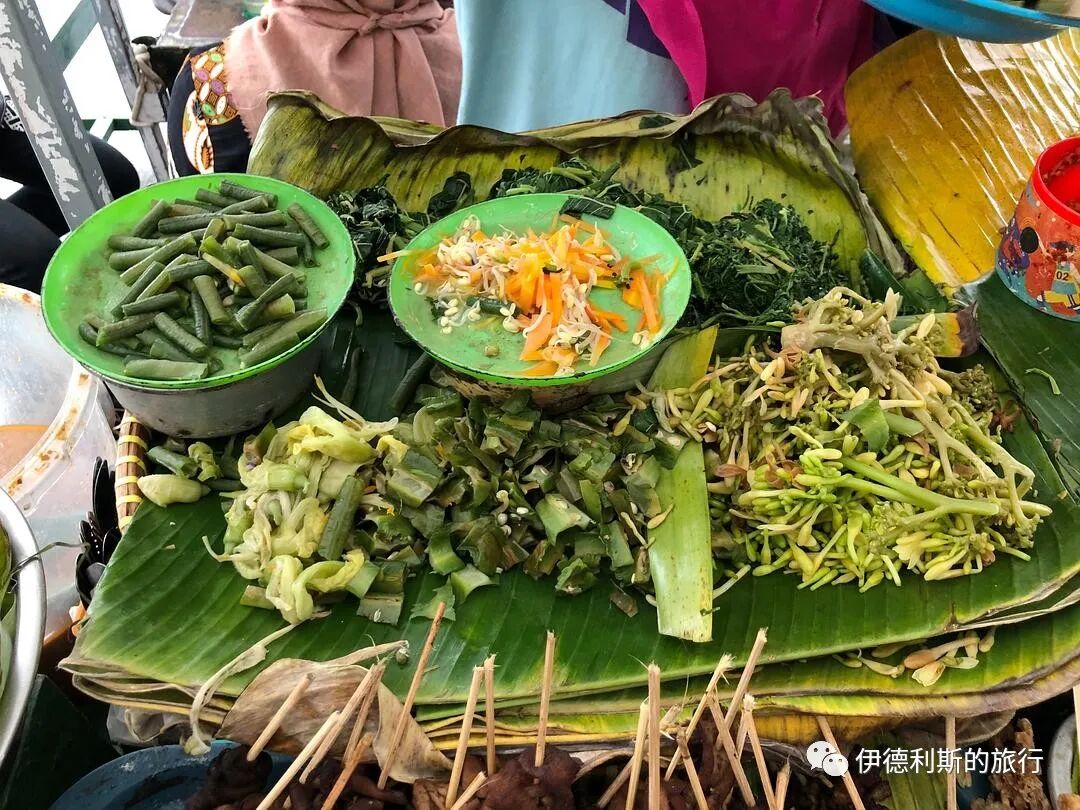
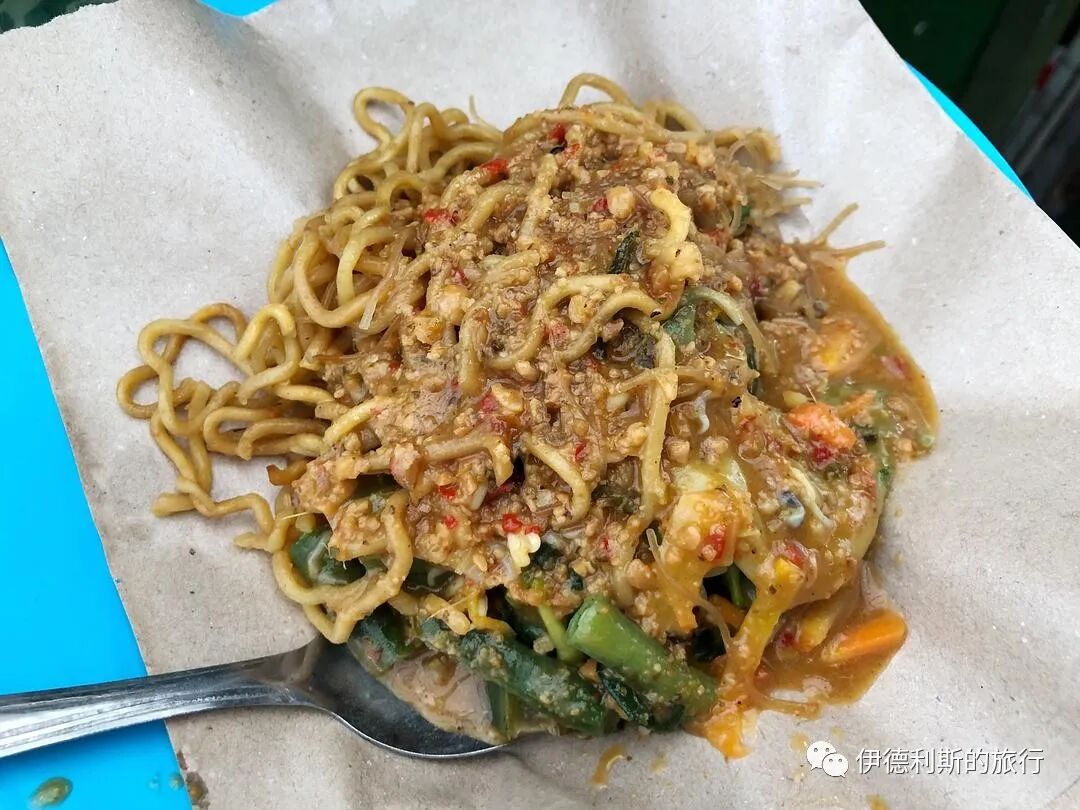
Pecel is a Javanese salad that usually includes spinach, amaranth, bean sprouts, water spinach, yardlong beans, cucumber, cassava leaves, and lemon basil. The sauce contains peanut butter, crushed peanuts, salt, palm sugar, tamarind juice, chili, galangal, kaffir lime leaves, and garlic. Pecel originated in Java and was later brought to Malaysia and Suriname by Javanese people.
3. Restaurants
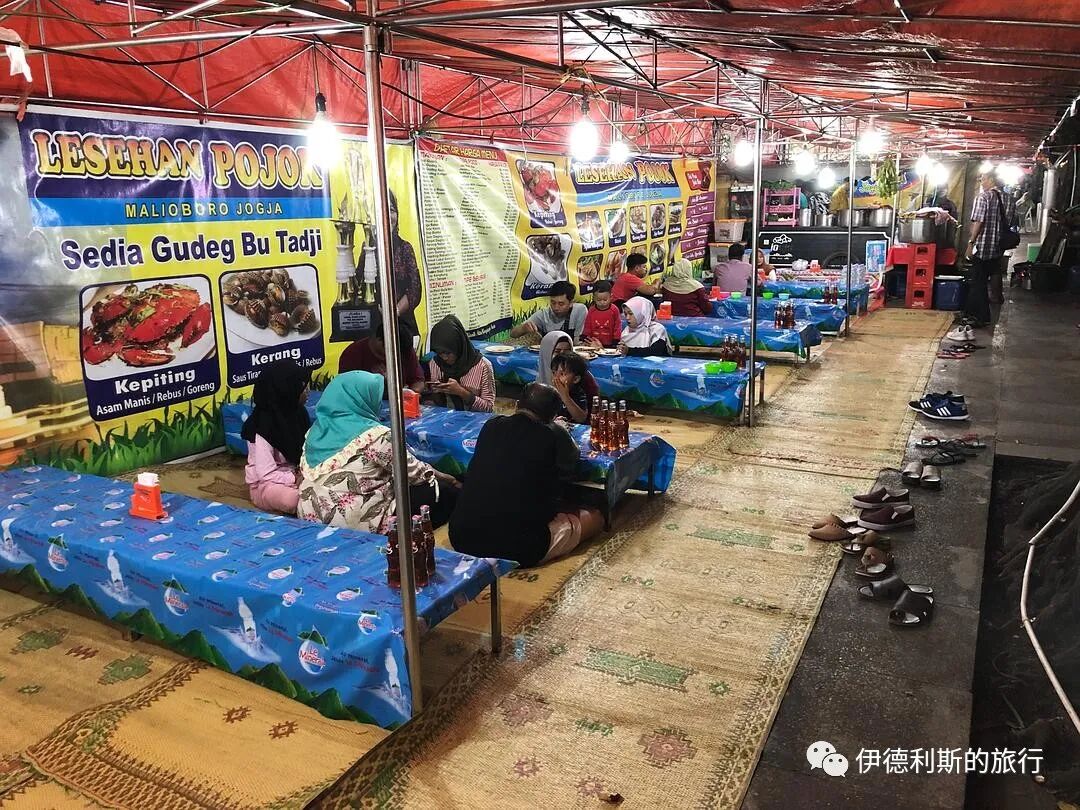
Lesehan is a Javanese style of dining where you sit cross-legged on the floor. The Malioboro night market in Yogyakarta is the birthplace of this dining style. I ate the Yogyakarta specialty, Gudeg rice with chicken. Gudeg is made by stewing unripe jackfruit, palm sugar, and coconut milk for several hours. The ingredients include shallots, ginger, garlic, coriander seeds, bay leaves, and teak leaves.
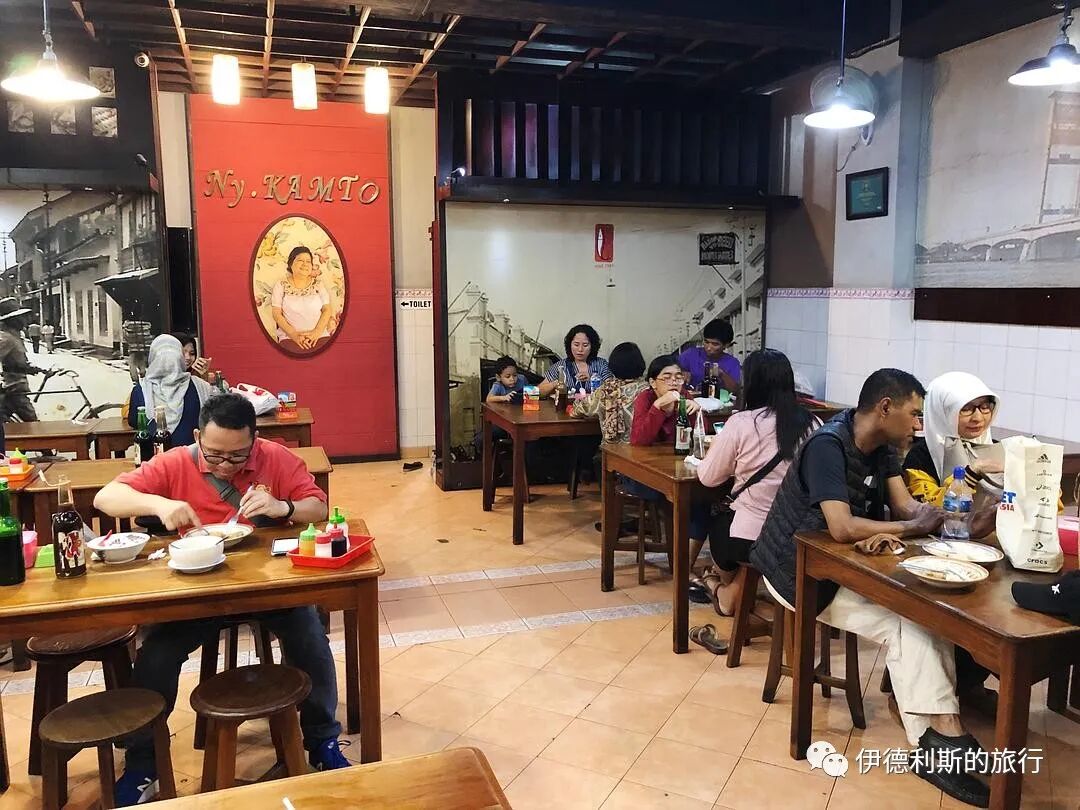
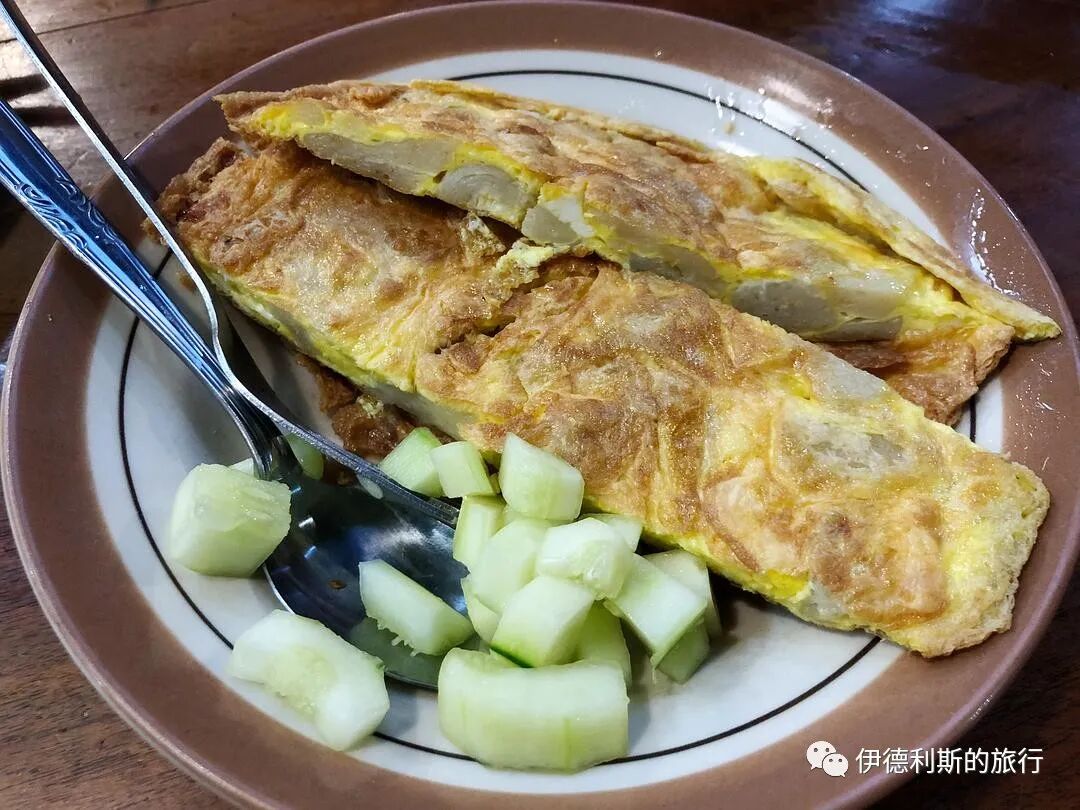
At a small shop specializing in fish cakes, I ordered the fish cake omelet (Lenggang) and fish cake noodles (Mie Laksan). The fish cakes were stuffed with tofu.
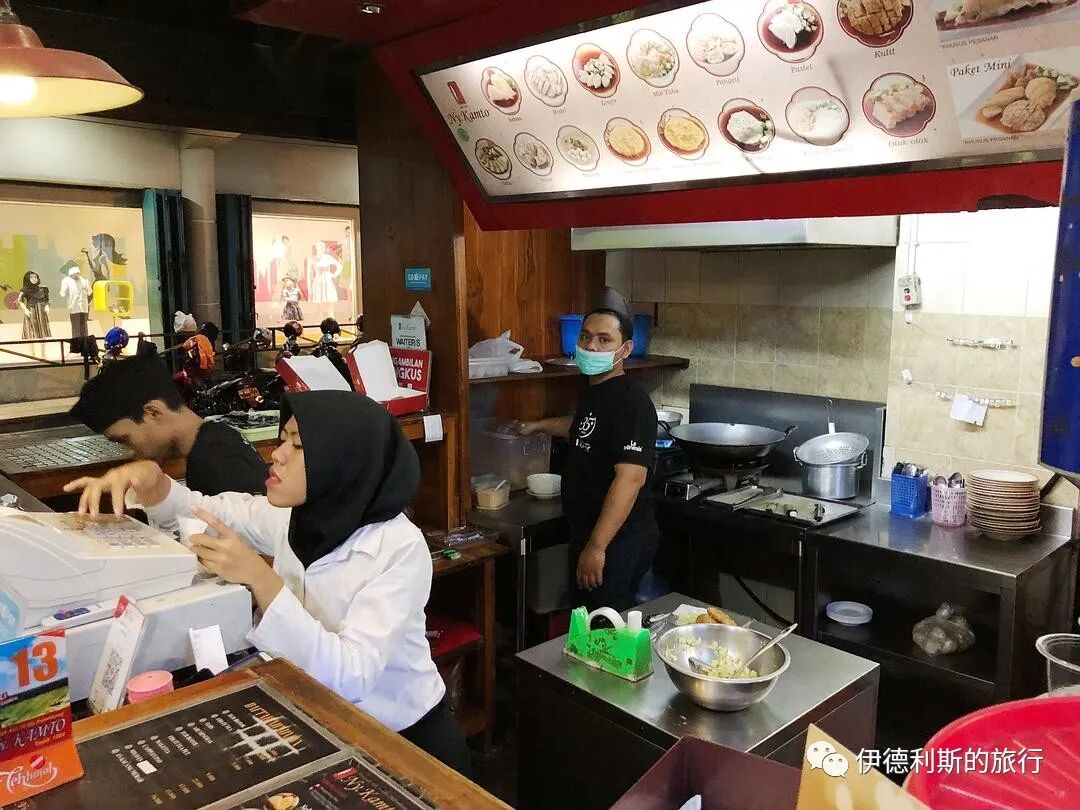
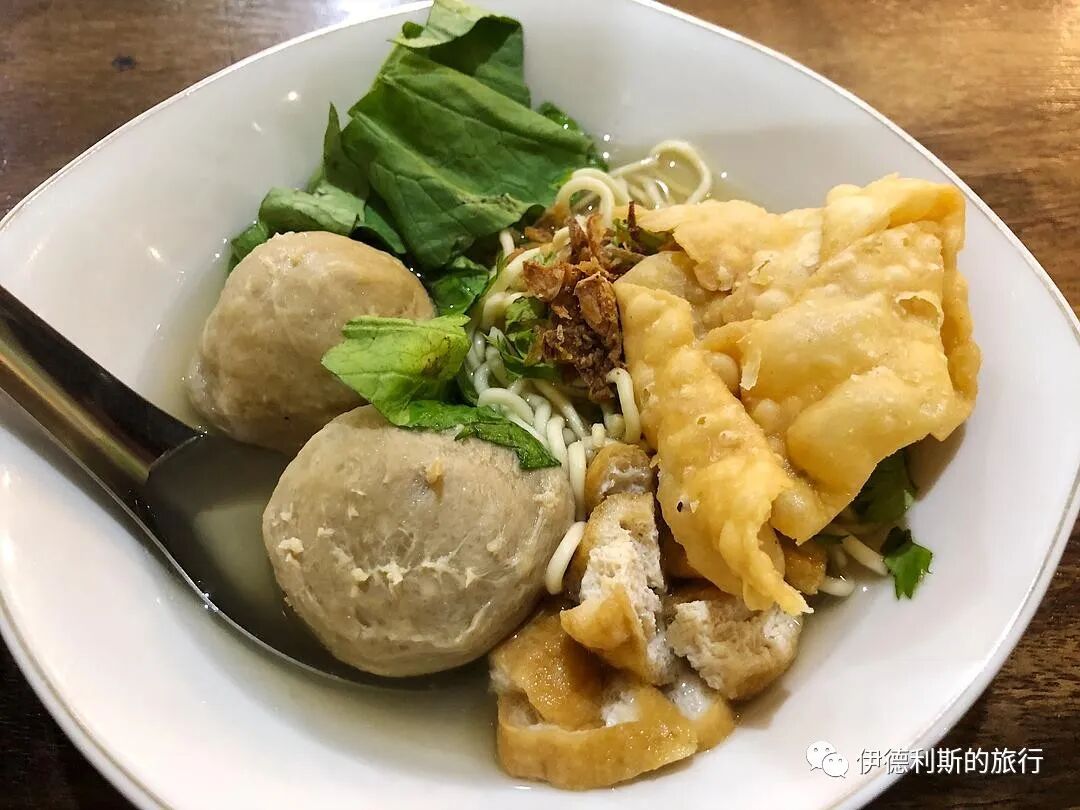
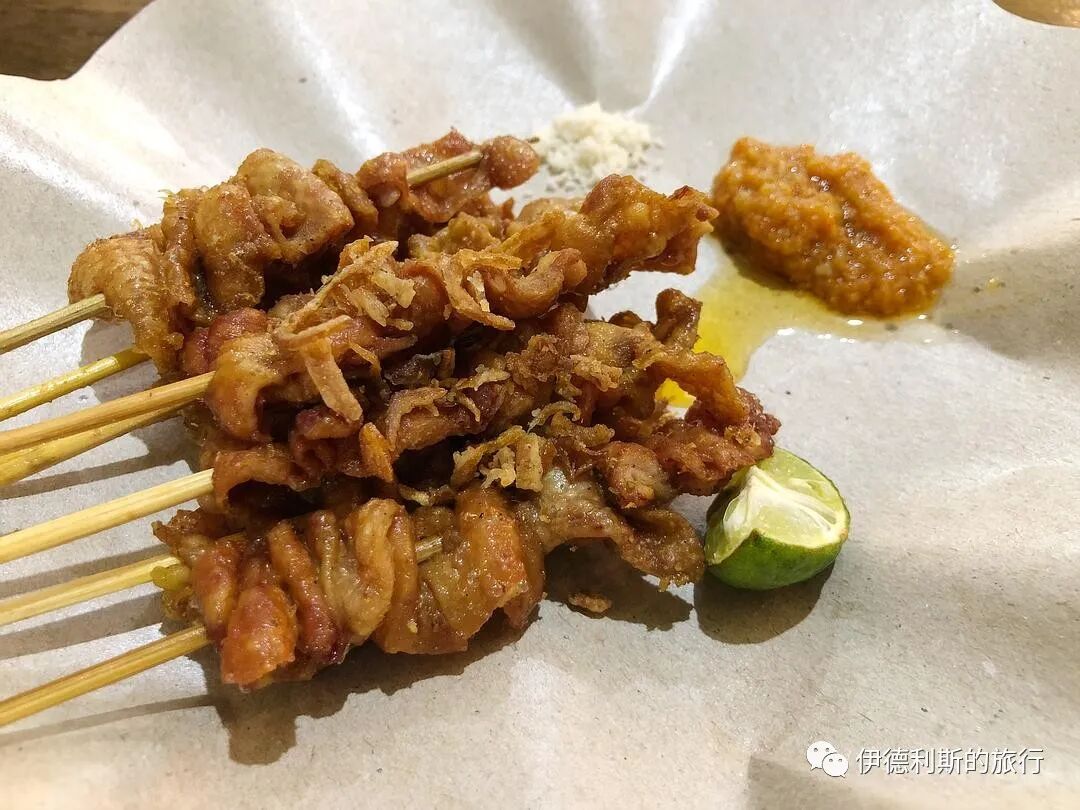
I ate meatball soup (Bakso) and grilled chicken skin (Thaichan Kulit Ayam) at a shop.
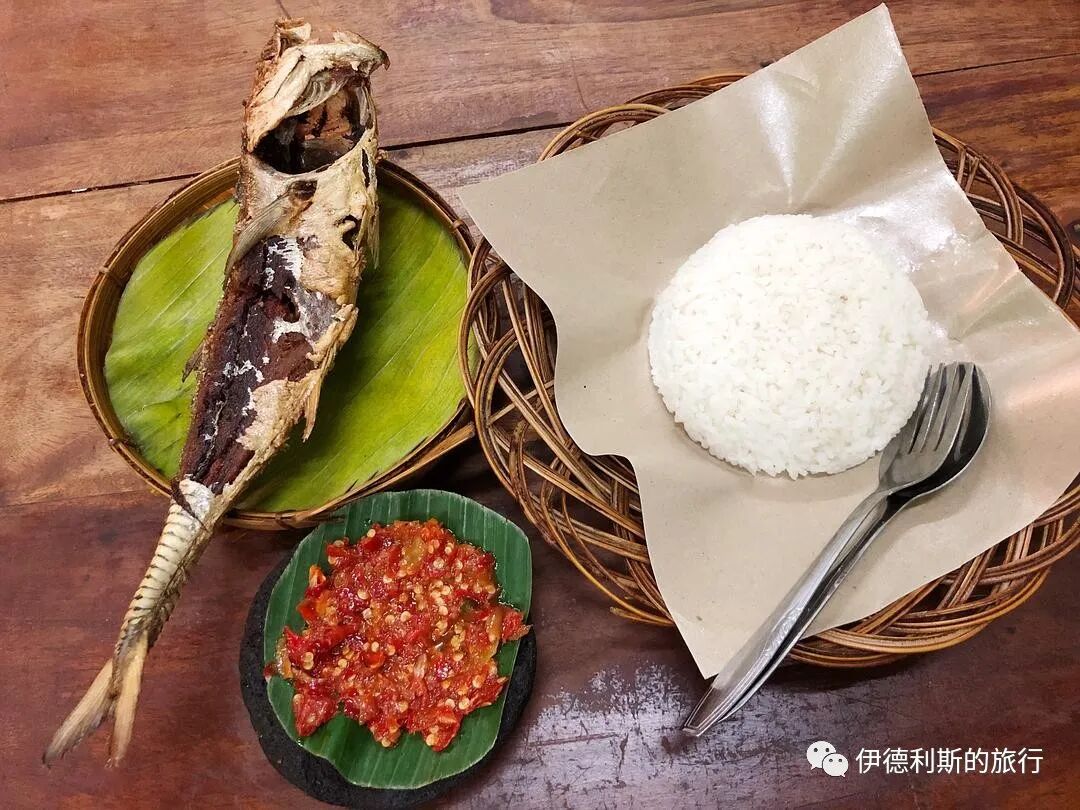
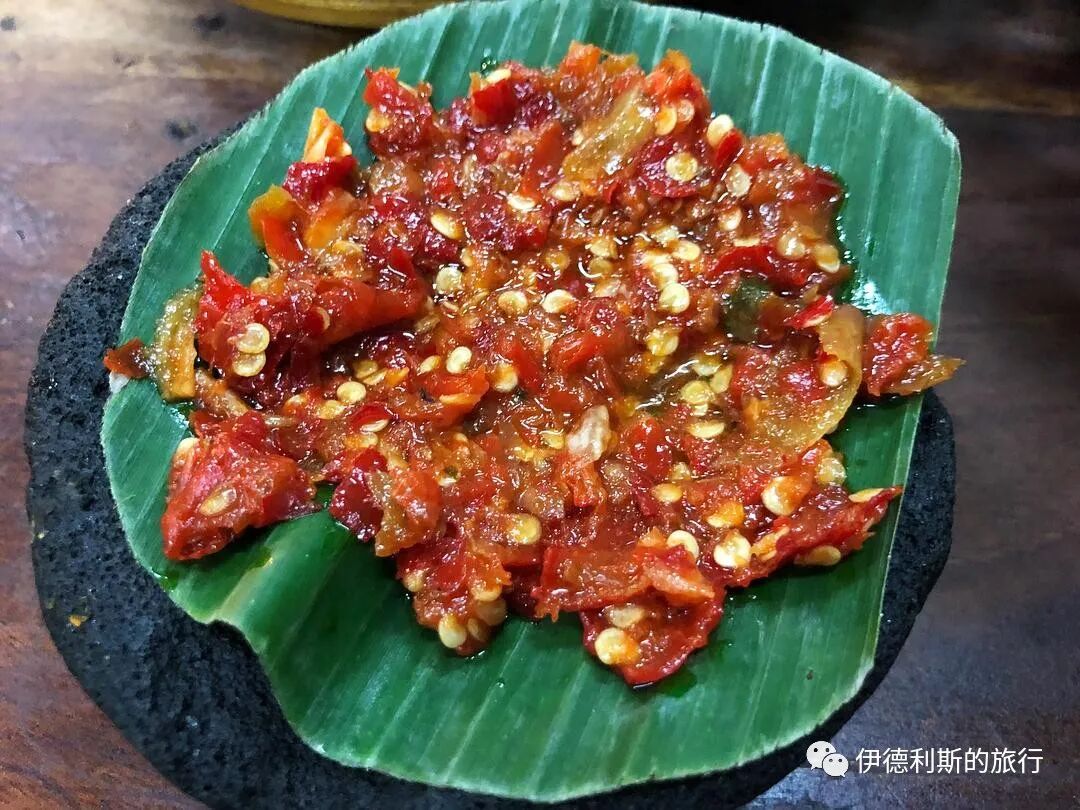
I had fried fish with Indonesian chili sauce (sambal) at this shop, and it was super spicy!
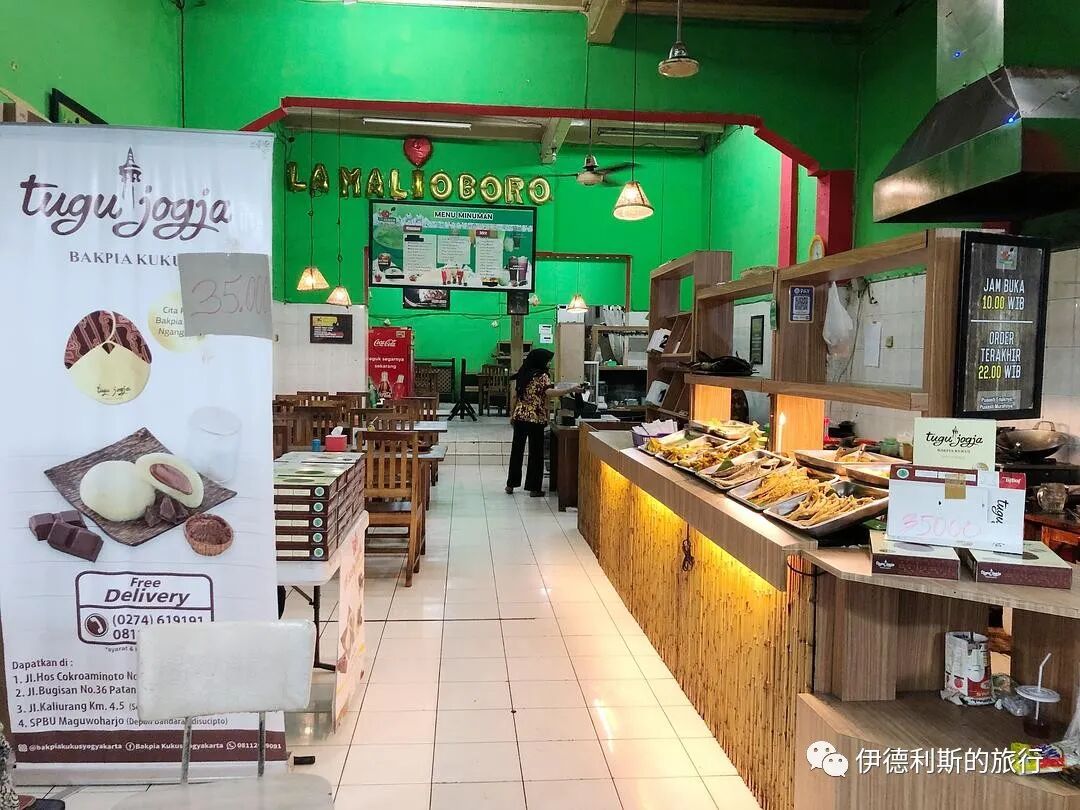
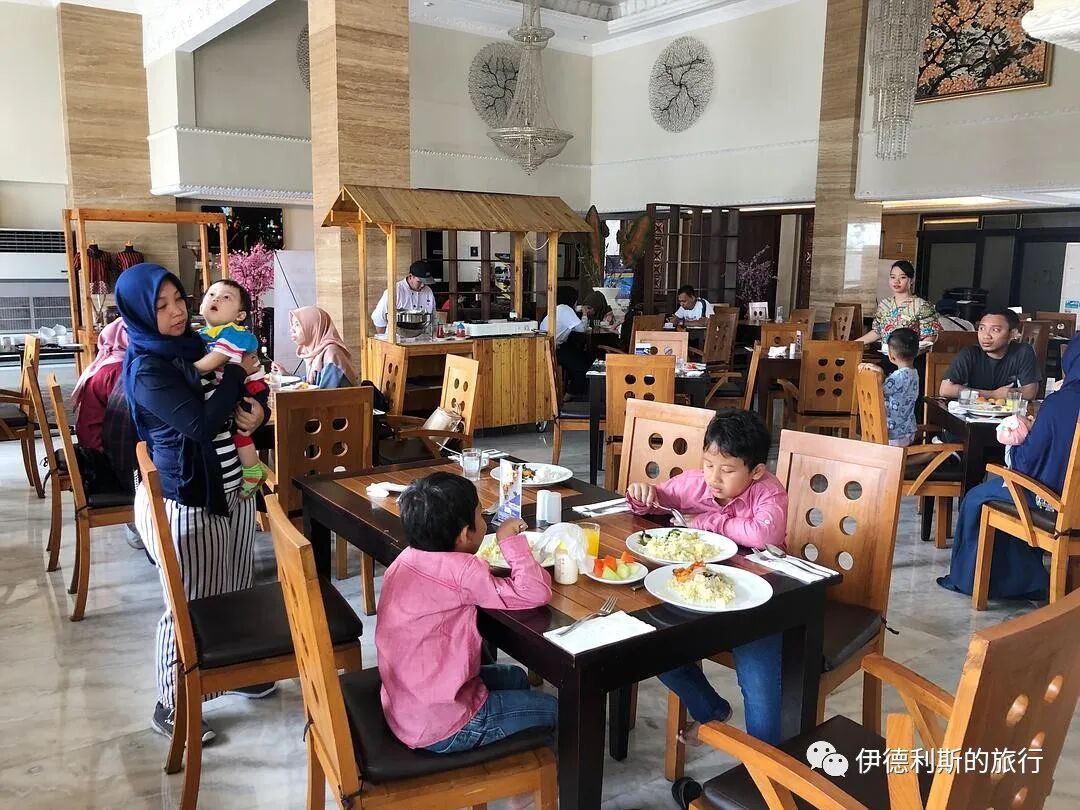
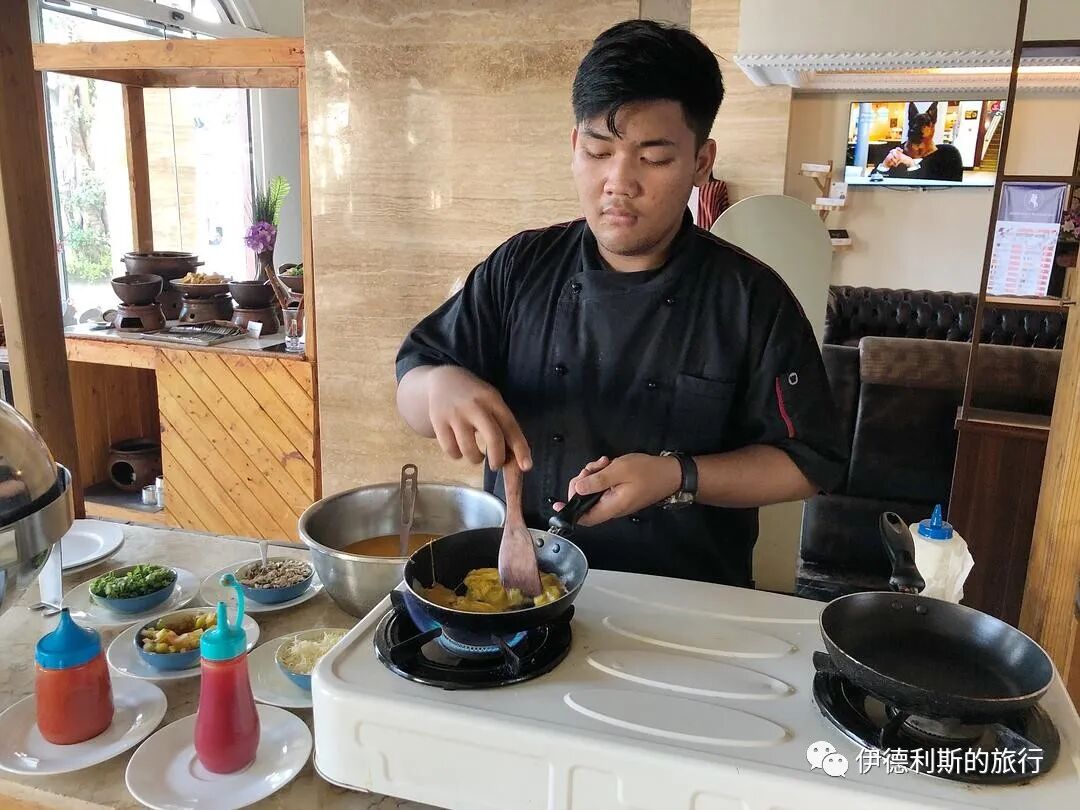
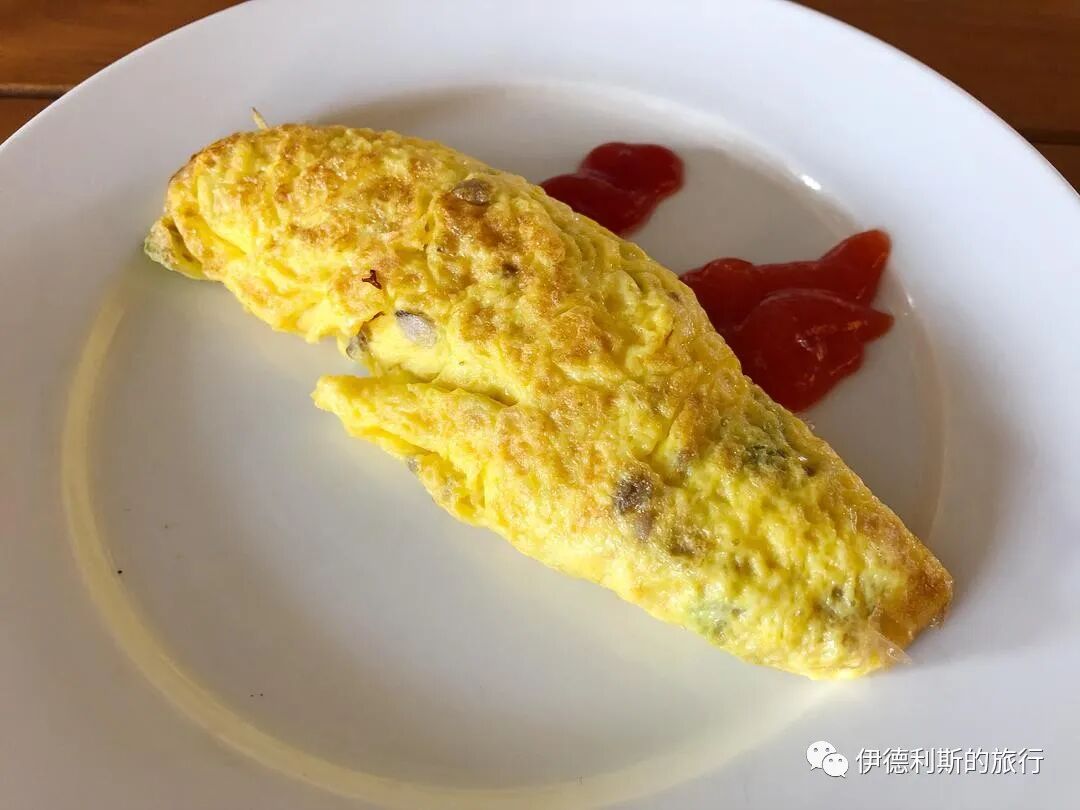
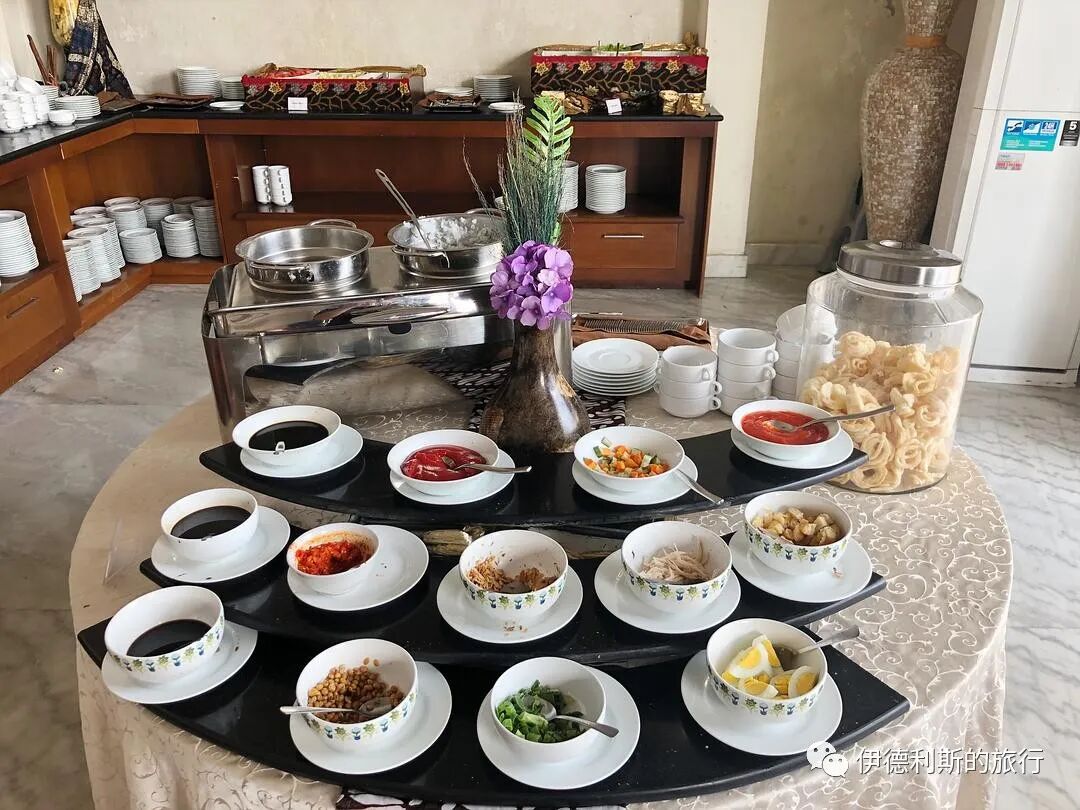
The breakfast at my hotel in Yogyakarta had a great variety of food.
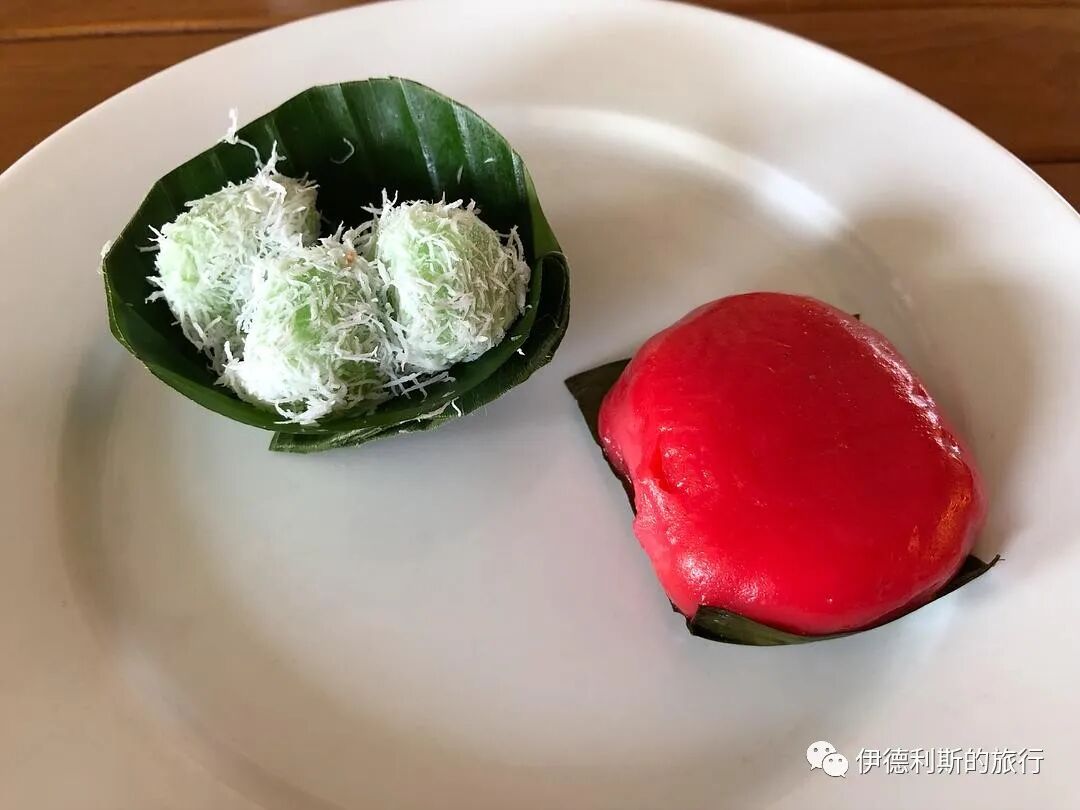
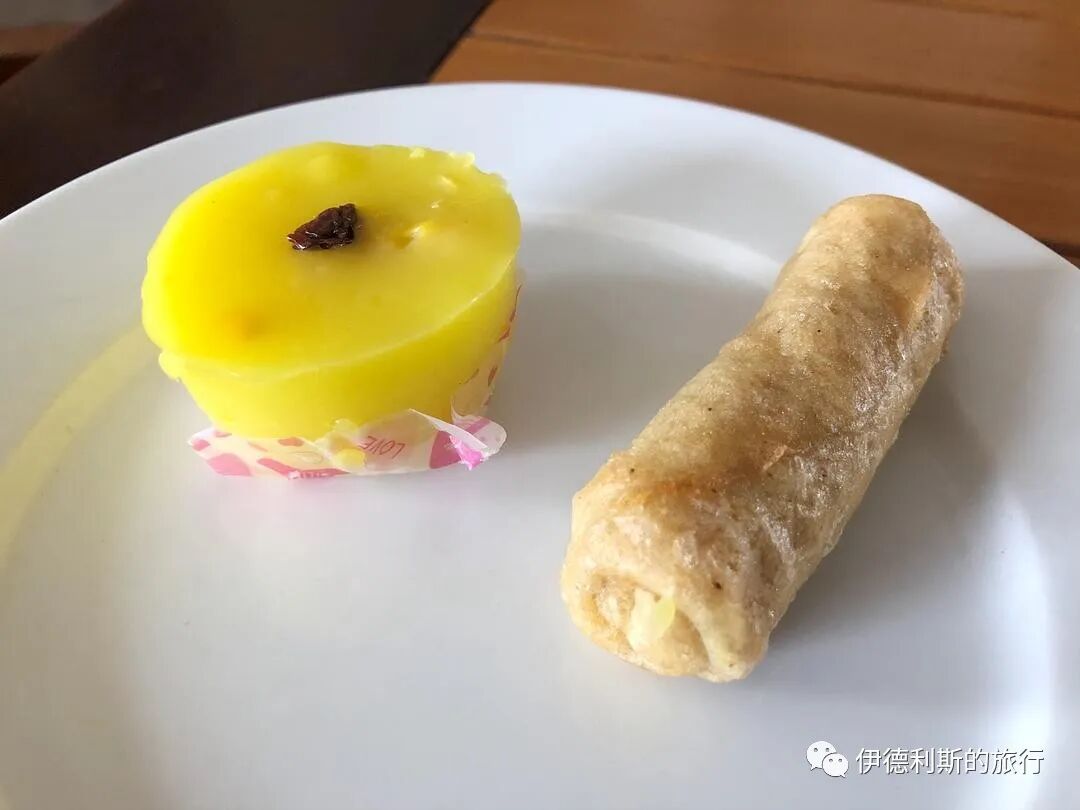
On the left are Indonesian rice cakes (klepon), topped with shredded coconut and served on a banana leaf. Klepon is made from a mix of glutinous rice flour, palm sugar, and juice from pandan or dracaena leaves. On the right are Indonesian snacks (kue), known in Java as market snacks (jajan pasar), which play an important role in traditional Javanese ceremonies.
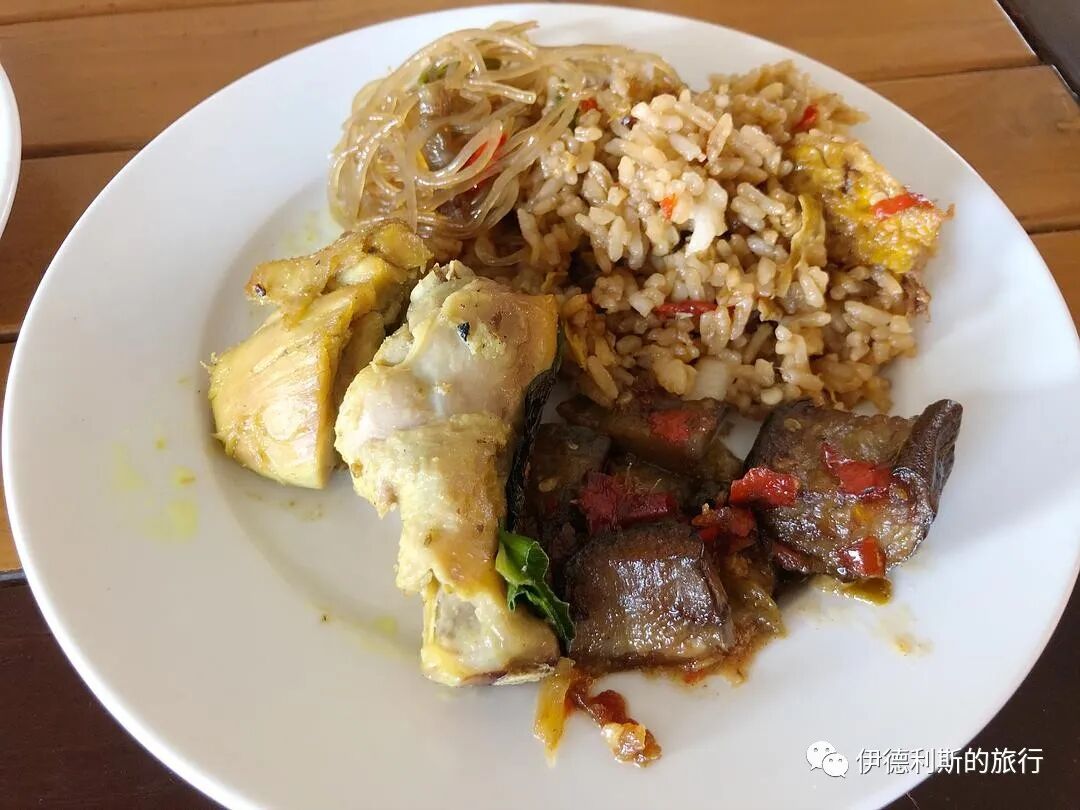
In the bottom right is eggplant with chili sauce (balado), a spicy sauce that comes from the island of Sumatra. In the bottom left is lemon basil chicken (ayam kemangi).
4. Royal Sultan Cuisine
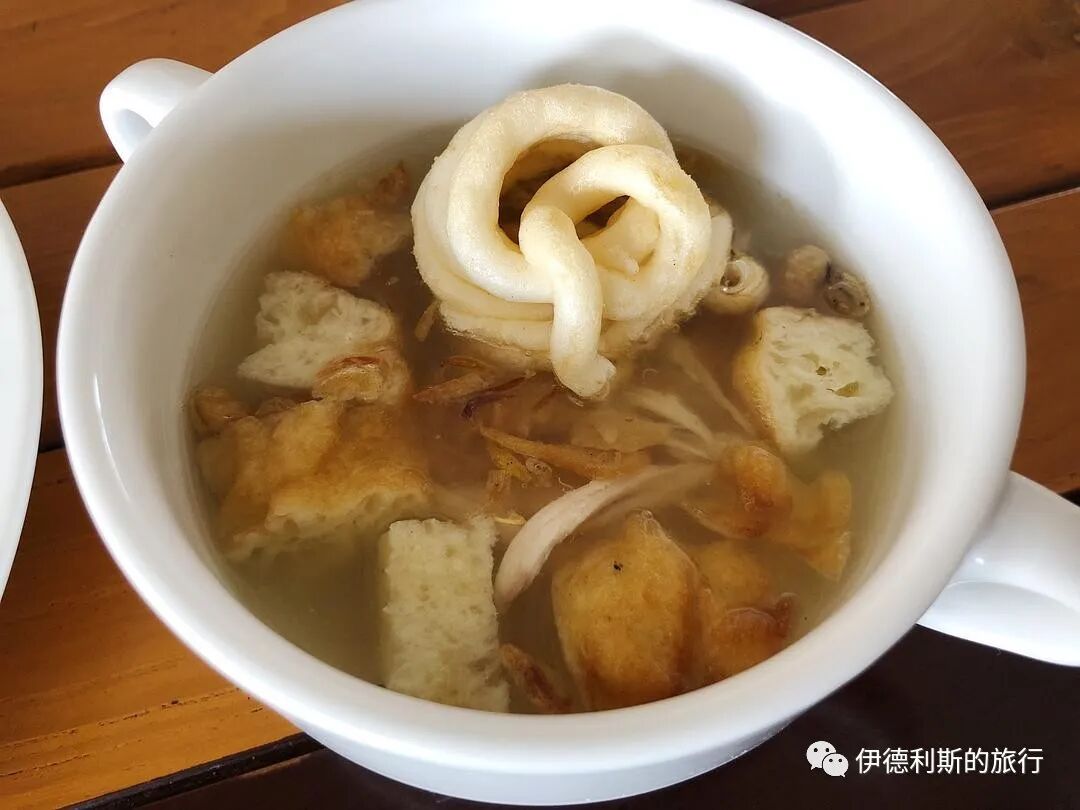
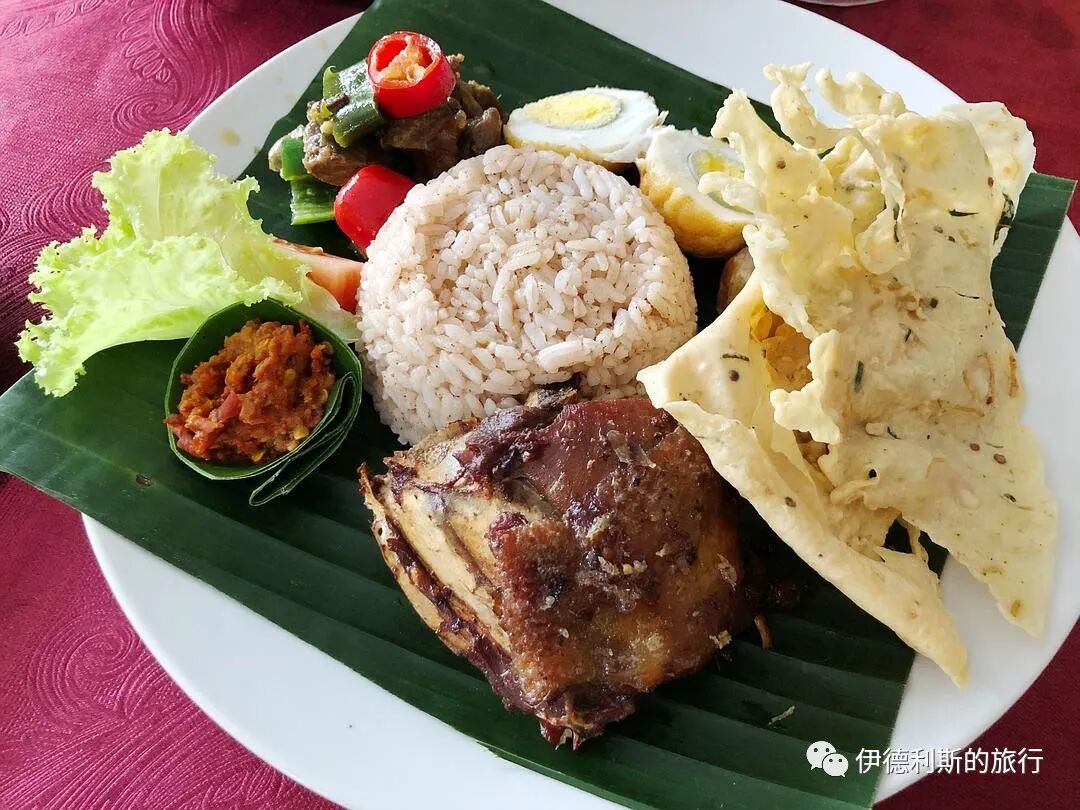
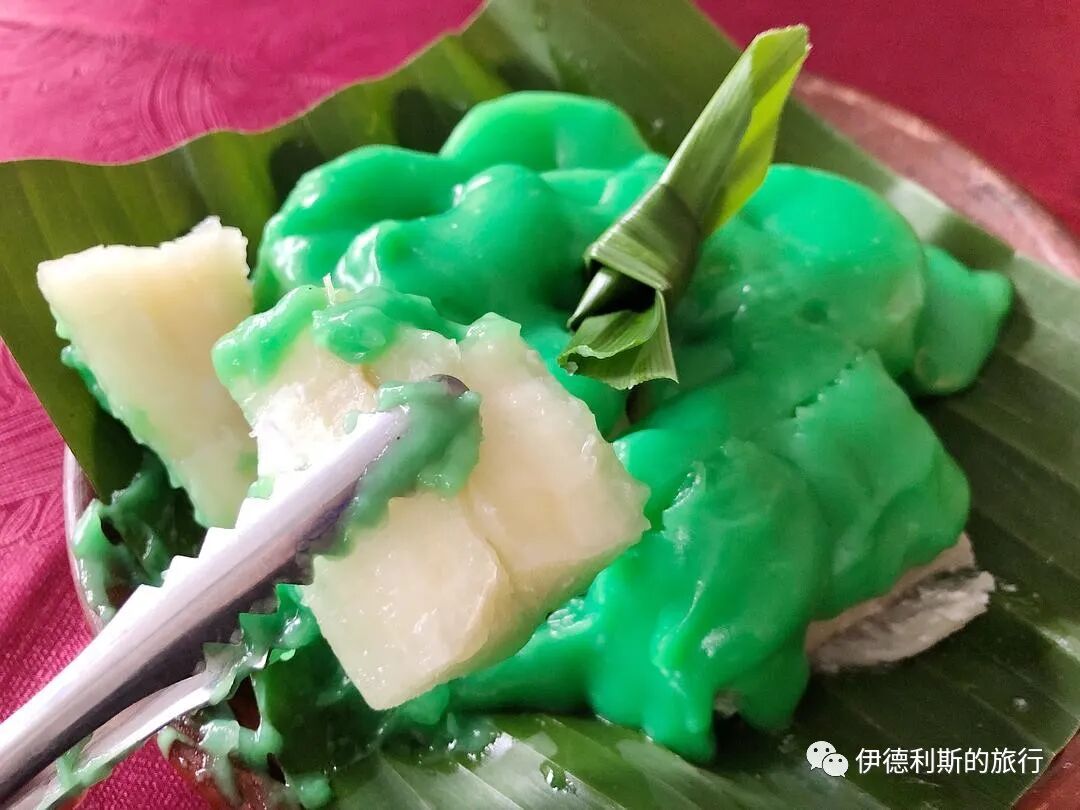
Located next to the Yogyakarta Sultan's Palace, nDalem Joyokusuman was the home of Prince Gusti Haryo Haji Joyokusumo and is now open as a cultural center and restaurant. I ate Nasi Blawong and Telo ijo here. Nasi Blawong is a specialty dish of the Yogyakarta Sultan. It was once only served at the Sultan's birthday banquets, and the reddish Blawong rice used in it is considered sacred. Telo ijo is a cassava cake drizzled with pandan coconut milk.
nDalem Joyokusuman was built in 1916 during the reign of the eighth Sultan of Yogyakarta, Hamengkubuwono VIII, and has been home to members of the Sultan's family ever since. The Peringgitan is the inner hall behind the main living room. It is where the prince's family spent their time and houses the valuable gifts the prince received.
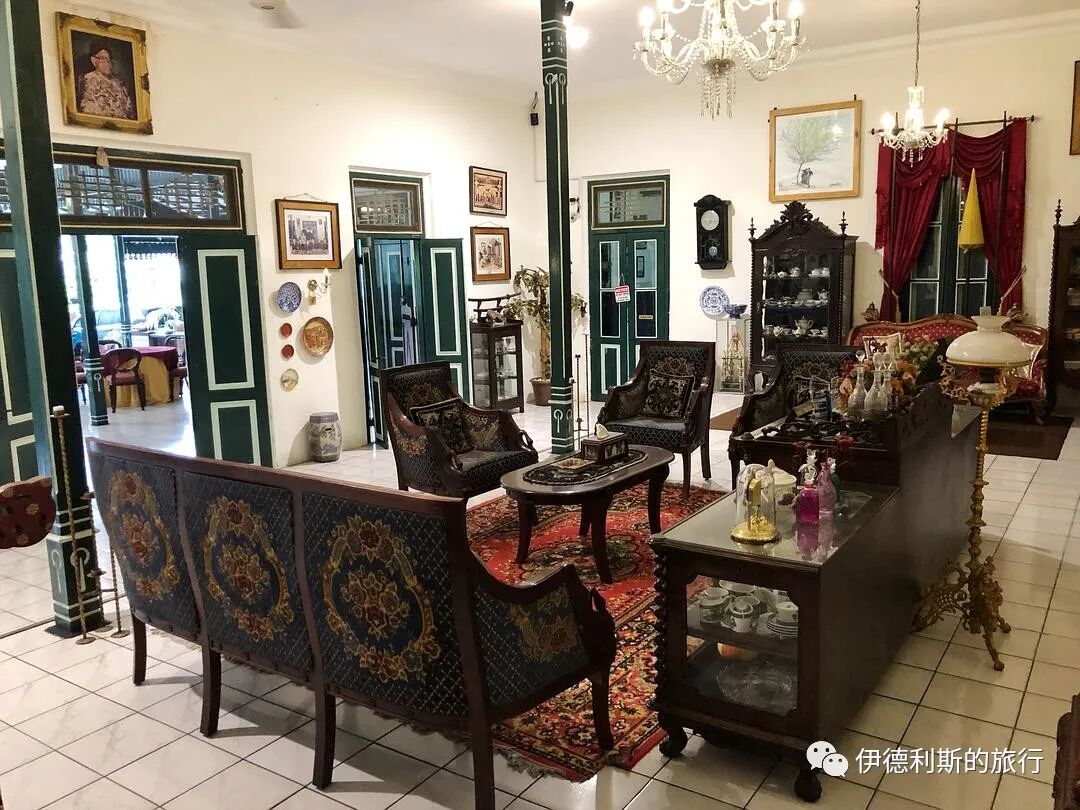
The Sentong Kiwo was originally a guest room and now serves as an exhibition hall.
The area in the courtyard where gamelan music is performed.
Photos of the prince's family when they were young.
Summary: Halal Food Guide: Yogyakarta — Javanese Dishes, Markets and Muslim Food is presented here as a firsthand travel account in clear English, beginning with this scene: Yogyakarta is an ancient cultural city in central Java that is still ruled by a sultan today. The account keeps its focus on Yogyakarta, Java Islam, Sultanate History while preserving the names, places, food, and historical details from the Chinese source.
Yogyakarta is an ancient cultural city in central Java that is still ruled by a sultan today. Beyond traditional Javanese architecture, gamelan music, and wayang shadow puppetry, Yogyakarta also has many local Javanese foods that I want to share with you.
1. Drinks
In the muggy tropical heat, drinking a cold street drink feels really good.
Es Dawet Ayu is a specialty iced drink from Central Java that comes from the small town of Banjarnegara. Its main ingredients are rice flour, glutinous rice flour, coconut milk, palm sugar syrup, and grass jelly.
Coconut water
Freshly squeezed dragon fruit juice; the juice selection in Java is truly rich.
Sekoteng is a Javanese ginger-flavored hot drink that includes peanuts, bread slices, and rice balls. Hot drinks are relatively rare in Java, but it feels like the ginger helps remove dampness.
Freshly squeezed lemon juice
2. Snacks
Putu Bumbung is a pastry made by mixing glutinous rice flour with pandan leaf juice and palm sugar, then steaming it in bamboo tubes. You eat it with shredded coconut.
Pecel is a Javanese salad that usually includes spinach, amaranth, bean sprouts, water spinach, yardlong beans, cucumber, cassava leaves, and lemon basil. The sauce contains peanut butter, crushed peanuts, salt, palm sugar, tamarind juice, chili, galangal, kaffir lime leaves, and garlic. Pecel originated in Java and was later brought to Malaysia and Suriname by Javanese people.
3. Restaurants
Lesehan is a Javanese style of dining where you sit cross-legged on the floor. The Malioboro night market in Yogyakarta is the birthplace of this dining style. I ate the Yogyakarta specialty, Gudeg rice with chicken. Gudeg is made by stewing unripe jackfruit, palm sugar, and coconut milk for several hours. The ingredients include shallots, ginger, garlic, coriander seeds, bay leaves, and teak leaves.
At a small shop specializing in fish cakes, I ordered the fish cake omelet (Lenggang) and fish cake noodles (Mie Laksan). The fish cakes were stuffed with tofu.
I ate meatball soup (Bakso) and grilled chicken skin (Thaichan Kulit Ayam) at a shop.
I had fried fish with Indonesian chili sauce (sambal) at this shop, and it was super spicy!
The breakfast at my hotel in Yogyakarta had a great variety of food.
On the left are Indonesian rice cakes (klepon), topped with shredded coconut and served on a banana leaf. Klepon is made from a mix of glutinous rice flour, palm sugar, and juice from pandan or dracaena leaves. On the right are Indonesian snacks (kue), known in Java as market snacks (jajan pasar), which play an important role in traditional Javanese ceremonies.
In the bottom right is eggplant with chili sauce (balado), a spicy sauce that comes from the island of Sumatra. In the bottom left is lemon basil chicken (ayam kemangi).
4. Royal Sultan Cuisine
Located next to the Yogyakarta Sultan's Palace, nDalem Joyokusuman was the home of Prince Gusti Haryo Haji Joyokusumo and is now open as a cultural center and restaurant. I ate Nasi Blawong and Telo ijo here. Nasi Blawong is a specialty dish of the Yogyakarta Sultan. It was once only served at the Sultan's birthday banquets, and the reddish Blawong rice used in it is considered sacred. Telo ijo is a cassava cake drizzled with pandan coconut milk.
nDalem Joyokusuman was built in 1916 during the reign of the eighth Sultan of Yogyakarta, Hamengkubuwono VIII, and has been home to members of the Sultan's family ever since. The Peringgitan is the inner hall behind the main living room. It is where the prince's family spent their time and houses the valuable gifts the prince received.
The Sentong Kiwo was originally a guest room and now serves as an exhibition hall.
The area in the courtyard where gamelan music is performed.
Photos of the prince's family when they were young.
Halal Travel Guide: Central Java — Semarang, Solo, Kudus Food and Muslim Heritage
Articles • ali2007fr posted the article • 0 comments • 143 views • 2026-05-18 07:38
Reposted from the web
Summary: Central Java — Semarang, Solo, Kudus Food and Muslim Heritage is presented here as a firsthand travel account in clear English, beginning with this scene: During the 2019 May Day holiday, I traveled to Central Java, Indonesia, to explore and eat. The account keeps its focus on Kudus Travel, Java Islam, Muslim Heritage while preserving the names, places, food, and historical details from the Chinese source.
During the 2019 May Day holiday, I traveled to Central Java, Indonesia, to explore and eat. I visited the capital, Semarang, the cultural city of Solo, and the religious site of Kudus. I am sharing some of the things I saw and ate during this trip.
Solo
In 1755, the Dutch East India Company represented Sultan Pakubuwono III of the Mataram Sultanate in negotiations with Prince Mangkubumi. A treaty was signed, and the Mataram Sultanate, once the most powerful Islamic kingdom on Java, was split into the Yogyakarta Sultanate and the Surakarta Sunanate. The city of Solo officially became the capital of the Surakarta Sunanate.
During the Dutch East Indies era, the Surakarta Sunanate, like the Yogyakarta Sultanate, enjoyed autonomous status and was considered a vassal state of the Dutch Empire. In 1945, the Republic of Indonesia was declared. In 1946, an anti-monarchy movement broke out, the Surakarta Sunan was stripped of ruling power, and the Sunanate was incorporated into Central Java Province. Although they have no real power, the Surakarta Sunan still holds royal authority and a special status in maintaining traditional Javanese culture, and they still command high prestige.
I ate breakfast at my hotel in Solo. I was the only guest in the entire hotel, and the palace of the Surakarta Sunan was right behind the woods.
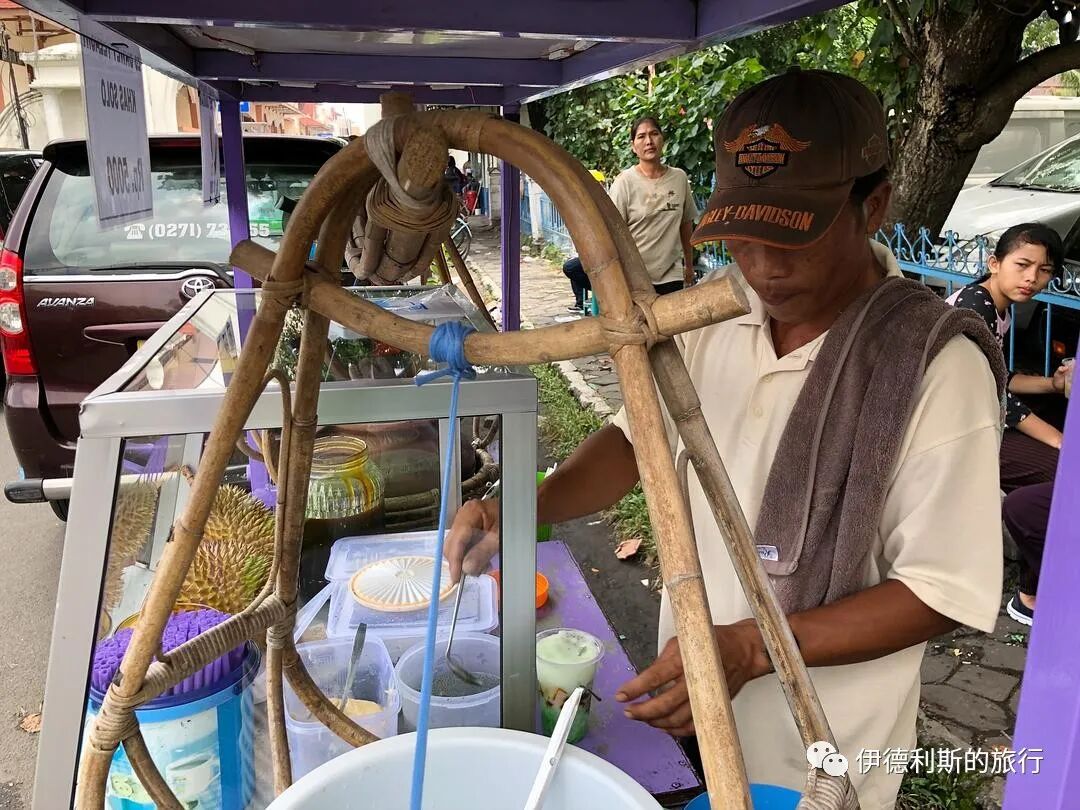
Solo's specialty iced drink is Es Dawet Telasih, made with coconut milk, palm sugar, rice flour jelly (cendol), coconut rice pudding (bubur sumsum), basil seeds, and black glutinous rice.
Es Dawet Durian is Es Dawet Telasih with durian added.
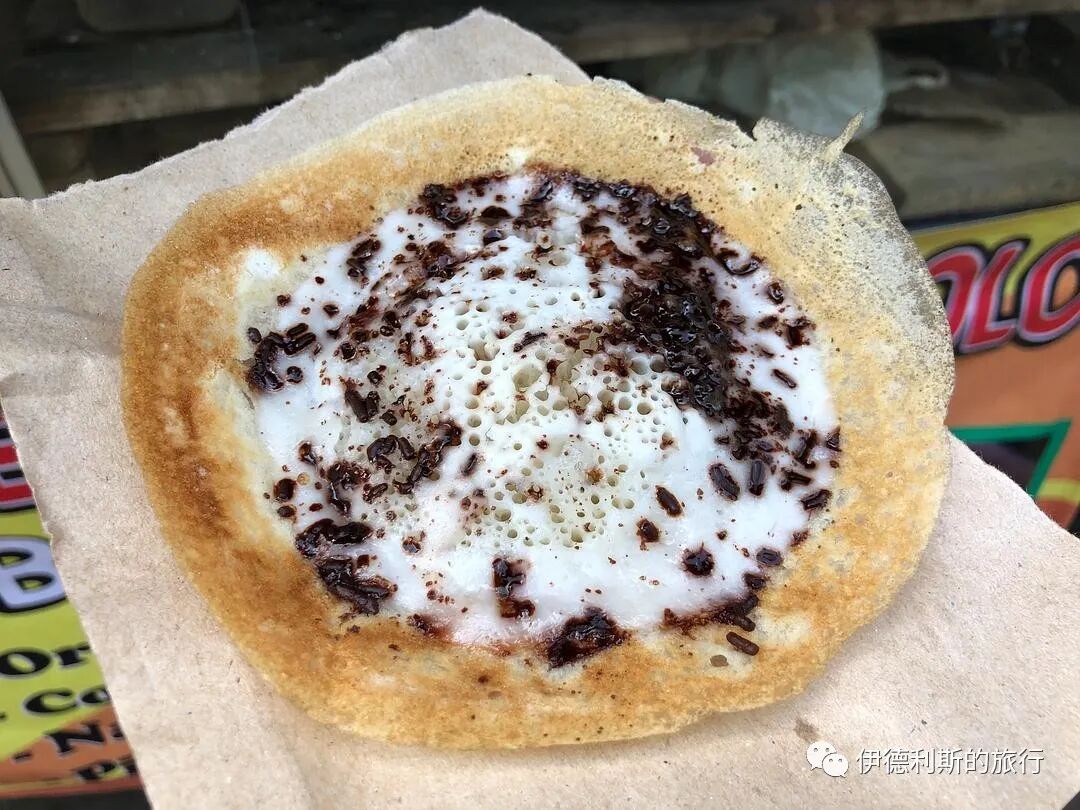
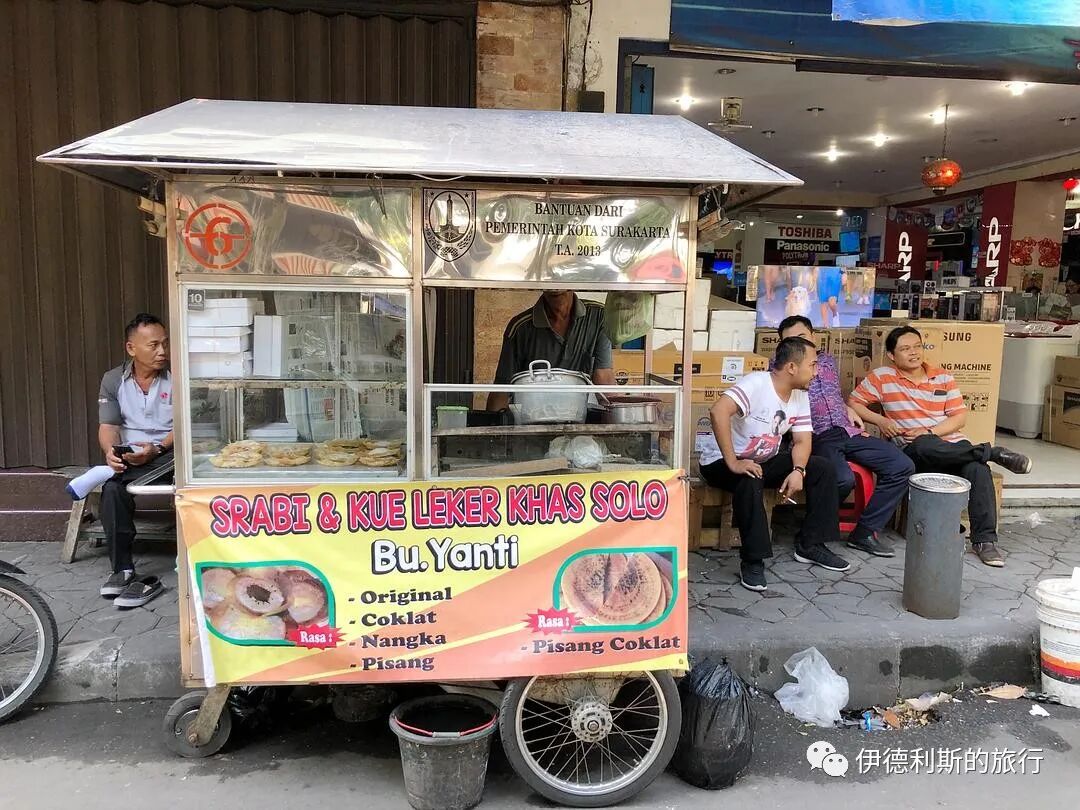
Indonesian pancakes (serabi) are made from rice flour and coconut milk.
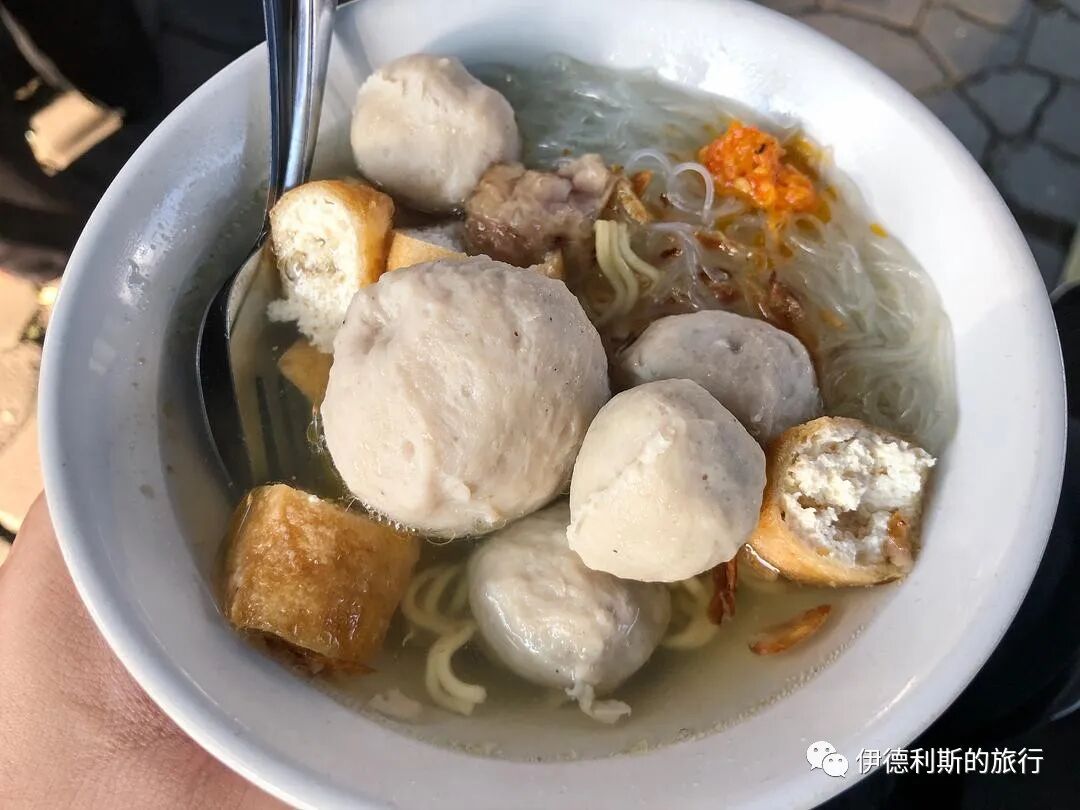
I ate beef meatballs (bakso daging sapi) at a street stall next to the Solo palace. Bakso meatballs are a classic Indonesian street snack made from a mixture of ground beef and tapioca flour. The word "bak-so" originally comes from the Hokkien term for "meat crisp," but the method of making meatballs likely came from 19th-century Dutch colonists. Today, the best bakso meatballs are widely considered to come from Solo in Central Java and Malang in East Java.
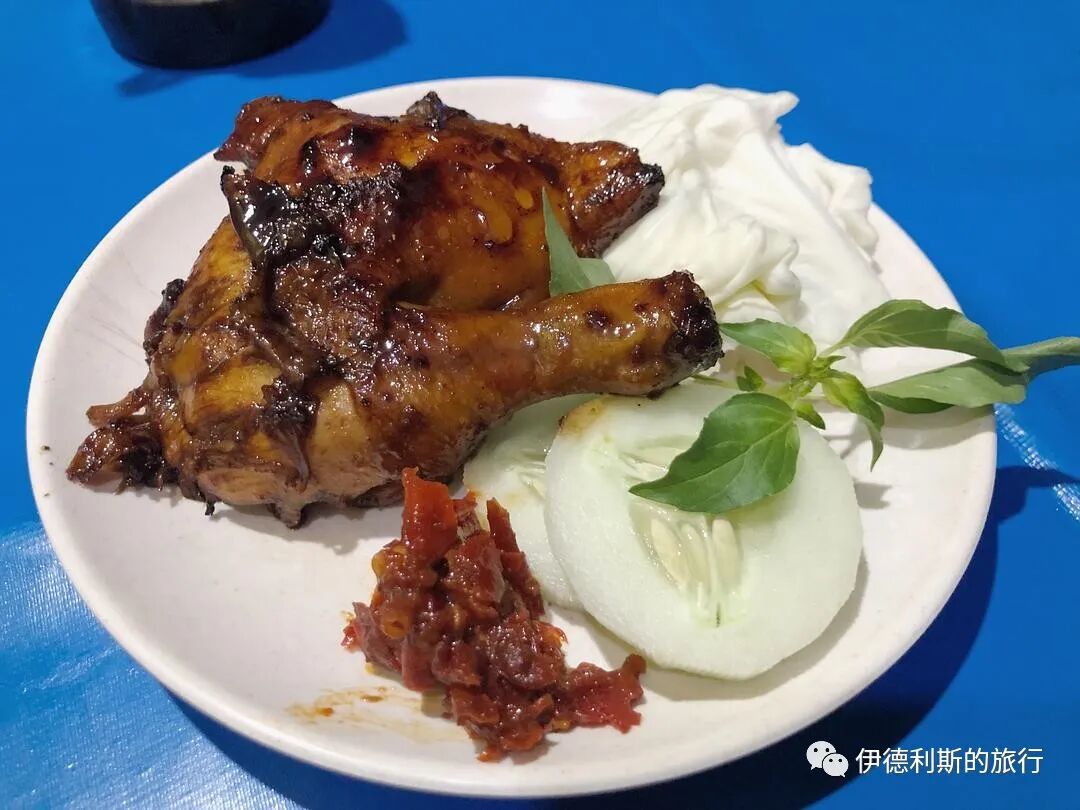
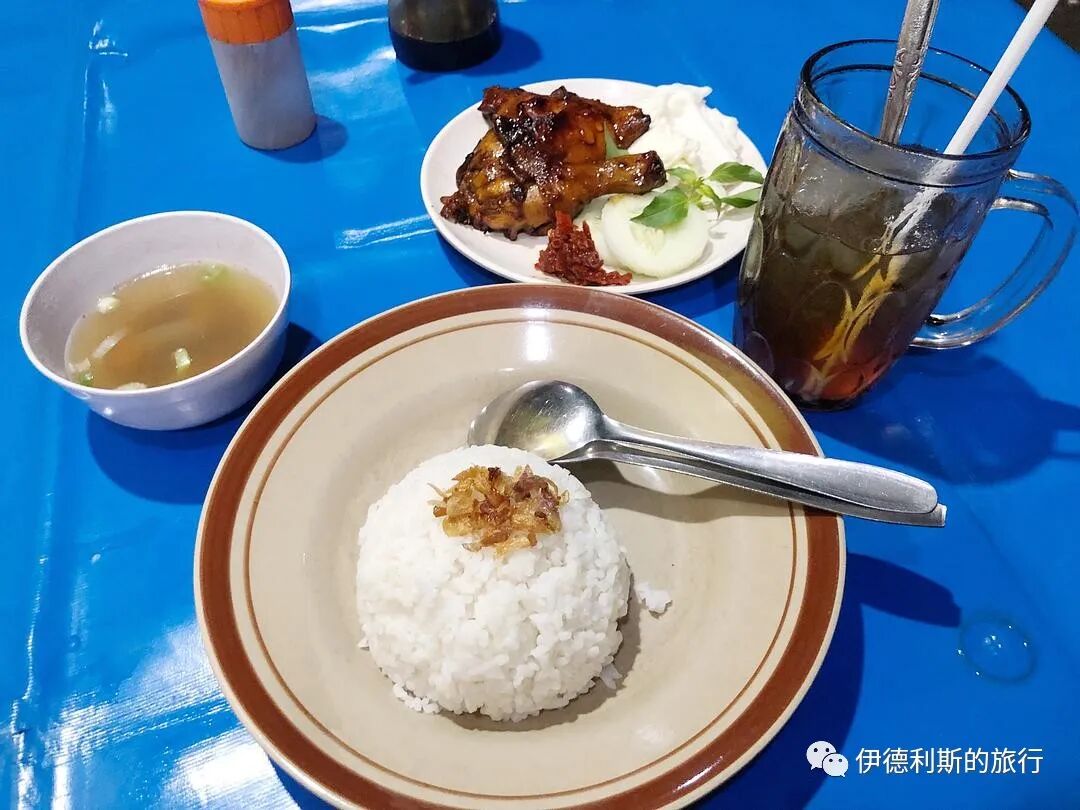
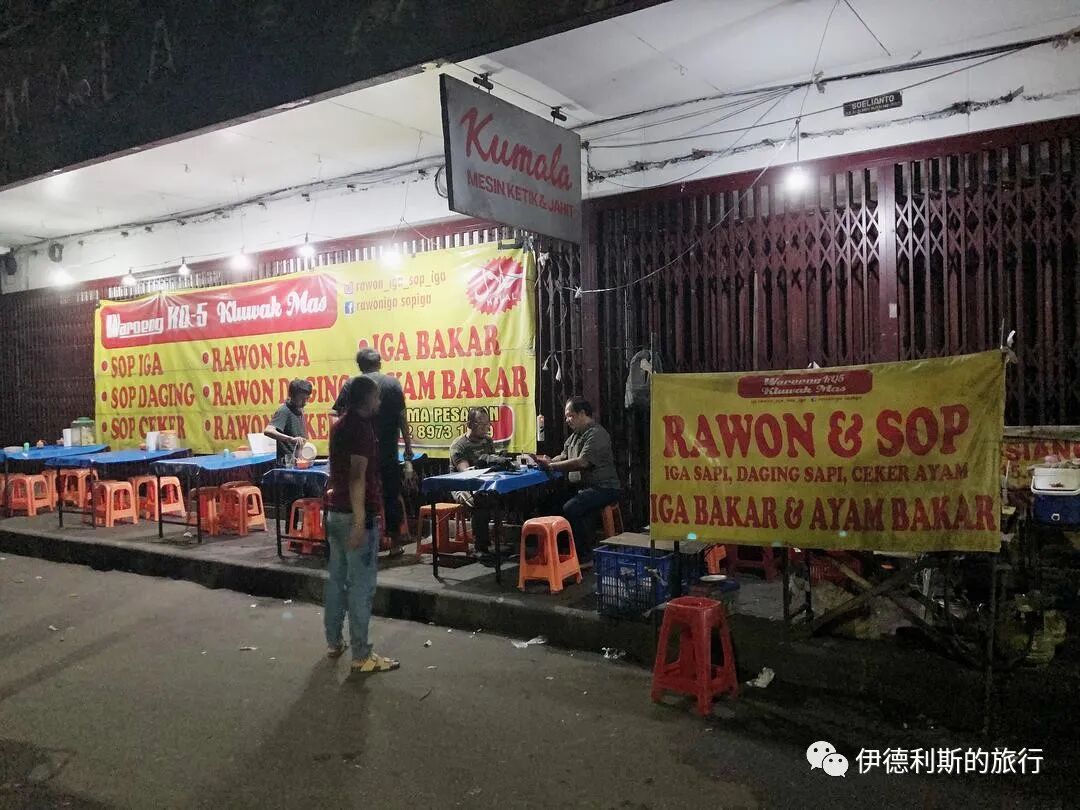
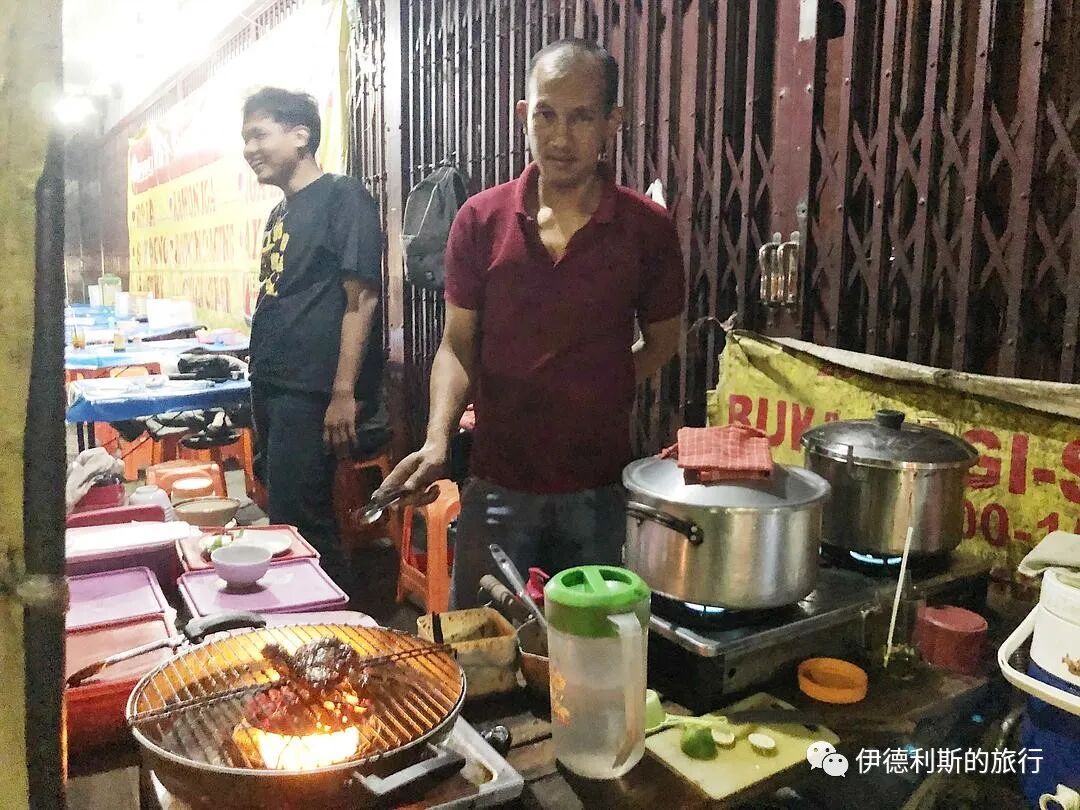
I ate beef rib soup (rawon) and grilled chicken (ayam bakar kuah) at a late-night street stall in Solo. This shop is open from 6 p.m. to midnight. Rawon is a beef soup that originated in Surabaya, East Java. It has a rich, nutty flavor and a black color because it uses the Indonesian black nut (keluak) as its main seasoning. Rawon has a very long history, dating back to the ancient Mataram Kingdom of Java in the 10th century.
I ate at a self-service restaurant. For a solo traveler like me, this kind of restaurant allows me to try a wider variety of dishes.
In the middle are yellow rice (nasi kuning) made with coconut milk and turmeric, and red rice (nasi merah). From bottom to top on the right are beef meatballs (kreni), potatoes (kentang), beef tendon (cecek), and liver (ati), all made with chili paste (sambal goreng).
In the middle is green rice (nasi hijau), on the right is Indonesian vegetable fritter (bakwan sayur), and on the left is black pepper tofu (tahu lada hitam).
Semarang
Semarang is the capital and largest city of Central Java and was a major port during the Dutch colonial era. The old town of Semarang, established in the 18th century, is also known as Little Netherlands.
I ate at a restaurant in the Dutch old town of Semarang that specializes in satay and curry soup.
Goat meat satay (sate buntel) is a skewer featuring a mix of fat and lean meat. It is served with tamarind juice, coconut milk, sweet soy sauce, and various spices. It was invented in 1948 by Lim Hwa Youe from Yogyakarta.
Goat offal curry soup (gulai kambing) is a specialty Indonesian dish. Curry (gulai) originated in Sumatra. Its deep yellow color comes mainly from turmeric. It also uses spices like black pepper, galangal, lemongrass, and cinnamon. To make it, spices and coconut milk are mixed and stewed with the meat for a long time.
At a restaurant in Semarang, I had Javanese tripe fried rice (nasi goreng babat jawa), boneless fillet of giant gourami in sauce (gurame fillet saos), chicken satay (sate ayam), and kiwi soda (kiwi squash). Besides various street stalls and small eateries, Semarang has many restaurants with nice environments like this one.
Boneless fillet of giant gourami in sauce (gurame fillet saos)
Boneless fillet of giant gourami in sauce (gurame fillet saos)
Javanese tripe fried rice (nasi goreng babat jawa)
Javanese tripe fried rice (nasi goreng babat jawa)
Chicken satay (sate ayam)
Kiwi soda (kiwi squash)
Before leaving, I ate fried oxtail soup (sop buntut goreng) at a restaurant in the Semarang airport. The oxtail is fried and dried, and served separately from the broth.
I had the buffet breakfast at the hotel where I stayed in Semarang, and the environment was quite nice.
Javanese herbal drink (jamu) is a traditional Javanese herbal medicine mixed with honey and palm sugar.
Kudus
Kudus is a two-hour drive from Semarang. It is the only city on Java island with an Arabic name. Kudus is actually the Arabic pronunciation of Jerusalem, al-Quds. The tomb in Kudus is now an important religious site on Java. Next to the tomb, the Al-Aqsa Mosque is famous for its minaret, which features a unique, early Javanese traditional style.
Ketoprak eaten in Kudus. Ketoprak is a vegetarian dish from Jakarta. It is made of fried tofu, vegetables, steamed rice cakes (lontong), rice vermicelli, and peanut sauce.
Javanese fruit ice drink (Es Buah) enjoyed in Kudus, which contains various fruits.
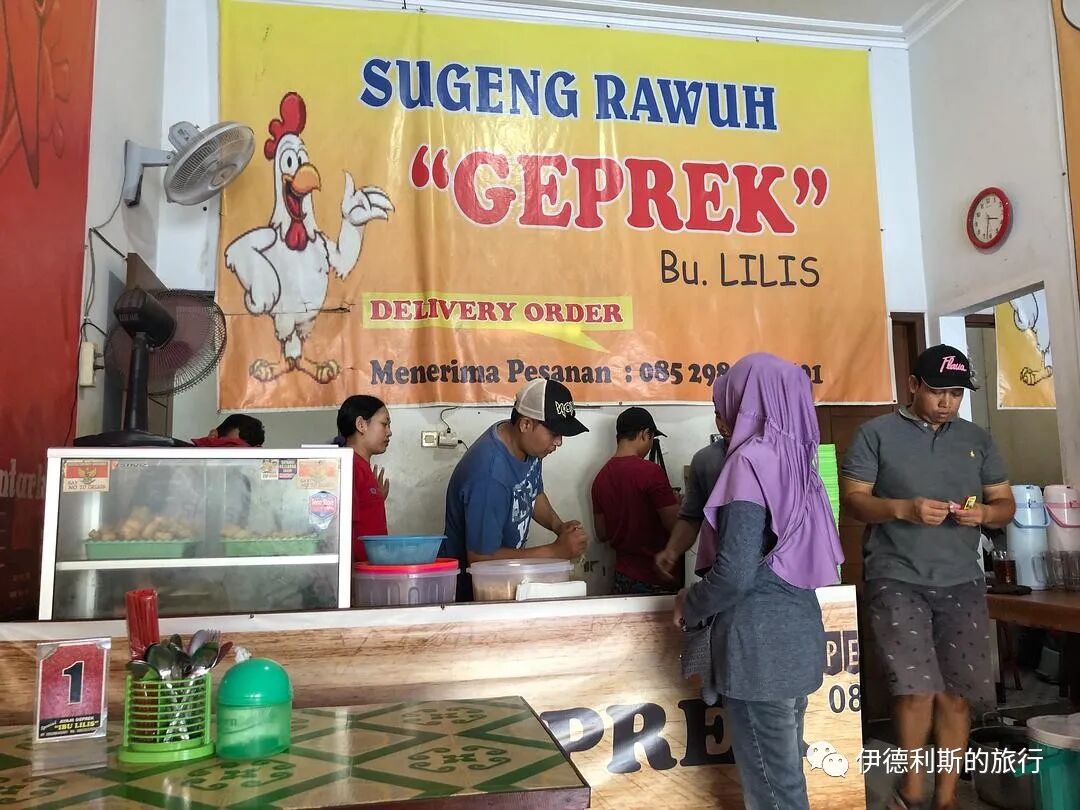
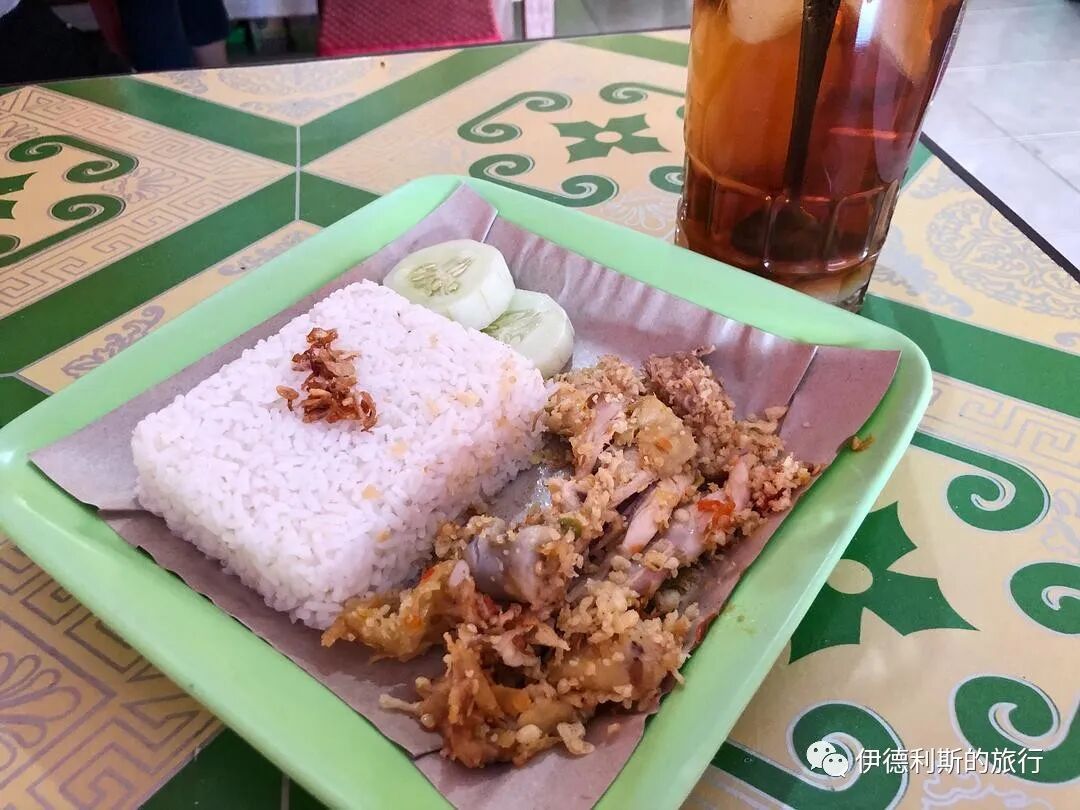
Geprek chicken eaten in Kudus. Geprek chicken is fried chicken mixed with spicy chili paste (Sambal). A woman named Ruminah invented this recipe in 2003, and it has become very popular in recent years. Ruminah originally sold fried chicken at a stall in Yogyakarta. Later, a college student asked her to spread chili paste on the fried chicken. It tasted very good, so she and the student started a brand together to sell Geprek chicken. view all
Summary: Central Java — Semarang, Solo, Kudus Food and Muslim Heritage is presented here as a firsthand travel account in clear English, beginning with this scene: During the 2019 May Day holiday, I traveled to Central Java, Indonesia, to explore and eat. The account keeps its focus on Kudus Travel, Java Islam, Muslim Heritage while preserving the names, places, food, and historical details from the Chinese source.
During the 2019 May Day holiday, I traveled to Central Java, Indonesia, to explore and eat. I visited the capital, Semarang, the cultural city of Solo, and the religious site of Kudus. I am sharing some of the things I saw and ate during this trip.
Solo
In 1755, the Dutch East India Company represented Sultan Pakubuwono III of the Mataram Sultanate in negotiations with Prince Mangkubumi. A treaty was signed, and the Mataram Sultanate, once the most powerful Islamic kingdom on Java, was split into the Yogyakarta Sultanate and the Surakarta Sunanate. The city of Solo officially became the capital of the Surakarta Sunanate.
During the Dutch East Indies era, the Surakarta Sunanate, like the Yogyakarta Sultanate, enjoyed autonomous status and was considered a vassal state of the Dutch Empire. In 1945, the Republic of Indonesia was declared. In 1946, an anti-monarchy movement broke out, the Surakarta Sunan was stripped of ruling power, and the Sunanate was incorporated into Central Java Province. Although they have no real power, the Surakarta Sunan still holds royal authority and a special status in maintaining traditional Javanese culture, and they still command high prestige.
I ate breakfast at my hotel in Solo. I was the only guest in the entire hotel, and the palace of the Surakarta Sunan was right behind the woods.
Solo's specialty iced drink is Es Dawet Telasih, made with coconut milk, palm sugar, rice flour jelly (cendol), coconut rice pudding (bubur sumsum), basil seeds, and black glutinous rice.
Es Dawet Durian is Es Dawet Telasih with durian added.
Indonesian pancakes (serabi) are made from rice flour and coconut milk.
I ate beef meatballs (bakso daging sapi) at a street stall next to the Solo palace. Bakso meatballs are a classic Indonesian street snack made from a mixture of ground beef and tapioca flour. The word "bak-so" originally comes from the Hokkien term for "meat crisp," but the method of making meatballs likely came from 19th-century Dutch colonists. Today, the best bakso meatballs are widely considered to come from Solo in Central Java and Malang in East Java.
I ate beef rib soup (rawon) and grilled chicken (ayam bakar kuah) at a late-night street stall in Solo. This shop is open from 6 p.m. to midnight. Rawon is a beef soup that originated in Surabaya, East Java. It has a rich, nutty flavor and a black color because it uses the Indonesian black nut (keluak) as its main seasoning. Rawon has a very long history, dating back to the ancient Mataram Kingdom of Java in the 10th century.
I ate at a self-service restaurant. For a solo traveler like me, this kind of restaurant allows me to try a wider variety of dishes.
In the middle are yellow rice (nasi kuning) made with coconut milk and turmeric, and red rice (nasi merah). From bottom to top on the right are beef meatballs (kreni), potatoes (kentang), beef tendon (cecek), and liver (ati), all made with chili paste (sambal goreng).
In the middle is green rice (nasi hijau), on the right is Indonesian vegetable fritter (bakwan sayur), and on the left is black pepper tofu (tahu lada hitam).
Semarang
Semarang is the capital and largest city of Central Java and was a major port during the Dutch colonial era. The old town of Semarang, established in the 18th century, is also known as Little Netherlands.
I ate at a restaurant in the Dutch old town of Semarang that specializes in satay and curry soup.
Goat meat satay (sate buntel) is a skewer featuring a mix of fat and lean meat. It is served with tamarind juice, coconut milk, sweet soy sauce, and various spices. It was invented in 1948 by Lim Hwa Youe from Yogyakarta.
Goat offal curry soup (gulai kambing) is a specialty Indonesian dish. Curry (gulai) originated in Sumatra. Its deep yellow color comes mainly from turmeric. It also uses spices like black pepper, galangal, lemongrass, and cinnamon. To make it, spices and coconut milk are mixed and stewed with the meat for a long time.
At a restaurant in Semarang, I had Javanese tripe fried rice (nasi goreng babat jawa), boneless fillet of giant gourami in sauce (gurame fillet saos), chicken satay (sate ayam), and kiwi soda (kiwi squash). Besides various street stalls and small eateries, Semarang has many restaurants with nice environments like this one.
Boneless fillet of giant gourami in sauce (gurame fillet saos)
Boneless fillet of giant gourami in sauce (gurame fillet saos)
Javanese tripe fried rice (nasi goreng babat jawa)
Javanese tripe fried rice (nasi goreng babat jawa)
Chicken satay (sate ayam)
Kiwi soda (kiwi squash)
Before leaving, I ate fried oxtail soup (sop buntut goreng) at a restaurant in the Semarang airport. The oxtail is fried and dried, and served separately from the broth.
I had the buffet breakfast at the hotel where I stayed in Semarang, and the environment was quite nice.
Javanese herbal drink (jamu) is a traditional Javanese herbal medicine mixed with honey and palm sugar.
Kudus
Kudus is a two-hour drive from Semarang. It is the only city on Java island with an Arabic name. Kudus is actually the Arabic pronunciation of Jerusalem, al-Quds. The tomb in Kudus is now an important religious site on Java. Next to the tomb, the Al-Aqsa Mosque is famous for its minaret, which features a unique, early Javanese traditional style.
Ketoprak eaten in Kudus. Ketoprak is a vegetarian dish from Jakarta. It is made of fried tofu, vegetables, steamed rice cakes (lontong), rice vermicelli, and peanut sauce.
Javanese fruit ice drink (Es Buah) enjoyed in Kudus, which contains various fruits.
Geprek chicken eaten in Kudus. Geprek chicken is fried chicken mixed with spicy chili paste (Sambal). A woman named Ruminah invented this recipe in 2003, and it has become very popular in recent years. Ruminah originally sold fried chicken at a stall in Yogyakarta. Later, a college student asked her to spread chili paste on the fried chicken. It tasted very good, so she and the student started a brand together to sell Geprek chicken. view all
Reposted from the web
Summary: Central Java — Semarang, Solo, Kudus Food and Muslim Heritage is presented here as a firsthand travel account in clear English, beginning with this scene: During the 2019 May Day holiday, I traveled to Central Java, Indonesia, to explore and eat. The account keeps its focus on Kudus Travel, Java Islam, Muslim Heritage while preserving the names, places, food, and historical details from the Chinese source.
During the 2019 May Day holiday, I traveled to Central Java, Indonesia, to explore and eat. I visited the capital, Semarang, the cultural city of Solo, and the religious site of Kudus. I am sharing some of the things I saw and ate during this trip.
Solo
In 1755, the Dutch East India Company represented Sultan Pakubuwono III of the Mataram Sultanate in negotiations with Prince Mangkubumi. A treaty was signed, and the Mataram Sultanate, once the most powerful Islamic kingdom on Java, was split into the Yogyakarta Sultanate and the Surakarta Sunanate. The city of Solo officially became the capital of the Surakarta Sunanate.
During the Dutch East Indies era, the Surakarta Sunanate, like the Yogyakarta Sultanate, enjoyed autonomous status and was considered a vassal state of the Dutch Empire. In 1945, the Republic of Indonesia was declared. In 1946, an anti-monarchy movement broke out, the Surakarta Sunan was stripped of ruling power, and the Sunanate was incorporated into Central Java Province. Although they have no real power, the Surakarta Sunan still holds royal authority and a special status in maintaining traditional Javanese culture, and they still command high prestige.
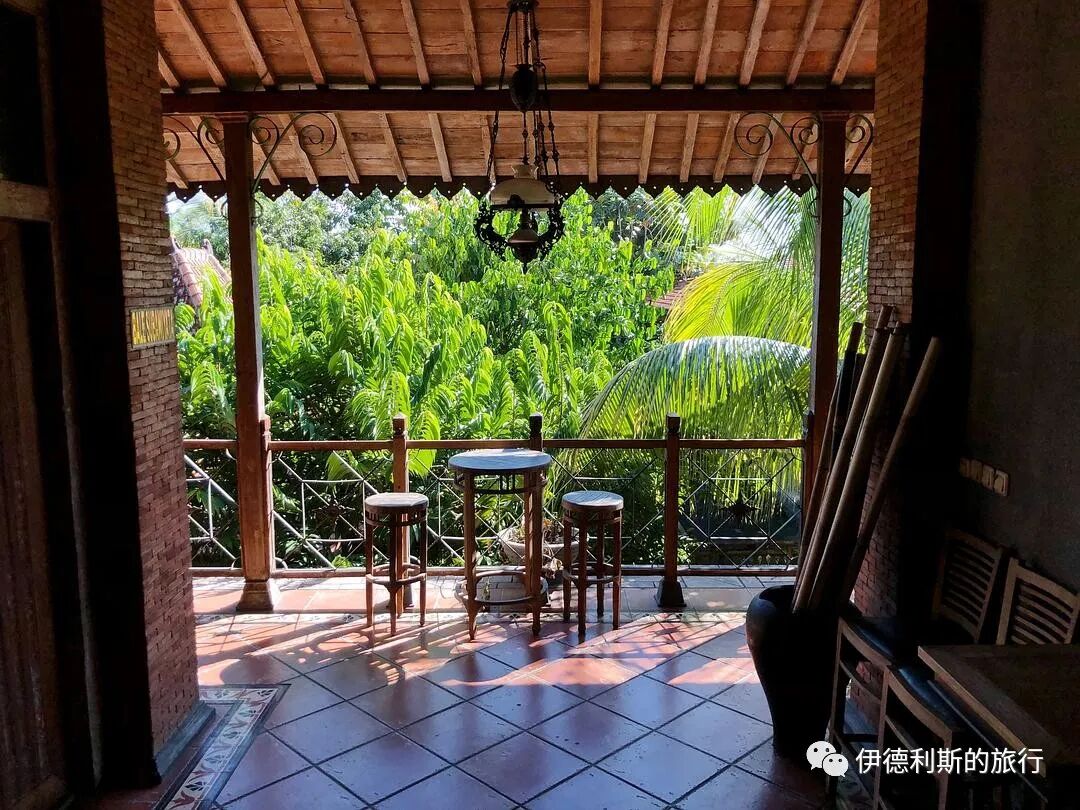
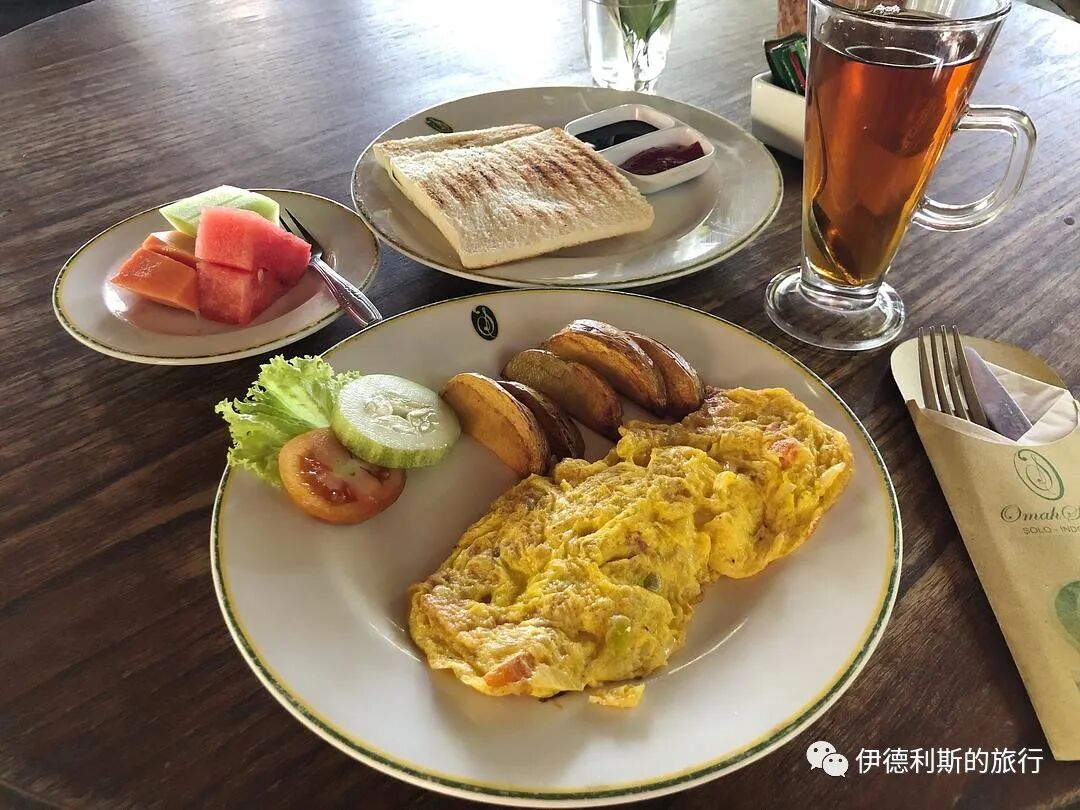
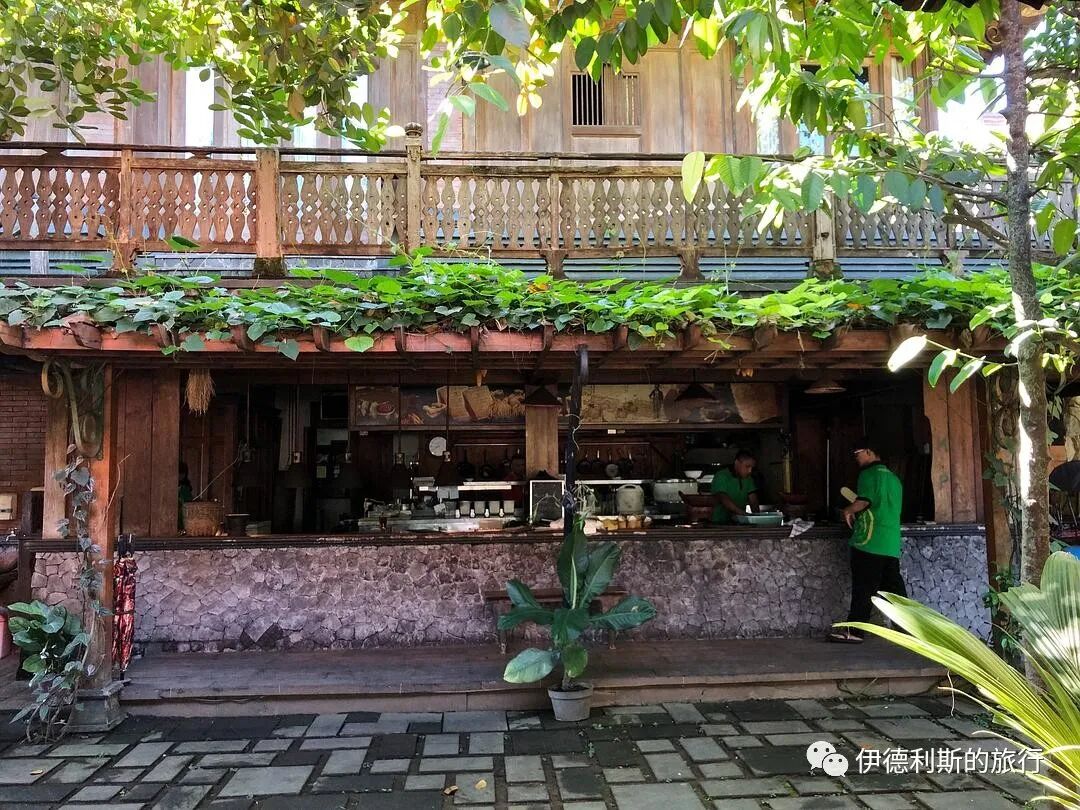
I ate breakfast at my hotel in Solo. I was the only guest in the entire hotel, and the palace of the Surakarta Sunan was right behind the woods.
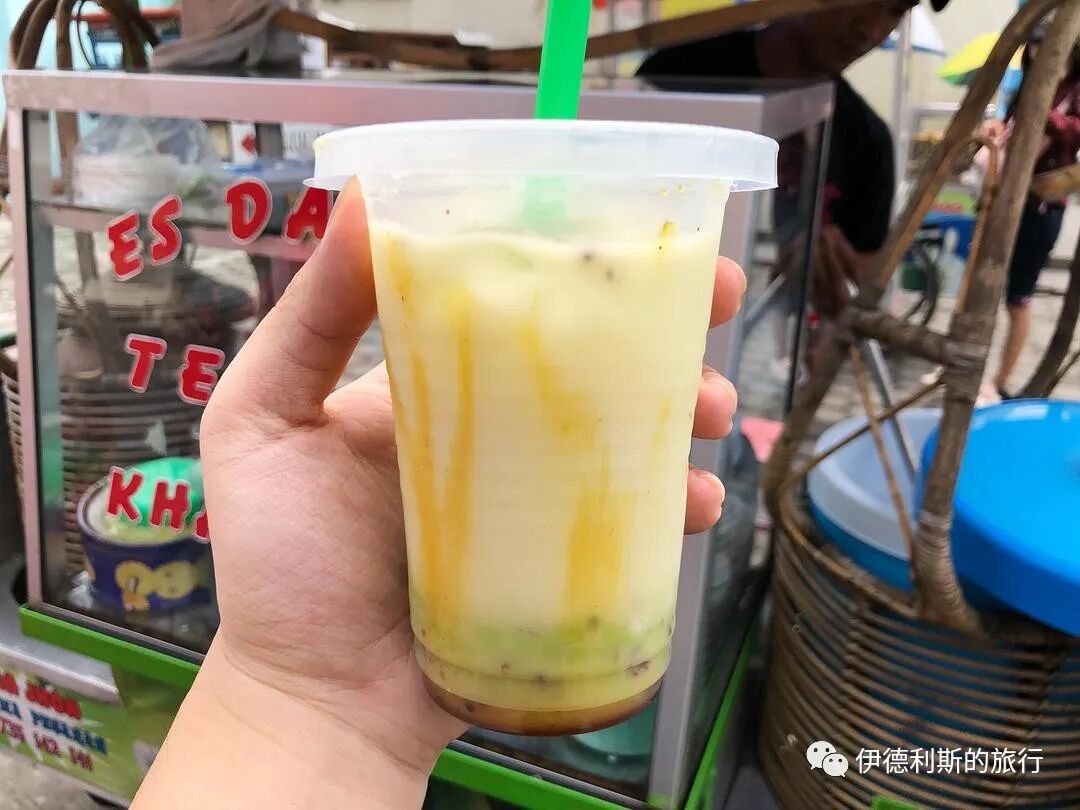
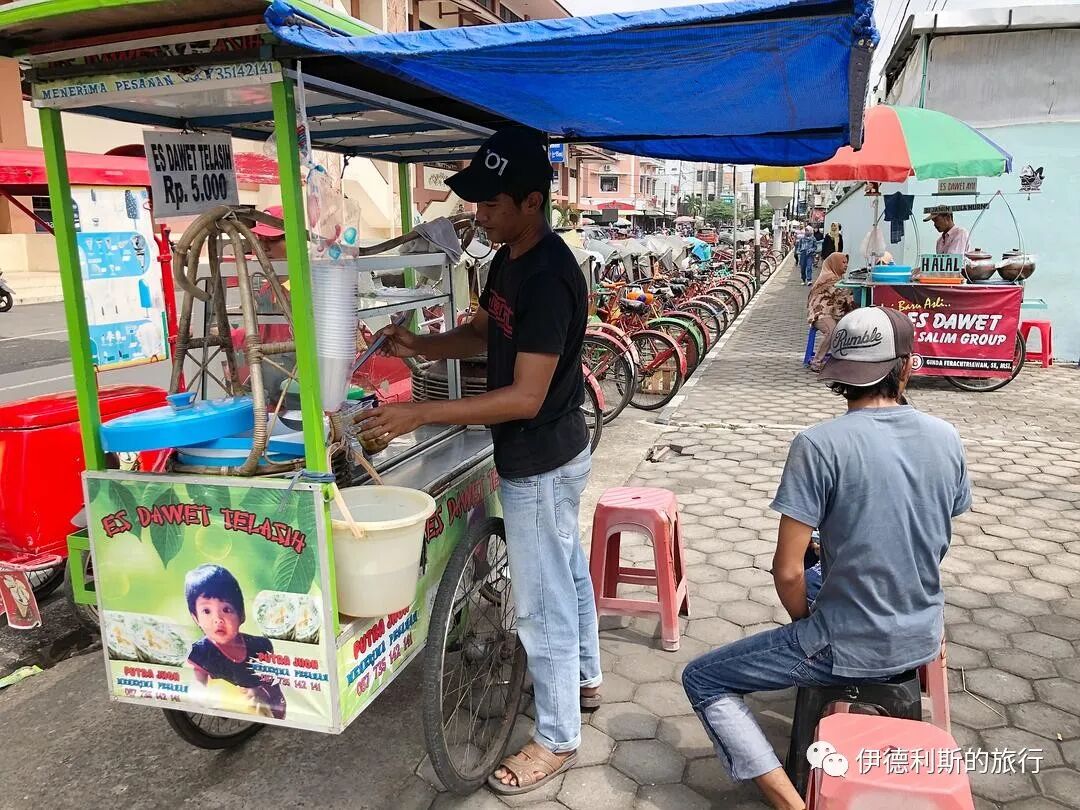
Solo's specialty iced drink is Es Dawet Telasih, made with coconut milk, palm sugar, rice flour jelly (cendol), coconut rice pudding (bubur sumsum), basil seeds, and black glutinous rice.
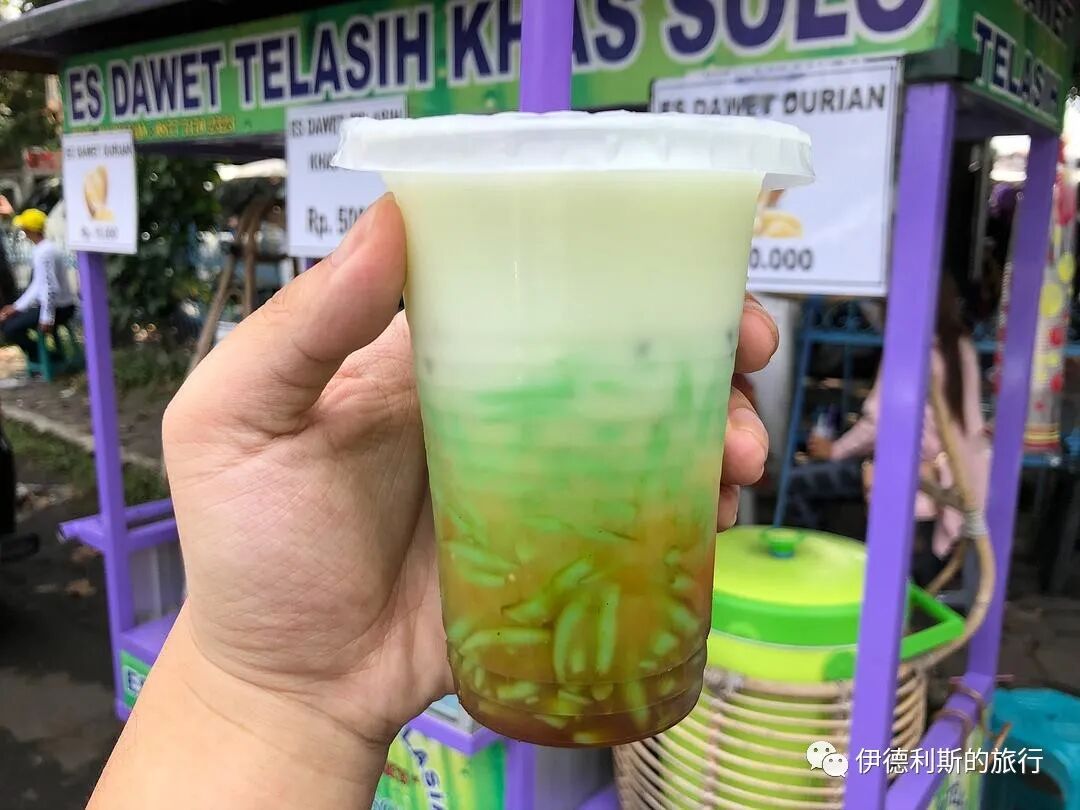
Es Dawet Durian is Es Dawet Telasih with durian added.
Indonesian pancakes (serabi) are made from rice flour and coconut milk.
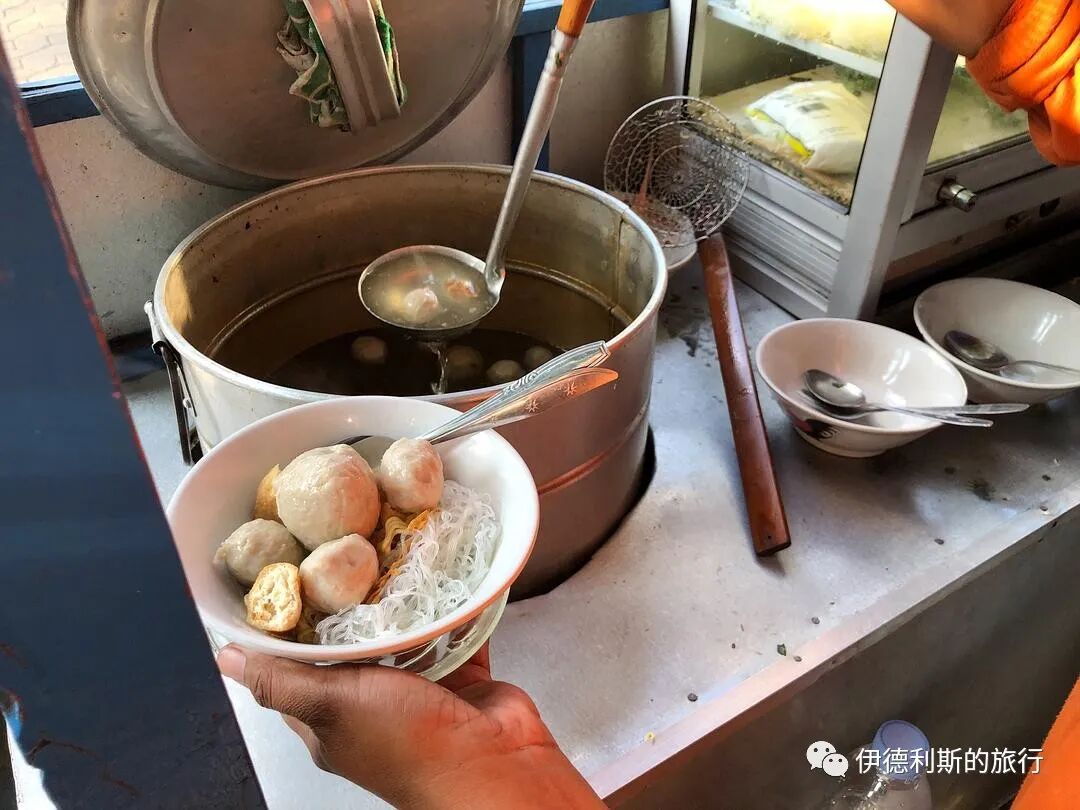
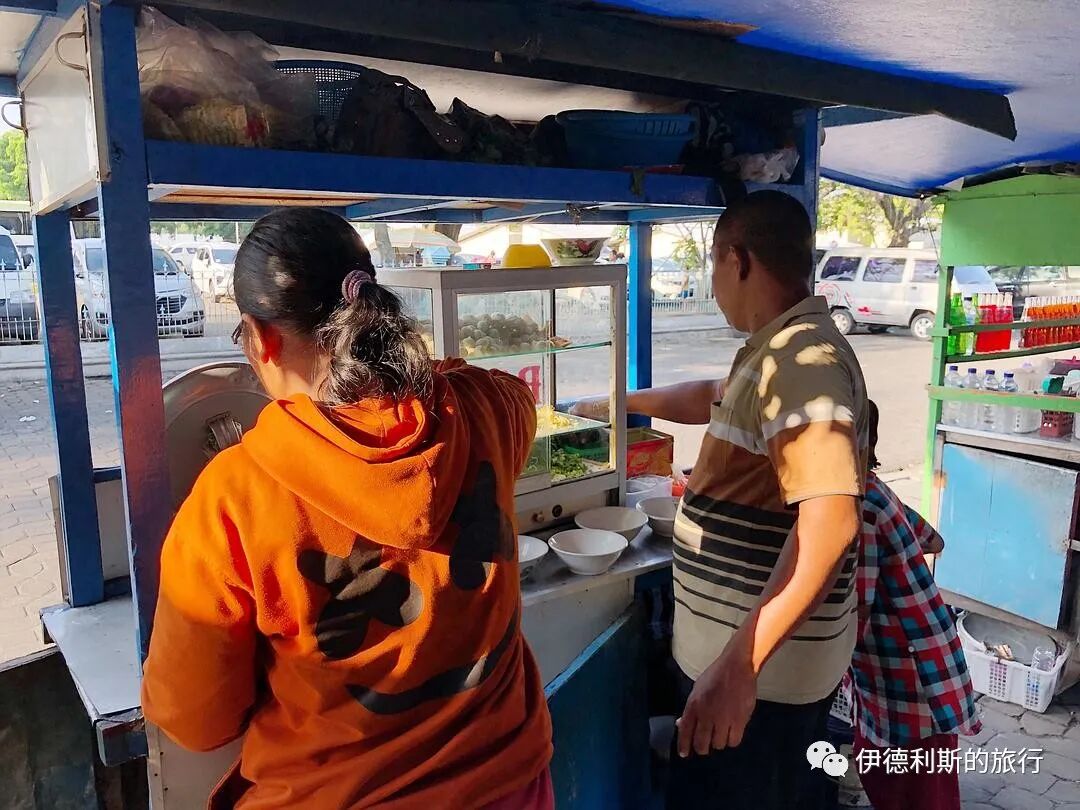
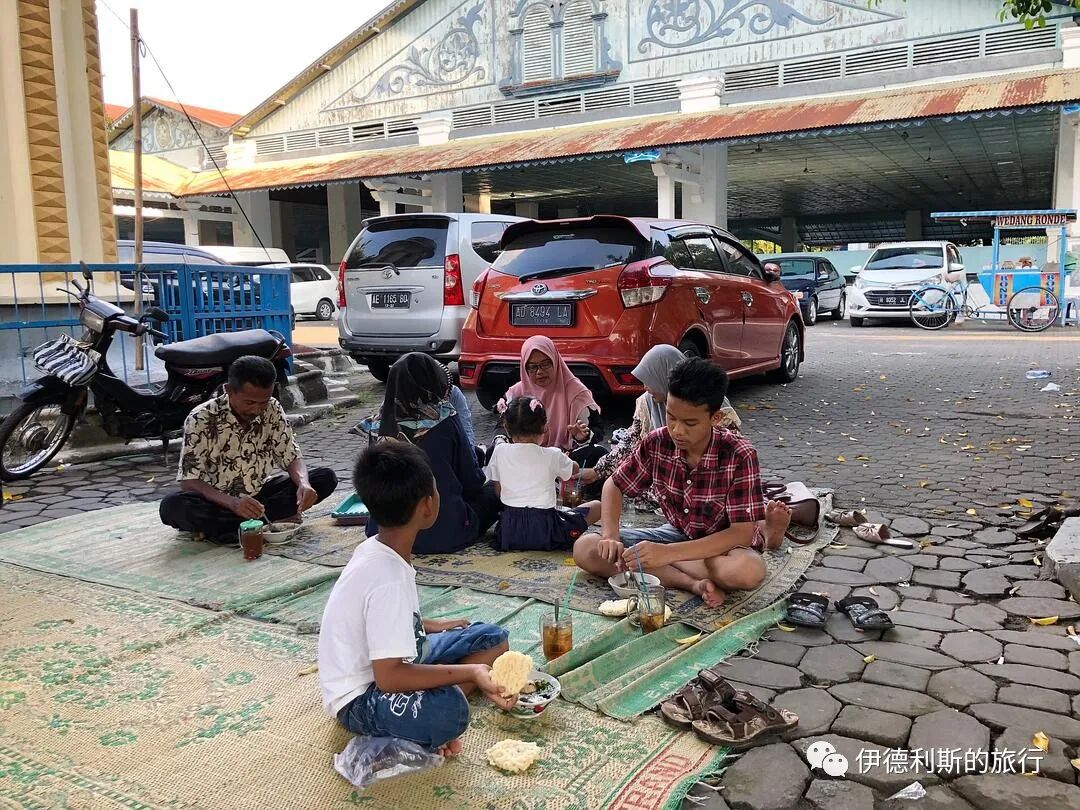
I ate beef meatballs (bakso daging sapi) at a street stall next to the Solo palace. Bakso meatballs are a classic Indonesian street snack made from a mixture of ground beef and tapioca flour. The word "bak-so" originally comes from the Hokkien term for "meat crisp," but the method of making meatballs likely came from 19th-century Dutch colonists. Today, the best bakso meatballs are widely considered to come from Solo in Central Java and Malang in East Java.
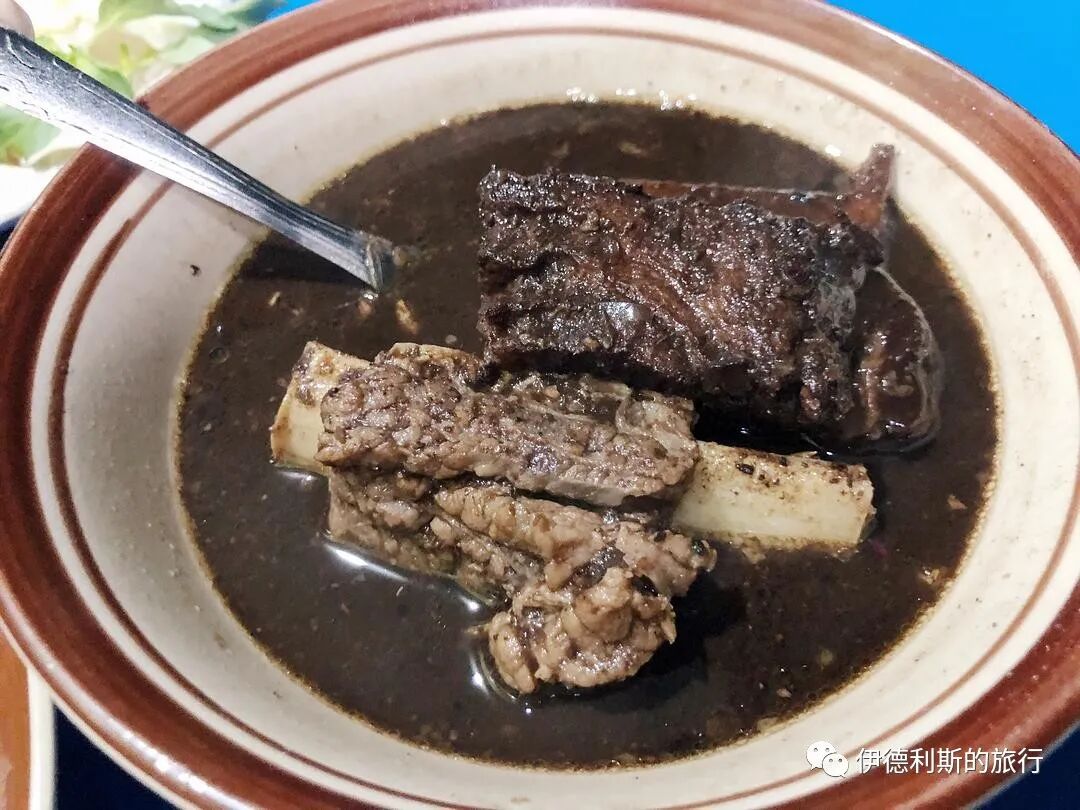
I ate beef rib soup (rawon) and grilled chicken (ayam bakar kuah) at a late-night street stall in Solo. This shop is open from 6 p.m. to midnight. Rawon is a beef soup that originated in Surabaya, East Java. It has a rich, nutty flavor and a black color because it uses the Indonesian black nut (keluak) as its main seasoning. Rawon has a very long history, dating back to the ancient Mataram Kingdom of Java in the 10th century.
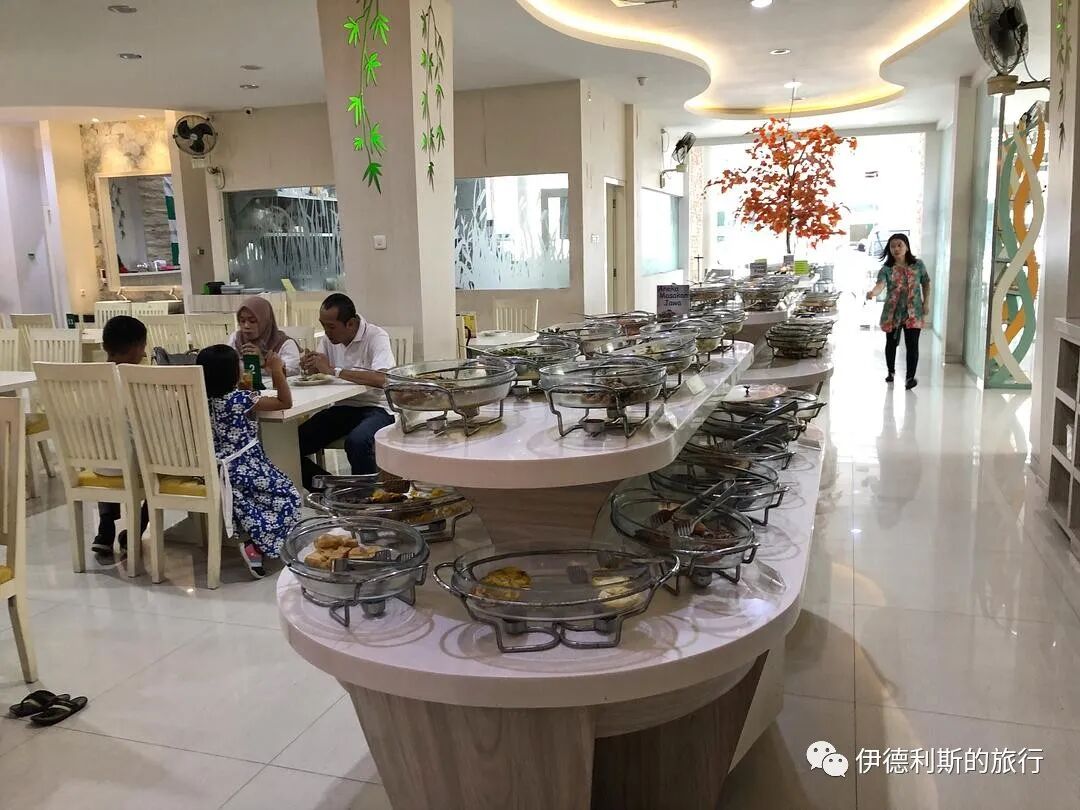
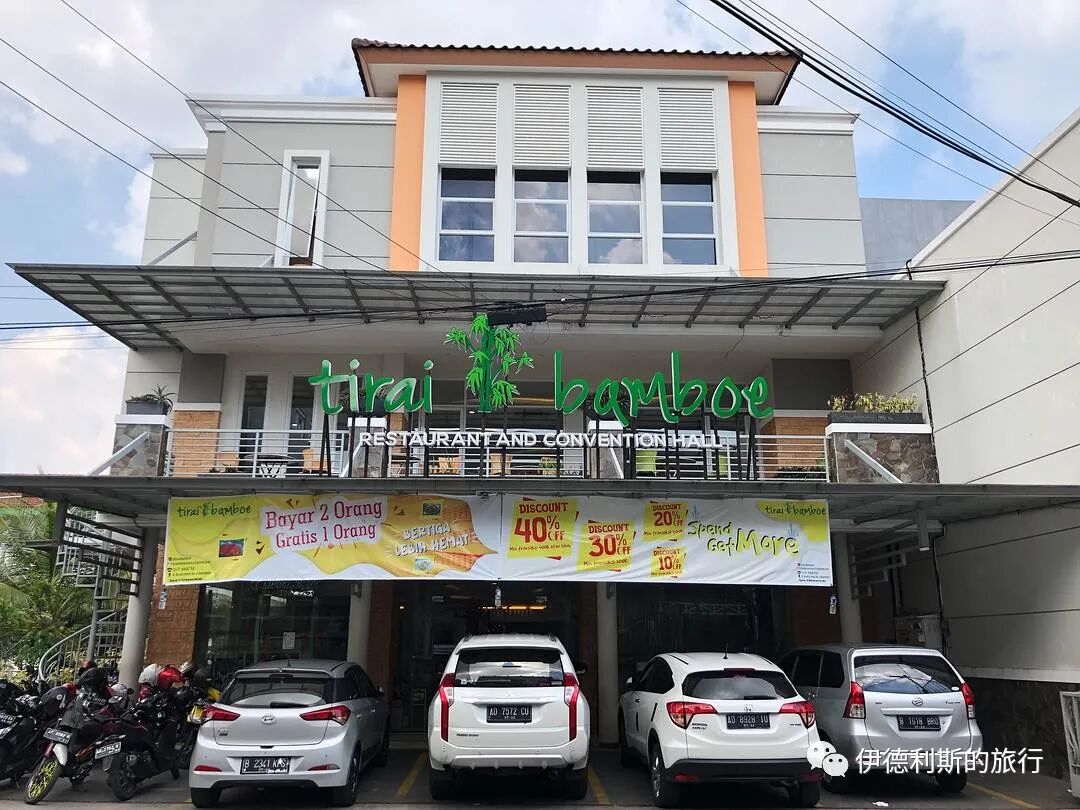
I ate at a self-service restaurant. For a solo traveler like me, this kind of restaurant allows me to try a wider variety of dishes.
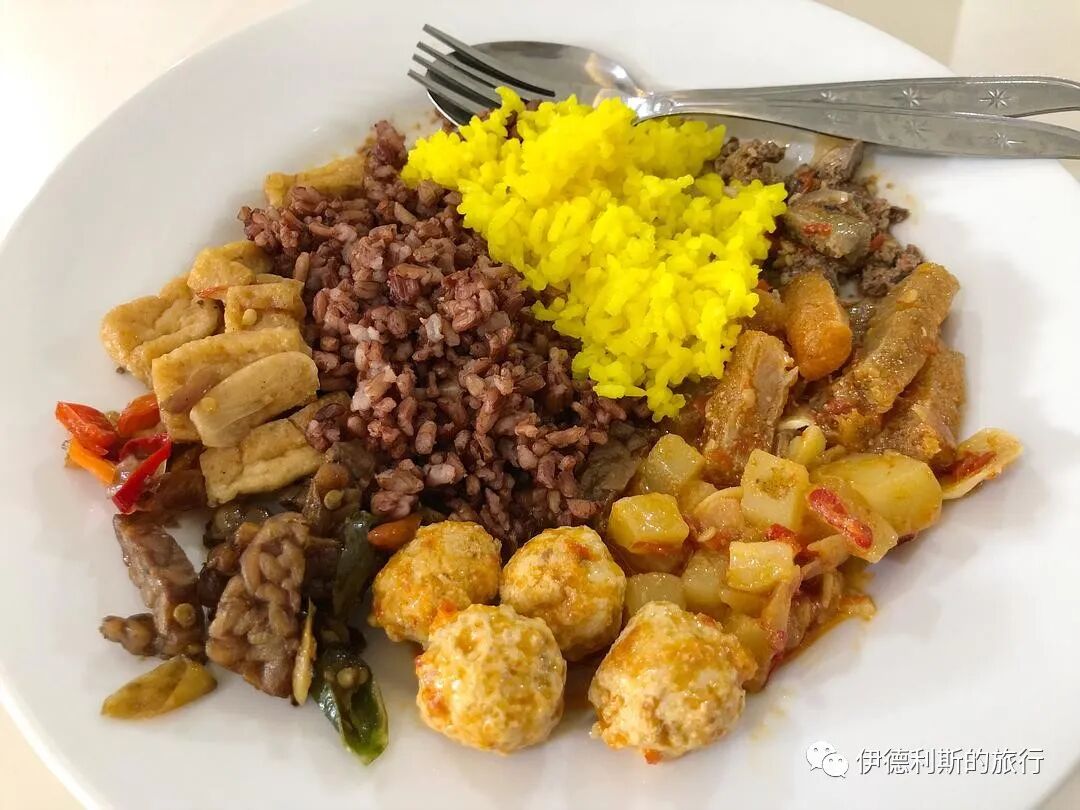
In the middle are yellow rice (nasi kuning) made with coconut milk and turmeric, and red rice (nasi merah). From bottom to top on the right are beef meatballs (kreni), potatoes (kentang), beef tendon (cecek), and liver (ati), all made with chili paste (sambal goreng).
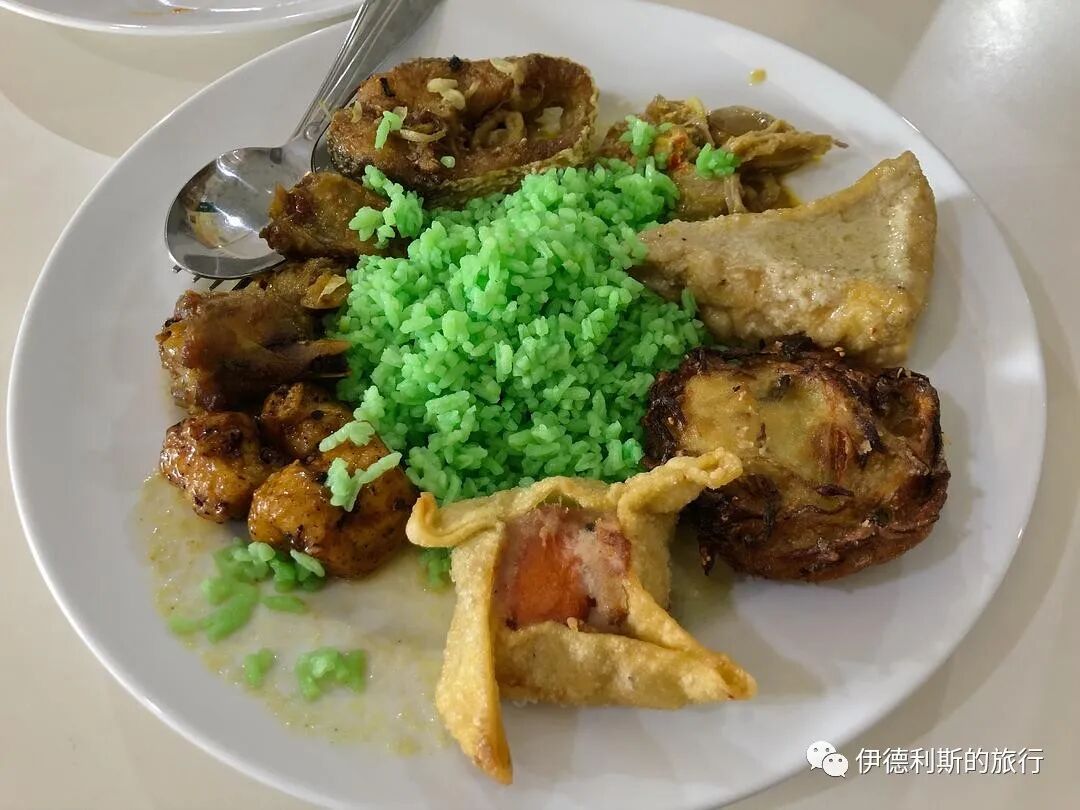
In the middle is green rice (nasi hijau), on the right is Indonesian vegetable fritter (bakwan sayur), and on the left is black pepper tofu (tahu lada hitam).
Semarang
Semarang is the capital and largest city of Central Java and was a major port during the Dutch colonial era. The old town of Semarang, established in the 18th century, is also known as Little Netherlands.
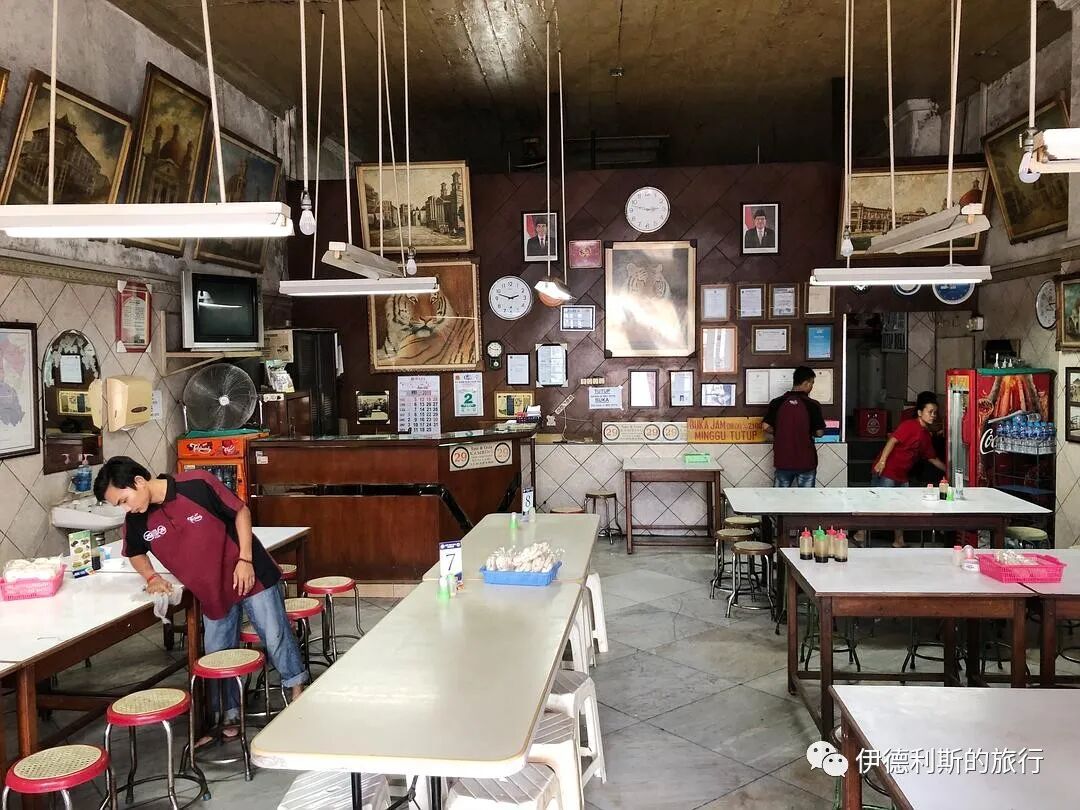
I ate at a restaurant in the Dutch old town of Semarang that specializes in satay and curry soup.
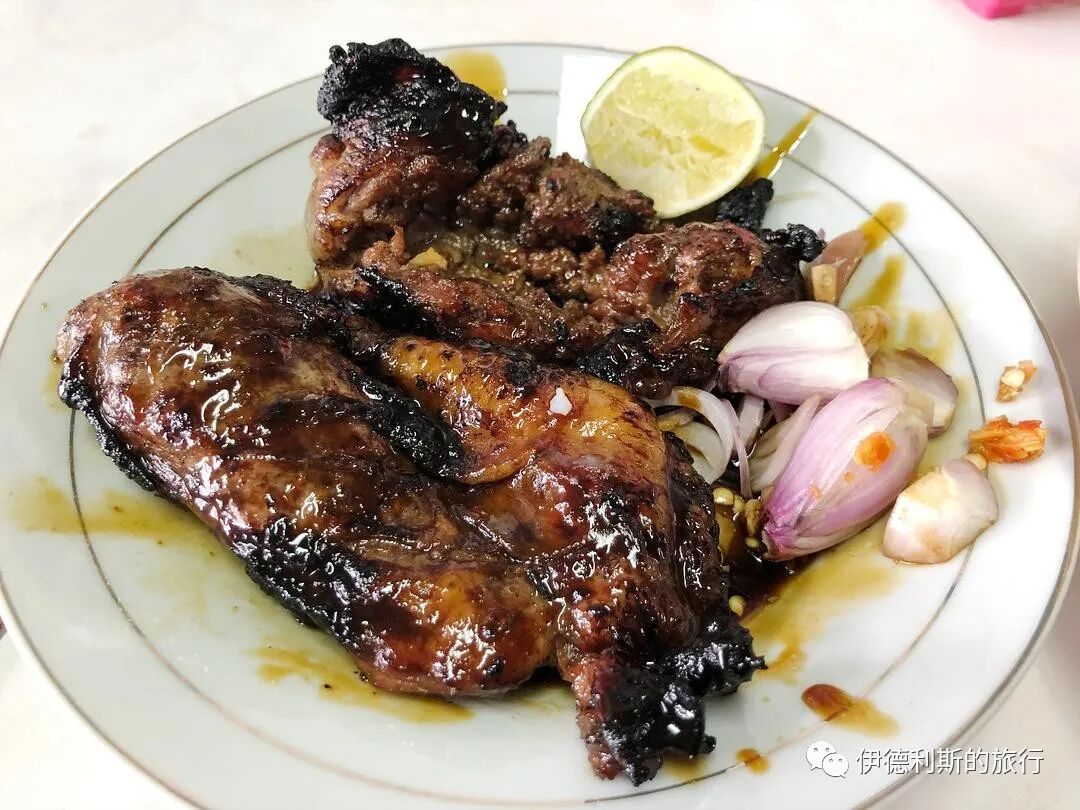
Goat meat satay (sate buntel) is a skewer featuring a mix of fat and lean meat. It is served with tamarind juice, coconut milk, sweet soy sauce, and various spices. It was invented in 1948 by Lim Hwa Youe from Yogyakarta.
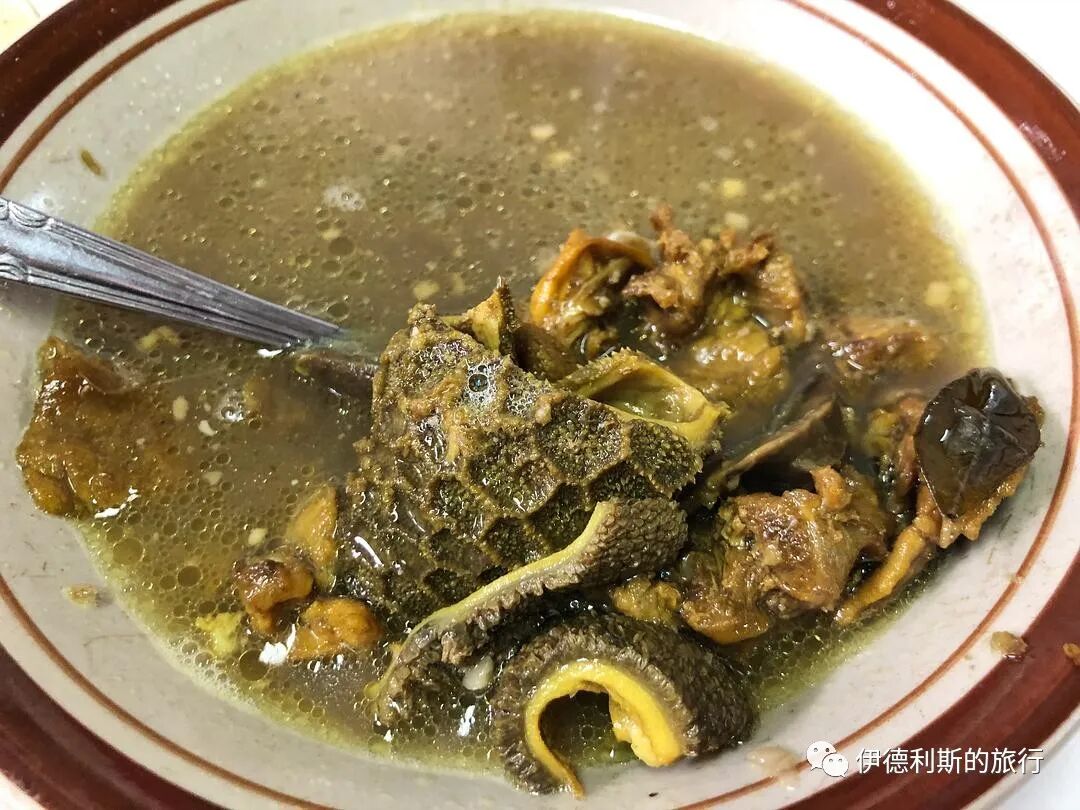
Goat offal curry soup (gulai kambing) is a specialty Indonesian dish. Curry (gulai) originated in Sumatra. Its deep yellow color comes mainly from turmeric. It also uses spices like black pepper, galangal, lemongrass, and cinnamon. To make it, spices and coconut milk are mixed and stewed with the meat for a long time.
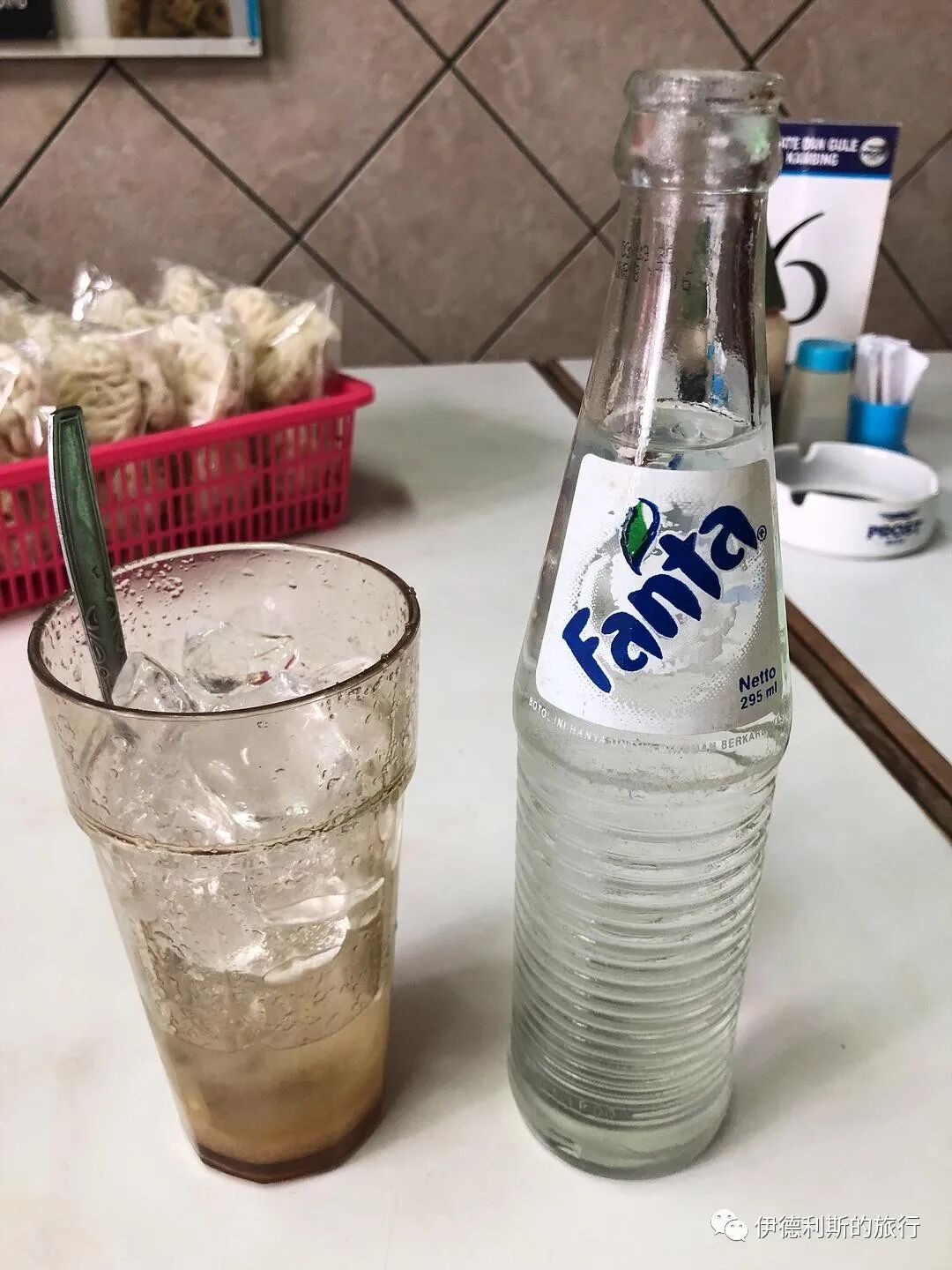
At a restaurant in Semarang, I had Javanese tripe fried rice (nasi goreng babat jawa), boneless fillet of giant gourami in sauce (gurame fillet saos), chicken satay (sate ayam), and kiwi soda (kiwi squash). Besides various street stalls and small eateries, Semarang has many restaurants with nice environments like this one.
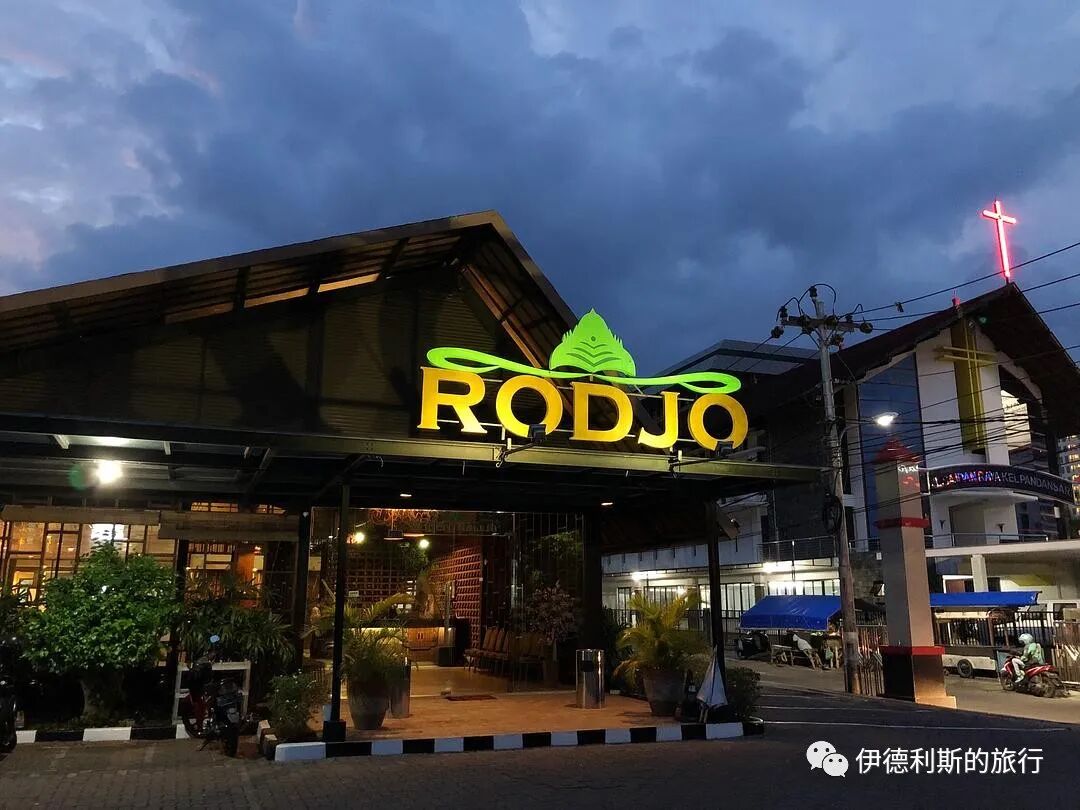
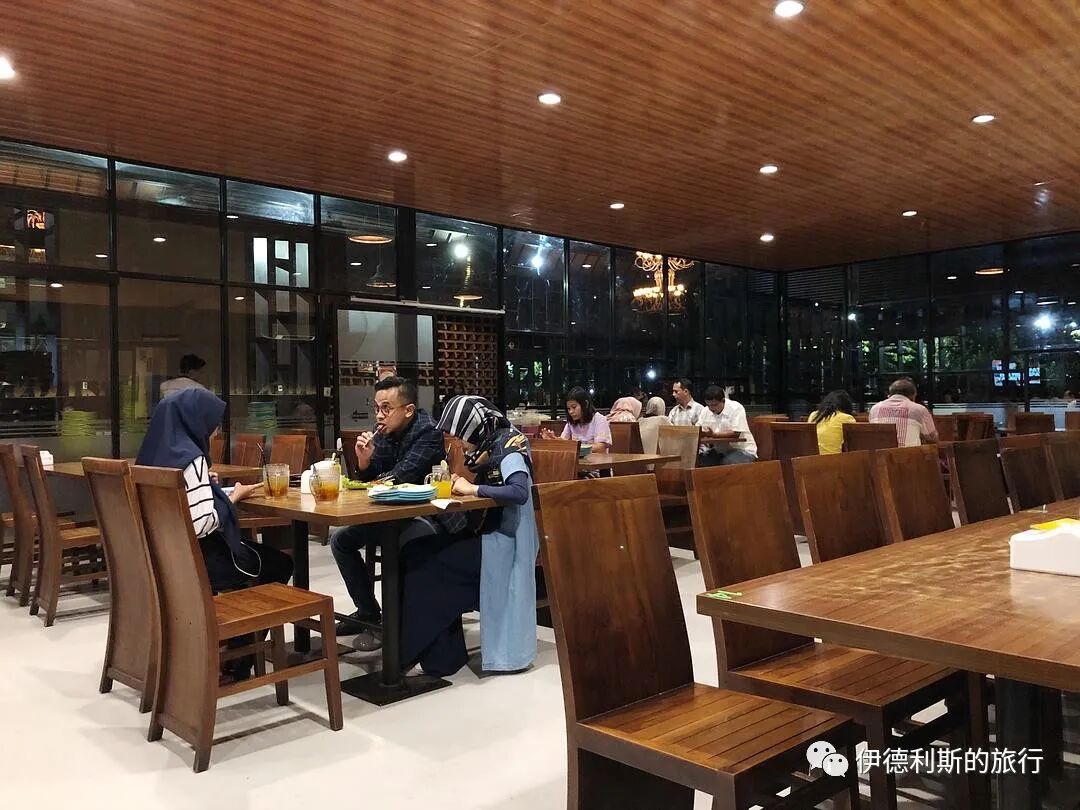
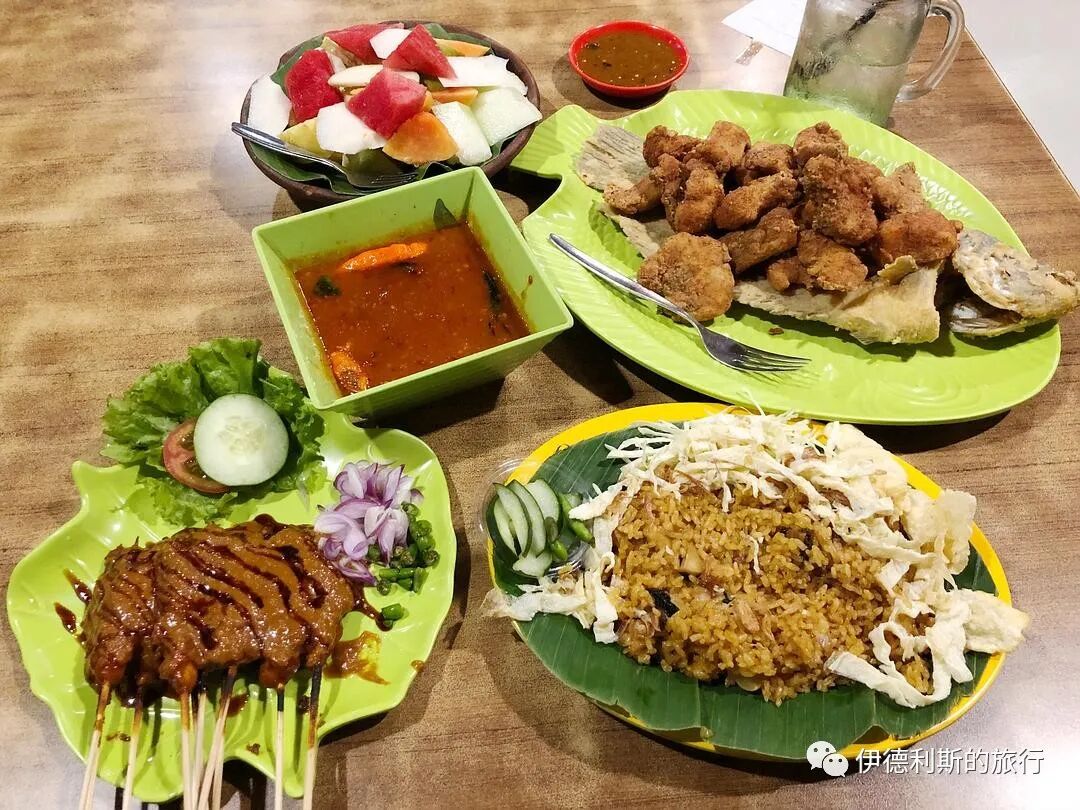
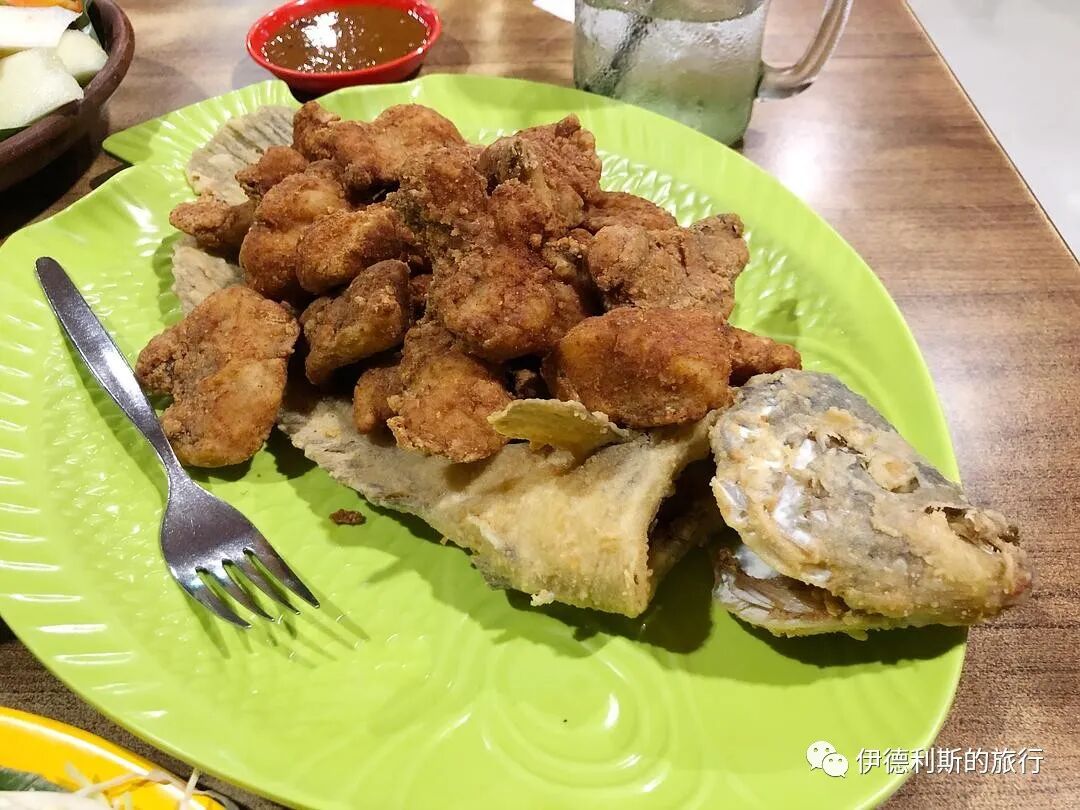
Boneless fillet of giant gourami in sauce (gurame fillet saos)
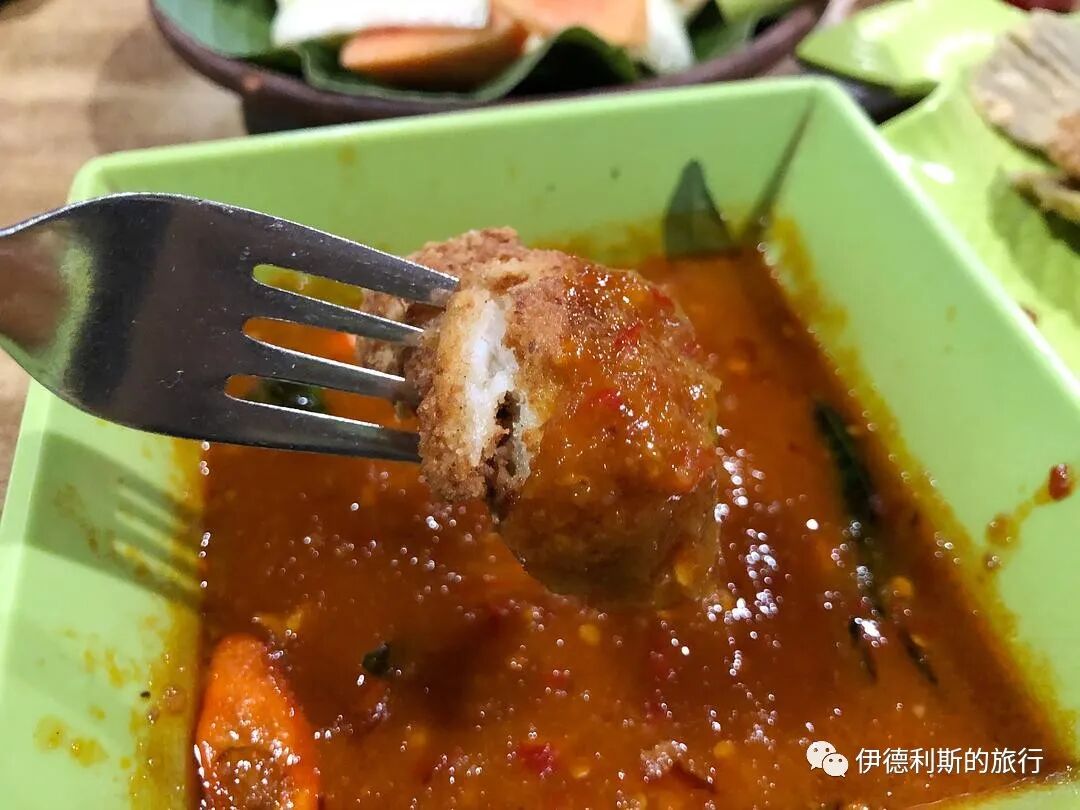
Boneless fillet of giant gourami in sauce (gurame fillet saos)
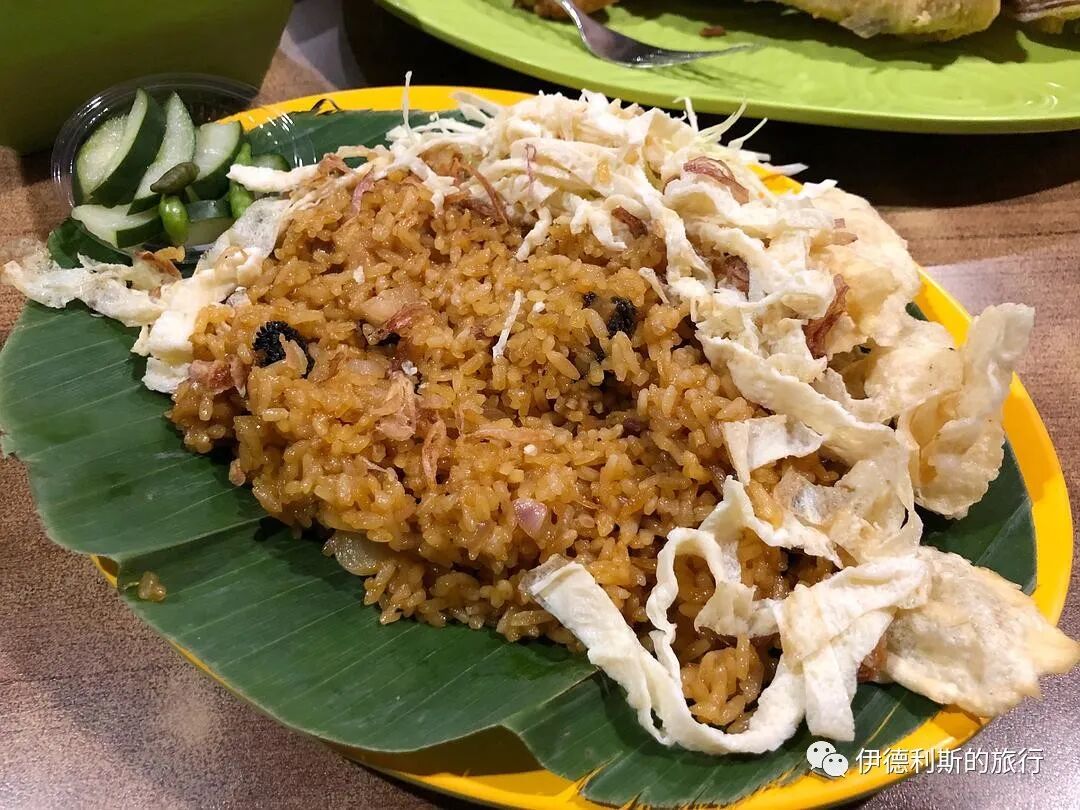
Javanese tripe fried rice (nasi goreng babat jawa)
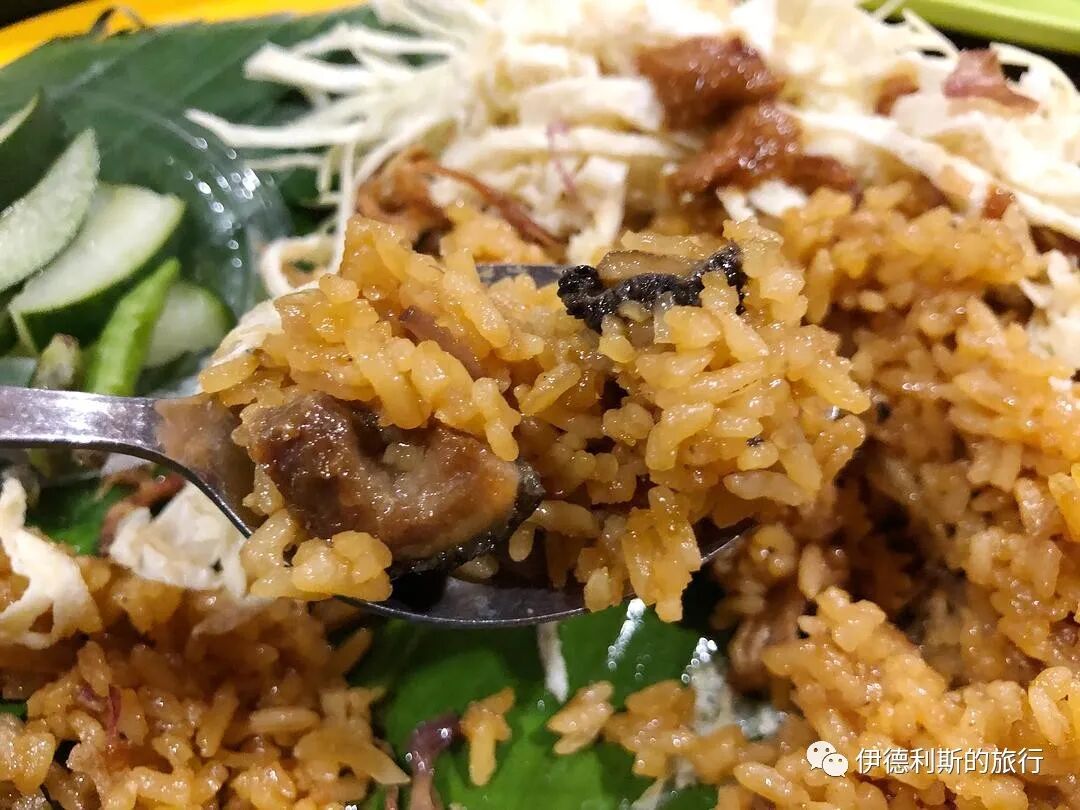
Javanese tripe fried rice (nasi goreng babat jawa)
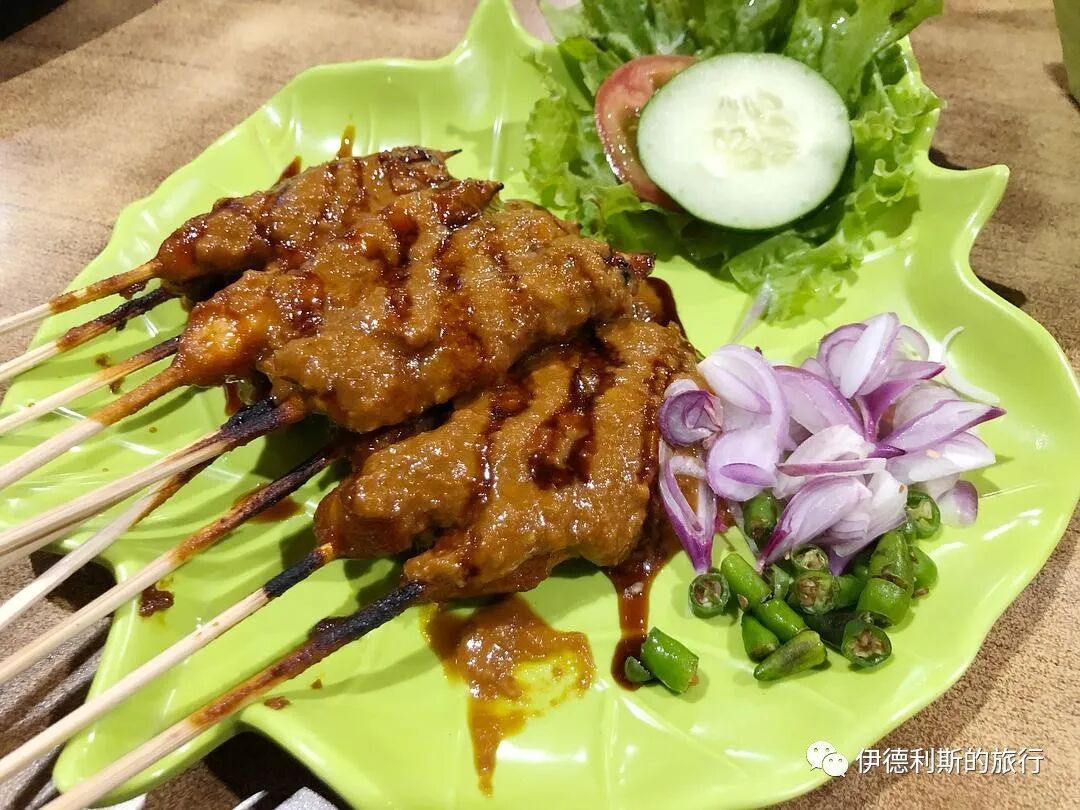
Chicken satay (sate ayam)
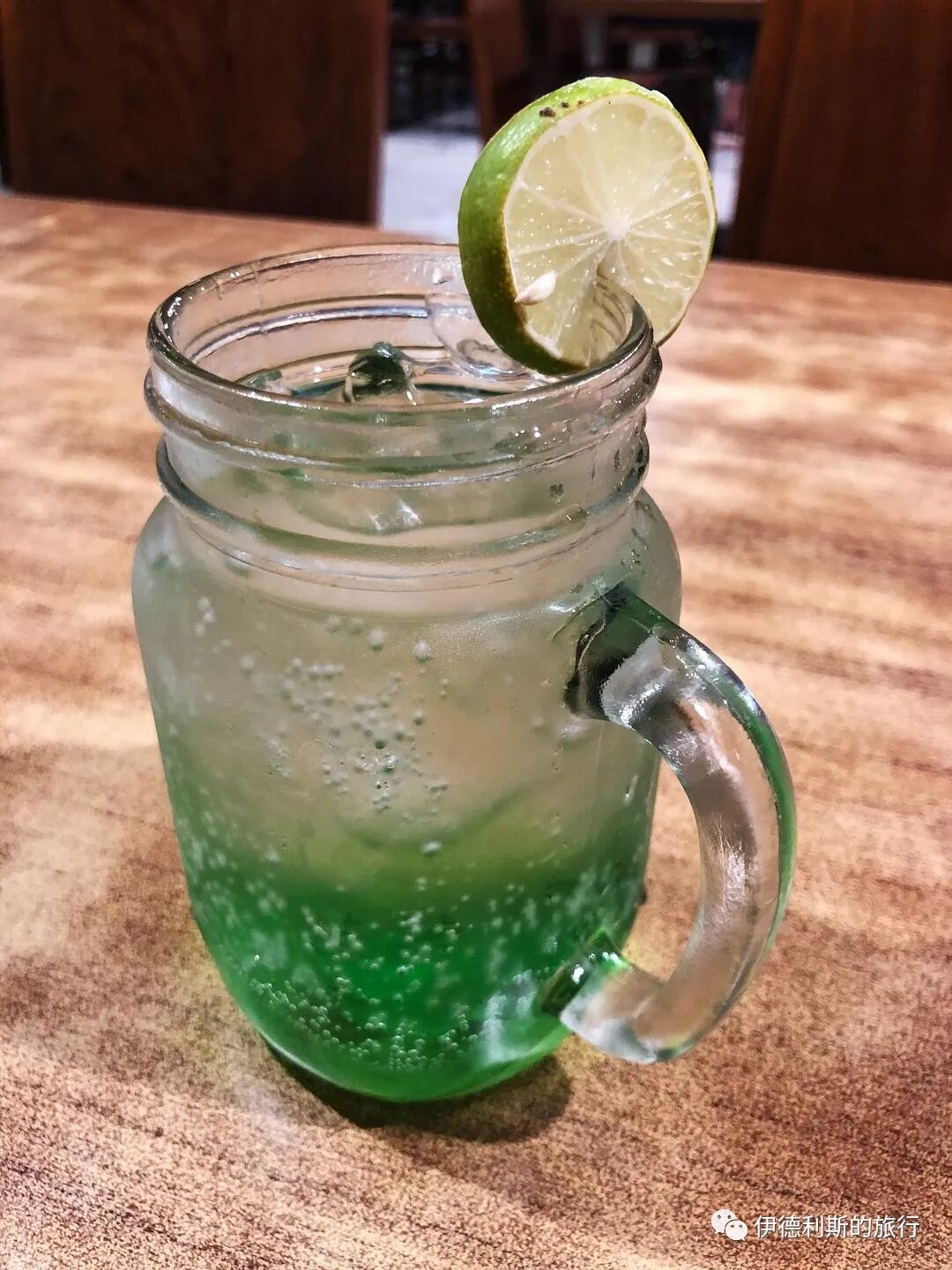
Kiwi soda (kiwi squash)
Before leaving, I ate fried oxtail soup (sop buntut goreng) at a restaurant in the Semarang airport. The oxtail is fried and dried, and served separately from the broth.
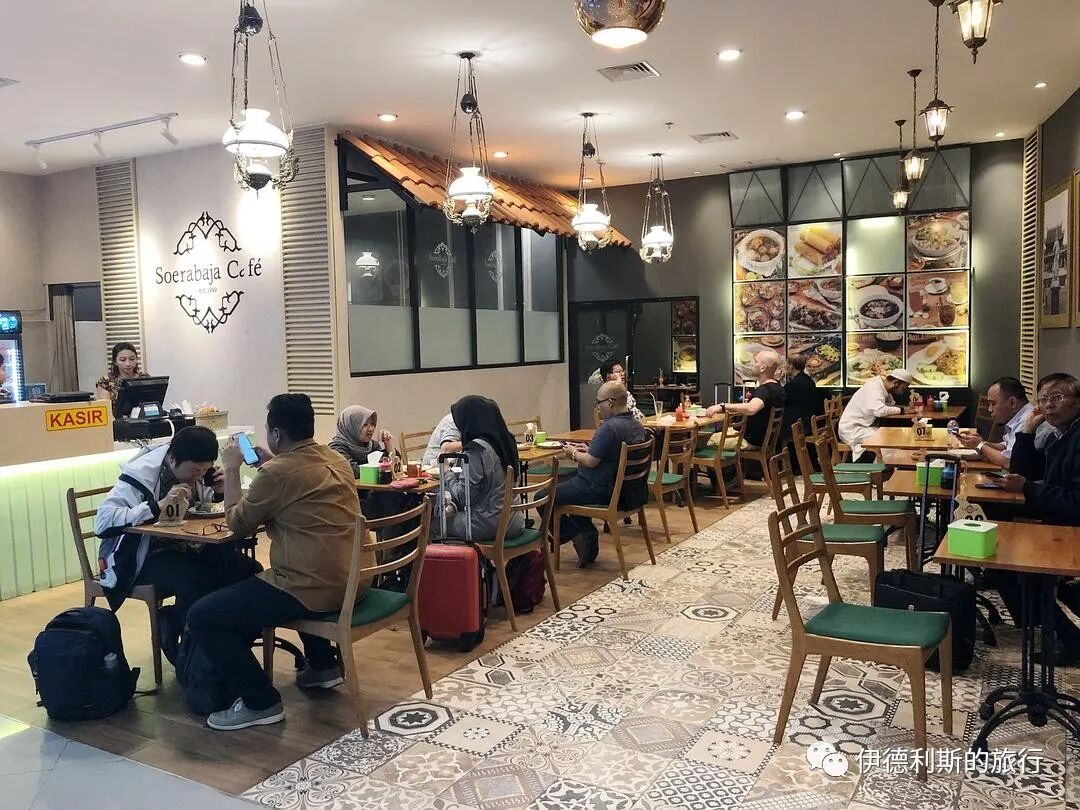
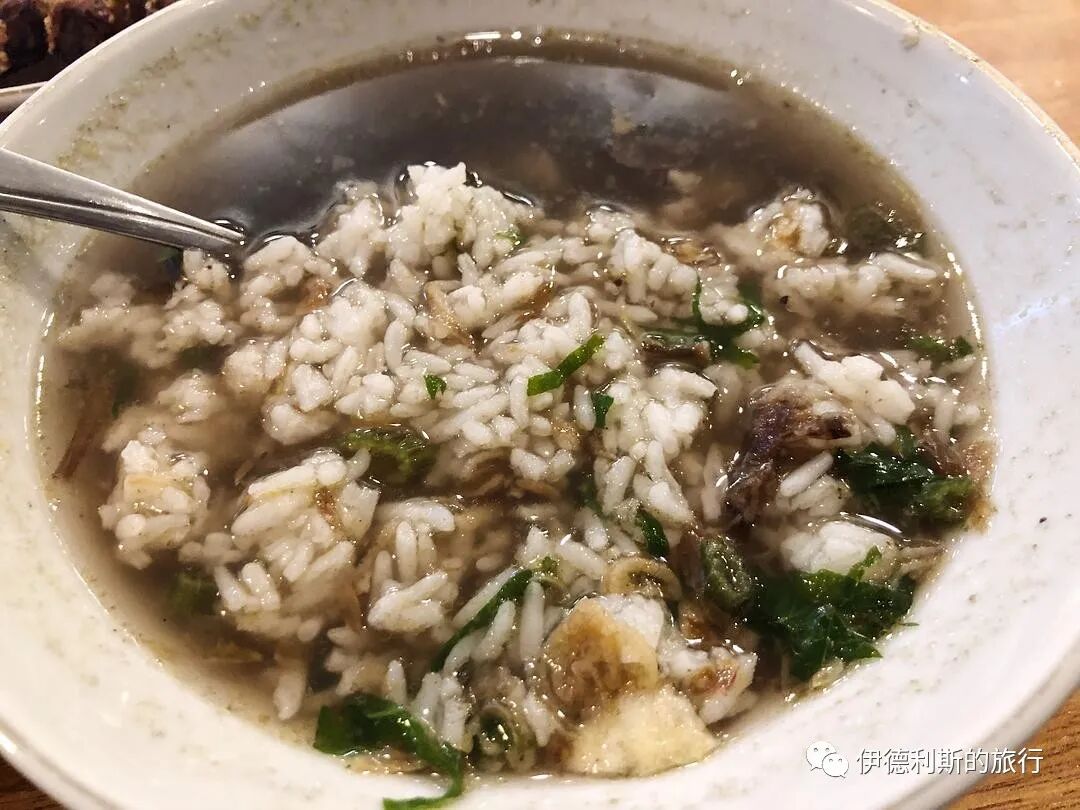
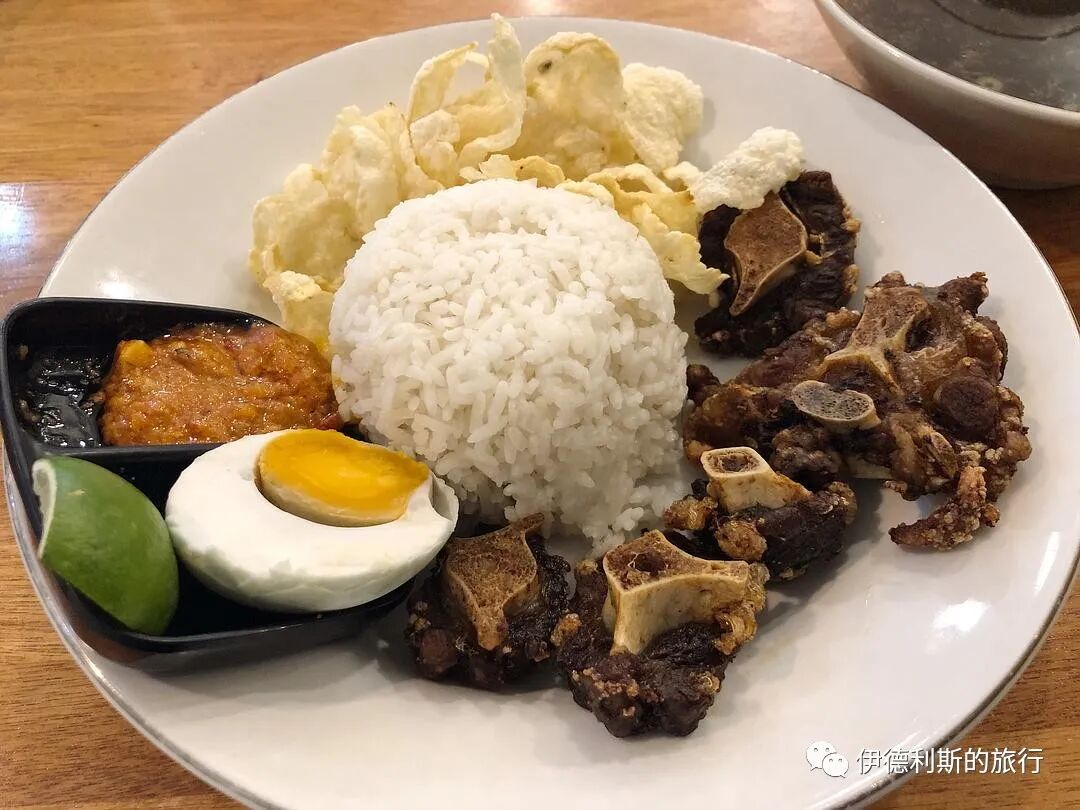
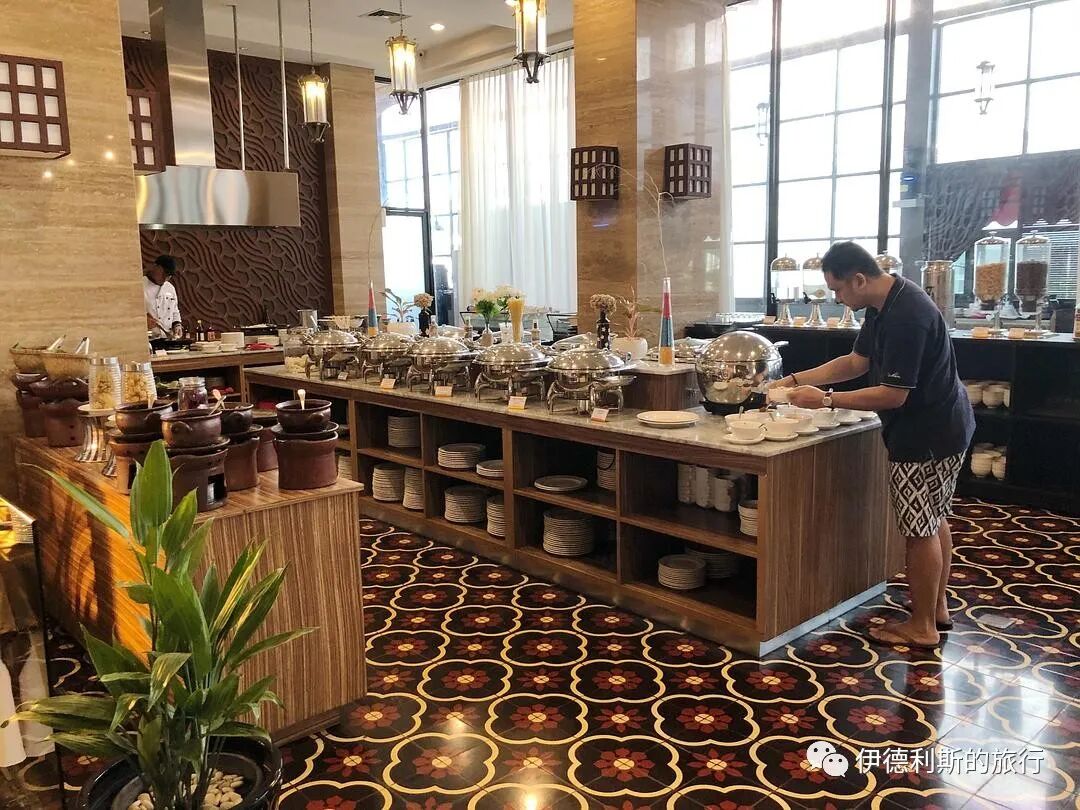
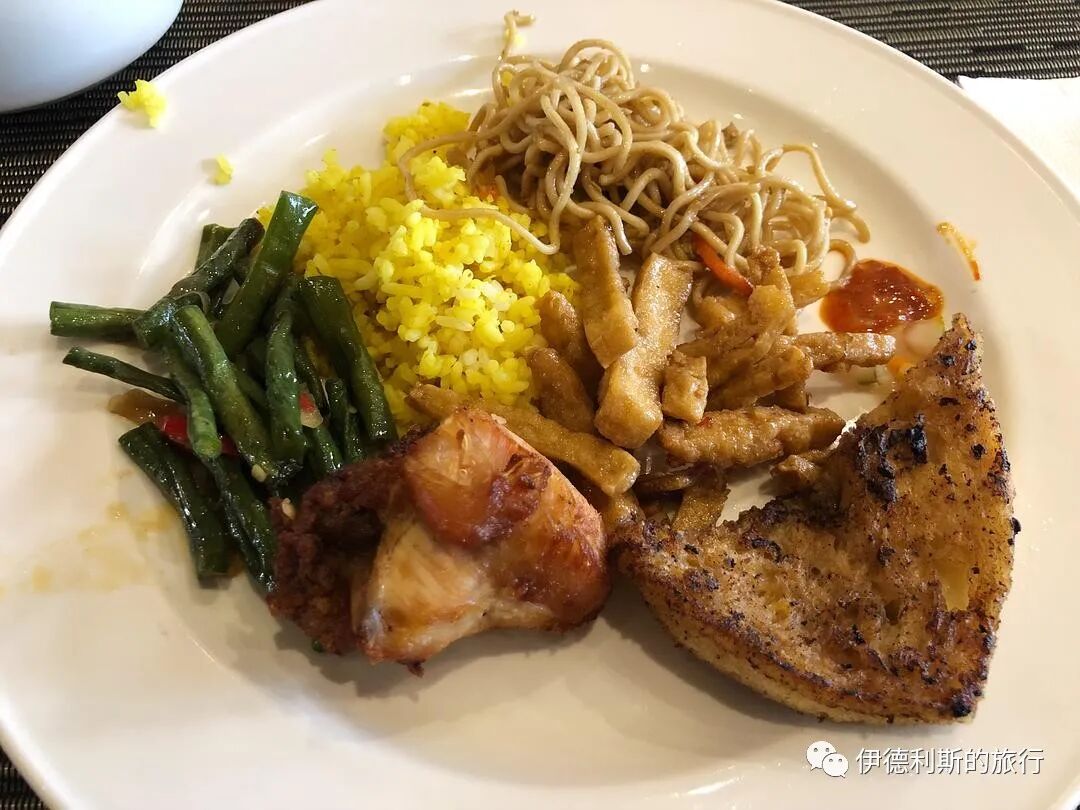
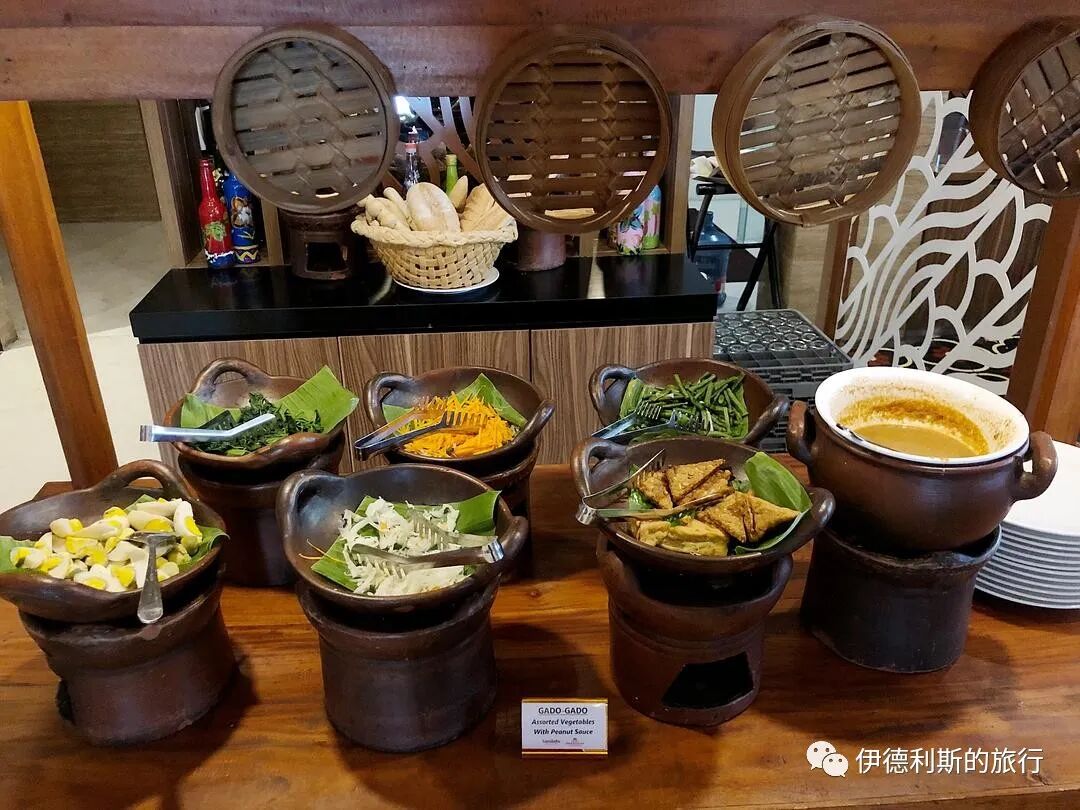
I had the buffet breakfast at the hotel where I stayed in Semarang, and the environment was quite nice.
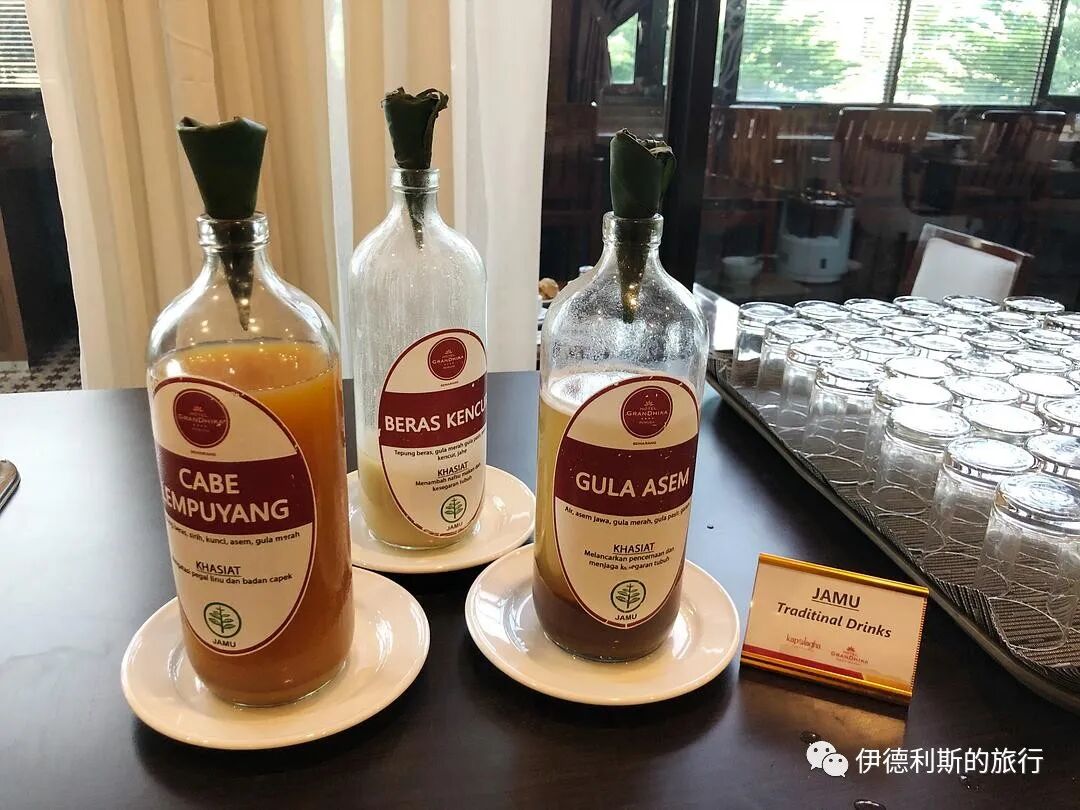
Javanese herbal drink (jamu) is a traditional Javanese herbal medicine mixed with honey and palm sugar.
Kudus
Kudus is a two-hour drive from Semarang. It is the only city on Java island with an Arabic name. Kudus is actually the Arabic pronunciation of Jerusalem, al-Quds. The tomb in Kudus is now an important religious site on Java. Next to the tomb, the Al-Aqsa Mosque is famous for its minaret, which features a unique, early Javanese traditional style.
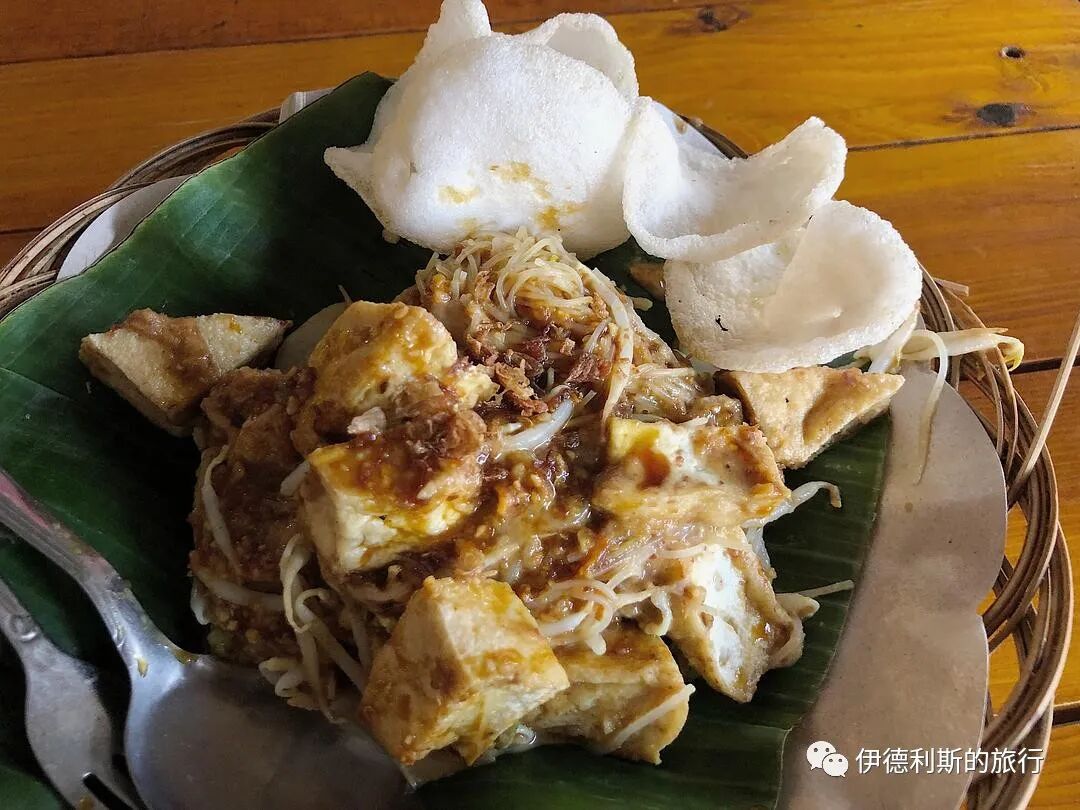
Ketoprak eaten in Kudus. Ketoprak is a vegetarian dish from Jakarta. It is made of fried tofu, vegetables, steamed rice cakes (lontong), rice vermicelli, and peanut sauce.
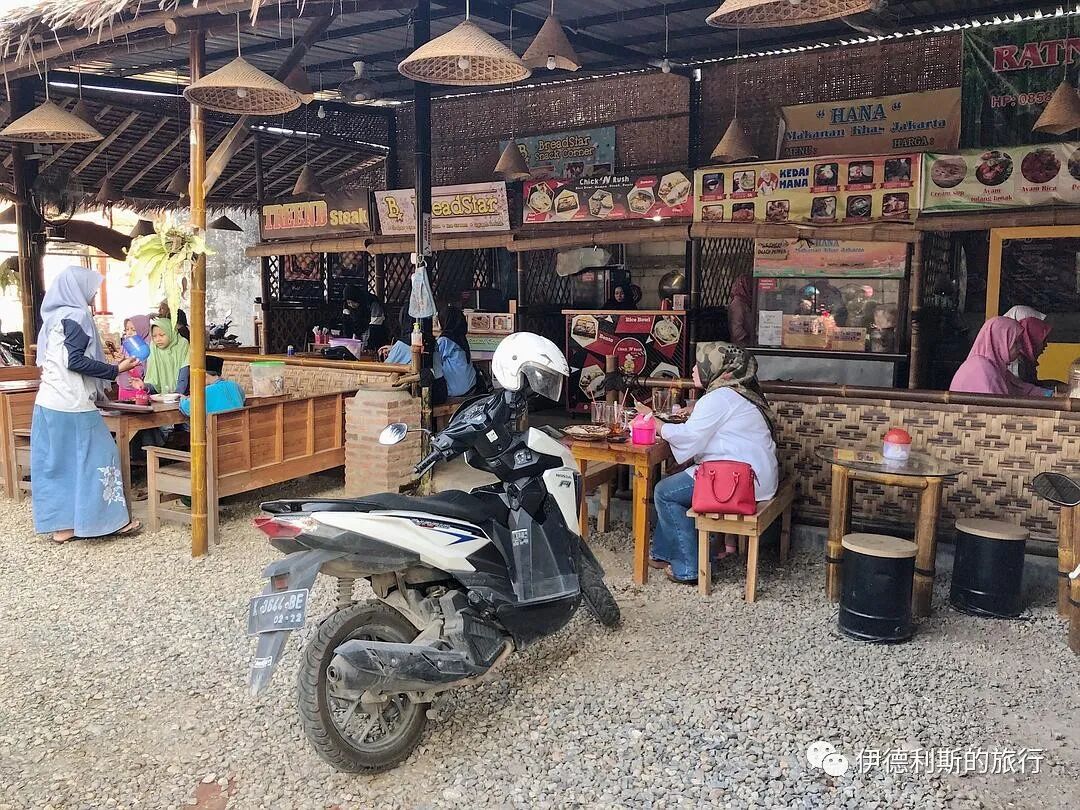
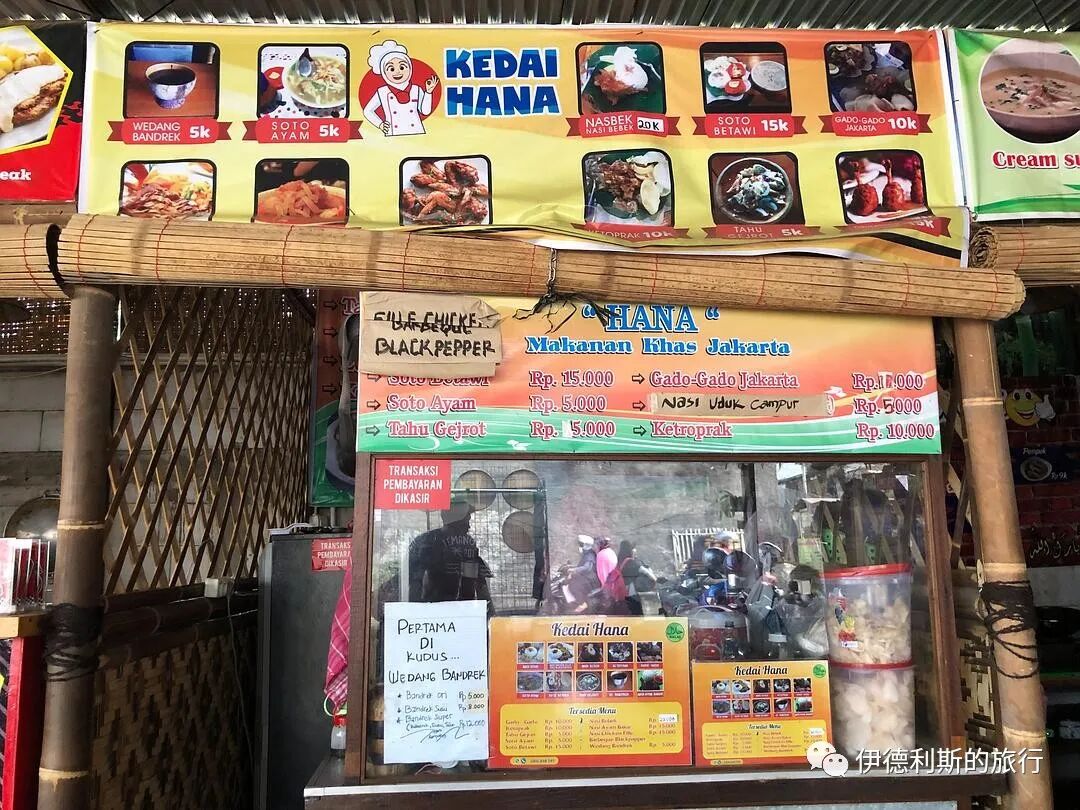
Javanese fruit ice drink (Es Buah) enjoyed in Kudus, which contains various fruits.
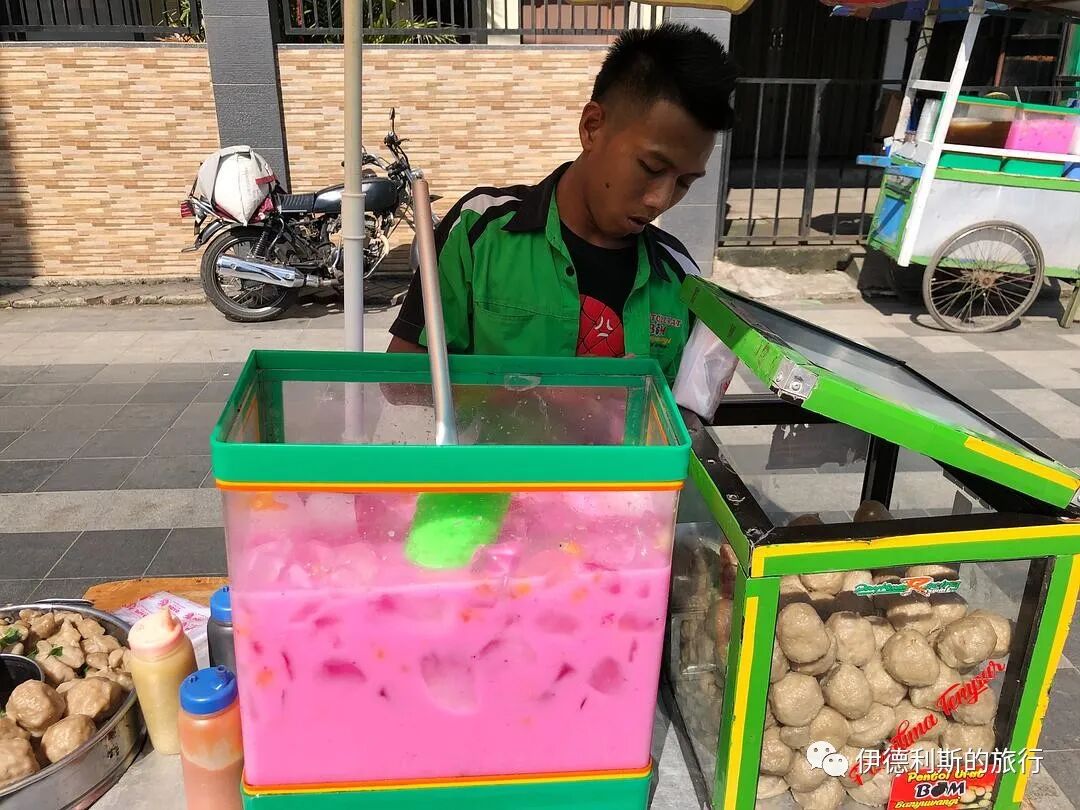
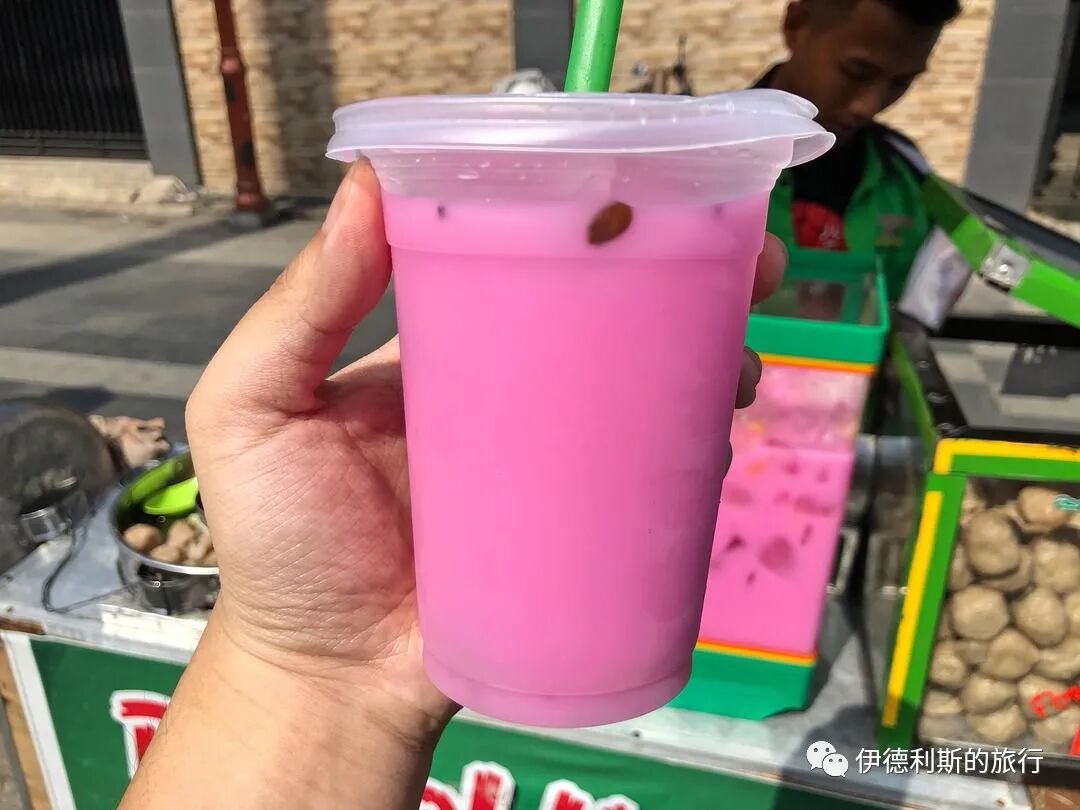
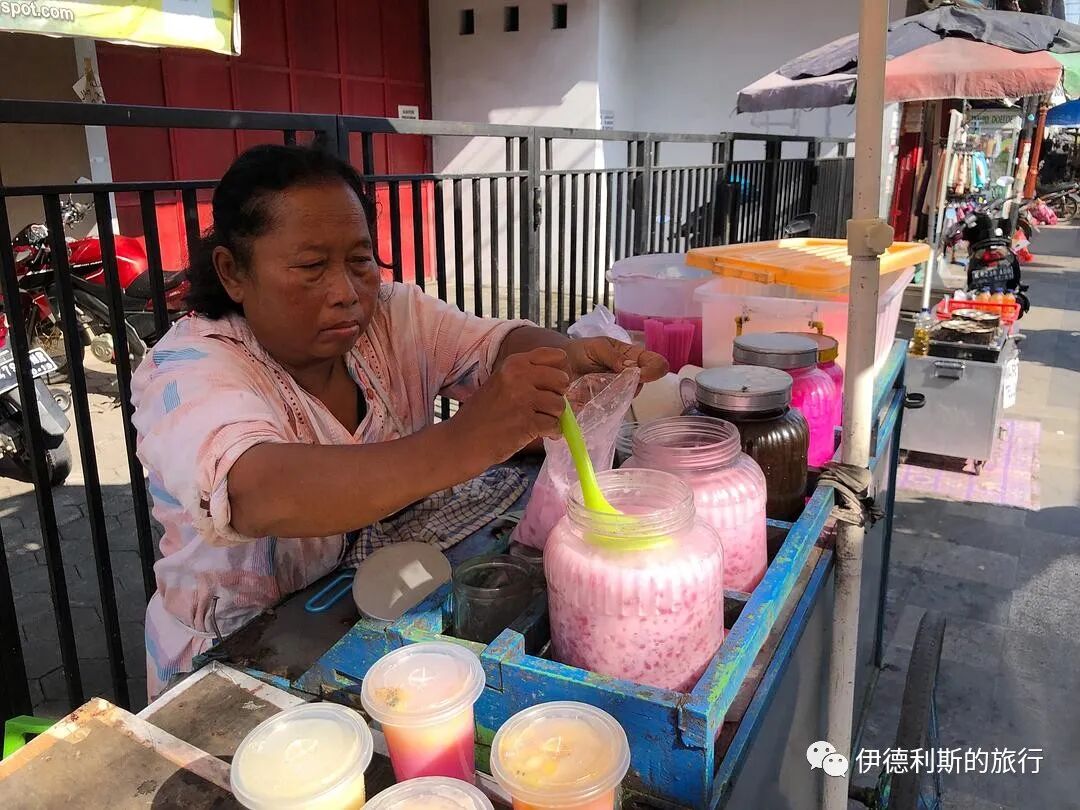
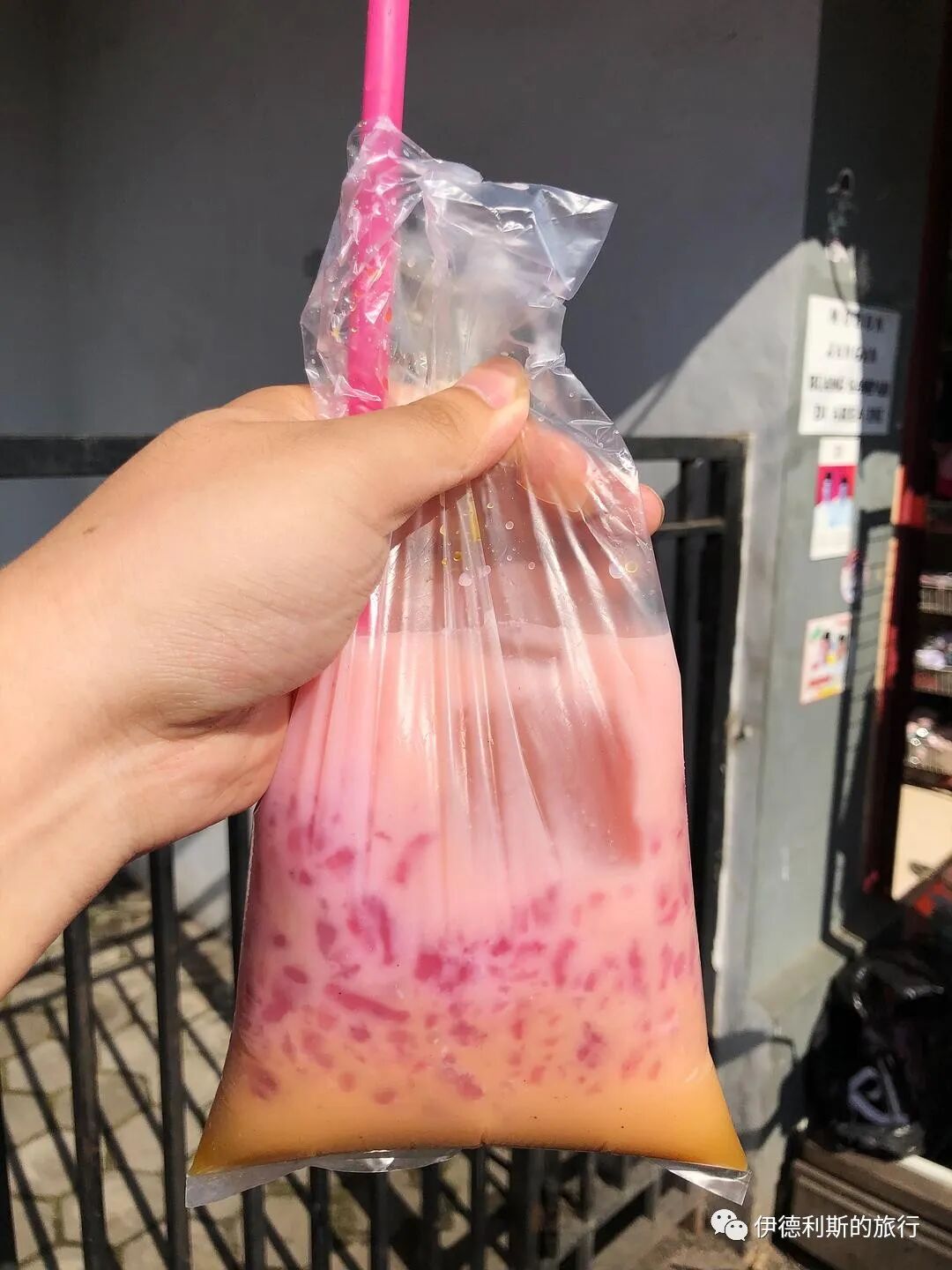
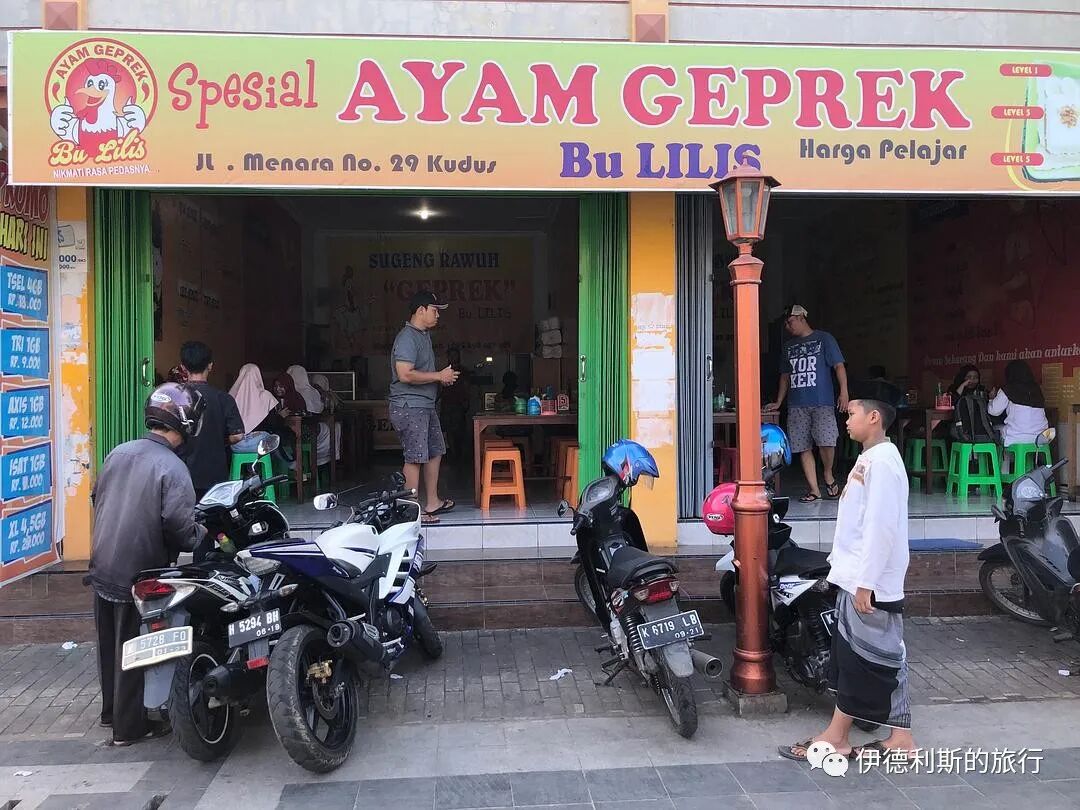
Geprek chicken eaten in Kudus. Geprek chicken is fried chicken mixed with spicy chili paste (Sambal). A woman named Ruminah invented this recipe in 2003, and it has become very popular in recent years. Ruminah originally sold fried chicken at a stall in Yogyakarta. Later, a college student asked her to spread chili paste on the fried chicken. It tasted very good, so she and the student started a brand together to sell Geprek chicken.
Summary: Central Java — Semarang, Solo, Kudus Food and Muslim Heritage is presented here as a firsthand travel account in clear English, beginning with this scene: During the 2019 May Day holiday, I traveled to Central Java, Indonesia, to explore and eat. The account keeps its focus on Kudus Travel, Java Islam, Muslim Heritage while preserving the names, places, food, and historical details from the Chinese source.
During the 2019 May Day holiday, I traveled to Central Java, Indonesia, to explore and eat. I visited the capital, Semarang, the cultural city of Solo, and the religious site of Kudus. I am sharing some of the things I saw and ate during this trip.
Solo
In 1755, the Dutch East India Company represented Sultan Pakubuwono III of the Mataram Sultanate in negotiations with Prince Mangkubumi. A treaty was signed, and the Mataram Sultanate, once the most powerful Islamic kingdom on Java, was split into the Yogyakarta Sultanate and the Surakarta Sunanate. The city of Solo officially became the capital of the Surakarta Sunanate.
During the Dutch East Indies era, the Surakarta Sunanate, like the Yogyakarta Sultanate, enjoyed autonomous status and was considered a vassal state of the Dutch Empire. In 1945, the Republic of Indonesia was declared. In 1946, an anti-monarchy movement broke out, the Surakarta Sunan was stripped of ruling power, and the Sunanate was incorporated into Central Java Province. Although they have no real power, the Surakarta Sunan still holds royal authority and a special status in maintaining traditional Javanese culture, and they still command high prestige.
I ate breakfast at my hotel in Solo. I was the only guest in the entire hotel, and the palace of the Surakarta Sunan was right behind the woods.
Solo's specialty iced drink is Es Dawet Telasih, made with coconut milk, palm sugar, rice flour jelly (cendol), coconut rice pudding (bubur sumsum), basil seeds, and black glutinous rice.
Es Dawet Durian is Es Dawet Telasih with durian added.
Indonesian pancakes (serabi) are made from rice flour and coconut milk.
I ate beef meatballs (bakso daging sapi) at a street stall next to the Solo palace. Bakso meatballs are a classic Indonesian street snack made from a mixture of ground beef and tapioca flour. The word "bak-so" originally comes from the Hokkien term for "meat crisp," but the method of making meatballs likely came from 19th-century Dutch colonists. Today, the best bakso meatballs are widely considered to come from Solo in Central Java and Malang in East Java.
I ate beef rib soup (rawon) and grilled chicken (ayam bakar kuah) at a late-night street stall in Solo. This shop is open from 6 p.m. to midnight. Rawon is a beef soup that originated in Surabaya, East Java. It has a rich, nutty flavor and a black color because it uses the Indonesian black nut (keluak) as its main seasoning. Rawon has a very long history, dating back to the ancient Mataram Kingdom of Java in the 10th century.
I ate at a self-service restaurant. For a solo traveler like me, this kind of restaurant allows me to try a wider variety of dishes.
In the middle are yellow rice (nasi kuning) made with coconut milk and turmeric, and red rice (nasi merah). From bottom to top on the right are beef meatballs (kreni), potatoes (kentang), beef tendon (cecek), and liver (ati), all made with chili paste (sambal goreng).
In the middle is green rice (nasi hijau), on the right is Indonesian vegetable fritter (bakwan sayur), and on the left is black pepper tofu (tahu lada hitam).
Semarang
Semarang is the capital and largest city of Central Java and was a major port during the Dutch colonial era. The old town of Semarang, established in the 18th century, is also known as Little Netherlands.
I ate at a restaurant in the Dutch old town of Semarang that specializes in satay and curry soup.
Goat meat satay (sate buntel) is a skewer featuring a mix of fat and lean meat. It is served with tamarind juice, coconut milk, sweet soy sauce, and various spices. It was invented in 1948 by Lim Hwa Youe from Yogyakarta.
Goat offal curry soup (gulai kambing) is a specialty Indonesian dish. Curry (gulai) originated in Sumatra. Its deep yellow color comes mainly from turmeric. It also uses spices like black pepper, galangal, lemongrass, and cinnamon. To make it, spices and coconut milk are mixed and stewed with the meat for a long time.
At a restaurant in Semarang, I had Javanese tripe fried rice (nasi goreng babat jawa), boneless fillet of giant gourami in sauce (gurame fillet saos), chicken satay (sate ayam), and kiwi soda (kiwi squash). Besides various street stalls and small eateries, Semarang has many restaurants with nice environments like this one.
Boneless fillet of giant gourami in sauce (gurame fillet saos)
Boneless fillet of giant gourami in sauce (gurame fillet saos)
Javanese tripe fried rice (nasi goreng babat jawa)
Javanese tripe fried rice (nasi goreng babat jawa)
Chicken satay (sate ayam)
Kiwi soda (kiwi squash)
Before leaving, I ate fried oxtail soup (sop buntut goreng) at a restaurant in the Semarang airport. The oxtail is fried and dried, and served separately from the broth.
I had the buffet breakfast at the hotel where I stayed in Semarang, and the environment was quite nice.
Javanese herbal drink (jamu) is a traditional Javanese herbal medicine mixed with honey and palm sugar.
Kudus
Kudus is a two-hour drive from Semarang. It is the only city on Java island with an Arabic name. Kudus is actually the Arabic pronunciation of Jerusalem, al-Quds. The tomb in Kudus is now an important religious site on Java. Next to the tomb, the Al-Aqsa Mosque is famous for its minaret, which features a unique, early Javanese traditional style.
Ketoprak eaten in Kudus. Ketoprak is a vegetarian dish from Jakarta. It is made of fried tofu, vegetables, steamed rice cakes (lontong), rice vermicelli, and peanut sauce.
Javanese fruit ice drink (Es Buah) enjoyed in Kudus, which contains various fruits.
Geprek chicken eaten in Kudus. Geprek chicken is fried chicken mixed with spicy chili paste (Sambal). A woman named Ruminah invented this recipe in 2003, and it has become very popular in recent years. Ruminah originally sold fried chicken at a stall in Yogyakarta. Later, a college student asked her to spread chili paste on the fried chicken. It tasted very good, so she and the student started a brand together to sell Geprek chicken.
Demak, the Earliest Sultanate in Java
Articles • ali2007fr posted the article • 0 comments • 273 views • 2026-05-17 00:18
Reposted from the web
Summary: This travel note introduces Demak, the Earliest Sultanate in Java. Demak is now a small town a one-hour drive from Semarang, the capital of Central Java province in Indonesia, but in the 15th and 16th centuries, it was the most important city on the north coast of Java. It is useful for readers interested in Demak Sultanate, Java Islam, Muslim Heritage.
Demak is now a small town a one-hour drive from Semarang, the capital of Central Java province in Indonesia, but in the 15th and 16th centuries, it was the most important city on the north coast of Java. The Demak Sultanate overthrew the powerful Majapahit Kingdom in the early 16th century and became an important trading port on Java at that time. Today, the most important early mosque and the tombs of the sultans of Java are still preserved here.
On the morning of May 3, 2019, after having breakfast at the hotel in Semarang, I used the Grab app on my phone to call a car directly to the Great Mosque of Demak. The one-hour ride cost 50 RMB, and the distance was about the same as from the Second Ring Road in Beijing to Tongzhou.
The rise and fall of the Sultanate of Demak
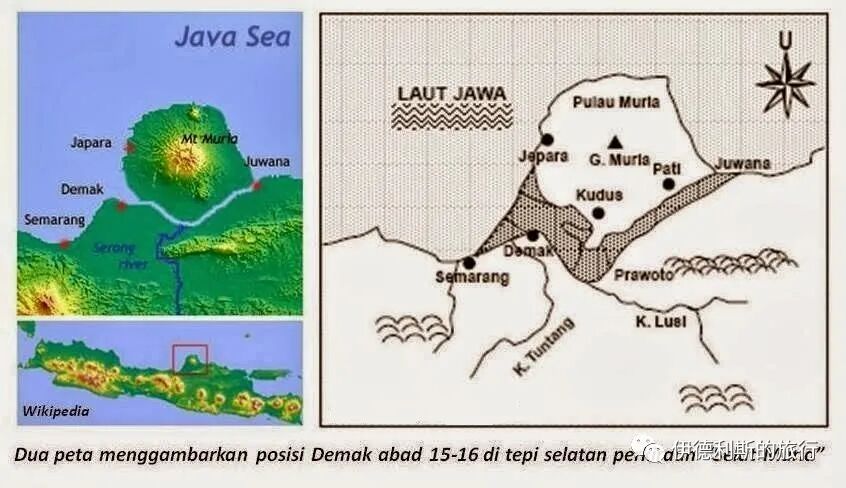
Although the area around Demak today is surrounded by rice fields, it was once a busy port. Demak was once located at the mouth of a strait that separated Java from the island of Muria; this strait disappeared in 1657, after which Muria and Java became one island. Between the 15th and 17th centuries, this strait was an important shipping route along the north coast of Java to the Spice Islands, and it connected to the Serang River, which reached deep into the rice-producing regions of Java. By importing spices from the Spice Islands and exporting rice to the Malacca Sultanate, Demak became a powerful trading port on Java.
Demak in the 15th and 16th centuries
1. Late 15th century: Independent from the Majapahit Kingdom
Since the 15th century, with the decline of the Hindu/Buddhist Majapahit Kingdom and the rise of the Islamic Malacca Sultanate, many Muslim merchants from Arabia and India chose to settle on the north coast of Java.
In 1468, the Majapahit Kingdom split during a power struggle, and Prince Kertabhumi became King Brawijaya V (reigned 1468-1478). King Brawijaya V chose to unite with Muslim merchants on the north coast of Java, granting them trading rights on the north coast of Java. This policy boosted the financial strength of the Majapahit Kingdom, but it laid the groundwork for conflict between Buddhists and Muslims in the country.
In 1475, King Brawijaya V sent his son, Raden Patah, to rule the port of Demak. Raden Patah studied under Sunan Ampel, one of the 'Wali Songo' (nine saints) of Javanese Islam, and was a devout Muslim. This year is considered the founding year of the Demak Sultanate, although Raden Patah did not call himself Sultan at that time.
In 1478, the predominantly Buddhist Majapahit army besieged the palace of King Brawijaya V. The Muslim army of Demak, led by Sunan Ngudung, went to provide reinforcements, but the king had already been killed before they arrived. After the king's death, Raden Patah declared himself the Sultan of Demak. As the legitimate son of the king, Raden Patah led the Muslim army in a 20-year war against the Majapahit Kingdom, which lasted until a temporary truce in 1498.
2. Early 16th century: Conquest of the Majapahit Kingdom
In 1511, the Malacca Sultanate was captured by the Portuguese, and the Majapahit Kingdom went to the port of Malacca to seek an alliance with the Portuguese. In order to protect the spice trade, Demak launched attacks against the Portuguese and the Majapahit. In 1513, Demak sent 100 ships to attack Malacca, but they were defeated by the Portuguese. Within the island of Java, Demak completely crushed the Majapahit Kingdom, and a large number of Majapahit royal family members, courtiers, craftsmen, and monks fled to Bali.
Raden Patah passed away in 1518, and his brother-in-law Pati Unus became the second Sultan of Demak. In 1521, Pati Unus led 375 ships to launch another attack on Malacca, but he was defeated by the Portuguese again and lost his life in the process.
In 1522, Raden Trenggana, the brother-in-law of Pati Unus, was crowned Sultan by the Javanese Sufi master Sunan Gunungjati. Under the rule of Sultan Trenggana, the Demak Sultanate expanded rapidly across Java, and he is also known as the most powerful ruler of Demak.
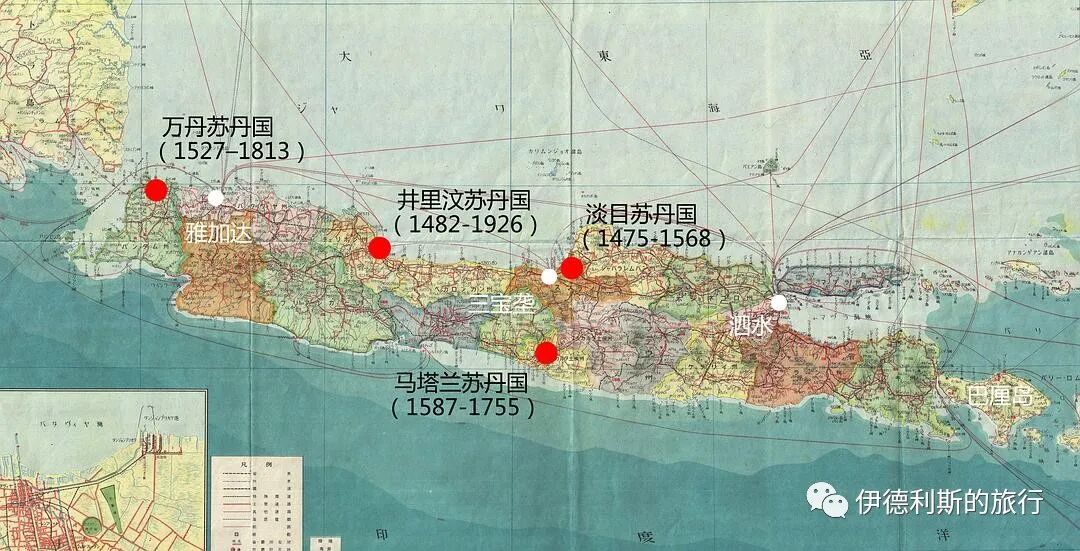
In 1522, in order to control the pepper trade, the Portuguese chose to form an alliance with the Hindu Sunda Kingdom in western Java. The Demak Sultanate formed an alliance with the Cirebon Sultanate, another Muslim state in central Java, to oppose the Portuguese-Sunda alliance. Because the Portuguese did not send troops to assist the Sunda Kingdom in time, the joint Demak-Cirebon forces seized the opportunity to capture the important Sunda Kingdom port of Sunda Kalapa and renamed it Jakarta. In 1527, the joint Demak-Cirebon forces captured another important seaport of the Sunda Kingdom, Banten, and the Cirebon Sultan Prince Hasanudin subsequently established the Banten Sultanate there.
In 1527, the Sultanate of Demak completely destroyed the once immensely powerful Majapahit Empire, razed the last capital of Majapahit to the ground, and brought a large amount of treasure back to Demak.
At its peak, the Demak Sultanate controlled all the trading ports on the north coast of Java and gained rule over the ports of Jambi and Palembang in eastern Sumatra, making it a powerful maritime state at that time.
3. Mid-16th century: Final fall of the kingdom
In 1548, Sultan Trenggana died in battle in East Java, and his son Sunan Mukmin succeeded him, but was immediately killed by his cousin Arya Penangsang. Arya Penangsang faced opposition from ministers due to his poor character and was eventually killed in 1568 by Kyai Gedhe Pamanahan, a subordinate sent by the minister Hadiwijaya, marking the end of the Demak Sultanate. Hadiwijaya moved all the wealth of the Demak Sultanate court and established the short-lived Pajang Kingdom.
As a hero who helped bring down the Demak Sultanate, Kyai Gedhe Pamanahan was granted a forest that would later be called Kotagede. He and his adopted son, Danang Sutawijaya, established the Mataram Sultanate in Kotagede, which became the most powerful Islamic state on the island of Java.
The four sultanates established on Java in the 15th and 16th centuries
Demak Great Mosque: 1479
The Great Mosque of Demak (Masjid Agung Demak) is said to have been built in 1479 by Raden Patah, the first Sultan of Demak, and Sunan Kalijaga, one of the 'Nine Saints' (Wali Songo) of Javanese Islam. Sunan Ampel, one of the 'Nine Saints', served as the imam of this mosque for a long time.
19th century
The 1920s and 1930s
The Great Mosque of Demak is a typical traditional Javanese mosque, with its main structure consisting of a prayer hall and a front porch. The pyramid-shaped multi-tiered roof of the prayer hall is called Tajug, which is very similar to the Hindu pagodas of Bali. This architectural structure originated from Indian and Chinese cultures and appeared before Islam entered Java; it is the result of the fusion of traditional Indonesian Islam and local culture. The decoration at the very top of the roof is called Mustoko or Memolo. The original Mustoko was made of clay, but it was replaced with metal during later restorations.
(Optional) Image description
Delete
The front porch, Serambi, is located in front of the main prayer hall and is connected to it. The front porch is mainly used for shade and shelter from the rain, and people also pray there during Jumu'ah prayers.
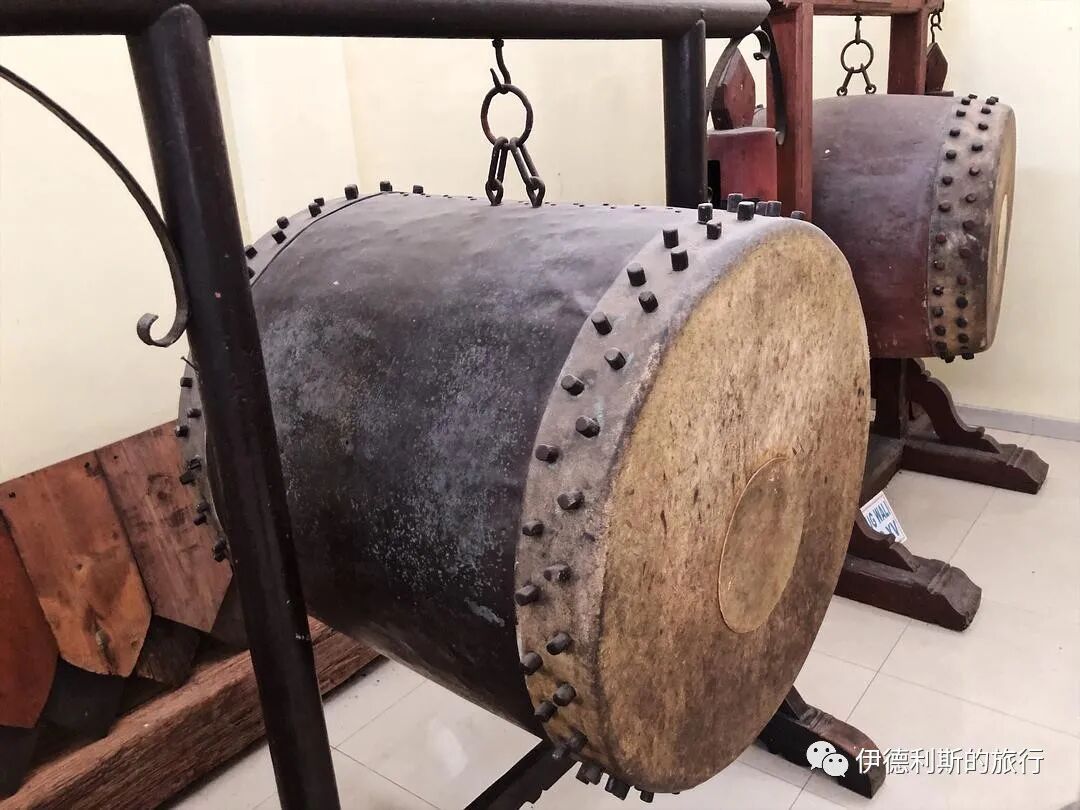
Inside the front porch is a Bedug drum used for the call to prayer, which is still used every Friday for Jumu'ah, during Ramadan, and on major holidays.
The walls of the mosque's main prayer hall are decorated with tiles that were specially ordered from Vietnam.
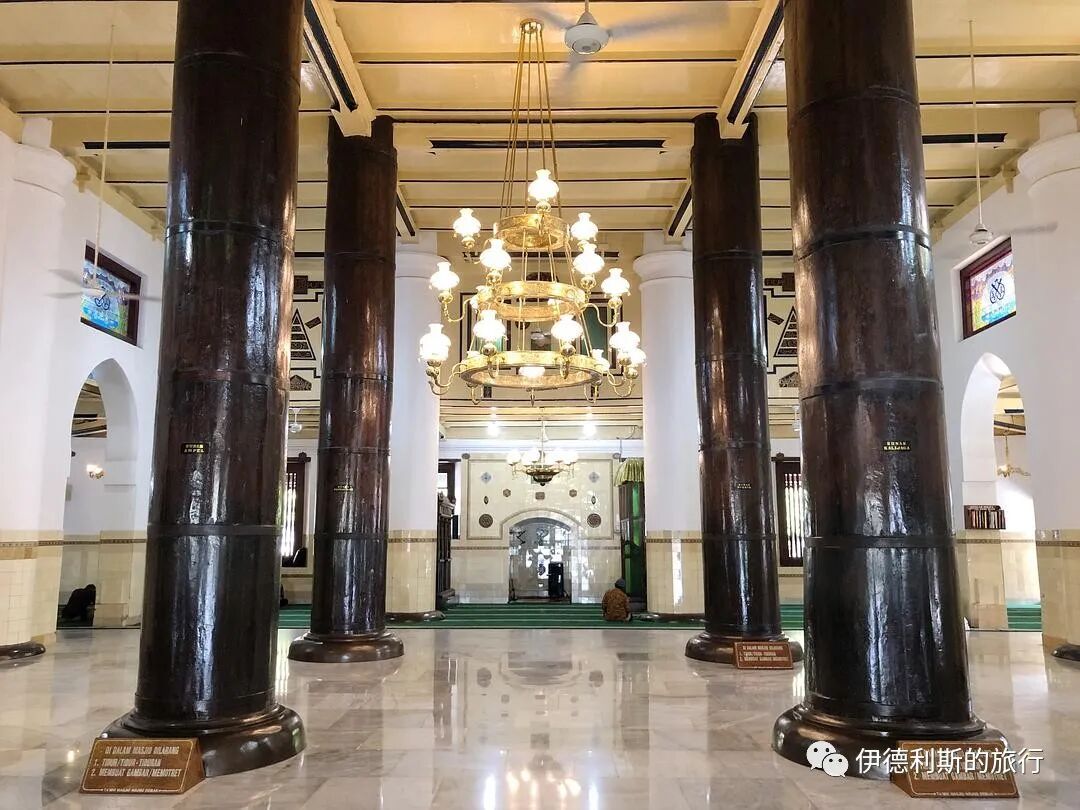
The mosque does not use walls for support, but is instead held up by four pillars connected to the highest roof. These four pillars are called Soko Guru, and each pillar is connected to the foundation by a stone base called Umpak; these bases prevent the wooden pillars from absorbing groundwater and also act as shock absorbers during earthquakes.
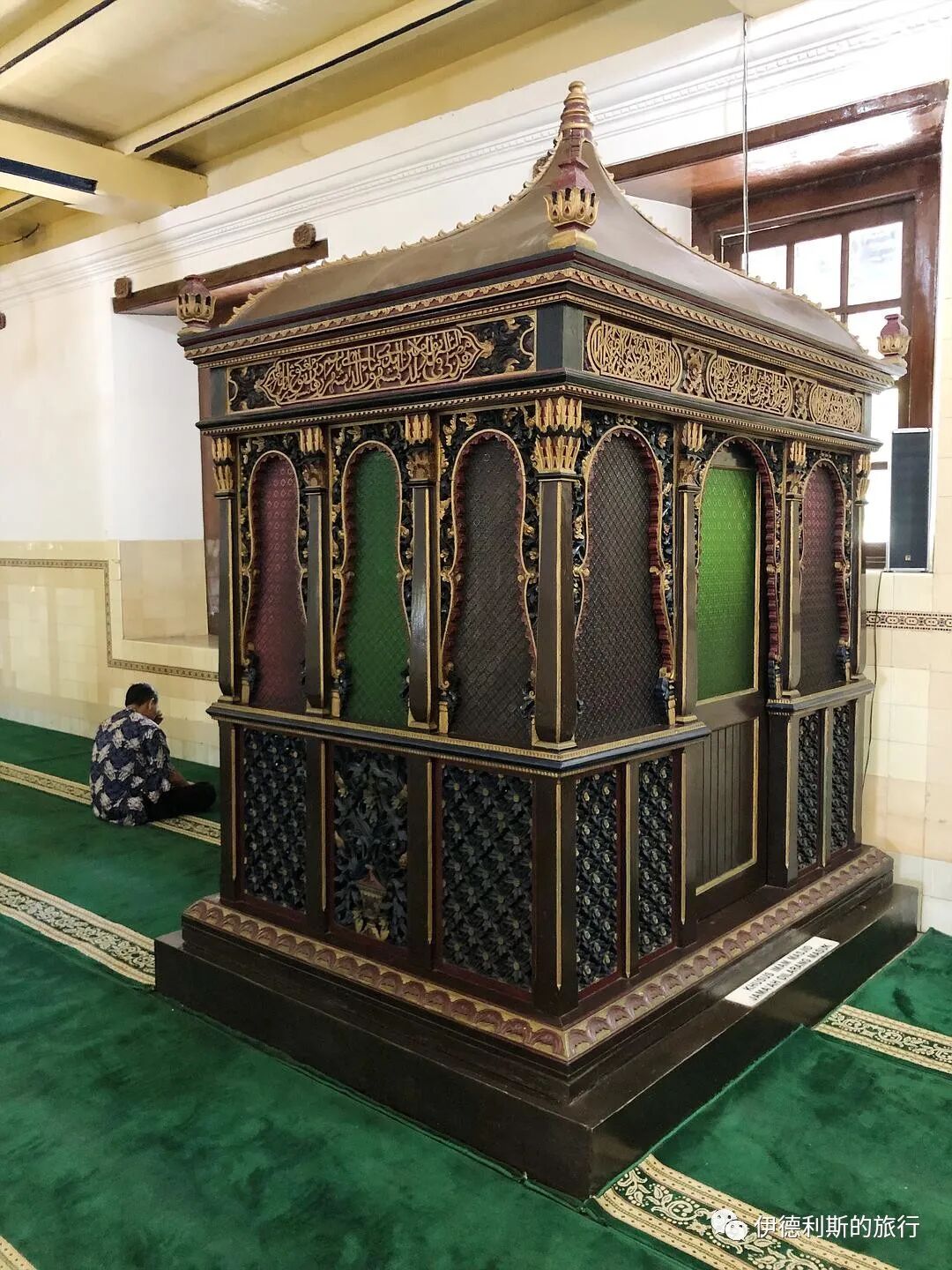
On the north side of the mihrab niche in the main prayer hall stands the minbar for sermons, which is in the style of a traditional Javanese carved wooden throne.
On the south side of the mihrab, there is a structure called Kholwat or Maksuroh, which is a place for the Imam and other important figures to pray, and the general public is not allowed to enter.
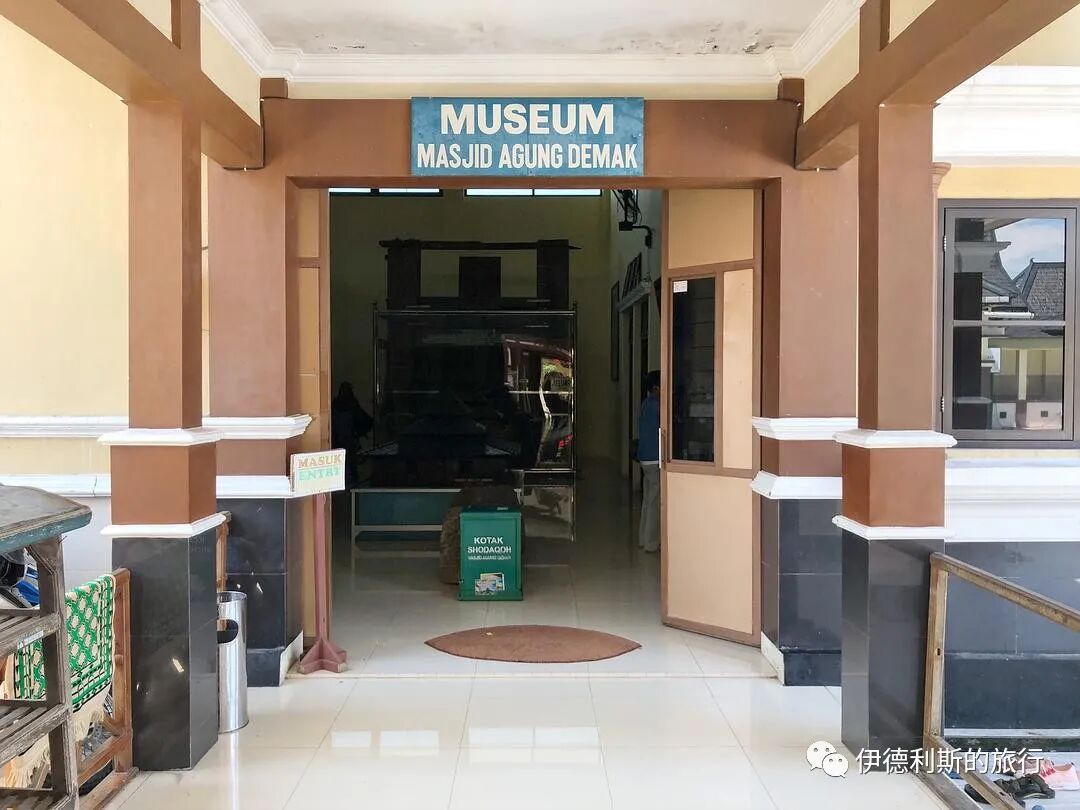
To the north of the mosque is a small museum displaying the original architectural components of the mosque.
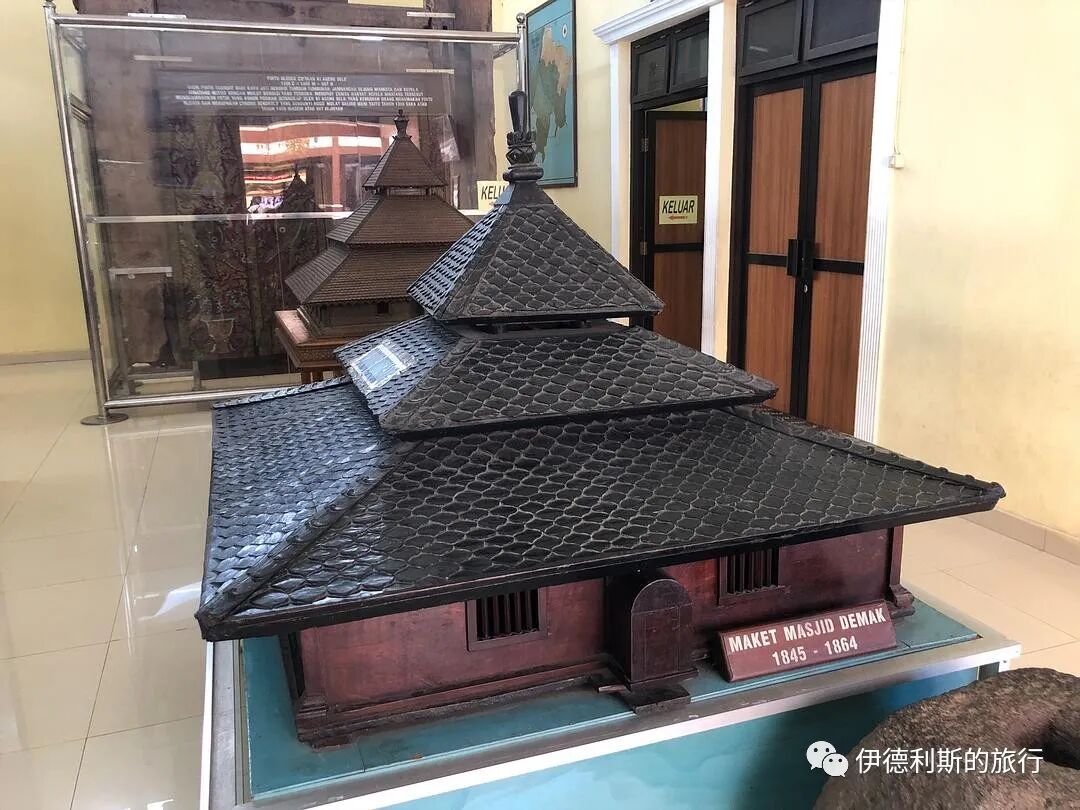
A 19th-century style model of the mosque
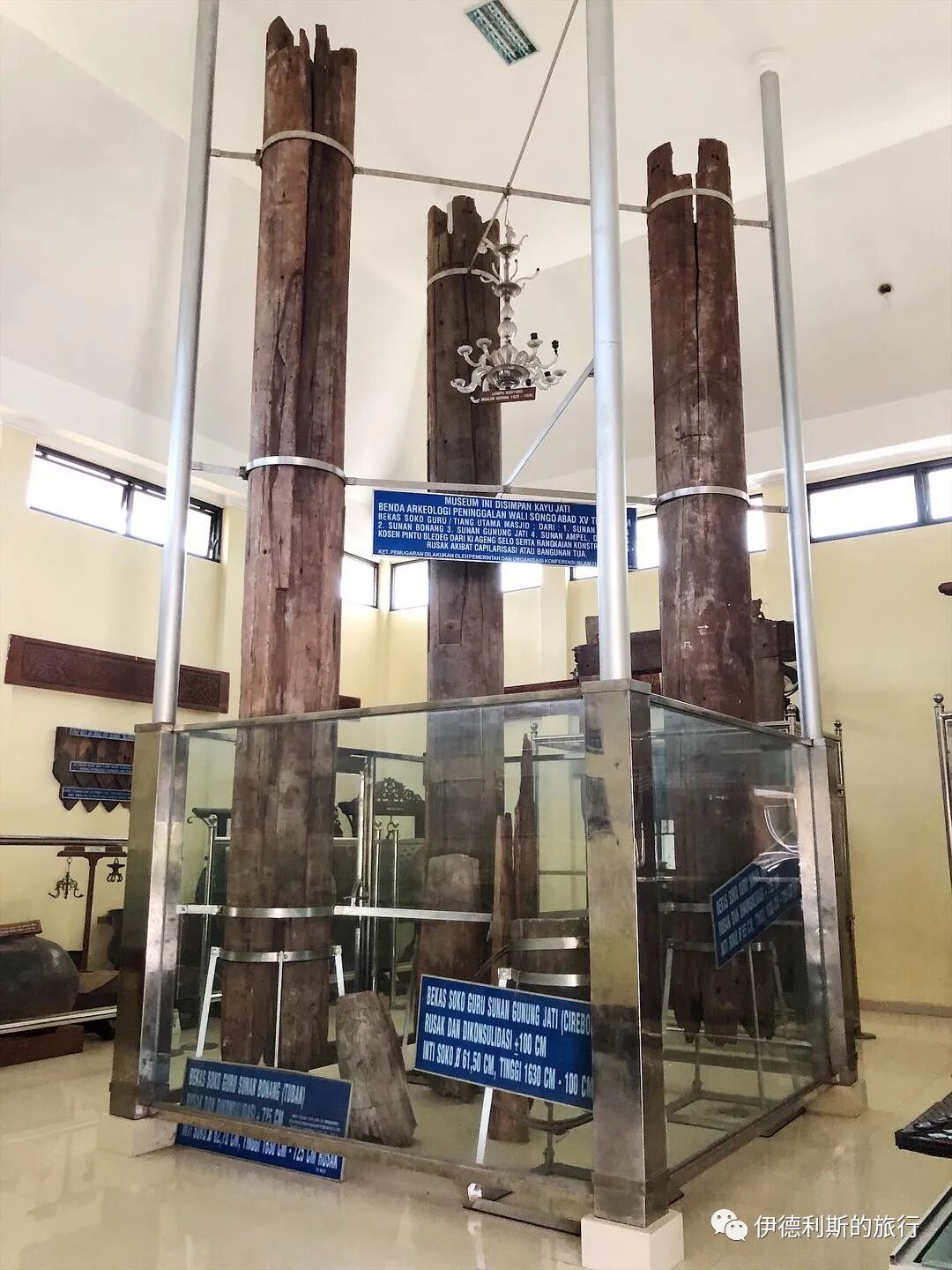
The mosque's four main wooden pillars, Soko Guru, are said to have been made by four Javanese Islamic saints: Sunan Bonang, Sunan Gunungjati, Sunan Ampel, and Sunan Kalijaga.
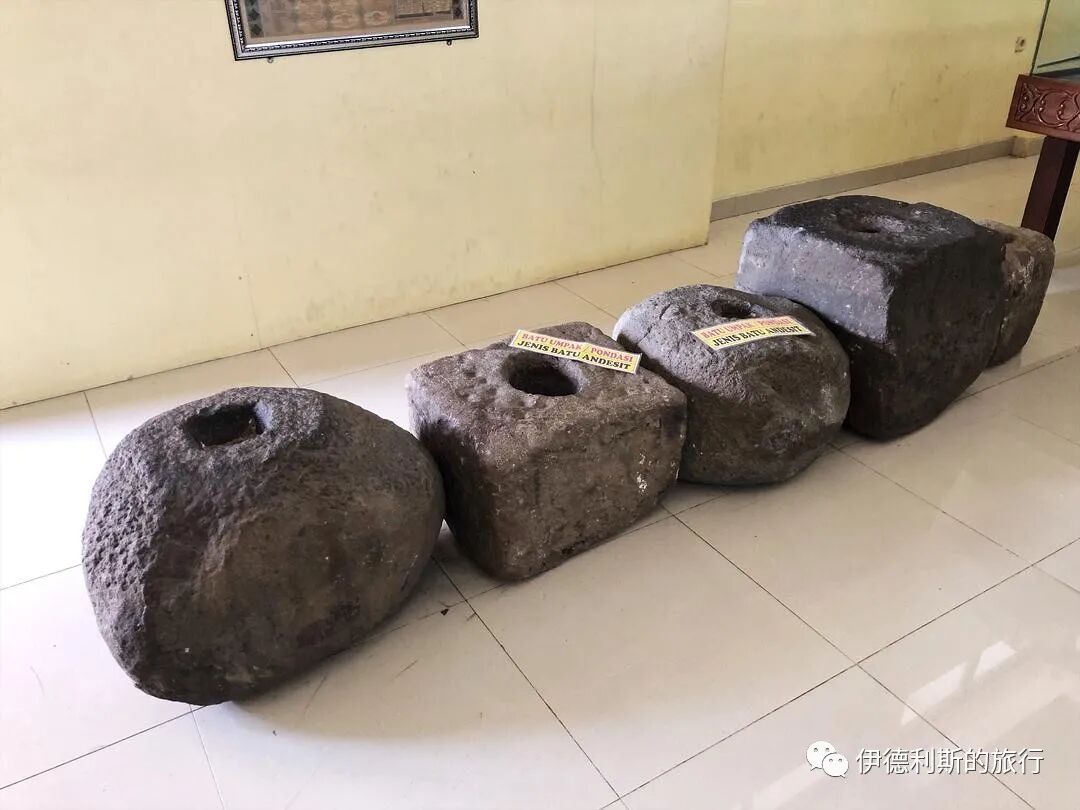
The stone column bases, known as Umpak, that connect the wooden pillars were brought from the Majapahit Kingdom, because Demak was still a swampy area at the time and lacked stone.
The Bledeg Gate, made in 1466, is said to have been crafted from teak wood by Ki Ageng Selo.
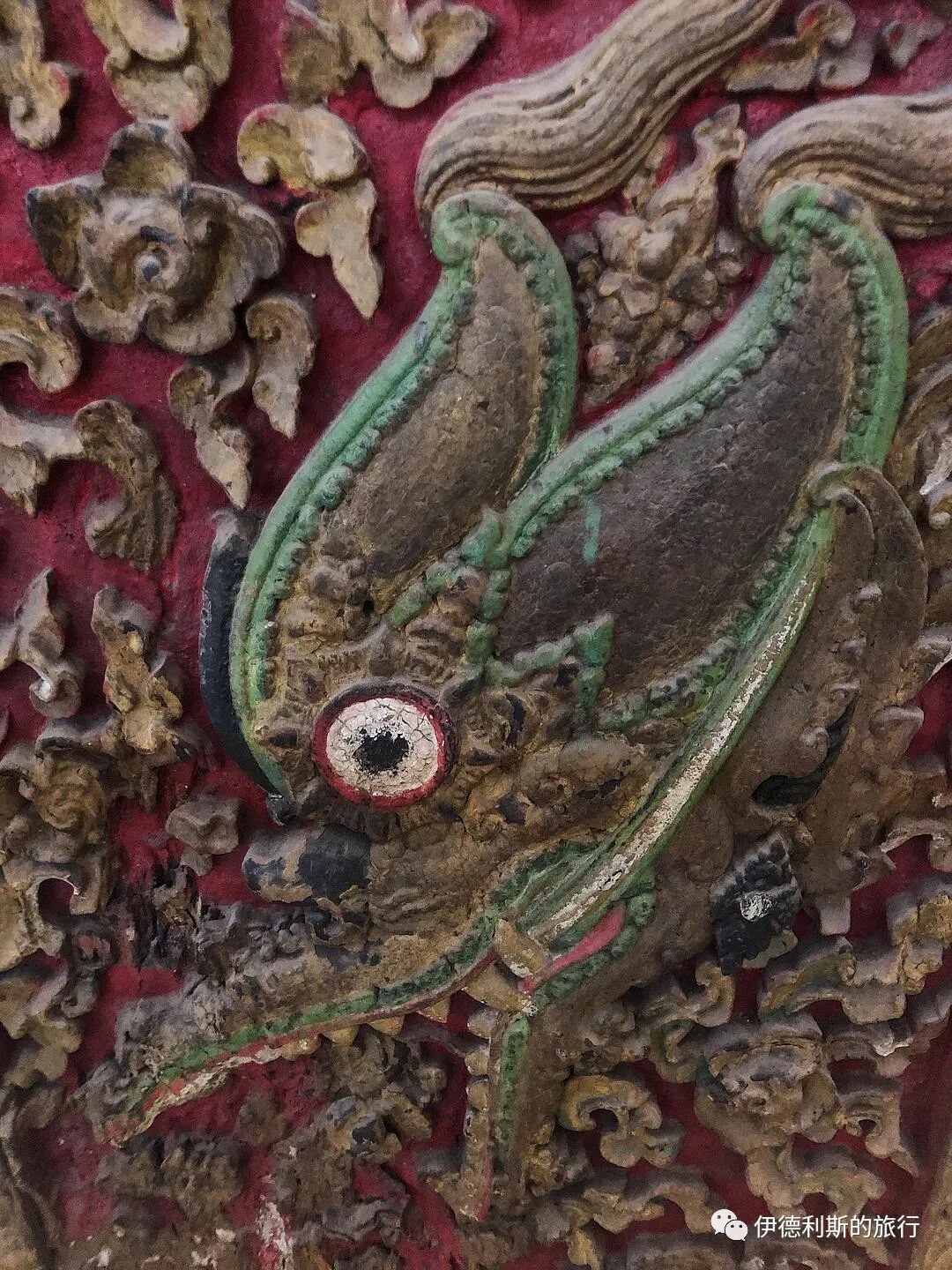
The monster with its mouth open above is said to be a captured bolt of lightning, an image that may have originated from the Naga, the serpent deity in Hindu and Buddhist culture.
The 15th-century Bedug drum
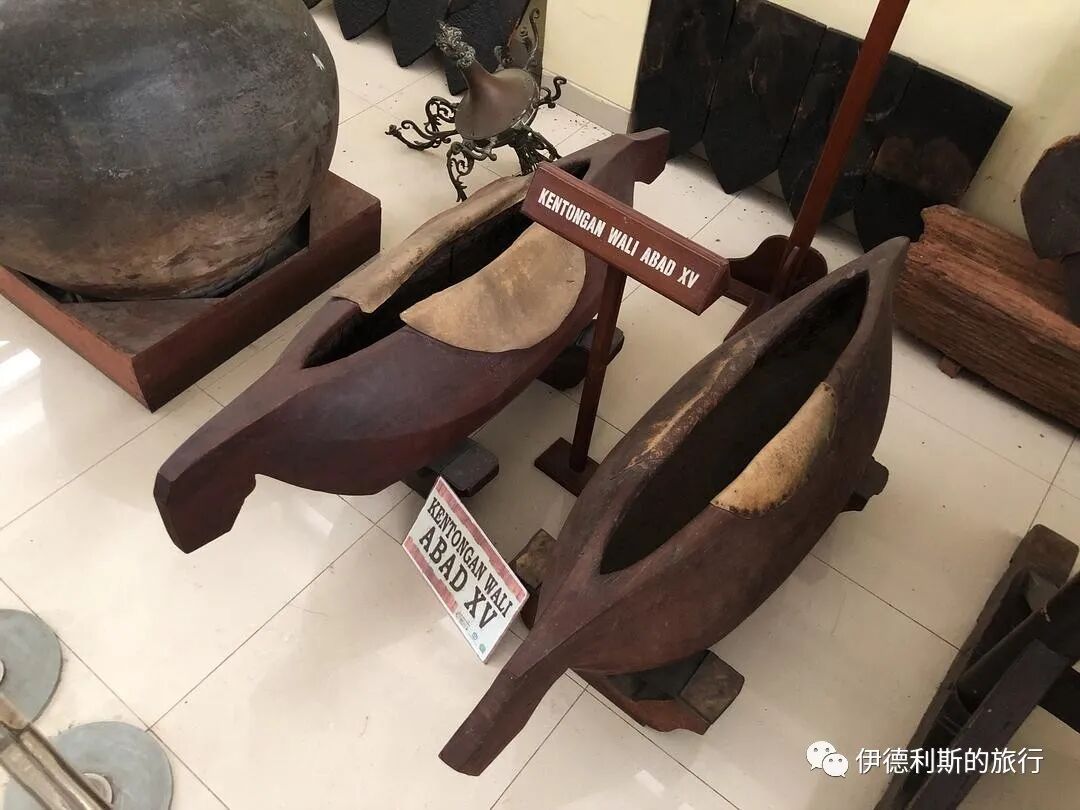
A 15th-century Kentongan. The Kentongan is an ancient Indonesian communication tool, and legend has it that it was brought by Zheng He. The Kentongan is usually made of bamboo or teak wood with a hole in the middle. Tapping the Kentongan with different rhythms can represent different signals, serving the purpose of transmitting information over long distances.
Tomb of Raden Patah: 1518
The backyard of the Great Mosque of Demak contains the graves of Raden Patah, the founder of the Demak Sultanate, and the second sultan, Pati Unus.
The gate of the Sultan's tomb from 1710 is now on display in the Demak Great Mosque museum.
Leaving the Great Mosque of Demak, we headed to the shrine of Sunan Kalijaga in the southeast of the city.
Sunan Kalijaga Tomb: 1550
Sunan Kalijaga is one of the nine saints (Wali Songo) of Islam in Java, and he played a significant role in the spread of Islam across Java.
When Sunan Kalijaga was spreading Da'wah, he used local Javanese culture and art as a medium to gradually integrate Islam into Javanese traditions and customs, which played a key role in the formation of traditional Javanese Islamic culture.
When preaching, Sunan Kalijaga was adept at utilizing art forms such as wayang shadow puppetry, traditional gamelan music, and carving, and he focused on promoting the traditional Javanese Muslim attire Baju Takwa, the Sekaten festival, and the Grebeg Maulud procession.
Legend has it that Sunan Kalijaga lived to be 100 years old, passing away in 1550. During his lifetime, he witnessed the fall of the Majapahit Kingdom and the establishment of the Demak, Cirebon, and Banten Sultanates. He eventually passed away in Demak and was buried southeast of the city.
Today, the Sunan Kalijaga shrine has become one of the most important Islamic holy sites in Java, visited by hundreds and thousands of people every day.
I caught the Jumu'ah prayer at the Sunan Kalijaga Mosque and saw the scene of the call to prayer being made using the traditional Bedug drum. After the Jumu'ah prayer, everyone received a popsicle and a snack, and everyone ate them happily.
Next to the shrine of Sunan Kalijaga is a large bazaar, where many stalls are selling T-shirts and pictures printed with the image of the saint Sunan Kalijaga. I bought pictures of the "Nine Saints" of Javanese Islam and the saint Sunan Kalijaga. Saint Sunan Kalijaga is the only one among the "Nine Saints" who wears traditional Javanese clothing, which also reflects his characteristic of using traditional Javanese culture as a medium when preaching.
After leaving the shrine, I took a Grab to another city, Kudus. The driver who accepted the order was the brother I had just prayed Jumu'ah with; he was very excited to take a selfie with me, and his mother was in the passenger seat. view all
Summary: This travel note introduces Demak, the Earliest Sultanate in Java. Demak is now a small town a one-hour drive from Semarang, the capital of Central Java province in Indonesia, but in the 15th and 16th centuries, it was the most important city on the north coast of Java. It is useful for readers interested in Demak Sultanate, Java Islam, Muslim Heritage.
Demak is now a small town a one-hour drive from Semarang, the capital of Central Java province in Indonesia, but in the 15th and 16th centuries, it was the most important city on the north coast of Java. The Demak Sultanate overthrew the powerful Majapahit Kingdom in the early 16th century and became an important trading port on Java at that time. Today, the most important early mosque and the tombs of the sultans of Java are still preserved here.
On the morning of May 3, 2019, after having breakfast at the hotel in Semarang, I used the Grab app on my phone to call a car directly to the Great Mosque of Demak. The one-hour ride cost 50 RMB, and the distance was about the same as from the Second Ring Road in Beijing to Tongzhou.
The rise and fall of the Sultanate of Demak
Although the area around Demak today is surrounded by rice fields, it was once a busy port. Demak was once located at the mouth of a strait that separated Java from the island of Muria; this strait disappeared in 1657, after which Muria and Java became one island. Between the 15th and 17th centuries, this strait was an important shipping route along the north coast of Java to the Spice Islands, and it connected to the Serang River, which reached deep into the rice-producing regions of Java. By importing spices from the Spice Islands and exporting rice to the Malacca Sultanate, Demak became a powerful trading port on Java.
Demak in the 15th and 16th centuries
1. Late 15th century: Independent from the Majapahit Kingdom
Since the 15th century, with the decline of the Hindu/Buddhist Majapahit Kingdom and the rise of the Islamic Malacca Sultanate, many Muslim merchants from Arabia and India chose to settle on the north coast of Java.
In 1468, the Majapahit Kingdom split during a power struggle, and Prince Kertabhumi became King Brawijaya V (reigned 1468-1478). King Brawijaya V chose to unite with Muslim merchants on the north coast of Java, granting them trading rights on the north coast of Java. This policy boosted the financial strength of the Majapahit Kingdom, but it laid the groundwork for conflict between Buddhists and Muslims in the country.
In 1475, King Brawijaya V sent his son, Raden Patah, to rule the port of Demak. Raden Patah studied under Sunan Ampel, one of the 'Wali Songo' (nine saints) of Javanese Islam, and was a devout Muslim. This year is considered the founding year of the Demak Sultanate, although Raden Patah did not call himself Sultan at that time.
In 1478, the predominantly Buddhist Majapahit army besieged the palace of King Brawijaya V. The Muslim army of Demak, led by Sunan Ngudung, went to provide reinforcements, but the king had already been killed before they arrived. After the king's death, Raden Patah declared himself the Sultan of Demak. As the legitimate son of the king, Raden Patah led the Muslim army in a 20-year war against the Majapahit Kingdom, which lasted until a temporary truce in 1498.
2. Early 16th century: Conquest of the Majapahit Kingdom
In 1511, the Malacca Sultanate was captured by the Portuguese, and the Majapahit Kingdom went to the port of Malacca to seek an alliance with the Portuguese. In order to protect the spice trade, Demak launched attacks against the Portuguese and the Majapahit. In 1513, Demak sent 100 ships to attack Malacca, but they were defeated by the Portuguese. Within the island of Java, Demak completely crushed the Majapahit Kingdom, and a large number of Majapahit royal family members, courtiers, craftsmen, and monks fled to Bali.
Raden Patah passed away in 1518, and his brother-in-law Pati Unus became the second Sultan of Demak. In 1521, Pati Unus led 375 ships to launch another attack on Malacca, but he was defeated by the Portuguese again and lost his life in the process.
In 1522, Raden Trenggana, the brother-in-law of Pati Unus, was crowned Sultan by the Javanese Sufi master Sunan Gunungjati. Under the rule of Sultan Trenggana, the Demak Sultanate expanded rapidly across Java, and he is also known as the most powerful ruler of Demak.
In 1522, in order to control the pepper trade, the Portuguese chose to form an alliance with the Hindu Sunda Kingdom in western Java. The Demak Sultanate formed an alliance with the Cirebon Sultanate, another Muslim state in central Java, to oppose the Portuguese-Sunda alliance. Because the Portuguese did not send troops to assist the Sunda Kingdom in time, the joint Demak-Cirebon forces seized the opportunity to capture the important Sunda Kingdom port of Sunda Kalapa and renamed it Jakarta. In 1527, the joint Demak-Cirebon forces captured another important seaport of the Sunda Kingdom, Banten, and the Cirebon Sultan Prince Hasanudin subsequently established the Banten Sultanate there.
In 1527, the Sultanate of Demak completely destroyed the once immensely powerful Majapahit Empire, razed the last capital of Majapahit to the ground, and brought a large amount of treasure back to Demak.
At its peak, the Demak Sultanate controlled all the trading ports on the north coast of Java and gained rule over the ports of Jambi and Palembang in eastern Sumatra, making it a powerful maritime state at that time.
3. Mid-16th century: Final fall of the kingdom
In 1548, Sultan Trenggana died in battle in East Java, and his son Sunan Mukmin succeeded him, but was immediately killed by his cousin Arya Penangsang. Arya Penangsang faced opposition from ministers due to his poor character and was eventually killed in 1568 by Kyai Gedhe Pamanahan, a subordinate sent by the minister Hadiwijaya, marking the end of the Demak Sultanate. Hadiwijaya moved all the wealth of the Demak Sultanate court and established the short-lived Pajang Kingdom.
As a hero who helped bring down the Demak Sultanate, Kyai Gedhe Pamanahan was granted a forest that would later be called Kotagede. He and his adopted son, Danang Sutawijaya, established the Mataram Sultanate in Kotagede, which became the most powerful Islamic state on the island of Java.
The four sultanates established on Java in the 15th and 16th centuries
Demak Great Mosque: 1479
The Great Mosque of Demak (Masjid Agung Demak) is said to have been built in 1479 by Raden Patah, the first Sultan of Demak, and Sunan Kalijaga, one of the 'Nine Saints' (Wali Songo) of Javanese Islam. Sunan Ampel, one of the 'Nine Saints', served as the imam of this mosque for a long time.
19th century
The 1920s and 1930s
The Great Mosque of Demak is a typical traditional Javanese mosque, with its main structure consisting of a prayer hall and a front porch. The pyramid-shaped multi-tiered roof of the prayer hall is called Tajug, which is very similar to the Hindu pagodas of Bali. This architectural structure originated from Indian and Chinese cultures and appeared before Islam entered Java; it is the result of the fusion of traditional Indonesian Islam and local culture. The decoration at the very top of the roof is called Mustoko or Memolo. The original Mustoko was made of clay, but it was replaced with metal during later restorations.
(Optional) Image description
Delete
The front porch, Serambi, is located in front of the main prayer hall and is connected to it. The front porch is mainly used for shade and shelter from the rain, and people also pray there during Jumu'ah prayers.
Inside the front porch is a Bedug drum used for the call to prayer, which is still used every Friday for Jumu'ah, during Ramadan, and on major holidays.
The walls of the mosque's main prayer hall are decorated with tiles that were specially ordered from Vietnam.
The mosque does not use walls for support, but is instead held up by four pillars connected to the highest roof. These four pillars are called Soko Guru, and each pillar is connected to the foundation by a stone base called Umpak; these bases prevent the wooden pillars from absorbing groundwater and also act as shock absorbers during earthquakes.
On the north side of the mihrab niche in the main prayer hall stands the minbar for sermons, which is in the style of a traditional Javanese carved wooden throne.
On the south side of the mihrab, there is a structure called Kholwat or Maksuroh, which is a place for the Imam and other important figures to pray, and the general public is not allowed to enter.
To the north of the mosque is a small museum displaying the original architectural components of the mosque.
A 19th-century style model of the mosque
The mosque's four main wooden pillars, Soko Guru, are said to have been made by four Javanese Islamic saints: Sunan Bonang, Sunan Gunungjati, Sunan Ampel, and Sunan Kalijaga.
The stone column bases, known as Umpak, that connect the wooden pillars were brought from the Majapahit Kingdom, because Demak was still a swampy area at the time and lacked stone.
The Bledeg Gate, made in 1466, is said to have been crafted from teak wood by Ki Ageng Selo.
The monster with its mouth open above is said to be a captured bolt of lightning, an image that may have originated from the Naga, the serpent deity in Hindu and Buddhist culture.
The 15th-century Bedug drum
A 15th-century Kentongan. The Kentongan is an ancient Indonesian communication tool, and legend has it that it was brought by Zheng He. The Kentongan is usually made of bamboo or teak wood with a hole in the middle. Tapping the Kentongan with different rhythms can represent different signals, serving the purpose of transmitting information over long distances.
Tomb of Raden Patah: 1518
The backyard of the Great Mosque of Demak contains the graves of Raden Patah, the founder of the Demak Sultanate, and the second sultan, Pati Unus.
The gate of the Sultan's tomb from 1710 is now on display in the Demak Great Mosque museum.
Leaving the Great Mosque of Demak, we headed to the shrine of Sunan Kalijaga in the southeast of the city.
Sunan Kalijaga Tomb: 1550
Sunan Kalijaga is one of the nine saints (Wali Songo) of Islam in Java, and he played a significant role in the spread of Islam across Java.
When Sunan Kalijaga was spreading Da'wah, he used local Javanese culture and art as a medium to gradually integrate Islam into Javanese traditions and customs, which played a key role in the formation of traditional Javanese Islamic culture.
When preaching, Sunan Kalijaga was adept at utilizing art forms such as wayang shadow puppetry, traditional gamelan music, and carving, and he focused on promoting the traditional Javanese Muslim attire Baju Takwa, the Sekaten festival, and the Grebeg Maulud procession.
Legend has it that Sunan Kalijaga lived to be 100 years old, passing away in 1550. During his lifetime, he witnessed the fall of the Majapahit Kingdom and the establishment of the Demak, Cirebon, and Banten Sultanates. He eventually passed away in Demak and was buried southeast of the city.
Today, the Sunan Kalijaga shrine has become one of the most important Islamic holy sites in Java, visited by hundreds and thousands of people every day.
I caught the Jumu'ah prayer at the Sunan Kalijaga Mosque and saw the scene of the call to prayer being made using the traditional Bedug drum. After the Jumu'ah prayer, everyone received a popsicle and a snack, and everyone ate them happily.
Next to the shrine of Sunan Kalijaga is a large bazaar, where many stalls are selling T-shirts and pictures printed with the image of the saint Sunan Kalijaga. I bought pictures of the "Nine Saints" of Javanese Islam and the saint Sunan Kalijaga. Saint Sunan Kalijaga is the only one among the "Nine Saints" who wears traditional Javanese clothing, which also reflects his characteristic of using traditional Javanese culture as a medium when preaching.
After leaving the shrine, I took a Grab to another city, Kudus. The driver who accepted the order was the brother I had just prayed Jumu'ah with; he was very excited to take a selfie with me, and his mother was in the passenger seat. view all
Reposted from the web
Summary: This travel note introduces Demak, the Earliest Sultanate in Java. Demak is now a small town a one-hour drive from Semarang, the capital of Central Java province in Indonesia, but in the 15th and 16th centuries, it was the most important city on the north coast of Java. It is useful for readers interested in Demak Sultanate, Java Islam, Muslim Heritage.
Demak is now a small town a one-hour drive from Semarang, the capital of Central Java province in Indonesia, but in the 15th and 16th centuries, it was the most important city on the north coast of Java. The Demak Sultanate overthrew the powerful Majapahit Kingdom in the early 16th century and became an important trading port on Java at that time. Today, the most important early mosque and the tombs of the sultans of Java are still preserved here.
On the morning of May 3, 2019, after having breakfast at the hotel in Semarang, I used the Grab app on my phone to call a car directly to the Great Mosque of Demak. The one-hour ride cost 50 RMB, and the distance was about the same as from the Second Ring Road in Beijing to Tongzhou.
The rise and fall of the Sultanate of Demak
Although the area around Demak today is surrounded by rice fields, it was once a busy port. Demak was once located at the mouth of a strait that separated Java from the island of Muria; this strait disappeared in 1657, after which Muria and Java became one island. Between the 15th and 17th centuries, this strait was an important shipping route along the north coast of Java to the Spice Islands, and it connected to the Serang River, which reached deep into the rice-producing regions of Java. By importing spices from the Spice Islands and exporting rice to the Malacca Sultanate, Demak became a powerful trading port on Java.
Demak in the 15th and 16th centuries
1. Late 15th century: Independent from the Majapahit Kingdom
Since the 15th century, with the decline of the Hindu/Buddhist Majapahit Kingdom and the rise of the Islamic Malacca Sultanate, many Muslim merchants from Arabia and India chose to settle on the north coast of Java.
In 1468, the Majapahit Kingdom split during a power struggle, and Prince Kertabhumi became King Brawijaya V (reigned 1468-1478). King Brawijaya V chose to unite with Muslim merchants on the north coast of Java, granting them trading rights on the north coast of Java. This policy boosted the financial strength of the Majapahit Kingdom, but it laid the groundwork for conflict between Buddhists and Muslims in the country.
In 1475, King Brawijaya V sent his son, Raden Patah, to rule the port of Demak. Raden Patah studied under Sunan Ampel, one of the 'Wali Songo' (nine saints) of Javanese Islam, and was a devout Muslim. This year is considered the founding year of the Demak Sultanate, although Raden Patah did not call himself Sultan at that time.
In 1478, the predominantly Buddhist Majapahit army besieged the palace of King Brawijaya V. The Muslim army of Demak, led by Sunan Ngudung, went to provide reinforcements, but the king had already been killed before they arrived. After the king's death, Raden Patah declared himself the Sultan of Demak. As the legitimate son of the king, Raden Patah led the Muslim army in a 20-year war against the Majapahit Kingdom, which lasted until a temporary truce in 1498.
2. Early 16th century: Conquest of the Majapahit Kingdom
In 1511, the Malacca Sultanate was captured by the Portuguese, and the Majapahit Kingdom went to the port of Malacca to seek an alliance with the Portuguese. In order to protect the spice trade, Demak launched attacks against the Portuguese and the Majapahit. In 1513, Demak sent 100 ships to attack Malacca, but they were defeated by the Portuguese. Within the island of Java, Demak completely crushed the Majapahit Kingdom, and a large number of Majapahit royal family members, courtiers, craftsmen, and monks fled to Bali.
Raden Patah passed away in 1518, and his brother-in-law Pati Unus became the second Sultan of Demak. In 1521, Pati Unus led 375 ships to launch another attack on Malacca, but he was defeated by the Portuguese again and lost his life in the process.
In 1522, Raden Trenggana, the brother-in-law of Pati Unus, was crowned Sultan by the Javanese Sufi master Sunan Gunungjati. Under the rule of Sultan Trenggana, the Demak Sultanate expanded rapidly across Java, and he is also known as the most powerful ruler of Demak.
In 1522, in order to control the pepper trade, the Portuguese chose to form an alliance with the Hindu Sunda Kingdom in western Java. The Demak Sultanate formed an alliance with the Cirebon Sultanate, another Muslim state in central Java, to oppose the Portuguese-Sunda alliance. Because the Portuguese did not send troops to assist the Sunda Kingdom in time, the joint Demak-Cirebon forces seized the opportunity to capture the important Sunda Kingdom port of Sunda Kalapa and renamed it Jakarta. In 1527, the joint Demak-Cirebon forces captured another important seaport of the Sunda Kingdom, Banten, and the Cirebon Sultan Prince Hasanudin subsequently established the Banten Sultanate there.
In 1527, the Sultanate of Demak completely destroyed the once immensely powerful Majapahit Empire, razed the last capital of Majapahit to the ground, and brought a large amount of treasure back to Demak.
At its peak, the Demak Sultanate controlled all the trading ports on the north coast of Java and gained rule over the ports of Jambi and Palembang in eastern Sumatra, making it a powerful maritime state at that time.
3. Mid-16th century: Final fall of the kingdom
In 1548, Sultan Trenggana died in battle in East Java, and his son Sunan Mukmin succeeded him, but was immediately killed by his cousin Arya Penangsang. Arya Penangsang faced opposition from ministers due to his poor character and was eventually killed in 1568 by Kyai Gedhe Pamanahan, a subordinate sent by the minister Hadiwijaya, marking the end of the Demak Sultanate. Hadiwijaya moved all the wealth of the Demak Sultanate court and established the short-lived Pajang Kingdom.
As a hero who helped bring down the Demak Sultanate, Kyai Gedhe Pamanahan was granted a forest that would later be called Kotagede. He and his adopted son, Danang Sutawijaya, established the Mataram Sultanate in Kotagede, which became the most powerful Islamic state on the island of Java.
The four sultanates established on Java in the 15th and 16th centuries
Demak Great Mosque: 1479
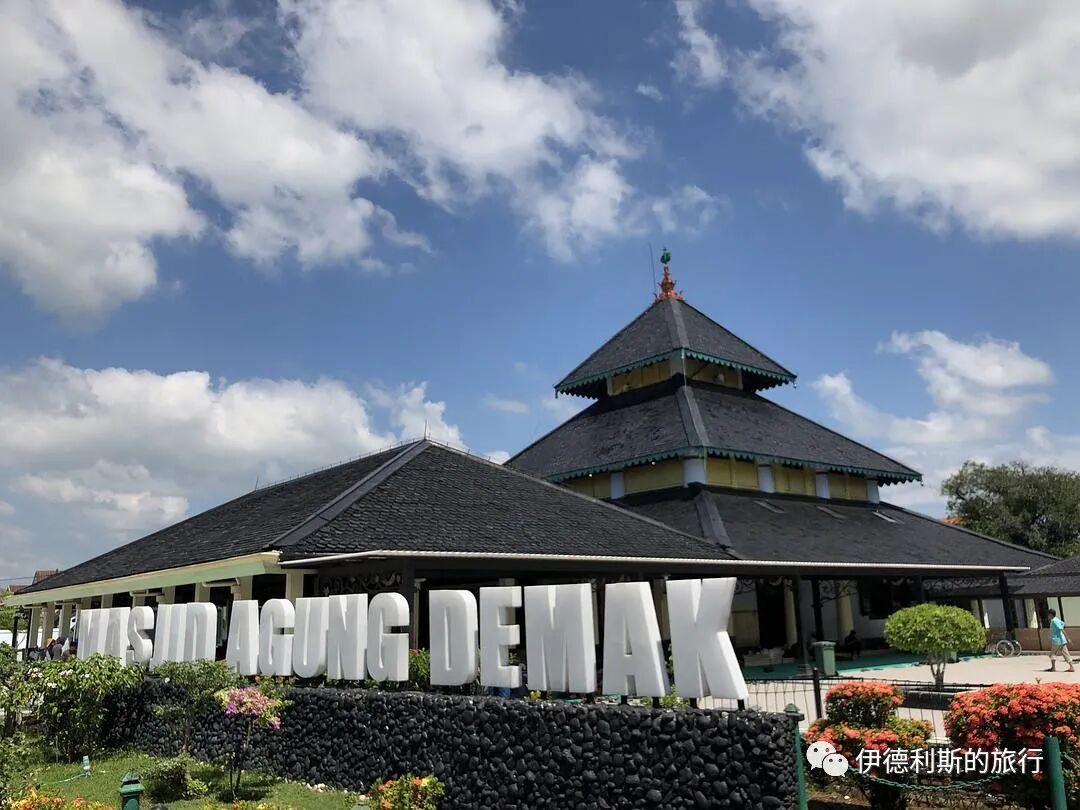
The Great Mosque of Demak (Masjid Agung Demak) is said to have been built in 1479 by Raden Patah, the first Sultan of Demak, and Sunan Kalijaga, one of the 'Nine Saints' (Wali Songo) of Javanese Islam. Sunan Ampel, one of the 'Nine Saints', served as the imam of this mosque for a long time.
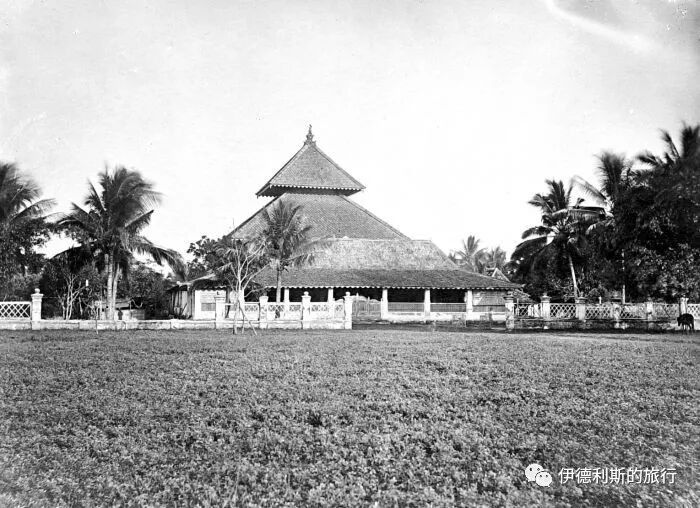
19th century
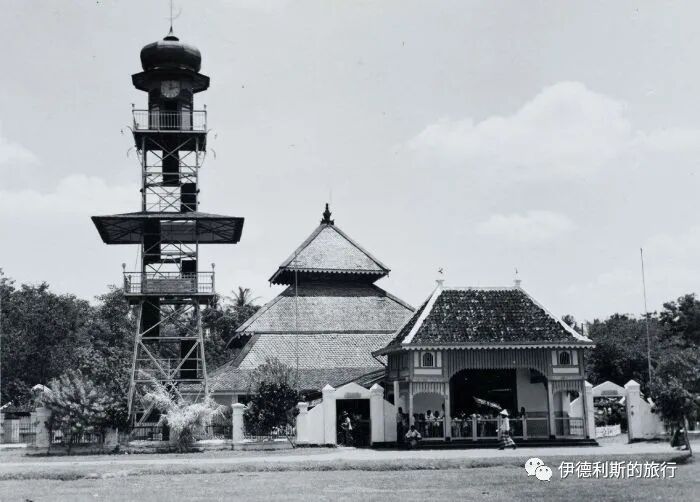
The 1920s and 1930s
The Great Mosque of Demak is a typical traditional Javanese mosque, with its main structure consisting of a prayer hall and a front porch. The pyramid-shaped multi-tiered roof of the prayer hall is called Tajug, which is very similar to the Hindu pagodas of Bali. This architectural structure originated from Indian and Chinese cultures and appeared before Islam entered Java; it is the result of the fusion of traditional Indonesian Islam and local culture. The decoration at the very top of the roof is called Mustoko or Memolo. The original Mustoko was made of clay, but it was replaced with metal during later restorations.
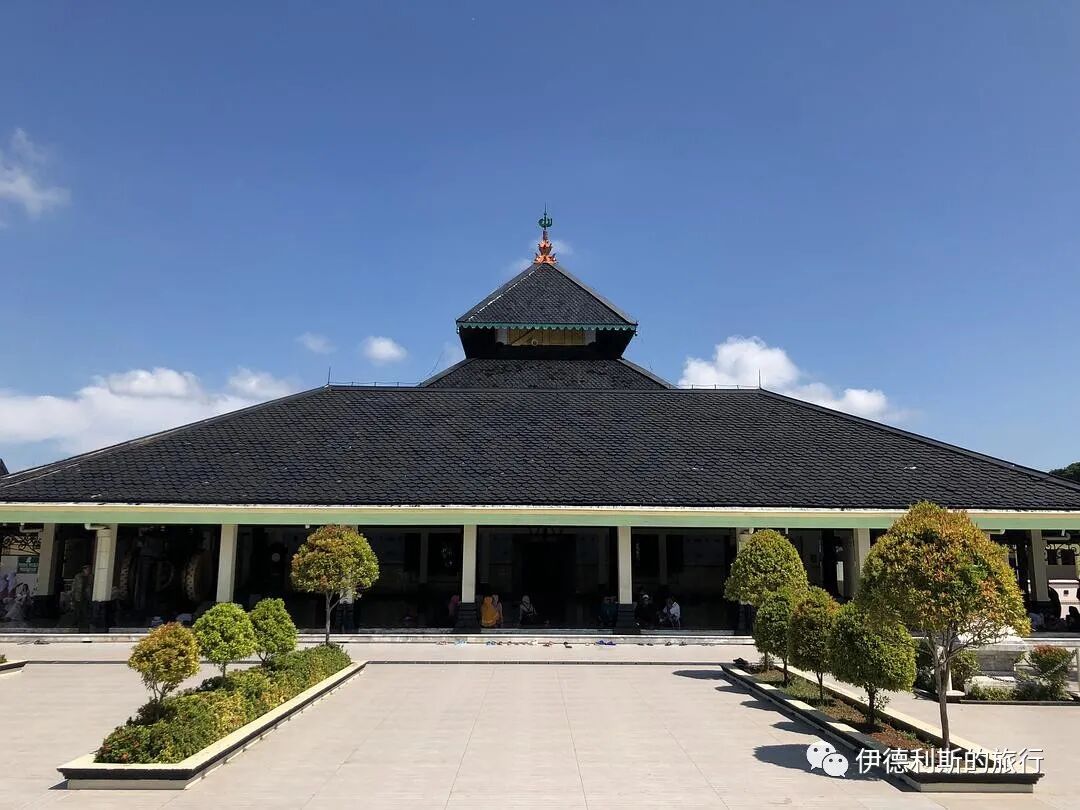
(Optional) Image description
Delete
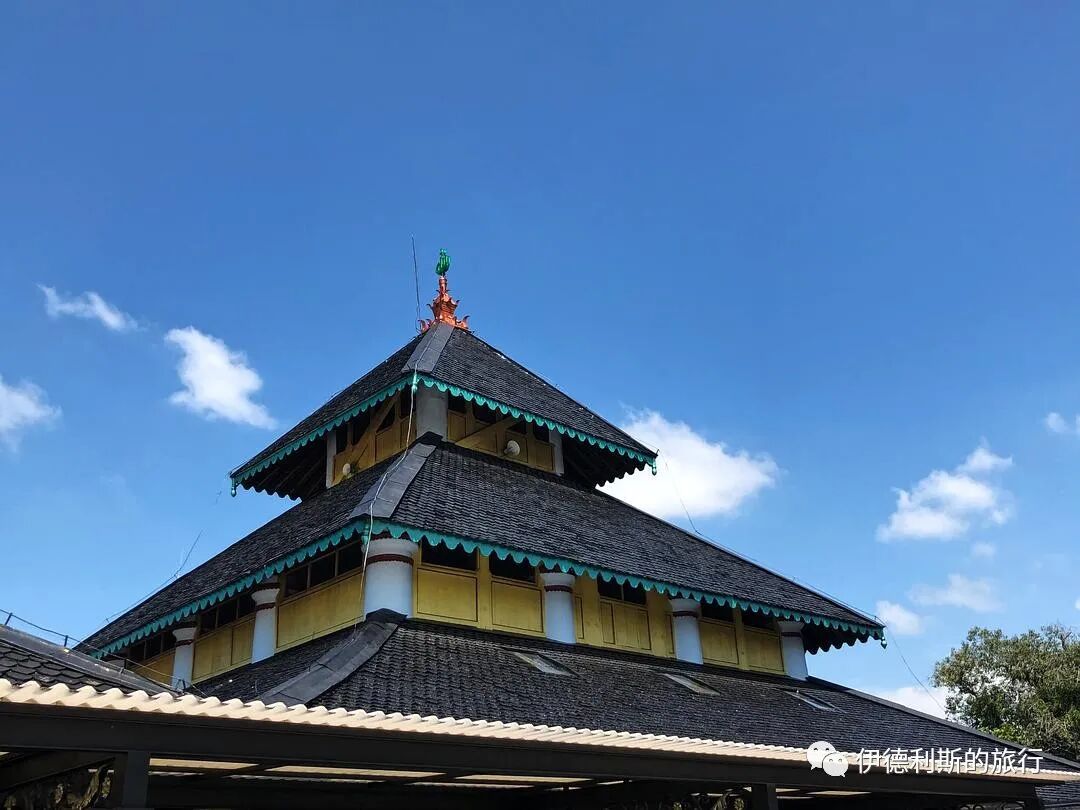
The front porch, Serambi, is located in front of the main prayer hall and is connected to it. The front porch is mainly used for shade and shelter from the rain, and people also pray there during Jumu'ah prayers.
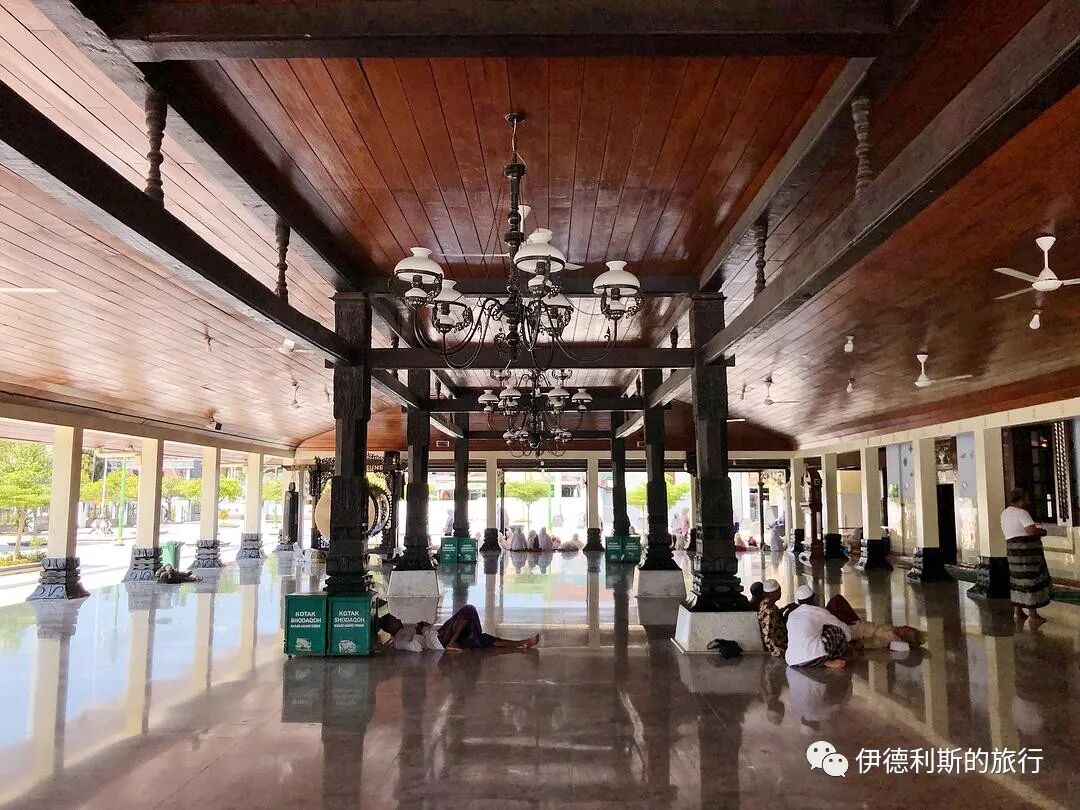
Inside the front porch is a Bedug drum used for the call to prayer, which is still used every Friday for Jumu'ah, during Ramadan, and on major holidays.
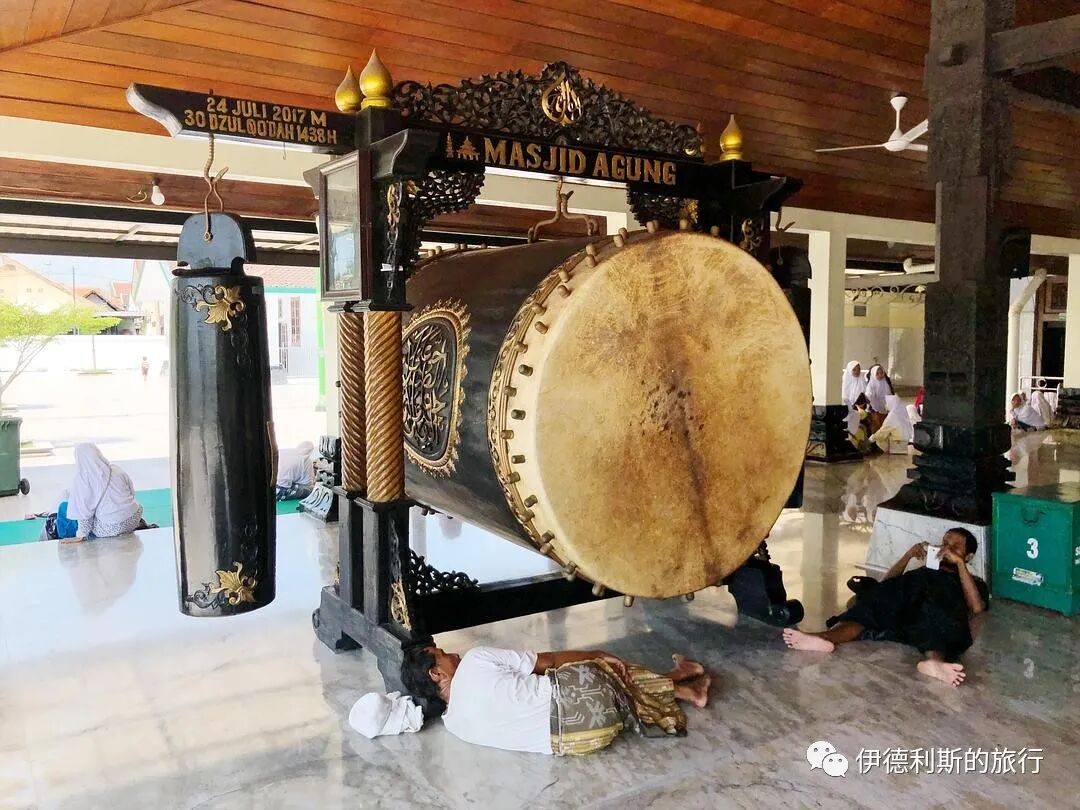
The walls of the mosque's main prayer hall are decorated with tiles that were specially ordered from Vietnam.
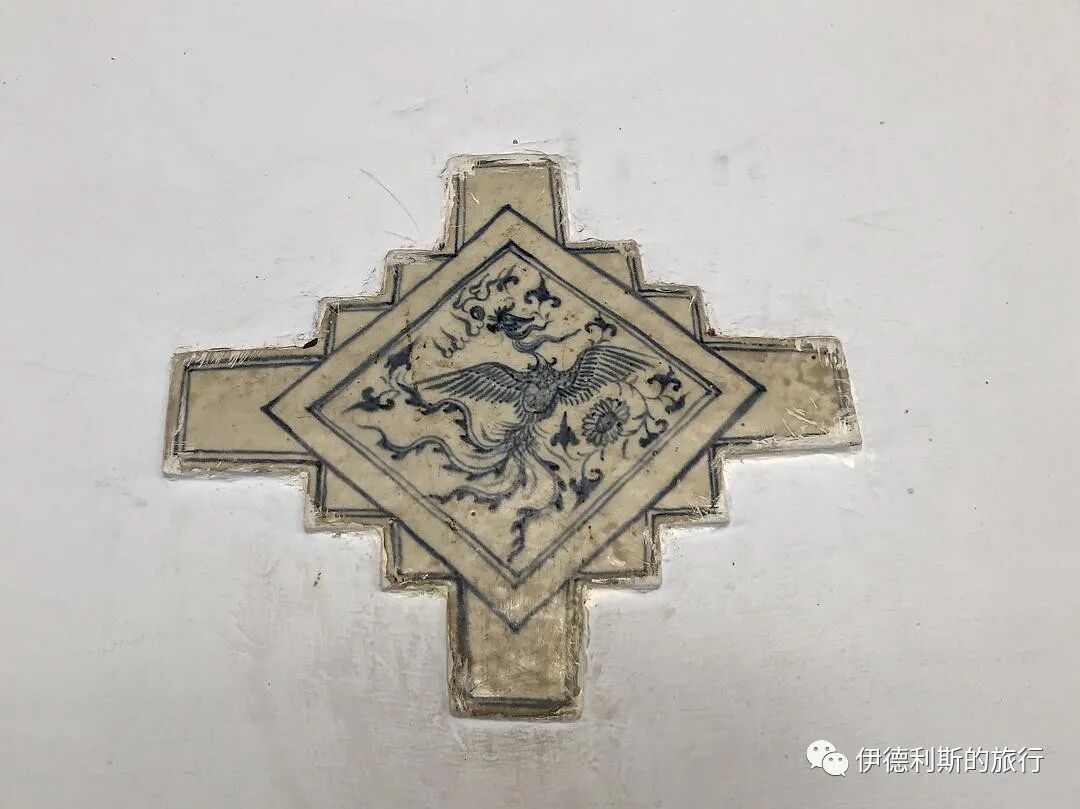
The mosque does not use walls for support, but is instead held up by four pillars connected to the highest roof. These four pillars are called Soko Guru, and each pillar is connected to the foundation by a stone base called Umpak; these bases prevent the wooden pillars from absorbing groundwater and also act as shock absorbers during earthquakes.
On the north side of the mihrab niche in the main prayer hall stands the minbar for sermons, which is in the style of a traditional Javanese carved wooden throne.
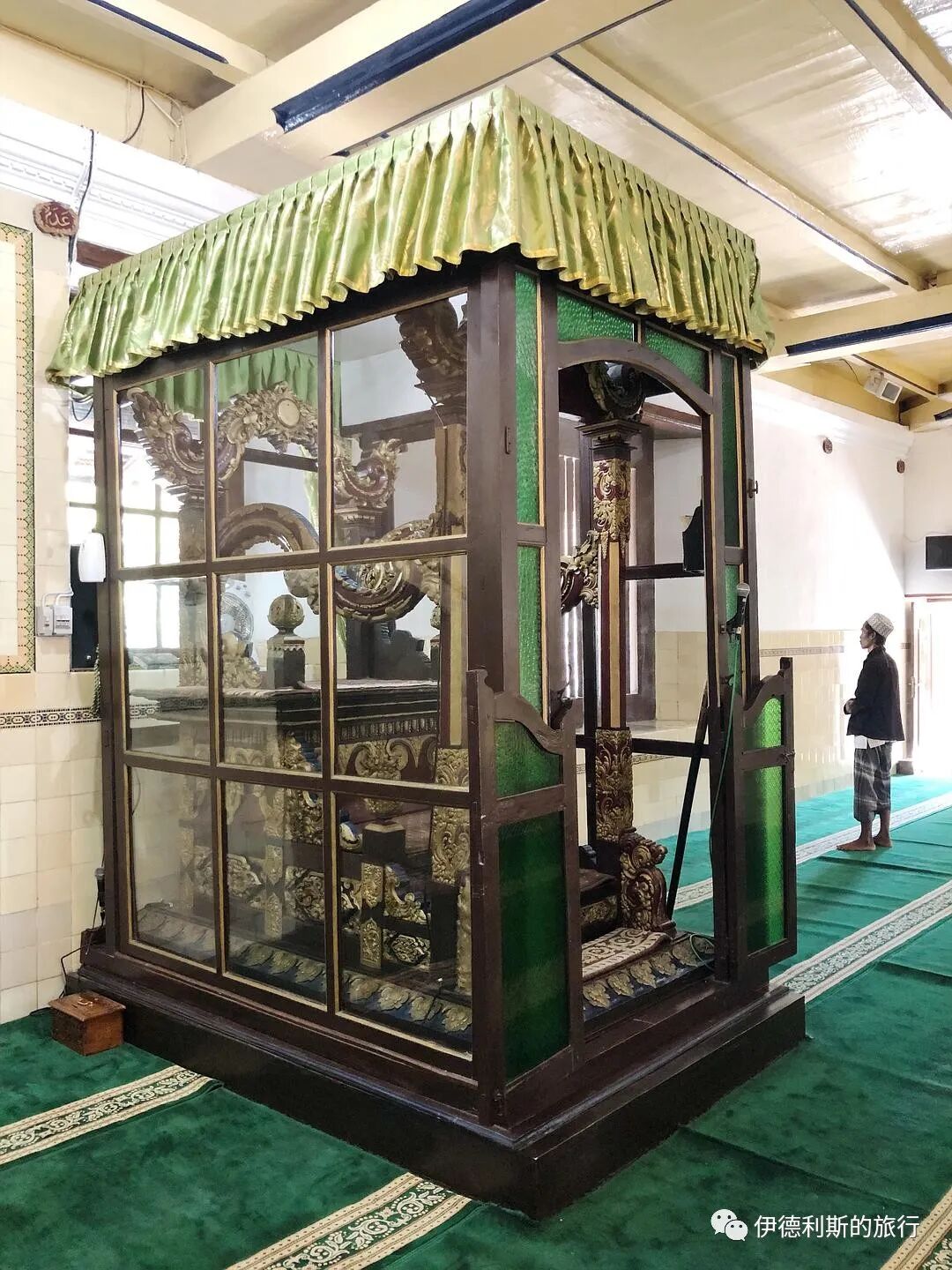
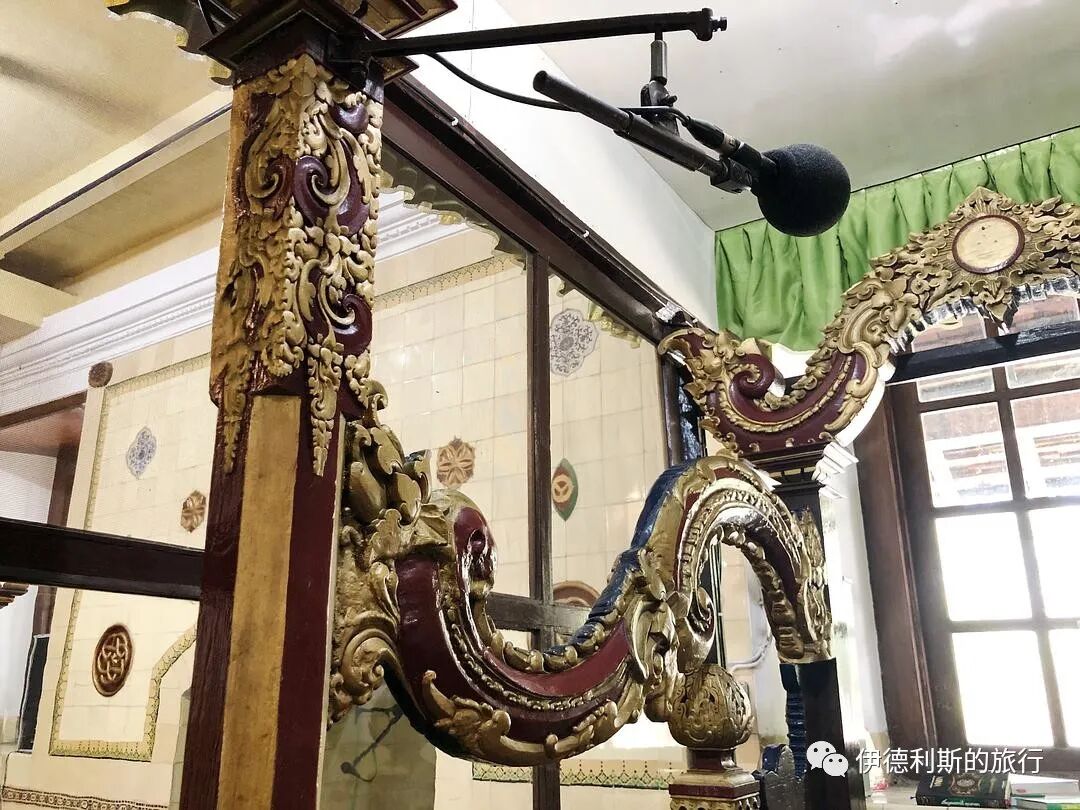
On the south side of the mihrab, there is a structure called Kholwat or Maksuroh, which is a place for the Imam and other important figures to pray, and the general public is not allowed to enter.
To the north of the mosque is a small museum displaying the original architectural components of the mosque.
A 19th-century style model of the mosque
The mosque's four main wooden pillars, Soko Guru, are said to have been made by four Javanese Islamic saints: Sunan Bonang, Sunan Gunungjati, Sunan Ampel, and Sunan Kalijaga.
The stone column bases, known as Umpak, that connect the wooden pillars were brought from the Majapahit Kingdom, because Demak was still a swampy area at the time and lacked stone.
The Bledeg Gate, made in 1466, is said to have been crafted from teak wood by Ki Ageng Selo.
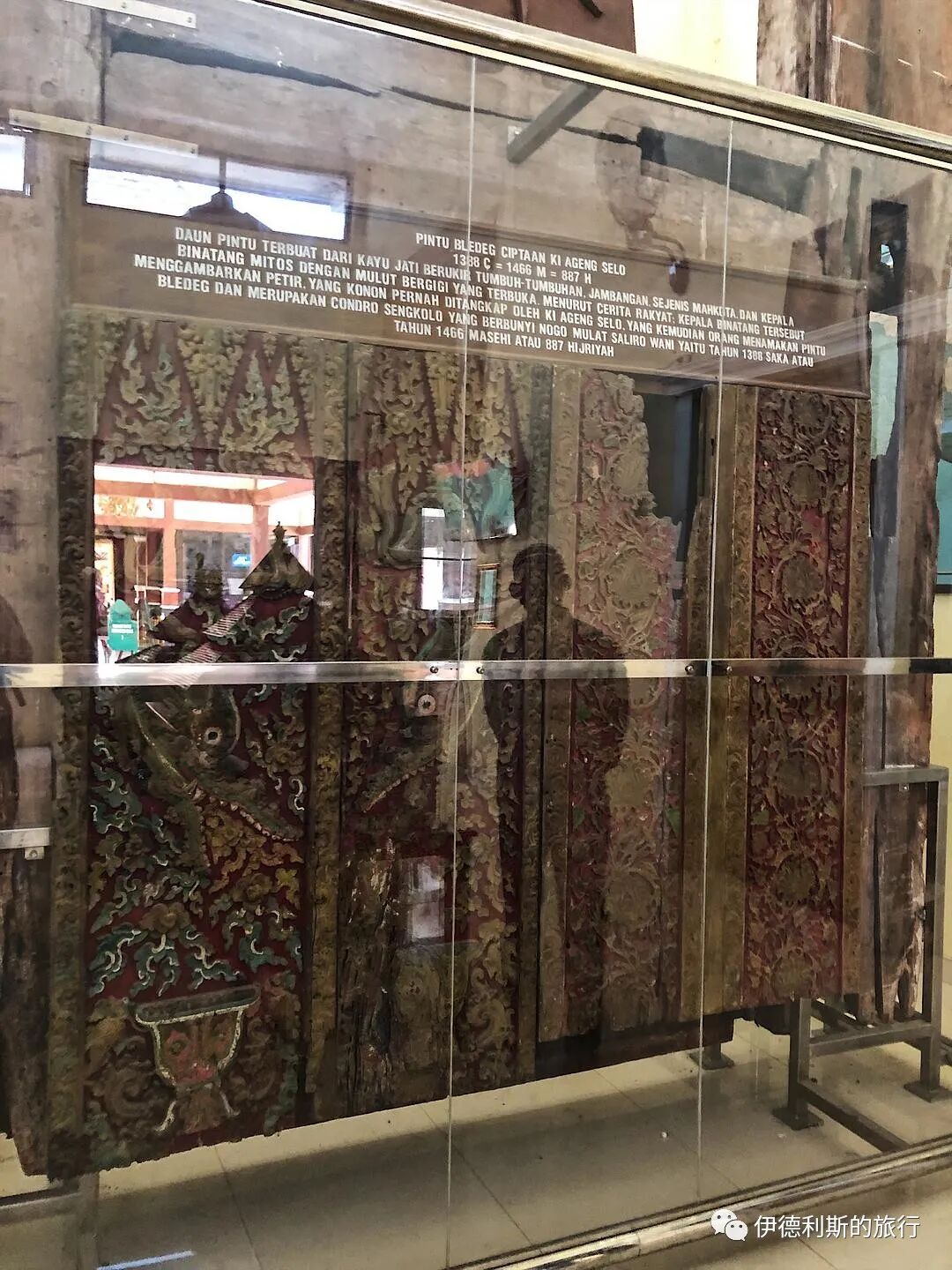
The monster with its mouth open above is said to be a captured bolt of lightning, an image that may have originated from the Naga, the serpent deity in Hindu and Buddhist culture.
The 15th-century Bedug drum
A 15th-century Kentongan. The Kentongan is an ancient Indonesian communication tool, and legend has it that it was brought by Zheng He. The Kentongan is usually made of bamboo or teak wood with a hole in the middle. Tapping the Kentongan with different rhythms can represent different signals, serving the purpose of transmitting information over long distances.
Tomb of Raden Patah: 1518
The backyard of the Great Mosque of Demak contains the graves of Raden Patah, the founder of the Demak Sultanate, and the second sultan, Pati Unus.
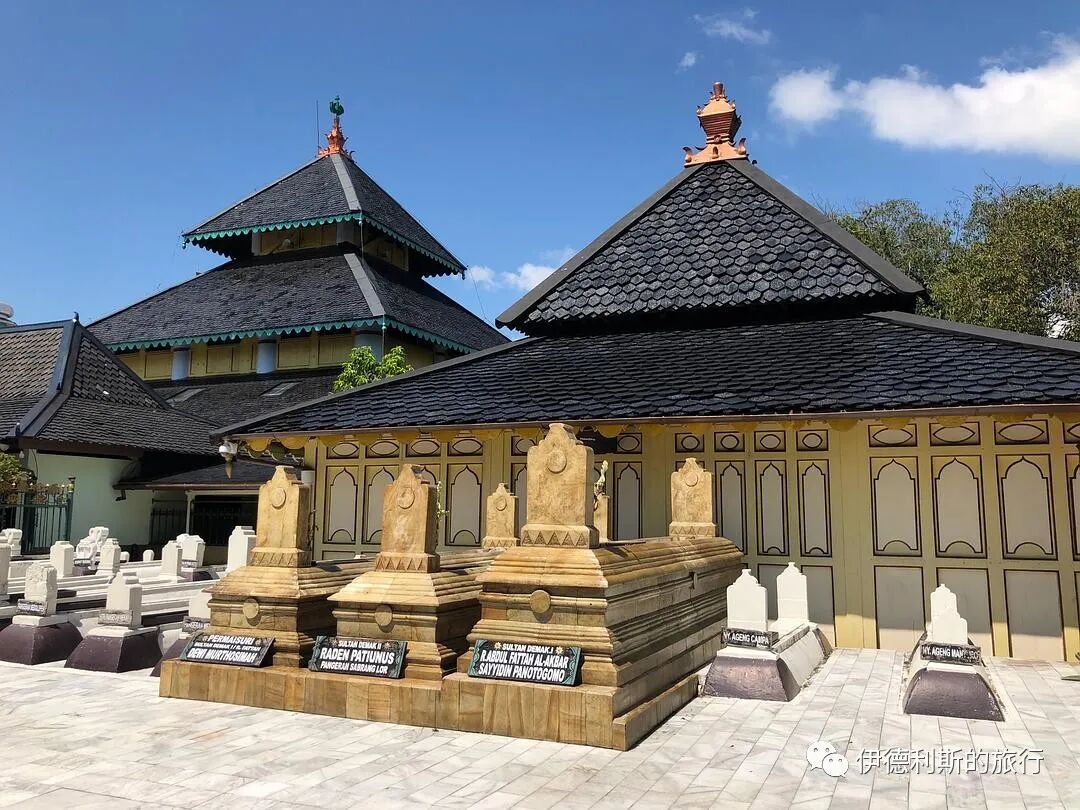
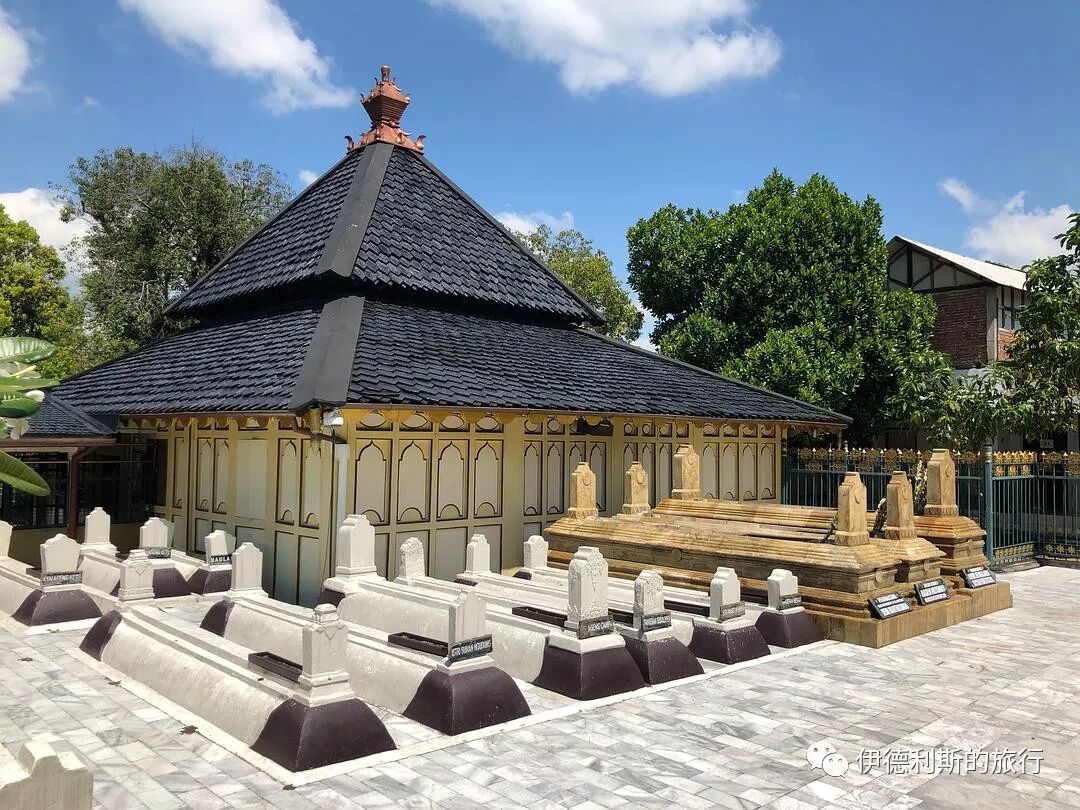
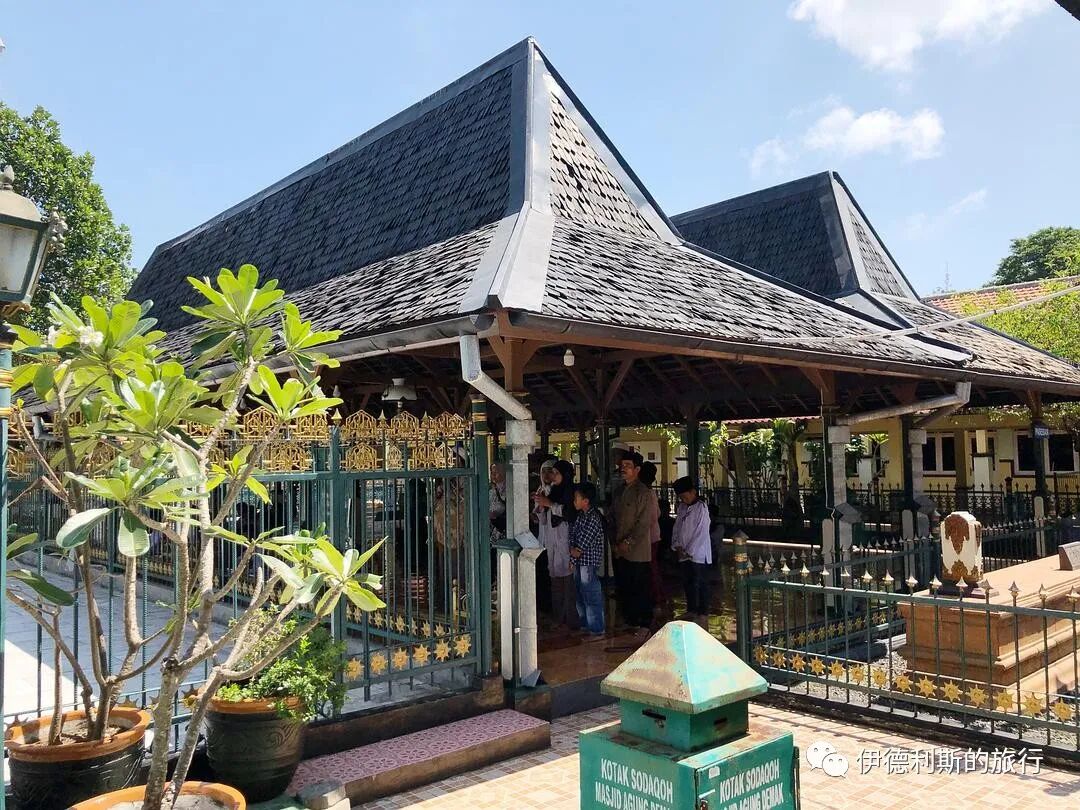
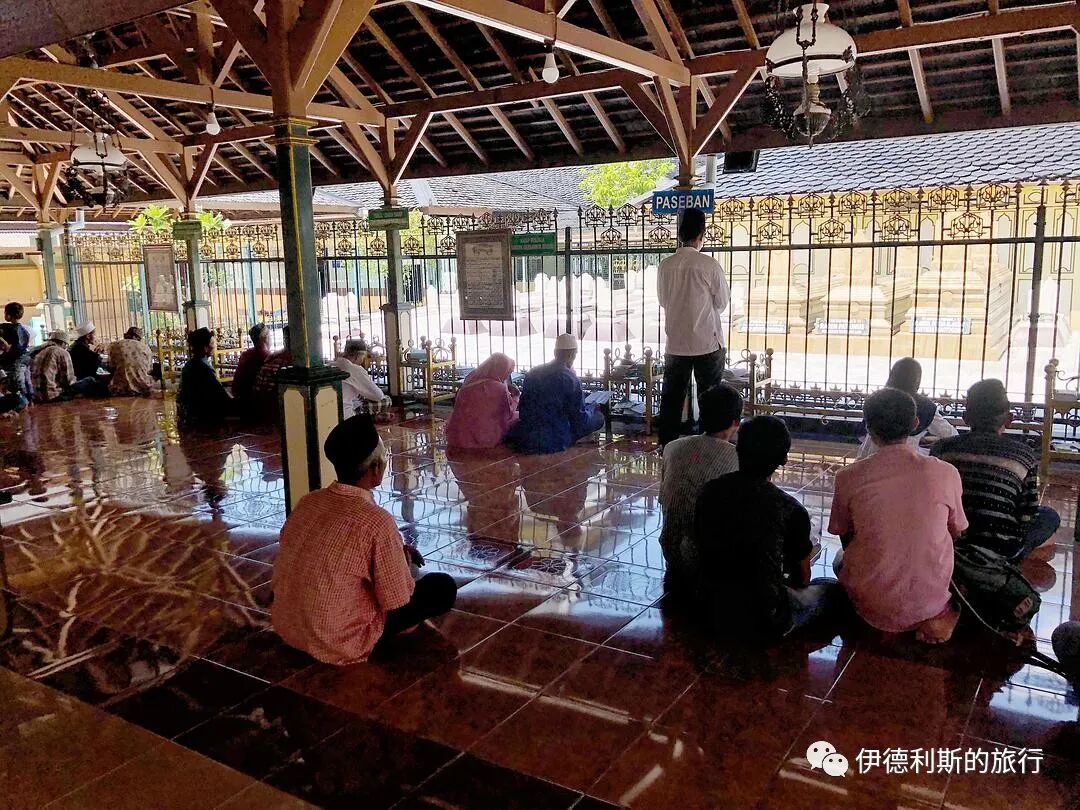
The gate of the Sultan's tomb from 1710 is now on display in the Demak Great Mosque museum.
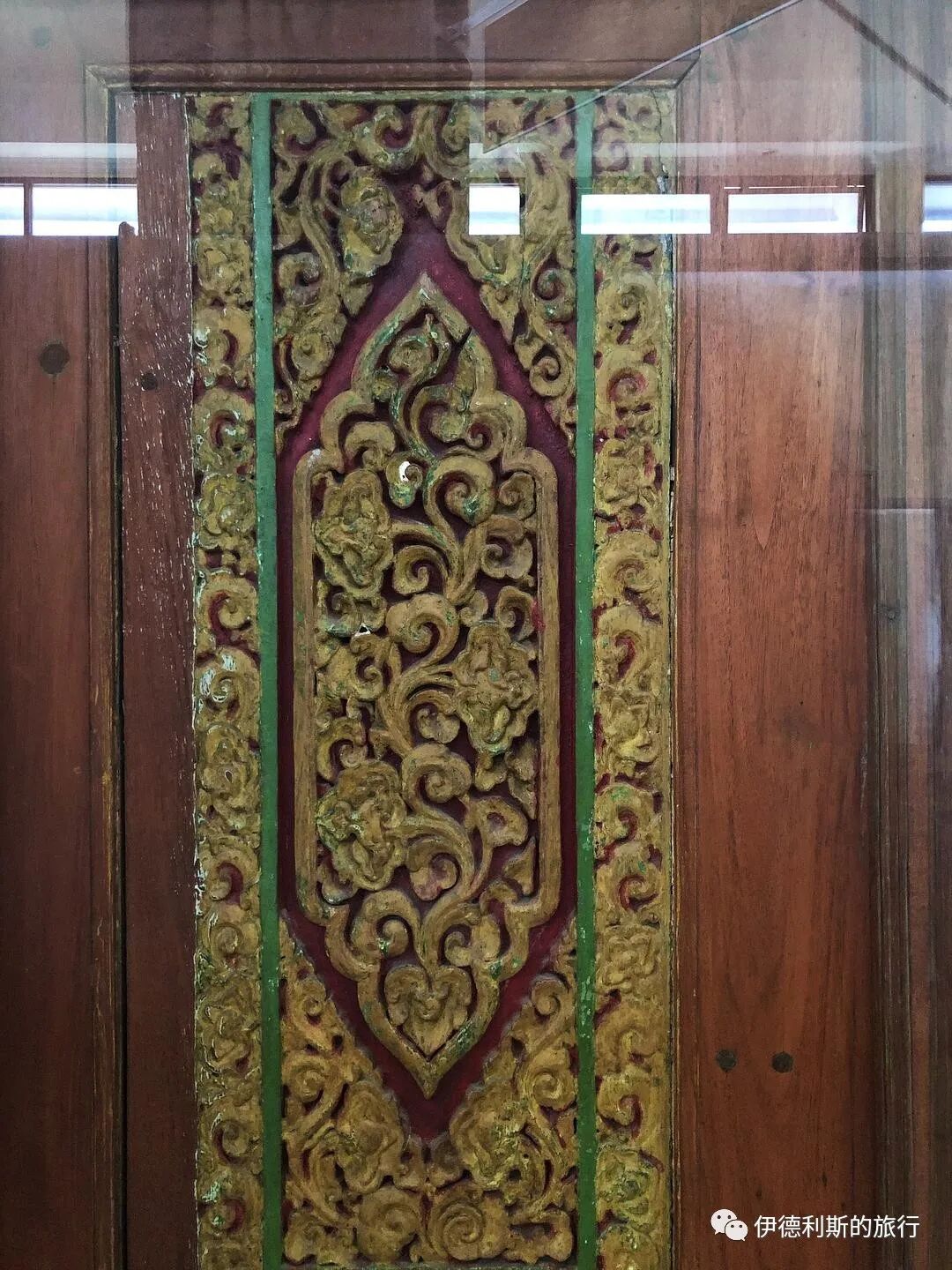
Leaving the Great Mosque of Demak, we headed to the shrine of Sunan Kalijaga in the southeast of the city.
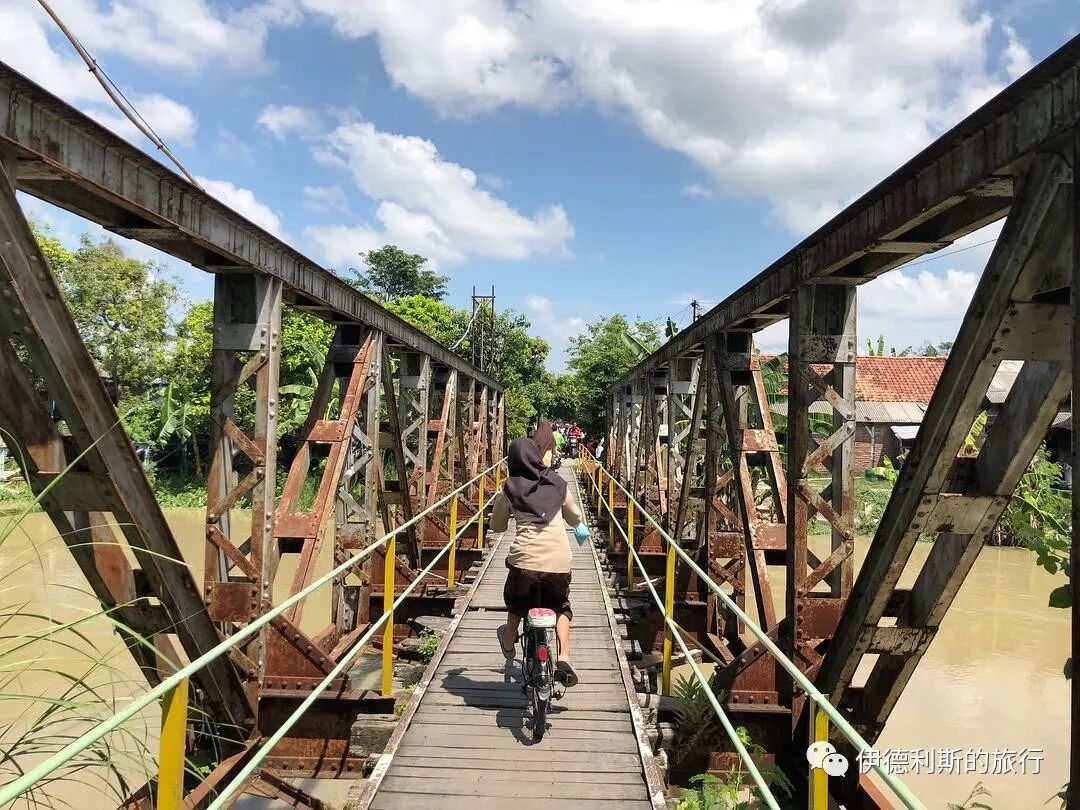
Sunan Kalijaga Tomb: 1550
Sunan Kalijaga is one of the nine saints (Wali Songo) of Islam in Java, and he played a significant role in the spread of Islam across Java.
When Sunan Kalijaga was spreading Da'wah, he used local Javanese culture and art as a medium to gradually integrate Islam into Javanese traditions and customs, which played a key role in the formation of traditional Javanese Islamic culture.
When preaching, Sunan Kalijaga was adept at utilizing art forms such as wayang shadow puppetry, traditional gamelan music, and carving, and he focused on promoting the traditional Javanese Muslim attire Baju Takwa, the Sekaten festival, and the Grebeg Maulud procession.
Legend has it that Sunan Kalijaga lived to be 100 years old, passing away in 1550. During his lifetime, he witnessed the fall of the Majapahit Kingdom and the establishment of the Demak, Cirebon, and Banten Sultanates. He eventually passed away in Demak and was buried southeast of the city.
Today, the Sunan Kalijaga shrine has become one of the most important Islamic holy sites in Java, visited by hundreds and thousands of people every day.
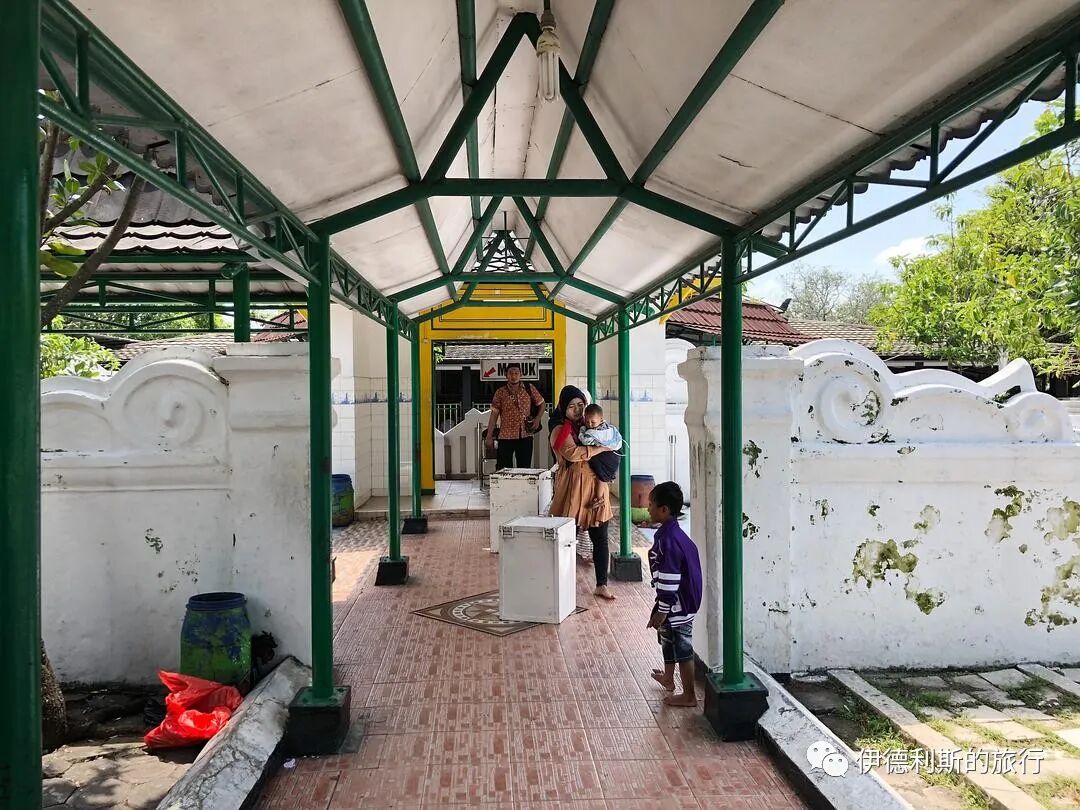
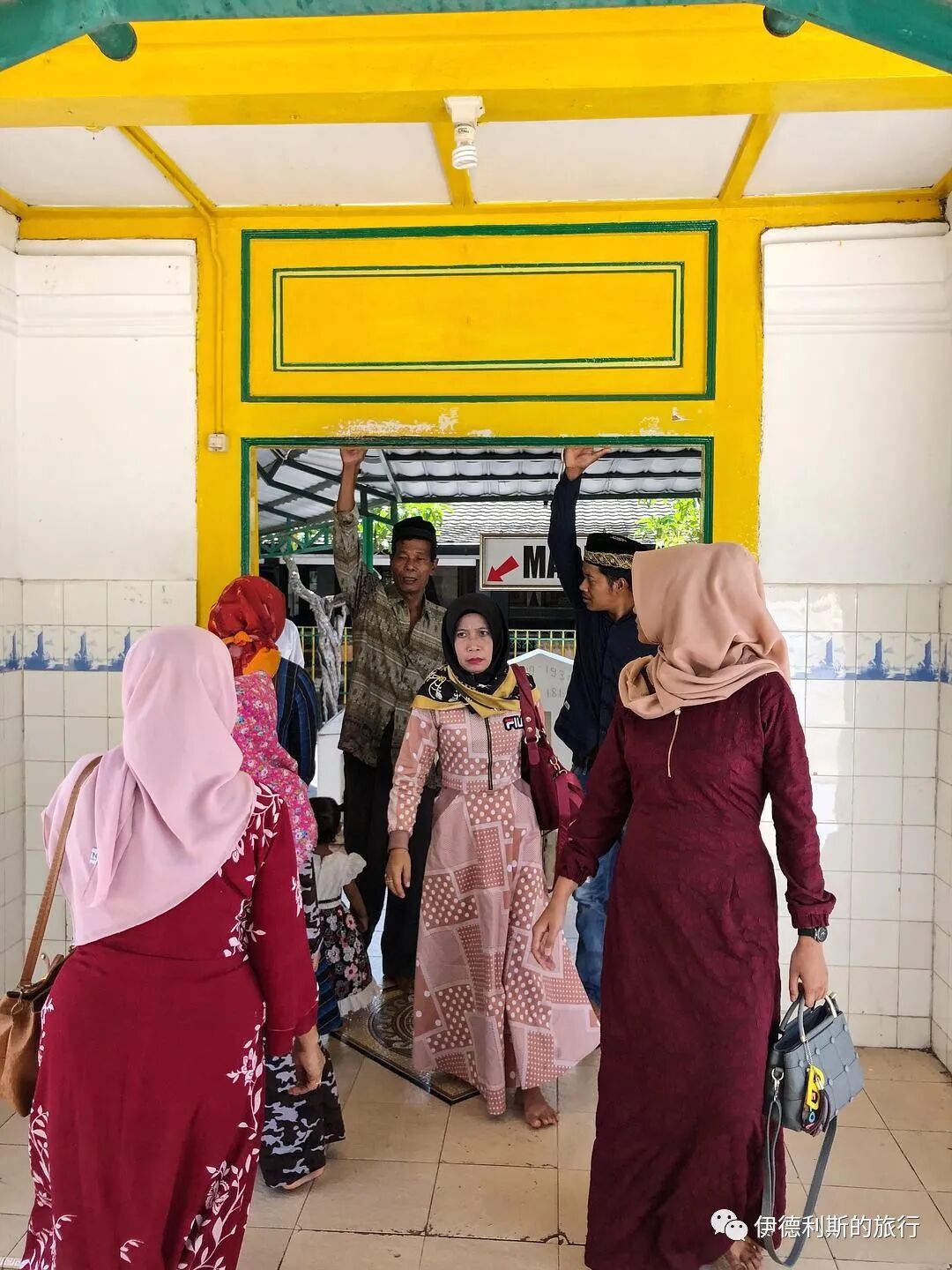
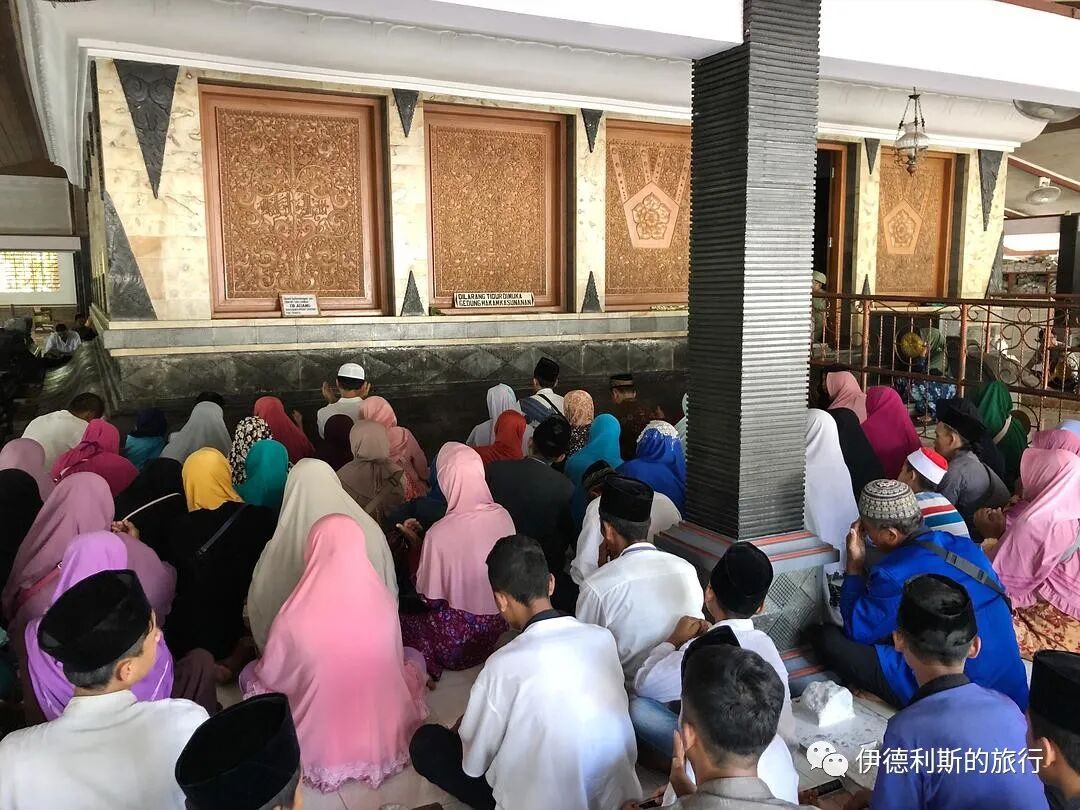
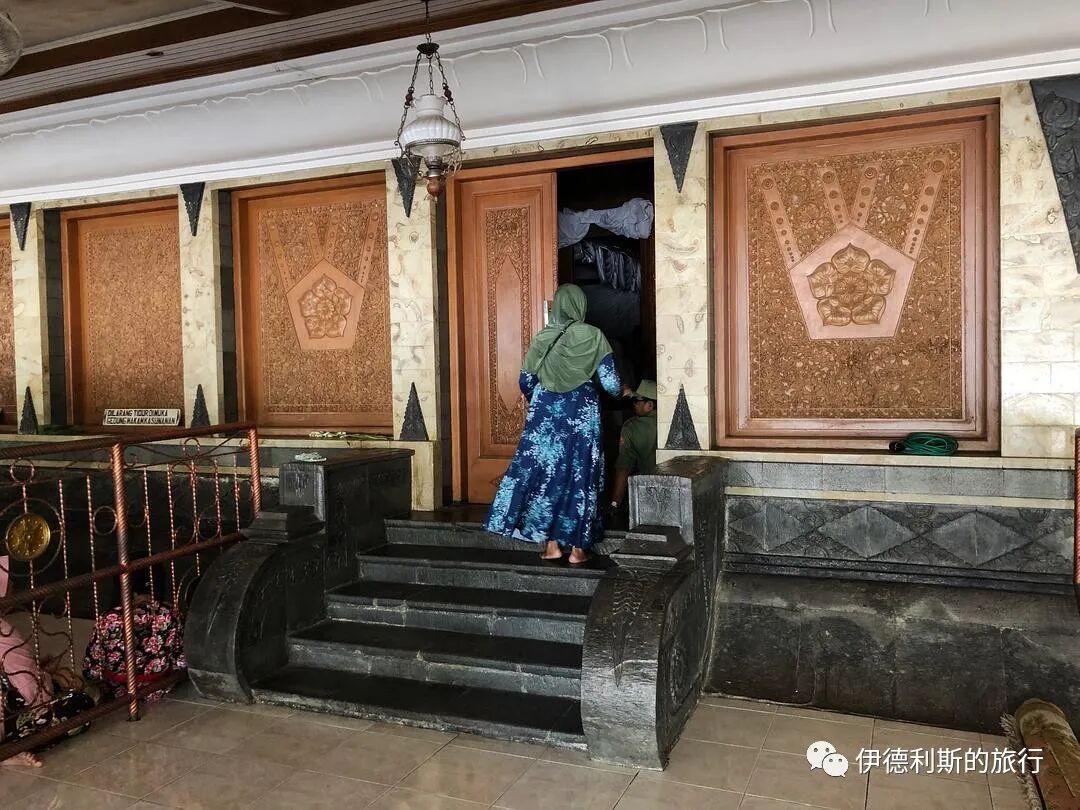
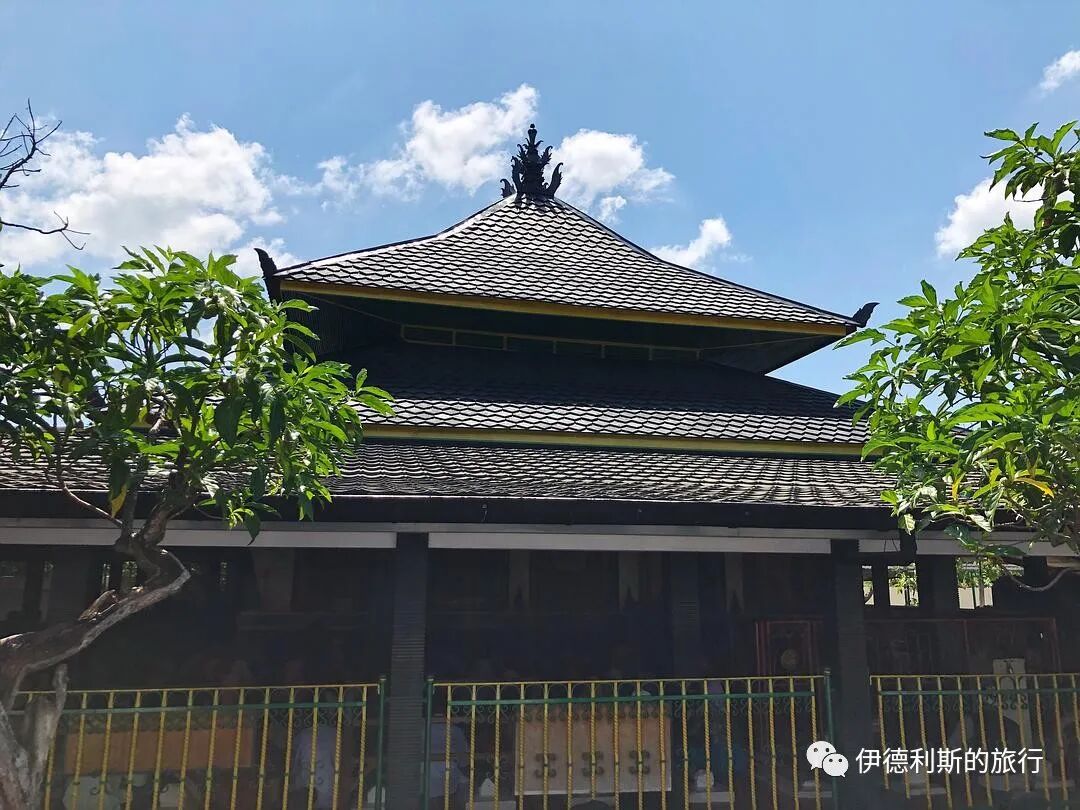
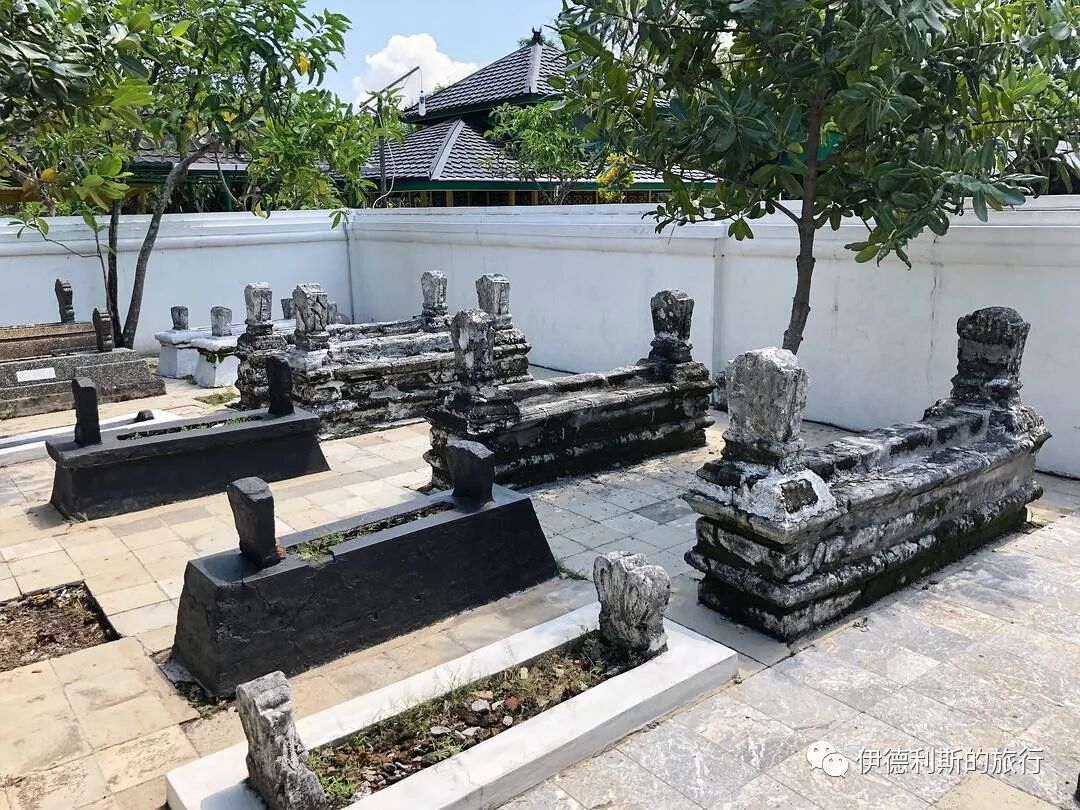
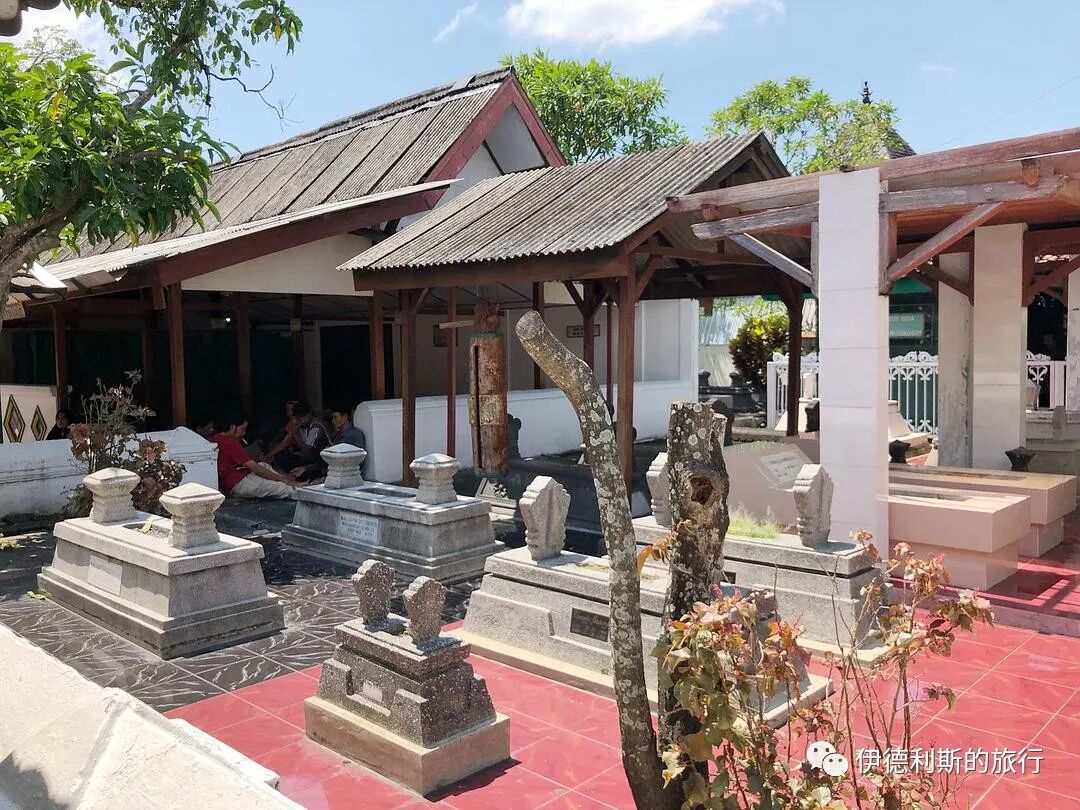
I caught the Jumu'ah prayer at the Sunan Kalijaga Mosque and saw the scene of the call to prayer being made using the traditional Bedug drum. After the Jumu'ah prayer, everyone received a popsicle and a snack, and everyone ate them happily.
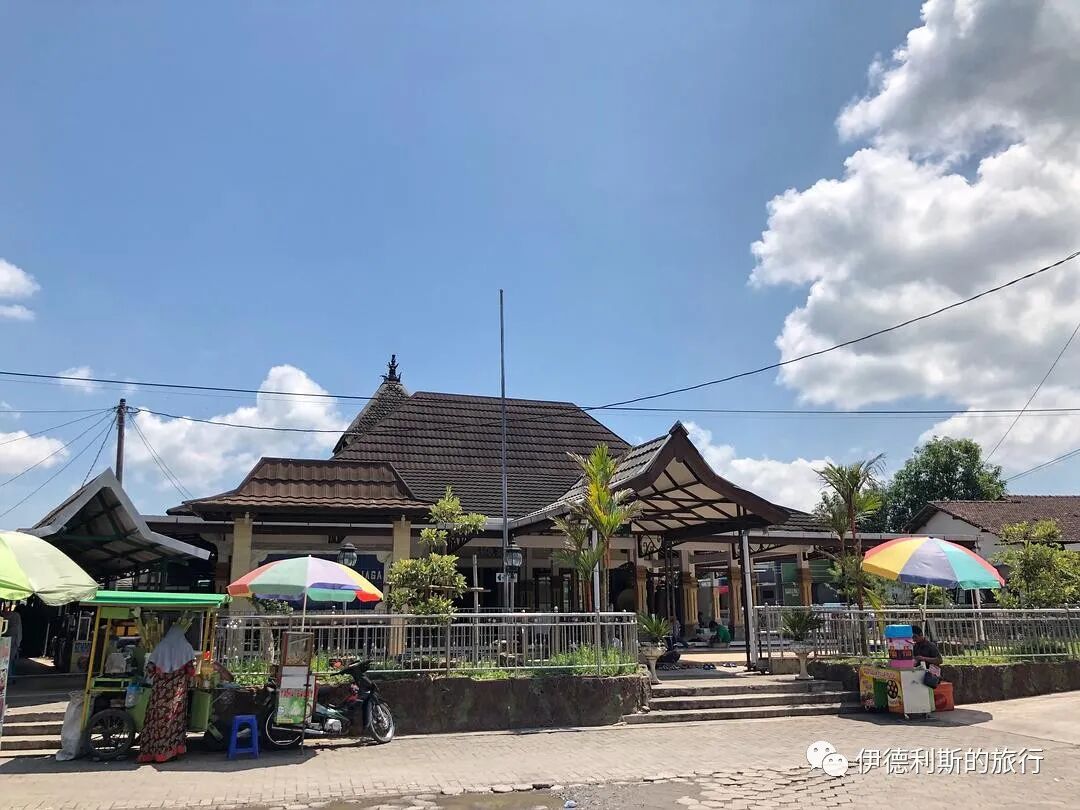
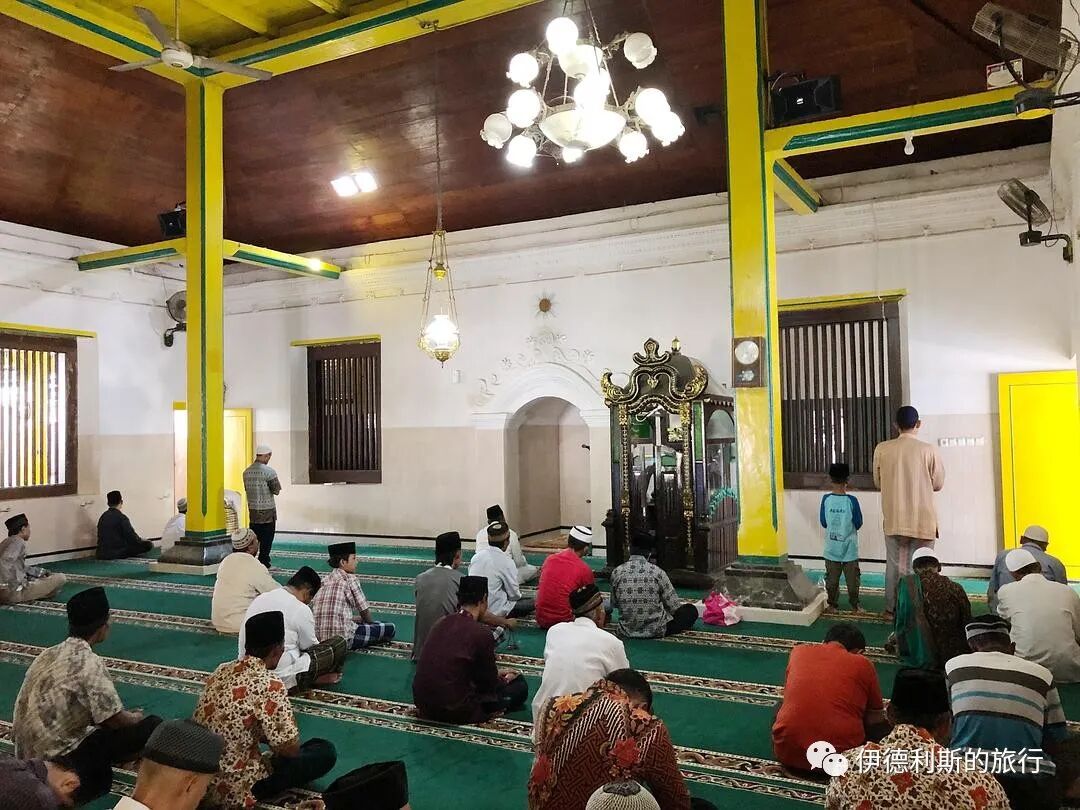
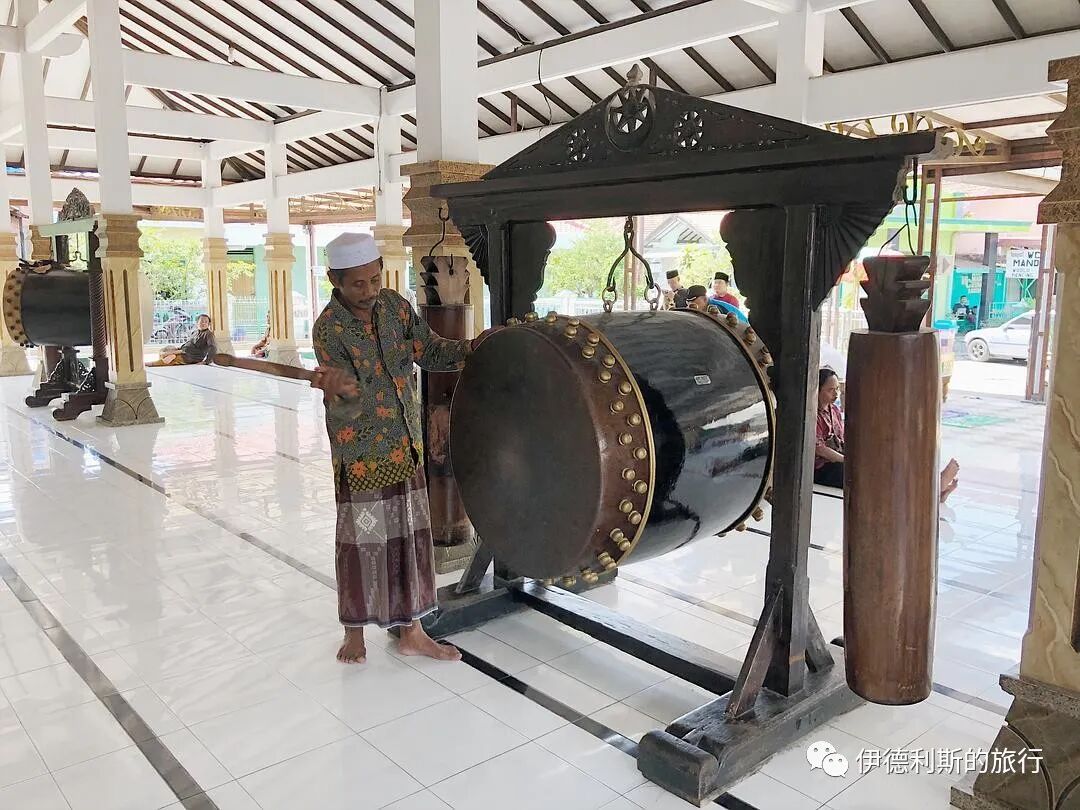
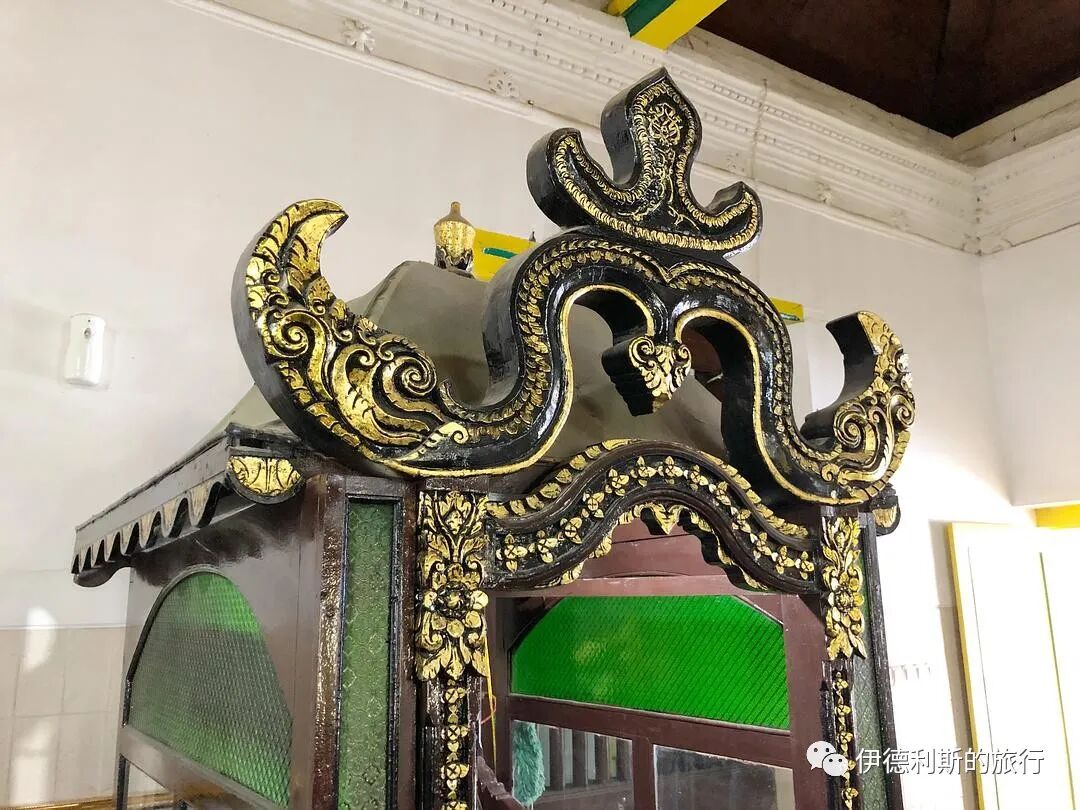
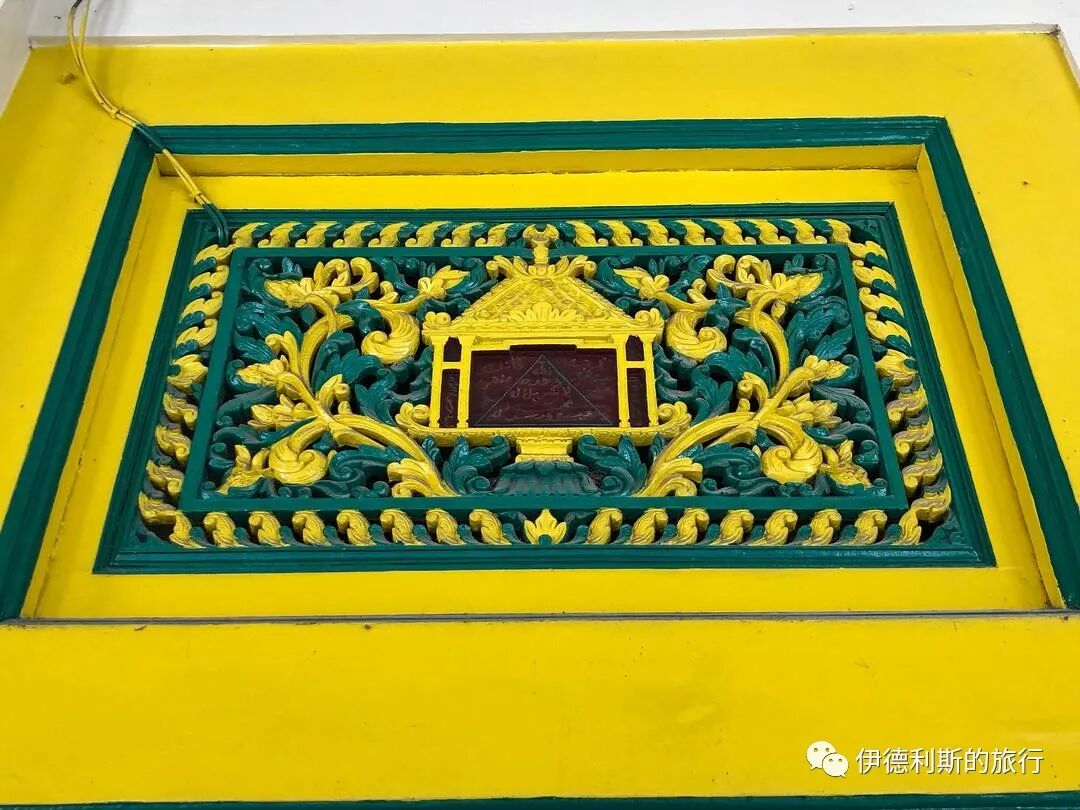
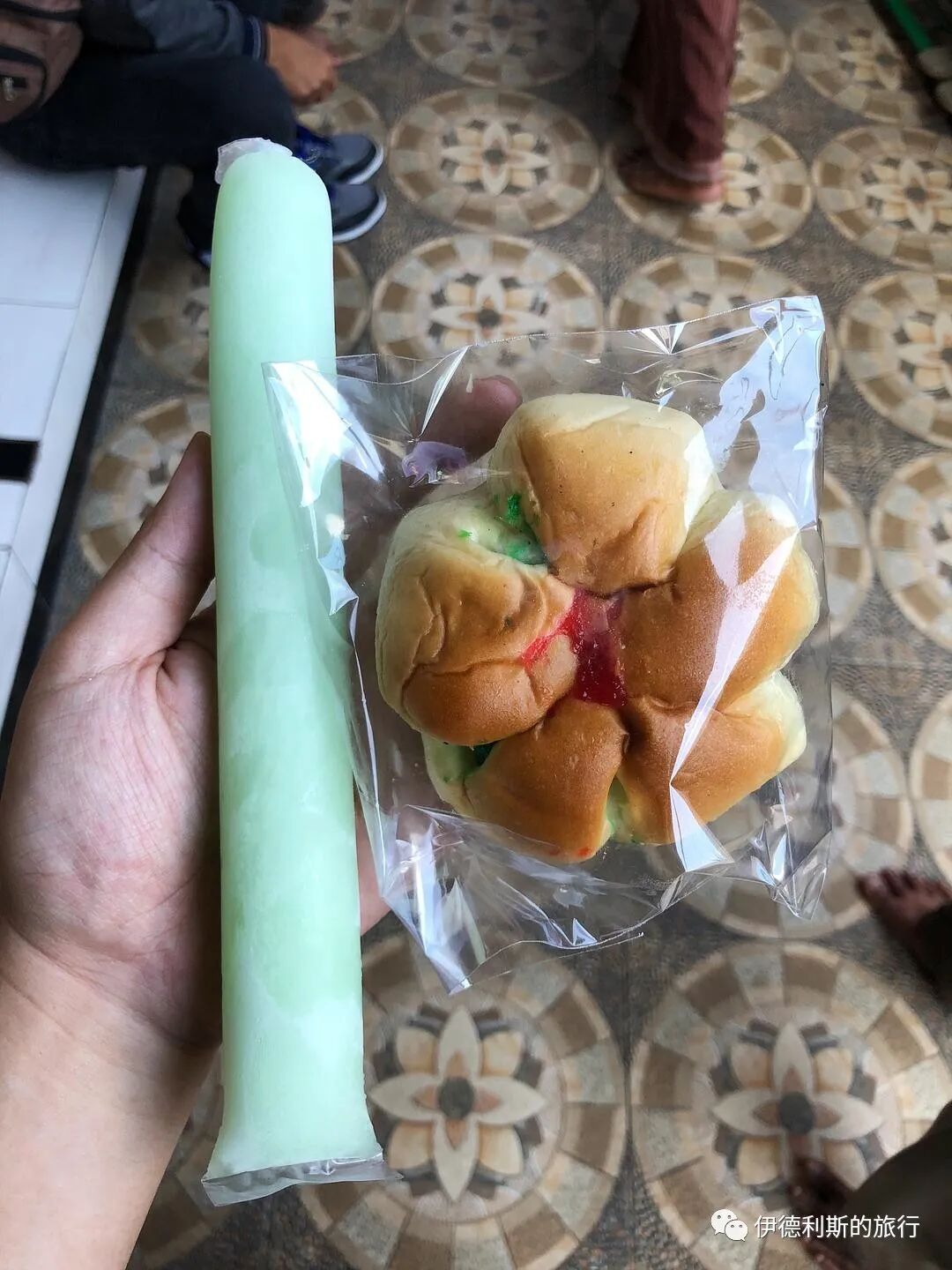
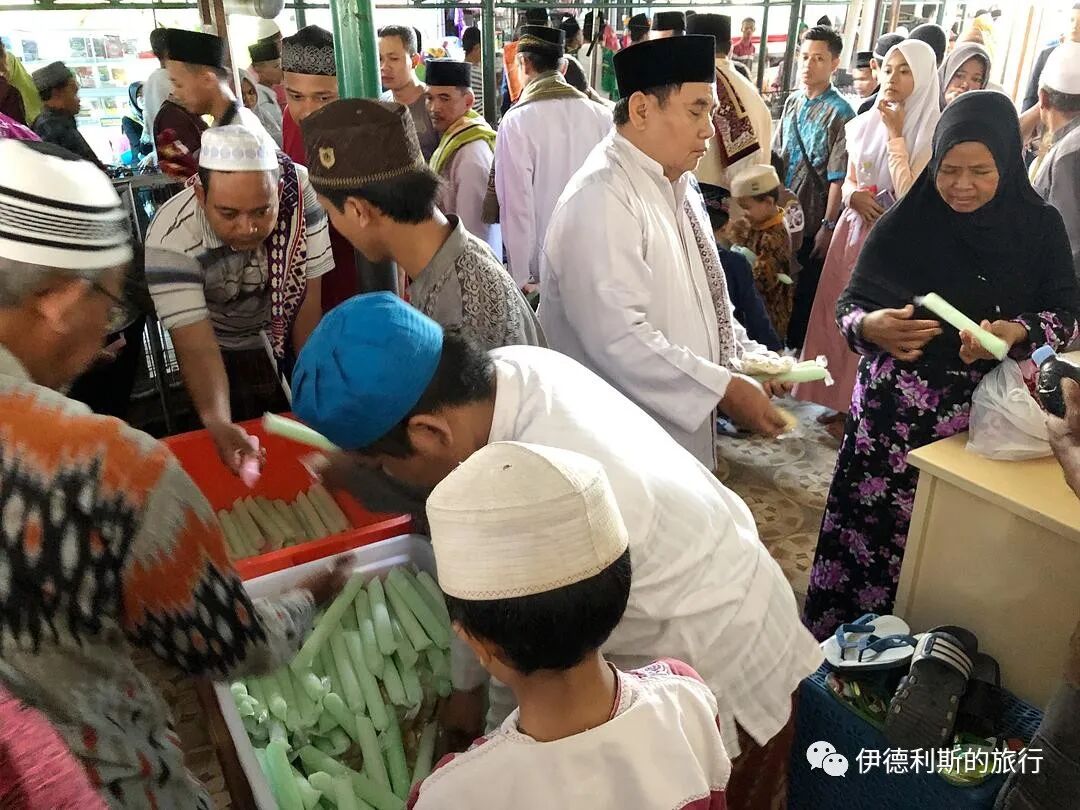
Next to the shrine of Sunan Kalijaga is a large bazaar, where many stalls are selling T-shirts and pictures printed with the image of the saint Sunan Kalijaga. I bought pictures of the "Nine Saints" of Javanese Islam and the saint Sunan Kalijaga. Saint Sunan Kalijaga is the only one among the "Nine Saints" who wears traditional Javanese clothing, which also reflects his characteristic of using traditional Javanese culture as a medium when preaching.
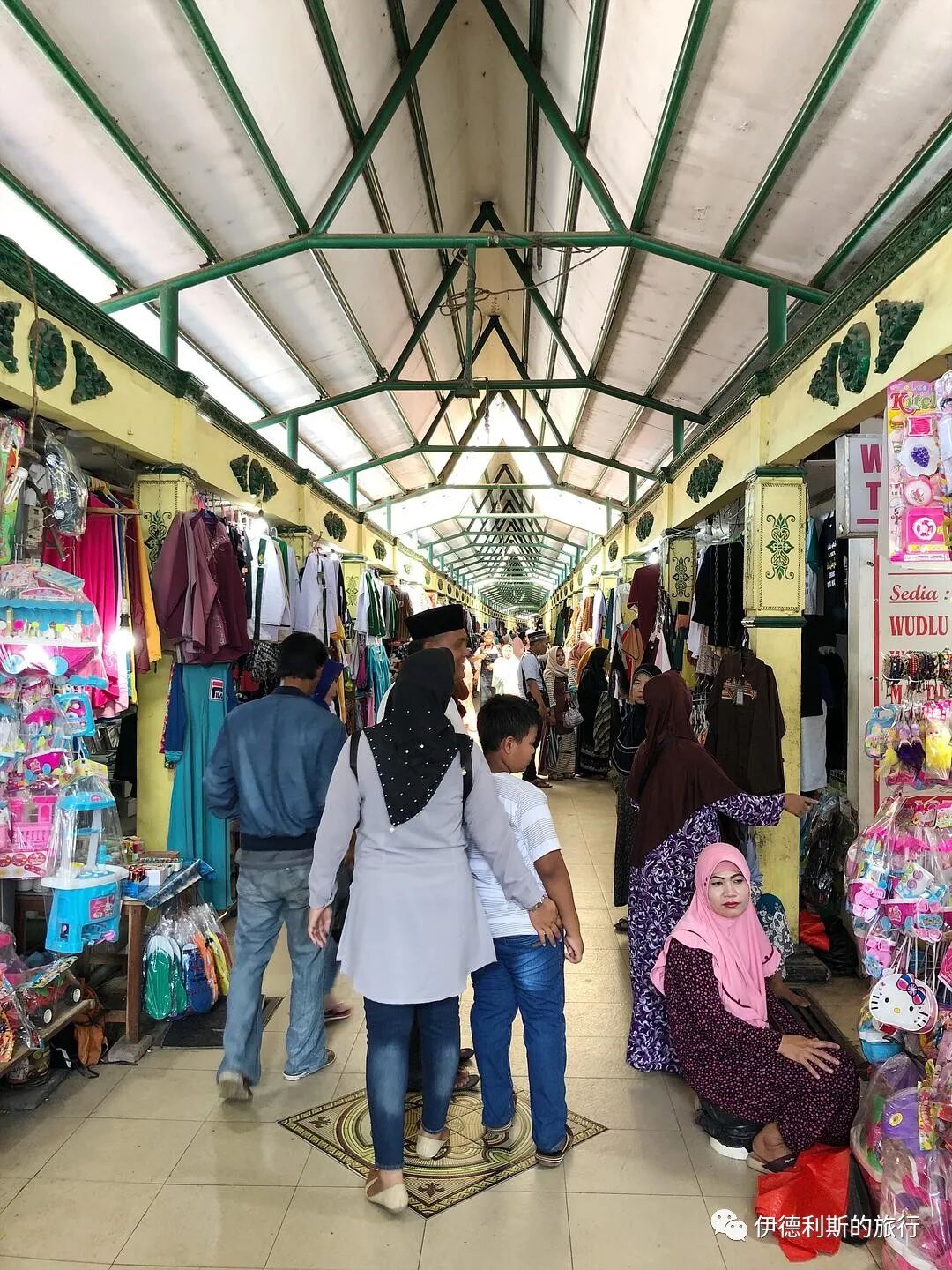
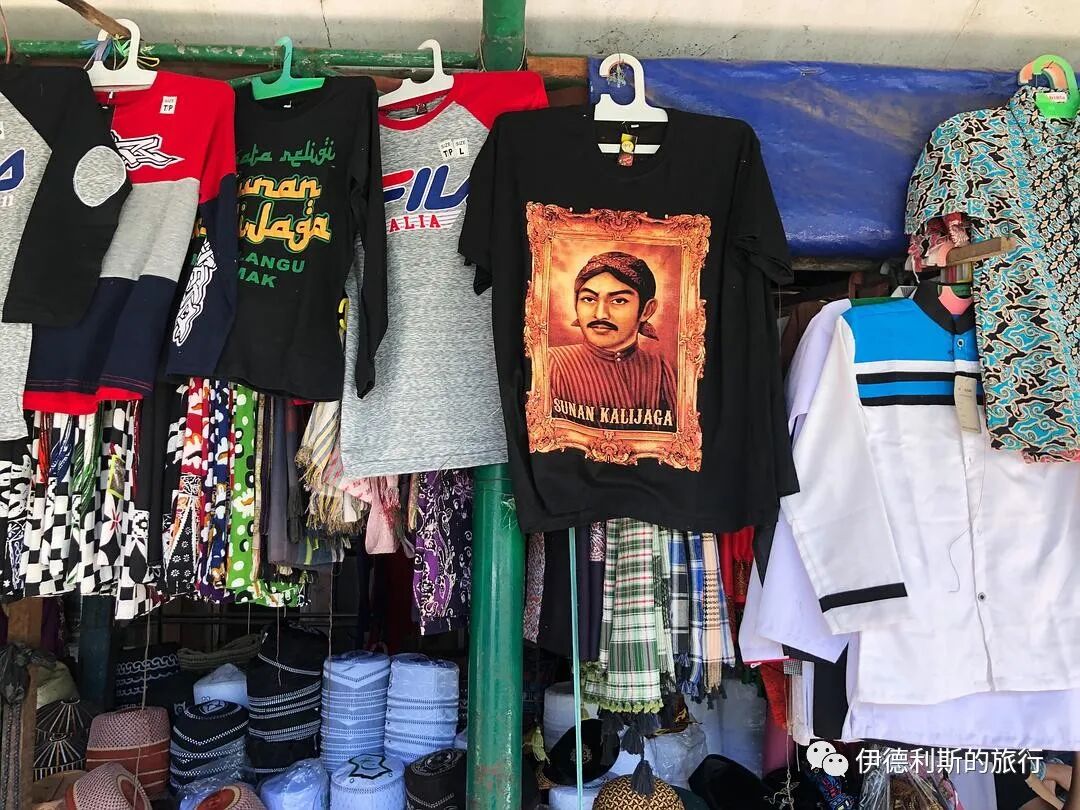
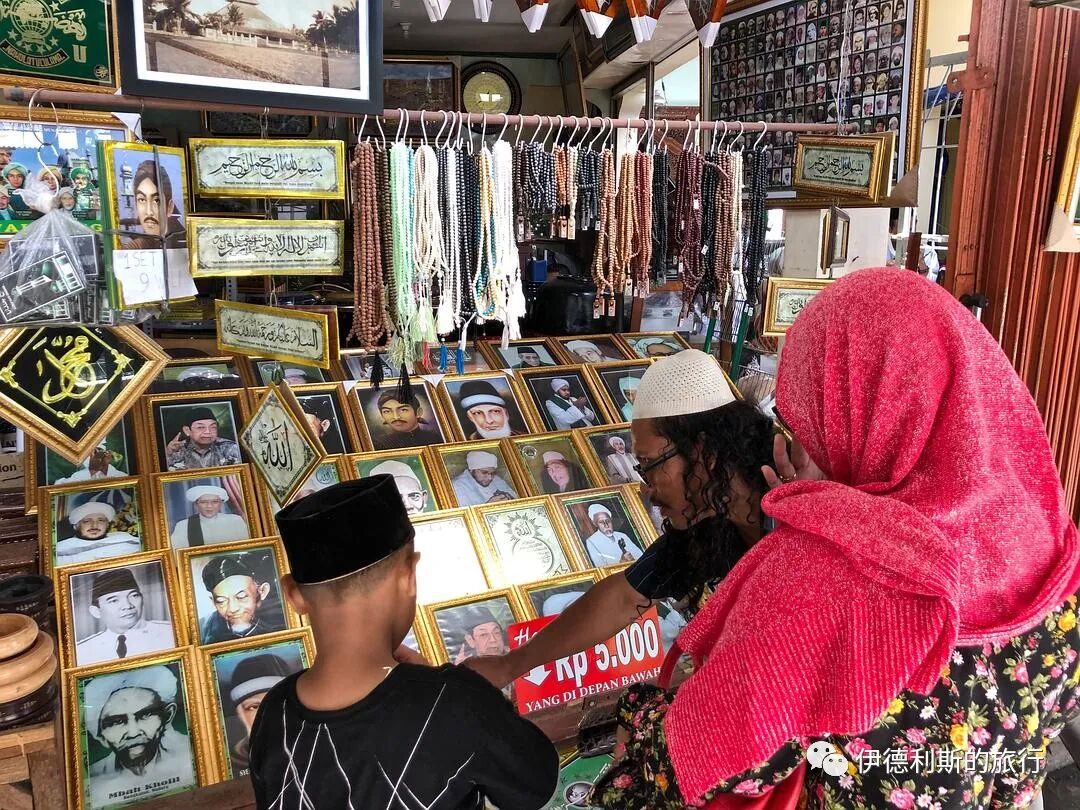
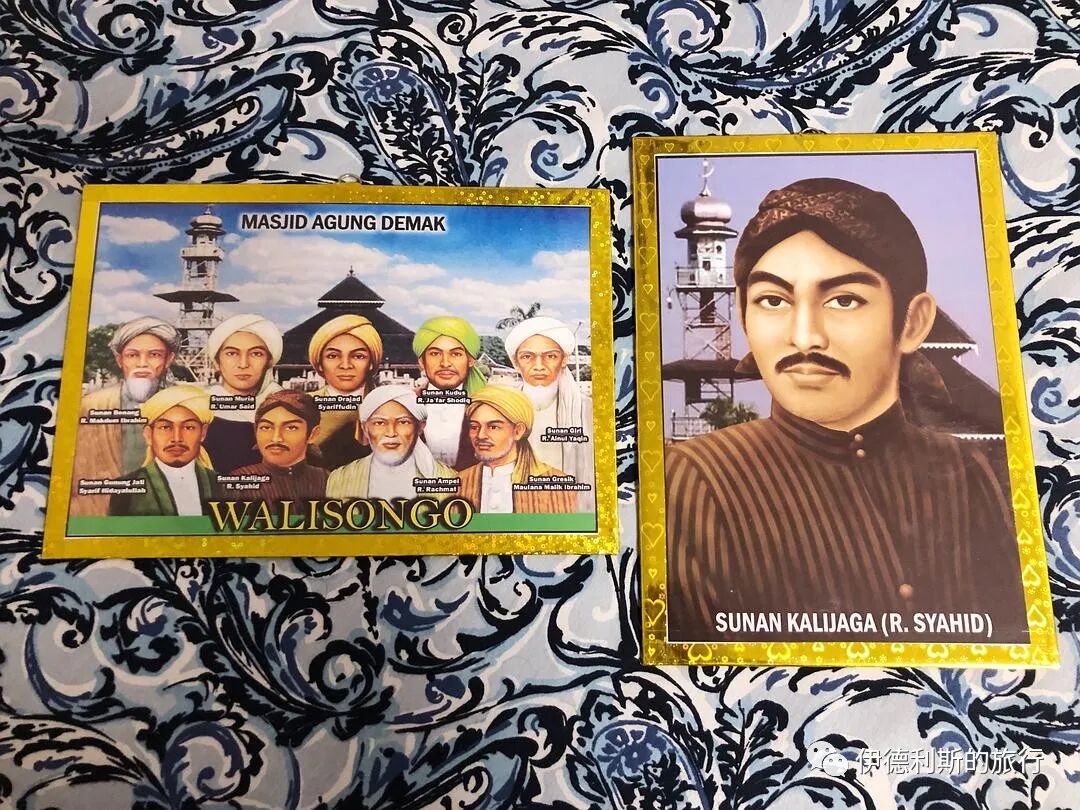
After leaving the shrine, I took a Grab to another city, Kudus. The driver who accepted the order was the brother I had just prayed Jumu'ah with; he was very excited to take a selfie with me, and his mother was in the passenger seat.
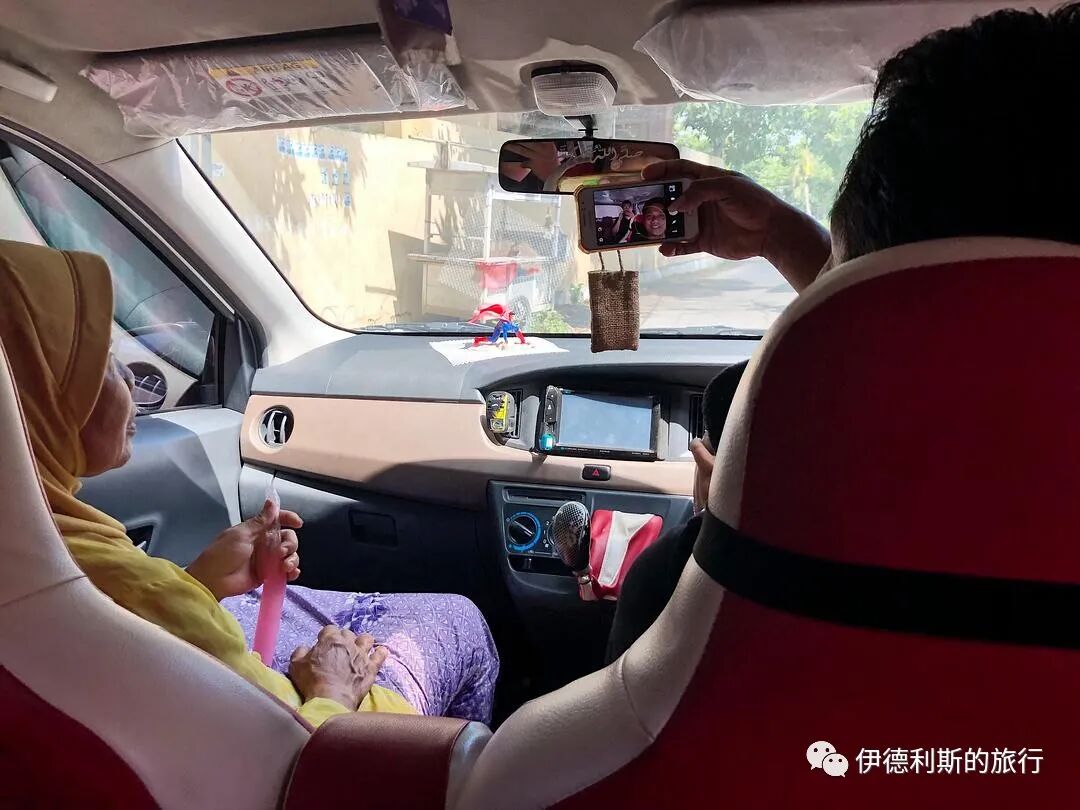
Summary: This travel note introduces Demak, the Earliest Sultanate in Java. Demak is now a small town a one-hour drive from Semarang, the capital of Central Java province in Indonesia, but in the 15th and 16th centuries, it was the most important city on the north coast of Java. It is useful for readers interested in Demak Sultanate, Java Islam, Muslim Heritage.
Demak is now a small town a one-hour drive from Semarang, the capital of Central Java province in Indonesia, but in the 15th and 16th centuries, it was the most important city on the north coast of Java. The Demak Sultanate overthrew the powerful Majapahit Kingdom in the early 16th century and became an important trading port on Java at that time. Today, the most important early mosque and the tombs of the sultans of Java are still preserved here.
On the morning of May 3, 2019, after having breakfast at the hotel in Semarang, I used the Grab app on my phone to call a car directly to the Great Mosque of Demak. The one-hour ride cost 50 RMB, and the distance was about the same as from the Second Ring Road in Beijing to Tongzhou.
The rise and fall of the Sultanate of Demak
Although the area around Demak today is surrounded by rice fields, it was once a busy port. Demak was once located at the mouth of a strait that separated Java from the island of Muria; this strait disappeared in 1657, after which Muria and Java became one island. Between the 15th and 17th centuries, this strait was an important shipping route along the north coast of Java to the Spice Islands, and it connected to the Serang River, which reached deep into the rice-producing regions of Java. By importing spices from the Spice Islands and exporting rice to the Malacca Sultanate, Demak became a powerful trading port on Java.
Demak in the 15th and 16th centuries
1. Late 15th century: Independent from the Majapahit Kingdom
Since the 15th century, with the decline of the Hindu/Buddhist Majapahit Kingdom and the rise of the Islamic Malacca Sultanate, many Muslim merchants from Arabia and India chose to settle on the north coast of Java.
In 1468, the Majapahit Kingdom split during a power struggle, and Prince Kertabhumi became King Brawijaya V (reigned 1468-1478). King Brawijaya V chose to unite with Muslim merchants on the north coast of Java, granting them trading rights on the north coast of Java. This policy boosted the financial strength of the Majapahit Kingdom, but it laid the groundwork for conflict between Buddhists and Muslims in the country.
In 1475, King Brawijaya V sent his son, Raden Patah, to rule the port of Demak. Raden Patah studied under Sunan Ampel, one of the 'Wali Songo' (nine saints) of Javanese Islam, and was a devout Muslim. This year is considered the founding year of the Demak Sultanate, although Raden Patah did not call himself Sultan at that time.
In 1478, the predominantly Buddhist Majapahit army besieged the palace of King Brawijaya V. The Muslim army of Demak, led by Sunan Ngudung, went to provide reinforcements, but the king had already been killed before they arrived. After the king's death, Raden Patah declared himself the Sultan of Demak. As the legitimate son of the king, Raden Patah led the Muslim army in a 20-year war against the Majapahit Kingdom, which lasted until a temporary truce in 1498.
2. Early 16th century: Conquest of the Majapahit Kingdom
In 1511, the Malacca Sultanate was captured by the Portuguese, and the Majapahit Kingdom went to the port of Malacca to seek an alliance with the Portuguese. In order to protect the spice trade, Demak launched attacks against the Portuguese and the Majapahit. In 1513, Demak sent 100 ships to attack Malacca, but they were defeated by the Portuguese. Within the island of Java, Demak completely crushed the Majapahit Kingdom, and a large number of Majapahit royal family members, courtiers, craftsmen, and monks fled to Bali.
Raden Patah passed away in 1518, and his brother-in-law Pati Unus became the second Sultan of Demak. In 1521, Pati Unus led 375 ships to launch another attack on Malacca, but he was defeated by the Portuguese again and lost his life in the process.
In 1522, Raden Trenggana, the brother-in-law of Pati Unus, was crowned Sultan by the Javanese Sufi master Sunan Gunungjati. Under the rule of Sultan Trenggana, the Demak Sultanate expanded rapidly across Java, and he is also known as the most powerful ruler of Demak.
In 1522, in order to control the pepper trade, the Portuguese chose to form an alliance with the Hindu Sunda Kingdom in western Java. The Demak Sultanate formed an alliance with the Cirebon Sultanate, another Muslim state in central Java, to oppose the Portuguese-Sunda alliance. Because the Portuguese did not send troops to assist the Sunda Kingdom in time, the joint Demak-Cirebon forces seized the opportunity to capture the important Sunda Kingdom port of Sunda Kalapa and renamed it Jakarta. In 1527, the joint Demak-Cirebon forces captured another important seaport of the Sunda Kingdom, Banten, and the Cirebon Sultan Prince Hasanudin subsequently established the Banten Sultanate there.
In 1527, the Sultanate of Demak completely destroyed the once immensely powerful Majapahit Empire, razed the last capital of Majapahit to the ground, and brought a large amount of treasure back to Demak.
At its peak, the Demak Sultanate controlled all the trading ports on the north coast of Java and gained rule over the ports of Jambi and Palembang in eastern Sumatra, making it a powerful maritime state at that time.
3. Mid-16th century: Final fall of the kingdom
In 1548, Sultan Trenggana died in battle in East Java, and his son Sunan Mukmin succeeded him, but was immediately killed by his cousin Arya Penangsang. Arya Penangsang faced opposition from ministers due to his poor character and was eventually killed in 1568 by Kyai Gedhe Pamanahan, a subordinate sent by the minister Hadiwijaya, marking the end of the Demak Sultanate. Hadiwijaya moved all the wealth of the Demak Sultanate court and established the short-lived Pajang Kingdom.
As a hero who helped bring down the Demak Sultanate, Kyai Gedhe Pamanahan was granted a forest that would later be called Kotagede. He and his adopted son, Danang Sutawijaya, established the Mataram Sultanate in Kotagede, which became the most powerful Islamic state on the island of Java.
The four sultanates established on Java in the 15th and 16th centuries
Demak Great Mosque: 1479
The Great Mosque of Demak (Masjid Agung Demak) is said to have been built in 1479 by Raden Patah, the first Sultan of Demak, and Sunan Kalijaga, one of the 'Nine Saints' (Wali Songo) of Javanese Islam. Sunan Ampel, one of the 'Nine Saints', served as the imam of this mosque for a long time.
19th century
The 1920s and 1930s
The Great Mosque of Demak is a typical traditional Javanese mosque, with its main structure consisting of a prayer hall and a front porch. The pyramid-shaped multi-tiered roof of the prayer hall is called Tajug, which is very similar to the Hindu pagodas of Bali. This architectural structure originated from Indian and Chinese cultures and appeared before Islam entered Java; it is the result of the fusion of traditional Indonesian Islam and local culture. The decoration at the very top of the roof is called Mustoko or Memolo. The original Mustoko was made of clay, but it was replaced with metal during later restorations.
(Optional) Image description
Delete
The front porch, Serambi, is located in front of the main prayer hall and is connected to it. The front porch is mainly used for shade and shelter from the rain, and people also pray there during Jumu'ah prayers.
Inside the front porch is a Bedug drum used for the call to prayer, which is still used every Friday for Jumu'ah, during Ramadan, and on major holidays.
The walls of the mosque's main prayer hall are decorated with tiles that were specially ordered from Vietnam.
The mosque does not use walls for support, but is instead held up by four pillars connected to the highest roof. These four pillars are called Soko Guru, and each pillar is connected to the foundation by a stone base called Umpak; these bases prevent the wooden pillars from absorbing groundwater and also act as shock absorbers during earthquakes.
On the north side of the mihrab niche in the main prayer hall stands the minbar for sermons, which is in the style of a traditional Javanese carved wooden throne.
On the south side of the mihrab, there is a structure called Kholwat or Maksuroh, which is a place for the Imam and other important figures to pray, and the general public is not allowed to enter.
To the north of the mosque is a small museum displaying the original architectural components of the mosque.
A 19th-century style model of the mosque
The mosque's four main wooden pillars, Soko Guru, are said to have been made by four Javanese Islamic saints: Sunan Bonang, Sunan Gunungjati, Sunan Ampel, and Sunan Kalijaga.
The stone column bases, known as Umpak, that connect the wooden pillars were brought from the Majapahit Kingdom, because Demak was still a swampy area at the time and lacked stone.
The Bledeg Gate, made in 1466, is said to have been crafted from teak wood by Ki Ageng Selo.
The monster with its mouth open above is said to be a captured bolt of lightning, an image that may have originated from the Naga, the serpent deity in Hindu and Buddhist culture.
The 15th-century Bedug drum
A 15th-century Kentongan. The Kentongan is an ancient Indonesian communication tool, and legend has it that it was brought by Zheng He. The Kentongan is usually made of bamboo or teak wood with a hole in the middle. Tapping the Kentongan with different rhythms can represent different signals, serving the purpose of transmitting information over long distances.
Tomb of Raden Patah: 1518
The backyard of the Great Mosque of Demak contains the graves of Raden Patah, the founder of the Demak Sultanate, and the second sultan, Pati Unus.
The gate of the Sultan's tomb from 1710 is now on display in the Demak Great Mosque museum.
Leaving the Great Mosque of Demak, we headed to the shrine of Sunan Kalijaga in the southeast of the city.
Sunan Kalijaga Tomb: 1550
Sunan Kalijaga is one of the nine saints (Wali Songo) of Islam in Java, and he played a significant role in the spread of Islam across Java.
When Sunan Kalijaga was spreading Da'wah, he used local Javanese culture and art as a medium to gradually integrate Islam into Javanese traditions and customs, which played a key role in the formation of traditional Javanese Islamic culture.
When preaching, Sunan Kalijaga was adept at utilizing art forms such as wayang shadow puppetry, traditional gamelan music, and carving, and he focused on promoting the traditional Javanese Muslim attire Baju Takwa, the Sekaten festival, and the Grebeg Maulud procession.
Legend has it that Sunan Kalijaga lived to be 100 years old, passing away in 1550. During his lifetime, he witnessed the fall of the Majapahit Kingdom and the establishment of the Demak, Cirebon, and Banten Sultanates. He eventually passed away in Demak and was buried southeast of the city.
Today, the Sunan Kalijaga shrine has become one of the most important Islamic holy sites in Java, visited by hundreds and thousands of people every day.
I caught the Jumu'ah prayer at the Sunan Kalijaga Mosque and saw the scene of the call to prayer being made using the traditional Bedug drum. After the Jumu'ah prayer, everyone received a popsicle and a snack, and everyone ate them happily.
Next to the shrine of Sunan Kalijaga is a large bazaar, where many stalls are selling T-shirts and pictures printed with the image of the saint Sunan Kalijaga. I bought pictures of the "Nine Saints" of Javanese Islam and the saint Sunan Kalijaga. Saint Sunan Kalijaga is the only one among the "Nine Saints" who wears traditional Javanese clothing, which also reflects his characteristic of using traditional Javanese culture as a medium when preaching.
After leaving the shrine, I took a Grab to another city, Kudus. The driver who accepted the order was the brother I had just prayed Jumu'ah with; he was very excited to take a selfie with me, and his mother was in the passenger seat.
Halal Food Guide: Yogyakarta — Javanese Dishes, Markets and Muslim Food
Articles • ali2007fr posted the article • 0 comments • 154 views • 2026-05-18 07:38
Reposted from the web
Summary: Halal Food Guide: Yogyakarta — Javanese Dishes, Markets and Muslim Food is presented here as a firsthand travel account in clear English, beginning with this scene: Yogyakarta is an ancient cultural city in central Java that is still ruled by a sultan today. The account keeps its focus on Yogyakarta, Java Islam, Sultanate History while preserving the names, places, food, and historical details from the Chinese source.
Yogyakarta is an ancient cultural city in central Java that is still ruled by a sultan today. Beyond traditional Javanese architecture, gamelan music, and wayang shadow puppetry, Yogyakarta also has many local Javanese foods that I want to share with you.
1. Drinks
In the muggy tropical heat, drinking a cold street drink feels really good.
Es Dawet Ayu is a specialty iced drink from Central Java that comes from the small town of Banjarnegara. Its main ingredients are rice flour, glutinous rice flour, coconut milk, palm sugar syrup, and grass jelly.
Coconut water
Freshly squeezed dragon fruit juice; the juice selection in Java is truly rich.
Sekoteng is a Javanese ginger-flavored hot drink that includes peanuts, bread slices, and rice balls. Hot drinks are relatively rare in Java, but it feels like the ginger helps remove dampness.
Freshly squeezed lemon juice
2. Snacks
Putu Bumbung is a pastry made by mixing glutinous rice flour with pandan leaf juice and palm sugar, then steaming it in bamboo tubes. You eat it with shredded coconut.
Pecel is a Javanese salad that usually includes spinach, amaranth, bean sprouts, water spinach, yardlong beans, cucumber, cassava leaves, and lemon basil. The sauce contains peanut butter, crushed peanuts, salt, palm sugar, tamarind juice, chili, galangal, kaffir lime leaves, and garlic. Pecel originated in Java and was later brought to Malaysia and Suriname by Javanese people.
3. Restaurants
Lesehan is a Javanese style of dining where you sit cross-legged on the floor. The Malioboro night market in Yogyakarta is the birthplace of this dining style. I ate the Yogyakarta specialty, Gudeg rice with chicken. Gudeg is made by stewing unripe jackfruit, palm sugar, and coconut milk for several hours. The ingredients include shallots, ginger, garlic, coriander seeds, bay leaves, and teak leaves.
At a small shop specializing in fish cakes, I ordered the fish cake omelet (Lenggang) and fish cake noodles (Mie Laksan). The fish cakes were stuffed with tofu.
I ate meatball soup (Bakso) and grilled chicken skin (Thaichan Kulit Ayam) at a shop.
I had fried fish with Indonesian chili sauce (sambal) at this shop, and it was super spicy!
The breakfast at my hotel in Yogyakarta had a great variety of food.
On the left are Indonesian rice cakes (klepon), topped with shredded coconut and served on a banana leaf. Klepon is made from a mix of glutinous rice flour, palm sugar, and juice from pandan or dracaena leaves. On the right are Indonesian snacks (kue), known in Java as market snacks (jajan pasar), which play an important role in traditional Javanese ceremonies.
In the bottom right is eggplant with chili sauce (balado), a spicy sauce that comes from the island of Sumatra. In the bottom left is lemon basil chicken (ayam kemangi).
4. Royal Sultan Cuisine
Located next to the Yogyakarta Sultan's Palace, nDalem Joyokusuman was the home of Prince Gusti Haryo Haji Joyokusumo and is now open as a cultural center and restaurant. I ate Nasi Blawong and Telo ijo here. Nasi Blawong is a specialty dish of the Yogyakarta Sultan. It was once only served at the Sultan's birthday banquets, and the reddish Blawong rice used in it is considered sacred. Telo ijo is a cassava cake drizzled with pandan coconut milk.
nDalem Joyokusuman was built in 1916 during the reign of the eighth Sultan of Yogyakarta, Hamengkubuwono VIII, and has been home to members of the Sultan's family ever since. The Peringgitan is the inner hall behind the main living room. It is where the prince's family spent their time and houses the valuable gifts the prince received.
The Sentong Kiwo was originally a guest room and now serves as an exhibition hall.
The area in the courtyard where gamelan music is performed.
Photos of the prince's family when they were young. view all
Summary: Halal Food Guide: Yogyakarta — Javanese Dishes, Markets and Muslim Food is presented here as a firsthand travel account in clear English, beginning with this scene: Yogyakarta is an ancient cultural city in central Java that is still ruled by a sultan today. The account keeps its focus on Yogyakarta, Java Islam, Sultanate History while preserving the names, places, food, and historical details from the Chinese source.
Yogyakarta is an ancient cultural city in central Java that is still ruled by a sultan today. Beyond traditional Javanese architecture, gamelan music, and wayang shadow puppetry, Yogyakarta also has many local Javanese foods that I want to share with you.
1. Drinks
In the muggy tropical heat, drinking a cold street drink feels really good.
Es Dawet Ayu is a specialty iced drink from Central Java that comes from the small town of Banjarnegara. Its main ingredients are rice flour, glutinous rice flour, coconut milk, palm sugar syrup, and grass jelly.
Coconut water
Freshly squeezed dragon fruit juice; the juice selection in Java is truly rich.
Sekoteng is a Javanese ginger-flavored hot drink that includes peanuts, bread slices, and rice balls. Hot drinks are relatively rare in Java, but it feels like the ginger helps remove dampness.
Freshly squeezed lemon juice
2. Snacks
Putu Bumbung is a pastry made by mixing glutinous rice flour with pandan leaf juice and palm sugar, then steaming it in bamboo tubes. You eat it with shredded coconut.
Pecel is a Javanese salad that usually includes spinach, amaranth, bean sprouts, water spinach, yardlong beans, cucumber, cassava leaves, and lemon basil. The sauce contains peanut butter, crushed peanuts, salt, palm sugar, tamarind juice, chili, galangal, kaffir lime leaves, and garlic. Pecel originated in Java and was later brought to Malaysia and Suriname by Javanese people.
3. Restaurants
Lesehan is a Javanese style of dining where you sit cross-legged on the floor. The Malioboro night market in Yogyakarta is the birthplace of this dining style. I ate the Yogyakarta specialty, Gudeg rice with chicken. Gudeg is made by stewing unripe jackfruit, palm sugar, and coconut milk for several hours. The ingredients include shallots, ginger, garlic, coriander seeds, bay leaves, and teak leaves.
At a small shop specializing in fish cakes, I ordered the fish cake omelet (Lenggang) and fish cake noodles (Mie Laksan). The fish cakes were stuffed with tofu.
I ate meatball soup (Bakso) and grilled chicken skin (Thaichan Kulit Ayam) at a shop.
I had fried fish with Indonesian chili sauce (sambal) at this shop, and it was super spicy!
The breakfast at my hotel in Yogyakarta had a great variety of food.
On the left are Indonesian rice cakes (klepon), topped with shredded coconut and served on a banana leaf. Klepon is made from a mix of glutinous rice flour, palm sugar, and juice from pandan or dracaena leaves. On the right are Indonesian snacks (kue), known in Java as market snacks (jajan pasar), which play an important role in traditional Javanese ceremonies.
In the bottom right is eggplant with chili sauce (balado), a spicy sauce that comes from the island of Sumatra. In the bottom left is lemon basil chicken (ayam kemangi).
4. Royal Sultan Cuisine
Located next to the Yogyakarta Sultan's Palace, nDalem Joyokusuman was the home of Prince Gusti Haryo Haji Joyokusumo and is now open as a cultural center and restaurant. I ate Nasi Blawong and Telo ijo here. Nasi Blawong is a specialty dish of the Yogyakarta Sultan. It was once only served at the Sultan's birthday banquets, and the reddish Blawong rice used in it is considered sacred. Telo ijo is a cassava cake drizzled with pandan coconut milk.
nDalem Joyokusuman was built in 1916 during the reign of the eighth Sultan of Yogyakarta, Hamengkubuwono VIII, and has been home to members of the Sultan's family ever since. The Peringgitan is the inner hall behind the main living room. It is where the prince's family spent their time and houses the valuable gifts the prince received.
The Sentong Kiwo was originally a guest room and now serves as an exhibition hall.
The area in the courtyard where gamelan music is performed.
Photos of the prince's family when they were young. view all
Reposted from the web
Summary: Halal Food Guide: Yogyakarta — Javanese Dishes, Markets and Muslim Food is presented here as a firsthand travel account in clear English, beginning with this scene: Yogyakarta is an ancient cultural city in central Java that is still ruled by a sultan today. The account keeps its focus on Yogyakarta, Java Islam, Sultanate History while preserving the names, places, food, and historical details from the Chinese source.
Yogyakarta is an ancient cultural city in central Java that is still ruled by a sultan today. Beyond traditional Javanese architecture, gamelan music, and wayang shadow puppetry, Yogyakarta also has many local Javanese foods that I want to share with you.
1. Drinks
In the muggy tropical heat, drinking a cold street drink feels really good.
Es Dawet Ayu is a specialty iced drink from Central Java that comes from the small town of Banjarnegara. Its main ingredients are rice flour, glutinous rice flour, coconut milk, palm sugar syrup, and grass jelly.
Coconut water
Freshly squeezed dragon fruit juice; the juice selection in Java is truly rich.
Sekoteng is a Javanese ginger-flavored hot drink that includes peanuts, bread slices, and rice balls. Hot drinks are relatively rare in Java, but it feels like the ginger helps remove dampness.
Freshly squeezed lemon juice
2. Snacks
Putu Bumbung is a pastry made by mixing glutinous rice flour with pandan leaf juice and palm sugar, then steaming it in bamboo tubes. You eat it with shredded coconut.
Pecel is a Javanese salad that usually includes spinach, amaranth, bean sprouts, water spinach, yardlong beans, cucumber, cassava leaves, and lemon basil. The sauce contains peanut butter, crushed peanuts, salt, palm sugar, tamarind juice, chili, galangal, kaffir lime leaves, and garlic. Pecel originated in Java and was later brought to Malaysia and Suriname by Javanese people.
3. Restaurants
Lesehan is a Javanese style of dining where you sit cross-legged on the floor. The Malioboro night market in Yogyakarta is the birthplace of this dining style. I ate the Yogyakarta specialty, Gudeg rice with chicken. Gudeg is made by stewing unripe jackfruit, palm sugar, and coconut milk for several hours. The ingredients include shallots, ginger, garlic, coriander seeds, bay leaves, and teak leaves.
At a small shop specializing in fish cakes, I ordered the fish cake omelet (Lenggang) and fish cake noodles (Mie Laksan). The fish cakes were stuffed with tofu.
I ate meatball soup (Bakso) and grilled chicken skin (Thaichan Kulit Ayam) at a shop.
I had fried fish with Indonesian chili sauce (sambal) at this shop, and it was super spicy!
The breakfast at my hotel in Yogyakarta had a great variety of food.
On the left are Indonesian rice cakes (klepon), topped with shredded coconut and served on a banana leaf. Klepon is made from a mix of glutinous rice flour, palm sugar, and juice from pandan or dracaena leaves. On the right are Indonesian snacks (kue), known in Java as market snacks (jajan pasar), which play an important role in traditional Javanese ceremonies.
In the bottom right is eggplant with chili sauce (balado), a spicy sauce that comes from the island of Sumatra. In the bottom left is lemon basil chicken (ayam kemangi).
4. Royal Sultan Cuisine
Located next to the Yogyakarta Sultan's Palace, nDalem Joyokusuman was the home of Prince Gusti Haryo Haji Joyokusumo and is now open as a cultural center and restaurant. I ate Nasi Blawong and Telo ijo here. Nasi Blawong is a specialty dish of the Yogyakarta Sultan. It was once only served at the Sultan's birthday banquets, and the reddish Blawong rice used in it is considered sacred. Telo ijo is a cassava cake drizzled with pandan coconut milk.
nDalem Joyokusuman was built in 1916 during the reign of the eighth Sultan of Yogyakarta, Hamengkubuwono VIII, and has been home to members of the Sultan's family ever since. The Peringgitan is the inner hall behind the main living room. It is where the prince's family spent their time and houses the valuable gifts the prince received.
The Sentong Kiwo was originally a guest room and now serves as an exhibition hall.
The area in the courtyard where gamelan music is performed.
Photos of the prince's family when they were young.
Summary: Halal Food Guide: Yogyakarta — Javanese Dishes, Markets and Muslim Food is presented here as a firsthand travel account in clear English, beginning with this scene: Yogyakarta is an ancient cultural city in central Java that is still ruled by a sultan today. The account keeps its focus on Yogyakarta, Java Islam, Sultanate History while preserving the names, places, food, and historical details from the Chinese source.
Yogyakarta is an ancient cultural city in central Java that is still ruled by a sultan today. Beyond traditional Javanese architecture, gamelan music, and wayang shadow puppetry, Yogyakarta also has many local Javanese foods that I want to share with you.
1. Drinks
In the muggy tropical heat, drinking a cold street drink feels really good.
Es Dawet Ayu is a specialty iced drink from Central Java that comes from the small town of Banjarnegara. Its main ingredients are rice flour, glutinous rice flour, coconut milk, palm sugar syrup, and grass jelly.
Coconut water
Freshly squeezed dragon fruit juice; the juice selection in Java is truly rich.
Sekoteng is a Javanese ginger-flavored hot drink that includes peanuts, bread slices, and rice balls. Hot drinks are relatively rare in Java, but it feels like the ginger helps remove dampness.
Freshly squeezed lemon juice
2. Snacks
Putu Bumbung is a pastry made by mixing glutinous rice flour with pandan leaf juice and palm sugar, then steaming it in bamboo tubes. You eat it with shredded coconut.
Pecel is a Javanese salad that usually includes spinach, amaranth, bean sprouts, water spinach, yardlong beans, cucumber, cassava leaves, and lemon basil. The sauce contains peanut butter, crushed peanuts, salt, palm sugar, tamarind juice, chili, galangal, kaffir lime leaves, and garlic. Pecel originated in Java and was later brought to Malaysia and Suriname by Javanese people.
3. Restaurants
Lesehan is a Javanese style of dining where you sit cross-legged on the floor. The Malioboro night market in Yogyakarta is the birthplace of this dining style. I ate the Yogyakarta specialty, Gudeg rice with chicken. Gudeg is made by stewing unripe jackfruit, palm sugar, and coconut milk for several hours. The ingredients include shallots, ginger, garlic, coriander seeds, bay leaves, and teak leaves.
At a small shop specializing in fish cakes, I ordered the fish cake omelet (Lenggang) and fish cake noodles (Mie Laksan). The fish cakes were stuffed with tofu.
I ate meatball soup (Bakso) and grilled chicken skin (Thaichan Kulit Ayam) at a shop.
I had fried fish with Indonesian chili sauce (sambal) at this shop, and it was super spicy!
The breakfast at my hotel in Yogyakarta had a great variety of food.
On the left are Indonesian rice cakes (klepon), topped with shredded coconut and served on a banana leaf. Klepon is made from a mix of glutinous rice flour, palm sugar, and juice from pandan or dracaena leaves. On the right are Indonesian snacks (kue), known in Java as market snacks (jajan pasar), which play an important role in traditional Javanese ceremonies.
In the bottom right is eggplant with chili sauce (balado), a spicy sauce that comes from the island of Sumatra. In the bottom left is lemon basil chicken (ayam kemangi).
4. Royal Sultan Cuisine
Located next to the Yogyakarta Sultan's Palace, nDalem Joyokusuman was the home of Prince Gusti Haryo Haji Joyokusumo and is now open as a cultural center and restaurant. I ate Nasi Blawong and Telo ijo here. Nasi Blawong is a specialty dish of the Yogyakarta Sultan. It was once only served at the Sultan's birthday banquets, and the reddish Blawong rice used in it is considered sacred. Telo ijo is a cassava cake drizzled with pandan coconut milk.
nDalem Joyokusuman was built in 1916 during the reign of the eighth Sultan of Yogyakarta, Hamengkubuwono VIII, and has been home to members of the Sultan's family ever since. The Peringgitan is the inner hall behind the main living room. It is where the prince's family spent their time and houses the valuable gifts the prince received.
The Sentong Kiwo was originally a guest room and now serves as an exhibition hall.
The area in the courtyard where gamelan music is performed.
Photos of the prince's family when they were young.
Halal Travel Guide: Central Java — Semarang, Solo, Kudus Food and Muslim Heritage
Articles • ali2007fr posted the article • 0 comments • 143 views • 2026-05-18 07:38
Reposted from the web
Summary: Central Java — Semarang, Solo, Kudus Food and Muslim Heritage is presented here as a firsthand travel account in clear English, beginning with this scene: During the 2019 May Day holiday, I traveled to Central Java, Indonesia, to explore and eat. The account keeps its focus on Kudus Travel, Java Islam, Muslim Heritage while preserving the names, places, food, and historical details from the Chinese source.
During the 2019 May Day holiday, I traveled to Central Java, Indonesia, to explore and eat. I visited the capital, Semarang, the cultural city of Solo, and the religious site of Kudus. I am sharing some of the things I saw and ate during this trip.
Solo
In 1755, the Dutch East India Company represented Sultan Pakubuwono III of the Mataram Sultanate in negotiations with Prince Mangkubumi. A treaty was signed, and the Mataram Sultanate, once the most powerful Islamic kingdom on Java, was split into the Yogyakarta Sultanate and the Surakarta Sunanate. The city of Solo officially became the capital of the Surakarta Sunanate.
During the Dutch East Indies era, the Surakarta Sunanate, like the Yogyakarta Sultanate, enjoyed autonomous status and was considered a vassal state of the Dutch Empire. In 1945, the Republic of Indonesia was declared. In 1946, an anti-monarchy movement broke out, the Surakarta Sunan was stripped of ruling power, and the Sunanate was incorporated into Central Java Province. Although they have no real power, the Surakarta Sunan still holds royal authority and a special status in maintaining traditional Javanese culture, and they still command high prestige.
I ate breakfast at my hotel in Solo. I was the only guest in the entire hotel, and the palace of the Surakarta Sunan was right behind the woods.
Solo's specialty iced drink is Es Dawet Telasih, made with coconut milk, palm sugar, rice flour jelly (cendol), coconut rice pudding (bubur sumsum), basil seeds, and black glutinous rice.
Es Dawet Durian is Es Dawet Telasih with durian added.
Indonesian pancakes (serabi) are made from rice flour and coconut milk.
I ate beef meatballs (bakso daging sapi) at a street stall next to the Solo palace. Bakso meatballs are a classic Indonesian street snack made from a mixture of ground beef and tapioca flour. The word "bak-so" originally comes from the Hokkien term for "meat crisp," but the method of making meatballs likely came from 19th-century Dutch colonists. Today, the best bakso meatballs are widely considered to come from Solo in Central Java and Malang in East Java.
I ate beef rib soup (rawon) and grilled chicken (ayam bakar kuah) at a late-night street stall in Solo. This shop is open from 6 p.m. to midnight. Rawon is a beef soup that originated in Surabaya, East Java. It has a rich, nutty flavor and a black color because it uses the Indonesian black nut (keluak) as its main seasoning. Rawon has a very long history, dating back to the ancient Mataram Kingdom of Java in the 10th century.
I ate at a self-service restaurant. For a solo traveler like me, this kind of restaurant allows me to try a wider variety of dishes.
In the middle are yellow rice (nasi kuning) made with coconut milk and turmeric, and red rice (nasi merah). From bottom to top on the right are beef meatballs (kreni), potatoes (kentang), beef tendon (cecek), and liver (ati), all made with chili paste (sambal goreng).
In the middle is green rice (nasi hijau), on the right is Indonesian vegetable fritter (bakwan sayur), and on the left is black pepper tofu (tahu lada hitam).
Semarang
Semarang is the capital and largest city of Central Java and was a major port during the Dutch colonial era. The old town of Semarang, established in the 18th century, is also known as Little Netherlands.
I ate at a restaurant in the Dutch old town of Semarang that specializes in satay and curry soup.
Goat meat satay (sate buntel) is a skewer featuring a mix of fat and lean meat. It is served with tamarind juice, coconut milk, sweet soy sauce, and various spices. It was invented in 1948 by Lim Hwa Youe from Yogyakarta.
Goat offal curry soup (gulai kambing) is a specialty Indonesian dish. Curry (gulai) originated in Sumatra. Its deep yellow color comes mainly from turmeric. It also uses spices like black pepper, galangal, lemongrass, and cinnamon. To make it, spices and coconut milk are mixed and stewed with the meat for a long time.
At a restaurant in Semarang, I had Javanese tripe fried rice (nasi goreng babat jawa), boneless fillet of giant gourami in sauce (gurame fillet saos), chicken satay (sate ayam), and kiwi soda (kiwi squash). Besides various street stalls and small eateries, Semarang has many restaurants with nice environments like this one.
Boneless fillet of giant gourami in sauce (gurame fillet saos)
Boneless fillet of giant gourami in sauce (gurame fillet saos)
Javanese tripe fried rice (nasi goreng babat jawa)
Javanese tripe fried rice (nasi goreng babat jawa)
Chicken satay (sate ayam)
Kiwi soda (kiwi squash)
Before leaving, I ate fried oxtail soup (sop buntut goreng) at a restaurant in the Semarang airport. The oxtail is fried and dried, and served separately from the broth.
I had the buffet breakfast at the hotel where I stayed in Semarang, and the environment was quite nice.
Javanese herbal drink (jamu) is a traditional Javanese herbal medicine mixed with honey and palm sugar.
Kudus
Kudus is a two-hour drive from Semarang. It is the only city on Java island with an Arabic name. Kudus is actually the Arabic pronunciation of Jerusalem, al-Quds. The tomb in Kudus is now an important religious site on Java. Next to the tomb, the Al-Aqsa Mosque is famous for its minaret, which features a unique, early Javanese traditional style.
Ketoprak eaten in Kudus. Ketoprak is a vegetarian dish from Jakarta. It is made of fried tofu, vegetables, steamed rice cakes (lontong), rice vermicelli, and peanut sauce.
Javanese fruit ice drink (Es Buah) enjoyed in Kudus, which contains various fruits.
Geprek chicken eaten in Kudus. Geprek chicken is fried chicken mixed with spicy chili paste (Sambal). A woman named Ruminah invented this recipe in 2003, and it has become very popular in recent years. Ruminah originally sold fried chicken at a stall in Yogyakarta. Later, a college student asked her to spread chili paste on the fried chicken. It tasted very good, so she and the student started a brand together to sell Geprek chicken. view all
Summary: Central Java — Semarang, Solo, Kudus Food and Muslim Heritage is presented here as a firsthand travel account in clear English, beginning with this scene: During the 2019 May Day holiday, I traveled to Central Java, Indonesia, to explore and eat. The account keeps its focus on Kudus Travel, Java Islam, Muslim Heritage while preserving the names, places, food, and historical details from the Chinese source.
During the 2019 May Day holiday, I traveled to Central Java, Indonesia, to explore and eat. I visited the capital, Semarang, the cultural city of Solo, and the religious site of Kudus. I am sharing some of the things I saw and ate during this trip.
Solo
In 1755, the Dutch East India Company represented Sultan Pakubuwono III of the Mataram Sultanate in negotiations with Prince Mangkubumi. A treaty was signed, and the Mataram Sultanate, once the most powerful Islamic kingdom on Java, was split into the Yogyakarta Sultanate and the Surakarta Sunanate. The city of Solo officially became the capital of the Surakarta Sunanate.
During the Dutch East Indies era, the Surakarta Sunanate, like the Yogyakarta Sultanate, enjoyed autonomous status and was considered a vassal state of the Dutch Empire. In 1945, the Republic of Indonesia was declared. In 1946, an anti-monarchy movement broke out, the Surakarta Sunan was stripped of ruling power, and the Sunanate was incorporated into Central Java Province. Although they have no real power, the Surakarta Sunan still holds royal authority and a special status in maintaining traditional Javanese culture, and they still command high prestige.
I ate breakfast at my hotel in Solo. I was the only guest in the entire hotel, and the palace of the Surakarta Sunan was right behind the woods.
Solo's specialty iced drink is Es Dawet Telasih, made with coconut milk, palm sugar, rice flour jelly (cendol), coconut rice pudding (bubur sumsum), basil seeds, and black glutinous rice.
Es Dawet Durian is Es Dawet Telasih with durian added.
Indonesian pancakes (serabi) are made from rice flour and coconut milk.
I ate beef meatballs (bakso daging sapi) at a street stall next to the Solo palace. Bakso meatballs are a classic Indonesian street snack made from a mixture of ground beef and tapioca flour. The word "bak-so" originally comes from the Hokkien term for "meat crisp," but the method of making meatballs likely came from 19th-century Dutch colonists. Today, the best bakso meatballs are widely considered to come from Solo in Central Java and Malang in East Java.
I ate beef rib soup (rawon) and grilled chicken (ayam bakar kuah) at a late-night street stall in Solo. This shop is open from 6 p.m. to midnight. Rawon is a beef soup that originated in Surabaya, East Java. It has a rich, nutty flavor and a black color because it uses the Indonesian black nut (keluak) as its main seasoning. Rawon has a very long history, dating back to the ancient Mataram Kingdom of Java in the 10th century.
I ate at a self-service restaurant. For a solo traveler like me, this kind of restaurant allows me to try a wider variety of dishes.
In the middle are yellow rice (nasi kuning) made with coconut milk and turmeric, and red rice (nasi merah). From bottom to top on the right are beef meatballs (kreni), potatoes (kentang), beef tendon (cecek), and liver (ati), all made with chili paste (sambal goreng).
In the middle is green rice (nasi hijau), on the right is Indonesian vegetable fritter (bakwan sayur), and on the left is black pepper tofu (tahu lada hitam).
Semarang
Semarang is the capital and largest city of Central Java and was a major port during the Dutch colonial era. The old town of Semarang, established in the 18th century, is also known as Little Netherlands.
I ate at a restaurant in the Dutch old town of Semarang that specializes in satay and curry soup.
Goat meat satay (sate buntel) is a skewer featuring a mix of fat and lean meat. It is served with tamarind juice, coconut milk, sweet soy sauce, and various spices. It was invented in 1948 by Lim Hwa Youe from Yogyakarta.
Goat offal curry soup (gulai kambing) is a specialty Indonesian dish. Curry (gulai) originated in Sumatra. Its deep yellow color comes mainly from turmeric. It also uses spices like black pepper, galangal, lemongrass, and cinnamon. To make it, spices and coconut milk are mixed and stewed with the meat for a long time.
At a restaurant in Semarang, I had Javanese tripe fried rice (nasi goreng babat jawa), boneless fillet of giant gourami in sauce (gurame fillet saos), chicken satay (sate ayam), and kiwi soda (kiwi squash). Besides various street stalls and small eateries, Semarang has many restaurants with nice environments like this one.
Boneless fillet of giant gourami in sauce (gurame fillet saos)
Boneless fillet of giant gourami in sauce (gurame fillet saos)
Javanese tripe fried rice (nasi goreng babat jawa)
Javanese tripe fried rice (nasi goreng babat jawa)
Chicken satay (sate ayam)
Kiwi soda (kiwi squash)
Before leaving, I ate fried oxtail soup (sop buntut goreng) at a restaurant in the Semarang airport. The oxtail is fried and dried, and served separately from the broth.
I had the buffet breakfast at the hotel where I stayed in Semarang, and the environment was quite nice.
Javanese herbal drink (jamu) is a traditional Javanese herbal medicine mixed with honey and palm sugar.
Kudus
Kudus is a two-hour drive from Semarang. It is the only city on Java island with an Arabic name. Kudus is actually the Arabic pronunciation of Jerusalem, al-Quds. The tomb in Kudus is now an important religious site on Java. Next to the tomb, the Al-Aqsa Mosque is famous for its minaret, which features a unique, early Javanese traditional style.
Ketoprak eaten in Kudus. Ketoprak is a vegetarian dish from Jakarta. It is made of fried tofu, vegetables, steamed rice cakes (lontong), rice vermicelli, and peanut sauce.
Javanese fruit ice drink (Es Buah) enjoyed in Kudus, which contains various fruits.
Geprek chicken eaten in Kudus. Geprek chicken is fried chicken mixed with spicy chili paste (Sambal). A woman named Ruminah invented this recipe in 2003, and it has become very popular in recent years. Ruminah originally sold fried chicken at a stall in Yogyakarta. Later, a college student asked her to spread chili paste on the fried chicken. It tasted very good, so she and the student started a brand together to sell Geprek chicken. view all
Reposted from the web
Summary: Central Java — Semarang, Solo, Kudus Food and Muslim Heritage is presented here as a firsthand travel account in clear English, beginning with this scene: During the 2019 May Day holiday, I traveled to Central Java, Indonesia, to explore and eat. The account keeps its focus on Kudus Travel, Java Islam, Muslim Heritage while preserving the names, places, food, and historical details from the Chinese source.
During the 2019 May Day holiday, I traveled to Central Java, Indonesia, to explore and eat. I visited the capital, Semarang, the cultural city of Solo, and the religious site of Kudus. I am sharing some of the things I saw and ate during this trip.
Solo
In 1755, the Dutch East India Company represented Sultan Pakubuwono III of the Mataram Sultanate in negotiations with Prince Mangkubumi. A treaty was signed, and the Mataram Sultanate, once the most powerful Islamic kingdom on Java, was split into the Yogyakarta Sultanate and the Surakarta Sunanate. The city of Solo officially became the capital of the Surakarta Sunanate.
During the Dutch East Indies era, the Surakarta Sunanate, like the Yogyakarta Sultanate, enjoyed autonomous status and was considered a vassal state of the Dutch Empire. In 1945, the Republic of Indonesia was declared. In 1946, an anti-monarchy movement broke out, the Surakarta Sunan was stripped of ruling power, and the Sunanate was incorporated into Central Java Province. Although they have no real power, the Surakarta Sunan still holds royal authority and a special status in maintaining traditional Javanese culture, and they still command high prestige.
I ate breakfast at my hotel in Solo. I was the only guest in the entire hotel, and the palace of the Surakarta Sunan was right behind the woods.
Solo's specialty iced drink is Es Dawet Telasih, made with coconut milk, palm sugar, rice flour jelly (cendol), coconut rice pudding (bubur sumsum), basil seeds, and black glutinous rice.
Es Dawet Durian is Es Dawet Telasih with durian added.
Indonesian pancakes (serabi) are made from rice flour and coconut milk.
I ate beef meatballs (bakso daging sapi) at a street stall next to the Solo palace. Bakso meatballs are a classic Indonesian street snack made from a mixture of ground beef and tapioca flour. The word "bak-so" originally comes from the Hokkien term for "meat crisp," but the method of making meatballs likely came from 19th-century Dutch colonists. Today, the best bakso meatballs are widely considered to come from Solo in Central Java and Malang in East Java.
I ate beef rib soup (rawon) and grilled chicken (ayam bakar kuah) at a late-night street stall in Solo. This shop is open from 6 p.m. to midnight. Rawon is a beef soup that originated in Surabaya, East Java. It has a rich, nutty flavor and a black color because it uses the Indonesian black nut (keluak) as its main seasoning. Rawon has a very long history, dating back to the ancient Mataram Kingdom of Java in the 10th century.
I ate at a self-service restaurant. For a solo traveler like me, this kind of restaurant allows me to try a wider variety of dishes.
In the middle are yellow rice (nasi kuning) made with coconut milk and turmeric, and red rice (nasi merah). From bottom to top on the right are beef meatballs (kreni), potatoes (kentang), beef tendon (cecek), and liver (ati), all made with chili paste (sambal goreng).
In the middle is green rice (nasi hijau), on the right is Indonesian vegetable fritter (bakwan sayur), and on the left is black pepper tofu (tahu lada hitam).
Semarang
Semarang is the capital and largest city of Central Java and was a major port during the Dutch colonial era. The old town of Semarang, established in the 18th century, is also known as Little Netherlands.
I ate at a restaurant in the Dutch old town of Semarang that specializes in satay and curry soup.
Goat meat satay (sate buntel) is a skewer featuring a mix of fat and lean meat. It is served with tamarind juice, coconut milk, sweet soy sauce, and various spices. It was invented in 1948 by Lim Hwa Youe from Yogyakarta.
Goat offal curry soup (gulai kambing) is a specialty Indonesian dish. Curry (gulai) originated in Sumatra. Its deep yellow color comes mainly from turmeric. It also uses spices like black pepper, galangal, lemongrass, and cinnamon. To make it, spices and coconut milk are mixed and stewed with the meat for a long time.
At a restaurant in Semarang, I had Javanese tripe fried rice (nasi goreng babat jawa), boneless fillet of giant gourami in sauce (gurame fillet saos), chicken satay (sate ayam), and kiwi soda (kiwi squash). Besides various street stalls and small eateries, Semarang has many restaurants with nice environments like this one.
Boneless fillet of giant gourami in sauce (gurame fillet saos)
Boneless fillet of giant gourami in sauce (gurame fillet saos)
Javanese tripe fried rice (nasi goreng babat jawa)
Javanese tripe fried rice (nasi goreng babat jawa)
Chicken satay (sate ayam)
Kiwi soda (kiwi squash)
Before leaving, I ate fried oxtail soup (sop buntut goreng) at a restaurant in the Semarang airport. The oxtail is fried and dried, and served separately from the broth.
I had the buffet breakfast at the hotel where I stayed in Semarang, and the environment was quite nice.
Javanese herbal drink (jamu) is a traditional Javanese herbal medicine mixed with honey and palm sugar.
Kudus
Kudus is a two-hour drive from Semarang. It is the only city on Java island with an Arabic name. Kudus is actually the Arabic pronunciation of Jerusalem, al-Quds. The tomb in Kudus is now an important religious site on Java. Next to the tomb, the Al-Aqsa Mosque is famous for its minaret, which features a unique, early Javanese traditional style.
Ketoprak eaten in Kudus. Ketoprak is a vegetarian dish from Jakarta. It is made of fried tofu, vegetables, steamed rice cakes (lontong), rice vermicelli, and peanut sauce.
Javanese fruit ice drink (Es Buah) enjoyed in Kudus, which contains various fruits.
Geprek chicken eaten in Kudus. Geprek chicken is fried chicken mixed with spicy chili paste (Sambal). A woman named Ruminah invented this recipe in 2003, and it has become very popular in recent years. Ruminah originally sold fried chicken at a stall in Yogyakarta. Later, a college student asked her to spread chili paste on the fried chicken. It tasted very good, so she and the student started a brand together to sell Geprek chicken.
Summary: Central Java — Semarang, Solo, Kudus Food and Muslim Heritage is presented here as a firsthand travel account in clear English, beginning with this scene: During the 2019 May Day holiday, I traveled to Central Java, Indonesia, to explore and eat. The account keeps its focus on Kudus Travel, Java Islam, Muslim Heritage while preserving the names, places, food, and historical details from the Chinese source.
During the 2019 May Day holiday, I traveled to Central Java, Indonesia, to explore and eat. I visited the capital, Semarang, the cultural city of Solo, and the religious site of Kudus. I am sharing some of the things I saw and ate during this trip.
Solo
In 1755, the Dutch East India Company represented Sultan Pakubuwono III of the Mataram Sultanate in negotiations with Prince Mangkubumi. A treaty was signed, and the Mataram Sultanate, once the most powerful Islamic kingdom on Java, was split into the Yogyakarta Sultanate and the Surakarta Sunanate. The city of Solo officially became the capital of the Surakarta Sunanate.
During the Dutch East Indies era, the Surakarta Sunanate, like the Yogyakarta Sultanate, enjoyed autonomous status and was considered a vassal state of the Dutch Empire. In 1945, the Republic of Indonesia was declared. In 1946, an anti-monarchy movement broke out, the Surakarta Sunan was stripped of ruling power, and the Sunanate was incorporated into Central Java Province. Although they have no real power, the Surakarta Sunan still holds royal authority and a special status in maintaining traditional Javanese culture, and they still command high prestige.
I ate breakfast at my hotel in Solo. I was the only guest in the entire hotel, and the palace of the Surakarta Sunan was right behind the woods.
Solo's specialty iced drink is Es Dawet Telasih, made with coconut milk, palm sugar, rice flour jelly (cendol), coconut rice pudding (bubur sumsum), basil seeds, and black glutinous rice.
Es Dawet Durian is Es Dawet Telasih with durian added.
Indonesian pancakes (serabi) are made from rice flour and coconut milk.
I ate beef meatballs (bakso daging sapi) at a street stall next to the Solo palace. Bakso meatballs are a classic Indonesian street snack made from a mixture of ground beef and tapioca flour. The word "bak-so" originally comes from the Hokkien term for "meat crisp," but the method of making meatballs likely came from 19th-century Dutch colonists. Today, the best bakso meatballs are widely considered to come from Solo in Central Java and Malang in East Java.
I ate beef rib soup (rawon) and grilled chicken (ayam bakar kuah) at a late-night street stall in Solo. This shop is open from 6 p.m. to midnight. Rawon is a beef soup that originated in Surabaya, East Java. It has a rich, nutty flavor and a black color because it uses the Indonesian black nut (keluak) as its main seasoning. Rawon has a very long history, dating back to the ancient Mataram Kingdom of Java in the 10th century.
I ate at a self-service restaurant. For a solo traveler like me, this kind of restaurant allows me to try a wider variety of dishes.
In the middle are yellow rice (nasi kuning) made with coconut milk and turmeric, and red rice (nasi merah). From bottom to top on the right are beef meatballs (kreni), potatoes (kentang), beef tendon (cecek), and liver (ati), all made with chili paste (sambal goreng).
In the middle is green rice (nasi hijau), on the right is Indonesian vegetable fritter (bakwan sayur), and on the left is black pepper tofu (tahu lada hitam).
Semarang
Semarang is the capital and largest city of Central Java and was a major port during the Dutch colonial era. The old town of Semarang, established in the 18th century, is also known as Little Netherlands.
I ate at a restaurant in the Dutch old town of Semarang that specializes in satay and curry soup.
Goat meat satay (sate buntel) is a skewer featuring a mix of fat and lean meat. It is served with tamarind juice, coconut milk, sweet soy sauce, and various spices. It was invented in 1948 by Lim Hwa Youe from Yogyakarta.
Goat offal curry soup (gulai kambing) is a specialty Indonesian dish. Curry (gulai) originated in Sumatra. Its deep yellow color comes mainly from turmeric. It also uses spices like black pepper, galangal, lemongrass, and cinnamon. To make it, spices and coconut milk are mixed and stewed with the meat for a long time.
At a restaurant in Semarang, I had Javanese tripe fried rice (nasi goreng babat jawa), boneless fillet of giant gourami in sauce (gurame fillet saos), chicken satay (sate ayam), and kiwi soda (kiwi squash). Besides various street stalls and small eateries, Semarang has many restaurants with nice environments like this one.
Boneless fillet of giant gourami in sauce (gurame fillet saos)
Boneless fillet of giant gourami in sauce (gurame fillet saos)
Javanese tripe fried rice (nasi goreng babat jawa)
Javanese tripe fried rice (nasi goreng babat jawa)
Chicken satay (sate ayam)
Kiwi soda (kiwi squash)
Before leaving, I ate fried oxtail soup (sop buntut goreng) at a restaurant in the Semarang airport. The oxtail is fried and dried, and served separately from the broth.
I had the buffet breakfast at the hotel where I stayed in Semarang, and the environment was quite nice.
Javanese herbal drink (jamu) is a traditional Javanese herbal medicine mixed with honey and palm sugar.
Kudus
Kudus is a two-hour drive from Semarang. It is the only city on Java island with an Arabic name. Kudus is actually the Arabic pronunciation of Jerusalem, al-Quds. The tomb in Kudus is now an important religious site on Java. Next to the tomb, the Al-Aqsa Mosque is famous for its minaret, which features a unique, early Javanese traditional style.
Ketoprak eaten in Kudus. Ketoprak is a vegetarian dish from Jakarta. It is made of fried tofu, vegetables, steamed rice cakes (lontong), rice vermicelli, and peanut sauce.
Javanese fruit ice drink (Es Buah) enjoyed in Kudus, which contains various fruits.
Geprek chicken eaten in Kudus. Geprek chicken is fried chicken mixed with spicy chili paste (Sambal). A woman named Ruminah invented this recipe in 2003, and it has become very popular in recent years. Ruminah originally sold fried chicken at a stall in Yogyakarta. Later, a college student asked her to spread chili paste on the fried chicken. It tasted very good, so she and the student started a brand together to sell Geprek chicken.
Demak, the Earliest Sultanate in Java
Articles • ali2007fr posted the article • 0 comments • 273 views • 2026-05-17 00:18
Reposted from the web
Summary: This travel note introduces Demak, the Earliest Sultanate in Java. Demak is now a small town a one-hour drive from Semarang, the capital of Central Java province in Indonesia, but in the 15th and 16th centuries, it was the most important city on the north coast of Java. It is useful for readers interested in Demak Sultanate, Java Islam, Muslim Heritage.
Demak is now a small town a one-hour drive from Semarang, the capital of Central Java province in Indonesia, but in the 15th and 16th centuries, it was the most important city on the north coast of Java. The Demak Sultanate overthrew the powerful Majapahit Kingdom in the early 16th century and became an important trading port on Java at that time. Today, the most important early mosque and the tombs of the sultans of Java are still preserved here.
On the morning of May 3, 2019, after having breakfast at the hotel in Semarang, I used the Grab app on my phone to call a car directly to the Great Mosque of Demak. The one-hour ride cost 50 RMB, and the distance was about the same as from the Second Ring Road in Beijing to Tongzhou.
The rise and fall of the Sultanate of Demak
Although the area around Demak today is surrounded by rice fields, it was once a busy port. Demak was once located at the mouth of a strait that separated Java from the island of Muria; this strait disappeared in 1657, after which Muria and Java became one island. Between the 15th and 17th centuries, this strait was an important shipping route along the north coast of Java to the Spice Islands, and it connected to the Serang River, which reached deep into the rice-producing regions of Java. By importing spices from the Spice Islands and exporting rice to the Malacca Sultanate, Demak became a powerful trading port on Java.
Demak in the 15th and 16th centuries
1. Late 15th century: Independent from the Majapahit Kingdom
Since the 15th century, with the decline of the Hindu/Buddhist Majapahit Kingdom and the rise of the Islamic Malacca Sultanate, many Muslim merchants from Arabia and India chose to settle on the north coast of Java.
In 1468, the Majapahit Kingdom split during a power struggle, and Prince Kertabhumi became King Brawijaya V (reigned 1468-1478). King Brawijaya V chose to unite with Muslim merchants on the north coast of Java, granting them trading rights on the north coast of Java. This policy boosted the financial strength of the Majapahit Kingdom, but it laid the groundwork for conflict between Buddhists and Muslims in the country.
In 1475, King Brawijaya V sent his son, Raden Patah, to rule the port of Demak. Raden Patah studied under Sunan Ampel, one of the 'Wali Songo' (nine saints) of Javanese Islam, and was a devout Muslim. This year is considered the founding year of the Demak Sultanate, although Raden Patah did not call himself Sultan at that time.
In 1478, the predominantly Buddhist Majapahit army besieged the palace of King Brawijaya V. The Muslim army of Demak, led by Sunan Ngudung, went to provide reinforcements, but the king had already been killed before they arrived. After the king's death, Raden Patah declared himself the Sultan of Demak. As the legitimate son of the king, Raden Patah led the Muslim army in a 20-year war against the Majapahit Kingdom, which lasted until a temporary truce in 1498.
2. Early 16th century: Conquest of the Majapahit Kingdom
In 1511, the Malacca Sultanate was captured by the Portuguese, and the Majapahit Kingdom went to the port of Malacca to seek an alliance with the Portuguese. In order to protect the spice trade, Demak launched attacks against the Portuguese and the Majapahit. In 1513, Demak sent 100 ships to attack Malacca, but they were defeated by the Portuguese. Within the island of Java, Demak completely crushed the Majapahit Kingdom, and a large number of Majapahit royal family members, courtiers, craftsmen, and monks fled to Bali.
Raden Patah passed away in 1518, and his brother-in-law Pati Unus became the second Sultan of Demak. In 1521, Pati Unus led 375 ships to launch another attack on Malacca, but he was defeated by the Portuguese again and lost his life in the process.
In 1522, Raden Trenggana, the brother-in-law of Pati Unus, was crowned Sultan by the Javanese Sufi master Sunan Gunungjati. Under the rule of Sultan Trenggana, the Demak Sultanate expanded rapidly across Java, and he is also known as the most powerful ruler of Demak.
In 1522, in order to control the pepper trade, the Portuguese chose to form an alliance with the Hindu Sunda Kingdom in western Java. The Demak Sultanate formed an alliance with the Cirebon Sultanate, another Muslim state in central Java, to oppose the Portuguese-Sunda alliance. Because the Portuguese did not send troops to assist the Sunda Kingdom in time, the joint Demak-Cirebon forces seized the opportunity to capture the important Sunda Kingdom port of Sunda Kalapa and renamed it Jakarta. In 1527, the joint Demak-Cirebon forces captured another important seaport of the Sunda Kingdom, Banten, and the Cirebon Sultan Prince Hasanudin subsequently established the Banten Sultanate there.
In 1527, the Sultanate of Demak completely destroyed the once immensely powerful Majapahit Empire, razed the last capital of Majapahit to the ground, and brought a large amount of treasure back to Demak.
At its peak, the Demak Sultanate controlled all the trading ports on the north coast of Java and gained rule over the ports of Jambi and Palembang in eastern Sumatra, making it a powerful maritime state at that time.
3. Mid-16th century: Final fall of the kingdom
In 1548, Sultan Trenggana died in battle in East Java, and his son Sunan Mukmin succeeded him, but was immediately killed by his cousin Arya Penangsang. Arya Penangsang faced opposition from ministers due to his poor character and was eventually killed in 1568 by Kyai Gedhe Pamanahan, a subordinate sent by the minister Hadiwijaya, marking the end of the Demak Sultanate. Hadiwijaya moved all the wealth of the Demak Sultanate court and established the short-lived Pajang Kingdom.
As a hero who helped bring down the Demak Sultanate, Kyai Gedhe Pamanahan was granted a forest that would later be called Kotagede. He and his adopted son, Danang Sutawijaya, established the Mataram Sultanate in Kotagede, which became the most powerful Islamic state on the island of Java.
The four sultanates established on Java in the 15th and 16th centuries
Demak Great Mosque: 1479
The Great Mosque of Demak (Masjid Agung Demak) is said to have been built in 1479 by Raden Patah, the first Sultan of Demak, and Sunan Kalijaga, one of the 'Nine Saints' (Wali Songo) of Javanese Islam. Sunan Ampel, one of the 'Nine Saints', served as the imam of this mosque for a long time.
19th century
The 1920s and 1930s
The Great Mosque of Demak is a typical traditional Javanese mosque, with its main structure consisting of a prayer hall and a front porch. The pyramid-shaped multi-tiered roof of the prayer hall is called Tajug, which is very similar to the Hindu pagodas of Bali. This architectural structure originated from Indian and Chinese cultures and appeared before Islam entered Java; it is the result of the fusion of traditional Indonesian Islam and local culture. The decoration at the very top of the roof is called Mustoko or Memolo. The original Mustoko was made of clay, but it was replaced with metal during later restorations.
(Optional) Image description
Delete
The front porch, Serambi, is located in front of the main prayer hall and is connected to it. The front porch is mainly used for shade and shelter from the rain, and people also pray there during Jumu'ah prayers.
Inside the front porch is a Bedug drum used for the call to prayer, which is still used every Friday for Jumu'ah, during Ramadan, and on major holidays.
The walls of the mosque's main prayer hall are decorated with tiles that were specially ordered from Vietnam.
The mosque does not use walls for support, but is instead held up by four pillars connected to the highest roof. These four pillars are called Soko Guru, and each pillar is connected to the foundation by a stone base called Umpak; these bases prevent the wooden pillars from absorbing groundwater and also act as shock absorbers during earthquakes.
On the north side of the mihrab niche in the main prayer hall stands the minbar for sermons, which is in the style of a traditional Javanese carved wooden throne.
On the south side of the mihrab, there is a structure called Kholwat or Maksuroh, which is a place for the Imam and other important figures to pray, and the general public is not allowed to enter.
To the north of the mosque is a small museum displaying the original architectural components of the mosque.
A 19th-century style model of the mosque
The mosque's four main wooden pillars, Soko Guru, are said to have been made by four Javanese Islamic saints: Sunan Bonang, Sunan Gunungjati, Sunan Ampel, and Sunan Kalijaga.
The stone column bases, known as Umpak, that connect the wooden pillars were brought from the Majapahit Kingdom, because Demak was still a swampy area at the time and lacked stone.
The Bledeg Gate, made in 1466, is said to have been crafted from teak wood by Ki Ageng Selo.
The monster with its mouth open above is said to be a captured bolt of lightning, an image that may have originated from the Naga, the serpent deity in Hindu and Buddhist culture.
The 15th-century Bedug drum
A 15th-century Kentongan. The Kentongan is an ancient Indonesian communication tool, and legend has it that it was brought by Zheng He. The Kentongan is usually made of bamboo or teak wood with a hole in the middle. Tapping the Kentongan with different rhythms can represent different signals, serving the purpose of transmitting information over long distances.
Tomb of Raden Patah: 1518
The backyard of the Great Mosque of Demak contains the graves of Raden Patah, the founder of the Demak Sultanate, and the second sultan, Pati Unus.
The gate of the Sultan's tomb from 1710 is now on display in the Demak Great Mosque museum.
Leaving the Great Mosque of Demak, we headed to the shrine of Sunan Kalijaga in the southeast of the city.
Sunan Kalijaga Tomb: 1550
Sunan Kalijaga is one of the nine saints (Wali Songo) of Islam in Java, and he played a significant role in the spread of Islam across Java.
When Sunan Kalijaga was spreading Da'wah, he used local Javanese culture and art as a medium to gradually integrate Islam into Javanese traditions and customs, which played a key role in the formation of traditional Javanese Islamic culture.
When preaching, Sunan Kalijaga was adept at utilizing art forms such as wayang shadow puppetry, traditional gamelan music, and carving, and he focused on promoting the traditional Javanese Muslim attire Baju Takwa, the Sekaten festival, and the Grebeg Maulud procession.
Legend has it that Sunan Kalijaga lived to be 100 years old, passing away in 1550. During his lifetime, he witnessed the fall of the Majapahit Kingdom and the establishment of the Demak, Cirebon, and Banten Sultanates. He eventually passed away in Demak and was buried southeast of the city.
Today, the Sunan Kalijaga shrine has become one of the most important Islamic holy sites in Java, visited by hundreds and thousands of people every day.
I caught the Jumu'ah prayer at the Sunan Kalijaga Mosque and saw the scene of the call to prayer being made using the traditional Bedug drum. After the Jumu'ah prayer, everyone received a popsicle and a snack, and everyone ate them happily.
Next to the shrine of Sunan Kalijaga is a large bazaar, where many stalls are selling T-shirts and pictures printed with the image of the saint Sunan Kalijaga. I bought pictures of the "Nine Saints" of Javanese Islam and the saint Sunan Kalijaga. Saint Sunan Kalijaga is the only one among the "Nine Saints" who wears traditional Javanese clothing, which also reflects his characteristic of using traditional Javanese culture as a medium when preaching.
After leaving the shrine, I took a Grab to another city, Kudus. The driver who accepted the order was the brother I had just prayed Jumu'ah with; he was very excited to take a selfie with me, and his mother was in the passenger seat. view all
Summary: This travel note introduces Demak, the Earliest Sultanate in Java. Demak is now a small town a one-hour drive from Semarang, the capital of Central Java province in Indonesia, but in the 15th and 16th centuries, it was the most important city on the north coast of Java. It is useful for readers interested in Demak Sultanate, Java Islam, Muslim Heritage.
Demak is now a small town a one-hour drive from Semarang, the capital of Central Java province in Indonesia, but in the 15th and 16th centuries, it was the most important city on the north coast of Java. The Demak Sultanate overthrew the powerful Majapahit Kingdom in the early 16th century and became an important trading port on Java at that time. Today, the most important early mosque and the tombs of the sultans of Java are still preserved here.
On the morning of May 3, 2019, after having breakfast at the hotel in Semarang, I used the Grab app on my phone to call a car directly to the Great Mosque of Demak. The one-hour ride cost 50 RMB, and the distance was about the same as from the Second Ring Road in Beijing to Tongzhou.
The rise and fall of the Sultanate of Demak
Although the area around Demak today is surrounded by rice fields, it was once a busy port. Demak was once located at the mouth of a strait that separated Java from the island of Muria; this strait disappeared in 1657, after which Muria and Java became one island. Between the 15th and 17th centuries, this strait was an important shipping route along the north coast of Java to the Spice Islands, and it connected to the Serang River, which reached deep into the rice-producing regions of Java. By importing spices from the Spice Islands and exporting rice to the Malacca Sultanate, Demak became a powerful trading port on Java.
Demak in the 15th and 16th centuries
1. Late 15th century: Independent from the Majapahit Kingdom
Since the 15th century, with the decline of the Hindu/Buddhist Majapahit Kingdom and the rise of the Islamic Malacca Sultanate, many Muslim merchants from Arabia and India chose to settle on the north coast of Java.
In 1468, the Majapahit Kingdom split during a power struggle, and Prince Kertabhumi became King Brawijaya V (reigned 1468-1478). King Brawijaya V chose to unite with Muslim merchants on the north coast of Java, granting them trading rights on the north coast of Java. This policy boosted the financial strength of the Majapahit Kingdom, but it laid the groundwork for conflict between Buddhists and Muslims in the country.
In 1475, King Brawijaya V sent his son, Raden Patah, to rule the port of Demak. Raden Patah studied under Sunan Ampel, one of the 'Wali Songo' (nine saints) of Javanese Islam, and was a devout Muslim. This year is considered the founding year of the Demak Sultanate, although Raden Patah did not call himself Sultan at that time.
In 1478, the predominantly Buddhist Majapahit army besieged the palace of King Brawijaya V. The Muslim army of Demak, led by Sunan Ngudung, went to provide reinforcements, but the king had already been killed before they arrived. After the king's death, Raden Patah declared himself the Sultan of Demak. As the legitimate son of the king, Raden Patah led the Muslim army in a 20-year war against the Majapahit Kingdom, which lasted until a temporary truce in 1498.
2. Early 16th century: Conquest of the Majapahit Kingdom
In 1511, the Malacca Sultanate was captured by the Portuguese, and the Majapahit Kingdom went to the port of Malacca to seek an alliance with the Portuguese. In order to protect the spice trade, Demak launched attacks against the Portuguese and the Majapahit. In 1513, Demak sent 100 ships to attack Malacca, but they were defeated by the Portuguese. Within the island of Java, Demak completely crushed the Majapahit Kingdom, and a large number of Majapahit royal family members, courtiers, craftsmen, and monks fled to Bali.
Raden Patah passed away in 1518, and his brother-in-law Pati Unus became the second Sultan of Demak. In 1521, Pati Unus led 375 ships to launch another attack on Malacca, but he was defeated by the Portuguese again and lost his life in the process.
In 1522, Raden Trenggana, the brother-in-law of Pati Unus, was crowned Sultan by the Javanese Sufi master Sunan Gunungjati. Under the rule of Sultan Trenggana, the Demak Sultanate expanded rapidly across Java, and he is also known as the most powerful ruler of Demak.
In 1522, in order to control the pepper trade, the Portuguese chose to form an alliance with the Hindu Sunda Kingdom in western Java. The Demak Sultanate formed an alliance with the Cirebon Sultanate, another Muslim state in central Java, to oppose the Portuguese-Sunda alliance. Because the Portuguese did not send troops to assist the Sunda Kingdom in time, the joint Demak-Cirebon forces seized the opportunity to capture the important Sunda Kingdom port of Sunda Kalapa and renamed it Jakarta. In 1527, the joint Demak-Cirebon forces captured another important seaport of the Sunda Kingdom, Banten, and the Cirebon Sultan Prince Hasanudin subsequently established the Banten Sultanate there.
In 1527, the Sultanate of Demak completely destroyed the once immensely powerful Majapahit Empire, razed the last capital of Majapahit to the ground, and brought a large amount of treasure back to Demak.
At its peak, the Demak Sultanate controlled all the trading ports on the north coast of Java and gained rule over the ports of Jambi and Palembang in eastern Sumatra, making it a powerful maritime state at that time.
3. Mid-16th century: Final fall of the kingdom
In 1548, Sultan Trenggana died in battle in East Java, and his son Sunan Mukmin succeeded him, but was immediately killed by his cousin Arya Penangsang. Arya Penangsang faced opposition from ministers due to his poor character and was eventually killed in 1568 by Kyai Gedhe Pamanahan, a subordinate sent by the minister Hadiwijaya, marking the end of the Demak Sultanate. Hadiwijaya moved all the wealth of the Demak Sultanate court and established the short-lived Pajang Kingdom.
As a hero who helped bring down the Demak Sultanate, Kyai Gedhe Pamanahan was granted a forest that would later be called Kotagede. He and his adopted son, Danang Sutawijaya, established the Mataram Sultanate in Kotagede, which became the most powerful Islamic state on the island of Java.
The four sultanates established on Java in the 15th and 16th centuries
Demak Great Mosque: 1479
The Great Mosque of Demak (Masjid Agung Demak) is said to have been built in 1479 by Raden Patah, the first Sultan of Demak, and Sunan Kalijaga, one of the 'Nine Saints' (Wali Songo) of Javanese Islam. Sunan Ampel, one of the 'Nine Saints', served as the imam of this mosque for a long time.
19th century
The 1920s and 1930s
The Great Mosque of Demak is a typical traditional Javanese mosque, with its main structure consisting of a prayer hall and a front porch. The pyramid-shaped multi-tiered roof of the prayer hall is called Tajug, which is very similar to the Hindu pagodas of Bali. This architectural structure originated from Indian and Chinese cultures and appeared before Islam entered Java; it is the result of the fusion of traditional Indonesian Islam and local culture. The decoration at the very top of the roof is called Mustoko or Memolo. The original Mustoko was made of clay, but it was replaced with metal during later restorations.
(Optional) Image description
Delete
The front porch, Serambi, is located in front of the main prayer hall and is connected to it. The front porch is mainly used for shade and shelter from the rain, and people also pray there during Jumu'ah prayers.
Inside the front porch is a Bedug drum used for the call to prayer, which is still used every Friday for Jumu'ah, during Ramadan, and on major holidays.
The walls of the mosque's main prayer hall are decorated with tiles that were specially ordered from Vietnam.
The mosque does not use walls for support, but is instead held up by four pillars connected to the highest roof. These four pillars are called Soko Guru, and each pillar is connected to the foundation by a stone base called Umpak; these bases prevent the wooden pillars from absorbing groundwater and also act as shock absorbers during earthquakes.
On the north side of the mihrab niche in the main prayer hall stands the minbar for sermons, which is in the style of a traditional Javanese carved wooden throne.
On the south side of the mihrab, there is a structure called Kholwat or Maksuroh, which is a place for the Imam and other important figures to pray, and the general public is not allowed to enter.
To the north of the mosque is a small museum displaying the original architectural components of the mosque.
A 19th-century style model of the mosque
The mosque's four main wooden pillars, Soko Guru, are said to have been made by four Javanese Islamic saints: Sunan Bonang, Sunan Gunungjati, Sunan Ampel, and Sunan Kalijaga.
The stone column bases, known as Umpak, that connect the wooden pillars were brought from the Majapahit Kingdom, because Demak was still a swampy area at the time and lacked stone.
The Bledeg Gate, made in 1466, is said to have been crafted from teak wood by Ki Ageng Selo.
The monster with its mouth open above is said to be a captured bolt of lightning, an image that may have originated from the Naga, the serpent deity in Hindu and Buddhist culture.
The 15th-century Bedug drum
A 15th-century Kentongan. The Kentongan is an ancient Indonesian communication tool, and legend has it that it was brought by Zheng He. The Kentongan is usually made of bamboo or teak wood with a hole in the middle. Tapping the Kentongan with different rhythms can represent different signals, serving the purpose of transmitting information over long distances.
Tomb of Raden Patah: 1518
The backyard of the Great Mosque of Demak contains the graves of Raden Patah, the founder of the Demak Sultanate, and the second sultan, Pati Unus.
The gate of the Sultan's tomb from 1710 is now on display in the Demak Great Mosque museum.
Leaving the Great Mosque of Demak, we headed to the shrine of Sunan Kalijaga in the southeast of the city.
Sunan Kalijaga Tomb: 1550
Sunan Kalijaga is one of the nine saints (Wali Songo) of Islam in Java, and he played a significant role in the spread of Islam across Java.
When Sunan Kalijaga was spreading Da'wah, he used local Javanese culture and art as a medium to gradually integrate Islam into Javanese traditions and customs, which played a key role in the formation of traditional Javanese Islamic culture.
When preaching, Sunan Kalijaga was adept at utilizing art forms such as wayang shadow puppetry, traditional gamelan music, and carving, and he focused on promoting the traditional Javanese Muslim attire Baju Takwa, the Sekaten festival, and the Grebeg Maulud procession.
Legend has it that Sunan Kalijaga lived to be 100 years old, passing away in 1550. During his lifetime, he witnessed the fall of the Majapahit Kingdom and the establishment of the Demak, Cirebon, and Banten Sultanates. He eventually passed away in Demak and was buried southeast of the city.
Today, the Sunan Kalijaga shrine has become one of the most important Islamic holy sites in Java, visited by hundreds and thousands of people every day.
I caught the Jumu'ah prayer at the Sunan Kalijaga Mosque and saw the scene of the call to prayer being made using the traditional Bedug drum. After the Jumu'ah prayer, everyone received a popsicle and a snack, and everyone ate them happily.
Next to the shrine of Sunan Kalijaga is a large bazaar, where many stalls are selling T-shirts and pictures printed with the image of the saint Sunan Kalijaga. I bought pictures of the "Nine Saints" of Javanese Islam and the saint Sunan Kalijaga. Saint Sunan Kalijaga is the only one among the "Nine Saints" who wears traditional Javanese clothing, which also reflects his characteristic of using traditional Javanese culture as a medium when preaching.
After leaving the shrine, I took a Grab to another city, Kudus. The driver who accepted the order was the brother I had just prayed Jumu'ah with; he was very excited to take a selfie with me, and his mother was in the passenger seat. view all
Reposted from the web
Summary: This travel note introduces Demak, the Earliest Sultanate in Java. Demak is now a small town a one-hour drive from Semarang, the capital of Central Java province in Indonesia, but in the 15th and 16th centuries, it was the most important city on the north coast of Java. It is useful for readers interested in Demak Sultanate, Java Islam, Muslim Heritage.
Demak is now a small town a one-hour drive from Semarang, the capital of Central Java province in Indonesia, but in the 15th and 16th centuries, it was the most important city on the north coast of Java. The Demak Sultanate overthrew the powerful Majapahit Kingdom in the early 16th century and became an important trading port on Java at that time. Today, the most important early mosque and the tombs of the sultans of Java are still preserved here.
On the morning of May 3, 2019, after having breakfast at the hotel in Semarang, I used the Grab app on my phone to call a car directly to the Great Mosque of Demak. The one-hour ride cost 50 RMB, and the distance was about the same as from the Second Ring Road in Beijing to Tongzhou.
The rise and fall of the Sultanate of Demak
Although the area around Demak today is surrounded by rice fields, it was once a busy port. Demak was once located at the mouth of a strait that separated Java from the island of Muria; this strait disappeared in 1657, after which Muria and Java became one island. Between the 15th and 17th centuries, this strait was an important shipping route along the north coast of Java to the Spice Islands, and it connected to the Serang River, which reached deep into the rice-producing regions of Java. By importing spices from the Spice Islands and exporting rice to the Malacca Sultanate, Demak became a powerful trading port on Java.
Demak in the 15th and 16th centuries
1. Late 15th century: Independent from the Majapahit Kingdom
Since the 15th century, with the decline of the Hindu/Buddhist Majapahit Kingdom and the rise of the Islamic Malacca Sultanate, many Muslim merchants from Arabia and India chose to settle on the north coast of Java.
In 1468, the Majapahit Kingdom split during a power struggle, and Prince Kertabhumi became King Brawijaya V (reigned 1468-1478). King Brawijaya V chose to unite with Muslim merchants on the north coast of Java, granting them trading rights on the north coast of Java. This policy boosted the financial strength of the Majapahit Kingdom, but it laid the groundwork for conflict between Buddhists and Muslims in the country.
In 1475, King Brawijaya V sent his son, Raden Patah, to rule the port of Demak. Raden Patah studied under Sunan Ampel, one of the 'Wali Songo' (nine saints) of Javanese Islam, and was a devout Muslim. This year is considered the founding year of the Demak Sultanate, although Raden Patah did not call himself Sultan at that time.
In 1478, the predominantly Buddhist Majapahit army besieged the palace of King Brawijaya V. The Muslim army of Demak, led by Sunan Ngudung, went to provide reinforcements, but the king had already been killed before they arrived. After the king's death, Raden Patah declared himself the Sultan of Demak. As the legitimate son of the king, Raden Patah led the Muslim army in a 20-year war against the Majapahit Kingdom, which lasted until a temporary truce in 1498.
2. Early 16th century: Conquest of the Majapahit Kingdom
In 1511, the Malacca Sultanate was captured by the Portuguese, and the Majapahit Kingdom went to the port of Malacca to seek an alliance with the Portuguese. In order to protect the spice trade, Demak launched attacks against the Portuguese and the Majapahit. In 1513, Demak sent 100 ships to attack Malacca, but they were defeated by the Portuguese. Within the island of Java, Demak completely crushed the Majapahit Kingdom, and a large number of Majapahit royal family members, courtiers, craftsmen, and monks fled to Bali.
Raden Patah passed away in 1518, and his brother-in-law Pati Unus became the second Sultan of Demak. In 1521, Pati Unus led 375 ships to launch another attack on Malacca, but he was defeated by the Portuguese again and lost his life in the process.
In 1522, Raden Trenggana, the brother-in-law of Pati Unus, was crowned Sultan by the Javanese Sufi master Sunan Gunungjati. Under the rule of Sultan Trenggana, the Demak Sultanate expanded rapidly across Java, and he is also known as the most powerful ruler of Demak.
In 1522, in order to control the pepper trade, the Portuguese chose to form an alliance with the Hindu Sunda Kingdom in western Java. The Demak Sultanate formed an alliance with the Cirebon Sultanate, another Muslim state in central Java, to oppose the Portuguese-Sunda alliance. Because the Portuguese did not send troops to assist the Sunda Kingdom in time, the joint Demak-Cirebon forces seized the opportunity to capture the important Sunda Kingdom port of Sunda Kalapa and renamed it Jakarta. In 1527, the joint Demak-Cirebon forces captured another important seaport of the Sunda Kingdom, Banten, and the Cirebon Sultan Prince Hasanudin subsequently established the Banten Sultanate there.
In 1527, the Sultanate of Demak completely destroyed the once immensely powerful Majapahit Empire, razed the last capital of Majapahit to the ground, and brought a large amount of treasure back to Demak.
At its peak, the Demak Sultanate controlled all the trading ports on the north coast of Java and gained rule over the ports of Jambi and Palembang in eastern Sumatra, making it a powerful maritime state at that time.
3. Mid-16th century: Final fall of the kingdom
In 1548, Sultan Trenggana died in battle in East Java, and his son Sunan Mukmin succeeded him, but was immediately killed by his cousin Arya Penangsang. Arya Penangsang faced opposition from ministers due to his poor character and was eventually killed in 1568 by Kyai Gedhe Pamanahan, a subordinate sent by the minister Hadiwijaya, marking the end of the Demak Sultanate. Hadiwijaya moved all the wealth of the Demak Sultanate court and established the short-lived Pajang Kingdom.
As a hero who helped bring down the Demak Sultanate, Kyai Gedhe Pamanahan was granted a forest that would later be called Kotagede. He and his adopted son, Danang Sutawijaya, established the Mataram Sultanate in Kotagede, which became the most powerful Islamic state on the island of Java.
The four sultanates established on Java in the 15th and 16th centuries
Demak Great Mosque: 1479
The Great Mosque of Demak (Masjid Agung Demak) is said to have been built in 1479 by Raden Patah, the first Sultan of Demak, and Sunan Kalijaga, one of the 'Nine Saints' (Wali Songo) of Javanese Islam. Sunan Ampel, one of the 'Nine Saints', served as the imam of this mosque for a long time.
19th century
The 1920s and 1930s
The Great Mosque of Demak is a typical traditional Javanese mosque, with its main structure consisting of a prayer hall and a front porch. The pyramid-shaped multi-tiered roof of the prayer hall is called Tajug, which is very similar to the Hindu pagodas of Bali. This architectural structure originated from Indian and Chinese cultures and appeared before Islam entered Java; it is the result of the fusion of traditional Indonesian Islam and local culture. The decoration at the very top of the roof is called Mustoko or Memolo. The original Mustoko was made of clay, but it was replaced with metal during later restorations.
(Optional) Image description
Delete
The front porch, Serambi, is located in front of the main prayer hall and is connected to it. The front porch is mainly used for shade and shelter from the rain, and people also pray there during Jumu'ah prayers.
Inside the front porch is a Bedug drum used for the call to prayer, which is still used every Friday for Jumu'ah, during Ramadan, and on major holidays.
The walls of the mosque's main prayer hall are decorated with tiles that were specially ordered from Vietnam.
The mosque does not use walls for support, but is instead held up by four pillars connected to the highest roof. These four pillars are called Soko Guru, and each pillar is connected to the foundation by a stone base called Umpak; these bases prevent the wooden pillars from absorbing groundwater and also act as shock absorbers during earthquakes.
On the north side of the mihrab niche in the main prayer hall stands the minbar for sermons, which is in the style of a traditional Javanese carved wooden throne.
On the south side of the mihrab, there is a structure called Kholwat or Maksuroh, which is a place for the Imam and other important figures to pray, and the general public is not allowed to enter.
To the north of the mosque is a small museum displaying the original architectural components of the mosque.
A 19th-century style model of the mosque
The mosque's four main wooden pillars, Soko Guru, are said to have been made by four Javanese Islamic saints: Sunan Bonang, Sunan Gunungjati, Sunan Ampel, and Sunan Kalijaga.
The stone column bases, known as Umpak, that connect the wooden pillars were brought from the Majapahit Kingdom, because Demak was still a swampy area at the time and lacked stone.
The Bledeg Gate, made in 1466, is said to have been crafted from teak wood by Ki Ageng Selo.
The monster with its mouth open above is said to be a captured bolt of lightning, an image that may have originated from the Naga, the serpent deity in Hindu and Buddhist culture.
The 15th-century Bedug drum
A 15th-century Kentongan. The Kentongan is an ancient Indonesian communication tool, and legend has it that it was brought by Zheng He. The Kentongan is usually made of bamboo or teak wood with a hole in the middle. Tapping the Kentongan with different rhythms can represent different signals, serving the purpose of transmitting information over long distances.
Tomb of Raden Patah: 1518
The backyard of the Great Mosque of Demak contains the graves of Raden Patah, the founder of the Demak Sultanate, and the second sultan, Pati Unus.
The gate of the Sultan's tomb from 1710 is now on display in the Demak Great Mosque museum.
Leaving the Great Mosque of Demak, we headed to the shrine of Sunan Kalijaga in the southeast of the city.
Sunan Kalijaga Tomb: 1550
Sunan Kalijaga is one of the nine saints (Wali Songo) of Islam in Java, and he played a significant role in the spread of Islam across Java.
When Sunan Kalijaga was spreading Da'wah, he used local Javanese culture and art as a medium to gradually integrate Islam into Javanese traditions and customs, which played a key role in the formation of traditional Javanese Islamic culture.
When preaching, Sunan Kalijaga was adept at utilizing art forms such as wayang shadow puppetry, traditional gamelan music, and carving, and he focused on promoting the traditional Javanese Muslim attire Baju Takwa, the Sekaten festival, and the Grebeg Maulud procession.
Legend has it that Sunan Kalijaga lived to be 100 years old, passing away in 1550. During his lifetime, he witnessed the fall of the Majapahit Kingdom and the establishment of the Demak, Cirebon, and Banten Sultanates. He eventually passed away in Demak and was buried southeast of the city.
Today, the Sunan Kalijaga shrine has become one of the most important Islamic holy sites in Java, visited by hundreds and thousands of people every day.
I caught the Jumu'ah prayer at the Sunan Kalijaga Mosque and saw the scene of the call to prayer being made using the traditional Bedug drum. After the Jumu'ah prayer, everyone received a popsicle and a snack, and everyone ate them happily.
Next to the shrine of Sunan Kalijaga is a large bazaar, where many stalls are selling T-shirts and pictures printed with the image of the saint Sunan Kalijaga. I bought pictures of the "Nine Saints" of Javanese Islam and the saint Sunan Kalijaga. Saint Sunan Kalijaga is the only one among the "Nine Saints" who wears traditional Javanese clothing, which also reflects his characteristic of using traditional Javanese culture as a medium when preaching.
After leaving the shrine, I took a Grab to another city, Kudus. The driver who accepted the order was the brother I had just prayed Jumu'ah with; he was very excited to take a selfie with me, and his mother was in the passenger seat.
Summary: This travel note introduces Demak, the Earliest Sultanate in Java. Demak is now a small town a one-hour drive from Semarang, the capital of Central Java province in Indonesia, but in the 15th and 16th centuries, it was the most important city on the north coast of Java. It is useful for readers interested in Demak Sultanate, Java Islam, Muslim Heritage.
Demak is now a small town a one-hour drive from Semarang, the capital of Central Java province in Indonesia, but in the 15th and 16th centuries, it was the most important city on the north coast of Java. The Demak Sultanate overthrew the powerful Majapahit Kingdom in the early 16th century and became an important trading port on Java at that time. Today, the most important early mosque and the tombs of the sultans of Java are still preserved here.
On the morning of May 3, 2019, after having breakfast at the hotel in Semarang, I used the Grab app on my phone to call a car directly to the Great Mosque of Demak. The one-hour ride cost 50 RMB, and the distance was about the same as from the Second Ring Road in Beijing to Tongzhou.
The rise and fall of the Sultanate of Demak
Although the area around Demak today is surrounded by rice fields, it was once a busy port. Demak was once located at the mouth of a strait that separated Java from the island of Muria; this strait disappeared in 1657, after which Muria and Java became one island. Between the 15th and 17th centuries, this strait was an important shipping route along the north coast of Java to the Spice Islands, and it connected to the Serang River, which reached deep into the rice-producing regions of Java. By importing spices from the Spice Islands and exporting rice to the Malacca Sultanate, Demak became a powerful trading port on Java.
Demak in the 15th and 16th centuries
1. Late 15th century: Independent from the Majapahit Kingdom
Since the 15th century, with the decline of the Hindu/Buddhist Majapahit Kingdom and the rise of the Islamic Malacca Sultanate, many Muslim merchants from Arabia and India chose to settle on the north coast of Java.
In 1468, the Majapahit Kingdom split during a power struggle, and Prince Kertabhumi became King Brawijaya V (reigned 1468-1478). King Brawijaya V chose to unite with Muslim merchants on the north coast of Java, granting them trading rights on the north coast of Java. This policy boosted the financial strength of the Majapahit Kingdom, but it laid the groundwork for conflict between Buddhists and Muslims in the country.
In 1475, King Brawijaya V sent his son, Raden Patah, to rule the port of Demak. Raden Patah studied under Sunan Ampel, one of the 'Wali Songo' (nine saints) of Javanese Islam, and was a devout Muslim. This year is considered the founding year of the Demak Sultanate, although Raden Patah did not call himself Sultan at that time.
In 1478, the predominantly Buddhist Majapahit army besieged the palace of King Brawijaya V. The Muslim army of Demak, led by Sunan Ngudung, went to provide reinforcements, but the king had already been killed before they arrived. After the king's death, Raden Patah declared himself the Sultan of Demak. As the legitimate son of the king, Raden Patah led the Muslim army in a 20-year war against the Majapahit Kingdom, which lasted until a temporary truce in 1498.
2. Early 16th century: Conquest of the Majapahit Kingdom
In 1511, the Malacca Sultanate was captured by the Portuguese, and the Majapahit Kingdom went to the port of Malacca to seek an alliance with the Portuguese. In order to protect the spice trade, Demak launched attacks against the Portuguese and the Majapahit. In 1513, Demak sent 100 ships to attack Malacca, but they were defeated by the Portuguese. Within the island of Java, Demak completely crushed the Majapahit Kingdom, and a large number of Majapahit royal family members, courtiers, craftsmen, and monks fled to Bali.
Raden Patah passed away in 1518, and his brother-in-law Pati Unus became the second Sultan of Demak. In 1521, Pati Unus led 375 ships to launch another attack on Malacca, but he was defeated by the Portuguese again and lost his life in the process.
In 1522, Raden Trenggana, the brother-in-law of Pati Unus, was crowned Sultan by the Javanese Sufi master Sunan Gunungjati. Under the rule of Sultan Trenggana, the Demak Sultanate expanded rapidly across Java, and he is also known as the most powerful ruler of Demak.
In 1522, in order to control the pepper trade, the Portuguese chose to form an alliance with the Hindu Sunda Kingdom in western Java. The Demak Sultanate formed an alliance with the Cirebon Sultanate, another Muslim state in central Java, to oppose the Portuguese-Sunda alliance. Because the Portuguese did not send troops to assist the Sunda Kingdom in time, the joint Demak-Cirebon forces seized the opportunity to capture the important Sunda Kingdom port of Sunda Kalapa and renamed it Jakarta. In 1527, the joint Demak-Cirebon forces captured another important seaport of the Sunda Kingdom, Banten, and the Cirebon Sultan Prince Hasanudin subsequently established the Banten Sultanate there.
In 1527, the Sultanate of Demak completely destroyed the once immensely powerful Majapahit Empire, razed the last capital of Majapahit to the ground, and brought a large amount of treasure back to Demak.
At its peak, the Demak Sultanate controlled all the trading ports on the north coast of Java and gained rule over the ports of Jambi and Palembang in eastern Sumatra, making it a powerful maritime state at that time.
3. Mid-16th century: Final fall of the kingdom
In 1548, Sultan Trenggana died in battle in East Java, and his son Sunan Mukmin succeeded him, but was immediately killed by his cousin Arya Penangsang. Arya Penangsang faced opposition from ministers due to his poor character and was eventually killed in 1568 by Kyai Gedhe Pamanahan, a subordinate sent by the minister Hadiwijaya, marking the end of the Demak Sultanate. Hadiwijaya moved all the wealth of the Demak Sultanate court and established the short-lived Pajang Kingdom.
As a hero who helped bring down the Demak Sultanate, Kyai Gedhe Pamanahan was granted a forest that would later be called Kotagede. He and his adopted son, Danang Sutawijaya, established the Mataram Sultanate in Kotagede, which became the most powerful Islamic state on the island of Java.
The four sultanates established on Java in the 15th and 16th centuries
Demak Great Mosque: 1479
The Great Mosque of Demak (Masjid Agung Demak) is said to have been built in 1479 by Raden Patah, the first Sultan of Demak, and Sunan Kalijaga, one of the 'Nine Saints' (Wali Songo) of Javanese Islam. Sunan Ampel, one of the 'Nine Saints', served as the imam of this mosque for a long time.
19th century
The 1920s and 1930s
The Great Mosque of Demak is a typical traditional Javanese mosque, with its main structure consisting of a prayer hall and a front porch. The pyramid-shaped multi-tiered roof of the prayer hall is called Tajug, which is very similar to the Hindu pagodas of Bali. This architectural structure originated from Indian and Chinese cultures and appeared before Islam entered Java; it is the result of the fusion of traditional Indonesian Islam and local culture. The decoration at the very top of the roof is called Mustoko or Memolo. The original Mustoko was made of clay, but it was replaced with metal during later restorations.
(Optional) Image description
Delete
The front porch, Serambi, is located in front of the main prayer hall and is connected to it. The front porch is mainly used for shade and shelter from the rain, and people also pray there during Jumu'ah prayers.
Inside the front porch is a Bedug drum used for the call to prayer, which is still used every Friday for Jumu'ah, during Ramadan, and on major holidays.
The walls of the mosque's main prayer hall are decorated with tiles that were specially ordered from Vietnam.
The mosque does not use walls for support, but is instead held up by four pillars connected to the highest roof. These four pillars are called Soko Guru, and each pillar is connected to the foundation by a stone base called Umpak; these bases prevent the wooden pillars from absorbing groundwater and also act as shock absorbers during earthquakes.
On the north side of the mihrab niche in the main prayer hall stands the minbar for sermons, which is in the style of a traditional Javanese carved wooden throne.
On the south side of the mihrab, there is a structure called Kholwat or Maksuroh, which is a place for the Imam and other important figures to pray, and the general public is not allowed to enter.
To the north of the mosque is a small museum displaying the original architectural components of the mosque.
A 19th-century style model of the mosque
The mosque's four main wooden pillars, Soko Guru, are said to have been made by four Javanese Islamic saints: Sunan Bonang, Sunan Gunungjati, Sunan Ampel, and Sunan Kalijaga.
The stone column bases, known as Umpak, that connect the wooden pillars were brought from the Majapahit Kingdom, because Demak was still a swampy area at the time and lacked stone.
The Bledeg Gate, made in 1466, is said to have been crafted from teak wood by Ki Ageng Selo.
The monster with its mouth open above is said to be a captured bolt of lightning, an image that may have originated from the Naga, the serpent deity in Hindu and Buddhist culture.
The 15th-century Bedug drum
A 15th-century Kentongan. The Kentongan is an ancient Indonesian communication tool, and legend has it that it was brought by Zheng He. The Kentongan is usually made of bamboo or teak wood with a hole in the middle. Tapping the Kentongan with different rhythms can represent different signals, serving the purpose of transmitting information over long distances.
Tomb of Raden Patah: 1518
The backyard of the Great Mosque of Demak contains the graves of Raden Patah, the founder of the Demak Sultanate, and the second sultan, Pati Unus.
The gate of the Sultan's tomb from 1710 is now on display in the Demak Great Mosque museum.
Leaving the Great Mosque of Demak, we headed to the shrine of Sunan Kalijaga in the southeast of the city.
Sunan Kalijaga Tomb: 1550
Sunan Kalijaga is one of the nine saints (Wali Songo) of Islam in Java, and he played a significant role in the spread of Islam across Java.
When Sunan Kalijaga was spreading Da'wah, he used local Javanese culture and art as a medium to gradually integrate Islam into Javanese traditions and customs, which played a key role in the formation of traditional Javanese Islamic culture.
When preaching, Sunan Kalijaga was adept at utilizing art forms such as wayang shadow puppetry, traditional gamelan music, and carving, and he focused on promoting the traditional Javanese Muslim attire Baju Takwa, the Sekaten festival, and the Grebeg Maulud procession.
Legend has it that Sunan Kalijaga lived to be 100 years old, passing away in 1550. During his lifetime, he witnessed the fall of the Majapahit Kingdom and the establishment of the Demak, Cirebon, and Banten Sultanates. He eventually passed away in Demak and was buried southeast of the city.
Today, the Sunan Kalijaga shrine has become one of the most important Islamic holy sites in Java, visited by hundreds and thousands of people every day.
I caught the Jumu'ah prayer at the Sunan Kalijaga Mosque and saw the scene of the call to prayer being made using the traditional Bedug drum. After the Jumu'ah prayer, everyone received a popsicle and a snack, and everyone ate them happily.
Next to the shrine of Sunan Kalijaga is a large bazaar, where many stalls are selling T-shirts and pictures printed with the image of the saint Sunan Kalijaga. I bought pictures of the "Nine Saints" of Javanese Islam and the saint Sunan Kalijaga. Saint Sunan Kalijaga is the only one among the "Nine Saints" who wears traditional Javanese clothing, which also reflects his characteristic of using traditional Javanese culture as a medium when preaching.
After leaving the shrine, I took a Grab to another city, Kudus. The driver who accepted the order was the brother I had just prayed Jumu'ah with; he was very excited to take a selfie with me, and his mother was in the passenger seat.