

Jiangsu Travel
Muslim Friendly Jiangsu Travel Guide: Gaoyou, Yangzhou and Zhenjiang Mosques, Halal Food and Canal Towns (Part 1)
Articles • yusuf908 posted the article • 0 comments • 182 views • 2026-05-23 23:16
Summary: This Muslim friendly China travel guide keeps the original 2021 Gaoyou, Yangzhou, and Zhenjiang trip notes intact for Part 1. It is useful for Muslim travel guide China 2026, halal food in China, Chinese Muslim food, and mosque-friendly routes in Jiangsu.
On the morning of April 4, 2021, I left Nanjing by high-speed train. I arrived in Gaoyou in one hour and took a bus directly to the Gaoyou Mosque. Gaoyou and Lingtang were two places I missed during my canal mosque tour in 2016-17. Five years later, I finally made up for it.
Gaoyou
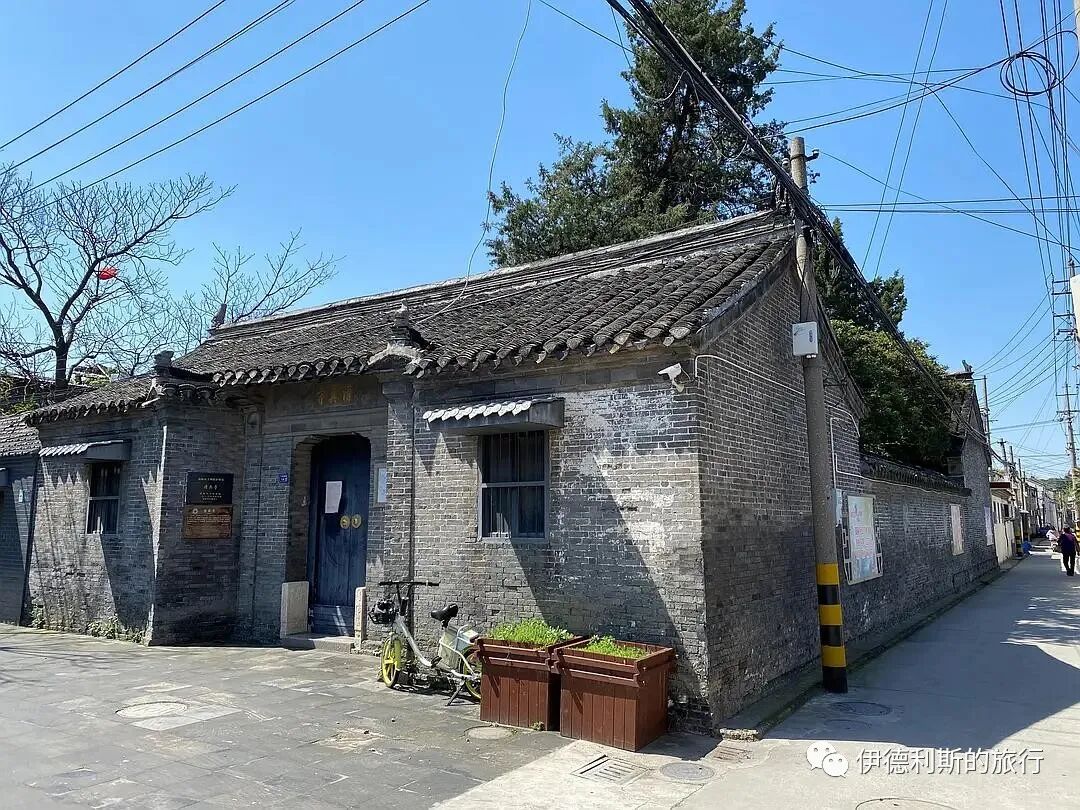
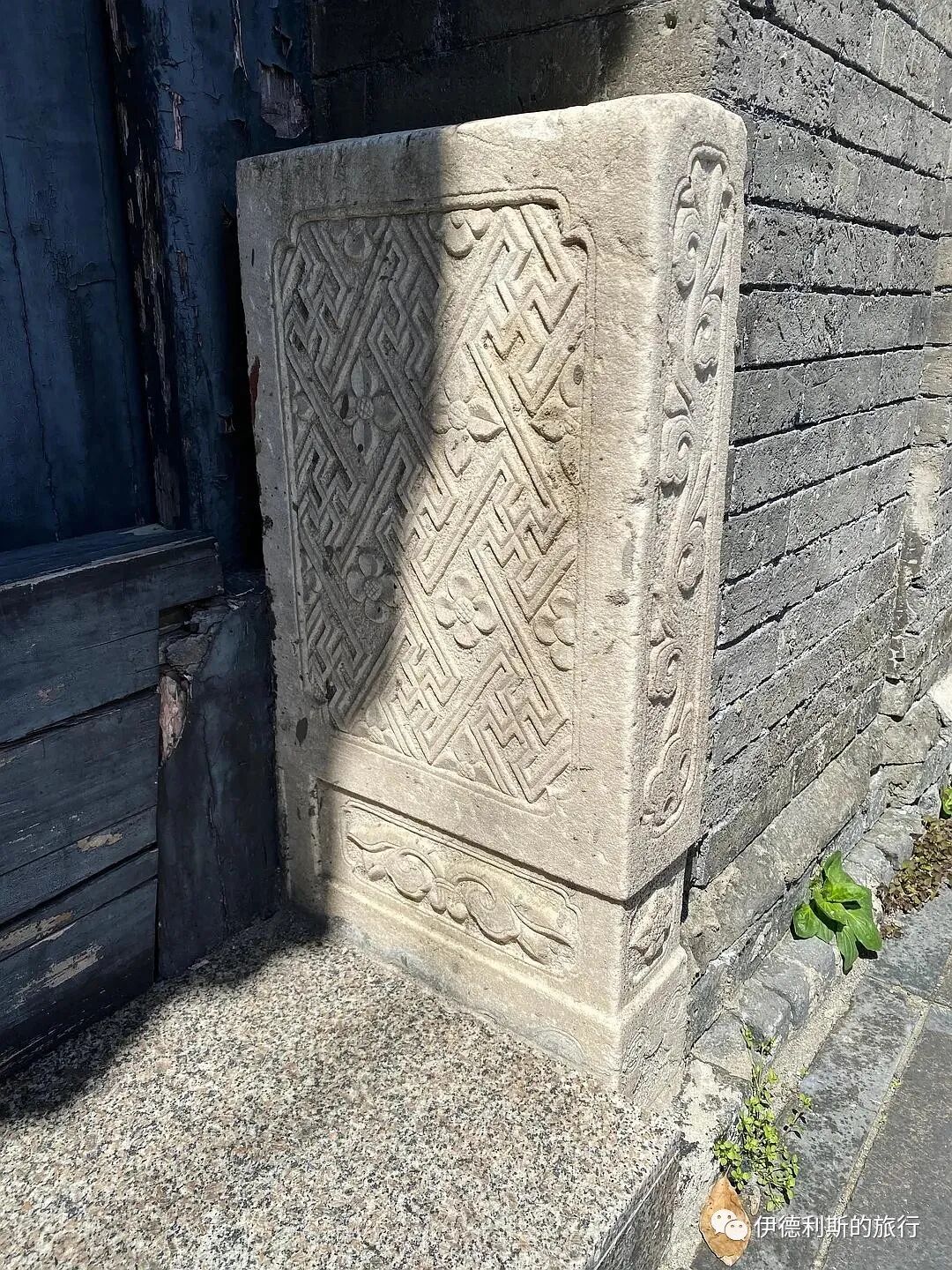
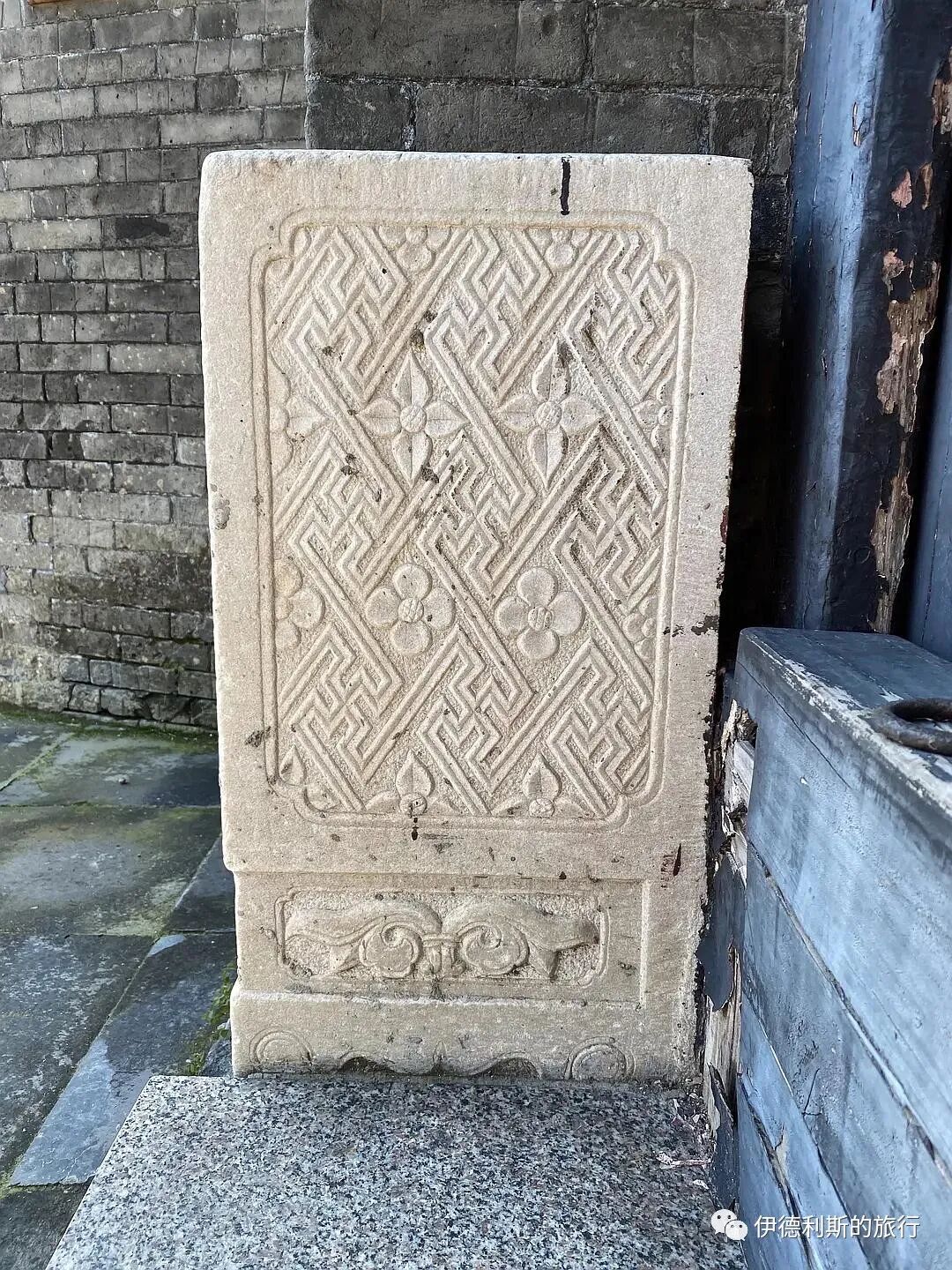
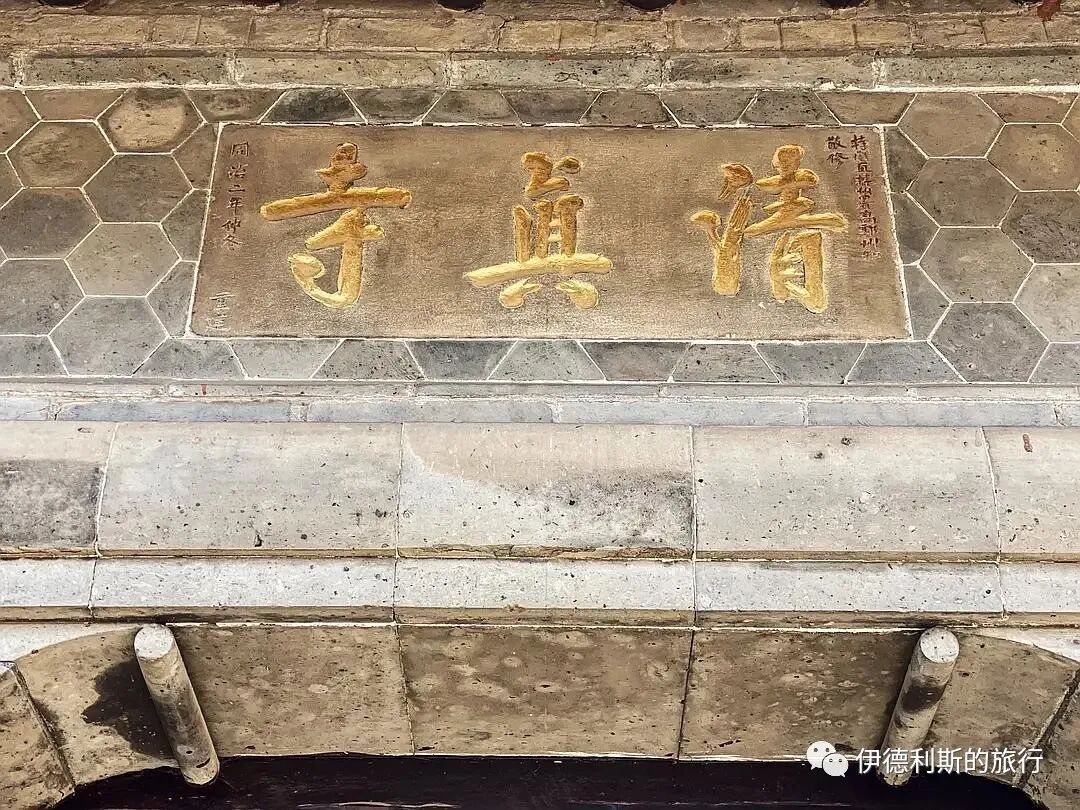
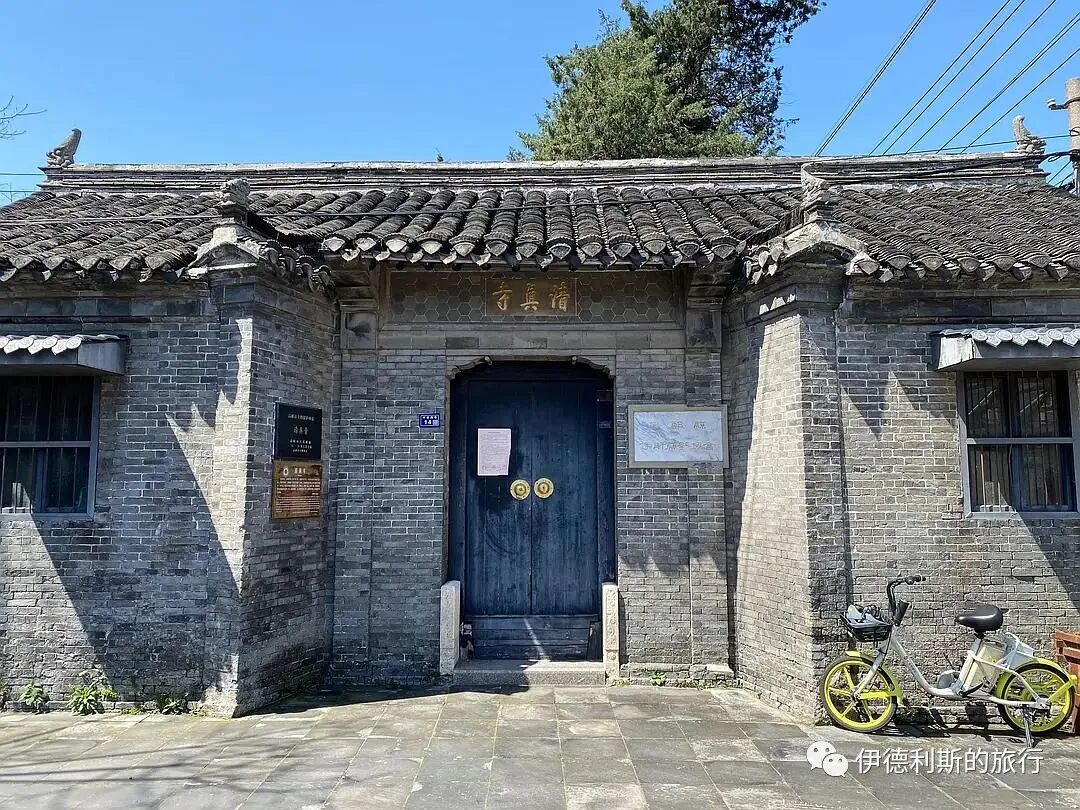
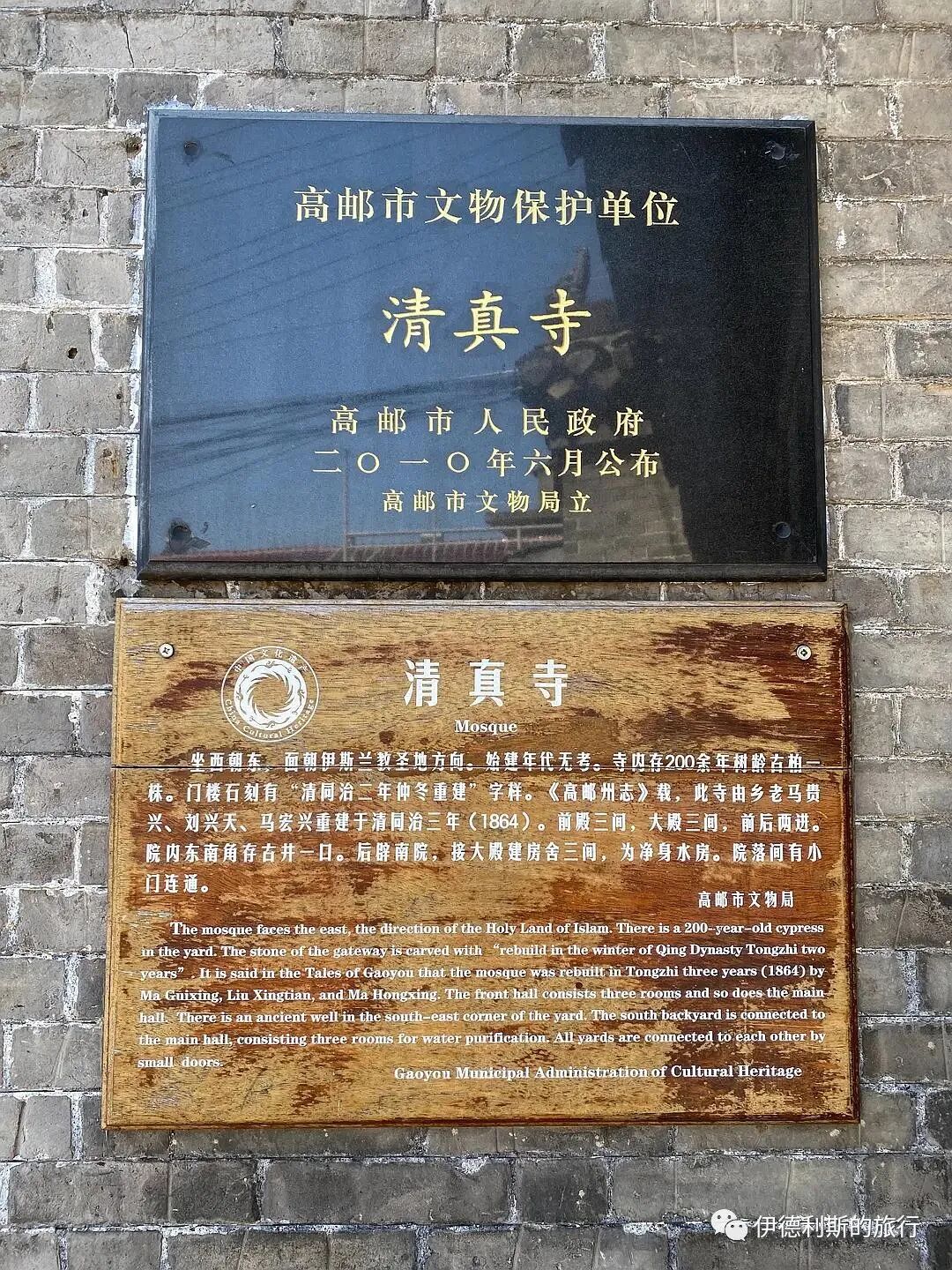
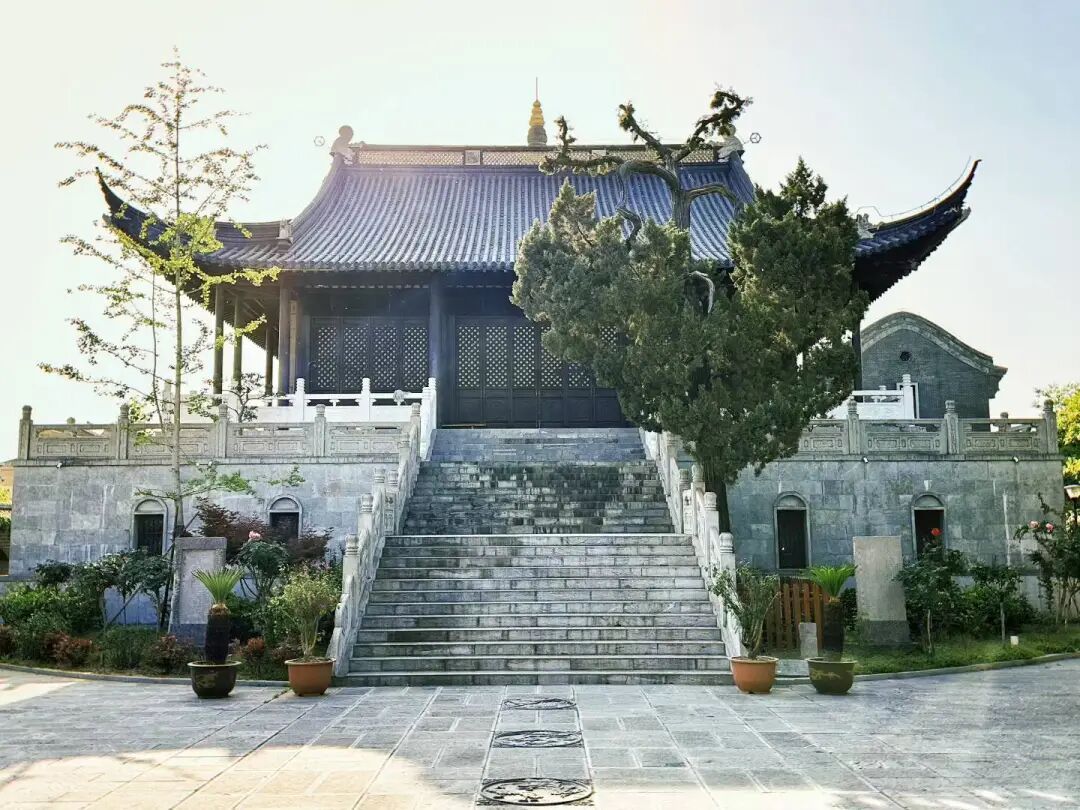
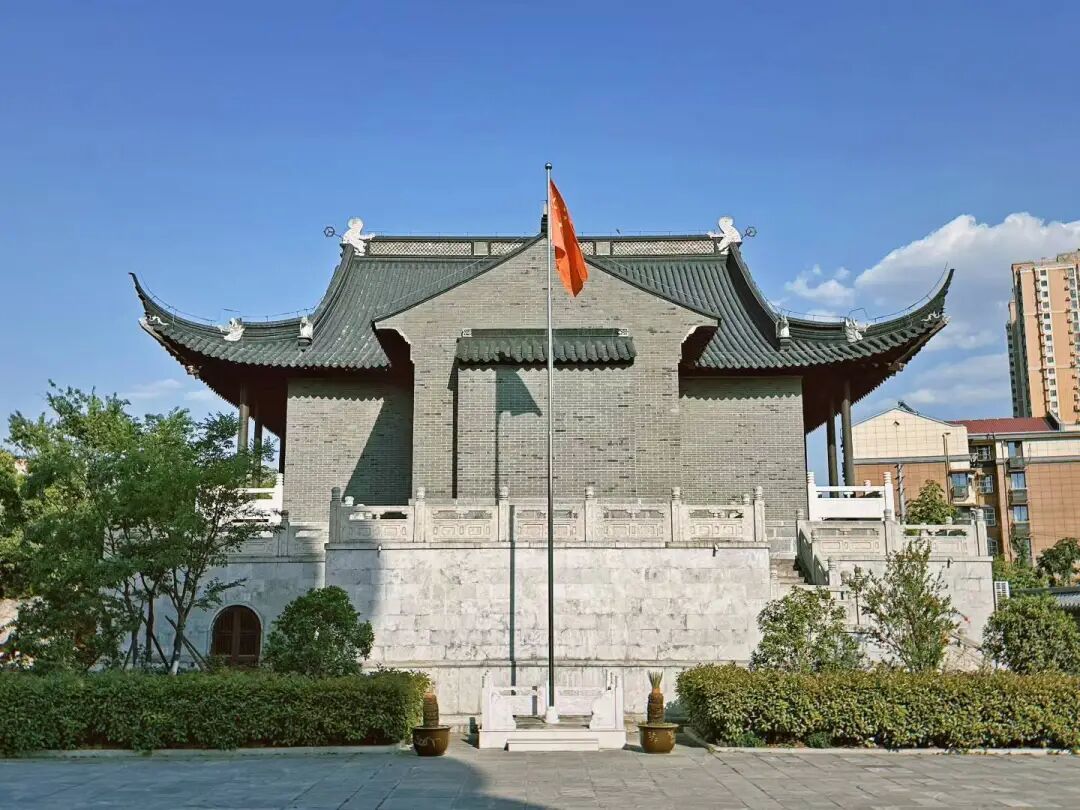
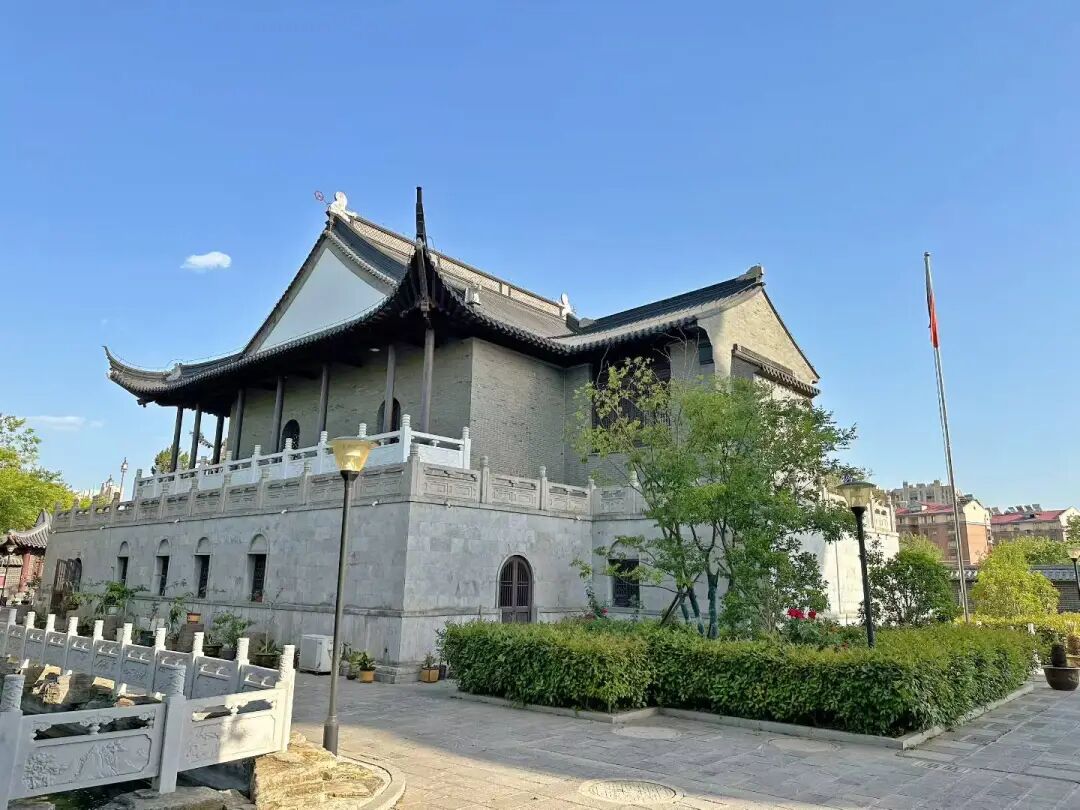
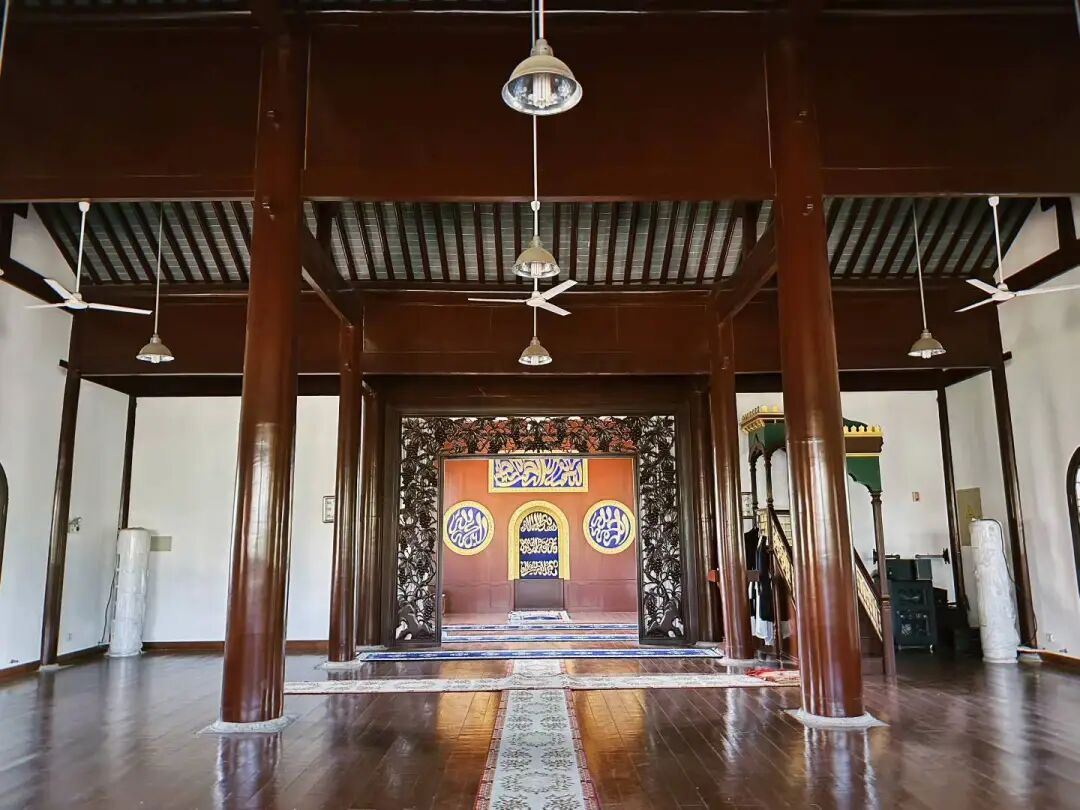
Gaoyou Mosque is a very beautiful traditional mosque. It is small and delicate, with the charm of a water town. The founding date of the mosque is unknown, but there is a cypress tree in the courtyard that is over two hundred years old. In 1864 (the third year of the Tongzhi reign), local elders Ma Guixing, Liu Xingtian, and Ma Hongxing rebuilt the mosque. The current entrance has a stone carving that says it was rebuilt in the middle of winter in the second year of the Tongzhi reign.
It was a pity that the mosque gate was locked when we arrived. We asked at a nearby noodle shop, and they said it only opens for Jumu'ah prayers. It seems I will have to wait for another chance to visit inside.
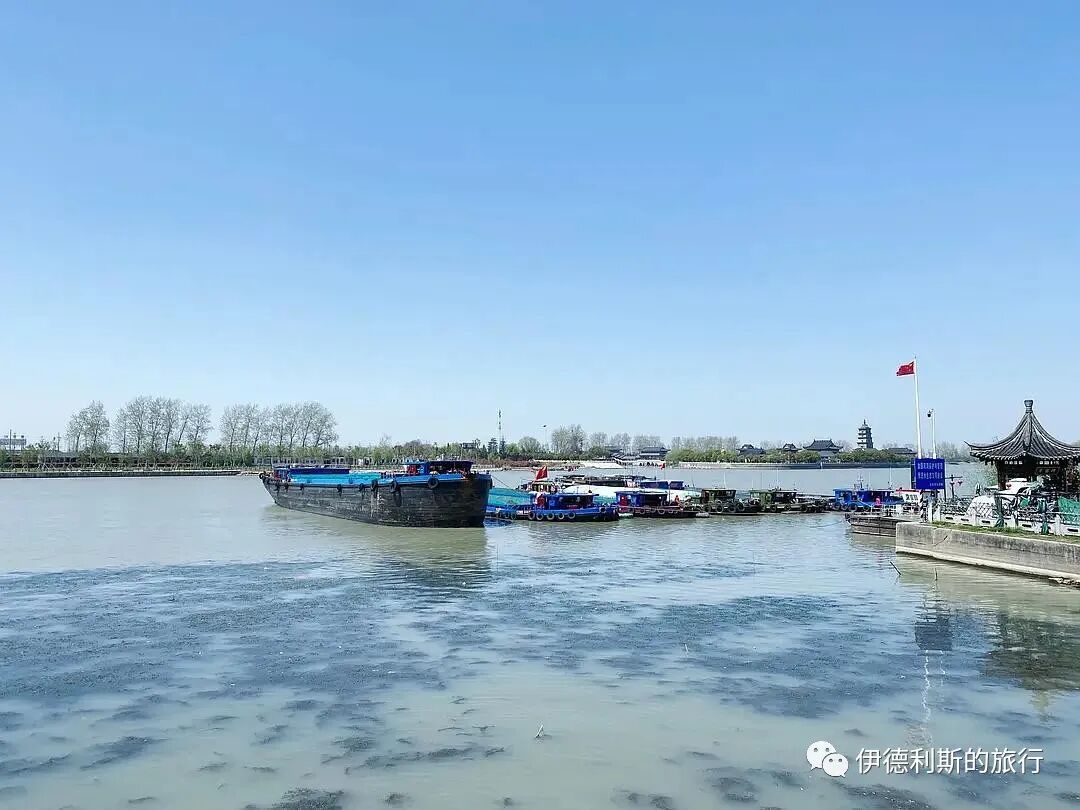
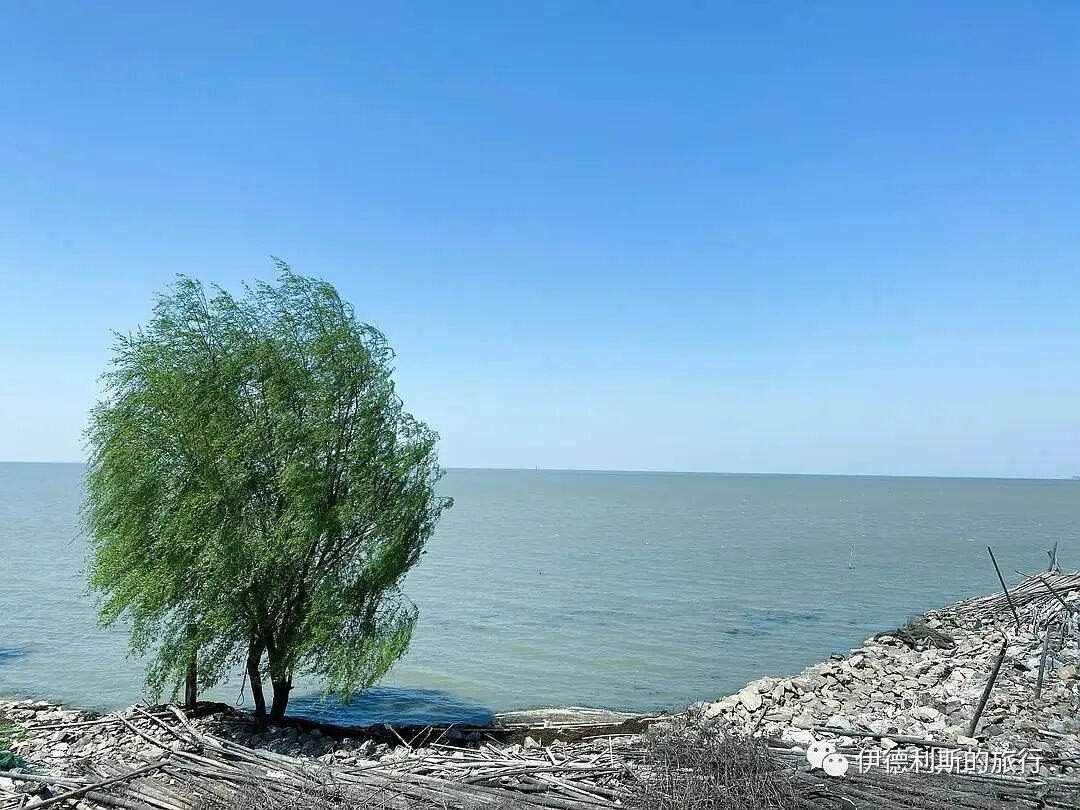
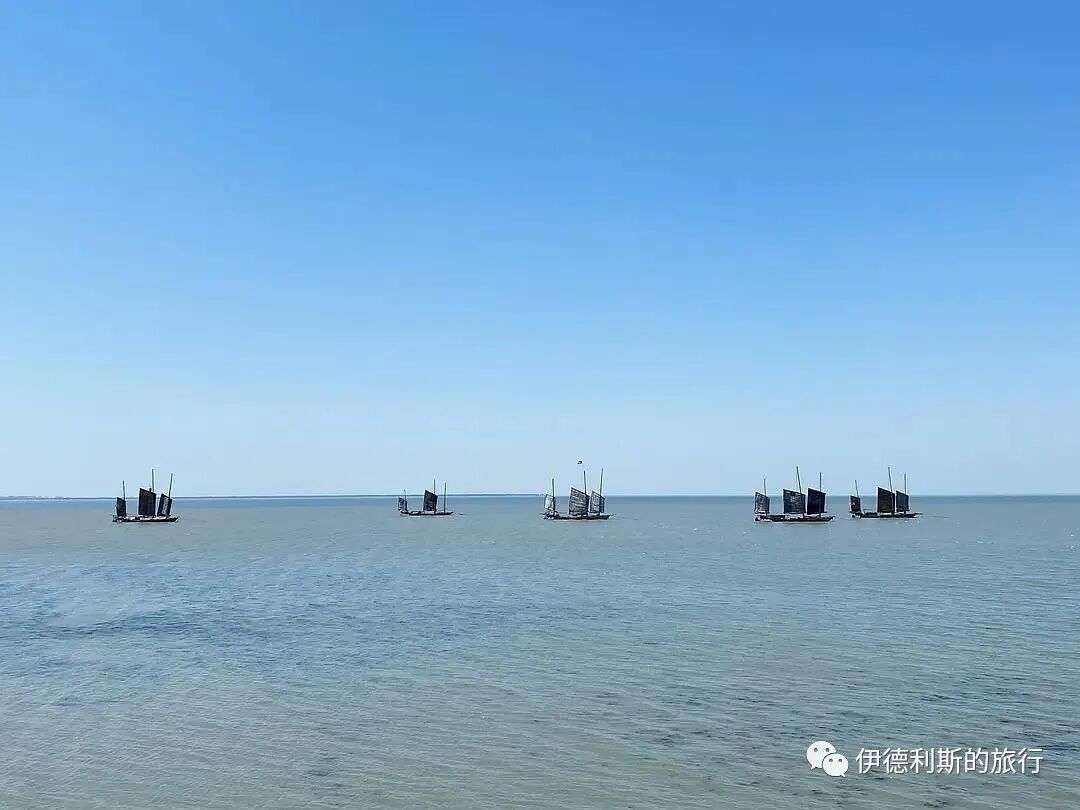
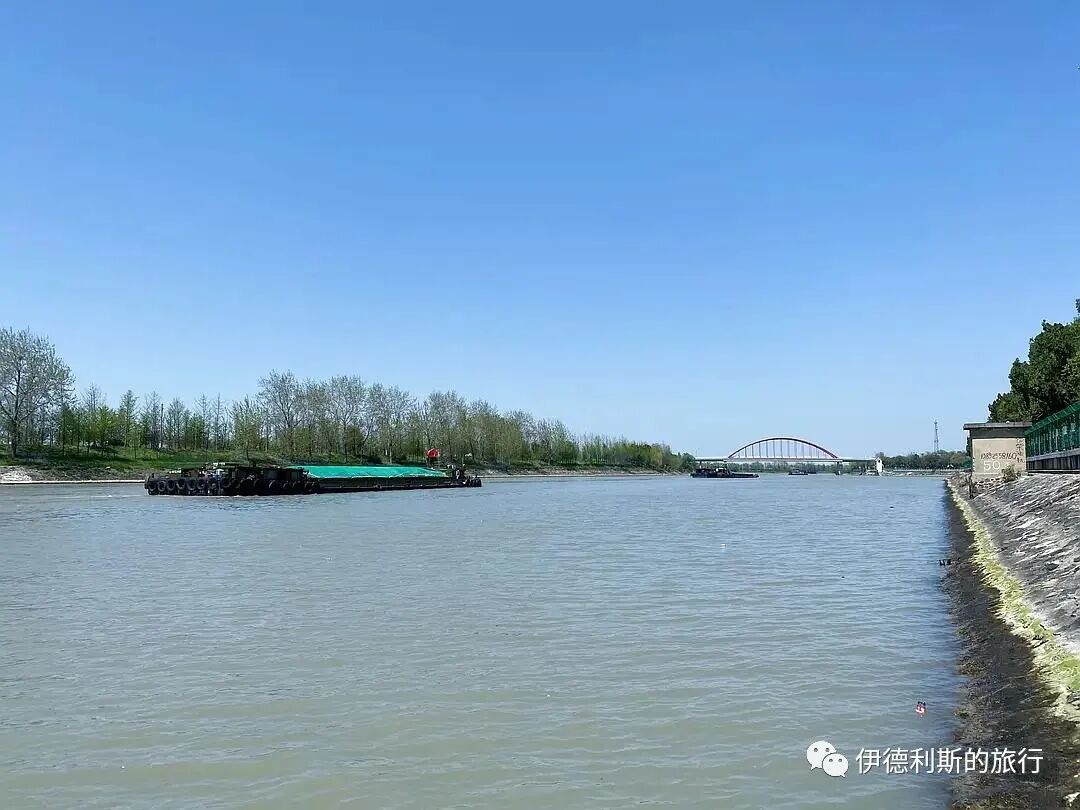
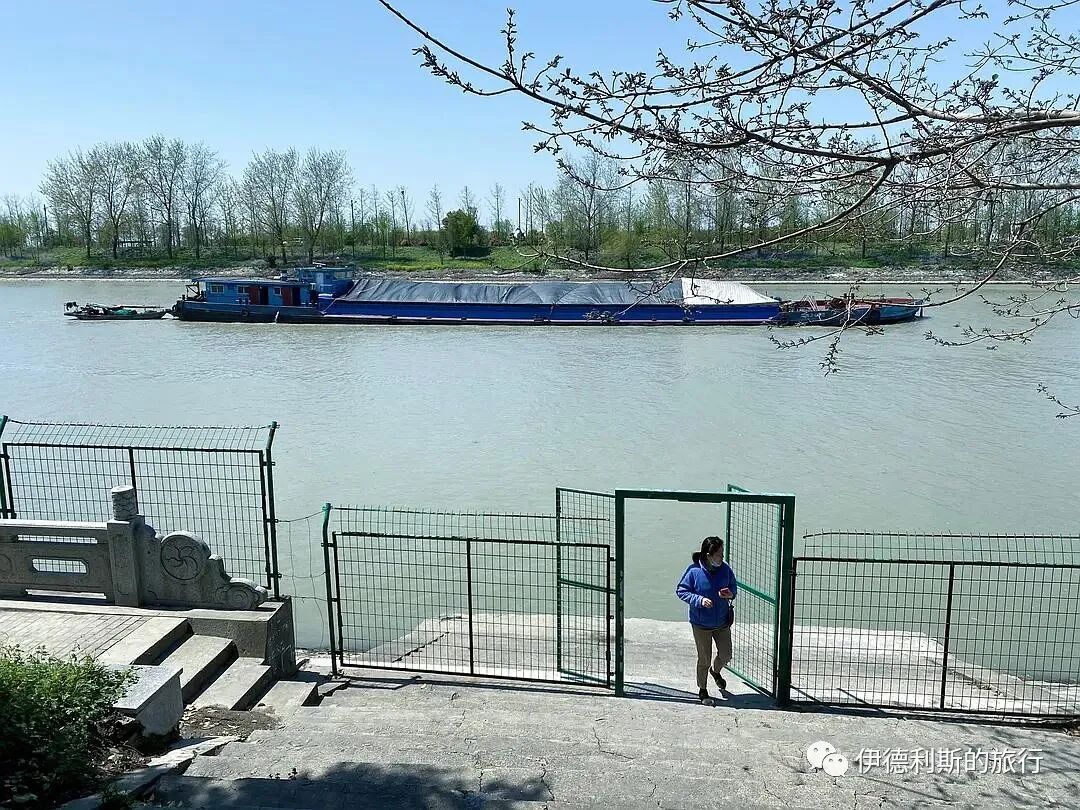
I wandered around Gaoyou, visiting Mengcheng Post Station and the West Dike. The Grand Canal and Gaoyou Lake run side by side, making it truly feel like a water town.
Lingtang
At noon, I took a taxi from Gaoyou to Lingtang Hui Muslim Township. Lingtang is the only Hui Muslim township in Jiangsu, home to the four major surnames: Yang, Xue, Li, and Sha. One branch of the Yang family moved here from Suzhou at the end of the Yuan Dynasty, and another branch moved from Suzhou during the Qing Dynasty. The Xue family moved here from Xuebeizhuang in Gaoyou during the Qing Dynasty, later converted to Islam, and for generations have mostly only married into the Yang family. The Sha surname is said to come from the Persian word "Shah," as they are descendants of Persian ancestors from the Huihuiwan area during the Yuan Dynasty.
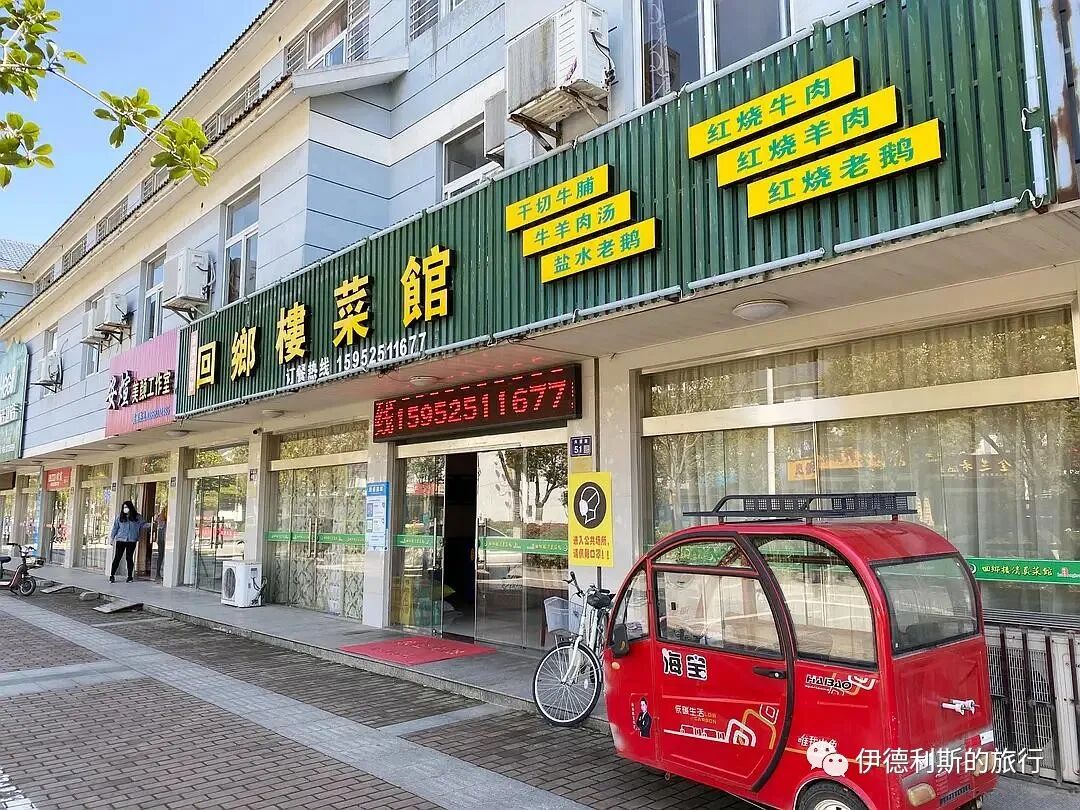
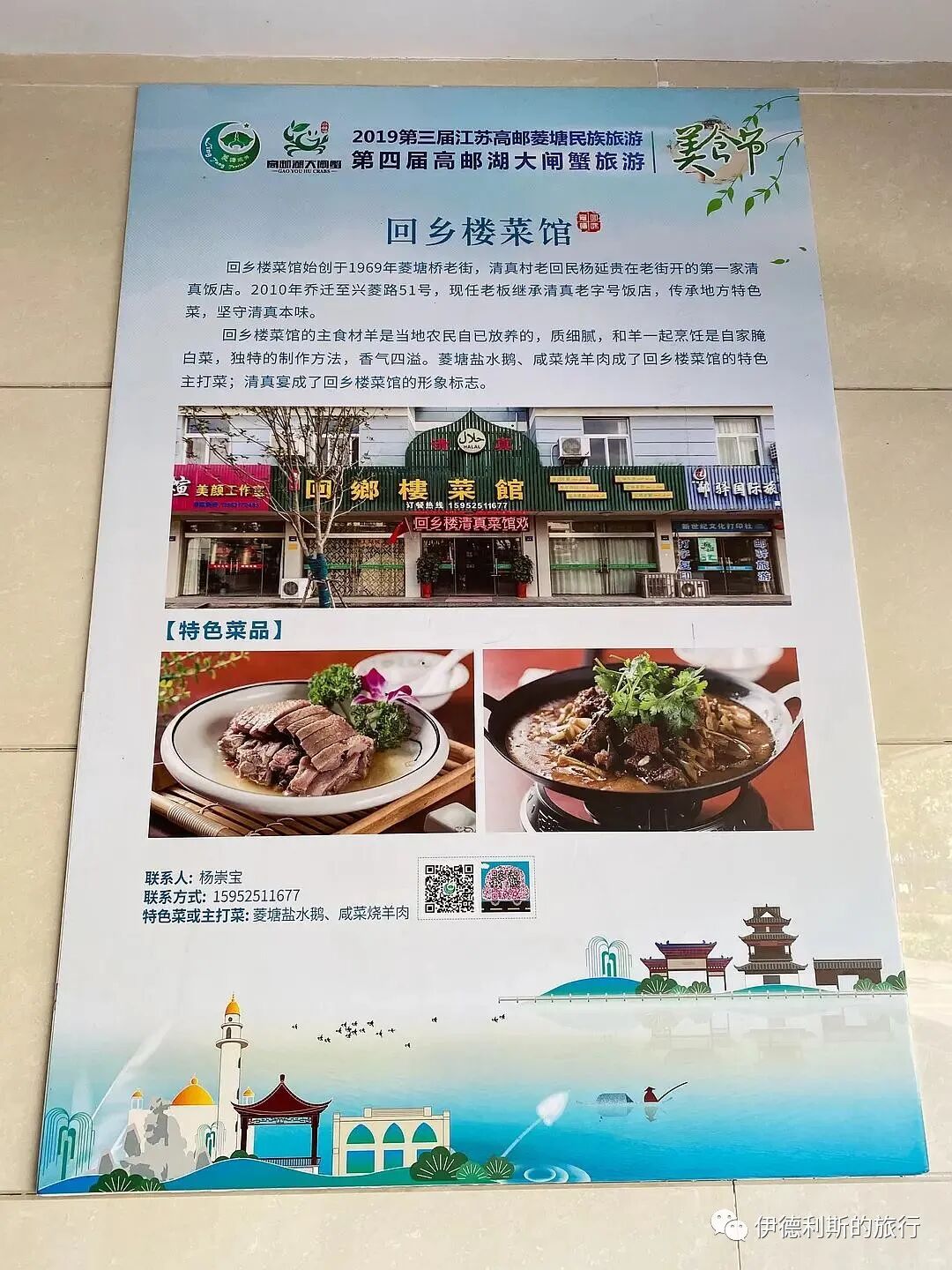
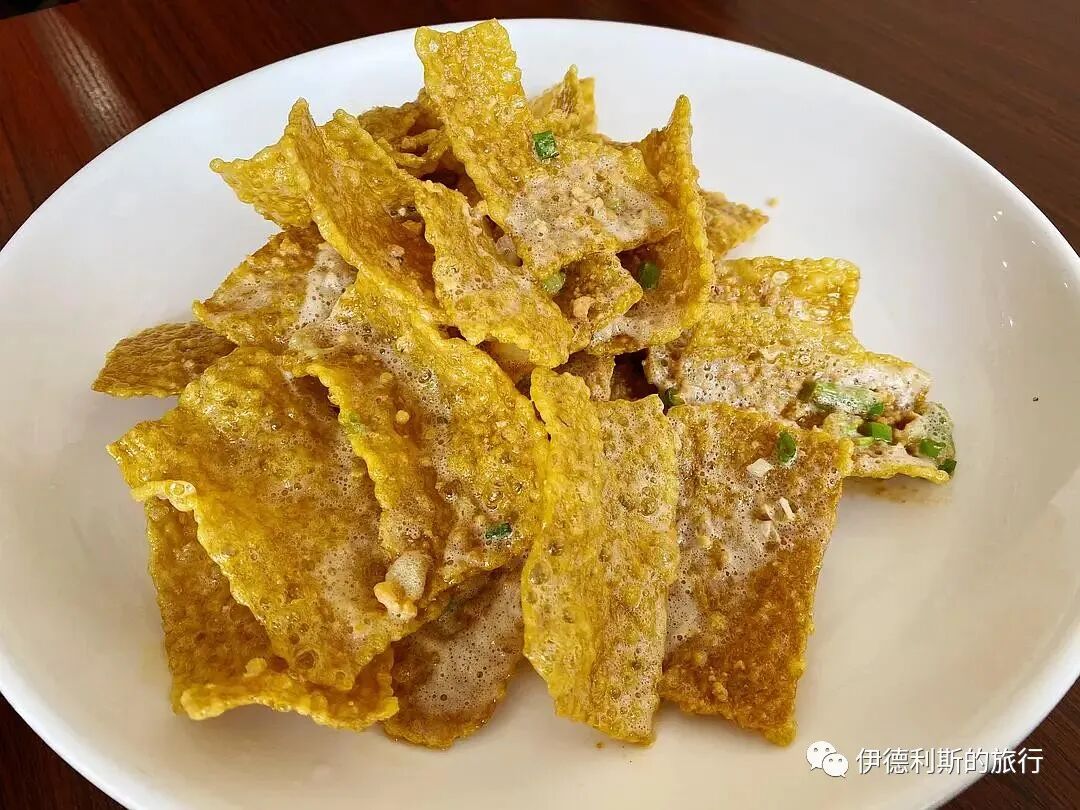
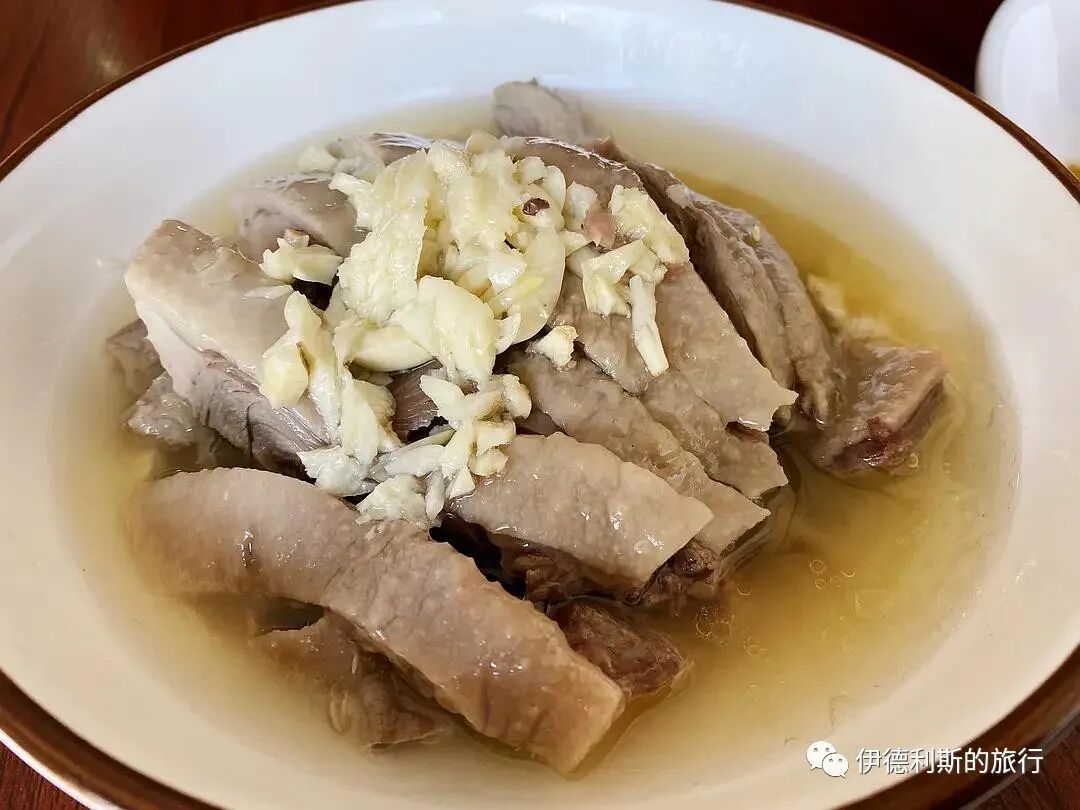
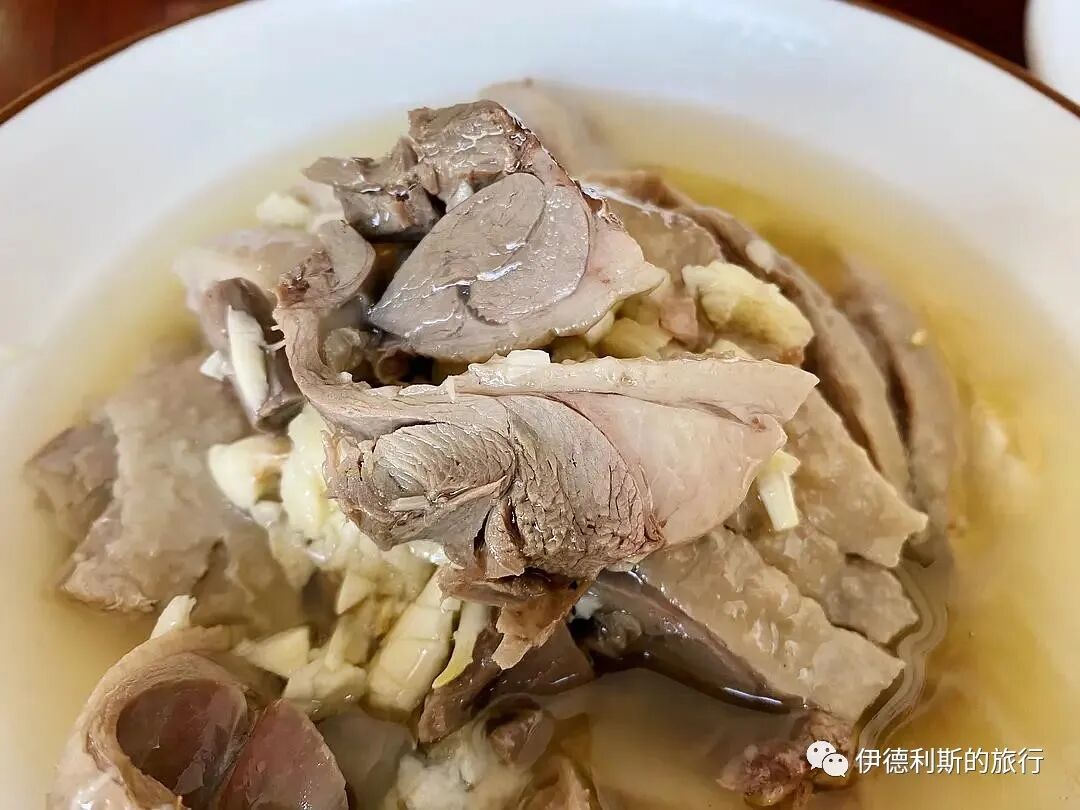
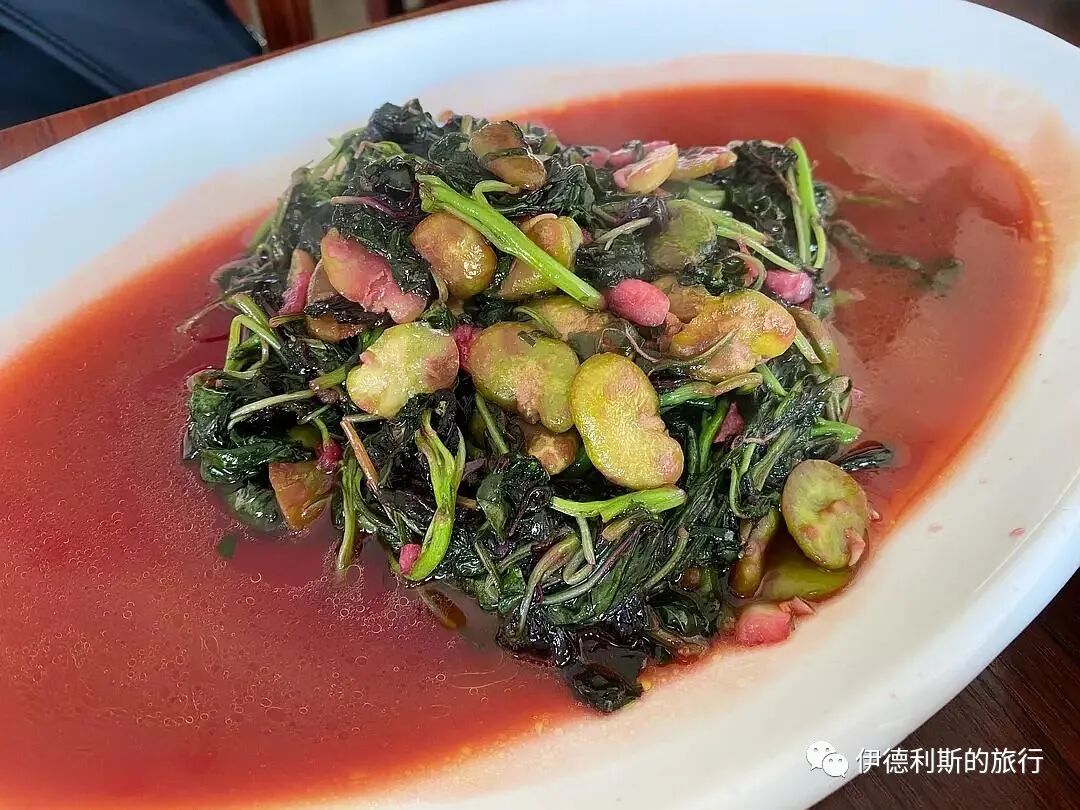
At Huixianglou Restaurant, I ate salted goose (yan shui e), egg yolk stir-fried buckwheat slices (dan huang shao ku qiao pian), amaranth stir-fried with fava beans (xian cai chao can dou), and beef wing soup (niu chi tang), all of which are local specialties. The founder of Huixianglou, Yang Yangui, opened a halal restaurant on Lingtang Bridge Old Street in 1969. It moved to its current location in 2010 and specializes in Lingtang salted goose from Gaoyou Lake.
At the end of the Yuan Dynasty, a mosque was built in "Huihuiwan" by the side of Gaoyou Lake in Lingtang, but it was later destroyed by a flood. In the mid-Ming Dynasty, the mosque moved to Yangdazhuang, then to its current site in the early Qing Dynasty. It was rebuilt in 1844 (the twenty-fourth year of the Daoguang reign), expanded again in 1921, and completed in 1924.
The golden osmanthus tree (jin gui shu) next to the kiln hall (yao dian) was planted when local elder Xue Yukuan and his wife, Mrs. Xue Yang, asked an imam to recite the Nikah. It has a history of over 130 years.
The exhibition hall of the Yangzhou Lingtang Mosque displays a water kettle (tang ping hu) made and gifted by the Jizhaoying Mosque in Nanjing during the Qing Dynasty, a Republic-era water kettle, a copper Xuande incense burner (tong xuande lu), a blue and white porcelain incense burner, and the steamer (guo zheng zi) and bucket (diao tong) from the mosque's 1950s washroom. The steamer was used to boil hot water, and the bucket had a hole at the bottom; you could pull out the wooden plug to take a shower.
The mosque is also the inheritance site for the Yangzhou intangible cultural heritage, "Hui Muslim Customs of Lingtang Hui Muslim Township."
Yangzhou
In the afternoon, I took a taxi from Lingtang to Yangzhou, visiting the Yangzhou Xianhe Mosque for the second time after four years.
Yangzhou's Xianhe Mosque is one of the four great ancient mosques in Southeast China, along with the Phoenix Mosque in Hangzhou, the Lion Mosque in Guangzhou, and the Qilin Mosque in Quanzhou. It was founded in 1275 (the 12th year of the Zhiyuan era of the Yuan Dynasty) by the Western sage Puhading before he passed away. It was rebuilt in 1390 (the 23rd year of the Hongwu era of the Ming Dynasty) by Ha San, renovated in 1523 (the 3rd year of the Jiajing era) by the merchant Ma Zongdao and the imam Ha Ming, and repaired again in 1791 (the 56th year of the Qianlong era).
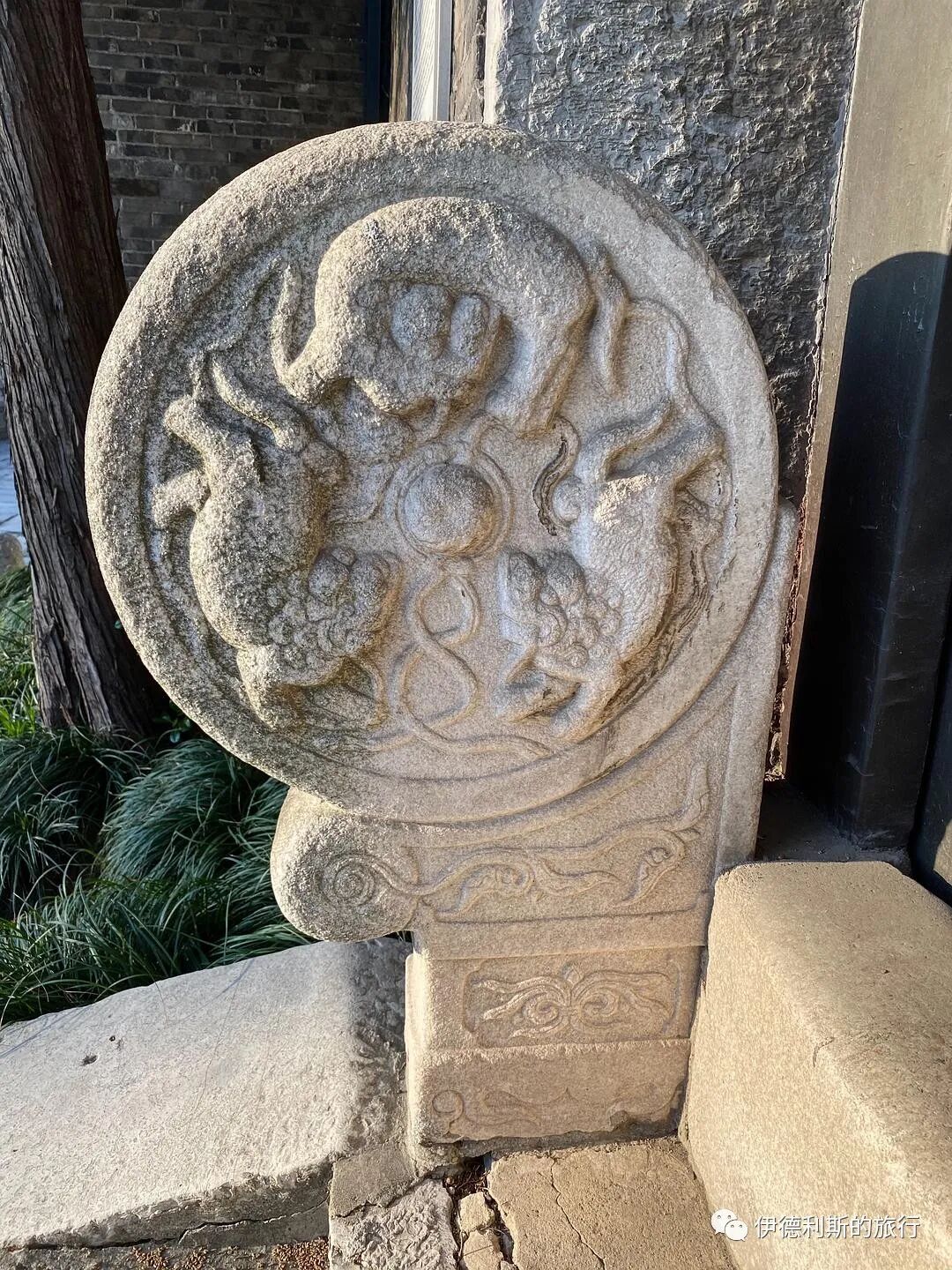
The gatehouse has a single-eave, ridge-roofed hard-mountain style, with some wooden parts dating back to the Ming Dynasty. The Ming Dynasty drum-shaped stone bases in front of the gate are very exquisite and rare among mosques in China.
The Xianhe Mosque layout uses small courtyards, unlike the four-sided courtyard (siheyuan) layout common in northern mosques. Xianhe Mosque divides the lecture hall, the main prayer hall, and the gate into three separate small courtyards. It also features a moon-viewing pavilion and a covered walkway outside the south gable of the main hall, giving the mosque a garden-like atmosphere.
Inside Xianhe Mosque stands a 745-year-old ginkgo tree, the oldest surviving ginkgo in Yangzhou.
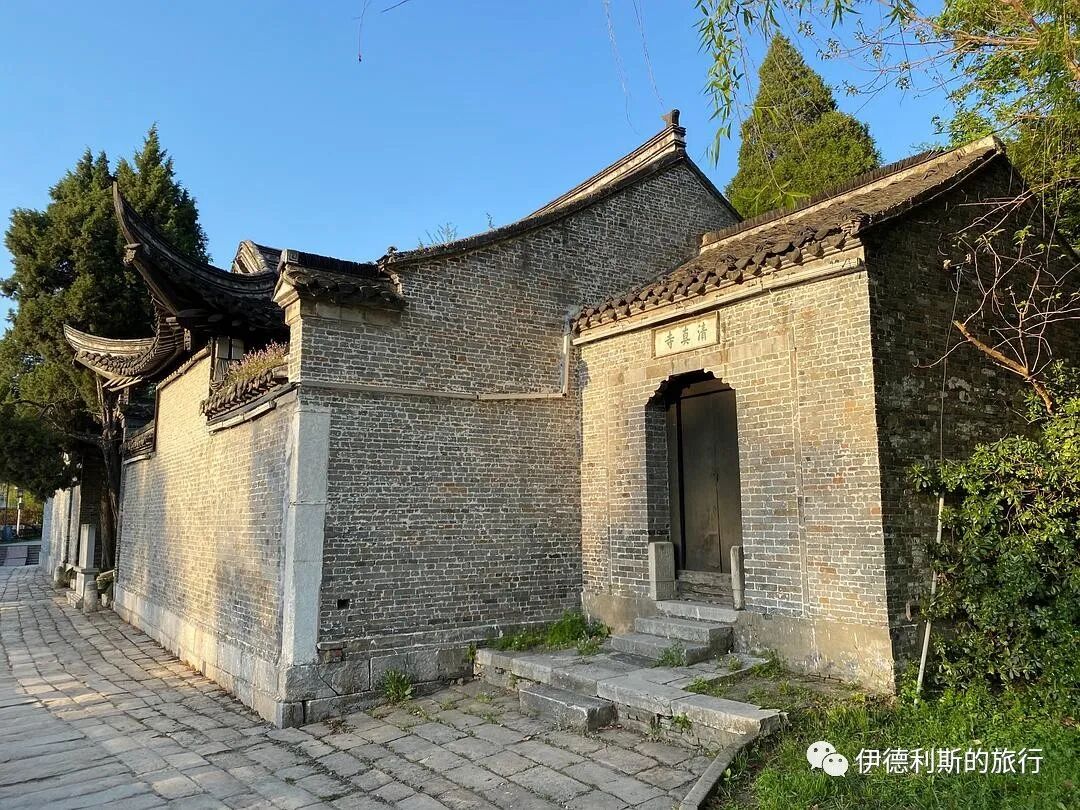
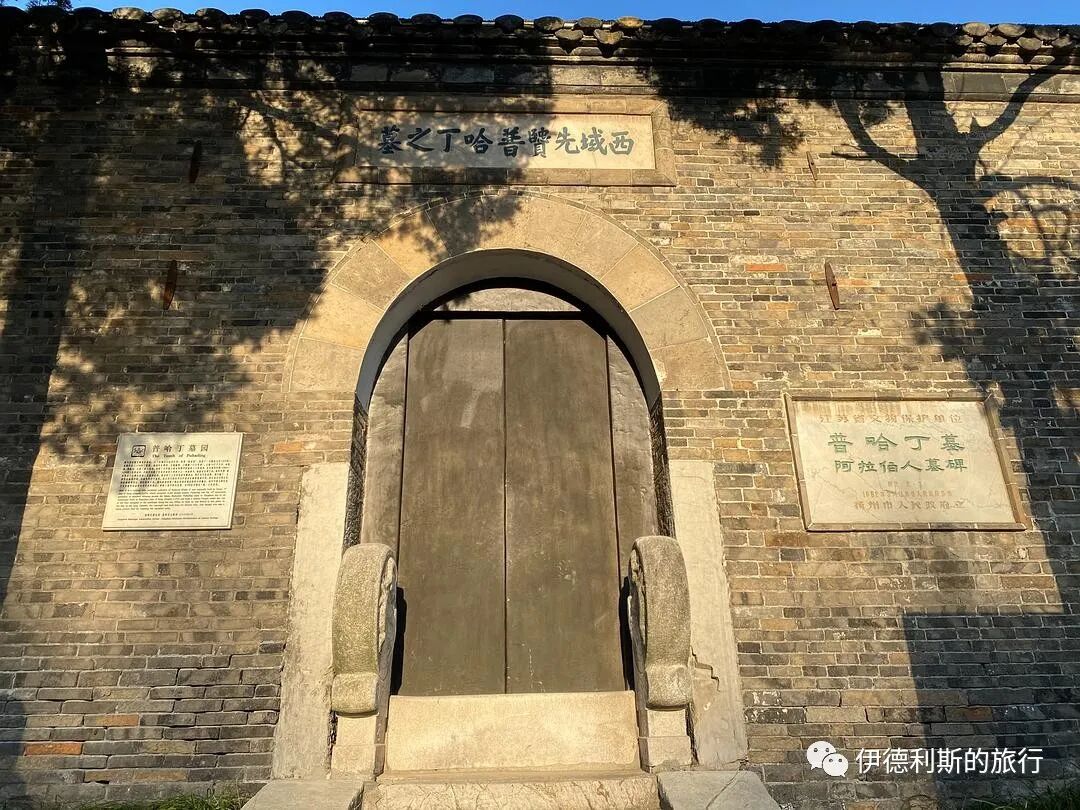
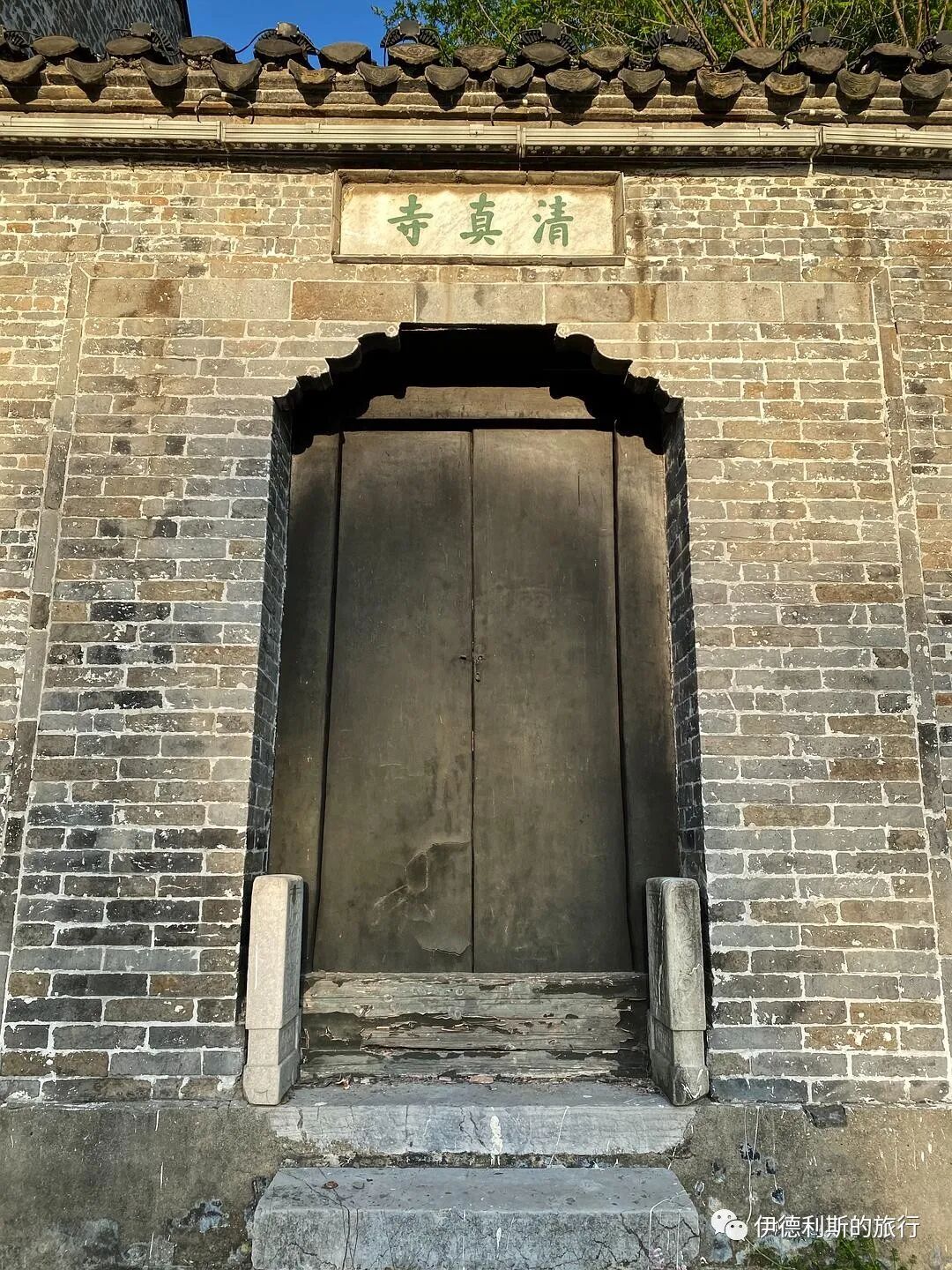
From Xianhe Mosque, I went to the Puhading Tomb, but it was already locked after closing time, so I could not get in. Puhading is said to be a 16th-generation descendant of the Prophet. He came to Yangzhou during the Xianchun period of the Song Dynasty (1265–1274) and died in Yangzhou in 1275 (the 12th year of the Zhiyuan era of the Yuan Dynasty). He was buried on a high ridge east of the East Gate River in the New City, a place later called Huihui Hall (commonly known as Baba Kiln). However, I had already explored the tomb carefully in 2016, so I did not feel it was a regret.
Behind the mihrab of the mosque at the Puhading Tomb.
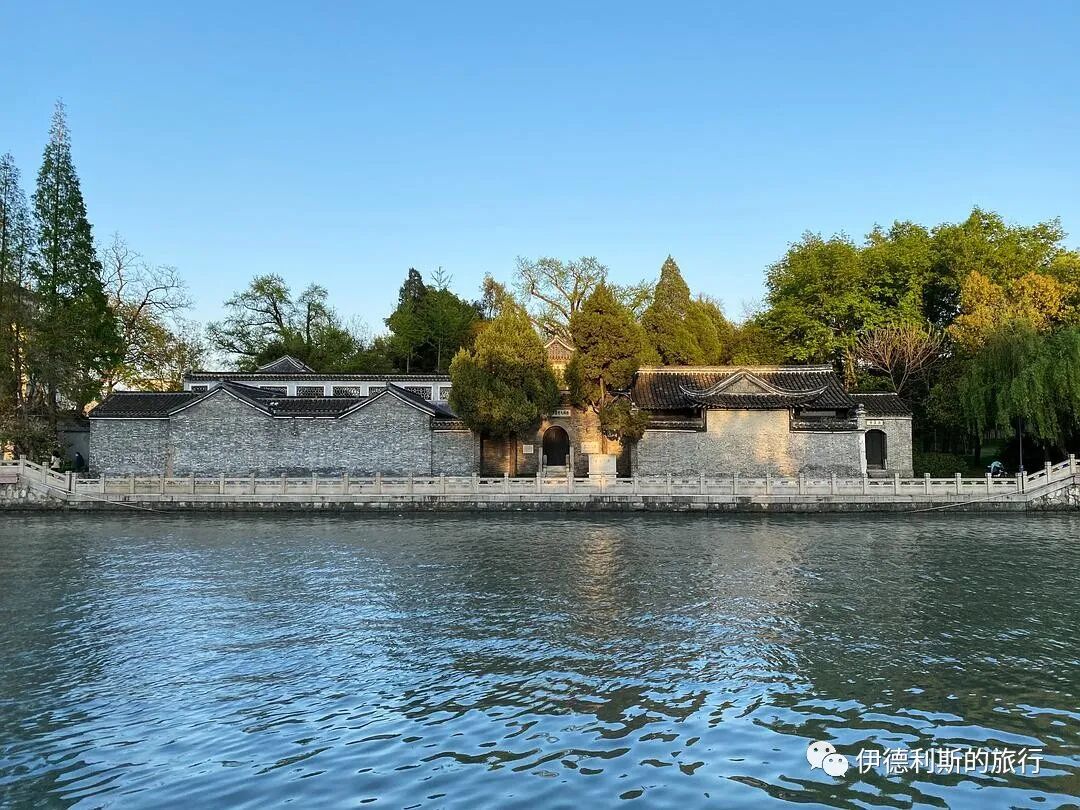
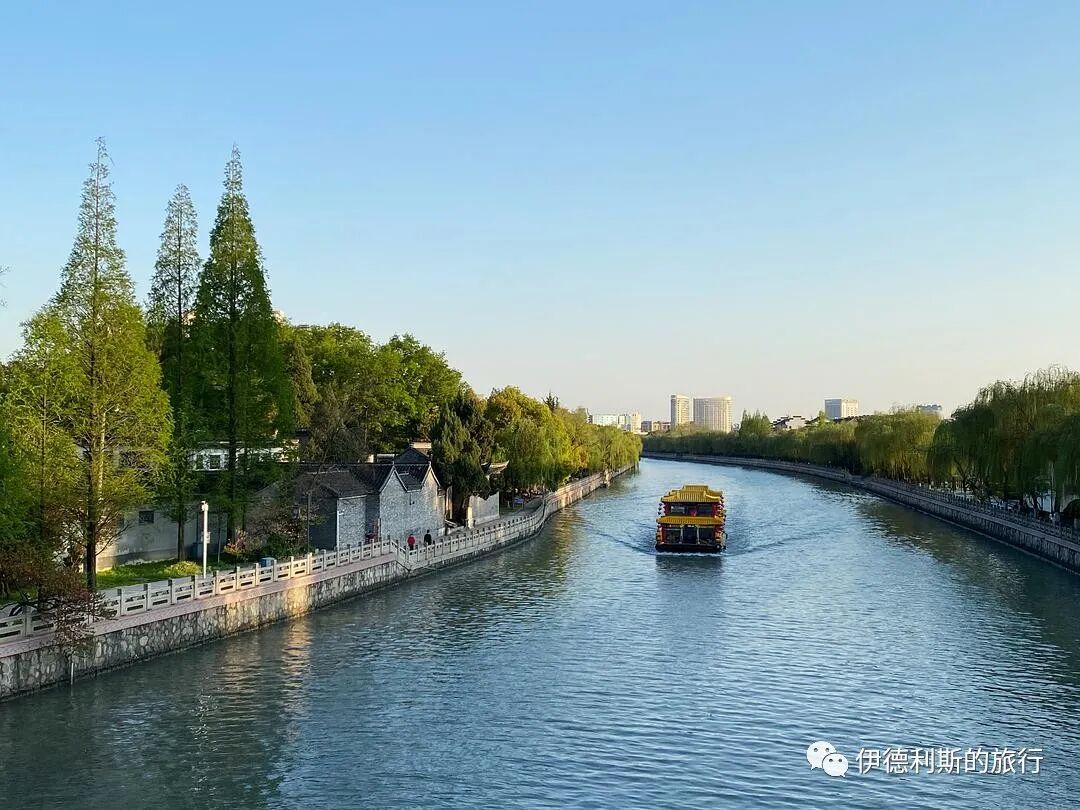
Looking at the Puhading Tomb from the banks of the Grand Canal, watching the sunlight hit the bricks and feeling the breeze, I felt very relaxed.
The disappearance of local halal food in Yangzhou is a great pity. From the Qing Dynasty to the Republic of China, Yangzhou's halal food scene was once very popular. During the Republican era, there were over ten famous halal restaurants. Famous Peking opera actors Zhou Xinfang and Cheng Yanqiu would eat at the most famous halal restaurant at the time, Tianxing Restaurant, whenever they came to Yangzhou to perform.
During the Republic of China, Yangzhou also had over ten halal chicken and duck shops, over ten beef shops, more than thirty sesame flatbread (shaobing) shops, and two tea houses. The most famous chicken and duck shop was Linyuanxing, which later became the predecessor of Hongxing, the only halal restaurant left in Yangzhou. Linyuanxing was good at making oil-poached chicken and salted duck. At that time, it not only had multiple shops in Yangzhou but also had branches and stalls in Shanghai, Suzhou, and Zhenjiang.
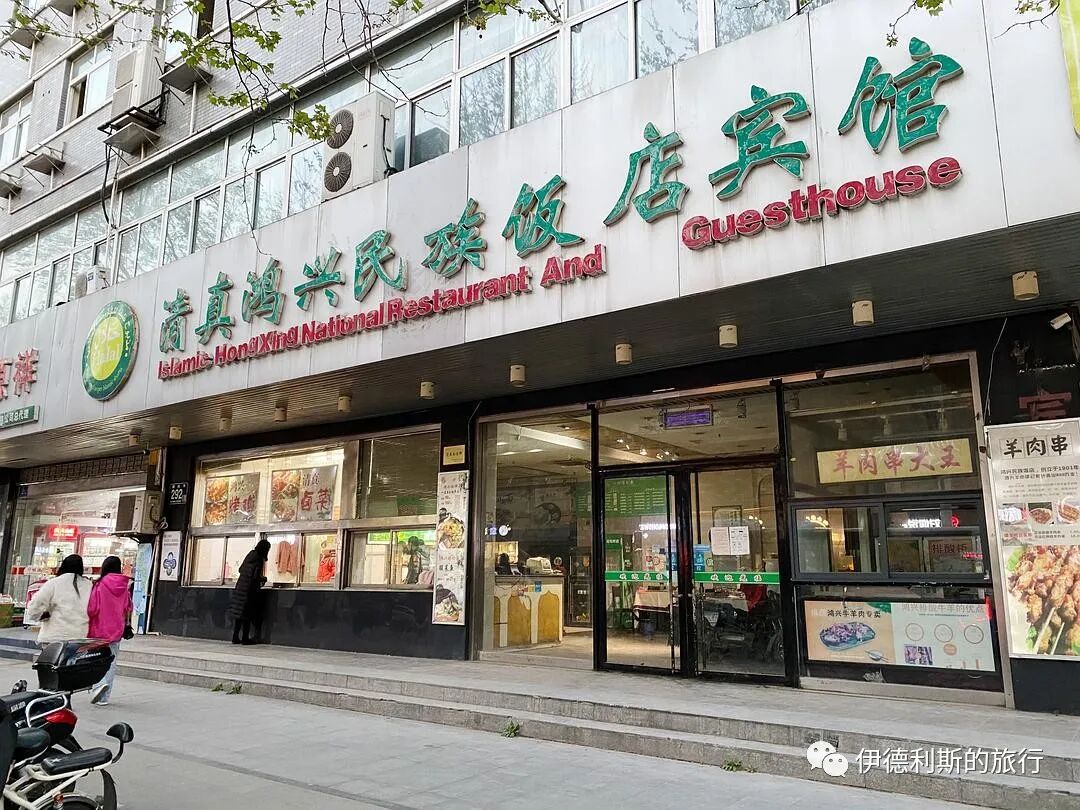
Yangzhou's halal food industry declined sharply after 1949. When I visited in 2016, the only places serving local food were Tianxingzhai, which used the name of the old Tianxing Restaurant, Yixiangzhai next to the Puhading Tomb, and the old brand Hongxing. When I visited again in 2021, Tianxingzhai had become a small barbecue shop, Yixiangzhai had closed, Hongxing was under renovation with only a snack window, and the rest were just Lanzhou hand-pulled noodle (lamian) shops.
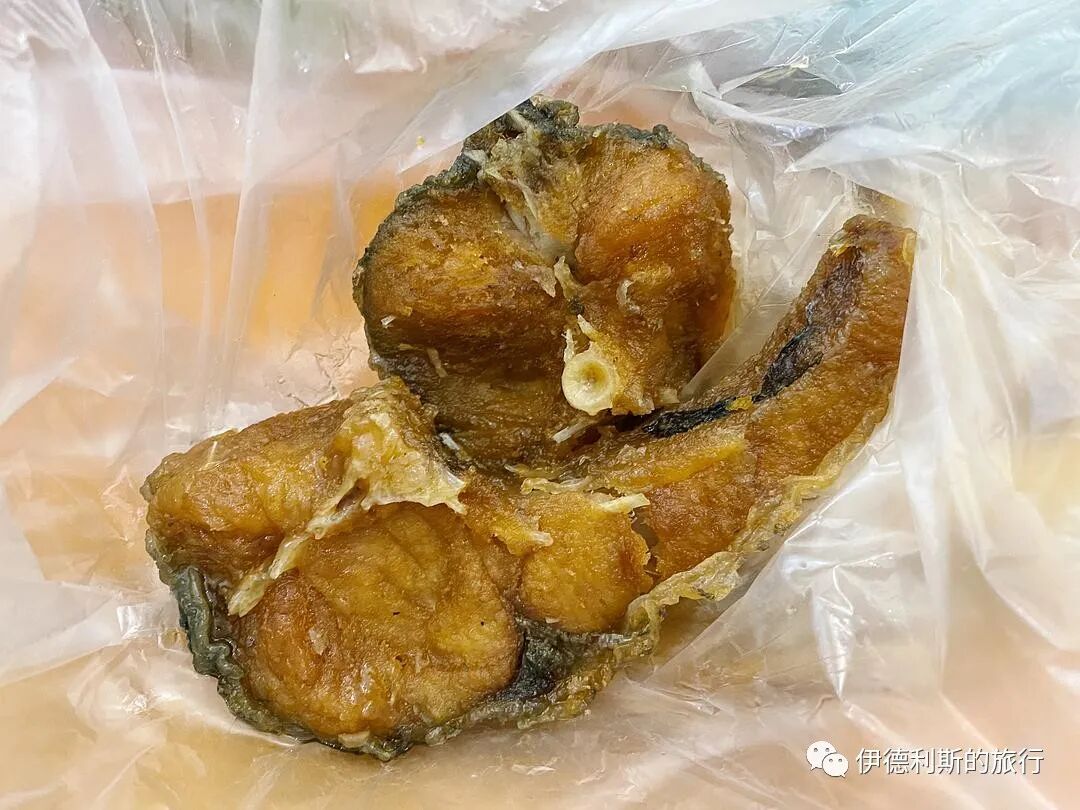
We bought vegetarian chicken and smoked fish at Hongxing. The preparation was similar to the style in Nanjing, and it was the only local Yangzhou halal food we could find during the 2021 Qingming Festival (I heard Hongxing is finished with renovations now, and inshaAllah I will have a chance to taste it again).
Zhenjiang
On the morning of April 5, I took the high-speed train from Yangzhou to Zhenjiang. I rode an e-bike to Yongan Road to eat beef vermicelli soup at Hualiji. The soup was slightly sweet and very refreshing.
The Hua family of Hui Muslims moved to Zhenjiang from Taierzhuang, Shandong, during the Taiping Rebellion. The Taiping Rebellion caused heavy damage to Zhenjiang, leading to a large population decrease and the arrival of many people from the north. This is one of the reasons why Zhenjiang eventually changed from a Wu-speaking area to a Jianghuai Mandarin-speaking area. Huali Ji is a family of halal butchers in Zhenjiang. They have been in business for six generations, starting from the Daoguang era. In 2002, they moved from the Zhenjiang mosque to their current location on Yongan Road.
Next, I went to the newly opened Yang Family Halal Restaurant (Yangjia Qingzhen Guan) next to Muyuan Restaurant. I had beef wontons, dried tofu strips (gansi), and pan-fried buns (jianbao). This place was opened in Zhenjiang by Hui Muslims from Heze, Shandong.
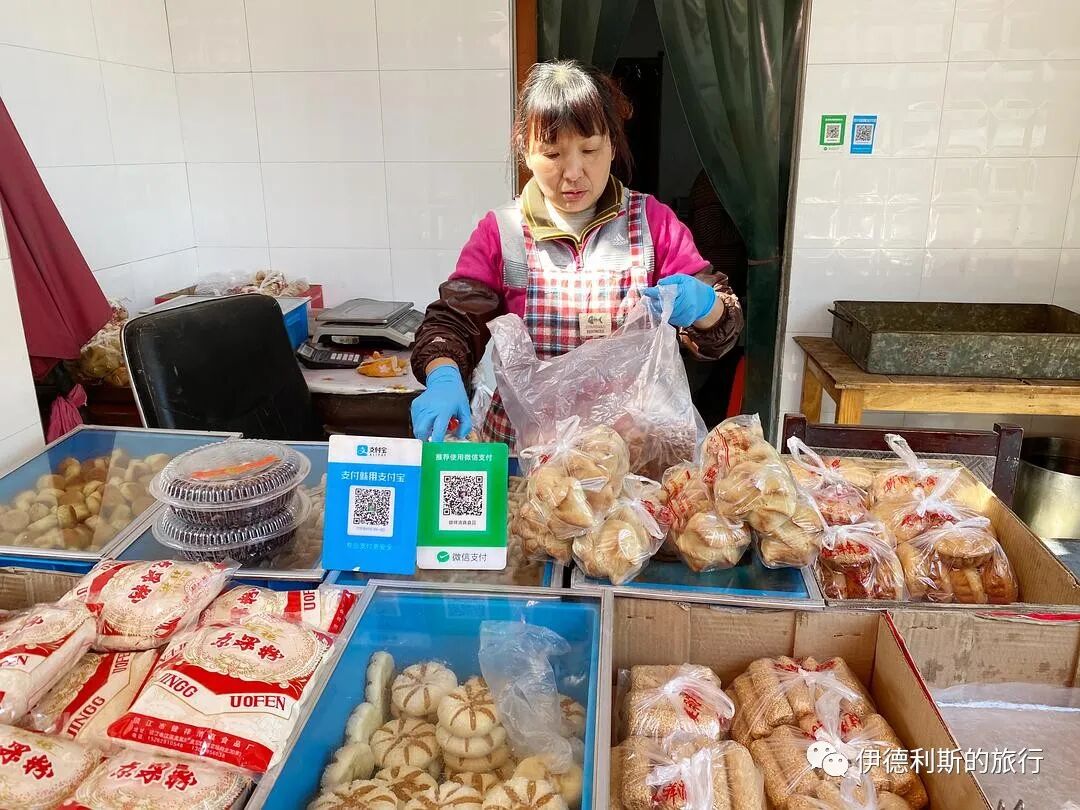
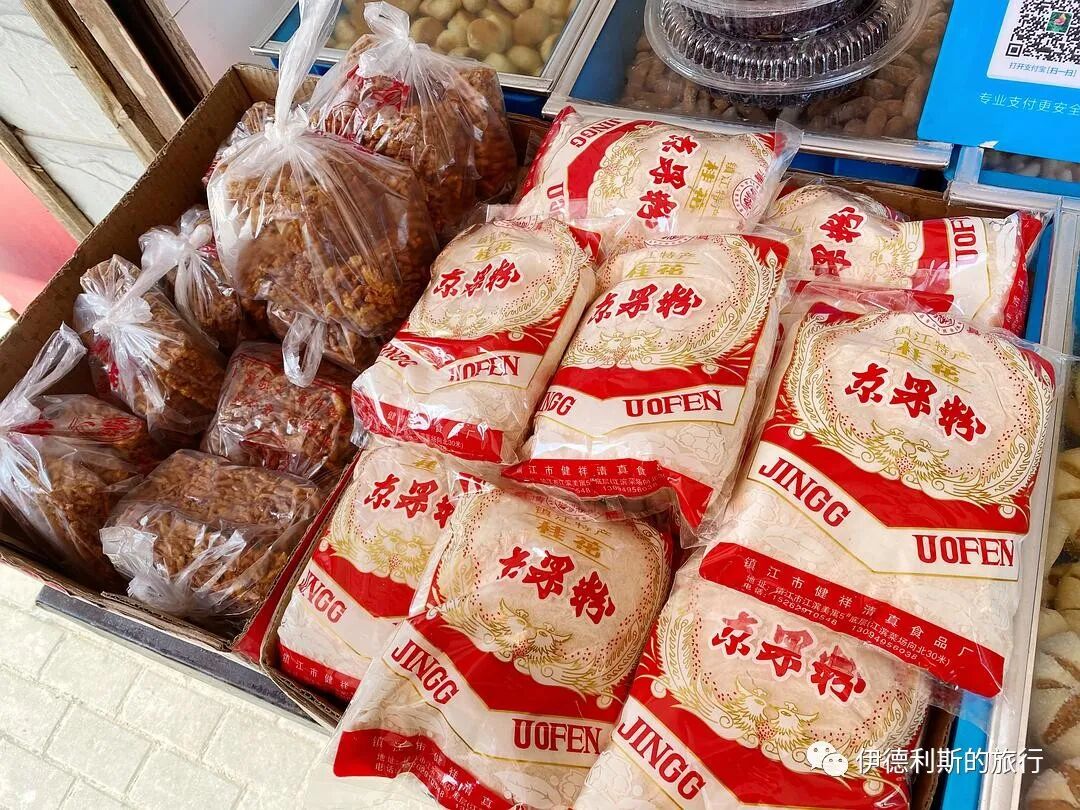
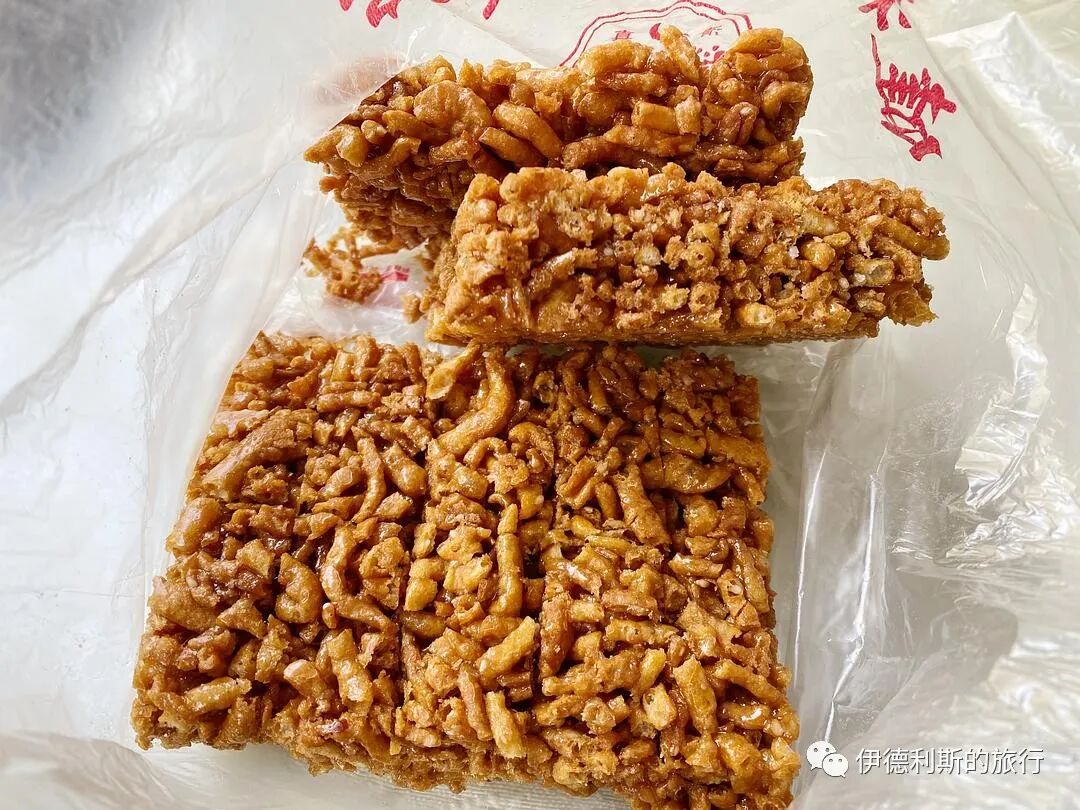
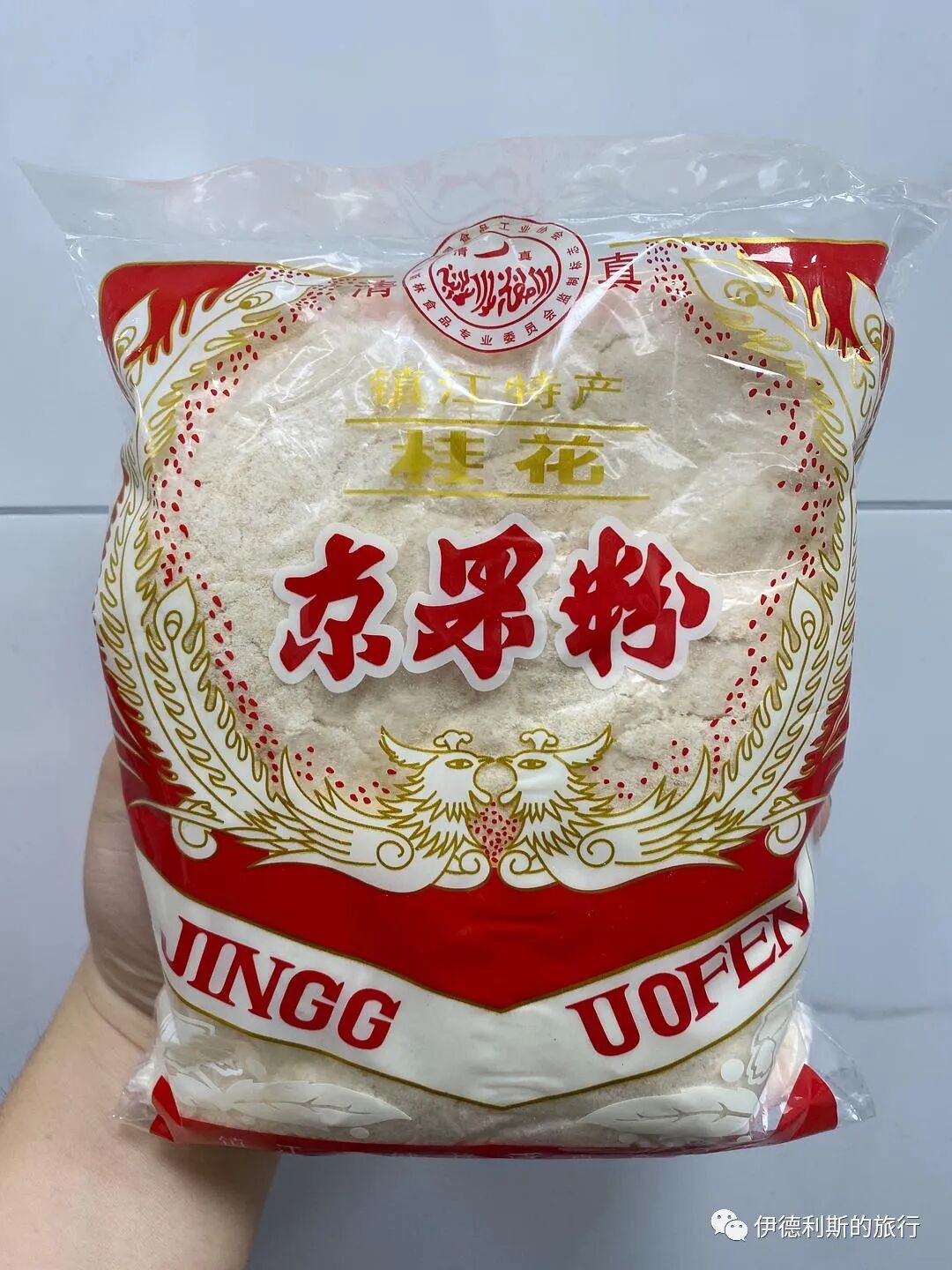
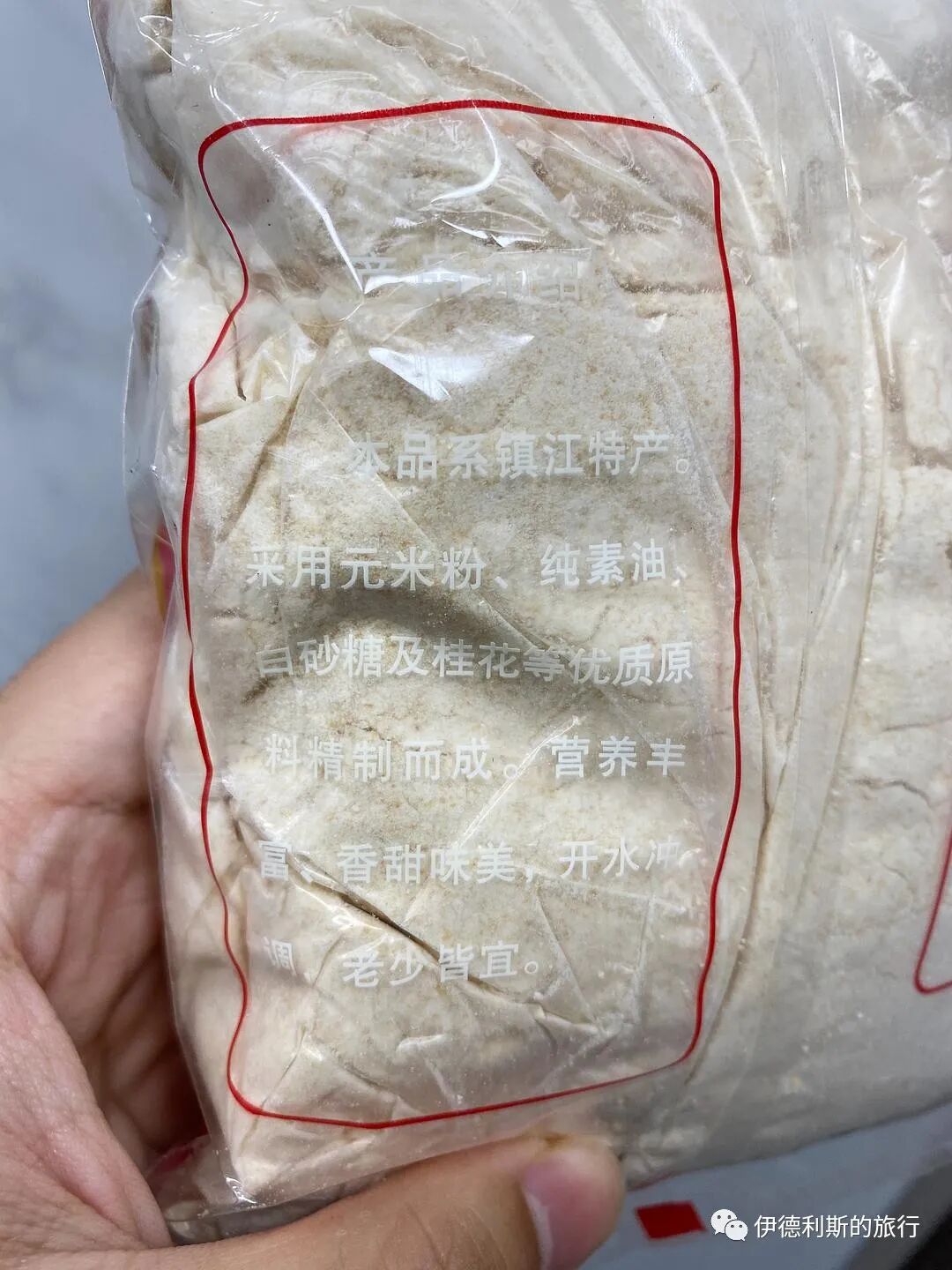
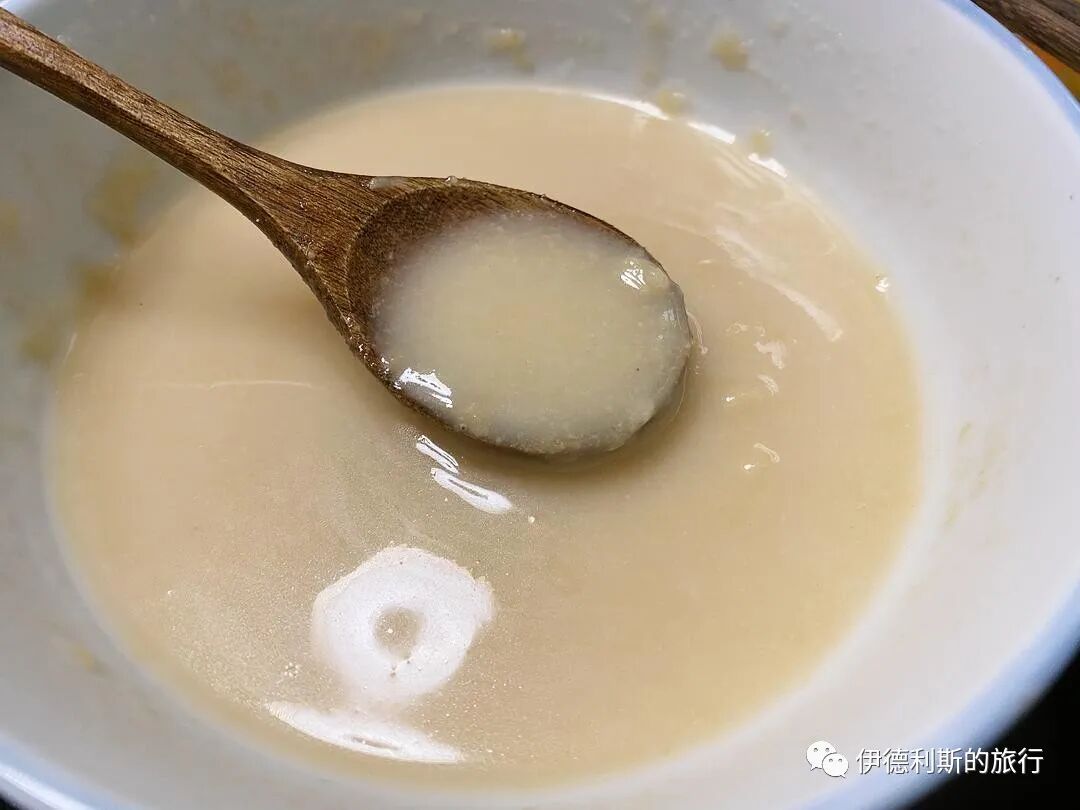
Then I went to Jianxiang Halal Food Store at the Jiangbin vegetable market to buy Zhenjiang specialties: egg crisps (jidan su), Jingjiang navel cakes (Jingjiang qi), and Jingguo powder (Jingguo fen). The owner, Ma Jian, was originally a worker at a Zhenjiang pastry factory. After being laid off in 1995, he started his own Jianxiang Halal Food Factory. In 2009, he opened this current shop next to the Jiangbin vegetable market. When I visited last winter, I bought some delicious cloud-slice cakes (yunpian gao), but they don't make them in the spring. Friends who want to try them can add the landlady on WeChat to have them shipped. 15262910548
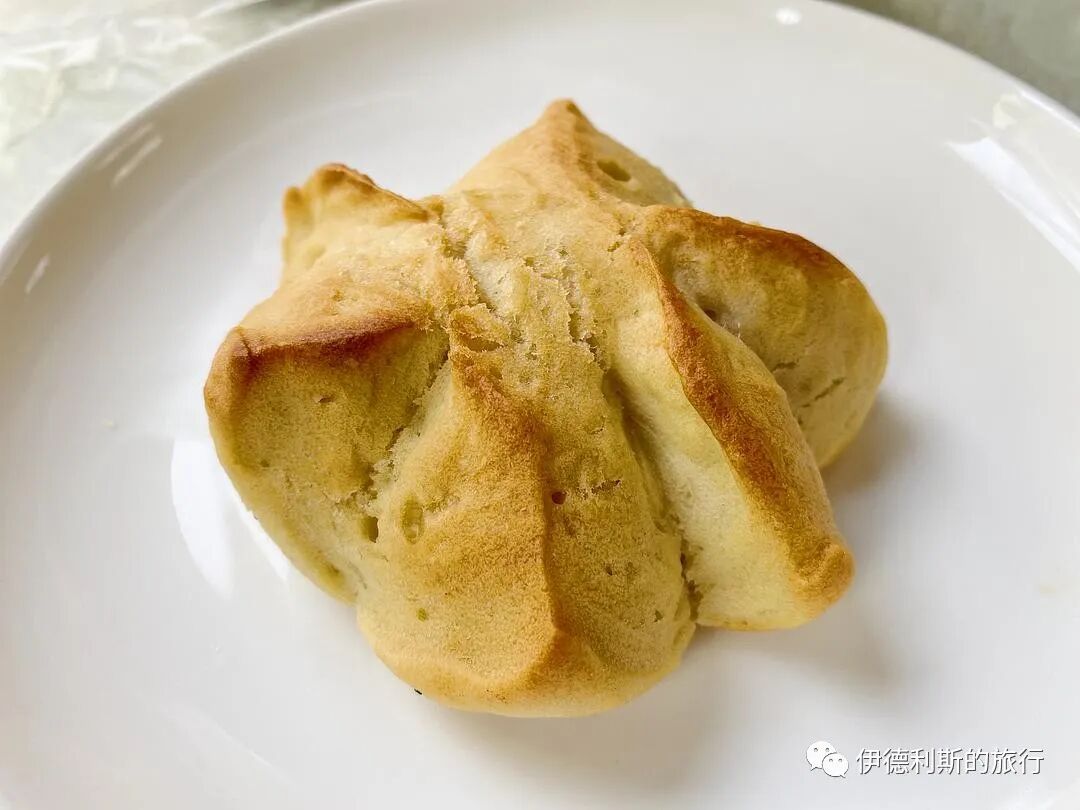
Jingjiang navel cakes are a Zhenjiang specialty snack. Mr. Xia Rongguang described them in detail in his book, A Brief History of the Hui Economy in Modern Zhenjiang. Jingjiang navel cakes are commonly called 'vat navels' (gangqi) or 'navel-lets' (qier). Legend says they were originally octagonal, but they were changed to hexagonal during the Qing Dynasty to avoid the taboo of the 'Eight Banners'. Jingjiang navel cakes come in sweet and savory versions. The savory ones sell more because you can dip them in beef or chicken soup. In the past, Zhenjiang people often served Jingjiang navel cakes soaked in salted egg water to guests.
Making these cakes requires great skill and heat control. When shaping the hexagonal ones, the savory version must be rolled six and a half times, and the sweet version three and a half times. Missing even one roll affects the quality.
According to Fan Shoubao, a tea snack industry veteran born in the 1900s, he became an apprentice at the Wuyunzhai Halal Tea Shop in the 1910s at age fourteen. He made at least two bags of flour into nearly a thousand Jingjiang navel cakes every day. Back then, visitors to Zhenjiang or locals leaving town would often buy hundreds at a time.
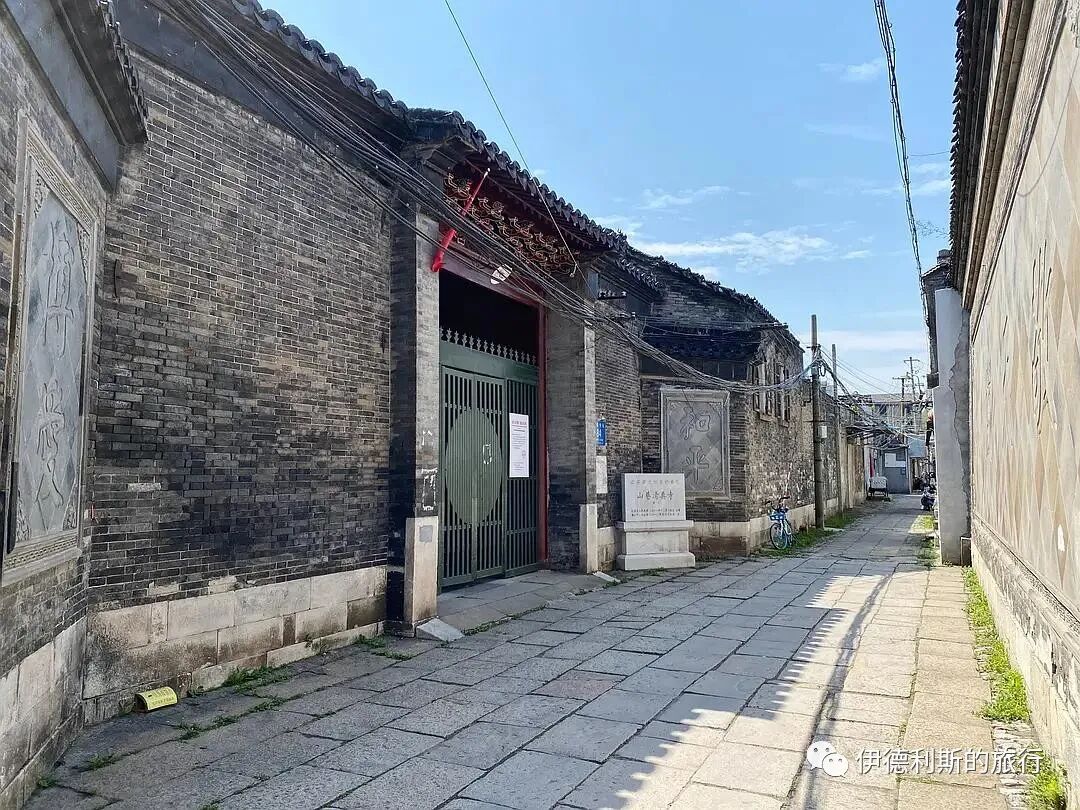
The Shanxiang Mosque in Zhenjiang is also called the West City Mosque or the West Great Mosque. Its founding date is unknown, but it was expanded during the Kangxi era. It was destroyed during the Taiping Rebellion in 1853 (the third year of the Xianfeng era) and rebuilt in 1873 (the twelfth year of the Tongzhi era). According to the History of Islam in Zhenjiang, Jiangsu, the late Imam Tan Yuanshen, who lived to be over eighty, recalled hearing from his grandfather and elders in the community that before the Kangxi-era expansion, the West City Mosque was just three thatched huts. At that time, the area around the mosque was sparsely populated and vast; you could see the Zhenjiang city gate tower to the east and Yuntai Mountain to the west.
After Zhenjiang opened as a treaty port, the area outside the West Gate became a bustling commercial district. In 1865, the British established a concession by the river. With the opening of the Shanghai-Nanjing Railway, the area outside the West Gate developed further, and Hui Muslims kept arriving to trade and settle around the Shanxiang Mosque.
In 1902 (the 28th year of the Guangxu era), the Zhenjiang Hui community raised funds to expand the Shanxiang Mosque. The current layout of the mosque dates back to this renovation.
The Shanxiang Mosque consists of a small courtyard and a large courtyard. Entering the main gate, you find the first small courtyard. Passing through the front hall leads to the second small courtyard, with a side door and the second gate directly ahead. Passing through the second gate leads to the third small courtyard. Then, a corridor leads into the large courtyard, which is made up of the prayer hall, the south lecture hall, and the opposite hall. This layout of large and small courtyards is very characteristic of the Jianghuai region.
Main gate
The front hall was used as a classroom for Muyuan Primary School during the War of Resistance. The plaque above was written by Imam Hua Guilin in 1984, and the couplets were written by the famous Beijing Arabic calligrapher Li Wencai in 2010.
The stone door bases outside the front hall.
The rockery inside the second small courtyard.
The second gate.
Facing the side gate hall is a green screen door with the circular characters for "halal" (qingzhen) written in the center.
During the 1960s and 1970s, the mosque was smashed and then occupied, leaving only the side gate hall guarded by an elderly man named Ma Zhonglin. The occupying unit tried to force Ma Zhonglin out with various excuses, but he refused every time and spent ten difficult years there. During those ten years, all the Hui Muslims in Zhenjiang used this gate hall to store funeral supplies and to hold and prepare the deceased. At that time, only Ma Zhonglin washed the bodies of the deceased, led the namaz, and recited dua while burying them. He also slaughtered poultry for the elders in the side gate hall every morning.
In 1981, Ma Zhonglin passed away. Afterward, Tan Quanhong and Zhang Dagui took turns slaughtering poultry for the elders in the side gate hall every morning. That same year, the occupying unit began to move out, and the Shanxiang Mosque was finally recovered.
The third small courtyard outside the second gate.
The large courtyard. The courtyard has a cross-shaped path and is planted with pine and ginkgo trees. There were once two ginkgo trees over 200 years old in the courtyard, but they were cut down in 1958 to support the Great Leap Forward steel production.
Shanxiang Mosque was once an important national base for printing and publishing Islamic books. From the Qianlong to the Tongzhi periods of the Qing Dynasty, more than 20 types of philosophy and religious books, including the "Baoming Zhenjing," "Tianfang Dianli," "Guizhen Zongyi," and "Huihui Yuanlai," were woodblock printed in hundreds of editions and shipped across the country by land and water. To this day, the Cultural Palace of Nationalities in Beijing, the Central University for Nationalities Library, and the Peking University Library all hold books printed by the Zhenjiang Shanxiang Mosque.
During the 1960s and 1970s, Shanxiang Mosque was severely damaged, and none of its scriptures, woodblocks, plaques, couplets, furniture, decorations, or other cultural relics survived. view all
Summary: This Muslim friendly China travel guide keeps the original 2021 Gaoyou, Yangzhou, and Zhenjiang trip notes intact for Part 1. It is useful for Muslim travel guide China 2026, halal food in China, Chinese Muslim food, and mosque-friendly routes in Jiangsu.
On the morning of April 4, 2021, I left Nanjing by high-speed train. I arrived in Gaoyou in one hour and took a bus directly to the Gaoyou Mosque. Gaoyou and Lingtang were two places I missed during my canal mosque tour in 2016-17. Five years later, I finally made up for it.
Gaoyou
Gaoyou Mosque is a very beautiful traditional mosque. It is small and delicate, with the charm of a water town. The founding date of the mosque is unknown, but there is a cypress tree in the courtyard that is over two hundred years old. In 1864 (the third year of the Tongzhi reign), local elders Ma Guixing, Liu Xingtian, and Ma Hongxing rebuilt the mosque. The current entrance has a stone carving that says it was rebuilt in the middle of winter in the second year of the Tongzhi reign.
It was a pity that the mosque gate was locked when we arrived. We asked at a nearby noodle shop, and they said it only opens for Jumu'ah prayers. It seems I will have to wait for another chance to visit inside.
I wandered around Gaoyou, visiting Mengcheng Post Station and the West Dike. The Grand Canal and Gaoyou Lake run side by side, making it truly feel like a water town.
Lingtang
At noon, I took a taxi from Gaoyou to Lingtang Hui Muslim Township. Lingtang is the only Hui Muslim township in Jiangsu, home to the four major surnames: Yang, Xue, Li, and Sha. One branch of the Yang family moved here from Suzhou at the end of the Yuan Dynasty, and another branch moved from Suzhou during the Qing Dynasty. The Xue family moved here from Xuebeizhuang in Gaoyou during the Qing Dynasty, later converted to Islam, and for generations have mostly only married into the Yang family. The Sha surname is said to come from the Persian word "Shah," as they are descendants of Persian ancestors from the Huihuiwan area during the Yuan Dynasty.
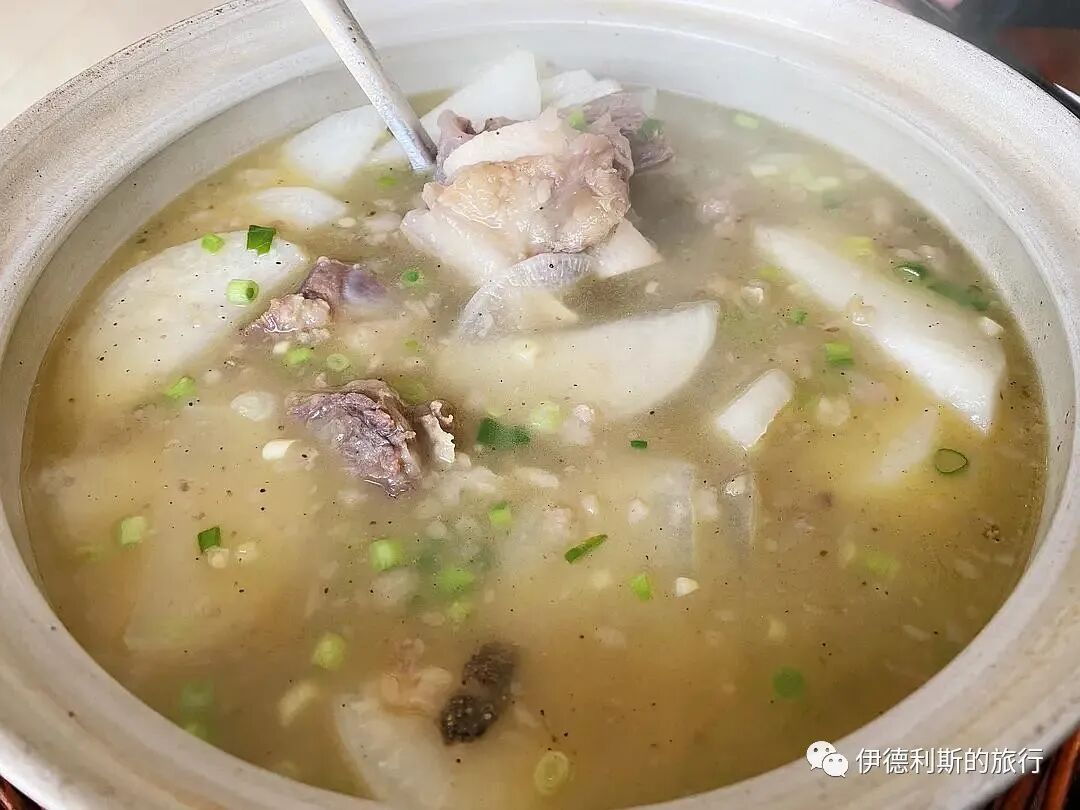
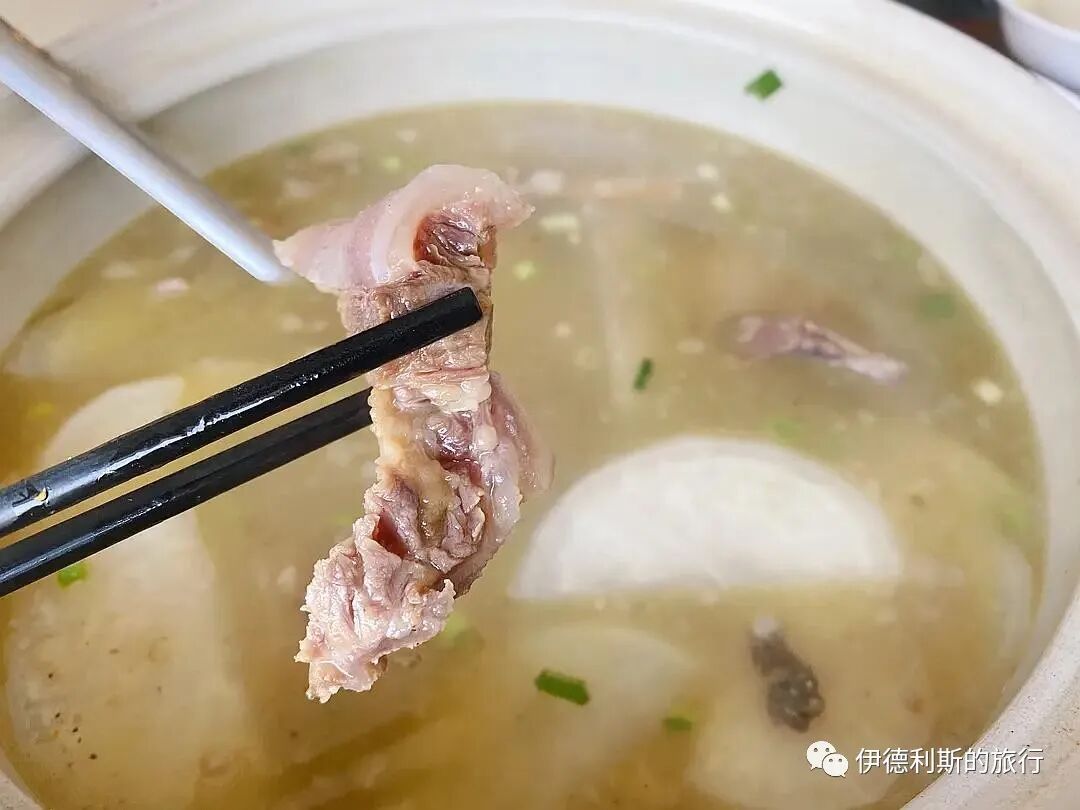
At Huixianglou Restaurant, I ate salted goose (yan shui e), egg yolk stir-fried buckwheat slices (dan huang shao ku qiao pian), amaranth stir-fried with fava beans (xian cai chao can dou), and beef wing soup (niu chi tang), all of which are local specialties. The founder of Huixianglou, Yang Yangui, opened a halal restaurant on Lingtang Bridge Old Street in 1969. It moved to its current location in 2010 and specializes in Lingtang salted goose from Gaoyou Lake.
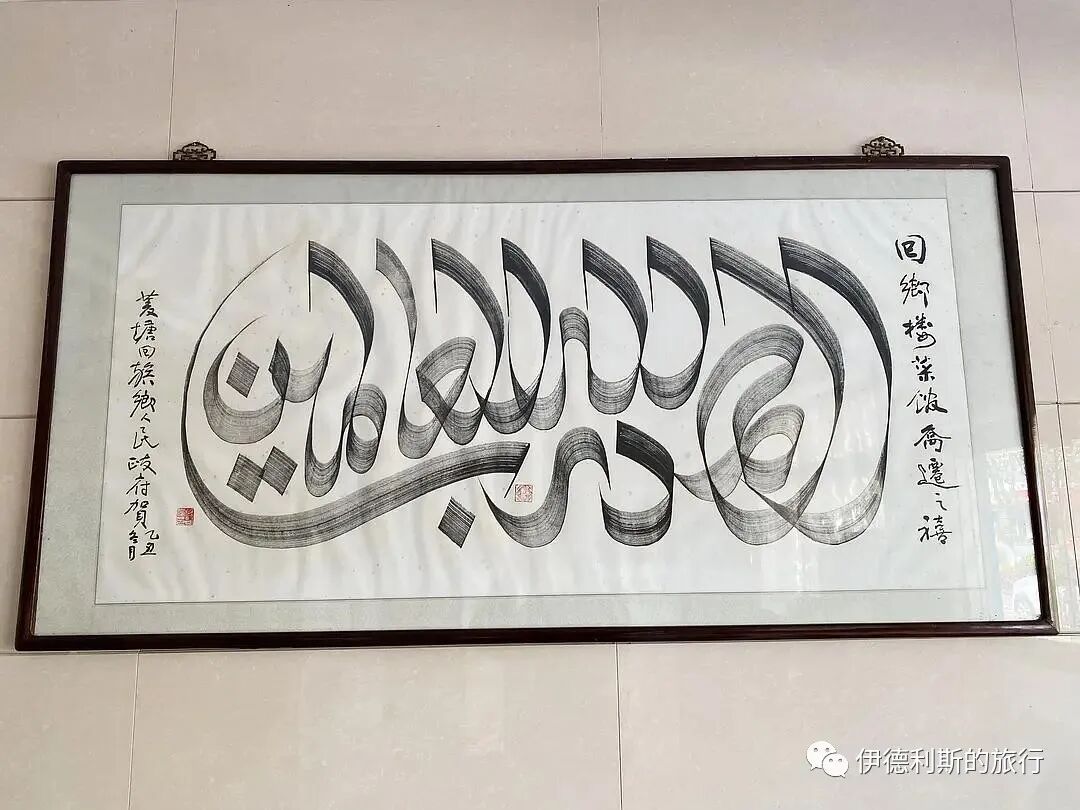
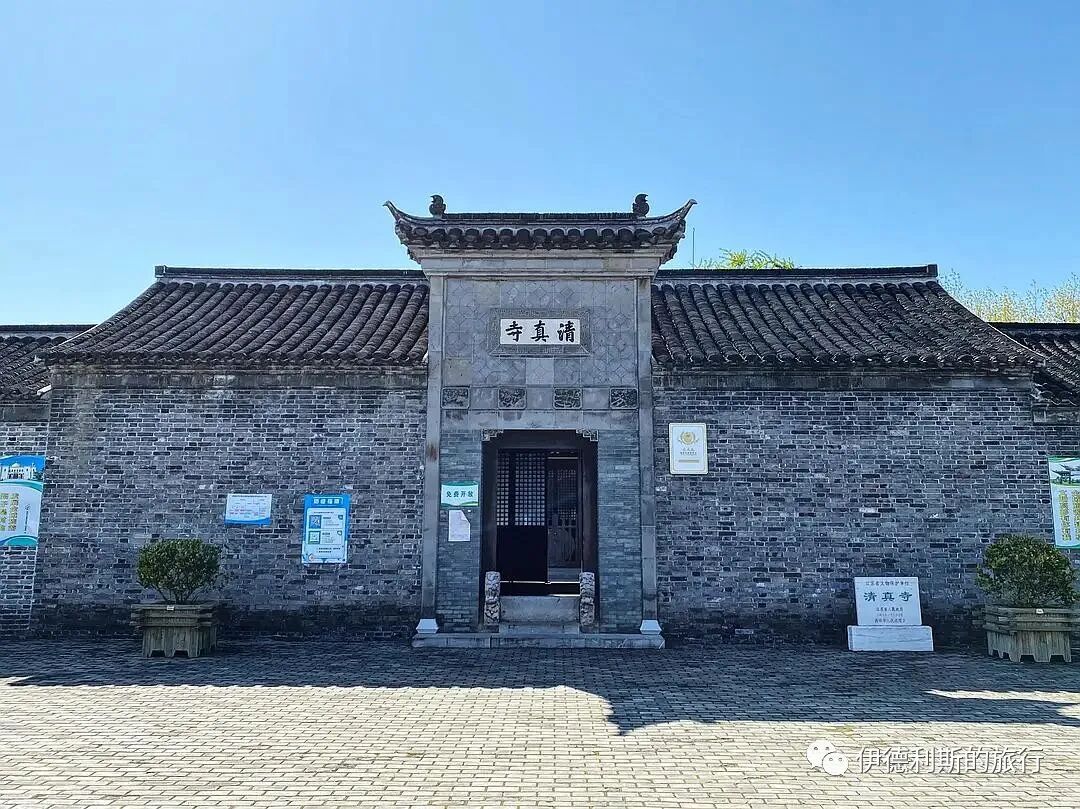
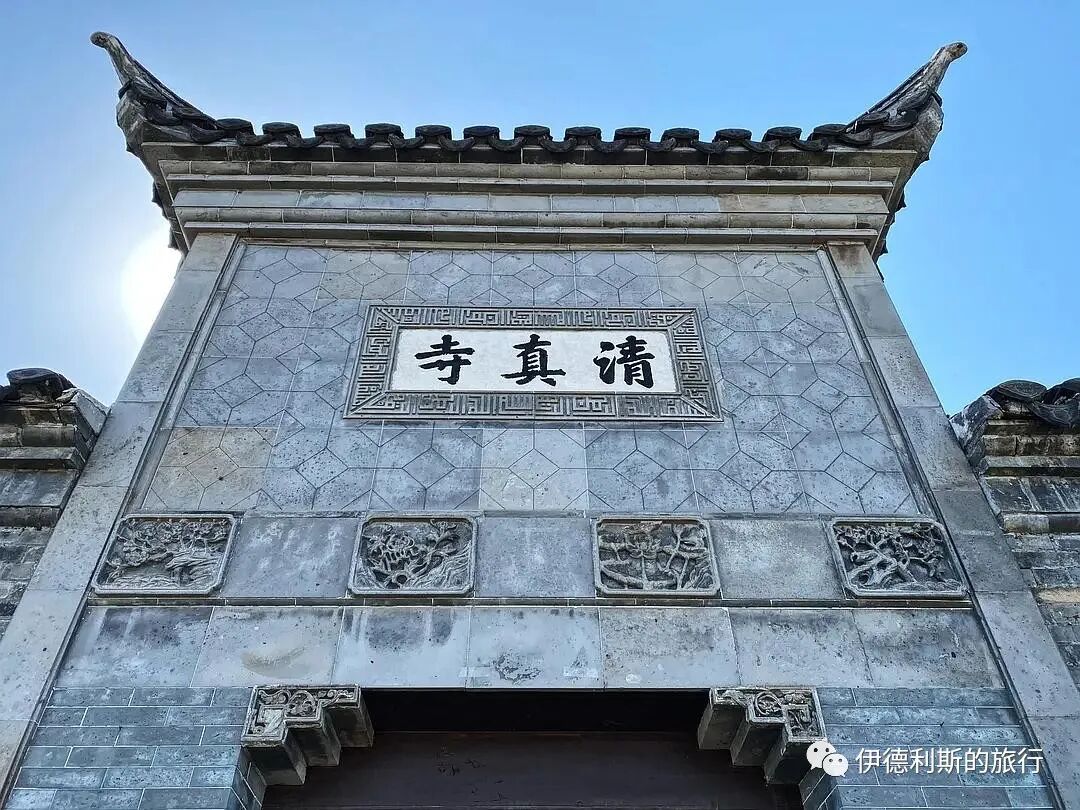
At the end of the Yuan Dynasty, a mosque was built in "Huihuiwan" by the side of Gaoyou Lake in Lingtang, but it was later destroyed by a flood. In the mid-Ming Dynasty, the mosque moved to Yangdazhuang, then to its current site in the early Qing Dynasty. It was rebuilt in 1844 (the twenty-fourth year of the Daoguang reign), expanded again in 1921, and completed in 1924.
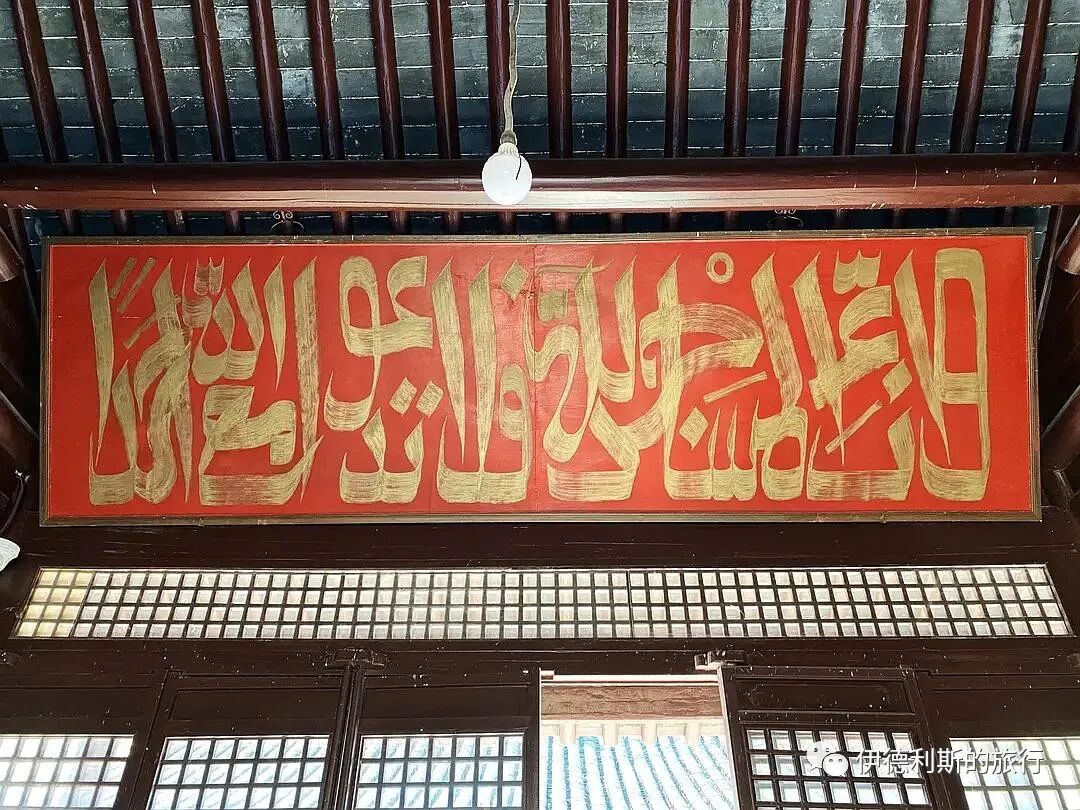
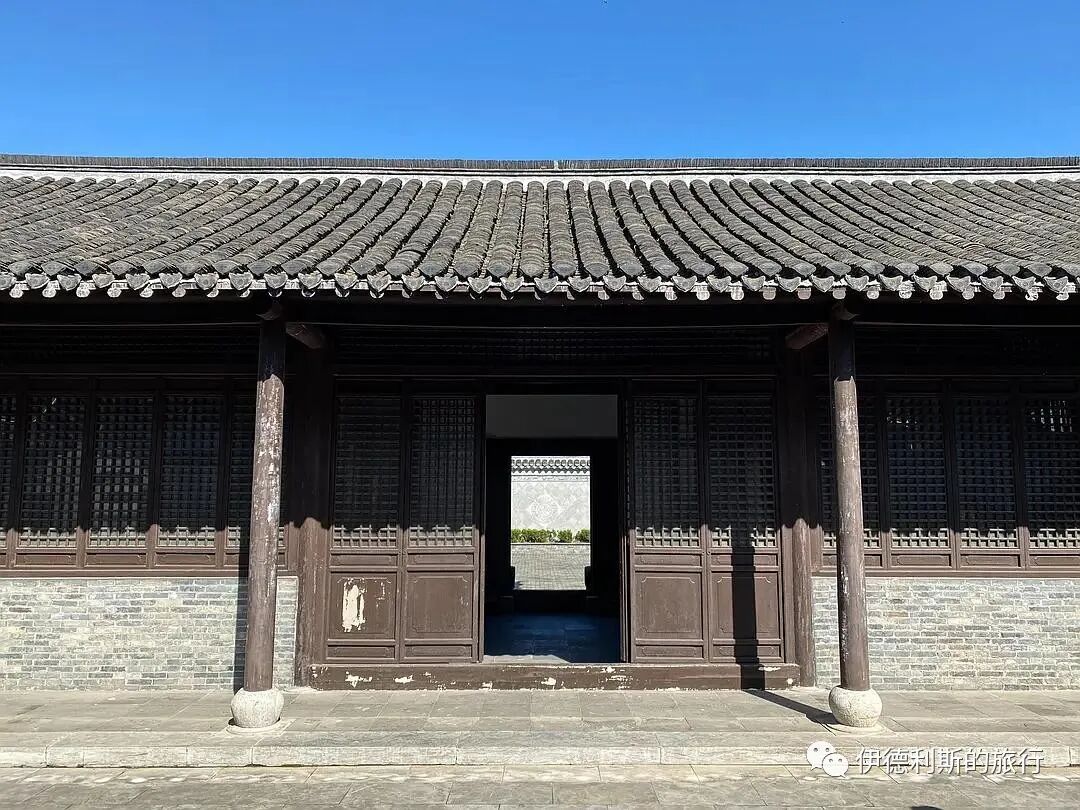
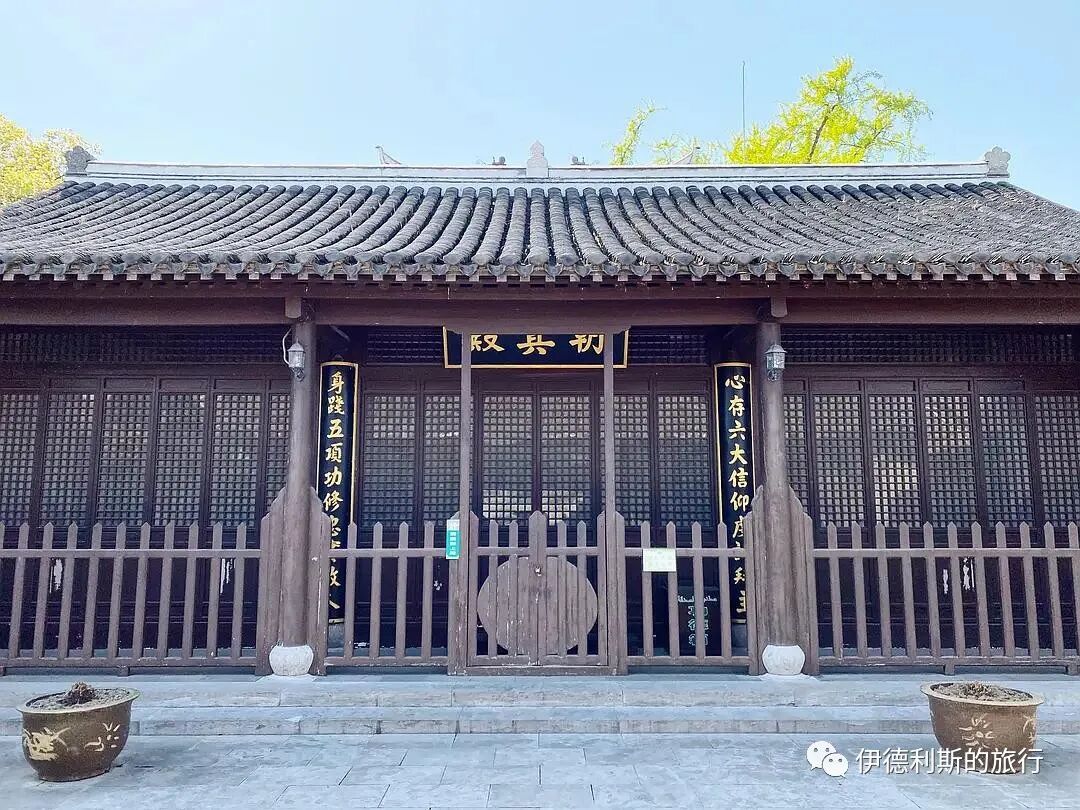
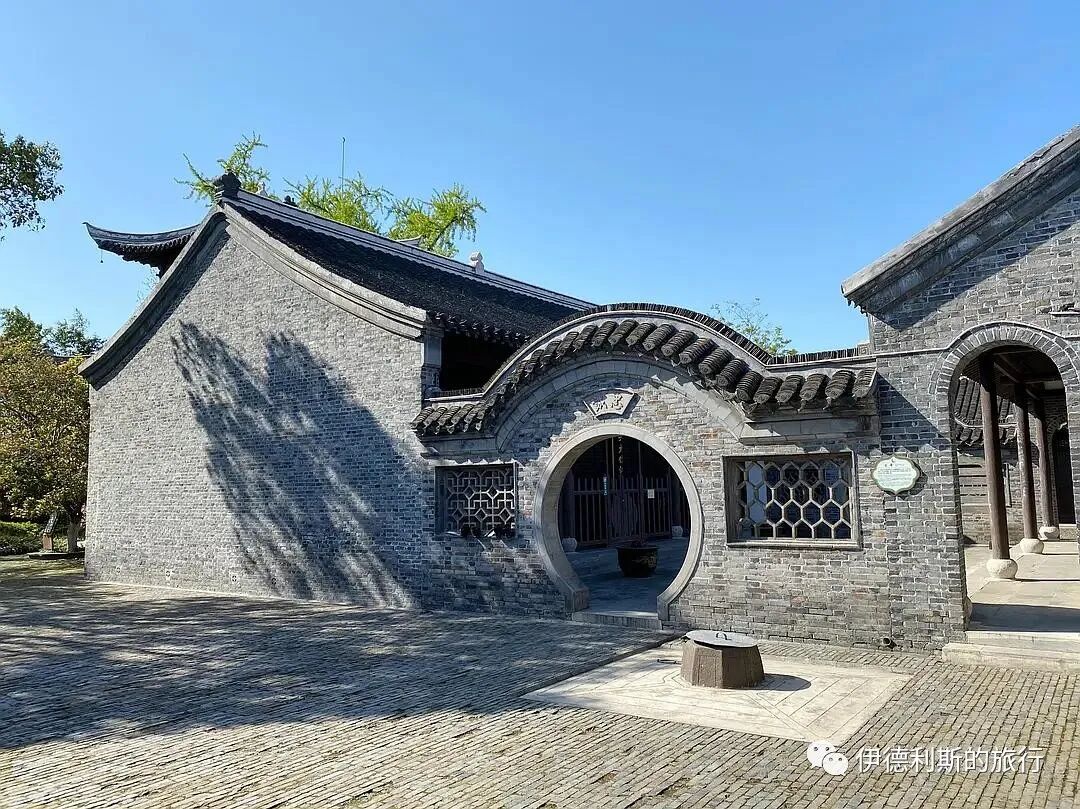
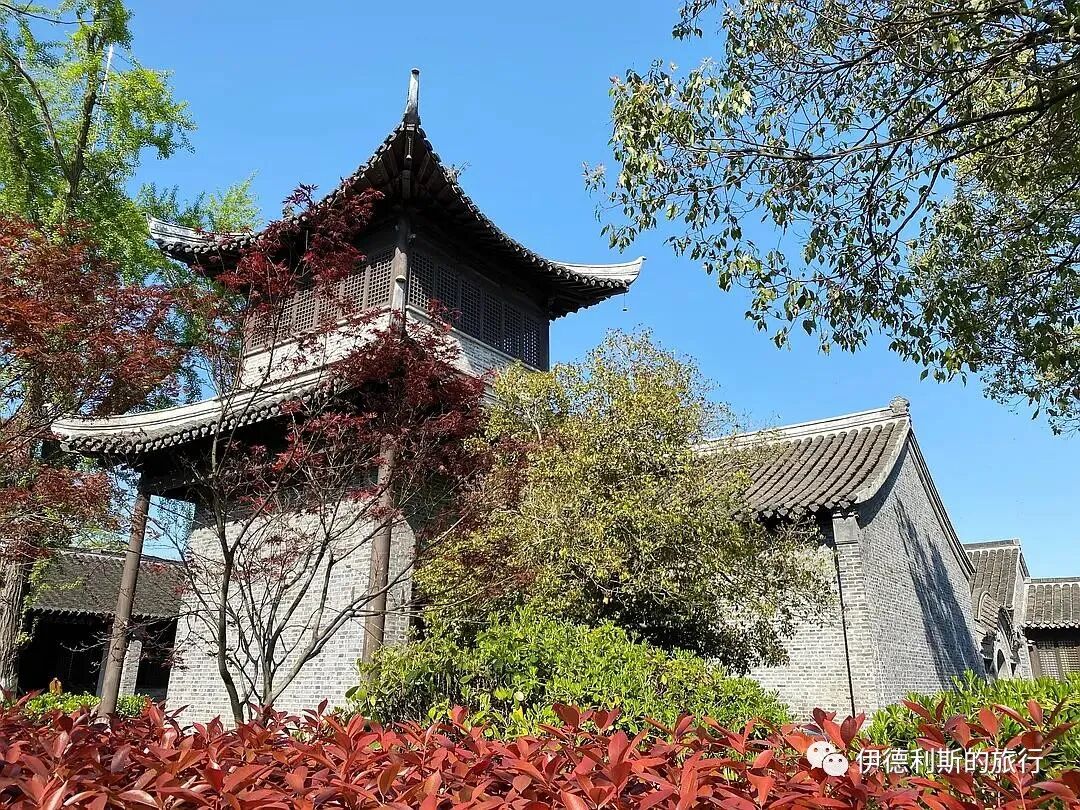
The golden osmanthus tree (jin gui shu) next to the kiln hall (yao dian) was planted when local elder Xue Yukuan and his wife, Mrs. Xue Yang, asked an imam to recite the Nikah. It has a history of over 130 years.
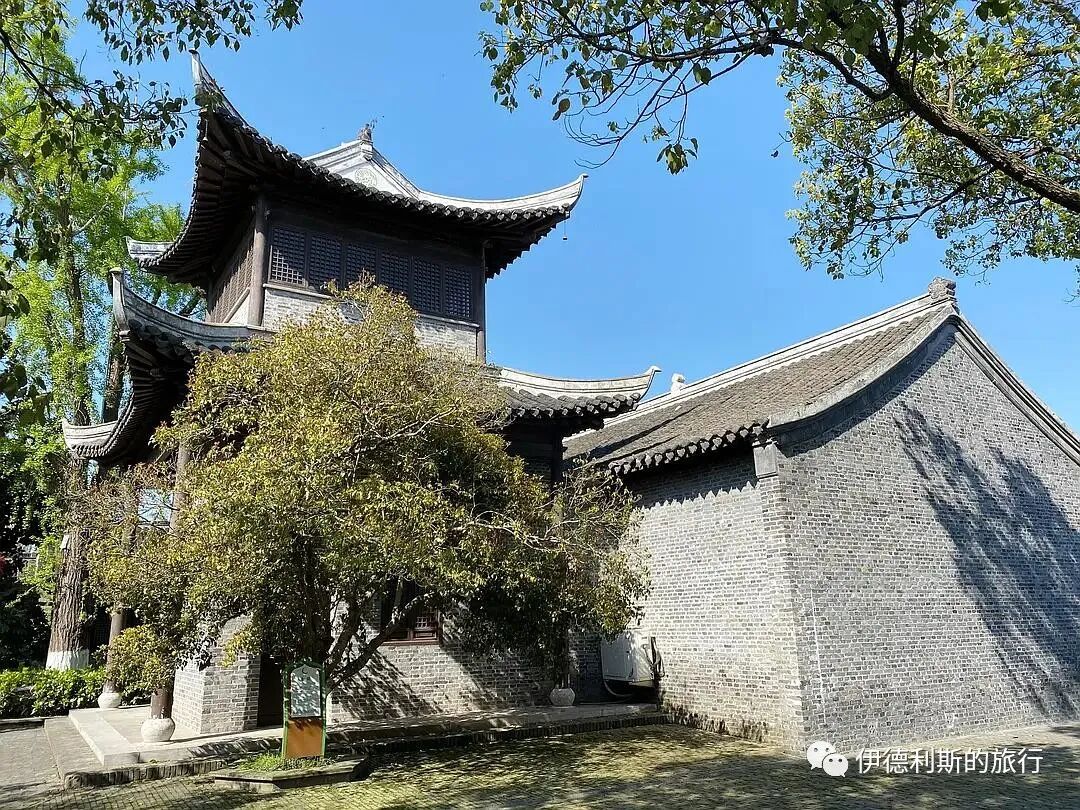
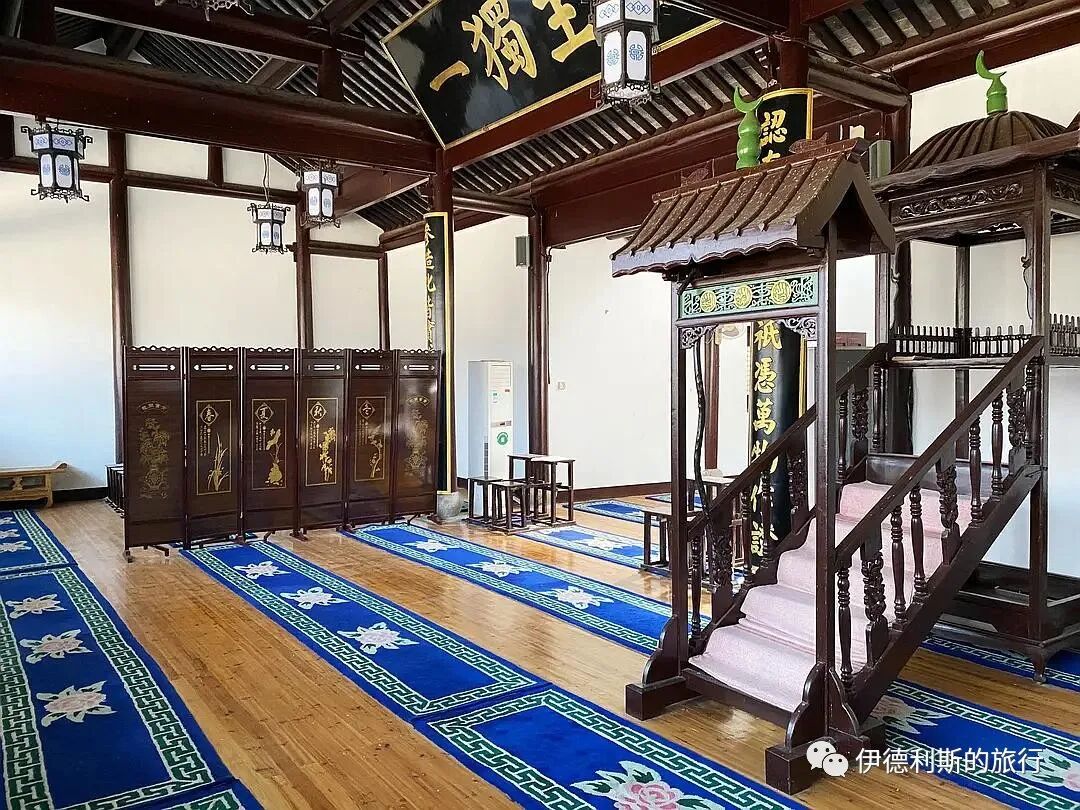
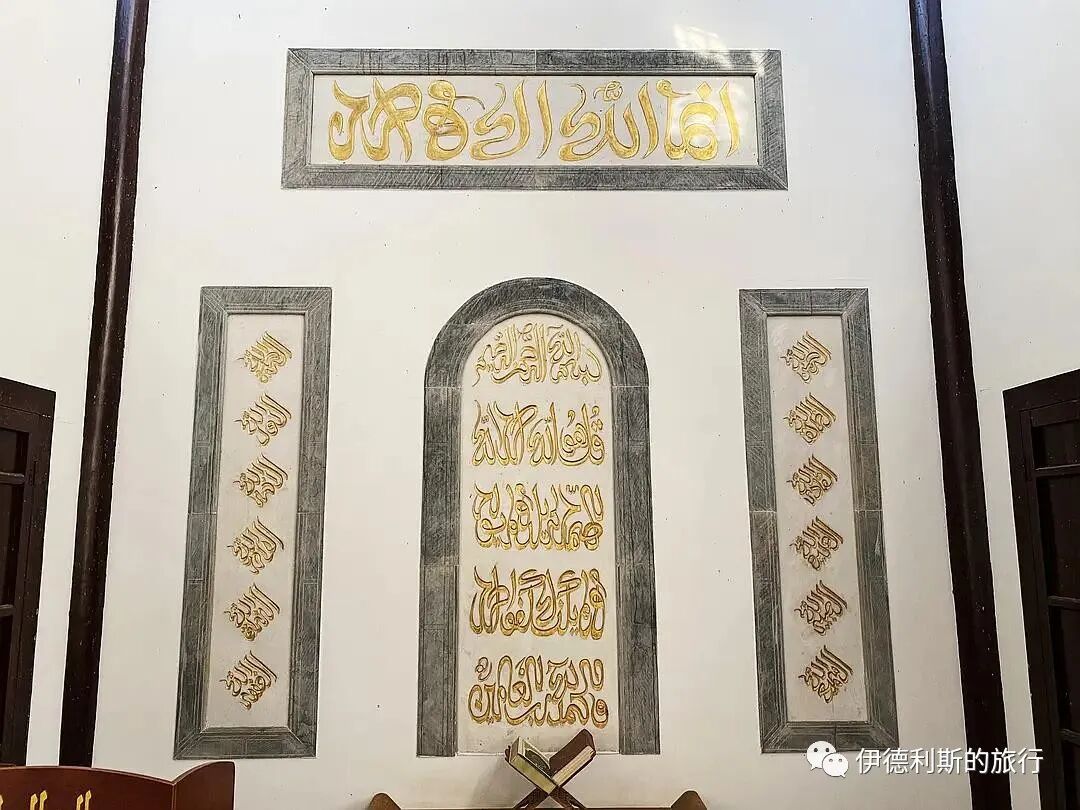
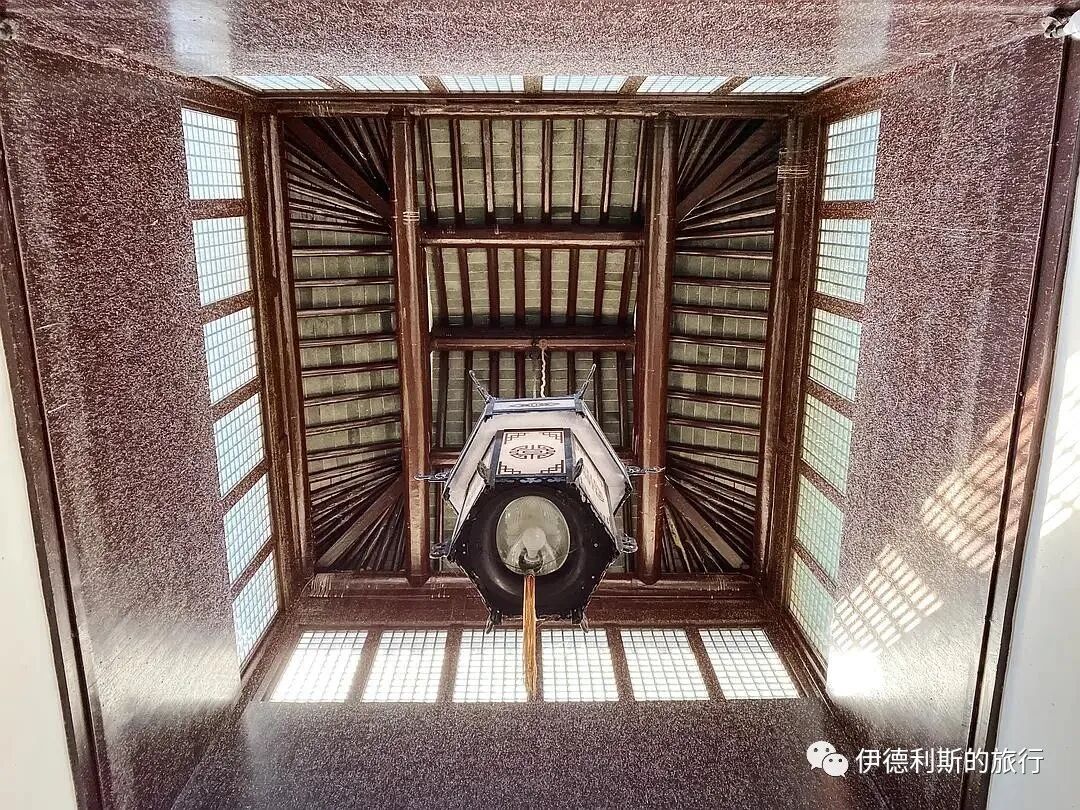
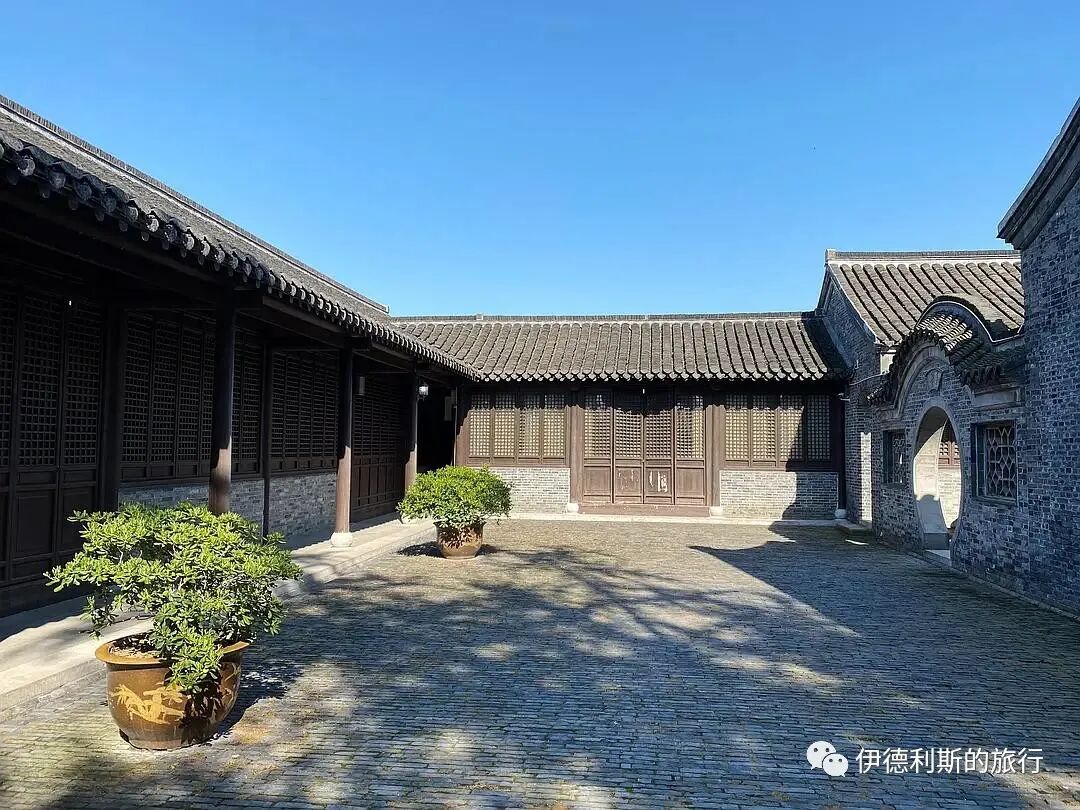
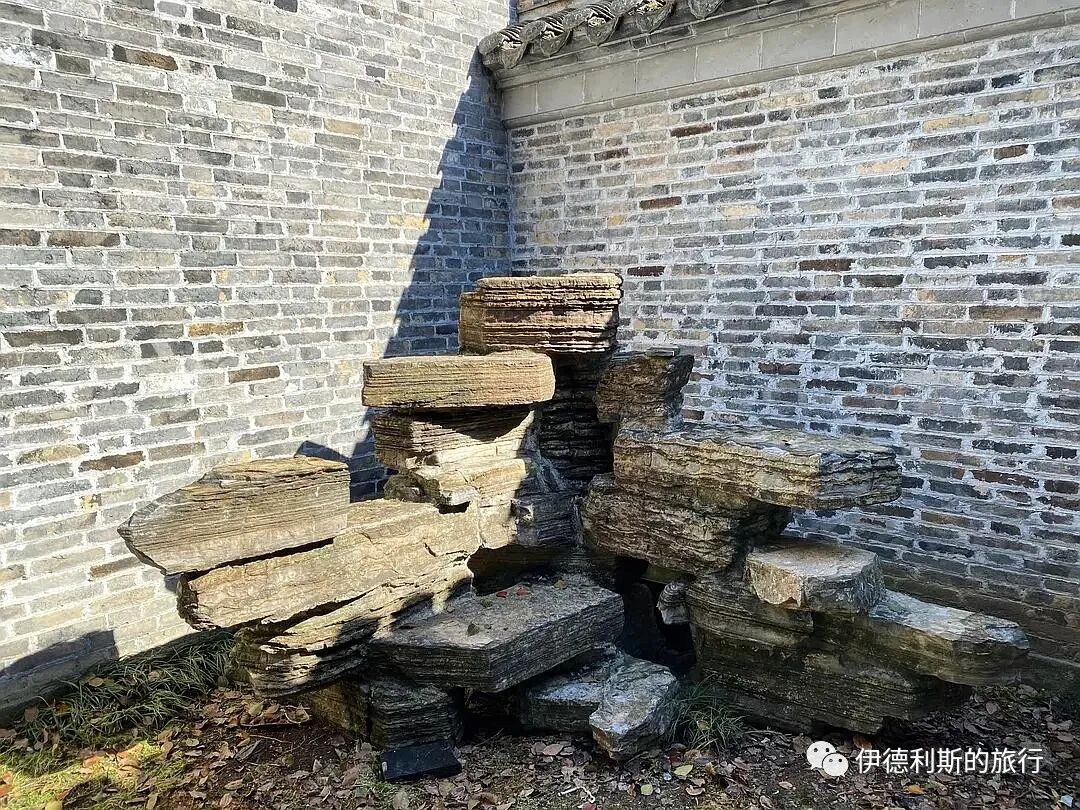
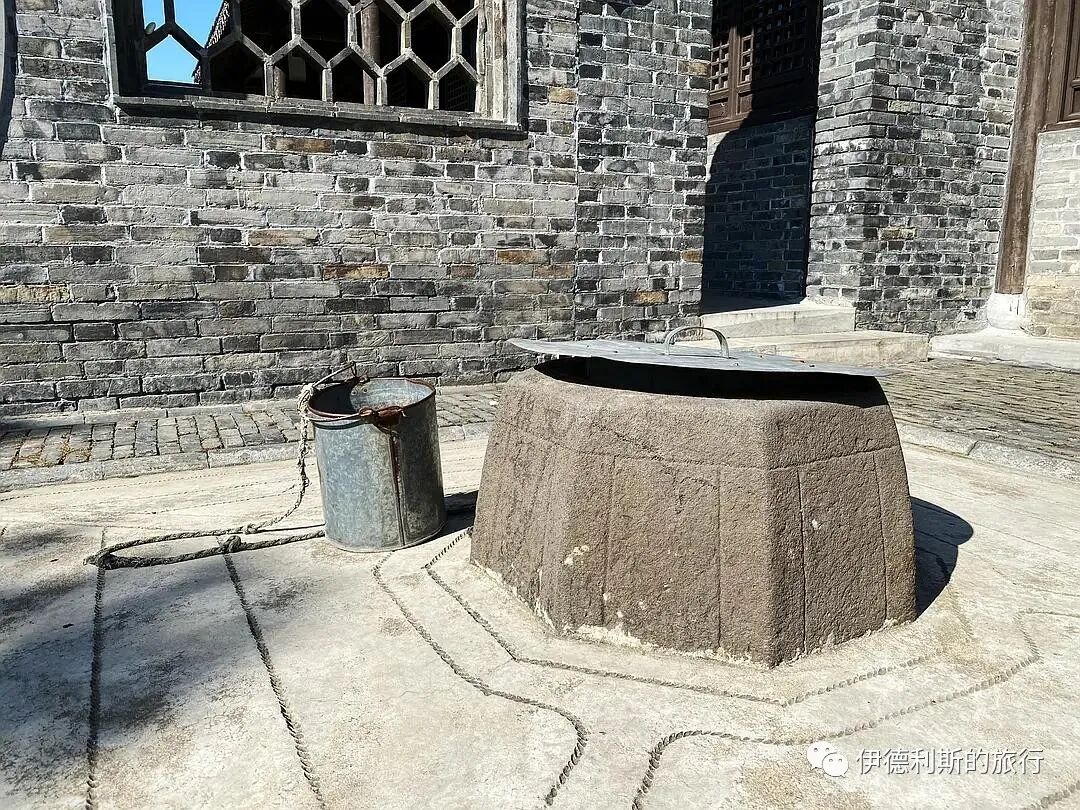
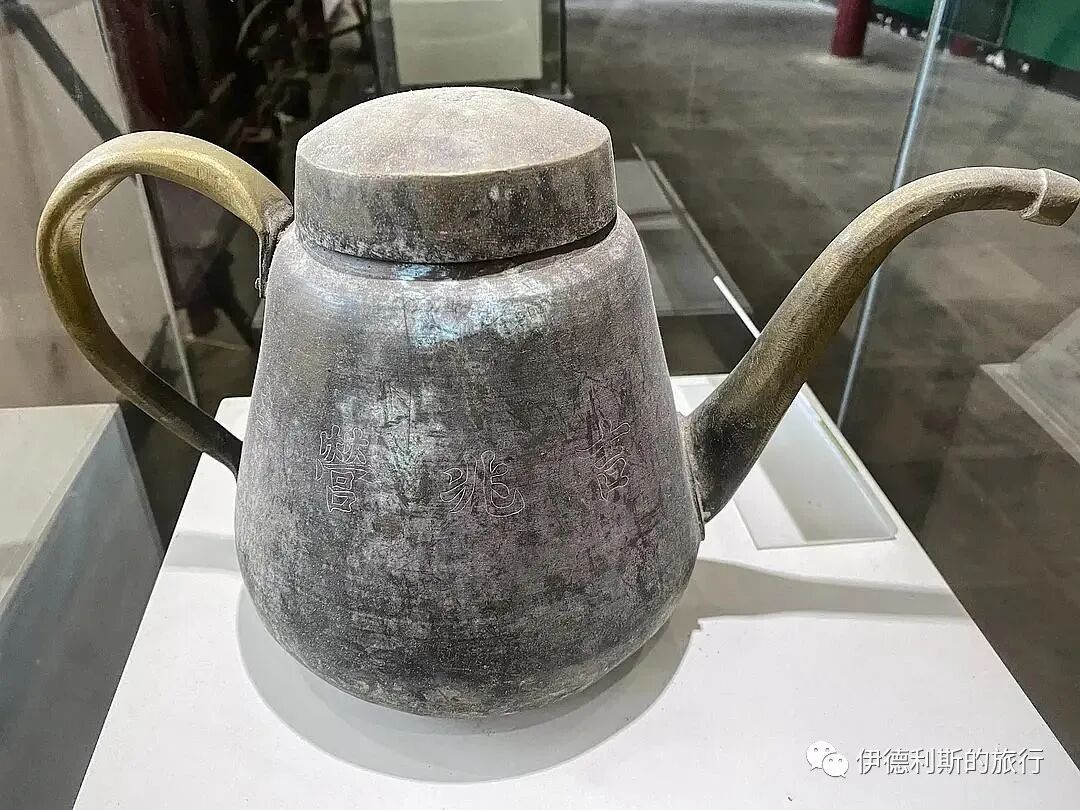
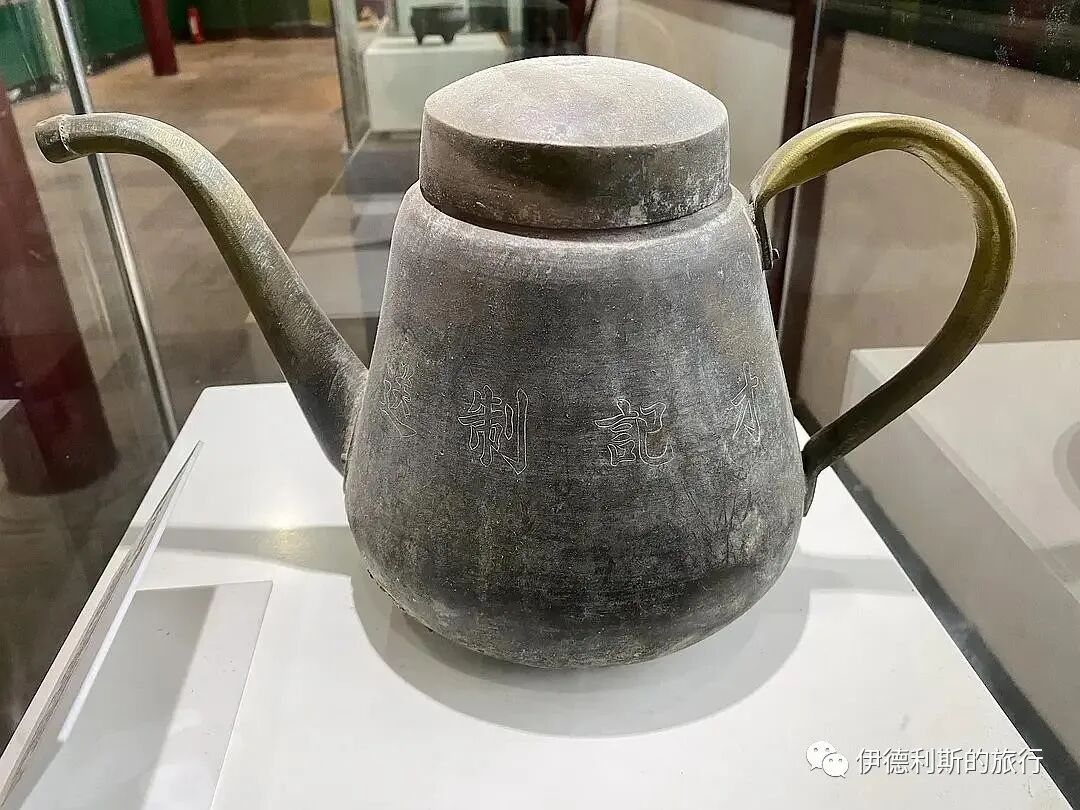
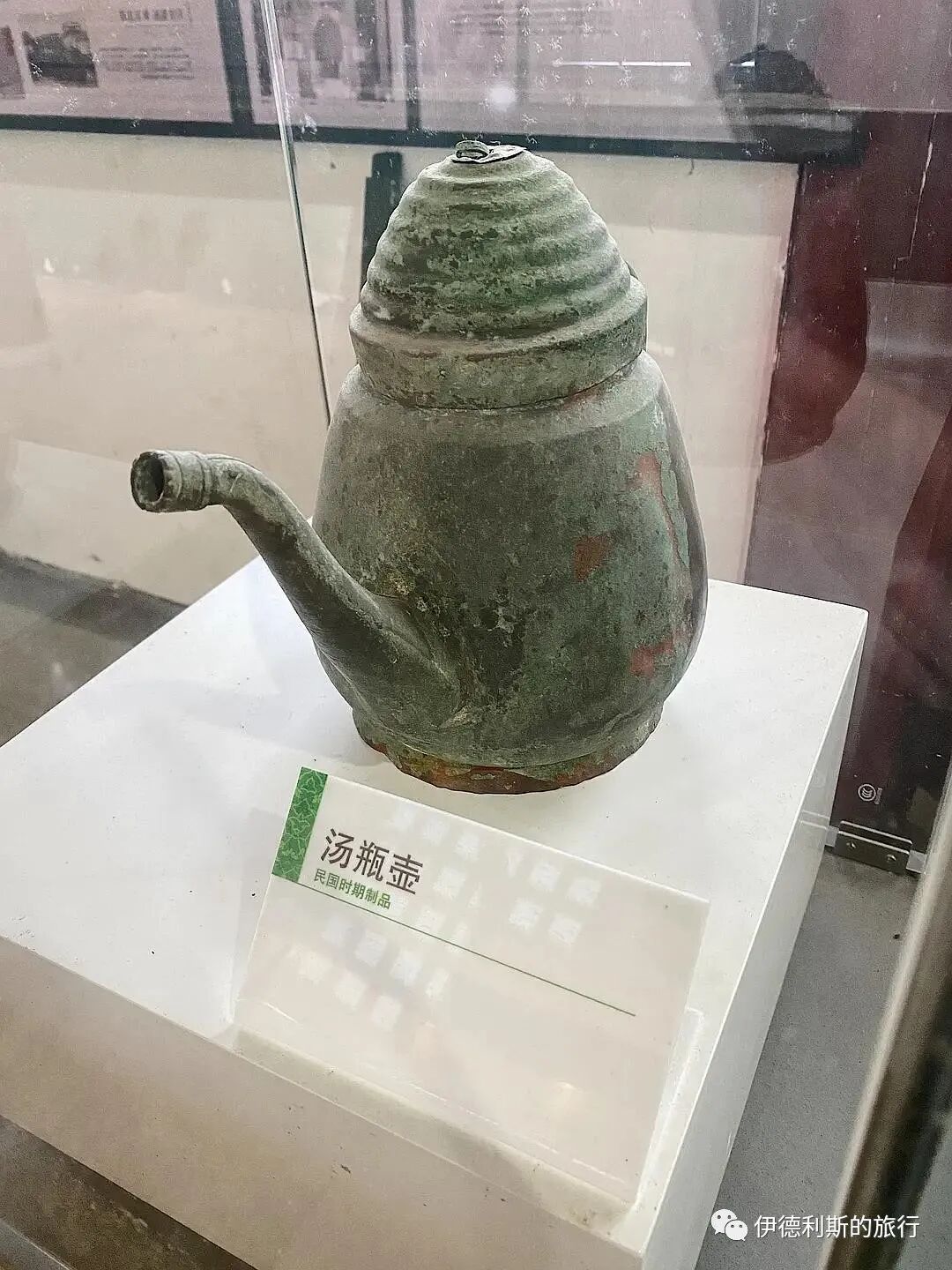
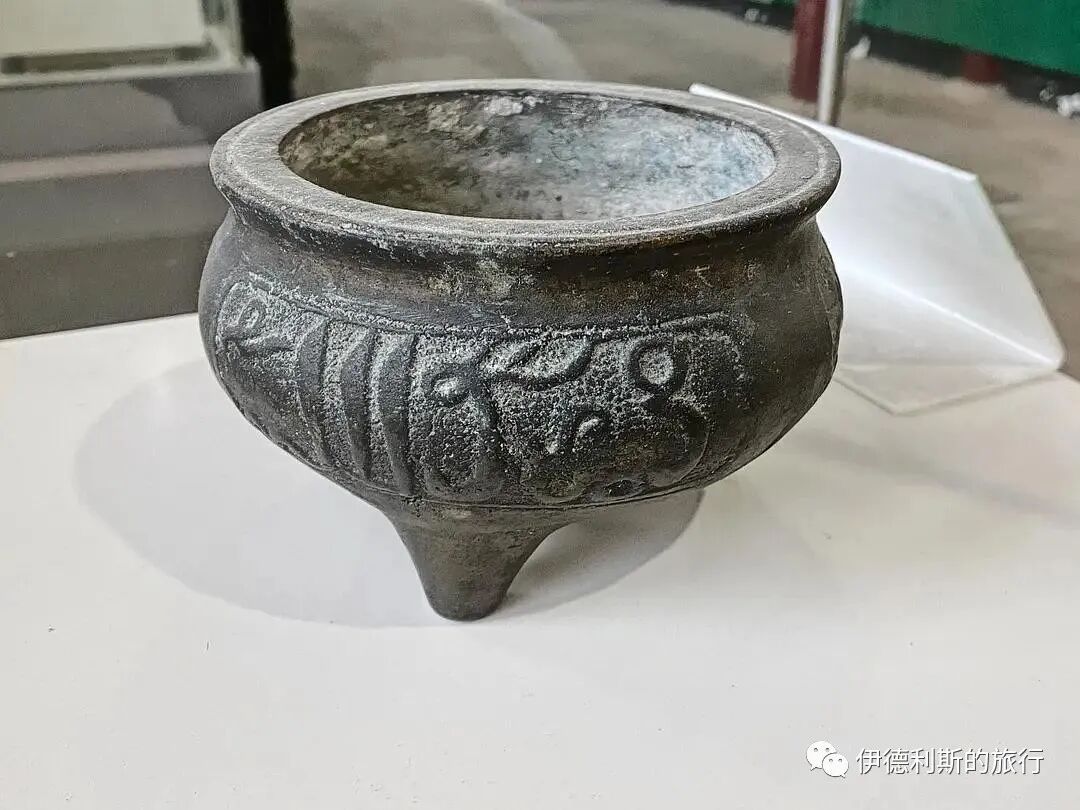
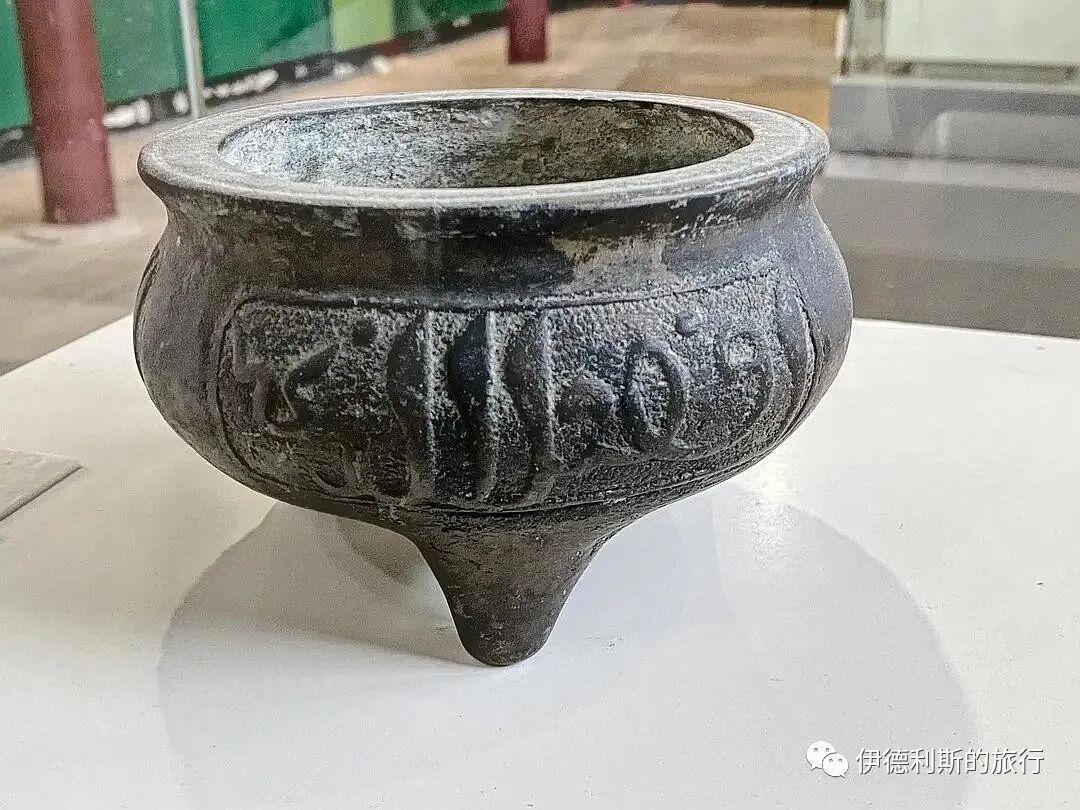
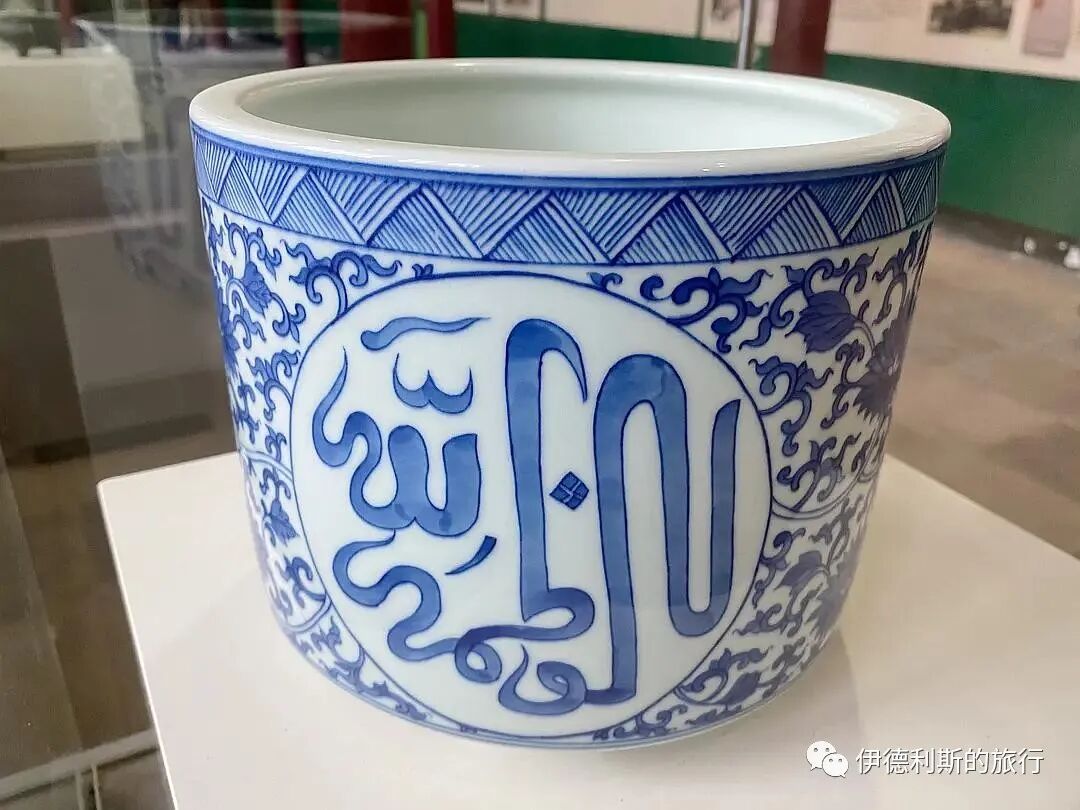
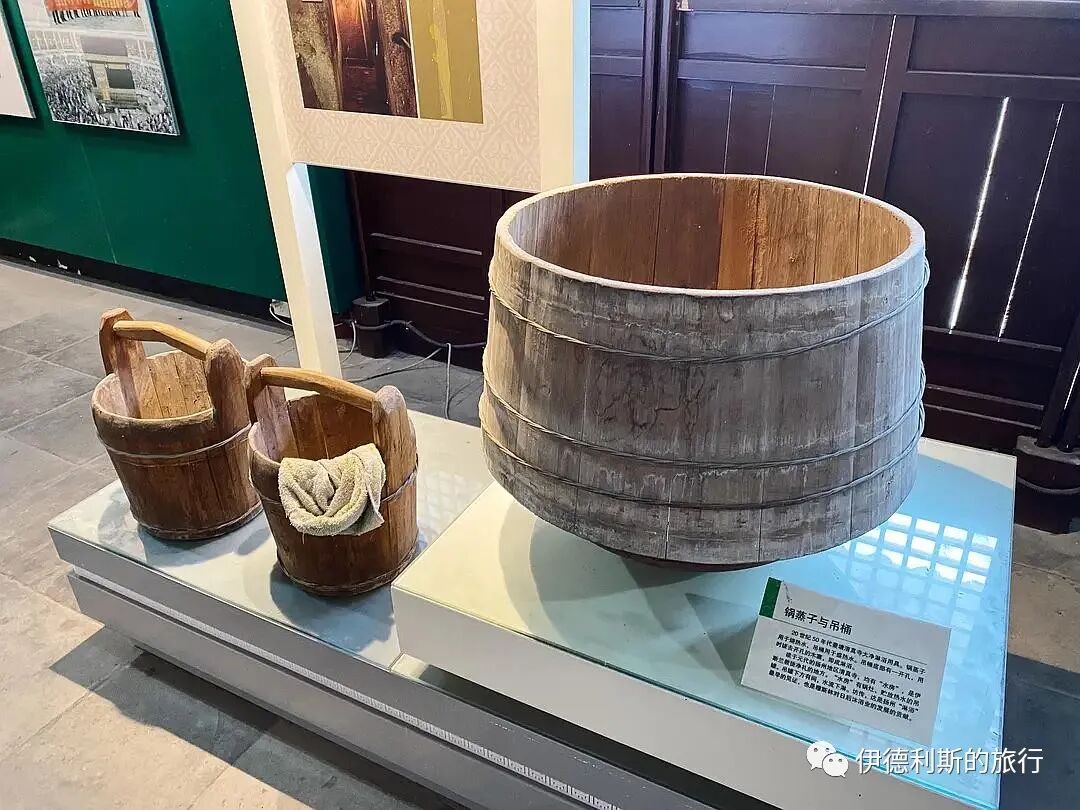
The exhibition hall of the Yangzhou Lingtang Mosque displays a water kettle (tang ping hu) made and gifted by the Jizhaoying Mosque in Nanjing during the Qing Dynasty, a Republic-era water kettle, a copper Xuande incense burner (tong xuande lu), a blue and white porcelain incense burner, and the steamer (guo zheng zi) and bucket (diao tong) from the mosque's 1950s washroom. The steamer was used to boil hot water, and the bucket had a hole at the bottom; you could pull out the wooden plug to take a shower.
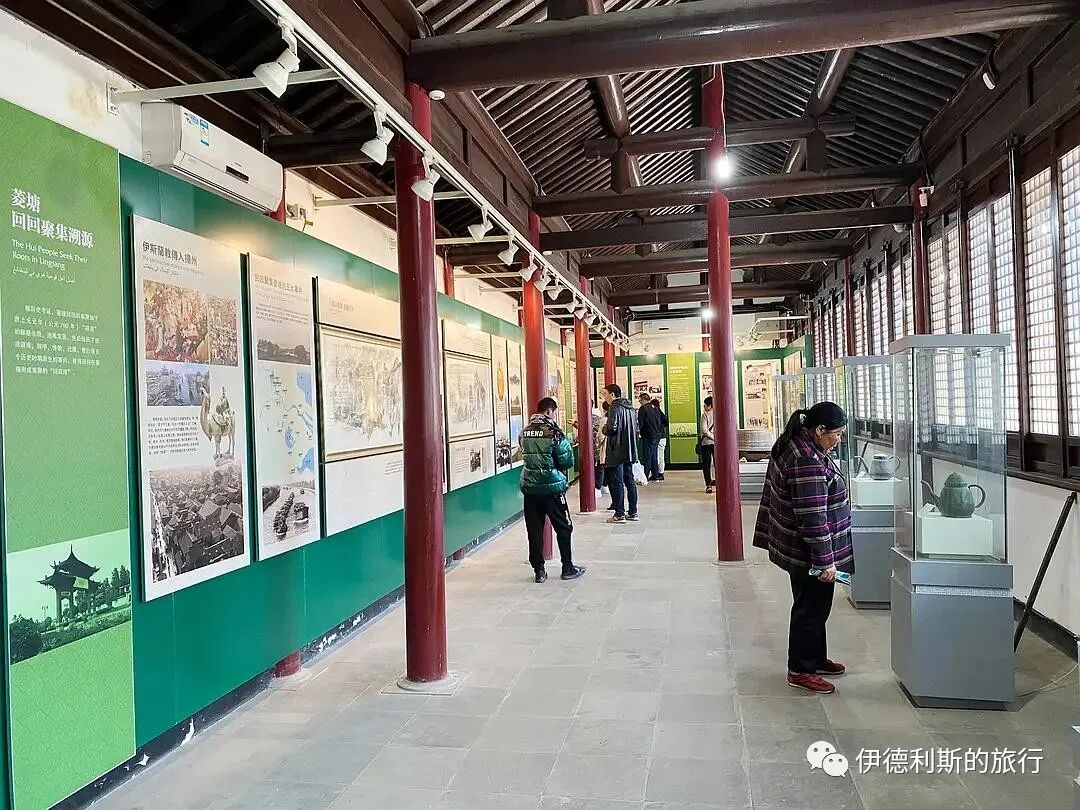
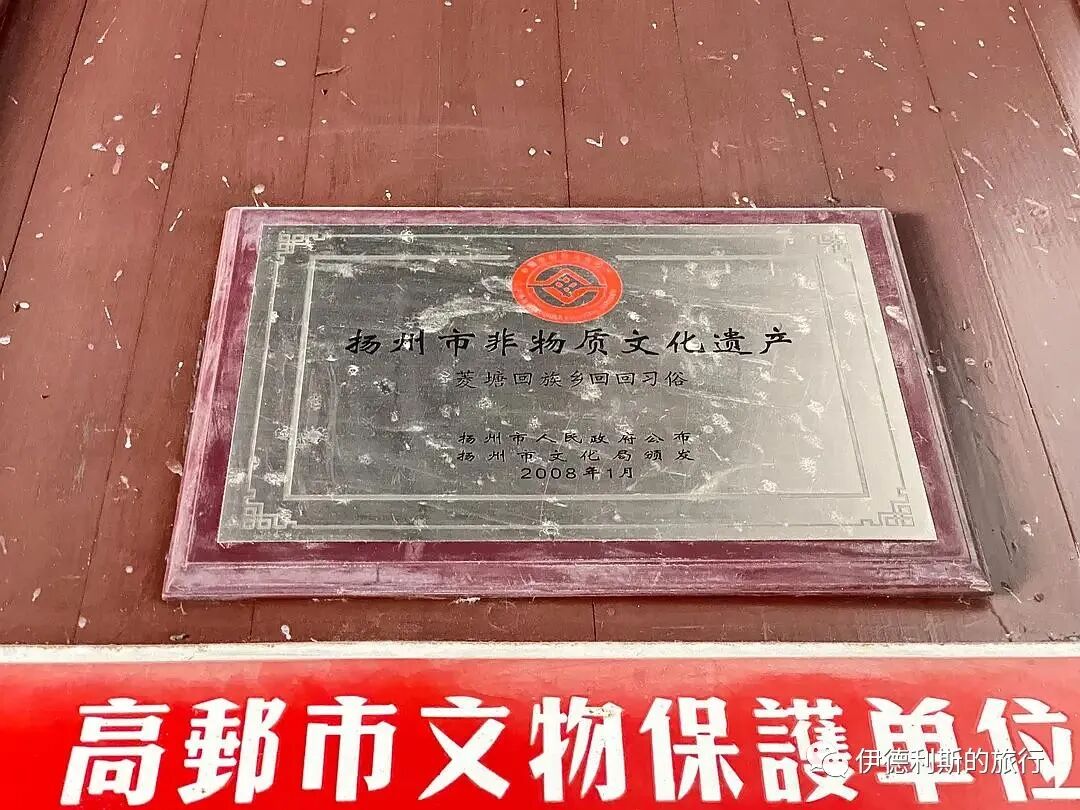
The mosque is also the inheritance site for the Yangzhou intangible cultural heritage, "Hui Muslim Customs of Lingtang Hui Muslim Township."
Yangzhou
In the afternoon, I took a taxi from Lingtang to Yangzhou, visiting the Yangzhou Xianhe Mosque for the second time after four years.
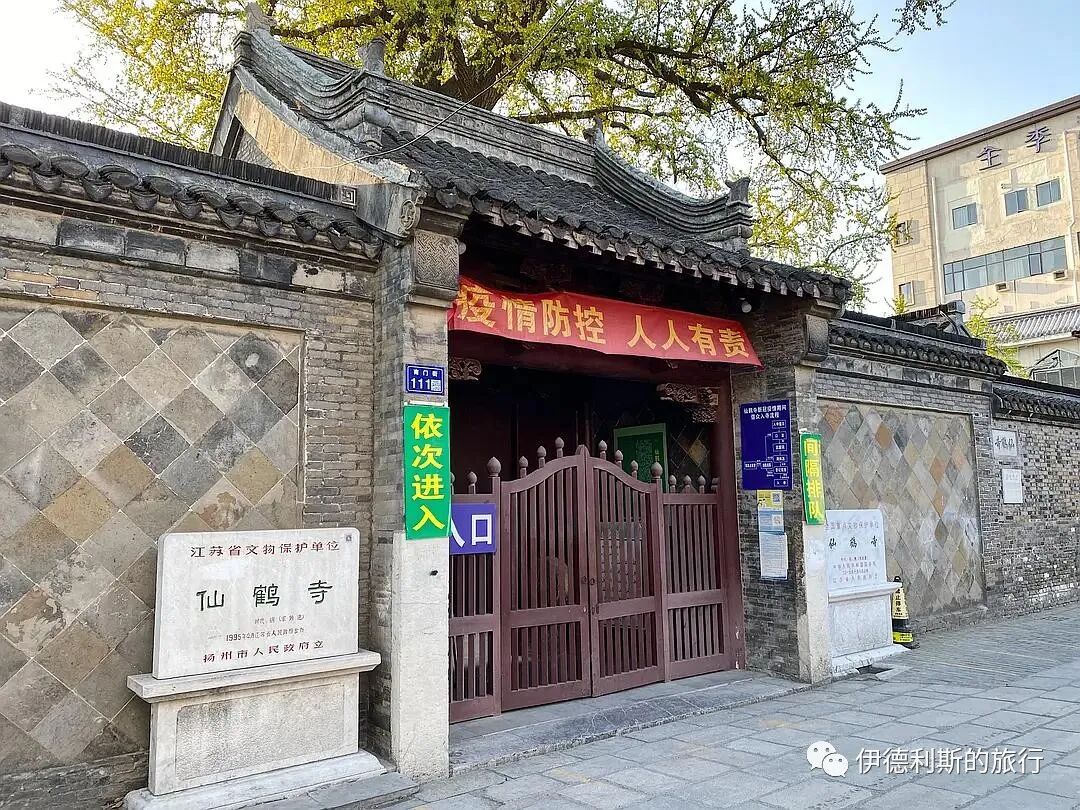
Yangzhou's Xianhe Mosque is one of the four great ancient mosques in Southeast China, along with the Phoenix Mosque in Hangzhou, the Lion Mosque in Guangzhou, and the Qilin Mosque in Quanzhou. It was founded in 1275 (the 12th year of the Zhiyuan era of the Yuan Dynasty) by the Western sage Puhading before he passed away. It was rebuilt in 1390 (the 23rd year of the Hongwu era of the Ming Dynasty) by Ha San, renovated in 1523 (the 3rd year of the Jiajing era) by the merchant Ma Zongdao and the imam Ha Ming, and repaired again in 1791 (the 56th year of the Qianlong era).
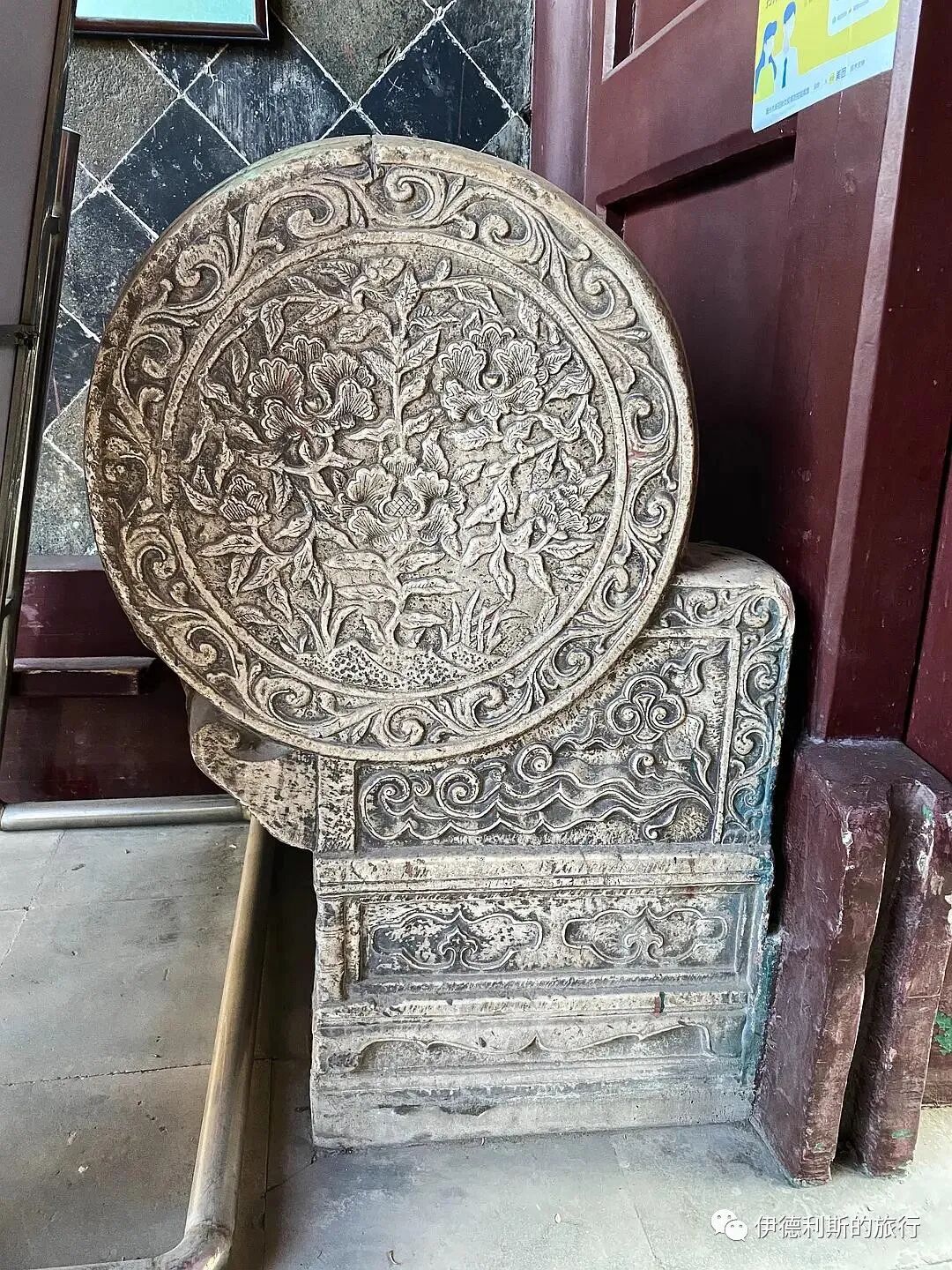
The gatehouse has a single-eave, ridge-roofed hard-mountain style, with some wooden parts dating back to the Ming Dynasty. The Ming Dynasty drum-shaped stone bases in front of the gate are very exquisite and rare among mosques in China.
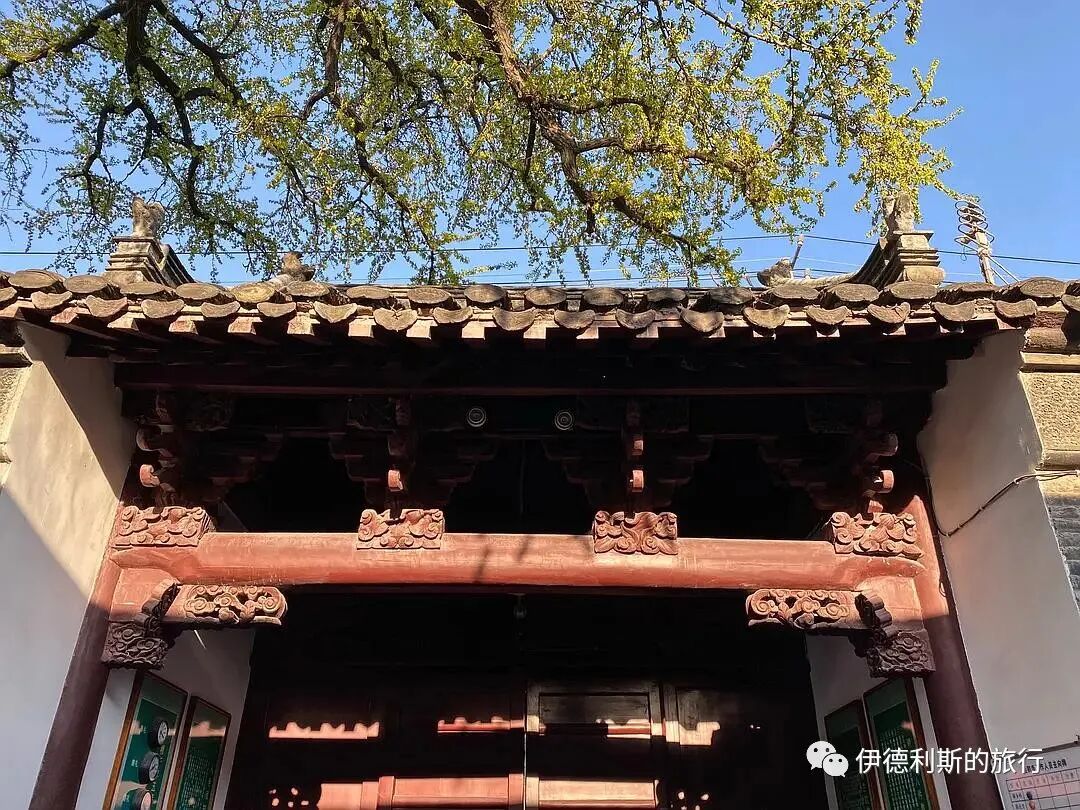
The Xianhe Mosque layout uses small courtyards, unlike the four-sided courtyard (siheyuan) layout common in northern mosques. Xianhe Mosque divides the lecture hall, the main prayer hall, and the gate into three separate small courtyards. It also features a moon-viewing pavilion and a covered walkway outside the south gable of the main hall, giving the mosque a garden-like atmosphere.
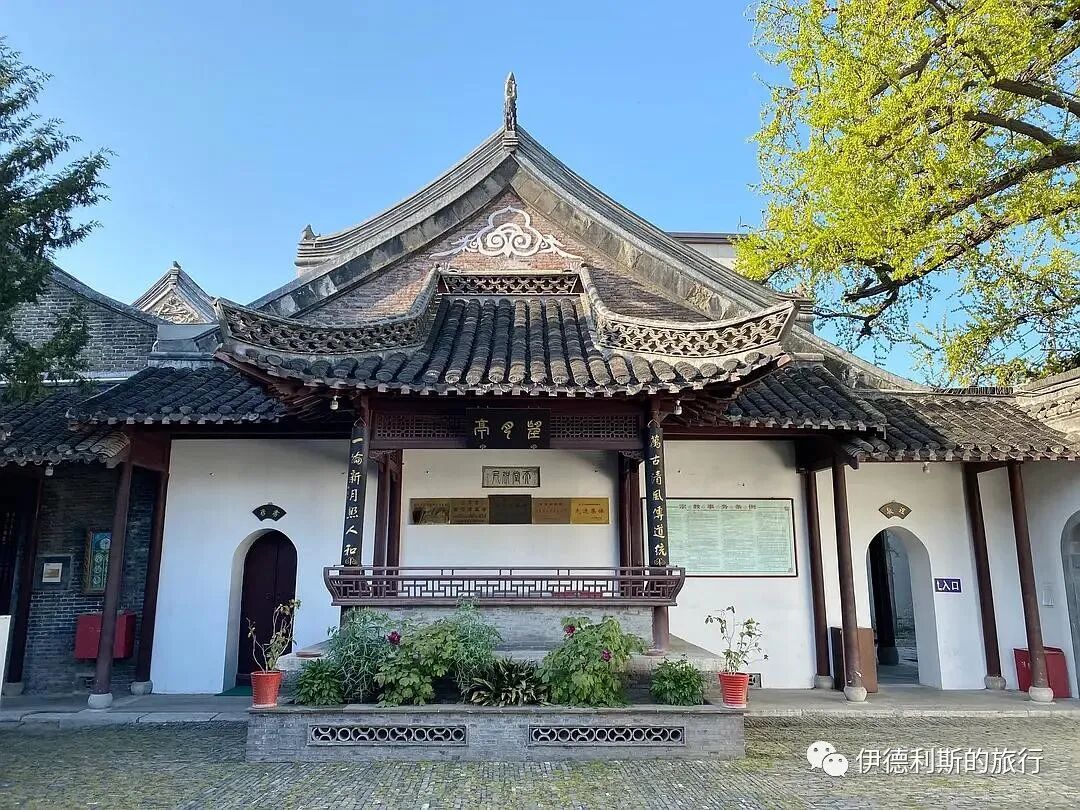
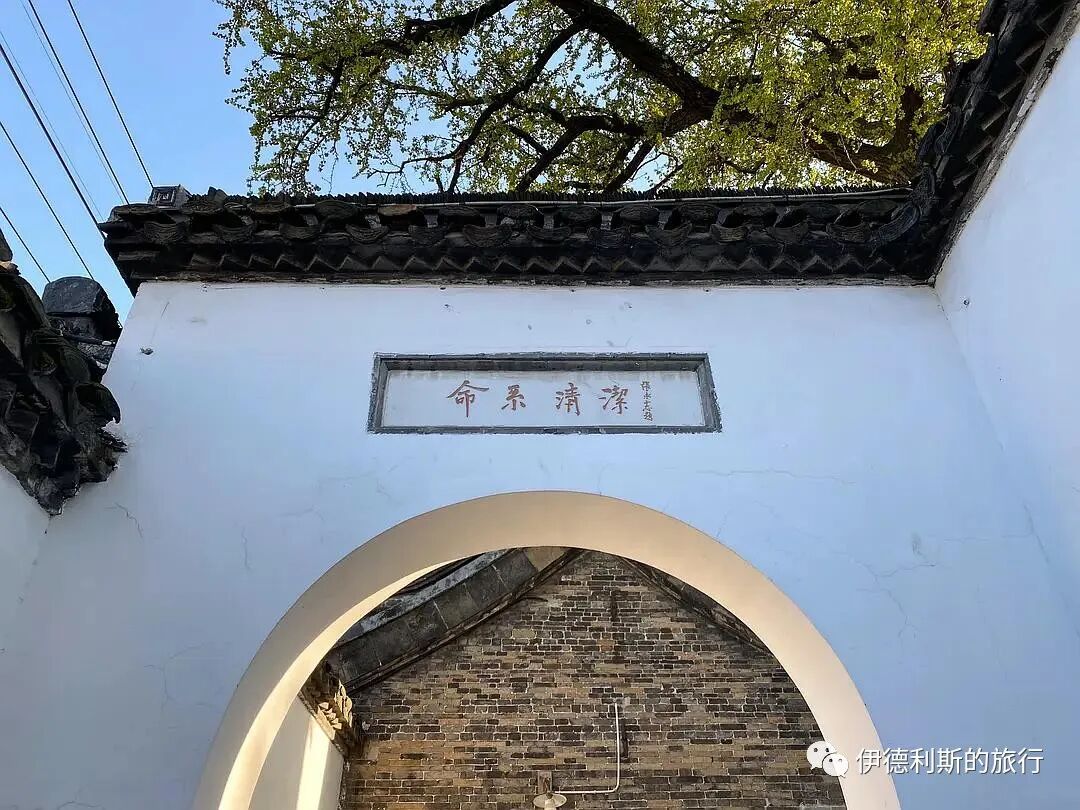
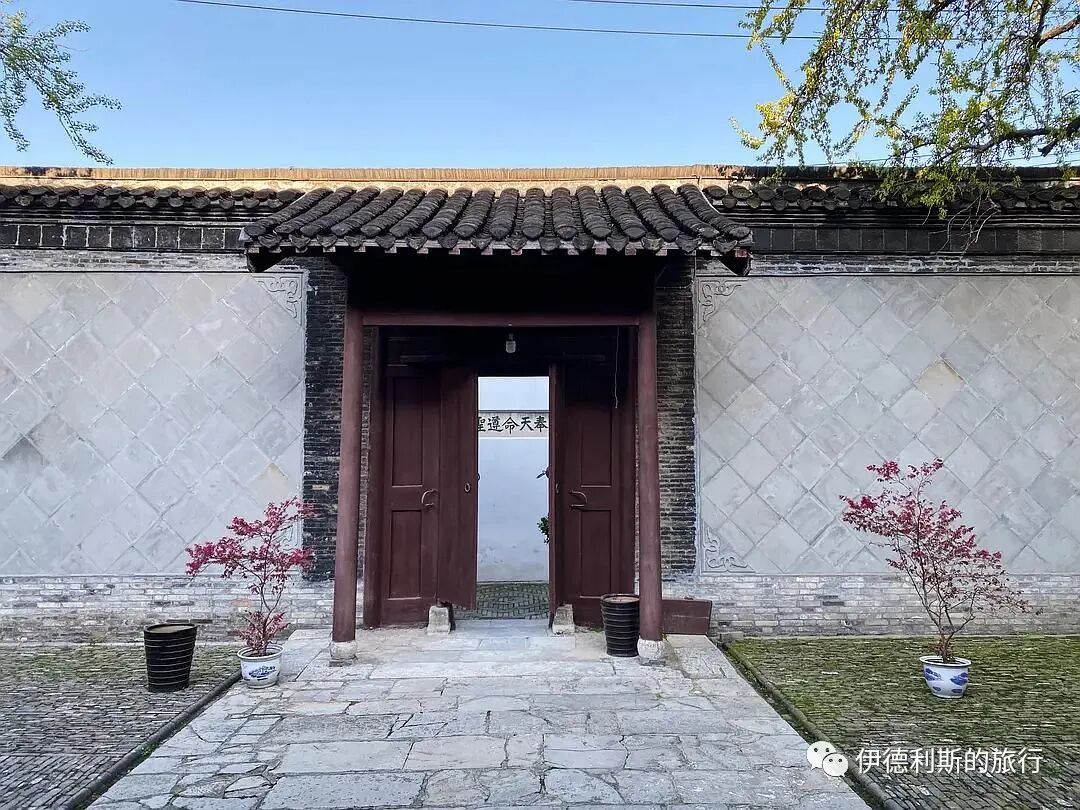
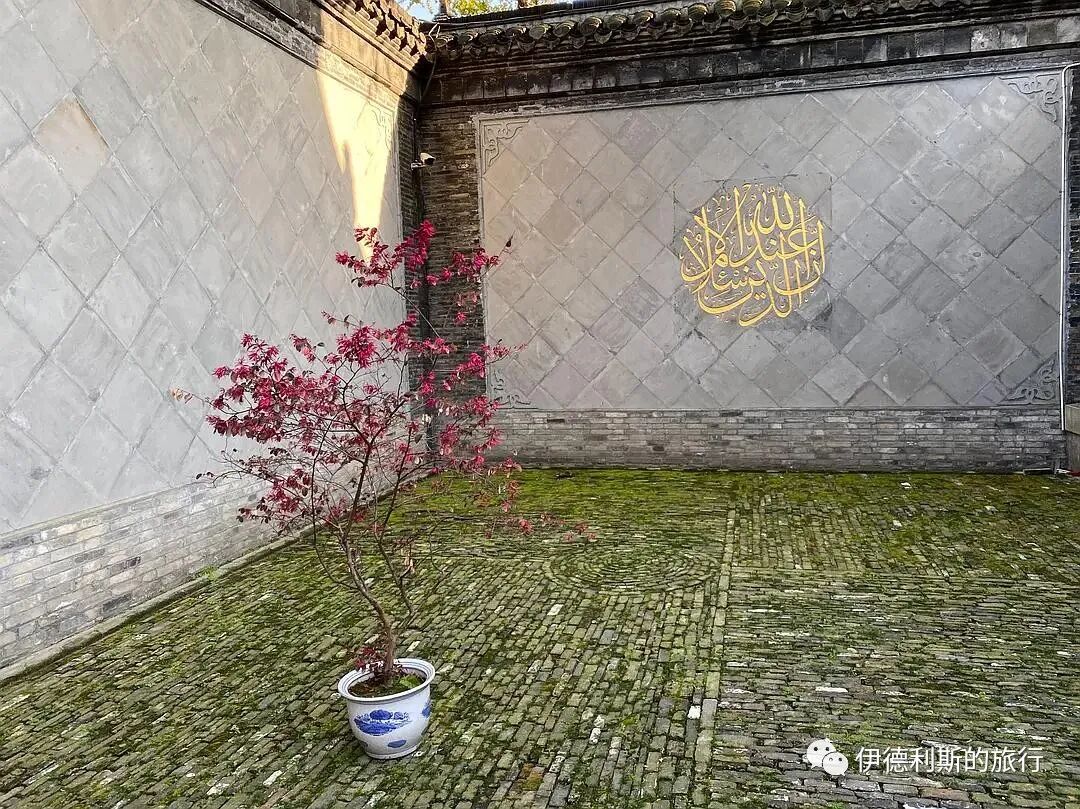
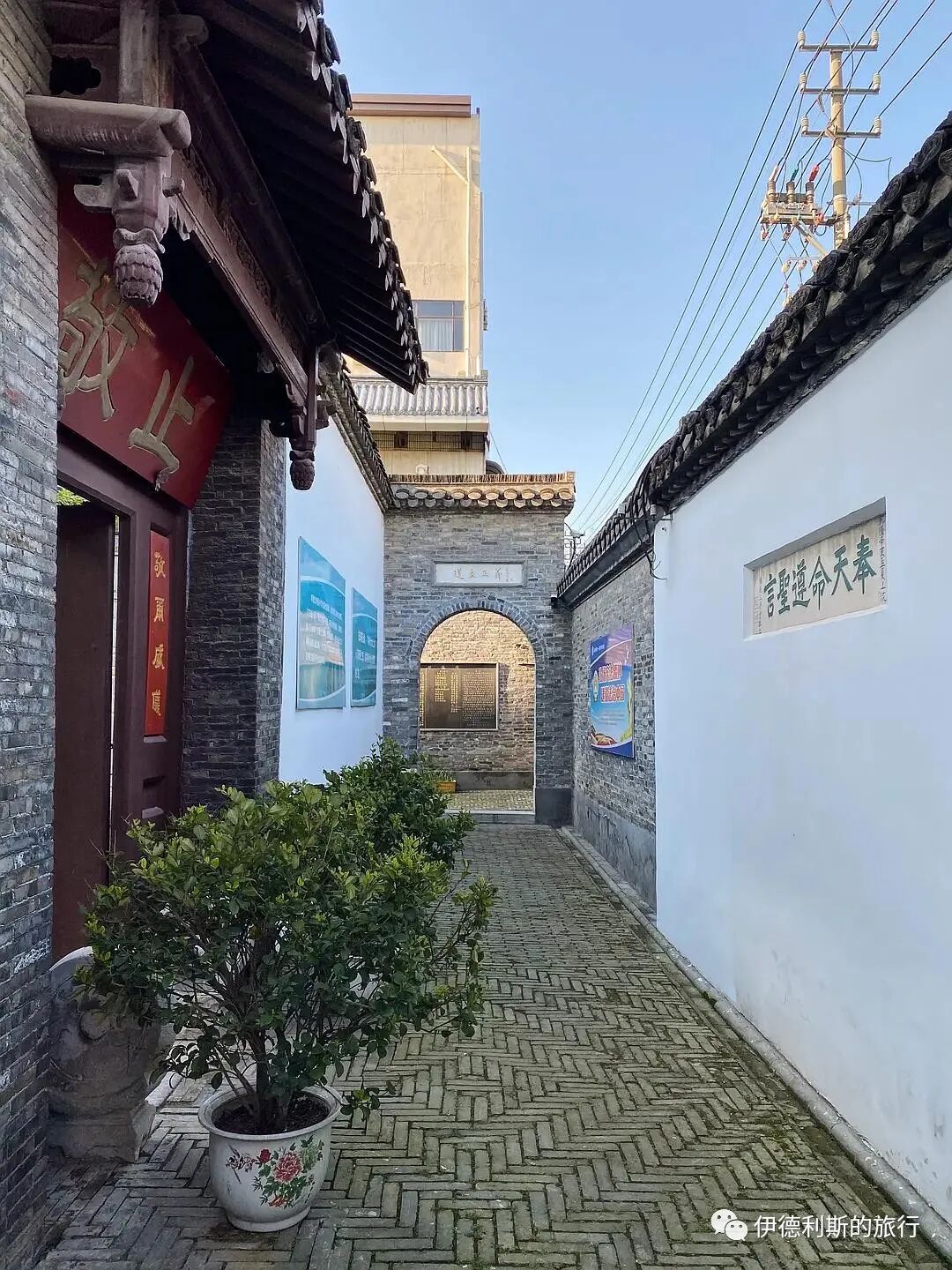
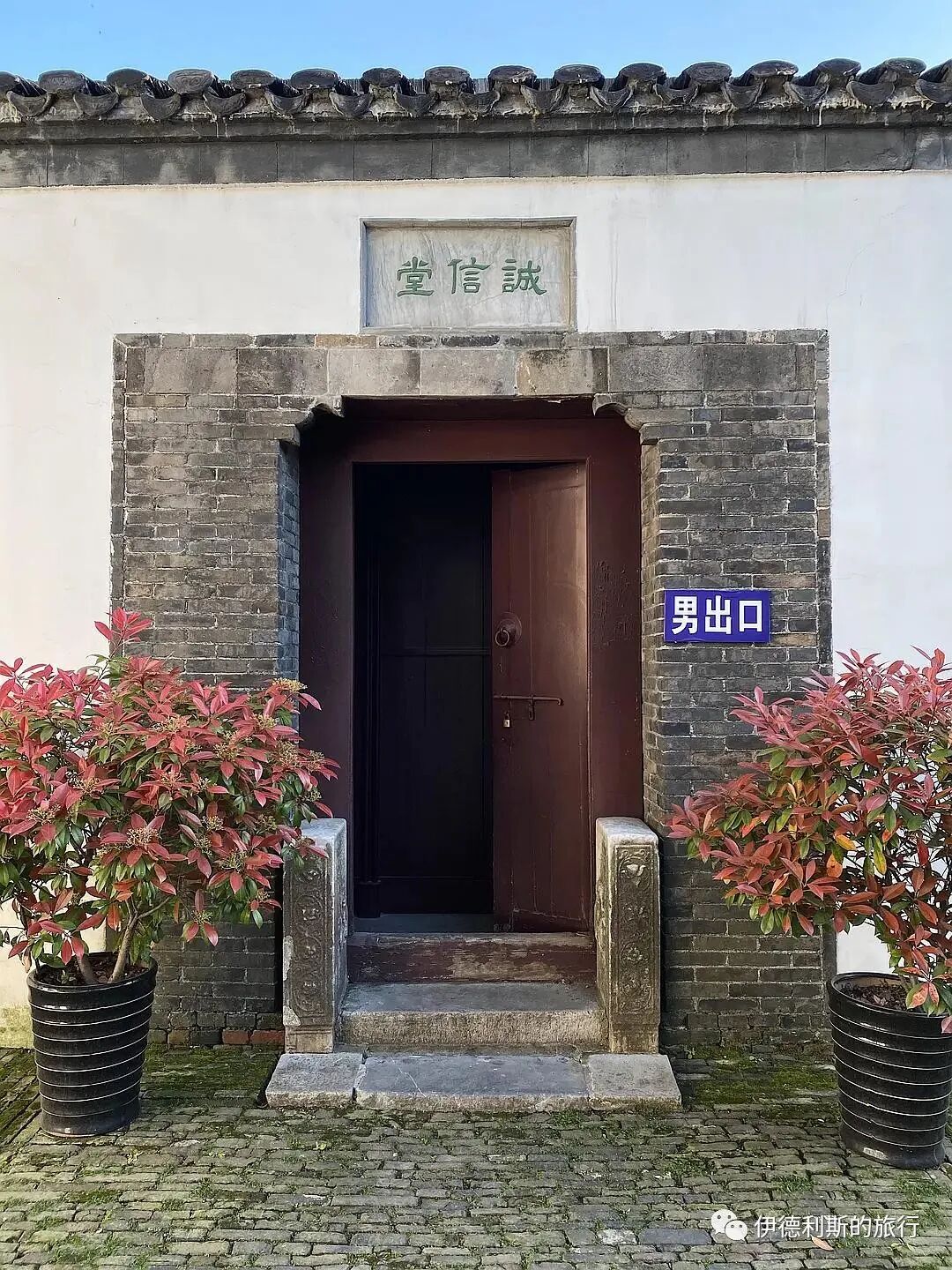
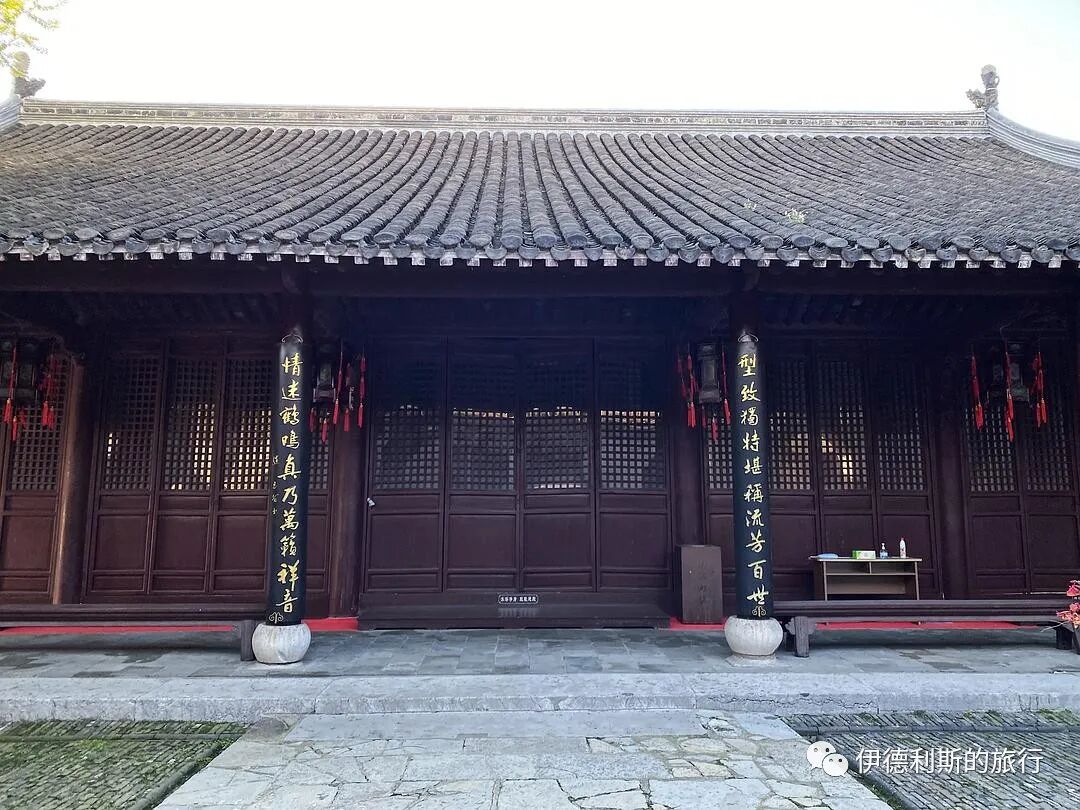
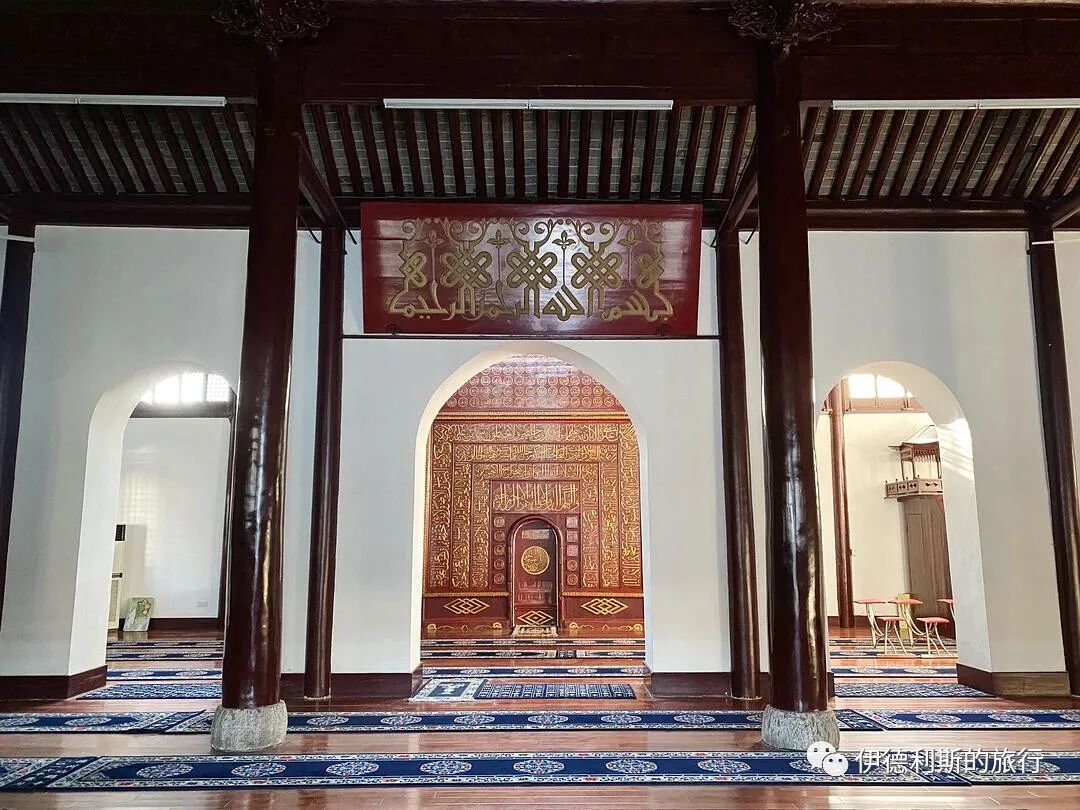
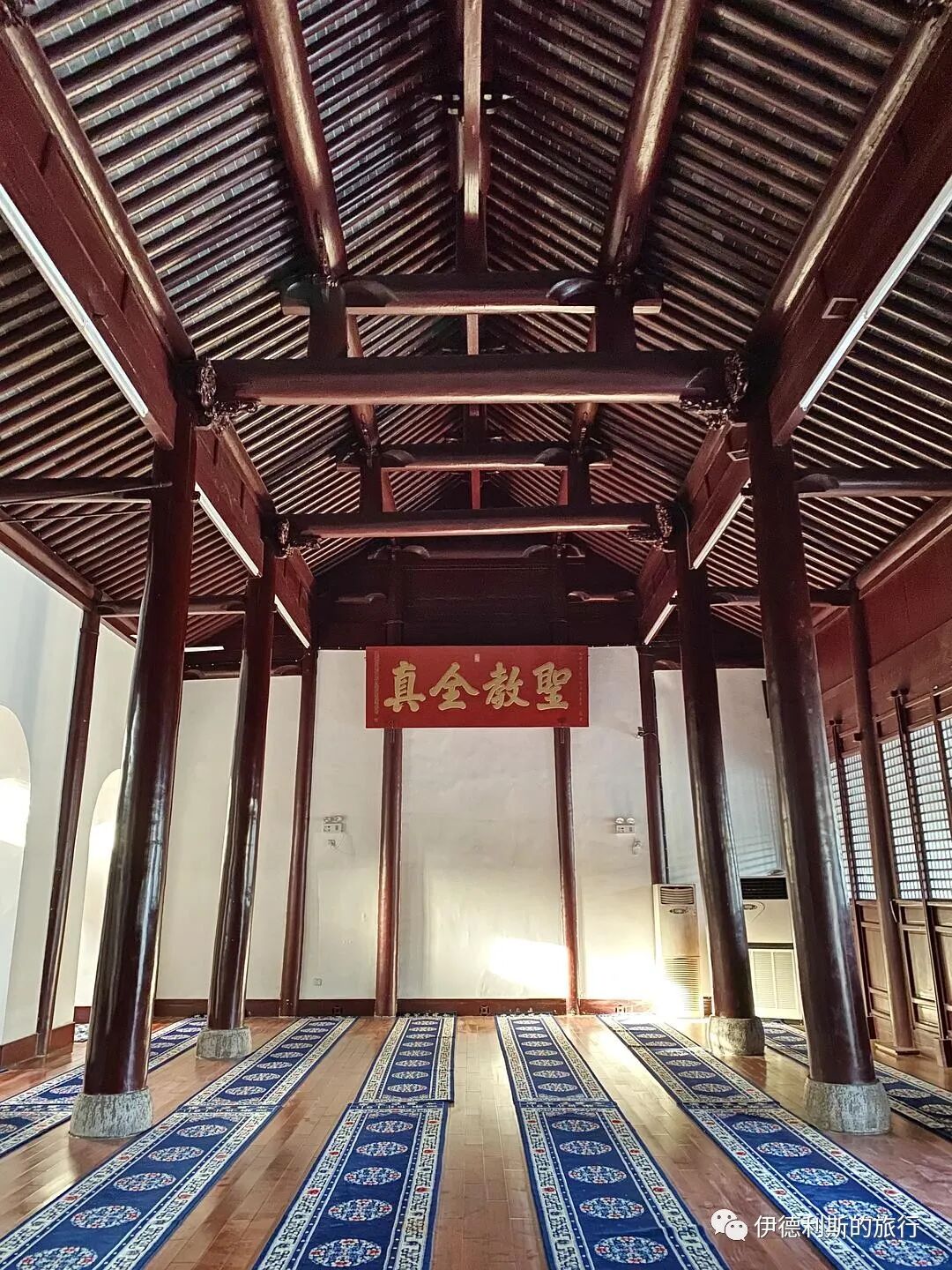
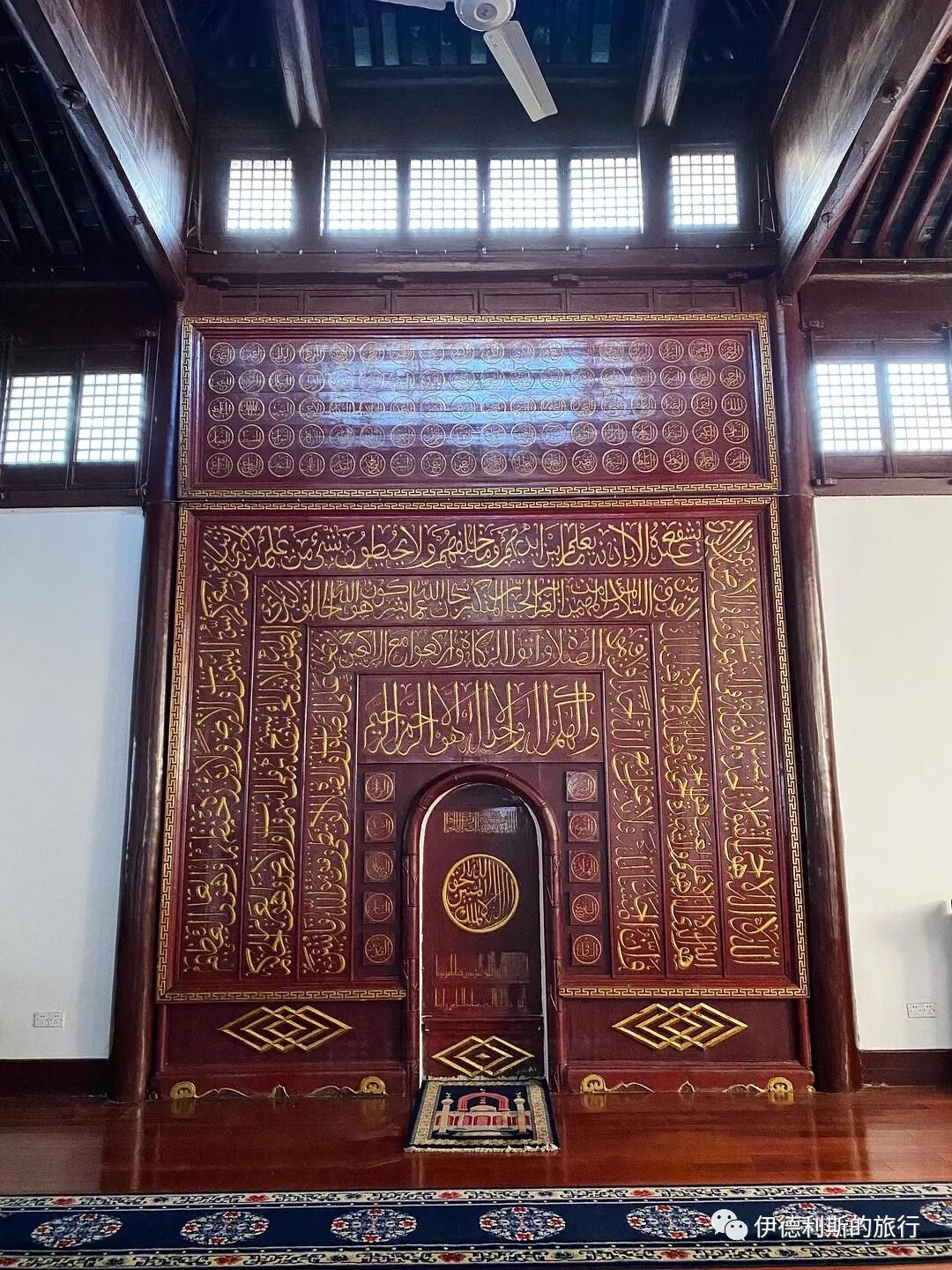
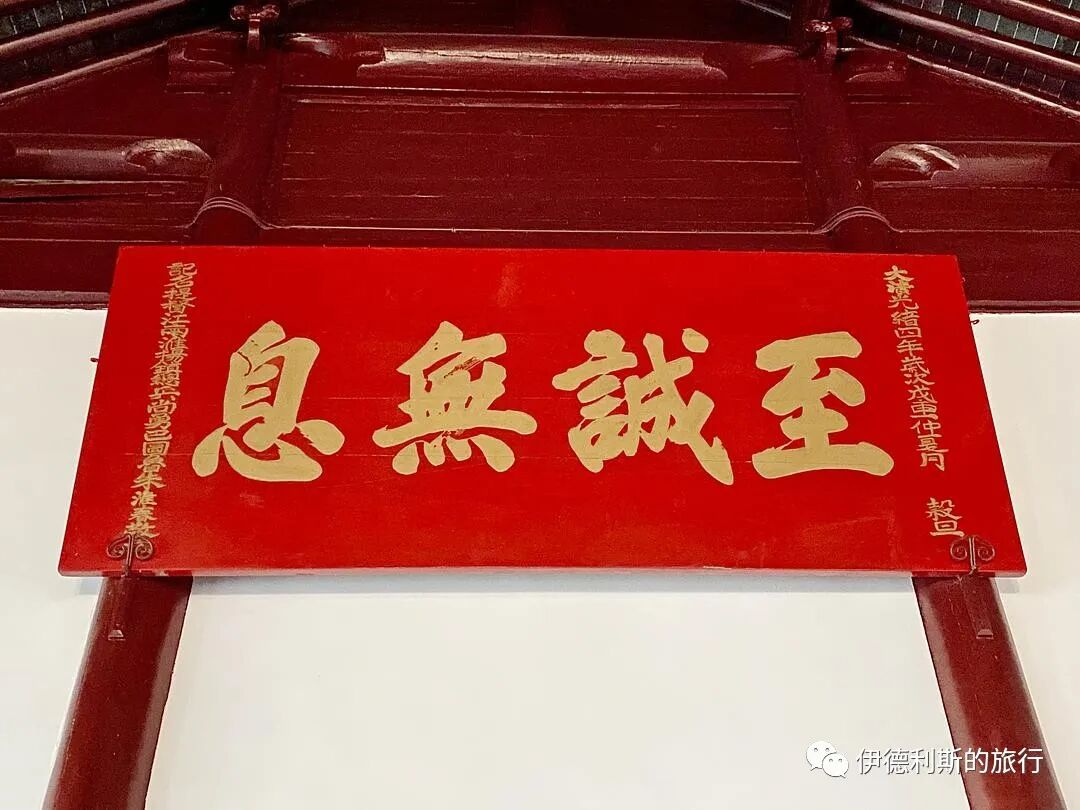
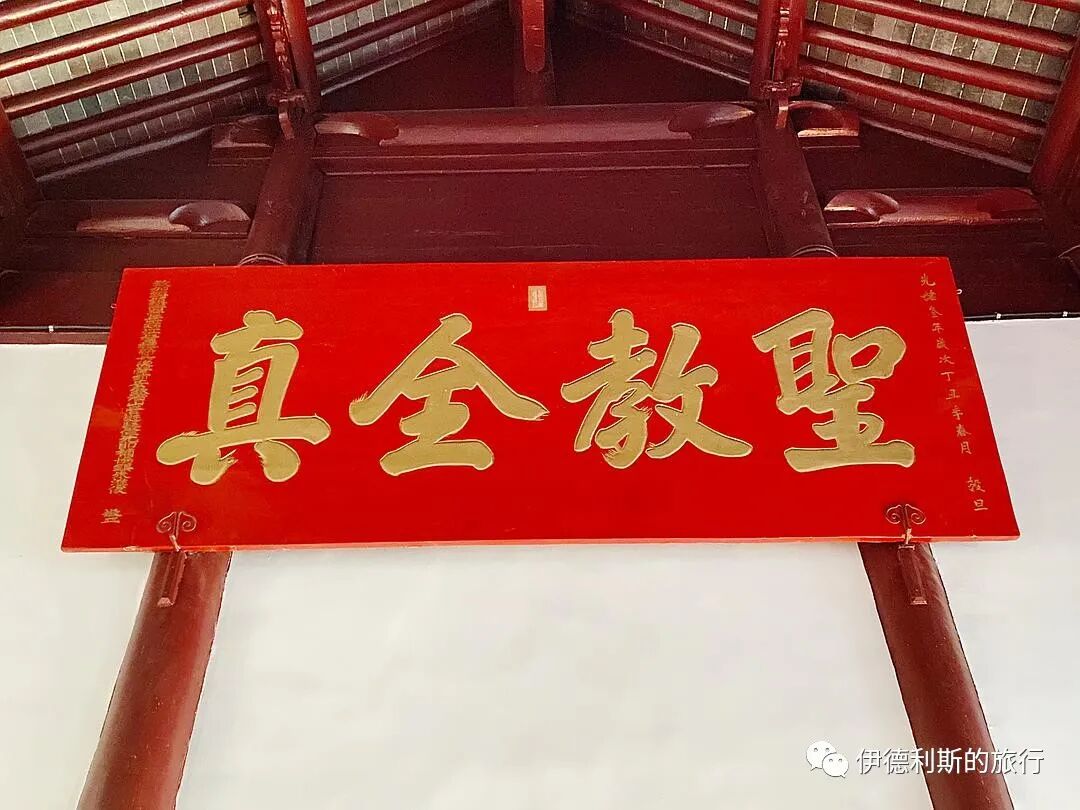
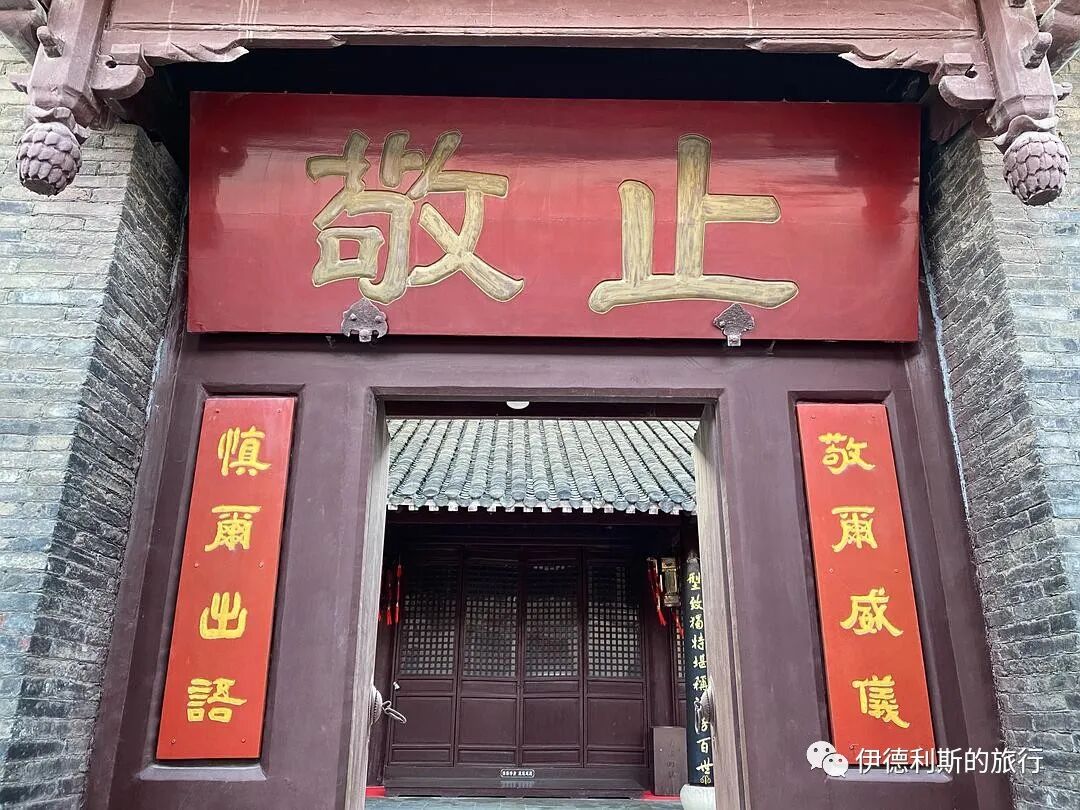
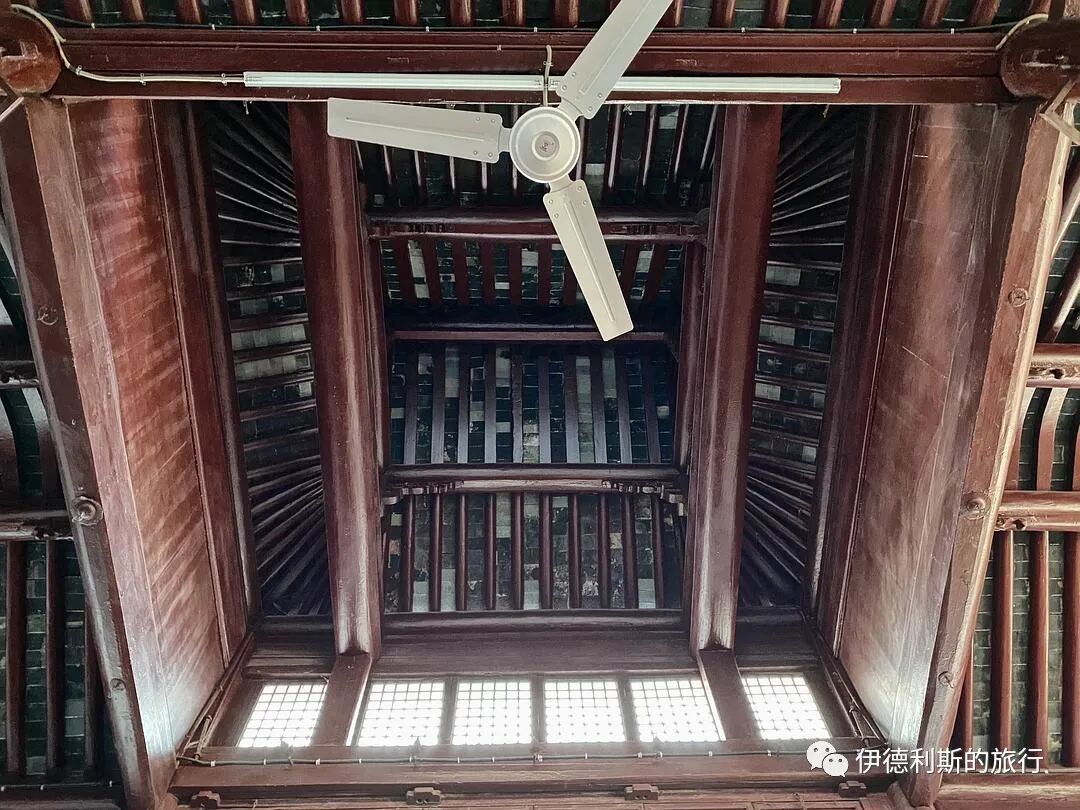
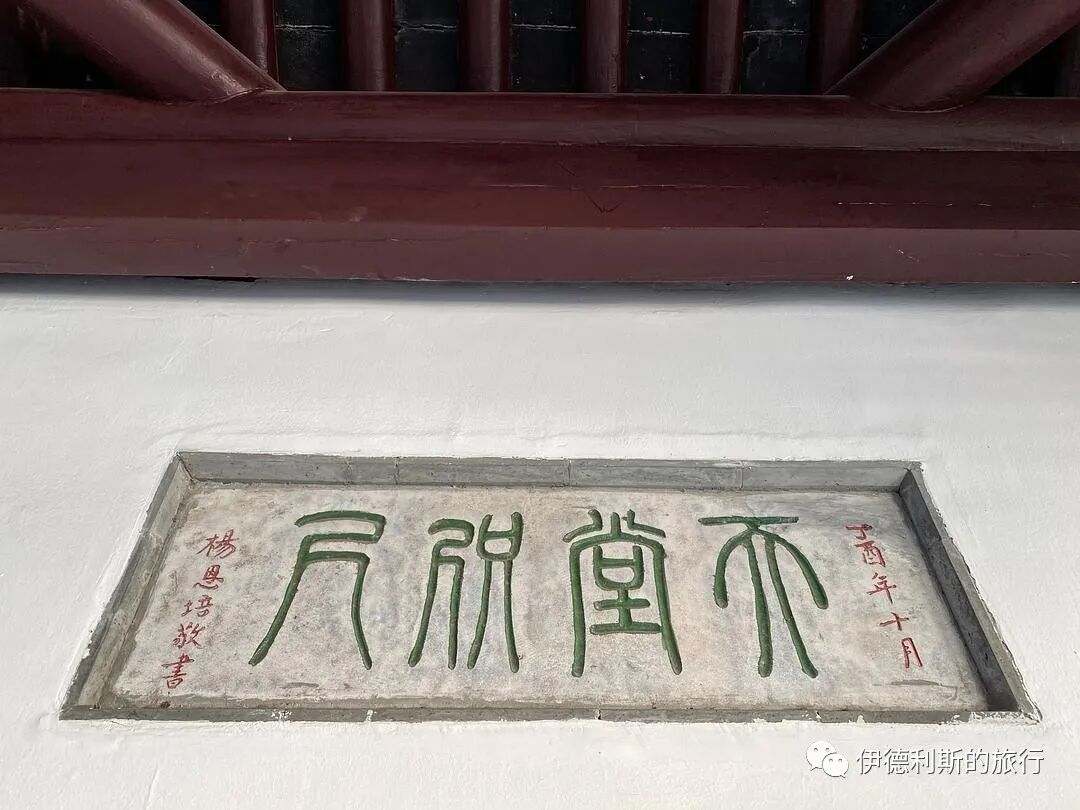
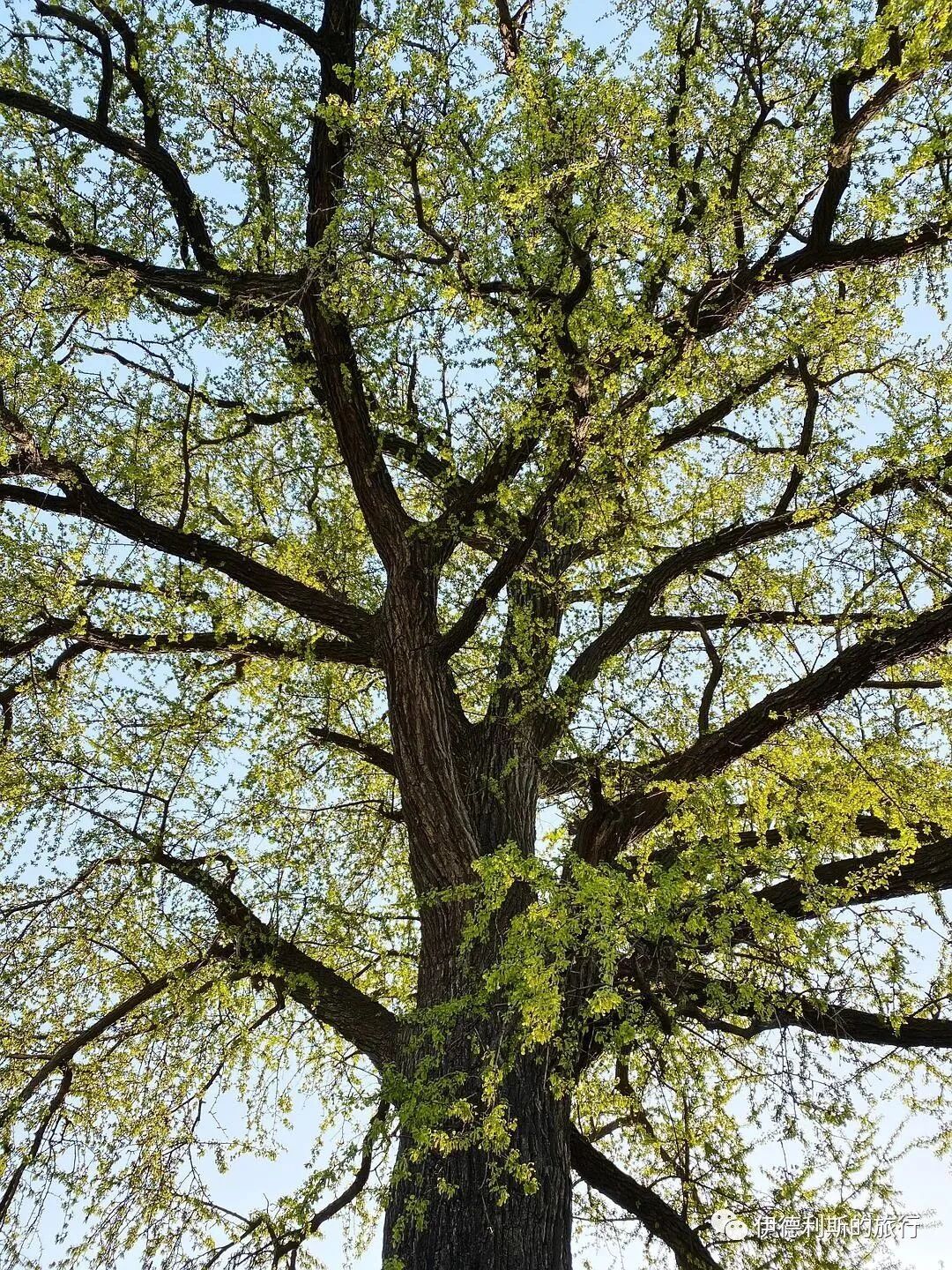
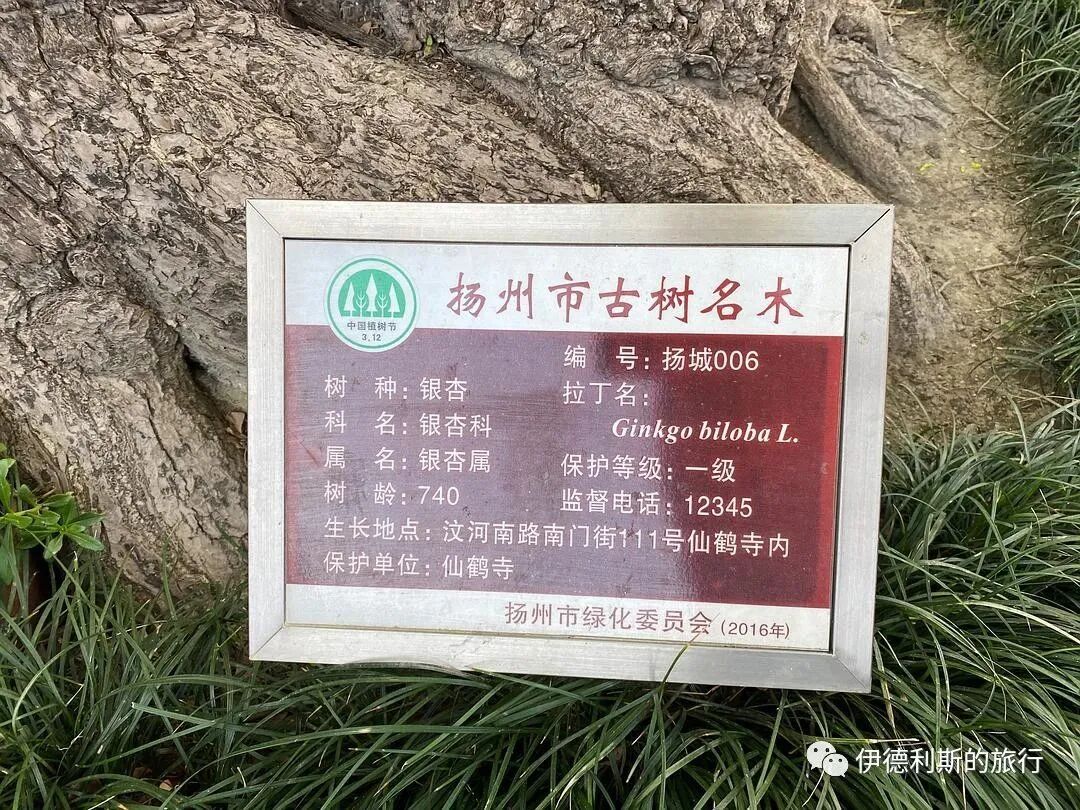
Inside Xianhe Mosque stands a 745-year-old ginkgo tree, the oldest surviving ginkgo in Yangzhou.
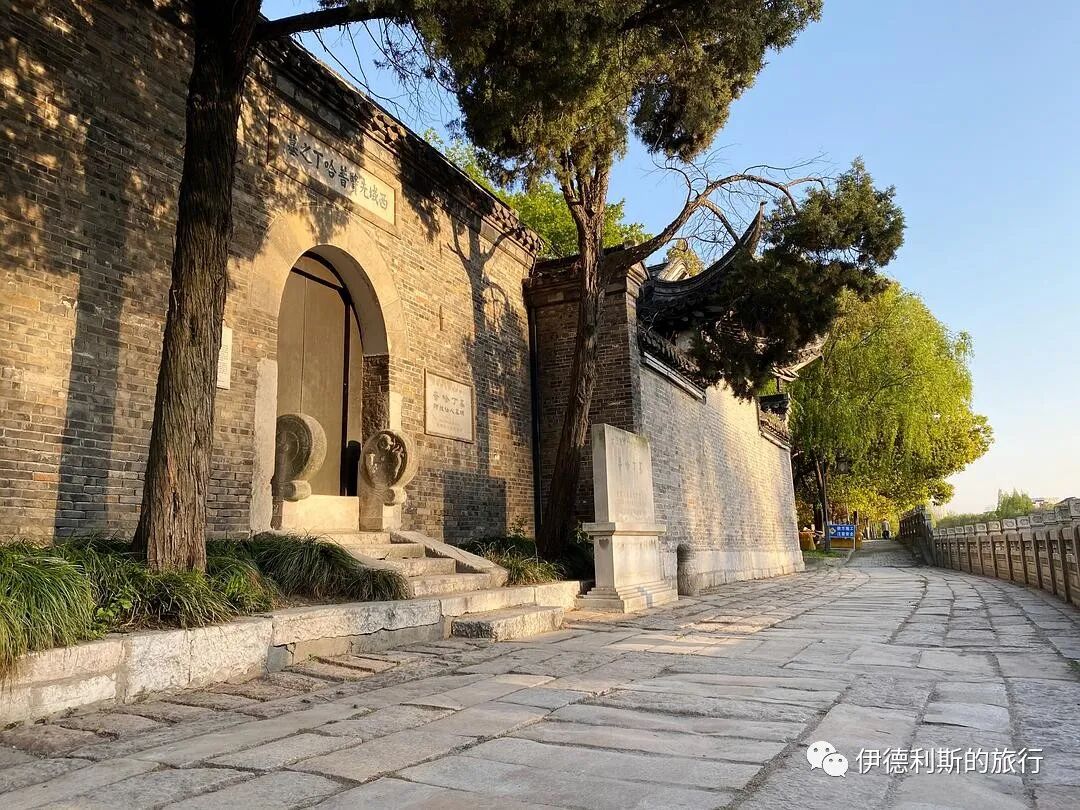
From Xianhe Mosque, I went to the Puhading Tomb, but it was already locked after closing time, so I could not get in. Puhading is said to be a 16th-generation descendant of the Prophet. He came to Yangzhou during the Xianchun period of the Song Dynasty (1265–1274) and died in Yangzhou in 1275 (the 12th year of the Zhiyuan era of the Yuan Dynasty). He was buried on a high ridge east of the East Gate River in the New City, a place later called Huihui Hall (commonly known as Baba Kiln). However, I had already explored the tomb carefully in 2016, so I did not feel it was a regret.
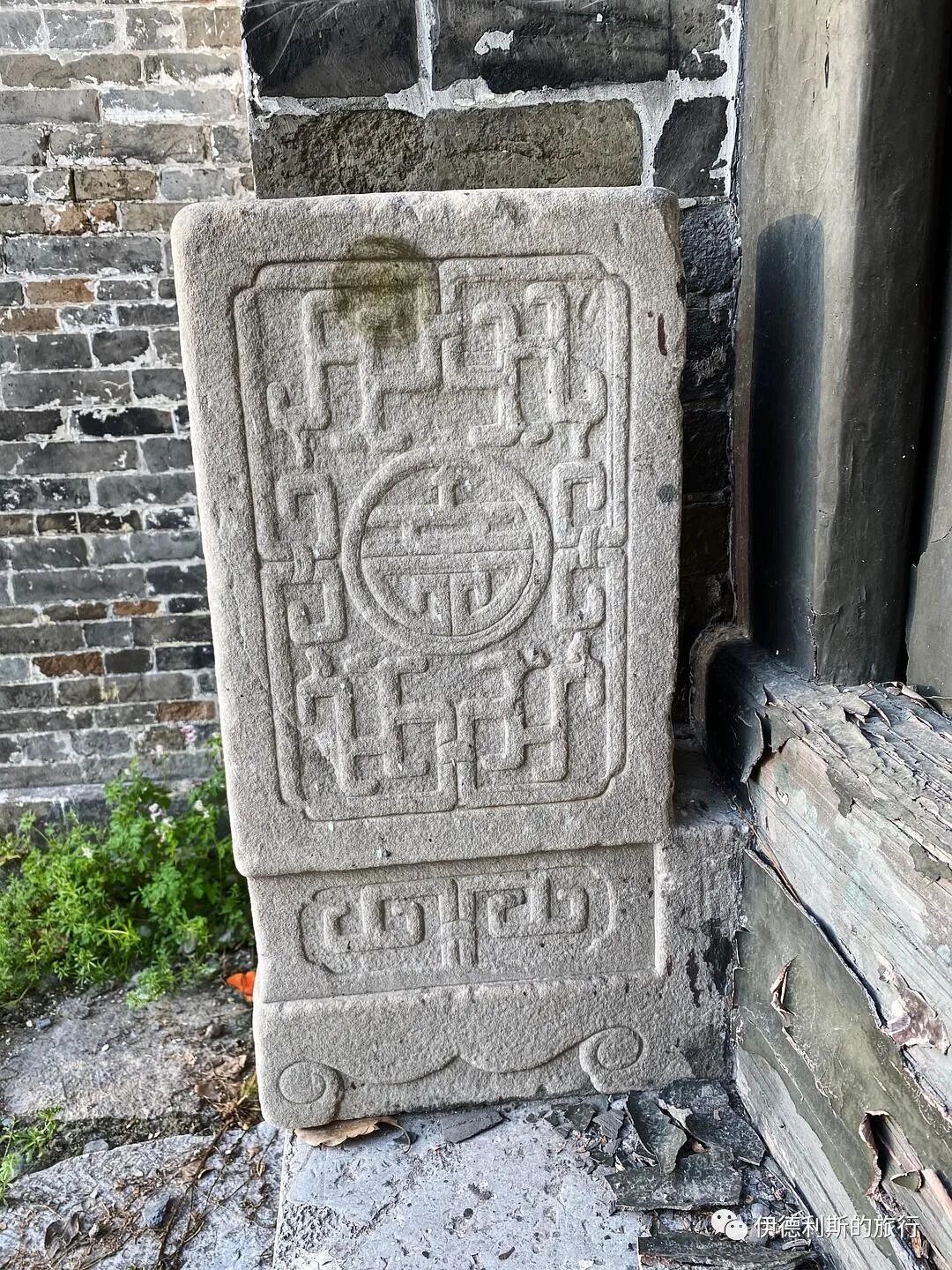
Behind the mihrab of the mosque at the Puhading Tomb.
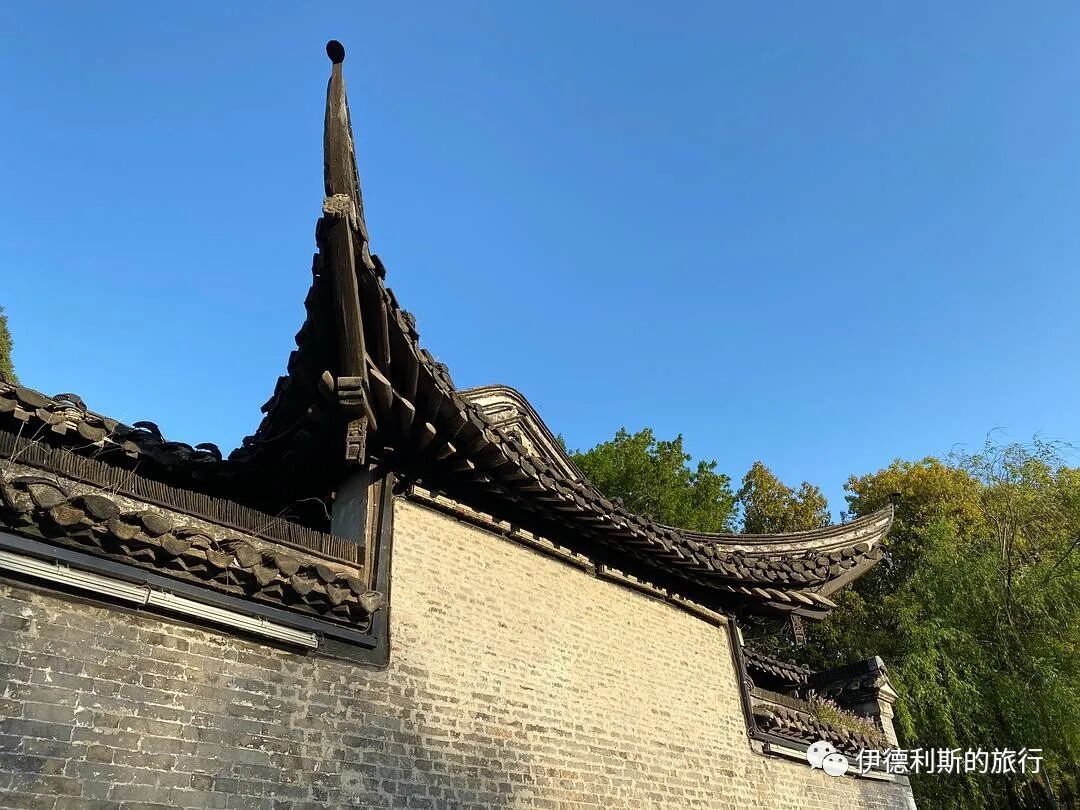
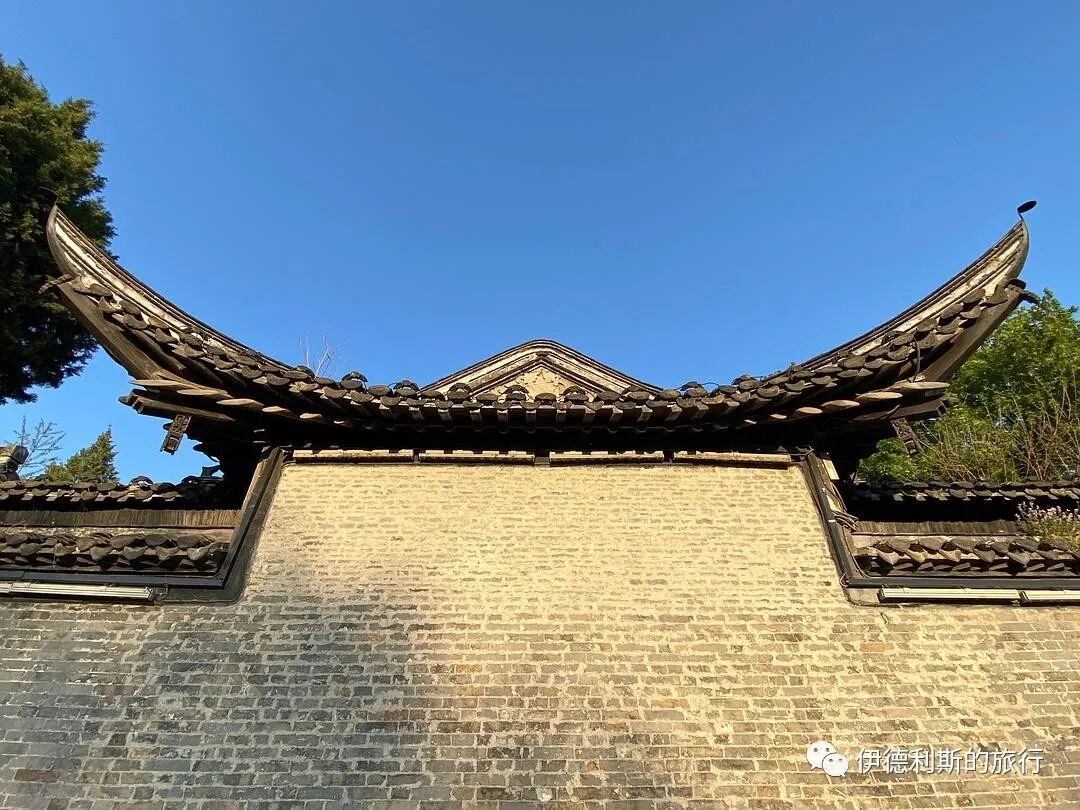
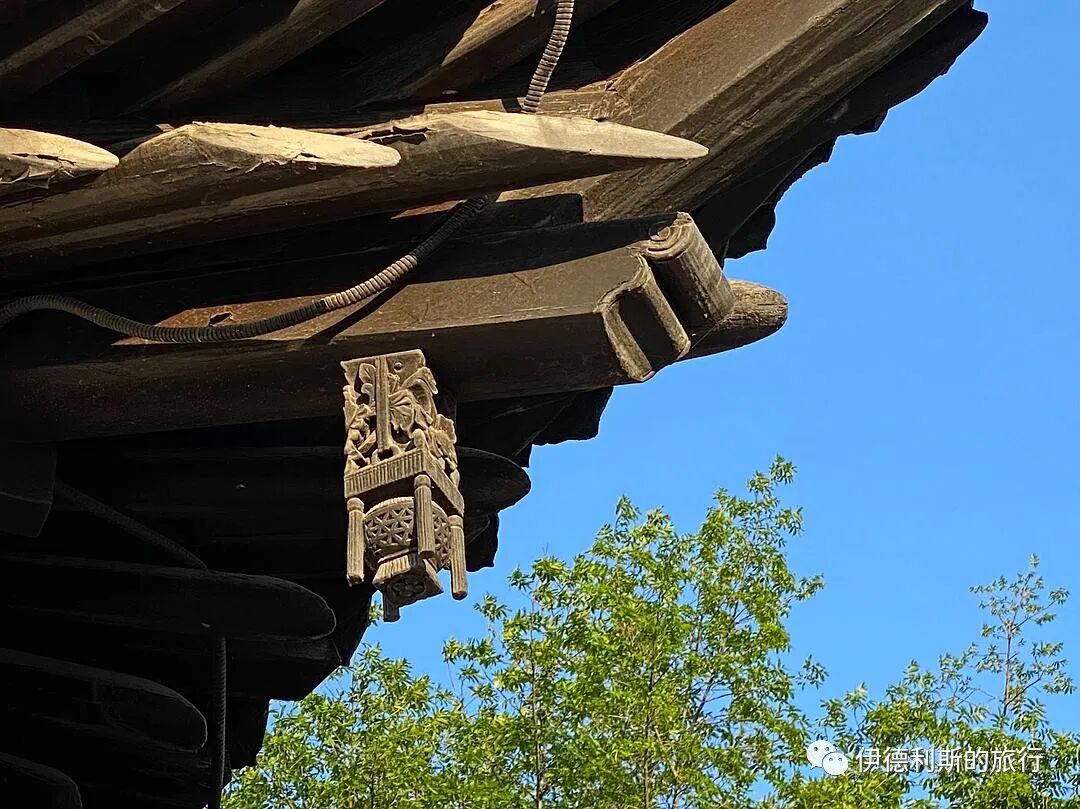
Looking at the Puhading Tomb from the banks of the Grand Canal, watching the sunlight hit the bricks and feeling the breeze, I felt very relaxed.
The disappearance of local halal food in Yangzhou is a great pity. From the Qing Dynasty to the Republic of China, Yangzhou's halal food scene was once very popular. During the Republican era, there were over ten famous halal restaurants. Famous Peking opera actors Zhou Xinfang and Cheng Yanqiu would eat at the most famous halal restaurant at the time, Tianxing Restaurant, whenever they came to Yangzhou to perform.
During the Republic of China, Yangzhou also had over ten halal chicken and duck shops, over ten beef shops, more than thirty sesame flatbread (shaobing) shops, and two tea houses. The most famous chicken and duck shop was Linyuanxing, which later became the predecessor of Hongxing, the only halal restaurant left in Yangzhou. Linyuanxing was good at making oil-poached chicken and salted duck. At that time, it not only had multiple shops in Yangzhou but also had branches and stalls in Shanghai, Suzhou, and Zhenjiang.
Yangzhou's halal food industry declined sharply after 1949. When I visited in 2016, the only places serving local food were Tianxingzhai, which used the name of the old Tianxing Restaurant, Yixiangzhai next to the Puhading Tomb, and the old brand Hongxing. When I visited again in 2021, Tianxingzhai had become a small barbecue shop, Yixiangzhai had closed, Hongxing was under renovation with only a snack window, and the rest were just Lanzhou hand-pulled noodle (lamian) shops.
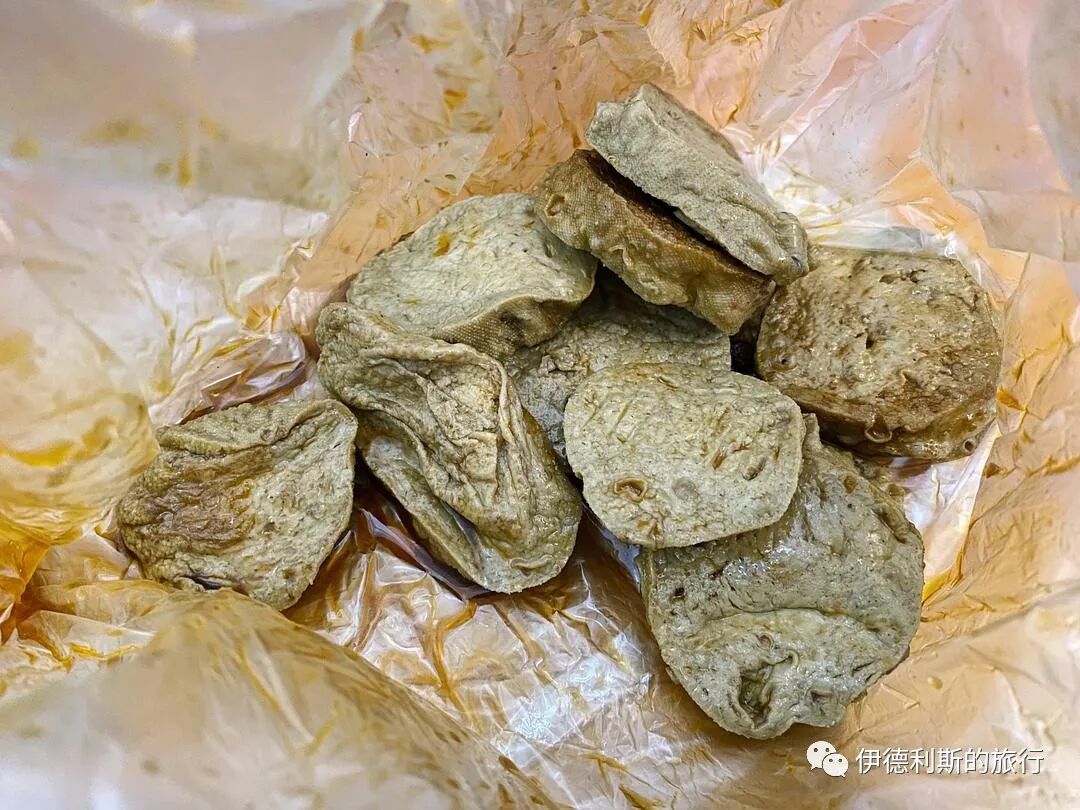
We bought vegetarian chicken and smoked fish at Hongxing. The preparation was similar to the style in Nanjing, and it was the only local Yangzhou halal food we could find during the 2021 Qingming Festival (I heard Hongxing is finished with renovations now, and inshaAllah I will have a chance to taste it again).
Zhenjiang
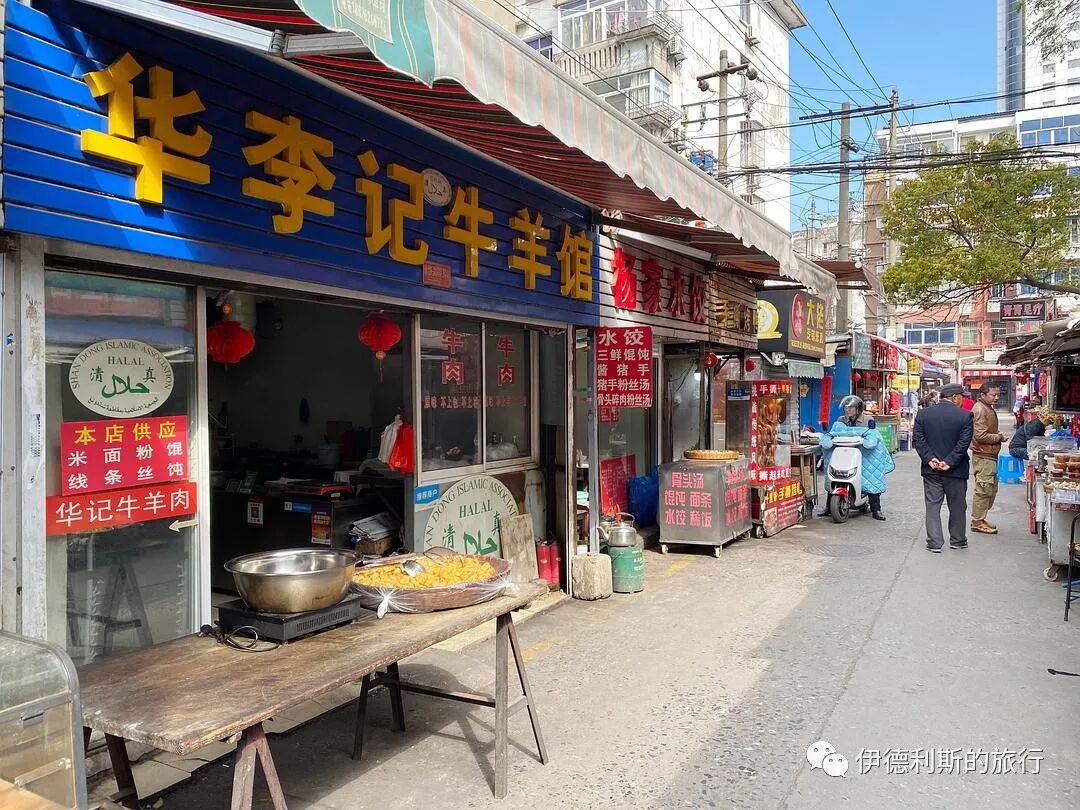
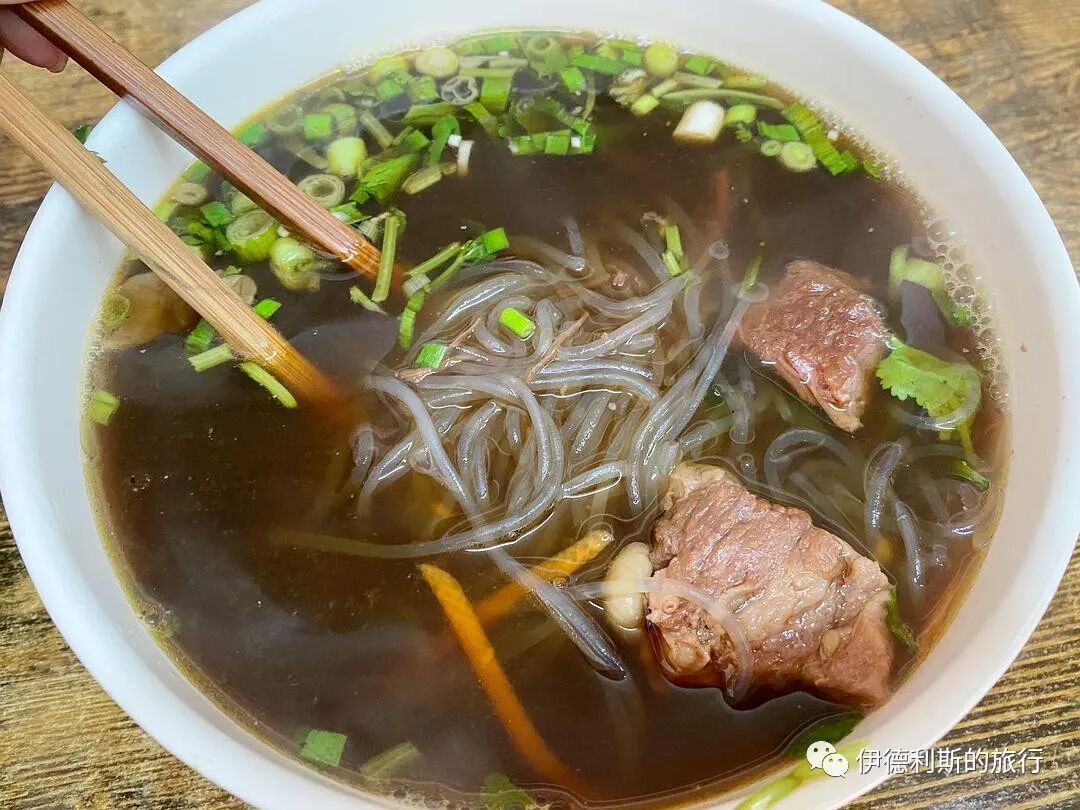
On the morning of April 5, I took the high-speed train from Yangzhou to Zhenjiang. I rode an e-bike to Yongan Road to eat beef vermicelli soup at Hualiji. The soup was slightly sweet and very refreshing.
The Hua family of Hui Muslims moved to Zhenjiang from Taierzhuang, Shandong, during the Taiping Rebellion. The Taiping Rebellion caused heavy damage to Zhenjiang, leading to a large population decrease and the arrival of many people from the north. This is one of the reasons why Zhenjiang eventually changed from a Wu-speaking area to a Jianghuai Mandarin-speaking area. Huali Ji is a family of halal butchers in Zhenjiang. They have been in business for six generations, starting from the Daoguang era. In 2002, they moved from the Zhenjiang mosque to their current location on Yongan Road.
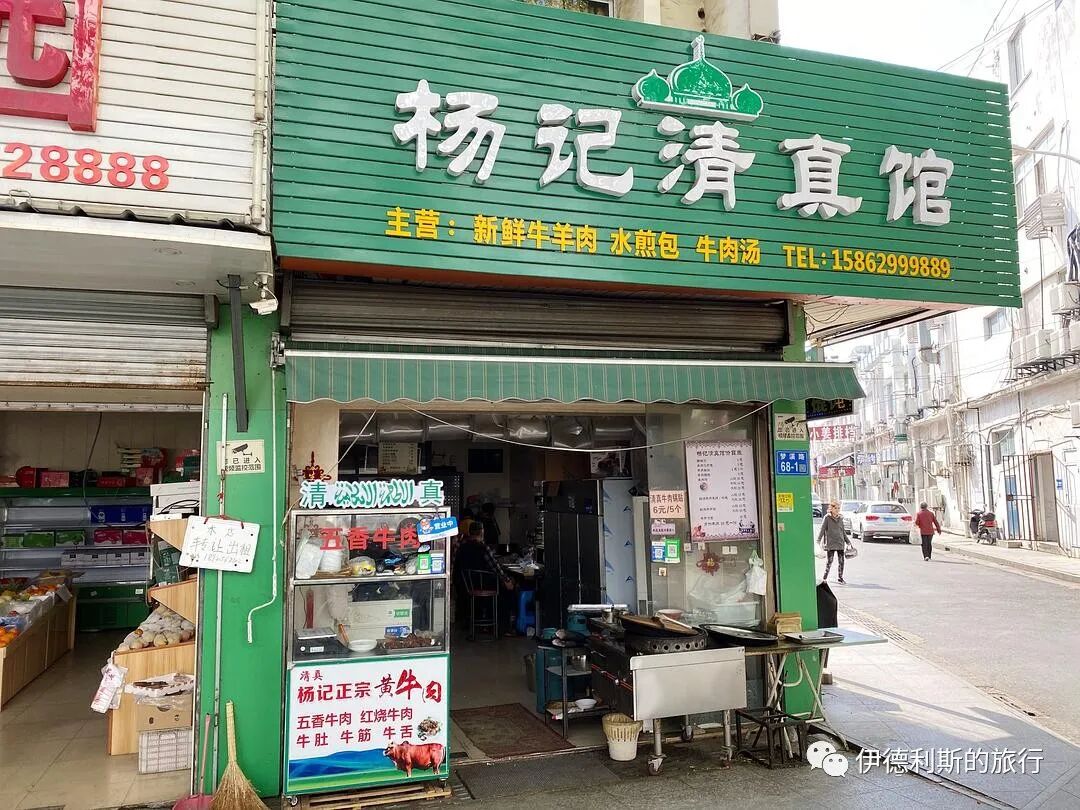
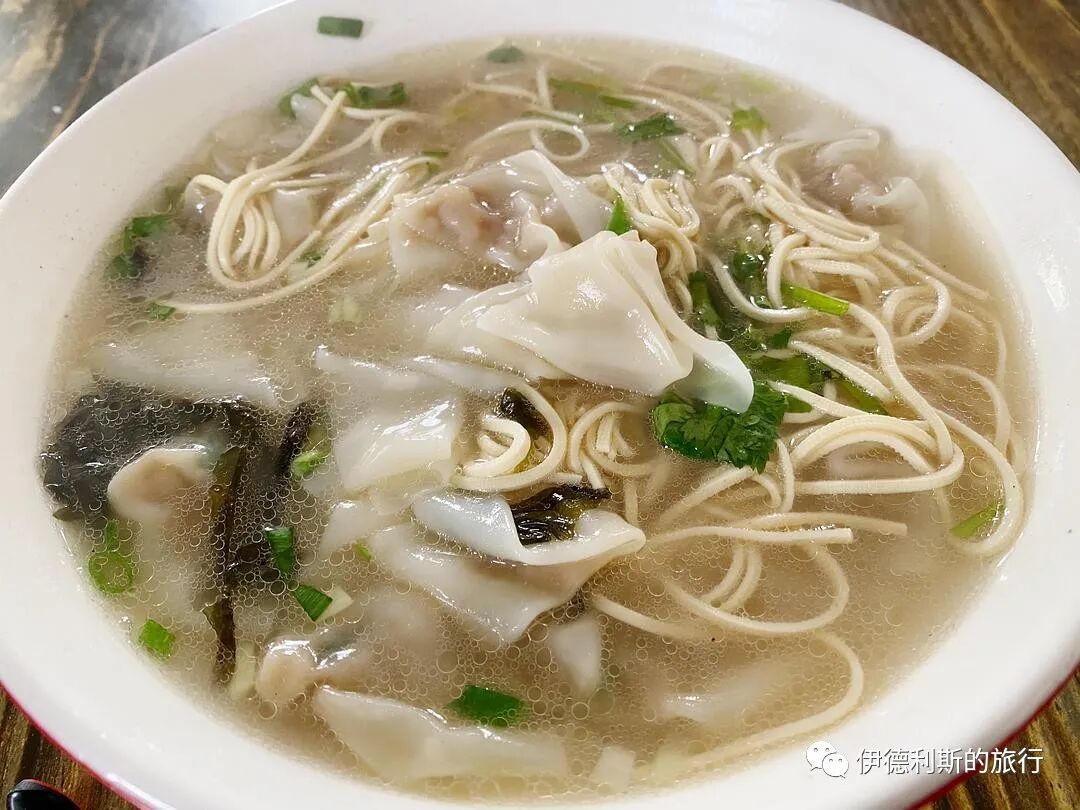
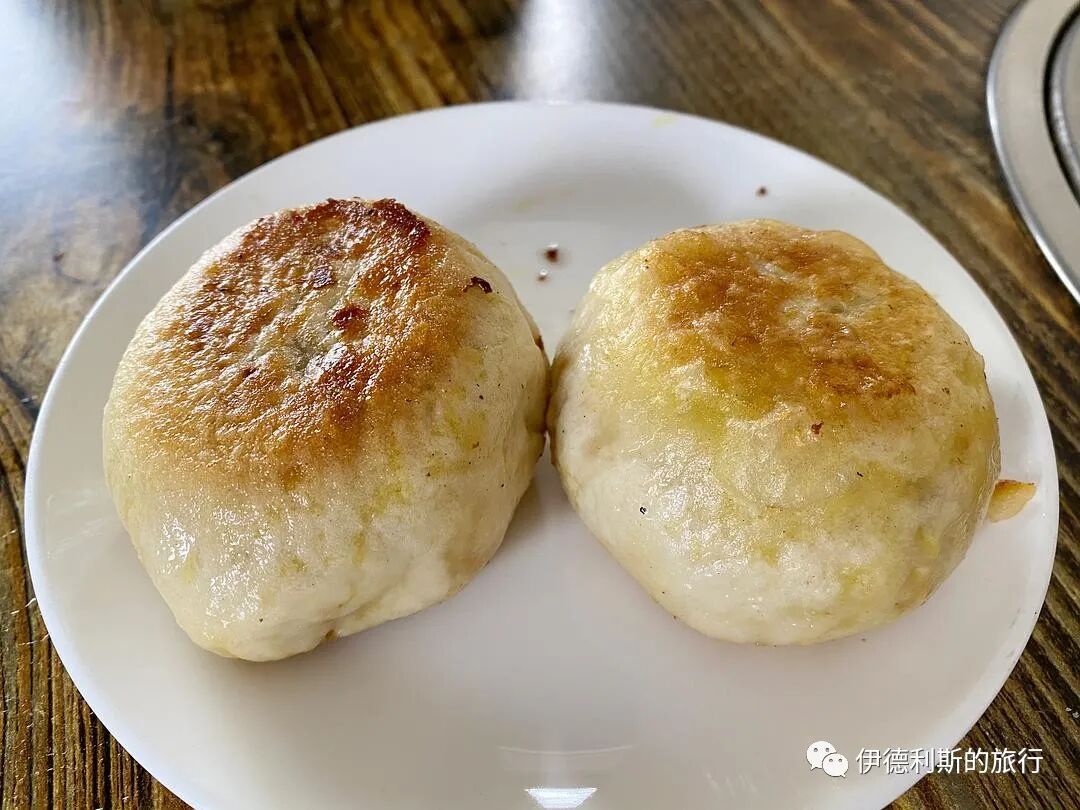
Next, I went to the newly opened Yang Family Halal Restaurant (Yangjia Qingzhen Guan) next to Muyuan Restaurant. I had beef wontons, dried tofu strips (gansi), and pan-fried buns (jianbao). This place was opened in Zhenjiang by Hui Muslims from Heze, Shandong.
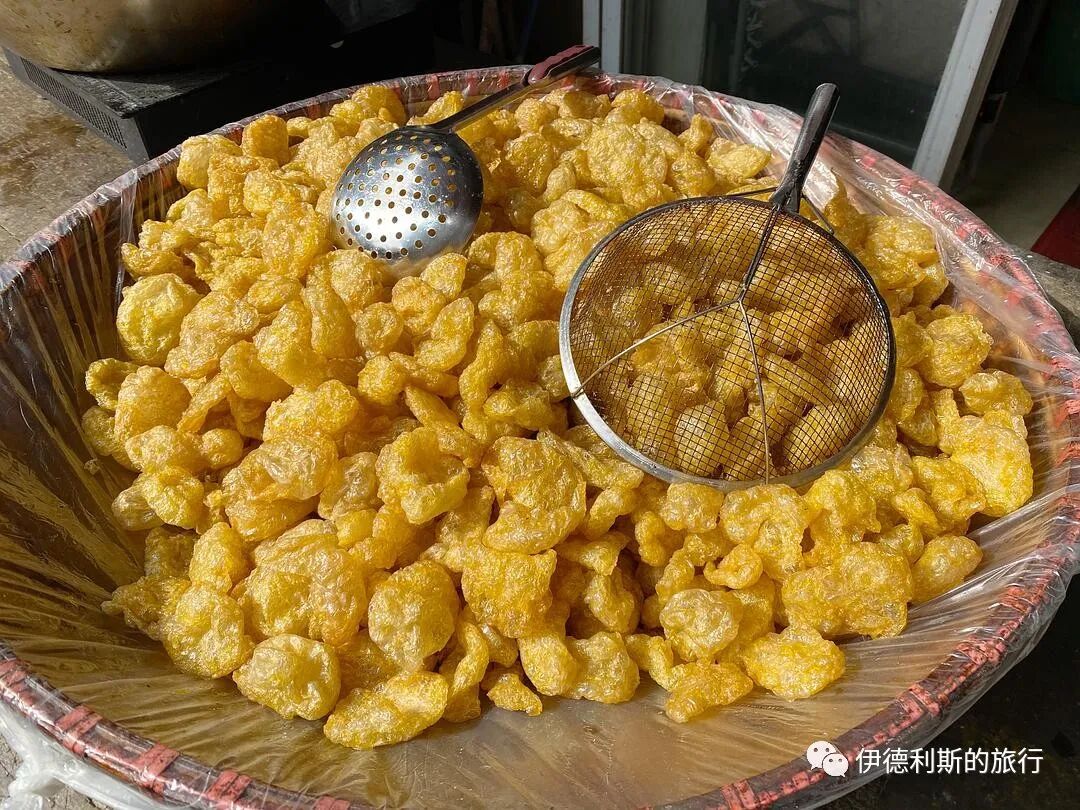
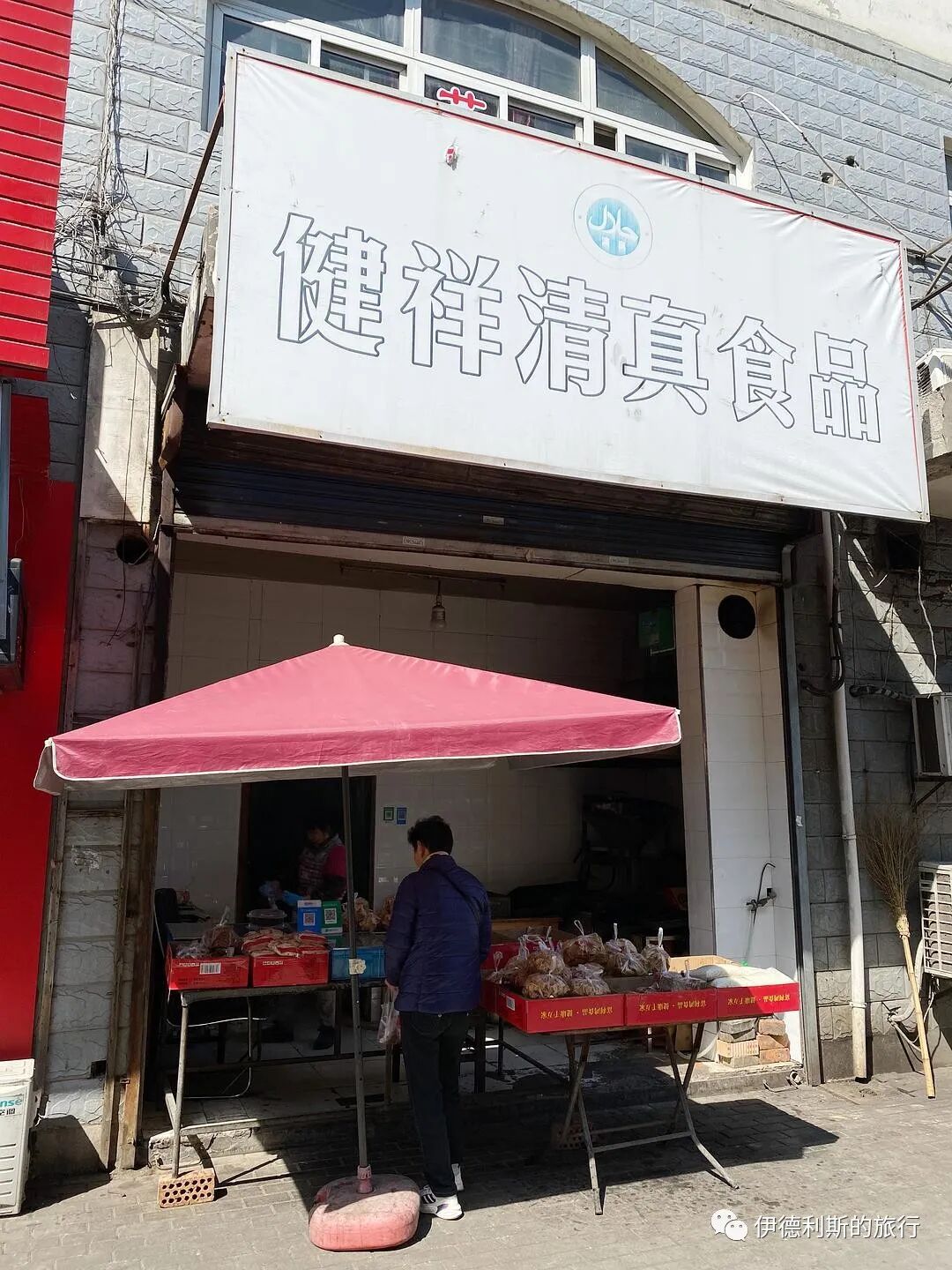
Then I went to Jianxiang Halal Food Store at the Jiangbin vegetable market to buy Zhenjiang specialties: egg crisps (jidan su), Jingjiang navel cakes (Jingjiang qi), and Jingguo powder (Jingguo fen). The owner, Ma Jian, was originally a worker at a Zhenjiang pastry factory. After being laid off in 1995, he started his own Jianxiang Halal Food Factory. In 2009, he opened this current shop next to the Jiangbin vegetable market. When I visited last winter, I bought some delicious cloud-slice cakes (yunpian gao), but they don't make them in the spring. Friends who want to try them can add the landlady on WeChat to have them shipped. 15262910548
Jingjiang navel cakes are a Zhenjiang specialty snack. Mr. Xia Rongguang described them in detail in his book, A Brief History of the Hui Economy in Modern Zhenjiang. Jingjiang navel cakes are commonly called 'vat navels' (gangqi) or 'navel-lets' (qier). Legend says they were originally octagonal, but they were changed to hexagonal during the Qing Dynasty to avoid the taboo of the 'Eight Banners'. Jingjiang navel cakes come in sweet and savory versions. The savory ones sell more because you can dip them in beef or chicken soup. In the past, Zhenjiang people often served Jingjiang navel cakes soaked in salted egg water to guests.
Making these cakes requires great skill and heat control. When shaping the hexagonal ones, the savory version must be rolled six and a half times, and the sweet version three and a half times. Missing even one roll affects the quality.
According to Fan Shoubao, a tea snack industry veteran born in the 1900s, he became an apprentice at the Wuyunzhai Halal Tea Shop in the 1910s at age fourteen. He made at least two bags of flour into nearly a thousand Jingjiang navel cakes every day. Back then, visitors to Zhenjiang or locals leaving town would often buy hundreds at a time.
The Shanxiang Mosque in Zhenjiang is also called the West City Mosque or the West Great Mosque. Its founding date is unknown, but it was expanded during the Kangxi era. It was destroyed during the Taiping Rebellion in 1853 (the third year of the Xianfeng era) and rebuilt in 1873 (the twelfth year of the Tongzhi era). According to the History of Islam in Zhenjiang, Jiangsu, the late Imam Tan Yuanshen, who lived to be over eighty, recalled hearing from his grandfather and elders in the community that before the Kangxi-era expansion, the West City Mosque was just three thatched huts. At that time, the area around the mosque was sparsely populated and vast; you could see the Zhenjiang city gate tower to the east and Yuntai Mountain to the west.
After Zhenjiang opened as a treaty port, the area outside the West Gate became a bustling commercial district. In 1865, the British established a concession by the river. With the opening of the Shanghai-Nanjing Railway, the area outside the West Gate developed further, and Hui Muslims kept arriving to trade and settle around the Shanxiang Mosque.
In 1902 (the 28th year of the Guangxu era), the Zhenjiang Hui community raised funds to expand the Shanxiang Mosque. The current layout of the mosque dates back to this renovation.
The Shanxiang Mosque consists of a small courtyard and a large courtyard. Entering the main gate, you find the first small courtyard. Passing through the front hall leads to the second small courtyard, with a side door and the second gate directly ahead. Passing through the second gate leads to the third small courtyard. Then, a corridor leads into the large courtyard, which is made up of the prayer hall, the south lecture hall, and the opposite hall. This layout of large and small courtyards is very characteristic of the Jianghuai region.
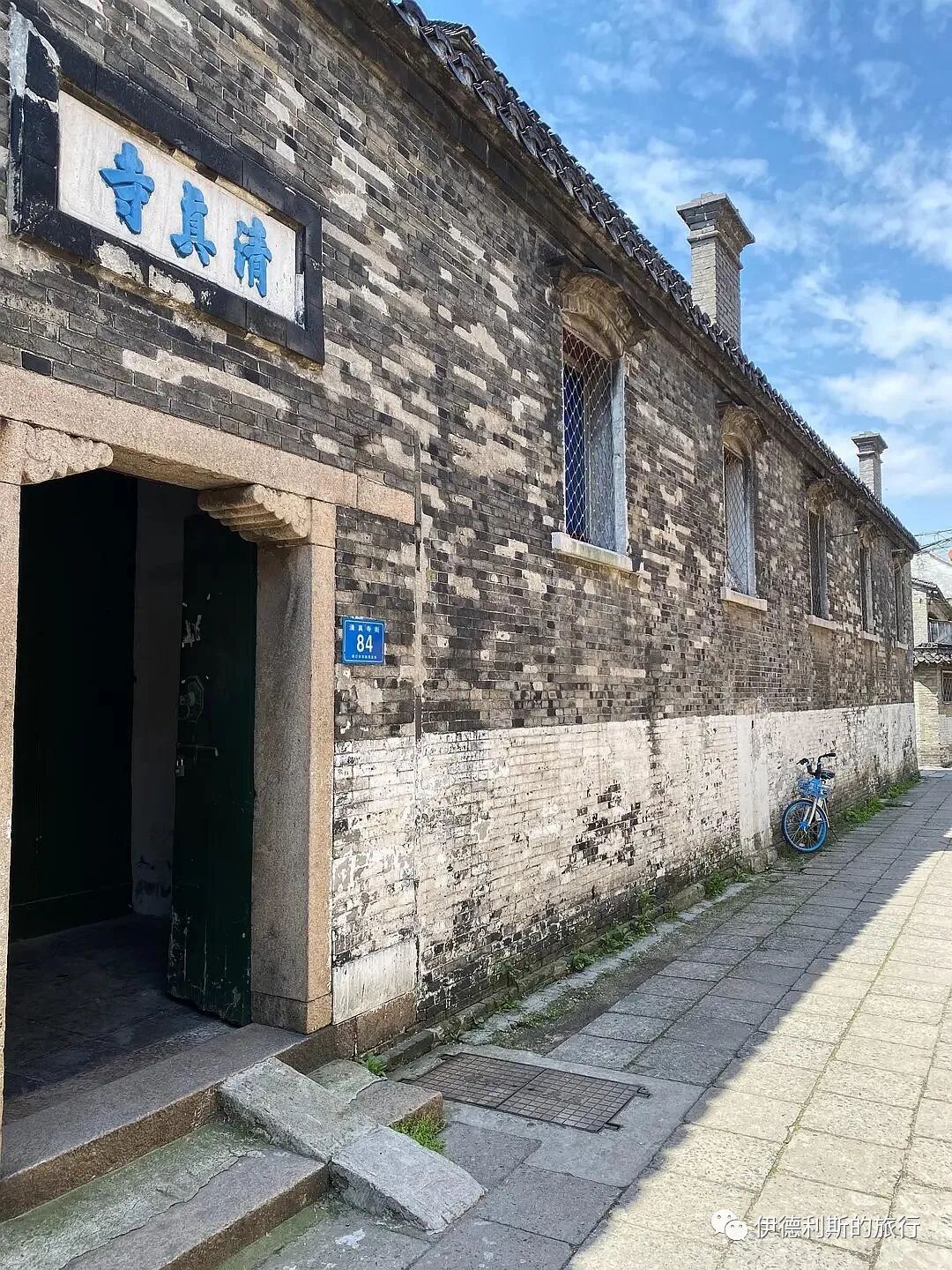
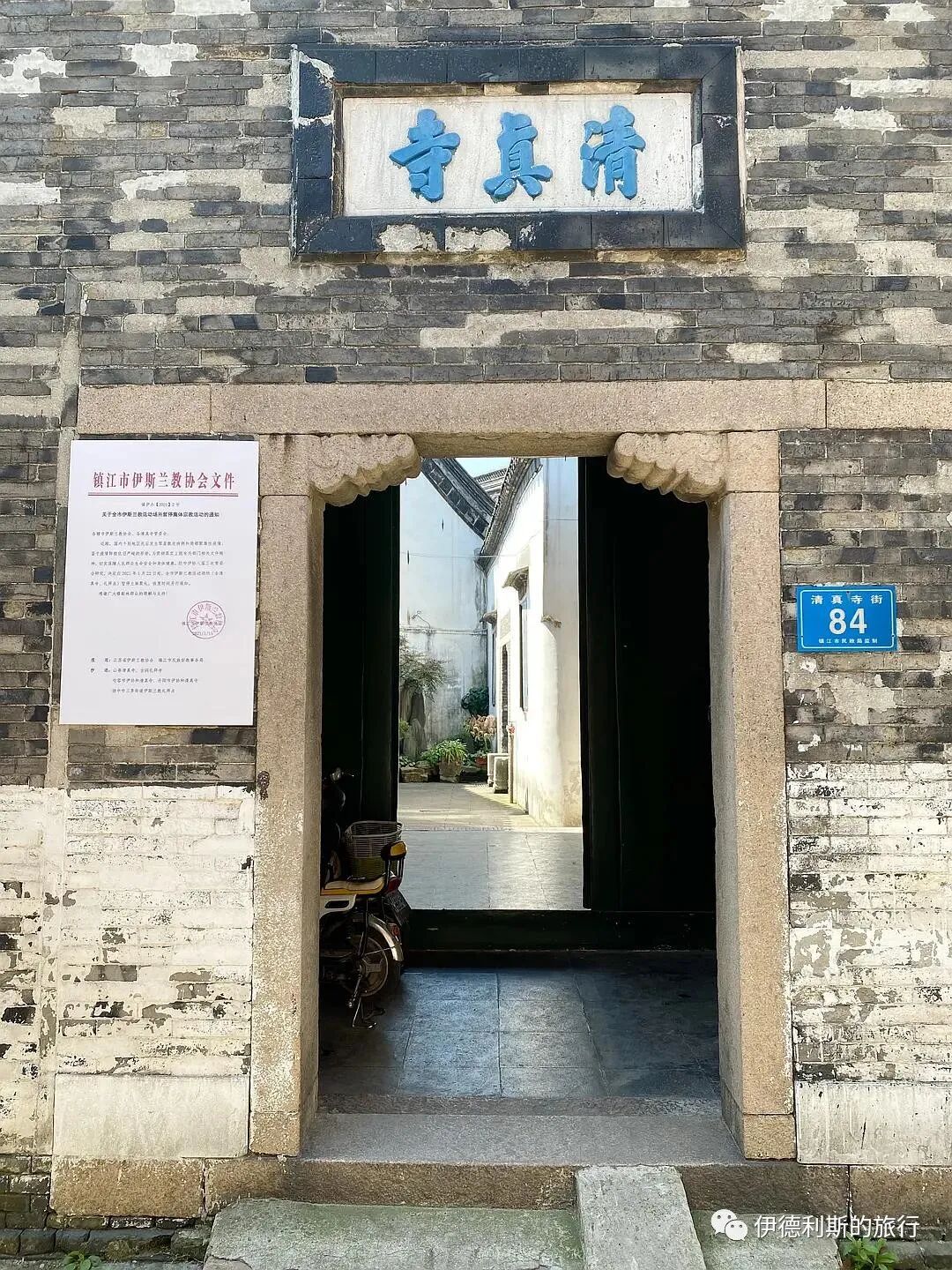
Main gate
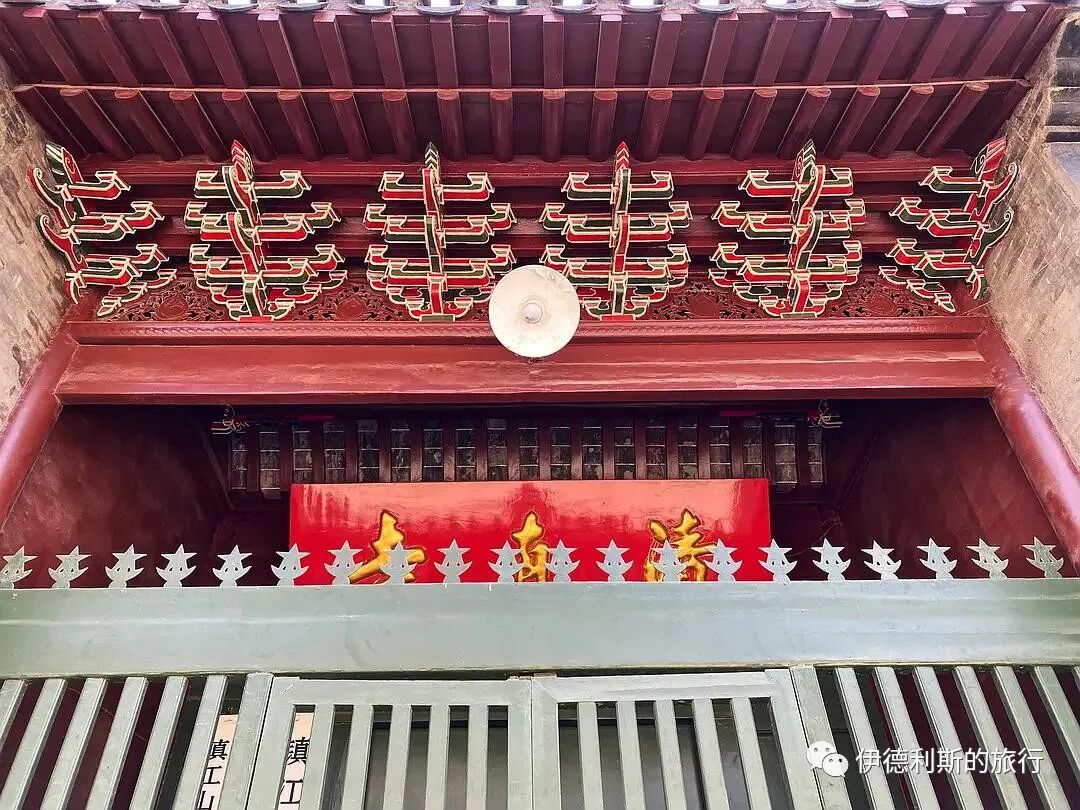
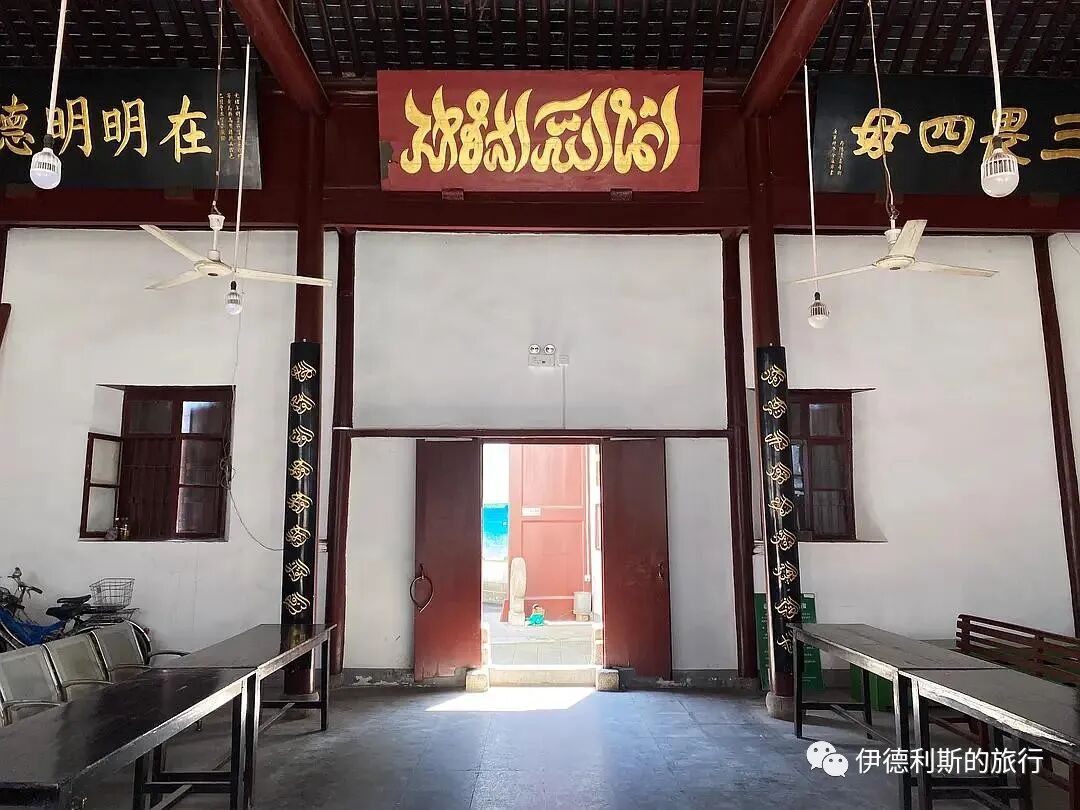
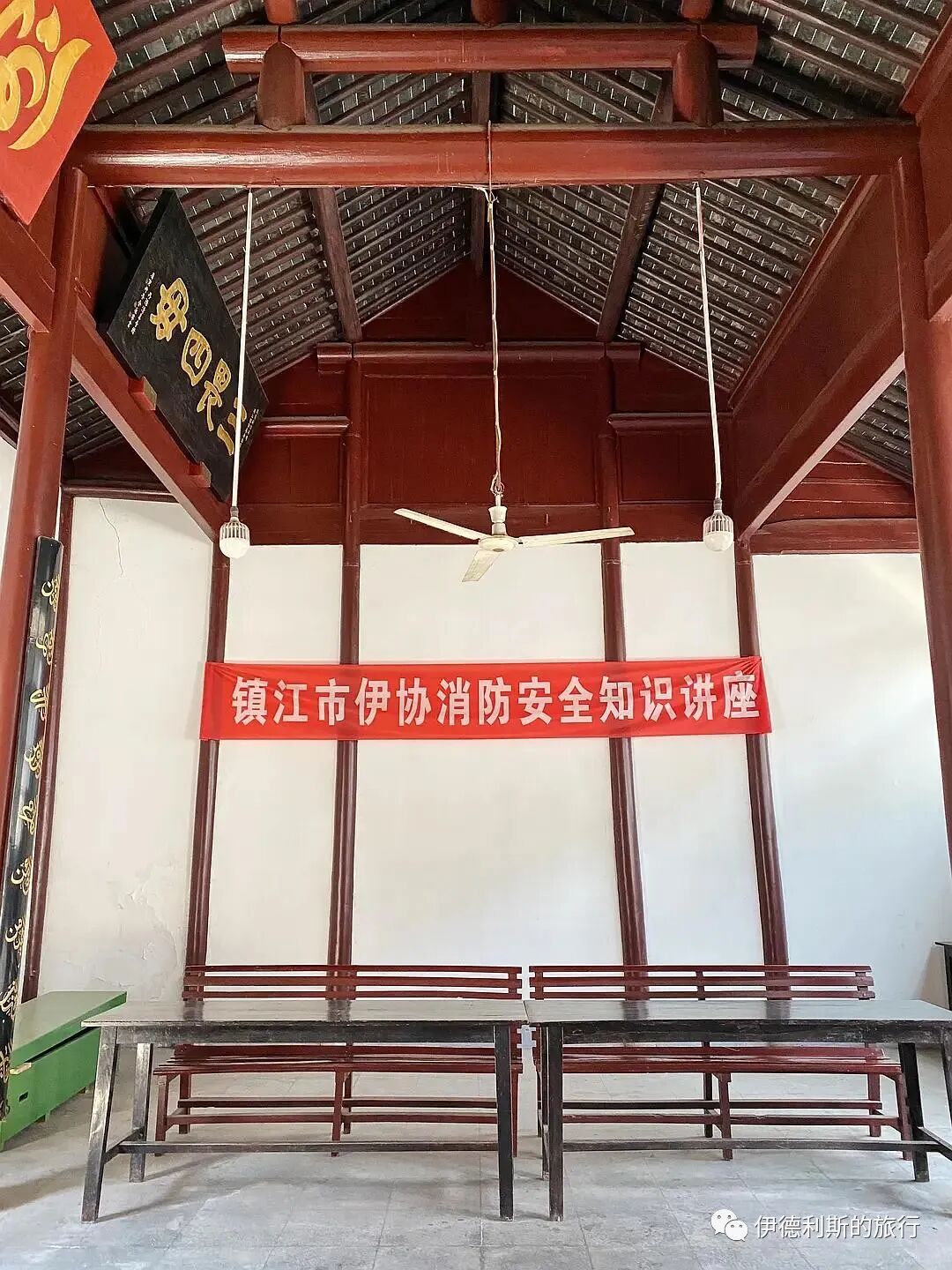
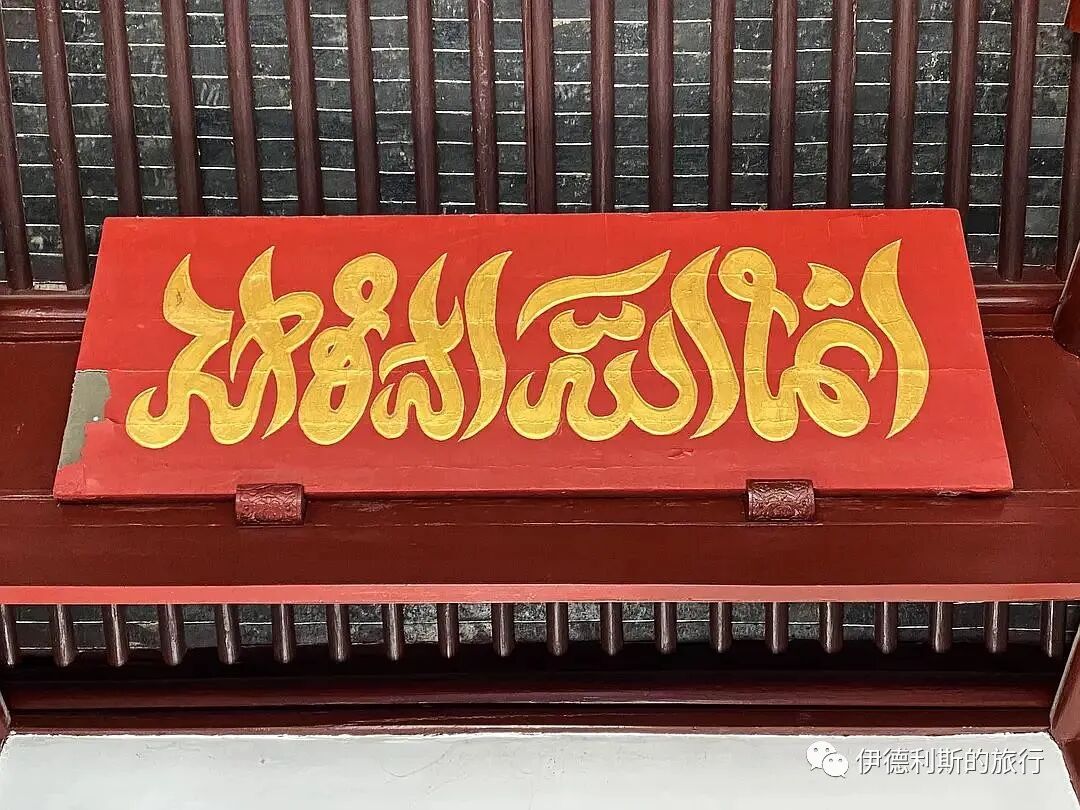
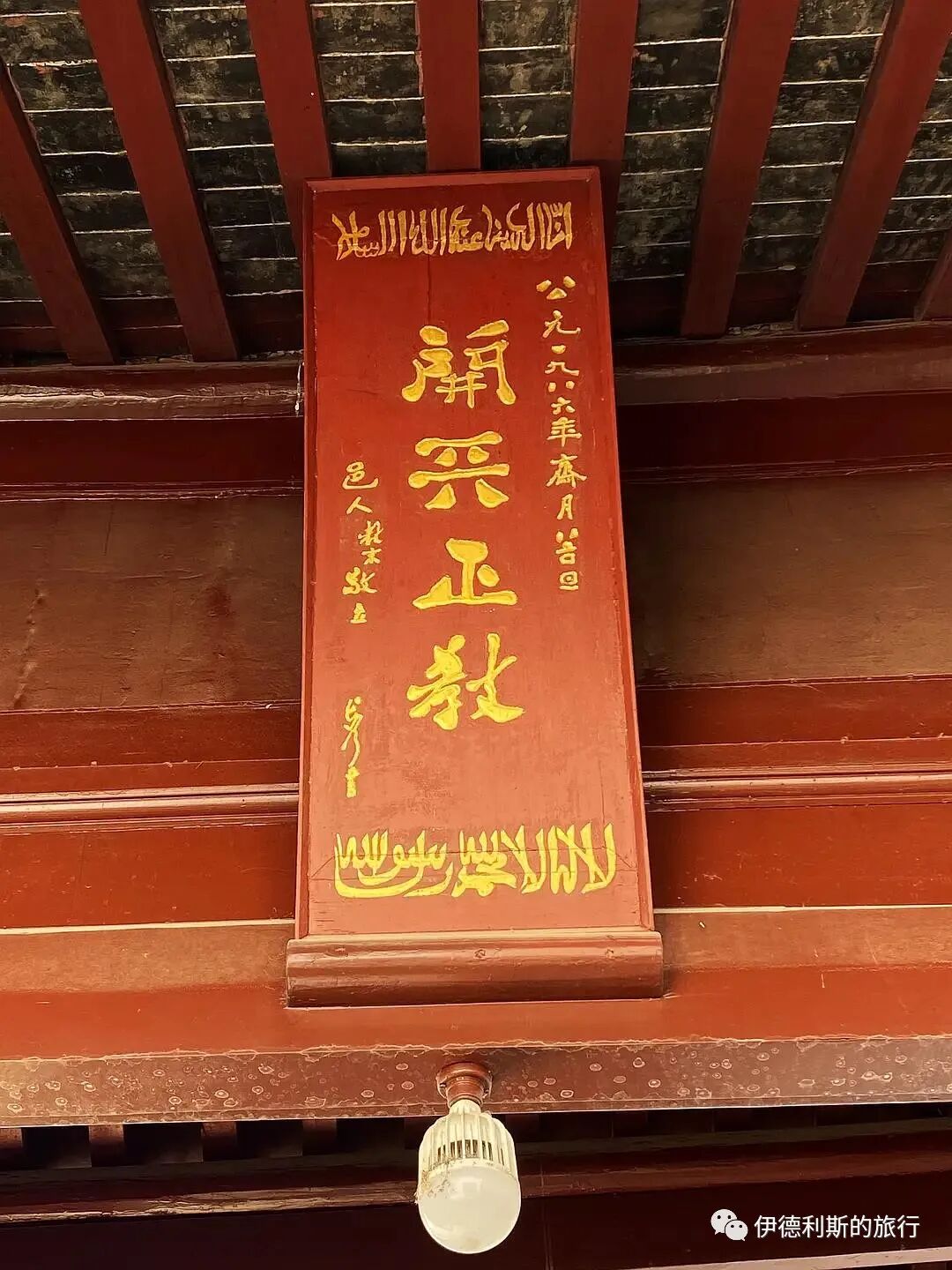
The front hall was used as a classroom for Muyuan Primary School during the War of Resistance. The plaque above was written by Imam Hua Guilin in 1984, and the couplets were written by the famous Beijing Arabic calligrapher Li Wencai in 2010.
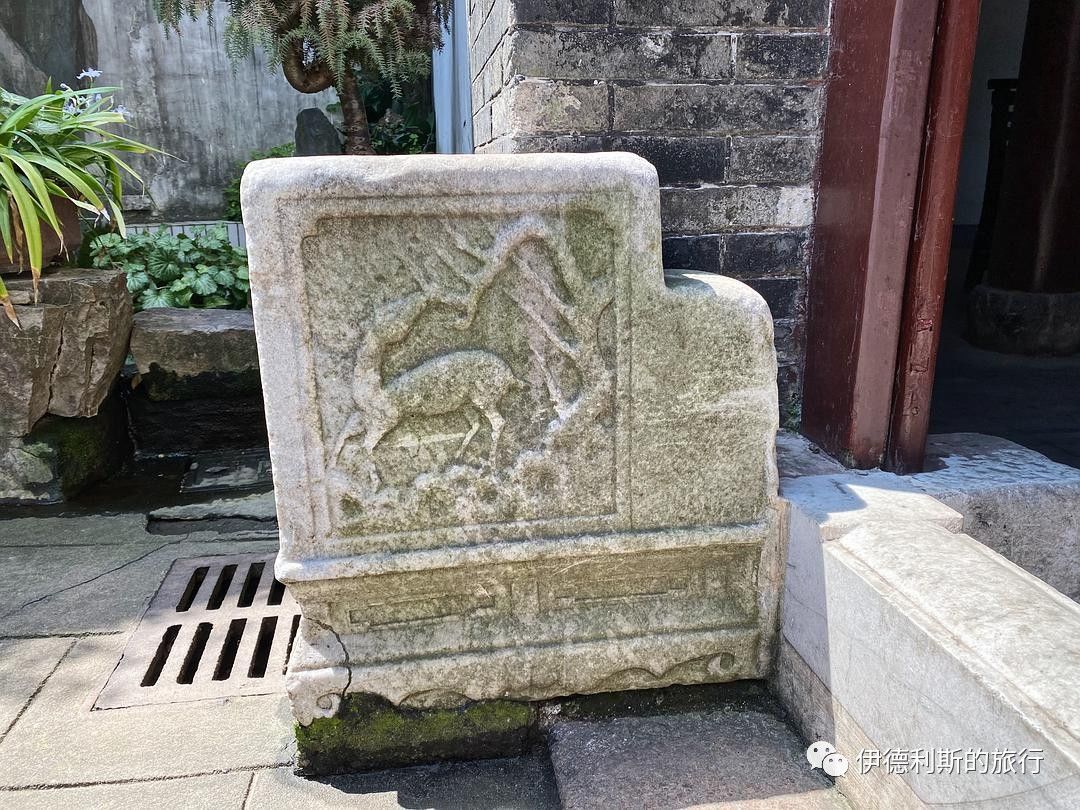
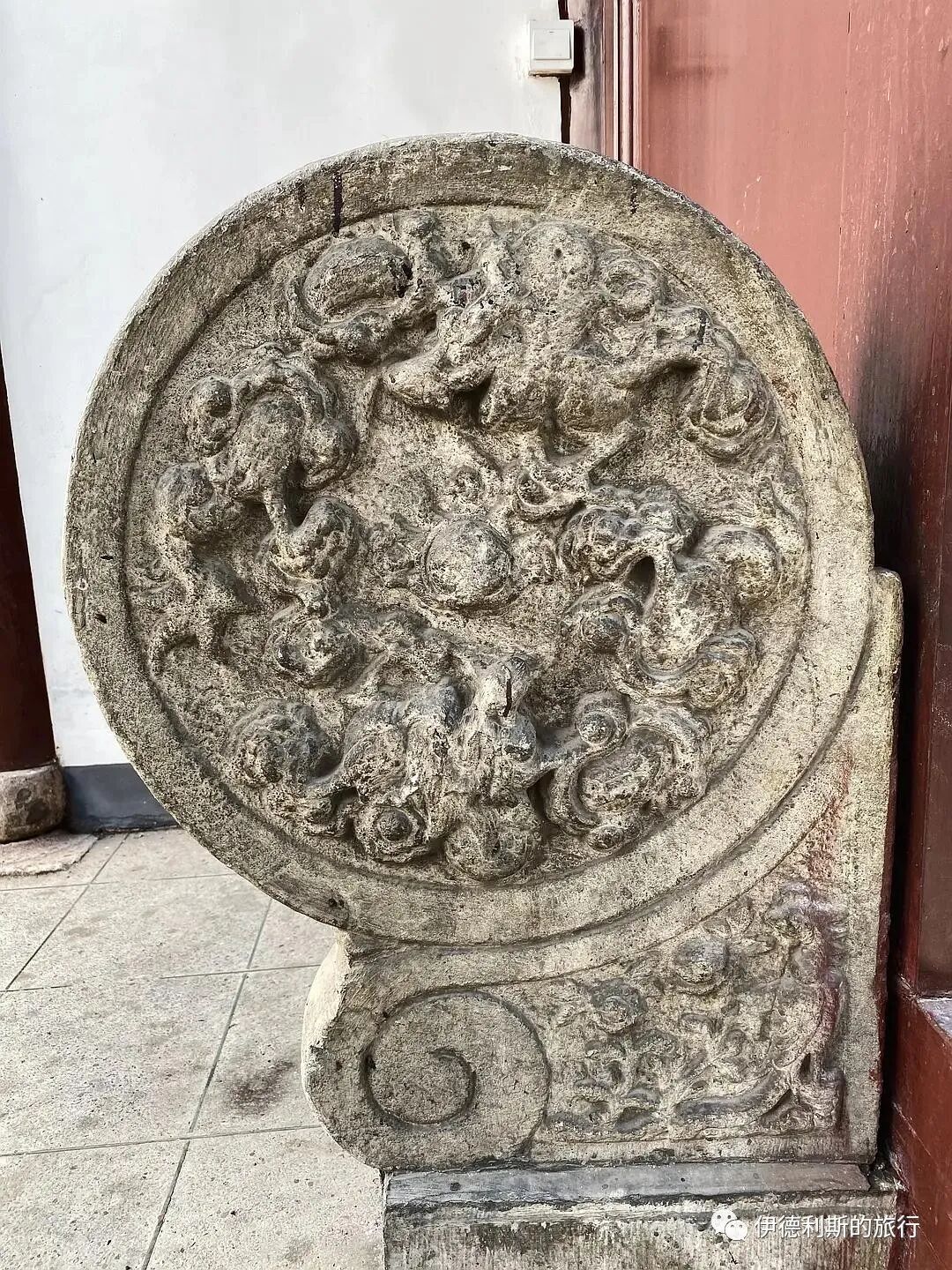
The stone door bases outside the front hall.
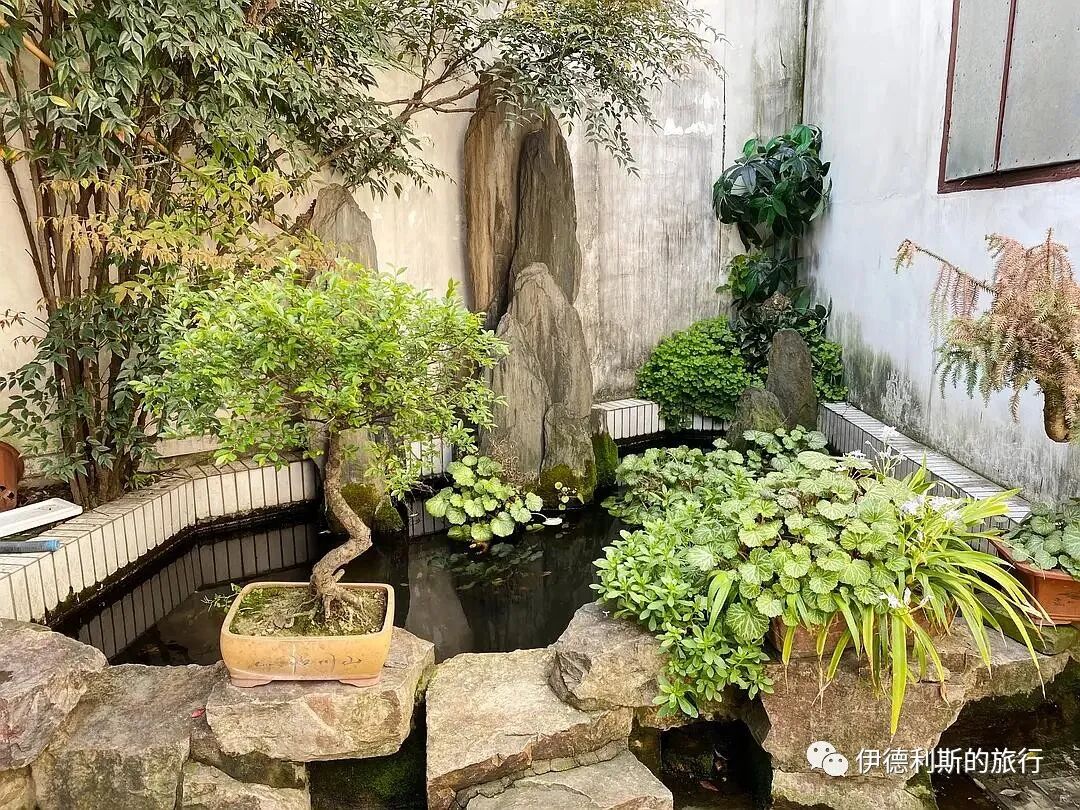
The rockery inside the second small courtyard.
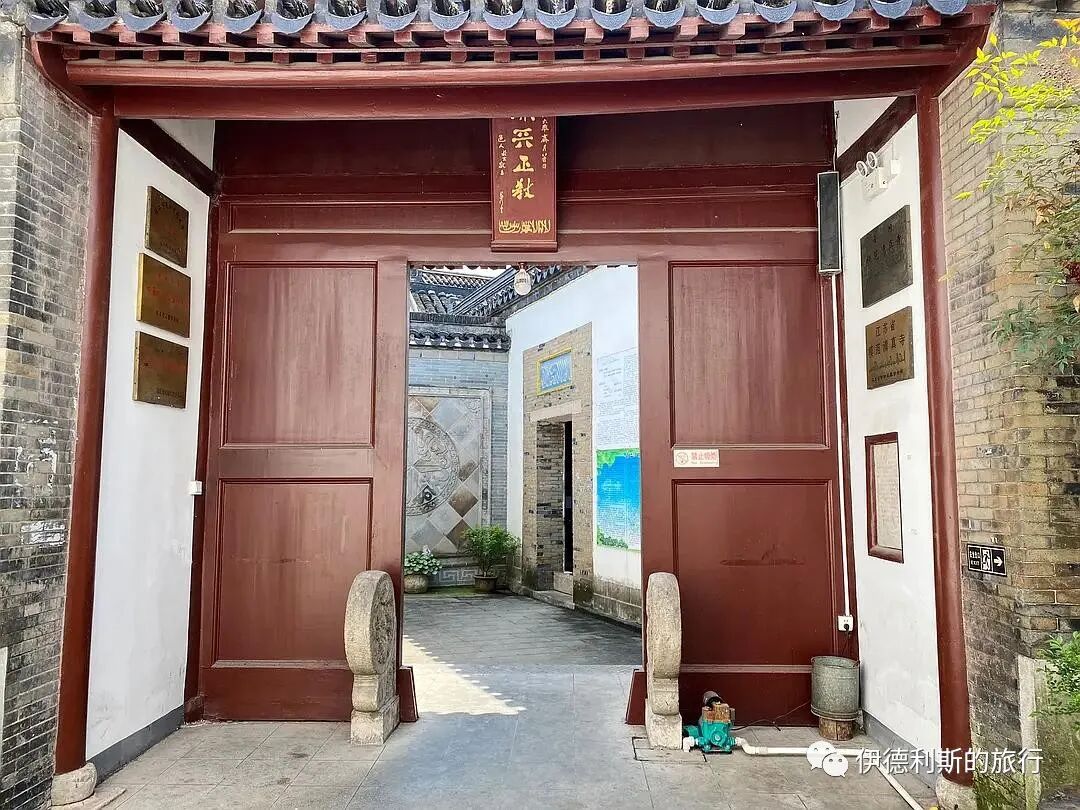
The second gate.
Facing the side gate hall is a green screen door with the circular characters for "halal" (qingzhen) written in the center.
During the 1960s and 1970s, the mosque was smashed and then occupied, leaving only the side gate hall guarded by an elderly man named Ma Zhonglin. The occupying unit tried to force Ma Zhonglin out with various excuses, but he refused every time and spent ten difficult years there. During those ten years, all the Hui Muslims in Zhenjiang used this gate hall to store funeral supplies and to hold and prepare the deceased. At that time, only Ma Zhonglin washed the bodies of the deceased, led the namaz, and recited dua while burying them. He also slaughtered poultry for the elders in the side gate hall every morning.
In 1981, Ma Zhonglin passed away. Afterward, Tan Quanhong and Zhang Dagui took turns slaughtering poultry for the elders in the side gate hall every morning. That same year, the occupying unit began to move out, and the Shanxiang Mosque was finally recovered.
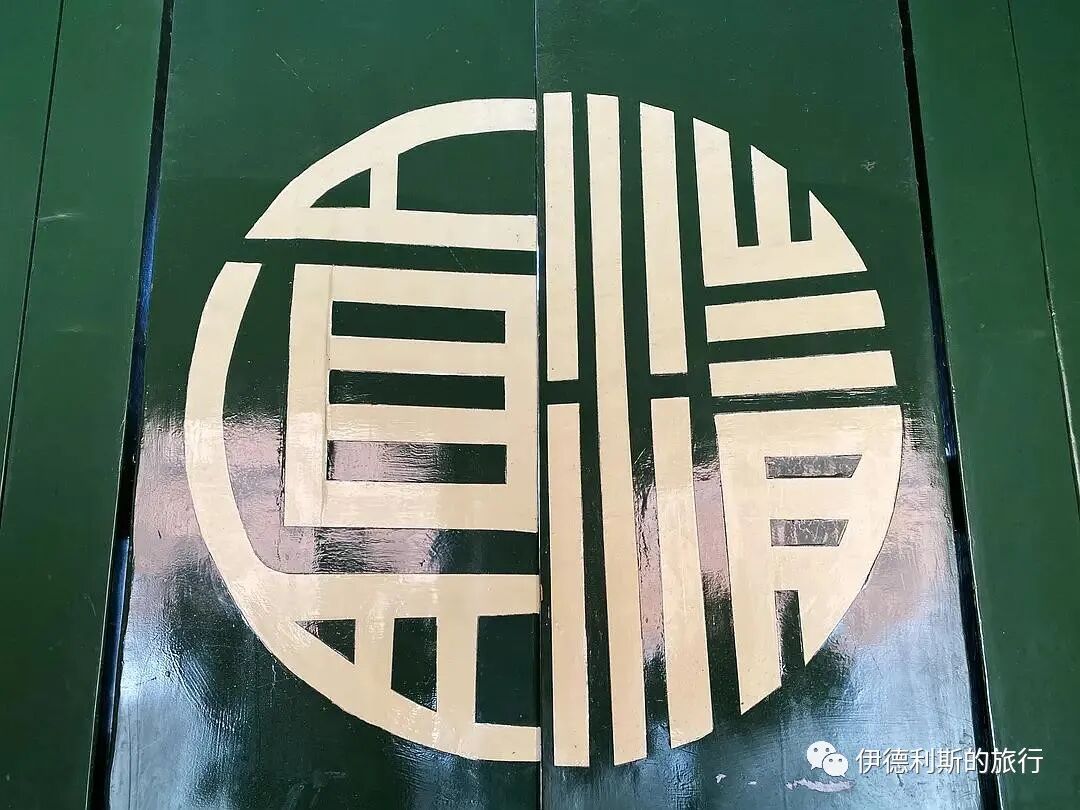
The third small courtyard outside the second gate.
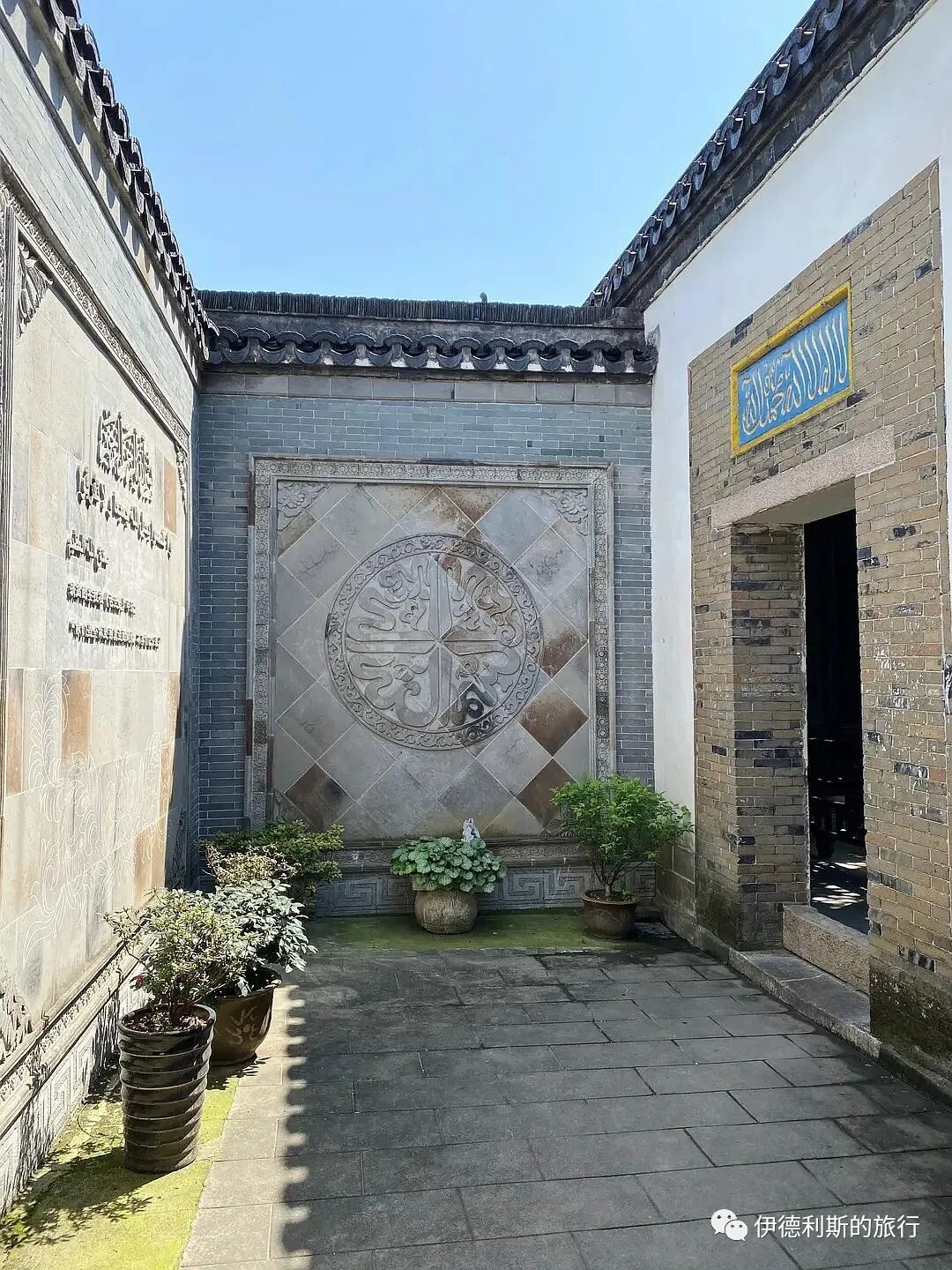
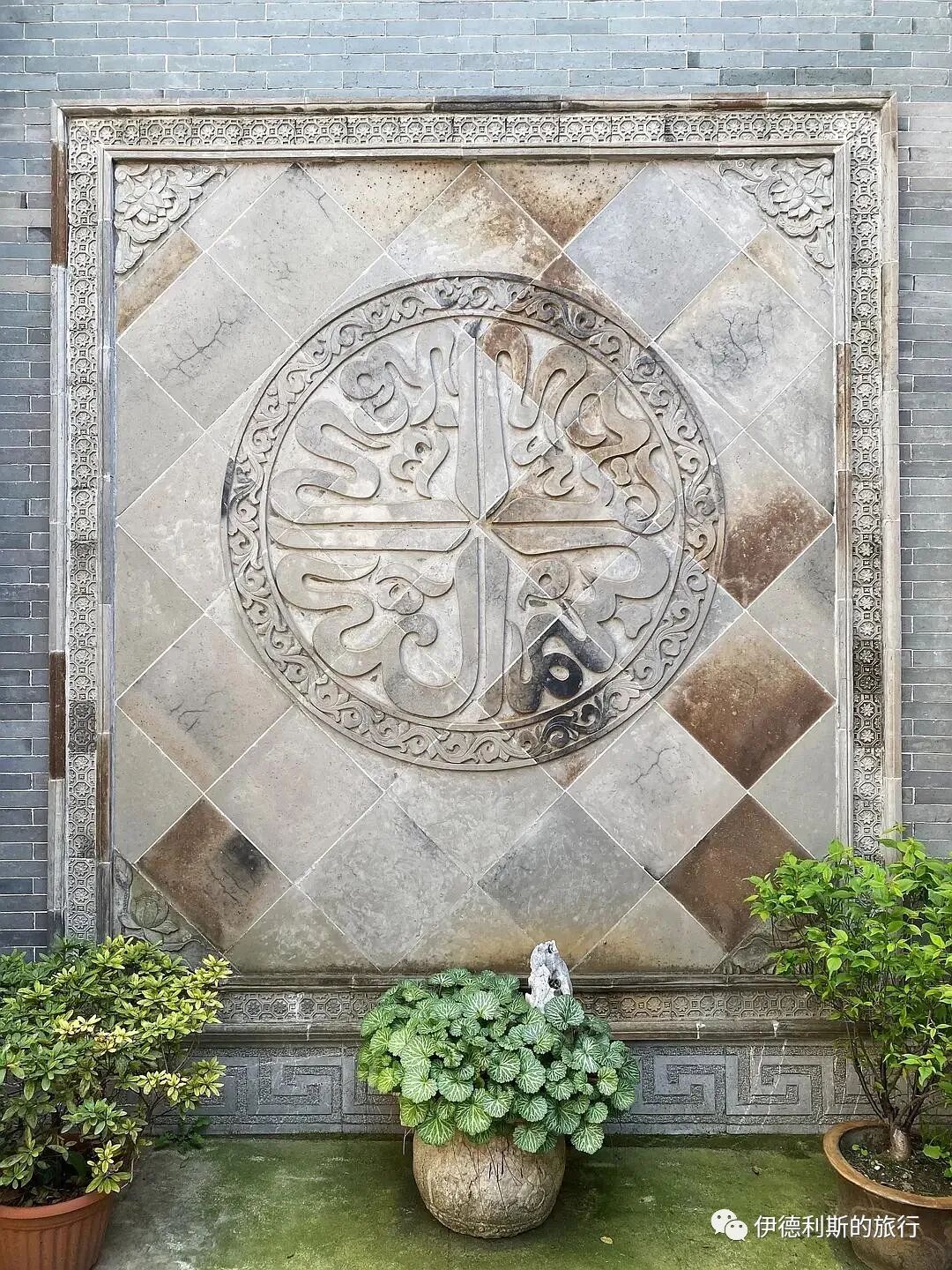
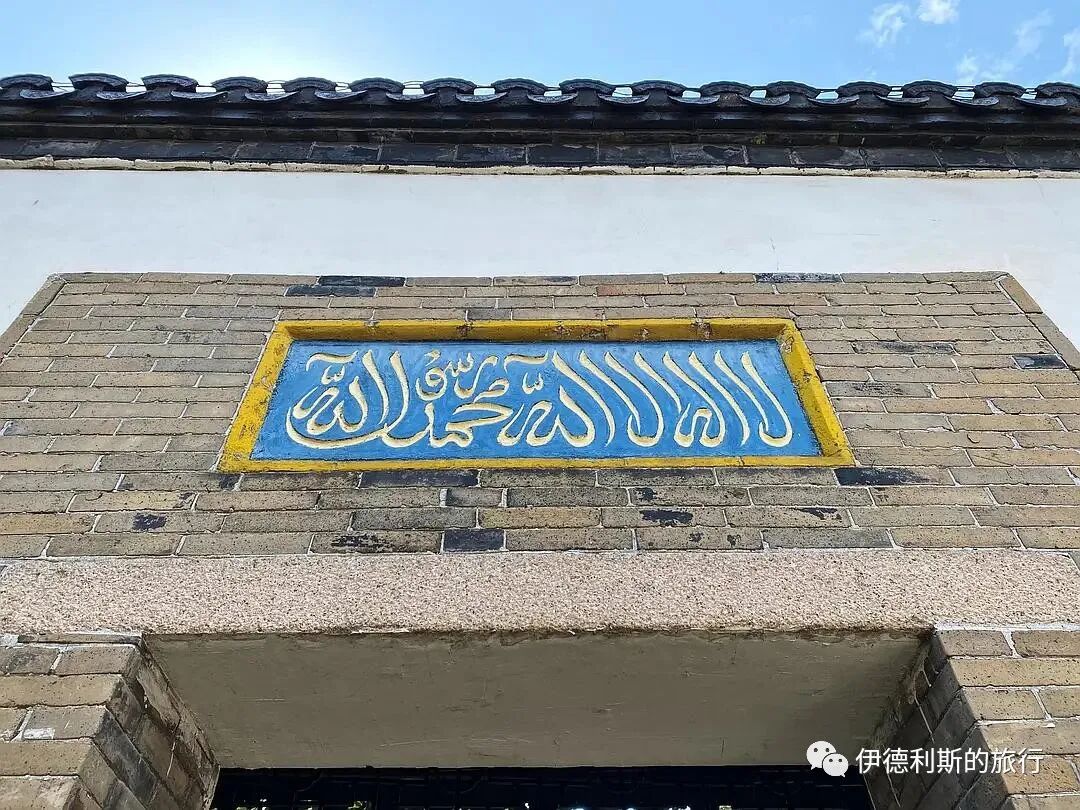
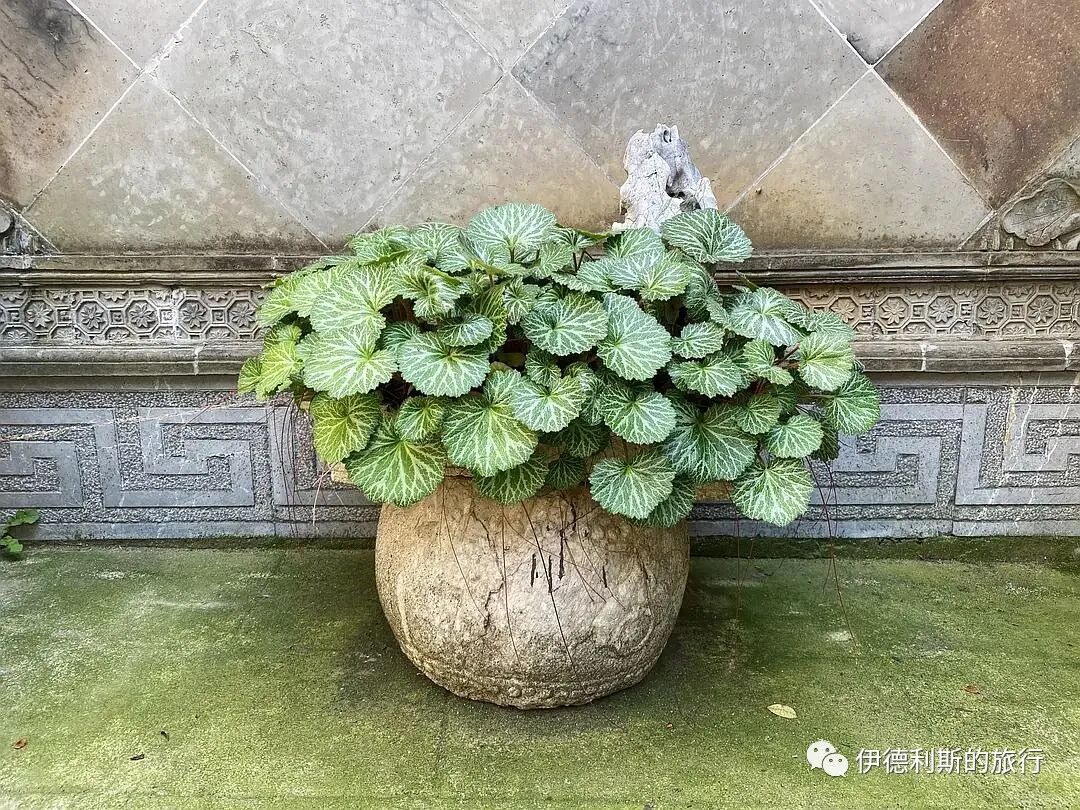
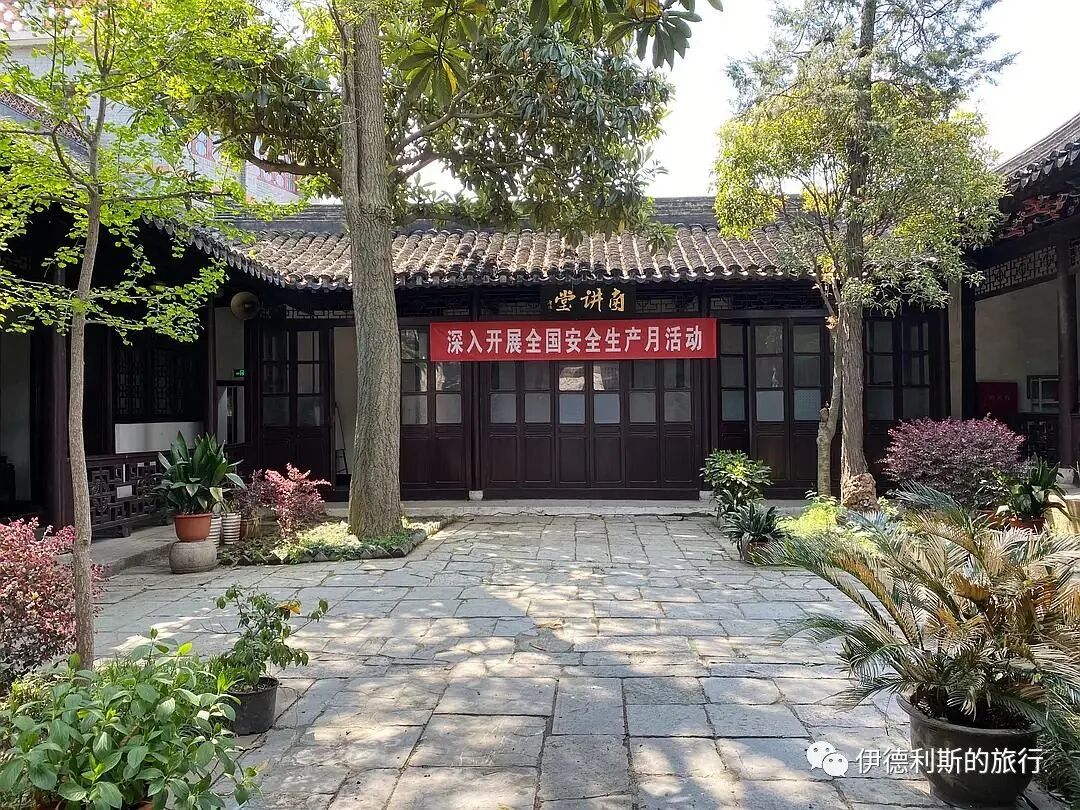
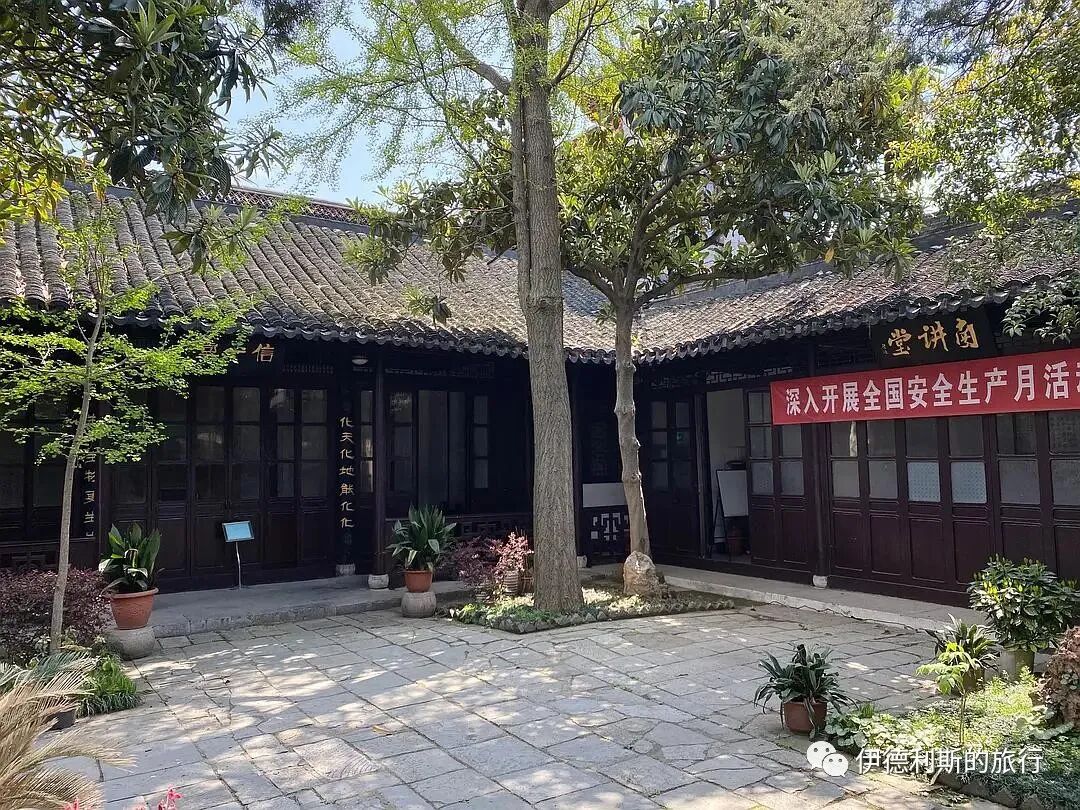
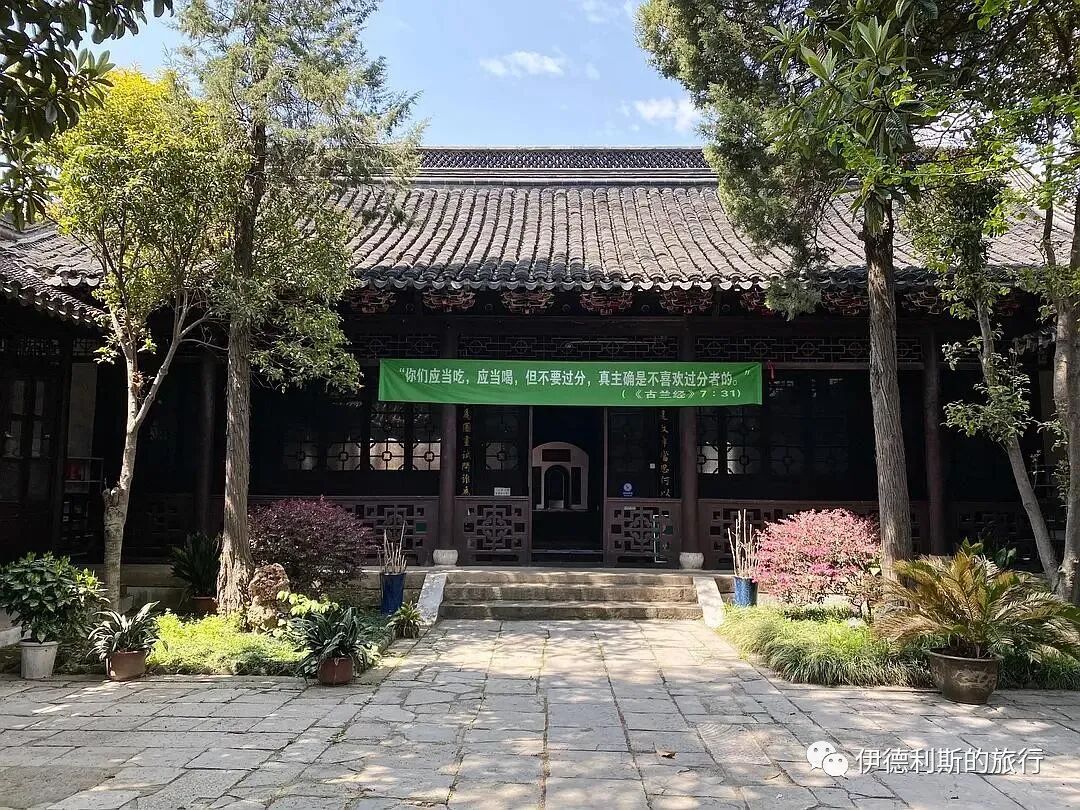
The large courtyard. The courtyard has a cross-shaped path and is planted with pine and ginkgo trees. There were once two ginkgo trees over 200 years old in the courtyard, but they were cut down in 1958 to support the Great Leap Forward steel production.
Shanxiang Mosque was once an important national base for printing and publishing Islamic books. From the Qianlong to the Tongzhi periods of the Qing Dynasty, more than 20 types of philosophy and religious books, including the "Baoming Zhenjing," "Tianfang Dianli," "Guizhen Zongyi," and "Huihui Yuanlai," were woodblock printed in hundreds of editions and shipped across the country by land and water. To this day, the Cultural Palace of Nationalities in Beijing, the Central University for Nationalities Library, and the Peking University Library all hold books printed by the Zhenjiang Shanxiang Mosque.
During the 1960s and 1970s, Shanxiang Mosque was severely damaged, and none of its scriptures, woodblocks, plaques, couplets, furniture, decorations, or other cultural relics survived.
Halal Travel Guide: Nanjing Mosques - Old South City, Liuhe and Zhuzhen, Part 2
Articles • ali2007fr posted the article • 0 comments • 209 views • 2026-05-20 09:03
Summary: The second part of the Nanjing mosque journey follows sites in the old south city, Liuhe, and Zhuzhen, with notes on mosque buildings, stone carvings, and local Hui Muslim history. This account keeps the original route, mosque names, dates, and photographs.
Stone carvings and ancient trees at the South Gate Mosque in Liuhe:
A stone tablet from the seventh year of the Daoguang reign recording a donation of property by a Hui Muslim named Li.
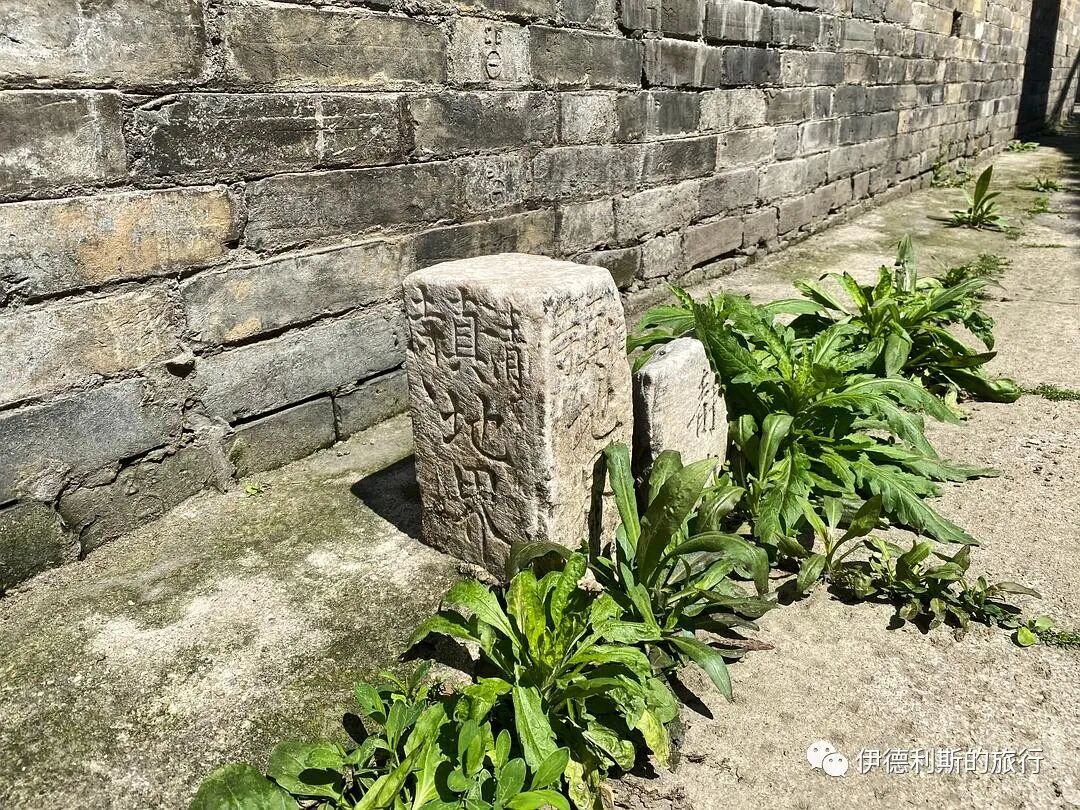
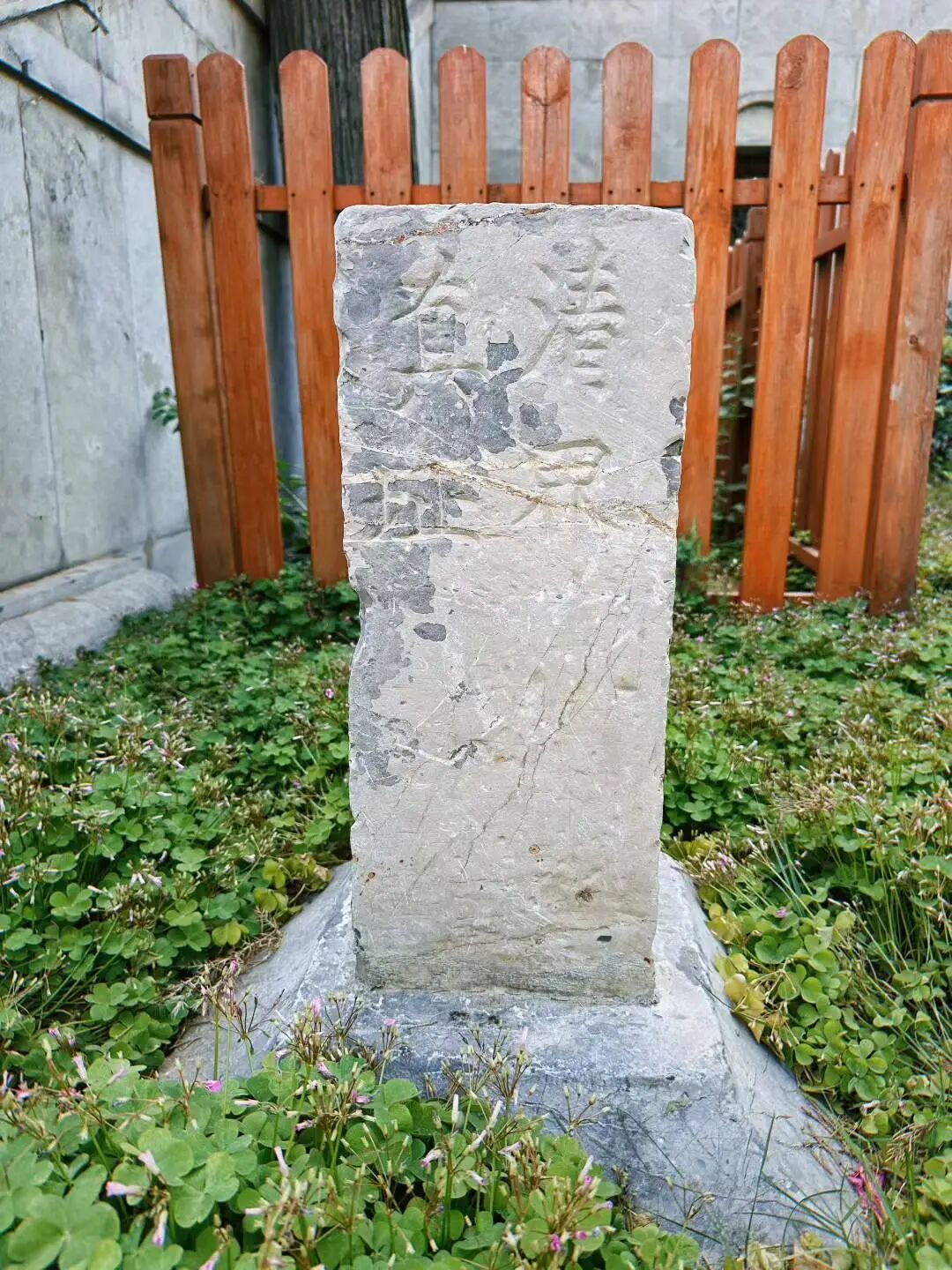
A boundary marker for the mosque.
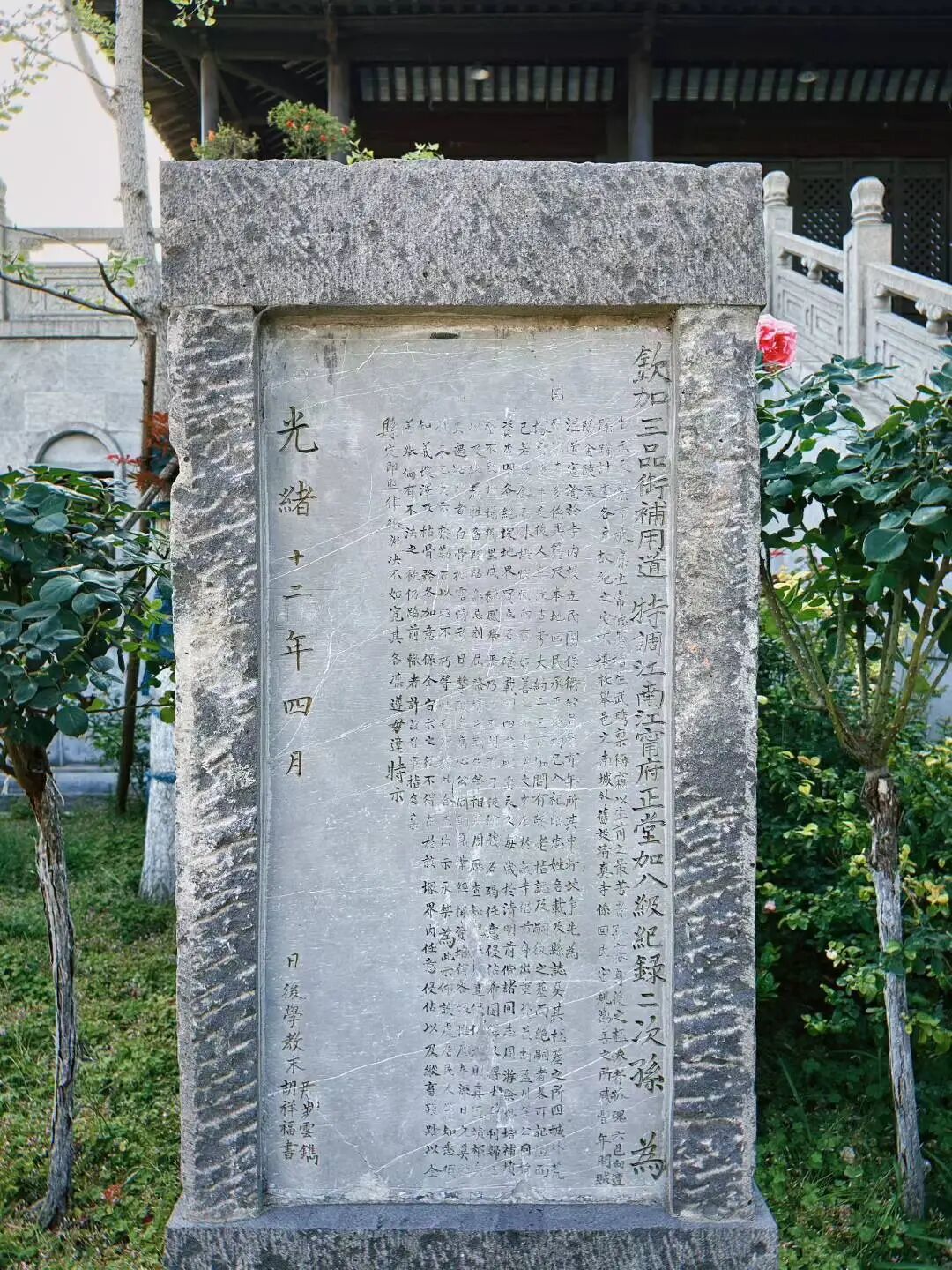
A stone tablet from the twelfth year of the Guangxu reign. It records that the South Gate Mosque was destroyed by the Taiping Heavenly Kingdom during the Xianfeng years. Many Hui Muslim militia members from the mosque died in battle, and the government later stepped in to protect their graves.
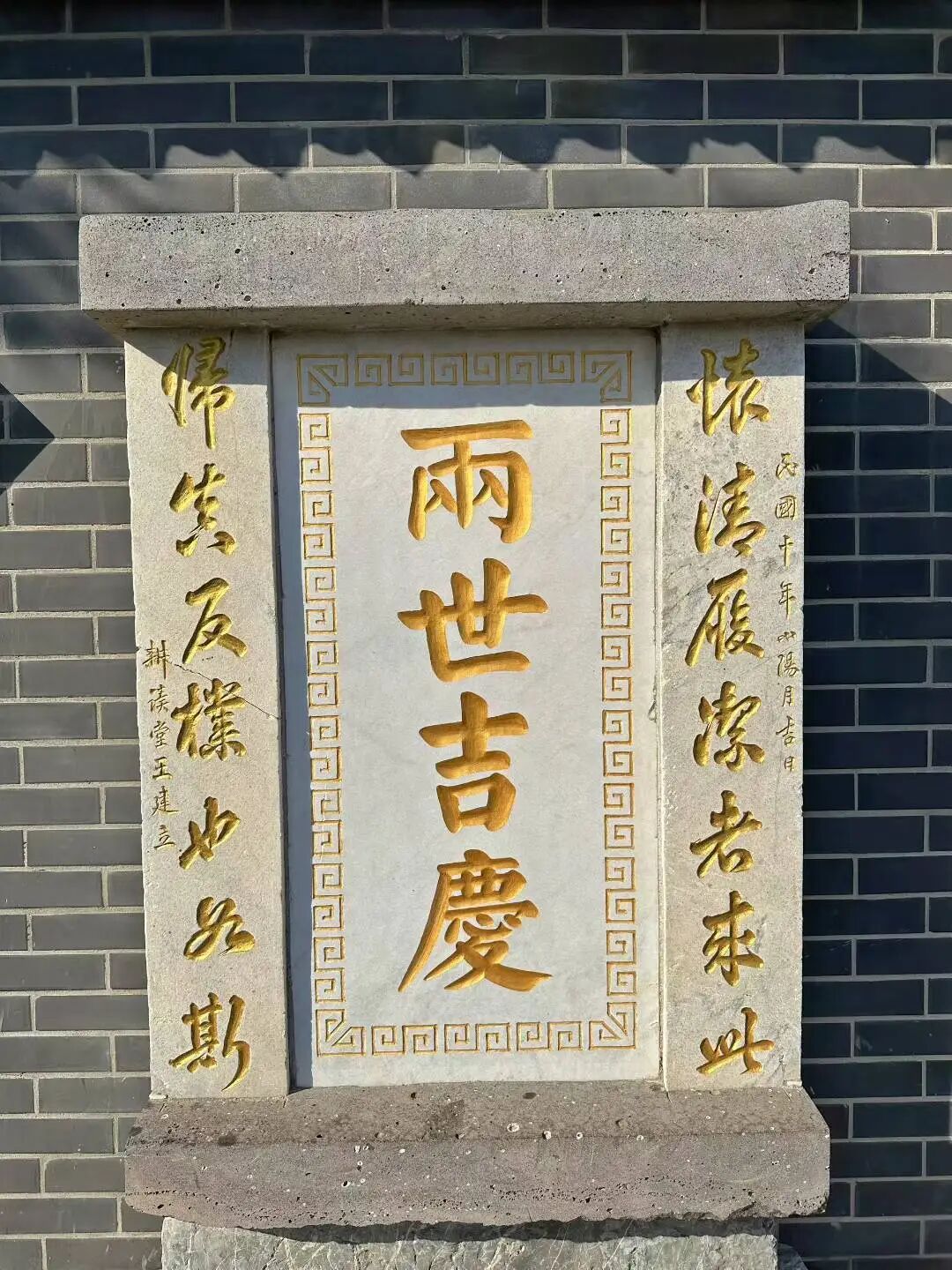
A couplet written by Wang Jianli in the tenth year of the Republic of China: To cherish purity and walk in cleanliness is to prepare for the afterlife; to return to the truth and simplicity is to be just like this.
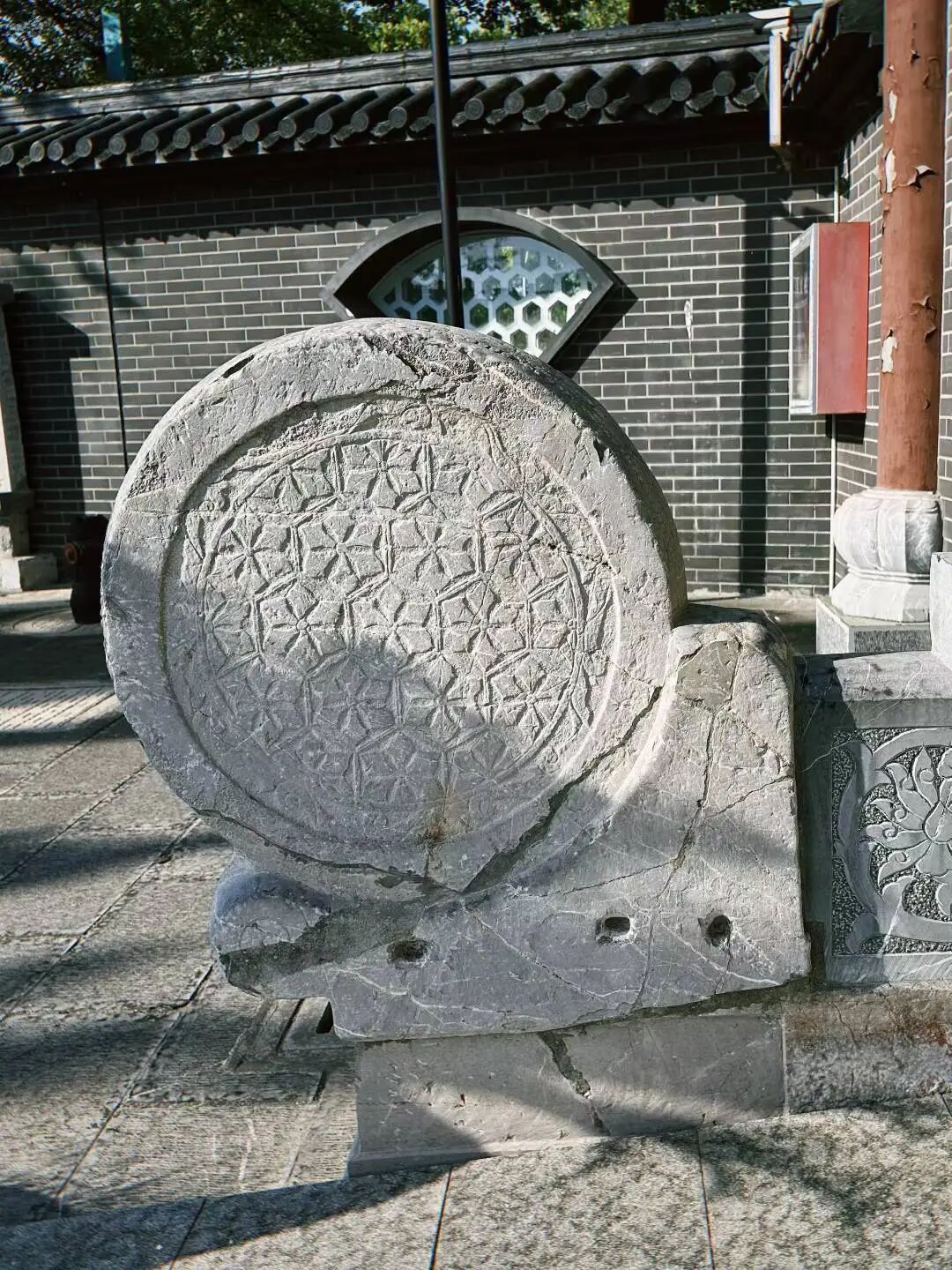
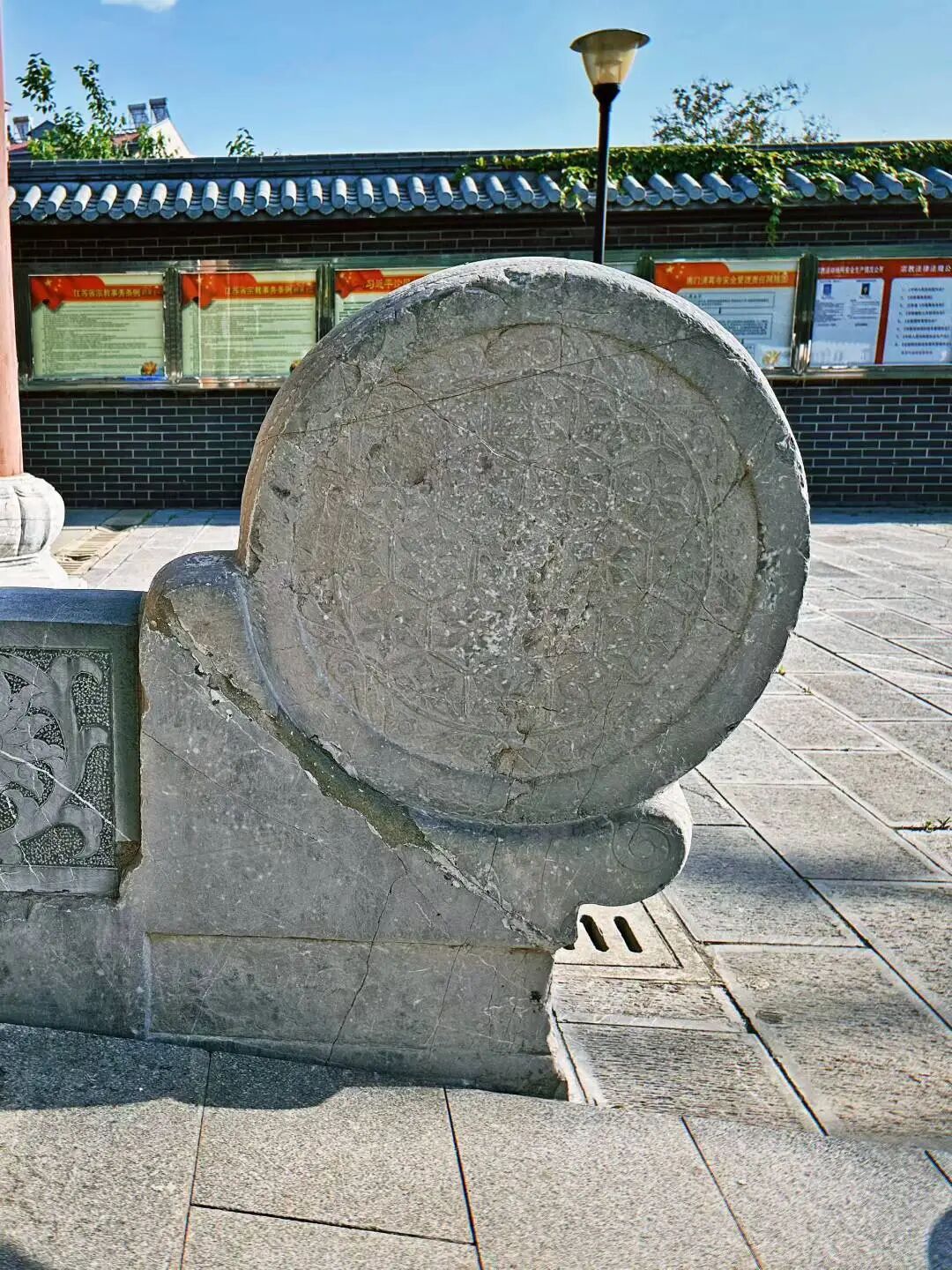
Qing dynasty drum-shaped stone bases (baogushi) in front of the main gate.
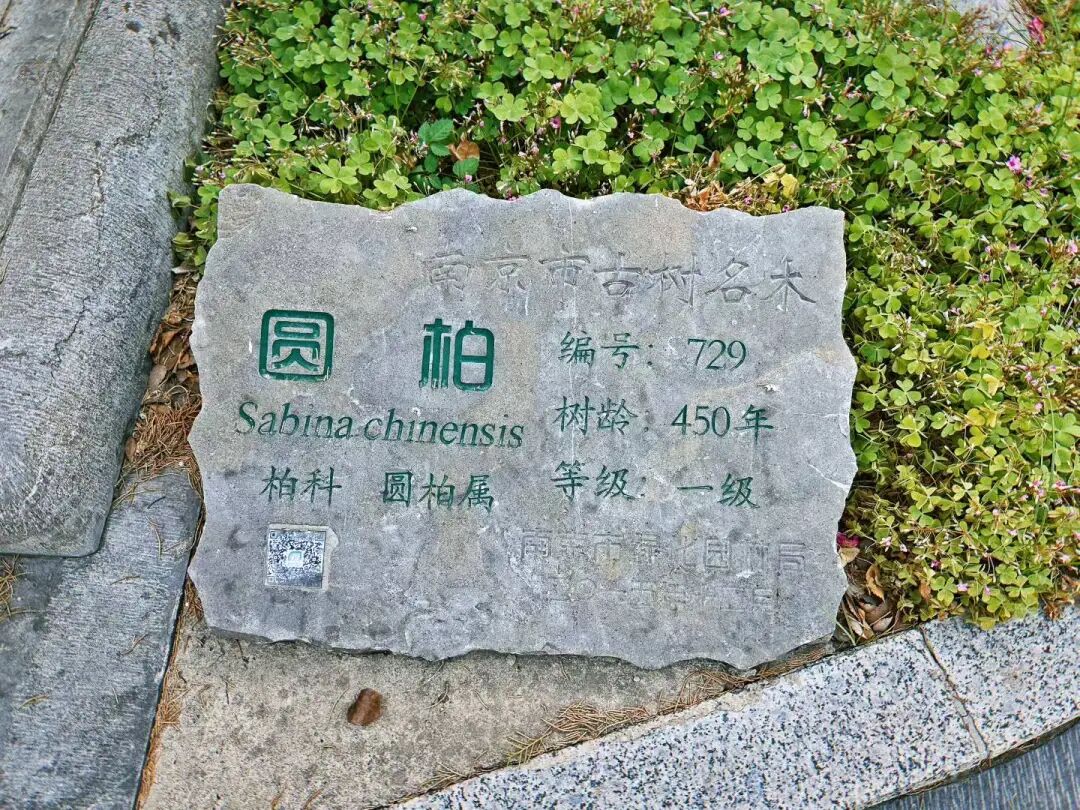
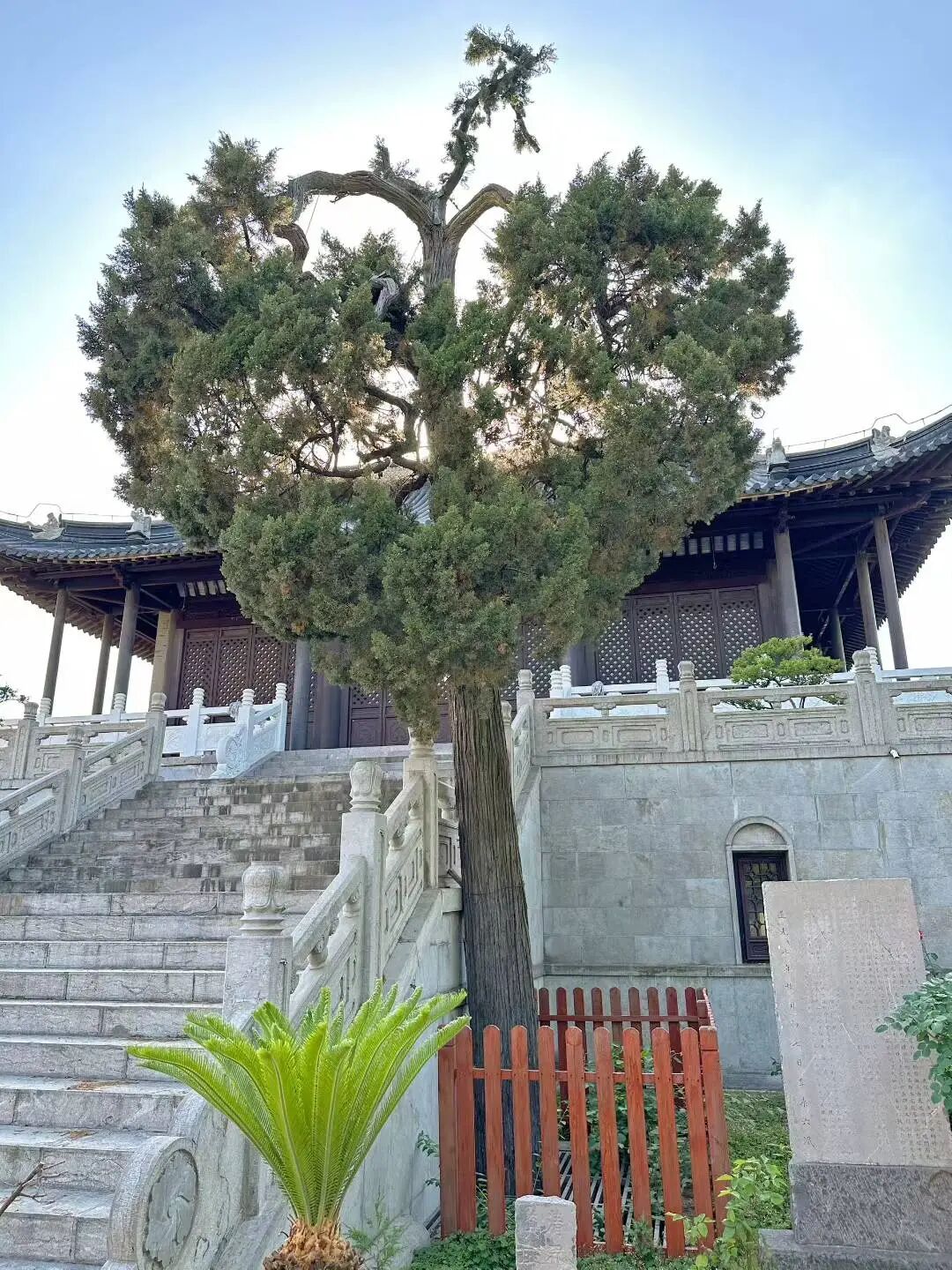
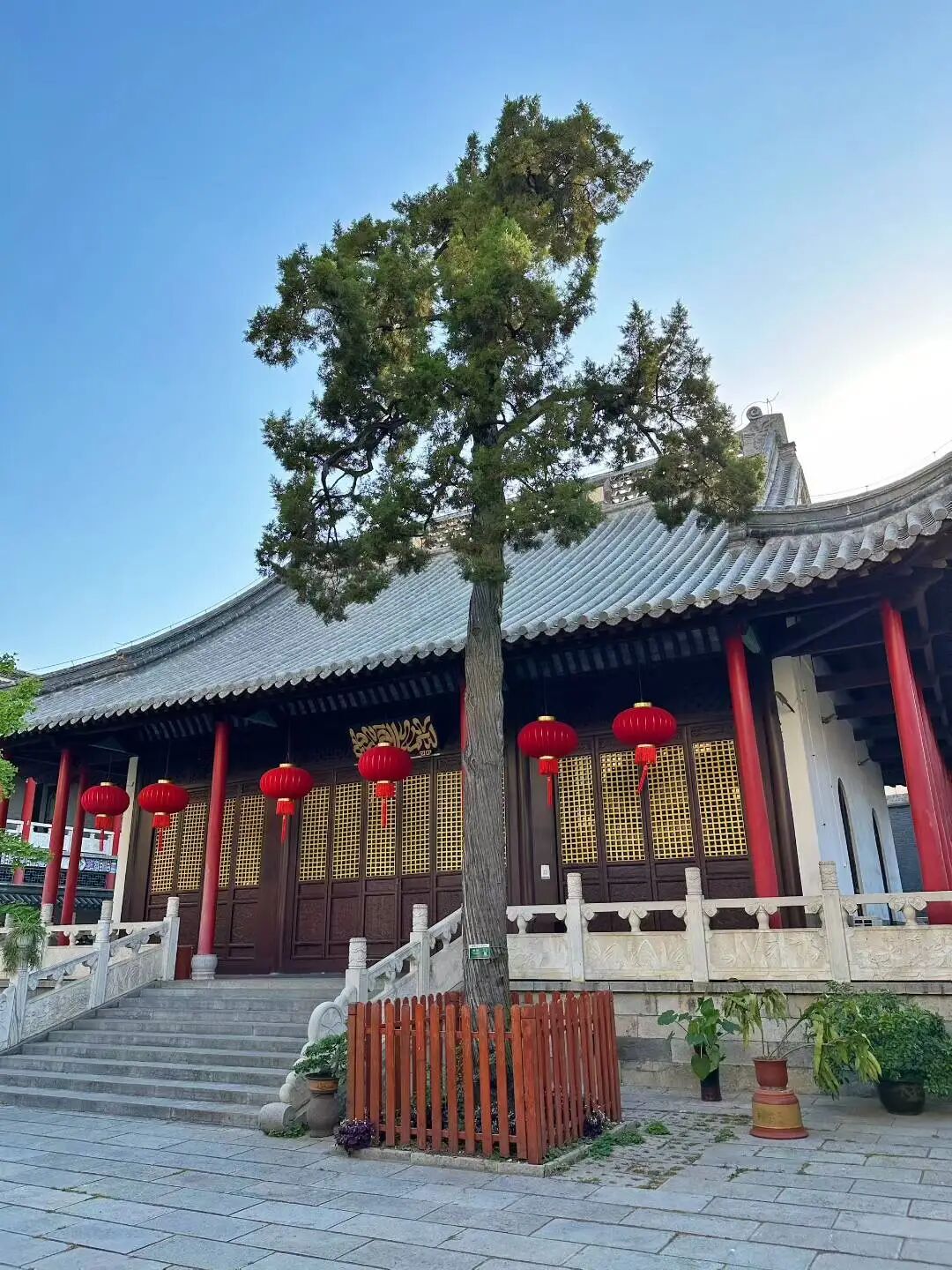
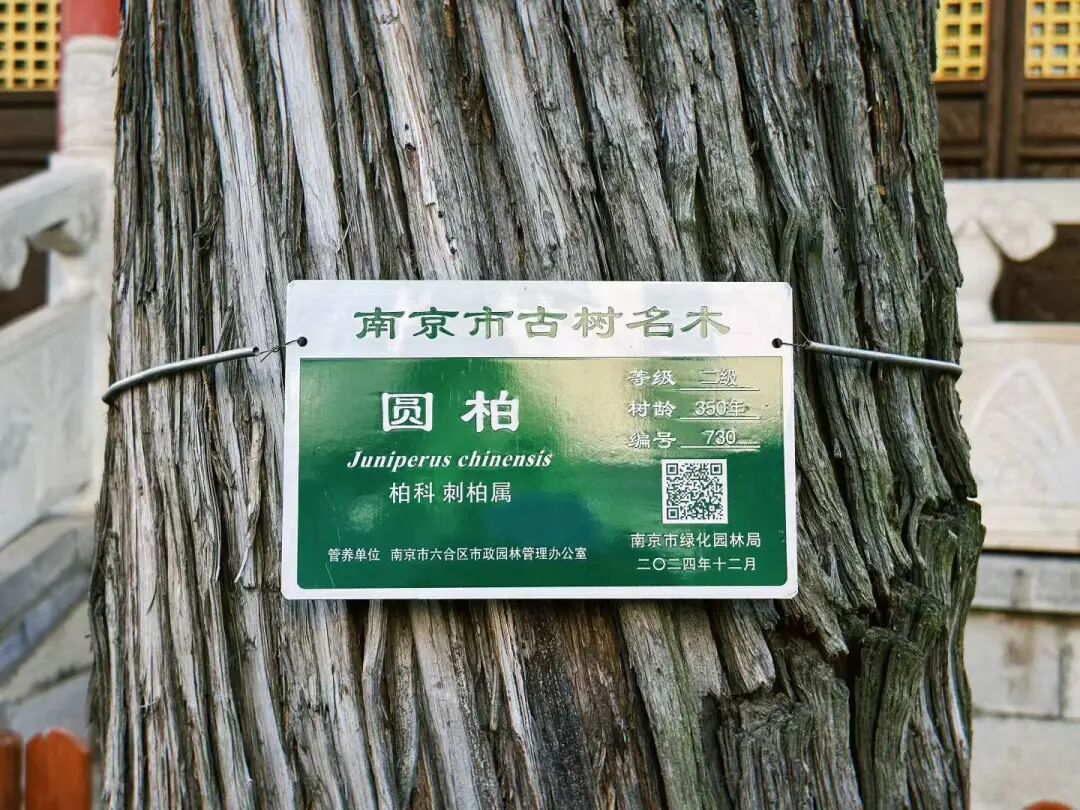
A 460-year-old Chinese juniper (yuanbai) in front of the main prayer hall, classified as a first-grade protected ancient tree.
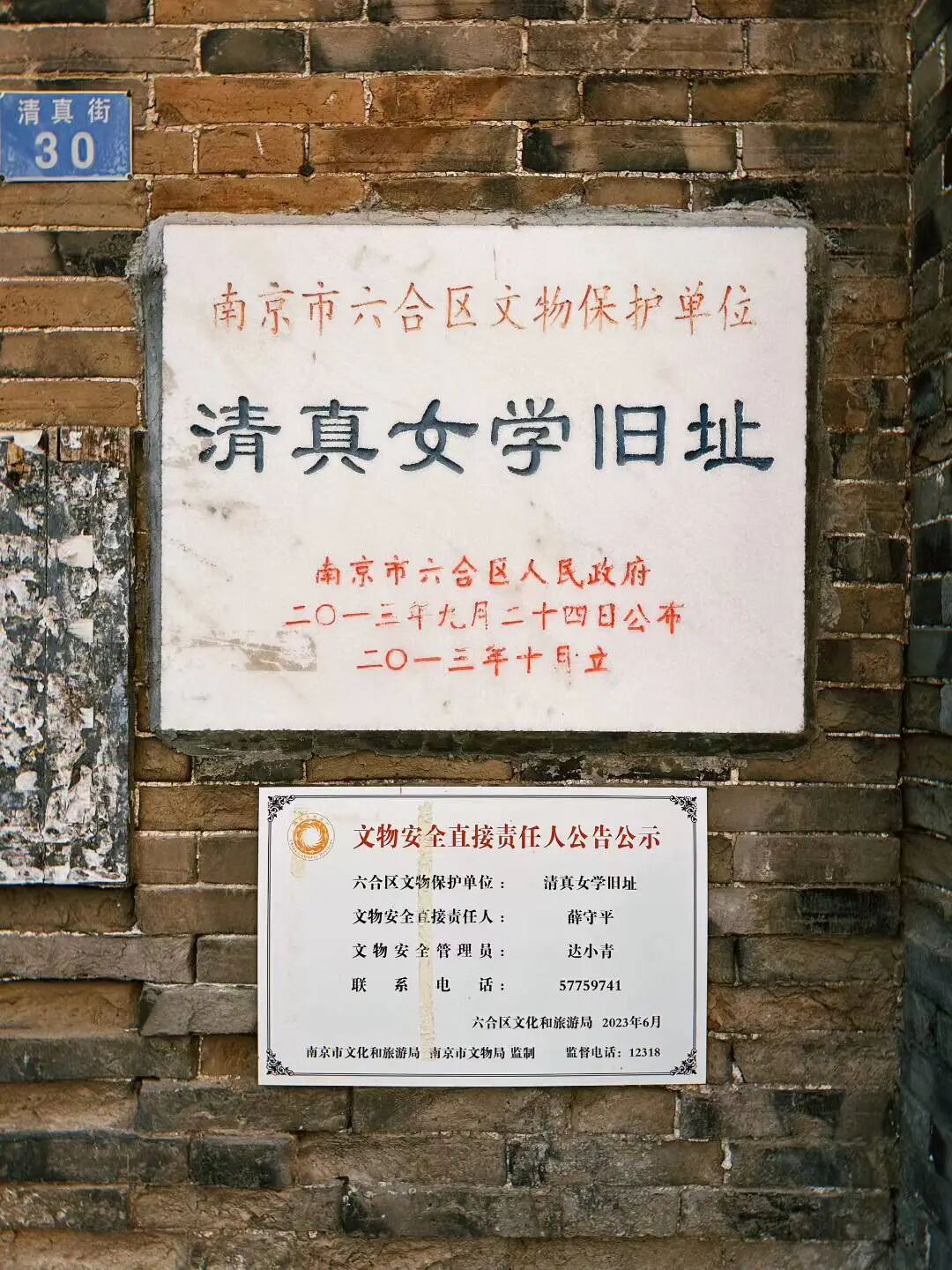
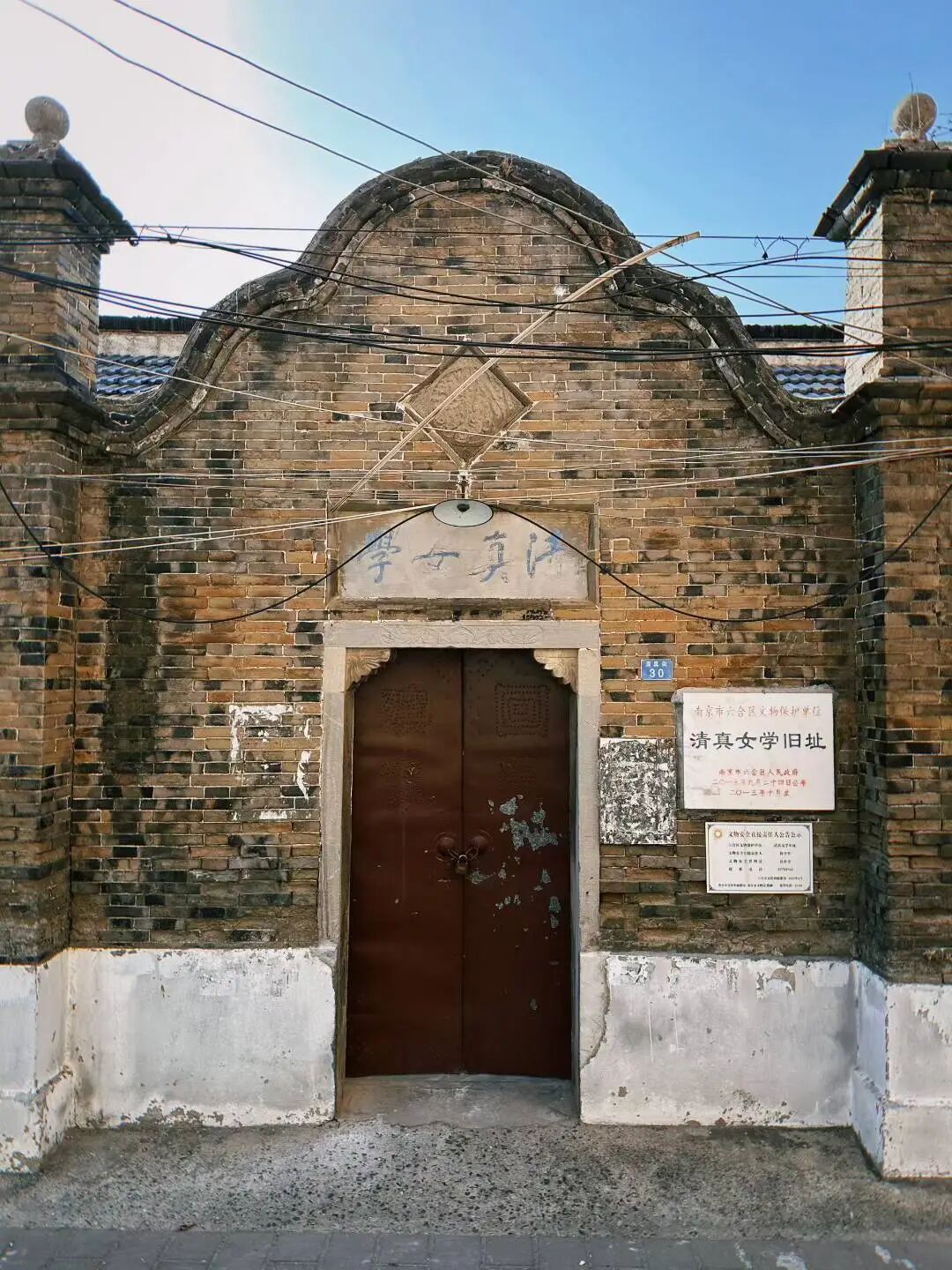
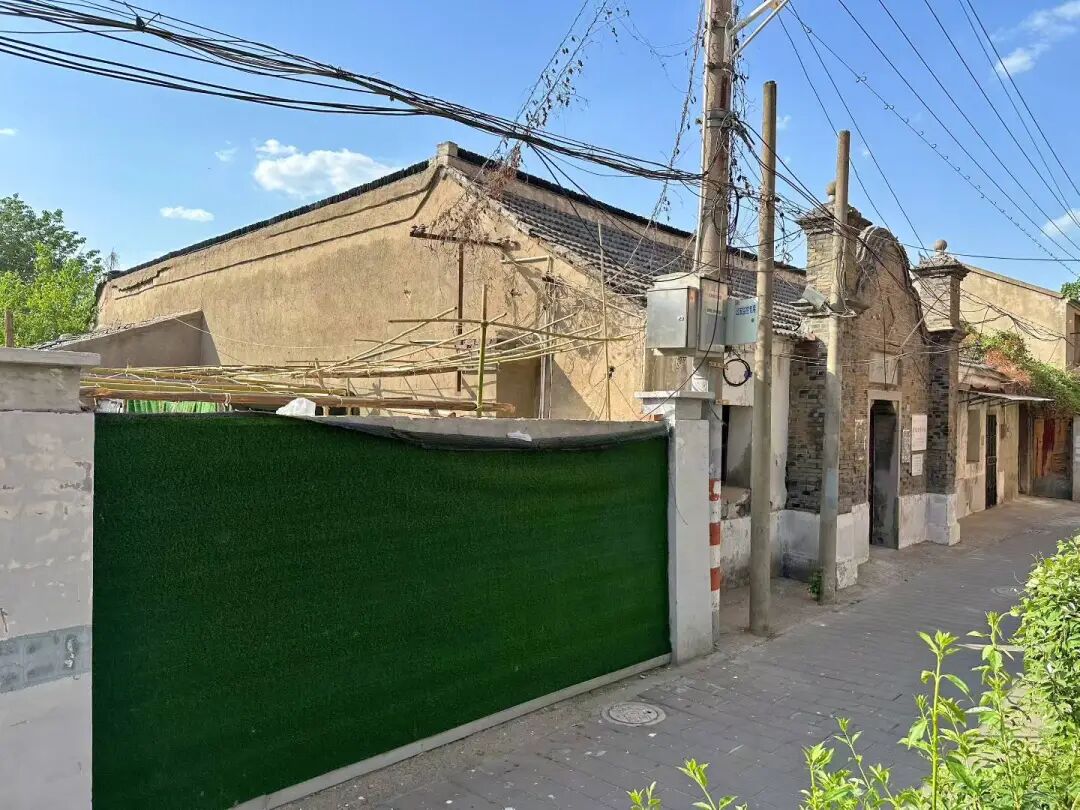
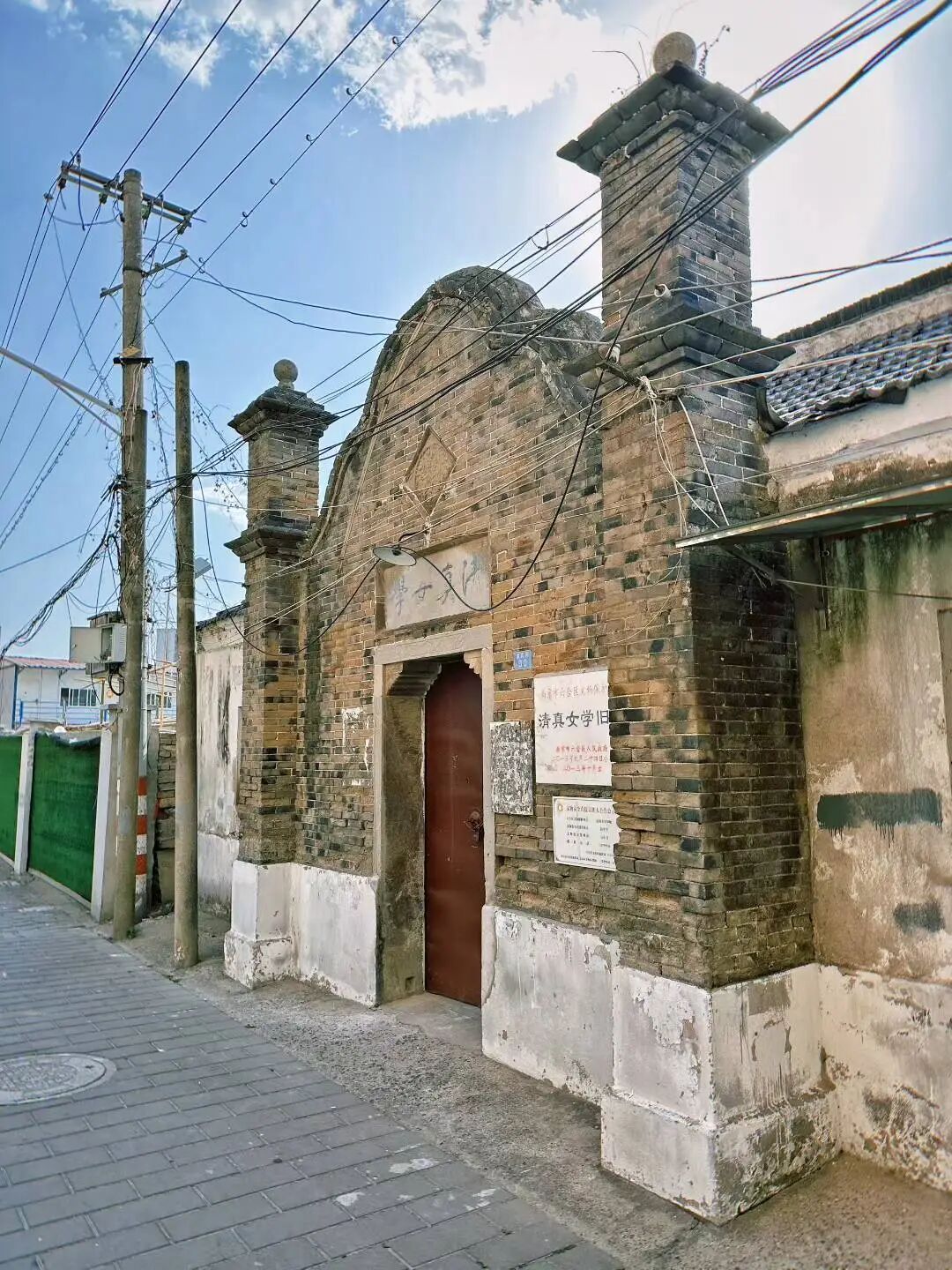
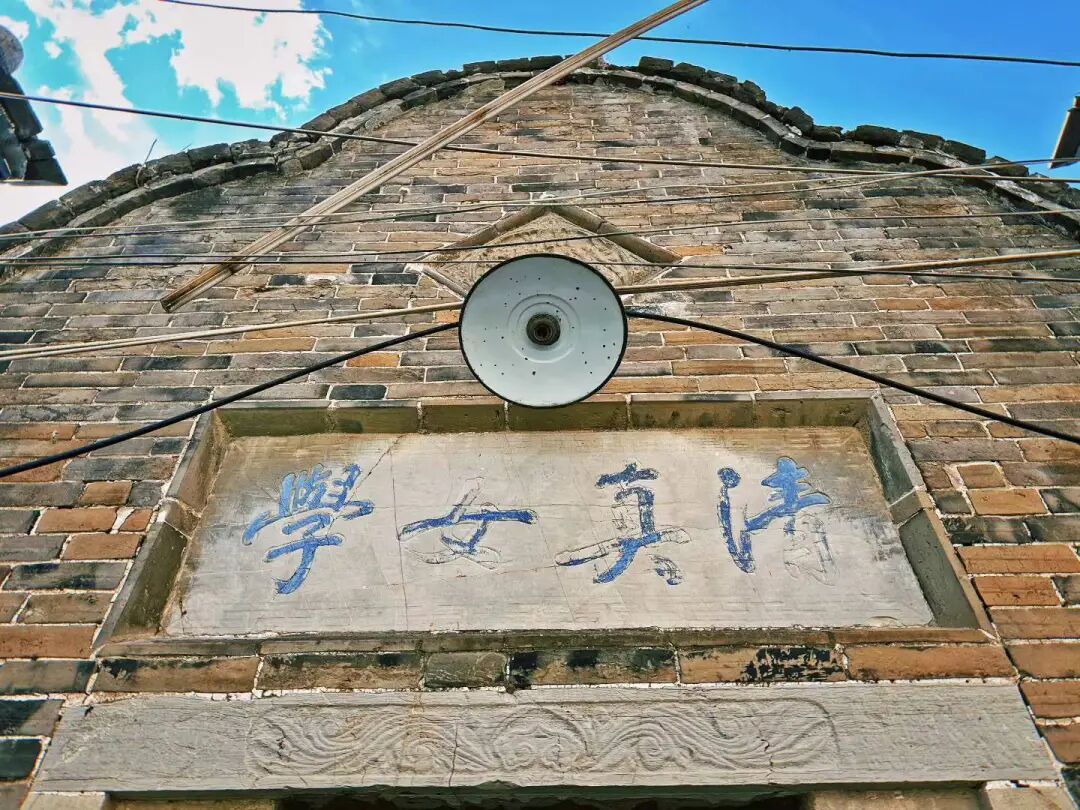
Liuhe Women's School.
The Liuhe Muslim Women's School started in 1912. The current building was constructed in 1930 and later used as a Hui Muslim funeral home. It is a rare surviving example of a Republican-era Muslim women's school and mosque.
Traditionally, these women's schools do not form formal classes, do not call the adhan, do not hold Jumu'ah prayers, and do not hold Eid prayers. The female imam (shiniang) does not lead the prayer from the front but stands in the middle of the first row. The women's school does not have a minaret, and there is no minbar pulpit inside the main prayer hall. Besides leading the local women in their religious duties, the female imam (shiniang) also teaches various aspects of Islamic knowledge.
Women's schools emerged during the mid-to-late Qing dynasty, initially concentrated in Henan and the neighboring areas of Hebei, Shandong, and Anhui. In the early Republic of China, influenced by the New Culture Movement and the women's liberation movement, the ideas of promoting women's education, ending foot binding, and liberating women began to be understood by Hui Muslims. The number of women's schools increased rapidly, with over a hundred in Henan province alone, and others were built in various provinces.
During the Guangxu reign of the Qing dynasty, two women's schools were built in Nanjing at Hanximen and Changle Street. During the Republican era, four more were built at Fangjia Lane, Zhuganli, Shigu Road, and Dahuifu Lane, but all of these have been demolished. In the early Republican era, Liuhe built three women's schools at Houjie inside the city, outside the South Gate, and in Zhuzhen. The historical buildings at the South Gate and Zhuzhen are the only ones that remain.
Changjiang Road Mosque in Liuhe.
After leaving the South Gate Mosque in Liuhe, we went to the Changjiang Road Mosque in Liuhe to perform the prayer (namaz). The mosque has two imams, one middle-aged and one young. The young imam is from Zhenjiang and just graduated from an Islamic school (zhongjing). He is a very rare and talented young man.
The Changjiang Road Mosque was originally called Chengqingfang. It is also known as the Liuhe North Mosque, the Inner City Mosque, and the Da Family Mosque. It was built in 1424 (the 22nd year of the Yongle reign of the Ming Dynasty) by the Da family of Baiyetang, who had lived in Liuhe for generations. The Changjiang Road Mosque was destroyed by the Taiping Heavenly Kingdom during the Xianfeng reign. Later, the leader Liu Weiting and local elders raised funds to rebuild it. In 1885 (the 11th year of the Guangxu reign), Da Guangyong donated money to build a reception hall. In 1928, Wang Dashi, the widow of the wealthy merchant Wang Zuochen and aunt of the great imam Da Pusheng, donated money to build the Wuxin Pavilion on the original site of the Moon-Watching Tower (Wangyuelou).
In 1899, the great imam Da Pusheng returned to his hometown of Liuhe from the Niujie Mosque in Beijing to serve as the imam of the Changjiang Road Mosque. It was not until 1905, when Imam Wang Kuan from Niujie went on the pilgrimage (hajj), that Imam Da returned to the Niujie Mosque to serve as the acting imam and lead religious affairs. Imam Da founded the Guangyi Primary School inside the Changjiang Road Mosque to promote modern education. He offered courses in Chinese and Arabic, scripture, geography, history, and mathematics. This pioneered the transition from traditional scripture hall teaching to modern education. In a memoir from the early 1950s, Imam Da wrote: 'I worked hard for six years. Perhaps moved by the achievements of Guangyi Primary School, the local Hui Muslims supported the school with great effort... Looking back now, how difficult it was to struggle at that time, to patiently persuade stubborn traditionalists, and to take on responsibilities despite everything without being denounced as anti-religious!'
After 1966, the Changjiang Road Mosque was occupied by a theater troupe and a cultural troupe. It was reclaimed and reopened in 1983.
Existing stone tablets at the Liuhe Changjiang Road Mosque:
The 1885 (11th year of the Guangxu reign) tablet records that Da Guangyong funded the construction of the reception hall at the Inner City Mosque in Liuhe. Da Guangyong was the 18th-generation descendant of the Baiyetang Da family. He held the rank of ninth-grade official and lived to be 81.
The 1899 (25th year of the Guangxu reign) tablet, titled 'Tablet on the Renovation of the Tangyi Inner City Mosque and the Market Houses Inside and Outside the Mosque,' records the specific situation of the Changjiang Road Mosque during the Guangxu reign. All the signatories were local Hui Muslims from the Da family.
The 1928 (17th year of the Republic of China) tablet, titled 'Tablet on Wang Dashi's Donation to Repair the Moon-Watching Pavilion and Redeem Market Houses,' records that Dashi, the wife of the Zhuzhen elder Wang Zuochen, donated money to build the Moon-Watching Pavilion (Wangyue Ting). Wang Zuochen was a Hui Muslim from Zhuzhen in Liuhe. He ran a grain business on North Street in Zhuzhen for decades. He was very devout, never missing his daily namaz or fasting, but in 1925, bandits suddenly kidnapped him, and he was never heard from again. Wang Zuochen's wife, surnamed Da, was also very devout and founded the Zhuzhen Girls' School. After her husband went missing, Mrs. Da spent years asking people to help find him, but there was no result. Because Wang Zuochen had no brothers or children, Mrs. Da donated all the family's money to the Zhuzhen mosque and to build the Moon-Watching Pavilion (wangyueting) at the Changjiang Road mosque.
Inside the mosque, there is also a 350-year-old Chinese juniper (yuanbai) tree.
Zhuzhen Mosque
Continuing north from Liuhe, we arrived at Zhuzhen, the northernmost town in Nanjing.
The Zhuzhen mosque was originally located outside East Bridge. It was destroyed during the Taiping Rebellion and rebuilt in 1901 (the 27th year of the Guangxu reign) in Wang Family Lane in the middle of the old street. In 1968, the Zhuzhen mosque was turned into a dormitory for teachers at an agricultural middle school. It was reclaimed and reopened in 1983, and the main hall was rebuilt in 2001.
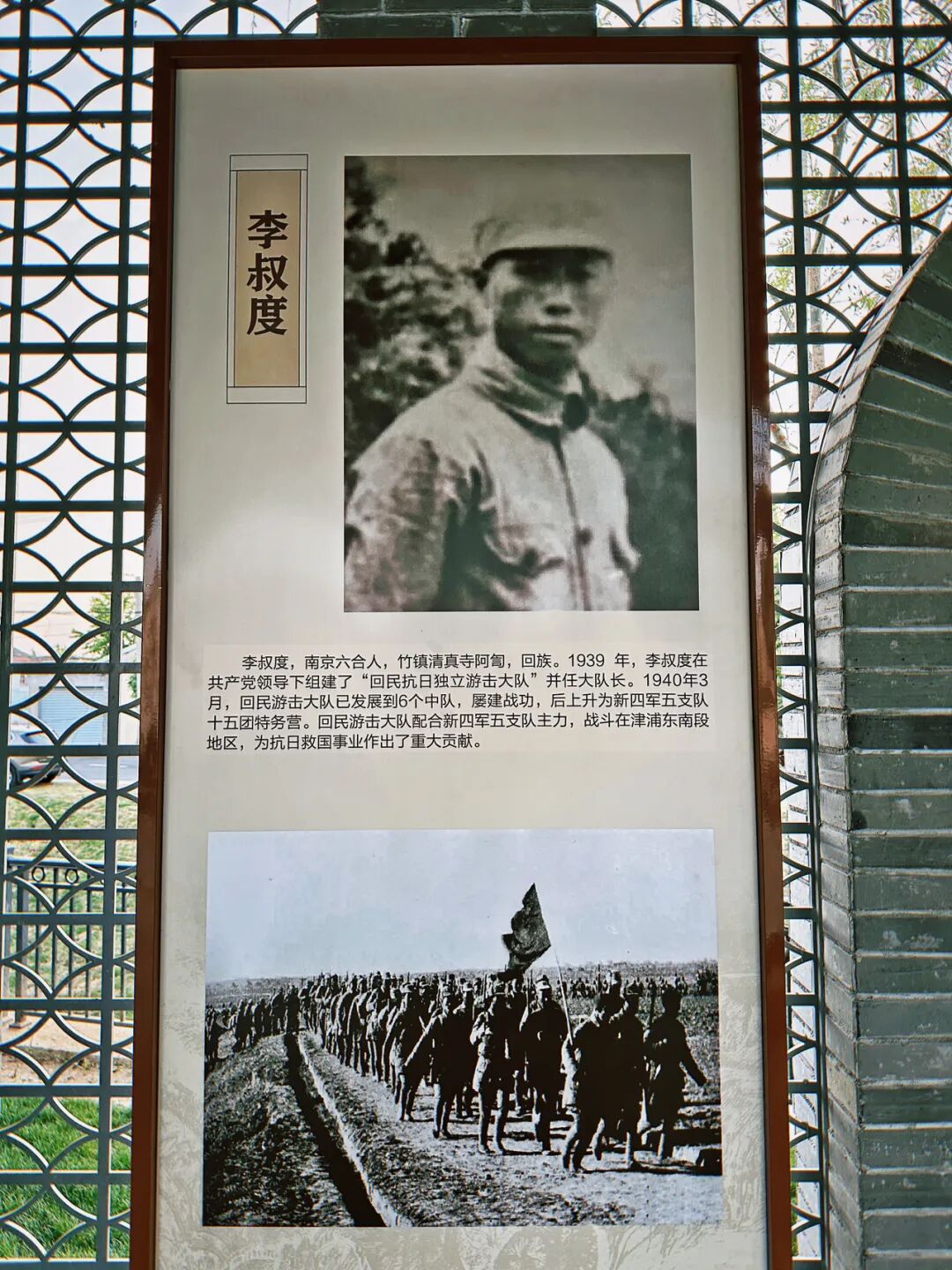
In 1939, the imam of Zhuzhen mosque, Li Shudu, formed the Hui Muslim Anti-Japanese Independent Guerrilla Battalion and served as its commander. He worked with the New Fourth Army and made significant contributions to the anti-Japanese cause.
Additionally, in 1939, Hui Muslims from the Bridge Group (qiaobang) in the Gaoyou and Lingtang areas built a mosque near Xinhua Garden on the west side of Zhuzhen. After 1966, it was converted into a Hui Muslim food processing factory.
The Zhuzhen mosque still has a door lintel from the Qing Dynasty's Guangxu period inscribed with the words 'Built by the Zhudun Community.' Zhudun is the old name for Zhuzhen.
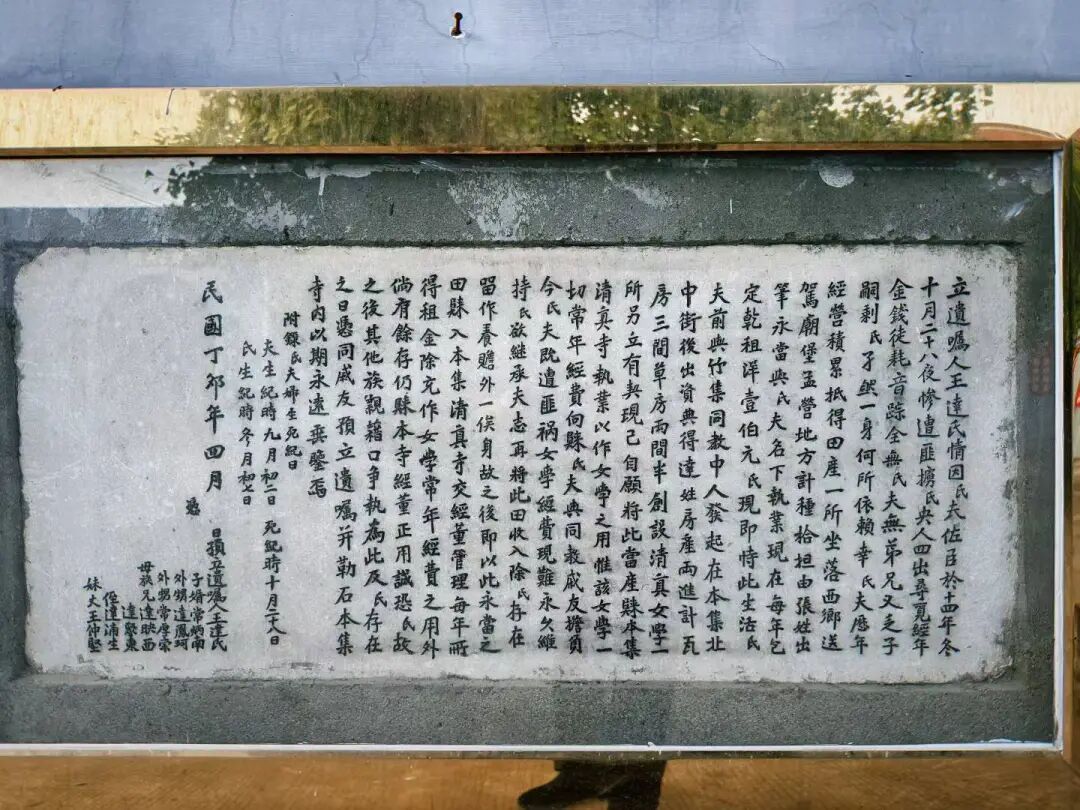
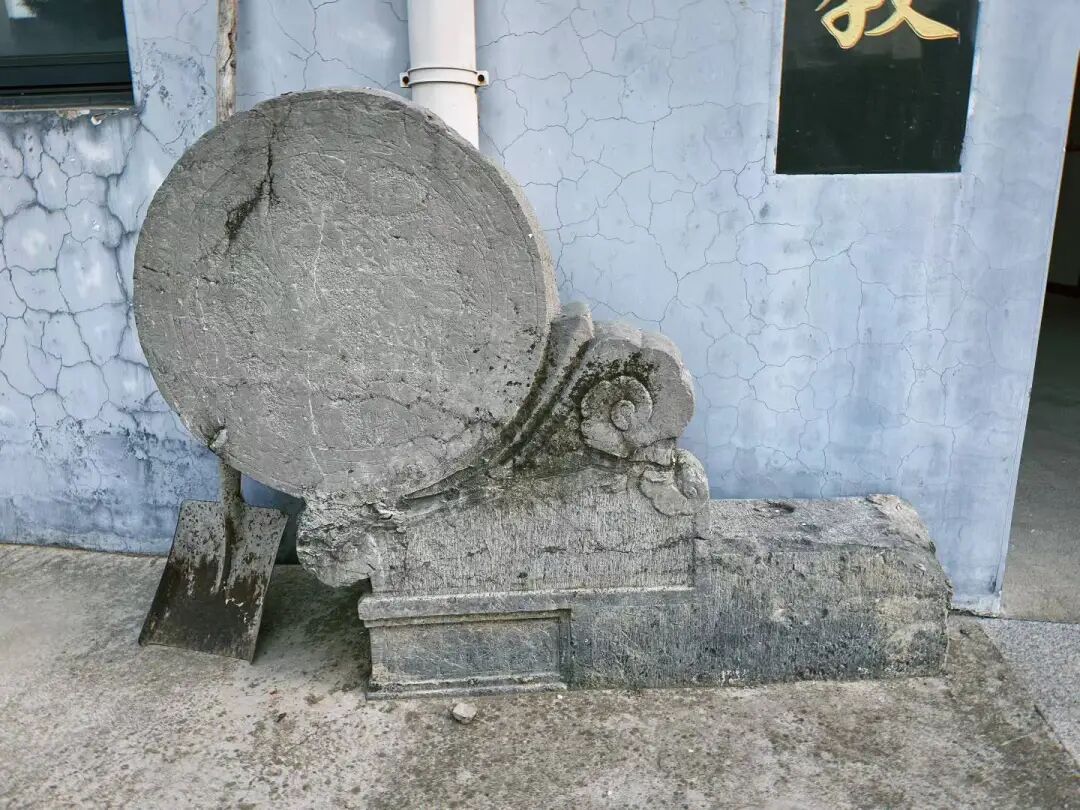
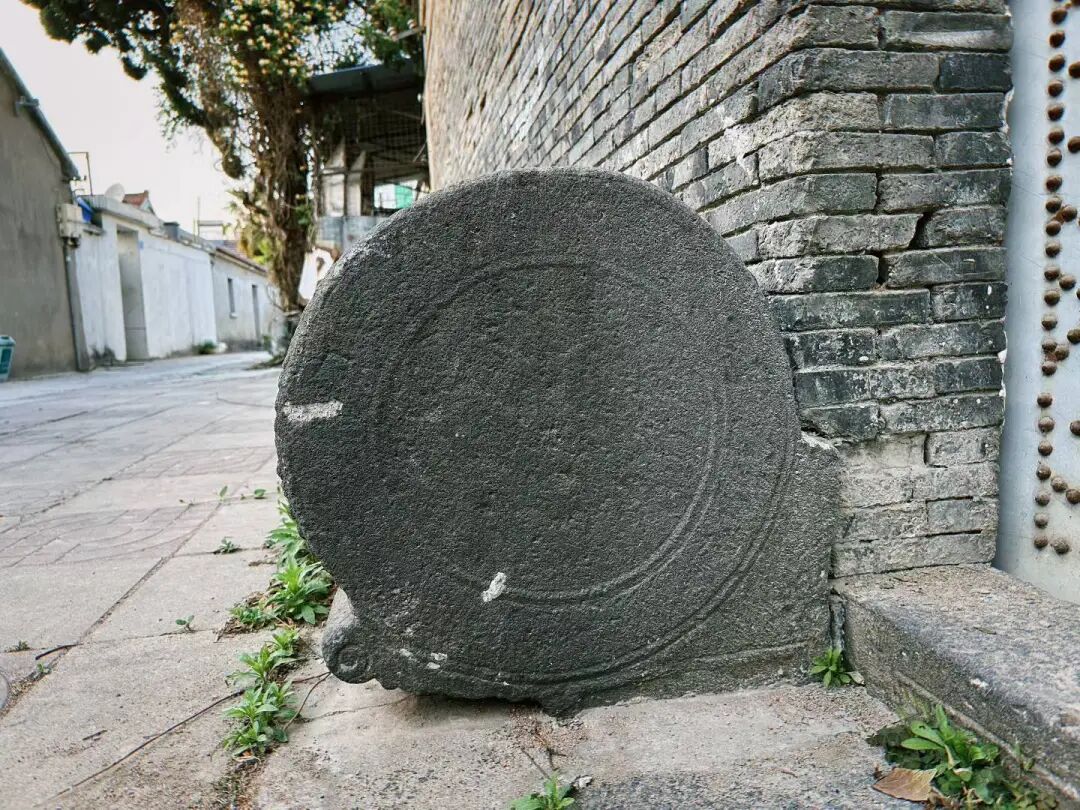
The Zhuzhen mosque in Liuhe houses a Qing Dynasty stone well called 'Pine Spring' (songquan), two pairs of drum-shaped stone bases (baogushi), and a stele from the 16th year of the Republic of China (1927) recording the will of Wang Zuochen's wife, Mrs. Da, who donated her property. Mrs. Da was the aunt of the great imam Da Pusheng. The inscription records that the Zhuzhen Girls' School was founded by Wang Zuochen and fellow members of the faith, with funding provided by Wang Zuochen and his fellow believers. Later, Wang Zuochen was kidnapped by bandits and remained missing for years. Because of this, Wang Zuochen's wife, Mrs. Da, decided to donate all their farmland and property, except for a portion kept for her own support. The funds were mainly used for the daily expenses of the Zhuzhen Girls' School, with the remainder going to the Zhuzhen mosque. The inscription mentions her 'nephew Da Pusheng'.
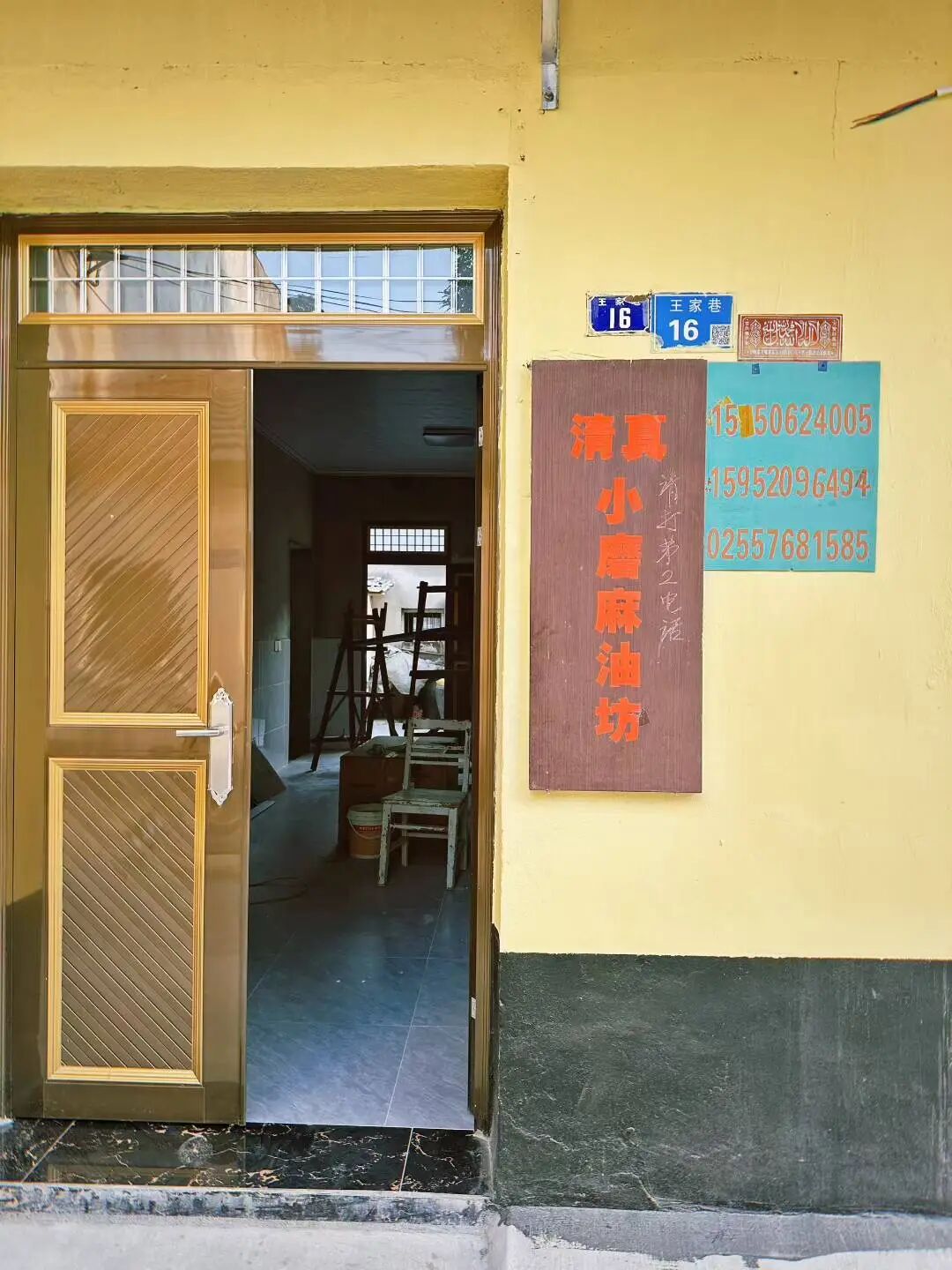
Across from the Zhuzhen Mosque, there is a shop selling small-mill sesame oil (xiaomo mayou), and the only restaurants in town serve hand-pulled noodles (lamian).
Liuhe Muslim Women's School
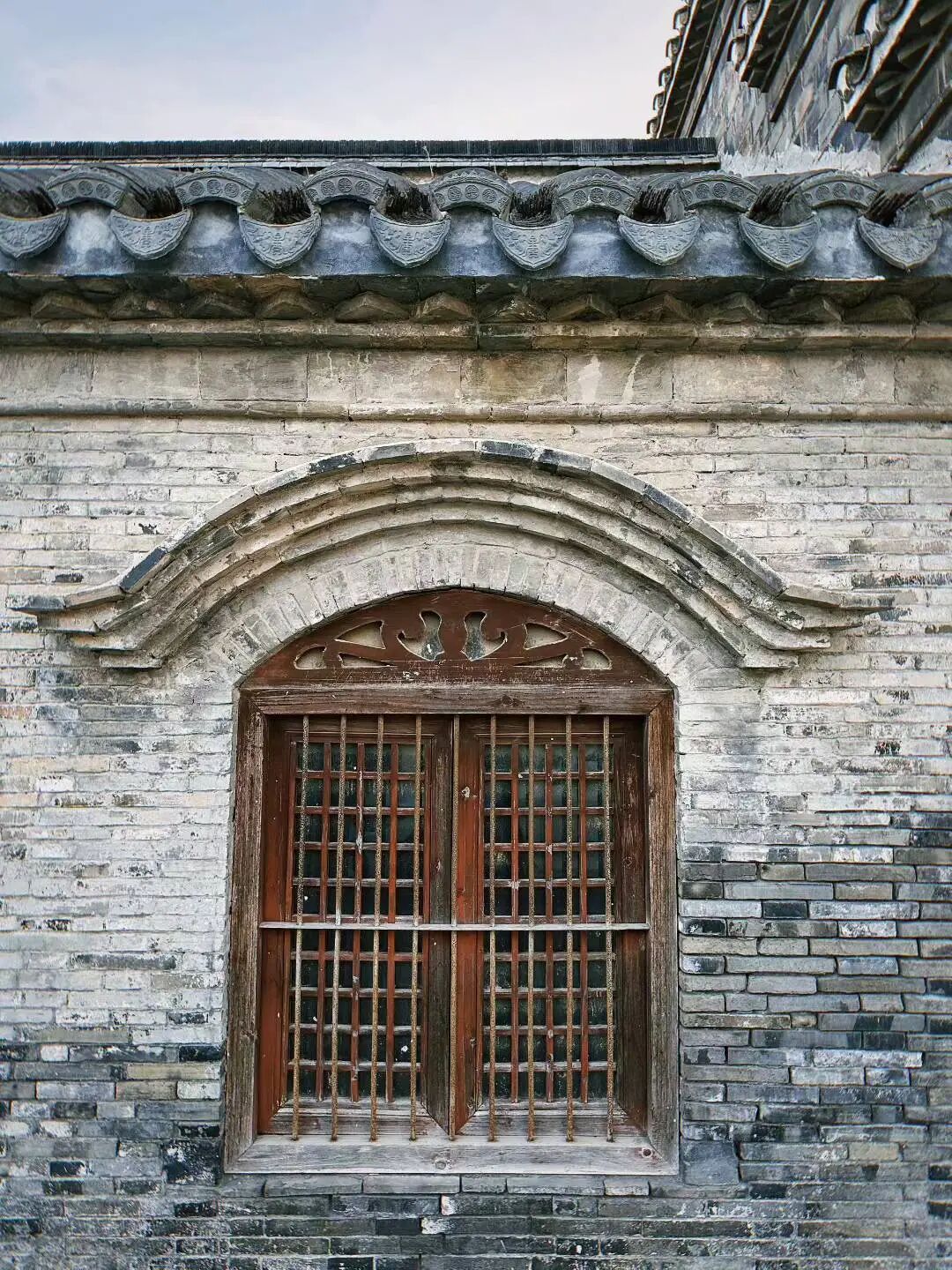
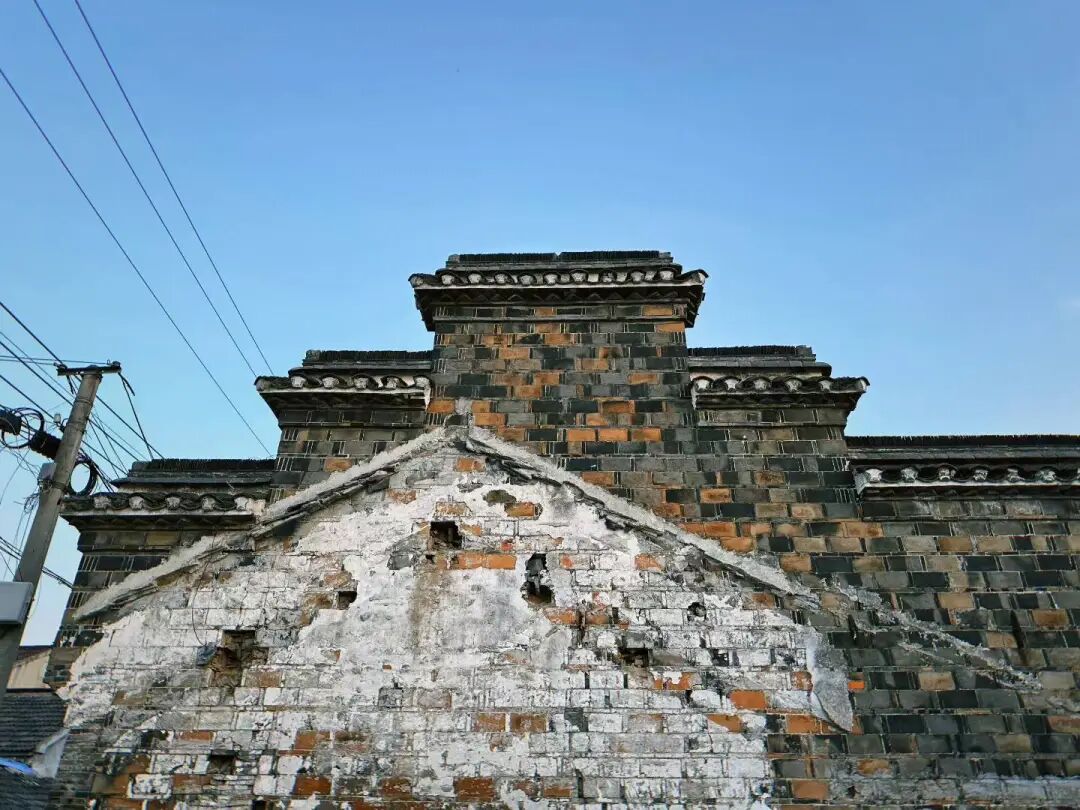
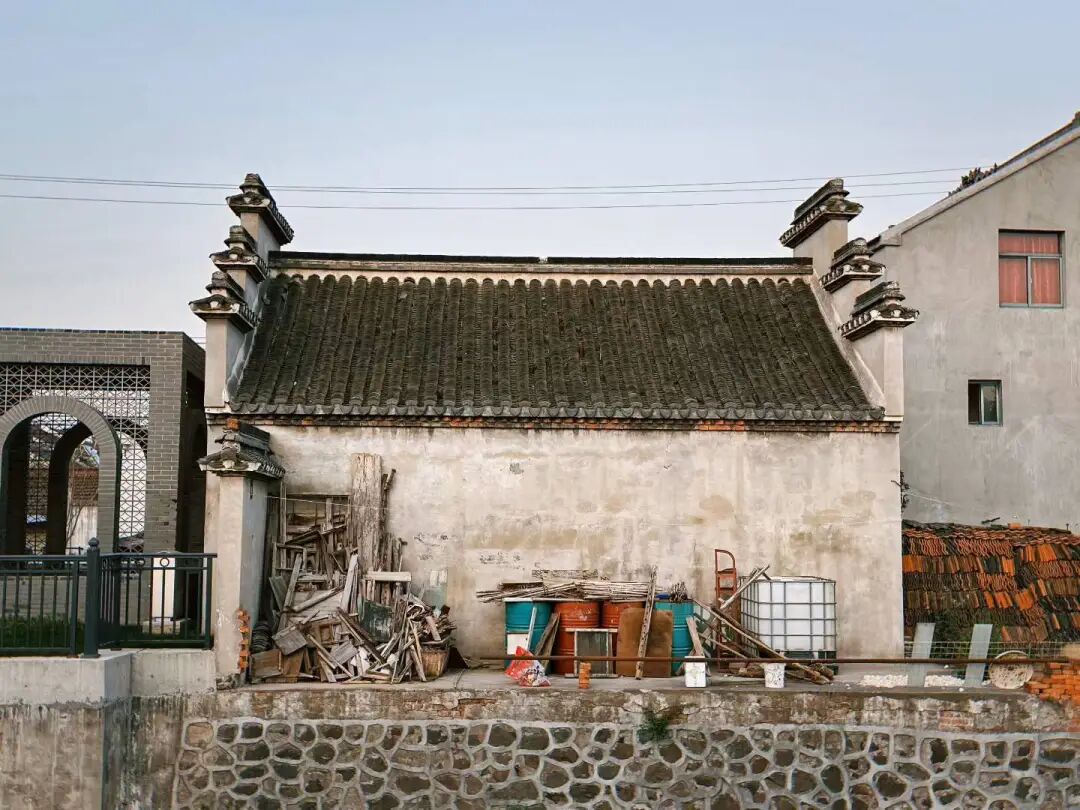
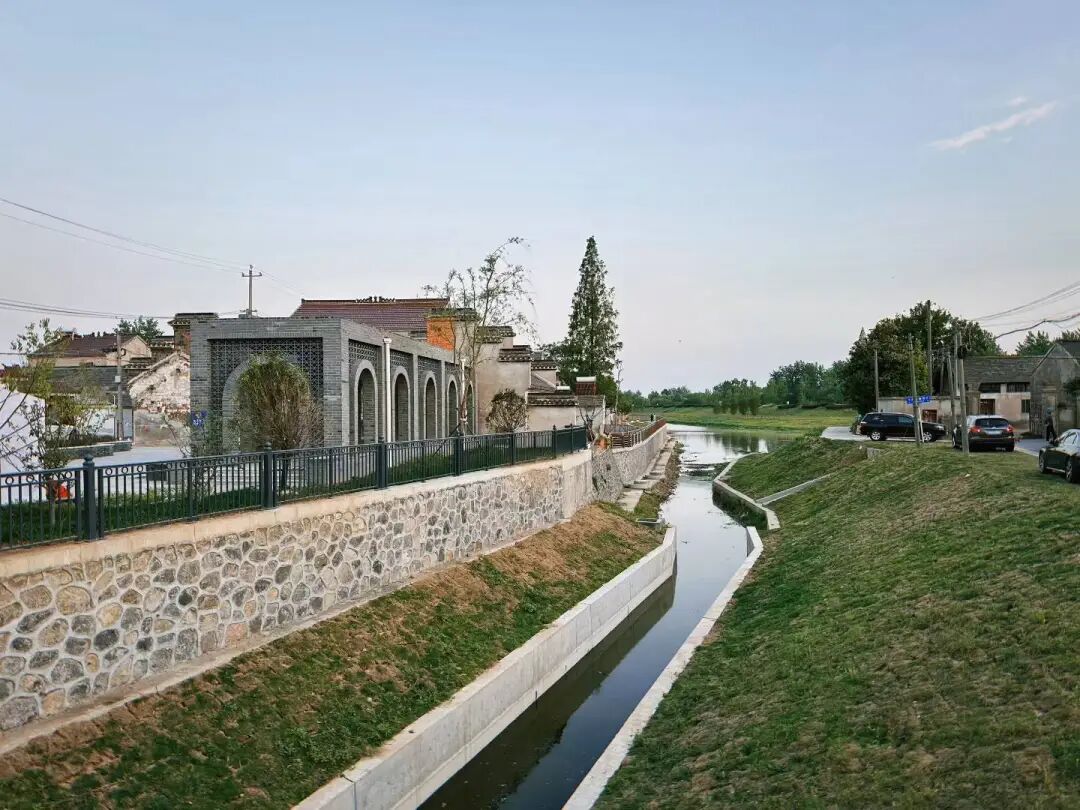
After leaving the Zhuzhen Mosque, I walked through the old street of Zhuzhen and arrived at the Zhuzhen Women's School by the river. The Zhuzhen Women's School is a classic example of Jianghuai architectural style, featuring a small courtyard formed by the entrance hall and the main hall, with traditional Huizhou-style horse-head walls on both sides.
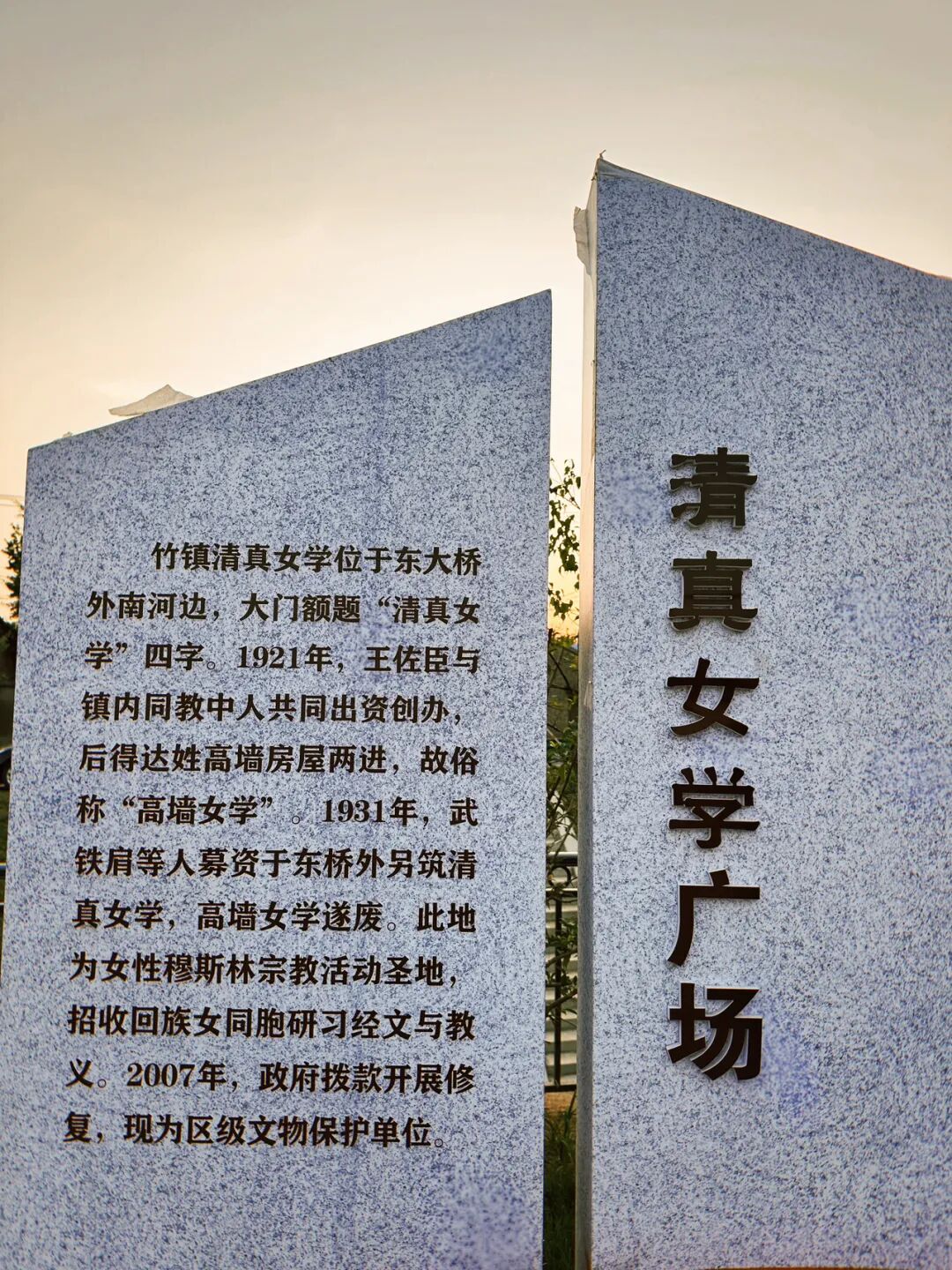
The Zhuzhen Women's School was founded in 1921 by Wang Zuochen, the uncle-in-law of the great imam Da Pusheng, along with other local Hui Muslims. It was originally located on Zhuzhen Middle Street, but in 1931, Wu Tiejian and others rebuilt it along the south riverbank outside the East Bridge of Zhuzhen. After 1966, the school was occupied by a Hui Muslim food processing factory. It was renovated in 2007 but is currently not open to the public. During the Republic of China era, the school was led by two female imams, Mistress Dai and Mistress Bai, who taught scriptures and religious doctrines to local Hui Muslim women.
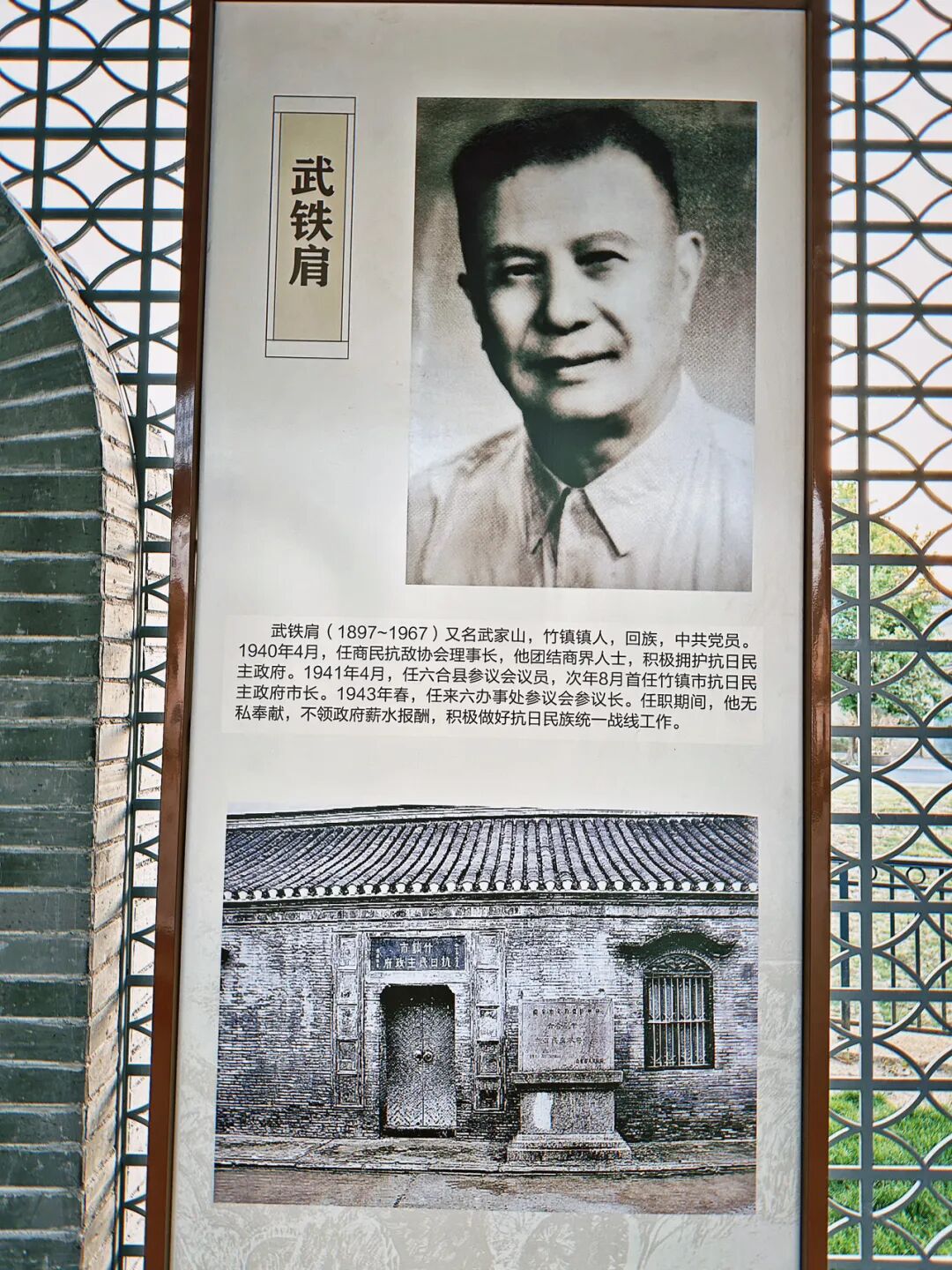
Wu Tiejian was a famous Hui Muslim businessman and patriot who resisted the Japanese. His original name was Wu Jiashan, and at age 22, he inherited his father's business, the Wudeyuan Grain Store. After the New Fourth Army entered Zhuzhen in 1938 to lead the resistance against Japan, Wu Tiejian was the first to donate grain, money, and guns, and he served as the chairman of the Zhuzhen Merchants and Citizens Anti-Enemy Association. In 1942, Wu Tiejian became the first mayor of the Zhuzhen Anti-Japanese Democratic Government. He took great risks to rescue and protect many comrades and also mobilized ambitious young people to join the revolution. After the founding of New China, Wu Tiejian was elected deputy director of the Nanjing Islamic Association, and he passed away (guizhen) in 1967.
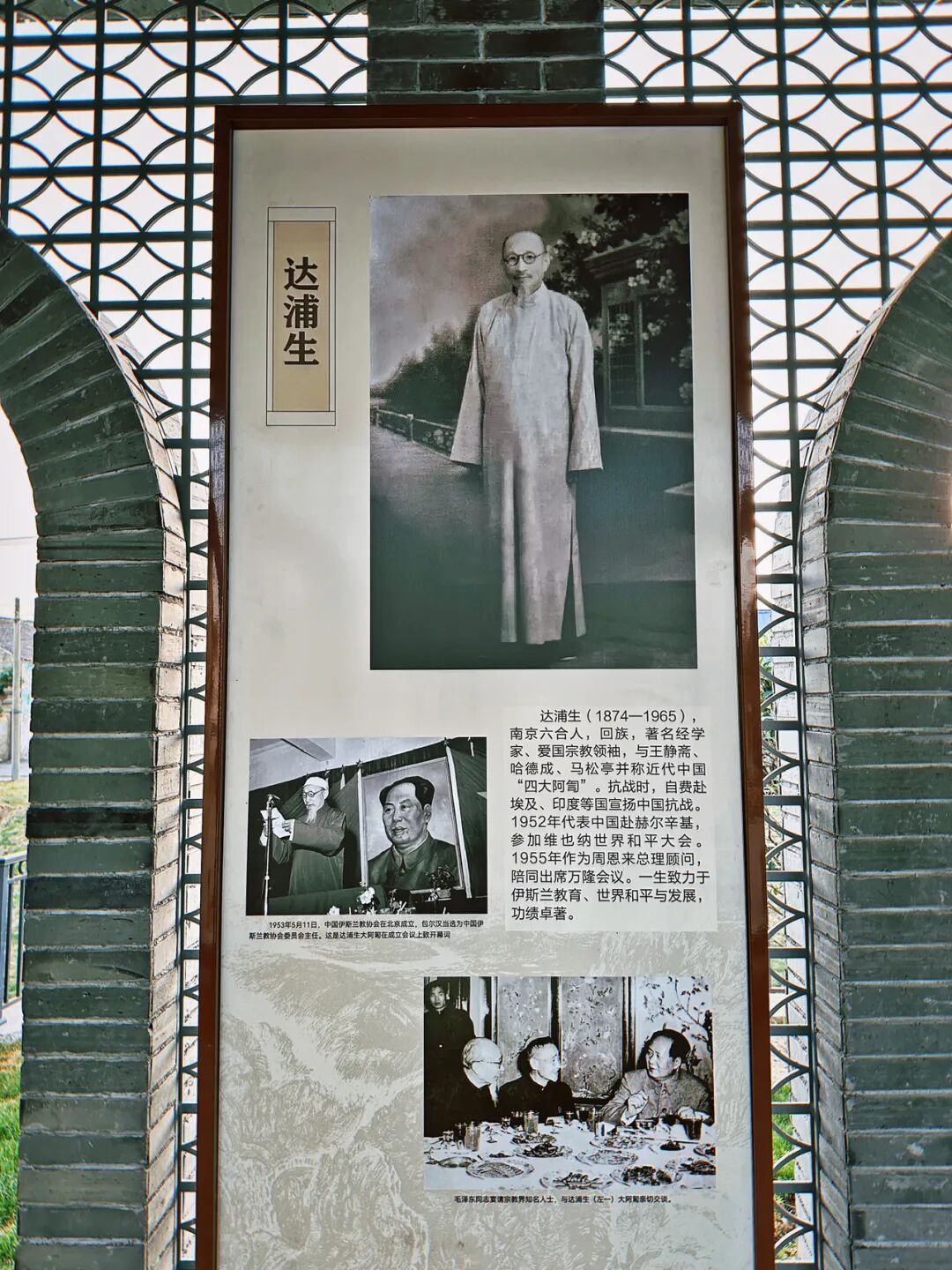
There is a square next to the mosque that introduces famous Hui Muslim figures from Liuhe. view all
Summary: The second part of the Nanjing mosque journey follows sites in the old south city, Liuhe, and Zhuzhen, with notes on mosque buildings, stone carvings, and local Hui Muslim history. This account keeps the original route, mosque names, dates, and photographs.
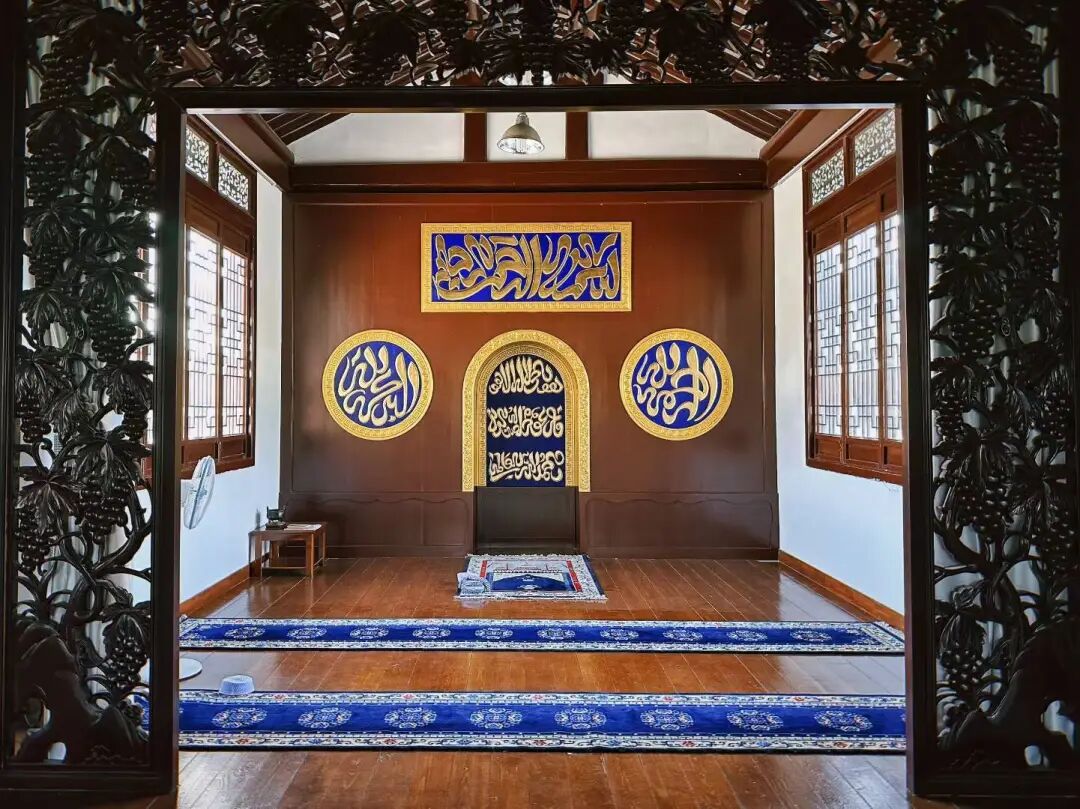
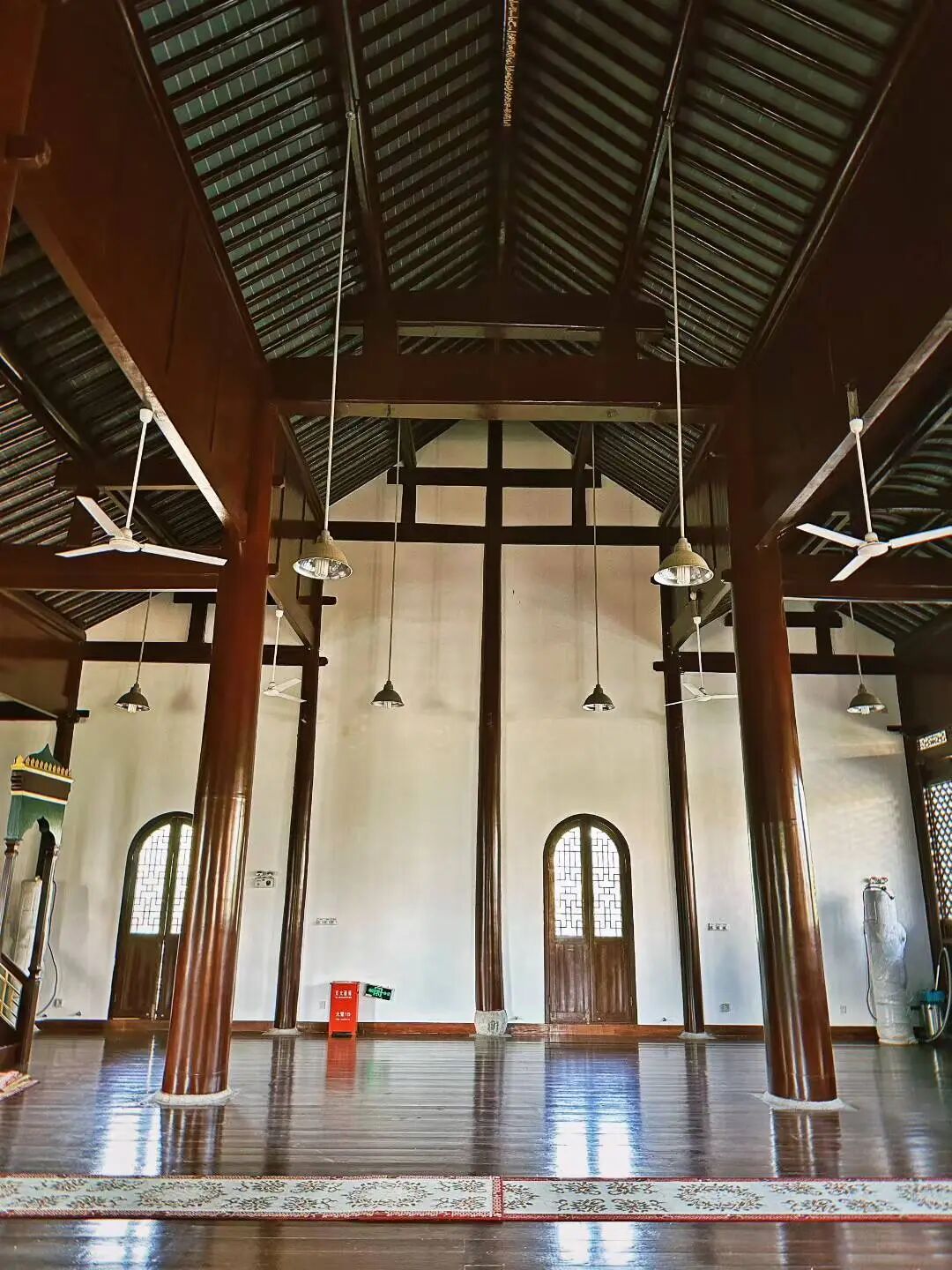
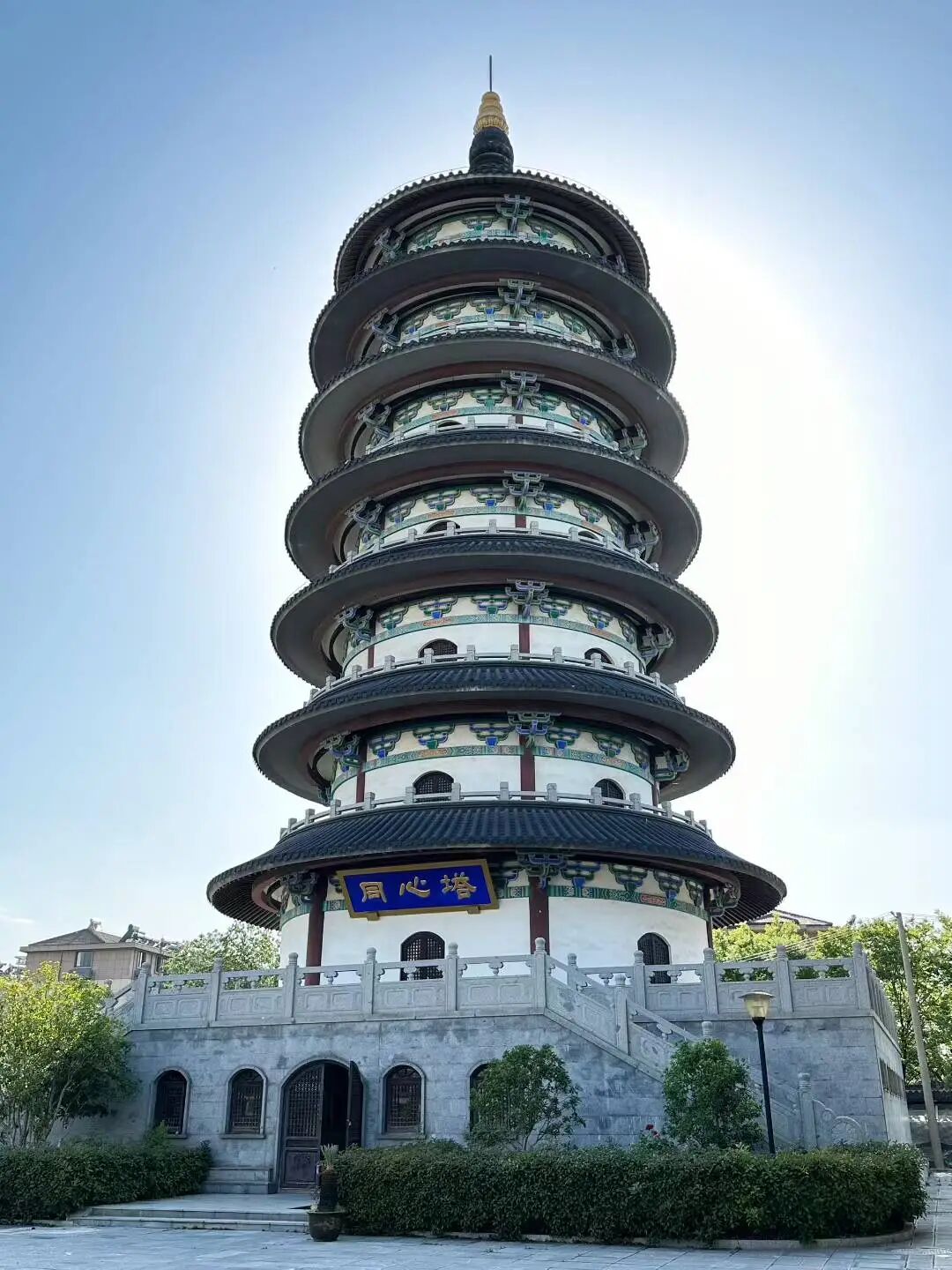
Stone carvings and ancient trees at the South Gate Mosque in Liuhe:
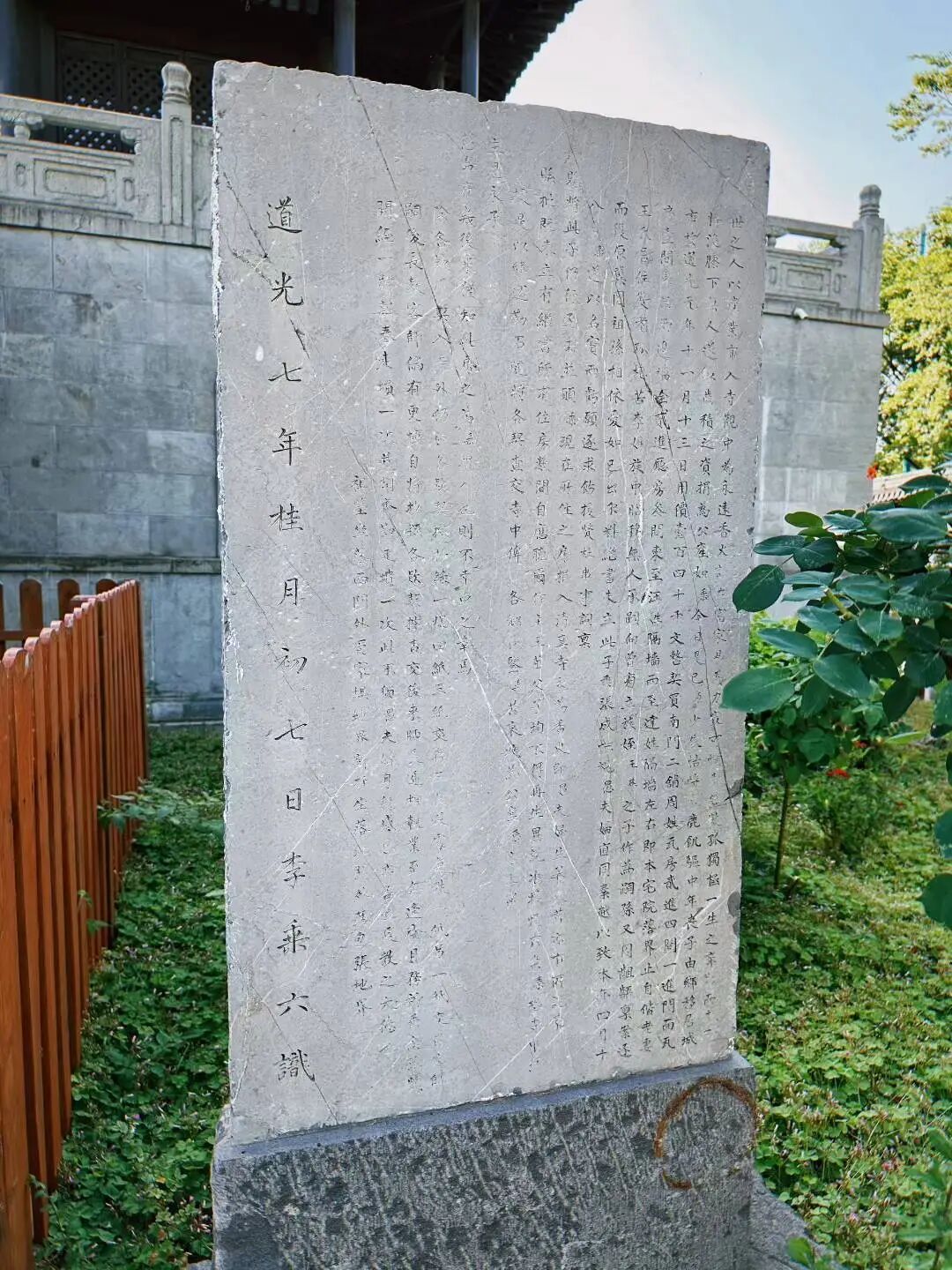
A stone tablet from the seventh year of the Daoguang reign recording a donation of property by a Hui Muslim named Li.
A boundary marker for the mosque.
A stone tablet from the twelfth year of the Guangxu reign. It records that the South Gate Mosque was destroyed by the Taiping Heavenly Kingdom during the Xianfeng years. Many Hui Muslim militia members from the mosque died in battle, and the government later stepped in to protect their graves.
A couplet written by Wang Jianli in the tenth year of the Republic of China: To cherish purity and walk in cleanliness is to prepare for the afterlife; to return to the truth and simplicity is to be just like this.
Qing dynasty drum-shaped stone bases (baogushi) in front of the main gate.
A 460-year-old Chinese juniper (yuanbai) in front of the main prayer hall, classified as a first-grade protected ancient tree.
Liuhe Women's School.
The Liuhe Muslim Women's School started in 1912. The current building was constructed in 1930 and later used as a Hui Muslim funeral home. It is a rare surviving example of a Republican-era Muslim women's school and mosque.
Traditionally, these women's schools do not form formal classes, do not call the adhan, do not hold Jumu'ah prayers, and do not hold Eid prayers. The female imam (shiniang) does not lead the prayer from the front but stands in the middle of the first row. The women's school does not have a minaret, and there is no minbar pulpit inside the main prayer hall. Besides leading the local women in their religious duties, the female imam (shiniang) also teaches various aspects of Islamic knowledge.
Women's schools emerged during the mid-to-late Qing dynasty, initially concentrated in Henan and the neighboring areas of Hebei, Shandong, and Anhui. In the early Republic of China, influenced by the New Culture Movement and the women's liberation movement, the ideas of promoting women's education, ending foot binding, and liberating women began to be understood by Hui Muslims. The number of women's schools increased rapidly, with over a hundred in Henan province alone, and others were built in various provinces.
During the Guangxu reign of the Qing dynasty, two women's schools were built in Nanjing at Hanximen and Changle Street. During the Republican era, four more were built at Fangjia Lane, Zhuganli, Shigu Road, and Dahuifu Lane, but all of these have been demolished. In the early Republican era, Liuhe built three women's schools at Houjie inside the city, outside the South Gate, and in Zhuzhen. The historical buildings at the South Gate and Zhuzhen are the only ones that remain.
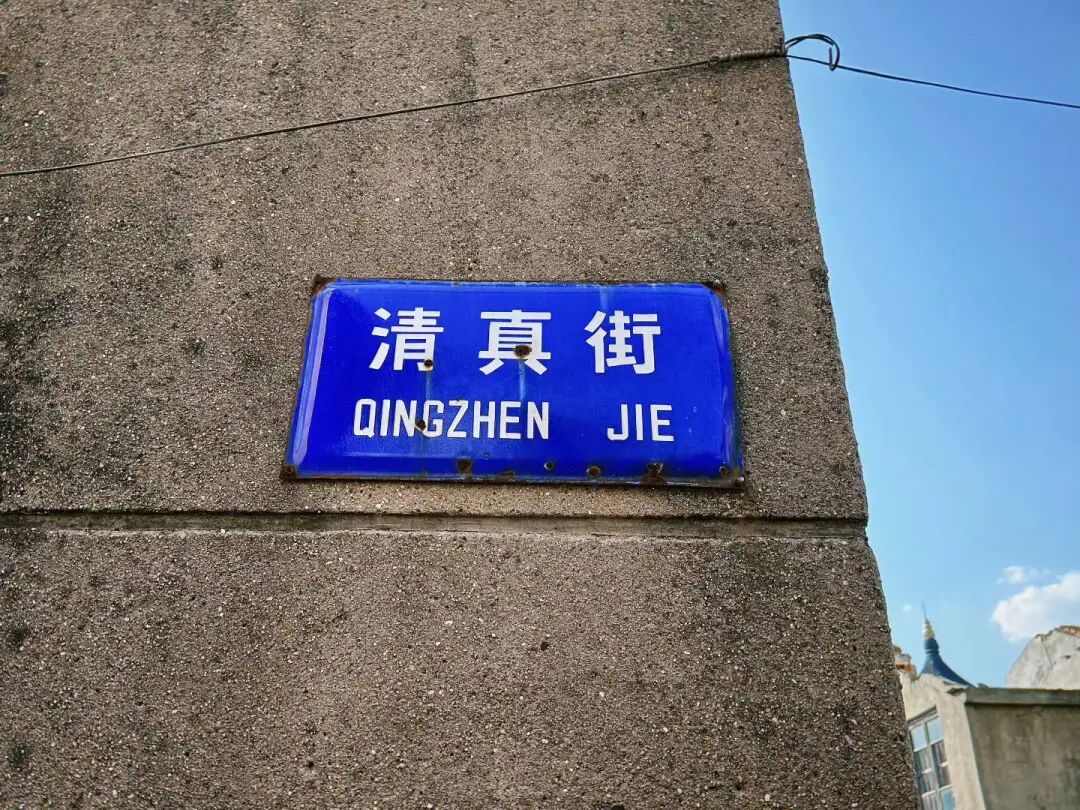
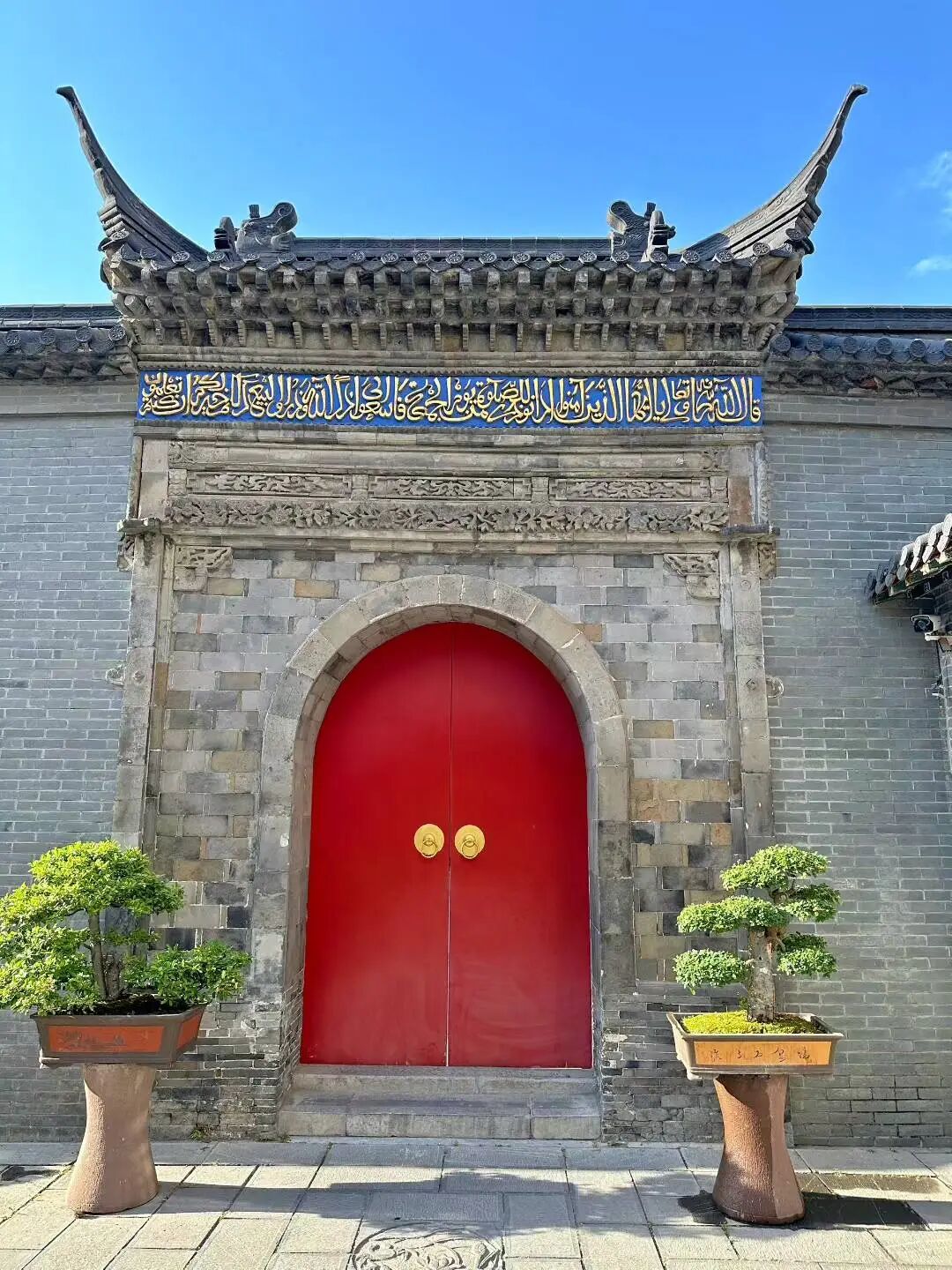
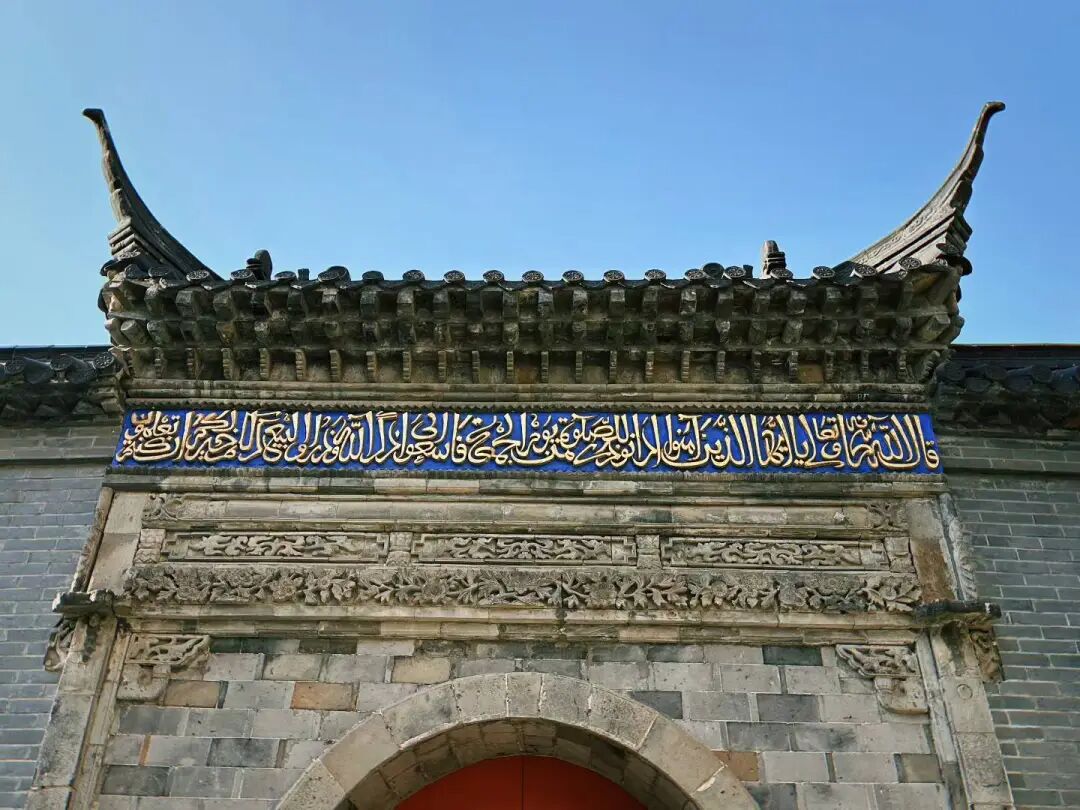
Changjiang Road Mosque in Liuhe.
After leaving the South Gate Mosque in Liuhe, we went to the Changjiang Road Mosque in Liuhe to perform the prayer (namaz). The mosque has two imams, one middle-aged and one young. The young imam is from Zhenjiang and just graduated from an Islamic school (zhongjing). He is a very rare and talented young man.
The Changjiang Road Mosque was originally called Chengqingfang. It is also known as the Liuhe North Mosque, the Inner City Mosque, and the Da Family Mosque. It was built in 1424 (the 22nd year of the Yongle reign of the Ming Dynasty) by the Da family of Baiyetang, who had lived in Liuhe for generations. The Changjiang Road Mosque was destroyed by the Taiping Heavenly Kingdom during the Xianfeng reign. Later, the leader Liu Weiting and local elders raised funds to rebuild it. In 1885 (the 11th year of the Guangxu reign), Da Guangyong donated money to build a reception hall. In 1928, Wang Dashi, the widow of the wealthy merchant Wang Zuochen and aunt of the great imam Da Pusheng, donated money to build the Wuxin Pavilion on the original site of the Moon-Watching Tower (Wangyuelou).
In 1899, the great imam Da Pusheng returned to his hometown of Liuhe from the Niujie Mosque in Beijing to serve as the imam of the Changjiang Road Mosque. It was not until 1905, when Imam Wang Kuan from Niujie went on the pilgrimage (hajj), that Imam Da returned to the Niujie Mosque to serve as the acting imam and lead religious affairs. Imam Da founded the Guangyi Primary School inside the Changjiang Road Mosque to promote modern education. He offered courses in Chinese and Arabic, scripture, geography, history, and mathematics. This pioneered the transition from traditional scripture hall teaching to modern education. In a memoir from the early 1950s, Imam Da wrote: 'I worked hard for six years. Perhaps moved by the achievements of Guangyi Primary School, the local Hui Muslims supported the school with great effort... Looking back now, how difficult it was to struggle at that time, to patiently persuade stubborn traditionalists, and to take on responsibilities despite everything without being denounced as anti-religious!'
After 1966, the Changjiang Road Mosque was occupied by a theater troupe and a cultural troupe. It was reclaimed and reopened in 1983.
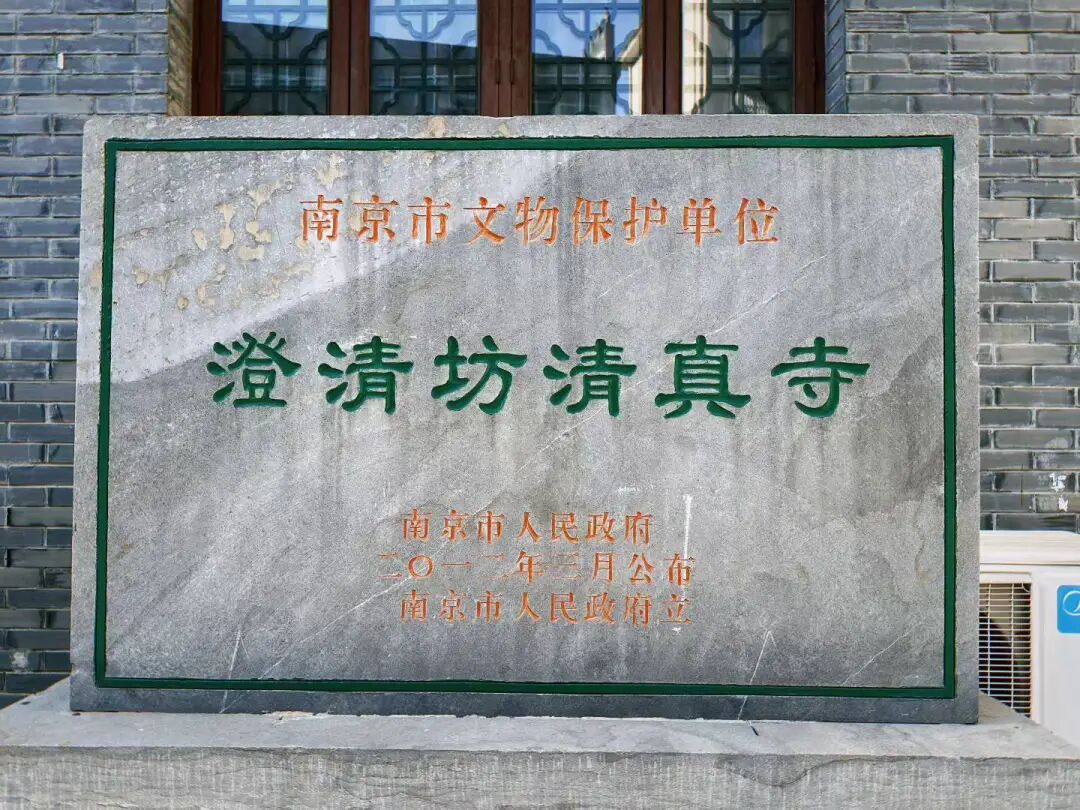
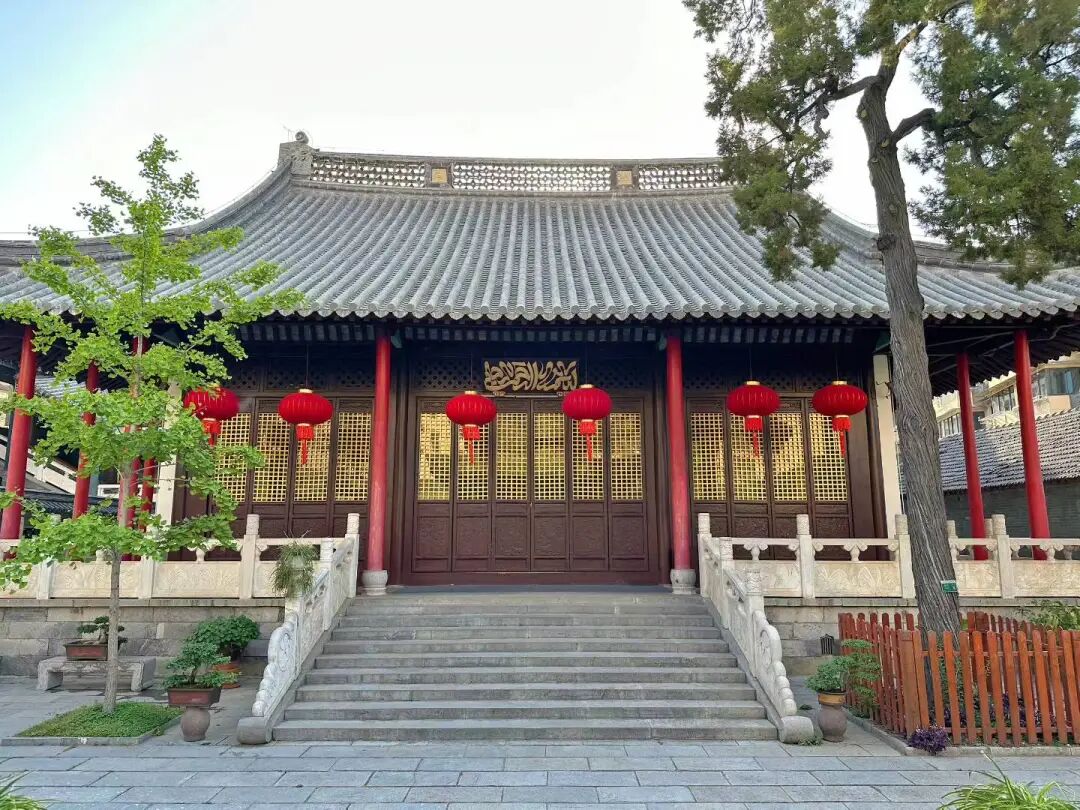
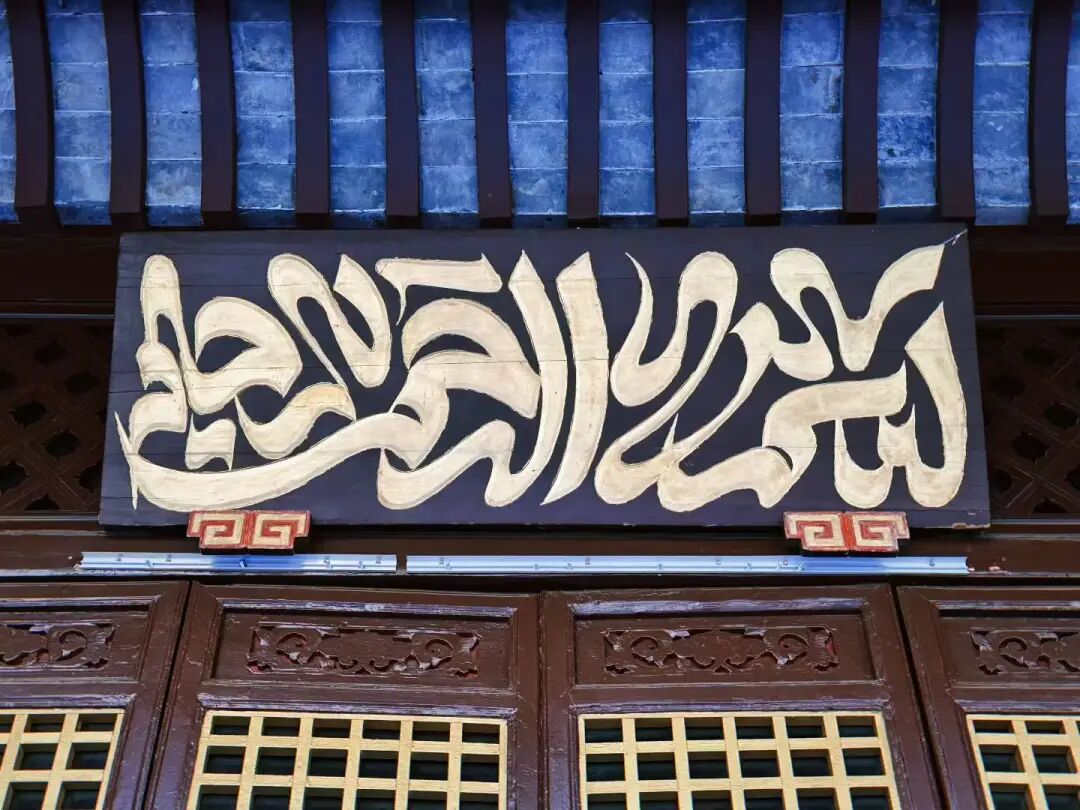
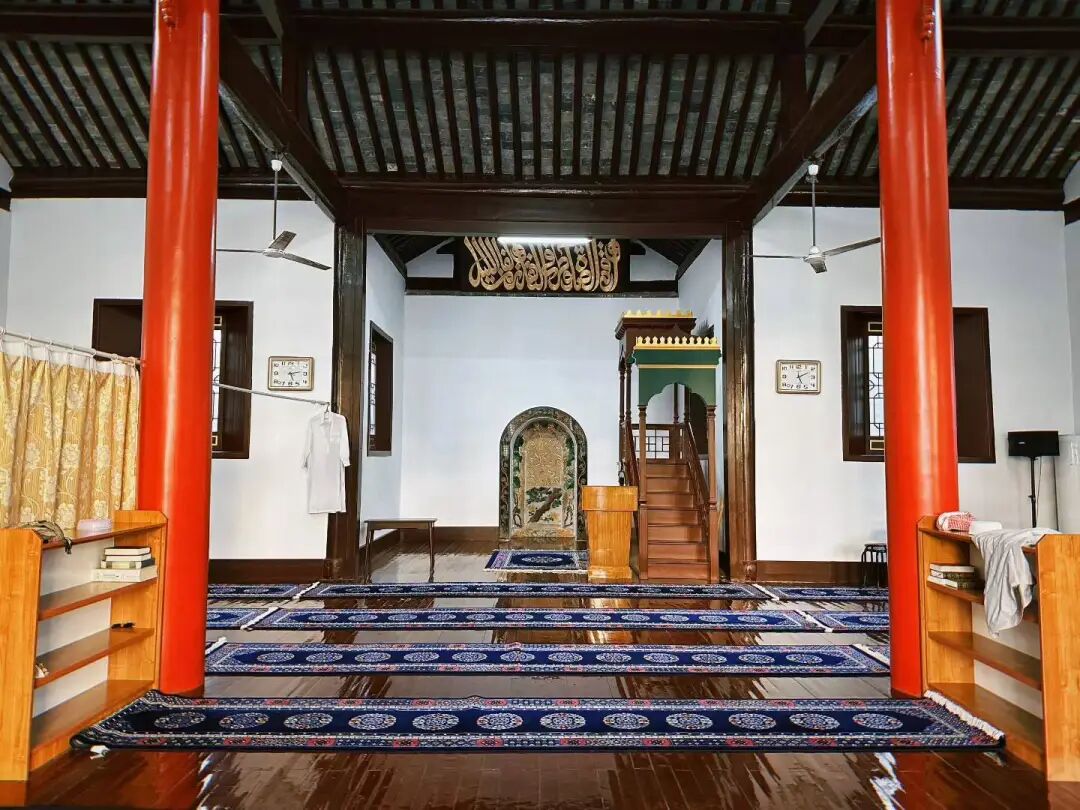
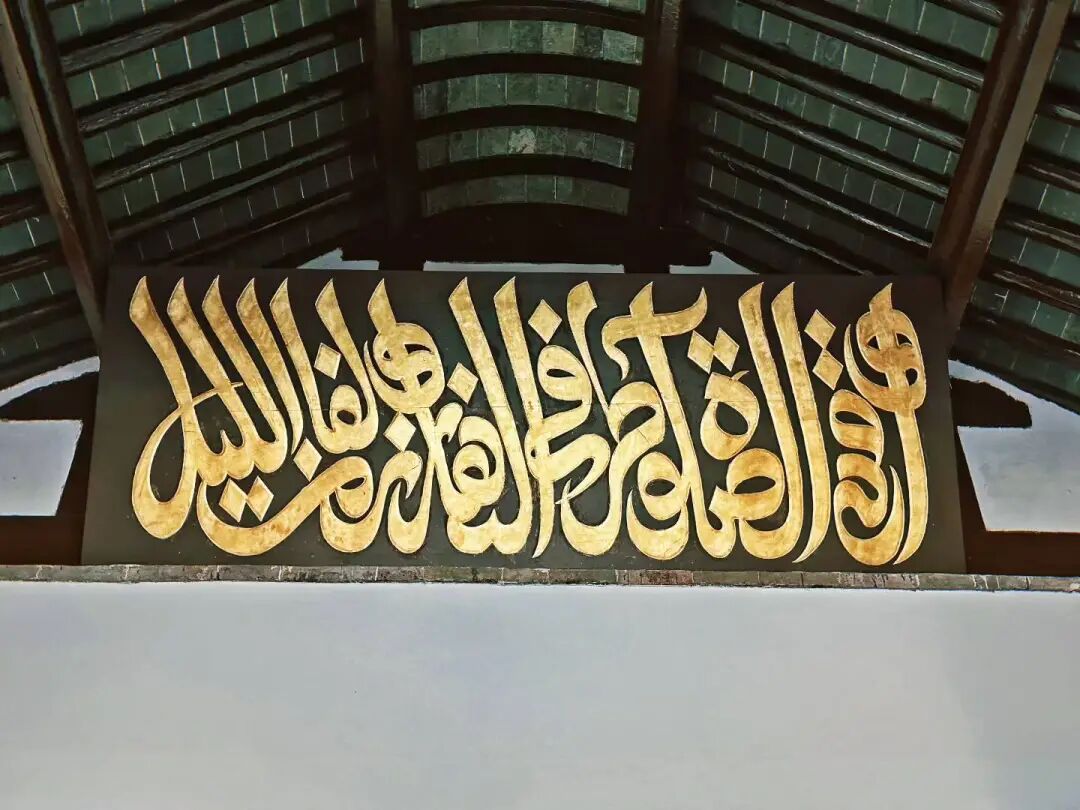
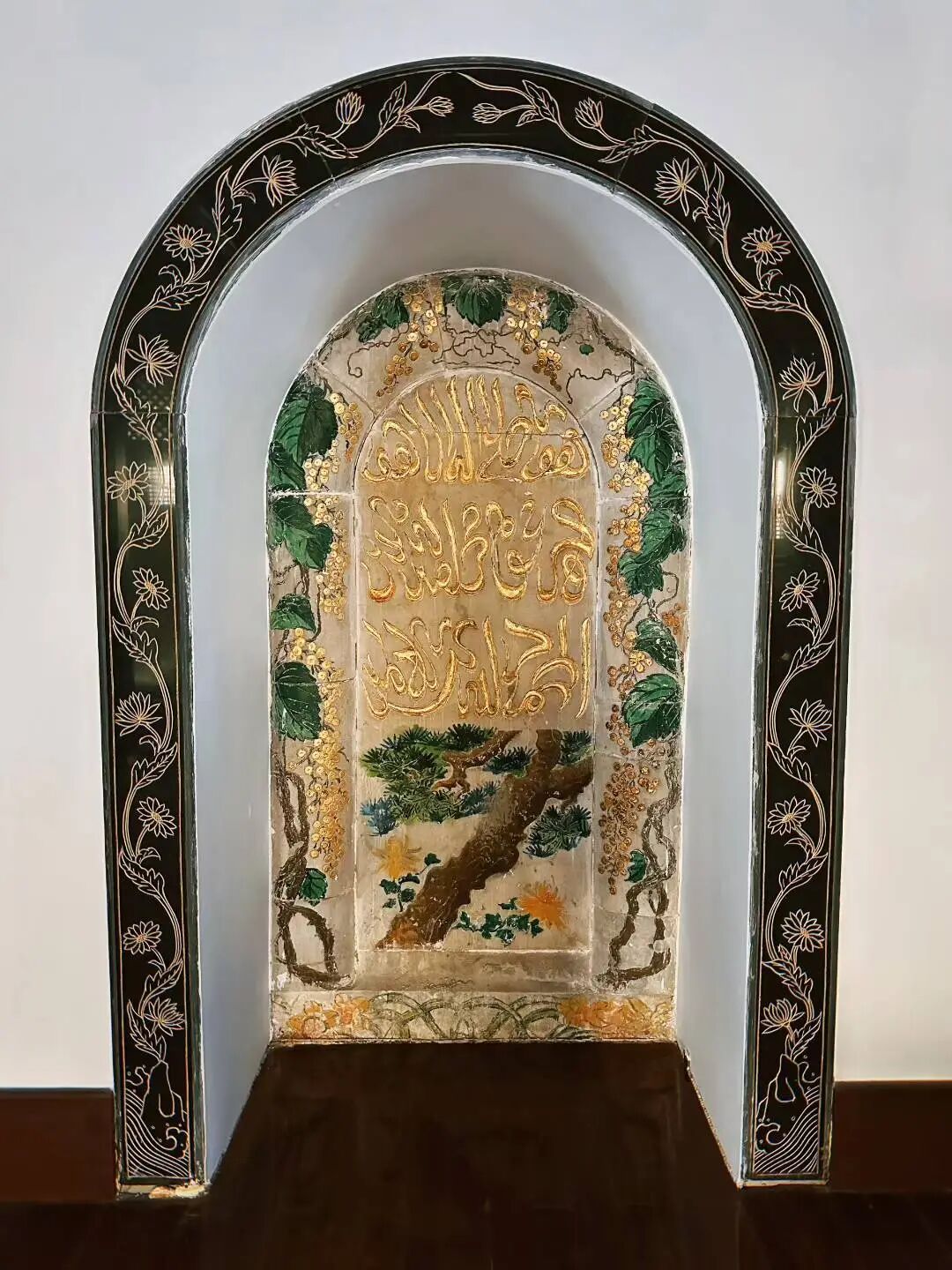
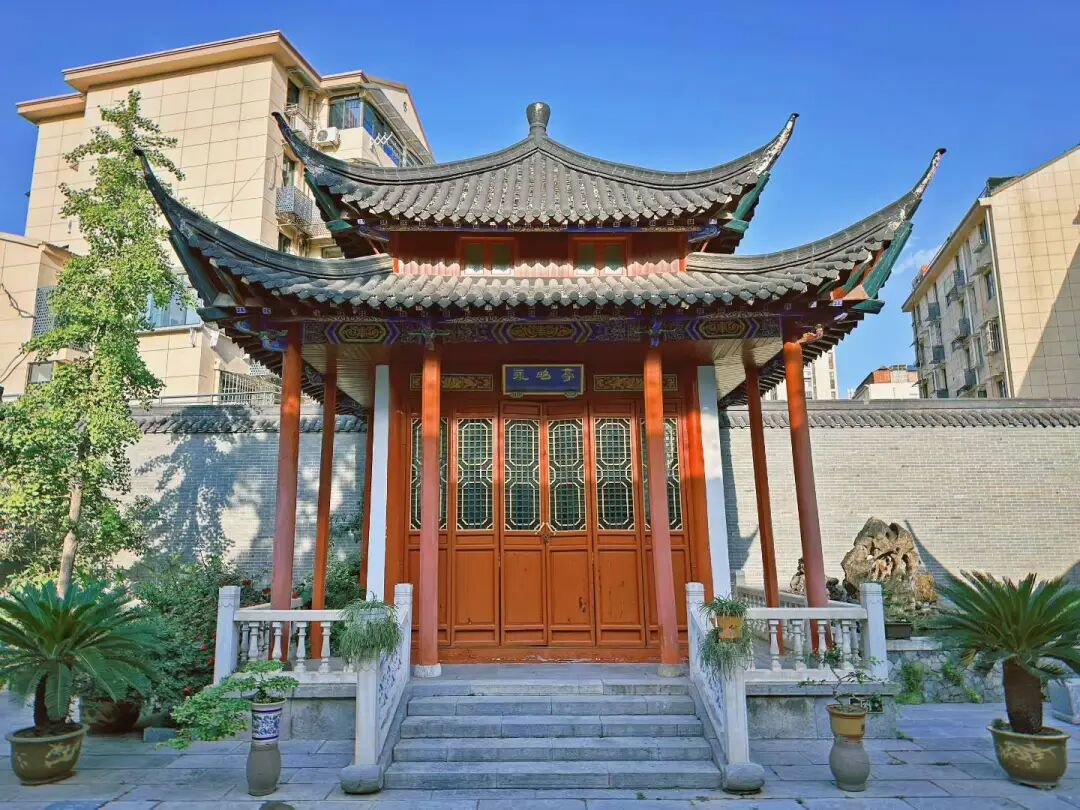
Existing stone tablets at the Liuhe Changjiang Road Mosque:
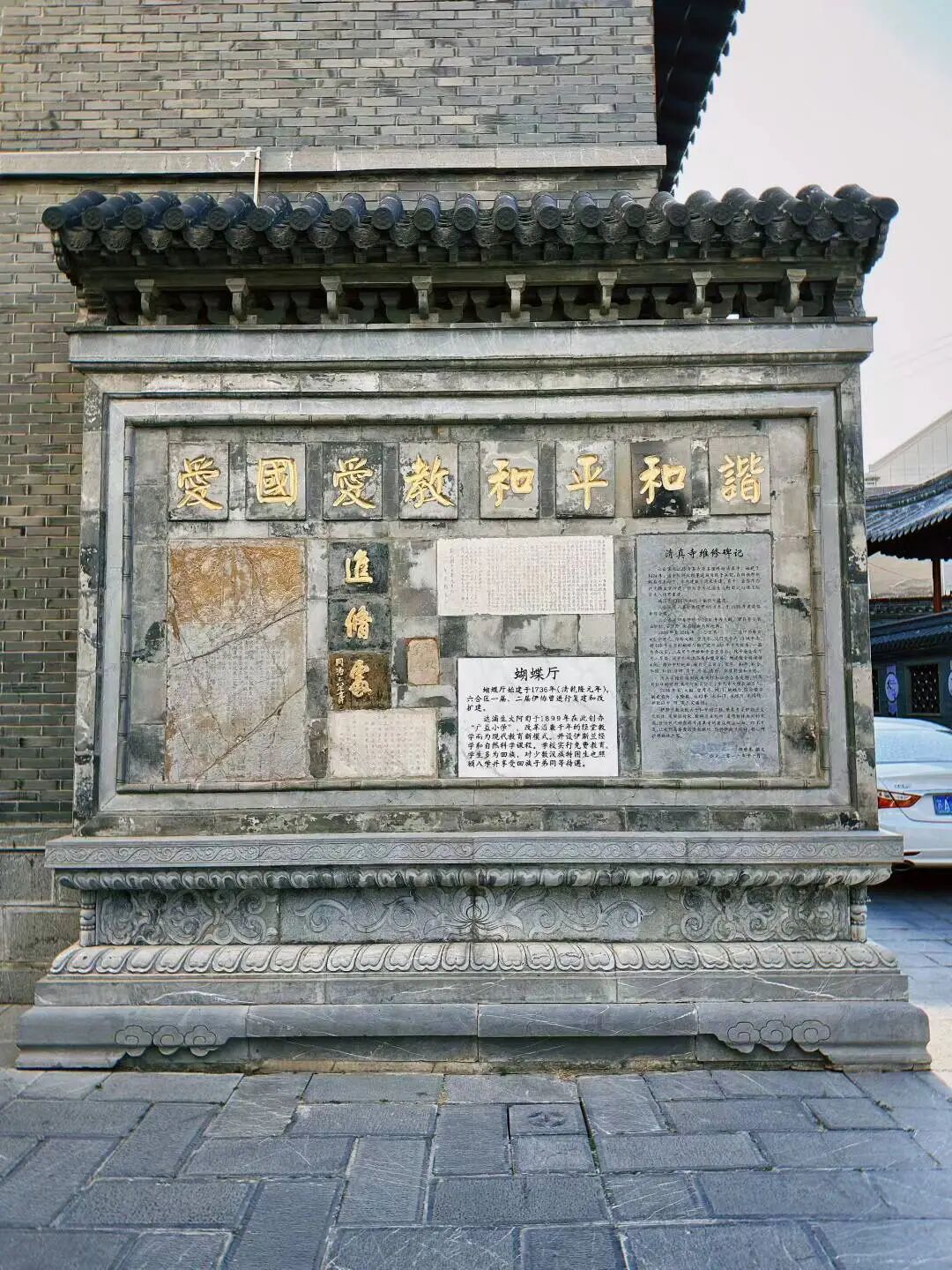
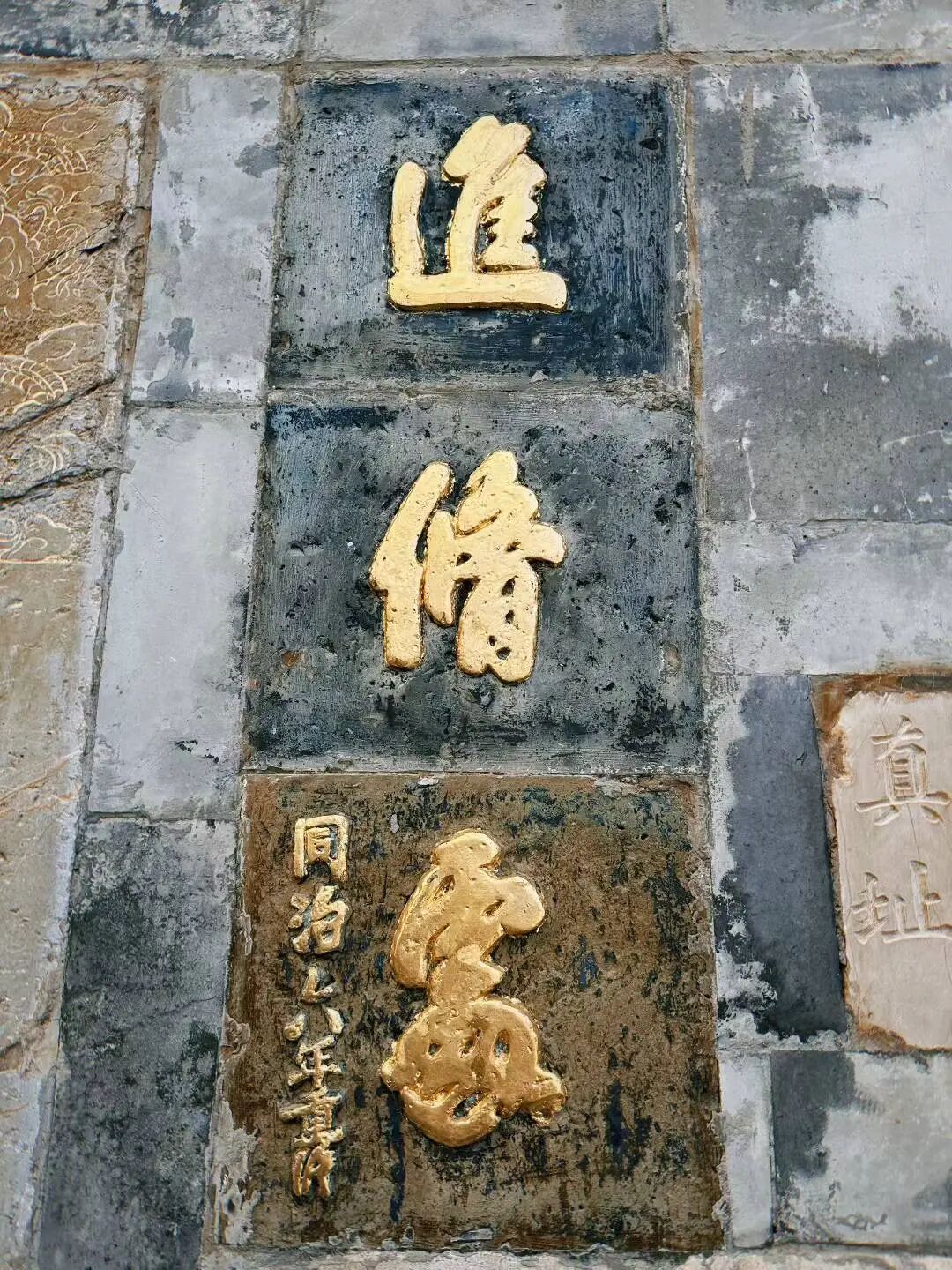
The 1885 (11th year of the Guangxu reign) tablet records that Da Guangyong funded the construction of the reception hall at the Inner City Mosque in Liuhe. Da Guangyong was the 18th-generation descendant of the Baiyetang Da family. He held the rank of ninth-grade official and lived to be 81.
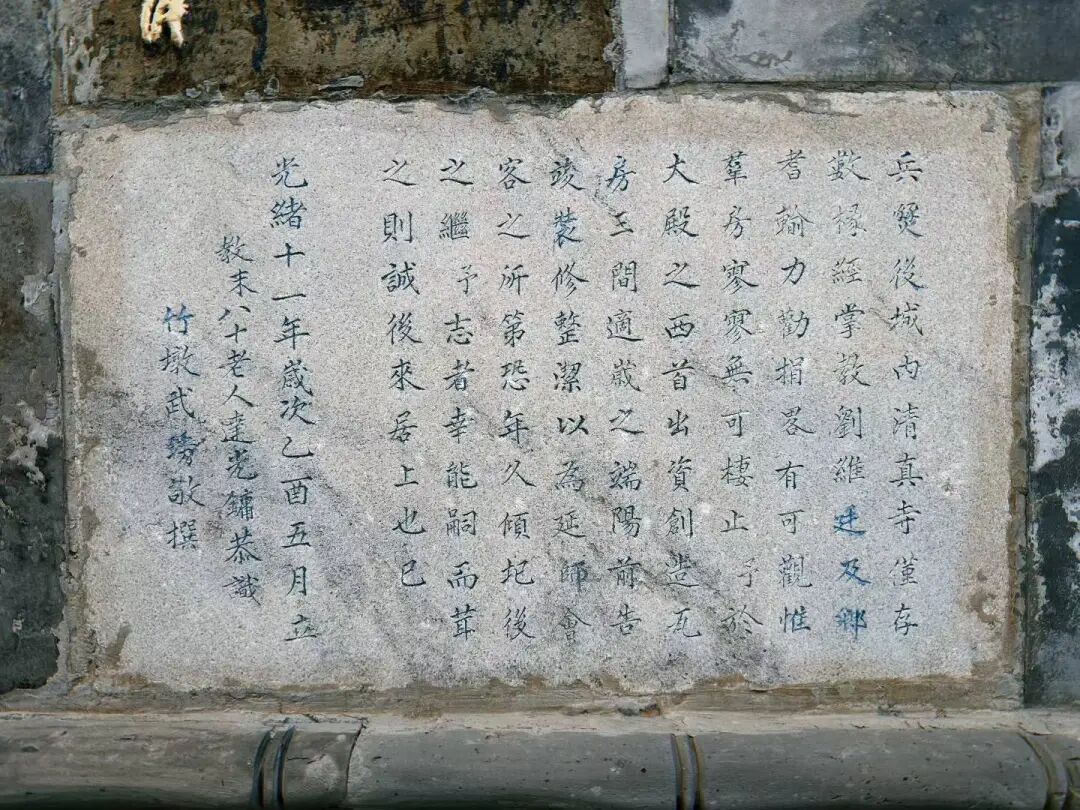
The 1899 (25th year of the Guangxu reign) tablet, titled 'Tablet on the Renovation of the Tangyi Inner City Mosque and the Market Houses Inside and Outside the Mosque,' records the specific situation of the Changjiang Road Mosque during the Guangxu reign. All the signatories were local Hui Muslims from the Da family.
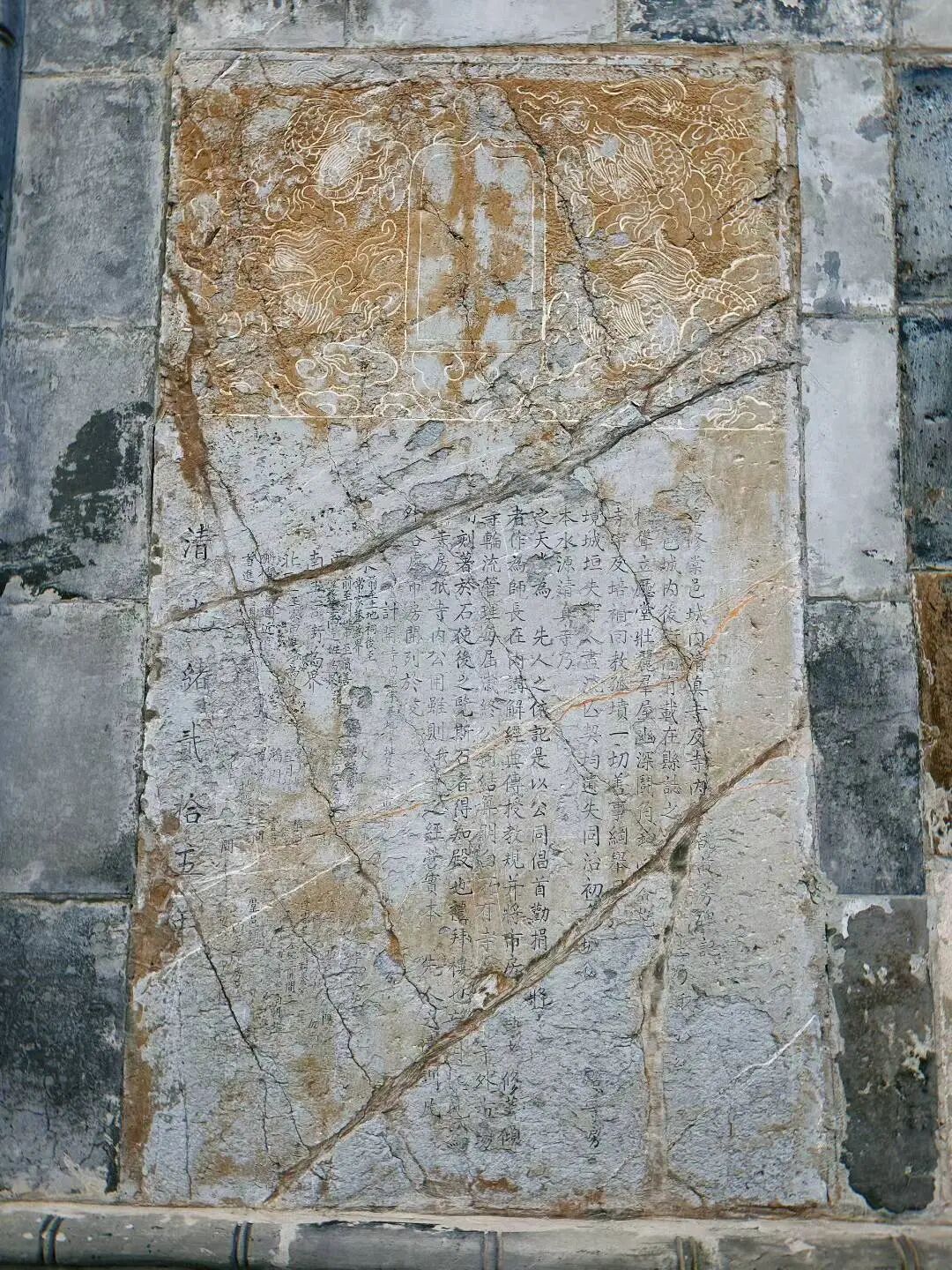
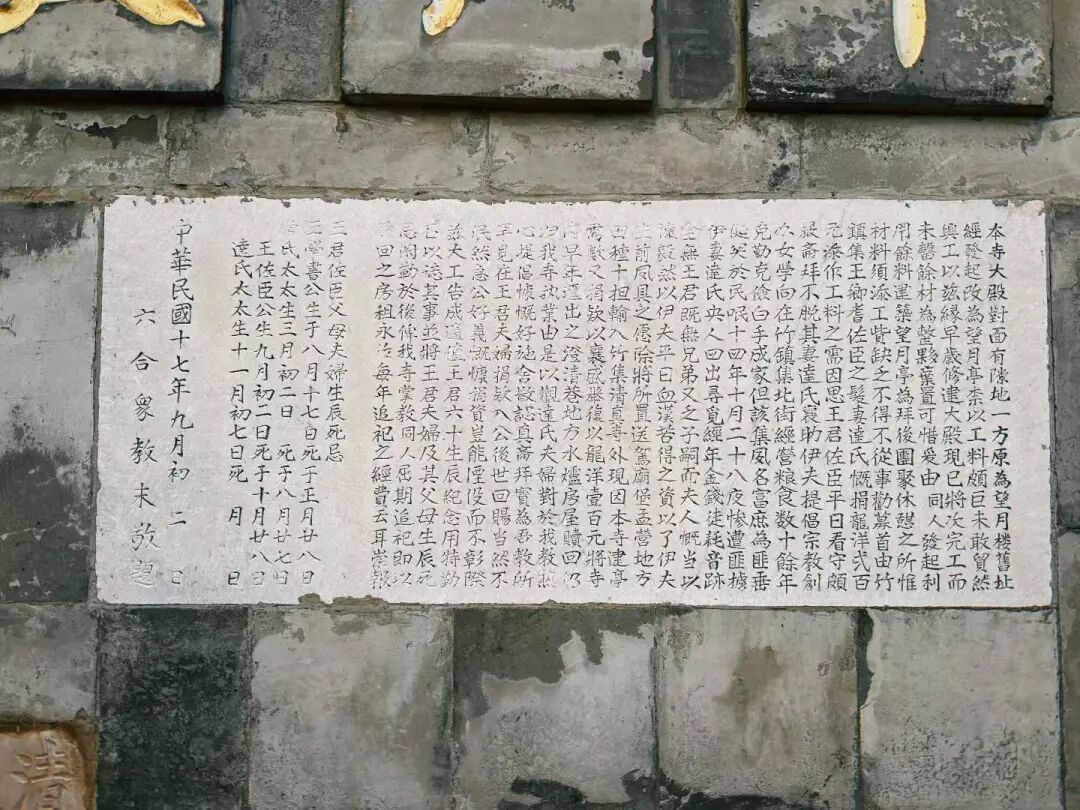
The 1928 (17th year of the Republic of China) tablet, titled 'Tablet on Wang Dashi's Donation to Repair the Moon-Watching Pavilion and Redeem Market Houses,' records that Dashi, the wife of the Zhuzhen elder Wang Zuochen, donated money to build the Moon-Watching Pavilion (Wangyue Ting). Wang Zuochen was a Hui Muslim from Zhuzhen in Liuhe. He ran a grain business on North Street in Zhuzhen for decades. He was very devout, never missing his daily namaz or fasting, but in 1925, bandits suddenly kidnapped him, and he was never heard from again. Wang Zuochen's wife, surnamed Da, was also very devout and founded the Zhuzhen Girls' School. After her husband went missing, Mrs. Da spent years asking people to help find him, but there was no result. Because Wang Zuochen had no brothers or children, Mrs. Da donated all the family's money to the Zhuzhen mosque and to build the Moon-Watching Pavilion (wangyueting) at the Changjiang Road mosque.
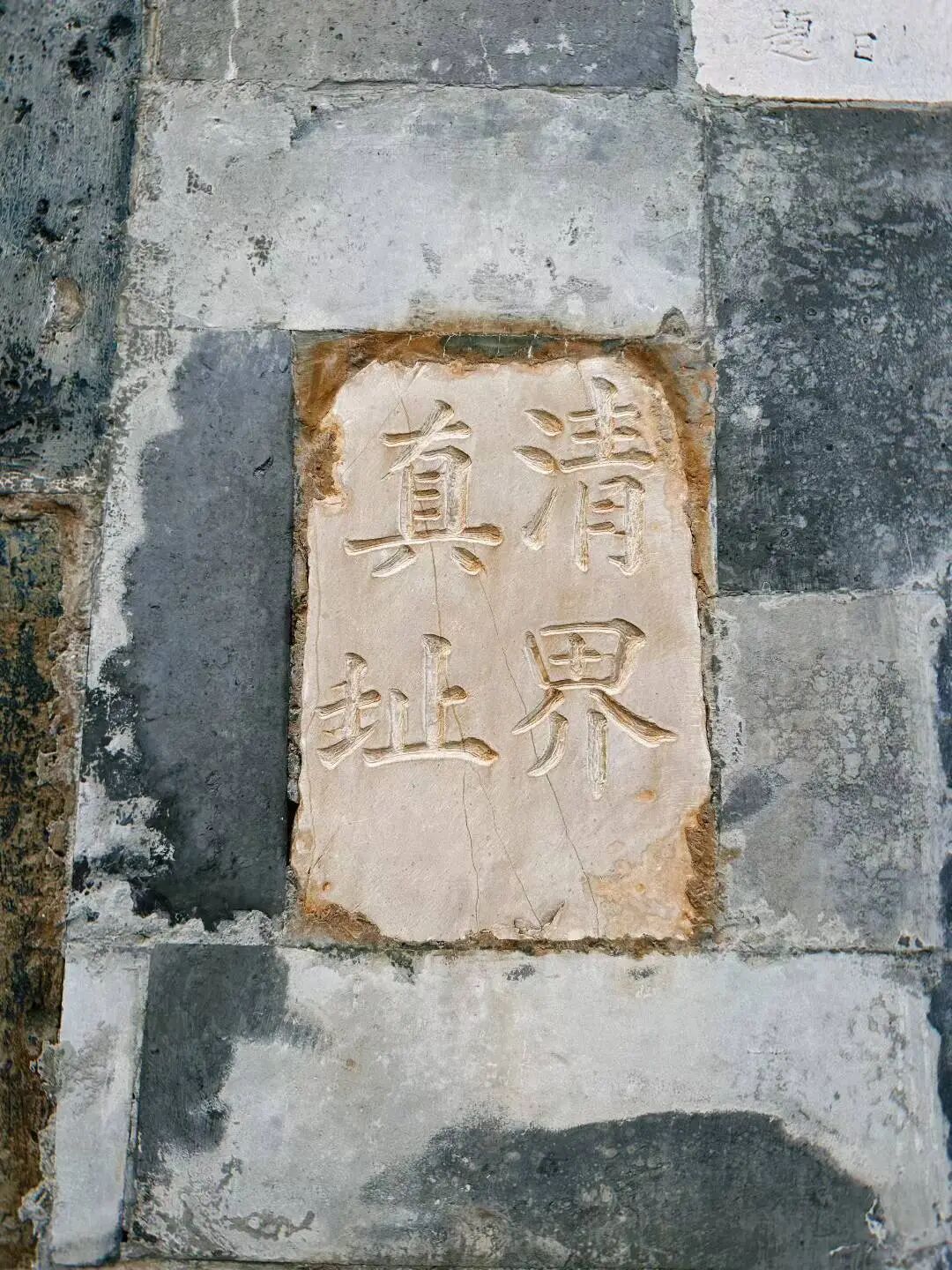
Inside the mosque, there is also a 350-year-old Chinese juniper (yuanbai) tree.
Zhuzhen Mosque
Continuing north from Liuhe, we arrived at Zhuzhen, the northernmost town in Nanjing.
The Zhuzhen mosque was originally located outside East Bridge. It was destroyed during the Taiping Rebellion and rebuilt in 1901 (the 27th year of the Guangxu reign) in Wang Family Lane in the middle of the old street. In 1968, the Zhuzhen mosque was turned into a dormitory for teachers at an agricultural middle school. It was reclaimed and reopened in 1983, and the main hall was rebuilt in 2001.
In 1939, the imam of Zhuzhen mosque, Li Shudu, formed the Hui Muslim Anti-Japanese Independent Guerrilla Battalion and served as its commander. He worked with the New Fourth Army and made significant contributions to the anti-Japanese cause.
Additionally, in 1939, Hui Muslims from the Bridge Group (qiaobang) in the Gaoyou and Lingtang areas built a mosque near Xinhua Garden on the west side of Zhuzhen. After 1966, it was converted into a Hui Muslim food processing factory.
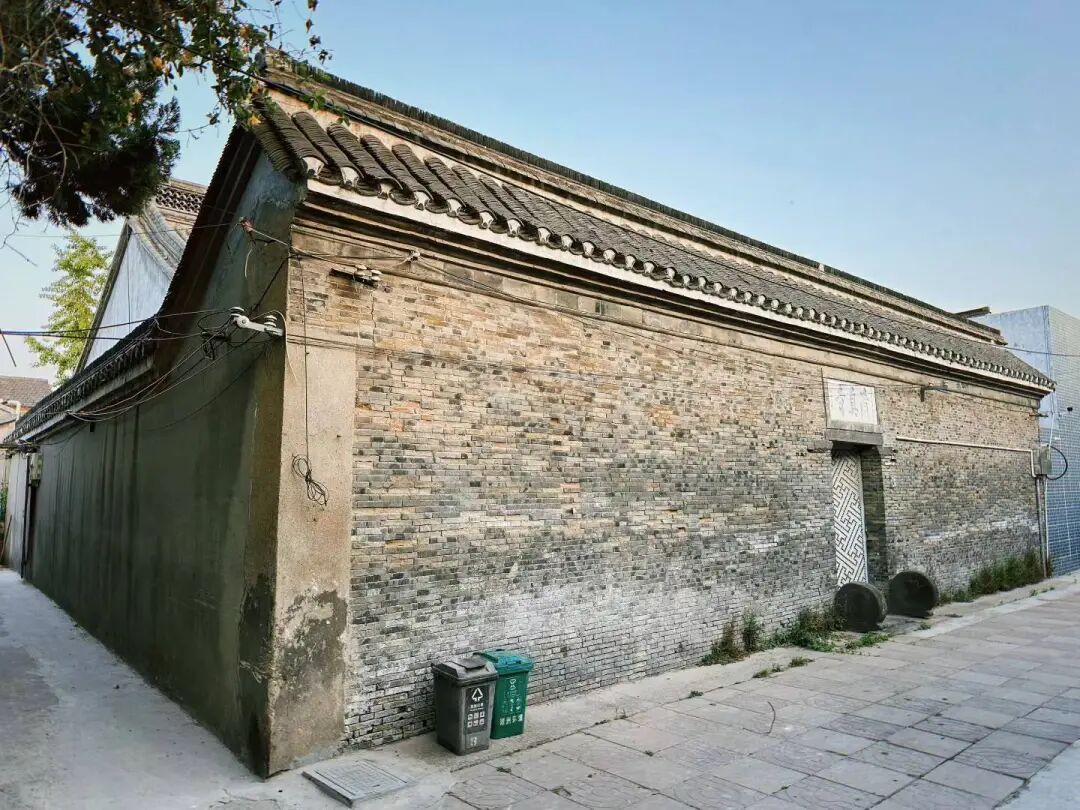
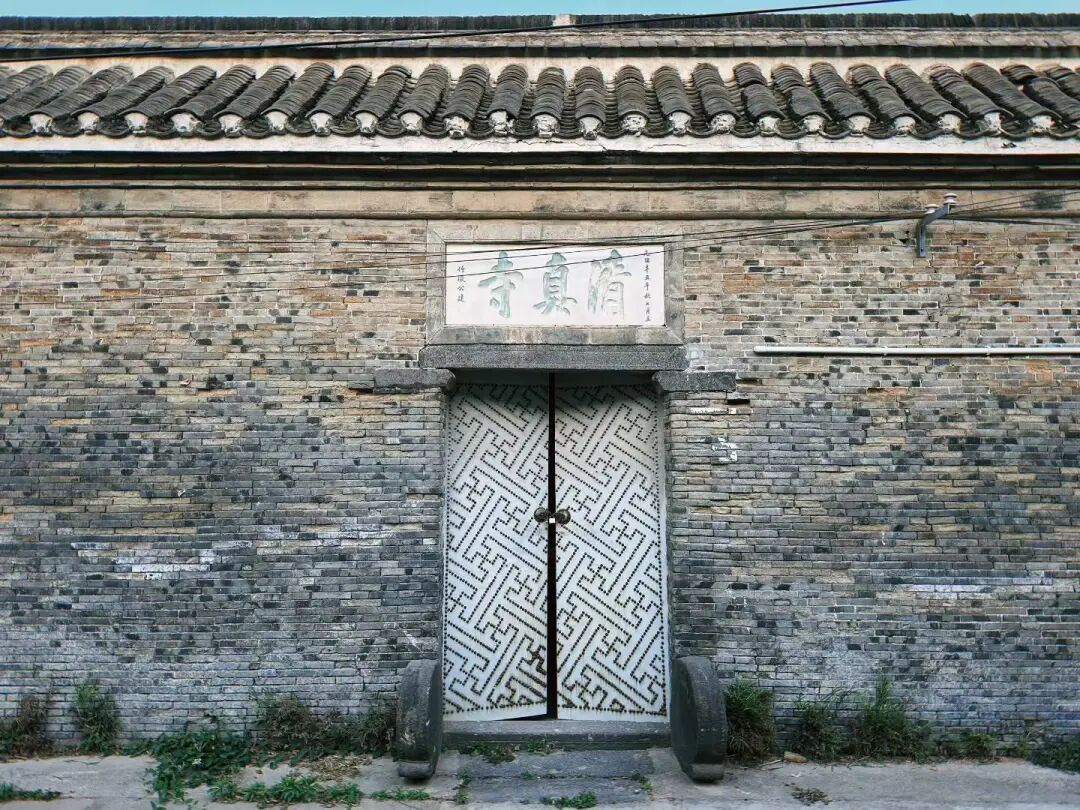
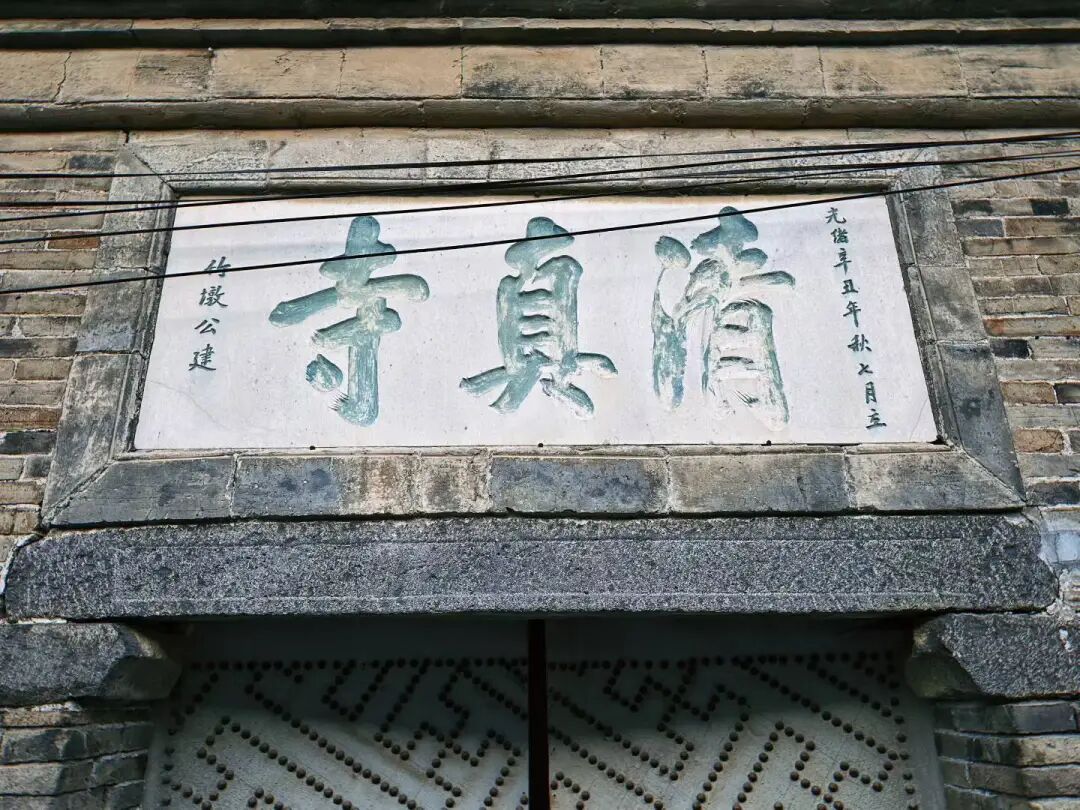
The Zhuzhen mosque still has a door lintel from the Qing Dynasty's Guangxu period inscribed with the words 'Built by the Zhudun Community.' Zhudun is the old name for Zhuzhen.
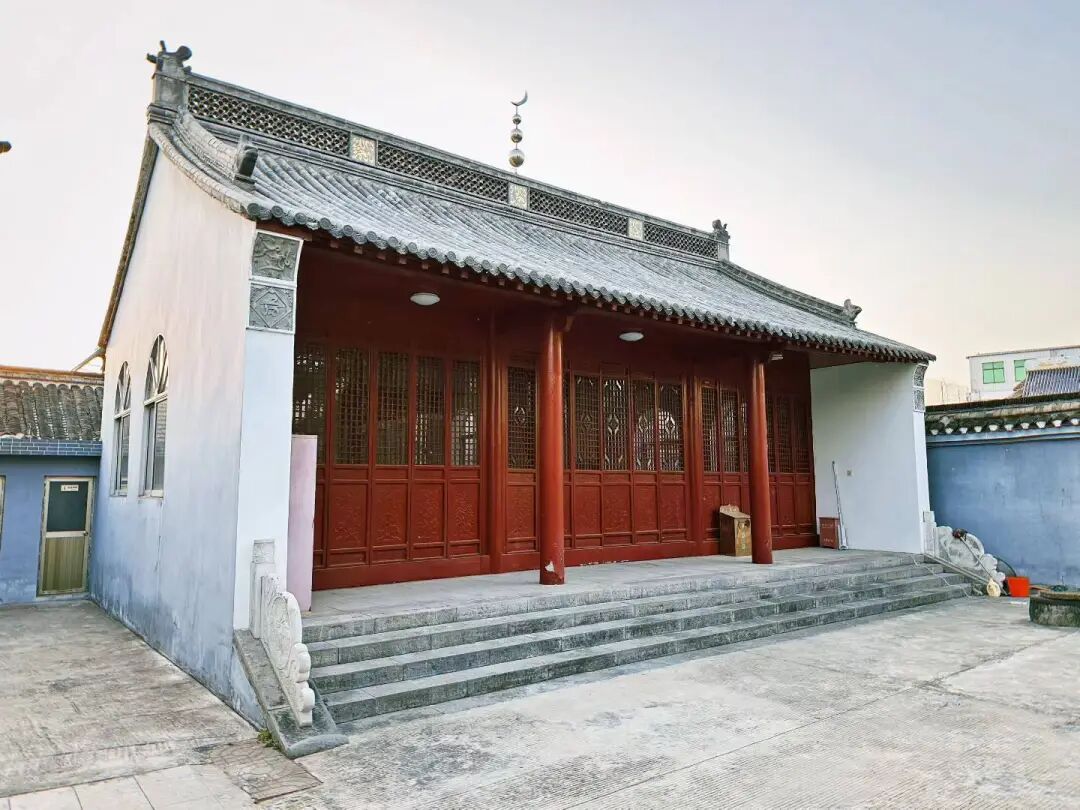
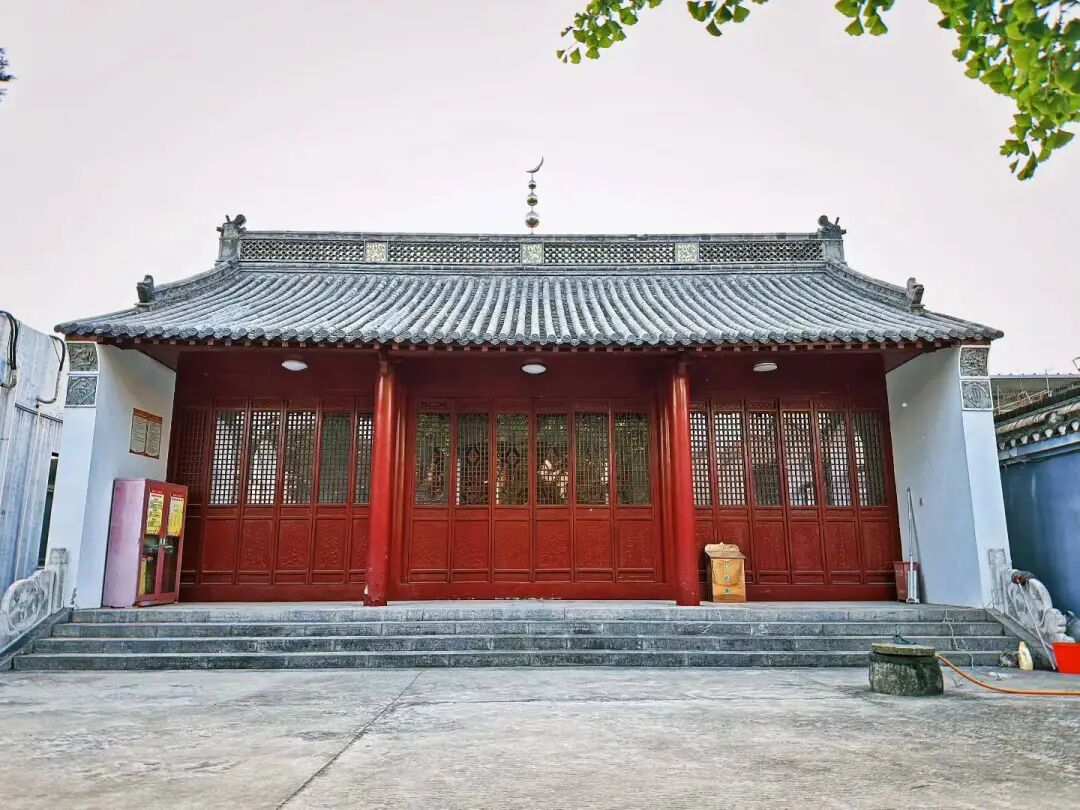
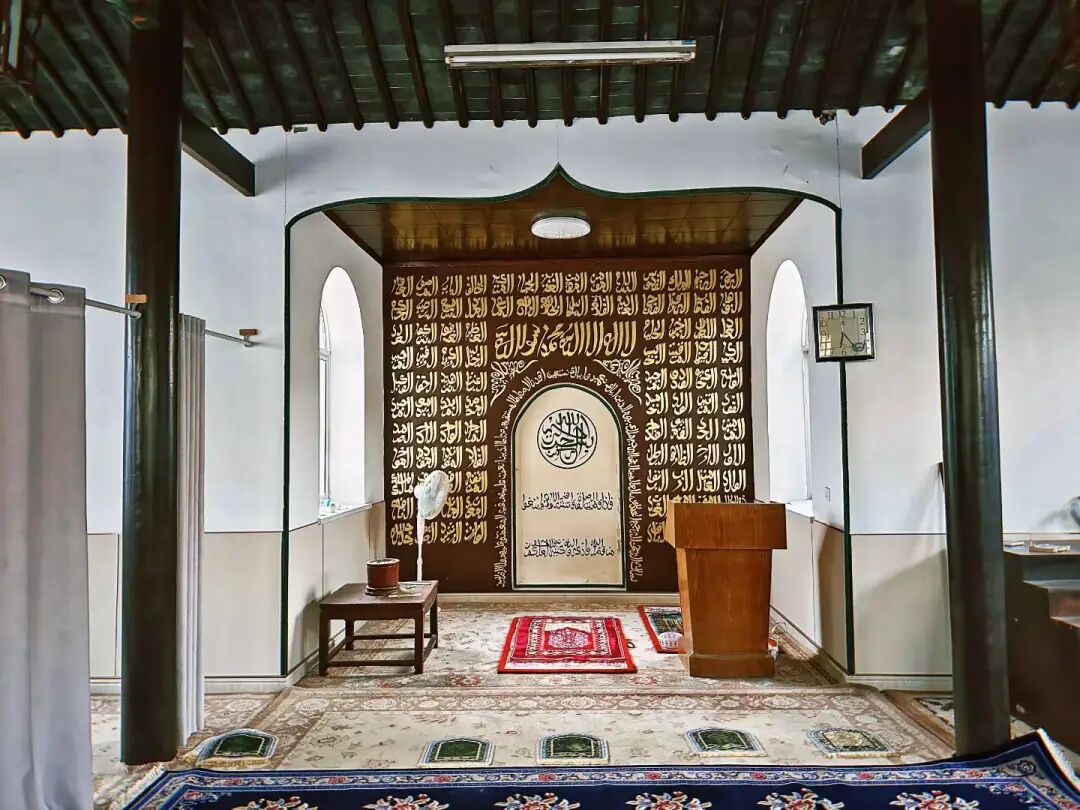
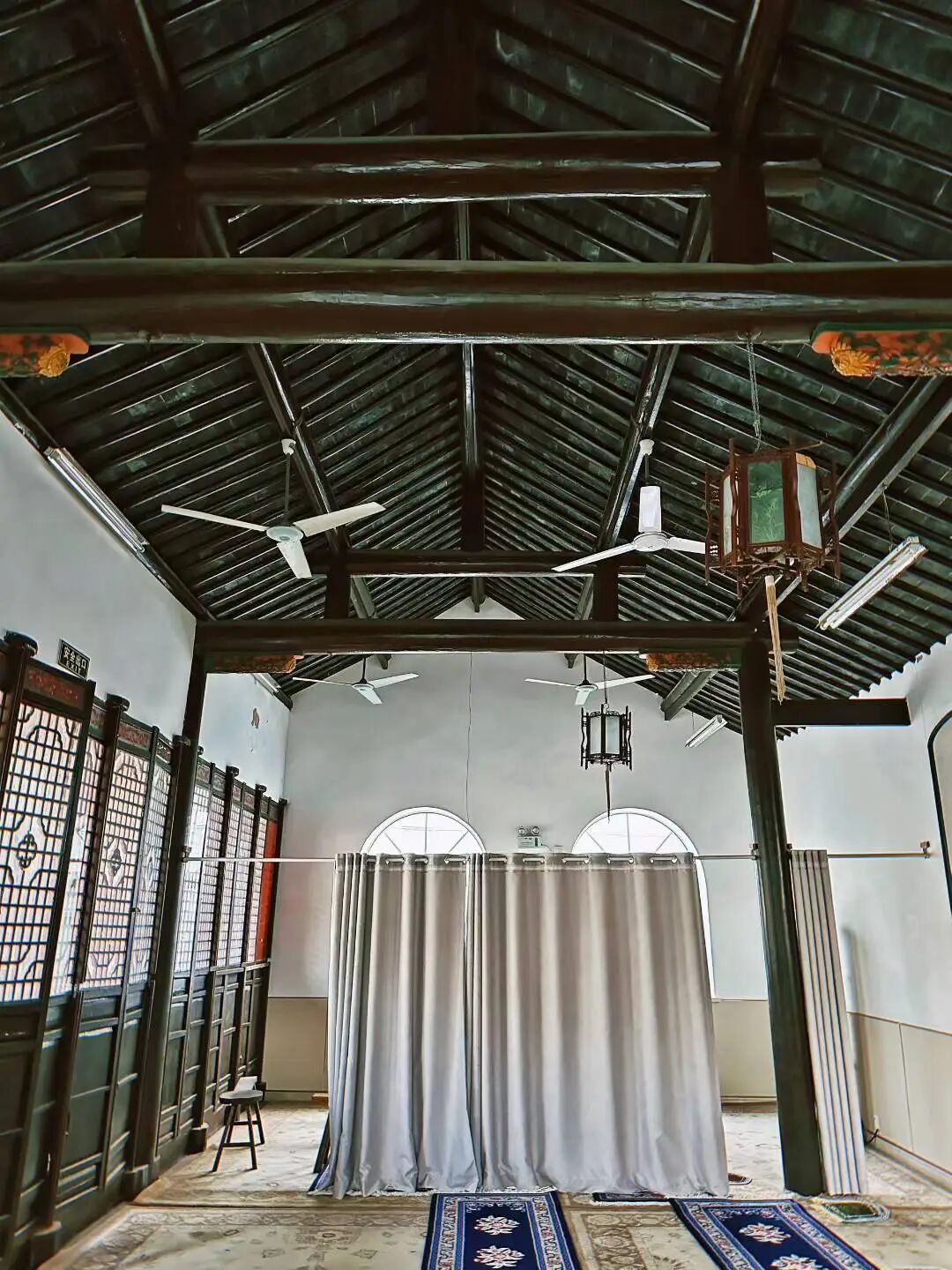
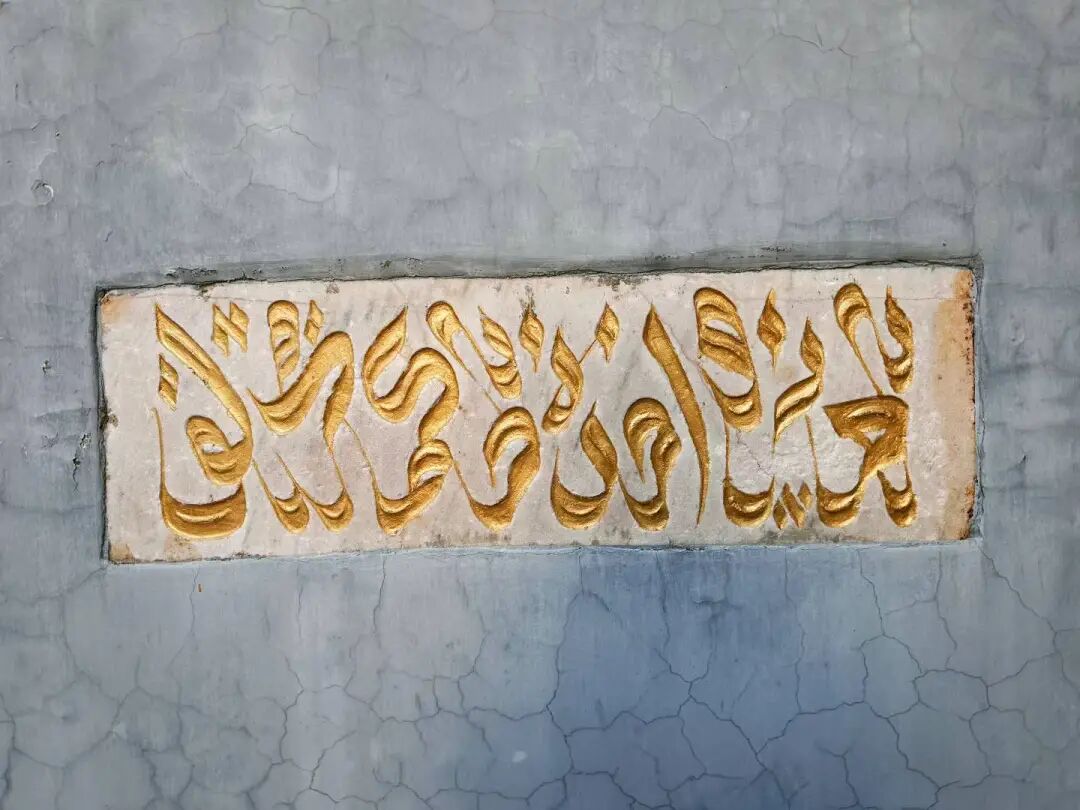
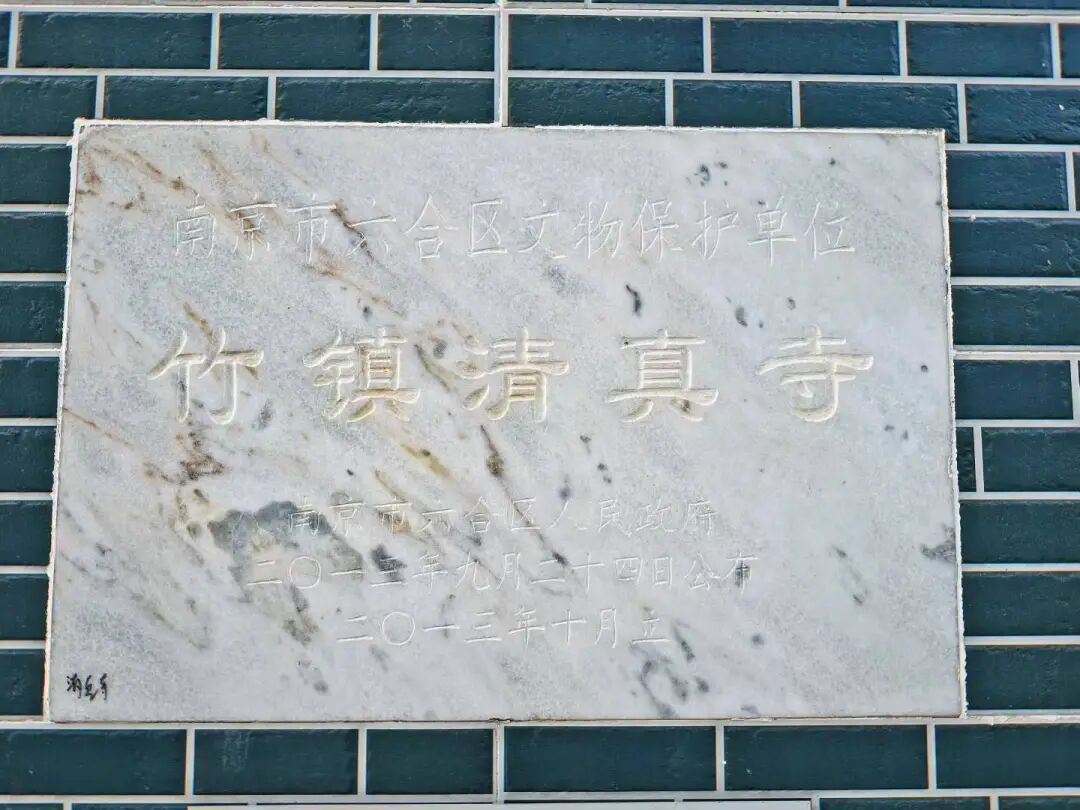
The Zhuzhen mosque in Liuhe houses a Qing Dynasty stone well called 'Pine Spring' (songquan), two pairs of drum-shaped stone bases (baogushi), and a stele from the 16th year of the Republic of China (1927) recording the will of Wang Zuochen's wife, Mrs. Da, who donated her property. Mrs. Da was the aunt of the great imam Da Pusheng. The inscription records that the Zhuzhen Girls' School was founded by Wang Zuochen and fellow members of the faith, with funding provided by Wang Zuochen and his fellow believers. Later, Wang Zuochen was kidnapped by bandits and remained missing for years. Because of this, Wang Zuochen's wife, Mrs. Da, decided to donate all their farmland and property, except for a portion kept for her own support. The funds were mainly used for the daily expenses of the Zhuzhen Girls' School, with the remainder going to the Zhuzhen mosque. The inscription mentions her 'nephew Da Pusheng'.
Across from the Zhuzhen Mosque, there is a shop selling small-mill sesame oil (xiaomo mayou), and the only restaurants in town serve hand-pulled noodles (lamian).
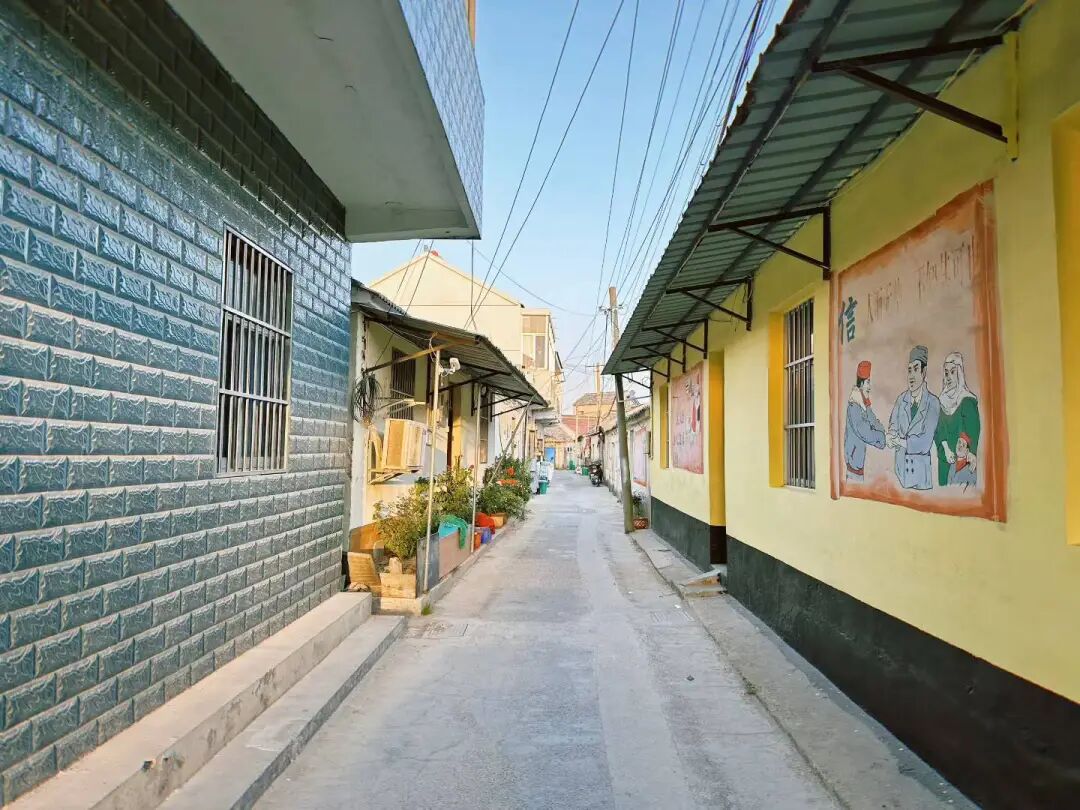
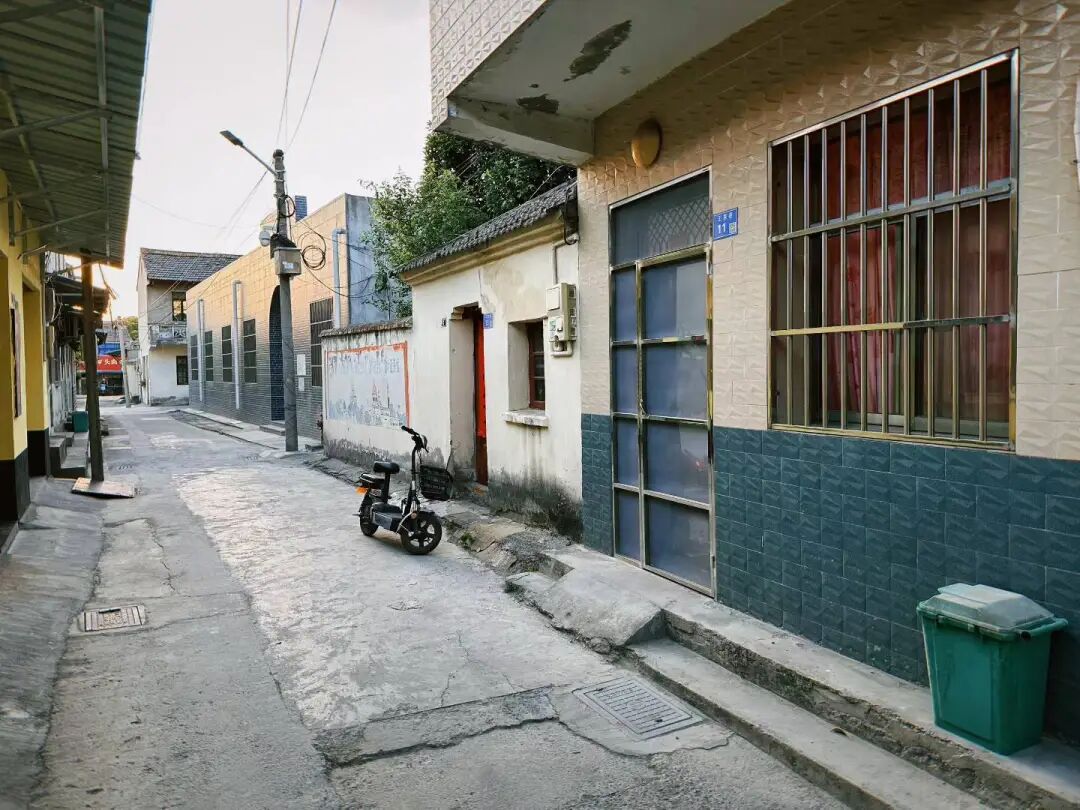
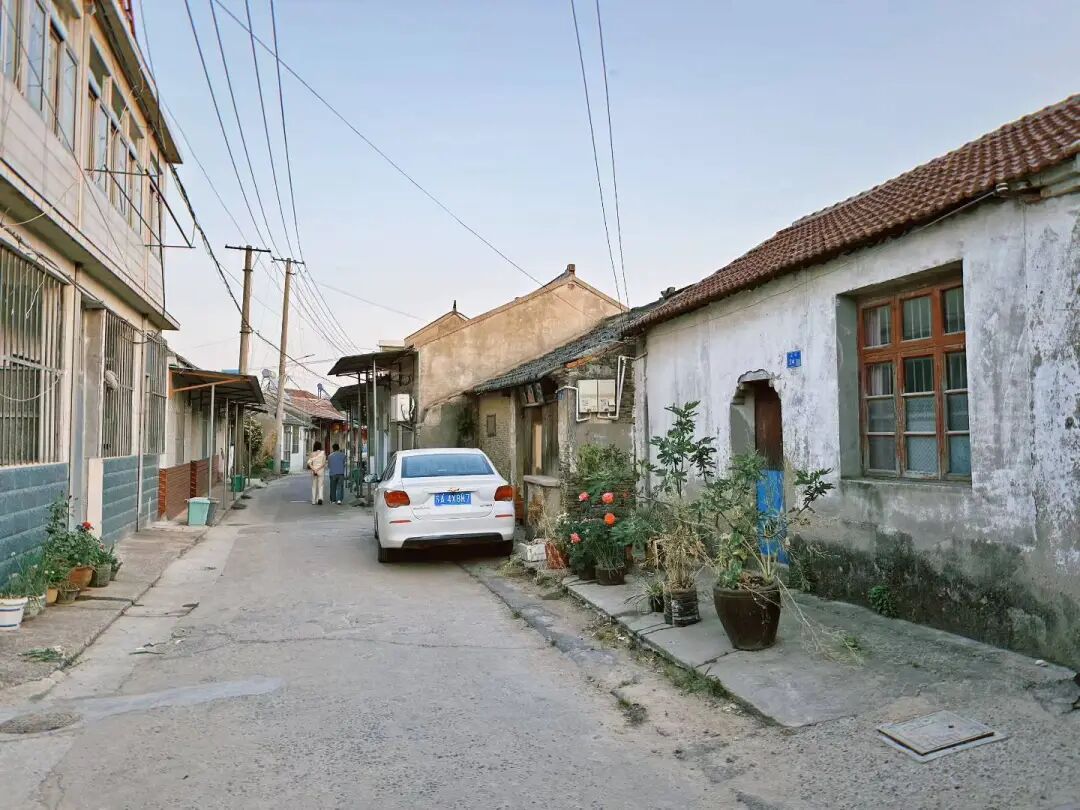
Liuhe Muslim Women's School
After leaving the Zhuzhen Mosque, I walked through the old street of Zhuzhen and arrived at the Zhuzhen Women's School by the river. The Zhuzhen Women's School is a classic example of Jianghuai architectural style, featuring a small courtyard formed by the entrance hall and the main hall, with traditional Huizhou-style horse-head walls on both sides.
The Zhuzhen Women's School was founded in 1921 by Wang Zuochen, the uncle-in-law of the great imam Da Pusheng, along with other local Hui Muslims. It was originally located on Zhuzhen Middle Street, but in 1931, Wu Tiejian and others rebuilt it along the south riverbank outside the East Bridge of Zhuzhen. After 1966, the school was occupied by a Hui Muslim food processing factory. It was renovated in 2007 but is currently not open to the public. During the Republic of China era, the school was led by two female imams, Mistress Dai and Mistress Bai, who taught scriptures and religious doctrines to local Hui Muslim women.
Wu Tiejian was a famous Hui Muslim businessman and patriot who resisted the Japanese. His original name was Wu Jiashan, and at age 22, he inherited his father's business, the Wudeyuan Grain Store. After the New Fourth Army entered Zhuzhen in 1938 to lead the resistance against Japan, Wu Tiejian was the first to donate grain, money, and guns, and he served as the chairman of the Zhuzhen Merchants and Citizens Anti-Enemy Association. In 1942, Wu Tiejian became the first mayor of the Zhuzhen Anti-Japanese Democratic Government. He took great risks to rescue and protect many comrades and also mobilized ambitious young people to join the revolution. After the founding of New China, Wu Tiejian was elected deputy director of the Nanjing Islamic Association, and he passed away (guizhen) in 1967.
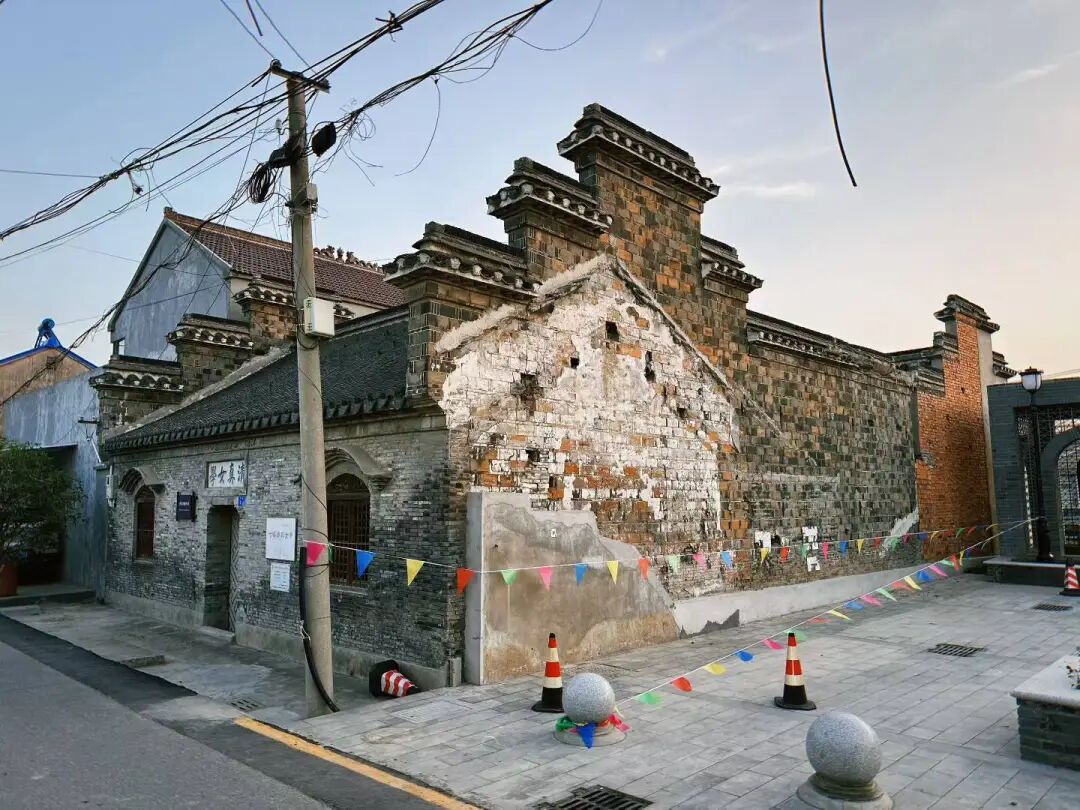
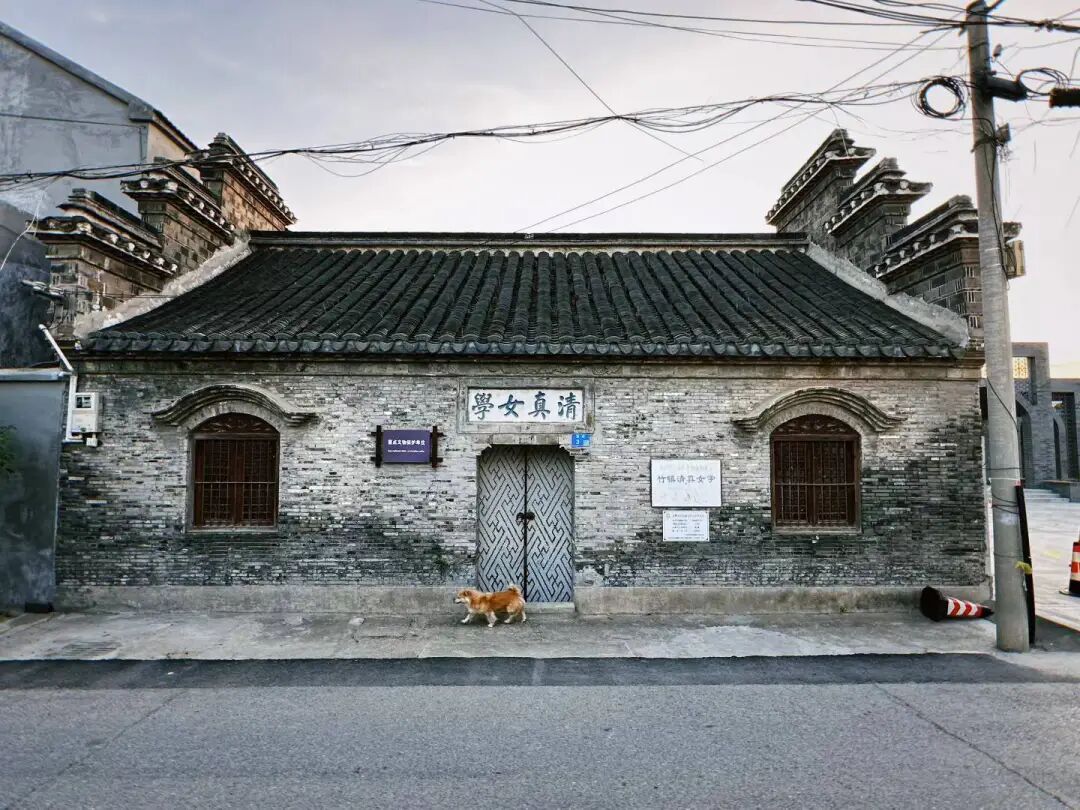
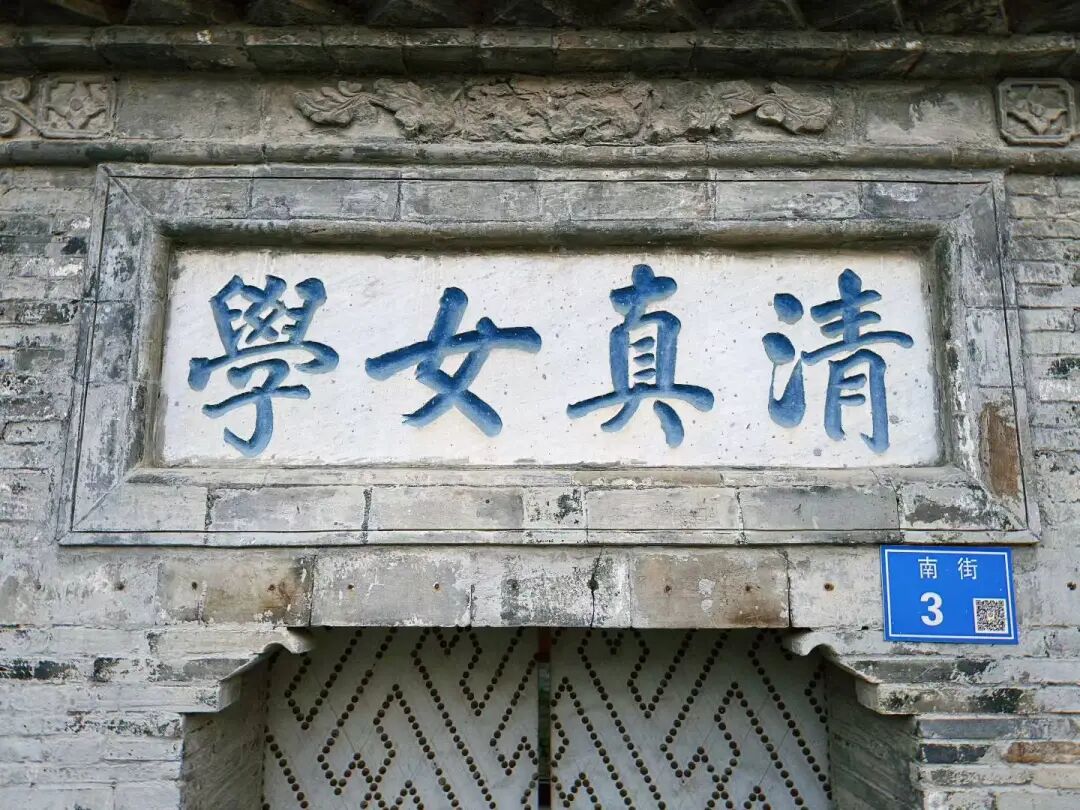
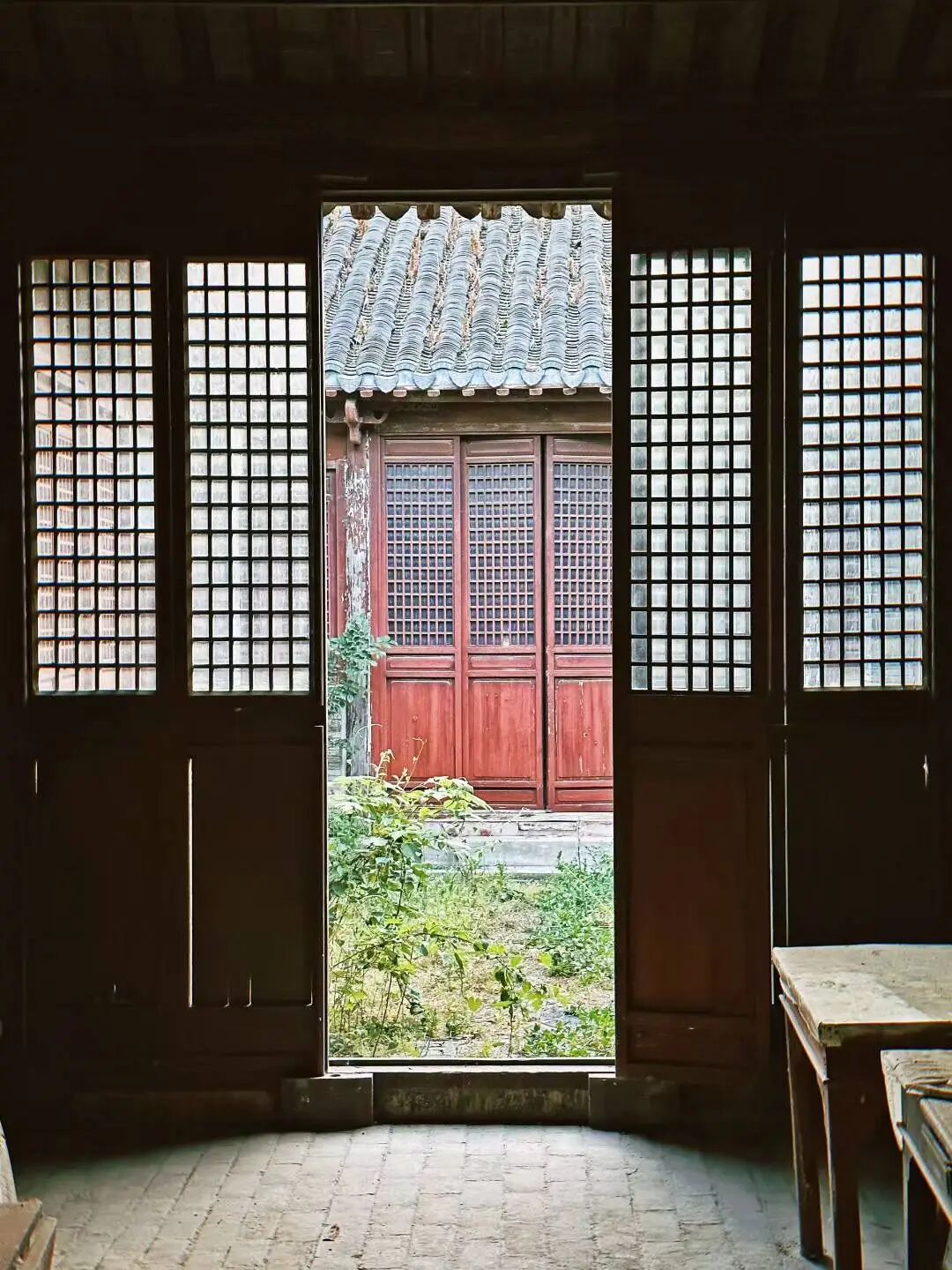
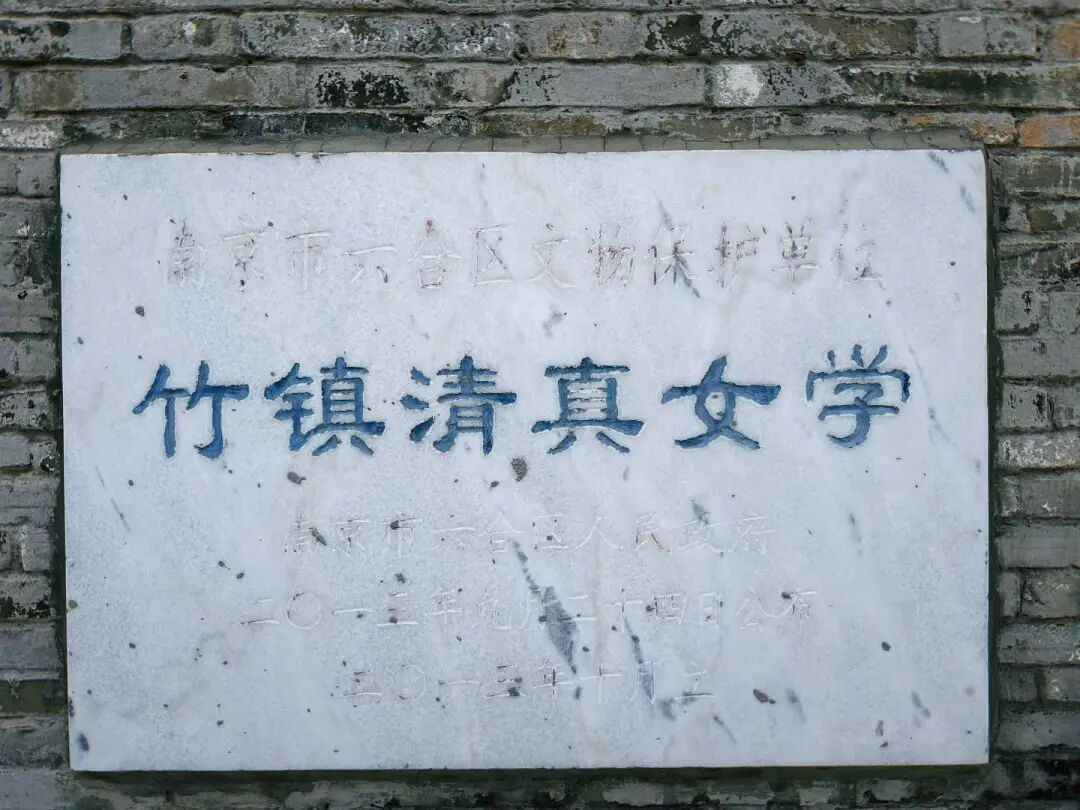
There is a square next to the mosque that introduces famous Hui Muslim figures from Liuhe.
Halal Travel Guide: Nanjing Mosques - Old South City, Liuhe and Zhuzhen, Part 1
Articles • ali2007fr posted the article • 0 comments • 234 views • 2026-05-20 09:03
Summary: The first part of the Nanjing mosque journey focuses on Jingjue Mosque, Caoqiao Mosque, Taiping Road Mosque, and other historic Muslim sites in the old city. This account keeps the original mosque names, inscriptions, dates, architecture, street context, and photographs.
Jingjue Mosque.
Jingjue Mosque is located on Sanshan Street in the south of Nanjing. It was originally called Sanshan Street Mosque. During the Jiajing era of the Ming Dynasty, it was given the name Jingjue Mosque, making it the first mosque in Nanjing during the Ming period.
One account says Jingjue Mosque was built in 1388 (the 21st year of the Hongwu era) by imperial order to house officials from the Western Regions who had submitted to the Ming, such as Yibulajin and Kemaluding. Another account says it was built in 1392 (the 25th year of the Hongwu era) by imperial order of Saihazhi, a seventh-generation descendant of Sayyid Ajjal Shams al-Din. Both accounts are supported by stone inscriptions from the Ming Dynasty.
According to a 1493 (the 5th year of the Hongzhi era) inscription titled 'Record of the Two Imperial Mosques Built in the South of the City of Yingtian Prefecture in Jiangnan,' it states: 'In the 21st year of the Hongwu era, Yibulajin, Kemaluding, and others, originally from the Rumi Kingdom in the Western Regions, submitted to China along with the Duke of Song after the conquest of Jinshan and Kaiyuan... Therefore, two mosques were built to settle them, and Kemaluding and four other households were assigned to live at the Wangyue Tower Jingjue Mosque.' The family genealogies of two Hui Muslim branches with the surname Ma, known as 'Weiyitang' and 'Baojitang' in Hushu, Nanjing, both record that they are descendants of Ma Gutai and Ma Baihao, who were settled at Jingjue Mosque at that time.
According to a 1405 (the 3rd year of the Yongle era) inscription at the Great Mosque on Huajue Lane in Xi'an, 'On the 14th day of the third month of the 25th year of the Hongwu era, Saihazhi, the seventh-generation descendant of the Prince of Xianyang Sayyid Ajjal, went to the inner court to announce the imperial decree: On that day at the Fengtian Gate, the imperial decree was received:...build two mosques in two locations, one at the copper workshop on Sanshan Street in Yingtian Prefecture, Nanjing, and one on Ziwu Lane in Chang'an County, Xi'an Prefecture, Shaanxi Province.' The 'Genealogy of the Sayyid Ajjal Family' records that Saihazhi was granted the hereditary title of Marquis of Xianning, and 'When the Ming Taizu established the capital in Jinling, he entrusted Saihazhi to build a mosque in Jinling.' After the work was finished, he built the Great Mosque in Chang'an. When the Tiemao Lane Mosque in Taicang, Jiangsu, was renovated in the 1980s, a stone tablet was found inside a wall, revealing that the Taicang mosque was also built by Saihazhi.
Additionally, according to the Republic of China era 'Zhongnan Huaibei Regional Gazetteer,' 'North of the street is Jingjue Mosque. Wu Ru, a man from the Western Regions during the Ming Dynasty, came to China to serve in the Imperial Astronomical Bureau. He lived in Nanjing and built this mosque next to his residence.' Therefore, Jingjue Mosque may have originally been part of Wu Ru's residence.
Jingjue Mosque was destroyed by fire in 1430 (the 5th year of the Xuande era), and Zheng He requested its reconstruction before his seventh voyage to the Western Oceans. According to the 'Record of the Imperial Eunuch Zheng He Rebuilding the Mosque,' it states: 'Your request has been received: The mosque on Sanshan Street in Nanjing has been burned down.' 'You wish to rebuild it to pray for the safety of the funds, grain, people, and ships for your voyage. This shows your respectful heart, so how could it be neglected?' 'As an imperial envoy, since you have set your heart on this, how could your wish be abandoned?' 'If the personnel and materials you use are insufficient, and the project is delayed, you may draw what is needed from the Nanjing Directorate of Palace Servants and the Ministry of Works so that it can be completed in time for you to wait for the favorable winds to set sail. This is the decree.'
During the Taiping Rebellion, most of the bricks, tiles, and wood from Jingjue Mosque were taken down to build a local government office. The mosque was rebuilt in 1877 (the third year of the Guangxu reign) and renovated in 1879 (the fifth year of the Guangxu reign), which created its current layout. In the early years of the Republic of China, a wealthy Nanjing couple, Jiang Xiudong and his wife, paid to build the north and south lecture halls and the main hall. The mosque was repaired again in 1957. After the 1960s, a rubber company and the No. 3 Rubber Factory occupied the mosque. They tore down the only remaining Ming Dynasty brick and stone archway and the Butterfly Hall (hudieting), and destroyed many plaques, couplets, and stone tablets. The mosque was repaired in 1982, reopened in 1983, and the archway was rebuilt in 1985.
During the Ming Dynasty, the main prayer hall of Jingjue Mosque had 81 rooms and was built with nanmu wood. The current main hall was rebuilt in 1877 (the third year of the Guangxu reign). Its floor plan projects outward at the rear, like a raised middle section, and it uses a traditional post-and-beam wooden frame. The main hall and the opposite hall are linked by a covered corridor, forming a straight central axis with halls at both ends. This layout is typical of Jiangnan architecture. The mihrab was moved here from the original mosque on Xiaowangfu Lane, and the surrounding wooden carvings of scripture were added in 2001.
The back of the prayer hall connects directly to a high wall. This is a typical feature of Jianghuai courtyard-style architecture, which is very rare in the north.
During renovations in 2007, the main hall was raised by one meter. Workers dug two meters deep and found Ming Dynasty glazed tiles, brick carvings, stone railings, and huge Ming Dynasty stone column bases. These bases were twice as wide as those from the Guangxu period.
The only remaining Ming Dynasty structures, the brick and stone archway and the Butterfly Hall, were both torn down in the 1960s. The archway was rebuilt in 1985, the Butterfly Hall in 2004, and a new stele pavilion was built in 1996.
The only Jahriyya mosque in Nanjing.
Inside Jingjue Mosque, there is a stone tablet from 1891 titled 'Dahua Guizhen'. It records how Wu Defa followed his father Wu Dasong's final wish and donated the back part of their family home at 59 Shigu Road (formerly Xiaofuyuxiang) to establish the Shigu Road Mosque. The tablet mentions two Jahriyya imams, Fan Yuncai and Zhan Fengxiang. Witnesses included neighbors surnamed Chen, Cai, Zhou, and Yu; fellow Muslims surnamed Sun, Li, Wu, Zhan, Zong, and Jin; close relatives surnamed Ha, Ma, and Mai; and clan members surnamed Wu. This tablet was originally kept at the Shigu Road Mosque. After that mosque was torn down in 1986 for road expansion, the tablet was moved to Jingjue Mosque.
Shigu Road Mosque is the only Jahriyya mosque in Nanjing. In the late years of the Qianlong reign of the Qing Dynasty, a Hui Muslim named Wu from Taiyuan, Shanxi, who followed the Jahriyya (Zhepai) order, settled on Shigu Road in Nanjing. Influenced by him, followers of the Jahriyya order (Zhepai gaomu) began to appear around Shigu Road, Sanmaogong, and Nantai Lane in Nanjing, and most of them worked in the fish fry farming industry. At first, the Nanjing Jahriyya followers performed their worship at the Wuxueyuan Mosque (Yuan Mosque) near Shigu Road. During the Taiping Rebellion, the Wuxueyuan Mosque was destroyed by war, so the followers moved their worship to the Fengfu Road Mosque. Because their practice of loud chanting (gaosheng zannian) was different, Wu Defa later invited the Jahriyya followers to perform worship at his own home on Shigu Road, and in 1891 (the 17th year of the Guangxu reign), the Shigu Road Mosque was finally established.
The Nanjing Jahriyya order belongs to the Beishan menhuan. The Beishan menhuan is centered in Beishan, Zhangjiachuan, Gansu. Its leader, Ma Yuanzhang, was well-read, proficient in both Islamic scriptures and Chinese classics, and adopted the ideas of Liu Jielian to interpret Islam through Confucianism. After the Shigu Road Mosque was built, Fan Yuncai and Zhan Fengxiang from the Beishan menhuan served as imams. Imam Fan Yuncai was from Siyang, Jiangsu. During the Republic of China era, his son Fan Zhaofa opened the Faji Carriage Company in Nanjing, which was very successful. In 1905, Wu Wenlian, the grandson of Nanjing's Wu Defa, went to Gansu to study scriptures. After completing his studies in 1911, he was appointed by Ma Yuanzhang to serve as the imam of the Shigu Road Mosque.
After the Beishan order leader Ma Yuanzhang passed away (guizhen) in 1920, his nephew Ma Dianwu took over the religious affairs. It was still called the Beishan menhuan, overseeing over 100 mosques in places like Zhangjiachuan, Tianshui, and Longnan in Gansu, Qiqihar in Heilongjiang, Runan in Henan, and Long County in Shaanxi. Nanjing's Shigu Road was its only mosque in East China.
In 1937, Ma Dianwu appointed Imam Su Ziying from Zhangjiachuan, Gansu, to serve as the imam of the Shigu Road Mosque. Imam Su actively visited other mosques, connected with community elders, and promoted education, which helped the Shigu Road Mosque flourish and trained more than 20 students (hailifa). In 1953, Imam Yang Junwen succeeded as the imam of the Shigu Road Mosque. In 1958, the Shigu Road Mosque closed, and Imam Yang Junwen became an imam at the Fengfu Road Mosque. After that, Imam Yang no longer maintained contact with the Beishan menhuan, and his worship practices gradually merged with the Gedimu order.
In 1986, the Shigu Road Mosque was demolished due to road widening. Although the mosque closed, some descendants of the Nanjing Jahriyya followers still held firmly to their worship. For example, Fan Songshou, a descendant of Imam Fan Wencai, made a living running a tofu shop. Even in his nineties, he insisted on performing the five daily prayers (namaz) without fail. In his old age, he still insisted on fasting (zhai), and in the 1960s, he continued to volunteer to wash and bury the deceased and help with funeral arrangements.
Plaque inscriptions at Jingjue Mosque:
Only pure, only one: Erected on an auspicious day in the first month of summer in the Gengyin year, the 16th year of the Guangxu reign of the Great Qing Dynasty, by the Commander of the Jiujiang Garrison in Jiangxi.
Rectify the heart and be sincere: Erected in June of the 11th year of the Republic of China by members of the Nanjing Islamic Association.
The stele from the 47th year of the Qianlong reign records the four boundaries of Jingjue Mosque. To the east, there was a shop for rent, and to the west, a shop in Maxiang Alley was rented out as a flower shop. The elders who donated funds included those with the surnames Chen, Ma, Wu, Jin, Zheng, and Sha.
The stele from the 18th year of the Guangxu reign records that Imam Ma donated his own land next to the mosque to build the main prayer hall and the water room (wudu area).
Jingjue Mosque houses a memorial stele for Ma Yitang, a Hui Muslim merchant from Nanjing who worked in Shanghai. It was inscribed in 1931 by Ma Fuxiang, a famous Beiyang general who was then the Chairman of the Mongolian and Tibetan Affairs Commission.
Ma Yitang was born in 1869. His ancestors ran a money shop outside Jubao Gate in Nanjing, and the family owned the Ma Yulong Satin and Fan Shop. With Shanghai as his base, Ma Yitang expanded his business to include domestic and foreign general merchandise. He set up branches in Chengdu and Chongqing, and his goods were sold as far away as the Tibetan regions. Ma Yitang was devoted to the faith. He served as a director for the North Mosque and West Mosque in Shanghai and helped fund the founding of the Hanximen Girls' School and the Zhuganxiang Girls' School in Nanjing. In 1909, Ma Yitang became a special consultative director for the Shanghai Islamic Board of Directors, participating in all its decisions. In 1921, he was responsible for the expansion of the Shanghai Xiaoshadu Mosque (now the Huxi Mosque).
Jingjue Mosque houses a notice stele from the 15th year of the Republic of China regarding the Shangfuqiao Mosque, issued by the Western District Police Station of the Jiangsu Provincial Capital Police Department. It records that the police stepped in to protect the Shangfuqiao Mosque and the Dajiaoxiang Mosque to uphold the rights of the faith. The petitioners included Hui Muslims with the surnames Bai, Tao, Pu, Ma, Yuan, Liang, Wei, and Jin.
Shangfuqiao Mosque was located in Chuanban Alley and was first built in 1662 (the first year of the Kangxi reign). It was destroyed during the Taiping Rebellion in the Xianfeng era and rebuilt in 1876 (the second year of the Guangxu reign). Later, it was occupied by Nanjing No. 62 Middle School, and the notice stele was moved into Jingjue Mosque. Dajiaoxiang Mosque was first built in 1874 (the 13th year of the Tongzhi reign). The mosque once housed trade associations for the pavilion decoration, wedding, and fried rice industries. It was later occupied by a factory and eventually demolished.
Jingjue Mosque houses a Qing Dynasty stone carving from the Neiqiaowan Mosque, which was rescued from under an excavator during the demolition of Neiqiaowan in 2019.
Neiqiaowan Mosque was located on Zhongshan South Road. One account says it was first built in 1645 (the second year of the Shunzhi reign), while another says it was built in 1662 (the first year of the Kangxi reign). In 1898 (the 24th year of the Guangxu reign), Shi Jialiang bought a group of houses in Neiqiaowan to rebuild the main prayer hall. The Shi family came from Wuwei, Gansu. They moved to Nanjing during the Jiaqing reign of the Qing Dynasty to expand the silk trade. They later became a famous silk-trading family in Nanjing and founded the Shijuxing Silk Firm during the Daoguang reign. The Shi family moved to Shanghai during the Guangxu reign and were members of the Shanghai mosque board of directors.
Neiqiaowan Mosque once housed a primary school and the Glutinous Rice Food Industry Guild. It was demolished in 1991 to widen the road.
The former Taiping Road Mosque.
Because the Jiangsu Hotel expanded to Taiping Road, the main hall and opposite hall of the Taiping Road Mosque were moved 40 meters south of the old Caoqiao Mosque in 2003. The project was completed in 2005.
Taiping Road Mosque was originally called Huapailou Mosque. Legend says it was built by Chang Yuchun in the early Ming Dynasty. It was destroyed during the Taiping Rebellion and later rebuilt with funds raised by elders from the Ha, Ma, Zheng, Yang, Ding, and Chang families. Ma Jingtao led its renovation during the Tongzhi reign. In 1924, wealthy Nanjing merchants and brothers Jiang Muzhou and Jiang Sukan (Guobang) donated money to rebuild a new mosque on the south side, which was still called Huapailou Mosque. When the road was widened in 1931, the gate tower was demolished. Huapailou was renamed Taiping Road, and Huapailou Mosque was renamed Taiping Road Mosque.
After the victory in the War of Resistance in 1945, the Jiang family of Jinling funded the renovation of the main hall and built the Jiang Family Shouxuan Hall in the north courtyard. That same year, the China Islamic National Salvation Association moved into Taiping Road Mosque and changed its name to the China Islamic Association. Its first chairman was Bai Chongxi. It was the highest Islamic organization in the country at the time until it moved to Taipei in 1949. After the 1960s, the Taiping Road Mosque was occupied. It was reclaimed in 1978, reopened in 1980, and named a municipal cultural relic protection unit in 1982. It was demolished in 2003, and the components of the main hall and opposite hall were moved to a new site.
Because the daily expenses of Taiping Road Mosque were paid by the wealthy Jiang family of Jinling, it was the richest mosque in Nanjing during the Republic of China era. The Jiang family of Jinling originally came from Yuncao Ancient Town in Hanshan County, Anhui. They moved to Nanjing in 1808 (the 13th year of Jiaqing). They started as small vendors and later expanded into the silk, salt, and pawn industries. During the Guangxu reign, they opened branches in major commercial ports and became a wealthy merchant family.
The opposite hall of the former Taiping Road Mosque served as the office for the chairman of the China Islamic Association between 1945 and 1949, where Bai Chongxi once worked.
The brick carving of 'Washing the Heart and Looking at the Palace' (xixin zhanque) from the water room of the former Taiping Road Mosque.
The former Taiping Road Mosque collected the 'Postscript to the Mother's Filial Piety Arch' written by Jiang Guobang. It records that the father of the wealthy Nanjing merchant Jiang Guobang lost his own father early and was raised by his mother, Madam Ma. In 1911 (the third year of the Xuantong reign), he petitioned to build a memorial arch for his mother's filial piety. Due to the change in government, it was finally completed in 1914.
Jiang Guobang came from the wealthy Jiang merchant family of Jinling, but he cared little for fame or wealth and dedicated himself to the study of traditional Chinese culture. Jiang Guobang was very filial. To provide his mother with a good place to spend her later years, he spent a large sum of money to buy the Xiaowanliu Hall by West Lake in Hangzhou. He later named it Jiang Manor (Jiangzhuang), which was one of the three major manors on West Lake at that time. In 1924, Jiang Guobang oversaw the reconstruction of Taiping Road Mosque and later built the memorial arch for his mother's filial piety inside the mosque. The arch no longer exists today, and only the stone tablet record remains.
The well railing from the Qing Dynasty and a stone tablet from the Guangxu reign at Caoqiao Mosque. Caoqiao Mosque was first built during the Guangxu reign of the Qing Dynasty. It was destroyed by fire during the Taiping Rebellion and rebuilt in the early years of the Tongzhi reign. Because it was located in Qijiawan, a neighborhood where Hui Muslims lived, Caoqiao Mosque once had the largest number of congregants in Nanjing. Historically, Caoqiao Mosque had no property of its own. Its daily expenses were covered by the Beef and Leather Trade Association, which was based inside the mosque. After 1958, Caoqiao Mosque was occupied and later rented to the Nanjing Woodworking Factory, which caused serious damage. The mosque property was returned in 1985 but never reopened, and it was demolished in 2003.
The Jiang Family Courtyard in Laomendong.
In the Laomendong scenic area of Nanjing, there is a residence called Jishan Hall belonging to the wealthy Hui Muslim merchant family, the Jiangs of Jinling. It is currently located at 18 and 20 Santiaoying. The residence was open for visits before, but unfortunately, it was closed when we went.
The Jiang family of Jinling originally came from Yuncao, an ancient town in Hanshan County, Anhui. They moved to Nanjing in 1808 (the 13th year of the Jiaqing reign) and started out as small vendors. After the Taiping Rebellion was suppressed in 1864 (the third year of the Tongzhi reign), the Jiang family used sailboats to transport salt from the Lianghuai salt fields to the Yangtze River coast. On their return trips, they brought back large quantities of daily necessities, which helped them build their fortune. Later, they opened the Chunshengjian firm to trade in satin, and their reputation spread throughout the southwestern provinces.
Jiang Shoushan, also known as Changcheng, was a key figure of the Jinling Jiang family in the late Qing Dynasty. He owned the Deda Soy Sauce Shop in Nanjing, the Guangda Oil Mill in Liuhe, and the Chunyuan Oil Firm in Hankou. In 1875 (the first year of the Guangxu reign), the government named his residence Jishantang (Hall of Accumulated Goodness) and the street outside Jishanli (Alley of Accumulated Goodness) to honor his charity work, which included building bridges, paving roads, giving porridge to the poor, and helping those in need.
Beyond his business success, the Jiang family was also very devoted to their faith. Jiang Shoushan's father, Jiang Hanchen, wrote in the preface to the religious book 'Guizhen Yaodao' (Essential Path to Returning to the Truth), which he edited for his fourth son Jiang Changsong: 'Building wealth from nothing through business is all due to the grace of Allah.' During the late Qing Dynasty and the Republic of China, the Jiang family made significant contributions to the faith. They led the construction of the Wuxi Mosque and the Xixin Pavilion at the Huashen Mosque in Nanjing, rebuilt the Huapailou (Taiping Road) Mosque in Nanjing, expanded the Taipingfang Mosque in Suzhou, renovated the Hanximen Mosque and Jingjue Mosque in Nanjing and the Jinshifang Street Mosque in Beijing, and also established a charity school in the southern suburbs of Nanjing.
Xiaowangfu Lane Mosque
The Xiaowangfu Lane Mosque was built in the late Tongzhi reign of the Qing Dynasty. It is one of the few remaining old buildings among the 33 traditional Hui Muslim neighborhoods in Nanjing. The mihrab (the niche in the wall indicating the direction of Mecca) currently in the Jingjue Mosque was moved here from the Xiaowangfu Lane Mosque. The Xiaowangfu Lane Mosque was used as a residential area for a long time, but it has now been vacated and may soon have a new purpose.
In 1917, the Xiaowangfu Lane Mosque founded the private Wuben Primary School to teach both general subjects and religious knowledge. It moved to the entrance of Xiaowangfu Lane on Fengfu Road in 1953 and became a public school in 1956.
Anleyuan
Every time I visit Nanjing, I make sure to have morning tea at Anleyuan. The morning tea used to be served in the main dining room, but it has moved to the hot pot hall on the right. The menu, however, remains the same.
We arrived after ten o'clock, and it wasn't very crowded. We ordered roast duck with dried tofu strips (ya gan si), shark fin golden cake, crystal shrimp dumplings, red bean soup with rice balls (chidou yuanxiao), water shield vegetable steamed dumplings (jiao'ercai zhengjiao), duck and pine nut steamed dumplings (shaomai), beef spring rolls, and crispy fried dough (sanzi) with tofu pudding, all paired with Yuhua tea. Anleyuan is a great place to experience the charm of Jinling's Hui Muslim cuisine, especially if you are dining with a group.
Anleyuan was founded in 1920 by Cai Jiheng, a Hui Muslim from Nanjing. Originally called Anleju Restaurant, it has been in business for 105 years. Anleyuan was first located at 64 Pingshi Street (formerly Shuixiangkou) in the Hui Muslim community of Qijiawan. It later moved to the Jiangxi Guild Hall at 19 Pingshi Street, specializing in snacks like sweet red bean paste buns and assorted vegetable buns.
In 1949, owner Cai Jiheng was getting old, so he handed the restaurant over to his son, Cai Yuting. Cai Yuting was a scholar by trade and did not know how to run a business, so the restaurant's sales began to decline. In 1952, Li Fuquan, who ran a restaurant at Chaotian Palace, bought the Anleju Restaurant and renamed it Anleyuan Restaurant. Owner Li introduced signature braised dishes like salt-water duck (yanshui ya), sliced dried beef (ganqie niurou), braised wheat gluten (lu mianjin), and smoked fish (xunyu), which won high praise from customers.
In 1956, during the public-private partnership period, Anleyuan merged with the state-owned Heping Canteen and moved to Shengzhou Road, west of Qijiawan. It grew from a small eatery into a medium-sized restaurant of 400 square meters with 14 tables, gaining a steady base of diners. In 1961, Anleyuan moved again to Mochou Road near Chaotian Palace. The space expanded further, and they introduced new dishes like braised fish maw with three delicacies (sanxian hui yudu) and crispy beef (xiangsu niurou), entering the ranks of high-end restaurants. In 1966, Anleyuan was renamed Victory Restaurant (Shengli Fandian), but it changed back to its original name in 1972. In 2001, due to the development of the Chaotian Palace South Square, Anleyuan was relocated to its current site on Wangfu Street. The new shop expanded to 2,000 square meters, becoming a large restaurant with three separate areas for snacks, main meals, and hot pot.
Li Rongxing
At noon, we went to the old Hui Muslim brand Li Rongxing on Xufu Lane in Nanjing for lunch. I ate at their original shop ten years ago, and this time I found they have opened chain stores, including a branch here in the north of the city.
We ordered beef potstickers (niurou guotie), beef wontons (niurou huntun), beef vermicelli soup (niurou fensi tang), smoked fish noodles (xunyu mian), beef soup dumplings (niurou guantangbao), and assorted vegetables (su shijin), which are all considered typical Nanjing Hui Muslim specialties. The snacks of Nanjing Hui Muslims are characterized by a hint of sweetness. I find this quite unique, but people from the north might not be used to it.
Li Rongxing is a famous old brand from Qijiawan, founded by Li Houming in 1914. It started at the T-junction of Qijiawan and Ganyu Lane, and was best known for its pan-fried beef buns (niurou jianbao), beef soup, and smoked beef. In 2002, Li Rongxing's third-generation successor, Li Bangzheng, opened a Li Rongxing on Fenghuang West Street, and in 2006, it moved to Nanhu East Road. The current owner, Li Guofan, is the fourth-generation successor of Li Rongxing. Additionally, the most famous Li's Restaurant (Liji) in Qijiawan today is run by Li Bangzheng's cousin, Li Bangjie, who once worked with him at a salted duck factory.
Lvliuju
Next to Li Rongxing on Xufu Lane is another long-standing shop, Lvliuju. Their shop is quite small. Besides their most popular green sticky rice balls (qingtuan), they serve simple meals like duck blood vermicelli soup (laoya fensi tang), bamboo shoot and beef brisket rice (sungand niunan fan), braised three-delicacy rice (hui sanxian fan), and smoked fish assorted noodles (xunyu shijin mian). We bought some of their signature three-colored cakes (sanse gao).
Lvliuju was founded in 1912 at Taoye Ferry by the Qinhuai River. It started as a high-end vegetarian restaurant, and people like Kong Xiangxi, Chiang Ching-kuo, Bai Chongxi, and the Soong sisters often ate there. After 1949, Lvliuju closed for a time. It reopened in 1963 on Taiping South Road at Yanggongjing, hiring the famous chef Chen Bingyu to lead the kitchen and continue serving authentic vegetarian food. A major feature of Lvliuju is making vegetarian dishes taste like meat. Their vegetarian chicken (suji) and vegetarian duck (suya), made from tofu skin, gluten, and dried bean curd sticks with herbal seasonings, are delicious. In 1987, Lvliuju added halal dishes to its vegetarian menu and became a halal restaurant, though it still specializes in vegetarian food. It is now a national-level intangible cultural heritage.
Liuhe South Gate Mosque
Leaving the Nanjing city area, we crossed the Yangtze River and headed north to Liuhe District, where we performed namaz at the Liuhe South Gate Mosque.
There were once seven mosques and three women's schools in Liuhe. Today, the Changjiang Road Mosque, South Gate Mosque, and Zhuzhen Mosque are open, and the historic buildings of the South Gate Women's School and Zhuzhen Women's School remain.
The Liuhe South Gate Mosque was first built in 1403 (the first year of the Yongle reign of the Ming Dynasty) and rebuilt in 1553 (the 32nd year of the Jiajing reign). It was destroyed during the Taiping Rebellion and later rebuilt. The famous Imam Da Pusheng, one of the four great imams of the Republic of China, had three generations of his family—from his great-grandfather to his father—serve as the imam at South Gate Mosque. The old Da family home is on the Halal Street (Qingzhen Jie) right at the mosque entrance. Imam Da Pusheng studied the scriptures at South Gate Mosque for seven years, from age 10 to 17, before going to Nanjing and Beijing for further study.
The ancestor of the Da family of the Baiye Hall, where Imam Da Pusheng belonged, was Mubalesha from the Western Regions during the Yuan Dynasty. Research shows he belonged to the Kipchak Yuliberi tribe and served as a Darughachi in Zhenjiang before passing away in Zhenjiang. His sixth-generation descendant, Da Shan, moved from Zhenjiang to Liuhe in the early Ming Dynasty to serve as a county magistrate candidate. He settled in Liuhe, making them the oldest Hui Muslim family from the Western Regions in the area.
After 1966, the South Gate Mosque was used as a kindergarten. During that time, the Shamao Hall (duiting), the north wing, the red gate, and the entrance hall were demolished. The kindergarten moved out in 1975, and Baozhen Primary School borrowed the space for a while. It was finally reclaimed in 2000 after the school moved out. The main hall was raised and rebuilt in 2013. Later, the Unity Pagoda (Tongxin Ta) and Tongxing Building were built, and the site finally opened to the public in 2020. view all
Summary: The first part of the Nanjing mosque journey focuses on Jingjue Mosque, Caoqiao Mosque, Taiping Road Mosque, and other historic Muslim sites in the old city. This account keeps the original mosque names, inscriptions, dates, architecture, street context, and photographs.
Jingjue Mosque.
Jingjue Mosque is located on Sanshan Street in the south of Nanjing. It was originally called Sanshan Street Mosque. During the Jiajing era of the Ming Dynasty, it was given the name Jingjue Mosque, making it the first mosque in Nanjing during the Ming period.
One account says Jingjue Mosque was built in 1388 (the 21st year of the Hongwu era) by imperial order to house officials from the Western Regions who had submitted to the Ming, such as Yibulajin and Kemaluding. Another account says it was built in 1392 (the 25th year of the Hongwu era) by imperial order of Saihazhi, a seventh-generation descendant of Sayyid Ajjal Shams al-Din. Both accounts are supported by stone inscriptions from the Ming Dynasty.
According to a 1493 (the 5th year of the Hongzhi era) inscription titled 'Record of the Two Imperial Mosques Built in the South of the City of Yingtian Prefecture in Jiangnan,' it states: 'In the 21st year of the Hongwu era, Yibulajin, Kemaluding, and others, originally from the Rumi Kingdom in the Western Regions, submitted to China along with the Duke of Song after the conquest of Jinshan and Kaiyuan... Therefore, two mosques were built to settle them, and Kemaluding and four other households were assigned to live at the Wangyue Tower Jingjue Mosque.' The family genealogies of two Hui Muslim branches with the surname Ma, known as 'Weiyitang' and 'Baojitang' in Hushu, Nanjing, both record that they are descendants of Ma Gutai and Ma Baihao, who were settled at Jingjue Mosque at that time.
According to a 1405 (the 3rd year of the Yongle era) inscription at the Great Mosque on Huajue Lane in Xi'an, 'On the 14th day of the third month of the 25th year of the Hongwu era, Saihazhi, the seventh-generation descendant of the Prince of Xianyang Sayyid Ajjal, went to the inner court to announce the imperial decree: On that day at the Fengtian Gate, the imperial decree was received:...build two mosques in two locations, one at the copper workshop on Sanshan Street in Yingtian Prefecture, Nanjing, and one on Ziwu Lane in Chang'an County, Xi'an Prefecture, Shaanxi Province.' The 'Genealogy of the Sayyid Ajjal Family' records that Saihazhi was granted the hereditary title of Marquis of Xianning, and 'When the Ming Taizu established the capital in Jinling, he entrusted Saihazhi to build a mosque in Jinling.' After the work was finished, he built the Great Mosque in Chang'an. When the Tiemao Lane Mosque in Taicang, Jiangsu, was renovated in the 1980s, a stone tablet was found inside a wall, revealing that the Taicang mosque was also built by Saihazhi.
Additionally, according to the Republic of China era 'Zhongnan Huaibei Regional Gazetteer,' 'North of the street is Jingjue Mosque. Wu Ru, a man from the Western Regions during the Ming Dynasty, came to China to serve in the Imperial Astronomical Bureau. He lived in Nanjing and built this mosque next to his residence.' Therefore, Jingjue Mosque may have originally been part of Wu Ru's residence.
Jingjue Mosque was destroyed by fire in 1430 (the 5th year of the Xuande era), and Zheng He requested its reconstruction before his seventh voyage to the Western Oceans. According to the 'Record of the Imperial Eunuch Zheng He Rebuilding the Mosque,' it states: 'Your request has been received: The mosque on Sanshan Street in Nanjing has been burned down.' 'You wish to rebuild it to pray for the safety of the funds, grain, people, and ships for your voyage. This shows your respectful heart, so how could it be neglected?' 'As an imperial envoy, since you have set your heart on this, how could your wish be abandoned?' 'If the personnel and materials you use are insufficient, and the project is delayed, you may draw what is needed from the Nanjing Directorate of Palace Servants and the Ministry of Works so that it can be completed in time for you to wait for the favorable winds to set sail. This is the decree.'
During the Taiping Rebellion, most of the bricks, tiles, and wood from Jingjue Mosque were taken down to build a local government office. The mosque was rebuilt in 1877 (the third year of the Guangxu reign) and renovated in 1879 (the fifth year of the Guangxu reign), which created its current layout. In the early years of the Republic of China, a wealthy Nanjing couple, Jiang Xiudong and his wife, paid to build the north and south lecture halls and the main hall. The mosque was repaired again in 1957. After the 1960s, a rubber company and the No. 3 Rubber Factory occupied the mosque. They tore down the only remaining Ming Dynasty brick and stone archway and the Butterfly Hall (hudieting), and destroyed many plaques, couplets, and stone tablets. The mosque was repaired in 1982, reopened in 1983, and the archway was rebuilt in 1985.
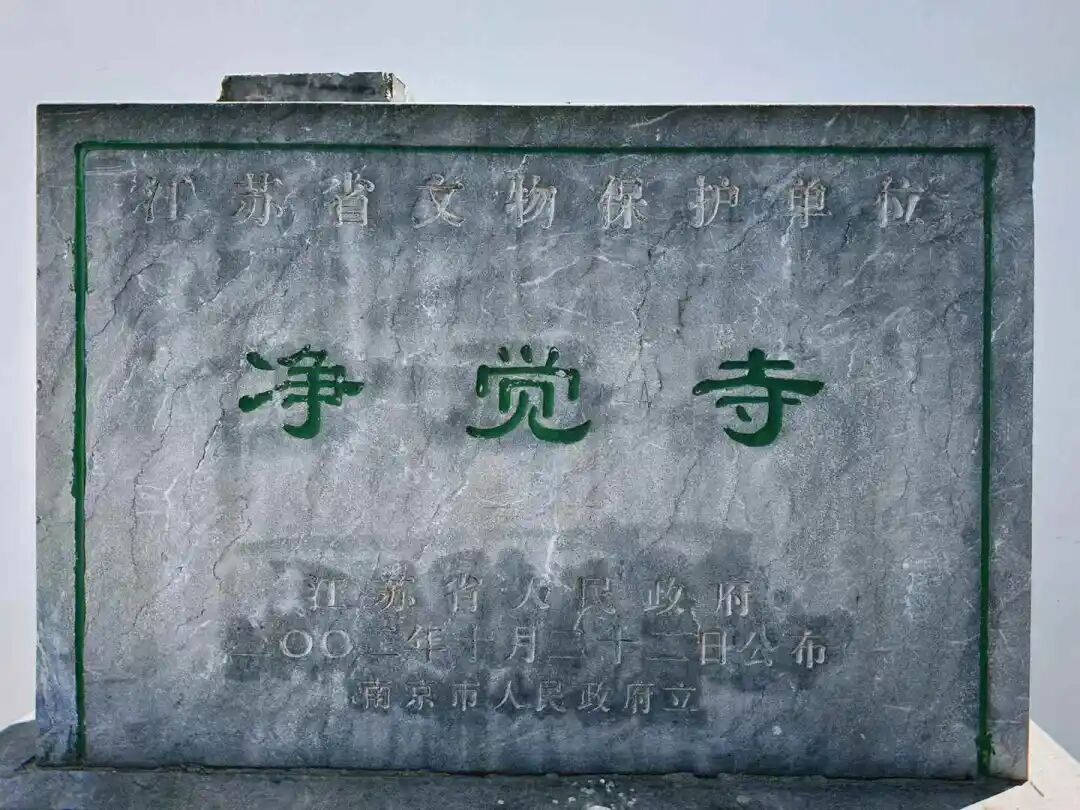
During the Ming Dynasty, the main prayer hall of Jingjue Mosque had 81 rooms and was built with nanmu wood. The current main hall was rebuilt in 1877 (the third year of the Guangxu reign). Its floor plan projects outward at the rear, like a raised middle section, and it uses a traditional post-and-beam wooden frame. The main hall and the opposite hall are linked by a covered corridor, forming a straight central axis with halls at both ends. This layout is typical of Jiangnan architecture. The mihrab was moved here from the original mosque on Xiaowangfu Lane, and the surrounding wooden carvings of scripture were added in 2001.
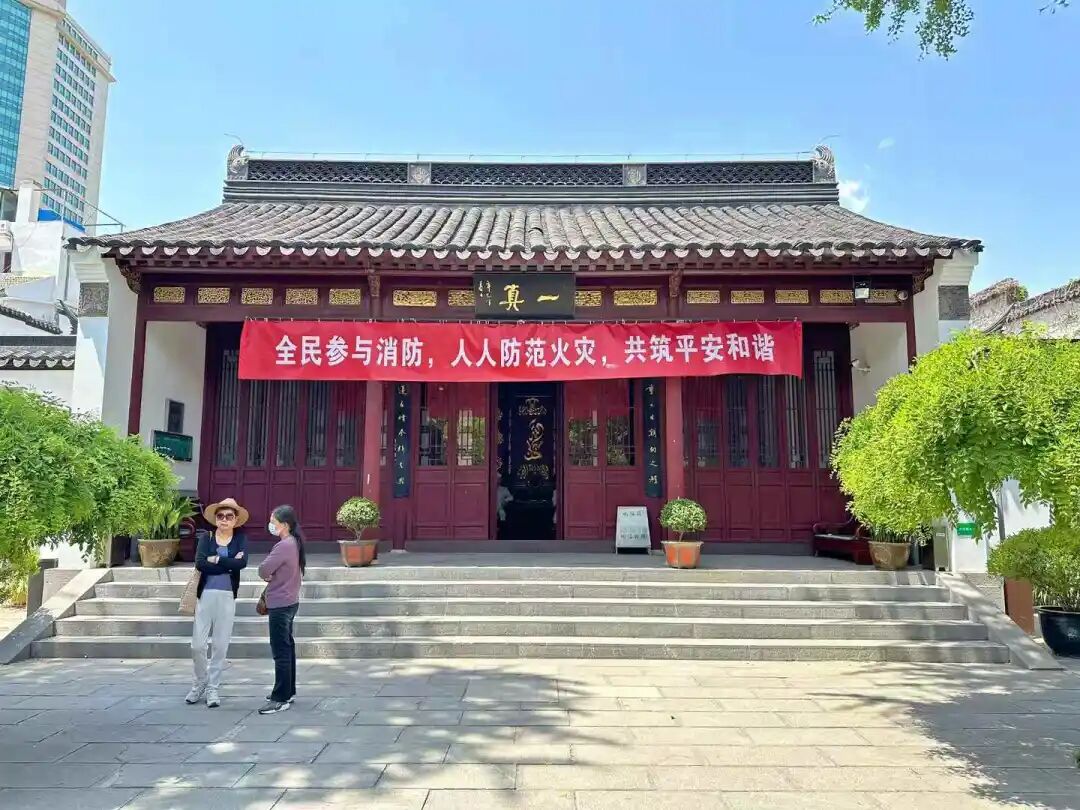
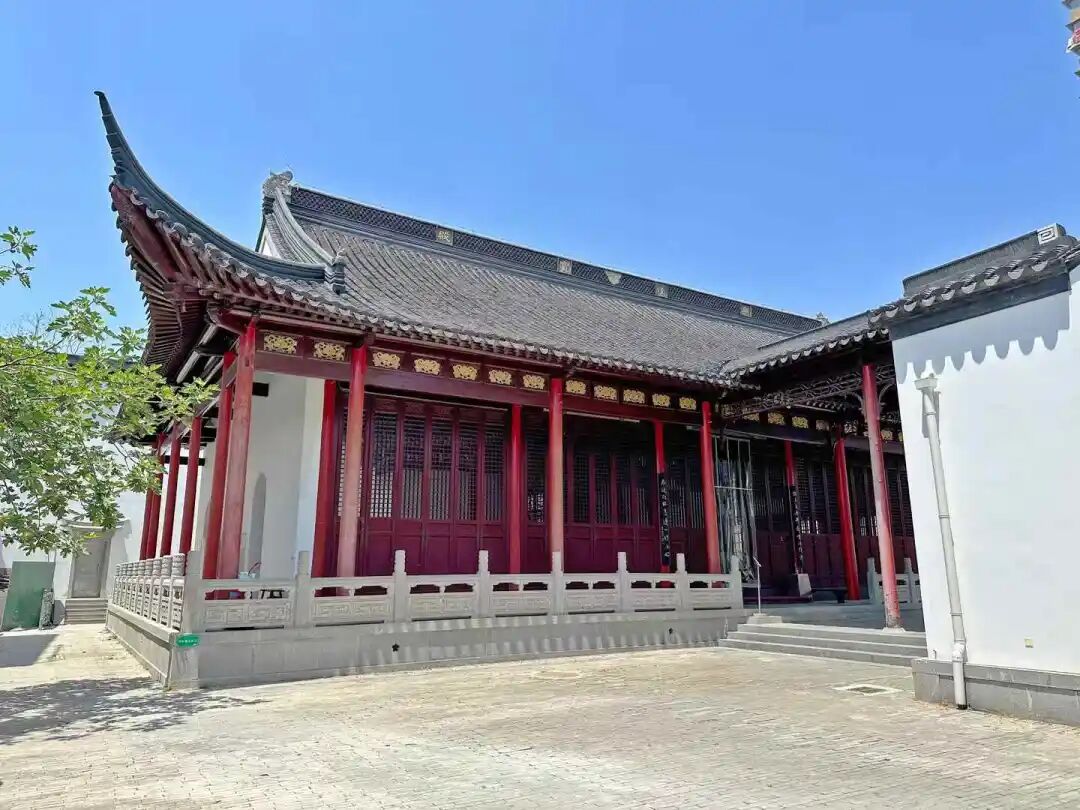
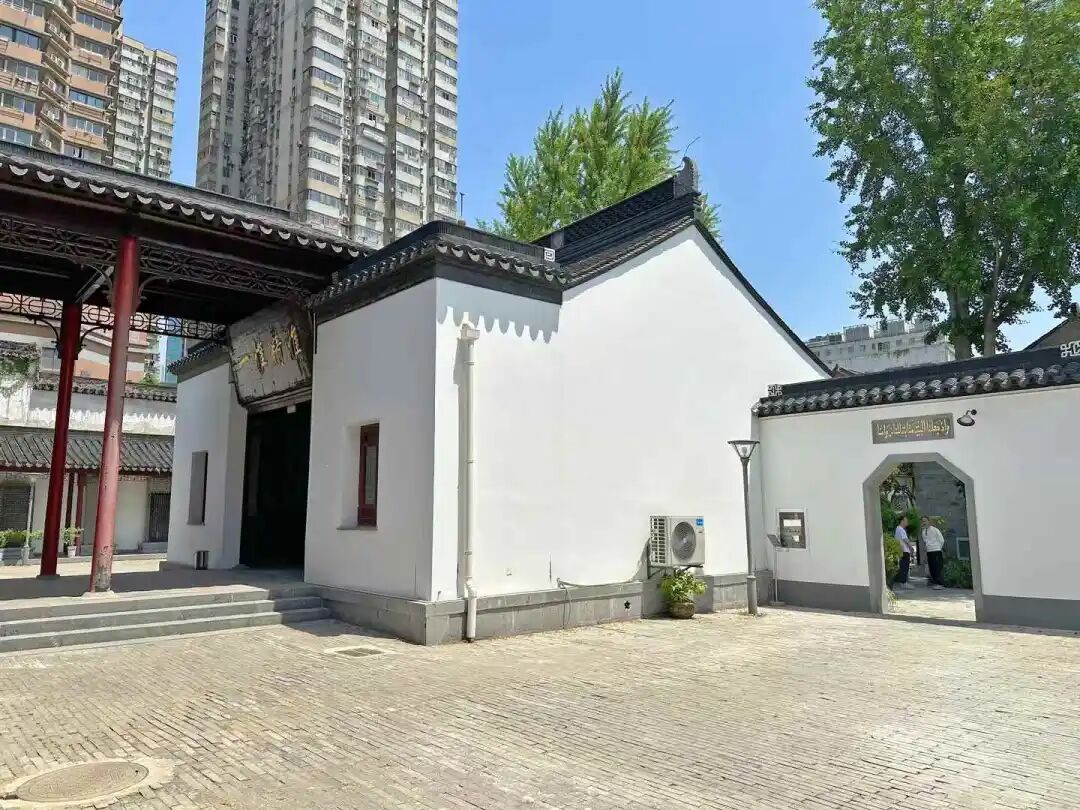
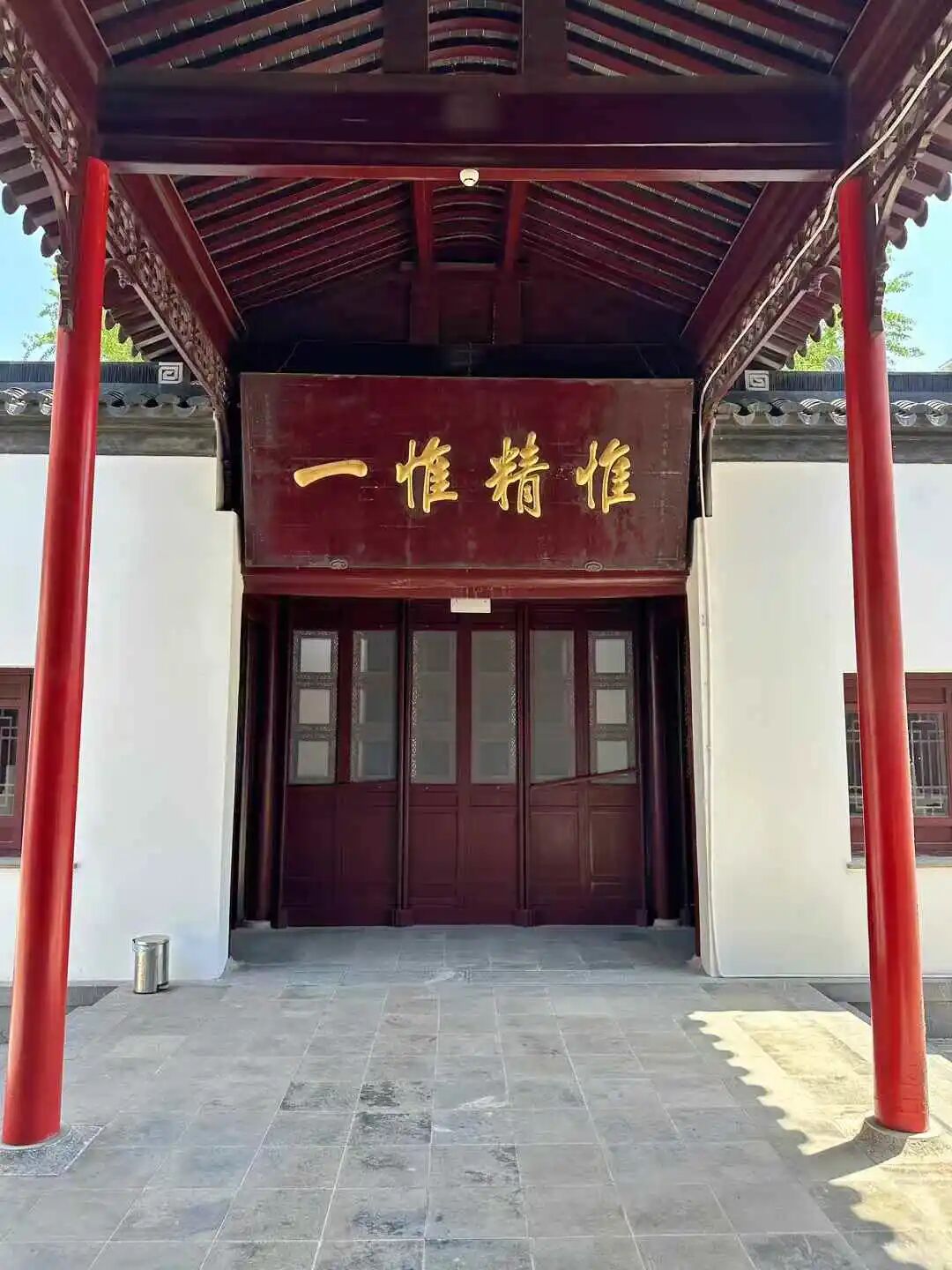
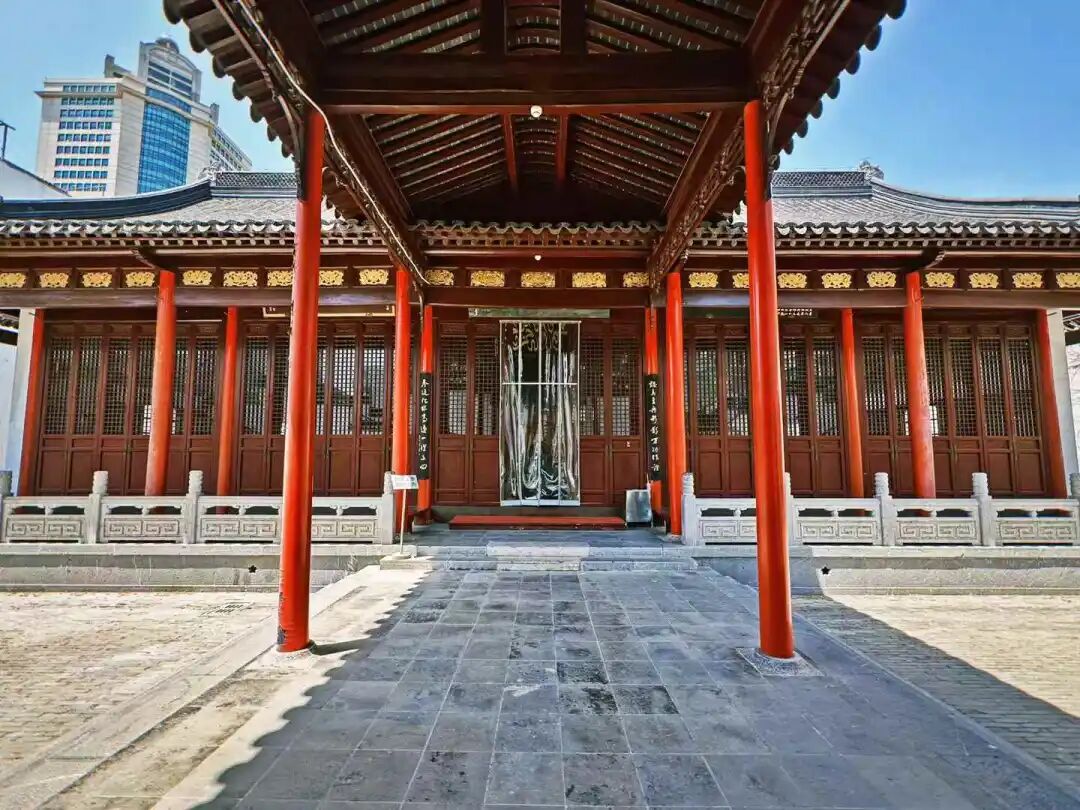
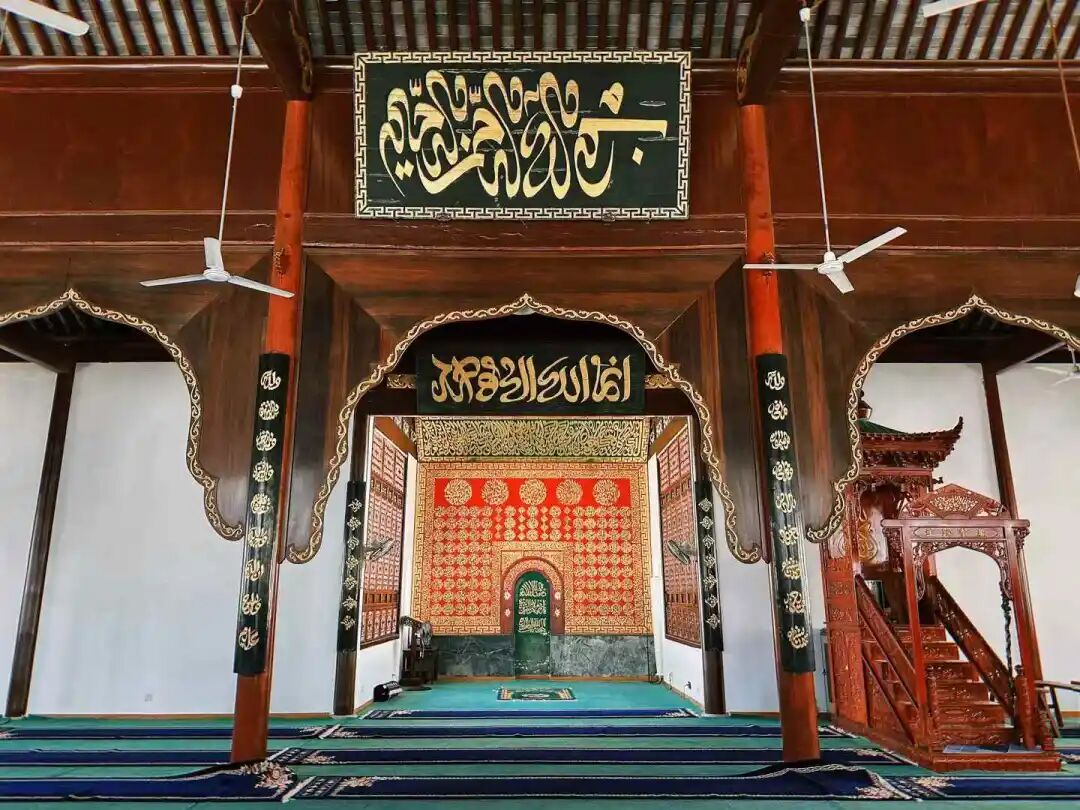
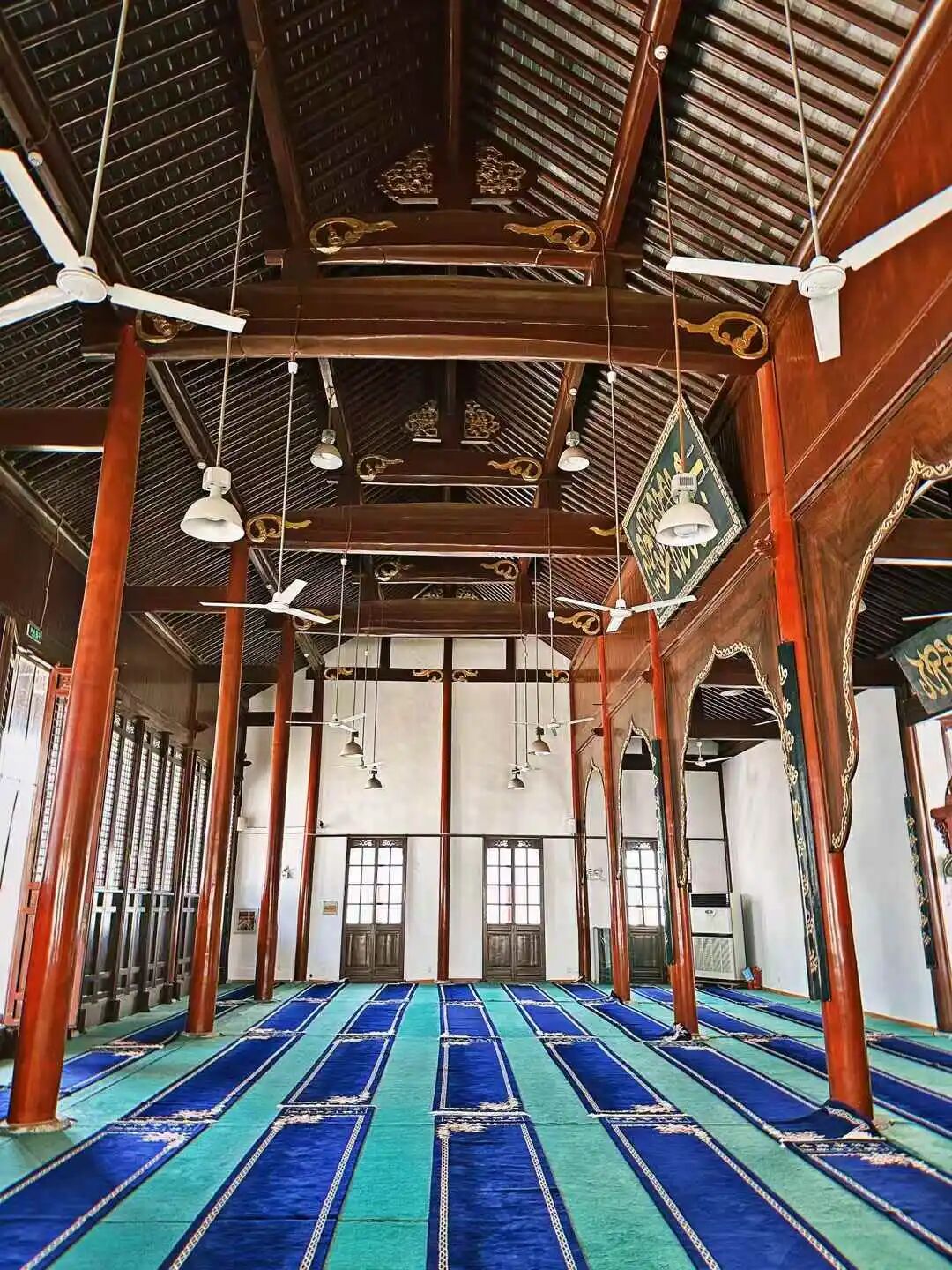
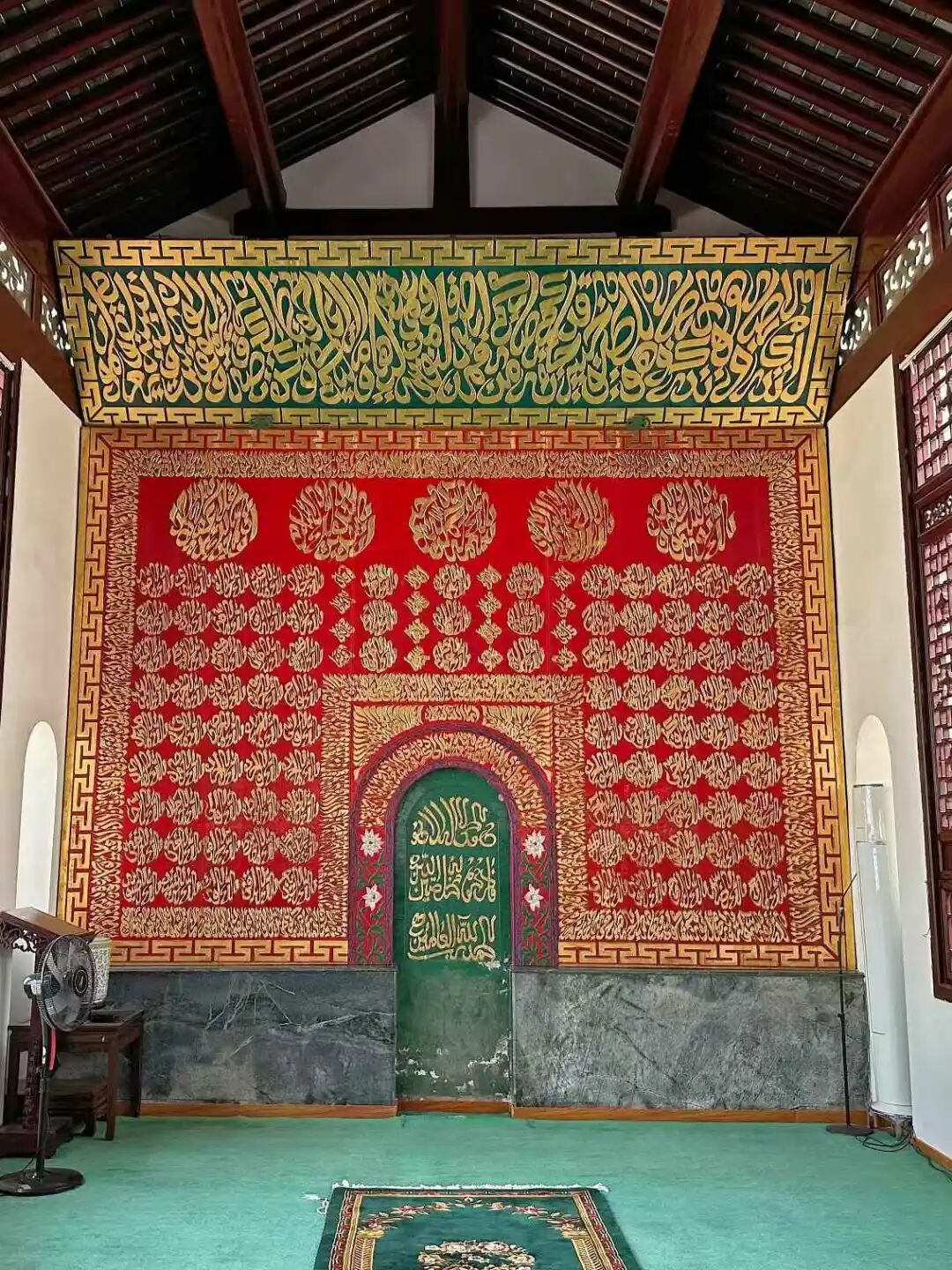
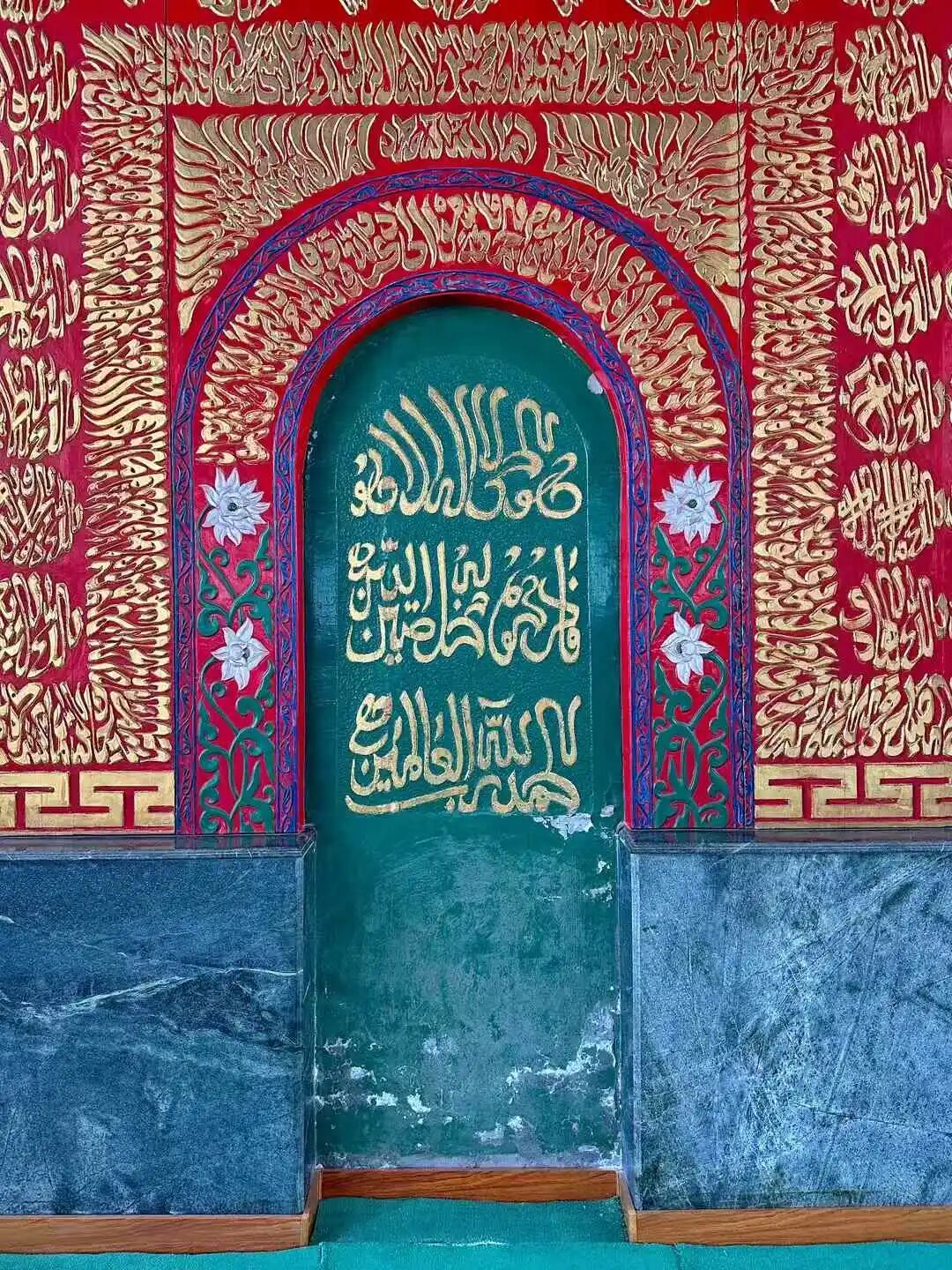
The back of the prayer hall connects directly to a high wall. This is a typical feature of Jianghuai courtyard-style architecture, which is very rare in the north.
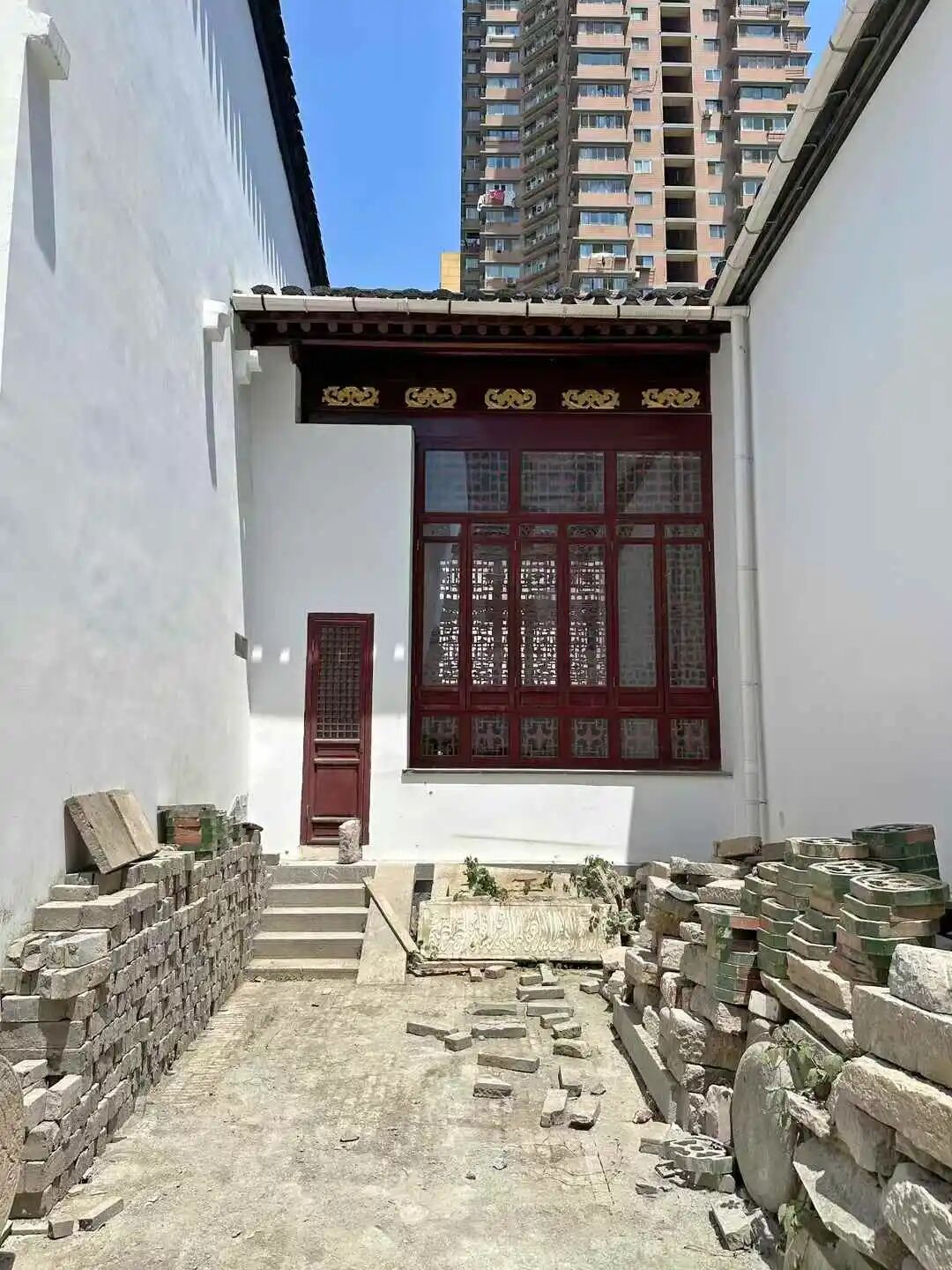
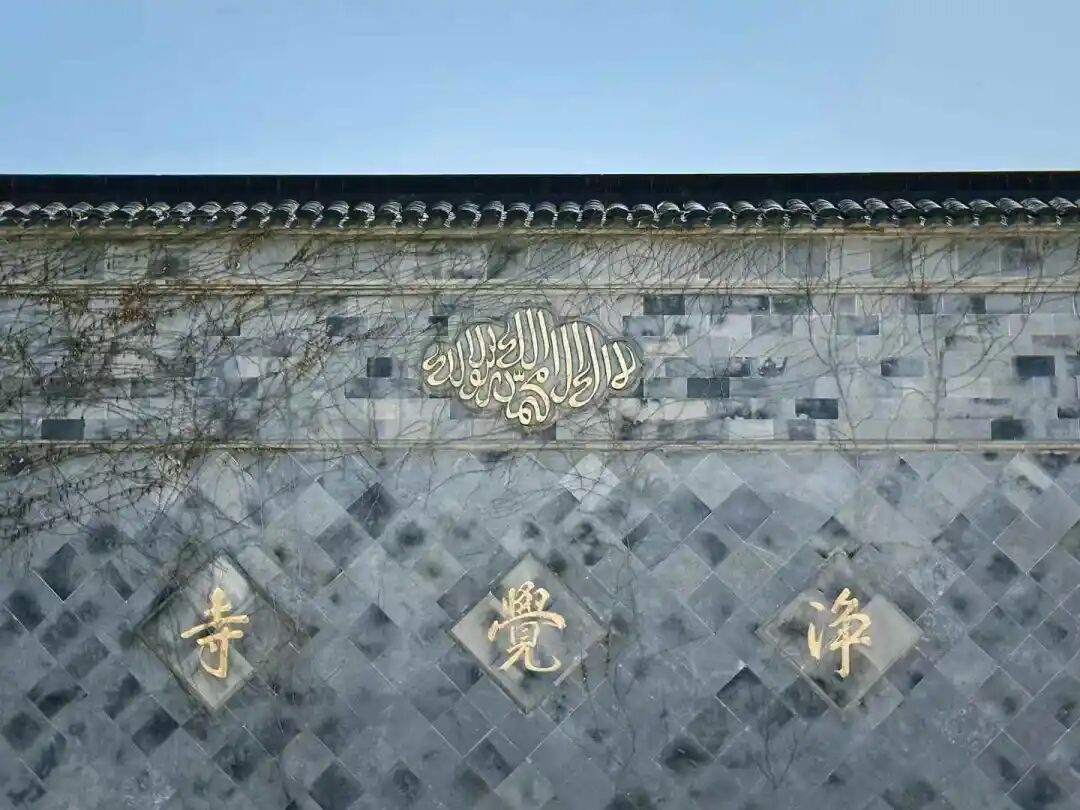
During renovations in 2007, the main hall was raised by one meter. Workers dug two meters deep and found Ming Dynasty glazed tiles, brick carvings, stone railings, and huge Ming Dynasty stone column bases. These bases were twice as wide as those from the Guangxu period.
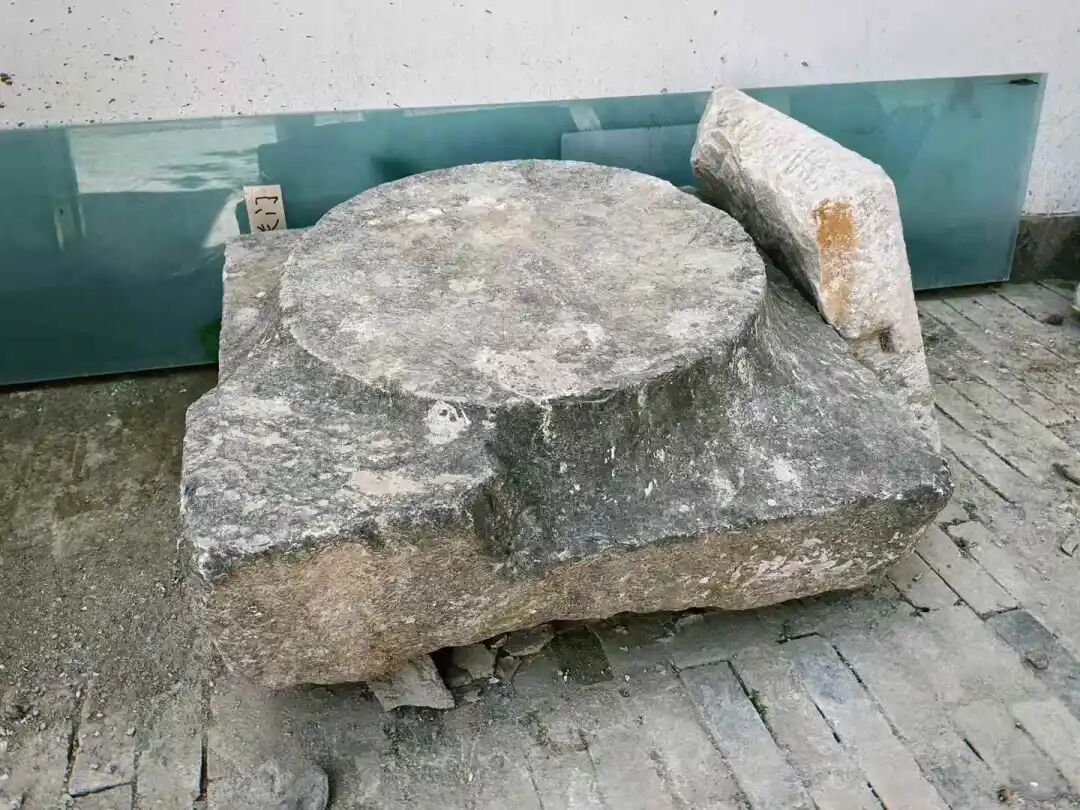
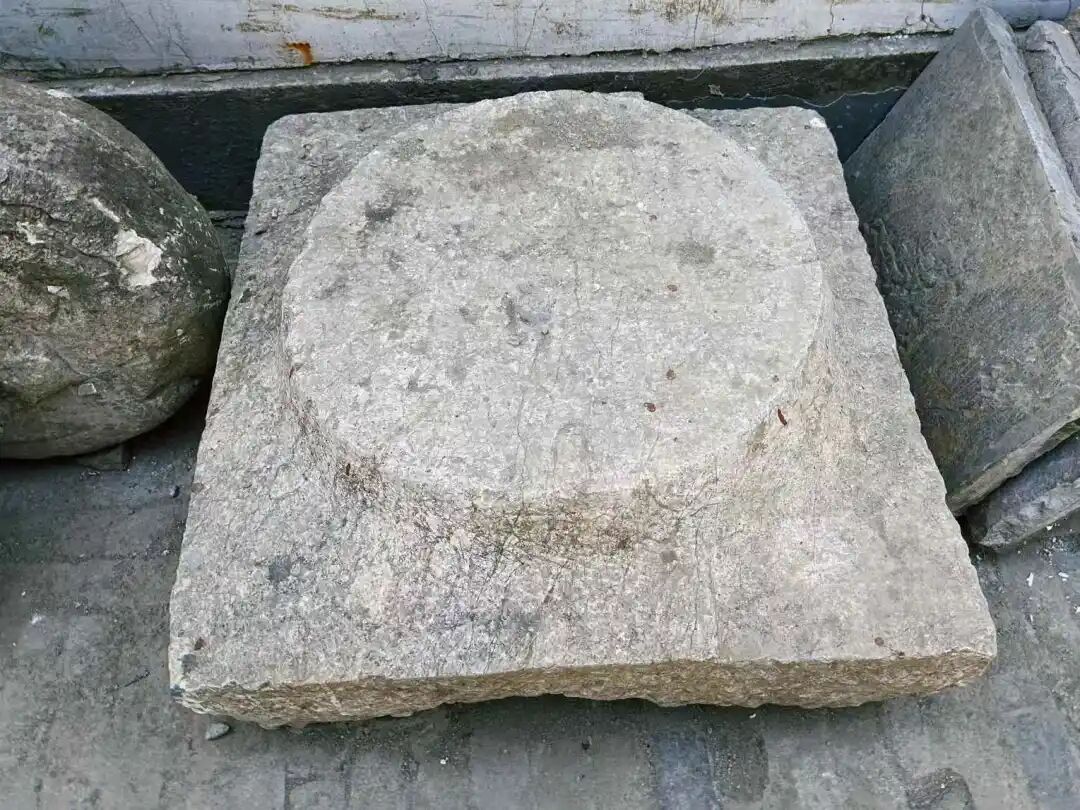
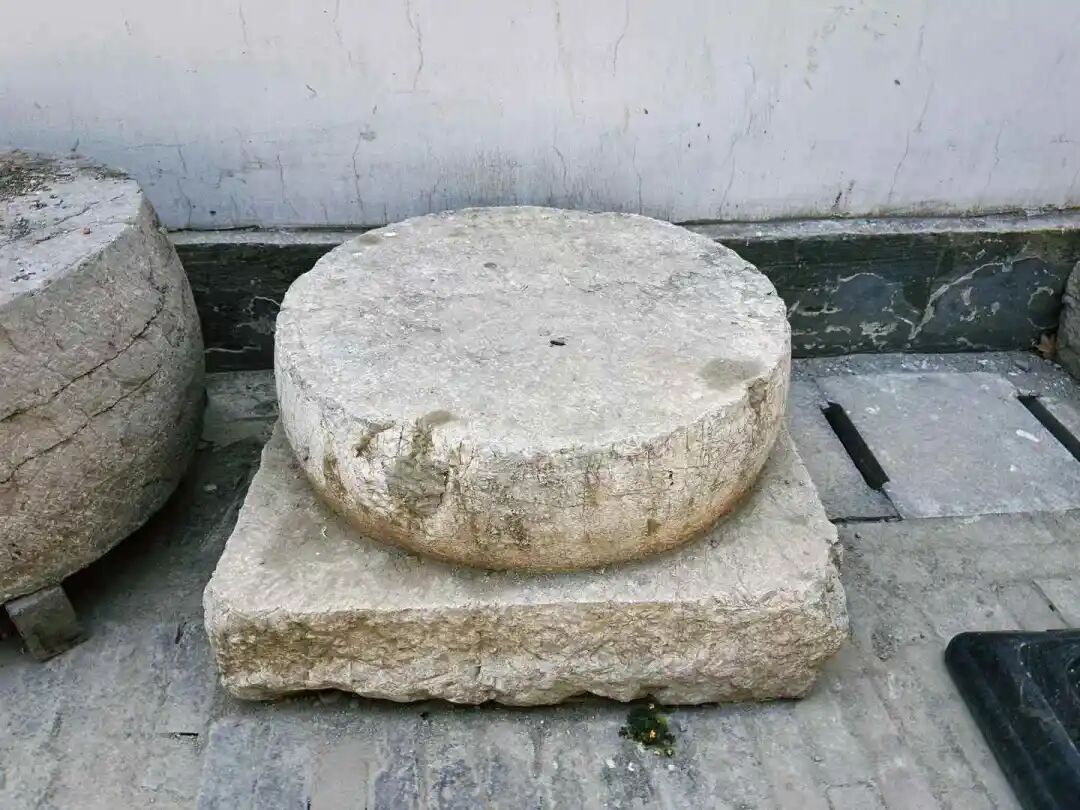
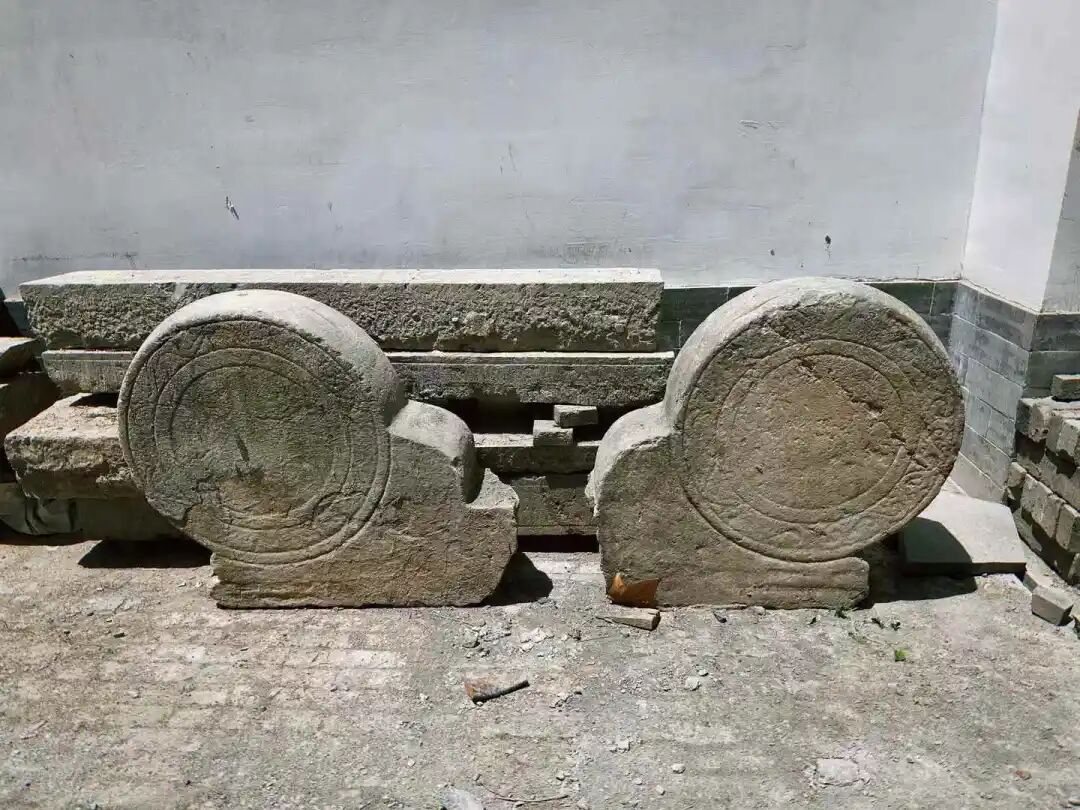
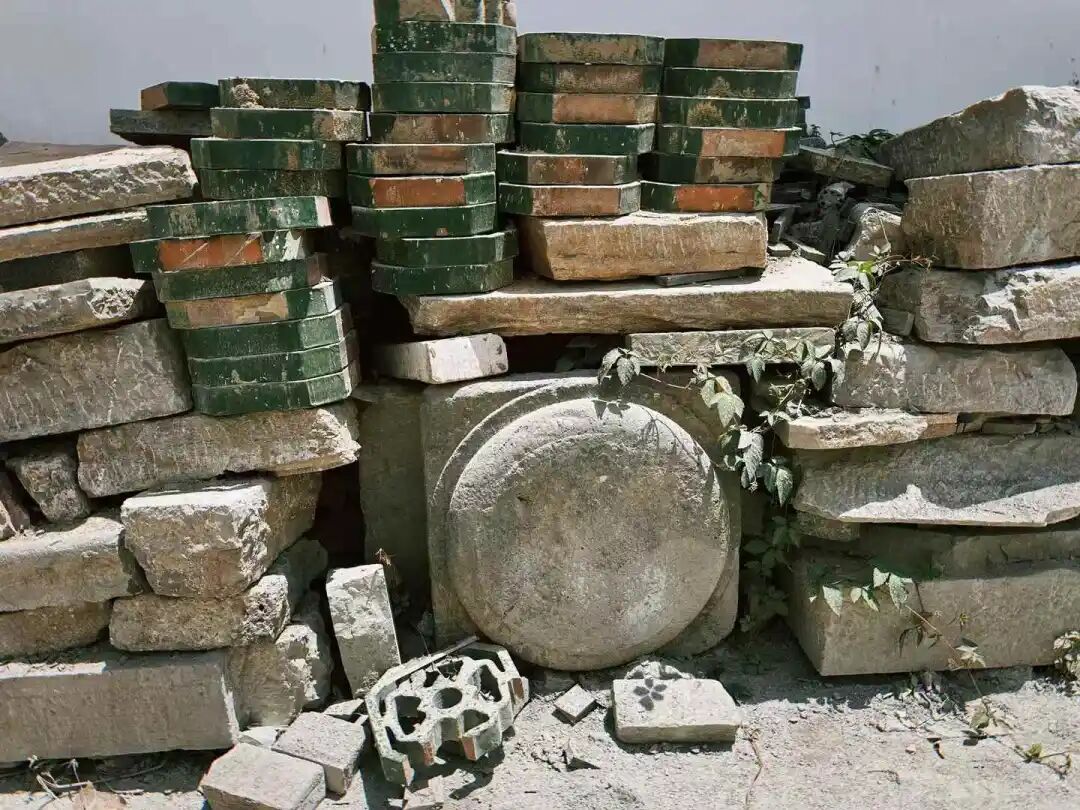
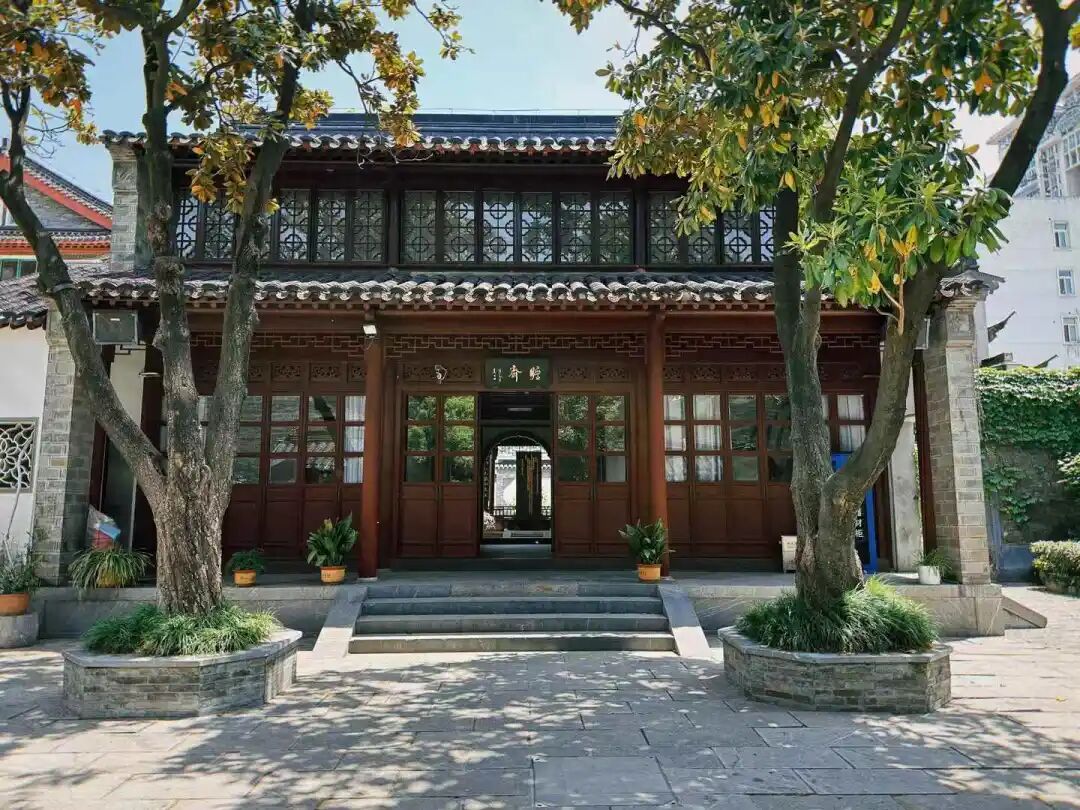
The only remaining Ming Dynasty structures, the brick and stone archway and the Butterfly Hall, were both torn down in the 1960s. The archway was rebuilt in 1985, the Butterfly Hall in 2004, and a new stele pavilion was built in 1996.
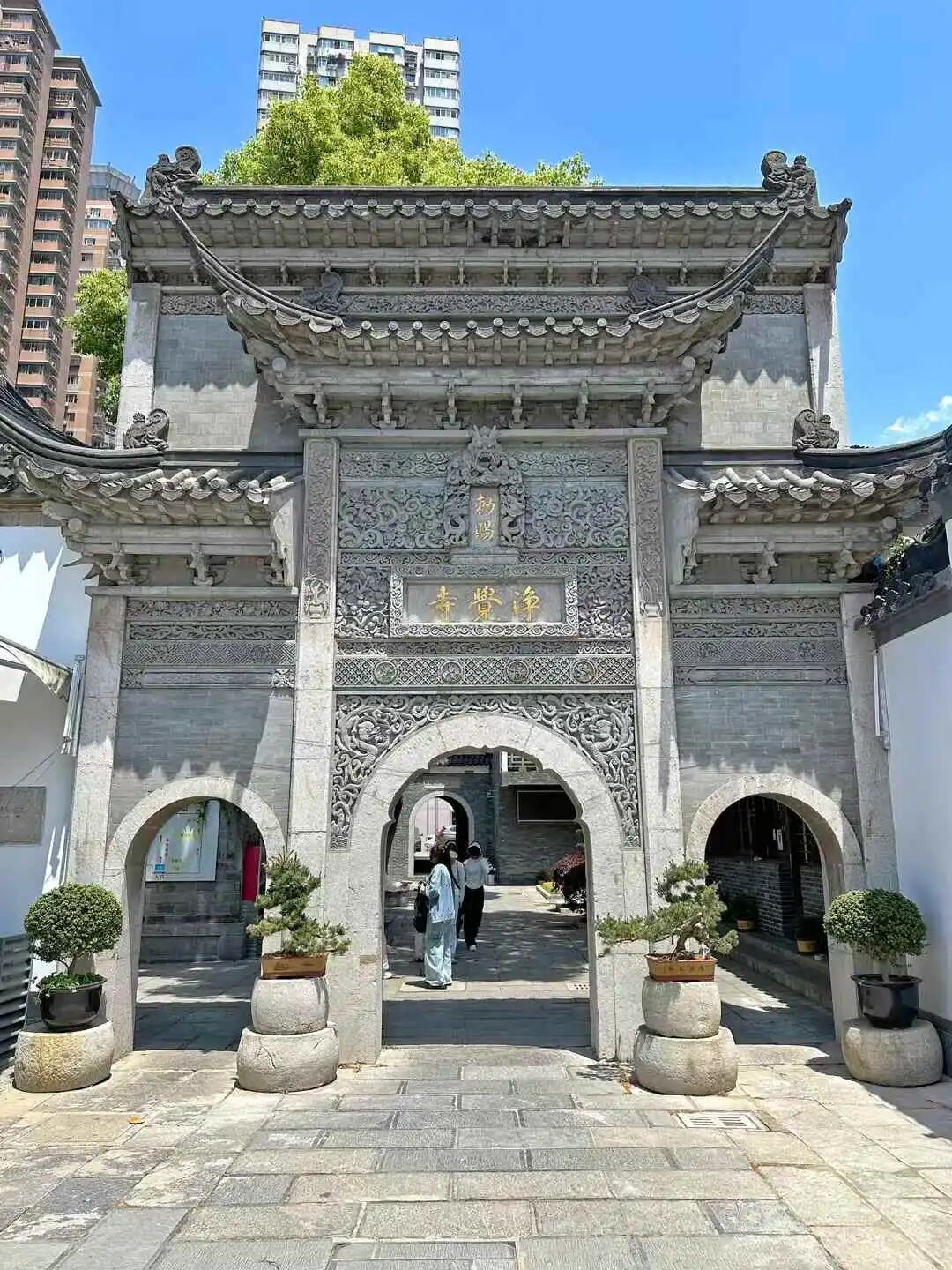
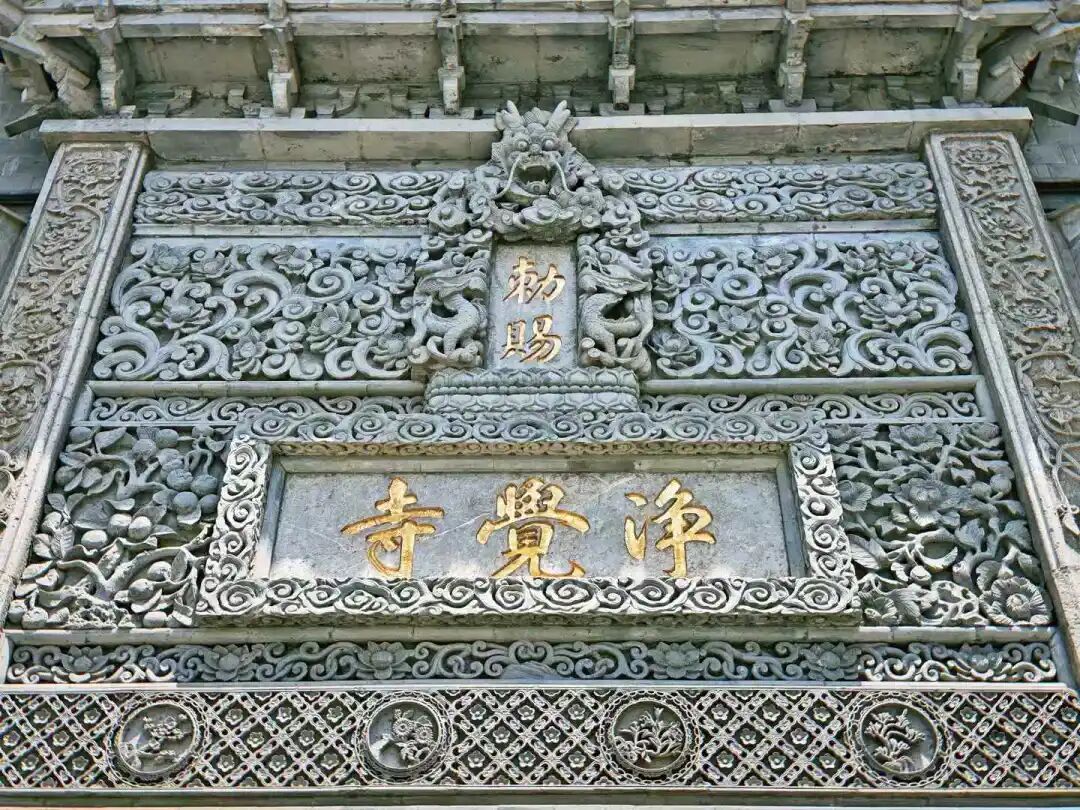
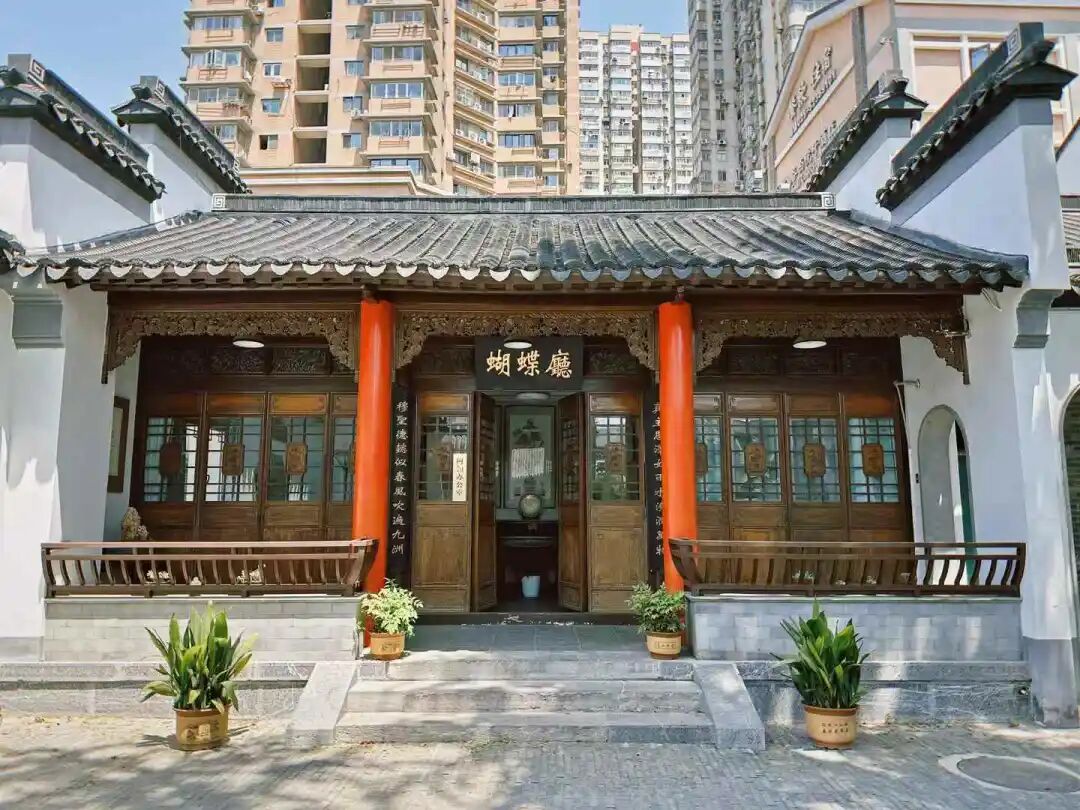
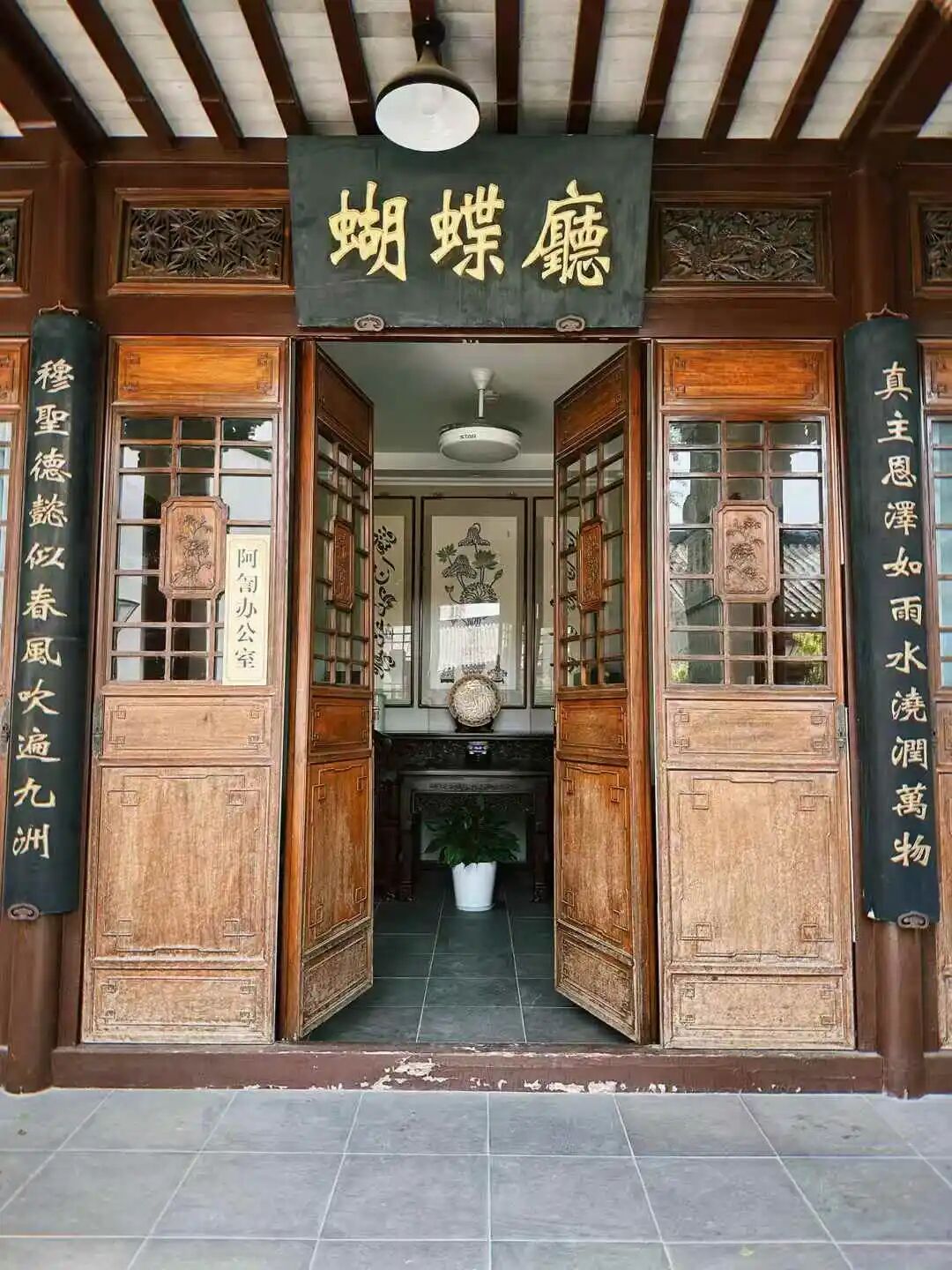
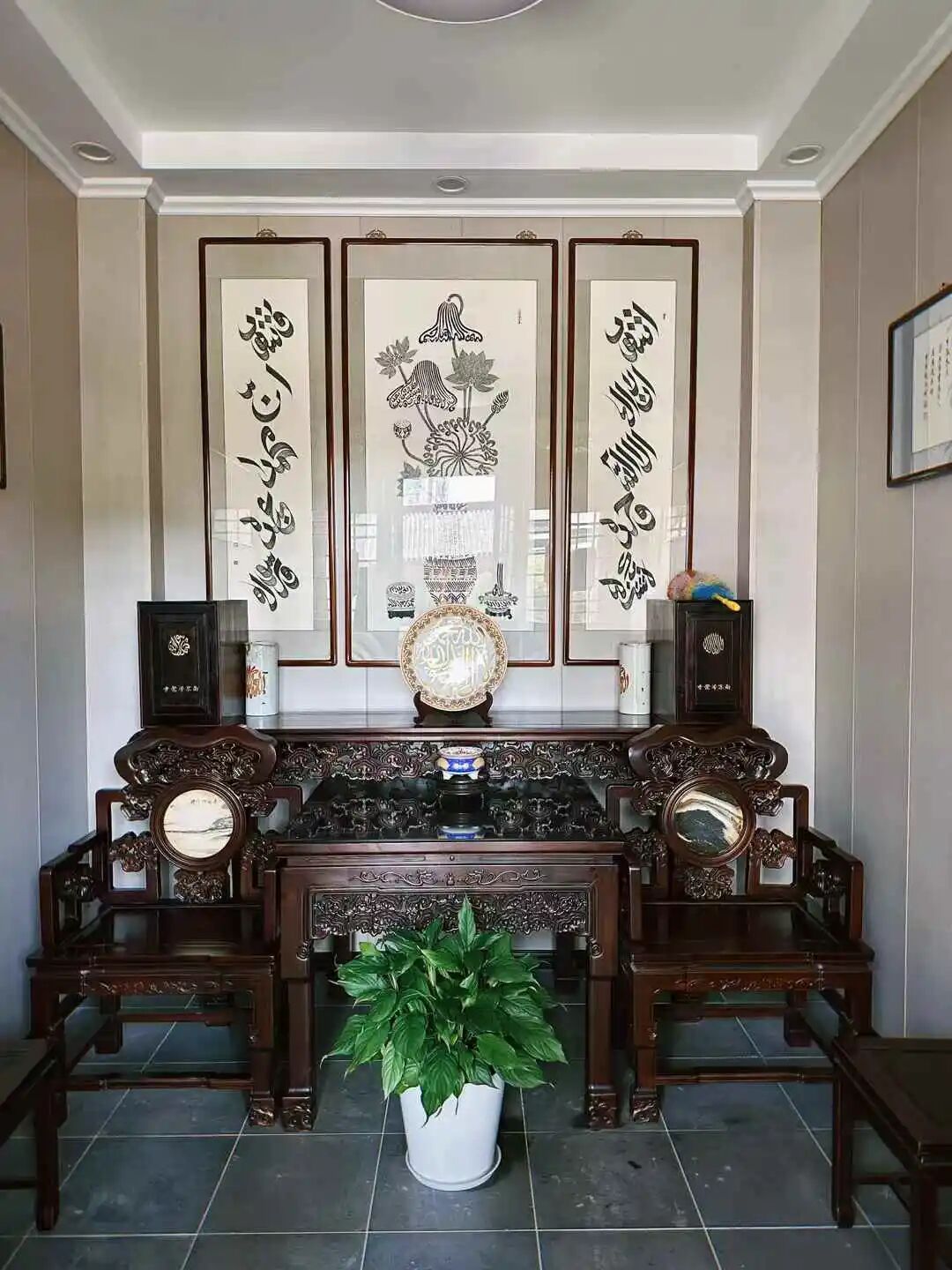
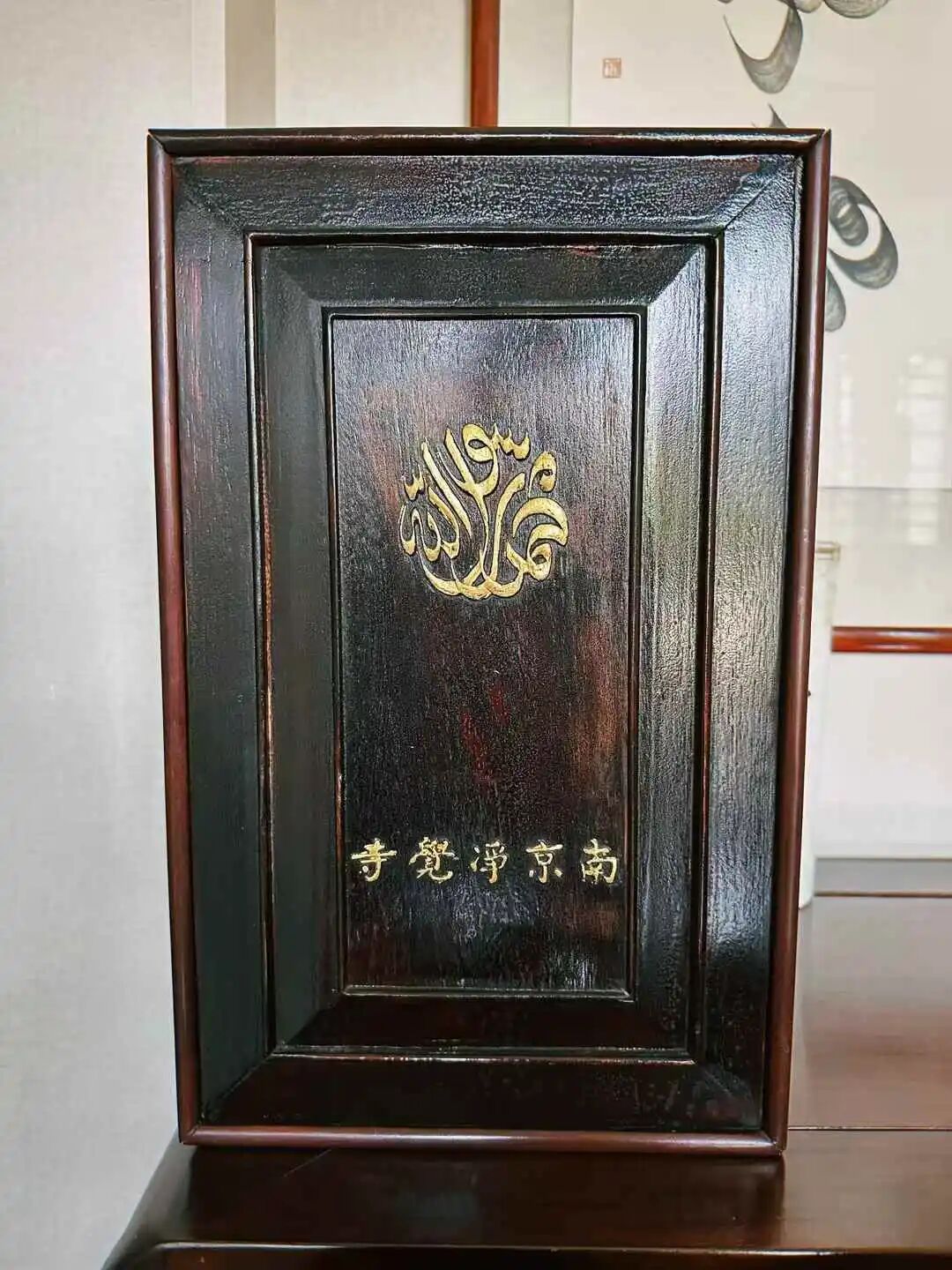
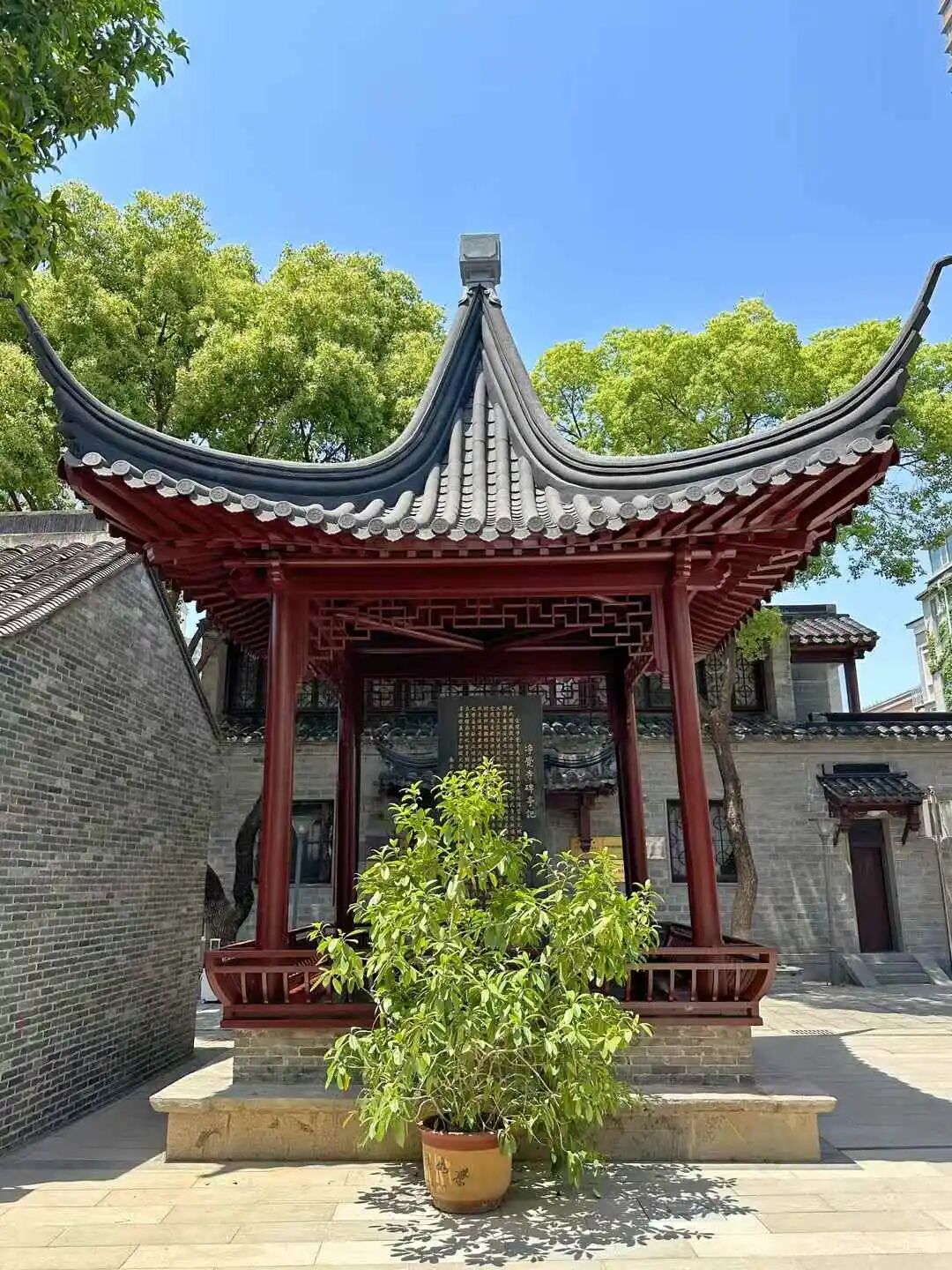
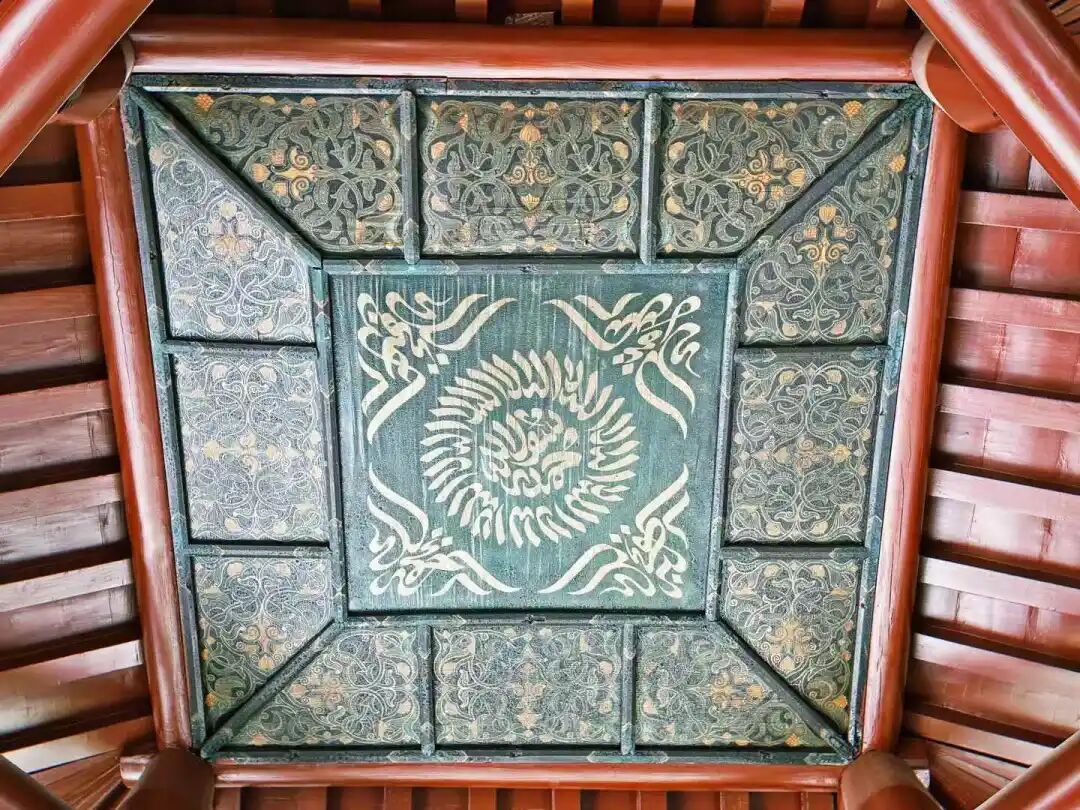
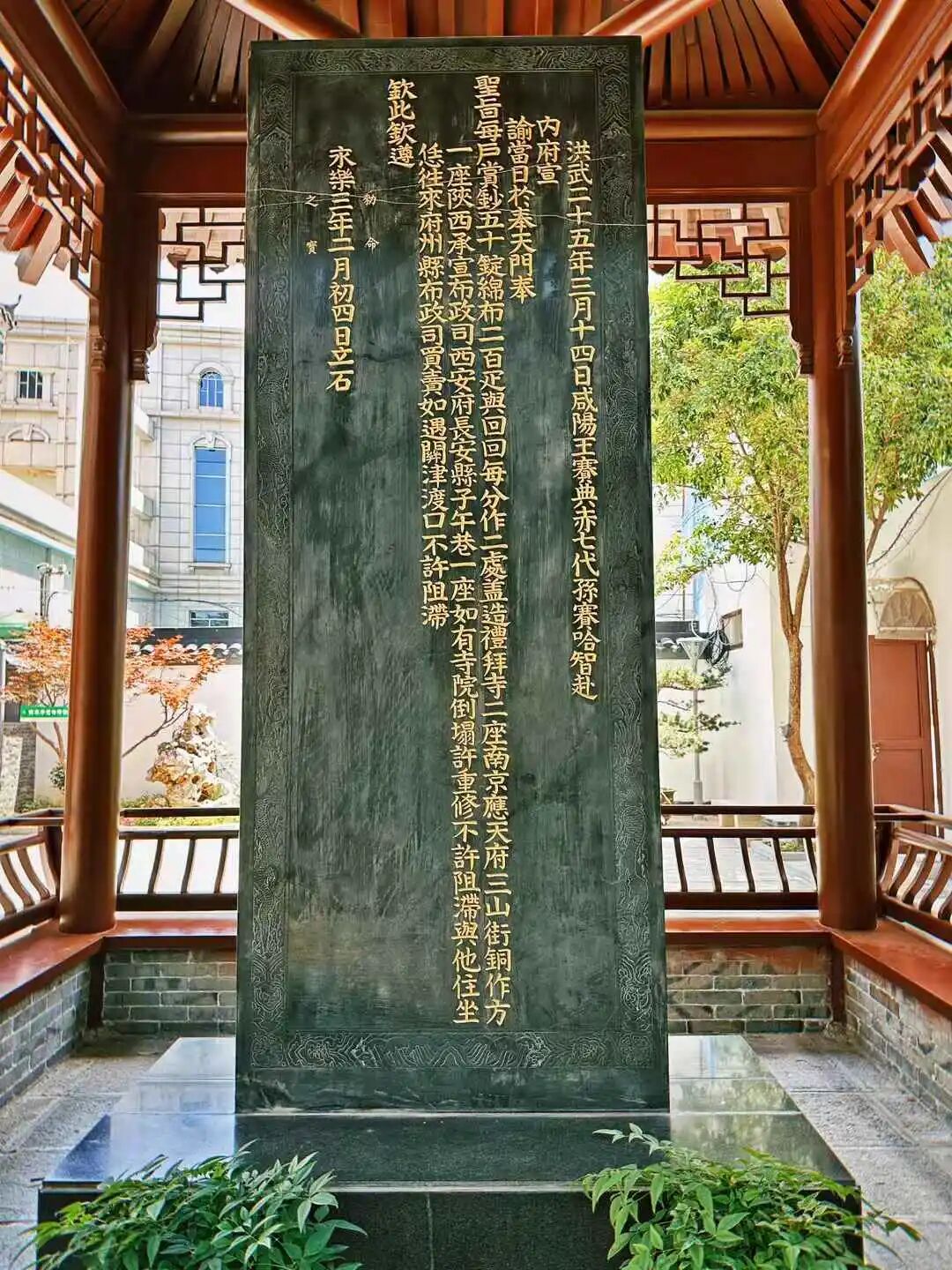
The only Jahriyya mosque in Nanjing.
Inside Jingjue Mosque, there is a stone tablet from 1891 titled 'Dahua Guizhen'. It records how Wu Defa followed his father Wu Dasong's final wish and donated the back part of their family home at 59 Shigu Road (formerly Xiaofuyuxiang) to establish the Shigu Road Mosque. The tablet mentions two Jahriyya imams, Fan Yuncai and Zhan Fengxiang. Witnesses included neighbors surnamed Chen, Cai, Zhou, and Yu; fellow Muslims surnamed Sun, Li, Wu, Zhan, Zong, and Jin; close relatives surnamed Ha, Ma, and Mai; and clan members surnamed Wu. This tablet was originally kept at the Shigu Road Mosque. After that mosque was torn down in 1986 for road expansion, the tablet was moved to Jingjue Mosque.
Shigu Road Mosque is the only Jahriyya mosque in Nanjing. In the late years of the Qianlong reign of the Qing Dynasty, a Hui Muslim named Wu from Taiyuan, Shanxi, who followed the Jahriyya (Zhepai) order, settled on Shigu Road in Nanjing. Influenced by him, followers of the Jahriyya order (Zhepai gaomu) began to appear around Shigu Road, Sanmaogong, and Nantai Lane in Nanjing, and most of them worked in the fish fry farming industry. At first, the Nanjing Jahriyya followers performed their worship at the Wuxueyuan Mosque (Yuan Mosque) near Shigu Road. During the Taiping Rebellion, the Wuxueyuan Mosque was destroyed by war, so the followers moved their worship to the Fengfu Road Mosque. Because their practice of loud chanting (gaosheng zannian) was different, Wu Defa later invited the Jahriyya followers to perform worship at his own home on Shigu Road, and in 1891 (the 17th year of the Guangxu reign), the Shigu Road Mosque was finally established.
The Nanjing Jahriyya order belongs to the Beishan menhuan. The Beishan menhuan is centered in Beishan, Zhangjiachuan, Gansu. Its leader, Ma Yuanzhang, was well-read, proficient in both Islamic scriptures and Chinese classics, and adopted the ideas of Liu Jielian to interpret Islam through Confucianism. After the Shigu Road Mosque was built, Fan Yuncai and Zhan Fengxiang from the Beishan menhuan served as imams. Imam Fan Yuncai was from Siyang, Jiangsu. During the Republic of China era, his son Fan Zhaofa opened the Faji Carriage Company in Nanjing, which was very successful. In 1905, Wu Wenlian, the grandson of Nanjing's Wu Defa, went to Gansu to study scriptures. After completing his studies in 1911, he was appointed by Ma Yuanzhang to serve as the imam of the Shigu Road Mosque.
After the Beishan order leader Ma Yuanzhang passed away (guizhen) in 1920, his nephew Ma Dianwu took over the religious affairs. It was still called the Beishan menhuan, overseeing over 100 mosques in places like Zhangjiachuan, Tianshui, and Longnan in Gansu, Qiqihar in Heilongjiang, Runan in Henan, and Long County in Shaanxi. Nanjing's Shigu Road was its only mosque in East China.
In 1937, Ma Dianwu appointed Imam Su Ziying from Zhangjiachuan, Gansu, to serve as the imam of the Shigu Road Mosque. Imam Su actively visited other mosques, connected with community elders, and promoted education, which helped the Shigu Road Mosque flourish and trained more than 20 students (hailifa). In 1953, Imam Yang Junwen succeeded as the imam of the Shigu Road Mosque. In 1958, the Shigu Road Mosque closed, and Imam Yang Junwen became an imam at the Fengfu Road Mosque. After that, Imam Yang no longer maintained contact with the Beishan menhuan, and his worship practices gradually merged with the Gedimu order.
In 1986, the Shigu Road Mosque was demolished due to road widening. Although the mosque closed, some descendants of the Nanjing Jahriyya followers still held firmly to their worship. For example, Fan Songshou, a descendant of Imam Fan Wencai, made a living running a tofu shop. Even in his nineties, he insisted on performing the five daily prayers (namaz) without fail. In his old age, he still insisted on fasting (zhai), and in the 1960s, he continued to volunteer to wash and bury the deceased and help with funeral arrangements.
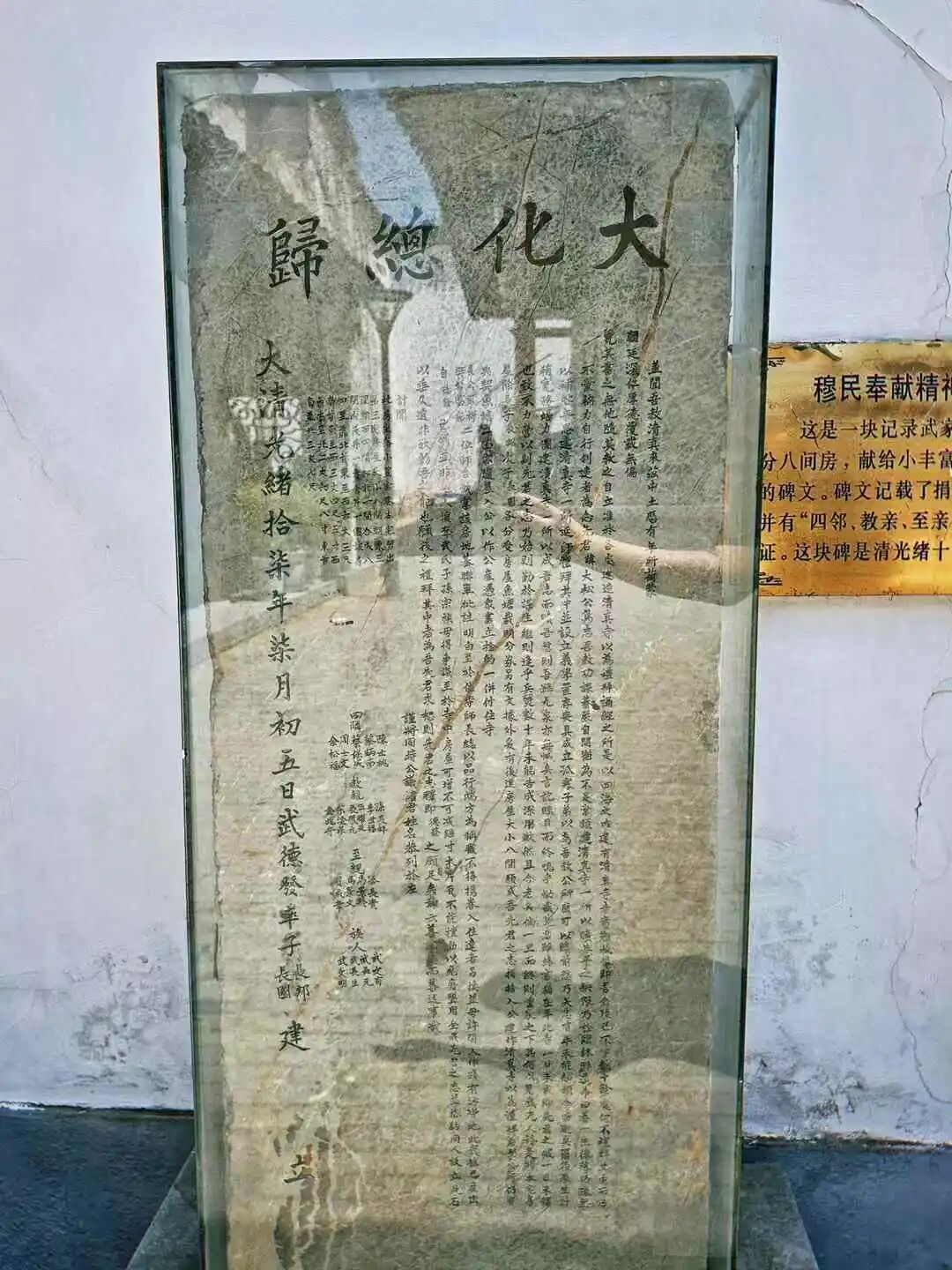
Plaque inscriptions at Jingjue Mosque:
Only pure, only one: Erected on an auspicious day in the first month of summer in the Gengyin year, the 16th year of the Guangxu reign of the Great Qing Dynasty, by the Commander of the Jiujiang Garrison in Jiangxi.
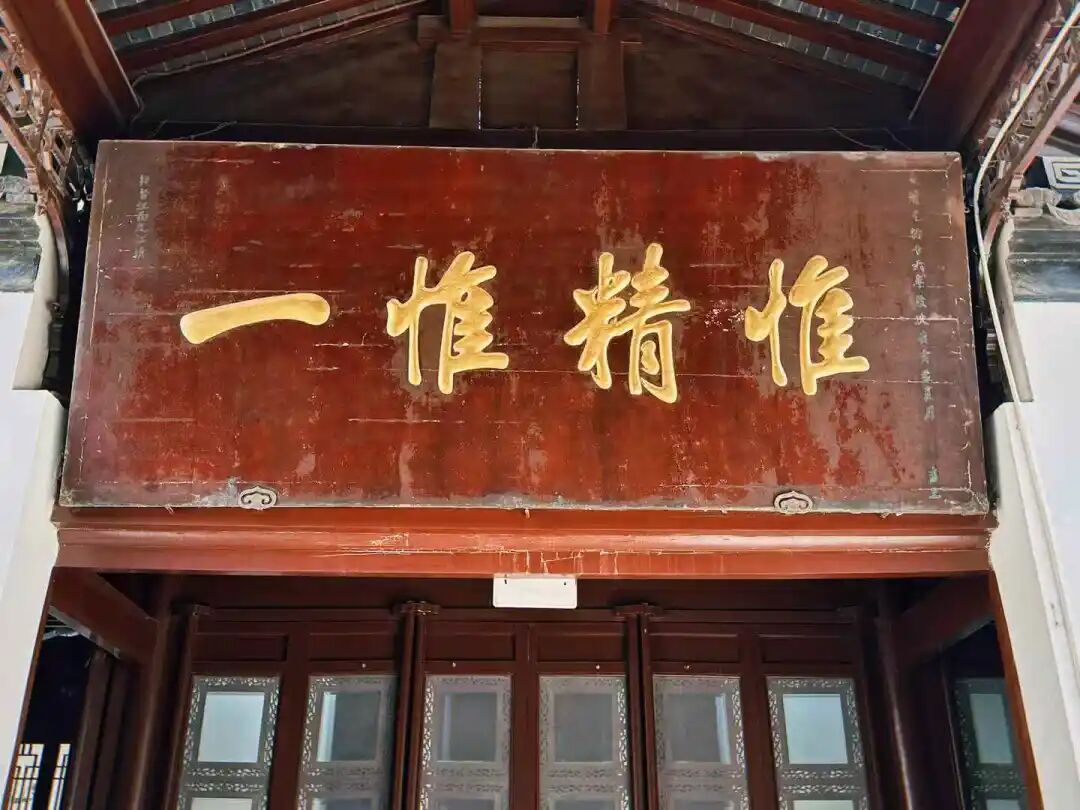
Rectify the heart and be sincere: Erected in June of the 11th year of the Republic of China by members of the Nanjing Islamic Association.
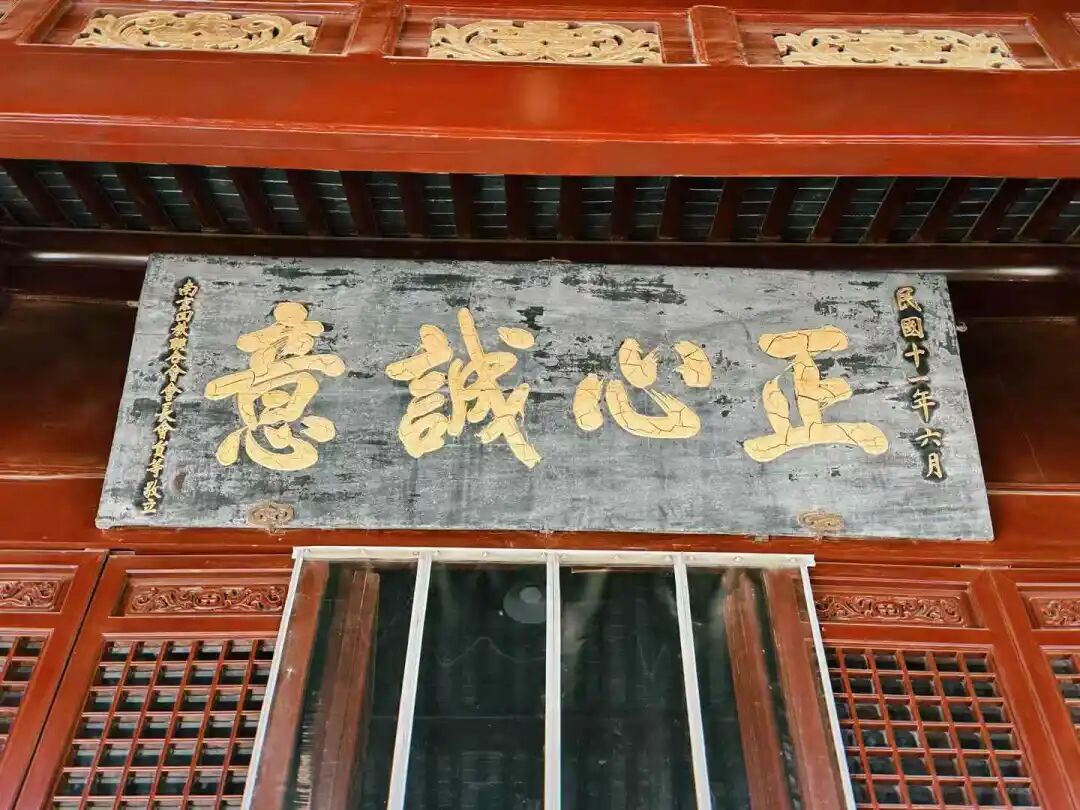
The stele from the 47th year of the Qianlong reign records the four boundaries of Jingjue Mosque. To the east, there was a shop for rent, and to the west, a shop in Maxiang Alley was rented out as a flower shop. The elders who donated funds included those with the surnames Chen, Ma, Wu, Jin, Zheng, and Sha.
The stele from the 18th year of the Guangxu reign records that Imam Ma donated his own land next to the mosque to build the main prayer hall and the water room (wudu area).
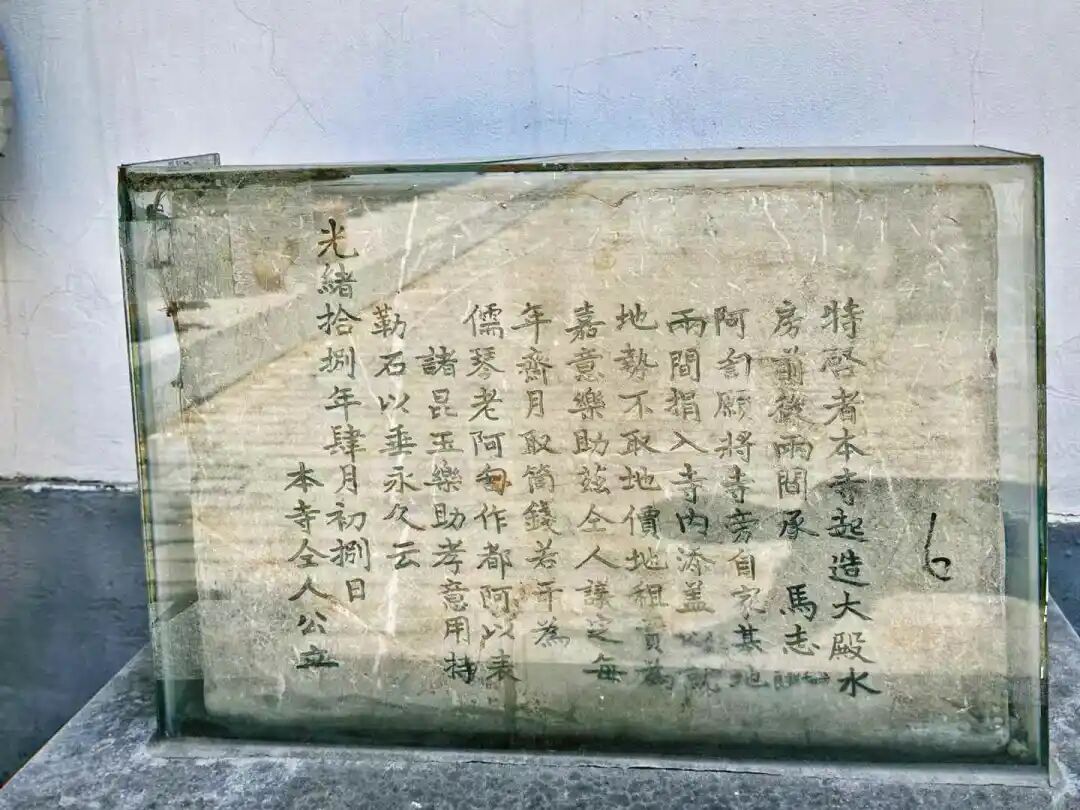
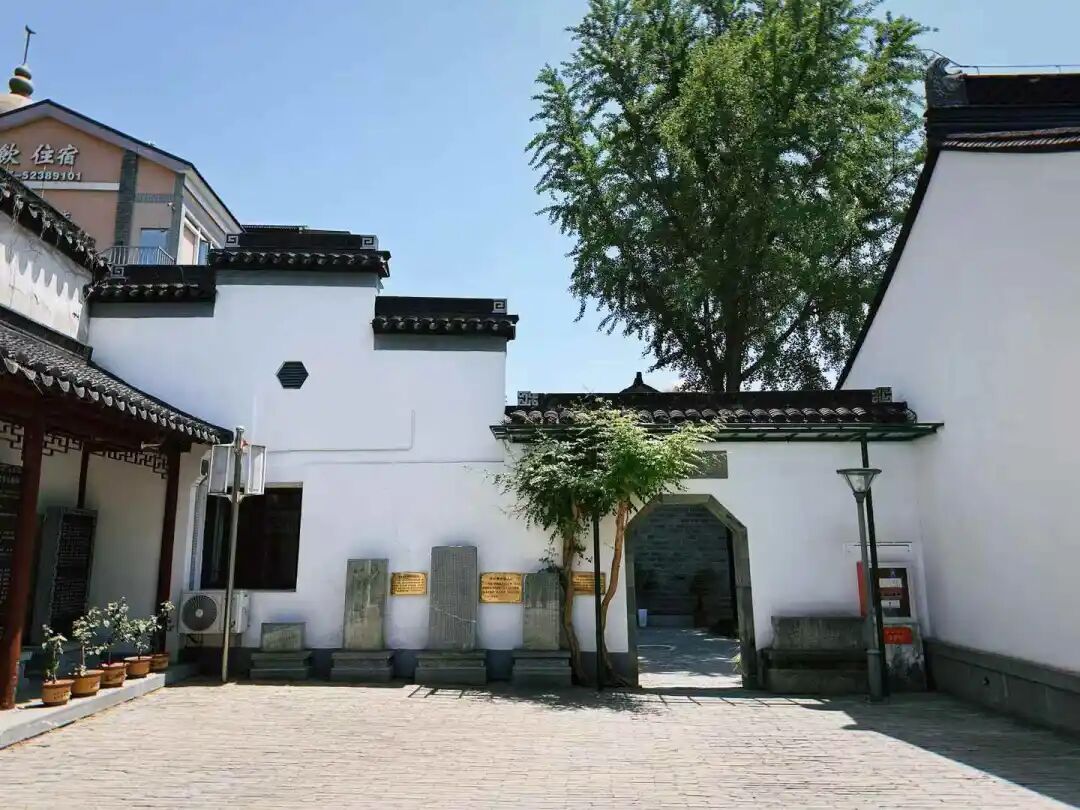
Jingjue Mosque houses a memorial stele for Ma Yitang, a Hui Muslim merchant from Nanjing who worked in Shanghai. It was inscribed in 1931 by Ma Fuxiang, a famous Beiyang general who was then the Chairman of the Mongolian and Tibetan Affairs Commission.
Ma Yitang was born in 1869. His ancestors ran a money shop outside Jubao Gate in Nanjing, and the family owned the Ma Yulong Satin and Fan Shop. With Shanghai as his base, Ma Yitang expanded his business to include domestic and foreign general merchandise. He set up branches in Chengdu and Chongqing, and his goods were sold as far away as the Tibetan regions. Ma Yitang was devoted to the faith. He served as a director for the North Mosque and West Mosque in Shanghai and helped fund the founding of the Hanximen Girls' School and the Zhuganxiang Girls' School in Nanjing. In 1909, Ma Yitang became a special consultative director for the Shanghai Islamic Board of Directors, participating in all its decisions. In 1921, he was responsible for the expansion of the Shanghai Xiaoshadu Mosque (now the Huxi Mosque).
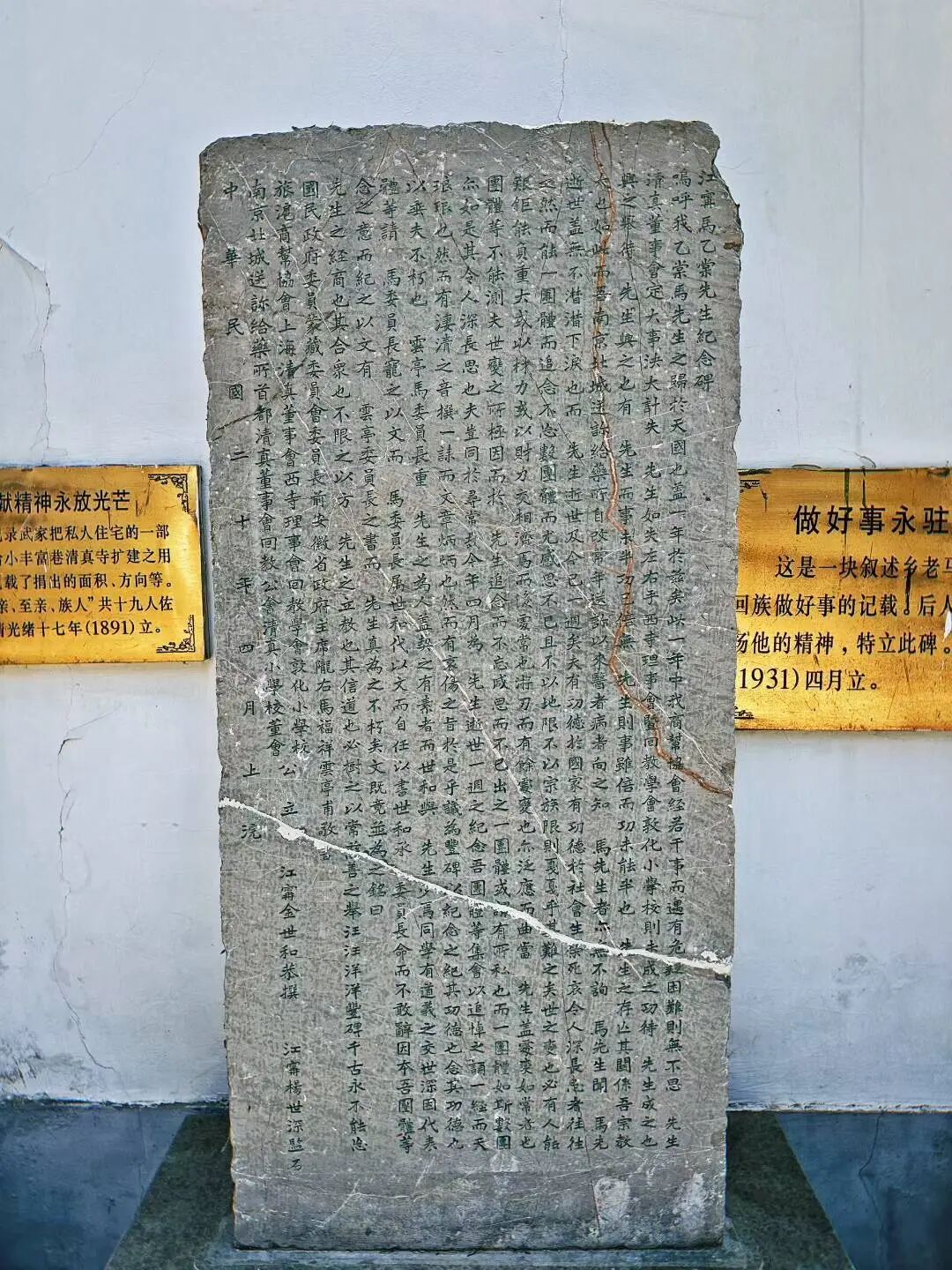
Jingjue Mosque houses a notice stele from the 15th year of the Republic of China regarding the Shangfuqiao Mosque, issued by the Western District Police Station of the Jiangsu Provincial Capital Police Department. It records that the police stepped in to protect the Shangfuqiao Mosque and the Dajiaoxiang Mosque to uphold the rights of the faith. The petitioners included Hui Muslims with the surnames Bai, Tao, Pu, Ma, Yuan, Liang, Wei, and Jin.
Shangfuqiao Mosque was located in Chuanban Alley and was first built in 1662 (the first year of the Kangxi reign). It was destroyed during the Taiping Rebellion in the Xianfeng era and rebuilt in 1876 (the second year of the Guangxu reign). Later, it was occupied by Nanjing No. 62 Middle School, and the notice stele was moved into Jingjue Mosque. Dajiaoxiang Mosque was first built in 1874 (the 13th year of the Tongzhi reign). The mosque once housed trade associations for the pavilion decoration, wedding, and fried rice industries. It was later occupied by a factory and eventually demolished.
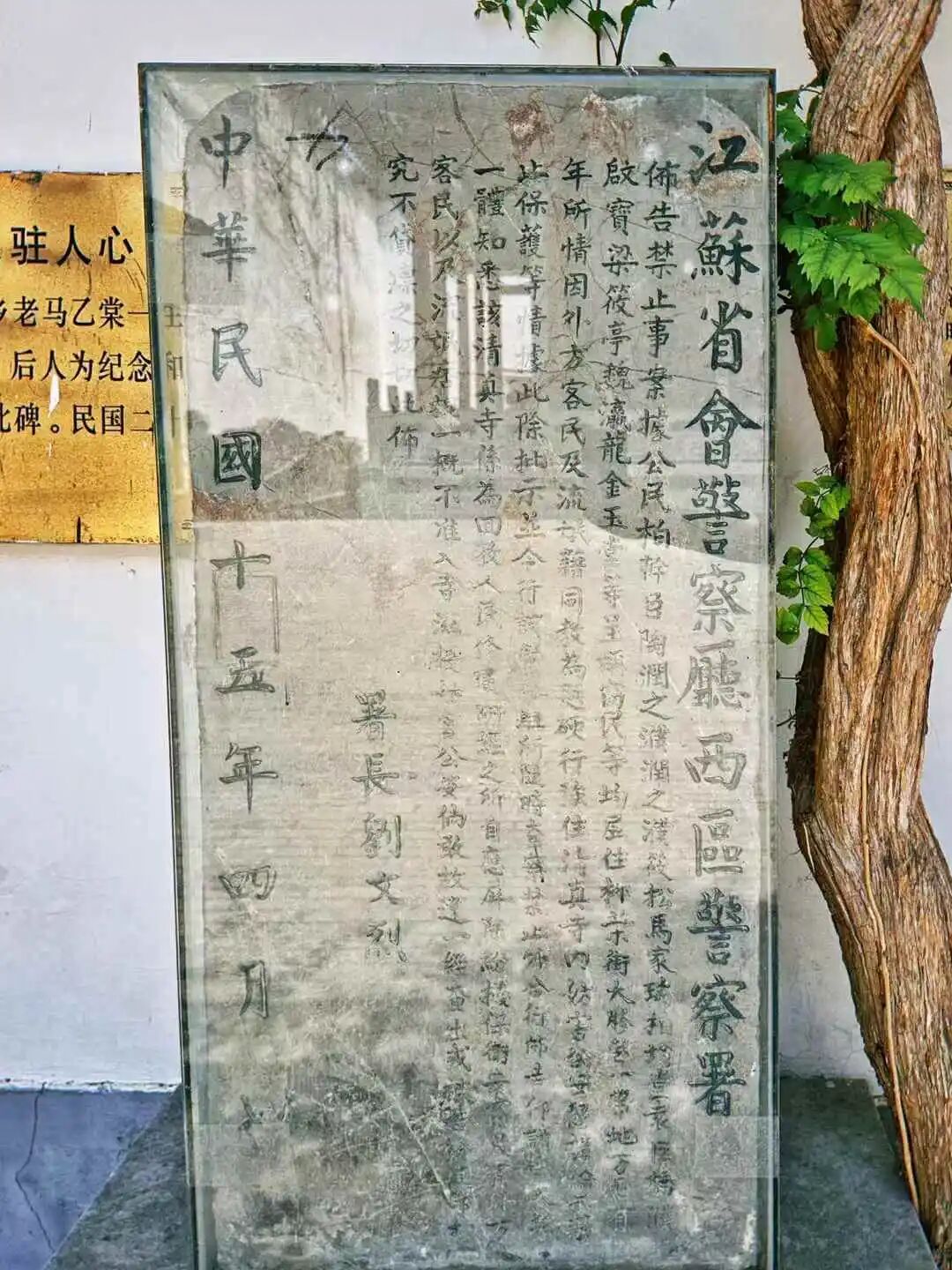
Jingjue Mosque houses a Qing Dynasty stone carving from the Neiqiaowan Mosque, which was rescued from under an excavator during the demolition of Neiqiaowan in 2019.
Neiqiaowan Mosque was located on Zhongshan South Road. One account says it was first built in 1645 (the second year of the Shunzhi reign), while another says it was built in 1662 (the first year of the Kangxi reign). In 1898 (the 24th year of the Guangxu reign), Shi Jialiang bought a group of houses in Neiqiaowan to rebuild the main prayer hall. The Shi family came from Wuwei, Gansu. They moved to Nanjing during the Jiaqing reign of the Qing Dynasty to expand the silk trade. They later became a famous silk-trading family in Nanjing and founded the Shijuxing Silk Firm during the Daoguang reign. The Shi family moved to Shanghai during the Guangxu reign and were members of the Shanghai mosque board of directors.
Neiqiaowan Mosque once housed a primary school and the Glutinous Rice Food Industry Guild. It was demolished in 1991 to widen the road.
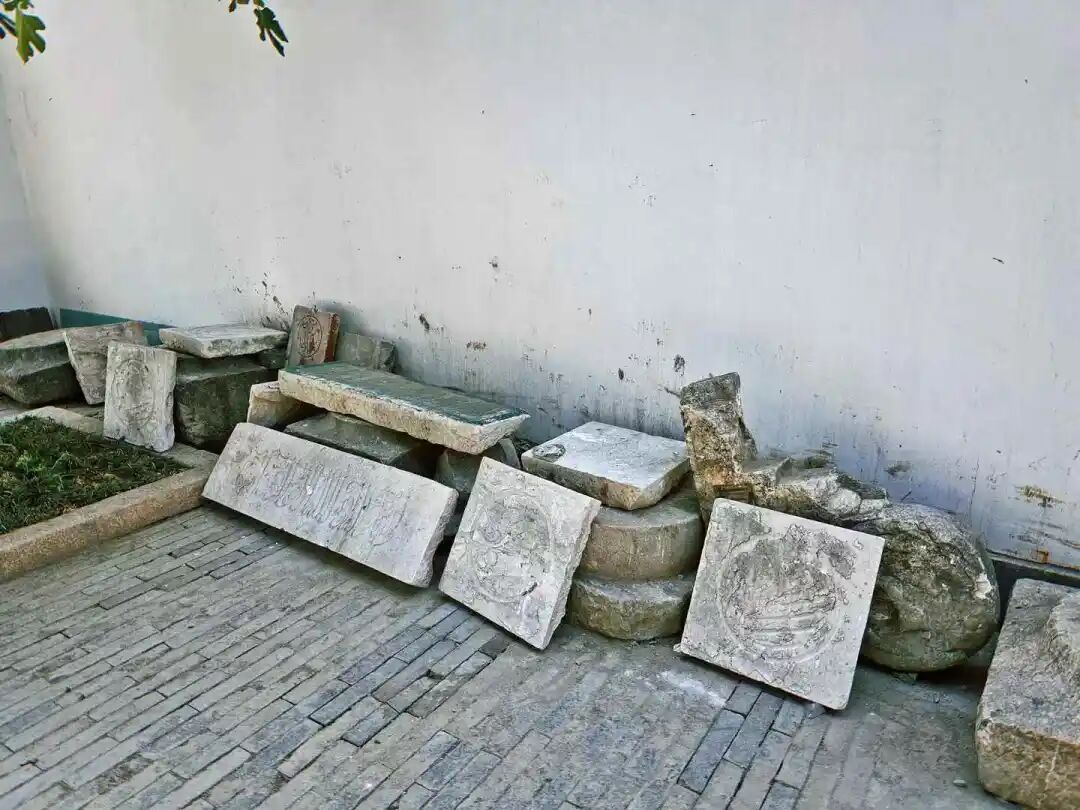
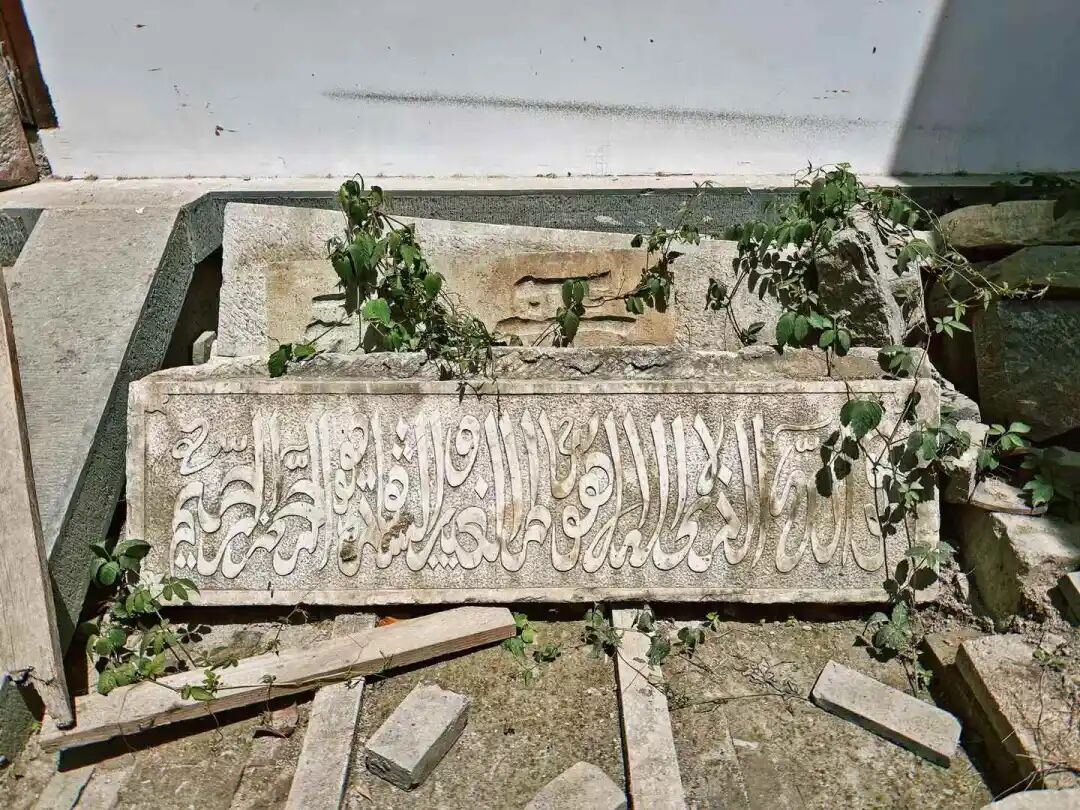
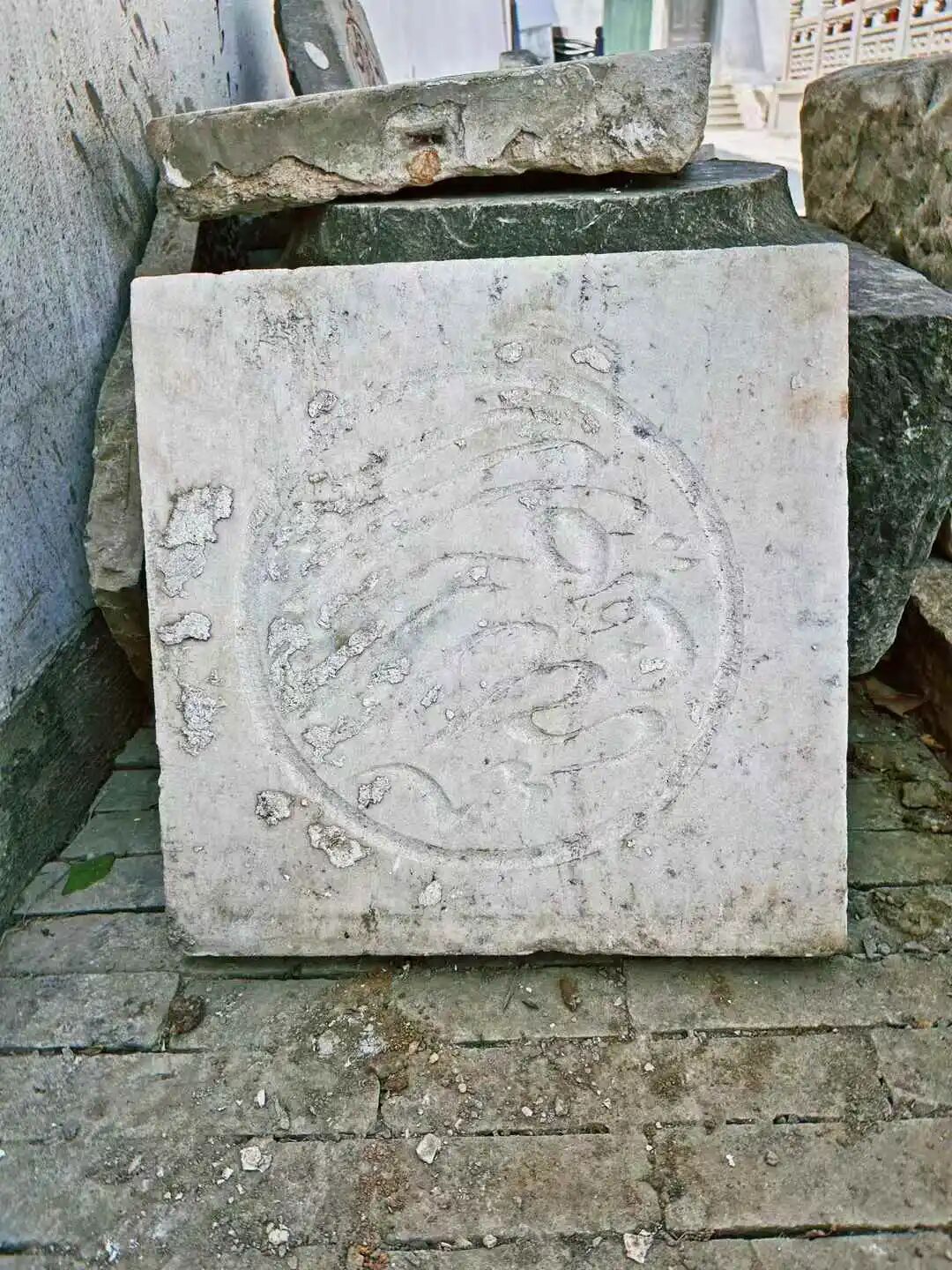
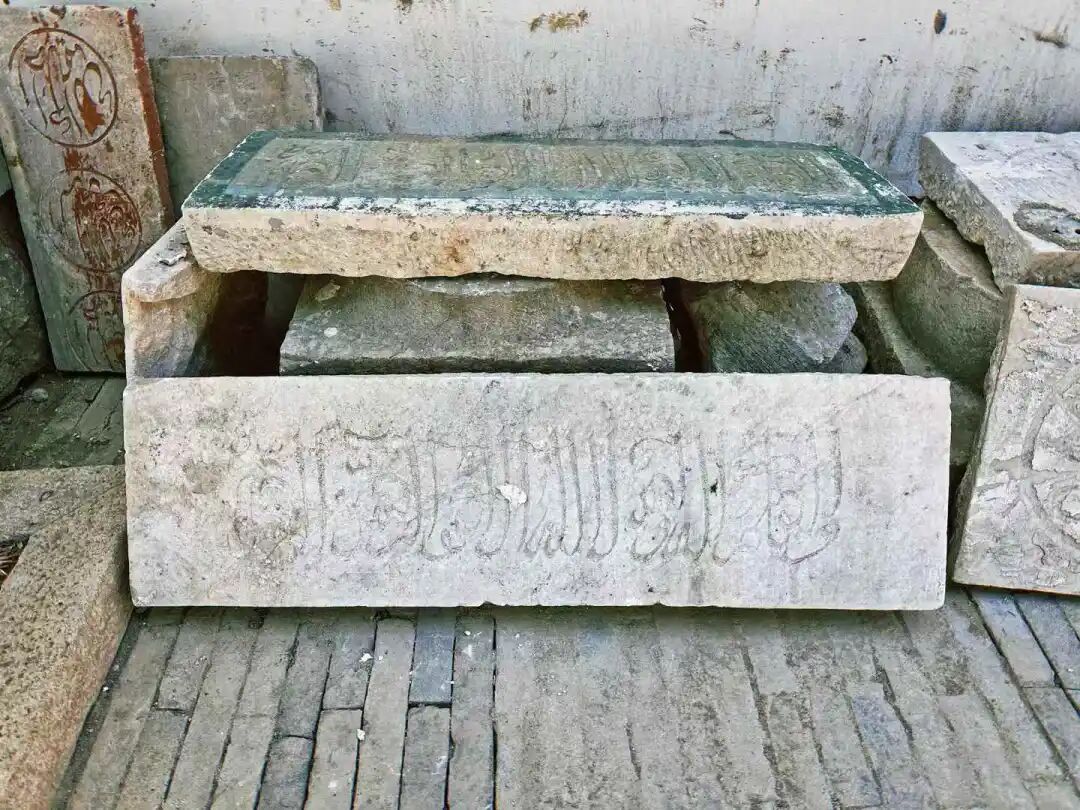
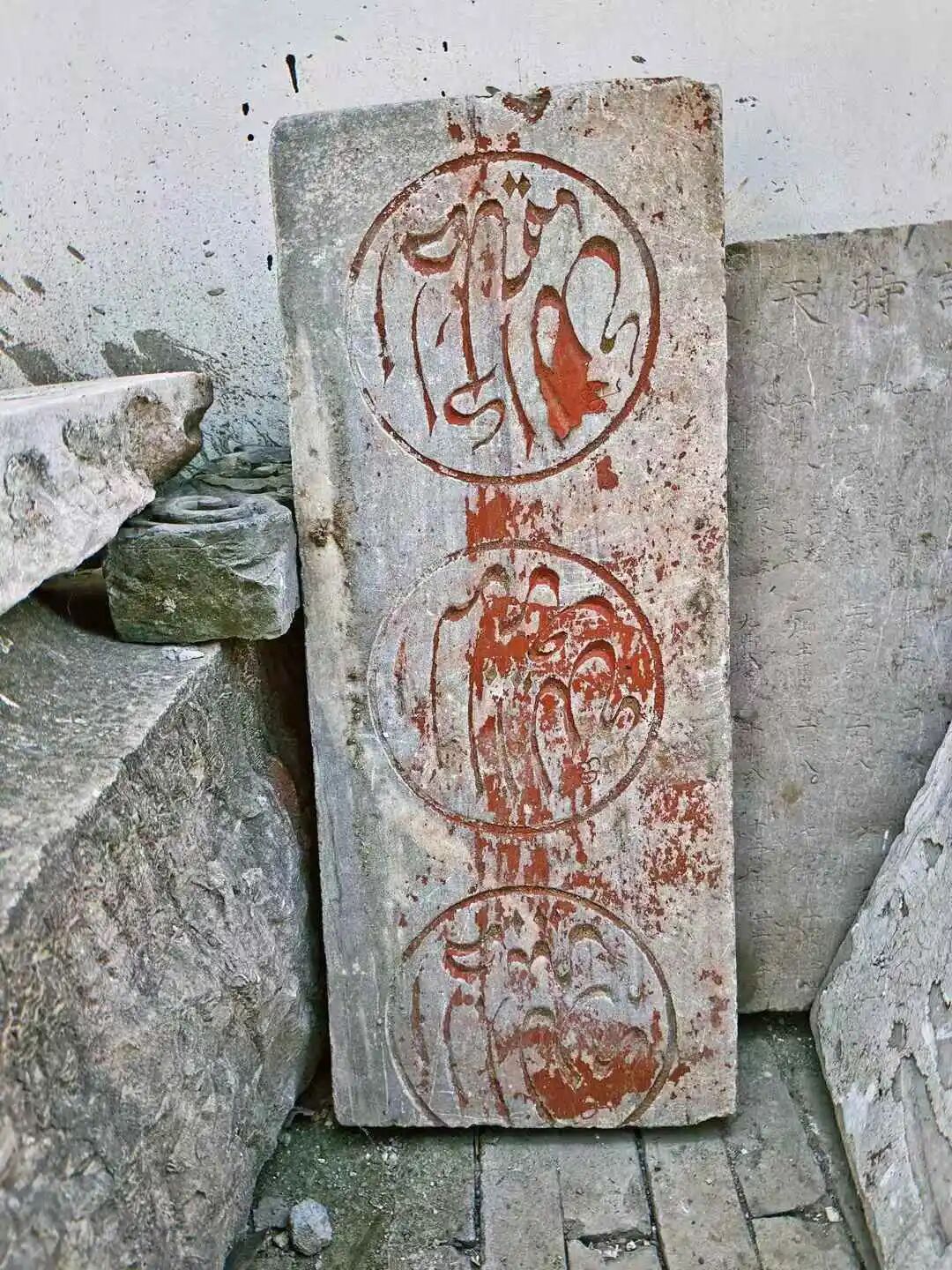
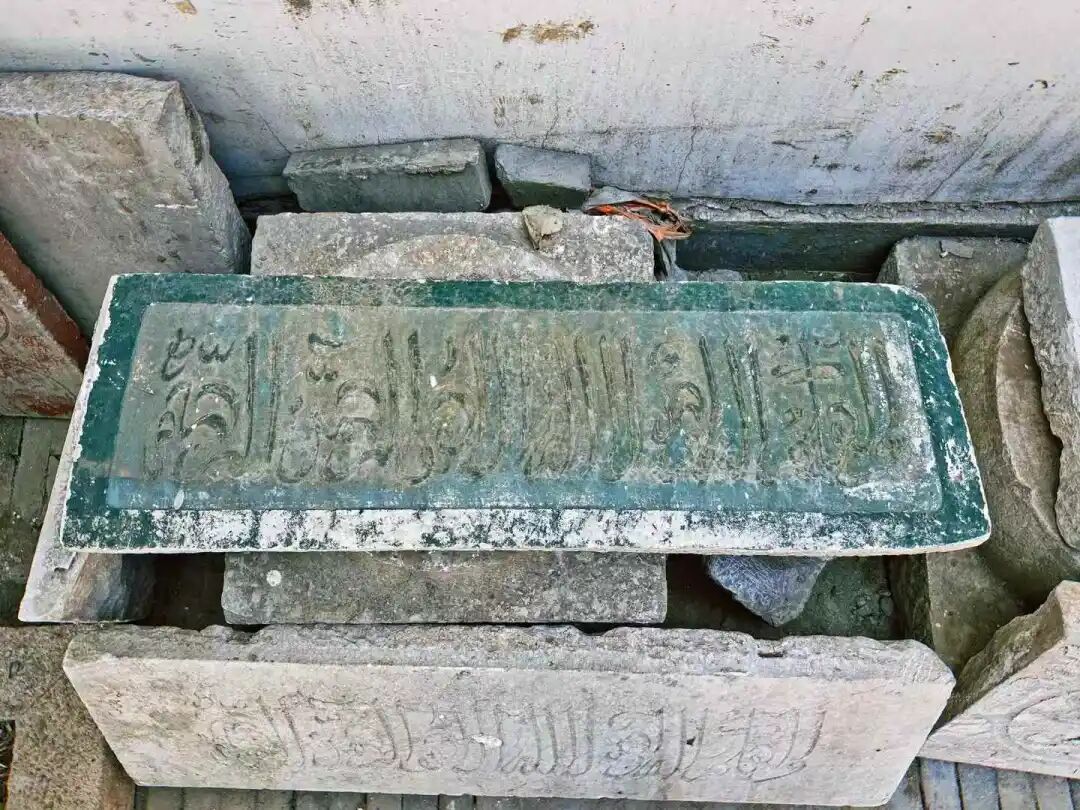
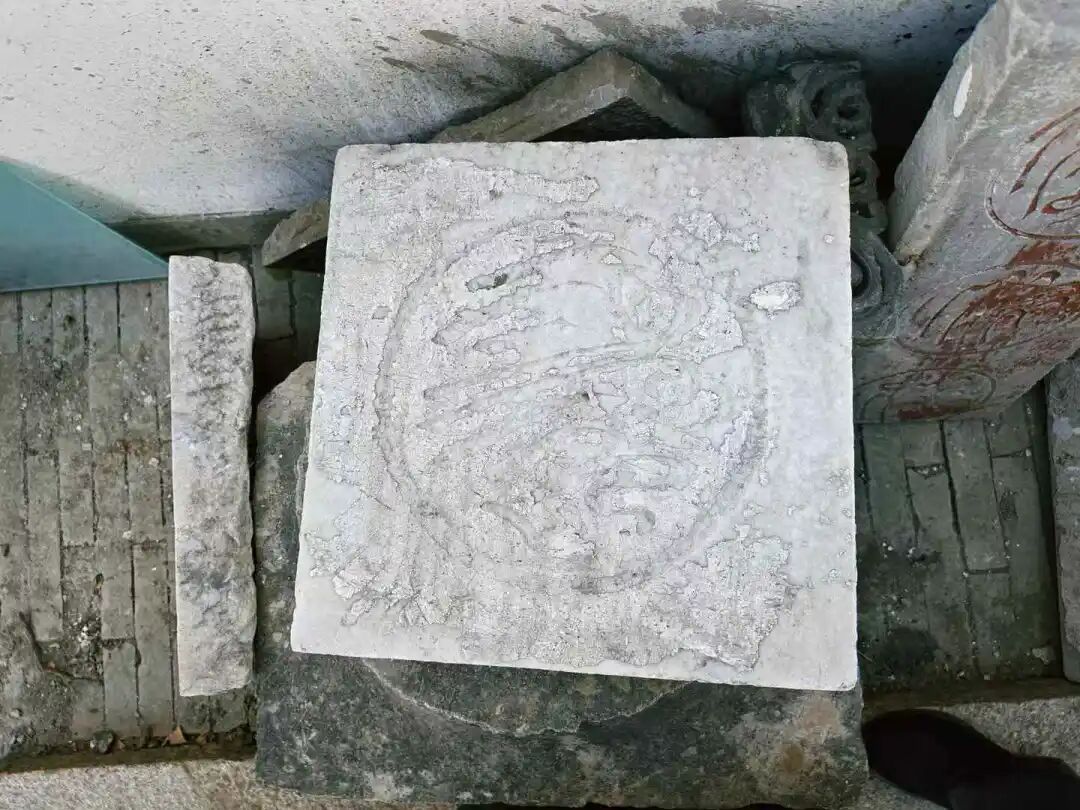
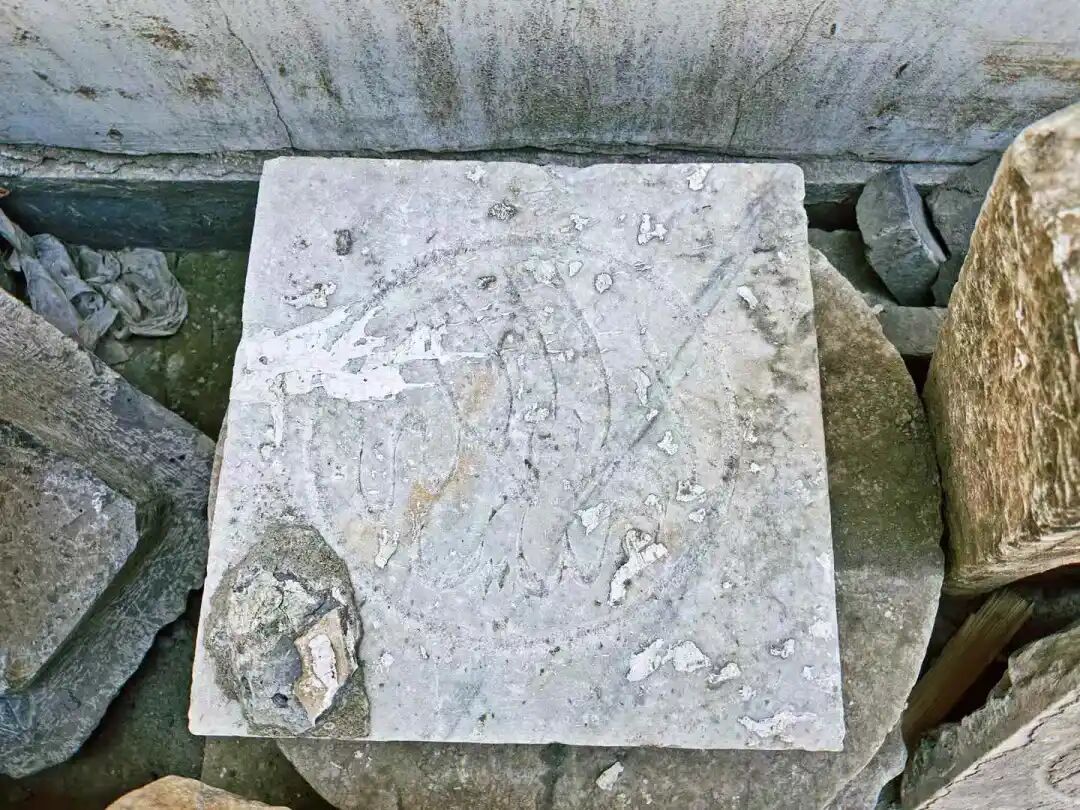
The former Taiping Road Mosque.
Because the Jiangsu Hotel expanded to Taiping Road, the main hall and opposite hall of the Taiping Road Mosque were moved 40 meters south of the old Caoqiao Mosque in 2003. The project was completed in 2005.
Taiping Road Mosque was originally called Huapailou Mosque. Legend says it was built by Chang Yuchun in the early Ming Dynasty. It was destroyed during the Taiping Rebellion and later rebuilt with funds raised by elders from the Ha, Ma, Zheng, Yang, Ding, and Chang families. Ma Jingtao led its renovation during the Tongzhi reign. In 1924, wealthy Nanjing merchants and brothers Jiang Muzhou and Jiang Sukan (Guobang) donated money to rebuild a new mosque on the south side, which was still called Huapailou Mosque. When the road was widened in 1931, the gate tower was demolished. Huapailou was renamed Taiping Road, and Huapailou Mosque was renamed Taiping Road Mosque.
After the victory in the War of Resistance in 1945, the Jiang family of Jinling funded the renovation of the main hall and built the Jiang Family Shouxuan Hall in the north courtyard. That same year, the China Islamic National Salvation Association moved into Taiping Road Mosque and changed its name to the China Islamic Association. Its first chairman was Bai Chongxi. It was the highest Islamic organization in the country at the time until it moved to Taipei in 1949. After the 1960s, the Taiping Road Mosque was occupied. It was reclaimed in 1978, reopened in 1980, and named a municipal cultural relic protection unit in 1982. It was demolished in 2003, and the components of the main hall and opposite hall were moved to a new site.
Because the daily expenses of Taiping Road Mosque were paid by the wealthy Jiang family of Jinling, it was the richest mosque in Nanjing during the Republic of China era. The Jiang family of Jinling originally came from Yuncao Ancient Town in Hanshan County, Anhui. They moved to Nanjing in 1808 (the 13th year of Jiaqing). They started as small vendors and later expanded into the silk, salt, and pawn industries. During the Guangxu reign, they opened branches in major commercial ports and became a wealthy merchant family.
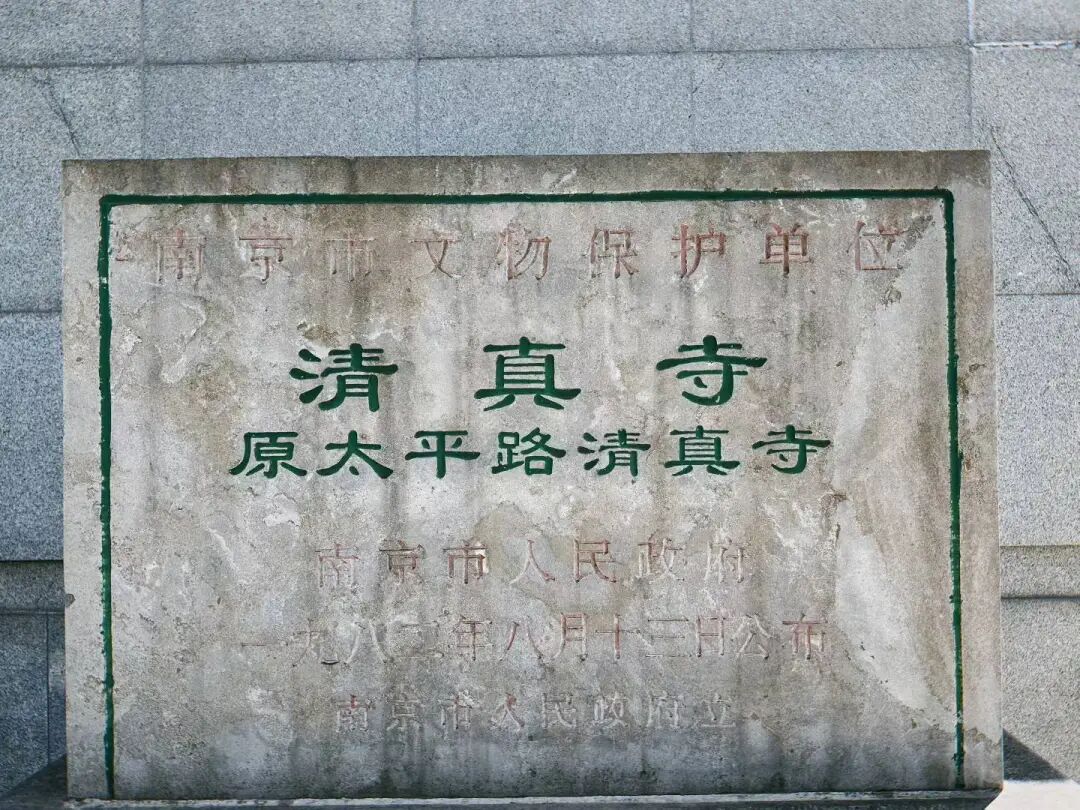
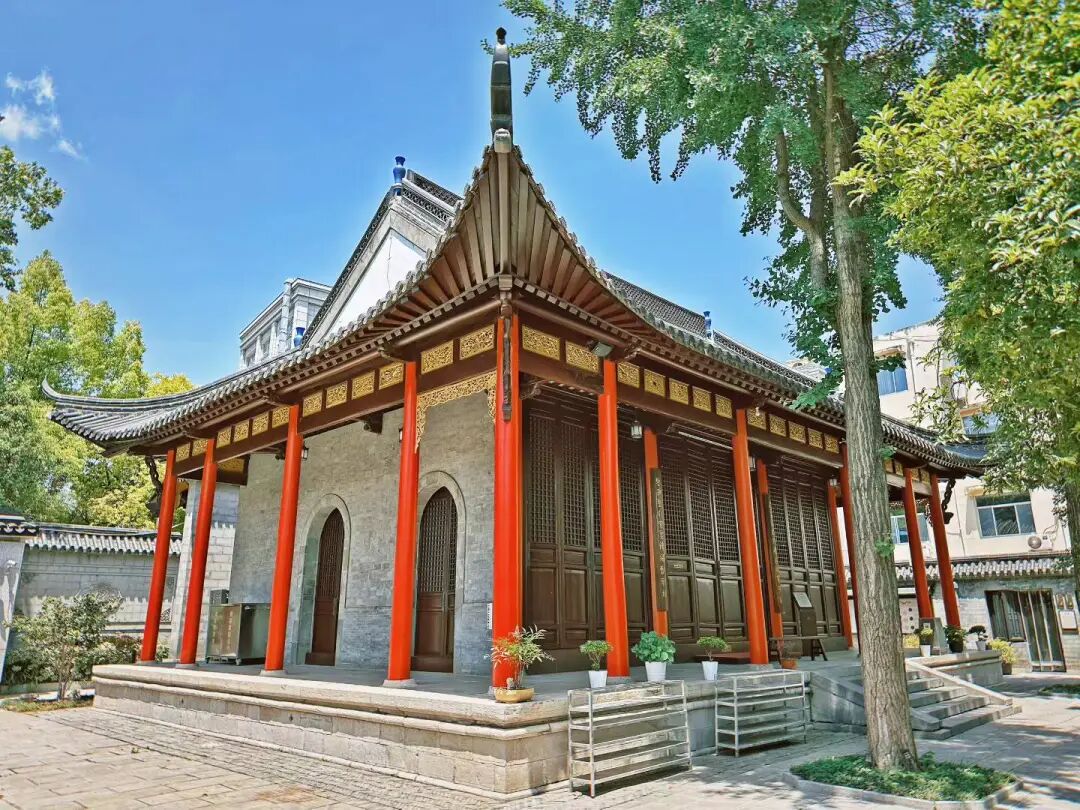
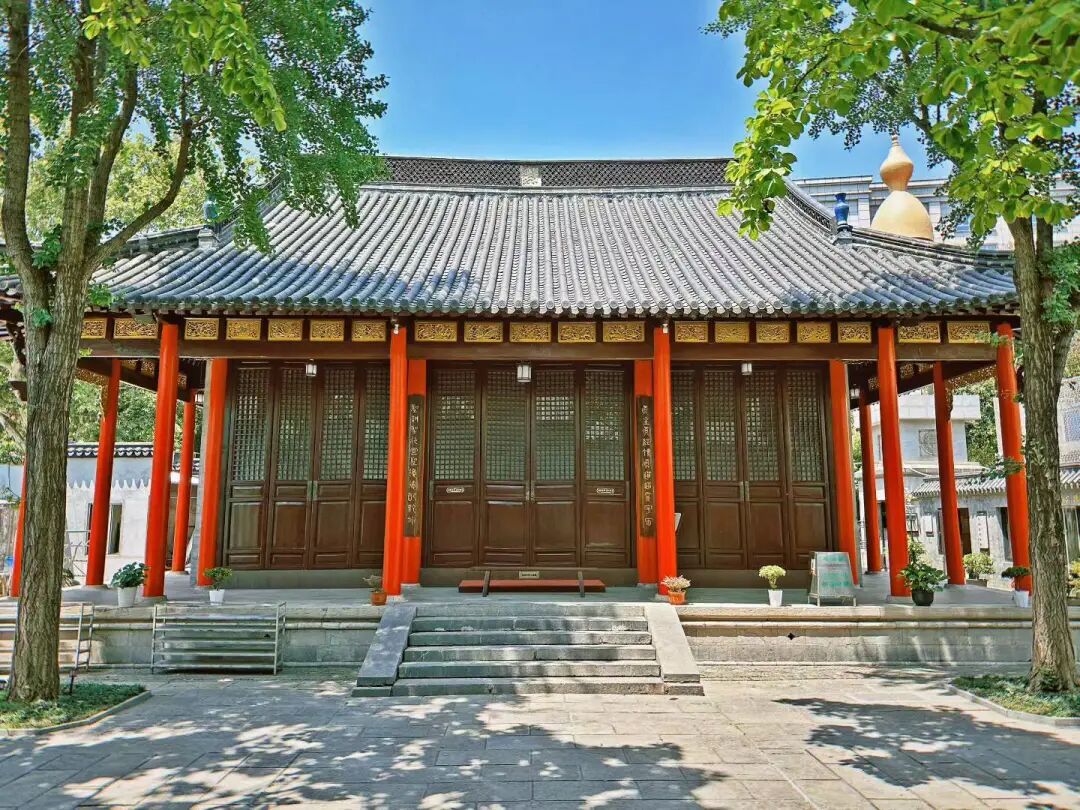
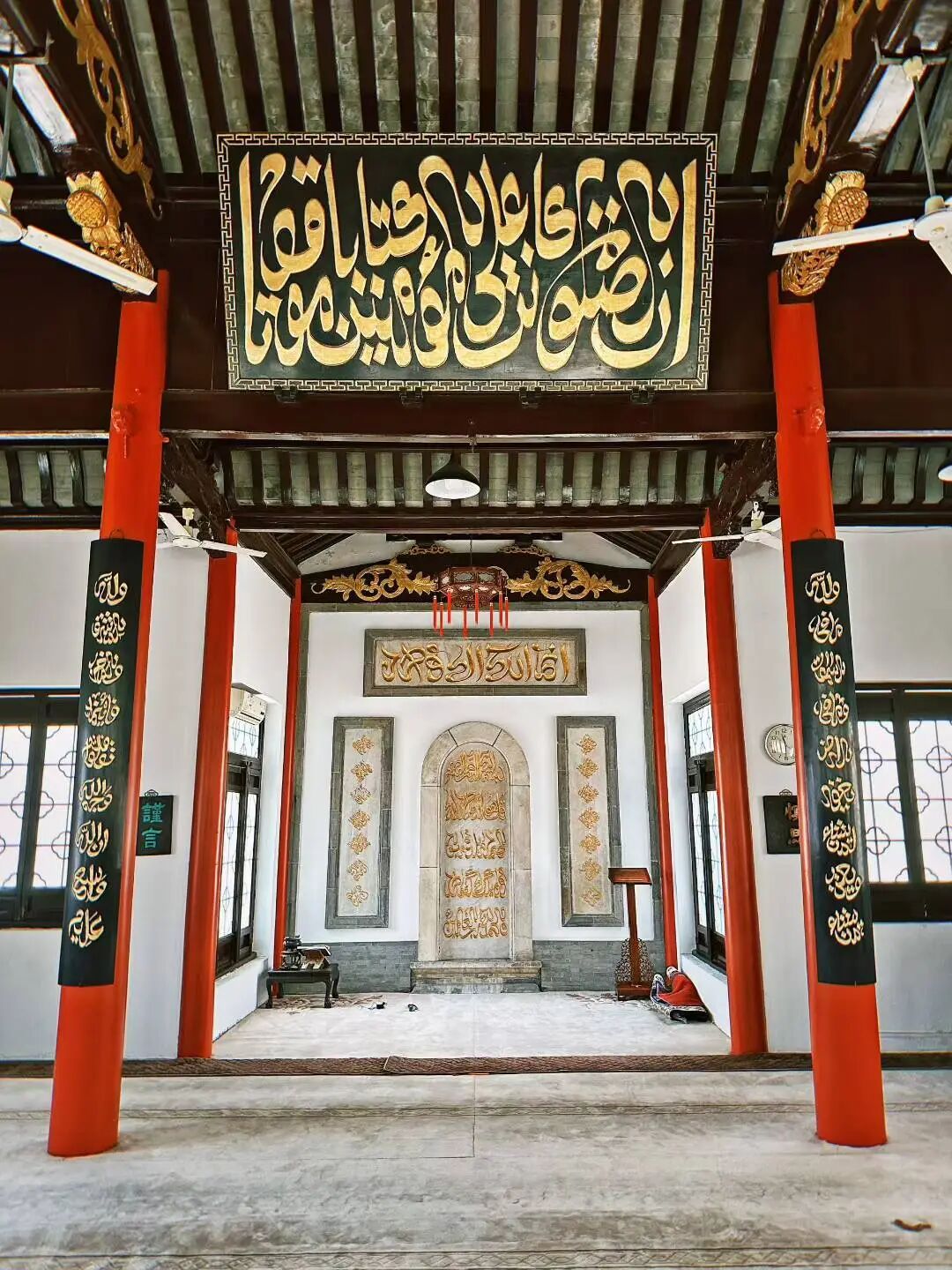
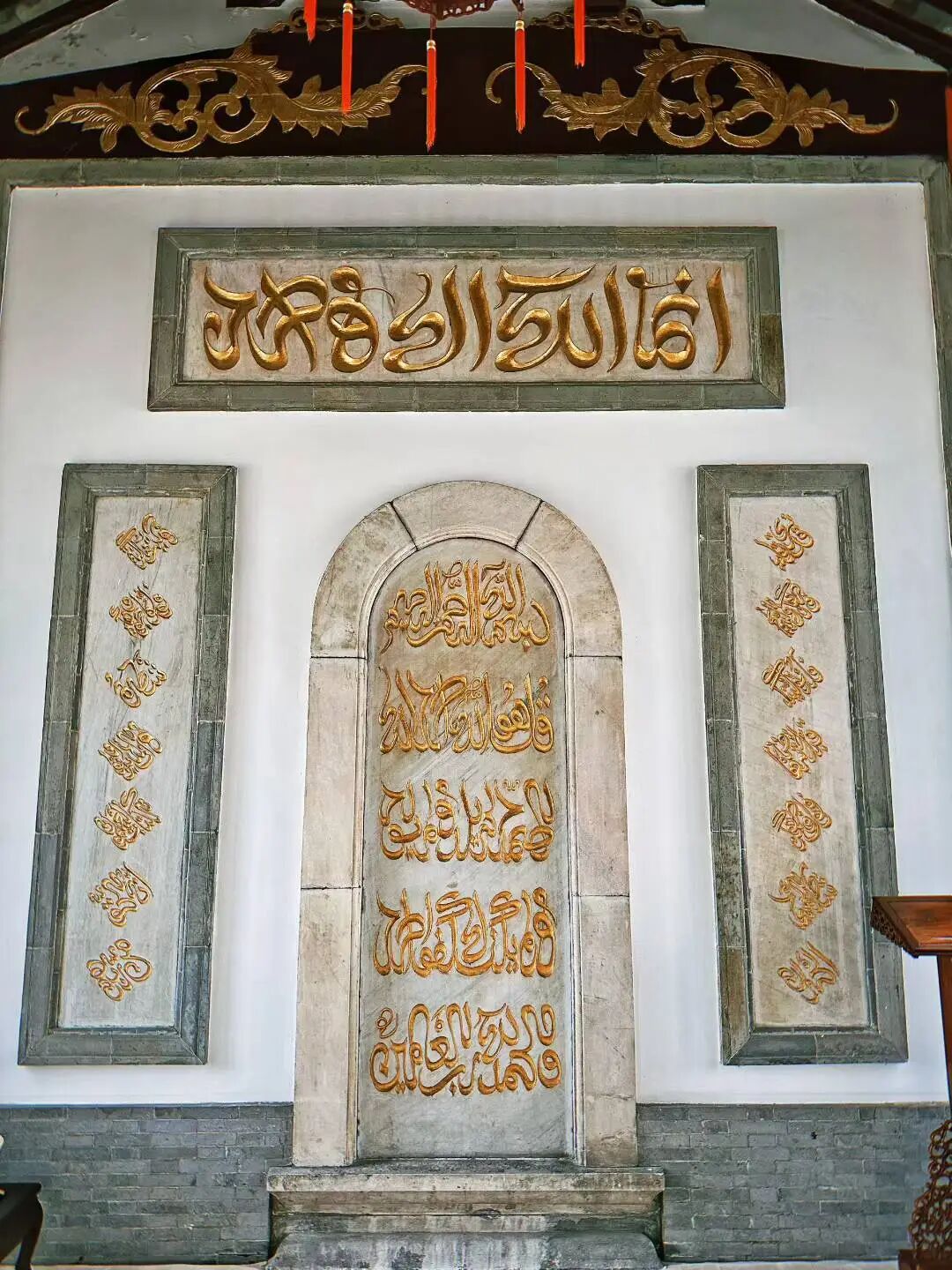
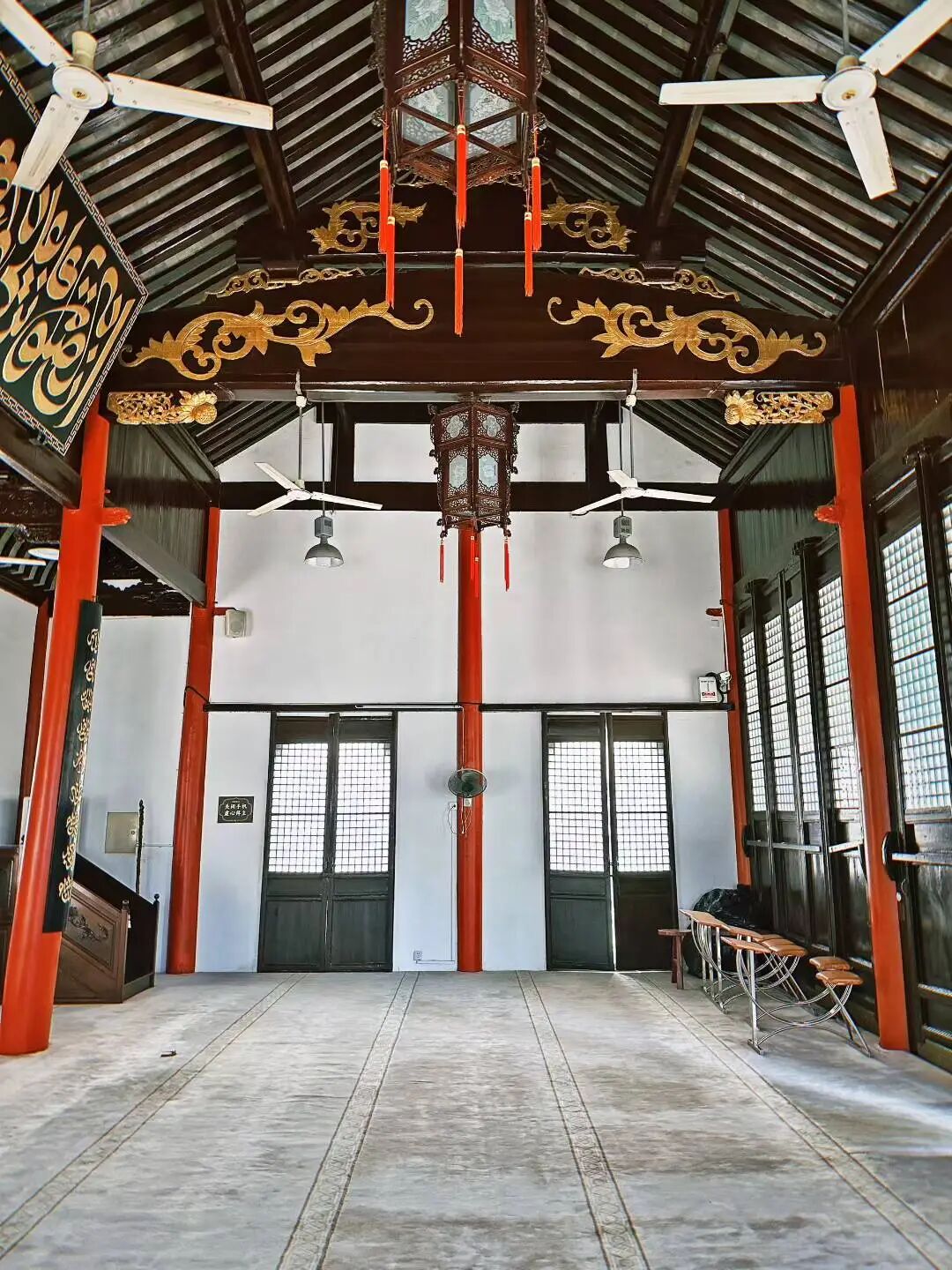
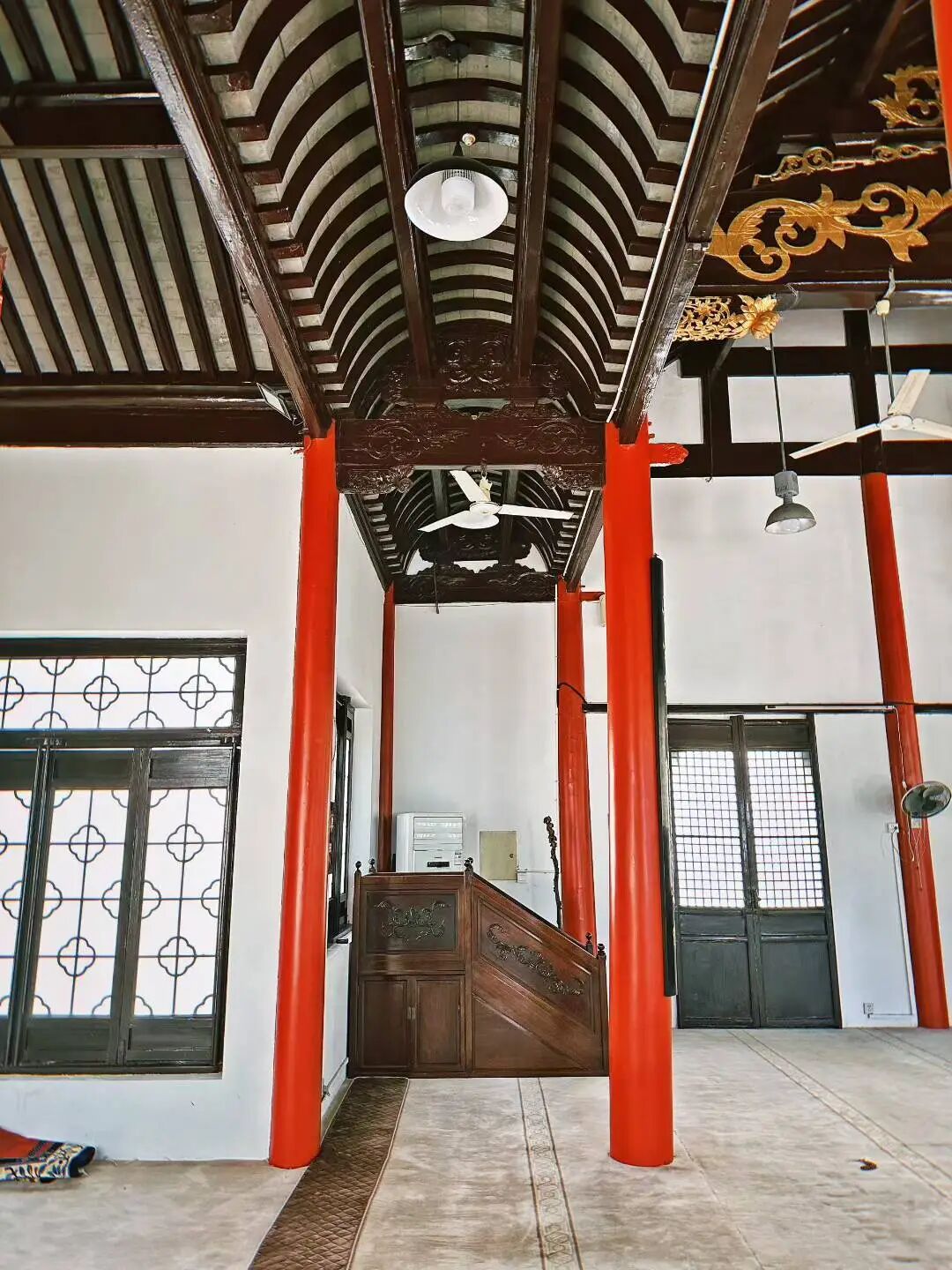
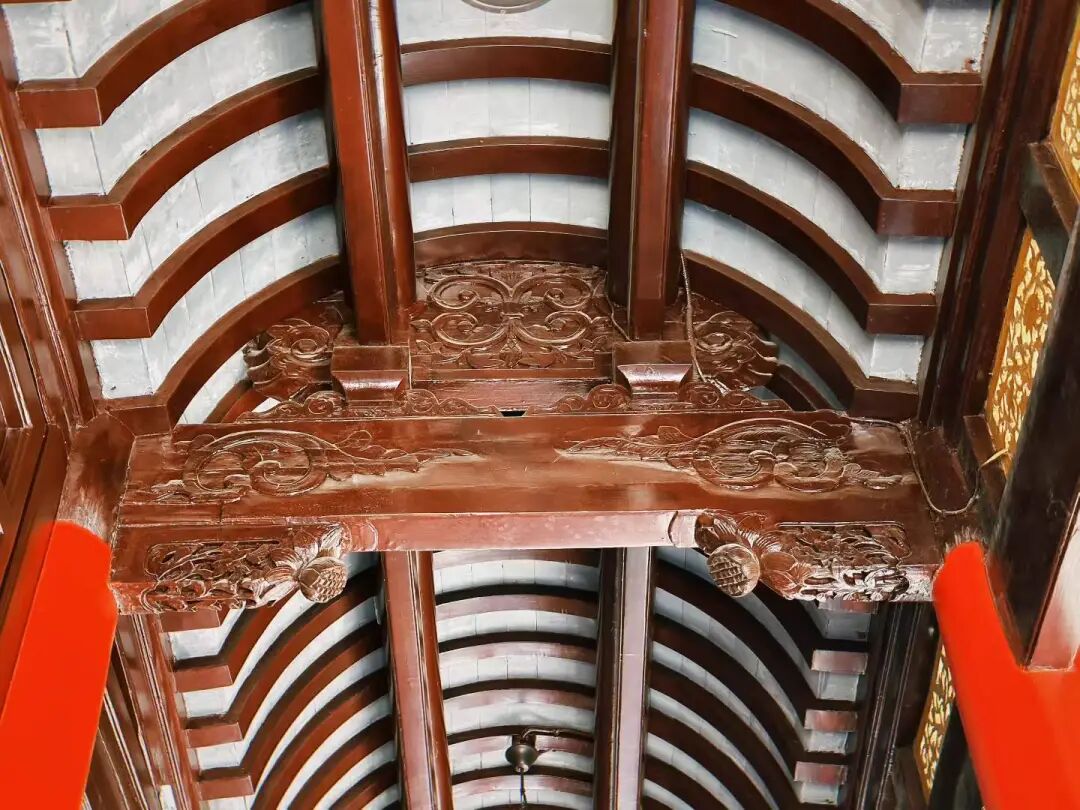
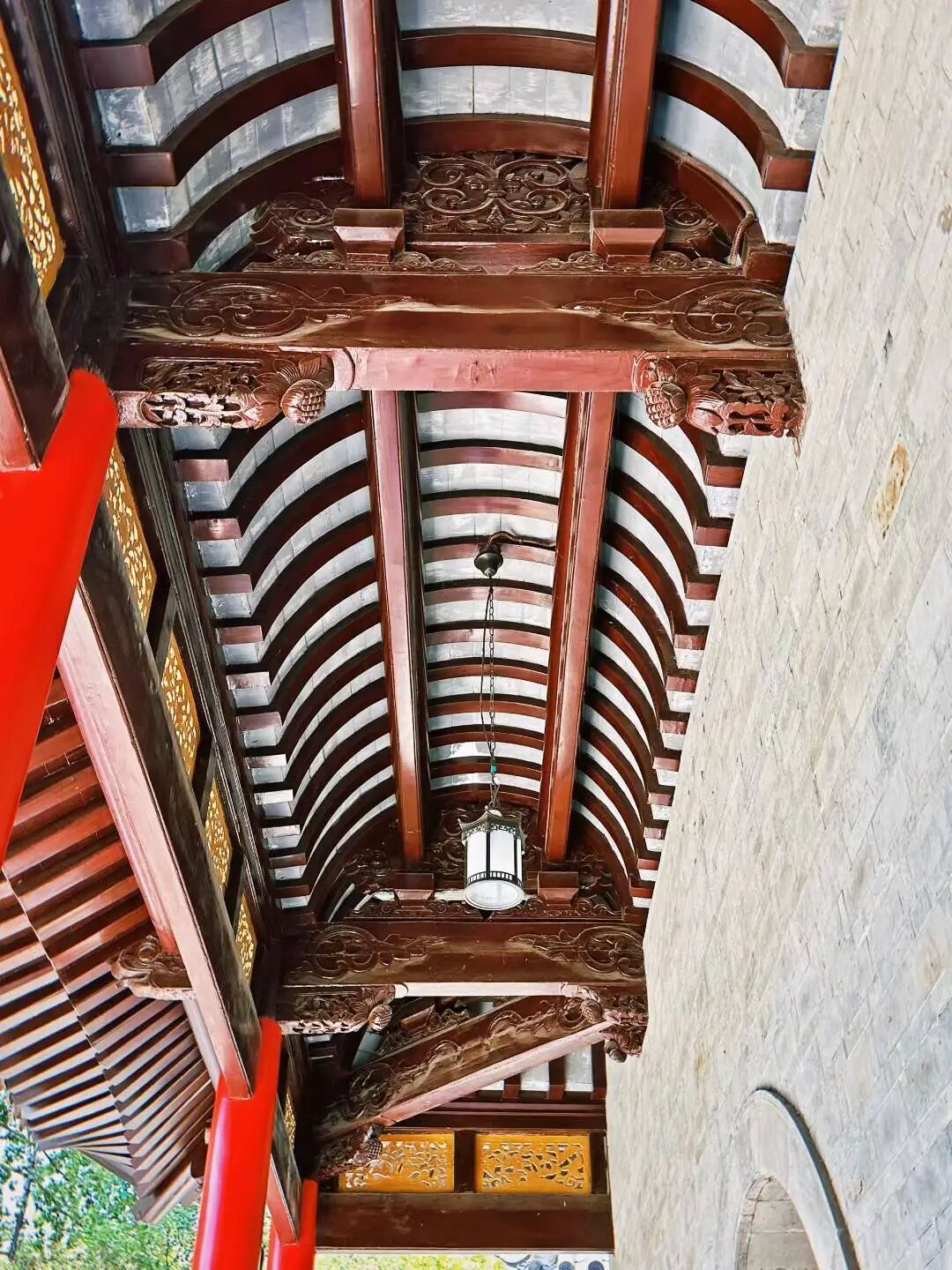
The opposite hall of the former Taiping Road Mosque served as the office for the chairman of the China Islamic Association between 1945 and 1949, where Bai Chongxi once worked.
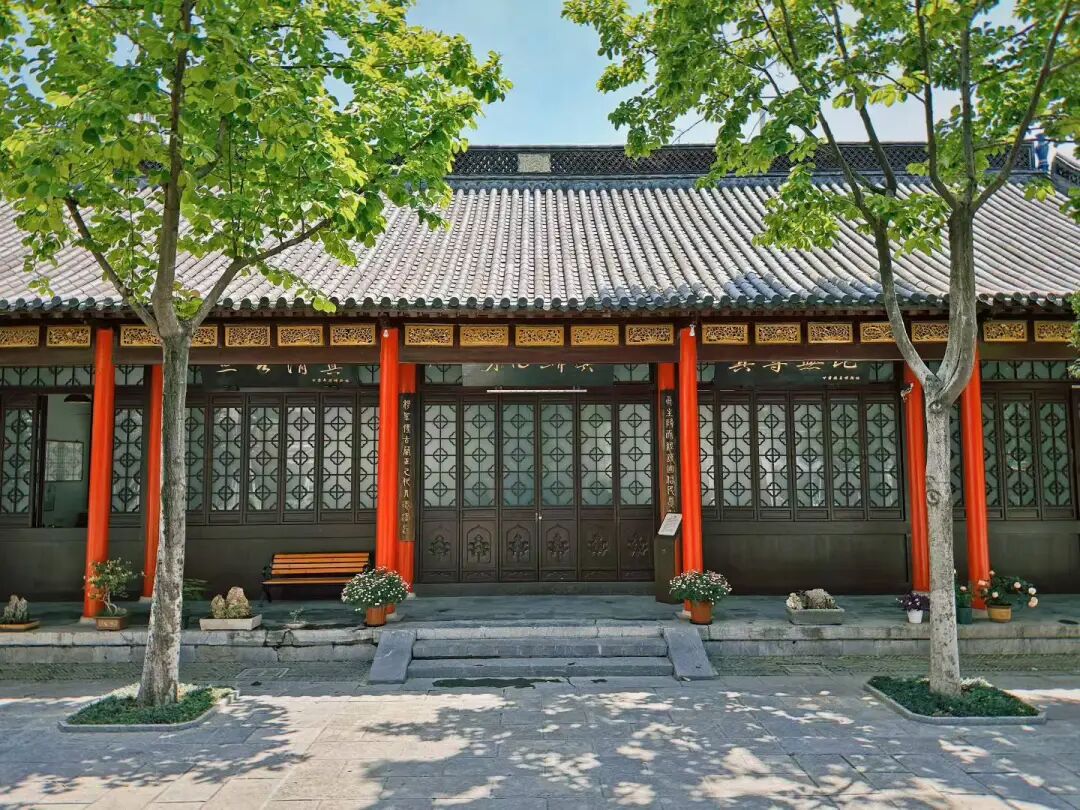
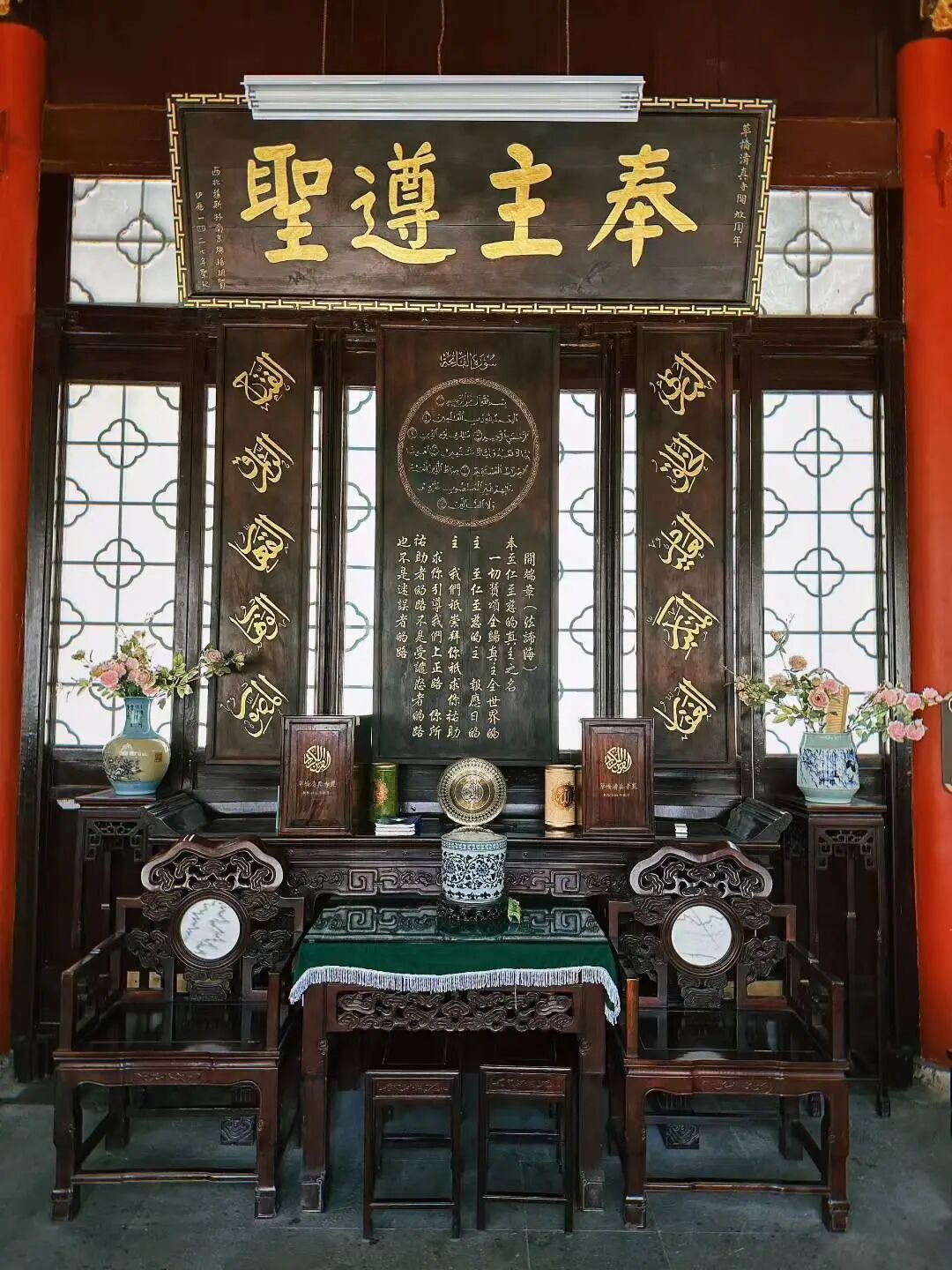
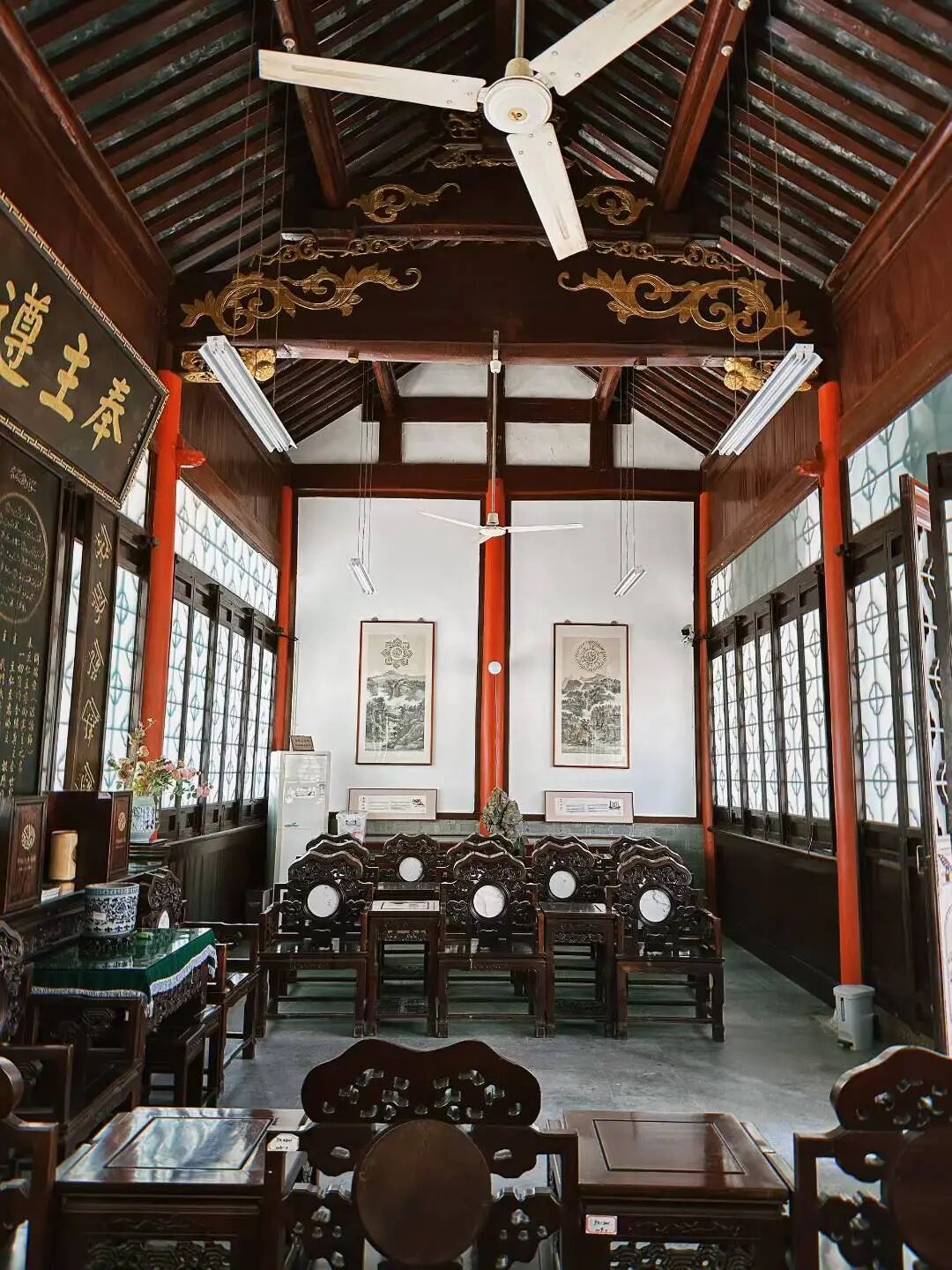
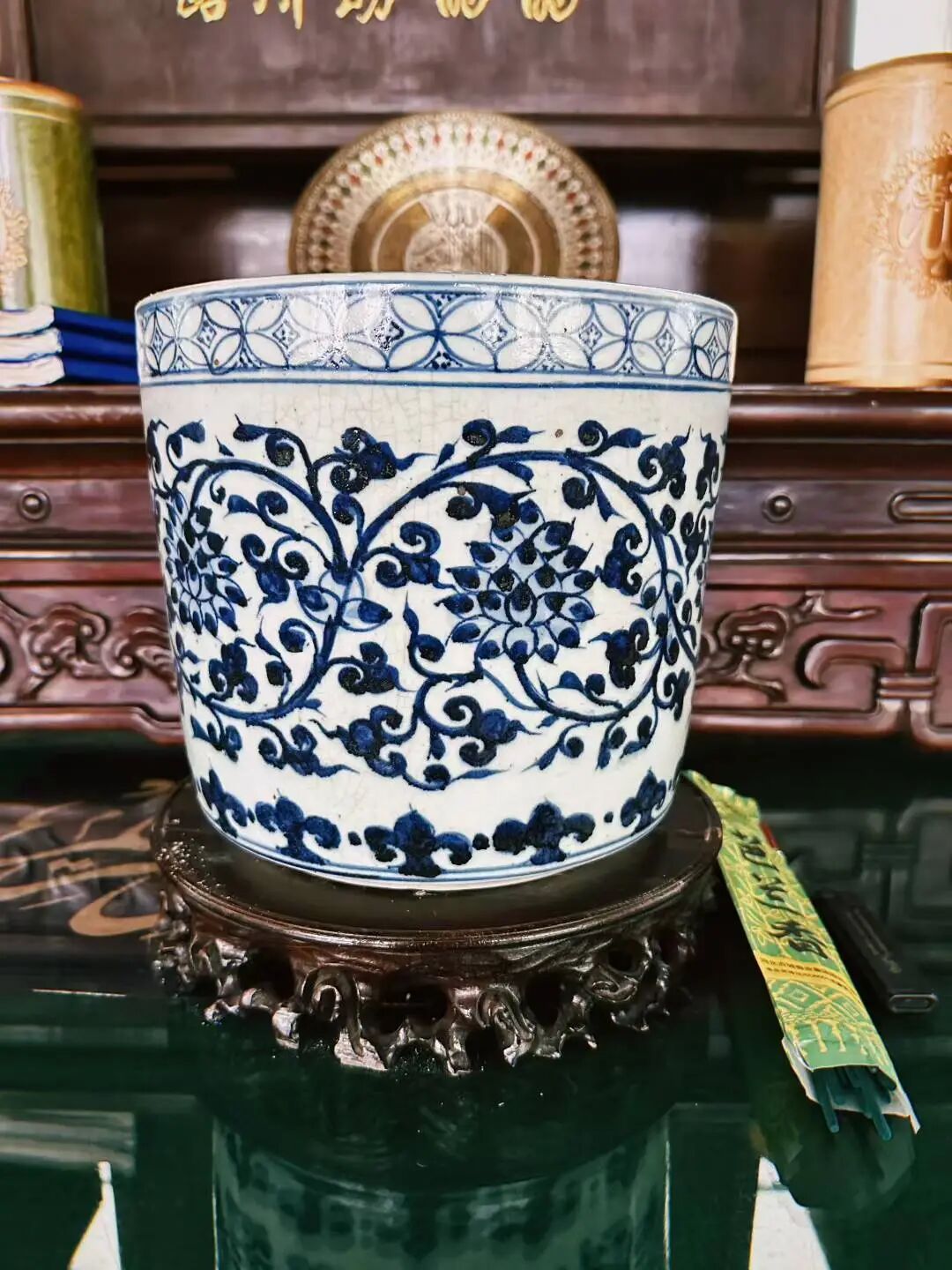
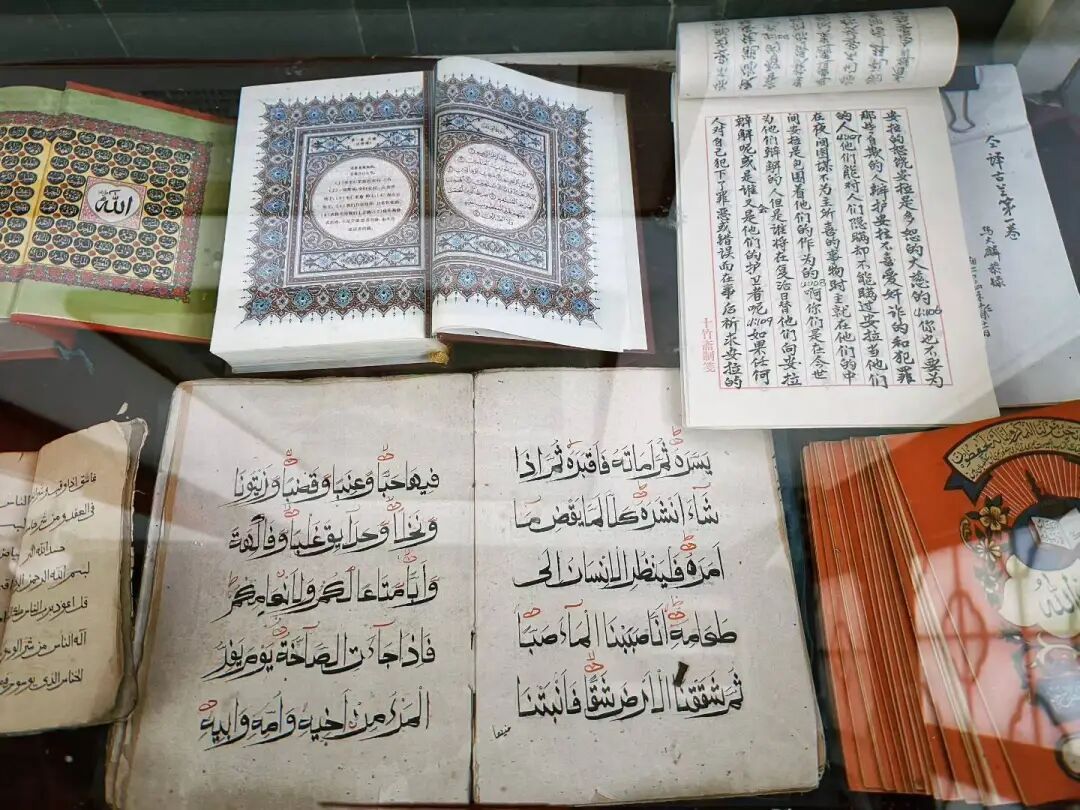
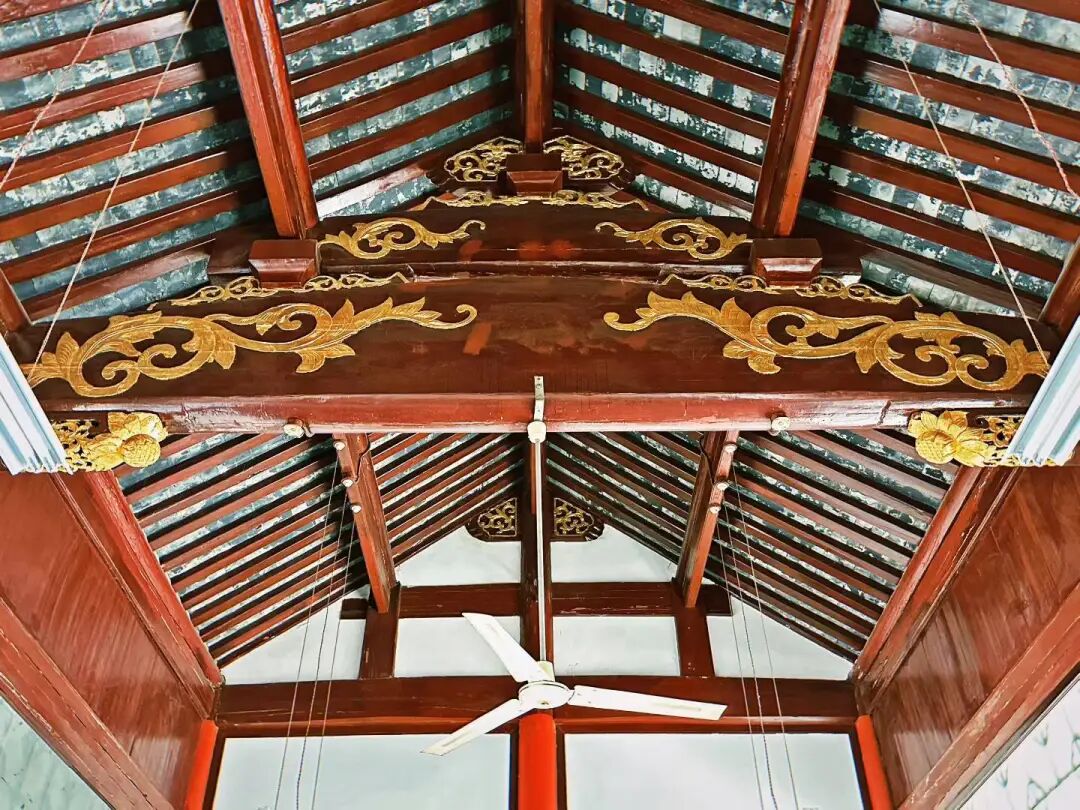
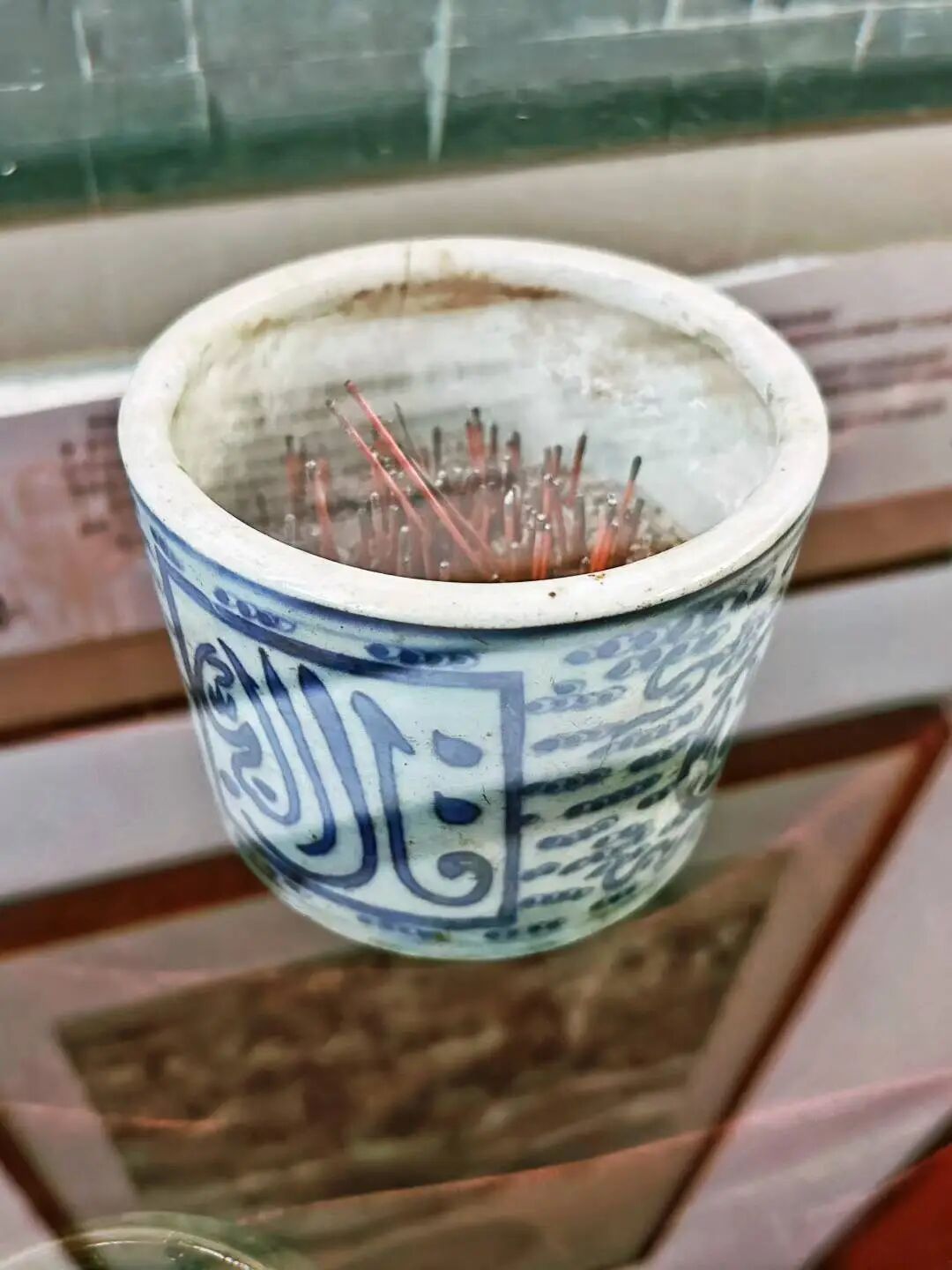
The brick carving of 'Washing the Heart and Looking at the Palace' (xixin zhanque) from the water room of the former Taiping Road Mosque.
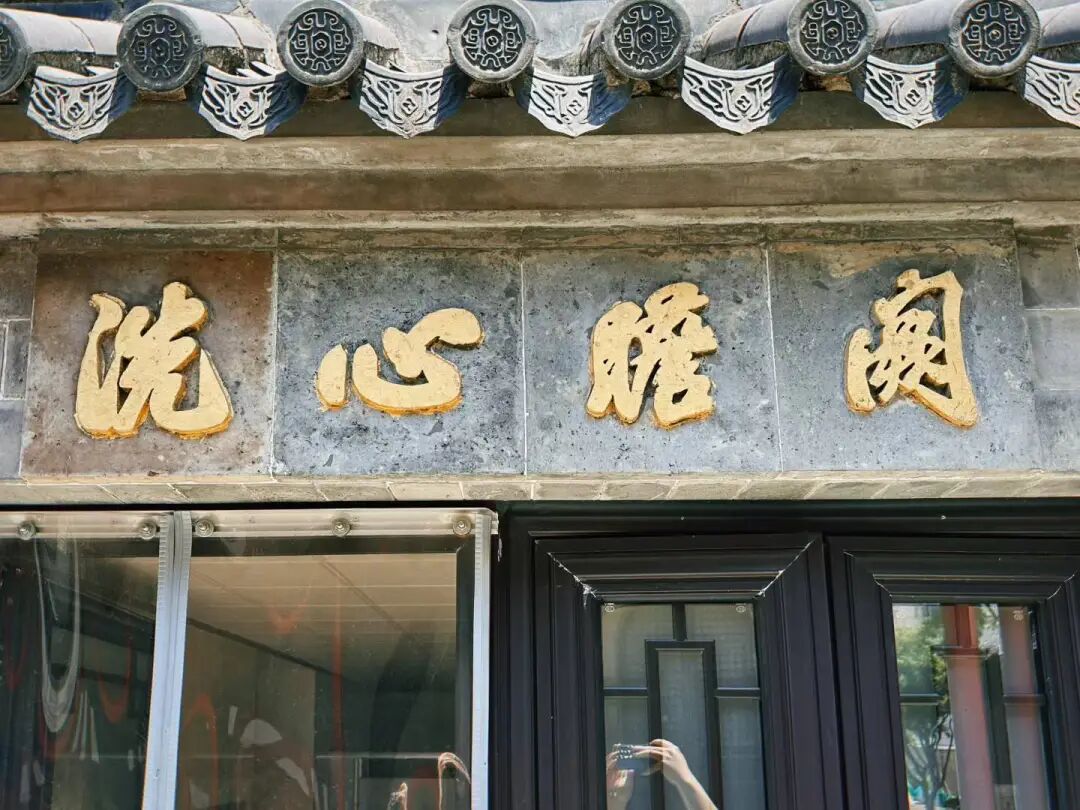
The former Taiping Road Mosque collected the 'Postscript to the Mother's Filial Piety Arch' written by Jiang Guobang. It records that the father of the wealthy Nanjing merchant Jiang Guobang lost his own father early and was raised by his mother, Madam Ma. In 1911 (the third year of the Xuantong reign), he petitioned to build a memorial arch for his mother's filial piety. Due to the change in government, it was finally completed in 1914.
Jiang Guobang came from the wealthy Jiang merchant family of Jinling, but he cared little for fame or wealth and dedicated himself to the study of traditional Chinese culture. Jiang Guobang was very filial. To provide his mother with a good place to spend her later years, he spent a large sum of money to buy the Xiaowanliu Hall by West Lake in Hangzhou. He later named it Jiang Manor (Jiangzhuang), which was one of the three major manors on West Lake at that time. In 1924, Jiang Guobang oversaw the reconstruction of Taiping Road Mosque and later built the memorial arch for his mother's filial piety inside the mosque. The arch no longer exists today, and only the stone tablet record remains.
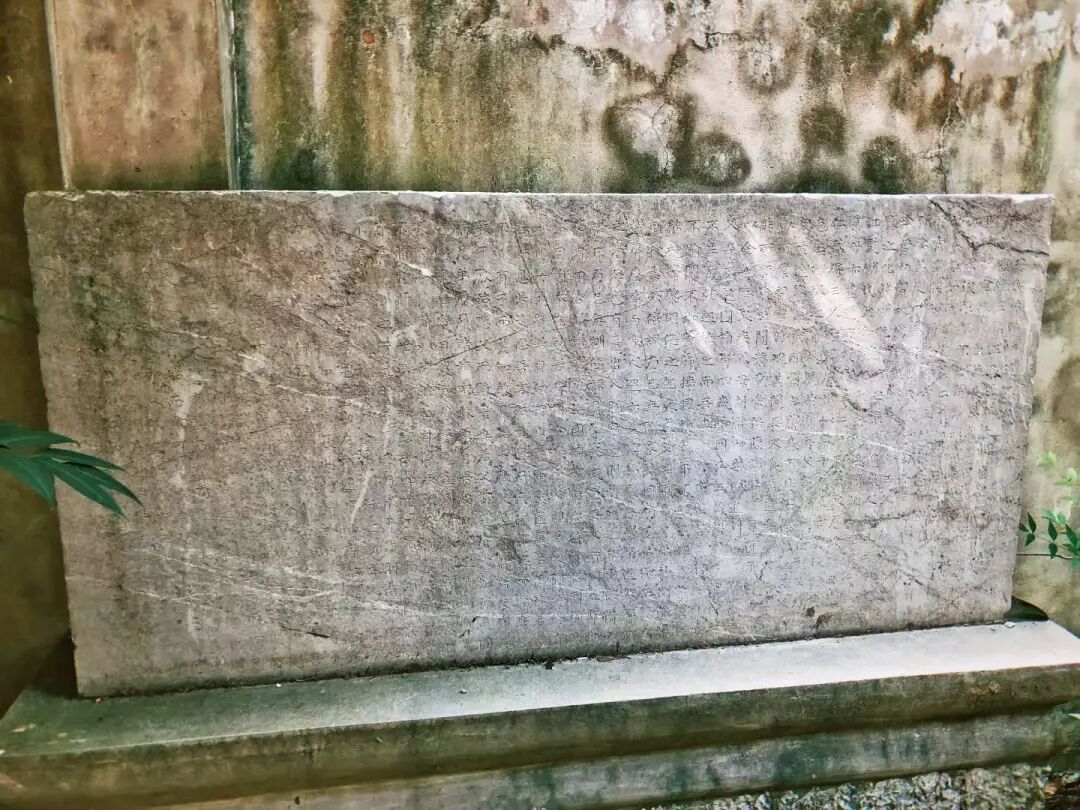
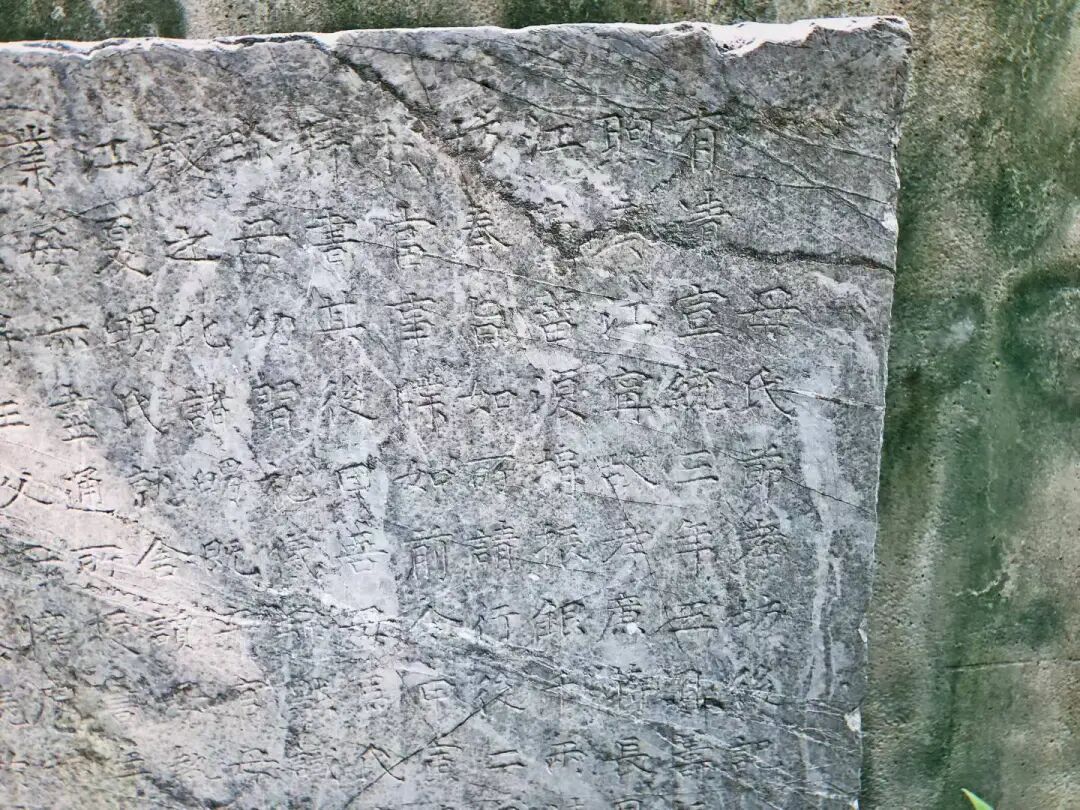
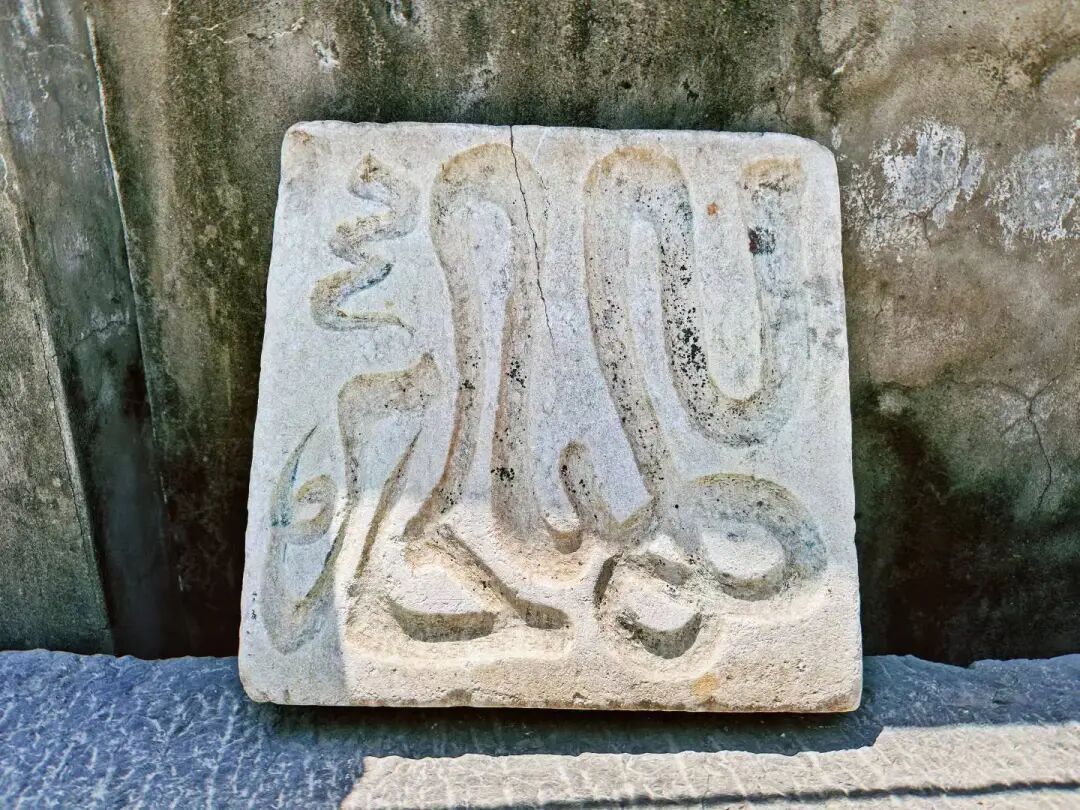
The well railing from the Qing Dynasty and a stone tablet from the Guangxu reign at Caoqiao Mosque. Caoqiao Mosque was first built during the Guangxu reign of the Qing Dynasty. It was destroyed by fire during the Taiping Rebellion and rebuilt in the early years of the Tongzhi reign. Because it was located in Qijiawan, a neighborhood where Hui Muslims lived, Caoqiao Mosque once had the largest number of congregants in Nanjing. Historically, Caoqiao Mosque had no property of its own. Its daily expenses were covered by the Beef and Leather Trade Association, which was based inside the mosque. After 1958, Caoqiao Mosque was occupied and later rented to the Nanjing Woodworking Factory, which caused serious damage. The mosque property was returned in 1985 but never reopened, and it was demolished in 2003.
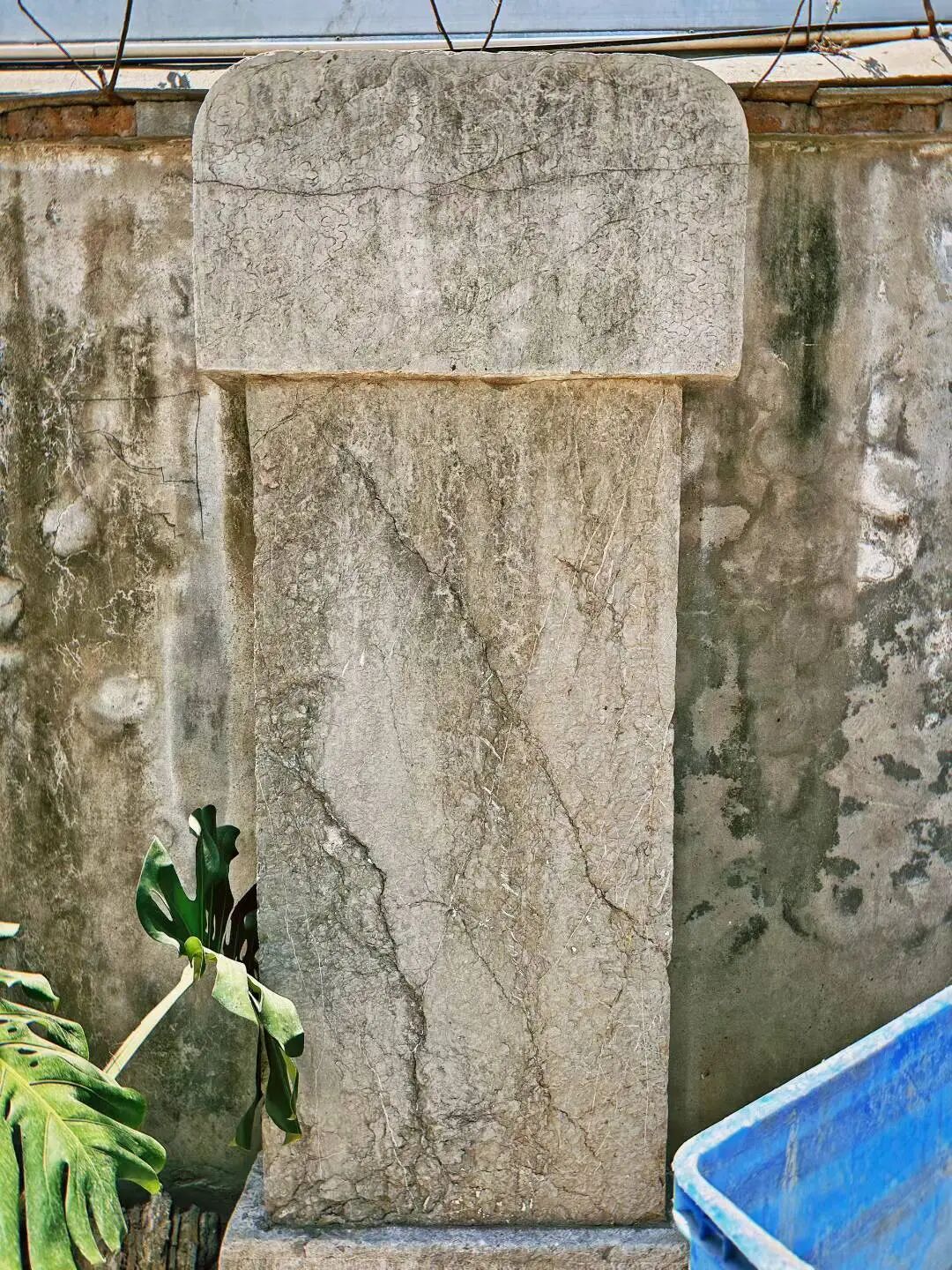
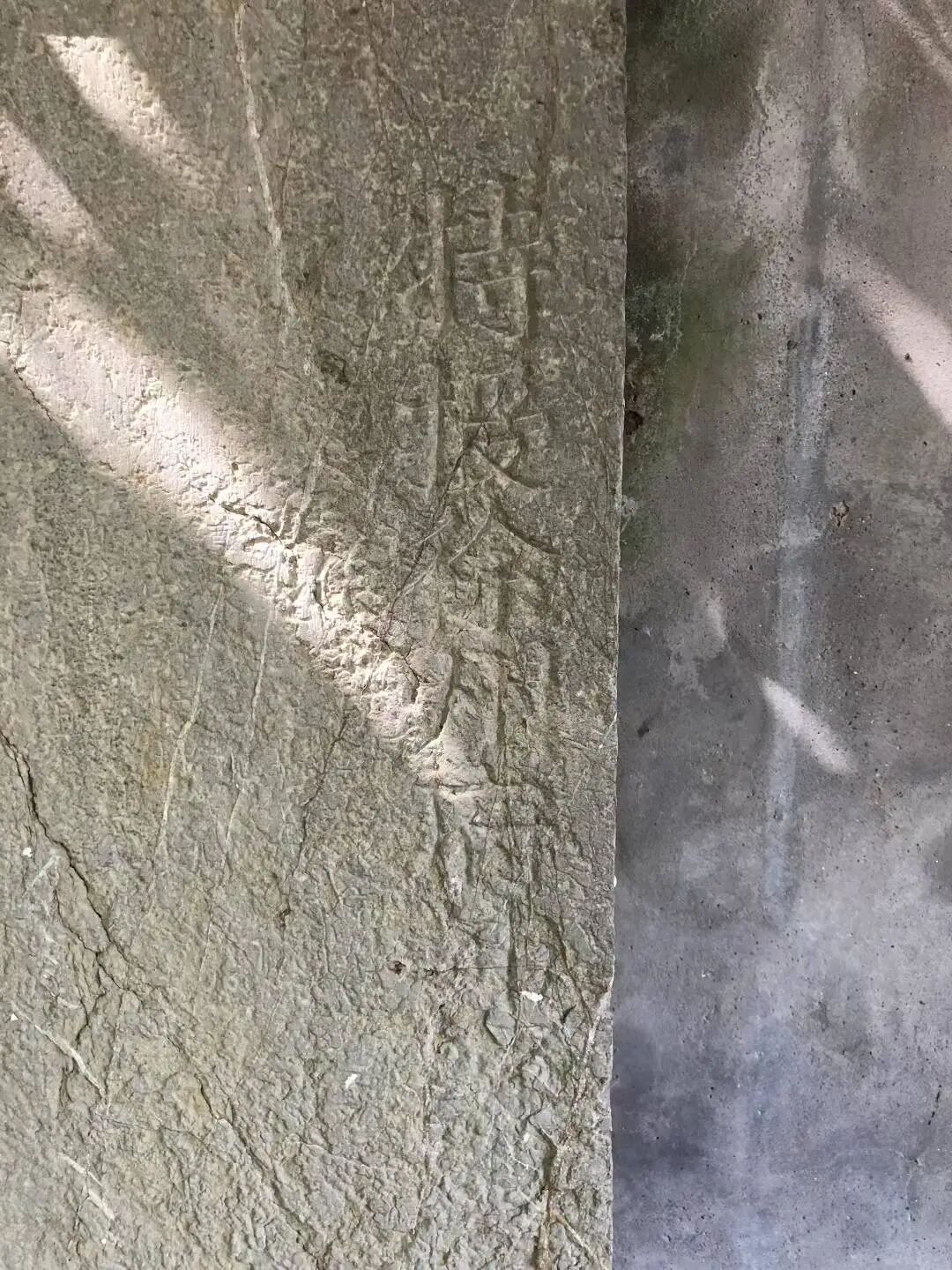
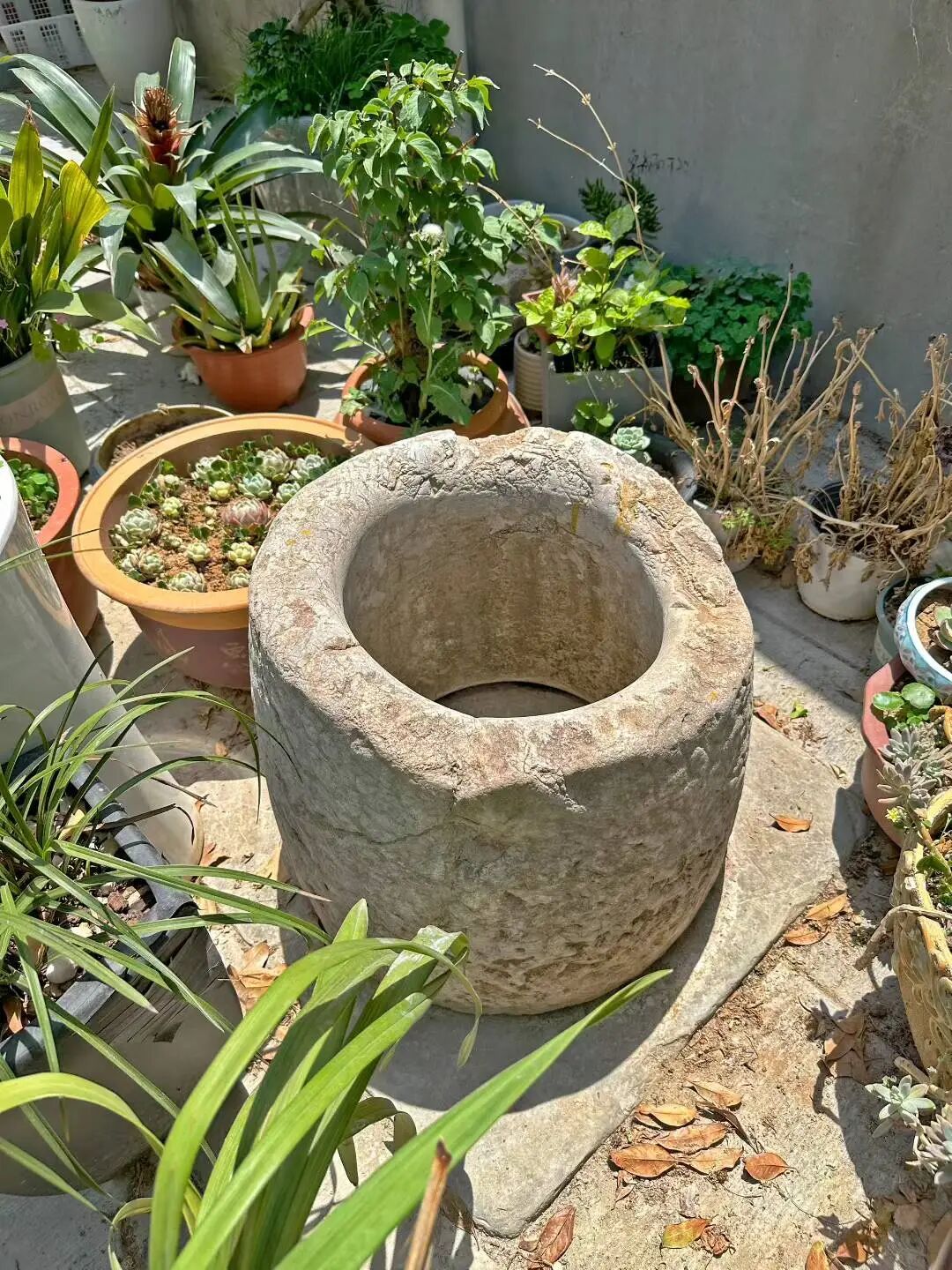
The Jiang Family Courtyard in Laomendong.
In the Laomendong scenic area of Nanjing, there is a residence called Jishan Hall belonging to the wealthy Hui Muslim merchant family, the Jiangs of Jinling. It is currently located at 18 and 20 Santiaoying. The residence was open for visits before, but unfortunately, it was closed when we went.
The Jiang family of Jinling originally came from Yuncao, an ancient town in Hanshan County, Anhui. They moved to Nanjing in 1808 (the 13th year of the Jiaqing reign) and started out as small vendors. After the Taiping Rebellion was suppressed in 1864 (the third year of the Tongzhi reign), the Jiang family used sailboats to transport salt from the Lianghuai salt fields to the Yangtze River coast. On their return trips, they brought back large quantities of daily necessities, which helped them build their fortune. Later, they opened the Chunshengjian firm to trade in satin, and their reputation spread throughout the southwestern provinces.
Jiang Shoushan, also known as Changcheng, was a key figure of the Jinling Jiang family in the late Qing Dynasty. He owned the Deda Soy Sauce Shop in Nanjing, the Guangda Oil Mill in Liuhe, and the Chunyuan Oil Firm in Hankou. In 1875 (the first year of the Guangxu reign), the government named his residence Jishantang (Hall of Accumulated Goodness) and the street outside Jishanli (Alley of Accumulated Goodness) to honor his charity work, which included building bridges, paving roads, giving porridge to the poor, and helping those in need.
Beyond his business success, the Jiang family was also very devoted to their faith. Jiang Shoushan's father, Jiang Hanchen, wrote in the preface to the religious book 'Guizhen Yaodao' (Essential Path to Returning to the Truth), which he edited for his fourth son Jiang Changsong: 'Building wealth from nothing through business is all due to the grace of Allah.' During the late Qing Dynasty and the Republic of China, the Jiang family made significant contributions to the faith. They led the construction of the Wuxi Mosque and the Xixin Pavilion at the Huashen Mosque in Nanjing, rebuilt the Huapailou (Taiping Road) Mosque in Nanjing, expanded the Taipingfang Mosque in Suzhou, renovated the Hanximen Mosque and Jingjue Mosque in Nanjing and the Jinshifang Street Mosque in Beijing, and also established a charity school in the southern suburbs of Nanjing.
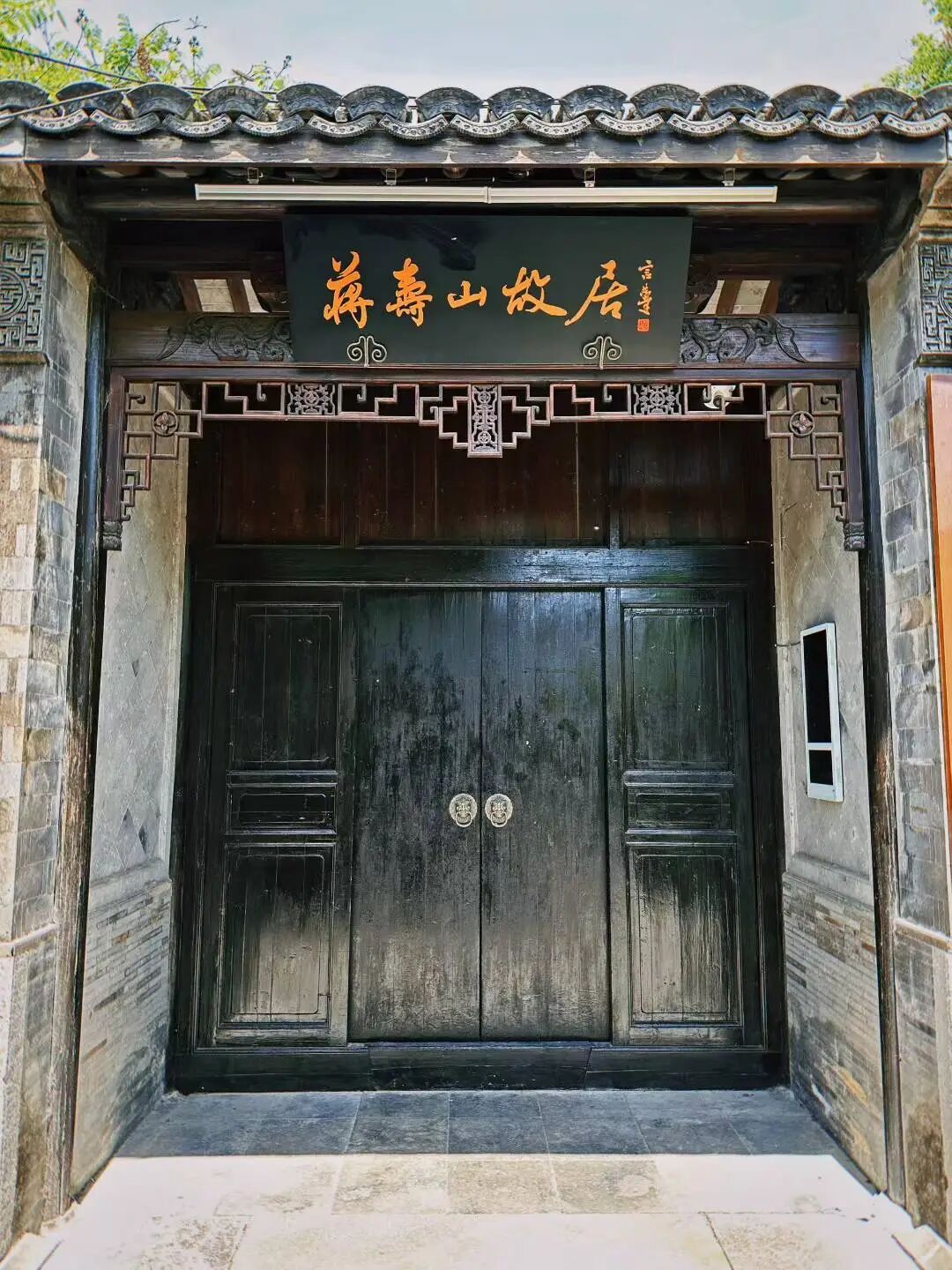
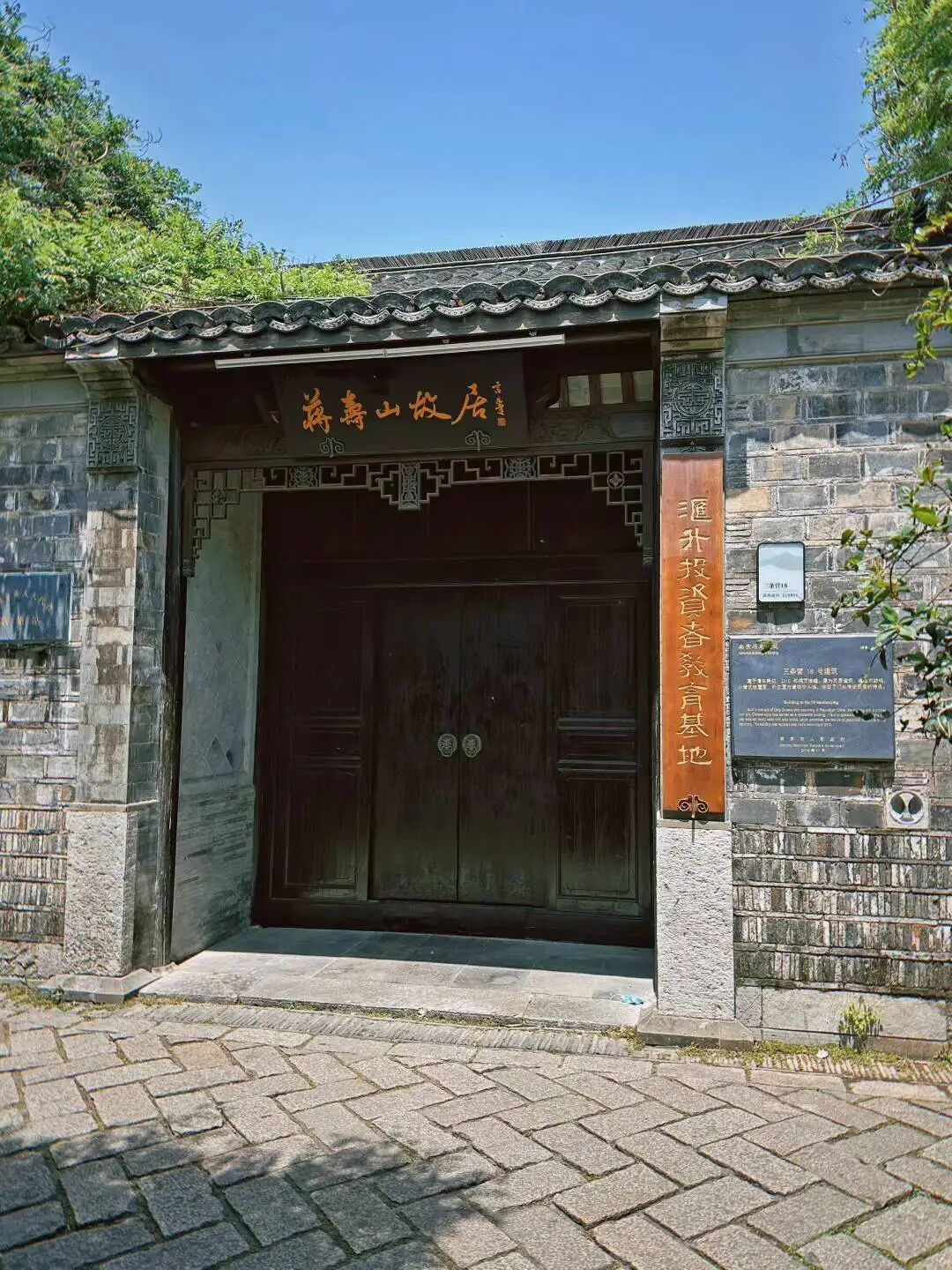
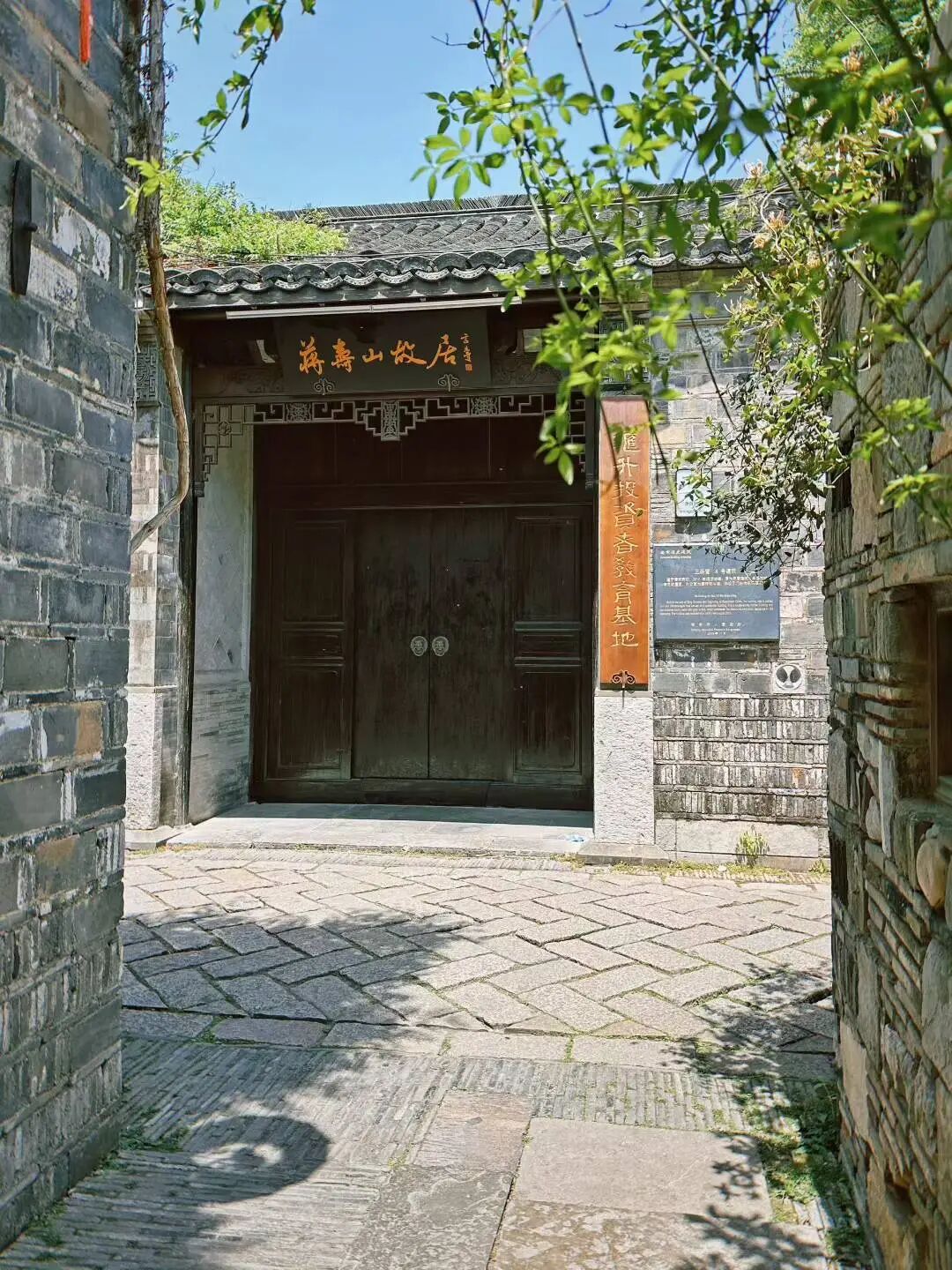
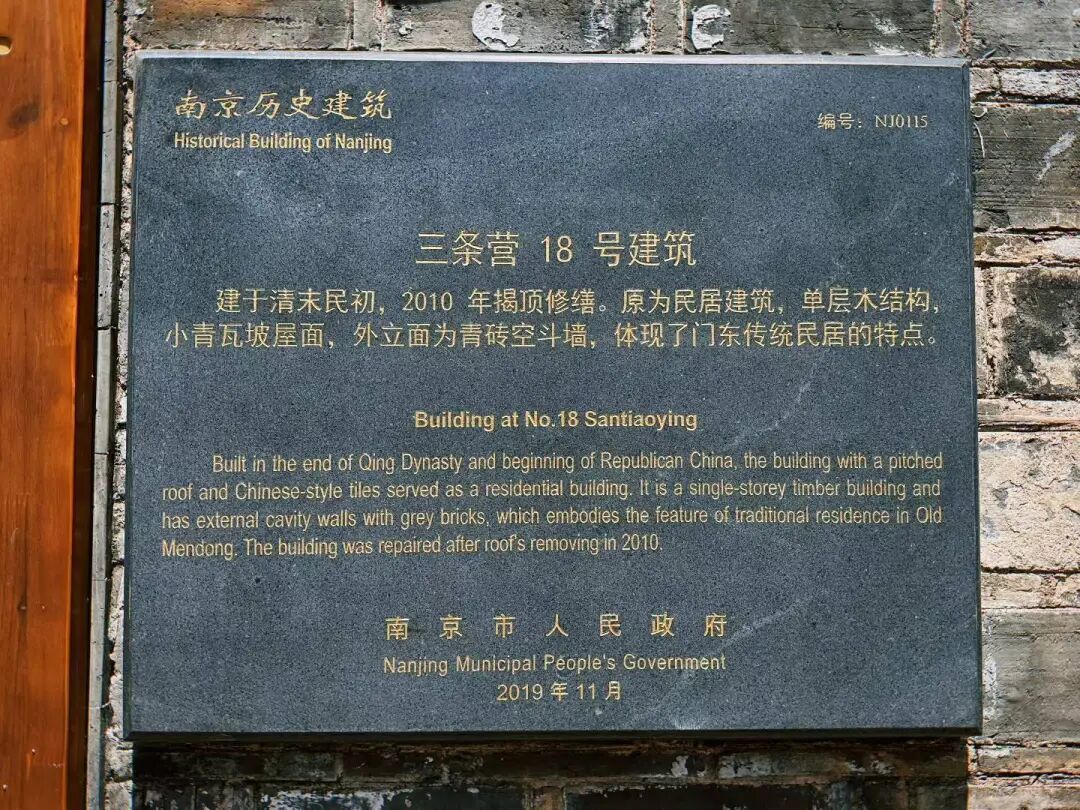
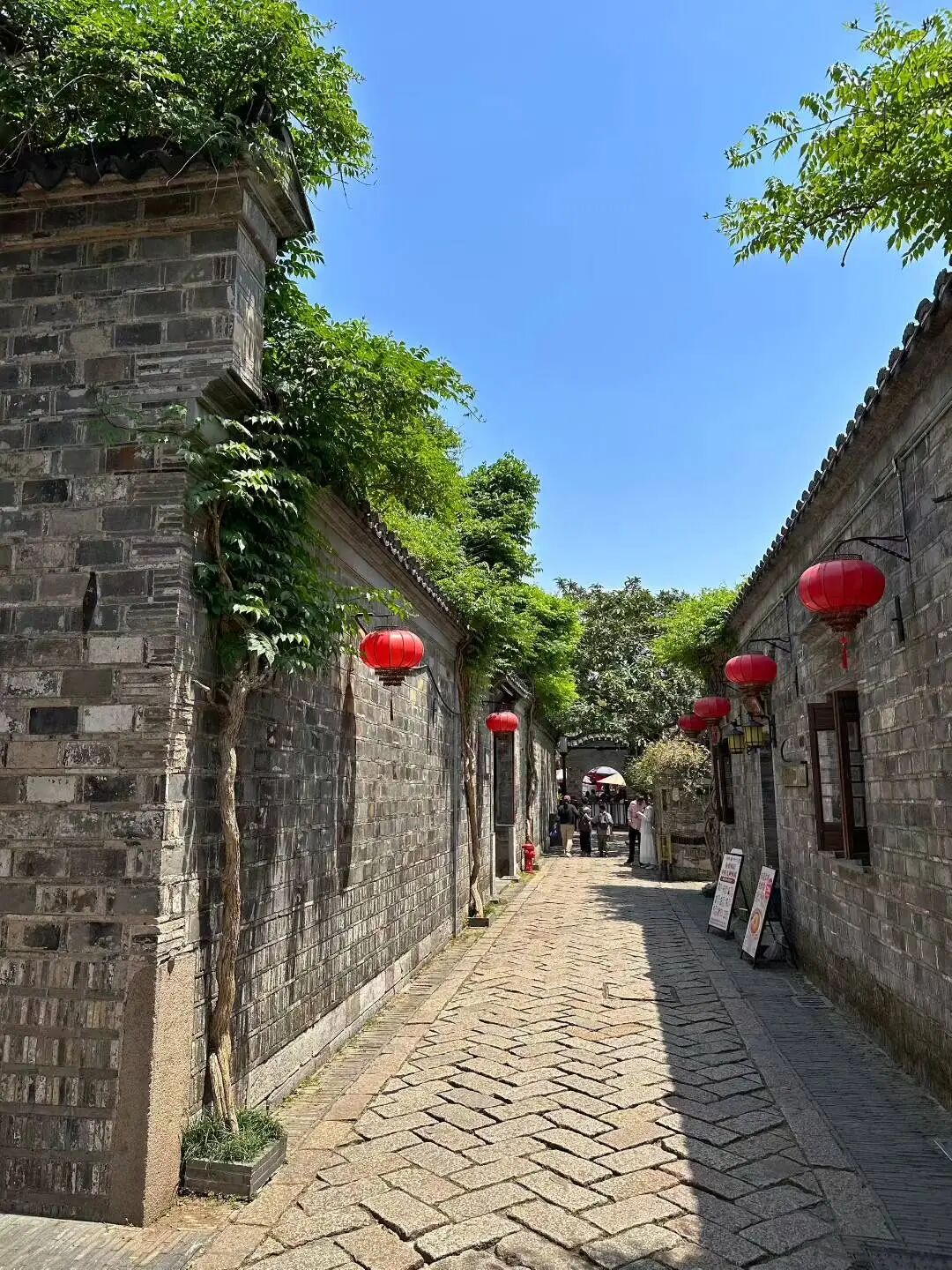
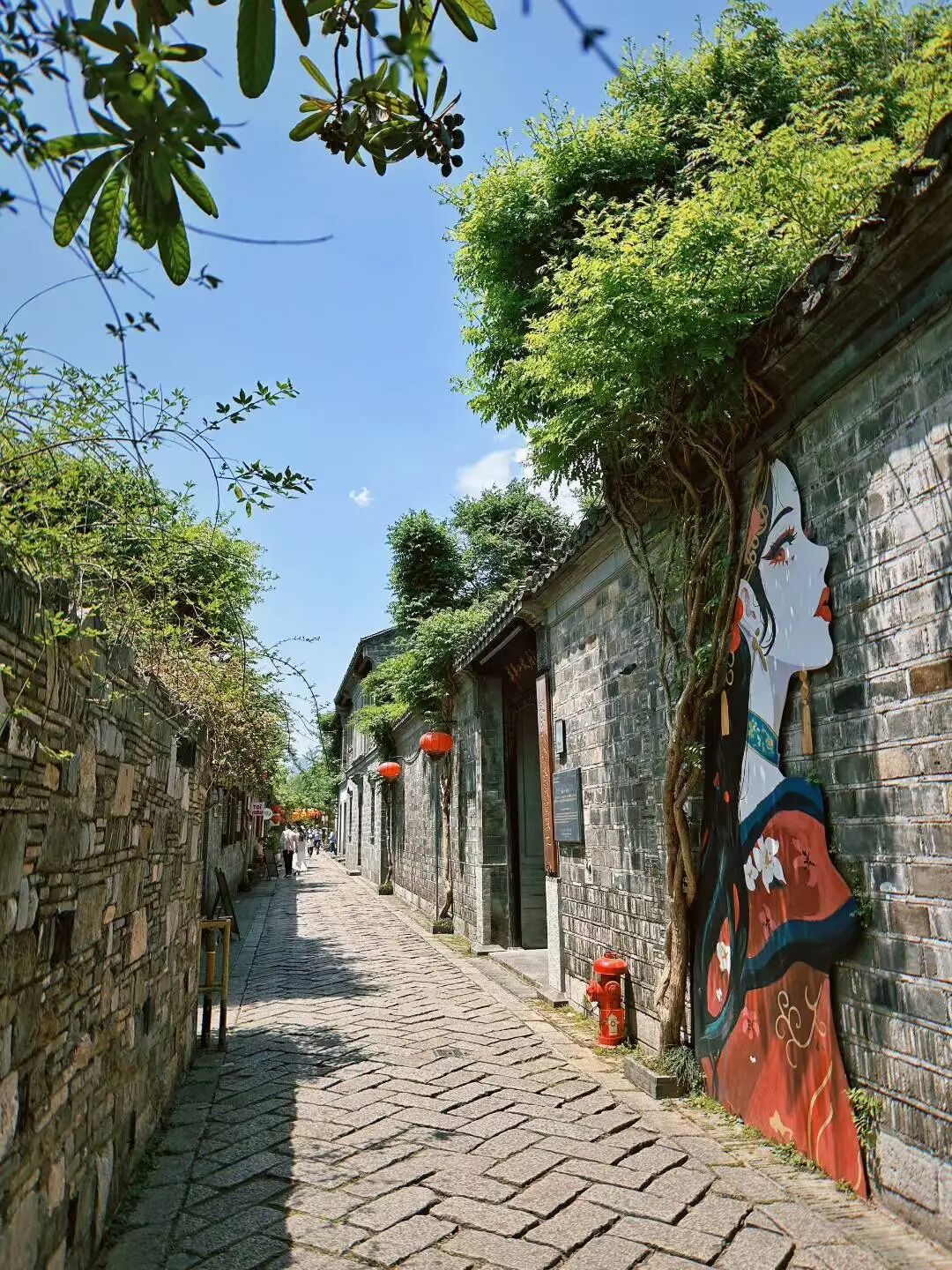
Xiaowangfu Lane Mosque
The Xiaowangfu Lane Mosque was built in the late Tongzhi reign of the Qing Dynasty. It is one of the few remaining old buildings among the 33 traditional Hui Muslim neighborhoods in Nanjing. The mihrab (the niche in the wall indicating the direction of Mecca) currently in the Jingjue Mosque was moved here from the Xiaowangfu Lane Mosque. The Xiaowangfu Lane Mosque was used as a residential area for a long time, but it has now been vacated and may soon have a new purpose.
In 1917, the Xiaowangfu Lane Mosque founded the private Wuben Primary School to teach both general subjects and religious knowledge. It moved to the entrance of Xiaowangfu Lane on Fengfu Road in 1953 and became a public school in 1956.
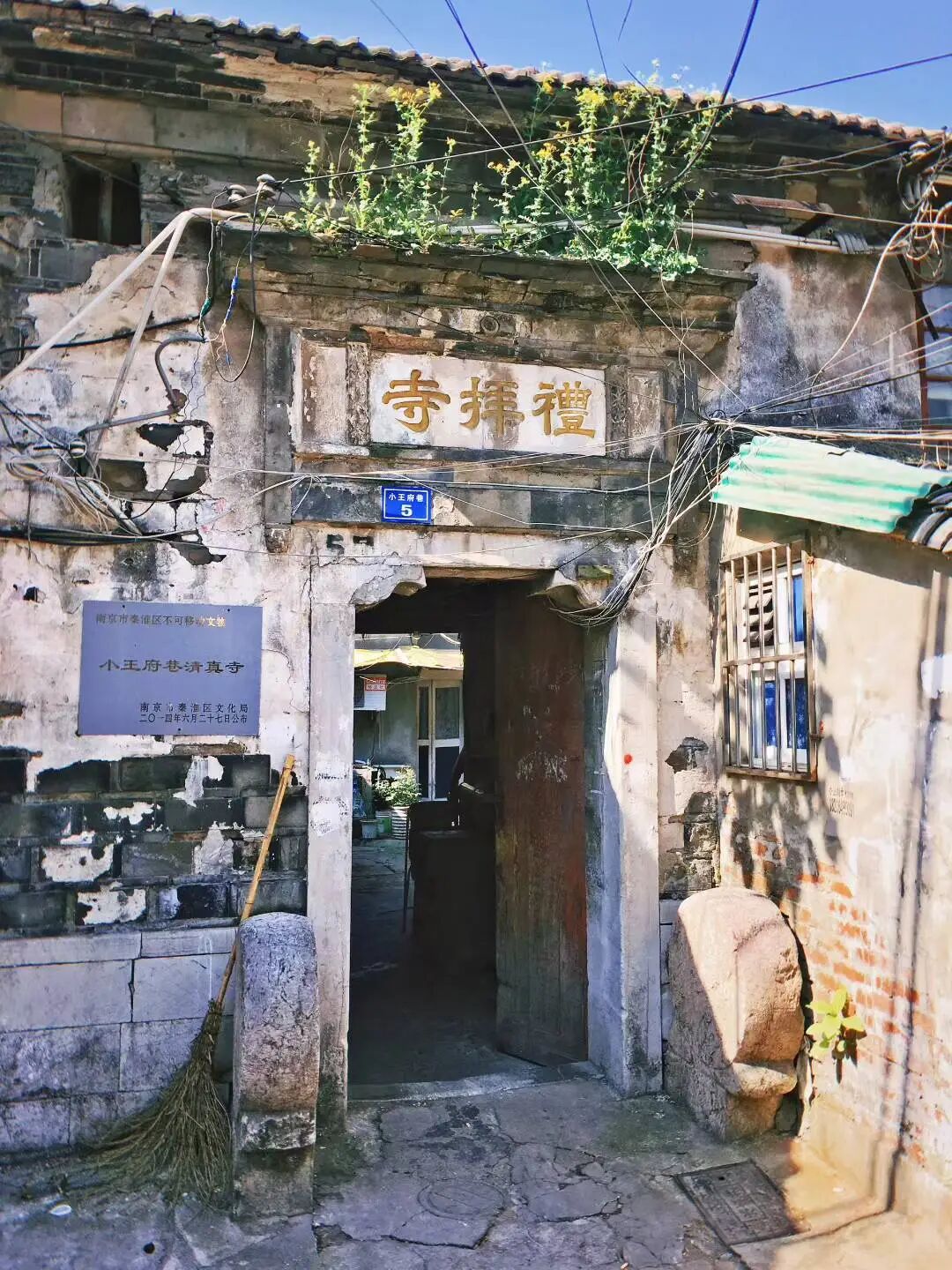
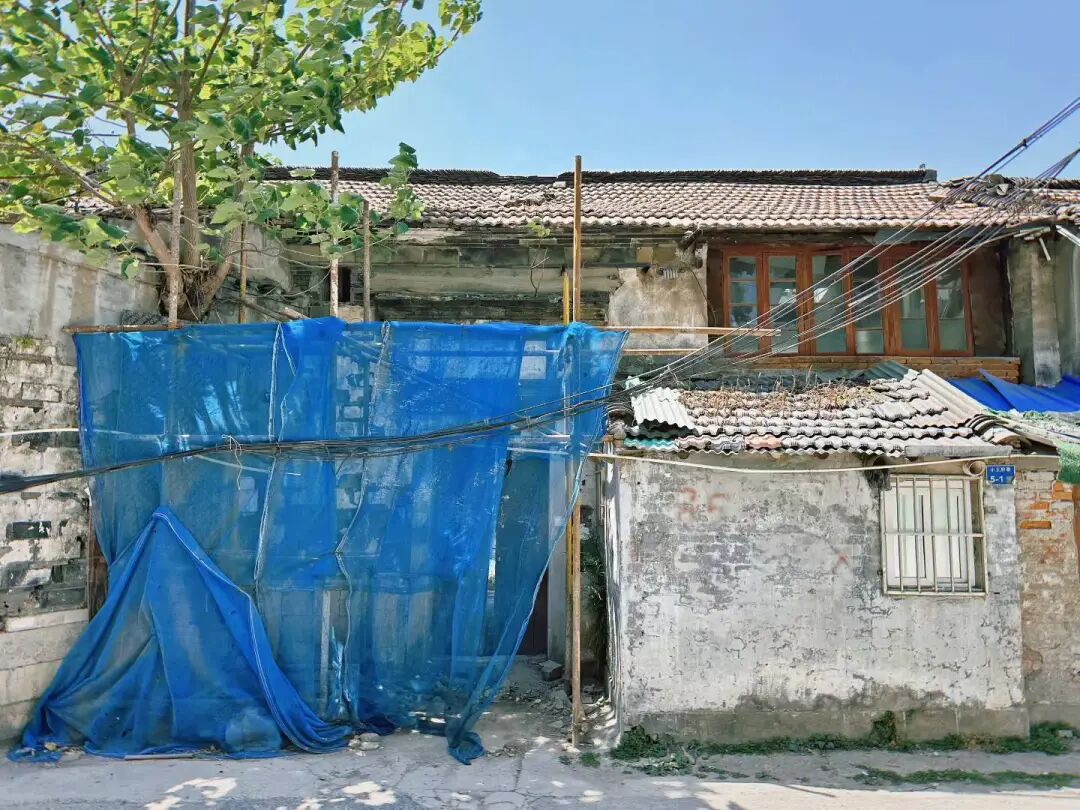
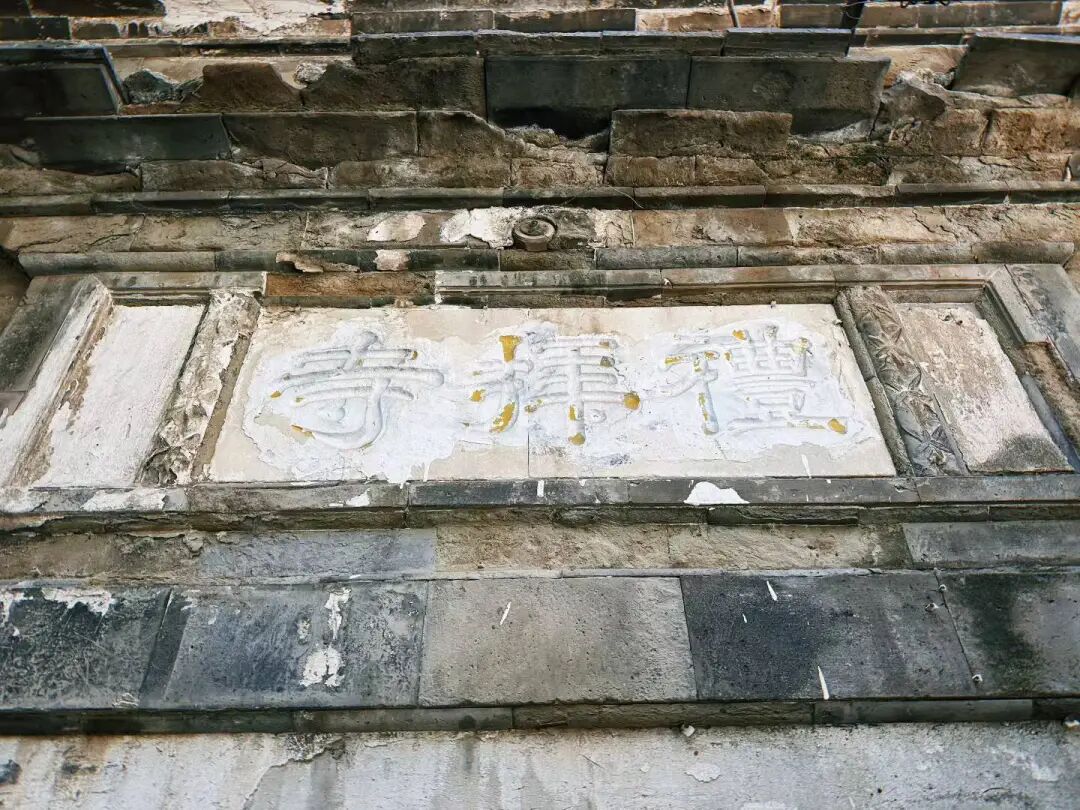
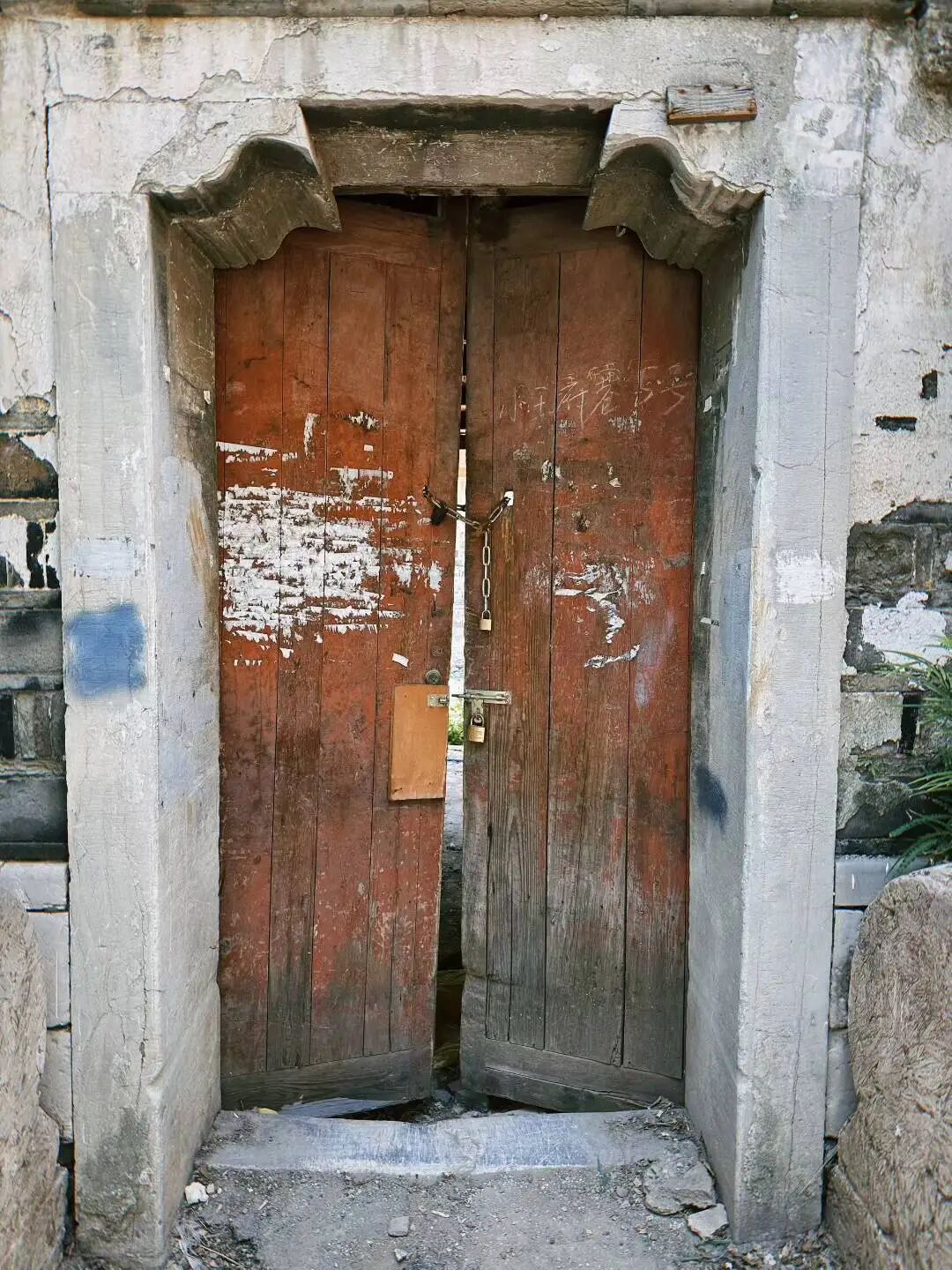
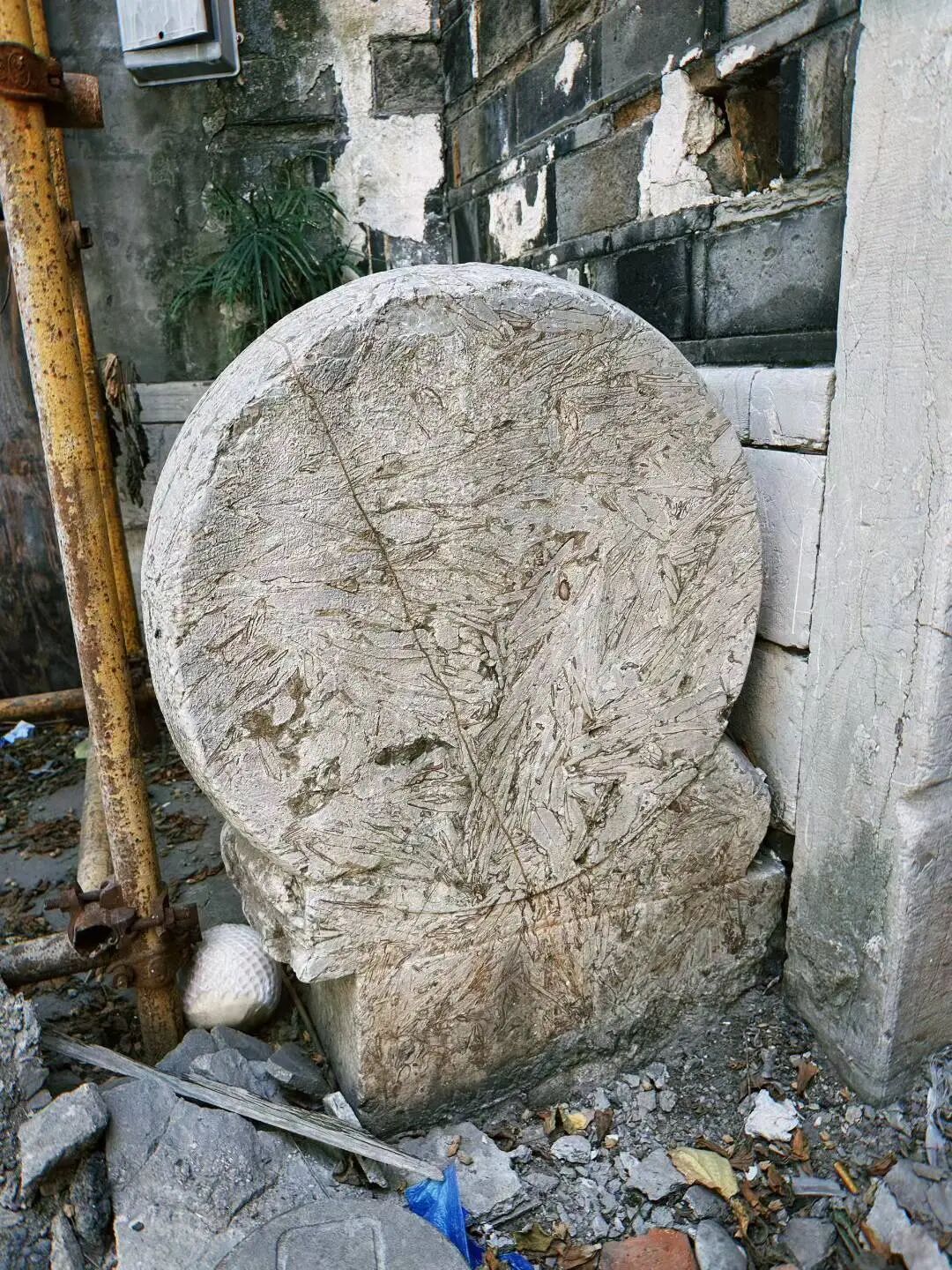
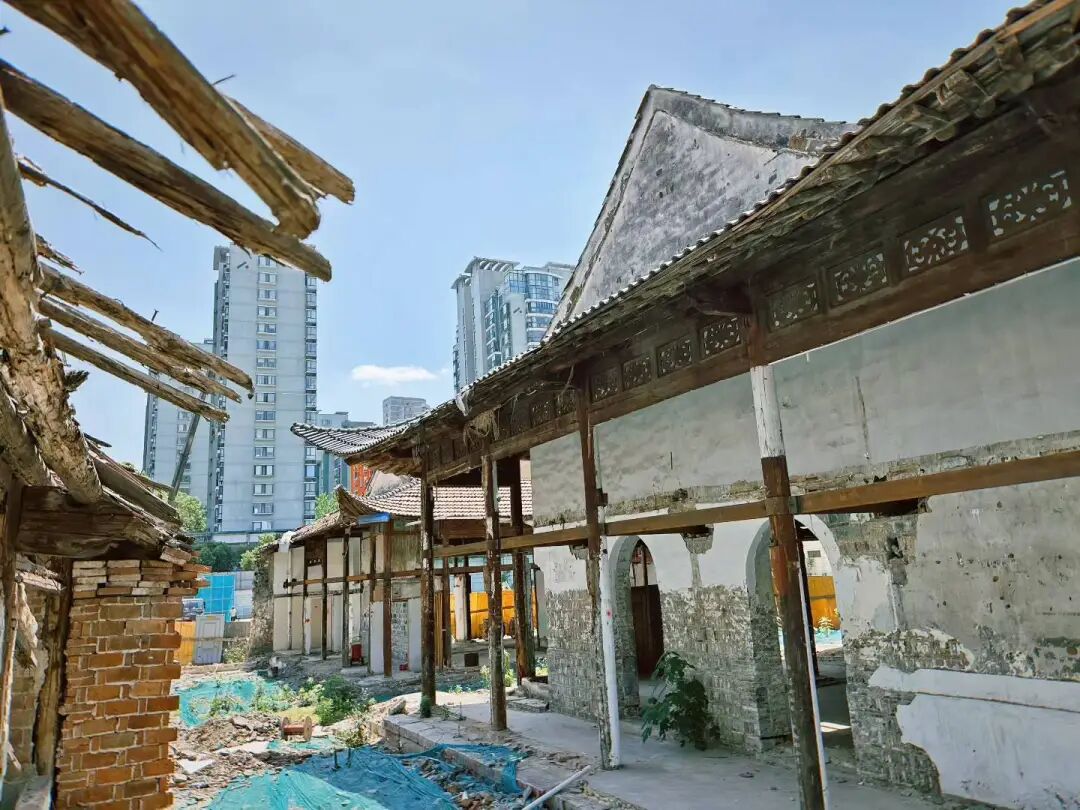
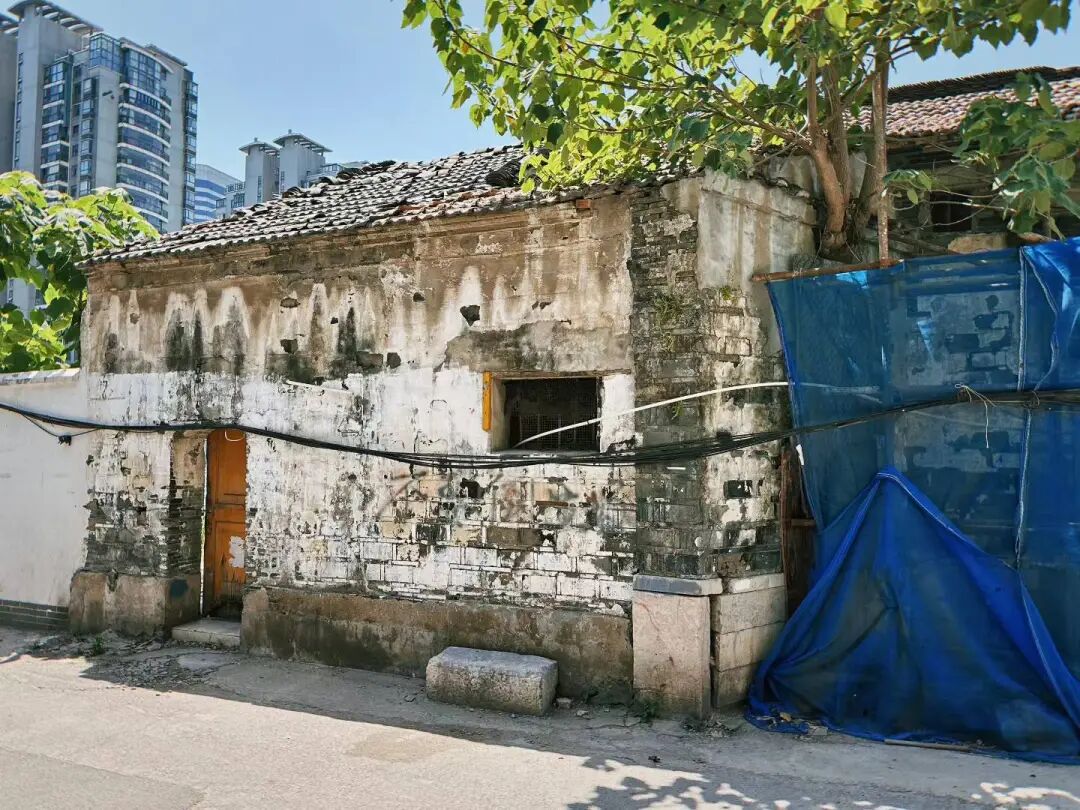
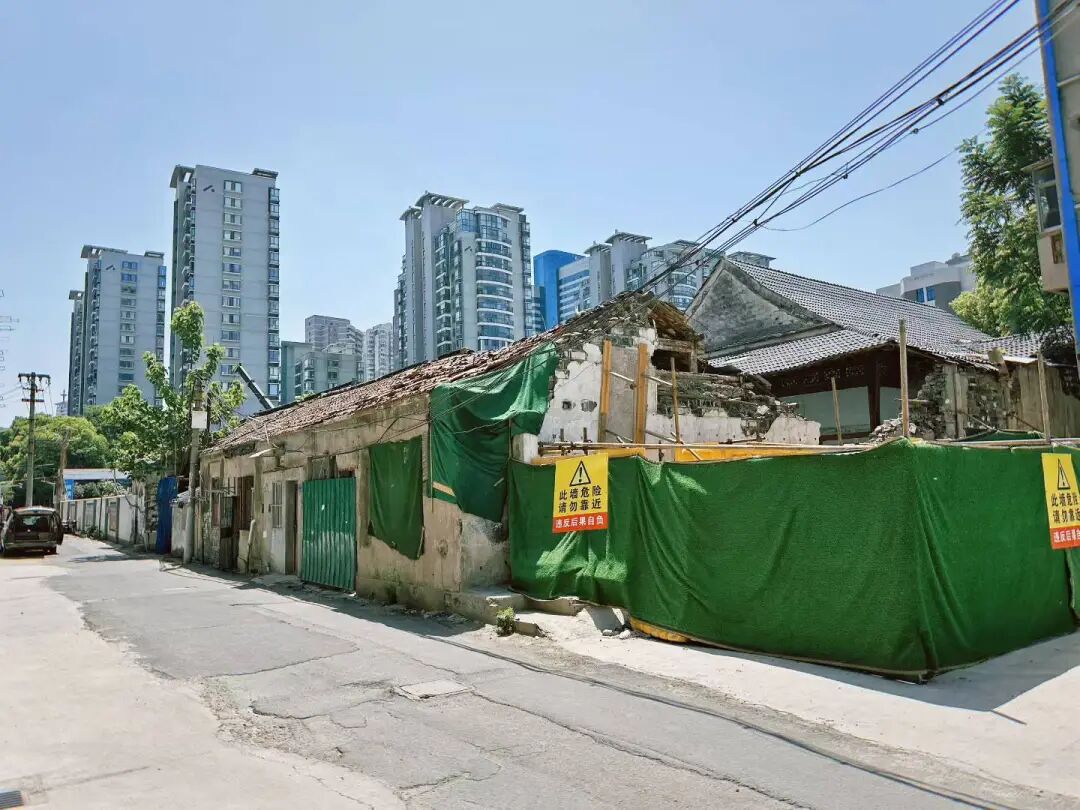
Anleyuan
Every time I visit Nanjing, I make sure to have morning tea at Anleyuan. The morning tea used to be served in the main dining room, but it has moved to the hot pot hall on the right. The menu, however, remains the same.
We arrived after ten o'clock, and it wasn't very crowded. We ordered roast duck with dried tofu strips (ya gan si), shark fin golden cake, crystal shrimp dumplings, red bean soup with rice balls (chidou yuanxiao), water shield vegetable steamed dumplings (jiao'ercai zhengjiao), duck and pine nut steamed dumplings (shaomai), beef spring rolls, and crispy fried dough (sanzi) with tofu pudding, all paired with Yuhua tea. Anleyuan is a great place to experience the charm of Jinling's Hui Muslim cuisine, especially if you are dining with a group.
Anleyuan was founded in 1920 by Cai Jiheng, a Hui Muslim from Nanjing. Originally called Anleju Restaurant, it has been in business for 105 years. Anleyuan was first located at 64 Pingshi Street (formerly Shuixiangkou) in the Hui Muslim community of Qijiawan. It later moved to the Jiangxi Guild Hall at 19 Pingshi Street, specializing in snacks like sweet red bean paste buns and assorted vegetable buns.
In 1949, owner Cai Jiheng was getting old, so he handed the restaurant over to his son, Cai Yuting. Cai Yuting was a scholar by trade and did not know how to run a business, so the restaurant's sales began to decline. In 1952, Li Fuquan, who ran a restaurant at Chaotian Palace, bought the Anleju Restaurant and renamed it Anleyuan Restaurant. Owner Li introduced signature braised dishes like salt-water duck (yanshui ya), sliced dried beef (ganqie niurou), braised wheat gluten (lu mianjin), and smoked fish (xunyu), which won high praise from customers.
In 1956, during the public-private partnership period, Anleyuan merged with the state-owned Heping Canteen and moved to Shengzhou Road, west of Qijiawan. It grew from a small eatery into a medium-sized restaurant of 400 square meters with 14 tables, gaining a steady base of diners. In 1961, Anleyuan moved again to Mochou Road near Chaotian Palace. The space expanded further, and they introduced new dishes like braised fish maw with three delicacies (sanxian hui yudu) and crispy beef (xiangsu niurou), entering the ranks of high-end restaurants. In 1966, Anleyuan was renamed Victory Restaurant (Shengli Fandian), but it changed back to its original name in 1972. In 2001, due to the development of the Chaotian Palace South Square, Anleyuan was relocated to its current site on Wangfu Street. The new shop expanded to 2,000 square meters, becoming a large restaurant with three separate areas for snacks, main meals, and hot pot.
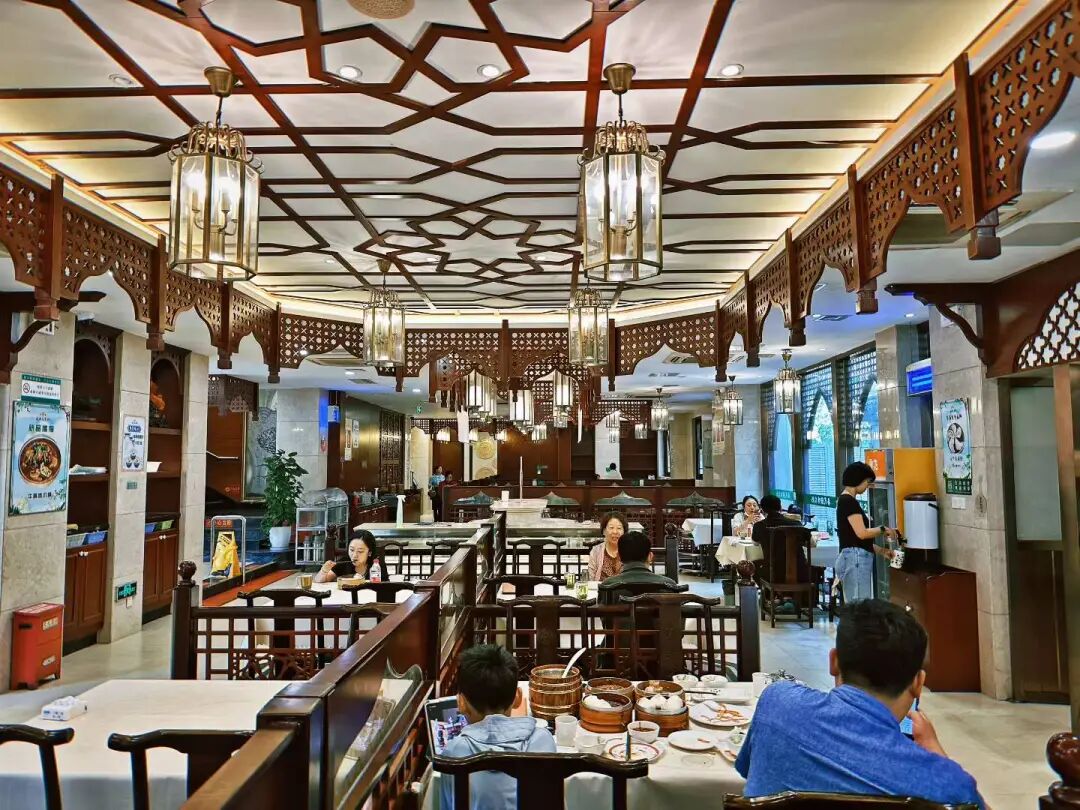
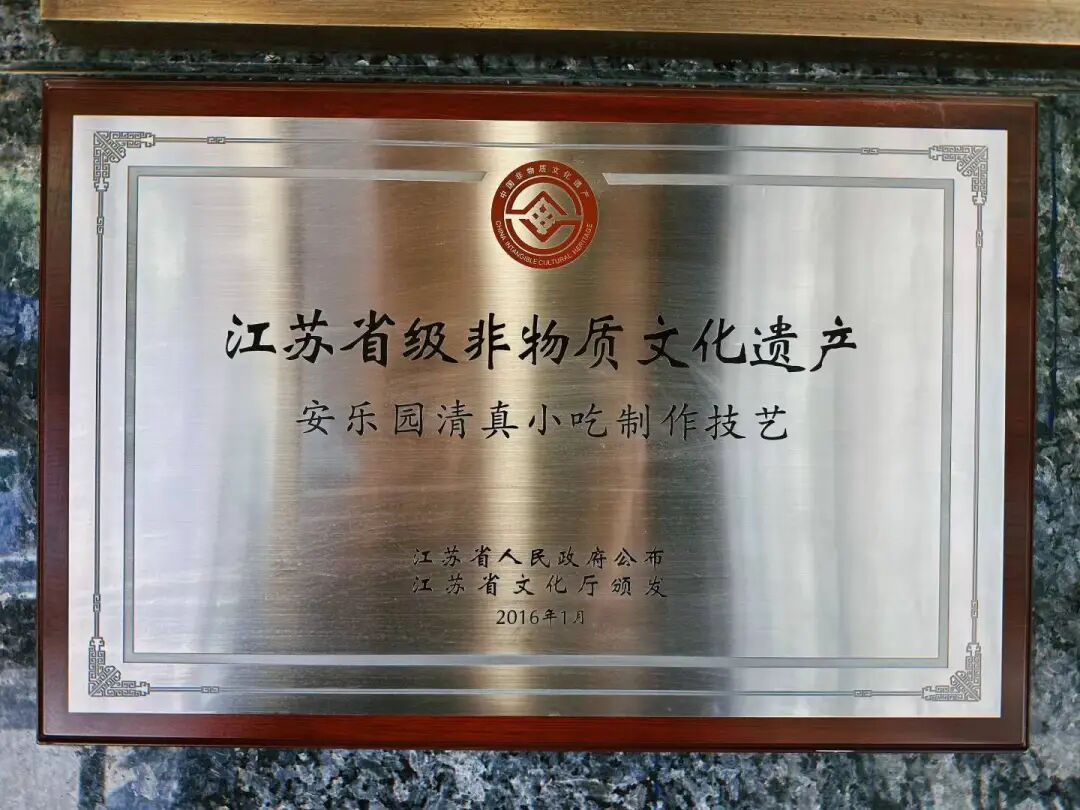
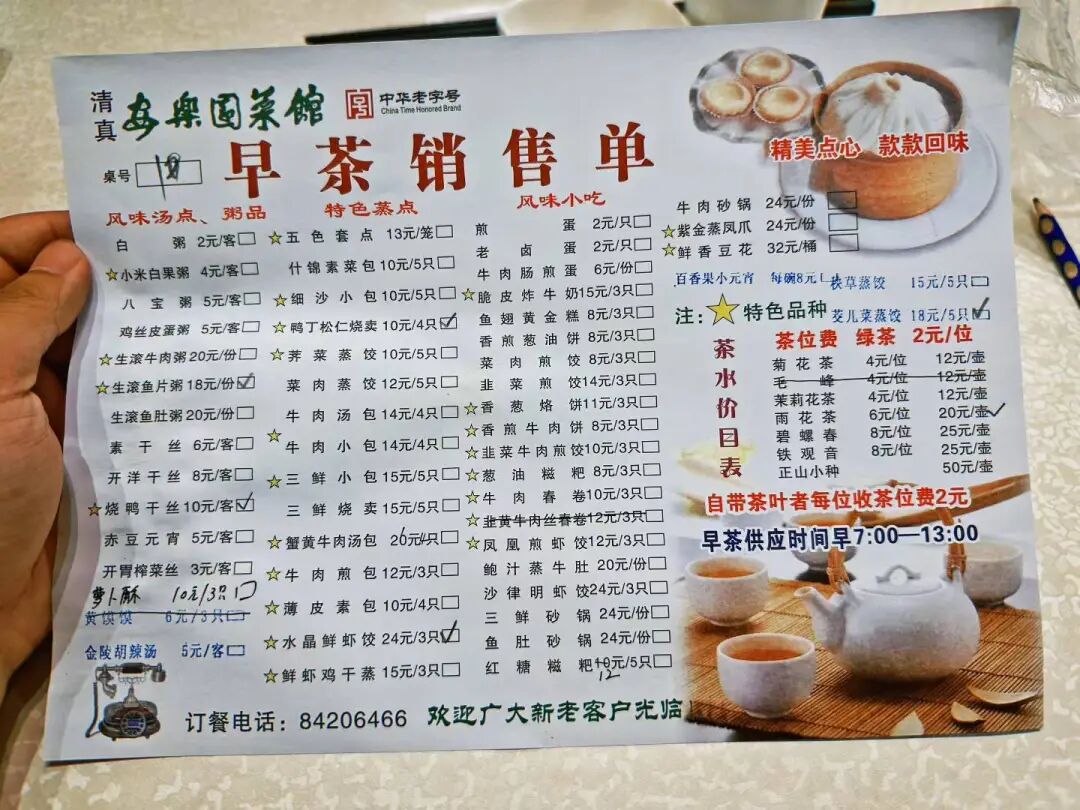
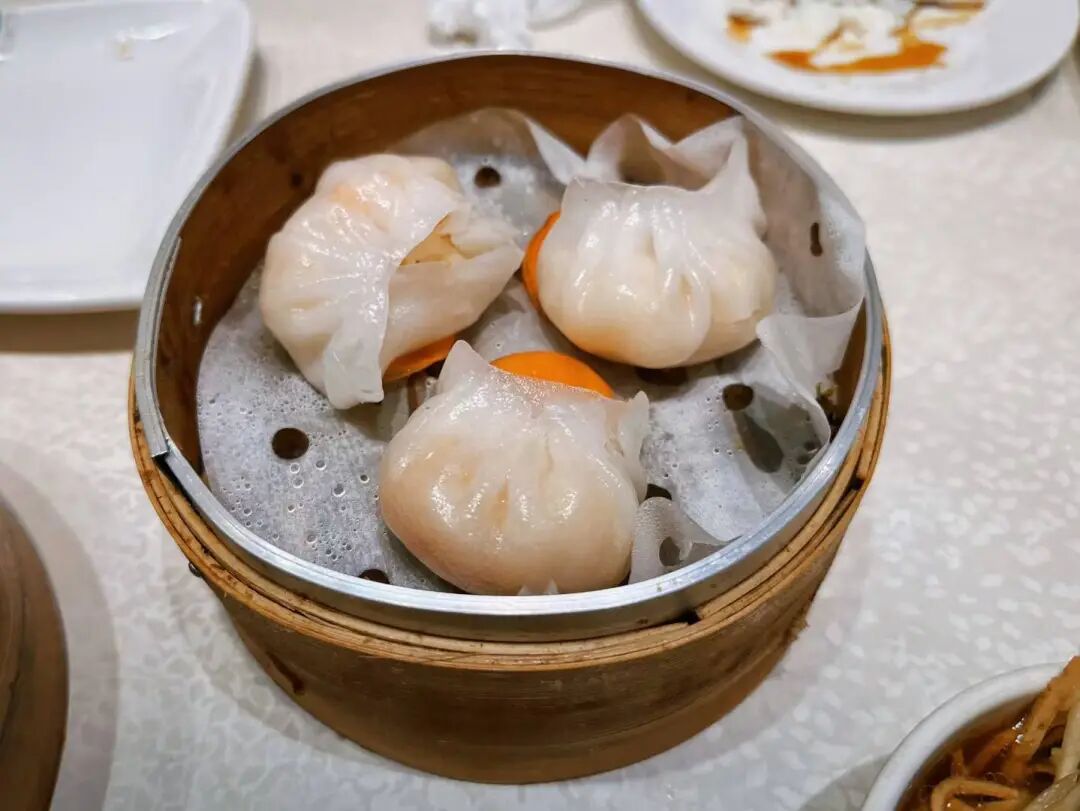
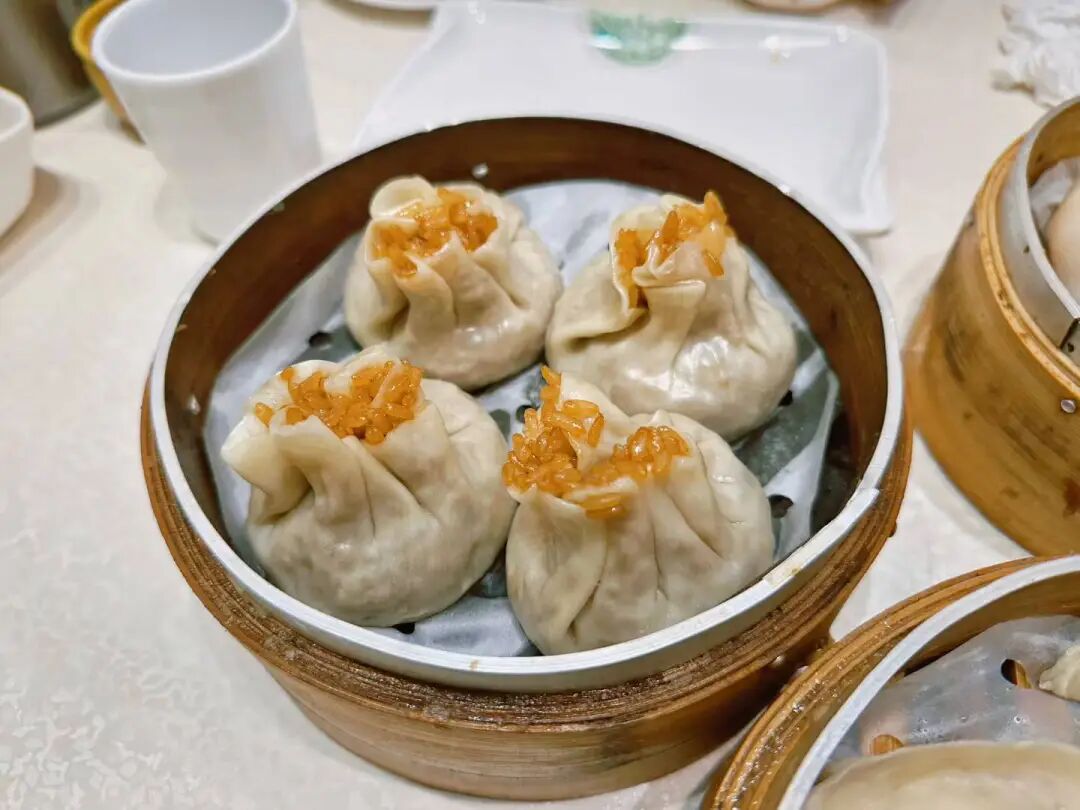
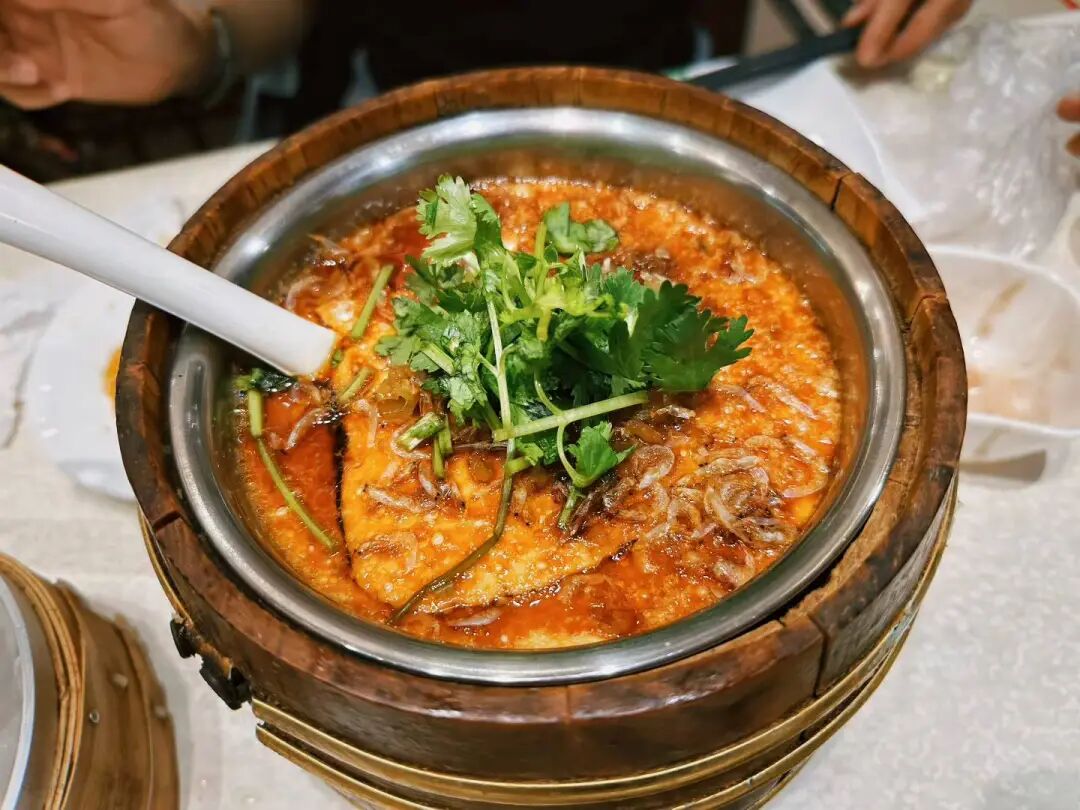
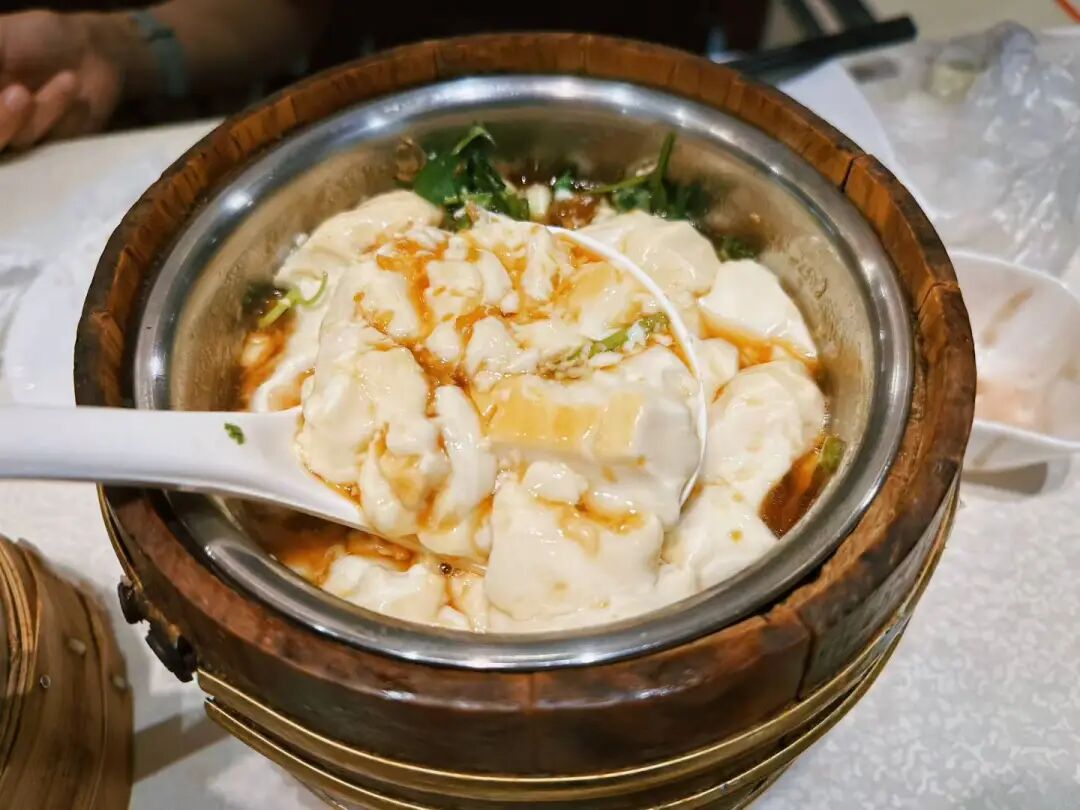
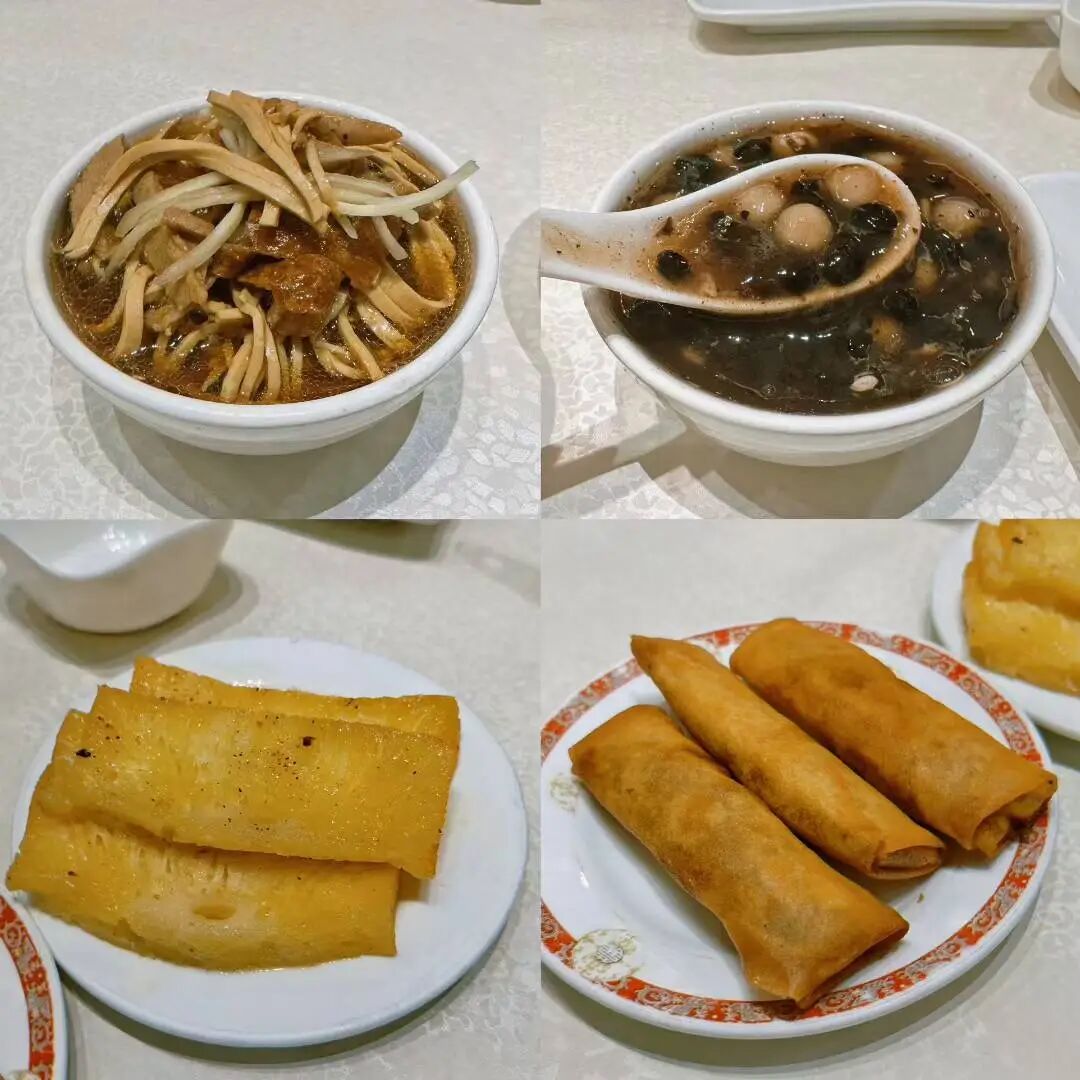
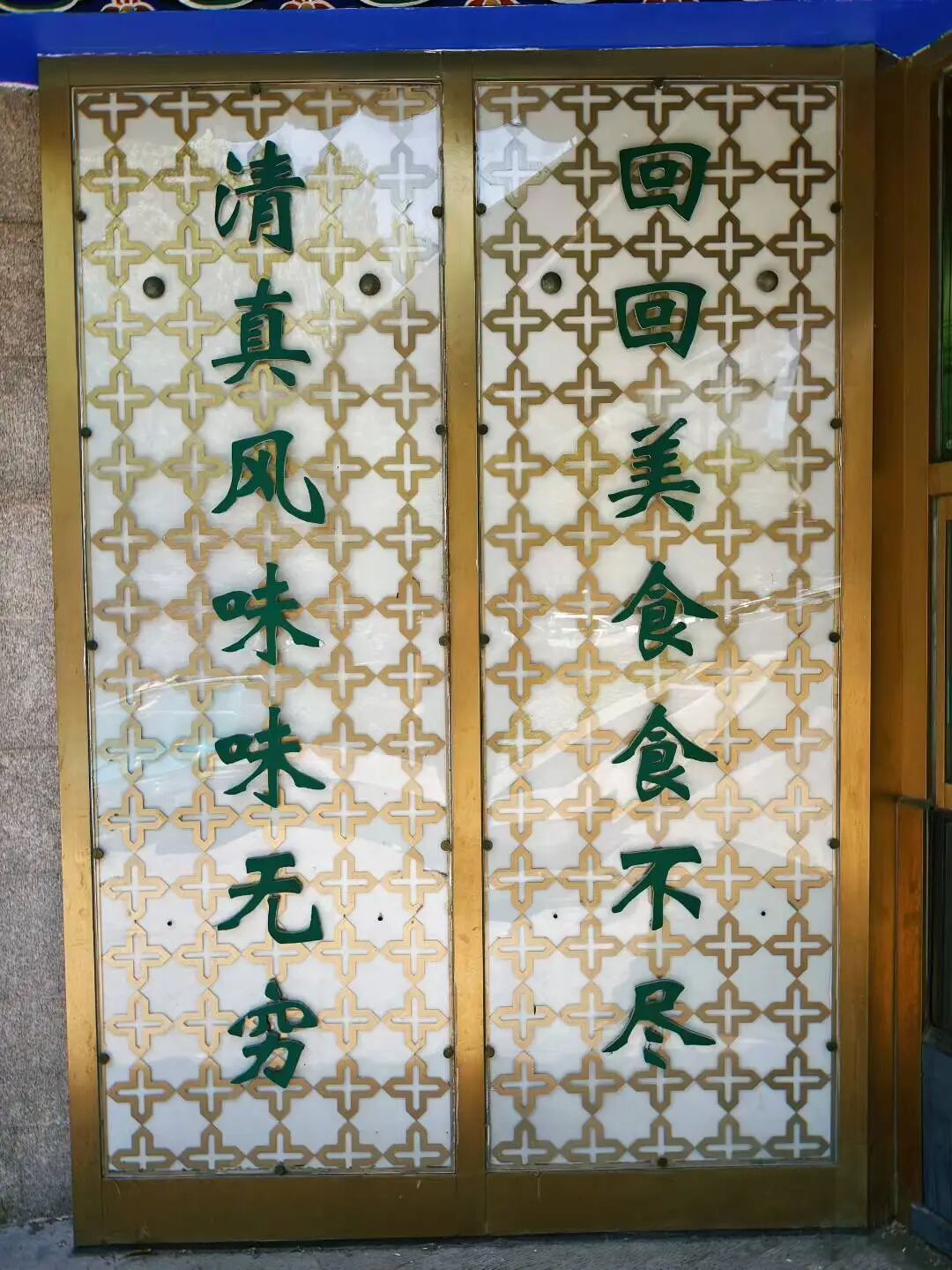
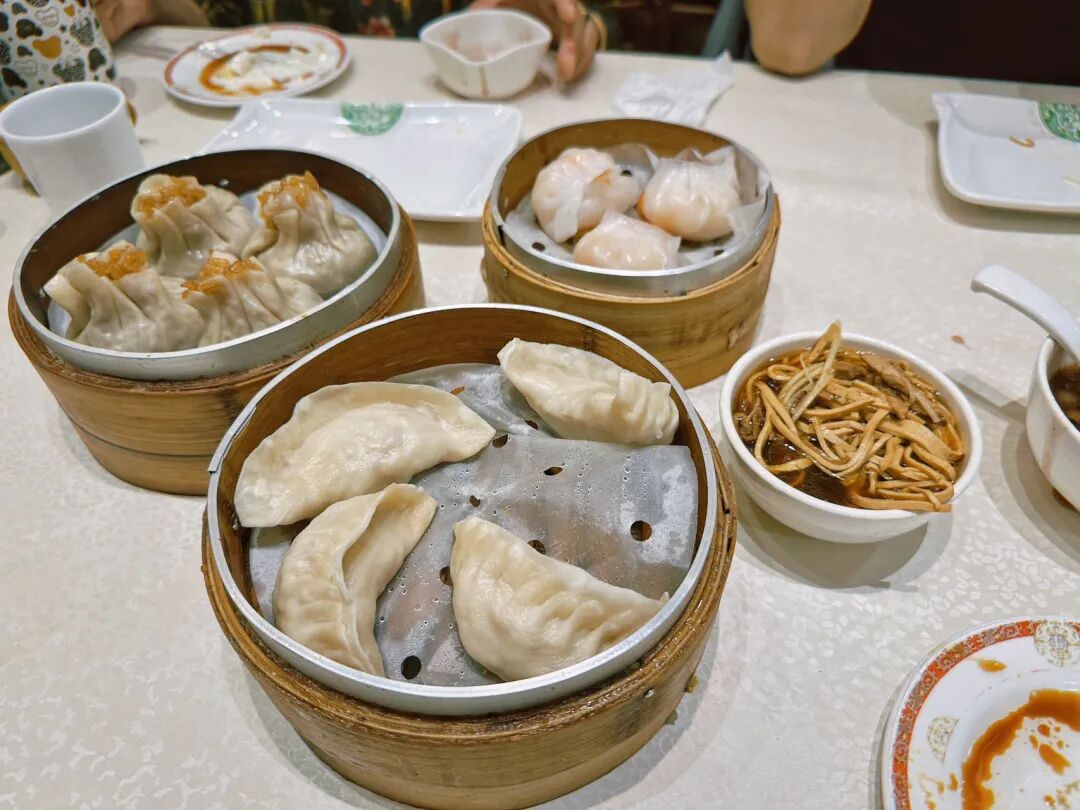
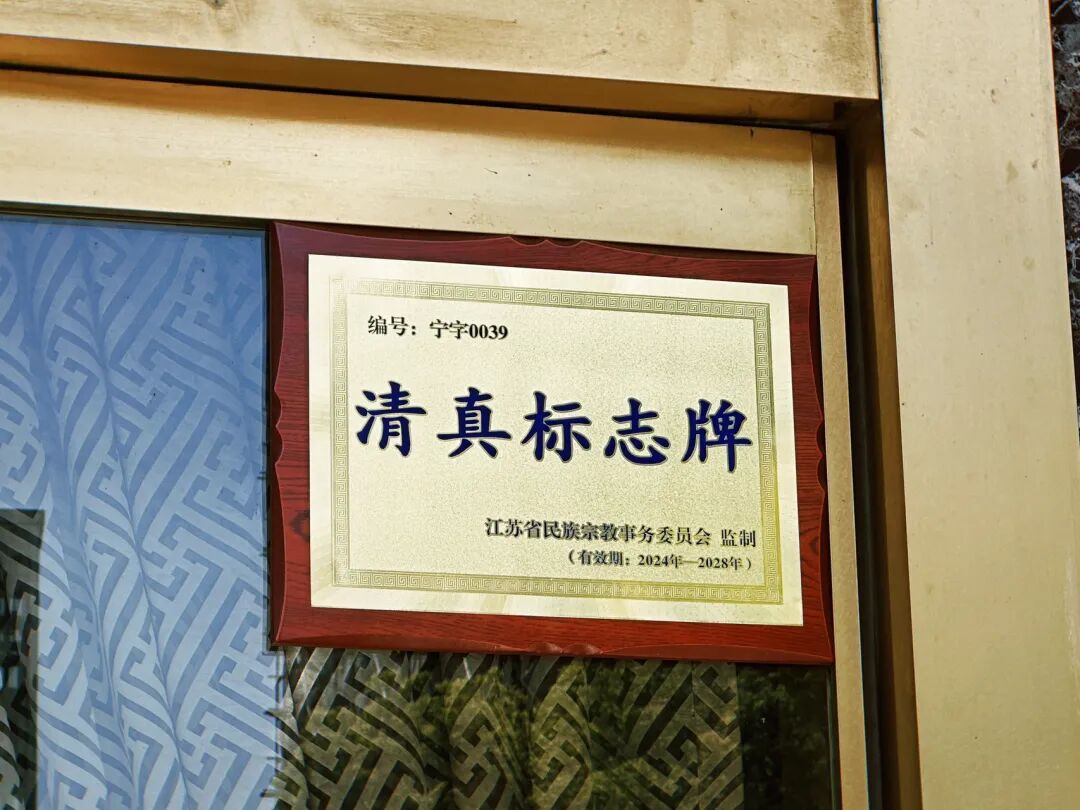
Li Rongxing
At noon, we went to the old Hui Muslim brand Li Rongxing on Xufu Lane in Nanjing for lunch. I ate at their original shop ten years ago, and this time I found they have opened chain stores, including a branch here in the north of the city.
We ordered beef potstickers (niurou guotie), beef wontons (niurou huntun), beef vermicelli soup (niurou fensi tang), smoked fish noodles (xunyu mian), beef soup dumplings (niurou guantangbao), and assorted vegetables (su shijin), which are all considered typical Nanjing Hui Muslim specialties. The snacks of Nanjing Hui Muslims are characterized by a hint of sweetness. I find this quite unique, but people from the north might not be used to it.
Li Rongxing is a famous old brand from Qijiawan, founded by Li Houming in 1914. It started at the T-junction of Qijiawan and Ganyu Lane, and was best known for its pan-fried beef buns (niurou jianbao), beef soup, and smoked beef. In 2002, Li Rongxing's third-generation successor, Li Bangzheng, opened a Li Rongxing on Fenghuang West Street, and in 2006, it moved to Nanhu East Road. The current owner, Li Guofan, is the fourth-generation successor of Li Rongxing. Additionally, the most famous Li's Restaurant (Liji) in Qijiawan today is run by Li Bangzheng's cousin, Li Bangjie, who once worked with him at a salted duck factory.
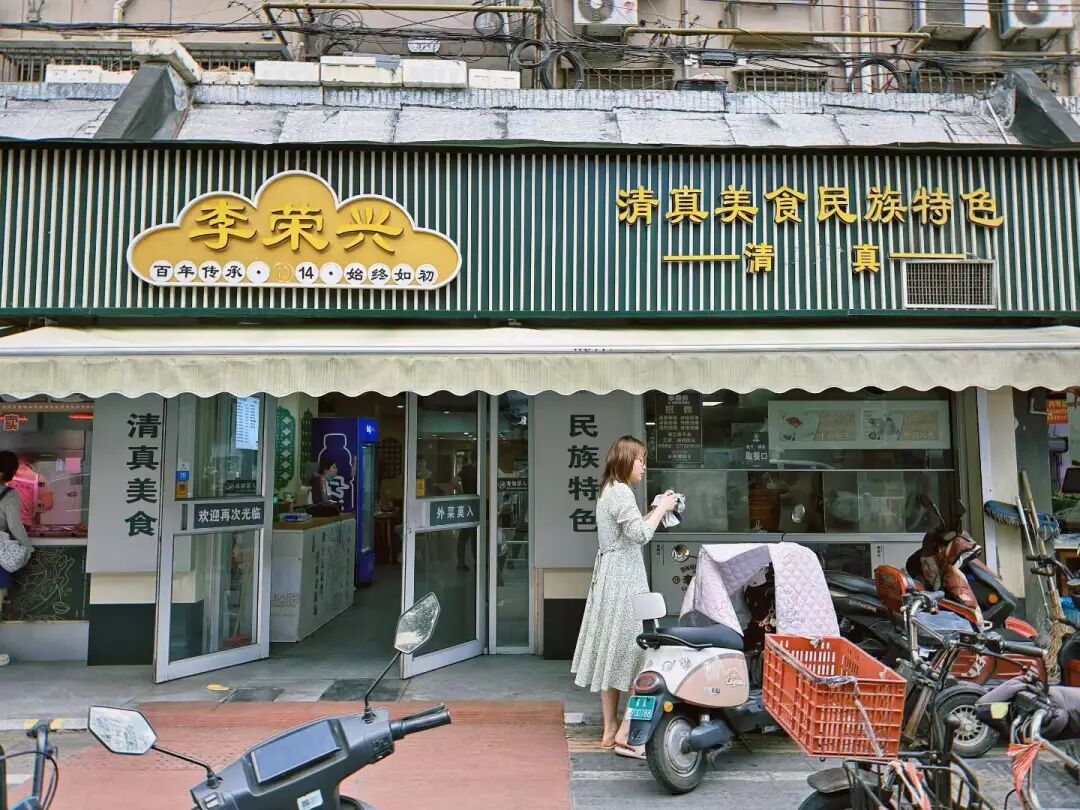
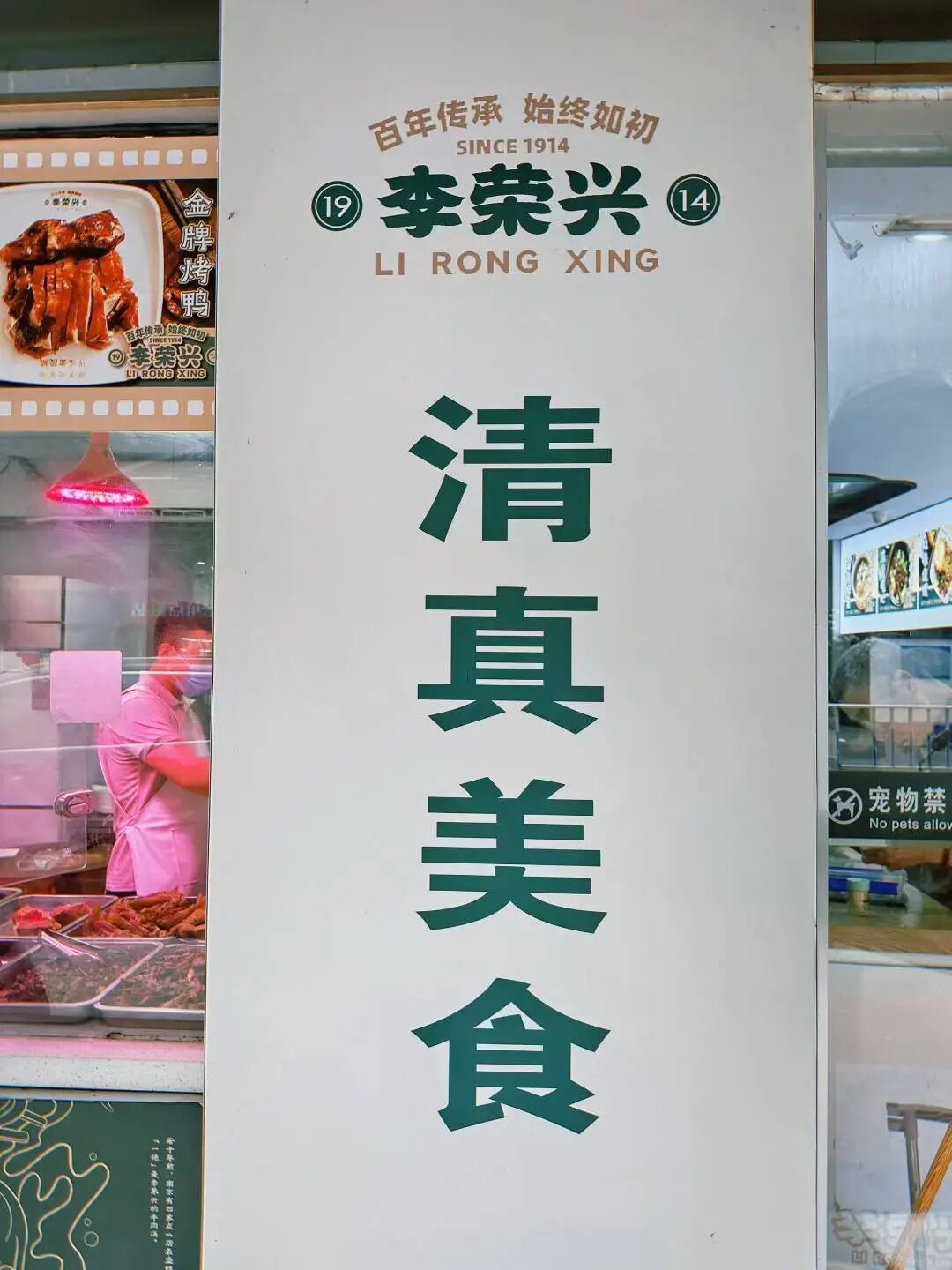
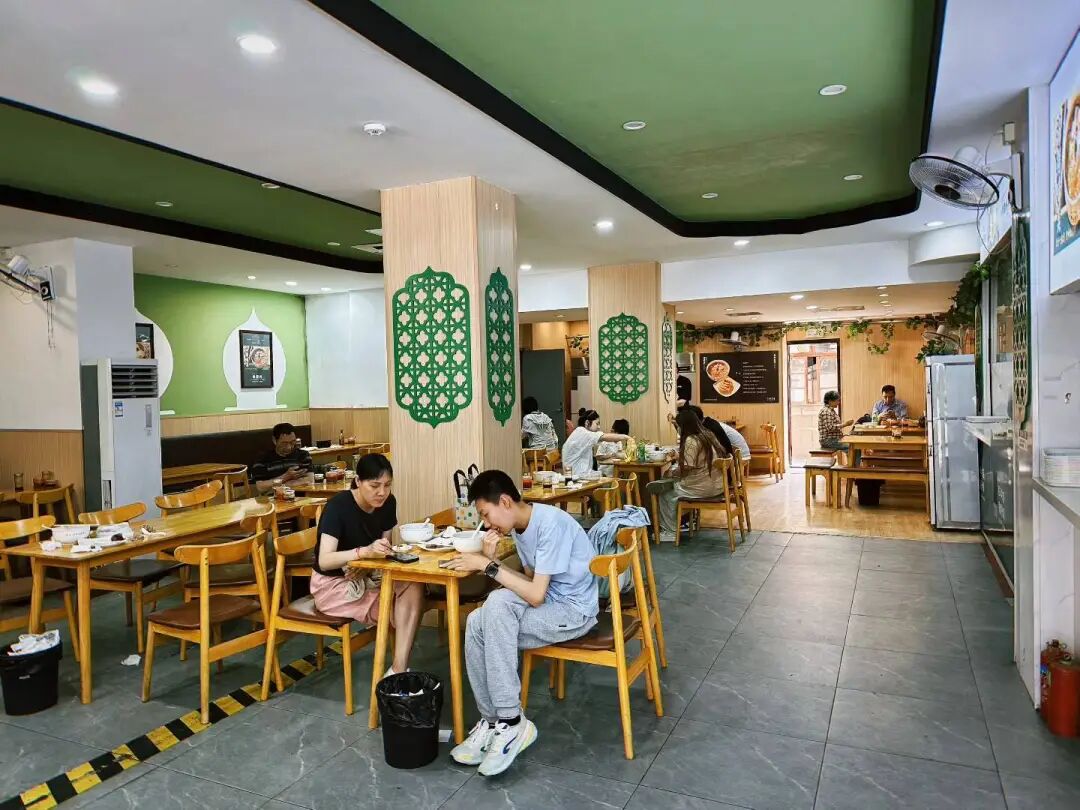
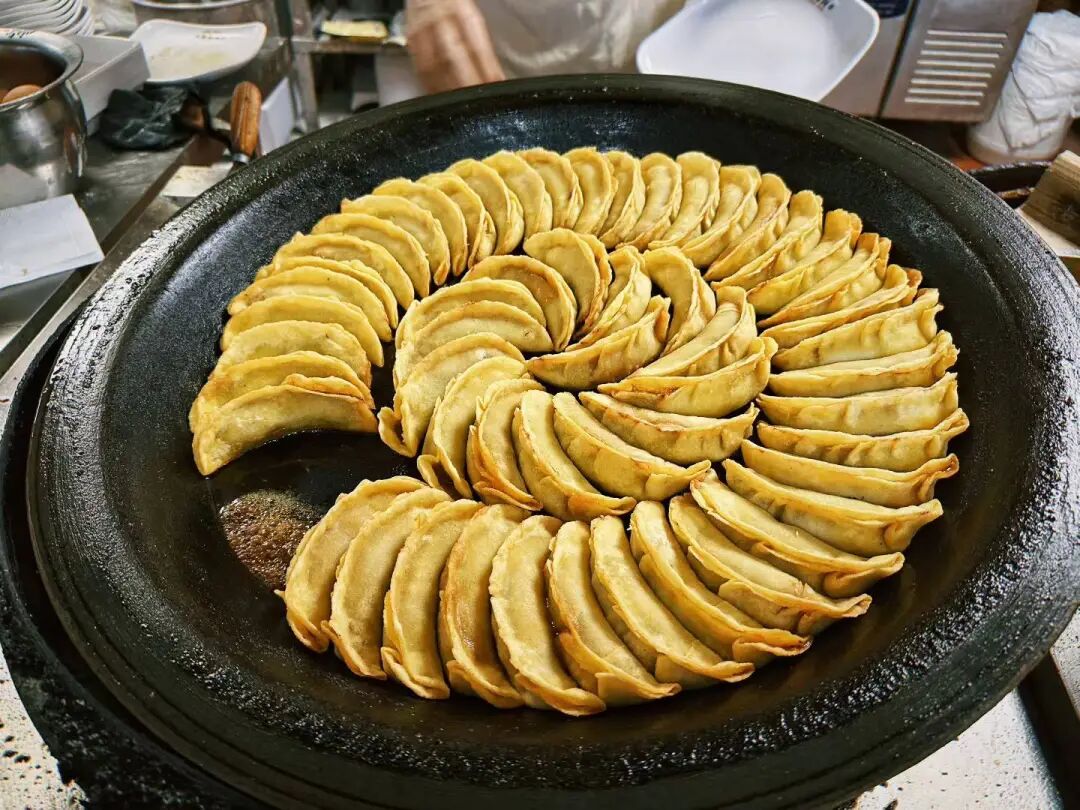
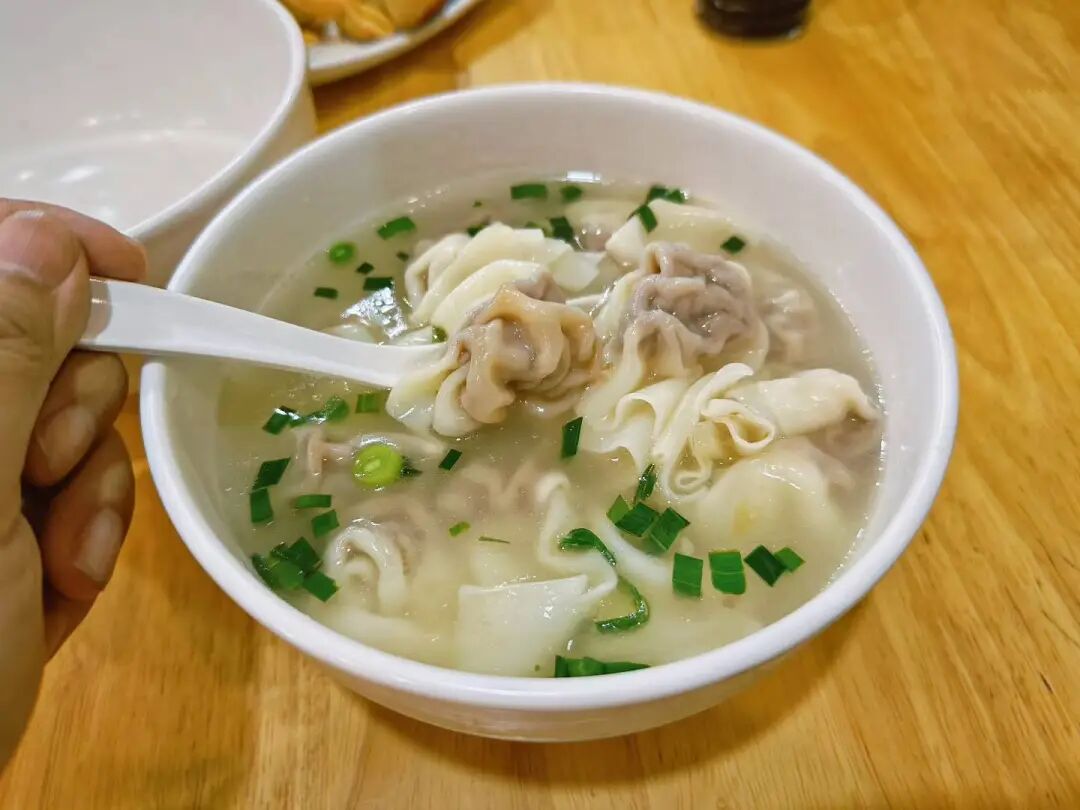
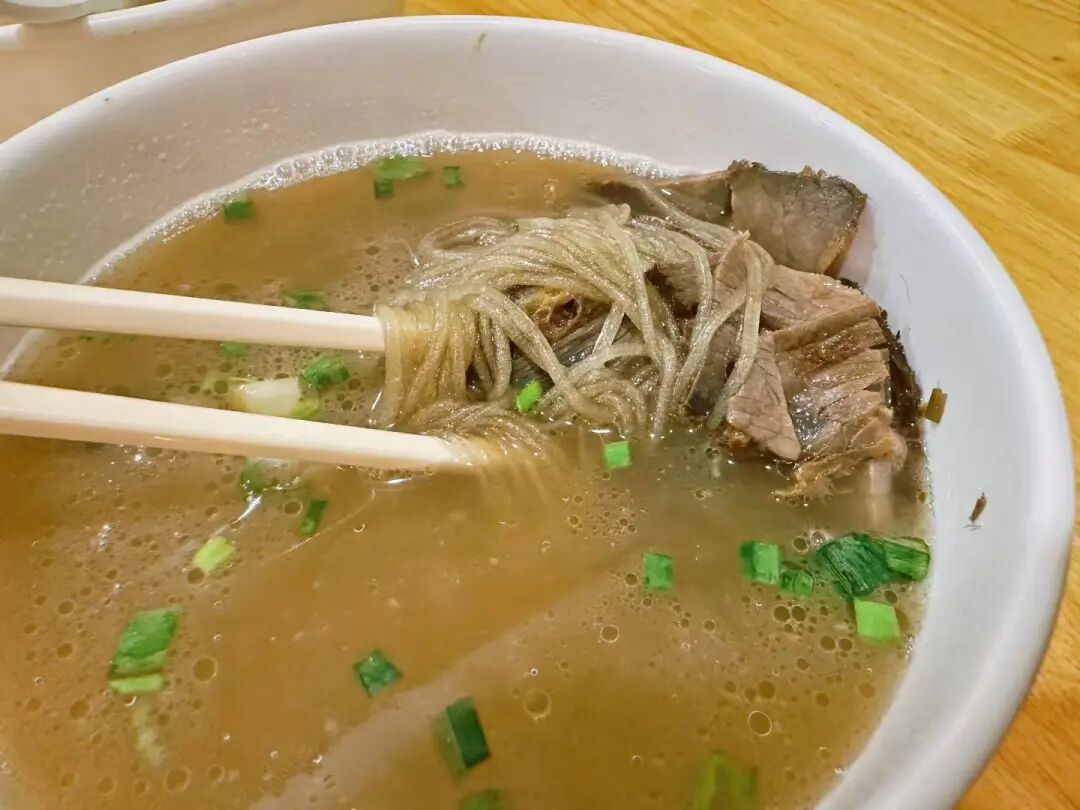
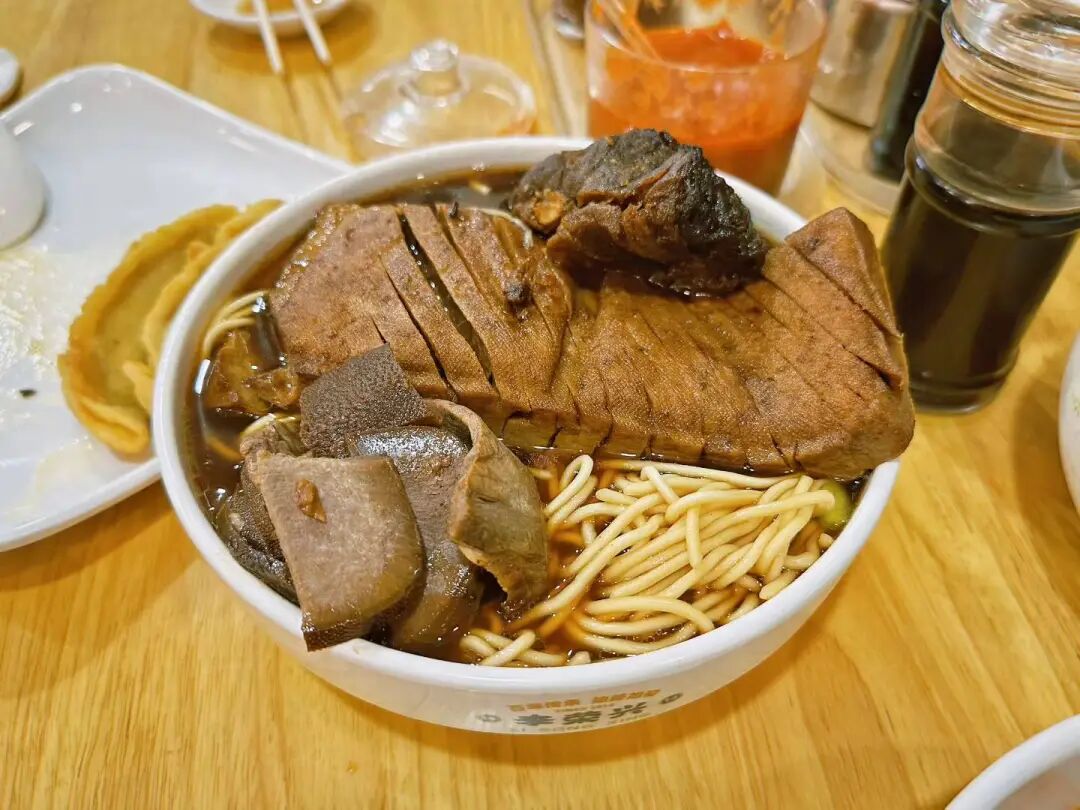
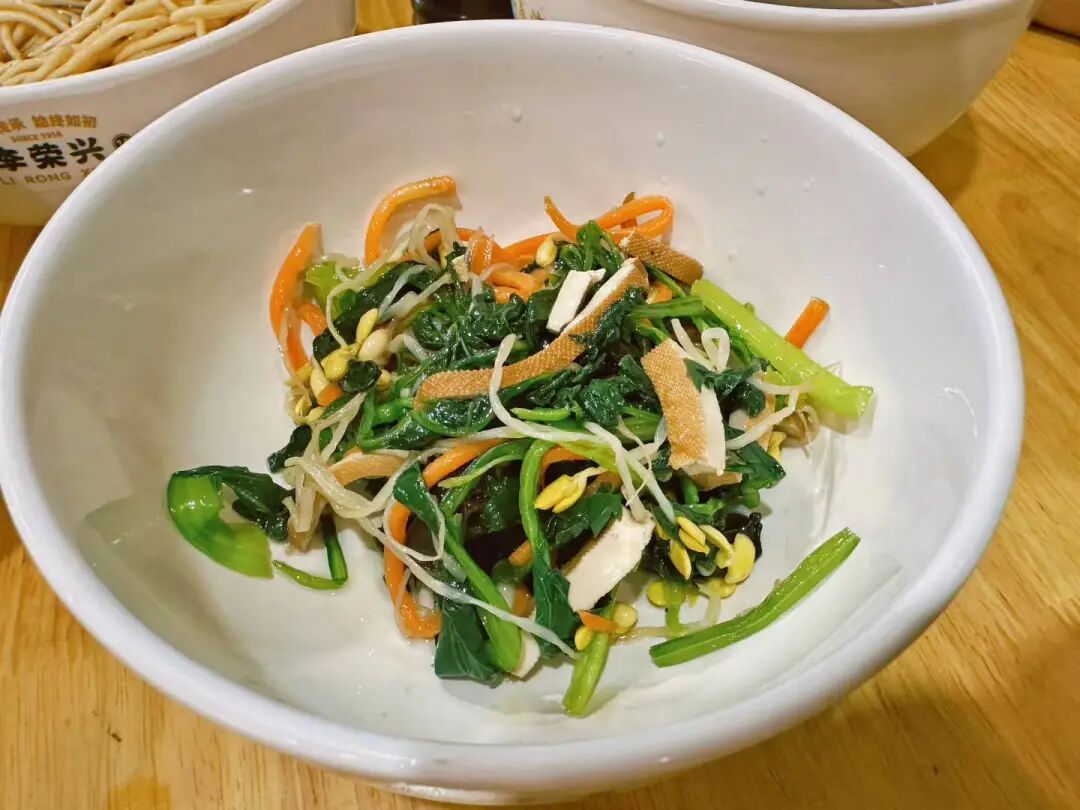
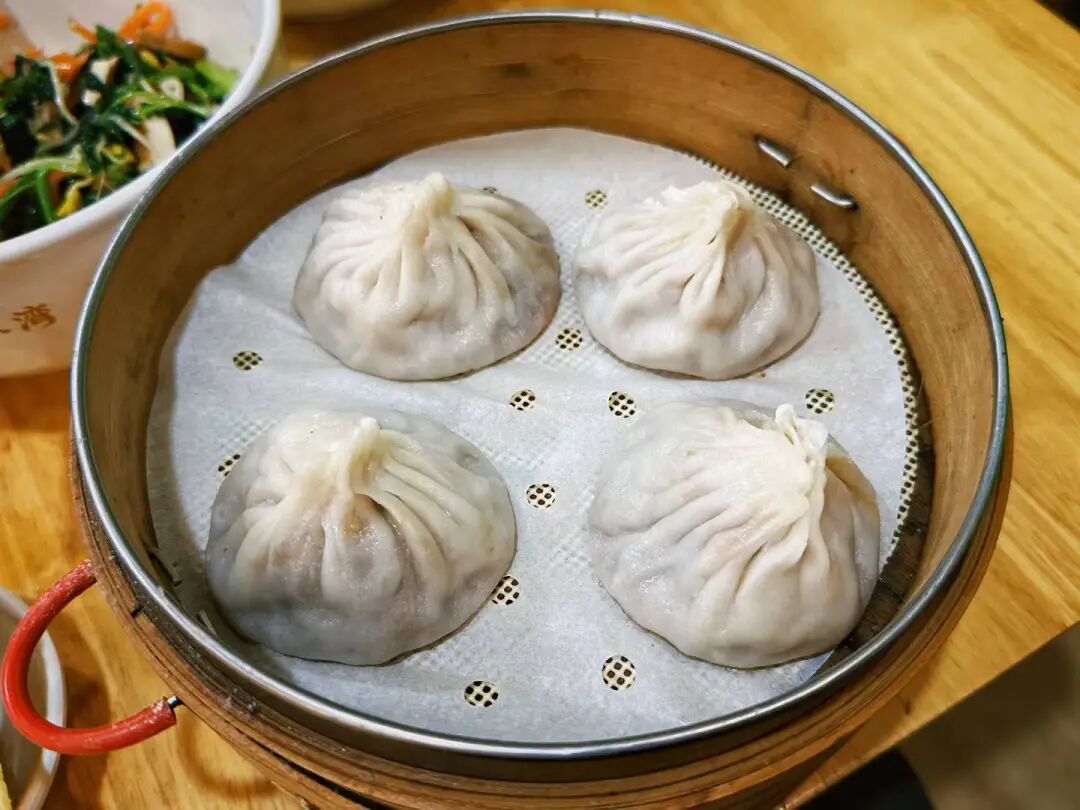
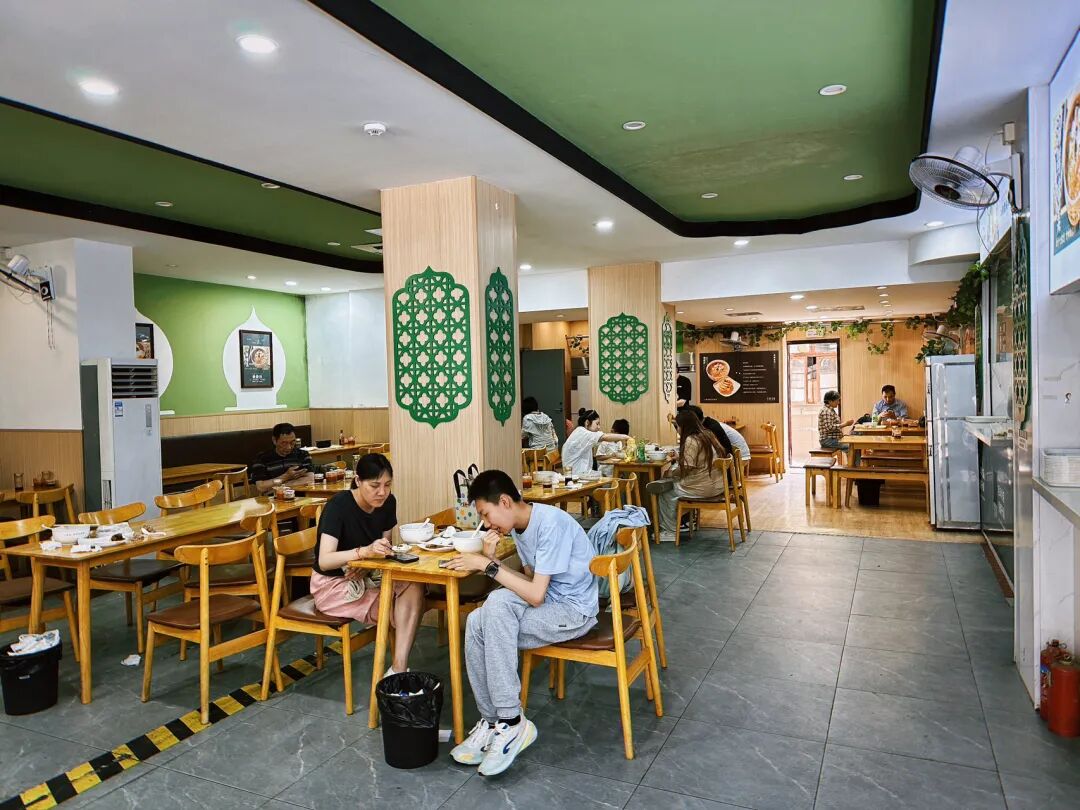
Lvliuju
Next to Li Rongxing on Xufu Lane is another long-standing shop, Lvliuju. Their shop is quite small. Besides their most popular green sticky rice balls (qingtuan), they serve simple meals like duck blood vermicelli soup (laoya fensi tang), bamboo shoot and beef brisket rice (sungand niunan fan), braised three-delicacy rice (hui sanxian fan), and smoked fish assorted noodles (xunyu shijin mian). We bought some of their signature three-colored cakes (sanse gao).
Lvliuju was founded in 1912 at Taoye Ferry by the Qinhuai River. It started as a high-end vegetarian restaurant, and people like Kong Xiangxi, Chiang Ching-kuo, Bai Chongxi, and the Soong sisters often ate there. After 1949, Lvliuju closed for a time. It reopened in 1963 on Taiping South Road at Yanggongjing, hiring the famous chef Chen Bingyu to lead the kitchen and continue serving authentic vegetarian food. A major feature of Lvliuju is making vegetarian dishes taste like meat. Their vegetarian chicken (suji) and vegetarian duck (suya), made from tofu skin, gluten, and dried bean curd sticks with herbal seasonings, are delicious. In 1987, Lvliuju added halal dishes to its vegetarian menu and became a halal restaurant, though it still specializes in vegetarian food. It is now a national-level intangible cultural heritage.
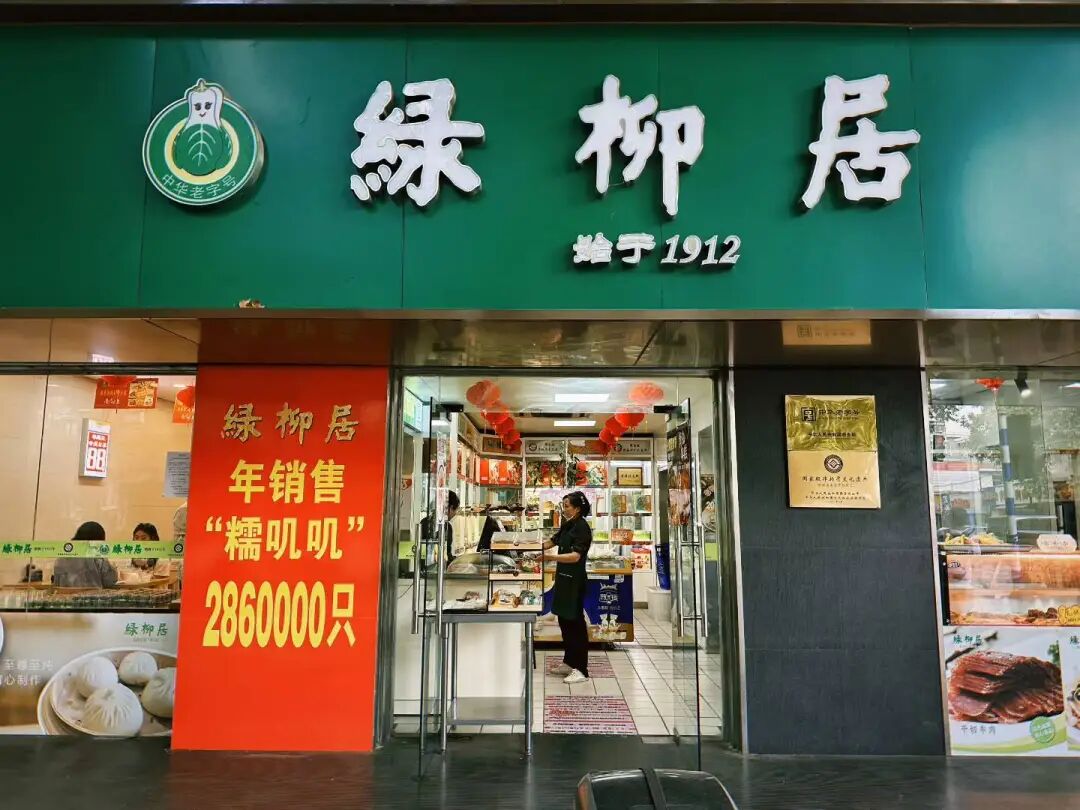
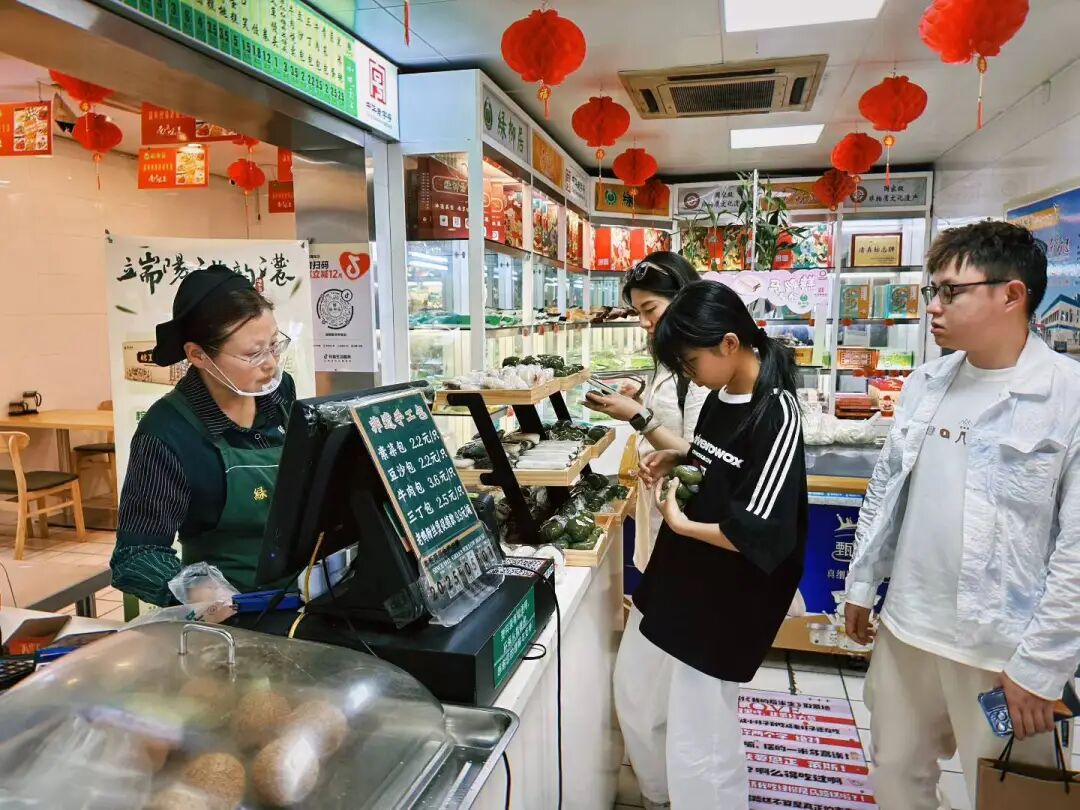
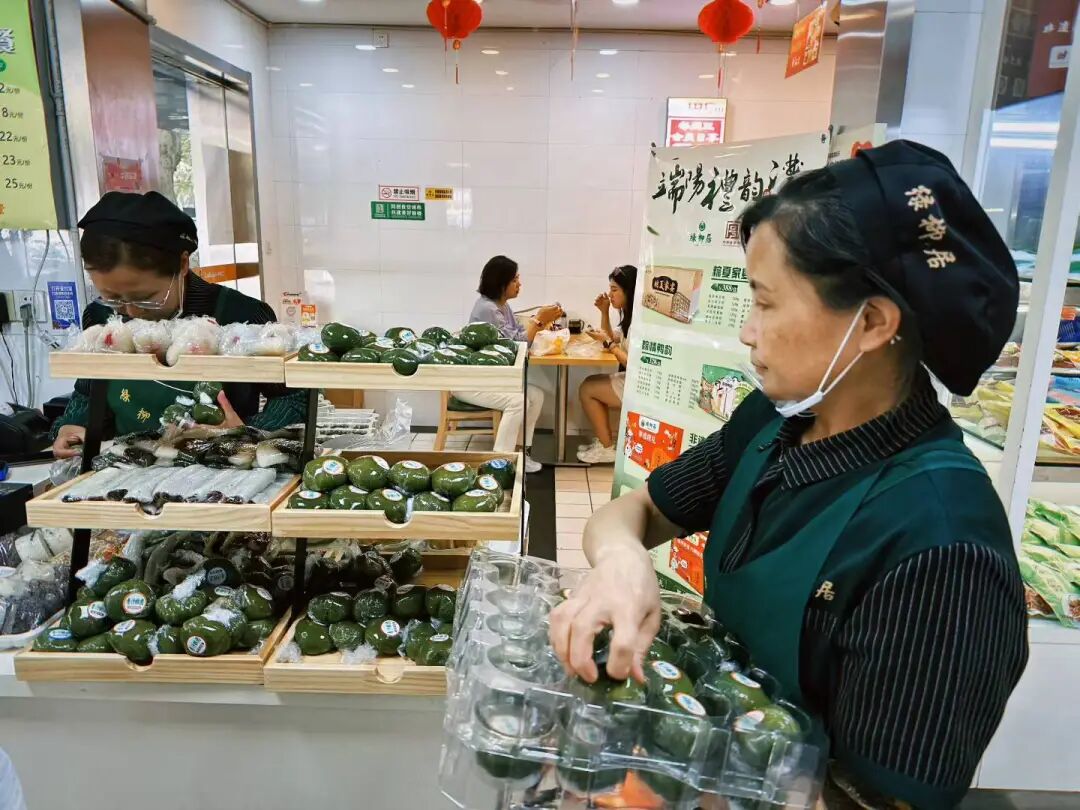
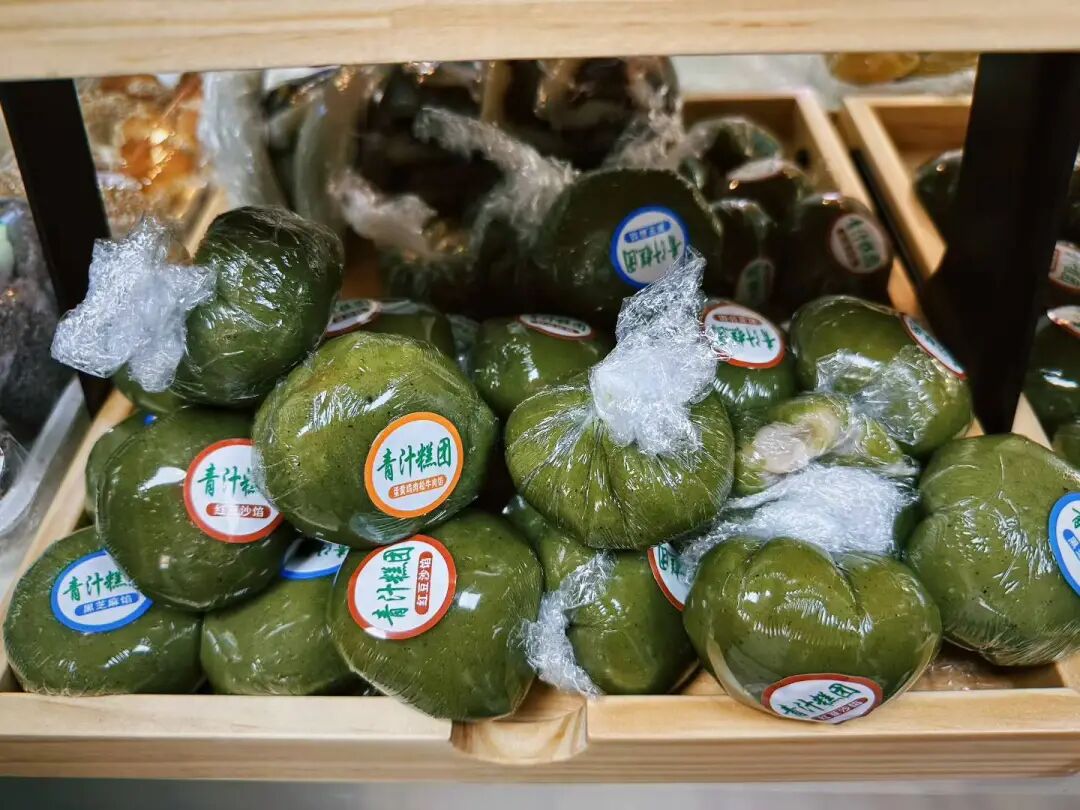
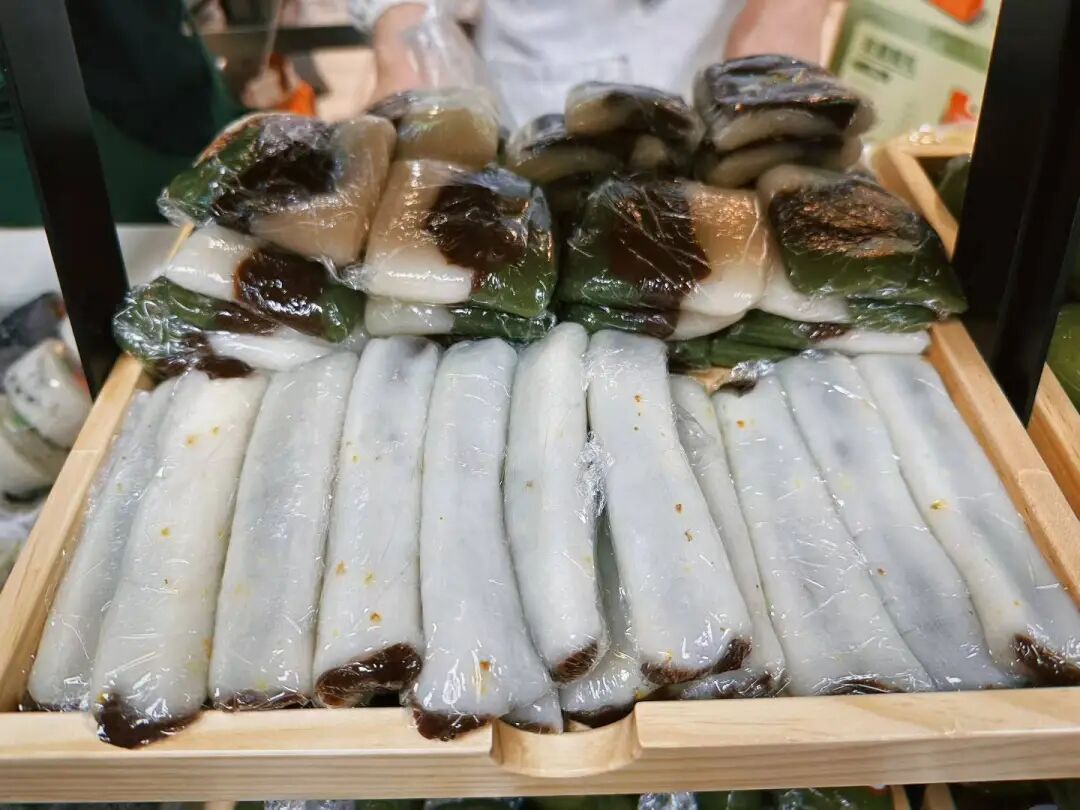
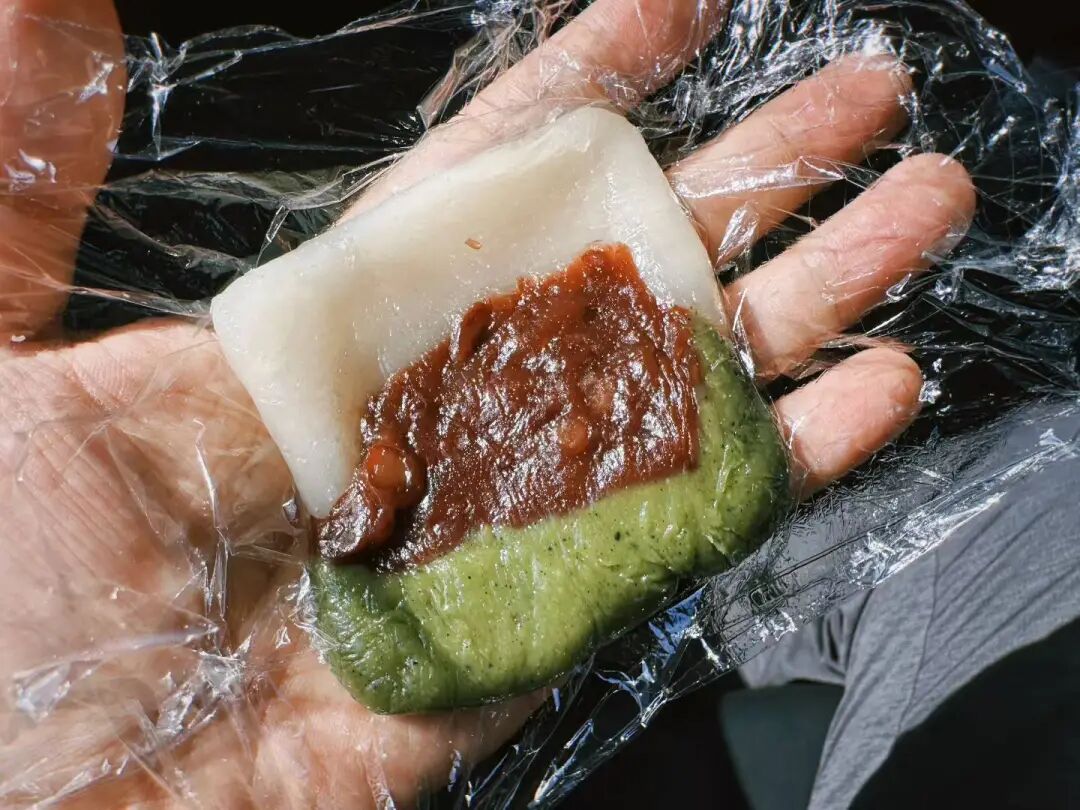
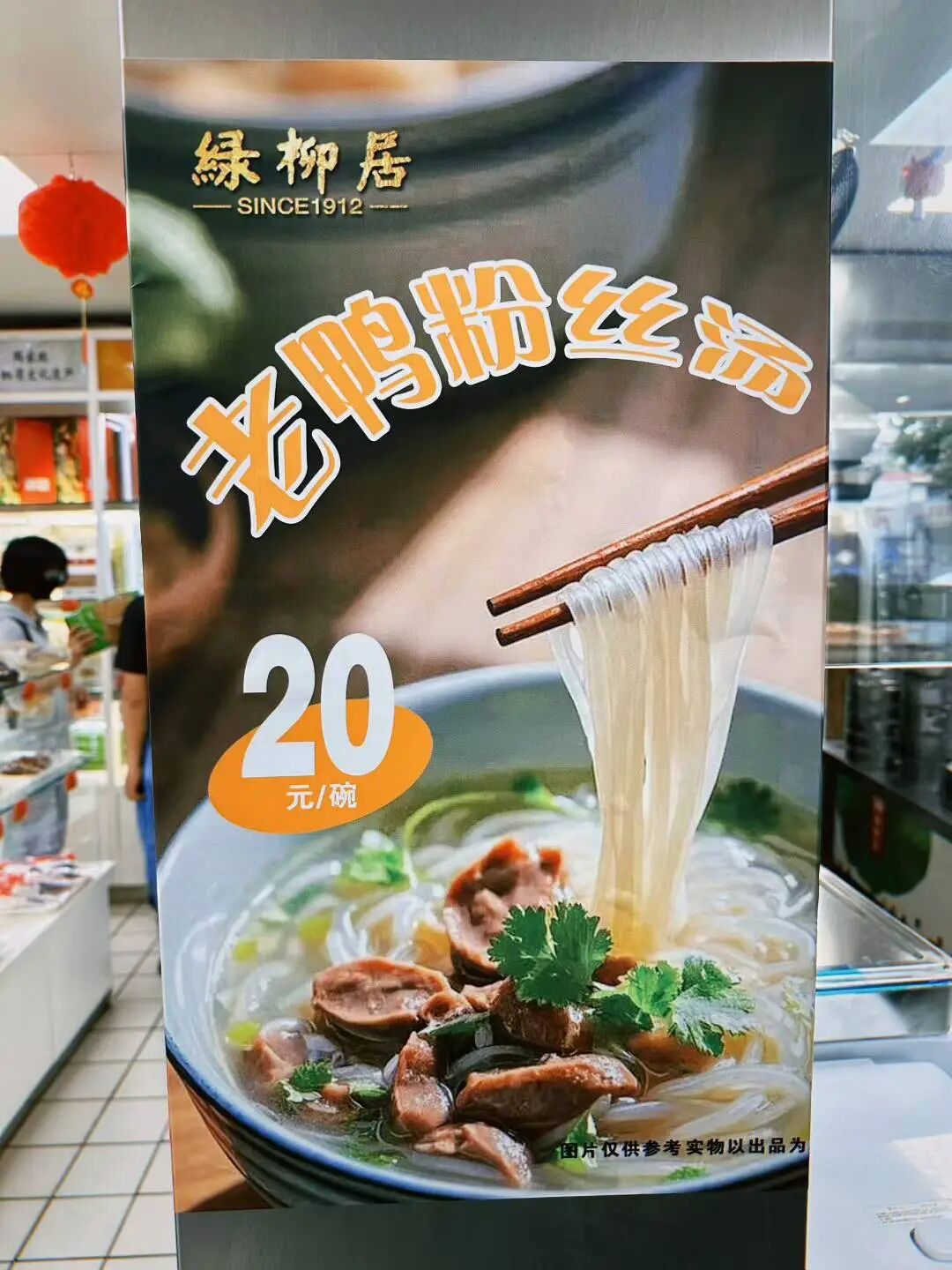
Liuhe South Gate Mosque
Leaving the Nanjing city area, we crossed the Yangtze River and headed north to Liuhe District, where we performed namaz at the Liuhe South Gate Mosque.
There were once seven mosques and three women's schools in Liuhe. Today, the Changjiang Road Mosque, South Gate Mosque, and Zhuzhen Mosque are open, and the historic buildings of the South Gate Women's School and Zhuzhen Women's School remain.
The Liuhe South Gate Mosque was first built in 1403 (the first year of the Yongle reign of the Ming Dynasty) and rebuilt in 1553 (the 32nd year of the Jiajing reign). It was destroyed during the Taiping Rebellion and later rebuilt. The famous Imam Da Pusheng, one of the four great imams of the Republic of China, had three generations of his family—from his great-grandfather to his father—serve as the imam at South Gate Mosque. The old Da family home is on the Halal Street (Qingzhen Jie) right at the mosque entrance. Imam Da Pusheng studied the scriptures at South Gate Mosque for seven years, from age 10 to 17, before going to Nanjing and Beijing for further study.
The ancestor of the Da family of the Baiye Hall, where Imam Da Pusheng belonged, was Mubalesha from the Western Regions during the Yuan Dynasty. Research shows he belonged to the Kipchak Yuliberi tribe and served as a Darughachi in Zhenjiang before passing away in Zhenjiang. His sixth-generation descendant, Da Shan, moved from Zhenjiang to Liuhe in the early Ming Dynasty to serve as a county magistrate candidate. He settled in Liuhe, making them the oldest Hui Muslim family from the Western Regions in the area.
After 1966, the South Gate Mosque was used as a kindergarten. During that time, the Shamao Hall (duiting), the north wing, the red gate, and the entrance hall were demolished. The kindergarten moved out in 1975, and Baozhen Primary School borrowed the space for a while. It was finally reclaimed in 2000 after the school moved out. The main hall was raised and rebuilt in 2013. Later, the Unity Pagoda (Tongxin Ta) and Tongxing Building were built, and the site finally opened to the public in 2020.
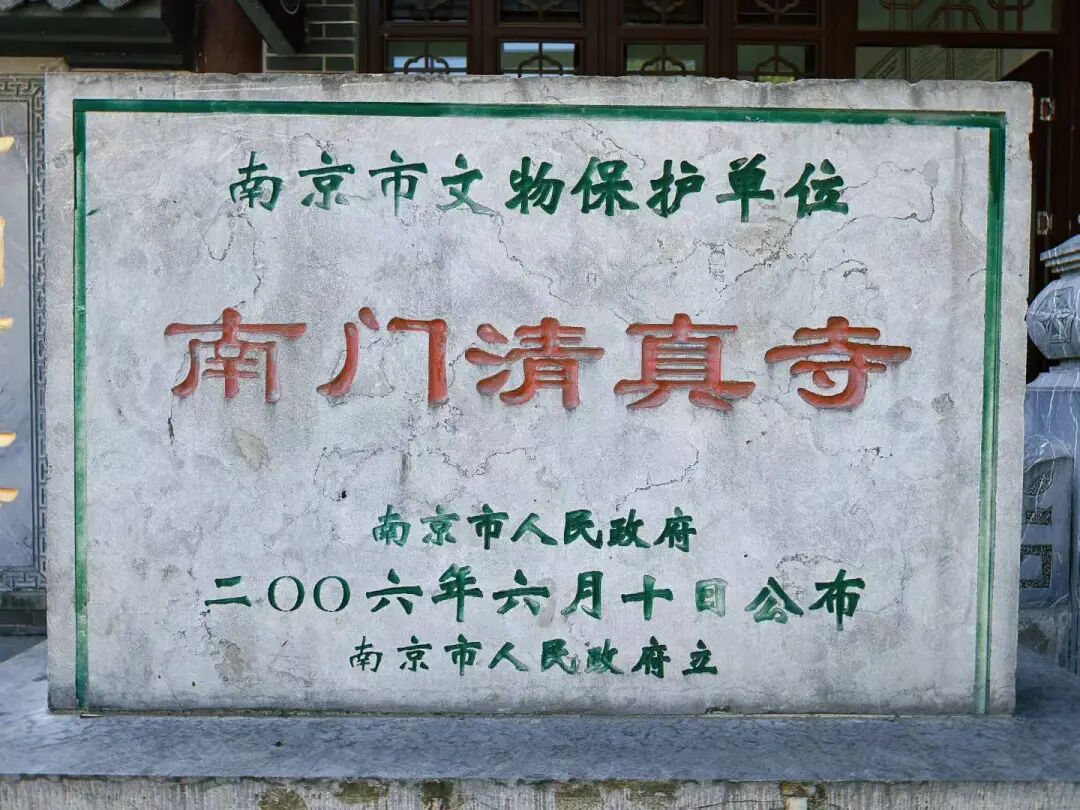
Halal Travel Guide: Seven Historic Mosques in Yangzhou, Part 1
Articles • ali2007fr posted the article • 0 comments • 188 views • 2026-05-20 08:14
Summary: Yangzhou, Jiangsu, is covered through seven historic mosques visited across two trips in 2021 and 2025. This account keeps the mosque names, founding dates, architectural details, community stories, food notes, and photographs in order.
I visited ancient mosques in Yangzhou, Jiangsu, twice in 2021 and 2025. I visited seven mosques in total: Xianhe, Majianxiang, Babayao, Shaobo, Lingtang, Gaoyou, and Baoying. I will share them with you here.
Xianhe Mosque
Xianhe Mosque is on Nanmen Street in Yangzhou. It was founded in 1275 (the 12th year of the Zhiyuan era of the Yuan Dynasty) by the Western sage Puhading before he passed away. It was rebuilt in 1390 (the 23rd year of the Hongwu era of the Ming Dynasty) by Ha San, renovated in 1523 (the 3rd year of the Jiajing era) by the merchant Ma Zongdao and the imam Ha Ming, and repaired again in 1791 (the 56th year of the Qianlong era). The Xianhe Mosque layout uses small courtyards, unlike the common four-sided courtyard (siheyuan) style found in northern mosques. Xianhe Mosque divides the lecture hall, the main prayer hall, and the gate into three separate small courtyards. It also features a moon-viewing pavilion (wangyueting) and a covered walkway (youlang) outside the south gable of the main hall, giving the mosque a garden-like atmosphere.
I visited Xianhe Mosque in 2021, as seen in my article, "The 2021 Trip to Gaoyou, Yangzhou, and Zhenjiang."
Majianxiang Mosque
Majianxiang Mosque is located on Majianxiang in the Dongmen Street area of Yangzhou. According to the Hui Muslims' "Gu Family Genealogy," it was built in 1714 (the 53rd year of the Kangxi era) by Gu Yuanbing, a 24th-generation descendant of Gu Duding.
Majianxiang Mosque originally had dozens of rooms, including a gatehouse, a memorial archway (paifang), a main prayer hall, a reception hall, a water room (shuifang), side rooms, and dormitories. Today, two main halls, a reception hall, and the water room remain. In the early years of the Republic of China, the mosque housed the second Yangzhou branch of the Beijing-based "Zhenzong Newspaper" and a religious book and newspaper room.
In 1932, Liu Binru, a famous Yangzhou imam and one of the founders of the Chinese Islamic Association, along with Hua Ruzhou, then a council member of the Jiangdu County Hui Muslim Association, established the "Chinese Islamic Scripture Translation and Compilation Institute" here to translate religious texts. Liu Binru, who was fluent in Arabic and Persian, was responsible for translating the original Arabic texts. Hua Ruzhou translated the summaries from the English version by the Indian Islamic scholar Muhammad Ali, which were then attached before each section of the scripture. On January 1, 1935, the "Chinese Translation of the Quran with Ali's Summaries" was officially published. The first printing of 2,000 copies was sold by major bookstores across the country.
In 1933, the Yangzhou Islamic Association founded the Hui Muslim Cultural Training Institute at Majianxiang Mosque, with Liu Binru in charge. to teaching Arabic, the institute offered Chinese, English, and arithmetic, reaching a level equivalent to upper primary or junior high school. It replaced the traditional individual scripture teaching method with a classroom-based group instruction format. Teachers included the Majianxiang imam Hua Jinhou, who was proficient in Arabic, the imam Ruan Dechang, the imam of the East Gate Hui Muslim Hall Lan Baohua, and Liu Binru. They also hired Hui Muslim Association members Shen Junchen and Zhang Shaozhe to teach Chinese and arithmetic, and Hua Ruzhou to teach English.
Between 1934 and 1935, the missionary Claude L. Pickens visited the Majianxiang Mosque and saw a reading room inside with many books and magazines. He photographed the 1931 Gu Gong Memorial Stele standing in the mosque. The inscription records the life of mosque board member Gu Jisu, who served for 11 years, repaired the ablution room (shuifang) and market stalls, and built a new heated room (nuanfang), making great contributions to the mosque. He passed away in 1930, before he was 40 years old.
In 1958, the Majianxiang Mosque was converted into a factory workshop and occupied by a craft sign factory, a burlap bag factory, and a brush factory. The property was not recovered until 1997, and it was listed as a municipal cultural relic protection unit in 2008. It is currently used as a residence.
Puhading Tomb Garden
Legend says Puhading was a 16th-generation descendant of the Noble Prophet. He came to Yangzhou during the Xianchun period of the Song Dynasty (1265-1274) and died there in 1275 (the 12th year of the Zhiyuan period of the Yuan Dynasty). He was buried on a high ridge east of the Dongguan River in the New City, a place later called the Huihui Hall (commonly known as Baba Kiln).
According to oral traditions passed down by local imams in Yangzhou, as told by Imam Lan Baohua of the Huihui Hall on July 17, 1947, Puhading was born in 1204 (the 4th year of the Jiatai period of the Song Dynasty) into a wealthy Arab noble family and was the 16th-generation descendant of the Noble Prophet. Puhading was highly learned and mastered the scriptures and religious laws. At 57, following the teaching that one should seek knowledge even if it is as far as China, he spent four years preparing. At 61, he led a team of 17 people across the Arabian Sea toward China.
Puhading arrived in Yangzhou in 1265 (the 1st year of the Xianchun period of the Song Dynasty). During his 10 years in Yangzhou, he presided over the founding of the Xianhe Mosque, expanded the old mosque outside the South Gate, and rebuilt the Nanchaoguan Mosque.
In 1275 (the 12th year of the Zhiyuan period of the Yuan Dynasty), he died on a boat while returning from giving a lecture, at the age of 71. Yuan Guang'en, the governor of Guangling, buried him on a high ridge on the east bank of the Grand Canal in Yangzhou.
The Puhading Tomb Garden has been renovated through the dynasties. Most of the existing buildings reflect the appearance after the 1845 (the 25th year of the Daoguang period) renovation. It was named a Major Historical and Cultural Site Protected at the National Level in 2001.
The gate of the tomb garden is right next to the Beijing-Hangzhou Grand Canal, and the original stone path and stone pillars for tying boat ropes are preserved outside the gate. The lintel of the gate is inscribed with 'Tomb of the Western Sage Puhading,' with the signature 'Rebuilt in the month of lotus in the Bing-shen year of the Qianlong reign.' On both sides of the gate are Qing Dynasty drum-shaped stone bases featuring lions playing with a ball. Inside the gate is a stele from the Daoguang renovation, inscribed with 'In the Yi-si year of the Daoguang reign, people of various surnames donated to build the stone bank and renovate the halls; the management was not easy.' I hope this place is repaired from time to time so it does not fall into ruin, keeping the tomb grounds safe and preserving its memory forever.
After entering the Pu Hadin tomb complex, you reach stone steps leading up the hill. The stone railings on both sides are carved with traditional patterns and designs, including lions playing with balls, carp jumping over the dragon gate, and the three rams bringing prosperity (sanyang kaitai). At the top of the steps stands a foyer with a four-cornered pointed roof topped with a glazed vase. Above it is a plaque inscribed with the words 'Tianfang Ju Yue' (The Standard of the Holy Land).
The center of the Pu Hadin tomb complex is the Pu Hadin tomb pavilion. The tomb pavilion has a four-cornered pointed roof with a glazed vase on top, and the interior features a corbelled dome. Inside the pavilion is the tomb cover stone, which follows the classic Song and Yuan dynasty style for Hui Muslims. It has a five-tiered Sumeru pedestal structure carved with scrolling peonies, ruyi flowers, and scripture. Today, the tomb cover stone is covered by a cloth and cannot be seen.
The pavilion features a stone tablet erected in 1726 (the fourth year of the Yongzheng reign) that reads 'Tomb of the Sage Pu Hadin from the Western Regions who attained the Way,' with carvings of longevity peaches and lotus flowers around the edges.
Inside the north foyer, there is also a 'Record of the Tomb of the Sage Pu Hadin from the Western Regions' erected in 1908 (the 34th year of the Guangxu reign). Besides recording Pu Hadin's birth and death, it includes legendary stories known within the community as 'karamat' (miraculous signs). The inscription records that an old monk from the Dragon King Temple tried to compete with Pu Hadin in magic, but he could not win and was eventually humbled. It also records that in the early Qing dynasty, thieves tried to dig up Pu Hadin's tomb. After they opened the tomb cover stone, a raging fire suddenly broke out and burned many of the thieves. Later, they saw there were no remains in the tomb, only a scroll of the Quran (Tianjing) and a hat, shoes, fan, and staff. The inscription is signed by 'the imam of this mosque and others who supervised the carving.' The imam of this mosque refers to the leader of the Babayao Mosque.
Around the Pu Hadin tomb pavilion are the tomb pavilions of several other sages, including the sage Sa Ganda who passed away in 1278 (the third year of the Jingyan reign of the Song dynasty), the sages Mahamude and Zhanmaluding who passed away in 1469 (the fifth year of the Chenghua reign of the Ming dynasty), the sage Fana who passed away in 1498 (the 11th year of the Hongzhi reign), and the tomb of Wang Keng, a merchant from Xi'an, Shaanxi, who passed away in 1501 (the 14th year of the Hongzhi reign of the Ming dynasty). The tomb pavilions all contain traditional Song and Yuan dynasty Sumeru pedestal tomb cover stones. I saw them in 2017, but when I went back in 2025, they were all covered with cloths and could not be seen.
The pavilion also has a stone tablet from the Qianlong reign commemorating the reconstruction, which lists: 'The great sage Pu Hadin, a 16th-generation descendant of the Holy Prophet from the Western Regions, in the first year of the Deyou reign of the Song dynasty; the sage Sa Ganda from the Western Regions in the third year of the Jingyan reign of the Song dynasty; the sage Mahamude from the Western Regions in the fifth year of the Chenghua reign of the Ming dynasty; the sage Zhanmaluding from the Western Regions in the fifth year of the Chenghua reign of the Ming dynasty; and the sage Fana from the Western Regions in the 11th year of the Hongzhi reign of the Ming dynasty.' The inscription reads, Rebuilt in the lunar eighth month of the Bing-Shen year of the Qianlong reign.
There are two ancient ginkgo trees in the cemetery, one of which is 750 years old and was planted when the cemetery was built in 1275. The 23rd day of the seventh lunar month this year marks the 750th anniversary of Pu Hadin's passing, and a grand memorial event will be held then.
The year 1275 was also when Yangzhou fell to the Yuan dynasty. That year, the Yuan general Wuliangha Ashu besieged Yangzhou, but the Song dynasty defenders refused to surrender, and the Yuan army failed to take the city after repeated attacks. The siege lasted for one year and three months. Eventually, a minor general inside the city opened the gates to surrender. The main commanders, Li Tingzhi and Jiang Cai, were captured, and the Yuan dynasty finally occupied Yangzhou. Therefore, this ancient ginkgo tree in the cemetery is a witness to the transition between the Song and Yuan dynasties.
Most of the Qing dynasty tombstones in the Pu Hadin cemetery show official titles. One of them, from the fifth year of the Xianfeng reign, belongs to Tao Gong, a garrison commander of Gushuijing Fort under the Ningxia Town of Gansu, who was granted a blue peacock feather by the emperor.
There are also some unearthed Yuan dynasty tomb capstones in the cemetery, but they are currently covered with tarps and cannot be seen.
On the cemetery wall, there is a 1932 stele titled Inscription for Han Aheng Yuchun. The inscription records that Imam Han Tongrong was from Hanjiachai in Yucheng County, Shandong. He was born in 1837 (the 17th year of the Daoguang reign), studied the classics from a young age, and later traveled to Ningxia and Hohhot for his studies. After graduating in 1867 (the sixth year of the Tongzhi reign), he returned to Shandong and then traveled south. When he passed through Yangzhou, the local elders asked him to stay. He set up a school at the Baba Yao Mosque next to the Pu Hadin cemetery and taught over thirty students, including several religious leaders with the surnames Lan, Ma, and Wang. Four years later, Imam Han left Yangzhou to preach and teach in Hubei, Fujian, Jiangxi, and other places, with his students spread across the entire southeast region. During this time, Imam Han briefly returned to teach in Yangzhou before traveling to Zhejiang, Suzhou, Tianjin, and Shanghai. He returned to Yangzhou to teach in 1898 (the 24th year of the Guangxu reign) and stayed until he passed away in 1915 at the age of 79, after which he was buried in the Pu Hadin cemetery.
The Pu Hadin cemetery houses four Yuan dynasty tombstones. Three of them are primarily in Arabic with some Persian place names, while the front of the fourth one is written in Chinese characters. These four tombstones were discovered in the city foundations in 1924-1925 when the Dangjun Tower at the south gate of Yangzhou was demolished. It was originally kept in the tomb of the sages next to the Crane Mosque (Xianhe Si) and moved to the Puhading Cemetery in 1959.
During the Song Dynasty, a government hostel was set up at the south gate of Yangzhou. The area outside the south gate became a major settlement for Arab and Persian merchants. An ancient mosque (Nanmenwai Gusi) was built there, but it was later occupied by a glass factory and the main hall was demolished in 1984. A cemetery was also built nearby. In 1357, the 17th year of the Zhizheng era of the Yuan Dynasty, Zhu Yuanzhang captured Yangzhou and used some of the tombstones to build the Dangjun Tower at the south gate.
One of the Chinese-language tombstones is inscribed with 'Tomb of the Darughachi of Huizhou Circuit, Nie Gubo, Tongyi'. The term Darughachi originally meant 'seal holder' and referred to officials who held real administrative and military power in local areas during the Yuan Dynasty. The Huizhou Circuit was a high-ranking circuit, so the Darughachi held a rank of 3a. Tongyi is short for 'Tongyi Dafu', which is also a 3a rank. During the Yuan Dynasty, most Darughachi were Mongols, though some were Semu people with noble family backgrounds. The back of the stone records Nie Gubo's life and praises him as a 'noble, diligent, and excellent religious educator, an outstanding leader who helped the weak, was charitable and generous, and loved the people, a respected elder... a man of great virtue and wisdom, generous and fair, and blessed with great fortune.' It also notes that he passed away on the 2nd day of the 12th month of the Islamic calendar year 709, which is May 3, 1310, the third year of the Zhida era of the Yuan Dynasty.
The second tombstone records: 'The pardoned deceased Shams al-Din Asif Allah Balaji... at the time of early June, 724 (Islamic calendar).' This corresponds to the end of May or early June of 1324, the first year of the Taiding era of the Yuan Dynasty.
The third tombstone belongs to a Persian woman who also passed away in 1324. Her name was Aisha Khatun, with 'Khatun' meaning 'lady'. The inscription says: 'She was a chaste, virtuous, and capable woman... her father was Lezunding, a well-respected official in the religious community.'
The fourth tombstone is damaged. It belonged to a missionary named Ala al-Din who died in 1302, the sixth year of the Dade era of the Yuan Dynasty. The inscription describes him as a merchant who was skilled in business and highly respected by the people.
On the east side of the Puhading Cemetery is the tomb of General Zhang Xin, who passed away in 1551, the 30th year of the Jiajing era of the Ming Dynasty. General Zhang's ancestor, Damuchi, came from Samarkand. The 'Continued Records of Jiangdu County' from the Republic of China era states: 'General Zhaoyong, named Xin, was the grandson of the Hui Muslim Damuchi. He held the rank of Cavalry Commandant. Because he was an excellent archer, he was granted the surname Zhang and his household was registered in Yangzhou, located behind the Puhading tomb outside Tongji Gate.'
The spirit way archway for General Zhang was erected by his grandson, Zhang Heng. Zhang Heng was a famous Ming Dynasty general who fought against Japanese pirates and served as the hereditary commander of the Yangzhou Guard. In April 1556 (the 35th year of the Jiajing reign), Japanese pirates attacked Yangzhou. Zhang Heng, a retired Huaiyang assistant regional commander, personally led troops to fight them and died on the battlefield. The stone sheep beside the spirit way was once kept at Slender West Lake until it was moved back in 2011.
Next to General Zhang Xin's tomb is the cenotaph of Zuo Baogui, a famous Qing Dynasty general who fought against the Japanese. During the First Sino-Japanese War in 1894 (the 20th year of the Guangxu reign), Zuo Baogui led his troops to hold the Xuanwu Gate in Pyongyang and dealt a heavy blow to the Japanese army. On September 15, Zuo Baogui personally fired a cannon. His right arm was broken, but he bandaged the wound and kept fighting. He was then hit in the chest by a shell and died heroically at the age of 57. That same year, the Yangzhou government followed an imperial decree to build a cenotaph and a shrine for Zuo Baogui in the south section of the Puhading Tomb. The shrine was later destroyed, leaving only the tomb cover stone of the cenotaph.
Babayao Mosque
The mosque southwest of the Puhading Tomb garden is called Huihui Tang Mosque or Babayao Mosque. It was one of the six Hui Muslim districts in Yangzhou during the Qing Dynasty and is the only one remaining of the three districts outside the city. Babayao Mosque currently appears as it did after being rebuilt in 1776 (the 41st year of the Qianlong reign) and renovated in 1845 (the 25th year of the Daoguang reign), featuring the traditional architectural style typical of the Huaiyang region.
The main gate of Babayao Mosque is on the southwest side of the Puhading Tomb garden. The stone plaque above the gate was installed during the Qianlong reign, and the rectangular door-pillow stones are very elegant.
The main prayer hall is on the north side of the gate, right next to the stone path of the Grand Canal, and features upturned eaves. The interior has a hard mountain roof, floor-to-ceiling slanted lattice partition doors, and a large wooden column-and-tie structural frame.
Shaobo Mosque
Traveling north from Yangzhou city along the Beijing-Hangzhou Grand Canal, the first place you reach is the ancient town of Shaobo. Historically, Shaobo was a bustling canal trading port and a key route connecting Yangzhou and Gaoyou. The ancient town still keeps a three-mile-long stone-paved road and over 20 ancient houses from the Ming and Qing dynasties.
Shaobo Mosque is said to have been built by Hui Muslims from Shandong during the Xianfeng era. Its gate and main hall still stand, and it is a protected cultural site in Jiangdu District, Yangzhou. The mosque was once used as a private residence and is now abandoned.
The gate still has its original lintel and drum-shaped stone bases. The main hall is a hard-gable style building with grey bricks and dark tiles, showing typical Jianghuai architectural style.
Shaobo Mosque is three bays wide and seven purlins deep. The gable walls have brick wind boards, the ridge purlin is supported by a dou-gong bracket set, and the columns rest on ancient mirror-style bases carved with patterns. Besides the main hall, Shaobo Mosque once had other buildings, but now only stone remains like column bases are left.
Gaoyou Mosque
Travel north from the ancient town of Shaobo along the Beijing-Hangzhou Grand Canal to reach the ancient city of Gaoyou. I visited Gaoyou Mosque in 2021 but learned it only opens for Jumuah. This time, I came specifically for Jumuah and finally got inside.
Gaoyou Mosque was first built in the Qing dynasty. According to the Gaoyou Prefecture Records (Qianlong era), local elders Ma Guixing, Liu Tianxing, and Ma Hongxing rebuilt it in 1864 (the third year of Tongzhi). The gate now has a stone lintel inscribed with 'Rebuilt in the middle of winter, the second year of Tongzhi' and a title from the local prefecture office.
Gaoyou Mosque consists of a gate and a main hall, forming an elegant and beautiful traditional Jianghuai courtyard. Inside, there is a 175-year-old boxwood tree, a 225-year-old Chinese juniper, and an ancient Qing dynasty well.
The main hall of Gaoyou Mosque is quite small, and its mihrab is in the traditional Jiangsu style. The people attending Jumuah are mostly friends (dost) from Northwest China who run hand-pulled noodle (lamian) shops. This is the current situation for many mosques in the southeast region.
Lingtang Mosque
At the end of the Yuan dynasty, Lingtang had a mosque built at 'Huihui Bay' by Gaoyou Lake, but it was later destroyed by a flood. It moved to Yangdazhuang in the mid-Ming dynasty, then to its current site in the early Qing dynasty. It was rebuilt in 1844 (the 24th year of Daoguang), expanded again in 1921, and finished in 1924. The sweet osmanthus tree next to the kiln hall was planted when local villager Xue Yukuan and his wife, Mrs. Xue Yang, had their nikah ceremony performed by an imam. It has a history of over 130 years.
See "2021 Trip to Gaoyou, Yangzhou, and Zhenjiang".
Baoying Mosque.
Traveling north from Gaoyou along the Grand Canal, you reach Baoying County. This is the northernmost part of Yangzhou, and further north lies Huai'an.
Baoying Mosque was originally located in Guojia Lane inside the east gate of the county town, though its founding date is unknown. It was rebuilt in 1910 (the second year of the Xuantong reign) at the entrance of Luoxiang Lane at the foot of the south city wall. With the help of Tao, the wife of anti-Japanese hero Zuo Baogui, and led by Imam Zhao Dezhai and others, the mosque was officially completed in 1914 through funds raised by many people from Shandong, Anhui, Zhejiang, Huaiyin, Yangzhou, Yancheng, and local Baoying residents like Gao Mu Ma Jinshi. Baoying Mosque closed after 1958, was rebuilt on its original site in 2002, and officially reopened in 2006.
The mosque still has the water well dug during the 1910 reconstruction and the ginkgo tree planted at that time. Imam Li at the mosque is from Siyang, Jiangsu. He usually runs the nearby "Li's Beef and Mutton" shop. If you want to enter the mosque, just call the number posted at the door. Imam Li is very welcoming. He mentioned that some local Gao Mu still come to the mosque for Jumu'ah prayers, which is better than some mosques where almost everyone attending is a dost from the Northwest. Imam Li comes from the Zhe school's Banqiao Daotang, but he treats all sects equally, and the religious community in Baoying County is very united. view all
Summary: Yangzhou, Jiangsu, is covered through seven historic mosques visited across two trips in 2021 and 2025. This account keeps the mosque names, founding dates, architectural details, community stories, food notes, and photographs in order.
I visited ancient mosques in Yangzhou, Jiangsu, twice in 2021 and 2025. I visited seven mosques in total: Xianhe, Majianxiang, Babayao, Shaobo, Lingtang, Gaoyou, and Baoying. I will share them with you here.
Xianhe Mosque
Xianhe Mosque is on Nanmen Street in Yangzhou. It was founded in 1275 (the 12th year of the Zhiyuan era of the Yuan Dynasty) by the Western sage Puhading before he passed away. It was rebuilt in 1390 (the 23rd year of the Hongwu era of the Ming Dynasty) by Ha San, renovated in 1523 (the 3rd year of the Jiajing era) by the merchant Ma Zongdao and the imam Ha Ming, and repaired again in 1791 (the 56th year of the Qianlong era). The Xianhe Mosque layout uses small courtyards, unlike the common four-sided courtyard (siheyuan) style found in northern mosques. Xianhe Mosque divides the lecture hall, the main prayer hall, and the gate into three separate small courtyards. It also features a moon-viewing pavilion (wangyueting) and a covered walkway (youlang) outside the south gable of the main hall, giving the mosque a garden-like atmosphere.
I visited Xianhe Mosque in 2021, as seen in my article, "The 2021 Trip to Gaoyou, Yangzhou, and Zhenjiang."
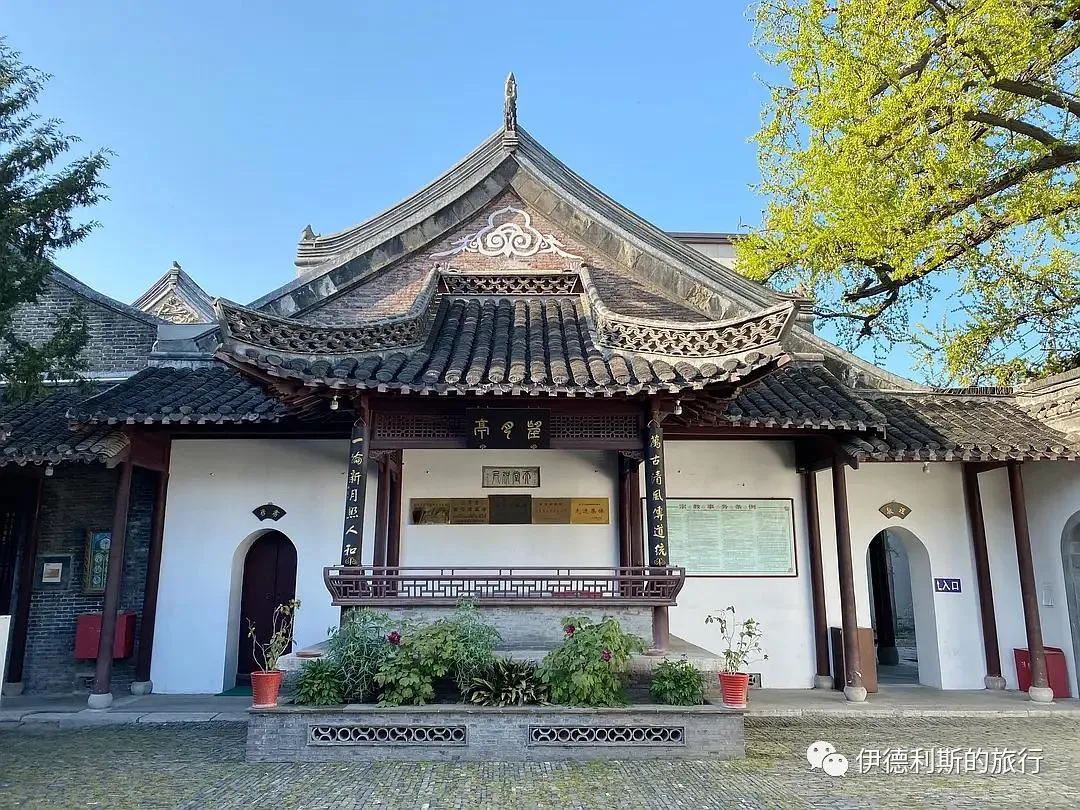
Majianxiang Mosque
Majianxiang Mosque is located on Majianxiang in the Dongmen Street area of Yangzhou. According to the Hui Muslims' "Gu Family Genealogy," it was built in 1714 (the 53rd year of the Kangxi era) by Gu Yuanbing, a 24th-generation descendant of Gu Duding.
Majianxiang Mosque originally had dozens of rooms, including a gatehouse, a memorial archway (paifang), a main prayer hall, a reception hall, a water room (shuifang), side rooms, and dormitories. Today, two main halls, a reception hall, and the water room remain. In the early years of the Republic of China, the mosque housed the second Yangzhou branch of the Beijing-based "Zhenzong Newspaper" and a religious book and newspaper room.
In 1932, Liu Binru, a famous Yangzhou imam and one of the founders of the Chinese Islamic Association, along with Hua Ruzhou, then a council member of the Jiangdu County Hui Muslim Association, established the "Chinese Islamic Scripture Translation and Compilation Institute" here to translate religious texts. Liu Binru, who was fluent in Arabic and Persian, was responsible for translating the original Arabic texts. Hua Ruzhou translated the summaries from the English version by the Indian Islamic scholar Muhammad Ali, which were then attached before each section of the scripture. On January 1, 1935, the "Chinese Translation of the Quran with Ali's Summaries" was officially published. The first printing of 2,000 copies was sold by major bookstores across the country.
In 1933, the Yangzhou Islamic Association founded the Hui Muslim Cultural Training Institute at Majianxiang Mosque, with Liu Binru in charge. to teaching Arabic, the institute offered Chinese, English, and arithmetic, reaching a level equivalent to upper primary or junior high school. It replaced the traditional individual scripture teaching method with a classroom-based group instruction format. Teachers included the Majianxiang imam Hua Jinhou, who was proficient in Arabic, the imam Ruan Dechang, the imam of the East Gate Hui Muslim Hall Lan Baohua, and Liu Binru. They also hired Hui Muslim Association members Shen Junchen and Zhang Shaozhe to teach Chinese and arithmetic, and Hua Ruzhou to teach English.
Between 1934 and 1935, the missionary Claude L. Pickens visited the Majianxiang Mosque and saw a reading room inside with many books and magazines. He photographed the 1931 Gu Gong Memorial Stele standing in the mosque. The inscription records the life of mosque board member Gu Jisu, who served for 11 years, repaired the ablution room (shuifang) and market stalls, and built a new heated room (nuanfang), making great contributions to the mosque. He passed away in 1930, before he was 40 years old.
In 1958, the Majianxiang Mosque was converted into a factory workshop and occupied by a craft sign factory, a burlap bag factory, and a brush factory. The property was not recovered until 1997, and it was listed as a municipal cultural relic protection unit in 2008. It is currently used as a residence.
Puhading Tomb Garden
Legend says Puhading was a 16th-generation descendant of the Noble Prophet. He came to Yangzhou during the Xianchun period of the Song Dynasty (1265-1274) and died there in 1275 (the 12th year of the Zhiyuan period of the Yuan Dynasty). He was buried on a high ridge east of the Dongguan River in the New City, a place later called the Huihui Hall (commonly known as Baba Kiln).
According to oral traditions passed down by local imams in Yangzhou, as told by Imam Lan Baohua of the Huihui Hall on July 17, 1947, Puhading was born in 1204 (the 4th year of the Jiatai period of the Song Dynasty) into a wealthy Arab noble family and was the 16th-generation descendant of the Noble Prophet. Puhading was highly learned and mastered the scriptures and religious laws. At 57, following the teaching that one should seek knowledge even if it is as far as China, he spent four years preparing. At 61, he led a team of 17 people across the Arabian Sea toward China.
Puhading arrived in Yangzhou in 1265 (the 1st year of the Xianchun period of the Song Dynasty). During his 10 years in Yangzhou, he presided over the founding of the Xianhe Mosque, expanded the old mosque outside the South Gate, and rebuilt the Nanchaoguan Mosque.
In 1275 (the 12th year of the Zhiyuan period of the Yuan Dynasty), he died on a boat while returning from giving a lecture, at the age of 71. Yuan Guang'en, the governor of Guangling, buried him on a high ridge on the east bank of the Grand Canal in Yangzhou.
The Puhading Tomb Garden has been renovated through the dynasties. Most of the existing buildings reflect the appearance after the 1845 (the 25th year of the Daoguang period) renovation. It was named a Major Historical and Cultural Site Protected at the National Level in 2001.
The gate of the tomb garden is right next to the Beijing-Hangzhou Grand Canal, and the original stone path and stone pillars for tying boat ropes are preserved outside the gate. The lintel of the gate is inscribed with 'Tomb of the Western Sage Puhading,' with the signature 'Rebuilt in the month of lotus in the Bing-shen year of the Qianlong reign.' On both sides of the gate are Qing Dynasty drum-shaped stone bases featuring lions playing with a ball. Inside the gate is a stele from the Daoguang renovation, inscribed with 'In the Yi-si year of the Daoguang reign, people of various surnames donated to build the stone bank and renovate the halls; the management was not easy.' I hope this place is repaired from time to time so it does not fall into ruin, keeping the tomb grounds safe and preserving its memory forever.
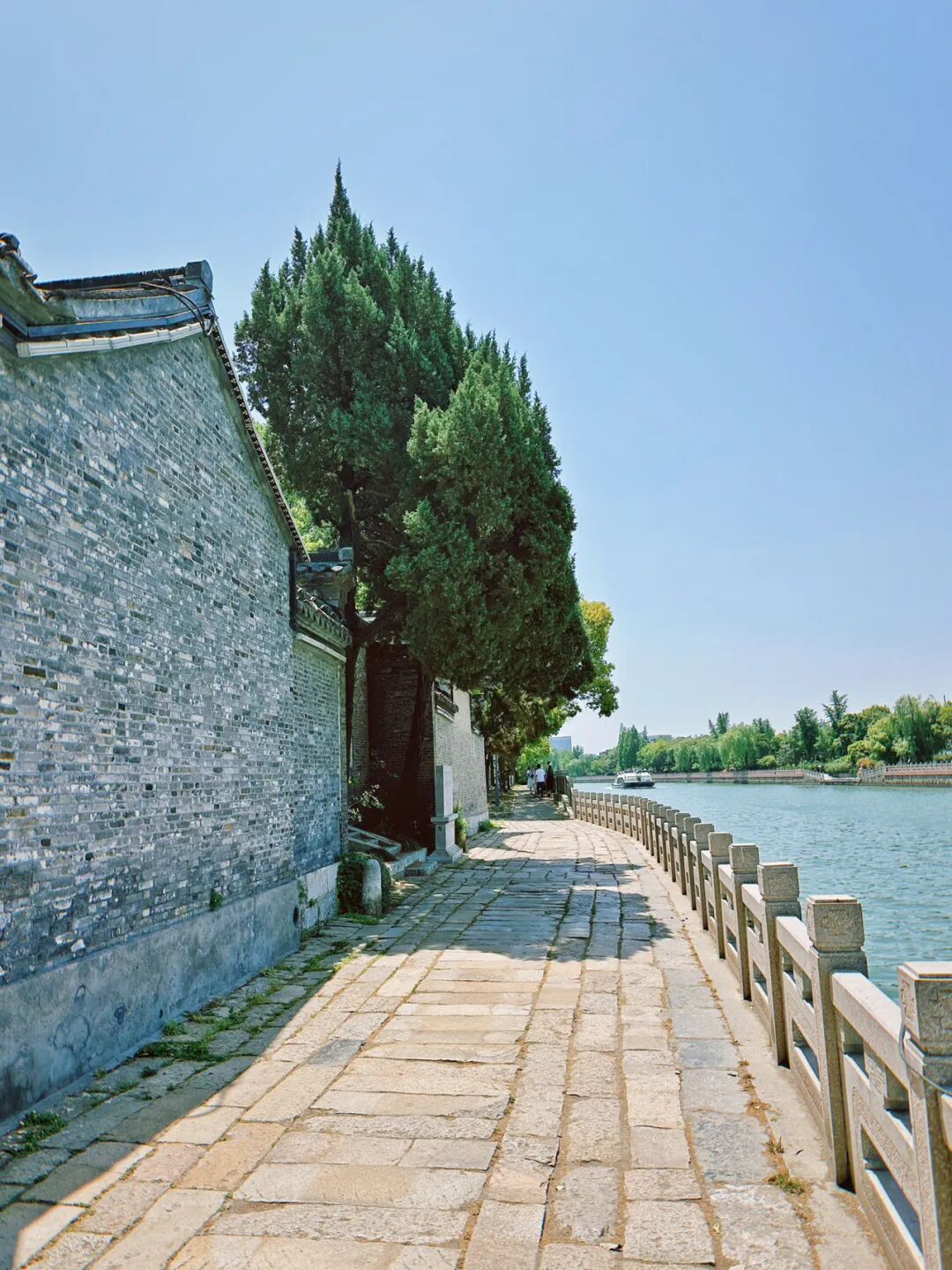
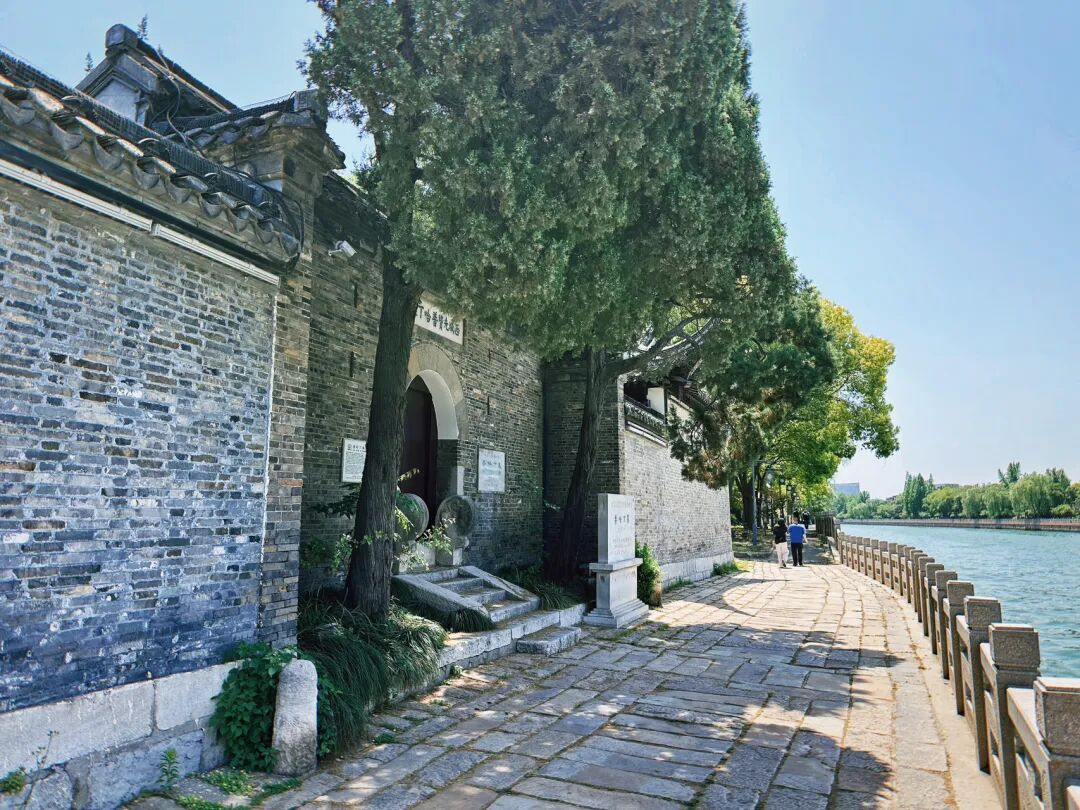
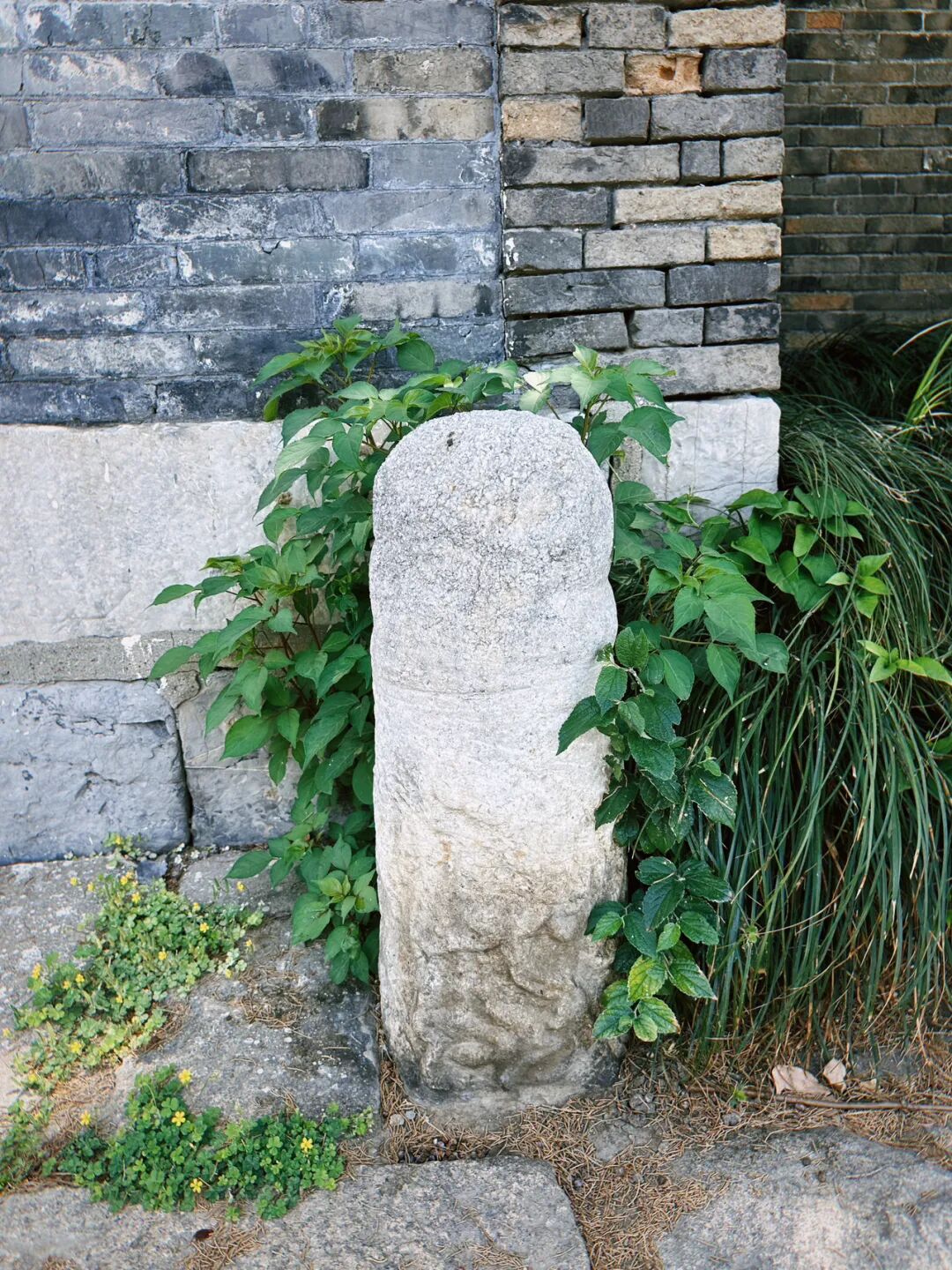
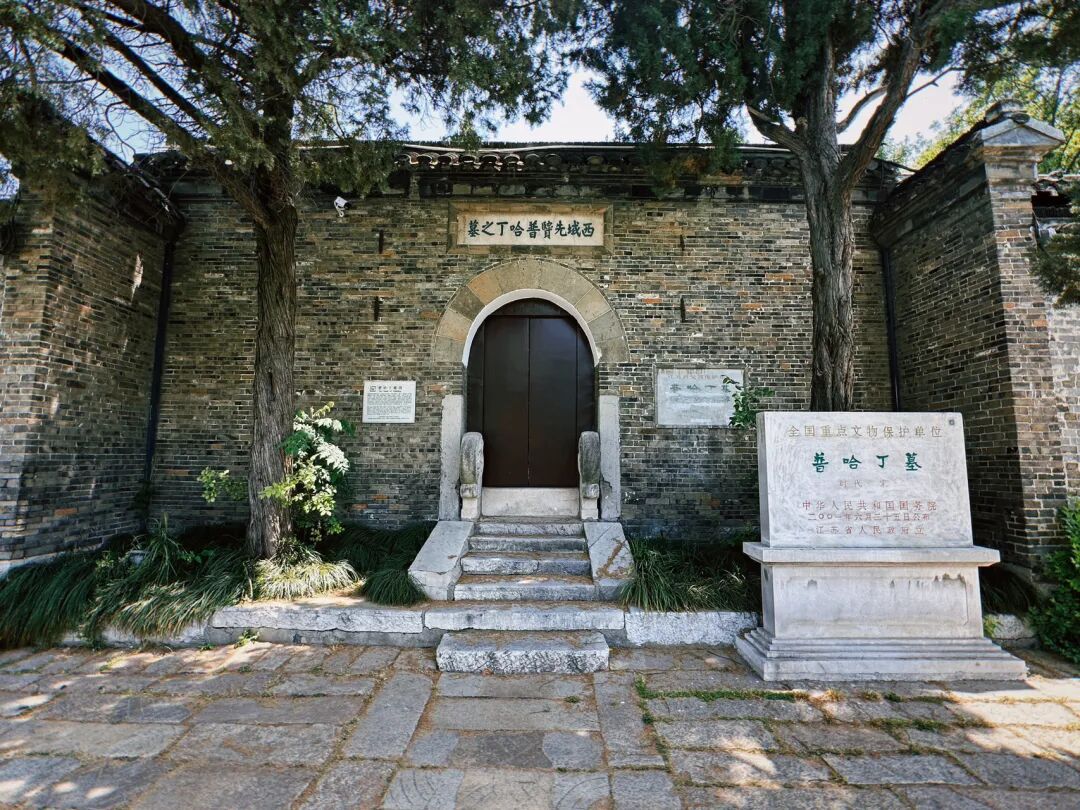
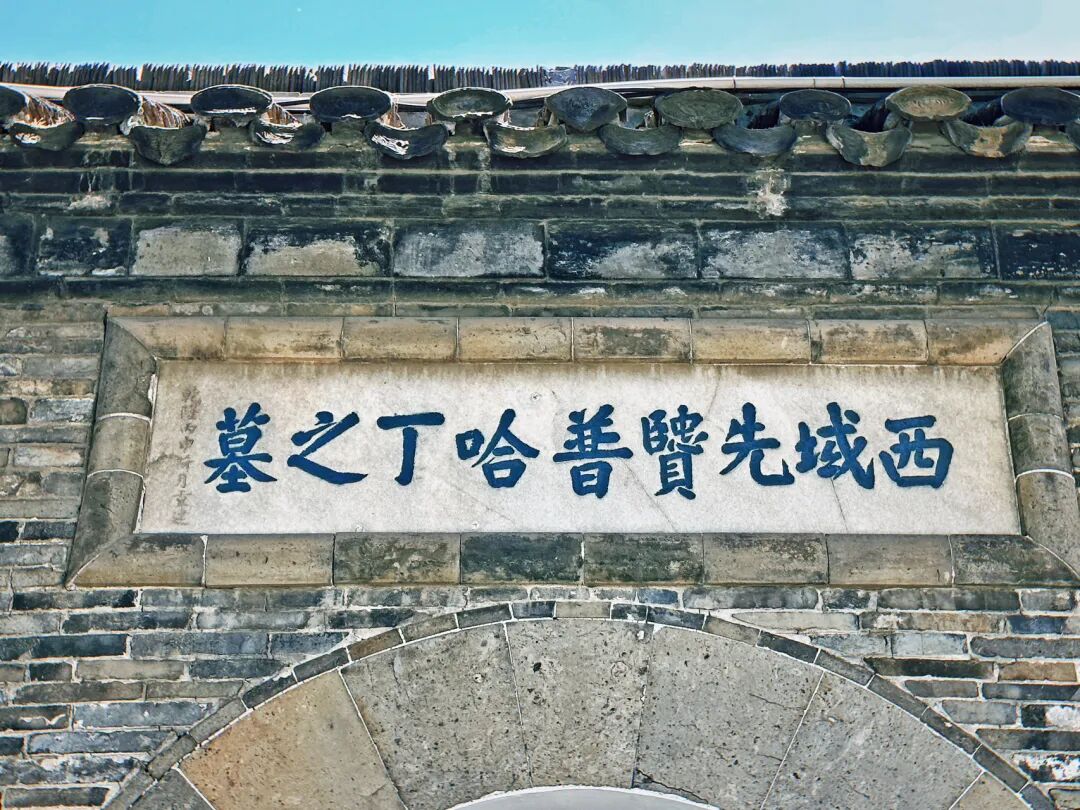
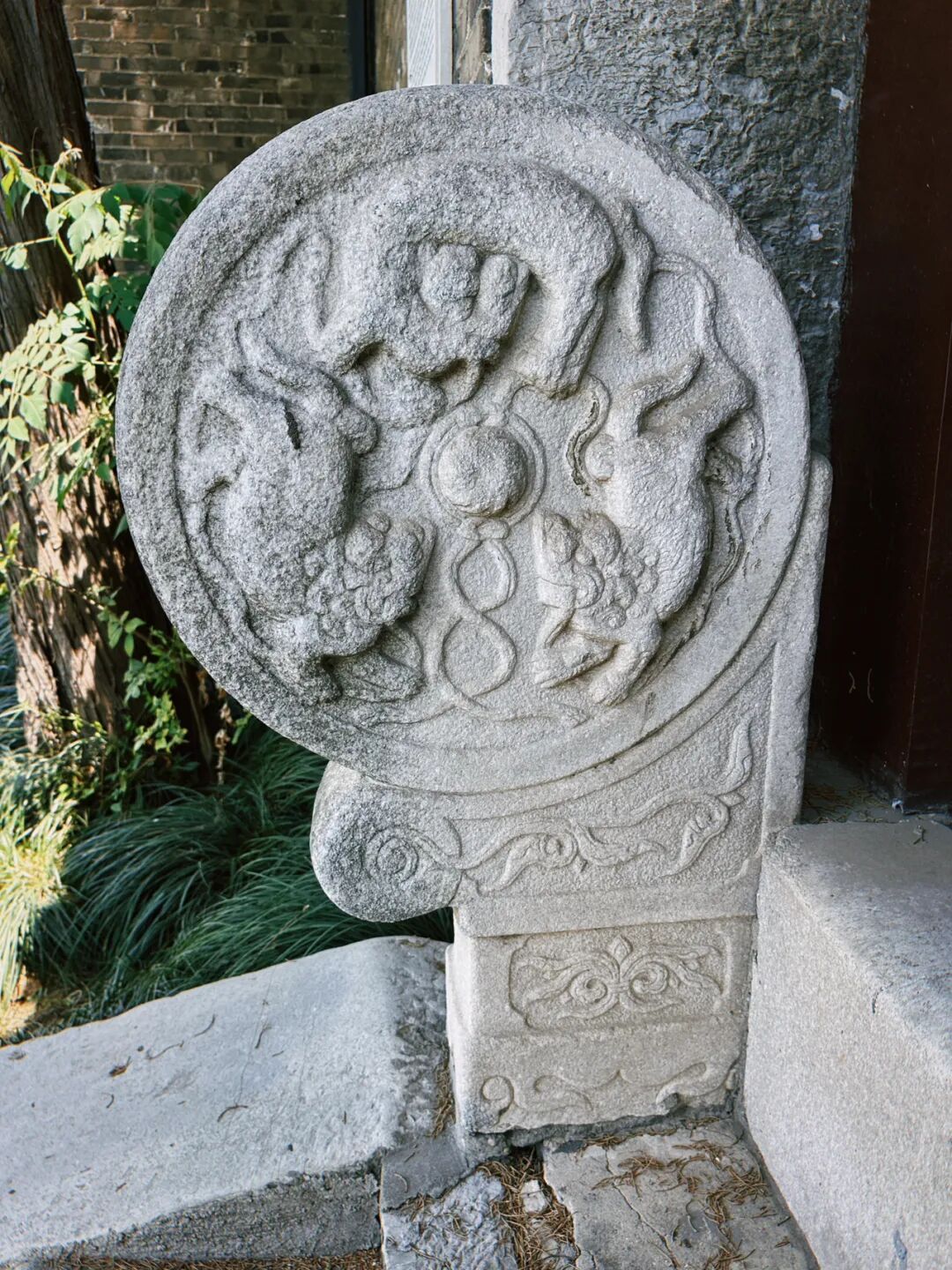
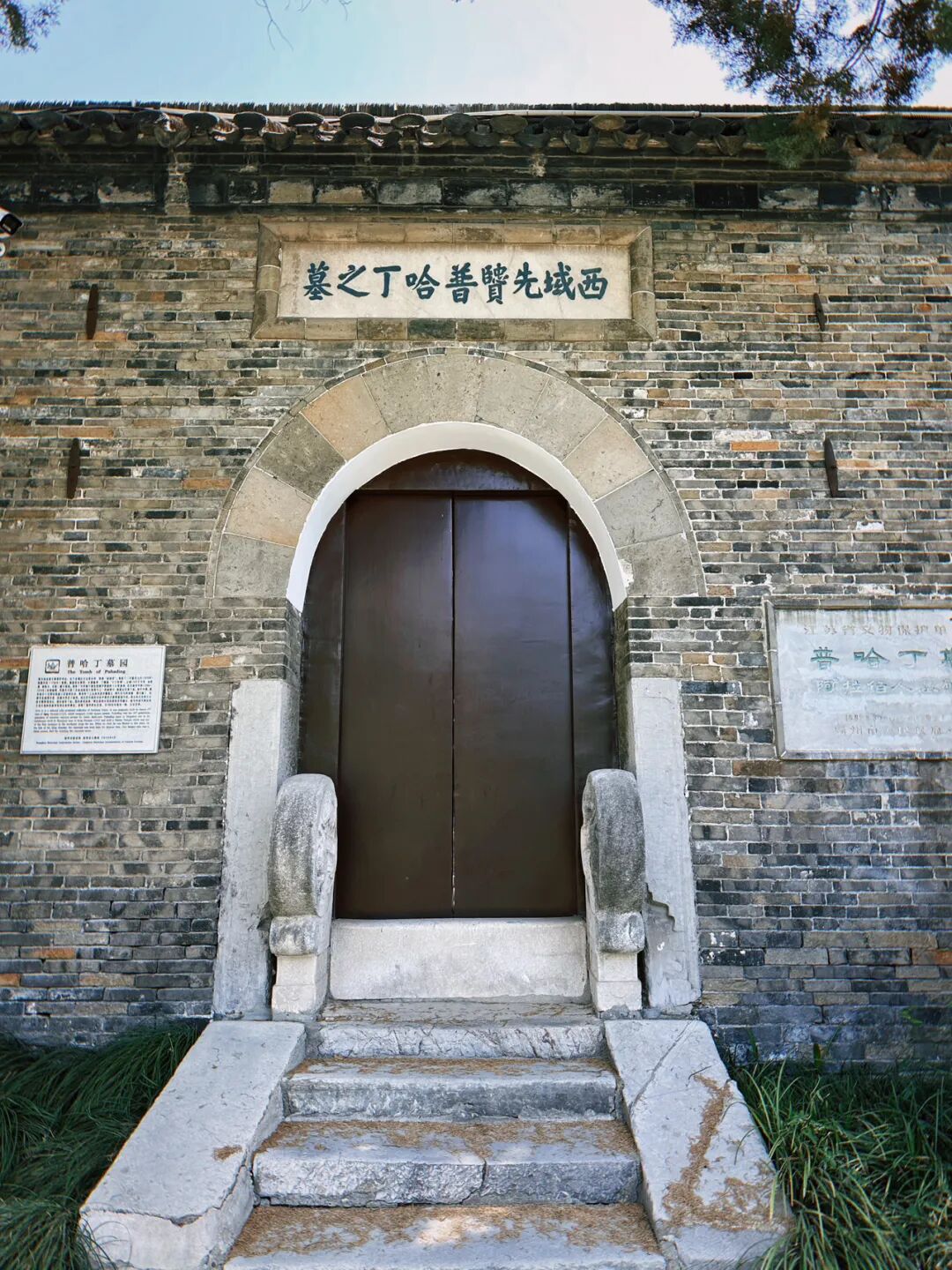
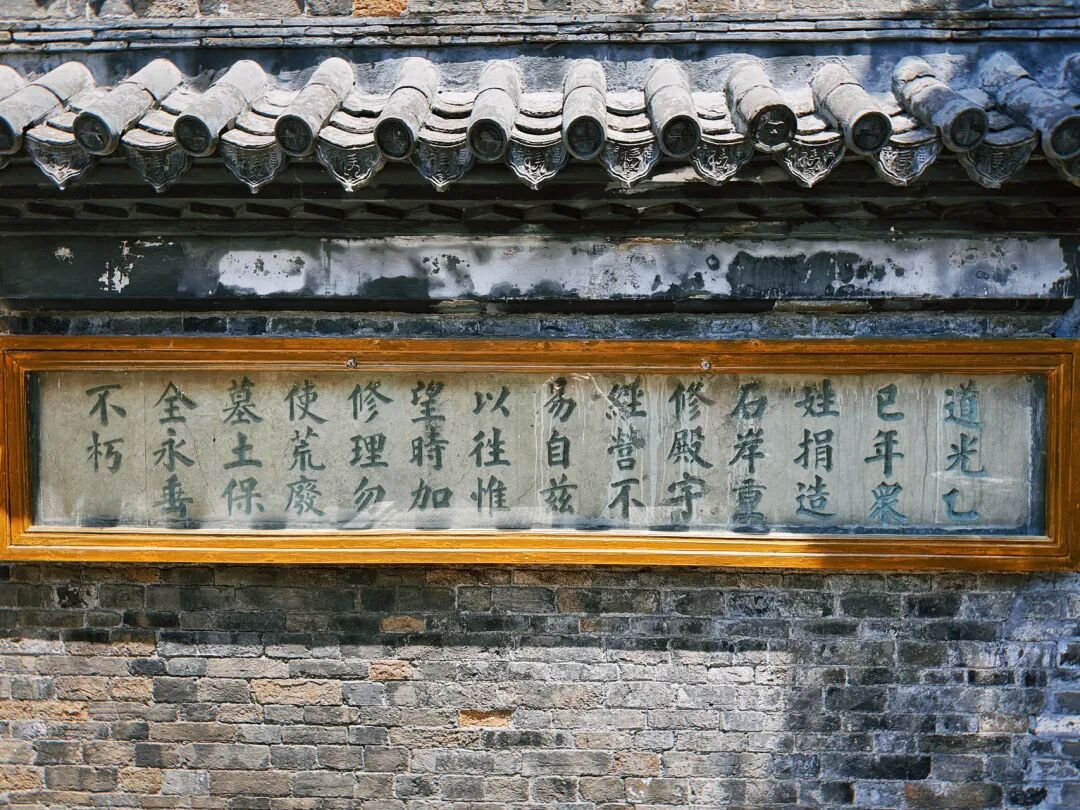
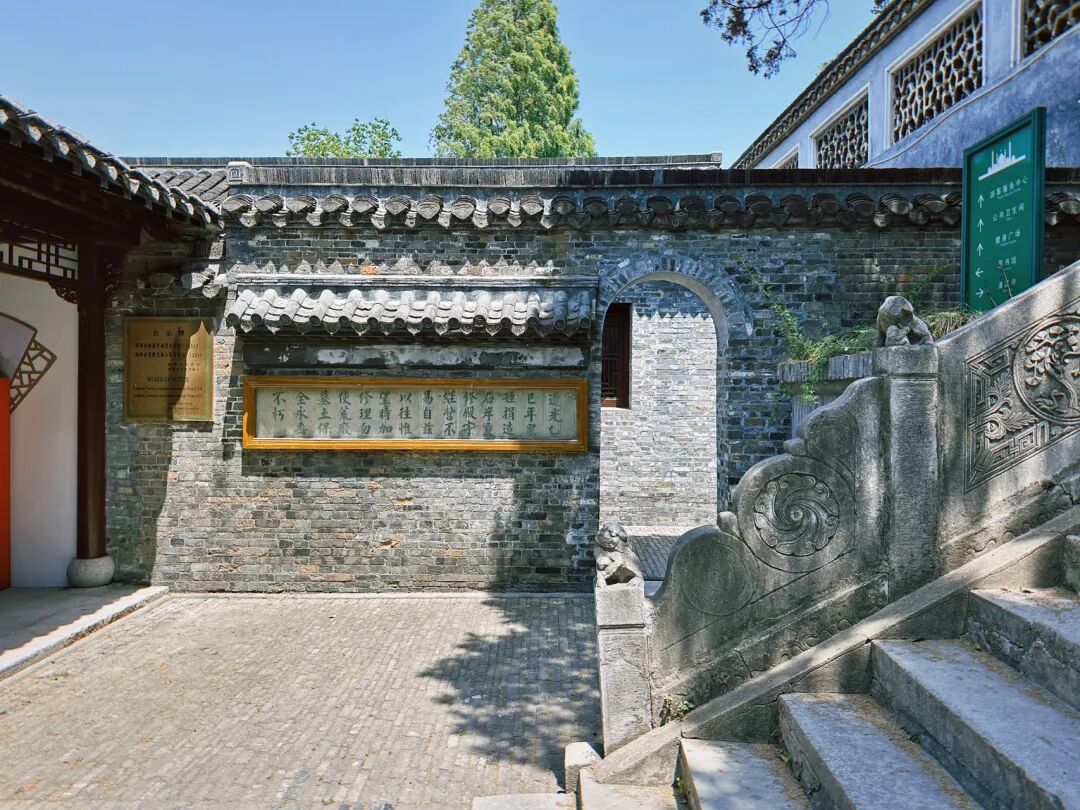
After entering the Pu Hadin tomb complex, you reach stone steps leading up the hill. The stone railings on both sides are carved with traditional patterns and designs, including lions playing with balls, carp jumping over the dragon gate, and the three rams bringing prosperity (sanyang kaitai). At the top of the steps stands a foyer with a four-cornered pointed roof topped with a glazed vase. Above it is a plaque inscribed with the words 'Tianfang Ju Yue' (The Standard of the Holy Land).
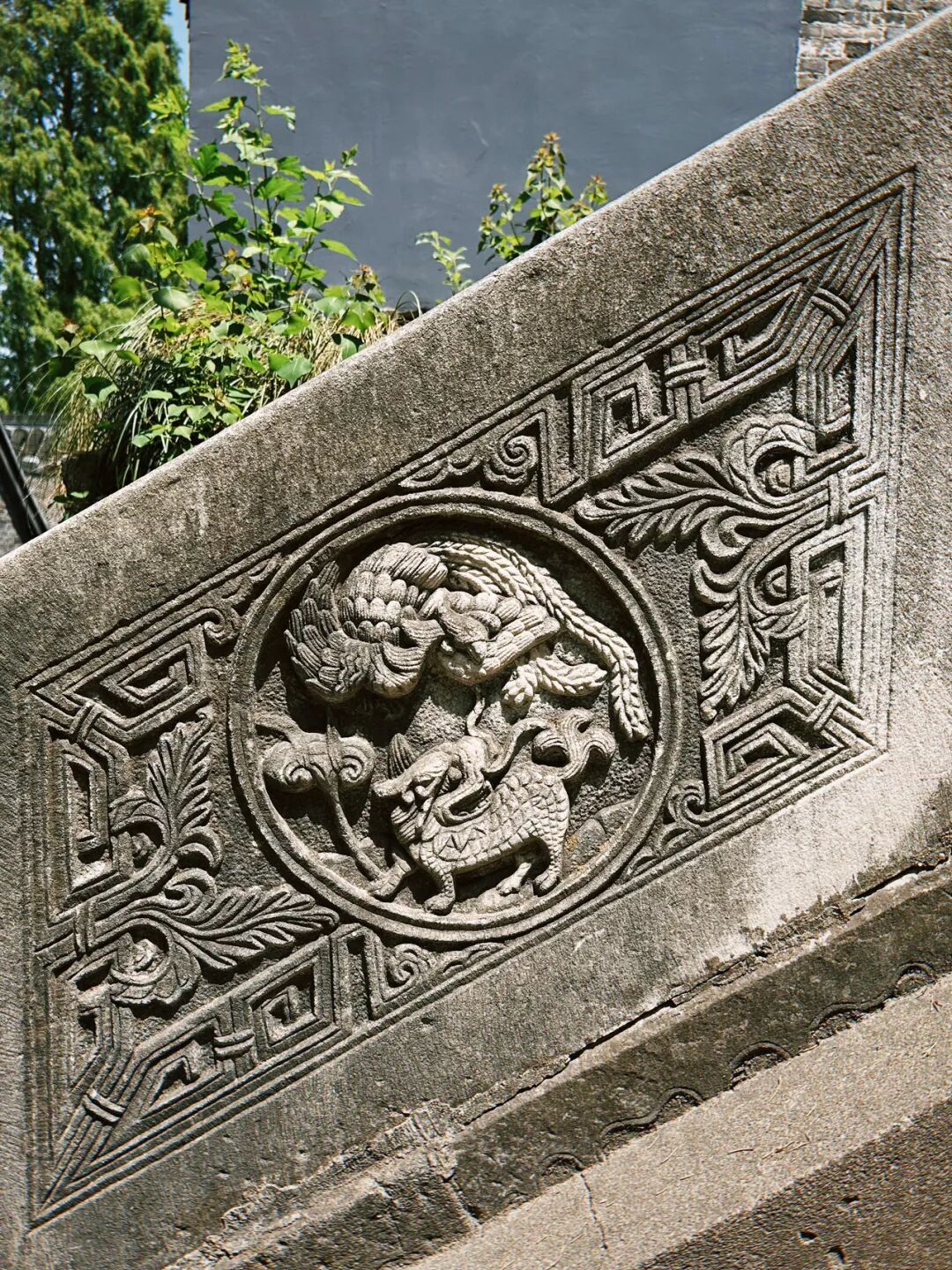
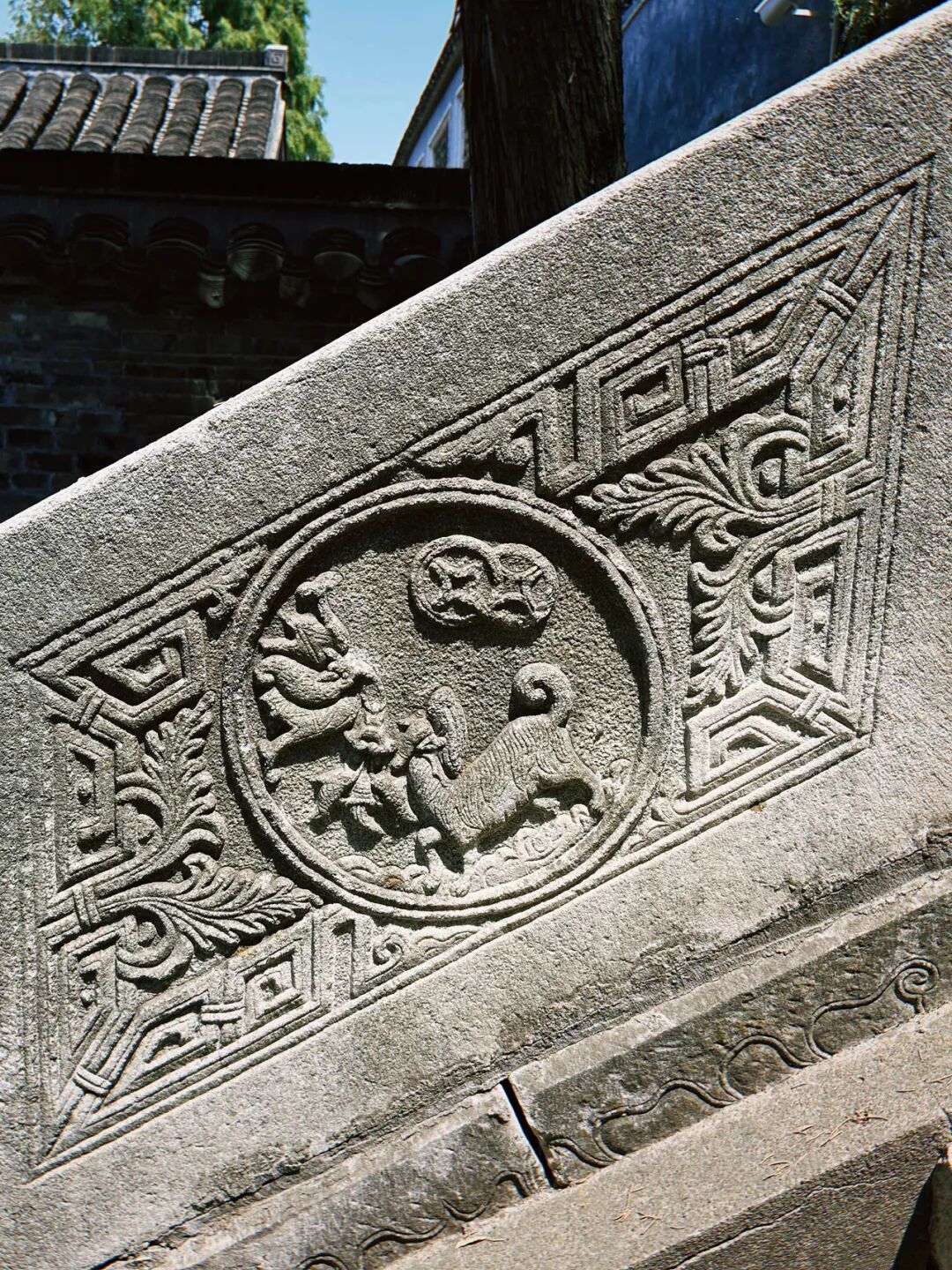
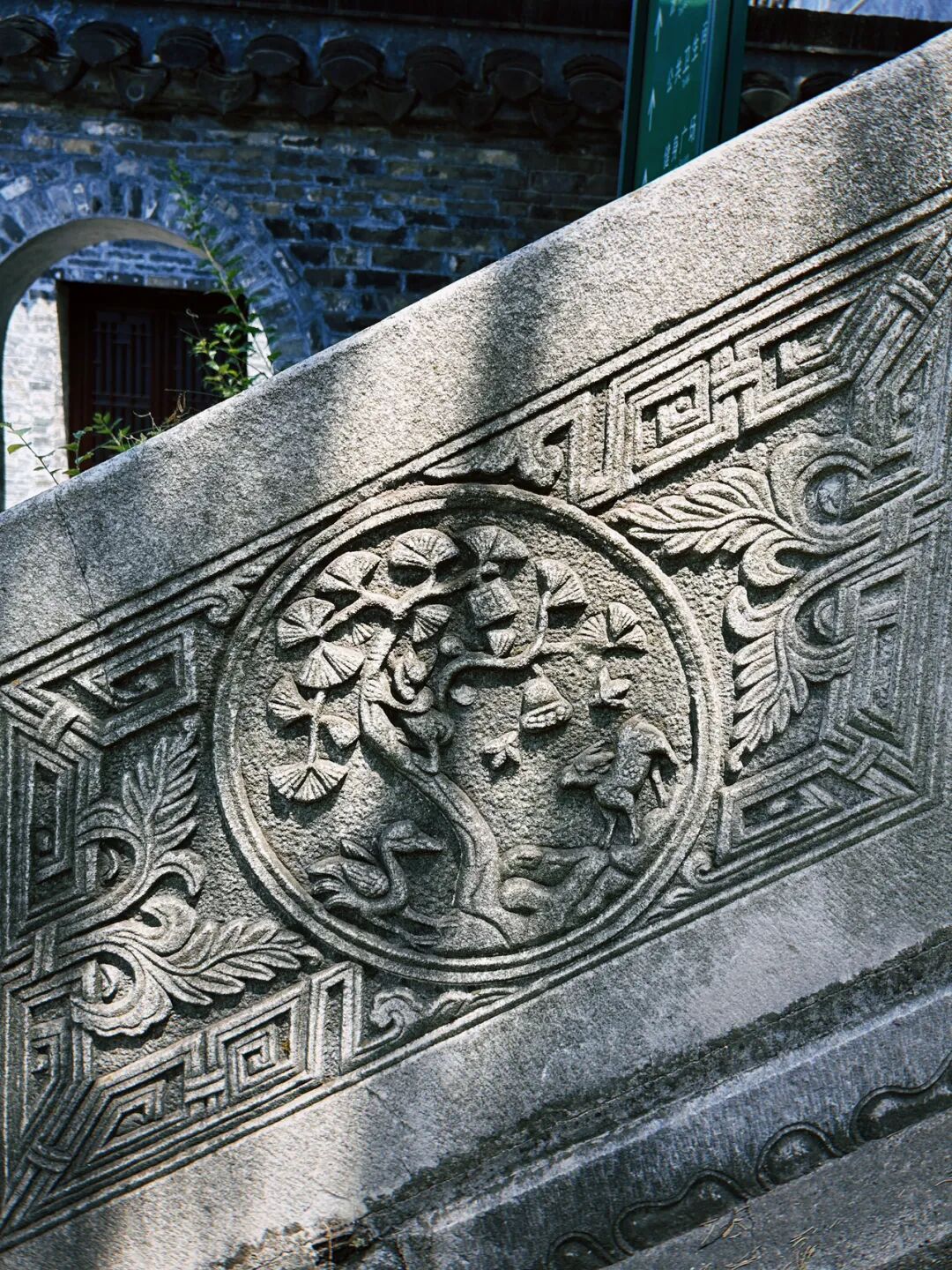
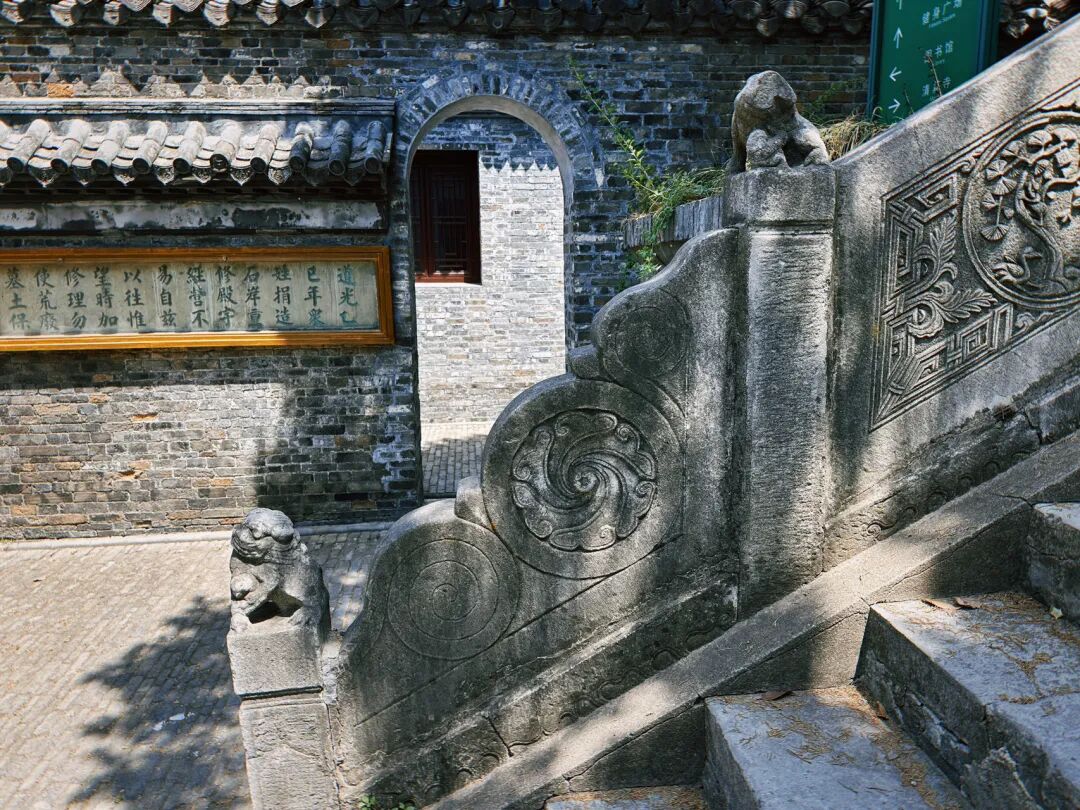
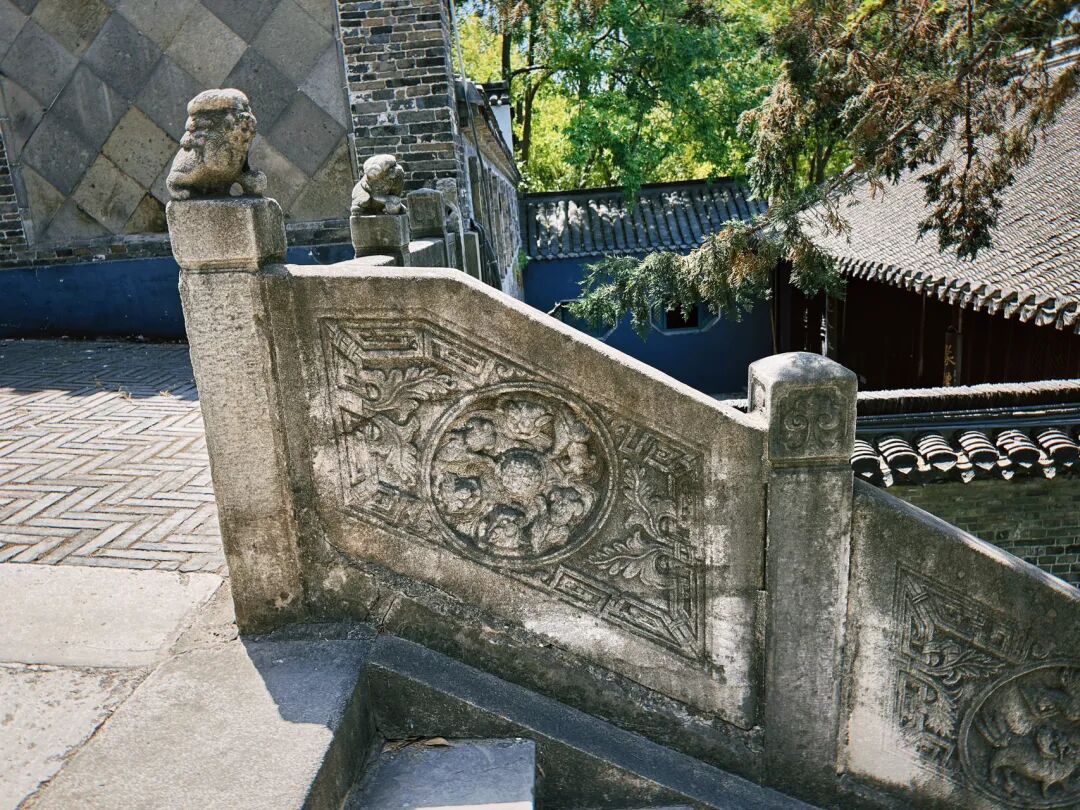
The center of the Pu Hadin tomb complex is the Pu Hadin tomb pavilion. The tomb pavilion has a four-cornered pointed roof with a glazed vase on top, and the interior features a corbelled dome. Inside the pavilion is the tomb cover stone, which follows the classic Song and Yuan dynasty style for Hui Muslims. It has a five-tiered Sumeru pedestal structure carved with scrolling peonies, ruyi flowers, and scripture. Today, the tomb cover stone is covered by a cloth and cannot be seen.
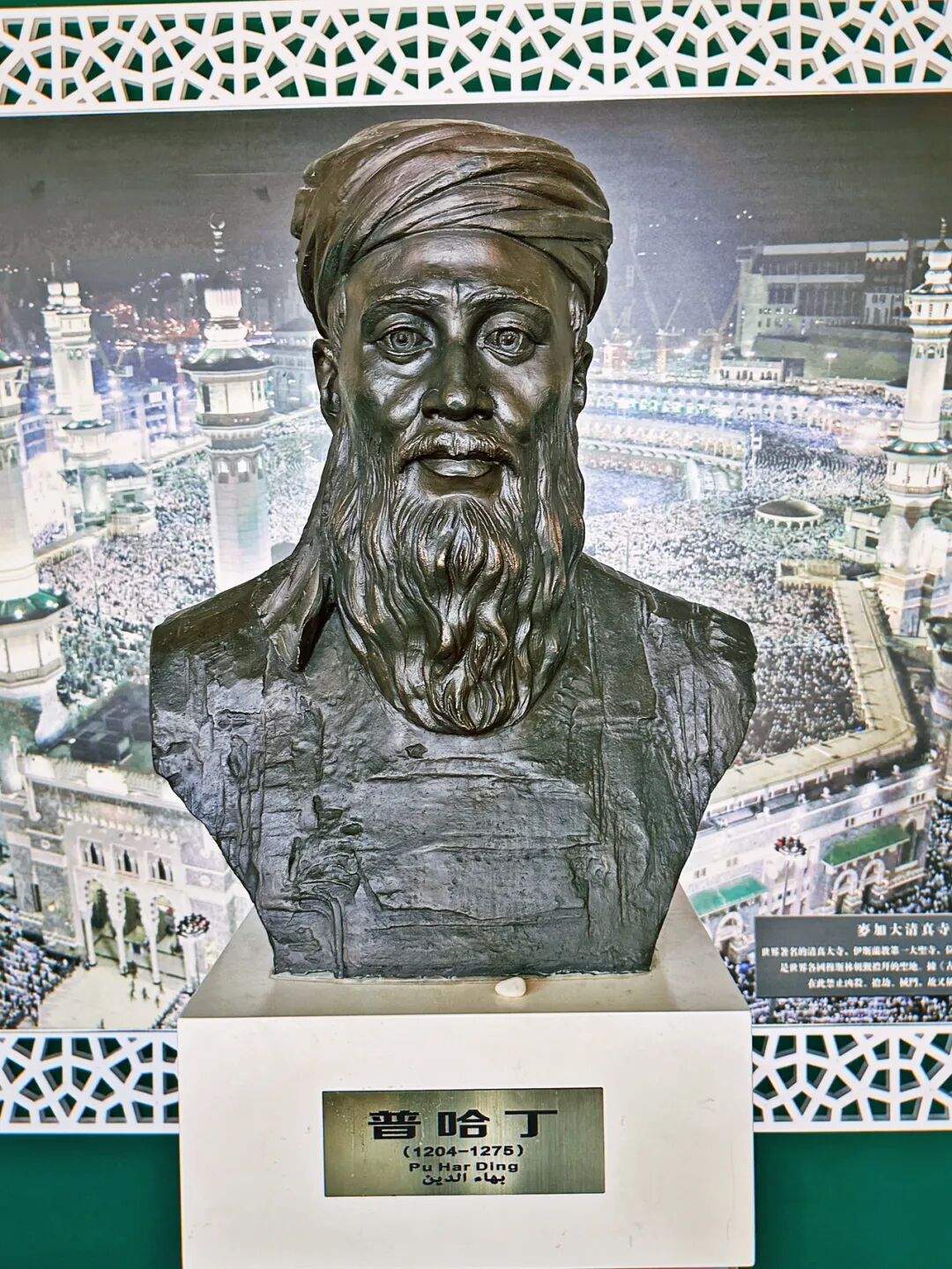
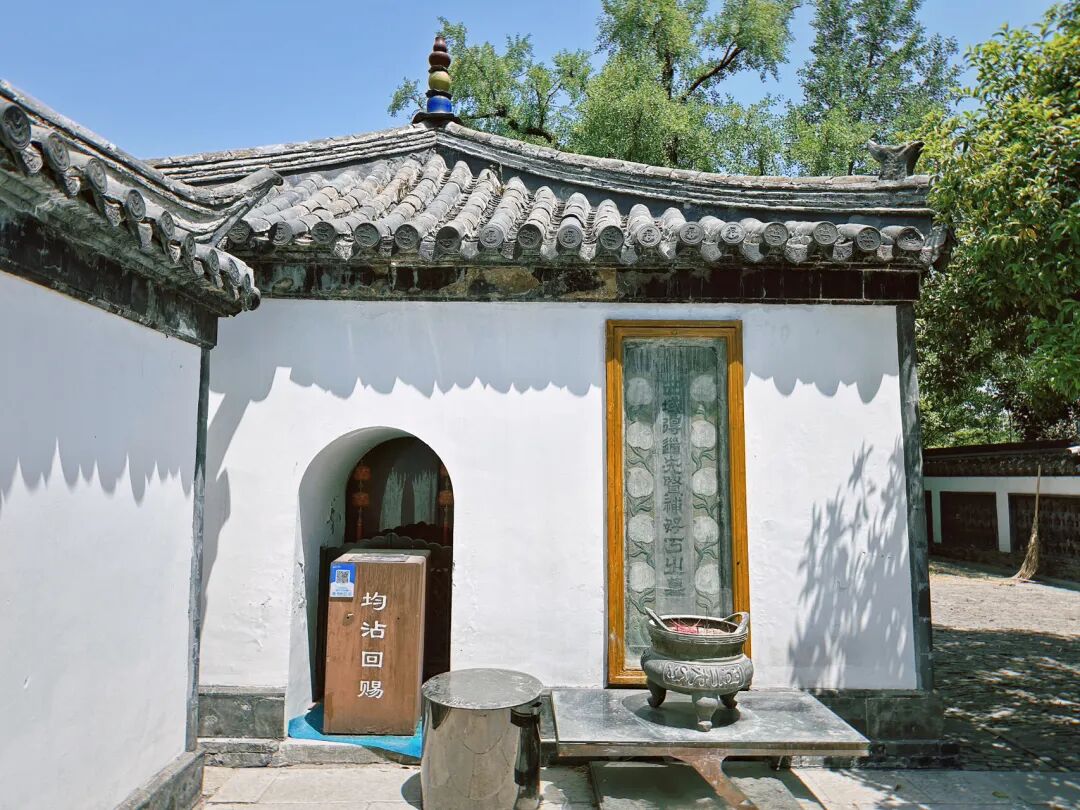
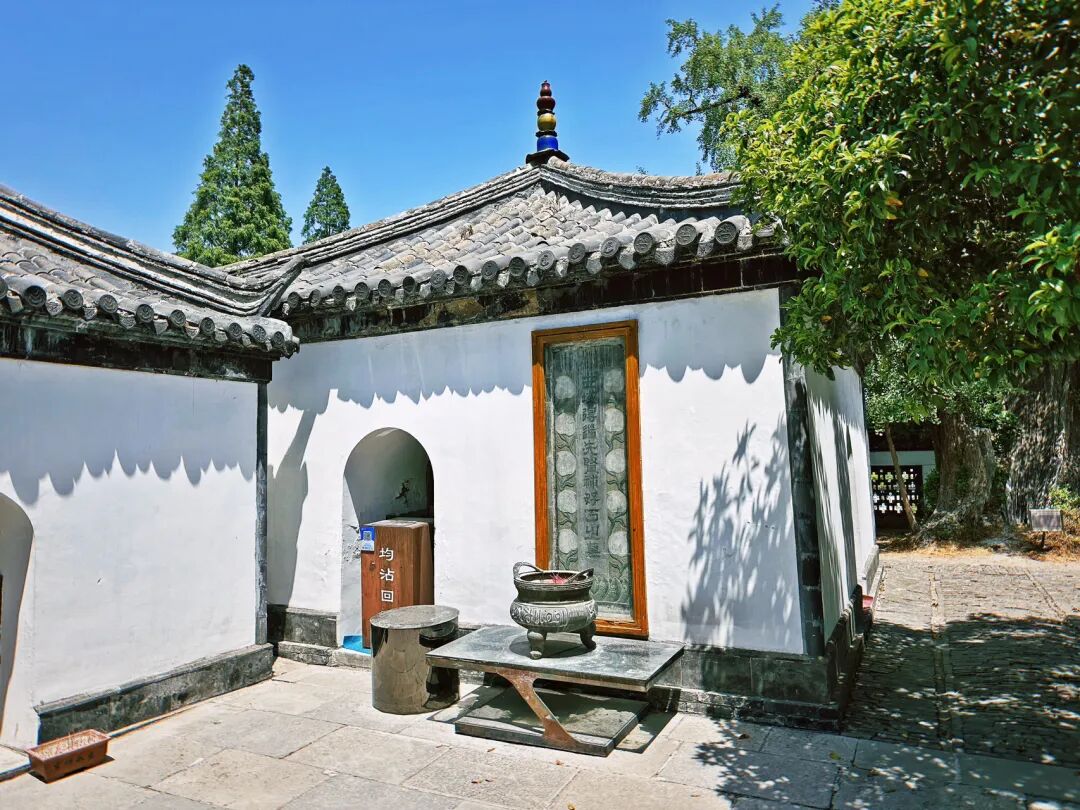
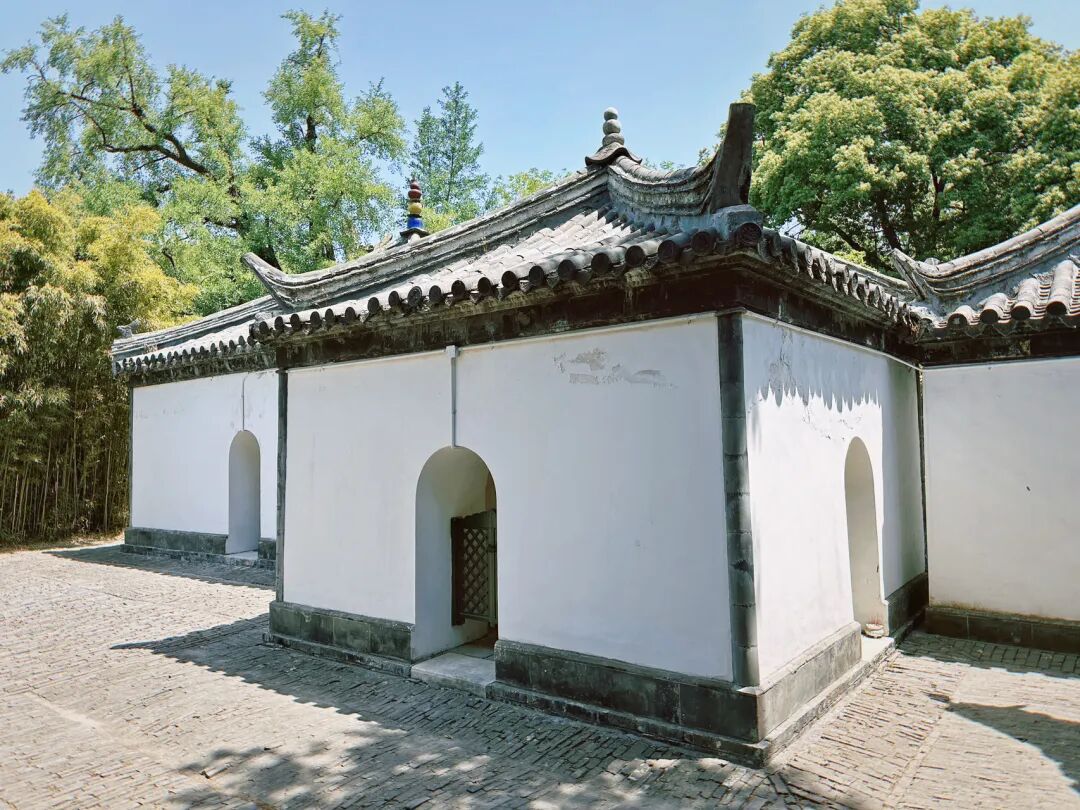
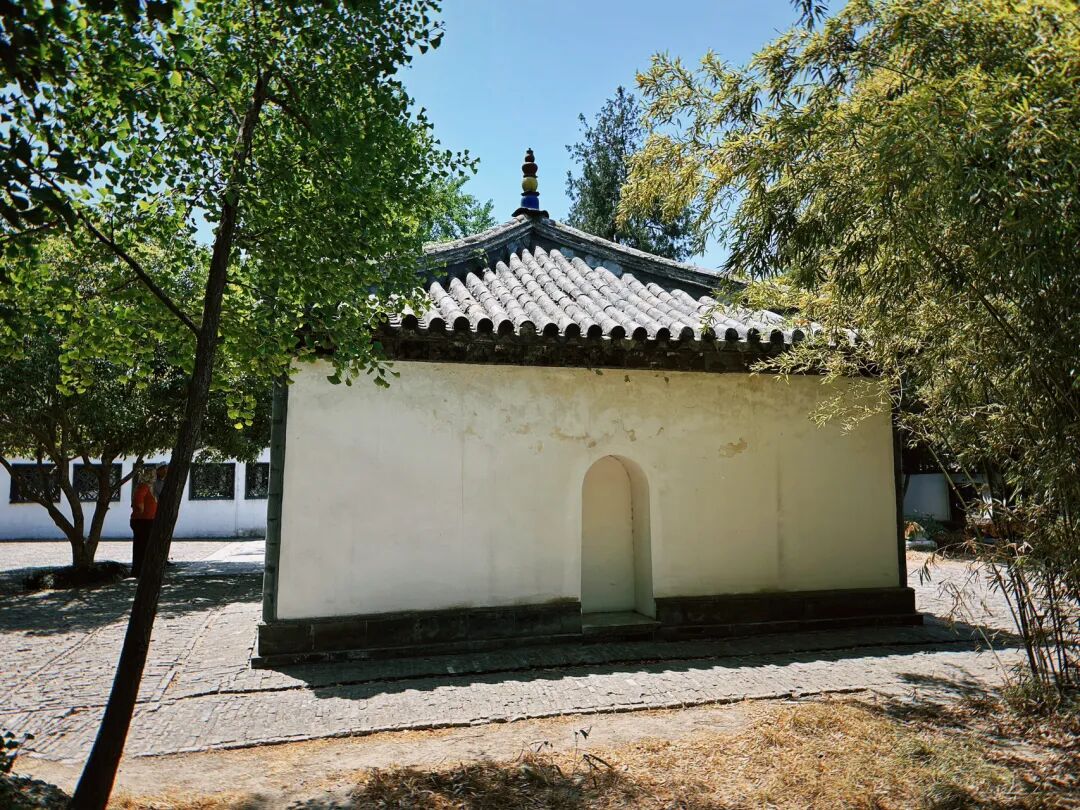
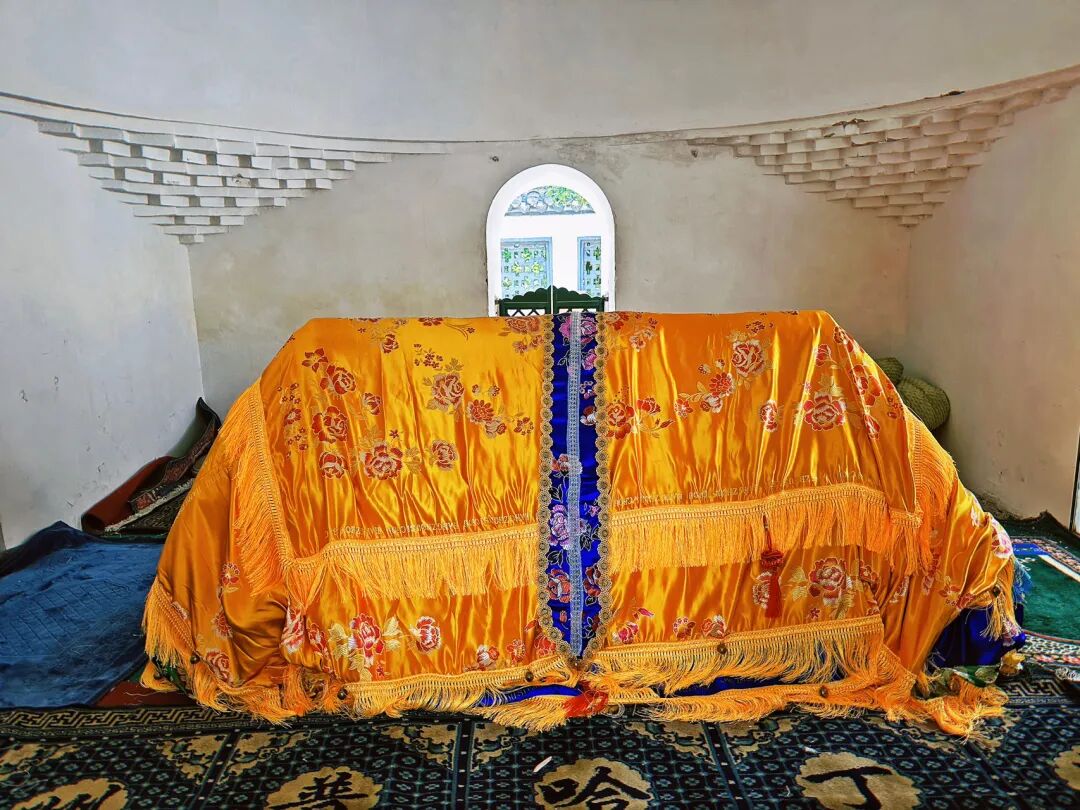
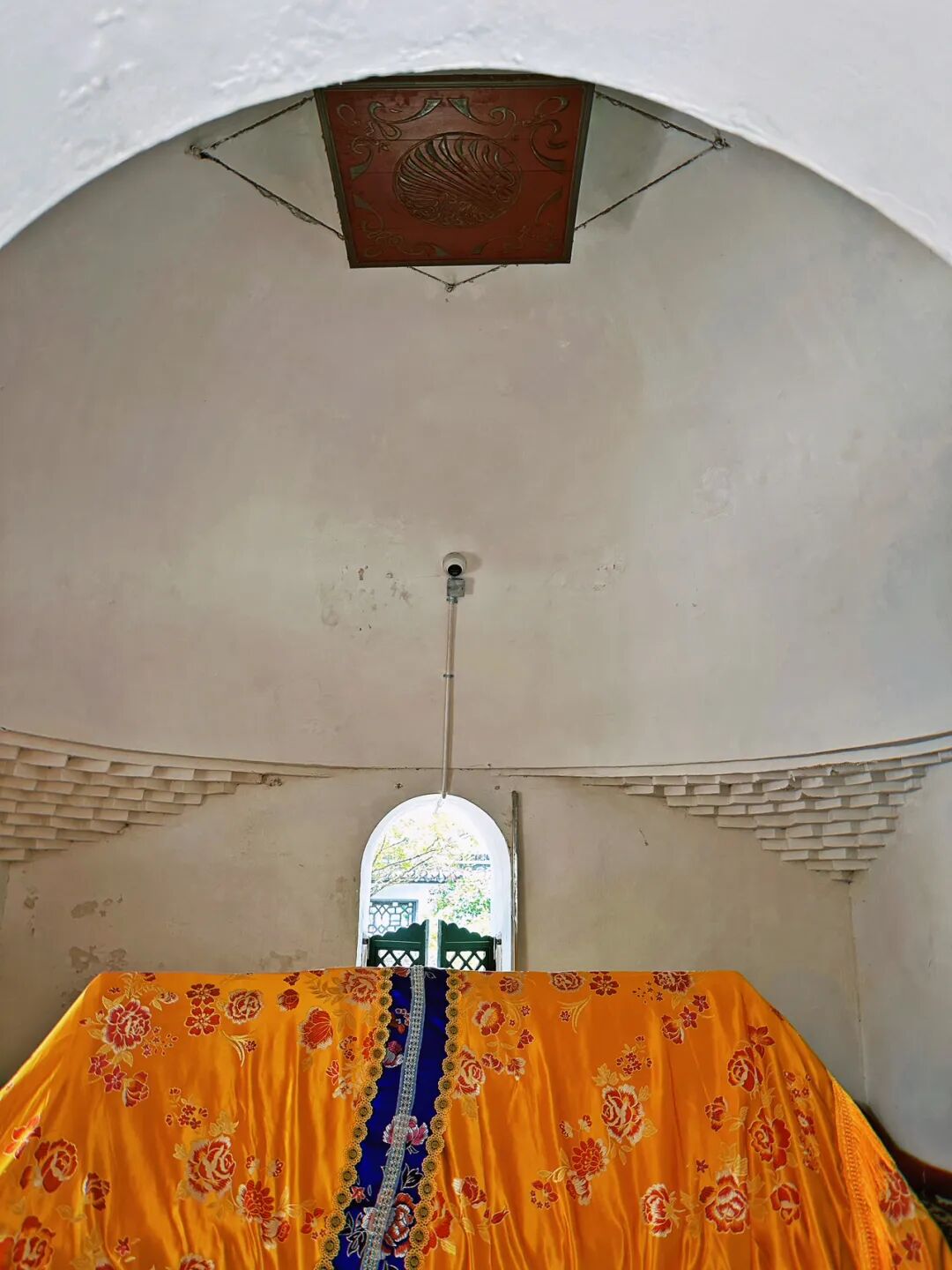
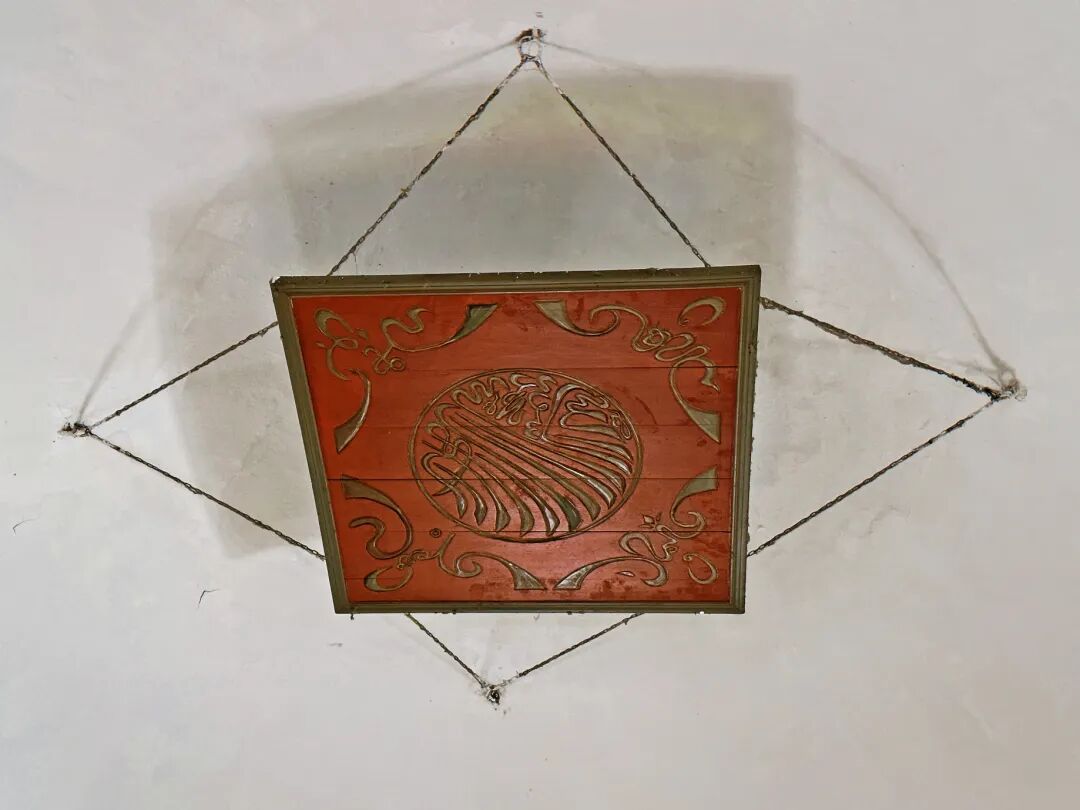
The pavilion features a stone tablet erected in 1726 (the fourth year of the Yongzheng reign) that reads 'Tomb of the Sage Pu Hadin from the Western Regions who attained the Way,' with carvings of longevity peaches and lotus flowers around the edges.
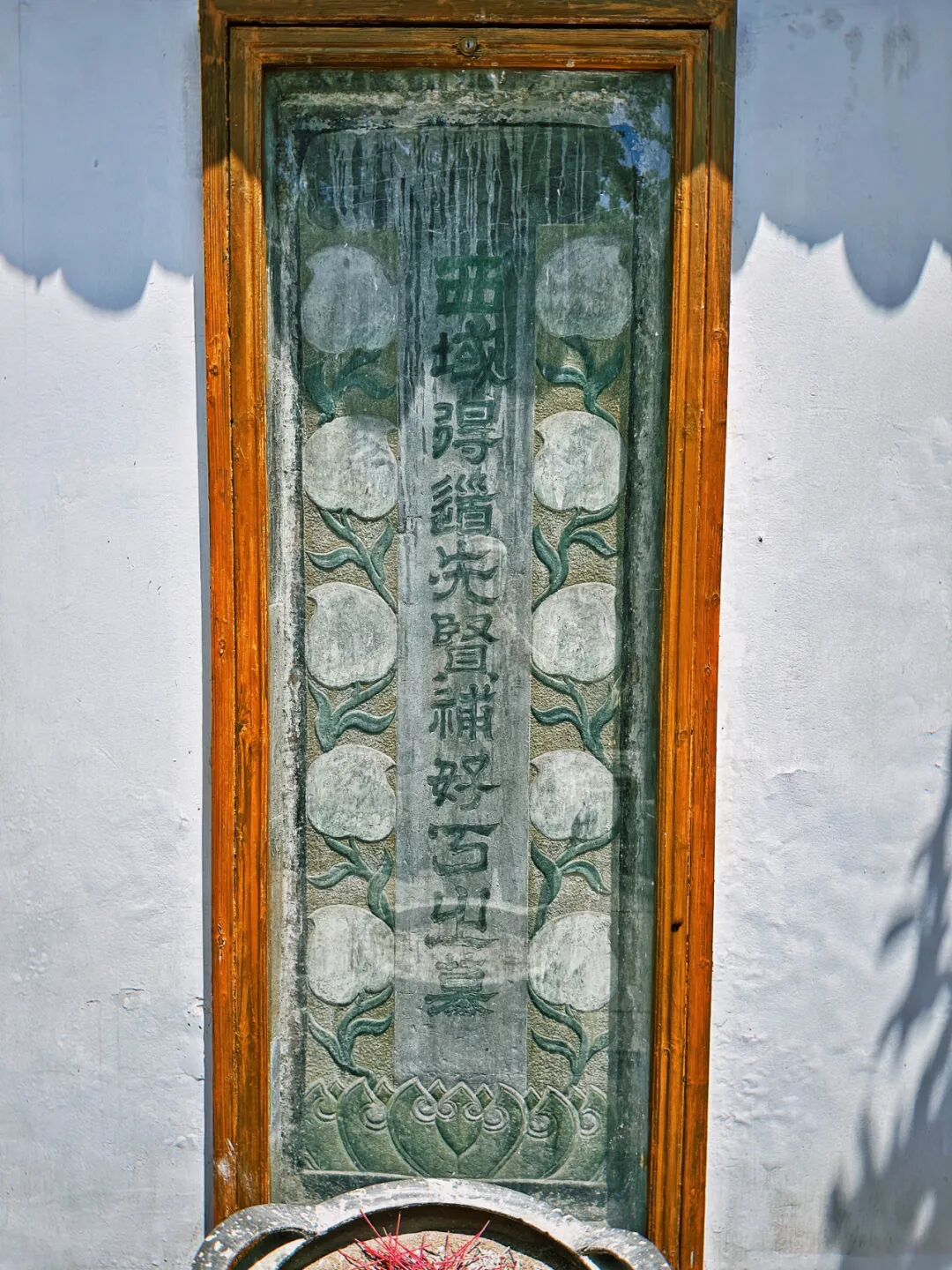
Inside the north foyer, there is also a 'Record of the Tomb of the Sage Pu Hadin from the Western Regions' erected in 1908 (the 34th year of the Guangxu reign). Besides recording Pu Hadin's birth and death, it includes legendary stories known within the community as 'karamat' (miraculous signs). The inscription records that an old monk from the Dragon King Temple tried to compete with Pu Hadin in magic, but he could not win and was eventually humbled. It also records that in the early Qing dynasty, thieves tried to dig up Pu Hadin's tomb. After they opened the tomb cover stone, a raging fire suddenly broke out and burned many of the thieves. Later, they saw there were no remains in the tomb, only a scroll of the Quran (Tianjing) and a hat, shoes, fan, and staff. The inscription is signed by 'the imam of this mosque and others who supervised the carving.' The imam of this mosque refers to the leader of the Babayao Mosque.
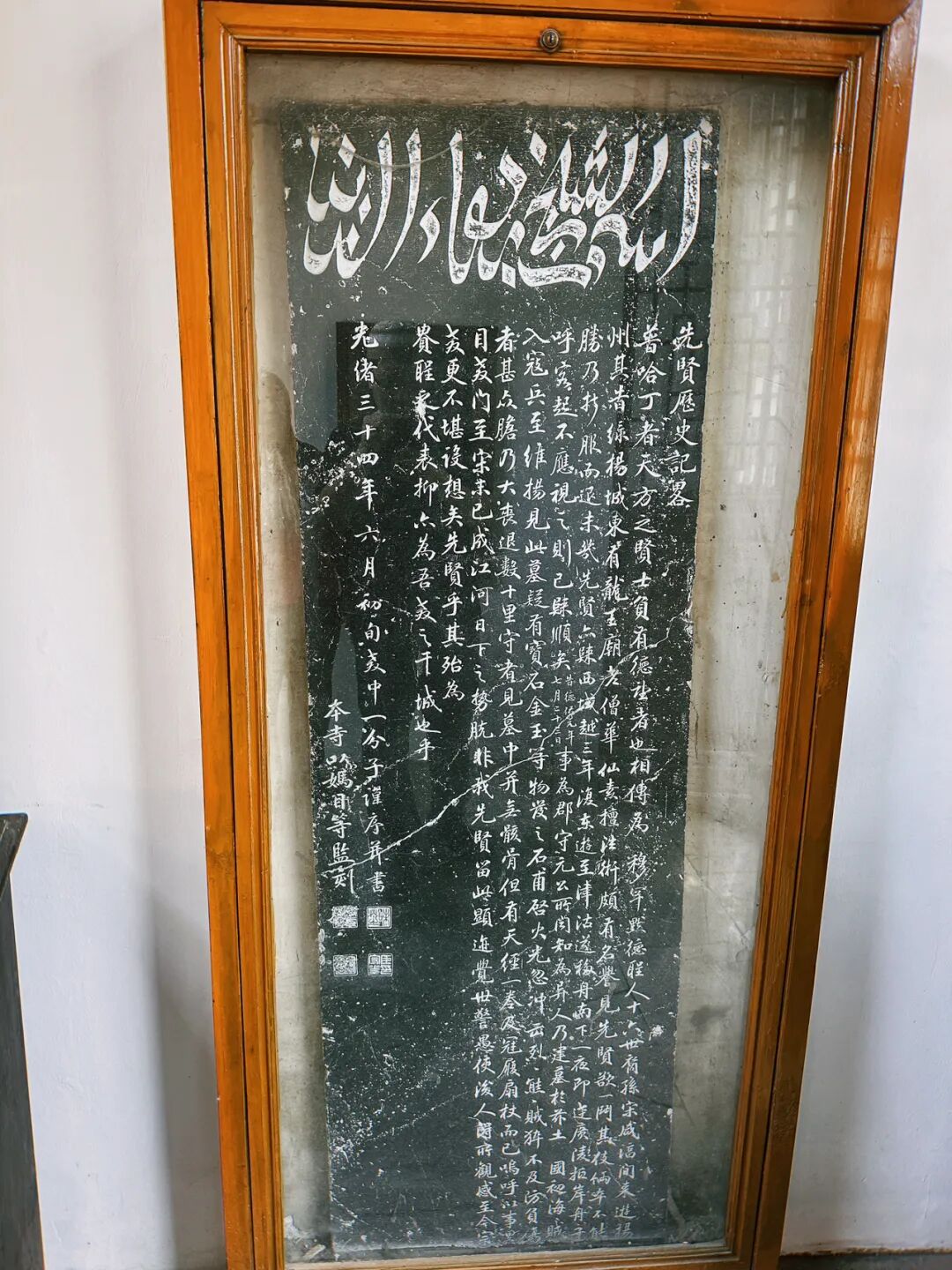
Around the Pu Hadin tomb pavilion are the tomb pavilions of several other sages, including the sage Sa Ganda who passed away in 1278 (the third year of the Jingyan reign of the Song dynasty), the sages Mahamude and Zhanmaluding who passed away in 1469 (the fifth year of the Chenghua reign of the Ming dynasty), the sage Fana who passed away in 1498 (the 11th year of the Hongzhi reign), and the tomb of Wang Keng, a merchant from Xi'an, Shaanxi, who passed away in 1501 (the 14th year of the Hongzhi reign of the Ming dynasty). The tomb pavilions all contain traditional Song and Yuan dynasty Sumeru pedestal tomb cover stones. I saw them in 2017, but when I went back in 2025, they were all covered with cloths and could not be seen.
The pavilion also has a stone tablet from the Qianlong reign commemorating the reconstruction, which lists: 'The great sage Pu Hadin, a 16th-generation descendant of the Holy Prophet from the Western Regions, in the first year of the Deyou reign of the Song dynasty; the sage Sa Ganda from the Western Regions in the third year of the Jingyan reign of the Song dynasty; the sage Mahamude from the Western Regions in the fifth year of the Chenghua reign of the Ming dynasty; the sage Zhanmaluding from the Western Regions in the fifth year of the Chenghua reign of the Ming dynasty; and the sage Fana from the Western Regions in the 11th year of the Hongzhi reign of the Ming dynasty.' The inscription reads, Rebuilt in the lunar eighth month of the Bing-Shen year of the Qianlong reign.
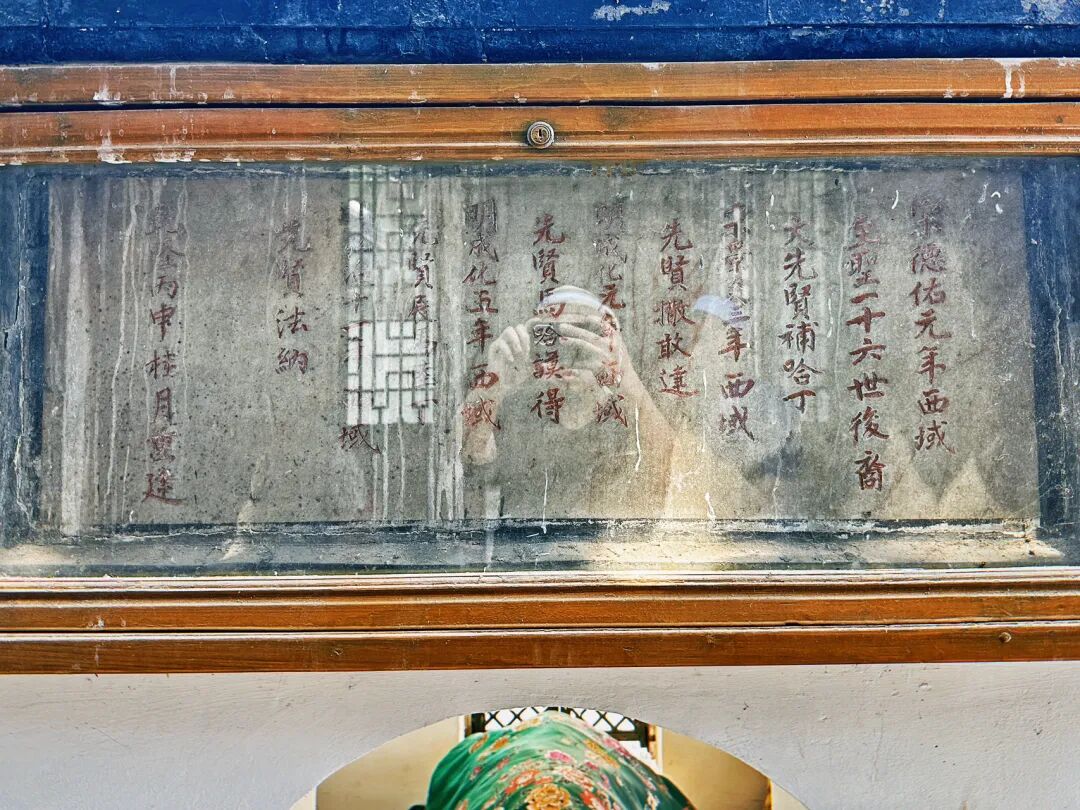
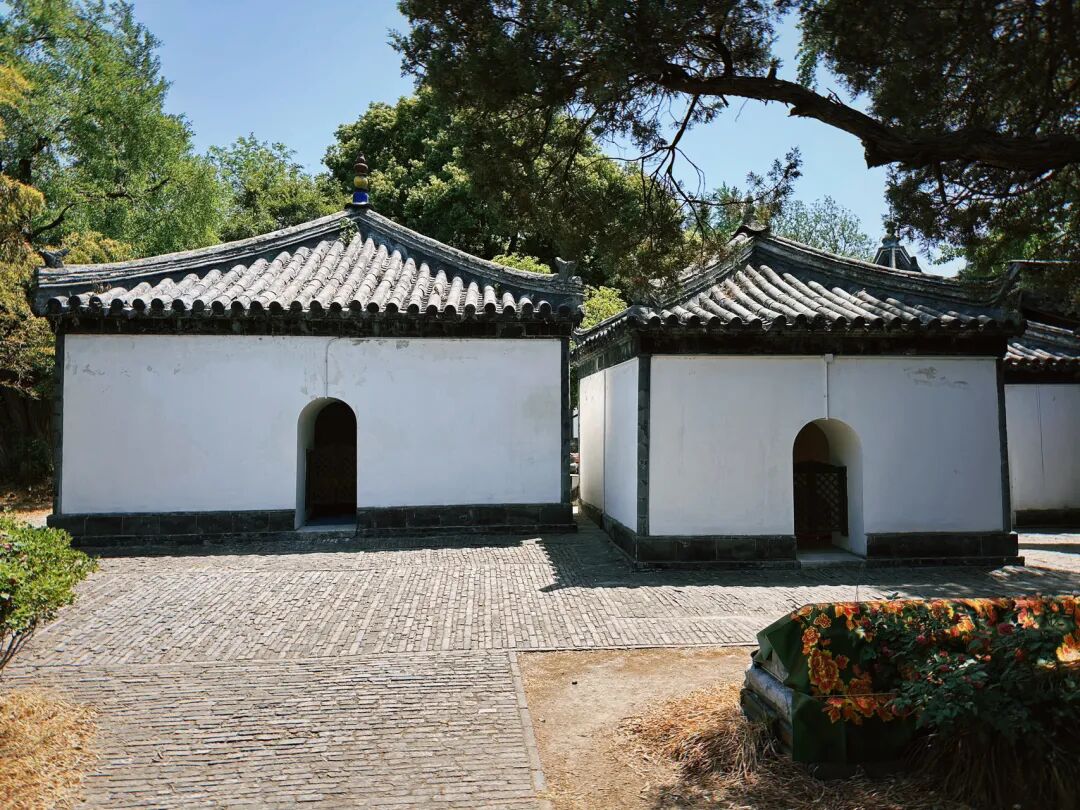
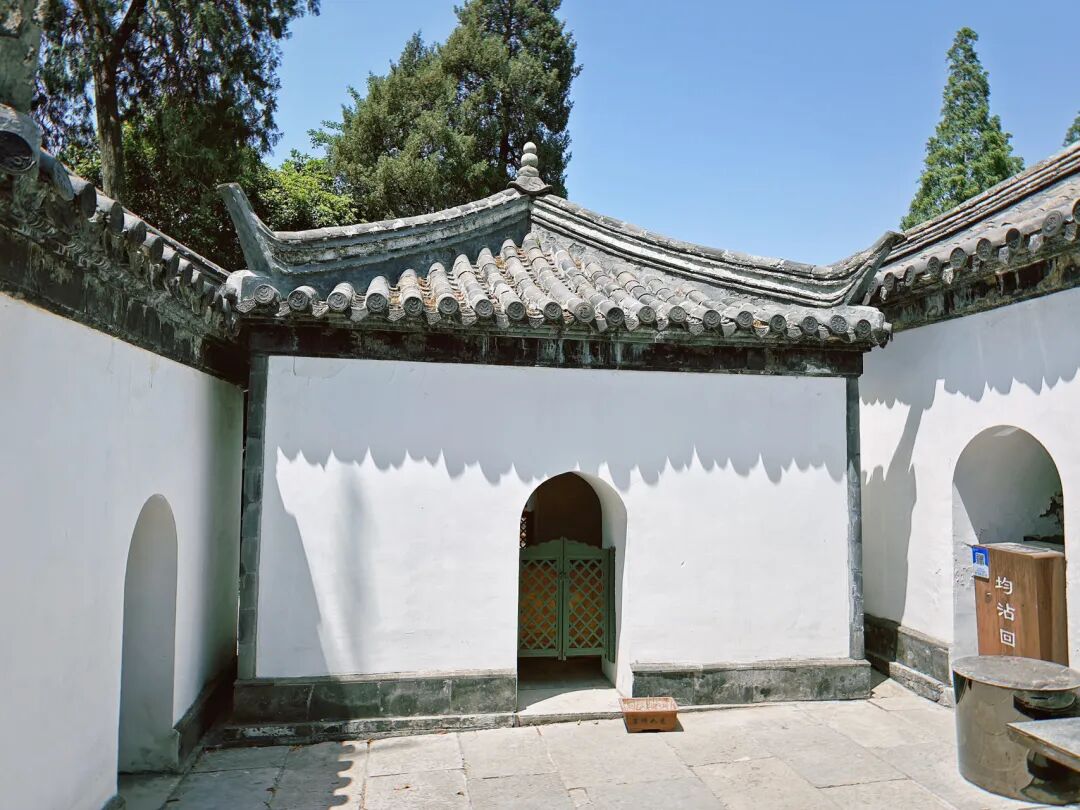
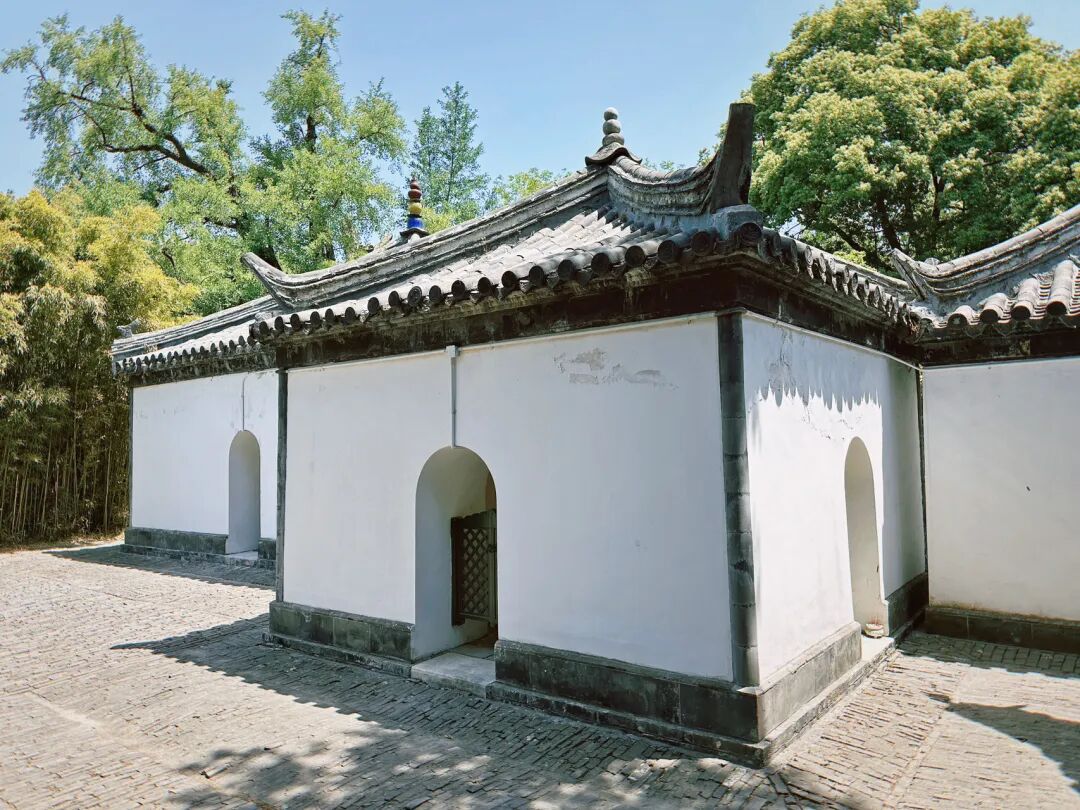
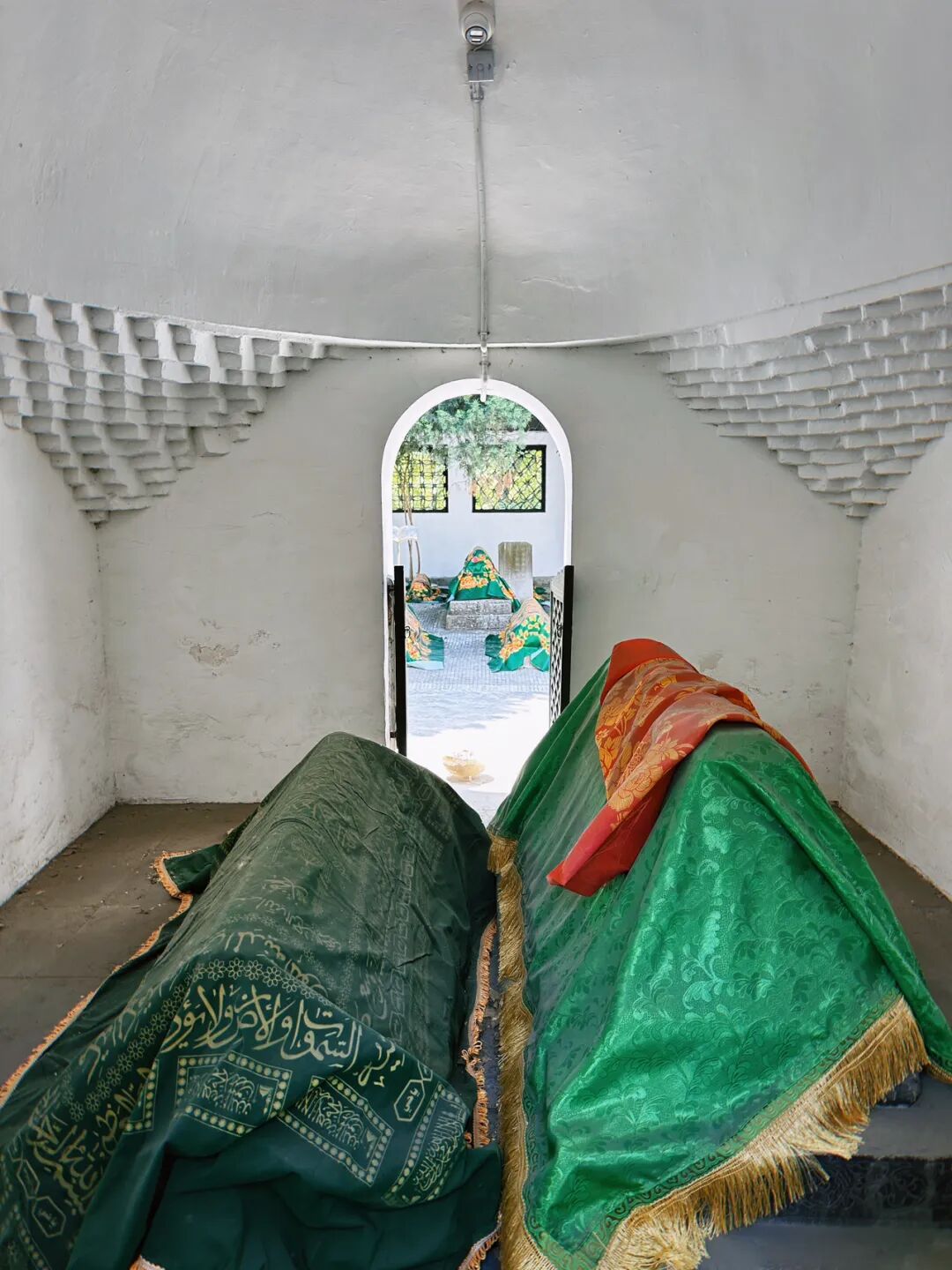
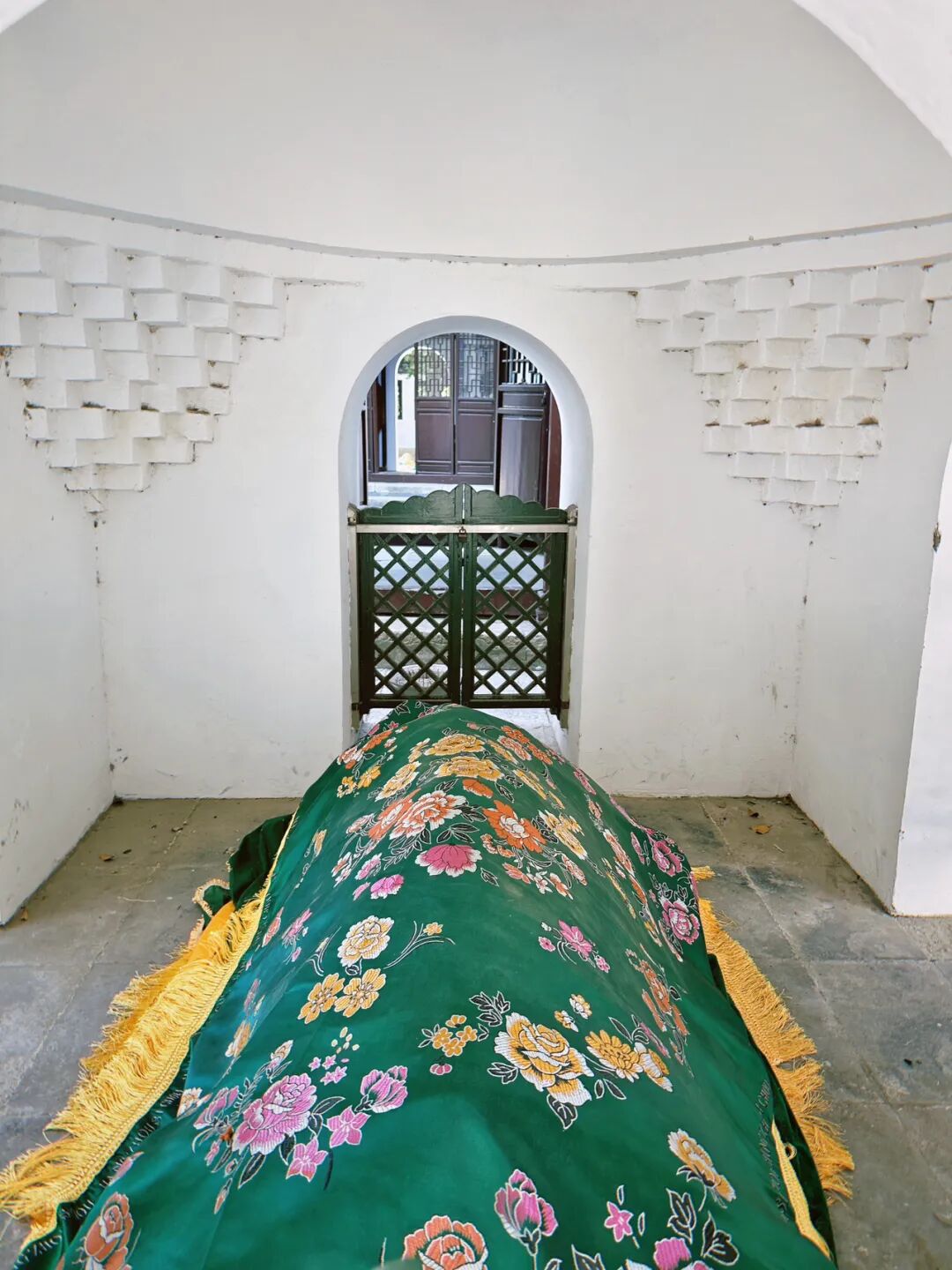
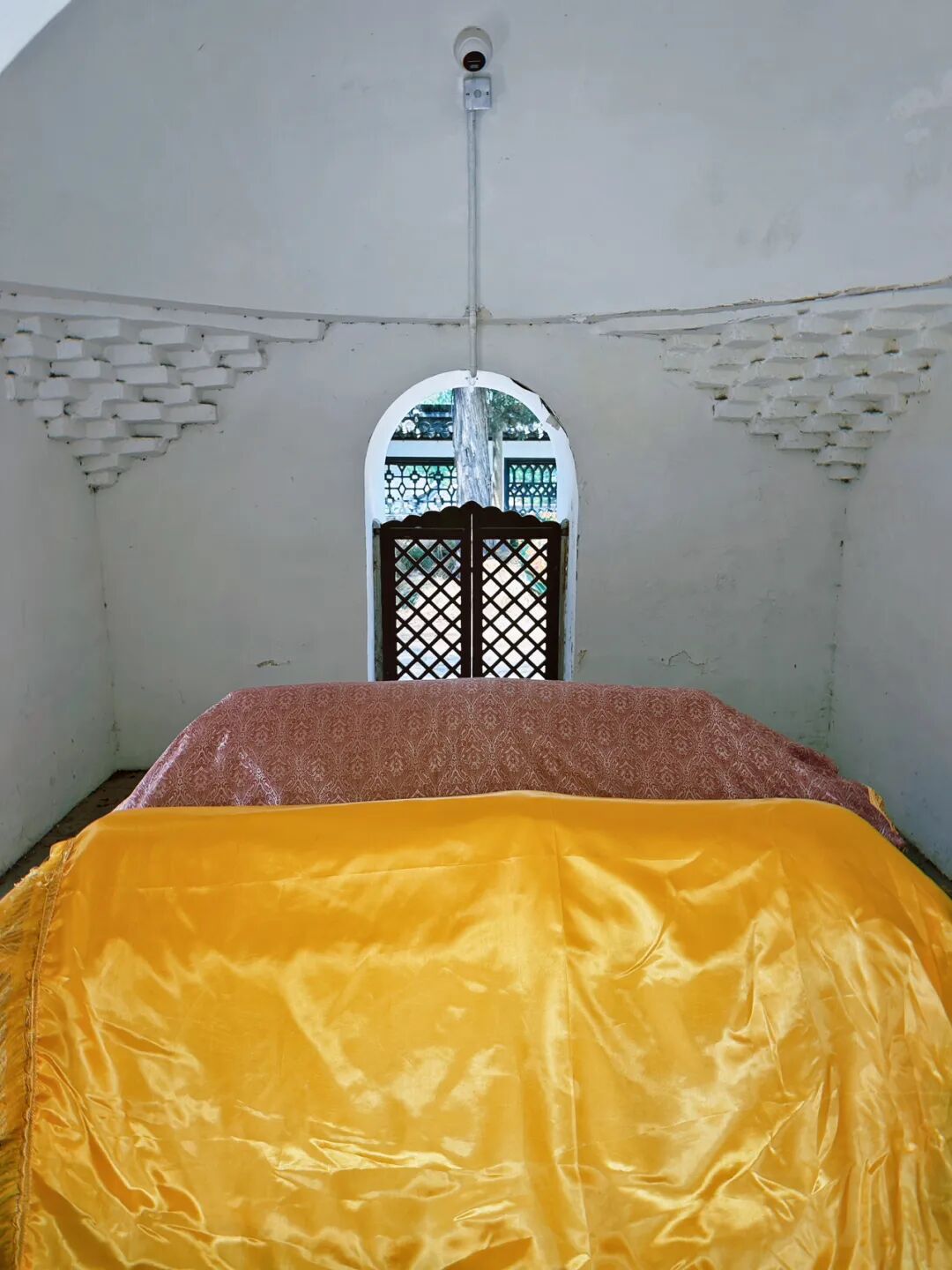
There are two ancient ginkgo trees in the cemetery, one of which is 750 years old and was planted when the cemetery was built in 1275. The 23rd day of the seventh lunar month this year marks the 750th anniversary of Pu Hadin's passing, and a grand memorial event will be held then.
The year 1275 was also when Yangzhou fell to the Yuan dynasty. That year, the Yuan general Wuliangha Ashu besieged Yangzhou, but the Song dynasty defenders refused to surrender, and the Yuan army failed to take the city after repeated attacks. The siege lasted for one year and three months. Eventually, a minor general inside the city opened the gates to surrender. The main commanders, Li Tingzhi and Jiang Cai, were captured, and the Yuan dynasty finally occupied Yangzhou. Therefore, this ancient ginkgo tree in the cemetery is a witness to the transition between the Song and Yuan dynasties.
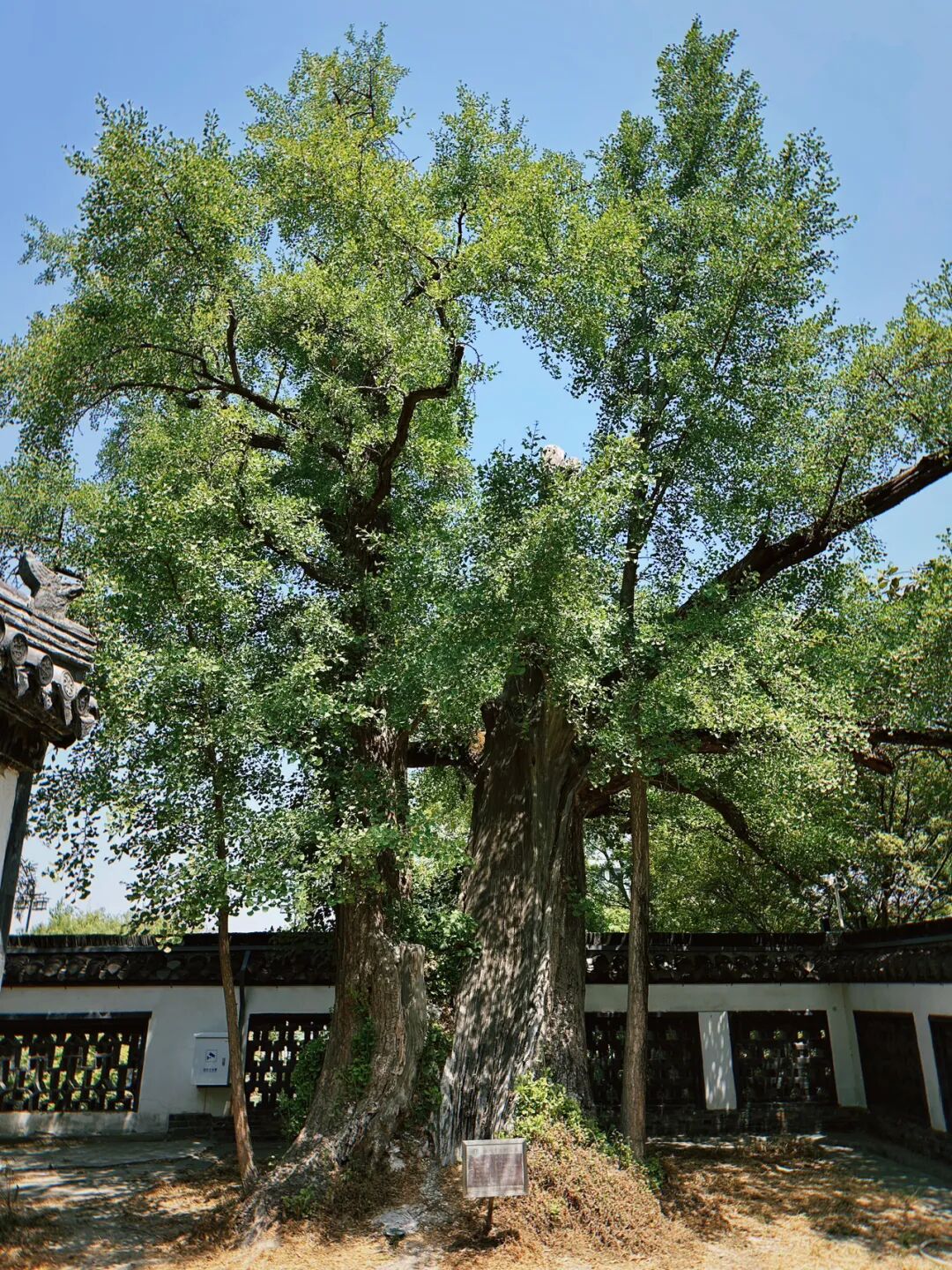
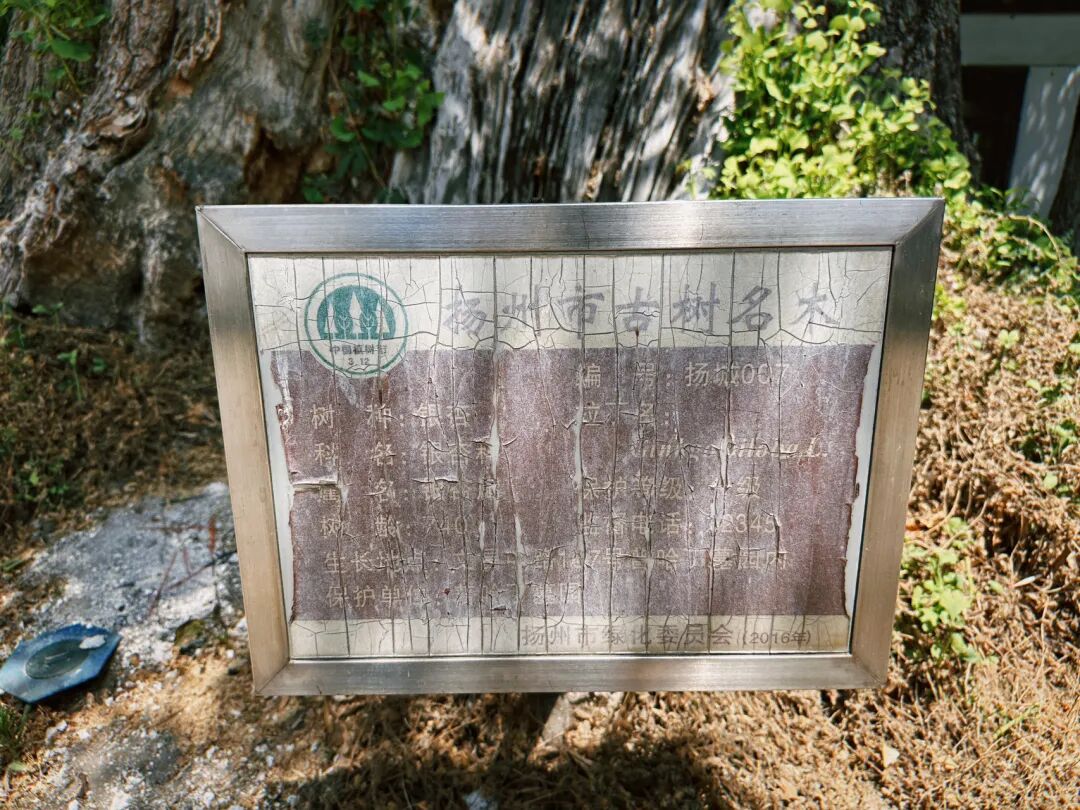
Most of the Qing dynasty tombstones in the Pu Hadin cemetery show official titles. One of them, from the fifth year of the Xianfeng reign, belongs to Tao Gong, a garrison commander of Gushuijing Fort under the Ningxia Town of Gansu, who was granted a blue peacock feather by the emperor.
There are also some unearthed Yuan dynasty tomb capstones in the cemetery, but they are currently covered with tarps and cannot be seen.
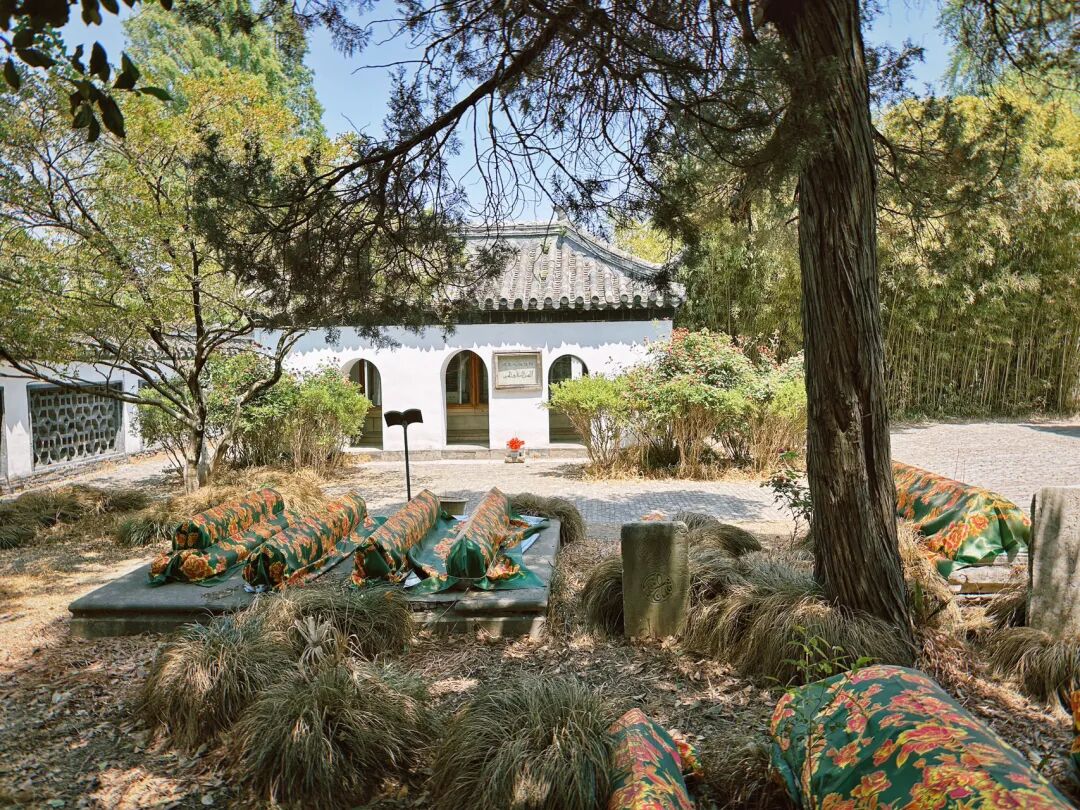
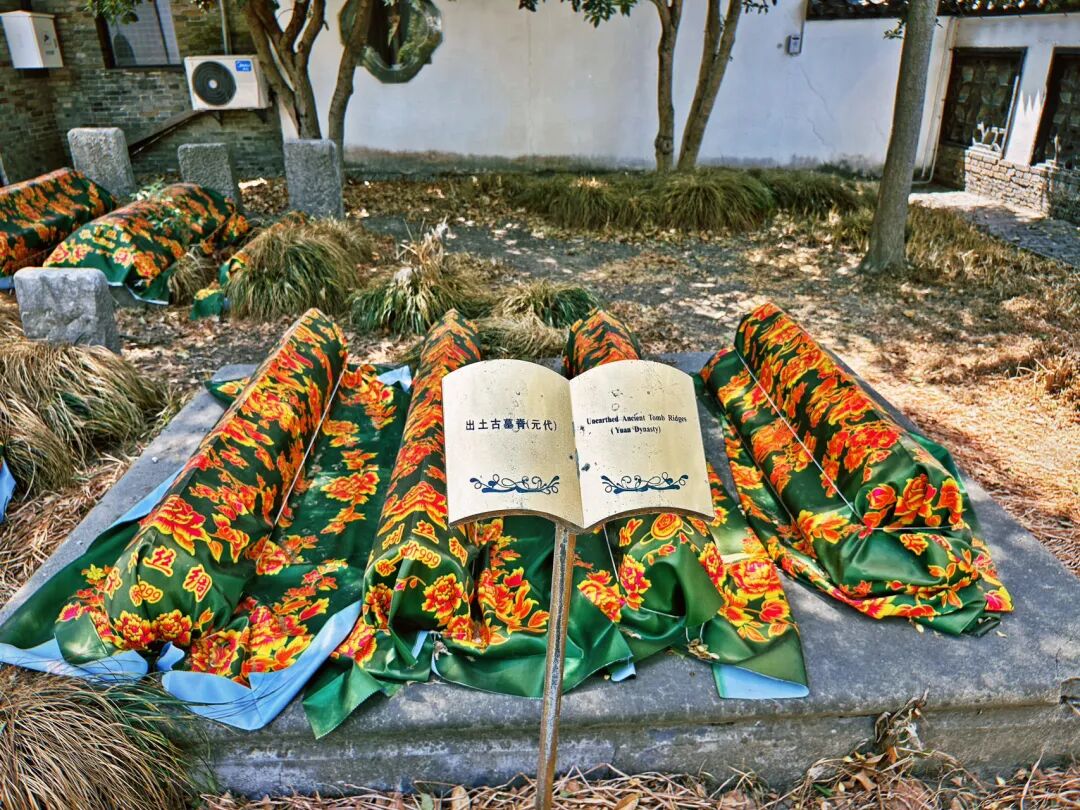
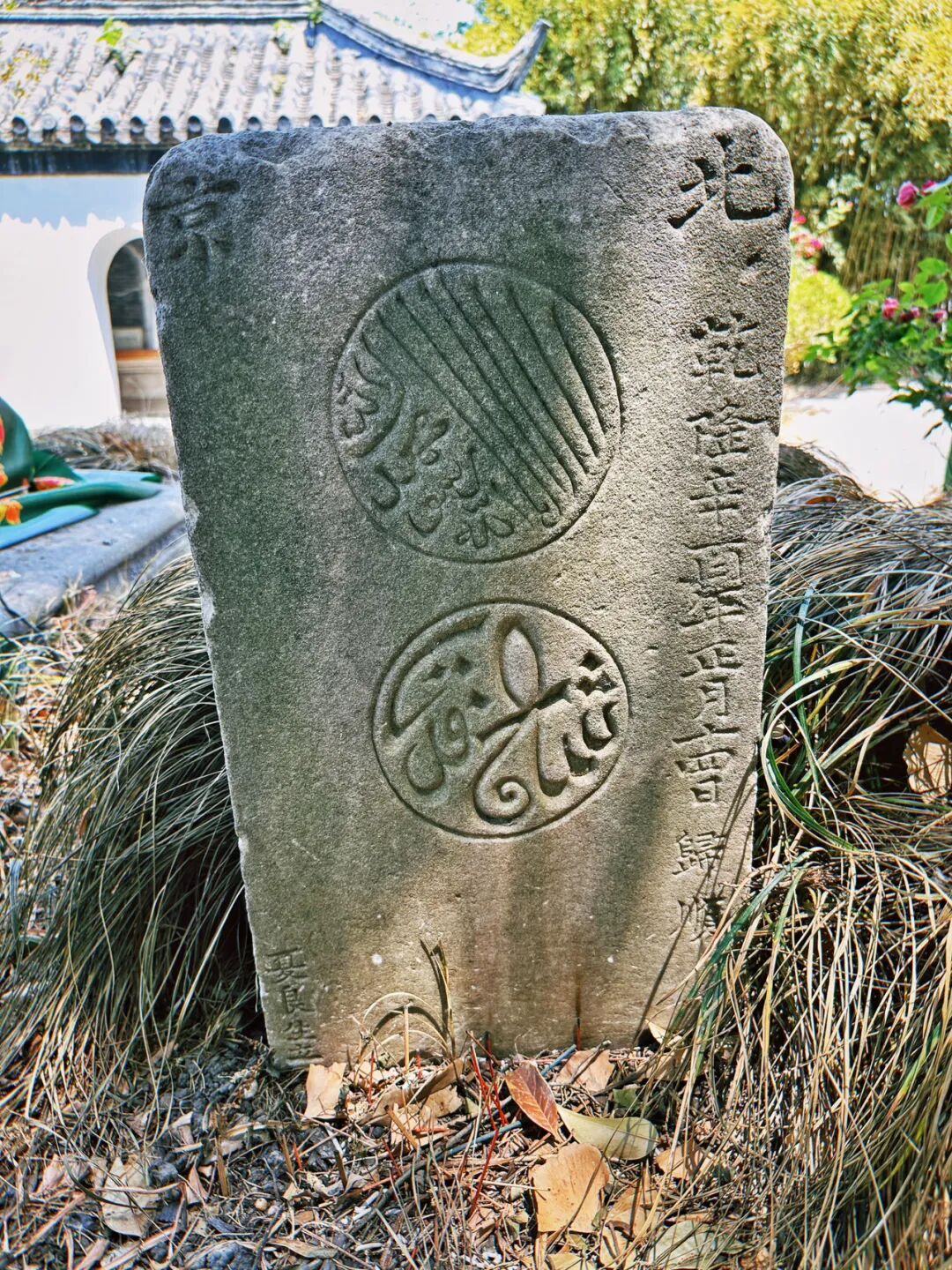
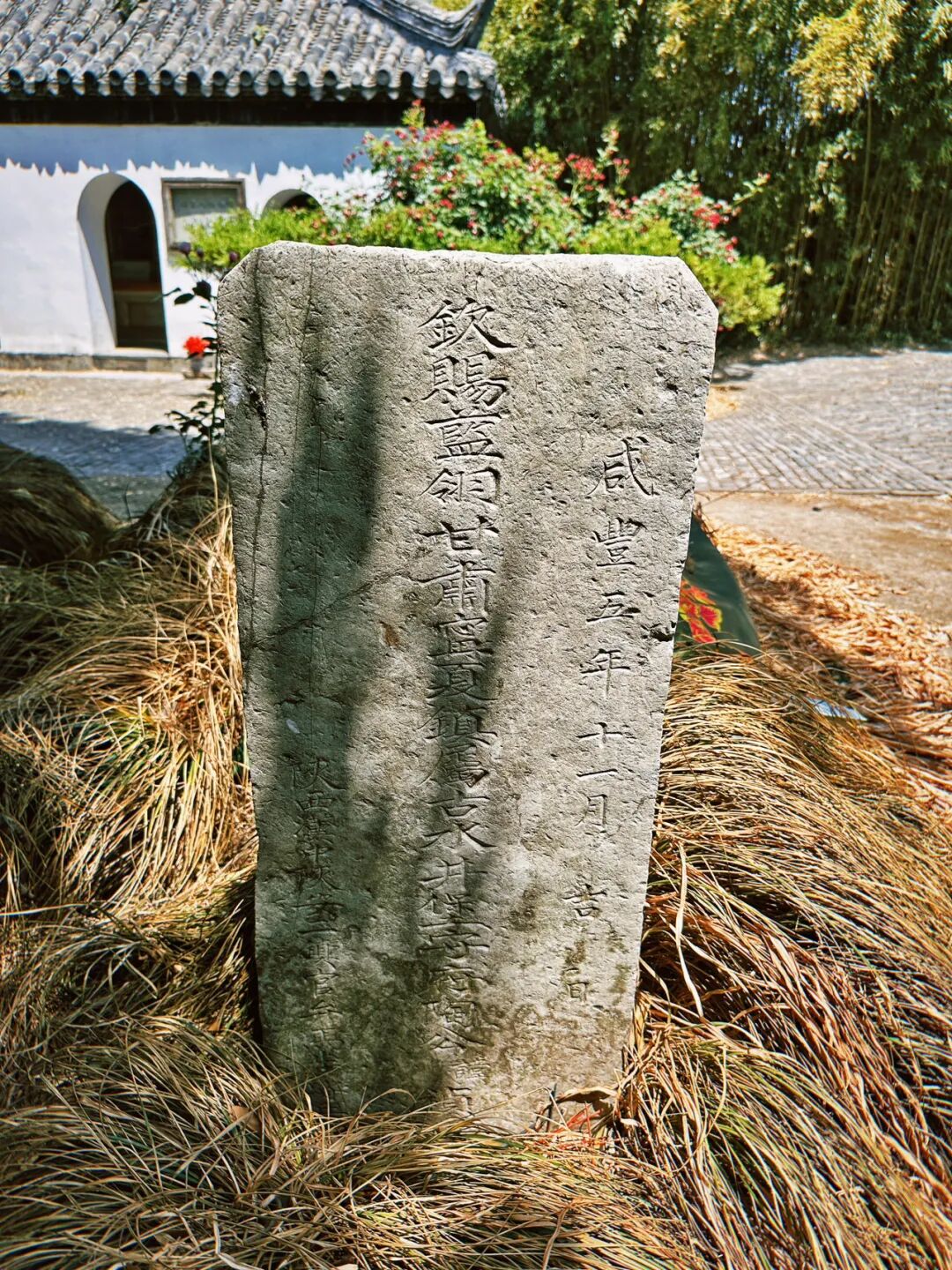
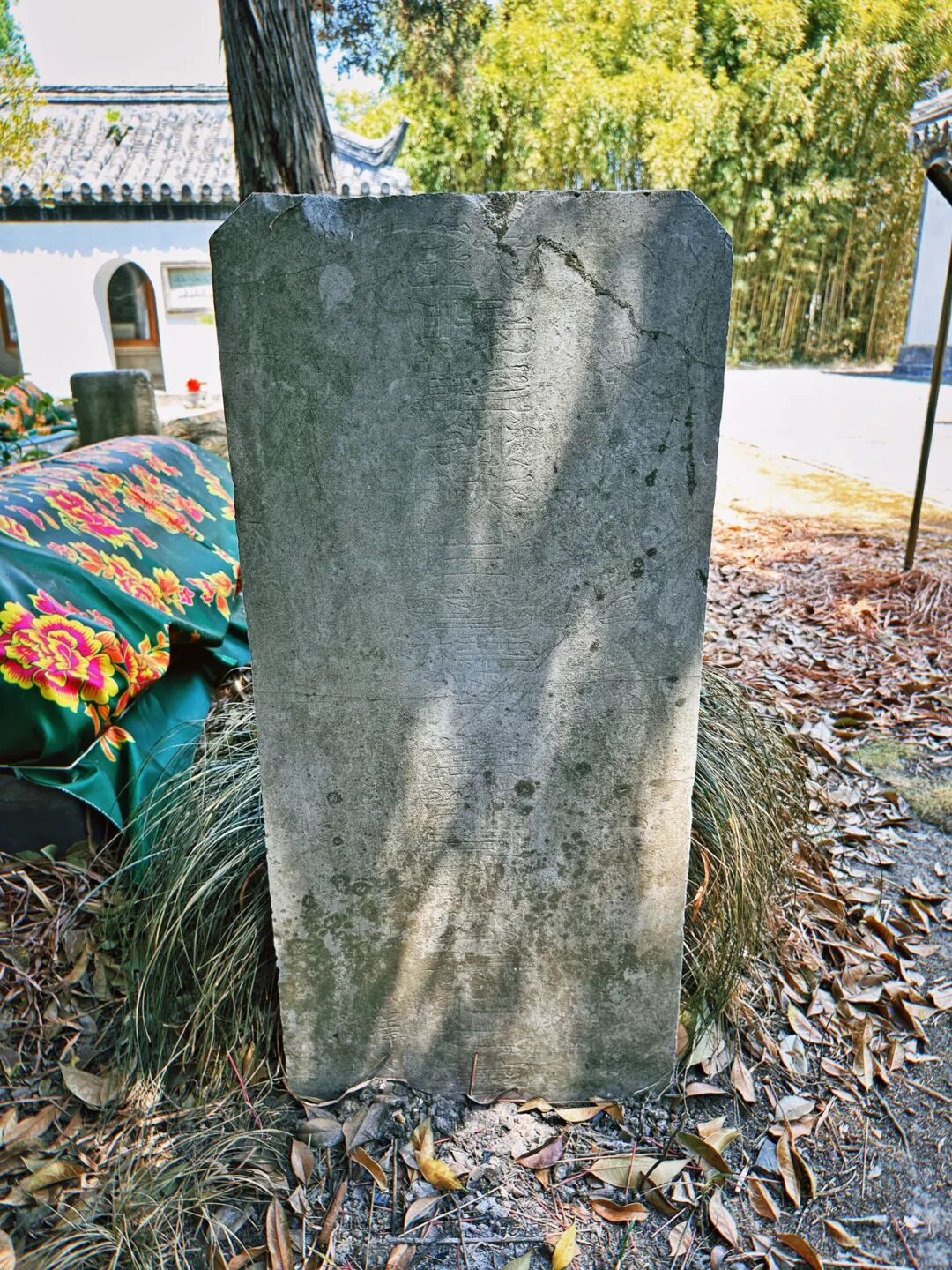
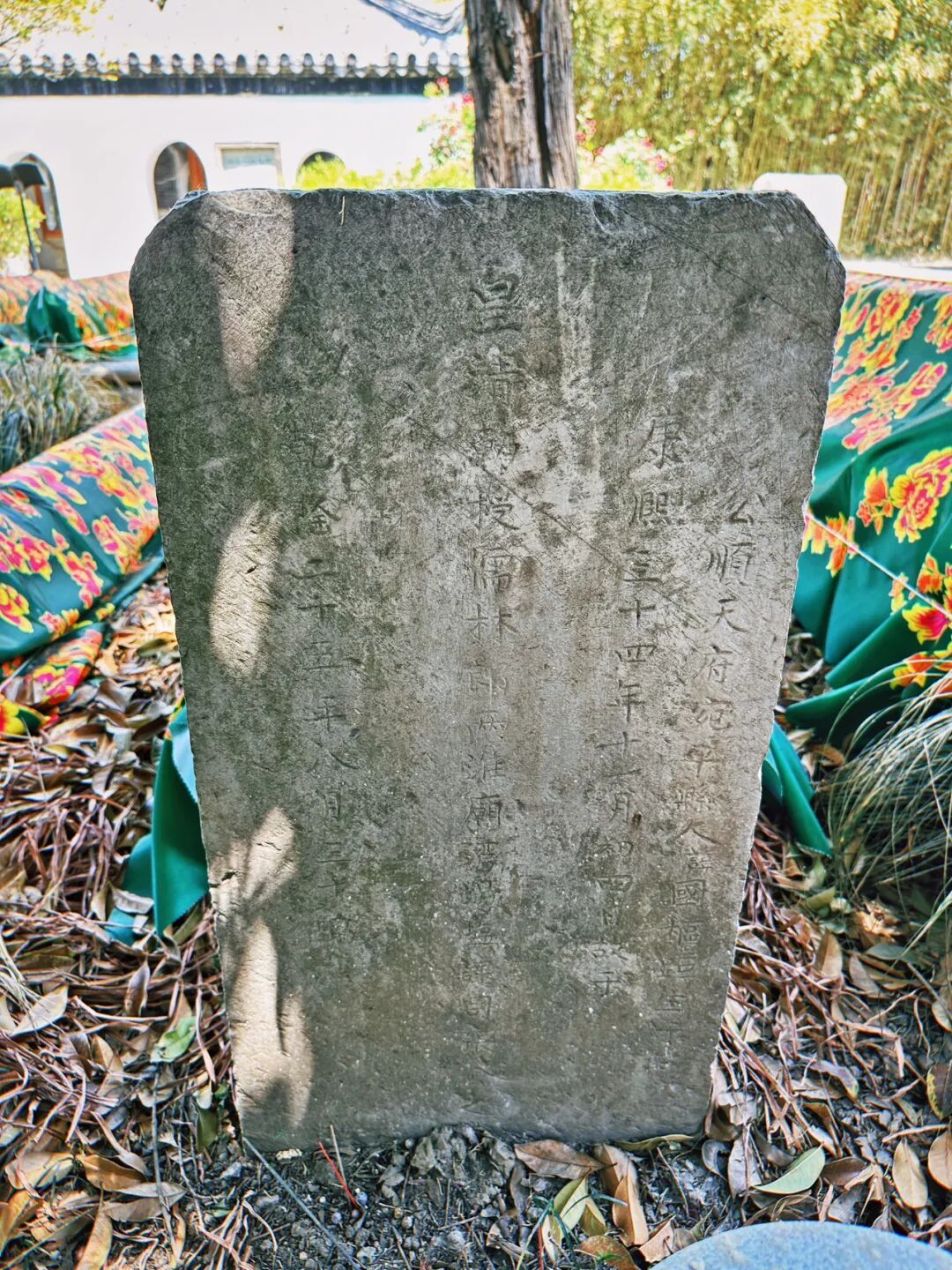
On the cemetery wall, there is a 1932 stele titled Inscription for Han Aheng Yuchun. The inscription records that Imam Han Tongrong was from Hanjiachai in Yucheng County, Shandong. He was born in 1837 (the 17th year of the Daoguang reign), studied the classics from a young age, and later traveled to Ningxia and Hohhot for his studies. After graduating in 1867 (the sixth year of the Tongzhi reign), he returned to Shandong and then traveled south. When he passed through Yangzhou, the local elders asked him to stay. He set up a school at the Baba Yao Mosque next to the Pu Hadin cemetery and taught over thirty students, including several religious leaders with the surnames Lan, Ma, and Wang. Four years later, Imam Han left Yangzhou to preach and teach in Hubei, Fujian, Jiangxi, and other places, with his students spread across the entire southeast region. During this time, Imam Han briefly returned to teach in Yangzhou before traveling to Zhejiang, Suzhou, Tianjin, and Shanghai. He returned to Yangzhou to teach in 1898 (the 24th year of the Guangxu reign) and stayed until he passed away in 1915 at the age of 79, after which he was buried in the Pu Hadin cemetery.
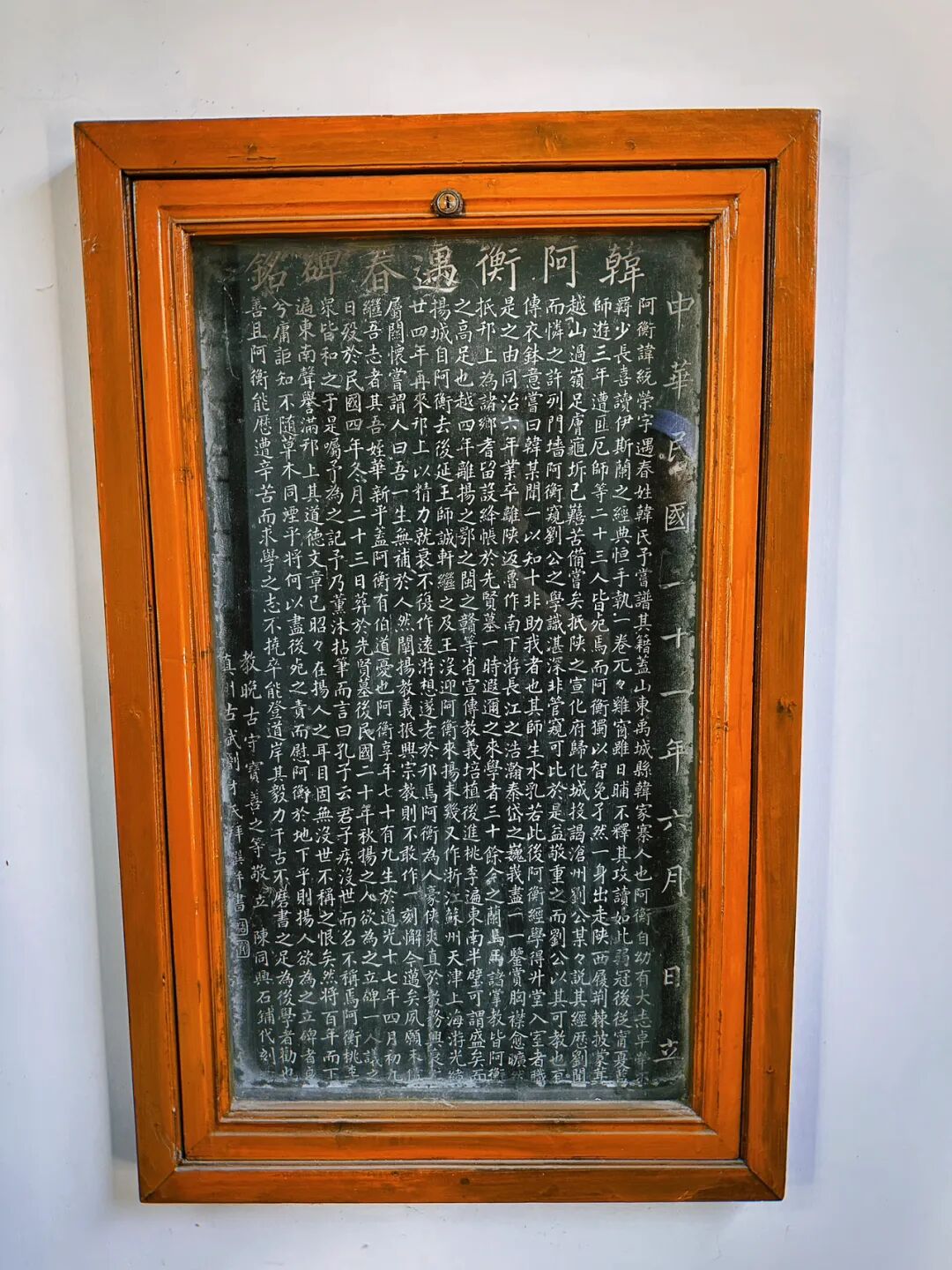
The Pu Hadin cemetery houses four Yuan dynasty tombstones. Three of them are primarily in Arabic with some Persian place names, while the front of the fourth one is written in Chinese characters. These four tombstones were discovered in the city foundations in 1924-1925 when the Dangjun Tower at the south gate of Yangzhou was demolished. It was originally kept in the tomb of the sages next to the Crane Mosque (Xianhe Si) and moved to the Puhading Cemetery in 1959.
During the Song Dynasty, a government hostel was set up at the south gate of Yangzhou. The area outside the south gate became a major settlement for Arab and Persian merchants. An ancient mosque (Nanmenwai Gusi) was built there, but it was later occupied by a glass factory and the main hall was demolished in 1984. A cemetery was also built nearby. In 1357, the 17th year of the Zhizheng era of the Yuan Dynasty, Zhu Yuanzhang captured Yangzhou and used some of the tombstones to build the Dangjun Tower at the south gate.
One of the Chinese-language tombstones is inscribed with 'Tomb of the Darughachi of Huizhou Circuit, Nie Gubo, Tongyi'. The term Darughachi originally meant 'seal holder' and referred to officials who held real administrative and military power in local areas during the Yuan Dynasty. The Huizhou Circuit was a high-ranking circuit, so the Darughachi held a rank of 3a. Tongyi is short for 'Tongyi Dafu', which is also a 3a rank. During the Yuan Dynasty, most Darughachi were Mongols, though some were Semu people with noble family backgrounds. The back of the stone records Nie Gubo's life and praises him as a 'noble, diligent, and excellent religious educator, an outstanding leader who helped the weak, was charitable and generous, and loved the people, a respected elder... a man of great virtue and wisdom, generous and fair, and blessed with great fortune.' It also notes that he passed away on the 2nd day of the 12th month of the Islamic calendar year 709, which is May 3, 1310, the third year of the Zhida era of the Yuan Dynasty.
The second tombstone records: 'The pardoned deceased Shams al-Din Asif Allah Balaji... at the time of early June, 724 (Islamic calendar).' This corresponds to the end of May or early June of 1324, the first year of the Taiding era of the Yuan Dynasty.
The third tombstone belongs to a Persian woman who also passed away in 1324. Her name was Aisha Khatun, with 'Khatun' meaning 'lady'. The inscription says: 'She was a chaste, virtuous, and capable woman... her father was Lezunding, a well-respected official in the religious community.'
The fourth tombstone is damaged. It belonged to a missionary named Ala al-Din who died in 1302, the sixth year of the Dade era of the Yuan Dynasty. The inscription describes him as a merchant who was skilled in business and highly respected by the people.
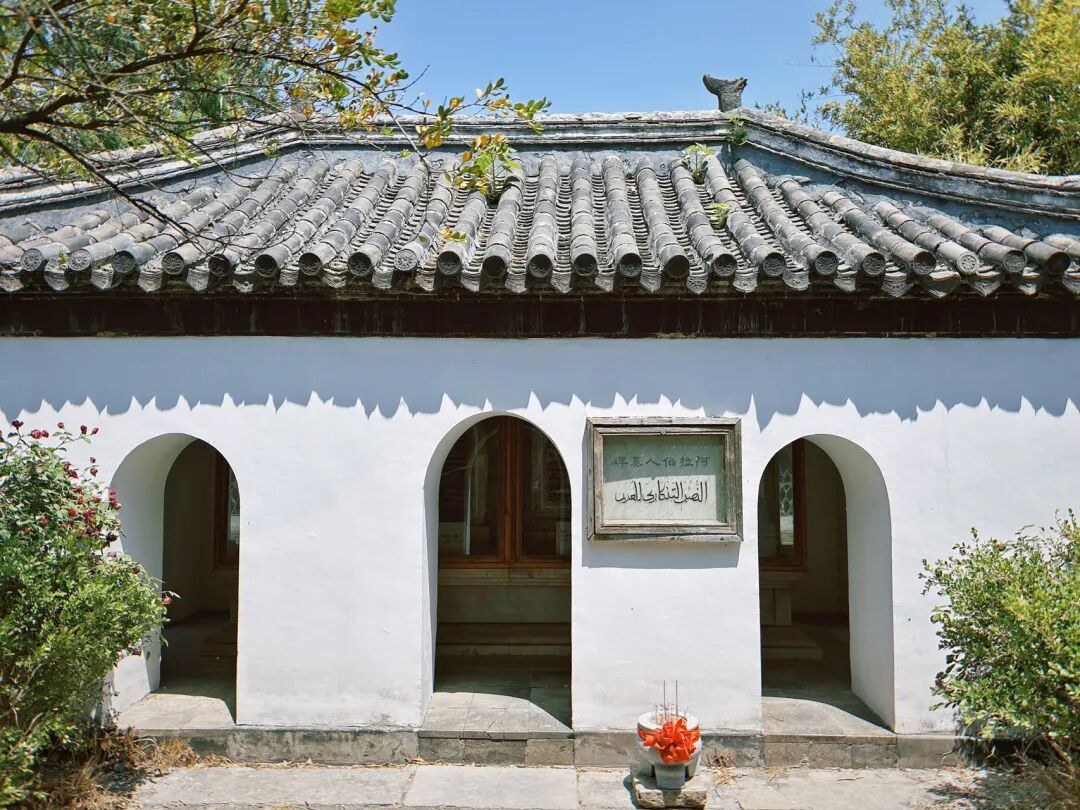
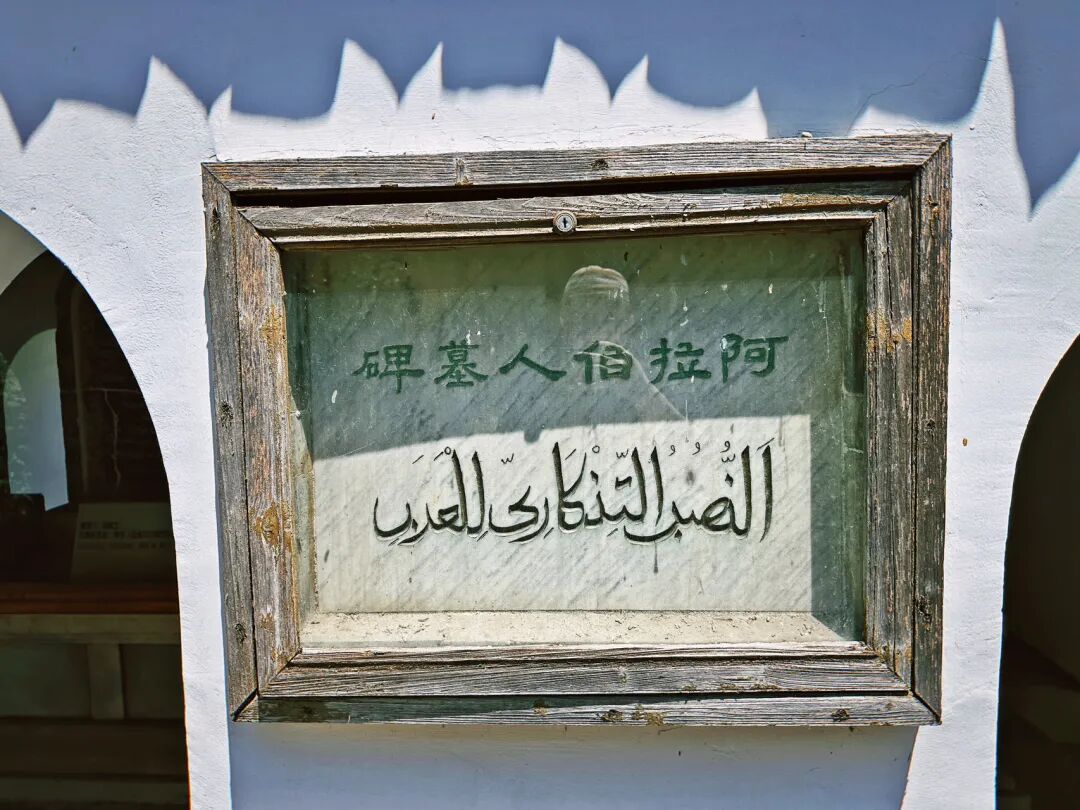
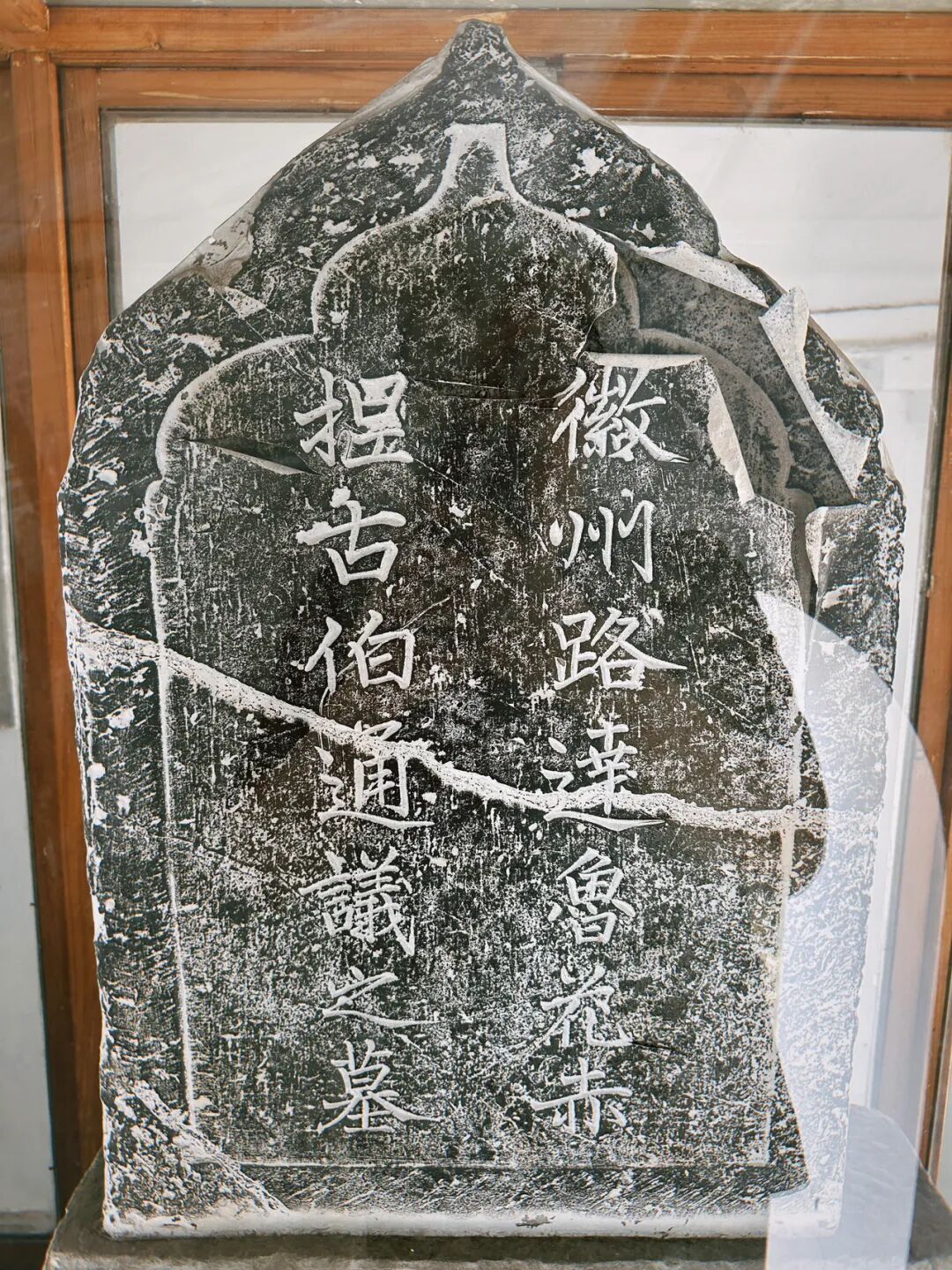
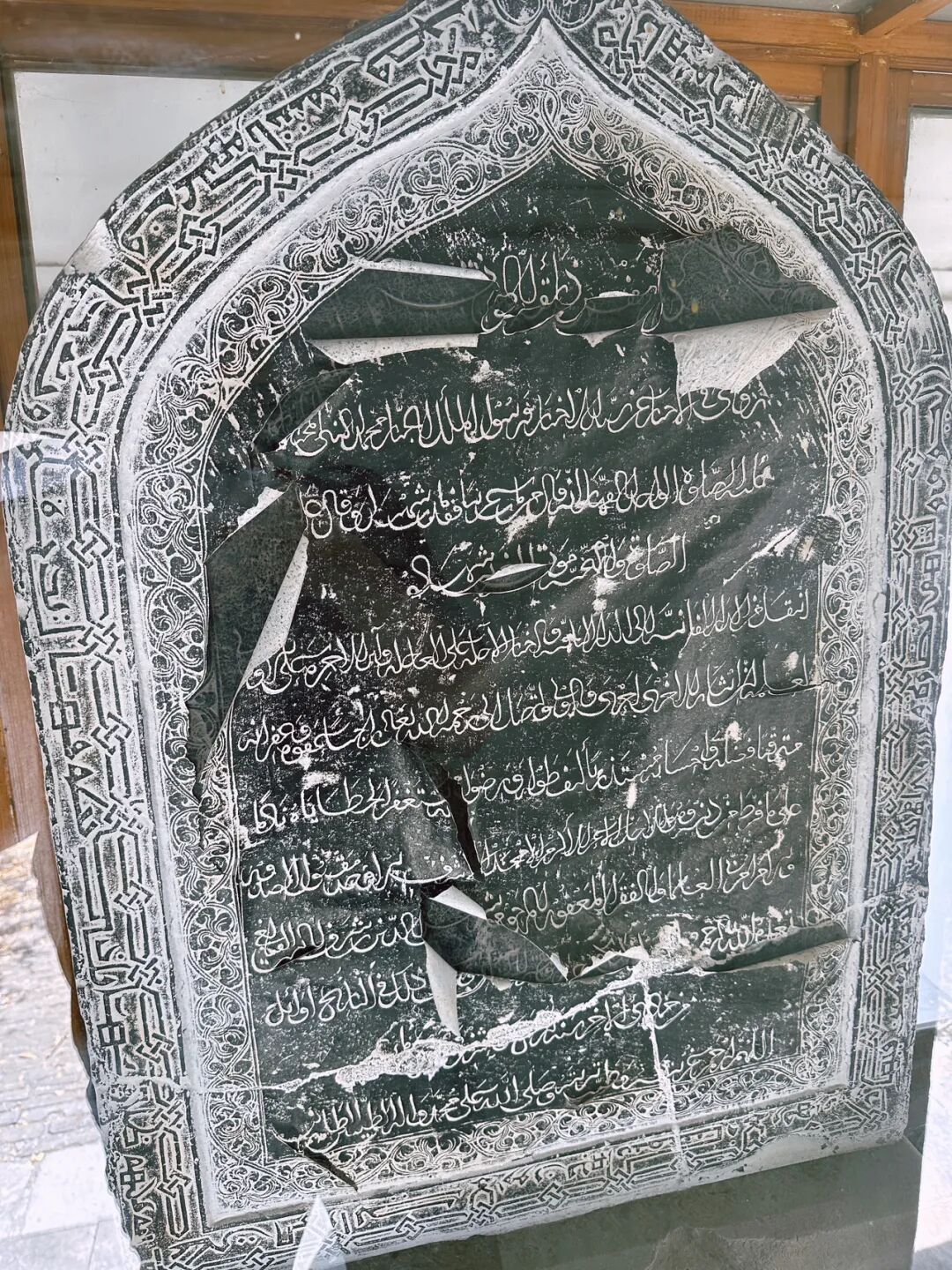
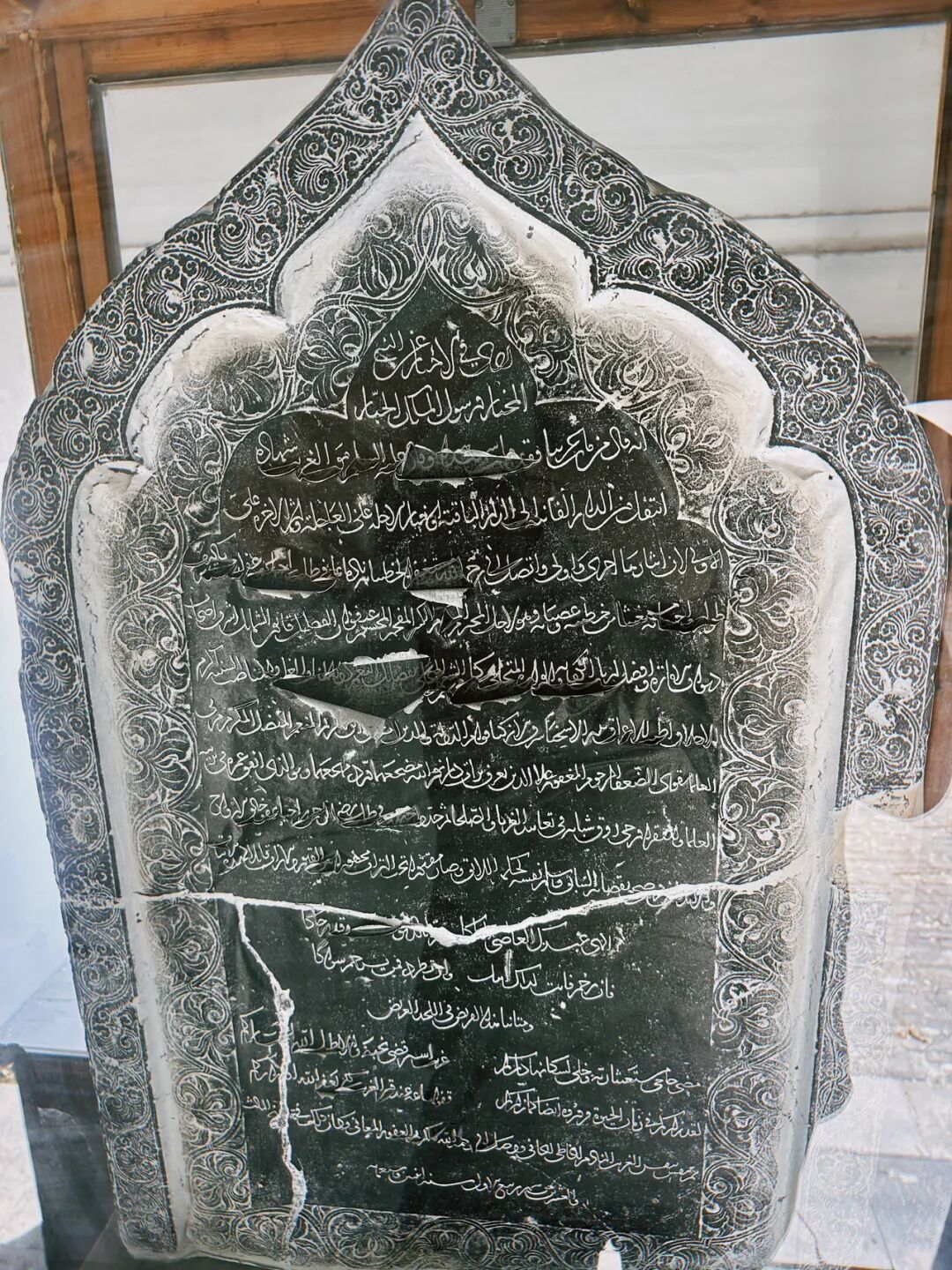
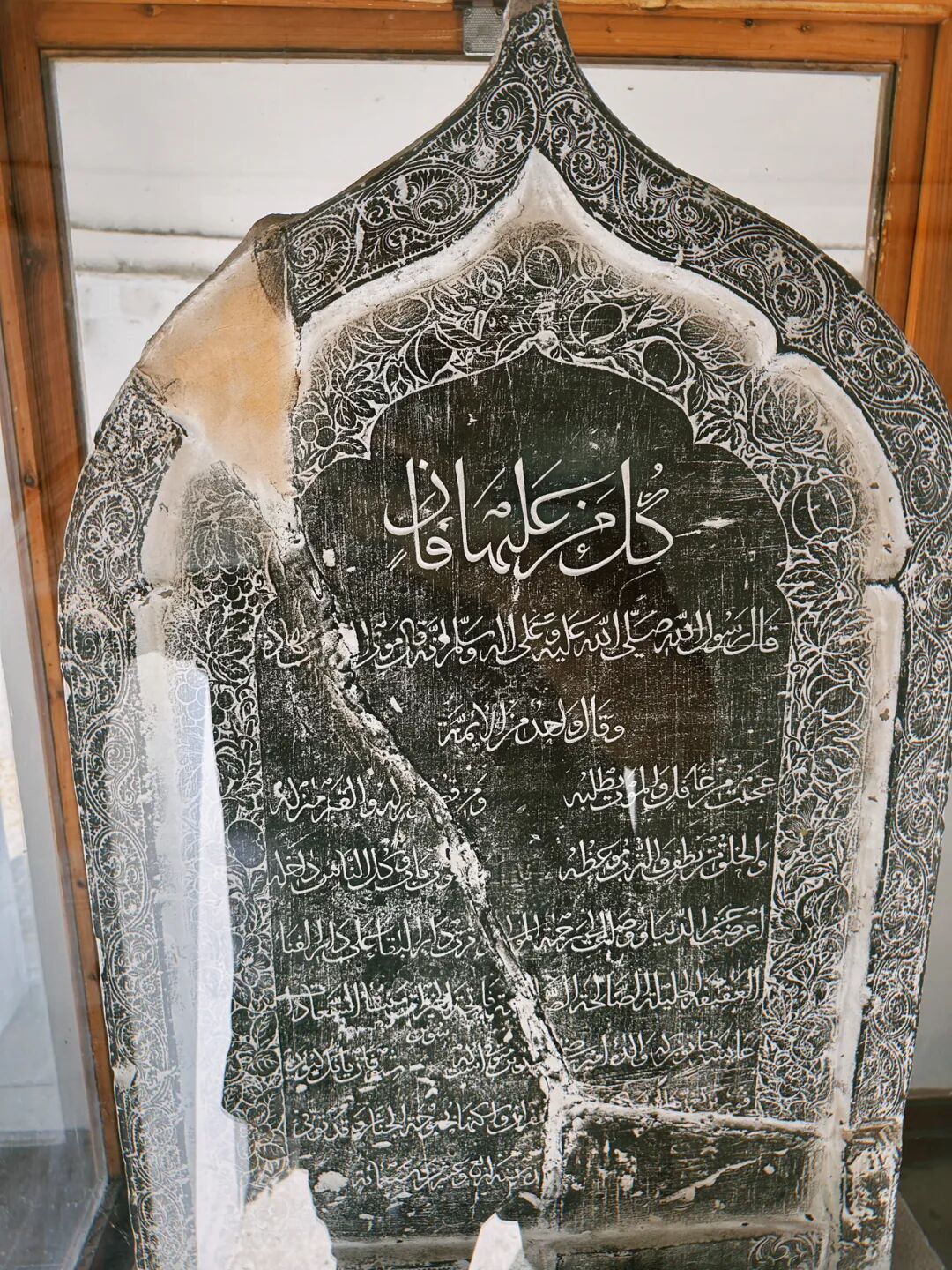
On the east side of the Puhading Cemetery is the tomb of General Zhang Xin, who passed away in 1551, the 30th year of the Jiajing era of the Ming Dynasty. General Zhang's ancestor, Damuchi, came from Samarkand. The 'Continued Records of Jiangdu County' from the Republic of China era states: 'General Zhaoyong, named Xin, was the grandson of the Hui Muslim Damuchi. He held the rank of Cavalry Commandant. Because he was an excellent archer, he was granted the surname Zhang and his household was registered in Yangzhou, located behind the Puhading tomb outside Tongji Gate.'
The spirit way archway for General Zhang was erected by his grandson, Zhang Heng. Zhang Heng was a famous Ming Dynasty general who fought against Japanese pirates and served as the hereditary commander of the Yangzhou Guard. In April 1556 (the 35th year of the Jiajing reign), Japanese pirates attacked Yangzhou. Zhang Heng, a retired Huaiyang assistant regional commander, personally led troops to fight them and died on the battlefield. The stone sheep beside the spirit way was once kept at Slender West Lake until it was moved back in 2011.
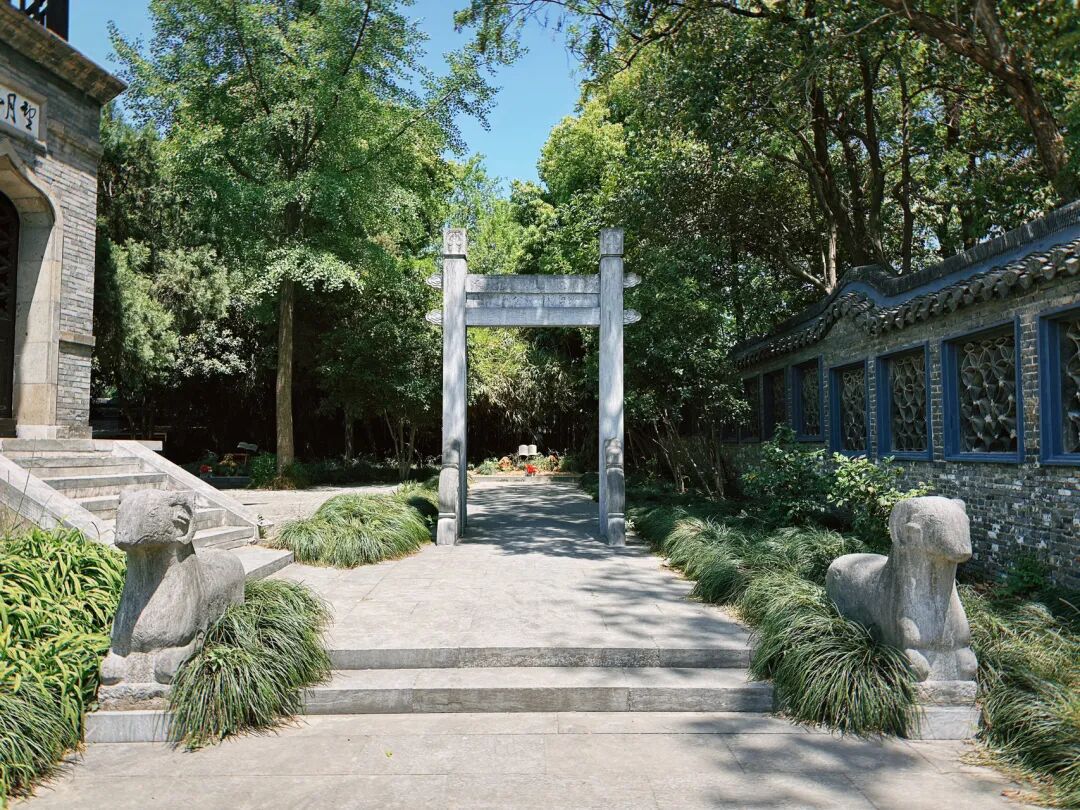
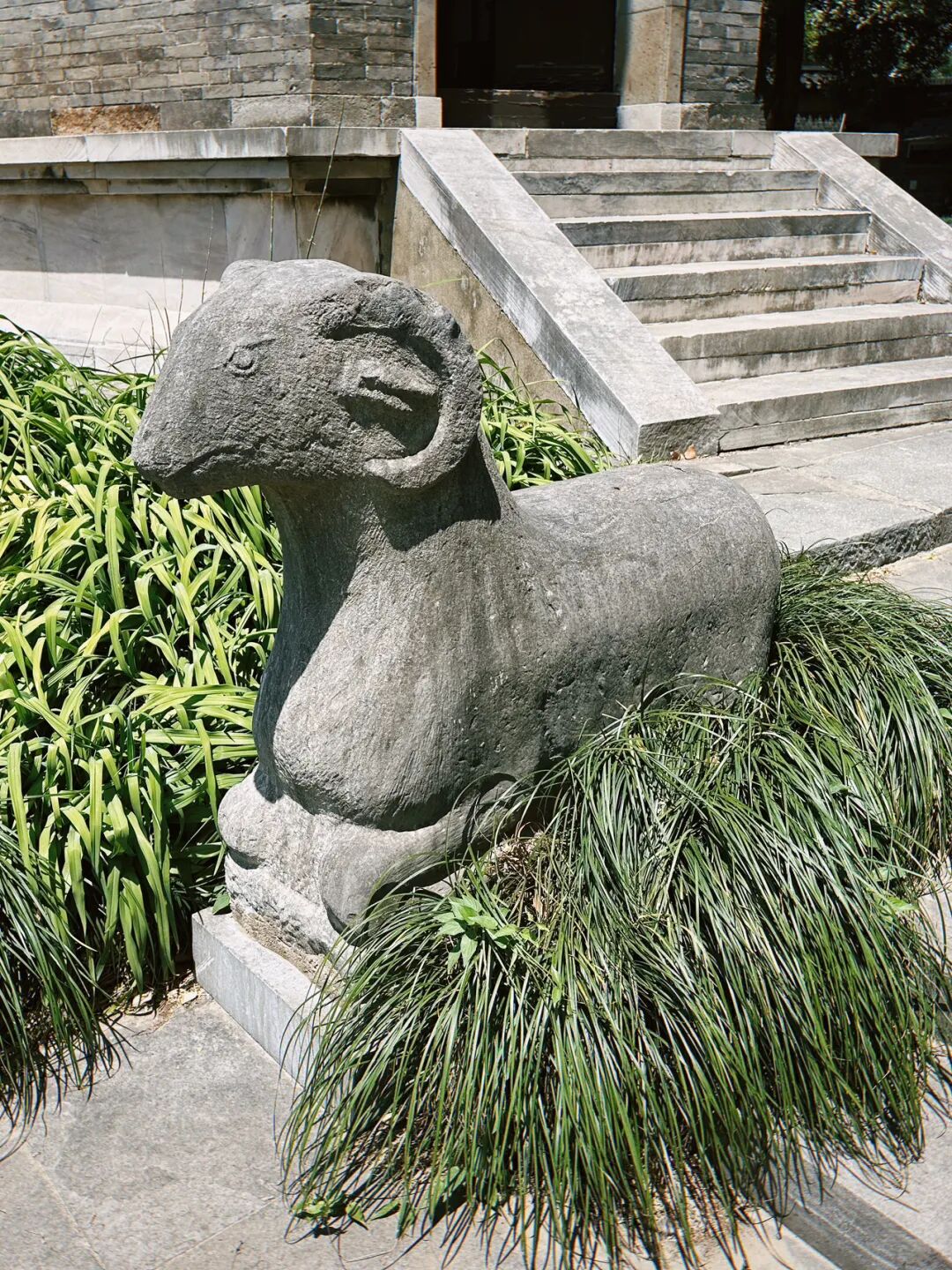
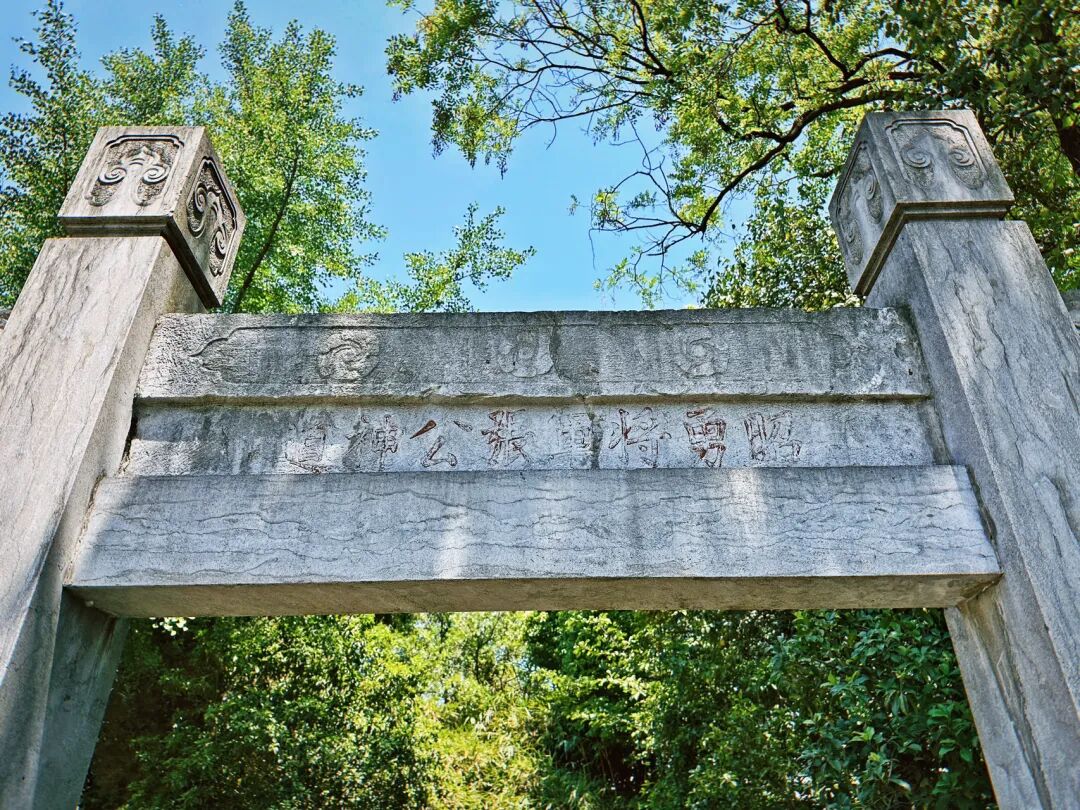
Next to General Zhang Xin's tomb is the cenotaph of Zuo Baogui, a famous Qing Dynasty general who fought against the Japanese. During the First Sino-Japanese War in 1894 (the 20th year of the Guangxu reign), Zuo Baogui led his troops to hold the Xuanwu Gate in Pyongyang and dealt a heavy blow to the Japanese army. On September 15, Zuo Baogui personally fired a cannon. His right arm was broken, but he bandaged the wound and kept fighting. He was then hit in the chest by a shell and died heroically at the age of 57. That same year, the Yangzhou government followed an imperial decree to build a cenotaph and a shrine for Zuo Baogui in the south section of the Puhading Tomb. The shrine was later destroyed, leaving only the tomb cover stone of the cenotaph.
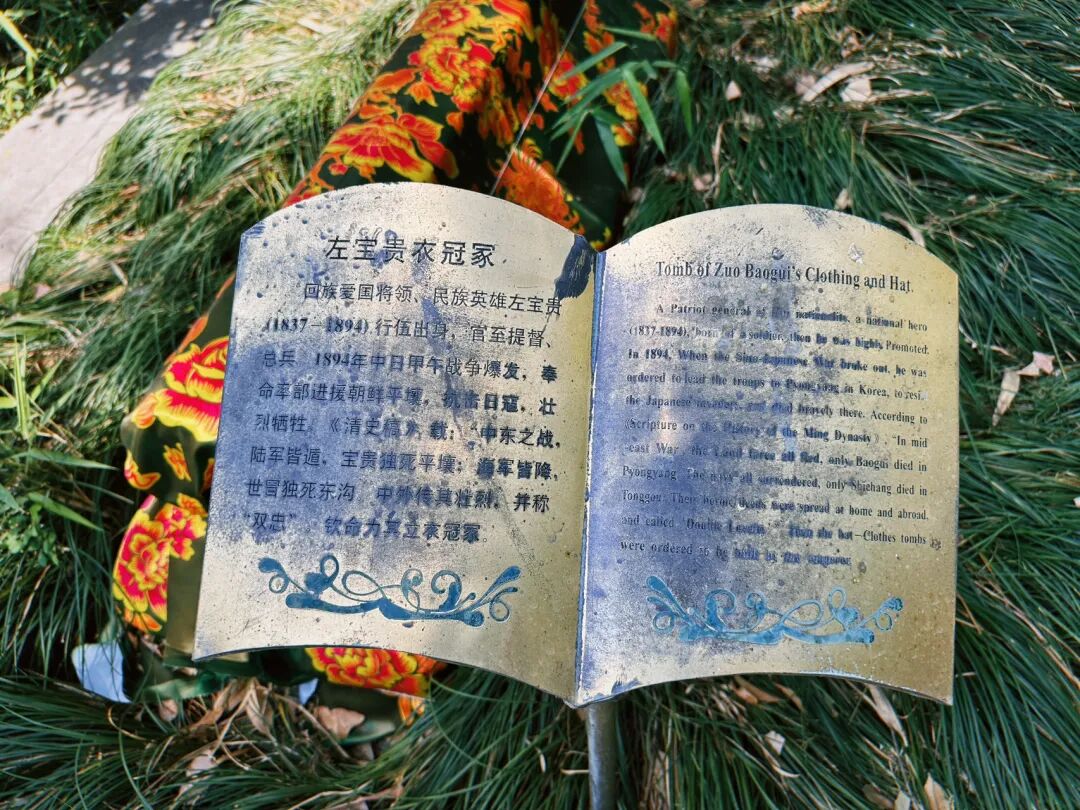
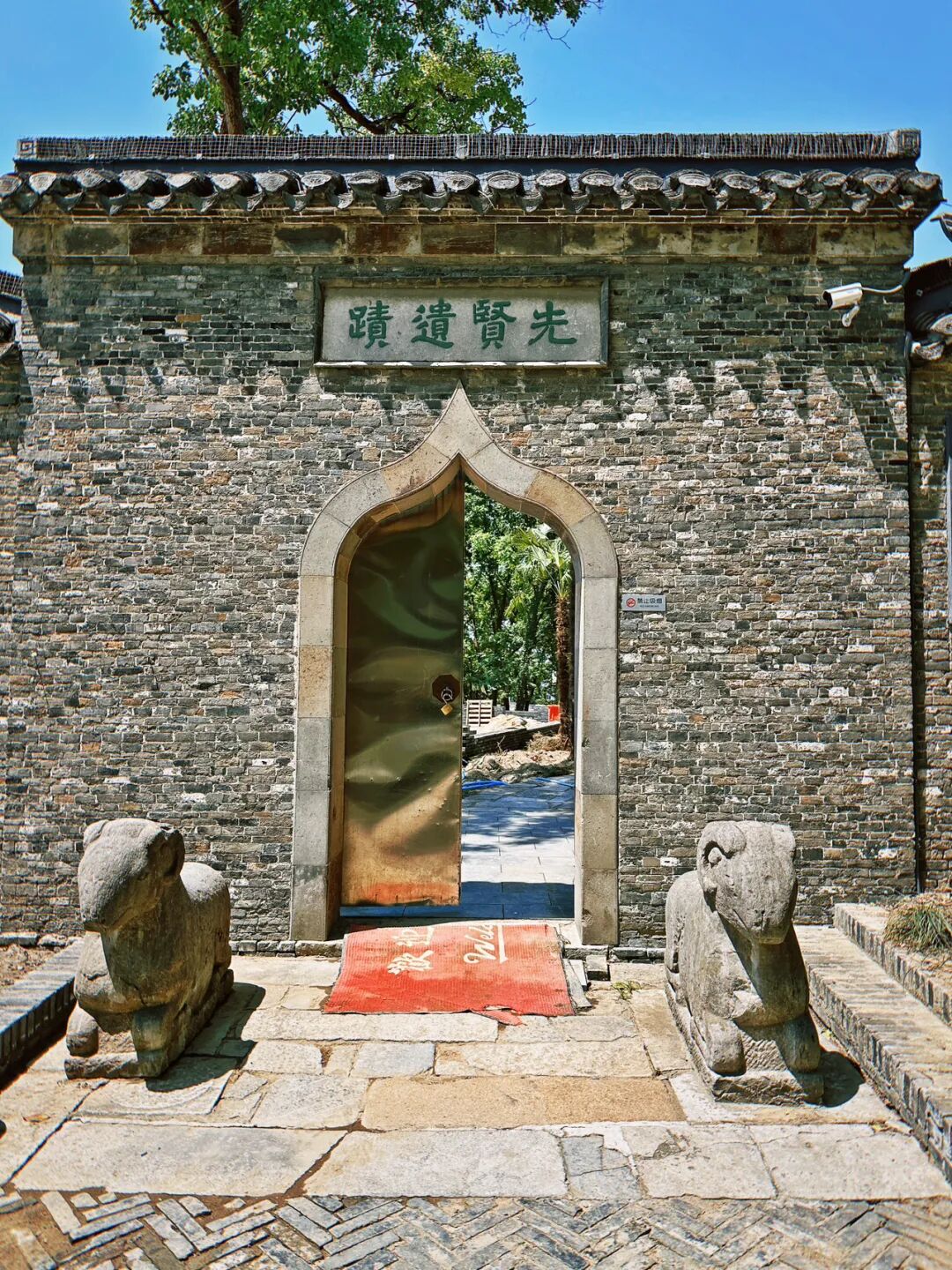
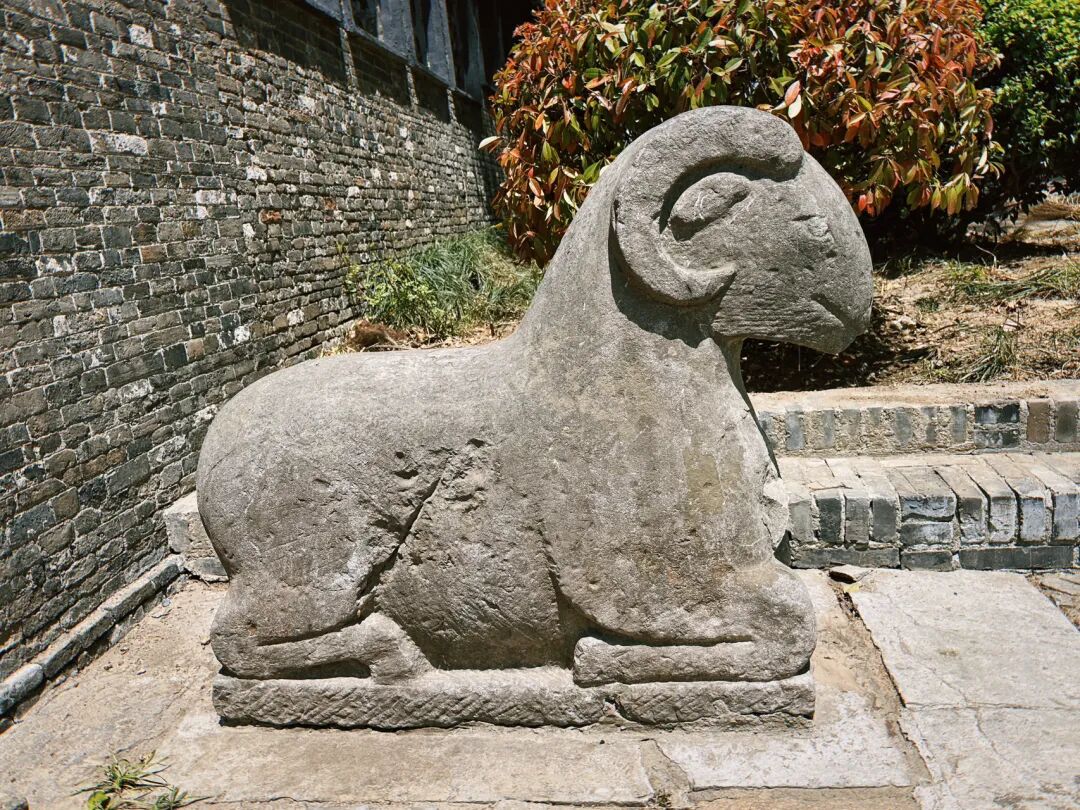
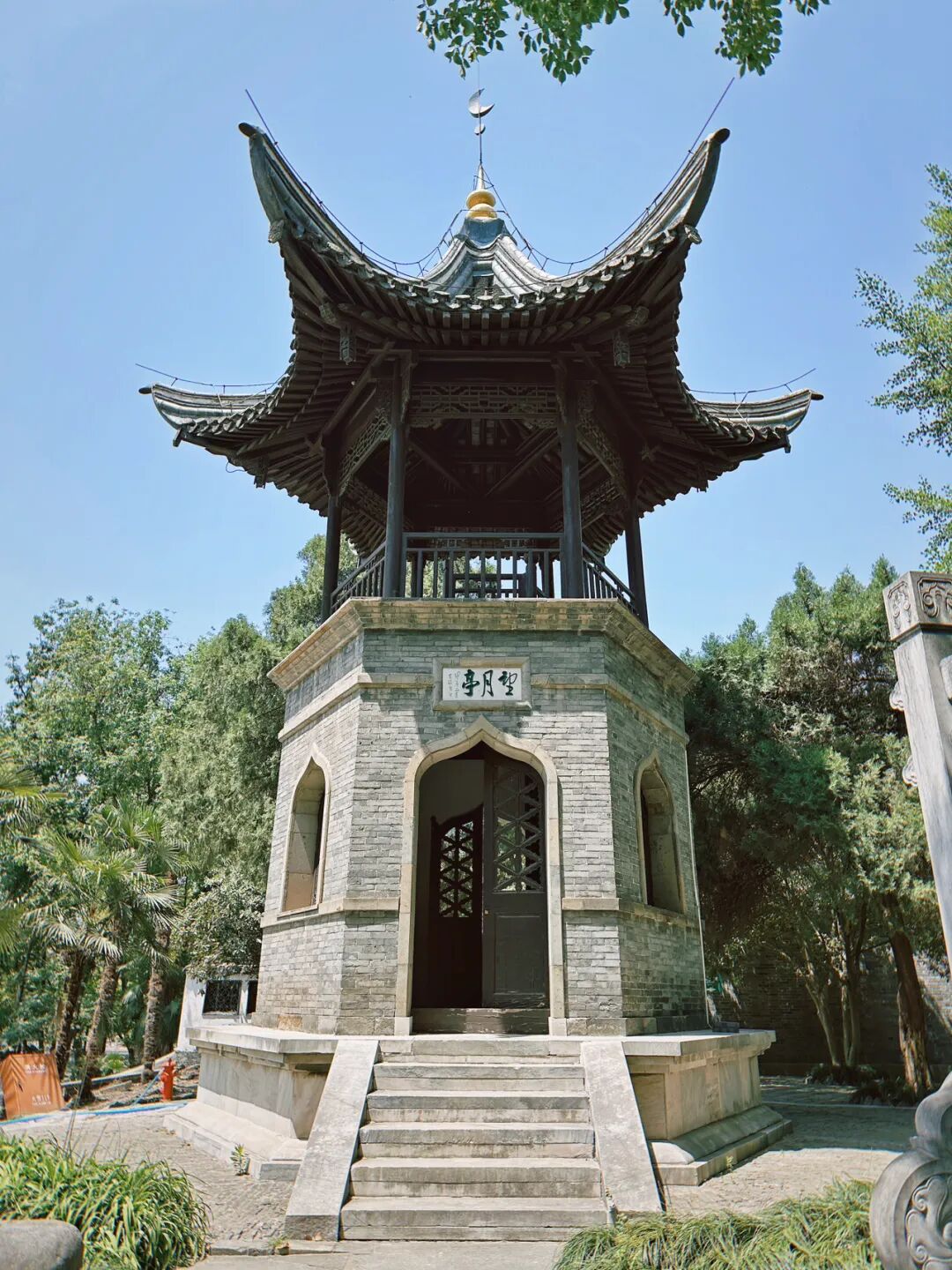
Babayao Mosque
The mosque southwest of the Puhading Tomb garden is called Huihui Tang Mosque or Babayao Mosque. It was one of the six Hui Muslim districts in Yangzhou during the Qing Dynasty and is the only one remaining of the three districts outside the city. Babayao Mosque currently appears as it did after being rebuilt in 1776 (the 41st year of the Qianlong reign) and renovated in 1845 (the 25th year of the Daoguang reign), featuring the traditional architectural style typical of the Huaiyang region.
The main gate of Babayao Mosque is on the southwest side of the Puhading Tomb garden. The stone plaque above the gate was installed during the Qianlong reign, and the rectangular door-pillow stones are very elegant.
The main prayer hall is on the north side of the gate, right next to the stone path of the Grand Canal, and features upturned eaves. The interior has a hard mountain roof, floor-to-ceiling slanted lattice partition doors, and a large wooden column-and-tie structural frame.
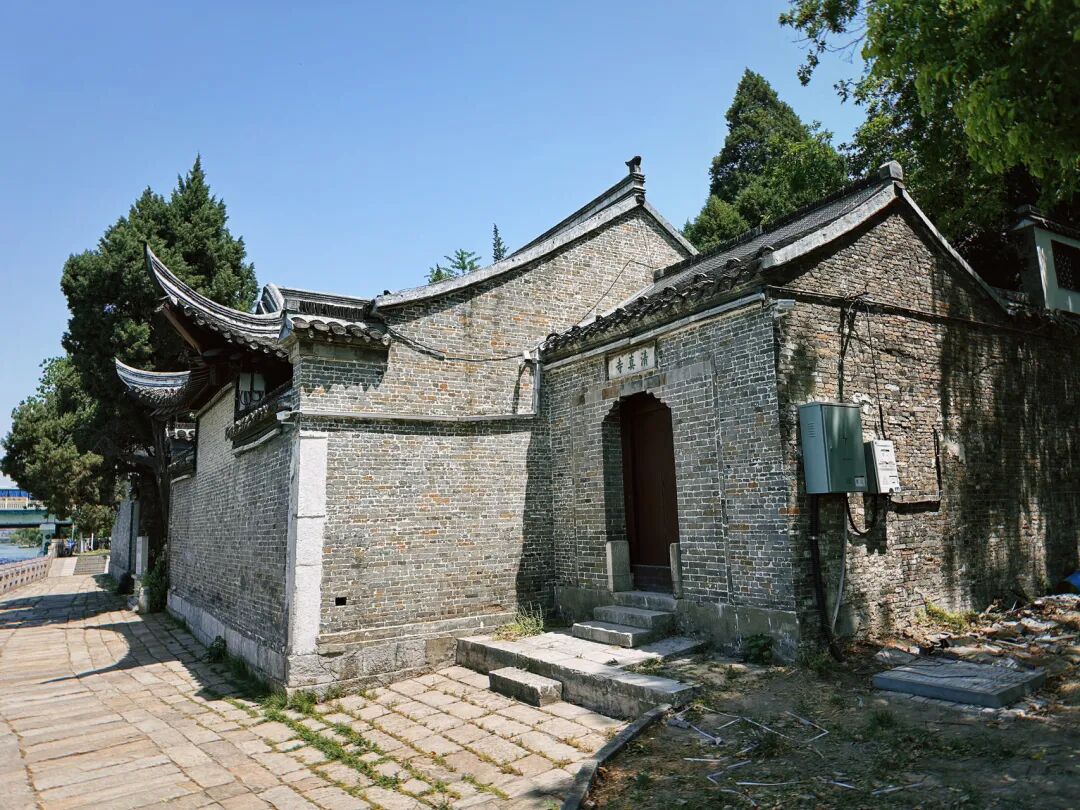
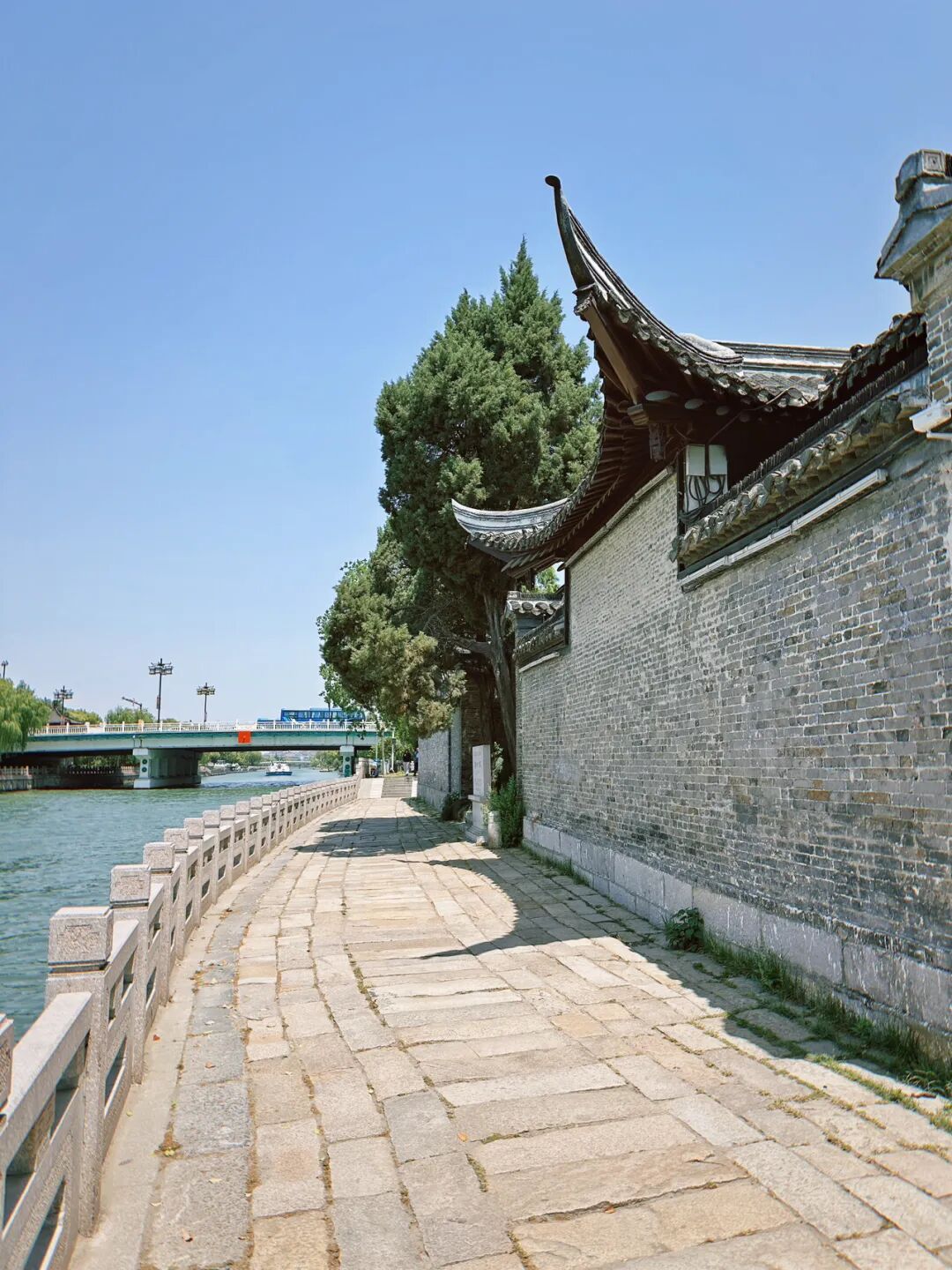
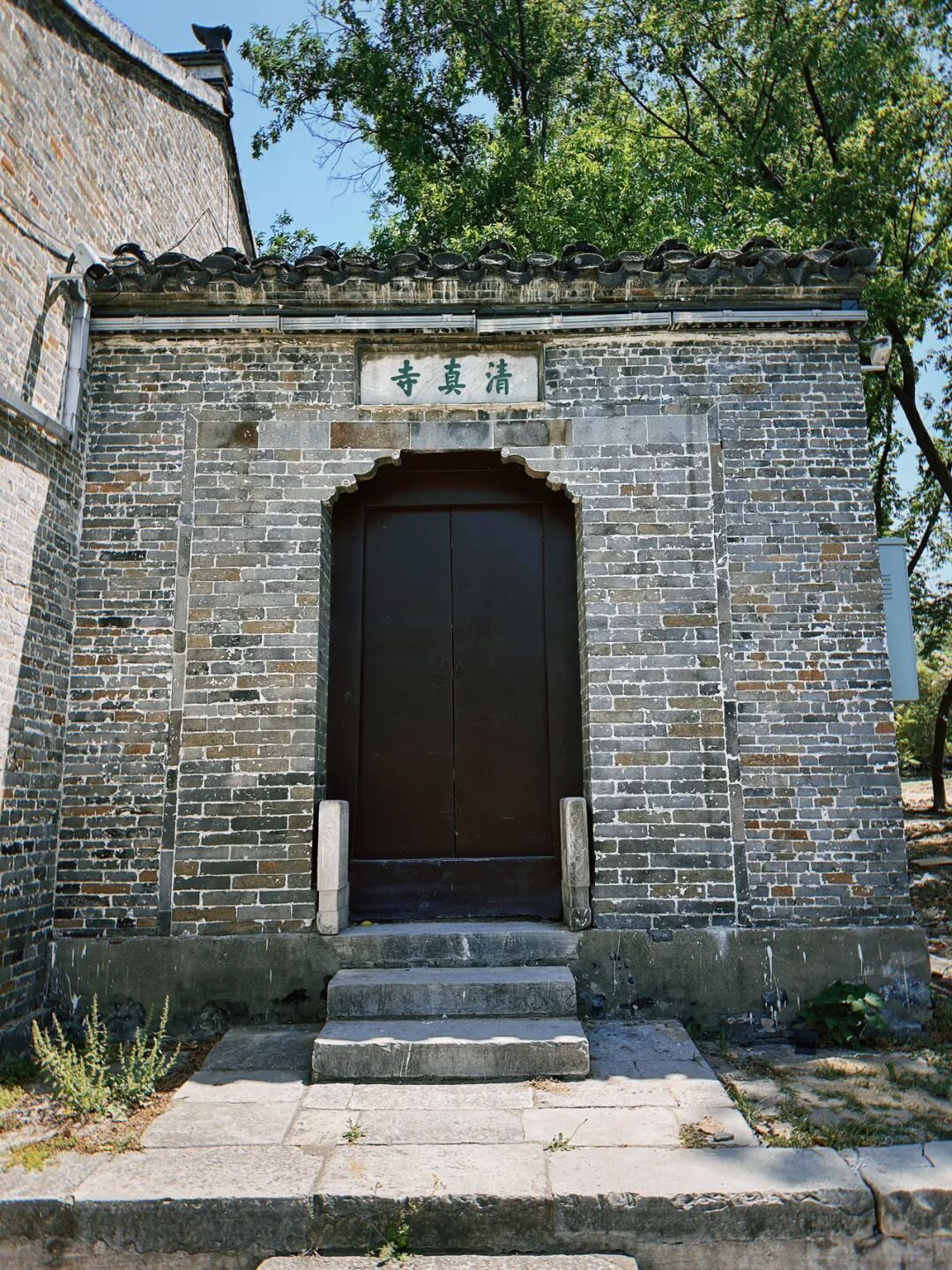
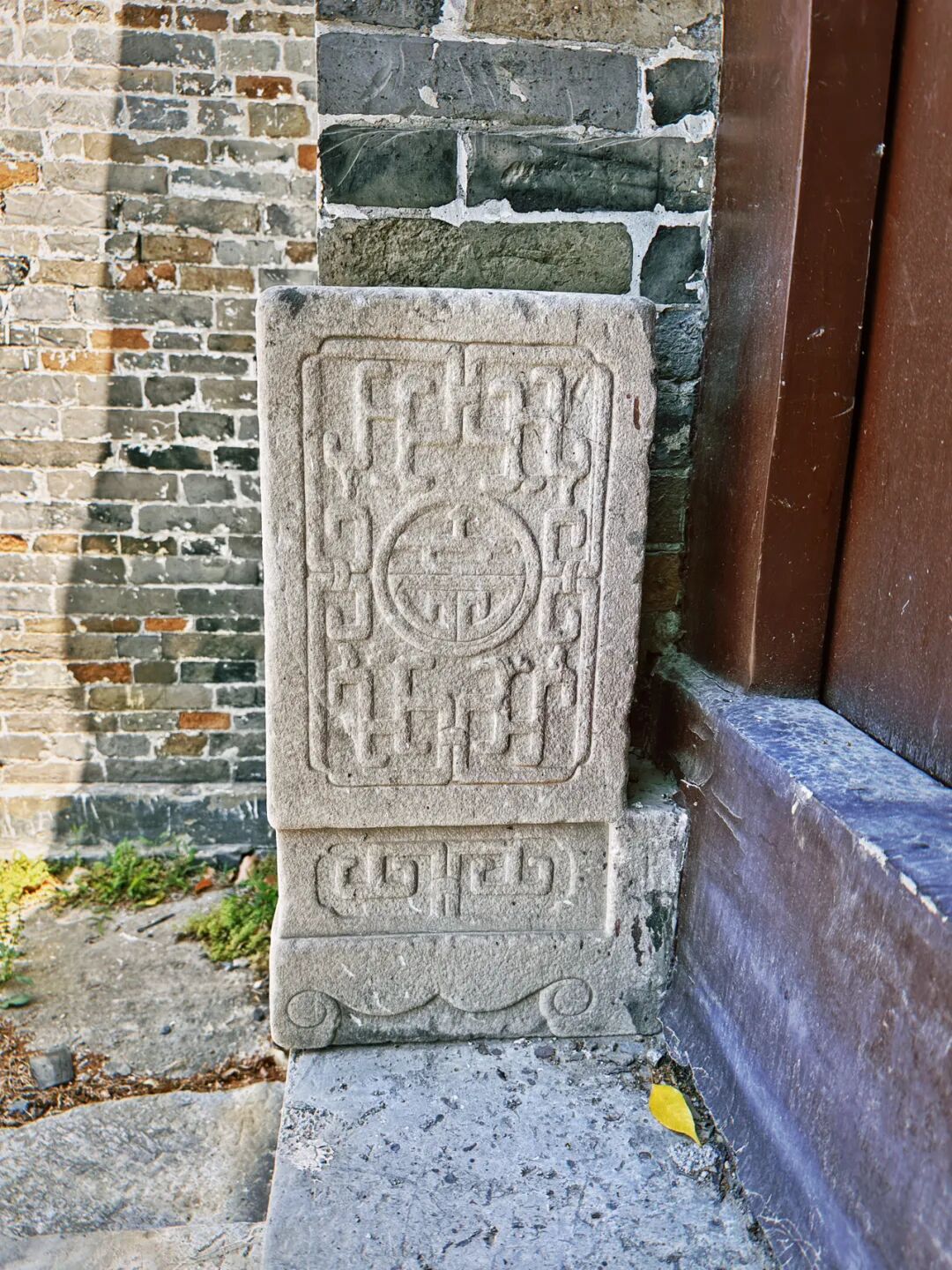
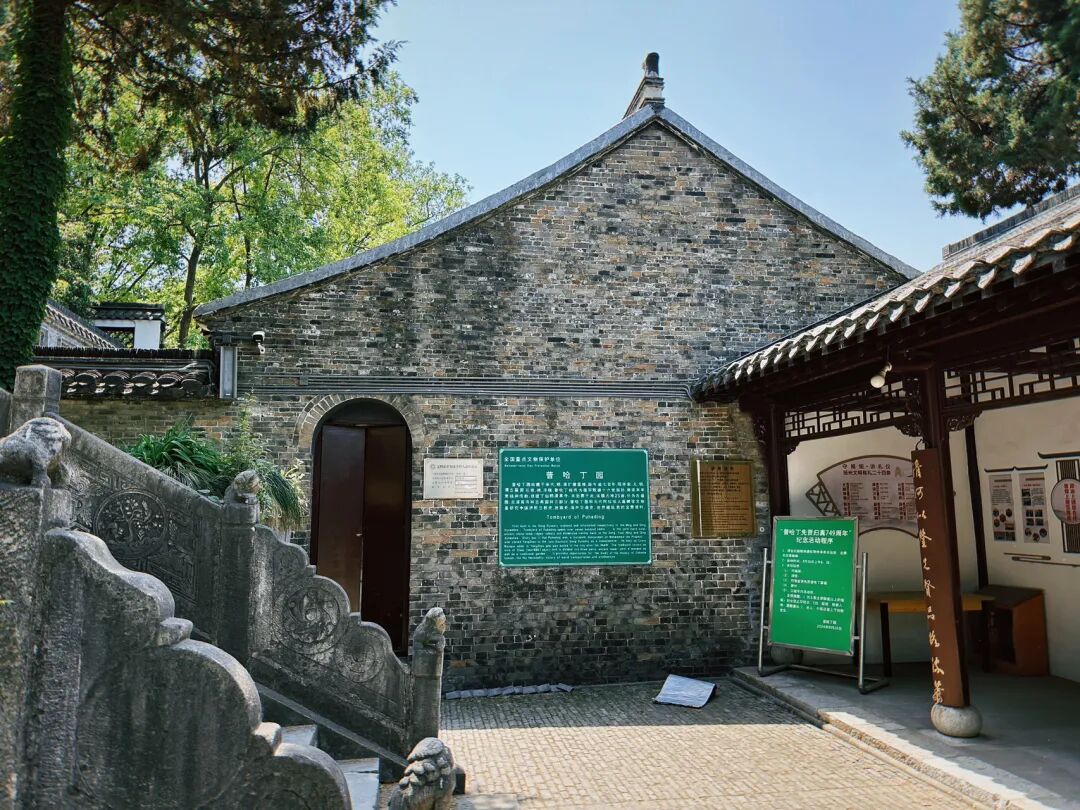
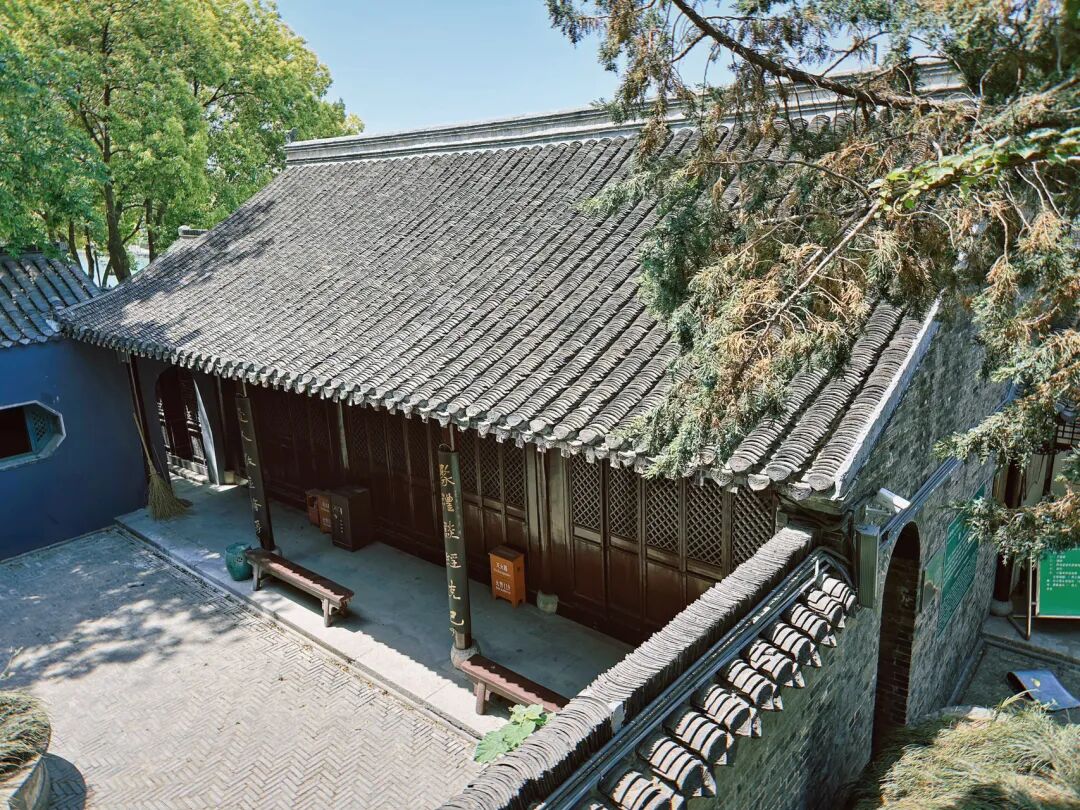
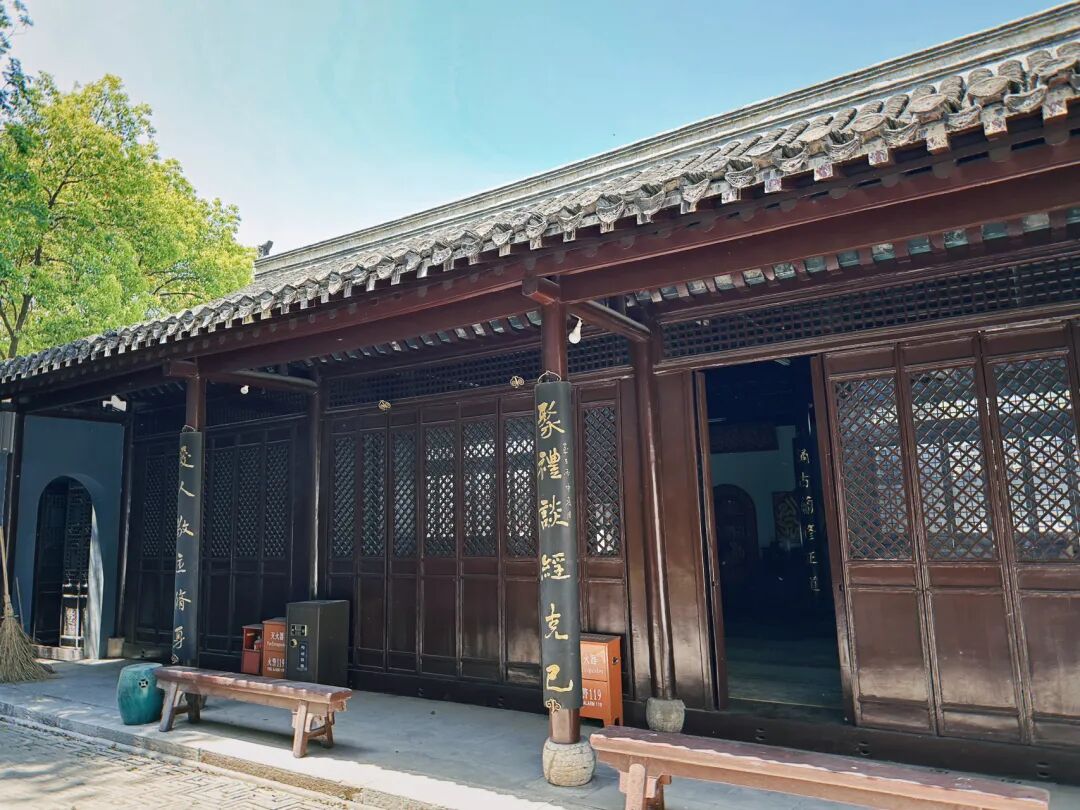
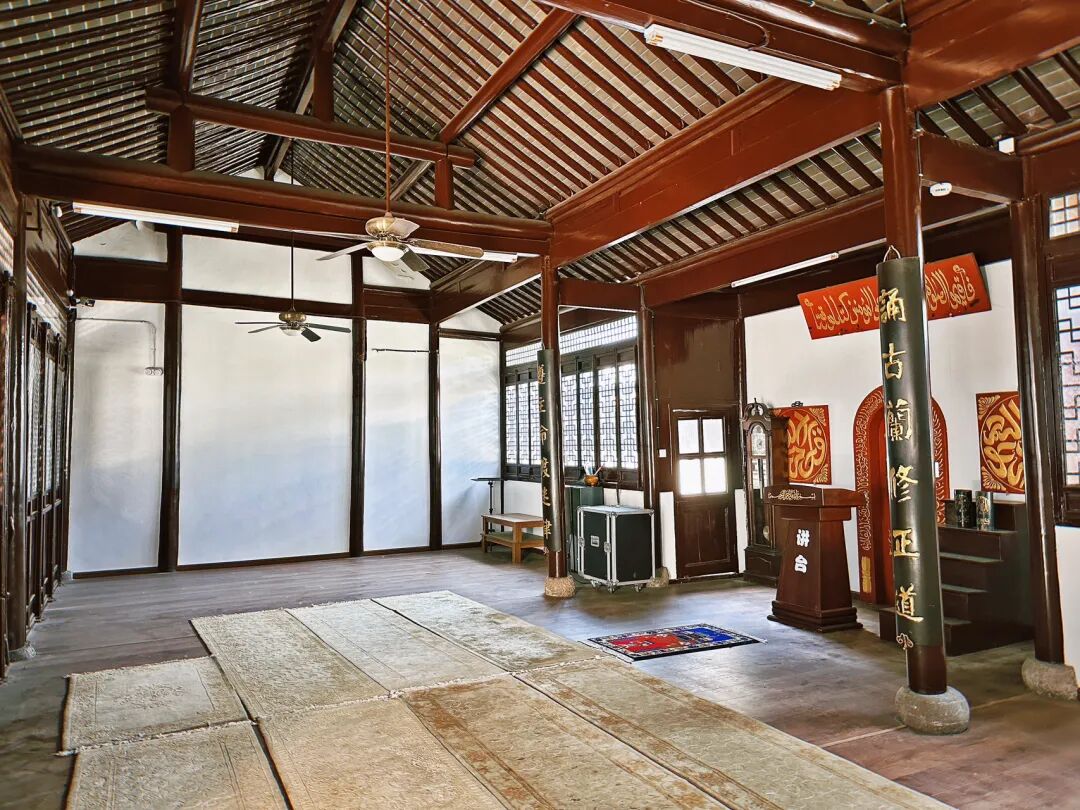
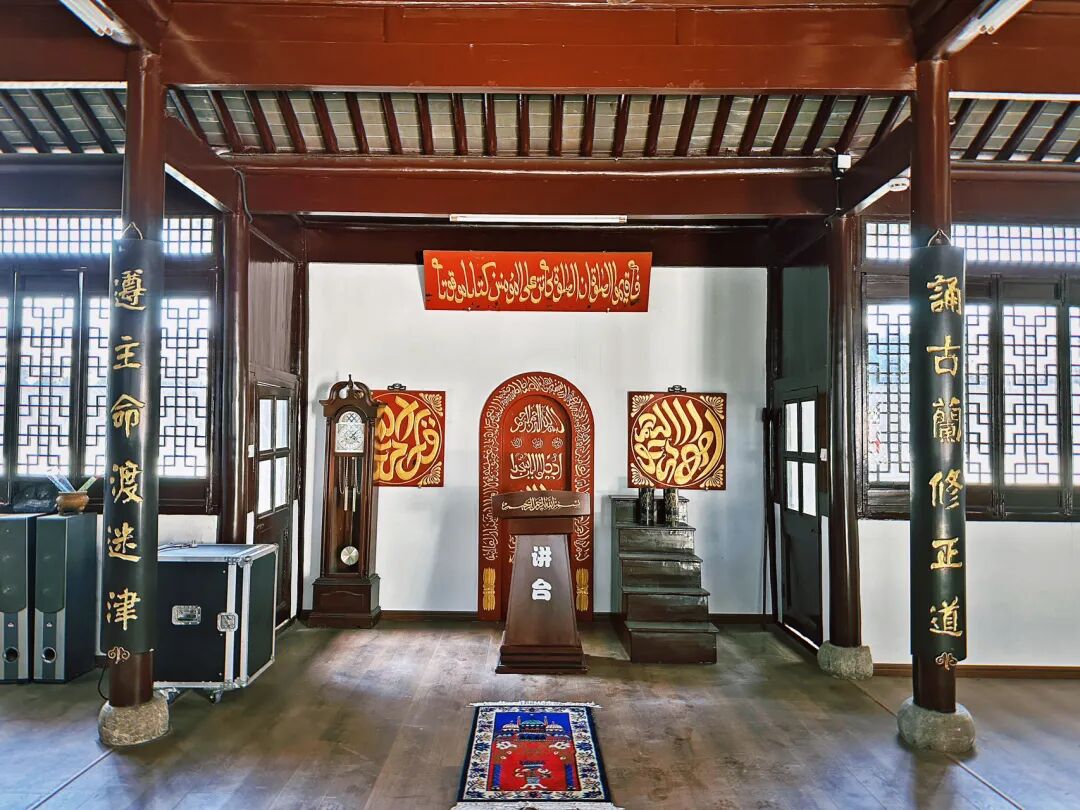
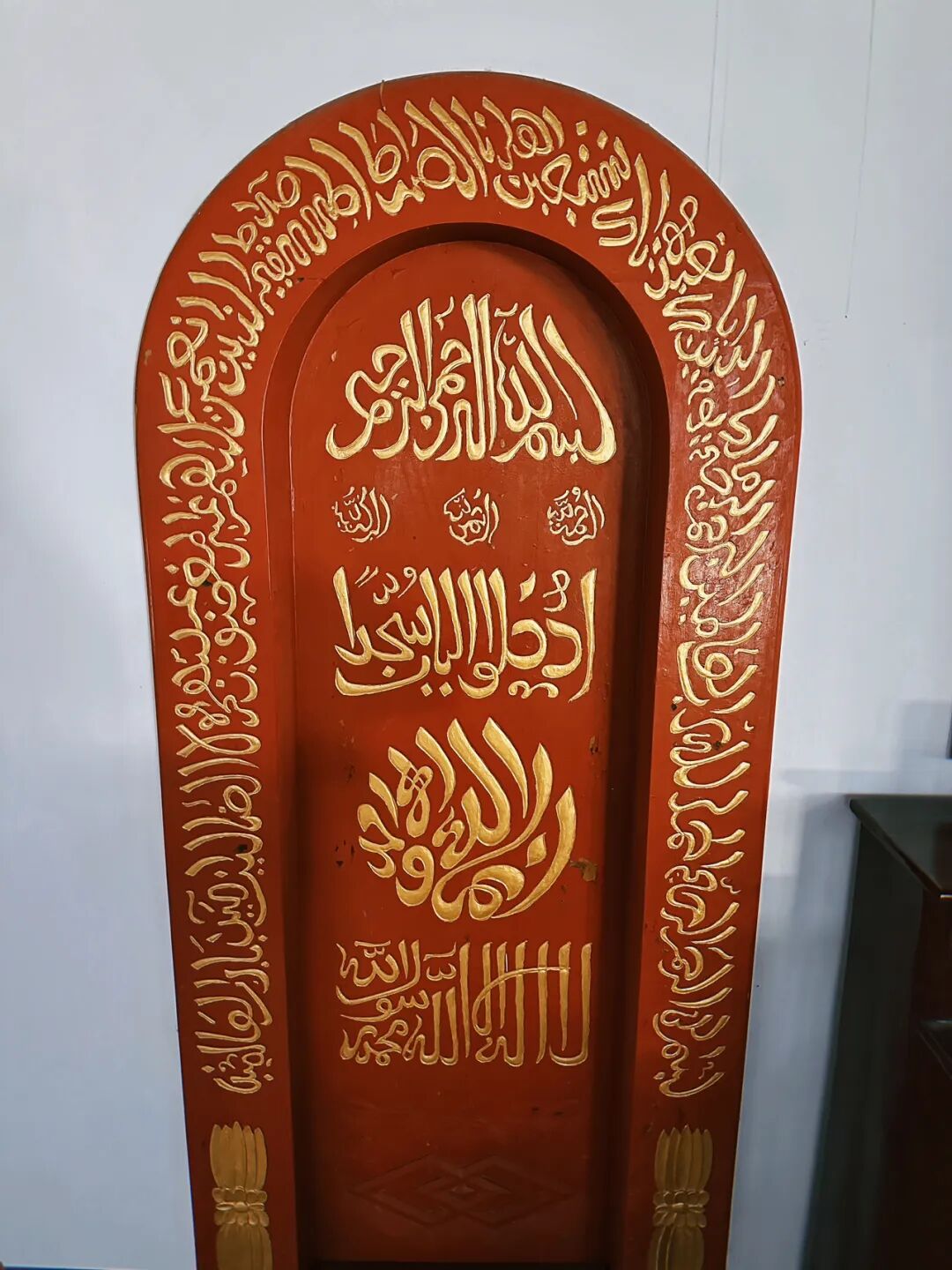
Shaobo Mosque
Traveling north from Yangzhou city along the Beijing-Hangzhou Grand Canal, the first place you reach is the ancient town of Shaobo. Historically, Shaobo was a bustling canal trading port and a key route connecting Yangzhou and Gaoyou. The ancient town still keeps a three-mile-long stone-paved road and over 20 ancient houses from the Ming and Qing dynasties.
Shaobo Mosque is said to have been built by Hui Muslims from Shandong during the Xianfeng era. Its gate and main hall still stand, and it is a protected cultural site in Jiangdu District, Yangzhou. The mosque was once used as a private residence and is now abandoned.
The gate still has its original lintel and drum-shaped stone bases. The main hall is a hard-gable style building with grey bricks and dark tiles, showing typical Jianghuai architectural style.
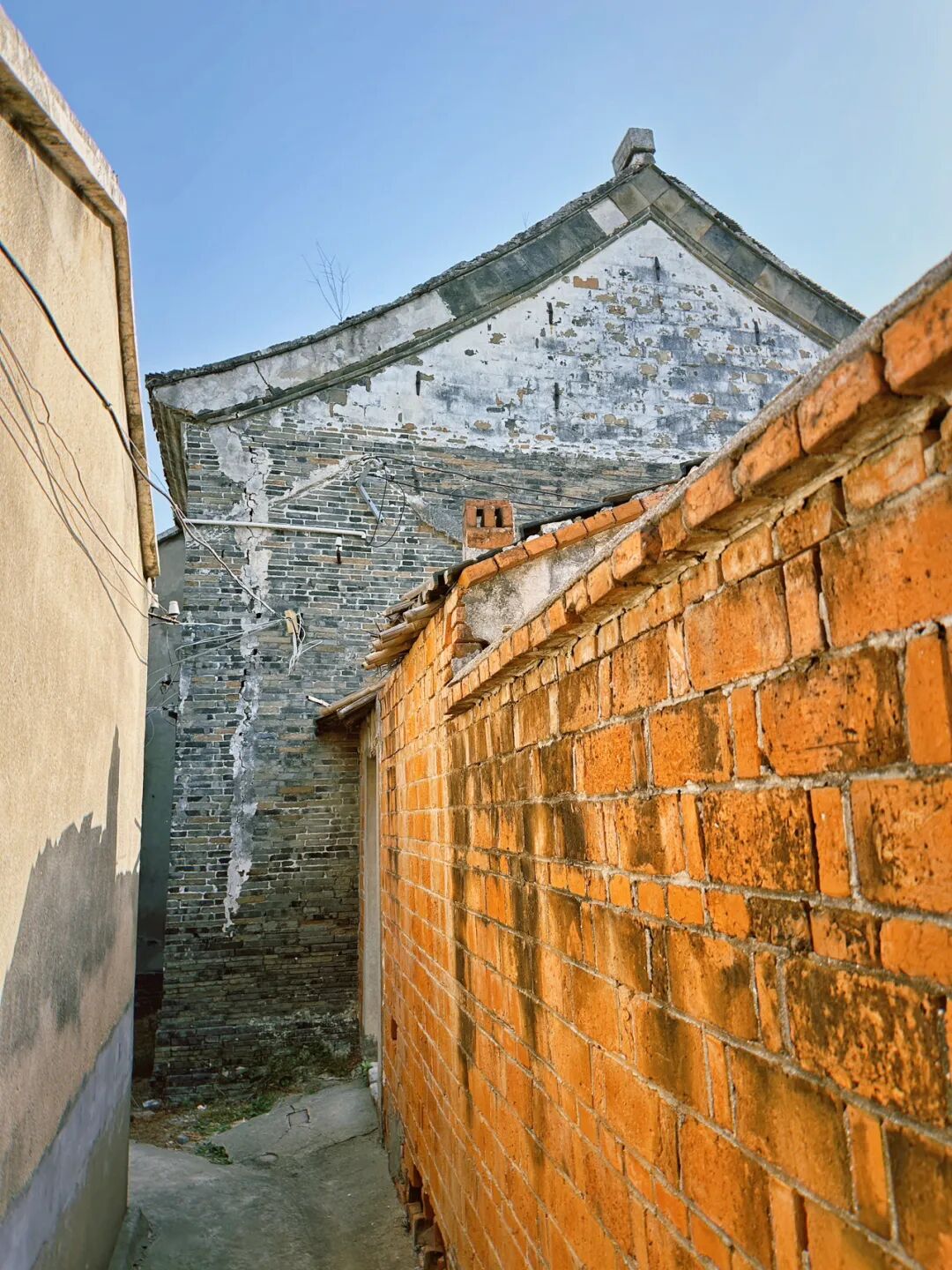
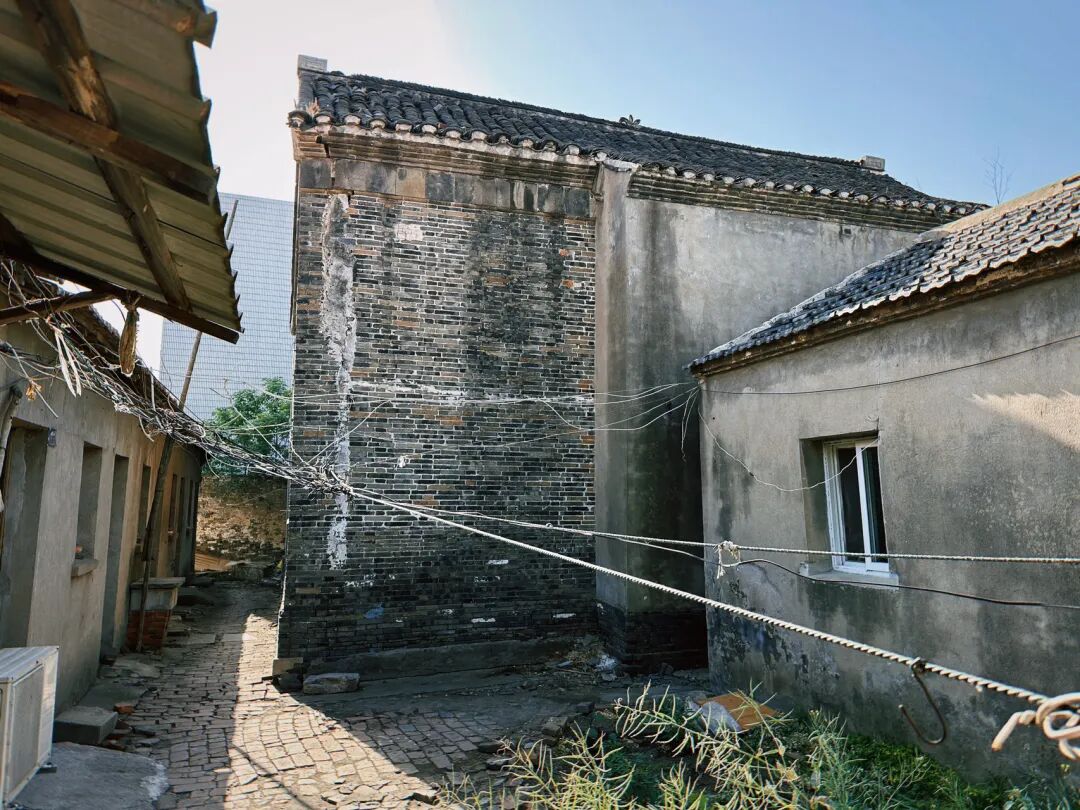
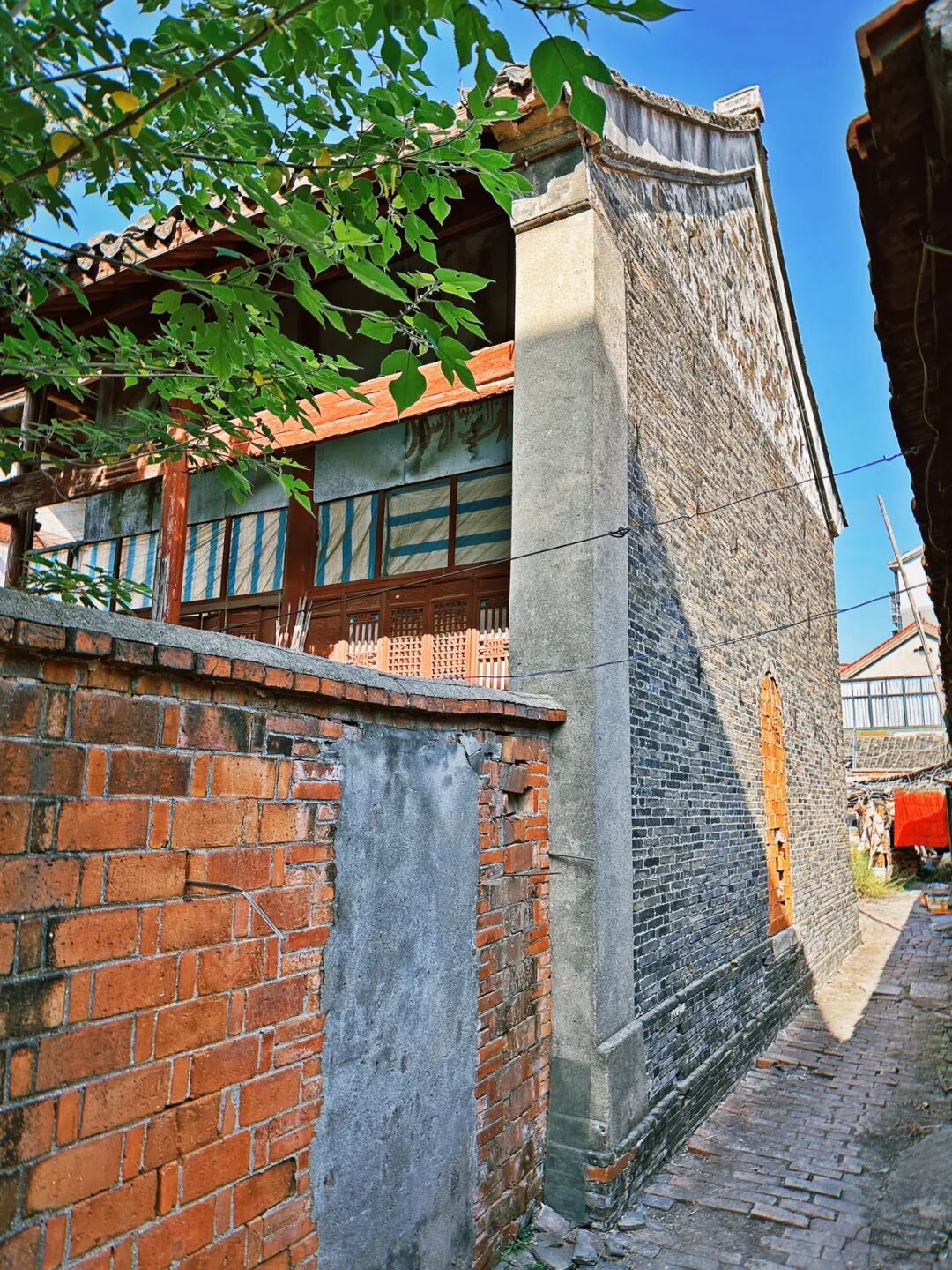
Shaobo Mosque is three bays wide and seven purlins deep. The gable walls have brick wind boards, the ridge purlin is supported by a dou-gong bracket set, and the columns rest on ancient mirror-style bases carved with patterns. Besides the main hall, Shaobo Mosque once had other buildings, but now only stone remains like column bases are left.
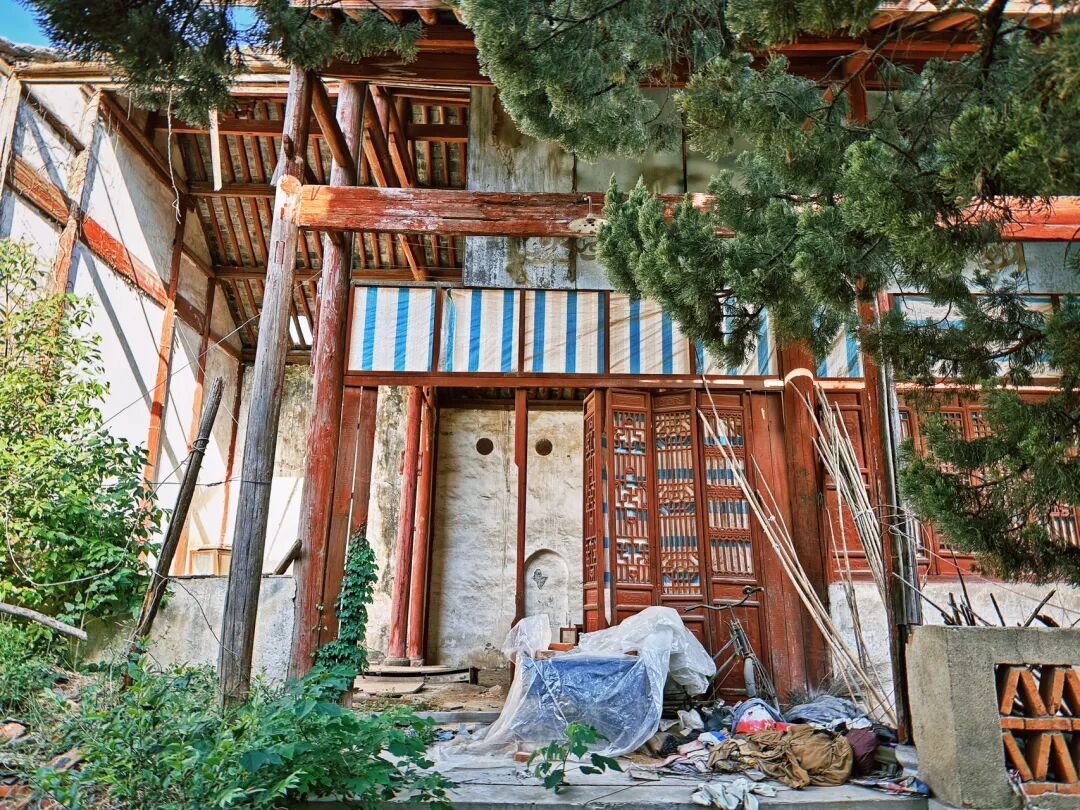
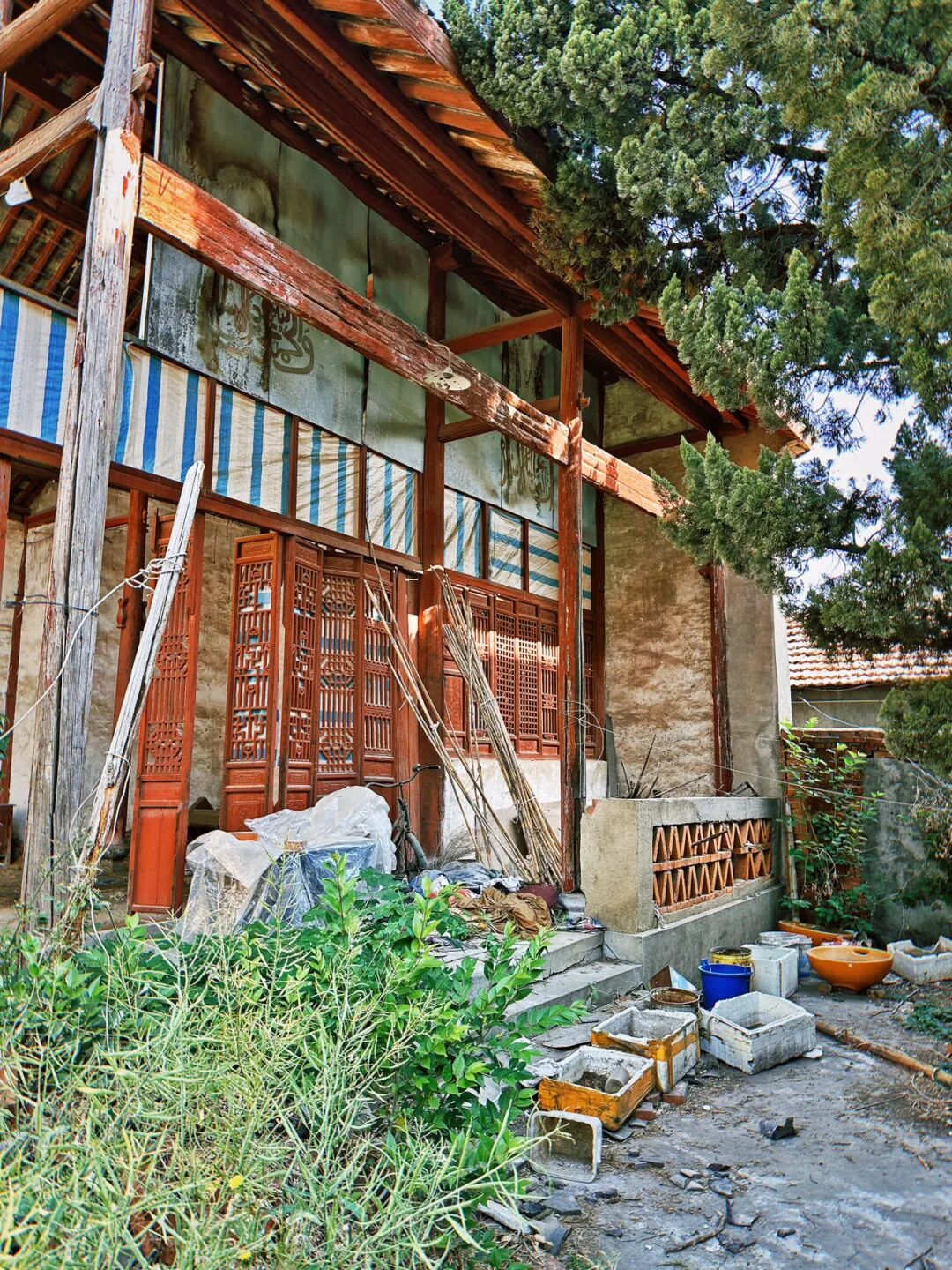
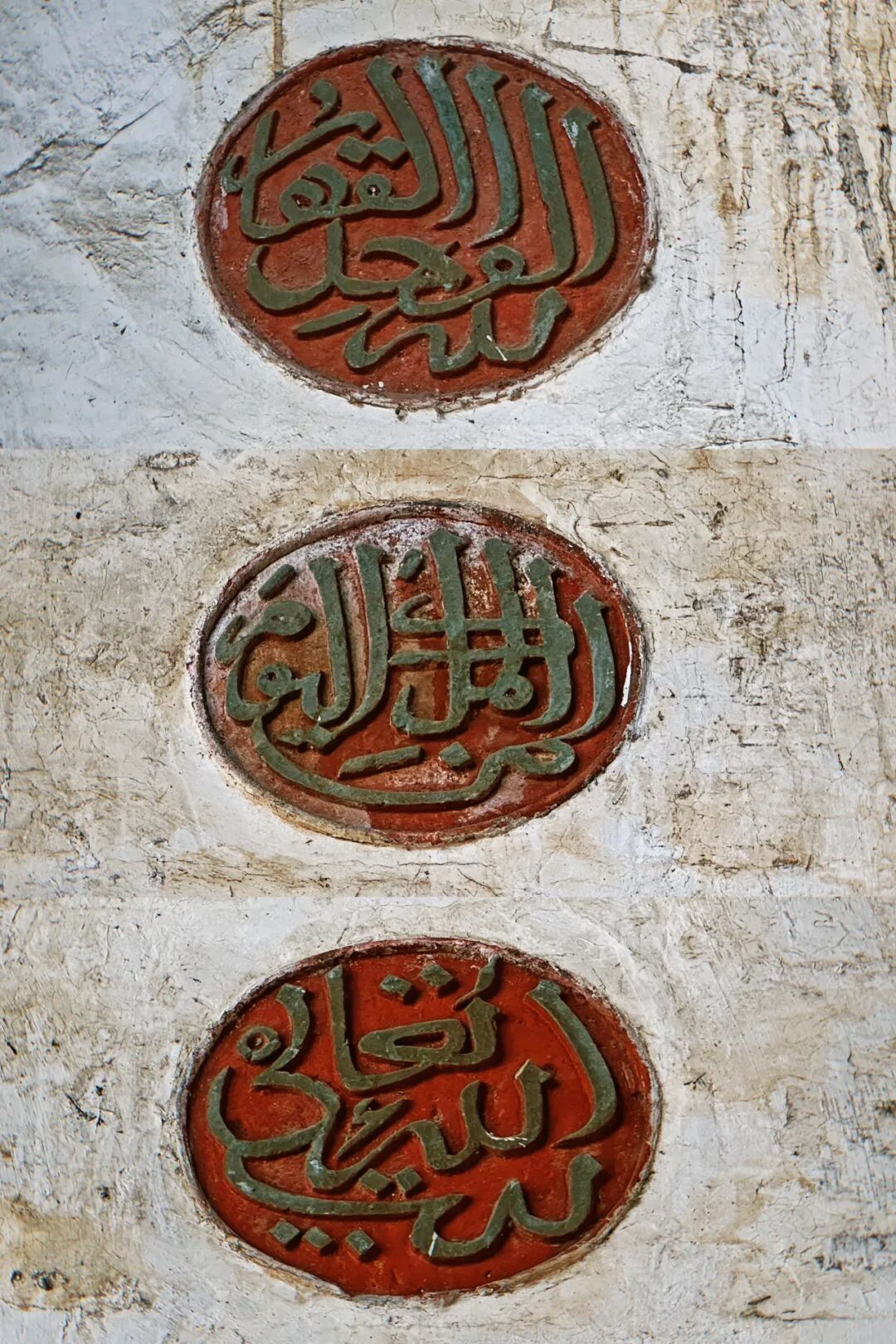
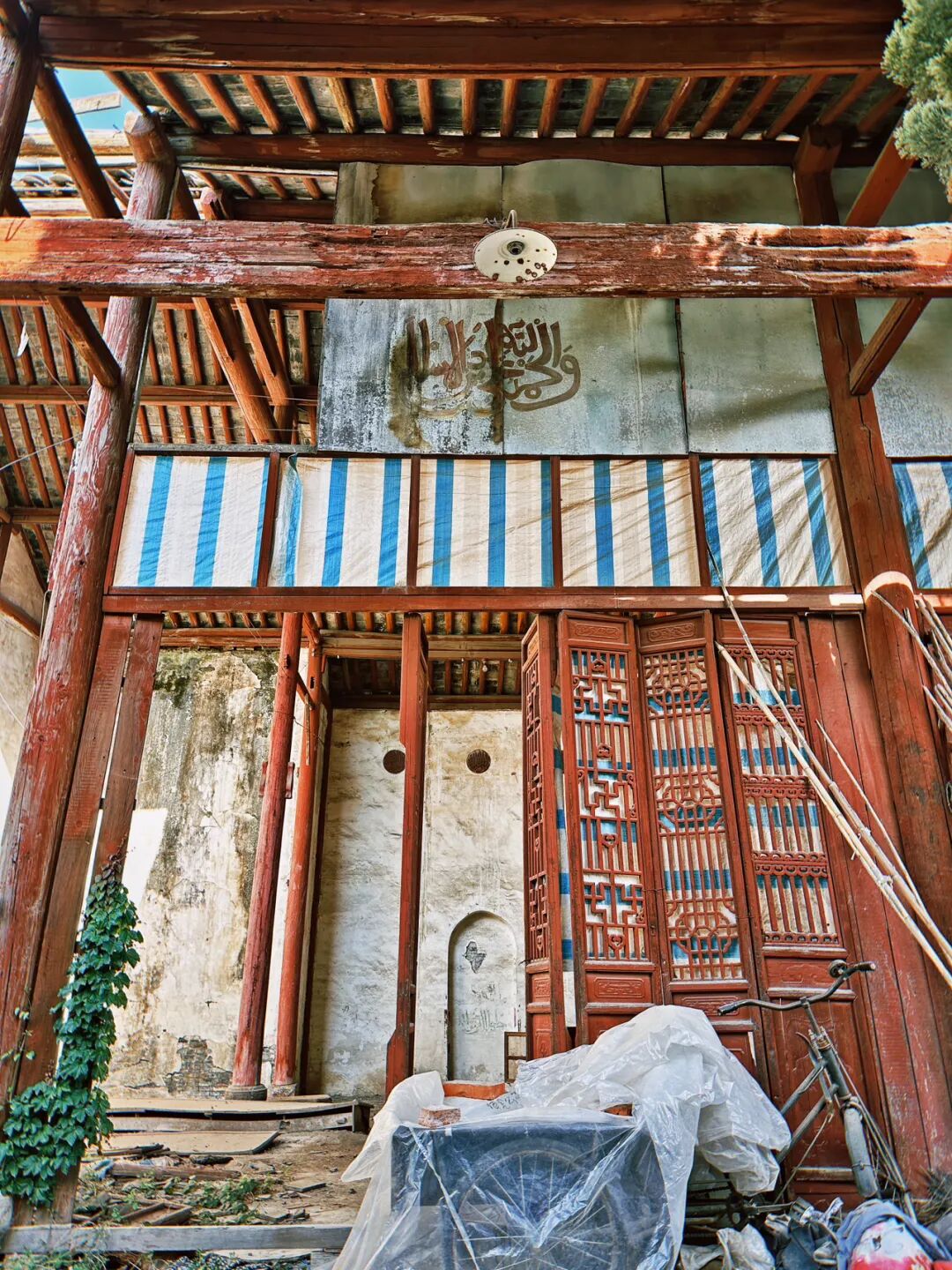
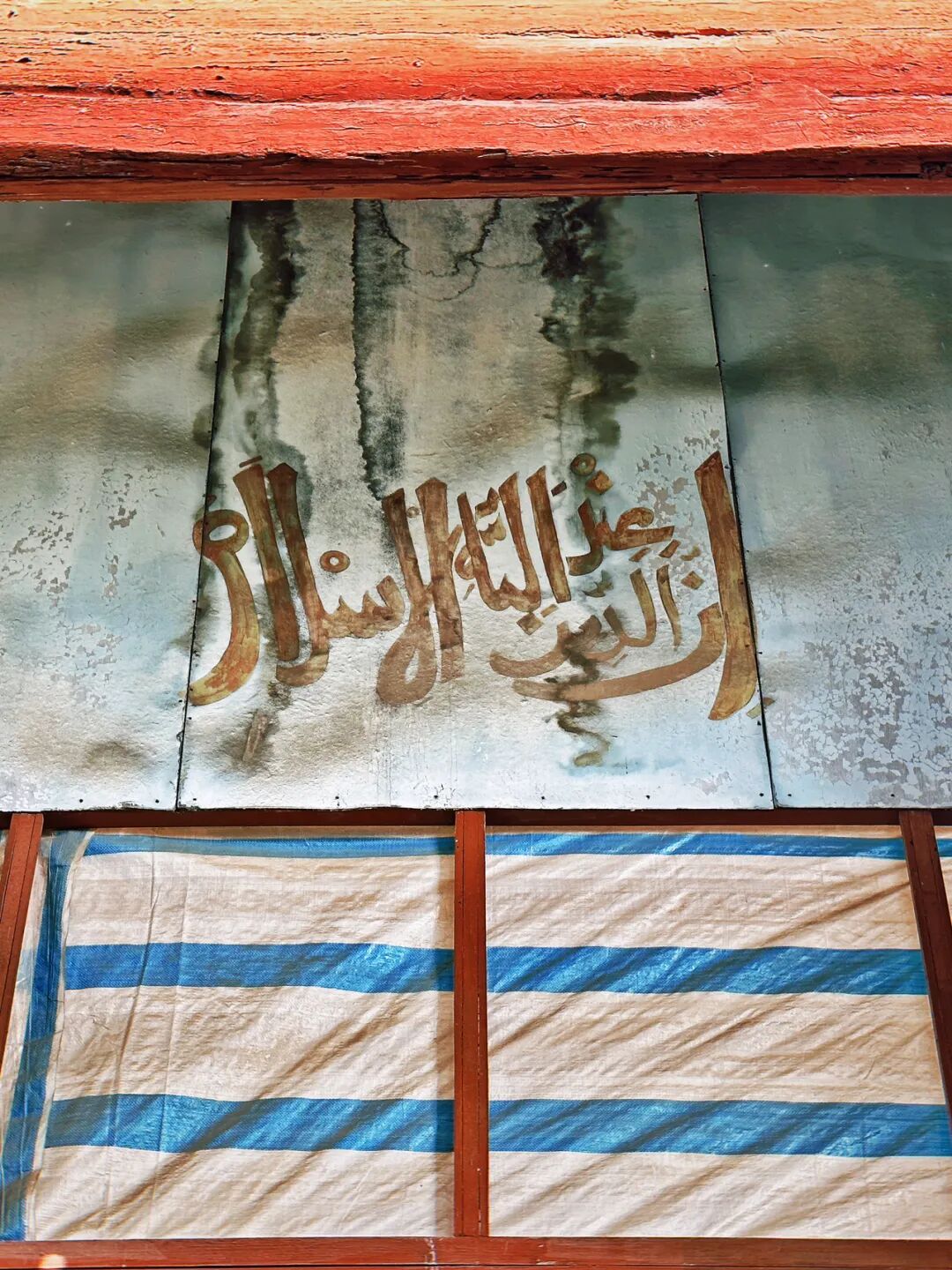
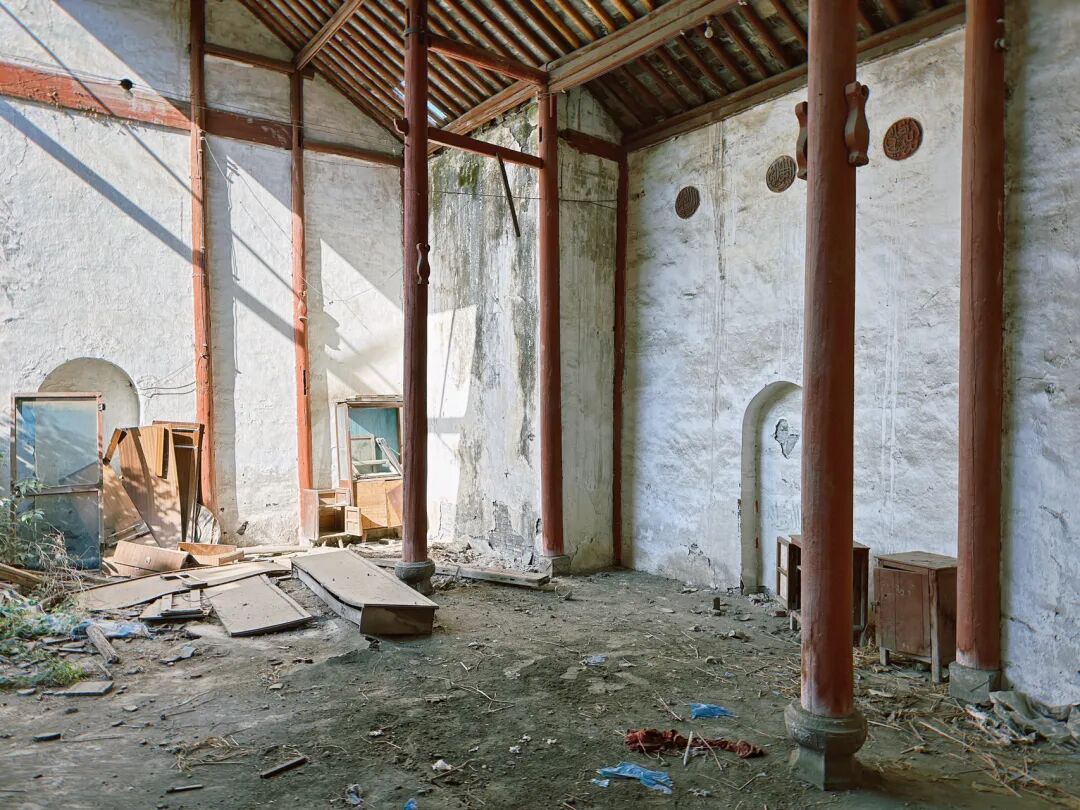
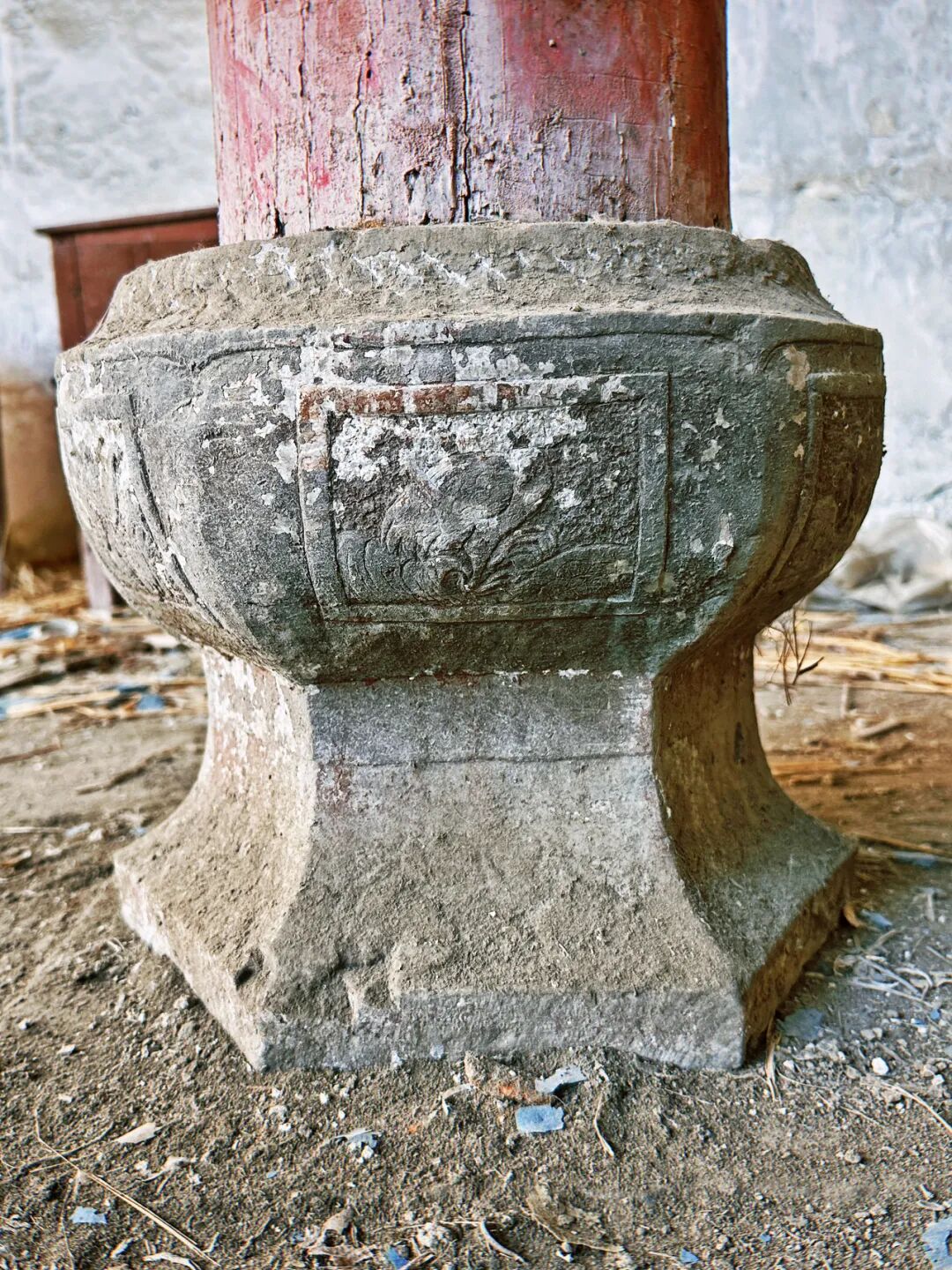
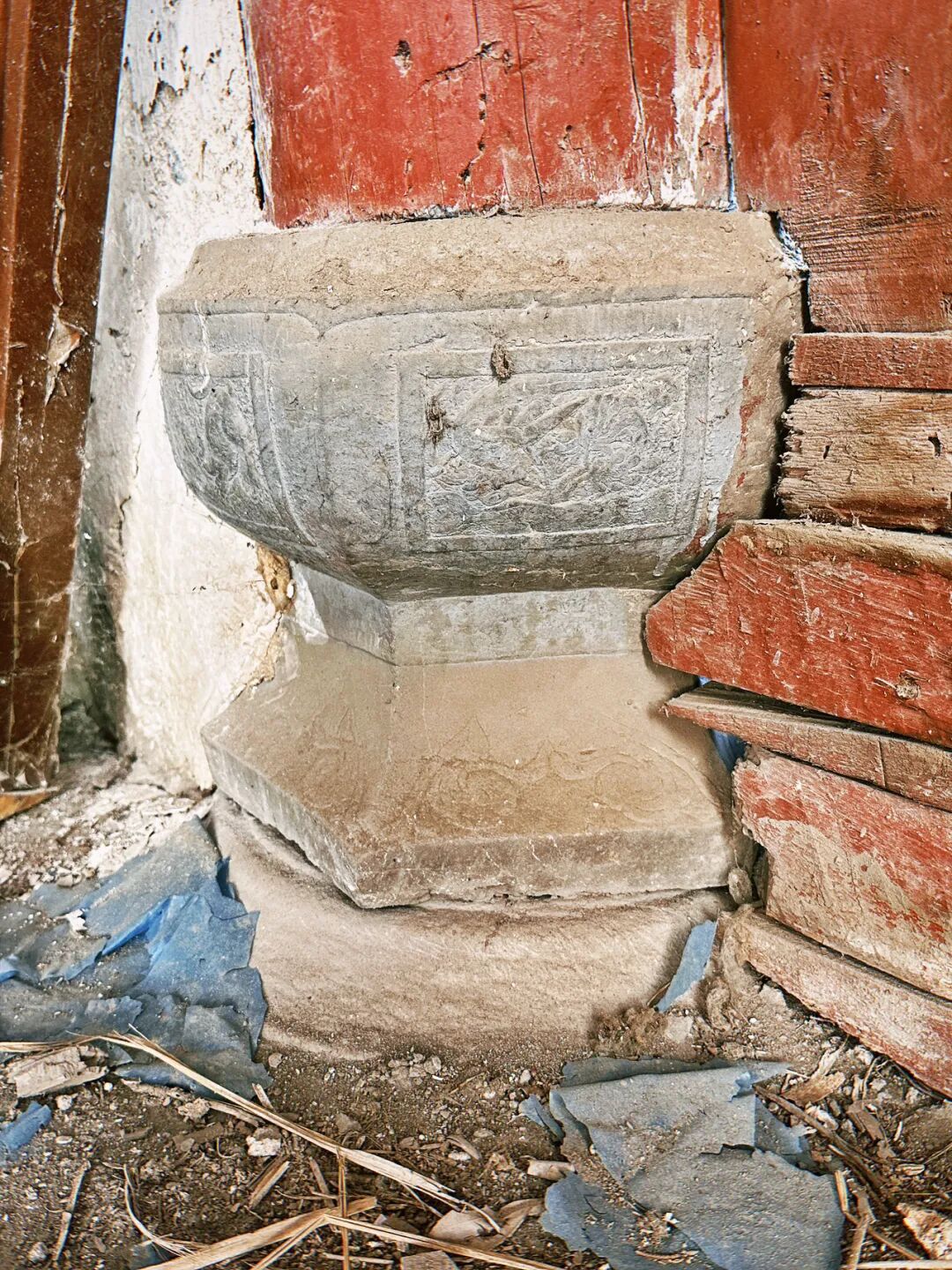
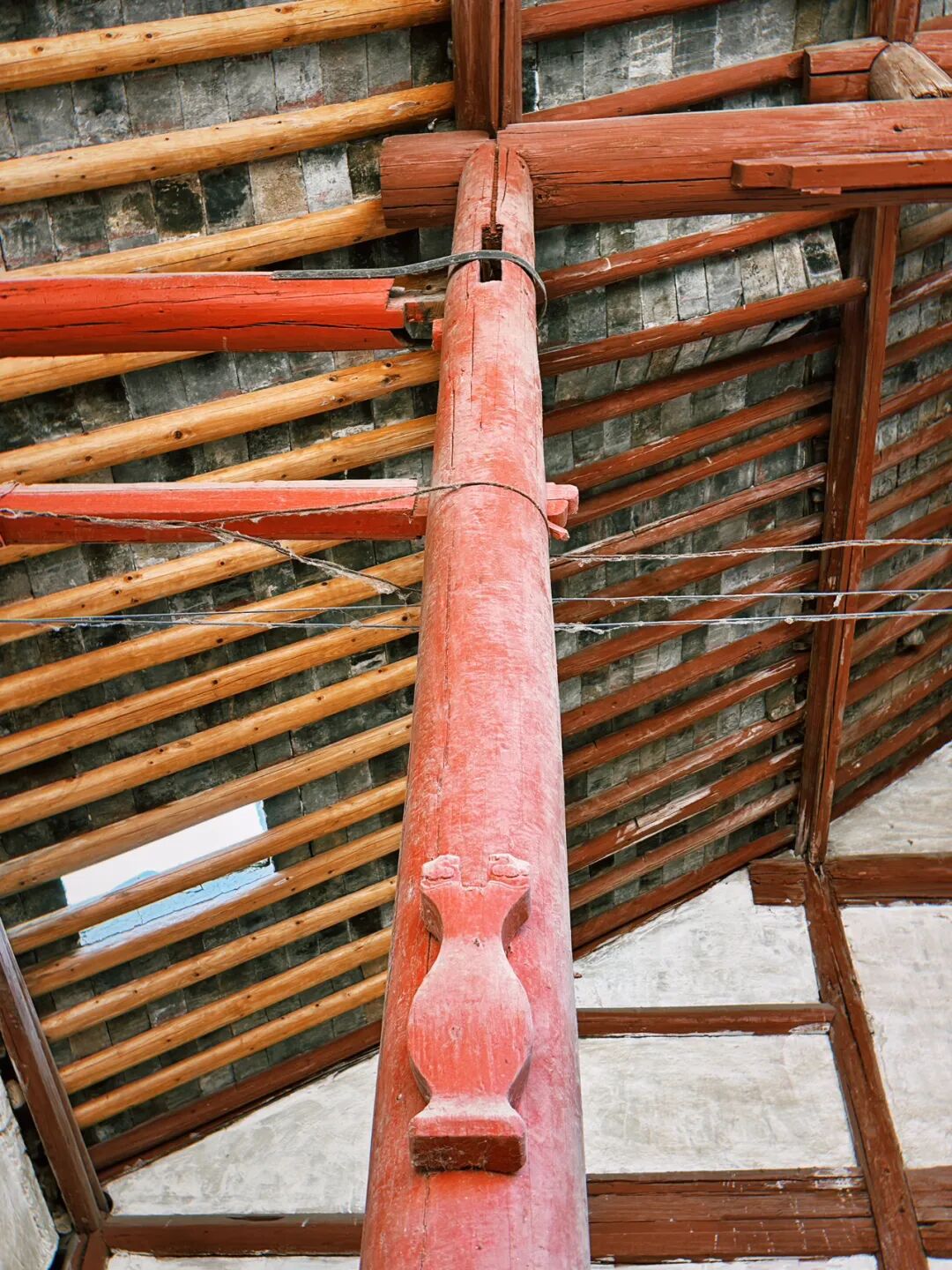
Gaoyou Mosque
Travel north from the ancient town of Shaobo along the Beijing-Hangzhou Grand Canal to reach the ancient city of Gaoyou. I visited Gaoyou Mosque in 2021 but learned it only opens for Jumuah. This time, I came specifically for Jumuah and finally got inside.
Gaoyou Mosque was first built in the Qing dynasty. According to the Gaoyou Prefecture Records (Qianlong era), local elders Ma Guixing, Liu Tianxing, and Ma Hongxing rebuilt it in 1864 (the third year of Tongzhi). The gate now has a stone lintel inscribed with 'Rebuilt in the middle of winter, the second year of Tongzhi' and a title from the local prefecture office.
Gaoyou Mosque consists of a gate and a main hall, forming an elegant and beautiful traditional Jianghuai courtyard. Inside, there is a 175-year-old boxwood tree, a 225-year-old Chinese juniper, and an ancient Qing dynasty well.
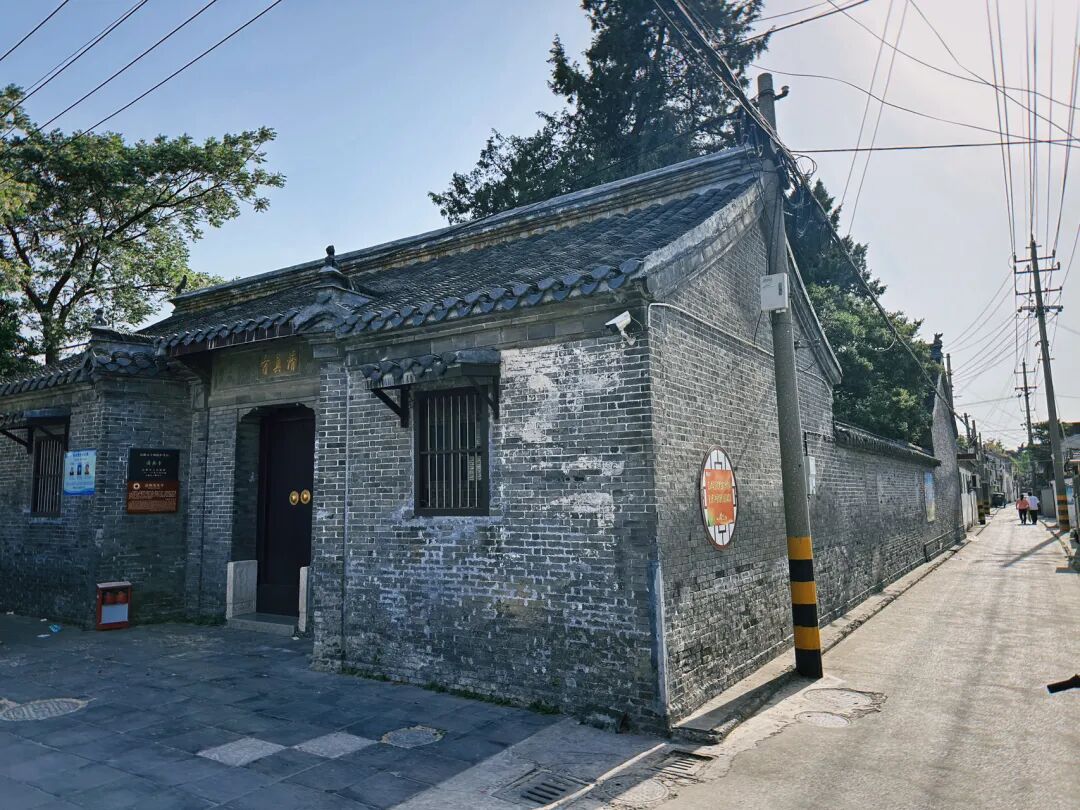
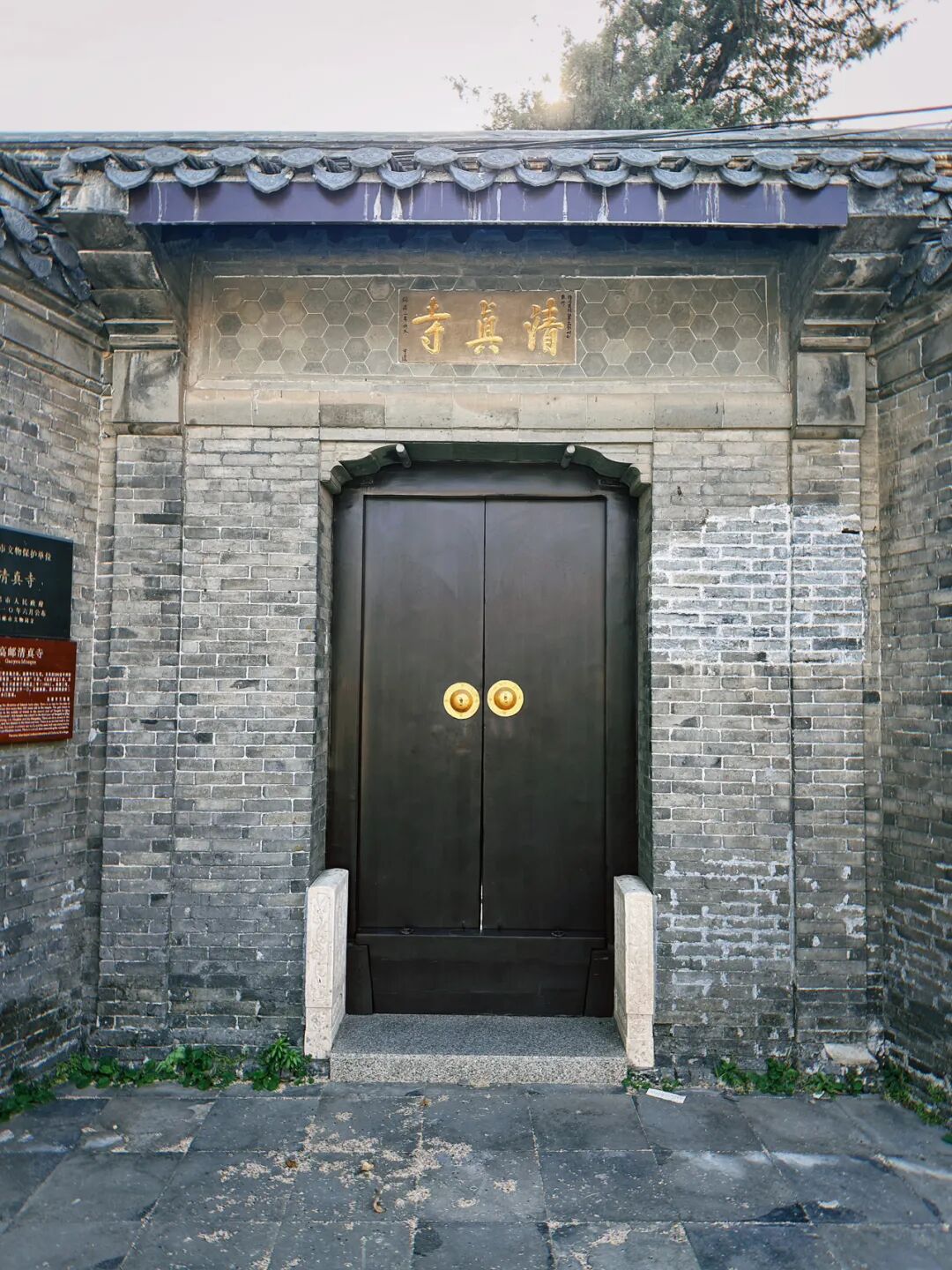
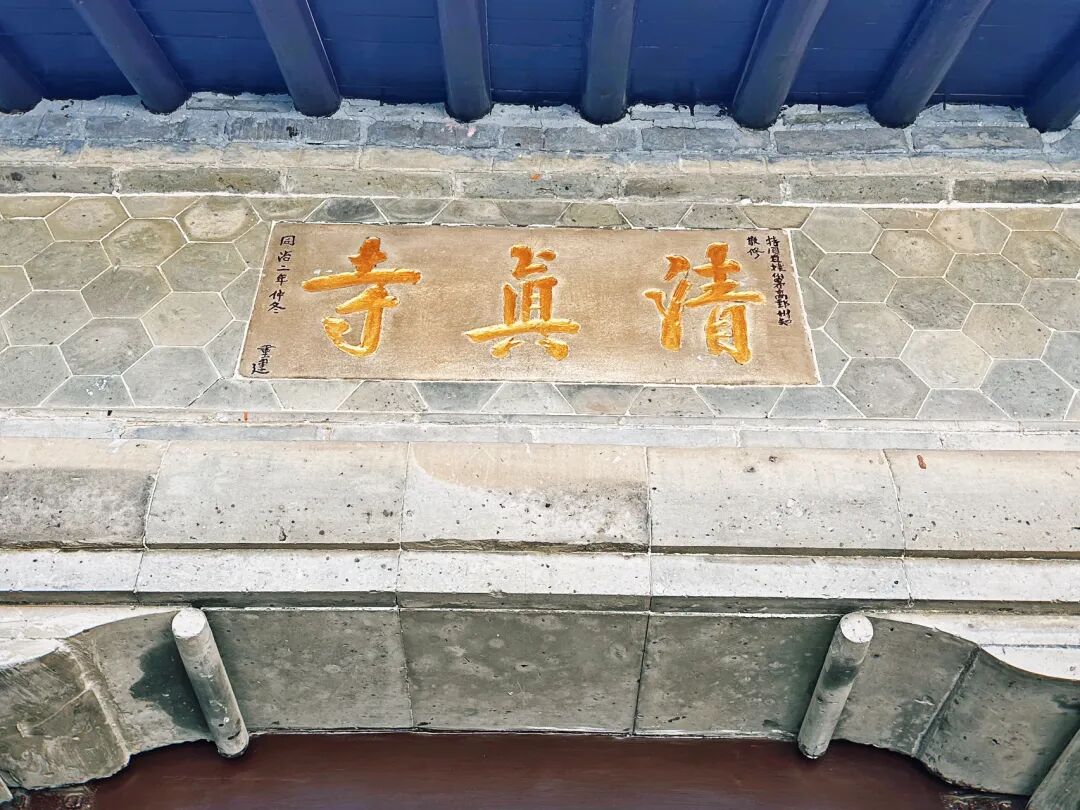
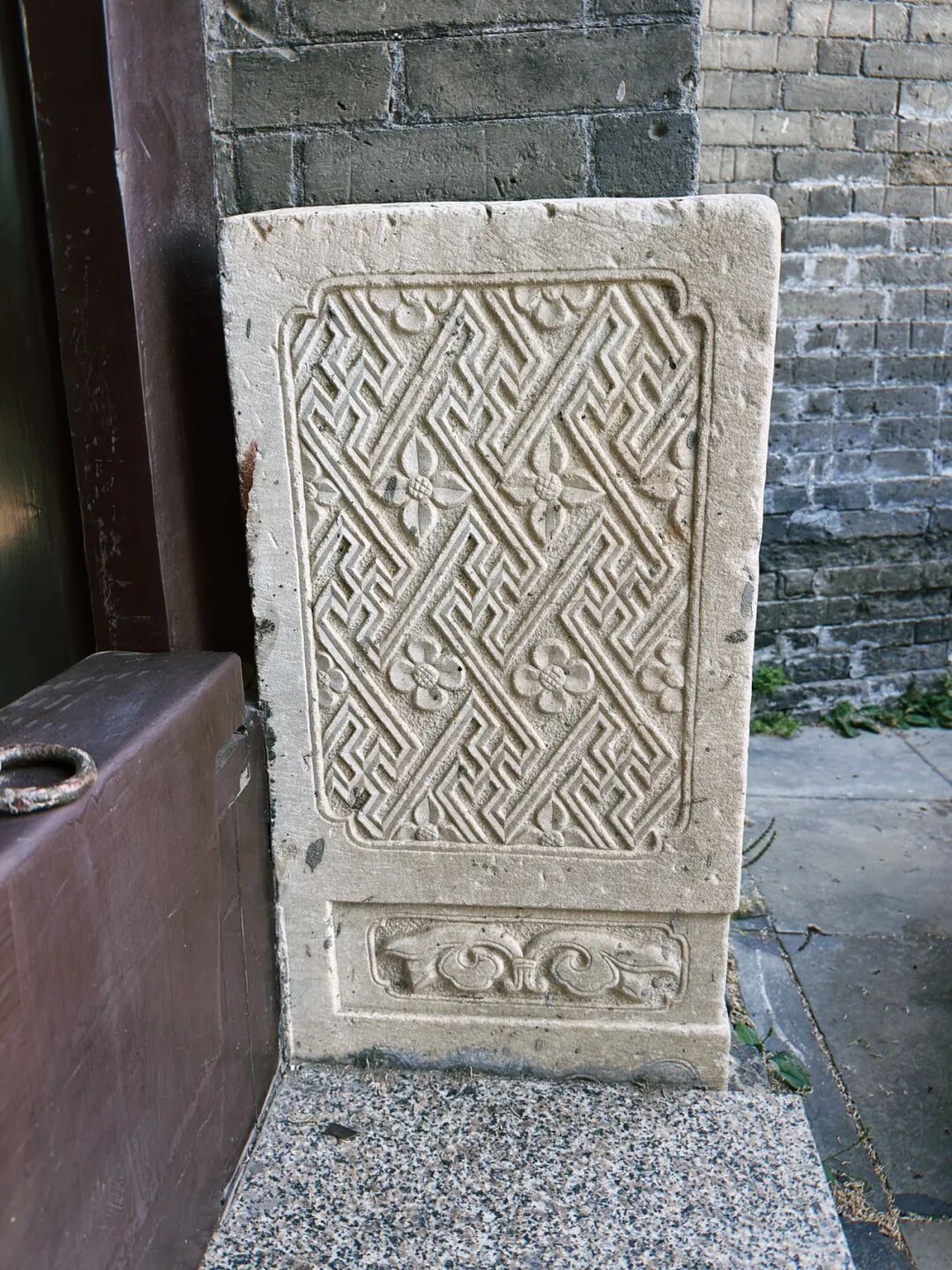
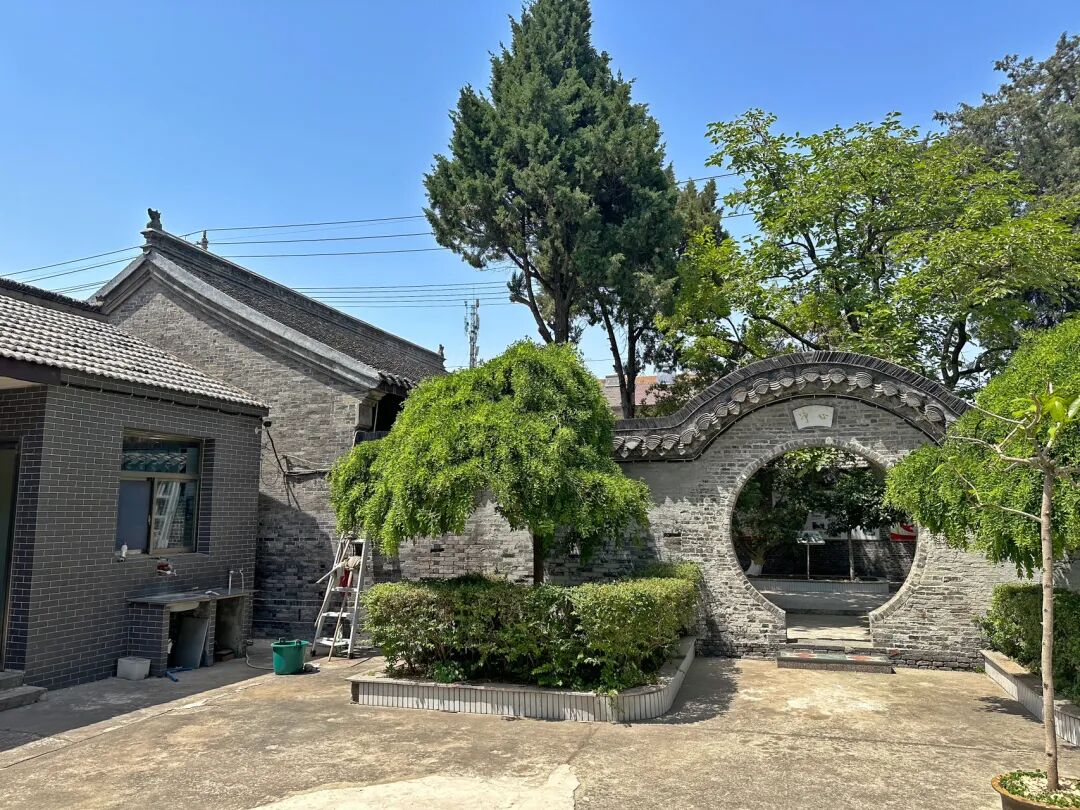
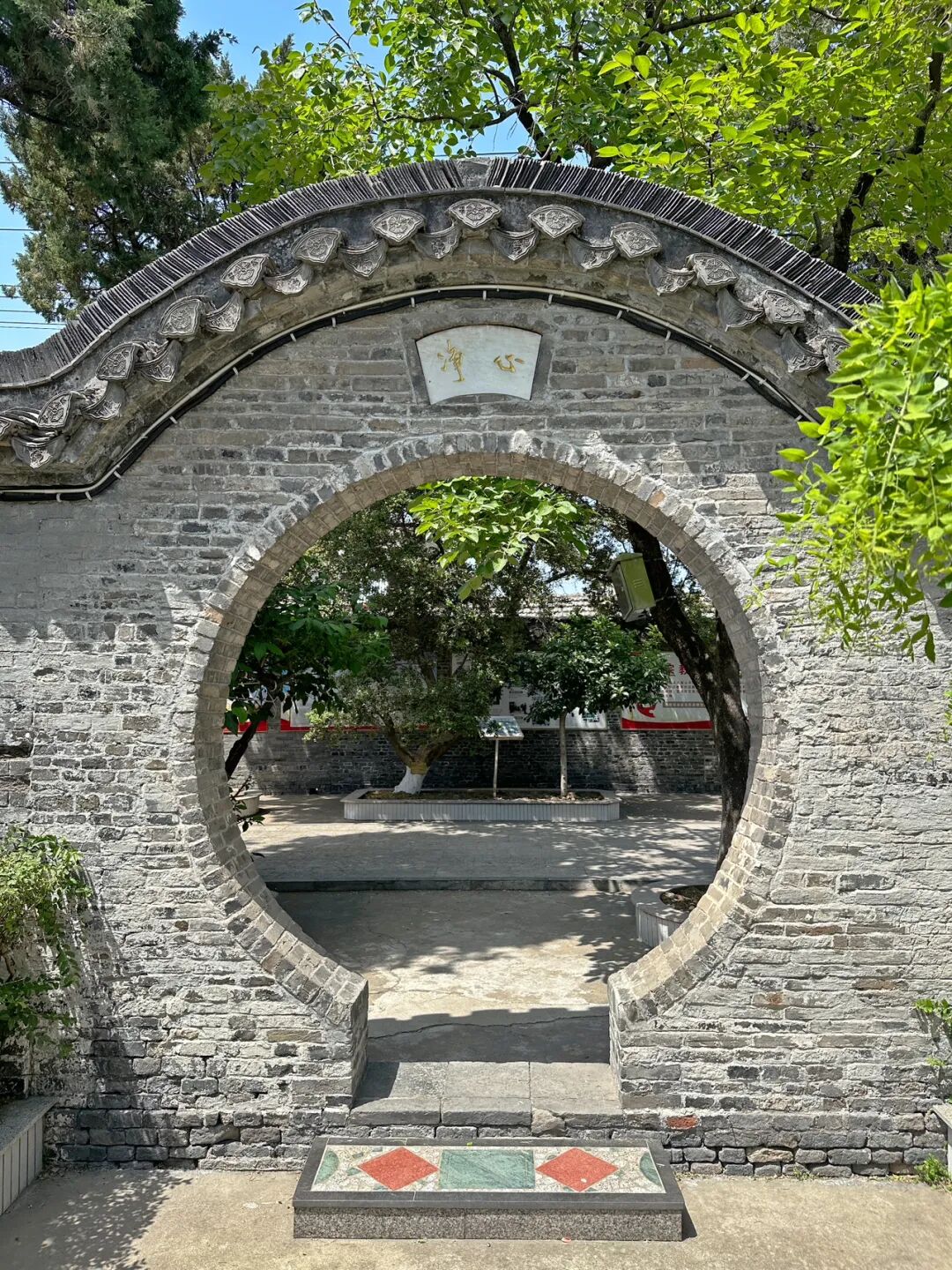
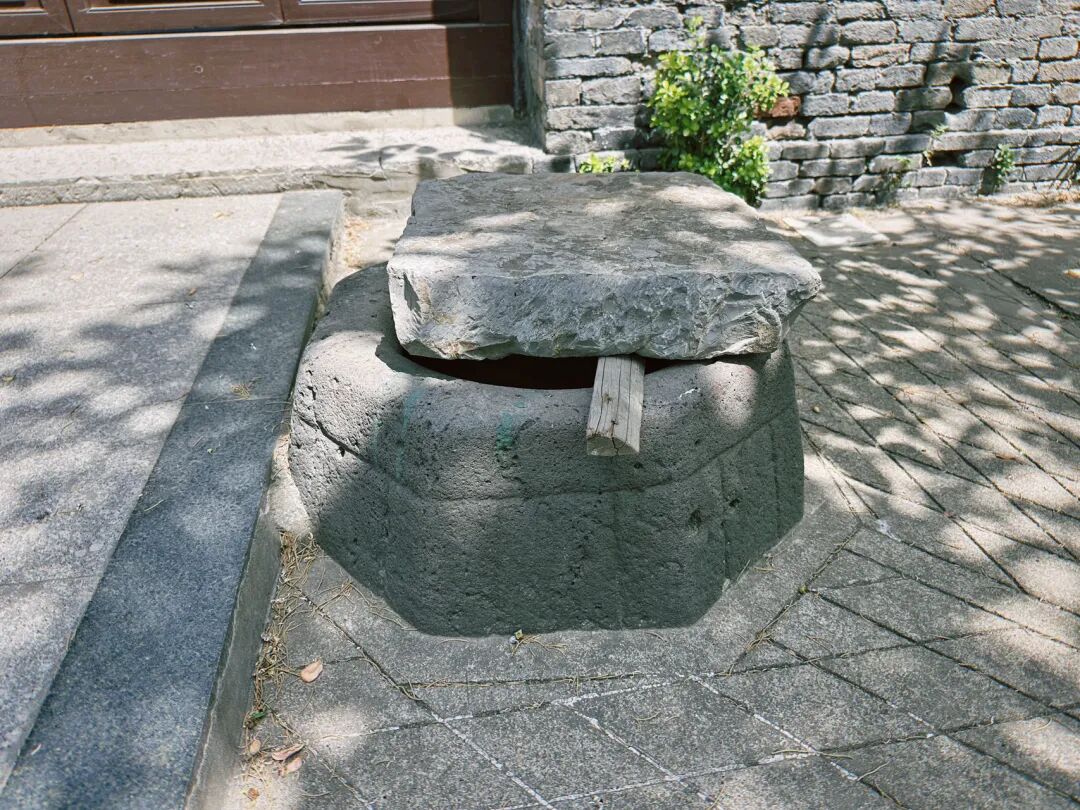
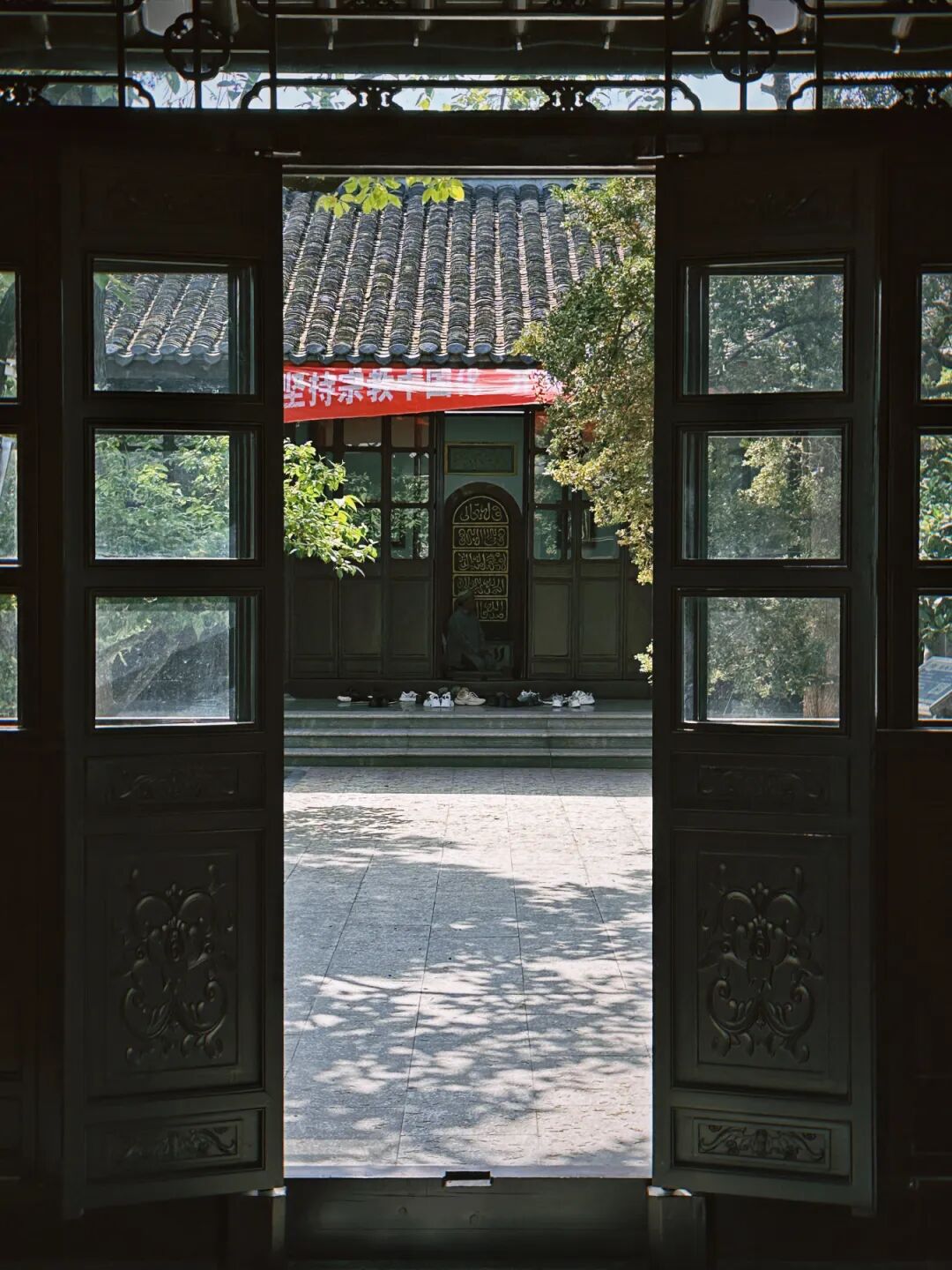
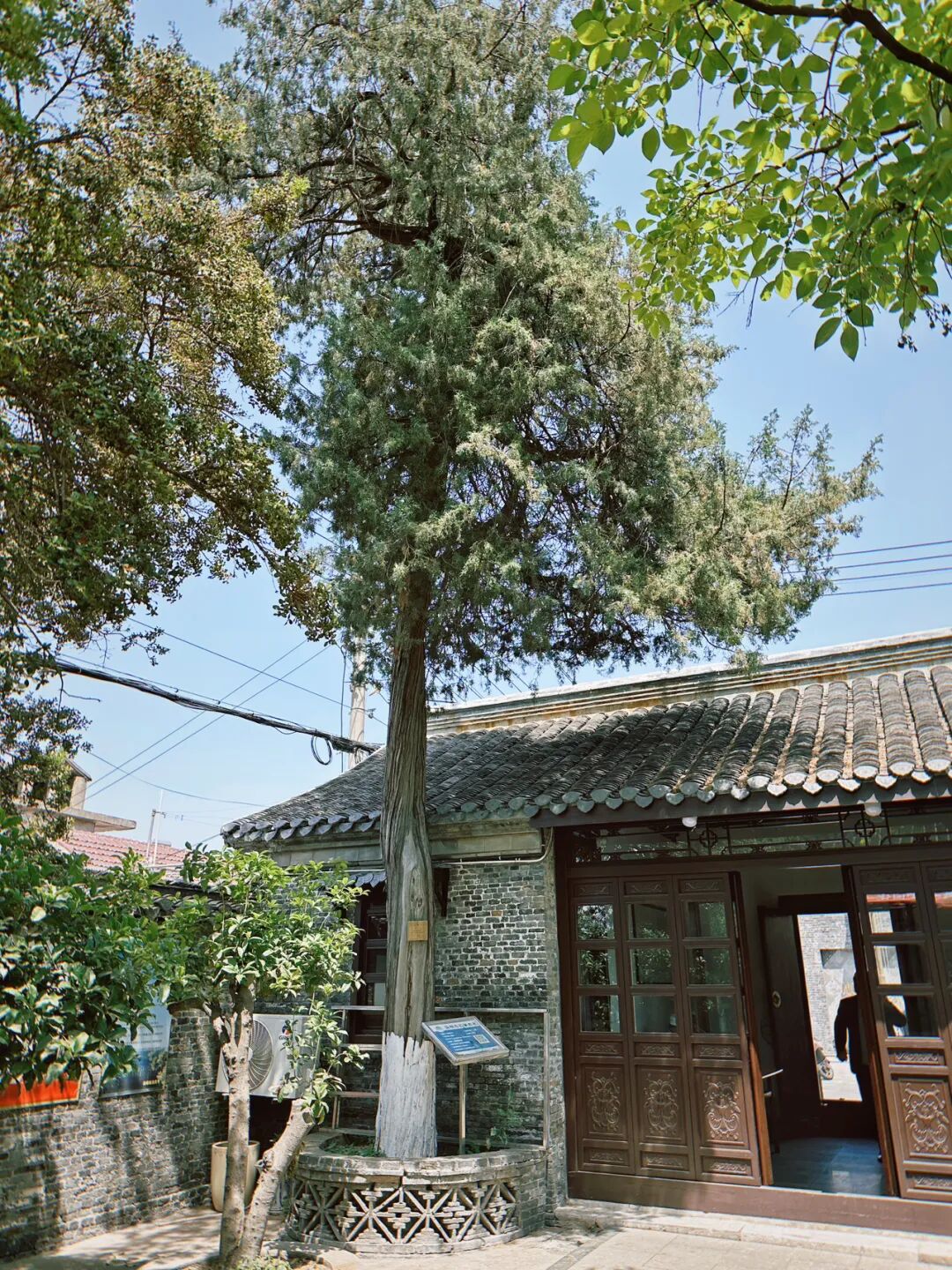
The main hall of Gaoyou Mosque is quite small, and its mihrab is in the traditional Jiangsu style. The people attending Jumuah are mostly friends (dost) from Northwest China who run hand-pulled noodle (lamian) shops. This is the current situation for many mosques in the southeast region.
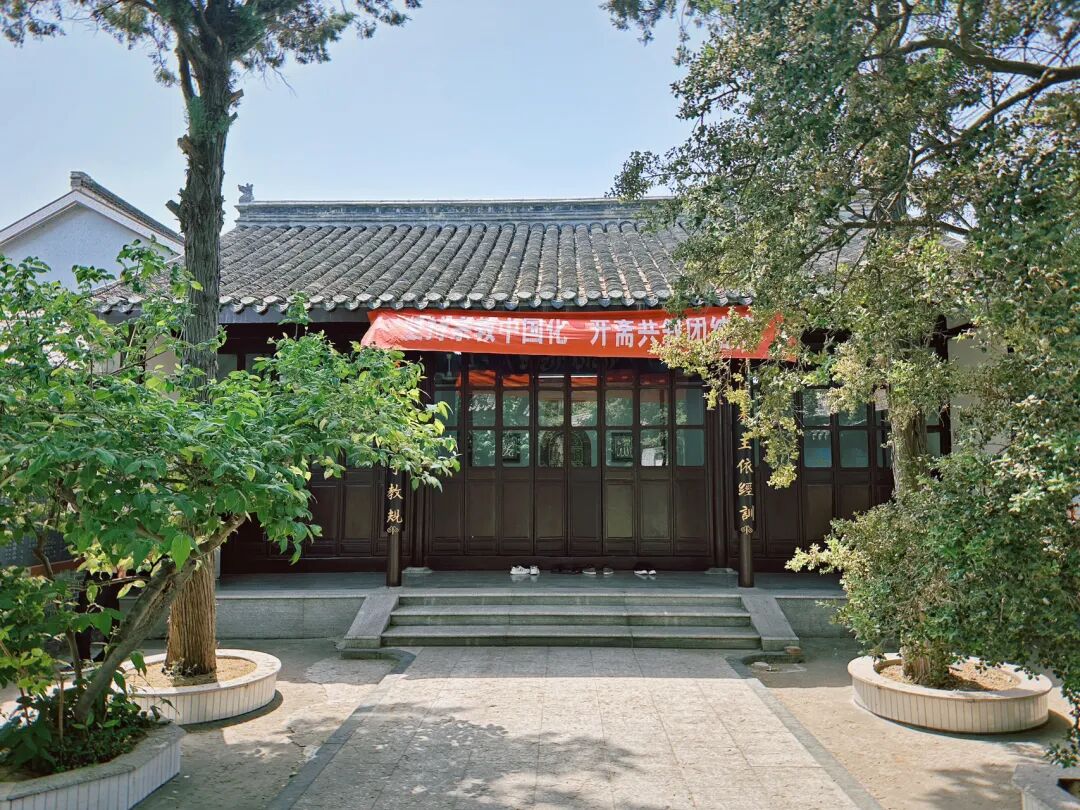
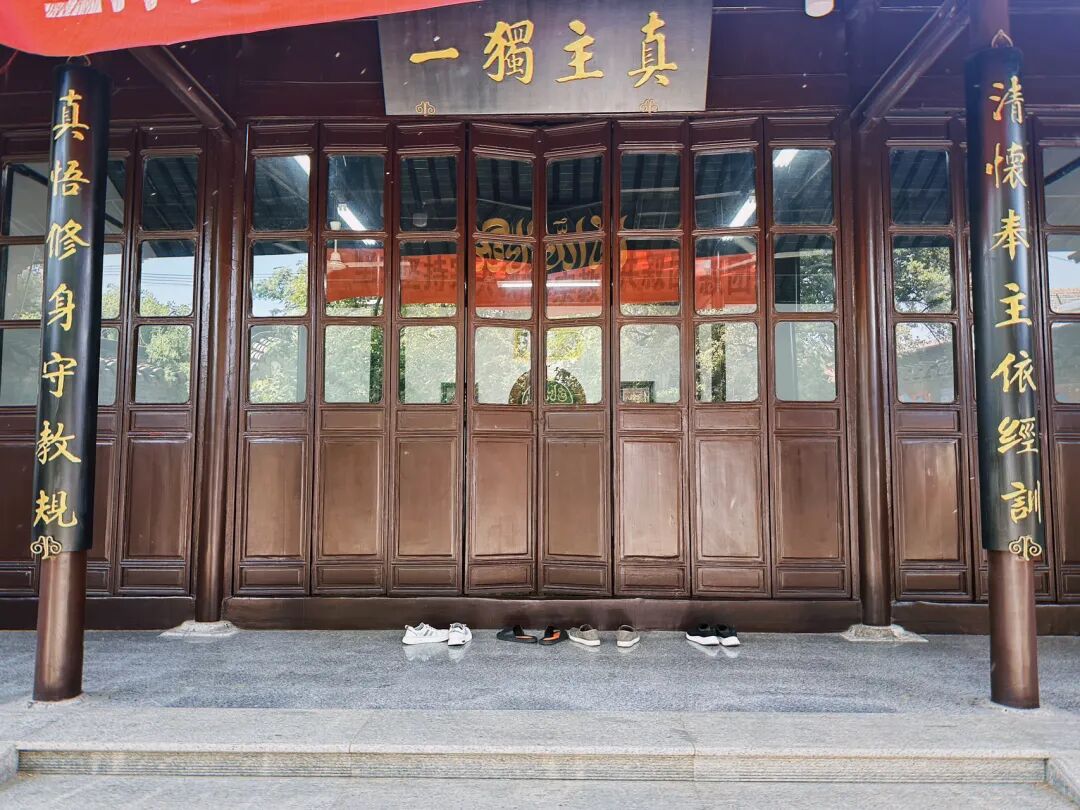
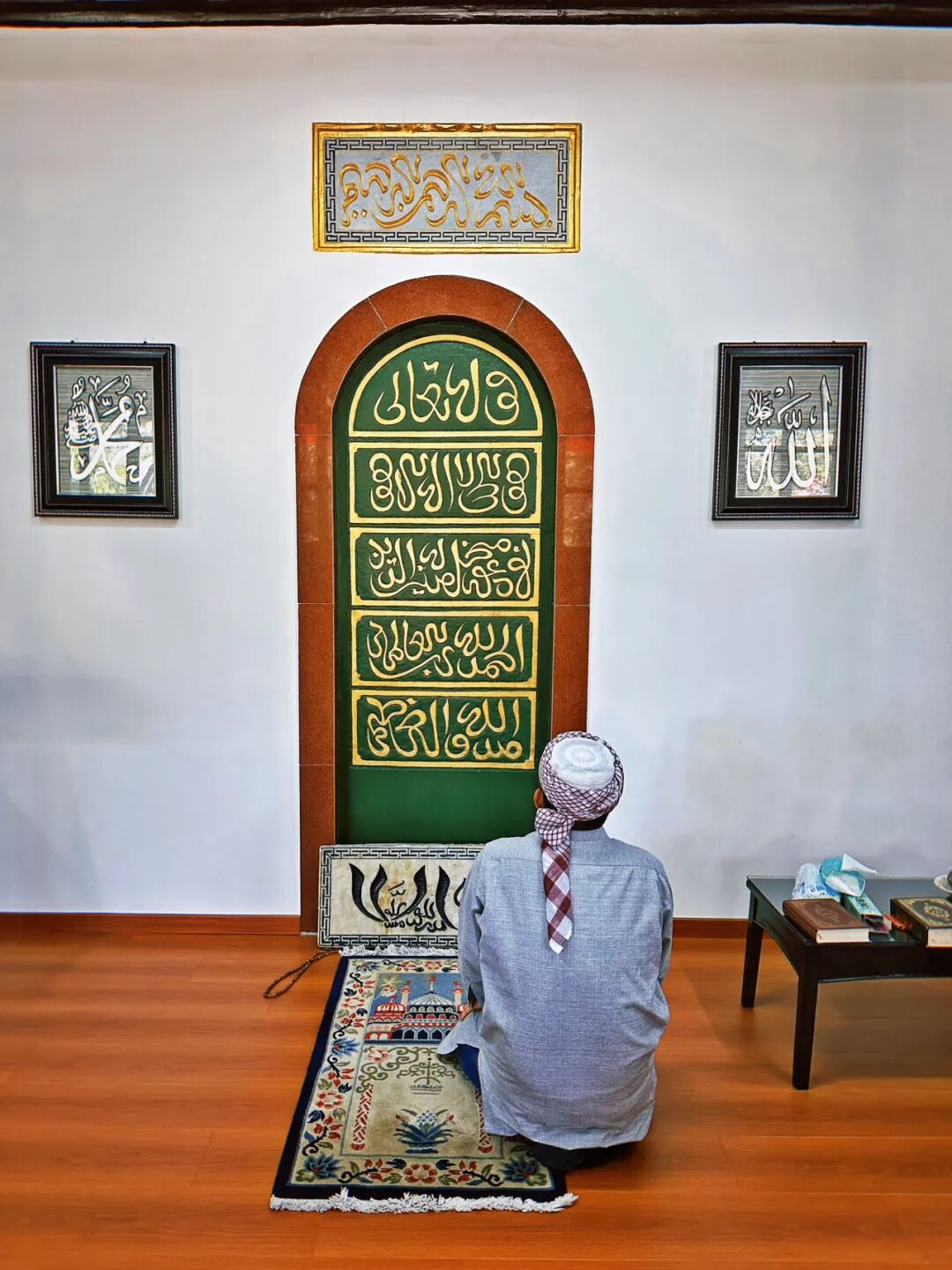
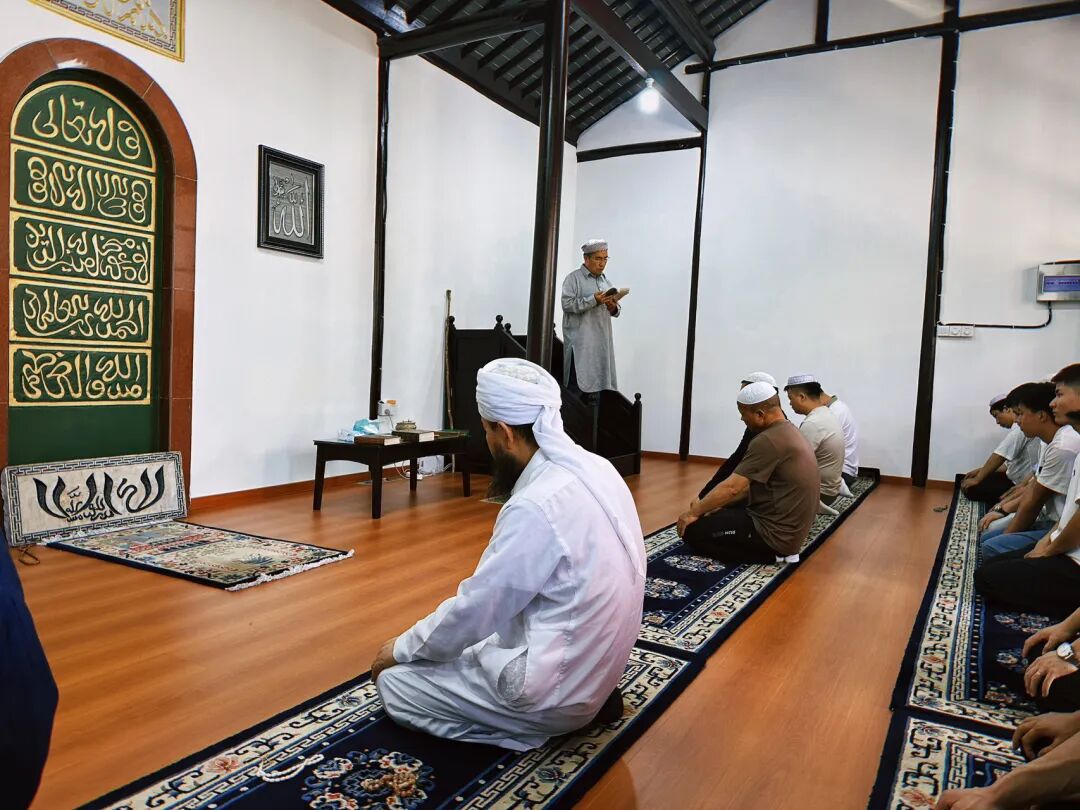
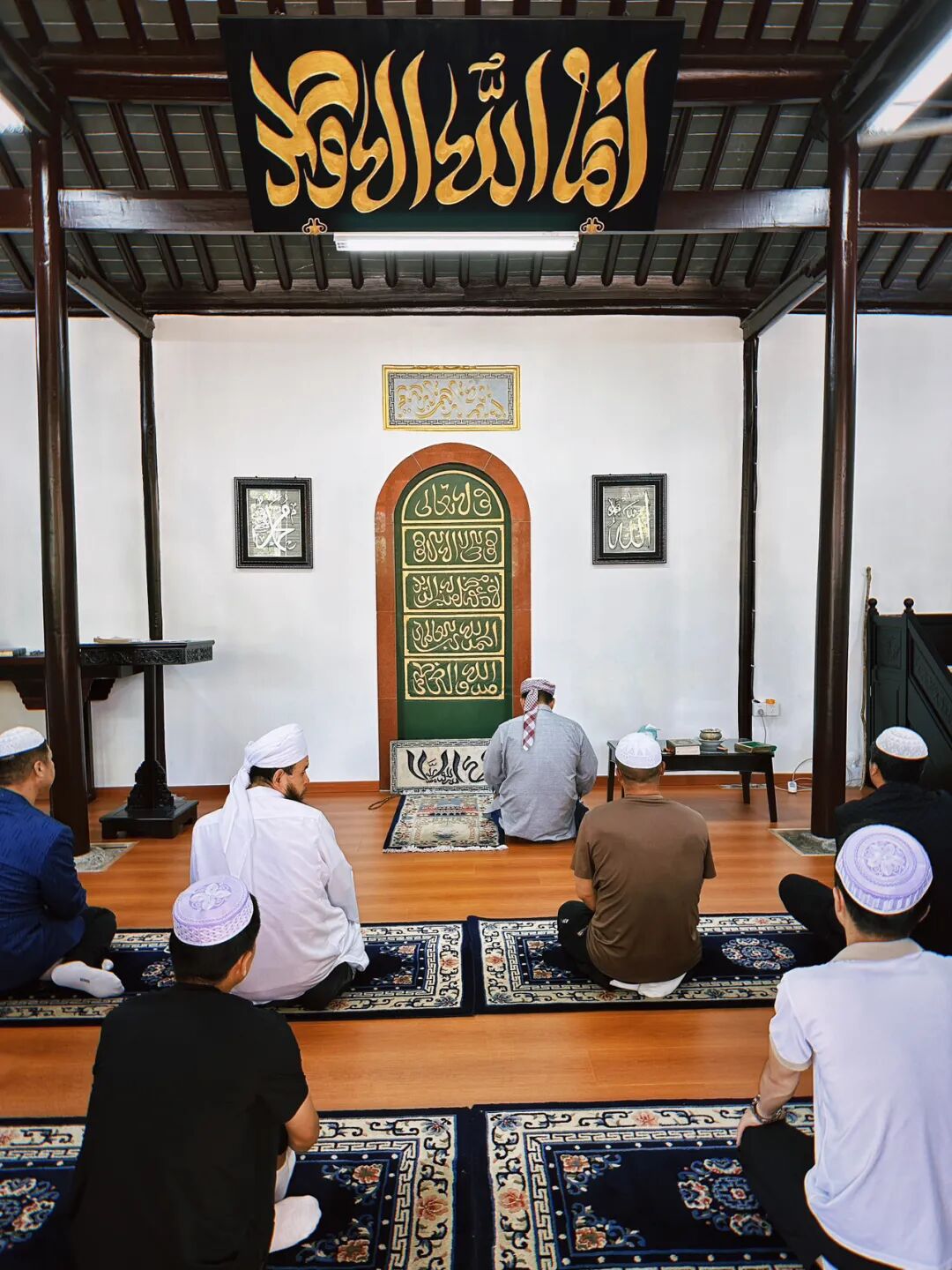
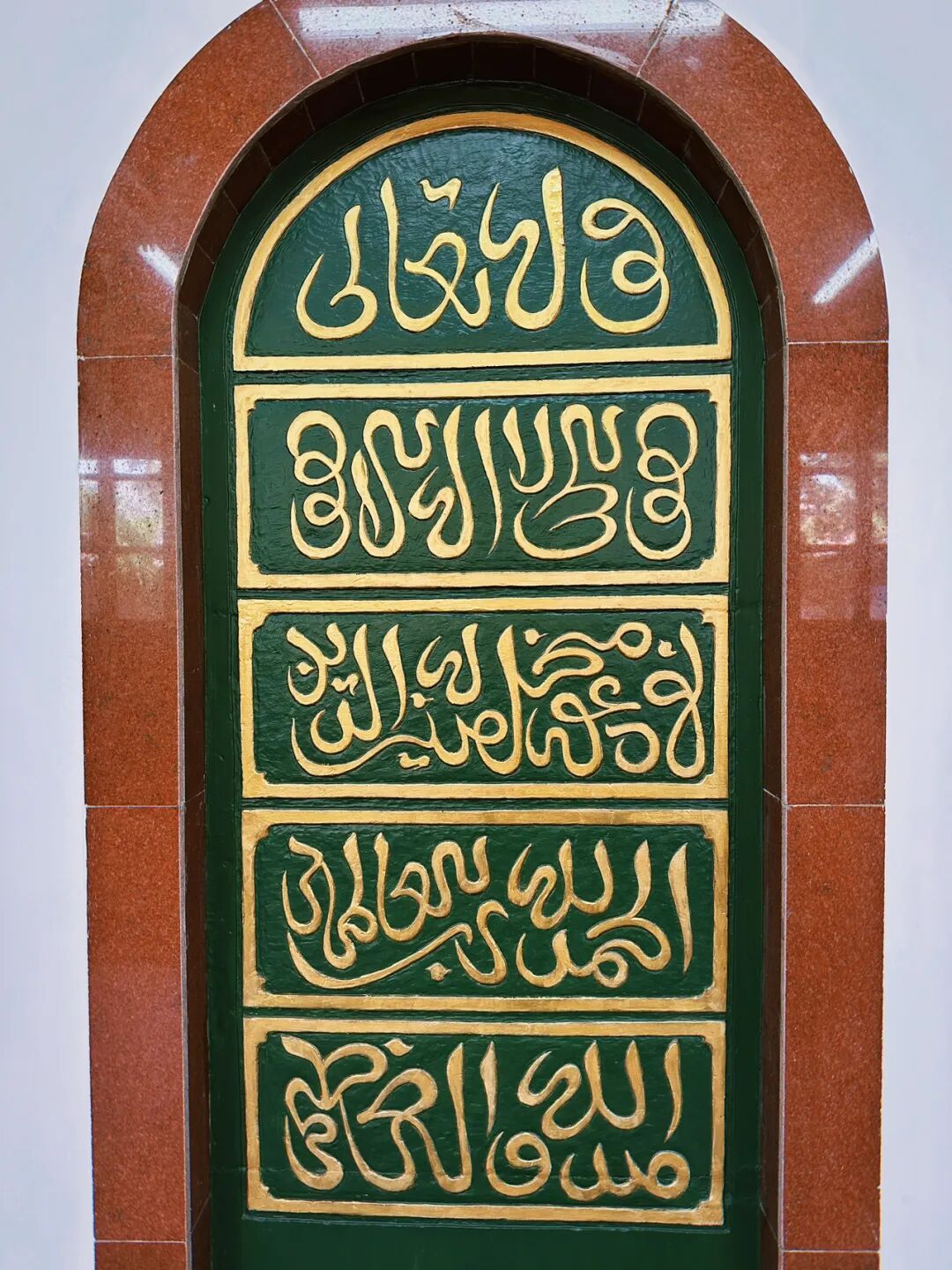
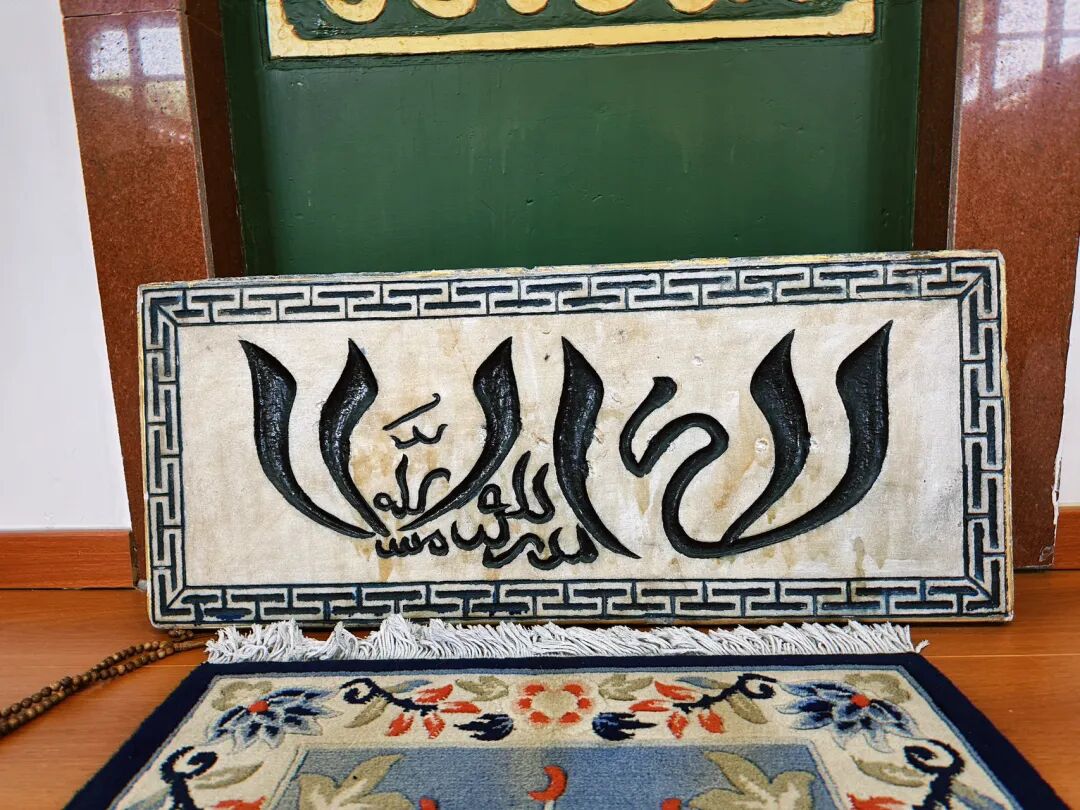
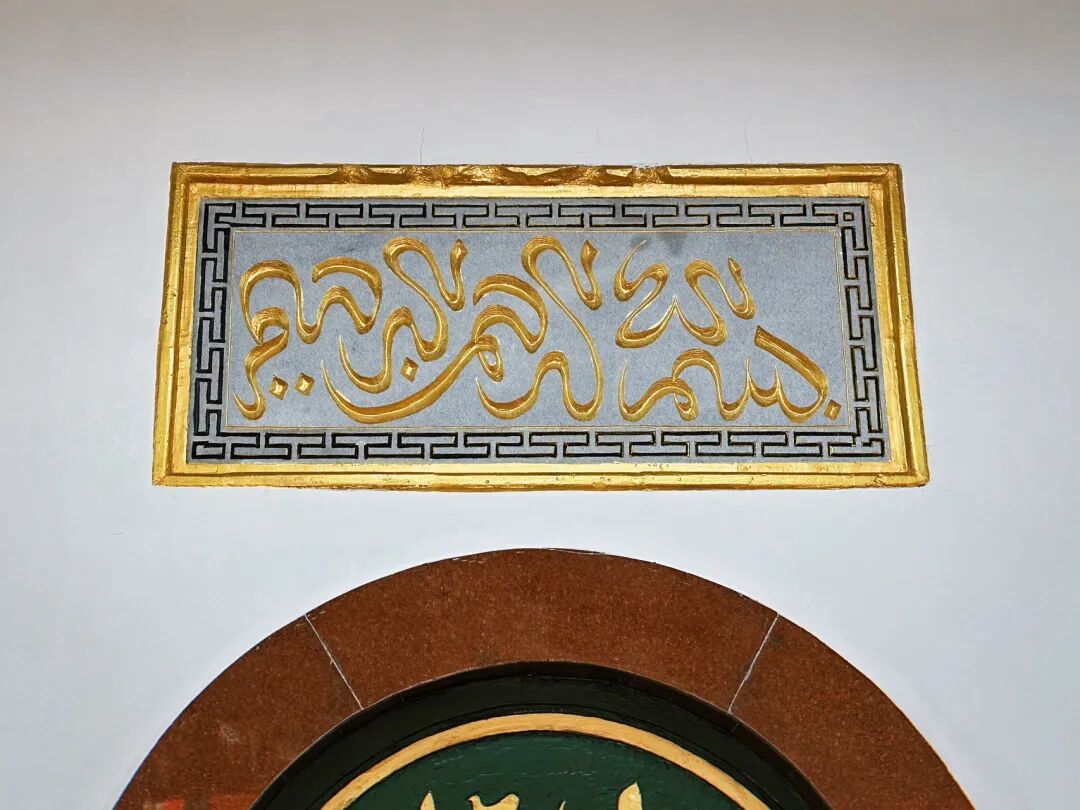
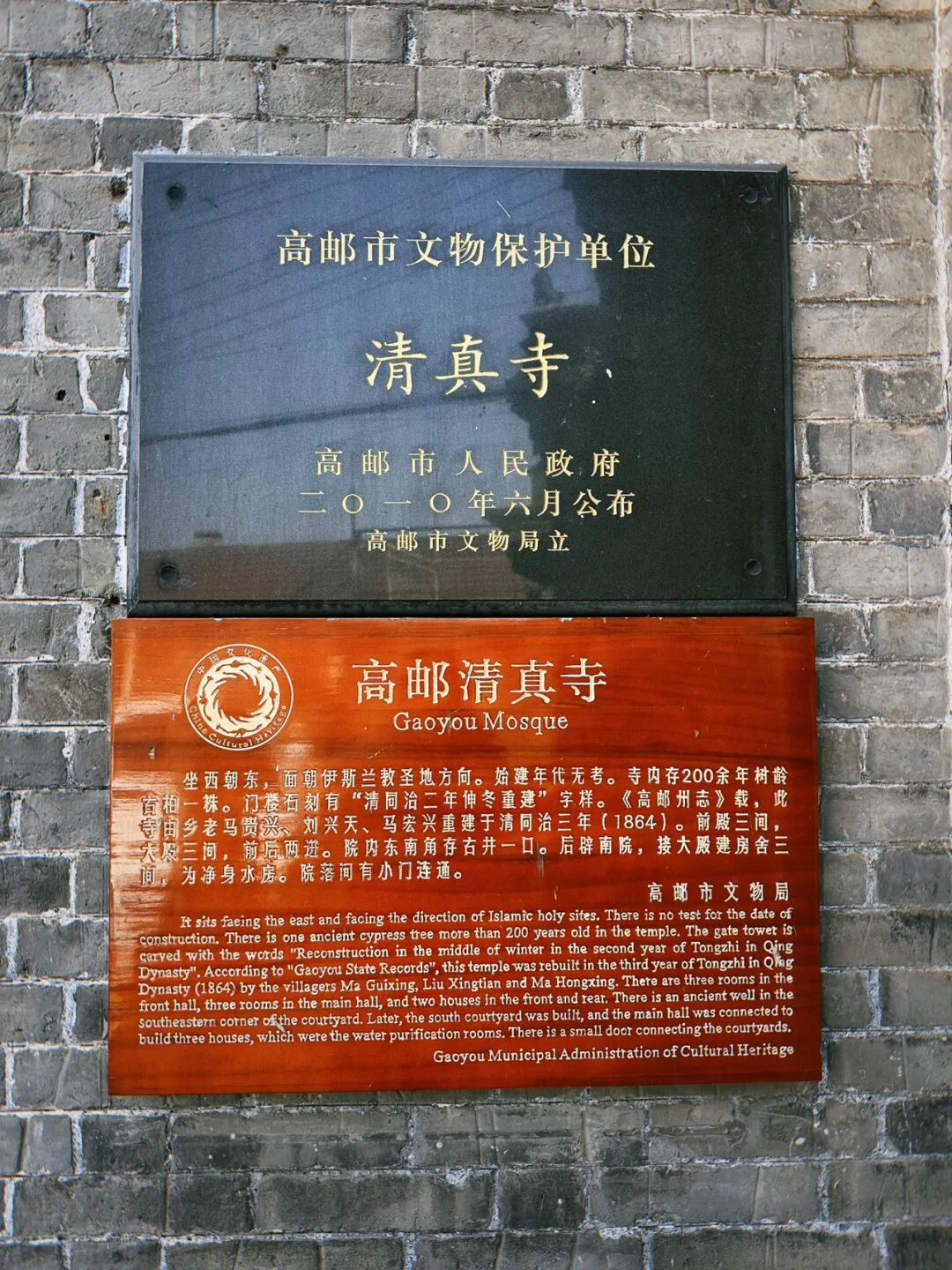
Lingtang Mosque
At the end of the Yuan dynasty, Lingtang had a mosque built at 'Huihui Bay' by Gaoyou Lake, but it was later destroyed by a flood. It moved to Yangdazhuang in the mid-Ming dynasty, then to its current site in the early Qing dynasty. It was rebuilt in 1844 (the 24th year of Daoguang), expanded again in 1921, and finished in 1924. The sweet osmanthus tree next to the kiln hall was planted when local villager Xue Yukuan and his wife, Mrs. Xue Yang, had their nikah ceremony performed by an imam. It has a history of over 130 years.
See "2021 Trip to Gaoyou, Yangzhou, and Zhenjiang".
Baoying Mosque.
Traveling north from Gaoyou along the Grand Canal, you reach Baoying County. This is the northernmost part of Yangzhou, and further north lies Huai'an.
Baoying Mosque was originally located in Guojia Lane inside the east gate of the county town, though its founding date is unknown. It was rebuilt in 1910 (the second year of the Xuantong reign) at the entrance of Luoxiang Lane at the foot of the south city wall. With the help of Tao, the wife of anti-Japanese hero Zuo Baogui, and led by Imam Zhao Dezhai and others, the mosque was officially completed in 1914 through funds raised by many people from Shandong, Anhui, Zhejiang, Huaiyin, Yangzhou, Yancheng, and local Baoying residents like Gao Mu Ma Jinshi. Baoying Mosque closed after 1958, was rebuilt on its original site in 2002, and officially reopened in 2006.
The mosque still has the water well dug during the 1910 reconstruction and the ginkgo tree planted at that time. Imam Li at the mosque is from Siyang, Jiangsu. He usually runs the nearby "Li's Beef and Mutton" shop. If you want to enter the mosque, just call the number posted at the door. Imam Li is very welcoming. He mentioned that some local Gao Mu still come to the mosque for Jumu'ah prayers, which is better than some mosques where almost everyone attending is a dost from the Northwest. Imam Li comes from the Zhe school's Banqiao Daotang, but he treats all sects equally, and the religious community in Baoying County is very united.
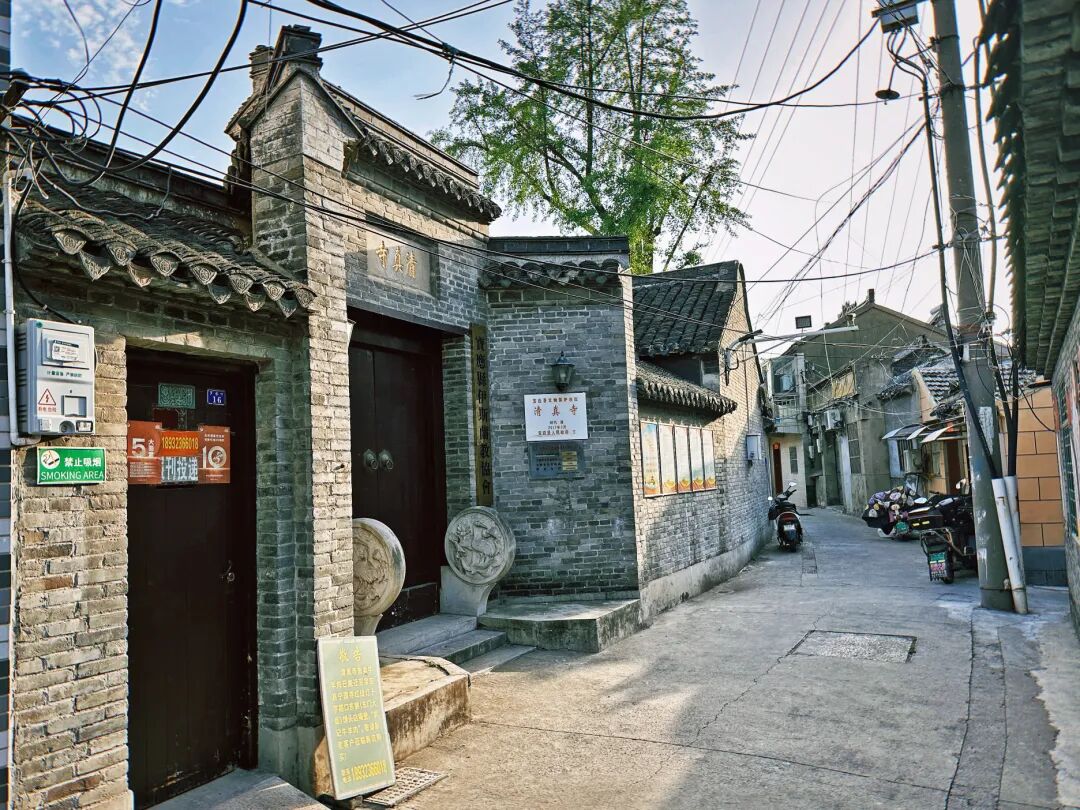
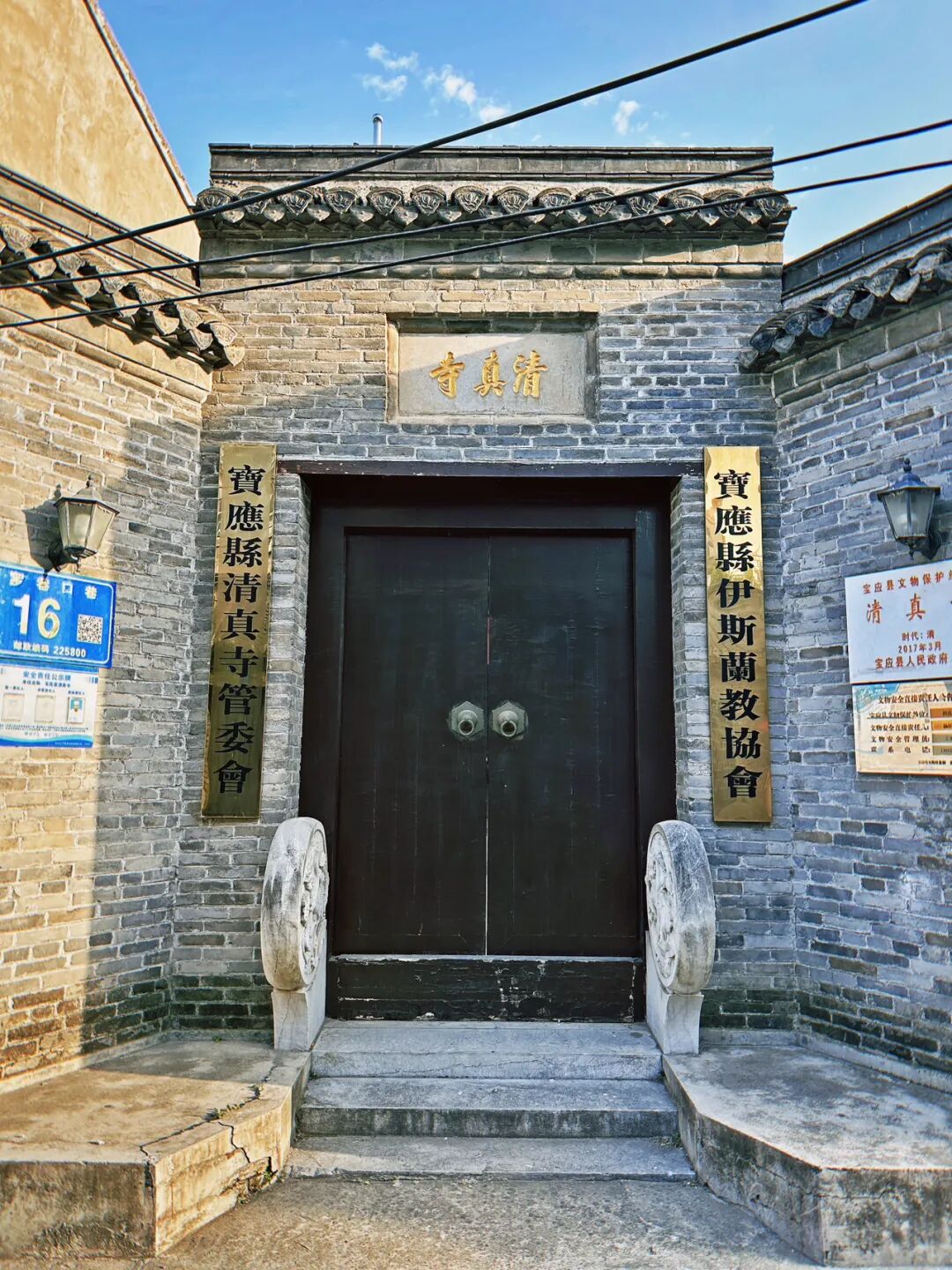
Halal Travel Guide: Seven Historic Mosques in Yangzhou, Part 2
Articles • ali2007fr posted the article • 0 comments • 142 views • 2026-05-20 08:14
Summary: The second part of the Yangzhou mosque journey focuses on Baoying and local Hui Muslim food connected to the mosque community. This short account keeps the restaurant, halal meat details, and photographs from the original post.
Baoying County also has a beef and lamb restaurant run by local Hui Muslims. You can eat local Hui Muslim specialties there, and all the meat is slaughtered by Imam Li. It is a pity that the owner was busy and the shop was closed when we visited. If you are passing through Baoying County, I recommend that fellow Muslims (dost) stop by and give it a try. view all
Summary: The second part of the Yangzhou mosque journey focuses on Baoying and local Hui Muslim food connected to the mosque community. This short account keeps the restaurant, halal meat details, and photographs from the original post.
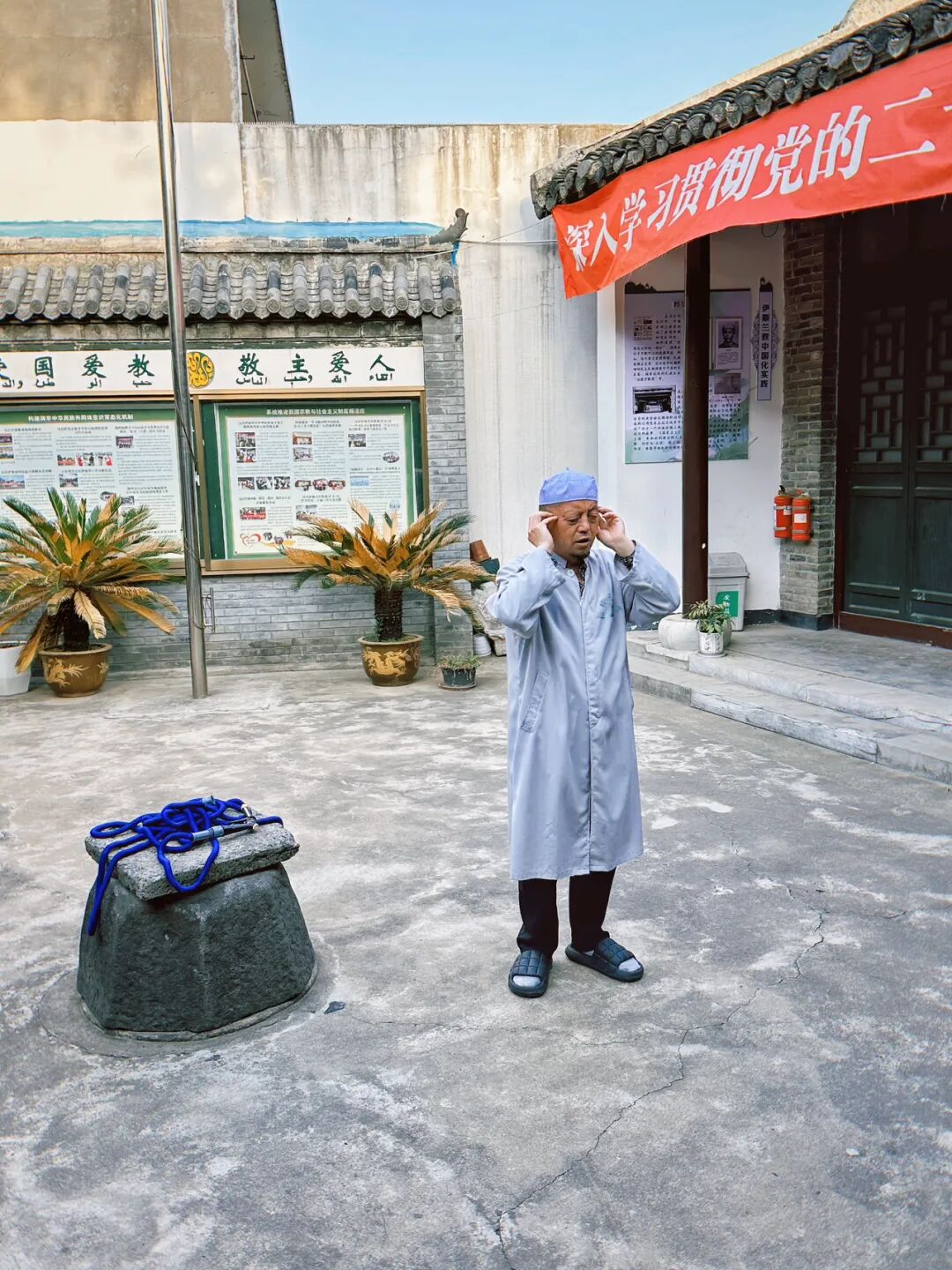
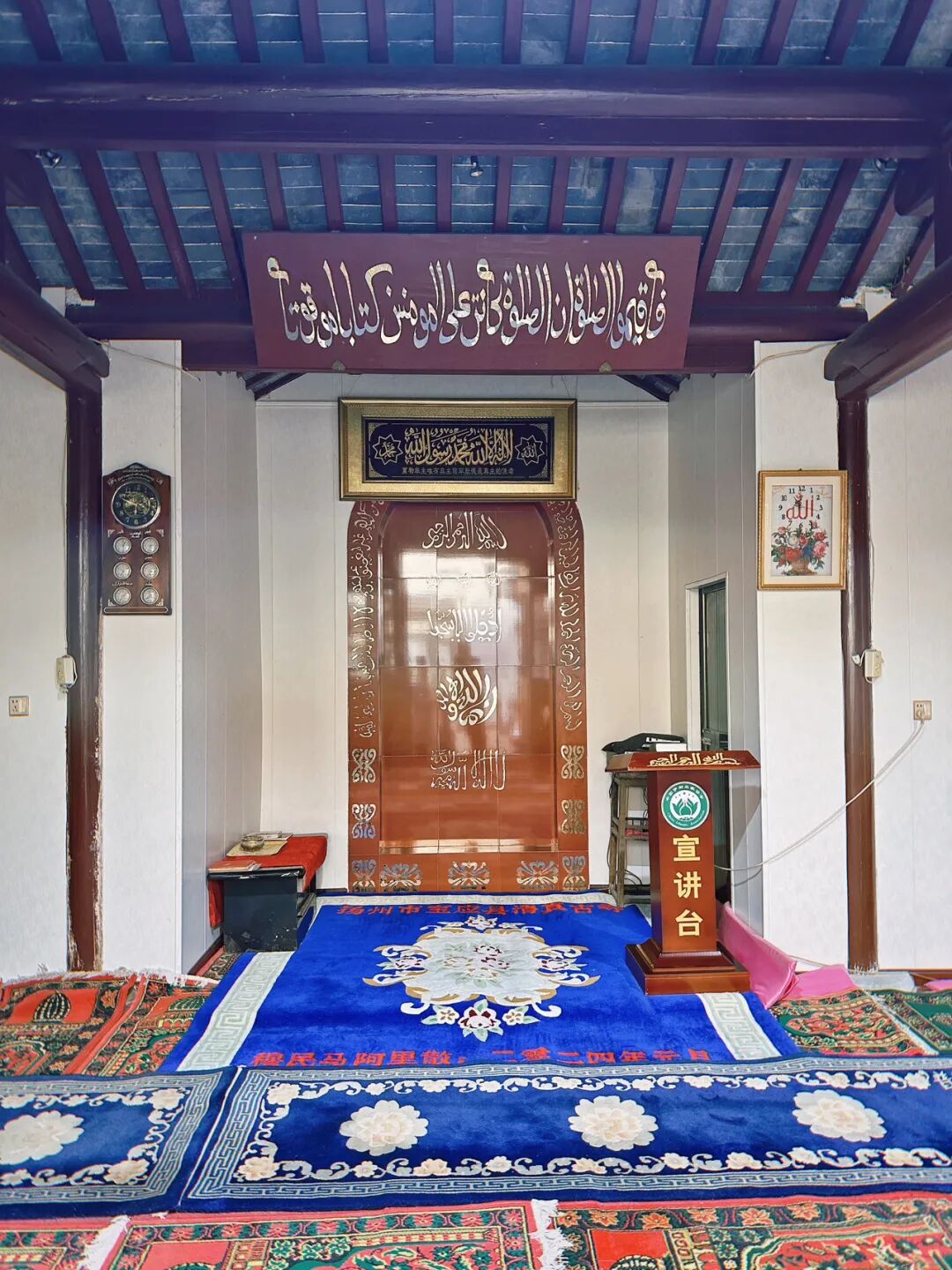
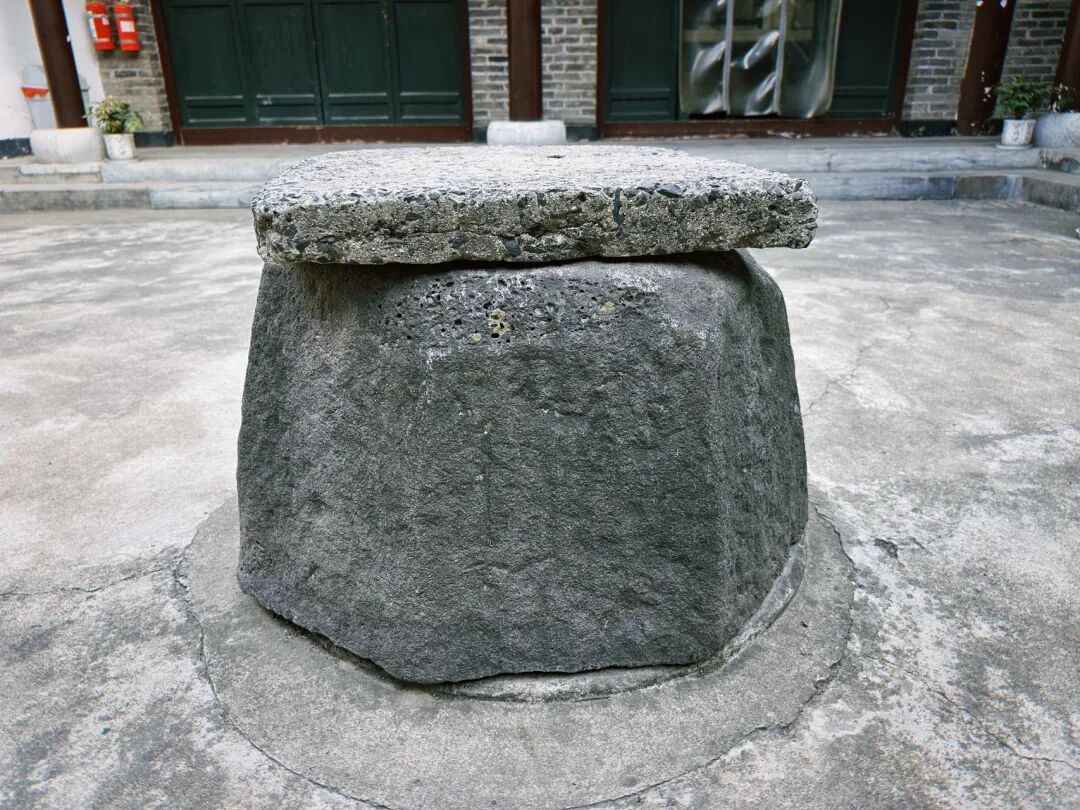
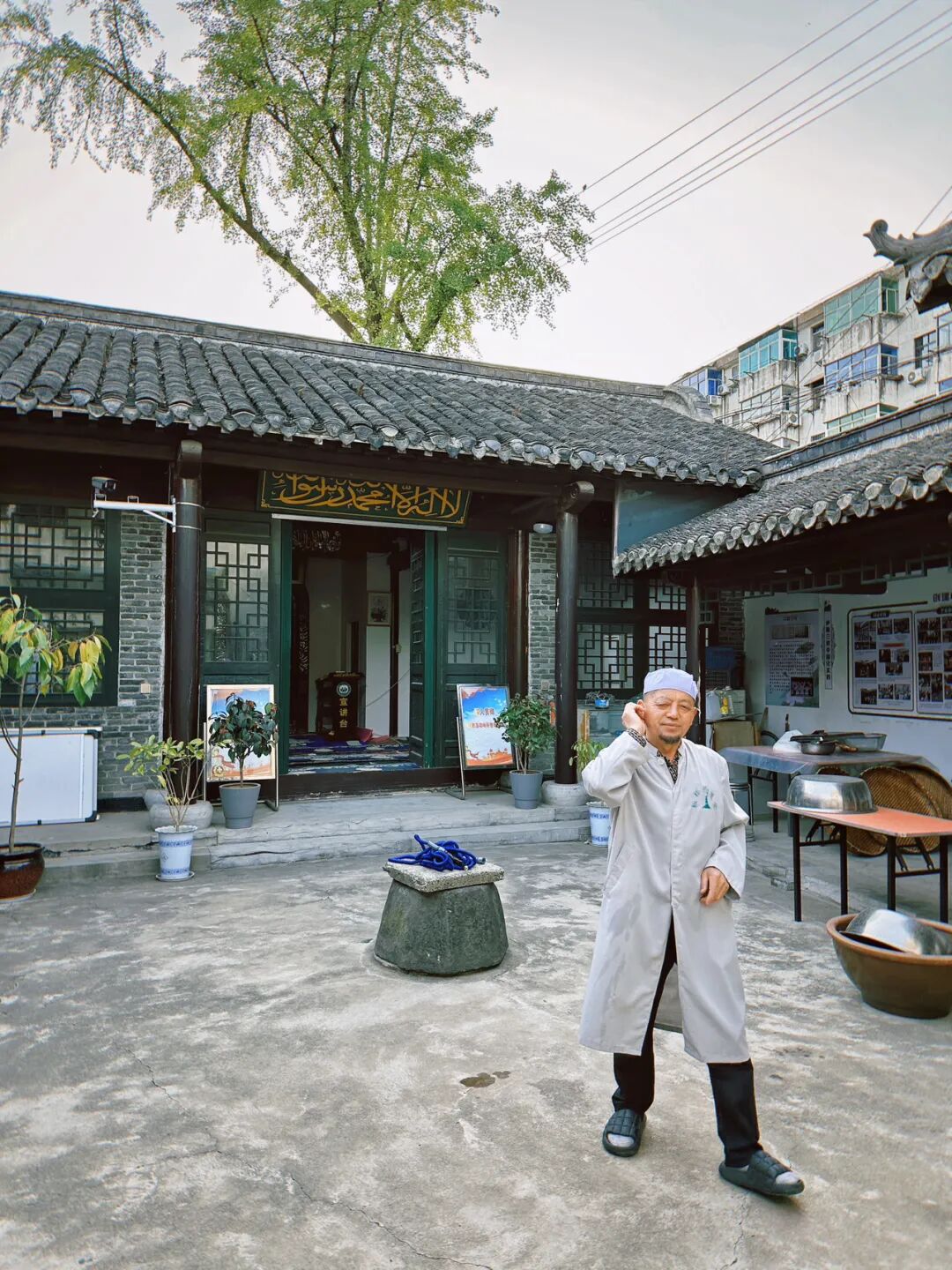
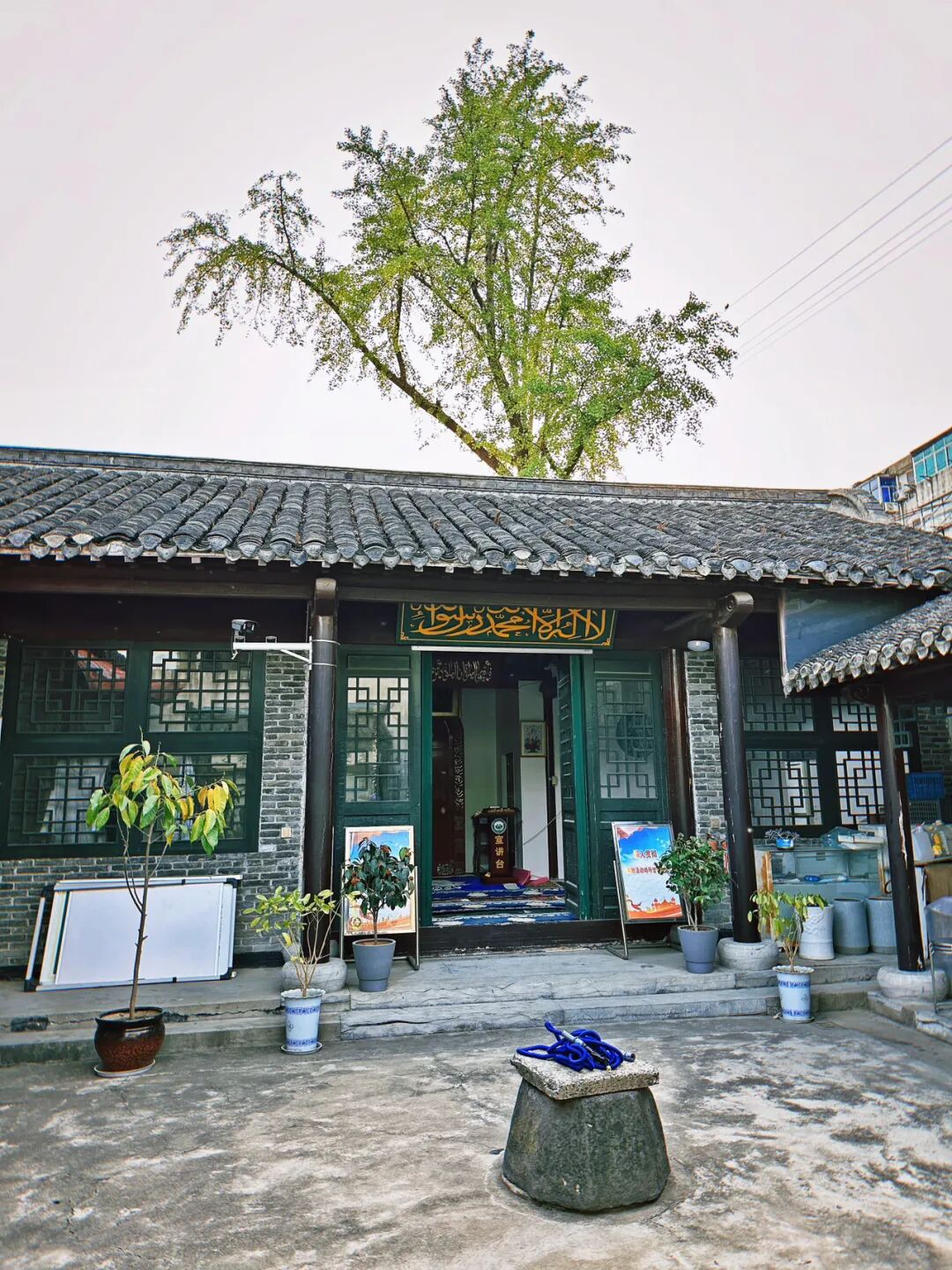
Baoying County also has a beef and lamb restaurant run by local Hui Muslims. You can eat local Hui Muslim specialties there, and all the meat is slaughtered by Imam Li. It is a pity that the owner was busy and the shop was closed when we visited. If you are passing through Baoying County, I recommend that fellow Muslims (dost) stop by and give it a try.
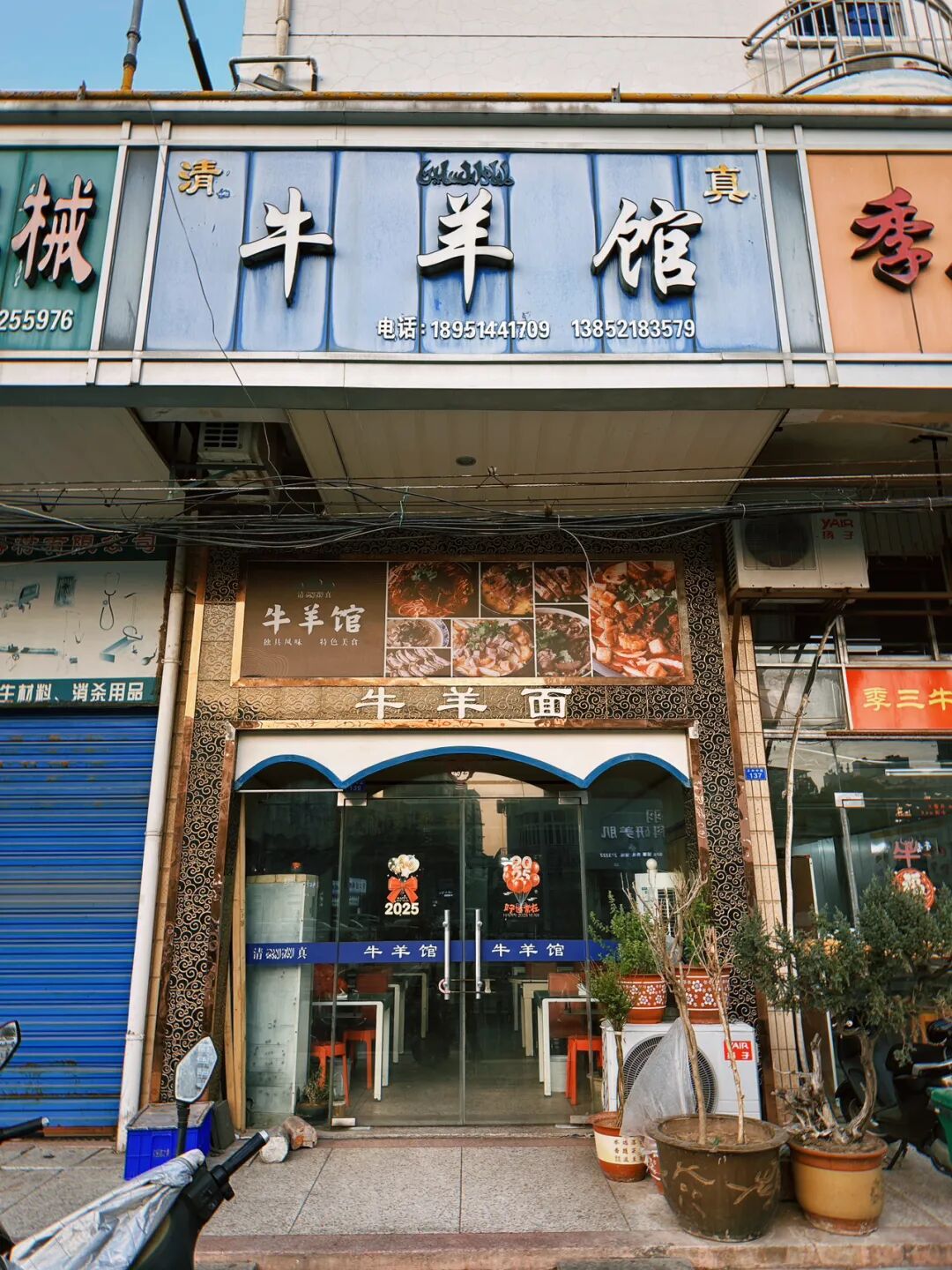
Muslim Friendly Jiangsu Travel Guide: Gaoyou, Yangzhou and Zhenjiang Mosques, Halal Food and Canal Towns (Part 1)
Articles • yusuf908 posted the article • 0 comments • 182 views • 2026-05-23 23:16
Summary: This Muslim friendly China travel guide keeps the original 2021 Gaoyou, Yangzhou, and Zhenjiang trip notes intact for Part 1. It is useful for Muslim travel guide China 2026, halal food in China, Chinese Muslim food, and mosque-friendly routes in Jiangsu.
On the morning of April 4, 2021, I left Nanjing by high-speed train. I arrived in Gaoyou in one hour and took a bus directly to the Gaoyou Mosque. Gaoyou and Lingtang were two places I missed during my canal mosque tour in 2016-17. Five years later, I finally made up for it.
Gaoyou
Gaoyou Mosque is a very beautiful traditional mosque. It is small and delicate, with the charm of a water town. The founding date of the mosque is unknown, but there is a cypress tree in the courtyard that is over two hundred years old. In 1864 (the third year of the Tongzhi reign), local elders Ma Guixing, Liu Xingtian, and Ma Hongxing rebuilt the mosque. The current entrance has a stone carving that says it was rebuilt in the middle of winter in the second year of the Tongzhi reign.
It was a pity that the mosque gate was locked when we arrived. We asked at a nearby noodle shop, and they said it only opens for Jumu'ah prayers. It seems I will have to wait for another chance to visit inside.
I wandered around Gaoyou, visiting Mengcheng Post Station and the West Dike. The Grand Canal and Gaoyou Lake run side by side, making it truly feel like a water town.
Lingtang
At noon, I took a taxi from Gaoyou to Lingtang Hui Muslim Township. Lingtang is the only Hui Muslim township in Jiangsu, home to the four major surnames: Yang, Xue, Li, and Sha. One branch of the Yang family moved here from Suzhou at the end of the Yuan Dynasty, and another branch moved from Suzhou during the Qing Dynasty. The Xue family moved here from Xuebeizhuang in Gaoyou during the Qing Dynasty, later converted to Islam, and for generations have mostly only married into the Yang family. The Sha surname is said to come from the Persian word "Shah," as they are descendants of Persian ancestors from the Huihuiwan area during the Yuan Dynasty.
At Huixianglou Restaurant, I ate salted goose (yan shui e), egg yolk stir-fried buckwheat slices (dan huang shao ku qiao pian), amaranth stir-fried with fava beans (xian cai chao can dou), and beef wing soup (niu chi tang), all of which are local specialties. The founder of Huixianglou, Yang Yangui, opened a halal restaurant on Lingtang Bridge Old Street in 1969. It moved to its current location in 2010 and specializes in Lingtang salted goose from Gaoyou Lake.
At the end of the Yuan Dynasty, a mosque was built in "Huihuiwan" by the side of Gaoyou Lake in Lingtang, but it was later destroyed by a flood. In the mid-Ming Dynasty, the mosque moved to Yangdazhuang, then to its current site in the early Qing Dynasty. It was rebuilt in 1844 (the twenty-fourth year of the Daoguang reign), expanded again in 1921, and completed in 1924.
The golden osmanthus tree (jin gui shu) next to the kiln hall (yao dian) was planted when local elder Xue Yukuan and his wife, Mrs. Xue Yang, asked an imam to recite the Nikah. It has a history of over 130 years.
The exhibition hall of the Yangzhou Lingtang Mosque displays a water kettle (tang ping hu) made and gifted by the Jizhaoying Mosque in Nanjing during the Qing Dynasty, a Republic-era water kettle, a copper Xuande incense burner (tong xuande lu), a blue and white porcelain incense burner, and the steamer (guo zheng zi) and bucket (diao tong) from the mosque's 1950s washroom. The steamer was used to boil hot water, and the bucket had a hole at the bottom; you could pull out the wooden plug to take a shower.
The mosque is also the inheritance site for the Yangzhou intangible cultural heritage, "Hui Muslim Customs of Lingtang Hui Muslim Township."
Yangzhou
In the afternoon, I took a taxi from Lingtang to Yangzhou, visiting the Yangzhou Xianhe Mosque for the second time after four years.
Yangzhou's Xianhe Mosque is one of the four great ancient mosques in Southeast China, along with the Phoenix Mosque in Hangzhou, the Lion Mosque in Guangzhou, and the Qilin Mosque in Quanzhou. It was founded in 1275 (the 12th year of the Zhiyuan era of the Yuan Dynasty) by the Western sage Puhading before he passed away. It was rebuilt in 1390 (the 23rd year of the Hongwu era of the Ming Dynasty) by Ha San, renovated in 1523 (the 3rd year of the Jiajing era) by the merchant Ma Zongdao and the imam Ha Ming, and repaired again in 1791 (the 56th year of the Qianlong era).
The gatehouse has a single-eave, ridge-roofed hard-mountain style, with some wooden parts dating back to the Ming Dynasty. The Ming Dynasty drum-shaped stone bases in front of the gate are very exquisite and rare among mosques in China.
The Xianhe Mosque layout uses small courtyards, unlike the four-sided courtyard (siheyuan) layout common in northern mosques. Xianhe Mosque divides the lecture hall, the main prayer hall, and the gate into three separate small courtyards. It also features a moon-viewing pavilion and a covered walkway outside the south gable of the main hall, giving the mosque a garden-like atmosphere.
Inside Xianhe Mosque stands a 745-year-old ginkgo tree, the oldest surviving ginkgo in Yangzhou.
From Xianhe Mosque, I went to the Puhading Tomb, but it was already locked after closing time, so I could not get in. Puhading is said to be a 16th-generation descendant of the Prophet. He came to Yangzhou during the Xianchun period of the Song Dynasty (1265–1274) and died in Yangzhou in 1275 (the 12th year of the Zhiyuan era of the Yuan Dynasty). He was buried on a high ridge east of the East Gate River in the New City, a place later called Huihui Hall (commonly known as Baba Kiln). However, I had already explored the tomb carefully in 2016, so I did not feel it was a regret.
Behind the mihrab of the mosque at the Puhading Tomb.
Looking at the Puhading Tomb from the banks of the Grand Canal, watching the sunlight hit the bricks and feeling the breeze, I felt very relaxed.
The disappearance of local halal food in Yangzhou is a great pity. From the Qing Dynasty to the Republic of China, Yangzhou's halal food scene was once very popular. During the Republican era, there were over ten famous halal restaurants. Famous Peking opera actors Zhou Xinfang and Cheng Yanqiu would eat at the most famous halal restaurant at the time, Tianxing Restaurant, whenever they came to Yangzhou to perform.
During the Republic of China, Yangzhou also had over ten halal chicken and duck shops, over ten beef shops, more than thirty sesame flatbread (shaobing) shops, and two tea houses. The most famous chicken and duck shop was Linyuanxing, which later became the predecessor of Hongxing, the only halal restaurant left in Yangzhou. Linyuanxing was good at making oil-poached chicken and salted duck. At that time, it not only had multiple shops in Yangzhou but also had branches and stalls in Shanghai, Suzhou, and Zhenjiang.
Yangzhou's halal food industry declined sharply after 1949. When I visited in 2016, the only places serving local food were Tianxingzhai, which used the name of the old Tianxing Restaurant, Yixiangzhai next to the Puhading Tomb, and the old brand Hongxing. When I visited again in 2021, Tianxingzhai had become a small barbecue shop, Yixiangzhai had closed, Hongxing was under renovation with only a snack window, and the rest were just Lanzhou hand-pulled noodle (lamian) shops.
We bought vegetarian chicken and smoked fish at Hongxing. The preparation was similar to the style in Nanjing, and it was the only local Yangzhou halal food we could find during the 2021 Qingming Festival (I heard Hongxing is finished with renovations now, and inshaAllah I will have a chance to taste it again).
Zhenjiang
On the morning of April 5, I took the high-speed train from Yangzhou to Zhenjiang. I rode an e-bike to Yongan Road to eat beef vermicelli soup at Hualiji. The soup was slightly sweet and very refreshing.
The Hua family of Hui Muslims moved to Zhenjiang from Taierzhuang, Shandong, during the Taiping Rebellion. The Taiping Rebellion caused heavy damage to Zhenjiang, leading to a large population decrease and the arrival of many people from the north. This is one of the reasons why Zhenjiang eventually changed from a Wu-speaking area to a Jianghuai Mandarin-speaking area. Huali Ji is a family of halal butchers in Zhenjiang. They have been in business for six generations, starting from the Daoguang era. In 2002, they moved from the Zhenjiang mosque to their current location on Yongan Road.
Next, I went to the newly opened Yang Family Halal Restaurant (Yangjia Qingzhen Guan) next to Muyuan Restaurant. I had beef wontons, dried tofu strips (gansi), and pan-fried buns (jianbao). This place was opened in Zhenjiang by Hui Muslims from Heze, Shandong.
Then I went to Jianxiang Halal Food Store at the Jiangbin vegetable market to buy Zhenjiang specialties: egg crisps (jidan su), Jingjiang navel cakes (Jingjiang qi), and Jingguo powder (Jingguo fen). The owner, Ma Jian, was originally a worker at a Zhenjiang pastry factory. After being laid off in 1995, he started his own Jianxiang Halal Food Factory. In 2009, he opened this current shop next to the Jiangbin vegetable market. When I visited last winter, I bought some delicious cloud-slice cakes (yunpian gao), but they don't make them in the spring. Friends who want to try them can add the landlady on WeChat to have them shipped. 15262910548
Jingjiang navel cakes are a Zhenjiang specialty snack. Mr. Xia Rongguang described them in detail in his book, A Brief History of the Hui Economy in Modern Zhenjiang. Jingjiang navel cakes are commonly called 'vat navels' (gangqi) or 'navel-lets' (qier). Legend says they were originally octagonal, but they were changed to hexagonal during the Qing Dynasty to avoid the taboo of the 'Eight Banners'. Jingjiang navel cakes come in sweet and savory versions. The savory ones sell more because you can dip them in beef or chicken soup. In the past, Zhenjiang people often served Jingjiang navel cakes soaked in salted egg water to guests.
Making these cakes requires great skill and heat control. When shaping the hexagonal ones, the savory version must be rolled six and a half times, and the sweet version three and a half times. Missing even one roll affects the quality.
According to Fan Shoubao, a tea snack industry veteran born in the 1900s, he became an apprentice at the Wuyunzhai Halal Tea Shop in the 1910s at age fourteen. He made at least two bags of flour into nearly a thousand Jingjiang navel cakes every day. Back then, visitors to Zhenjiang or locals leaving town would often buy hundreds at a time.
The Shanxiang Mosque in Zhenjiang is also called the West City Mosque or the West Great Mosque. Its founding date is unknown, but it was expanded during the Kangxi era. It was destroyed during the Taiping Rebellion in 1853 (the third year of the Xianfeng era) and rebuilt in 1873 (the twelfth year of the Tongzhi era). According to the History of Islam in Zhenjiang, Jiangsu, the late Imam Tan Yuanshen, who lived to be over eighty, recalled hearing from his grandfather and elders in the community that before the Kangxi-era expansion, the West City Mosque was just three thatched huts. At that time, the area around the mosque was sparsely populated and vast; you could see the Zhenjiang city gate tower to the east and Yuntai Mountain to the west.
After Zhenjiang opened as a treaty port, the area outside the West Gate became a bustling commercial district. In 1865, the British established a concession by the river. With the opening of the Shanghai-Nanjing Railway, the area outside the West Gate developed further, and Hui Muslims kept arriving to trade and settle around the Shanxiang Mosque.
In 1902 (the 28th year of the Guangxu era), the Zhenjiang Hui community raised funds to expand the Shanxiang Mosque. The current layout of the mosque dates back to this renovation.
The Shanxiang Mosque consists of a small courtyard and a large courtyard. Entering the main gate, you find the first small courtyard. Passing through the front hall leads to the second small courtyard, with a side door and the second gate directly ahead. Passing through the second gate leads to the third small courtyard. Then, a corridor leads into the large courtyard, which is made up of the prayer hall, the south lecture hall, and the opposite hall. This layout of large and small courtyards is very characteristic of the Jianghuai region.
Main gate
The front hall was used as a classroom for Muyuan Primary School during the War of Resistance. The plaque above was written by Imam Hua Guilin in 1984, and the couplets were written by the famous Beijing Arabic calligrapher Li Wencai in 2010.
The stone door bases outside the front hall.
The rockery inside the second small courtyard.
The second gate.
Facing the side gate hall is a green screen door with the circular characters for "halal" (qingzhen) written in the center.
During the 1960s and 1970s, the mosque was smashed and then occupied, leaving only the side gate hall guarded by an elderly man named Ma Zhonglin. The occupying unit tried to force Ma Zhonglin out with various excuses, but he refused every time and spent ten difficult years there. During those ten years, all the Hui Muslims in Zhenjiang used this gate hall to store funeral supplies and to hold and prepare the deceased. At that time, only Ma Zhonglin washed the bodies of the deceased, led the namaz, and recited dua while burying them. He also slaughtered poultry for the elders in the side gate hall every morning.
In 1981, Ma Zhonglin passed away. Afterward, Tan Quanhong and Zhang Dagui took turns slaughtering poultry for the elders in the side gate hall every morning. That same year, the occupying unit began to move out, and the Shanxiang Mosque was finally recovered.
The third small courtyard outside the second gate.
The large courtyard. The courtyard has a cross-shaped path and is planted with pine and ginkgo trees. There were once two ginkgo trees over 200 years old in the courtyard, but they were cut down in 1958 to support the Great Leap Forward steel production.
Shanxiang Mosque was once an important national base for printing and publishing Islamic books. From the Qianlong to the Tongzhi periods of the Qing Dynasty, more than 20 types of philosophy and religious books, including the "Baoming Zhenjing," "Tianfang Dianli," "Guizhen Zongyi," and "Huihui Yuanlai," were woodblock printed in hundreds of editions and shipped across the country by land and water. To this day, the Cultural Palace of Nationalities in Beijing, the Central University for Nationalities Library, and the Peking University Library all hold books printed by the Zhenjiang Shanxiang Mosque.
During the 1960s and 1970s, Shanxiang Mosque was severely damaged, and none of its scriptures, woodblocks, plaques, couplets, furniture, decorations, or other cultural relics survived. view all
Summary: This Muslim friendly China travel guide keeps the original 2021 Gaoyou, Yangzhou, and Zhenjiang trip notes intact for Part 1. It is useful for Muslim travel guide China 2026, halal food in China, Chinese Muslim food, and mosque-friendly routes in Jiangsu.
On the morning of April 4, 2021, I left Nanjing by high-speed train. I arrived in Gaoyou in one hour and took a bus directly to the Gaoyou Mosque. Gaoyou and Lingtang were two places I missed during my canal mosque tour in 2016-17. Five years later, I finally made up for it.
Gaoyou
Gaoyou Mosque is a very beautiful traditional mosque. It is small and delicate, with the charm of a water town. The founding date of the mosque is unknown, but there is a cypress tree in the courtyard that is over two hundred years old. In 1864 (the third year of the Tongzhi reign), local elders Ma Guixing, Liu Xingtian, and Ma Hongxing rebuilt the mosque. The current entrance has a stone carving that says it was rebuilt in the middle of winter in the second year of the Tongzhi reign.
It was a pity that the mosque gate was locked when we arrived. We asked at a nearby noodle shop, and they said it only opens for Jumu'ah prayers. It seems I will have to wait for another chance to visit inside.
I wandered around Gaoyou, visiting Mengcheng Post Station and the West Dike. The Grand Canal and Gaoyou Lake run side by side, making it truly feel like a water town.
Lingtang
At noon, I took a taxi from Gaoyou to Lingtang Hui Muslim Township. Lingtang is the only Hui Muslim township in Jiangsu, home to the four major surnames: Yang, Xue, Li, and Sha. One branch of the Yang family moved here from Suzhou at the end of the Yuan Dynasty, and another branch moved from Suzhou during the Qing Dynasty. The Xue family moved here from Xuebeizhuang in Gaoyou during the Qing Dynasty, later converted to Islam, and for generations have mostly only married into the Yang family. The Sha surname is said to come from the Persian word "Shah," as they are descendants of Persian ancestors from the Huihuiwan area during the Yuan Dynasty.
At Huixianglou Restaurant, I ate salted goose (yan shui e), egg yolk stir-fried buckwheat slices (dan huang shao ku qiao pian), amaranth stir-fried with fava beans (xian cai chao can dou), and beef wing soup (niu chi tang), all of which are local specialties. The founder of Huixianglou, Yang Yangui, opened a halal restaurant on Lingtang Bridge Old Street in 1969. It moved to its current location in 2010 and specializes in Lingtang salted goose from Gaoyou Lake.
At the end of the Yuan Dynasty, a mosque was built in "Huihuiwan" by the side of Gaoyou Lake in Lingtang, but it was later destroyed by a flood. In the mid-Ming Dynasty, the mosque moved to Yangdazhuang, then to its current site in the early Qing Dynasty. It was rebuilt in 1844 (the twenty-fourth year of the Daoguang reign), expanded again in 1921, and completed in 1924.
The golden osmanthus tree (jin gui shu) next to the kiln hall (yao dian) was planted when local elder Xue Yukuan and his wife, Mrs. Xue Yang, asked an imam to recite the Nikah. It has a history of over 130 years.
The exhibition hall of the Yangzhou Lingtang Mosque displays a water kettle (tang ping hu) made and gifted by the Jizhaoying Mosque in Nanjing during the Qing Dynasty, a Republic-era water kettle, a copper Xuande incense burner (tong xuande lu), a blue and white porcelain incense burner, and the steamer (guo zheng zi) and bucket (diao tong) from the mosque's 1950s washroom. The steamer was used to boil hot water, and the bucket had a hole at the bottom; you could pull out the wooden plug to take a shower.
The mosque is also the inheritance site for the Yangzhou intangible cultural heritage, "Hui Muslim Customs of Lingtang Hui Muslim Township."
Yangzhou
In the afternoon, I took a taxi from Lingtang to Yangzhou, visiting the Yangzhou Xianhe Mosque for the second time after four years.
Yangzhou's Xianhe Mosque is one of the four great ancient mosques in Southeast China, along with the Phoenix Mosque in Hangzhou, the Lion Mosque in Guangzhou, and the Qilin Mosque in Quanzhou. It was founded in 1275 (the 12th year of the Zhiyuan era of the Yuan Dynasty) by the Western sage Puhading before he passed away. It was rebuilt in 1390 (the 23rd year of the Hongwu era of the Ming Dynasty) by Ha San, renovated in 1523 (the 3rd year of the Jiajing era) by the merchant Ma Zongdao and the imam Ha Ming, and repaired again in 1791 (the 56th year of the Qianlong era).
The gatehouse has a single-eave, ridge-roofed hard-mountain style, with some wooden parts dating back to the Ming Dynasty. The Ming Dynasty drum-shaped stone bases in front of the gate are very exquisite and rare among mosques in China.
The Xianhe Mosque layout uses small courtyards, unlike the four-sided courtyard (siheyuan) layout common in northern mosques. Xianhe Mosque divides the lecture hall, the main prayer hall, and the gate into three separate small courtyards. It also features a moon-viewing pavilion and a covered walkway outside the south gable of the main hall, giving the mosque a garden-like atmosphere.
Inside Xianhe Mosque stands a 745-year-old ginkgo tree, the oldest surviving ginkgo in Yangzhou.
From Xianhe Mosque, I went to the Puhading Tomb, but it was already locked after closing time, so I could not get in. Puhading is said to be a 16th-generation descendant of the Prophet. He came to Yangzhou during the Xianchun period of the Song Dynasty (1265–1274) and died in Yangzhou in 1275 (the 12th year of the Zhiyuan era of the Yuan Dynasty). He was buried on a high ridge east of the East Gate River in the New City, a place later called Huihui Hall (commonly known as Baba Kiln). However, I had already explored the tomb carefully in 2016, so I did not feel it was a regret.
Behind the mihrab of the mosque at the Puhading Tomb.
Looking at the Puhading Tomb from the banks of the Grand Canal, watching the sunlight hit the bricks and feeling the breeze, I felt very relaxed.
The disappearance of local halal food in Yangzhou is a great pity. From the Qing Dynasty to the Republic of China, Yangzhou's halal food scene was once very popular. During the Republican era, there were over ten famous halal restaurants. Famous Peking opera actors Zhou Xinfang and Cheng Yanqiu would eat at the most famous halal restaurant at the time, Tianxing Restaurant, whenever they came to Yangzhou to perform.
During the Republic of China, Yangzhou also had over ten halal chicken and duck shops, over ten beef shops, more than thirty sesame flatbread (shaobing) shops, and two tea houses. The most famous chicken and duck shop was Linyuanxing, which later became the predecessor of Hongxing, the only halal restaurant left in Yangzhou. Linyuanxing was good at making oil-poached chicken and salted duck. At that time, it not only had multiple shops in Yangzhou but also had branches and stalls in Shanghai, Suzhou, and Zhenjiang.
Yangzhou's halal food industry declined sharply after 1949. When I visited in 2016, the only places serving local food were Tianxingzhai, which used the name of the old Tianxing Restaurant, Yixiangzhai next to the Puhading Tomb, and the old brand Hongxing. When I visited again in 2021, Tianxingzhai had become a small barbecue shop, Yixiangzhai had closed, Hongxing was under renovation with only a snack window, and the rest were just Lanzhou hand-pulled noodle (lamian) shops.
We bought vegetarian chicken and smoked fish at Hongxing. The preparation was similar to the style in Nanjing, and it was the only local Yangzhou halal food we could find during the 2021 Qingming Festival (I heard Hongxing is finished with renovations now, and inshaAllah I will have a chance to taste it again).
Zhenjiang
On the morning of April 5, I took the high-speed train from Yangzhou to Zhenjiang. I rode an e-bike to Yongan Road to eat beef vermicelli soup at Hualiji. The soup was slightly sweet and very refreshing.
The Hua family of Hui Muslims moved to Zhenjiang from Taierzhuang, Shandong, during the Taiping Rebellion. The Taiping Rebellion caused heavy damage to Zhenjiang, leading to a large population decrease and the arrival of many people from the north. This is one of the reasons why Zhenjiang eventually changed from a Wu-speaking area to a Jianghuai Mandarin-speaking area. Huali Ji is a family of halal butchers in Zhenjiang. They have been in business for six generations, starting from the Daoguang era. In 2002, they moved from the Zhenjiang mosque to their current location on Yongan Road.
Next, I went to the newly opened Yang Family Halal Restaurant (Yangjia Qingzhen Guan) next to Muyuan Restaurant. I had beef wontons, dried tofu strips (gansi), and pan-fried buns (jianbao). This place was opened in Zhenjiang by Hui Muslims from Heze, Shandong.
Then I went to Jianxiang Halal Food Store at the Jiangbin vegetable market to buy Zhenjiang specialties: egg crisps (jidan su), Jingjiang navel cakes (Jingjiang qi), and Jingguo powder (Jingguo fen). The owner, Ma Jian, was originally a worker at a Zhenjiang pastry factory. After being laid off in 1995, he started his own Jianxiang Halal Food Factory. In 2009, he opened this current shop next to the Jiangbin vegetable market. When I visited last winter, I bought some delicious cloud-slice cakes (yunpian gao), but they don't make them in the spring. Friends who want to try them can add the landlady on WeChat to have them shipped. 15262910548
Jingjiang navel cakes are a Zhenjiang specialty snack. Mr. Xia Rongguang described them in detail in his book, A Brief History of the Hui Economy in Modern Zhenjiang. Jingjiang navel cakes are commonly called 'vat navels' (gangqi) or 'navel-lets' (qier). Legend says they were originally octagonal, but they were changed to hexagonal during the Qing Dynasty to avoid the taboo of the 'Eight Banners'. Jingjiang navel cakes come in sweet and savory versions. The savory ones sell more because you can dip them in beef or chicken soup. In the past, Zhenjiang people often served Jingjiang navel cakes soaked in salted egg water to guests.
Making these cakes requires great skill and heat control. When shaping the hexagonal ones, the savory version must be rolled six and a half times, and the sweet version three and a half times. Missing even one roll affects the quality.
According to Fan Shoubao, a tea snack industry veteran born in the 1900s, he became an apprentice at the Wuyunzhai Halal Tea Shop in the 1910s at age fourteen. He made at least two bags of flour into nearly a thousand Jingjiang navel cakes every day. Back then, visitors to Zhenjiang or locals leaving town would often buy hundreds at a time.
The Shanxiang Mosque in Zhenjiang is also called the West City Mosque or the West Great Mosque. Its founding date is unknown, but it was expanded during the Kangxi era. It was destroyed during the Taiping Rebellion in 1853 (the third year of the Xianfeng era) and rebuilt in 1873 (the twelfth year of the Tongzhi era). According to the History of Islam in Zhenjiang, Jiangsu, the late Imam Tan Yuanshen, who lived to be over eighty, recalled hearing from his grandfather and elders in the community that before the Kangxi-era expansion, the West City Mosque was just three thatched huts. At that time, the area around the mosque was sparsely populated and vast; you could see the Zhenjiang city gate tower to the east and Yuntai Mountain to the west.
After Zhenjiang opened as a treaty port, the area outside the West Gate became a bustling commercial district. In 1865, the British established a concession by the river. With the opening of the Shanghai-Nanjing Railway, the area outside the West Gate developed further, and Hui Muslims kept arriving to trade and settle around the Shanxiang Mosque.
In 1902 (the 28th year of the Guangxu era), the Zhenjiang Hui community raised funds to expand the Shanxiang Mosque. The current layout of the mosque dates back to this renovation.
The Shanxiang Mosque consists of a small courtyard and a large courtyard. Entering the main gate, you find the first small courtyard. Passing through the front hall leads to the second small courtyard, with a side door and the second gate directly ahead. Passing through the second gate leads to the third small courtyard. Then, a corridor leads into the large courtyard, which is made up of the prayer hall, the south lecture hall, and the opposite hall. This layout of large and small courtyards is very characteristic of the Jianghuai region.
Main gate
The front hall was used as a classroom for Muyuan Primary School during the War of Resistance. The plaque above was written by Imam Hua Guilin in 1984, and the couplets were written by the famous Beijing Arabic calligrapher Li Wencai in 2010.
The stone door bases outside the front hall.
The rockery inside the second small courtyard.
The second gate.
Facing the side gate hall is a green screen door with the circular characters for "halal" (qingzhen) written in the center.
During the 1960s and 1970s, the mosque was smashed and then occupied, leaving only the side gate hall guarded by an elderly man named Ma Zhonglin. The occupying unit tried to force Ma Zhonglin out with various excuses, but he refused every time and spent ten difficult years there. During those ten years, all the Hui Muslims in Zhenjiang used this gate hall to store funeral supplies and to hold and prepare the deceased. At that time, only Ma Zhonglin washed the bodies of the deceased, led the namaz, and recited dua while burying them. He also slaughtered poultry for the elders in the side gate hall every morning.
In 1981, Ma Zhonglin passed away. Afterward, Tan Quanhong and Zhang Dagui took turns slaughtering poultry for the elders in the side gate hall every morning. That same year, the occupying unit began to move out, and the Shanxiang Mosque was finally recovered.
The third small courtyard outside the second gate.
The large courtyard. The courtyard has a cross-shaped path and is planted with pine and ginkgo trees. There were once two ginkgo trees over 200 years old in the courtyard, but they were cut down in 1958 to support the Great Leap Forward steel production.
Shanxiang Mosque was once an important national base for printing and publishing Islamic books. From the Qianlong to the Tongzhi periods of the Qing Dynasty, more than 20 types of philosophy and religious books, including the "Baoming Zhenjing," "Tianfang Dianli," "Guizhen Zongyi," and "Huihui Yuanlai," were woodblock printed in hundreds of editions and shipped across the country by land and water. To this day, the Cultural Palace of Nationalities in Beijing, the Central University for Nationalities Library, and the Peking University Library all hold books printed by the Zhenjiang Shanxiang Mosque.
During the 1960s and 1970s, Shanxiang Mosque was severely damaged, and none of its scriptures, woodblocks, plaques, couplets, furniture, decorations, or other cultural relics survived.
Halal Travel Guide: Nanjing Mosques - Old South City, Liuhe and Zhuzhen, Part 2
Articles • ali2007fr posted the article • 0 comments • 209 views • 2026-05-20 09:03
Summary: The second part of the Nanjing mosque journey follows sites in the old south city, Liuhe, and Zhuzhen, with notes on mosque buildings, stone carvings, and local Hui Muslim history. This account keeps the original route, mosque names, dates, and photographs.
Stone carvings and ancient trees at the South Gate Mosque in Liuhe:
A stone tablet from the seventh year of the Daoguang reign recording a donation of property by a Hui Muslim named Li.
A boundary marker for the mosque.
A stone tablet from the twelfth year of the Guangxu reign. It records that the South Gate Mosque was destroyed by the Taiping Heavenly Kingdom during the Xianfeng years. Many Hui Muslim militia members from the mosque died in battle, and the government later stepped in to protect their graves.
A couplet written by Wang Jianli in the tenth year of the Republic of China: To cherish purity and walk in cleanliness is to prepare for the afterlife; to return to the truth and simplicity is to be just like this.
Qing dynasty drum-shaped stone bases (baogushi) in front of the main gate.
A 460-year-old Chinese juniper (yuanbai) in front of the main prayer hall, classified as a first-grade protected ancient tree.
Liuhe Women's School.
The Liuhe Muslim Women's School started in 1912. The current building was constructed in 1930 and later used as a Hui Muslim funeral home. It is a rare surviving example of a Republican-era Muslim women's school and mosque.
Traditionally, these women's schools do not form formal classes, do not call the adhan, do not hold Jumu'ah prayers, and do not hold Eid prayers. The female imam (shiniang) does not lead the prayer from the front but stands in the middle of the first row. The women's school does not have a minaret, and there is no minbar pulpit inside the main prayer hall. Besides leading the local women in their religious duties, the female imam (shiniang) also teaches various aspects of Islamic knowledge.
Women's schools emerged during the mid-to-late Qing dynasty, initially concentrated in Henan and the neighboring areas of Hebei, Shandong, and Anhui. In the early Republic of China, influenced by the New Culture Movement and the women's liberation movement, the ideas of promoting women's education, ending foot binding, and liberating women began to be understood by Hui Muslims. The number of women's schools increased rapidly, with over a hundred in Henan province alone, and others were built in various provinces.
During the Guangxu reign of the Qing dynasty, two women's schools were built in Nanjing at Hanximen and Changle Street. During the Republican era, four more were built at Fangjia Lane, Zhuganli, Shigu Road, and Dahuifu Lane, but all of these have been demolished. In the early Republican era, Liuhe built three women's schools at Houjie inside the city, outside the South Gate, and in Zhuzhen. The historical buildings at the South Gate and Zhuzhen are the only ones that remain.
Changjiang Road Mosque in Liuhe.
After leaving the South Gate Mosque in Liuhe, we went to the Changjiang Road Mosque in Liuhe to perform the prayer (namaz). The mosque has two imams, one middle-aged and one young. The young imam is from Zhenjiang and just graduated from an Islamic school (zhongjing). He is a very rare and talented young man.
The Changjiang Road Mosque was originally called Chengqingfang. It is also known as the Liuhe North Mosque, the Inner City Mosque, and the Da Family Mosque. It was built in 1424 (the 22nd year of the Yongle reign of the Ming Dynasty) by the Da family of Baiyetang, who had lived in Liuhe for generations. The Changjiang Road Mosque was destroyed by the Taiping Heavenly Kingdom during the Xianfeng reign. Later, the leader Liu Weiting and local elders raised funds to rebuild it. In 1885 (the 11th year of the Guangxu reign), Da Guangyong donated money to build a reception hall. In 1928, Wang Dashi, the widow of the wealthy merchant Wang Zuochen and aunt of the great imam Da Pusheng, donated money to build the Wuxin Pavilion on the original site of the Moon-Watching Tower (Wangyuelou).
In 1899, the great imam Da Pusheng returned to his hometown of Liuhe from the Niujie Mosque in Beijing to serve as the imam of the Changjiang Road Mosque. It was not until 1905, when Imam Wang Kuan from Niujie went on the pilgrimage (hajj), that Imam Da returned to the Niujie Mosque to serve as the acting imam and lead religious affairs. Imam Da founded the Guangyi Primary School inside the Changjiang Road Mosque to promote modern education. He offered courses in Chinese and Arabic, scripture, geography, history, and mathematics. This pioneered the transition from traditional scripture hall teaching to modern education. In a memoir from the early 1950s, Imam Da wrote: 'I worked hard for six years. Perhaps moved by the achievements of Guangyi Primary School, the local Hui Muslims supported the school with great effort... Looking back now, how difficult it was to struggle at that time, to patiently persuade stubborn traditionalists, and to take on responsibilities despite everything without being denounced as anti-religious!'
After 1966, the Changjiang Road Mosque was occupied by a theater troupe and a cultural troupe. It was reclaimed and reopened in 1983.
Existing stone tablets at the Liuhe Changjiang Road Mosque:
The 1885 (11th year of the Guangxu reign) tablet records that Da Guangyong funded the construction of the reception hall at the Inner City Mosque in Liuhe. Da Guangyong was the 18th-generation descendant of the Baiyetang Da family. He held the rank of ninth-grade official and lived to be 81.
The 1899 (25th year of the Guangxu reign) tablet, titled 'Tablet on the Renovation of the Tangyi Inner City Mosque and the Market Houses Inside and Outside the Mosque,' records the specific situation of the Changjiang Road Mosque during the Guangxu reign. All the signatories were local Hui Muslims from the Da family.
The 1928 (17th year of the Republic of China) tablet, titled 'Tablet on Wang Dashi's Donation to Repair the Moon-Watching Pavilion and Redeem Market Houses,' records that Dashi, the wife of the Zhuzhen elder Wang Zuochen, donated money to build the Moon-Watching Pavilion (Wangyue Ting). Wang Zuochen was a Hui Muslim from Zhuzhen in Liuhe. He ran a grain business on North Street in Zhuzhen for decades. He was very devout, never missing his daily namaz or fasting, but in 1925, bandits suddenly kidnapped him, and he was never heard from again. Wang Zuochen's wife, surnamed Da, was also very devout and founded the Zhuzhen Girls' School. After her husband went missing, Mrs. Da spent years asking people to help find him, but there was no result. Because Wang Zuochen had no brothers or children, Mrs. Da donated all the family's money to the Zhuzhen mosque and to build the Moon-Watching Pavilion (wangyueting) at the Changjiang Road mosque.
Inside the mosque, there is also a 350-year-old Chinese juniper (yuanbai) tree.
Zhuzhen Mosque
Continuing north from Liuhe, we arrived at Zhuzhen, the northernmost town in Nanjing.
The Zhuzhen mosque was originally located outside East Bridge. It was destroyed during the Taiping Rebellion and rebuilt in 1901 (the 27th year of the Guangxu reign) in Wang Family Lane in the middle of the old street. In 1968, the Zhuzhen mosque was turned into a dormitory for teachers at an agricultural middle school. It was reclaimed and reopened in 1983, and the main hall was rebuilt in 2001.
In 1939, the imam of Zhuzhen mosque, Li Shudu, formed the Hui Muslim Anti-Japanese Independent Guerrilla Battalion and served as its commander. He worked with the New Fourth Army and made significant contributions to the anti-Japanese cause.
Additionally, in 1939, Hui Muslims from the Bridge Group (qiaobang) in the Gaoyou and Lingtang areas built a mosque near Xinhua Garden on the west side of Zhuzhen. After 1966, it was converted into a Hui Muslim food processing factory.
The Zhuzhen mosque still has a door lintel from the Qing Dynasty's Guangxu period inscribed with the words 'Built by the Zhudun Community.' Zhudun is the old name for Zhuzhen.
The Zhuzhen mosque in Liuhe houses a Qing Dynasty stone well called 'Pine Spring' (songquan), two pairs of drum-shaped stone bases (baogushi), and a stele from the 16th year of the Republic of China (1927) recording the will of Wang Zuochen's wife, Mrs. Da, who donated her property. Mrs. Da was the aunt of the great imam Da Pusheng. The inscription records that the Zhuzhen Girls' School was founded by Wang Zuochen and fellow members of the faith, with funding provided by Wang Zuochen and his fellow believers. Later, Wang Zuochen was kidnapped by bandits and remained missing for years. Because of this, Wang Zuochen's wife, Mrs. Da, decided to donate all their farmland and property, except for a portion kept for her own support. The funds were mainly used for the daily expenses of the Zhuzhen Girls' School, with the remainder going to the Zhuzhen mosque. The inscription mentions her 'nephew Da Pusheng'.
Across from the Zhuzhen Mosque, there is a shop selling small-mill sesame oil (xiaomo mayou), and the only restaurants in town serve hand-pulled noodles (lamian).
Liuhe Muslim Women's School
After leaving the Zhuzhen Mosque, I walked through the old street of Zhuzhen and arrived at the Zhuzhen Women's School by the river. The Zhuzhen Women's School is a classic example of Jianghuai architectural style, featuring a small courtyard formed by the entrance hall and the main hall, with traditional Huizhou-style horse-head walls on both sides.
The Zhuzhen Women's School was founded in 1921 by Wang Zuochen, the uncle-in-law of the great imam Da Pusheng, along with other local Hui Muslims. It was originally located on Zhuzhen Middle Street, but in 1931, Wu Tiejian and others rebuilt it along the south riverbank outside the East Bridge of Zhuzhen. After 1966, the school was occupied by a Hui Muslim food processing factory. It was renovated in 2007 but is currently not open to the public. During the Republic of China era, the school was led by two female imams, Mistress Dai and Mistress Bai, who taught scriptures and religious doctrines to local Hui Muslim women.
Wu Tiejian was a famous Hui Muslim businessman and patriot who resisted the Japanese. His original name was Wu Jiashan, and at age 22, he inherited his father's business, the Wudeyuan Grain Store. After the New Fourth Army entered Zhuzhen in 1938 to lead the resistance against Japan, Wu Tiejian was the first to donate grain, money, and guns, and he served as the chairman of the Zhuzhen Merchants and Citizens Anti-Enemy Association. In 1942, Wu Tiejian became the first mayor of the Zhuzhen Anti-Japanese Democratic Government. He took great risks to rescue and protect many comrades and also mobilized ambitious young people to join the revolution. After the founding of New China, Wu Tiejian was elected deputy director of the Nanjing Islamic Association, and he passed away (guizhen) in 1967.
There is a square next to the mosque that introduces famous Hui Muslim figures from Liuhe. view all
Summary: The second part of the Nanjing mosque journey follows sites in the old south city, Liuhe, and Zhuzhen, with notes on mosque buildings, stone carvings, and local Hui Muslim history. This account keeps the original route, mosque names, dates, and photographs.
Stone carvings and ancient trees at the South Gate Mosque in Liuhe:
A stone tablet from the seventh year of the Daoguang reign recording a donation of property by a Hui Muslim named Li.
A boundary marker for the mosque.
A stone tablet from the twelfth year of the Guangxu reign. It records that the South Gate Mosque was destroyed by the Taiping Heavenly Kingdom during the Xianfeng years. Many Hui Muslim militia members from the mosque died in battle, and the government later stepped in to protect their graves.
A couplet written by Wang Jianli in the tenth year of the Republic of China: To cherish purity and walk in cleanliness is to prepare for the afterlife; to return to the truth and simplicity is to be just like this.
Qing dynasty drum-shaped stone bases (baogushi) in front of the main gate.
A 460-year-old Chinese juniper (yuanbai) in front of the main prayer hall, classified as a first-grade protected ancient tree.
Liuhe Women's School.
The Liuhe Muslim Women's School started in 1912. The current building was constructed in 1930 and later used as a Hui Muslim funeral home. It is a rare surviving example of a Republican-era Muslim women's school and mosque.
Traditionally, these women's schools do not form formal classes, do not call the adhan, do not hold Jumu'ah prayers, and do not hold Eid prayers. The female imam (shiniang) does not lead the prayer from the front but stands in the middle of the first row. The women's school does not have a minaret, and there is no minbar pulpit inside the main prayer hall. Besides leading the local women in their religious duties, the female imam (shiniang) also teaches various aspects of Islamic knowledge.
Women's schools emerged during the mid-to-late Qing dynasty, initially concentrated in Henan and the neighboring areas of Hebei, Shandong, and Anhui. In the early Republic of China, influenced by the New Culture Movement and the women's liberation movement, the ideas of promoting women's education, ending foot binding, and liberating women began to be understood by Hui Muslims. The number of women's schools increased rapidly, with over a hundred in Henan province alone, and others were built in various provinces.
During the Guangxu reign of the Qing dynasty, two women's schools were built in Nanjing at Hanximen and Changle Street. During the Republican era, four more were built at Fangjia Lane, Zhuganli, Shigu Road, and Dahuifu Lane, but all of these have been demolished. In the early Republican era, Liuhe built three women's schools at Houjie inside the city, outside the South Gate, and in Zhuzhen. The historical buildings at the South Gate and Zhuzhen are the only ones that remain.
Changjiang Road Mosque in Liuhe.
After leaving the South Gate Mosque in Liuhe, we went to the Changjiang Road Mosque in Liuhe to perform the prayer (namaz). The mosque has two imams, one middle-aged and one young. The young imam is from Zhenjiang and just graduated from an Islamic school (zhongjing). He is a very rare and talented young man.
The Changjiang Road Mosque was originally called Chengqingfang. It is also known as the Liuhe North Mosque, the Inner City Mosque, and the Da Family Mosque. It was built in 1424 (the 22nd year of the Yongle reign of the Ming Dynasty) by the Da family of Baiyetang, who had lived in Liuhe for generations. The Changjiang Road Mosque was destroyed by the Taiping Heavenly Kingdom during the Xianfeng reign. Later, the leader Liu Weiting and local elders raised funds to rebuild it. In 1885 (the 11th year of the Guangxu reign), Da Guangyong donated money to build a reception hall. In 1928, Wang Dashi, the widow of the wealthy merchant Wang Zuochen and aunt of the great imam Da Pusheng, donated money to build the Wuxin Pavilion on the original site of the Moon-Watching Tower (Wangyuelou).
In 1899, the great imam Da Pusheng returned to his hometown of Liuhe from the Niujie Mosque in Beijing to serve as the imam of the Changjiang Road Mosque. It was not until 1905, when Imam Wang Kuan from Niujie went on the pilgrimage (hajj), that Imam Da returned to the Niujie Mosque to serve as the acting imam and lead religious affairs. Imam Da founded the Guangyi Primary School inside the Changjiang Road Mosque to promote modern education. He offered courses in Chinese and Arabic, scripture, geography, history, and mathematics. This pioneered the transition from traditional scripture hall teaching to modern education. In a memoir from the early 1950s, Imam Da wrote: 'I worked hard for six years. Perhaps moved by the achievements of Guangyi Primary School, the local Hui Muslims supported the school with great effort... Looking back now, how difficult it was to struggle at that time, to patiently persuade stubborn traditionalists, and to take on responsibilities despite everything without being denounced as anti-religious!'
After 1966, the Changjiang Road Mosque was occupied by a theater troupe and a cultural troupe. It was reclaimed and reopened in 1983.
Existing stone tablets at the Liuhe Changjiang Road Mosque:
The 1885 (11th year of the Guangxu reign) tablet records that Da Guangyong funded the construction of the reception hall at the Inner City Mosque in Liuhe. Da Guangyong was the 18th-generation descendant of the Baiyetang Da family. He held the rank of ninth-grade official and lived to be 81.
The 1899 (25th year of the Guangxu reign) tablet, titled 'Tablet on the Renovation of the Tangyi Inner City Mosque and the Market Houses Inside and Outside the Mosque,' records the specific situation of the Changjiang Road Mosque during the Guangxu reign. All the signatories were local Hui Muslims from the Da family.
The 1928 (17th year of the Republic of China) tablet, titled 'Tablet on Wang Dashi's Donation to Repair the Moon-Watching Pavilion and Redeem Market Houses,' records that Dashi, the wife of the Zhuzhen elder Wang Zuochen, donated money to build the Moon-Watching Pavilion (Wangyue Ting). Wang Zuochen was a Hui Muslim from Zhuzhen in Liuhe. He ran a grain business on North Street in Zhuzhen for decades. He was very devout, never missing his daily namaz or fasting, but in 1925, bandits suddenly kidnapped him, and he was never heard from again. Wang Zuochen's wife, surnamed Da, was also very devout and founded the Zhuzhen Girls' School. After her husband went missing, Mrs. Da spent years asking people to help find him, but there was no result. Because Wang Zuochen had no brothers or children, Mrs. Da donated all the family's money to the Zhuzhen mosque and to build the Moon-Watching Pavilion (wangyueting) at the Changjiang Road mosque.
Inside the mosque, there is also a 350-year-old Chinese juniper (yuanbai) tree.
Zhuzhen Mosque
Continuing north from Liuhe, we arrived at Zhuzhen, the northernmost town in Nanjing.
The Zhuzhen mosque was originally located outside East Bridge. It was destroyed during the Taiping Rebellion and rebuilt in 1901 (the 27th year of the Guangxu reign) in Wang Family Lane in the middle of the old street. In 1968, the Zhuzhen mosque was turned into a dormitory for teachers at an agricultural middle school. It was reclaimed and reopened in 1983, and the main hall was rebuilt in 2001.
In 1939, the imam of Zhuzhen mosque, Li Shudu, formed the Hui Muslim Anti-Japanese Independent Guerrilla Battalion and served as its commander. He worked with the New Fourth Army and made significant contributions to the anti-Japanese cause.
Additionally, in 1939, Hui Muslims from the Bridge Group (qiaobang) in the Gaoyou and Lingtang areas built a mosque near Xinhua Garden on the west side of Zhuzhen. After 1966, it was converted into a Hui Muslim food processing factory.
The Zhuzhen mosque still has a door lintel from the Qing Dynasty's Guangxu period inscribed with the words 'Built by the Zhudun Community.' Zhudun is the old name for Zhuzhen.
The Zhuzhen mosque in Liuhe houses a Qing Dynasty stone well called 'Pine Spring' (songquan), two pairs of drum-shaped stone bases (baogushi), and a stele from the 16th year of the Republic of China (1927) recording the will of Wang Zuochen's wife, Mrs. Da, who donated her property. Mrs. Da was the aunt of the great imam Da Pusheng. The inscription records that the Zhuzhen Girls' School was founded by Wang Zuochen and fellow members of the faith, with funding provided by Wang Zuochen and his fellow believers. Later, Wang Zuochen was kidnapped by bandits and remained missing for years. Because of this, Wang Zuochen's wife, Mrs. Da, decided to donate all their farmland and property, except for a portion kept for her own support. The funds were mainly used for the daily expenses of the Zhuzhen Girls' School, with the remainder going to the Zhuzhen mosque. The inscription mentions her 'nephew Da Pusheng'.
Across from the Zhuzhen Mosque, there is a shop selling small-mill sesame oil (xiaomo mayou), and the only restaurants in town serve hand-pulled noodles (lamian).
Liuhe Muslim Women's School
After leaving the Zhuzhen Mosque, I walked through the old street of Zhuzhen and arrived at the Zhuzhen Women's School by the river. The Zhuzhen Women's School is a classic example of Jianghuai architectural style, featuring a small courtyard formed by the entrance hall and the main hall, with traditional Huizhou-style horse-head walls on both sides.
The Zhuzhen Women's School was founded in 1921 by Wang Zuochen, the uncle-in-law of the great imam Da Pusheng, along with other local Hui Muslims. It was originally located on Zhuzhen Middle Street, but in 1931, Wu Tiejian and others rebuilt it along the south riverbank outside the East Bridge of Zhuzhen. After 1966, the school was occupied by a Hui Muslim food processing factory. It was renovated in 2007 but is currently not open to the public. During the Republic of China era, the school was led by two female imams, Mistress Dai and Mistress Bai, who taught scriptures and religious doctrines to local Hui Muslim women.
Wu Tiejian was a famous Hui Muslim businessman and patriot who resisted the Japanese. His original name was Wu Jiashan, and at age 22, he inherited his father's business, the Wudeyuan Grain Store. After the New Fourth Army entered Zhuzhen in 1938 to lead the resistance against Japan, Wu Tiejian was the first to donate grain, money, and guns, and he served as the chairman of the Zhuzhen Merchants and Citizens Anti-Enemy Association. In 1942, Wu Tiejian became the first mayor of the Zhuzhen Anti-Japanese Democratic Government. He took great risks to rescue and protect many comrades and also mobilized ambitious young people to join the revolution. After the founding of New China, Wu Tiejian was elected deputy director of the Nanjing Islamic Association, and he passed away (guizhen) in 1967.
There is a square next to the mosque that introduces famous Hui Muslim figures from Liuhe.
Halal Travel Guide: Nanjing Mosques - Old South City, Liuhe and Zhuzhen, Part 1
Articles • ali2007fr posted the article • 0 comments • 234 views • 2026-05-20 09:03
Summary: The first part of the Nanjing mosque journey focuses on Jingjue Mosque, Caoqiao Mosque, Taiping Road Mosque, and other historic Muslim sites in the old city. This account keeps the original mosque names, inscriptions, dates, architecture, street context, and photographs.
Jingjue Mosque.
Jingjue Mosque is located on Sanshan Street in the south of Nanjing. It was originally called Sanshan Street Mosque. During the Jiajing era of the Ming Dynasty, it was given the name Jingjue Mosque, making it the first mosque in Nanjing during the Ming period.
One account says Jingjue Mosque was built in 1388 (the 21st year of the Hongwu era) by imperial order to house officials from the Western Regions who had submitted to the Ming, such as Yibulajin and Kemaluding. Another account says it was built in 1392 (the 25th year of the Hongwu era) by imperial order of Saihazhi, a seventh-generation descendant of Sayyid Ajjal Shams al-Din. Both accounts are supported by stone inscriptions from the Ming Dynasty.
According to a 1493 (the 5th year of the Hongzhi era) inscription titled 'Record of the Two Imperial Mosques Built in the South of the City of Yingtian Prefecture in Jiangnan,' it states: 'In the 21st year of the Hongwu era, Yibulajin, Kemaluding, and others, originally from the Rumi Kingdom in the Western Regions, submitted to China along with the Duke of Song after the conquest of Jinshan and Kaiyuan... Therefore, two mosques were built to settle them, and Kemaluding and four other households were assigned to live at the Wangyue Tower Jingjue Mosque.' The family genealogies of two Hui Muslim branches with the surname Ma, known as 'Weiyitang' and 'Baojitang' in Hushu, Nanjing, both record that they are descendants of Ma Gutai and Ma Baihao, who were settled at Jingjue Mosque at that time.
According to a 1405 (the 3rd year of the Yongle era) inscription at the Great Mosque on Huajue Lane in Xi'an, 'On the 14th day of the third month of the 25th year of the Hongwu era, Saihazhi, the seventh-generation descendant of the Prince of Xianyang Sayyid Ajjal, went to the inner court to announce the imperial decree: On that day at the Fengtian Gate, the imperial decree was received:...build two mosques in two locations, one at the copper workshop on Sanshan Street in Yingtian Prefecture, Nanjing, and one on Ziwu Lane in Chang'an County, Xi'an Prefecture, Shaanxi Province.' The 'Genealogy of the Sayyid Ajjal Family' records that Saihazhi was granted the hereditary title of Marquis of Xianning, and 'When the Ming Taizu established the capital in Jinling, he entrusted Saihazhi to build a mosque in Jinling.' After the work was finished, he built the Great Mosque in Chang'an. When the Tiemao Lane Mosque in Taicang, Jiangsu, was renovated in the 1980s, a stone tablet was found inside a wall, revealing that the Taicang mosque was also built by Saihazhi.
Additionally, according to the Republic of China era 'Zhongnan Huaibei Regional Gazetteer,' 'North of the street is Jingjue Mosque. Wu Ru, a man from the Western Regions during the Ming Dynasty, came to China to serve in the Imperial Astronomical Bureau. He lived in Nanjing and built this mosque next to his residence.' Therefore, Jingjue Mosque may have originally been part of Wu Ru's residence.
Jingjue Mosque was destroyed by fire in 1430 (the 5th year of the Xuande era), and Zheng He requested its reconstruction before his seventh voyage to the Western Oceans. According to the 'Record of the Imperial Eunuch Zheng He Rebuilding the Mosque,' it states: 'Your request has been received: The mosque on Sanshan Street in Nanjing has been burned down.' 'You wish to rebuild it to pray for the safety of the funds, grain, people, and ships for your voyage. This shows your respectful heart, so how could it be neglected?' 'As an imperial envoy, since you have set your heart on this, how could your wish be abandoned?' 'If the personnel and materials you use are insufficient, and the project is delayed, you may draw what is needed from the Nanjing Directorate of Palace Servants and the Ministry of Works so that it can be completed in time for you to wait for the favorable winds to set sail. This is the decree.'
During the Taiping Rebellion, most of the bricks, tiles, and wood from Jingjue Mosque were taken down to build a local government office. The mosque was rebuilt in 1877 (the third year of the Guangxu reign) and renovated in 1879 (the fifth year of the Guangxu reign), which created its current layout. In the early years of the Republic of China, a wealthy Nanjing couple, Jiang Xiudong and his wife, paid to build the north and south lecture halls and the main hall. The mosque was repaired again in 1957. After the 1960s, a rubber company and the No. 3 Rubber Factory occupied the mosque. They tore down the only remaining Ming Dynasty brick and stone archway and the Butterfly Hall (hudieting), and destroyed many plaques, couplets, and stone tablets. The mosque was repaired in 1982, reopened in 1983, and the archway was rebuilt in 1985.
During the Ming Dynasty, the main prayer hall of Jingjue Mosque had 81 rooms and was built with nanmu wood. The current main hall was rebuilt in 1877 (the third year of the Guangxu reign). Its floor plan projects outward at the rear, like a raised middle section, and it uses a traditional post-and-beam wooden frame. The main hall and the opposite hall are linked by a covered corridor, forming a straight central axis with halls at both ends. This layout is typical of Jiangnan architecture. The mihrab was moved here from the original mosque on Xiaowangfu Lane, and the surrounding wooden carvings of scripture were added in 2001.
The back of the prayer hall connects directly to a high wall. This is a typical feature of Jianghuai courtyard-style architecture, which is very rare in the north.
During renovations in 2007, the main hall was raised by one meter. Workers dug two meters deep and found Ming Dynasty glazed tiles, brick carvings, stone railings, and huge Ming Dynasty stone column bases. These bases were twice as wide as those from the Guangxu period.
The only remaining Ming Dynasty structures, the brick and stone archway and the Butterfly Hall, were both torn down in the 1960s. The archway was rebuilt in 1985, the Butterfly Hall in 2004, and a new stele pavilion was built in 1996.
The only Jahriyya mosque in Nanjing.
Inside Jingjue Mosque, there is a stone tablet from 1891 titled 'Dahua Guizhen'. It records how Wu Defa followed his father Wu Dasong's final wish and donated the back part of their family home at 59 Shigu Road (formerly Xiaofuyuxiang) to establish the Shigu Road Mosque. The tablet mentions two Jahriyya imams, Fan Yuncai and Zhan Fengxiang. Witnesses included neighbors surnamed Chen, Cai, Zhou, and Yu; fellow Muslims surnamed Sun, Li, Wu, Zhan, Zong, and Jin; close relatives surnamed Ha, Ma, and Mai; and clan members surnamed Wu. This tablet was originally kept at the Shigu Road Mosque. After that mosque was torn down in 1986 for road expansion, the tablet was moved to Jingjue Mosque.
Shigu Road Mosque is the only Jahriyya mosque in Nanjing. In the late years of the Qianlong reign of the Qing Dynasty, a Hui Muslim named Wu from Taiyuan, Shanxi, who followed the Jahriyya (Zhepai) order, settled on Shigu Road in Nanjing. Influenced by him, followers of the Jahriyya order (Zhepai gaomu) began to appear around Shigu Road, Sanmaogong, and Nantai Lane in Nanjing, and most of them worked in the fish fry farming industry. At first, the Nanjing Jahriyya followers performed their worship at the Wuxueyuan Mosque (Yuan Mosque) near Shigu Road. During the Taiping Rebellion, the Wuxueyuan Mosque was destroyed by war, so the followers moved their worship to the Fengfu Road Mosque. Because their practice of loud chanting (gaosheng zannian) was different, Wu Defa later invited the Jahriyya followers to perform worship at his own home on Shigu Road, and in 1891 (the 17th year of the Guangxu reign), the Shigu Road Mosque was finally established.
The Nanjing Jahriyya order belongs to the Beishan menhuan. The Beishan menhuan is centered in Beishan, Zhangjiachuan, Gansu. Its leader, Ma Yuanzhang, was well-read, proficient in both Islamic scriptures and Chinese classics, and adopted the ideas of Liu Jielian to interpret Islam through Confucianism. After the Shigu Road Mosque was built, Fan Yuncai and Zhan Fengxiang from the Beishan menhuan served as imams. Imam Fan Yuncai was from Siyang, Jiangsu. During the Republic of China era, his son Fan Zhaofa opened the Faji Carriage Company in Nanjing, which was very successful. In 1905, Wu Wenlian, the grandson of Nanjing's Wu Defa, went to Gansu to study scriptures. After completing his studies in 1911, he was appointed by Ma Yuanzhang to serve as the imam of the Shigu Road Mosque.
After the Beishan order leader Ma Yuanzhang passed away (guizhen) in 1920, his nephew Ma Dianwu took over the religious affairs. It was still called the Beishan menhuan, overseeing over 100 mosques in places like Zhangjiachuan, Tianshui, and Longnan in Gansu, Qiqihar in Heilongjiang, Runan in Henan, and Long County in Shaanxi. Nanjing's Shigu Road was its only mosque in East China.
In 1937, Ma Dianwu appointed Imam Su Ziying from Zhangjiachuan, Gansu, to serve as the imam of the Shigu Road Mosque. Imam Su actively visited other mosques, connected with community elders, and promoted education, which helped the Shigu Road Mosque flourish and trained more than 20 students (hailifa). In 1953, Imam Yang Junwen succeeded as the imam of the Shigu Road Mosque. In 1958, the Shigu Road Mosque closed, and Imam Yang Junwen became an imam at the Fengfu Road Mosque. After that, Imam Yang no longer maintained contact with the Beishan menhuan, and his worship practices gradually merged with the Gedimu order.
In 1986, the Shigu Road Mosque was demolished due to road widening. Although the mosque closed, some descendants of the Nanjing Jahriyya followers still held firmly to their worship. For example, Fan Songshou, a descendant of Imam Fan Wencai, made a living running a tofu shop. Even in his nineties, he insisted on performing the five daily prayers (namaz) without fail. In his old age, he still insisted on fasting (zhai), and in the 1960s, he continued to volunteer to wash and bury the deceased and help with funeral arrangements.
Plaque inscriptions at Jingjue Mosque:
Only pure, only one: Erected on an auspicious day in the first month of summer in the Gengyin year, the 16th year of the Guangxu reign of the Great Qing Dynasty, by the Commander of the Jiujiang Garrison in Jiangxi.
Rectify the heart and be sincere: Erected in June of the 11th year of the Republic of China by members of the Nanjing Islamic Association.
The stele from the 47th year of the Qianlong reign records the four boundaries of Jingjue Mosque. To the east, there was a shop for rent, and to the west, a shop in Maxiang Alley was rented out as a flower shop. The elders who donated funds included those with the surnames Chen, Ma, Wu, Jin, Zheng, and Sha.
The stele from the 18th year of the Guangxu reign records that Imam Ma donated his own land next to the mosque to build the main prayer hall and the water room (wudu area).
Jingjue Mosque houses a memorial stele for Ma Yitang, a Hui Muslim merchant from Nanjing who worked in Shanghai. It was inscribed in 1931 by Ma Fuxiang, a famous Beiyang general who was then the Chairman of the Mongolian and Tibetan Affairs Commission.
Ma Yitang was born in 1869. His ancestors ran a money shop outside Jubao Gate in Nanjing, and the family owned the Ma Yulong Satin and Fan Shop. With Shanghai as his base, Ma Yitang expanded his business to include domestic and foreign general merchandise. He set up branches in Chengdu and Chongqing, and his goods were sold as far away as the Tibetan regions. Ma Yitang was devoted to the faith. He served as a director for the North Mosque and West Mosque in Shanghai and helped fund the founding of the Hanximen Girls' School and the Zhuganxiang Girls' School in Nanjing. In 1909, Ma Yitang became a special consultative director for the Shanghai Islamic Board of Directors, participating in all its decisions. In 1921, he was responsible for the expansion of the Shanghai Xiaoshadu Mosque (now the Huxi Mosque).
Jingjue Mosque houses a notice stele from the 15th year of the Republic of China regarding the Shangfuqiao Mosque, issued by the Western District Police Station of the Jiangsu Provincial Capital Police Department. It records that the police stepped in to protect the Shangfuqiao Mosque and the Dajiaoxiang Mosque to uphold the rights of the faith. The petitioners included Hui Muslims with the surnames Bai, Tao, Pu, Ma, Yuan, Liang, Wei, and Jin.
Shangfuqiao Mosque was located in Chuanban Alley and was first built in 1662 (the first year of the Kangxi reign). It was destroyed during the Taiping Rebellion in the Xianfeng era and rebuilt in 1876 (the second year of the Guangxu reign). Later, it was occupied by Nanjing No. 62 Middle School, and the notice stele was moved into Jingjue Mosque. Dajiaoxiang Mosque was first built in 1874 (the 13th year of the Tongzhi reign). The mosque once housed trade associations for the pavilion decoration, wedding, and fried rice industries. It was later occupied by a factory and eventually demolished.
Jingjue Mosque houses a Qing Dynasty stone carving from the Neiqiaowan Mosque, which was rescued from under an excavator during the demolition of Neiqiaowan in 2019.
Neiqiaowan Mosque was located on Zhongshan South Road. One account says it was first built in 1645 (the second year of the Shunzhi reign), while another says it was built in 1662 (the first year of the Kangxi reign). In 1898 (the 24th year of the Guangxu reign), Shi Jialiang bought a group of houses in Neiqiaowan to rebuild the main prayer hall. The Shi family came from Wuwei, Gansu. They moved to Nanjing during the Jiaqing reign of the Qing Dynasty to expand the silk trade. They later became a famous silk-trading family in Nanjing and founded the Shijuxing Silk Firm during the Daoguang reign. The Shi family moved to Shanghai during the Guangxu reign and were members of the Shanghai mosque board of directors.
Neiqiaowan Mosque once housed a primary school and the Glutinous Rice Food Industry Guild. It was demolished in 1991 to widen the road.
The former Taiping Road Mosque.
Because the Jiangsu Hotel expanded to Taiping Road, the main hall and opposite hall of the Taiping Road Mosque were moved 40 meters south of the old Caoqiao Mosque in 2003. The project was completed in 2005.
Taiping Road Mosque was originally called Huapailou Mosque. Legend says it was built by Chang Yuchun in the early Ming Dynasty. It was destroyed during the Taiping Rebellion and later rebuilt with funds raised by elders from the Ha, Ma, Zheng, Yang, Ding, and Chang families. Ma Jingtao led its renovation during the Tongzhi reign. In 1924, wealthy Nanjing merchants and brothers Jiang Muzhou and Jiang Sukan (Guobang) donated money to rebuild a new mosque on the south side, which was still called Huapailou Mosque. When the road was widened in 1931, the gate tower was demolished. Huapailou was renamed Taiping Road, and Huapailou Mosque was renamed Taiping Road Mosque.
After the victory in the War of Resistance in 1945, the Jiang family of Jinling funded the renovation of the main hall and built the Jiang Family Shouxuan Hall in the north courtyard. That same year, the China Islamic National Salvation Association moved into Taiping Road Mosque and changed its name to the China Islamic Association. Its first chairman was Bai Chongxi. It was the highest Islamic organization in the country at the time until it moved to Taipei in 1949. After the 1960s, the Taiping Road Mosque was occupied. It was reclaimed in 1978, reopened in 1980, and named a municipal cultural relic protection unit in 1982. It was demolished in 2003, and the components of the main hall and opposite hall were moved to a new site.
Because the daily expenses of Taiping Road Mosque were paid by the wealthy Jiang family of Jinling, it was the richest mosque in Nanjing during the Republic of China era. The Jiang family of Jinling originally came from Yuncao Ancient Town in Hanshan County, Anhui. They moved to Nanjing in 1808 (the 13th year of Jiaqing). They started as small vendors and later expanded into the silk, salt, and pawn industries. During the Guangxu reign, they opened branches in major commercial ports and became a wealthy merchant family.
The opposite hall of the former Taiping Road Mosque served as the office for the chairman of the China Islamic Association between 1945 and 1949, where Bai Chongxi once worked.
The brick carving of 'Washing the Heart and Looking at the Palace' (xixin zhanque) from the water room of the former Taiping Road Mosque.
The former Taiping Road Mosque collected the 'Postscript to the Mother's Filial Piety Arch' written by Jiang Guobang. It records that the father of the wealthy Nanjing merchant Jiang Guobang lost his own father early and was raised by his mother, Madam Ma. In 1911 (the third year of the Xuantong reign), he petitioned to build a memorial arch for his mother's filial piety. Due to the change in government, it was finally completed in 1914.
Jiang Guobang came from the wealthy Jiang merchant family of Jinling, but he cared little for fame or wealth and dedicated himself to the study of traditional Chinese culture. Jiang Guobang was very filial. To provide his mother with a good place to spend her later years, he spent a large sum of money to buy the Xiaowanliu Hall by West Lake in Hangzhou. He later named it Jiang Manor (Jiangzhuang), which was one of the three major manors on West Lake at that time. In 1924, Jiang Guobang oversaw the reconstruction of Taiping Road Mosque and later built the memorial arch for his mother's filial piety inside the mosque. The arch no longer exists today, and only the stone tablet record remains.
The well railing from the Qing Dynasty and a stone tablet from the Guangxu reign at Caoqiao Mosque. Caoqiao Mosque was first built during the Guangxu reign of the Qing Dynasty. It was destroyed by fire during the Taiping Rebellion and rebuilt in the early years of the Tongzhi reign. Because it was located in Qijiawan, a neighborhood where Hui Muslims lived, Caoqiao Mosque once had the largest number of congregants in Nanjing. Historically, Caoqiao Mosque had no property of its own. Its daily expenses were covered by the Beef and Leather Trade Association, which was based inside the mosque. After 1958, Caoqiao Mosque was occupied and later rented to the Nanjing Woodworking Factory, which caused serious damage. The mosque property was returned in 1985 but never reopened, and it was demolished in 2003.
The Jiang Family Courtyard in Laomendong.
In the Laomendong scenic area of Nanjing, there is a residence called Jishan Hall belonging to the wealthy Hui Muslim merchant family, the Jiangs of Jinling. It is currently located at 18 and 20 Santiaoying. The residence was open for visits before, but unfortunately, it was closed when we went.
The Jiang family of Jinling originally came from Yuncao, an ancient town in Hanshan County, Anhui. They moved to Nanjing in 1808 (the 13th year of the Jiaqing reign) and started out as small vendors. After the Taiping Rebellion was suppressed in 1864 (the third year of the Tongzhi reign), the Jiang family used sailboats to transport salt from the Lianghuai salt fields to the Yangtze River coast. On their return trips, they brought back large quantities of daily necessities, which helped them build their fortune. Later, they opened the Chunshengjian firm to trade in satin, and their reputation spread throughout the southwestern provinces.
Jiang Shoushan, also known as Changcheng, was a key figure of the Jinling Jiang family in the late Qing Dynasty. He owned the Deda Soy Sauce Shop in Nanjing, the Guangda Oil Mill in Liuhe, and the Chunyuan Oil Firm in Hankou. In 1875 (the first year of the Guangxu reign), the government named his residence Jishantang (Hall of Accumulated Goodness) and the street outside Jishanli (Alley of Accumulated Goodness) to honor his charity work, which included building bridges, paving roads, giving porridge to the poor, and helping those in need.
Beyond his business success, the Jiang family was also very devoted to their faith. Jiang Shoushan's father, Jiang Hanchen, wrote in the preface to the religious book 'Guizhen Yaodao' (Essential Path to Returning to the Truth), which he edited for his fourth son Jiang Changsong: 'Building wealth from nothing through business is all due to the grace of Allah.' During the late Qing Dynasty and the Republic of China, the Jiang family made significant contributions to the faith. They led the construction of the Wuxi Mosque and the Xixin Pavilion at the Huashen Mosque in Nanjing, rebuilt the Huapailou (Taiping Road) Mosque in Nanjing, expanded the Taipingfang Mosque in Suzhou, renovated the Hanximen Mosque and Jingjue Mosque in Nanjing and the Jinshifang Street Mosque in Beijing, and also established a charity school in the southern suburbs of Nanjing.
Xiaowangfu Lane Mosque
The Xiaowangfu Lane Mosque was built in the late Tongzhi reign of the Qing Dynasty. It is one of the few remaining old buildings among the 33 traditional Hui Muslim neighborhoods in Nanjing. The mihrab (the niche in the wall indicating the direction of Mecca) currently in the Jingjue Mosque was moved here from the Xiaowangfu Lane Mosque. The Xiaowangfu Lane Mosque was used as a residential area for a long time, but it has now been vacated and may soon have a new purpose.
In 1917, the Xiaowangfu Lane Mosque founded the private Wuben Primary School to teach both general subjects and religious knowledge. It moved to the entrance of Xiaowangfu Lane on Fengfu Road in 1953 and became a public school in 1956.
Anleyuan
Every time I visit Nanjing, I make sure to have morning tea at Anleyuan. The morning tea used to be served in the main dining room, but it has moved to the hot pot hall on the right. The menu, however, remains the same.
We arrived after ten o'clock, and it wasn't very crowded. We ordered roast duck with dried tofu strips (ya gan si), shark fin golden cake, crystal shrimp dumplings, red bean soup with rice balls (chidou yuanxiao), water shield vegetable steamed dumplings (jiao'ercai zhengjiao), duck and pine nut steamed dumplings (shaomai), beef spring rolls, and crispy fried dough (sanzi) with tofu pudding, all paired with Yuhua tea. Anleyuan is a great place to experience the charm of Jinling's Hui Muslim cuisine, especially if you are dining with a group.
Anleyuan was founded in 1920 by Cai Jiheng, a Hui Muslim from Nanjing. Originally called Anleju Restaurant, it has been in business for 105 years. Anleyuan was first located at 64 Pingshi Street (formerly Shuixiangkou) in the Hui Muslim community of Qijiawan. It later moved to the Jiangxi Guild Hall at 19 Pingshi Street, specializing in snacks like sweet red bean paste buns and assorted vegetable buns.
In 1949, owner Cai Jiheng was getting old, so he handed the restaurant over to his son, Cai Yuting. Cai Yuting was a scholar by trade and did not know how to run a business, so the restaurant's sales began to decline. In 1952, Li Fuquan, who ran a restaurant at Chaotian Palace, bought the Anleju Restaurant and renamed it Anleyuan Restaurant. Owner Li introduced signature braised dishes like salt-water duck (yanshui ya), sliced dried beef (ganqie niurou), braised wheat gluten (lu mianjin), and smoked fish (xunyu), which won high praise from customers.
In 1956, during the public-private partnership period, Anleyuan merged with the state-owned Heping Canteen and moved to Shengzhou Road, west of Qijiawan. It grew from a small eatery into a medium-sized restaurant of 400 square meters with 14 tables, gaining a steady base of diners. In 1961, Anleyuan moved again to Mochou Road near Chaotian Palace. The space expanded further, and they introduced new dishes like braised fish maw with three delicacies (sanxian hui yudu) and crispy beef (xiangsu niurou), entering the ranks of high-end restaurants. In 1966, Anleyuan was renamed Victory Restaurant (Shengli Fandian), but it changed back to its original name in 1972. In 2001, due to the development of the Chaotian Palace South Square, Anleyuan was relocated to its current site on Wangfu Street. The new shop expanded to 2,000 square meters, becoming a large restaurant with three separate areas for snacks, main meals, and hot pot.
Li Rongxing
At noon, we went to the old Hui Muslim brand Li Rongxing on Xufu Lane in Nanjing for lunch. I ate at their original shop ten years ago, and this time I found they have opened chain stores, including a branch here in the north of the city.
We ordered beef potstickers (niurou guotie), beef wontons (niurou huntun), beef vermicelli soup (niurou fensi tang), smoked fish noodles (xunyu mian), beef soup dumplings (niurou guantangbao), and assorted vegetables (su shijin), which are all considered typical Nanjing Hui Muslim specialties. The snacks of Nanjing Hui Muslims are characterized by a hint of sweetness. I find this quite unique, but people from the north might not be used to it.
Li Rongxing is a famous old brand from Qijiawan, founded by Li Houming in 1914. It started at the T-junction of Qijiawan and Ganyu Lane, and was best known for its pan-fried beef buns (niurou jianbao), beef soup, and smoked beef. In 2002, Li Rongxing's third-generation successor, Li Bangzheng, opened a Li Rongxing on Fenghuang West Street, and in 2006, it moved to Nanhu East Road. The current owner, Li Guofan, is the fourth-generation successor of Li Rongxing. Additionally, the most famous Li's Restaurant (Liji) in Qijiawan today is run by Li Bangzheng's cousin, Li Bangjie, who once worked with him at a salted duck factory.
Lvliuju
Next to Li Rongxing on Xufu Lane is another long-standing shop, Lvliuju. Their shop is quite small. Besides their most popular green sticky rice balls (qingtuan), they serve simple meals like duck blood vermicelli soup (laoya fensi tang), bamboo shoot and beef brisket rice (sungand niunan fan), braised three-delicacy rice (hui sanxian fan), and smoked fish assorted noodles (xunyu shijin mian). We bought some of their signature three-colored cakes (sanse gao).
Lvliuju was founded in 1912 at Taoye Ferry by the Qinhuai River. It started as a high-end vegetarian restaurant, and people like Kong Xiangxi, Chiang Ching-kuo, Bai Chongxi, and the Soong sisters often ate there. After 1949, Lvliuju closed for a time. It reopened in 1963 on Taiping South Road at Yanggongjing, hiring the famous chef Chen Bingyu to lead the kitchen and continue serving authentic vegetarian food. A major feature of Lvliuju is making vegetarian dishes taste like meat. Their vegetarian chicken (suji) and vegetarian duck (suya), made from tofu skin, gluten, and dried bean curd sticks with herbal seasonings, are delicious. In 1987, Lvliuju added halal dishes to its vegetarian menu and became a halal restaurant, though it still specializes in vegetarian food. It is now a national-level intangible cultural heritage.
Liuhe South Gate Mosque
Leaving the Nanjing city area, we crossed the Yangtze River and headed north to Liuhe District, where we performed namaz at the Liuhe South Gate Mosque.
There were once seven mosques and three women's schools in Liuhe. Today, the Changjiang Road Mosque, South Gate Mosque, and Zhuzhen Mosque are open, and the historic buildings of the South Gate Women's School and Zhuzhen Women's School remain.
The Liuhe South Gate Mosque was first built in 1403 (the first year of the Yongle reign of the Ming Dynasty) and rebuilt in 1553 (the 32nd year of the Jiajing reign). It was destroyed during the Taiping Rebellion and later rebuilt. The famous Imam Da Pusheng, one of the four great imams of the Republic of China, had three generations of his family—from his great-grandfather to his father—serve as the imam at South Gate Mosque. The old Da family home is on the Halal Street (Qingzhen Jie) right at the mosque entrance. Imam Da Pusheng studied the scriptures at South Gate Mosque for seven years, from age 10 to 17, before going to Nanjing and Beijing for further study.
The ancestor of the Da family of the Baiye Hall, where Imam Da Pusheng belonged, was Mubalesha from the Western Regions during the Yuan Dynasty. Research shows he belonged to the Kipchak Yuliberi tribe and served as a Darughachi in Zhenjiang before passing away in Zhenjiang. His sixth-generation descendant, Da Shan, moved from Zhenjiang to Liuhe in the early Ming Dynasty to serve as a county magistrate candidate. He settled in Liuhe, making them the oldest Hui Muslim family from the Western Regions in the area.
After 1966, the South Gate Mosque was used as a kindergarten. During that time, the Shamao Hall (duiting), the north wing, the red gate, and the entrance hall were demolished. The kindergarten moved out in 1975, and Baozhen Primary School borrowed the space for a while. It was finally reclaimed in 2000 after the school moved out. The main hall was raised and rebuilt in 2013. Later, the Unity Pagoda (Tongxin Ta) and Tongxing Building were built, and the site finally opened to the public in 2020. view all
Summary: The first part of the Nanjing mosque journey focuses on Jingjue Mosque, Caoqiao Mosque, Taiping Road Mosque, and other historic Muslim sites in the old city. This account keeps the original mosque names, inscriptions, dates, architecture, street context, and photographs.
Jingjue Mosque.
Jingjue Mosque is located on Sanshan Street in the south of Nanjing. It was originally called Sanshan Street Mosque. During the Jiajing era of the Ming Dynasty, it was given the name Jingjue Mosque, making it the first mosque in Nanjing during the Ming period.
One account says Jingjue Mosque was built in 1388 (the 21st year of the Hongwu era) by imperial order to house officials from the Western Regions who had submitted to the Ming, such as Yibulajin and Kemaluding. Another account says it was built in 1392 (the 25th year of the Hongwu era) by imperial order of Saihazhi, a seventh-generation descendant of Sayyid Ajjal Shams al-Din. Both accounts are supported by stone inscriptions from the Ming Dynasty.
According to a 1493 (the 5th year of the Hongzhi era) inscription titled 'Record of the Two Imperial Mosques Built in the South of the City of Yingtian Prefecture in Jiangnan,' it states: 'In the 21st year of the Hongwu era, Yibulajin, Kemaluding, and others, originally from the Rumi Kingdom in the Western Regions, submitted to China along with the Duke of Song after the conquest of Jinshan and Kaiyuan... Therefore, two mosques were built to settle them, and Kemaluding and four other households were assigned to live at the Wangyue Tower Jingjue Mosque.' The family genealogies of two Hui Muslim branches with the surname Ma, known as 'Weiyitang' and 'Baojitang' in Hushu, Nanjing, both record that they are descendants of Ma Gutai and Ma Baihao, who were settled at Jingjue Mosque at that time.
According to a 1405 (the 3rd year of the Yongle era) inscription at the Great Mosque on Huajue Lane in Xi'an, 'On the 14th day of the third month of the 25th year of the Hongwu era, Saihazhi, the seventh-generation descendant of the Prince of Xianyang Sayyid Ajjal, went to the inner court to announce the imperial decree: On that day at the Fengtian Gate, the imperial decree was received:...build two mosques in two locations, one at the copper workshop on Sanshan Street in Yingtian Prefecture, Nanjing, and one on Ziwu Lane in Chang'an County, Xi'an Prefecture, Shaanxi Province.' The 'Genealogy of the Sayyid Ajjal Family' records that Saihazhi was granted the hereditary title of Marquis of Xianning, and 'When the Ming Taizu established the capital in Jinling, he entrusted Saihazhi to build a mosque in Jinling.' After the work was finished, he built the Great Mosque in Chang'an. When the Tiemao Lane Mosque in Taicang, Jiangsu, was renovated in the 1980s, a stone tablet was found inside a wall, revealing that the Taicang mosque was also built by Saihazhi.
Additionally, according to the Republic of China era 'Zhongnan Huaibei Regional Gazetteer,' 'North of the street is Jingjue Mosque. Wu Ru, a man from the Western Regions during the Ming Dynasty, came to China to serve in the Imperial Astronomical Bureau. He lived in Nanjing and built this mosque next to his residence.' Therefore, Jingjue Mosque may have originally been part of Wu Ru's residence.
Jingjue Mosque was destroyed by fire in 1430 (the 5th year of the Xuande era), and Zheng He requested its reconstruction before his seventh voyage to the Western Oceans. According to the 'Record of the Imperial Eunuch Zheng He Rebuilding the Mosque,' it states: 'Your request has been received: The mosque on Sanshan Street in Nanjing has been burned down.' 'You wish to rebuild it to pray for the safety of the funds, grain, people, and ships for your voyage. This shows your respectful heart, so how could it be neglected?' 'As an imperial envoy, since you have set your heart on this, how could your wish be abandoned?' 'If the personnel and materials you use are insufficient, and the project is delayed, you may draw what is needed from the Nanjing Directorate of Palace Servants and the Ministry of Works so that it can be completed in time for you to wait for the favorable winds to set sail. This is the decree.'
During the Taiping Rebellion, most of the bricks, tiles, and wood from Jingjue Mosque were taken down to build a local government office. The mosque was rebuilt in 1877 (the third year of the Guangxu reign) and renovated in 1879 (the fifth year of the Guangxu reign), which created its current layout. In the early years of the Republic of China, a wealthy Nanjing couple, Jiang Xiudong and his wife, paid to build the north and south lecture halls and the main hall. The mosque was repaired again in 1957. After the 1960s, a rubber company and the No. 3 Rubber Factory occupied the mosque. They tore down the only remaining Ming Dynasty brick and stone archway and the Butterfly Hall (hudieting), and destroyed many plaques, couplets, and stone tablets. The mosque was repaired in 1982, reopened in 1983, and the archway was rebuilt in 1985.
During the Ming Dynasty, the main prayer hall of Jingjue Mosque had 81 rooms and was built with nanmu wood. The current main hall was rebuilt in 1877 (the third year of the Guangxu reign). Its floor plan projects outward at the rear, like a raised middle section, and it uses a traditional post-and-beam wooden frame. The main hall and the opposite hall are linked by a covered corridor, forming a straight central axis with halls at both ends. This layout is typical of Jiangnan architecture. The mihrab was moved here from the original mosque on Xiaowangfu Lane, and the surrounding wooden carvings of scripture were added in 2001.
The back of the prayer hall connects directly to a high wall. This is a typical feature of Jianghuai courtyard-style architecture, which is very rare in the north.
During renovations in 2007, the main hall was raised by one meter. Workers dug two meters deep and found Ming Dynasty glazed tiles, brick carvings, stone railings, and huge Ming Dynasty stone column bases. These bases were twice as wide as those from the Guangxu period.
The only remaining Ming Dynasty structures, the brick and stone archway and the Butterfly Hall, were both torn down in the 1960s. The archway was rebuilt in 1985, the Butterfly Hall in 2004, and a new stele pavilion was built in 1996.
The only Jahriyya mosque in Nanjing.
Inside Jingjue Mosque, there is a stone tablet from 1891 titled 'Dahua Guizhen'. It records how Wu Defa followed his father Wu Dasong's final wish and donated the back part of their family home at 59 Shigu Road (formerly Xiaofuyuxiang) to establish the Shigu Road Mosque. The tablet mentions two Jahriyya imams, Fan Yuncai and Zhan Fengxiang. Witnesses included neighbors surnamed Chen, Cai, Zhou, and Yu; fellow Muslims surnamed Sun, Li, Wu, Zhan, Zong, and Jin; close relatives surnamed Ha, Ma, and Mai; and clan members surnamed Wu. This tablet was originally kept at the Shigu Road Mosque. After that mosque was torn down in 1986 for road expansion, the tablet was moved to Jingjue Mosque.
Shigu Road Mosque is the only Jahriyya mosque in Nanjing. In the late years of the Qianlong reign of the Qing Dynasty, a Hui Muslim named Wu from Taiyuan, Shanxi, who followed the Jahriyya (Zhepai) order, settled on Shigu Road in Nanjing. Influenced by him, followers of the Jahriyya order (Zhepai gaomu) began to appear around Shigu Road, Sanmaogong, and Nantai Lane in Nanjing, and most of them worked in the fish fry farming industry. At first, the Nanjing Jahriyya followers performed their worship at the Wuxueyuan Mosque (Yuan Mosque) near Shigu Road. During the Taiping Rebellion, the Wuxueyuan Mosque was destroyed by war, so the followers moved their worship to the Fengfu Road Mosque. Because their practice of loud chanting (gaosheng zannian) was different, Wu Defa later invited the Jahriyya followers to perform worship at his own home on Shigu Road, and in 1891 (the 17th year of the Guangxu reign), the Shigu Road Mosque was finally established.
The Nanjing Jahriyya order belongs to the Beishan menhuan. The Beishan menhuan is centered in Beishan, Zhangjiachuan, Gansu. Its leader, Ma Yuanzhang, was well-read, proficient in both Islamic scriptures and Chinese classics, and adopted the ideas of Liu Jielian to interpret Islam through Confucianism. After the Shigu Road Mosque was built, Fan Yuncai and Zhan Fengxiang from the Beishan menhuan served as imams. Imam Fan Yuncai was from Siyang, Jiangsu. During the Republic of China era, his son Fan Zhaofa opened the Faji Carriage Company in Nanjing, which was very successful. In 1905, Wu Wenlian, the grandson of Nanjing's Wu Defa, went to Gansu to study scriptures. After completing his studies in 1911, he was appointed by Ma Yuanzhang to serve as the imam of the Shigu Road Mosque.
After the Beishan order leader Ma Yuanzhang passed away (guizhen) in 1920, his nephew Ma Dianwu took over the religious affairs. It was still called the Beishan menhuan, overseeing over 100 mosques in places like Zhangjiachuan, Tianshui, and Longnan in Gansu, Qiqihar in Heilongjiang, Runan in Henan, and Long County in Shaanxi. Nanjing's Shigu Road was its only mosque in East China.
In 1937, Ma Dianwu appointed Imam Su Ziying from Zhangjiachuan, Gansu, to serve as the imam of the Shigu Road Mosque. Imam Su actively visited other mosques, connected with community elders, and promoted education, which helped the Shigu Road Mosque flourish and trained more than 20 students (hailifa). In 1953, Imam Yang Junwen succeeded as the imam of the Shigu Road Mosque. In 1958, the Shigu Road Mosque closed, and Imam Yang Junwen became an imam at the Fengfu Road Mosque. After that, Imam Yang no longer maintained contact with the Beishan menhuan, and his worship practices gradually merged with the Gedimu order.
In 1986, the Shigu Road Mosque was demolished due to road widening. Although the mosque closed, some descendants of the Nanjing Jahriyya followers still held firmly to their worship. For example, Fan Songshou, a descendant of Imam Fan Wencai, made a living running a tofu shop. Even in his nineties, he insisted on performing the five daily prayers (namaz) without fail. In his old age, he still insisted on fasting (zhai), and in the 1960s, he continued to volunteer to wash and bury the deceased and help with funeral arrangements.
Plaque inscriptions at Jingjue Mosque:
Only pure, only one: Erected on an auspicious day in the first month of summer in the Gengyin year, the 16th year of the Guangxu reign of the Great Qing Dynasty, by the Commander of the Jiujiang Garrison in Jiangxi.
Rectify the heart and be sincere: Erected in June of the 11th year of the Republic of China by members of the Nanjing Islamic Association.
The stele from the 47th year of the Qianlong reign records the four boundaries of Jingjue Mosque. To the east, there was a shop for rent, and to the west, a shop in Maxiang Alley was rented out as a flower shop. The elders who donated funds included those with the surnames Chen, Ma, Wu, Jin, Zheng, and Sha.
The stele from the 18th year of the Guangxu reign records that Imam Ma donated his own land next to the mosque to build the main prayer hall and the water room (wudu area).
Jingjue Mosque houses a memorial stele for Ma Yitang, a Hui Muslim merchant from Nanjing who worked in Shanghai. It was inscribed in 1931 by Ma Fuxiang, a famous Beiyang general who was then the Chairman of the Mongolian and Tibetan Affairs Commission.
Ma Yitang was born in 1869. His ancestors ran a money shop outside Jubao Gate in Nanjing, and the family owned the Ma Yulong Satin and Fan Shop. With Shanghai as his base, Ma Yitang expanded his business to include domestic and foreign general merchandise. He set up branches in Chengdu and Chongqing, and his goods were sold as far away as the Tibetan regions. Ma Yitang was devoted to the faith. He served as a director for the North Mosque and West Mosque in Shanghai and helped fund the founding of the Hanximen Girls' School and the Zhuganxiang Girls' School in Nanjing. In 1909, Ma Yitang became a special consultative director for the Shanghai Islamic Board of Directors, participating in all its decisions. In 1921, he was responsible for the expansion of the Shanghai Xiaoshadu Mosque (now the Huxi Mosque).
Jingjue Mosque houses a notice stele from the 15th year of the Republic of China regarding the Shangfuqiao Mosque, issued by the Western District Police Station of the Jiangsu Provincial Capital Police Department. It records that the police stepped in to protect the Shangfuqiao Mosque and the Dajiaoxiang Mosque to uphold the rights of the faith. The petitioners included Hui Muslims with the surnames Bai, Tao, Pu, Ma, Yuan, Liang, Wei, and Jin.
Shangfuqiao Mosque was located in Chuanban Alley and was first built in 1662 (the first year of the Kangxi reign). It was destroyed during the Taiping Rebellion in the Xianfeng era and rebuilt in 1876 (the second year of the Guangxu reign). Later, it was occupied by Nanjing No. 62 Middle School, and the notice stele was moved into Jingjue Mosque. Dajiaoxiang Mosque was first built in 1874 (the 13th year of the Tongzhi reign). The mosque once housed trade associations for the pavilion decoration, wedding, and fried rice industries. It was later occupied by a factory and eventually demolished.
Jingjue Mosque houses a Qing Dynasty stone carving from the Neiqiaowan Mosque, which was rescued from under an excavator during the demolition of Neiqiaowan in 2019.
Neiqiaowan Mosque was located on Zhongshan South Road. One account says it was first built in 1645 (the second year of the Shunzhi reign), while another says it was built in 1662 (the first year of the Kangxi reign). In 1898 (the 24th year of the Guangxu reign), Shi Jialiang bought a group of houses in Neiqiaowan to rebuild the main prayer hall. The Shi family came from Wuwei, Gansu. They moved to Nanjing during the Jiaqing reign of the Qing Dynasty to expand the silk trade. They later became a famous silk-trading family in Nanjing and founded the Shijuxing Silk Firm during the Daoguang reign. The Shi family moved to Shanghai during the Guangxu reign and were members of the Shanghai mosque board of directors.
Neiqiaowan Mosque once housed a primary school and the Glutinous Rice Food Industry Guild. It was demolished in 1991 to widen the road.
The former Taiping Road Mosque.
Because the Jiangsu Hotel expanded to Taiping Road, the main hall and opposite hall of the Taiping Road Mosque were moved 40 meters south of the old Caoqiao Mosque in 2003. The project was completed in 2005.
Taiping Road Mosque was originally called Huapailou Mosque. Legend says it was built by Chang Yuchun in the early Ming Dynasty. It was destroyed during the Taiping Rebellion and later rebuilt with funds raised by elders from the Ha, Ma, Zheng, Yang, Ding, and Chang families. Ma Jingtao led its renovation during the Tongzhi reign. In 1924, wealthy Nanjing merchants and brothers Jiang Muzhou and Jiang Sukan (Guobang) donated money to rebuild a new mosque on the south side, which was still called Huapailou Mosque. When the road was widened in 1931, the gate tower was demolished. Huapailou was renamed Taiping Road, and Huapailou Mosque was renamed Taiping Road Mosque.
After the victory in the War of Resistance in 1945, the Jiang family of Jinling funded the renovation of the main hall and built the Jiang Family Shouxuan Hall in the north courtyard. That same year, the China Islamic National Salvation Association moved into Taiping Road Mosque and changed its name to the China Islamic Association. Its first chairman was Bai Chongxi. It was the highest Islamic organization in the country at the time until it moved to Taipei in 1949. After the 1960s, the Taiping Road Mosque was occupied. It was reclaimed in 1978, reopened in 1980, and named a municipal cultural relic protection unit in 1982. It was demolished in 2003, and the components of the main hall and opposite hall were moved to a new site.
Because the daily expenses of Taiping Road Mosque were paid by the wealthy Jiang family of Jinling, it was the richest mosque in Nanjing during the Republic of China era. The Jiang family of Jinling originally came from Yuncao Ancient Town in Hanshan County, Anhui. They moved to Nanjing in 1808 (the 13th year of Jiaqing). They started as small vendors and later expanded into the silk, salt, and pawn industries. During the Guangxu reign, they opened branches in major commercial ports and became a wealthy merchant family.
The opposite hall of the former Taiping Road Mosque served as the office for the chairman of the China Islamic Association between 1945 and 1949, where Bai Chongxi once worked.
The brick carving of 'Washing the Heart and Looking at the Palace' (xixin zhanque) from the water room of the former Taiping Road Mosque.
The former Taiping Road Mosque collected the 'Postscript to the Mother's Filial Piety Arch' written by Jiang Guobang. It records that the father of the wealthy Nanjing merchant Jiang Guobang lost his own father early and was raised by his mother, Madam Ma. In 1911 (the third year of the Xuantong reign), he petitioned to build a memorial arch for his mother's filial piety. Due to the change in government, it was finally completed in 1914.
Jiang Guobang came from the wealthy Jiang merchant family of Jinling, but he cared little for fame or wealth and dedicated himself to the study of traditional Chinese culture. Jiang Guobang was very filial. To provide his mother with a good place to spend her later years, he spent a large sum of money to buy the Xiaowanliu Hall by West Lake in Hangzhou. He later named it Jiang Manor (Jiangzhuang), which was one of the three major manors on West Lake at that time. In 1924, Jiang Guobang oversaw the reconstruction of Taiping Road Mosque and later built the memorial arch for his mother's filial piety inside the mosque. The arch no longer exists today, and only the stone tablet record remains.
The well railing from the Qing Dynasty and a stone tablet from the Guangxu reign at Caoqiao Mosque. Caoqiao Mosque was first built during the Guangxu reign of the Qing Dynasty. It was destroyed by fire during the Taiping Rebellion and rebuilt in the early years of the Tongzhi reign. Because it was located in Qijiawan, a neighborhood where Hui Muslims lived, Caoqiao Mosque once had the largest number of congregants in Nanjing. Historically, Caoqiao Mosque had no property of its own. Its daily expenses were covered by the Beef and Leather Trade Association, which was based inside the mosque. After 1958, Caoqiao Mosque was occupied and later rented to the Nanjing Woodworking Factory, which caused serious damage. The mosque property was returned in 1985 but never reopened, and it was demolished in 2003.
The Jiang Family Courtyard in Laomendong.
In the Laomendong scenic area of Nanjing, there is a residence called Jishan Hall belonging to the wealthy Hui Muslim merchant family, the Jiangs of Jinling. It is currently located at 18 and 20 Santiaoying. The residence was open for visits before, but unfortunately, it was closed when we went.
The Jiang family of Jinling originally came from Yuncao, an ancient town in Hanshan County, Anhui. They moved to Nanjing in 1808 (the 13th year of the Jiaqing reign) and started out as small vendors. After the Taiping Rebellion was suppressed in 1864 (the third year of the Tongzhi reign), the Jiang family used sailboats to transport salt from the Lianghuai salt fields to the Yangtze River coast. On their return trips, they brought back large quantities of daily necessities, which helped them build their fortune. Later, they opened the Chunshengjian firm to trade in satin, and their reputation spread throughout the southwestern provinces.
Jiang Shoushan, also known as Changcheng, was a key figure of the Jinling Jiang family in the late Qing Dynasty. He owned the Deda Soy Sauce Shop in Nanjing, the Guangda Oil Mill in Liuhe, and the Chunyuan Oil Firm in Hankou. In 1875 (the first year of the Guangxu reign), the government named his residence Jishantang (Hall of Accumulated Goodness) and the street outside Jishanli (Alley of Accumulated Goodness) to honor his charity work, which included building bridges, paving roads, giving porridge to the poor, and helping those in need.
Beyond his business success, the Jiang family was also very devoted to their faith. Jiang Shoushan's father, Jiang Hanchen, wrote in the preface to the religious book 'Guizhen Yaodao' (Essential Path to Returning to the Truth), which he edited for his fourth son Jiang Changsong: 'Building wealth from nothing through business is all due to the grace of Allah.' During the late Qing Dynasty and the Republic of China, the Jiang family made significant contributions to the faith. They led the construction of the Wuxi Mosque and the Xixin Pavilion at the Huashen Mosque in Nanjing, rebuilt the Huapailou (Taiping Road) Mosque in Nanjing, expanded the Taipingfang Mosque in Suzhou, renovated the Hanximen Mosque and Jingjue Mosque in Nanjing and the Jinshifang Street Mosque in Beijing, and also established a charity school in the southern suburbs of Nanjing.
Xiaowangfu Lane Mosque
The Xiaowangfu Lane Mosque was built in the late Tongzhi reign of the Qing Dynasty. It is one of the few remaining old buildings among the 33 traditional Hui Muslim neighborhoods in Nanjing. The mihrab (the niche in the wall indicating the direction of Mecca) currently in the Jingjue Mosque was moved here from the Xiaowangfu Lane Mosque. The Xiaowangfu Lane Mosque was used as a residential area for a long time, but it has now been vacated and may soon have a new purpose.
In 1917, the Xiaowangfu Lane Mosque founded the private Wuben Primary School to teach both general subjects and religious knowledge. It moved to the entrance of Xiaowangfu Lane on Fengfu Road in 1953 and became a public school in 1956.
Anleyuan
Every time I visit Nanjing, I make sure to have morning tea at Anleyuan. The morning tea used to be served in the main dining room, but it has moved to the hot pot hall on the right. The menu, however, remains the same.
We arrived after ten o'clock, and it wasn't very crowded. We ordered roast duck with dried tofu strips (ya gan si), shark fin golden cake, crystal shrimp dumplings, red bean soup with rice balls (chidou yuanxiao), water shield vegetable steamed dumplings (jiao'ercai zhengjiao), duck and pine nut steamed dumplings (shaomai), beef spring rolls, and crispy fried dough (sanzi) with tofu pudding, all paired with Yuhua tea. Anleyuan is a great place to experience the charm of Jinling's Hui Muslim cuisine, especially if you are dining with a group.
Anleyuan was founded in 1920 by Cai Jiheng, a Hui Muslim from Nanjing. Originally called Anleju Restaurant, it has been in business for 105 years. Anleyuan was first located at 64 Pingshi Street (formerly Shuixiangkou) in the Hui Muslim community of Qijiawan. It later moved to the Jiangxi Guild Hall at 19 Pingshi Street, specializing in snacks like sweet red bean paste buns and assorted vegetable buns.
In 1949, owner Cai Jiheng was getting old, so he handed the restaurant over to his son, Cai Yuting. Cai Yuting was a scholar by trade and did not know how to run a business, so the restaurant's sales began to decline. In 1952, Li Fuquan, who ran a restaurant at Chaotian Palace, bought the Anleju Restaurant and renamed it Anleyuan Restaurant. Owner Li introduced signature braised dishes like salt-water duck (yanshui ya), sliced dried beef (ganqie niurou), braised wheat gluten (lu mianjin), and smoked fish (xunyu), which won high praise from customers.
In 1956, during the public-private partnership period, Anleyuan merged with the state-owned Heping Canteen and moved to Shengzhou Road, west of Qijiawan. It grew from a small eatery into a medium-sized restaurant of 400 square meters with 14 tables, gaining a steady base of diners. In 1961, Anleyuan moved again to Mochou Road near Chaotian Palace. The space expanded further, and they introduced new dishes like braised fish maw with three delicacies (sanxian hui yudu) and crispy beef (xiangsu niurou), entering the ranks of high-end restaurants. In 1966, Anleyuan was renamed Victory Restaurant (Shengli Fandian), but it changed back to its original name in 1972. In 2001, due to the development of the Chaotian Palace South Square, Anleyuan was relocated to its current site on Wangfu Street. The new shop expanded to 2,000 square meters, becoming a large restaurant with three separate areas for snacks, main meals, and hot pot.
Li Rongxing
At noon, we went to the old Hui Muslim brand Li Rongxing on Xufu Lane in Nanjing for lunch. I ate at their original shop ten years ago, and this time I found they have opened chain stores, including a branch here in the north of the city.
We ordered beef potstickers (niurou guotie), beef wontons (niurou huntun), beef vermicelli soup (niurou fensi tang), smoked fish noodles (xunyu mian), beef soup dumplings (niurou guantangbao), and assorted vegetables (su shijin), which are all considered typical Nanjing Hui Muslim specialties. The snacks of Nanjing Hui Muslims are characterized by a hint of sweetness. I find this quite unique, but people from the north might not be used to it.
Li Rongxing is a famous old brand from Qijiawan, founded by Li Houming in 1914. It started at the T-junction of Qijiawan and Ganyu Lane, and was best known for its pan-fried beef buns (niurou jianbao), beef soup, and smoked beef. In 2002, Li Rongxing's third-generation successor, Li Bangzheng, opened a Li Rongxing on Fenghuang West Street, and in 2006, it moved to Nanhu East Road. The current owner, Li Guofan, is the fourth-generation successor of Li Rongxing. Additionally, the most famous Li's Restaurant (Liji) in Qijiawan today is run by Li Bangzheng's cousin, Li Bangjie, who once worked with him at a salted duck factory.
Lvliuju
Next to Li Rongxing on Xufu Lane is another long-standing shop, Lvliuju. Their shop is quite small. Besides their most popular green sticky rice balls (qingtuan), they serve simple meals like duck blood vermicelli soup (laoya fensi tang), bamboo shoot and beef brisket rice (sungand niunan fan), braised three-delicacy rice (hui sanxian fan), and smoked fish assorted noodles (xunyu shijin mian). We bought some of their signature three-colored cakes (sanse gao).
Lvliuju was founded in 1912 at Taoye Ferry by the Qinhuai River. It started as a high-end vegetarian restaurant, and people like Kong Xiangxi, Chiang Ching-kuo, Bai Chongxi, and the Soong sisters often ate there. After 1949, Lvliuju closed for a time. It reopened in 1963 on Taiping South Road at Yanggongjing, hiring the famous chef Chen Bingyu to lead the kitchen and continue serving authentic vegetarian food. A major feature of Lvliuju is making vegetarian dishes taste like meat. Their vegetarian chicken (suji) and vegetarian duck (suya), made from tofu skin, gluten, and dried bean curd sticks with herbal seasonings, are delicious. In 1987, Lvliuju added halal dishes to its vegetarian menu and became a halal restaurant, though it still specializes in vegetarian food. It is now a national-level intangible cultural heritage.
Liuhe South Gate Mosque
Leaving the Nanjing city area, we crossed the Yangtze River and headed north to Liuhe District, where we performed namaz at the Liuhe South Gate Mosque.
There were once seven mosques and three women's schools in Liuhe. Today, the Changjiang Road Mosque, South Gate Mosque, and Zhuzhen Mosque are open, and the historic buildings of the South Gate Women's School and Zhuzhen Women's School remain.
The Liuhe South Gate Mosque was first built in 1403 (the first year of the Yongle reign of the Ming Dynasty) and rebuilt in 1553 (the 32nd year of the Jiajing reign). It was destroyed during the Taiping Rebellion and later rebuilt. The famous Imam Da Pusheng, one of the four great imams of the Republic of China, had three generations of his family—from his great-grandfather to his father—serve as the imam at South Gate Mosque. The old Da family home is on the Halal Street (Qingzhen Jie) right at the mosque entrance. Imam Da Pusheng studied the scriptures at South Gate Mosque for seven years, from age 10 to 17, before going to Nanjing and Beijing for further study.
The ancestor of the Da family of the Baiye Hall, where Imam Da Pusheng belonged, was Mubalesha from the Western Regions during the Yuan Dynasty. Research shows he belonged to the Kipchak Yuliberi tribe and served as a Darughachi in Zhenjiang before passing away in Zhenjiang. His sixth-generation descendant, Da Shan, moved from Zhenjiang to Liuhe in the early Ming Dynasty to serve as a county magistrate candidate. He settled in Liuhe, making them the oldest Hui Muslim family from the Western Regions in the area.
After 1966, the South Gate Mosque was used as a kindergarten. During that time, the Shamao Hall (duiting), the north wing, the red gate, and the entrance hall were demolished. The kindergarten moved out in 1975, and Baozhen Primary School borrowed the space for a while. It was finally reclaimed in 2000 after the school moved out. The main hall was raised and rebuilt in 2013. Later, the Unity Pagoda (Tongxin Ta) and Tongxing Building were built, and the site finally opened to the public in 2020.
Halal Travel Guide: Seven Historic Mosques in Yangzhou, Part 1
Articles • ali2007fr posted the article • 0 comments • 188 views • 2026-05-20 08:14
Summary: Yangzhou, Jiangsu, is covered through seven historic mosques visited across two trips in 2021 and 2025. This account keeps the mosque names, founding dates, architectural details, community stories, food notes, and photographs in order.
I visited ancient mosques in Yangzhou, Jiangsu, twice in 2021 and 2025. I visited seven mosques in total: Xianhe, Majianxiang, Babayao, Shaobo, Lingtang, Gaoyou, and Baoying. I will share them with you here.
Xianhe Mosque
Xianhe Mosque is on Nanmen Street in Yangzhou. It was founded in 1275 (the 12th year of the Zhiyuan era of the Yuan Dynasty) by the Western sage Puhading before he passed away. It was rebuilt in 1390 (the 23rd year of the Hongwu era of the Ming Dynasty) by Ha San, renovated in 1523 (the 3rd year of the Jiajing era) by the merchant Ma Zongdao and the imam Ha Ming, and repaired again in 1791 (the 56th year of the Qianlong era). The Xianhe Mosque layout uses small courtyards, unlike the common four-sided courtyard (siheyuan) style found in northern mosques. Xianhe Mosque divides the lecture hall, the main prayer hall, and the gate into three separate small courtyards. It also features a moon-viewing pavilion (wangyueting) and a covered walkway (youlang) outside the south gable of the main hall, giving the mosque a garden-like atmosphere.
I visited Xianhe Mosque in 2021, as seen in my article, "The 2021 Trip to Gaoyou, Yangzhou, and Zhenjiang."
Majianxiang Mosque
Majianxiang Mosque is located on Majianxiang in the Dongmen Street area of Yangzhou. According to the Hui Muslims' "Gu Family Genealogy," it was built in 1714 (the 53rd year of the Kangxi era) by Gu Yuanbing, a 24th-generation descendant of Gu Duding.
Majianxiang Mosque originally had dozens of rooms, including a gatehouse, a memorial archway (paifang), a main prayer hall, a reception hall, a water room (shuifang), side rooms, and dormitories. Today, two main halls, a reception hall, and the water room remain. In the early years of the Republic of China, the mosque housed the second Yangzhou branch of the Beijing-based "Zhenzong Newspaper" and a religious book and newspaper room.
In 1932, Liu Binru, a famous Yangzhou imam and one of the founders of the Chinese Islamic Association, along with Hua Ruzhou, then a council member of the Jiangdu County Hui Muslim Association, established the "Chinese Islamic Scripture Translation and Compilation Institute" here to translate religious texts. Liu Binru, who was fluent in Arabic and Persian, was responsible for translating the original Arabic texts. Hua Ruzhou translated the summaries from the English version by the Indian Islamic scholar Muhammad Ali, which were then attached before each section of the scripture. On January 1, 1935, the "Chinese Translation of the Quran with Ali's Summaries" was officially published. The first printing of 2,000 copies was sold by major bookstores across the country.
In 1933, the Yangzhou Islamic Association founded the Hui Muslim Cultural Training Institute at Majianxiang Mosque, with Liu Binru in charge. to teaching Arabic, the institute offered Chinese, English, and arithmetic, reaching a level equivalent to upper primary or junior high school. It replaced the traditional individual scripture teaching method with a classroom-based group instruction format. Teachers included the Majianxiang imam Hua Jinhou, who was proficient in Arabic, the imam Ruan Dechang, the imam of the East Gate Hui Muslim Hall Lan Baohua, and Liu Binru. They also hired Hui Muslim Association members Shen Junchen and Zhang Shaozhe to teach Chinese and arithmetic, and Hua Ruzhou to teach English.
Between 1934 and 1935, the missionary Claude L. Pickens visited the Majianxiang Mosque and saw a reading room inside with many books and magazines. He photographed the 1931 Gu Gong Memorial Stele standing in the mosque. The inscription records the life of mosque board member Gu Jisu, who served for 11 years, repaired the ablution room (shuifang) and market stalls, and built a new heated room (nuanfang), making great contributions to the mosque. He passed away in 1930, before he was 40 years old.
In 1958, the Majianxiang Mosque was converted into a factory workshop and occupied by a craft sign factory, a burlap bag factory, and a brush factory. The property was not recovered until 1997, and it was listed as a municipal cultural relic protection unit in 2008. It is currently used as a residence.
Puhading Tomb Garden
Legend says Puhading was a 16th-generation descendant of the Noble Prophet. He came to Yangzhou during the Xianchun period of the Song Dynasty (1265-1274) and died there in 1275 (the 12th year of the Zhiyuan period of the Yuan Dynasty). He was buried on a high ridge east of the Dongguan River in the New City, a place later called the Huihui Hall (commonly known as Baba Kiln).
According to oral traditions passed down by local imams in Yangzhou, as told by Imam Lan Baohua of the Huihui Hall on July 17, 1947, Puhading was born in 1204 (the 4th year of the Jiatai period of the Song Dynasty) into a wealthy Arab noble family and was the 16th-generation descendant of the Noble Prophet. Puhading was highly learned and mastered the scriptures and religious laws. At 57, following the teaching that one should seek knowledge even if it is as far as China, he spent four years preparing. At 61, he led a team of 17 people across the Arabian Sea toward China.
Puhading arrived in Yangzhou in 1265 (the 1st year of the Xianchun period of the Song Dynasty). During his 10 years in Yangzhou, he presided over the founding of the Xianhe Mosque, expanded the old mosque outside the South Gate, and rebuilt the Nanchaoguan Mosque.
In 1275 (the 12th year of the Zhiyuan period of the Yuan Dynasty), he died on a boat while returning from giving a lecture, at the age of 71. Yuan Guang'en, the governor of Guangling, buried him on a high ridge on the east bank of the Grand Canal in Yangzhou.
The Puhading Tomb Garden has been renovated through the dynasties. Most of the existing buildings reflect the appearance after the 1845 (the 25th year of the Daoguang period) renovation. It was named a Major Historical and Cultural Site Protected at the National Level in 2001.
The gate of the tomb garden is right next to the Beijing-Hangzhou Grand Canal, and the original stone path and stone pillars for tying boat ropes are preserved outside the gate. The lintel of the gate is inscribed with 'Tomb of the Western Sage Puhading,' with the signature 'Rebuilt in the month of lotus in the Bing-shen year of the Qianlong reign.' On both sides of the gate are Qing Dynasty drum-shaped stone bases featuring lions playing with a ball. Inside the gate is a stele from the Daoguang renovation, inscribed with 'In the Yi-si year of the Daoguang reign, people of various surnames donated to build the stone bank and renovate the halls; the management was not easy.' I hope this place is repaired from time to time so it does not fall into ruin, keeping the tomb grounds safe and preserving its memory forever.
After entering the Pu Hadin tomb complex, you reach stone steps leading up the hill. The stone railings on both sides are carved with traditional patterns and designs, including lions playing with balls, carp jumping over the dragon gate, and the three rams bringing prosperity (sanyang kaitai). At the top of the steps stands a foyer with a four-cornered pointed roof topped with a glazed vase. Above it is a plaque inscribed with the words 'Tianfang Ju Yue' (The Standard of the Holy Land).
The center of the Pu Hadin tomb complex is the Pu Hadin tomb pavilion. The tomb pavilion has a four-cornered pointed roof with a glazed vase on top, and the interior features a corbelled dome. Inside the pavilion is the tomb cover stone, which follows the classic Song and Yuan dynasty style for Hui Muslims. It has a five-tiered Sumeru pedestal structure carved with scrolling peonies, ruyi flowers, and scripture. Today, the tomb cover stone is covered by a cloth and cannot be seen.
The pavilion features a stone tablet erected in 1726 (the fourth year of the Yongzheng reign) that reads 'Tomb of the Sage Pu Hadin from the Western Regions who attained the Way,' with carvings of longevity peaches and lotus flowers around the edges.
Inside the north foyer, there is also a 'Record of the Tomb of the Sage Pu Hadin from the Western Regions' erected in 1908 (the 34th year of the Guangxu reign). Besides recording Pu Hadin's birth and death, it includes legendary stories known within the community as 'karamat' (miraculous signs). The inscription records that an old monk from the Dragon King Temple tried to compete with Pu Hadin in magic, but he could not win and was eventually humbled. It also records that in the early Qing dynasty, thieves tried to dig up Pu Hadin's tomb. After they opened the tomb cover stone, a raging fire suddenly broke out and burned many of the thieves. Later, they saw there were no remains in the tomb, only a scroll of the Quran (Tianjing) and a hat, shoes, fan, and staff. The inscription is signed by 'the imam of this mosque and others who supervised the carving.' The imam of this mosque refers to the leader of the Babayao Mosque.
Around the Pu Hadin tomb pavilion are the tomb pavilions of several other sages, including the sage Sa Ganda who passed away in 1278 (the third year of the Jingyan reign of the Song dynasty), the sages Mahamude and Zhanmaluding who passed away in 1469 (the fifth year of the Chenghua reign of the Ming dynasty), the sage Fana who passed away in 1498 (the 11th year of the Hongzhi reign), and the tomb of Wang Keng, a merchant from Xi'an, Shaanxi, who passed away in 1501 (the 14th year of the Hongzhi reign of the Ming dynasty). The tomb pavilions all contain traditional Song and Yuan dynasty Sumeru pedestal tomb cover stones. I saw them in 2017, but when I went back in 2025, they were all covered with cloths and could not be seen.
The pavilion also has a stone tablet from the Qianlong reign commemorating the reconstruction, which lists: 'The great sage Pu Hadin, a 16th-generation descendant of the Holy Prophet from the Western Regions, in the first year of the Deyou reign of the Song dynasty; the sage Sa Ganda from the Western Regions in the third year of the Jingyan reign of the Song dynasty; the sage Mahamude from the Western Regions in the fifth year of the Chenghua reign of the Ming dynasty; the sage Zhanmaluding from the Western Regions in the fifth year of the Chenghua reign of the Ming dynasty; and the sage Fana from the Western Regions in the 11th year of the Hongzhi reign of the Ming dynasty.' The inscription reads, Rebuilt in the lunar eighth month of the Bing-Shen year of the Qianlong reign.
There are two ancient ginkgo trees in the cemetery, one of which is 750 years old and was planted when the cemetery was built in 1275. The 23rd day of the seventh lunar month this year marks the 750th anniversary of Pu Hadin's passing, and a grand memorial event will be held then.
The year 1275 was also when Yangzhou fell to the Yuan dynasty. That year, the Yuan general Wuliangha Ashu besieged Yangzhou, but the Song dynasty defenders refused to surrender, and the Yuan army failed to take the city after repeated attacks. The siege lasted for one year and three months. Eventually, a minor general inside the city opened the gates to surrender. The main commanders, Li Tingzhi and Jiang Cai, were captured, and the Yuan dynasty finally occupied Yangzhou. Therefore, this ancient ginkgo tree in the cemetery is a witness to the transition between the Song and Yuan dynasties.
Most of the Qing dynasty tombstones in the Pu Hadin cemetery show official titles. One of them, from the fifth year of the Xianfeng reign, belongs to Tao Gong, a garrison commander of Gushuijing Fort under the Ningxia Town of Gansu, who was granted a blue peacock feather by the emperor.
There are also some unearthed Yuan dynasty tomb capstones in the cemetery, but they are currently covered with tarps and cannot be seen.
On the cemetery wall, there is a 1932 stele titled Inscription for Han Aheng Yuchun. The inscription records that Imam Han Tongrong was from Hanjiachai in Yucheng County, Shandong. He was born in 1837 (the 17th year of the Daoguang reign), studied the classics from a young age, and later traveled to Ningxia and Hohhot for his studies. After graduating in 1867 (the sixth year of the Tongzhi reign), he returned to Shandong and then traveled south. When he passed through Yangzhou, the local elders asked him to stay. He set up a school at the Baba Yao Mosque next to the Pu Hadin cemetery and taught over thirty students, including several religious leaders with the surnames Lan, Ma, and Wang. Four years later, Imam Han left Yangzhou to preach and teach in Hubei, Fujian, Jiangxi, and other places, with his students spread across the entire southeast region. During this time, Imam Han briefly returned to teach in Yangzhou before traveling to Zhejiang, Suzhou, Tianjin, and Shanghai. He returned to Yangzhou to teach in 1898 (the 24th year of the Guangxu reign) and stayed until he passed away in 1915 at the age of 79, after which he was buried in the Pu Hadin cemetery.
The Pu Hadin cemetery houses four Yuan dynasty tombstones. Three of them are primarily in Arabic with some Persian place names, while the front of the fourth one is written in Chinese characters. These four tombstones were discovered in the city foundations in 1924-1925 when the Dangjun Tower at the south gate of Yangzhou was demolished. It was originally kept in the tomb of the sages next to the Crane Mosque (Xianhe Si) and moved to the Puhading Cemetery in 1959.
During the Song Dynasty, a government hostel was set up at the south gate of Yangzhou. The area outside the south gate became a major settlement for Arab and Persian merchants. An ancient mosque (Nanmenwai Gusi) was built there, but it was later occupied by a glass factory and the main hall was demolished in 1984. A cemetery was also built nearby. In 1357, the 17th year of the Zhizheng era of the Yuan Dynasty, Zhu Yuanzhang captured Yangzhou and used some of the tombstones to build the Dangjun Tower at the south gate.
One of the Chinese-language tombstones is inscribed with 'Tomb of the Darughachi of Huizhou Circuit, Nie Gubo, Tongyi'. The term Darughachi originally meant 'seal holder' and referred to officials who held real administrative and military power in local areas during the Yuan Dynasty. The Huizhou Circuit was a high-ranking circuit, so the Darughachi held a rank of 3a. Tongyi is short for 'Tongyi Dafu', which is also a 3a rank. During the Yuan Dynasty, most Darughachi were Mongols, though some were Semu people with noble family backgrounds. The back of the stone records Nie Gubo's life and praises him as a 'noble, diligent, and excellent religious educator, an outstanding leader who helped the weak, was charitable and generous, and loved the people, a respected elder... a man of great virtue and wisdom, generous and fair, and blessed with great fortune.' It also notes that he passed away on the 2nd day of the 12th month of the Islamic calendar year 709, which is May 3, 1310, the third year of the Zhida era of the Yuan Dynasty.
The second tombstone records: 'The pardoned deceased Shams al-Din Asif Allah Balaji... at the time of early June, 724 (Islamic calendar).' This corresponds to the end of May or early June of 1324, the first year of the Taiding era of the Yuan Dynasty.
The third tombstone belongs to a Persian woman who also passed away in 1324. Her name was Aisha Khatun, with 'Khatun' meaning 'lady'. The inscription says: 'She was a chaste, virtuous, and capable woman... her father was Lezunding, a well-respected official in the religious community.'
The fourth tombstone is damaged. It belonged to a missionary named Ala al-Din who died in 1302, the sixth year of the Dade era of the Yuan Dynasty. The inscription describes him as a merchant who was skilled in business and highly respected by the people.
On the east side of the Puhading Cemetery is the tomb of General Zhang Xin, who passed away in 1551, the 30th year of the Jiajing era of the Ming Dynasty. General Zhang's ancestor, Damuchi, came from Samarkand. The 'Continued Records of Jiangdu County' from the Republic of China era states: 'General Zhaoyong, named Xin, was the grandson of the Hui Muslim Damuchi. He held the rank of Cavalry Commandant. Because he was an excellent archer, he was granted the surname Zhang and his household was registered in Yangzhou, located behind the Puhading tomb outside Tongji Gate.'
The spirit way archway for General Zhang was erected by his grandson, Zhang Heng. Zhang Heng was a famous Ming Dynasty general who fought against Japanese pirates and served as the hereditary commander of the Yangzhou Guard. In April 1556 (the 35th year of the Jiajing reign), Japanese pirates attacked Yangzhou. Zhang Heng, a retired Huaiyang assistant regional commander, personally led troops to fight them and died on the battlefield. The stone sheep beside the spirit way was once kept at Slender West Lake until it was moved back in 2011.
Next to General Zhang Xin's tomb is the cenotaph of Zuo Baogui, a famous Qing Dynasty general who fought against the Japanese. During the First Sino-Japanese War in 1894 (the 20th year of the Guangxu reign), Zuo Baogui led his troops to hold the Xuanwu Gate in Pyongyang and dealt a heavy blow to the Japanese army. On September 15, Zuo Baogui personally fired a cannon. His right arm was broken, but he bandaged the wound and kept fighting. He was then hit in the chest by a shell and died heroically at the age of 57. That same year, the Yangzhou government followed an imperial decree to build a cenotaph and a shrine for Zuo Baogui in the south section of the Puhading Tomb. The shrine was later destroyed, leaving only the tomb cover stone of the cenotaph.
Babayao Mosque
The mosque southwest of the Puhading Tomb garden is called Huihui Tang Mosque or Babayao Mosque. It was one of the six Hui Muslim districts in Yangzhou during the Qing Dynasty and is the only one remaining of the three districts outside the city. Babayao Mosque currently appears as it did after being rebuilt in 1776 (the 41st year of the Qianlong reign) and renovated in 1845 (the 25th year of the Daoguang reign), featuring the traditional architectural style typical of the Huaiyang region.
The main gate of Babayao Mosque is on the southwest side of the Puhading Tomb garden. The stone plaque above the gate was installed during the Qianlong reign, and the rectangular door-pillow stones are very elegant.
The main prayer hall is on the north side of the gate, right next to the stone path of the Grand Canal, and features upturned eaves. The interior has a hard mountain roof, floor-to-ceiling slanted lattice partition doors, and a large wooden column-and-tie structural frame.
Shaobo Mosque
Traveling north from Yangzhou city along the Beijing-Hangzhou Grand Canal, the first place you reach is the ancient town of Shaobo. Historically, Shaobo was a bustling canal trading port and a key route connecting Yangzhou and Gaoyou. The ancient town still keeps a three-mile-long stone-paved road and over 20 ancient houses from the Ming and Qing dynasties.
Shaobo Mosque is said to have been built by Hui Muslims from Shandong during the Xianfeng era. Its gate and main hall still stand, and it is a protected cultural site in Jiangdu District, Yangzhou. The mosque was once used as a private residence and is now abandoned.
The gate still has its original lintel and drum-shaped stone bases. The main hall is a hard-gable style building with grey bricks and dark tiles, showing typical Jianghuai architectural style.
Shaobo Mosque is three bays wide and seven purlins deep. The gable walls have brick wind boards, the ridge purlin is supported by a dou-gong bracket set, and the columns rest on ancient mirror-style bases carved with patterns. Besides the main hall, Shaobo Mosque once had other buildings, but now only stone remains like column bases are left.
Gaoyou Mosque
Travel north from the ancient town of Shaobo along the Beijing-Hangzhou Grand Canal to reach the ancient city of Gaoyou. I visited Gaoyou Mosque in 2021 but learned it only opens for Jumuah. This time, I came specifically for Jumuah and finally got inside.
Gaoyou Mosque was first built in the Qing dynasty. According to the Gaoyou Prefecture Records (Qianlong era), local elders Ma Guixing, Liu Tianxing, and Ma Hongxing rebuilt it in 1864 (the third year of Tongzhi). The gate now has a stone lintel inscribed with 'Rebuilt in the middle of winter, the second year of Tongzhi' and a title from the local prefecture office.
Gaoyou Mosque consists of a gate and a main hall, forming an elegant and beautiful traditional Jianghuai courtyard. Inside, there is a 175-year-old boxwood tree, a 225-year-old Chinese juniper, and an ancient Qing dynasty well.
The main hall of Gaoyou Mosque is quite small, and its mihrab is in the traditional Jiangsu style. The people attending Jumuah are mostly friends (dost) from Northwest China who run hand-pulled noodle (lamian) shops. This is the current situation for many mosques in the southeast region.
Lingtang Mosque
At the end of the Yuan dynasty, Lingtang had a mosque built at 'Huihui Bay' by Gaoyou Lake, but it was later destroyed by a flood. It moved to Yangdazhuang in the mid-Ming dynasty, then to its current site in the early Qing dynasty. It was rebuilt in 1844 (the 24th year of Daoguang), expanded again in 1921, and finished in 1924. The sweet osmanthus tree next to the kiln hall was planted when local villager Xue Yukuan and his wife, Mrs. Xue Yang, had their nikah ceremony performed by an imam. It has a history of over 130 years.
See "2021 Trip to Gaoyou, Yangzhou, and Zhenjiang".
Baoying Mosque.
Traveling north from Gaoyou along the Grand Canal, you reach Baoying County. This is the northernmost part of Yangzhou, and further north lies Huai'an.
Baoying Mosque was originally located in Guojia Lane inside the east gate of the county town, though its founding date is unknown. It was rebuilt in 1910 (the second year of the Xuantong reign) at the entrance of Luoxiang Lane at the foot of the south city wall. With the help of Tao, the wife of anti-Japanese hero Zuo Baogui, and led by Imam Zhao Dezhai and others, the mosque was officially completed in 1914 through funds raised by many people from Shandong, Anhui, Zhejiang, Huaiyin, Yangzhou, Yancheng, and local Baoying residents like Gao Mu Ma Jinshi. Baoying Mosque closed after 1958, was rebuilt on its original site in 2002, and officially reopened in 2006.
The mosque still has the water well dug during the 1910 reconstruction and the ginkgo tree planted at that time. Imam Li at the mosque is from Siyang, Jiangsu. He usually runs the nearby "Li's Beef and Mutton" shop. If you want to enter the mosque, just call the number posted at the door. Imam Li is very welcoming. He mentioned that some local Gao Mu still come to the mosque for Jumu'ah prayers, which is better than some mosques where almost everyone attending is a dost from the Northwest. Imam Li comes from the Zhe school's Banqiao Daotang, but he treats all sects equally, and the religious community in Baoying County is very united. view all
Summary: Yangzhou, Jiangsu, is covered through seven historic mosques visited across two trips in 2021 and 2025. This account keeps the mosque names, founding dates, architectural details, community stories, food notes, and photographs in order.
I visited ancient mosques in Yangzhou, Jiangsu, twice in 2021 and 2025. I visited seven mosques in total: Xianhe, Majianxiang, Babayao, Shaobo, Lingtang, Gaoyou, and Baoying. I will share them with you here.
Xianhe Mosque
Xianhe Mosque is on Nanmen Street in Yangzhou. It was founded in 1275 (the 12th year of the Zhiyuan era of the Yuan Dynasty) by the Western sage Puhading before he passed away. It was rebuilt in 1390 (the 23rd year of the Hongwu era of the Ming Dynasty) by Ha San, renovated in 1523 (the 3rd year of the Jiajing era) by the merchant Ma Zongdao and the imam Ha Ming, and repaired again in 1791 (the 56th year of the Qianlong era). The Xianhe Mosque layout uses small courtyards, unlike the common four-sided courtyard (siheyuan) style found in northern mosques. Xianhe Mosque divides the lecture hall, the main prayer hall, and the gate into three separate small courtyards. It also features a moon-viewing pavilion (wangyueting) and a covered walkway (youlang) outside the south gable of the main hall, giving the mosque a garden-like atmosphere.
I visited Xianhe Mosque in 2021, as seen in my article, "The 2021 Trip to Gaoyou, Yangzhou, and Zhenjiang."
Majianxiang Mosque
Majianxiang Mosque is located on Majianxiang in the Dongmen Street area of Yangzhou. According to the Hui Muslims' "Gu Family Genealogy," it was built in 1714 (the 53rd year of the Kangxi era) by Gu Yuanbing, a 24th-generation descendant of Gu Duding.
Majianxiang Mosque originally had dozens of rooms, including a gatehouse, a memorial archway (paifang), a main prayer hall, a reception hall, a water room (shuifang), side rooms, and dormitories. Today, two main halls, a reception hall, and the water room remain. In the early years of the Republic of China, the mosque housed the second Yangzhou branch of the Beijing-based "Zhenzong Newspaper" and a religious book and newspaper room.
In 1932, Liu Binru, a famous Yangzhou imam and one of the founders of the Chinese Islamic Association, along with Hua Ruzhou, then a council member of the Jiangdu County Hui Muslim Association, established the "Chinese Islamic Scripture Translation and Compilation Institute" here to translate religious texts. Liu Binru, who was fluent in Arabic and Persian, was responsible for translating the original Arabic texts. Hua Ruzhou translated the summaries from the English version by the Indian Islamic scholar Muhammad Ali, which were then attached before each section of the scripture. On January 1, 1935, the "Chinese Translation of the Quran with Ali's Summaries" was officially published. The first printing of 2,000 copies was sold by major bookstores across the country.
In 1933, the Yangzhou Islamic Association founded the Hui Muslim Cultural Training Institute at Majianxiang Mosque, with Liu Binru in charge. to teaching Arabic, the institute offered Chinese, English, and arithmetic, reaching a level equivalent to upper primary or junior high school. It replaced the traditional individual scripture teaching method with a classroom-based group instruction format. Teachers included the Majianxiang imam Hua Jinhou, who was proficient in Arabic, the imam Ruan Dechang, the imam of the East Gate Hui Muslim Hall Lan Baohua, and Liu Binru. They also hired Hui Muslim Association members Shen Junchen and Zhang Shaozhe to teach Chinese and arithmetic, and Hua Ruzhou to teach English.
Between 1934 and 1935, the missionary Claude L. Pickens visited the Majianxiang Mosque and saw a reading room inside with many books and magazines. He photographed the 1931 Gu Gong Memorial Stele standing in the mosque. The inscription records the life of mosque board member Gu Jisu, who served for 11 years, repaired the ablution room (shuifang) and market stalls, and built a new heated room (nuanfang), making great contributions to the mosque. He passed away in 1930, before he was 40 years old.
In 1958, the Majianxiang Mosque was converted into a factory workshop and occupied by a craft sign factory, a burlap bag factory, and a brush factory. The property was not recovered until 1997, and it was listed as a municipal cultural relic protection unit in 2008. It is currently used as a residence.
Puhading Tomb Garden
Legend says Puhading was a 16th-generation descendant of the Noble Prophet. He came to Yangzhou during the Xianchun period of the Song Dynasty (1265-1274) and died there in 1275 (the 12th year of the Zhiyuan period of the Yuan Dynasty). He was buried on a high ridge east of the Dongguan River in the New City, a place later called the Huihui Hall (commonly known as Baba Kiln).
According to oral traditions passed down by local imams in Yangzhou, as told by Imam Lan Baohua of the Huihui Hall on July 17, 1947, Puhading was born in 1204 (the 4th year of the Jiatai period of the Song Dynasty) into a wealthy Arab noble family and was the 16th-generation descendant of the Noble Prophet. Puhading was highly learned and mastered the scriptures and religious laws. At 57, following the teaching that one should seek knowledge even if it is as far as China, he spent four years preparing. At 61, he led a team of 17 people across the Arabian Sea toward China.
Puhading arrived in Yangzhou in 1265 (the 1st year of the Xianchun period of the Song Dynasty). During his 10 years in Yangzhou, he presided over the founding of the Xianhe Mosque, expanded the old mosque outside the South Gate, and rebuilt the Nanchaoguan Mosque.
In 1275 (the 12th year of the Zhiyuan period of the Yuan Dynasty), he died on a boat while returning from giving a lecture, at the age of 71. Yuan Guang'en, the governor of Guangling, buried him on a high ridge on the east bank of the Grand Canal in Yangzhou.
The Puhading Tomb Garden has been renovated through the dynasties. Most of the existing buildings reflect the appearance after the 1845 (the 25th year of the Daoguang period) renovation. It was named a Major Historical and Cultural Site Protected at the National Level in 2001.
The gate of the tomb garden is right next to the Beijing-Hangzhou Grand Canal, and the original stone path and stone pillars for tying boat ropes are preserved outside the gate. The lintel of the gate is inscribed with 'Tomb of the Western Sage Puhading,' with the signature 'Rebuilt in the month of lotus in the Bing-shen year of the Qianlong reign.' On both sides of the gate are Qing Dynasty drum-shaped stone bases featuring lions playing with a ball. Inside the gate is a stele from the Daoguang renovation, inscribed with 'In the Yi-si year of the Daoguang reign, people of various surnames donated to build the stone bank and renovate the halls; the management was not easy.' I hope this place is repaired from time to time so it does not fall into ruin, keeping the tomb grounds safe and preserving its memory forever.
After entering the Pu Hadin tomb complex, you reach stone steps leading up the hill. The stone railings on both sides are carved with traditional patterns and designs, including lions playing with balls, carp jumping over the dragon gate, and the three rams bringing prosperity (sanyang kaitai). At the top of the steps stands a foyer with a four-cornered pointed roof topped with a glazed vase. Above it is a plaque inscribed with the words 'Tianfang Ju Yue' (The Standard of the Holy Land).
The center of the Pu Hadin tomb complex is the Pu Hadin tomb pavilion. The tomb pavilion has a four-cornered pointed roof with a glazed vase on top, and the interior features a corbelled dome. Inside the pavilion is the tomb cover stone, which follows the classic Song and Yuan dynasty style for Hui Muslims. It has a five-tiered Sumeru pedestal structure carved with scrolling peonies, ruyi flowers, and scripture. Today, the tomb cover stone is covered by a cloth and cannot be seen.
The pavilion features a stone tablet erected in 1726 (the fourth year of the Yongzheng reign) that reads 'Tomb of the Sage Pu Hadin from the Western Regions who attained the Way,' with carvings of longevity peaches and lotus flowers around the edges.
Inside the north foyer, there is also a 'Record of the Tomb of the Sage Pu Hadin from the Western Regions' erected in 1908 (the 34th year of the Guangxu reign). Besides recording Pu Hadin's birth and death, it includes legendary stories known within the community as 'karamat' (miraculous signs). The inscription records that an old monk from the Dragon King Temple tried to compete with Pu Hadin in magic, but he could not win and was eventually humbled. It also records that in the early Qing dynasty, thieves tried to dig up Pu Hadin's tomb. After they opened the tomb cover stone, a raging fire suddenly broke out and burned many of the thieves. Later, they saw there were no remains in the tomb, only a scroll of the Quran (Tianjing) and a hat, shoes, fan, and staff. The inscription is signed by 'the imam of this mosque and others who supervised the carving.' The imam of this mosque refers to the leader of the Babayao Mosque.
Around the Pu Hadin tomb pavilion are the tomb pavilions of several other sages, including the sage Sa Ganda who passed away in 1278 (the third year of the Jingyan reign of the Song dynasty), the sages Mahamude and Zhanmaluding who passed away in 1469 (the fifth year of the Chenghua reign of the Ming dynasty), the sage Fana who passed away in 1498 (the 11th year of the Hongzhi reign), and the tomb of Wang Keng, a merchant from Xi'an, Shaanxi, who passed away in 1501 (the 14th year of the Hongzhi reign of the Ming dynasty). The tomb pavilions all contain traditional Song and Yuan dynasty Sumeru pedestal tomb cover stones. I saw them in 2017, but when I went back in 2025, they were all covered with cloths and could not be seen.
The pavilion also has a stone tablet from the Qianlong reign commemorating the reconstruction, which lists: 'The great sage Pu Hadin, a 16th-generation descendant of the Holy Prophet from the Western Regions, in the first year of the Deyou reign of the Song dynasty; the sage Sa Ganda from the Western Regions in the third year of the Jingyan reign of the Song dynasty; the sage Mahamude from the Western Regions in the fifth year of the Chenghua reign of the Ming dynasty; the sage Zhanmaluding from the Western Regions in the fifth year of the Chenghua reign of the Ming dynasty; and the sage Fana from the Western Regions in the 11th year of the Hongzhi reign of the Ming dynasty.' The inscription reads, Rebuilt in the lunar eighth month of the Bing-Shen year of the Qianlong reign.
There are two ancient ginkgo trees in the cemetery, one of which is 750 years old and was planted when the cemetery was built in 1275. The 23rd day of the seventh lunar month this year marks the 750th anniversary of Pu Hadin's passing, and a grand memorial event will be held then.
The year 1275 was also when Yangzhou fell to the Yuan dynasty. That year, the Yuan general Wuliangha Ashu besieged Yangzhou, but the Song dynasty defenders refused to surrender, and the Yuan army failed to take the city after repeated attacks. The siege lasted for one year and three months. Eventually, a minor general inside the city opened the gates to surrender. The main commanders, Li Tingzhi and Jiang Cai, were captured, and the Yuan dynasty finally occupied Yangzhou. Therefore, this ancient ginkgo tree in the cemetery is a witness to the transition between the Song and Yuan dynasties.
Most of the Qing dynasty tombstones in the Pu Hadin cemetery show official titles. One of them, from the fifth year of the Xianfeng reign, belongs to Tao Gong, a garrison commander of Gushuijing Fort under the Ningxia Town of Gansu, who was granted a blue peacock feather by the emperor.
There are also some unearthed Yuan dynasty tomb capstones in the cemetery, but they are currently covered with tarps and cannot be seen.
On the cemetery wall, there is a 1932 stele titled Inscription for Han Aheng Yuchun. The inscription records that Imam Han Tongrong was from Hanjiachai in Yucheng County, Shandong. He was born in 1837 (the 17th year of the Daoguang reign), studied the classics from a young age, and later traveled to Ningxia and Hohhot for his studies. After graduating in 1867 (the sixth year of the Tongzhi reign), he returned to Shandong and then traveled south. When he passed through Yangzhou, the local elders asked him to stay. He set up a school at the Baba Yao Mosque next to the Pu Hadin cemetery and taught over thirty students, including several religious leaders with the surnames Lan, Ma, and Wang. Four years later, Imam Han left Yangzhou to preach and teach in Hubei, Fujian, Jiangxi, and other places, with his students spread across the entire southeast region. During this time, Imam Han briefly returned to teach in Yangzhou before traveling to Zhejiang, Suzhou, Tianjin, and Shanghai. He returned to Yangzhou to teach in 1898 (the 24th year of the Guangxu reign) and stayed until he passed away in 1915 at the age of 79, after which he was buried in the Pu Hadin cemetery.
The Pu Hadin cemetery houses four Yuan dynasty tombstones. Three of them are primarily in Arabic with some Persian place names, while the front of the fourth one is written in Chinese characters. These four tombstones were discovered in the city foundations in 1924-1925 when the Dangjun Tower at the south gate of Yangzhou was demolished. It was originally kept in the tomb of the sages next to the Crane Mosque (Xianhe Si) and moved to the Puhading Cemetery in 1959.
During the Song Dynasty, a government hostel was set up at the south gate of Yangzhou. The area outside the south gate became a major settlement for Arab and Persian merchants. An ancient mosque (Nanmenwai Gusi) was built there, but it was later occupied by a glass factory and the main hall was demolished in 1984. A cemetery was also built nearby. In 1357, the 17th year of the Zhizheng era of the Yuan Dynasty, Zhu Yuanzhang captured Yangzhou and used some of the tombstones to build the Dangjun Tower at the south gate.
One of the Chinese-language tombstones is inscribed with 'Tomb of the Darughachi of Huizhou Circuit, Nie Gubo, Tongyi'. The term Darughachi originally meant 'seal holder' and referred to officials who held real administrative and military power in local areas during the Yuan Dynasty. The Huizhou Circuit was a high-ranking circuit, so the Darughachi held a rank of 3a. Tongyi is short for 'Tongyi Dafu', which is also a 3a rank. During the Yuan Dynasty, most Darughachi were Mongols, though some were Semu people with noble family backgrounds. The back of the stone records Nie Gubo's life and praises him as a 'noble, diligent, and excellent religious educator, an outstanding leader who helped the weak, was charitable and generous, and loved the people, a respected elder... a man of great virtue and wisdom, generous and fair, and blessed with great fortune.' It also notes that he passed away on the 2nd day of the 12th month of the Islamic calendar year 709, which is May 3, 1310, the third year of the Zhida era of the Yuan Dynasty.
The second tombstone records: 'The pardoned deceased Shams al-Din Asif Allah Balaji... at the time of early June, 724 (Islamic calendar).' This corresponds to the end of May or early June of 1324, the first year of the Taiding era of the Yuan Dynasty.
The third tombstone belongs to a Persian woman who also passed away in 1324. Her name was Aisha Khatun, with 'Khatun' meaning 'lady'. The inscription says: 'She was a chaste, virtuous, and capable woman... her father was Lezunding, a well-respected official in the religious community.'
The fourth tombstone is damaged. It belonged to a missionary named Ala al-Din who died in 1302, the sixth year of the Dade era of the Yuan Dynasty. The inscription describes him as a merchant who was skilled in business and highly respected by the people.
On the east side of the Puhading Cemetery is the tomb of General Zhang Xin, who passed away in 1551, the 30th year of the Jiajing era of the Ming Dynasty. General Zhang's ancestor, Damuchi, came from Samarkand. The 'Continued Records of Jiangdu County' from the Republic of China era states: 'General Zhaoyong, named Xin, was the grandson of the Hui Muslim Damuchi. He held the rank of Cavalry Commandant. Because he was an excellent archer, he was granted the surname Zhang and his household was registered in Yangzhou, located behind the Puhading tomb outside Tongji Gate.'
The spirit way archway for General Zhang was erected by his grandson, Zhang Heng. Zhang Heng was a famous Ming Dynasty general who fought against Japanese pirates and served as the hereditary commander of the Yangzhou Guard. In April 1556 (the 35th year of the Jiajing reign), Japanese pirates attacked Yangzhou. Zhang Heng, a retired Huaiyang assistant regional commander, personally led troops to fight them and died on the battlefield. The stone sheep beside the spirit way was once kept at Slender West Lake until it was moved back in 2011.
Next to General Zhang Xin's tomb is the cenotaph of Zuo Baogui, a famous Qing Dynasty general who fought against the Japanese. During the First Sino-Japanese War in 1894 (the 20th year of the Guangxu reign), Zuo Baogui led his troops to hold the Xuanwu Gate in Pyongyang and dealt a heavy blow to the Japanese army. On September 15, Zuo Baogui personally fired a cannon. His right arm was broken, but he bandaged the wound and kept fighting. He was then hit in the chest by a shell and died heroically at the age of 57. That same year, the Yangzhou government followed an imperial decree to build a cenotaph and a shrine for Zuo Baogui in the south section of the Puhading Tomb. The shrine was later destroyed, leaving only the tomb cover stone of the cenotaph.
Babayao Mosque
The mosque southwest of the Puhading Tomb garden is called Huihui Tang Mosque or Babayao Mosque. It was one of the six Hui Muslim districts in Yangzhou during the Qing Dynasty and is the only one remaining of the three districts outside the city. Babayao Mosque currently appears as it did after being rebuilt in 1776 (the 41st year of the Qianlong reign) and renovated in 1845 (the 25th year of the Daoguang reign), featuring the traditional architectural style typical of the Huaiyang region.
The main gate of Babayao Mosque is on the southwest side of the Puhading Tomb garden. The stone plaque above the gate was installed during the Qianlong reign, and the rectangular door-pillow stones are very elegant.
The main prayer hall is on the north side of the gate, right next to the stone path of the Grand Canal, and features upturned eaves. The interior has a hard mountain roof, floor-to-ceiling slanted lattice partition doors, and a large wooden column-and-tie structural frame.
Shaobo Mosque
Traveling north from Yangzhou city along the Beijing-Hangzhou Grand Canal, the first place you reach is the ancient town of Shaobo. Historically, Shaobo was a bustling canal trading port and a key route connecting Yangzhou and Gaoyou. The ancient town still keeps a three-mile-long stone-paved road and over 20 ancient houses from the Ming and Qing dynasties.
Shaobo Mosque is said to have been built by Hui Muslims from Shandong during the Xianfeng era. Its gate and main hall still stand, and it is a protected cultural site in Jiangdu District, Yangzhou. The mosque was once used as a private residence and is now abandoned.
The gate still has its original lintel and drum-shaped stone bases. The main hall is a hard-gable style building with grey bricks and dark tiles, showing typical Jianghuai architectural style.
Shaobo Mosque is three bays wide and seven purlins deep. The gable walls have brick wind boards, the ridge purlin is supported by a dou-gong bracket set, and the columns rest on ancient mirror-style bases carved with patterns. Besides the main hall, Shaobo Mosque once had other buildings, but now only stone remains like column bases are left.
Gaoyou Mosque
Travel north from the ancient town of Shaobo along the Beijing-Hangzhou Grand Canal to reach the ancient city of Gaoyou. I visited Gaoyou Mosque in 2021 but learned it only opens for Jumuah. This time, I came specifically for Jumuah and finally got inside.
Gaoyou Mosque was first built in the Qing dynasty. According to the Gaoyou Prefecture Records (Qianlong era), local elders Ma Guixing, Liu Tianxing, and Ma Hongxing rebuilt it in 1864 (the third year of Tongzhi). The gate now has a stone lintel inscribed with 'Rebuilt in the middle of winter, the second year of Tongzhi' and a title from the local prefecture office.
Gaoyou Mosque consists of a gate and a main hall, forming an elegant and beautiful traditional Jianghuai courtyard. Inside, there is a 175-year-old boxwood tree, a 225-year-old Chinese juniper, and an ancient Qing dynasty well.
The main hall of Gaoyou Mosque is quite small, and its mihrab is in the traditional Jiangsu style. The people attending Jumuah are mostly friends (dost) from Northwest China who run hand-pulled noodle (lamian) shops. This is the current situation for many mosques in the southeast region.
Lingtang Mosque
At the end of the Yuan dynasty, Lingtang had a mosque built at 'Huihui Bay' by Gaoyou Lake, but it was later destroyed by a flood. It moved to Yangdazhuang in the mid-Ming dynasty, then to its current site in the early Qing dynasty. It was rebuilt in 1844 (the 24th year of Daoguang), expanded again in 1921, and finished in 1924. The sweet osmanthus tree next to the kiln hall was planted when local villager Xue Yukuan and his wife, Mrs. Xue Yang, had their nikah ceremony performed by an imam. It has a history of over 130 years.
See "2021 Trip to Gaoyou, Yangzhou, and Zhenjiang".
Baoying Mosque.
Traveling north from Gaoyou along the Grand Canal, you reach Baoying County. This is the northernmost part of Yangzhou, and further north lies Huai'an.
Baoying Mosque was originally located in Guojia Lane inside the east gate of the county town, though its founding date is unknown. It was rebuilt in 1910 (the second year of the Xuantong reign) at the entrance of Luoxiang Lane at the foot of the south city wall. With the help of Tao, the wife of anti-Japanese hero Zuo Baogui, and led by Imam Zhao Dezhai and others, the mosque was officially completed in 1914 through funds raised by many people from Shandong, Anhui, Zhejiang, Huaiyin, Yangzhou, Yancheng, and local Baoying residents like Gao Mu Ma Jinshi. Baoying Mosque closed after 1958, was rebuilt on its original site in 2002, and officially reopened in 2006.
The mosque still has the water well dug during the 1910 reconstruction and the ginkgo tree planted at that time. Imam Li at the mosque is from Siyang, Jiangsu. He usually runs the nearby "Li's Beef and Mutton" shop. If you want to enter the mosque, just call the number posted at the door. Imam Li is very welcoming. He mentioned that some local Gao Mu still come to the mosque for Jumu'ah prayers, which is better than some mosques where almost everyone attending is a dost from the Northwest. Imam Li comes from the Zhe school's Banqiao Daotang, but he treats all sects equally, and the religious community in Baoying County is very united.
Halal Travel Guide: Seven Historic Mosques in Yangzhou, Part 2
Articles • ali2007fr posted the article • 0 comments • 142 views • 2026-05-20 08:14
Summary: The second part of the Yangzhou mosque journey focuses on Baoying and local Hui Muslim food connected to the mosque community. This short account keeps the restaurant, halal meat details, and photographs from the original post.
Baoying County also has a beef and lamb restaurant run by local Hui Muslims. You can eat local Hui Muslim specialties there, and all the meat is slaughtered by Imam Li. It is a pity that the owner was busy and the shop was closed when we visited. If you are passing through Baoying County, I recommend that fellow Muslims (dost) stop by and give it a try. view all
Summary: The second part of the Yangzhou mosque journey focuses on Baoying and local Hui Muslim food connected to the mosque community. This short account keeps the restaurant, halal meat details, and photographs from the original post.
Baoying County also has a beef and lamb restaurant run by local Hui Muslims. You can eat local Hui Muslim specialties there, and all the meat is slaughtered by Imam Li. It is a pity that the owner was busy and the shop was closed when we visited. If you are passing through Baoying County, I recommend that fellow Muslims (dost) stop by and give it a try.