

Kaifeng Travel
Zhuxian Town Mosque Kaifeng: Discovering Historic Qing Dynasty Islamic Architecture and Hui Muslim Heritage in China
Articles • Hasan09 posted the article • 0 comments • 11 views • 5 hours ago
The Zhuxian Town Mosque is located on Laohudong Street in Kaifeng, Henan province. It was designated a major national historical and cultural heritage site in 2006, serving as a landmark that preserves the history of the region’s diverse cultural influences.
The entrance gate of the Zhuxian Town Mosque.
The Zhuxian Town Mosque was first built during the Taiping Xingguo era of the Northern Song Dynasty. It was later expanded in 1531 and renovated in 1744, with most of the current structures dating back to the Qing Dynasty. During the Ming and Qing eras, Zhuxian Town was a booming trade hub. Many Hui Muslim merchants settled here and built seven different mosques—the East, West, South, North, and Center mosques, plus two women’s mosques. The North Mosque, which is the current Zhuxian Town Mosque, is the oldest and largest of them all. It is the only one of the seven still standing today, a reminder of the local saying about the town’s “seven mosques and eight lanes.”
The stone tablet commemorating the mosque as a major national heritage site.
The mosque faces east and covers over 9,000 square meters, following a traditional quadrangle courtyard layout. The buildings are lined up along a central axis; the front gate is at the east end, featuring a single-eave gabled roof with stone lions standing guard outside. The site includes a stele pavilion, a shed-style hall, the main prayer hall, a rear kiln hall, and various side rooms. A rear gate with a hanging gable roof sits on the west end of the axis. The front and back gates line up perfectly, forming a courtyard shaped like the Chinese character "Hui"—a classic design for Qing Dynasty mosques.
The front gate.
The inside of the front gate.
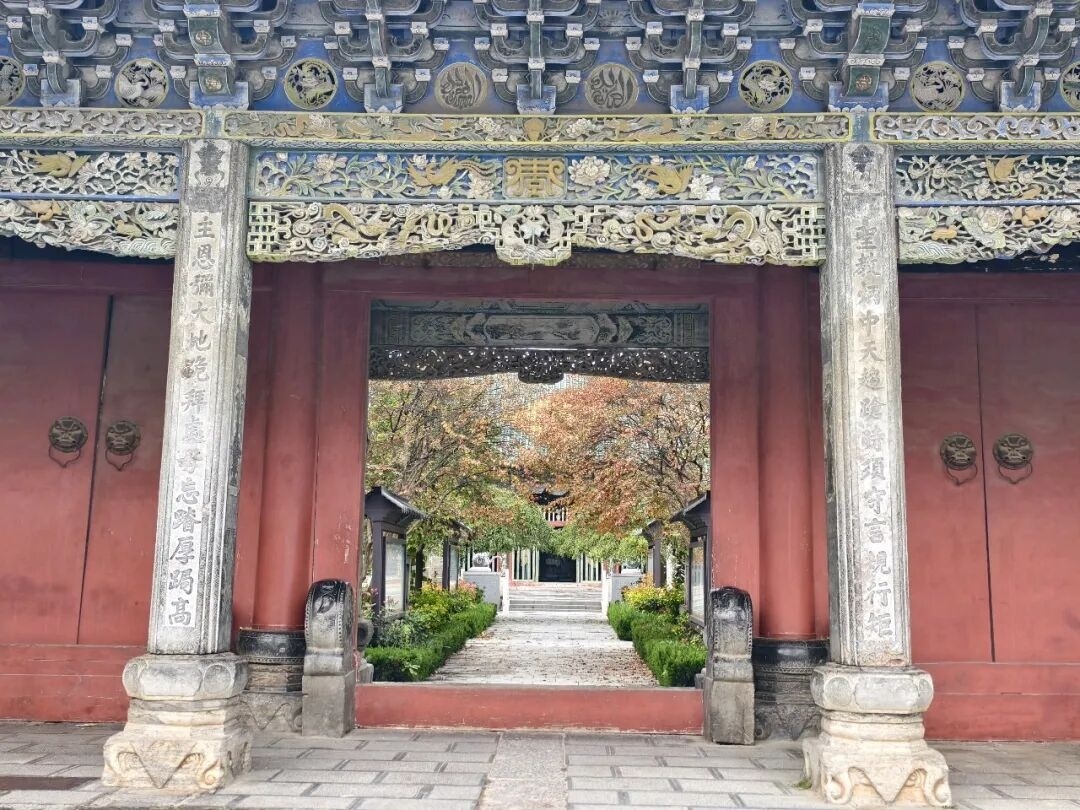
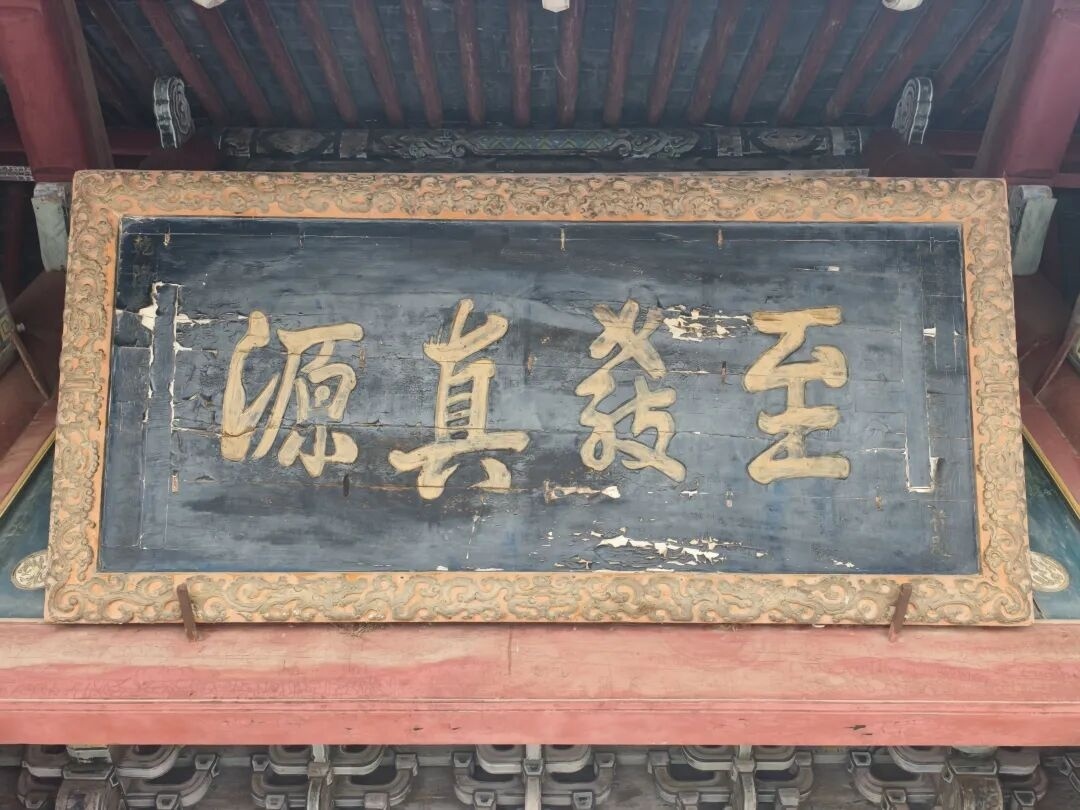
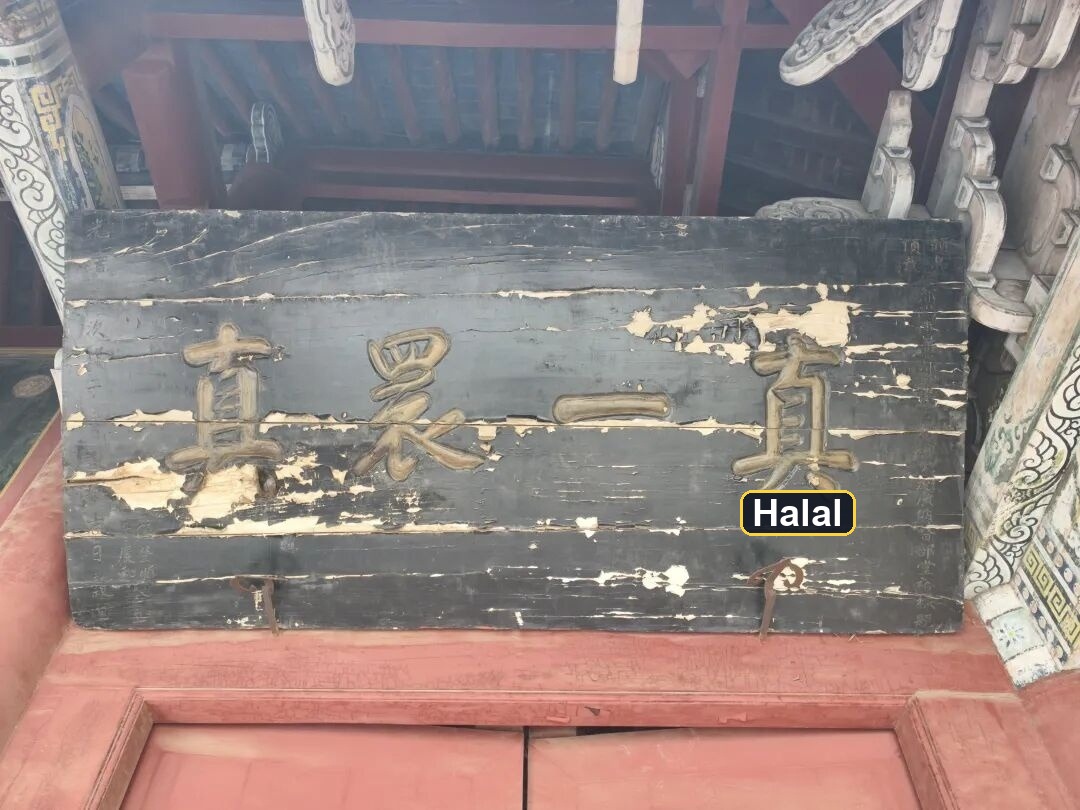
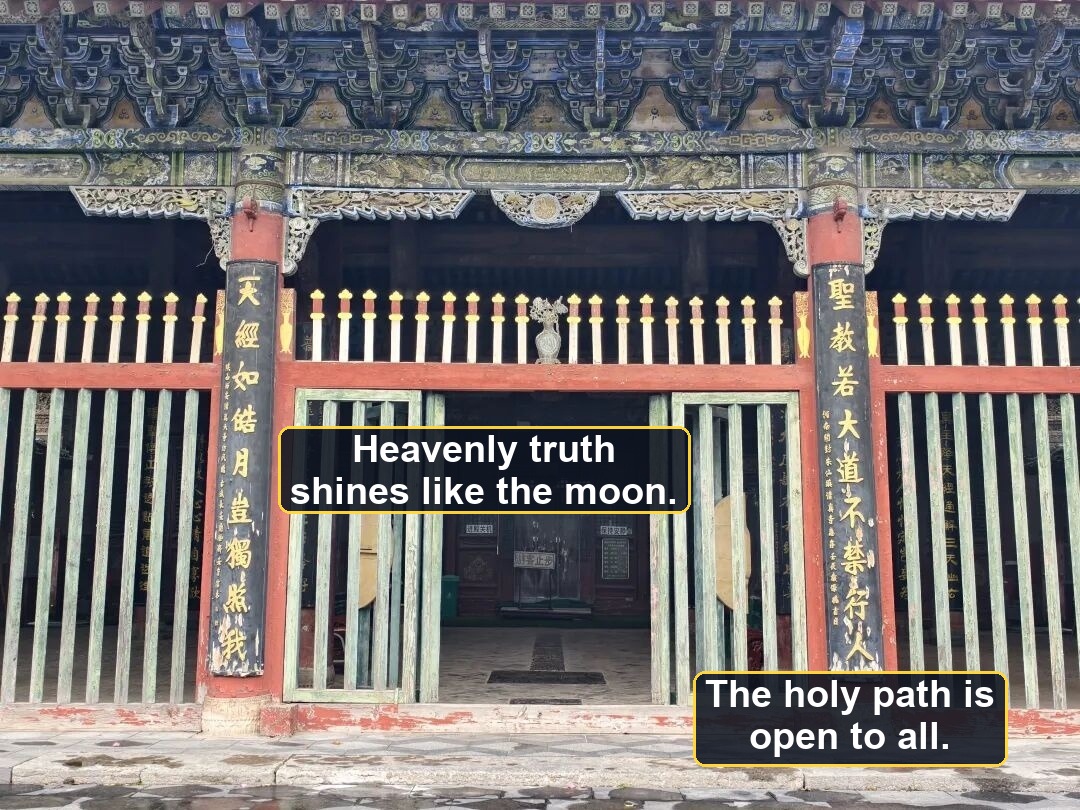
The front gate is the mosque’s signature structure, featuring delicate wood carvings of auspicious animals. The stone columns are beautifully crafted, decorated with carvings of vases, flowers, and birds. A couplet is engraved in the center pillar, reading: "In the land covered by Allah’s grace, do not forget to tread carefully and stand tall when performing dua (prayer); when following the sacred teachings, always uphold your words and conduct." The couplet encourages people to live with humility and integrity. Three historic plaques hang on the gate: the first, "Known Before the Rain," was written by the famous scholar Ji Yun in 1785 (the current version is a replica); the second, "True Source of the Supreme Teaching," was inscribed by Henan Governor Zhu Gui in 1765; and the third, "True Oneness of the World," was written by Huguang Viceroy Yulu in 1889.
Wood carvings under the gate’s eaves (Photo 1).
Wood carvings under the gate’s eaves (Photo 2).
Wood carvings under the gate’s eaves (Photo 3).
Wood carvings under the gate’s eaves (Photo 4).
The stone columns of the front gate.
Antique-style stone carvings on the inner side of the columns.
Flower and bird stone carvings on the inner side of the columns.
The "Known Before the Rain" plaque.
The "True Source of the Supreme Teaching" plaque.
The "True Oneness of the World" plaque.
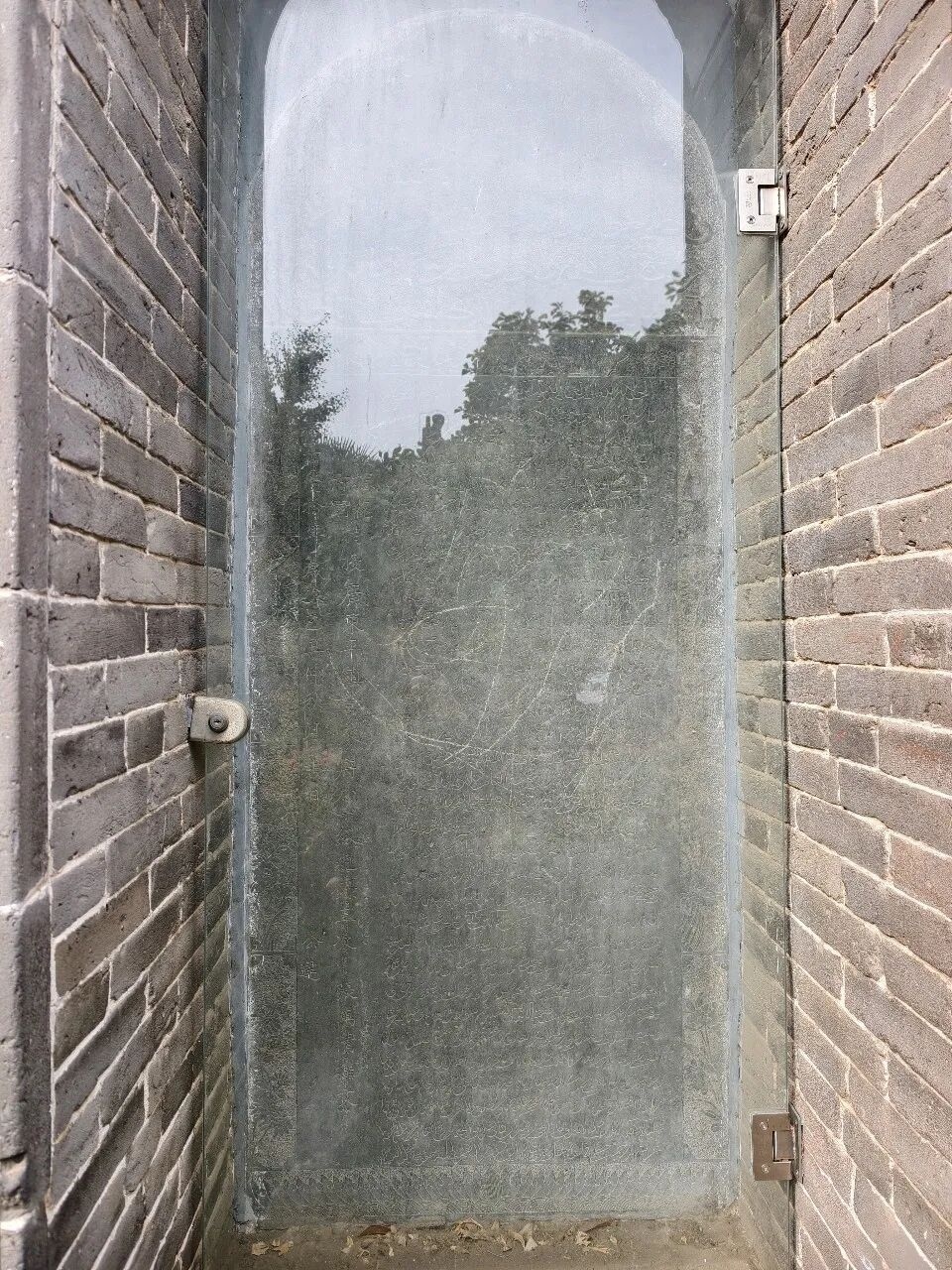
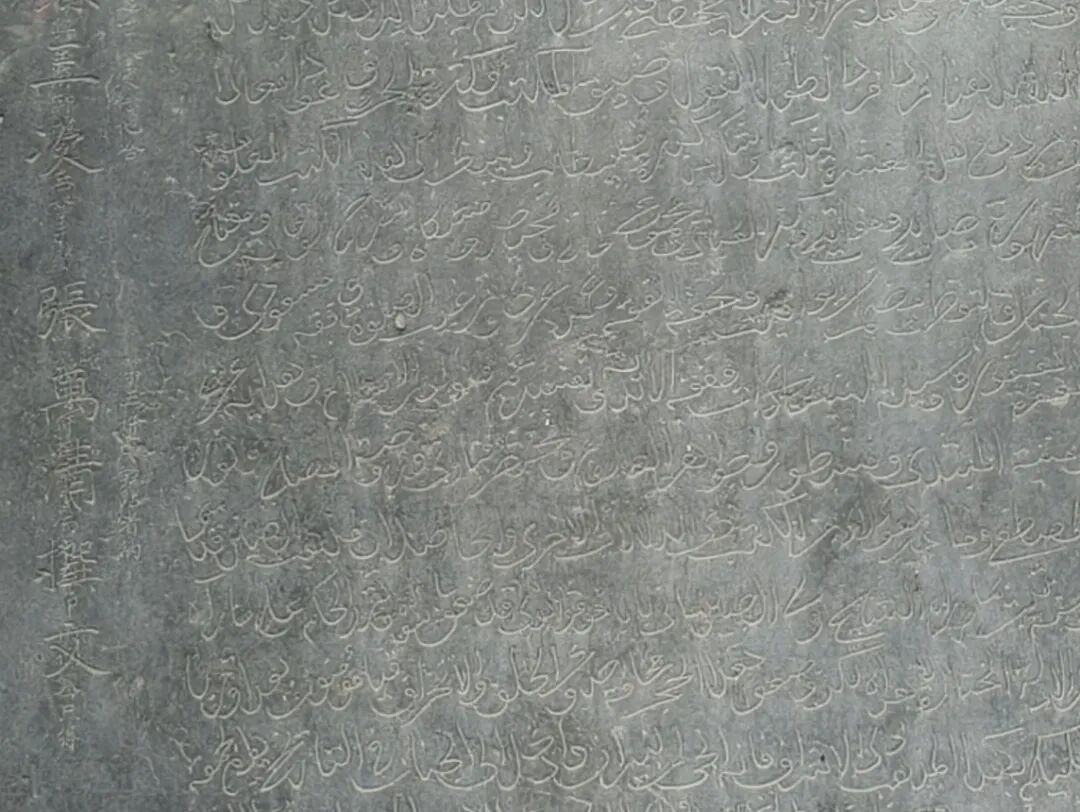
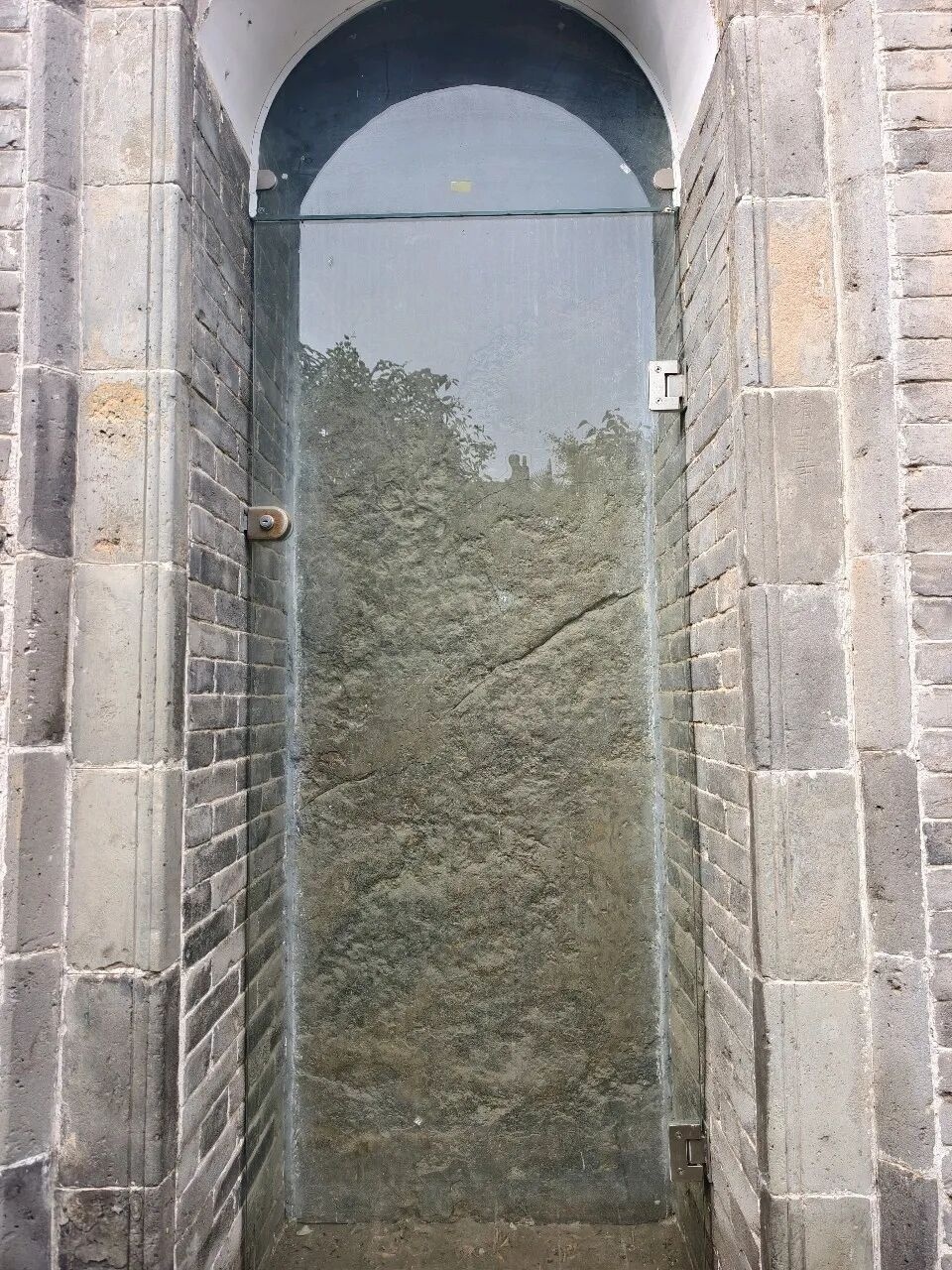
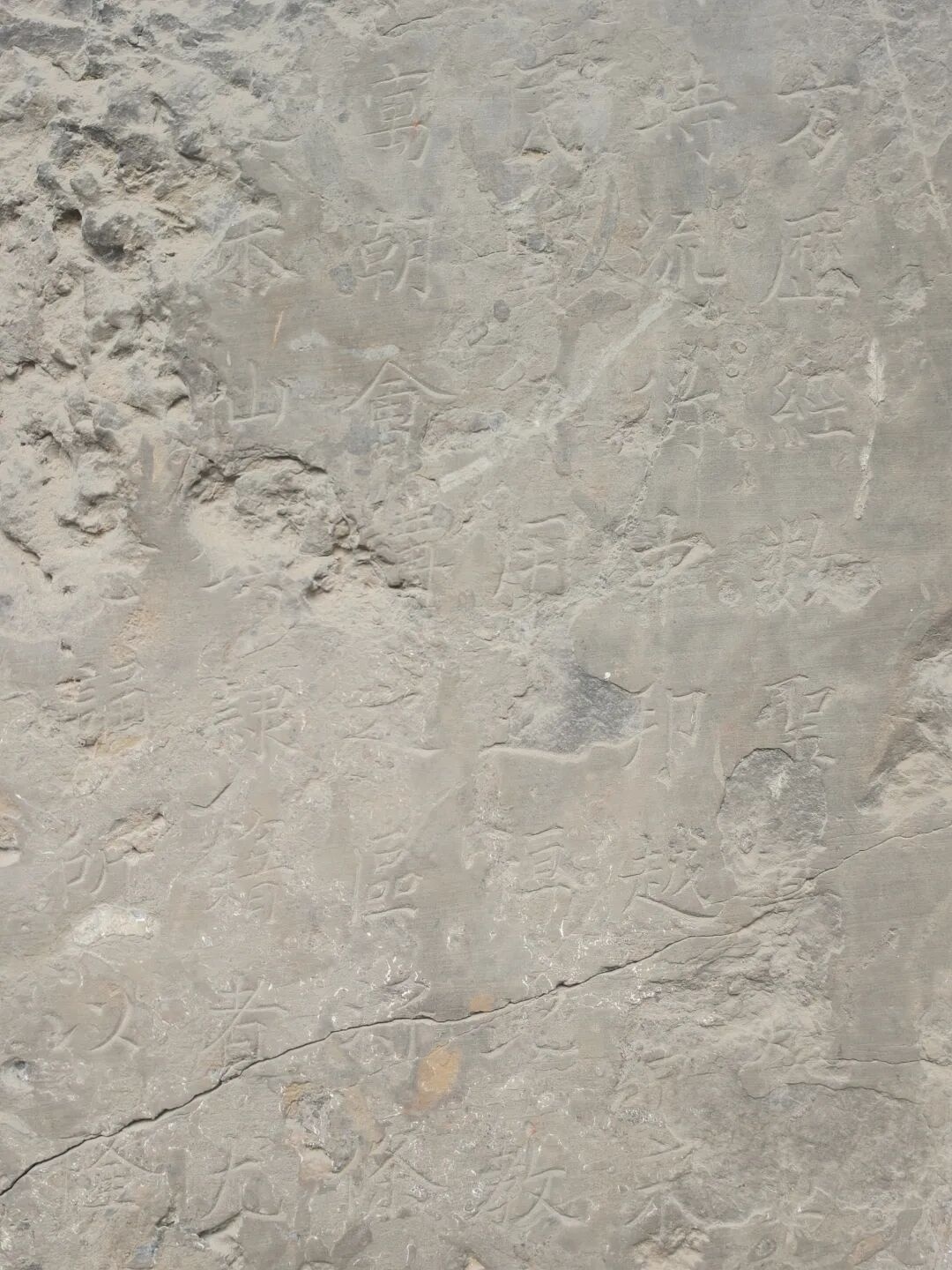
There are two ancient stone tablets in the courtyard. One is a Chinese-language tablet from 1767 that has been heavily weathered over time. The other is an Arabic-language tablet from 1805, which is said to be the most well-preserved Arabic inscription in all of Henan.
The Arabic-language tablet from 1805.
Detail of the Arabic-language tablet.
The Chinese-language tablet from 1767.
Detail of the Chinese-language tablet from 1767.
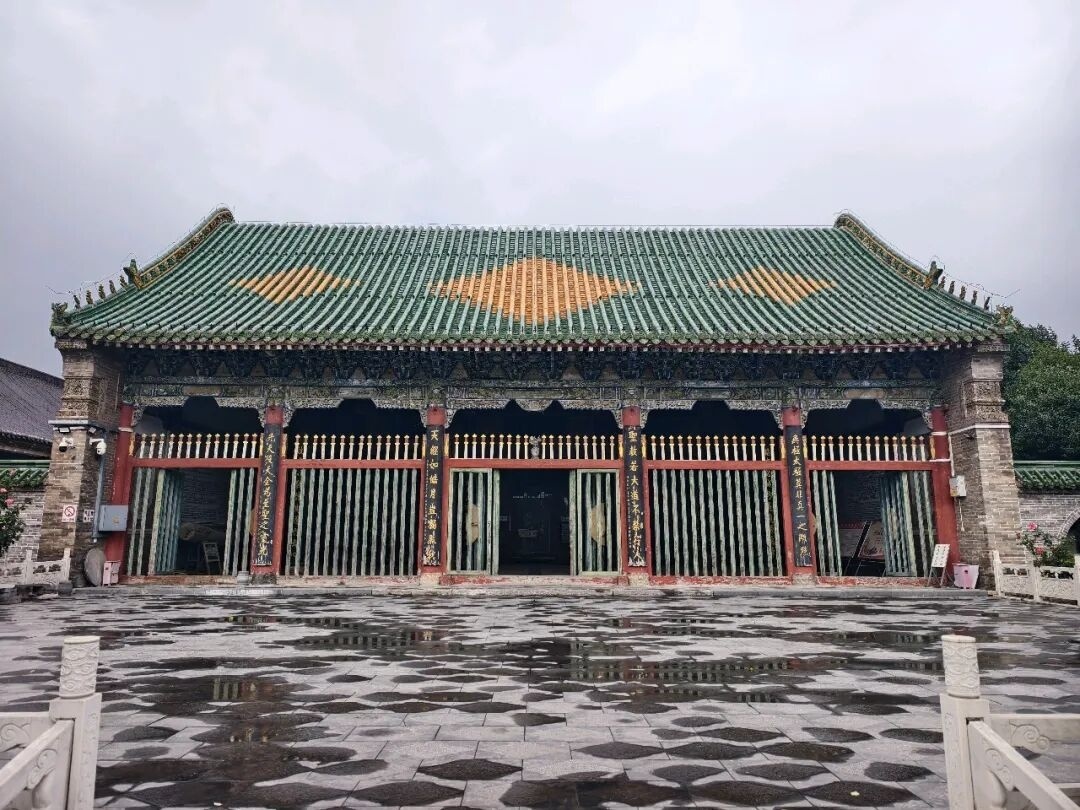
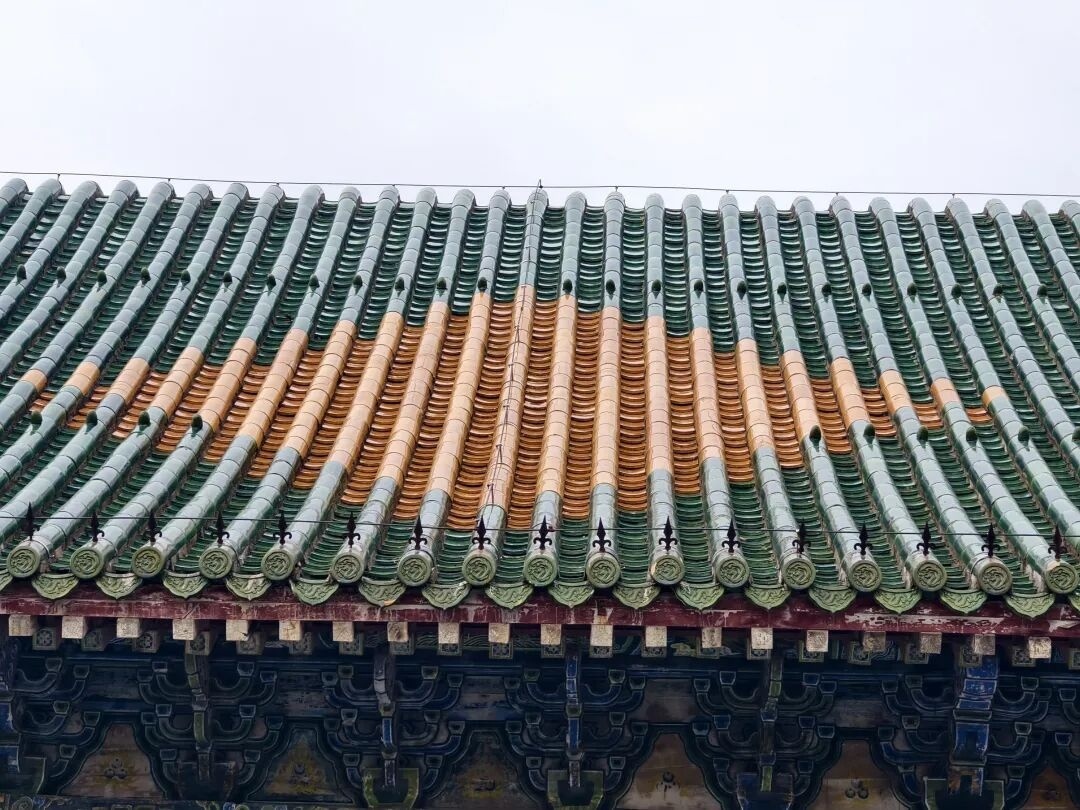
The main prayer hall is a Qing Dynasty structure designed with connected roof sections. The front is a shed-style roof, and the back is a hard-gabled roof, each five bays wide and two bays deep. The brick carvings on the hall’s roof edges are stunning, featuring detailed chrysanthemum patterns. The roof is covered in green glazed tiles with yellow diamond-shaped patterns. A glazed vase with flame motifs sits on the main roof ridge. Between the hall and the gate, there are dozens of side rooms, all featuring traditional hard-gabled roofs.
The main prayer hall.
The yellow diamond-shaped glazed tile roof of the prayer hall.
The main entrance to the prayer hall.
Wood carvings under the prayer hall’s eaves.
Brick carvings on the roof edge of the prayer hall (Photo 1).
Brick carvings on the roof edge of the prayer hall (Photo 2).
The beam structure inside the prayer hall.
Interior view of the prayer hall (Photo 1).
Interior view of the prayer hall (Photo 2).
The rear hall.
The exterior of the back hall.
The glazed vase ornament on the main ridge of the back hall.
A view of the courtyard at Zhuxian Town Mosque.
The side chambers (Photo 1).
The side chambers (Photo 2).
The Xingzhong Pavilion (Bell Pavilion).
The main hall features unique fish-scale windows, where large fish scales were used in place of glass to let in light. These windows are said to date back to the Ming Dynasty, with each scale measuring about 8 square centimeters; there are approximately 720 scales remaining today. After nearly 300 years, some of the scales have been lost, and the ones left behind have turned a yellowish hue.
The back hall.
The fish-scale windows.
The ancient locust tree in the courtyard is also known as the 'Horse-Tethering Locust,' the 'Yue Locust,' or the 'Acacia Locust.' Legend has it that when General Yue Fei was stationed in Zhuxian Town, he tethered his warhorse to this tree. After Yue Fei was tragically killed, the tree supposedly withered and died. During later renovations of the mosque, the dried trunk of the tree was carefully preserved and now sits inside the main hall, serving as a tribute to the memory and deep respect people hold for Yue Fei.
The Acacia Locust tree.
A side view of the Acacia Locust tree.
A close-up of the Acacia Locust tree (Photo 1).
A close-up of the Acacia Locust tree (Photo 2).
Having weathered hundreds of years of history, the Zhuxian Town Mosque stands alongside the Yue Fei Temple as a witness to the past, holding a deep and rich cultural heritage.
Notes:
1. Address: Laohudong Street, Zhuxian Town, Xiangfu District, Kaifeng City, Henan Province.
2. Status: Listed as a Major Historical and Cultural Site Protected at the National Level (6th Batch). view all
The Zhuxian Town Mosque is located on Laohudong Street in Kaifeng, Henan province. It was designated a major national historical and cultural heritage site in 2006, serving as a landmark that preserves the history of the region’s diverse cultural influences.
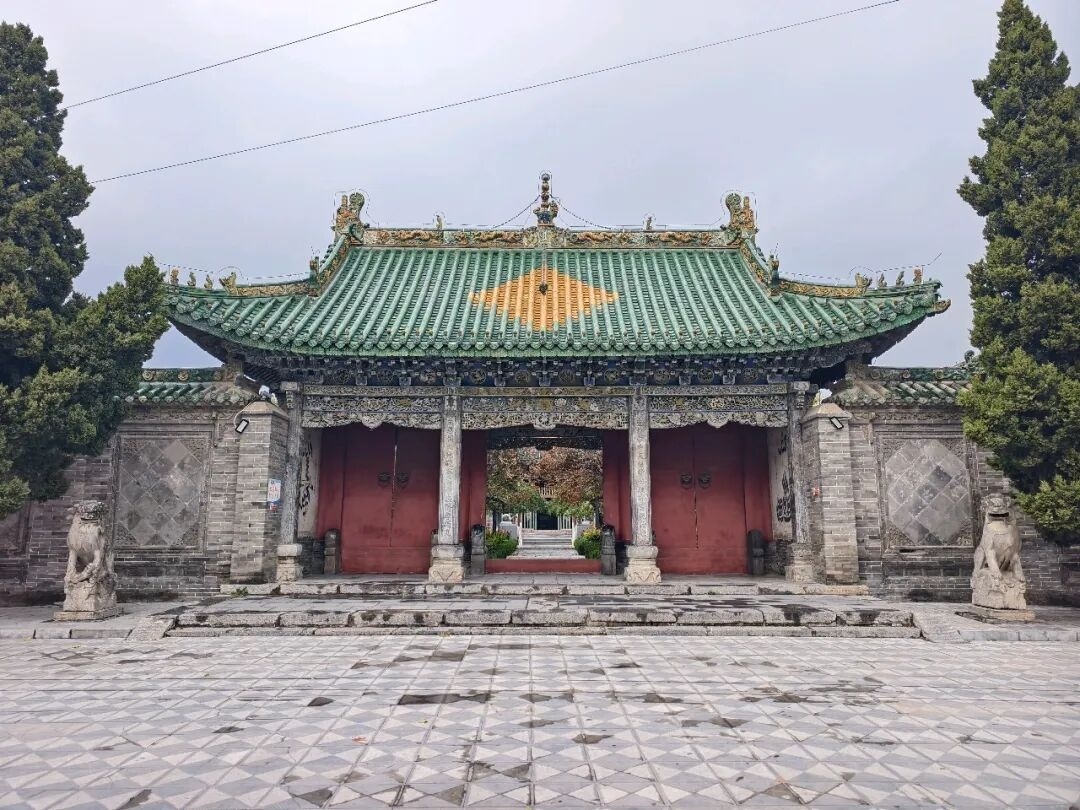
The entrance gate of the Zhuxian Town Mosque.
The Zhuxian Town Mosque was first built during the Taiping Xingguo era of the Northern Song Dynasty. It was later expanded in 1531 and renovated in 1744, with most of the current structures dating back to the Qing Dynasty. During the Ming and Qing eras, Zhuxian Town was a booming trade hub. Many Hui Muslim merchants settled here and built seven different mosques—the East, West, South, North, and Center mosques, plus two women’s mosques. The North Mosque, which is the current Zhuxian Town Mosque, is the oldest and largest of them all. It is the only one of the seven still standing today, a reminder of the local saying about the town’s “seven mosques and eight lanes.”
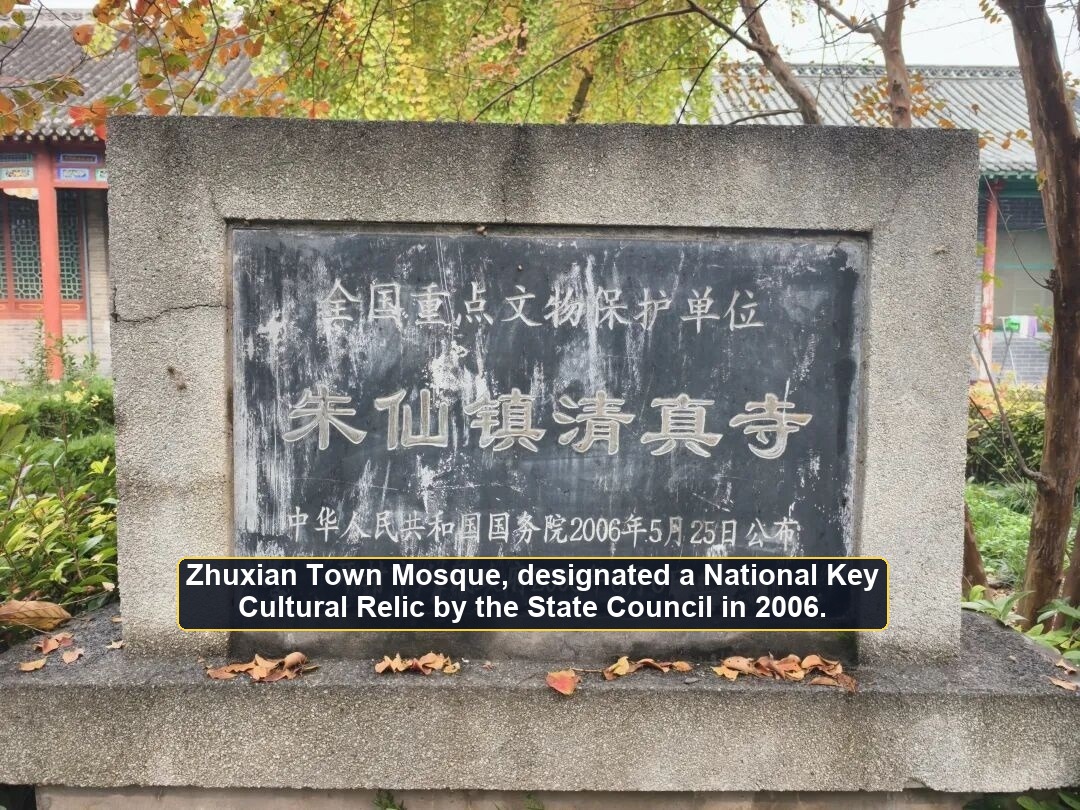
The stone tablet commemorating the mosque as a major national heritage site.
The mosque faces east and covers over 9,000 square meters, following a traditional quadrangle courtyard layout. The buildings are lined up along a central axis; the front gate is at the east end, featuring a single-eave gabled roof with stone lions standing guard outside. The site includes a stele pavilion, a shed-style hall, the main prayer hall, a rear kiln hall, and various side rooms. A rear gate with a hanging gable roof sits on the west end of the axis. The front and back gates line up perfectly, forming a courtyard shaped like the Chinese character "Hui"—a classic design for Qing Dynasty mosques.
The front gate.
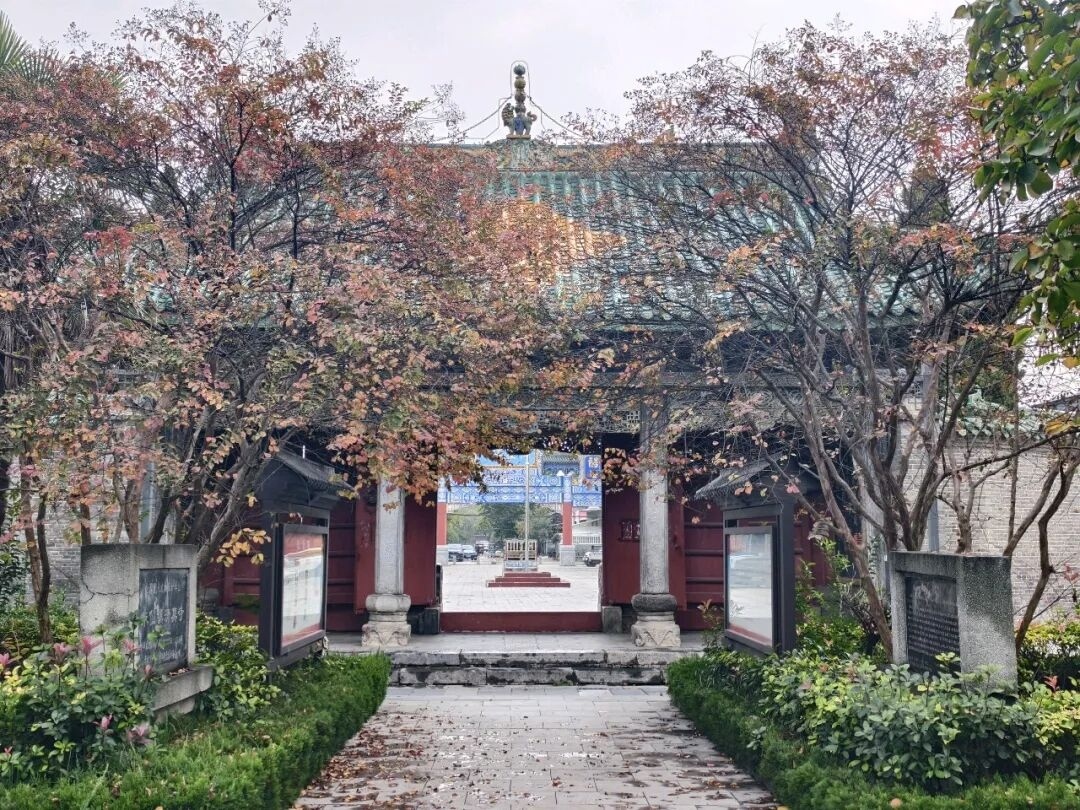
The inside of the front gate.
The front gate is the mosque’s signature structure, featuring delicate wood carvings of auspicious animals. The stone columns are beautifully crafted, decorated with carvings of vases, flowers, and birds. A couplet is engraved in the center pillar, reading: "In the land covered by Allah’s grace, do not forget to tread carefully and stand tall when performing dua (prayer); when following the sacred teachings, always uphold your words and conduct." The couplet encourages people to live with humility and integrity. Three historic plaques hang on the gate: the first, "Known Before the Rain," was written by the famous scholar Ji Yun in 1785 (the current version is a replica); the second, "True Source of the Supreme Teaching," was inscribed by Henan Governor Zhu Gui in 1765; and the third, "True Oneness of the World," was written by Huguang Viceroy Yulu in 1889.
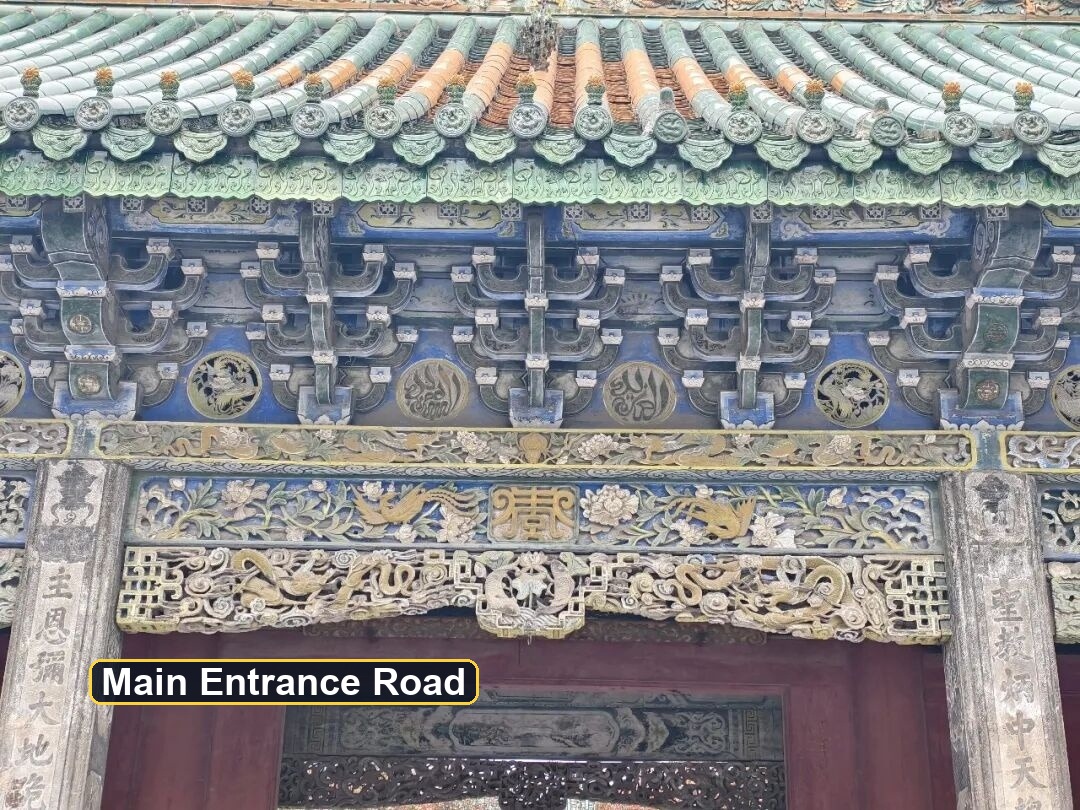
Wood carvings under the gate’s eaves (Photo 1).
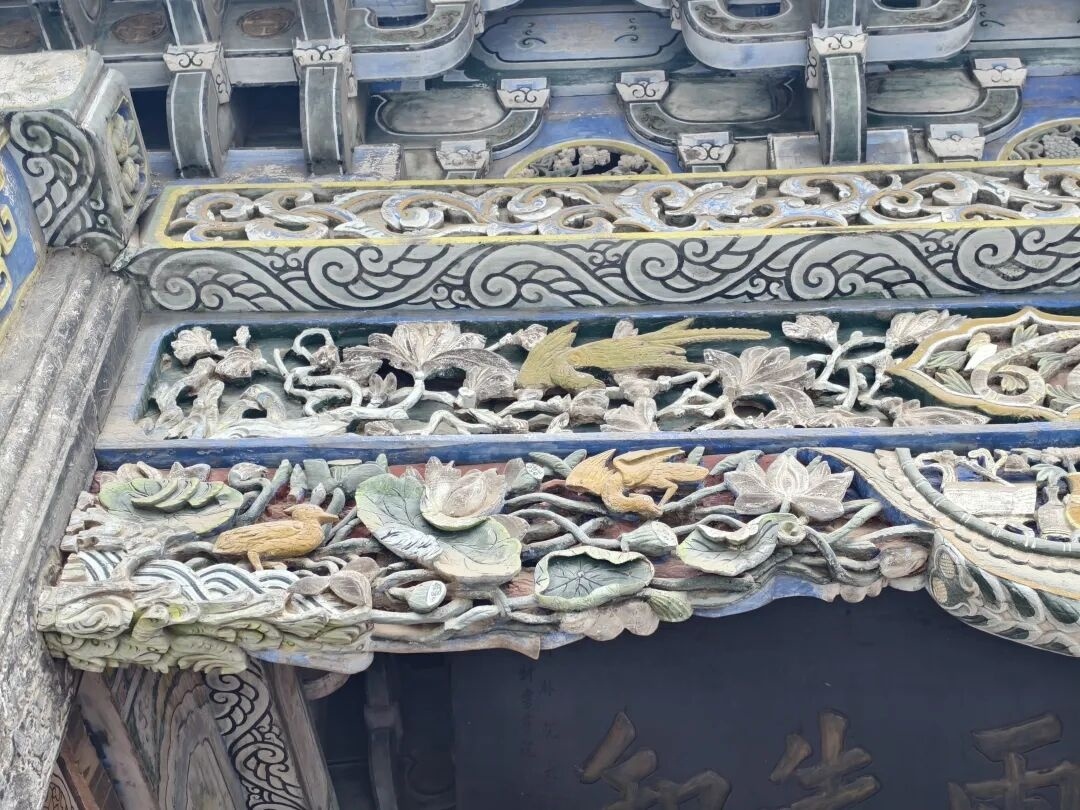
Wood carvings under the gate’s eaves (Photo 2).
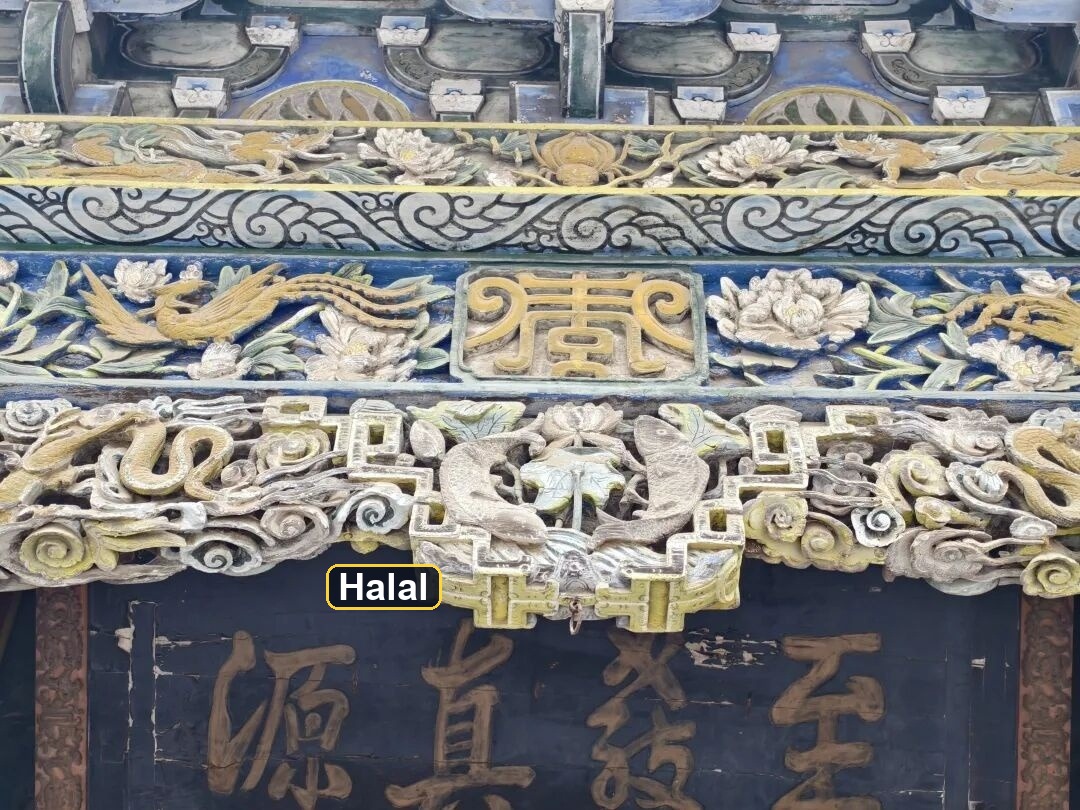
Wood carvings under the gate’s eaves (Photo 3).
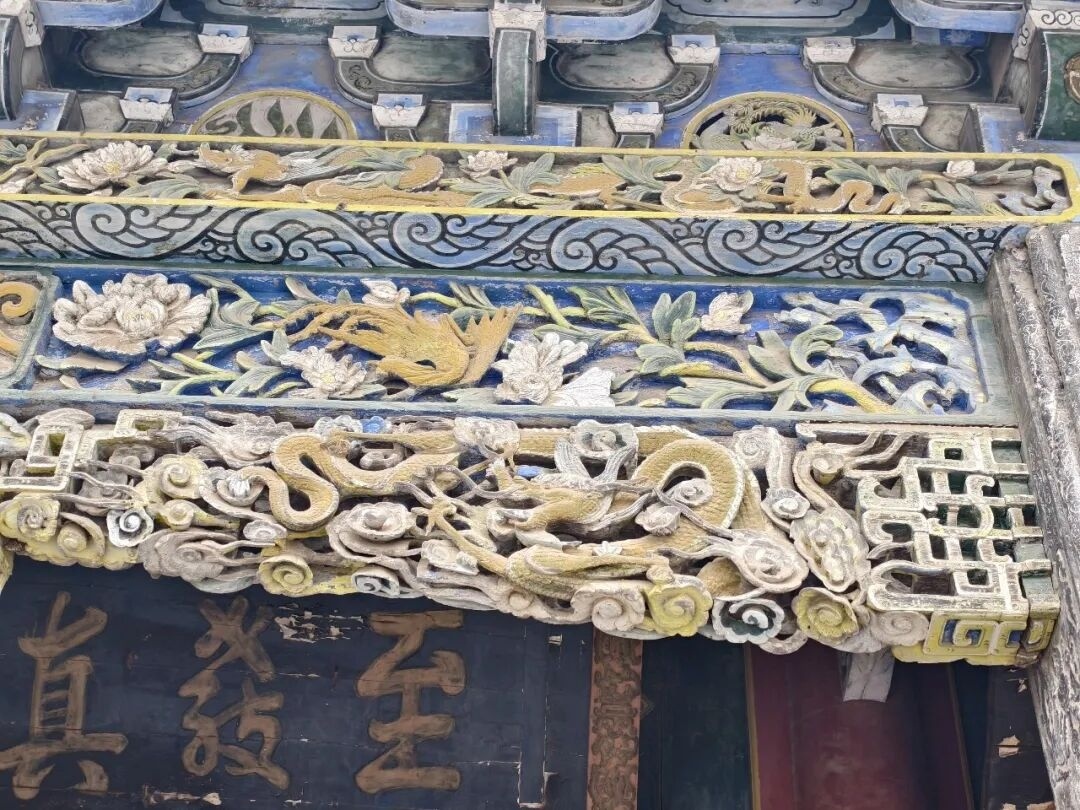
Wood carvings under the gate’s eaves (Photo 4).
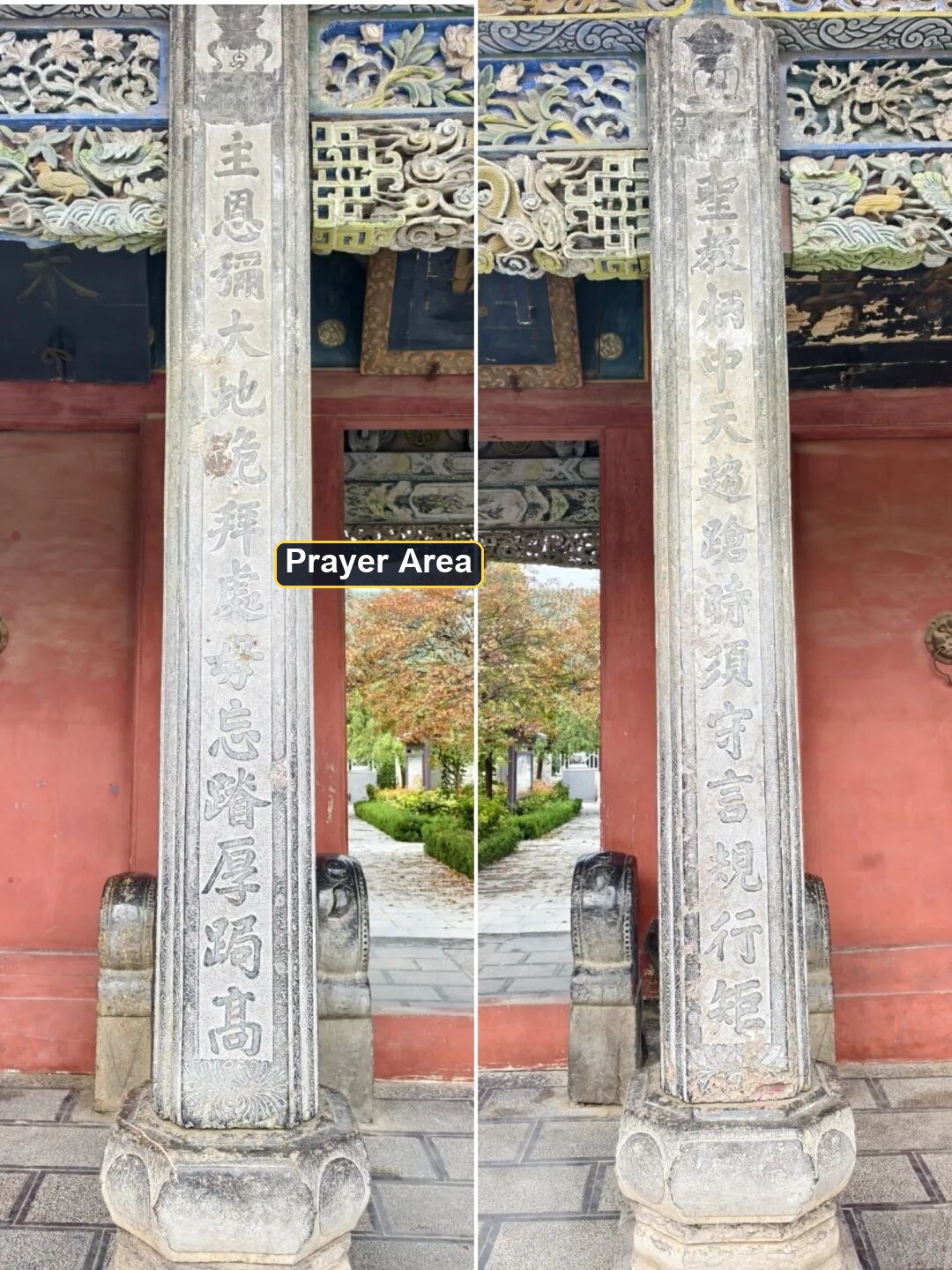
The stone columns of the front gate.
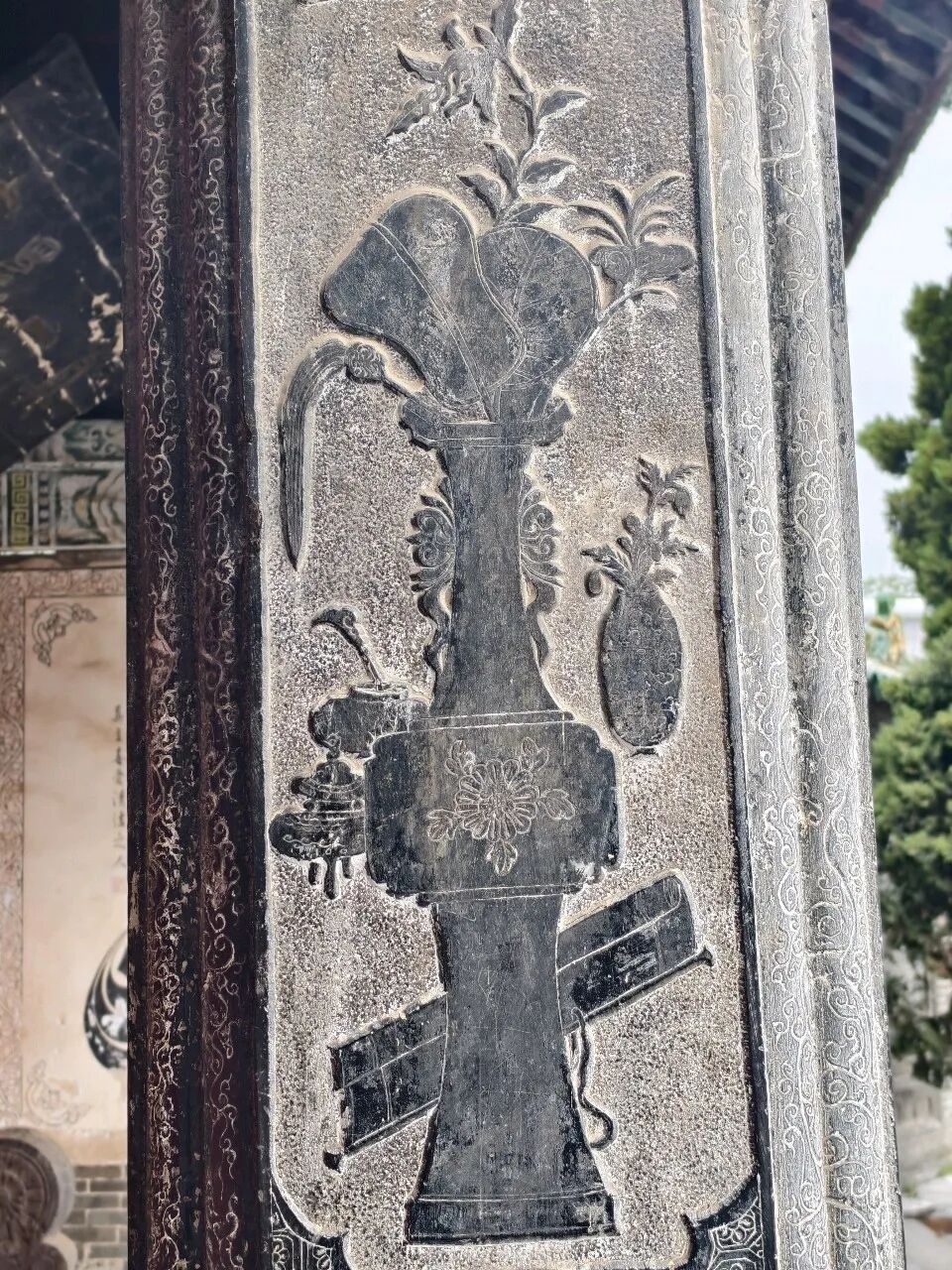
Antique-style stone carvings on the inner side of the columns.
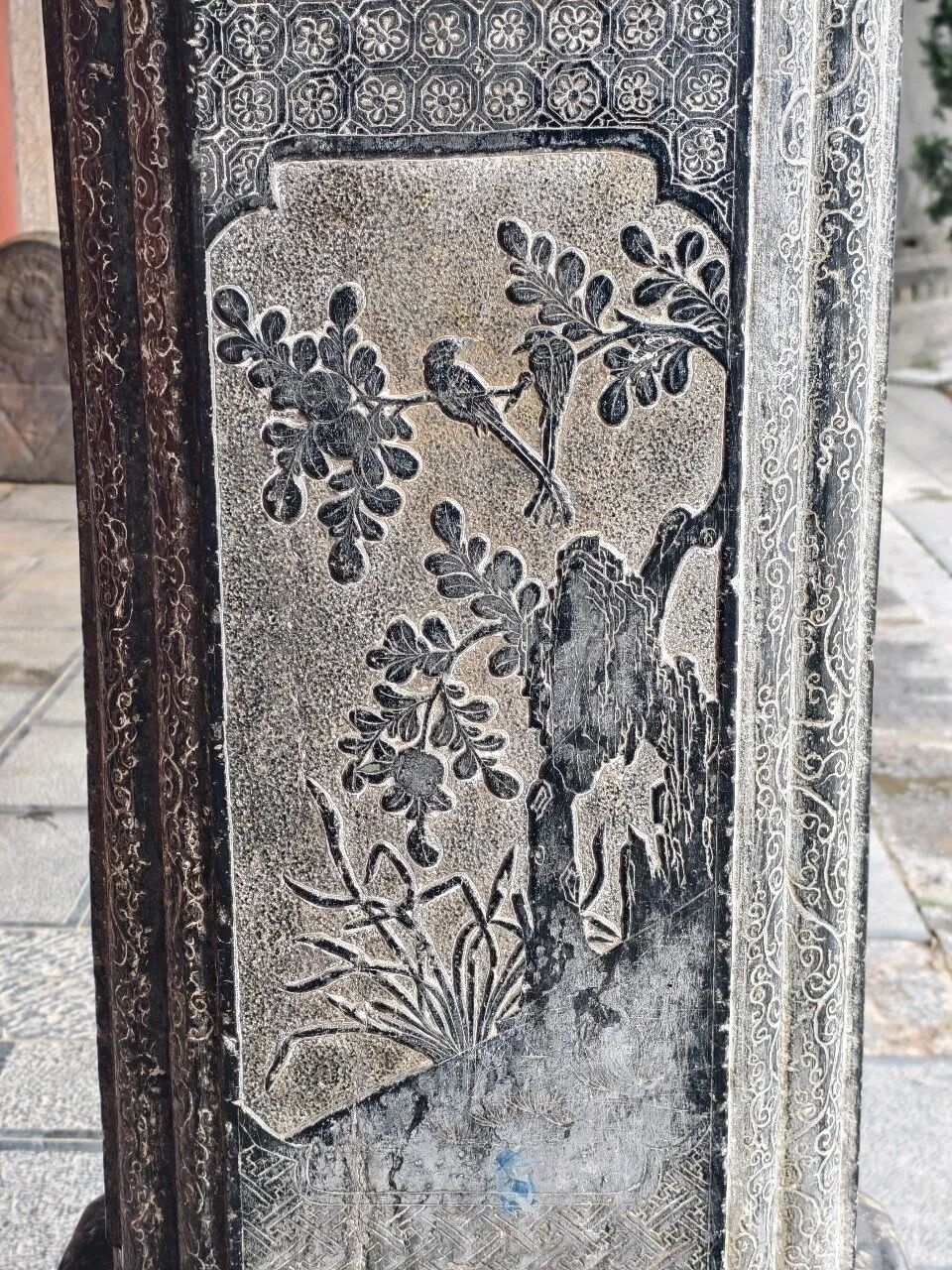
Flower and bird stone carvings on the inner side of the columns.
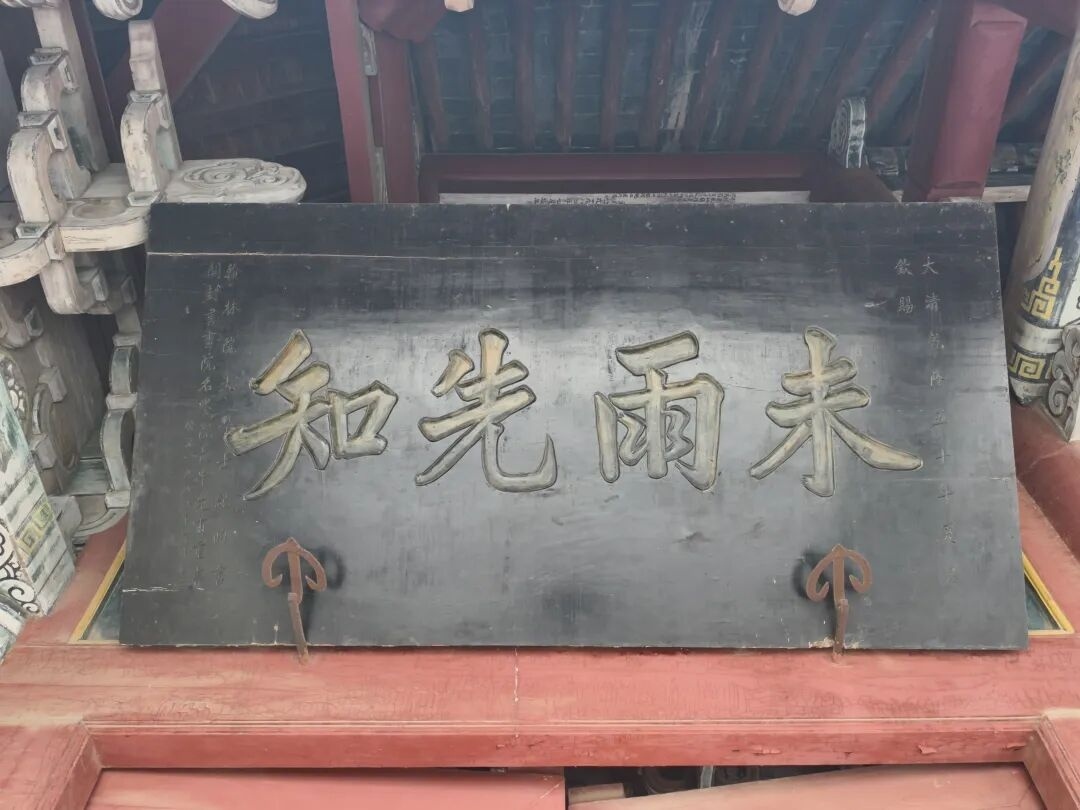
The "Known Before the Rain" plaque.
The "True Source of the Supreme Teaching" plaque.
The "True Oneness of the World" plaque.
There are two ancient stone tablets in the courtyard. One is a Chinese-language tablet from 1767 that has been heavily weathered over time. The other is an Arabic-language tablet from 1805, which is said to be the most well-preserved Arabic inscription in all of Henan.
The Arabic-language tablet from 1805.
Detail of the Arabic-language tablet.
The Chinese-language tablet from 1767.
Detail of the Chinese-language tablet from 1767.
The main prayer hall is a Qing Dynasty structure designed with connected roof sections. The front is a shed-style roof, and the back is a hard-gabled roof, each five bays wide and two bays deep. The brick carvings on the hall’s roof edges are stunning, featuring detailed chrysanthemum patterns. The roof is covered in green glazed tiles with yellow diamond-shaped patterns. A glazed vase with flame motifs sits on the main roof ridge. Between the hall and the gate, there are dozens of side rooms, all featuring traditional hard-gabled roofs.
The main prayer hall.
The yellow diamond-shaped glazed tile roof of the prayer hall.
The main entrance to the prayer hall.
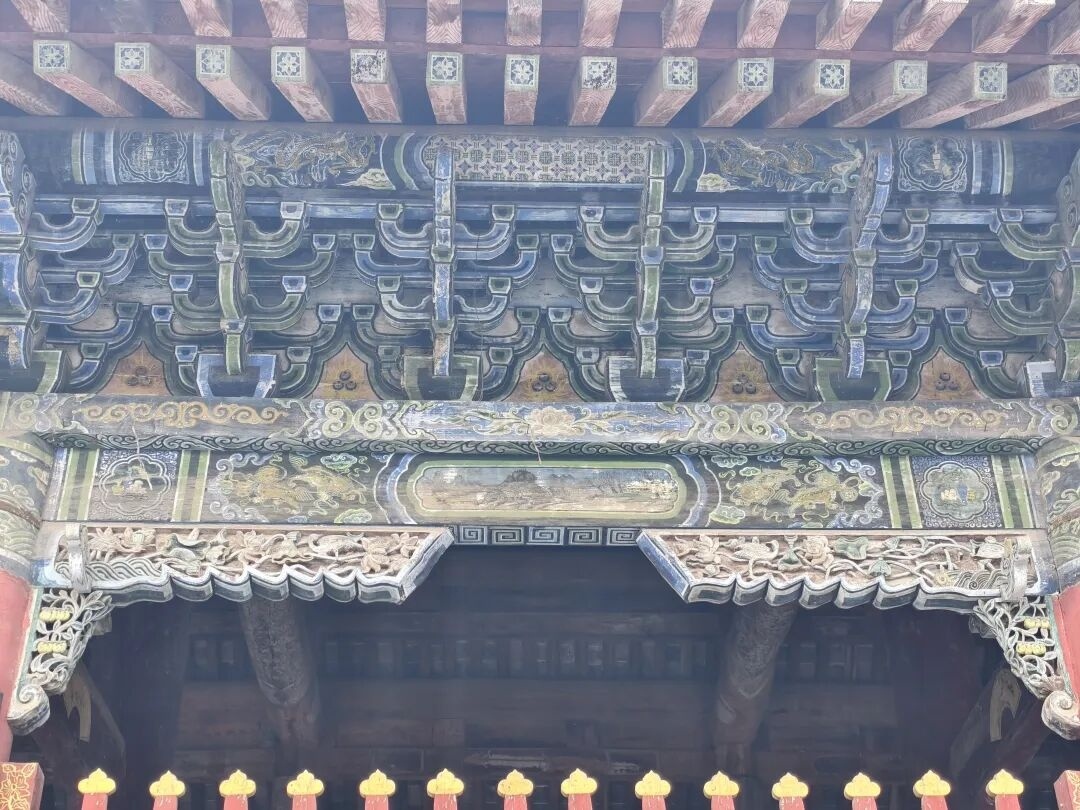
Wood carvings under the prayer hall’s eaves.
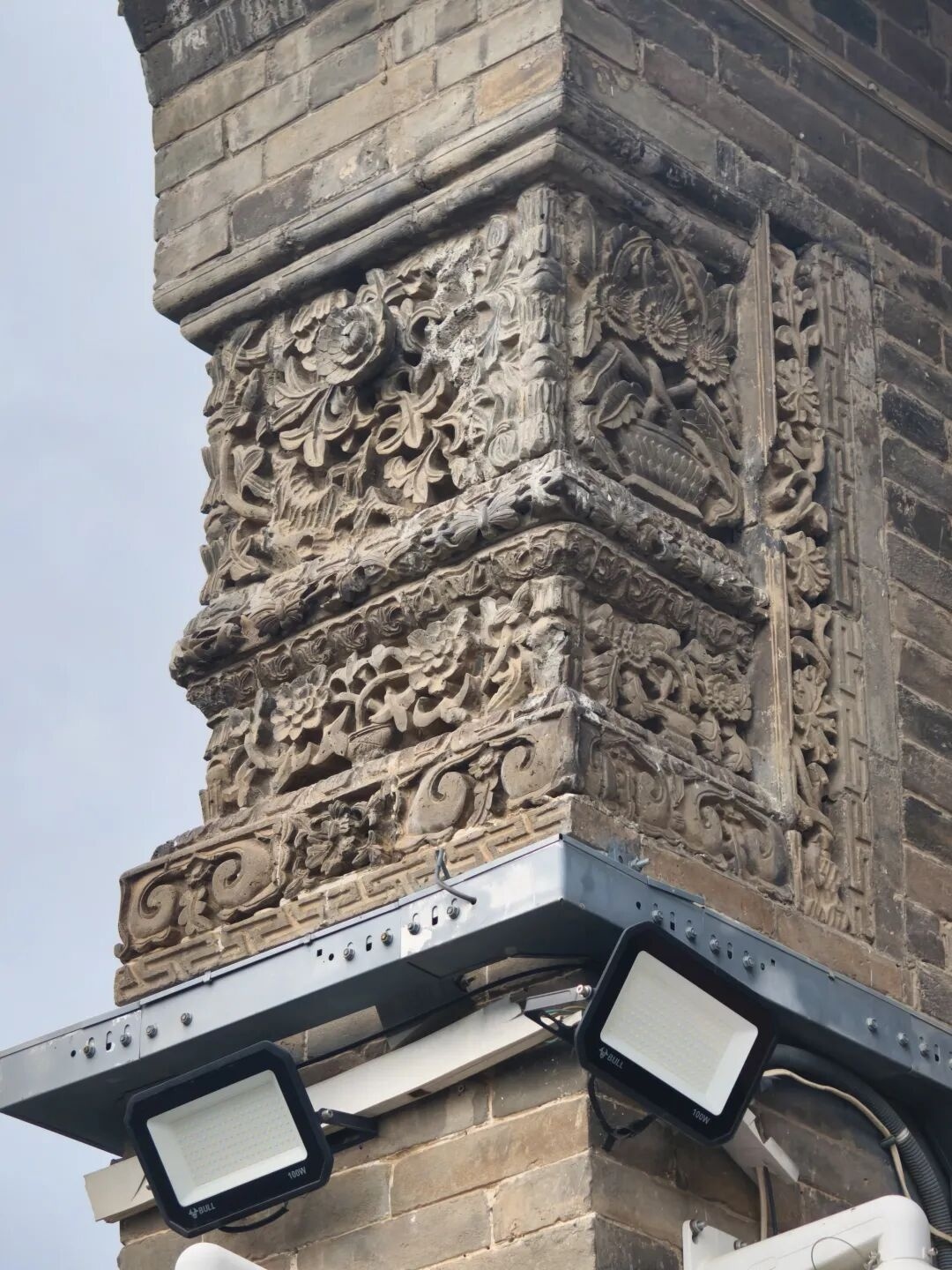
Brick carvings on the roof edge of the prayer hall (Photo 1).
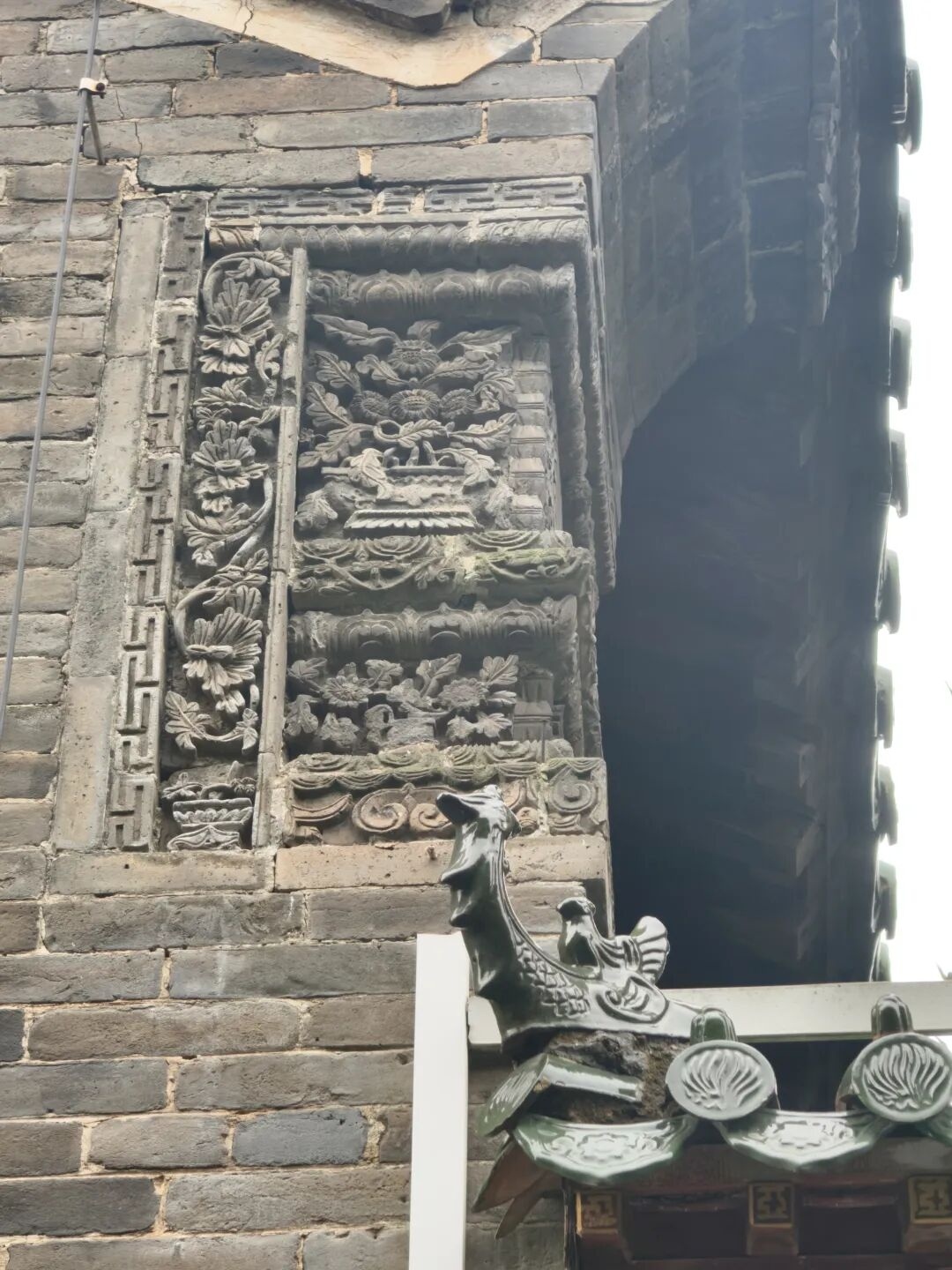
Brick carvings on the roof edge of the prayer hall (Photo 2).
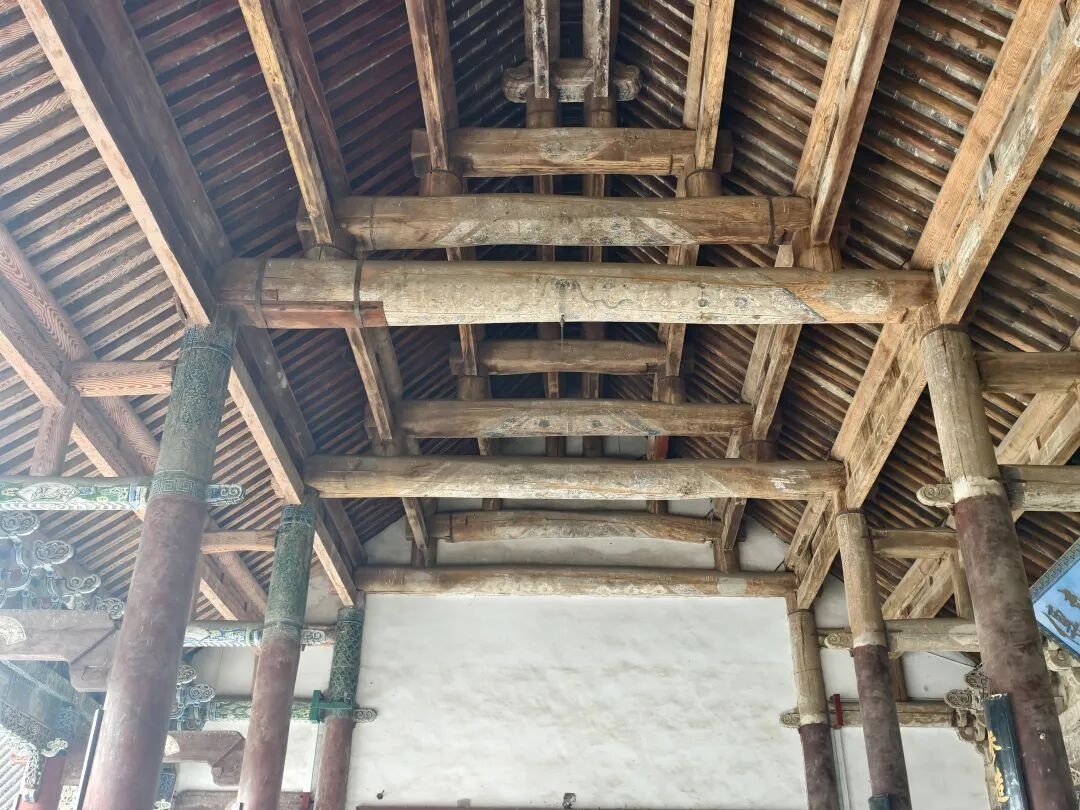
The beam structure inside the prayer hall.
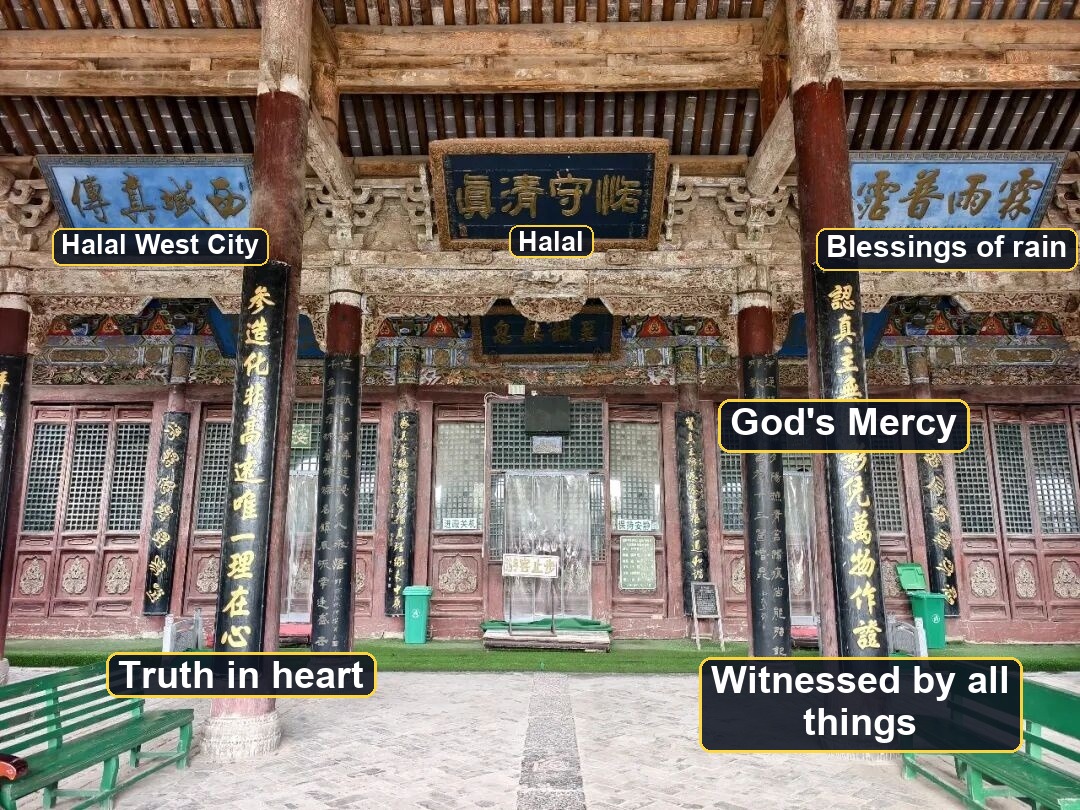
Interior view of the prayer hall (Photo 1).
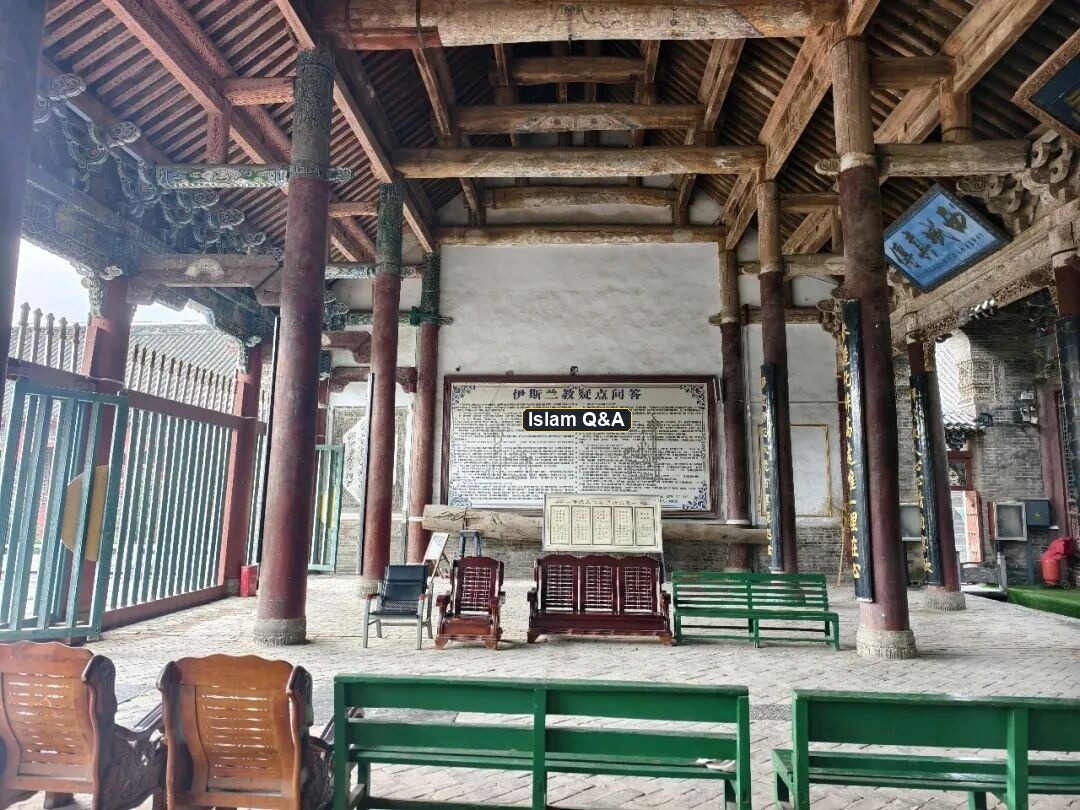
Interior view of the prayer hall (Photo 2).
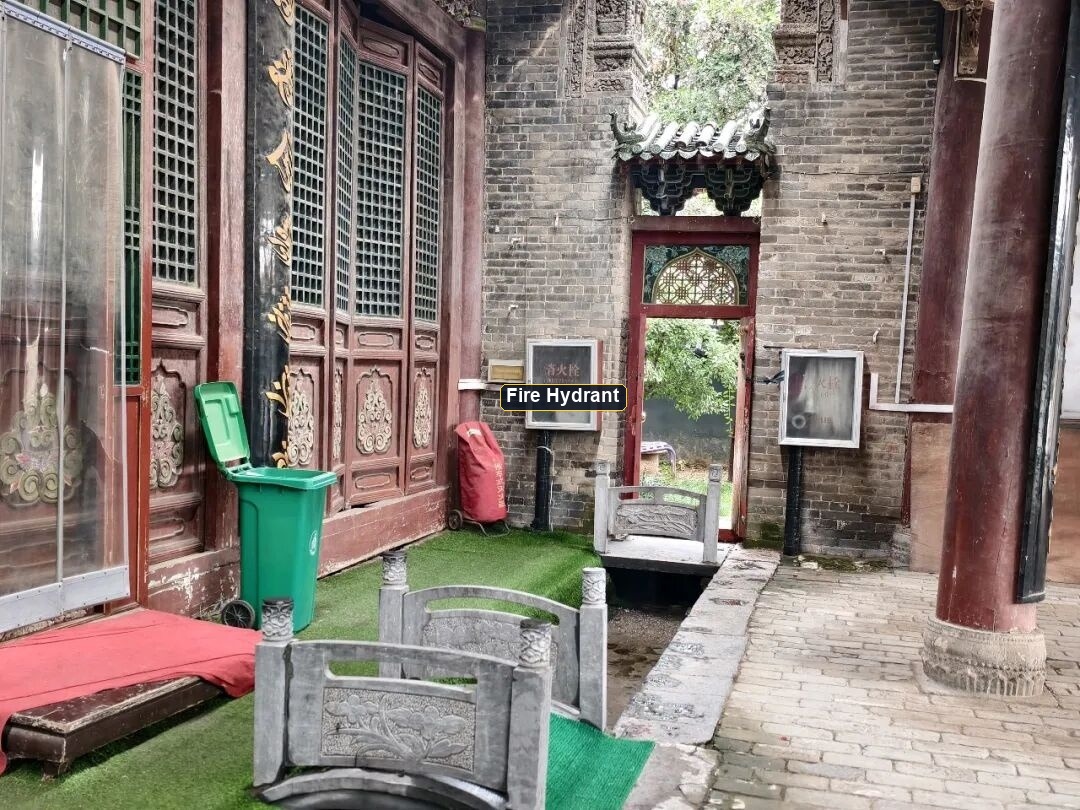
The rear hall.
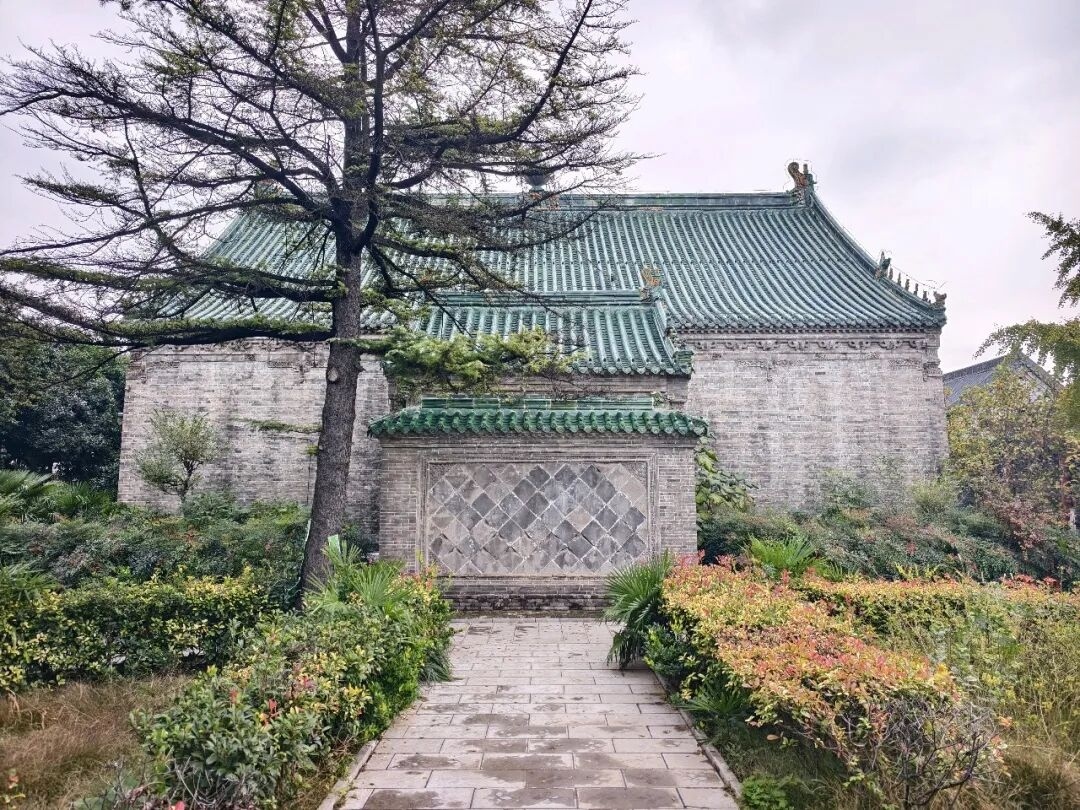
The exterior of the back hall.
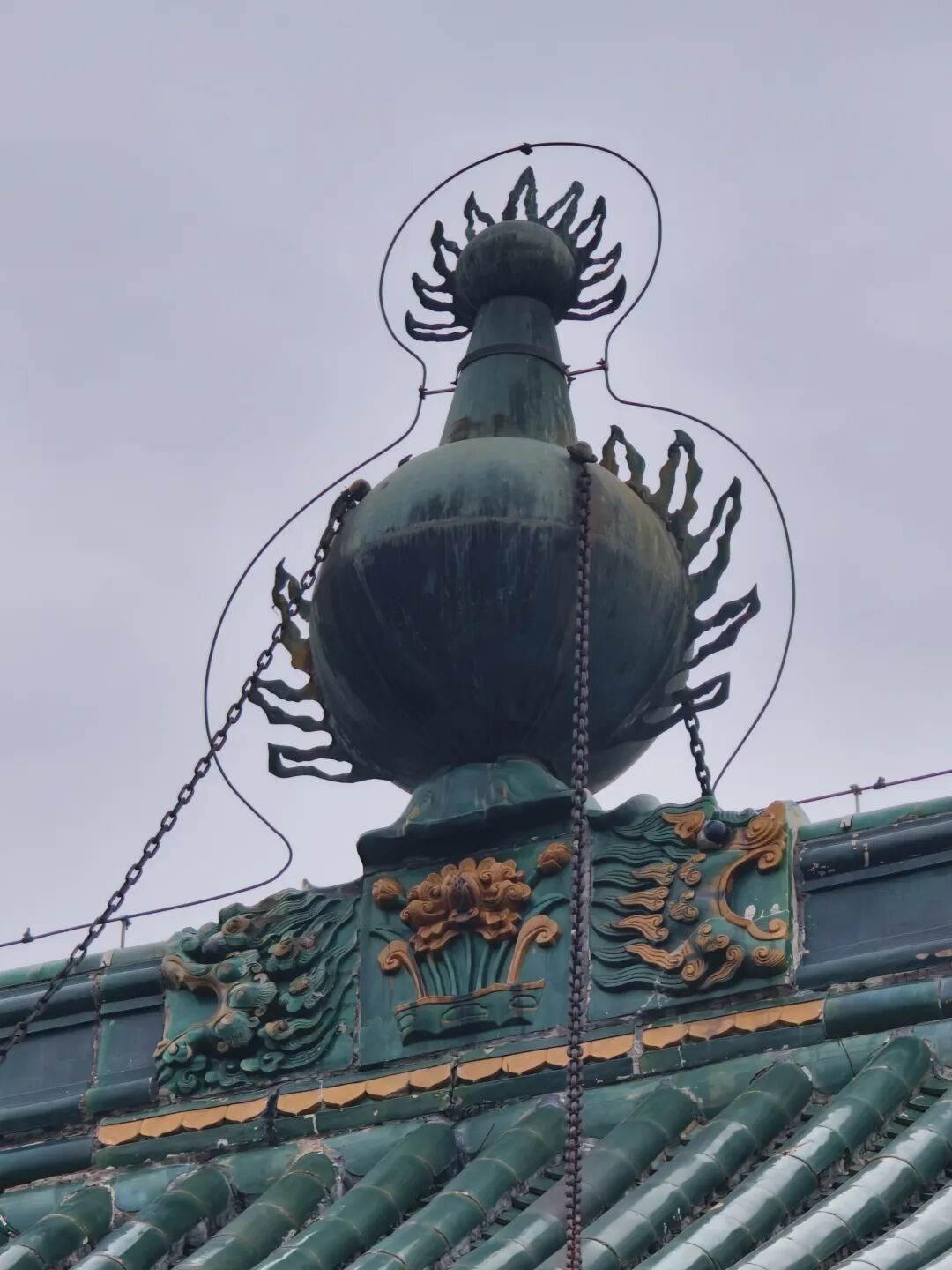
The glazed vase ornament on the main ridge of the back hall.
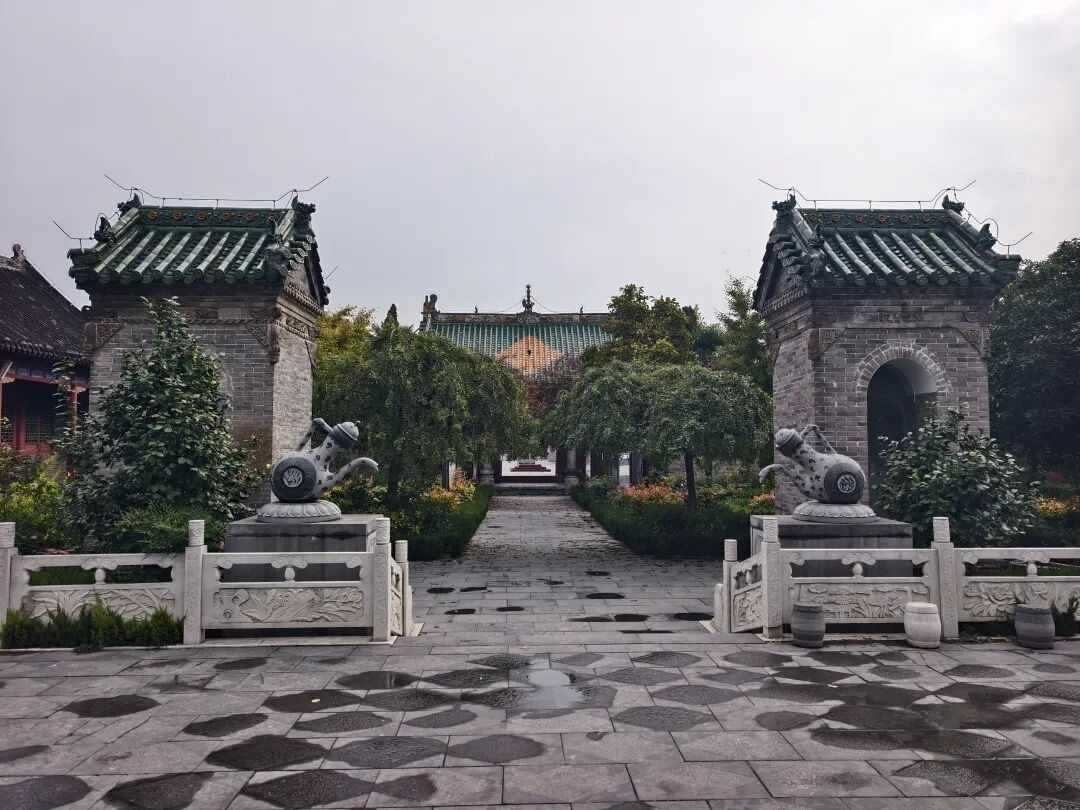
A view of the courtyard at Zhuxian Town Mosque.
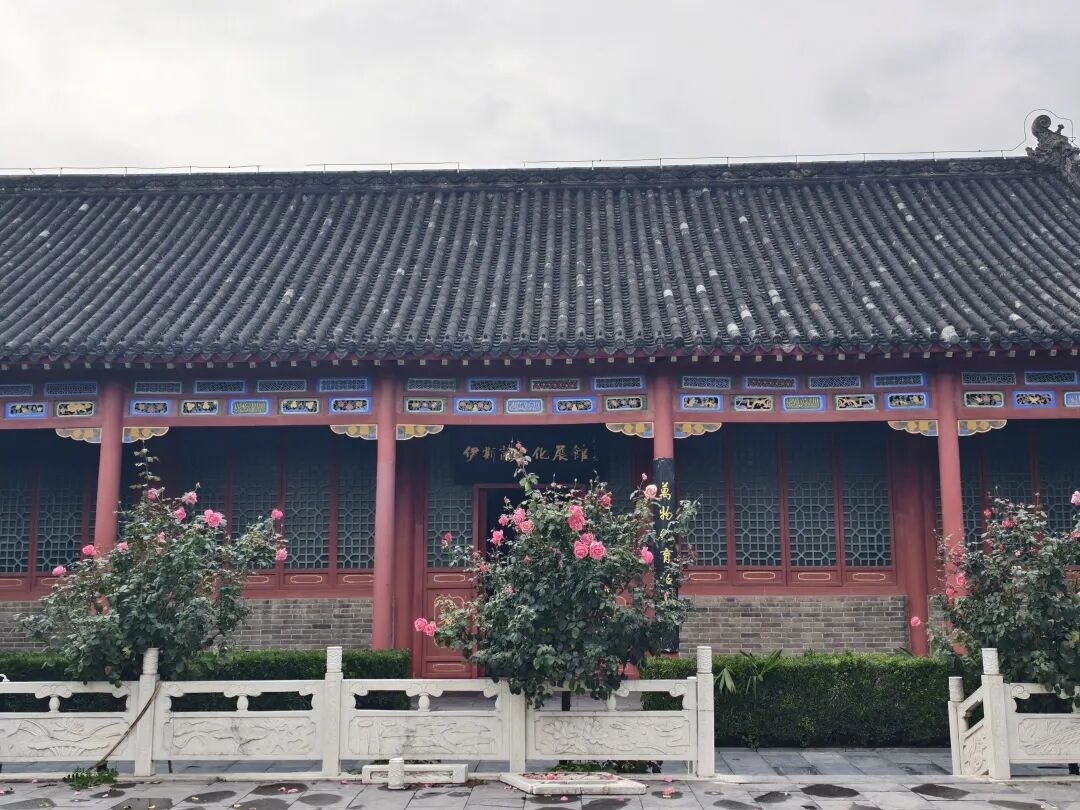
The side chambers (Photo 1).
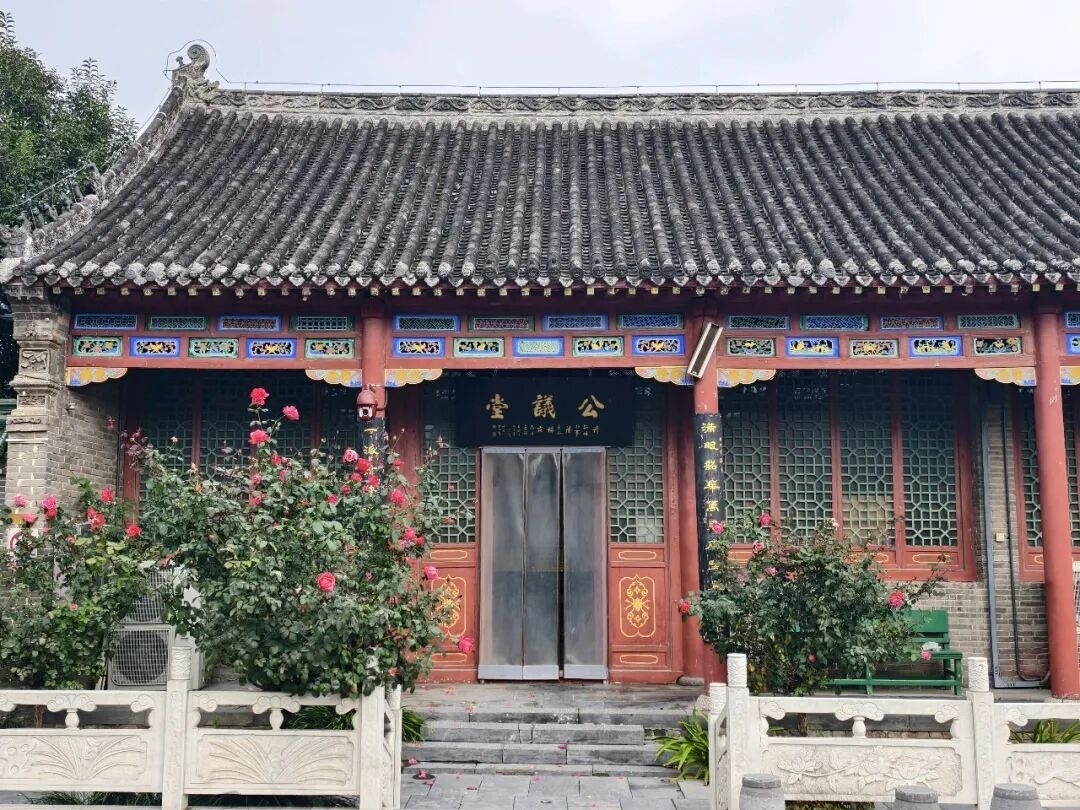
The side chambers (Photo 2).
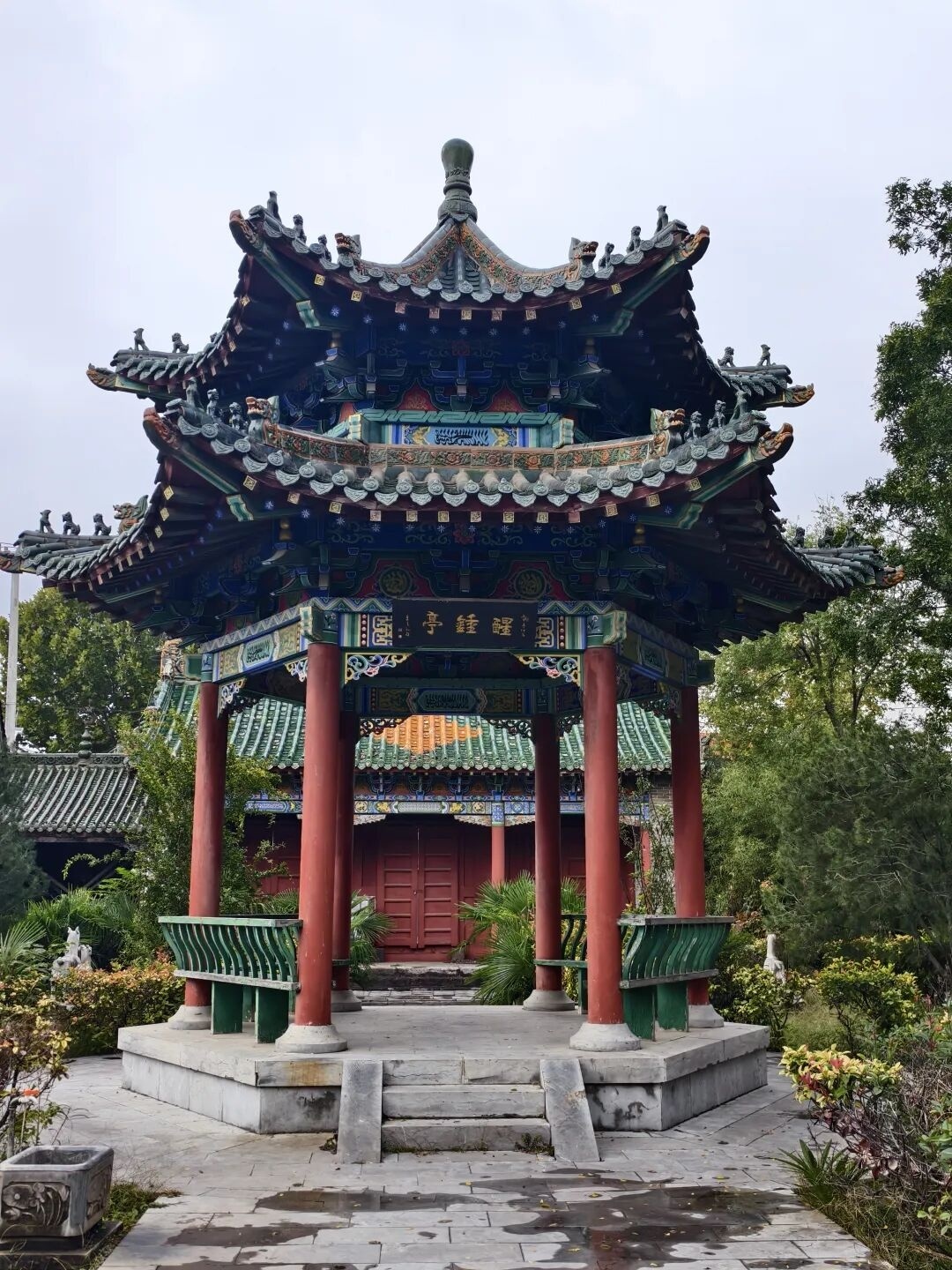
The Xingzhong Pavilion (Bell Pavilion).
The main hall features unique fish-scale windows, where large fish scales were used in place of glass to let in light. These windows are said to date back to the Ming Dynasty, with each scale measuring about 8 square centimeters; there are approximately 720 scales remaining today. After nearly 300 years, some of the scales have been lost, and the ones left behind have turned a yellowish hue.
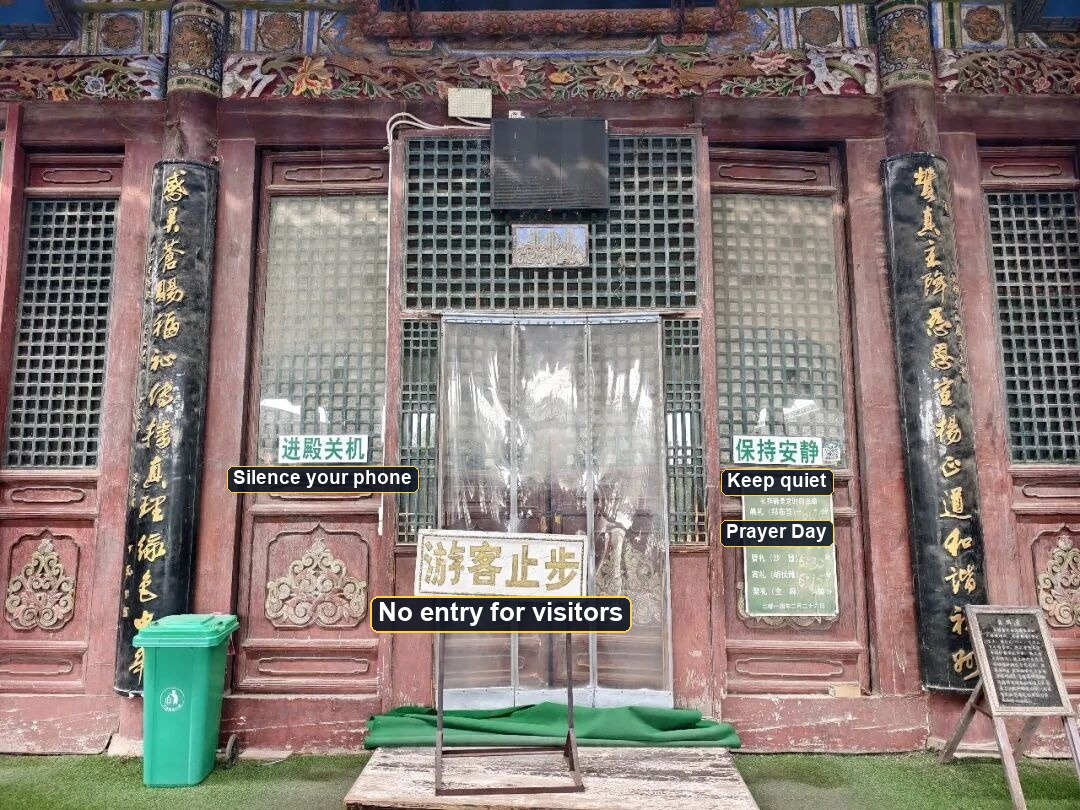
The back hall.
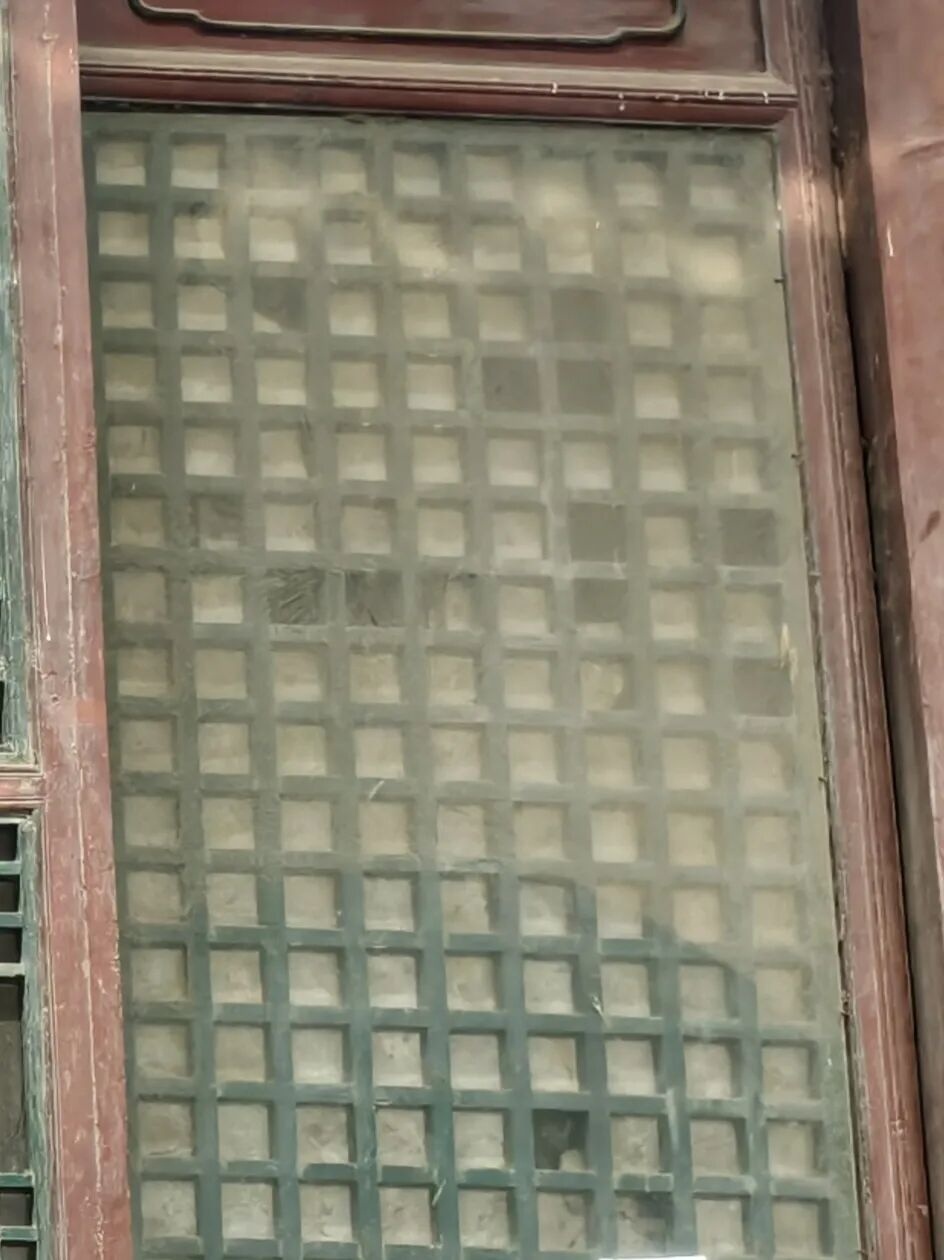
The fish-scale windows.
The ancient locust tree in the courtyard is also known as the 'Horse-Tethering Locust,' the 'Yue Locust,' or the 'Acacia Locust.' Legend has it that when General Yue Fei was stationed in Zhuxian Town, he tethered his warhorse to this tree. After Yue Fei was tragically killed, the tree supposedly withered and died. During later renovations of the mosque, the dried trunk of the tree was carefully preserved and now sits inside the main hall, serving as a tribute to the memory and deep respect people hold for Yue Fei.
The Acacia Locust tree.
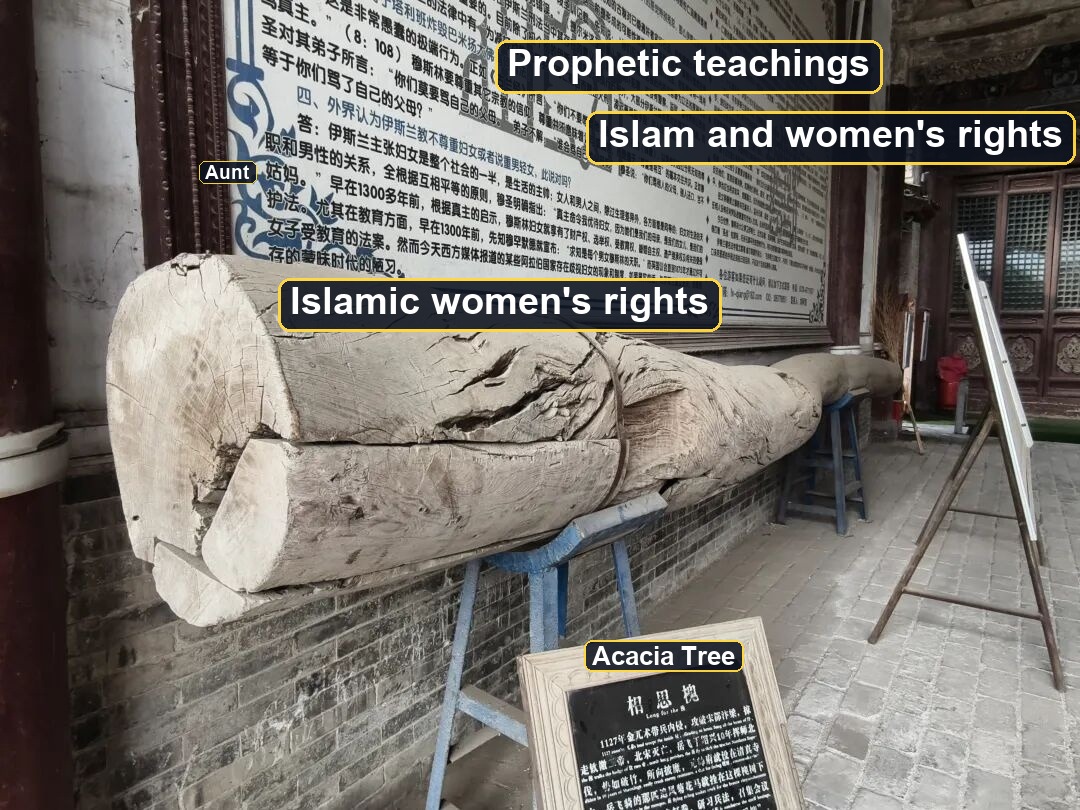
A side view of the Acacia Locust tree.
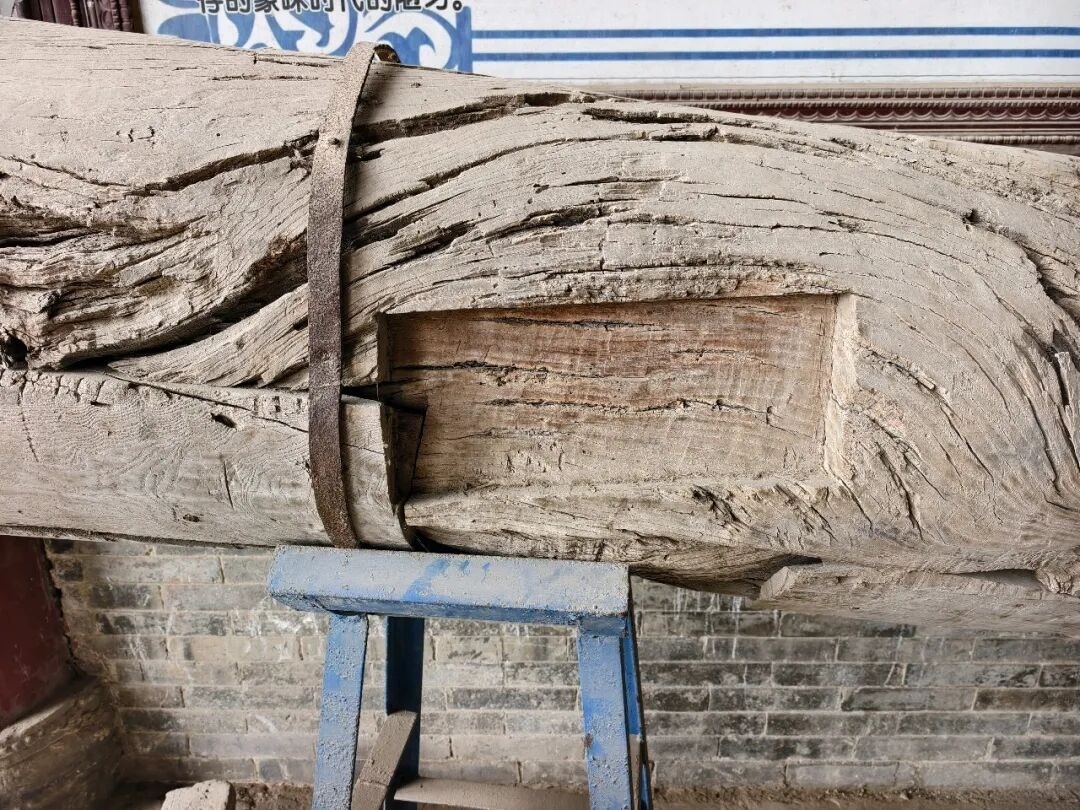
A close-up of the Acacia Locust tree (Photo 1).
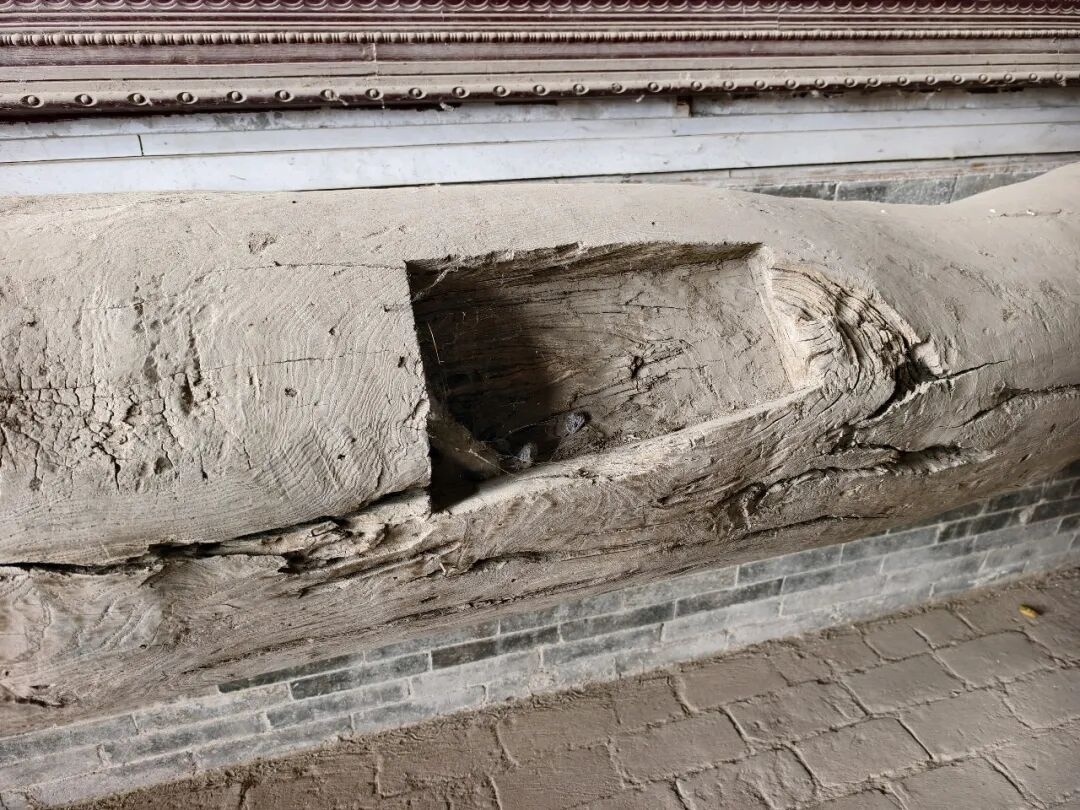
A close-up of the Acacia Locust tree (Photo 2).
Having weathered hundreds of years of history, the Zhuxian Town Mosque stands alongside the Yue Fei Temple as a witness to the past, holding a deep and rich cultural heritage.
Notes:
1. Address: Laohudong Street, Zhuxian Town, Xiangfu District, Kaifeng City, Henan Province.
2. Status: Listed as a Major Historical and Cultural Site Protected at the National Level (6th Batch).
Kaifeng Halal Food Guide: Simen Soup Pot and Muslim Night Market (Part 1 of 2)
Articles • ali2007fr posted the article • 0 comments • 255 views • 2026-05-17 07:16
Summary: This travel note introduces Kaifeng Halal Food Guide: Simen Soup Pot and Muslim Night Market. In early November 2018, I took advantage of the weekend to visit Kaifeng, arriving in three and a half hours by high-speed train from Beijing. It is useful for readers interested in Kaifeng Travel, Halal Food, Muslim Night Market. This is part 1 of 2.
In early November 2018, I took advantage of the weekend to visit Kaifeng, arriving in three and a half hours by high-speed train from Beijing. Because I only had two days, the itinerary was very tight. I drank soup at Simen in the morning, visited the mosque's ancient architecture during the day, and ate at the halal night market in the evening, hoping to record the style of the Kaifeng Muslim community as much as possible during these two days. Below, I will share my experience of Kaifeng halal food with everyone.
Drinking soup at Simen
The 'bad habit' of the Xiangfu people is that they love to drink soup. As long as they have some money in their pockets, regardless of whether they have food for tomorrow or not, they will enjoy a bowl of soup today. Where is the best soup in Xiangfu city? Of course, it is the soup at Simen. — 'Simen'
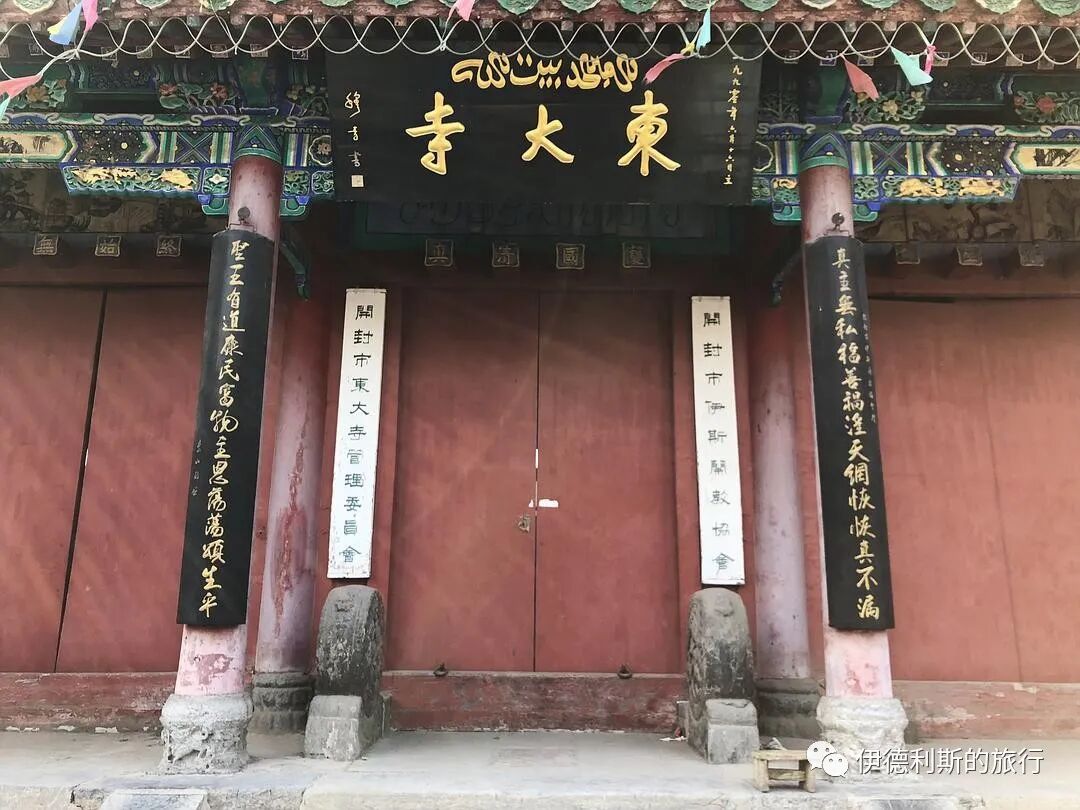
'Simen' (Mosque Gate) is the soul of the Kaifeng Muslim community. 'Simen' refers to the gate of the Kaifeng Dongda Mosque. Historically, the Dongda Mosque has suffered many times from Yellow River floods. Each time it was destroyed, it was rebuilt. The current building is the appearance after it was rebuilt in 1846 (the 26th year of the Daoguang reign) following the Yellow River flood in 1841 (the 21st year of the Daoguang reign).
The Muslim community centered on the Dongda Mosque is known as the 'First Community of Henan.' It includes more than 20 streets and alleys with over 20,000 people. It is the only one of the three major Muslim residential areas in Kaifeng's history (Dongda Mosque, Beida Mosque, and Wenshu Mosque) that has not undergone large-scale demolition and renovation, and it still maintains the traditional form of a Muslim community.
From 'Locality of Urban Hui Muslim Communities: A Study Based on Place Attachment in the Dongda Mosque Hui Muslim Community of Kaifeng'
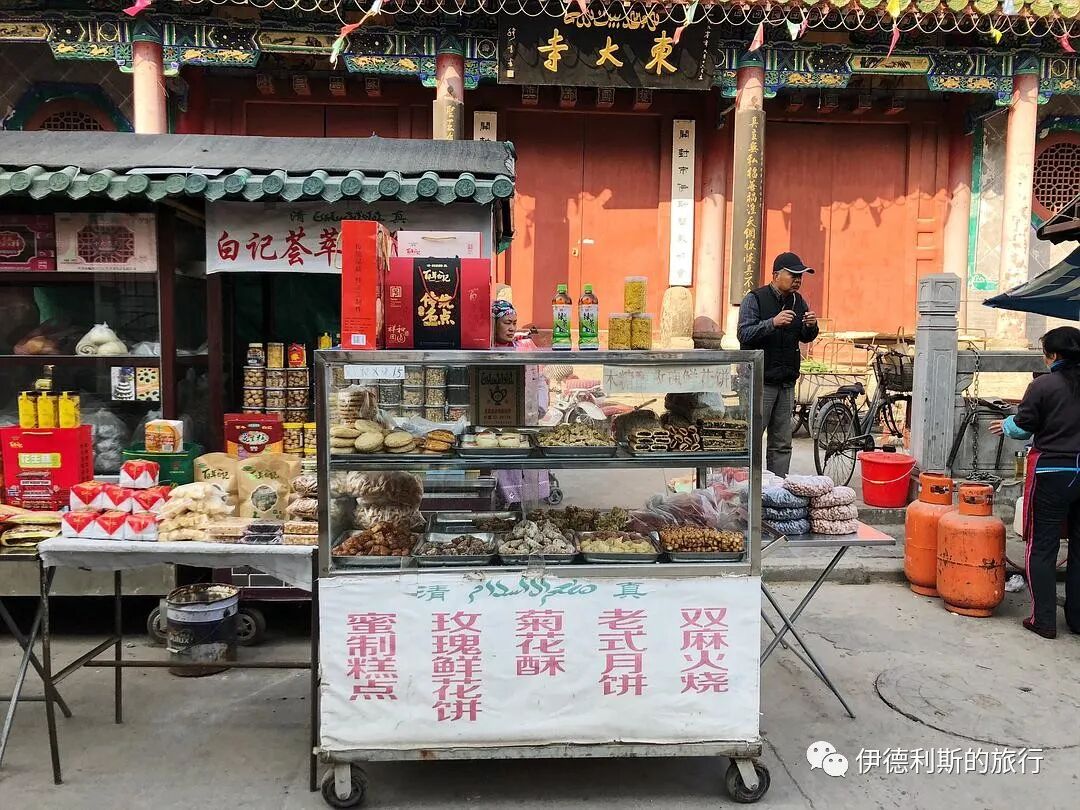
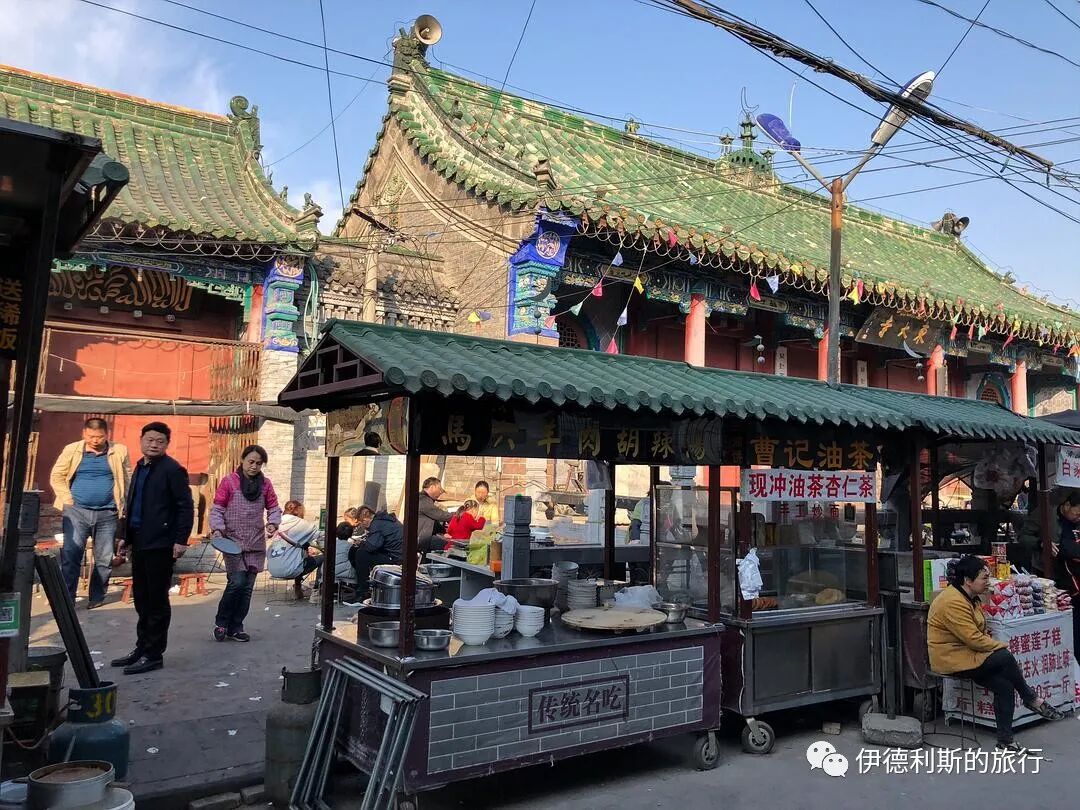
Various halal delicacies gather on Qingping North and South Streets at the entrance of the Dongda Mosque. These eateries generally operate from dawn until after one o'clock in the afternoon; in the afternoon, there are only cooked food and pastry shops.
Outside of Qingping North and South Streets, most of the area around the Dongda Mosque is still these quiet little alleys.
1. Siweicai (four-flavor dish) and shaobing (baked flatbread)
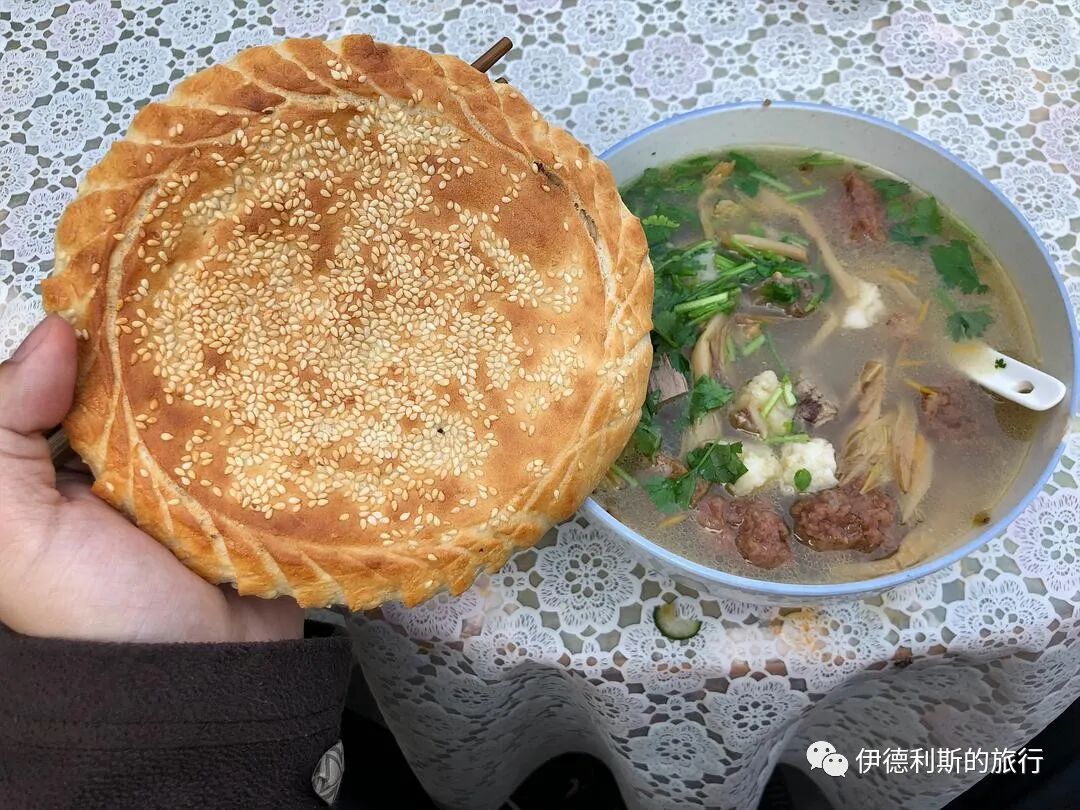
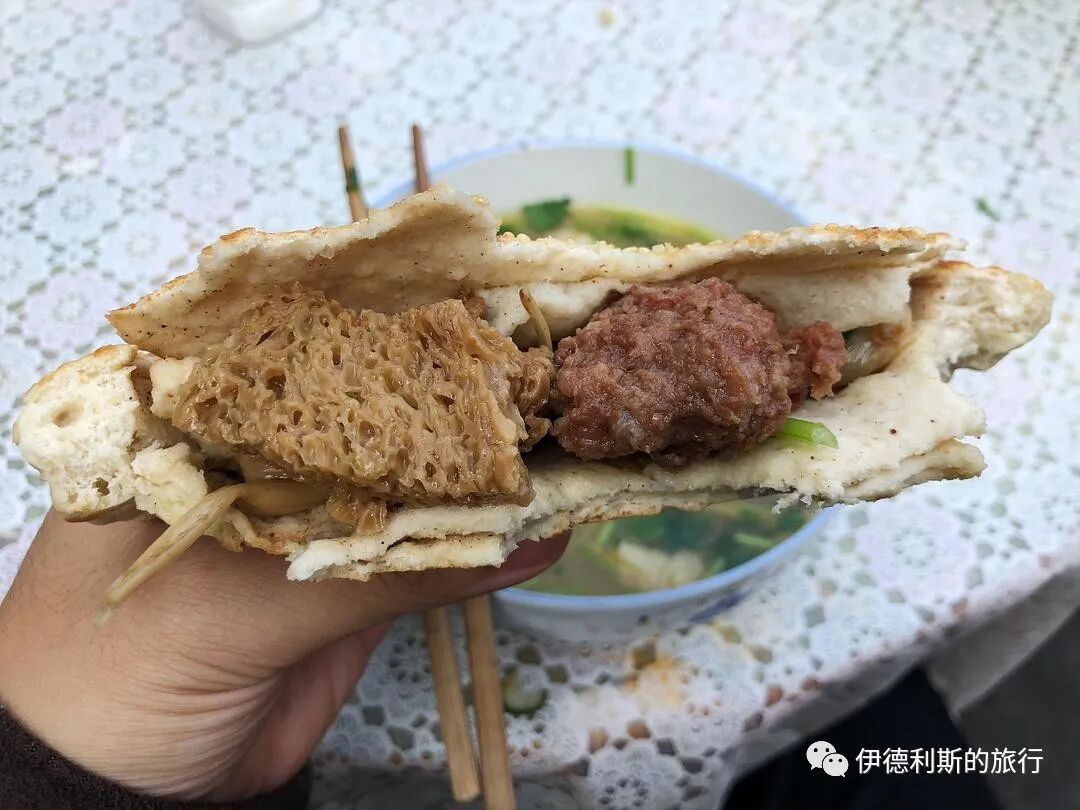
Siweicai is a famous Kaifeng breakfast, which is made by braising daylily, gluten, beef meatballs, and mutton in mutton soup. It has a very rich flavor when eaten. This Zhao Family Siweicai is a very famous one in Simen. When I got into the taxi from the high-speed railway station to the city, the driver heard I was going to Simen and urged me to try the Zhao family's Siweicai.
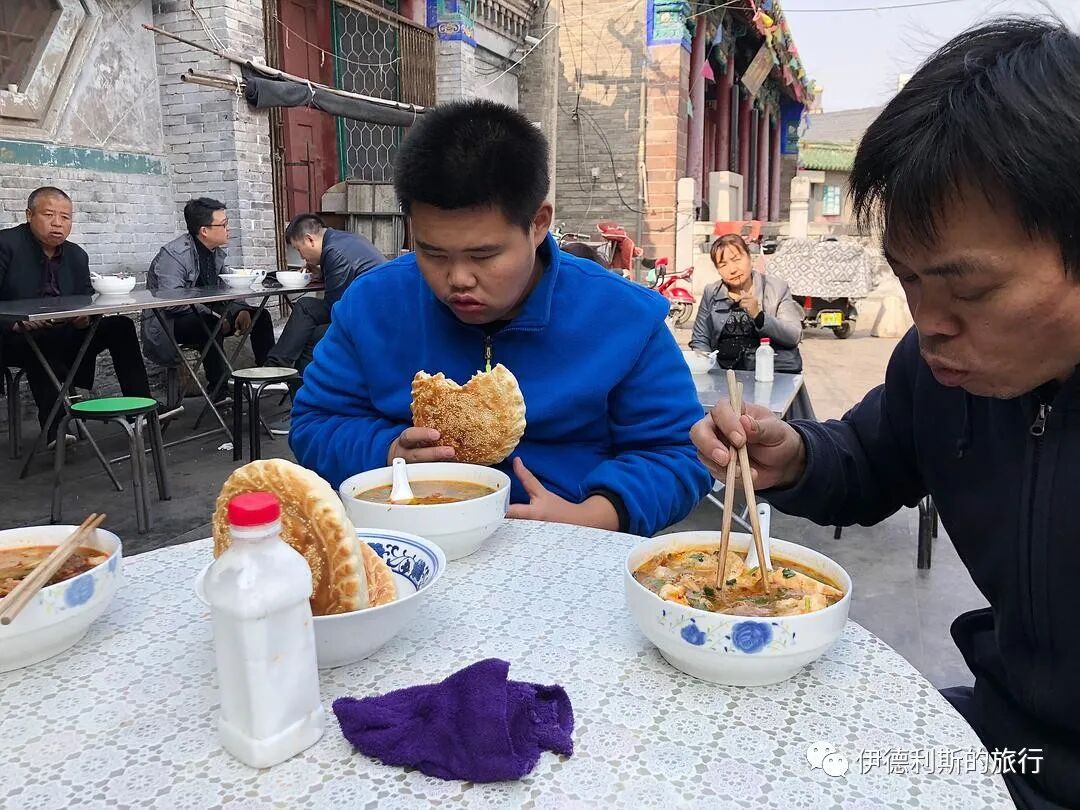
There is a long line on weekend mornings.
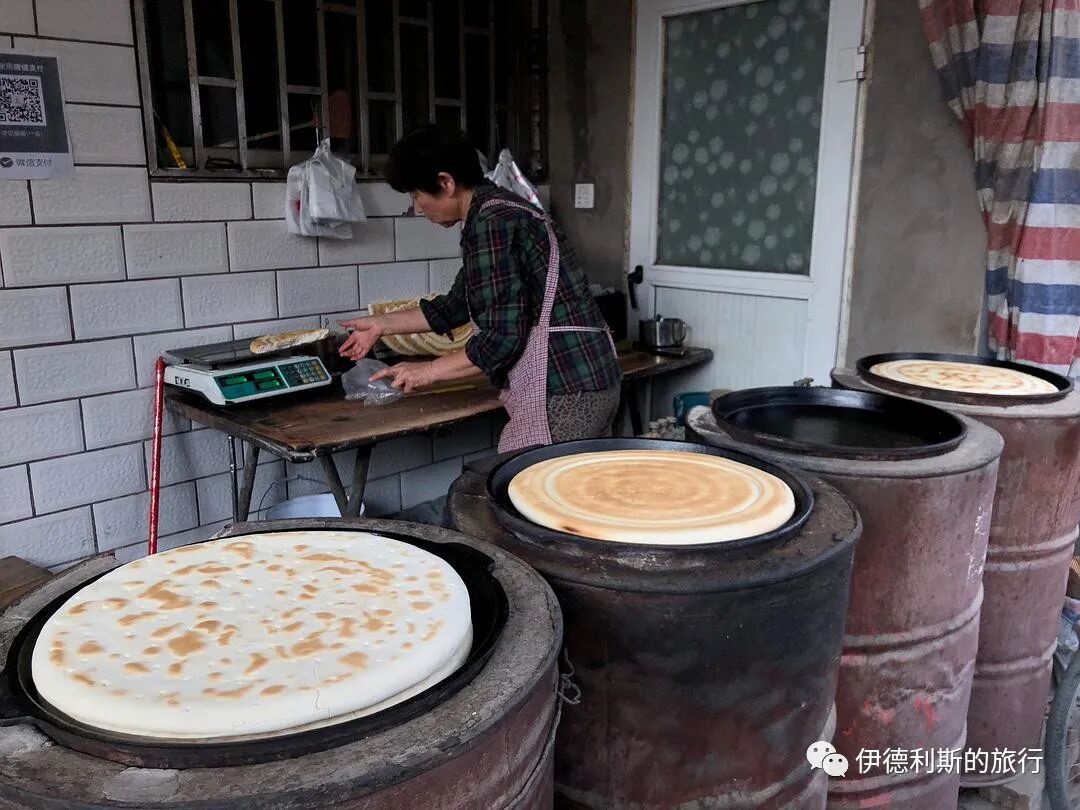
When eating Siweicai, it is usually paired with guokui (hard-crusted flatbread) or shaobing. I chose shaobing this time. This is the first time I have seen this kind of large sesame shaobing. When it is fresh, it is hot to hold, fragrant, and crispy. It can be soaked in the soup or bitten open to stuff with Siweicai. Eating it makes one feel very comfortable.
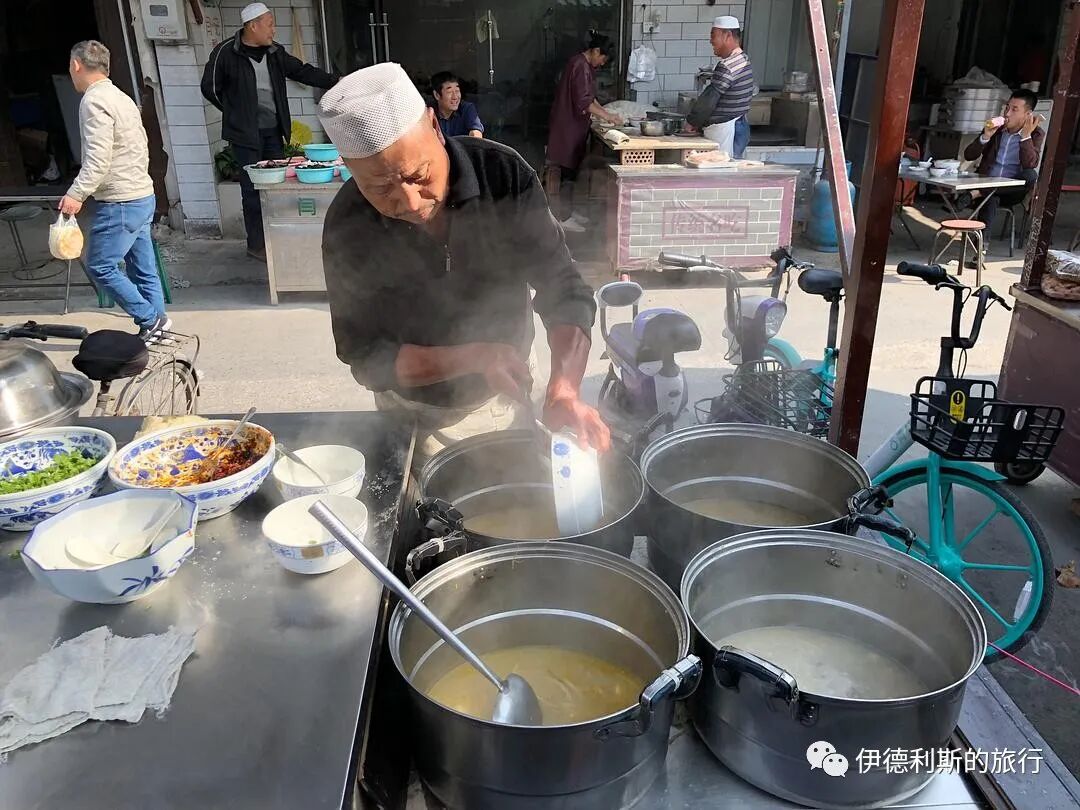
This is how shaobing is made.
2. Mutton soup and guokui
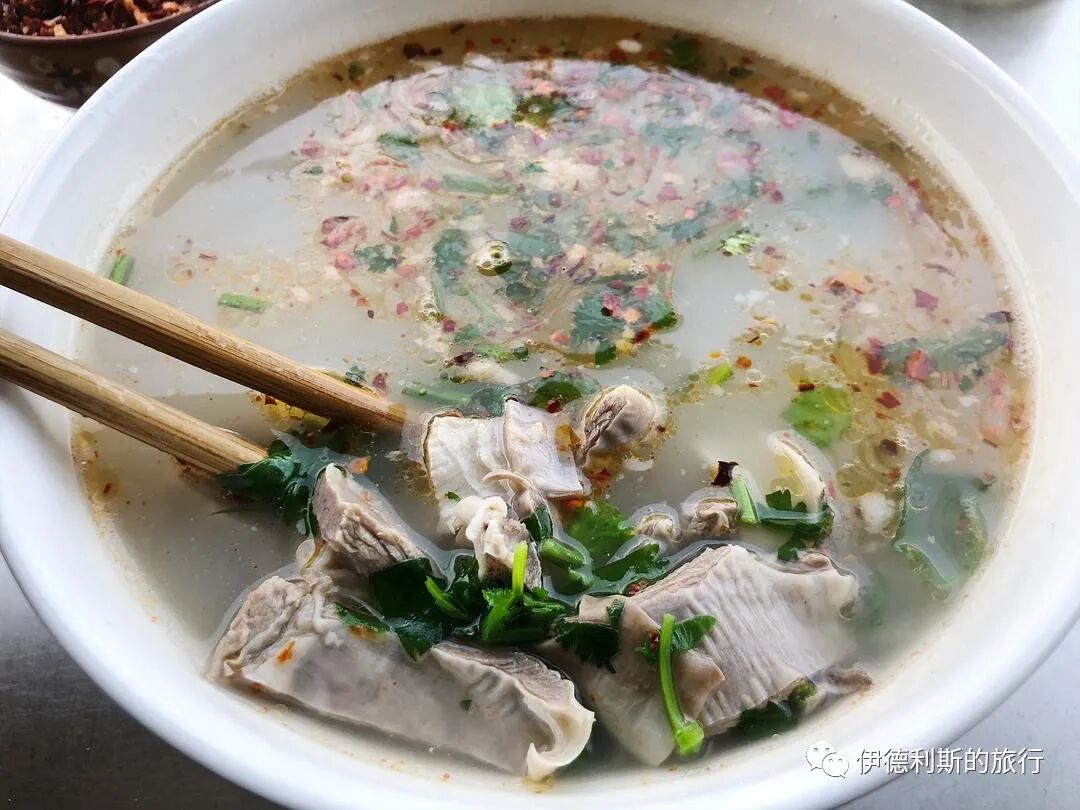
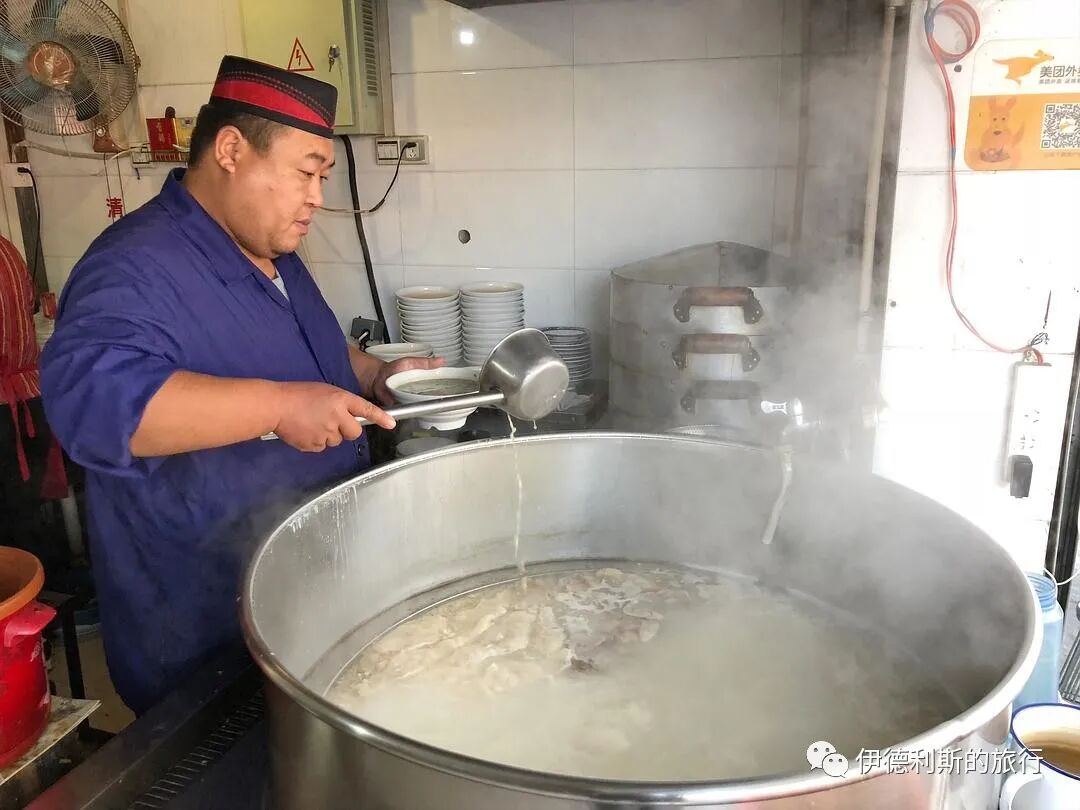
Besides Siweicai, the most classic is still this mutton soup paired with guokui. The one I ate at is Yanji Mutton Fresh Soup right across from the Dongda Mosque. When serving the soup, the uncle asks if you want oil, which is a great treat for mutton fat lovers.
3. Hulatang (spicy soup) paired with jidan budai (egg-stuffed fried dough)
Next to Zhao Family Siweicai is Ma Liu Mutton Hulatang. Unlike the freshness of mutton soup, drinking Hulatang is more about that refreshing feeling in late autumn. After eating it, your whole body feels clear, and you have a good mood for the day.
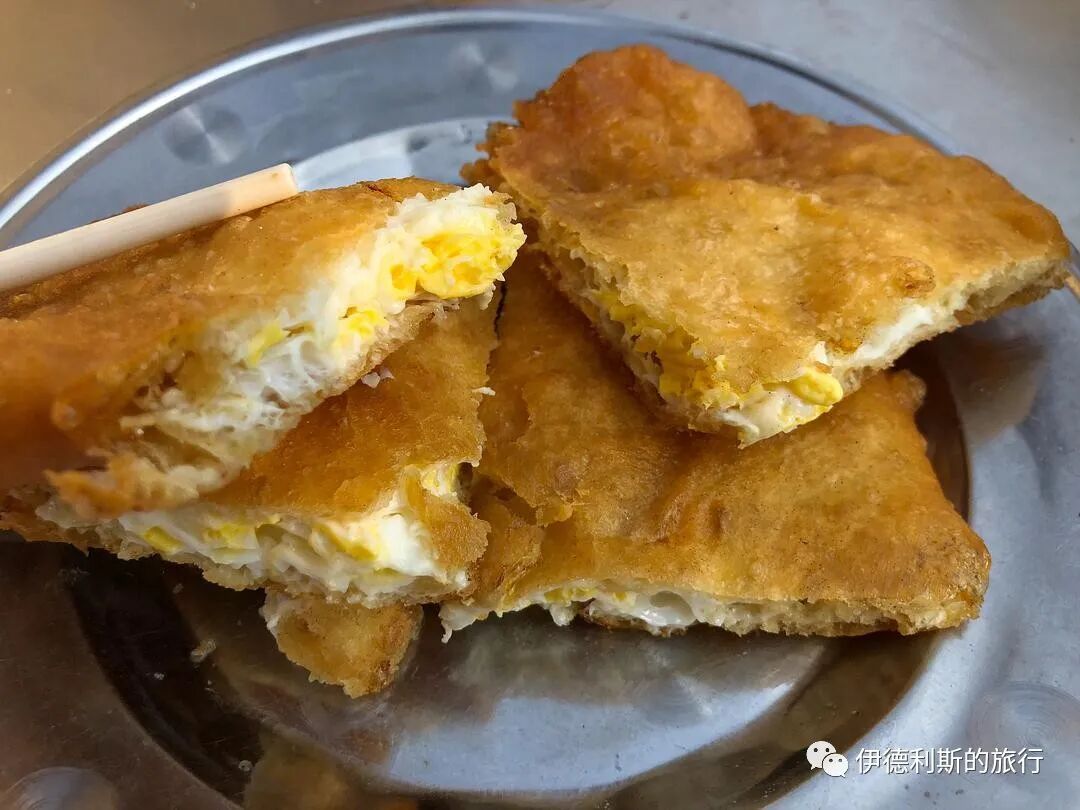
Paired with Hulatang is jidan budai, also called jidan hebao (egg pouch) or zha laohu (fried tiger). This is hard to see in Beijing now, but it still exists in Tianjin.
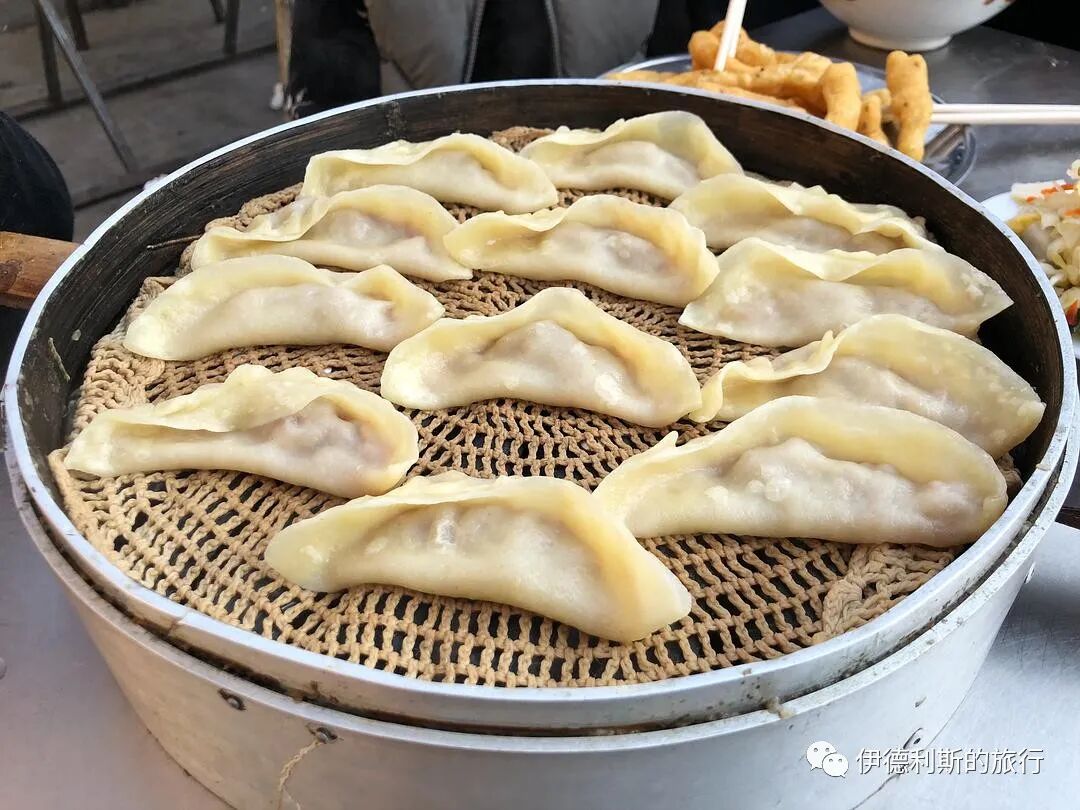
4. Mutton steamed dumplings
Between the Siweicai and Hulatang is Li Ji Steamed Dumplings and Shaomai (steamed dumplings). Because I was too full, I didn't have room, so the steamed dumplings in the photo are actually from the next table.
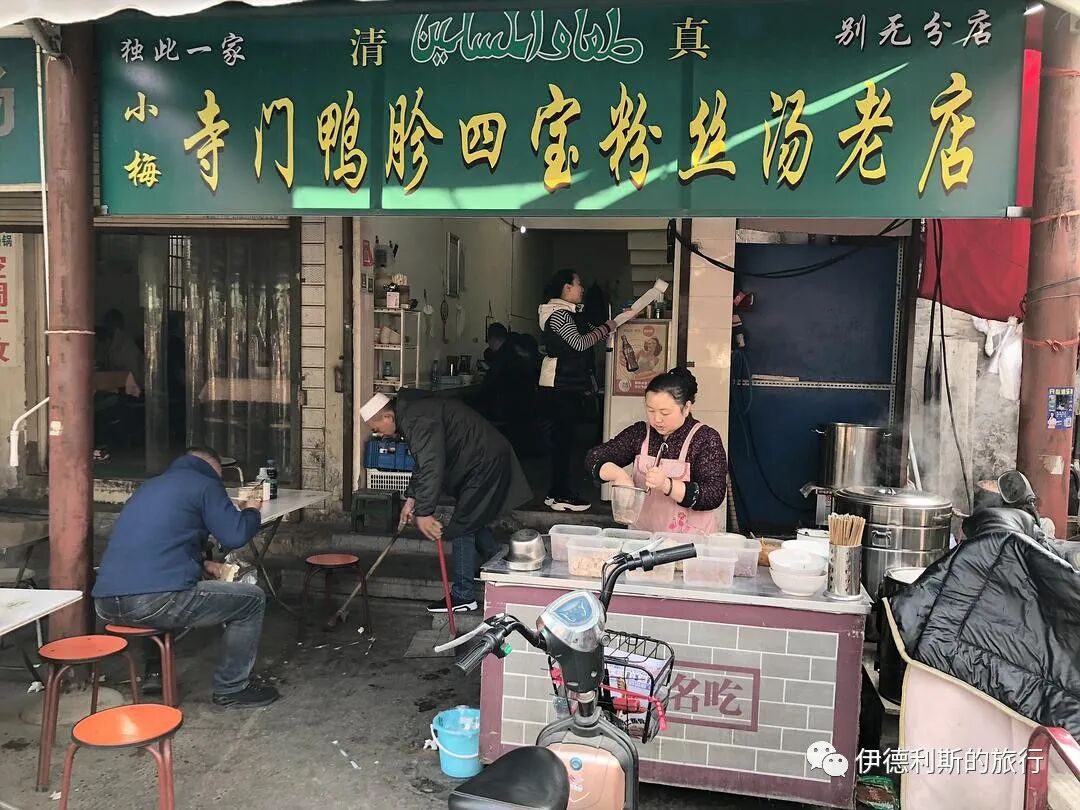
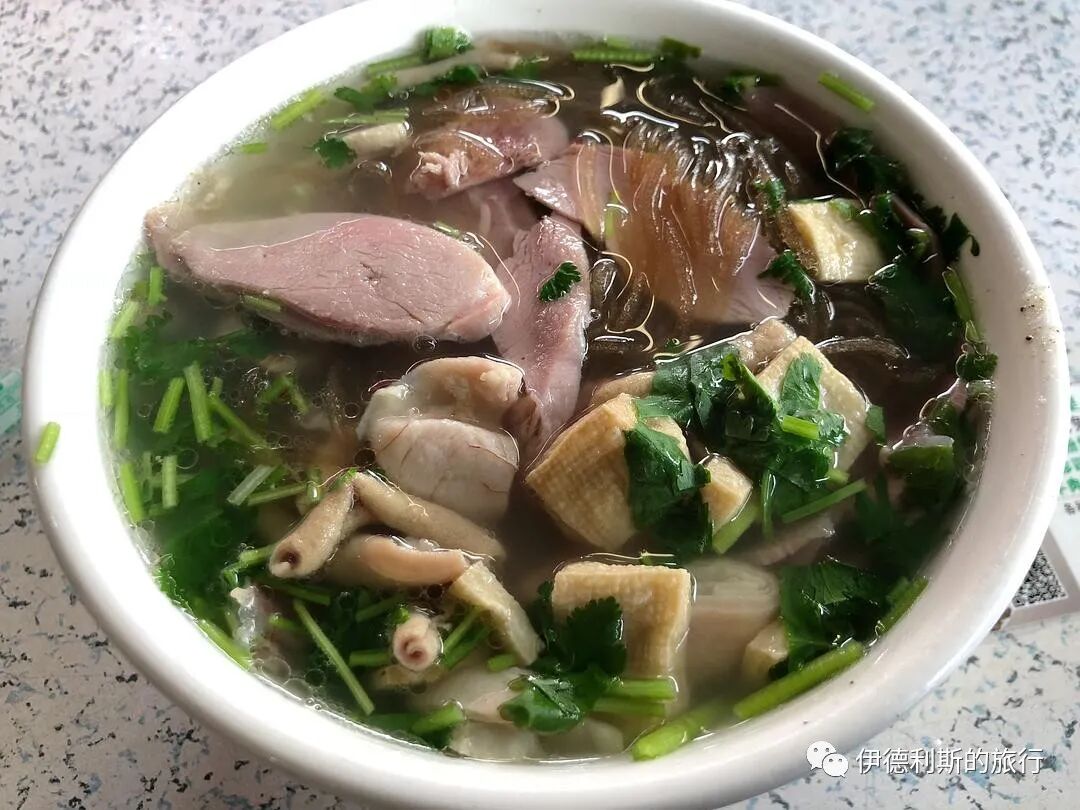
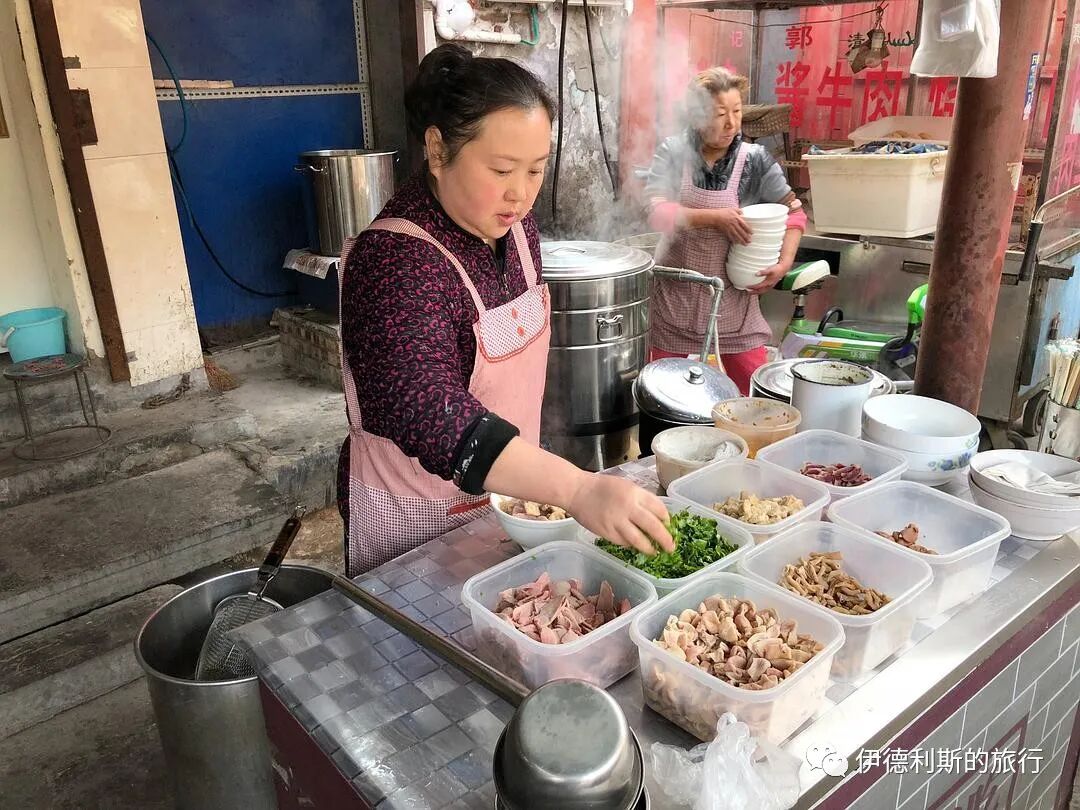
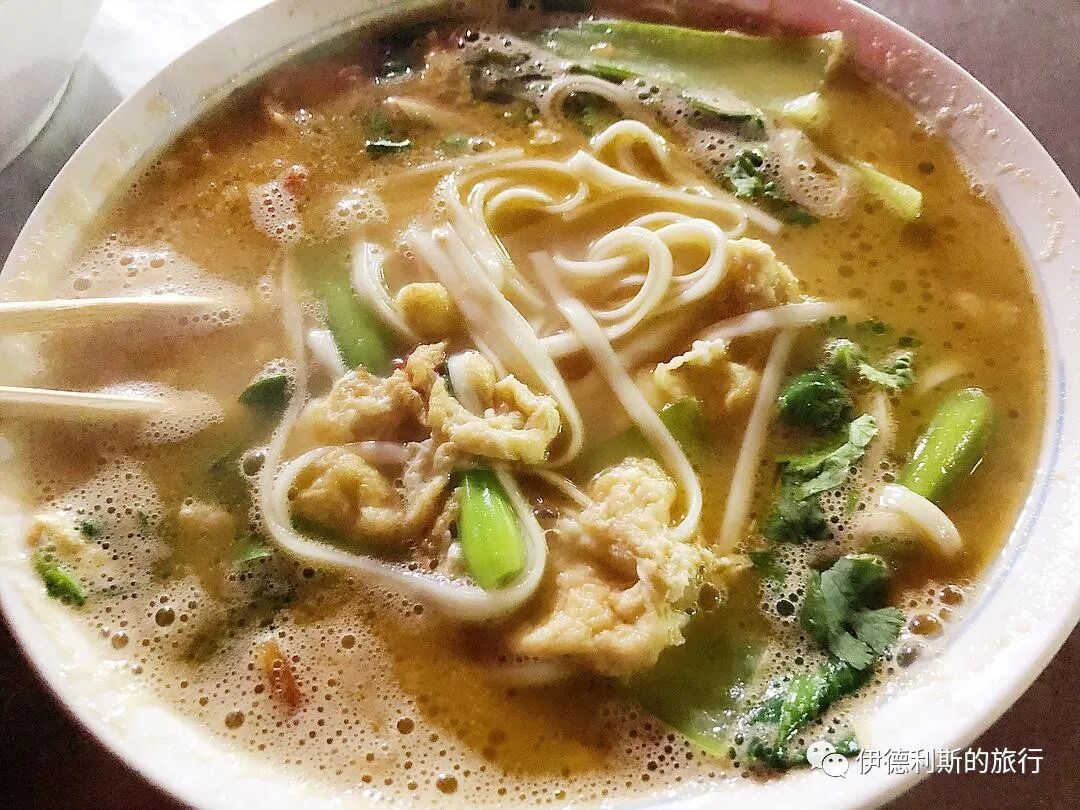
5. Duck gizzard four-treasure vermicelli soup
Opposite the Siweicai is the only duck gizzard four-treasure vermicelli soup in Simen, which can also be served with mutton fat. This place gives a very generous portion, and I think the duck liver in the soup is the most delicious.
6. Beef huoshao (baked wheat cake)
Continuing north is Mu Family Beef Huoshao. This is very suitable for eating while walking around the alleys of Simen, feeling relaxed and content.
There are also stalls selling pickles in Simen, which are even better when paired with soup.
7. Doumo (bean paste soup) paired with caijiao (vegetable dumplings)
Besides Simen, there are actually many halal breakfast eateries in Kaifeng. During this trip to Kaifeng, I ate doumo and caijiao at a Hulatang eatery near Wenshu Mosque. Doumo is a breakfast popular in the Hebei, Shandong, and Henan regions. Kaifeng's five-spice doumo is made by mixing millet flour with various seasonings, adding shredded tofu, peanuts, spinach, and vermicelli, and finally drizzling with sesame paste.
Lively night market
1. Xueyuanmen Halal Night Market
On the west side of Jiefang Road, not far west of Simen, is Kaifeng's only halal night market, Xueyuanmen Night Market. Everything sold here is authentic Kaifeng halal late-night snacks. For me, living in Beijing where there are no night markets, visiting a night market is really great! I want to try everything; I really hate that my stomach isn't big enough.
This place sells stir-fried seafood and crayfish, very night-market style. The stir-fried seafood is spicy and very satisfying.
Coming to Kaifeng, of course, you have to try the soup-filled xiaolongbao (small steamed buns). Taking a bite, the slightly sweet soup fills your mouth. After eating, it can truly be described as leaving a lingering fragrance on the lips and teeth. view all
Summary: This travel note introduces Kaifeng Halal Food Guide: Simen Soup Pot and Muslim Night Market. In early November 2018, I took advantage of the weekend to visit Kaifeng, arriving in three and a half hours by high-speed train from Beijing. It is useful for readers interested in Kaifeng Travel, Halal Food, Muslim Night Market. This is part 1 of 2.
In early November 2018, I took advantage of the weekend to visit Kaifeng, arriving in three and a half hours by high-speed train from Beijing. Because I only had two days, the itinerary was very tight. I drank soup at Simen in the morning, visited the mosque's ancient architecture during the day, and ate at the halal night market in the evening, hoping to record the style of the Kaifeng Muslim community as much as possible during these two days. Below, I will share my experience of Kaifeng halal food with everyone.
Drinking soup at Simen
The 'bad habit' of the Xiangfu people is that they love to drink soup. As long as they have some money in their pockets, regardless of whether they have food for tomorrow or not, they will enjoy a bowl of soup today. Where is the best soup in Xiangfu city? Of course, it is the soup at Simen. — 'Simen'
'Simen' (Mosque Gate) is the soul of the Kaifeng Muslim community. 'Simen' refers to the gate of the Kaifeng Dongda Mosque. Historically, the Dongda Mosque has suffered many times from Yellow River floods. Each time it was destroyed, it was rebuilt. The current building is the appearance after it was rebuilt in 1846 (the 26th year of the Daoguang reign) following the Yellow River flood in 1841 (the 21st year of the Daoguang reign).
The Muslim community centered on the Dongda Mosque is known as the 'First Community of Henan.' It includes more than 20 streets and alleys with over 20,000 people. It is the only one of the three major Muslim residential areas in Kaifeng's history (Dongda Mosque, Beida Mosque, and Wenshu Mosque) that has not undergone large-scale demolition and renovation, and it still maintains the traditional form of a Muslim community.
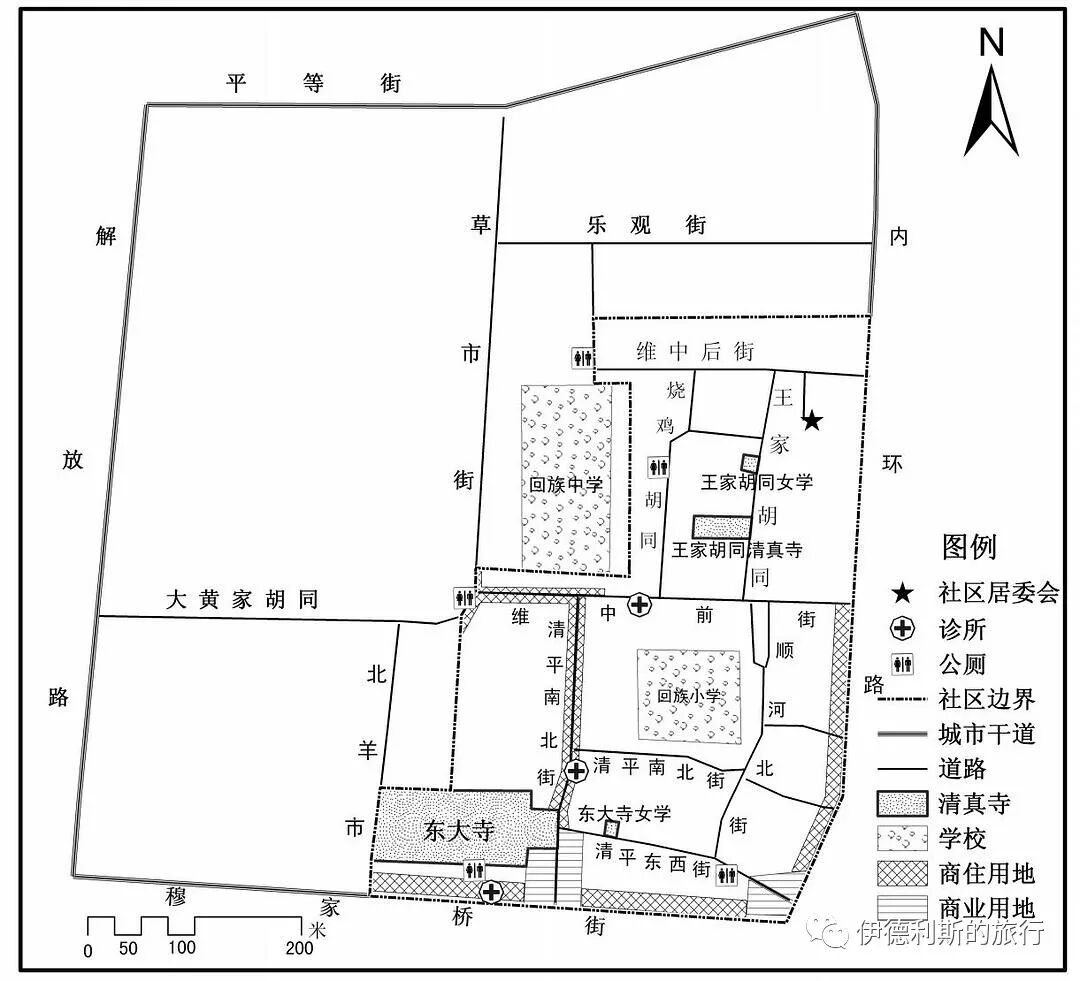
From 'Locality of Urban Hui Muslim Communities: A Study Based on Place Attachment in the Dongda Mosque Hui Muslim Community of Kaifeng'
Various halal delicacies gather on Qingping North and South Streets at the entrance of the Dongda Mosque. These eateries generally operate from dawn until after one o'clock in the afternoon; in the afternoon, there are only cooked food and pastry shops.
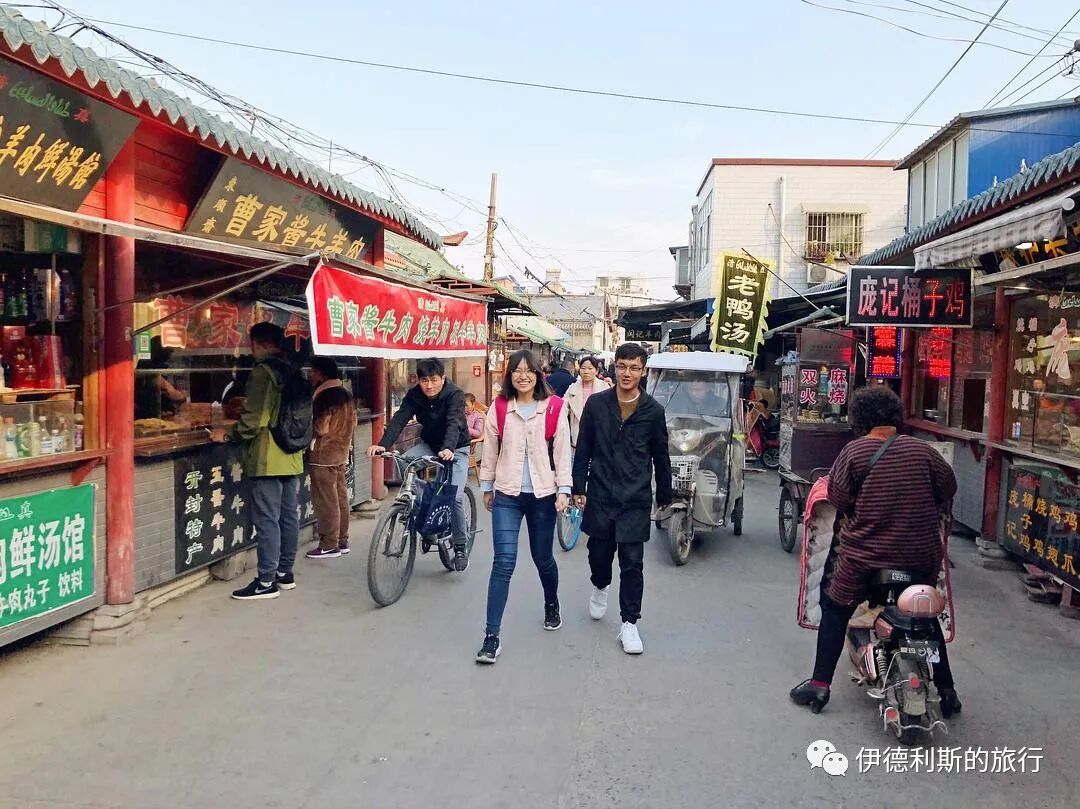
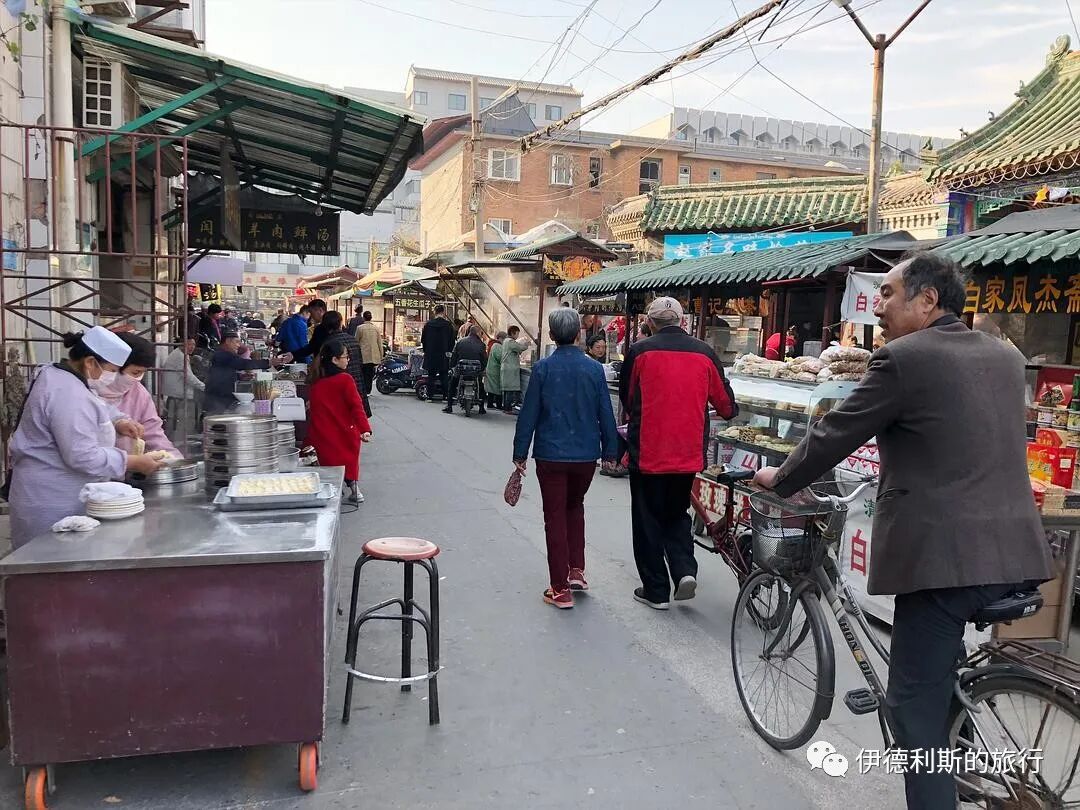
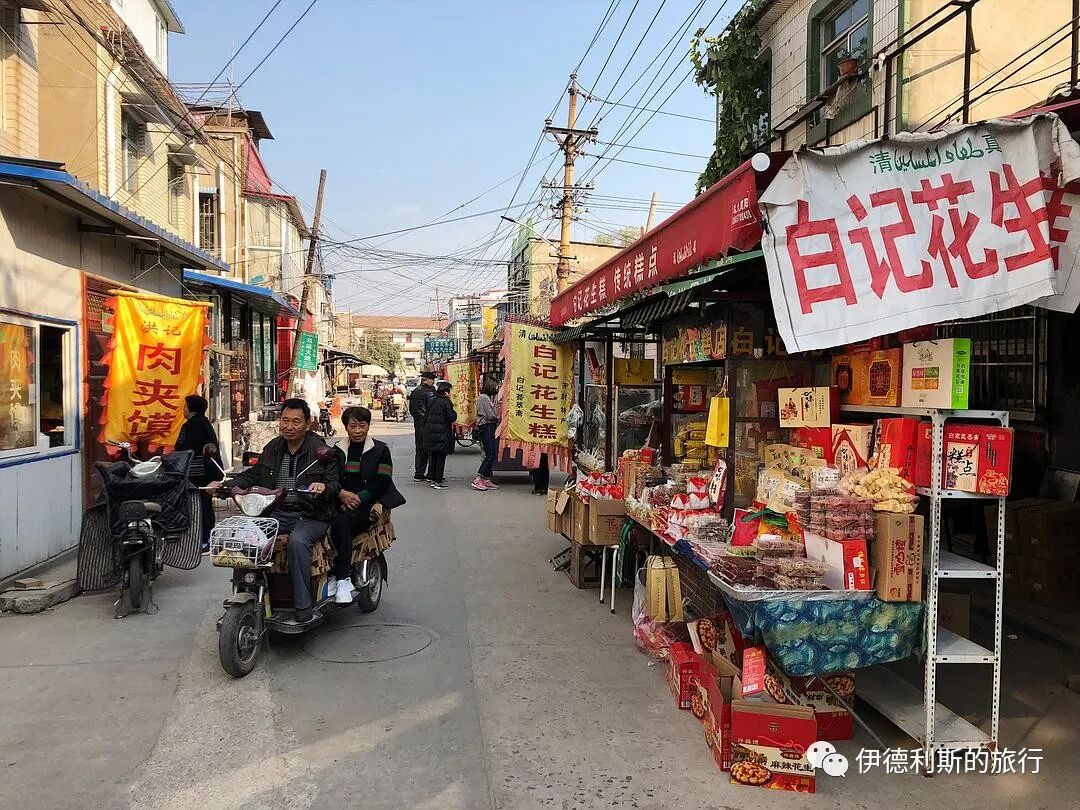
Outside of Qingping North and South Streets, most of the area around the Dongda Mosque is still these quiet little alleys.
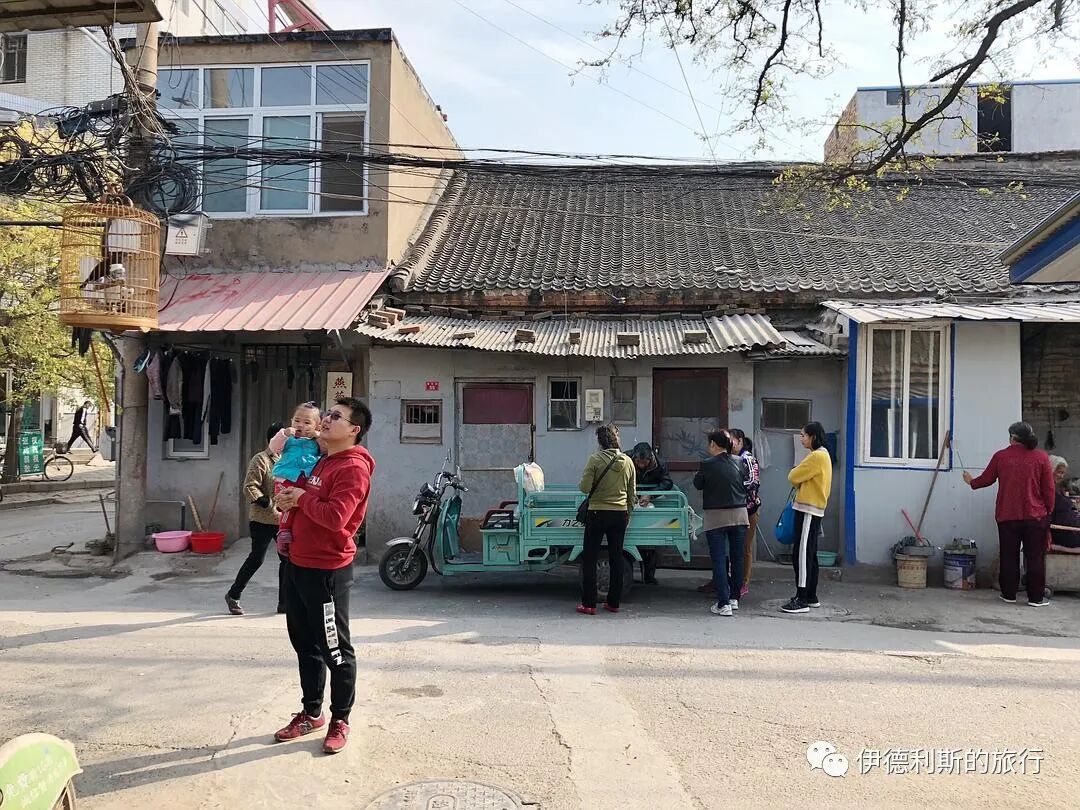
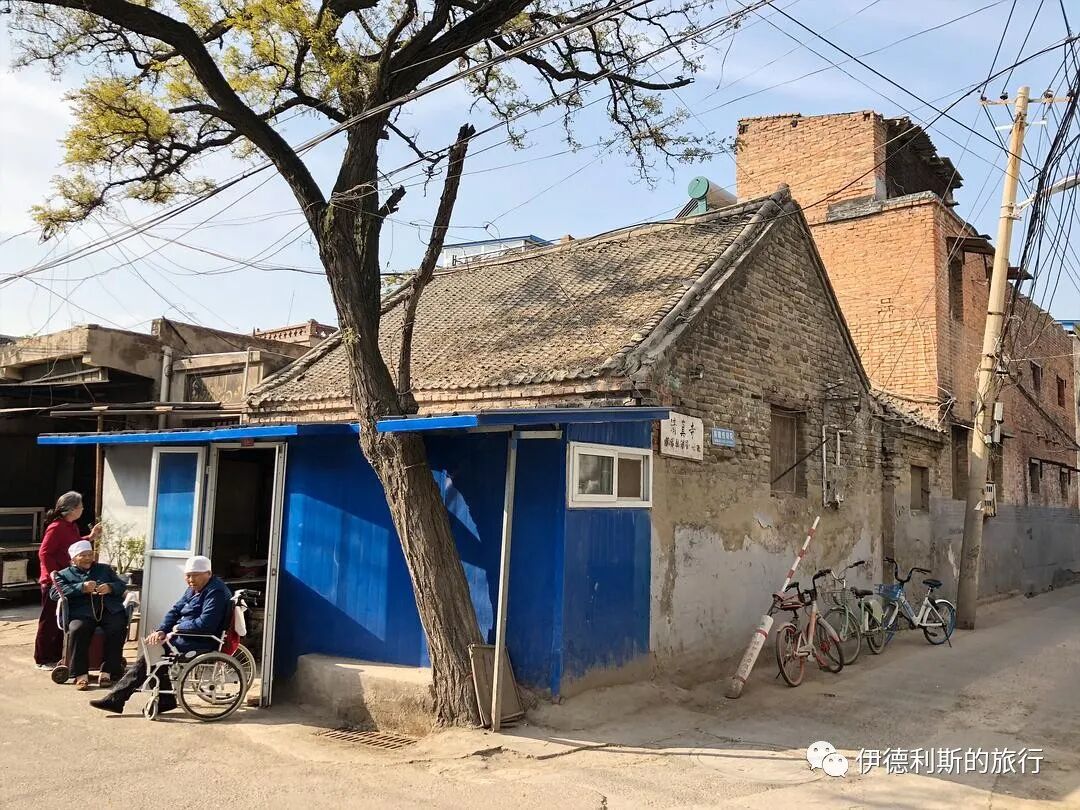
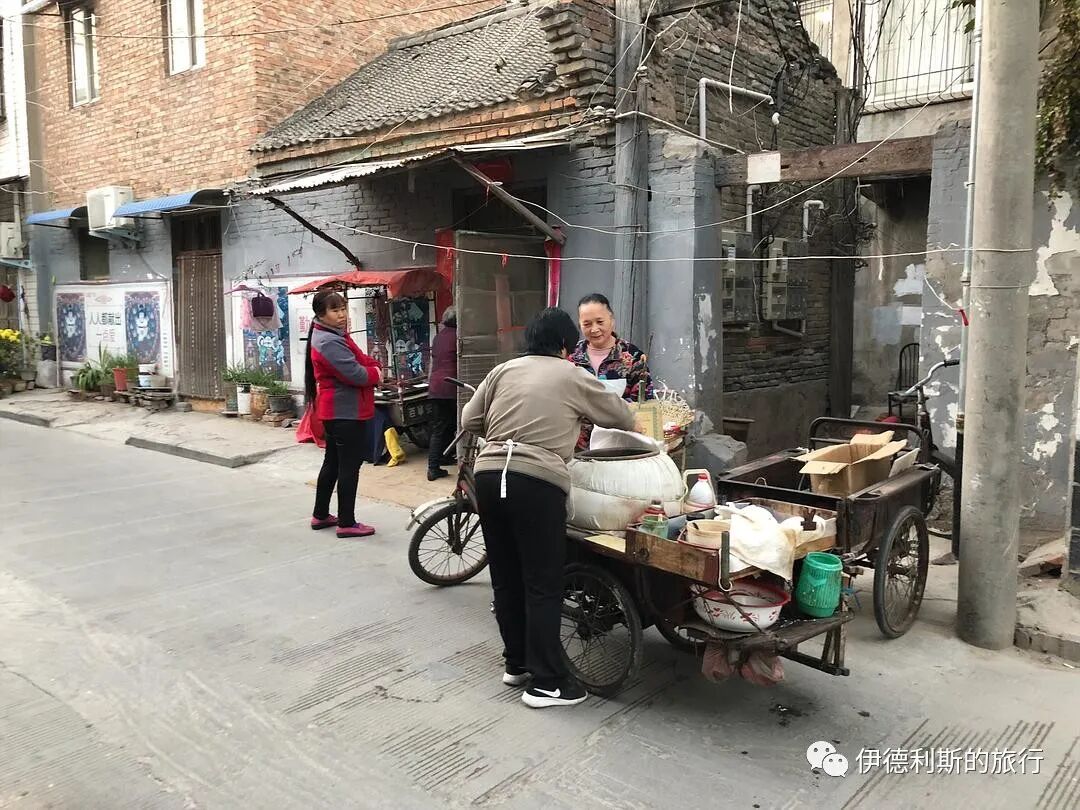
1. Siweicai (four-flavor dish) and shaobing (baked flatbread)
Siweicai is a famous Kaifeng breakfast, which is made by braising daylily, gluten, beef meatballs, and mutton in mutton soup. It has a very rich flavor when eaten. This Zhao Family Siweicai is a very famous one in Simen. When I got into the taxi from the high-speed railway station to the city, the driver heard I was going to Simen and urged me to try the Zhao family's Siweicai.
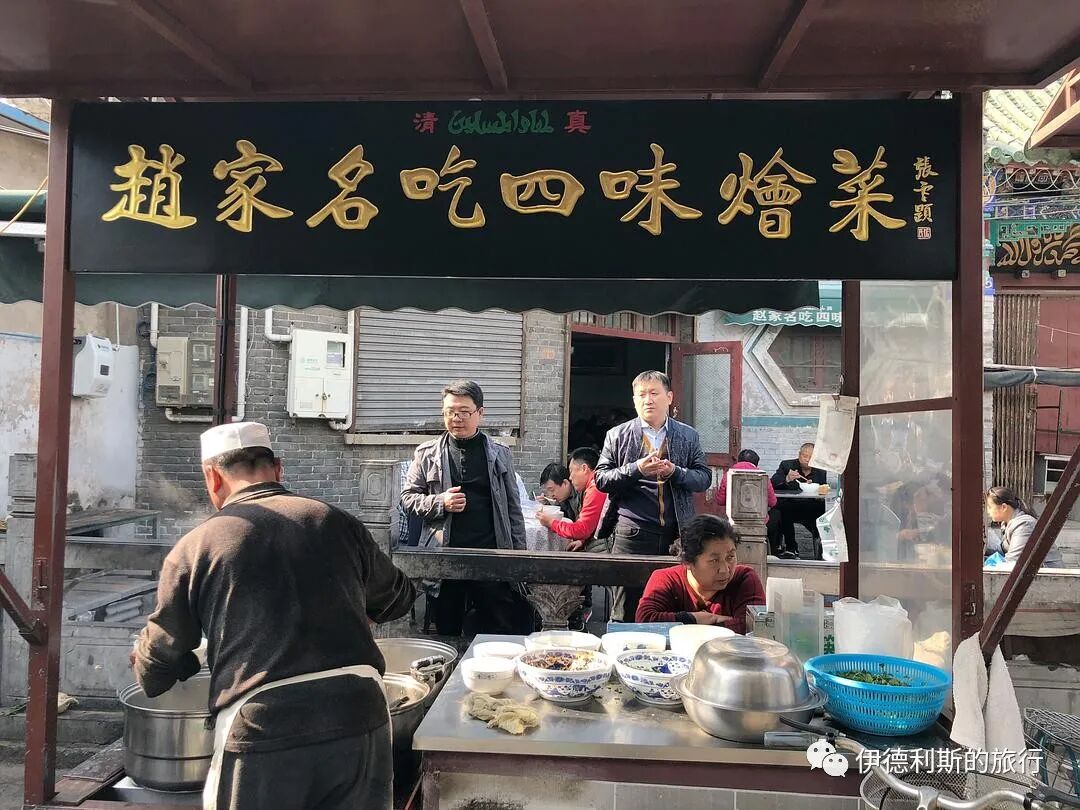
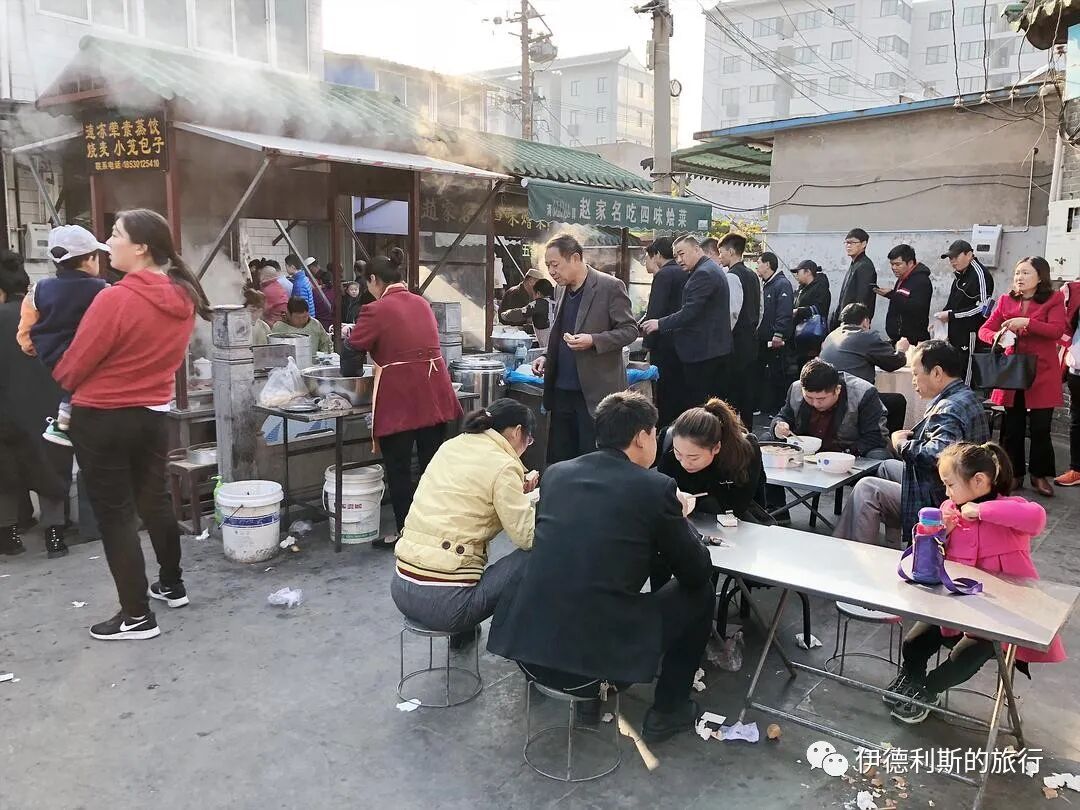
There is a long line on weekend mornings.
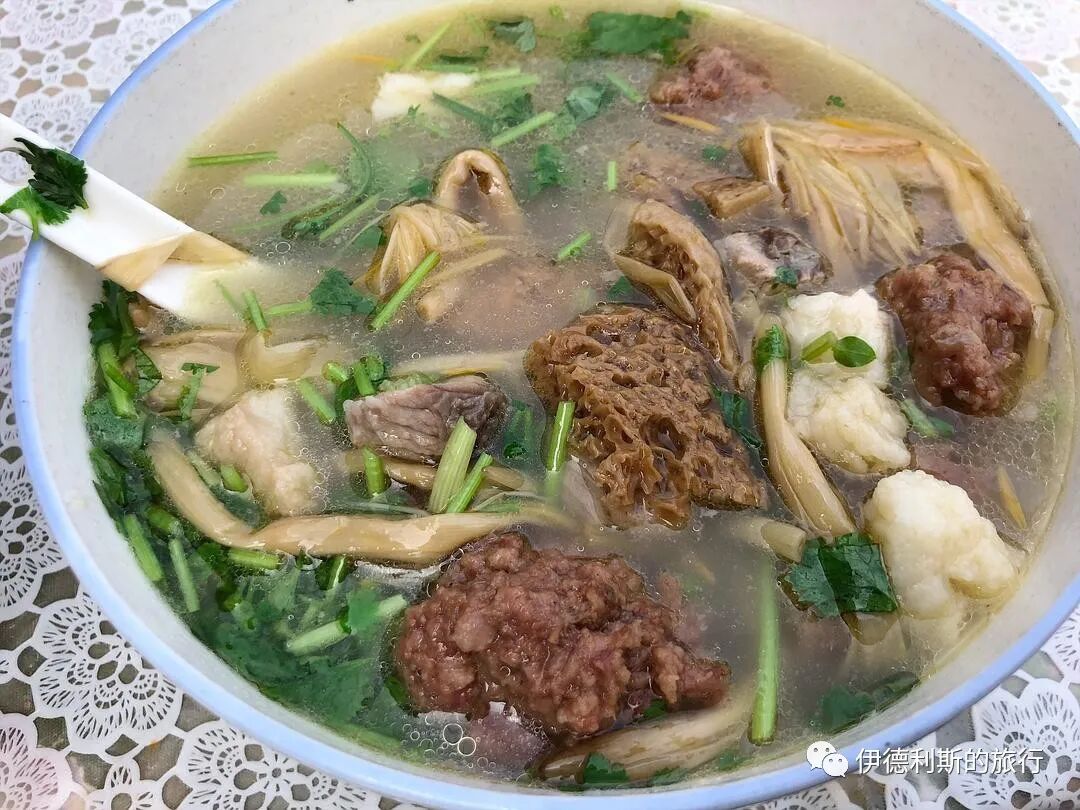
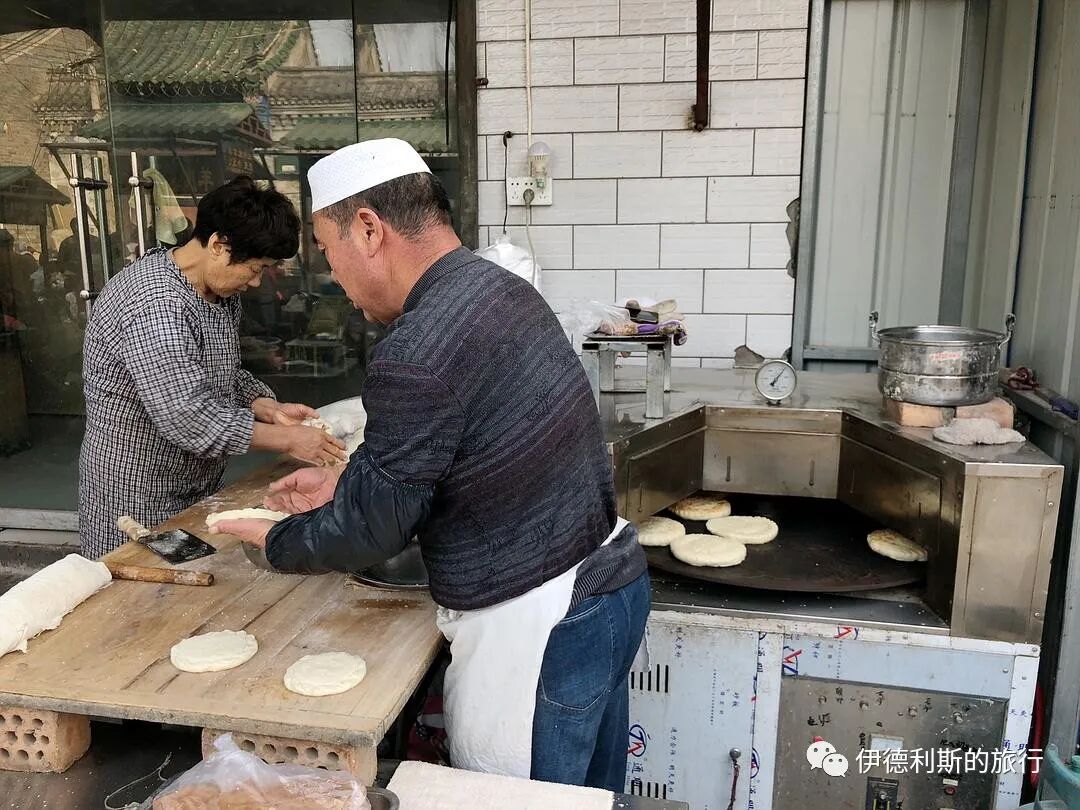
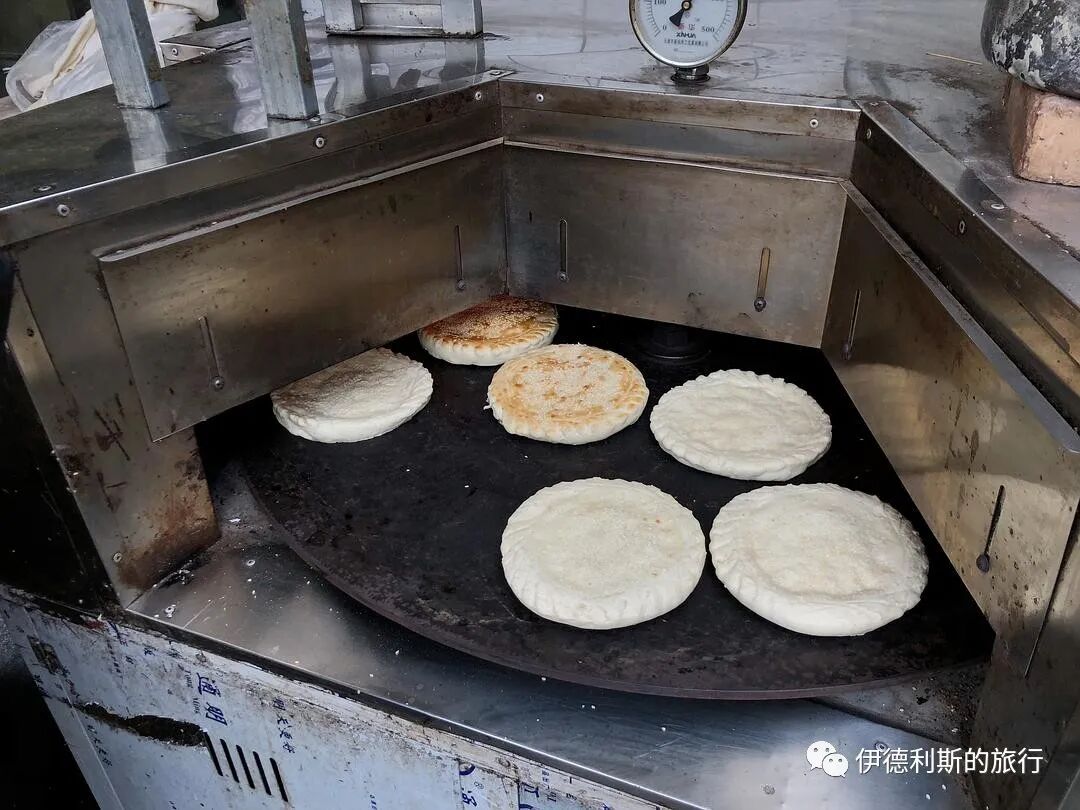
When eating Siweicai, it is usually paired with guokui (hard-crusted flatbread) or shaobing. I chose shaobing this time. This is the first time I have seen this kind of large sesame shaobing. When it is fresh, it is hot to hold, fragrant, and crispy. It can be soaked in the soup or bitten open to stuff with Siweicai. Eating it makes one feel very comfortable.
This is how shaobing is made.
2. Mutton soup and guokui
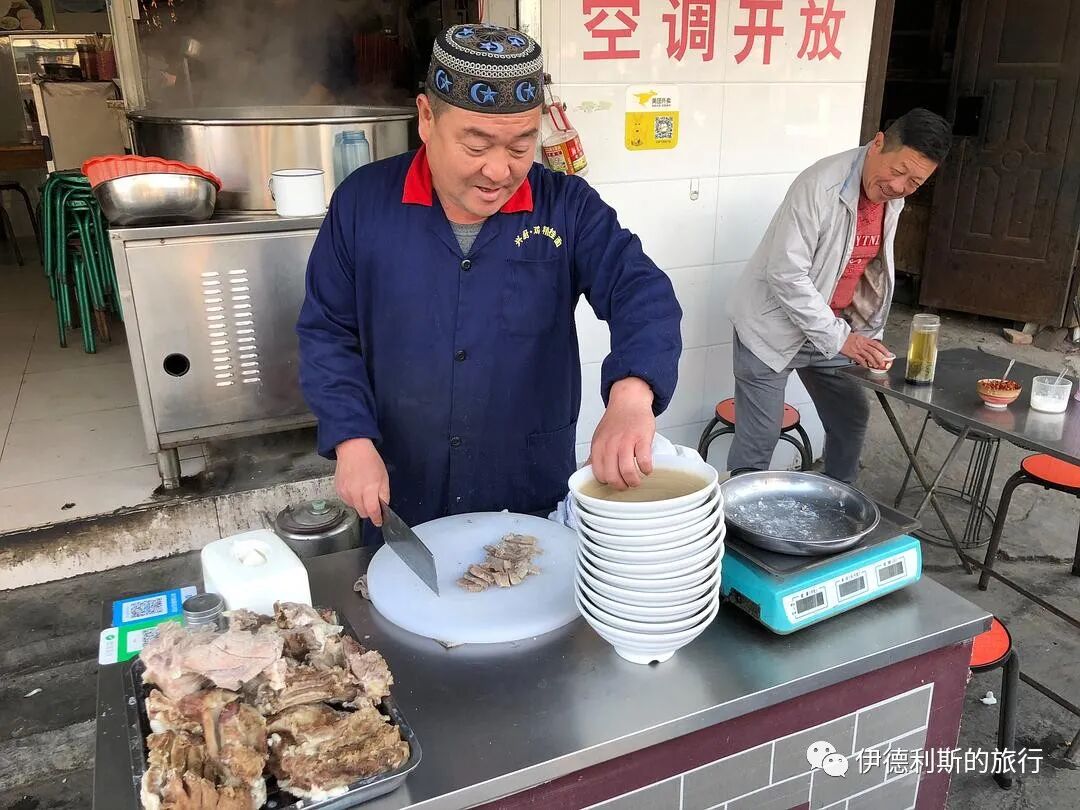
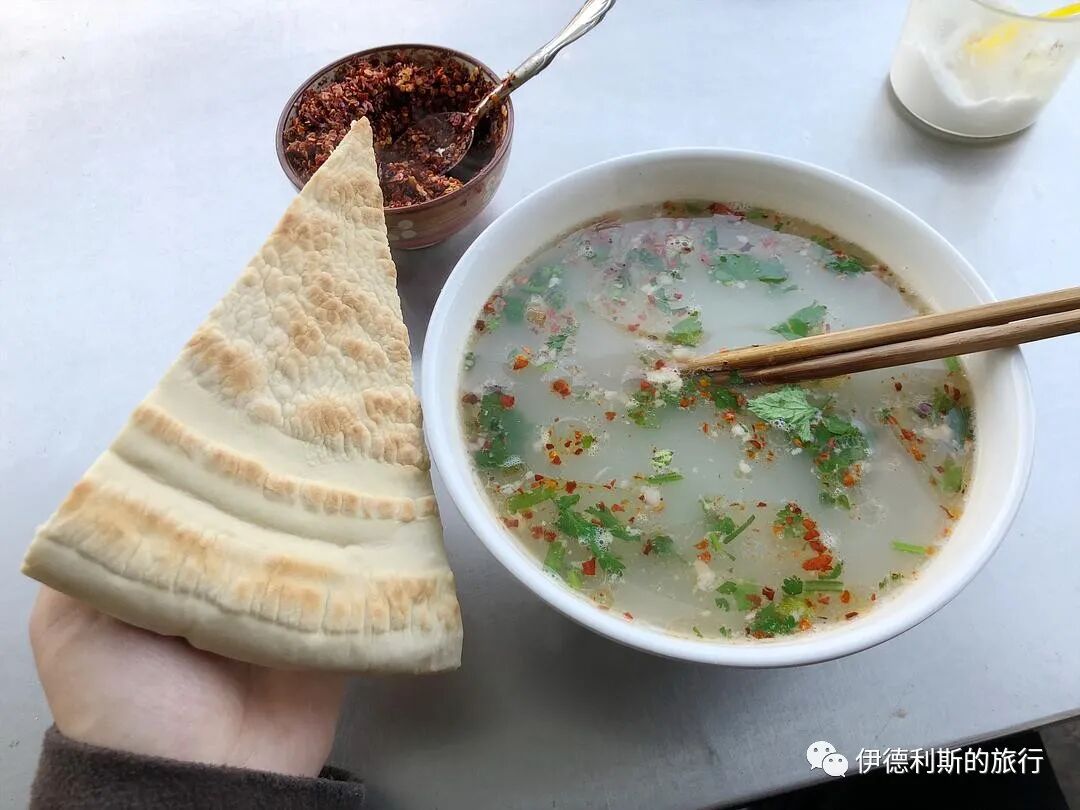
Besides Siweicai, the most classic is still this mutton soup paired with guokui. The one I ate at is Yanji Mutton Fresh Soup right across from the Dongda Mosque. When serving the soup, the uncle asks if you want oil, which is a great treat for mutton fat lovers.
3. Hulatang (spicy soup) paired with jidan budai (egg-stuffed fried dough)
Next to Zhao Family Siweicai is Ma Liu Mutton Hulatang. Unlike the freshness of mutton soup, drinking Hulatang is more about that refreshing feeling in late autumn. After eating it, your whole body feels clear, and you have a good mood for the day.
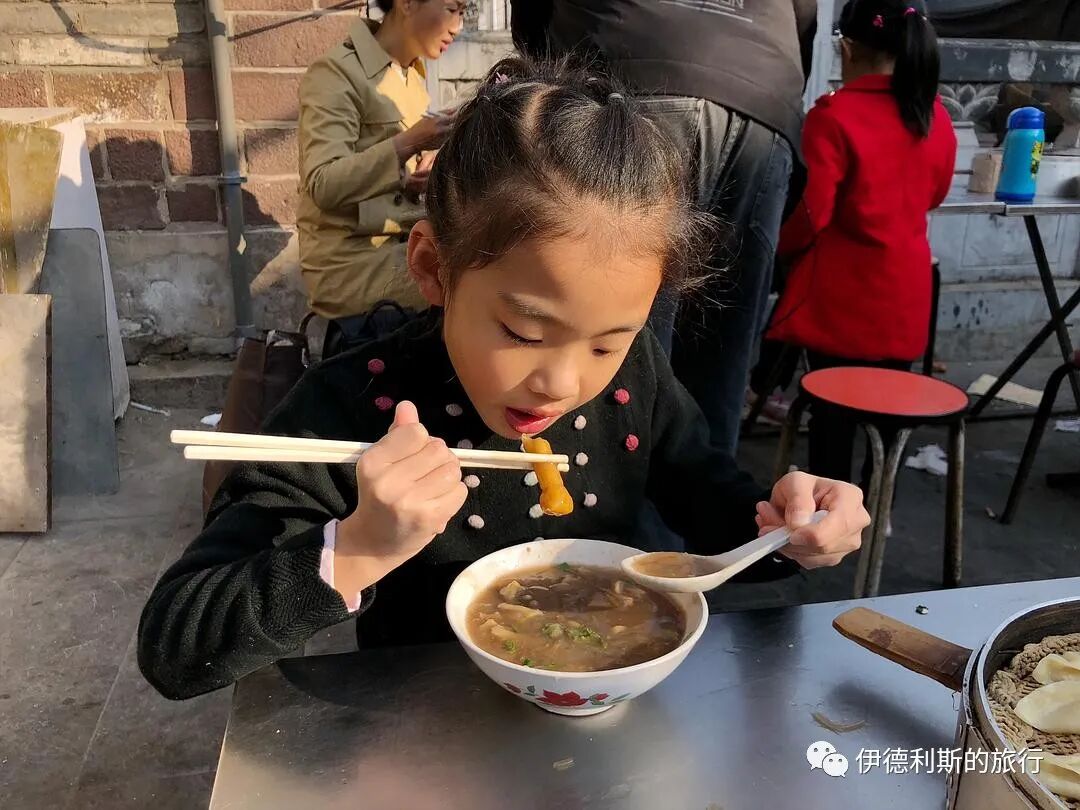
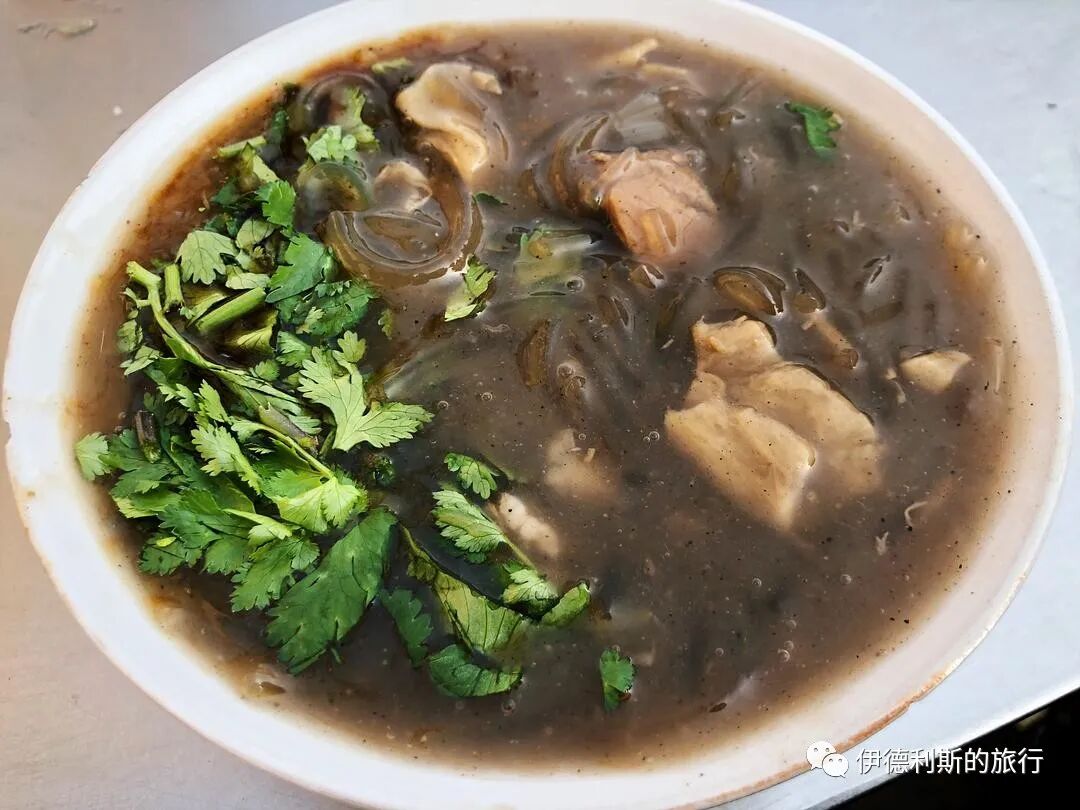
Paired with Hulatang is jidan budai, also called jidan hebao (egg pouch) or zha laohu (fried tiger). This is hard to see in Beijing now, but it still exists in Tianjin.
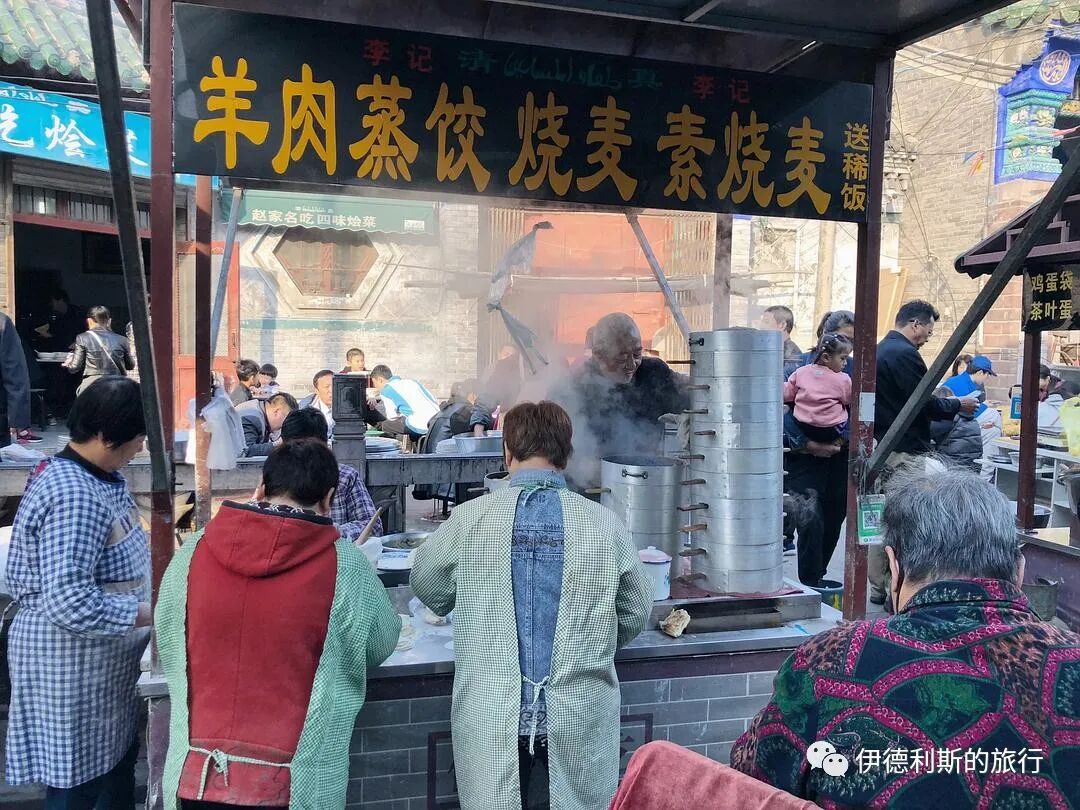
4. Mutton steamed dumplings
Between the Siweicai and Hulatang is Li Ji Steamed Dumplings and Shaomai (steamed dumplings). Because I was too full, I didn't have room, so the steamed dumplings in the photo are actually from the next table.
5. Duck gizzard four-treasure vermicelli soup
Opposite the Siweicai is the only duck gizzard four-treasure vermicelli soup in Simen, which can also be served with mutton fat. This place gives a very generous portion, and I think the duck liver in the soup is the most delicious.
6. Beef huoshao (baked wheat cake)
Continuing north is Mu Family Beef Huoshao. This is very suitable for eating while walking around the alleys of Simen, feeling relaxed and content.
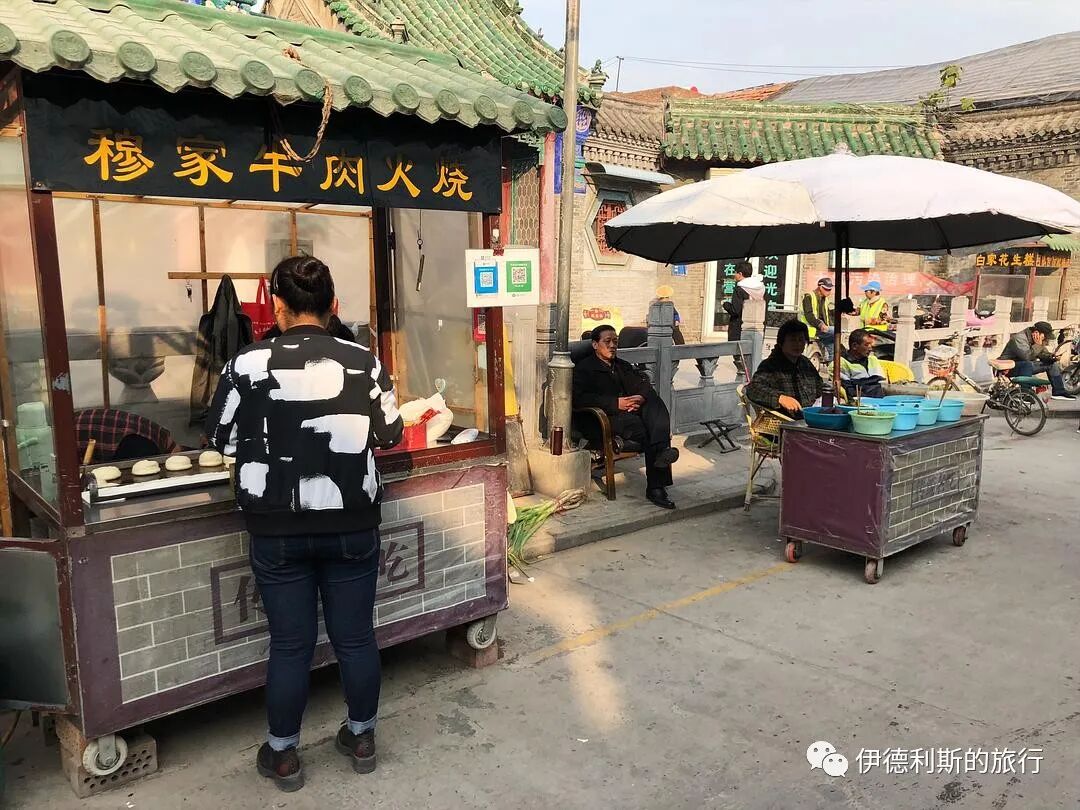
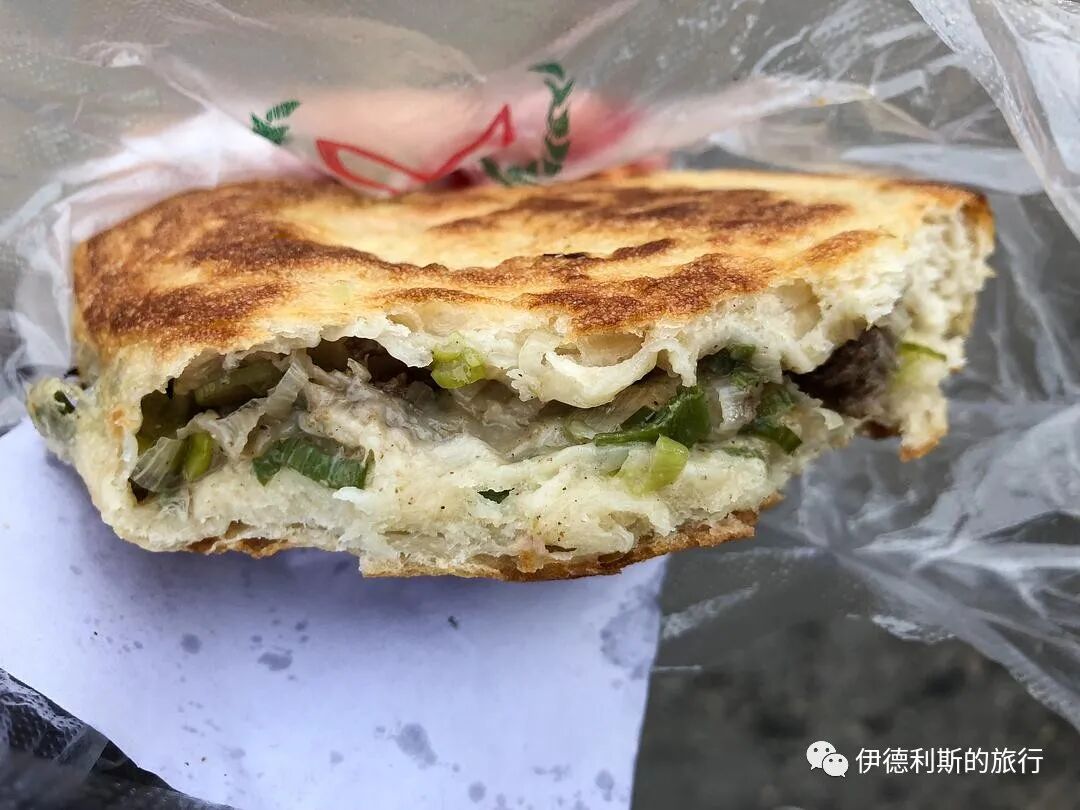
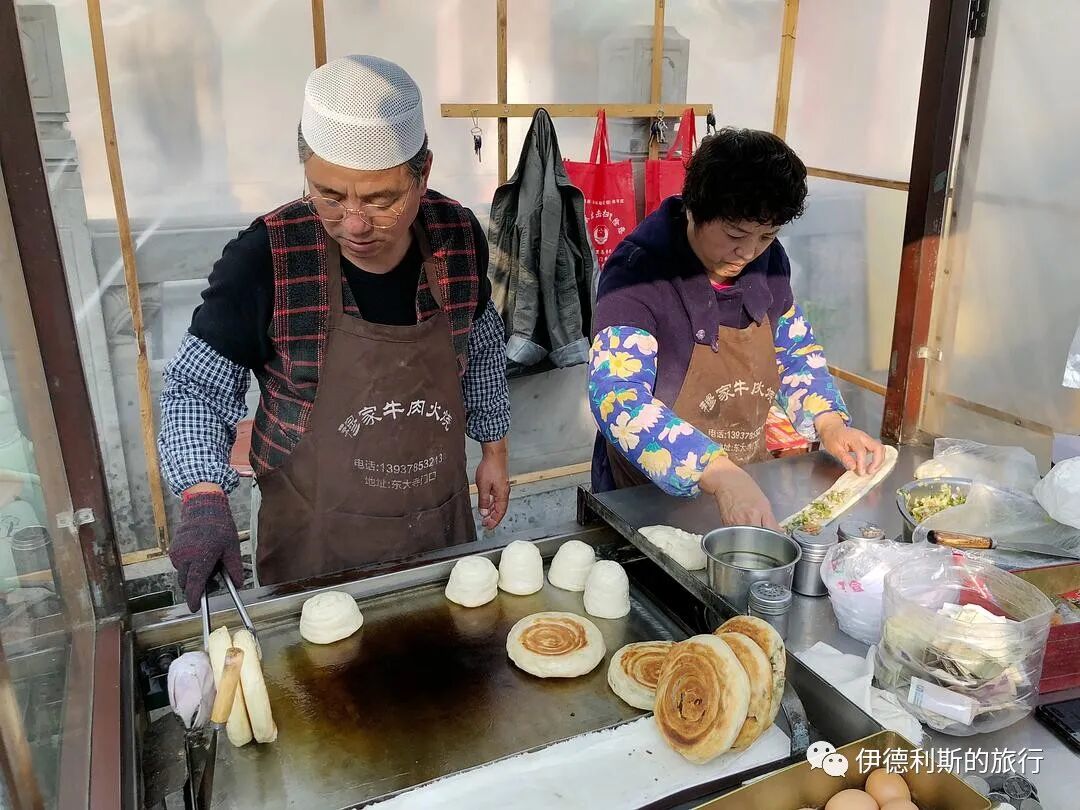
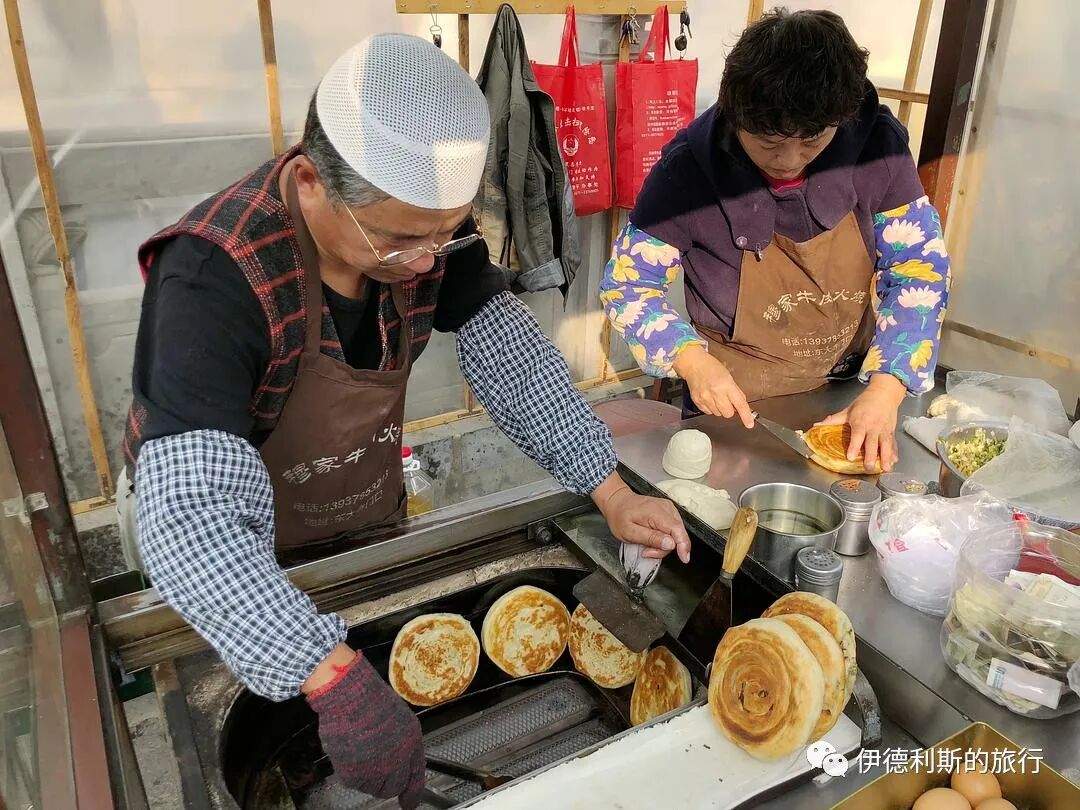
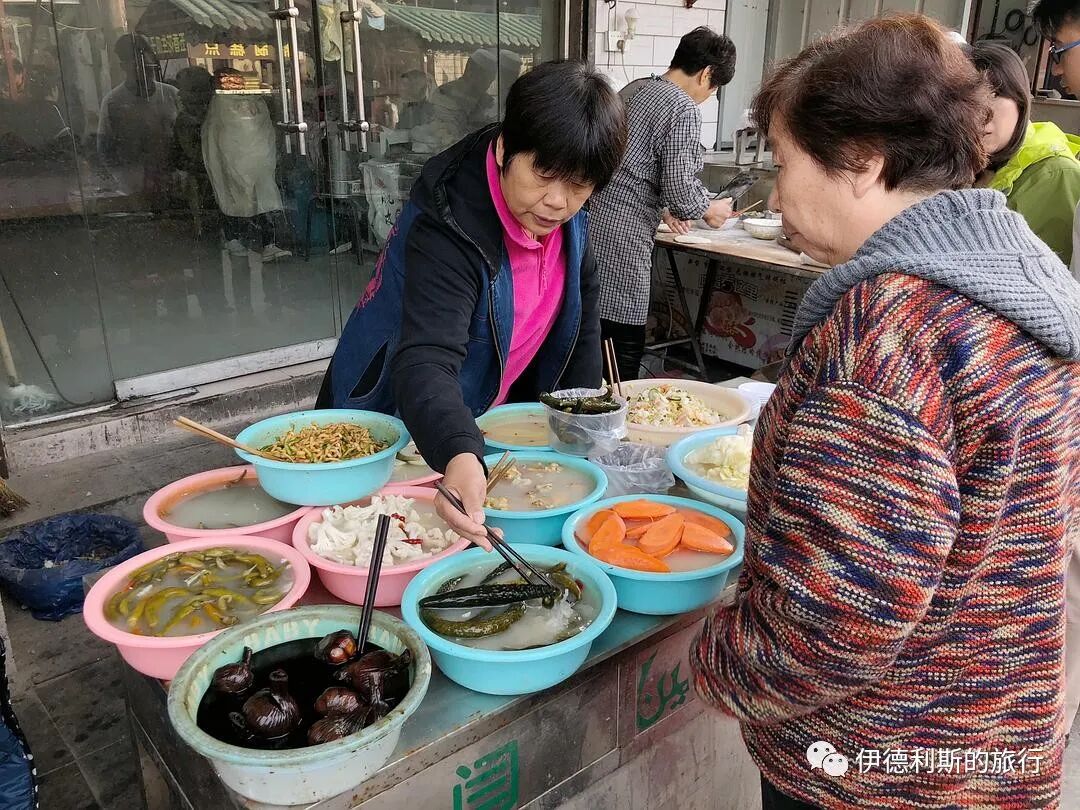
There are also stalls selling pickles in Simen, which are even better when paired with soup.
7. Doumo (bean paste soup) paired with caijiao (vegetable dumplings)
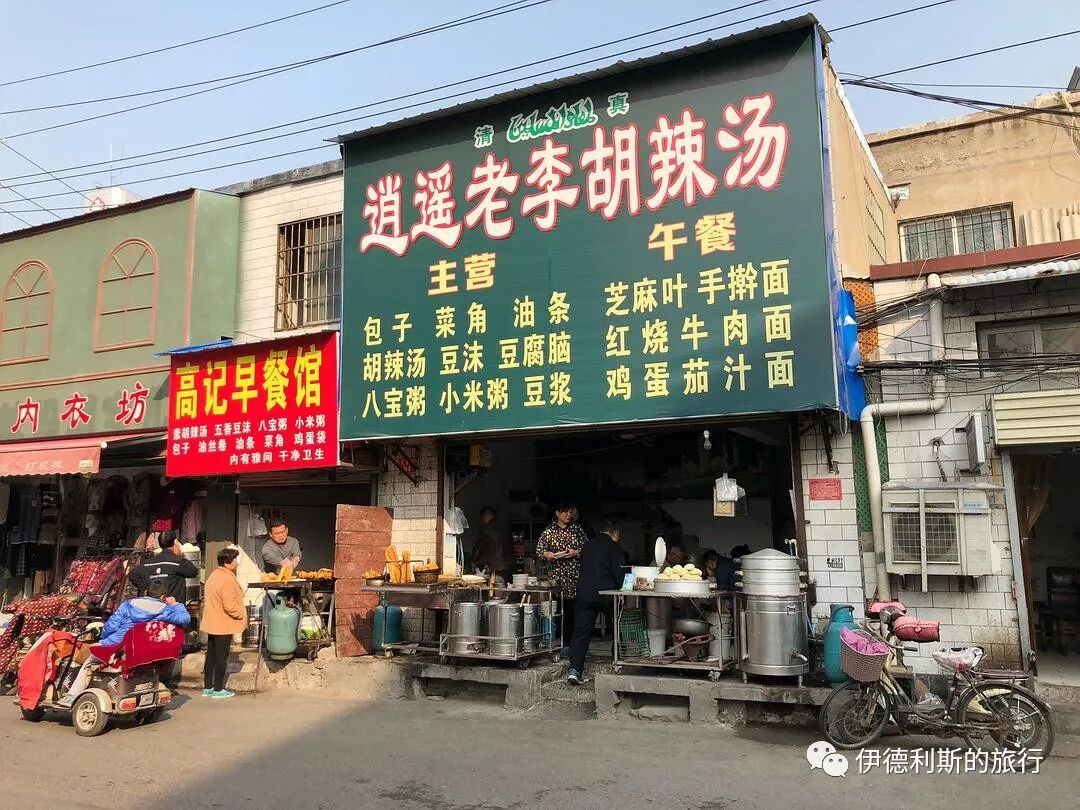
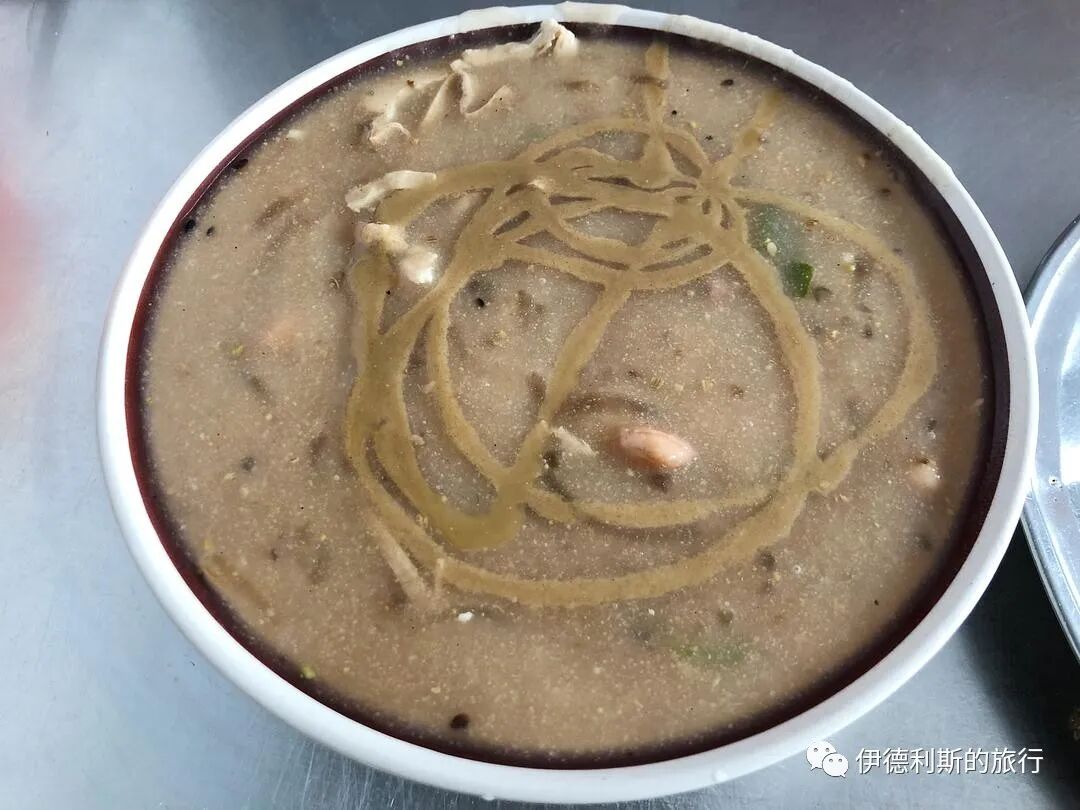
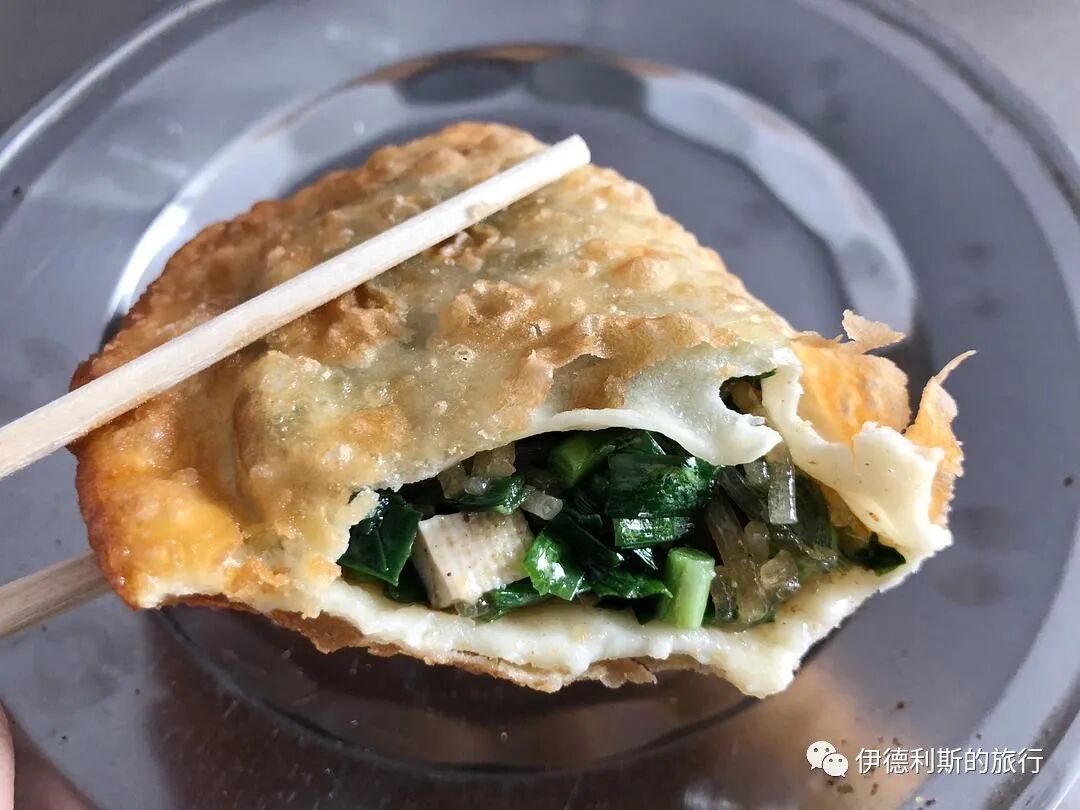
Besides Simen, there are actually many halal breakfast eateries in Kaifeng. During this trip to Kaifeng, I ate doumo and caijiao at a Hulatang eatery near Wenshu Mosque. Doumo is a breakfast popular in the Hebei, Shandong, and Henan regions. Kaifeng's five-spice doumo is made by mixing millet flour with various seasonings, adding shredded tofu, peanuts, spinach, and vermicelli, and finally drizzling with sesame paste.
Lively night market
1. Xueyuanmen Halal Night Market
On the west side of Jiefang Road, not far west of Simen, is Kaifeng's only halal night market, Xueyuanmen Night Market. Everything sold here is authentic Kaifeng halal late-night snacks. For me, living in Beijing where there are no night markets, visiting a night market is really great! I want to try everything; I really hate that my stomach isn't big enough.
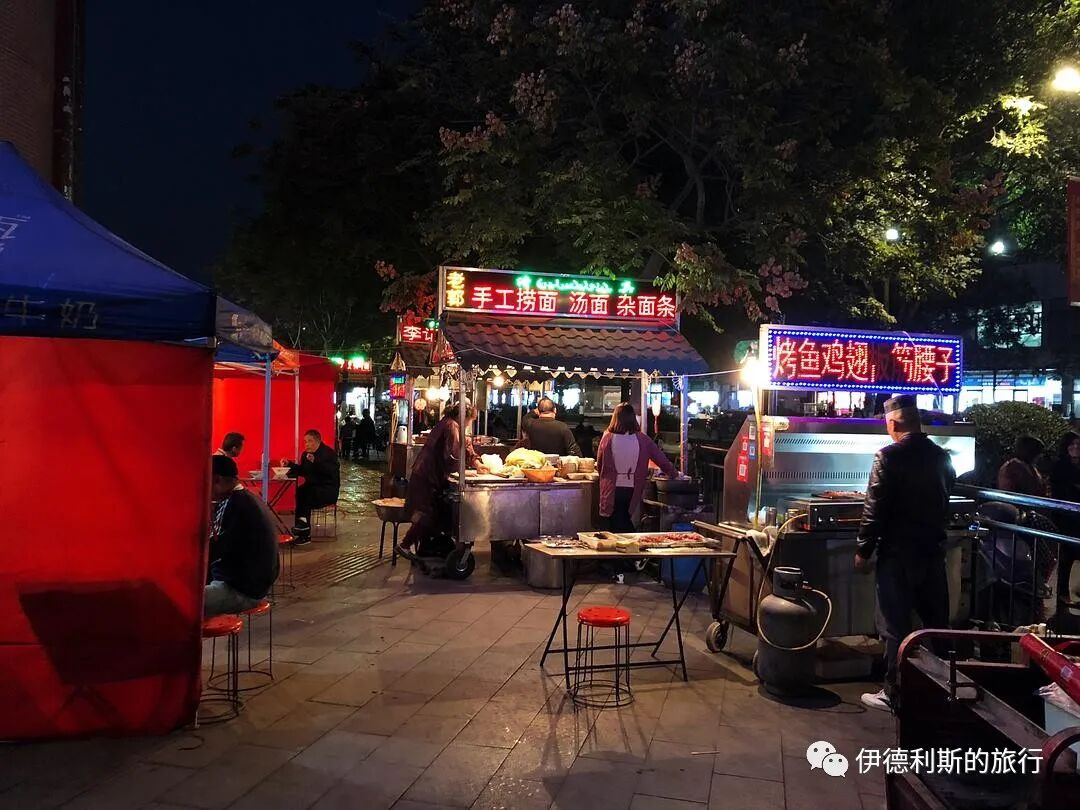
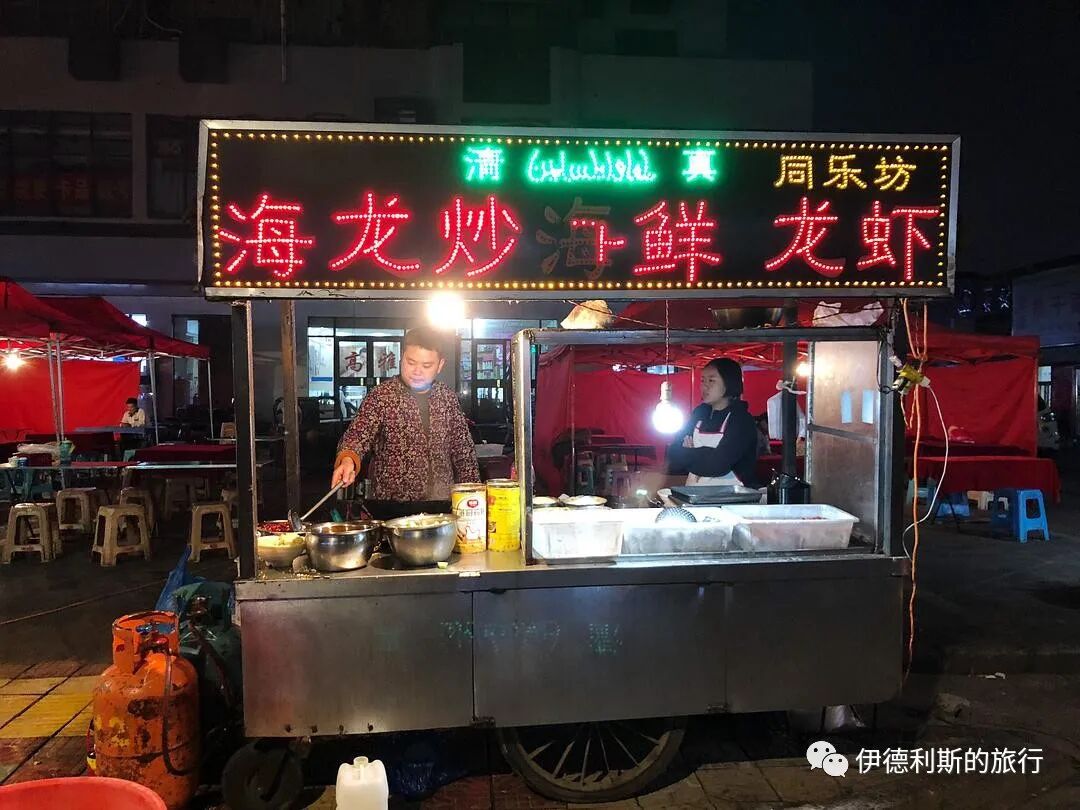
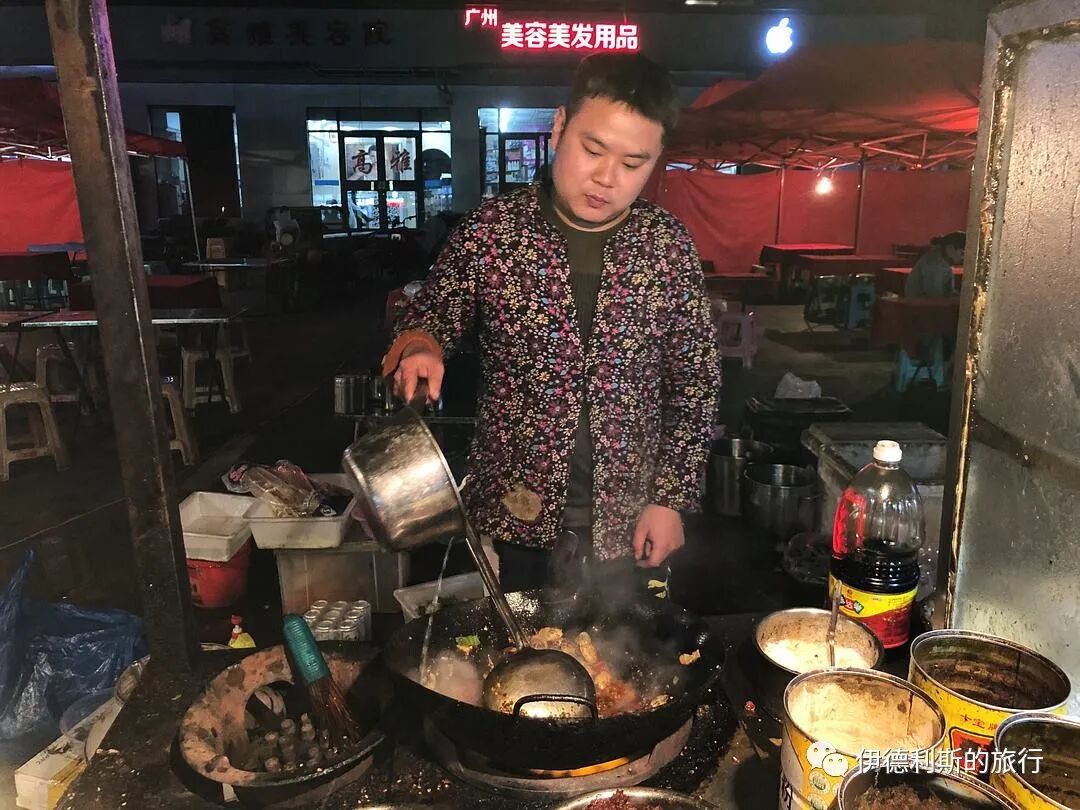
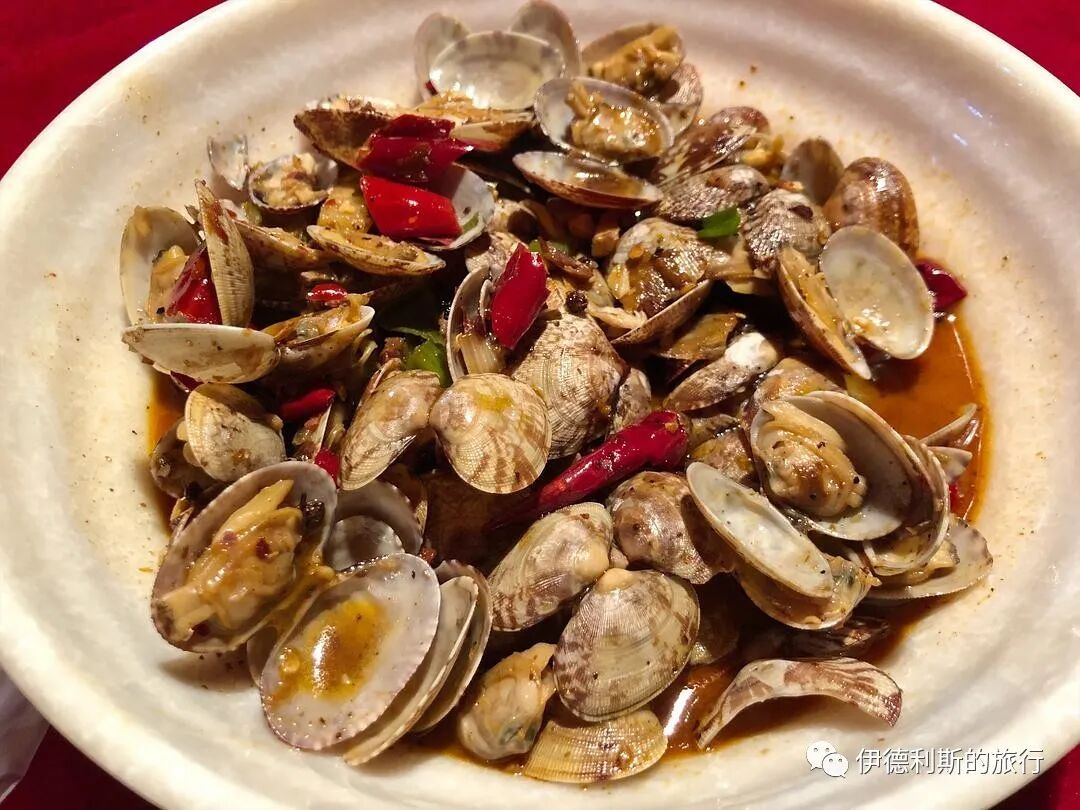
This place sells stir-fried seafood and crayfish, very night-market style. The stir-fried seafood is spicy and very satisfying.
Coming to Kaifeng, of course, you have to try the soup-filled xiaolongbao (small steamed buns). Taking a bite, the slightly sweet soup fills your mouth. After eating, it can truly be described as leaving a lingering fragrance on the lips and teeth.
Kaifeng Halal Food Guide: Simen Soup Pot and Muslim Night Market (Part 2 of 2)
Articles • ali2007fr posted the article • 0 comments • 181 views • 2026-05-17 06:56
Summary: This travel note introduces Kaifeng Halal Food Guide: Simen Soup Pot and Muslim Night Market. In early November 2018, I took advantage of the weekend to visit Kaifeng, arriving in three and a half hours by high-speed train from Beijing. It is useful for readers interested in Kaifeng Travel, Halal Food, Muslim Night Market. This is part 2 of 2.
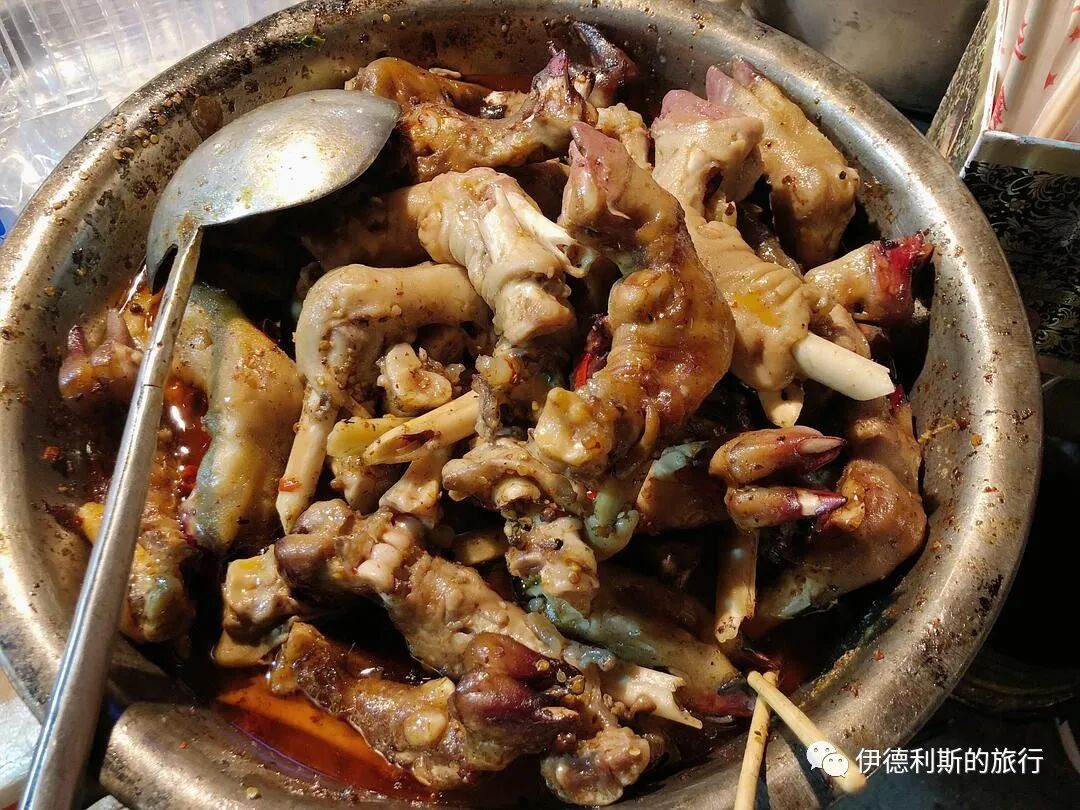
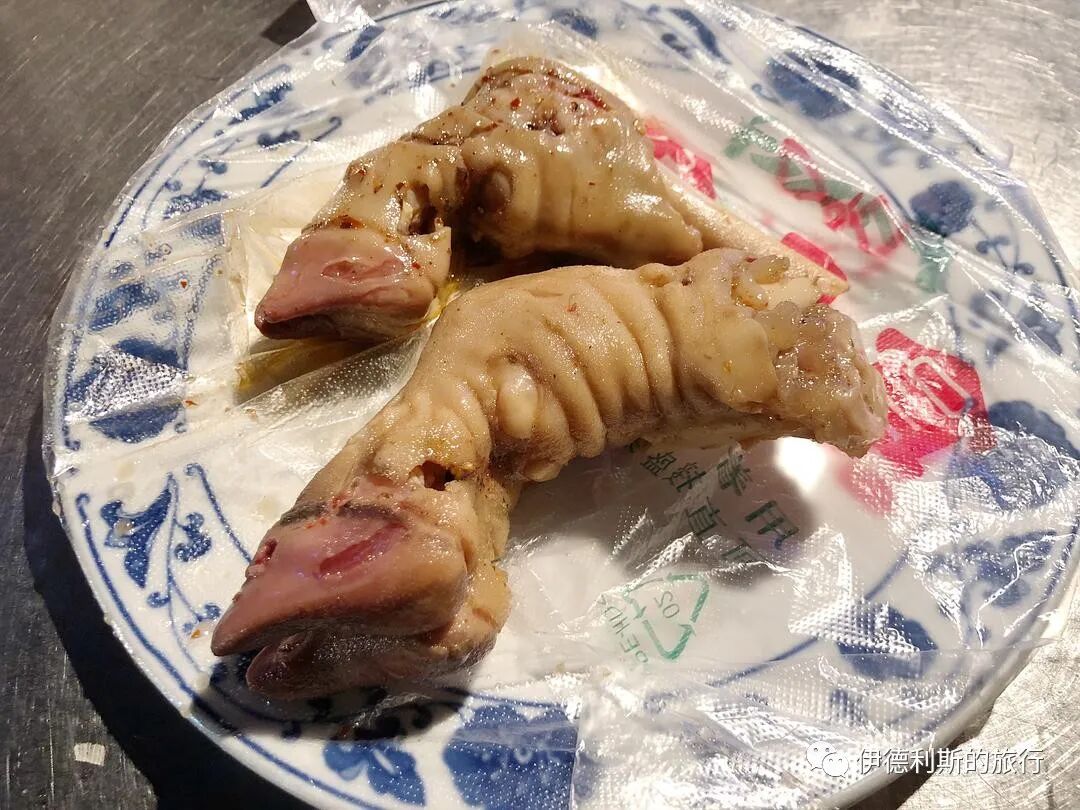
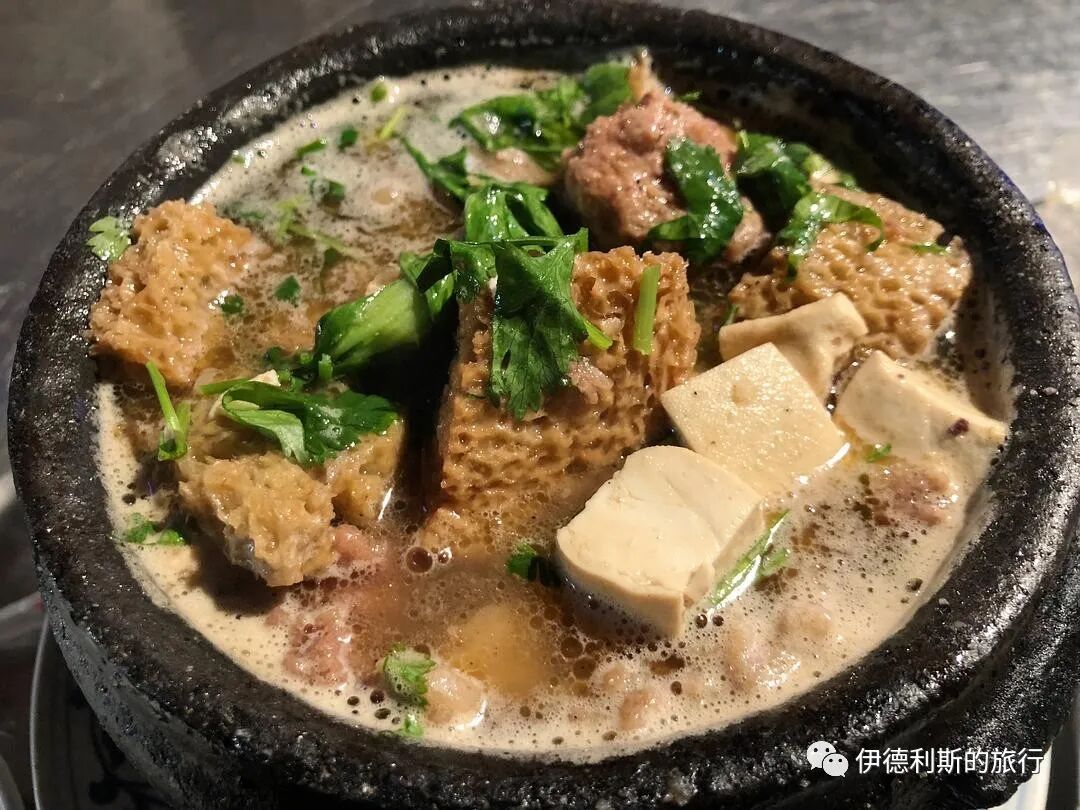
I ate mutton trotters and clay pot here. The ingredients in the clay pot are similar to Siweicai, but it is very warm to eat at night while it is bubbling.
2. Henan University West Gate Night Market
The old Henan University West Gate night market also has many halal stalls, but the biggest difference from the Xueyuanmen night market is that the audience here is mainly students from Henan University and surrounding schools. Therefore, there are almost no stalls for drinking and chatting, but mainly various snacks loved by students. I really envy these college students who come to eat late-night snacks at night!
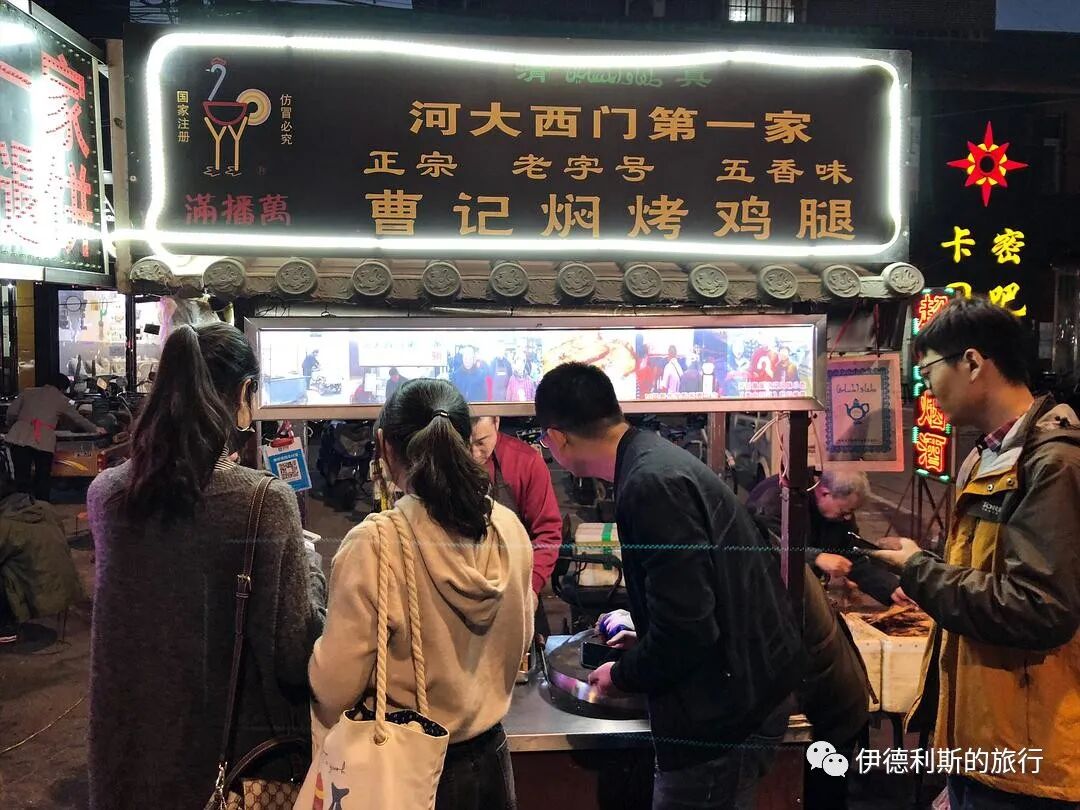
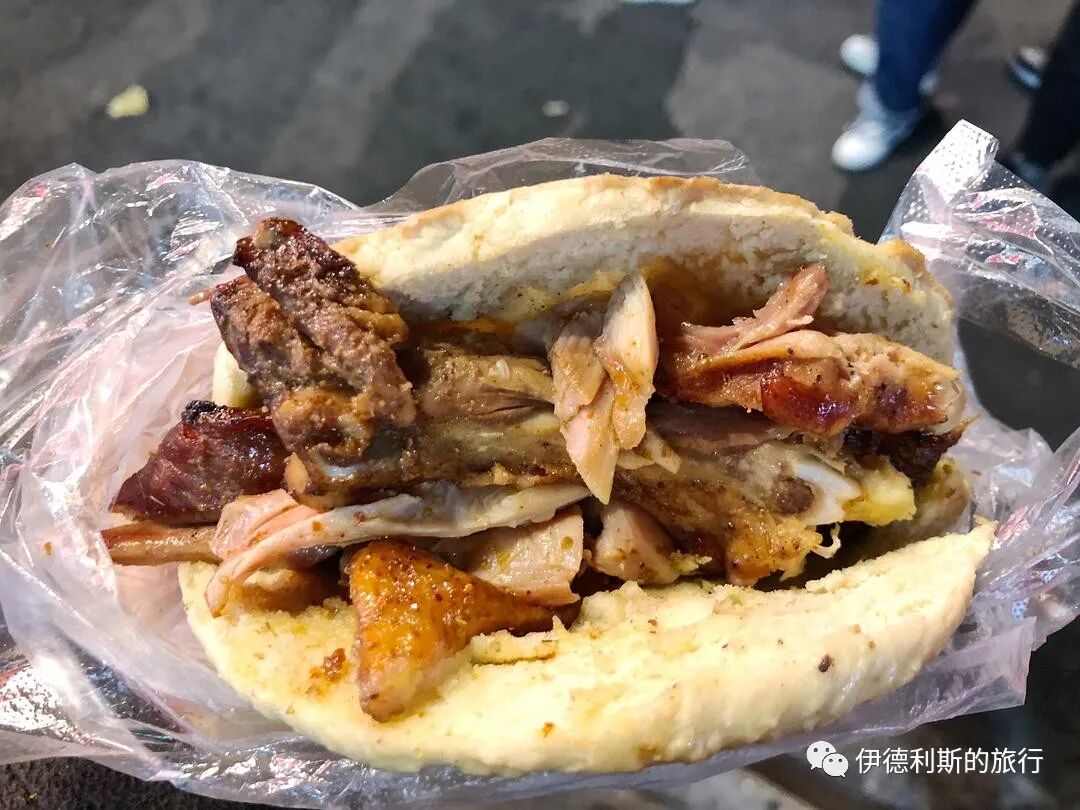
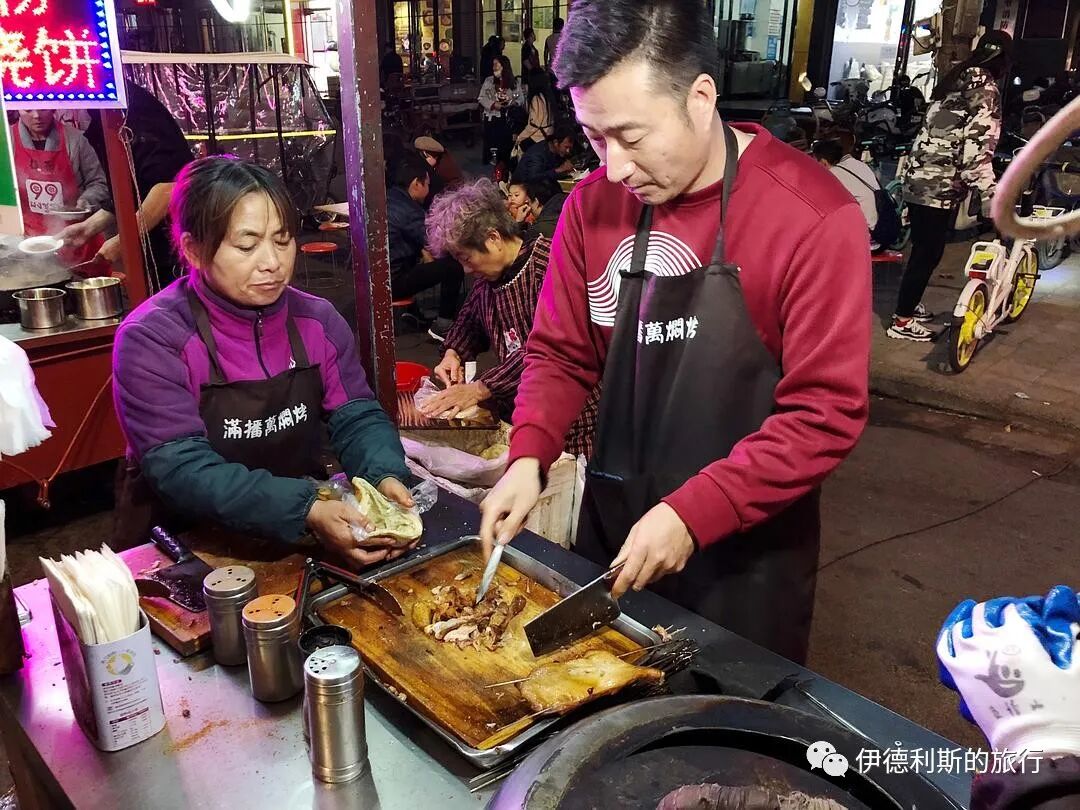
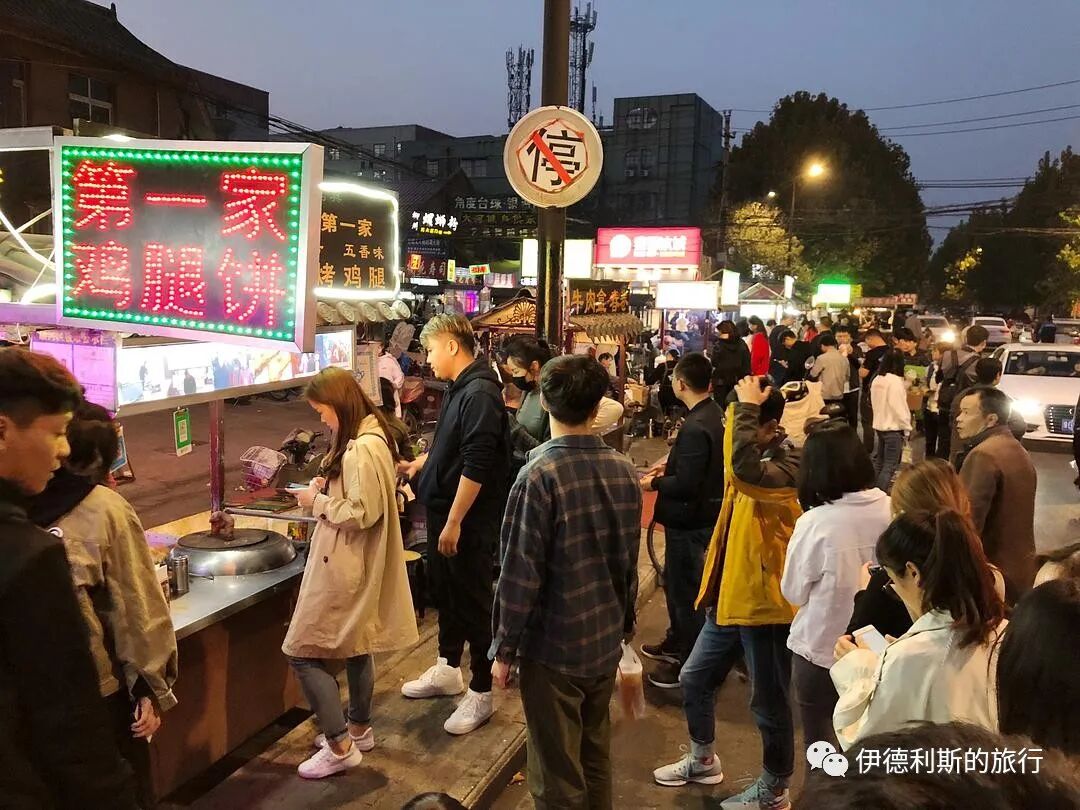
The stall with the longest line at the Henan University West Gate night market is this Cao Ji Braised Roasted Chicken Leg. The students line up so long that they block other stalls, and they have to manage the line from time to time. You can choose whether to have the roasted chicken leg in a bun or not, and you can also choose whether it is crispy or tender, which is very user-friendly. Their taste is also really delicious. After I bought it, I originally planned to eat a couple of bites and then put it away to save room for other places, but I couldn't stop after one bite and ate it all in one go.
Then I went to eat this Luo Ji almond tea. Kaifeng's almond tea is not the same as Beijing's. Kaifeng's ingredients are very rich, a bit like babaozhou (eight-treasure porridge). When you eat it, you have to savor the various textures mixed together.
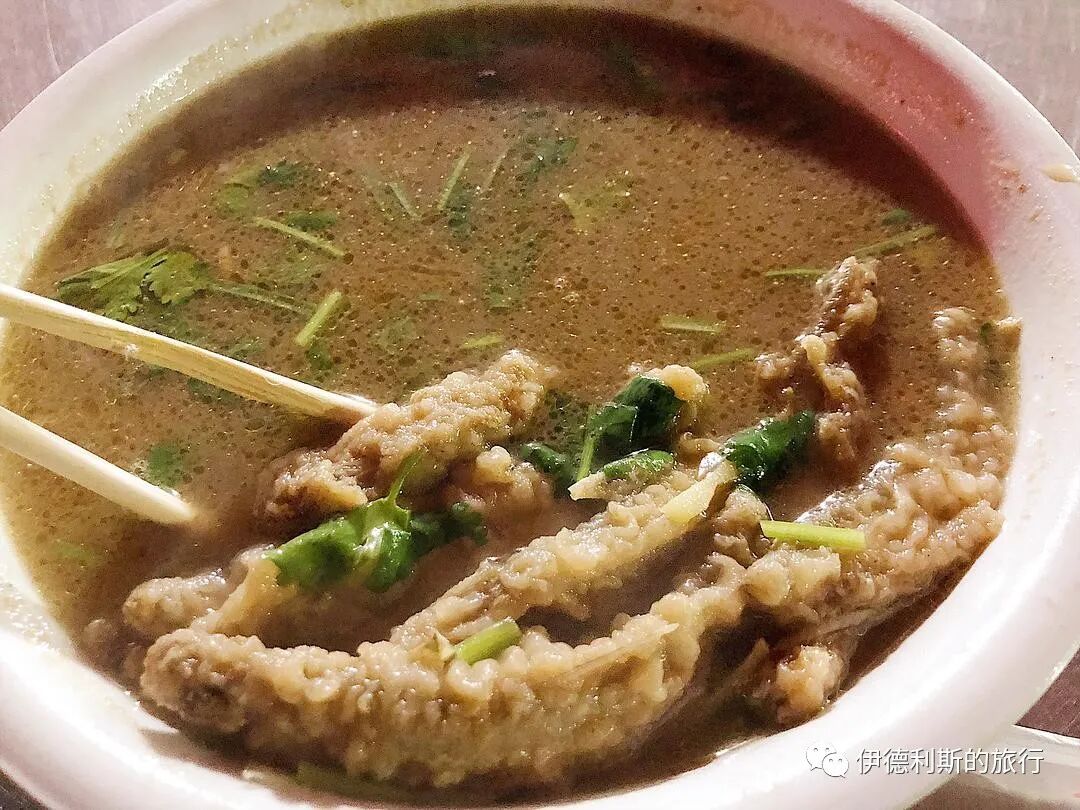
Then I ate this shuan niudu (boiled beef tripe). The skewers are very small, and you eat a whole bunch at once. The beef tripe is very tender and fragrant.
3. Dongsimen Night Market
Dongsimen Night Market is at the intersection of Dongdajie and Jiefang Road. The night market itself is not big, but the atmosphere is very good, with locals coming to eat and chat.
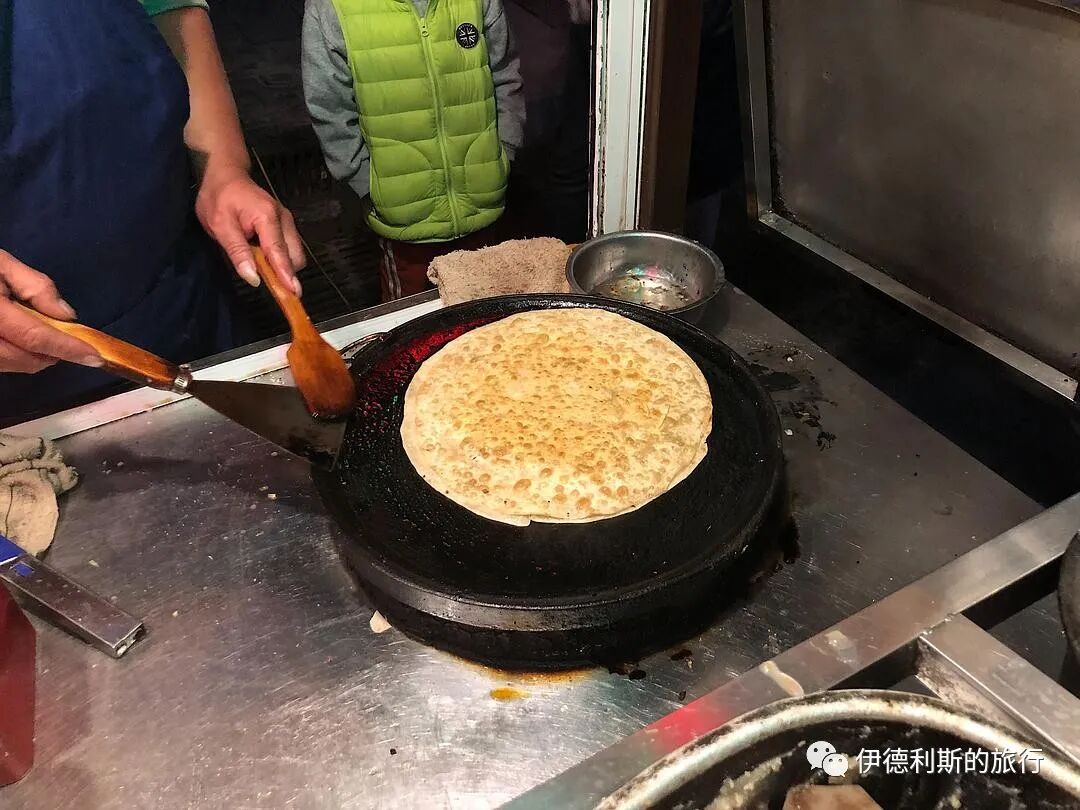
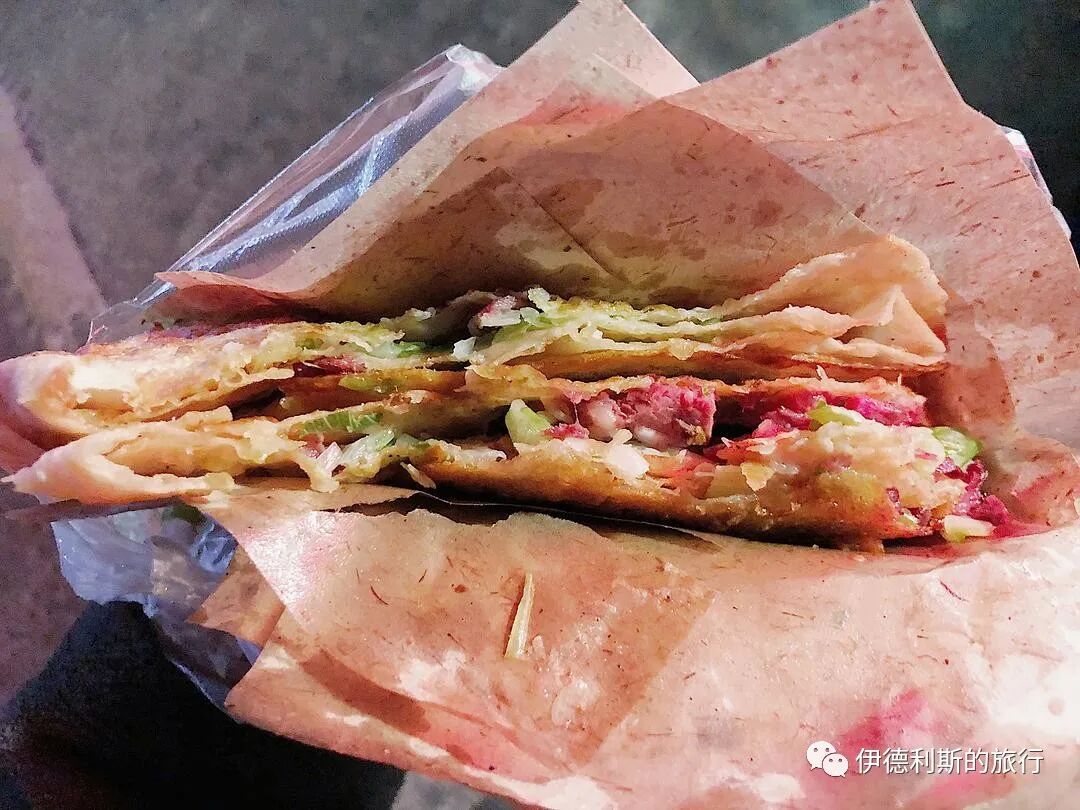
First, I ate this traditional-style mutton kanmo (pan-baked flatbread with mutton). Mutton kanmo is pan-baked with mutton fat, so it must be eaten hot to be delicious. I chose the most expensive one, and the master added the best mutton for me.
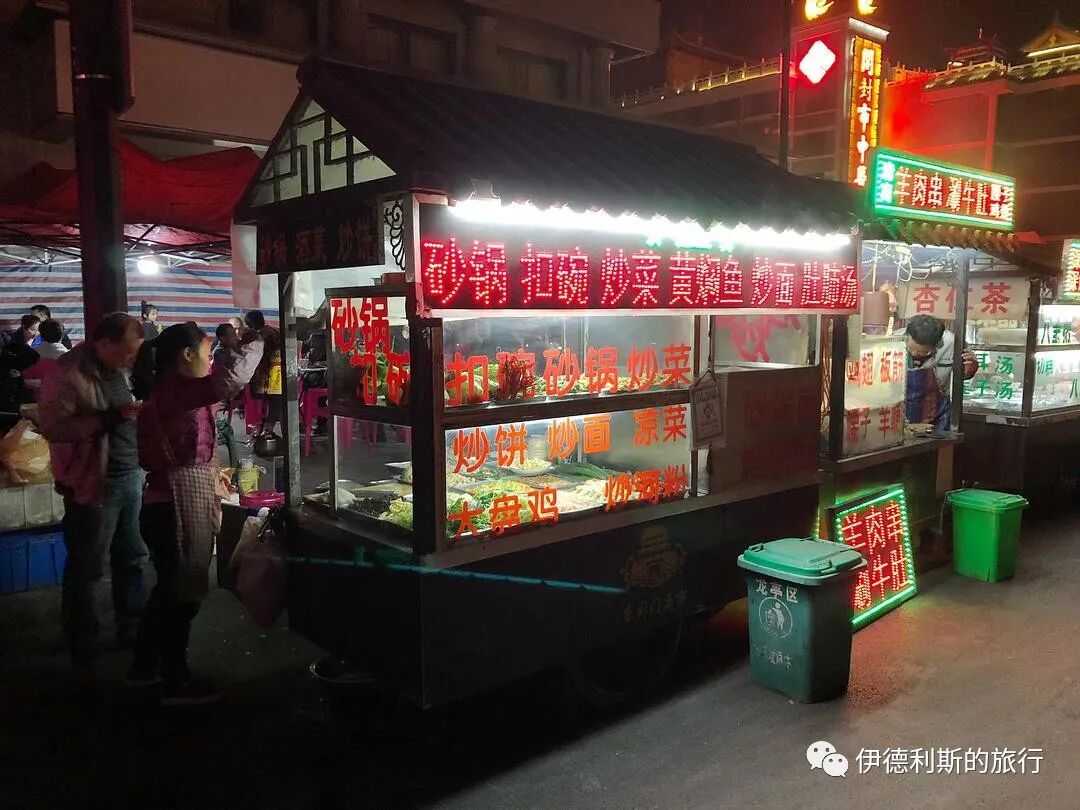
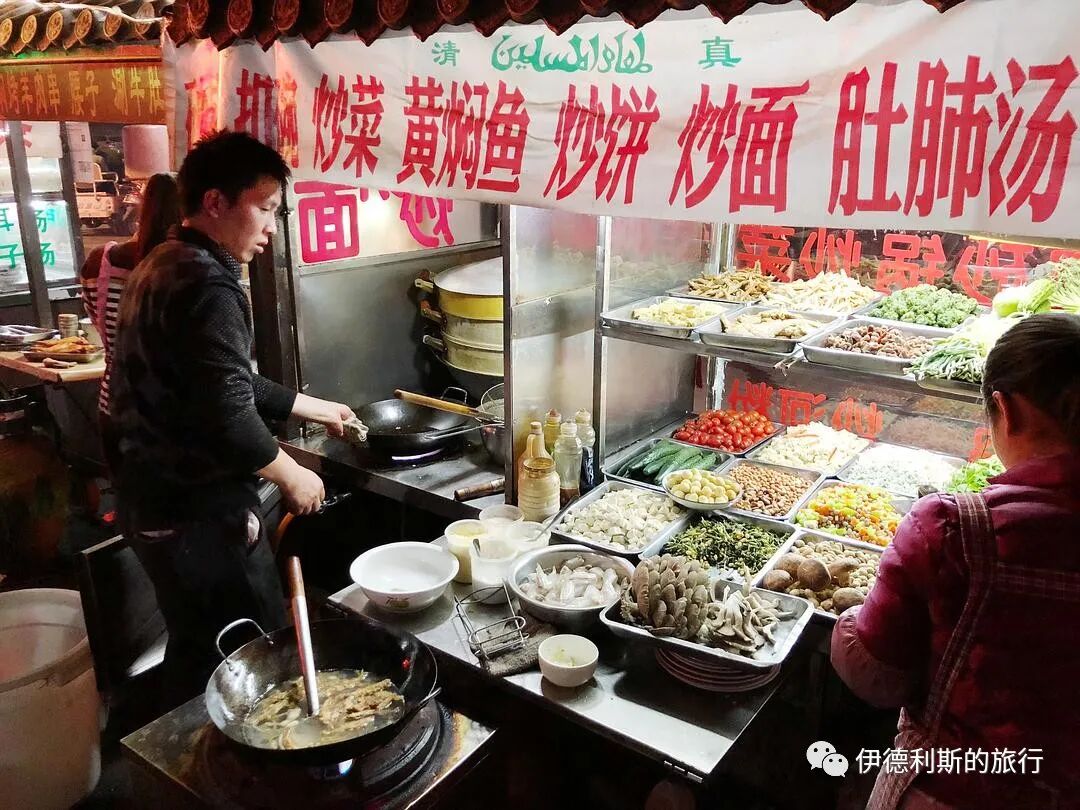
Then I ate qiangguomian (stir-fried noodle soup) and huangmuyu (braised yellow croaker) here. Both of these are classic foods of the Kaifeng night market, suitable for eating while a whole family is chatting. view all
Summary: This travel note introduces Kaifeng Halal Food Guide: Simen Soup Pot and Muslim Night Market. In early November 2018, I took advantage of the weekend to visit Kaifeng, arriving in three and a half hours by high-speed train from Beijing. It is useful for readers interested in Kaifeng Travel, Halal Food, Muslim Night Market. This is part 2 of 2.
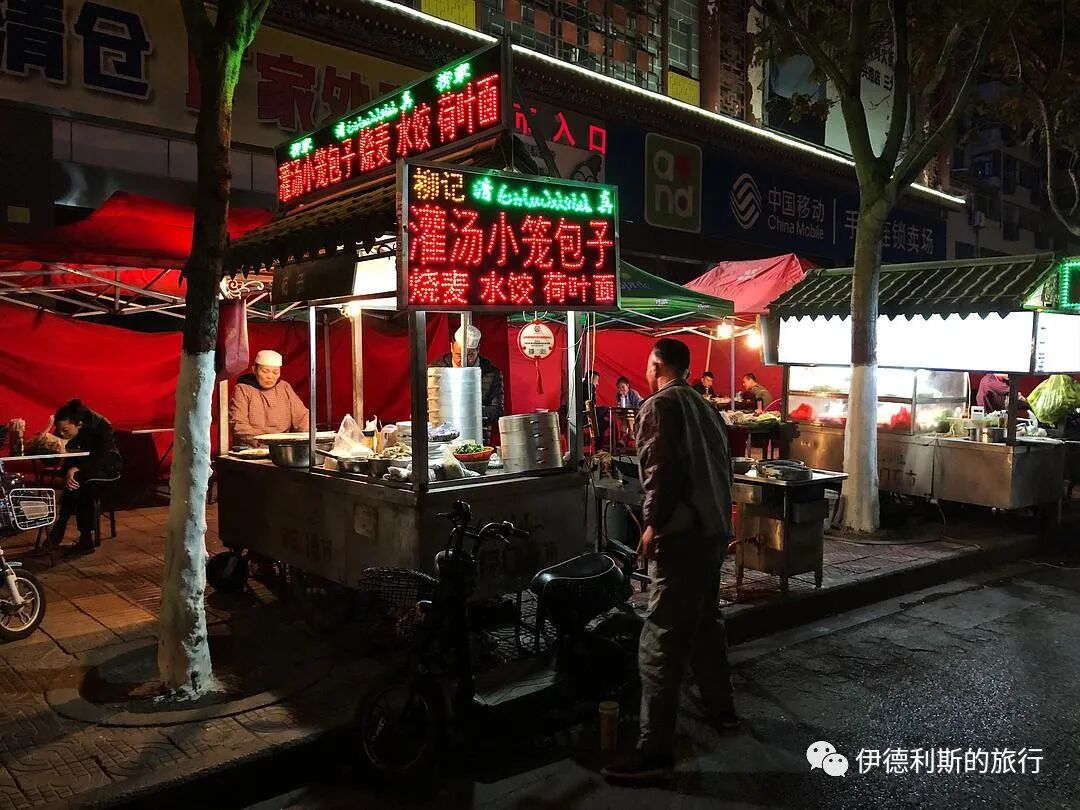
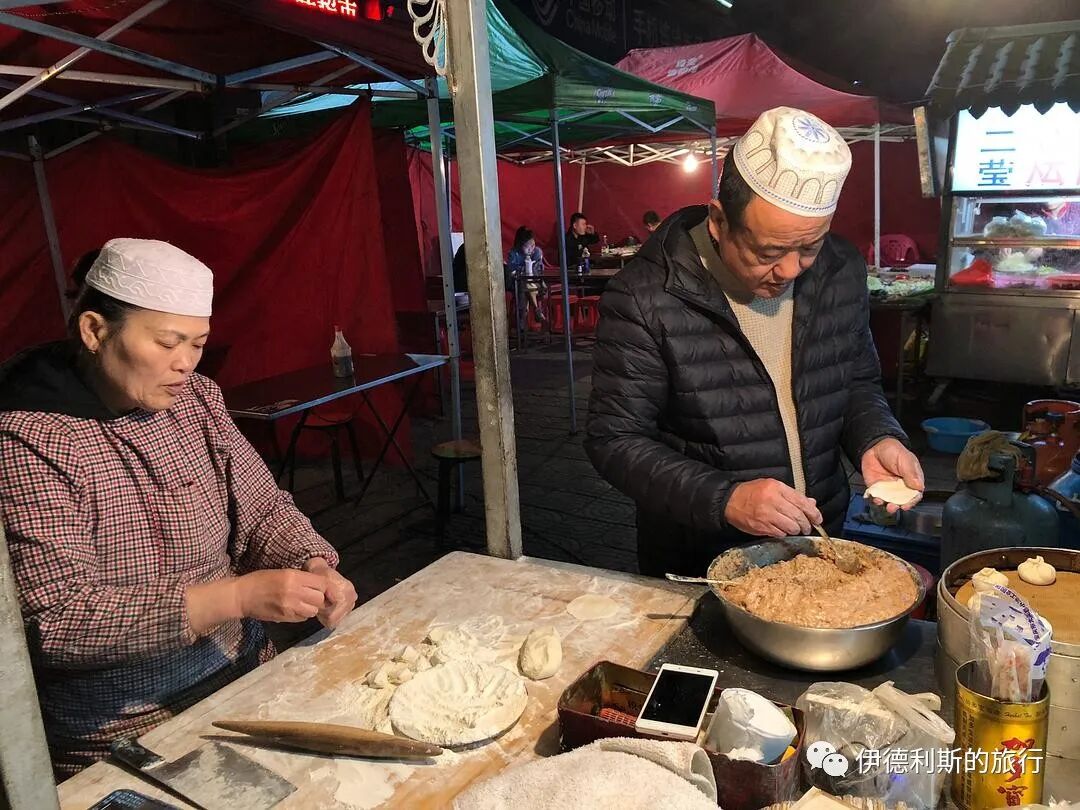
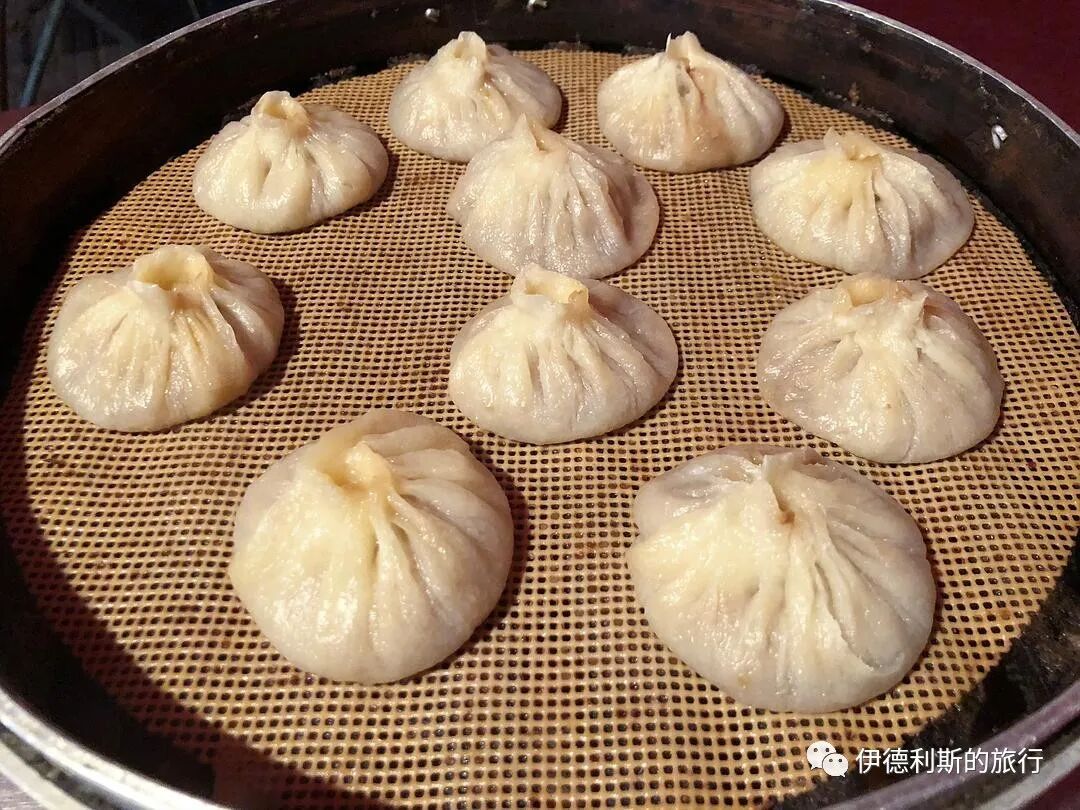
I ate mutton trotters and clay pot here. The ingredients in the clay pot are similar to Siweicai, but it is very warm to eat at night while it is bubbling.
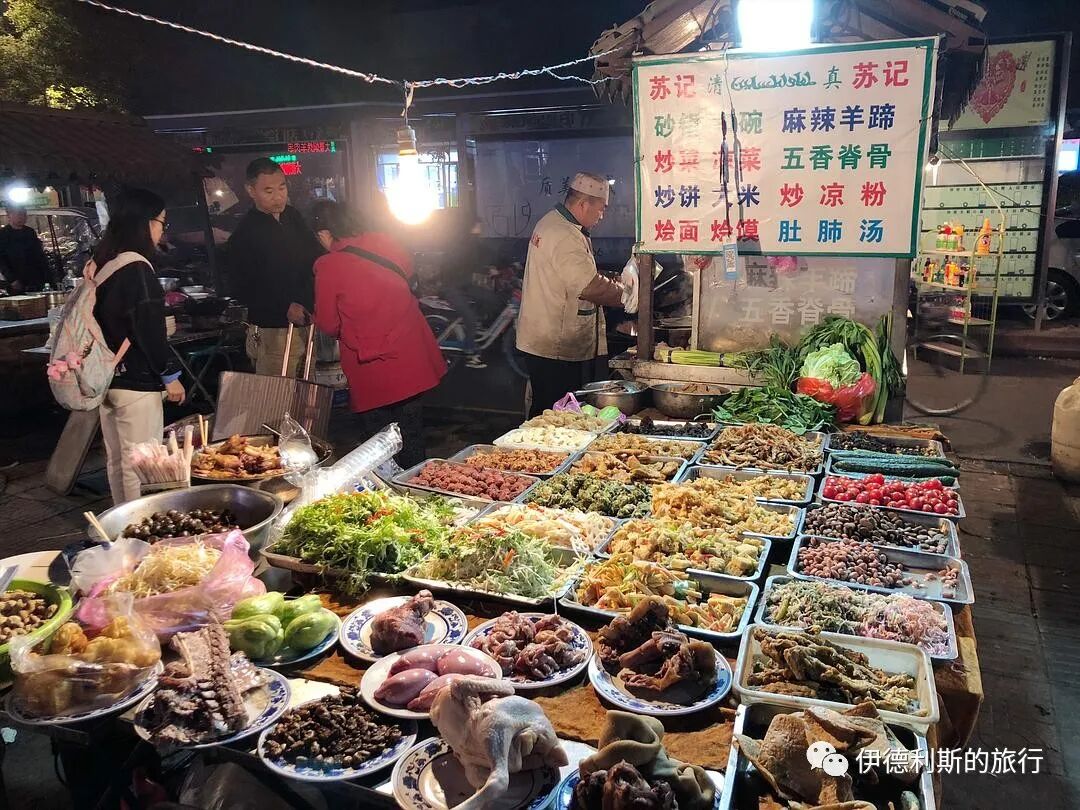
2. Henan University West Gate Night Market
The old Henan University West Gate night market also has many halal stalls, but the biggest difference from the Xueyuanmen night market is that the audience here is mainly students from Henan University and surrounding schools. Therefore, there are almost no stalls for drinking and chatting, but mainly various snacks loved by students. I really envy these college students who come to eat late-night snacks at night!
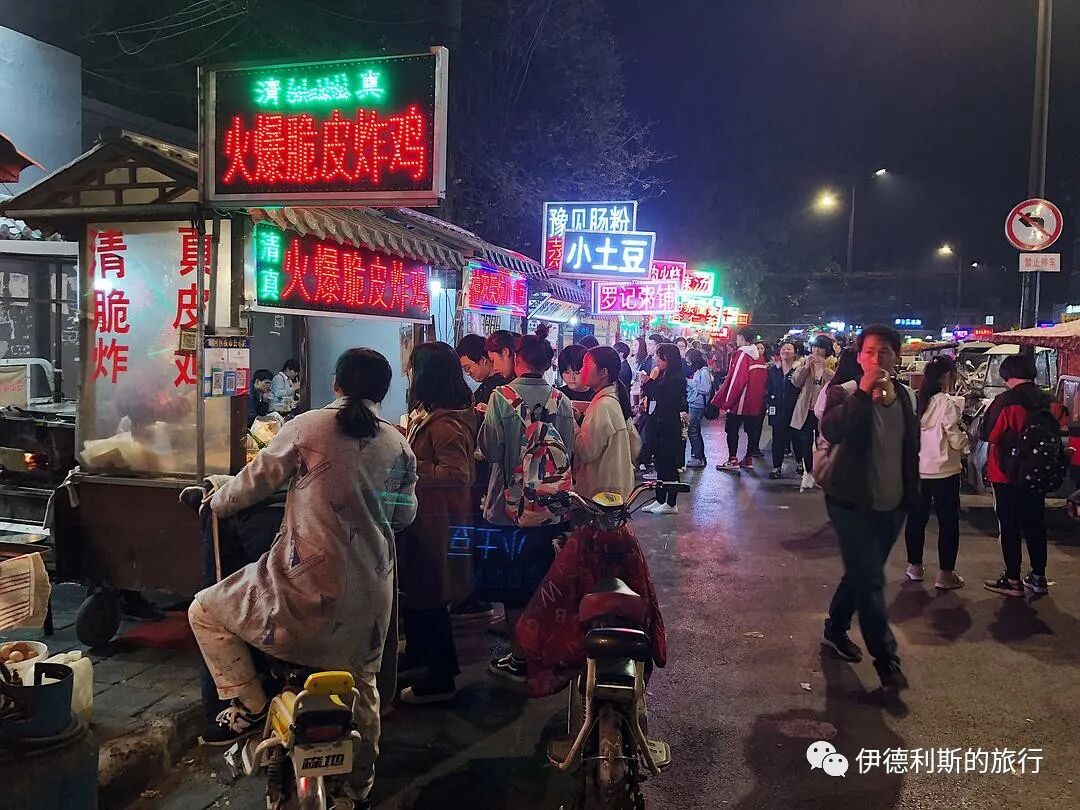
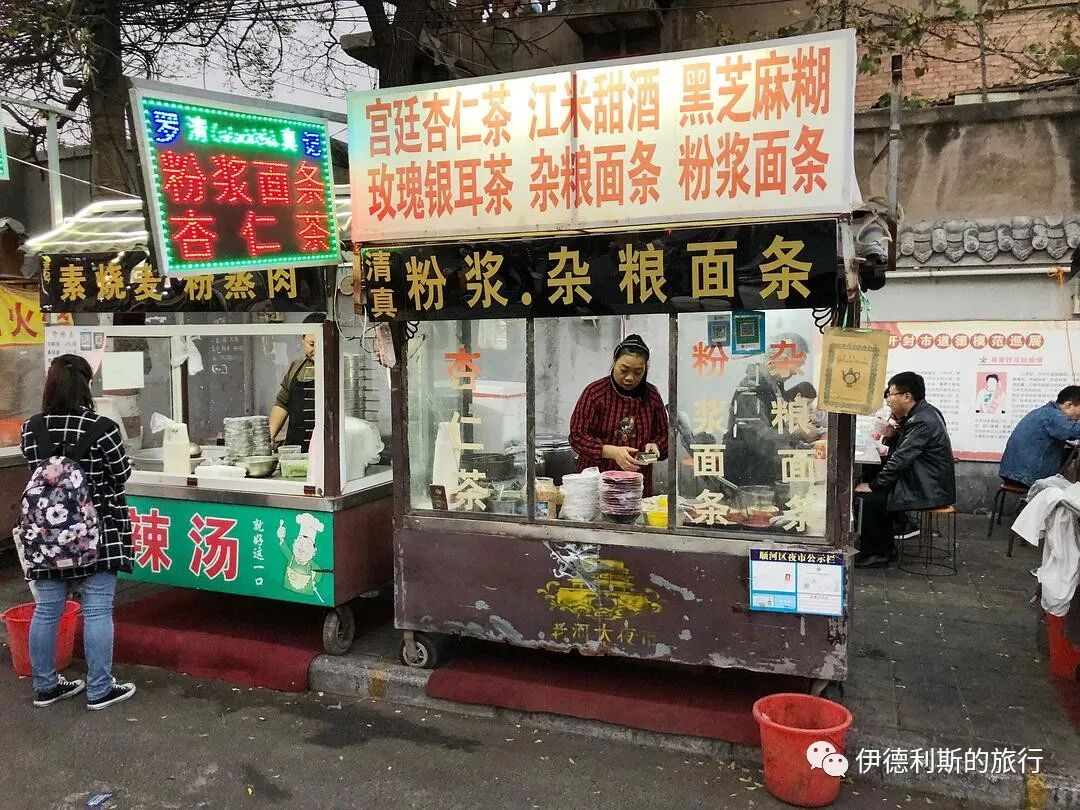
The stall with the longest line at the Henan University West Gate night market is this Cao Ji Braised Roasted Chicken Leg. The students line up so long that they block other stalls, and they have to manage the line from time to time. You can choose whether to have the roasted chicken leg in a bun or not, and you can also choose whether it is crispy or tender, which is very user-friendly. Their taste is also really delicious. After I bought it, I originally planned to eat a couple of bites and then put it away to save room for other places, but I couldn't stop after one bite and ate it all in one go.
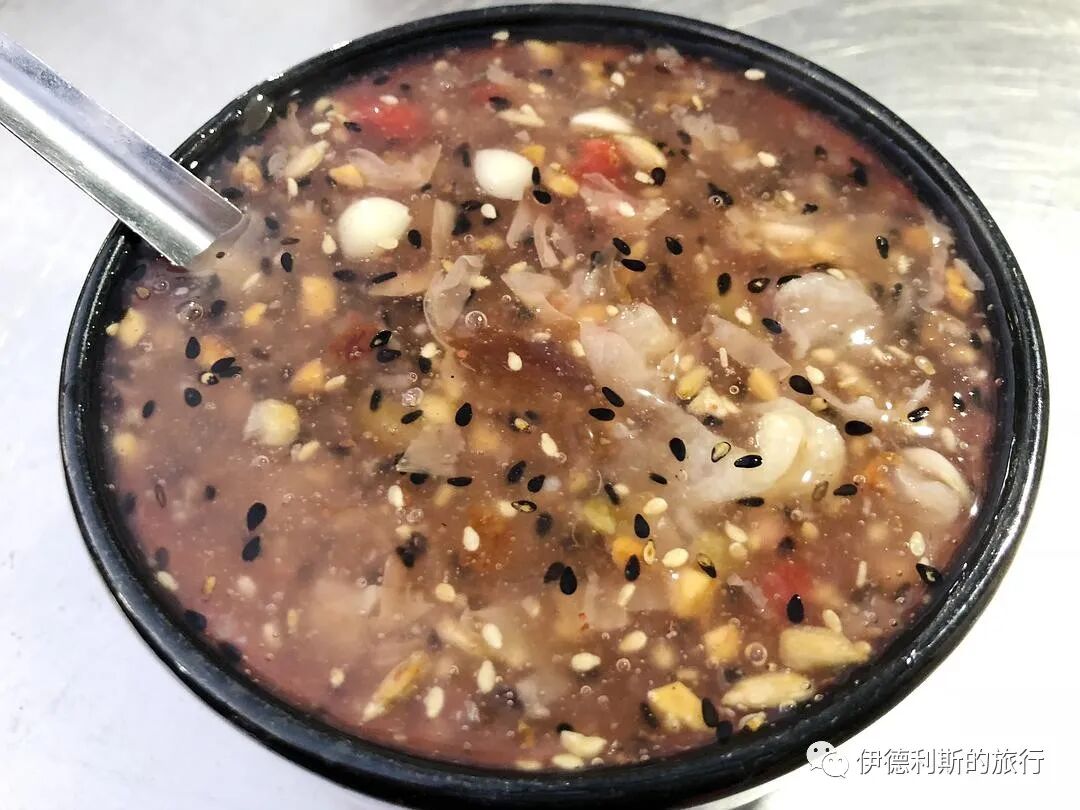
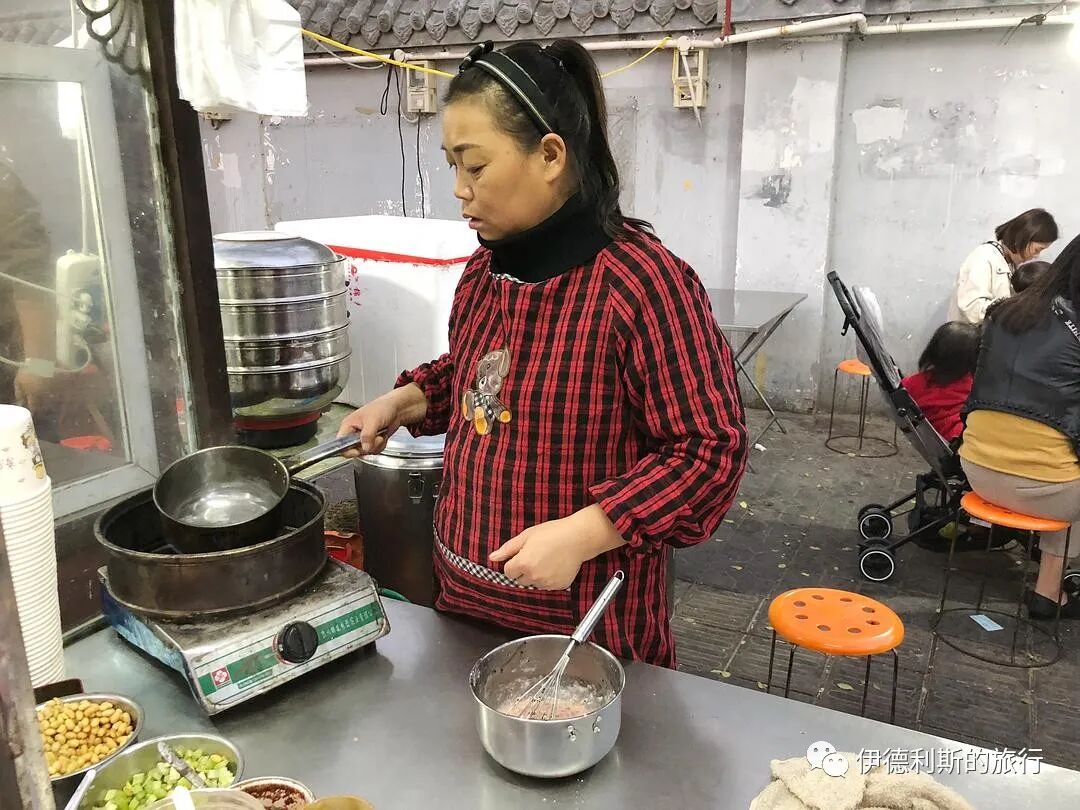
Then I went to eat this Luo Ji almond tea. Kaifeng's almond tea is not the same as Beijing's. Kaifeng's ingredients are very rich, a bit like babaozhou (eight-treasure porridge). When you eat it, you have to savor the various textures mixed together.
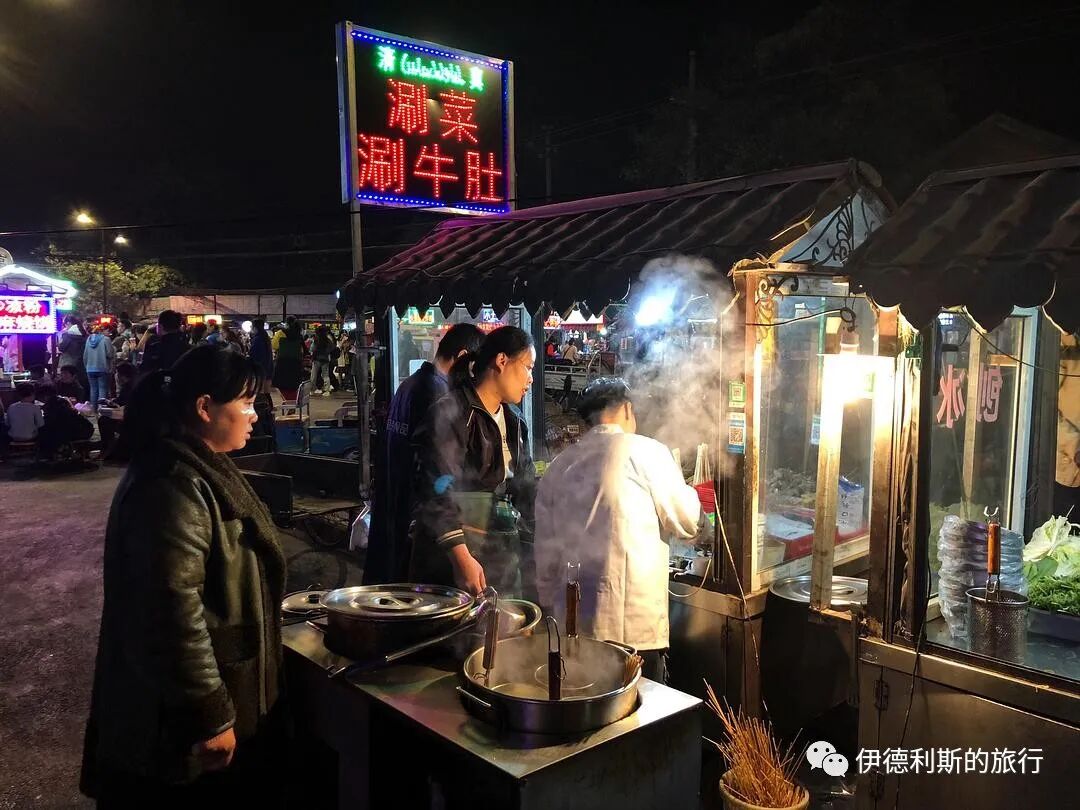
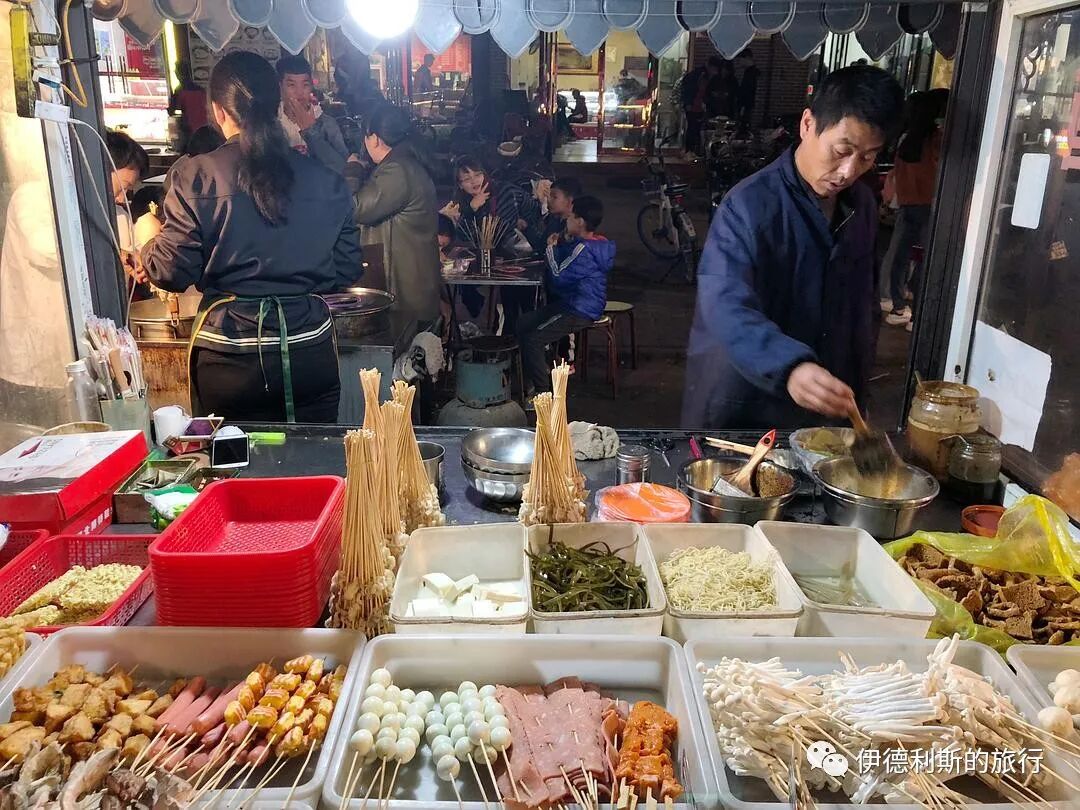
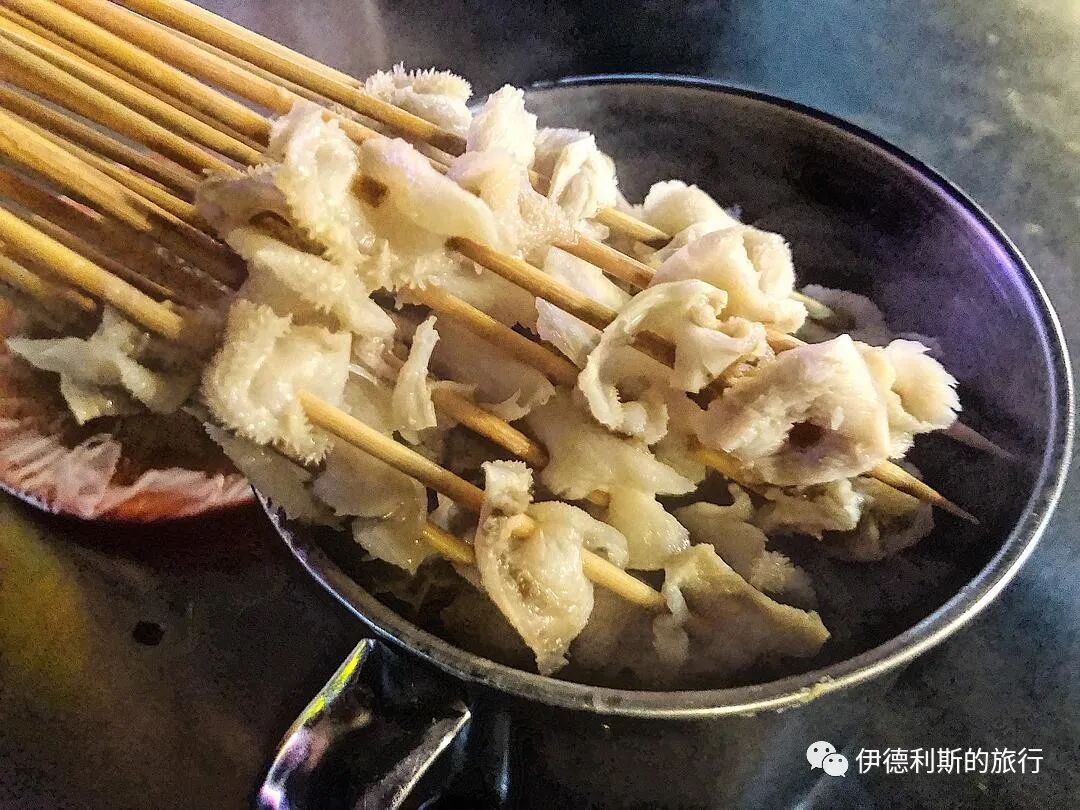
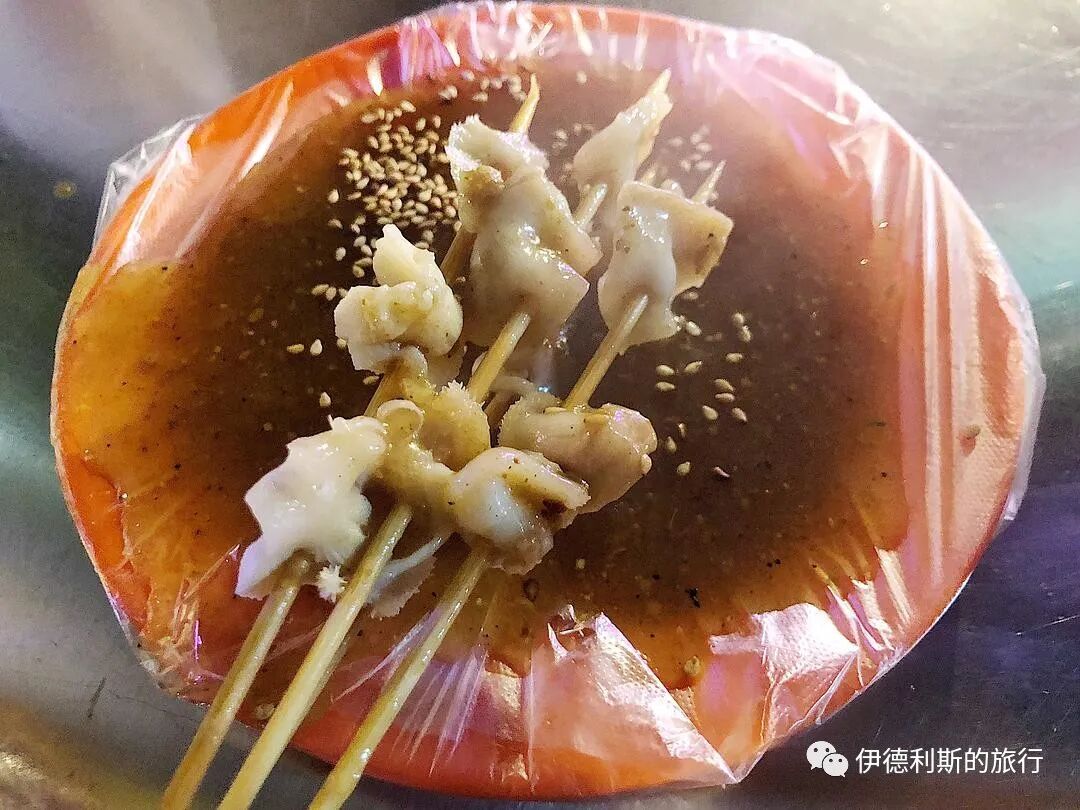
Then I ate this shuan niudu (boiled beef tripe). The skewers are very small, and you eat a whole bunch at once. The beef tripe is very tender and fragrant.
3. Dongsimen Night Market
Dongsimen Night Market is at the intersection of Dongdajie and Jiefang Road. The night market itself is not big, but the atmosphere is very good, with locals coming to eat and chat.
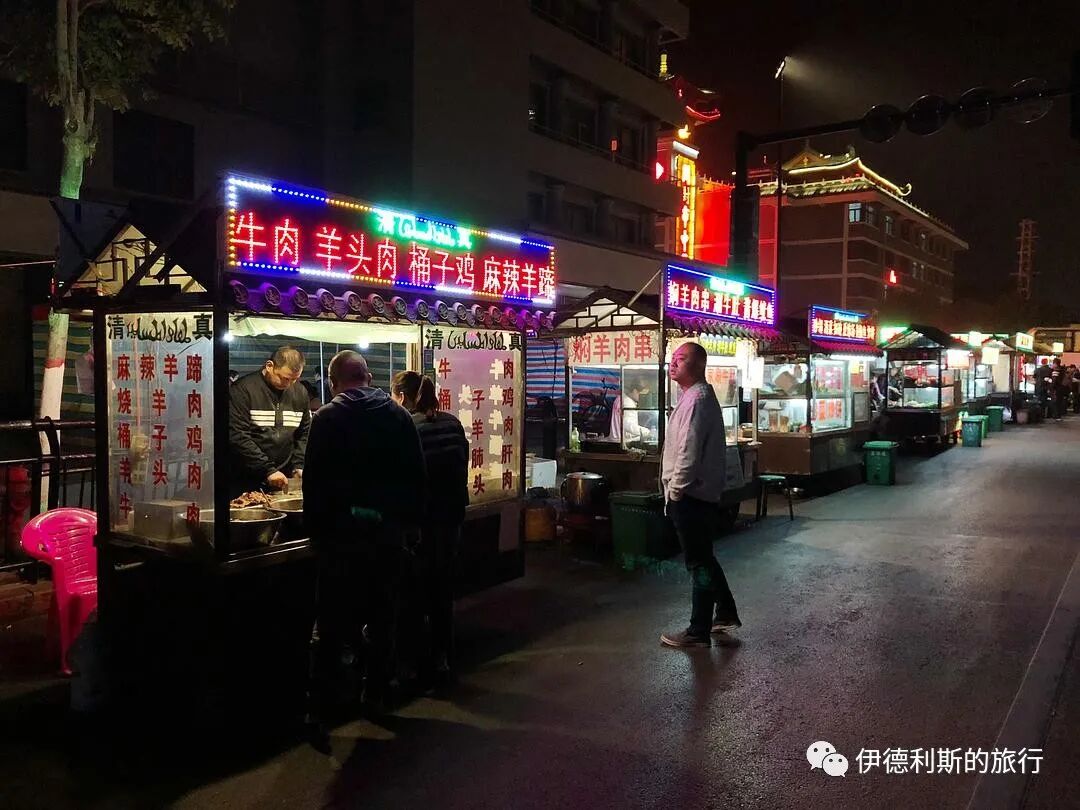
First, I ate this traditional-style mutton kanmo (pan-baked flatbread with mutton). Mutton kanmo is pan-baked with mutton fat, so it must be eaten hot to be delicious. I chose the most expensive one, and the master added the best mutton for me.
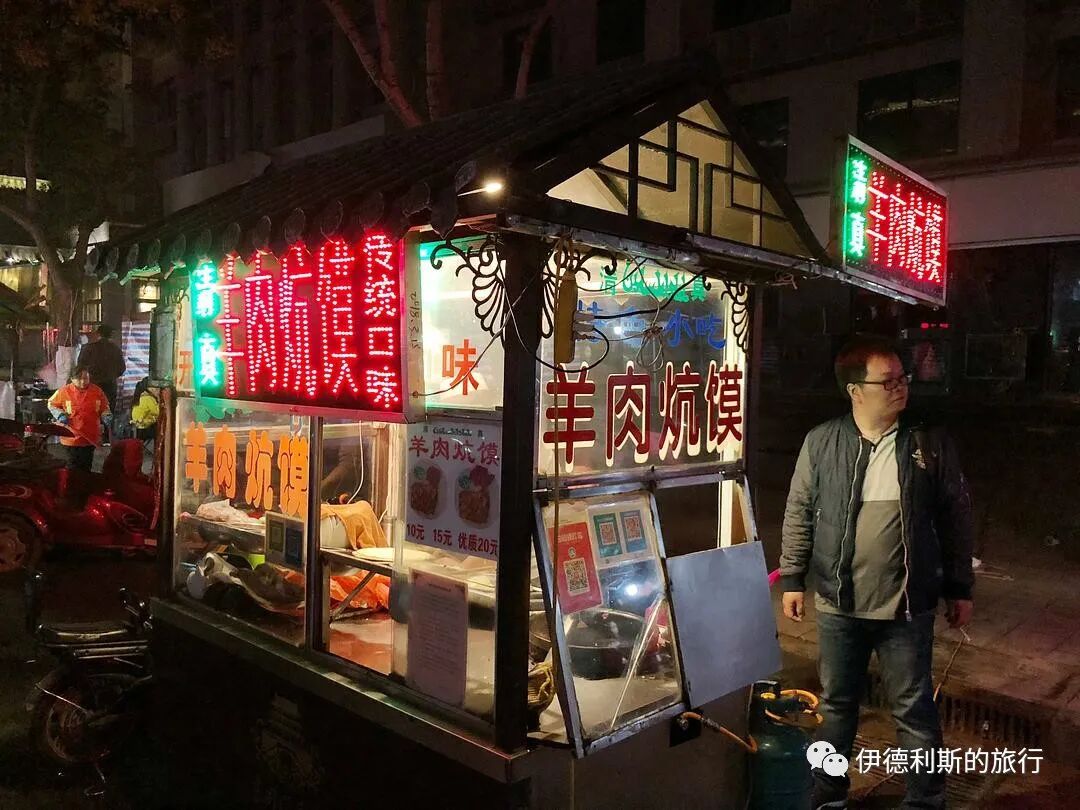
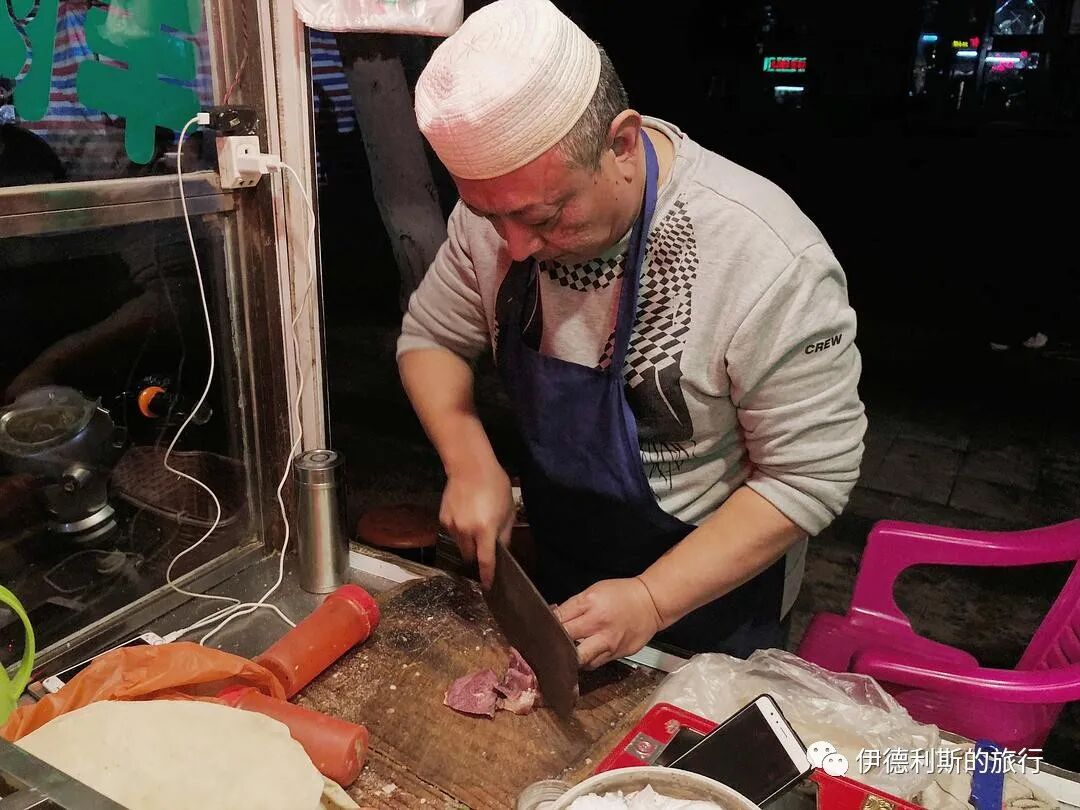
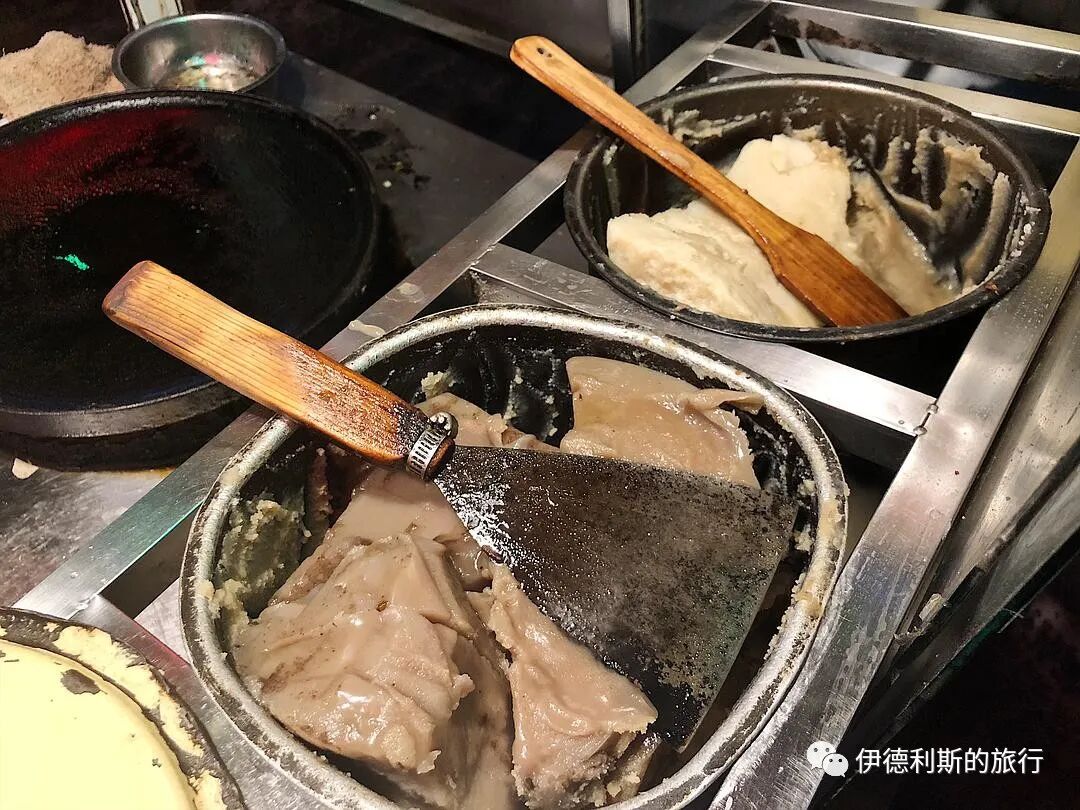
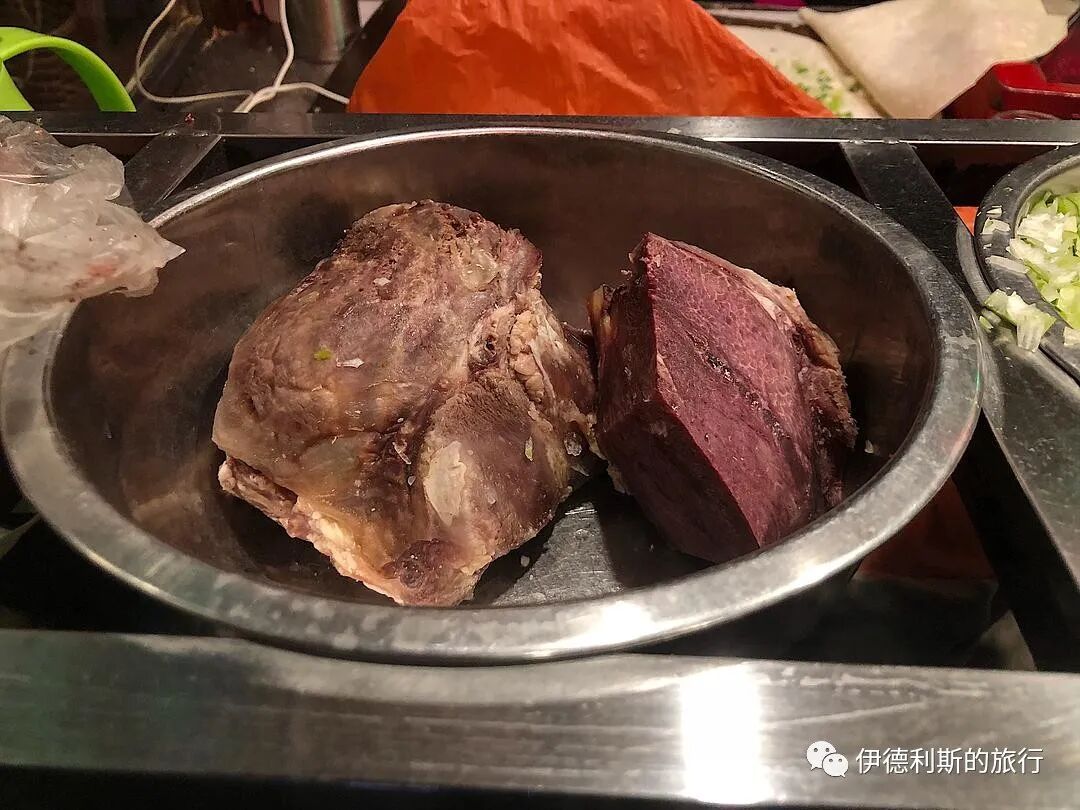
Then I ate qiangguomian (stir-fried noodle soup) and huangmuyu (braised yellow croaker) here. Both of these are classic foods of the Kaifeng night market, suitable for eating while a whole family is chatting.
Kaifeng Halal Food Guide: Simen Soup Pot and Muslim Night Market
Articles • ali2007fr posted the article • 0 comments • 220 views • 2026-05-17 06:52
Summary: This travel note introduces Kaifeng Halal Food Guide: Simen Soup Pot and Muslim Night Market. In early November 2018, I took advantage of the weekend to visit Kaifeng, arriving in three and a half hours by high-speed train from Beijing. It is useful for readers interested in Kaifeng Travel, Halal Food, Muslim Night Market.
In early November 2018, I took advantage of the weekend to visit Kaifeng, arriving in three and a half hours by high-speed train from Beijing. Because I only had two days, the itinerary was very tight. I drank soup at Simen in the morning, visited the mosque's ancient architecture during the day, and ate at the halal night market in the evening, hoping to record the style of the Kaifeng Muslim community as much as possible during these two days. Below, I will share my experience of Kaifeng halal food with everyone.
Drinking soup at Simen
The 'bad habit' of the Xiangfu people is that they love to drink soup. As long as they have some money in their pockets, regardless of whether they have food for tomorrow or not, they will enjoy a bowl of soup today. Where is the best soup in Xiangfu city? Of course, it is the soup at Simen. — 'Simen'
'Simen' (Mosque Gate) is the soul of the Kaifeng Muslim community. 'Simen' refers to the gate of the Kaifeng Dongda Mosque. Historically, the Dongda Mosque has suffered many times from Yellow River floods. Each time it was destroyed, it was rebuilt. The current building is the appearance after it was rebuilt in 1846 (the 26th year of the Daoguang reign) following the Yellow River flood in 1841 (the 21st year of the Daoguang reign).
The Muslim community centered on the Dongda Mosque is known as the 'First Community of Henan.' It includes more than 20 streets and alleys with over 20,000 people. It is the only one of the three major Muslim residential areas in Kaifeng's history (Dongda Mosque, Beida Mosque, and Wenshu Mosque) that has not undergone large-scale demolition and renovation, and it still maintains the traditional form of a Muslim community.
From 'Locality of Urban Hui Muslim Communities: A Study Based on Place Attachment in the Dongda Mosque Hui Muslim Community of Kaifeng'
Various halal delicacies gather on Qingping North and South Streets at the entrance of the Dongda Mosque. These eateries generally operate from dawn until after one o'clock in the afternoon; in the afternoon, there are only cooked food and pastry shops.
Outside of Qingping North and South Streets, most of the area around the Dongda Mosque is still these quiet little alleys.
1. Siweicai (four-flavor dish) and shaobing (baked flatbread)
Siweicai is a famous Kaifeng breakfast, which is made by braising daylily, gluten, beef meatballs, and mutton in mutton soup. It has a very rich flavor when eaten. This Zhao Family Siweicai is a very famous one in Simen. When I got into the taxi from the high-speed railway station to the city, the driver heard I was going to Simen and urged me to try the Zhao family's Siweicai.
There is a long line on weekend mornings.
When eating Siweicai, it is usually paired with guokui (hard-crusted flatbread) or shaobing. I chose shaobing this time. This is the first time I have seen this kind of large sesame shaobing. When it is fresh, it is hot to hold, fragrant, and crispy. It can be soaked in the soup or bitten open to stuff with Siweicai. Eating it makes one feel very comfortable.
This is how shaobing is made.
2. Mutton soup and guokui
Besides Siweicai, the most classic is still this mutton soup paired with guokui. The one I ate at is Yanji Mutton Fresh Soup right across from the Dongda Mosque. When serving the soup, the uncle asks if you want oil, which is a great treat for mutton fat lovers.
3. Hulatang (spicy soup) paired with jidan budai (egg-stuffed fried dough)
Next to Zhao Family Siweicai is Ma Liu Mutton Hulatang. Unlike the freshness of mutton soup, drinking Hulatang is more about that refreshing feeling in late autumn. After eating it, your whole body feels clear, and you have a good mood for the day.
Paired with Hulatang is jidan budai, also called jidan hebao (egg pouch) or zha laohu (fried tiger). This is hard to see in Beijing now, but it still exists in Tianjin.
4. Mutton steamed dumplings
Between the Siweicai and Hulatang is Li Ji Steamed Dumplings and Shaomai (steamed dumplings). Because I was too full, I didn't have room, so the steamed dumplings in the photo are actually from the next table.
5. Duck gizzard four-treasure vermicelli soup
Opposite the Siweicai is the only duck gizzard four-treasure vermicelli soup in Simen, which can also be served with mutton fat. This place gives a very generous portion, and I think the duck liver in the soup is the most delicious.
6. Beef huoshao (baked wheat cake)
Continuing north is Mu Family Beef Huoshao. This is very suitable for eating while walking around the alleys of Simen, feeling relaxed and content.
There are also stalls selling pickles in Simen, which are even better when paired with soup.
7. Doumo (bean paste soup) paired with caijiao (vegetable dumplings)
Besides Simen, there are actually many halal breakfast eateries in Kaifeng. During this trip to Kaifeng, I ate doumo and caijiao at a Hulatang eatery near Wenshu Mosque. Doumo is a breakfast popular in the Hebei, Shandong, and Henan regions. Kaifeng's five-spice doumo is made by mixing millet flour with various seasonings, adding shredded tofu, peanuts, spinach, and vermicelli, and finally drizzling with sesame paste.
Lively night market
1. Xueyuanmen Halal Night Market
On the west side of Jiefang Road, not far west of Simen, is Kaifeng's only halal night market, Xueyuanmen Night Market. Everything sold here is authentic Kaifeng halal late-night snacks. For me, living in Beijing where there are no night markets, visiting a night market is really great! I want to try everything; I really hate that my stomach isn't big enough.
This place sells stir-fried seafood and crayfish, very night-market style. The stir-fried seafood is spicy and very satisfying.
Coming to Kaifeng, of course, you have to try the soup-filled xiaolongbao (small steamed buns). Taking a bite, the slightly sweet soup fills your mouth. After eating, it can truly be described as leaving a lingering fragrance on the lips and teeth.
I ate mutton trotters and clay pot here. The ingredients in the clay pot are similar to Siweicai, but it is very warm to eat at night while it is bubbling.
2. Henan University West Gate Night Market
The old Henan University West Gate night market also has many halal stalls, but the biggest difference from the Xueyuanmen night market is that the audience here is mainly students from Henan University and surrounding schools. Therefore, there are almost no stalls for drinking and chatting, but mainly various snacks loved by students. I really envy these college students who come to eat late-night snacks at night!
The stall with the longest line at the Henan University West Gate night market is this Cao Ji Braised Roasted Chicken Leg. The students line up so long that they block other stalls, and they have to manage the line from time to time. You can choose whether to have the roasted chicken leg in a bun or not, and you can also choose whether it is crispy or tender, which is very user-friendly. Their taste is also really delicious. After I bought it, I originally planned to eat a couple of bites and then put it away to save room for other places, but I couldn't stop after one bite and ate it all in one go.
Then I went to eat this Luo Ji almond tea. Kaifeng's almond tea is not the same as Beijing's. Kaifeng's ingredients are very rich, a bit like babaozhou (eight-treasure porridge). When you eat it, you have to savor the various textures mixed together.
Then I ate this shuan niudu (boiled beef tripe). The skewers are very small, and you eat a whole bunch at once. The beef tripe is very tender and fragrant.
3. Dongsimen Night Market
Dongsimen Night Market is at the intersection of Dongdajie and Jiefang Road. The night market itself is not big, but the atmosphere is very good, with locals coming to eat and chat.
First, I ate this traditional-style mutton kanmo (pan-baked flatbread with mutton). Mutton kanmo is pan-baked with mutton fat, so it must be eaten hot to be delicious. I chose the most expensive one, and the master added the best mutton for me.
Then I ate qiangguomian (stir-fried noodle soup) and huangmuyu (braised yellow croaker) here. Both of these are classic foods of the Kaifeng night market, suitable for eating while a whole family is chatting. view all
Summary: This travel note introduces Kaifeng Halal Food Guide: Simen Soup Pot and Muslim Night Market. In early November 2018, I took advantage of the weekend to visit Kaifeng, arriving in three and a half hours by high-speed train from Beijing. It is useful for readers interested in Kaifeng Travel, Halal Food, Muslim Night Market.
In early November 2018, I took advantage of the weekend to visit Kaifeng, arriving in three and a half hours by high-speed train from Beijing. Because I only had two days, the itinerary was very tight. I drank soup at Simen in the morning, visited the mosque's ancient architecture during the day, and ate at the halal night market in the evening, hoping to record the style of the Kaifeng Muslim community as much as possible during these two days. Below, I will share my experience of Kaifeng halal food with everyone.
Drinking soup at Simen
The 'bad habit' of the Xiangfu people is that they love to drink soup. As long as they have some money in their pockets, regardless of whether they have food for tomorrow or not, they will enjoy a bowl of soup today. Where is the best soup in Xiangfu city? Of course, it is the soup at Simen. — 'Simen'
'Simen' (Mosque Gate) is the soul of the Kaifeng Muslim community. 'Simen' refers to the gate of the Kaifeng Dongda Mosque. Historically, the Dongda Mosque has suffered many times from Yellow River floods. Each time it was destroyed, it was rebuilt. The current building is the appearance after it was rebuilt in 1846 (the 26th year of the Daoguang reign) following the Yellow River flood in 1841 (the 21st year of the Daoguang reign).
The Muslim community centered on the Dongda Mosque is known as the 'First Community of Henan.' It includes more than 20 streets and alleys with over 20,000 people. It is the only one of the three major Muslim residential areas in Kaifeng's history (Dongda Mosque, Beida Mosque, and Wenshu Mosque) that has not undergone large-scale demolition and renovation, and it still maintains the traditional form of a Muslim community.
From 'Locality of Urban Hui Muslim Communities: A Study Based on Place Attachment in the Dongda Mosque Hui Muslim Community of Kaifeng'
Various halal delicacies gather on Qingping North and South Streets at the entrance of the Dongda Mosque. These eateries generally operate from dawn until after one o'clock in the afternoon; in the afternoon, there are only cooked food and pastry shops.
Outside of Qingping North and South Streets, most of the area around the Dongda Mosque is still these quiet little alleys.
1. Siweicai (four-flavor dish) and shaobing (baked flatbread)
Siweicai is a famous Kaifeng breakfast, which is made by braising daylily, gluten, beef meatballs, and mutton in mutton soup. It has a very rich flavor when eaten. This Zhao Family Siweicai is a very famous one in Simen. When I got into the taxi from the high-speed railway station to the city, the driver heard I was going to Simen and urged me to try the Zhao family's Siweicai.
There is a long line on weekend mornings.
When eating Siweicai, it is usually paired with guokui (hard-crusted flatbread) or shaobing. I chose shaobing this time. This is the first time I have seen this kind of large sesame shaobing. When it is fresh, it is hot to hold, fragrant, and crispy. It can be soaked in the soup or bitten open to stuff with Siweicai. Eating it makes one feel very comfortable.
This is how shaobing is made.
2. Mutton soup and guokui
Besides Siweicai, the most classic is still this mutton soup paired with guokui. The one I ate at is Yanji Mutton Fresh Soup right across from the Dongda Mosque. When serving the soup, the uncle asks if you want oil, which is a great treat for mutton fat lovers.
3. Hulatang (spicy soup) paired with jidan budai (egg-stuffed fried dough)
Next to Zhao Family Siweicai is Ma Liu Mutton Hulatang. Unlike the freshness of mutton soup, drinking Hulatang is more about that refreshing feeling in late autumn. After eating it, your whole body feels clear, and you have a good mood for the day.
Paired with Hulatang is jidan budai, also called jidan hebao (egg pouch) or zha laohu (fried tiger). This is hard to see in Beijing now, but it still exists in Tianjin.
4. Mutton steamed dumplings
Between the Siweicai and Hulatang is Li Ji Steamed Dumplings and Shaomai (steamed dumplings). Because I was too full, I didn't have room, so the steamed dumplings in the photo are actually from the next table.
5. Duck gizzard four-treasure vermicelli soup
Opposite the Siweicai is the only duck gizzard four-treasure vermicelli soup in Simen, which can also be served with mutton fat. This place gives a very generous portion, and I think the duck liver in the soup is the most delicious.
6. Beef huoshao (baked wheat cake)
Continuing north is Mu Family Beef Huoshao. This is very suitable for eating while walking around the alleys of Simen, feeling relaxed and content.
There are also stalls selling pickles in Simen, which are even better when paired with soup.
7. Doumo (bean paste soup) paired with caijiao (vegetable dumplings)
Besides Simen, there are actually many halal breakfast eateries in Kaifeng. During this trip to Kaifeng, I ate doumo and caijiao at a Hulatang eatery near Wenshu Mosque. Doumo is a breakfast popular in the Hebei, Shandong, and Henan regions. Kaifeng's five-spice doumo is made by mixing millet flour with various seasonings, adding shredded tofu, peanuts, spinach, and vermicelli, and finally drizzling with sesame paste.
Lively night market
1. Xueyuanmen Halal Night Market
On the west side of Jiefang Road, not far west of Simen, is Kaifeng's only halal night market, Xueyuanmen Night Market. Everything sold here is authentic Kaifeng halal late-night snacks. For me, living in Beijing where there are no night markets, visiting a night market is really great! I want to try everything; I really hate that my stomach isn't big enough.
This place sells stir-fried seafood and crayfish, very night-market style. The stir-fried seafood is spicy and very satisfying.
Coming to Kaifeng, of course, you have to try the soup-filled xiaolongbao (small steamed buns). Taking a bite, the slightly sweet soup fills your mouth. After eating, it can truly be described as leaving a lingering fragrance on the lips and teeth.
I ate mutton trotters and clay pot here. The ingredients in the clay pot are similar to Siweicai, but it is very warm to eat at night while it is bubbling.
2. Henan University West Gate Night Market
The old Henan University West Gate night market also has many halal stalls, but the biggest difference from the Xueyuanmen night market is that the audience here is mainly students from Henan University and surrounding schools. Therefore, there are almost no stalls for drinking and chatting, but mainly various snacks loved by students. I really envy these college students who come to eat late-night snacks at night!
The stall with the longest line at the Henan University West Gate night market is this Cao Ji Braised Roasted Chicken Leg. The students line up so long that they block other stalls, and they have to manage the line from time to time. You can choose whether to have the roasted chicken leg in a bun or not, and you can also choose whether it is crispy or tender, which is very user-friendly. Their taste is also really delicious. After I bought it, I originally planned to eat a couple of bites and then put it away to save room for other places, but I couldn't stop after one bite and ate it all in one go.
Then I went to eat this Luo Ji almond tea. Kaifeng's almond tea is not the same as Beijing's. Kaifeng's ingredients are very rich, a bit like babaozhou (eight-treasure porridge). When you eat it, you have to savor the various textures mixed together.
Then I ate this shuan niudu (boiled beef tripe). The skewers are very small, and you eat a whole bunch at once. The beef tripe is very tender and fragrant.
3. Dongsimen Night Market
Dongsimen Night Market is at the intersection of Dongdajie and Jiefang Road. The night market itself is not big, but the atmosphere is very good, with locals coming to eat and chat.
First, I ate this traditional-style mutton kanmo (pan-baked flatbread with mutton). Mutton kanmo is pan-baked with mutton fat, so it must be eaten hot to be delicious. I chose the most expensive one, and the master added the best mutton for me.
Then I ate qiangguomian (stir-fried noodle soup) and huangmuyu (braised yellow croaker) here. Both of these are classic foods of the Kaifeng night market, suitable for eating while a whole family is chatting.
Zhuxian Town Mosque Kaifeng: Discovering Historic Qing Dynasty Islamic Architecture and Hui Muslim Heritage in China
Articles • Hasan09 posted the article • 0 comments • 11 views • 5 hours ago
The Zhuxian Town Mosque is located on Laohudong Street in Kaifeng, Henan province. It was designated a major national historical and cultural heritage site in 2006, serving as a landmark that preserves the history of the region’s diverse cultural influences.
The entrance gate of the Zhuxian Town Mosque.
The Zhuxian Town Mosque was first built during the Taiping Xingguo era of the Northern Song Dynasty. It was later expanded in 1531 and renovated in 1744, with most of the current structures dating back to the Qing Dynasty. During the Ming and Qing eras, Zhuxian Town was a booming trade hub. Many Hui Muslim merchants settled here and built seven different mosques—the East, West, South, North, and Center mosques, plus two women’s mosques. The North Mosque, which is the current Zhuxian Town Mosque, is the oldest and largest of them all. It is the only one of the seven still standing today, a reminder of the local saying about the town’s “seven mosques and eight lanes.”
The stone tablet commemorating the mosque as a major national heritage site.
The mosque faces east and covers over 9,000 square meters, following a traditional quadrangle courtyard layout. The buildings are lined up along a central axis; the front gate is at the east end, featuring a single-eave gabled roof with stone lions standing guard outside. The site includes a stele pavilion, a shed-style hall, the main prayer hall, a rear kiln hall, and various side rooms. A rear gate with a hanging gable roof sits on the west end of the axis. The front and back gates line up perfectly, forming a courtyard shaped like the Chinese character "Hui"—a classic design for Qing Dynasty mosques.
The front gate.
The inside of the front gate.
The front gate is the mosque’s signature structure, featuring delicate wood carvings of auspicious animals. The stone columns are beautifully crafted, decorated with carvings of vases, flowers, and birds. A couplet is engraved in the center pillar, reading: "In the land covered by Allah’s grace, do not forget to tread carefully and stand tall when performing dua (prayer); when following the sacred teachings, always uphold your words and conduct." The couplet encourages people to live with humility and integrity. Three historic plaques hang on the gate: the first, "Known Before the Rain," was written by the famous scholar Ji Yun in 1785 (the current version is a replica); the second, "True Source of the Supreme Teaching," was inscribed by Henan Governor Zhu Gui in 1765; and the third, "True Oneness of the World," was written by Huguang Viceroy Yulu in 1889.
Wood carvings under the gate’s eaves (Photo 1).
Wood carvings under the gate’s eaves (Photo 2).
Wood carvings under the gate’s eaves (Photo 3).
Wood carvings under the gate’s eaves (Photo 4).
The stone columns of the front gate.
Antique-style stone carvings on the inner side of the columns.
Flower and bird stone carvings on the inner side of the columns.
The "Known Before the Rain" plaque.
The "True Source of the Supreme Teaching" plaque.
The "True Oneness of the World" plaque.
There are two ancient stone tablets in the courtyard. One is a Chinese-language tablet from 1767 that has been heavily weathered over time. The other is an Arabic-language tablet from 1805, which is said to be the most well-preserved Arabic inscription in all of Henan.
The Arabic-language tablet from 1805.
Detail of the Arabic-language tablet.
The Chinese-language tablet from 1767.
Detail of the Chinese-language tablet from 1767.
The main prayer hall is a Qing Dynasty structure designed with connected roof sections. The front is a shed-style roof, and the back is a hard-gabled roof, each five bays wide and two bays deep. The brick carvings on the hall’s roof edges are stunning, featuring detailed chrysanthemum patterns. The roof is covered in green glazed tiles with yellow diamond-shaped patterns. A glazed vase with flame motifs sits on the main roof ridge. Between the hall and the gate, there are dozens of side rooms, all featuring traditional hard-gabled roofs.
The main prayer hall.
The yellow diamond-shaped glazed tile roof of the prayer hall.
The main entrance to the prayer hall.
Wood carvings under the prayer hall’s eaves.
Brick carvings on the roof edge of the prayer hall (Photo 1).
Brick carvings on the roof edge of the prayer hall (Photo 2).
The beam structure inside the prayer hall.
Interior view of the prayer hall (Photo 1).
Interior view of the prayer hall (Photo 2).
The rear hall.
The exterior of the back hall.
The glazed vase ornament on the main ridge of the back hall.
A view of the courtyard at Zhuxian Town Mosque.
The side chambers (Photo 1).
The side chambers (Photo 2).
The Xingzhong Pavilion (Bell Pavilion).
The main hall features unique fish-scale windows, where large fish scales were used in place of glass to let in light. These windows are said to date back to the Ming Dynasty, with each scale measuring about 8 square centimeters; there are approximately 720 scales remaining today. After nearly 300 years, some of the scales have been lost, and the ones left behind have turned a yellowish hue.
The back hall.
The fish-scale windows.
The ancient locust tree in the courtyard is also known as the 'Horse-Tethering Locust,' the 'Yue Locust,' or the 'Acacia Locust.' Legend has it that when General Yue Fei was stationed in Zhuxian Town, he tethered his warhorse to this tree. After Yue Fei was tragically killed, the tree supposedly withered and died. During later renovations of the mosque, the dried trunk of the tree was carefully preserved and now sits inside the main hall, serving as a tribute to the memory and deep respect people hold for Yue Fei.
The Acacia Locust tree.
A side view of the Acacia Locust tree.
A close-up of the Acacia Locust tree (Photo 1).
A close-up of the Acacia Locust tree (Photo 2).
Having weathered hundreds of years of history, the Zhuxian Town Mosque stands alongside the Yue Fei Temple as a witness to the past, holding a deep and rich cultural heritage.
Notes:
1. Address: Laohudong Street, Zhuxian Town, Xiangfu District, Kaifeng City, Henan Province.
2. Status: Listed as a Major Historical and Cultural Site Protected at the National Level (6th Batch). view all
The Zhuxian Town Mosque is located on Laohudong Street in Kaifeng, Henan province. It was designated a major national historical and cultural heritage site in 2006, serving as a landmark that preserves the history of the region’s diverse cultural influences.
The entrance gate of the Zhuxian Town Mosque.
The Zhuxian Town Mosque was first built during the Taiping Xingguo era of the Northern Song Dynasty. It was later expanded in 1531 and renovated in 1744, with most of the current structures dating back to the Qing Dynasty. During the Ming and Qing eras, Zhuxian Town was a booming trade hub. Many Hui Muslim merchants settled here and built seven different mosques—the East, West, South, North, and Center mosques, plus two women’s mosques. The North Mosque, which is the current Zhuxian Town Mosque, is the oldest and largest of them all. It is the only one of the seven still standing today, a reminder of the local saying about the town’s “seven mosques and eight lanes.”
The stone tablet commemorating the mosque as a major national heritage site.
The mosque faces east and covers over 9,000 square meters, following a traditional quadrangle courtyard layout. The buildings are lined up along a central axis; the front gate is at the east end, featuring a single-eave gabled roof with stone lions standing guard outside. The site includes a stele pavilion, a shed-style hall, the main prayer hall, a rear kiln hall, and various side rooms. A rear gate with a hanging gable roof sits on the west end of the axis. The front and back gates line up perfectly, forming a courtyard shaped like the Chinese character "Hui"—a classic design for Qing Dynasty mosques.
The front gate.
The inside of the front gate.
The front gate is the mosque’s signature structure, featuring delicate wood carvings of auspicious animals. The stone columns are beautifully crafted, decorated with carvings of vases, flowers, and birds. A couplet is engraved in the center pillar, reading: "In the land covered by Allah’s grace, do not forget to tread carefully and stand tall when performing dua (prayer); when following the sacred teachings, always uphold your words and conduct." The couplet encourages people to live with humility and integrity. Three historic plaques hang on the gate: the first, "Known Before the Rain," was written by the famous scholar Ji Yun in 1785 (the current version is a replica); the second, "True Source of the Supreme Teaching," was inscribed by Henan Governor Zhu Gui in 1765; and the third, "True Oneness of the World," was written by Huguang Viceroy Yulu in 1889.
Wood carvings under the gate’s eaves (Photo 1).
Wood carvings under the gate’s eaves (Photo 2).
Wood carvings under the gate’s eaves (Photo 3).
Wood carvings under the gate’s eaves (Photo 4).
The stone columns of the front gate.
Antique-style stone carvings on the inner side of the columns.
Flower and bird stone carvings on the inner side of the columns.
The "Known Before the Rain" plaque.
The "True Source of the Supreme Teaching" plaque.
The "True Oneness of the World" plaque.
There are two ancient stone tablets in the courtyard. One is a Chinese-language tablet from 1767 that has been heavily weathered over time. The other is an Arabic-language tablet from 1805, which is said to be the most well-preserved Arabic inscription in all of Henan.
The Arabic-language tablet from 1805.
Detail of the Arabic-language tablet.
The Chinese-language tablet from 1767.
Detail of the Chinese-language tablet from 1767.
The main prayer hall is a Qing Dynasty structure designed with connected roof sections. The front is a shed-style roof, and the back is a hard-gabled roof, each five bays wide and two bays deep. The brick carvings on the hall’s roof edges are stunning, featuring detailed chrysanthemum patterns. The roof is covered in green glazed tiles with yellow diamond-shaped patterns. A glazed vase with flame motifs sits on the main roof ridge. Between the hall and the gate, there are dozens of side rooms, all featuring traditional hard-gabled roofs.
The main prayer hall.
The yellow diamond-shaped glazed tile roof of the prayer hall.
The main entrance to the prayer hall.
Wood carvings under the prayer hall’s eaves.
Brick carvings on the roof edge of the prayer hall (Photo 1).
Brick carvings on the roof edge of the prayer hall (Photo 2).
The beam structure inside the prayer hall.
Interior view of the prayer hall (Photo 1).
Interior view of the prayer hall (Photo 2).
The rear hall.
The exterior of the back hall.
The glazed vase ornament on the main ridge of the back hall.
A view of the courtyard at Zhuxian Town Mosque.
The side chambers (Photo 1).
The side chambers (Photo 2).
The Xingzhong Pavilion (Bell Pavilion).
The main hall features unique fish-scale windows, where large fish scales were used in place of glass to let in light. These windows are said to date back to the Ming Dynasty, with each scale measuring about 8 square centimeters; there are approximately 720 scales remaining today. After nearly 300 years, some of the scales have been lost, and the ones left behind have turned a yellowish hue.
The back hall.
The fish-scale windows.
The ancient locust tree in the courtyard is also known as the 'Horse-Tethering Locust,' the 'Yue Locust,' or the 'Acacia Locust.' Legend has it that when General Yue Fei was stationed in Zhuxian Town, he tethered his warhorse to this tree. After Yue Fei was tragically killed, the tree supposedly withered and died. During later renovations of the mosque, the dried trunk of the tree was carefully preserved and now sits inside the main hall, serving as a tribute to the memory and deep respect people hold for Yue Fei.
The Acacia Locust tree.
A side view of the Acacia Locust tree.
A close-up of the Acacia Locust tree (Photo 1).
A close-up of the Acacia Locust tree (Photo 2).
Having weathered hundreds of years of history, the Zhuxian Town Mosque stands alongside the Yue Fei Temple as a witness to the past, holding a deep and rich cultural heritage.
Notes:
1. Address: Laohudong Street, Zhuxian Town, Xiangfu District, Kaifeng City, Henan Province.
2. Status: Listed as a Major Historical and Cultural Site Protected at the National Level (6th Batch).
Kaifeng Halal Food Guide: Simen Soup Pot and Muslim Night Market (Part 1 of 2)
Articles • ali2007fr posted the article • 0 comments • 255 views • 2026-05-17 07:16
Summary: This travel note introduces Kaifeng Halal Food Guide: Simen Soup Pot and Muslim Night Market. In early November 2018, I took advantage of the weekend to visit Kaifeng, arriving in three and a half hours by high-speed train from Beijing. It is useful for readers interested in Kaifeng Travel, Halal Food, Muslim Night Market. This is part 1 of 2.
In early November 2018, I took advantage of the weekend to visit Kaifeng, arriving in three and a half hours by high-speed train from Beijing. Because I only had two days, the itinerary was very tight. I drank soup at Simen in the morning, visited the mosque's ancient architecture during the day, and ate at the halal night market in the evening, hoping to record the style of the Kaifeng Muslim community as much as possible during these two days. Below, I will share my experience of Kaifeng halal food with everyone.
Drinking soup at Simen
The 'bad habit' of the Xiangfu people is that they love to drink soup. As long as they have some money in their pockets, regardless of whether they have food for tomorrow or not, they will enjoy a bowl of soup today. Where is the best soup in Xiangfu city? Of course, it is the soup at Simen. — 'Simen'
'Simen' (Mosque Gate) is the soul of the Kaifeng Muslim community. 'Simen' refers to the gate of the Kaifeng Dongda Mosque. Historically, the Dongda Mosque has suffered many times from Yellow River floods. Each time it was destroyed, it was rebuilt. The current building is the appearance after it was rebuilt in 1846 (the 26th year of the Daoguang reign) following the Yellow River flood in 1841 (the 21st year of the Daoguang reign).
The Muslim community centered on the Dongda Mosque is known as the 'First Community of Henan.' It includes more than 20 streets and alleys with over 20,000 people. It is the only one of the three major Muslim residential areas in Kaifeng's history (Dongda Mosque, Beida Mosque, and Wenshu Mosque) that has not undergone large-scale demolition and renovation, and it still maintains the traditional form of a Muslim community.
From 'Locality of Urban Hui Muslim Communities: A Study Based on Place Attachment in the Dongda Mosque Hui Muslim Community of Kaifeng'
Various halal delicacies gather on Qingping North and South Streets at the entrance of the Dongda Mosque. These eateries generally operate from dawn until after one o'clock in the afternoon; in the afternoon, there are only cooked food and pastry shops.
Outside of Qingping North and South Streets, most of the area around the Dongda Mosque is still these quiet little alleys.
1. Siweicai (four-flavor dish) and shaobing (baked flatbread)
Siweicai is a famous Kaifeng breakfast, which is made by braising daylily, gluten, beef meatballs, and mutton in mutton soup. It has a very rich flavor when eaten. This Zhao Family Siweicai is a very famous one in Simen. When I got into the taxi from the high-speed railway station to the city, the driver heard I was going to Simen and urged me to try the Zhao family's Siweicai.
There is a long line on weekend mornings.
When eating Siweicai, it is usually paired with guokui (hard-crusted flatbread) or shaobing. I chose shaobing this time. This is the first time I have seen this kind of large sesame shaobing. When it is fresh, it is hot to hold, fragrant, and crispy. It can be soaked in the soup or bitten open to stuff with Siweicai. Eating it makes one feel very comfortable.
This is how shaobing is made.
2. Mutton soup and guokui
Besides Siweicai, the most classic is still this mutton soup paired with guokui. The one I ate at is Yanji Mutton Fresh Soup right across from the Dongda Mosque. When serving the soup, the uncle asks if you want oil, which is a great treat for mutton fat lovers.
3. Hulatang (spicy soup) paired with jidan budai (egg-stuffed fried dough)
Next to Zhao Family Siweicai is Ma Liu Mutton Hulatang. Unlike the freshness of mutton soup, drinking Hulatang is more about that refreshing feeling in late autumn. After eating it, your whole body feels clear, and you have a good mood for the day.
Paired with Hulatang is jidan budai, also called jidan hebao (egg pouch) or zha laohu (fried tiger). This is hard to see in Beijing now, but it still exists in Tianjin.
4. Mutton steamed dumplings
Between the Siweicai and Hulatang is Li Ji Steamed Dumplings and Shaomai (steamed dumplings). Because I was too full, I didn't have room, so the steamed dumplings in the photo are actually from the next table.
5. Duck gizzard four-treasure vermicelli soup
Opposite the Siweicai is the only duck gizzard four-treasure vermicelli soup in Simen, which can also be served with mutton fat. This place gives a very generous portion, and I think the duck liver in the soup is the most delicious.
6. Beef huoshao (baked wheat cake)
Continuing north is Mu Family Beef Huoshao. This is very suitable for eating while walking around the alleys of Simen, feeling relaxed and content.
There are also stalls selling pickles in Simen, which are even better when paired with soup.
7. Doumo (bean paste soup) paired with caijiao (vegetable dumplings)
Besides Simen, there are actually many halal breakfast eateries in Kaifeng. During this trip to Kaifeng, I ate doumo and caijiao at a Hulatang eatery near Wenshu Mosque. Doumo is a breakfast popular in the Hebei, Shandong, and Henan regions. Kaifeng's five-spice doumo is made by mixing millet flour with various seasonings, adding shredded tofu, peanuts, spinach, and vermicelli, and finally drizzling with sesame paste.
Lively night market
1. Xueyuanmen Halal Night Market
On the west side of Jiefang Road, not far west of Simen, is Kaifeng's only halal night market, Xueyuanmen Night Market. Everything sold here is authentic Kaifeng halal late-night snacks. For me, living in Beijing where there are no night markets, visiting a night market is really great! I want to try everything; I really hate that my stomach isn't big enough.
This place sells stir-fried seafood and crayfish, very night-market style. The stir-fried seafood is spicy and very satisfying.
Coming to Kaifeng, of course, you have to try the soup-filled xiaolongbao (small steamed buns). Taking a bite, the slightly sweet soup fills your mouth. After eating, it can truly be described as leaving a lingering fragrance on the lips and teeth. view all
Summary: This travel note introduces Kaifeng Halal Food Guide: Simen Soup Pot and Muslim Night Market. In early November 2018, I took advantage of the weekend to visit Kaifeng, arriving in three and a half hours by high-speed train from Beijing. It is useful for readers interested in Kaifeng Travel, Halal Food, Muslim Night Market. This is part 1 of 2.
In early November 2018, I took advantage of the weekend to visit Kaifeng, arriving in three and a half hours by high-speed train from Beijing. Because I only had two days, the itinerary was very tight. I drank soup at Simen in the morning, visited the mosque's ancient architecture during the day, and ate at the halal night market in the evening, hoping to record the style of the Kaifeng Muslim community as much as possible during these two days. Below, I will share my experience of Kaifeng halal food with everyone.
Drinking soup at Simen
The 'bad habit' of the Xiangfu people is that they love to drink soup. As long as they have some money in their pockets, regardless of whether they have food for tomorrow or not, they will enjoy a bowl of soup today. Where is the best soup in Xiangfu city? Of course, it is the soup at Simen. — 'Simen'
'Simen' (Mosque Gate) is the soul of the Kaifeng Muslim community. 'Simen' refers to the gate of the Kaifeng Dongda Mosque. Historically, the Dongda Mosque has suffered many times from Yellow River floods. Each time it was destroyed, it was rebuilt. The current building is the appearance after it was rebuilt in 1846 (the 26th year of the Daoguang reign) following the Yellow River flood in 1841 (the 21st year of the Daoguang reign).
The Muslim community centered on the Dongda Mosque is known as the 'First Community of Henan.' It includes more than 20 streets and alleys with over 20,000 people. It is the only one of the three major Muslim residential areas in Kaifeng's history (Dongda Mosque, Beida Mosque, and Wenshu Mosque) that has not undergone large-scale demolition and renovation, and it still maintains the traditional form of a Muslim community.
From 'Locality of Urban Hui Muslim Communities: A Study Based on Place Attachment in the Dongda Mosque Hui Muslim Community of Kaifeng'
Various halal delicacies gather on Qingping North and South Streets at the entrance of the Dongda Mosque. These eateries generally operate from dawn until after one o'clock in the afternoon; in the afternoon, there are only cooked food and pastry shops.
Outside of Qingping North and South Streets, most of the area around the Dongda Mosque is still these quiet little alleys.
1. Siweicai (four-flavor dish) and shaobing (baked flatbread)
Siweicai is a famous Kaifeng breakfast, which is made by braising daylily, gluten, beef meatballs, and mutton in mutton soup. It has a very rich flavor when eaten. This Zhao Family Siweicai is a very famous one in Simen. When I got into the taxi from the high-speed railway station to the city, the driver heard I was going to Simen and urged me to try the Zhao family's Siweicai.
There is a long line on weekend mornings.
When eating Siweicai, it is usually paired with guokui (hard-crusted flatbread) or shaobing. I chose shaobing this time. This is the first time I have seen this kind of large sesame shaobing. When it is fresh, it is hot to hold, fragrant, and crispy. It can be soaked in the soup or bitten open to stuff with Siweicai. Eating it makes one feel very comfortable.
This is how shaobing is made.
2. Mutton soup and guokui
Besides Siweicai, the most classic is still this mutton soup paired with guokui. The one I ate at is Yanji Mutton Fresh Soup right across from the Dongda Mosque. When serving the soup, the uncle asks if you want oil, which is a great treat for mutton fat lovers.
3. Hulatang (spicy soup) paired with jidan budai (egg-stuffed fried dough)
Next to Zhao Family Siweicai is Ma Liu Mutton Hulatang. Unlike the freshness of mutton soup, drinking Hulatang is more about that refreshing feeling in late autumn. After eating it, your whole body feels clear, and you have a good mood for the day.
Paired with Hulatang is jidan budai, also called jidan hebao (egg pouch) or zha laohu (fried tiger). This is hard to see in Beijing now, but it still exists in Tianjin.
4. Mutton steamed dumplings
Between the Siweicai and Hulatang is Li Ji Steamed Dumplings and Shaomai (steamed dumplings). Because I was too full, I didn't have room, so the steamed dumplings in the photo are actually from the next table.
5. Duck gizzard four-treasure vermicelli soup
Opposite the Siweicai is the only duck gizzard four-treasure vermicelli soup in Simen, which can also be served with mutton fat. This place gives a very generous portion, and I think the duck liver in the soup is the most delicious.
6. Beef huoshao (baked wheat cake)
Continuing north is Mu Family Beef Huoshao. This is very suitable for eating while walking around the alleys of Simen, feeling relaxed and content.
There are also stalls selling pickles in Simen, which are even better when paired with soup.
7. Doumo (bean paste soup) paired with caijiao (vegetable dumplings)
Besides Simen, there are actually many halal breakfast eateries in Kaifeng. During this trip to Kaifeng, I ate doumo and caijiao at a Hulatang eatery near Wenshu Mosque. Doumo is a breakfast popular in the Hebei, Shandong, and Henan regions. Kaifeng's five-spice doumo is made by mixing millet flour with various seasonings, adding shredded tofu, peanuts, spinach, and vermicelli, and finally drizzling with sesame paste.
Lively night market
1. Xueyuanmen Halal Night Market
On the west side of Jiefang Road, not far west of Simen, is Kaifeng's only halal night market, Xueyuanmen Night Market. Everything sold here is authentic Kaifeng halal late-night snacks. For me, living in Beijing where there are no night markets, visiting a night market is really great! I want to try everything; I really hate that my stomach isn't big enough.
This place sells stir-fried seafood and crayfish, very night-market style. The stir-fried seafood is spicy and very satisfying.
Coming to Kaifeng, of course, you have to try the soup-filled xiaolongbao (small steamed buns). Taking a bite, the slightly sweet soup fills your mouth. After eating, it can truly be described as leaving a lingering fragrance on the lips and teeth.
Kaifeng Halal Food Guide: Simen Soup Pot and Muslim Night Market (Part 2 of 2)
Articles • ali2007fr posted the article • 0 comments • 181 views • 2026-05-17 06:56
Summary: This travel note introduces Kaifeng Halal Food Guide: Simen Soup Pot and Muslim Night Market. In early November 2018, I took advantage of the weekend to visit Kaifeng, arriving in three and a half hours by high-speed train from Beijing. It is useful for readers interested in Kaifeng Travel, Halal Food, Muslim Night Market. This is part 2 of 2.
I ate mutton trotters and clay pot here. The ingredients in the clay pot are similar to Siweicai, but it is very warm to eat at night while it is bubbling.
2. Henan University West Gate Night Market
The old Henan University West Gate night market also has many halal stalls, but the biggest difference from the Xueyuanmen night market is that the audience here is mainly students from Henan University and surrounding schools. Therefore, there are almost no stalls for drinking and chatting, but mainly various snacks loved by students. I really envy these college students who come to eat late-night snacks at night!
The stall with the longest line at the Henan University West Gate night market is this Cao Ji Braised Roasted Chicken Leg. The students line up so long that they block other stalls, and they have to manage the line from time to time. You can choose whether to have the roasted chicken leg in a bun or not, and you can also choose whether it is crispy or tender, which is very user-friendly. Their taste is also really delicious. After I bought it, I originally planned to eat a couple of bites and then put it away to save room for other places, but I couldn't stop after one bite and ate it all in one go.
Then I went to eat this Luo Ji almond tea. Kaifeng's almond tea is not the same as Beijing's. Kaifeng's ingredients are very rich, a bit like babaozhou (eight-treasure porridge). When you eat it, you have to savor the various textures mixed together.
Then I ate this shuan niudu (boiled beef tripe). The skewers are very small, and you eat a whole bunch at once. The beef tripe is very tender and fragrant.
3. Dongsimen Night Market
Dongsimen Night Market is at the intersection of Dongdajie and Jiefang Road. The night market itself is not big, but the atmosphere is very good, with locals coming to eat and chat.
First, I ate this traditional-style mutton kanmo (pan-baked flatbread with mutton). Mutton kanmo is pan-baked with mutton fat, so it must be eaten hot to be delicious. I chose the most expensive one, and the master added the best mutton for me.
Then I ate qiangguomian (stir-fried noodle soup) and huangmuyu (braised yellow croaker) here. Both of these are classic foods of the Kaifeng night market, suitable for eating while a whole family is chatting. view all
Summary: This travel note introduces Kaifeng Halal Food Guide: Simen Soup Pot and Muslim Night Market. In early November 2018, I took advantage of the weekend to visit Kaifeng, arriving in three and a half hours by high-speed train from Beijing. It is useful for readers interested in Kaifeng Travel, Halal Food, Muslim Night Market. This is part 2 of 2.
I ate mutton trotters and clay pot here. The ingredients in the clay pot are similar to Siweicai, but it is very warm to eat at night while it is bubbling.
2. Henan University West Gate Night Market
The old Henan University West Gate night market also has many halal stalls, but the biggest difference from the Xueyuanmen night market is that the audience here is mainly students from Henan University and surrounding schools. Therefore, there are almost no stalls for drinking and chatting, but mainly various snacks loved by students. I really envy these college students who come to eat late-night snacks at night!
The stall with the longest line at the Henan University West Gate night market is this Cao Ji Braised Roasted Chicken Leg. The students line up so long that they block other stalls, and they have to manage the line from time to time. You can choose whether to have the roasted chicken leg in a bun or not, and you can also choose whether it is crispy or tender, which is very user-friendly. Their taste is also really delicious. After I bought it, I originally planned to eat a couple of bites and then put it away to save room for other places, but I couldn't stop after one bite and ate it all in one go.
Then I went to eat this Luo Ji almond tea. Kaifeng's almond tea is not the same as Beijing's. Kaifeng's ingredients are very rich, a bit like babaozhou (eight-treasure porridge). When you eat it, you have to savor the various textures mixed together.
Then I ate this shuan niudu (boiled beef tripe). The skewers are very small, and you eat a whole bunch at once. The beef tripe is very tender and fragrant.
3. Dongsimen Night Market
Dongsimen Night Market is at the intersection of Dongdajie and Jiefang Road. The night market itself is not big, but the atmosphere is very good, with locals coming to eat and chat.
First, I ate this traditional-style mutton kanmo (pan-baked flatbread with mutton). Mutton kanmo is pan-baked with mutton fat, so it must be eaten hot to be delicious. I chose the most expensive one, and the master added the best mutton for me.
Then I ate qiangguomian (stir-fried noodle soup) and huangmuyu (braised yellow croaker) here. Both of these are classic foods of the Kaifeng night market, suitable for eating while a whole family is chatting.
Kaifeng Halal Food Guide: Simen Soup Pot and Muslim Night Market
Articles • ali2007fr posted the article • 0 comments • 220 views • 2026-05-17 06:52
Summary: This travel note introduces Kaifeng Halal Food Guide: Simen Soup Pot and Muslim Night Market. In early November 2018, I took advantage of the weekend to visit Kaifeng, arriving in three and a half hours by high-speed train from Beijing. It is useful for readers interested in Kaifeng Travel, Halal Food, Muslim Night Market.
In early November 2018, I took advantage of the weekend to visit Kaifeng, arriving in three and a half hours by high-speed train from Beijing. Because I only had two days, the itinerary was very tight. I drank soup at Simen in the morning, visited the mosque's ancient architecture during the day, and ate at the halal night market in the evening, hoping to record the style of the Kaifeng Muslim community as much as possible during these two days. Below, I will share my experience of Kaifeng halal food with everyone.
Drinking soup at Simen
The 'bad habit' of the Xiangfu people is that they love to drink soup. As long as they have some money in their pockets, regardless of whether they have food for tomorrow or not, they will enjoy a bowl of soup today. Where is the best soup in Xiangfu city? Of course, it is the soup at Simen. — 'Simen'
'Simen' (Mosque Gate) is the soul of the Kaifeng Muslim community. 'Simen' refers to the gate of the Kaifeng Dongda Mosque. Historically, the Dongda Mosque has suffered many times from Yellow River floods. Each time it was destroyed, it was rebuilt. The current building is the appearance after it was rebuilt in 1846 (the 26th year of the Daoguang reign) following the Yellow River flood in 1841 (the 21st year of the Daoguang reign).
The Muslim community centered on the Dongda Mosque is known as the 'First Community of Henan.' It includes more than 20 streets and alleys with over 20,000 people. It is the only one of the three major Muslim residential areas in Kaifeng's history (Dongda Mosque, Beida Mosque, and Wenshu Mosque) that has not undergone large-scale demolition and renovation, and it still maintains the traditional form of a Muslim community.
From 'Locality of Urban Hui Muslim Communities: A Study Based on Place Attachment in the Dongda Mosque Hui Muslim Community of Kaifeng'
Various halal delicacies gather on Qingping North and South Streets at the entrance of the Dongda Mosque. These eateries generally operate from dawn until after one o'clock in the afternoon; in the afternoon, there are only cooked food and pastry shops.
Outside of Qingping North and South Streets, most of the area around the Dongda Mosque is still these quiet little alleys.
1. Siweicai (four-flavor dish) and shaobing (baked flatbread)
Siweicai is a famous Kaifeng breakfast, which is made by braising daylily, gluten, beef meatballs, and mutton in mutton soup. It has a very rich flavor when eaten. This Zhao Family Siweicai is a very famous one in Simen. When I got into the taxi from the high-speed railway station to the city, the driver heard I was going to Simen and urged me to try the Zhao family's Siweicai.
There is a long line on weekend mornings.
When eating Siweicai, it is usually paired with guokui (hard-crusted flatbread) or shaobing. I chose shaobing this time. This is the first time I have seen this kind of large sesame shaobing. When it is fresh, it is hot to hold, fragrant, and crispy. It can be soaked in the soup or bitten open to stuff with Siweicai. Eating it makes one feel very comfortable.
This is how shaobing is made.
2. Mutton soup and guokui
Besides Siweicai, the most classic is still this mutton soup paired with guokui. The one I ate at is Yanji Mutton Fresh Soup right across from the Dongda Mosque. When serving the soup, the uncle asks if you want oil, which is a great treat for mutton fat lovers.
3. Hulatang (spicy soup) paired with jidan budai (egg-stuffed fried dough)
Next to Zhao Family Siweicai is Ma Liu Mutton Hulatang. Unlike the freshness of mutton soup, drinking Hulatang is more about that refreshing feeling in late autumn. After eating it, your whole body feels clear, and you have a good mood for the day.
Paired with Hulatang is jidan budai, also called jidan hebao (egg pouch) or zha laohu (fried tiger). This is hard to see in Beijing now, but it still exists in Tianjin.
4. Mutton steamed dumplings
Between the Siweicai and Hulatang is Li Ji Steamed Dumplings and Shaomai (steamed dumplings). Because I was too full, I didn't have room, so the steamed dumplings in the photo are actually from the next table.
5. Duck gizzard four-treasure vermicelli soup
Opposite the Siweicai is the only duck gizzard four-treasure vermicelli soup in Simen, which can also be served with mutton fat. This place gives a very generous portion, and I think the duck liver in the soup is the most delicious.
6. Beef huoshao (baked wheat cake)
Continuing north is Mu Family Beef Huoshao. This is very suitable for eating while walking around the alleys of Simen, feeling relaxed and content.
There are also stalls selling pickles in Simen, which are even better when paired with soup.
7. Doumo (bean paste soup) paired with caijiao (vegetable dumplings)
Besides Simen, there are actually many halal breakfast eateries in Kaifeng. During this trip to Kaifeng, I ate doumo and caijiao at a Hulatang eatery near Wenshu Mosque. Doumo is a breakfast popular in the Hebei, Shandong, and Henan regions. Kaifeng's five-spice doumo is made by mixing millet flour with various seasonings, adding shredded tofu, peanuts, spinach, and vermicelli, and finally drizzling with sesame paste.
Lively night market
1. Xueyuanmen Halal Night Market
On the west side of Jiefang Road, not far west of Simen, is Kaifeng's only halal night market, Xueyuanmen Night Market. Everything sold here is authentic Kaifeng halal late-night snacks. For me, living in Beijing where there are no night markets, visiting a night market is really great! I want to try everything; I really hate that my stomach isn't big enough.
This place sells stir-fried seafood and crayfish, very night-market style. The stir-fried seafood is spicy and very satisfying.
Coming to Kaifeng, of course, you have to try the soup-filled xiaolongbao (small steamed buns). Taking a bite, the slightly sweet soup fills your mouth. After eating, it can truly be described as leaving a lingering fragrance on the lips and teeth.
I ate mutton trotters and clay pot here. The ingredients in the clay pot are similar to Siweicai, but it is very warm to eat at night while it is bubbling.
2. Henan University West Gate Night Market
The old Henan University West Gate night market also has many halal stalls, but the biggest difference from the Xueyuanmen night market is that the audience here is mainly students from Henan University and surrounding schools. Therefore, there are almost no stalls for drinking and chatting, but mainly various snacks loved by students. I really envy these college students who come to eat late-night snacks at night!
The stall with the longest line at the Henan University West Gate night market is this Cao Ji Braised Roasted Chicken Leg. The students line up so long that they block other stalls, and they have to manage the line from time to time. You can choose whether to have the roasted chicken leg in a bun or not, and you can also choose whether it is crispy or tender, which is very user-friendly. Their taste is also really delicious. After I bought it, I originally planned to eat a couple of bites and then put it away to save room for other places, but I couldn't stop after one bite and ate it all in one go.
Then I went to eat this Luo Ji almond tea. Kaifeng's almond tea is not the same as Beijing's. Kaifeng's ingredients are very rich, a bit like babaozhou (eight-treasure porridge). When you eat it, you have to savor the various textures mixed together.
Then I ate this shuan niudu (boiled beef tripe). The skewers are very small, and you eat a whole bunch at once. The beef tripe is very tender and fragrant.
3. Dongsimen Night Market
Dongsimen Night Market is at the intersection of Dongdajie and Jiefang Road. The night market itself is not big, but the atmosphere is very good, with locals coming to eat and chat.
First, I ate this traditional-style mutton kanmo (pan-baked flatbread with mutton). Mutton kanmo is pan-baked with mutton fat, so it must be eaten hot to be delicious. I chose the most expensive one, and the master added the best mutton for me.
Then I ate qiangguomian (stir-fried noodle soup) and huangmuyu (braised yellow croaker) here. Both of these are classic foods of the Kaifeng night market, suitable for eating while a whole family is chatting. view all
Summary: This travel note introduces Kaifeng Halal Food Guide: Simen Soup Pot and Muslim Night Market. In early November 2018, I took advantage of the weekend to visit Kaifeng, arriving in three and a half hours by high-speed train from Beijing. It is useful for readers interested in Kaifeng Travel, Halal Food, Muslim Night Market.
In early November 2018, I took advantage of the weekend to visit Kaifeng, arriving in three and a half hours by high-speed train from Beijing. Because I only had two days, the itinerary was very tight. I drank soup at Simen in the morning, visited the mosque's ancient architecture during the day, and ate at the halal night market in the evening, hoping to record the style of the Kaifeng Muslim community as much as possible during these two days. Below, I will share my experience of Kaifeng halal food with everyone.
Drinking soup at Simen
The 'bad habit' of the Xiangfu people is that they love to drink soup. As long as they have some money in their pockets, regardless of whether they have food for tomorrow or not, they will enjoy a bowl of soup today. Where is the best soup in Xiangfu city? Of course, it is the soup at Simen. — 'Simen'
'Simen' (Mosque Gate) is the soul of the Kaifeng Muslim community. 'Simen' refers to the gate of the Kaifeng Dongda Mosque. Historically, the Dongda Mosque has suffered many times from Yellow River floods. Each time it was destroyed, it was rebuilt. The current building is the appearance after it was rebuilt in 1846 (the 26th year of the Daoguang reign) following the Yellow River flood in 1841 (the 21st year of the Daoguang reign).
The Muslim community centered on the Dongda Mosque is known as the 'First Community of Henan.' It includes more than 20 streets and alleys with over 20,000 people. It is the only one of the three major Muslim residential areas in Kaifeng's history (Dongda Mosque, Beida Mosque, and Wenshu Mosque) that has not undergone large-scale demolition and renovation, and it still maintains the traditional form of a Muslim community.
From 'Locality of Urban Hui Muslim Communities: A Study Based on Place Attachment in the Dongda Mosque Hui Muslim Community of Kaifeng'
Various halal delicacies gather on Qingping North and South Streets at the entrance of the Dongda Mosque. These eateries generally operate from dawn until after one o'clock in the afternoon; in the afternoon, there are only cooked food and pastry shops.
Outside of Qingping North and South Streets, most of the area around the Dongda Mosque is still these quiet little alleys.
1. Siweicai (four-flavor dish) and shaobing (baked flatbread)
Siweicai is a famous Kaifeng breakfast, which is made by braising daylily, gluten, beef meatballs, and mutton in mutton soup. It has a very rich flavor when eaten. This Zhao Family Siweicai is a very famous one in Simen. When I got into the taxi from the high-speed railway station to the city, the driver heard I was going to Simen and urged me to try the Zhao family's Siweicai.
There is a long line on weekend mornings.
When eating Siweicai, it is usually paired with guokui (hard-crusted flatbread) or shaobing. I chose shaobing this time. This is the first time I have seen this kind of large sesame shaobing. When it is fresh, it is hot to hold, fragrant, and crispy. It can be soaked in the soup or bitten open to stuff with Siweicai. Eating it makes one feel very comfortable.
This is how shaobing is made.
2. Mutton soup and guokui
Besides Siweicai, the most classic is still this mutton soup paired with guokui. The one I ate at is Yanji Mutton Fresh Soup right across from the Dongda Mosque. When serving the soup, the uncle asks if you want oil, which is a great treat for mutton fat lovers.
3. Hulatang (spicy soup) paired with jidan budai (egg-stuffed fried dough)
Next to Zhao Family Siweicai is Ma Liu Mutton Hulatang. Unlike the freshness of mutton soup, drinking Hulatang is more about that refreshing feeling in late autumn. After eating it, your whole body feels clear, and you have a good mood for the day.
Paired with Hulatang is jidan budai, also called jidan hebao (egg pouch) or zha laohu (fried tiger). This is hard to see in Beijing now, but it still exists in Tianjin.
4. Mutton steamed dumplings
Between the Siweicai and Hulatang is Li Ji Steamed Dumplings and Shaomai (steamed dumplings). Because I was too full, I didn't have room, so the steamed dumplings in the photo are actually from the next table.
5. Duck gizzard four-treasure vermicelli soup
Opposite the Siweicai is the only duck gizzard four-treasure vermicelli soup in Simen, which can also be served with mutton fat. This place gives a very generous portion, and I think the duck liver in the soup is the most delicious.
6. Beef huoshao (baked wheat cake)
Continuing north is Mu Family Beef Huoshao. This is very suitable for eating while walking around the alleys of Simen, feeling relaxed and content.
There are also stalls selling pickles in Simen, which are even better when paired with soup.
7. Doumo (bean paste soup) paired with caijiao (vegetable dumplings)
Besides Simen, there are actually many halal breakfast eateries in Kaifeng. During this trip to Kaifeng, I ate doumo and caijiao at a Hulatang eatery near Wenshu Mosque. Doumo is a breakfast popular in the Hebei, Shandong, and Henan regions. Kaifeng's five-spice doumo is made by mixing millet flour with various seasonings, adding shredded tofu, peanuts, spinach, and vermicelli, and finally drizzling with sesame paste.
Lively night market
1. Xueyuanmen Halal Night Market
On the west side of Jiefang Road, not far west of Simen, is Kaifeng's only halal night market, Xueyuanmen Night Market. Everything sold here is authentic Kaifeng halal late-night snacks. For me, living in Beijing where there are no night markets, visiting a night market is really great! I want to try everything; I really hate that my stomach isn't big enough.
This place sells stir-fried seafood and crayfish, very night-market style. The stir-fried seafood is spicy and very satisfying.
Coming to Kaifeng, of course, you have to try the soup-filled xiaolongbao (small steamed buns). Taking a bite, the slightly sweet soup fills your mouth. After eating, it can truly be described as leaving a lingering fragrance on the lips and teeth.
I ate mutton trotters and clay pot here. The ingredients in the clay pot are similar to Siweicai, but it is very warm to eat at night while it is bubbling.
2. Henan University West Gate Night Market
The old Henan University West Gate night market also has many halal stalls, but the biggest difference from the Xueyuanmen night market is that the audience here is mainly students from Henan University and surrounding schools. Therefore, there are almost no stalls for drinking and chatting, but mainly various snacks loved by students. I really envy these college students who come to eat late-night snacks at night!
The stall with the longest line at the Henan University West Gate night market is this Cao Ji Braised Roasted Chicken Leg. The students line up so long that they block other stalls, and they have to manage the line from time to time. You can choose whether to have the roasted chicken leg in a bun or not, and you can also choose whether it is crispy or tender, which is very user-friendly. Their taste is also really delicious. After I bought it, I originally planned to eat a couple of bites and then put it away to save room for other places, but I couldn't stop after one bite and ate it all in one go.
Then I went to eat this Luo Ji almond tea. Kaifeng's almond tea is not the same as Beijing's. Kaifeng's ingredients are very rich, a bit like babaozhou (eight-treasure porridge). When you eat it, you have to savor the various textures mixed together.
Then I ate this shuan niudu (boiled beef tripe). The skewers are very small, and you eat a whole bunch at once. The beef tripe is very tender and fragrant.
3. Dongsimen Night Market
Dongsimen Night Market is at the intersection of Dongdajie and Jiefang Road. The night market itself is not big, but the atmosphere is very good, with locals coming to eat and chat.
First, I ate this traditional-style mutton kanmo (pan-baked flatbread with mutton). Mutton kanmo is pan-baked with mutton fat, so it must be eaten hot to be delicious. I chose the most expensive one, and the master added the best mutton for me.
Then I ate qiangguomian (stir-fried noodle soup) and huangmuyu (braised yellow croaker) here. Both of these are classic foods of the Kaifeng night market, suitable for eating while a whole family is chatting.