
Zhuxian Town Mosque Kaifeng: Discovering Historic Qing Dynasty Islamic Architecture and Hui Muslim Heritage in China
Join us for a complete tour of the Zhuxian Town Mosque, a major national heritage site located on Laohudong Street in Kaifeng, Henan. We’ll take a close look at the beautiful glazed tile flying eaves (traditional roof corner curves), the intricately carved Qing Dynasty wooden prayer hall, and the ancient inscriptions in both Arabic and Chinese that highlight the deep history of cultural exchange between Hui Muslims and the local community in one of China's four ancient famous towns.
The Zhuxian Town Mosque is located on Laohudong Street in Kaifeng, Henan province. It was designated a major national historical and cultural heritage site in 2006, serving as a landmark that preserves the history of the region’s diverse cultural influences.
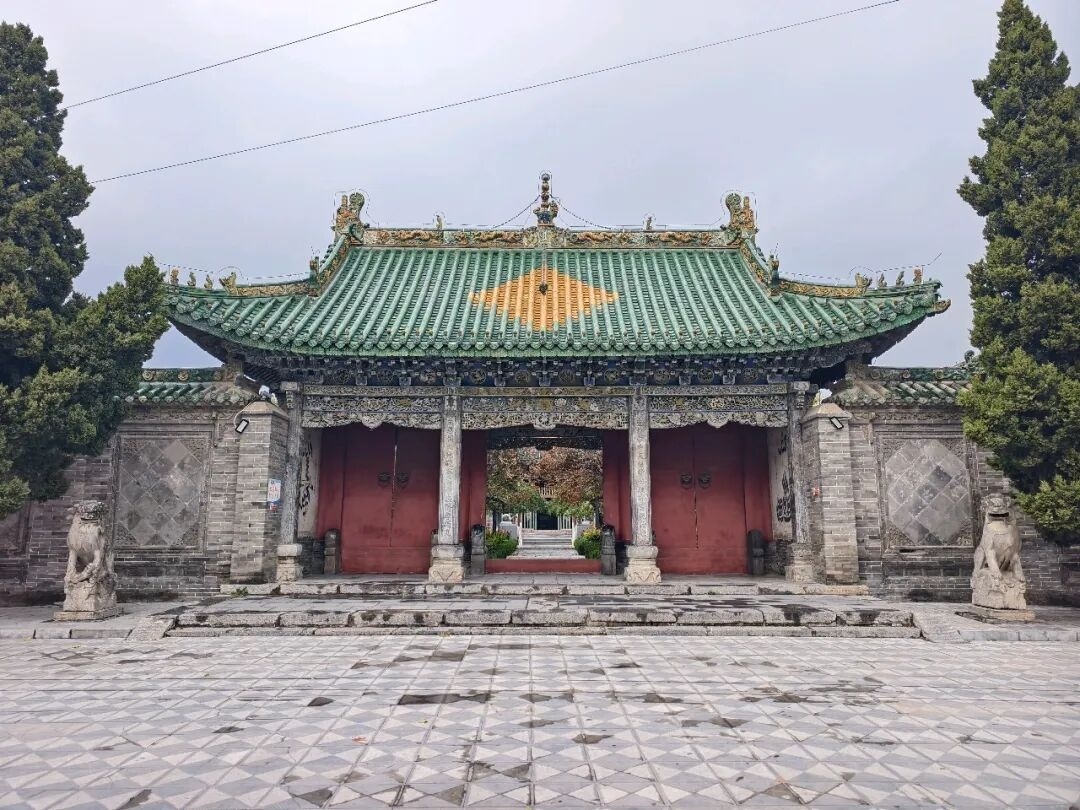
The entrance gate of the Zhuxian Town Mosque.
The Zhuxian Town Mosque was first built during the Taiping Xingguo era of the Northern Song Dynasty. It was later expanded in 1531 and renovated in 1744, with most of the current structures dating back to the Qing Dynasty. During the Ming and Qing eras, Zhuxian Town was a booming trade hub. Many Hui Muslim merchants settled here and built seven different mosques—the East, West, South, North, and Center mosques, plus two women’s mosques. The North Mosque, which is the current Zhuxian Town Mosque, is the oldest and largest of them all. It is the only one of the seven still standing today, a reminder of the local saying about the town’s “seven mosques and eight lanes.”
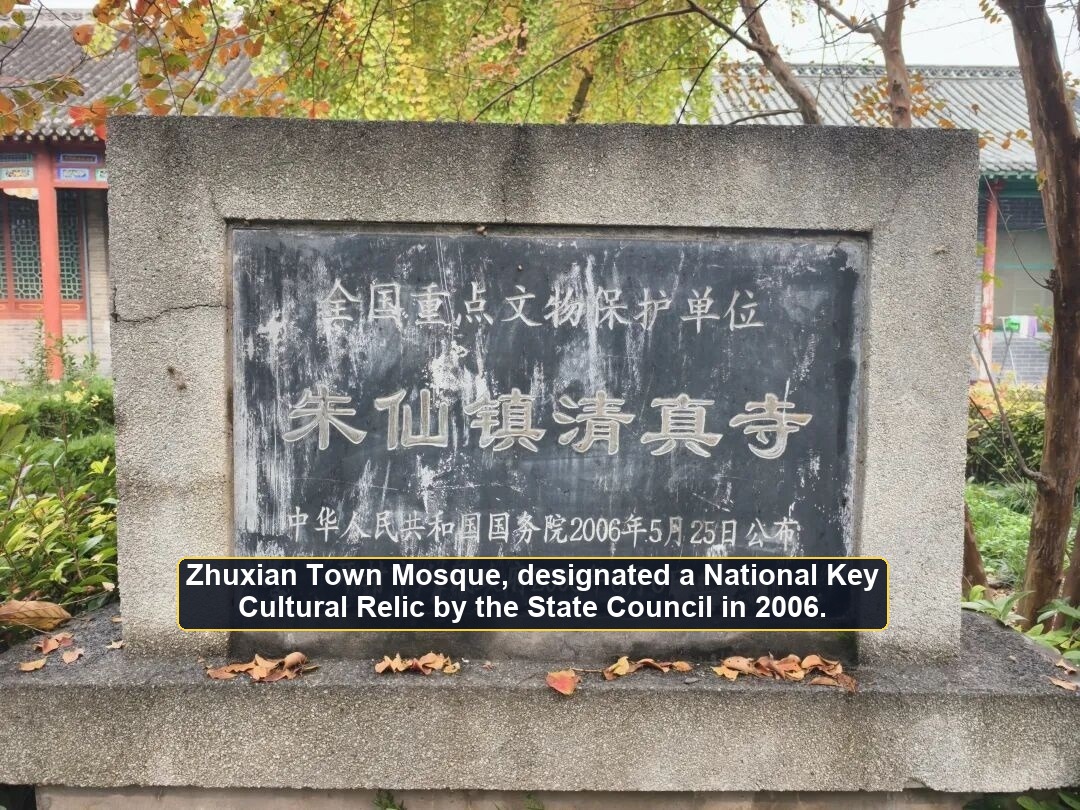
The stone tablet commemorating the mosque as a major national heritage site.
The mosque faces east and covers over 9,000 square meters, following a traditional quadrangle courtyard layout. The buildings are lined up along a central axis; the front gate is at the east end, featuring a single-eave gabled roof with stone lions standing guard outside. The site includes a stele pavilion, a shed-style hall, the main prayer hall, a rear kiln hall, and various side rooms. A rear gate with a hanging gable roof sits on the west end of the axis. The front and back gates line up perfectly, forming a courtyard shaped like the Chinese character "Hui"—a classic design for Qing Dynasty mosques.
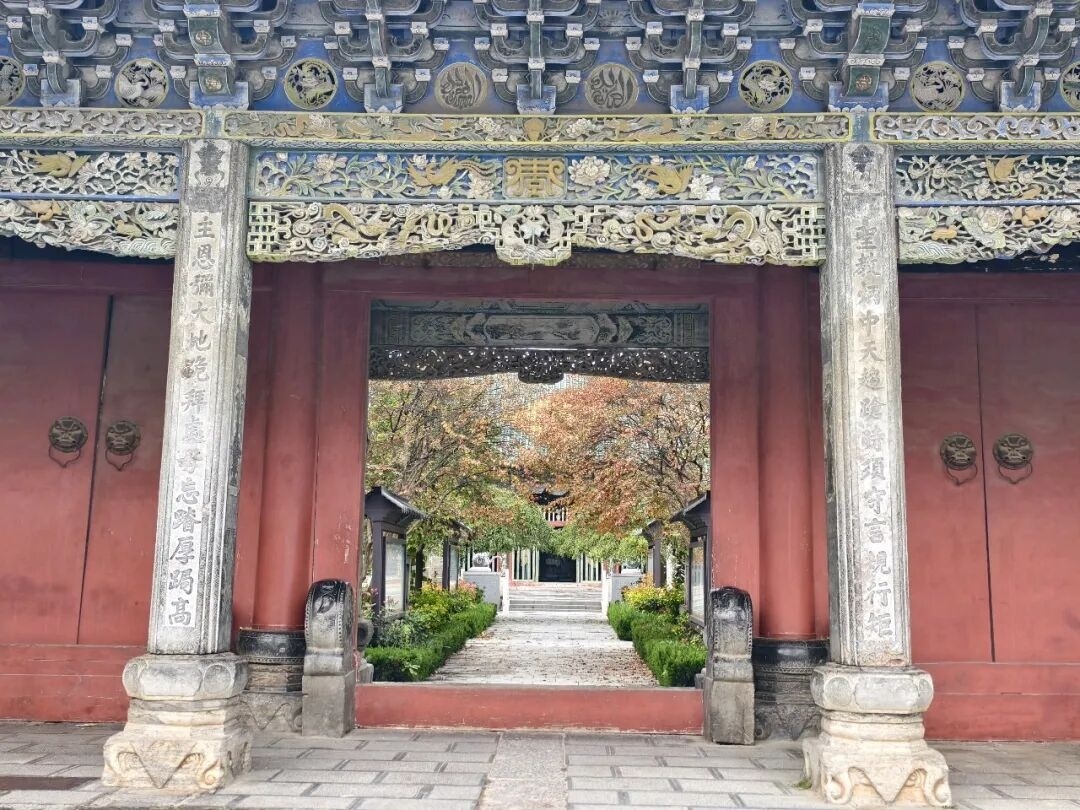
The front gate.
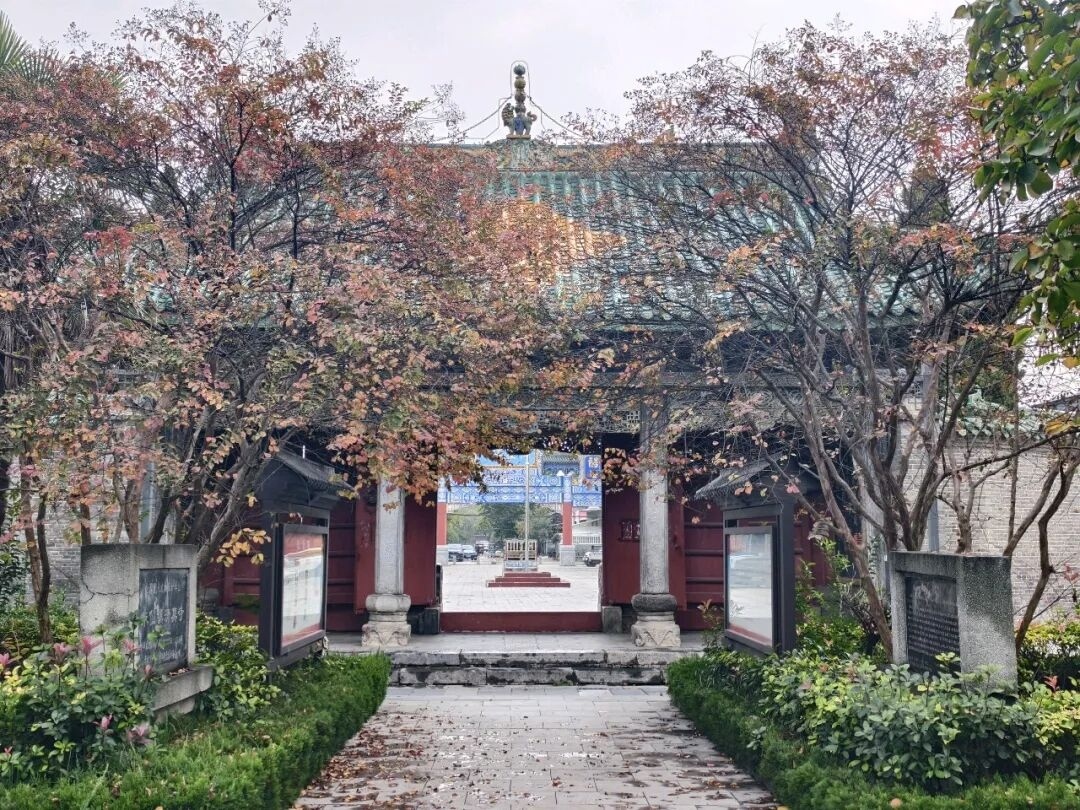
The inside of the front gate.
The front gate is the mosque’s signature structure, featuring delicate wood carvings of auspicious animals. The stone columns are beautifully crafted, decorated with carvings of vases, flowers, and birds. A couplet is engraved in the center pillar, reading: "In the land covered by Allah’s grace, do not forget to tread carefully and stand tall when performing dua (prayer); when following the sacred teachings, always uphold your words and conduct." The couplet encourages people to live with humility and integrity. Three historic plaques hang on the gate: the first, "Known Before the Rain," was written by the famous scholar Ji Yun in 1785 (the current version is a replica); the second, "True Source of the Supreme Teaching," was inscribed by Henan Governor Zhu Gui in 1765; and the third, "True Oneness of the World," was written by Huguang Viceroy Yulu in 1889.
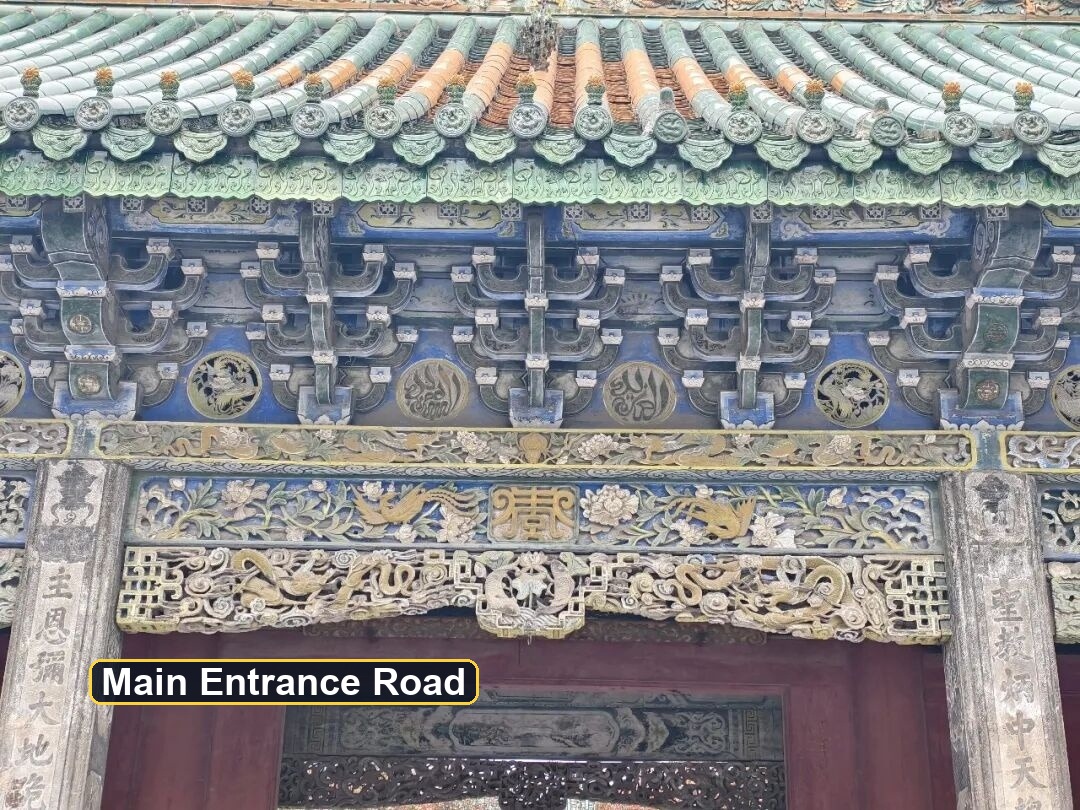
Wood carvings under the gate’s eaves (Photo 1).
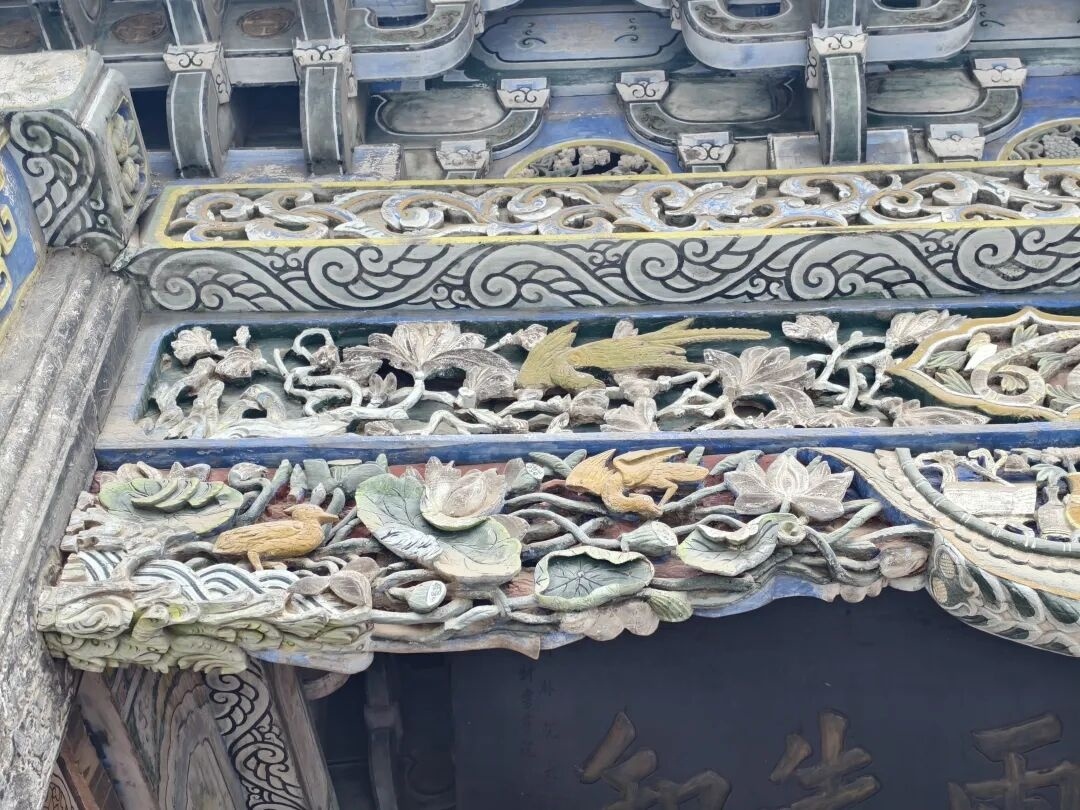
Wood carvings under the gate’s eaves (Photo 2).
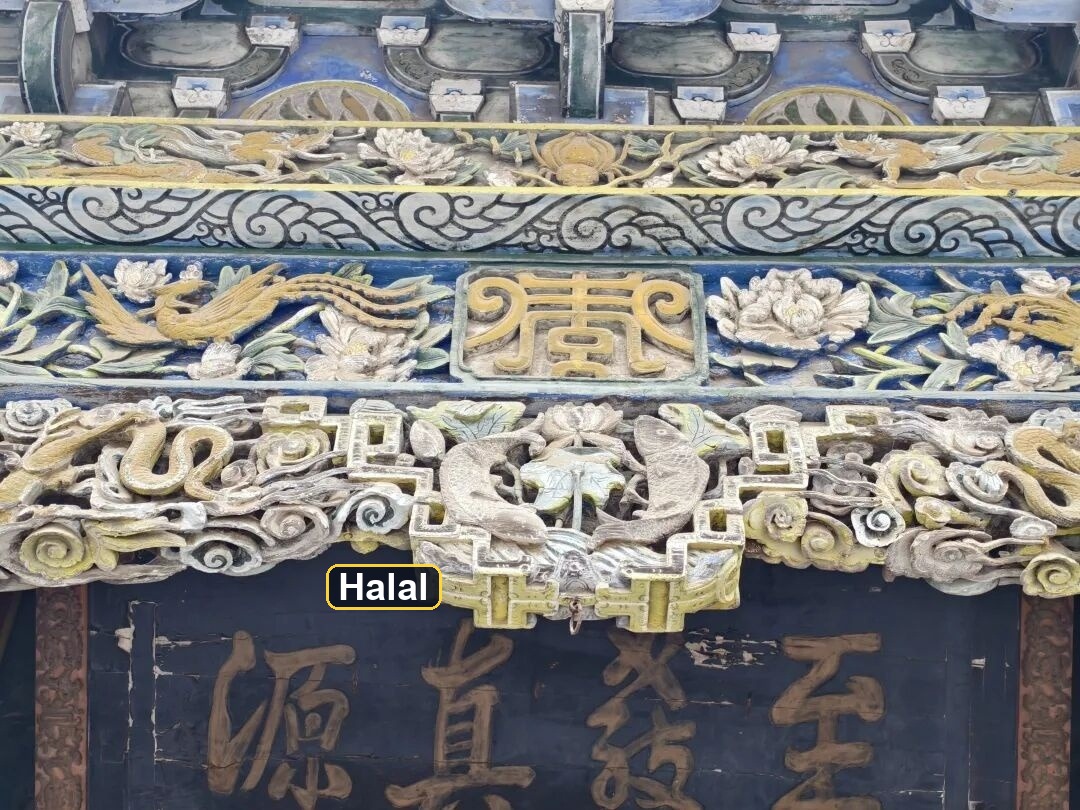
Wood carvings under the gate’s eaves (Photo 3).
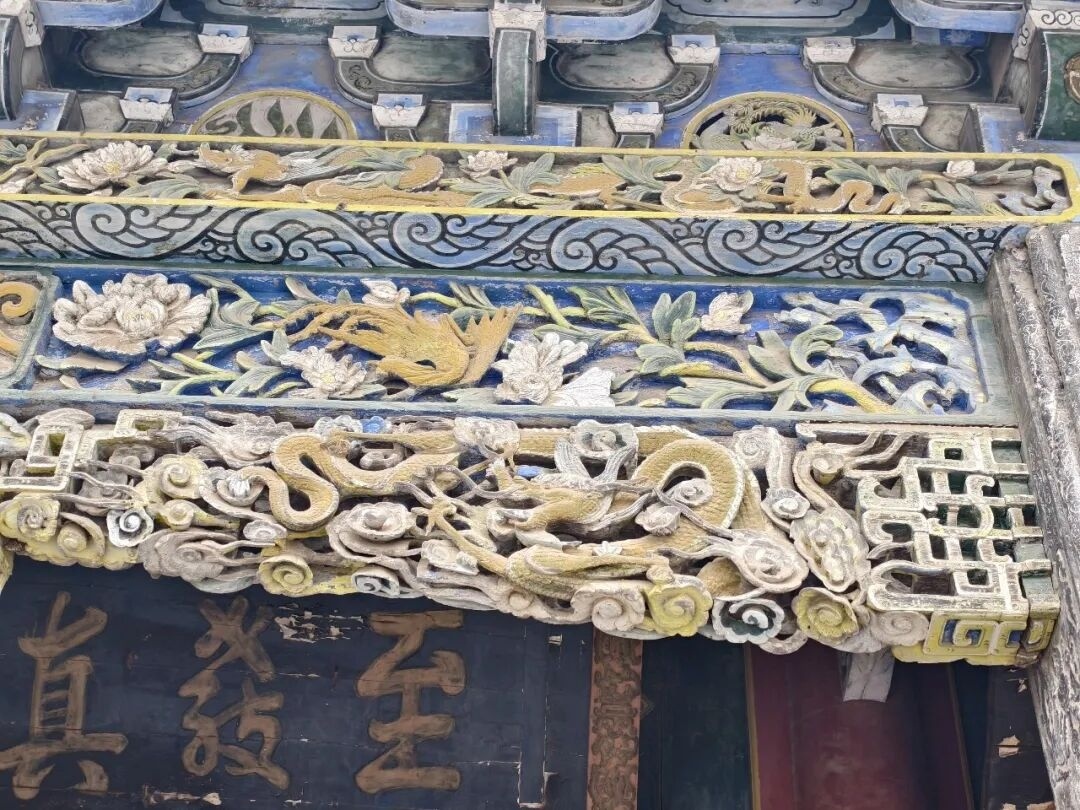
Wood carvings under the gate’s eaves (Photo 4).
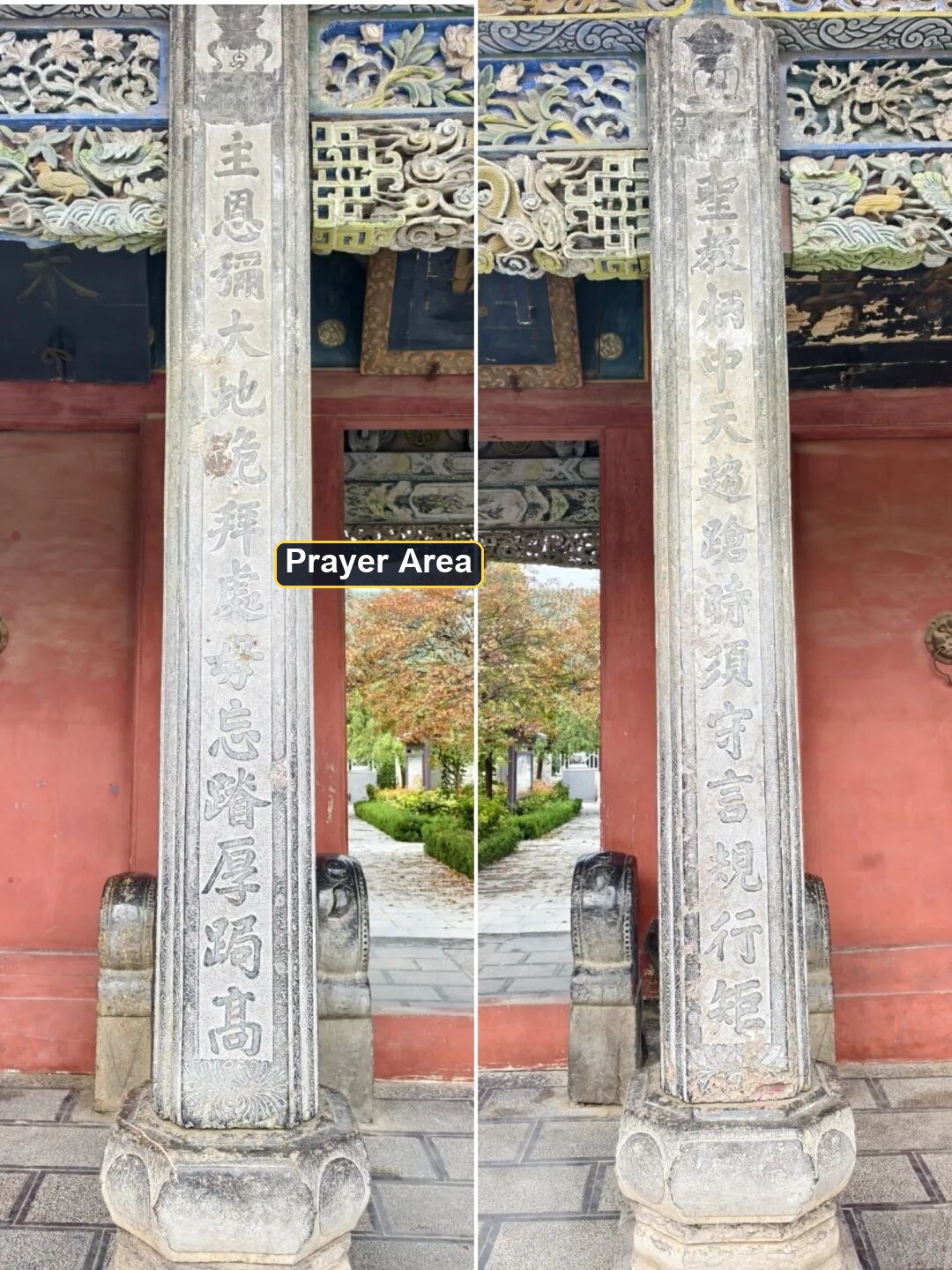
The stone columns of the front gate.
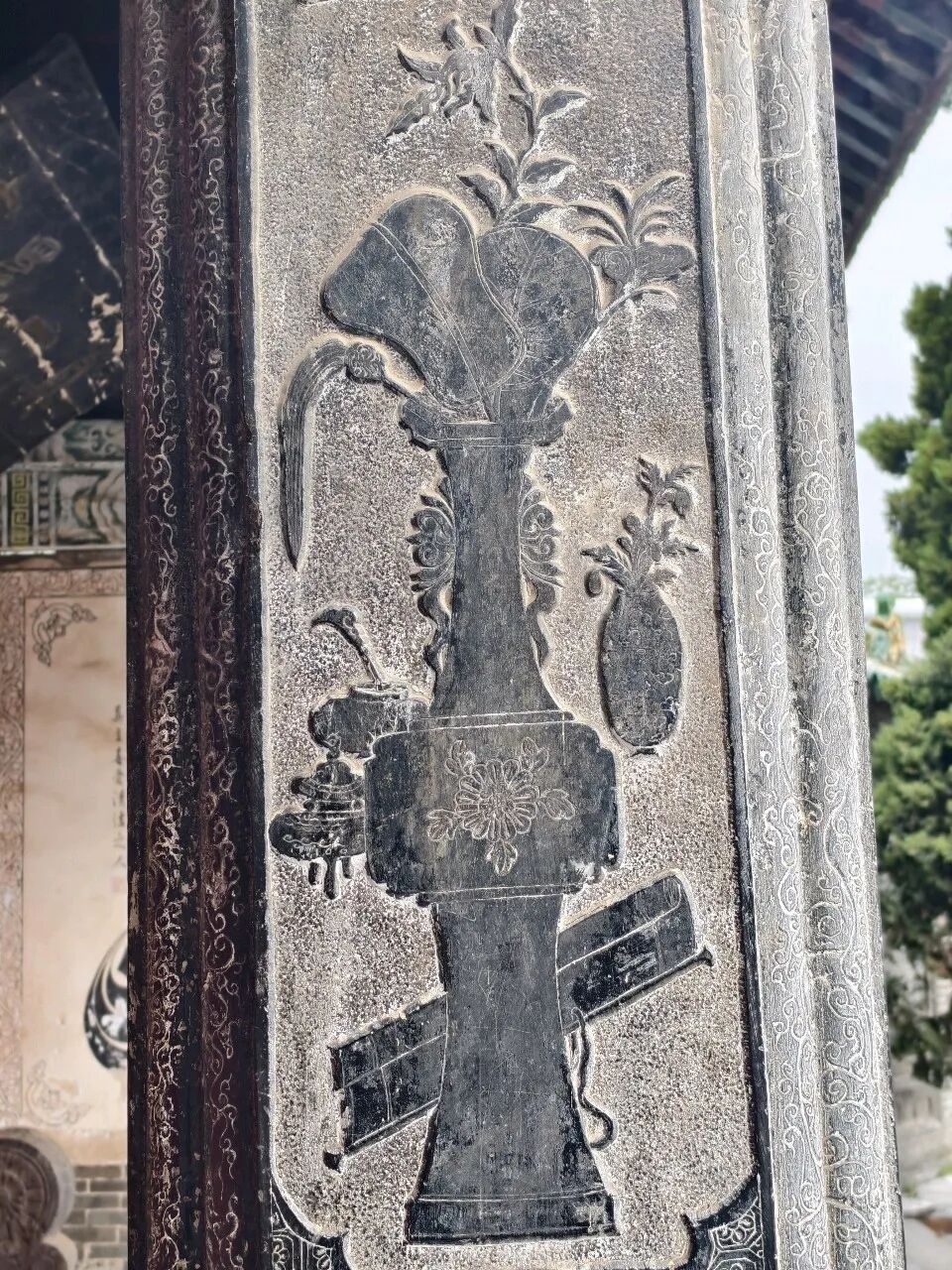
Antique-style stone carvings on the inner side of the columns.
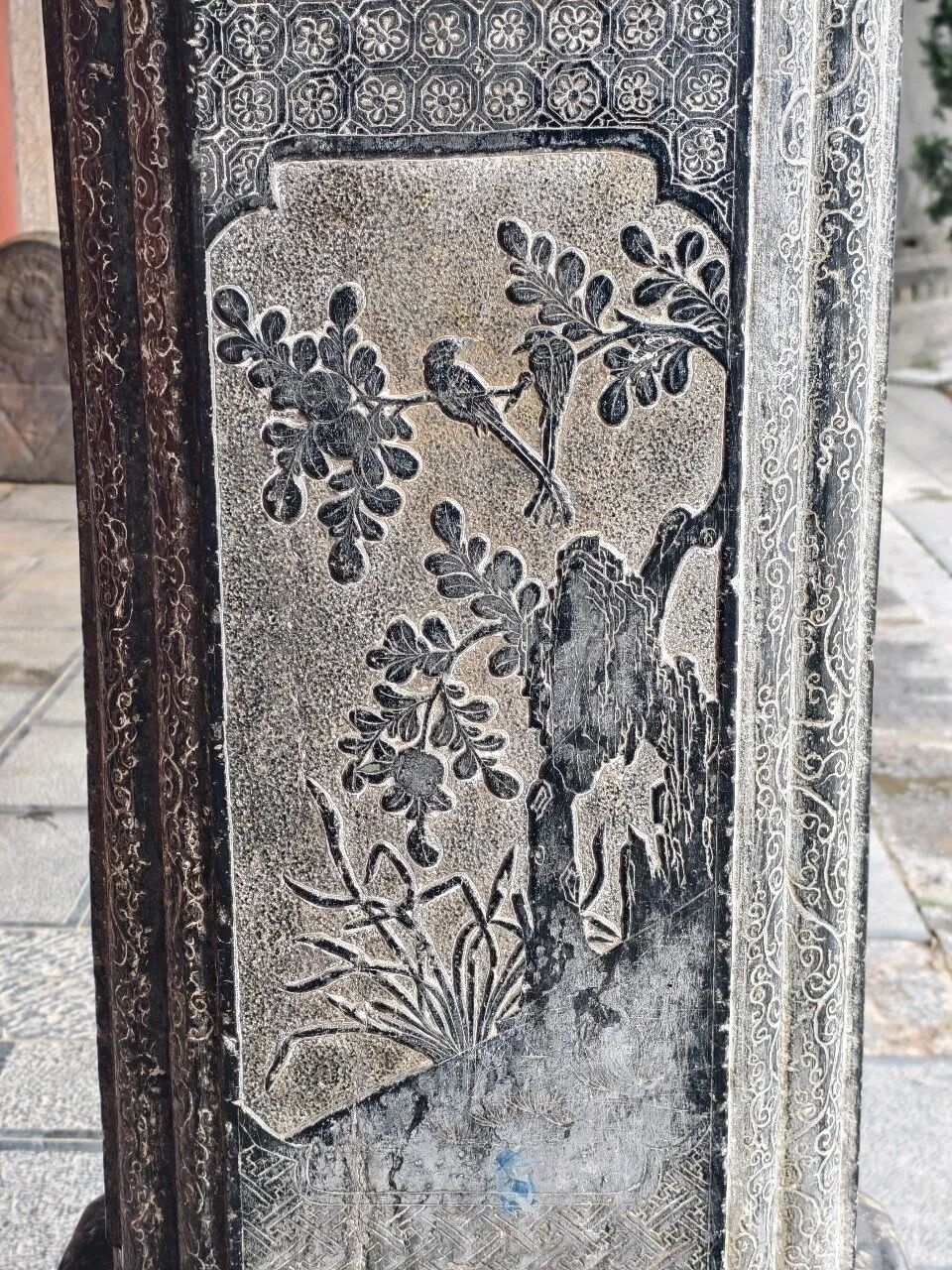
Flower and bird stone carvings on the inner side of the columns.
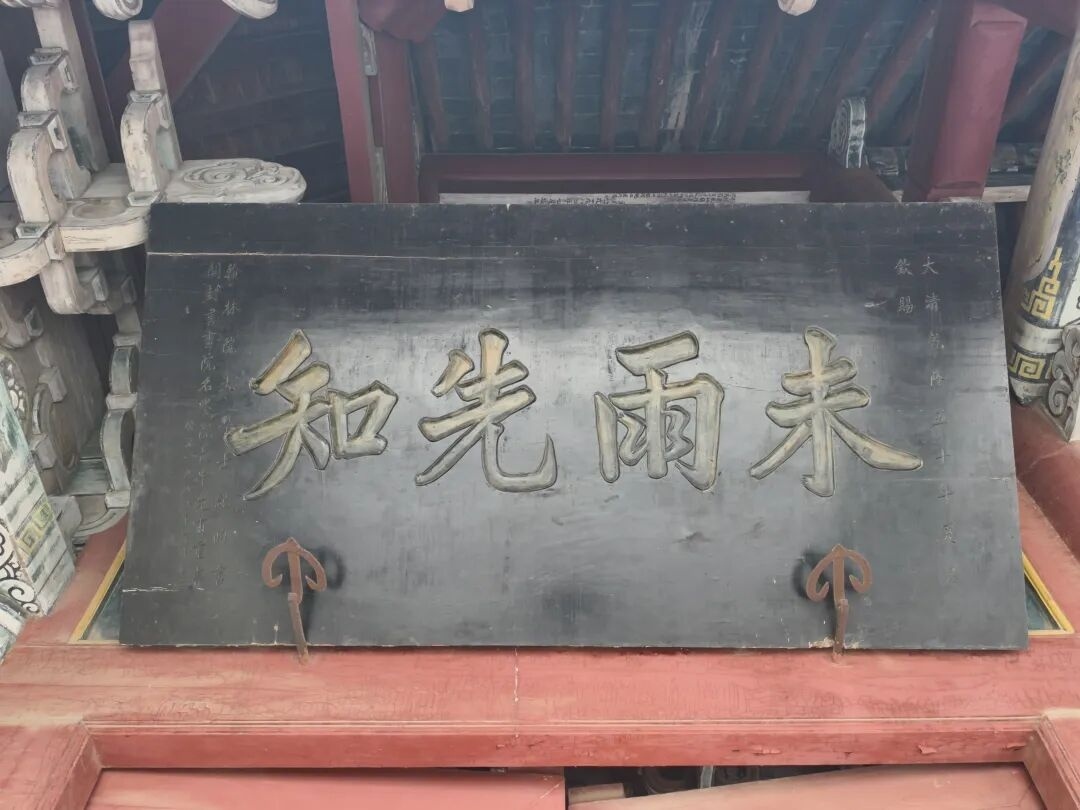
The "Known Before the Rain" plaque.
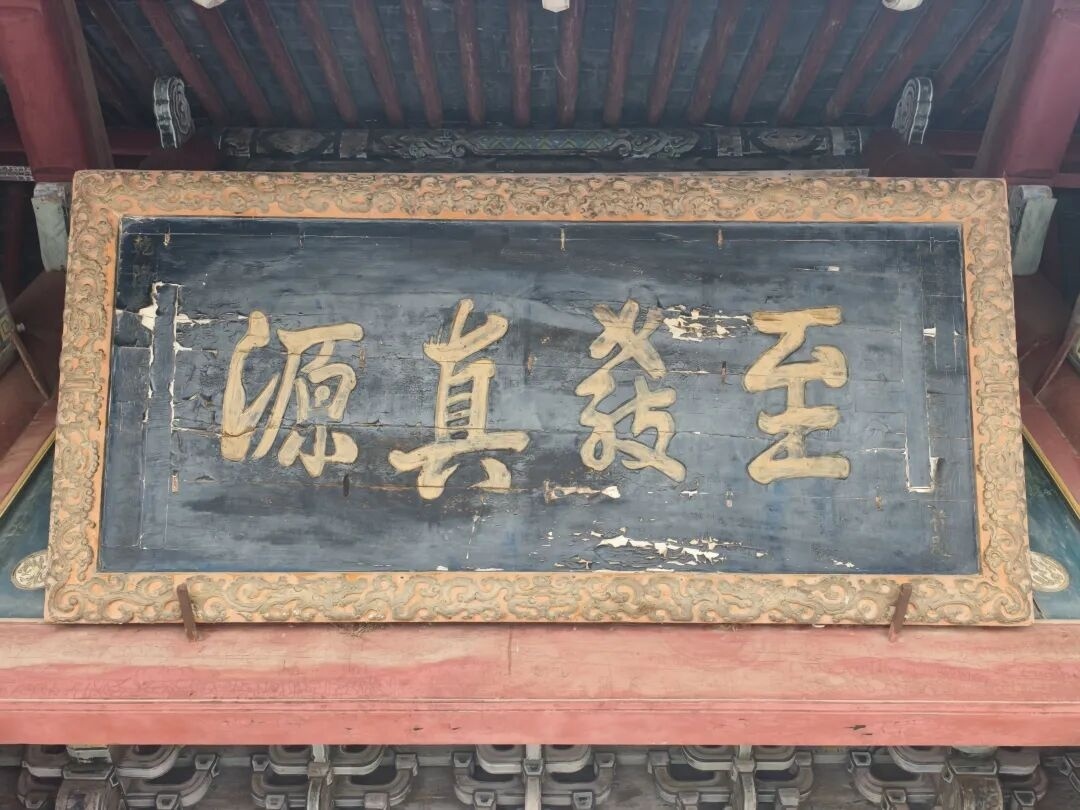
The "True Source of the Supreme Teaching" plaque.
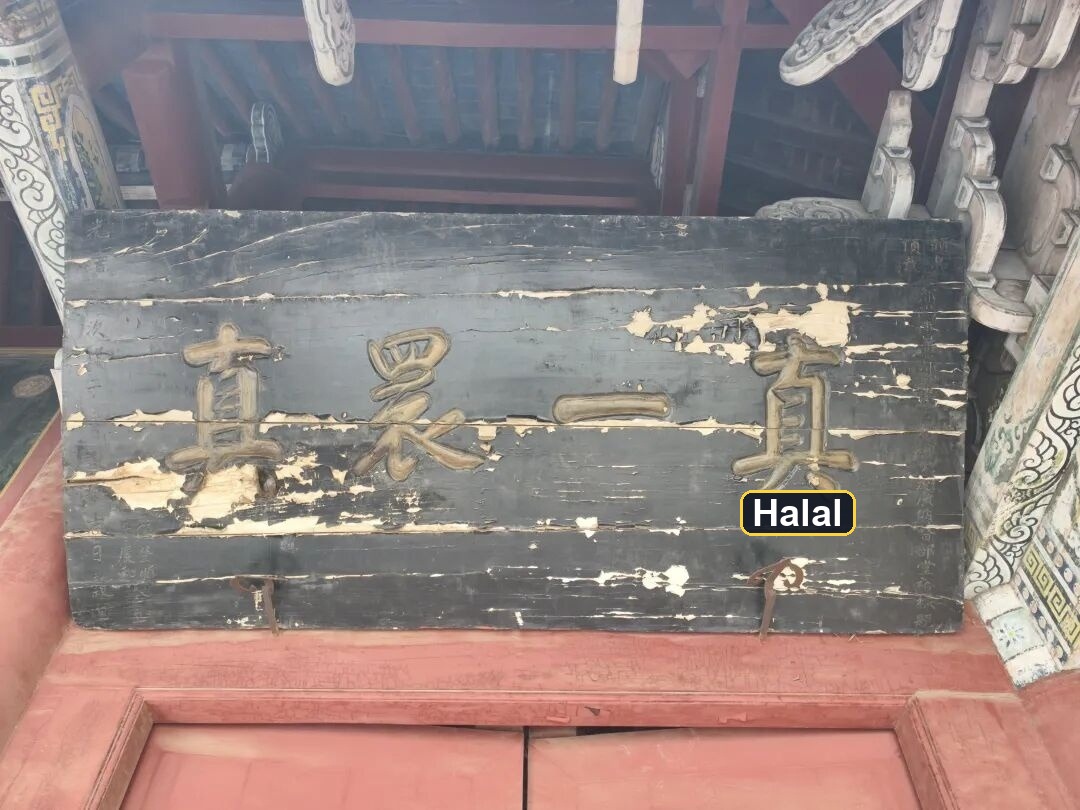
The "True Oneness of the World" plaque.
There are two ancient stone tablets in the courtyard. One is a Chinese-language tablet from 1767 that has been heavily weathered over time. The other is an Arabic-language tablet from 1805, which is said to be the most well-preserved Arabic inscription in all of Henan.
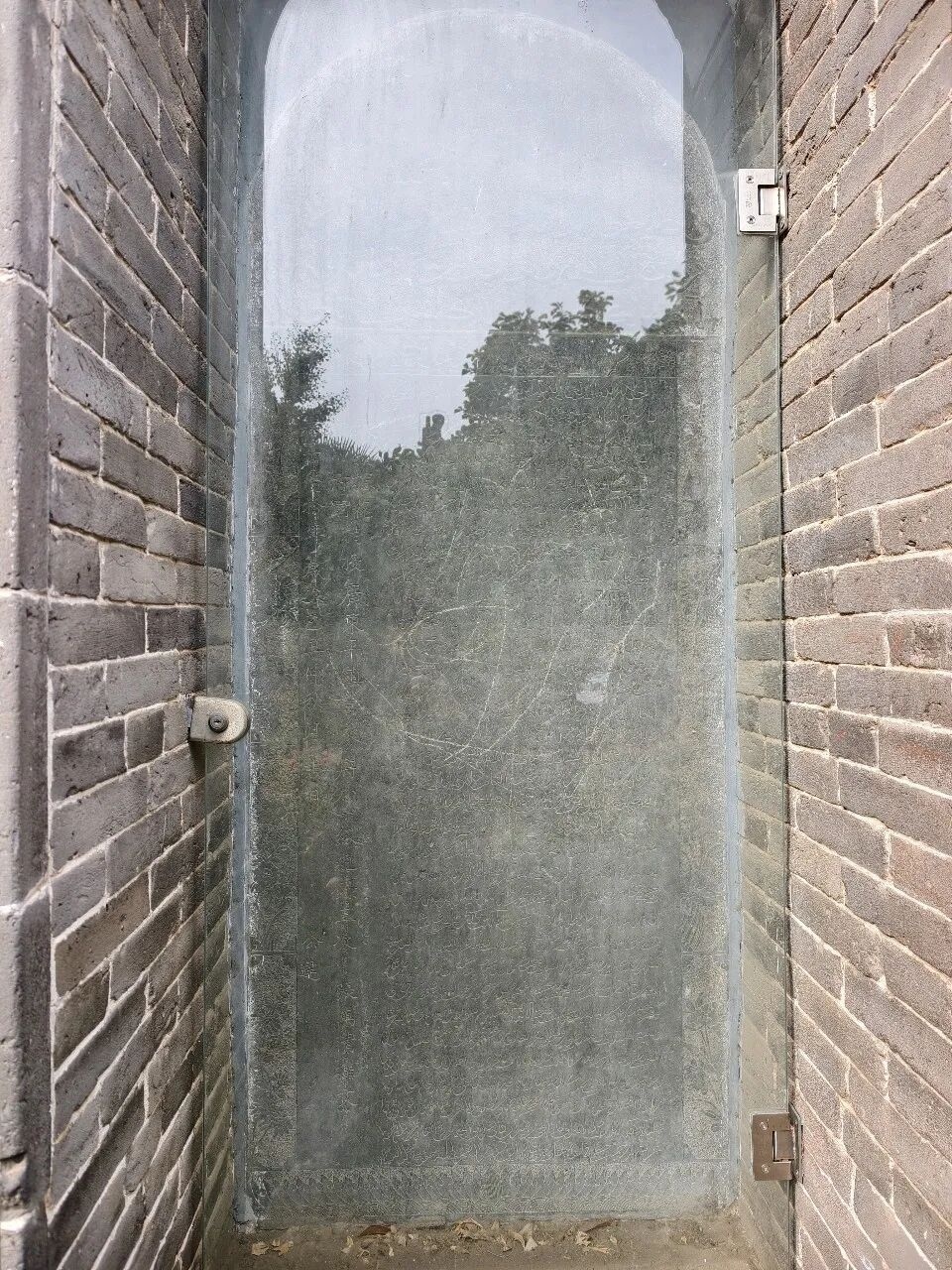
The Arabic-language tablet from 1805.
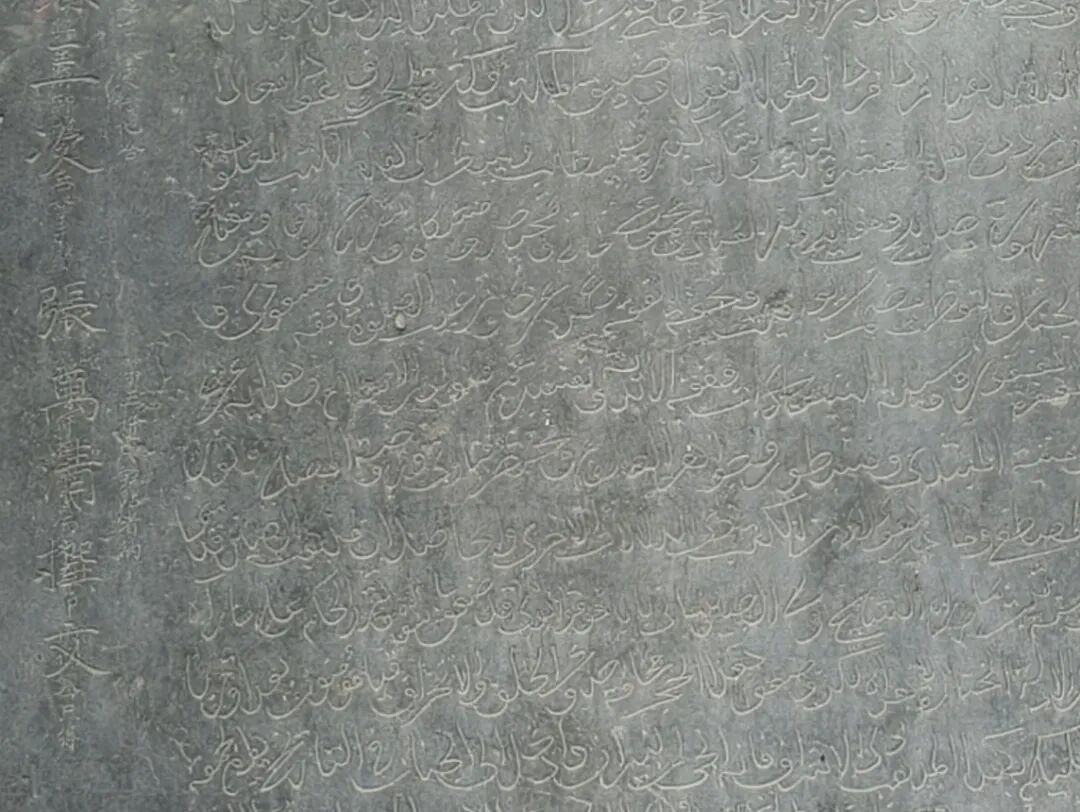
Detail of the Arabic-language tablet.
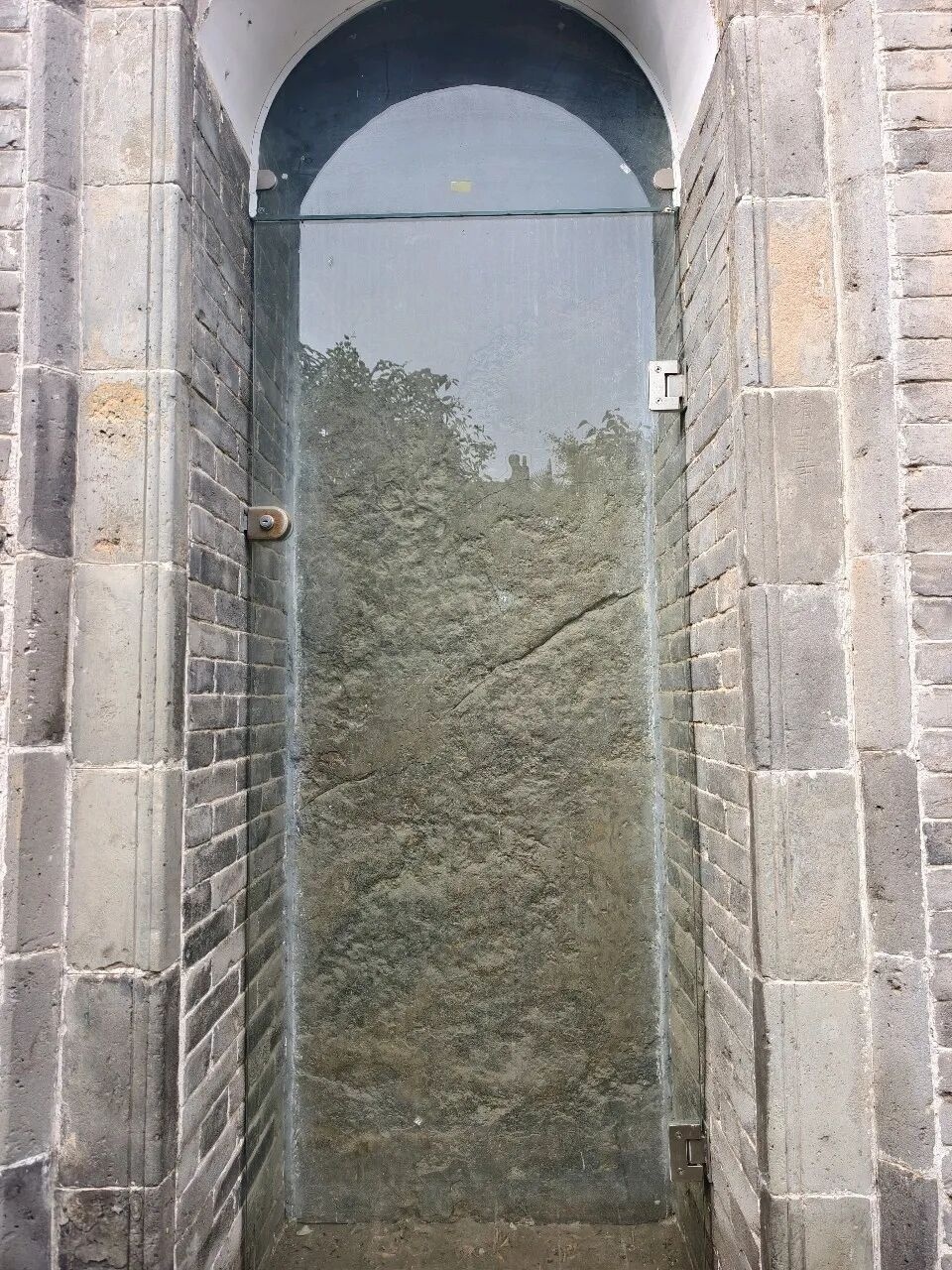
The Chinese-language tablet from 1767.
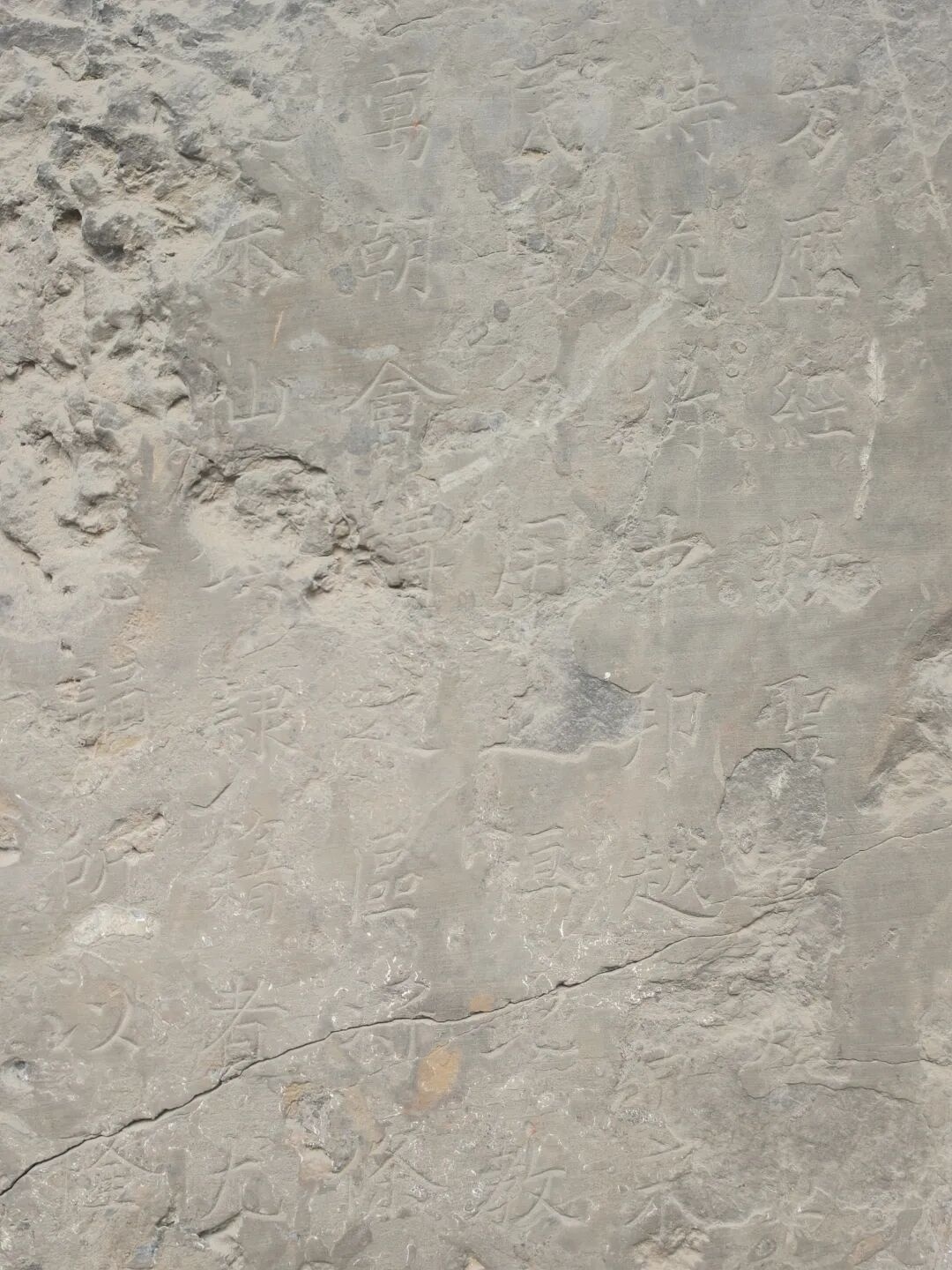
Detail of the Chinese-language tablet from 1767.
The main prayer hall is a Qing Dynasty structure designed with connected roof sections. The front is a shed-style roof, and the back is a hard-gabled roof, each five bays wide and two bays deep. The brick carvings on the hall’s roof edges are stunning, featuring detailed chrysanthemum patterns. The roof is covered in green glazed tiles with yellow diamond-shaped patterns. A glazed vase with flame motifs sits on the main roof ridge. Between the hall and the gate, there are dozens of side rooms, all featuring traditional hard-gabled roofs.
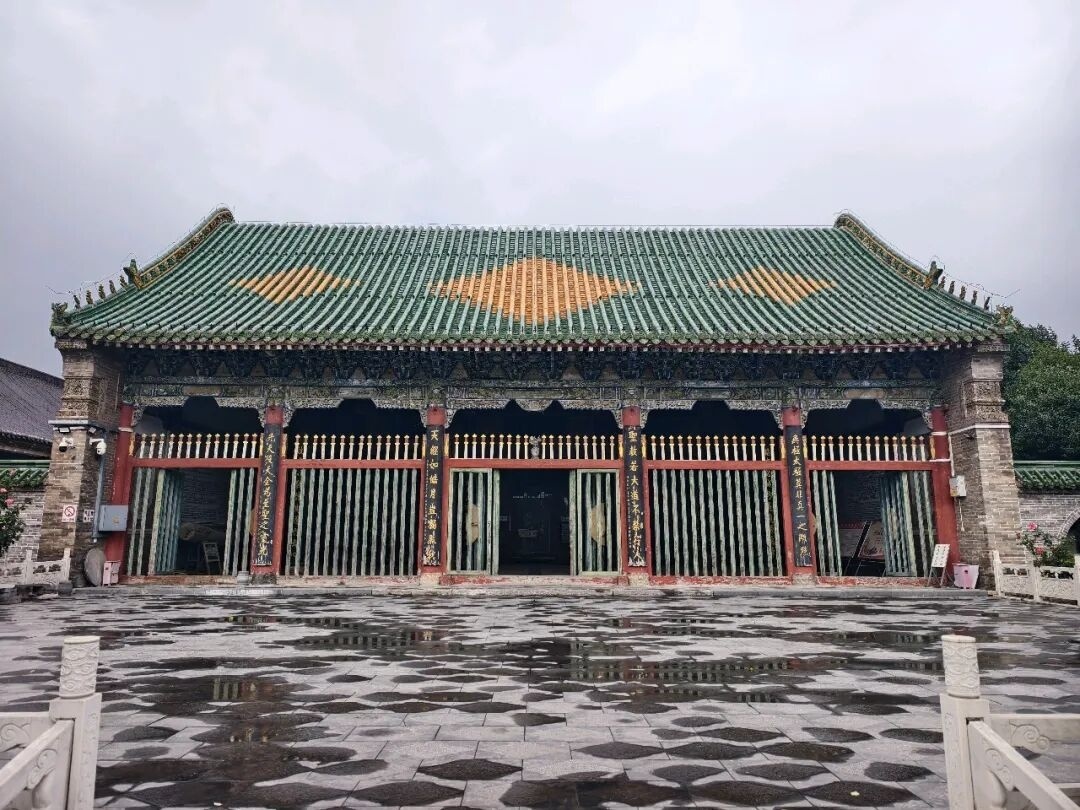
The main prayer hall.
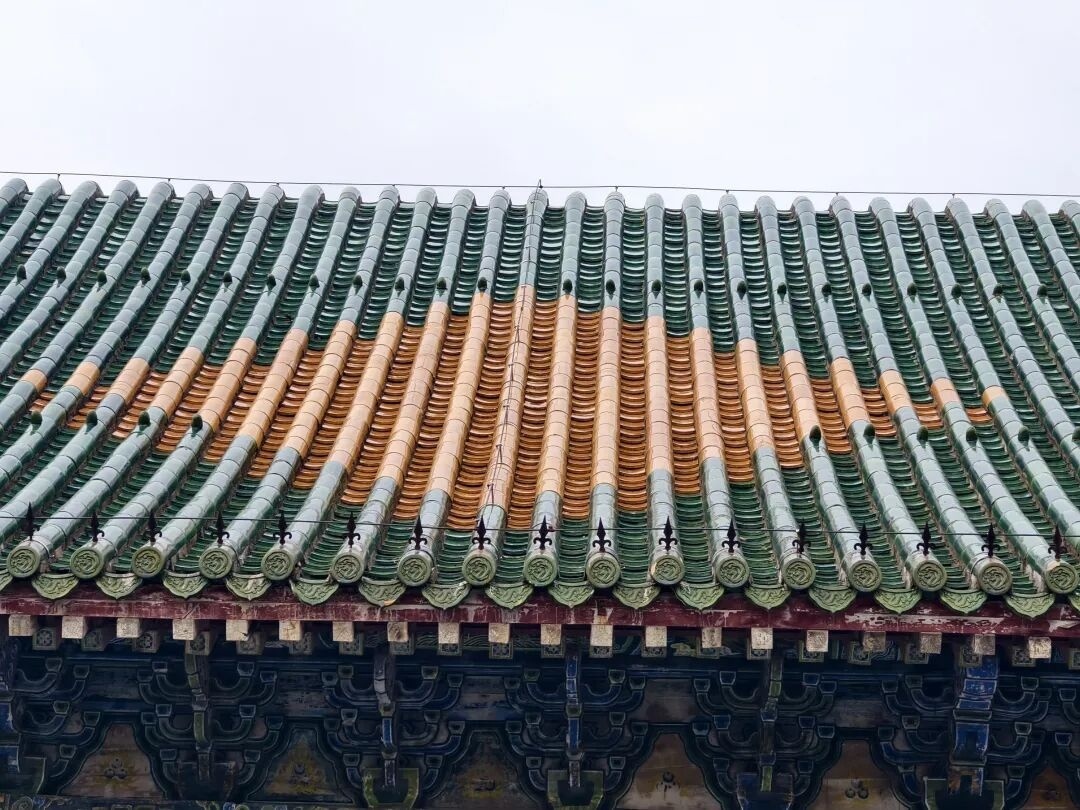
The yellow diamond-shaped glazed tile roof of the prayer hall.
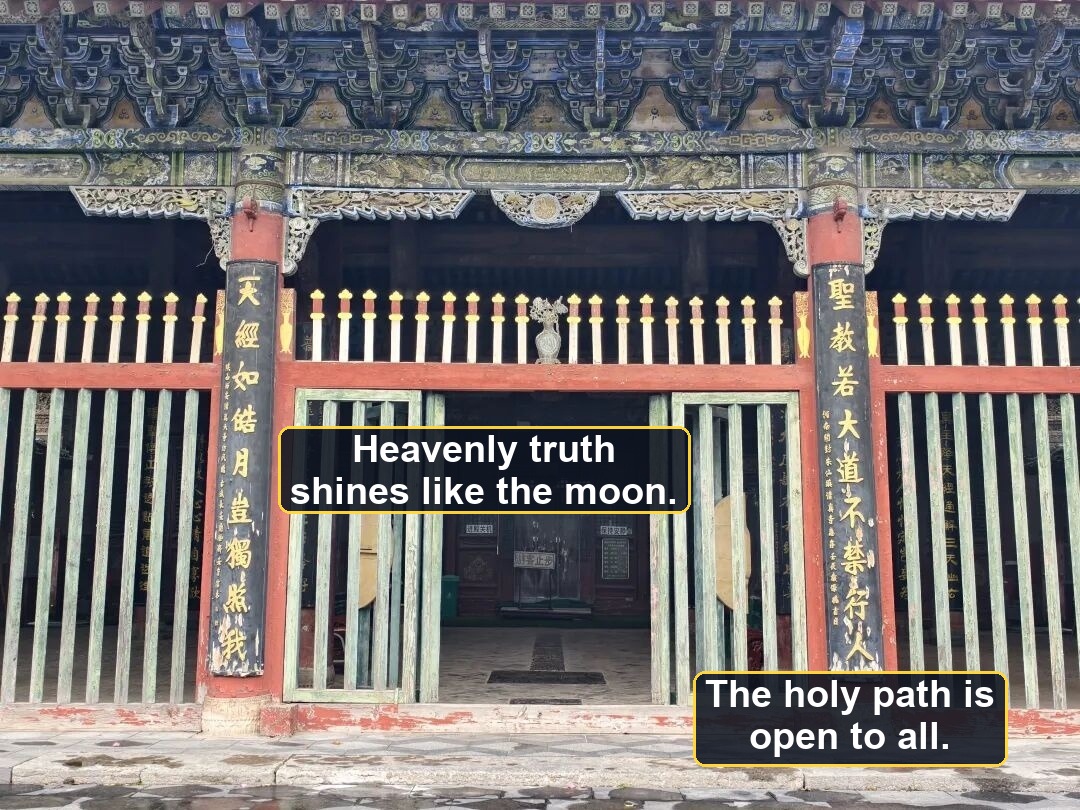
The main entrance to the prayer hall.
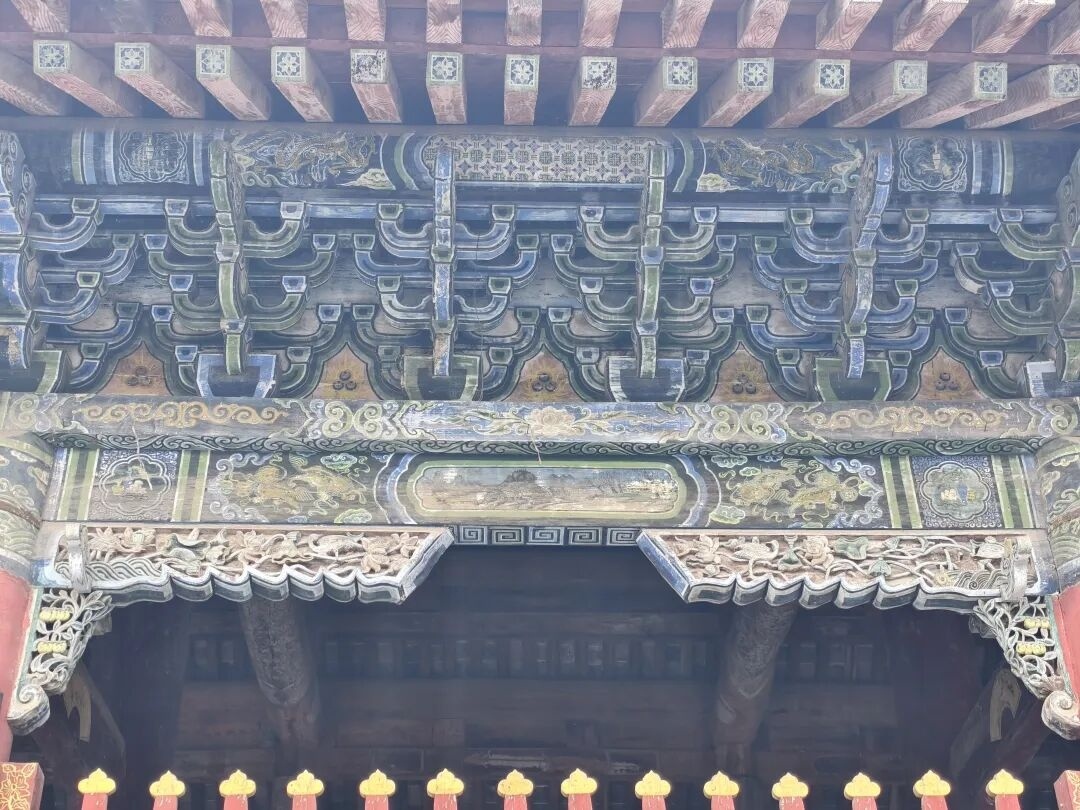
Wood carvings under the prayer hall’s eaves.
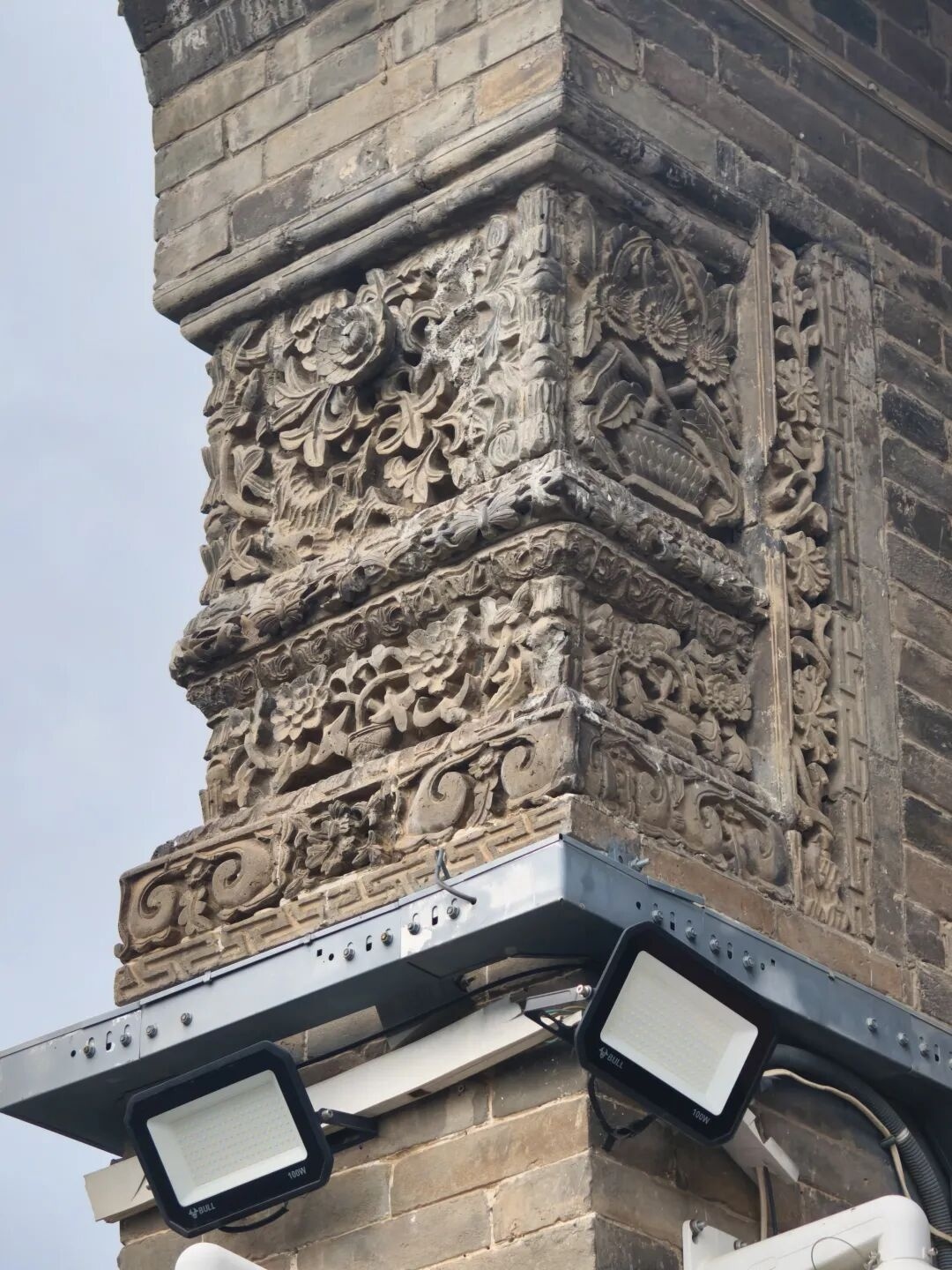
Brick carvings on the roof edge of the prayer hall (Photo 1).
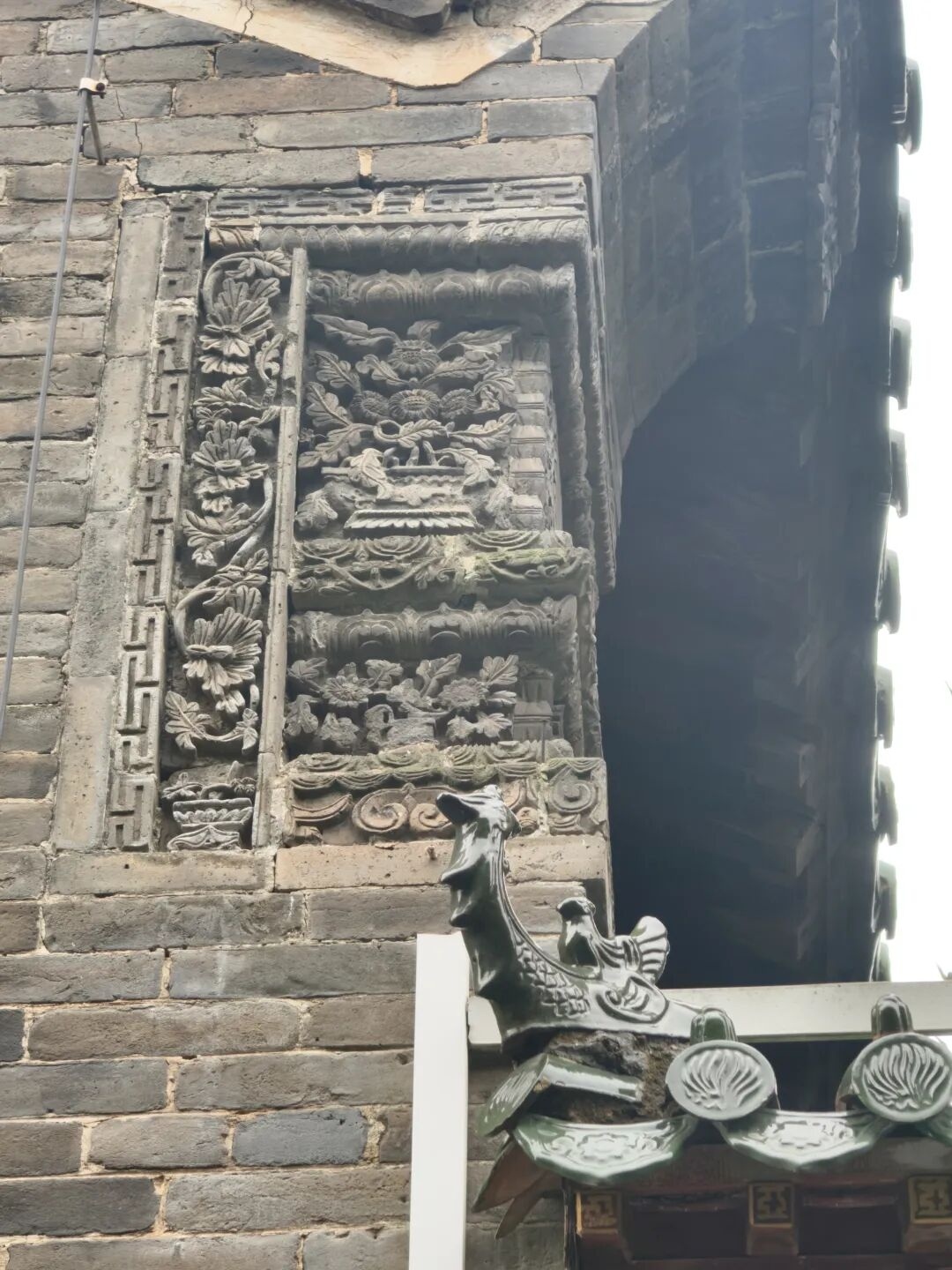
Brick carvings on the roof edge of the prayer hall (Photo 2).
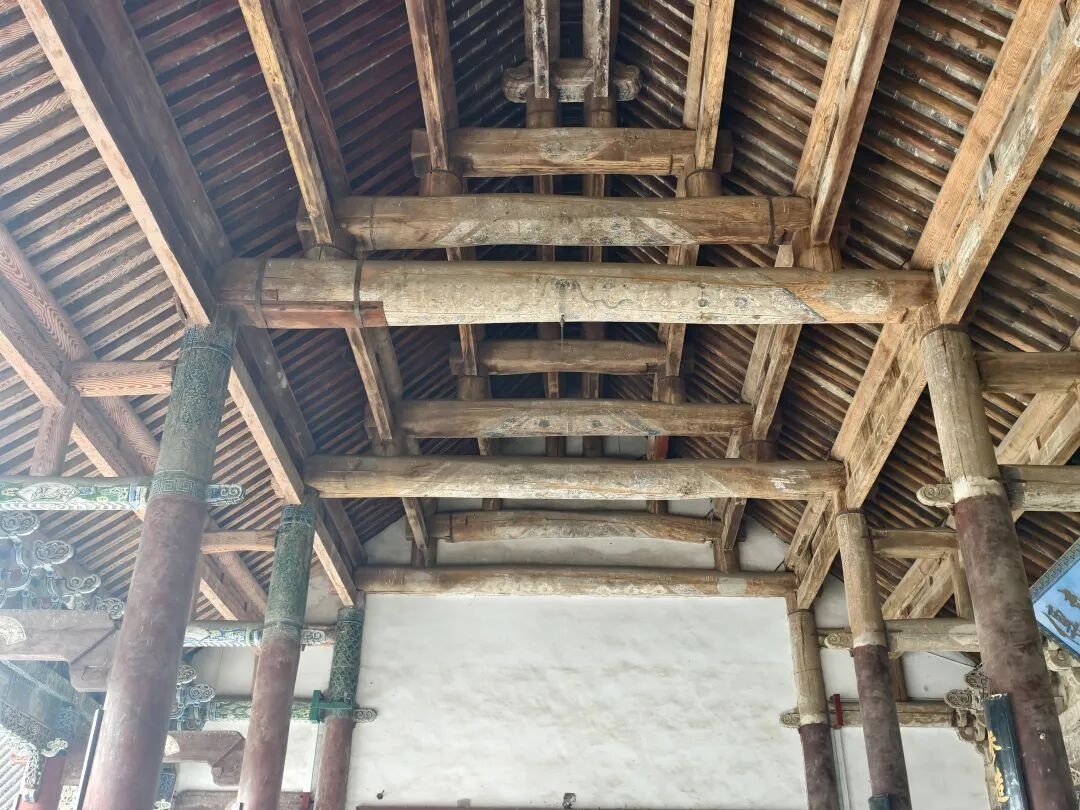
The beam structure inside the prayer hall.
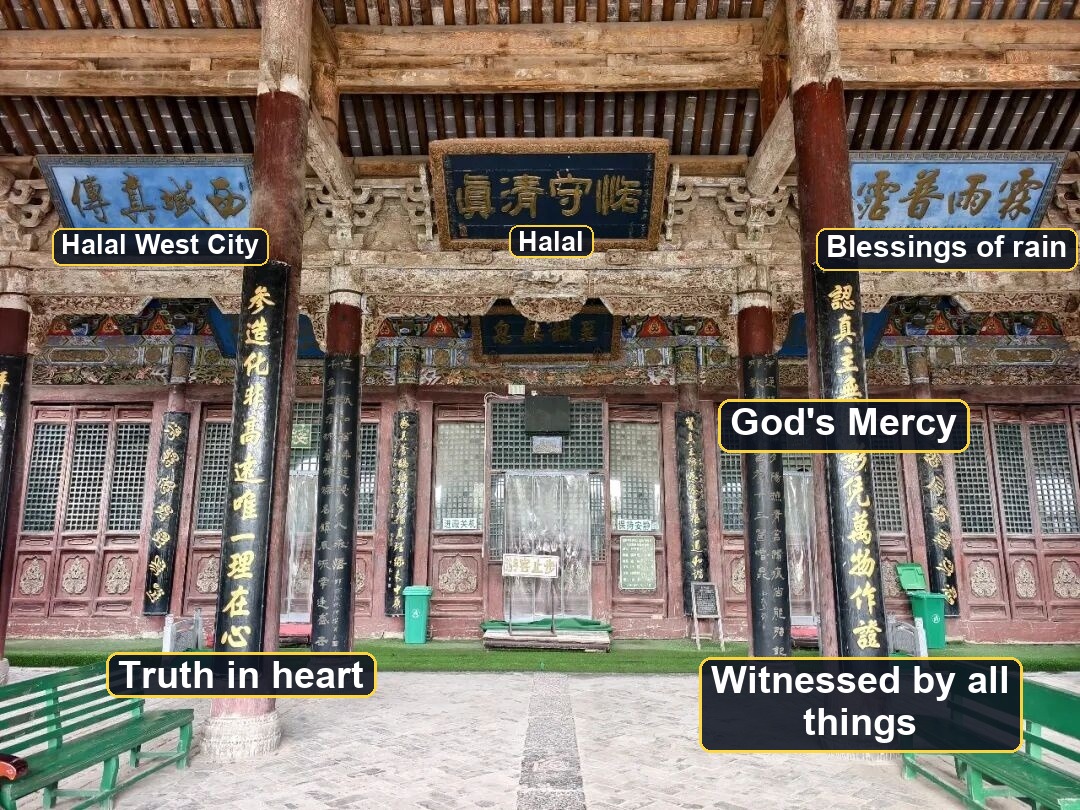
Interior view of the prayer hall (Photo 1).
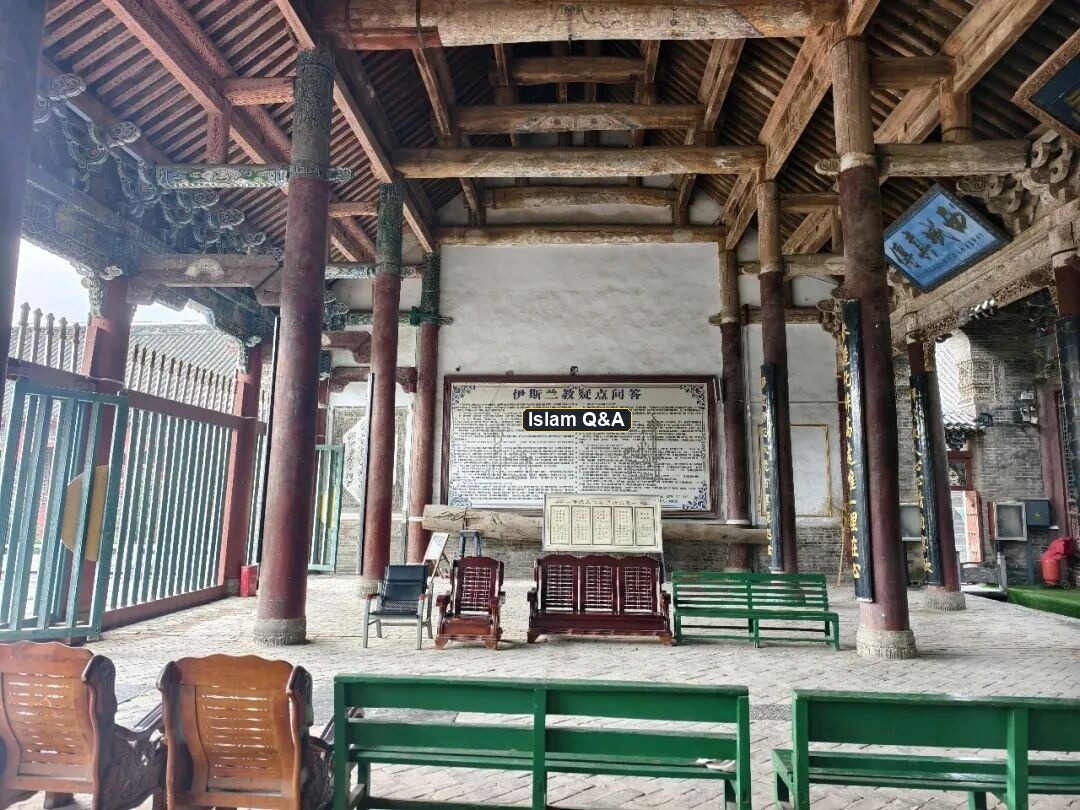
Interior view of the prayer hall (Photo 2).
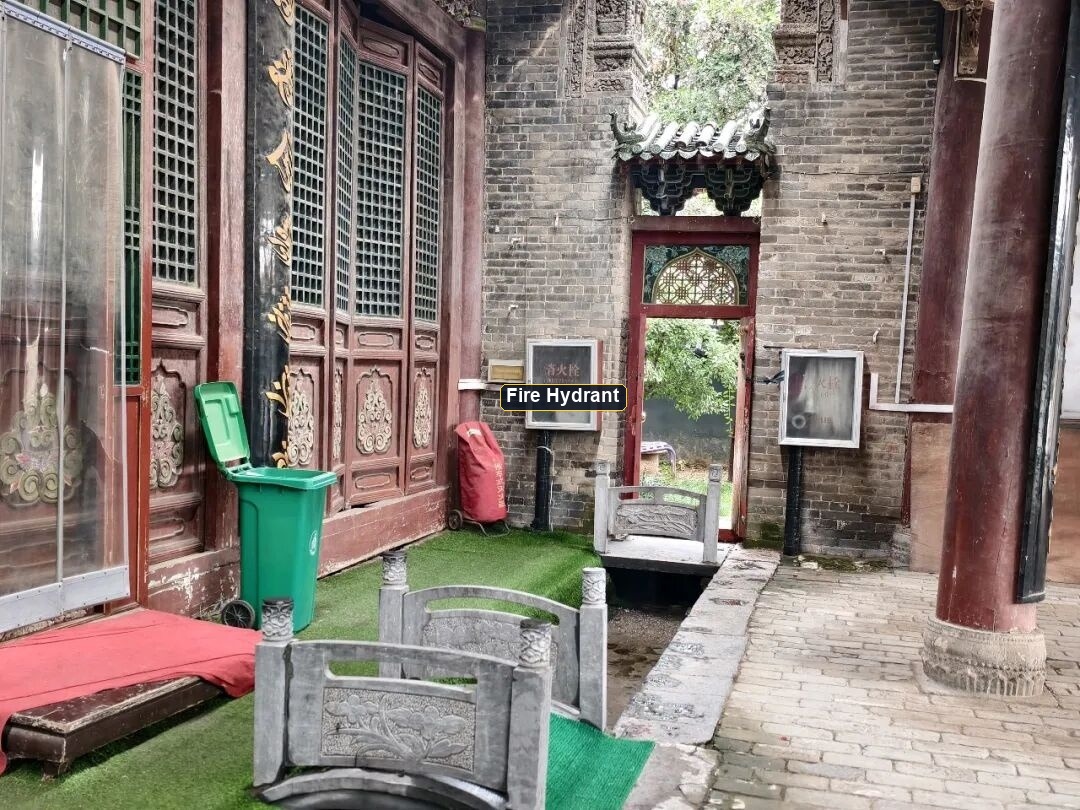
The rear hall.
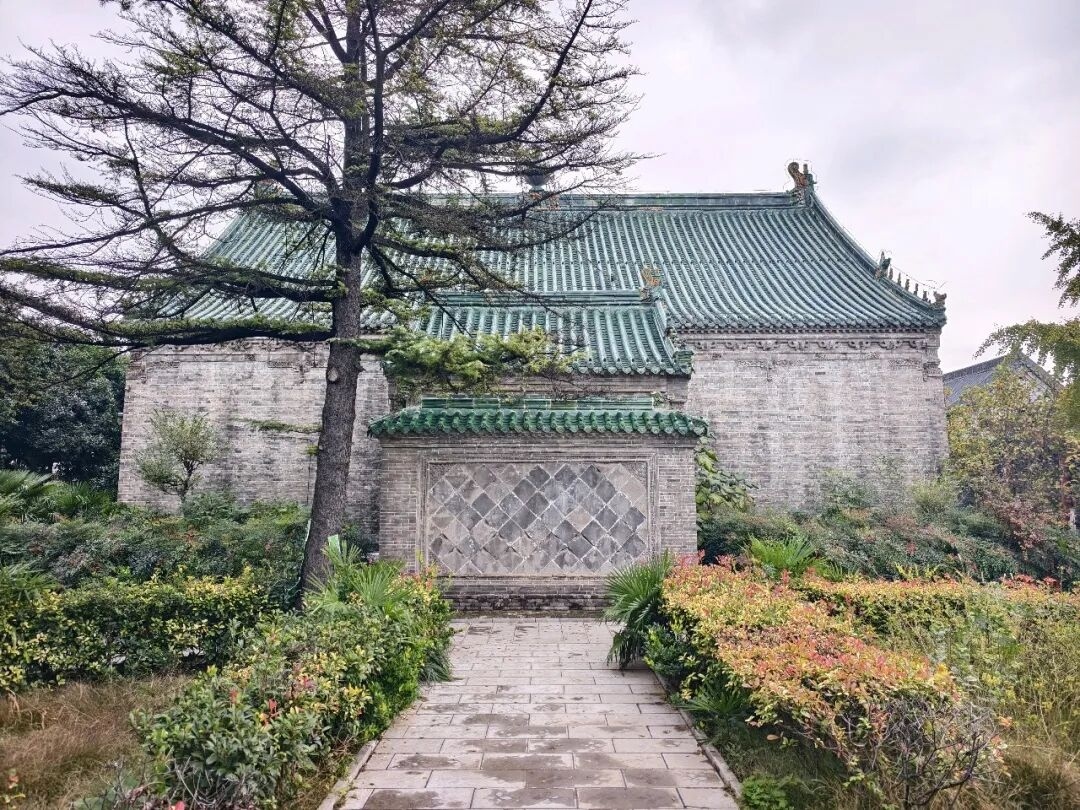
The exterior of the back hall.
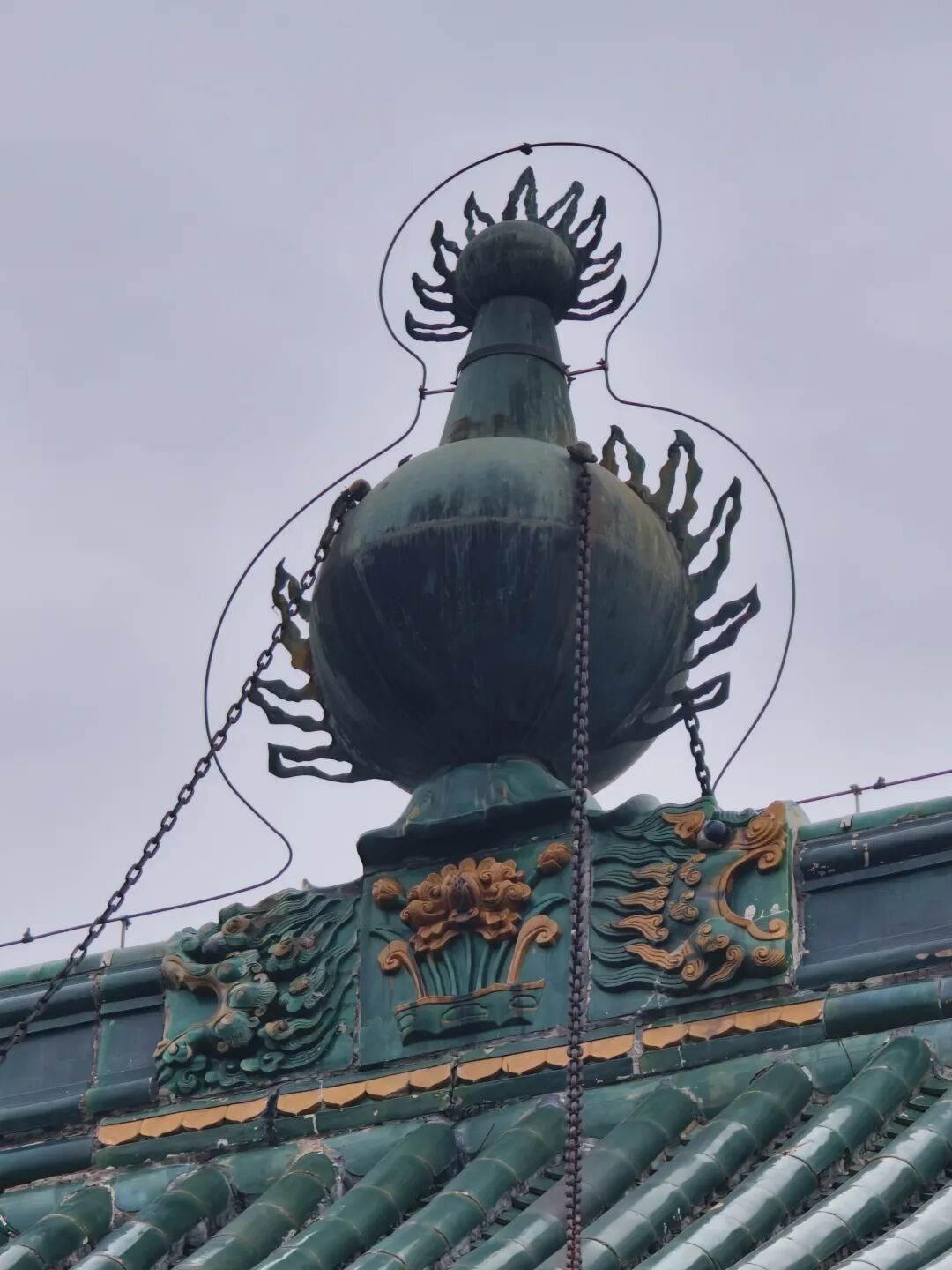
The glazed vase ornament on the main ridge of the back hall.
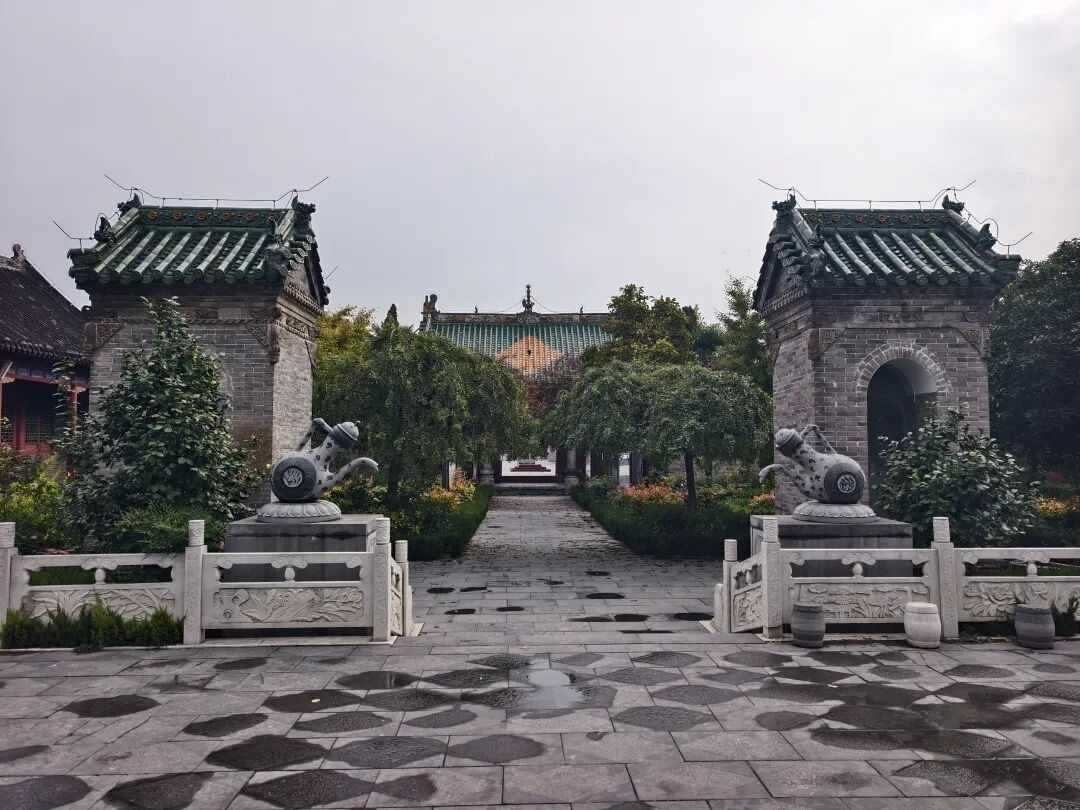
A view of the courtyard at Zhuxian Town Mosque.
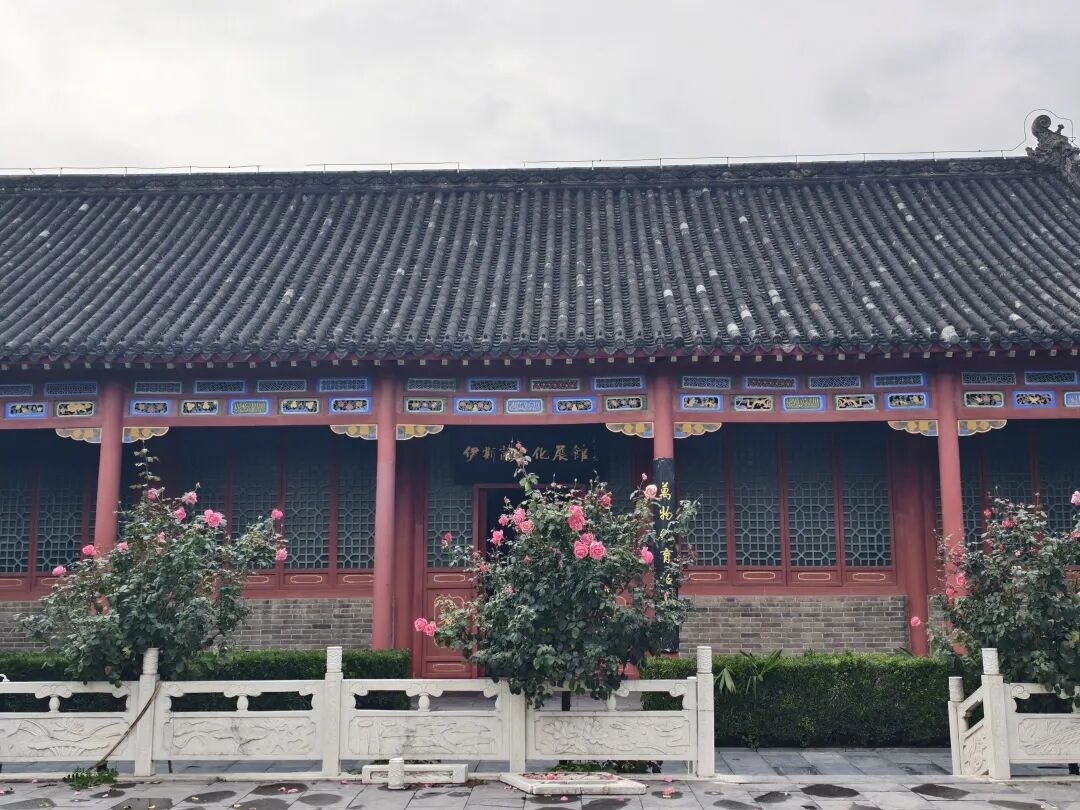
The side chambers (Photo 1).
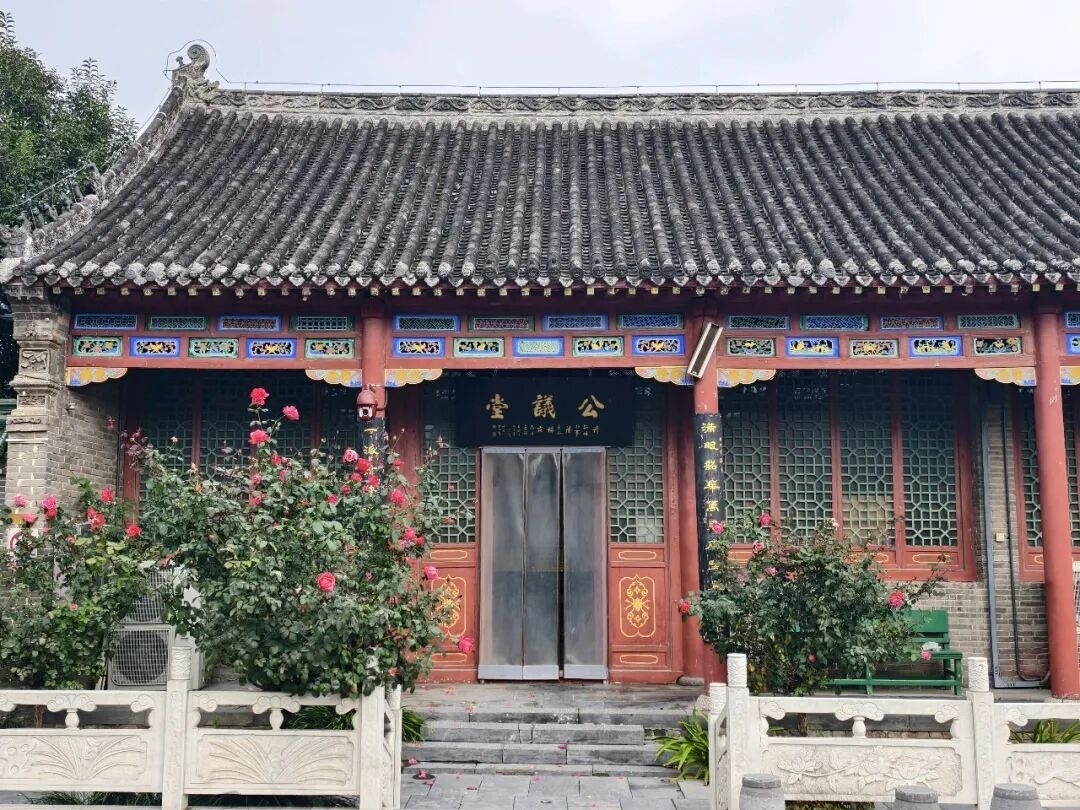
The side chambers (Photo 2).
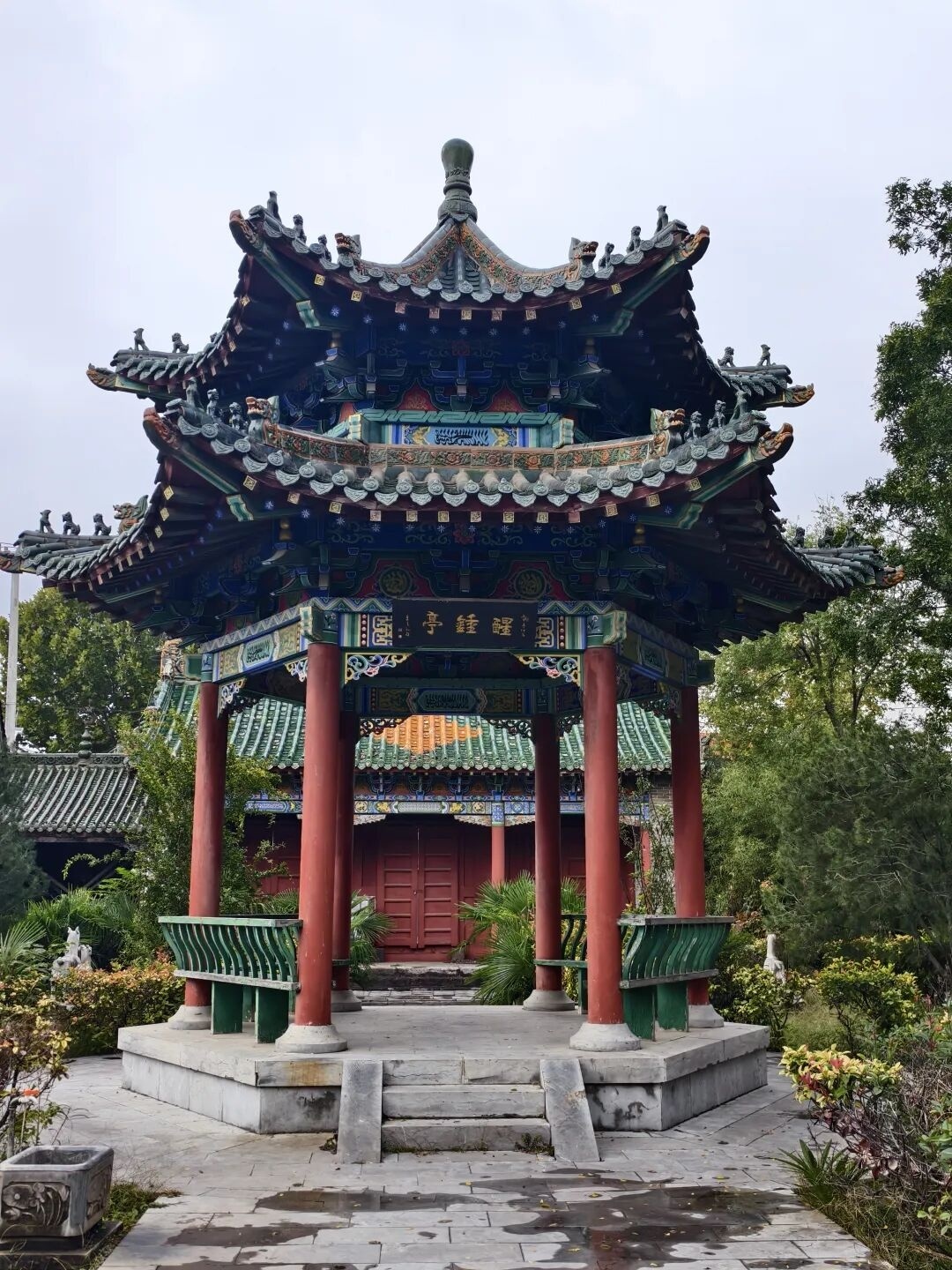
The Xingzhong Pavilion (Bell Pavilion).
The main hall features unique fish-scale windows, where large fish scales were used in place of glass to let in light. These windows are said to date back to the Ming Dynasty, with each scale measuring about 8 square centimeters; there are approximately 720 scales remaining today. After nearly 300 years, some of the scales have been lost, and the ones left behind have turned a yellowish hue.
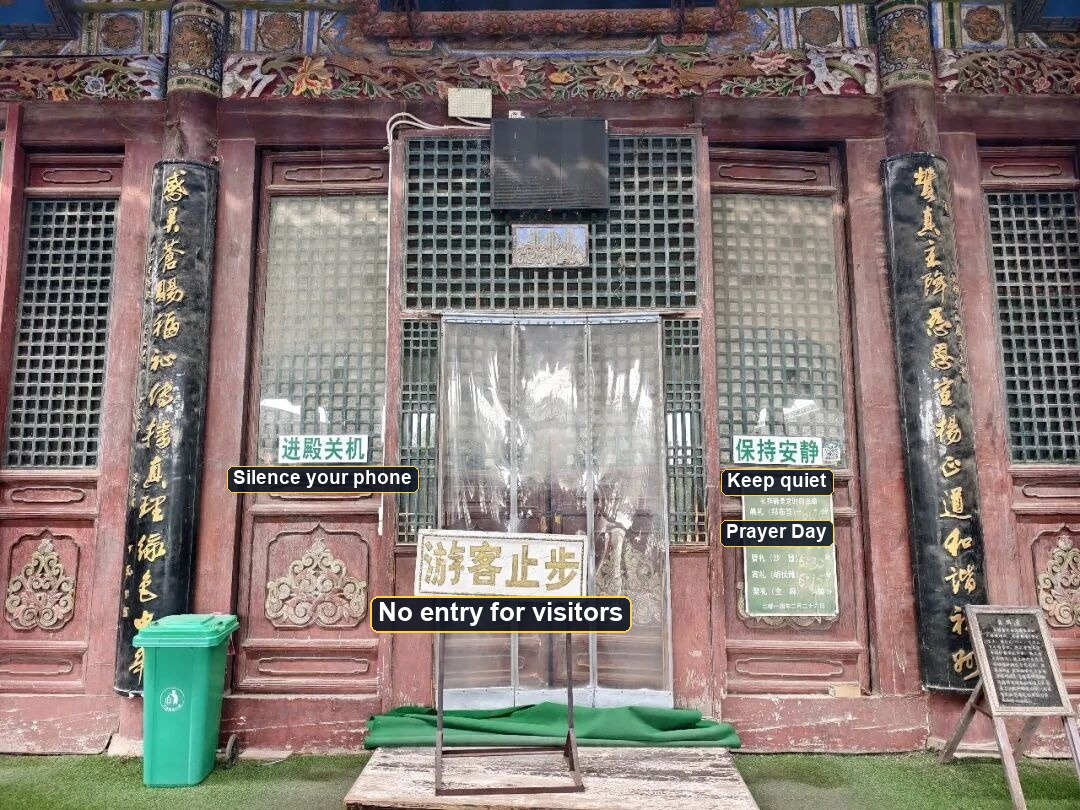
The back hall.
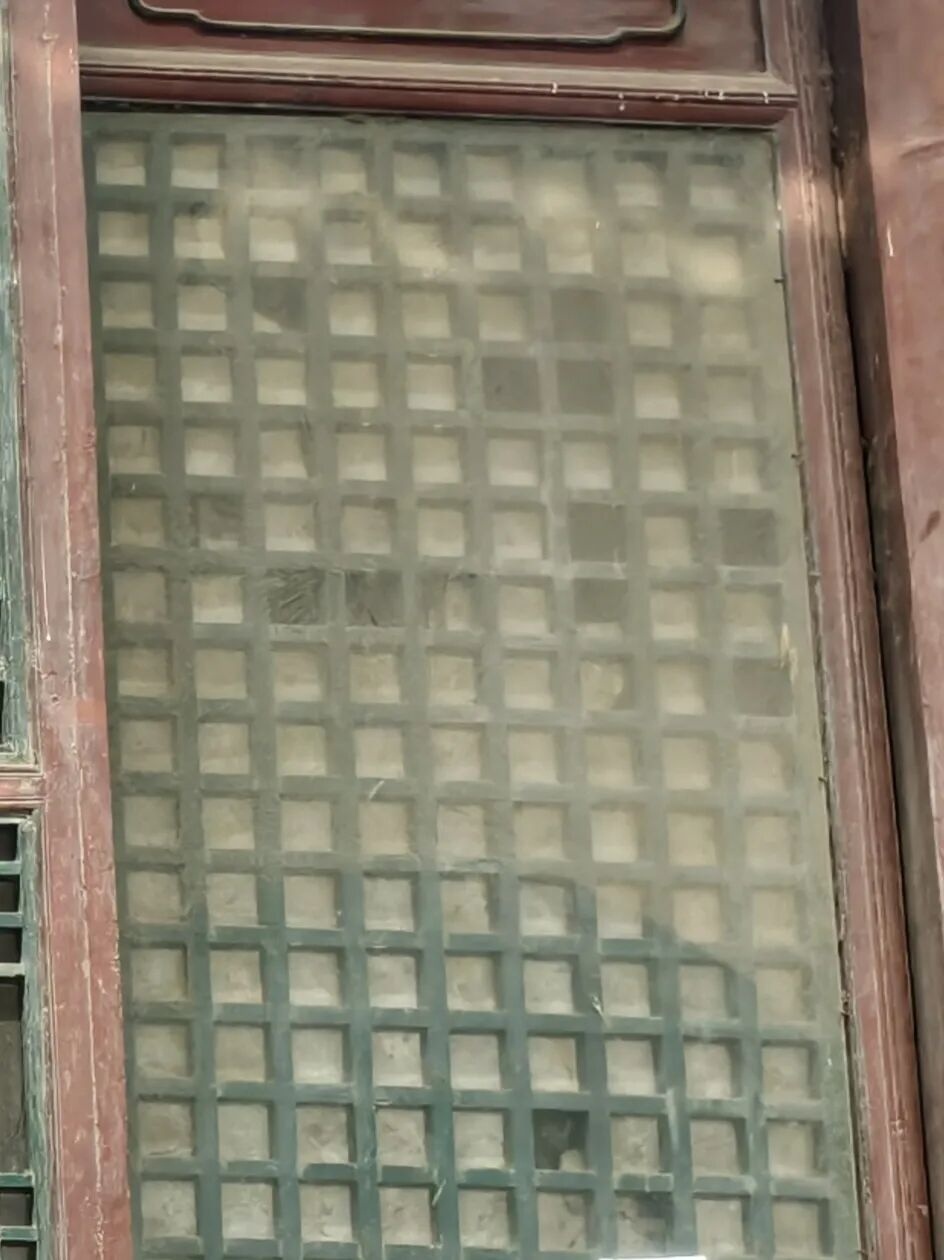
The fish-scale windows.
The ancient locust tree in the courtyard is also known as the 'Horse-Tethering Locust,' the 'Yue Locust,' or the 'Acacia Locust.' Legend has it that when General Yue Fei was stationed in Zhuxian Town, he tethered his warhorse to this tree. After Yue Fei was tragically killed, the tree supposedly withered and died. During later renovations of the mosque, the dried trunk of the tree was carefully preserved and now sits inside the main hall, serving as a tribute to the memory and deep respect people hold for Yue Fei.
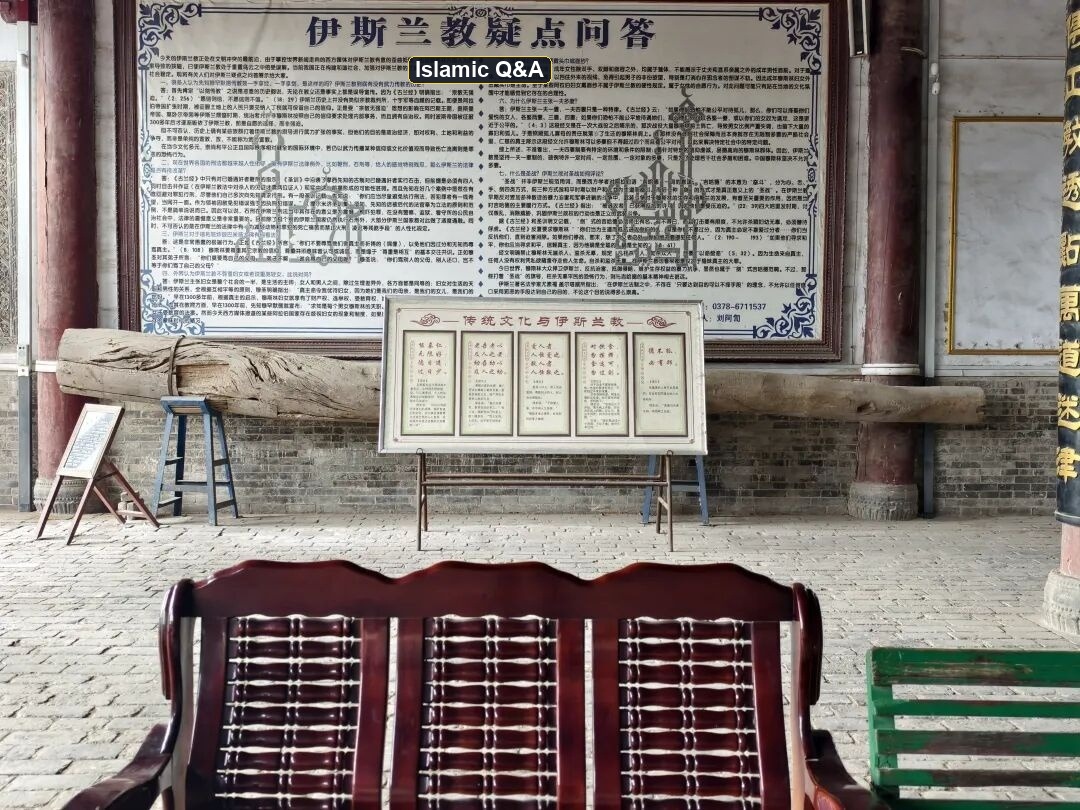
The Acacia Locust tree.
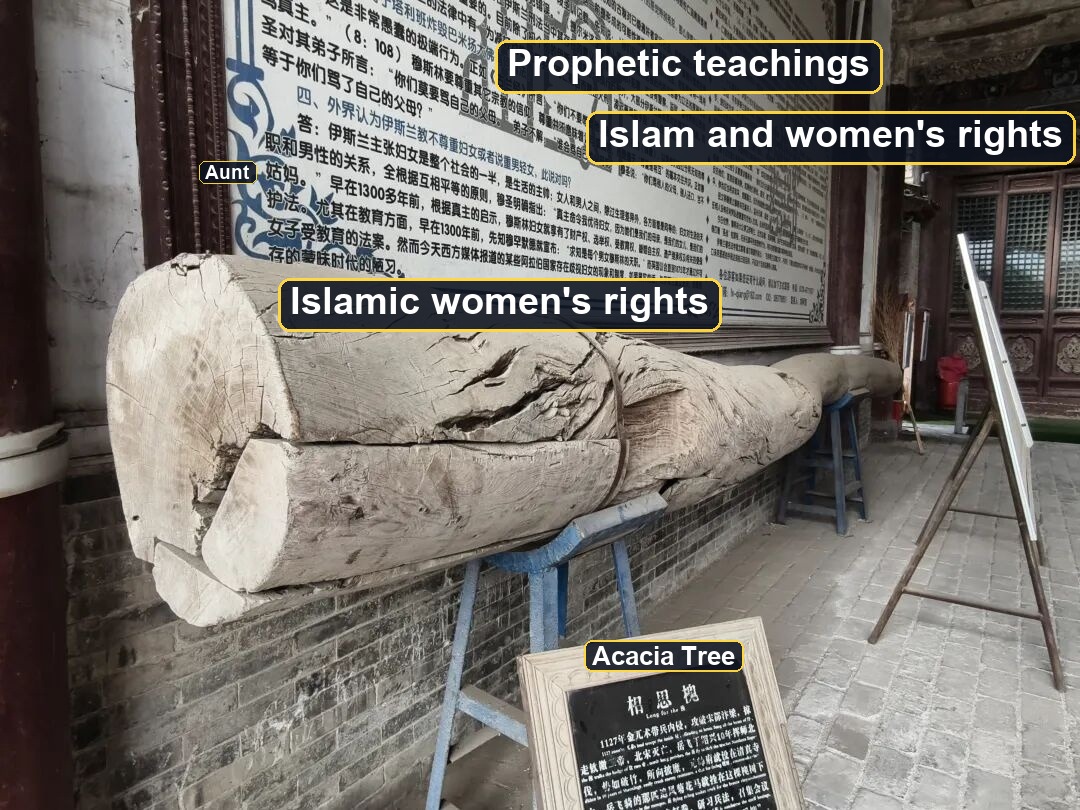
A side view of the Acacia Locust tree.
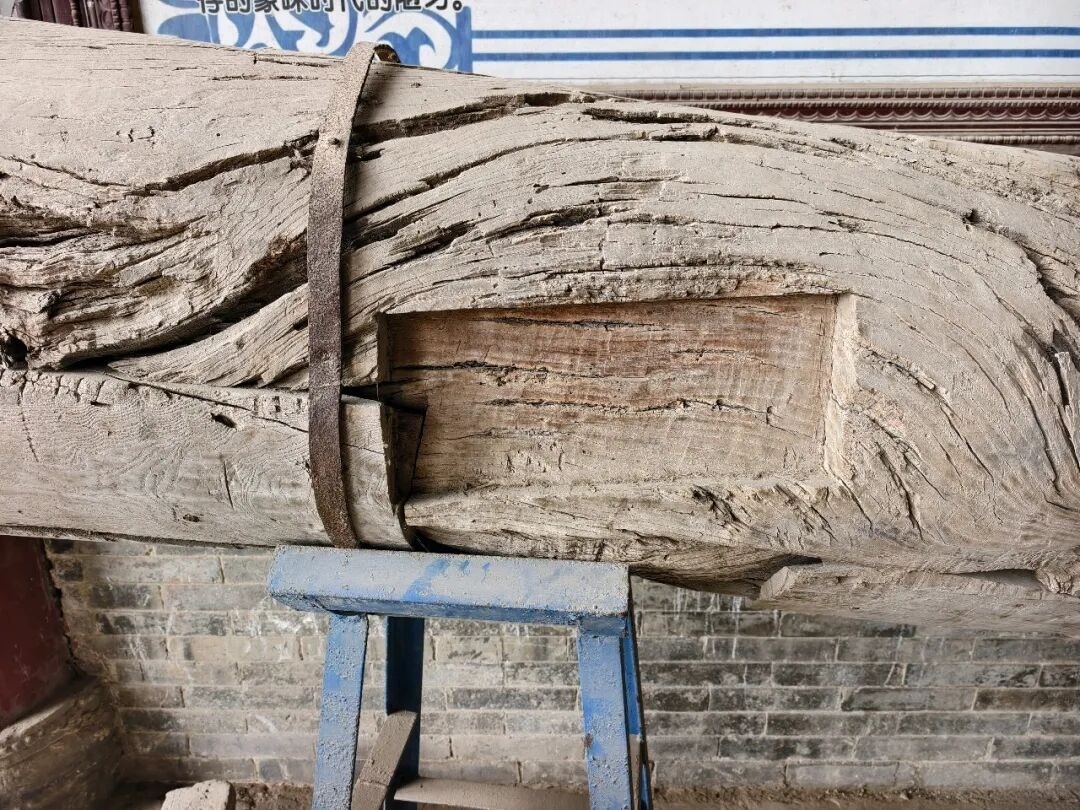
A close-up of the Acacia Locust tree (Photo 1).
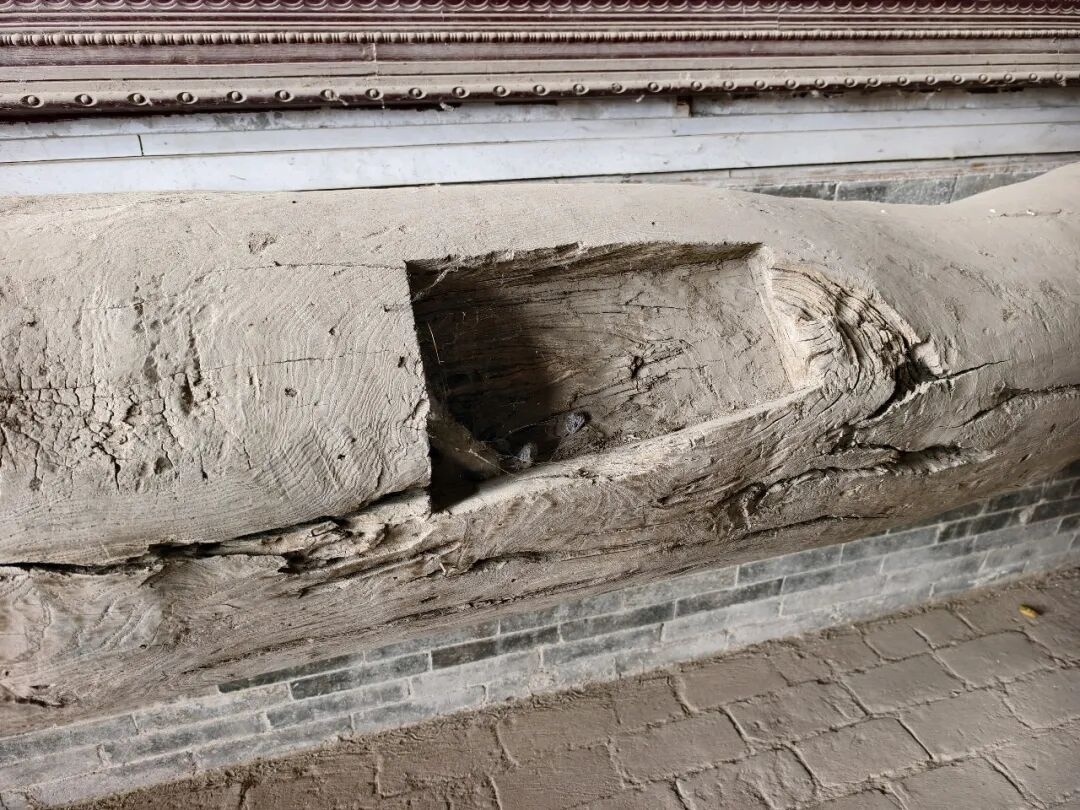
A close-up of the Acacia Locust tree (Photo 2).
Having weathered hundreds of years of history, the Zhuxian Town Mosque stands alongside the Yue Fei Temple as a witness to the past, holding a deep and rich cultural heritage.
Notes:
1. Address: Laohudong Street, Zhuxian Town, Xiangfu District, Kaifeng City, Henan Province.
2. Status: Listed as a Major Historical and Cultural Site Protected at the National Level (6th Batch).
The Zhuxian Town Mosque is located on Laohudong Street in Kaifeng, Henan province. It was designated a major national historical and cultural heritage site in 2006, serving as a landmark that preserves the history of the region’s diverse cultural influences.
The entrance gate of the Zhuxian Town Mosque.
The Zhuxian Town Mosque was first built during the Taiping Xingguo era of the Northern Song Dynasty. It was later expanded in 1531 and renovated in 1744, with most of the current structures dating back to the Qing Dynasty. During the Ming and Qing eras, Zhuxian Town was a booming trade hub. Many Hui Muslim merchants settled here and built seven different mosques—the East, West, South, North, and Center mosques, plus two women’s mosques. The North Mosque, which is the current Zhuxian Town Mosque, is the oldest and largest of them all. It is the only one of the seven still standing today, a reminder of the local saying about the town’s “seven mosques and eight lanes.”
The stone tablet commemorating the mosque as a major national heritage site.
The mosque faces east and covers over 9,000 square meters, following a traditional quadrangle courtyard layout. The buildings are lined up along a central axis; the front gate is at the east end, featuring a single-eave gabled roof with stone lions standing guard outside. The site includes a stele pavilion, a shed-style hall, the main prayer hall, a rear kiln hall, and various side rooms. A rear gate with a hanging gable roof sits on the west end of the axis. The front and back gates line up perfectly, forming a courtyard shaped like the Chinese character "Hui"—a classic design for Qing Dynasty mosques.
The front gate.
The inside of the front gate.
The front gate is the mosque’s signature structure, featuring delicate wood carvings of auspicious animals. The stone columns are beautifully crafted, decorated with carvings of vases, flowers, and birds. A couplet is engraved in the center pillar, reading: "In the land covered by Allah’s grace, do not forget to tread carefully and stand tall when performing dua (prayer); when following the sacred teachings, always uphold your words and conduct." The couplet encourages people to live with humility and integrity. Three historic plaques hang on the gate: the first, "Known Before the Rain," was written by the famous scholar Ji Yun in 1785 (the current version is a replica); the second, "True Source of the Supreme Teaching," was inscribed by Henan Governor Zhu Gui in 1765; and the third, "True Oneness of the World," was written by Huguang Viceroy Yulu in 1889.
Wood carvings under the gate’s eaves (Photo 1).
Wood carvings under the gate’s eaves (Photo 2).
Wood carvings under the gate’s eaves (Photo 3).
Wood carvings under the gate’s eaves (Photo 4).
The stone columns of the front gate.
Antique-style stone carvings on the inner side of the columns.
Flower and bird stone carvings on the inner side of the columns.
The "Known Before the Rain" plaque.
The "True Source of the Supreme Teaching" plaque.
The "True Oneness of the World" plaque.
There are two ancient stone tablets in the courtyard. One is a Chinese-language tablet from 1767 that has been heavily weathered over time. The other is an Arabic-language tablet from 1805, which is said to be the most well-preserved Arabic inscription in all of Henan.
The Arabic-language tablet from 1805.
Detail of the Arabic-language tablet.
The Chinese-language tablet from 1767.
Detail of the Chinese-language tablet from 1767.
The main prayer hall is a Qing Dynasty structure designed with connected roof sections. The front is a shed-style roof, and the back is a hard-gabled roof, each five bays wide and two bays deep. The brick carvings on the hall’s roof edges are stunning, featuring detailed chrysanthemum patterns. The roof is covered in green glazed tiles with yellow diamond-shaped patterns. A glazed vase with flame motifs sits on the main roof ridge. Between the hall and the gate, there are dozens of side rooms, all featuring traditional hard-gabled roofs.
The main prayer hall.
The yellow diamond-shaped glazed tile roof of the prayer hall.
The main entrance to the prayer hall.
Wood carvings under the prayer hall’s eaves.
Brick carvings on the roof edge of the prayer hall (Photo 1).
Brick carvings on the roof edge of the prayer hall (Photo 2).
The beam structure inside the prayer hall.
Interior view of the prayer hall (Photo 1).
Interior view of the prayer hall (Photo 2).
The rear hall.
The exterior of the back hall.
The glazed vase ornament on the main ridge of the back hall.
A view of the courtyard at Zhuxian Town Mosque.
The side chambers (Photo 1).
The side chambers (Photo 2).
The Xingzhong Pavilion (Bell Pavilion).
The main hall features unique fish-scale windows, where large fish scales were used in place of glass to let in light. These windows are said to date back to the Ming Dynasty, with each scale measuring about 8 square centimeters; there are approximately 720 scales remaining today. After nearly 300 years, some of the scales have been lost, and the ones left behind have turned a yellowish hue.
The back hall.
The fish-scale windows.
The ancient locust tree in the courtyard is also known as the 'Horse-Tethering Locust,' the 'Yue Locust,' or the 'Acacia Locust.' Legend has it that when General Yue Fei was stationed in Zhuxian Town, he tethered his warhorse to this tree. After Yue Fei was tragically killed, the tree supposedly withered and died. During later renovations of the mosque, the dried trunk of the tree was carefully preserved and now sits inside the main hall, serving as a tribute to the memory and deep respect people hold for Yue Fei.
The Acacia Locust tree.
A side view of the Acacia Locust tree.
A close-up of the Acacia Locust tree (Photo 1).
A close-up of the Acacia Locust tree (Photo 2).
Having weathered hundreds of years of history, the Zhuxian Town Mosque stands alongside the Yue Fei Temple as a witness to the past, holding a deep and rich cultural heritage.
Notes:
1. Address: Laohudong Street, Zhuxian Town, Xiangfu District, Kaifeng City, Henan Province.
2. Status: Listed as a Major Historical and Cultural Site Protected at the National Level (6th Batch).
