

Lebanon Mosques
Halal Travel Guide: Beirut, Lebanon - Mosques, Food and Old City
Articles • ali2007fr posted the article • 0 comments • 130 views • 2026-05-20 08:14
Reposted from the web
Summary: Beirut is covered through its long Mediterranean history, downtown streets, mosques, churches, markets, and food. This account keeps the original walking route, site names, historical details, and photographs from the visit.
Beirut became part of the Arab Caliphate in 635 and has been a trade hub in the Eastern Mediterranean ever since. During the Umayyad, Abbasid, and Fatimid dynasties, the Byzantine Empire tried to take back Beirut but failed every time. Beirut was part of the Kingdom of Jerusalem from 1110 to 1291, was taken back by the Mamluk Sultanate in 1291, and was conquered by the Ottoman Empire in the early 16th century. In the 16th and 17th centuries, the Ottoman Empire let local Druze emirs rule Beirut, but they took back control in 1763. With help from Damascus, Beirut broke the monopoly that the city of Acre had on Eastern Mediterranean trade and became a major trade center once again.
Mosque
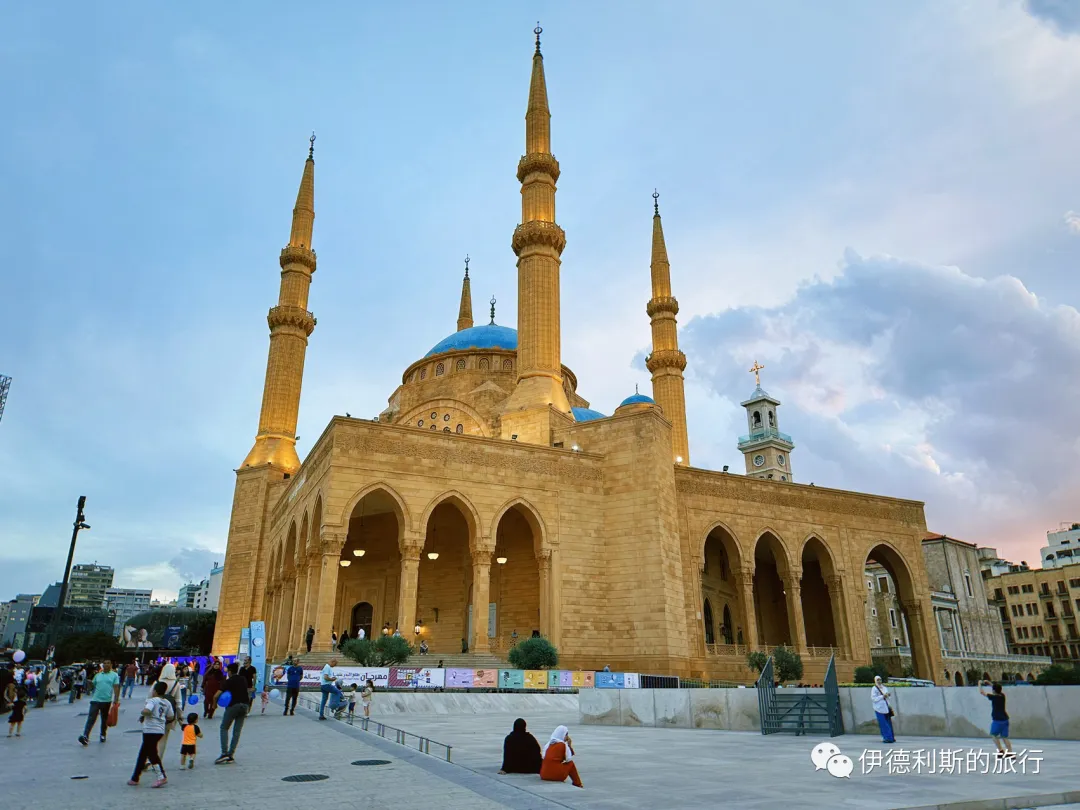
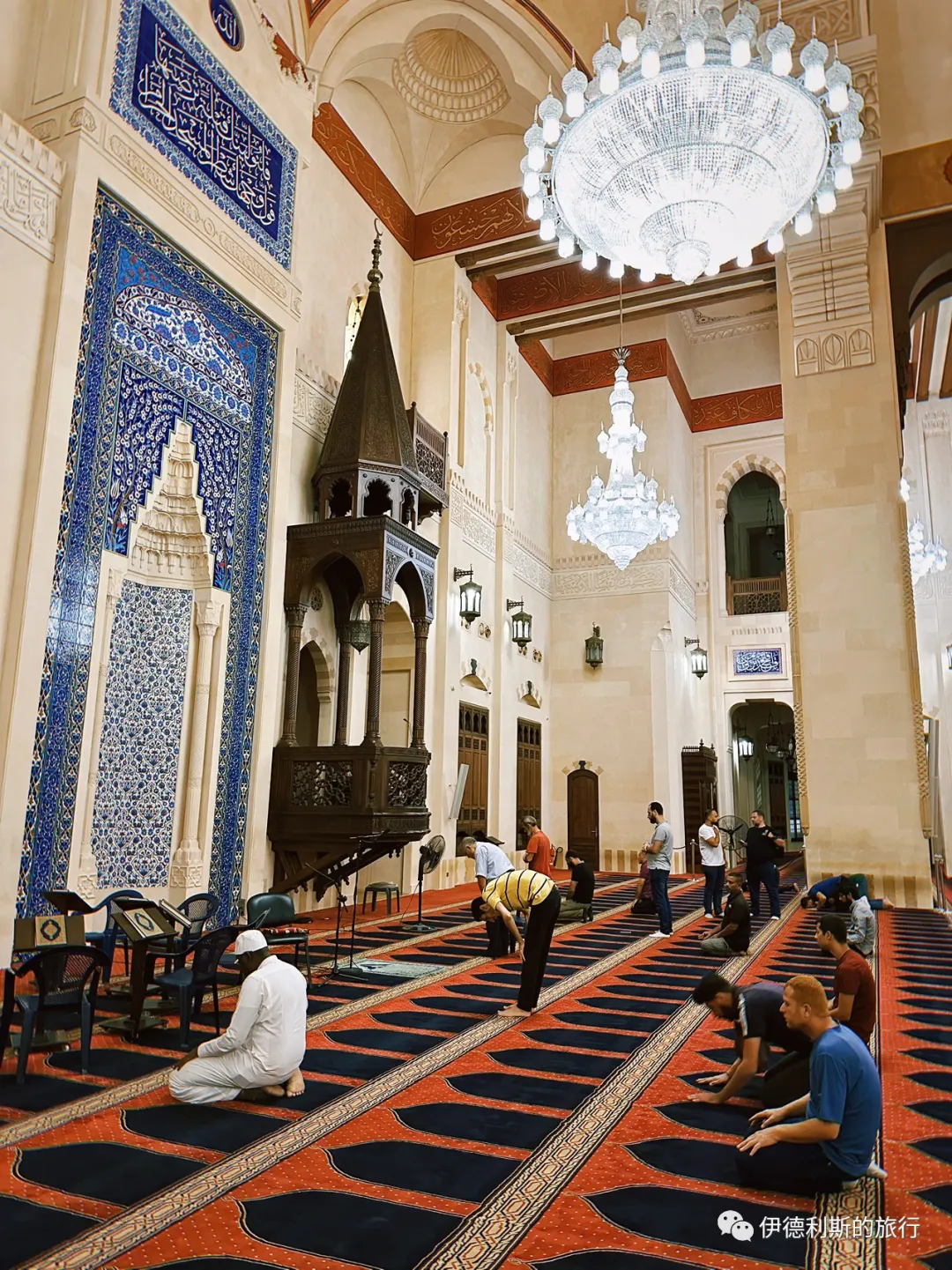
The Mohammad Al-Amin Mosque was built between 2002 and 2008 in an Ottoman style with funds donated by former Lebanese Prime Minister Rafic Hariri, and it is currently the largest mosque in Lebanon.
This is a Sunni mosque, and it does not have many people coming for namaz. I chatted with an old man for a while. He said the Sunni population in Beirut is not strong enough and suggested I visit Tripoli in the north, saying that is where the powerful Sunni city is. In fact, Lebanon's Sunni population is mainly spread across the north, led by Tripoli, and the Bekaa Valley in the east. In the capital city of Beirut, the northwest is mostly Sunni, the southwest is mostly Shia, and the east is mostly Christian. During the civil war, the Mohammad Al-Amin Mosque was near the dividing line between the Muslim and Christian districts. This dividing line was called the Green Line because it grew over with weeds and trees while no one lived there during the war. It used to be full of militia checkpoints and snipers, and many buildings were badly damaged.
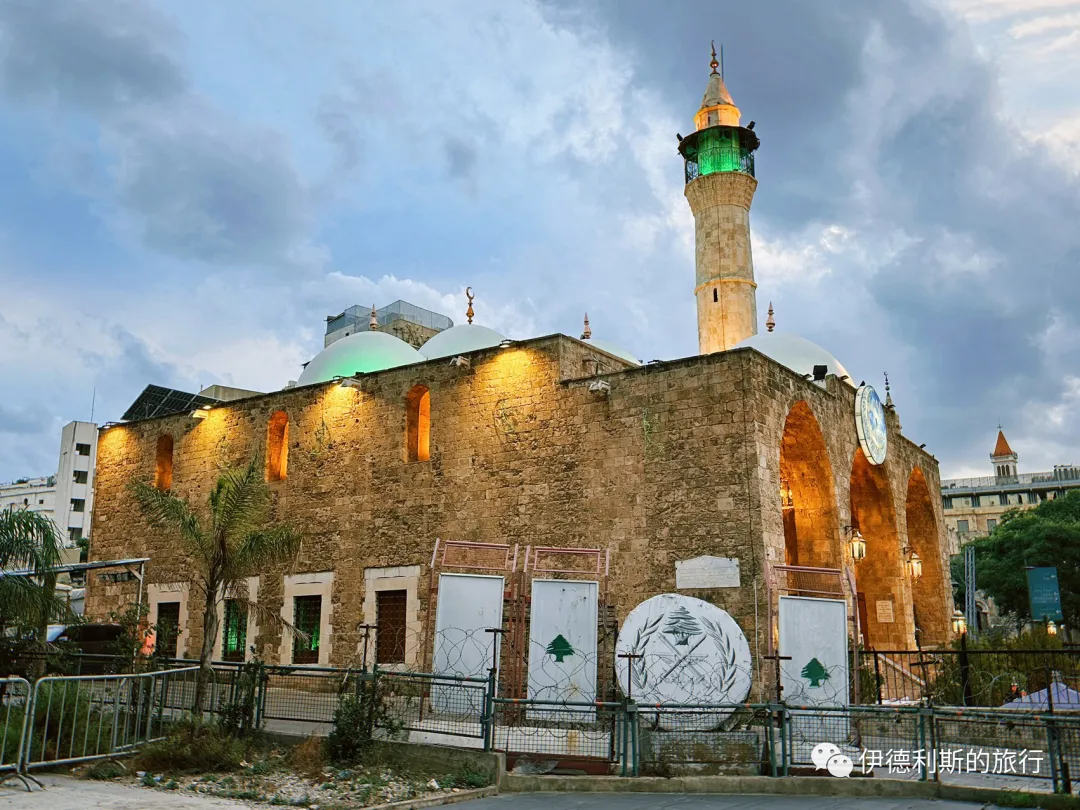
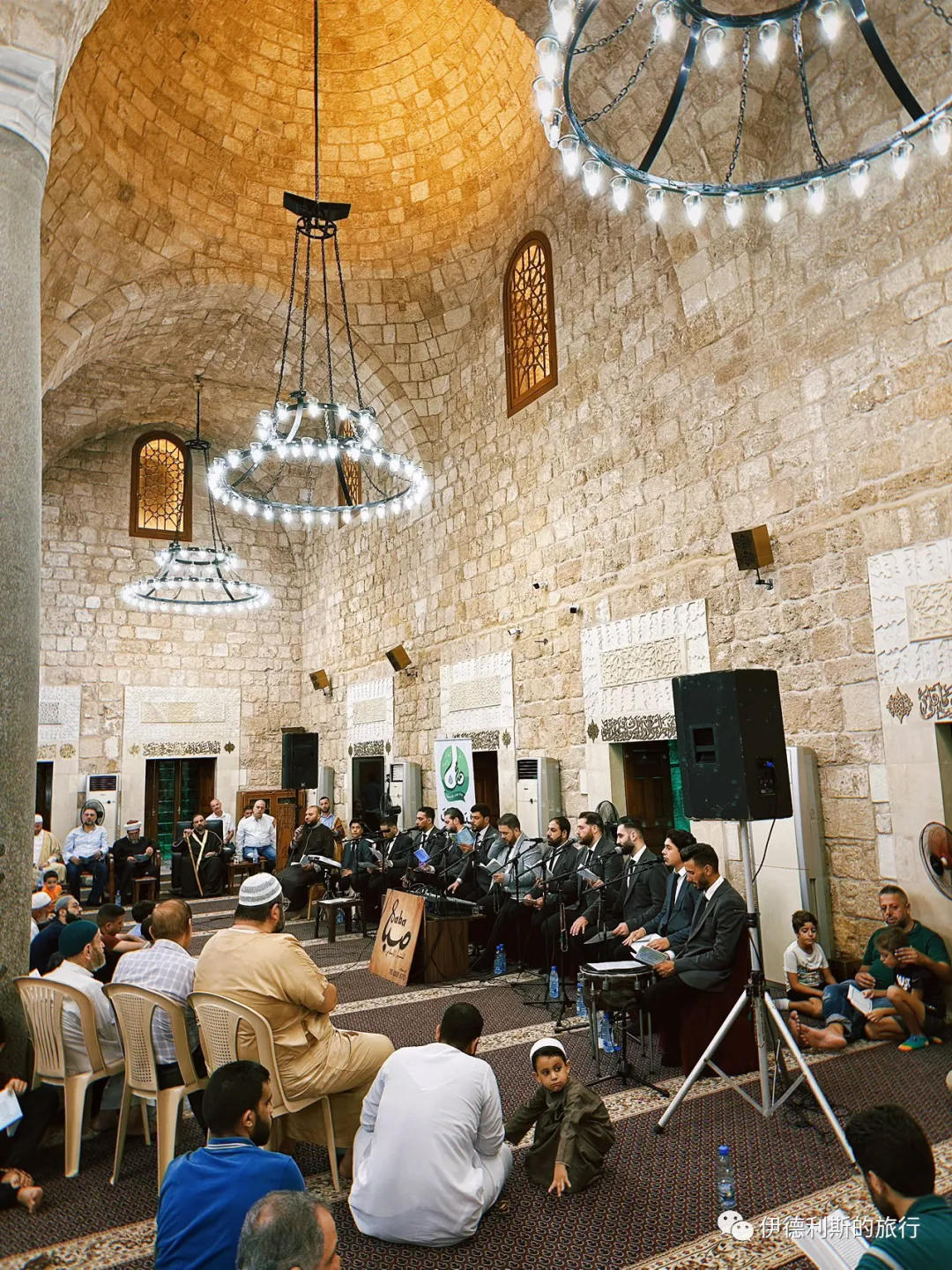
The Emir Assaf Mosque was built in the late 16th century by the emir rulers of the local Lebanese Assaf dynasty (1306-1591), and the emir's palace and gardens used to be next to the mosque.
The Assaf dynasty was a Sunni Turkmen dynasty. In 1306, the Mamluk governor of Damascus sent the Turkmen tribe led by the Assaf family to put down a rebellion north of Beirut. Later, the Mamluk Sultanate assigned them to guard the coastal area north of Beirut and manage the local Shia residents. After the Ottoman Empire took the Levant region from the Mamluk Sultanate in 1516, they appointed the Assaf family as the main agents for the Beirut and Tripoli regions. The Assaf dynasty attracted Maronite Christians to settle in northern Beirut by lowering taxes and housing prices to balance out the local Sunni and Shia Muslims. In 1579, the Ottoman Empire established the Tripoli Eyalet to keep the Assaf dynasty in check. In 1591, the Ottoman governor of Tripoli ordered the execution of the last Assaf emir by gunfire, ending the Assaf dynasty.
The Great Omari Mosque is said to have been founded in 635 during the reign of Caliph Umar, and in 1150, the Crusaders built a Romanesque Church of St. John here. After the Mamluk Sultanate captured Tripoli in 1291, they converted it into a grand mosque and added a Mamluk-style gate and minaret in 1350. During the French Mandate for Lebanon from 1923 to 1946, the street-facing facade of the Great Omari Mosque was redesigned with an added portico to unify the architectural style of downtown Beirut. The Great Omari Mosque suffered severe damage during the Lebanese Civil War, and renovations were completed in 2004.
Small Sufi lodge (zawiya).
Zawiyat Ibn Arraq is located at the entrance of the Beirut Souks and is the only remaining Mamluk-era building in Beirut. This building was constructed in 1517 by the religious authority Ibn 'Arraq Al-Dimashqi from Damascus, and it was originally a hospice. After Ibn 'Arraq passed away in 1526, the site became a school of Islamic law and a zawiya (small Sufi lodge) for his followers. The currently remaining vaulted structure once connected to other courtyards and rooms.
Food
I had dinner at a famous local restaurant called T-Marbouta in the Hamra district of Beirut, where I ordered kibbeh mloukiyeh, hommos moutammam, and grilled meat, along with herbal tea and mint tea. Kibbeh is a fried ball made of cracked wheat and minced lamb, a classic appetizer in the Levant region; the one I ate was topped with mloukiyeh (jute leaves), eggplant, walnuts, and pomegranate. Hummus is another classic appetizer from the Levant region made of mashed chickpeas.
Hamra is a lively and trendy neighborhood in Beirut near the American University. It is full of young people and has long been a cultural hub of Beirut. The environment here is relatively nice, making it a good place for shopping in Beirut.
We had steak and fried chicken at a fast-food restaurant in the Hamra district of Lebanon. There are many young people here and a wide variety of restaurants, including Chinese and Japanese food. Because the power supply is unstable, shops here suddenly go dark from time to time. Everyone except us stayed very calm, waiting for the power to come back on by itself. I think it must be hard to use a desktop computer without a battery in Beirut, so everyone definitely chooses laptops first.
We ate at Zaatar w Zeit, a famous Lebanese fast-food chain in the Hamra district. They specialize in Levantine-style flatbread (manakish), and their food is very healthy.
Manakish is a traditional bread that originated with the ancient Phoenicians. You can top it with a spice blend (zaatar), cheese, or minced lamb. We had the one with zaatar, which is a unique mix of thyme, sumac, oregano, marjoram, and sesame seeds.
We also drank Lebanese coffee, which is made with Arabica coffee beans and flavored with cardamom.
In the evening, we had coffee at the legendary Younes Coffee in the Hamra district of Beirut. The founder of Younes Coffee, Amin Younes Sr., immigrated to Brazil in 1894 and worked on a Brazilian coffee tycoon's plantation for 20 years. In 1935, Amin returned to Lebanon and opened Younes Coffee in downtown Beirut. During World War II, the collapse of the Lebanese currency wiped out most of Amin's savings, but he still managed to pull through. In 1960, Amin's son Souheil joined the family business and helped his father open the first branch of Younes Coffee in the Hamra district. It was one of the first coffee shops in Lebanon to buy an espresso machine. The Younes flagship store in downtown Beirut was destroyed during the Lebanese Civil War in 1975, and only the Hamra branch survived.
Abou Anwar worked at Younes Coffee for 60 years starting in 1954. As the cafe's most senior coffee roasting master, his expert skills attracted a large group of loyal customers. The coffee I ordered was named after him, the Abou Anwar Blend, which mixes his favorite fruits and spices.
There is a string of cafes next to Pigeon Rocks, ranging from the Bay Rock Cafe in the south to the Starbucks in the north, all of which are classic spots to watch the sunset. Although many people post about this place online, the cafes are not actually very crowded, making them very relaxing. We ordered two juices and a plate of salad at the Bay Rock Cafe and spent a romantic and wonderful evening there.
Accommodation
I stayed at the Serenada Golden Palace hotel in the heart of the Hamra district in Beirut. The hotel lobby is gorgeous and classic, reminding people of the prosperity and beauty of Beirut in the past. At the same time, opening the window in the room lets you see houses damaged by the war, which immediately pulls you back to reality.
The hotel breakfast is quite rich, with all kinds of cheeses available, paired with various fruits and vegetables for a very healthy meal. view all
Summary: Beirut is covered through its long Mediterranean history, downtown streets, mosques, churches, markets, and food. This account keeps the original walking route, site names, historical details, and photographs from the visit.
Beirut became part of the Arab Caliphate in 635 and has been a trade hub in the Eastern Mediterranean ever since. During the Umayyad, Abbasid, and Fatimid dynasties, the Byzantine Empire tried to take back Beirut but failed every time. Beirut was part of the Kingdom of Jerusalem from 1110 to 1291, was taken back by the Mamluk Sultanate in 1291, and was conquered by the Ottoman Empire in the early 16th century. In the 16th and 17th centuries, the Ottoman Empire let local Druze emirs rule Beirut, but they took back control in 1763. With help from Damascus, Beirut broke the monopoly that the city of Acre had on Eastern Mediterranean trade and became a major trade center once again.
Mosque
The Mohammad Al-Amin Mosque was built between 2002 and 2008 in an Ottoman style with funds donated by former Lebanese Prime Minister Rafic Hariri, and it is currently the largest mosque in Lebanon.
This is a Sunni mosque, and it does not have many people coming for namaz. I chatted with an old man for a while. He said the Sunni population in Beirut is not strong enough and suggested I visit Tripoli in the north, saying that is where the powerful Sunni city is. In fact, Lebanon's Sunni population is mainly spread across the north, led by Tripoli, and the Bekaa Valley in the east. In the capital city of Beirut, the northwest is mostly Sunni, the southwest is mostly Shia, and the east is mostly Christian. During the civil war, the Mohammad Al-Amin Mosque was near the dividing line between the Muslim and Christian districts. This dividing line was called the Green Line because it grew over with weeds and trees while no one lived there during the war. It used to be full of militia checkpoints and snipers, and many buildings were badly damaged.
The Emir Assaf Mosque was built in the late 16th century by the emir rulers of the local Lebanese Assaf dynasty (1306-1591), and the emir's palace and gardens used to be next to the mosque.
The Assaf dynasty was a Sunni Turkmen dynasty. In 1306, the Mamluk governor of Damascus sent the Turkmen tribe led by the Assaf family to put down a rebellion north of Beirut. Later, the Mamluk Sultanate assigned them to guard the coastal area north of Beirut and manage the local Shia residents. After the Ottoman Empire took the Levant region from the Mamluk Sultanate in 1516, they appointed the Assaf family as the main agents for the Beirut and Tripoli regions. The Assaf dynasty attracted Maronite Christians to settle in northern Beirut by lowering taxes and housing prices to balance out the local Sunni and Shia Muslims. In 1579, the Ottoman Empire established the Tripoli Eyalet to keep the Assaf dynasty in check. In 1591, the Ottoman governor of Tripoli ordered the execution of the last Assaf emir by gunfire, ending the Assaf dynasty.
The Great Omari Mosque is said to have been founded in 635 during the reign of Caliph Umar, and in 1150, the Crusaders built a Romanesque Church of St. John here. After the Mamluk Sultanate captured Tripoli in 1291, they converted it into a grand mosque and added a Mamluk-style gate and minaret in 1350. During the French Mandate for Lebanon from 1923 to 1946, the street-facing facade of the Great Omari Mosque was redesigned with an added portico to unify the architectural style of downtown Beirut. The Great Omari Mosque suffered severe damage during the Lebanese Civil War, and renovations were completed in 2004.
Small Sufi lodge (zawiya).
Zawiyat Ibn Arraq is located at the entrance of the Beirut Souks and is the only remaining Mamluk-era building in Beirut. This building was constructed in 1517 by the religious authority Ibn 'Arraq Al-Dimashqi from Damascus, and it was originally a hospice. After Ibn 'Arraq passed away in 1526, the site became a school of Islamic law and a zawiya (small Sufi lodge) for his followers. The currently remaining vaulted structure once connected to other courtyards and rooms.
Food
I had dinner at a famous local restaurant called T-Marbouta in the Hamra district of Beirut, where I ordered kibbeh mloukiyeh, hommos moutammam, and grilled meat, along with herbal tea and mint tea. Kibbeh is a fried ball made of cracked wheat and minced lamb, a classic appetizer in the Levant region; the one I ate was topped with mloukiyeh (jute leaves), eggplant, walnuts, and pomegranate. Hummus is another classic appetizer from the Levant region made of mashed chickpeas.
Hamra is a lively and trendy neighborhood in Beirut near the American University. It is full of young people and has long been a cultural hub of Beirut. The environment here is relatively nice, making it a good place for shopping in Beirut.
We had steak and fried chicken at a fast-food restaurant in the Hamra district of Lebanon. There are many young people here and a wide variety of restaurants, including Chinese and Japanese food. Because the power supply is unstable, shops here suddenly go dark from time to time. Everyone except us stayed very calm, waiting for the power to come back on by itself. I think it must be hard to use a desktop computer without a battery in Beirut, so everyone definitely chooses laptops first.
We ate at Zaatar w Zeit, a famous Lebanese fast-food chain in the Hamra district. They specialize in Levantine-style flatbread (manakish), and their food is very healthy.
Manakish is a traditional bread that originated with the ancient Phoenicians. You can top it with a spice blend (zaatar), cheese, or minced lamb. We had the one with zaatar, which is a unique mix of thyme, sumac, oregano, marjoram, and sesame seeds.
We also drank Lebanese coffee, which is made with Arabica coffee beans and flavored with cardamom.
In the evening, we had coffee at the legendary Younes Coffee in the Hamra district of Beirut. The founder of Younes Coffee, Amin Younes Sr., immigrated to Brazil in 1894 and worked on a Brazilian coffee tycoon's plantation for 20 years. In 1935, Amin returned to Lebanon and opened Younes Coffee in downtown Beirut. During World War II, the collapse of the Lebanese currency wiped out most of Amin's savings, but he still managed to pull through. In 1960, Amin's son Souheil joined the family business and helped his father open the first branch of Younes Coffee in the Hamra district. It was one of the first coffee shops in Lebanon to buy an espresso machine. The Younes flagship store in downtown Beirut was destroyed during the Lebanese Civil War in 1975, and only the Hamra branch survived.
Abou Anwar worked at Younes Coffee for 60 years starting in 1954. As the cafe's most senior coffee roasting master, his expert skills attracted a large group of loyal customers. The coffee I ordered was named after him, the Abou Anwar Blend, which mixes his favorite fruits and spices.
There is a string of cafes next to Pigeon Rocks, ranging from the Bay Rock Cafe in the south to the Starbucks in the north, all of which are classic spots to watch the sunset. Although many people post about this place online, the cafes are not actually very crowded, making them very relaxing. We ordered two juices and a plate of salad at the Bay Rock Cafe and spent a romantic and wonderful evening there.
Accommodation
I stayed at the Serenada Golden Palace hotel in the heart of the Hamra district in Beirut. The hotel lobby is gorgeous and classic, reminding people of the prosperity and beauty of Beirut in the past. At the same time, opening the window in the room lets you see houses damaged by the war, which immediately pulls you back to reality.
The hotel breakfast is quite rich, with all kinds of cheeses available, paired with various fruits and vegetables for a very healthy meal. view all
Reposted from the web
Summary: Beirut is covered through its long Mediterranean history, downtown streets, mosques, churches, markets, and food. This account keeps the original walking route, site names, historical details, and photographs from the visit.
Beirut became part of the Arab Caliphate in 635 and has been a trade hub in the Eastern Mediterranean ever since. During the Umayyad, Abbasid, and Fatimid dynasties, the Byzantine Empire tried to take back Beirut but failed every time. Beirut was part of the Kingdom of Jerusalem from 1110 to 1291, was taken back by the Mamluk Sultanate in 1291, and was conquered by the Ottoman Empire in the early 16th century. In the 16th and 17th centuries, the Ottoman Empire let local Druze emirs rule Beirut, but they took back control in 1763. With help from Damascus, Beirut broke the monopoly that the city of Acre had on Eastern Mediterranean trade and became a major trade center once again.
Mosque
The Mohammad Al-Amin Mosque was built between 2002 and 2008 in an Ottoman style with funds donated by former Lebanese Prime Minister Rafic Hariri, and it is currently the largest mosque in Lebanon.
This is a Sunni mosque, and it does not have many people coming for namaz. I chatted with an old man for a while. He said the Sunni population in Beirut is not strong enough and suggested I visit Tripoli in the north, saying that is where the powerful Sunni city is. In fact, Lebanon's Sunni population is mainly spread across the north, led by Tripoli, and the Bekaa Valley in the east. In the capital city of Beirut, the northwest is mostly Sunni, the southwest is mostly Shia, and the east is mostly Christian. During the civil war, the Mohammad Al-Amin Mosque was near the dividing line between the Muslim and Christian districts. This dividing line was called the Green Line because it grew over with weeds and trees while no one lived there during the war. It used to be full of militia checkpoints and snipers, and many buildings were badly damaged.
The Emir Assaf Mosque was built in the late 16th century by the emir rulers of the local Lebanese Assaf dynasty (1306-1591), and the emir's palace and gardens used to be next to the mosque.
The Assaf dynasty was a Sunni Turkmen dynasty. In 1306, the Mamluk governor of Damascus sent the Turkmen tribe led by the Assaf family to put down a rebellion north of Beirut. Later, the Mamluk Sultanate assigned them to guard the coastal area north of Beirut and manage the local Shia residents. After the Ottoman Empire took the Levant region from the Mamluk Sultanate in 1516, they appointed the Assaf family as the main agents for the Beirut and Tripoli regions. The Assaf dynasty attracted Maronite Christians to settle in northern Beirut by lowering taxes and housing prices to balance out the local Sunni and Shia Muslims. In 1579, the Ottoman Empire established the Tripoli Eyalet to keep the Assaf dynasty in check. In 1591, the Ottoman governor of Tripoli ordered the execution of the last Assaf emir by gunfire, ending the Assaf dynasty.
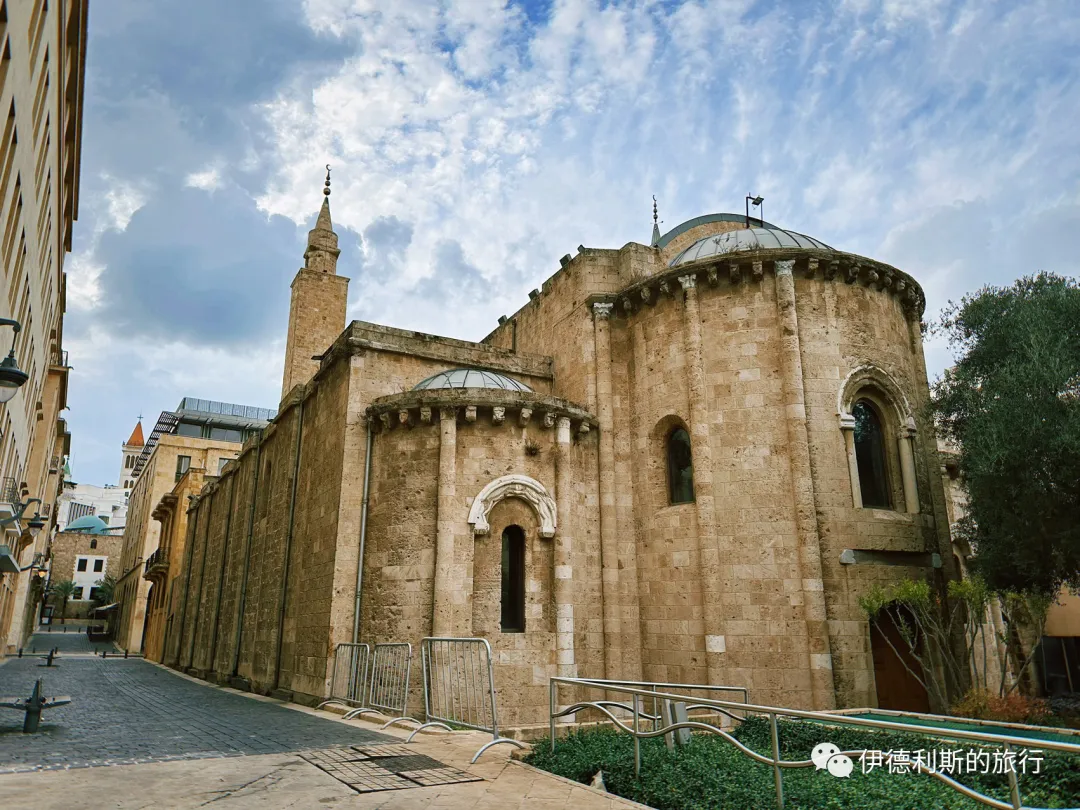
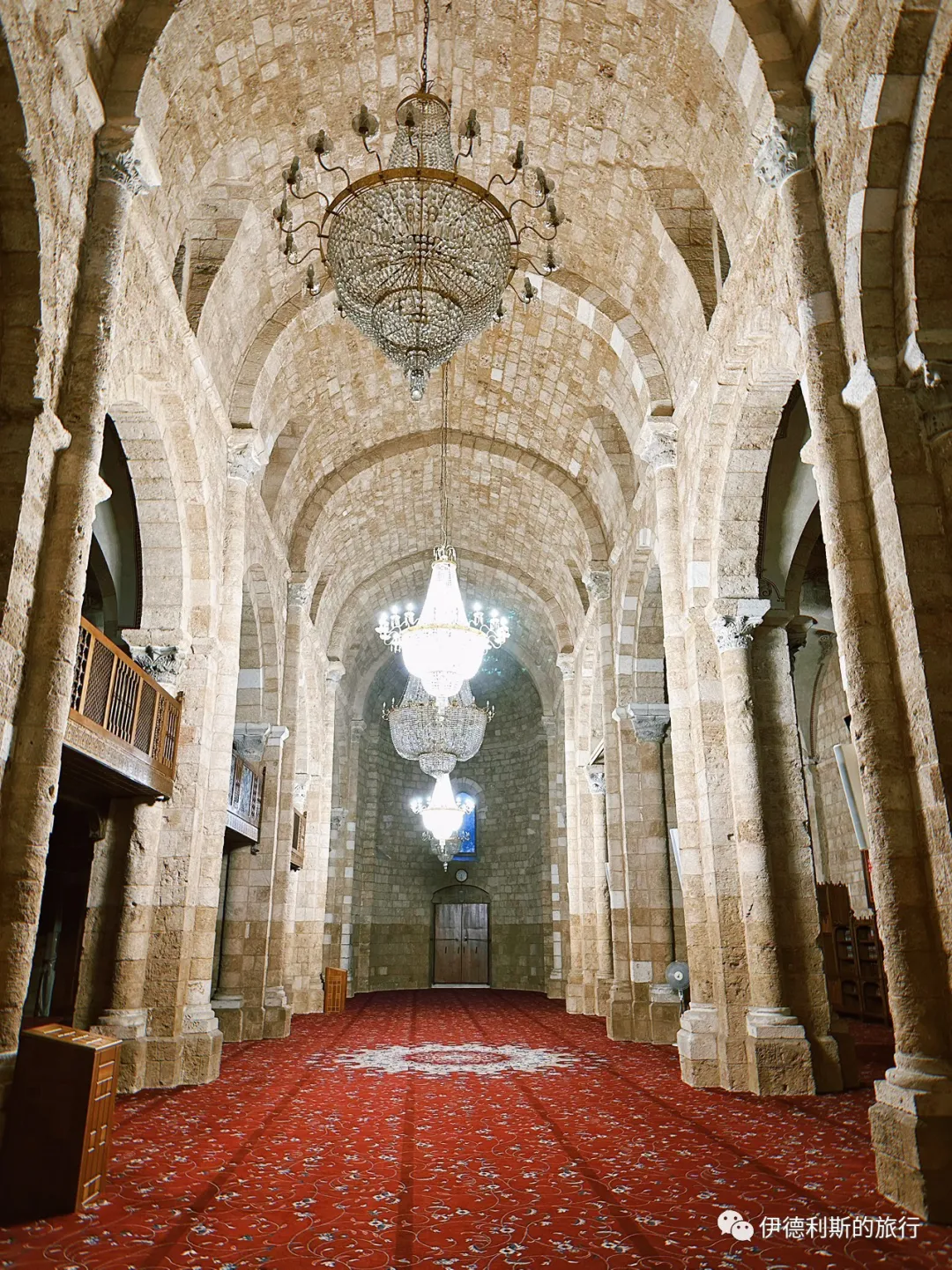
The Great Omari Mosque is said to have been founded in 635 during the reign of Caliph Umar, and in 1150, the Crusaders built a Romanesque Church of St. John here. After the Mamluk Sultanate captured Tripoli in 1291, they converted it into a grand mosque and added a Mamluk-style gate and minaret in 1350. During the French Mandate for Lebanon from 1923 to 1946, the street-facing facade of the Great Omari Mosque was redesigned with an added portico to unify the architectural style of downtown Beirut. The Great Omari Mosque suffered severe damage during the Lebanese Civil War, and renovations were completed in 2004.
Small Sufi lodge (zawiya).
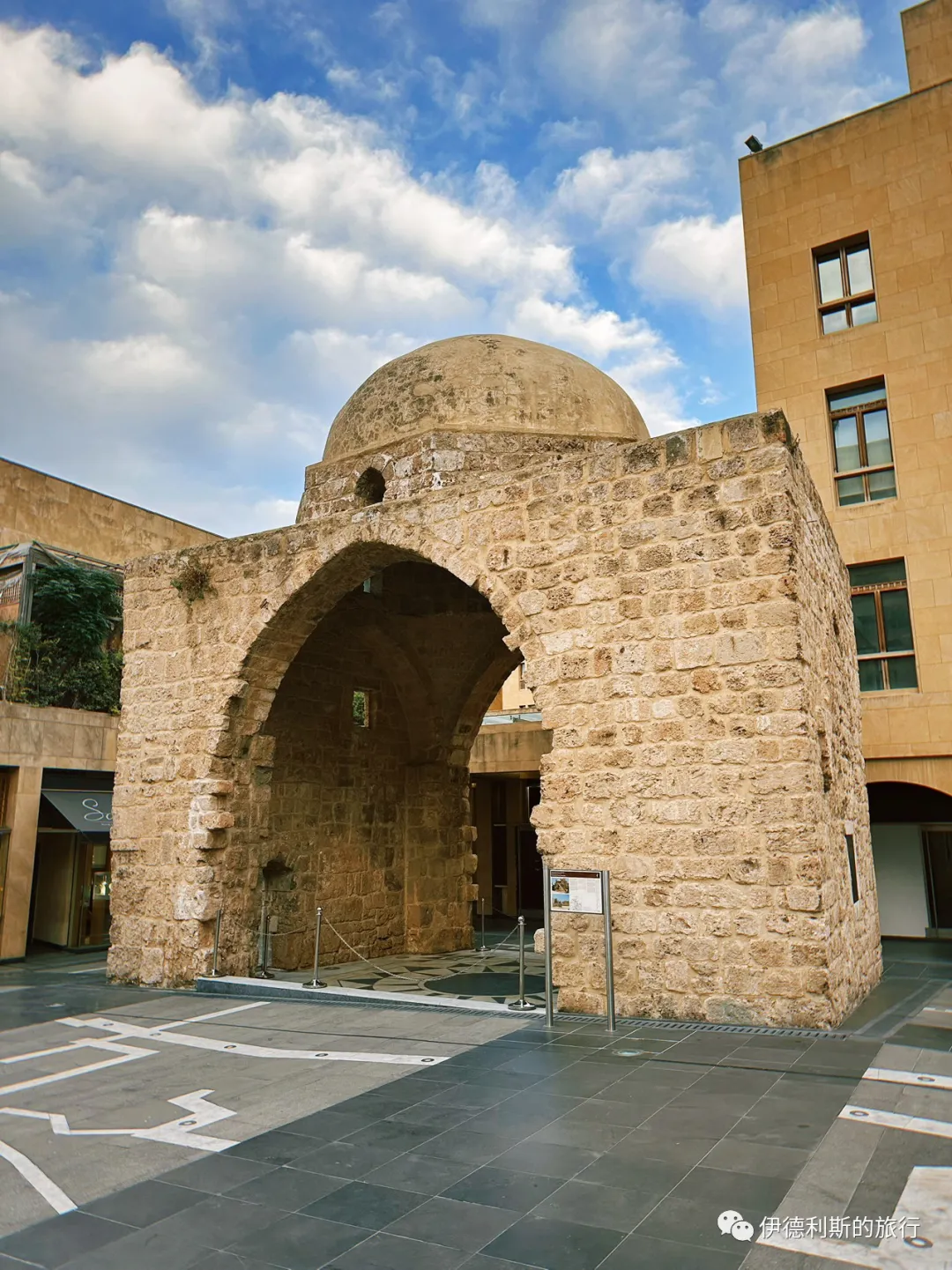
Zawiyat Ibn Arraq is located at the entrance of the Beirut Souks and is the only remaining Mamluk-era building in Beirut. This building was constructed in 1517 by the religious authority Ibn 'Arraq Al-Dimashqi from Damascus, and it was originally a hospice. After Ibn 'Arraq passed away in 1526, the site became a school of Islamic law and a zawiya (small Sufi lodge) for his followers. The currently remaining vaulted structure once connected to other courtyards and rooms.
Food
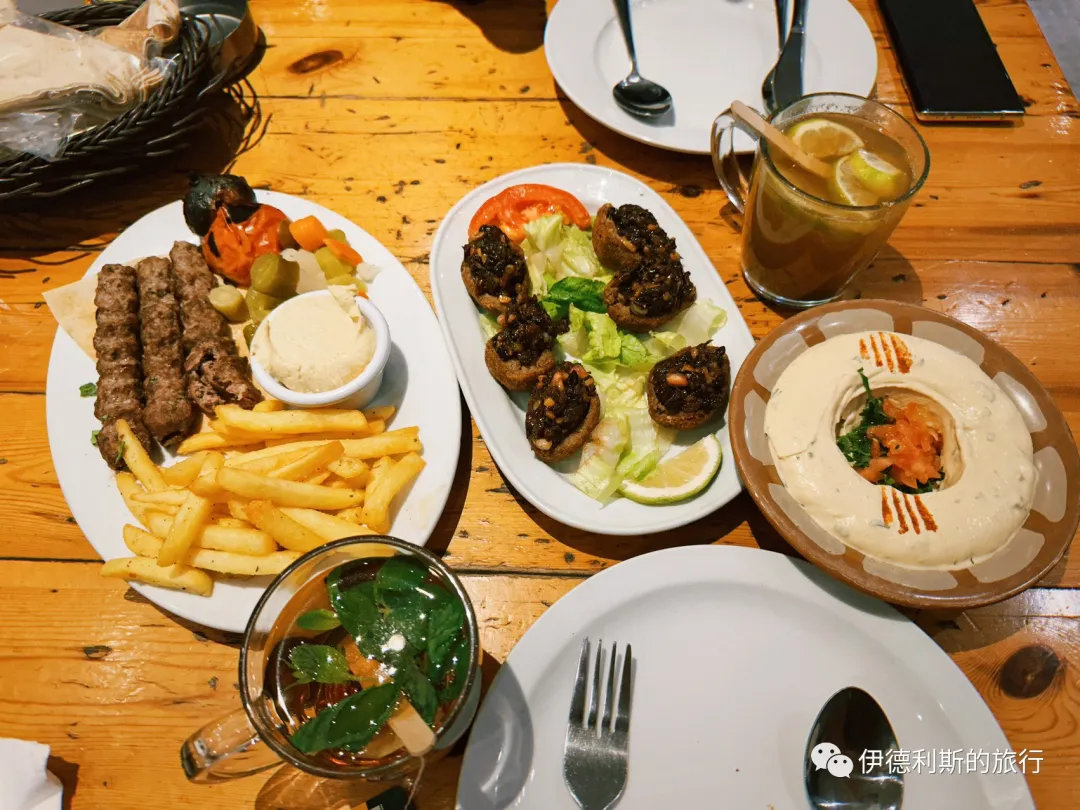
I had dinner at a famous local restaurant called T-Marbouta in the Hamra district of Beirut, where I ordered kibbeh mloukiyeh, hommos moutammam, and grilled meat, along with herbal tea and mint tea. Kibbeh is a fried ball made of cracked wheat and minced lamb, a classic appetizer in the Levant region; the one I ate was topped with mloukiyeh (jute leaves), eggplant, walnuts, and pomegranate. Hummus is another classic appetizer from the Levant region made of mashed chickpeas.
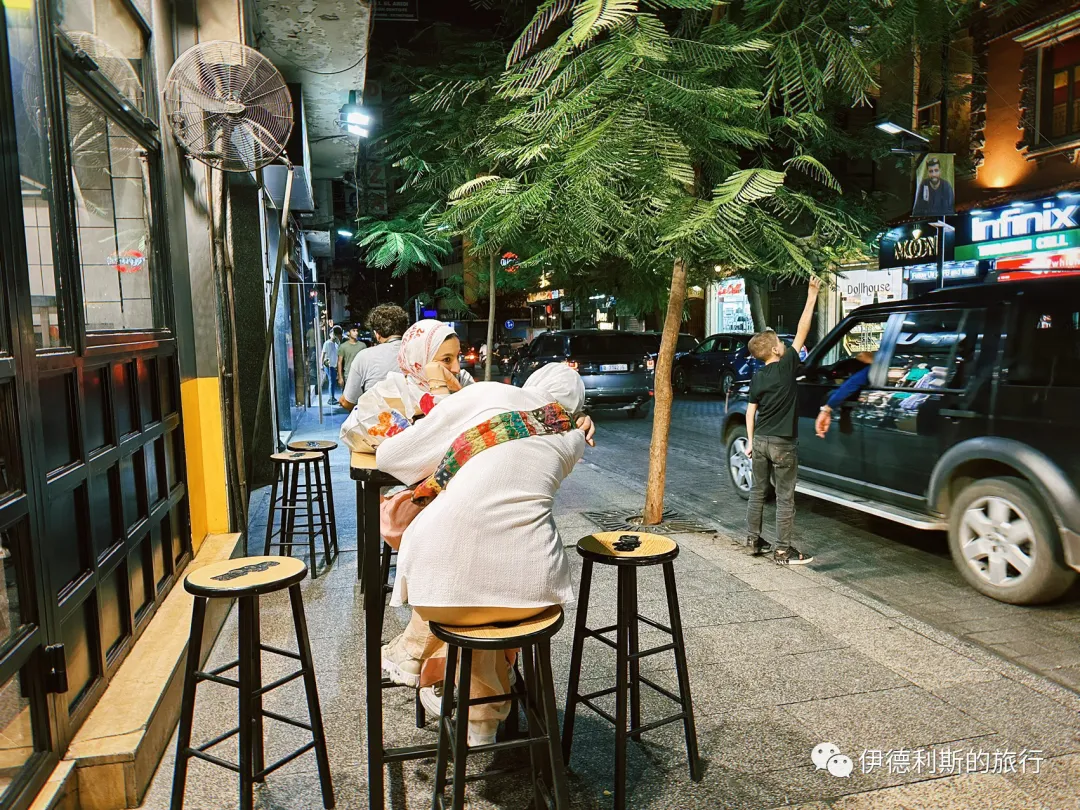
Hamra is a lively and trendy neighborhood in Beirut near the American University. It is full of young people and has long been a cultural hub of Beirut. The environment here is relatively nice, making it a good place for shopping in Beirut.
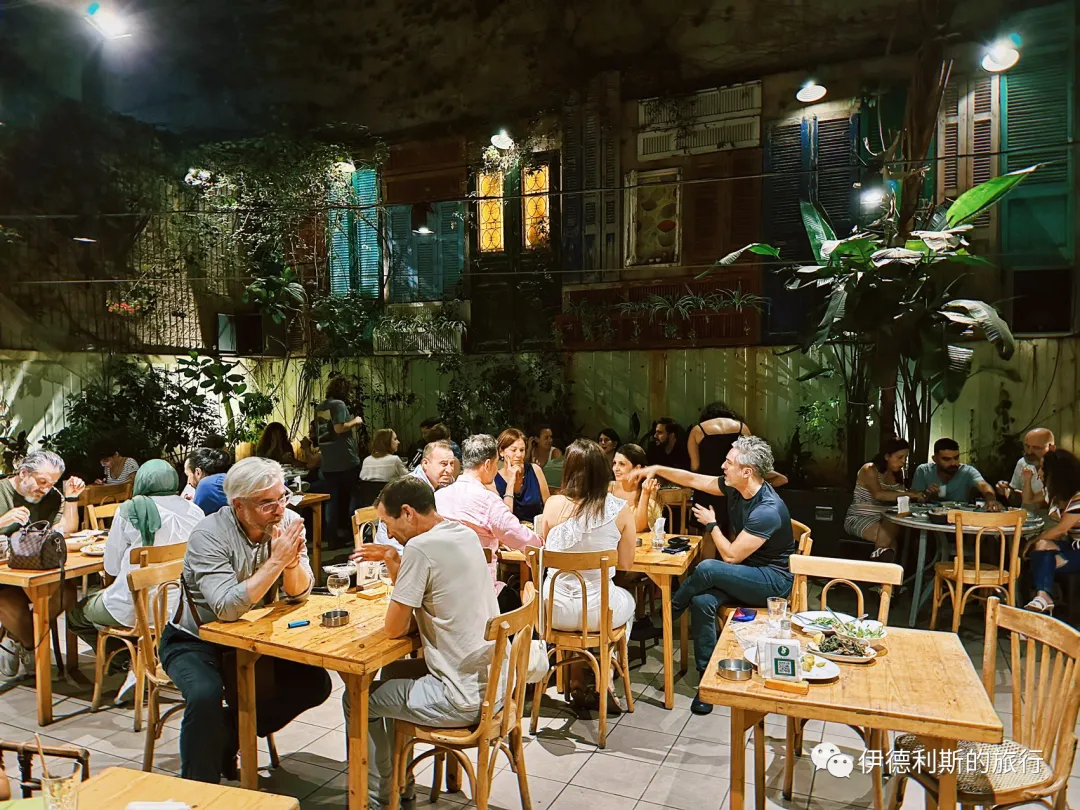
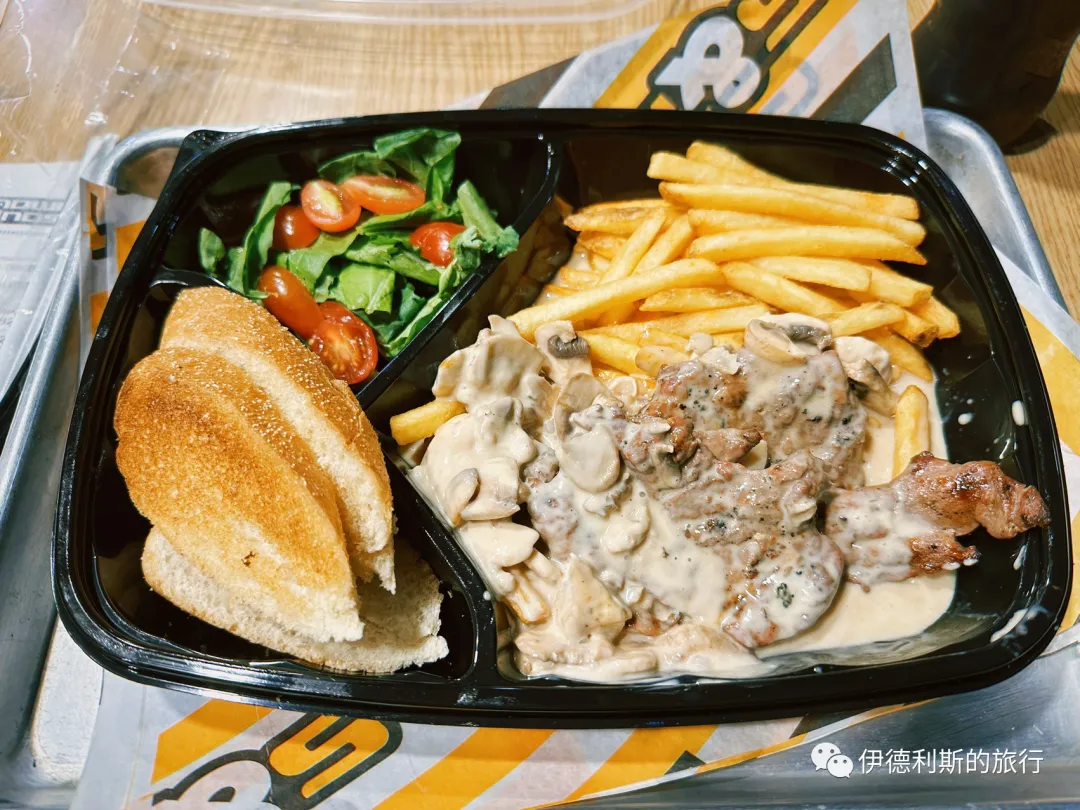
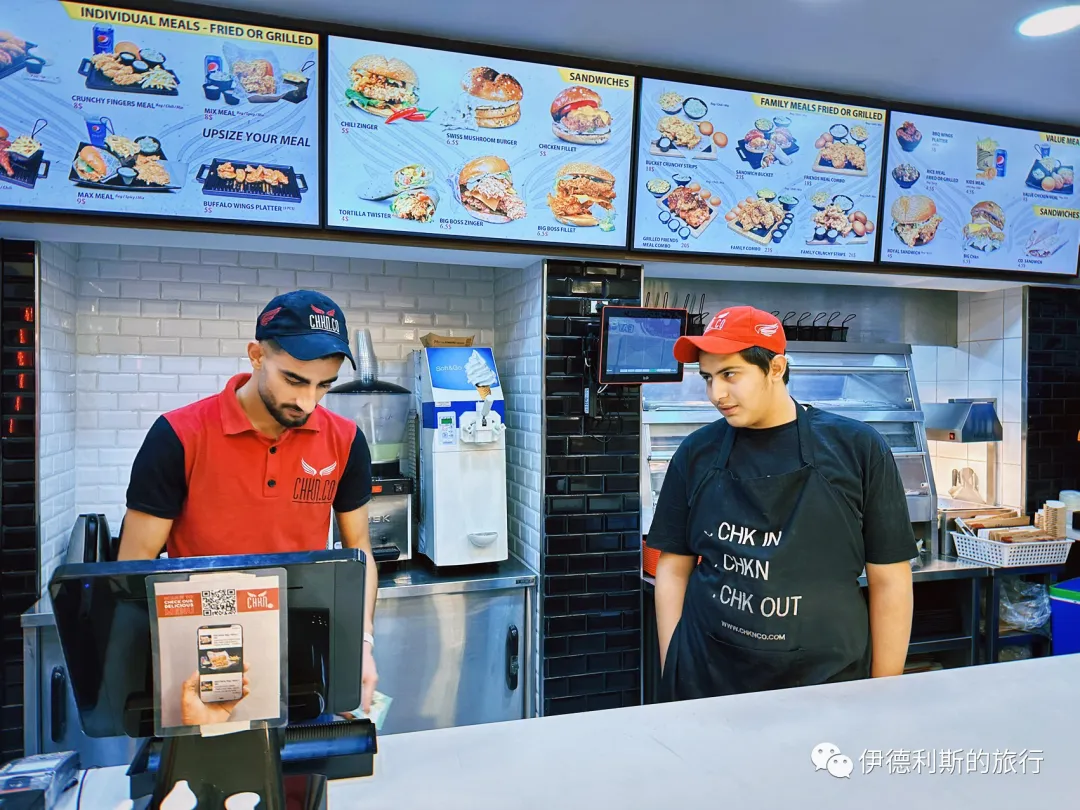
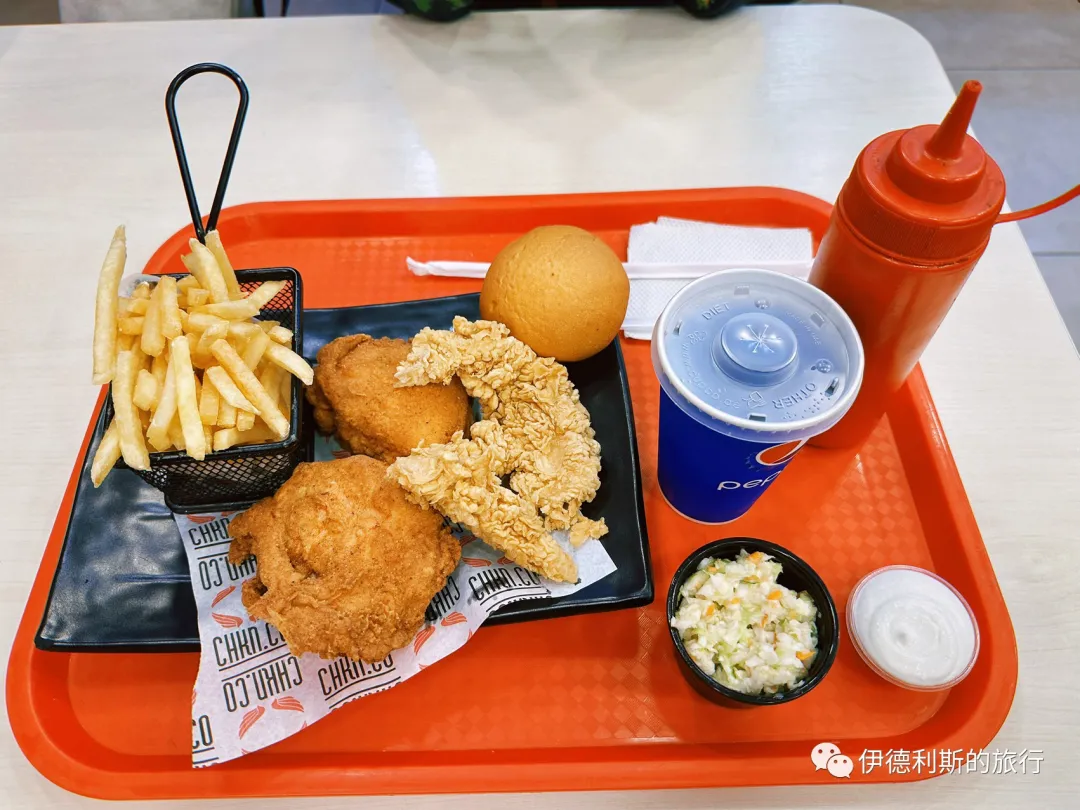
We had steak and fried chicken at a fast-food restaurant in the Hamra district of Lebanon. There are many young people here and a wide variety of restaurants, including Chinese and Japanese food. Because the power supply is unstable, shops here suddenly go dark from time to time. Everyone except us stayed very calm, waiting for the power to come back on by itself. I think it must be hard to use a desktop computer without a battery in Beirut, so everyone definitely chooses laptops first.
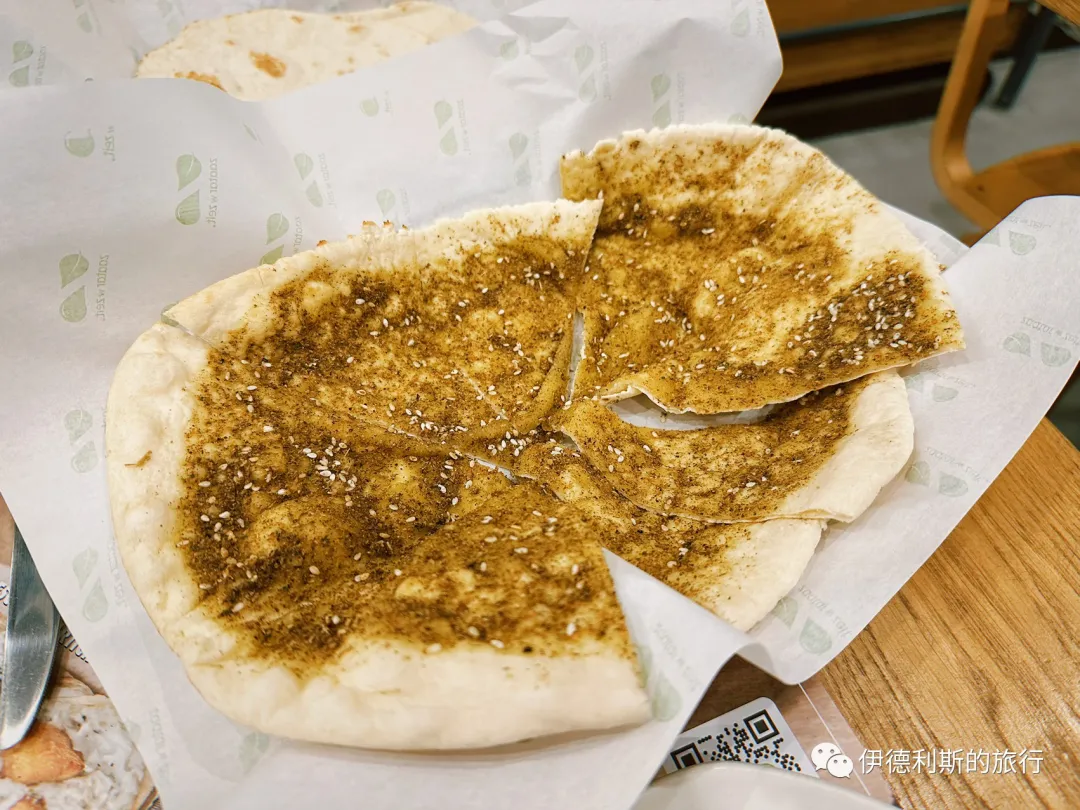
We ate at Zaatar w Zeit, a famous Lebanese fast-food chain in the Hamra district. They specialize in Levantine-style flatbread (manakish), and their food is very healthy.
Manakish is a traditional bread that originated with the ancient Phoenicians. You can top it with a spice blend (zaatar), cheese, or minced lamb. We had the one with zaatar, which is a unique mix of thyme, sumac, oregano, marjoram, and sesame seeds.
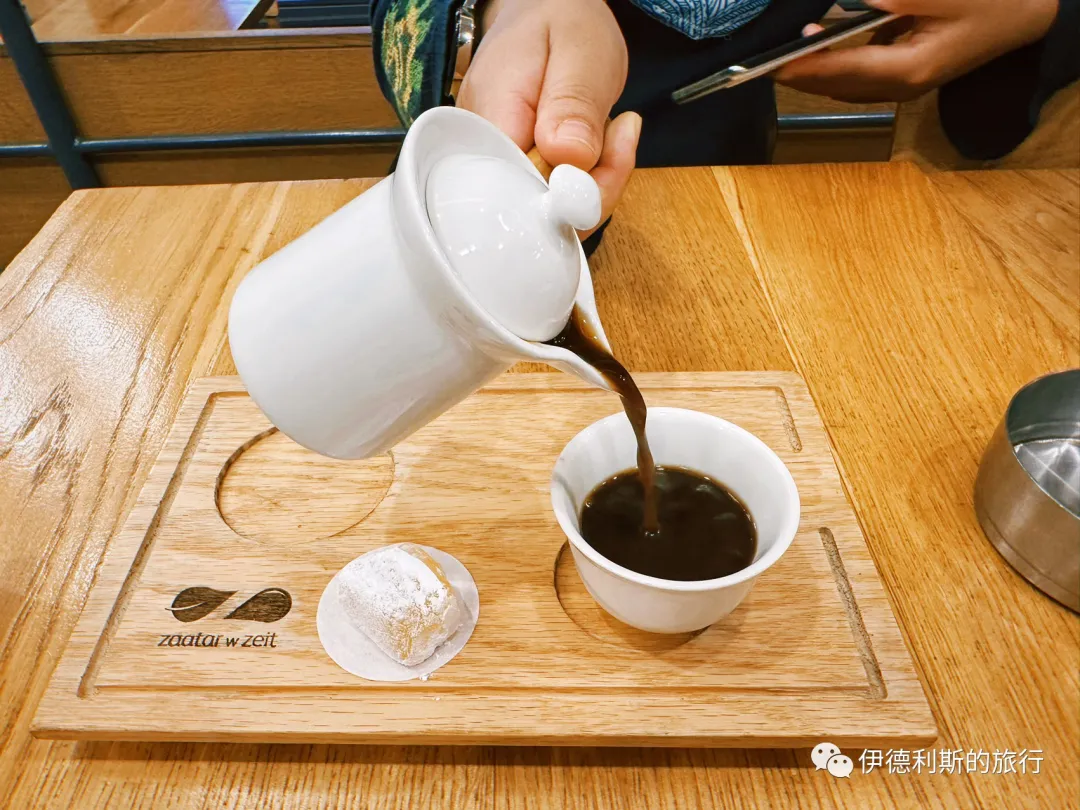
We also drank Lebanese coffee, which is made with Arabica coffee beans and flavored with cardamom.
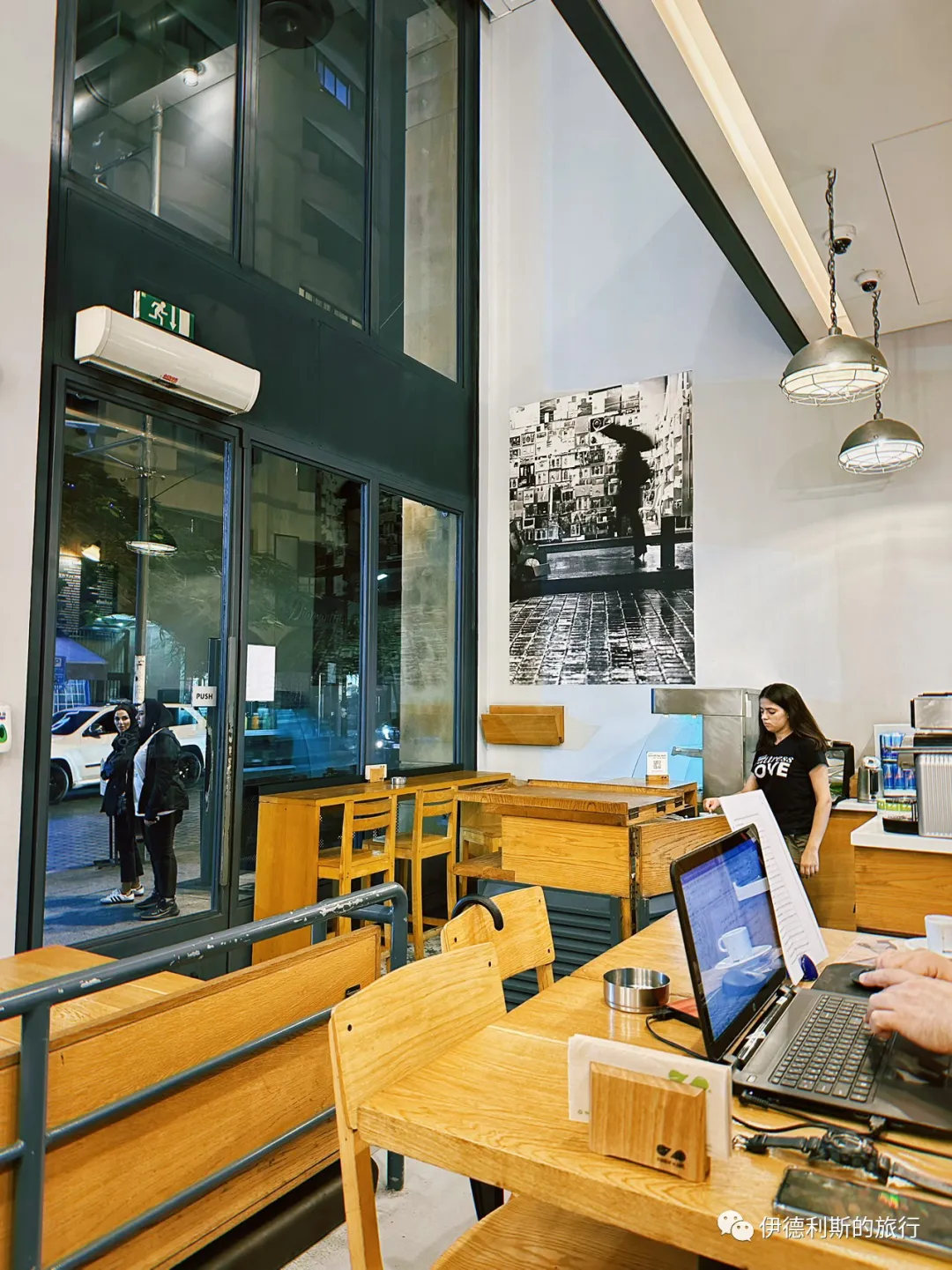

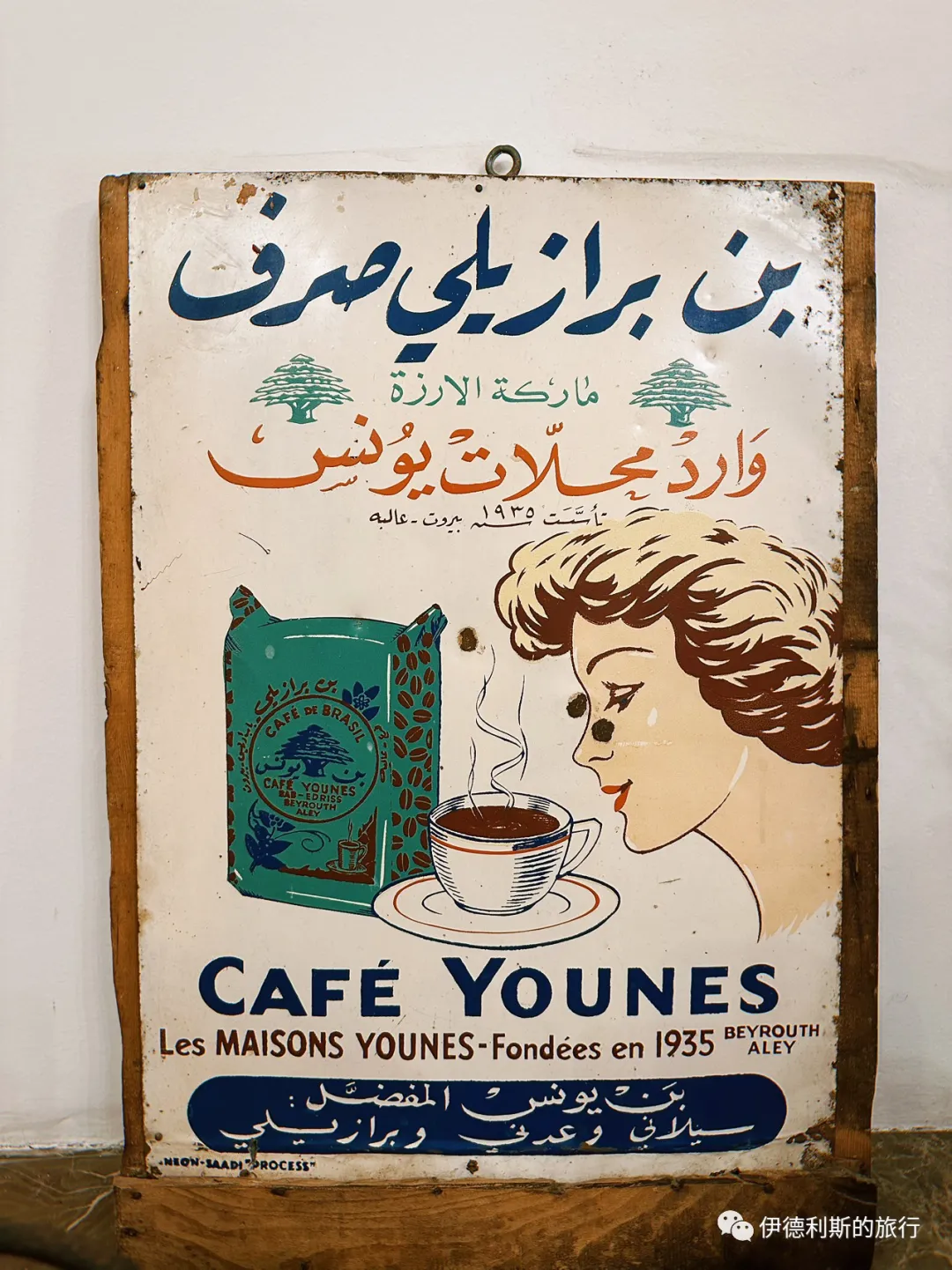
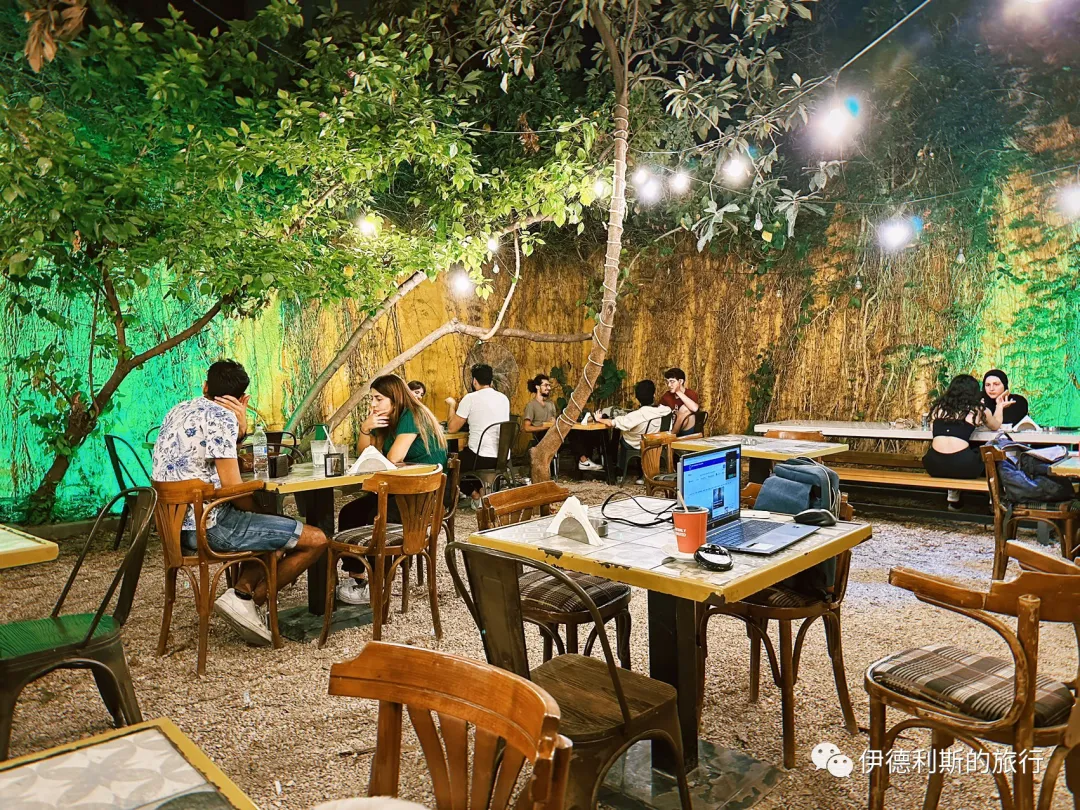
In the evening, we had coffee at the legendary Younes Coffee in the Hamra district of Beirut. The founder of Younes Coffee, Amin Younes Sr., immigrated to Brazil in 1894 and worked on a Brazilian coffee tycoon's plantation for 20 years. In 1935, Amin returned to Lebanon and opened Younes Coffee in downtown Beirut. During World War II, the collapse of the Lebanese currency wiped out most of Amin's savings, but he still managed to pull through. In 1960, Amin's son Souheil joined the family business and helped his father open the first branch of Younes Coffee in the Hamra district. It was one of the first coffee shops in Lebanon to buy an espresso machine. The Younes flagship store in downtown Beirut was destroyed during the Lebanese Civil War in 1975, and only the Hamra branch survived.
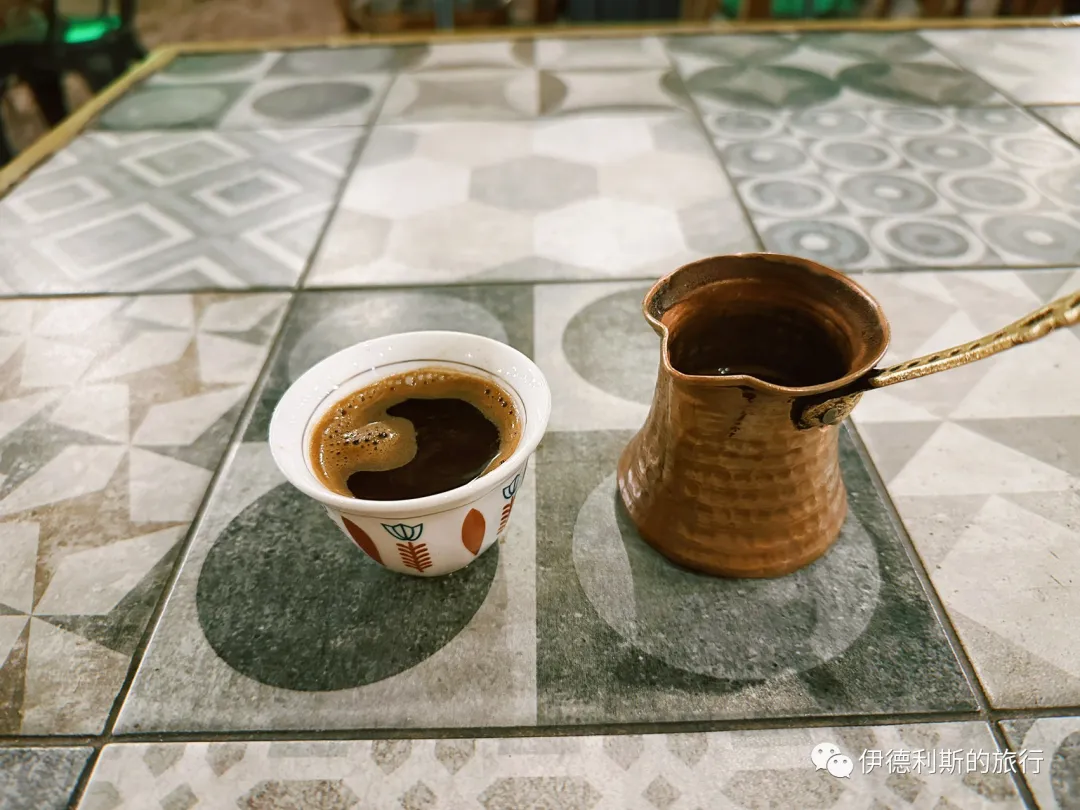
Abou Anwar worked at Younes Coffee for 60 years starting in 1954. As the cafe's most senior coffee roasting master, his expert skills attracted a large group of loyal customers. The coffee I ordered was named after him, the Abou Anwar Blend, which mixes his favorite fruits and spices.
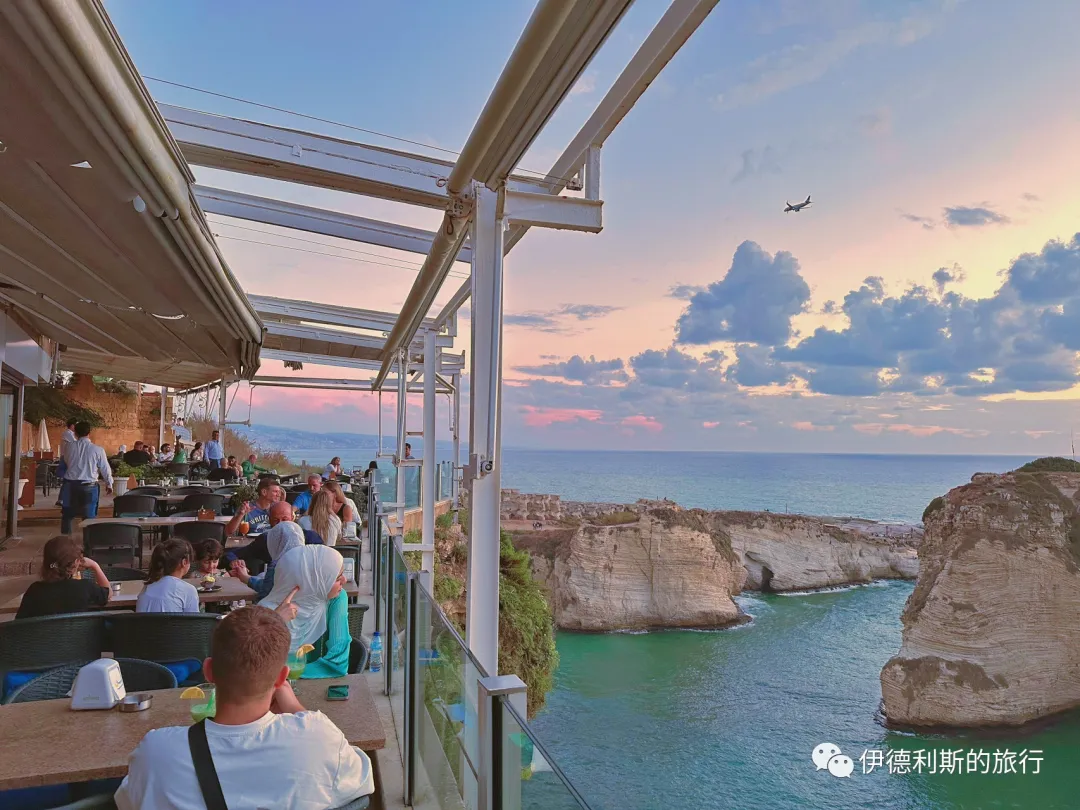
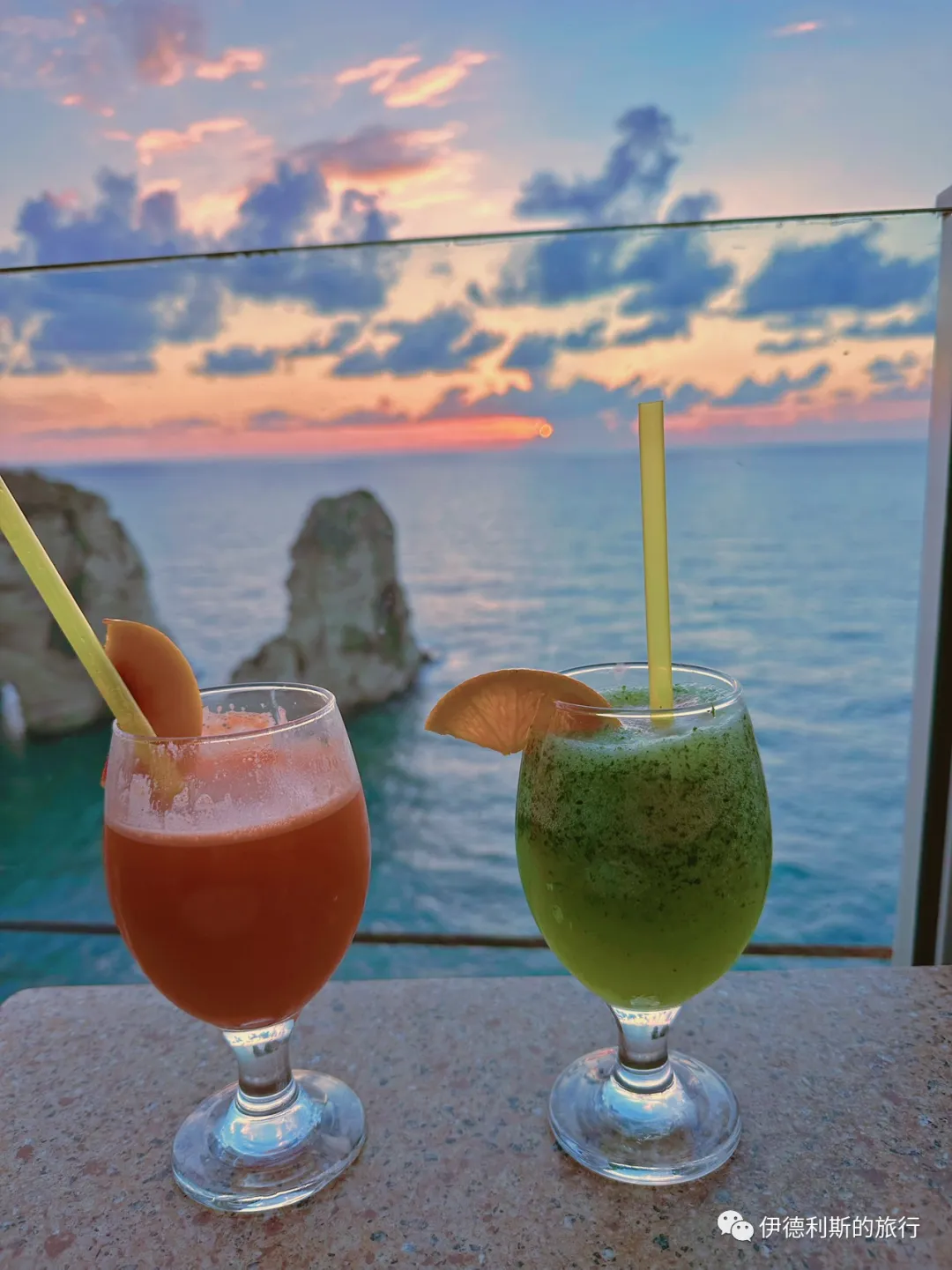
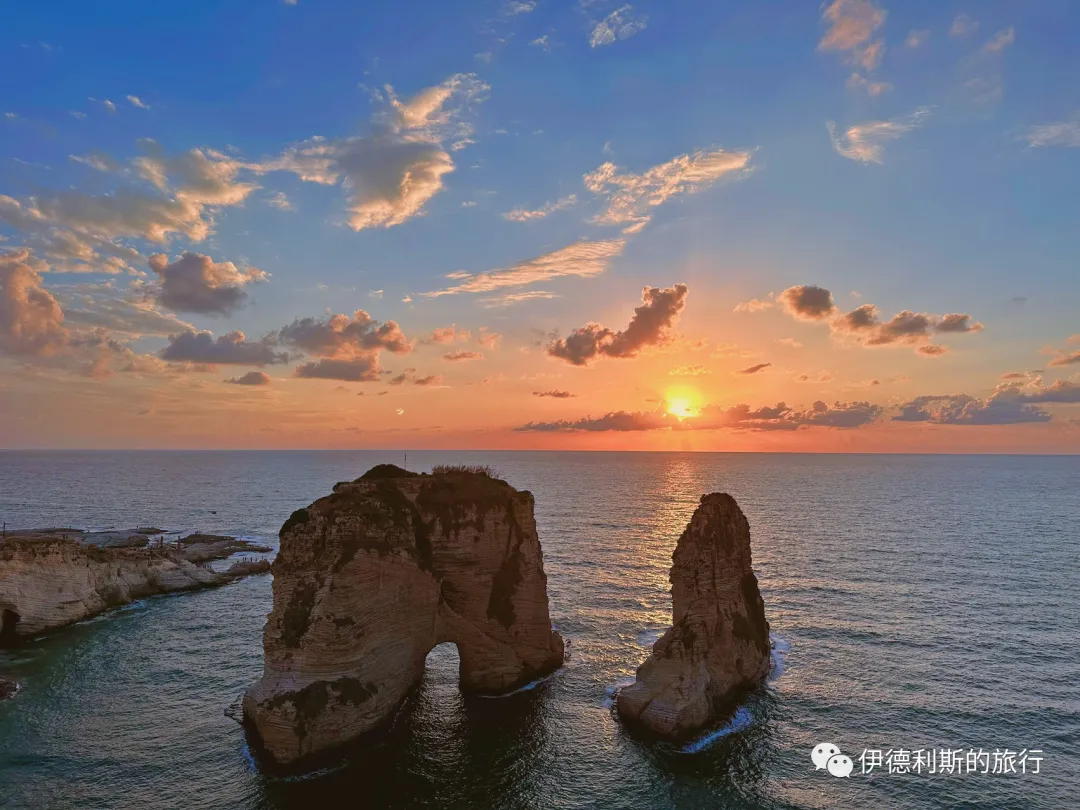
There is a string of cafes next to Pigeon Rocks, ranging from the Bay Rock Cafe in the south to the Starbucks in the north, all of which are classic spots to watch the sunset. Although many people post about this place online, the cafes are not actually very crowded, making them very relaxing. We ordered two juices and a plate of salad at the Bay Rock Cafe and spent a romantic and wonderful evening there.
Accommodation
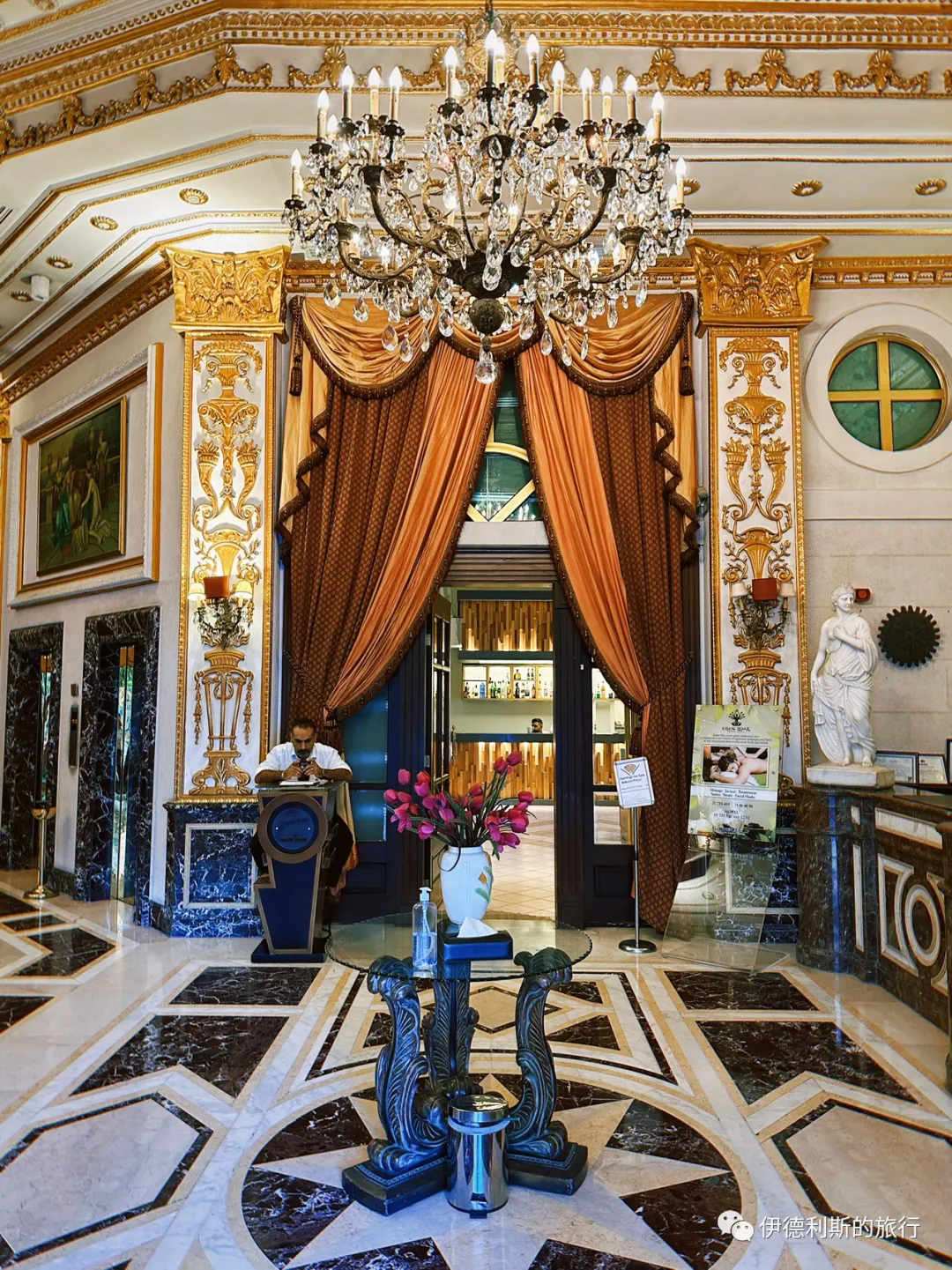
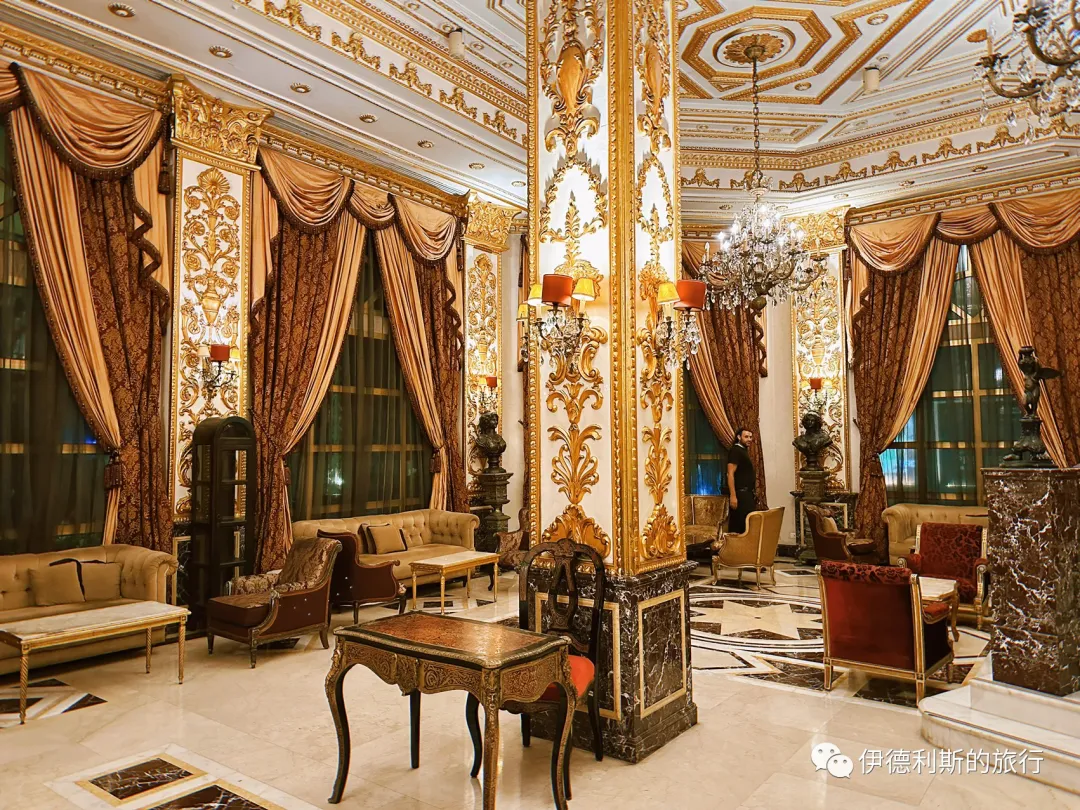
I stayed at the Serenada Golden Palace hotel in the heart of the Hamra district in Beirut. The hotel lobby is gorgeous and classic, reminding people of the prosperity and beauty of Beirut in the past. At the same time, opening the window in the room lets you see houses damaged by the war, which immediately pulls you back to reality.
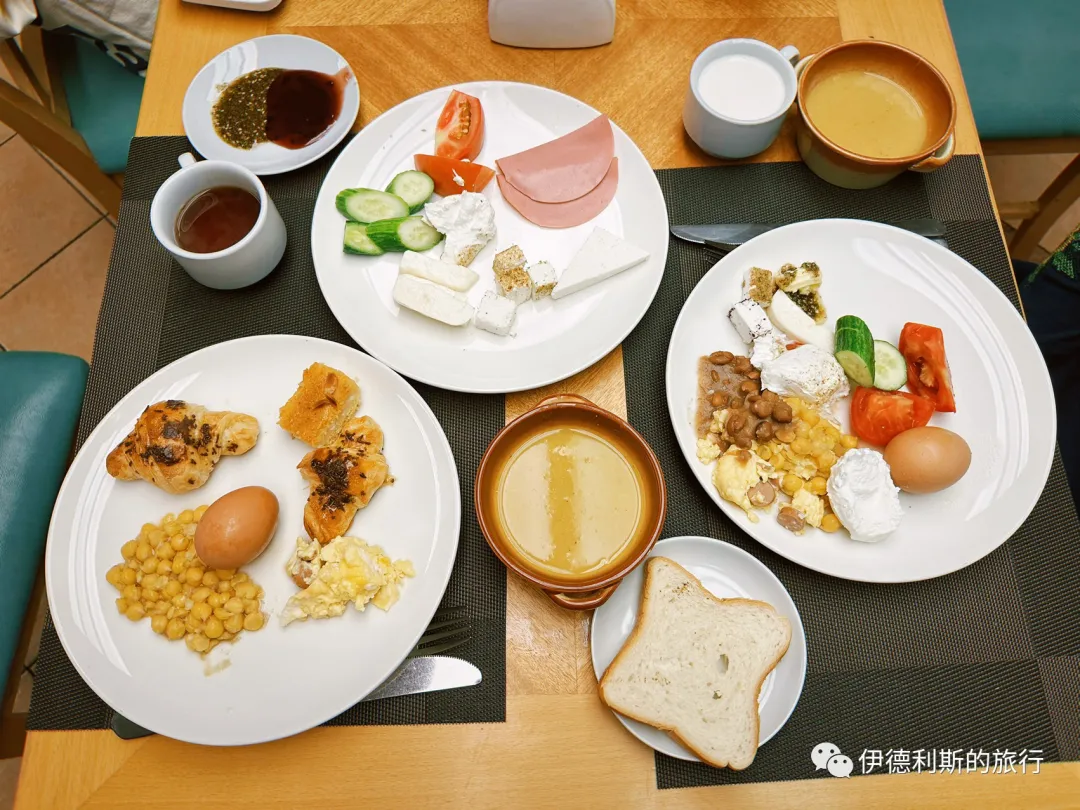
The hotel breakfast is quite rich, with all kinds of cheeses available, paired with various fruits and vegetables for a very healthy meal.
Summary: Beirut is covered through its long Mediterranean history, downtown streets, mosques, churches, markets, and food. This account keeps the original walking route, site names, historical details, and photographs from the visit.
Beirut became part of the Arab Caliphate in 635 and has been a trade hub in the Eastern Mediterranean ever since. During the Umayyad, Abbasid, and Fatimid dynasties, the Byzantine Empire tried to take back Beirut but failed every time. Beirut was part of the Kingdom of Jerusalem from 1110 to 1291, was taken back by the Mamluk Sultanate in 1291, and was conquered by the Ottoman Empire in the early 16th century. In the 16th and 17th centuries, the Ottoman Empire let local Druze emirs rule Beirut, but they took back control in 1763. With help from Damascus, Beirut broke the monopoly that the city of Acre had on Eastern Mediterranean trade and became a major trade center once again.
Mosque
The Mohammad Al-Amin Mosque was built between 2002 and 2008 in an Ottoman style with funds donated by former Lebanese Prime Minister Rafic Hariri, and it is currently the largest mosque in Lebanon.
This is a Sunni mosque, and it does not have many people coming for namaz. I chatted with an old man for a while. He said the Sunni population in Beirut is not strong enough and suggested I visit Tripoli in the north, saying that is where the powerful Sunni city is. In fact, Lebanon's Sunni population is mainly spread across the north, led by Tripoli, and the Bekaa Valley in the east. In the capital city of Beirut, the northwest is mostly Sunni, the southwest is mostly Shia, and the east is mostly Christian. During the civil war, the Mohammad Al-Amin Mosque was near the dividing line between the Muslim and Christian districts. This dividing line was called the Green Line because it grew over with weeds and trees while no one lived there during the war. It used to be full of militia checkpoints and snipers, and many buildings were badly damaged.
The Emir Assaf Mosque was built in the late 16th century by the emir rulers of the local Lebanese Assaf dynasty (1306-1591), and the emir's palace and gardens used to be next to the mosque.
The Assaf dynasty was a Sunni Turkmen dynasty. In 1306, the Mamluk governor of Damascus sent the Turkmen tribe led by the Assaf family to put down a rebellion north of Beirut. Later, the Mamluk Sultanate assigned them to guard the coastal area north of Beirut and manage the local Shia residents. After the Ottoman Empire took the Levant region from the Mamluk Sultanate in 1516, they appointed the Assaf family as the main agents for the Beirut and Tripoli regions. The Assaf dynasty attracted Maronite Christians to settle in northern Beirut by lowering taxes and housing prices to balance out the local Sunni and Shia Muslims. In 1579, the Ottoman Empire established the Tripoli Eyalet to keep the Assaf dynasty in check. In 1591, the Ottoman governor of Tripoli ordered the execution of the last Assaf emir by gunfire, ending the Assaf dynasty.
The Great Omari Mosque is said to have been founded in 635 during the reign of Caliph Umar, and in 1150, the Crusaders built a Romanesque Church of St. John here. After the Mamluk Sultanate captured Tripoli in 1291, they converted it into a grand mosque and added a Mamluk-style gate and minaret in 1350. During the French Mandate for Lebanon from 1923 to 1946, the street-facing facade of the Great Omari Mosque was redesigned with an added portico to unify the architectural style of downtown Beirut. The Great Omari Mosque suffered severe damage during the Lebanese Civil War, and renovations were completed in 2004.
Small Sufi lodge (zawiya).
Zawiyat Ibn Arraq is located at the entrance of the Beirut Souks and is the only remaining Mamluk-era building in Beirut. This building was constructed in 1517 by the religious authority Ibn 'Arraq Al-Dimashqi from Damascus, and it was originally a hospice. After Ibn 'Arraq passed away in 1526, the site became a school of Islamic law and a zawiya (small Sufi lodge) for his followers. The currently remaining vaulted structure once connected to other courtyards and rooms.
Food
I had dinner at a famous local restaurant called T-Marbouta in the Hamra district of Beirut, where I ordered kibbeh mloukiyeh, hommos moutammam, and grilled meat, along with herbal tea and mint tea. Kibbeh is a fried ball made of cracked wheat and minced lamb, a classic appetizer in the Levant region; the one I ate was topped with mloukiyeh (jute leaves), eggplant, walnuts, and pomegranate. Hummus is another classic appetizer from the Levant region made of mashed chickpeas.
Hamra is a lively and trendy neighborhood in Beirut near the American University. It is full of young people and has long been a cultural hub of Beirut. The environment here is relatively nice, making it a good place for shopping in Beirut.
We had steak and fried chicken at a fast-food restaurant in the Hamra district of Lebanon. There are many young people here and a wide variety of restaurants, including Chinese and Japanese food. Because the power supply is unstable, shops here suddenly go dark from time to time. Everyone except us stayed very calm, waiting for the power to come back on by itself. I think it must be hard to use a desktop computer without a battery in Beirut, so everyone definitely chooses laptops first.
We ate at Zaatar w Zeit, a famous Lebanese fast-food chain in the Hamra district. They specialize in Levantine-style flatbread (manakish), and their food is very healthy.
Manakish is a traditional bread that originated with the ancient Phoenicians. You can top it with a spice blend (zaatar), cheese, or minced lamb. We had the one with zaatar, which is a unique mix of thyme, sumac, oregano, marjoram, and sesame seeds.
We also drank Lebanese coffee, which is made with Arabica coffee beans and flavored with cardamom.
In the evening, we had coffee at the legendary Younes Coffee in the Hamra district of Beirut. The founder of Younes Coffee, Amin Younes Sr., immigrated to Brazil in 1894 and worked on a Brazilian coffee tycoon's plantation for 20 years. In 1935, Amin returned to Lebanon and opened Younes Coffee in downtown Beirut. During World War II, the collapse of the Lebanese currency wiped out most of Amin's savings, but he still managed to pull through. In 1960, Amin's son Souheil joined the family business and helped his father open the first branch of Younes Coffee in the Hamra district. It was one of the first coffee shops in Lebanon to buy an espresso machine. The Younes flagship store in downtown Beirut was destroyed during the Lebanese Civil War in 1975, and only the Hamra branch survived.
Abou Anwar worked at Younes Coffee for 60 years starting in 1954. As the cafe's most senior coffee roasting master, his expert skills attracted a large group of loyal customers. The coffee I ordered was named after him, the Abou Anwar Blend, which mixes his favorite fruits and spices.
There is a string of cafes next to Pigeon Rocks, ranging from the Bay Rock Cafe in the south to the Starbucks in the north, all of which are classic spots to watch the sunset. Although many people post about this place online, the cafes are not actually very crowded, making them very relaxing. We ordered two juices and a plate of salad at the Bay Rock Cafe and spent a romantic and wonderful evening there.
Accommodation
I stayed at the Serenada Golden Palace hotel in the heart of the Hamra district in Beirut. The hotel lobby is gorgeous and classic, reminding people of the prosperity and beauty of Beirut in the past. At the same time, opening the window in the room lets you see houses damaged by the war, which immediately pulls you back to reality.
The hotel breakfast is quite rich, with all kinds of cheeses available, paired with various fruits and vegetables for a very healthy meal.
Halal Travel Guide: Sidon, Lebanon - Mosques, Old City and Food
Articles • ali2007fr posted the article • 0 comments • 145 views • 2026-05-20 08:14
Reposted from the web
Summary: Sidon, also known as Saida, is shown through its old streets, mosques, sea views, markets, and local food. This account follows the original day trip south from Beirut while keeping the place names and photos in order.
We took a minibus from the southern suburbs of Beirut and traveled 40 kilometers south to reach Sidon, the third-largest city in Lebanon. Sidon has a history of over 6,000 years and is one of the oldest cities in the world. It played a key role in Mediterranean trade and is now a well-preserved Sunni ancient city on the eastern coast of the Mediterranean.
Castle
The landmark of the ancient city of Sidon is the Sea Castle (Qalaat al-Bahr) located on a small island to the north. It was built by the Crusaders in 1228 and connects to the mainland via an 80-meter-long bridge. The Sea Castle was destroyed many times and was repaired and expanded during the Mamluk and Ottoman dynasties. Today, the Sea Castle consists of two towers. You can see many Roman-era stone columns on the outer walls, and there is a small domed mosque built during the Ottoman period on the roof.
Opposite the Sea Castle, there is a Land Castle on a hill in the southern part of the ancient city. They guard the safety of the ancient city from both ends.
The Land Castle is also called the Castle of Mu'izz or the Castle of Saint Louis. It was ordered to be built in the late 10th century by the fourth Fatimid Caliph, al-Mu'izz li-Din Allah (reigned 953-975), and was named the Castle of Mu'izz.
In 1253, King Louis IX of France (known as Saint Louis), the leader of the Seventh Crusade, ordered the reconstruction of the walls of Sidon. The Land Castle was also rebuilt during this period and has since been called the Castle of Saint Louis. Fakhr al-Din II, the Druze Emir who ruled Lebanon in the 17th century, rebuilt the castle again, but it later fell into ruins, and parts of the walls collapsed in the late Ottoman era.
In 1948, when Israel carried out a mass expulsion of Palestinians, the Land Castle served as a shelter for Palestinian refugees. To persecute Palestinian refugees, Israel ruthlessly shelled the Land Castle, causing further damage. These scars have become a witness to the suffering of the Palestinian people.
Streets
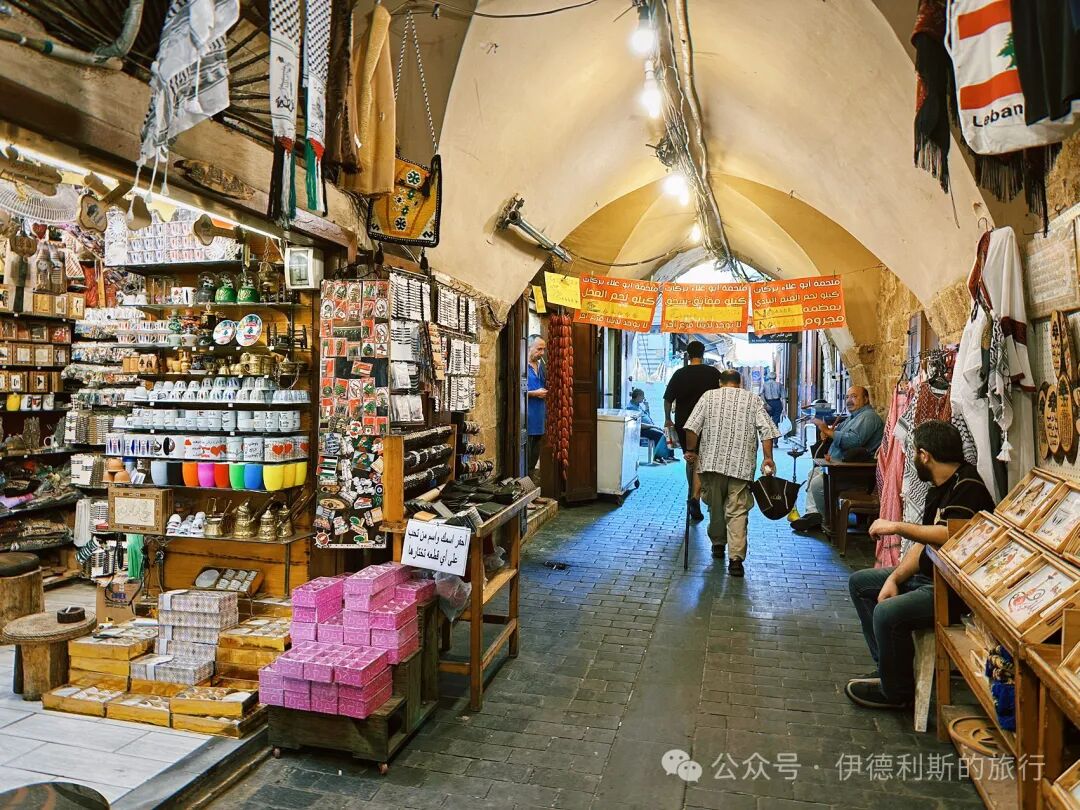
Entering the labyrinthine streets of the ancient city from the north gate, many houses are built over the streets, forming tunnels. People set up stalls in these tunnels, selling a wide variety of goods, which makes the area feel very lively.
Market
In the market inside the ancient city of Sidon, you can buy fresh dates, which have a soft, powdery texture and taste great. You can also buy traditional clothing here, which feels very unique.
Food
On the shore next to the Sea Castle is a very famous restaurant called Saida Rest House. The restaurant preserves an Ottoman-era inn (Khan) with exquisite inlaid marble and colorful carvings, and the lighting inside is excellent.
Have a mint lemonade at Bab Al Saray Cafe in the small square in the center of the old city of Sidon. It is one of the oldest cafes in Sidon, and People say their brunch is also very authentic.
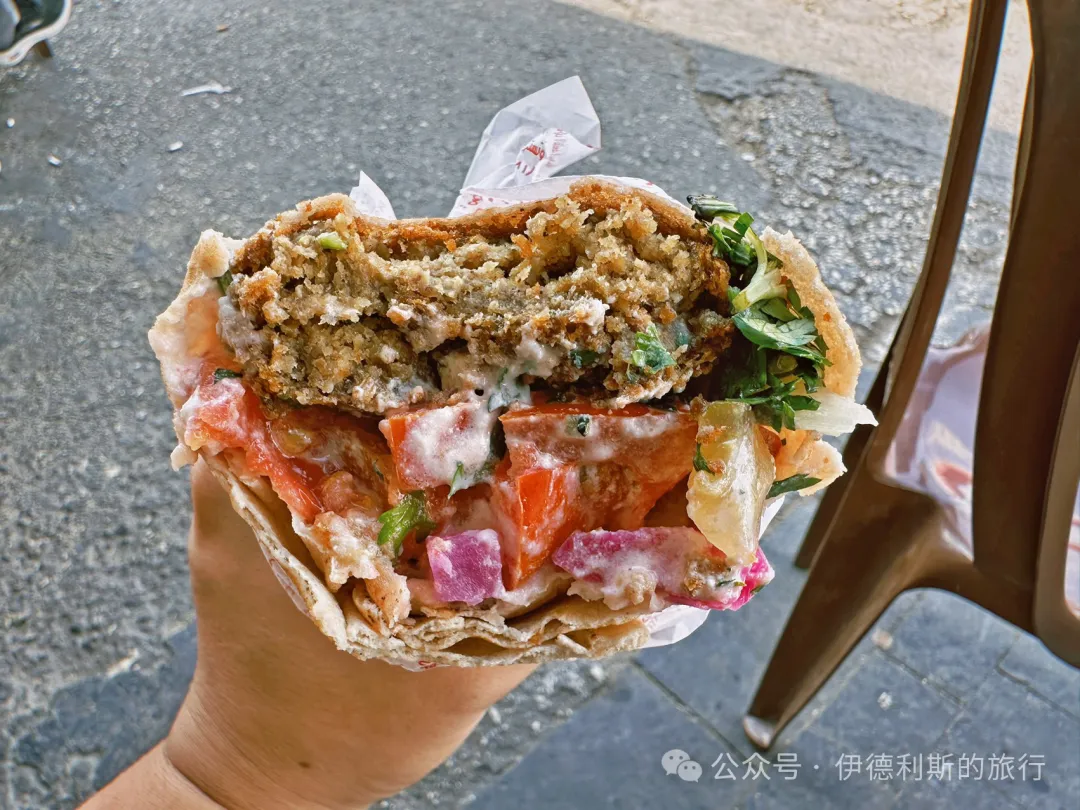
The famous falafel shop in the ancient city is Falafel Abou Rami. They opened in 1988 and are very famous in Lebanon. Their falafel is made from a mixture of chickpeas and fava beans, and it is fried fresh to order. You can add pickled cucumbers, pickled tomatoes, and yogurt to make a salad, or wrap it in flatbread (bing). We bought one wrap and it was enough for two people; the portion is huge!
Mosque
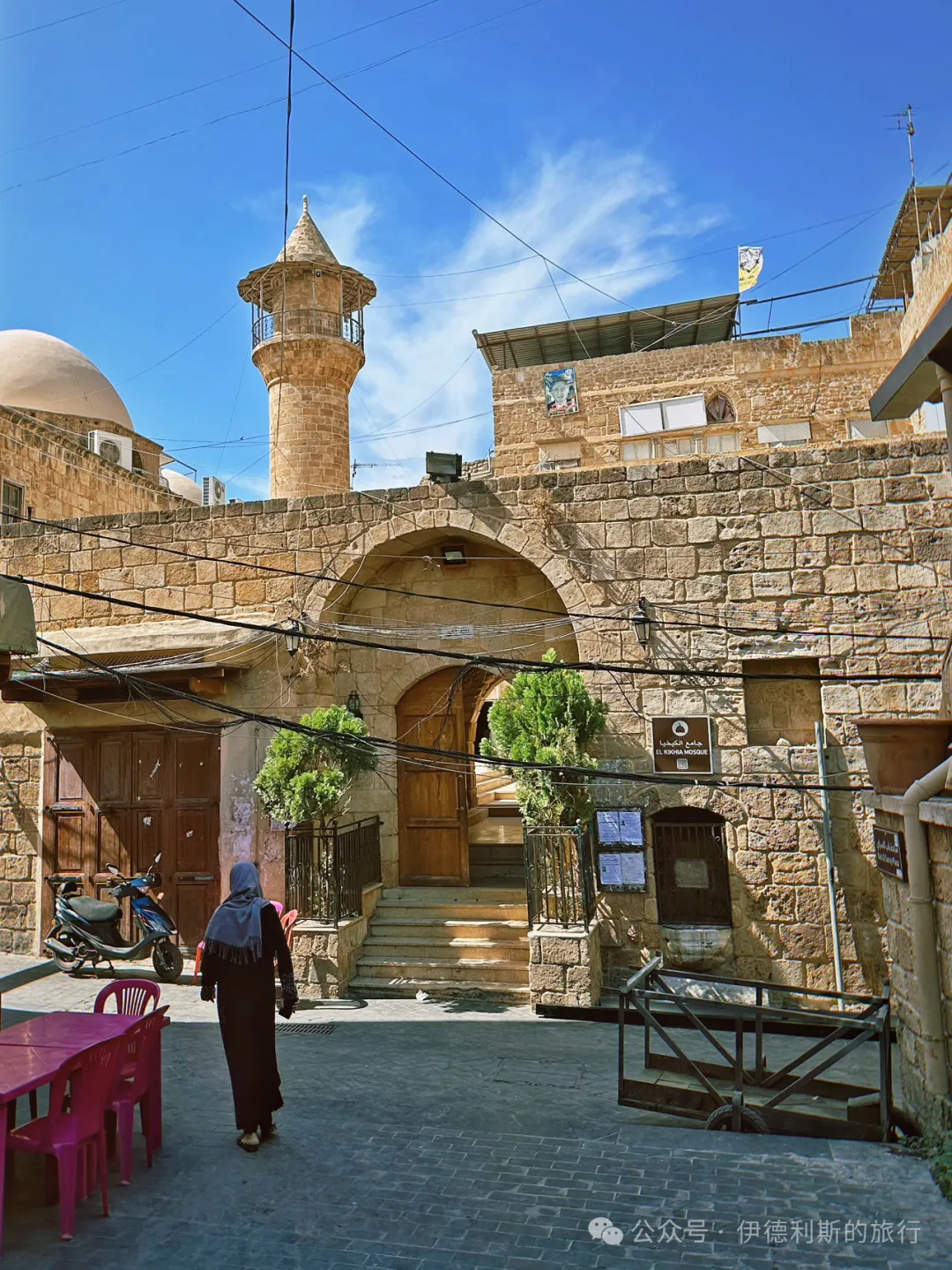
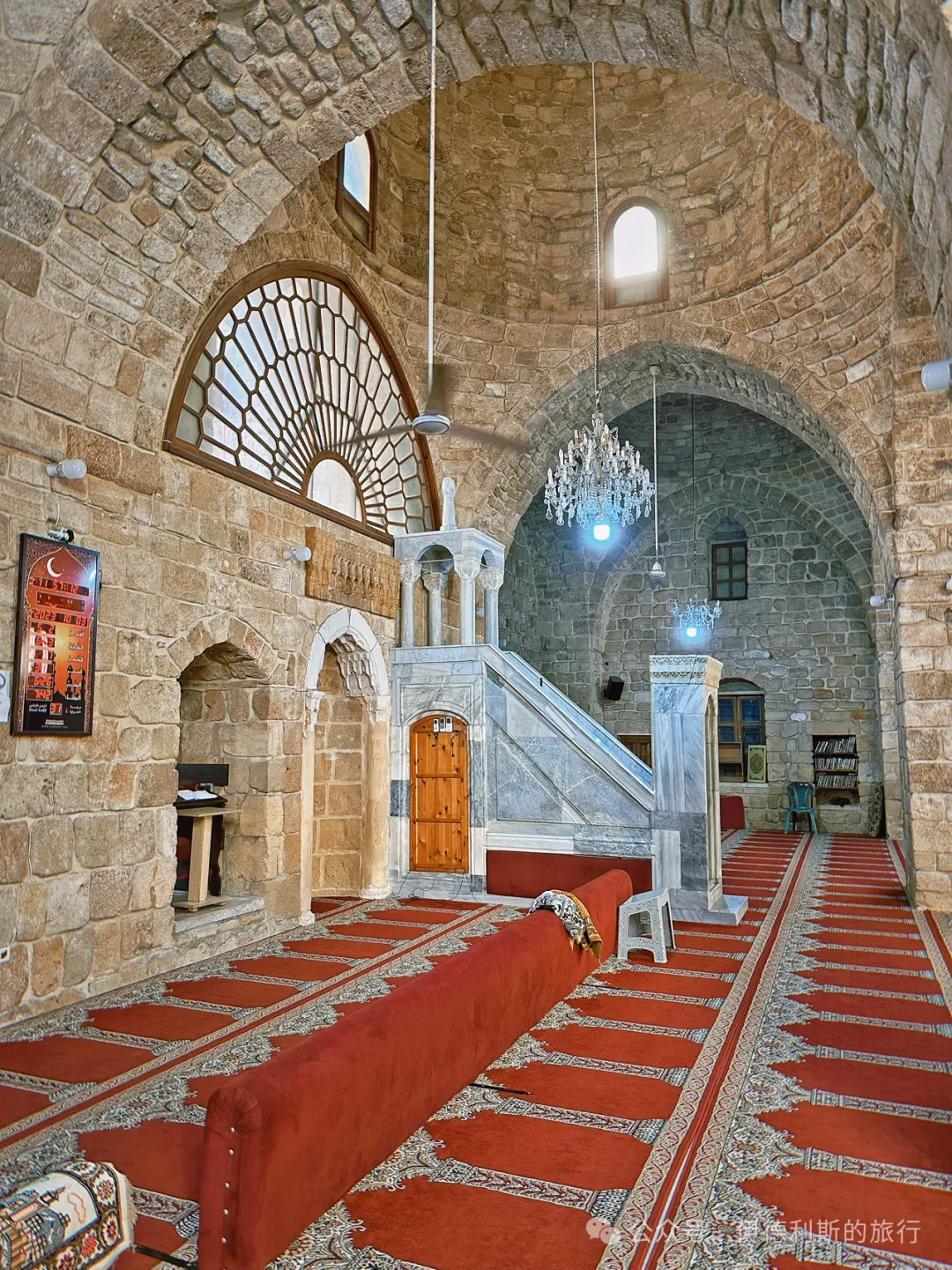
El Kikhia Mosque was built in 1625 by Mahmoud Kitkhuda and is a representative Ottoman-era mosque in Lebanon. This mosque is famous for its six domes, and the main hall features a white marble pulpit (minbar).
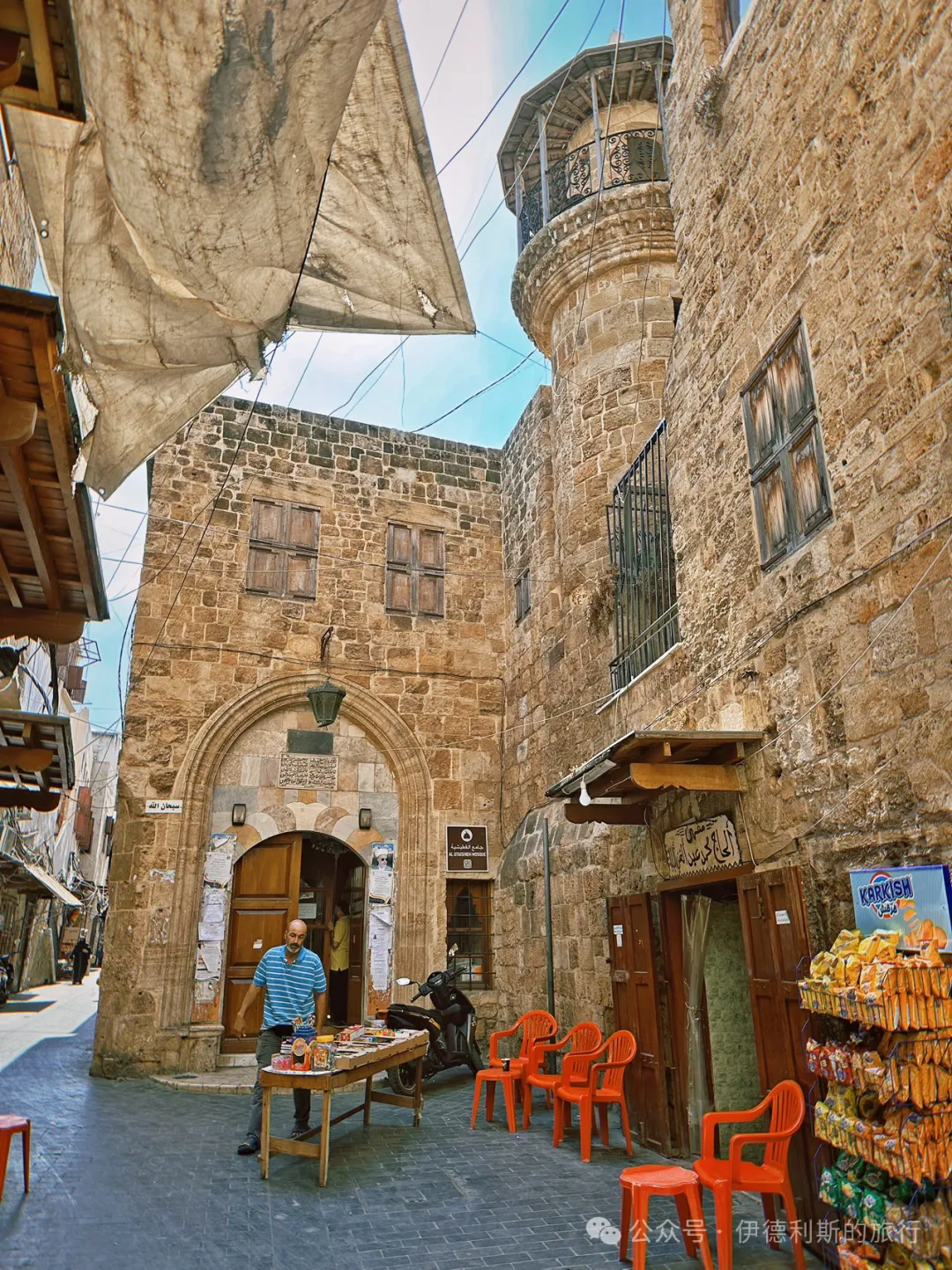
Across from El Kikhia Mosque is Al-Qtaishieh Mosque, where we performed our afternoon prayer (asr). Al-Qtaishieh Mosque was built in the 16th century by Sheikh Ali Ibn Mohammad Qtaish and houses beautiful Ottoman tiles.
The Great Mosque of El-Omari is the main mosque in the old city of Sidon, and it is where the Eid prayer is held. The Great Mosque of El-Omari is located on a hillside on the west side of the old city of Sidon and is built of massive sandstone over a meter thick.
The architecture of the Great Mosque of El-Omari dates back to the Crusader era; in the 13th century, the Knights Hospitaller built it as a military fortress, including a dining hall, a church, and stables. In 1291, the Mamluk Sultan Al-Ashraf Khalil (reigned 1290-93) conquered the Crusader castles, including Sidon, ending the Crusader states that had existed for nearly two hundred years. The Mamluk dynasty then built the Great Mosque of El-Omari on the foundation of the Knights Hospitaller fortress.
The main hall of the Great Mosque of El-Omari retains the style of the Crusader church, with a ten-meter-high ceiling supported by five sturdy buttresses. The Mamluk dynasty changed the orientation of the main hall from east-west to north-south, added a prayer niche (mihrab) and a pulpit (minbar) on the south side, and added an outer courtyard with a water room and a school on the north side. In the late 19th century, the Ottoman Empire renovated the Great Mosque of El-Omari and built the current minaret.
During the 1982 Israeli invasion of Lebanon, the Great Mosque of El-Omari was hit by artillery fire multiple times and was severely damaged. The Hariri Foundation led the restoration of the site in 1986, and it received the Aga Khan Award for Architecture in 1989.
Al-Bahr Mosque was built in 1373 with a donation from Hassan bin Sawah; it features Mamluk-era architectural styles, including thick walls and cross-vaults, and uses granite columns from the ancient Roman period.
El Barrane Mosque is at the entrance to the northern market. Many mosques in Lebanon only open for the five daily prayers and are locked at other times. This mosque was built in the late 16th and early 17th centuries during the reign of the Druze Emir Fakhr al-Din II. Barrani means "outside," because at that time, this mosque was located outside the north gate of the old city, the Beirut Gate.
Inn
From the Hammam Al Jadeed bathhouse, head west through the intricate alleys to reach the massive Ottoman caravanserai, Khan al-Franj. Khan al-Franj inn was built in the late 16th century by order of the Ottoman Grand Vizier Sokollu Mehmed Pasha, who served from 1565 to 1579. The inn has a large courtyard, with the ground floor used for storing goods and the second floor for travelers to live in, which is the typical structure of an Ottoman caravanserai.
The inn served as the residence for the French consul in the early 17th century, which is why it is called the French Inn. The property is currently owned by France, and the French Cultural Institute is located here. The Hariri Foundation leased the space for 35 years, restoring the heritage site and opening it as a cultural center that hosts various events from time to time.
You can buy handicrafts made by local Lebanese women at the inn, and we bought a hand-woven hat. This is part of the Hariri Foundation's effort to create jobs for local women and promote tourism and handicrafts in Sidon.
Entering the old city of Sidon from the north, the first attraction is the underground Khan Sacy Archaeological Museum. Khan Sacy consists of several arched rooms, which date back to stables and warehouses from the Crusader period (1099-1291). Since 2010, archaeological excavations at Khan Sacy have uncovered two bathrooms from the Mamluk period (1201-1517), three wells of different architectural styles, and a multi-purpose oven from the Ottoman period (1517-1918).
Hammam
Continuing south along the main road of the old city of Sidon, you can see the largest Turkish bath in the old city, Hammam Al Jadeed. Hammam Al Jadeed was built in 1720 by the Moroccan merchant Mustafa Hammoud and is a representative example of a Turkish bath in Lebanon during the Ottoman period. The bathhouse consists of 10 rooms, including bathing, massage, and sauna areas, each connected by corridors and decorated with unique marble floors and skylights.
This bathhouse was used until 1948, when it closed due to the spread of tap water pipes. The bathhouse was later used as a carpentry workshop and warehouse, and it was damaged during the Lebanese Civil War (1975-1990). During the Israeli invasion of Lebanon in 1982, one of the domes of the bathhouse was shelled and has not been repaired to this day. In 2018, Said Bacho, founder and president of the Sharqy Foundation for Cultural Development and Innovation, acquired the Hammam Al Jadeed bathhouse. In 2019, the bathhouse, which had been closed for 71 years, reopened as a historical site.
Workshop
After leaving the Great Mosque of Omar, we went to visit the Sidon Soap Museum. The soap workshop where the museum is located was built by Hammoud in the 17th century, taken over by the Audi family in the 1880s, and had a residence added upstairs. In the 1950s, the Audi family left Sidon for Beirut, and the building became a school. It was abandoned during the Lebanese War in the 1980s, and refugees lived on the first floor. The Audi Foundation began restoring the workshop in 1996 and opened it as a soap museum in 2000.
At the soap museum, you can learn how traditional olive oil soap is made and see the remains of the workshop's plumbing from the 17th to 19th centuries. The museum's gift shop is worth a visit. You can buy traditional olive oil soap there, as well as a variety of creative scented soaps. view all
Summary: Sidon, also known as Saida, is shown through its old streets, mosques, sea views, markets, and local food. This account follows the original day trip south from Beirut while keeping the place names and photos in order.
We took a minibus from the southern suburbs of Beirut and traveled 40 kilometers south to reach Sidon, the third-largest city in Lebanon. Sidon has a history of over 6,000 years and is one of the oldest cities in the world. It played a key role in Mediterranean trade and is now a well-preserved Sunni ancient city on the eastern coast of the Mediterranean.
Castle
The landmark of the ancient city of Sidon is the Sea Castle (Qalaat al-Bahr) located on a small island to the north. It was built by the Crusaders in 1228 and connects to the mainland via an 80-meter-long bridge. The Sea Castle was destroyed many times and was repaired and expanded during the Mamluk and Ottoman dynasties. Today, the Sea Castle consists of two towers. You can see many Roman-era stone columns on the outer walls, and there is a small domed mosque built during the Ottoman period on the roof.
Opposite the Sea Castle, there is a Land Castle on a hill in the southern part of the ancient city. They guard the safety of the ancient city from both ends.
The Land Castle is also called the Castle of Mu'izz or the Castle of Saint Louis. It was ordered to be built in the late 10th century by the fourth Fatimid Caliph, al-Mu'izz li-Din Allah (reigned 953-975), and was named the Castle of Mu'izz.
In 1253, King Louis IX of France (known as Saint Louis), the leader of the Seventh Crusade, ordered the reconstruction of the walls of Sidon. The Land Castle was also rebuilt during this period and has since been called the Castle of Saint Louis. Fakhr al-Din II, the Druze Emir who ruled Lebanon in the 17th century, rebuilt the castle again, but it later fell into ruins, and parts of the walls collapsed in the late Ottoman era.
In 1948, when Israel carried out a mass expulsion of Palestinians, the Land Castle served as a shelter for Palestinian refugees. To persecute Palestinian refugees, Israel ruthlessly shelled the Land Castle, causing further damage. These scars have become a witness to the suffering of the Palestinian people.
Streets
Entering the labyrinthine streets of the ancient city from the north gate, many houses are built over the streets, forming tunnels. People set up stalls in these tunnels, selling a wide variety of goods, which makes the area feel very lively.
Market
In the market inside the ancient city of Sidon, you can buy fresh dates, which have a soft, powdery texture and taste great. You can also buy traditional clothing here, which feels very unique.
Food
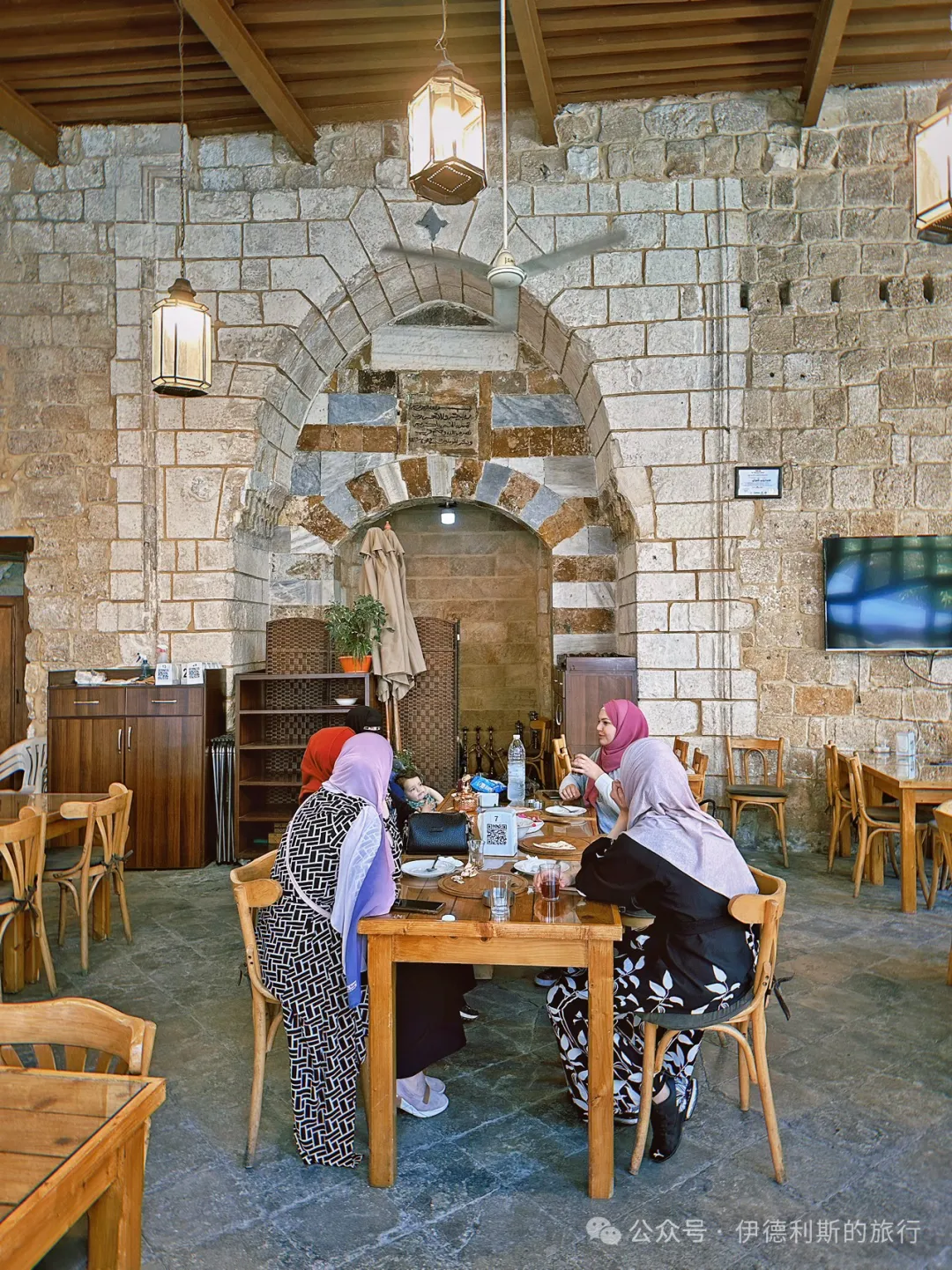
On the shore next to the Sea Castle is a very famous restaurant called Saida Rest House. The restaurant preserves an Ottoman-era inn (Khan) with exquisite inlaid marble and colorful carvings, and the lighting inside is excellent.
Have a mint lemonade at Bab Al Saray Cafe in the small square in the center of the old city of Sidon. It is one of the oldest cafes in Sidon, and People say their brunch is also very authentic.
The famous falafel shop in the ancient city is Falafel Abou Rami. They opened in 1988 and are very famous in Lebanon. Their falafel is made from a mixture of chickpeas and fava beans, and it is fried fresh to order. You can add pickled cucumbers, pickled tomatoes, and yogurt to make a salad, or wrap it in flatbread (bing). We bought one wrap and it was enough for two people; the portion is huge!
Mosque
El Kikhia Mosque was built in 1625 by Mahmoud Kitkhuda and is a representative Ottoman-era mosque in Lebanon. This mosque is famous for its six domes, and the main hall features a white marble pulpit (minbar).
Across from El Kikhia Mosque is Al-Qtaishieh Mosque, where we performed our afternoon prayer (asr). Al-Qtaishieh Mosque was built in the 16th century by Sheikh Ali Ibn Mohammad Qtaish and houses beautiful Ottoman tiles.
The Great Mosque of El-Omari is the main mosque in the old city of Sidon, and it is where the Eid prayer is held. The Great Mosque of El-Omari is located on a hillside on the west side of the old city of Sidon and is built of massive sandstone over a meter thick.
The architecture of the Great Mosque of El-Omari dates back to the Crusader era; in the 13th century, the Knights Hospitaller built it as a military fortress, including a dining hall, a church, and stables. In 1291, the Mamluk Sultan Al-Ashraf Khalil (reigned 1290-93) conquered the Crusader castles, including Sidon, ending the Crusader states that had existed for nearly two hundred years. The Mamluk dynasty then built the Great Mosque of El-Omari on the foundation of the Knights Hospitaller fortress.
The main hall of the Great Mosque of El-Omari retains the style of the Crusader church, with a ten-meter-high ceiling supported by five sturdy buttresses. The Mamluk dynasty changed the orientation of the main hall from east-west to north-south, added a prayer niche (mihrab) and a pulpit (minbar) on the south side, and added an outer courtyard with a water room and a school on the north side. In the late 19th century, the Ottoman Empire renovated the Great Mosque of El-Omari and built the current minaret.
During the 1982 Israeli invasion of Lebanon, the Great Mosque of El-Omari was hit by artillery fire multiple times and was severely damaged. The Hariri Foundation led the restoration of the site in 1986, and it received the Aga Khan Award for Architecture in 1989.
Al-Bahr Mosque was built in 1373 with a donation from Hassan bin Sawah; it features Mamluk-era architectural styles, including thick walls and cross-vaults, and uses granite columns from the ancient Roman period.
El Barrane Mosque is at the entrance to the northern market. Many mosques in Lebanon only open for the five daily prayers and are locked at other times. This mosque was built in the late 16th and early 17th centuries during the reign of the Druze Emir Fakhr al-Din II. Barrani means "outside," because at that time, this mosque was located outside the north gate of the old city, the Beirut Gate.
Inn
From the Hammam Al Jadeed bathhouse, head west through the intricate alleys to reach the massive Ottoman caravanserai, Khan al-Franj. Khan al-Franj inn was built in the late 16th century by order of the Ottoman Grand Vizier Sokollu Mehmed Pasha, who served from 1565 to 1579. The inn has a large courtyard, with the ground floor used for storing goods and the second floor for travelers to live in, which is the typical structure of an Ottoman caravanserai.
The inn served as the residence for the French consul in the early 17th century, which is why it is called the French Inn. The property is currently owned by France, and the French Cultural Institute is located here. The Hariri Foundation leased the space for 35 years, restoring the heritage site and opening it as a cultural center that hosts various events from time to time.
You can buy handicrafts made by local Lebanese women at the inn, and we bought a hand-woven hat. This is part of the Hariri Foundation's effort to create jobs for local women and promote tourism and handicrafts in Sidon.
Entering the old city of Sidon from the north, the first attraction is the underground Khan Sacy Archaeological Museum. Khan Sacy consists of several arched rooms, which date back to stables and warehouses from the Crusader period (1099-1291). Since 2010, archaeological excavations at Khan Sacy have uncovered two bathrooms from the Mamluk period (1201-1517), three wells of different architectural styles, and a multi-purpose oven from the Ottoman period (1517-1918).
Hammam
Continuing south along the main road of the old city of Sidon, you can see the largest Turkish bath in the old city, Hammam Al Jadeed. Hammam Al Jadeed was built in 1720 by the Moroccan merchant Mustafa Hammoud and is a representative example of a Turkish bath in Lebanon during the Ottoman period. The bathhouse consists of 10 rooms, including bathing, massage, and sauna areas, each connected by corridors and decorated with unique marble floors and skylights.
This bathhouse was used until 1948, when it closed due to the spread of tap water pipes. The bathhouse was later used as a carpentry workshop and warehouse, and it was damaged during the Lebanese Civil War (1975-1990). During the Israeli invasion of Lebanon in 1982, one of the domes of the bathhouse was shelled and has not been repaired to this day. In 2018, Said Bacho, founder and president of the Sharqy Foundation for Cultural Development and Innovation, acquired the Hammam Al Jadeed bathhouse. In 2019, the bathhouse, which had been closed for 71 years, reopened as a historical site.
Workshop
After leaving the Great Mosque of Omar, we went to visit the Sidon Soap Museum. The soap workshop where the museum is located was built by Hammoud in the 17th century, taken over by the Audi family in the 1880s, and had a residence added upstairs. In the 1950s, the Audi family left Sidon for Beirut, and the building became a school. It was abandoned during the Lebanese War in the 1980s, and refugees lived on the first floor. The Audi Foundation began restoring the workshop in 1996 and opened it as a soap museum in 2000.
At the soap museum, you can learn how traditional olive oil soap is made and see the remains of the workshop's plumbing from the 17th to 19th centuries. The museum's gift shop is worth a visit. You can buy traditional olive oil soap there, as well as a variety of creative scented soaps. view all
Reposted from the web
Summary: Sidon, also known as Saida, is shown through its old streets, mosques, sea views, markets, and local food. This account follows the original day trip south from Beirut while keeping the place names and photos in order.
We took a minibus from the southern suburbs of Beirut and traveled 40 kilometers south to reach Sidon, the third-largest city in Lebanon. Sidon has a history of over 6,000 years and is one of the oldest cities in the world. It played a key role in Mediterranean trade and is now a well-preserved Sunni ancient city on the eastern coast of the Mediterranean.
Castle
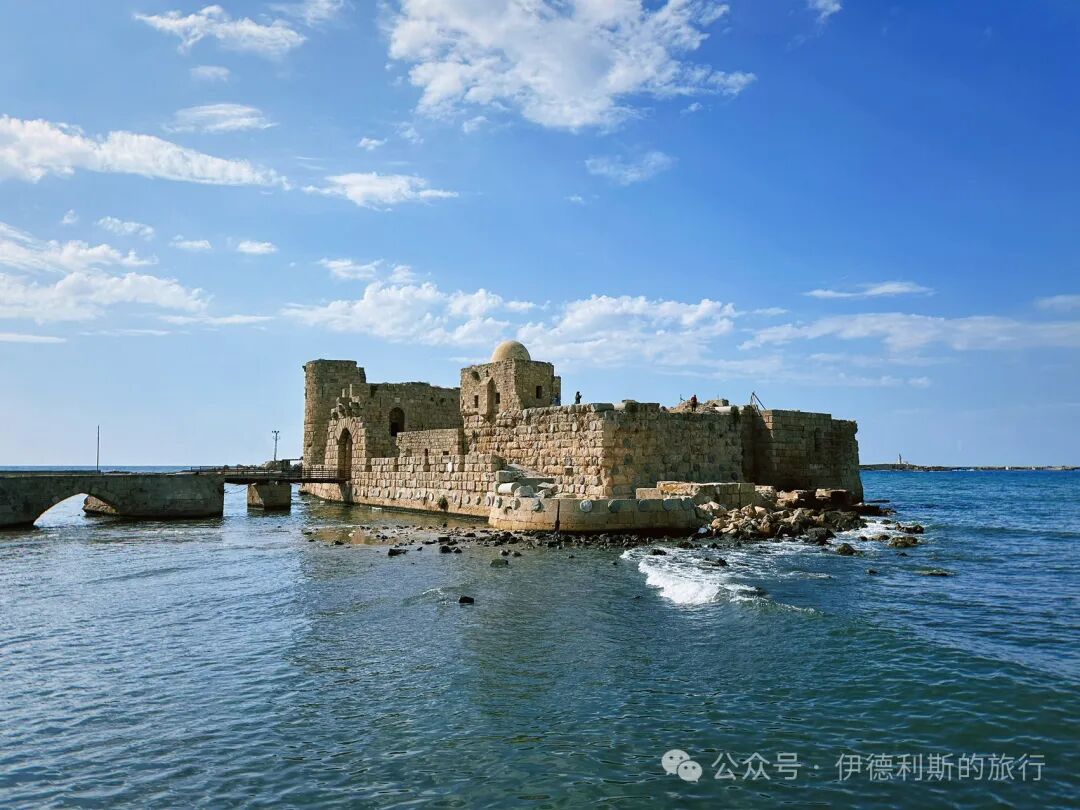
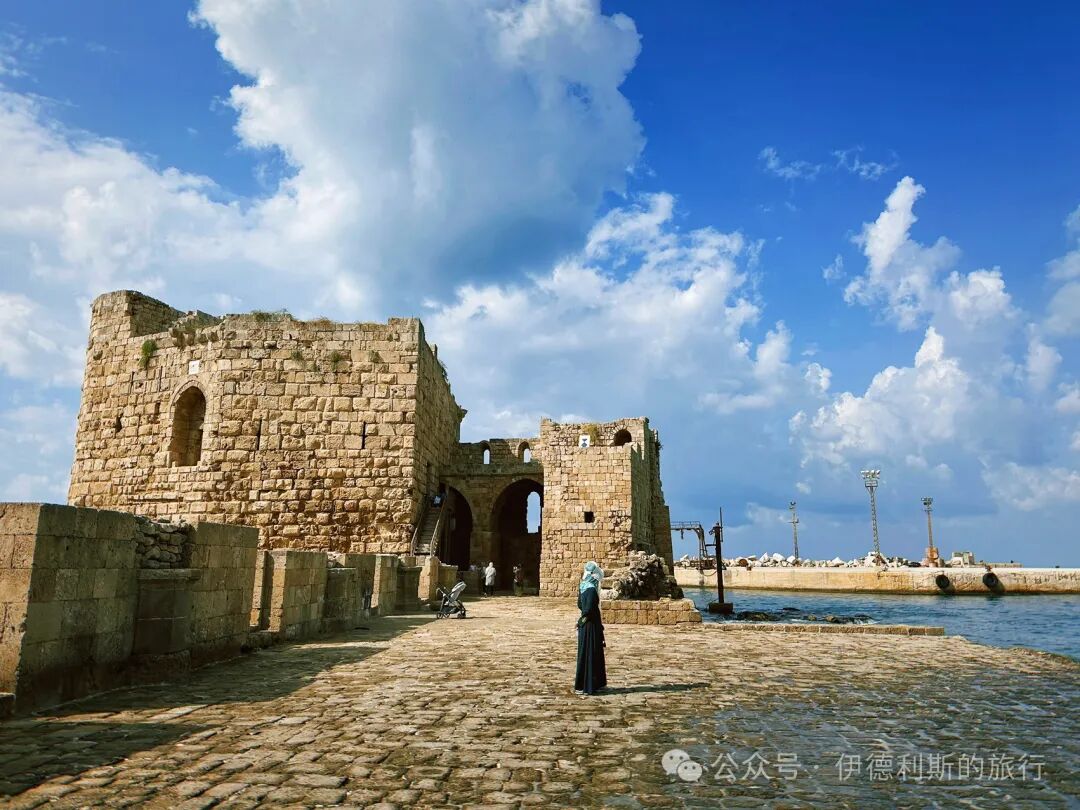
The landmark of the ancient city of Sidon is the Sea Castle (Qalaat al-Bahr) located on a small island to the north. It was built by the Crusaders in 1228 and connects to the mainland via an 80-meter-long bridge. The Sea Castle was destroyed many times and was repaired and expanded during the Mamluk and Ottoman dynasties. Today, the Sea Castle consists of two towers. You can see many Roman-era stone columns on the outer walls, and there is a small domed mosque built during the Ottoman period on the roof.
Opposite the Sea Castle, there is a Land Castle on a hill in the southern part of the ancient city. They guard the safety of the ancient city from both ends.
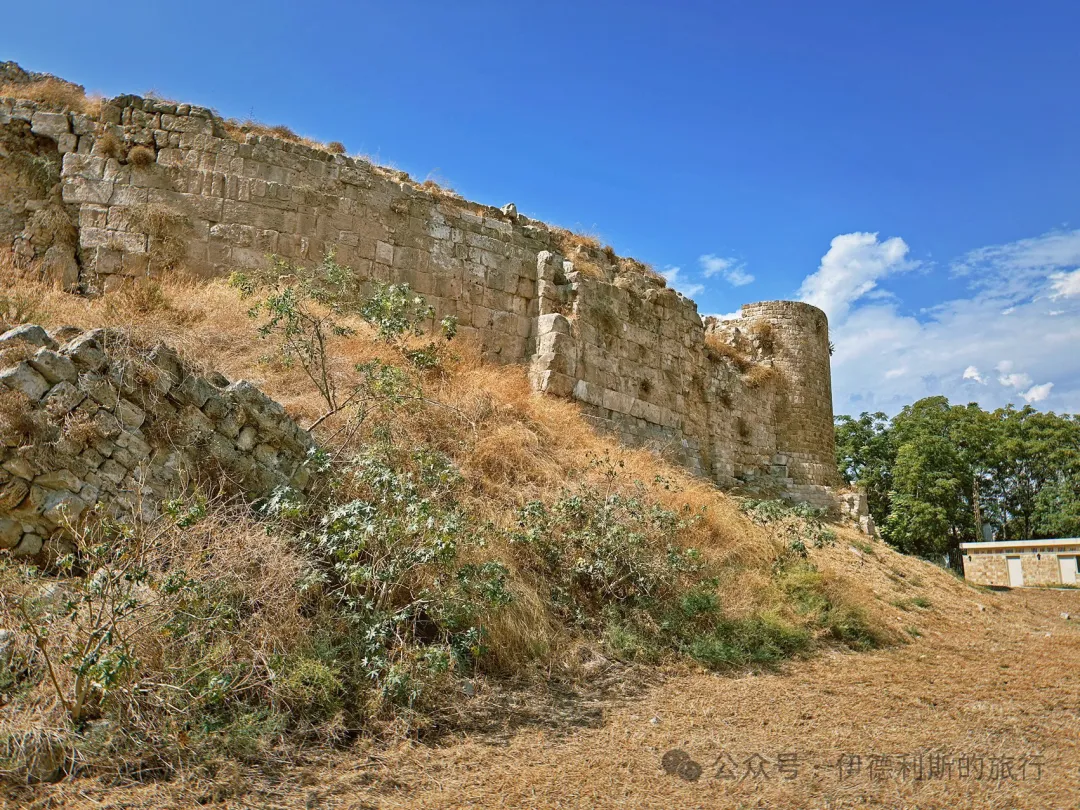
The Land Castle is also called the Castle of Mu'izz or the Castle of Saint Louis. It was ordered to be built in the late 10th century by the fourth Fatimid Caliph, al-Mu'izz li-Din Allah (reigned 953-975), and was named the Castle of Mu'izz.
In 1253, King Louis IX of France (known as Saint Louis), the leader of the Seventh Crusade, ordered the reconstruction of the walls of Sidon. The Land Castle was also rebuilt during this period and has since been called the Castle of Saint Louis. Fakhr al-Din II, the Druze Emir who ruled Lebanon in the 17th century, rebuilt the castle again, but it later fell into ruins, and parts of the walls collapsed in the late Ottoman era.
In 1948, when Israel carried out a mass expulsion of Palestinians, the Land Castle served as a shelter for Palestinian refugees. To persecute Palestinian refugees, Israel ruthlessly shelled the Land Castle, causing further damage. These scars have become a witness to the suffering of the Palestinian people.
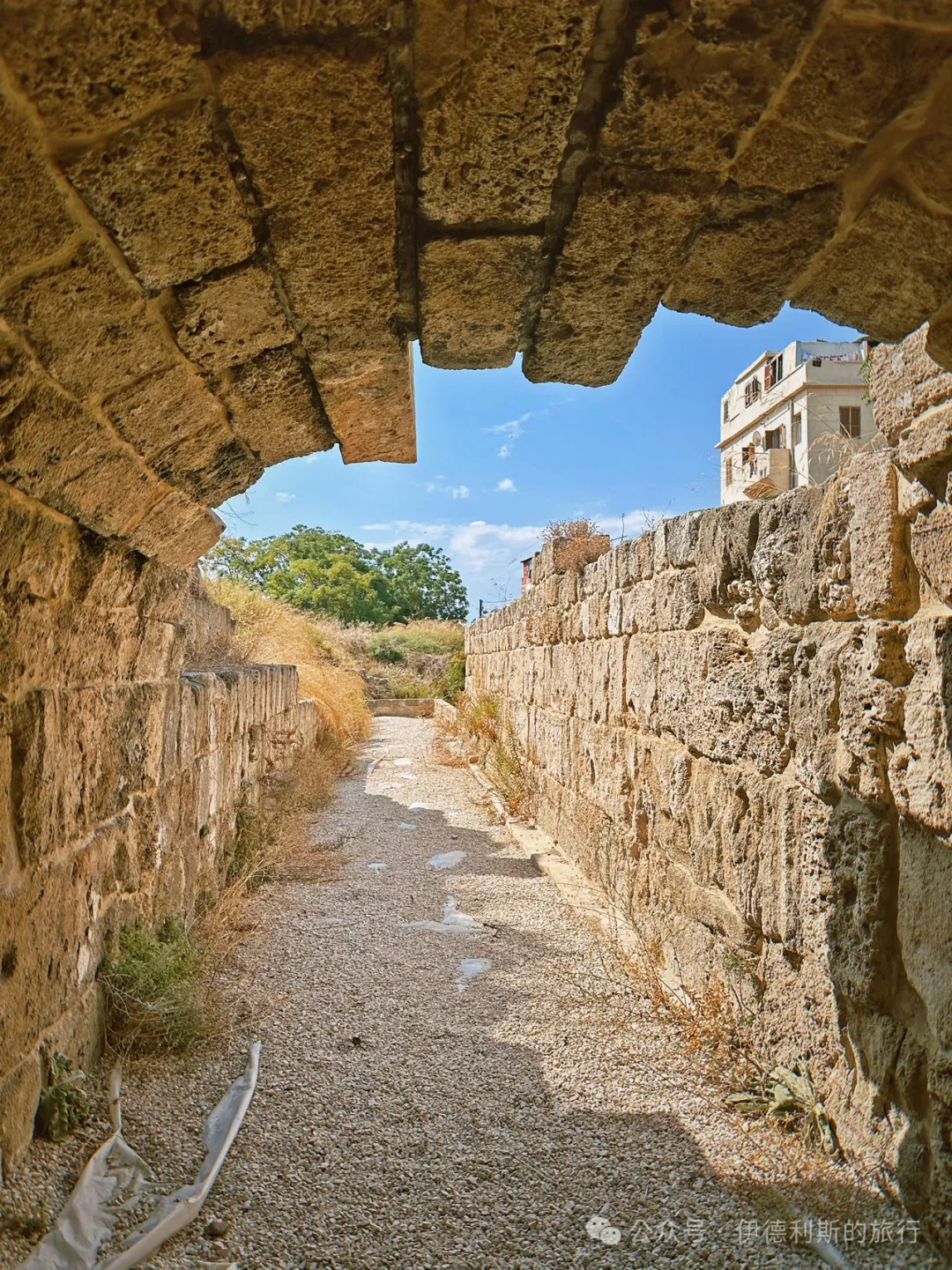
Streets
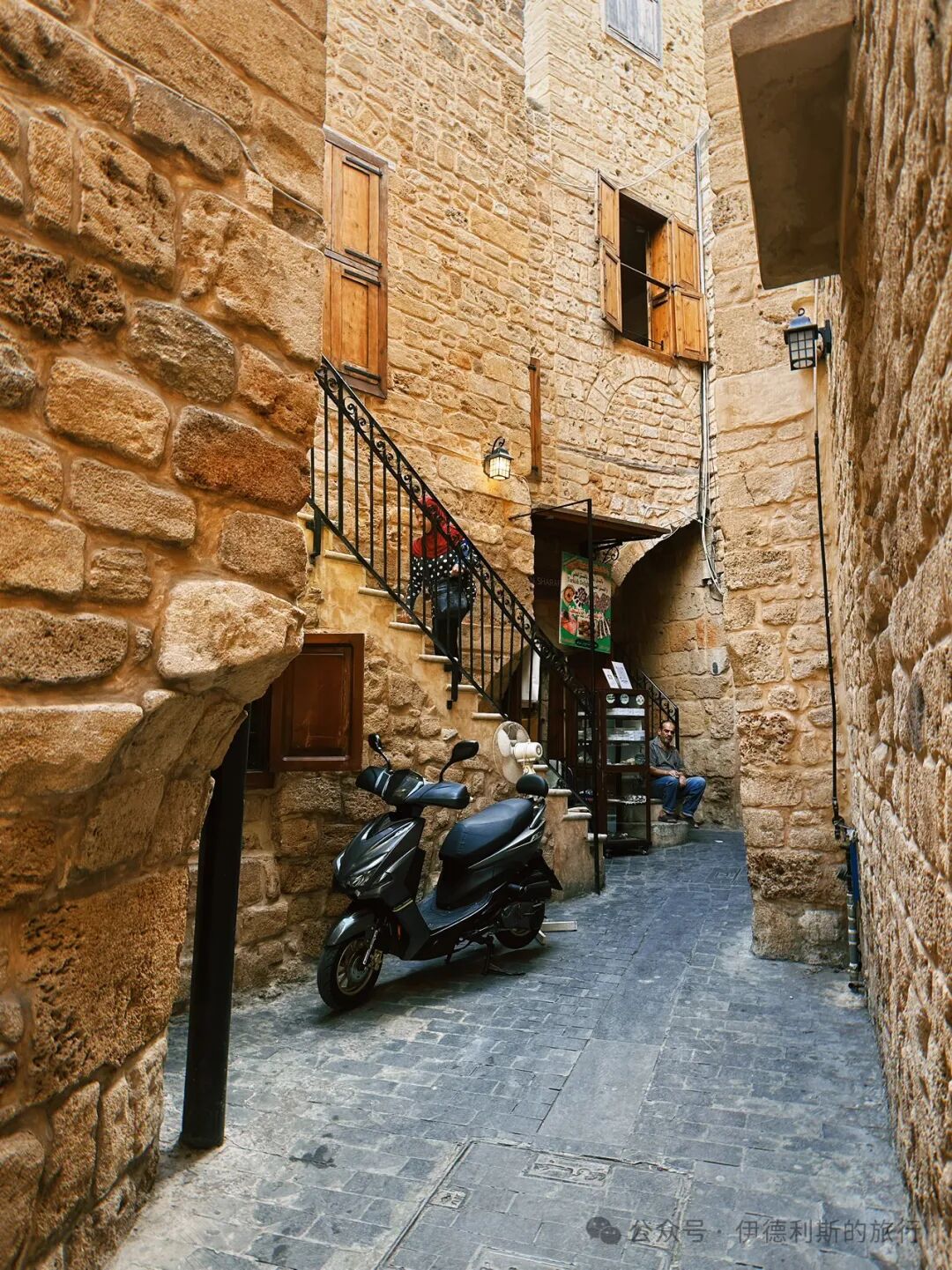
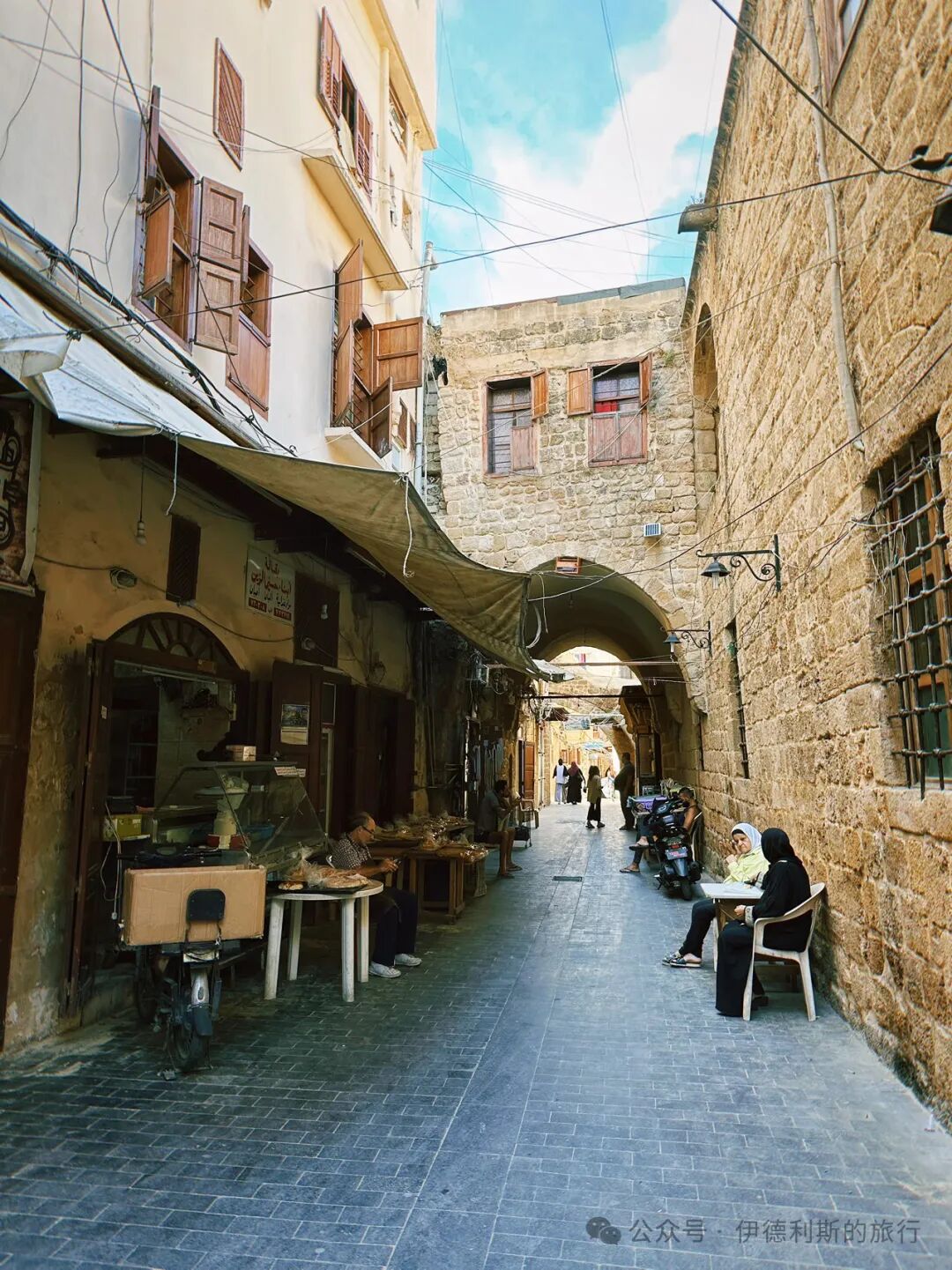
Entering the labyrinthine streets of the ancient city from the north gate, many houses are built over the streets, forming tunnels. People set up stalls in these tunnels, selling a wide variety of goods, which makes the area feel very lively.
Market
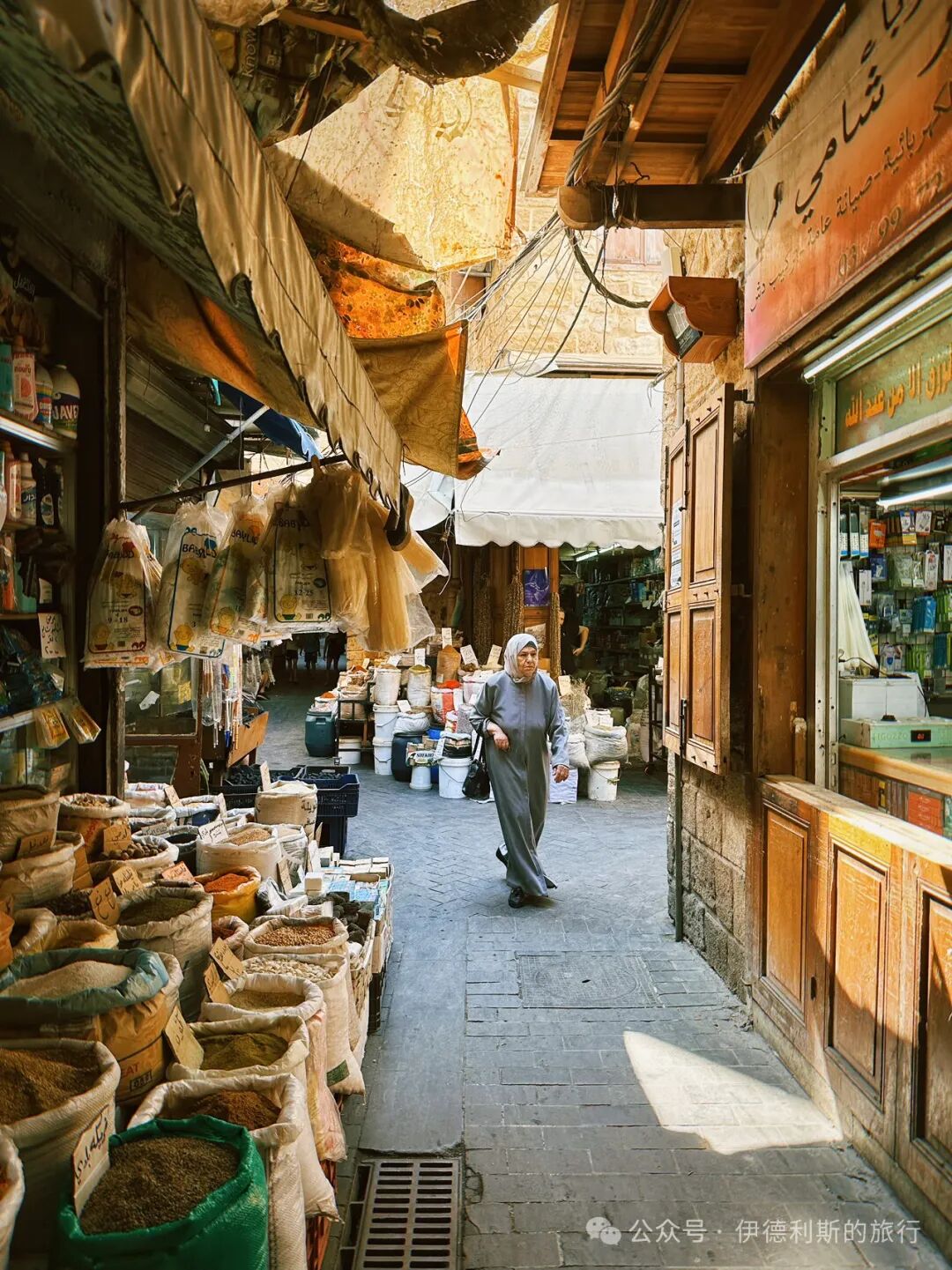
In the market inside the ancient city of Sidon, you can buy fresh dates, which have a soft, powdery texture and taste great. You can also buy traditional clothing here, which feels very unique.
Food
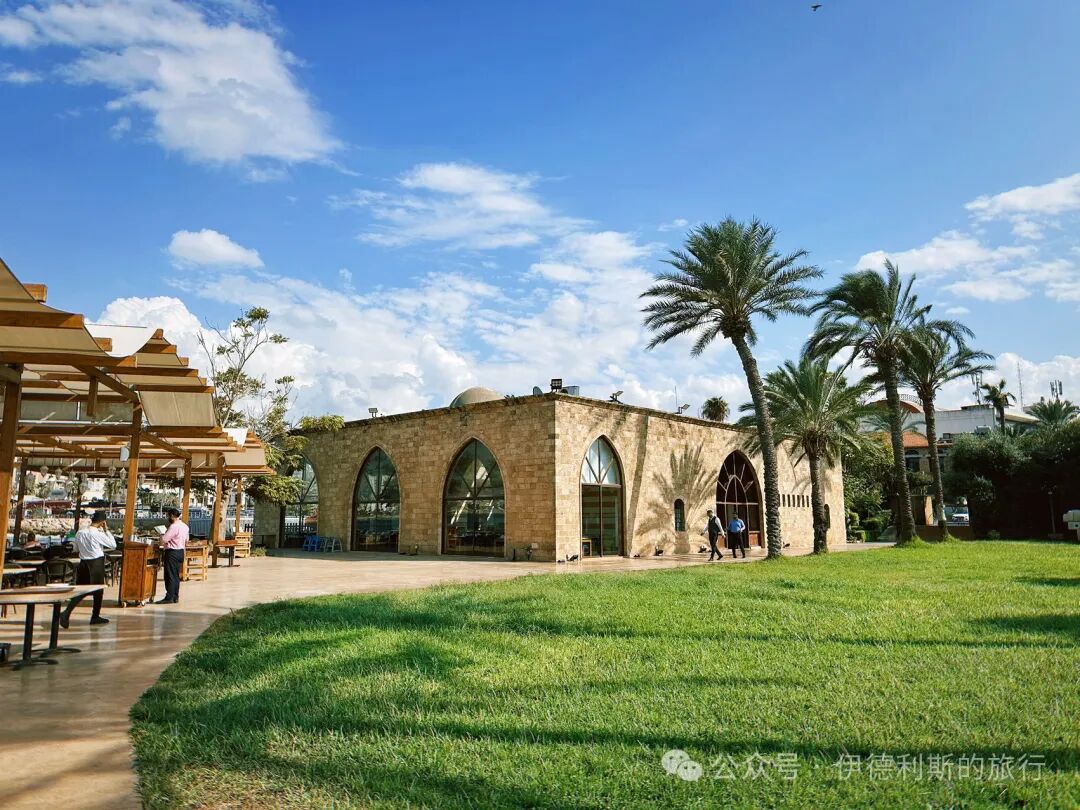
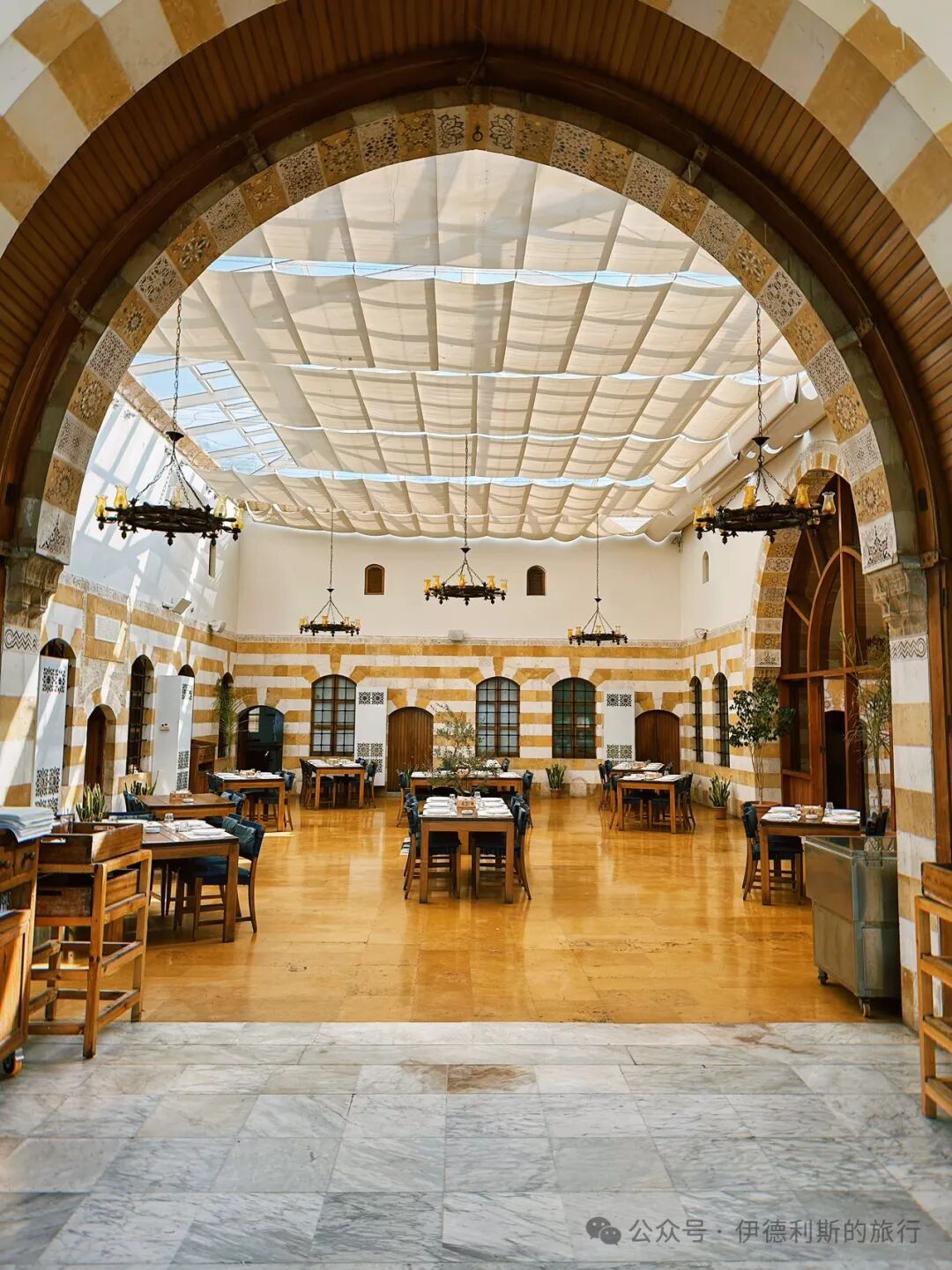
On the shore next to the Sea Castle is a very famous restaurant called Saida Rest House. The restaurant preserves an Ottoman-era inn (Khan) with exquisite inlaid marble and colorful carvings, and the lighting inside is excellent.
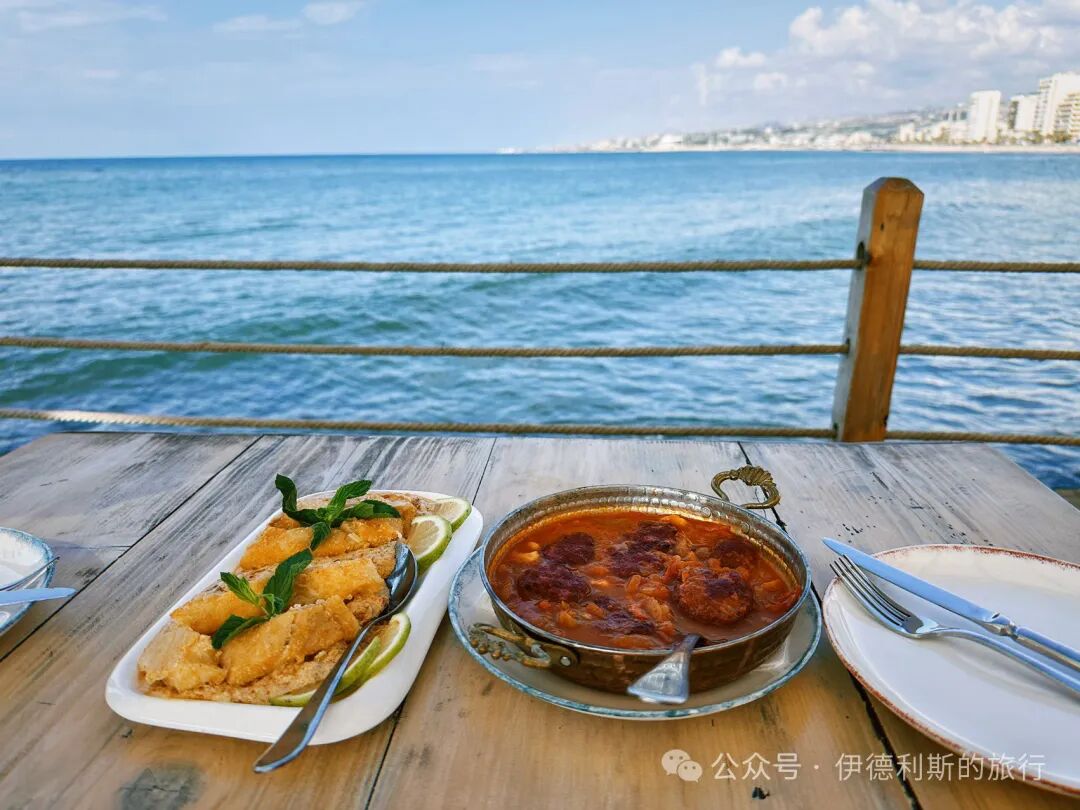
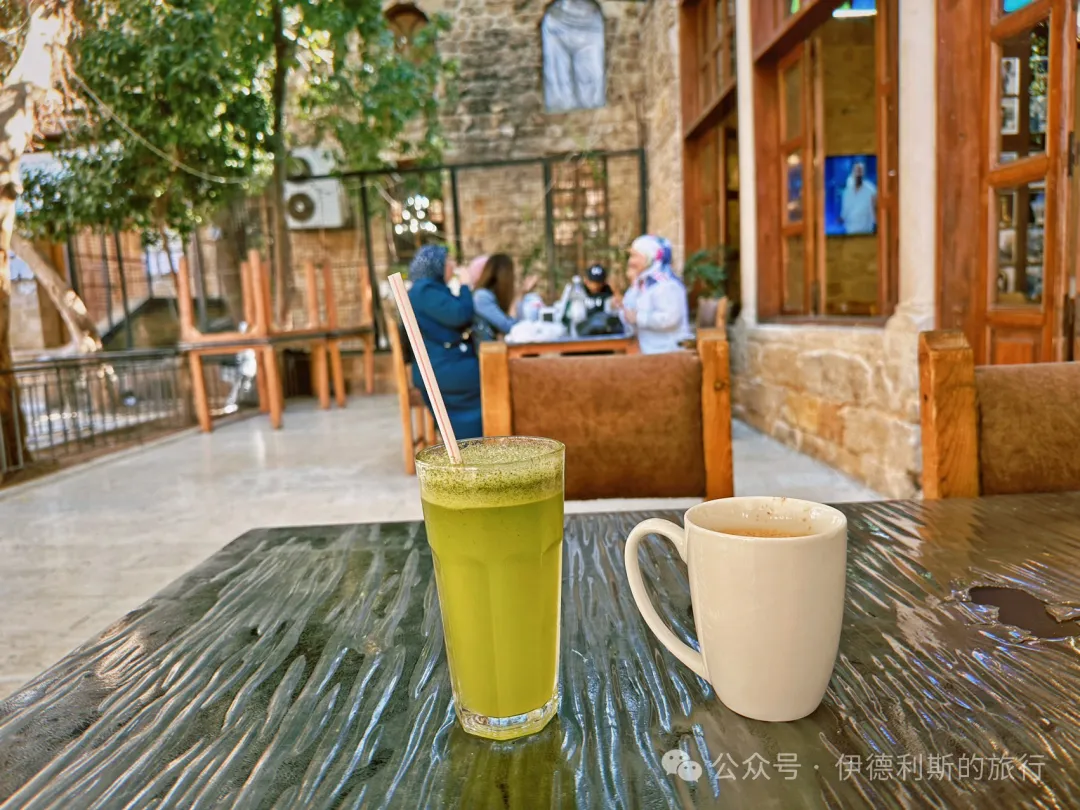
Have a mint lemonade at Bab Al Saray Cafe in the small square in the center of the old city of Sidon. It is one of the oldest cafes in Sidon, and People say their brunch is also very authentic.
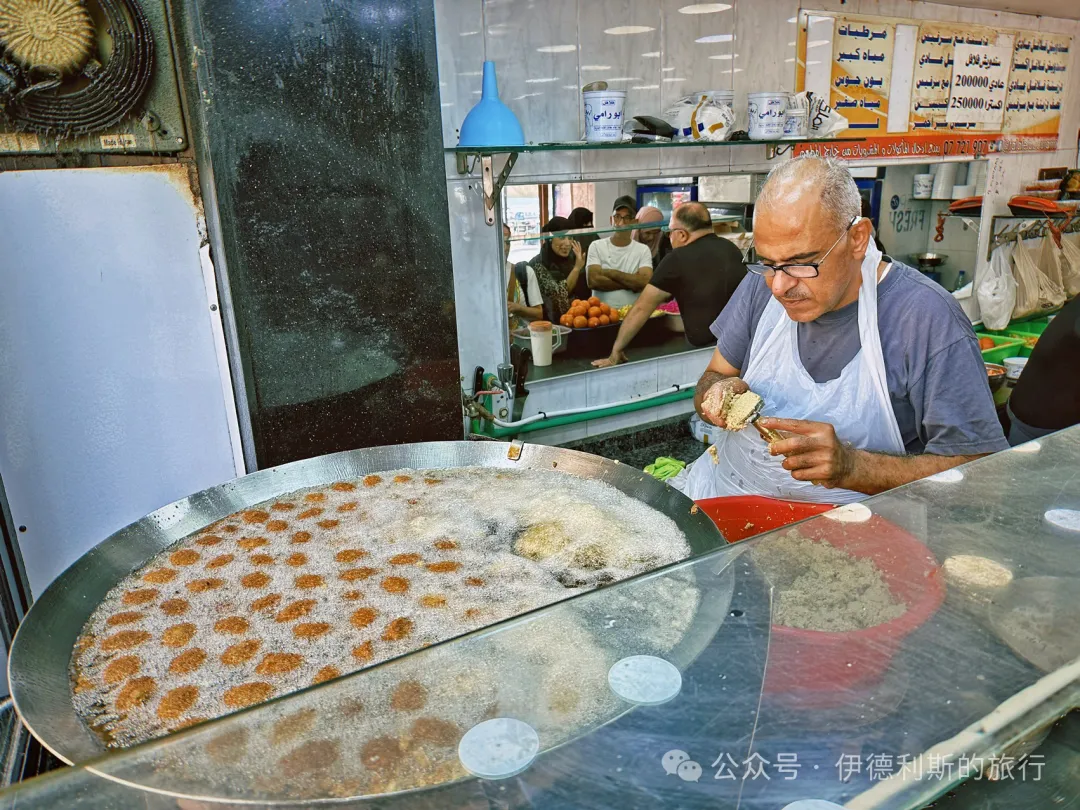
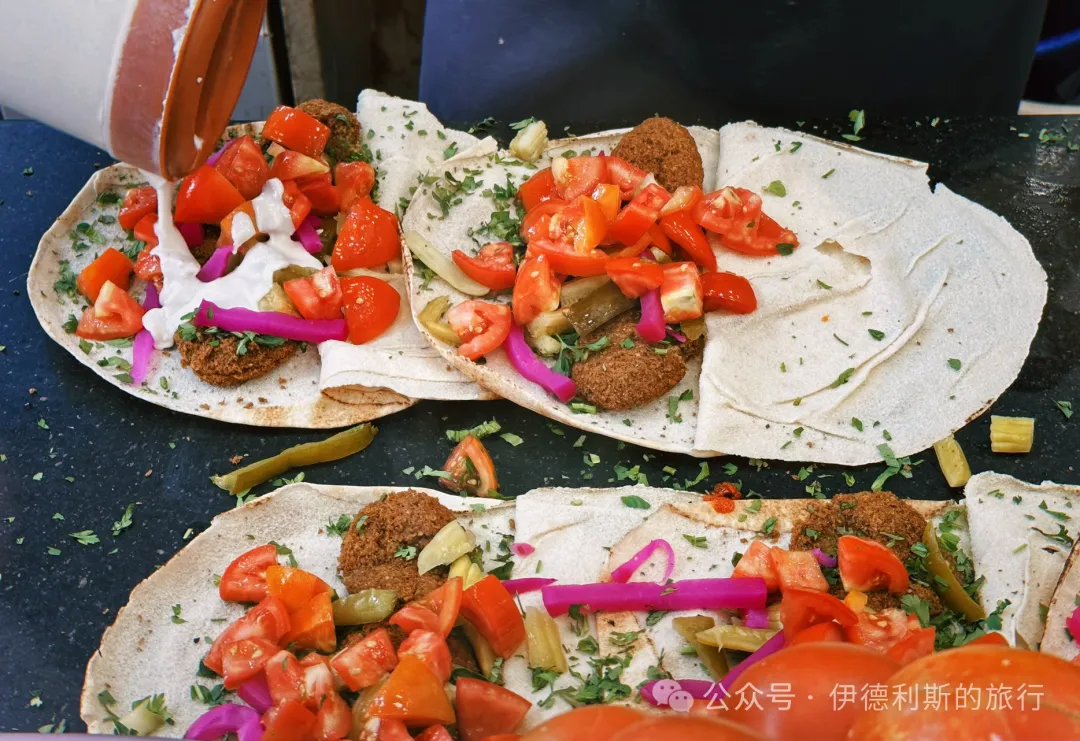
The famous falafel shop in the ancient city is Falafel Abou Rami. They opened in 1988 and are very famous in Lebanon. Their falafel is made from a mixture of chickpeas and fava beans, and it is fried fresh to order. You can add pickled cucumbers, pickled tomatoes, and yogurt to make a salad, or wrap it in flatbread (bing). We bought one wrap and it was enough for two people; the portion is huge!
Mosque
El Kikhia Mosque was built in 1625 by Mahmoud Kitkhuda and is a representative Ottoman-era mosque in Lebanon. This mosque is famous for its six domes, and the main hall features a white marble pulpit (minbar).
Across from El Kikhia Mosque is Al-Qtaishieh Mosque, where we performed our afternoon prayer (asr). Al-Qtaishieh Mosque was built in the 16th century by Sheikh Ali Ibn Mohammad Qtaish and houses beautiful Ottoman tiles.
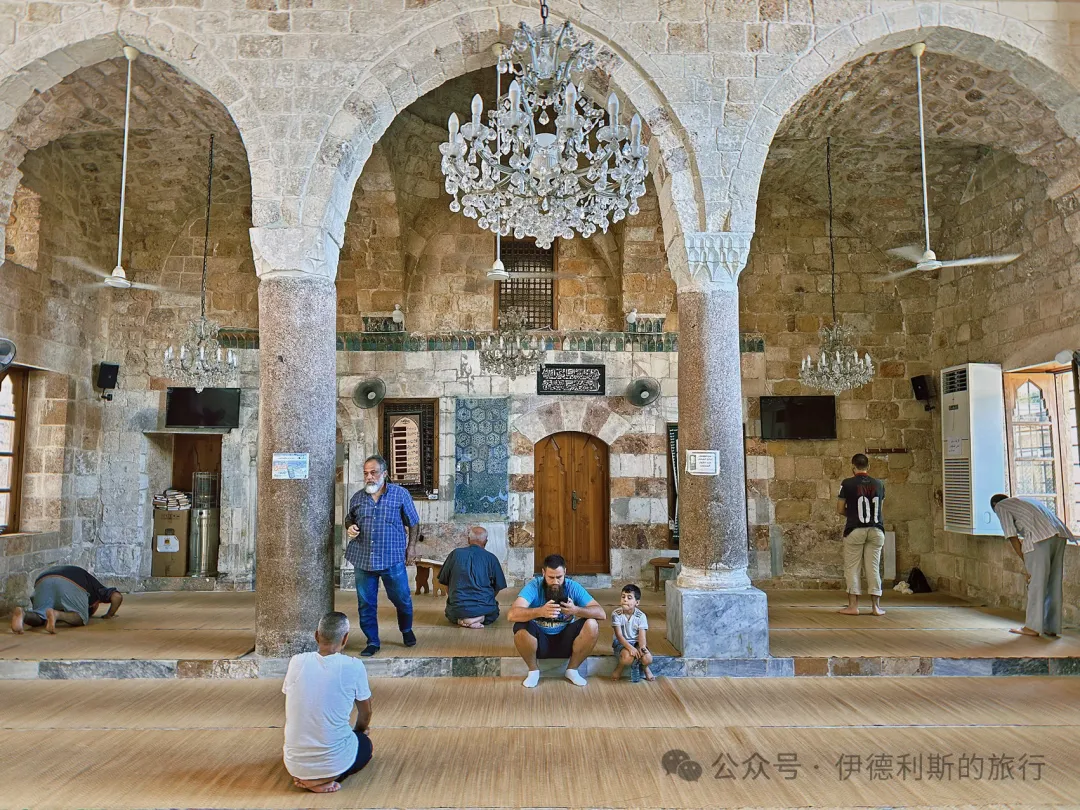
The Great Mosque of El-Omari is the main mosque in the old city of Sidon, and it is where the Eid prayer is held. The Great Mosque of El-Omari is located on a hillside on the west side of the old city of Sidon and is built of massive sandstone over a meter thick.
The architecture of the Great Mosque of El-Omari dates back to the Crusader era; in the 13th century, the Knights Hospitaller built it as a military fortress, including a dining hall, a church, and stables. In 1291, the Mamluk Sultan Al-Ashraf Khalil (reigned 1290-93) conquered the Crusader castles, including Sidon, ending the Crusader states that had existed for nearly two hundred years. The Mamluk dynasty then built the Great Mosque of El-Omari on the foundation of the Knights Hospitaller fortress.
The main hall of the Great Mosque of El-Omari retains the style of the Crusader church, with a ten-meter-high ceiling supported by five sturdy buttresses. The Mamluk dynasty changed the orientation of the main hall from east-west to north-south, added a prayer niche (mihrab) and a pulpit (minbar) on the south side, and added an outer courtyard with a water room and a school on the north side. In the late 19th century, the Ottoman Empire renovated the Great Mosque of El-Omari and built the current minaret.
During the 1982 Israeli invasion of Lebanon, the Great Mosque of El-Omari was hit by artillery fire multiple times and was severely damaged. The Hariri Foundation led the restoration of the site in 1986, and it received the Aga Khan Award for Architecture in 1989.
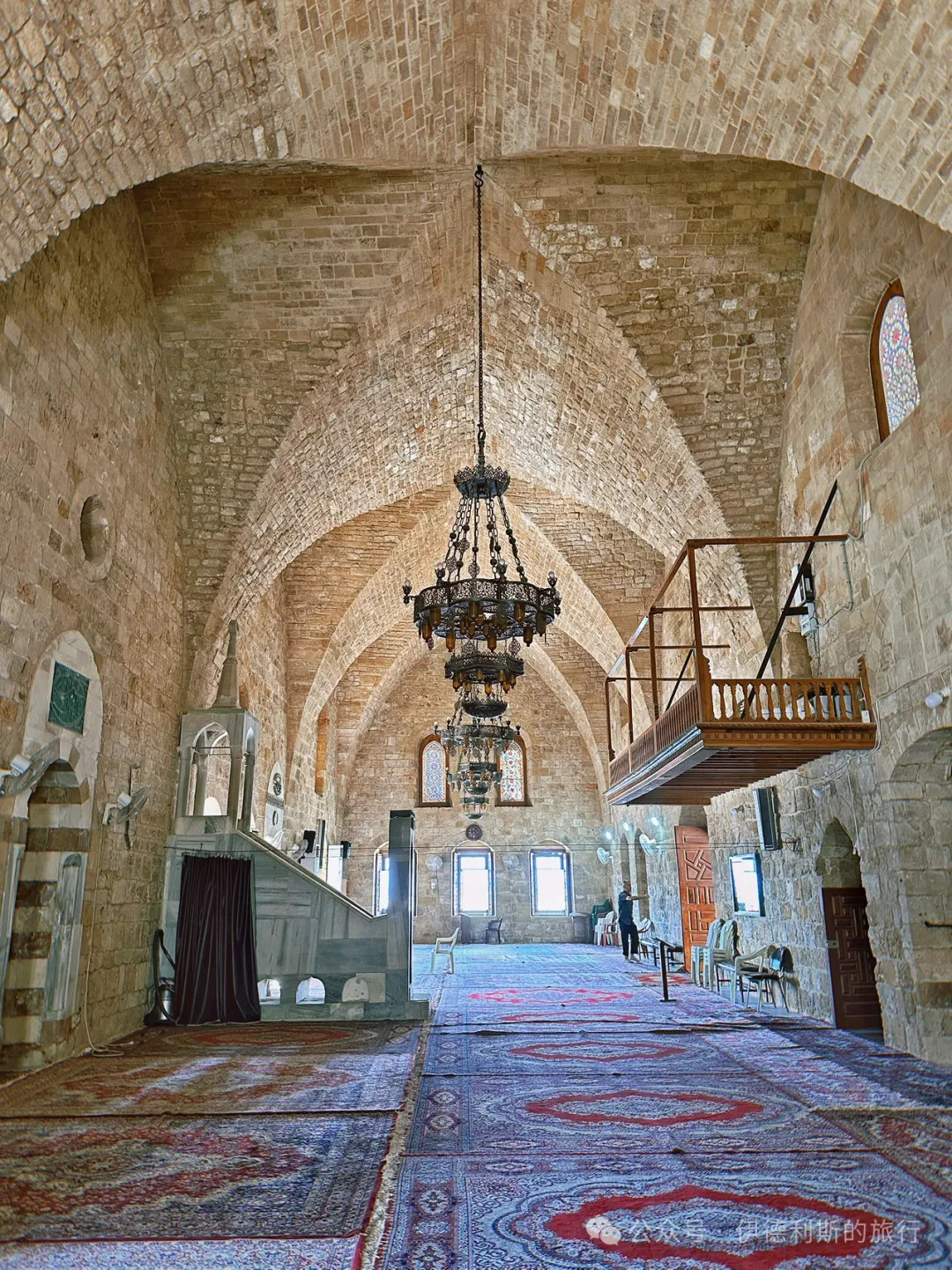
Al-Bahr Mosque was built in 1373 with a donation from Hassan bin Sawah; it features Mamluk-era architectural styles, including thick walls and cross-vaults, and uses granite columns from the ancient Roman period.
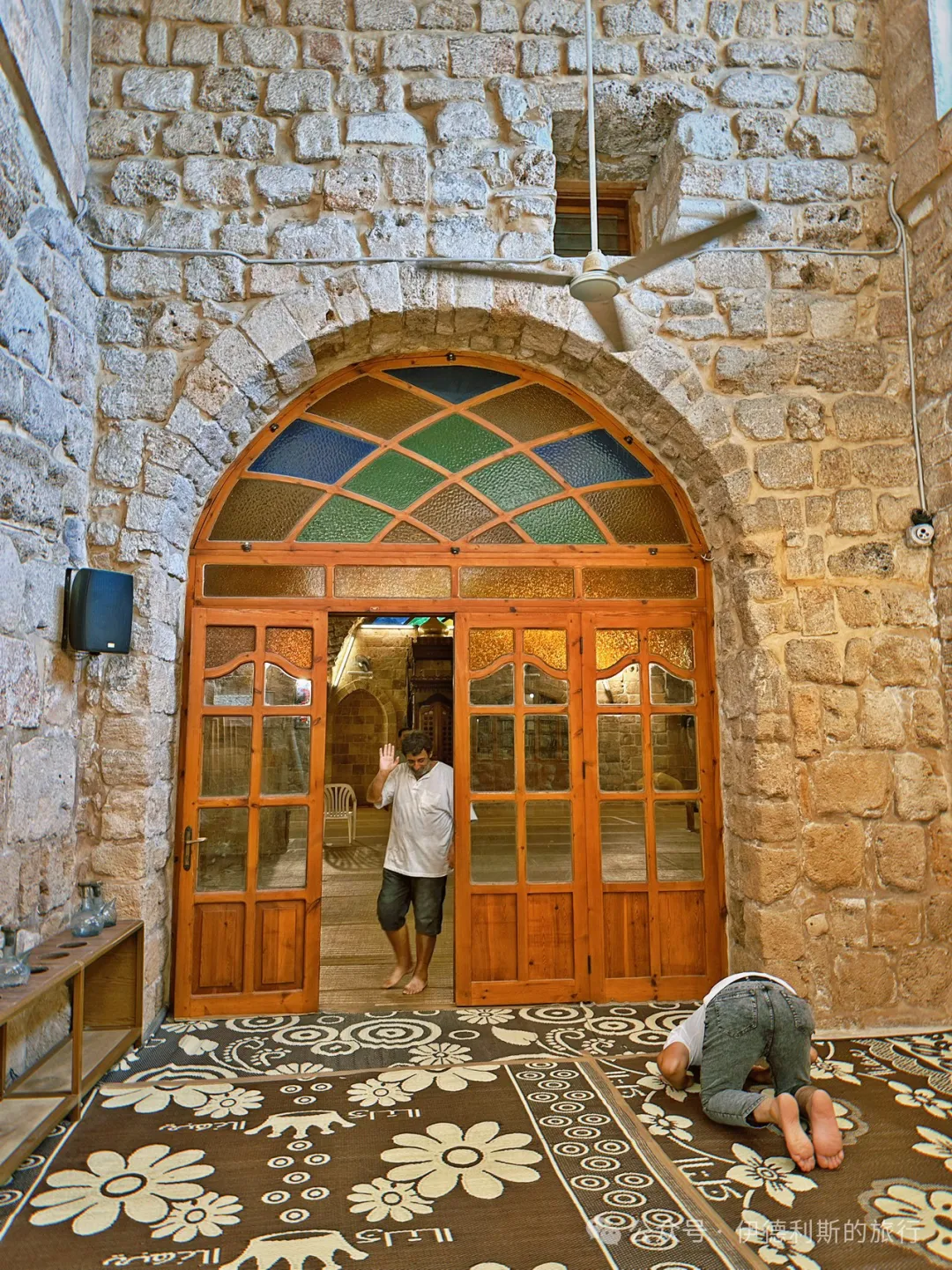
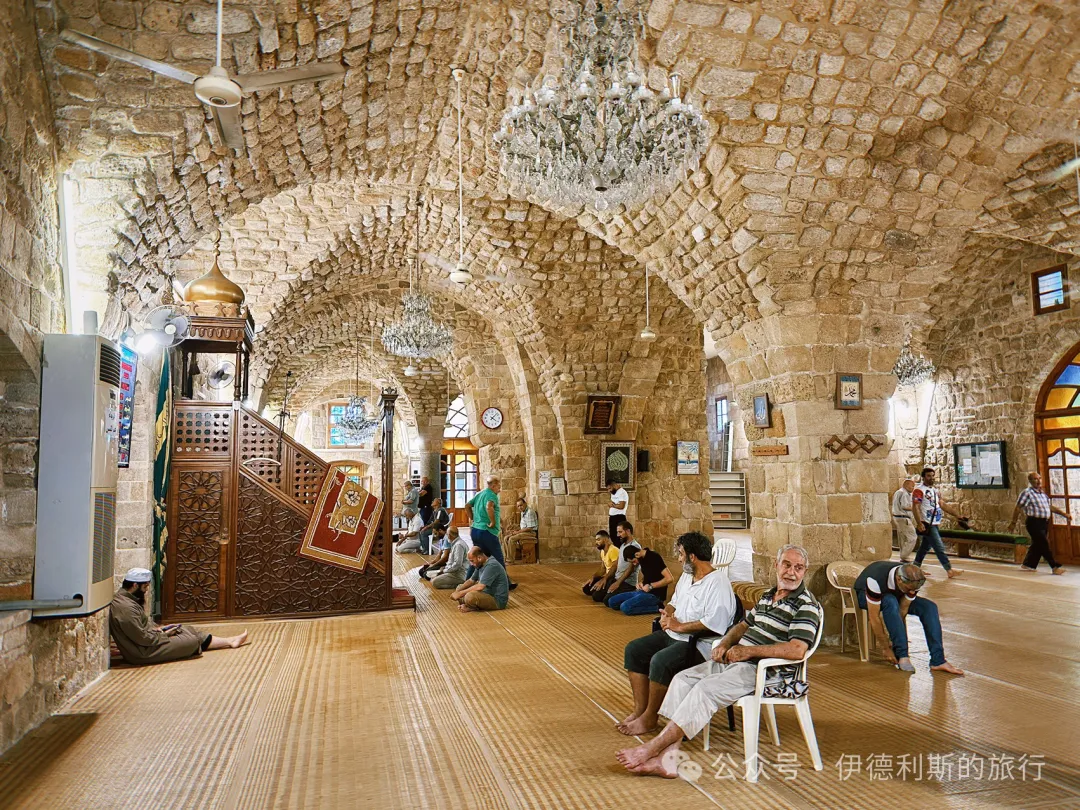
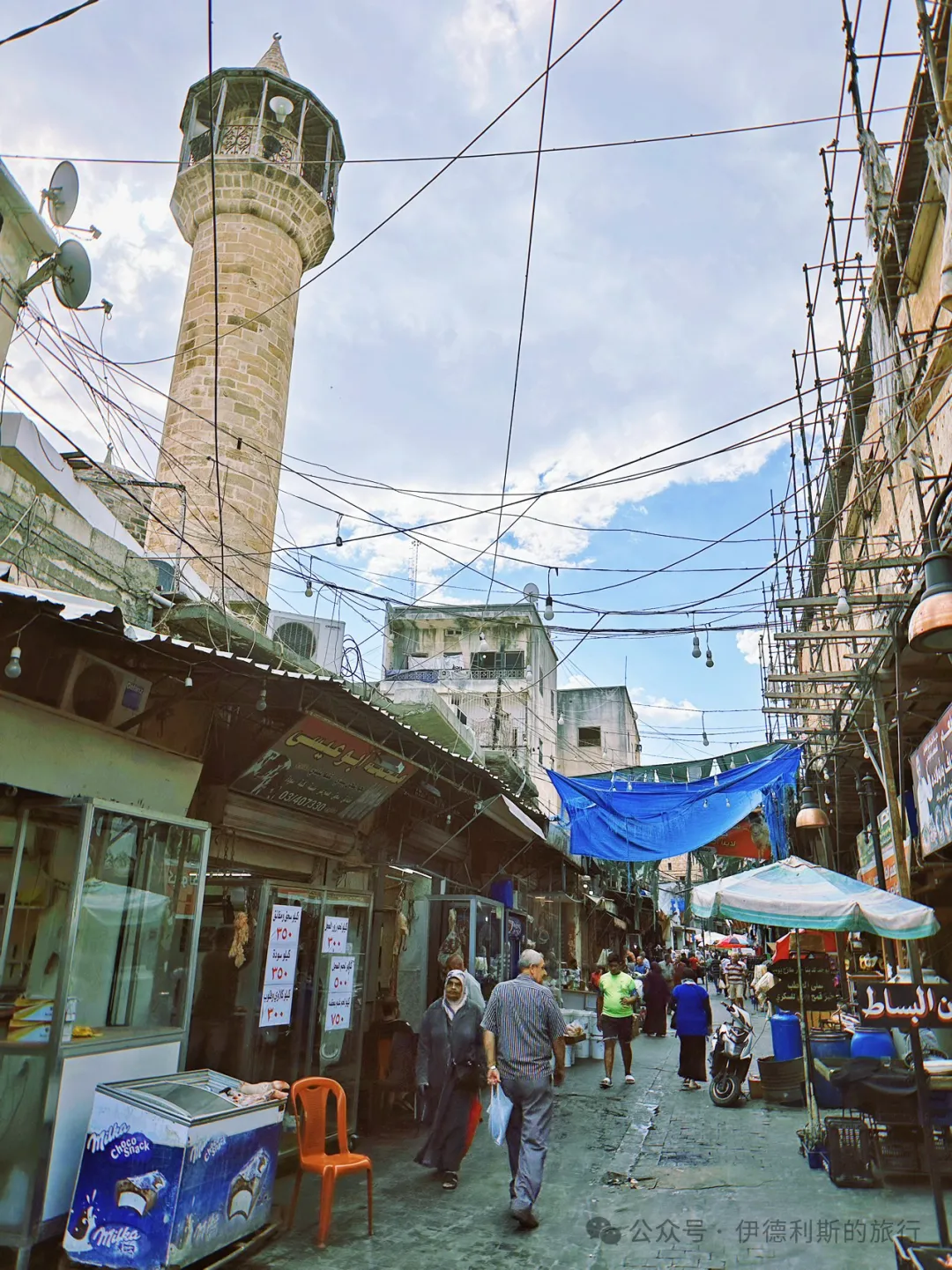
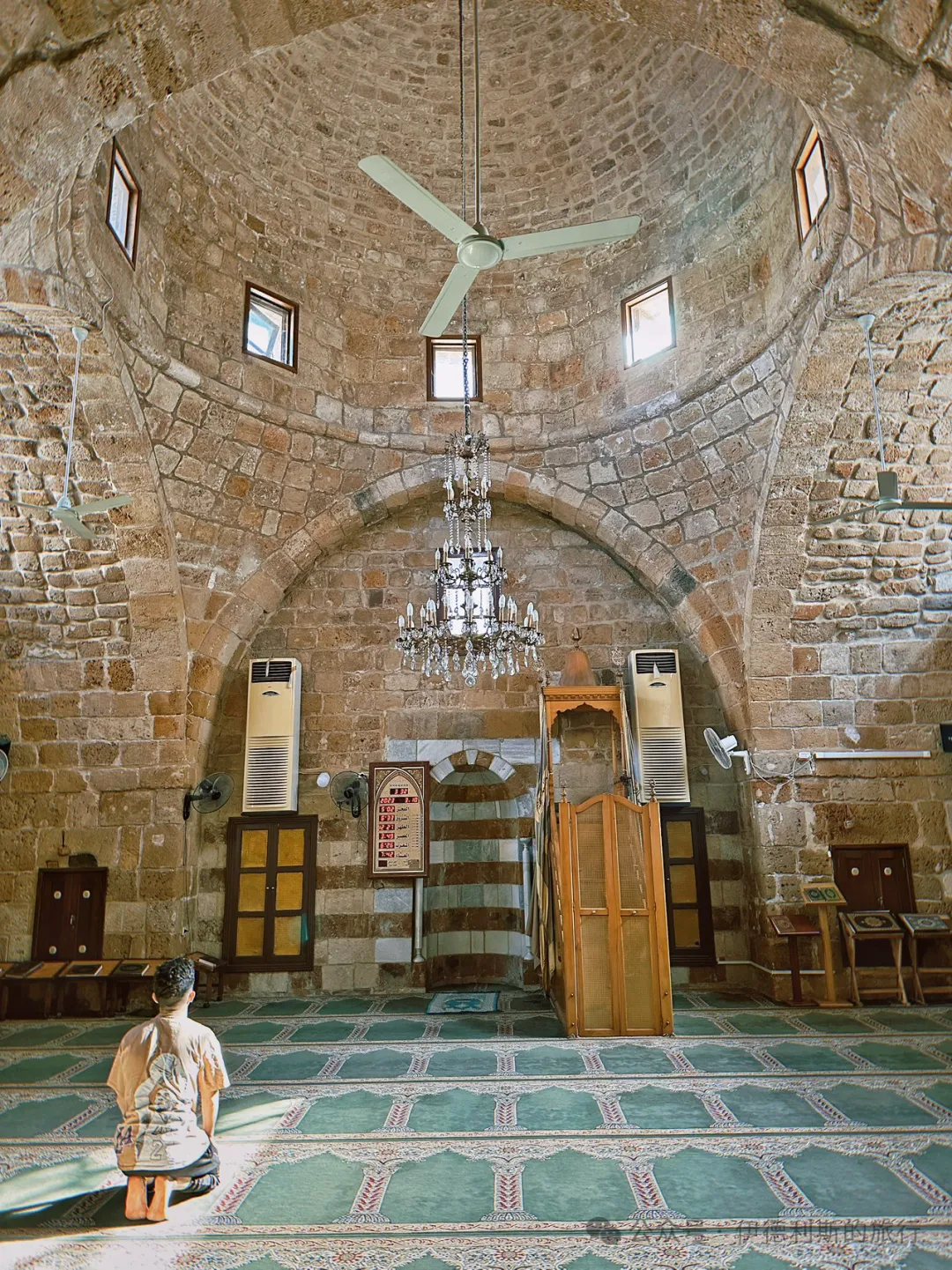
El Barrane Mosque is at the entrance to the northern market. Many mosques in Lebanon only open for the five daily prayers and are locked at other times. This mosque was built in the late 16th and early 17th centuries during the reign of the Druze Emir Fakhr al-Din II. Barrani means "outside," because at that time, this mosque was located outside the north gate of the old city, the Beirut Gate.
Inn
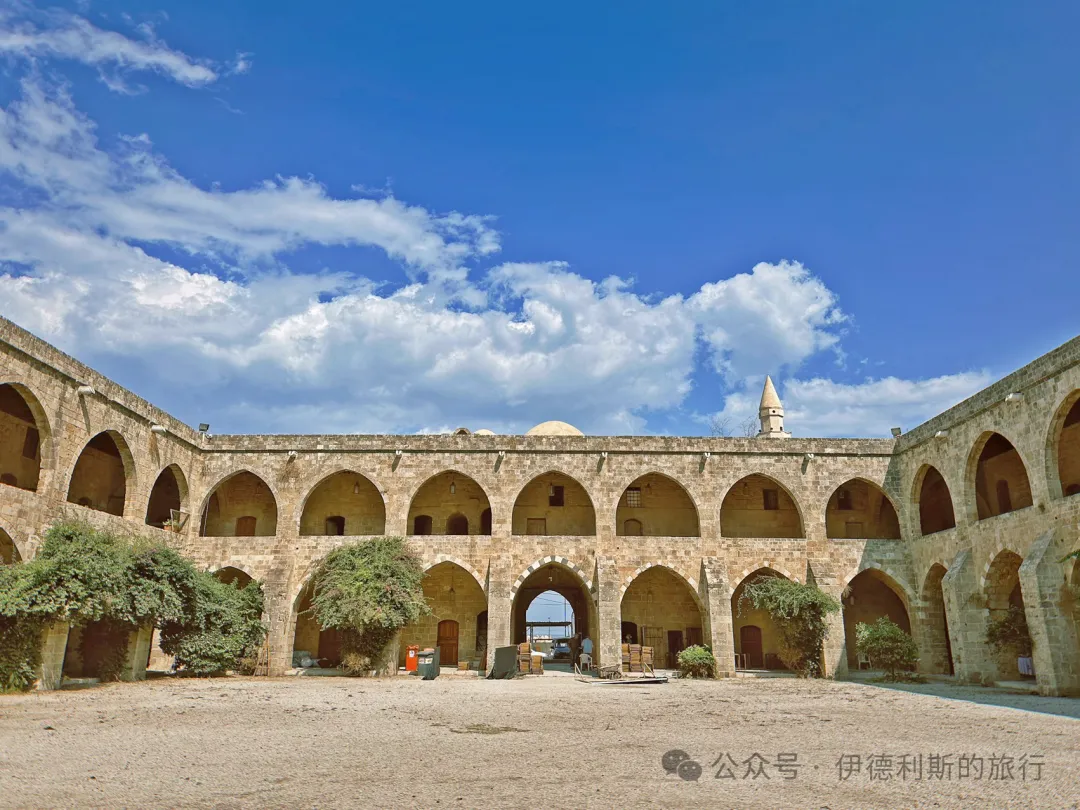
From the Hammam Al Jadeed bathhouse, head west through the intricate alleys to reach the massive Ottoman caravanserai, Khan al-Franj. Khan al-Franj inn was built in the late 16th century by order of the Ottoman Grand Vizier Sokollu Mehmed Pasha, who served from 1565 to 1579. The inn has a large courtyard, with the ground floor used for storing goods and the second floor for travelers to live in, which is the typical structure of an Ottoman caravanserai.
The inn served as the residence for the French consul in the early 17th century, which is why it is called the French Inn. The property is currently owned by France, and the French Cultural Institute is located here. The Hariri Foundation leased the space for 35 years, restoring the heritage site and opening it as a cultural center that hosts various events from time to time.
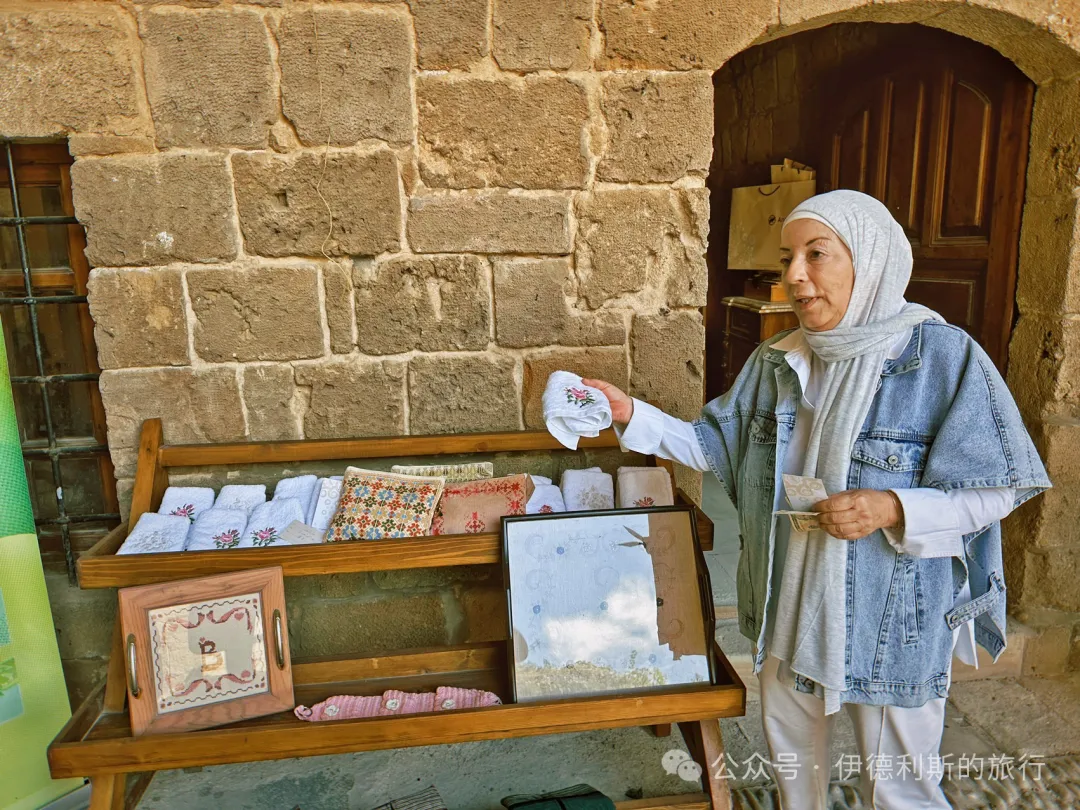
You can buy handicrafts made by local Lebanese women at the inn, and we bought a hand-woven hat. This is part of the Hariri Foundation's effort to create jobs for local women and promote tourism and handicrafts in Sidon.
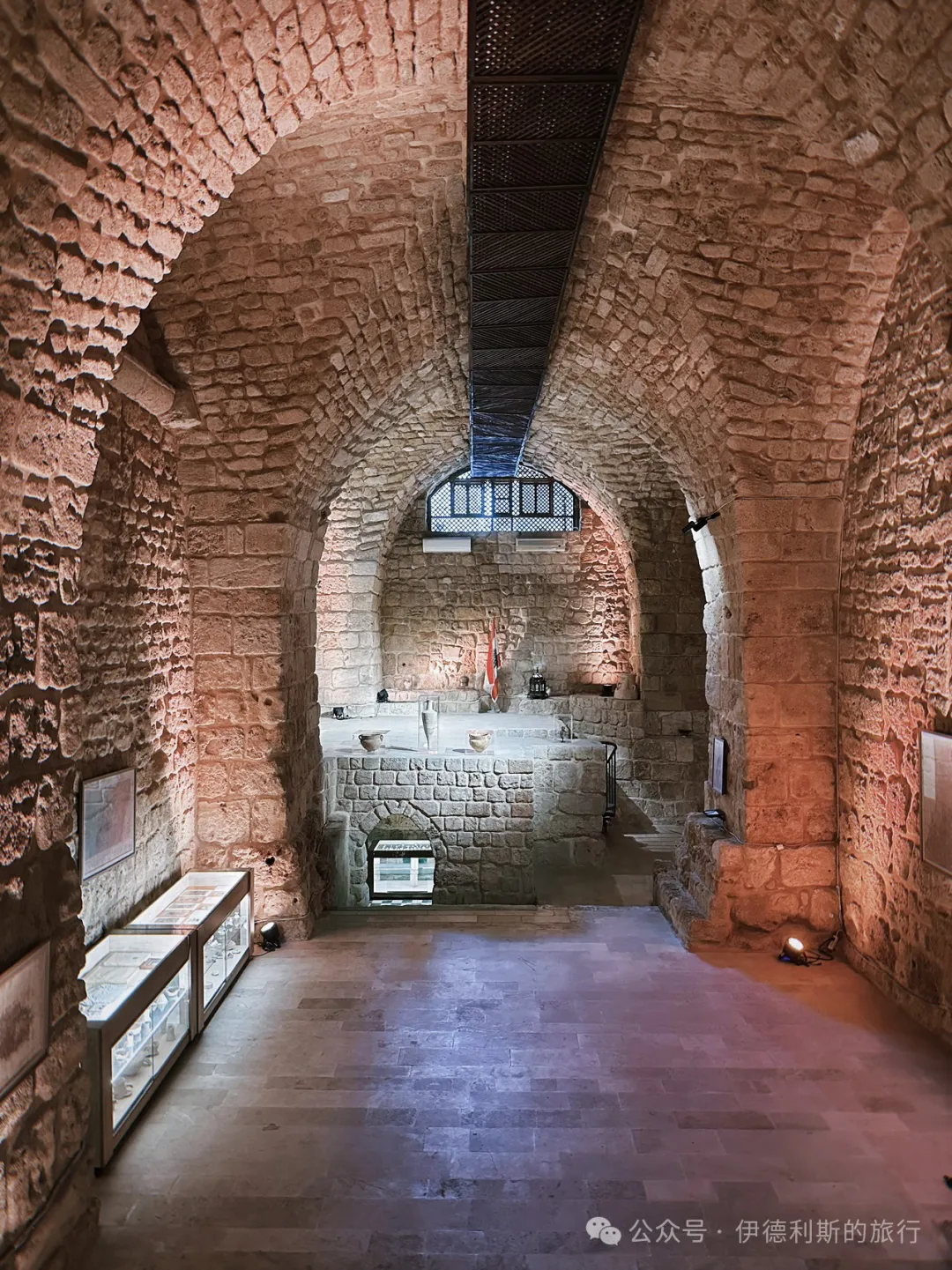
Entering the old city of Sidon from the north, the first attraction is the underground Khan Sacy Archaeological Museum. Khan Sacy consists of several arched rooms, which date back to stables and warehouses from the Crusader period (1099-1291). Since 2010, archaeological excavations at Khan Sacy have uncovered two bathrooms from the Mamluk period (1201-1517), three wells of different architectural styles, and a multi-purpose oven from the Ottoman period (1517-1918).
Hammam
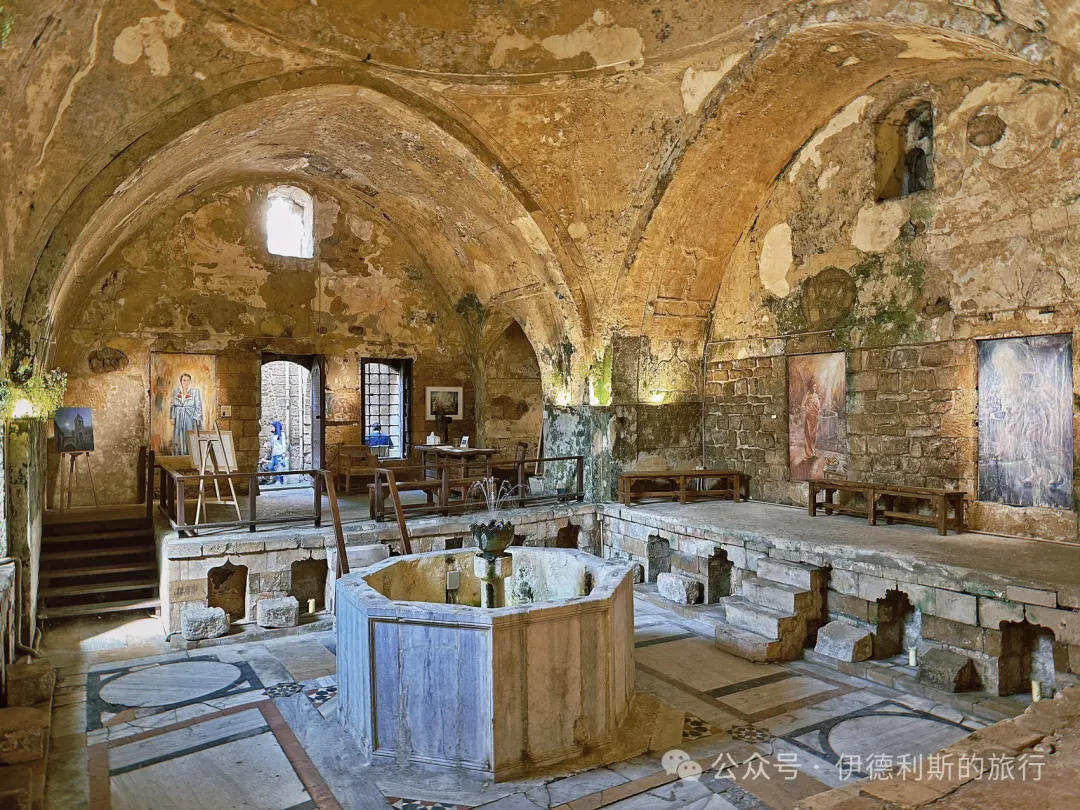
Continuing south along the main road of the old city of Sidon, you can see the largest Turkish bath in the old city, Hammam Al Jadeed. Hammam Al Jadeed was built in 1720 by the Moroccan merchant Mustafa Hammoud and is a representative example of a Turkish bath in Lebanon during the Ottoman period. The bathhouse consists of 10 rooms, including bathing, massage, and sauna areas, each connected by corridors and decorated with unique marble floors and skylights.
This bathhouse was used until 1948, when it closed due to the spread of tap water pipes. The bathhouse was later used as a carpentry workshop and warehouse, and it was damaged during the Lebanese Civil War (1975-1990). During the Israeli invasion of Lebanon in 1982, one of the domes of the bathhouse was shelled and has not been repaired to this day. In 2018, Said Bacho, founder and president of the Sharqy Foundation for Cultural Development and Innovation, acquired the Hammam Al Jadeed bathhouse. In 2019, the bathhouse, which had been closed for 71 years, reopened as a historical site.
Workshop
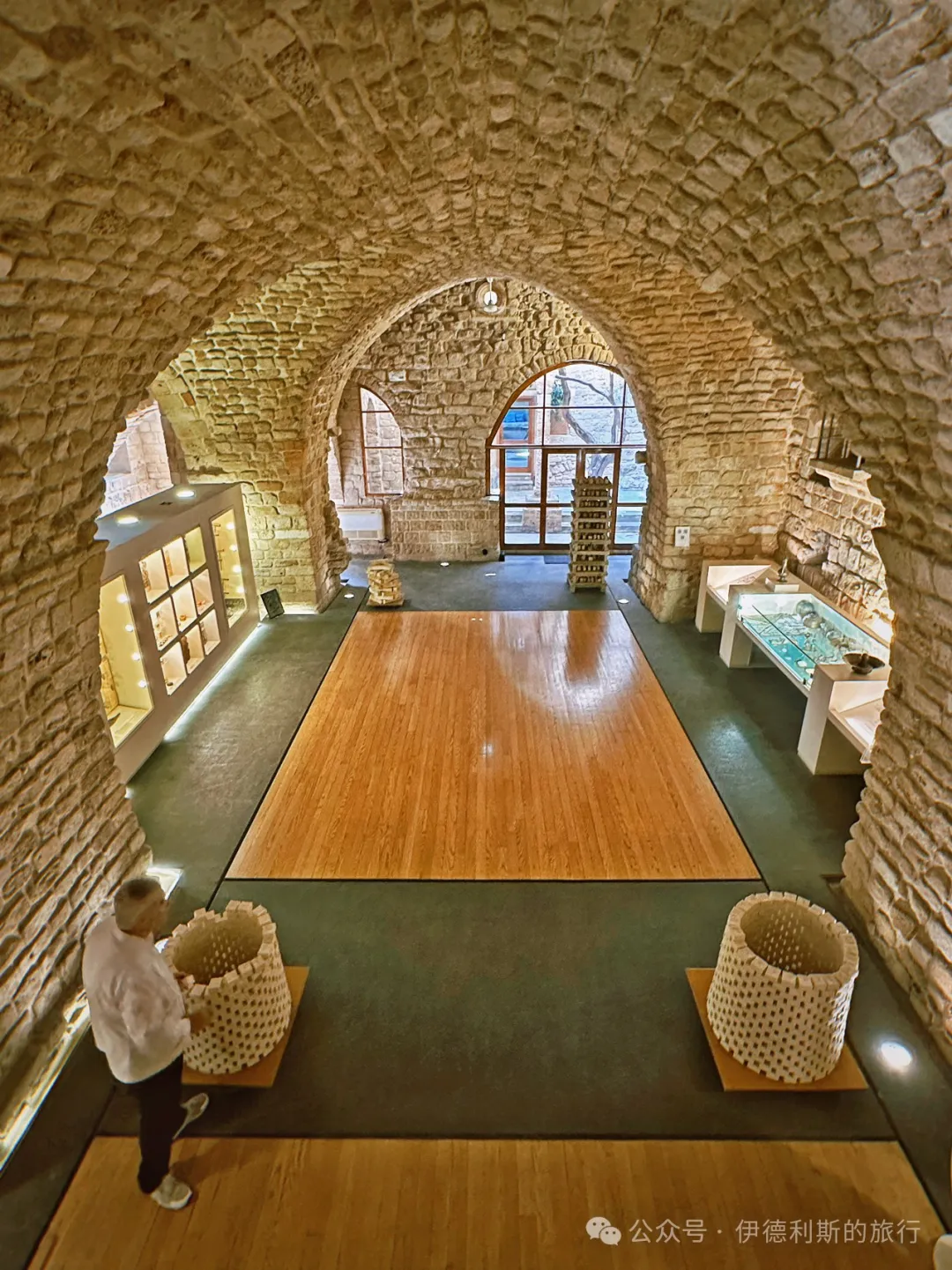
After leaving the Great Mosque of Omar, we went to visit the Sidon Soap Museum. The soap workshop where the museum is located was built by Hammoud in the 17th century, taken over by the Audi family in the 1880s, and had a residence added upstairs. In the 1950s, the Audi family left Sidon for Beirut, and the building became a school. It was abandoned during the Lebanese War in the 1980s, and refugees lived on the first floor. The Audi Foundation began restoring the workshop in 1996 and opened it as a soap museum in 2000.
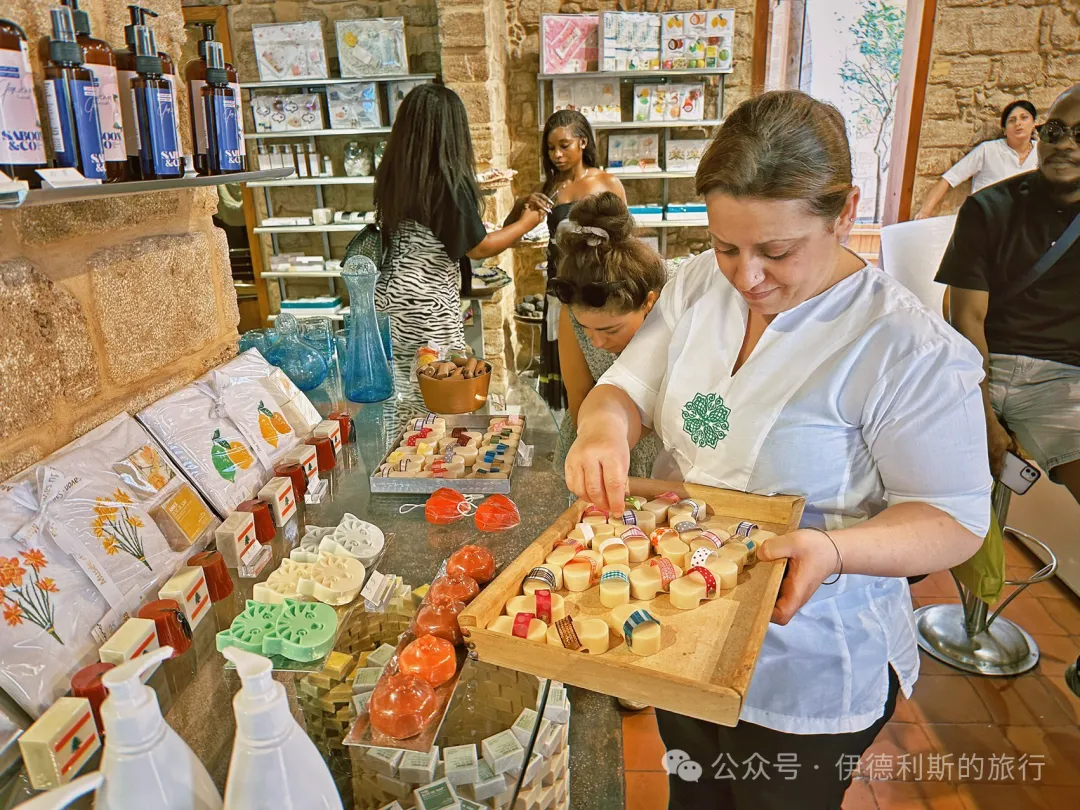
At the soap museum, you can learn how traditional olive oil soap is made and see the remains of the workshop's plumbing from the 17th to 19th centuries. The museum's gift shop is worth a visit. You can buy traditional olive oil soap there, as well as a variety of creative scented soaps.
Summary: Sidon, also known as Saida, is shown through its old streets, mosques, sea views, markets, and local food. This account follows the original day trip south from Beirut while keeping the place names and photos in order.
We took a minibus from the southern suburbs of Beirut and traveled 40 kilometers south to reach Sidon, the third-largest city in Lebanon. Sidon has a history of over 6,000 years and is one of the oldest cities in the world. It played a key role in Mediterranean trade and is now a well-preserved Sunni ancient city on the eastern coast of the Mediterranean.
Castle
The landmark of the ancient city of Sidon is the Sea Castle (Qalaat al-Bahr) located on a small island to the north. It was built by the Crusaders in 1228 and connects to the mainland via an 80-meter-long bridge. The Sea Castle was destroyed many times and was repaired and expanded during the Mamluk and Ottoman dynasties. Today, the Sea Castle consists of two towers. You can see many Roman-era stone columns on the outer walls, and there is a small domed mosque built during the Ottoman period on the roof.
Opposite the Sea Castle, there is a Land Castle on a hill in the southern part of the ancient city. They guard the safety of the ancient city from both ends.
The Land Castle is also called the Castle of Mu'izz or the Castle of Saint Louis. It was ordered to be built in the late 10th century by the fourth Fatimid Caliph, al-Mu'izz li-Din Allah (reigned 953-975), and was named the Castle of Mu'izz.
In 1253, King Louis IX of France (known as Saint Louis), the leader of the Seventh Crusade, ordered the reconstruction of the walls of Sidon. The Land Castle was also rebuilt during this period and has since been called the Castle of Saint Louis. Fakhr al-Din II, the Druze Emir who ruled Lebanon in the 17th century, rebuilt the castle again, but it later fell into ruins, and parts of the walls collapsed in the late Ottoman era.
In 1948, when Israel carried out a mass expulsion of Palestinians, the Land Castle served as a shelter for Palestinian refugees. To persecute Palestinian refugees, Israel ruthlessly shelled the Land Castle, causing further damage. These scars have become a witness to the suffering of the Palestinian people.
Streets
Entering the labyrinthine streets of the ancient city from the north gate, many houses are built over the streets, forming tunnels. People set up stalls in these tunnels, selling a wide variety of goods, which makes the area feel very lively.
Market
In the market inside the ancient city of Sidon, you can buy fresh dates, which have a soft, powdery texture and taste great. You can also buy traditional clothing here, which feels very unique.
Food
On the shore next to the Sea Castle is a very famous restaurant called Saida Rest House. The restaurant preserves an Ottoman-era inn (Khan) with exquisite inlaid marble and colorful carvings, and the lighting inside is excellent.
Have a mint lemonade at Bab Al Saray Cafe in the small square in the center of the old city of Sidon. It is one of the oldest cafes in Sidon, and People say their brunch is also very authentic.
The famous falafel shop in the ancient city is Falafel Abou Rami. They opened in 1988 and are very famous in Lebanon. Their falafel is made from a mixture of chickpeas and fava beans, and it is fried fresh to order. You can add pickled cucumbers, pickled tomatoes, and yogurt to make a salad, or wrap it in flatbread (bing). We bought one wrap and it was enough for two people; the portion is huge!
Mosque
El Kikhia Mosque was built in 1625 by Mahmoud Kitkhuda and is a representative Ottoman-era mosque in Lebanon. This mosque is famous for its six domes, and the main hall features a white marble pulpit (minbar).
Across from El Kikhia Mosque is Al-Qtaishieh Mosque, where we performed our afternoon prayer (asr). Al-Qtaishieh Mosque was built in the 16th century by Sheikh Ali Ibn Mohammad Qtaish and houses beautiful Ottoman tiles.
The Great Mosque of El-Omari is the main mosque in the old city of Sidon, and it is where the Eid prayer is held. The Great Mosque of El-Omari is located on a hillside on the west side of the old city of Sidon and is built of massive sandstone over a meter thick.
The architecture of the Great Mosque of El-Omari dates back to the Crusader era; in the 13th century, the Knights Hospitaller built it as a military fortress, including a dining hall, a church, and stables. In 1291, the Mamluk Sultan Al-Ashraf Khalil (reigned 1290-93) conquered the Crusader castles, including Sidon, ending the Crusader states that had existed for nearly two hundred years. The Mamluk dynasty then built the Great Mosque of El-Omari on the foundation of the Knights Hospitaller fortress.
The main hall of the Great Mosque of El-Omari retains the style of the Crusader church, with a ten-meter-high ceiling supported by five sturdy buttresses. The Mamluk dynasty changed the orientation of the main hall from east-west to north-south, added a prayer niche (mihrab) and a pulpit (minbar) on the south side, and added an outer courtyard with a water room and a school on the north side. In the late 19th century, the Ottoman Empire renovated the Great Mosque of El-Omari and built the current minaret.
During the 1982 Israeli invasion of Lebanon, the Great Mosque of El-Omari was hit by artillery fire multiple times and was severely damaged. The Hariri Foundation led the restoration of the site in 1986, and it received the Aga Khan Award for Architecture in 1989.
Al-Bahr Mosque was built in 1373 with a donation from Hassan bin Sawah; it features Mamluk-era architectural styles, including thick walls and cross-vaults, and uses granite columns from the ancient Roman period.
El Barrane Mosque is at the entrance to the northern market. Many mosques in Lebanon only open for the five daily prayers and are locked at other times. This mosque was built in the late 16th and early 17th centuries during the reign of the Druze Emir Fakhr al-Din II. Barrani means "outside," because at that time, this mosque was located outside the north gate of the old city, the Beirut Gate.
Inn
From the Hammam Al Jadeed bathhouse, head west through the intricate alleys to reach the massive Ottoman caravanserai, Khan al-Franj. Khan al-Franj inn was built in the late 16th century by order of the Ottoman Grand Vizier Sokollu Mehmed Pasha, who served from 1565 to 1579. The inn has a large courtyard, with the ground floor used for storing goods and the second floor for travelers to live in, which is the typical structure of an Ottoman caravanserai.
The inn served as the residence for the French consul in the early 17th century, which is why it is called the French Inn. The property is currently owned by France, and the French Cultural Institute is located here. The Hariri Foundation leased the space for 35 years, restoring the heritage site and opening it as a cultural center that hosts various events from time to time.
You can buy handicrafts made by local Lebanese women at the inn, and we bought a hand-woven hat. This is part of the Hariri Foundation's effort to create jobs for local women and promote tourism and handicrafts in Sidon.
Entering the old city of Sidon from the north, the first attraction is the underground Khan Sacy Archaeological Museum. Khan Sacy consists of several arched rooms, which date back to stables and warehouses from the Crusader period (1099-1291). Since 2010, archaeological excavations at Khan Sacy have uncovered two bathrooms from the Mamluk period (1201-1517), three wells of different architectural styles, and a multi-purpose oven from the Ottoman period (1517-1918).
Hammam
Continuing south along the main road of the old city of Sidon, you can see the largest Turkish bath in the old city, Hammam Al Jadeed. Hammam Al Jadeed was built in 1720 by the Moroccan merchant Mustafa Hammoud and is a representative example of a Turkish bath in Lebanon during the Ottoman period. The bathhouse consists of 10 rooms, including bathing, massage, and sauna areas, each connected by corridors and decorated with unique marble floors and skylights.
This bathhouse was used until 1948, when it closed due to the spread of tap water pipes. The bathhouse was later used as a carpentry workshop and warehouse, and it was damaged during the Lebanese Civil War (1975-1990). During the Israeli invasion of Lebanon in 1982, one of the domes of the bathhouse was shelled and has not been repaired to this day. In 2018, Said Bacho, founder and president of the Sharqy Foundation for Cultural Development and Innovation, acquired the Hammam Al Jadeed bathhouse. In 2019, the bathhouse, which had been closed for 71 years, reopened as a historical site.
Workshop
After leaving the Great Mosque of Omar, we went to visit the Sidon Soap Museum. The soap workshop where the museum is located was built by Hammoud in the 17th century, taken over by the Audi family in the 1880s, and had a residence added upstairs. In the 1950s, the Audi family left Sidon for Beirut, and the building became a school. It was abandoned during the Lebanese War in the 1980s, and refugees lived on the first floor. The Audi Foundation began restoring the workshop in 1996 and opened it as a soap museum in 2000.
At the soap museum, you can learn how traditional olive oil soap is made and see the remains of the workshop's plumbing from the 17th to 19th centuries. The museum's gift shop is worth a visit. You can buy traditional olive oil soap there, as well as a variety of creative scented soaps.
Halal Travel Guide: Tripoli, Lebanon - Mosques, Old City and Food
Articles • ali2007fr posted the article • 0 comments • 131 views • 2026-05-20 08:13
Reposted from the web
Summary: Tripoli in northern Lebanon is shown through its old city streets, mosques, markets, and everyday food. The account follows the original route from Beirut to Tripoli while keeping the local names, religious sites, and photographs in order.
Tripoli is in northern Lebanon. It takes about an hour to get there by minibus from across the street from the Mohammad Al-Amin Mosque in the capital, Beirut.
In 1289, the Mamluk dynasty took Tripoli from the Crusaders. They destroyed the old city and built a new one 4 kilometers inland below the castle, turning it into an important historic city for the faith. Today, about 35 ancient buildings from the Mamluk period remain in the old city of Tripoli. This makes Tripoli the city with the second-most preserved Mamluk monuments after Cairo.
After the Ottoman Empire left Lebanon in 1918, Tripoli fell into a long decline. The Lebanese Civil War that began in 1975 hit Tripoli hard. In 1985, a battle between Sunni and Alawite militias forced 200,000 people to leave their homes and led to the Syrian army staying in Tripoli until 2005. After the civil war ended, Tripoli seemed to be forgotten, and more than half of its residents live in poverty. At the same time, conflicts between Sunni and Alawite groups happen from time to time, often with bombings and suicide attacks, which has long made Tripoli an unsuitable place for tourism.
Table of Contents
Castle
Tripoli Castle: Rebuilt by the Mamluk dynasty in 1289 and again by Suleiman the Magnificent of the Ottoman Empire in 1521.
City Gates
Al-Mahatra Gate: Named after the military musicians who played to encourage the troops.
Mosques
Mansouri Great Mosque: Built by the Mamluk dynasty in 1294.
Taynal Mosque: Built by the Mamluk dynasty in 1336.
Attar Mosque: Built in the 1350s by a local wealthy perfume merchant; it is currently closed.
Al-Uwaysiyat Mosque: Built by the Mamluk dynasty in 1461.
Hanging Mosque (Muallaq Mosque): Built by the Ottoman Empire in 1561.
Tawba Mosque: Rebuilt by the Ottoman Empire in 1612.
Burtasi Mosque: Built by the Mamluk dynasty in the late 13th and early 14th centuries.
Madrasas
In the 14th century, the Mamluk dynasty built six madrasas around the Mansouri Great Mosque.
Hammam
Al Jadid Hammam: Built during the Ottoman period in 1740; it is currently closed.
Ezzedin Hammam: Built by the Mamluk dynasty in the late 13th century; it is currently open for visitors.
Market
Haraj Market: Built in the 14th century during the Mamluk dynasty.
Inn
Al Saboun Soap Inn: Built in 1480 during the late Mamluk dynasty, where you can buy traditional soap.
Misriyyin Soap Inn: Built in the 14th century during the Mamluk dynasty, where you can buy traditional soap.
Khayyatin Tailor Inn: Built in 1339 during the Mamluk dynasty, where you can buy traditional clothing.
Askar Inn: Built in the 14th century during the Mamluk dynasty, currently closed.
Food
Cheese flatbread in the market.
Eat at Akra Restaurant: Traditional bean stew brunch.
Castle
The site of Tripoli Castle was originally a Shia cemetery from the Fatimid dynasty. During the Frankish Crusader siege of Tripoli in 1102-1103, the Crusader leader Raymond of Saint-Gilles ordered it to be built into a castle, so it was later also called Saint-Gilles Castle. In 1289, after the Mamluk dynasty captured Tripoli, they rebuilt the castle using many Roman columns and other building materials found nearby. In 1521, the Ottoman Sultan Suleiman the Magnificent rebuilt the castle again, changing the arrow slits into cannon ports. In the early 19th century, the Ottoman governor of Tripoli carried out the last major renovation of the castle, giving it its current appearance.
The castle gate consists of two towers. The moat in front originally had a drawbridge, which has now been replaced by a stone bridge. The black and white marble facade on the gate was built by Suleiman the Magnificent in 1521. The stone inscription above reads: 'May the Emir never cease to obey his command, restoring this sacred castle, making it a strong fortress forever.'
City Gates
Al-Mahatra Gate in the old city of Tripoli. The name of this gate comes from the military musicians who played to encourage the army. Now that the war is over, houses have been built on top of the gate, and it has become a quiet alley.
Mosques
Mansouri Great Mosque, also known as the Great Mosque of Tripoli, was ordered to be built in 1294 by the Mamluk Sultan Al-Ashraf Khalil. It is the first building constructed by the Mamluk dynasty in Tripoli.
In 1109, the French Crusaders occupied Tripoli. For the next 180 years, Tripoli was ruled by European Christian nobles. In 1289, the Mamluk army arrived at the walls of Tripoli carrying large catapults. Under the assault of catapults, the two towers of Tripoli soon collapsed. The Mamluk army stormed the city and leveled it to the ground.
Shortly after, the Mamluk dynasty began building a new city at the foot of the castle on Tripoli's Pilgrim Mountain (Jabal al-Hajj). This included the Great Mansouri Mosque, built on the ruins of a Crusader church at the base of the hill. The mosque's minaret (mabkhara) is likely part of the Crusader Church of St. Mary, and the main gate may also incorporate the original Crusader church entrance. The main prayer hall was built by the Mamluk dynasty in 1294, and the courtyard's surrounding colonnades were added in 1314 by the Mamluk Sultan Al-Nasir Muhammad.
Taynal Mosque was built in 1336 by order of the Mamluk governor of Tripoli, Amir Taynal. The main prayer hall of Taynal Mosque consists of two consecutive halls. The most ornate feature is the entrance to the second hall, which has a gate with a stalactite-style cornice (muqarnas) and uses the ablaq technique of alternating black and white marble. Inside the prayer hall are some ancient Corinthian columns, which are thought to have come from a Crusader-era church or an even older Roman temple.
Attar Mosque was built in the 1350s by a wealthy local perfume merchant named Badr al-Din al-Attar on the ruins of a Crusader church. It was the first mosque in Tripoli not built by the Mamluks. Attar Mosque is known as one of the most beautiful mosques in Tripoli, but it has been closed for several years for renovations.
Al-Uwaysiyat Mosque was first built during the Mamluk period in 1461 and was renovated in 1534 during the reign of the Ottoman Sultan Suleiman the Magnificent.
The Hanging Mosque (Muallaq Mosque) was commissioned in 1561 by the Ottoman governor of Tripoli, Mahmud Lutfi al-Za'im, during the reign of Ottoman Sultan Suleiman the Magnificent. The first floor of the Hanging Mosque is a culvert on the street level, so you must take the stairs to the side to reach the second-floor prayer hall. The octagonal minaret next to the prayer hall is very eye-catching and features two levels of balconies.
The construction date of Tawba Mosque is unknown, though it is believed to have been built during the Mamluk period. Because it sits right next to the riverbank, the stone inscription marking its construction was likely washed away in a flood. The inscription currently at the mosque entrance states that it was rebuilt after a flood in 1612. Many mosques in Lebanon lock their doors outside of prayer times, so I could not enter and only saw the octagonal minaret.
Burtasi Mosque was built by Isa ibn Umar al-Burtasi during the Mamluk period. Since Isa passed away in 1324, we can assume the mosque was built between the late 13th century and 1324. A flood in 1955 destroyed all the houses around Burtasi Mosque, and it is now the only building left standing on the riverbank. The minaret above the main gate is considered the most beautiful minaret in Tripoli. Above the three-tiered muqarnas cornice is a square balcony featuring Moorish-style double-arched windows. This type of double arch is a classic structure found in Muslim architecture in Andalusia, southern Spain.
Madrasas
During the 14th century, the Mamluk dynasty established six colleges around the Great Mansouri Mosque, which trained a large number of students. These include al-Khayriyya Hasan (1309 or later), al-Qartawiyya (c. 1326), al-Shamsiyya (1349), al-Nasiriyya (between 1354–60), al-Nuriyya (14th century), and the Mashhad Madrasa. The al-Qartawiyya Madrasa outside the east wall of the Mansouri Great Mosque is the most magnificent, though we could not find the main gate in the maze-like alleys of the old city, we did see the calligraphy carvings on the school's wall.
Hammam
Right next to the Hanging Mosque is the Al Jadid bathhouse (Hammam), built in 1740 during the Ottoman period, which was used until the 1970s and closed after the outbreak of the Lebanese Civil War. This bathhouse was a gift to Tripoli from the Damascus governor Asad Pasha Al Azem, and its gate is exquisite, featuring a fourteen-link chain carved from a single piece of stone.
The Ezzedin bathhouse (Hammam) was the first public bathhouse built by the Mamluk dynasty after they occupied Tripoli, commissioned by Emir Ezzedin Aibek (who ruled Tripoli from 1293 to 1298) and constructed using many marble pieces from the Byzantine and Crusader eras. This bathhouse operated from the end of the 13th century until 1975, when it closed due to the start of the Lebanese Civil War. It has now been restored and is free to visit.
Market
The markets in Tripoli's old city are very lively, which is a sharp contrast to Beirut. Ibn Battuta wrote in his travelogue: 'Afterward, we arrived at the city of Tripoli.' It is an important town in Sham, with several small rivers flowing through it. It is surrounded by fragrant orchards and lush green trees. The sea surrounds it with its deep blue water, and the earth nourishes it with its treasures. The goods in the market are dazzling and truly amazing.
We drank street coffee at the market and saw all kinds of dairy products, which was very interesting.
The Haraj market was built in the 14th century and has an 8-meter-high vaulted ceiling supported by black granite columns, some of which may be architectural pieces from the ancient Roman or Byzantine eras. The market has two floors; the upper rooms were for merchants to stay in and had wooden windows through which their female relatives could look down at the market, while the lower floor was for selling goods.
The 1983 bombing during the Lebanese Civil War caused severe damage to the Haraj market, which was later restored to its current state after a long process.
Inn
Tripoli has always been famous for producing perfume and handmade soap, with the most well-known brand being Bader Hassoun's Khan Al Saboun (Soap Inn). The history of the Hassoun family producing soap in Tripoli dates back to the early Mamluk dynasty in 1256, while the Soap Inn (Khan Al Saboun) in the old city of Tripoli was built in the late Mamluk dynasty in 1480.
The Soap Inn has a courtyard with two levels of galleries and a pool in the middle. The second floor of the gallery was for caravan merchants to stay, while the first floor was for making and selling soap. People say the Ottoman Sultan Suleiman the Magnificent once received soap from Tripoli as a tribute, and at the urging of the Queen, Suleiman ordered the expansion of the Soap Inn in Tripoli. After it was built, the soap inn became a trade center for making and selling soap, and it started exporting soap to Europe. Today, the Bader Hassoun soap shop is located right here.
In 1993, Bader Hassoun's jewelry store in the old city of Tripoli was robbed, which led him to decide to restore his family's tradition of making soap. He and his wife spent one night making traditional soap with olive oil, dates, glycerin, natural coloring, and spices, and it all sold out the next day.
We bought the most traditional natural soap at the shop, which comes in three scents: green tea, lavender, and cedar. Cedar is an important symbol of Lebanon, and Lebanon is also known as the Land of Cedars. We also bought an olive oil soap safe for babies, which I can use for Suleiman.
Misriyyin Inn is located in the northern part of the old city of Tripoli and dates back to the Mamluk period in the 14th century. There is a Sharkass soap shop on the second floor of the inn, and they have been making traditional olive oil soap since 1803. The Tripoli Soap shop on the first floor opened in 1937, and you can watch the process of making natural soap on-site here.
Right next to the Ezzedin bathhouse is the Tailors' Inn (Khan Khayyatin), a Mamluk-era commercial inn built by Prince Badr al-Din in 1339 that mainly sold needles, thread, textiles, and other sewing supplies. This is not a typical courtyard inn, but consists of two rows of shops with stores on the first floor and guest rooms on the second, which are not connected in the middle, and the top is covered by ten horizontally connected arches. People say it has its current shape because it was built on the foundation of a Byzantine-Crusader building.
Askar Inn (Khan) was built during the Mamluk period in the 14th century and is the largest commercial inn in Tripoli.
Food
Cheese flatbread (manakish) at the market, which is likely the most classic snack in the market.
We had a traditional stewed bean brunch at Akra restaurant, ordering traditional stewed fava beans and chickpeas, along with hummus topped with cashews and peanuts, all eaten inside pita bread. view all
Summary: Tripoli in northern Lebanon is shown through its old city streets, mosques, markets, and everyday food. The account follows the original route from Beirut to Tripoli while keeping the local names, religious sites, and photographs in order.
Tripoli is in northern Lebanon. It takes about an hour to get there by minibus from across the street from the Mohammad Al-Amin Mosque in the capital, Beirut.
In 1289, the Mamluk dynasty took Tripoli from the Crusaders. They destroyed the old city and built a new one 4 kilometers inland below the castle, turning it into an important historic city for the faith. Today, about 35 ancient buildings from the Mamluk period remain in the old city of Tripoli. This makes Tripoli the city with the second-most preserved Mamluk monuments after Cairo.
After the Ottoman Empire left Lebanon in 1918, Tripoli fell into a long decline. The Lebanese Civil War that began in 1975 hit Tripoli hard. In 1985, a battle between Sunni and Alawite militias forced 200,000 people to leave their homes and led to the Syrian army staying in Tripoli until 2005. After the civil war ended, Tripoli seemed to be forgotten, and more than half of its residents live in poverty. At the same time, conflicts between Sunni and Alawite groups happen from time to time, often with bombings and suicide attacks, which has long made Tripoli an unsuitable place for tourism.
Table of Contents
Castle
Tripoli Castle: Rebuilt by the Mamluk dynasty in 1289 and again by Suleiman the Magnificent of the Ottoman Empire in 1521.
City Gates
Al-Mahatra Gate: Named after the military musicians who played to encourage the troops.
Mosques
Mansouri Great Mosque: Built by the Mamluk dynasty in 1294.
Taynal Mosque: Built by the Mamluk dynasty in 1336.
Attar Mosque: Built in the 1350s by a local wealthy perfume merchant; it is currently closed.
Al-Uwaysiyat Mosque: Built by the Mamluk dynasty in 1461.
Hanging Mosque (Muallaq Mosque): Built by the Ottoman Empire in 1561.
Tawba Mosque: Rebuilt by the Ottoman Empire in 1612.
Burtasi Mosque: Built by the Mamluk dynasty in the late 13th and early 14th centuries.
Madrasas
In the 14th century, the Mamluk dynasty built six madrasas around the Mansouri Great Mosque.
Hammam
Al Jadid Hammam: Built during the Ottoman period in 1740; it is currently closed.
Ezzedin Hammam: Built by the Mamluk dynasty in the late 13th century; it is currently open for visitors.
Market
Haraj Market: Built in the 14th century during the Mamluk dynasty.
Inn
Al Saboun Soap Inn: Built in 1480 during the late Mamluk dynasty, where you can buy traditional soap.
Misriyyin Soap Inn: Built in the 14th century during the Mamluk dynasty, where you can buy traditional soap.
Khayyatin Tailor Inn: Built in 1339 during the Mamluk dynasty, where you can buy traditional clothing.
Askar Inn: Built in the 14th century during the Mamluk dynasty, currently closed.
Food
Cheese flatbread in the market.
Eat at Akra Restaurant: Traditional bean stew brunch.
Castle
The site of Tripoli Castle was originally a Shia cemetery from the Fatimid dynasty. During the Frankish Crusader siege of Tripoli in 1102-1103, the Crusader leader Raymond of Saint-Gilles ordered it to be built into a castle, so it was later also called Saint-Gilles Castle. In 1289, after the Mamluk dynasty captured Tripoli, they rebuilt the castle using many Roman columns and other building materials found nearby. In 1521, the Ottoman Sultan Suleiman the Magnificent rebuilt the castle again, changing the arrow slits into cannon ports. In the early 19th century, the Ottoman governor of Tripoli carried out the last major renovation of the castle, giving it its current appearance.
The castle gate consists of two towers. The moat in front originally had a drawbridge, which has now been replaced by a stone bridge. The black and white marble facade on the gate was built by Suleiman the Magnificent in 1521. The stone inscription above reads: 'May the Emir never cease to obey his command, restoring this sacred castle, making it a strong fortress forever.'
City Gates
Al-Mahatra Gate in the old city of Tripoli. The name of this gate comes from the military musicians who played to encourage the army. Now that the war is over, houses have been built on top of the gate, and it has become a quiet alley.
Mosques
Mansouri Great Mosque, also known as the Great Mosque of Tripoli, was ordered to be built in 1294 by the Mamluk Sultan Al-Ashraf Khalil. It is the first building constructed by the Mamluk dynasty in Tripoli.
In 1109, the French Crusaders occupied Tripoli. For the next 180 years, Tripoli was ruled by European Christian nobles. In 1289, the Mamluk army arrived at the walls of Tripoli carrying large catapults. Under the assault of catapults, the two towers of Tripoli soon collapsed. The Mamluk army stormed the city and leveled it to the ground.
Shortly after, the Mamluk dynasty began building a new city at the foot of the castle on Tripoli's Pilgrim Mountain (Jabal al-Hajj). This included the Great Mansouri Mosque, built on the ruins of a Crusader church at the base of the hill. The mosque's minaret (mabkhara) is likely part of the Crusader Church of St. Mary, and the main gate may also incorporate the original Crusader church entrance. The main prayer hall was built by the Mamluk dynasty in 1294, and the courtyard's surrounding colonnades were added in 1314 by the Mamluk Sultan Al-Nasir Muhammad.
Taynal Mosque was built in 1336 by order of the Mamluk governor of Tripoli, Amir Taynal. The main prayer hall of Taynal Mosque consists of two consecutive halls. The most ornate feature is the entrance to the second hall, which has a gate with a stalactite-style cornice (muqarnas) and uses the ablaq technique of alternating black and white marble. Inside the prayer hall are some ancient Corinthian columns, which are thought to have come from a Crusader-era church or an even older Roman temple.
Attar Mosque was built in the 1350s by a wealthy local perfume merchant named Badr al-Din al-Attar on the ruins of a Crusader church. It was the first mosque in Tripoli not built by the Mamluks. Attar Mosque is known as one of the most beautiful mosques in Tripoli, but it has been closed for several years for renovations.
Al-Uwaysiyat Mosque was first built during the Mamluk period in 1461 and was renovated in 1534 during the reign of the Ottoman Sultan Suleiman the Magnificent.
The Hanging Mosque (Muallaq Mosque) was commissioned in 1561 by the Ottoman governor of Tripoli, Mahmud Lutfi al-Za'im, during the reign of Ottoman Sultan Suleiman the Magnificent. The first floor of the Hanging Mosque is a culvert on the street level, so you must take the stairs to the side to reach the second-floor prayer hall. The octagonal minaret next to the prayer hall is very eye-catching and features two levels of balconies.
The construction date of Tawba Mosque is unknown, though it is believed to have been built during the Mamluk period. Because it sits right next to the riverbank, the stone inscription marking its construction was likely washed away in a flood. The inscription currently at the mosque entrance states that it was rebuilt after a flood in 1612. Many mosques in Lebanon lock their doors outside of prayer times, so I could not enter and only saw the octagonal minaret.
Burtasi Mosque was built by Isa ibn Umar al-Burtasi during the Mamluk period. Since Isa passed away in 1324, we can assume the mosque was built between the late 13th century and 1324. A flood in 1955 destroyed all the houses around Burtasi Mosque, and it is now the only building left standing on the riverbank. The minaret above the main gate is considered the most beautiful minaret in Tripoli. Above the three-tiered muqarnas cornice is a square balcony featuring Moorish-style double-arched windows. This type of double arch is a classic structure found in Muslim architecture in Andalusia, southern Spain.
Madrasas
During the 14th century, the Mamluk dynasty established six colleges around the Great Mansouri Mosque, which trained a large number of students. These include al-Khayriyya Hasan (1309 or later), al-Qartawiyya (c. 1326), al-Shamsiyya (1349), al-Nasiriyya (between 1354–60), al-Nuriyya (14th century), and the Mashhad Madrasa. The al-Qartawiyya Madrasa outside the east wall of the Mansouri Great Mosque is the most magnificent, though we could not find the main gate in the maze-like alleys of the old city, we did see the calligraphy carvings on the school's wall.
Hammam
Right next to the Hanging Mosque is the Al Jadid bathhouse (Hammam), built in 1740 during the Ottoman period, which was used until the 1970s and closed after the outbreak of the Lebanese Civil War. This bathhouse was a gift to Tripoli from the Damascus governor Asad Pasha Al Azem, and its gate is exquisite, featuring a fourteen-link chain carved from a single piece of stone.
The Ezzedin bathhouse (Hammam) was the first public bathhouse built by the Mamluk dynasty after they occupied Tripoli, commissioned by Emir Ezzedin Aibek (who ruled Tripoli from 1293 to 1298) and constructed using many marble pieces from the Byzantine and Crusader eras. This bathhouse operated from the end of the 13th century until 1975, when it closed due to the start of the Lebanese Civil War. It has now been restored and is free to visit.
Market
The markets in Tripoli's old city are very lively, which is a sharp contrast to Beirut. Ibn Battuta wrote in his travelogue: 'Afterward, we arrived at the city of Tripoli.' It is an important town in Sham, with several small rivers flowing through it. It is surrounded by fragrant orchards and lush green trees. The sea surrounds it with its deep blue water, and the earth nourishes it with its treasures. The goods in the market are dazzling and truly amazing.
We drank street coffee at the market and saw all kinds of dairy products, which was very interesting.
The Haraj market was built in the 14th century and has an 8-meter-high vaulted ceiling supported by black granite columns, some of which may be architectural pieces from the ancient Roman or Byzantine eras. The market has two floors; the upper rooms were for merchants to stay in and had wooden windows through which their female relatives could look down at the market, while the lower floor was for selling goods.
The 1983 bombing during the Lebanese Civil War caused severe damage to the Haraj market, which was later restored to its current state after a long process.
Inn
Tripoli has always been famous for producing perfume and handmade soap, with the most well-known brand being Bader Hassoun's Khan Al Saboun (Soap Inn). The history of the Hassoun family producing soap in Tripoli dates back to the early Mamluk dynasty in 1256, while the Soap Inn (Khan Al Saboun) in the old city of Tripoli was built in the late Mamluk dynasty in 1480.
The Soap Inn has a courtyard with two levels of galleries and a pool in the middle. The second floor of the gallery was for caravan merchants to stay, while the first floor was for making and selling soap. People say the Ottoman Sultan Suleiman the Magnificent once received soap from Tripoli as a tribute, and at the urging of the Queen, Suleiman ordered the expansion of the Soap Inn in Tripoli. After it was built, the soap inn became a trade center for making and selling soap, and it started exporting soap to Europe. Today, the Bader Hassoun soap shop is located right here.
In 1993, Bader Hassoun's jewelry store in the old city of Tripoli was robbed, which led him to decide to restore his family's tradition of making soap. He and his wife spent one night making traditional soap with olive oil, dates, glycerin, natural coloring, and spices, and it all sold out the next day.
We bought the most traditional natural soap at the shop, which comes in three scents: green tea, lavender, and cedar. Cedar is an important symbol of Lebanon, and Lebanon is also known as the Land of Cedars. We also bought an olive oil soap safe for babies, which I can use for Suleiman.
Misriyyin Inn is located in the northern part of the old city of Tripoli and dates back to the Mamluk period in the 14th century. There is a Sharkass soap shop on the second floor of the inn, and they have been making traditional olive oil soap since 1803. The Tripoli Soap shop on the first floor opened in 1937, and you can watch the process of making natural soap on-site here.
Right next to the Ezzedin bathhouse is the Tailors' Inn (Khan Khayyatin), a Mamluk-era commercial inn built by Prince Badr al-Din in 1339 that mainly sold needles, thread, textiles, and other sewing supplies. This is not a typical courtyard inn, but consists of two rows of shops with stores on the first floor and guest rooms on the second, which are not connected in the middle, and the top is covered by ten horizontally connected arches. People say it has its current shape because it was built on the foundation of a Byzantine-Crusader building.
Askar Inn (Khan) was built during the Mamluk period in the 14th century and is the largest commercial inn in Tripoli.
Food
Cheese flatbread (manakish) at the market, which is likely the most classic snack in the market.
We had a traditional stewed bean brunch at Akra restaurant, ordering traditional stewed fava beans and chickpeas, along with hummus topped with cashews and peanuts, all eaten inside pita bread. view all
Reposted from the web
Summary: Tripoli in northern Lebanon is shown through its old city streets, mosques, markets, and everyday food. The account follows the original route from Beirut to Tripoli while keeping the local names, religious sites, and photographs in order.
Tripoli is in northern Lebanon. It takes about an hour to get there by minibus from across the street from the Mohammad Al-Amin Mosque in the capital, Beirut.
In 1289, the Mamluk dynasty took Tripoli from the Crusaders. They destroyed the old city and built a new one 4 kilometers inland below the castle, turning it into an important historic city for the faith. Today, about 35 ancient buildings from the Mamluk period remain in the old city of Tripoli. This makes Tripoli the city with the second-most preserved Mamluk monuments after Cairo.
After the Ottoman Empire left Lebanon in 1918, Tripoli fell into a long decline. The Lebanese Civil War that began in 1975 hit Tripoli hard. In 1985, a battle between Sunni and Alawite militias forced 200,000 people to leave their homes and led to the Syrian army staying in Tripoli until 2005. After the civil war ended, Tripoli seemed to be forgotten, and more than half of its residents live in poverty. At the same time, conflicts between Sunni and Alawite groups happen from time to time, often with bombings and suicide attacks, which has long made Tripoli an unsuitable place for tourism.
Table of Contents
Castle
Tripoli Castle: Rebuilt by the Mamluk dynasty in 1289 and again by Suleiman the Magnificent of the Ottoman Empire in 1521.
City Gates
Al-Mahatra Gate: Named after the military musicians who played to encourage the troops.
Mosques
Mansouri Great Mosque: Built by the Mamluk dynasty in 1294.
Taynal Mosque: Built by the Mamluk dynasty in 1336.
Attar Mosque: Built in the 1350s by a local wealthy perfume merchant; it is currently closed.
Al-Uwaysiyat Mosque: Built by the Mamluk dynasty in 1461.
Hanging Mosque (Muallaq Mosque): Built by the Ottoman Empire in 1561.
Tawba Mosque: Rebuilt by the Ottoman Empire in 1612.
Burtasi Mosque: Built by the Mamluk dynasty in the late 13th and early 14th centuries.
Madrasas
In the 14th century, the Mamluk dynasty built six madrasas around the Mansouri Great Mosque.
Hammam
Al Jadid Hammam: Built during the Ottoman period in 1740; it is currently closed.
Ezzedin Hammam: Built by the Mamluk dynasty in the late 13th century; it is currently open for visitors.
Market
Haraj Market: Built in the 14th century during the Mamluk dynasty.
Inn
Al Saboun Soap Inn: Built in 1480 during the late Mamluk dynasty, where you can buy traditional soap.
Misriyyin Soap Inn: Built in the 14th century during the Mamluk dynasty, where you can buy traditional soap.
Khayyatin Tailor Inn: Built in 1339 during the Mamluk dynasty, where you can buy traditional clothing.
Askar Inn: Built in the 14th century during the Mamluk dynasty, currently closed.
Food
Cheese flatbread in the market.
Eat at Akra Restaurant: Traditional bean stew brunch.
Castle
The site of Tripoli Castle was originally a Shia cemetery from the Fatimid dynasty. During the Frankish Crusader siege of Tripoli in 1102-1103, the Crusader leader Raymond of Saint-Gilles ordered it to be built into a castle, so it was later also called Saint-Gilles Castle. In 1289, after the Mamluk dynasty captured Tripoli, they rebuilt the castle using many Roman columns and other building materials found nearby. In 1521, the Ottoman Sultan Suleiman the Magnificent rebuilt the castle again, changing the arrow slits into cannon ports. In the early 19th century, the Ottoman governor of Tripoli carried out the last major renovation of the castle, giving it its current appearance.
The castle gate consists of two towers. The moat in front originally had a drawbridge, which has now been replaced by a stone bridge. The black and white marble facade on the gate was built by Suleiman the Magnificent in 1521. The stone inscription above reads: 'May the Emir never cease to obey his command, restoring this sacred castle, making it a strong fortress forever.'
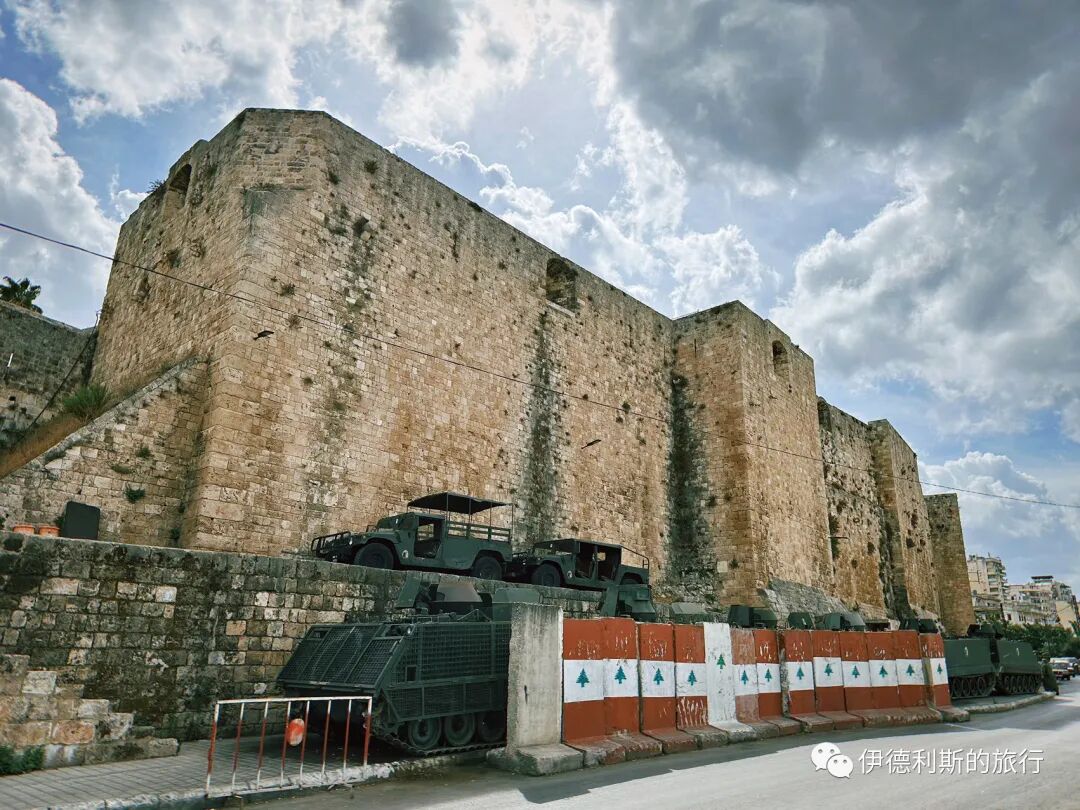
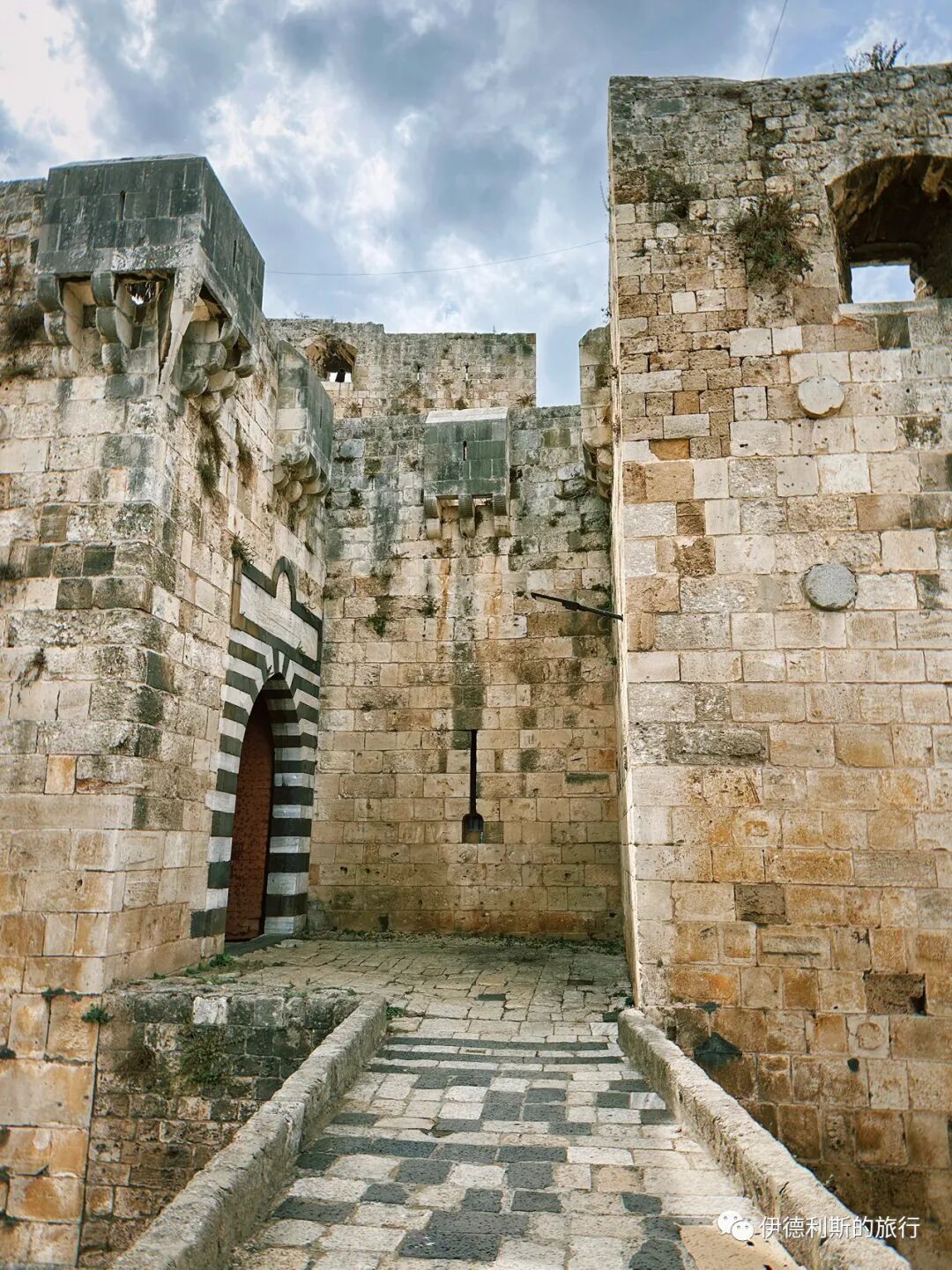
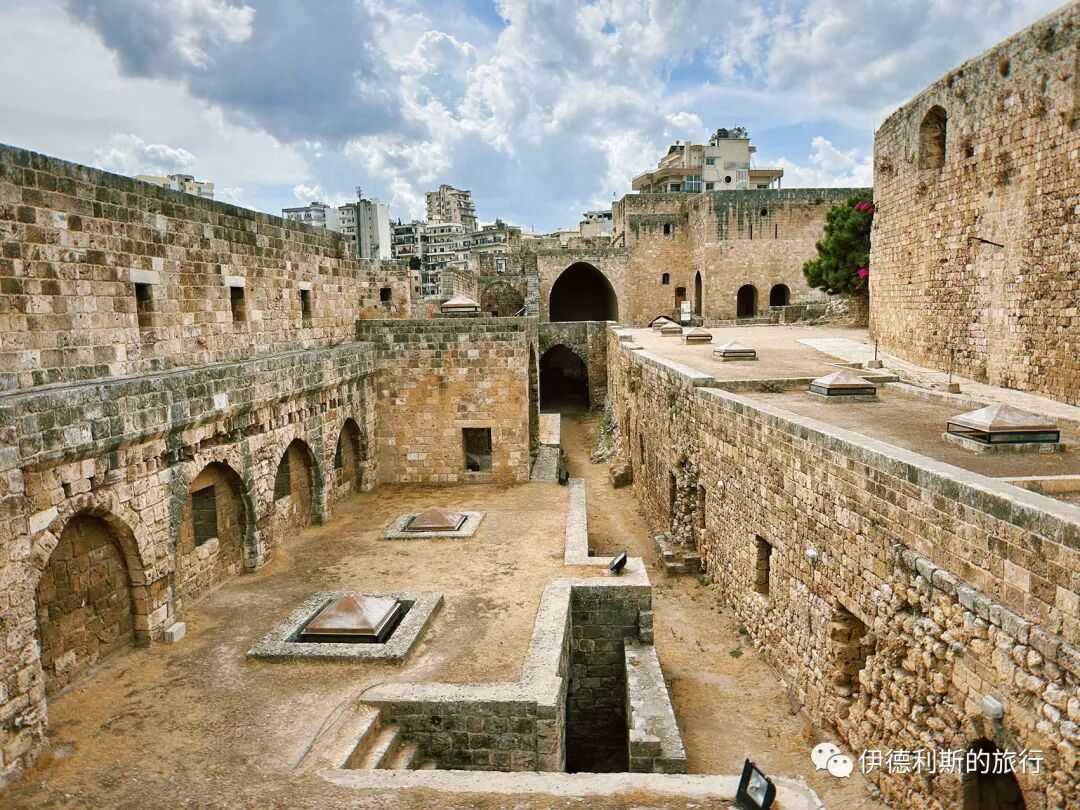
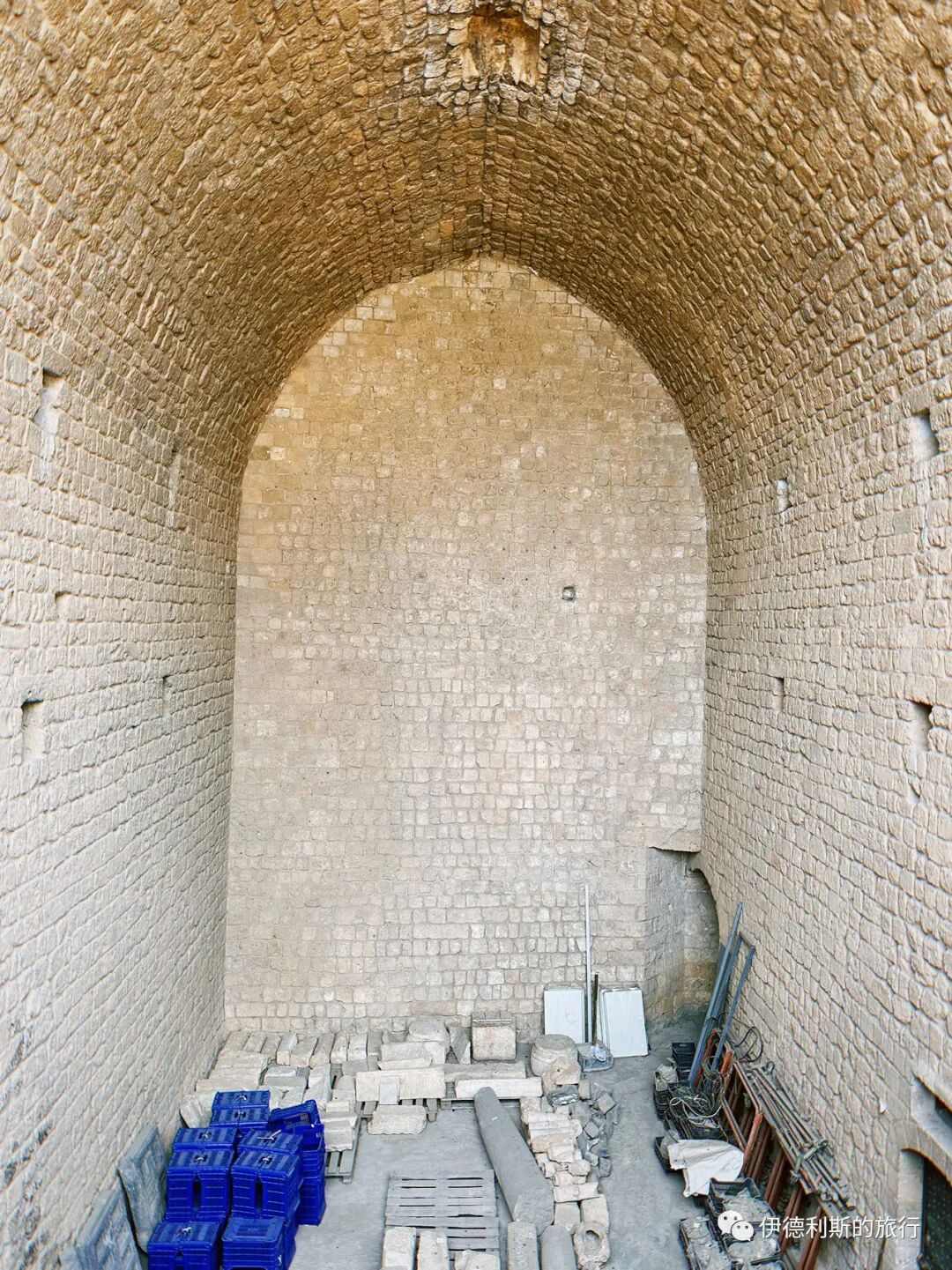
City Gates
Al-Mahatra Gate in the old city of Tripoli. The name of this gate comes from the military musicians who played to encourage the army. Now that the war is over, houses have been built on top of the gate, and it has become a quiet alley.
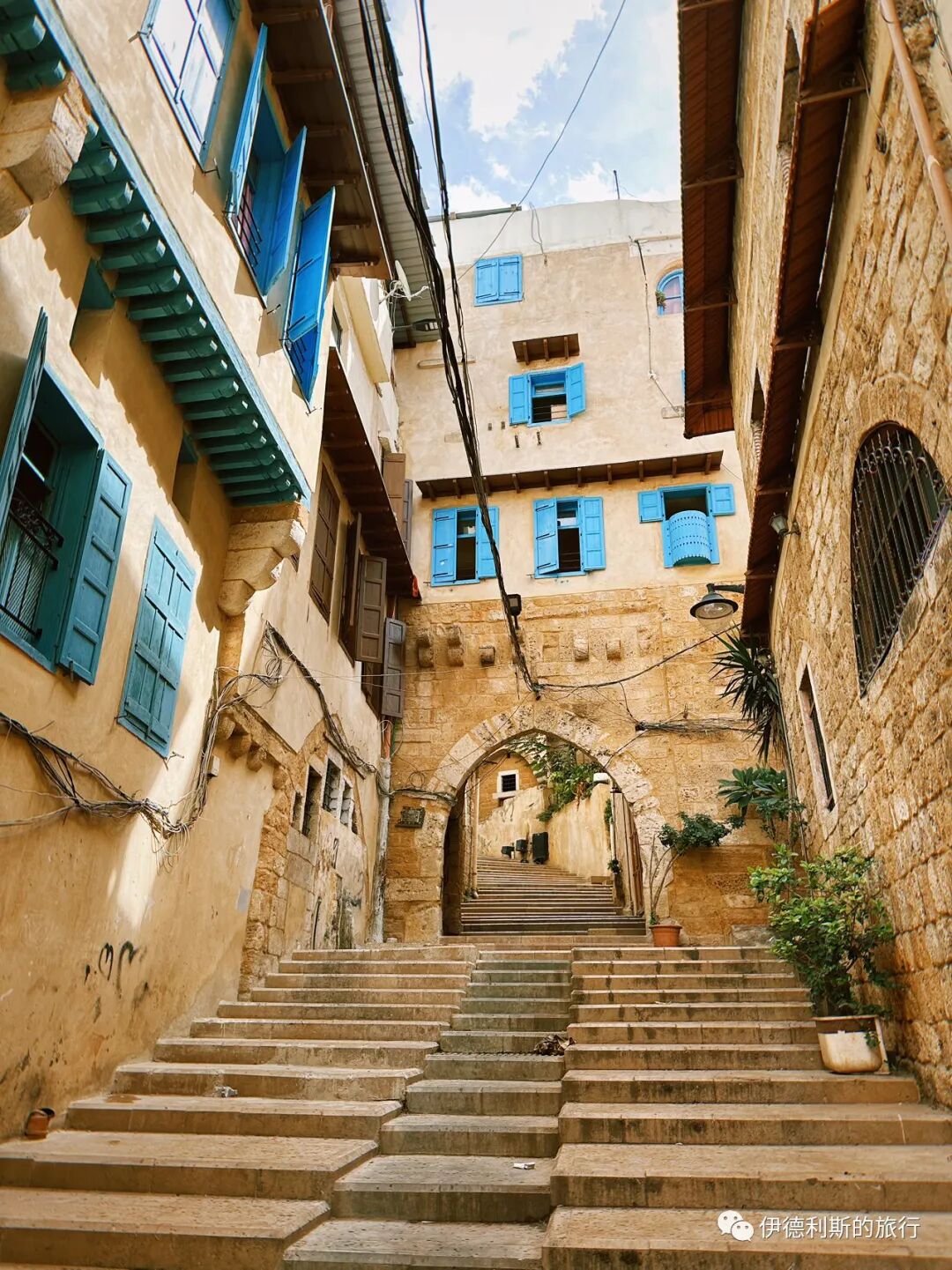
Mosques
Mansouri Great Mosque, also known as the Great Mosque of Tripoli, was ordered to be built in 1294 by the Mamluk Sultan Al-Ashraf Khalil. It is the first building constructed by the Mamluk dynasty in Tripoli.
In 1109, the French Crusaders occupied Tripoli. For the next 180 years, Tripoli was ruled by European Christian nobles. In 1289, the Mamluk army arrived at the walls of Tripoli carrying large catapults. Under the assault of catapults, the two towers of Tripoli soon collapsed. The Mamluk army stormed the city and leveled it to the ground.
Shortly after, the Mamluk dynasty began building a new city at the foot of the castle on Tripoli's Pilgrim Mountain (Jabal al-Hajj). This included the Great Mansouri Mosque, built on the ruins of a Crusader church at the base of the hill. The mosque's minaret (mabkhara) is likely part of the Crusader Church of St. Mary, and the main gate may also incorporate the original Crusader church entrance. The main prayer hall was built by the Mamluk dynasty in 1294, and the courtyard's surrounding colonnades were added in 1314 by the Mamluk Sultan Al-Nasir Muhammad.
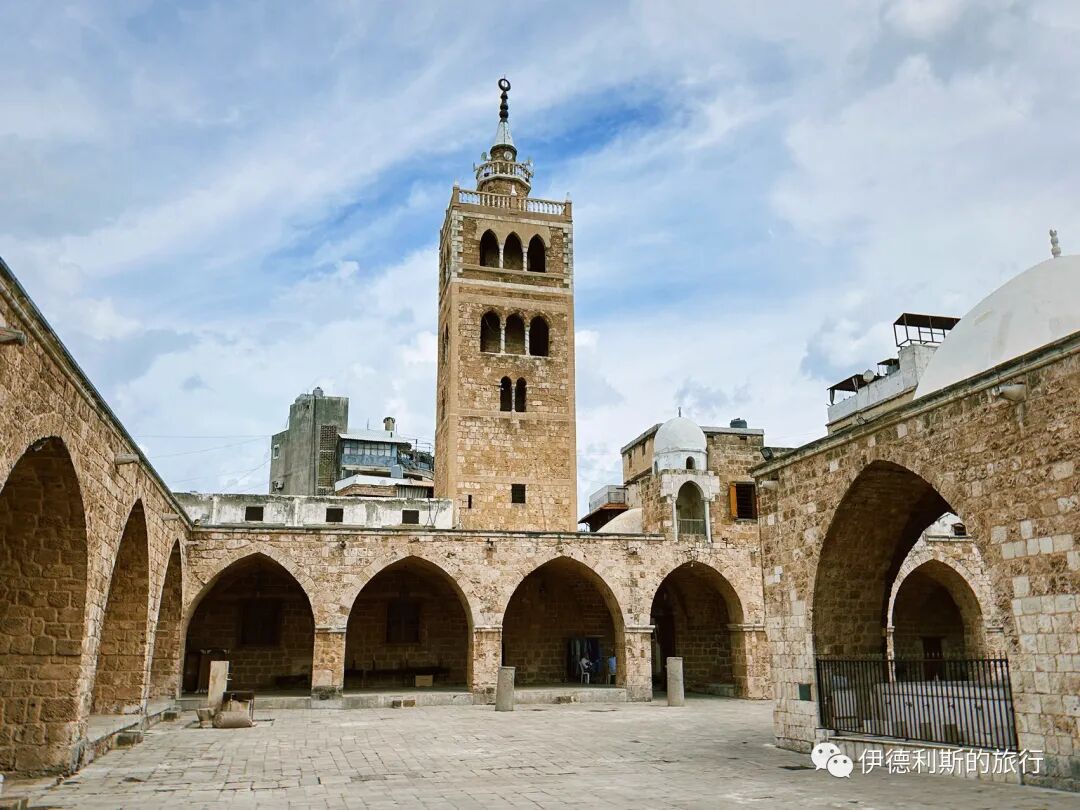
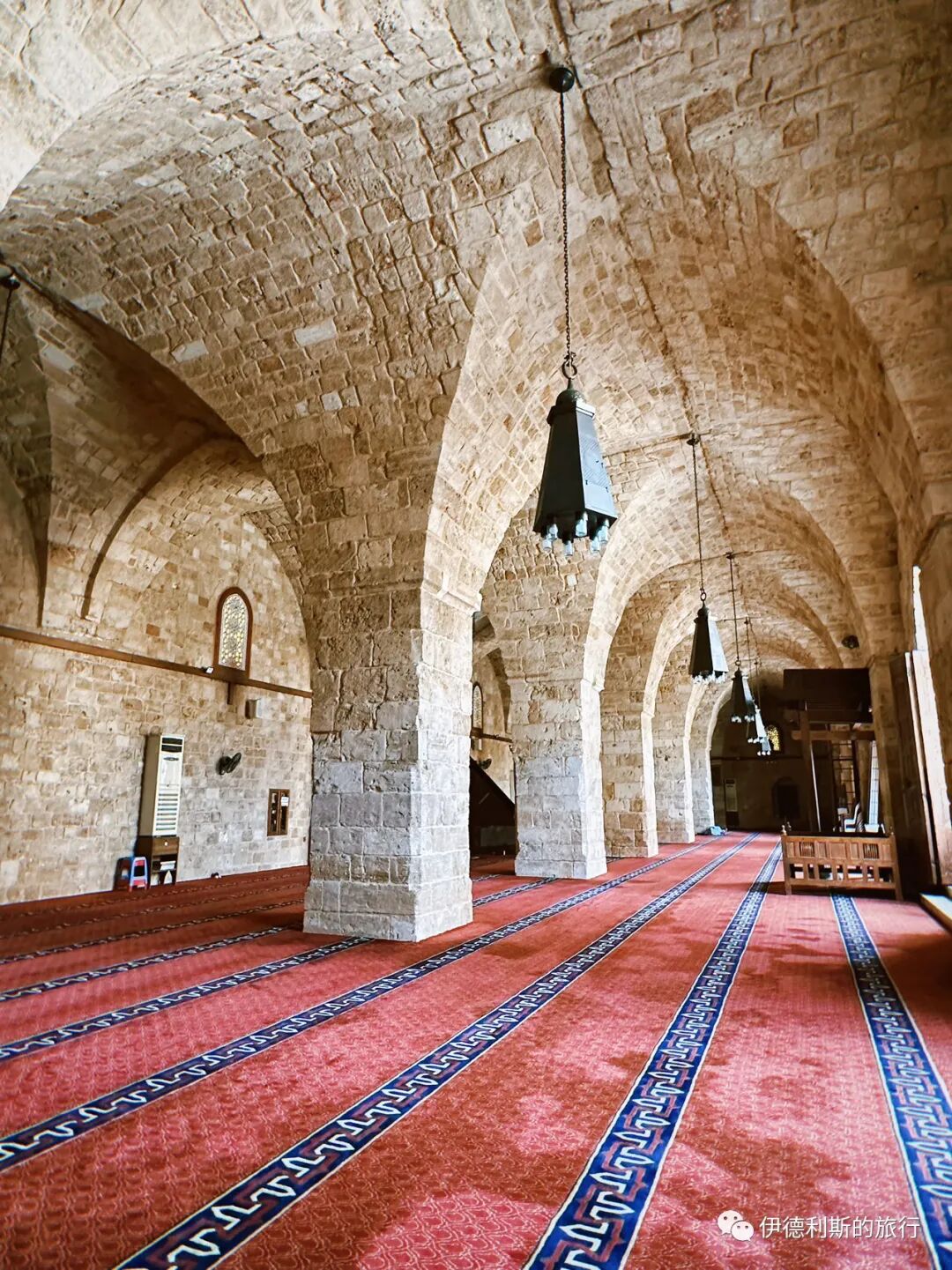
Taynal Mosque was built in 1336 by order of the Mamluk governor of Tripoli, Amir Taynal. The main prayer hall of Taynal Mosque consists of two consecutive halls. The most ornate feature is the entrance to the second hall, which has a gate with a stalactite-style cornice (muqarnas) and uses the ablaq technique of alternating black and white marble. Inside the prayer hall are some ancient Corinthian columns, which are thought to have come from a Crusader-era church or an even older Roman temple.
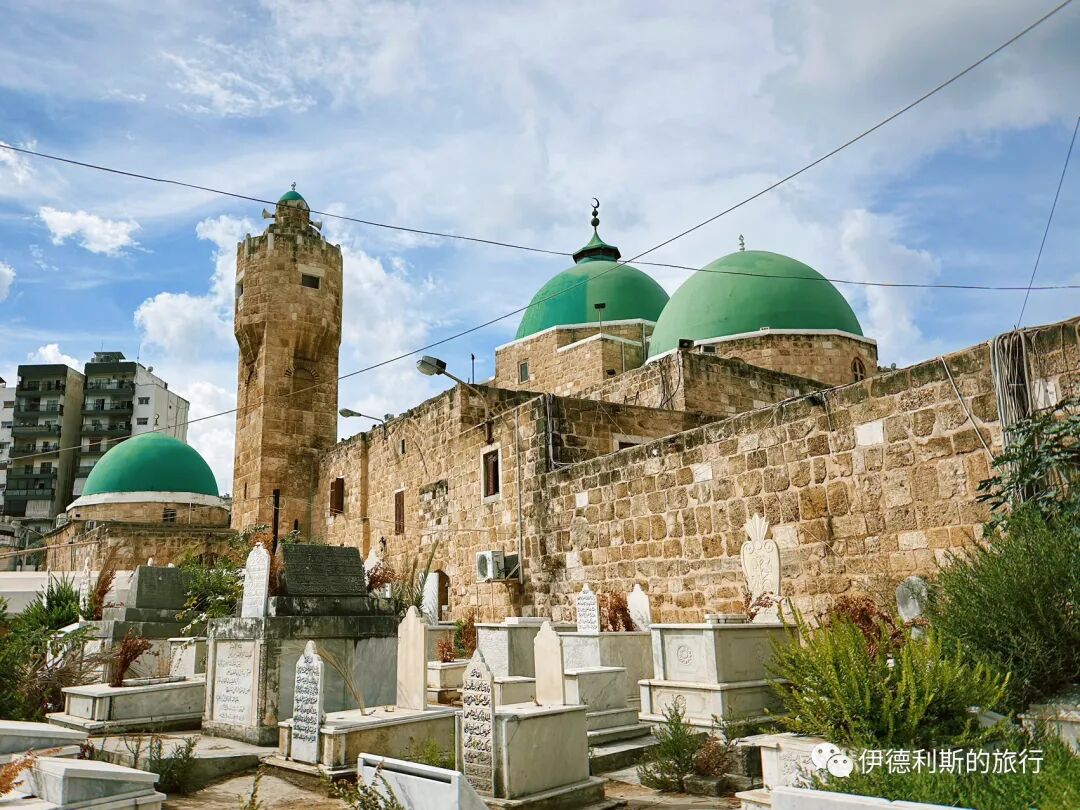
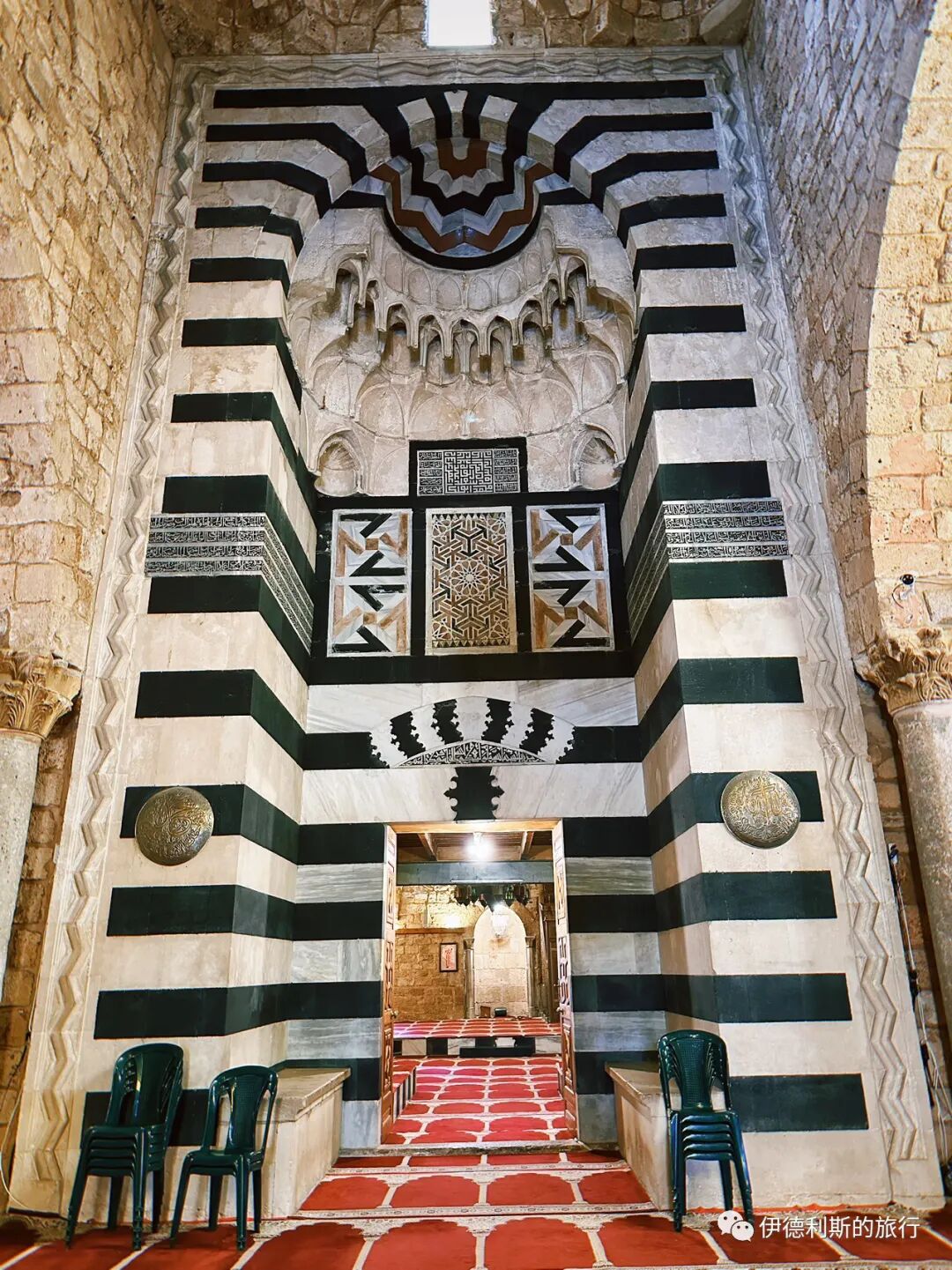
Attar Mosque was built in the 1350s by a wealthy local perfume merchant named Badr al-Din al-Attar on the ruins of a Crusader church. It was the first mosque in Tripoli not built by the Mamluks. Attar Mosque is known as one of the most beautiful mosques in Tripoli, but it has been closed for several years for renovations.
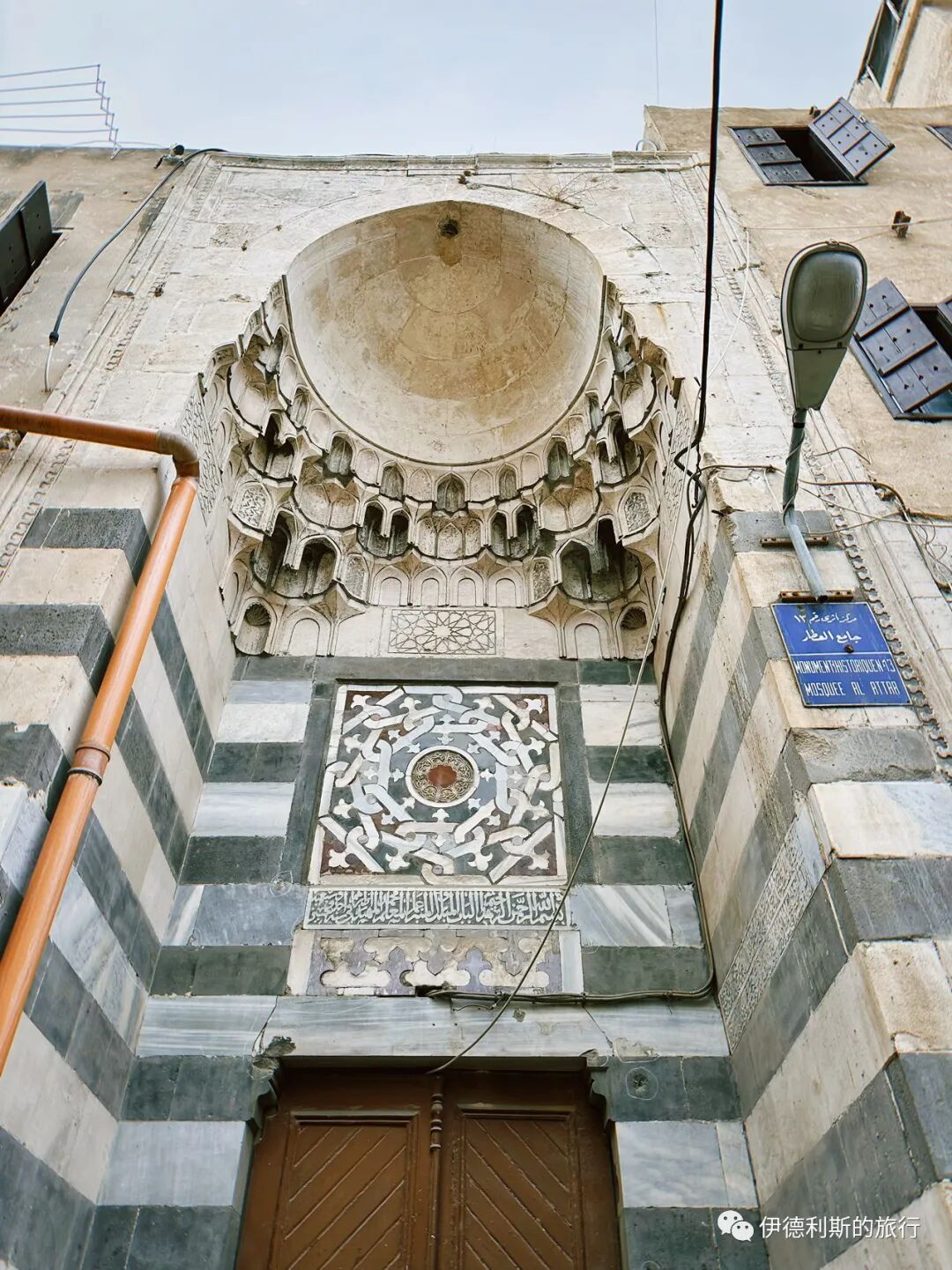
Al-Uwaysiyat Mosque was first built during the Mamluk period in 1461 and was renovated in 1534 during the reign of the Ottoman Sultan Suleiman the Magnificent.
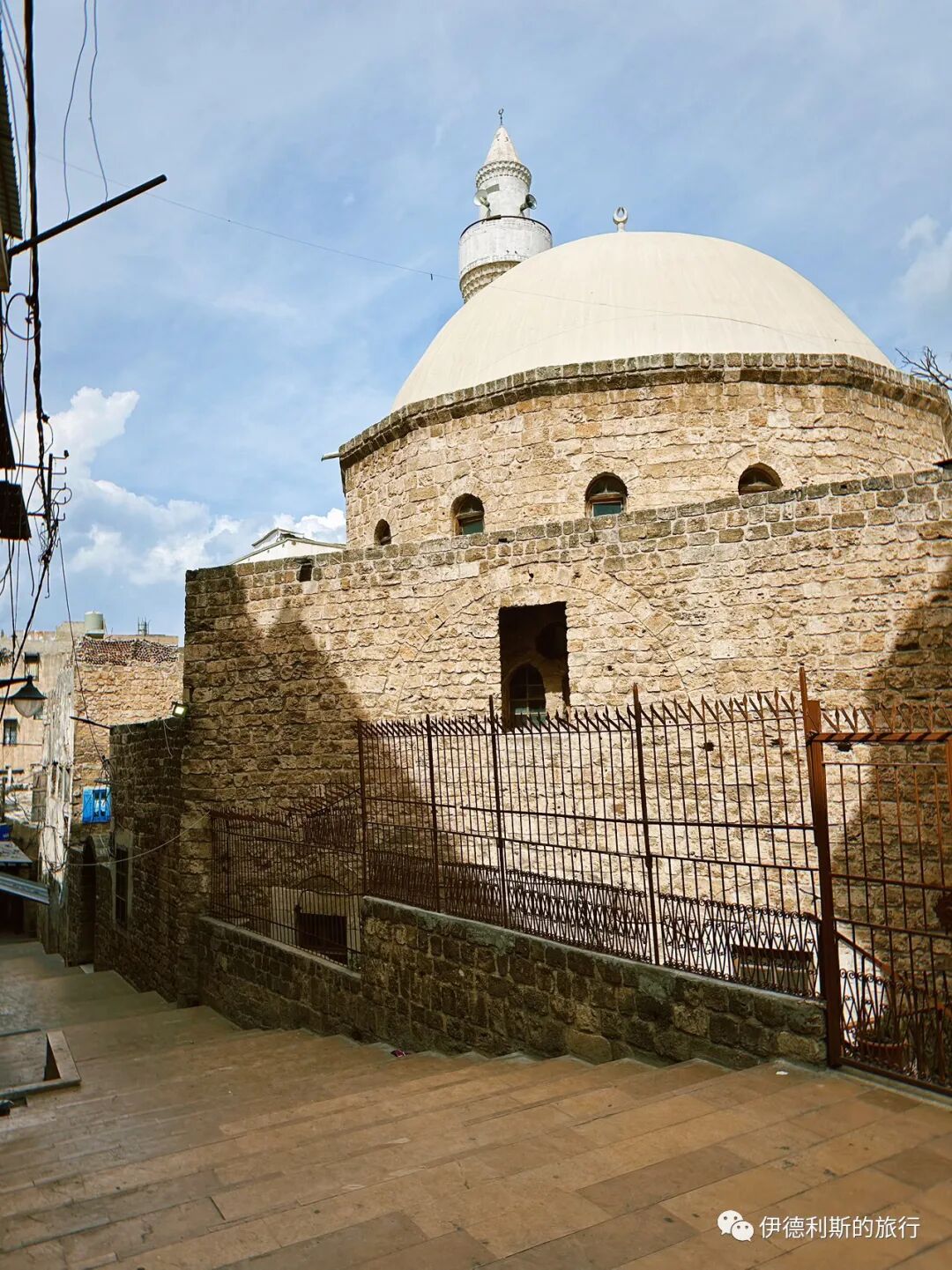
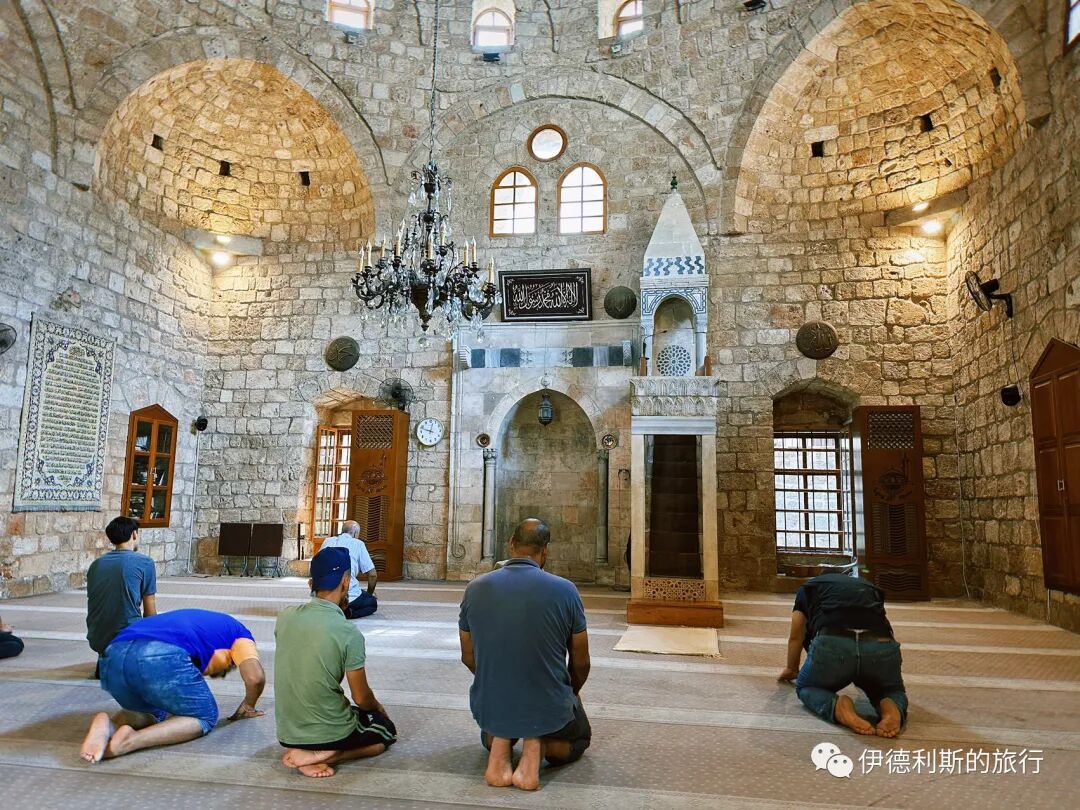
The Hanging Mosque (Muallaq Mosque) was commissioned in 1561 by the Ottoman governor of Tripoli, Mahmud Lutfi al-Za'im, during the reign of Ottoman Sultan Suleiman the Magnificent. The first floor of the Hanging Mosque is a culvert on the street level, so you must take the stairs to the side to reach the second-floor prayer hall. The octagonal minaret next to the prayer hall is very eye-catching and features two levels of balconies.
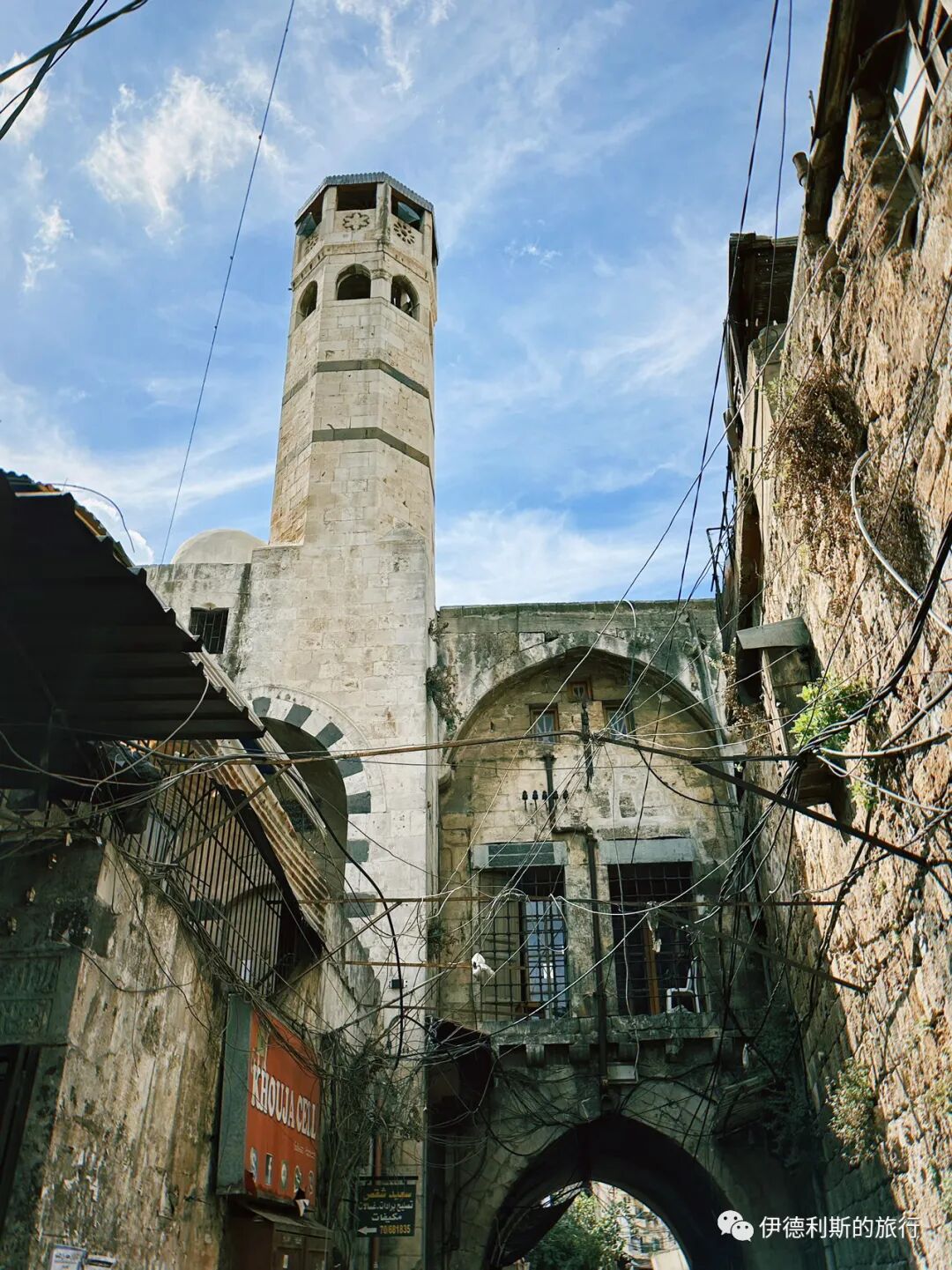
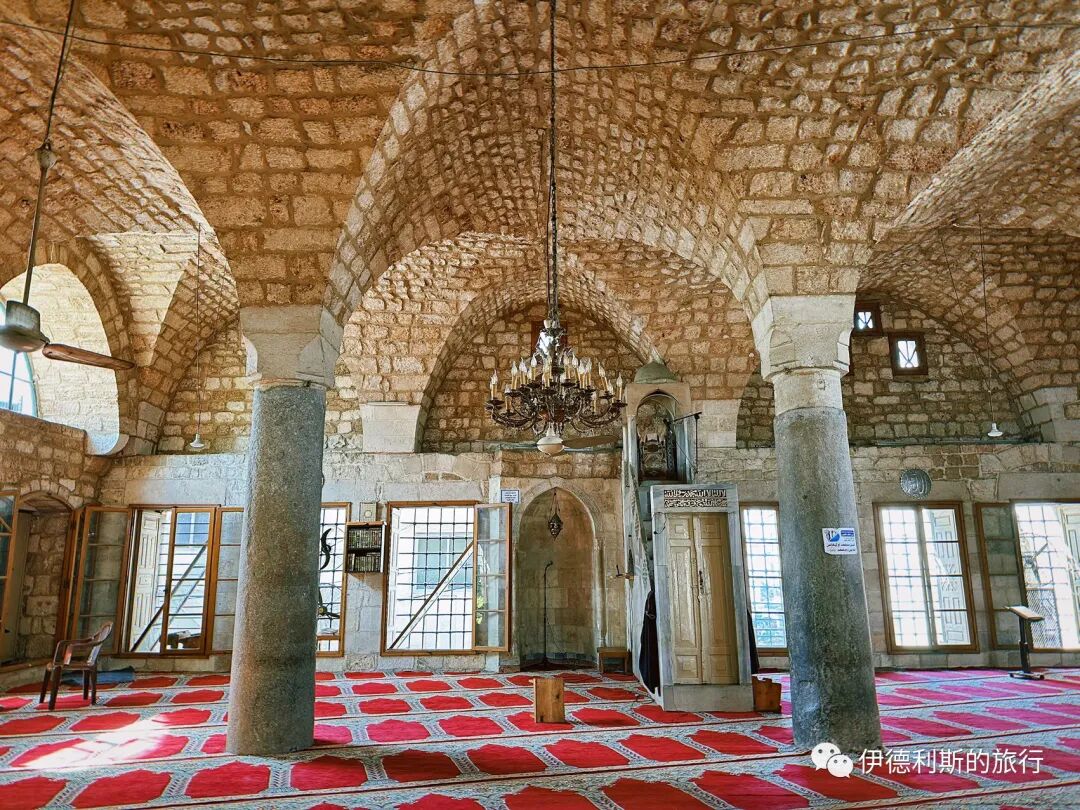
The construction date of Tawba Mosque is unknown, though it is believed to have been built during the Mamluk period. Because it sits right next to the riverbank, the stone inscription marking its construction was likely washed away in a flood. The inscription currently at the mosque entrance states that it was rebuilt after a flood in 1612. Many mosques in Lebanon lock their doors outside of prayer times, so I could not enter and only saw the octagonal minaret.
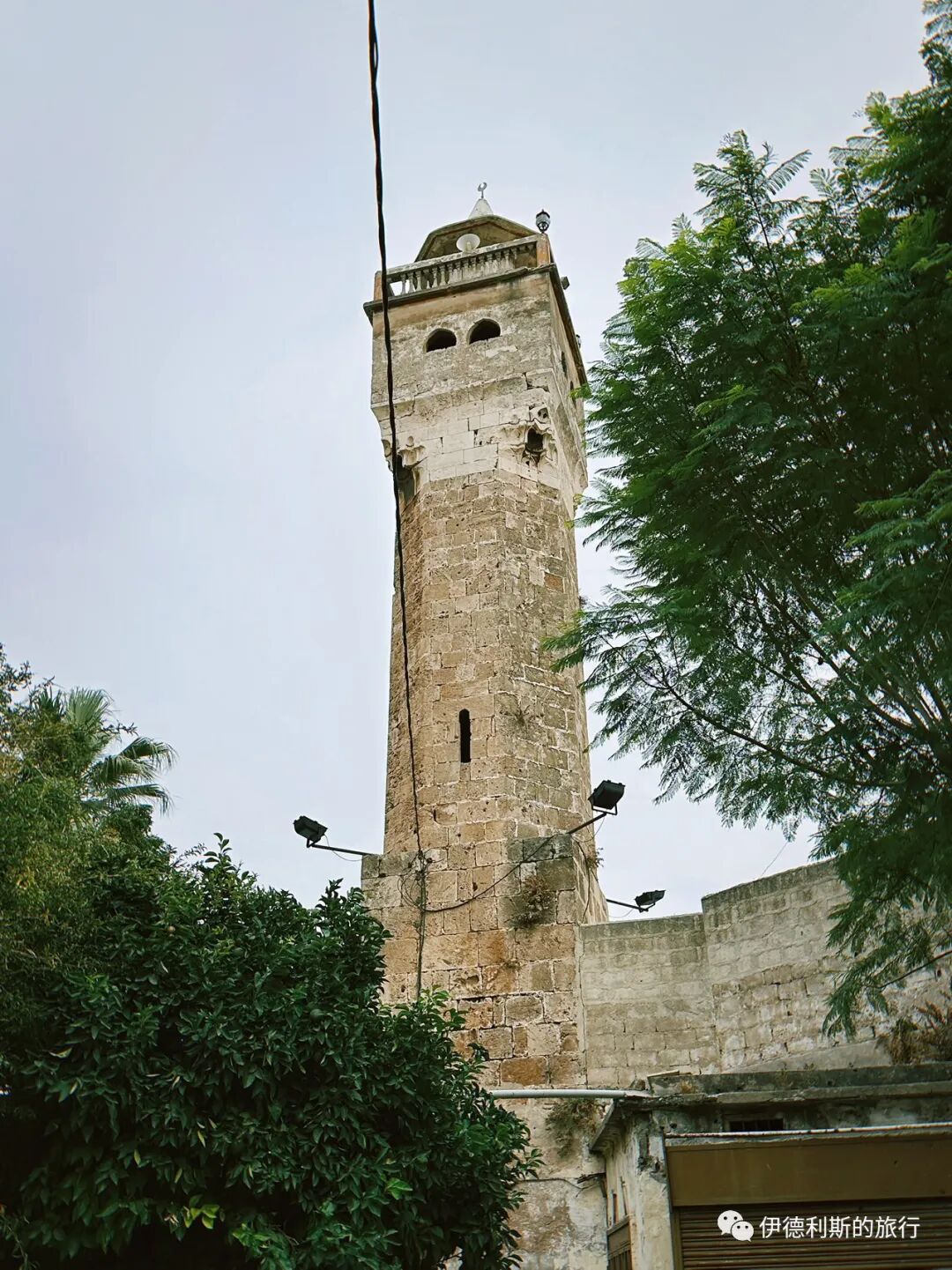
Burtasi Mosque was built by Isa ibn Umar al-Burtasi during the Mamluk period. Since Isa passed away in 1324, we can assume the mosque was built between the late 13th century and 1324. A flood in 1955 destroyed all the houses around Burtasi Mosque, and it is now the only building left standing on the riverbank. The minaret above the main gate is considered the most beautiful minaret in Tripoli. Above the three-tiered muqarnas cornice is a square balcony featuring Moorish-style double-arched windows. This type of double arch is a classic structure found in Muslim architecture in Andalusia, southern Spain.
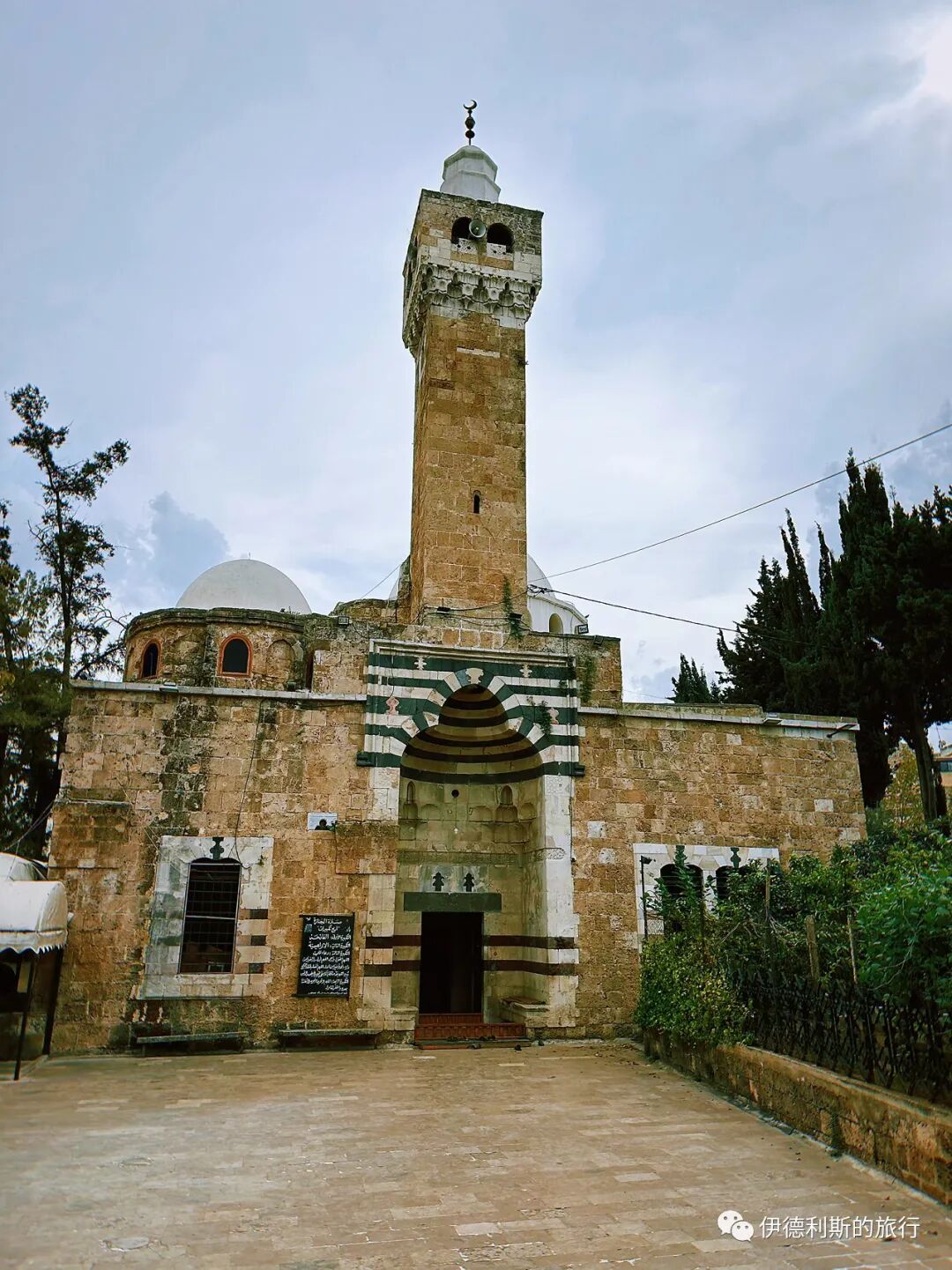
Madrasas
During the 14th century, the Mamluk dynasty established six colleges around the Great Mansouri Mosque, which trained a large number of students. These include al-Khayriyya Hasan (1309 or later), al-Qartawiyya (c. 1326), al-Shamsiyya (1349), al-Nasiriyya (between 1354–60), al-Nuriyya (14th century), and the Mashhad Madrasa. The al-Qartawiyya Madrasa outside the east wall of the Mansouri Great Mosque is the most magnificent, though we could not find the main gate in the maze-like alleys of the old city, we did see the calligraphy carvings on the school's wall.
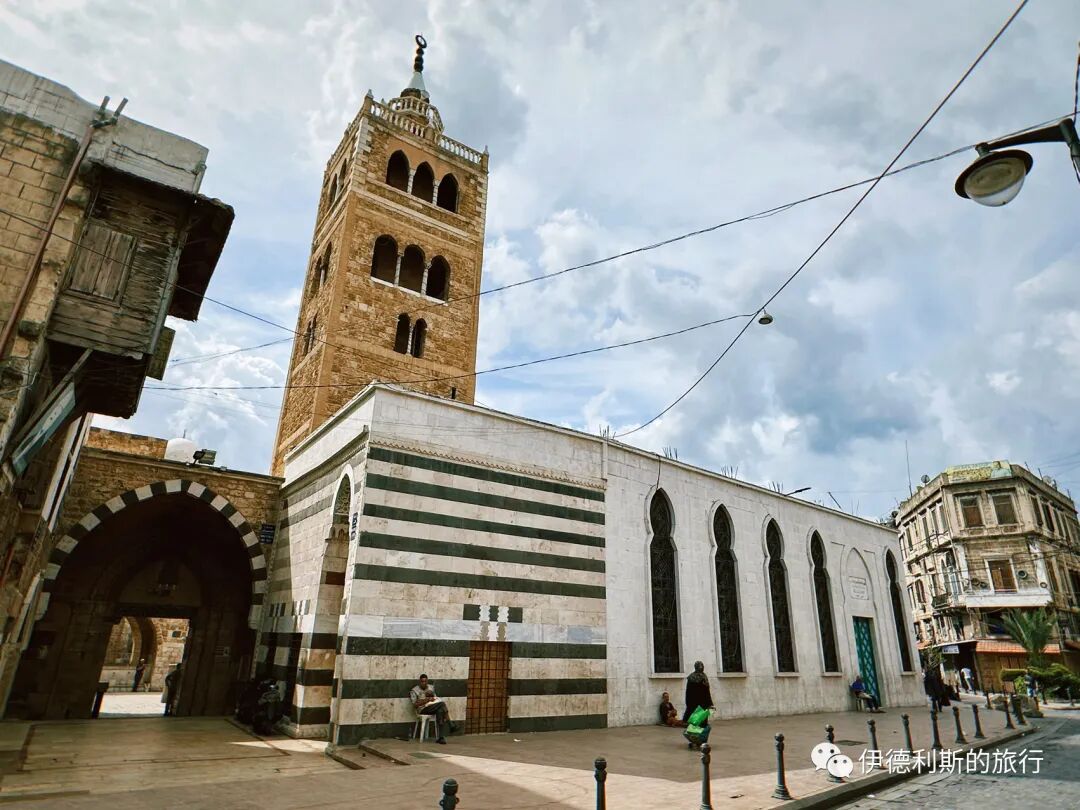
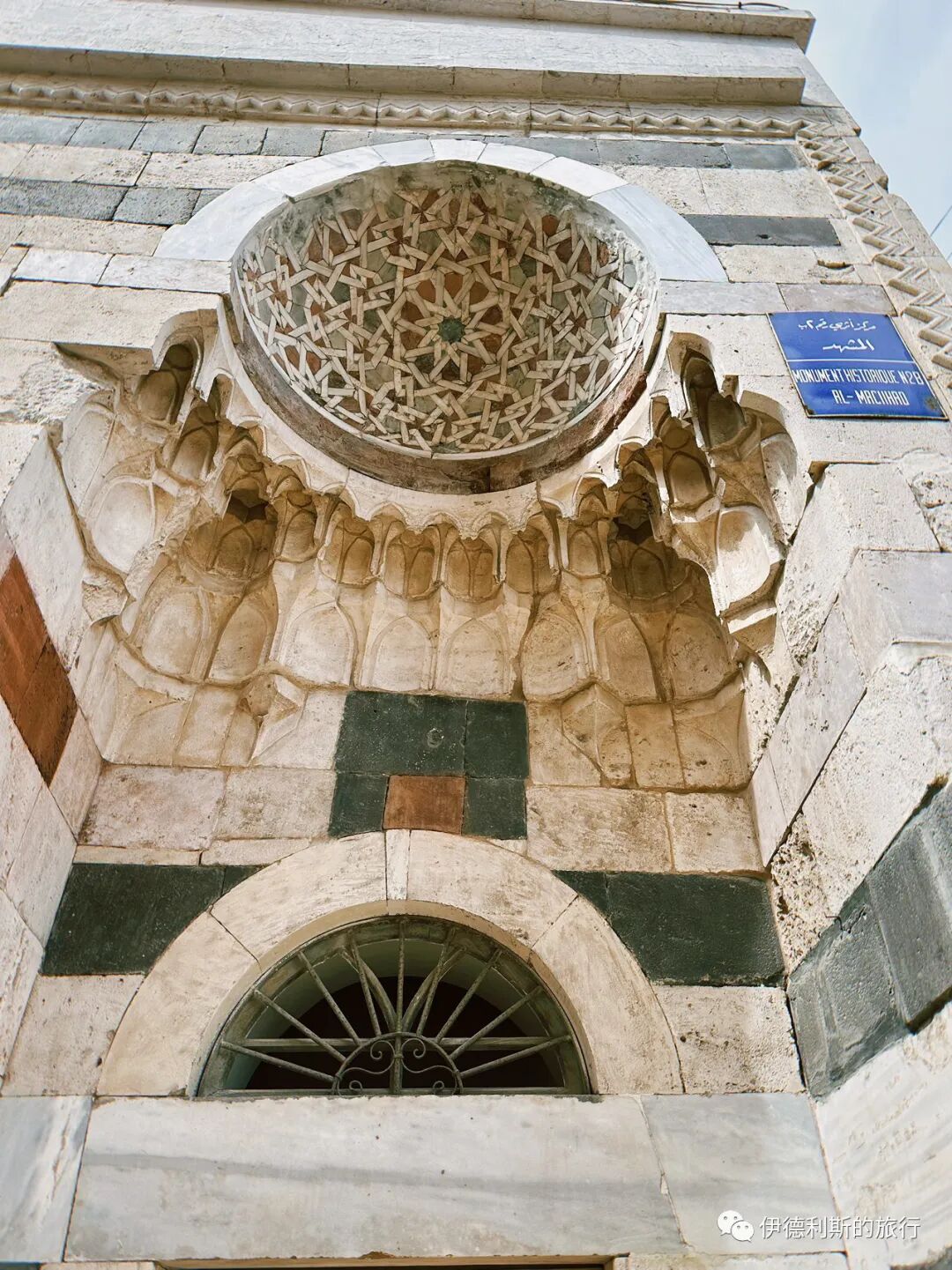
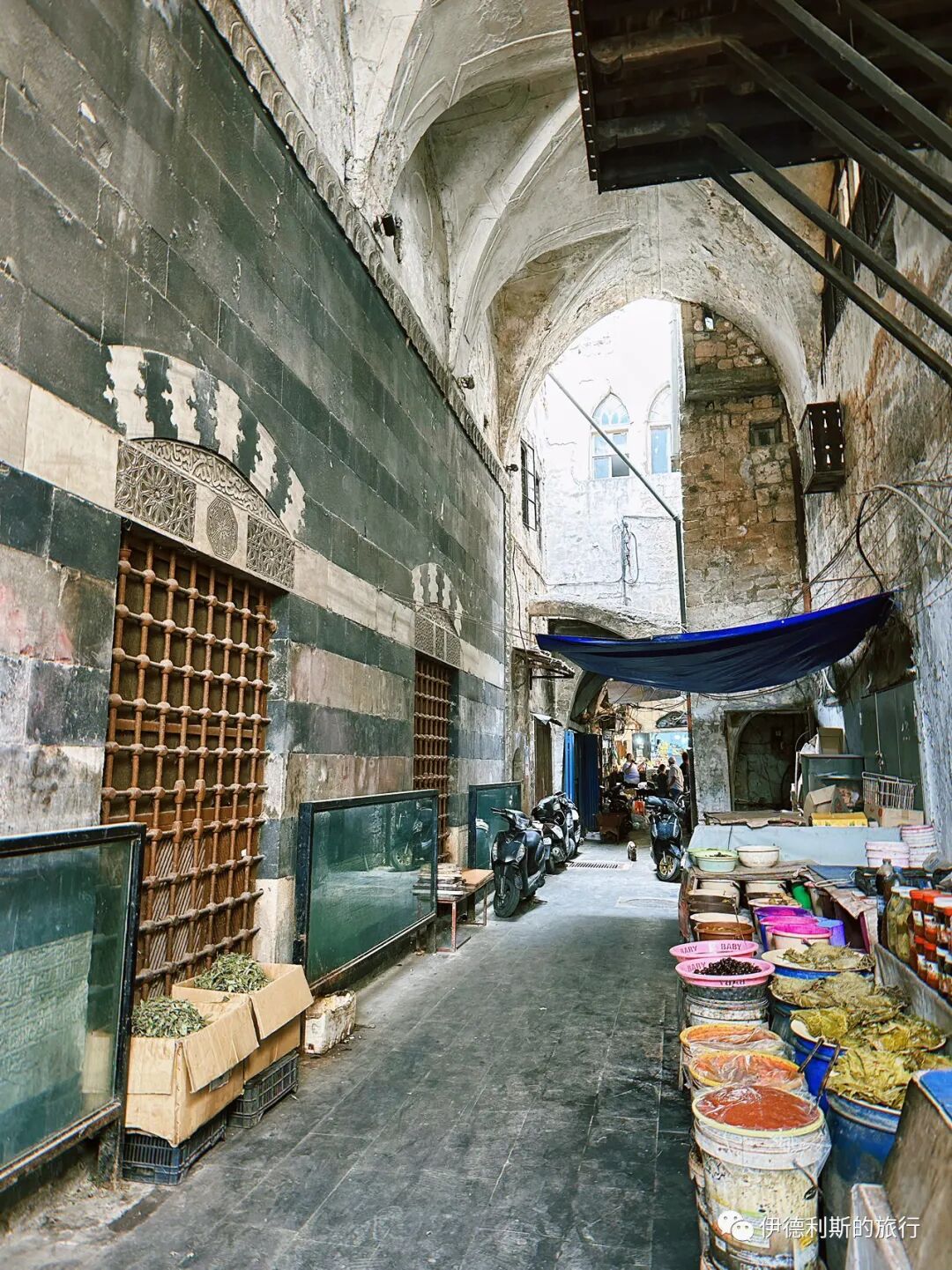
Hammam
Right next to the Hanging Mosque is the Al Jadid bathhouse (Hammam), built in 1740 during the Ottoman period, which was used until the 1970s and closed after the outbreak of the Lebanese Civil War. This bathhouse was a gift to Tripoli from the Damascus governor Asad Pasha Al Azem, and its gate is exquisite, featuring a fourteen-link chain carved from a single piece of stone.
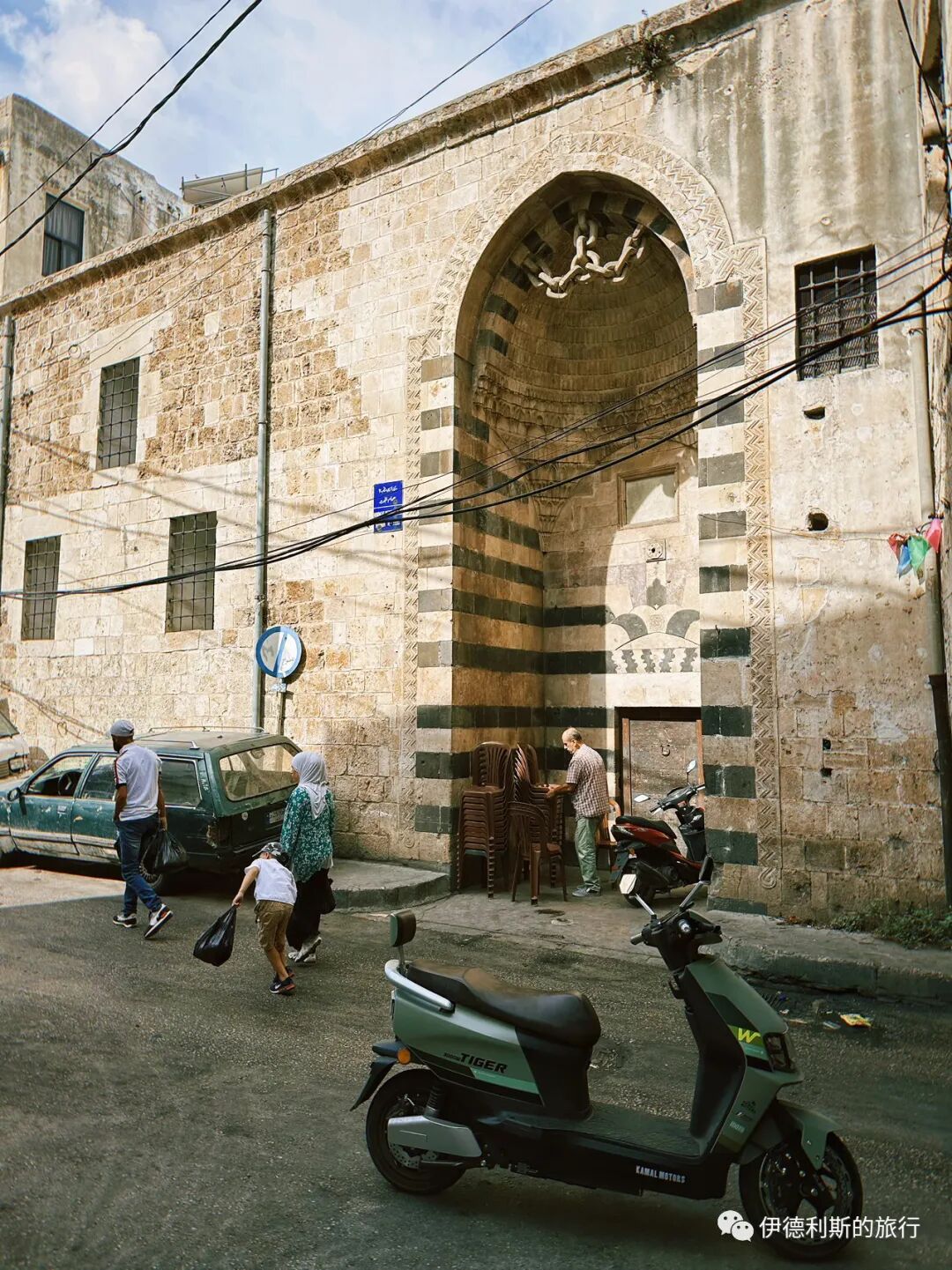
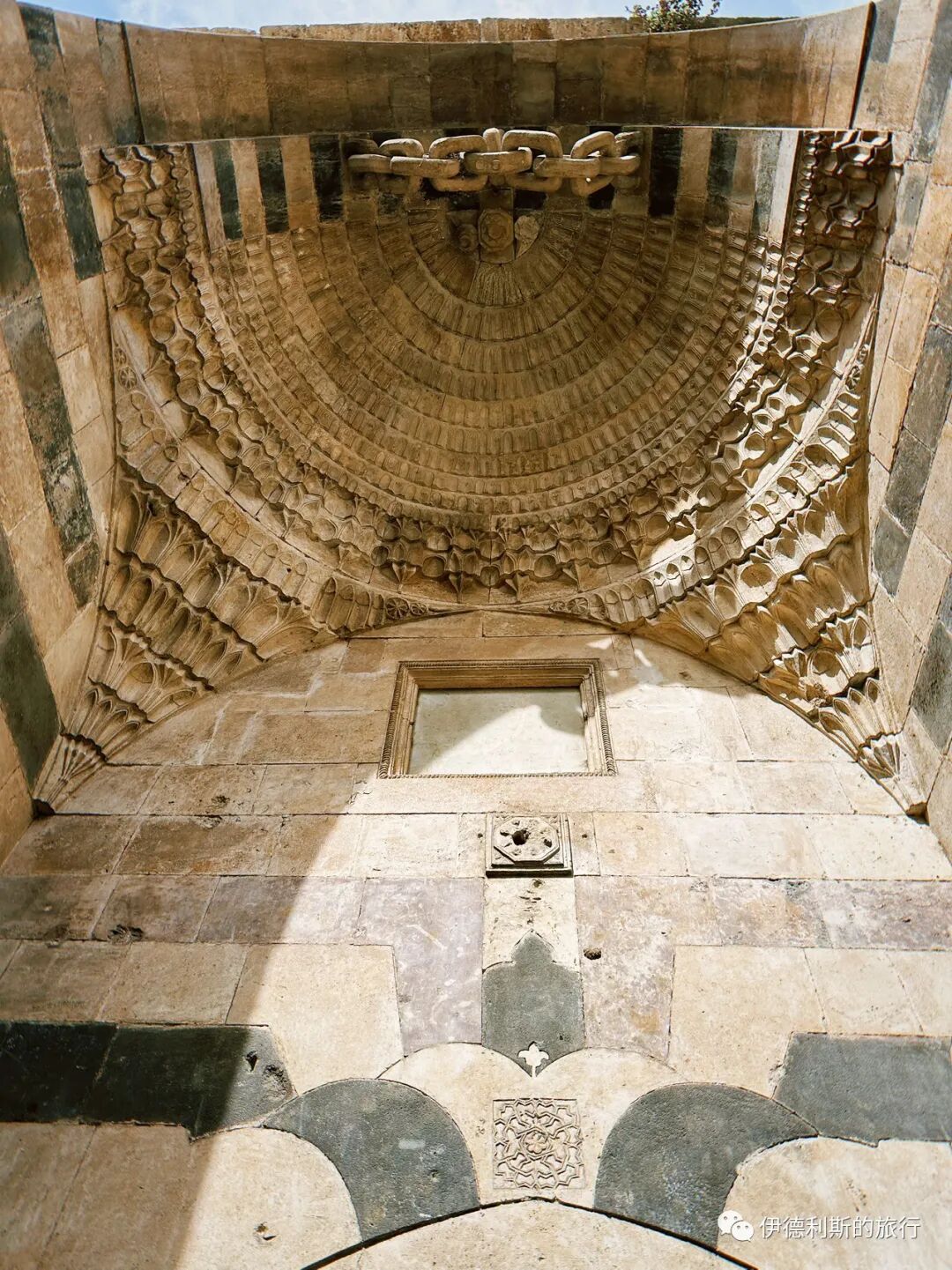
The Ezzedin bathhouse (Hammam) was the first public bathhouse built by the Mamluk dynasty after they occupied Tripoli, commissioned by Emir Ezzedin Aibek (who ruled Tripoli from 1293 to 1298) and constructed using many marble pieces from the Byzantine and Crusader eras. This bathhouse operated from the end of the 13th century until 1975, when it closed due to the start of the Lebanese Civil War. It has now been restored and is free to visit.
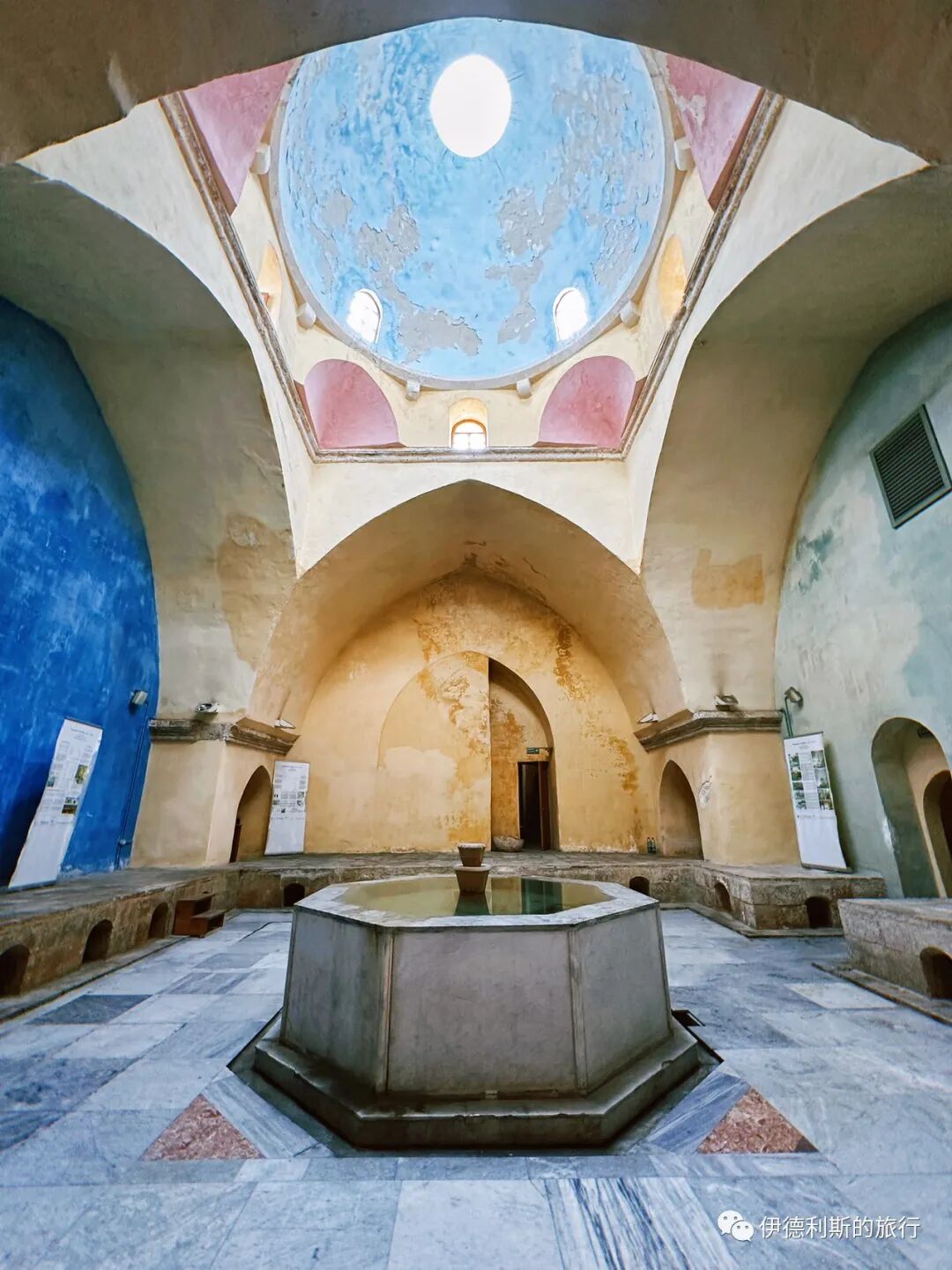
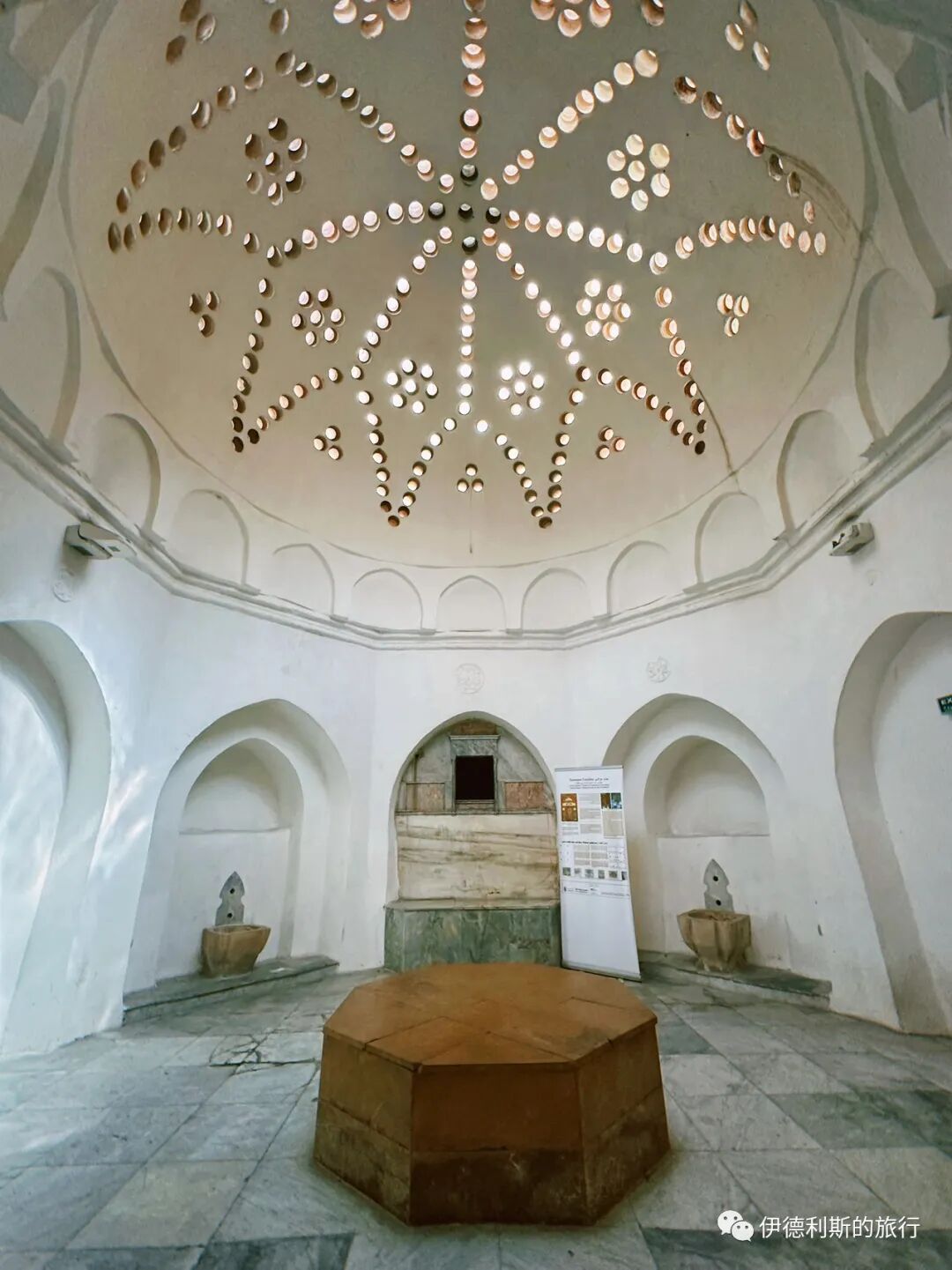
Market
The markets in Tripoli's old city are very lively, which is a sharp contrast to Beirut. Ibn Battuta wrote in his travelogue: 'Afterward, we arrived at the city of Tripoli.' It is an important town in Sham, with several small rivers flowing through it. It is surrounded by fragrant orchards and lush green trees. The sea surrounds it with its deep blue water, and the earth nourishes it with its treasures. The goods in the market are dazzling and truly amazing.
We drank street coffee at the market and saw all kinds of dairy products, which was very interesting.
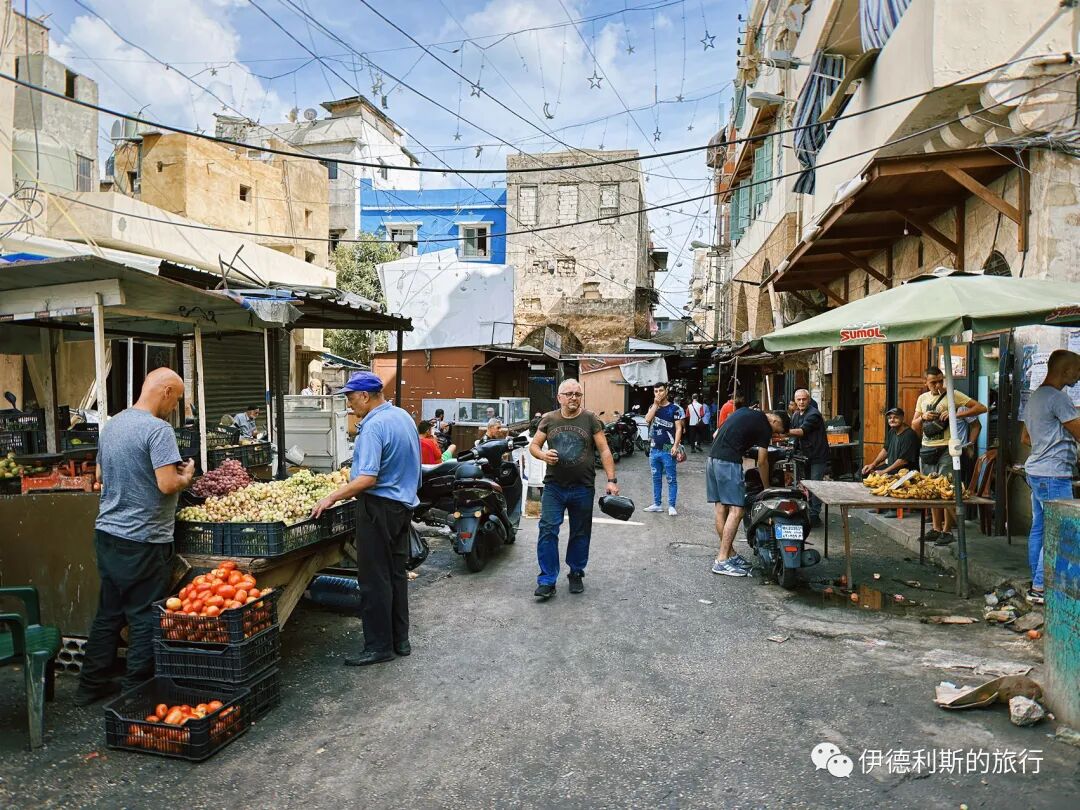
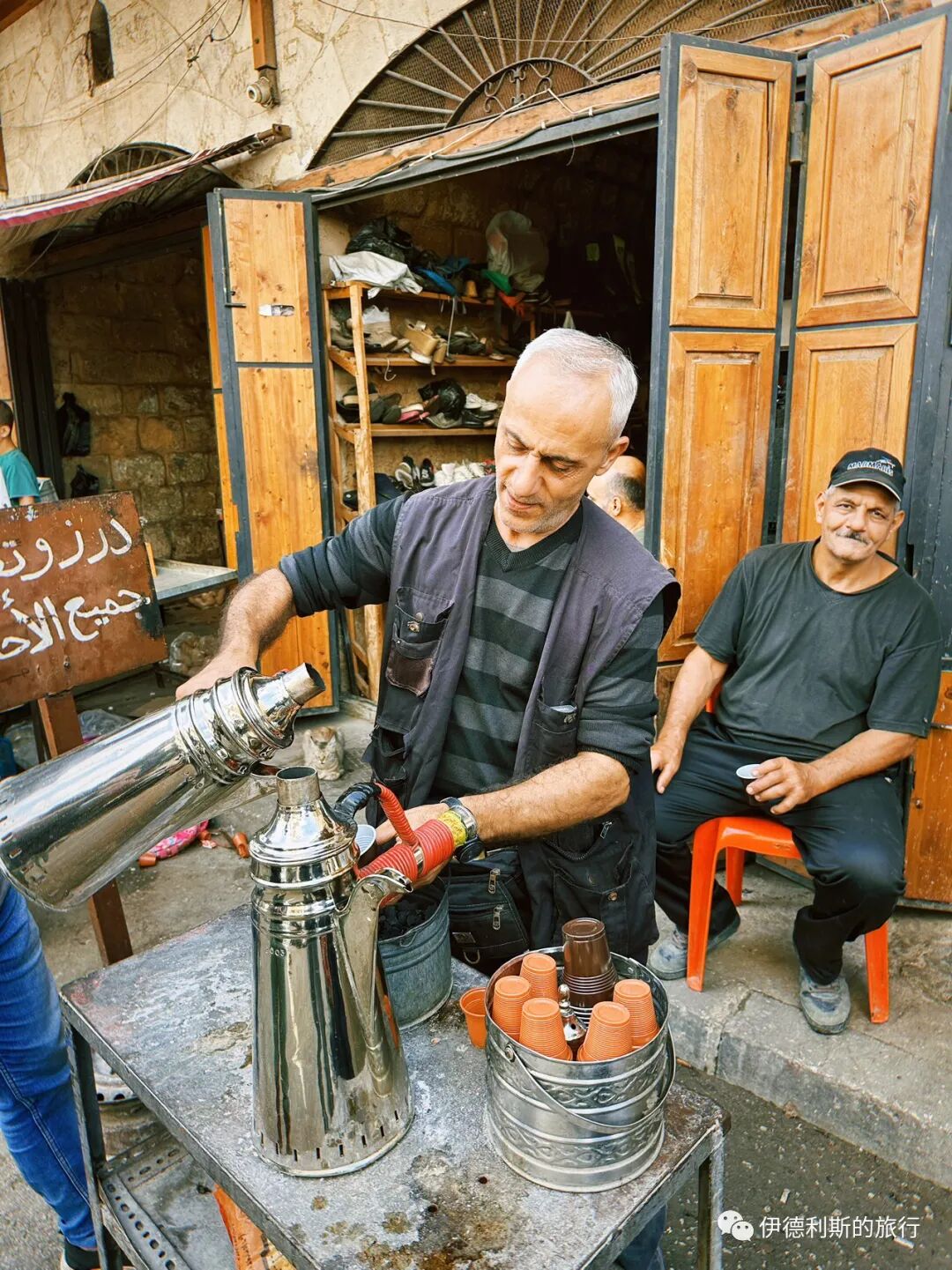
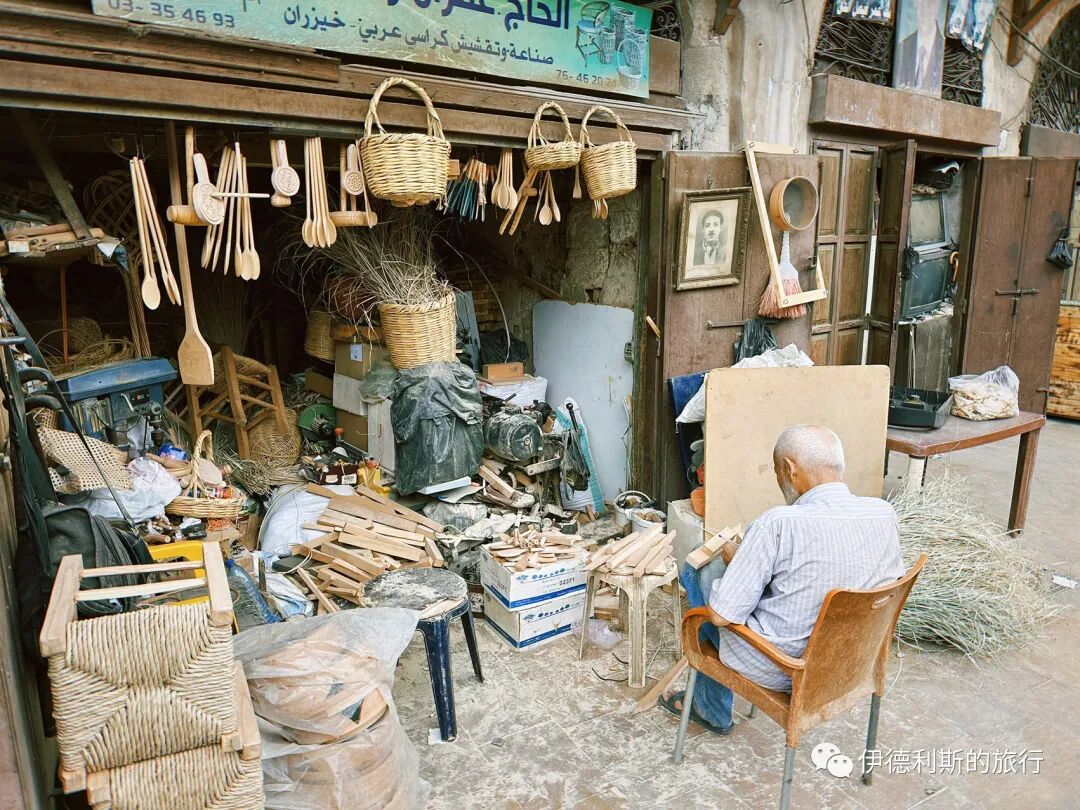
The Haraj market was built in the 14th century and has an 8-meter-high vaulted ceiling supported by black granite columns, some of which may be architectural pieces from the ancient Roman or Byzantine eras. The market has two floors; the upper rooms were for merchants to stay in and had wooden windows through which their female relatives could look down at the market, while the lower floor was for selling goods.
The 1983 bombing during the Lebanese Civil War caused severe damage to the Haraj market, which was later restored to its current state after a long process.
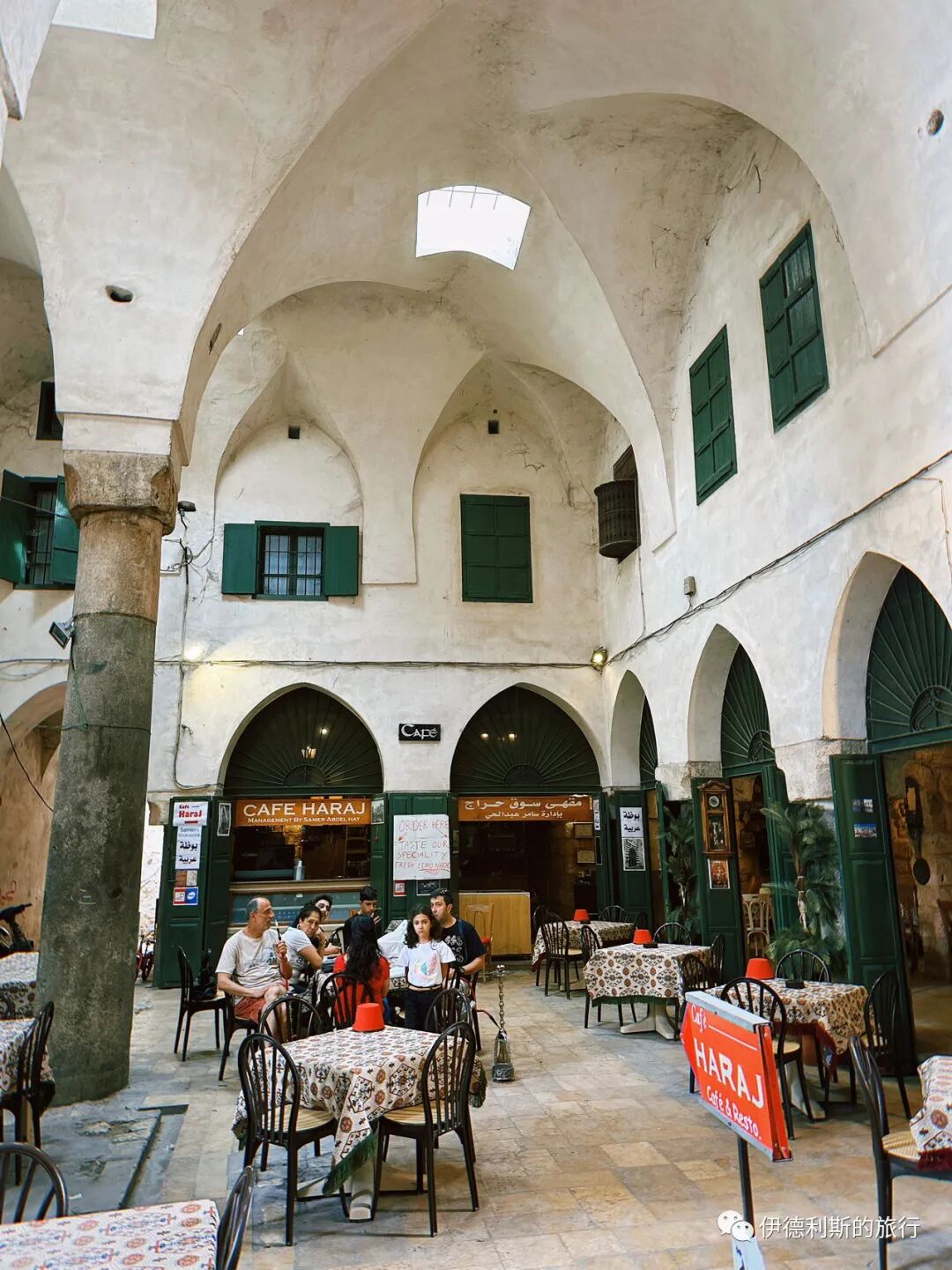
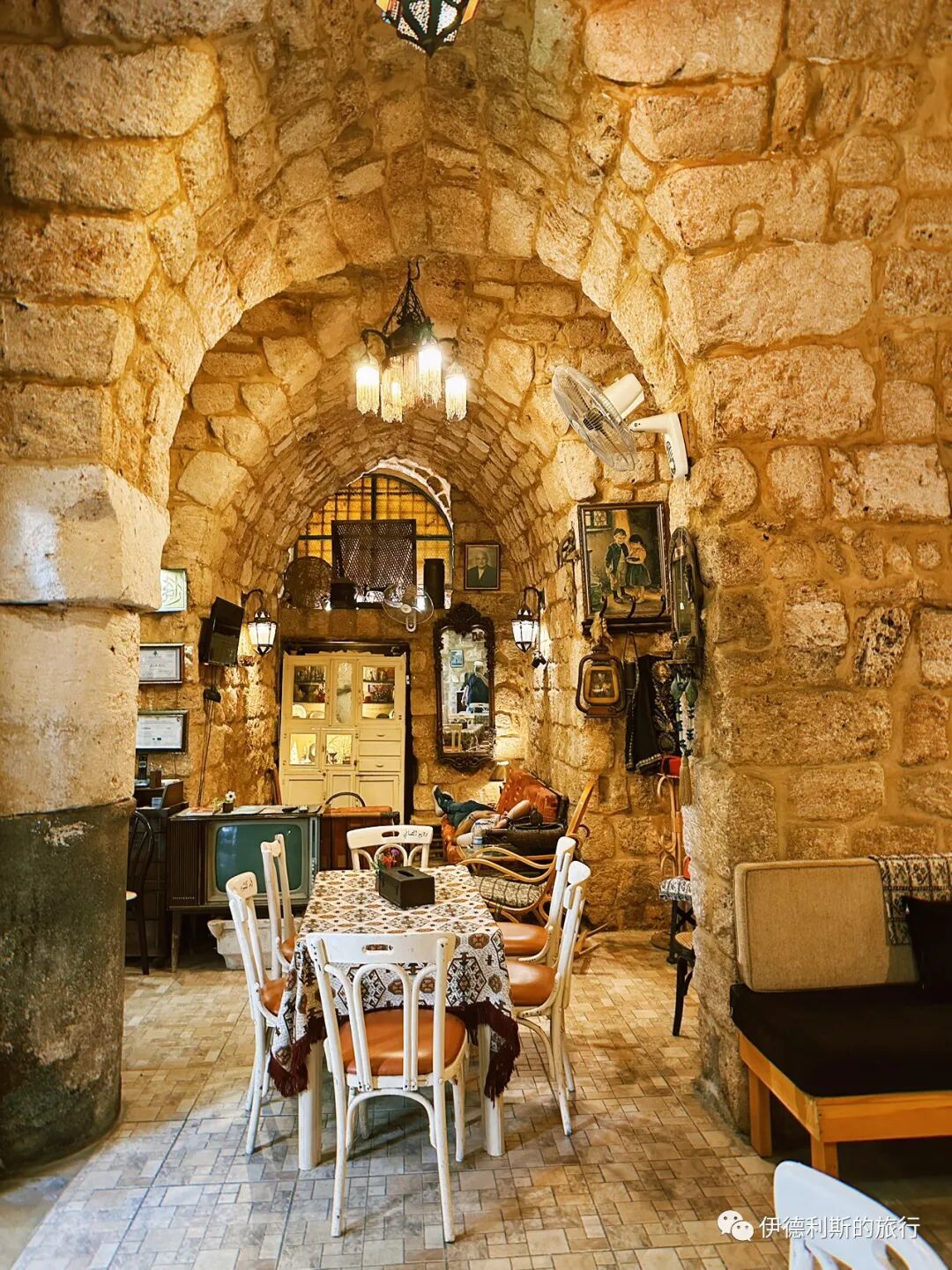
Inn
Tripoli has always been famous for producing perfume and handmade soap, with the most well-known brand being Bader Hassoun's Khan Al Saboun (Soap Inn). The history of the Hassoun family producing soap in Tripoli dates back to the early Mamluk dynasty in 1256, while the Soap Inn (Khan Al Saboun) in the old city of Tripoli was built in the late Mamluk dynasty in 1480.
The Soap Inn has a courtyard with two levels of galleries and a pool in the middle. The second floor of the gallery was for caravan merchants to stay, while the first floor was for making and selling soap. People say the Ottoman Sultan Suleiman the Magnificent once received soap from Tripoli as a tribute, and at the urging of the Queen, Suleiman ordered the expansion of the Soap Inn in Tripoli. After it was built, the soap inn became a trade center for making and selling soap, and it started exporting soap to Europe. Today, the Bader Hassoun soap shop is located right here.
In 1993, Bader Hassoun's jewelry store in the old city of Tripoli was robbed, which led him to decide to restore his family's tradition of making soap. He and his wife spent one night making traditional soap with olive oil, dates, glycerin, natural coloring, and spices, and it all sold out the next day.
We bought the most traditional natural soap at the shop, which comes in three scents: green tea, lavender, and cedar. Cedar is an important symbol of Lebanon, and Lebanon is also known as the Land of Cedars. We also bought an olive oil soap safe for babies, which I can use for Suleiman.
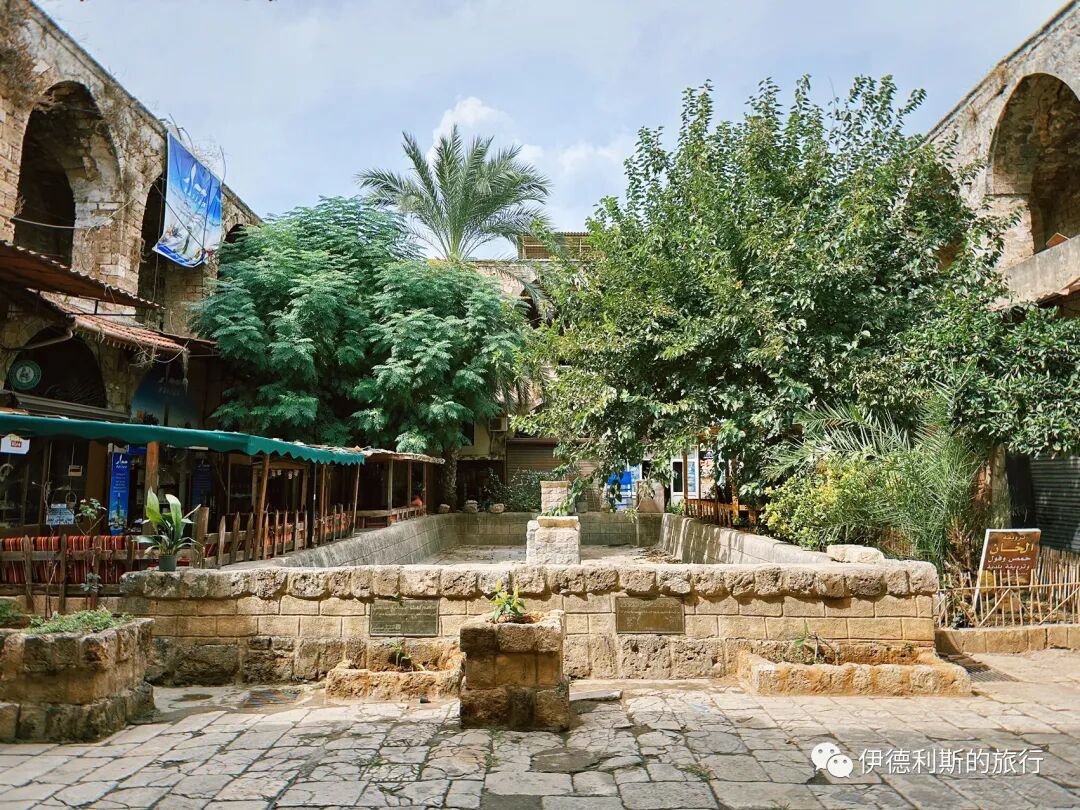
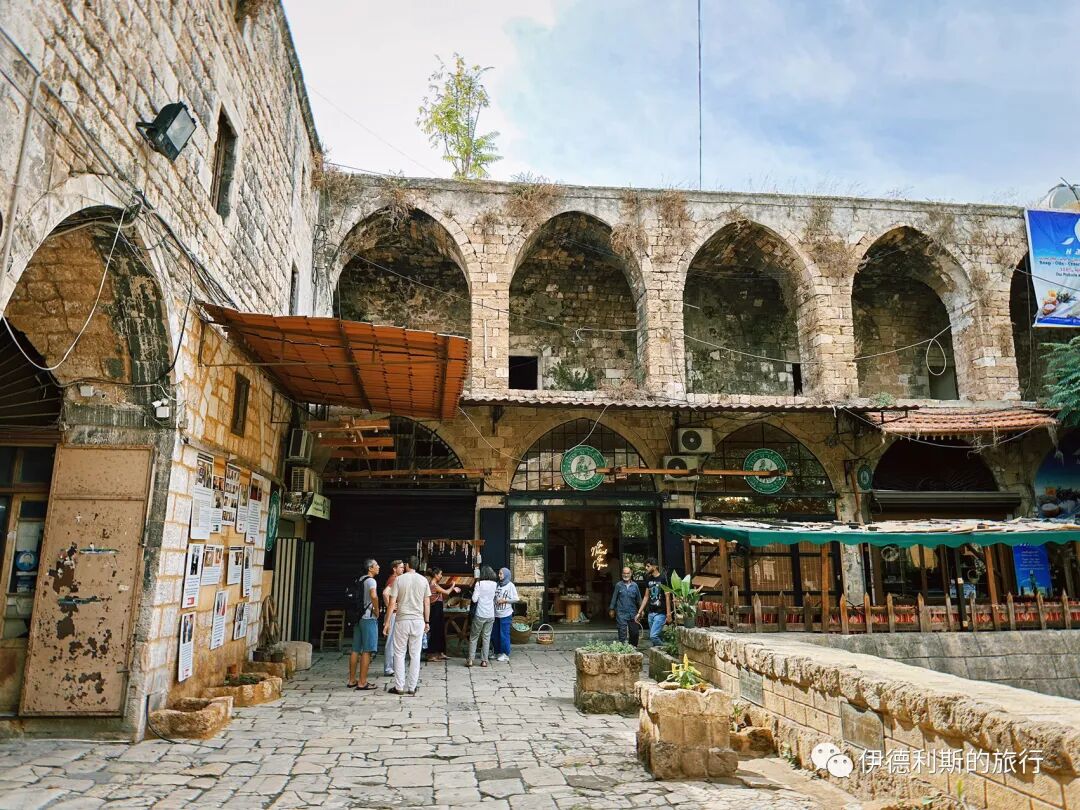
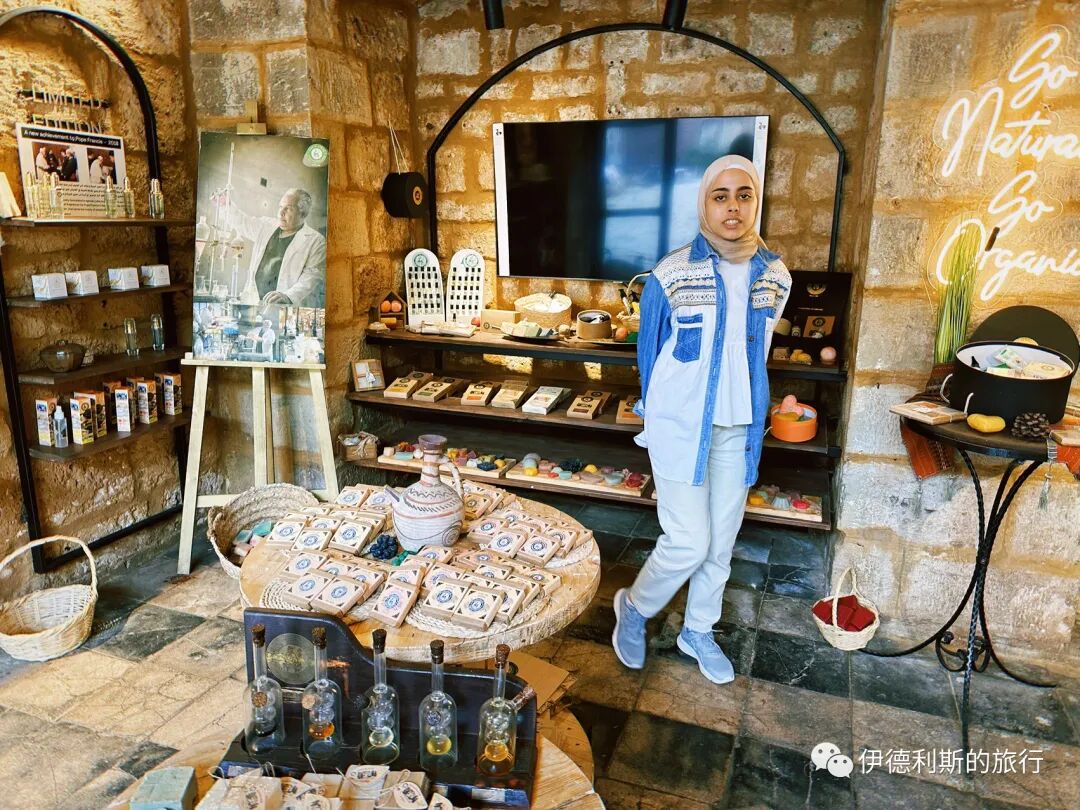
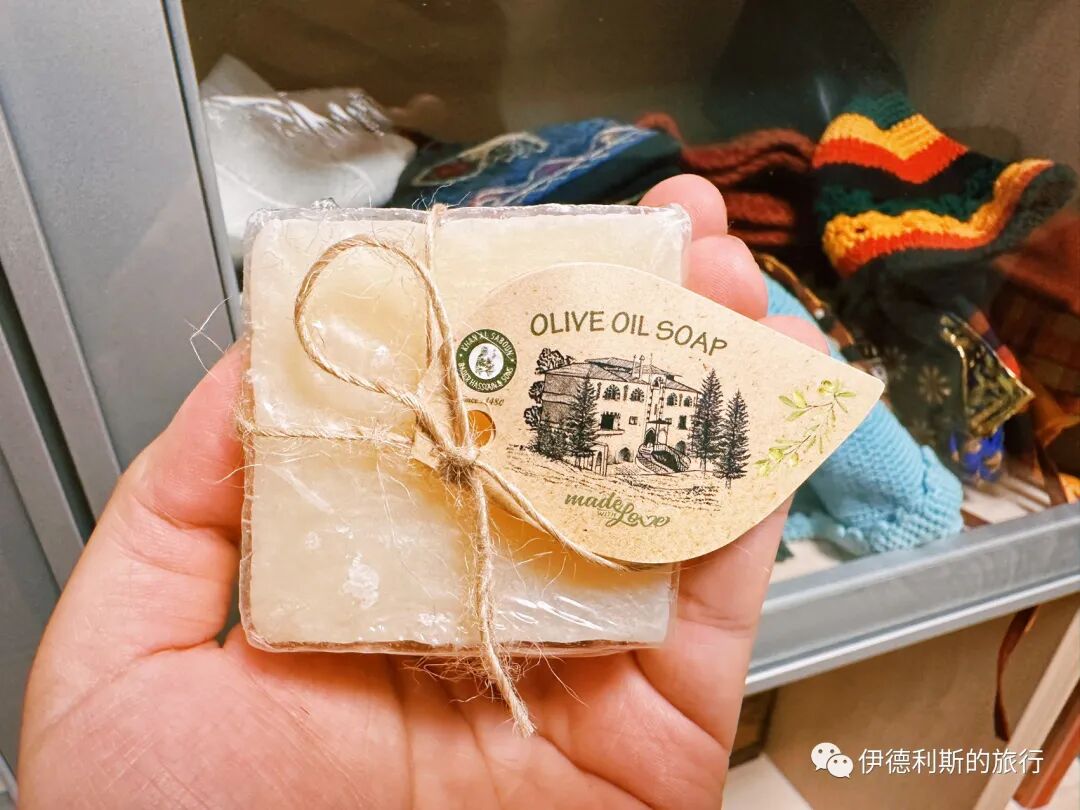
Misriyyin Inn is located in the northern part of the old city of Tripoli and dates back to the Mamluk period in the 14th century. There is a Sharkass soap shop on the second floor of the inn, and they have been making traditional olive oil soap since 1803. The Tripoli Soap shop on the first floor opened in 1937, and you can watch the process of making natural soap on-site here.
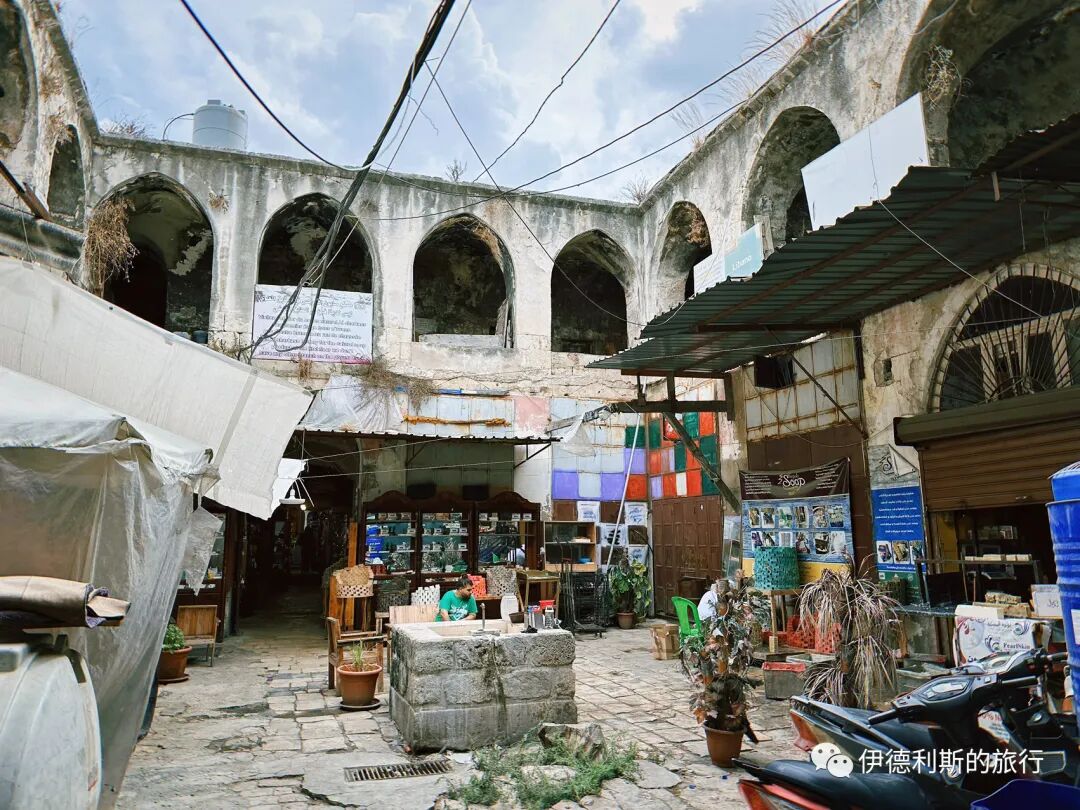
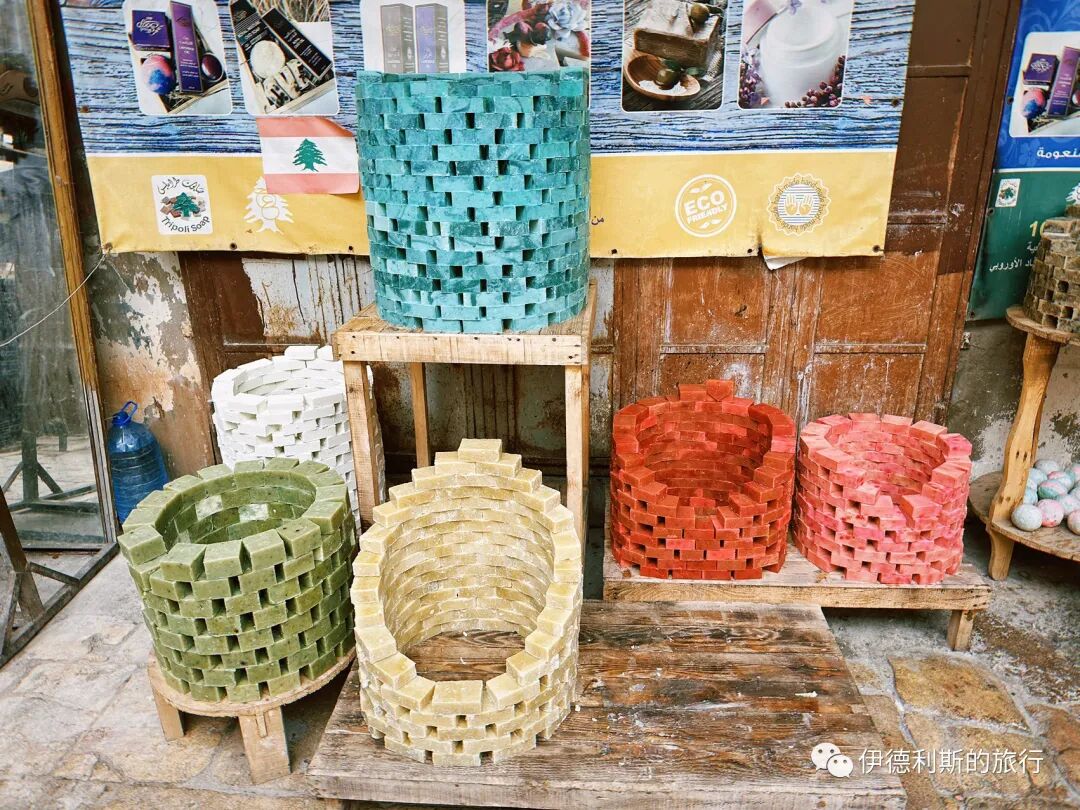
Right next to the Ezzedin bathhouse is the Tailors' Inn (Khan Khayyatin), a Mamluk-era commercial inn built by Prince Badr al-Din in 1339 that mainly sold needles, thread, textiles, and other sewing supplies. This is not a typical courtyard inn, but consists of two rows of shops with stores on the first floor and guest rooms on the second, which are not connected in the middle, and the top is covered by ten horizontally connected arches. People say it has its current shape because it was built on the foundation of a Byzantine-Crusader building.
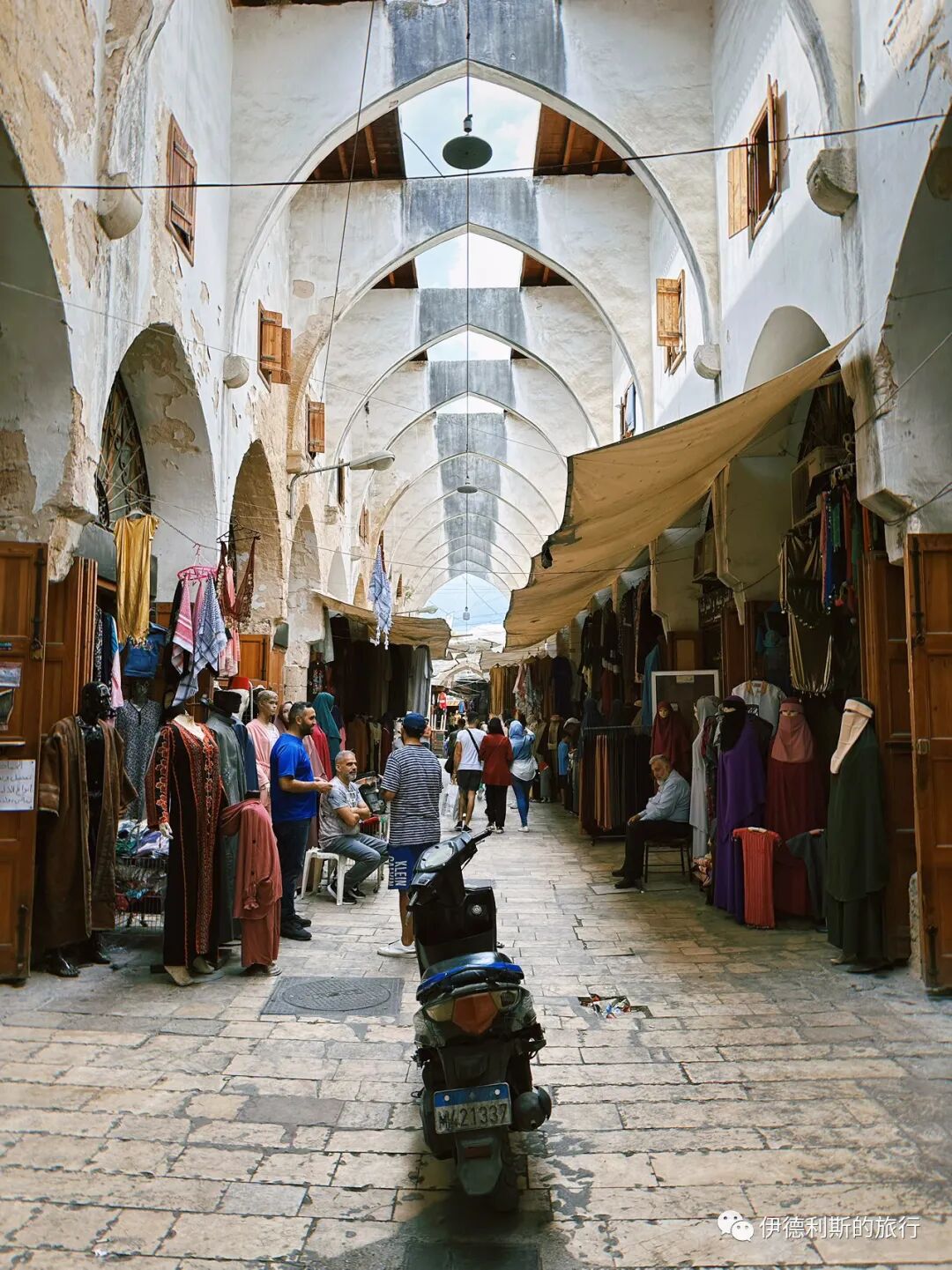
Askar Inn (Khan) was built during the Mamluk period in the 14th century and is the largest commercial inn in Tripoli.
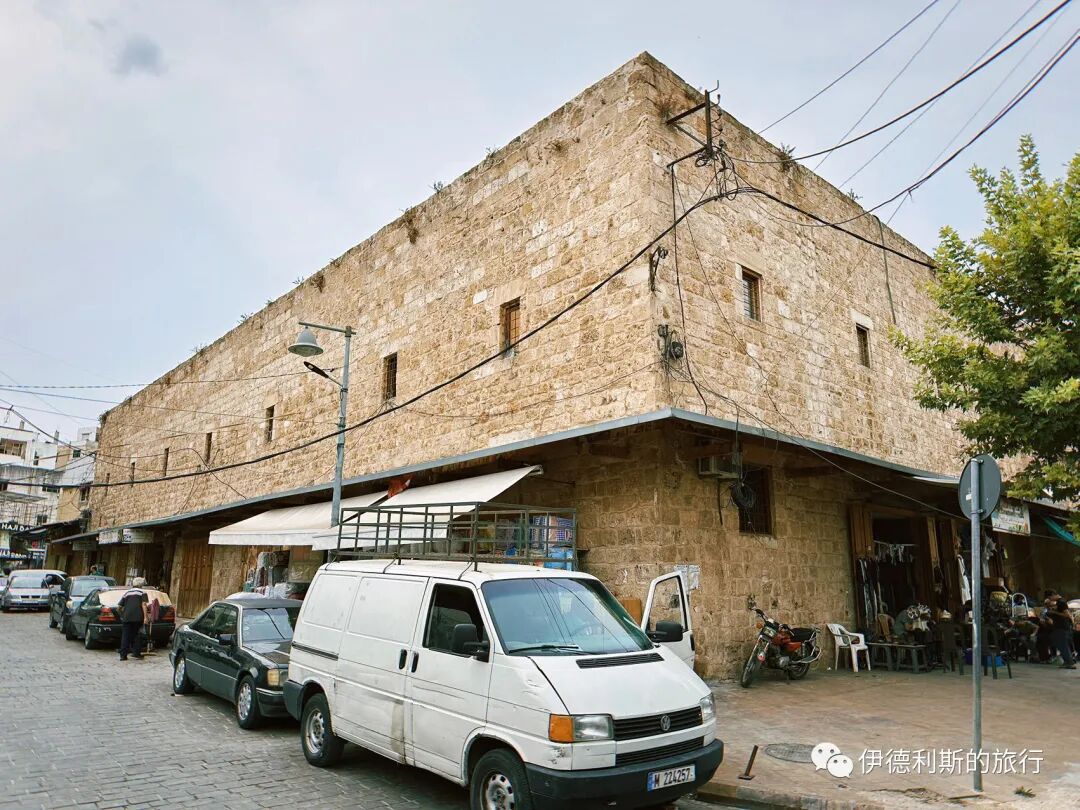
Food
Cheese flatbread (manakish) at the market, which is likely the most classic snack in the market.
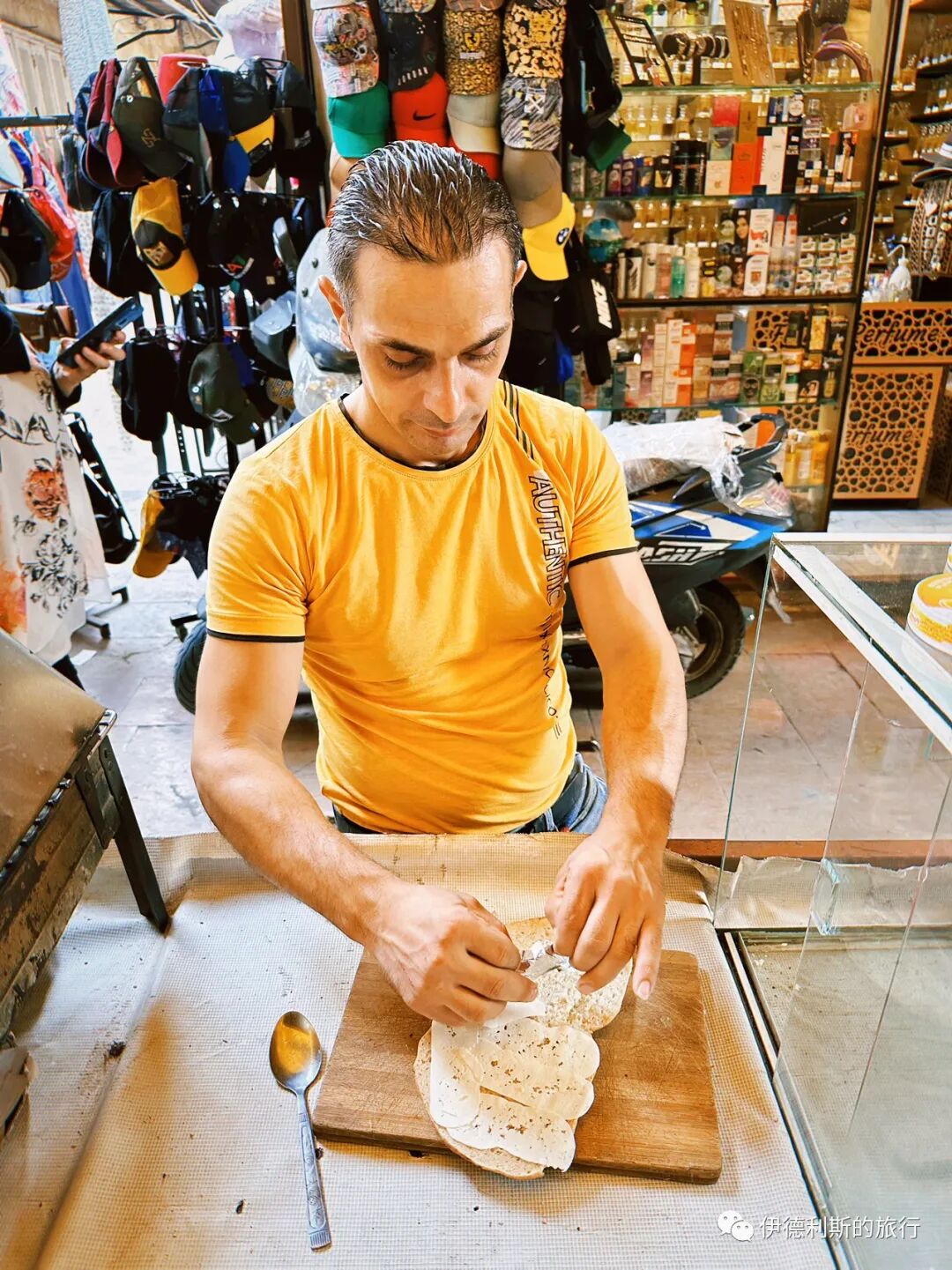
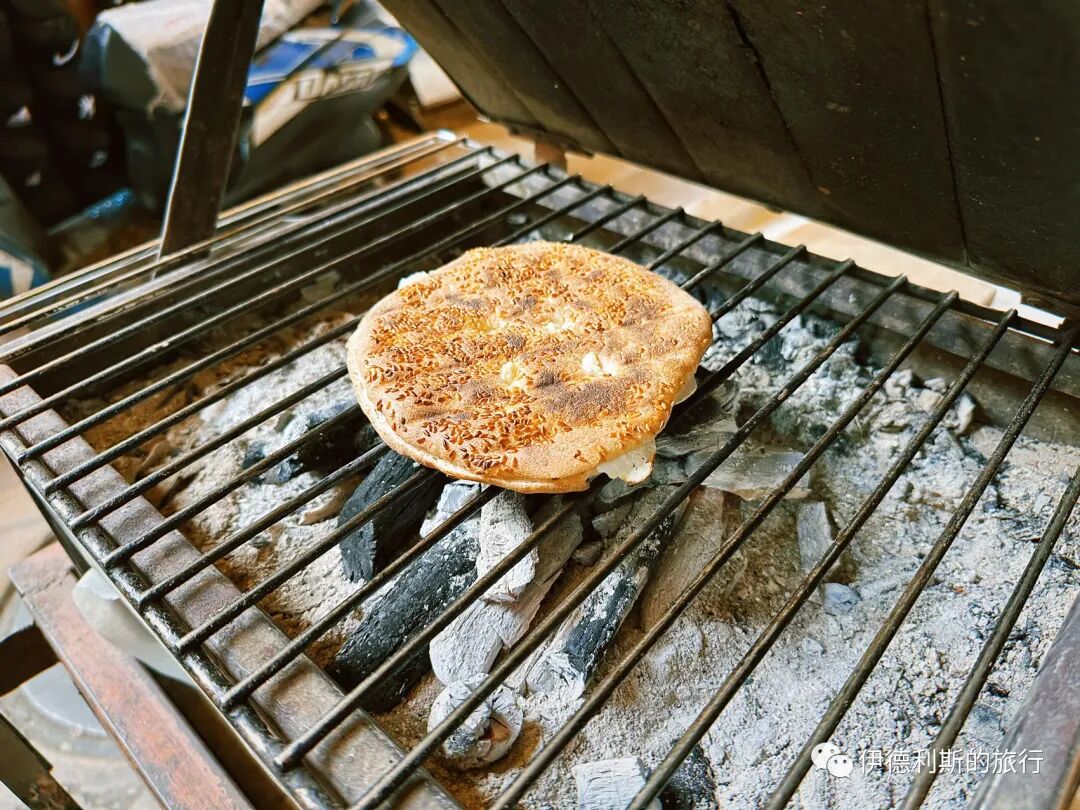
We had a traditional stewed bean brunch at Akra restaurant, ordering traditional stewed fava beans and chickpeas, along with hummus topped with cashews and peanuts, all eaten inside pita bread.
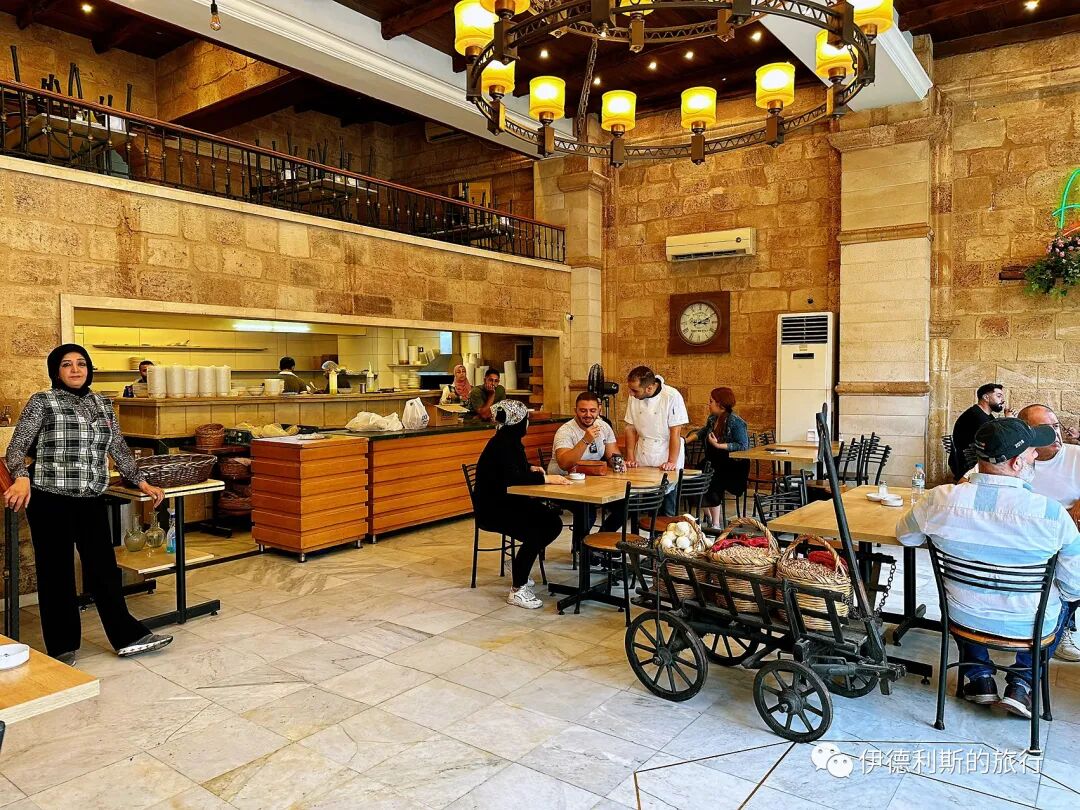
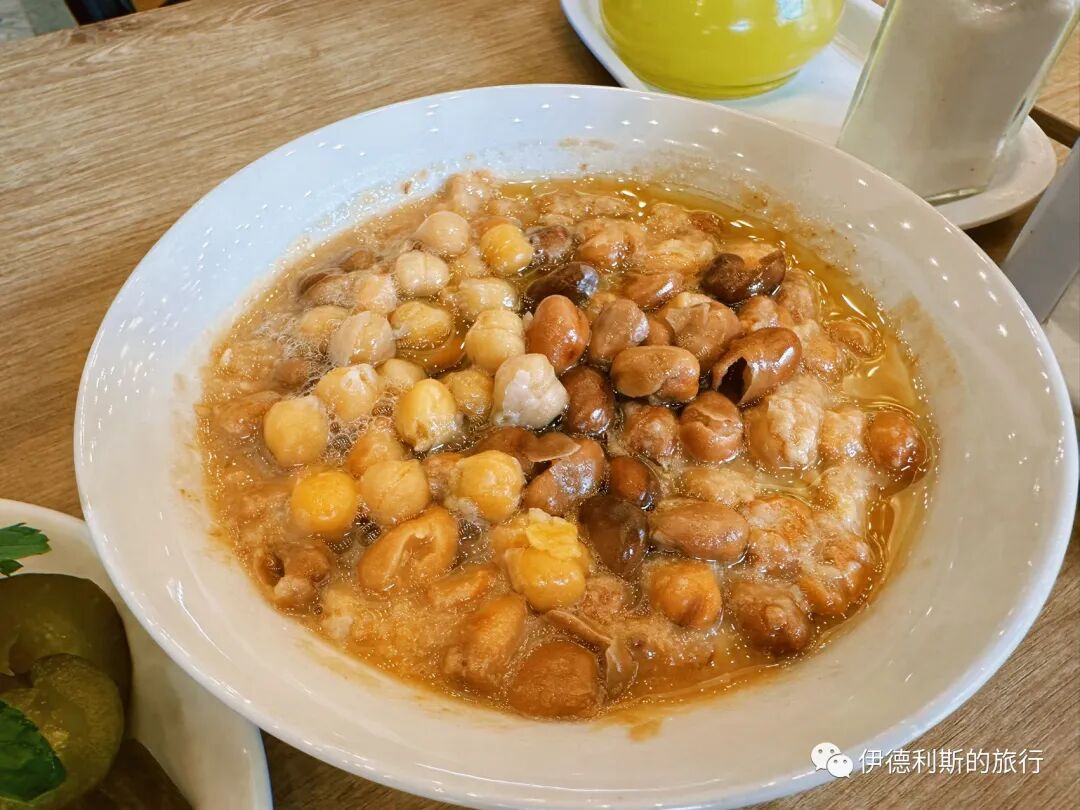
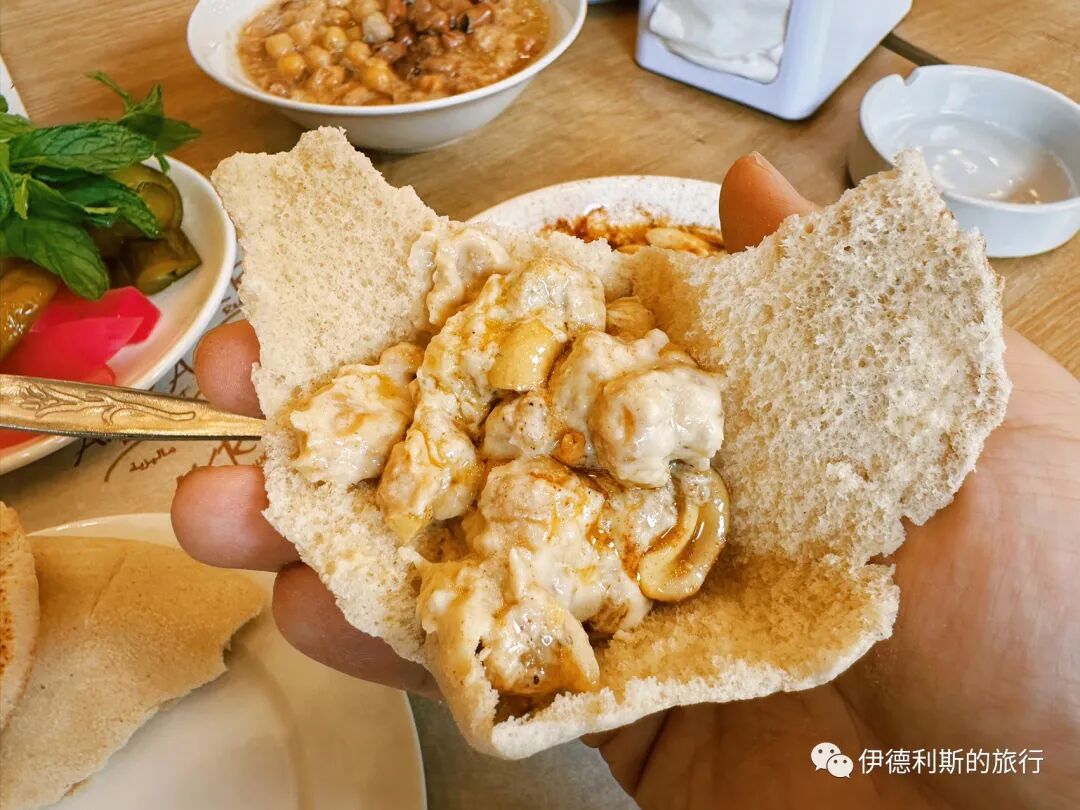
Summary: Tripoli in northern Lebanon is shown through its old city streets, mosques, markets, and everyday food. The account follows the original route from Beirut to Tripoli while keeping the local names, religious sites, and photographs in order.
Tripoli is in northern Lebanon. It takes about an hour to get there by minibus from across the street from the Mohammad Al-Amin Mosque in the capital, Beirut.
In 1289, the Mamluk dynasty took Tripoli from the Crusaders. They destroyed the old city and built a new one 4 kilometers inland below the castle, turning it into an important historic city for the faith. Today, about 35 ancient buildings from the Mamluk period remain in the old city of Tripoli. This makes Tripoli the city with the second-most preserved Mamluk monuments after Cairo.
After the Ottoman Empire left Lebanon in 1918, Tripoli fell into a long decline. The Lebanese Civil War that began in 1975 hit Tripoli hard. In 1985, a battle between Sunni and Alawite militias forced 200,000 people to leave their homes and led to the Syrian army staying in Tripoli until 2005. After the civil war ended, Tripoli seemed to be forgotten, and more than half of its residents live in poverty. At the same time, conflicts between Sunni and Alawite groups happen from time to time, often with bombings and suicide attacks, which has long made Tripoli an unsuitable place for tourism.
Table of Contents
Castle
Tripoli Castle: Rebuilt by the Mamluk dynasty in 1289 and again by Suleiman the Magnificent of the Ottoman Empire in 1521.
City Gates
Al-Mahatra Gate: Named after the military musicians who played to encourage the troops.
Mosques
Mansouri Great Mosque: Built by the Mamluk dynasty in 1294.
Taynal Mosque: Built by the Mamluk dynasty in 1336.
Attar Mosque: Built in the 1350s by a local wealthy perfume merchant; it is currently closed.
Al-Uwaysiyat Mosque: Built by the Mamluk dynasty in 1461.
Hanging Mosque (Muallaq Mosque): Built by the Ottoman Empire in 1561.
Tawba Mosque: Rebuilt by the Ottoman Empire in 1612.
Burtasi Mosque: Built by the Mamluk dynasty in the late 13th and early 14th centuries.
Madrasas
In the 14th century, the Mamluk dynasty built six madrasas around the Mansouri Great Mosque.
Hammam
Al Jadid Hammam: Built during the Ottoman period in 1740; it is currently closed.
Ezzedin Hammam: Built by the Mamluk dynasty in the late 13th century; it is currently open for visitors.
Market
Haraj Market: Built in the 14th century during the Mamluk dynasty.
Inn
Al Saboun Soap Inn: Built in 1480 during the late Mamluk dynasty, where you can buy traditional soap.
Misriyyin Soap Inn: Built in the 14th century during the Mamluk dynasty, where you can buy traditional soap.
Khayyatin Tailor Inn: Built in 1339 during the Mamluk dynasty, where you can buy traditional clothing.
Askar Inn: Built in the 14th century during the Mamluk dynasty, currently closed.
Food
Cheese flatbread in the market.
Eat at Akra Restaurant: Traditional bean stew brunch.
Castle
The site of Tripoli Castle was originally a Shia cemetery from the Fatimid dynasty. During the Frankish Crusader siege of Tripoli in 1102-1103, the Crusader leader Raymond of Saint-Gilles ordered it to be built into a castle, so it was later also called Saint-Gilles Castle. In 1289, after the Mamluk dynasty captured Tripoli, they rebuilt the castle using many Roman columns and other building materials found nearby. In 1521, the Ottoman Sultan Suleiman the Magnificent rebuilt the castle again, changing the arrow slits into cannon ports. In the early 19th century, the Ottoman governor of Tripoli carried out the last major renovation of the castle, giving it its current appearance.
The castle gate consists of two towers. The moat in front originally had a drawbridge, which has now been replaced by a stone bridge. The black and white marble facade on the gate was built by Suleiman the Magnificent in 1521. The stone inscription above reads: 'May the Emir never cease to obey his command, restoring this sacred castle, making it a strong fortress forever.'
City Gates
Al-Mahatra Gate in the old city of Tripoli. The name of this gate comes from the military musicians who played to encourage the army. Now that the war is over, houses have been built on top of the gate, and it has become a quiet alley.
Mosques
Mansouri Great Mosque, also known as the Great Mosque of Tripoli, was ordered to be built in 1294 by the Mamluk Sultan Al-Ashraf Khalil. It is the first building constructed by the Mamluk dynasty in Tripoli.
In 1109, the French Crusaders occupied Tripoli. For the next 180 years, Tripoli was ruled by European Christian nobles. In 1289, the Mamluk army arrived at the walls of Tripoli carrying large catapults. Under the assault of catapults, the two towers of Tripoli soon collapsed. The Mamluk army stormed the city and leveled it to the ground.
Shortly after, the Mamluk dynasty began building a new city at the foot of the castle on Tripoli's Pilgrim Mountain (Jabal al-Hajj). This included the Great Mansouri Mosque, built on the ruins of a Crusader church at the base of the hill. The mosque's minaret (mabkhara) is likely part of the Crusader Church of St. Mary, and the main gate may also incorporate the original Crusader church entrance. The main prayer hall was built by the Mamluk dynasty in 1294, and the courtyard's surrounding colonnades were added in 1314 by the Mamluk Sultan Al-Nasir Muhammad.
Taynal Mosque was built in 1336 by order of the Mamluk governor of Tripoli, Amir Taynal. The main prayer hall of Taynal Mosque consists of two consecutive halls. The most ornate feature is the entrance to the second hall, which has a gate with a stalactite-style cornice (muqarnas) and uses the ablaq technique of alternating black and white marble. Inside the prayer hall are some ancient Corinthian columns, which are thought to have come from a Crusader-era church or an even older Roman temple.
Attar Mosque was built in the 1350s by a wealthy local perfume merchant named Badr al-Din al-Attar on the ruins of a Crusader church. It was the first mosque in Tripoli not built by the Mamluks. Attar Mosque is known as one of the most beautiful mosques in Tripoli, but it has been closed for several years for renovations.
Al-Uwaysiyat Mosque was first built during the Mamluk period in 1461 and was renovated in 1534 during the reign of the Ottoman Sultan Suleiman the Magnificent.
The Hanging Mosque (Muallaq Mosque) was commissioned in 1561 by the Ottoman governor of Tripoli, Mahmud Lutfi al-Za'im, during the reign of Ottoman Sultan Suleiman the Magnificent. The first floor of the Hanging Mosque is a culvert on the street level, so you must take the stairs to the side to reach the second-floor prayer hall. The octagonal minaret next to the prayer hall is very eye-catching and features two levels of balconies.
The construction date of Tawba Mosque is unknown, though it is believed to have been built during the Mamluk period. Because it sits right next to the riverbank, the stone inscription marking its construction was likely washed away in a flood. The inscription currently at the mosque entrance states that it was rebuilt after a flood in 1612. Many mosques in Lebanon lock their doors outside of prayer times, so I could not enter and only saw the octagonal minaret.
Burtasi Mosque was built by Isa ibn Umar al-Burtasi during the Mamluk period. Since Isa passed away in 1324, we can assume the mosque was built between the late 13th century and 1324. A flood in 1955 destroyed all the houses around Burtasi Mosque, and it is now the only building left standing on the riverbank. The minaret above the main gate is considered the most beautiful minaret in Tripoli. Above the three-tiered muqarnas cornice is a square balcony featuring Moorish-style double-arched windows. This type of double arch is a classic structure found in Muslim architecture in Andalusia, southern Spain.
Madrasas
During the 14th century, the Mamluk dynasty established six colleges around the Great Mansouri Mosque, which trained a large number of students. These include al-Khayriyya Hasan (1309 or later), al-Qartawiyya (c. 1326), al-Shamsiyya (1349), al-Nasiriyya (between 1354–60), al-Nuriyya (14th century), and the Mashhad Madrasa. The al-Qartawiyya Madrasa outside the east wall of the Mansouri Great Mosque is the most magnificent, though we could not find the main gate in the maze-like alleys of the old city, we did see the calligraphy carvings on the school's wall.
Hammam
Right next to the Hanging Mosque is the Al Jadid bathhouse (Hammam), built in 1740 during the Ottoman period, which was used until the 1970s and closed after the outbreak of the Lebanese Civil War. This bathhouse was a gift to Tripoli from the Damascus governor Asad Pasha Al Azem, and its gate is exquisite, featuring a fourteen-link chain carved from a single piece of stone.
The Ezzedin bathhouse (Hammam) was the first public bathhouse built by the Mamluk dynasty after they occupied Tripoli, commissioned by Emir Ezzedin Aibek (who ruled Tripoli from 1293 to 1298) and constructed using many marble pieces from the Byzantine and Crusader eras. This bathhouse operated from the end of the 13th century until 1975, when it closed due to the start of the Lebanese Civil War. It has now been restored and is free to visit.
Market
The markets in Tripoli's old city are very lively, which is a sharp contrast to Beirut. Ibn Battuta wrote in his travelogue: 'Afterward, we arrived at the city of Tripoli.' It is an important town in Sham, with several small rivers flowing through it. It is surrounded by fragrant orchards and lush green trees. The sea surrounds it with its deep blue water, and the earth nourishes it with its treasures. The goods in the market are dazzling and truly amazing.
We drank street coffee at the market and saw all kinds of dairy products, which was very interesting.
The Haraj market was built in the 14th century and has an 8-meter-high vaulted ceiling supported by black granite columns, some of which may be architectural pieces from the ancient Roman or Byzantine eras. The market has two floors; the upper rooms were for merchants to stay in and had wooden windows through which their female relatives could look down at the market, while the lower floor was for selling goods.
The 1983 bombing during the Lebanese Civil War caused severe damage to the Haraj market, which was later restored to its current state after a long process.
Inn
Tripoli has always been famous for producing perfume and handmade soap, with the most well-known brand being Bader Hassoun's Khan Al Saboun (Soap Inn). The history of the Hassoun family producing soap in Tripoli dates back to the early Mamluk dynasty in 1256, while the Soap Inn (Khan Al Saboun) in the old city of Tripoli was built in the late Mamluk dynasty in 1480.
The Soap Inn has a courtyard with two levels of galleries and a pool in the middle. The second floor of the gallery was for caravan merchants to stay, while the first floor was for making and selling soap. People say the Ottoman Sultan Suleiman the Magnificent once received soap from Tripoli as a tribute, and at the urging of the Queen, Suleiman ordered the expansion of the Soap Inn in Tripoli. After it was built, the soap inn became a trade center for making and selling soap, and it started exporting soap to Europe. Today, the Bader Hassoun soap shop is located right here.
In 1993, Bader Hassoun's jewelry store in the old city of Tripoli was robbed, which led him to decide to restore his family's tradition of making soap. He and his wife spent one night making traditional soap with olive oil, dates, glycerin, natural coloring, and spices, and it all sold out the next day.
We bought the most traditional natural soap at the shop, which comes in three scents: green tea, lavender, and cedar. Cedar is an important symbol of Lebanon, and Lebanon is also known as the Land of Cedars. We also bought an olive oil soap safe for babies, which I can use for Suleiman.
Misriyyin Inn is located in the northern part of the old city of Tripoli and dates back to the Mamluk period in the 14th century. There is a Sharkass soap shop on the second floor of the inn, and they have been making traditional olive oil soap since 1803. The Tripoli Soap shop on the first floor opened in 1937, and you can watch the process of making natural soap on-site here.
Right next to the Ezzedin bathhouse is the Tailors' Inn (Khan Khayyatin), a Mamluk-era commercial inn built by Prince Badr al-Din in 1339 that mainly sold needles, thread, textiles, and other sewing supplies. This is not a typical courtyard inn, but consists of two rows of shops with stores on the first floor and guest rooms on the second, which are not connected in the middle, and the top is covered by ten horizontally connected arches. People say it has its current shape because it was built on the foundation of a Byzantine-Crusader building.
Askar Inn (Khan) was built during the Mamluk period in the 14th century and is the largest commercial inn in Tripoli.
Food
Cheese flatbread (manakish) at the market, which is likely the most classic snack in the market.
We had a traditional stewed bean brunch at Akra restaurant, ordering traditional stewed fava beans and chickpeas, along with hummus topped with cashews and peanuts, all eaten inside pita bread.
Halal Travel Guide: Beirut, Lebanon - Mosques, Food and Old City
Articles • ali2007fr posted the article • 0 comments • 130 views • 2026-05-20 08:14
Reposted from the web
Summary: Beirut is covered through its long Mediterranean history, downtown streets, mosques, churches, markets, and food. This account keeps the original walking route, site names, historical details, and photographs from the visit.
Beirut became part of the Arab Caliphate in 635 and has been a trade hub in the Eastern Mediterranean ever since. During the Umayyad, Abbasid, and Fatimid dynasties, the Byzantine Empire tried to take back Beirut but failed every time. Beirut was part of the Kingdom of Jerusalem from 1110 to 1291, was taken back by the Mamluk Sultanate in 1291, and was conquered by the Ottoman Empire in the early 16th century. In the 16th and 17th centuries, the Ottoman Empire let local Druze emirs rule Beirut, but they took back control in 1763. With help from Damascus, Beirut broke the monopoly that the city of Acre had on Eastern Mediterranean trade and became a major trade center once again.
Mosque
The Mohammad Al-Amin Mosque was built between 2002 and 2008 in an Ottoman style with funds donated by former Lebanese Prime Minister Rafic Hariri, and it is currently the largest mosque in Lebanon.
This is a Sunni mosque, and it does not have many people coming for namaz. I chatted with an old man for a while. He said the Sunni population in Beirut is not strong enough and suggested I visit Tripoli in the north, saying that is where the powerful Sunni city is. In fact, Lebanon's Sunni population is mainly spread across the north, led by Tripoli, and the Bekaa Valley in the east. In the capital city of Beirut, the northwest is mostly Sunni, the southwest is mostly Shia, and the east is mostly Christian. During the civil war, the Mohammad Al-Amin Mosque was near the dividing line between the Muslim and Christian districts. This dividing line was called the Green Line because it grew over with weeds and trees while no one lived there during the war. It used to be full of militia checkpoints and snipers, and many buildings were badly damaged.
The Emir Assaf Mosque was built in the late 16th century by the emir rulers of the local Lebanese Assaf dynasty (1306-1591), and the emir's palace and gardens used to be next to the mosque.
The Assaf dynasty was a Sunni Turkmen dynasty. In 1306, the Mamluk governor of Damascus sent the Turkmen tribe led by the Assaf family to put down a rebellion north of Beirut. Later, the Mamluk Sultanate assigned them to guard the coastal area north of Beirut and manage the local Shia residents. After the Ottoman Empire took the Levant region from the Mamluk Sultanate in 1516, they appointed the Assaf family as the main agents for the Beirut and Tripoli regions. The Assaf dynasty attracted Maronite Christians to settle in northern Beirut by lowering taxes and housing prices to balance out the local Sunni and Shia Muslims. In 1579, the Ottoman Empire established the Tripoli Eyalet to keep the Assaf dynasty in check. In 1591, the Ottoman governor of Tripoli ordered the execution of the last Assaf emir by gunfire, ending the Assaf dynasty.
The Great Omari Mosque is said to have been founded in 635 during the reign of Caliph Umar, and in 1150, the Crusaders built a Romanesque Church of St. John here. After the Mamluk Sultanate captured Tripoli in 1291, they converted it into a grand mosque and added a Mamluk-style gate and minaret in 1350. During the French Mandate for Lebanon from 1923 to 1946, the street-facing facade of the Great Omari Mosque was redesigned with an added portico to unify the architectural style of downtown Beirut. The Great Omari Mosque suffered severe damage during the Lebanese Civil War, and renovations were completed in 2004.
Small Sufi lodge (zawiya).
Zawiyat Ibn Arraq is located at the entrance of the Beirut Souks and is the only remaining Mamluk-era building in Beirut. This building was constructed in 1517 by the religious authority Ibn 'Arraq Al-Dimashqi from Damascus, and it was originally a hospice. After Ibn 'Arraq passed away in 1526, the site became a school of Islamic law and a zawiya (small Sufi lodge) for his followers. The currently remaining vaulted structure once connected to other courtyards and rooms.
Food
I had dinner at a famous local restaurant called T-Marbouta in the Hamra district of Beirut, where I ordered kibbeh mloukiyeh, hommos moutammam, and grilled meat, along with herbal tea and mint tea. Kibbeh is a fried ball made of cracked wheat and minced lamb, a classic appetizer in the Levant region; the one I ate was topped with mloukiyeh (jute leaves), eggplant, walnuts, and pomegranate. Hummus is another classic appetizer from the Levant region made of mashed chickpeas.
Hamra is a lively and trendy neighborhood in Beirut near the American University. It is full of young people and has long been a cultural hub of Beirut. The environment here is relatively nice, making it a good place for shopping in Beirut.
We had steak and fried chicken at a fast-food restaurant in the Hamra district of Lebanon. There are many young people here and a wide variety of restaurants, including Chinese and Japanese food. Because the power supply is unstable, shops here suddenly go dark from time to time. Everyone except us stayed very calm, waiting for the power to come back on by itself. I think it must be hard to use a desktop computer without a battery in Beirut, so everyone definitely chooses laptops first.
We ate at Zaatar w Zeit, a famous Lebanese fast-food chain in the Hamra district. They specialize in Levantine-style flatbread (manakish), and their food is very healthy.
Manakish is a traditional bread that originated with the ancient Phoenicians. You can top it with a spice blend (zaatar), cheese, or minced lamb. We had the one with zaatar, which is a unique mix of thyme, sumac, oregano, marjoram, and sesame seeds.
We also drank Lebanese coffee, which is made with Arabica coffee beans and flavored with cardamom.
In the evening, we had coffee at the legendary Younes Coffee in the Hamra district of Beirut. The founder of Younes Coffee, Amin Younes Sr., immigrated to Brazil in 1894 and worked on a Brazilian coffee tycoon's plantation for 20 years. In 1935, Amin returned to Lebanon and opened Younes Coffee in downtown Beirut. During World War II, the collapse of the Lebanese currency wiped out most of Amin's savings, but he still managed to pull through. In 1960, Amin's son Souheil joined the family business and helped his father open the first branch of Younes Coffee in the Hamra district. It was one of the first coffee shops in Lebanon to buy an espresso machine. The Younes flagship store in downtown Beirut was destroyed during the Lebanese Civil War in 1975, and only the Hamra branch survived.
Abou Anwar worked at Younes Coffee for 60 years starting in 1954. As the cafe's most senior coffee roasting master, his expert skills attracted a large group of loyal customers. The coffee I ordered was named after him, the Abou Anwar Blend, which mixes his favorite fruits and spices.
There is a string of cafes next to Pigeon Rocks, ranging from the Bay Rock Cafe in the south to the Starbucks in the north, all of which are classic spots to watch the sunset. Although many people post about this place online, the cafes are not actually very crowded, making them very relaxing. We ordered two juices and a plate of salad at the Bay Rock Cafe and spent a romantic and wonderful evening there.
Accommodation
I stayed at the Serenada Golden Palace hotel in the heart of the Hamra district in Beirut. The hotel lobby is gorgeous and classic, reminding people of the prosperity and beauty of Beirut in the past. At the same time, opening the window in the room lets you see houses damaged by the war, which immediately pulls you back to reality.
The hotel breakfast is quite rich, with all kinds of cheeses available, paired with various fruits and vegetables for a very healthy meal. view all
Summary: Beirut is covered through its long Mediterranean history, downtown streets, mosques, churches, markets, and food. This account keeps the original walking route, site names, historical details, and photographs from the visit.
Beirut became part of the Arab Caliphate in 635 and has been a trade hub in the Eastern Mediterranean ever since. During the Umayyad, Abbasid, and Fatimid dynasties, the Byzantine Empire tried to take back Beirut but failed every time. Beirut was part of the Kingdom of Jerusalem from 1110 to 1291, was taken back by the Mamluk Sultanate in 1291, and was conquered by the Ottoman Empire in the early 16th century. In the 16th and 17th centuries, the Ottoman Empire let local Druze emirs rule Beirut, but they took back control in 1763. With help from Damascus, Beirut broke the monopoly that the city of Acre had on Eastern Mediterranean trade and became a major trade center once again.
Mosque
The Mohammad Al-Amin Mosque was built between 2002 and 2008 in an Ottoman style with funds donated by former Lebanese Prime Minister Rafic Hariri, and it is currently the largest mosque in Lebanon.
This is a Sunni mosque, and it does not have many people coming for namaz. I chatted with an old man for a while. He said the Sunni population in Beirut is not strong enough and suggested I visit Tripoli in the north, saying that is where the powerful Sunni city is. In fact, Lebanon's Sunni population is mainly spread across the north, led by Tripoli, and the Bekaa Valley in the east. In the capital city of Beirut, the northwest is mostly Sunni, the southwest is mostly Shia, and the east is mostly Christian. During the civil war, the Mohammad Al-Amin Mosque was near the dividing line between the Muslim and Christian districts. This dividing line was called the Green Line because it grew over with weeds and trees while no one lived there during the war. It used to be full of militia checkpoints and snipers, and many buildings were badly damaged.
The Emir Assaf Mosque was built in the late 16th century by the emir rulers of the local Lebanese Assaf dynasty (1306-1591), and the emir's palace and gardens used to be next to the mosque.
The Assaf dynasty was a Sunni Turkmen dynasty. In 1306, the Mamluk governor of Damascus sent the Turkmen tribe led by the Assaf family to put down a rebellion north of Beirut. Later, the Mamluk Sultanate assigned them to guard the coastal area north of Beirut and manage the local Shia residents. After the Ottoman Empire took the Levant region from the Mamluk Sultanate in 1516, they appointed the Assaf family as the main agents for the Beirut and Tripoli regions. The Assaf dynasty attracted Maronite Christians to settle in northern Beirut by lowering taxes and housing prices to balance out the local Sunni and Shia Muslims. In 1579, the Ottoman Empire established the Tripoli Eyalet to keep the Assaf dynasty in check. In 1591, the Ottoman governor of Tripoli ordered the execution of the last Assaf emir by gunfire, ending the Assaf dynasty.
The Great Omari Mosque is said to have been founded in 635 during the reign of Caliph Umar, and in 1150, the Crusaders built a Romanesque Church of St. John here. After the Mamluk Sultanate captured Tripoli in 1291, they converted it into a grand mosque and added a Mamluk-style gate and minaret in 1350. During the French Mandate for Lebanon from 1923 to 1946, the street-facing facade of the Great Omari Mosque was redesigned with an added portico to unify the architectural style of downtown Beirut. The Great Omari Mosque suffered severe damage during the Lebanese Civil War, and renovations were completed in 2004.
Small Sufi lodge (zawiya).
Zawiyat Ibn Arraq is located at the entrance of the Beirut Souks and is the only remaining Mamluk-era building in Beirut. This building was constructed in 1517 by the religious authority Ibn 'Arraq Al-Dimashqi from Damascus, and it was originally a hospice. After Ibn 'Arraq passed away in 1526, the site became a school of Islamic law and a zawiya (small Sufi lodge) for his followers. The currently remaining vaulted structure once connected to other courtyards and rooms.
Food
I had dinner at a famous local restaurant called T-Marbouta in the Hamra district of Beirut, where I ordered kibbeh mloukiyeh, hommos moutammam, and grilled meat, along with herbal tea and mint tea. Kibbeh is a fried ball made of cracked wheat and minced lamb, a classic appetizer in the Levant region; the one I ate was topped with mloukiyeh (jute leaves), eggplant, walnuts, and pomegranate. Hummus is another classic appetizer from the Levant region made of mashed chickpeas.
Hamra is a lively and trendy neighborhood in Beirut near the American University. It is full of young people and has long been a cultural hub of Beirut. The environment here is relatively nice, making it a good place for shopping in Beirut.
We had steak and fried chicken at a fast-food restaurant in the Hamra district of Lebanon. There are many young people here and a wide variety of restaurants, including Chinese and Japanese food. Because the power supply is unstable, shops here suddenly go dark from time to time. Everyone except us stayed very calm, waiting for the power to come back on by itself. I think it must be hard to use a desktop computer without a battery in Beirut, so everyone definitely chooses laptops first.
We ate at Zaatar w Zeit, a famous Lebanese fast-food chain in the Hamra district. They specialize in Levantine-style flatbread (manakish), and their food is very healthy.
Manakish is a traditional bread that originated with the ancient Phoenicians. You can top it with a spice blend (zaatar), cheese, or minced lamb. We had the one with zaatar, which is a unique mix of thyme, sumac, oregano, marjoram, and sesame seeds.
We also drank Lebanese coffee, which is made with Arabica coffee beans and flavored with cardamom.
In the evening, we had coffee at the legendary Younes Coffee in the Hamra district of Beirut. The founder of Younes Coffee, Amin Younes Sr., immigrated to Brazil in 1894 and worked on a Brazilian coffee tycoon's plantation for 20 years. In 1935, Amin returned to Lebanon and opened Younes Coffee in downtown Beirut. During World War II, the collapse of the Lebanese currency wiped out most of Amin's savings, but he still managed to pull through. In 1960, Amin's son Souheil joined the family business and helped his father open the first branch of Younes Coffee in the Hamra district. It was one of the first coffee shops in Lebanon to buy an espresso machine. The Younes flagship store in downtown Beirut was destroyed during the Lebanese Civil War in 1975, and only the Hamra branch survived.
Abou Anwar worked at Younes Coffee for 60 years starting in 1954. As the cafe's most senior coffee roasting master, his expert skills attracted a large group of loyal customers. The coffee I ordered was named after him, the Abou Anwar Blend, which mixes his favorite fruits and spices.
There is a string of cafes next to Pigeon Rocks, ranging from the Bay Rock Cafe in the south to the Starbucks in the north, all of which are classic spots to watch the sunset. Although many people post about this place online, the cafes are not actually very crowded, making them very relaxing. We ordered two juices and a plate of salad at the Bay Rock Cafe and spent a romantic and wonderful evening there.
Accommodation
I stayed at the Serenada Golden Palace hotel in the heart of the Hamra district in Beirut. The hotel lobby is gorgeous and classic, reminding people of the prosperity and beauty of Beirut in the past. At the same time, opening the window in the room lets you see houses damaged by the war, which immediately pulls you back to reality.
The hotel breakfast is quite rich, with all kinds of cheeses available, paired with various fruits and vegetables for a very healthy meal. view all
Reposted from the web
Summary: Beirut is covered through its long Mediterranean history, downtown streets, mosques, churches, markets, and food. This account keeps the original walking route, site names, historical details, and photographs from the visit.
Beirut became part of the Arab Caliphate in 635 and has been a trade hub in the Eastern Mediterranean ever since. During the Umayyad, Abbasid, and Fatimid dynasties, the Byzantine Empire tried to take back Beirut but failed every time. Beirut was part of the Kingdom of Jerusalem from 1110 to 1291, was taken back by the Mamluk Sultanate in 1291, and was conquered by the Ottoman Empire in the early 16th century. In the 16th and 17th centuries, the Ottoman Empire let local Druze emirs rule Beirut, but they took back control in 1763. With help from Damascus, Beirut broke the monopoly that the city of Acre had on Eastern Mediterranean trade and became a major trade center once again.
Mosque
The Mohammad Al-Amin Mosque was built between 2002 and 2008 in an Ottoman style with funds donated by former Lebanese Prime Minister Rafic Hariri, and it is currently the largest mosque in Lebanon.
This is a Sunni mosque, and it does not have many people coming for namaz. I chatted with an old man for a while. He said the Sunni population in Beirut is not strong enough and suggested I visit Tripoli in the north, saying that is where the powerful Sunni city is. In fact, Lebanon's Sunni population is mainly spread across the north, led by Tripoli, and the Bekaa Valley in the east. In the capital city of Beirut, the northwest is mostly Sunni, the southwest is mostly Shia, and the east is mostly Christian. During the civil war, the Mohammad Al-Amin Mosque was near the dividing line between the Muslim and Christian districts. This dividing line was called the Green Line because it grew over with weeds and trees while no one lived there during the war. It used to be full of militia checkpoints and snipers, and many buildings were badly damaged.
The Emir Assaf Mosque was built in the late 16th century by the emir rulers of the local Lebanese Assaf dynasty (1306-1591), and the emir's palace and gardens used to be next to the mosque.
The Assaf dynasty was a Sunni Turkmen dynasty. In 1306, the Mamluk governor of Damascus sent the Turkmen tribe led by the Assaf family to put down a rebellion north of Beirut. Later, the Mamluk Sultanate assigned them to guard the coastal area north of Beirut and manage the local Shia residents. After the Ottoman Empire took the Levant region from the Mamluk Sultanate in 1516, they appointed the Assaf family as the main agents for the Beirut and Tripoli regions. The Assaf dynasty attracted Maronite Christians to settle in northern Beirut by lowering taxes and housing prices to balance out the local Sunni and Shia Muslims. In 1579, the Ottoman Empire established the Tripoli Eyalet to keep the Assaf dynasty in check. In 1591, the Ottoman governor of Tripoli ordered the execution of the last Assaf emir by gunfire, ending the Assaf dynasty.
The Great Omari Mosque is said to have been founded in 635 during the reign of Caliph Umar, and in 1150, the Crusaders built a Romanesque Church of St. John here. After the Mamluk Sultanate captured Tripoli in 1291, they converted it into a grand mosque and added a Mamluk-style gate and minaret in 1350. During the French Mandate for Lebanon from 1923 to 1946, the street-facing facade of the Great Omari Mosque was redesigned with an added portico to unify the architectural style of downtown Beirut. The Great Omari Mosque suffered severe damage during the Lebanese Civil War, and renovations were completed in 2004.
Small Sufi lodge (zawiya).
Zawiyat Ibn Arraq is located at the entrance of the Beirut Souks and is the only remaining Mamluk-era building in Beirut. This building was constructed in 1517 by the religious authority Ibn 'Arraq Al-Dimashqi from Damascus, and it was originally a hospice. After Ibn 'Arraq passed away in 1526, the site became a school of Islamic law and a zawiya (small Sufi lodge) for his followers. The currently remaining vaulted structure once connected to other courtyards and rooms.
Food
I had dinner at a famous local restaurant called T-Marbouta in the Hamra district of Beirut, where I ordered kibbeh mloukiyeh, hommos moutammam, and grilled meat, along with herbal tea and mint tea. Kibbeh is a fried ball made of cracked wheat and minced lamb, a classic appetizer in the Levant region; the one I ate was topped with mloukiyeh (jute leaves), eggplant, walnuts, and pomegranate. Hummus is another classic appetizer from the Levant region made of mashed chickpeas.
Hamra is a lively and trendy neighborhood in Beirut near the American University. It is full of young people and has long been a cultural hub of Beirut. The environment here is relatively nice, making it a good place for shopping in Beirut.
We had steak and fried chicken at a fast-food restaurant in the Hamra district of Lebanon. There are many young people here and a wide variety of restaurants, including Chinese and Japanese food. Because the power supply is unstable, shops here suddenly go dark from time to time. Everyone except us stayed very calm, waiting for the power to come back on by itself. I think it must be hard to use a desktop computer without a battery in Beirut, so everyone definitely chooses laptops first.
We ate at Zaatar w Zeit, a famous Lebanese fast-food chain in the Hamra district. They specialize in Levantine-style flatbread (manakish), and their food is very healthy.
Manakish is a traditional bread that originated with the ancient Phoenicians. You can top it with a spice blend (zaatar), cheese, or minced lamb. We had the one with zaatar, which is a unique mix of thyme, sumac, oregano, marjoram, and sesame seeds.
We also drank Lebanese coffee, which is made with Arabica coffee beans and flavored with cardamom.
In the evening, we had coffee at the legendary Younes Coffee in the Hamra district of Beirut. The founder of Younes Coffee, Amin Younes Sr., immigrated to Brazil in 1894 and worked on a Brazilian coffee tycoon's plantation for 20 years. In 1935, Amin returned to Lebanon and opened Younes Coffee in downtown Beirut. During World War II, the collapse of the Lebanese currency wiped out most of Amin's savings, but he still managed to pull through. In 1960, Amin's son Souheil joined the family business and helped his father open the first branch of Younes Coffee in the Hamra district. It was one of the first coffee shops in Lebanon to buy an espresso machine. The Younes flagship store in downtown Beirut was destroyed during the Lebanese Civil War in 1975, and only the Hamra branch survived.
Abou Anwar worked at Younes Coffee for 60 years starting in 1954. As the cafe's most senior coffee roasting master, his expert skills attracted a large group of loyal customers. The coffee I ordered was named after him, the Abou Anwar Blend, which mixes his favorite fruits and spices.
There is a string of cafes next to Pigeon Rocks, ranging from the Bay Rock Cafe in the south to the Starbucks in the north, all of which are classic spots to watch the sunset. Although many people post about this place online, the cafes are not actually very crowded, making them very relaxing. We ordered two juices and a plate of salad at the Bay Rock Cafe and spent a romantic and wonderful evening there.
Accommodation
I stayed at the Serenada Golden Palace hotel in the heart of the Hamra district in Beirut. The hotel lobby is gorgeous and classic, reminding people of the prosperity and beauty of Beirut in the past. At the same time, opening the window in the room lets you see houses damaged by the war, which immediately pulls you back to reality.
The hotel breakfast is quite rich, with all kinds of cheeses available, paired with various fruits and vegetables for a very healthy meal.
Summary: Beirut is covered through its long Mediterranean history, downtown streets, mosques, churches, markets, and food. This account keeps the original walking route, site names, historical details, and photographs from the visit.
Beirut became part of the Arab Caliphate in 635 and has been a trade hub in the Eastern Mediterranean ever since. During the Umayyad, Abbasid, and Fatimid dynasties, the Byzantine Empire tried to take back Beirut but failed every time. Beirut was part of the Kingdom of Jerusalem from 1110 to 1291, was taken back by the Mamluk Sultanate in 1291, and was conquered by the Ottoman Empire in the early 16th century. In the 16th and 17th centuries, the Ottoman Empire let local Druze emirs rule Beirut, but they took back control in 1763. With help from Damascus, Beirut broke the monopoly that the city of Acre had on Eastern Mediterranean trade and became a major trade center once again.
Mosque
The Mohammad Al-Amin Mosque was built between 2002 and 2008 in an Ottoman style with funds donated by former Lebanese Prime Minister Rafic Hariri, and it is currently the largest mosque in Lebanon.
This is a Sunni mosque, and it does not have many people coming for namaz. I chatted with an old man for a while. He said the Sunni population in Beirut is not strong enough and suggested I visit Tripoli in the north, saying that is where the powerful Sunni city is. In fact, Lebanon's Sunni population is mainly spread across the north, led by Tripoli, and the Bekaa Valley in the east. In the capital city of Beirut, the northwest is mostly Sunni, the southwest is mostly Shia, and the east is mostly Christian. During the civil war, the Mohammad Al-Amin Mosque was near the dividing line between the Muslim and Christian districts. This dividing line was called the Green Line because it grew over with weeds and trees while no one lived there during the war. It used to be full of militia checkpoints and snipers, and many buildings were badly damaged.
The Emir Assaf Mosque was built in the late 16th century by the emir rulers of the local Lebanese Assaf dynasty (1306-1591), and the emir's palace and gardens used to be next to the mosque.
The Assaf dynasty was a Sunni Turkmen dynasty. In 1306, the Mamluk governor of Damascus sent the Turkmen tribe led by the Assaf family to put down a rebellion north of Beirut. Later, the Mamluk Sultanate assigned them to guard the coastal area north of Beirut and manage the local Shia residents. After the Ottoman Empire took the Levant region from the Mamluk Sultanate in 1516, they appointed the Assaf family as the main agents for the Beirut and Tripoli regions. The Assaf dynasty attracted Maronite Christians to settle in northern Beirut by lowering taxes and housing prices to balance out the local Sunni and Shia Muslims. In 1579, the Ottoman Empire established the Tripoli Eyalet to keep the Assaf dynasty in check. In 1591, the Ottoman governor of Tripoli ordered the execution of the last Assaf emir by gunfire, ending the Assaf dynasty.
The Great Omari Mosque is said to have been founded in 635 during the reign of Caliph Umar, and in 1150, the Crusaders built a Romanesque Church of St. John here. After the Mamluk Sultanate captured Tripoli in 1291, they converted it into a grand mosque and added a Mamluk-style gate and minaret in 1350. During the French Mandate for Lebanon from 1923 to 1946, the street-facing facade of the Great Omari Mosque was redesigned with an added portico to unify the architectural style of downtown Beirut. The Great Omari Mosque suffered severe damage during the Lebanese Civil War, and renovations were completed in 2004.
Small Sufi lodge (zawiya).
Zawiyat Ibn Arraq is located at the entrance of the Beirut Souks and is the only remaining Mamluk-era building in Beirut. This building was constructed in 1517 by the religious authority Ibn 'Arraq Al-Dimashqi from Damascus, and it was originally a hospice. After Ibn 'Arraq passed away in 1526, the site became a school of Islamic law and a zawiya (small Sufi lodge) for his followers. The currently remaining vaulted structure once connected to other courtyards and rooms.
Food
I had dinner at a famous local restaurant called T-Marbouta in the Hamra district of Beirut, where I ordered kibbeh mloukiyeh, hommos moutammam, and grilled meat, along with herbal tea and mint tea. Kibbeh is a fried ball made of cracked wheat and minced lamb, a classic appetizer in the Levant region; the one I ate was topped with mloukiyeh (jute leaves), eggplant, walnuts, and pomegranate. Hummus is another classic appetizer from the Levant region made of mashed chickpeas.
Hamra is a lively and trendy neighborhood in Beirut near the American University. It is full of young people and has long been a cultural hub of Beirut. The environment here is relatively nice, making it a good place for shopping in Beirut.
We had steak and fried chicken at a fast-food restaurant in the Hamra district of Lebanon. There are many young people here and a wide variety of restaurants, including Chinese and Japanese food. Because the power supply is unstable, shops here suddenly go dark from time to time. Everyone except us stayed very calm, waiting for the power to come back on by itself. I think it must be hard to use a desktop computer without a battery in Beirut, so everyone definitely chooses laptops first.
We ate at Zaatar w Zeit, a famous Lebanese fast-food chain in the Hamra district. They specialize in Levantine-style flatbread (manakish), and their food is very healthy.
Manakish is a traditional bread that originated with the ancient Phoenicians. You can top it with a spice blend (zaatar), cheese, or minced lamb. We had the one with zaatar, which is a unique mix of thyme, sumac, oregano, marjoram, and sesame seeds.
We also drank Lebanese coffee, which is made with Arabica coffee beans and flavored with cardamom.
In the evening, we had coffee at the legendary Younes Coffee in the Hamra district of Beirut. The founder of Younes Coffee, Amin Younes Sr., immigrated to Brazil in 1894 and worked on a Brazilian coffee tycoon's plantation for 20 years. In 1935, Amin returned to Lebanon and opened Younes Coffee in downtown Beirut. During World War II, the collapse of the Lebanese currency wiped out most of Amin's savings, but he still managed to pull through. In 1960, Amin's son Souheil joined the family business and helped his father open the first branch of Younes Coffee in the Hamra district. It was one of the first coffee shops in Lebanon to buy an espresso machine. The Younes flagship store in downtown Beirut was destroyed during the Lebanese Civil War in 1975, and only the Hamra branch survived.
Abou Anwar worked at Younes Coffee for 60 years starting in 1954. As the cafe's most senior coffee roasting master, his expert skills attracted a large group of loyal customers. The coffee I ordered was named after him, the Abou Anwar Blend, which mixes his favorite fruits and spices.
There is a string of cafes next to Pigeon Rocks, ranging from the Bay Rock Cafe in the south to the Starbucks in the north, all of which are classic spots to watch the sunset. Although many people post about this place online, the cafes are not actually very crowded, making them very relaxing. We ordered two juices and a plate of salad at the Bay Rock Cafe and spent a romantic and wonderful evening there.
Accommodation
I stayed at the Serenada Golden Palace hotel in the heart of the Hamra district in Beirut. The hotel lobby is gorgeous and classic, reminding people of the prosperity and beauty of Beirut in the past. At the same time, opening the window in the room lets you see houses damaged by the war, which immediately pulls you back to reality.
The hotel breakfast is quite rich, with all kinds of cheeses available, paired with various fruits and vegetables for a very healthy meal.
Halal Travel Guide: Sidon, Lebanon - Mosques, Old City and Food
Articles • ali2007fr posted the article • 0 comments • 145 views • 2026-05-20 08:14
Reposted from the web
Summary: Sidon, also known as Saida, is shown through its old streets, mosques, sea views, markets, and local food. This account follows the original day trip south from Beirut while keeping the place names and photos in order.
We took a minibus from the southern suburbs of Beirut and traveled 40 kilometers south to reach Sidon, the third-largest city in Lebanon. Sidon has a history of over 6,000 years and is one of the oldest cities in the world. It played a key role in Mediterranean trade and is now a well-preserved Sunni ancient city on the eastern coast of the Mediterranean.
Castle
The landmark of the ancient city of Sidon is the Sea Castle (Qalaat al-Bahr) located on a small island to the north. It was built by the Crusaders in 1228 and connects to the mainland via an 80-meter-long bridge. The Sea Castle was destroyed many times and was repaired and expanded during the Mamluk and Ottoman dynasties. Today, the Sea Castle consists of two towers. You can see many Roman-era stone columns on the outer walls, and there is a small domed mosque built during the Ottoman period on the roof.
Opposite the Sea Castle, there is a Land Castle on a hill in the southern part of the ancient city. They guard the safety of the ancient city from both ends.
The Land Castle is also called the Castle of Mu'izz or the Castle of Saint Louis. It was ordered to be built in the late 10th century by the fourth Fatimid Caliph, al-Mu'izz li-Din Allah (reigned 953-975), and was named the Castle of Mu'izz.
In 1253, King Louis IX of France (known as Saint Louis), the leader of the Seventh Crusade, ordered the reconstruction of the walls of Sidon. The Land Castle was also rebuilt during this period and has since been called the Castle of Saint Louis. Fakhr al-Din II, the Druze Emir who ruled Lebanon in the 17th century, rebuilt the castle again, but it later fell into ruins, and parts of the walls collapsed in the late Ottoman era.
In 1948, when Israel carried out a mass expulsion of Palestinians, the Land Castle served as a shelter for Palestinian refugees. To persecute Palestinian refugees, Israel ruthlessly shelled the Land Castle, causing further damage. These scars have become a witness to the suffering of the Palestinian people.
Streets
Entering the labyrinthine streets of the ancient city from the north gate, many houses are built over the streets, forming tunnels. People set up stalls in these tunnels, selling a wide variety of goods, which makes the area feel very lively.
Market
In the market inside the ancient city of Sidon, you can buy fresh dates, which have a soft, powdery texture and taste great. You can also buy traditional clothing here, which feels very unique.
Food
On the shore next to the Sea Castle is a very famous restaurant called Saida Rest House. The restaurant preserves an Ottoman-era inn (Khan) with exquisite inlaid marble and colorful carvings, and the lighting inside is excellent.
Have a mint lemonade at Bab Al Saray Cafe in the small square in the center of the old city of Sidon. It is one of the oldest cafes in Sidon, and People say their brunch is also very authentic.
The famous falafel shop in the ancient city is Falafel Abou Rami. They opened in 1988 and are very famous in Lebanon. Their falafel is made from a mixture of chickpeas and fava beans, and it is fried fresh to order. You can add pickled cucumbers, pickled tomatoes, and yogurt to make a salad, or wrap it in flatbread (bing). We bought one wrap and it was enough for two people; the portion is huge!
Mosque
El Kikhia Mosque was built in 1625 by Mahmoud Kitkhuda and is a representative Ottoman-era mosque in Lebanon. This mosque is famous for its six domes, and the main hall features a white marble pulpit (minbar).
Across from El Kikhia Mosque is Al-Qtaishieh Mosque, where we performed our afternoon prayer (asr). Al-Qtaishieh Mosque was built in the 16th century by Sheikh Ali Ibn Mohammad Qtaish and houses beautiful Ottoman tiles.
The Great Mosque of El-Omari is the main mosque in the old city of Sidon, and it is where the Eid prayer is held. The Great Mosque of El-Omari is located on a hillside on the west side of the old city of Sidon and is built of massive sandstone over a meter thick.
The architecture of the Great Mosque of El-Omari dates back to the Crusader era; in the 13th century, the Knights Hospitaller built it as a military fortress, including a dining hall, a church, and stables. In 1291, the Mamluk Sultan Al-Ashraf Khalil (reigned 1290-93) conquered the Crusader castles, including Sidon, ending the Crusader states that had existed for nearly two hundred years. The Mamluk dynasty then built the Great Mosque of El-Omari on the foundation of the Knights Hospitaller fortress.
The main hall of the Great Mosque of El-Omari retains the style of the Crusader church, with a ten-meter-high ceiling supported by five sturdy buttresses. The Mamluk dynasty changed the orientation of the main hall from east-west to north-south, added a prayer niche (mihrab) and a pulpit (minbar) on the south side, and added an outer courtyard with a water room and a school on the north side. In the late 19th century, the Ottoman Empire renovated the Great Mosque of El-Omari and built the current minaret.
During the 1982 Israeli invasion of Lebanon, the Great Mosque of El-Omari was hit by artillery fire multiple times and was severely damaged. The Hariri Foundation led the restoration of the site in 1986, and it received the Aga Khan Award for Architecture in 1989.
Al-Bahr Mosque was built in 1373 with a donation from Hassan bin Sawah; it features Mamluk-era architectural styles, including thick walls and cross-vaults, and uses granite columns from the ancient Roman period.
El Barrane Mosque is at the entrance to the northern market. Many mosques in Lebanon only open for the five daily prayers and are locked at other times. This mosque was built in the late 16th and early 17th centuries during the reign of the Druze Emir Fakhr al-Din II. Barrani means "outside," because at that time, this mosque was located outside the north gate of the old city, the Beirut Gate.
Inn
From the Hammam Al Jadeed bathhouse, head west through the intricate alleys to reach the massive Ottoman caravanserai, Khan al-Franj. Khan al-Franj inn was built in the late 16th century by order of the Ottoman Grand Vizier Sokollu Mehmed Pasha, who served from 1565 to 1579. The inn has a large courtyard, with the ground floor used for storing goods and the second floor for travelers to live in, which is the typical structure of an Ottoman caravanserai.
The inn served as the residence for the French consul in the early 17th century, which is why it is called the French Inn. The property is currently owned by France, and the French Cultural Institute is located here. The Hariri Foundation leased the space for 35 years, restoring the heritage site and opening it as a cultural center that hosts various events from time to time.
You can buy handicrafts made by local Lebanese women at the inn, and we bought a hand-woven hat. This is part of the Hariri Foundation's effort to create jobs for local women and promote tourism and handicrafts in Sidon.
Entering the old city of Sidon from the north, the first attraction is the underground Khan Sacy Archaeological Museum. Khan Sacy consists of several arched rooms, which date back to stables and warehouses from the Crusader period (1099-1291). Since 2010, archaeological excavations at Khan Sacy have uncovered two bathrooms from the Mamluk period (1201-1517), three wells of different architectural styles, and a multi-purpose oven from the Ottoman period (1517-1918).
Hammam
Continuing south along the main road of the old city of Sidon, you can see the largest Turkish bath in the old city, Hammam Al Jadeed. Hammam Al Jadeed was built in 1720 by the Moroccan merchant Mustafa Hammoud and is a representative example of a Turkish bath in Lebanon during the Ottoman period. The bathhouse consists of 10 rooms, including bathing, massage, and sauna areas, each connected by corridors and decorated with unique marble floors and skylights.
This bathhouse was used until 1948, when it closed due to the spread of tap water pipes. The bathhouse was later used as a carpentry workshop and warehouse, and it was damaged during the Lebanese Civil War (1975-1990). During the Israeli invasion of Lebanon in 1982, one of the domes of the bathhouse was shelled and has not been repaired to this day. In 2018, Said Bacho, founder and president of the Sharqy Foundation for Cultural Development and Innovation, acquired the Hammam Al Jadeed bathhouse. In 2019, the bathhouse, which had been closed for 71 years, reopened as a historical site.
Workshop
After leaving the Great Mosque of Omar, we went to visit the Sidon Soap Museum. The soap workshop where the museum is located was built by Hammoud in the 17th century, taken over by the Audi family in the 1880s, and had a residence added upstairs. In the 1950s, the Audi family left Sidon for Beirut, and the building became a school. It was abandoned during the Lebanese War in the 1980s, and refugees lived on the first floor. The Audi Foundation began restoring the workshop in 1996 and opened it as a soap museum in 2000.
At the soap museum, you can learn how traditional olive oil soap is made and see the remains of the workshop's plumbing from the 17th to 19th centuries. The museum's gift shop is worth a visit. You can buy traditional olive oil soap there, as well as a variety of creative scented soaps. view all
Summary: Sidon, also known as Saida, is shown through its old streets, mosques, sea views, markets, and local food. This account follows the original day trip south from Beirut while keeping the place names and photos in order.
We took a minibus from the southern suburbs of Beirut and traveled 40 kilometers south to reach Sidon, the third-largest city in Lebanon. Sidon has a history of over 6,000 years and is one of the oldest cities in the world. It played a key role in Mediterranean trade and is now a well-preserved Sunni ancient city on the eastern coast of the Mediterranean.
Castle
The landmark of the ancient city of Sidon is the Sea Castle (Qalaat al-Bahr) located on a small island to the north. It was built by the Crusaders in 1228 and connects to the mainland via an 80-meter-long bridge. The Sea Castle was destroyed many times and was repaired and expanded during the Mamluk and Ottoman dynasties. Today, the Sea Castle consists of two towers. You can see many Roman-era stone columns on the outer walls, and there is a small domed mosque built during the Ottoman period on the roof.
Opposite the Sea Castle, there is a Land Castle on a hill in the southern part of the ancient city. They guard the safety of the ancient city from both ends.
The Land Castle is also called the Castle of Mu'izz or the Castle of Saint Louis. It was ordered to be built in the late 10th century by the fourth Fatimid Caliph, al-Mu'izz li-Din Allah (reigned 953-975), and was named the Castle of Mu'izz.
In 1253, King Louis IX of France (known as Saint Louis), the leader of the Seventh Crusade, ordered the reconstruction of the walls of Sidon. The Land Castle was also rebuilt during this period and has since been called the Castle of Saint Louis. Fakhr al-Din II, the Druze Emir who ruled Lebanon in the 17th century, rebuilt the castle again, but it later fell into ruins, and parts of the walls collapsed in the late Ottoman era.
In 1948, when Israel carried out a mass expulsion of Palestinians, the Land Castle served as a shelter for Palestinian refugees. To persecute Palestinian refugees, Israel ruthlessly shelled the Land Castle, causing further damage. These scars have become a witness to the suffering of the Palestinian people.
Streets
Entering the labyrinthine streets of the ancient city from the north gate, many houses are built over the streets, forming tunnels. People set up stalls in these tunnels, selling a wide variety of goods, which makes the area feel very lively.
Market
In the market inside the ancient city of Sidon, you can buy fresh dates, which have a soft, powdery texture and taste great. You can also buy traditional clothing here, which feels very unique.
Food
On the shore next to the Sea Castle is a very famous restaurant called Saida Rest House. The restaurant preserves an Ottoman-era inn (Khan) with exquisite inlaid marble and colorful carvings, and the lighting inside is excellent.
Have a mint lemonade at Bab Al Saray Cafe in the small square in the center of the old city of Sidon. It is one of the oldest cafes in Sidon, and People say their brunch is also very authentic.
The famous falafel shop in the ancient city is Falafel Abou Rami. They opened in 1988 and are very famous in Lebanon. Their falafel is made from a mixture of chickpeas and fava beans, and it is fried fresh to order. You can add pickled cucumbers, pickled tomatoes, and yogurt to make a salad, or wrap it in flatbread (bing). We bought one wrap and it was enough for two people; the portion is huge!
Mosque
El Kikhia Mosque was built in 1625 by Mahmoud Kitkhuda and is a representative Ottoman-era mosque in Lebanon. This mosque is famous for its six domes, and the main hall features a white marble pulpit (minbar).
Across from El Kikhia Mosque is Al-Qtaishieh Mosque, where we performed our afternoon prayer (asr). Al-Qtaishieh Mosque was built in the 16th century by Sheikh Ali Ibn Mohammad Qtaish and houses beautiful Ottoman tiles.
The Great Mosque of El-Omari is the main mosque in the old city of Sidon, and it is where the Eid prayer is held. The Great Mosque of El-Omari is located on a hillside on the west side of the old city of Sidon and is built of massive sandstone over a meter thick.
The architecture of the Great Mosque of El-Omari dates back to the Crusader era; in the 13th century, the Knights Hospitaller built it as a military fortress, including a dining hall, a church, and stables. In 1291, the Mamluk Sultan Al-Ashraf Khalil (reigned 1290-93) conquered the Crusader castles, including Sidon, ending the Crusader states that had existed for nearly two hundred years. The Mamluk dynasty then built the Great Mosque of El-Omari on the foundation of the Knights Hospitaller fortress.
The main hall of the Great Mosque of El-Omari retains the style of the Crusader church, with a ten-meter-high ceiling supported by five sturdy buttresses. The Mamluk dynasty changed the orientation of the main hall from east-west to north-south, added a prayer niche (mihrab) and a pulpit (minbar) on the south side, and added an outer courtyard with a water room and a school on the north side. In the late 19th century, the Ottoman Empire renovated the Great Mosque of El-Omari and built the current minaret.
During the 1982 Israeli invasion of Lebanon, the Great Mosque of El-Omari was hit by artillery fire multiple times and was severely damaged. The Hariri Foundation led the restoration of the site in 1986, and it received the Aga Khan Award for Architecture in 1989.
Al-Bahr Mosque was built in 1373 with a donation from Hassan bin Sawah; it features Mamluk-era architectural styles, including thick walls and cross-vaults, and uses granite columns from the ancient Roman period.
El Barrane Mosque is at the entrance to the northern market. Many mosques in Lebanon only open for the five daily prayers and are locked at other times. This mosque was built in the late 16th and early 17th centuries during the reign of the Druze Emir Fakhr al-Din II. Barrani means "outside," because at that time, this mosque was located outside the north gate of the old city, the Beirut Gate.
Inn
From the Hammam Al Jadeed bathhouse, head west through the intricate alleys to reach the massive Ottoman caravanserai, Khan al-Franj. Khan al-Franj inn was built in the late 16th century by order of the Ottoman Grand Vizier Sokollu Mehmed Pasha, who served from 1565 to 1579. The inn has a large courtyard, with the ground floor used for storing goods and the second floor for travelers to live in, which is the typical structure of an Ottoman caravanserai.
The inn served as the residence for the French consul in the early 17th century, which is why it is called the French Inn. The property is currently owned by France, and the French Cultural Institute is located here. The Hariri Foundation leased the space for 35 years, restoring the heritage site and opening it as a cultural center that hosts various events from time to time.
You can buy handicrafts made by local Lebanese women at the inn, and we bought a hand-woven hat. This is part of the Hariri Foundation's effort to create jobs for local women and promote tourism and handicrafts in Sidon.
Entering the old city of Sidon from the north, the first attraction is the underground Khan Sacy Archaeological Museum. Khan Sacy consists of several arched rooms, which date back to stables and warehouses from the Crusader period (1099-1291). Since 2010, archaeological excavations at Khan Sacy have uncovered two bathrooms from the Mamluk period (1201-1517), three wells of different architectural styles, and a multi-purpose oven from the Ottoman period (1517-1918).
Hammam
Continuing south along the main road of the old city of Sidon, you can see the largest Turkish bath in the old city, Hammam Al Jadeed. Hammam Al Jadeed was built in 1720 by the Moroccan merchant Mustafa Hammoud and is a representative example of a Turkish bath in Lebanon during the Ottoman period. The bathhouse consists of 10 rooms, including bathing, massage, and sauna areas, each connected by corridors and decorated with unique marble floors and skylights.
This bathhouse was used until 1948, when it closed due to the spread of tap water pipes. The bathhouse was later used as a carpentry workshop and warehouse, and it was damaged during the Lebanese Civil War (1975-1990). During the Israeli invasion of Lebanon in 1982, one of the domes of the bathhouse was shelled and has not been repaired to this day. In 2018, Said Bacho, founder and president of the Sharqy Foundation for Cultural Development and Innovation, acquired the Hammam Al Jadeed bathhouse. In 2019, the bathhouse, which had been closed for 71 years, reopened as a historical site.
Workshop
After leaving the Great Mosque of Omar, we went to visit the Sidon Soap Museum. The soap workshop where the museum is located was built by Hammoud in the 17th century, taken over by the Audi family in the 1880s, and had a residence added upstairs. In the 1950s, the Audi family left Sidon for Beirut, and the building became a school. It was abandoned during the Lebanese War in the 1980s, and refugees lived on the first floor. The Audi Foundation began restoring the workshop in 1996 and opened it as a soap museum in 2000.
At the soap museum, you can learn how traditional olive oil soap is made and see the remains of the workshop's plumbing from the 17th to 19th centuries. The museum's gift shop is worth a visit. You can buy traditional olive oil soap there, as well as a variety of creative scented soaps. view all
Reposted from the web
Summary: Sidon, also known as Saida, is shown through its old streets, mosques, sea views, markets, and local food. This account follows the original day trip south from Beirut while keeping the place names and photos in order.
We took a minibus from the southern suburbs of Beirut and traveled 40 kilometers south to reach Sidon, the third-largest city in Lebanon. Sidon has a history of over 6,000 years and is one of the oldest cities in the world. It played a key role in Mediterranean trade and is now a well-preserved Sunni ancient city on the eastern coast of the Mediterranean.
Castle
The landmark of the ancient city of Sidon is the Sea Castle (Qalaat al-Bahr) located on a small island to the north. It was built by the Crusaders in 1228 and connects to the mainland via an 80-meter-long bridge. The Sea Castle was destroyed many times and was repaired and expanded during the Mamluk and Ottoman dynasties. Today, the Sea Castle consists of two towers. You can see many Roman-era stone columns on the outer walls, and there is a small domed mosque built during the Ottoman period on the roof.
Opposite the Sea Castle, there is a Land Castle on a hill in the southern part of the ancient city. They guard the safety of the ancient city from both ends.
The Land Castle is also called the Castle of Mu'izz or the Castle of Saint Louis. It was ordered to be built in the late 10th century by the fourth Fatimid Caliph, al-Mu'izz li-Din Allah (reigned 953-975), and was named the Castle of Mu'izz.
In 1253, King Louis IX of France (known as Saint Louis), the leader of the Seventh Crusade, ordered the reconstruction of the walls of Sidon. The Land Castle was also rebuilt during this period and has since been called the Castle of Saint Louis. Fakhr al-Din II, the Druze Emir who ruled Lebanon in the 17th century, rebuilt the castle again, but it later fell into ruins, and parts of the walls collapsed in the late Ottoman era.
In 1948, when Israel carried out a mass expulsion of Palestinians, the Land Castle served as a shelter for Palestinian refugees. To persecute Palestinian refugees, Israel ruthlessly shelled the Land Castle, causing further damage. These scars have become a witness to the suffering of the Palestinian people.
Streets
Entering the labyrinthine streets of the ancient city from the north gate, many houses are built over the streets, forming tunnels. People set up stalls in these tunnels, selling a wide variety of goods, which makes the area feel very lively.
Market
In the market inside the ancient city of Sidon, you can buy fresh dates, which have a soft, powdery texture and taste great. You can also buy traditional clothing here, which feels very unique.
Food
On the shore next to the Sea Castle is a very famous restaurant called Saida Rest House. The restaurant preserves an Ottoman-era inn (Khan) with exquisite inlaid marble and colorful carvings, and the lighting inside is excellent.
Have a mint lemonade at Bab Al Saray Cafe in the small square in the center of the old city of Sidon. It is one of the oldest cafes in Sidon, and People say their brunch is also very authentic.
The famous falafel shop in the ancient city is Falafel Abou Rami. They opened in 1988 and are very famous in Lebanon. Their falafel is made from a mixture of chickpeas and fava beans, and it is fried fresh to order. You can add pickled cucumbers, pickled tomatoes, and yogurt to make a salad, or wrap it in flatbread (bing). We bought one wrap and it was enough for two people; the portion is huge!
Mosque
El Kikhia Mosque was built in 1625 by Mahmoud Kitkhuda and is a representative Ottoman-era mosque in Lebanon. This mosque is famous for its six domes, and the main hall features a white marble pulpit (minbar).
Across from El Kikhia Mosque is Al-Qtaishieh Mosque, where we performed our afternoon prayer (asr). Al-Qtaishieh Mosque was built in the 16th century by Sheikh Ali Ibn Mohammad Qtaish and houses beautiful Ottoman tiles.
The Great Mosque of El-Omari is the main mosque in the old city of Sidon, and it is where the Eid prayer is held. The Great Mosque of El-Omari is located on a hillside on the west side of the old city of Sidon and is built of massive sandstone over a meter thick.
The architecture of the Great Mosque of El-Omari dates back to the Crusader era; in the 13th century, the Knights Hospitaller built it as a military fortress, including a dining hall, a church, and stables. In 1291, the Mamluk Sultan Al-Ashraf Khalil (reigned 1290-93) conquered the Crusader castles, including Sidon, ending the Crusader states that had existed for nearly two hundred years. The Mamluk dynasty then built the Great Mosque of El-Omari on the foundation of the Knights Hospitaller fortress.
The main hall of the Great Mosque of El-Omari retains the style of the Crusader church, with a ten-meter-high ceiling supported by five sturdy buttresses. The Mamluk dynasty changed the orientation of the main hall from east-west to north-south, added a prayer niche (mihrab) and a pulpit (minbar) on the south side, and added an outer courtyard with a water room and a school on the north side. In the late 19th century, the Ottoman Empire renovated the Great Mosque of El-Omari and built the current minaret.
During the 1982 Israeli invasion of Lebanon, the Great Mosque of El-Omari was hit by artillery fire multiple times and was severely damaged. The Hariri Foundation led the restoration of the site in 1986, and it received the Aga Khan Award for Architecture in 1989.
Al-Bahr Mosque was built in 1373 with a donation from Hassan bin Sawah; it features Mamluk-era architectural styles, including thick walls and cross-vaults, and uses granite columns from the ancient Roman period.
El Barrane Mosque is at the entrance to the northern market. Many mosques in Lebanon only open for the five daily prayers and are locked at other times. This mosque was built in the late 16th and early 17th centuries during the reign of the Druze Emir Fakhr al-Din II. Barrani means "outside," because at that time, this mosque was located outside the north gate of the old city, the Beirut Gate.
Inn
From the Hammam Al Jadeed bathhouse, head west through the intricate alleys to reach the massive Ottoman caravanserai, Khan al-Franj. Khan al-Franj inn was built in the late 16th century by order of the Ottoman Grand Vizier Sokollu Mehmed Pasha, who served from 1565 to 1579. The inn has a large courtyard, with the ground floor used for storing goods and the second floor for travelers to live in, which is the typical structure of an Ottoman caravanserai.
The inn served as the residence for the French consul in the early 17th century, which is why it is called the French Inn. The property is currently owned by France, and the French Cultural Institute is located here. The Hariri Foundation leased the space for 35 years, restoring the heritage site and opening it as a cultural center that hosts various events from time to time.
You can buy handicrafts made by local Lebanese women at the inn, and we bought a hand-woven hat. This is part of the Hariri Foundation's effort to create jobs for local women and promote tourism and handicrafts in Sidon.
Entering the old city of Sidon from the north, the first attraction is the underground Khan Sacy Archaeological Museum. Khan Sacy consists of several arched rooms, which date back to stables and warehouses from the Crusader period (1099-1291). Since 2010, archaeological excavations at Khan Sacy have uncovered two bathrooms from the Mamluk period (1201-1517), three wells of different architectural styles, and a multi-purpose oven from the Ottoman period (1517-1918).
Hammam
Continuing south along the main road of the old city of Sidon, you can see the largest Turkish bath in the old city, Hammam Al Jadeed. Hammam Al Jadeed was built in 1720 by the Moroccan merchant Mustafa Hammoud and is a representative example of a Turkish bath in Lebanon during the Ottoman period. The bathhouse consists of 10 rooms, including bathing, massage, and sauna areas, each connected by corridors and decorated with unique marble floors and skylights.
This bathhouse was used until 1948, when it closed due to the spread of tap water pipes. The bathhouse was later used as a carpentry workshop and warehouse, and it was damaged during the Lebanese Civil War (1975-1990). During the Israeli invasion of Lebanon in 1982, one of the domes of the bathhouse was shelled and has not been repaired to this day. In 2018, Said Bacho, founder and president of the Sharqy Foundation for Cultural Development and Innovation, acquired the Hammam Al Jadeed bathhouse. In 2019, the bathhouse, which had been closed for 71 years, reopened as a historical site.
Workshop
After leaving the Great Mosque of Omar, we went to visit the Sidon Soap Museum. The soap workshop where the museum is located was built by Hammoud in the 17th century, taken over by the Audi family in the 1880s, and had a residence added upstairs. In the 1950s, the Audi family left Sidon for Beirut, and the building became a school. It was abandoned during the Lebanese War in the 1980s, and refugees lived on the first floor. The Audi Foundation began restoring the workshop in 1996 and opened it as a soap museum in 2000.
At the soap museum, you can learn how traditional olive oil soap is made and see the remains of the workshop's plumbing from the 17th to 19th centuries. The museum's gift shop is worth a visit. You can buy traditional olive oil soap there, as well as a variety of creative scented soaps.
Summary: Sidon, also known as Saida, is shown through its old streets, mosques, sea views, markets, and local food. This account follows the original day trip south from Beirut while keeping the place names and photos in order.
We took a minibus from the southern suburbs of Beirut and traveled 40 kilometers south to reach Sidon, the third-largest city in Lebanon. Sidon has a history of over 6,000 years and is one of the oldest cities in the world. It played a key role in Mediterranean trade and is now a well-preserved Sunni ancient city on the eastern coast of the Mediterranean.
Castle
The landmark of the ancient city of Sidon is the Sea Castle (Qalaat al-Bahr) located on a small island to the north. It was built by the Crusaders in 1228 and connects to the mainland via an 80-meter-long bridge. The Sea Castle was destroyed many times and was repaired and expanded during the Mamluk and Ottoman dynasties. Today, the Sea Castle consists of two towers. You can see many Roman-era stone columns on the outer walls, and there is a small domed mosque built during the Ottoman period on the roof.
Opposite the Sea Castle, there is a Land Castle on a hill in the southern part of the ancient city. They guard the safety of the ancient city from both ends.
The Land Castle is also called the Castle of Mu'izz or the Castle of Saint Louis. It was ordered to be built in the late 10th century by the fourth Fatimid Caliph, al-Mu'izz li-Din Allah (reigned 953-975), and was named the Castle of Mu'izz.
In 1253, King Louis IX of France (known as Saint Louis), the leader of the Seventh Crusade, ordered the reconstruction of the walls of Sidon. The Land Castle was also rebuilt during this period and has since been called the Castle of Saint Louis. Fakhr al-Din II, the Druze Emir who ruled Lebanon in the 17th century, rebuilt the castle again, but it later fell into ruins, and parts of the walls collapsed in the late Ottoman era.
In 1948, when Israel carried out a mass expulsion of Palestinians, the Land Castle served as a shelter for Palestinian refugees. To persecute Palestinian refugees, Israel ruthlessly shelled the Land Castle, causing further damage. These scars have become a witness to the suffering of the Palestinian people.
Streets
Entering the labyrinthine streets of the ancient city from the north gate, many houses are built over the streets, forming tunnels. People set up stalls in these tunnels, selling a wide variety of goods, which makes the area feel very lively.
Market
In the market inside the ancient city of Sidon, you can buy fresh dates, which have a soft, powdery texture and taste great. You can also buy traditional clothing here, which feels very unique.
Food
On the shore next to the Sea Castle is a very famous restaurant called Saida Rest House. The restaurant preserves an Ottoman-era inn (Khan) with exquisite inlaid marble and colorful carvings, and the lighting inside is excellent.
Have a mint lemonade at Bab Al Saray Cafe in the small square in the center of the old city of Sidon. It is one of the oldest cafes in Sidon, and People say their brunch is also very authentic.
The famous falafel shop in the ancient city is Falafel Abou Rami. They opened in 1988 and are very famous in Lebanon. Their falafel is made from a mixture of chickpeas and fava beans, and it is fried fresh to order. You can add pickled cucumbers, pickled tomatoes, and yogurt to make a salad, or wrap it in flatbread (bing). We bought one wrap and it was enough for two people; the portion is huge!
Mosque
El Kikhia Mosque was built in 1625 by Mahmoud Kitkhuda and is a representative Ottoman-era mosque in Lebanon. This mosque is famous for its six domes, and the main hall features a white marble pulpit (minbar).
Across from El Kikhia Mosque is Al-Qtaishieh Mosque, where we performed our afternoon prayer (asr). Al-Qtaishieh Mosque was built in the 16th century by Sheikh Ali Ibn Mohammad Qtaish and houses beautiful Ottoman tiles.
The Great Mosque of El-Omari is the main mosque in the old city of Sidon, and it is where the Eid prayer is held. The Great Mosque of El-Omari is located on a hillside on the west side of the old city of Sidon and is built of massive sandstone over a meter thick.
The architecture of the Great Mosque of El-Omari dates back to the Crusader era; in the 13th century, the Knights Hospitaller built it as a military fortress, including a dining hall, a church, and stables. In 1291, the Mamluk Sultan Al-Ashraf Khalil (reigned 1290-93) conquered the Crusader castles, including Sidon, ending the Crusader states that had existed for nearly two hundred years. The Mamluk dynasty then built the Great Mosque of El-Omari on the foundation of the Knights Hospitaller fortress.
The main hall of the Great Mosque of El-Omari retains the style of the Crusader church, with a ten-meter-high ceiling supported by five sturdy buttresses. The Mamluk dynasty changed the orientation of the main hall from east-west to north-south, added a prayer niche (mihrab) and a pulpit (minbar) on the south side, and added an outer courtyard with a water room and a school on the north side. In the late 19th century, the Ottoman Empire renovated the Great Mosque of El-Omari and built the current minaret.
During the 1982 Israeli invasion of Lebanon, the Great Mosque of El-Omari was hit by artillery fire multiple times and was severely damaged. The Hariri Foundation led the restoration of the site in 1986, and it received the Aga Khan Award for Architecture in 1989.
Al-Bahr Mosque was built in 1373 with a donation from Hassan bin Sawah; it features Mamluk-era architectural styles, including thick walls and cross-vaults, and uses granite columns from the ancient Roman period.
El Barrane Mosque is at the entrance to the northern market. Many mosques in Lebanon only open for the five daily prayers and are locked at other times. This mosque was built in the late 16th and early 17th centuries during the reign of the Druze Emir Fakhr al-Din II. Barrani means "outside," because at that time, this mosque was located outside the north gate of the old city, the Beirut Gate.
Inn
From the Hammam Al Jadeed bathhouse, head west through the intricate alleys to reach the massive Ottoman caravanserai, Khan al-Franj. Khan al-Franj inn was built in the late 16th century by order of the Ottoman Grand Vizier Sokollu Mehmed Pasha, who served from 1565 to 1579. The inn has a large courtyard, with the ground floor used for storing goods and the second floor for travelers to live in, which is the typical structure of an Ottoman caravanserai.
The inn served as the residence for the French consul in the early 17th century, which is why it is called the French Inn. The property is currently owned by France, and the French Cultural Institute is located here. The Hariri Foundation leased the space for 35 years, restoring the heritage site and opening it as a cultural center that hosts various events from time to time.
You can buy handicrafts made by local Lebanese women at the inn, and we bought a hand-woven hat. This is part of the Hariri Foundation's effort to create jobs for local women and promote tourism and handicrafts in Sidon.
Entering the old city of Sidon from the north, the first attraction is the underground Khan Sacy Archaeological Museum. Khan Sacy consists of several arched rooms, which date back to stables and warehouses from the Crusader period (1099-1291). Since 2010, archaeological excavations at Khan Sacy have uncovered two bathrooms from the Mamluk period (1201-1517), three wells of different architectural styles, and a multi-purpose oven from the Ottoman period (1517-1918).
Hammam
Continuing south along the main road of the old city of Sidon, you can see the largest Turkish bath in the old city, Hammam Al Jadeed. Hammam Al Jadeed was built in 1720 by the Moroccan merchant Mustafa Hammoud and is a representative example of a Turkish bath in Lebanon during the Ottoman period. The bathhouse consists of 10 rooms, including bathing, massage, and sauna areas, each connected by corridors and decorated with unique marble floors and skylights.
This bathhouse was used until 1948, when it closed due to the spread of tap water pipes. The bathhouse was later used as a carpentry workshop and warehouse, and it was damaged during the Lebanese Civil War (1975-1990). During the Israeli invasion of Lebanon in 1982, one of the domes of the bathhouse was shelled and has not been repaired to this day. In 2018, Said Bacho, founder and president of the Sharqy Foundation for Cultural Development and Innovation, acquired the Hammam Al Jadeed bathhouse. In 2019, the bathhouse, which had been closed for 71 years, reopened as a historical site.
Workshop
After leaving the Great Mosque of Omar, we went to visit the Sidon Soap Museum. The soap workshop where the museum is located was built by Hammoud in the 17th century, taken over by the Audi family in the 1880s, and had a residence added upstairs. In the 1950s, the Audi family left Sidon for Beirut, and the building became a school. It was abandoned during the Lebanese War in the 1980s, and refugees lived on the first floor. The Audi Foundation began restoring the workshop in 1996 and opened it as a soap museum in 2000.
At the soap museum, you can learn how traditional olive oil soap is made and see the remains of the workshop's plumbing from the 17th to 19th centuries. The museum's gift shop is worth a visit. You can buy traditional olive oil soap there, as well as a variety of creative scented soaps.
Halal Travel Guide: Tripoli, Lebanon - Mosques, Old City and Food
Articles • ali2007fr posted the article • 0 comments • 131 views • 2026-05-20 08:13
Reposted from the web
Summary: Tripoli in northern Lebanon is shown through its old city streets, mosques, markets, and everyday food. The account follows the original route from Beirut to Tripoli while keeping the local names, religious sites, and photographs in order.
Tripoli is in northern Lebanon. It takes about an hour to get there by minibus from across the street from the Mohammad Al-Amin Mosque in the capital, Beirut.
In 1289, the Mamluk dynasty took Tripoli from the Crusaders. They destroyed the old city and built a new one 4 kilometers inland below the castle, turning it into an important historic city for the faith. Today, about 35 ancient buildings from the Mamluk period remain in the old city of Tripoli. This makes Tripoli the city with the second-most preserved Mamluk monuments after Cairo.
After the Ottoman Empire left Lebanon in 1918, Tripoli fell into a long decline. The Lebanese Civil War that began in 1975 hit Tripoli hard. In 1985, a battle between Sunni and Alawite militias forced 200,000 people to leave their homes and led to the Syrian army staying in Tripoli until 2005. After the civil war ended, Tripoli seemed to be forgotten, and more than half of its residents live in poverty. At the same time, conflicts between Sunni and Alawite groups happen from time to time, often with bombings and suicide attacks, which has long made Tripoli an unsuitable place for tourism.
Table of Contents
Castle
Tripoli Castle: Rebuilt by the Mamluk dynasty in 1289 and again by Suleiman the Magnificent of the Ottoman Empire in 1521.
City Gates
Al-Mahatra Gate: Named after the military musicians who played to encourage the troops.
Mosques
Mansouri Great Mosque: Built by the Mamluk dynasty in 1294.
Taynal Mosque: Built by the Mamluk dynasty in 1336.
Attar Mosque: Built in the 1350s by a local wealthy perfume merchant; it is currently closed.
Al-Uwaysiyat Mosque: Built by the Mamluk dynasty in 1461.
Hanging Mosque (Muallaq Mosque): Built by the Ottoman Empire in 1561.
Tawba Mosque: Rebuilt by the Ottoman Empire in 1612.
Burtasi Mosque: Built by the Mamluk dynasty in the late 13th and early 14th centuries.
Madrasas
In the 14th century, the Mamluk dynasty built six madrasas around the Mansouri Great Mosque.
Hammam
Al Jadid Hammam: Built during the Ottoman period in 1740; it is currently closed.
Ezzedin Hammam: Built by the Mamluk dynasty in the late 13th century; it is currently open for visitors.
Market
Haraj Market: Built in the 14th century during the Mamluk dynasty.
Inn
Al Saboun Soap Inn: Built in 1480 during the late Mamluk dynasty, where you can buy traditional soap.
Misriyyin Soap Inn: Built in the 14th century during the Mamluk dynasty, where you can buy traditional soap.
Khayyatin Tailor Inn: Built in 1339 during the Mamluk dynasty, where you can buy traditional clothing.
Askar Inn: Built in the 14th century during the Mamluk dynasty, currently closed.
Food
Cheese flatbread in the market.
Eat at Akra Restaurant: Traditional bean stew brunch.
Castle
The site of Tripoli Castle was originally a Shia cemetery from the Fatimid dynasty. During the Frankish Crusader siege of Tripoli in 1102-1103, the Crusader leader Raymond of Saint-Gilles ordered it to be built into a castle, so it was later also called Saint-Gilles Castle. In 1289, after the Mamluk dynasty captured Tripoli, they rebuilt the castle using many Roman columns and other building materials found nearby. In 1521, the Ottoman Sultan Suleiman the Magnificent rebuilt the castle again, changing the arrow slits into cannon ports. In the early 19th century, the Ottoman governor of Tripoli carried out the last major renovation of the castle, giving it its current appearance.
The castle gate consists of two towers. The moat in front originally had a drawbridge, which has now been replaced by a stone bridge. The black and white marble facade on the gate was built by Suleiman the Magnificent in 1521. The stone inscription above reads: 'May the Emir never cease to obey his command, restoring this sacred castle, making it a strong fortress forever.'
City Gates
Al-Mahatra Gate in the old city of Tripoli. The name of this gate comes from the military musicians who played to encourage the army. Now that the war is over, houses have been built on top of the gate, and it has become a quiet alley.
Mosques
Mansouri Great Mosque, also known as the Great Mosque of Tripoli, was ordered to be built in 1294 by the Mamluk Sultan Al-Ashraf Khalil. It is the first building constructed by the Mamluk dynasty in Tripoli.
In 1109, the French Crusaders occupied Tripoli. For the next 180 years, Tripoli was ruled by European Christian nobles. In 1289, the Mamluk army arrived at the walls of Tripoli carrying large catapults. Under the assault of catapults, the two towers of Tripoli soon collapsed. The Mamluk army stormed the city and leveled it to the ground.
Shortly after, the Mamluk dynasty began building a new city at the foot of the castle on Tripoli's Pilgrim Mountain (Jabal al-Hajj). This included the Great Mansouri Mosque, built on the ruins of a Crusader church at the base of the hill. The mosque's minaret (mabkhara) is likely part of the Crusader Church of St. Mary, and the main gate may also incorporate the original Crusader church entrance. The main prayer hall was built by the Mamluk dynasty in 1294, and the courtyard's surrounding colonnades were added in 1314 by the Mamluk Sultan Al-Nasir Muhammad.
Taynal Mosque was built in 1336 by order of the Mamluk governor of Tripoli, Amir Taynal. The main prayer hall of Taynal Mosque consists of two consecutive halls. The most ornate feature is the entrance to the second hall, which has a gate with a stalactite-style cornice (muqarnas) and uses the ablaq technique of alternating black and white marble. Inside the prayer hall are some ancient Corinthian columns, which are thought to have come from a Crusader-era church or an even older Roman temple.
Attar Mosque was built in the 1350s by a wealthy local perfume merchant named Badr al-Din al-Attar on the ruins of a Crusader church. It was the first mosque in Tripoli not built by the Mamluks. Attar Mosque is known as one of the most beautiful mosques in Tripoli, but it has been closed for several years for renovations.
Al-Uwaysiyat Mosque was first built during the Mamluk period in 1461 and was renovated in 1534 during the reign of the Ottoman Sultan Suleiman the Magnificent.
The Hanging Mosque (Muallaq Mosque) was commissioned in 1561 by the Ottoman governor of Tripoli, Mahmud Lutfi al-Za'im, during the reign of Ottoman Sultan Suleiman the Magnificent. The first floor of the Hanging Mosque is a culvert on the street level, so you must take the stairs to the side to reach the second-floor prayer hall. The octagonal minaret next to the prayer hall is very eye-catching and features two levels of balconies.
The construction date of Tawba Mosque is unknown, though it is believed to have been built during the Mamluk period. Because it sits right next to the riverbank, the stone inscription marking its construction was likely washed away in a flood. The inscription currently at the mosque entrance states that it was rebuilt after a flood in 1612. Many mosques in Lebanon lock their doors outside of prayer times, so I could not enter and only saw the octagonal minaret.
Burtasi Mosque was built by Isa ibn Umar al-Burtasi during the Mamluk period. Since Isa passed away in 1324, we can assume the mosque was built between the late 13th century and 1324. A flood in 1955 destroyed all the houses around Burtasi Mosque, and it is now the only building left standing on the riverbank. The minaret above the main gate is considered the most beautiful minaret in Tripoli. Above the three-tiered muqarnas cornice is a square balcony featuring Moorish-style double-arched windows. This type of double arch is a classic structure found in Muslim architecture in Andalusia, southern Spain.
Madrasas
During the 14th century, the Mamluk dynasty established six colleges around the Great Mansouri Mosque, which trained a large number of students. These include al-Khayriyya Hasan (1309 or later), al-Qartawiyya (c. 1326), al-Shamsiyya (1349), al-Nasiriyya (between 1354–60), al-Nuriyya (14th century), and the Mashhad Madrasa. The al-Qartawiyya Madrasa outside the east wall of the Mansouri Great Mosque is the most magnificent, though we could not find the main gate in the maze-like alleys of the old city, we did see the calligraphy carvings on the school's wall.
Hammam
Right next to the Hanging Mosque is the Al Jadid bathhouse (Hammam), built in 1740 during the Ottoman period, which was used until the 1970s and closed after the outbreak of the Lebanese Civil War. This bathhouse was a gift to Tripoli from the Damascus governor Asad Pasha Al Azem, and its gate is exquisite, featuring a fourteen-link chain carved from a single piece of stone.
The Ezzedin bathhouse (Hammam) was the first public bathhouse built by the Mamluk dynasty after they occupied Tripoli, commissioned by Emir Ezzedin Aibek (who ruled Tripoli from 1293 to 1298) and constructed using many marble pieces from the Byzantine and Crusader eras. This bathhouse operated from the end of the 13th century until 1975, when it closed due to the start of the Lebanese Civil War. It has now been restored and is free to visit.
Market
The markets in Tripoli's old city are very lively, which is a sharp contrast to Beirut. Ibn Battuta wrote in his travelogue: 'Afterward, we arrived at the city of Tripoli.' It is an important town in Sham, with several small rivers flowing through it. It is surrounded by fragrant orchards and lush green trees. The sea surrounds it with its deep blue water, and the earth nourishes it with its treasures. The goods in the market are dazzling and truly amazing.
We drank street coffee at the market and saw all kinds of dairy products, which was very interesting.
The Haraj market was built in the 14th century and has an 8-meter-high vaulted ceiling supported by black granite columns, some of which may be architectural pieces from the ancient Roman or Byzantine eras. The market has two floors; the upper rooms were for merchants to stay in and had wooden windows through which their female relatives could look down at the market, while the lower floor was for selling goods.
The 1983 bombing during the Lebanese Civil War caused severe damage to the Haraj market, which was later restored to its current state after a long process.
Inn
Tripoli has always been famous for producing perfume and handmade soap, with the most well-known brand being Bader Hassoun's Khan Al Saboun (Soap Inn). The history of the Hassoun family producing soap in Tripoli dates back to the early Mamluk dynasty in 1256, while the Soap Inn (Khan Al Saboun) in the old city of Tripoli was built in the late Mamluk dynasty in 1480.
The Soap Inn has a courtyard with two levels of galleries and a pool in the middle. The second floor of the gallery was for caravan merchants to stay, while the first floor was for making and selling soap. People say the Ottoman Sultan Suleiman the Magnificent once received soap from Tripoli as a tribute, and at the urging of the Queen, Suleiman ordered the expansion of the Soap Inn in Tripoli. After it was built, the soap inn became a trade center for making and selling soap, and it started exporting soap to Europe. Today, the Bader Hassoun soap shop is located right here.
In 1993, Bader Hassoun's jewelry store in the old city of Tripoli was robbed, which led him to decide to restore his family's tradition of making soap. He and his wife spent one night making traditional soap with olive oil, dates, glycerin, natural coloring, and spices, and it all sold out the next day.
We bought the most traditional natural soap at the shop, which comes in three scents: green tea, lavender, and cedar. Cedar is an important symbol of Lebanon, and Lebanon is also known as the Land of Cedars. We also bought an olive oil soap safe for babies, which I can use for Suleiman.
Misriyyin Inn is located in the northern part of the old city of Tripoli and dates back to the Mamluk period in the 14th century. There is a Sharkass soap shop on the second floor of the inn, and they have been making traditional olive oil soap since 1803. The Tripoli Soap shop on the first floor opened in 1937, and you can watch the process of making natural soap on-site here.
Right next to the Ezzedin bathhouse is the Tailors' Inn (Khan Khayyatin), a Mamluk-era commercial inn built by Prince Badr al-Din in 1339 that mainly sold needles, thread, textiles, and other sewing supplies. This is not a typical courtyard inn, but consists of two rows of shops with stores on the first floor and guest rooms on the second, which are not connected in the middle, and the top is covered by ten horizontally connected arches. People say it has its current shape because it was built on the foundation of a Byzantine-Crusader building.
Askar Inn (Khan) was built during the Mamluk period in the 14th century and is the largest commercial inn in Tripoli.
Food
Cheese flatbread (manakish) at the market, which is likely the most classic snack in the market.
We had a traditional stewed bean brunch at Akra restaurant, ordering traditional stewed fava beans and chickpeas, along with hummus topped with cashews and peanuts, all eaten inside pita bread. view all
Summary: Tripoli in northern Lebanon is shown through its old city streets, mosques, markets, and everyday food. The account follows the original route from Beirut to Tripoli while keeping the local names, religious sites, and photographs in order.
Tripoli is in northern Lebanon. It takes about an hour to get there by minibus from across the street from the Mohammad Al-Amin Mosque in the capital, Beirut.
In 1289, the Mamluk dynasty took Tripoli from the Crusaders. They destroyed the old city and built a new one 4 kilometers inland below the castle, turning it into an important historic city for the faith. Today, about 35 ancient buildings from the Mamluk period remain in the old city of Tripoli. This makes Tripoli the city with the second-most preserved Mamluk monuments after Cairo.
After the Ottoman Empire left Lebanon in 1918, Tripoli fell into a long decline. The Lebanese Civil War that began in 1975 hit Tripoli hard. In 1985, a battle between Sunni and Alawite militias forced 200,000 people to leave their homes and led to the Syrian army staying in Tripoli until 2005. After the civil war ended, Tripoli seemed to be forgotten, and more than half of its residents live in poverty. At the same time, conflicts between Sunni and Alawite groups happen from time to time, often with bombings and suicide attacks, which has long made Tripoli an unsuitable place for tourism.
Table of Contents
Castle
Tripoli Castle: Rebuilt by the Mamluk dynasty in 1289 and again by Suleiman the Magnificent of the Ottoman Empire in 1521.
City Gates
Al-Mahatra Gate: Named after the military musicians who played to encourage the troops.
Mosques
Mansouri Great Mosque: Built by the Mamluk dynasty in 1294.
Taynal Mosque: Built by the Mamluk dynasty in 1336.
Attar Mosque: Built in the 1350s by a local wealthy perfume merchant; it is currently closed.
Al-Uwaysiyat Mosque: Built by the Mamluk dynasty in 1461.
Hanging Mosque (Muallaq Mosque): Built by the Ottoman Empire in 1561.
Tawba Mosque: Rebuilt by the Ottoman Empire in 1612.
Burtasi Mosque: Built by the Mamluk dynasty in the late 13th and early 14th centuries.
Madrasas
In the 14th century, the Mamluk dynasty built six madrasas around the Mansouri Great Mosque.
Hammam
Al Jadid Hammam: Built during the Ottoman period in 1740; it is currently closed.
Ezzedin Hammam: Built by the Mamluk dynasty in the late 13th century; it is currently open for visitors.
Market
Haraj Market: Built in the 14th century during the Mamluk dynasty.
Inn
Al Saboun Soap Inn: Built in 1480 during the late Mamluk dynasty, where you can buy traditional soap.
Misriyyin Soap Inn: Built in the 14th century during the Mamluk dynasty, where you can buy traditional soap.
Khayyatin Tailor Inn: Built in 1339 during the Mamluk dynasty, where you can buy traditional clothing.
Askar Inn: Built in the 14th century during the Mamluk dynasty, currently closed.
Food
Cheese flatbread in the market.
Eat at Akra Restaurant: Traditional bean stew brunch.
Castle
The site of Tripoli Castle was originally a Shia cemetery from the Fatimid dynasty. During the Frankish Crusader siege of Tripoli in 1102-1103, the Crusader leader Raymond of Saint-Gilles ordered it to be built into a castle, so it was later also called Saint-Gilles Castle. In 1289, after the Mamluk dynasty captured Tripoli, they rebuilt the castle using many Roman columns and other building materials found nearby. In 1521, the Ottoman Sultan Suleiman the Magnificent rebuilt the castle again, changing the arrow slits into cannon ports. In the early 19th century, the Ottoman governor of Tripoli carried out the last major renovation of the castle, giving it its current appearance.
The castle gate consists of two towers. The moat in front originally had a drawbridge, which has now been replaced by a stone bridge. The black and white marble facade on the gate was built by Suleiman the Magnificent in 1521. The stone inscription above reads: 'May the Emir never cease to obey his command, restoring this sacred castle, making it a strong fortress forever.'
City Gates
Al-Mahatra Gate in the old city of Tripoli. The name of this gate comes from the military musicians who played to encourage the army. Now that the war is over, houses have been built on top of the gate, and it has become a quiet alley.
Mosques
Mansouri Great Mosque, also known as the Great Mosque of Tripoli, was ordered to be built in 1294 by the Mamluk Sultan Al-Ashraf Khalil. It is the first building constructed by the Mamluk dynasty in Tripoli.
In 1109, the French Crusaders occupied Tripoli. For the next 180 years, Tripoli was ruled by European Christian nobles. In 1289, the Mamluk army arrived at the walls of Tripoli carrying large catapults. Under the assault of catapults, the two towers of Tripoli soon collapsed. The Mamluk army stormed the city and leveled it to the ground.
Shortly after, the Mamluk dynasty began building a new city at the foot of the castle on Tripoli's Pilgrim Mountain (Jabal al-Hajj). This included the Great Mansouri Mosque, built on the ruins of a Crusader church at the base of the hill. The mosque's minaret (mabkhara) is likely part of the Crusader Church of St. Mary, and the main gate may also incorporate the original Crusader church entrance. The main prayer hall was built by the Mamluk dynasty in 1294, and the courtyard's surrounding colonnades were added in 1314 by the Mamluk Sultan Al-Nasir Muhammad.
Taynal Mosque was built in 1336 by order of the Mamluk governor of Tripoli, Amir Taynal. The main prayer hall of Taynal Mosque consists of two consecutive halls. The most ornate feature is the entrance to the second hall, which has a gate with a stalactite-style cornice (muqarnas) and uses the ablaq technique of alternating black and white marble. Inside the prayer hall are some ancient Corinthian columns, which are thought to have come from a Crusader-era church or an even older Roman temple.
Attar Mosque was built in the 1350s by a wealthy local perfume merchant named Badr al-Din al-Attar on the ruins of a Crusader church. It was the first mosque in Tripoli not built by the Mamluks. Attar Mosque is known as one of the most beautiful mosques in Tripoli, but it has been closed for several years for renovations.
Al-Uwaysiyat Mosque was first built during the Mamluk period in 1461 and was renovated in 1534 during the reign of the Ottoman Sultan Suleiman the Magnificent.
The Hanging Mosque (Muallaq Mosque) was commissioned in 1561 by the Ottoman governor of Tripoli, Mahmud Lutfi al-Za'im, during the reign of Ottoman Sultan Suleiman the Magnificent. The first floor of the Hanging Mosque is a culvert on the street level, so you must take the stairs to the side to reach the second-floor prayer hall. The octagonal minaret next to the prayer hall is very eye-catching and features two levels of balconies.
The construction date of Tawba Mosque is unknown, though it is believed to have been built during the Mamluk period. Because it sits right next to the riverbank, the stone inscription marking its construction was likely washed away in a flood. The inscription currently at the mosque entrance states that it was rebuilt after a flood in 1612. Many mosques in Lebanon lock their doors outside of prayer times, so I could not enter and only saw the octagonal minaret.
Burtasi Mosque was built by Isa ibn Umar al-Burtasi during the Mamluk period. Since Isa passed away in 1324, we can assume the mosque was built between the late 13th century and 1324. A flood in 1955 destroyed all the houses around Burtasi Mosque, and it is now the only building left standing on the riverbank. The minaret above the main gate is considered the most beautiful minaret in Tripoli. Above the three-tiered muqarnas cornice is a square balcony featuring Moorish-style double-arched windows. This type of double arch is a classic structure found in Muslim architecture in Andalusia, southern Spain.
Madrasas
During the 14th century, the Mamluk dynasty established six colleges around the Great Mansouri Mosque, which trained a large number of students. These include al-Khayriyya Hasan (1309 or later), al-Qartawiyya (c. 1326), al-Shamsiyya (1349), al-Nasiriyya (between 1354–60), al-Nuriyya (14th century), and the Mashhad Madrasa. The al-Qartawiyya Madrasa outside the east wall of the Mansouri Great Mosque is the most magnificent, though we could not find the main gate in the maze-like alleys of the old city, we did see the calligraphy carvings on the school's wall.
Hammam
Right next to the Hanging Mosque is the Al Jadid bathhouse (Hammam), built in 1740 during the Ottoman period, which was used until the 1970s and closed after the outbreak of the Lebanese Civil War. This bathhouse was a gift to Tripoli from the Damascus governor Asad Pasha Al Azem, and its gate is exquisite, featuring a fourteen-link chain carved from a single piece of stone.
The Ezzedin bathhouse (Hammam) was the first public bathhouse built by the Mamluk dynasty after they occupied Tripoli, commissioned by Emir Ezzedin Aibek (who ruled Tripoli from 1293 to 1298) and constructed using many marble pieces from the Byzantine and Crusader eras. This bathhouse operated from the end of the 13th century until 1975, when it closed due to the start of the Lebanese Civil War. It has now been restored and is free to visit.
Market
The markets in Tripoli's old city are very lively, which is a sharp contrast to Beirut. Ibn Battuta wrote in his travelogue: 'Afterward, we arrived at the city of Tripoli.' It is an important town in Sham, with several small rivers flowing through it. It is surrounded by fragrant orchards and lush green trees. The sea surrounds it with its deep blue water, and the earth nourishes it with its treasures. The goods in the market are dazzling and truly amazing.
We drank street coffee at the market and saw all kinds of dairy products, which was very interesting.
The Haraj market was built in the 14th century and has an 8-meter-high vaulted ceiling supported by black granite columns, some of which may be architectural pieces from the ancient Roman or Byzantine eras. The market has two floors; the upper rooms were for merchants to stay in and had wooden windows through which their female relatives could look down at the market, while the lower floor was for selling goods.
The 1983 bombing during the Lebanese Civil War caused severe damage to the Haraj market, which was later restored to its current state after a long process.
Inn
Tripoli has always been famous for producing perfume and handmade soap, with the most well-known brand being Bader Hassoun's Khan Al Saboun (Soap Inn). The history of the Hassoun family producing soap in Tripoli dates back to the early Mamluk dynasty in 1256, while the Soap Inn (Khan Al Saboun) in the old city of Tripoli was built in the late Mamluk dynasty in 1480.
The Soap Inn has a courtyard with two levels of galleries and a pool in the middle. The second floor of the gallery was for caravan merchants to stay, while the first floor was for making and selling soap. People say the Ottoman Sultan Suleiman the Magnificent once received soap from Tripoli as a tribute, and at the urging of the Queen, Suleiman ordered the expansion of the Soap Inn in Tripoli. After it was built, the soap inn became a trade center for making and selling soap, and it started exporting soap to Europe. Today, the Bader Hassoun soap shop is located right here.
In 1993, Bader Hassoun's jewelry store in the old city of Tripoli was robbed, which led him to decide to restore his family's tradition of making soap. He and his wife spent one night making traditional soap with olive oil, dates, glycerin, natural coloring, and spices, and it all sold out the next day.
We bought the most traditional natural soap at the shop, which comes in three scents: green tea, lavender, and cedar. Cedar is an important symbol of Lebanon, and Lebanon is also known as the Land of Cedars. We also bought an olive oil soap safe for babies, which I can use for Suleiman.
Misriyyin Inn is located in the northern part of the old city of Tripoli and dates back to the Mamluk period in the 14th century. There is a Sharkass soap shop on the second floor of the inn, and they have been making traditional olive oil soap since 1803. The Tripoli Soap shop on the first floor opened in 1937, and you can watch the process of making natural soap on-site here.
Right next to the Ezzedin bathhouse is the Tailors' Inn (Khan Khayyatin), a Mamluk-era commercial inn built by Prince Badr al-Din in 1339 that mainly sold needles, thread, textiles, and other sewing supplies. This is not a typical courtyard inn, but consists of two rows of shops with stores on the first floor and guest rooms on the second, which are not connected in the middle, and the top is covered by ten horizontally connected arches. People say it has its current shape because it was built on the foundation of a Byzantine-Crusader building.
Askar Inn (Khan) was built during the Mamluk period in the 14th century and is the largest commercial inn in Tripoli.
Food
Cheese flatbread (manakish) at the market, which is likely the most classic snack in the market.
We had a traditional stewed bean brunch at Akra restaurant, ordering traditional stewed fava beans and chickpeas, along with hummus topped with cashews and peanuts, all eaten inside pita bread. view all
Reposted from the web
Summary: Tripoli in northern Lebanon is shown through its old city streets, mosques, markets, and everyday food. The account follows the original route from Beirut to Tripoli while keeping the local names, religious sites, and photographs in order.
Tripoli is in northern Lebanon. It takes about an hour to get there by minibus from across the street from the Mohammad Al-Amin Mosque in the capital, Beirut.
In 1289, the Mamluk dynasty took Tripoli from the Crusaders. They destroyed the old city and built a new one 4 kilometers inland below the castle, turning it into an important historic city for the faith. Today, about 35 ancient buildings from the Mamluk period remain in the old city of Tripoli. This makes Tripoli the city with the second-most preserved Mamluk monuments after Cairo.
After the Ottoman Empire left Lebanon in 1918, Tripoli fell into a long decline. The Lebanese Civil War that began in 1975 hit Tripoli hard. In 1985, a battle between Sunni and Alawite militias forced 200,000 people to leave their homes and led to the Syrian army staying in Tripoli until 2005. After the civil war ended, Tripoli seemed to be forgotten, and more than half of its residents live in poverty. At the same time, conflicts between Sunni and Alawite groups happen from time to time, often with bombings and suicide attacks, which has long made Tripoli an unsuitable place for tourism.
Table of Contents
Castle
Tripoli Castle: Rebuilt by the Mamluk dynasty in 1289 and again by Suleiman the Magnificent of the Ottoman Empire in 1521.
City Gates
Al-Mahatra Gate: Named after the military musicians who played to encourage the troops.
Mosques
Mansouri Great Mosque: Built by the Mamluk dynasty in 1294.
Taynal Mosque: Built by the Mamluk dynasty in 1336.
Attar Mosque: Built in the 1350s by a local wealthy perfume merchant; it is currently closed.
Al-Uwaysiyat Mosque: Built by the Mamluk dynasty in 1461.
Hanging Mosque (Muallaq Mosque): Built by the Ottoman Empire in 1561.
Tawba Mosque: Rebuilt by the Ottoman Empire in 1612.
Burtasi Mosque: Built by the Mamluk dynasty in the late 13th and early 14th centuries.
Madrasas
In the 14th century, the Mamluk dynasty built six madrasas around the Mansouri Great Mosque.
Hammam
Al Jadid Hammam: Built during the Ottoman period in 1740; it is currently closed.
Ezzedin Hammam: Built by the Mamluk dynasty in the late 13th century; it is currently open for visitors.
Market
Haraj Market: Built in the 14th century during the Mamluk dynasty.
Inn
Al Saboun Soap Inn: Built in 1480 during the late Mamluk dynasty, where you can buy traditional soap.
Misriyyin Soap Inn: Built in the 14th century during the Mamluk dynasty, where you can buy traditional soap.
Khayyatin Tailor Inn: Built in 1339 during the Mamluk dynasty, where you can buy traditional clothing.
Askar Inn: Built in the 14th century during the Mamluk dynasty, currently closed.
Food
Cheese flatbread in the market.
Eat at Akra Restaurant: Traditional bean stew brunch.
Castle
The site of Tripoli Castle was originally a Shia cemetery from the Fatimid dynasty. During the Frankish Crusader siege of Tripoli in 1102-1103, the Crusader leader Raymond of Saint-Gilles ordered it to be built into a castle, so it was later also called Saint-Gilles Castle. In 1289, after the Mamluk dynasty captured Tripoli, they rebuilt the castle using many Roman columns and other building materials found nearby. In 1521, the Ottoman Sultan Suleiman the Magnificent rebuilt the castle again, changing the arrow slits into cannon ports. In the early 19th century, the Ottoman governor of Tripoli carried out the last major renovation of the castle, giving it its current appearance.
The castle gate consists of two towers. The moat in front originally had a drawbridge, which has now been replaced by a stone bridge. The black and white marble facade on the gate was built by Suleiman the Magnificent in 1521. The stone inscription above reads: 'May the Emir never cease to obey his command, restoring this sacred castle, making it a strong fortress forever.'
City Gates
Al-Mahatra Gate in the old city of Tripoli. The name of this gate comes from the military musicians who played to encourage the army. Now that the war is over, houses have been built on top of the gate, and it has become a quiet alley.
Mosques
Mansouri Great Mosque, also known as the Great Mosque of Tripoli, was ordered to be built in 1294 by the Mamluk Sultan Al-Ashraf Khalil. It is the first building constructed by the Mamluk dynasty in Tripoli.
In 1109, the French Crusaders occupied Tripoli. For the next 180 years, Tripoli was ruled by European Christian nobles. In 1289, the Mamluk army arrived at the walls of Tripoli carrying large catapults. Under the assault of catapults, the two towers of Tripoli soon collapsed. The Mamluk army stormed the city and leveled it to the ground.
Shortly after, the Mamluk dynasty began building a new city at the foot of the castle on Tripoli's Pilgrim Mountain (Jabal al-Hajj). This included the Great Mansouri Mosque, built on the ruins of a Crusader church at the base of the hill. The mosque's minaret (mabkhara) is likely part of the Crusader Church of St. Mary, and the main gate may also incorporate the original Crusader church entrance. The main prayer hall was built by the Mamluk dynasty in 1294, and the courtyard's surrounding colonnades were added in 1314 by the Mamluk Sultan Al-Nasir Muhammad.
Taynal Mosque was built in 1336 by order of the Mamluk governor of Tripoli, Amir Taynal. The main prayer hall of Taynal Mosque consists of two consecutive halls. The most ornate feature is the entrance to the second hall, which has a gate with a stalactite-style cornice (muqarnas) and uses the ablaq technique of alternating black and white marble. Inside the prayer hall are some ancient Corinthian columns, which are thought to have come from a Crusader-era church or an even older Roman temple.
Attar Mosque was built in the 1350s by a wealthy local perfume merchant named Badr al-Din al-Attar on the ruins of a Crusader church. It was the first mosque in Tripoli not built by the Mamluks. Attar Mosque is known as one of the most beautiful mosques in Tripoli, but it has been closed for several years for renovations.
Al-Uwaysiyat Mosque was first built during the Mamluk period in 1461 and was renovated in 1534 during the reign of the Ottoman Sultan Suleiman the Magnificent.
The Hanging Mosque (Muallaq Mosque) was commissioned in 1561 by the Ottoman governor of Tripoli, Mahmud Lutfi al-Za'im, during the reign of Ottoman Sultan Suleiman the Magnificent. The first floor of the Hanging Mosque is a culvert on the street level, so you must take the stairs to the side to reach the second-floor prayer hall. The octagonal minaret next to the prayer hall is very eye-catching and features two levels of balconies.
The construction date of Tawba Mosque is unknown, though it is believed to have been built during the Mamluk period. Because it sits right next to the riverbank, the stone inscription marking its construction was likely washed away in a flood. The inscription currently at the mosque entrance states that it was rebuilt after a flood in 1612. Many mosques in Lebanon lock their doors outside of prayer times, so I could not enter and only saw the octagonal minaret.
Burtasi Mosque was built by Isa ibn Umar al-Burtasi during the Mamluk period. Since Isa passed away in 1324, we can assume the mosque was built between the late 13th century and 1324. A flood in 1955 destroyed all the houses around Burtasi Mosque, and it is now the only building left standing on the riverbank. The minaret above the main gate is considered the most beautiful minaret in Tripoli. Above the three-tiered muqarnas cornice is a square balcony featuring Moorish-style double-arched windows. This type of double arch is a classic structure found in Muslim architecture in Andalusia, southern Spain.
Madrasas
During the 14th century, the Mamluk dynasty established six colleges around the Great Mansouri Mosque, which trained a large number of students. These include al-Khayriyya Hasan (1309 or later), al-Qartawiyya (c. 1326), al-Shamsiyya (1349), al-Nasiriyya (between 1354–60), al-Nuriyya (14th century), and the Mashhad Madrasa. The al-Qartawiyya Madrasa outside the east wall of the Mansouri Great Mosque is the most magnificent, though we could not find the main gate in the maze-like alleys of the old city, we did see the calligraphy carvings on the school's wall.
Hammam
Right next to the Hanging Mosque is the Al Jadid bathhouse (Hammam), built in 1740 during the Ottoman period, which was used until the 1970s and closed after the outbreak of the Lebanese Civil War. This bathhouse was a gift to Tripoli from the Damascus governor Asad Pasha Al Azem, and its gate is exquisite, featuring a fourteen-link chain carved from a single piece of stone.
The Ezzedin bathhouse (Hammam) was the first public bathhouse built by the Mamluk dynasty after they occupied Tripoli, commissioned by Emir Ezzedin Aibek (who ruled Tripoli from 1293 to 1298) and constructed using many marble pieces from the Byzantine and Crusader eras. This bathhouse operated from the end of the 13th century until 1975, when it closed due to the start of the Lebanese Civil War. It has now been restored and is free to visit.
Market
The markets in Tripoli's old city are very lively, which is a sharp contrast to Beirut. Ibn Battuta wrote in his travelogue: 'Afterward, we arrived at the city of Tripoli.' It is an important town in Sham, with several small rivers flowing through it. It is surrounded by fragrant orchards and lush green trees. The sea surrounds it with its deep blue water, and the earth nourishes it with its treasures. The goods in the market are dazzling and truly amazing.
We drank street coffee at the market and saw all kinds of dairy products, which was very interesting.
The Haraj market was built in the 14th century and has an 8-meter-high vaulted ceiling supported by black granite columns, some of which may be architectural pieces from the ancient Roman or Byzantine eras. The market has two floors; the upper rooms were for merchants to stay in and had wooden windows through which their female relatives could look down at the market, while the lower floor was for selling goods.
The 1983 bombing during the Lebanese Civil War caused severe damage to the Haraj market, which was later restored to its current state after a long process.
Inn
Tripoli has always been famous for producing perfume and handmade soap, with the most well-known brand being Bader Hassoun's Khan Al Saboun (Soap Inn). The history of the Hassoun family producing soap in Tripoli dates back to the early Mamluk dynasty in 1256, while the Soap Inn (Khan Al Saboun) in the old city of Tripoli was built in the late Mamluk dynasty in 1480.
The Soap Inn has a courtyard with two levels of galleries and a pool in the middle. The second floor of the gallery was for caravan merchants to stay, while the first floor was for making and selling soap. People say the Ottoman Sultan Suleiman the Magnificent once received soap from Tripoli as a tribute, and at the urging of the Queen, Suleiman ordered the expansion of the Soap Inn in Tripoli. After it was built, the soap inn became a trade center for making and selling soap, and it started exporting soap to Europe. Today, the Bader Hassoun soap shop is located right here.
In 1993, Bader Hassoun's jewelry store in the old city of Tripoli was robbed, which led him to decide to restore his family's tradition of making soap. He and his wife spent one night making traditional soap with olive oil, dates, glycerin, natural coloring, and spices, and it all sold out the next day.
We bought the most traditional natural soap at the shop, which comes in three scents: green tea, lavender, and cedar. Cedar is an important symbol of Lebanon, and Lebanon is also known as the Land of Cedars. We also bought an olive oil soap safe for babies, which I can use for Suleiman.
Misriyyin Inn is located in the northern part of the old city of Tripoli and dates back to the Mamluk period in the 14th century. There is a Sharkass soap shop on the second floor of the inn, and they have been making traditional olive oil soap since 1803. The Tripoli Soap shop on the first floor opened in 1937, and you can watch the process of making natural soap on-site here.
Right next to the Ezzedin bathhouse is the Tailors' Inn (Khan Khayyatin), a Mamluk-era commercial inn built by Prince Badr al-Din in 1339 that mainly sold needles, thread, textiles, and other sewing supplies. This is not a typical courtyard inn, but consists of two rows of shops with stores on the first floor and guest rooms on the second, which are not connected in the middle, and the top is covered by ten horizontally connected arches. People say it has its current shape because it was built on the foundation of a Byzantine-Crusader building.
Askar Inn (Khan) was built during the Mamluk period in the 14th century and is the largest commercial inn in Tripoli.
Food
Cheese flatbread (manakish) at the market, which is likely the most classic snack in the market.
We had a traditional stewed bean brunch at Akra restaurant, ordering traditional stewed fava beans and chickpeas, along with hummus topped with cashews and peanuts, all eaten inside pita bread.
Summary: Tripoli in northern Lebanon is shown through its old city streets, mosques, markets, and everyday food. The account follows the original route from Beirut to Tripoli while keeping the local names, religious sites, and photographs in order.
Tripoli is in northern Lebanon. It takes about an hour to get there by minibus from across the street from the Mohammad Al-Amin Mosque in the capital, Beirut.
In 1289, the Mamluk dynasty took Tripoli from the Crusaders. They destroyed the old city and built a new one 4 kilometers inland below the castle, turning it into an important historic city for the faith. Today, about 35 ancient buildings from the Mamluk period remain in the old city of Tripoli. This makes Tripoli the city with the second-most preserved Mamluk monuments after Cairo.
After the Ottoman Empire left Lebanon in 1918, Tripoli fell into a long decline. The Lebanese Civil War that began in 1975 hit Tripoli hard. In 1985, a battle between Sunni and Alawite militias forced 200,000 people to leave their homes and led to the Syrian army staying in Tripoli until 2005. After the civil war ended, Tripoli seemed to be forgotten, and more than half of its residents live in poverty. At the same time, conflicts between Sunni and Alawite groups happen from time to time, often with bombings and suicide attacks, which has long made Tripoli an unsuitable place for tourism.
Table of Contents
Castle
Tripoli Castle: Rebuilt by the Mamluk dynasty in 1289 and again by Suleiman the Magnificent of the Ottoman Empire in 1521.
City Gates
Al-Mahatra Gate: Named after the military musicians who played to encourage the troops.
Mosques
Mansouri Great Mosque: Built by the Mamluk dynasty in 1294.
Taynal Mosque: Built by the Mamluk dynasty in 1336.
Attar Mosque: Built in the 1350s by a local wealthy perfume merchant; it is currently closed.
Al-Uwaysiyat Mosque: Built by the Mamluk dynasty in 1461.
Hanging Mosque (Muallaq Mosque): Built by the Ottoman Empire in 1561.
Tawba Mosque: Rebuilt by the Ottoman Empire in 1612.
Burtasi Mosque: Built by the Mamluk dynasty in the late 13th and early 14th centuries.
Madrasas
In the 14th century, the Mamluk dynasty built six madrasas around the Mansouri Great Mosque.
Hammam
Al Jadid Hammam: Built during the Ottoman period in 1740; it is currently closed.
Ezzedin Hammam: Built by the Mamluk dynasty in the late 13th century; it is currently open for visitors.
Market
Haraj Market: Built in the 14th century during the Mamluk dynasty.
Inn
Al Saboun Soap Inn: Built in 1480 during the late Mamluk dynasty, where you can buy traditional soap.
Misriyyin Soap Inn: Built in the 14th century during the Mamluk dynasty, where you can buy traditional soap.
Khayyatin Tailor Inn: Built in 1339 during the Mamluk dynasty, where you can buy traditional clothing.
Askar Inn: Built in the 14th century during the Mamluk dynasty, currently closed.
Food
Cheese flatbread in the market.
Eat at Akra Restaurant: Traditional bean stew brunch.
Castle
The site of Tripoli Castle was originally a Shia cemetery from the Fatimid dynasty. During the Frankish Crusader siege of Tripoli in 1102-1103, the Crusader leader Raymond of Saint-Gilles ordered it to be built into a castle, so it was later also called Saint-Gilles Castle. In 1289, after the Mamluk dynasty captured Tripoli, they rebuilt the castle using many Roman columns and other building materials found nearby. In 1521, the Ottoman Sultan Suleiman the Magnificent rebuilt the castle again, changing the arrow slits into cannon ports. In the early 19th century, the Ottoman governor of Tripoli carried out the last major renovation of the castle, giving it its current appearance.
The castle gate consists of two towers. The moat in front originally had a drawbridge, which has now been replaced by a stone bridge. The black and white marble facade on the gate was built by Suleiman the Magnificent in 1521. The stone inscription above reads: 'May the Emir never cease to obey his command, restoring this sacred castle, making it a strong fortress forever.'
City Gates
Al-Mahatra Gate in the old city of Tripoli. The name of this gate comes from the military musicians who played to encourage the army. Now that the war is over, houses have been built on top of the gate, and it has become a quiet alley.
Mosques
Mansouri Great Mosque, also known as the Great Mosque of Tripoli, was ordered to be built in 1294 by the Mamluk Sultan Al-Ashraf Khalil. It is the first building constructed by the Mamluk dynasty in Tripoli.
In 1109, the French Crusaders occupied Tripoli. For the next 180 years, Tripoli was ruled by European Christian nobles. In 1289, the Mamluk army arrived at the walls of Tripoli carrying large catapults. Under the assault of catapults, the two towers of Tripoli soon collapsed. The Mamluk army stormed the city and leveled it to the ground.
Shortly after, the Mamluk dynasty began building a new city at the foot of the castle on Tripoli's Pilgrim Mountain (Jabal al-Hajj). This included the Great Mansouri Mosque, built on the ruins of a Crusader church at the base of the hill. The mosque's minaret (mabkhara) is likely part of the Crusader Church of St. Mary, and the main gate may also incorporate the original Crusader church entrance. The main prayer hall was built by the Mamluk dynasty in 1294, and the courtyard's surrounding colonnades were added in 1314 by the Mamluk Sultan Al-Nasir Muhammad.
Taynal Mosque was built in 1336 by order of the Mamluk governor of Tripoli, Amir Taynal. The main prayer hall of Taynal Mosque consists of two consecutive halls. The most ornate feature is the entrance to the second hall, which has a gate with a stalactite-style cornice (muqarnas) and uses the ablaq technique of alternating black and white marble. Inside the prayer hall are some ancient Corinthian columns, which are thought to have come from a Crusader-era church or an even older Roman temple.
Attar Mosque was built in the 1350s by a wealthy local perfume merchant named Badr al-Din al-Attar on the ruins of a Crusader church. It was the first mosque in Tripoli not built by the Mamluks. Attar Mosque is known as one of the most beautiful mosques in Tripoli, but it has been closed for several years for renovations.
Al-Uwaysiyat Mosque was first built during the Mamluk period in 1461 and was renovated in 1534 during the reign of the Ottoman Sultan Suleiman the Magnificent.
The Hanging Mosque (Muallaq Mosque) was commissioned in 1561 by the Ottoman governor of Tripoli, Mahmud Lutfi al-Za'im, during the reign of Ottoman Sultan Suleiman the Magnificent. The first floor of the Hanging Mosque is a culvert on the street level, so you must take the stairs to the side to reach the second-floor prayer hall. The octagonal minaret next to the prayer hall is very eye-catching and features two levels of balconies.
The construction date of Tawba Mosque is unknown, though it is believed to have been built during the Mamluk period. Because it sits right next to the riverbank, the stone inscription marking its construction was likely washed away in a flood. The inscription currently at the mosque entrance states that it was rebuilt after a flood in 1612. Many mosques in Lebanon lock their doors outside of prayer times, so I could not enter and only saw the octagonal minaret.
Burtasi Mosque was built by Isa ibn Umar al-Burtasi during the Mamluk period. Since Isa passed away in 1324, we can assume the mosque was built between the late 13th century and 1324. A flood in 1955 destroyed all the houses around Burtasi Mosque, and it is now the only building left standing on the riverbank. The minaret above the main gate is considered the most beautiful minaret in Tripoli. Above the three-tiered muqarnas cornice is a square balcony featuring Moorish-style double-arched windows. This type of double arch is a classic structure found in Muslim architecture in Andalusia, southern Spain.
Madrasas
During the 14th century, the Mamluk dynasty established six colleges around the Great Mansouri Mosque, which trained a large number of students. These include al-Khayriyya Hasan (1309 or later), al-Qartawiyya (c. 1326), al-Shamsiyya (1349), al-Nasiriyya (between 1354–60), al-Nuriyya (14th century), and the Mashhad Madrasa. The al-Qartawiyya Madrasa outside the east wall of the Mansouri Great Mosque is the most magnificent, though we could not find the main gate in the maze-like alleys of the old city, we did see the calligraphy carvings on the school's wall.
Hammam
Right next to the Hanging Mosque is the Al Jadid bathhouse (Hammam), built in 1740 during the Ottoman period, which was used until the 1970s and closed after the outbreak of the Lebanese Civil War. This bathhouse was a gift to Tripoli from the Damascus governor Asad Pasha Al Azem, and its gate is exquisite, featuring a fourteen-link chain carved from a single piece of stone.
The Ezzedin bathhouse (Hammam) was the first public bathhouse built by the Mamluk dynasty after they occupied Tripoli, commissioned by Emir Ezzedin Aibek (who ruled Tripoli from 1293 to 1298) and constructed using many marble pieces from the Byzantine and Crusader eras. This bathhouse operated from the end of the 13th century until 1975, when it closed due to the start of the Lebanese Civil War. It has now been restored and is free to visit.
Market
The markets in Tripoli's old city are very lively, which is a sharp contrast to Beirut. Ibn Battuta wrote in his travelogue: 'Afterward, we arrived at the city of Tripoli.' It is an important town in Sham, with several small rivers flowing through it. It is surrounded by fragrant orchards and lush green trees. The sea surrounds it with its deep blue water, and the earth nourishes it with its treasures. The goods in the market are dazzling and truly amazing.
We drank street coffee at the market and saw all kinds of dairy products, which was very interesting.
The Haraj market was built in the 14th century and has an 8-meter-high vaulted ceiling supported by black granite columns, some of which may be architectural pieces from the ancient Roman or Byzantine eras. The market has two floors; the upper rooms were for merchants to stay in and had wooden windows through which their female relatives could look down at the market, while the lower floor was for selling goods.
The 1983 bombing during the Lebanese Civil War caused severe damage to the Haraj market, which was later restored to its current state after a long process.
Inn
Tripoli has always been famous for producing perfume and handmade soap, with the most well-known brand being Bader Hassoun's Khan Al Saboun (Soap Inn). The history of the Hassoun family producing soap in Tripoli dates back to the early Mamluk dynasty in 1256, while the Soap Inn (Khan Al Saboun) in the old city of Tripoli was built in the late Mamluk dynasty in 1480.
The Soap Inn has a courtyard with two levels of galleries and a pool in the middle. The second floor of the gallery was for caravan merchants to stay, while the first floor was for making and selling soap. People say the Ottoman Sultan Suleiman the Magnificent once received soap from Tripoli as a tribute, and at the urging of the Queen, Suleiman ordered the expansion of the Soap Inn in Tripoli. After it was built, the soap inn became a trade center for making and selling soap, and it started exporting soap to Europe. Today, the Bader Hassoun soap shop is located right here.
In 1993, Bader Hassoun's jewelry store in the old city of Tripoli was robbed, which led him to decide to restore his family's tradition of making soap. He and his wife spent one night making traditional soap with olive oil, dates, glycerin, natural coloring, and spices, and it all sold out the next day.
We bought the most traditional natural soap at the shop, which comes in three scents: green tea, lavender, and cedar. Cedar is an important symbol of Lebanon, and Lebanon is also known as the Land of Cedars. We also bought an olive oil soap safe for babies, which I can use for Suleiman.
Misriyyin Inn is located in the northern part of the old city of Tripoli and dates back to the Mamluk period in the 14th century. There is a Sharkass soap shop on the second floor of the inn, and they have been making traditional olive oil soap since 1803. The Tripoli Soap shop on the first floor opened in 1937, and you can watch the process of making natural soap on-site here.
Right next to the Ezzedin bathhouse is the Tailors' Inn (Khan Khayyatin), a Mamluk-era commercial inn built by Prince Badr al-Din in 1339 that mainly sold needles, thread, textiles, and other sewing supplies. This is not a typical courtyard inn, but consists of two rows of shops with stores on the first floor and guest rooms on the second, which are not connected in the middle, and the top is covered by ten horizontally connected arches. People say it has its current shape because it was built on the foundation of a Byzantine-Crusader building.
Askar Inn (Khan) was built during the Mamluk period in the 14th century and is the largest commercial inn in Tripoli.
Food
Cheese flatbread (manakish) at the market, which is likely the most classic snack in the market.
We had a traditional stewed bean brunch at Akra restaurant, ordering traditional stewed fava beans and chickpeas, along with hummus topped with cashews and peanuts, all eaten inside pita bread.