

Qinghai Travel
Real Muslim Food China: Xining Halal Baozi, Beef Hotpot & Qinghai Restaurant Map
Articles • ali2007fr posted the article • 0 comments • 155 views • 2026-05-21 10:01
Reposted from the web
Summary: A real Muslim food map for Xining, Qinghai, covering halal baozi (steamed buns), beef hotpot, bakeries, local restaurants, and the original address and photo details from the Chinese article.
Nearly half of the restaurants in Xining are halal, and these halal spots do not serve alcohol. Decent restaurants even have prayer rooms. There are so many delicious choices in Xining that it is unrealistic to try them all, so I will just recommend the ones I have visited.
1. Turkish Mediterranean Restaurant
There is a very clear Turkish sign hanging outside the Xinqian building. You can take the elevator directly to the restaurant on the third floor. Once you enter, a server will lead you to a small private room. This is a feature of halal restaurants in Xining; the tables are in small partitioned areas, and when you pull the curtain, you have a private space to chat. I recommend the steak and desserts here.
Address: 3rd Floor, Xinqian International, Xiadu Avenue
2. Yifan Restaurant
As soon as you walk in, you see a prayer room and a place for wudu (small ablution). All kinds of facilities are available, which is very common in Xining.
You need to pay extra for napkins in Xining restaurants.
This was my first time eating Qinghai clay pot hot pot (tu huoguo). A huge pot like this only costs a little over 100 yuan. The top is covered with lamb, which is already cooked when served. The middle layer has glass noodles and lettuce, and the bottom has potatoes and radishes. By the time you finish the top, the bottom layer is cooked perfectly. It tastes great.
Address: Northeast corner of the intersection of Nanxiao Street and Qingzhen Lane
3. Jinmai Bakery
This is a chain store where you can order delicious cakes. Because the cream is whipped fresh to order, you have to wait an hour. A 14-inch cake costs a little over 100 yuan. They also have many pastries like egg tarts, cream puffs, and wife cakes (laopobing), which are all cheap and tasty.
Address: Jinniu Residential Area Branch, No. 22 Beixiao Street, Chengdong District
4. Dazhong Steamed Buns
This is a famous, long-standing shop that has been open for decades and is very popular. I often come here for breakfast. They have steamed buns (baozi) with potato filling and chive filling. The buns have thin skins and lots of filling. Pair them with a bowl of starch noodle soup (fen tang), and it is delicious.
5. Qingzhen Niububi Hot Pot
A halal hot pot chain from Chengdu has opened in Xining. My Salar brothers invited me to try it. We ordered the mild spicy version, but it did not feel spicy at all. Although the chili peppers in Qinghai are red, they are low in heat and are mainly used for color and aroma. The environment here is much more spacious than the Chengdu branch.
Address: Room 81-51, Building 2, No. 81 Shengli Road
6. Zhenxiang Porridge
Eating beef and lamb as a staple every day in Xining makes you crave something light occasionally. Beijing really lacks a halal porridge shop like this. They have various flavors of porridge and Cantonese-style snacks. I have eaten at Xiapo Porridge and Pancake Shop in Xiamen, and I hope these porridge shops can open branches in Beijing soon.
Address: No. 44-4 Nandajie (next to Fengfan Bar)
7. Qingzhen Jincai Hot Pot City
There are many hot pot restaurants in Xining. This one is quite large and the ingredients are fresh. Eating lamb in Xining is a treat because it has very little gamey smell. I ordered a specialty snack called dog-pissing-on-the-wall pancake (goujiaoniao). It is a thin pancake with oil poured over it, which looks like a dog urinating.
Address: No. 66, Xinqian International Plaza, Xiadu Avenue
8. Delu Yogurt Shop
I visited Xining twice and made sure to go to Mojia Street to taste the yogurt at Delu, a long-established shop. Qinghai yogurt has a unique flavor with a layer of yellow milk skin (naipizi) on top. You do not need to add extra sugar, and it tastes neither sour nor greasy, with a smooth texture.
Address: Mojia Street
9. Hasan Ice Cream Shop
The girl selling Hasan ice cream is exceptionally beautiful, like a beauty of the ice cream world. I praised her on Weibo and her family saw it, telling me she is already married (giggle). There are so many beautiful women from ethnic minorities in the east of Xining city. They know how to dress, and they are thin, fair-skinned, and have big eyes, making them a beautiful sight.
Address: Mojia Street
11. Baituo Halal Yak Hot Pot
To eat authentic halal yak hot pot, you must come to Xining. Although Lhasa also has yak hot pot, the altitude in Lhasa is higher, so the water does not boil well, which affects the texture of the meat when you cook it. You can also try Tibetan goat meat here. Yak meat is a bit tough, so I suggest pairing it with lamb and fatty beef.
Address: 2nd Floor, Building 1, Huheng Building, 67 Dongguan Street
12. Mazhong Food Court
Mazhong Food Court at 1 Mojia Street is the place most visitors go to, similar to the snack street at Wangfujing in Beijing. You must eat hand-grabbed meat (shouzhuarou). There are many places to eat it in Xining. Qinghai lamb is fresh and tender; I could not even smell any gamey odor while standing in front of the meat stall. Eat the hand-grabbed meat with raw garlic and pair it with a bottle of Qinghai yogurt for a balanced and satisfying meal.
Address: 1 Mojia Street
13. Kamila Tea Restaurant
There are many halal tea restaurants in Xining, perfect for dates, matchmaking, and drinking tea. People here really know how to enjoy life, spending an entire afternoon with a covered tea bowl (gaiwan).
Address: 2nd Floor, Yonghe Building, Xiguan Street
14. Jingxifeng Halal Restaurant
Xining Jingxifeng Halal Restaurant is the largest halal restaurant I have ever seen. It was built by turning an ecological park into a restaurant. Walking through the restaurant is like walking through a park, and there is even an artificial lake. The environment is beautiful and suitable for wedding banquets and wedding photos. The meal standard is only over 1,000 yuan per table, but People say there are even larger halal restaurants in Xining.
Address: Bayi Road, Chengdong District
15. Xinqian Lijing Sky Garden Halal Restaurant
This is a tropical rainforest-style halal restaurant. During the Spring Festival, there are newlyweds holding weddings here every day. The meal standard is also over 1,000 yuan, with an additional 3,000 yuan venue fee. I am amazed at how many high-end restaurants Hui Muslims in Xining can choose from for weddings, with both great environments and food.
Address: 66 Jianguo Street view all
Summary: A real Muslim food map for Xining, Qinghai, covering halal baozi (steamed buns), beef hotpot, bakeries, local restaurants, and the original address and photo details from the Chinese article.
Nearly half of the restaurants in Xining are halal, and these halal spots do not serve alcohol. Decent restaurants even have prayer rooms. There are so many delicious choices in Xining that it is unrealistic to try them all, so I will just recommend the ones I have visited.
1. Turkish Mediterranean Restaurant
There is a very clear Turkish sign hanging outside the Xinqian building. You can take the elevator directly to the restaurant on the third floor. Once you enter, a server will lead you to a small private room. This is a feature of halal restaurants in Xining; the tables are in small partitioned areas, and when you pull the curtain, you have a private space to chat. I recommend the steak and desserts here.
Address: 3rd Floor, Xinqian International, Xiadu Avenue
2. Yifan Restaurant
As soon as you walk in, you see a prayer room and a place for wudu (small ablution). All kinds of facilities are available, which is very common in Xining.
You need to pay extra for napkins in Xining restaurants.
This was my first time eating Qinghai clay pot hot pot (tu huoguo). A huge pot like this only costs a little over 100 yuan. The top is covered with lamb, which is already cooked when served. The middle layer has glass noodles and lettuce, and the bottom has potatoes and radishes. By the time you finish the top, the bottom layer is cooked perfectly. It tastes great.
Address: Northeast corner of the intersection of Nanxiao Street and Qingzhen Lane
3. Jinmai Bakery
This is a chain store where you can order delicious cakes. Because the cream is whipped fresh to order, you have to wait an hour. A 14-inch cake costs a little over 100 yuan. They also have many pastries like egg tarts, cream puffs, and wife cakes (laopobing), which are all cheap and tasty.
Address: Jinniu Residential Area Branch, No. 22 Beixiao Street, Chengdong District
4. Dazhong Steamed Buns
This is a famous, long-standing shop that has been open for decades and is very popular. I often come here for breakfast. They have steamed buns (baozi) with potato filling and chive filling. The buns have thin skins and lots of filling. Pair them with a bowl of starch noodle soup (fen tang), and it is delicious.
5. Qingzhen Niububi Hot Pot
A halal hot pot chain from Chengdu has opened in Xining. My Salar brothers invited me to try it. We ordered the mild spicy version, but it did not feel spicy at all. Although the chili peppers in Qinghai are red, they are low in heat and are mainly used for color and aroma. The environment here is much more spacious than the Chengdu branch.
Address: Room 81-51, Building 2, No. 81 Shengli Road
6. Zhenxiang Porridge
Eating beef and lamb as a staple every day in Xining makes you crave something light occasionally. Beijing really lacks a halal porridge shop like this. They have various flavors of porridge and Cantonese-style snacks. I have eaten at Xiapo Porridge and Pancake Shop in Xiamen, and I hope these porridge shops can open branches in Beijing soon.
Address: No. 44-4 Nandajie (next to Fengfan Bar)
7. Qingzhen Jincai Hot Pot City
There are many hot pot restaurants in Xining. This one is quite large and the ingredients are fresh. Eating lamb in Xining is a treat because it has very little gamey smell. I ordered a specialty snack called dog-pissing-on-the-wall pancake (goujiaoniao). It is a thin pancake with oil poured over it, which looks like a dog urinating.
Address: No. 66, Xinqian International Plaza, Xiadu Avenue
8. Delu Yogurt Shop
I visited Xining twice and made sure to go to Mojia Street to taste the yogurt at Delu, a long-established shop. Qinghai yogurt has a unique flavor with a layer of yellow milk skin (naipizi) on top. You do not need to add extra sugar, and it tastes neither sour nor greasy, with a smooth texture.
Address: Mojia Street
9. Hasan Ice Cream Shop
The girl selling Hasan ice cream is exceptionally beautiful, like a beauty of the ice cream world. I praised her on Weibo and her family saw it, telling me she is already married (giggle). There are so many beautiful women from ethnic minorities in the east of Xining city. They know how to dress, and they are thin, fair-skinned, and have big eyes, making them a beautiful sight.
Address: Mojia Street
11. Baituo Halal Yak Hot Pot
To eat authentic halal yak hot pot, you must come to Xining. Although Lhasa also has yak hot pot, the altitude in Lhasa is higher, so the water does not boil well, which affects the texture of the meat when you cook it. You can also try Tibetan goat meat here. Yak meat is a bit tough, so I suggest pairing it with lamb and fatty beef.
Address: 2nd Floor, Building 1, Huheng Building, 67 Dongguan Street
12. Mazhong Food Court
Mazhong Food Court at 1 Mojia Street is the place most visitors go to, similar to the snack street at Wangfujing in Beijing. You must eat hand-grabbed meat (shouzhuarou). There are many places to eat it in Xining. Qinghai lamb is fresh and tender; I could not even smell any gamey odor while standing in front of the meat stall. Eat the hand-grabbed meat with raw garlic and pair it with a bottle of Qinghai yogurt for a balanced and satisfying meal.
Address: 1 Mojia Street
13. Kamila Tea Restaurant
There are many halal tea restaurants in Xining, perfect for dates, matchmaking, and drinking tea. People here really know how to enjoy life, spending an entire afternoon with a covered tea bowl (gaiwan).
Address: 2nd Floor, Yonghe Building, Xiguan Street
14. Jingxifeng Halal Restaurant
Xining Jingxifeng Halal Restaurant is the largest halal restaurant I have ever seen. It was built by turning an ecological park into a restaurant. Walking through the restaurant is like walking through a park, and there is even an artificial lake. The environment is beautiful and suitable for wedding banquets and wedding photos. The meal standard is only over 1,000 yuan per table, but People say there are even larger halal restaurants in Xining.
Address: Bayi Road, Chengdong District
15. Xinqian Lijing Sky Garden Halal Restaurant
This is a tropical rainforest-style halal restaurant. During the Spring Festival, there are newlyweds holding weddings here every day. The meal standard is also over 1,000 yuan, with an additional 3,000 yuan venue fee. I am amazed at how many high-end restaurants Hui Muslims in Xining can choose from for weddings, with both great environments and food.
Address: 66 Jianguo Street view all
Reposted from the web
Summary: A real Muslim food map for Xining, Qinghai, covering halal baozi (steamed buns), beef hotpot, bakeries, local restaurants, and the original address and photo details from the Chinese article.
Nearly half of the restaurants in Xining are halal, and these halal spots do not serve alcohol. Decent restaurants even have prayer rooms. There are so many delicious choices in Xining that it is unrealistic to try them all, so I will just recommend the ones I have visited.
1. Turkish Mediterranean Restaurant
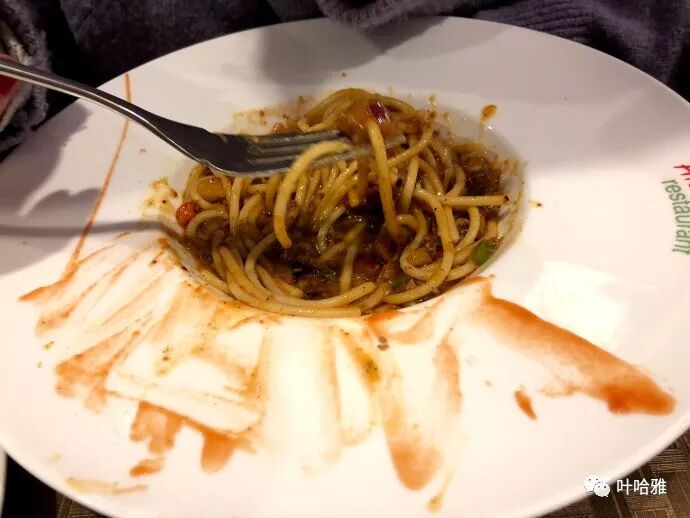
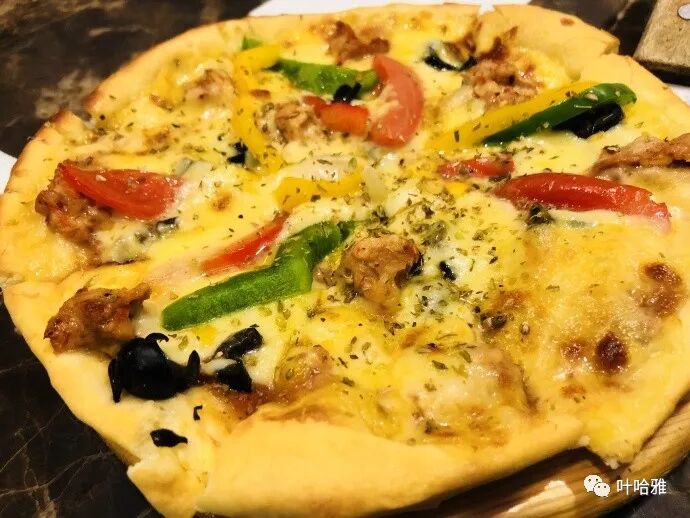
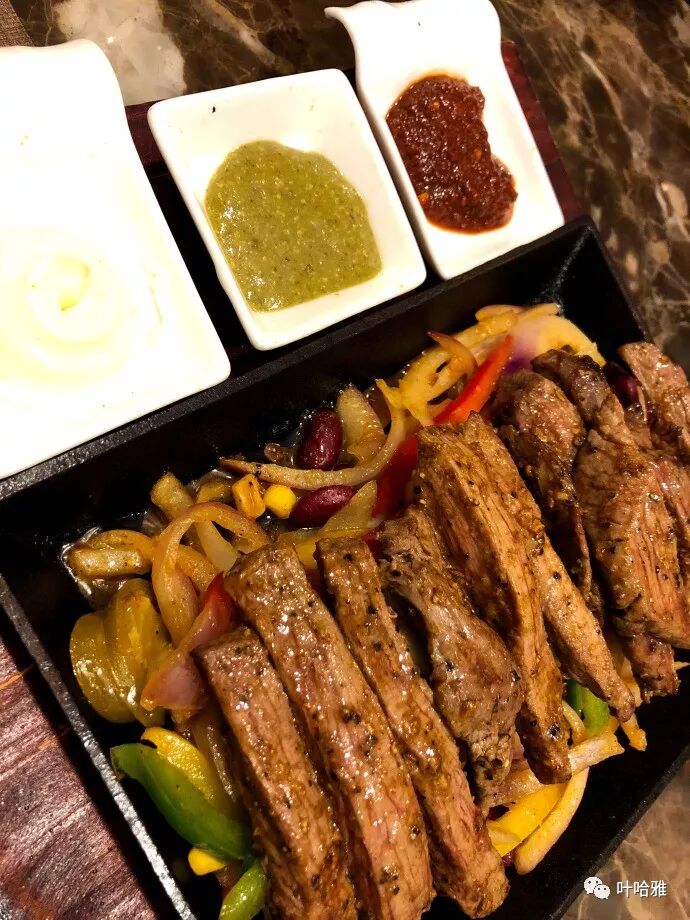
There is a very clear Turkish sign hanging outside the Xinqian building. You can take the elevator directly to the restaurant on the third floor. Once you enter, a server will lead you to a small private room. This is a feature of halal restaurants in Xining; the tables are in small partitioned areas, and when you pull the curtain, you have a private space to chat. I recommend the steak and desserts here.
Address: 3rd Floor, Xinqian International, Xiadu Avenue
2. Yifan Restaurant
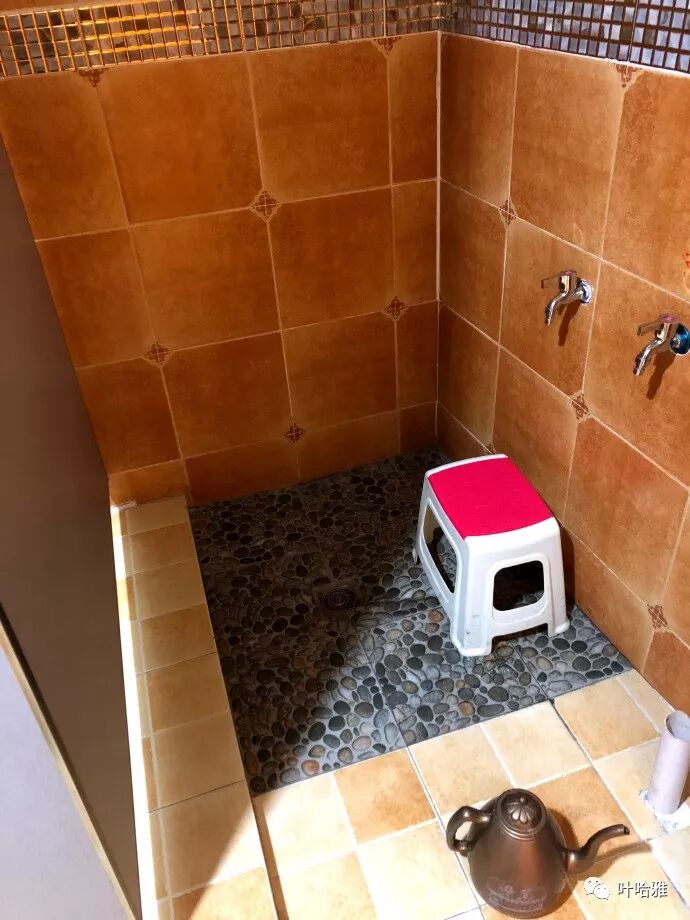
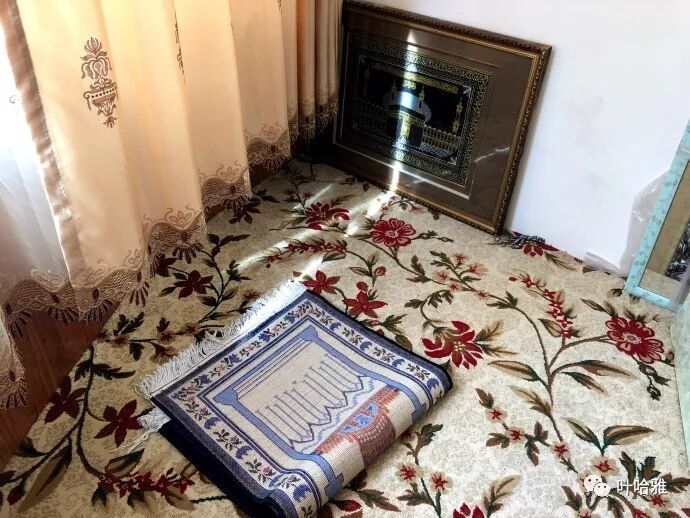
As soon as you walk in, you see a prayer room and a place for wudu (small ablution). All kinds of facilities are available, which is very common in Xining.
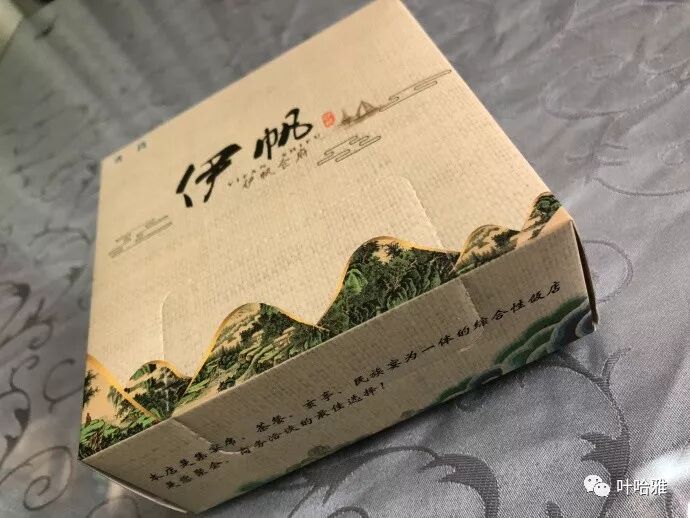
You need to pay extra for napkins in Xining restaurants.
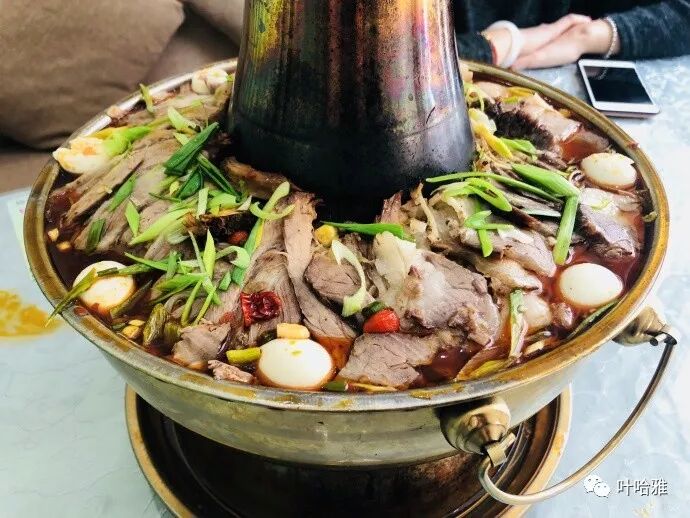
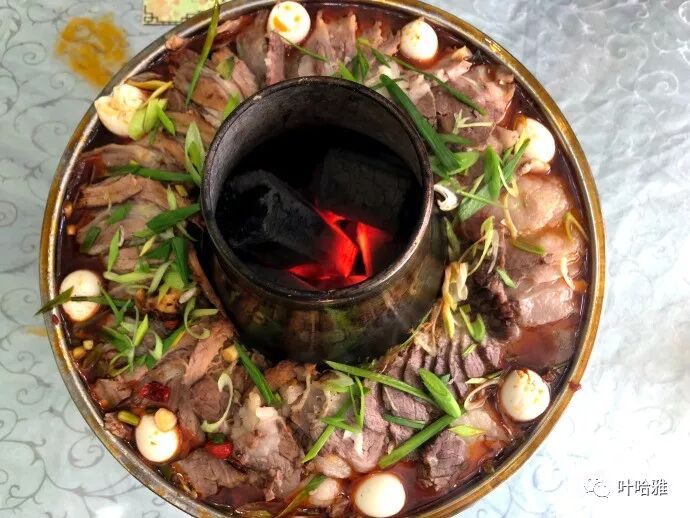
This was my first time eating Qinghai clay pot hot pot (tu huoguo). A huge pot like this only costs a little over 100 yuan. The top is covered with lamb, which is already cooked when served. The middle layer has glass noodles and lettuce, and the bottom has potatoes and radishes. By the time you finish the top, the bottom layer is cooked perfectly. It tastes great.
Address: Northeast corner of the intersection of Nanxiao Street and Qingzhen Lane
3. Jinmai Bakery
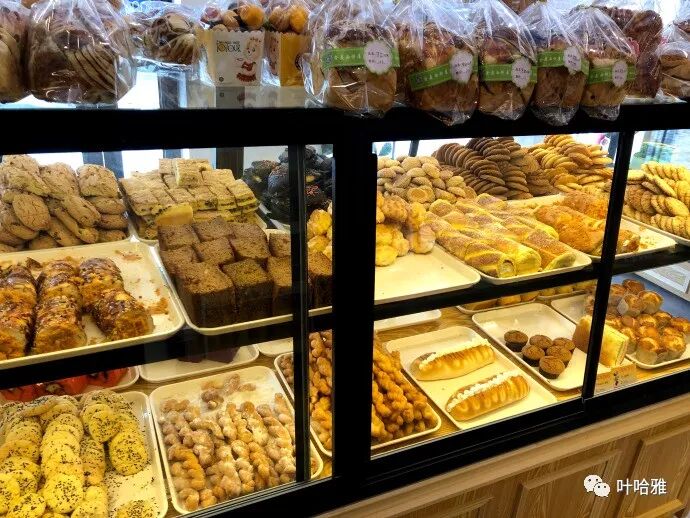
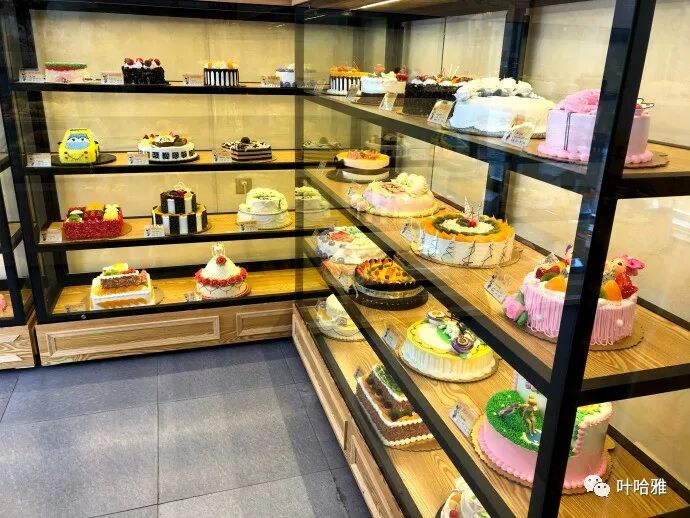
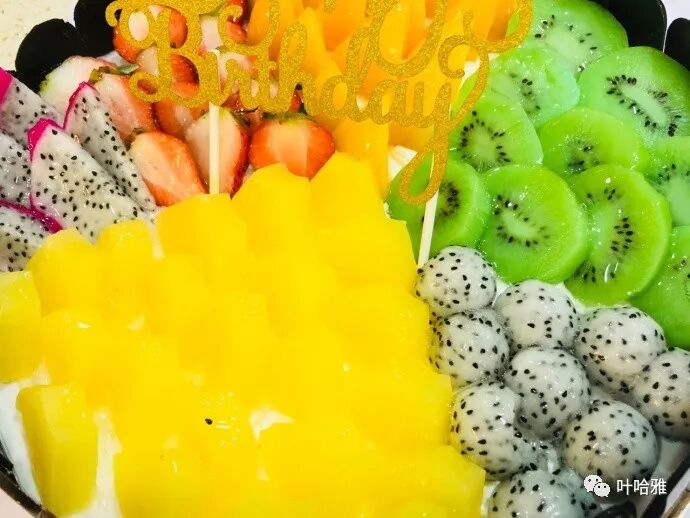
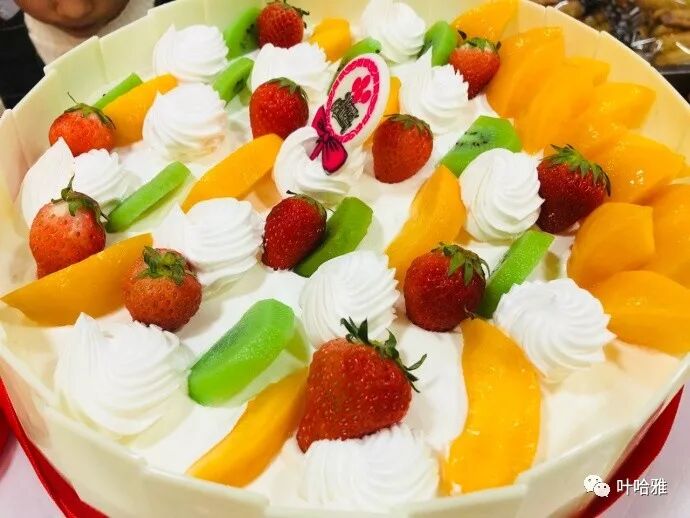
This is a chain store where you can order delicious cakes. Because the cream is whipped fresh to order, you have to wait an hour. A 14-inch cake costs a little over 100 yuan. They also have many pastries like egg tarts, cream puffs, and wife cakes (laopobing), which are all cheap and tasty.
Address: Jinniu Residential Area Branch, No. 22 Beixiao Street, Chengdong District
4. Dazhong Steamed Buns
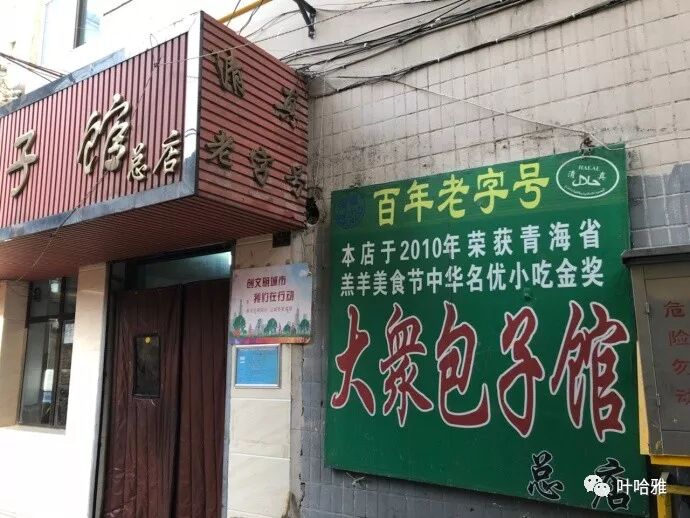
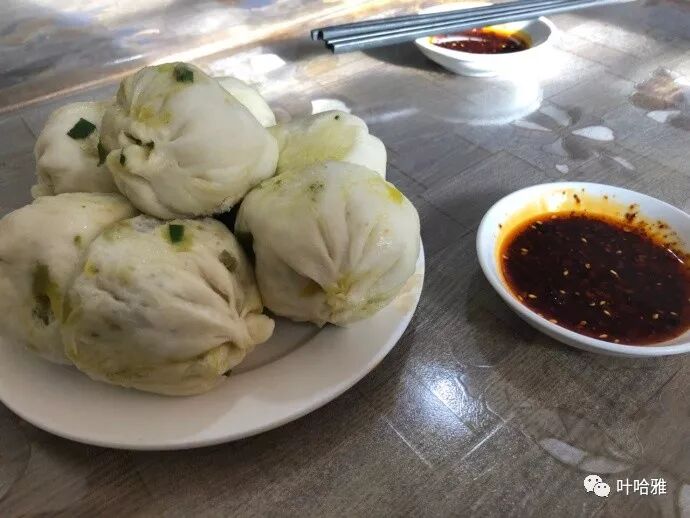
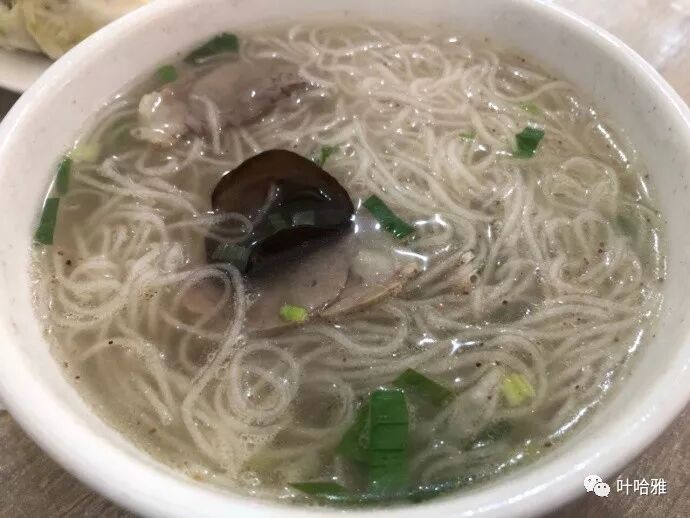
This is a famous, long-standing shop that has been open for decades and is very popular. I often come here for breakfast. They have steamed buns (baozi) with potato filling and chive filling. The buns have thin skins and lots of filling. Pair them with a bowl of starch noodle soup (fen tang), and it is delicious.
5. Qingzhen Niububi Hot Pot
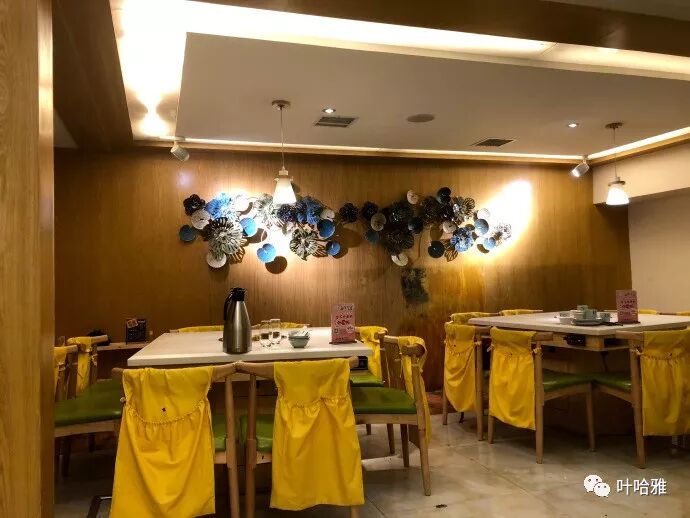
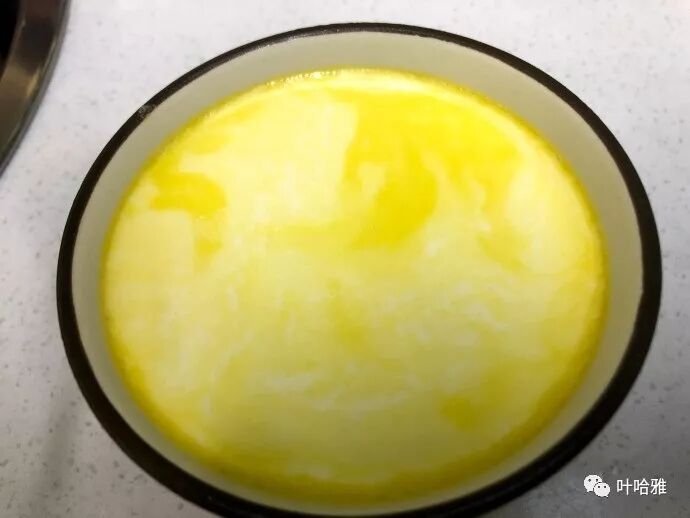
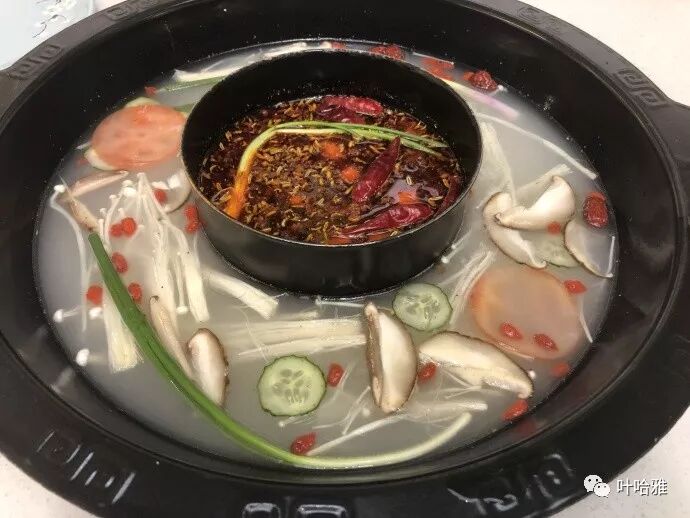
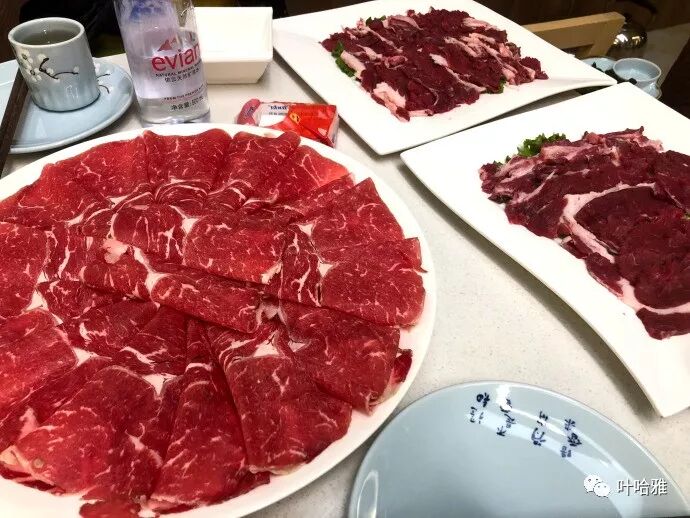
A halal hot pot chain from Chengdu has opened in Xining. My Salar brothers invited me to try it. We ordered the mild spicy version, but it did not feel spicy at all. Although the chili peppers in Qinghai are red, they are low in heat and are mainly used for color and aroma. The environment here is much more spacious than the Chengdu branch.
Address: Room 81-51, Building 2, No. 81 Shengli Road
6. Zhenxiang Porridge
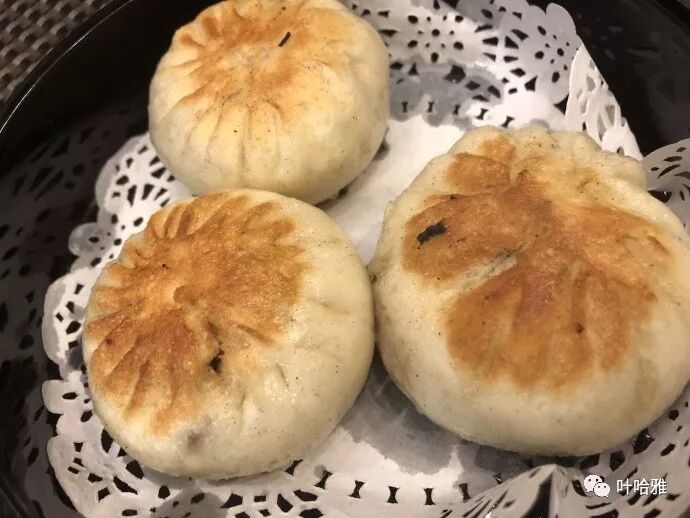
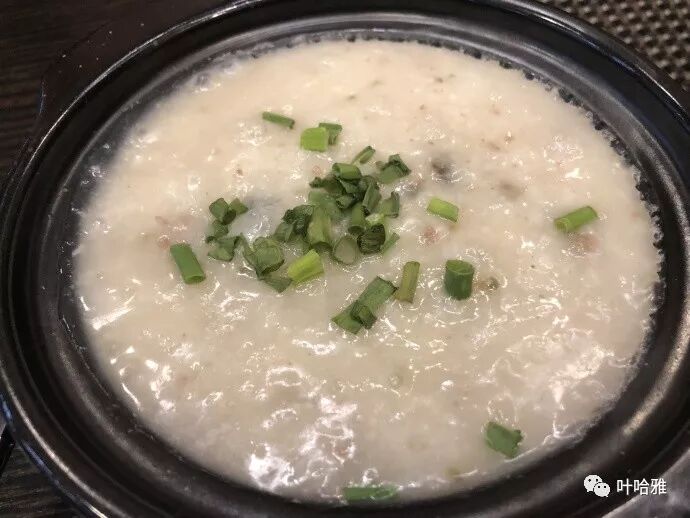
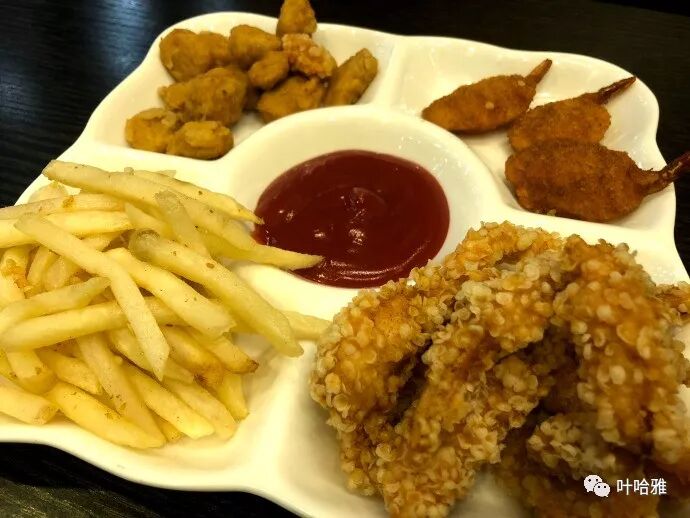
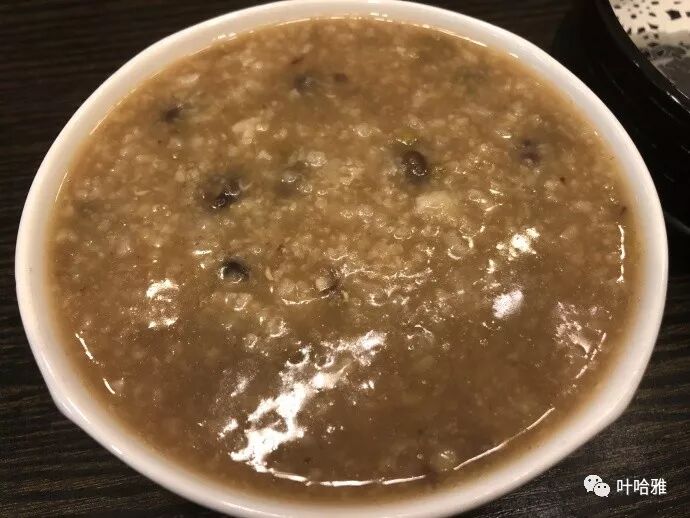
Eating beef and lamb as a staple every day in Xining makes you crave something light occasionally. Beijing really lacks a halal porridge shop like this. They have various flavors of porridge and Cantonese-style snacks. I have eaten at Xiapo Porridge and Pancake Shop in Xiamen, and I hope these porridge shops can open branches in Beijing soon.
Address: No. 44-4 Nandajie (next to Fengfan Bar)
7. Qingzhen Jincai Hot Pot City
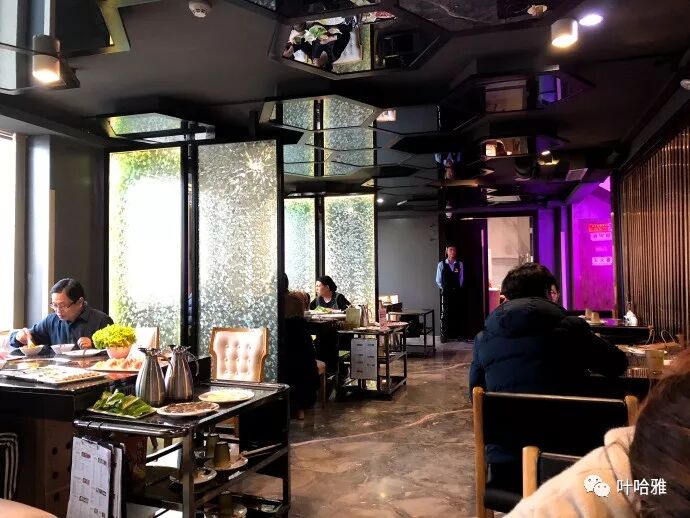
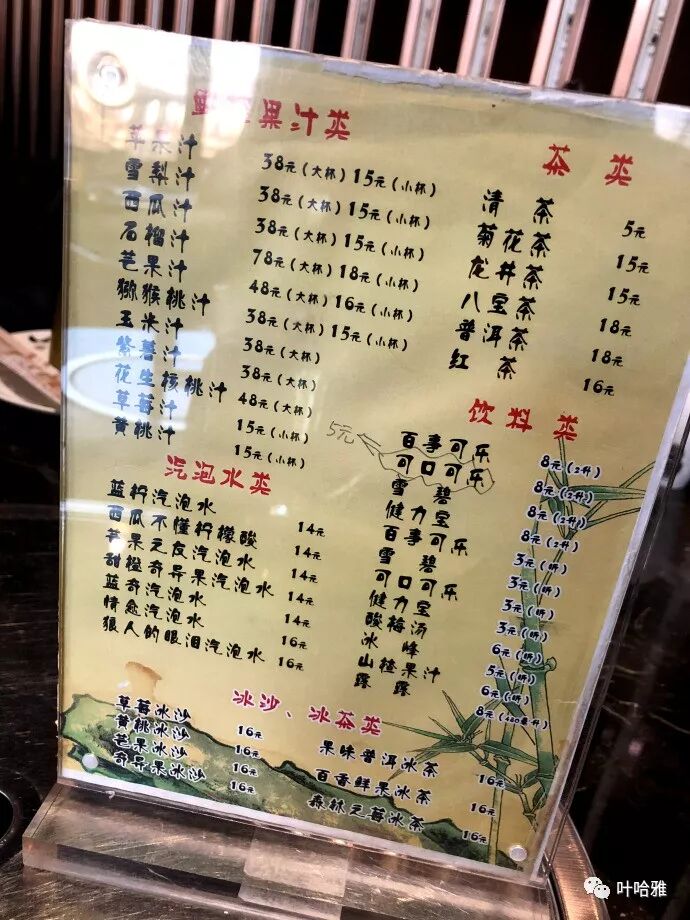
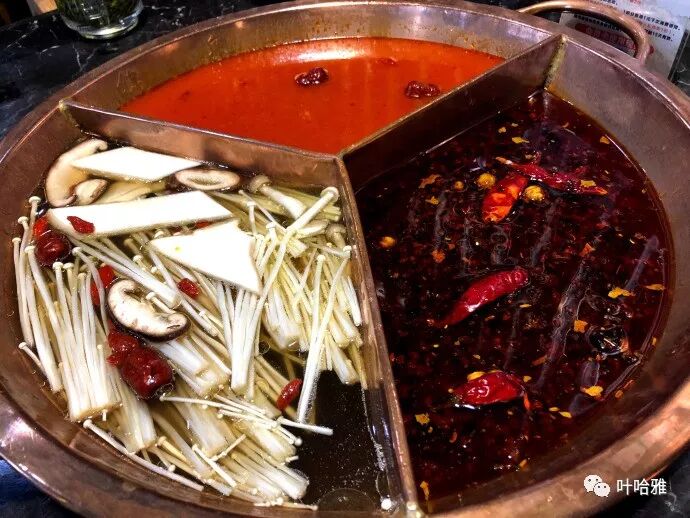
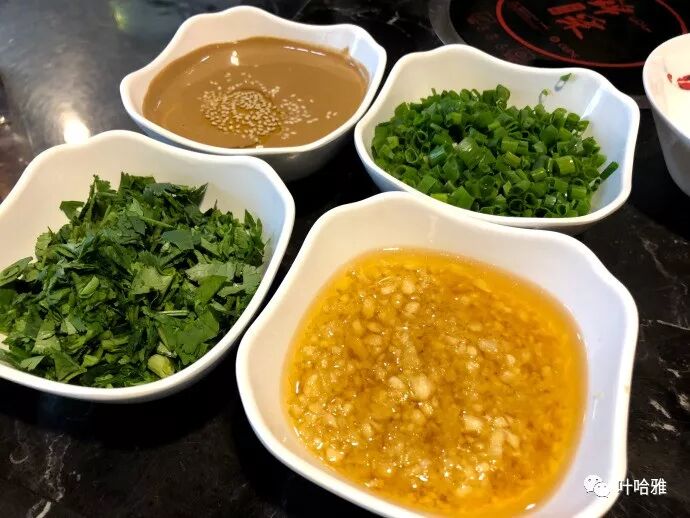
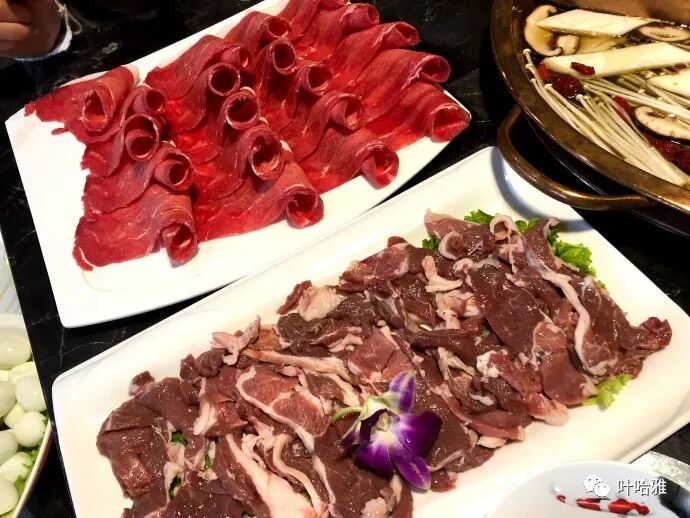
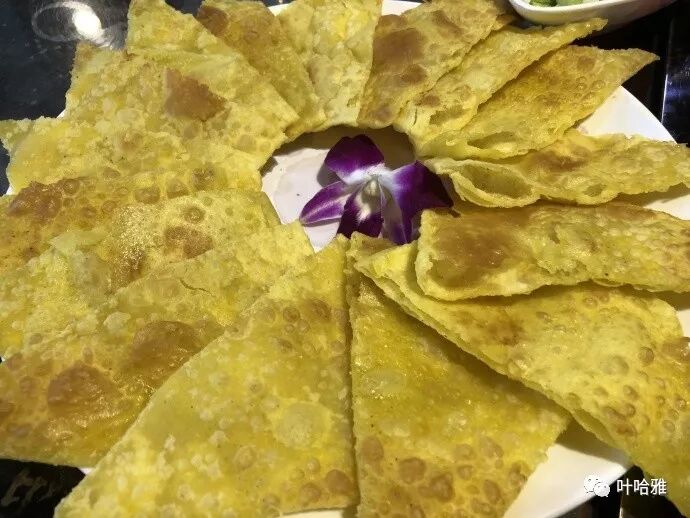
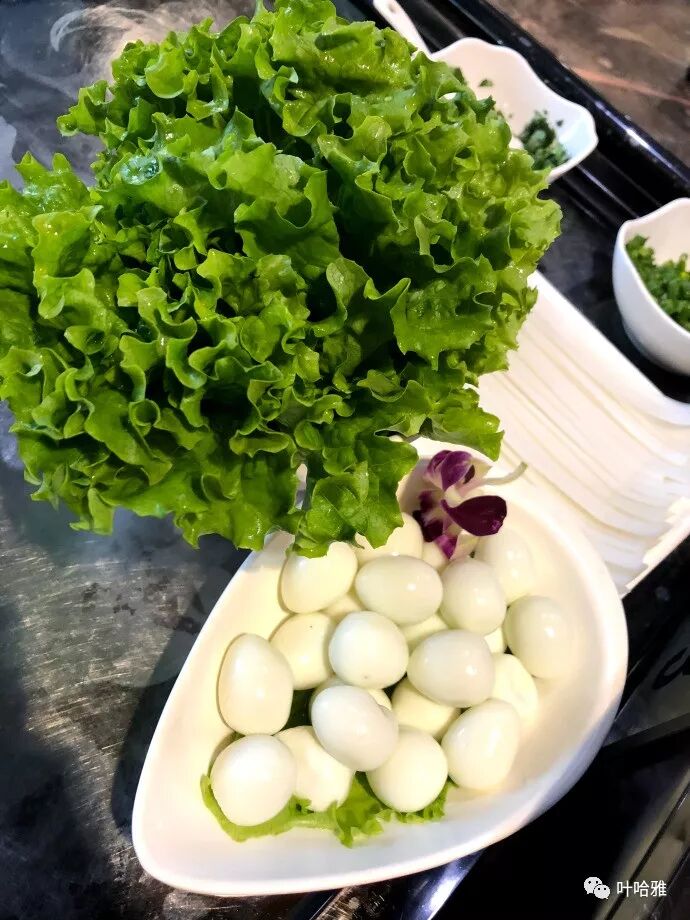
There are many hot pot restaurants in Xining. This one is quite large and the ingredients are fresh. Eating lamb in Xining is a treat because it has very little gamey smell. I ordered a specialty snack called dog-pissing-on-the-wall pancake (goujiaoniao). It is a thin pancake with oil poured over it, which looks like a dog urinating.
Address: No. 66, Xinqian International Plaza, Xiadu Avenue
8. Delu Yogurt Shop
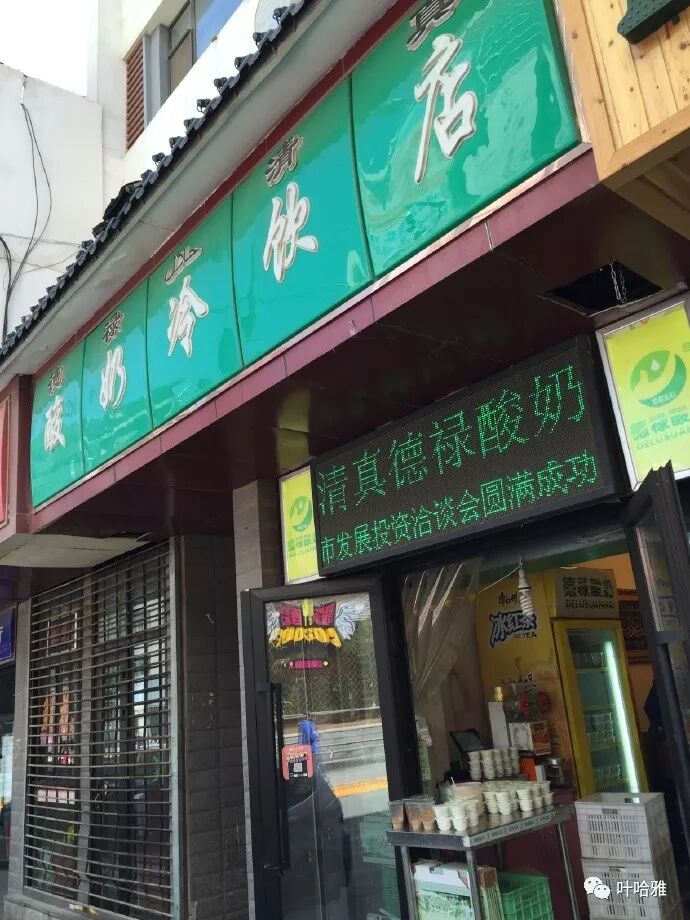
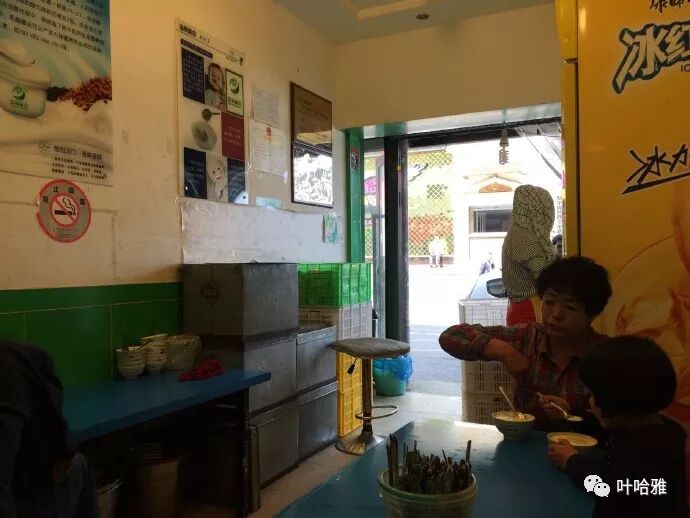
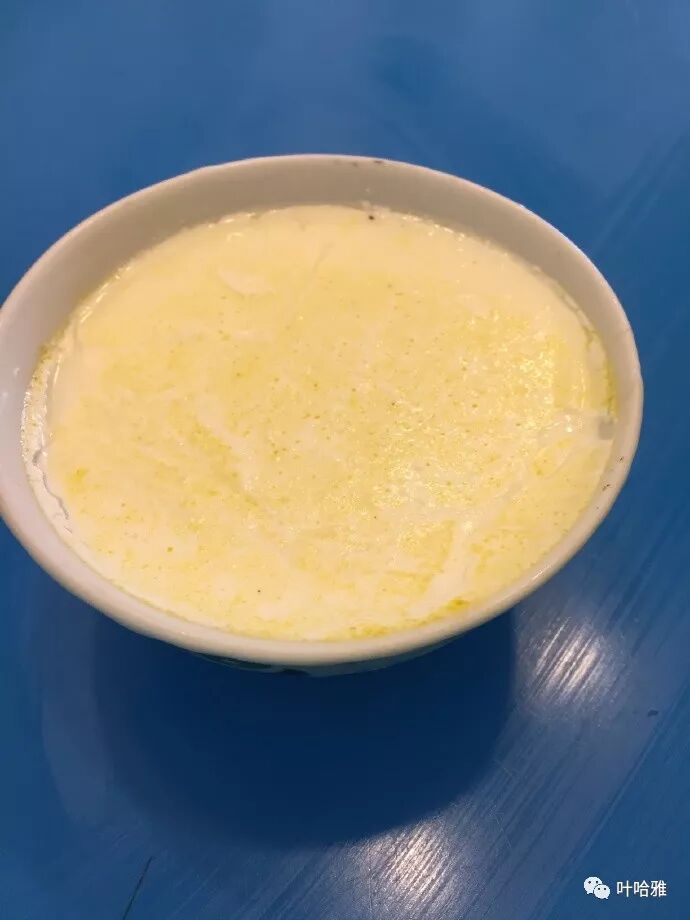
I visited Xining twice and made sure to go to Mojia Street to taste the yogurt at Delu, a long-established shop. Qinghai yogurt has a unique flavor with a layer of yellow milk skin (naipizi) on top. You do not need to add extra sugar, and it tastes neither sour nor greasy, with a smooth texture.
Address: Mojia Street
9. Hasan Ice Cream Shop
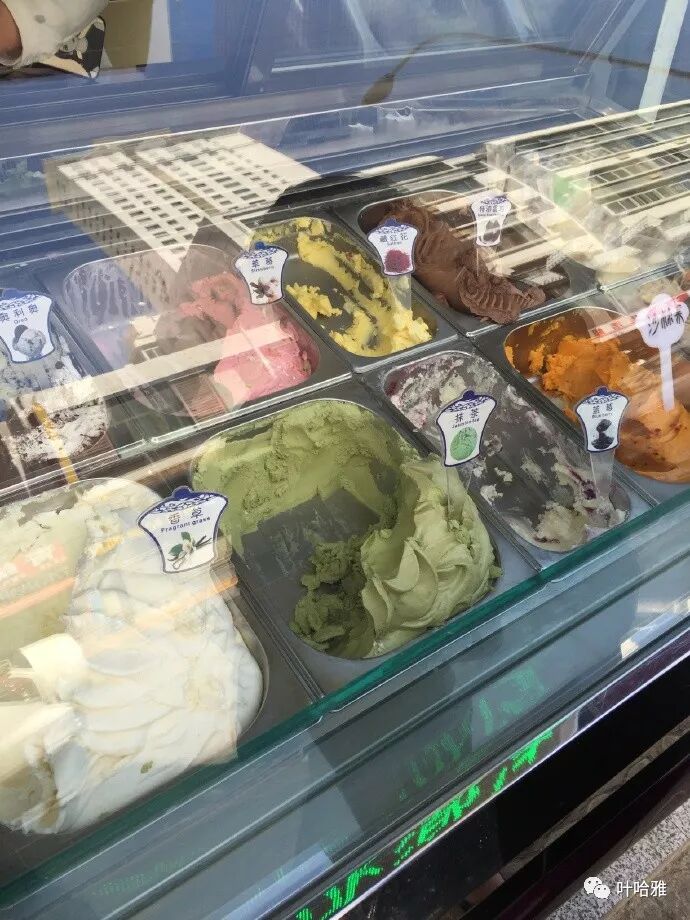
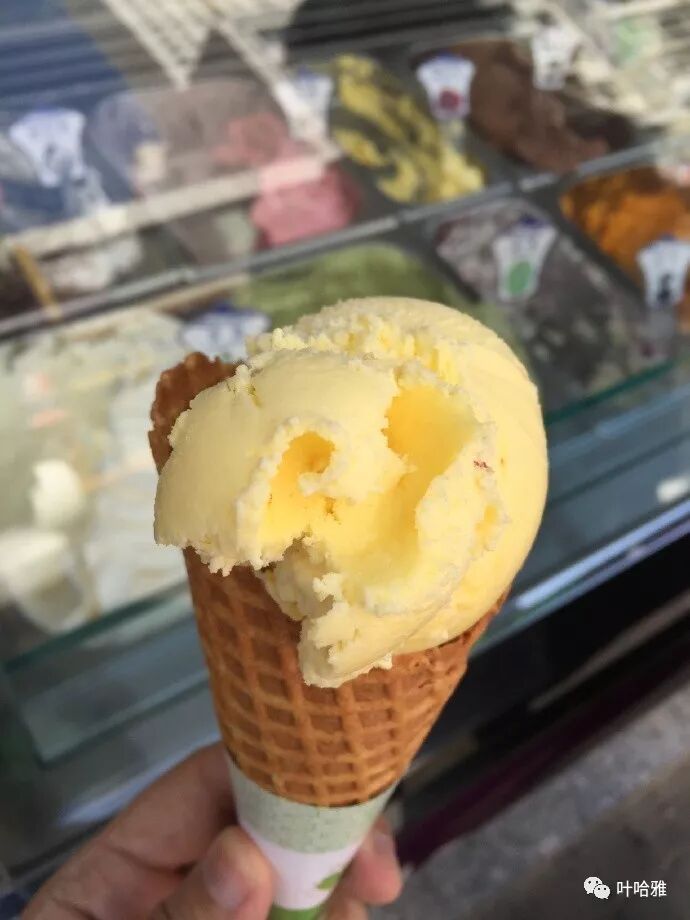
The girl selling Hasan ice cream is exceptionally beautiful, like a beauty of the ice cream world. I praised her on Weibo and her family saw it, telling me she is already married (giggle). There are so many beautiful women from ethnic minorities in the east of Xining city. They know how to dress, and they are thin, fair-skinned, and have big eyes, making them a beautiful sight.
Address: Mojia Street
11. Baituo Halal Yak Hot Pot
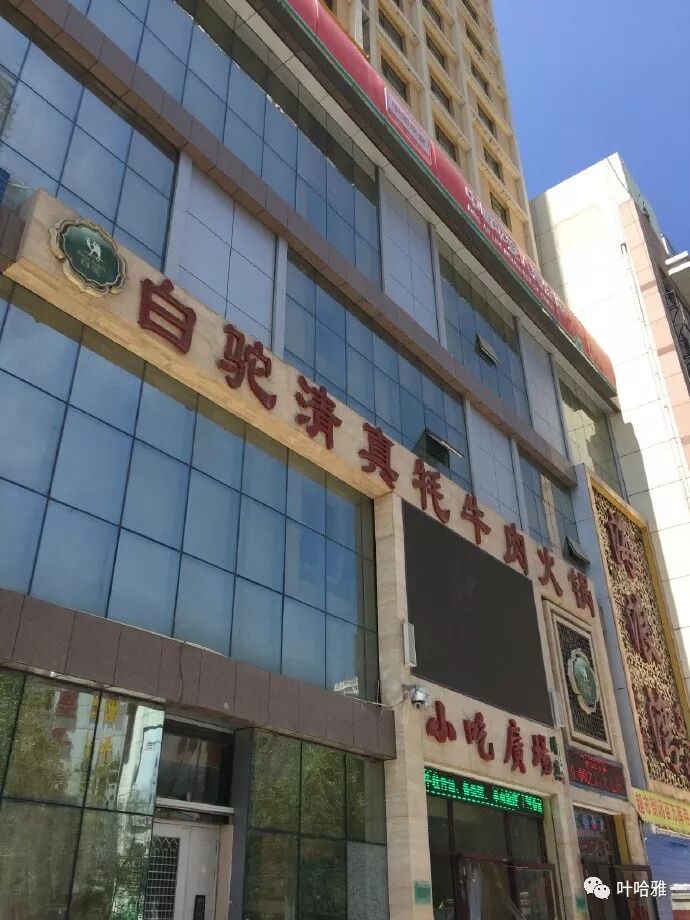
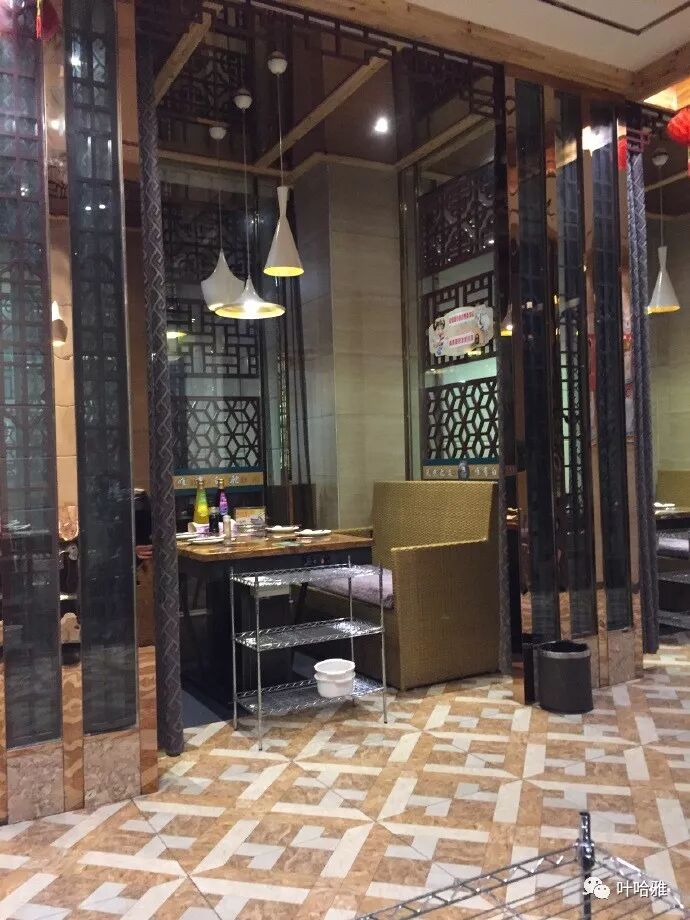
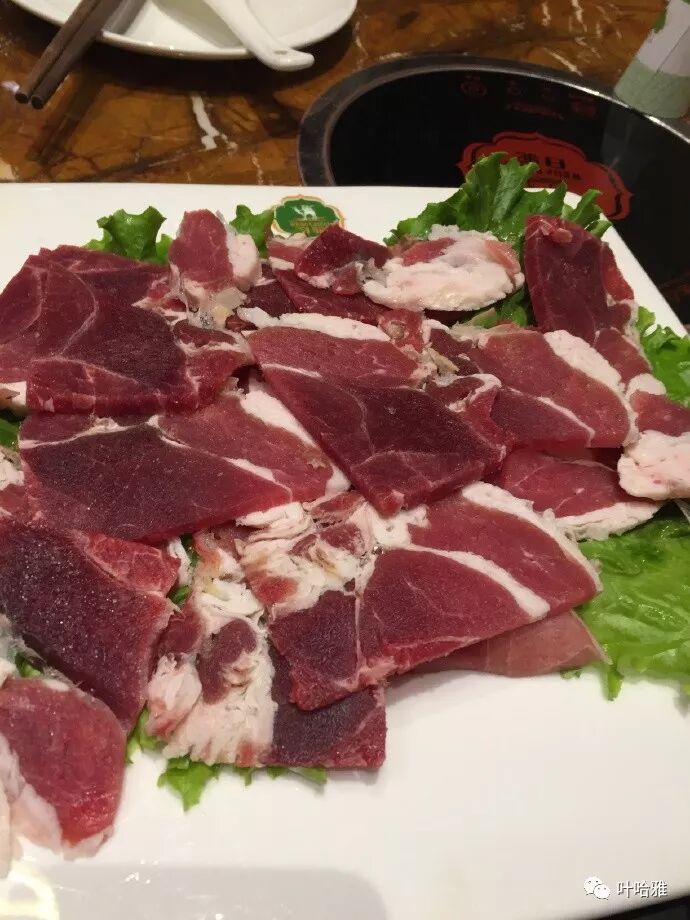
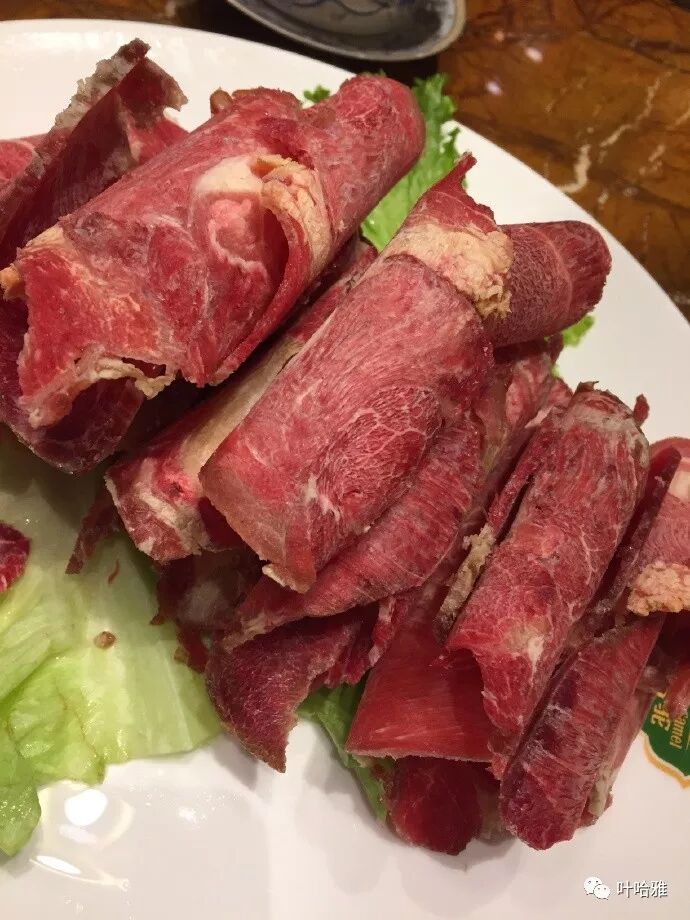
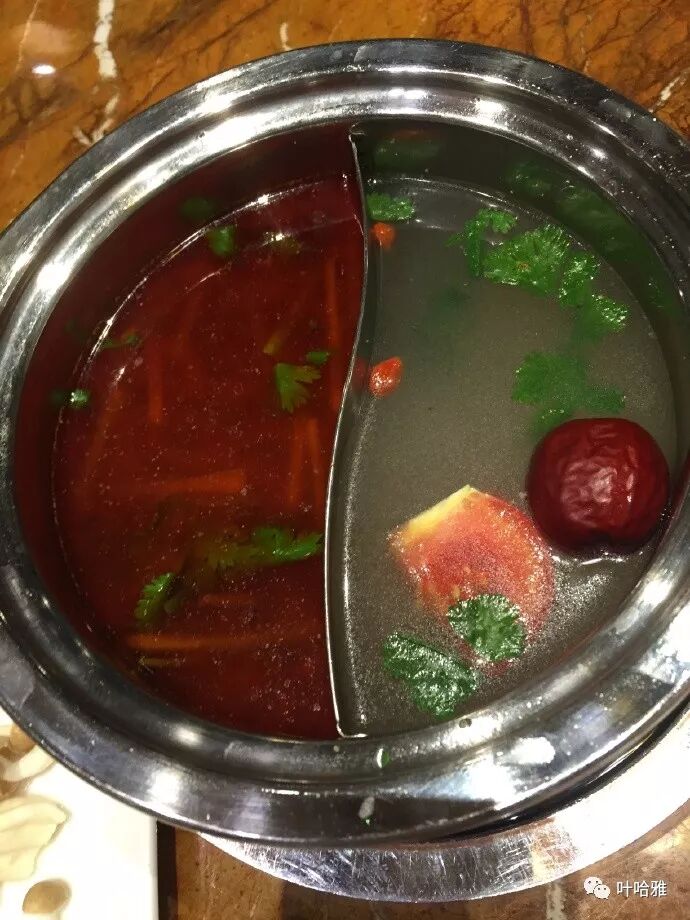
To eat authentic halal yak hot pot, you must come to Xining. Although Lhasa also has yak hot pot, the altitude in Lhasa is higher, so the water does not boil well, which affects the texture of the meat when you cook it. You can also try Tibetan goat meat here. Yak meat is a bit tough, so I suggest pairing it with lamb and fatty beef.
Address: 2nd Floor, Building 1, Huheng Building, 67 Dongguan Street
12. Mazhong Food Court
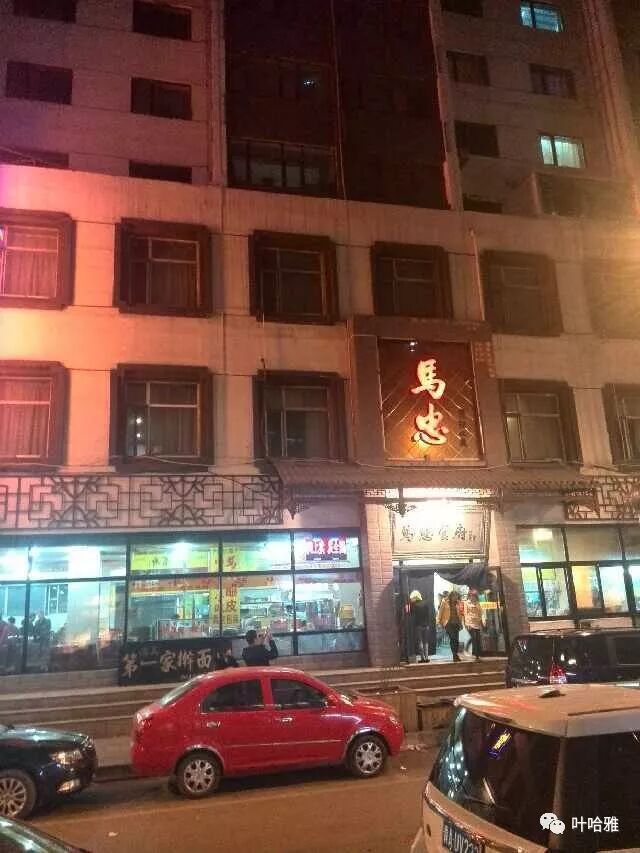
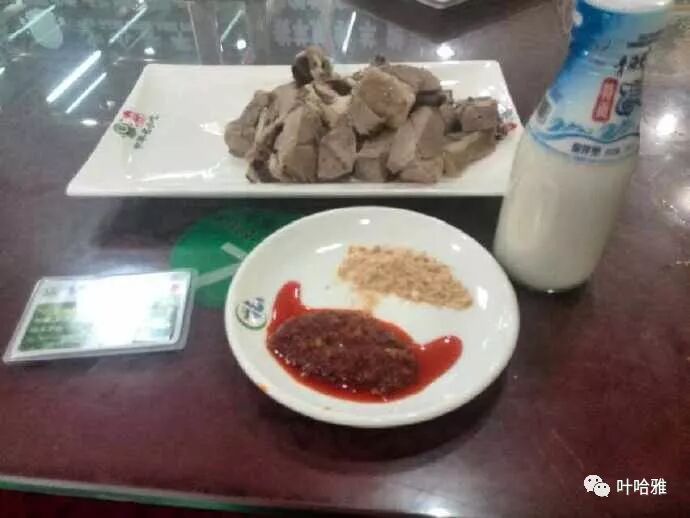
Mazhong Food Court at 1 Mojia Street is the place most visitors go to, similar to the snack street at Wangfujing in Beijing. You must eat hand-grabbed meat (shouzhuarou). There are many places to eat it in Xining. Qinghai lamb is fresh and tender; I could not even smell any gamey odor while standing in front of the meat stall. Eat the hand-grabbed meat with raw garlic and pair it with a bottle of Qinghai yogurt for a balanced and satisfying meal.
Address: 1 Mojia Street
13. Kamila Tea Restaurant
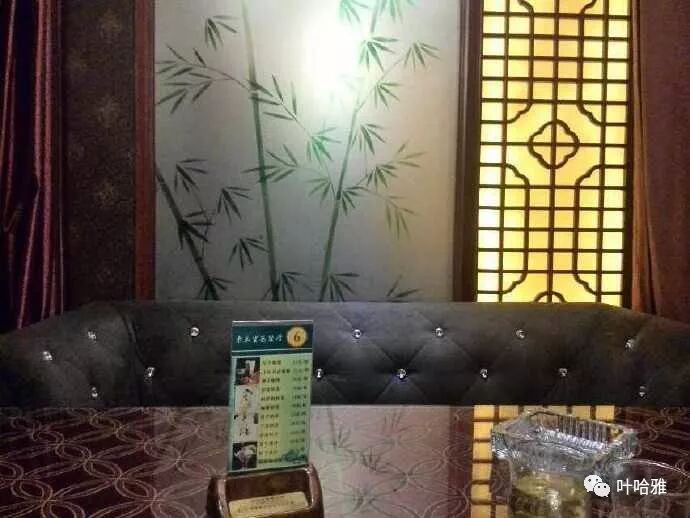
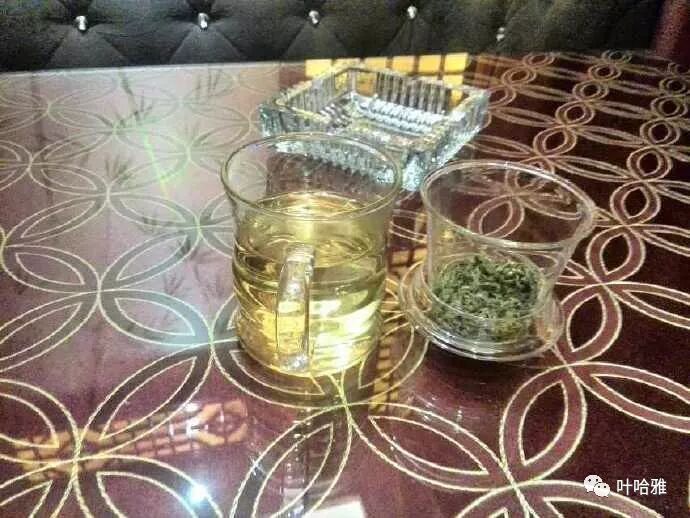
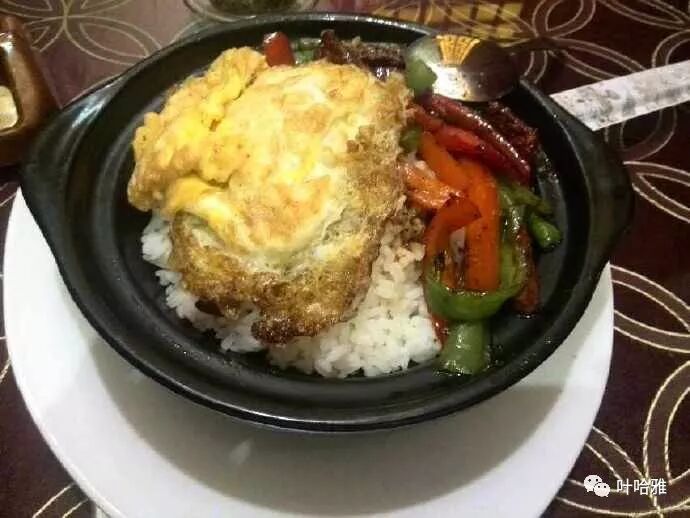
There are many halal tea restaurants in Xining, perfect for dates, matchmaking, and drinking tea. People here really know how to enjoy life, spending an entire afternoon with a covered tea bowl (gaiwan).
Address: 2nd Floor, Yonghe Building, Xiguan Street
14. Jingxifeng Halal Restaurant
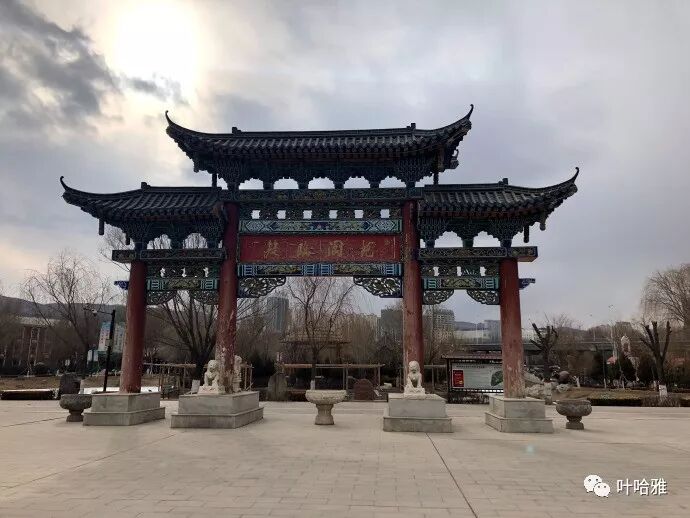
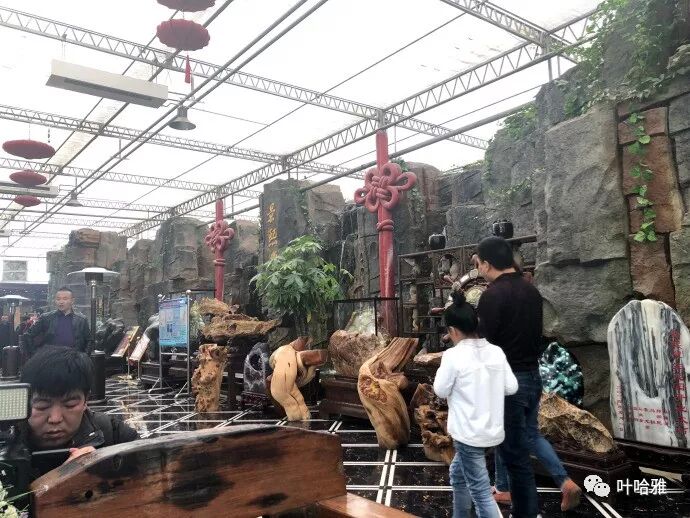
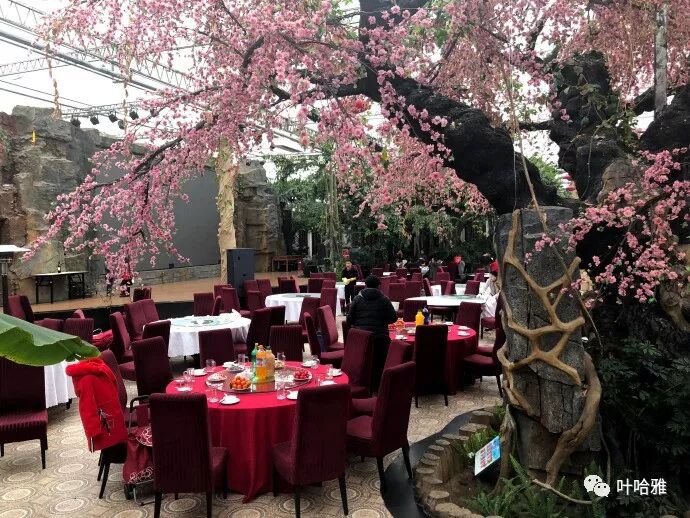
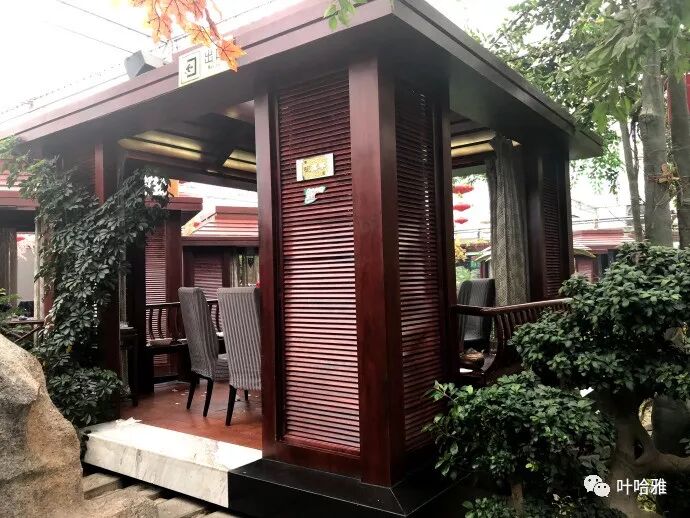
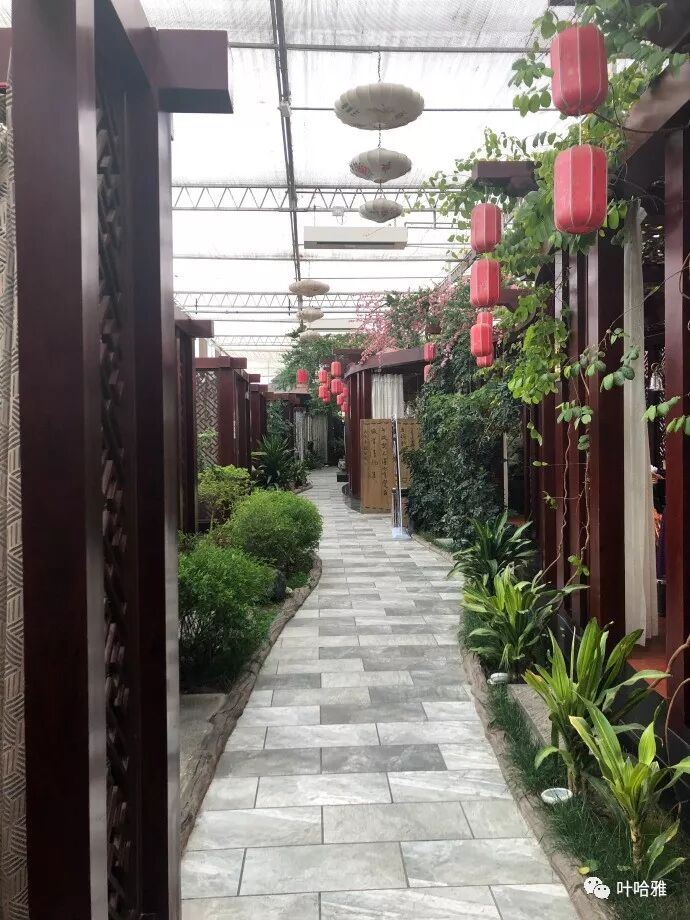
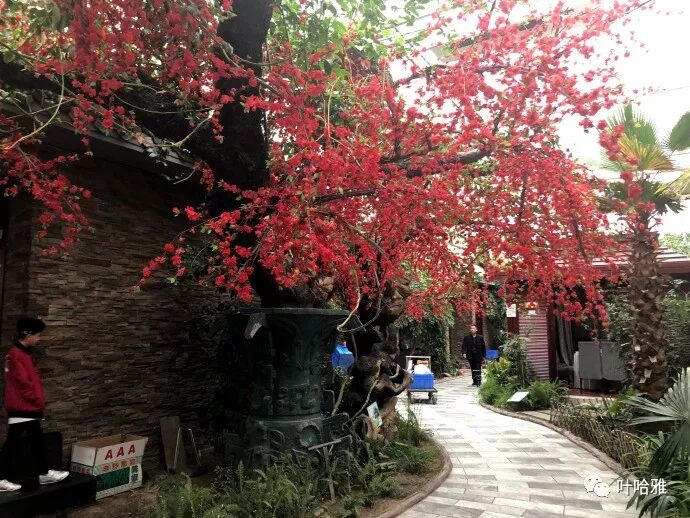
Xining Jingxifeng Halal Restaurant is the largest halal restaurant I have ever seen. It was built by turning an ecological park into a restaurant. Walking through the restaurant is like walking through a park, and there is even an artificial lake. The environment is beautiful and suitable for wedding banquets and wedding photos. The meal standard is only over 1,000 yuan per table, but People say there are even larger halal restaurants in Xining.
Address: Bayi Road, Chengdong District
15. Xinqian Lijing Sky Garden Halal Restaurant
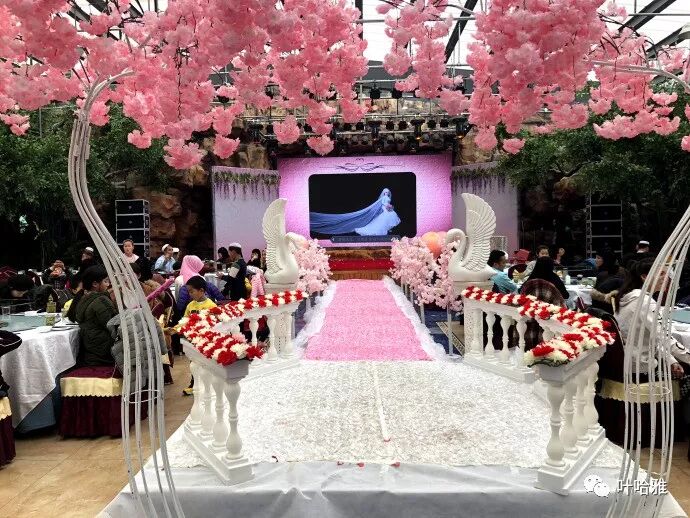
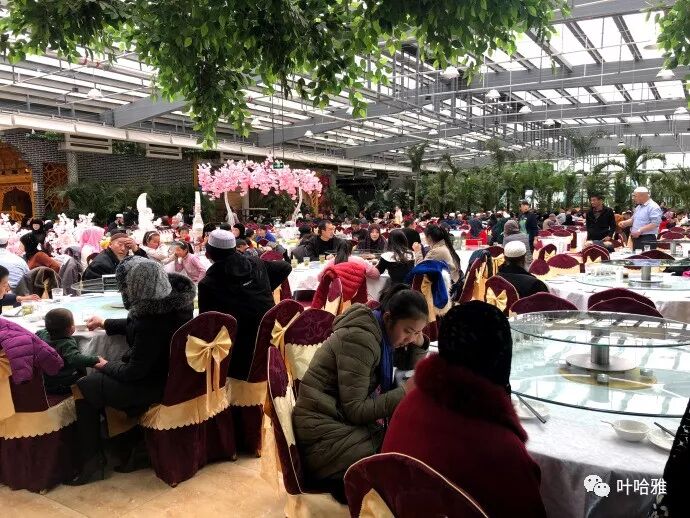
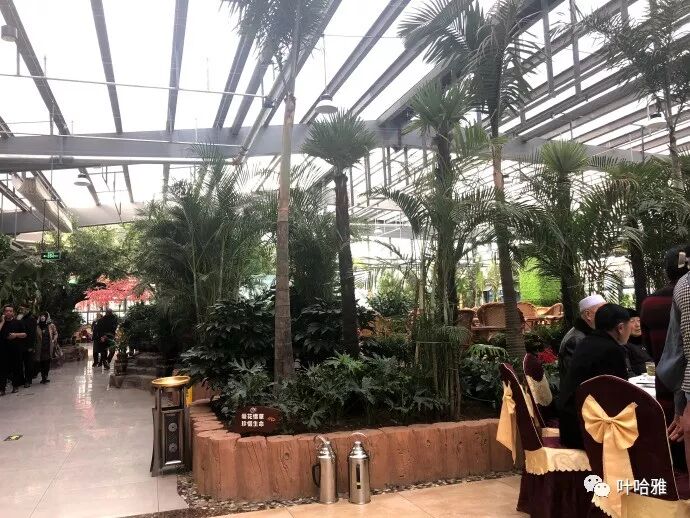
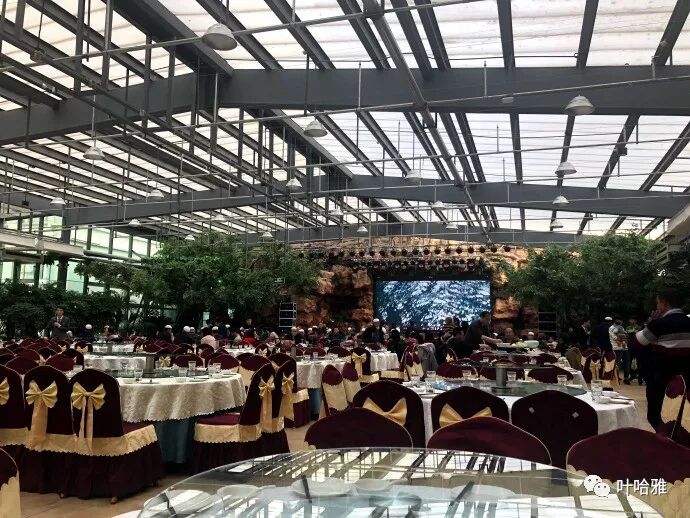
This is a tropical rainforest-style halal restaurant. During the Spring Festival, there are newlyweds holding weddings here every day. The meal standard is also over 1,000 yuan, with an additional 3,000 yuan venue fee. I am amazed at how many high-end restaurants Hui Muslims in Xining can choose from for weddings, with both great environments and food.
Address: 66 Jianguo Street
Summary: A real Muslim food map for Xining, Qinghai, covering halal baozi (steamed buns), beef hotpot, bakeries, local restaurants, and the original address and photo details from the Chinese article.
Nearly half of the restaurants in Xining are halal, and these halal spots do not serve alcohol. Decent restaurants even have prayer rooms. There are so many delicious choices in Xining that it is unrealistic to try them all, so I will just recommend the ones I have visited.
1. Turkish Mediterranean Restaurant
There is a very clear Turkish sign hanging outside the Xinqian building. You can take the elevator directly to the restaurant on the third floor. Once you enter, a server will lead you to a small private room. This is a feature of halal restaurants in Xining; the tables are in small partitioned areas, and when you pull the curtain, you have a private space to chat. I recommend the steak and desserts here.
Address: 3rd Floor, Xinqian International, Xiadu Avenue
2. Yifan Restaurant
As soon as you walk in, you see a prayer room and a place for wudu (small ablution). All kinds of facilities are available, which is very common in Xining.
You need to pay extra for napkins in Xining restaurants.
This was my first time eating Qinghai clay pot hot pot (tu huoguo). A huge pot like this only costs a little over 100 yuan. The top is covered with lamb, which is already cooked when served. The middle layer has glass noodles and lettuce, and the bottom has potatoes and radishes. By the time you finish the top, the bottom layer is cooked perfectly. It tastes great.
Address: Northeast corner of the intersection of Nanxiao Street and Qingzhen Lane
3. Jinmai Bakery
This is a chain store where you can order delicious cakes. Because the cream is whipped fresh to order, you have to wait an hour. A 14-inch cake costs a little over 100 yuan. They also have many pastries like egg tarts, cream puffs, and wife cakes (laopobing), which are all cheap and tasty.
Address: Jinniu Residential Area Branch, No. 22 Beixiao Street, Chengdong District
4. Dazhong Steamed Buns
This is a famous, long-standing shop that has been open for decades and is very popular. I often come here for breakfast. They have steamed buns (baozi) with potato filling and chive filling. The buns have thin skins and lots of filling. Pair them with a bowl of starch noodle soup (fen tang), and it is delicious.
5. Qingzhen Niububi Hot Pot
A halal hot pot chain from Chengdu has opened in Xining. My Salar brothers invited me to try it. We ordered the mild spicy version, but it did not feel spicy at all. Although the chili peppers in Qinghai are red, they are low in heat and are mainly used for color and aroma. The environment here is much more spacious than the Chengdu branch.
Address: Room 81-51, Building 2, No. 81 Shengli Road
6. Zhenxiang Porridge
Eating beef and lamb as a staple every day in Xining makes you crave something light occasionally. Beijing really lacks a halal porridge shop like this. They have various flavors of porridge and Cantonese-style snacks. I have eaten at Xiapo Porridge and Pancake Shop in Xiamen, and I hope these porridge shops can open branches in Beijing soon.
Address: No. 44-4 Nandajie (next to Fengfan Bar)
7. Qingzhen Jincai Hot Pot City
There are many hot pot restaurants in Xining. This one is quite large and the ingredients are fresh. Eating lamb in Xining is a treat because it has very little gamey smell. I ordered a specialty snack called dog-pissing-on-the-wall pancake (goujiaoniao). It is a thin pancake with oil poured over it, which looks like a dog urinating.
Address: No. 66, Xinqian International Plaza, Xiadu Avenue
8. Delu Yogurt Shop
I visited Xining twice and made sure to go to Mojia Street to taste the yogurt at Delu, a long-established shop. Qinghai yogurt has a unique flavor with a layer of yellow milk skin (naipizi) on top. You do not need to add extra sugar, and it tastes neither sour nor greasy, with a smooth texture.
Address: Mojia Street
9. Hasan Ice Cream Shop
The girl selling Hasan ice cream is exceptionally beautiful, like a beauty of the ice cream world. I praised her on Weibo and her family saw it, telling me she is already married (giggle). There are so many beautiful women from ethnic minorities in the east of Xining city. They know how to dress, and they are thin, fair-skinned, and have big eyes, making them a beautiful sight.
Address: Mojia Street
11. Baituo Halal Yak Hot Pot
To eat authentic halal yak hot pot, you must come to Xining. Although Lhasa also has yak hot pot, the altitude in Lhasa is higher, so the water does not boil well, which affects the texture of the meat when you cook it. You can also try Tibetan goat meat here. Yak meat is a bit tough, so I suggest pairing it with lamb and fatty beef.
Address: 2nd Floor, Building 1, Huheng Building, 67 Dongguan Street
12. Mazhong Food Court
Mazhong Food Court at 1 Mojia Street is the place most visitors go to, similar to the snack street at Wangfujing in Beijing. You must eat hand-grabbed meat (shouzhuarou). There are many places to eat it in Xining. Qinghai lamb is fresh and tender; I could not even smell any gamey odor while standing in front of the meat stall. Eat the hand-grabbed meat with raw garlic and pair it with a bottle of Qinghai yogurt for a balanced and satisfying meal.
Address: 1 Mojia Street
13. Kamila Tea Restaurant
There are many halal tea restaurants in Xining, perfect for dates, matchmaking, and drinking tea. People here really know how to enjoy life, spending an entire afternoon with a covered tea bowl (gaiwan).
Address: 2nd Floor, Yonghe Building, Xiguan Street
14. Jingxifeng Halal Restaurant
Xining Jingxifeng Halal Restaurant is the largest halal restaurant I have ever seen. It was built by turning an ecological park into a restaurant. Walking through the restaurant is like walking through a park, and there is even an artificial lake. The environment is beautiful and suitable for wedding banquets and wedding photos. The meal standard is only over 1,000 yuan per table, but People say there are even larger halal restaurants in Xining.
Address: Bayi Road, Chengdong District
15. Xinqian Lijing Sky Garden Halal Restaurant
This is a tropical rainforest-style halal restaurant. During the Spring Festival, there are newlyweds holding weddings here every day. The meal standard is also over 1,000 yuan, with an additional 3,000 yuan venue fee. I am amazed at how many high-end restaurants Hui Muslims in Xining can choose from for weddings, with both great environments and food.
Address: 66 Jianguo Street
Halal Travel Guide: Qinghai — Ping’an, Xunhua and Xining Muslim Heritage (Part 1)
Articles • ali2007fr posted the article • 0 comments • 162 views • 2026-05-18 01:28
Reposted from the web
Summary: Qinghai — Ping’an, Xunhua and Xining Muslim Heritage is presented here as a firsthand travel account in clear English, beginning with this scene: During the 2021 Dragon Boat Festival, I visited Ping'an, Xunhua, and Xining in Qinghai. My main goal was to visit the traditional historical mosques and gongbei buildings there, and I gained a lot. The account keeps its focus on Qinghai Travel, Hui Muslims, China Mosques while preserving the names, places, food, and historical details from the Chinese source.
During the 2021 Dragon Boat Festival, I visited Ping'an, Xunhua, and Xining in Qinghai. My main goal was to visit the traditional historical mosques and gongbei buildings there, and I gained a lot.
I stayed overnight at Ping'an Station (Ping'anyi).
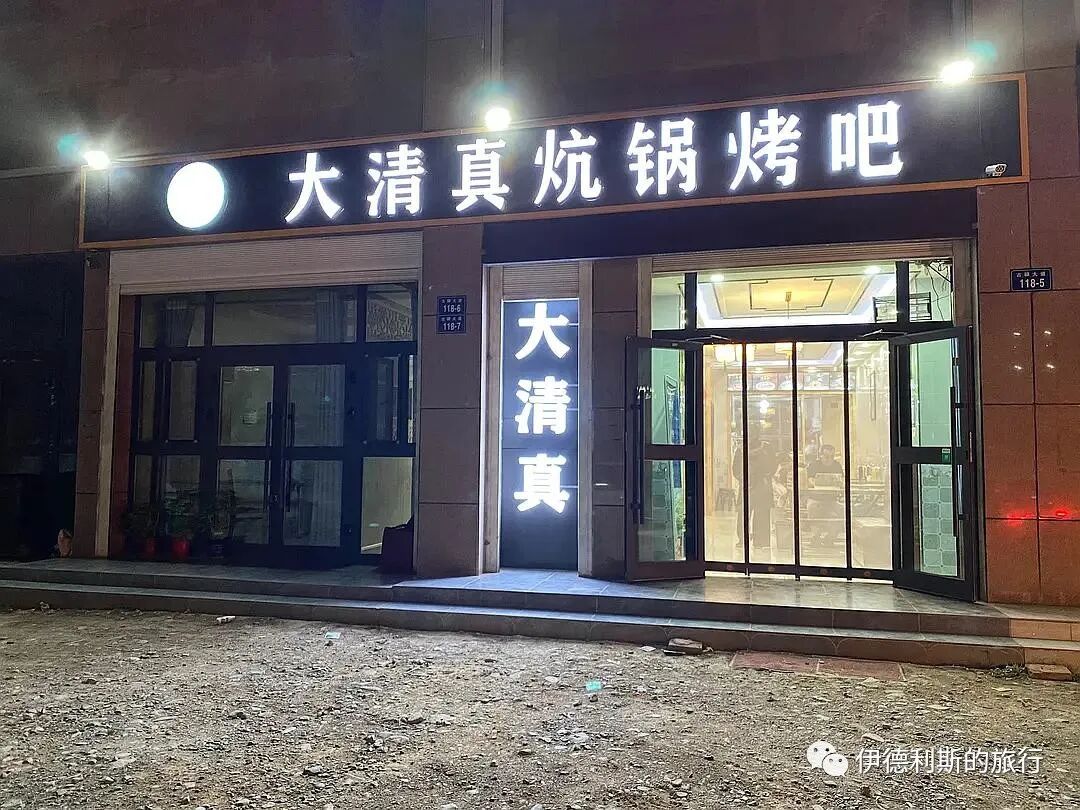
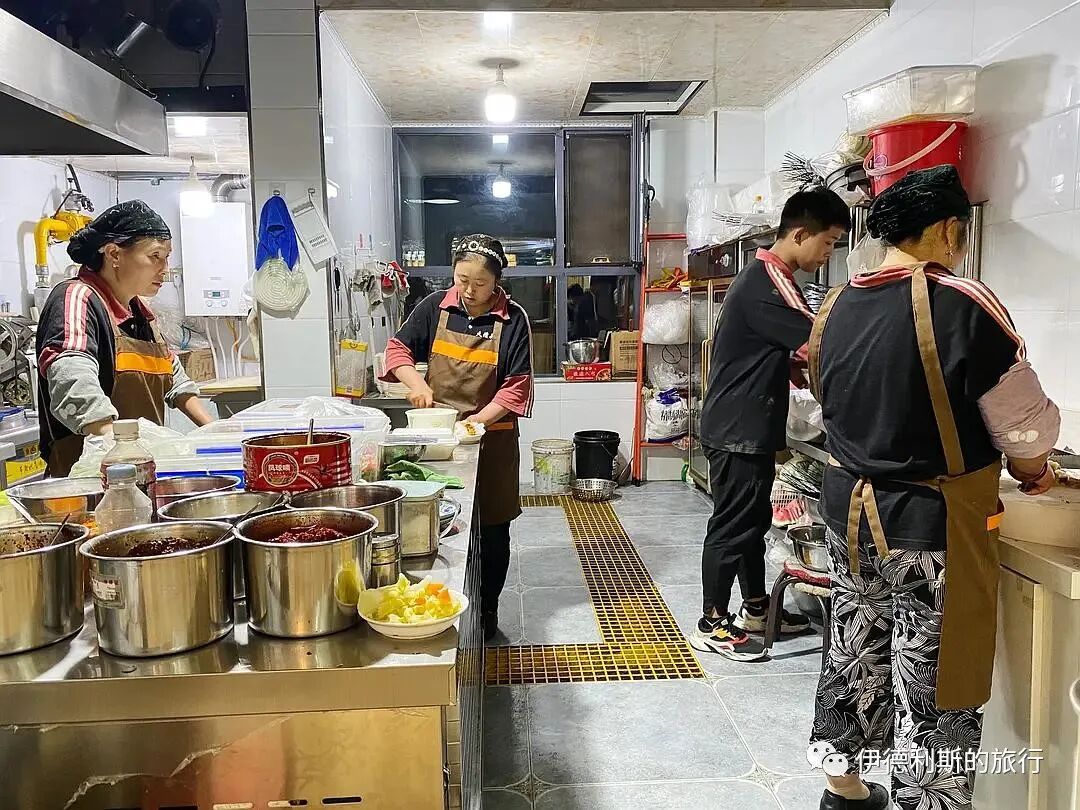
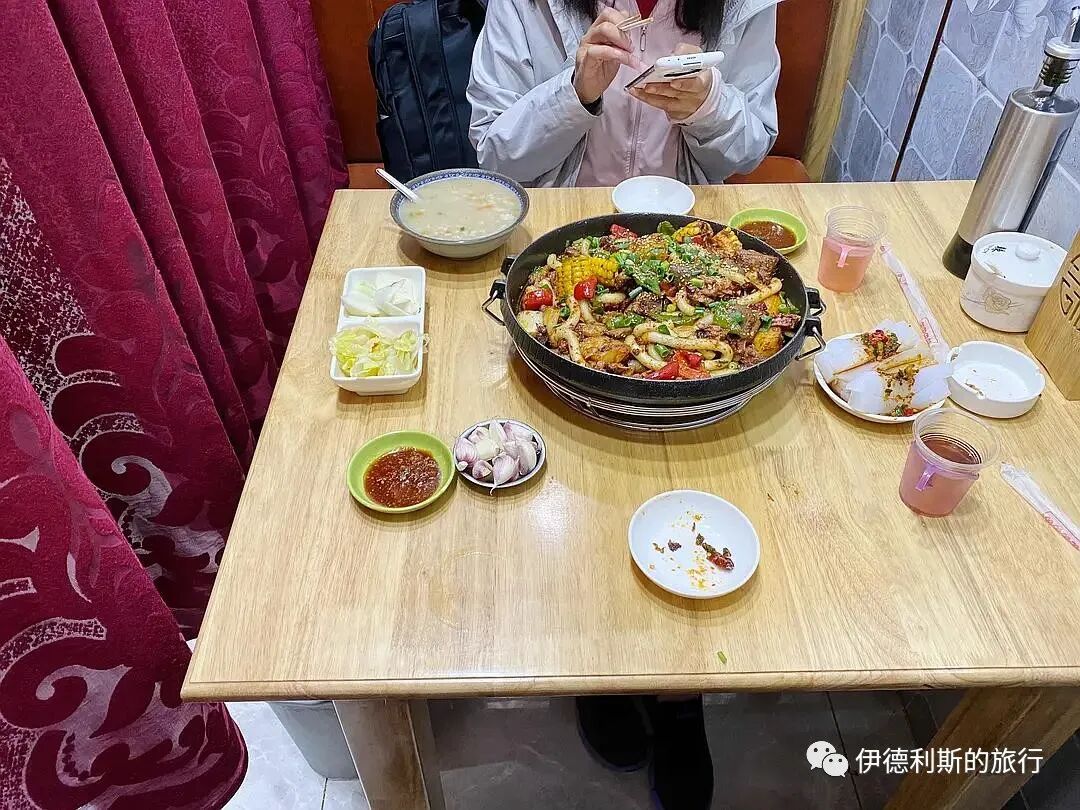
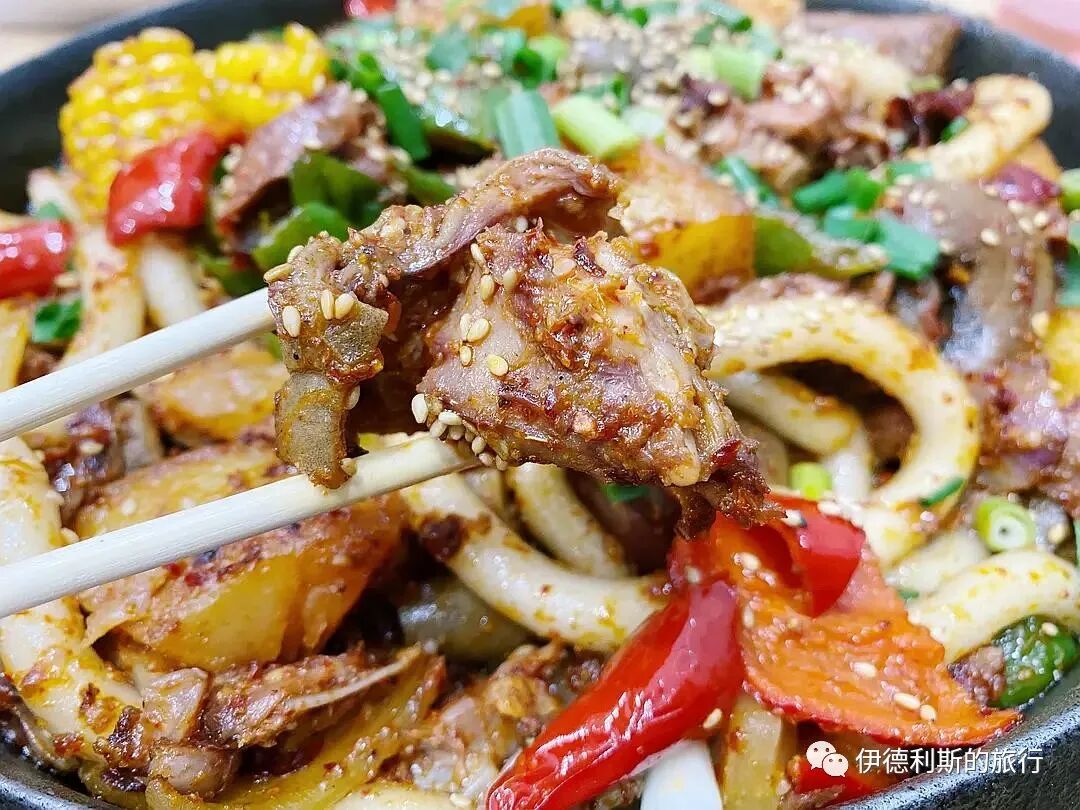
I took a late flight to Xining Airport, then took a taxi to the Daqingzhen Kanguo Barbecue restaurant in the Ping'an District of Haidong to eat pan-roasted meat (kanguo). They have many types of pan-roasted meat, including lamb, tripe, intestines, and chicken. We had the pan-roasted lamb head and also ordered the wheat kernel porridge (mairen zhou), which is a must-have at Qinghai barbecue shops.
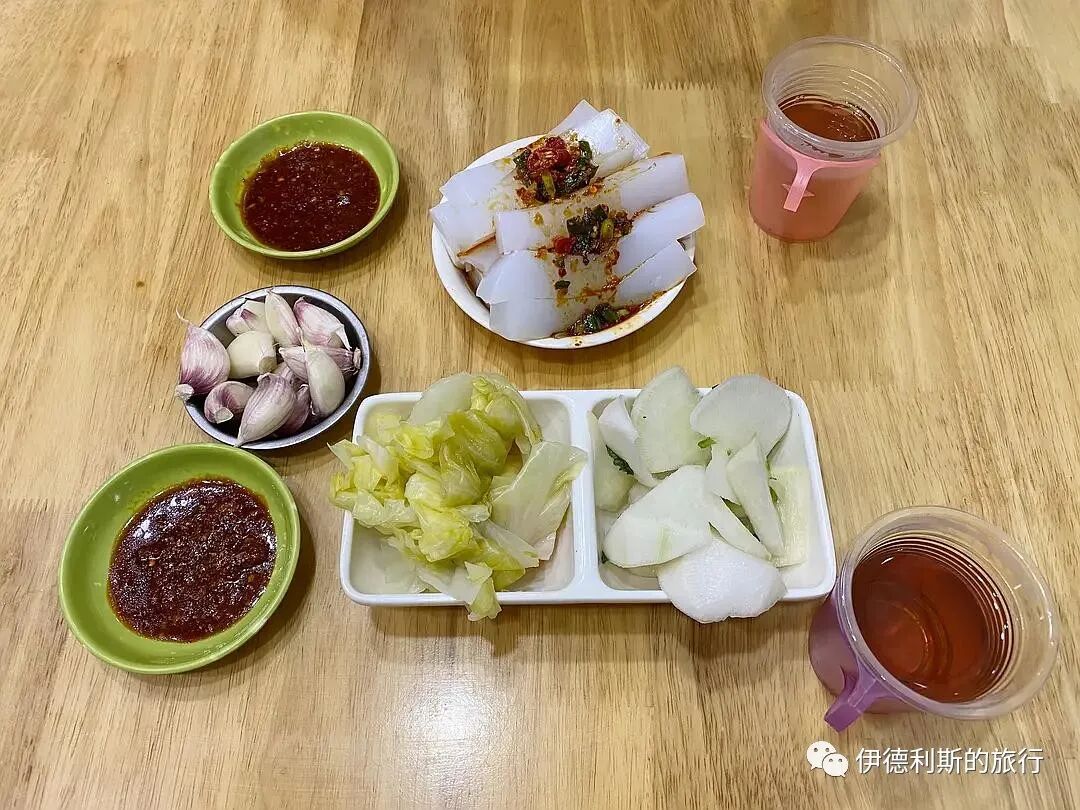
The restaurant layout features small private rooms common in Qinghai town restaurants. Even for two people, you can pull the curtain for privacy, which feels quite nice. After ordering, they brought out free pickles, radishes, mung bean jelly (liangfen), and boiled tea (aocha). The servers were very friendly. I had a few bites of the jelly and some tea, and then the pan-roasted meat arrived. Besides a whole lamb head, it came with potatoes, corn, and vermicelli, so we didn't really need to order any staple food. I finished with a bowl of wheat kernel porridge and felt very satisfied.
The next day, I had lamb offal soup (yangzasui) with flatbread (bingzi) at the Shalihai Lamb Offal shop on the main street of Ping'an, Haidong. Across the street is the Ping'an food street, Ping'anfang Pedestrian Street. I bought some handmade yogurt at the Hongshuiquan Starch Jelly (niangpi) shop inside. Hongshuiquan is where the most famous Hongshuiquan Great Mosque in Haidong is located.
The Upper and Lower Gongbei of Shangma Family in Bazanggou.
I took a Didi taxi from Ping'an to the famous Upper and Lower Gongbei of the Shangma family in Bazanggou, Haidong. The Upper Gongbei of the Shangma family is on the peak of Woniu Mountain, so it is also called Woniu Mountain Gongbei. It is the tomb of Ma Diangong (1643-1715), a leader of the Khufiyya Sufi order (menhuan).
The Lower Gongbei of the Shangma family in Bazanggou is the tomb of Xian Chengde (known as Chuanli Taiye), the third-generation sheikh of the Khufiyya Xianmen menhuan. Xian Chengde built this gongbei during the Jiaqing reign. Shortly after it was completed in 1812, he passed away (returned to Allah), and his followers buried him there. In 1895, the fifth-generation sheikh of the Xianmen, Xian Linyuan, also passed away and was buried in the Lower Gongbei.
We were warmly received at the Lower Gongbei of Shangmazhuang and were given fried dough (youxiang) and clear-stewed meat.
Yangulu Gongbei.
At noon, I chartered a car from Ping'an District, Haidong, to the famous Yangulu Gongbei in Xunhua. After a two-hour drive, we crossed the mountains from the Huangshui Valley into the Yellow River Valley and arrived at the Gongboxia Dam pier. When we reached the pier, a boat was about to depart. It carried a large family of Hui Muslims from Linxia who were visiting the gongbei, and we took the boat together to the gongbei pier.
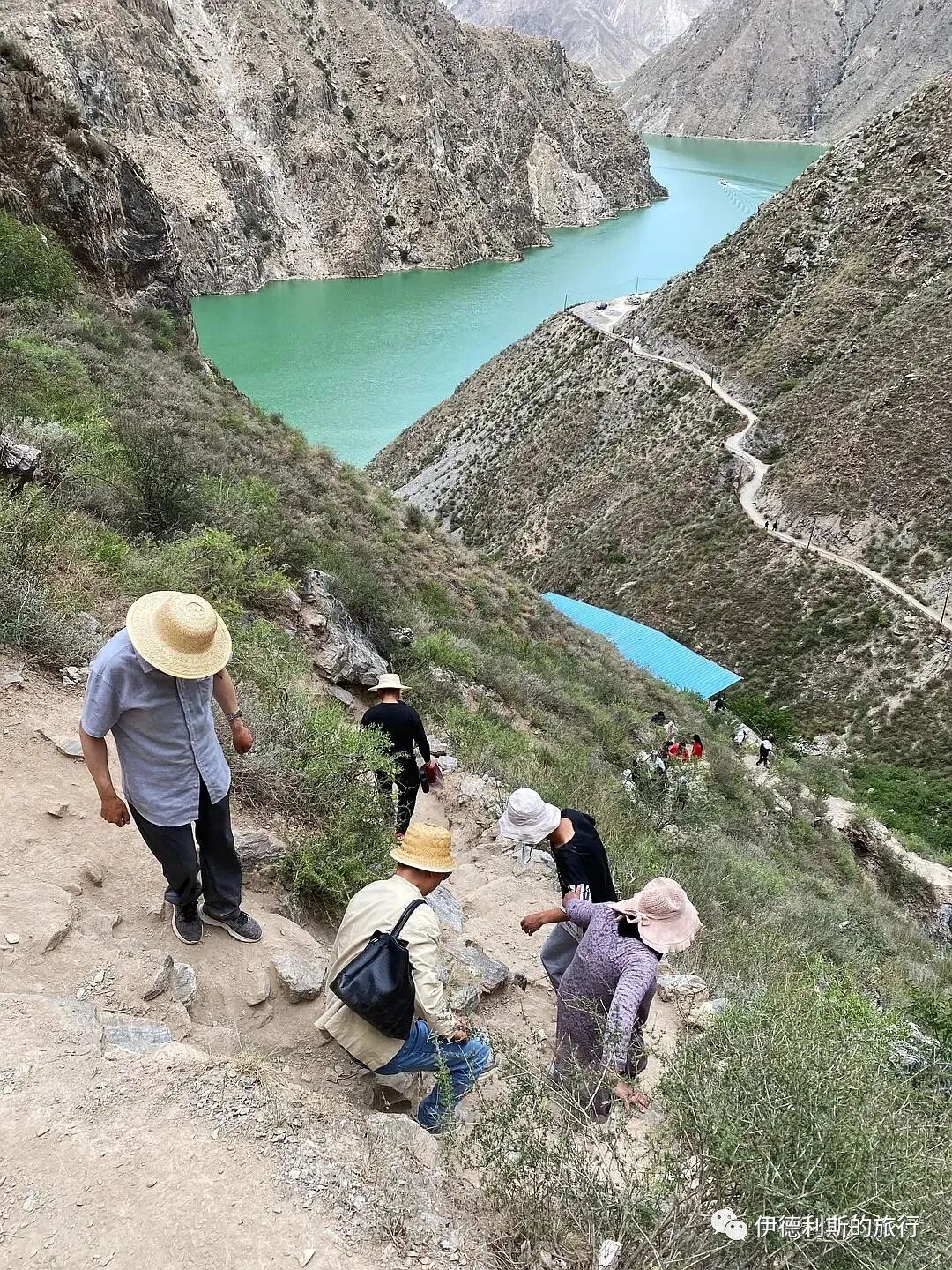
To get from the pier to the gongbei, you have to walk along a mountain path by the Yellow River, but it has been widened in recent years and is much easier to walk than before.
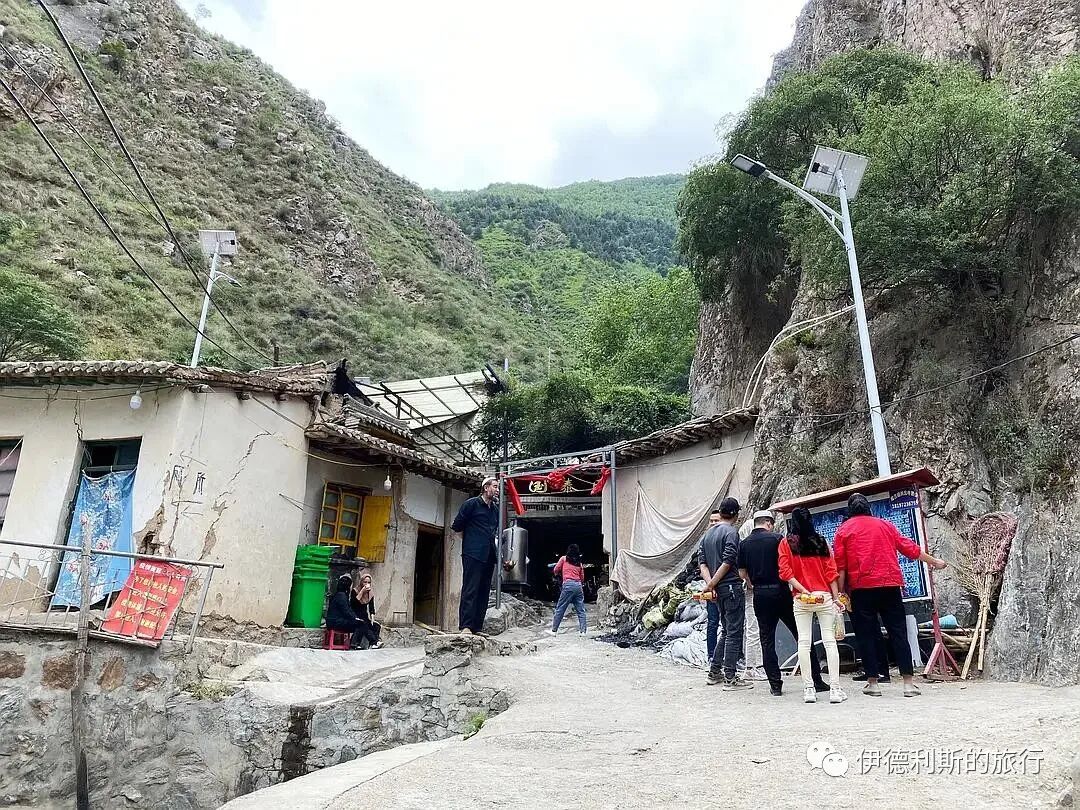
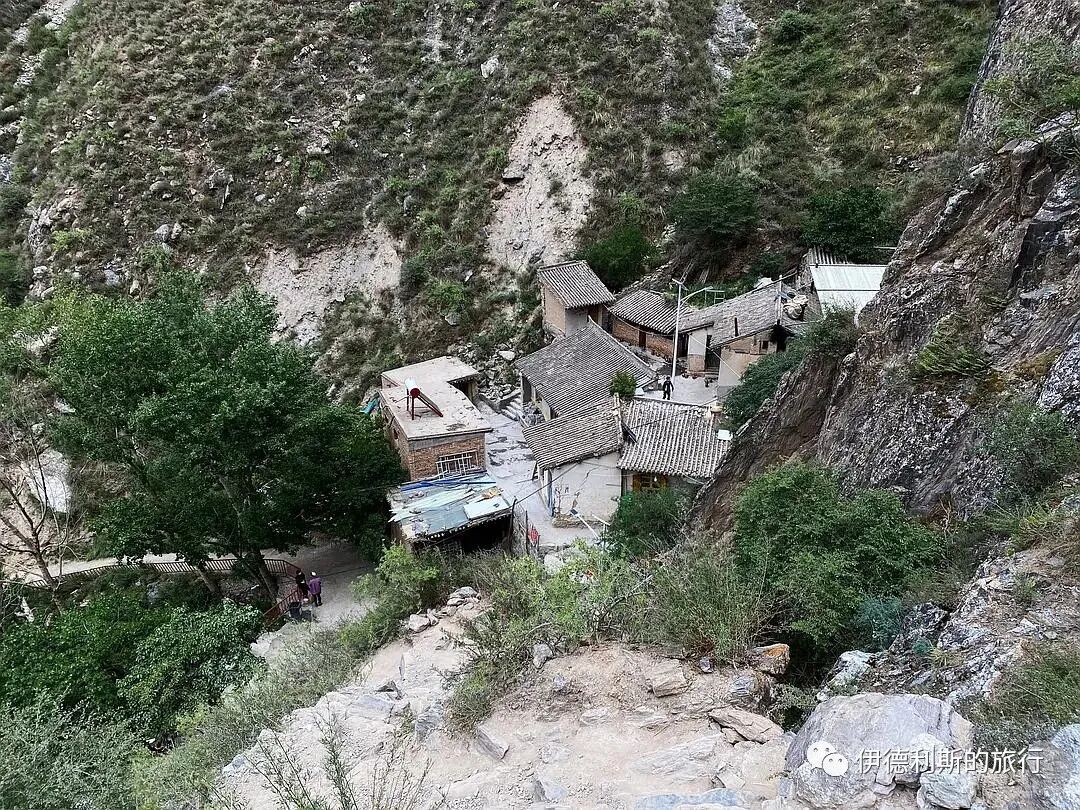
At the end of the mountain road, there are over 30 houses built in 1985 with community funds to provide food, lodging, and rest for those visiting the gongbei. We performed wudu (abudaisi) here, listened to the advice of the Salar uncle who guards the gongbei, and prepared to head toward the cliff leading to the shrine.
After crossing the final stone threshold, we reached three rest pavilions built below the gongbei during the Guangxu reign. Not far above them stands the hexagonal, pointed-roof gongbei pavilion.
Going down the mountain is actually much harder than going up because it is a vertical cliff. You cannot see the path at all, so you have to feel your way with your feet, step by step. It is often hard to find where to place your next step, and halfway down, my calves started shaking from the intense tension. In the end, it took us even longer to reach the foot of the mountain than it did to climb up.
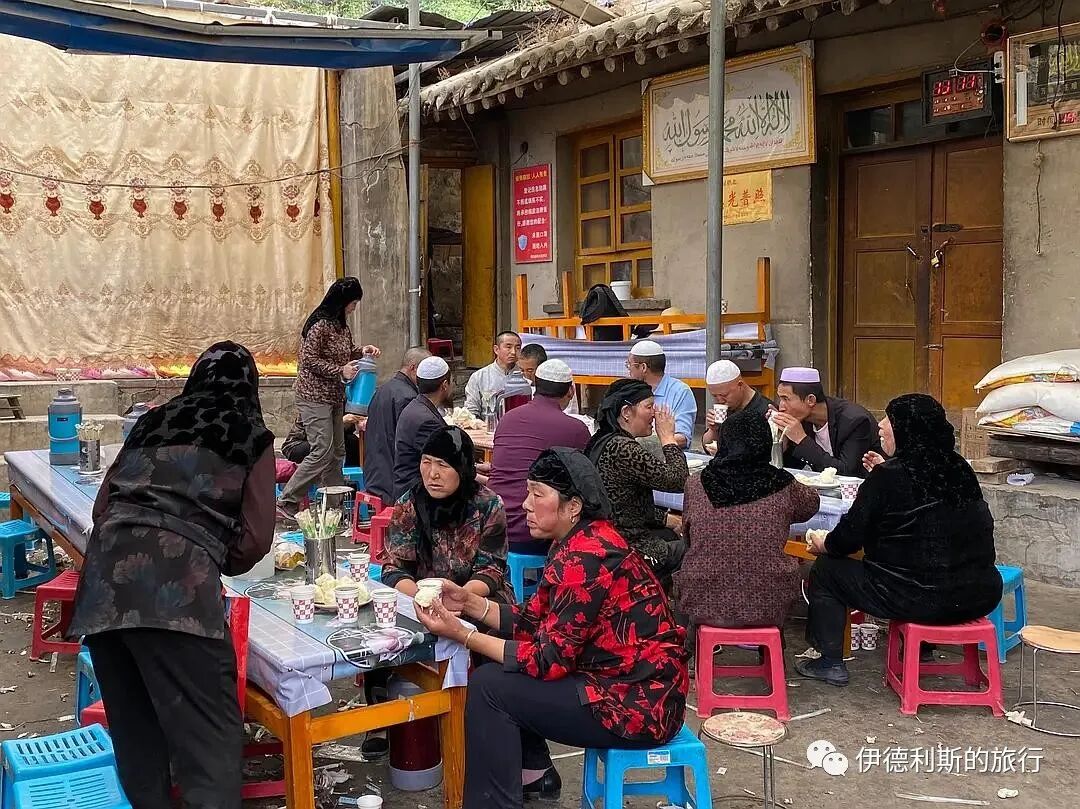
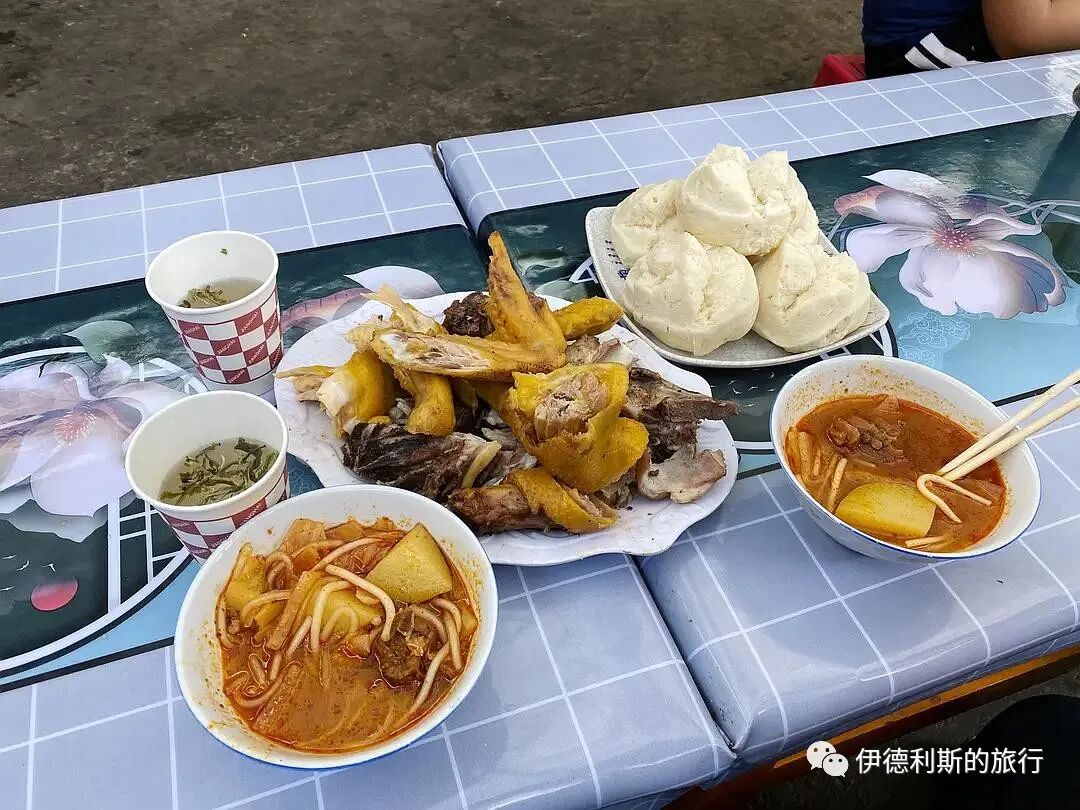
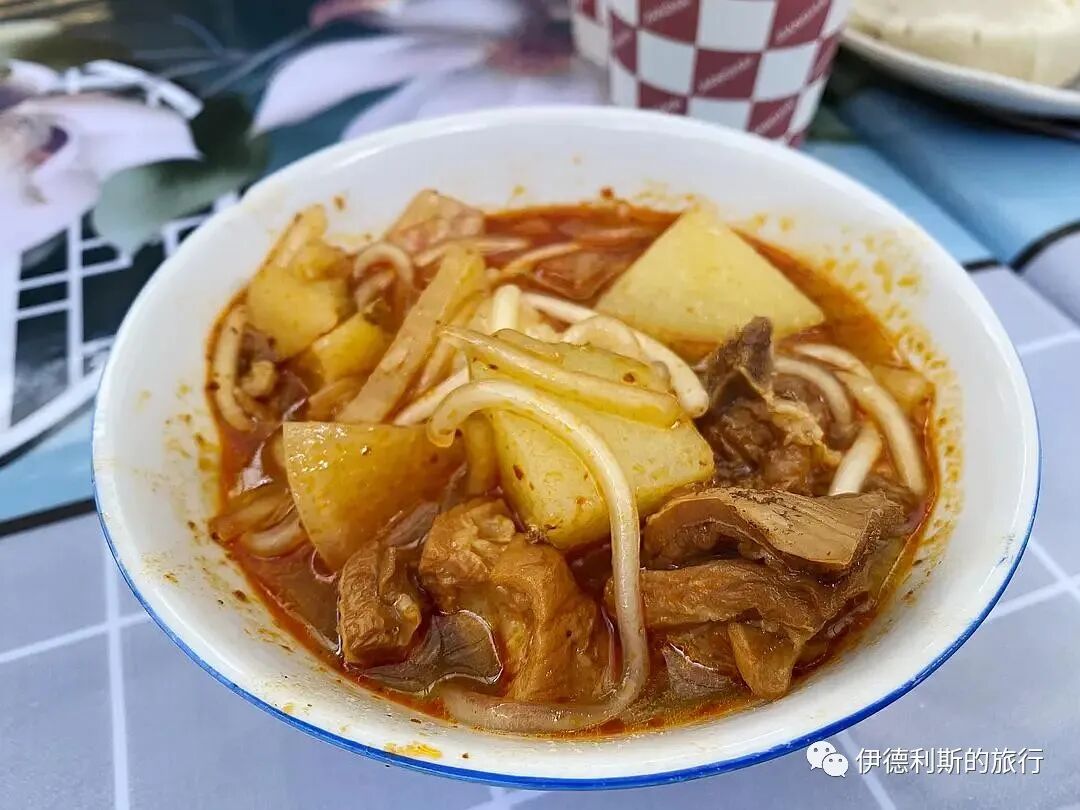
At the foot of the mountain, we were warmly welcomed by the Salar guardians of the gongbei. We ate delicious braised meat bowls (huiwan), steamed buns (momo), old-stock chicken (laotangji), and hand-grabbed lamb chops (shouzhuayangpai), and drank plenty of clear tea. The Yangulu Gongbei is currently guarded by four Salar families who have lived here for generations. Food and lodging are free for all believers who visit, and the income mainly comes from charitable donations (nietie).
After a full meal, we said goodbye to our warm Salar friends, returned to the pier, and took a boat to leave Yangulu.
Xunhua County Town
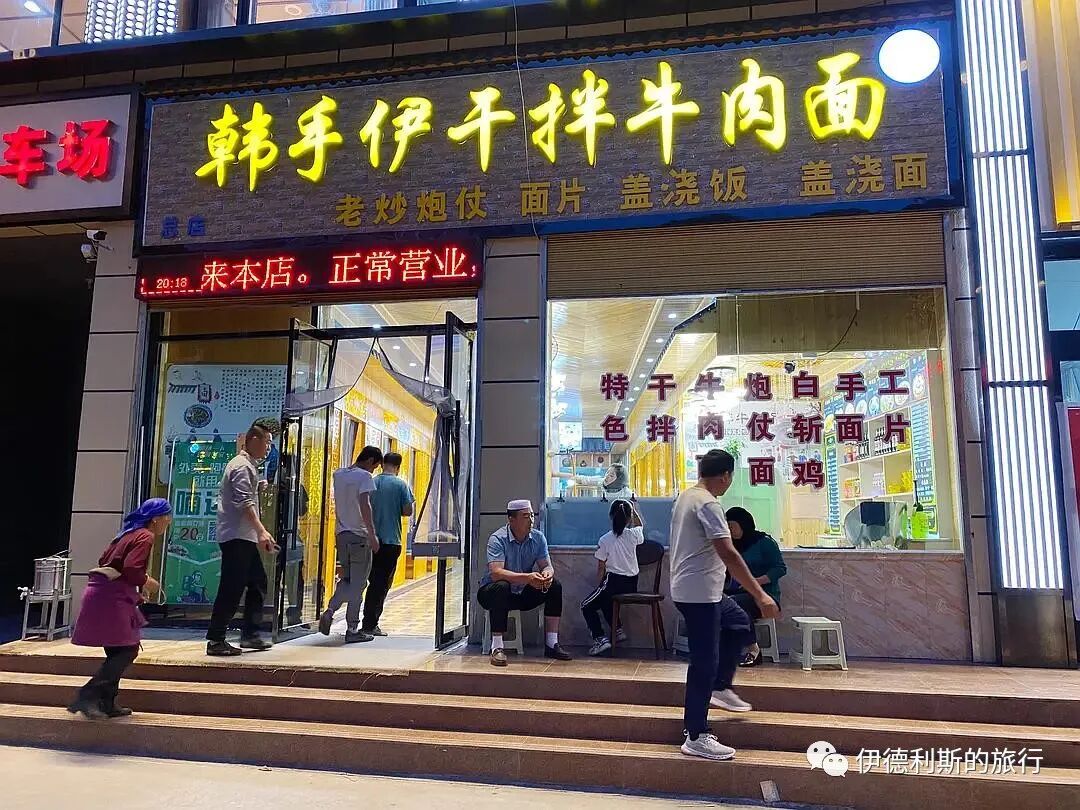
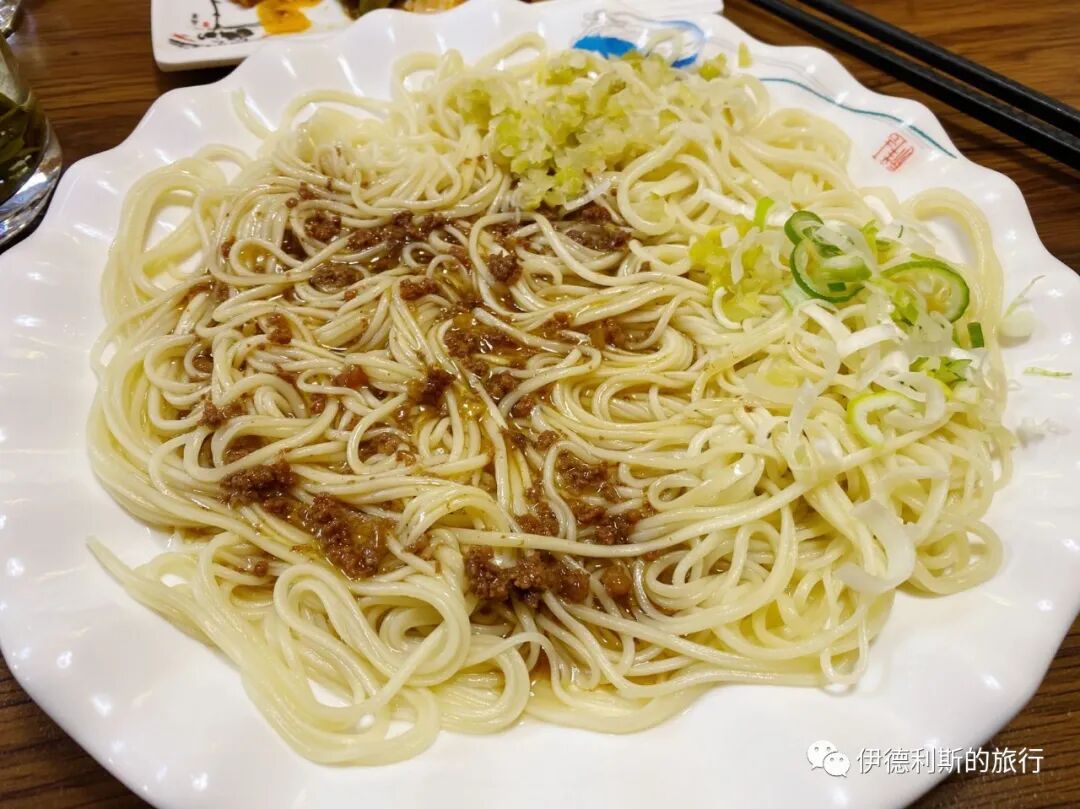
In the evening, we traveled from Yangulu to Xunhua County town, bought some handmade yogurt with rapeseed oil, and then ate some Salar dry-mixed beef noodles.
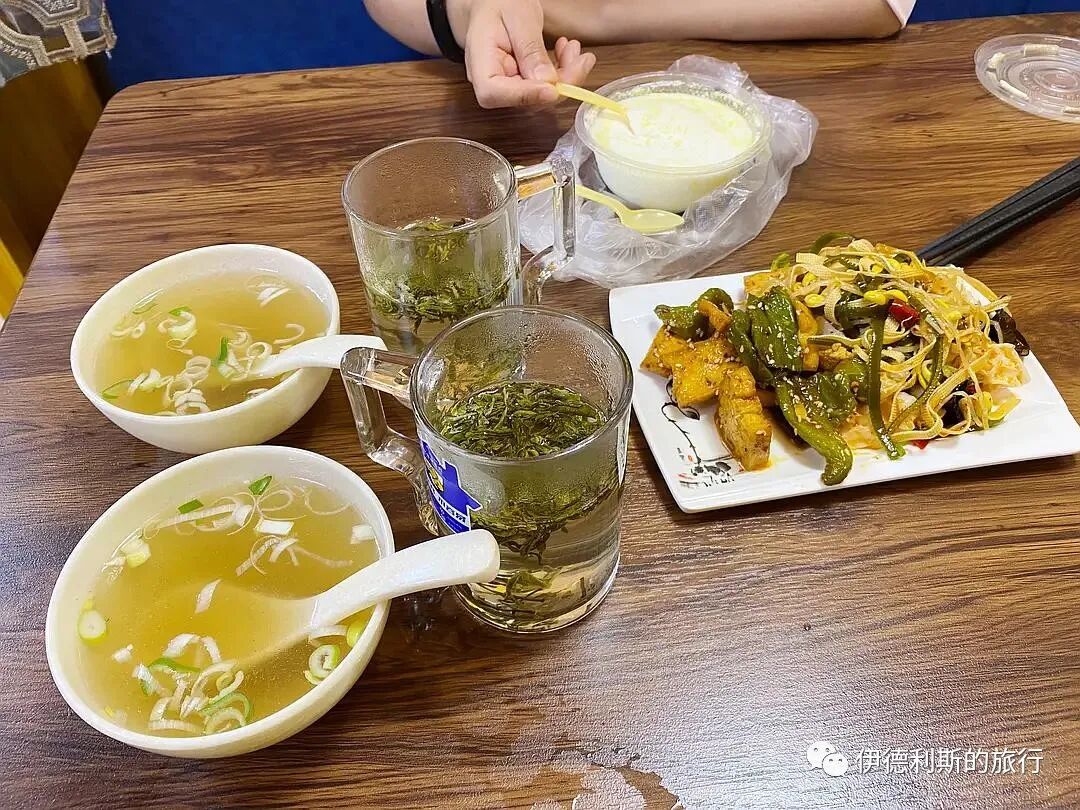
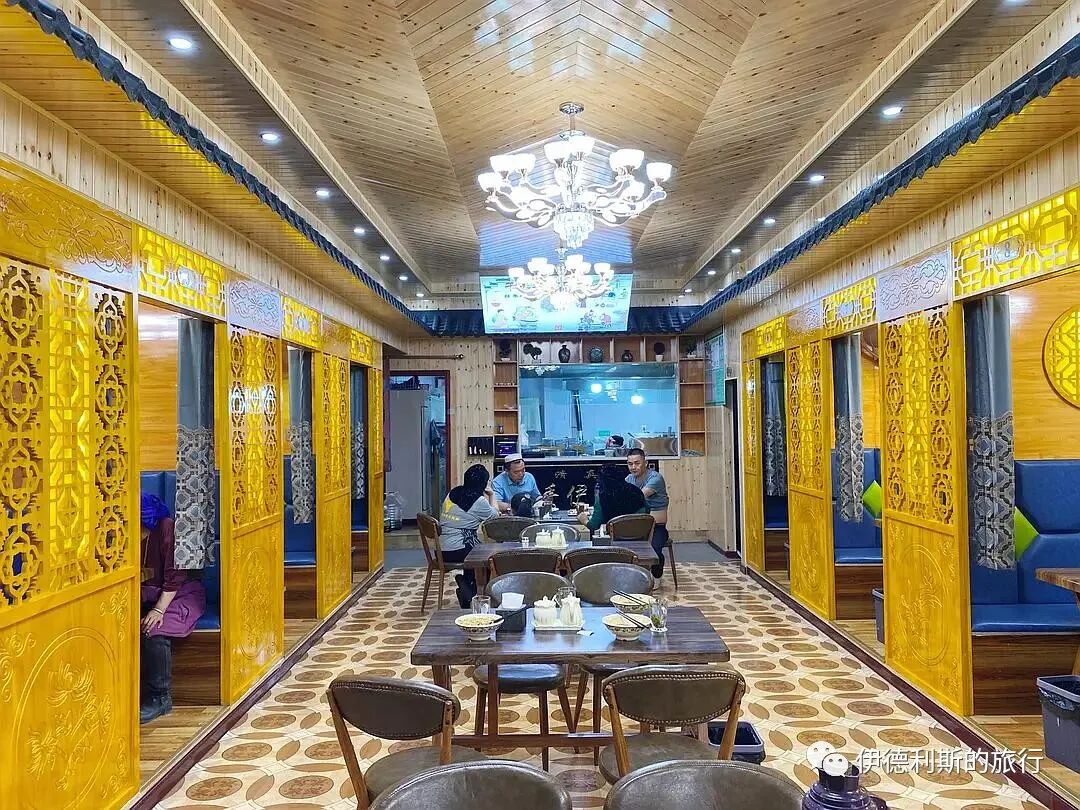
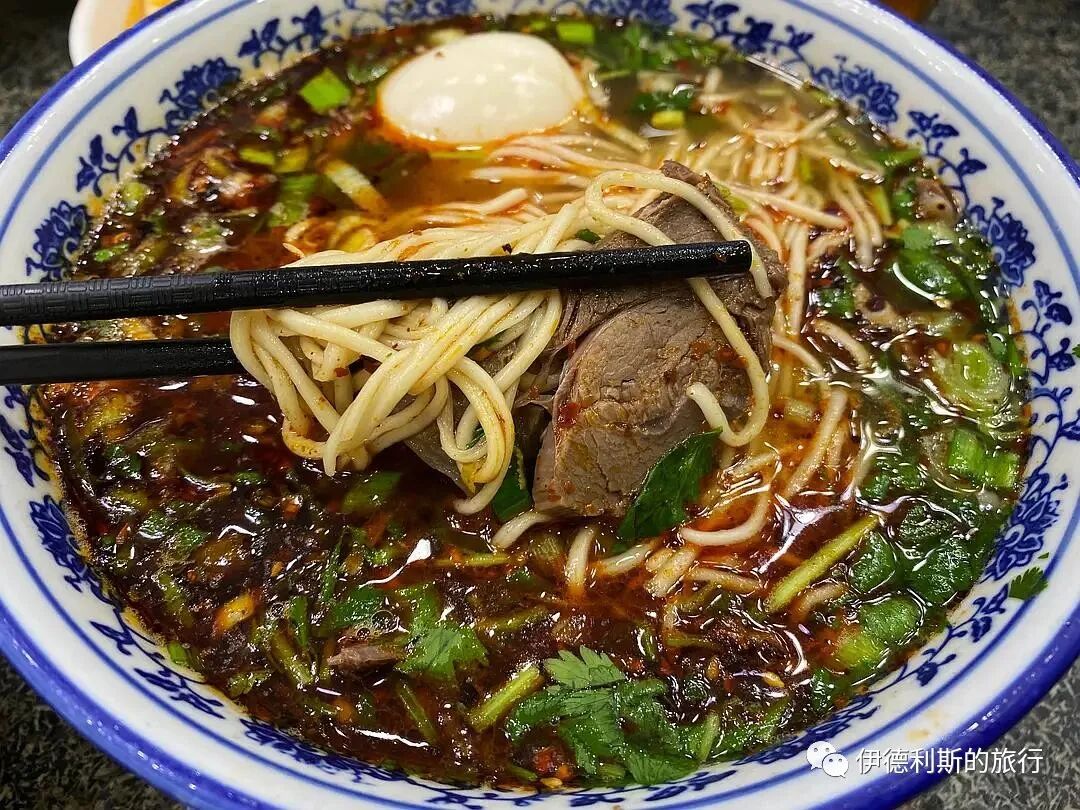
Here in Xunhua, even the beef noodle shops have small private rooms; the environment is really quite good. After ordering, they served meat broth and tea first, and we also ordered a platter of cold dishes. Besides the thread chili (xianlajiao), people in Xunhua also love eating tiger-skin chili (hupilajiao). While waiting for the bus earlier, I noticed the grandpas and grandmas shopping were all carrying a bag of tiger-skin chili. Dry-mixed noodles with meat sauce (roujiangganban) should be a specialty here in Qinghai. I had it before at a Salar restaurant in Beijing called A-Gong Noodle House, but this time it felt more authentic. The noodles were thin and chewy, the sauce was especially fragrant, and this meal cost less than twenty yuan, which is great value.
The Yellow River at the Xunhua section.
In the morning, we had a bowl of beef noodles in Xunhua County town, then set off to visit the beautiful traditional Salar mosques.
Qingshuihedong Mosque
Qingshuihedong Mosque is the main mosque (haiyisi) of the Qingshui Gong of the Salar Eight Gongs. It was first built in 1425 and has been rebuilt many times throughout history.
Mengda Mosque
Mengda Mosque is located in Dazhuang Village, Mengda Township, Xunhua, Qinghai. It was first built in 1408 (the sixth year of the Yongle reign of the Ming Dynasty) and expanded three times during the Qing Dynasty. It is the main mosque (haiyisi) of the Mengda Gong, one of the Salar Eight Gongs.
The Yellow River at the Mengda section.
Tashapo Mosque
Tashapo Mosque was first built in 1480 (the sixteenth year of the Chenghua reign of the Ming Dynasty) and rebuilt in 1755 (the twentieth year of the Qianlong reign of the Qing Dynasty).
Labian Mosque
Labian Mosque was first built during the Qianlong era. The main hall was rebuilt in 2015, leaving only the call-to-prayer tower (xuanlilou) and the two side gate towers as the original ancient structures.
Zhangga Mosque
Zhangga Mosque was first built in 1406 (the fourth year of the Yongle reign of the Ming Dynasty) and was rebuilt during the Qing Dynasty.
Kewa Mosque
Kewa Mosque was first built in 1403 (the first year of the Yongle reign of the Ming Dynasty) and expanded during the Qing Dynasty. It is the main Friday mosque (jumuasi) for the Salar people's eight gong (gong) and nine man (man) groups.
At Kewa Mosque, we were warmly welcomed by a Salar imam. He gave us a detailed introduction to the mosque and its wall paintings, and even cut up a melon for us to eat. I want to thank the imam here!
Returning to the county town.
At noon, we ate stir-fried beef and dough paste (jiaotuan) at a Salar family farmhouse restaurant in the county town. Dough paste (jiaotuan) is made by stir-frying flour until cooked, boiling it with water, and then adding refined vegetable oil. It tastes very fragrant. In Xunhua, Salar family eateries are divided into tea restaurants and farmhouse restaurants. The tea restaurants have a wider variety of dishes, but if you want authentic Salar food, I recommend going to a farmhouse restaurant.
Then we went to the Jiezi Town fried dough twist (sanzi) market to buy Salar-style fried dates (youzao). These are large dates wrapped in dough and fried. One bite is full of date juice.
Jiezi Grand Mosque Quran Collection Hall
I was very lucky to visit the Quran Collection Hall at Jiezi Grand Mosque. I saw the handwritten Quran that the Salar people brought with them when they migrated from the Samarkand area to Xunhua over 700 years ago.
The Quran consists of 30 volumes, stored in two rhinoceros-hide cases. Historically, this set of the Quran was kept by the religious leader known as the 'Gazi'. When the Gazi system was abolished in 1896, the Quran remained in the care of the Gazi's descendants. People say in 1894, Ma Qishao (Ma Anliang) from Linxia seized the Quran. However, on his way back to Linxia from Xunhua, he encountered a violent storm and could not cross the mountains, so he had to return the Quran. During the Republic of China era, the Quran was seized by Ma Bufang. It was not returned to Han Wushiba, a descendant of the Jiezi Gazi, until the 1950s.
In 1954, the Quran was sent to Syria for an international exhibition, where it made a great impression on the Islamic world. After the '58 Religious Reform' in 1958, the burning of religious texts began. On the advice of the 'Salar Social History Investigation Group' then conducting research in Xunhua, the Quran was sent to the Cultural Palace of Nationalities under the guise of participating in a 10th-anniversary national exhibition. It was stored in the basement of the Cultural Palace for the next twenty years, only returning to Jiezi Grand Mosque in 1982.
The Quran I photographed.
The uncle who showed us around the collection hall is telling us about the migration route of the Salar people.
The Quran was photographed in 1933 by the American missionary Reverend Carter Holton (Hai Yingguang). Reverend Holton lived in the Hehuang region for many years between the 1920s and 1940s. Reverend Holton loved photography and left behind over 5,000 photos of the ethnic customs in the Gansu and Qinghai regions. In the early 1990s, his second daughter donated them all to the Harvard University Library, where they can now be viewed on the library's official website.
Imam Hai holds the Quran himself.
The Quran kept in the collection hall.
After the Salar people settled in Jiezi Town, the descendants of the highest Salar scholar, Sulimanisha Hai, hand-copied this using specially mixed ink and a tamarisk (gelimu) reed pen; it is over 600 years old.
A manuscript from the 17th to 18th century, wrapped in cowhide.
Printed and published in Iran, it contains 18 grams of gold.
Camel Spring (Luotuo Quan).
Next to the Quran collection hall is Camel Spring, the first place the Salar people settled after migrating from Central Asia to Xunhua. In Salar legend, Ahman and Qarman originally lived near Samarkand. Because they were oppressed by their ruler, they led their people while pulling a white camel. The camel carried a bowl of soil from their hometown, a pot of water, and a Quran. They crossed the Tianshan Mountains heading east and finally arrived in Qinghai. When they reached Aotusi Mountain near Jiezi, they were very tired and decided to stop and rest. In the middle of the night, Qarman discovered the camel was missing. They searched everywhere and finally found the camel lying on the ground turned into stone, with water flowing from its mouth. They unloaded the water, soil, and Quran from the camel and began to recite the Quran. When they tasted the spring water flowing from the camel's mouth, they found it very sweet, exactly the same as the water they had brought with them. They compared it to the soil they brought and found it was also exactly the same, so they decided to settle down here.
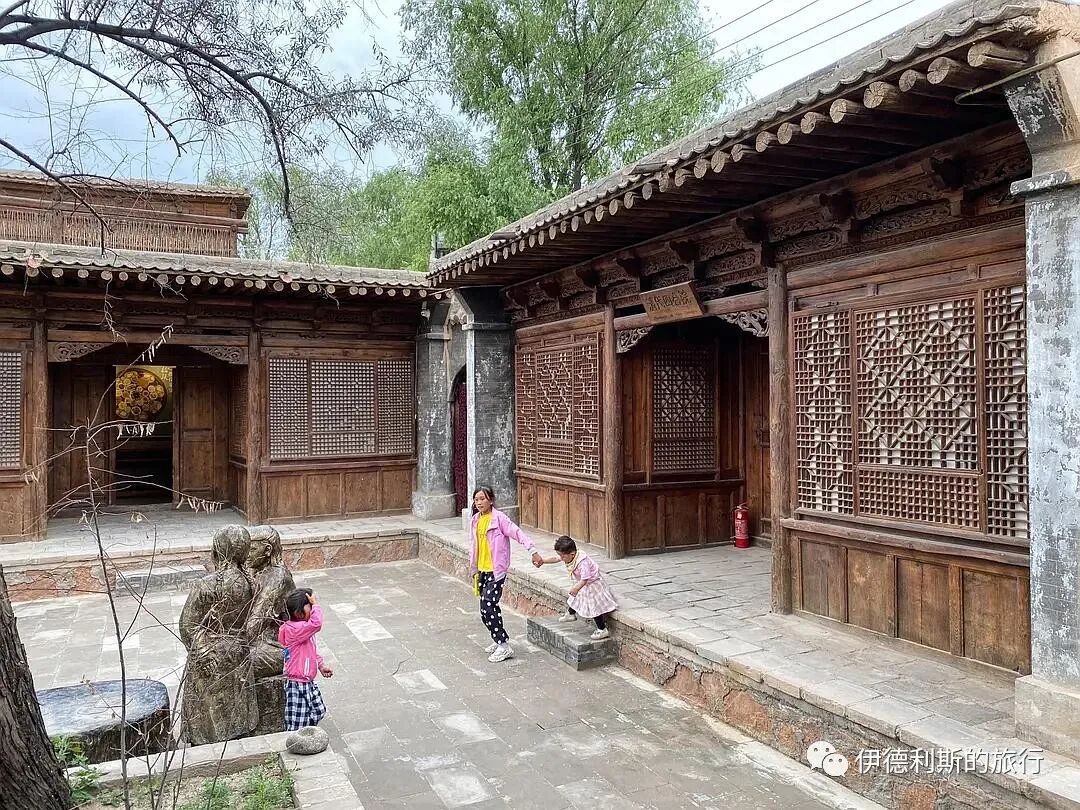
Several traditional Salar fence houses (libalou) were built in the Camel Spring scenic area. The fence house is called "baliaoyi" in the Salar language and has two floors. The upper floor is for guest rooms and bedrooms, while the lower floor is for storage and livestock pens. The fence walls use honeysuckle branches and pine boards, covered with a mixture of three types of soil, and the main structure is made of high rammed brown earth walls or a mix of stone and brick.
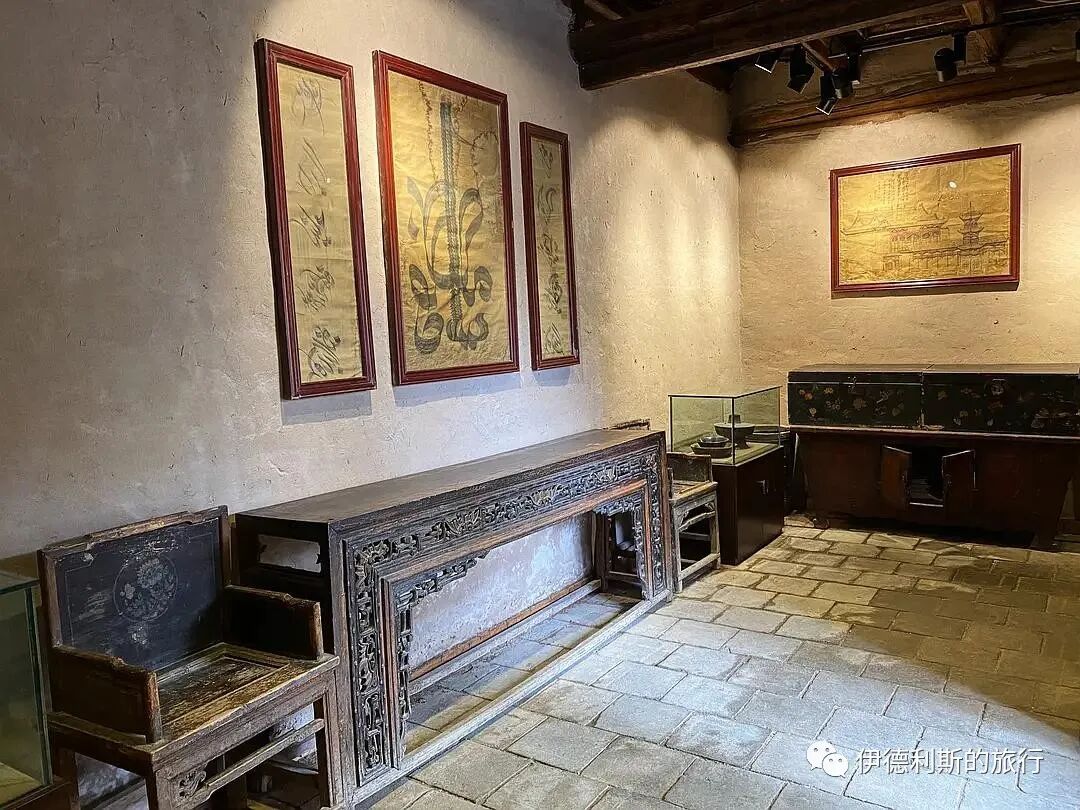
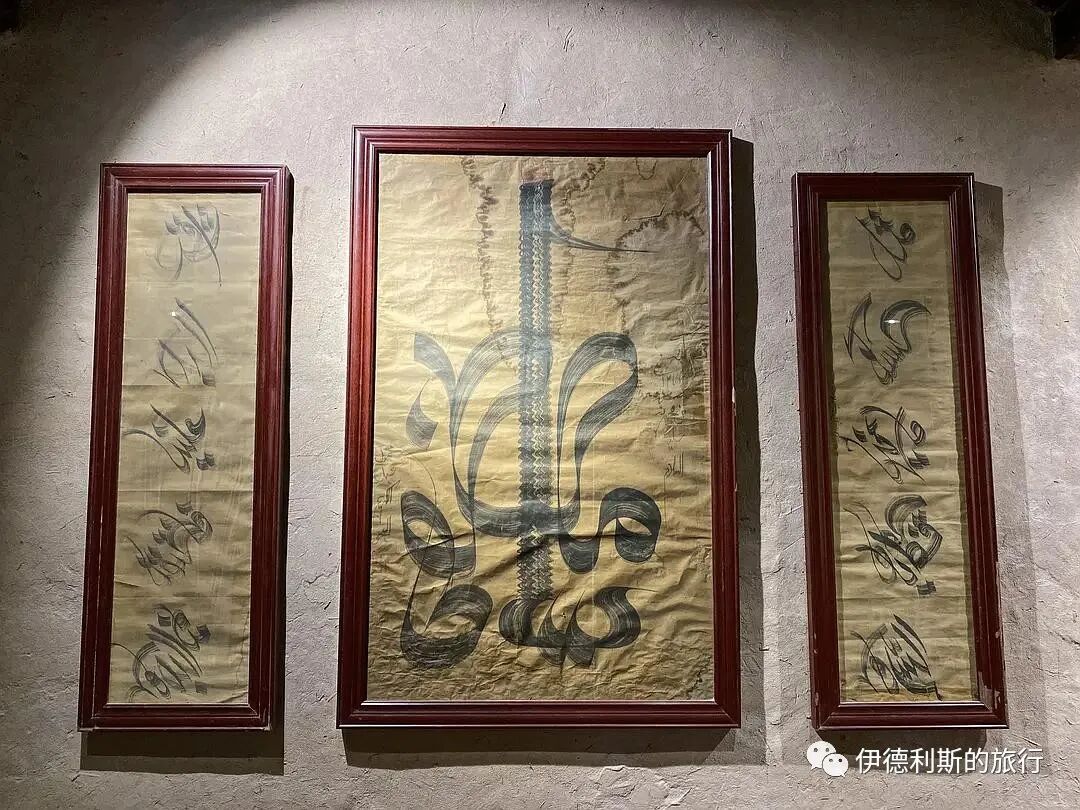
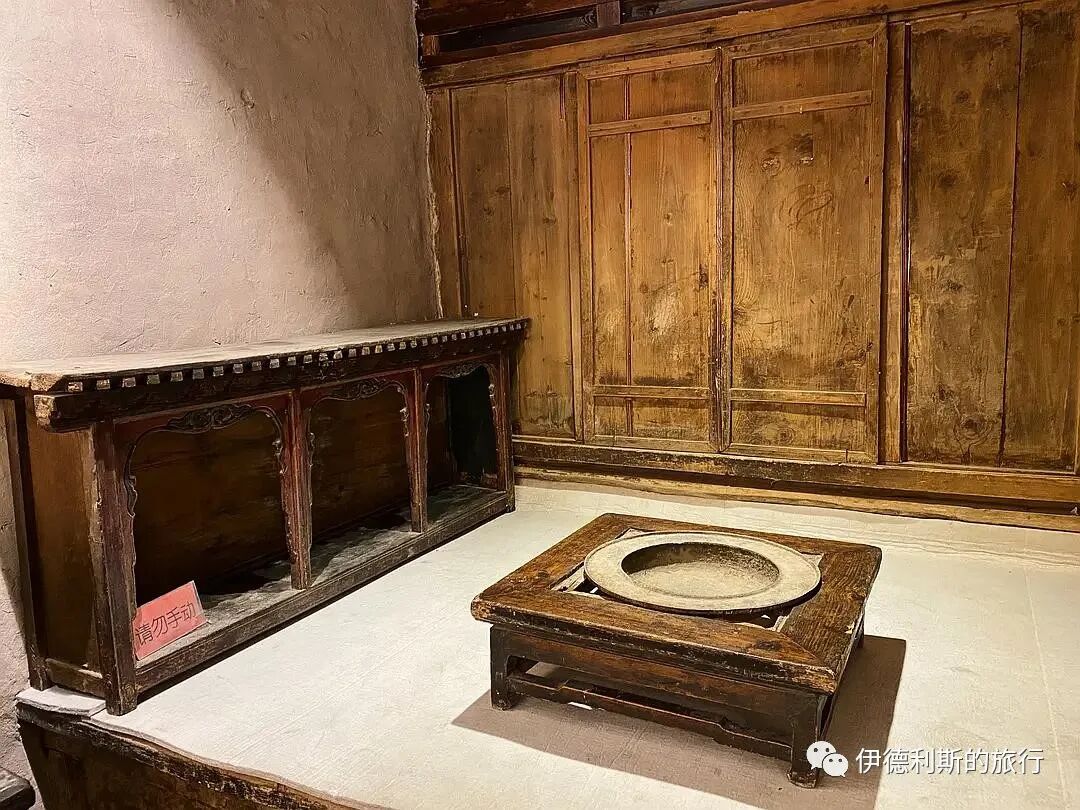
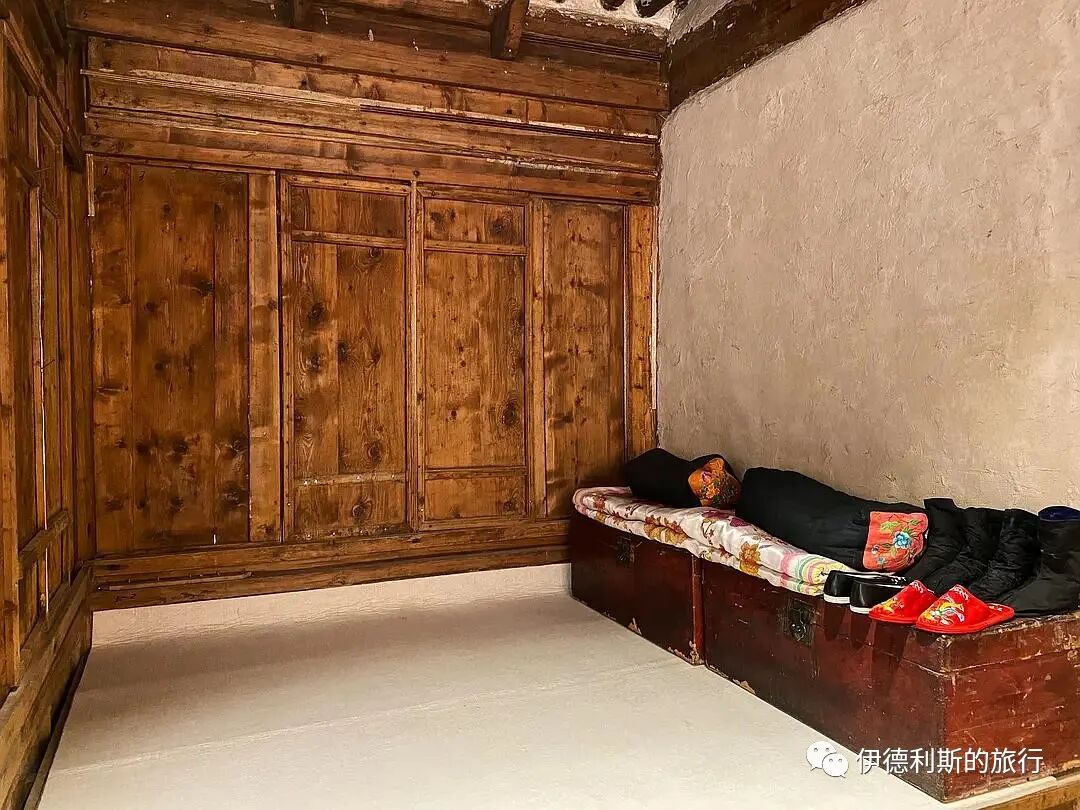
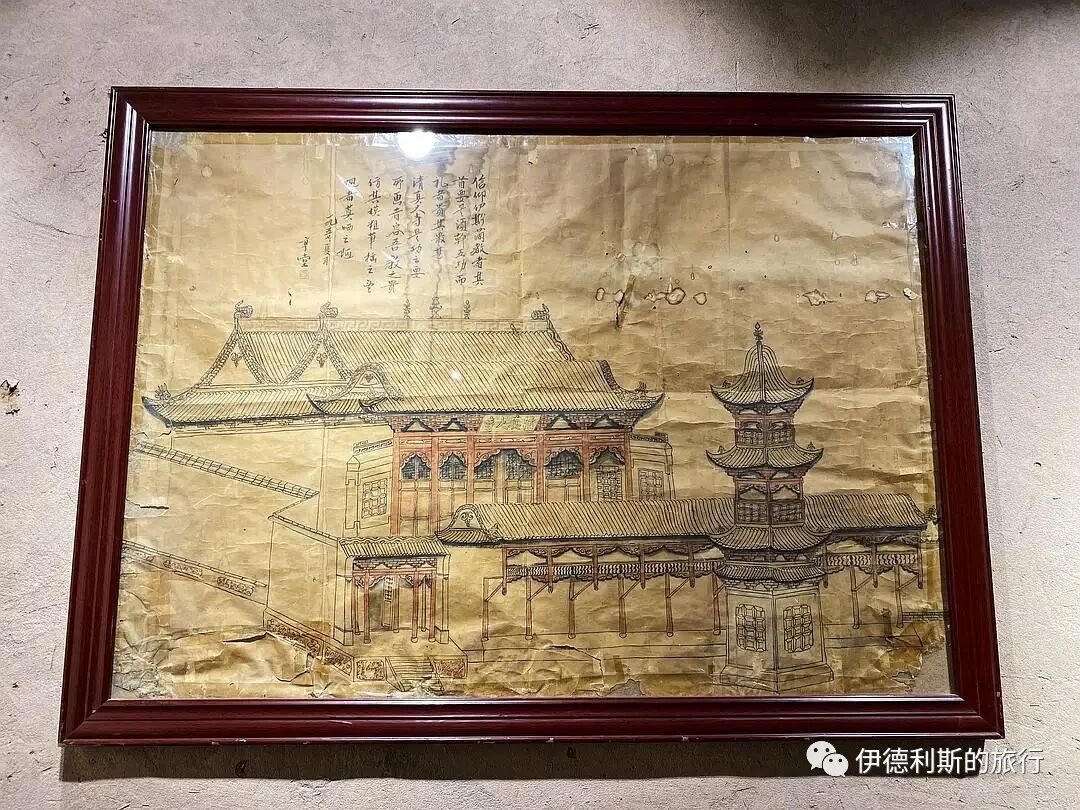
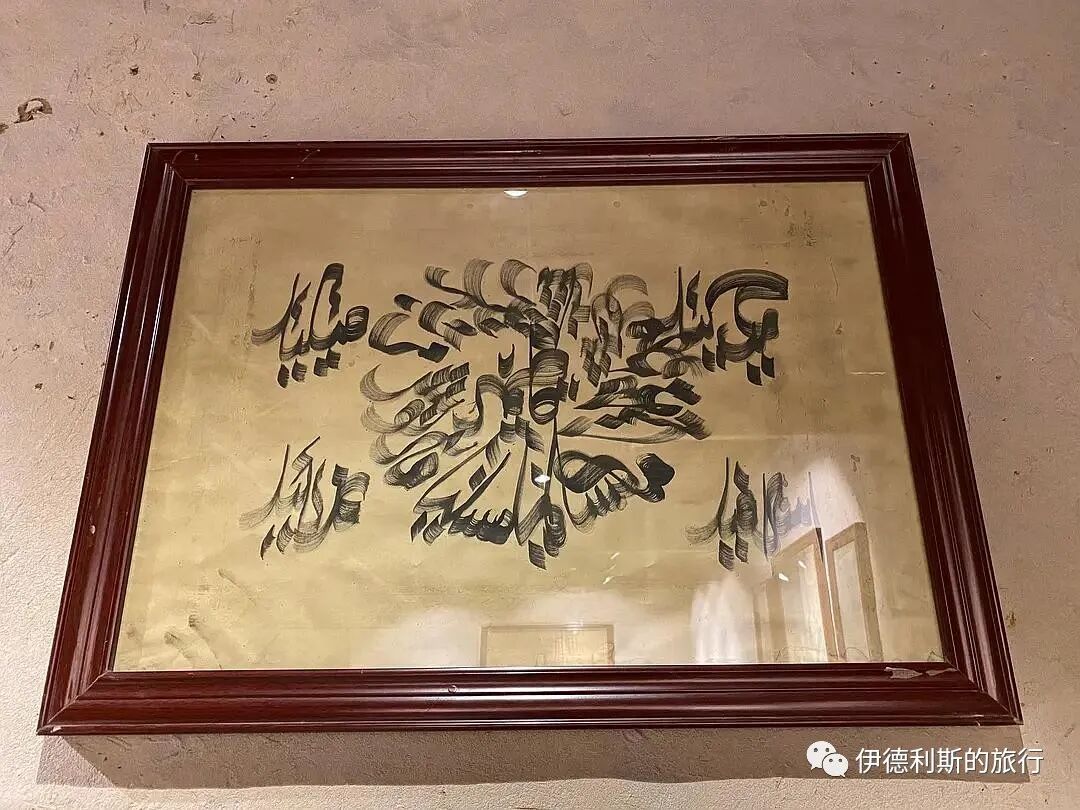
The Camel Spring scenic area features a restored Qing Dynasty Salar courtyard house, with a living room in the center of the main house, heated brick beds (kang) on both sides, and Arabic calligraphy hanging in the middle.
Jiezi Gongbei.
Hidden in the cemetery on the north side of the Great Mosque of Jiezi, the Jiezi Gongbei is the only historical relic left in Jiezi. Currently, only the lower brick section remains, featuring exquisite brick carvings and an inscription stating it was "rebuilt in the first year of Xianfeng," which is 1851. view all
Summary: Qinghai — Ping’an, Xunhua and Xining Muslim Heritage is presented here as a firsthand travel account in clear English, beginning with this scene: During the 2021 Dragon Boat Festival, I visited Ping'an, Xunhua, and Xining in Qinghai. My main goal was to visit the traditional historical mosques and gongbei buildings there, and I gained a lot. The account keeps its focus on Qinghai Travel, Hui Muslims, China Mosques while preserving the names, places, food, and historical details from the Chinese source.
During the 2021 Dragon Boat Festival, I visited Ping'an, Xunhua, and Xining in Qinghai. My main goal was to visit the traditional historical mosques and gongbei buildings there, and I gained a lot.
I stayed overnight at Ping'an Station (Ping'anyi).
I took a late flight to Xining Airport, then took a taxi to the Daqingzhen Kanguo Barbecue restaurant in the Ping'an District of Haidong to eat pan-roasted meat (kanguo). They have many types of pan-roasted meat, including lamb, tripe, intestines, and chicken. We had the pan-roasted lamb head and also ordered the wheat kernel porridge (mairen zhou), which is a must-have at Qinghai barbecue shops.
The restaurant layout features small private rooms common in Qinghai town restaurants. Even for two people, you can pull the curtain for privacy, which feels quite nice. After ordering, they brought out free pickles, radishes, mung bean jelly (liangfen), and boiled tea (aocha). The servers were very friendly. I had a few bites of the jelly and some tea, and then the pan-roasted meat arrived. Besides a whole lamb head, it came with potatoes, corn, and vermicelli, so we didn't really need to order any staple food. I finished with a bowl of wheat kernel porridge and felt very satisfied.
The next day, I had lamb offal soup (yangzasui) with flatbread (bingzi) at the Shalihai Lamb Offal shop on the main street of Ping'an, Haidong. Across the street is the Ping'an food street, Ping'anfang Pedestrian Street. I bought some handmade yogurt at the Hongshuiquan Starch Jelly (niangpi) shop inside. Hongshuiquan is where the most famous Hongshuiquan Great Mosque in Haidong is located.
The Upper and Lower Gongbei of Shangma Family in Bazanggou.
I took a Didi taxi from Ping'an to the famous Upper and Lower Gongbei of the Shangma family in Bazanggou, Haidong. The Upper Gongbei of the Shangma family is on the peak of Woniu Mountain, so it is also called Woniu Mountain Gongbei. It is the tomb of Ma Diangong (1643-1715), a leader of the Khufiyya Sufi order (menhuan).
The Lower Gongbei of the Shangma family in Bazanggou is the tomb of Xian Chengde (known as Chuanli Taiye), the third-generation sheikh of the Khufiyya Xianmen menhuan. Xian Chengde built this gongbei during the Jiaqing reign. Shortly after it was completed in 1812, he passed away (returned to Allah), and his followers buried him there. In 1895, the fifth-generation sheikh of the Xianmen, Xian Linyuan, also passed away and was buried in the Lower Gongbei.
We were warmly received at the Lower Gongbei of Shangmazhuang and were given fried dough (youxiang) and clear-stewed meat.
Yangulu Gongbei.
At noon, I chartered a car from Ping'an District, Haidong, to the famous Yangulu Gongbei in Xunhua. After a two-hour drive, we crossed the mountains from the Huangshui Valley into the Yellow River Valley and arrived at the Gongboxia Dam pier. When we reached the pier, a boat was about to depart. It carried a large family of Hui Muslims from Linxia who were visiting the gongbei, and we took the boat together to the gongbei pier.
To get from the pier to the gongbei, you have to walk along a mountain path by the Yellow River, but it has been widened in recent years and is much easier to walk than before.
At the end of the mountain road, there are over 30 houses built in 1985 with community funds to provide food, lodging, and rest for those visiting the gongbei. We performed wudu (abudaisi) here, listened to the advice of the Salar uncle who guards the gongbei, and prepared to head toward the cliff leading to the shrine.
After crossing the final stone threshold, we reached three rest pavilions built below the gongbei during the Guangxu reign. Not far above them stands the hexagonal, pointed-roof gongbei pavilion.
Going down the mountain is actually much harder than going up because it is a vertical cliff. You cannot see the path at all, so you have to feel your way with your feet, step by step. It is often hard to find where to place your next step, and halfway down, my calves started shaking from the intense tension. In the end, it took us even longer to reach the foot of the mountain than it did to climb up.
At the foot of the mountain, we were warmly welcomed by the Salar guardians of the gongbei. We ate delicious braised meat bowls (huiwan), steamed buns (momo), old-stock chicken (laotangji), and hand-grabbed lamb chops (shouzhuayangpai), and drank plenty of clear tea. The Yangulu Gongbei is currently guarded by four Salar families who have lived here for generations. Food and lodging are free for all believers who visit, and the income mainly comes from charitable donations (nietie).
After a full meal, we said goodbye to our warm Salar friends, returned to the pier, and took a boat to leave Yangulu.
Xunhua County Town
In the evening, we traveled from Yangulu to Xunhua County town, bought some handmade yogurt with rapeseed oil, and then ate some Salar dry-mixed beef noodles.
Here in Xunhua, even the beef noodle shops have small private rooms; the environment is really quite good. After ordering, they served meat broth and tea first, and we also ordered a platter of cold dishes. Besides the thread chili (xianlajiao), people in Xunhua also love eating tiger-skin chili (hupilajiao). While waiting for the bus earlier, I noticed the grandpas and grandmas shopping were all carrying a bag of tiger-skin chili. Dry-mixed noodles with meat sauce (roujiangganban) should be a specialty here in Qinghai. I had it before at a Salar restaurant in Beijing called A-Gong Noodle House, but this time it felt more authentic. The noodles were thin and chewy, the sauce was especially fragrant, and this meal cost less than twenty yuan, which is great value.
The Yellow River at the Xunhua section.
In the morning, we had a bowl of beef noodles in Xunhua County town, then set off to visit the beautiful traditional Salar mosques.
Qingshuihedong Mosque
Qingshuihedong Mosque is the main mosque (haiyisi) of the Qingshui Gong of the Salar Eight Gongs. It was first built in 1425 and has been rebuilt many times throughout history.
Mengda Mosque
Mengda Mosque is located in Dazhuang Village, Mengda Township, Xunhua, Qinghai. It was first built in 1408 (the sixth year of the Yongle reign of the Ming Dynasty) and expanded three times during the Qing Dynasty. It is the main mosque (haiyisi) of the Mengda Gong, one of the Salar Eight Gongs.
The Yellow River at the Mengda section.
Tashapo Mosque
Tashapo Mosque was first built in 1480 (the sixteenth year of the Chenghua reign of the Ming Dynasty) and rebuilt in 1755 (the twentieth year of the Qianlong reign of the Qing Dynasty).
Labian Mosque
Labian Mosque was first built during the Qianlong era. The main hall was rebuilt in 2015, leaving only the call-to-prayer tower (xuanlilou) and the two side gate towers as the original ancient structures.
Zhangga Mosque
Zhangga Mosque was first built in 1406 (the fourth year of the Yongle reign of the Ming Dynasty) and was rebuilt during the Qing Dynasty.
Kewa Mosque
Kewa Mosque was first built in 1403 (the first year of the Yongle reign of the Ming Dynasty) and expanded during the Qing Dynasty. It is the main Friday mosque (jumuasi) for the Salar people's eight gong (gong) and nine man (man) groups.
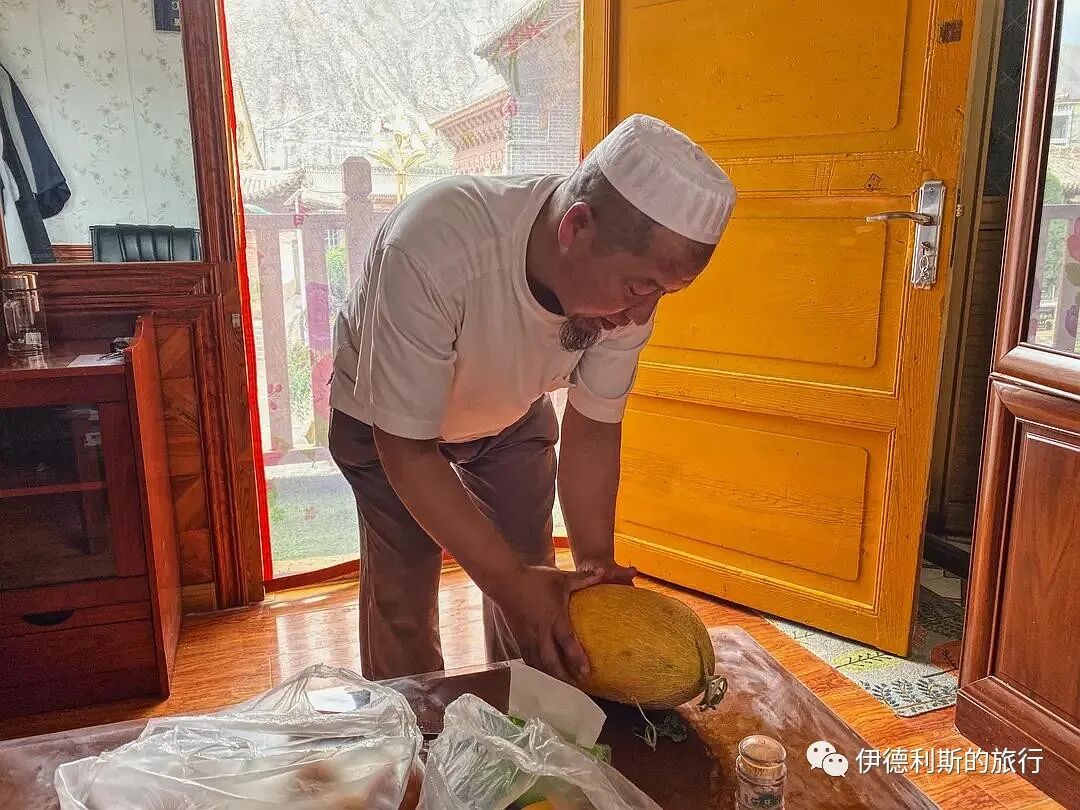
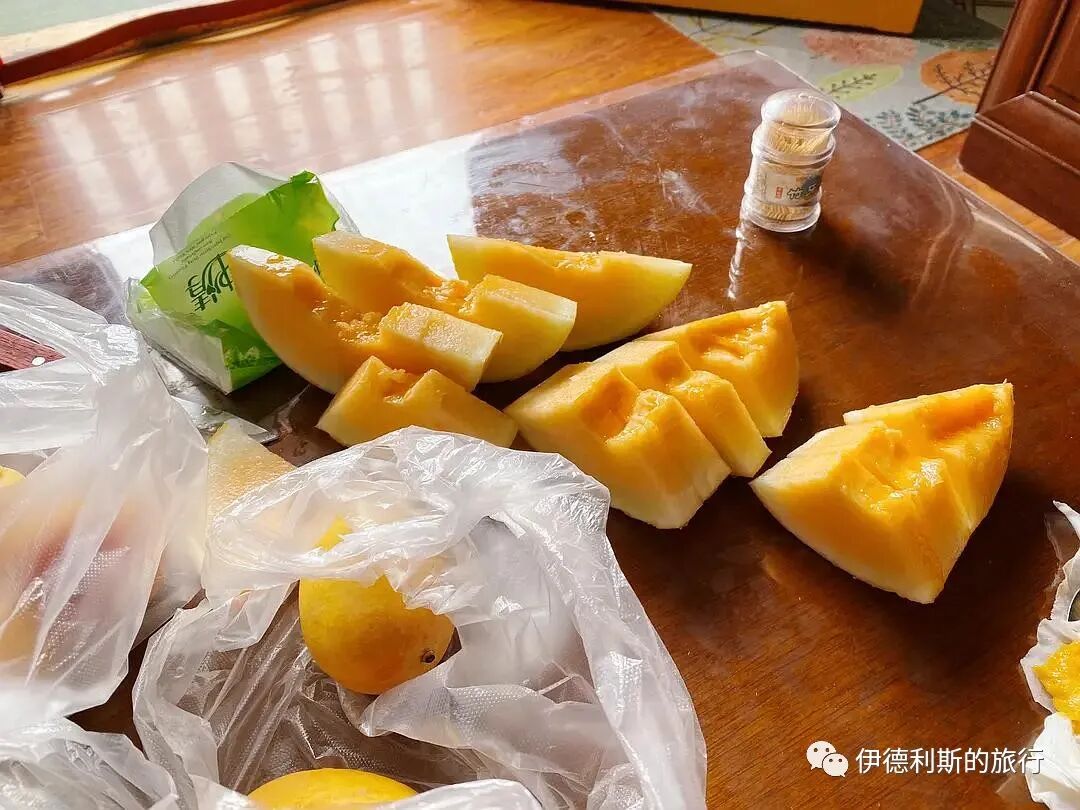
At Kewa Mosque, we were warmly welcomed by a Salar imam. He gave us a detailed introduction to the mosque and its wall paintings, and even cut up a melon for us to eat. I want to thank the imam here!
Returning to the county town.
At noon, we ate stir-fried beef and dough paste (jiaotuan) at a Salar family farmhouse restaurant in the county town. Dough paste (jiaotuan) is made by stir-frying flour until cooked, boiling it with water, and then adding refined vegetable oil. It tastes very fragrant. In Xunhua, Salar family eateries are divided into tea restaurants and farmhouse restaurants. The tea restaurants have a wider variety of dishes, but if you want authentic Salar food, I recommend going to a farmhouse restaurant.
Then we went to the Jiezi Town fried dough twist (sanzi) market to buy Salar-style fried dates (youzao). These are large dates wrapped in dough and fried. One bite is full of date juice.
Jiezi Grand Mosque Quran Collection Hall
I was very lucky to visit the Quran Collection Hall at Jiezi Grand Mosque. I saw the handwritten Quran that the Salar people brought with them when they migrated from the Samarkand area to Xunhua over 700 years ago.
The Quran consists of 30 volumes, stored in two rhinoceros-hide cases. Historically, this set of the Quran was kept by the religious leader known as the 'Gazi'. When the Gazi system was abolished in 1896, the Quran remained in the care of the Gazi's descendants. People say in 1894, Ma Qishao (Ma Anliang) from Linxia seized the Quran. However, on his way back to Linxia from Xunhua, he encountered a violent storm and could not cross the mountains, so he had to return the Quran. During the Republic of China era, the Quran was seized by Ma Bufang. It was not returned to Han Wushiba, a descendant of the Jiezi Gazi, until the 1950s.
In 1954, the Quran was sent to Syria for an international exhibition, where it made a great impression on the Islamic world. After the '58 Religious Reform' in 1958, the burning of religious texts began. On the advice of the 'Salar Social History Investigation Group' then conducting research in Xunhua, the Quran was sent to the Cultural Palace of Nationalities under the guise of participating in a 10th-anniversary national exhibition. It was stored in the basement of the Cultural Palace for the next twenty years, only returning to Jiezi Grand Mosque in 1982.
The Quran I photographed.
The uncle who showed us around the collection hall is telling us about the migration route of the Salar people.
The Quran was photographed in 1933 by the American missionary Reverend Carter Holton (Hai Yingguang). Reverend Holton lived in the Hehuang region for many years between the 1920s and 1940s. Reverend Holton loved photography and left behind over 5,000 photos of the ethnic customs in the Gansu and Qinghai regions. In the early 1990s, his second daughter donated them all to the Harvard University Library, where they can now be viewed on the library's official website.
Imam Hai holds the Quran himself.
The Quran kept in the collection hall.
After the Salar people settled in Jiezi Town, the descendants of the highest Salar scholar, Sulimanisha Hai, hand-copied this using specially mixed ink and a tamarisk (gelimu) reed pen; it is over 600 years old.
A manuscript from the 17th to 18th century, wrapped in cowhide.
Printed and published in Iran, it contains 18 grams of gold.
Camel Spring (Luotuo Quan).
Next to the Quran collection hall is Camel Spring, the first place the Salar people settled after migrating from Central Asia to Xunhua. In Salar legend, Ahman and Qarman originally lived near Samarkand. Because they were oppressed by their ruler, they led their people while pulling a white camel. The camel carried a bowl of soil from their hometown, a pot of water, and a Quran. They crossed the Tianshan Mountains heading east and finally arrived in Qinghai. When they reached Aotusi Mountain near Jiezi, they were very tired and decided to stop and rest. In the middle of the night, Qarman discovered the camel was missing. They searched everywhere and finally found the camel lying on the ground turned into stone, with water flowing from its mouth. They unloaded the water, soil, and Quran from the camel and began to recite the Quran. When they tasted the spring water flowing from the camel's mouth, they found it very sweet, exactly the same as the water they had brought with them. They compared it to the soil they brought and found it was also exactly the same, so they decided to settle down here.
Several traditional Salar fence houses (libalou) were built in the Camel Spring scenic area. The fence house is called "baliaoyi" in the Salar language and has two floors. The upper floor is for guest rooms and bedrooms, while the lower floor is for storage and livestock pens. The fence walls use honeysuckle branches and pine boards, covered with a mixture of three types of soil, and the main structure is made of high rammed brown earth walls or a mix of stone and brick.
The Camel Spring scenic area features a restored Qing Dynasty Salar courtyard house, with a living room in the center of the main house, heated brick beds (kang) on both sides, and Arabic calligraphy hanging in the middle.
Jiezi Gongbei.
Hidden in the cemetery on the north side of the Great Mosque of Jiezi, the Jiezi Gongbei is the only historical relic left in Jiezi. Currently, only the lower brick section remains, featuring exquisite brick carvings and an inscription stating it was "rebuilt in the first year of Xianfeng," which is 1851. view all
Reposted from the web
Summary: Qinghai — Ping’an, Xunhua and Xining Muslim Heritage is presented here as a firsthand travel account in clear English, beginning with this scene: During the 2021 Dragon Boat Festival, I visited Ping'an, Xunhua, and Xining in Qinghai. My main goal was to visit the traditional historical mosques and gongbei buildings there, and I gained a lot. The account keeps its focus on Qinghai Travel, Hui Muslims, China Mosques while preserving the names, places, food, and historical details from the Chinese source.
During the 2021 Dragon Boat Festival, I visited Ping'an, Xunhua, and Xining in Qinghai. My main goal was to visit the traditional historical mosques and gongbei buildings there, and I gained a lot.
I stayed overnight at Ping'an Station (Ping'anyi).
I took a late flight to Xining Airport, then took a taxi to the Daqingzhen Kanguo Barbecue restaurant in the Ping'an District of Haidong to eat pan-roasted meat (kanguo). They have many types of pan-roasted meat, including lamb, tripe, intestines, and chicken. We had the pan-roasted lamb head and also ordered the wheat kernel porridge (mairen zhou), which is a must-have at Qinghai barbecue shops.
The restaurant layout features small private rooms common in Qinghai town restaurants. Even for two people, you can pull the curtain for privacy, which feels quite nice. After ordering, they brought out free pickles, radishes, mung bean jelly (liangfen), and boiled tea (aocha). The servers were very friendly. I had a few bites of the jelly and some tea, and then the pan-roasted meat arrived. Besides a whole lamb head, it came with potatoes, corn, and vermicelli, so we didn't really need to order any staple food. I finished with a bowl of wheat kernel porridge and felt very satisfied.
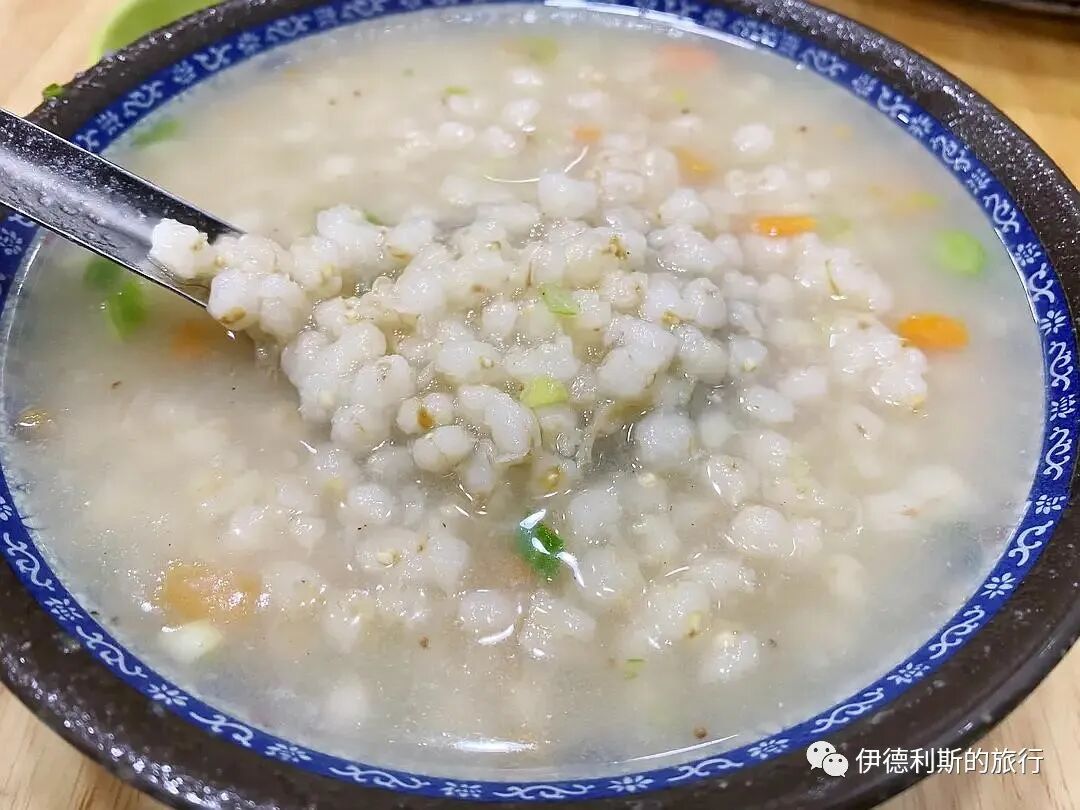
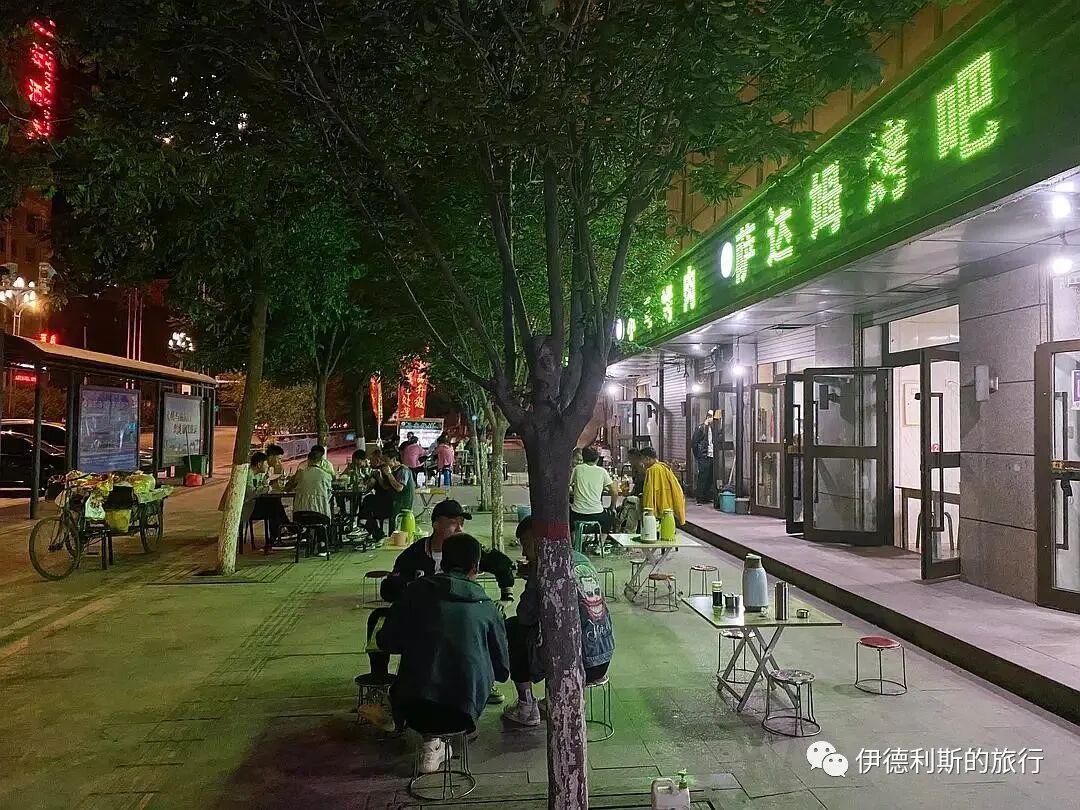
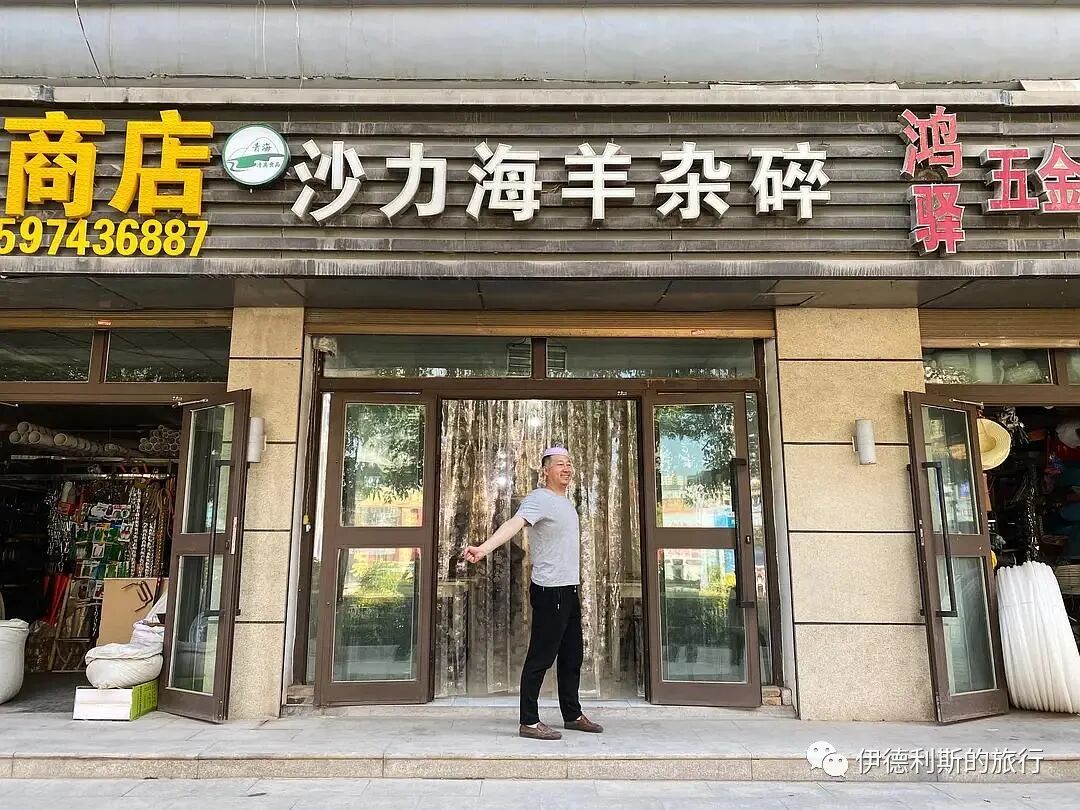
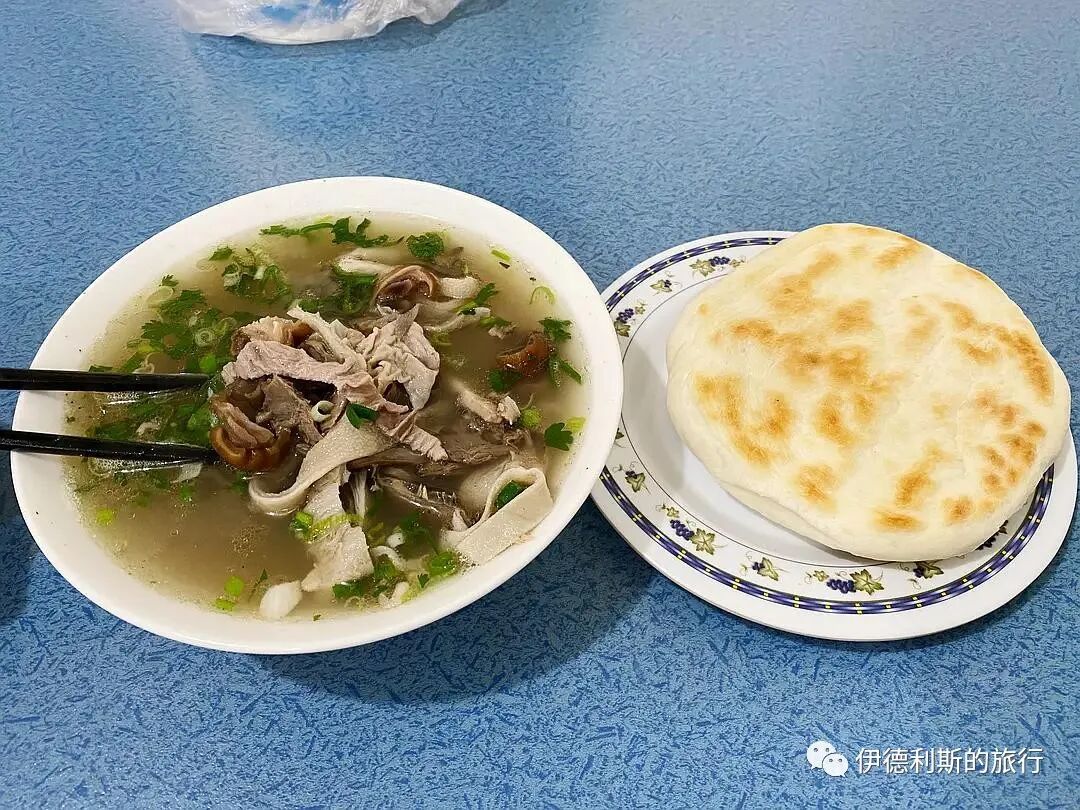
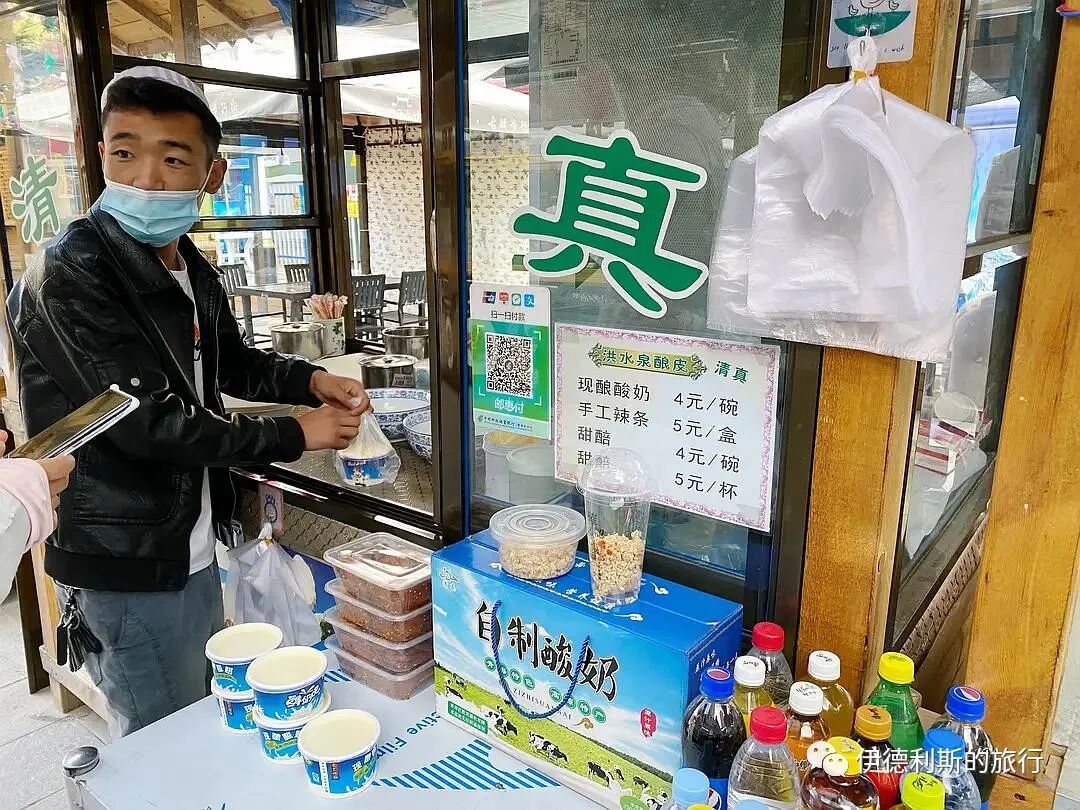
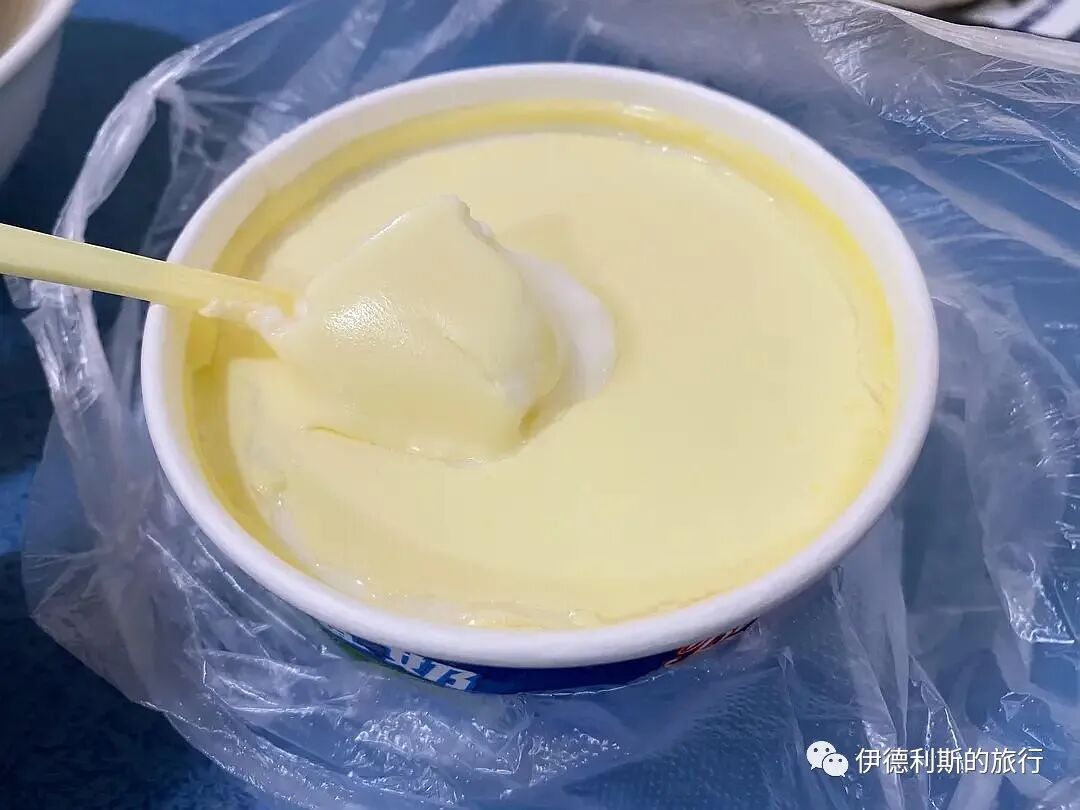
The next day, I had lamb offal soup (yangzasui) with flatbread (bingzi) at the Shalihai Lamb Offal shop on the main street of Ping'an, Haidong. Across the street is the Ping'an food street, Ping'anfang Pedestrian Street. I bought some handmade yogurt at the Hongshuiquan Starch Jelly (niangpi) shop inside. Hongshuiquan is where the most famous Hongshuiquan Great Mosque in Haidong is located.
The Upper and Lower Gongbei of Shangma Family in Bazanggou.
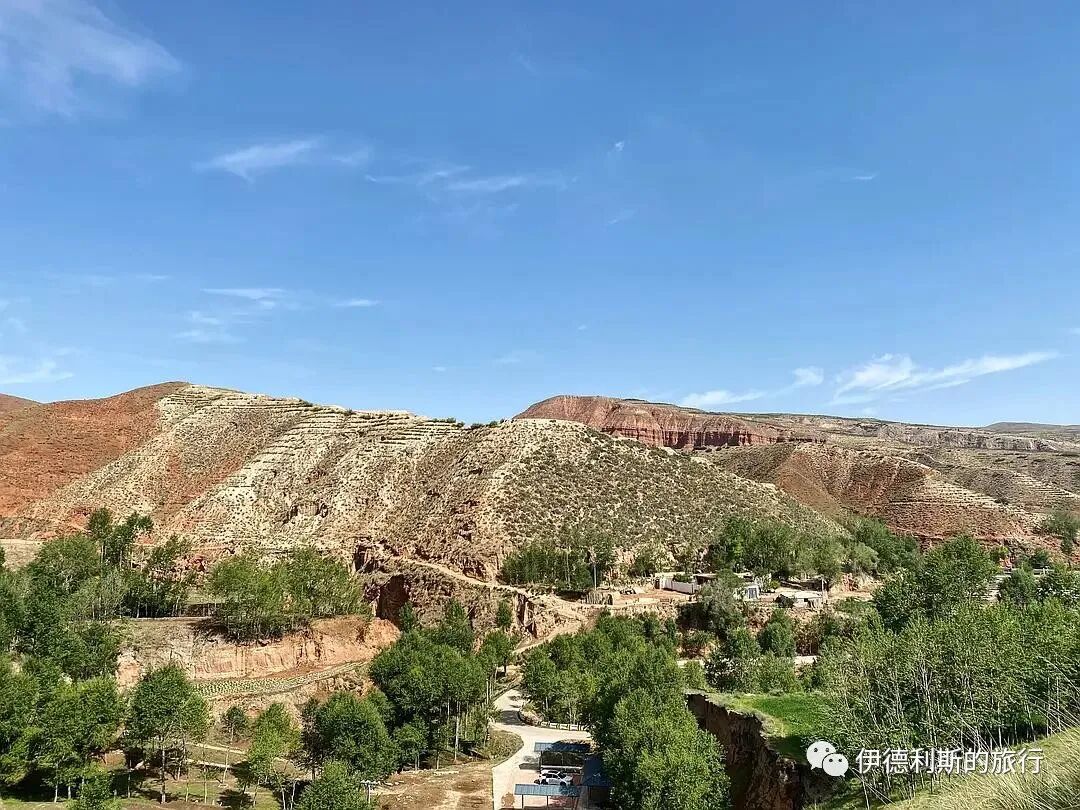
I took a Didi taxi from Ping'an to the famous Upper and Lower Gongbei of the Shangma family in Bazanggou, Haidong. The Upper Gongbei of the Shangma family is on the peak of Woniu Mountain, so it is also called Woniu Mountain Gongbei. It is the tomb of Ma Diangong (1643-1715), a leader of the Khufiyya Sufi order (menhuan).
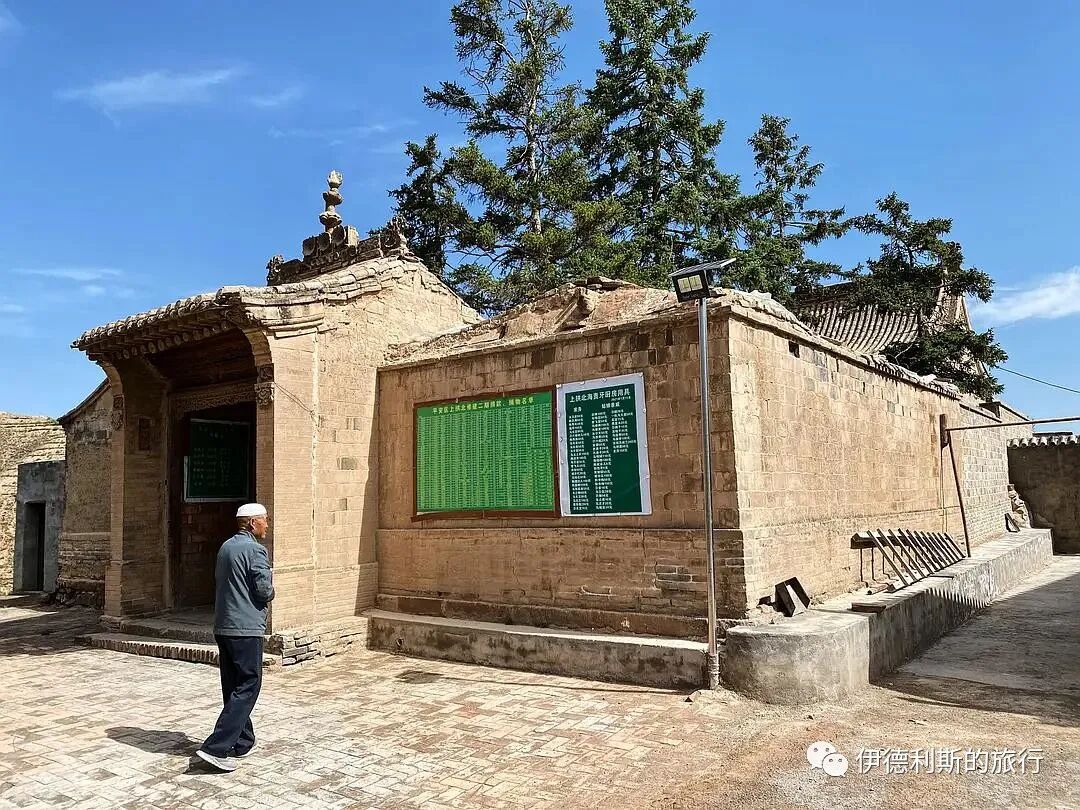
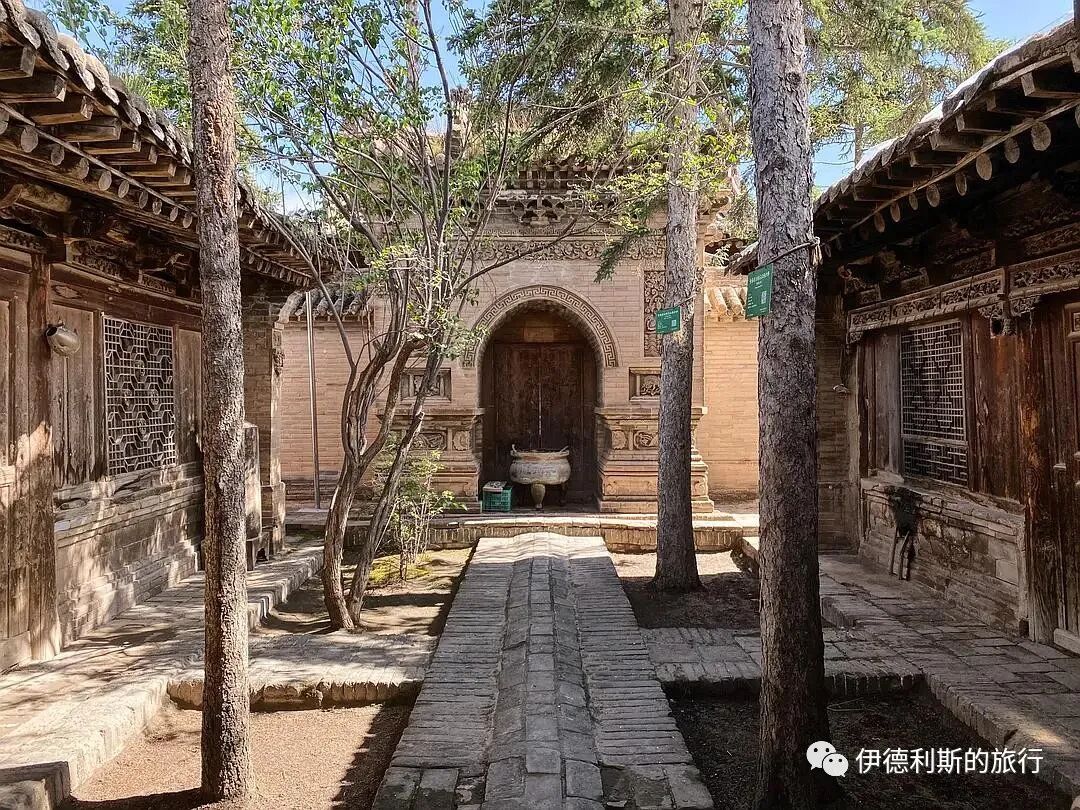
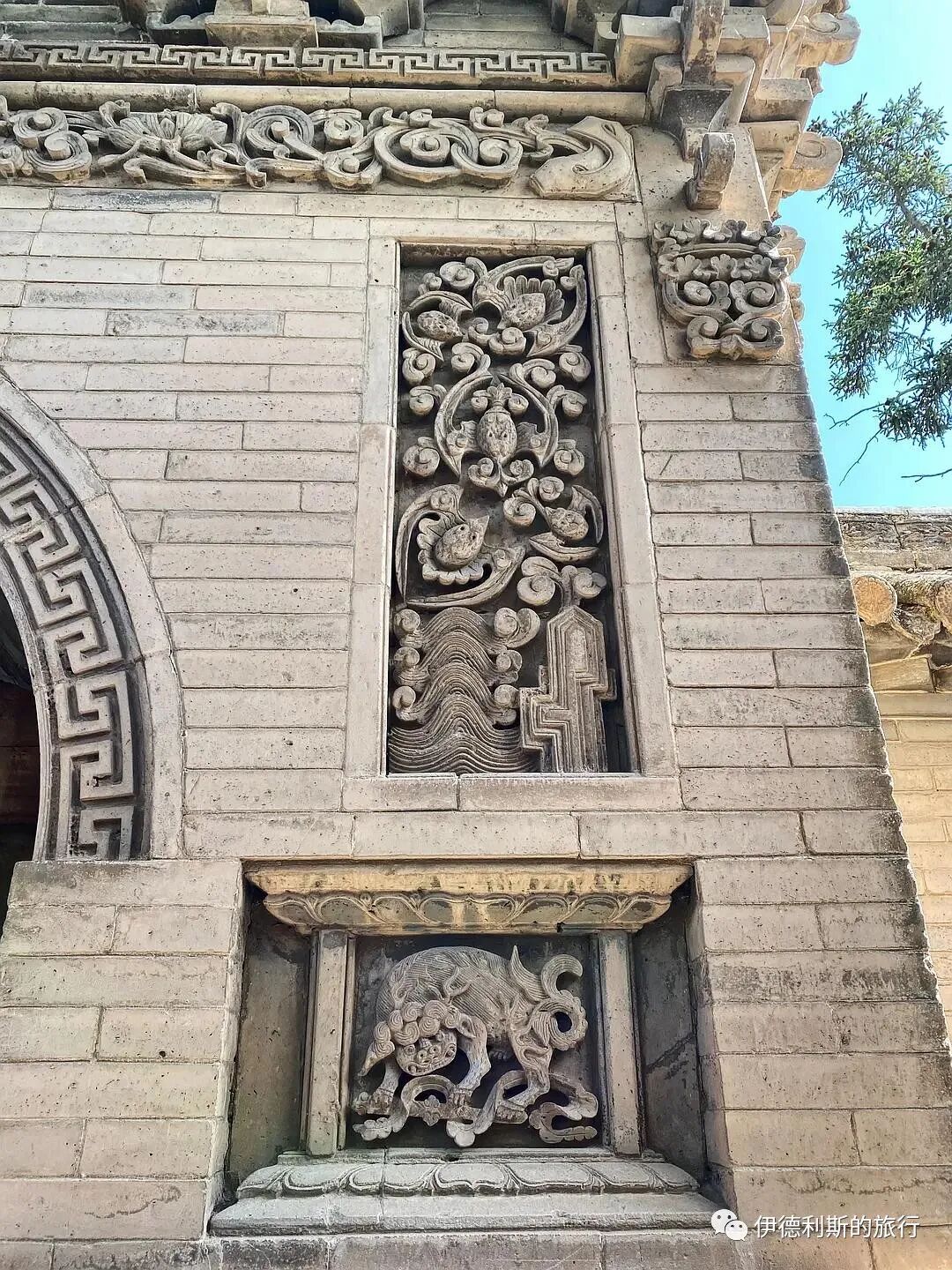
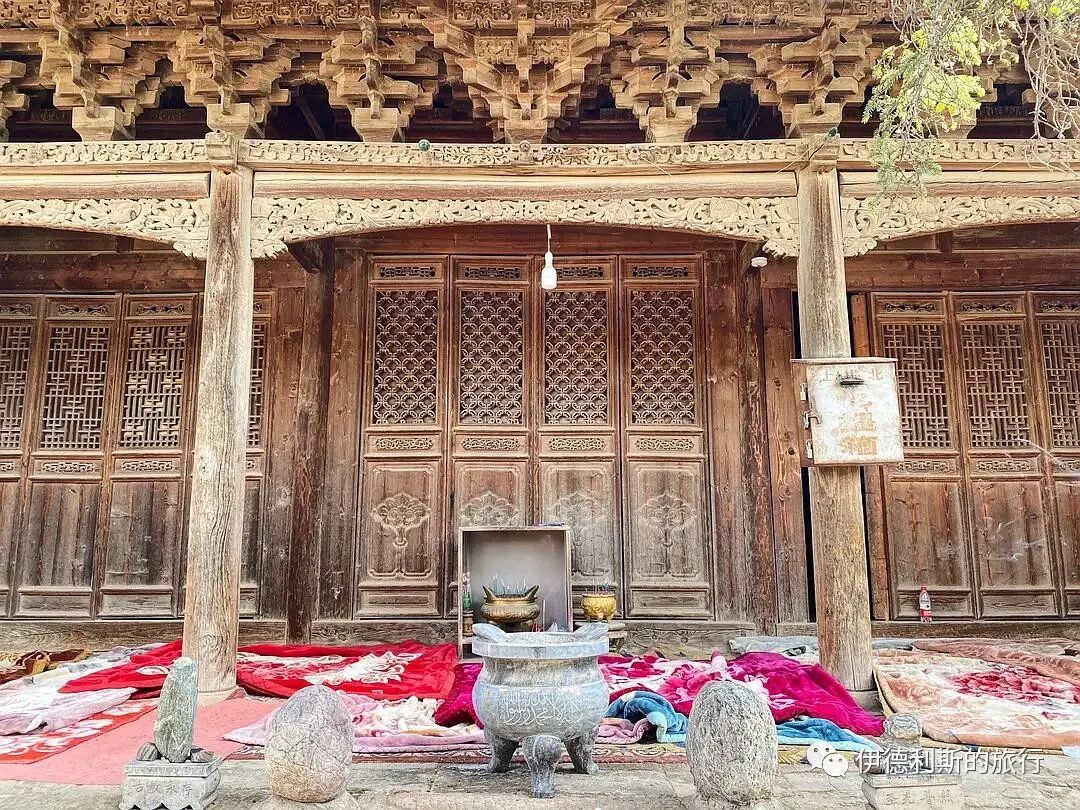
The Lower Gongbei of the Shangma family in Bazanggou is the tomb of Xian Chengde (known as Chuanli Taiye), the third-generation sheikh of the Khufiyya Xianmen menhuan. Xian Chengde built this gongbei during the Jiaqing reign. Shortly after it was completed in 1812, he passed away (returned to Allah), and his followers buried him there. In 1895, the fifth-generation sheikh of the Xianmen, Xian Linyuan, also passed away and was buried in the Lower Gongbei.
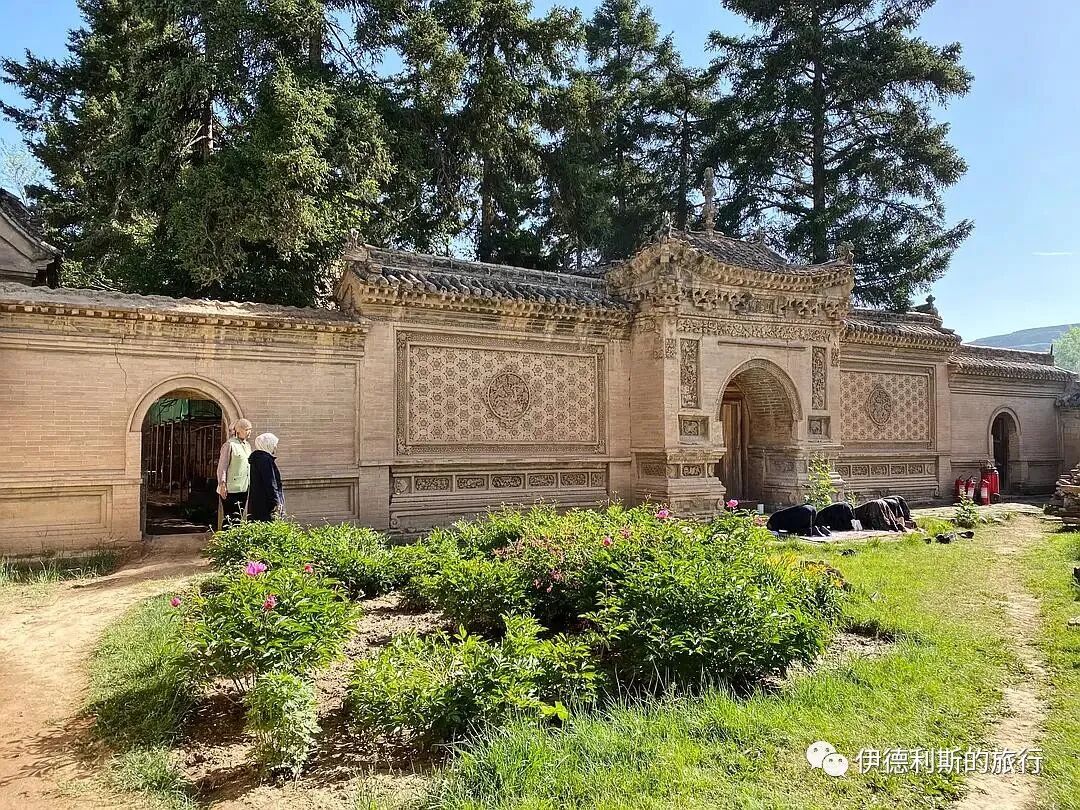
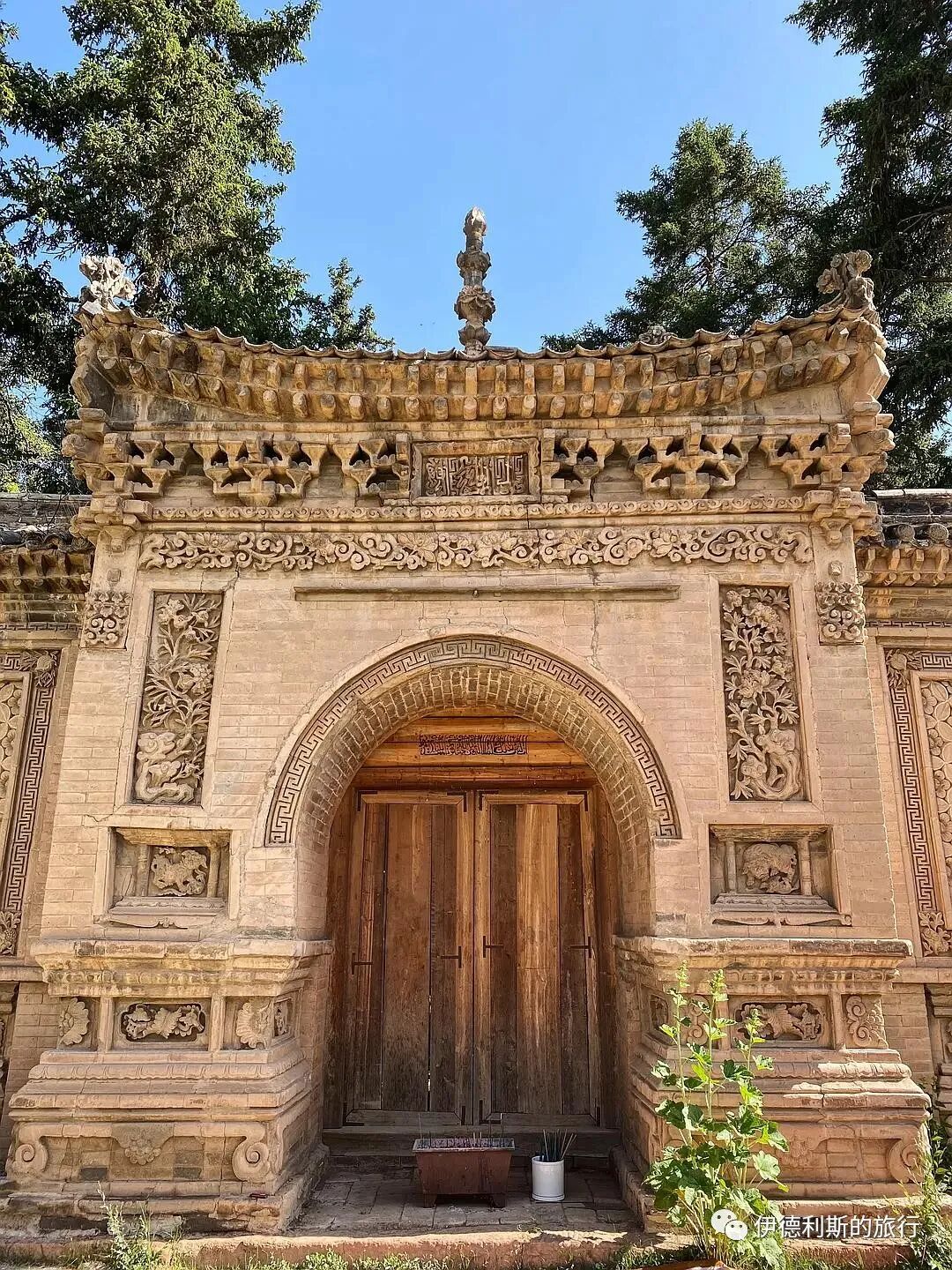
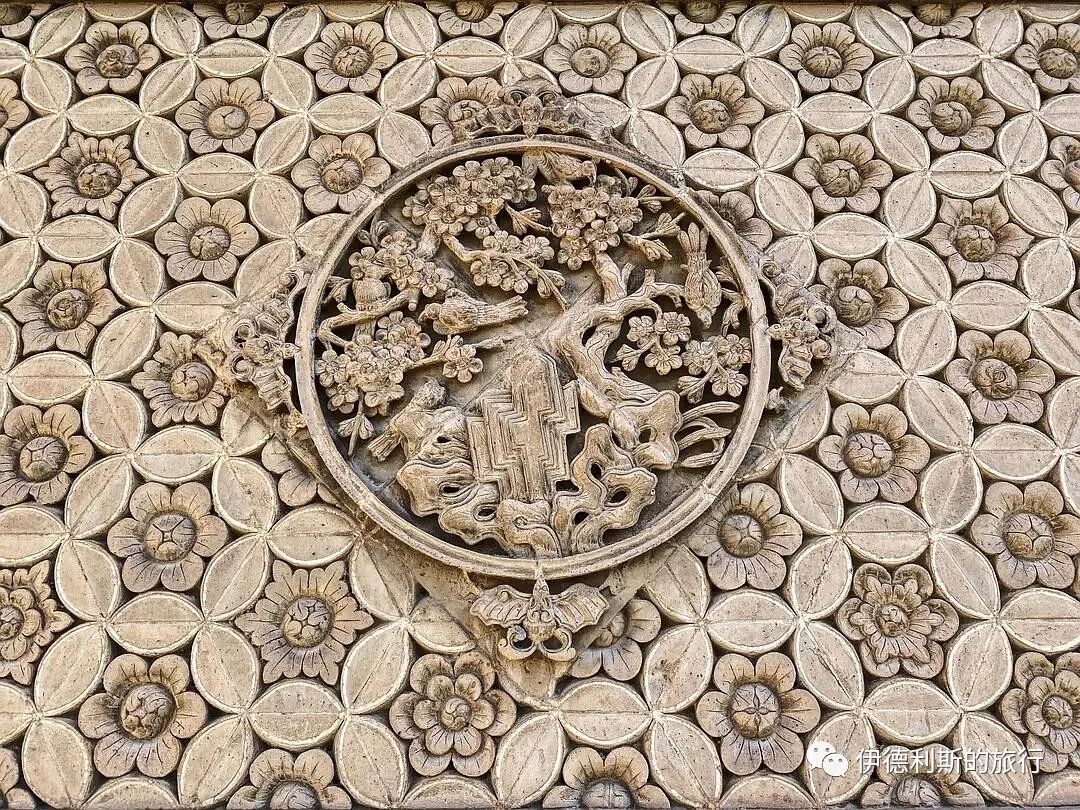
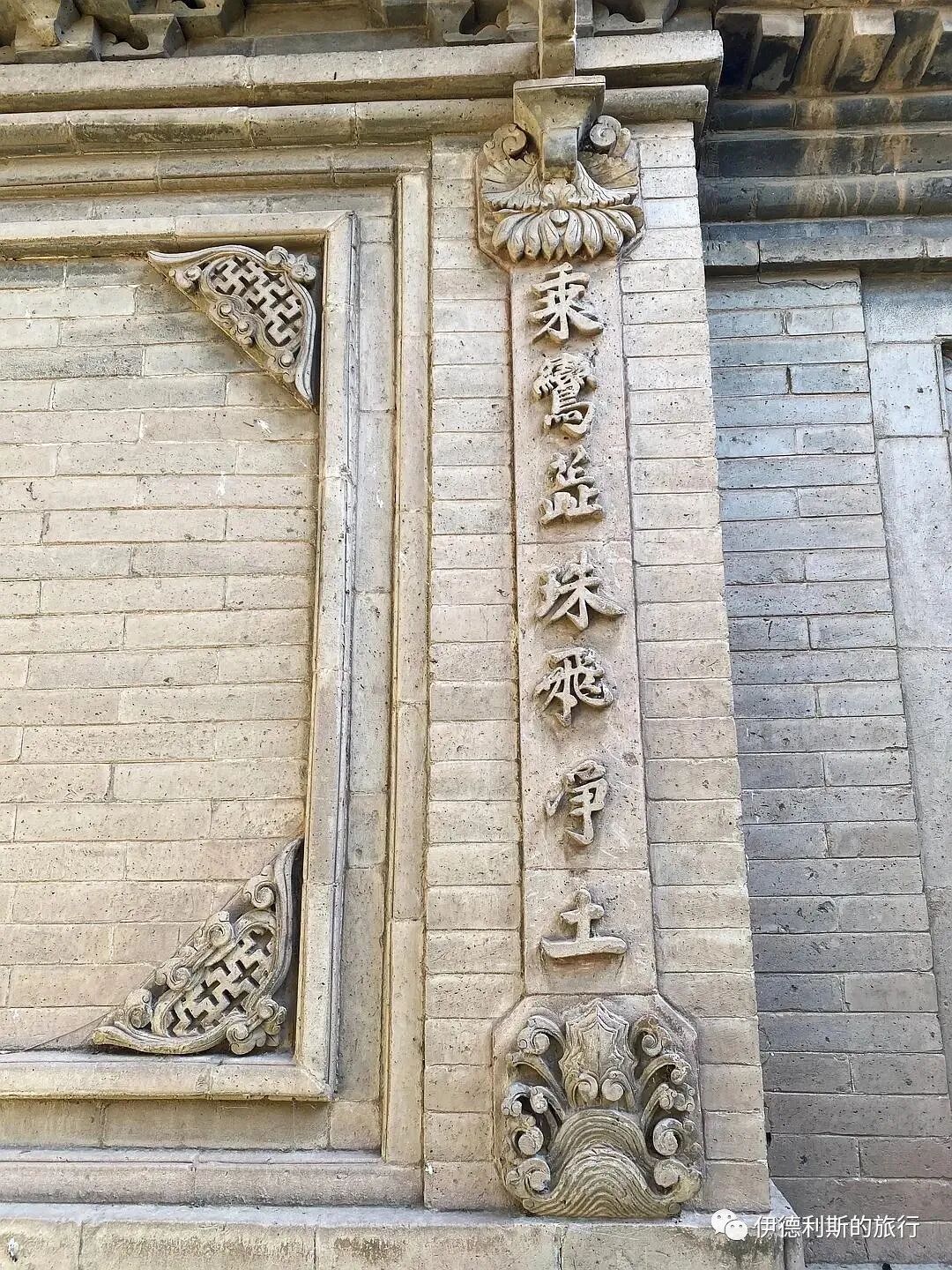
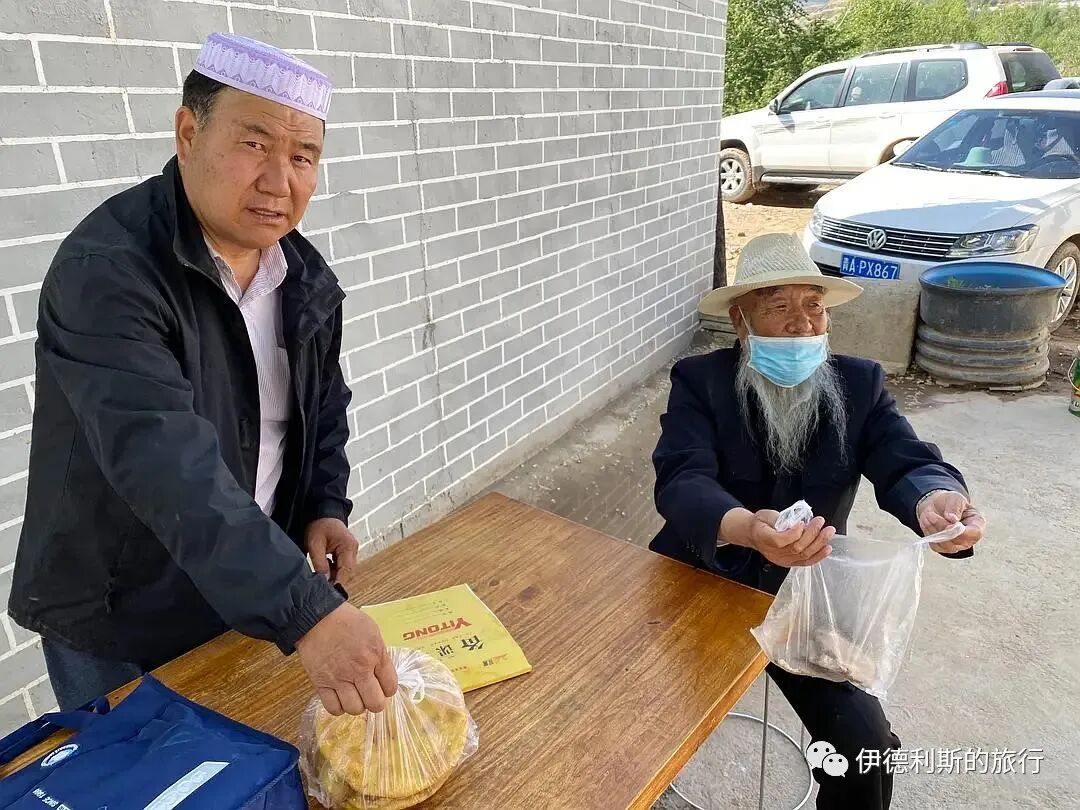
We were warmly received at the Lower Gongbei of Shangmazhuang and were given fried dough (youxiang) and clear-stewed meat.
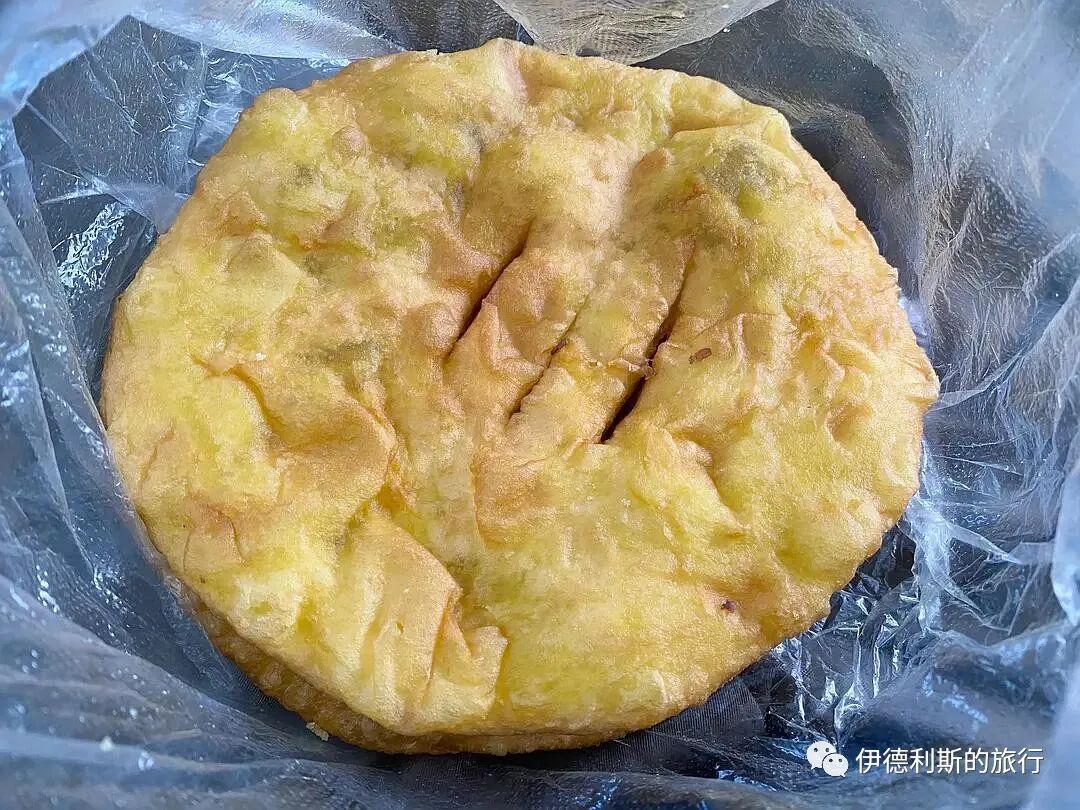
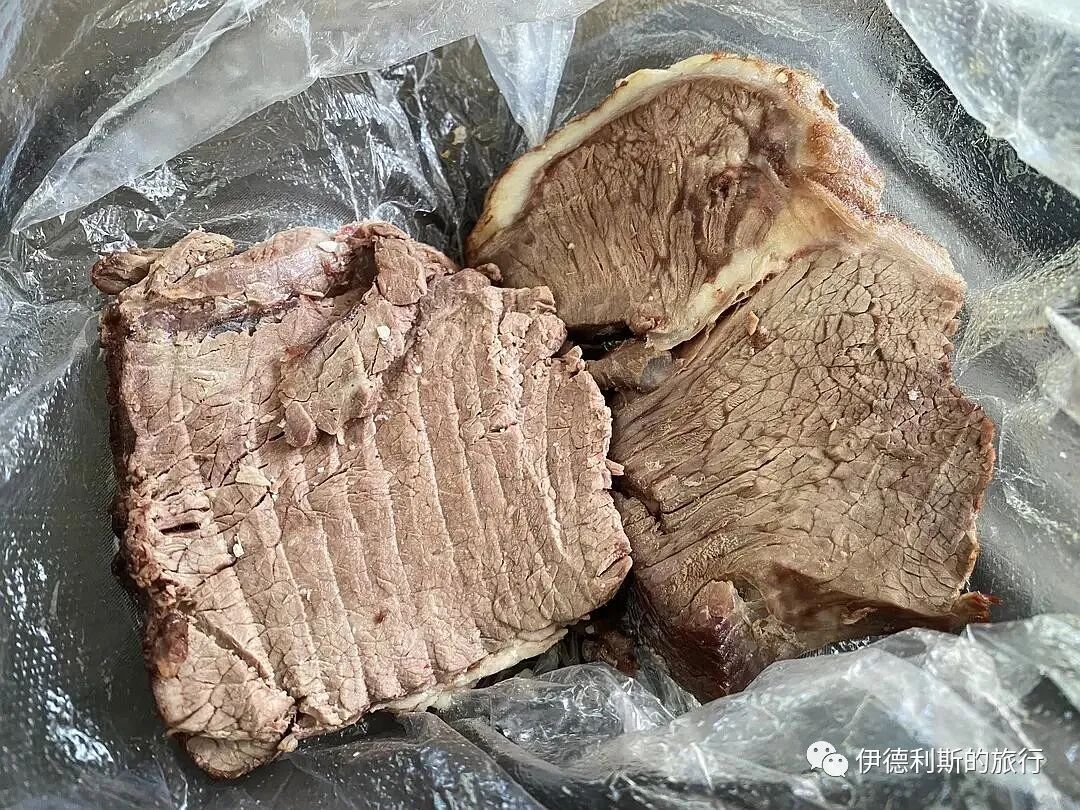
Yangulu Gongbei.
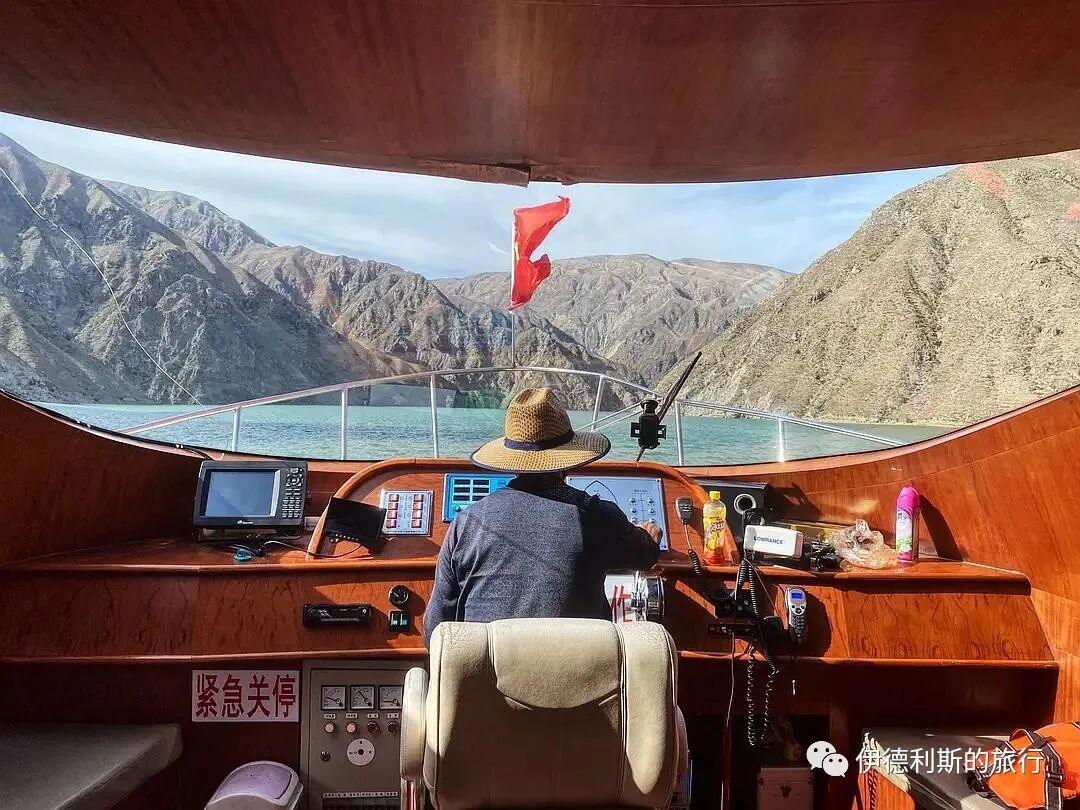
At noon, I chartered a car from Ping'an District, Haidong, to the famous Yangulu Gongbei in Xunhua. After a two-hour drive, we crossed the mountains from the Huangshui Valley into the Yellow River Valley and arrived at the Gongboxia Dam pier. When we reached the pier, a boat was about to depart. It carried a large family of Hui Muslims from Linxia who were visiting the gongbei, and we took the boat together to the gongbei pier.
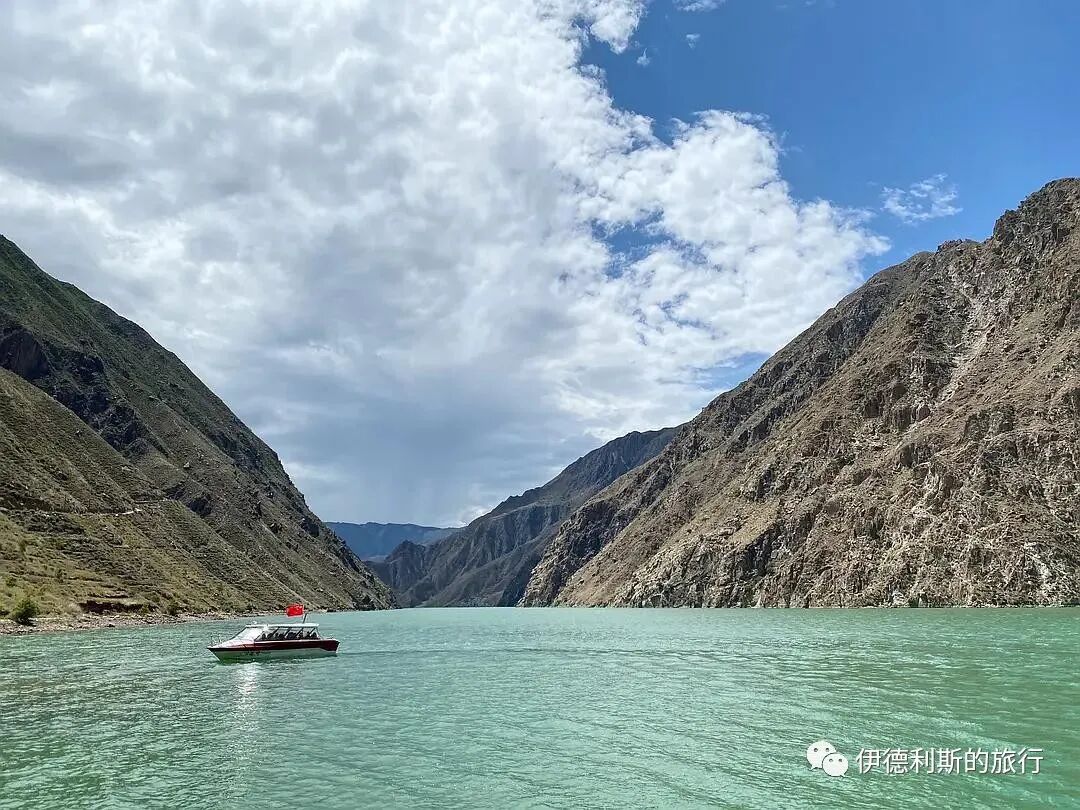
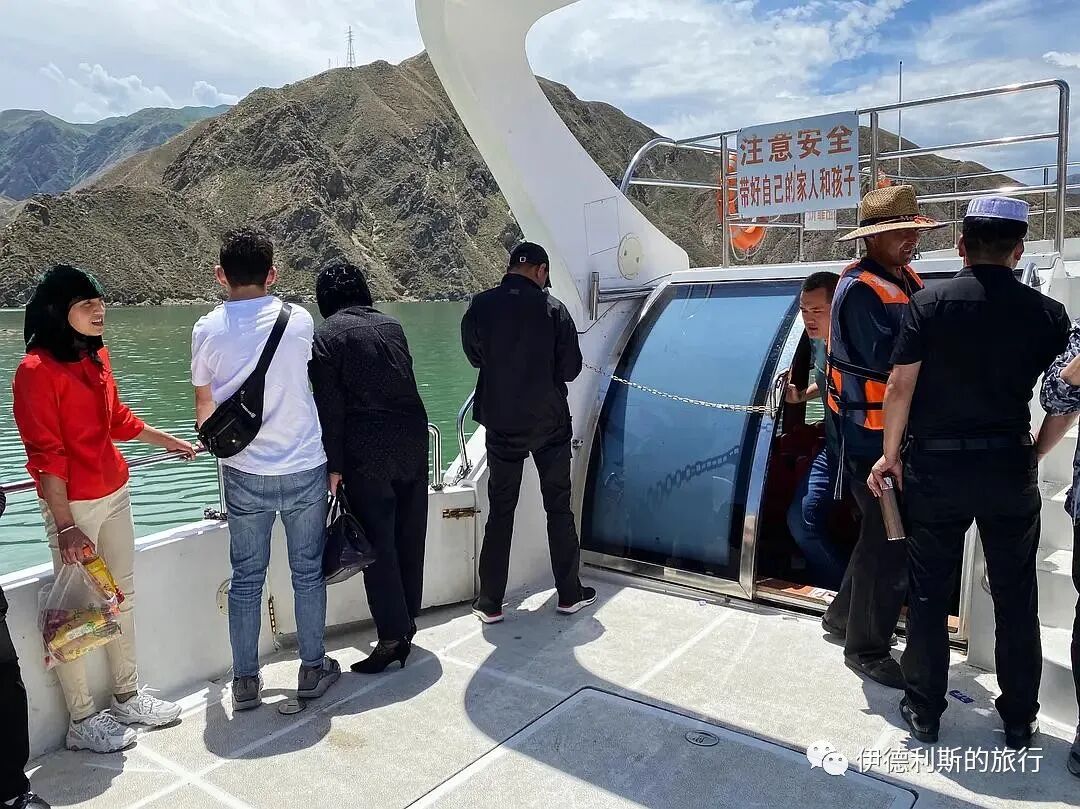
To get from the pier to the gongbei, you have to walk along a mountain path by the Yellow River, but it has been widened in recent years and is much easier to walk than before.
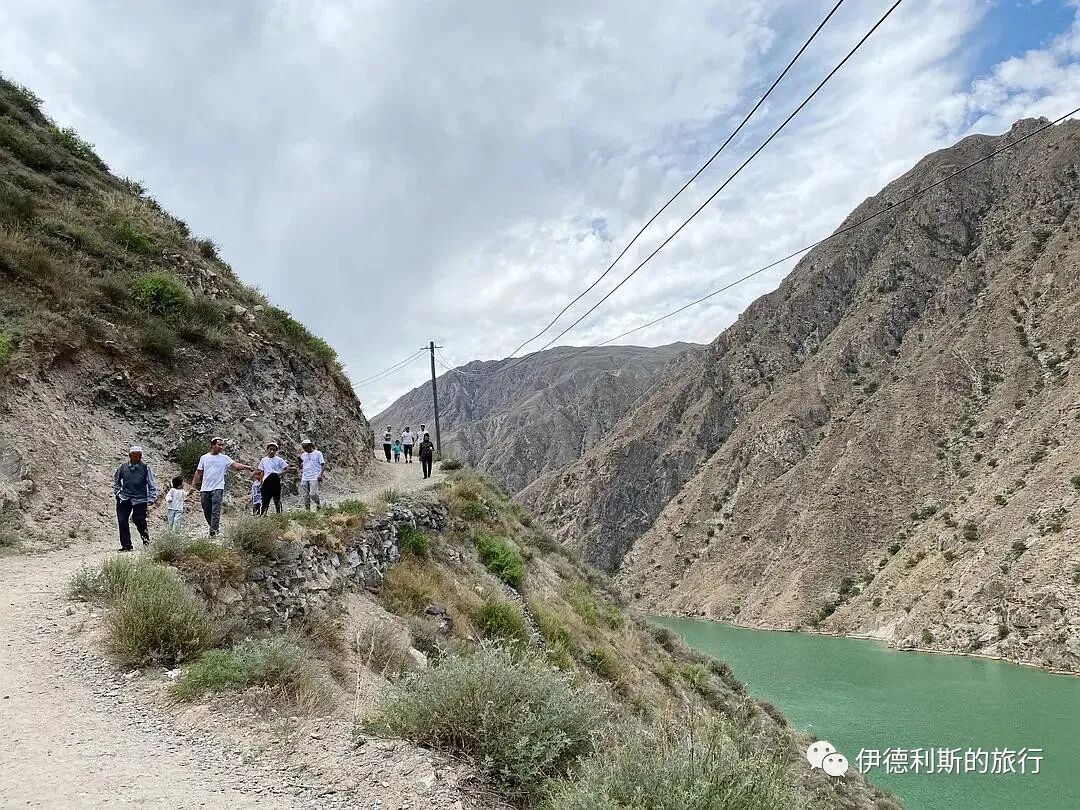
At the end of the mountain road, there are over 30 houses built in 1985 with community funds to provide food, lodging, and rest for those visiting the gongbei. We performed wudu (abudaisi) here, listened to the advice of the Salar uncle who guards the gongbei, and prepared to head toward the cliff leading to the shrine.
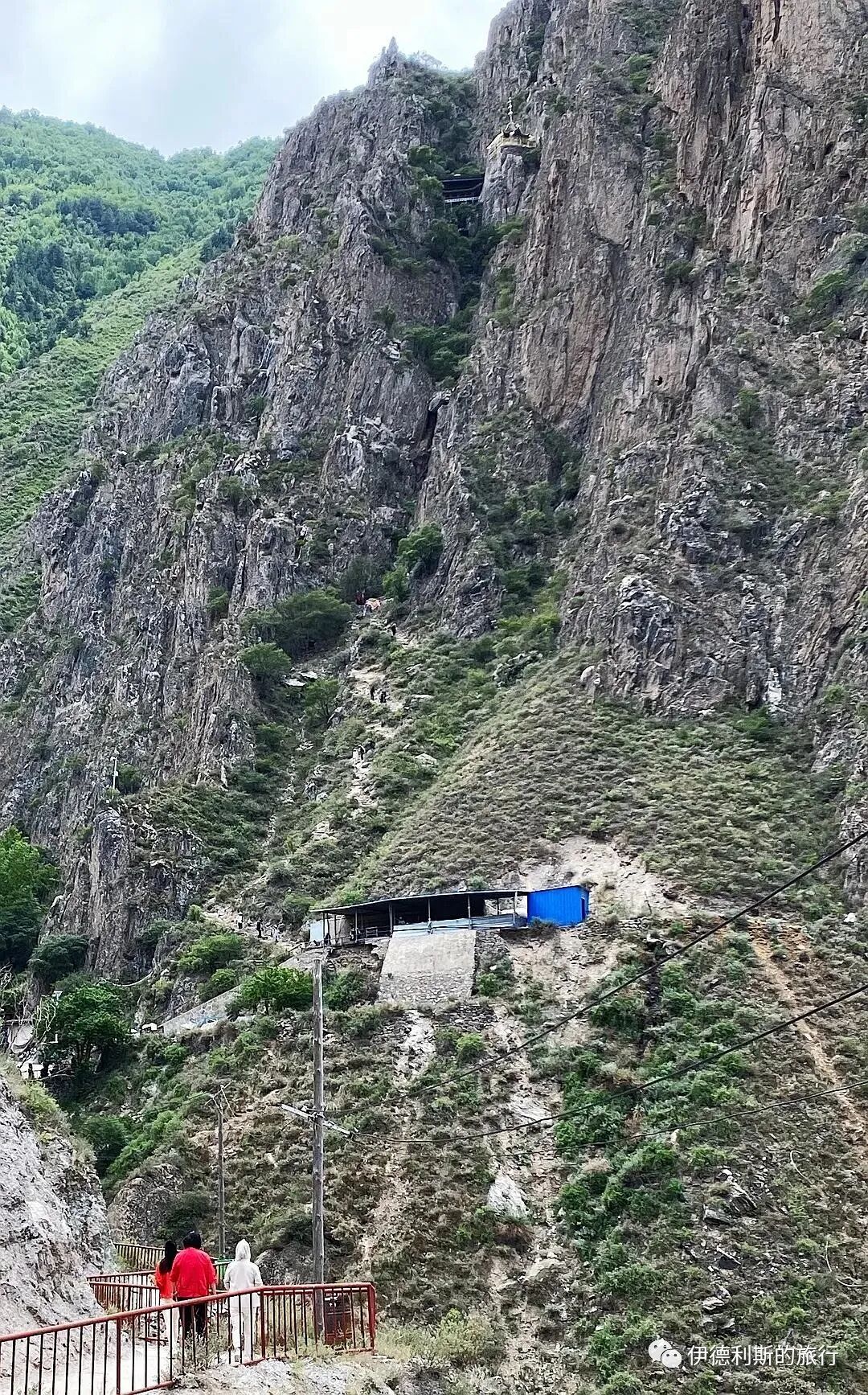
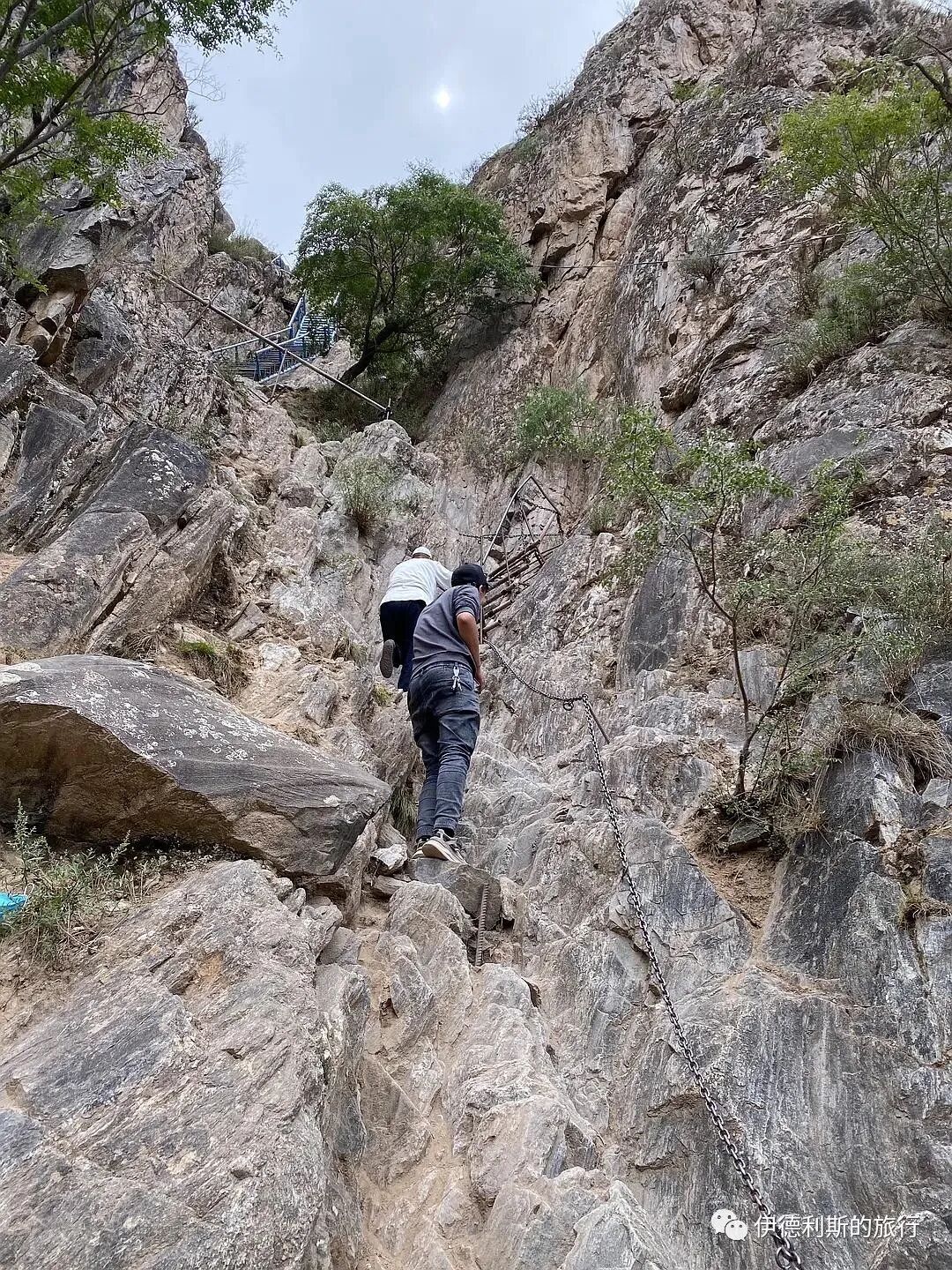
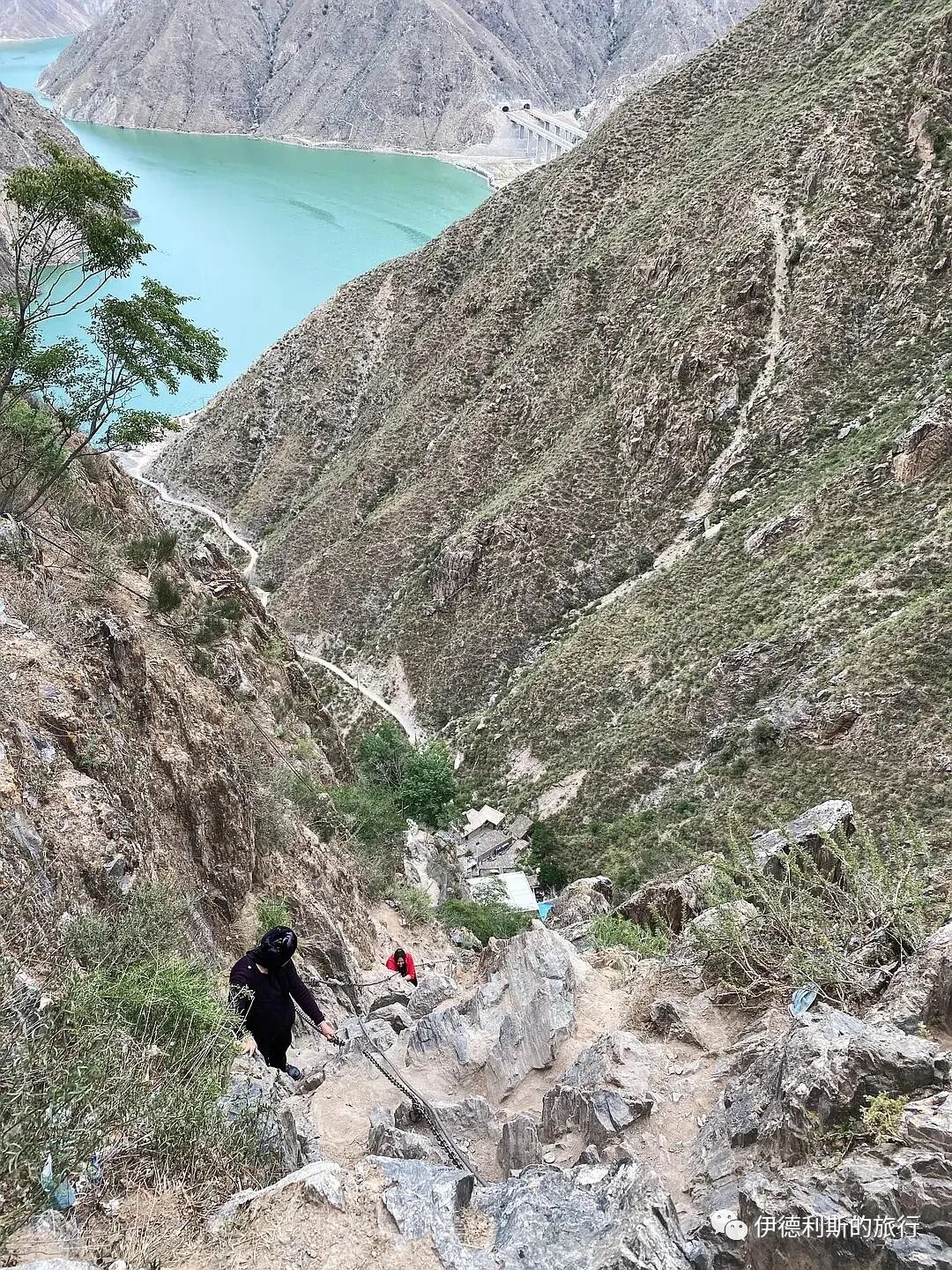
After crossing the final stone threshold, we reached three rest pavilions built below the gongbei during the Guangxu reign. Not far above them stands the hexagonal, pointed-roof gongbei pavilion.
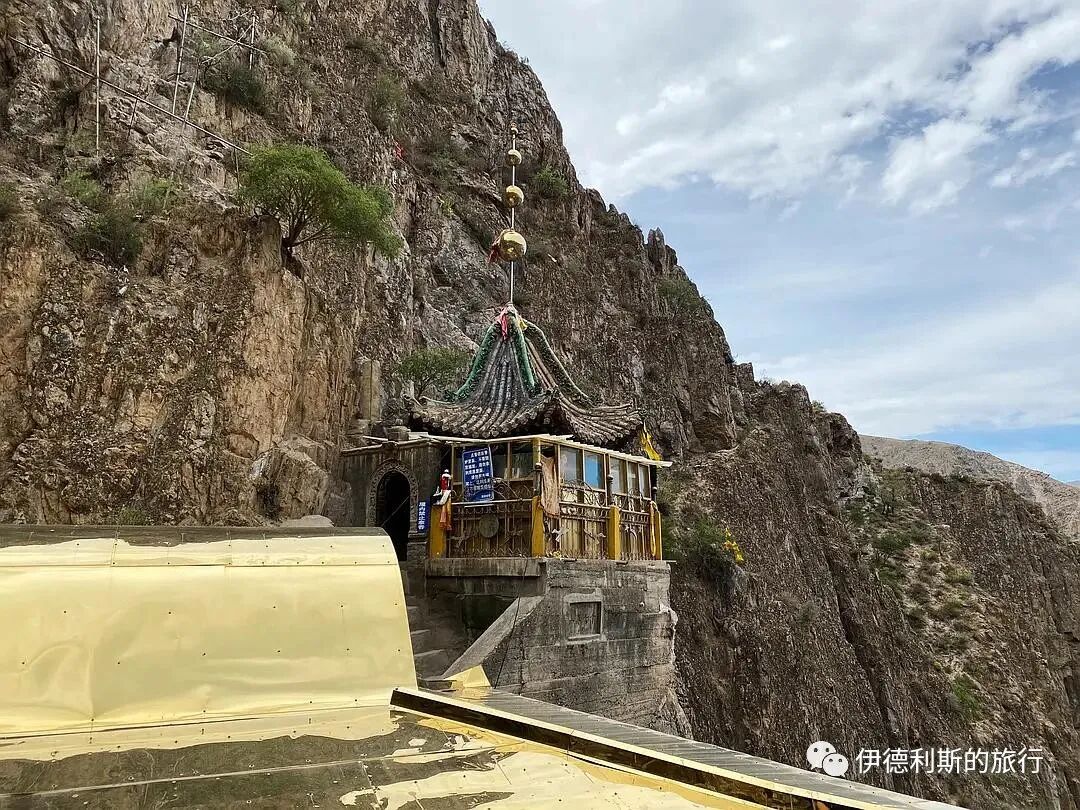
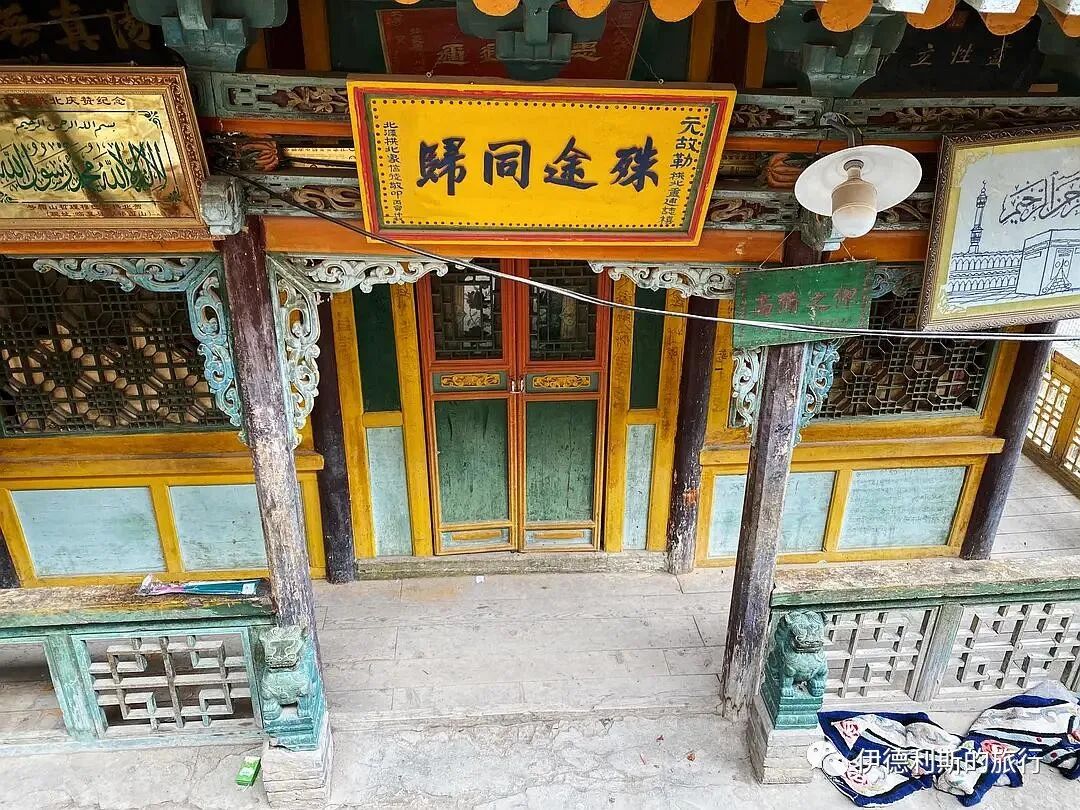
Going down the mountain is actually much harder than going up because it is a vertical cliff. You cannot see the path at all, so you have to feel your way with your feet, step by step. It is often hard to find where to place your next step, and halfway down, my calves started shaking from the intense tension. In the end, it took us even longer to reach the foot of the mountain than it did to climb up.
At the foot of the mountain, we were warmly welcomed by the Salar guardians of the gongbei. We ate delicious braised meat bowls (huiwan), steamed buns (momo), old-stock chicken (laotangji), and hand-grabbed lamb chops (shouzhuayangpai), and drank plenty of clear tea. The Yangulu Gongbei is currently guarded by four Salar families who have lived here for generations. Food and lodging are free for all believers who visit, and the income mainly comes from charitable donations (nietie).
After a full meal, we said goodbye to our warm Salar friends, returned to the pier, and took a boat to leave Yangulu.
Xunhua County Town
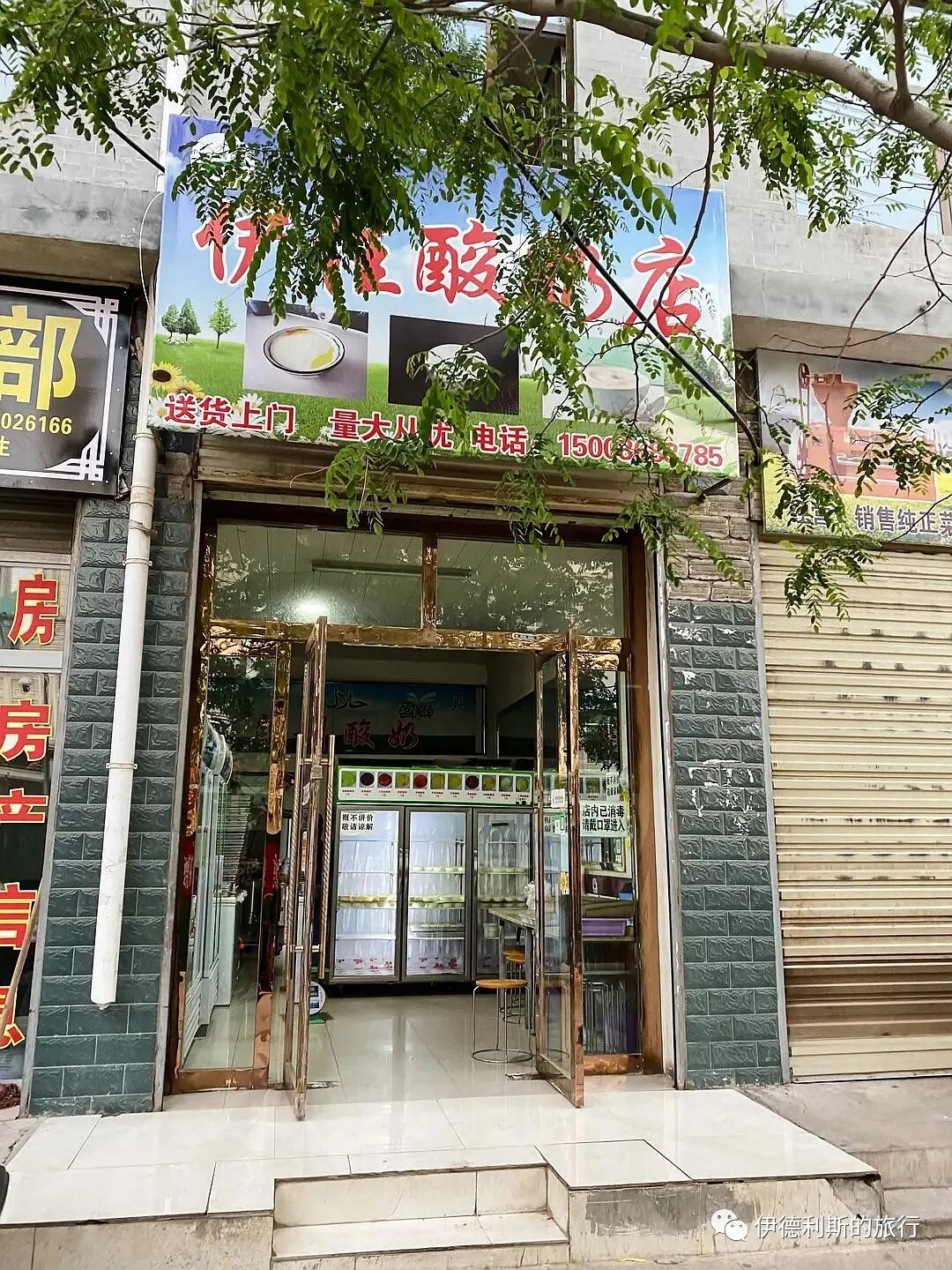
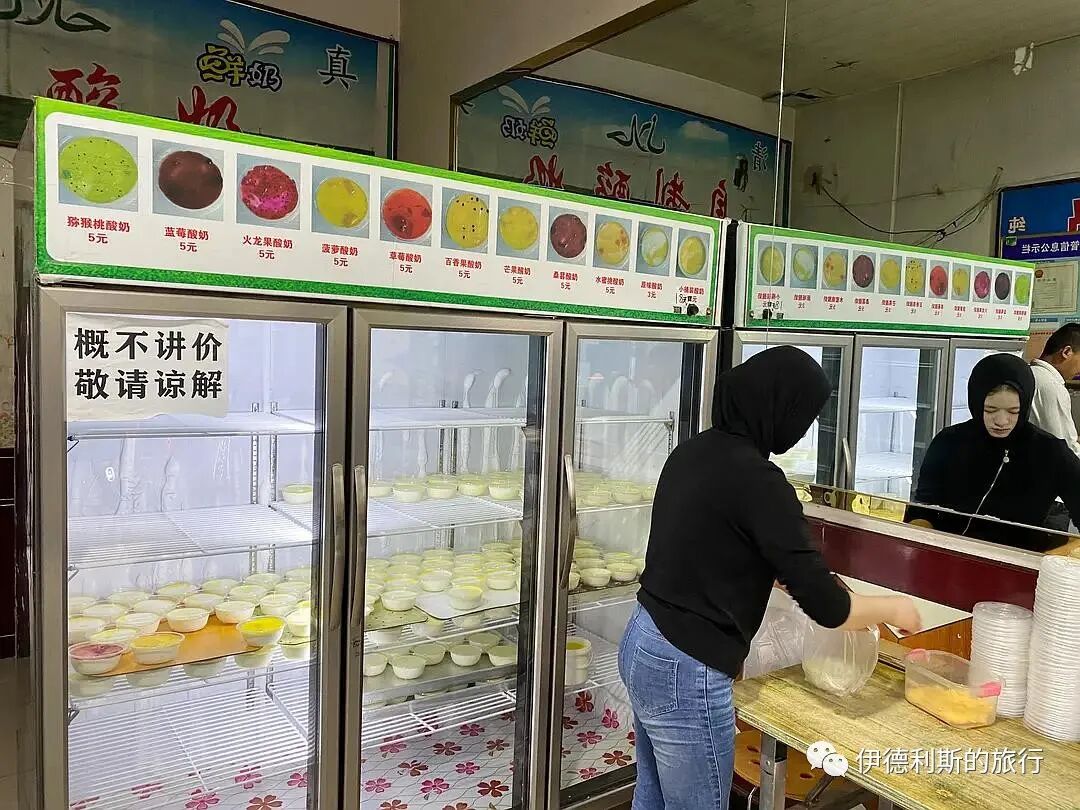
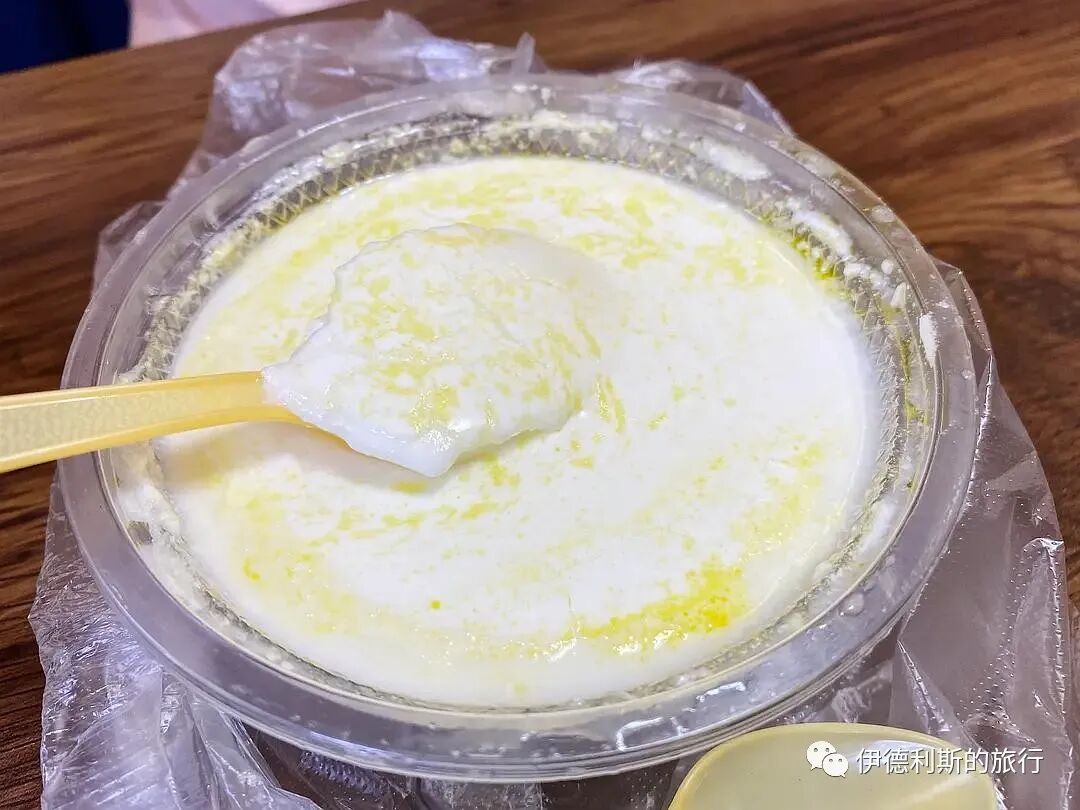
In the evening, we traveled from Yangulu to Xunhua County town, bought some handmade yogurt with rapeseed oil, and then ate some Salar dry-mixed beef noodles.
Here in Xunhua, even the beef noodle shops have small private rooms; the environment is really quite good. After ordering, they served meat broth and tea first, and we also ordered a platter of cold dishes. Besides the thread chili (xianlajiao), people in Xunhua also love eating tiger-skin chili (hupilajiao). While waiting for the bus earlier, I noticed the grandpas and grandmas shopping were all carrying a bag of tiger-skin chili. Dry-mixed noodles with meat sauce (roujiangganban) should be a specialty here in Qinghai. I had it before at a Salar restaurant in Beijing called A-Gong Noodle House, but this time it felt more authentic. The noodles were thin and chewy, the sauce was especially fragrant, and this meal cost less than twenty yuan, which is great value.
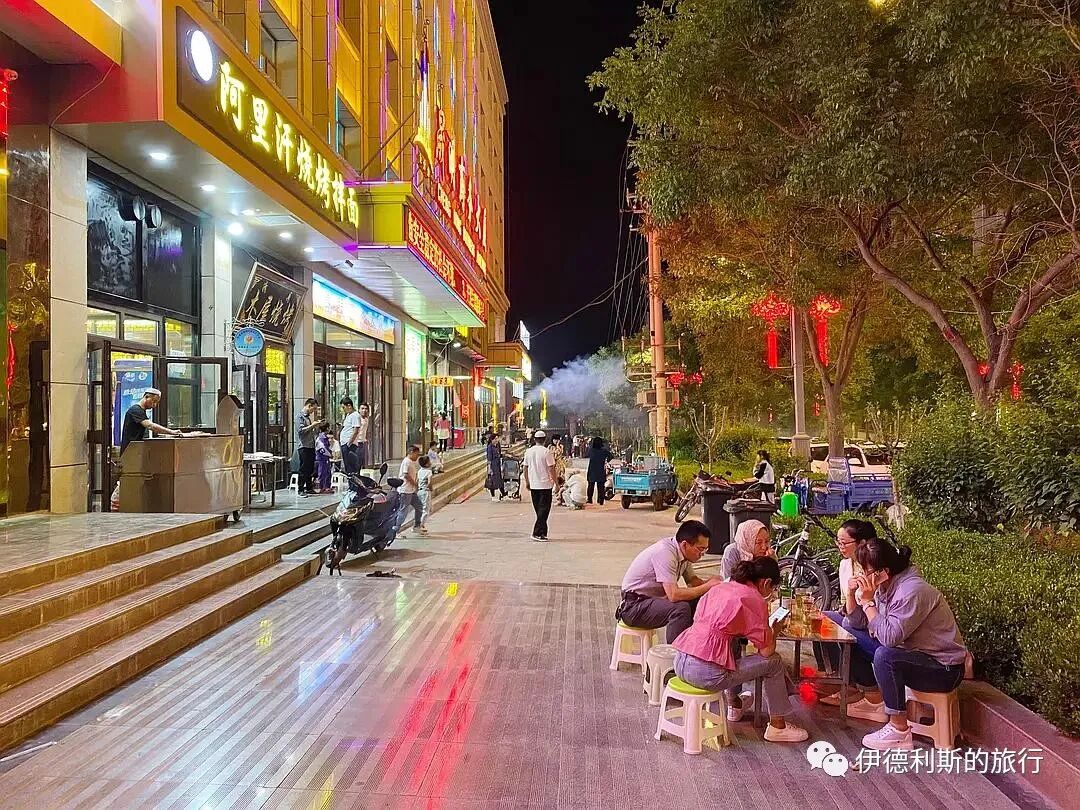
The Yellow River at the Xunhua section.
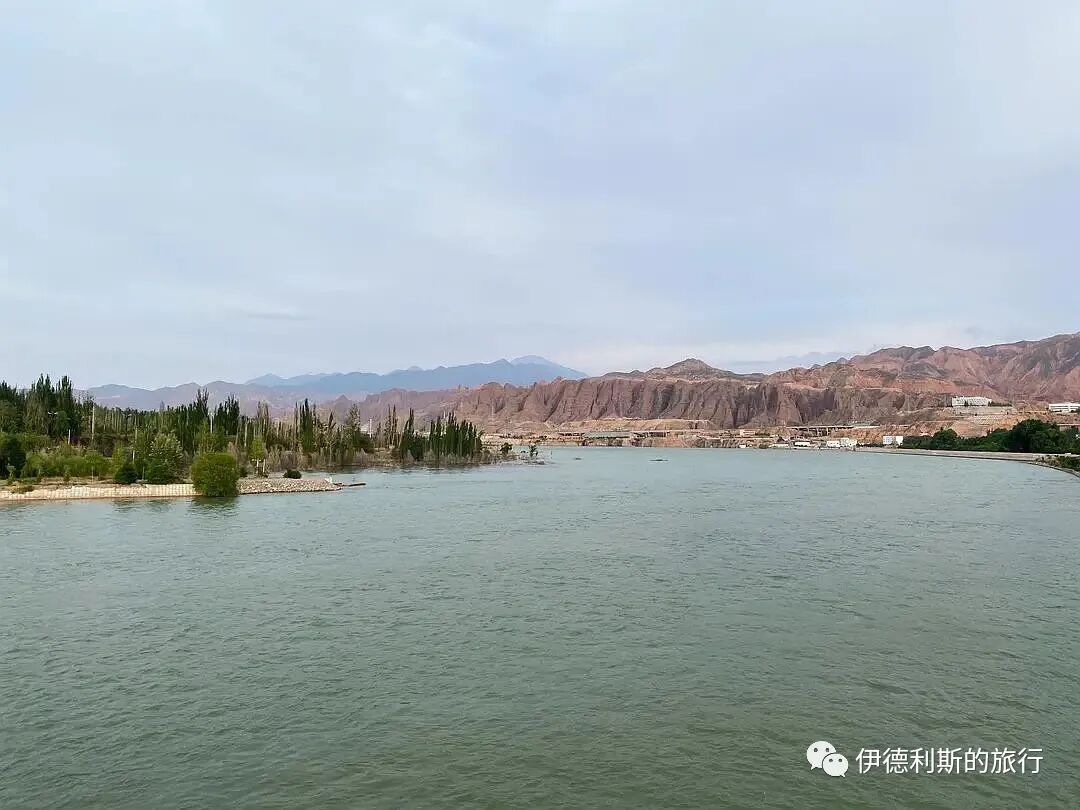
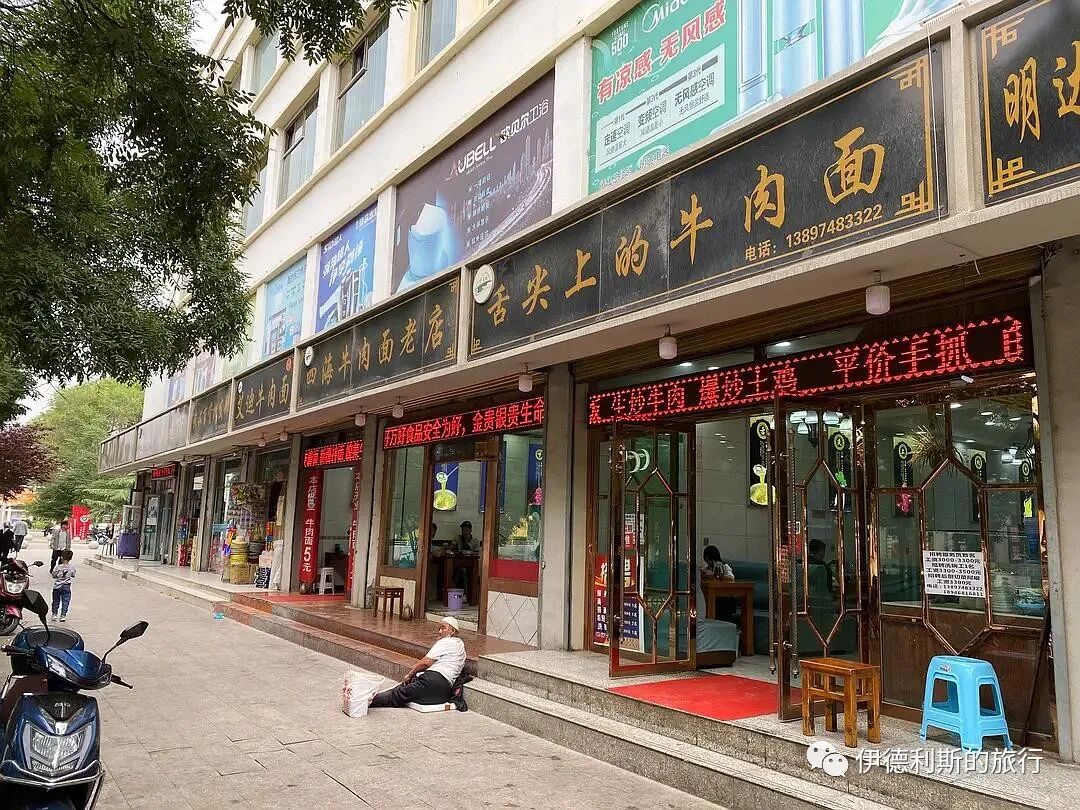
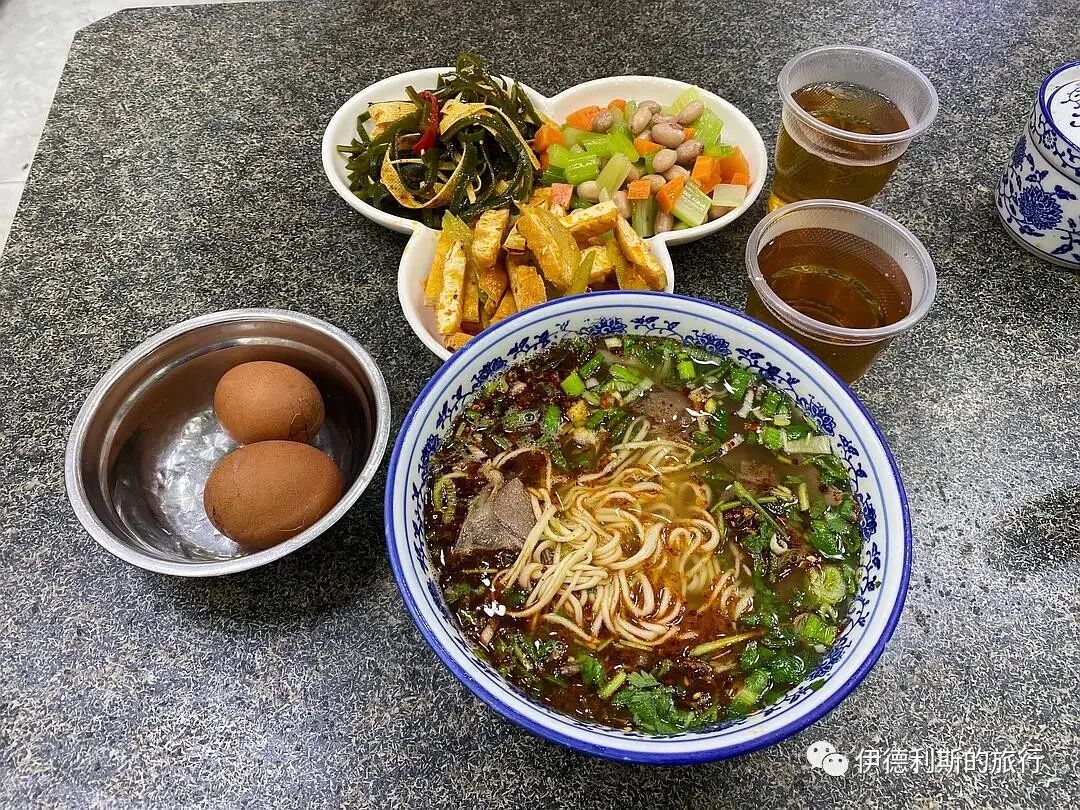
In the morning, we had a bowl of beef noodles in Xunhua County town, then set off to visit the beautiful traditional Salar mosques.
Qingshuihedong Mosque
Qingshuihedong Mosque is the main mosque (haiyisi) of the Qingshui Gong of the Salar Eight Gongs. It was first built in 1425 and has been rebuilt many times throughout history.
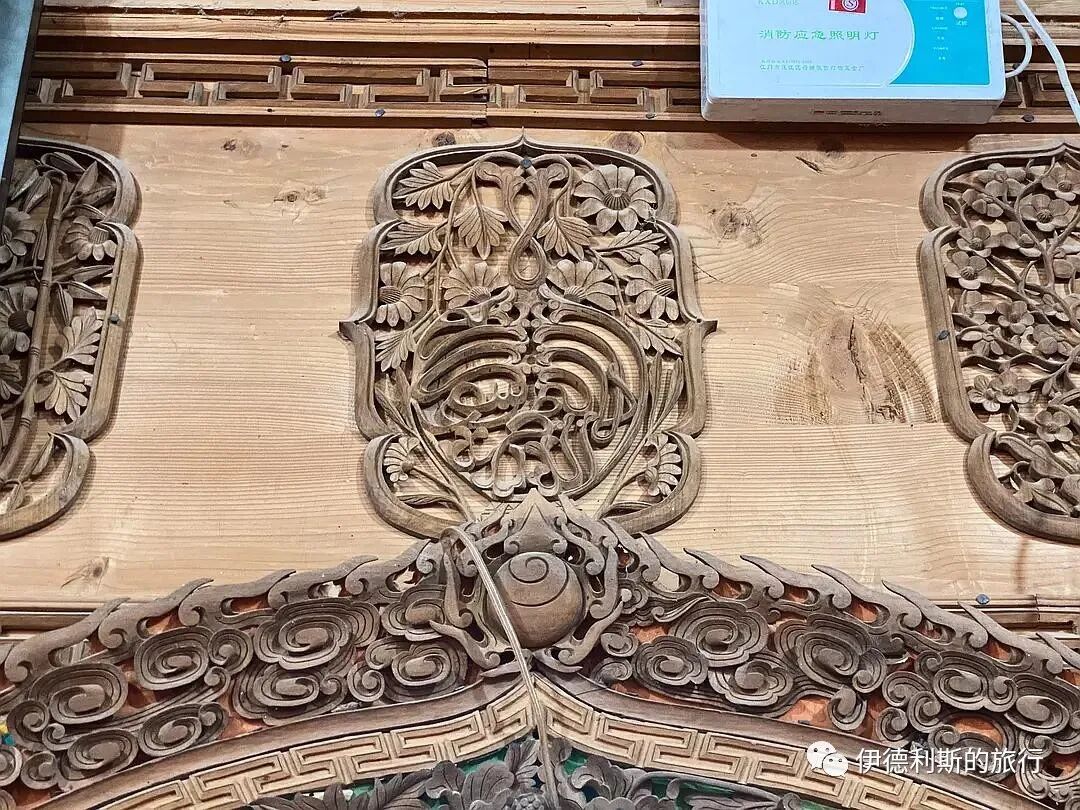
Mengda Mosque
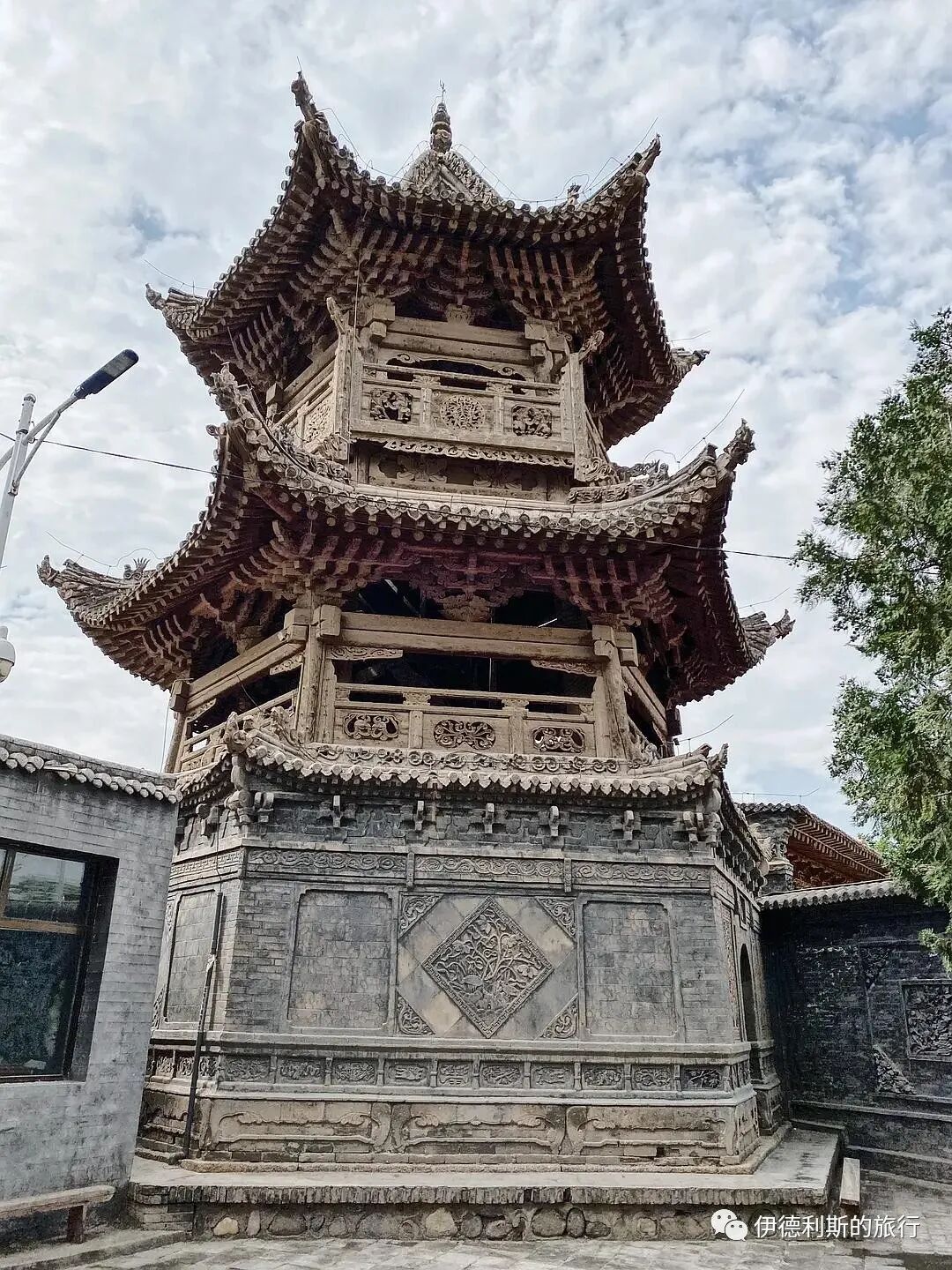
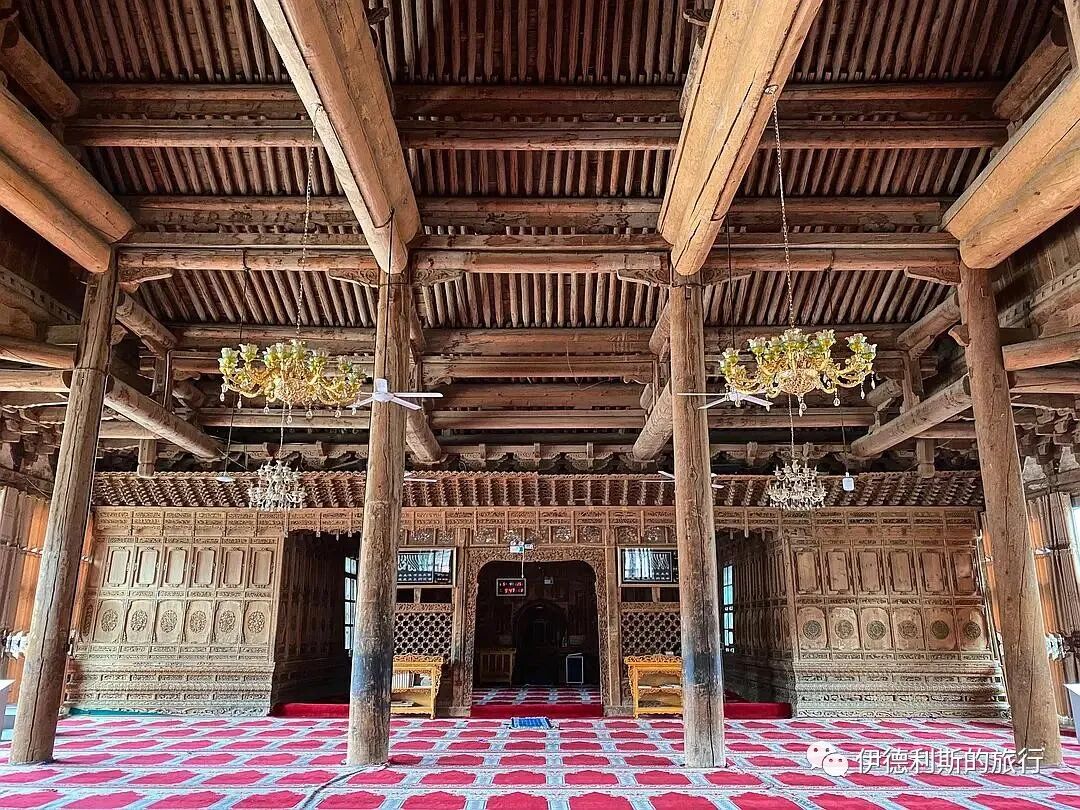
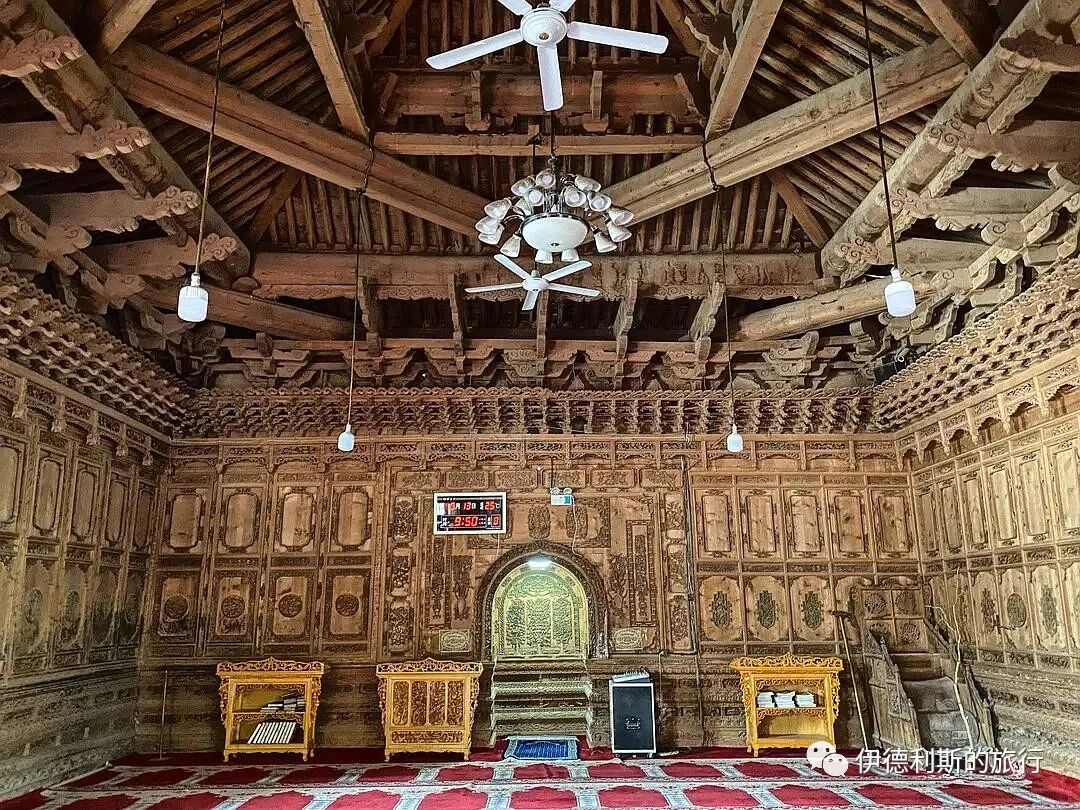
Mengda Mosque is located in Dazhuang Village, Mengda Township, Xunhua, Qinghai. It was first built in 1408 (the sixth year of the Yongle reign of the Ming Dynasty) and expanded three times during the Qing Dynasty. It is the main mosque (haiyisi) of the Mengda Gong, one of the Salar Eight Gongs.
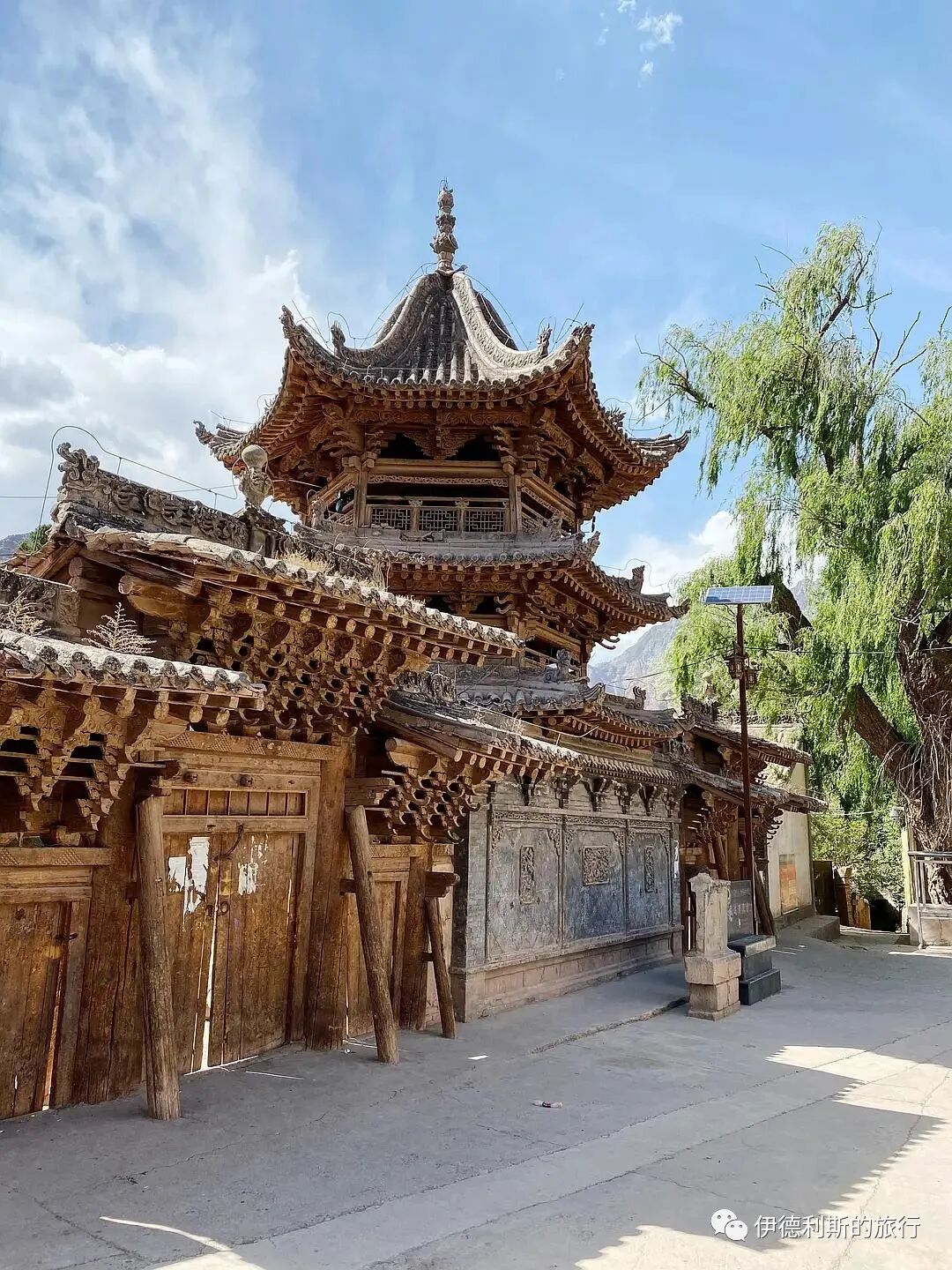
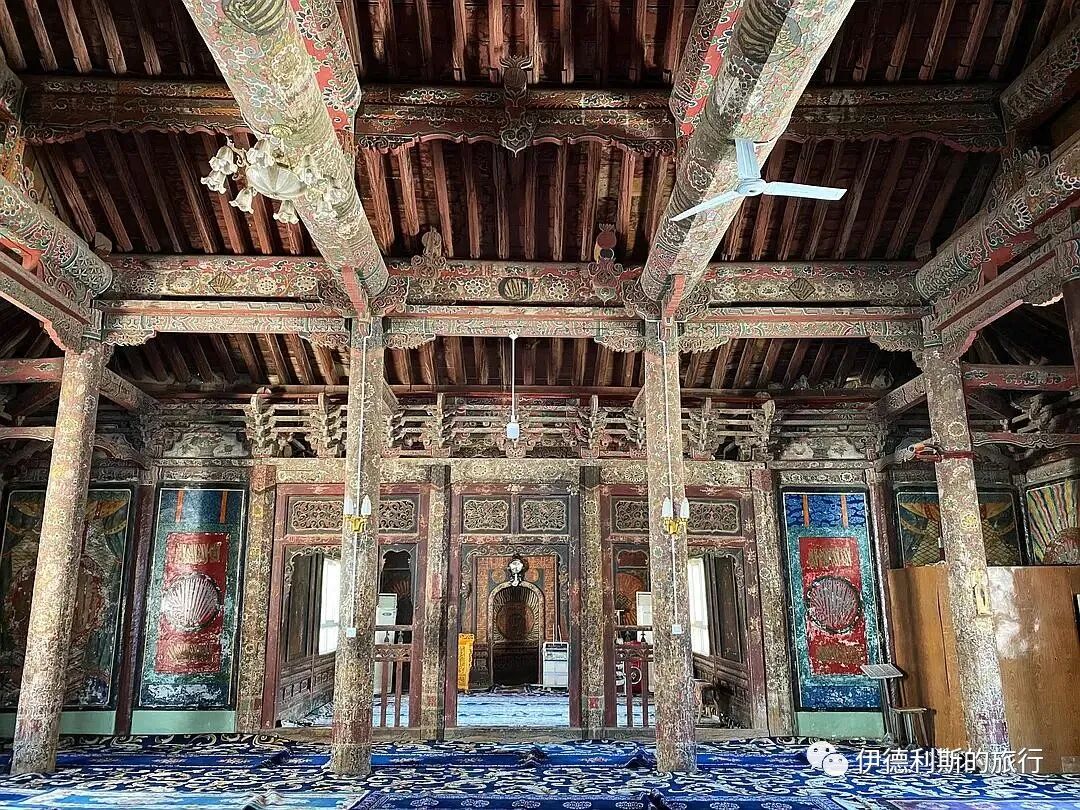
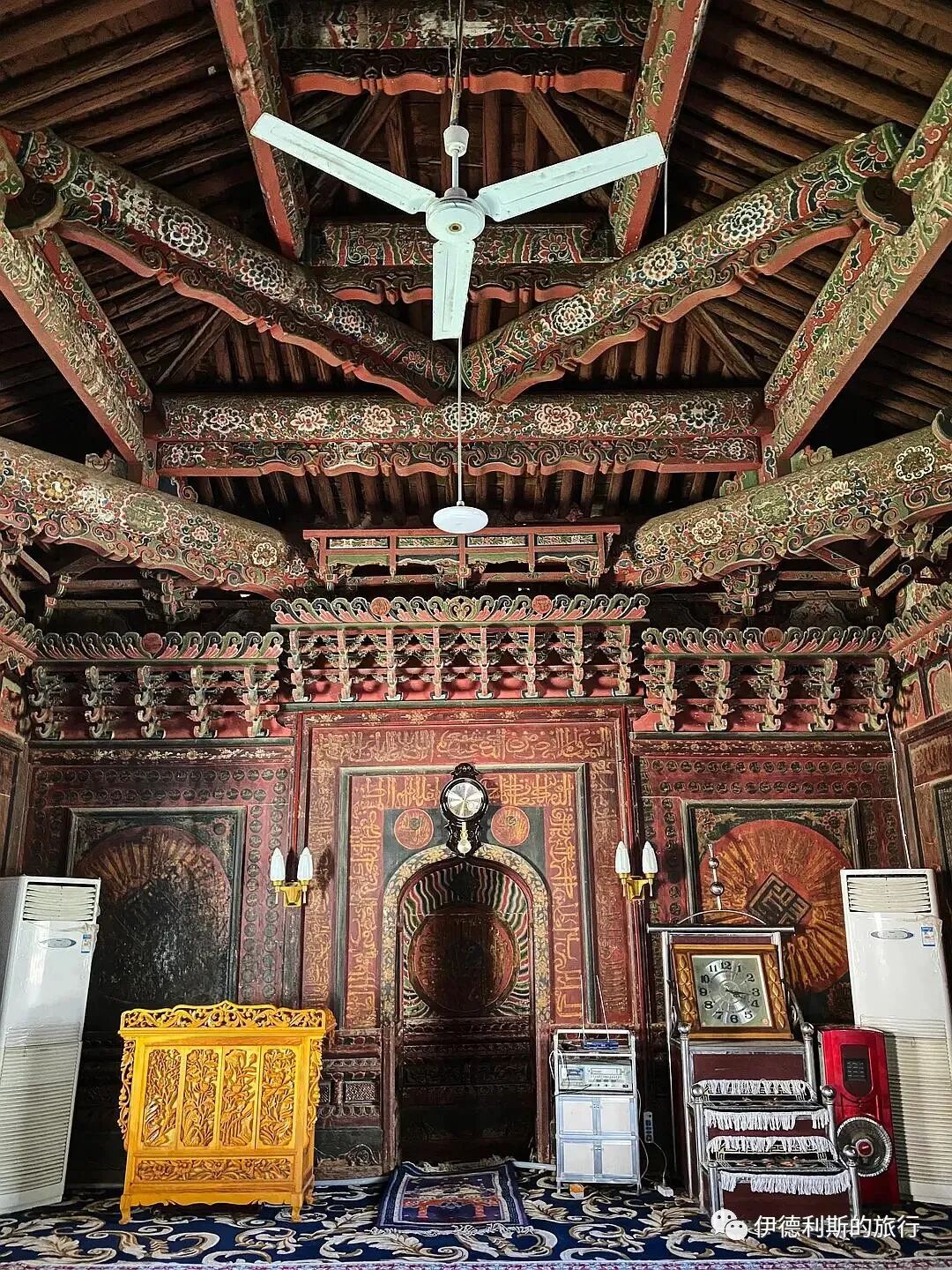
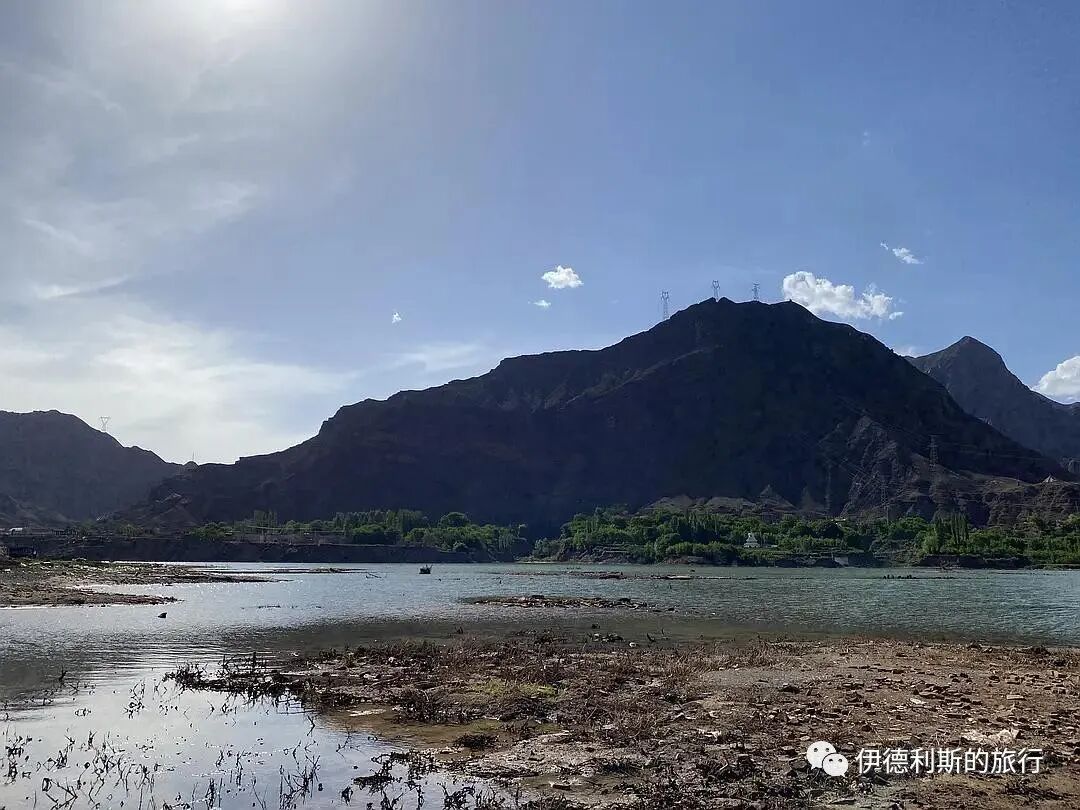
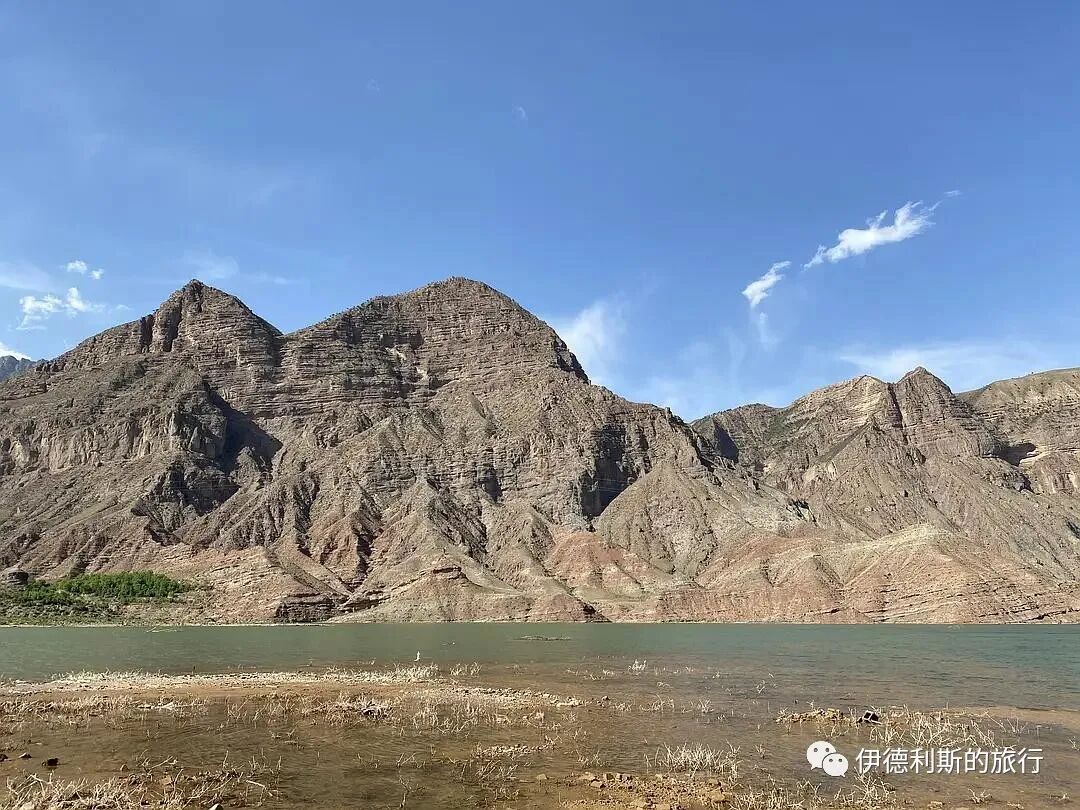
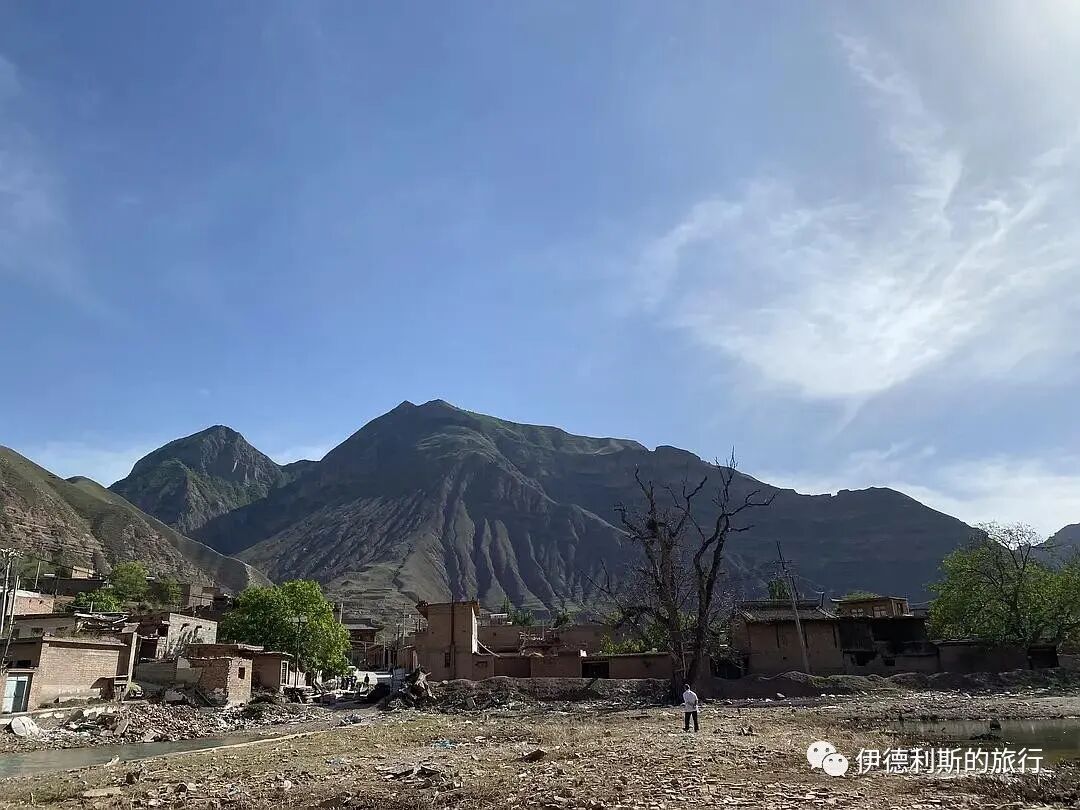
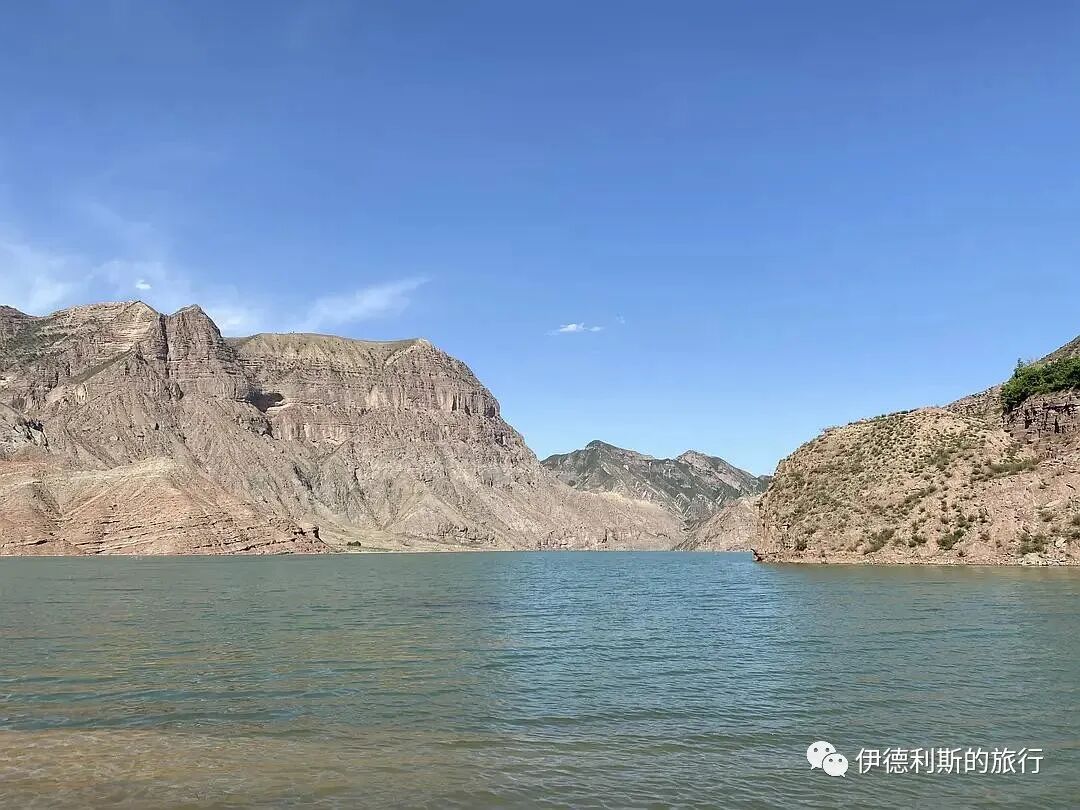
The Yellow River at the Mengda section.
Tashapo Mosque
Tashapo Mosque was first built in 1480 (the sixteenth year of the Chenghua reign of the Ming Dynasty) and rebuilt in 1755 (the twentieth year of the Qianlong reign of the Qing Dynasty).
Labian Mosque
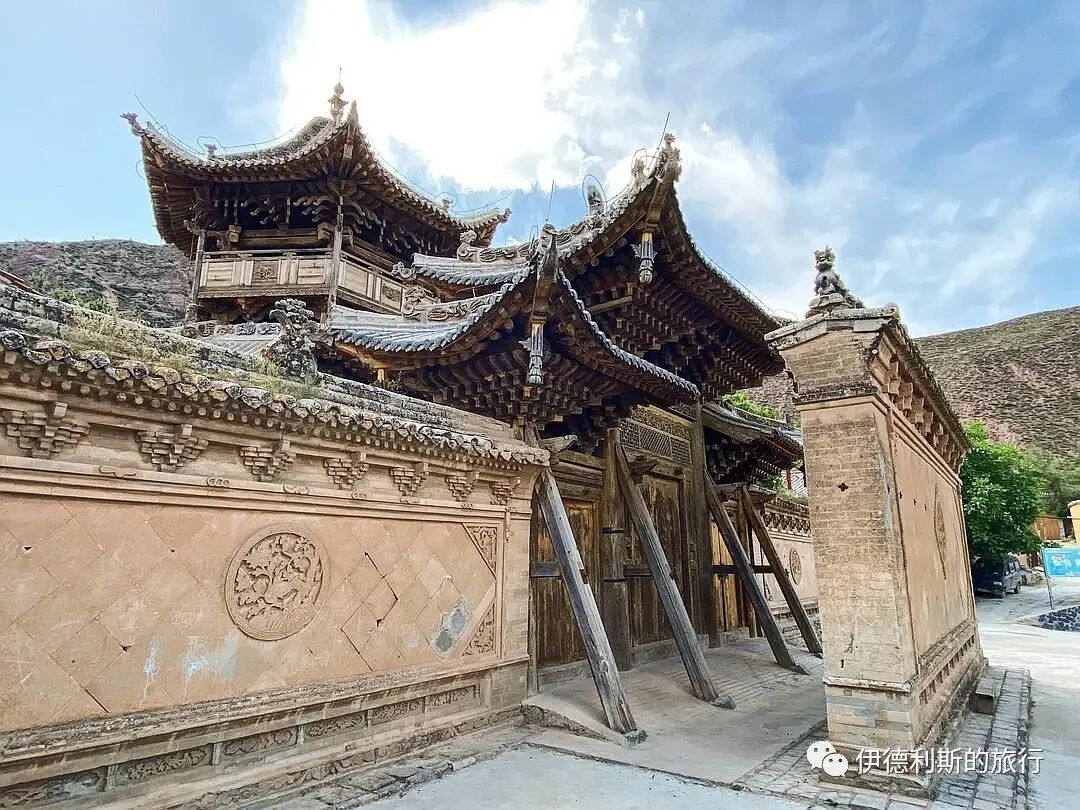
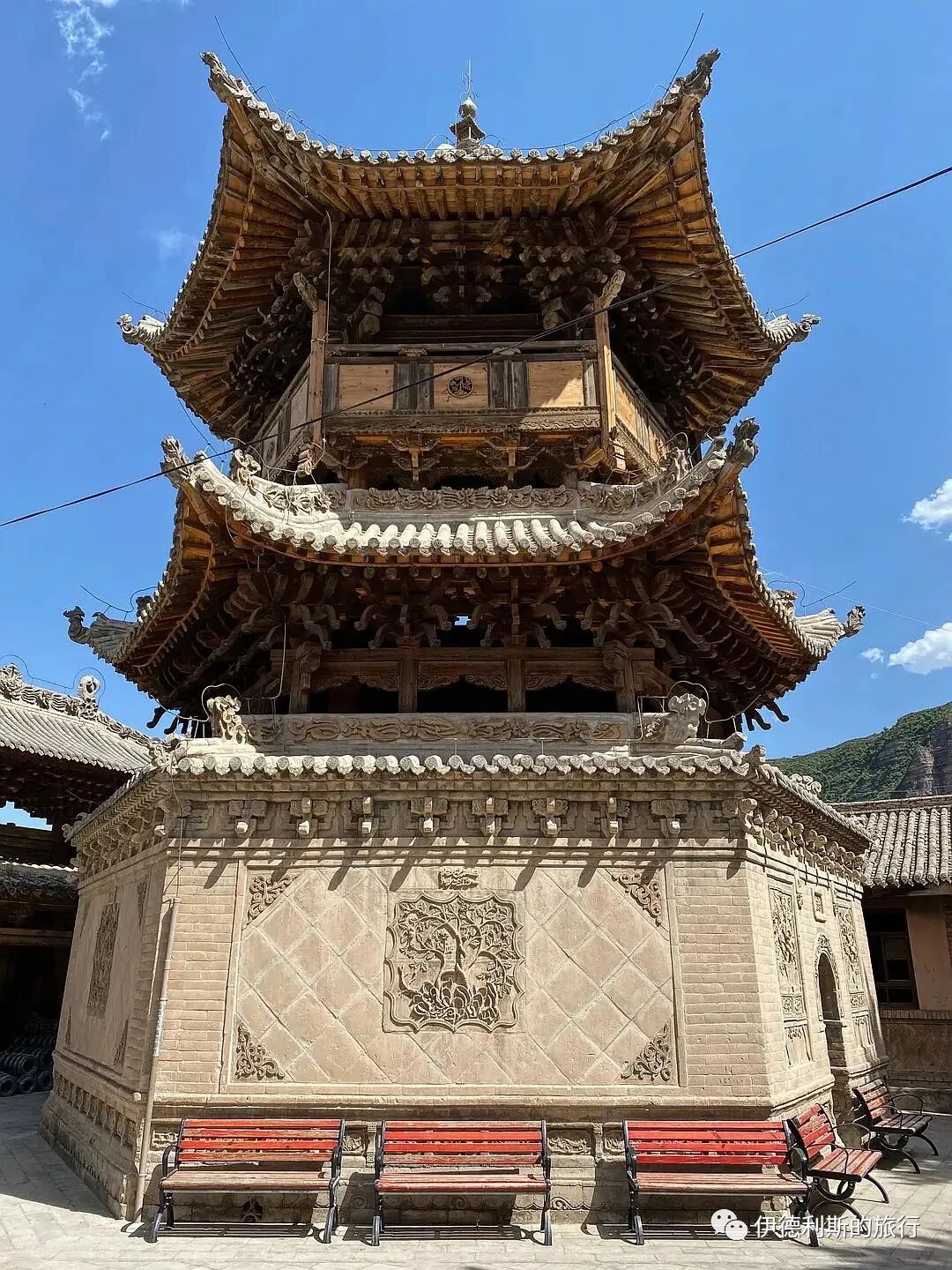
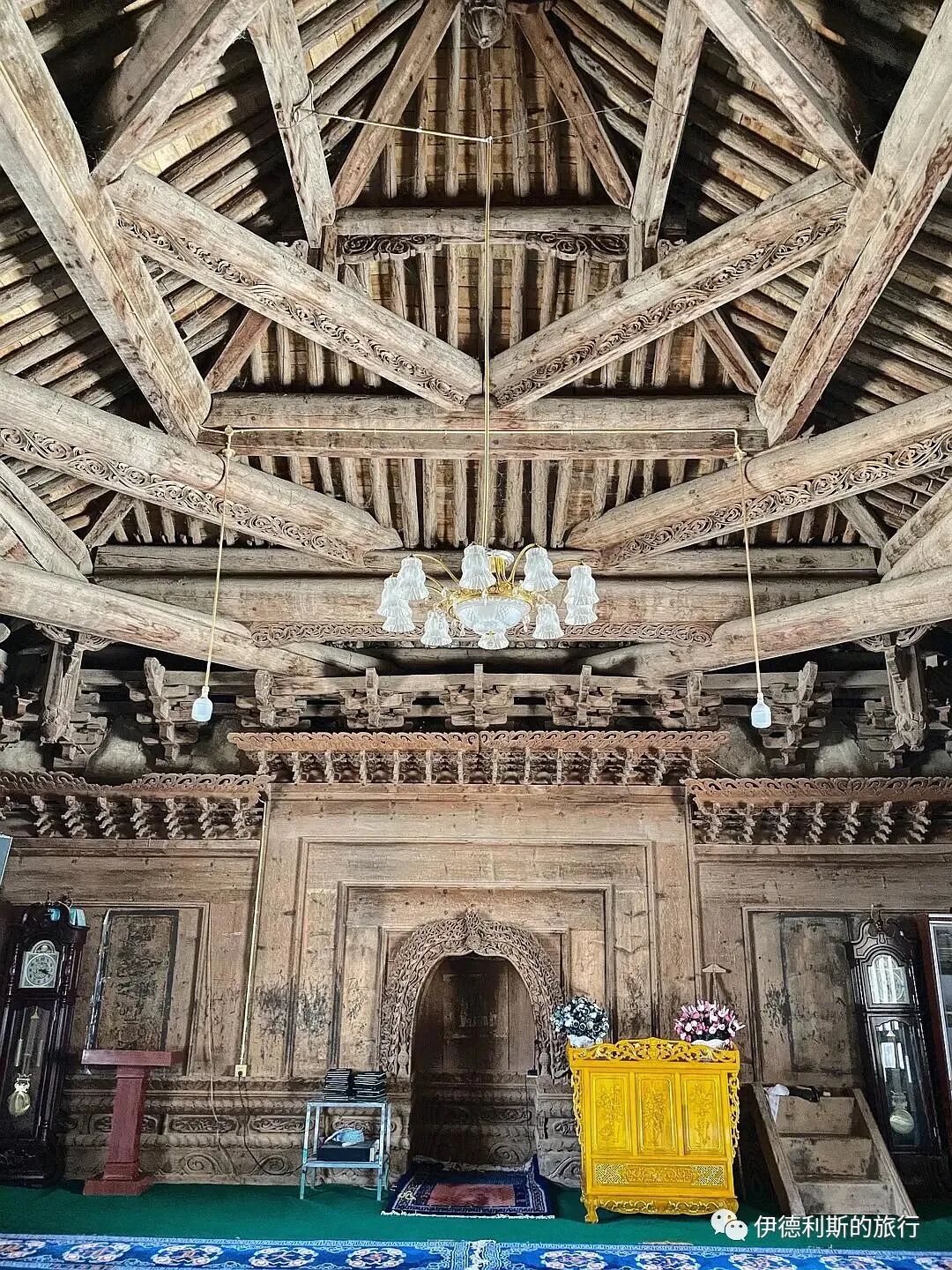
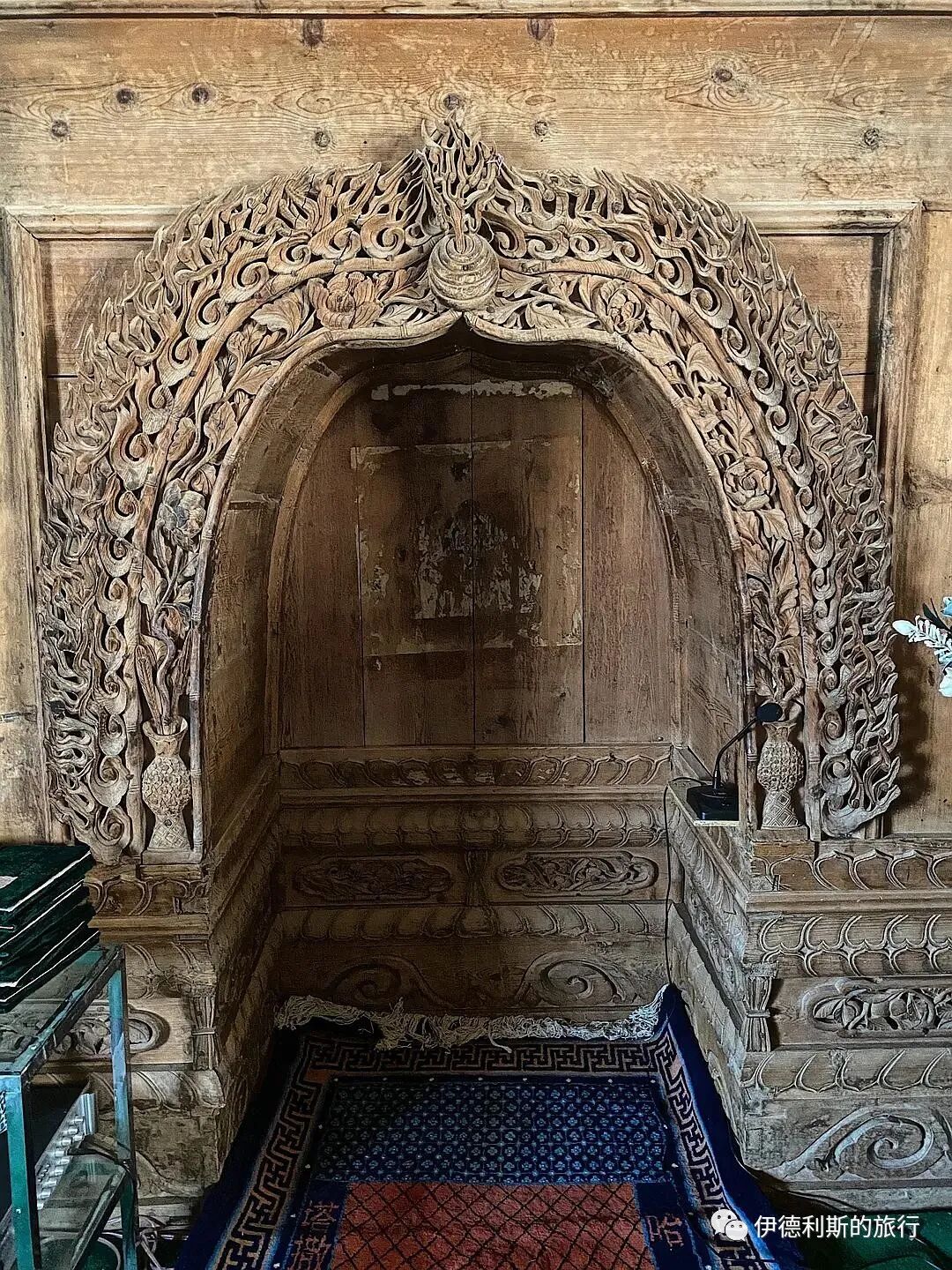
Labian Mosque was first built during the Qianlong era. The main hall was rebuilt in 2015, leaving only the call-to-prayer tower (xuanlilou) and the two side gate towers as the original ancient structures.
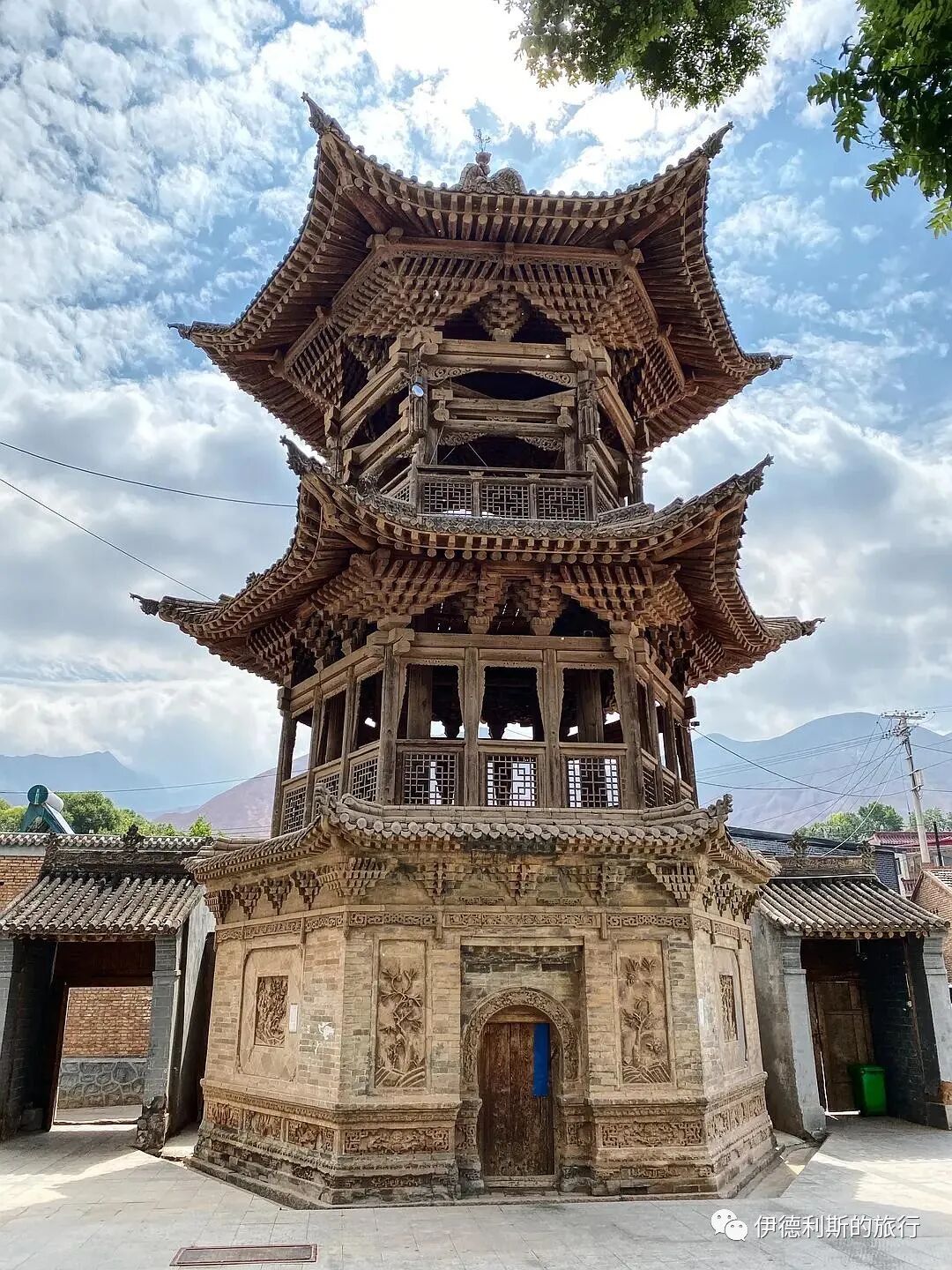
Zhangga Mosque
Zhangga Mosque was first built in 1406 (the fourth year of the Yongle reign of the Ming Dynasty) and was rebuilt during the Qing Dynasty.
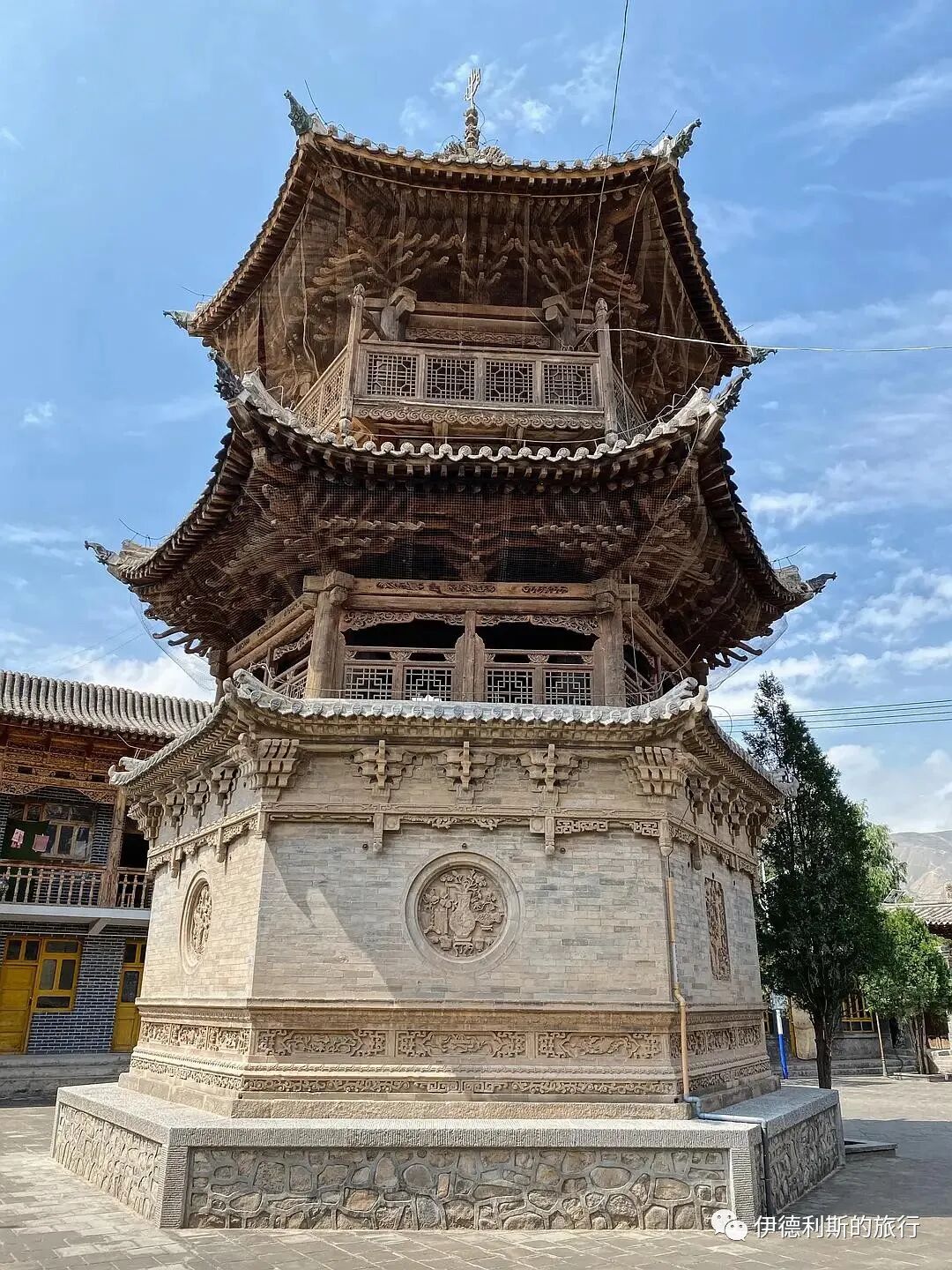
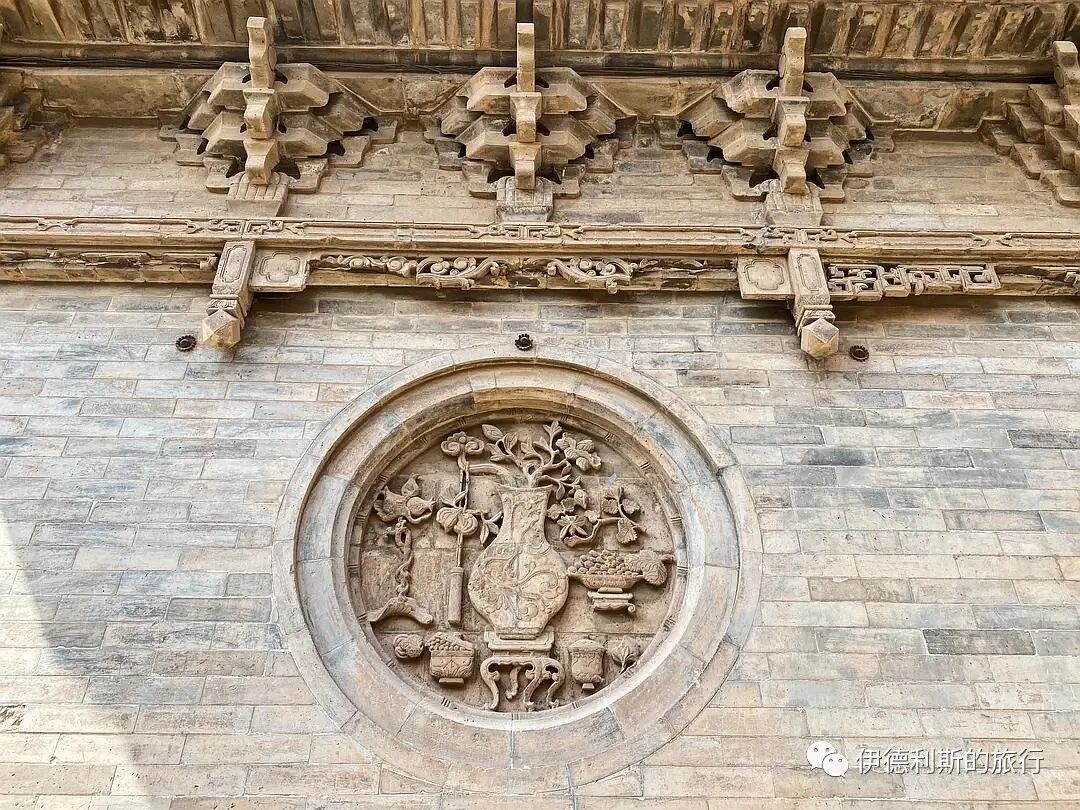
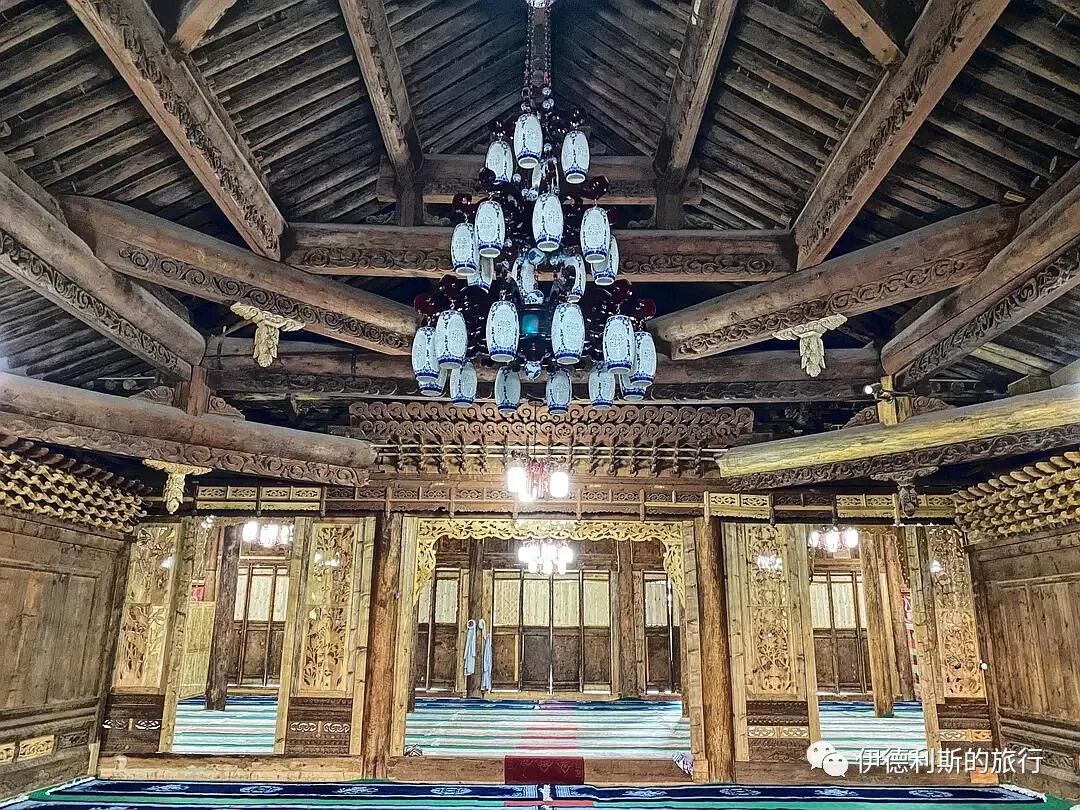
Kewa Mosque
Kewa Mosque was first built in 1403 (the first year of the Yongle reign of the Ming Dynasty) and expanded during the Qing Dynasty. It is the main Friday mosque (jumuasi) for the Salar people's eight gong (gong) and nine man (man) groups.
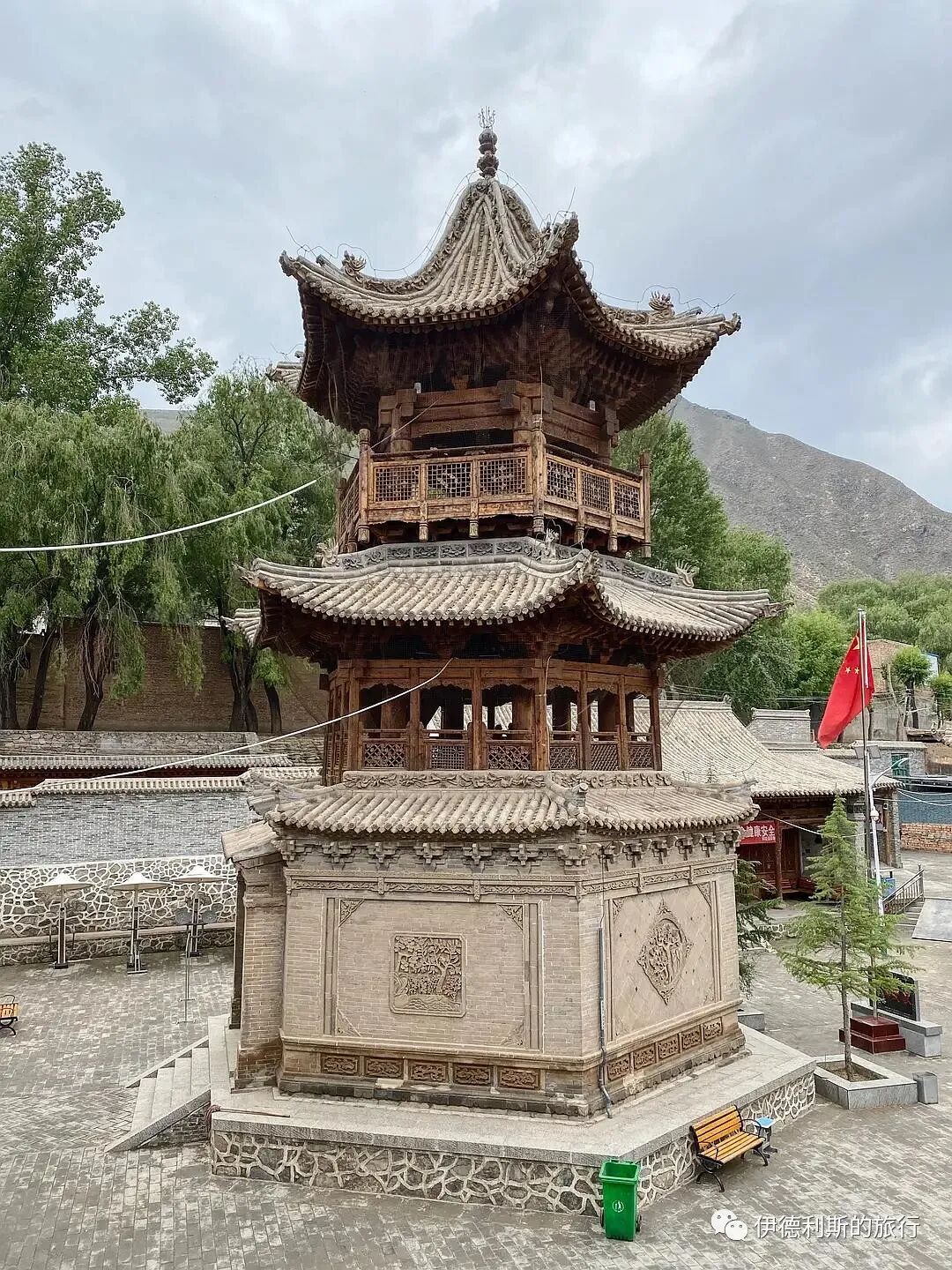
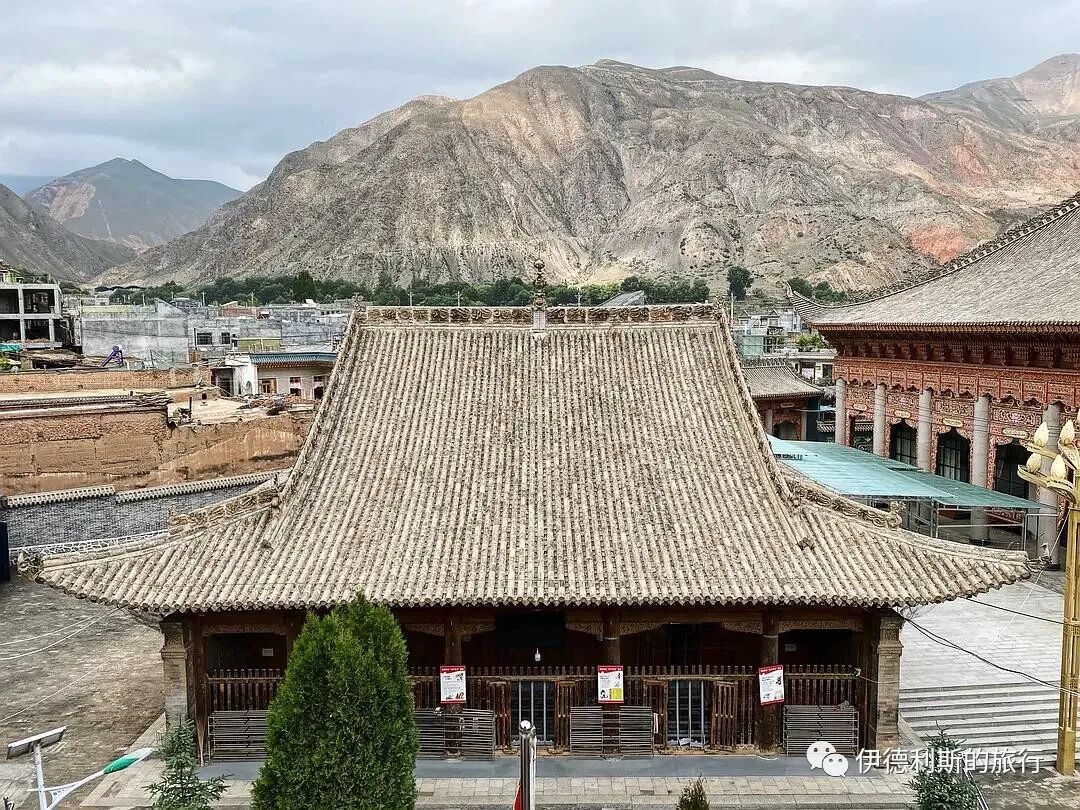
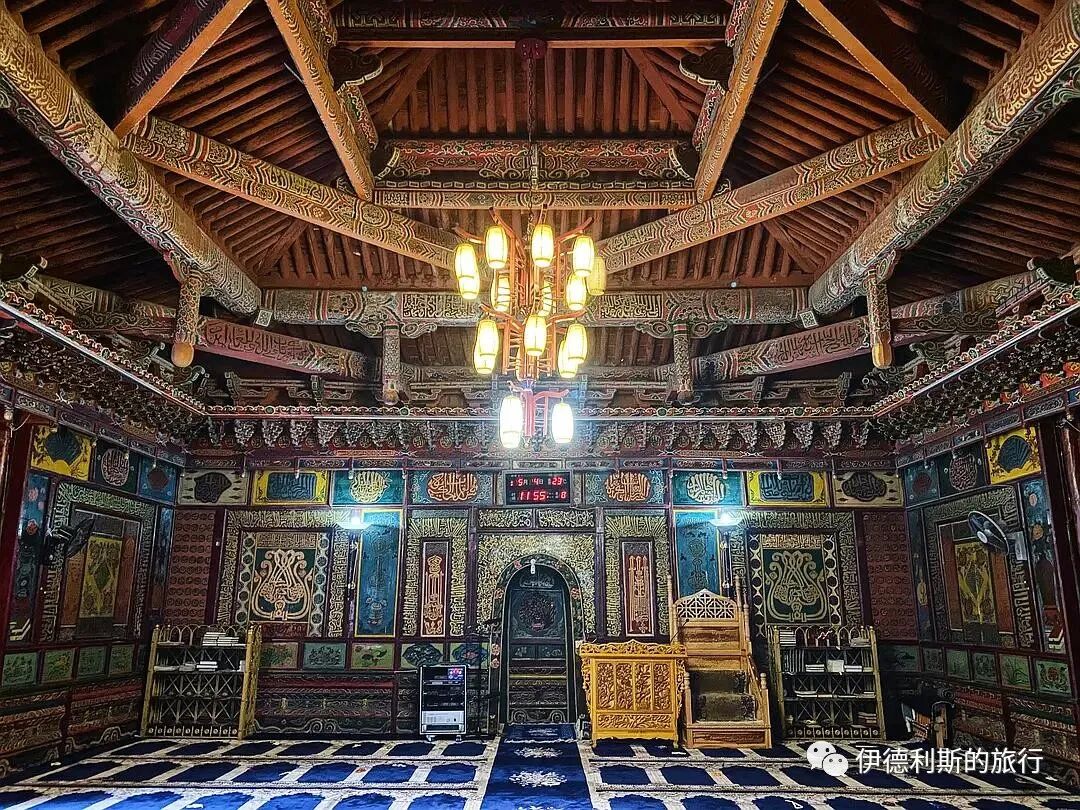
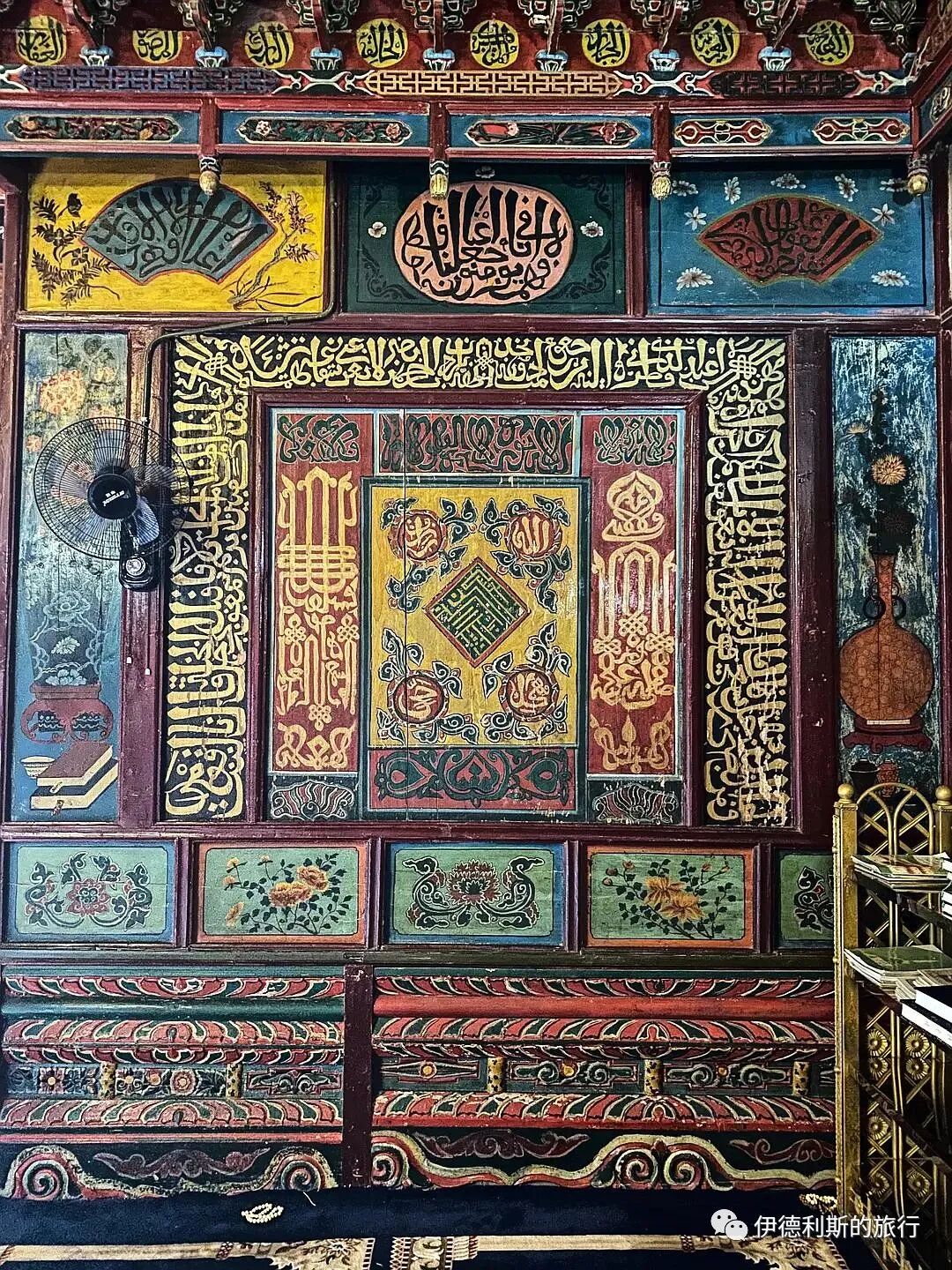
At Kewa Mosque, we were warmly welcomed by a Salar imam. He gave us a detailed introduction to the mosque and its wall paintings, and even cut up a melon for us to eat. I want to thank the imam here!
Returning to the county town.
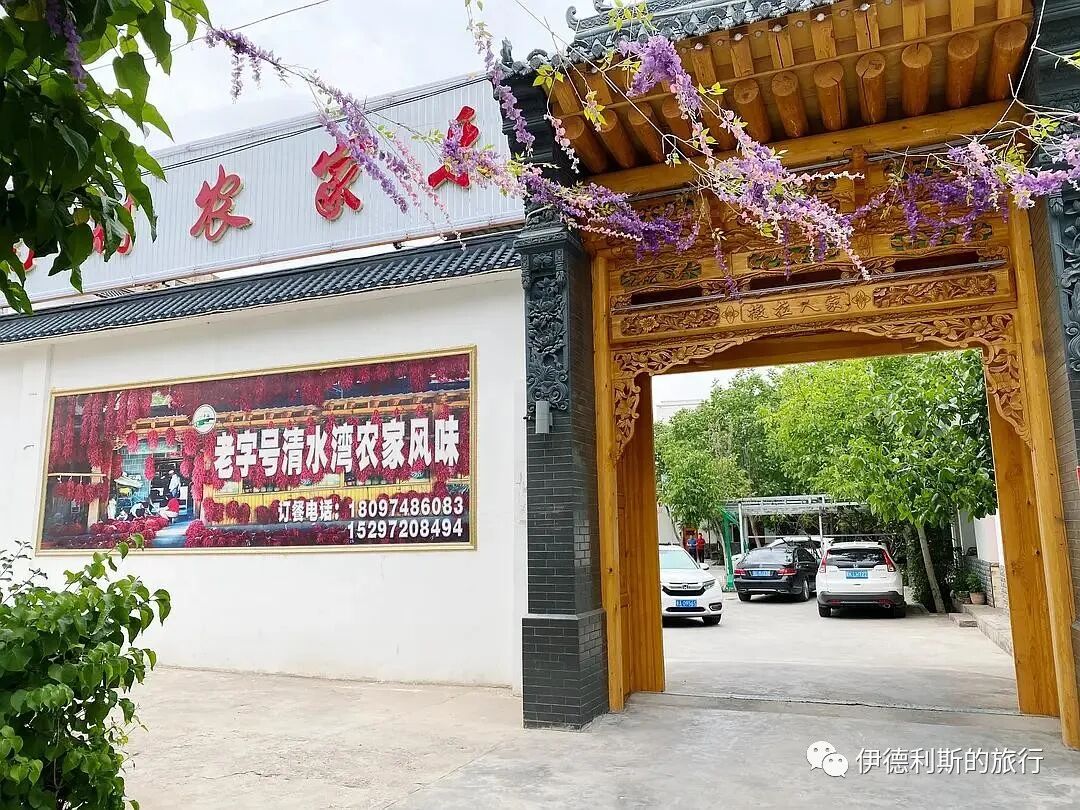
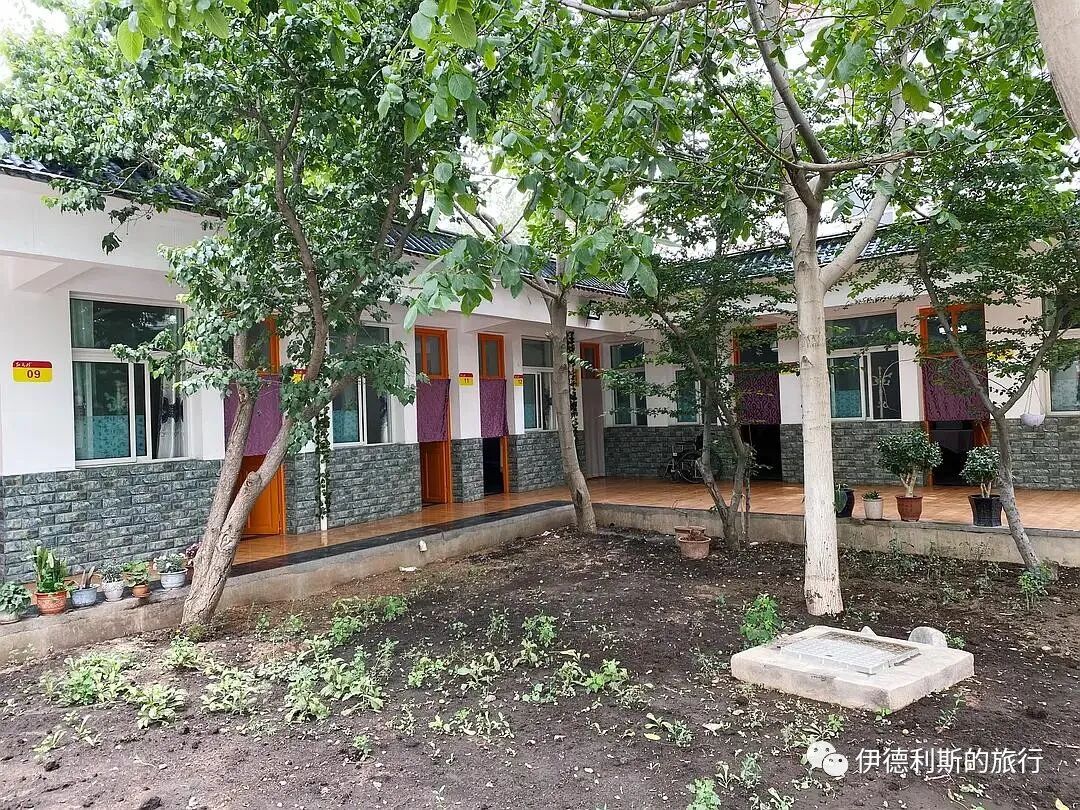
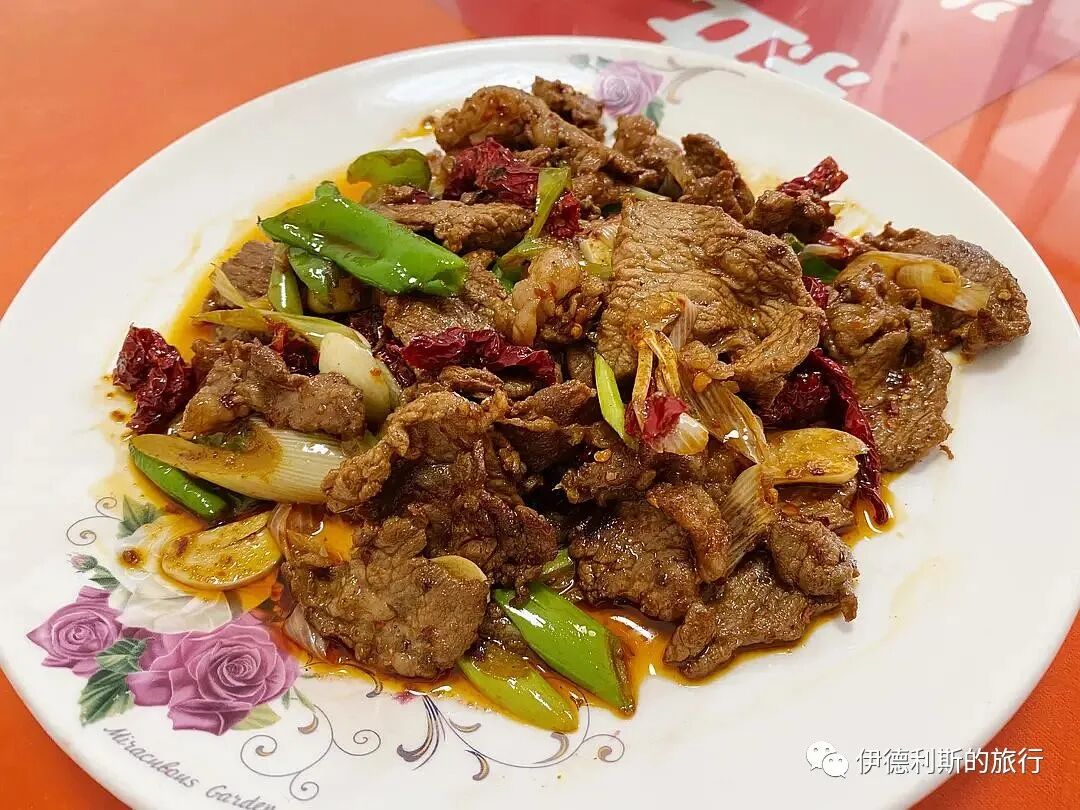
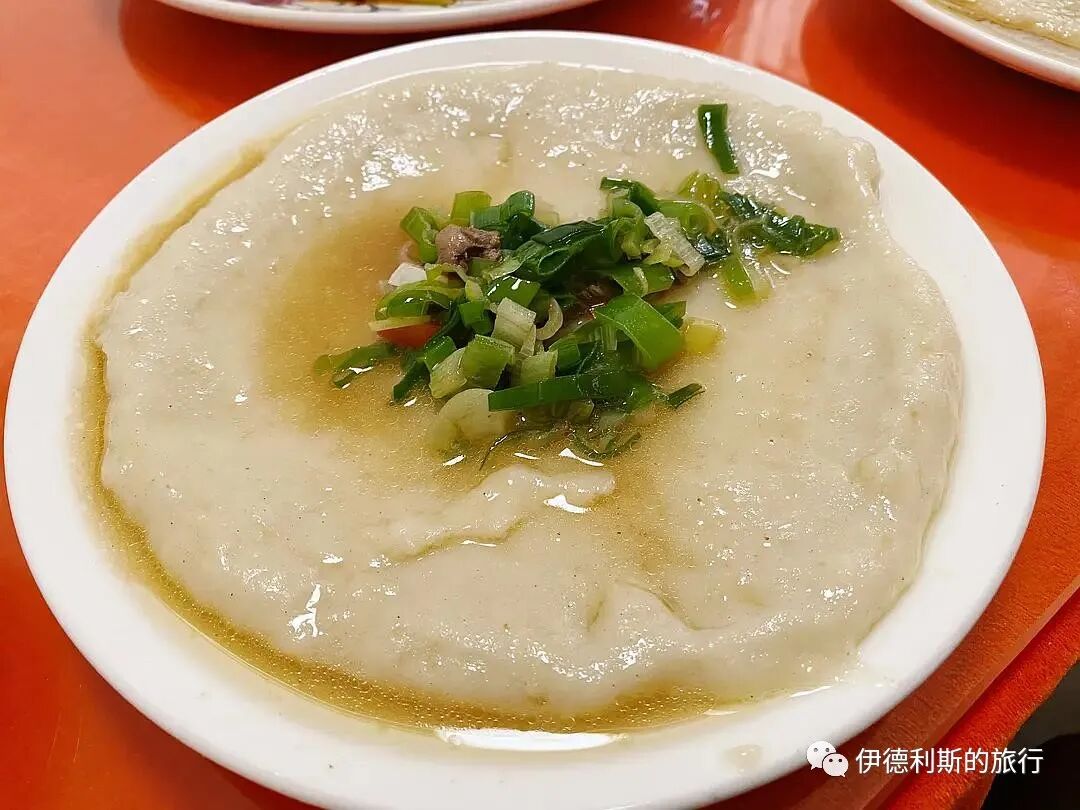
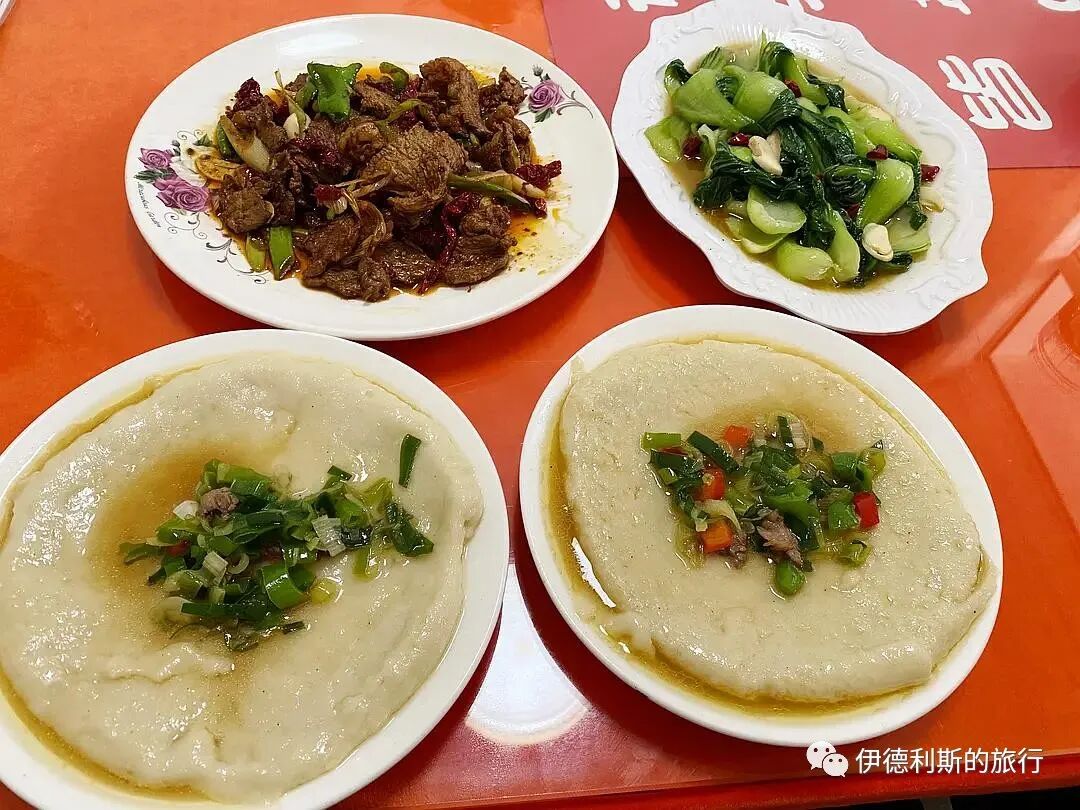
At noon, we ate stir-fried beef and dough paste (jiaotuan) at a Salar family farmhouse restaurant in the county town. Dough paste (jiaotuan) is made by stir-frying flour until cooked, boiling it with water, and then adding refined vegetable oil. It tastes very fragrant. In Xunhua, Salar family eateries are divided into tea restaurants and farmhouse restaurants. The tea restaurants have a wider variety of dishes, but if you want authentic Salar food, I recommend going to a farmhouse restaurant.
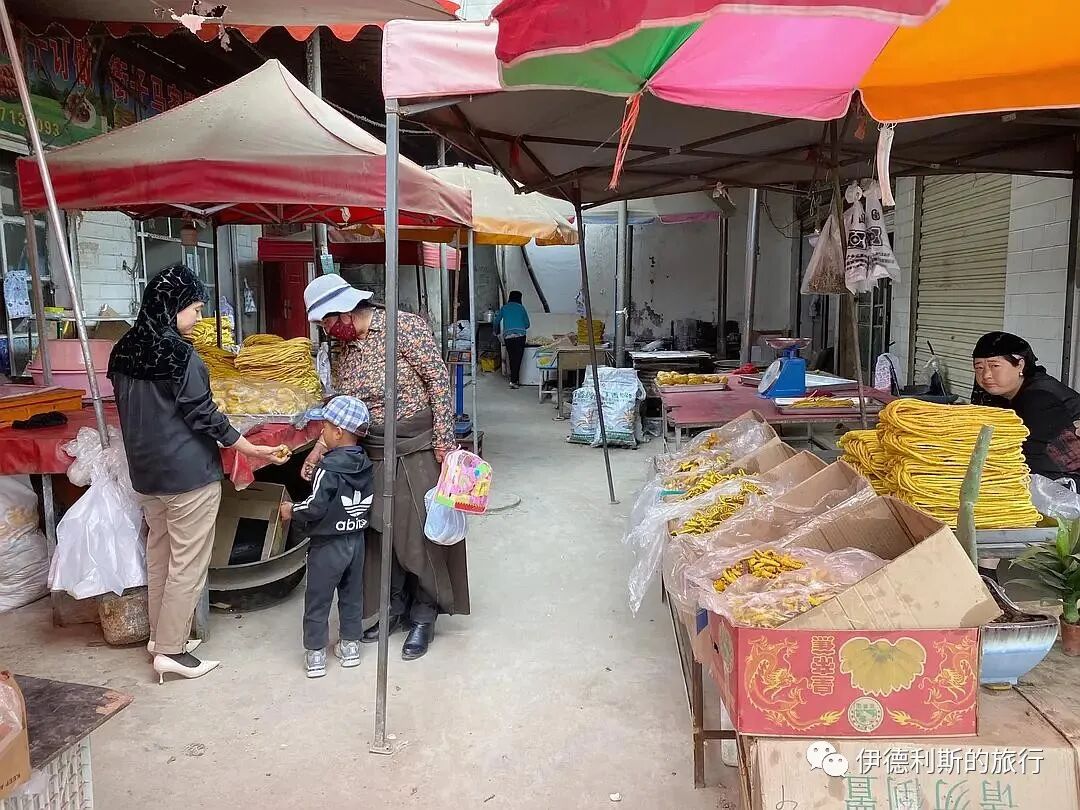
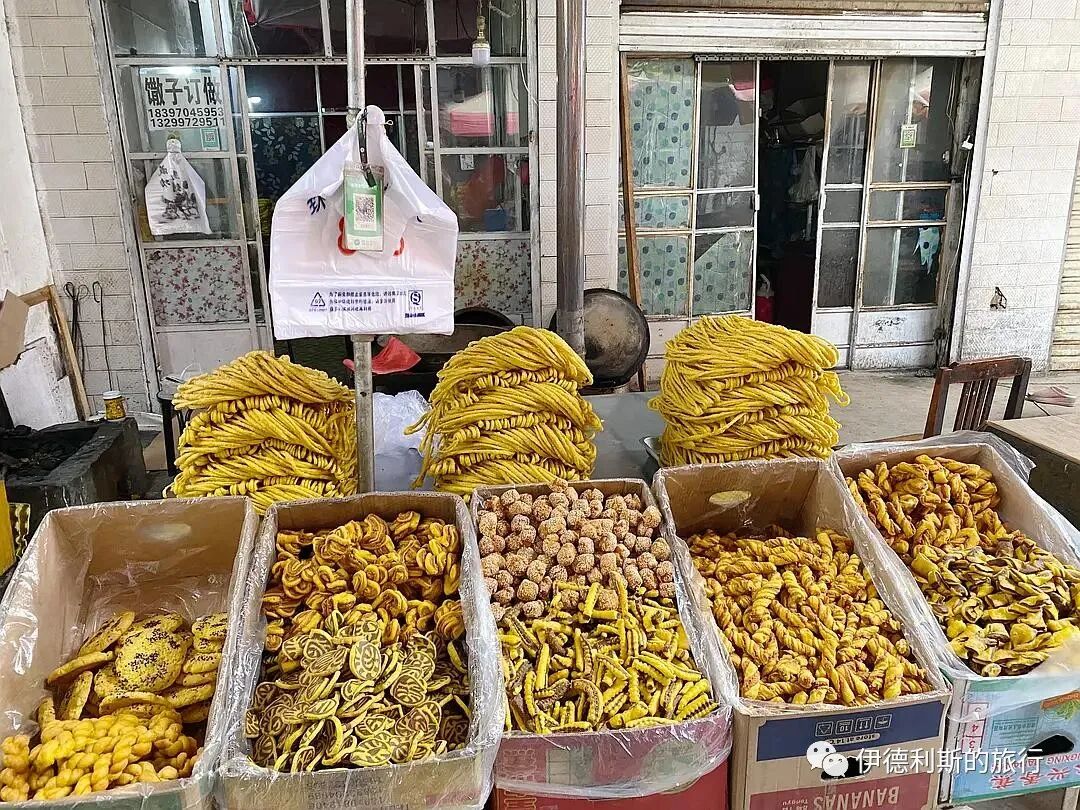
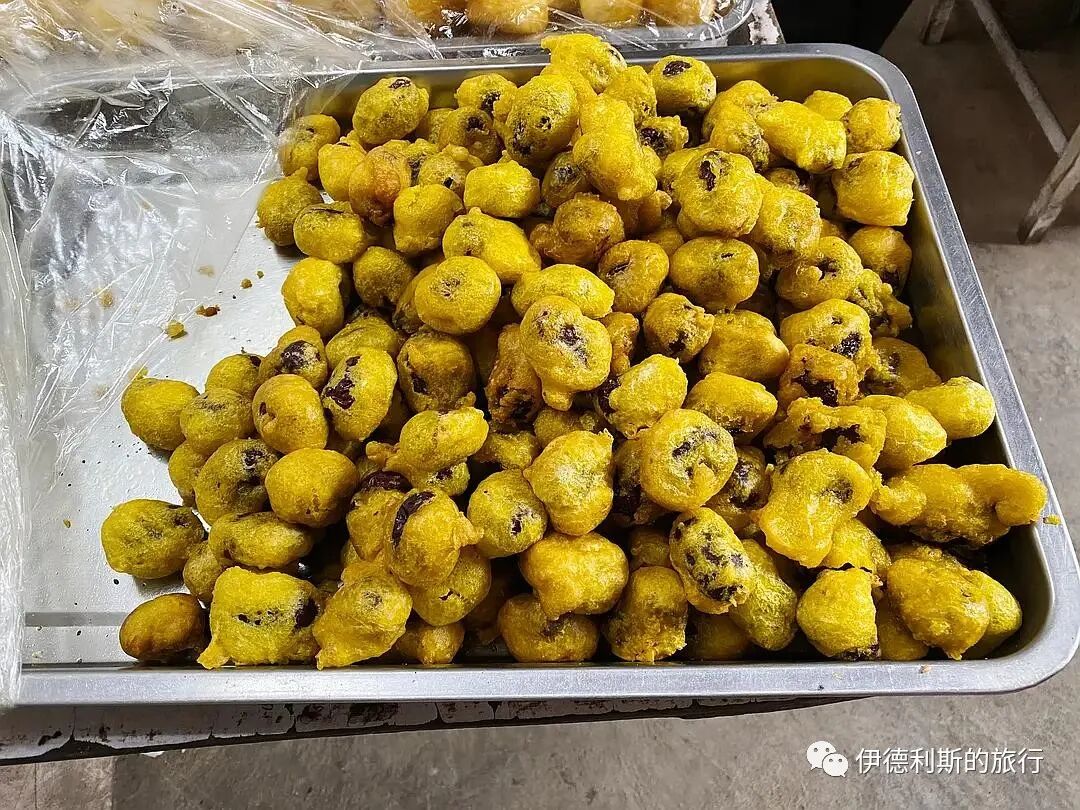
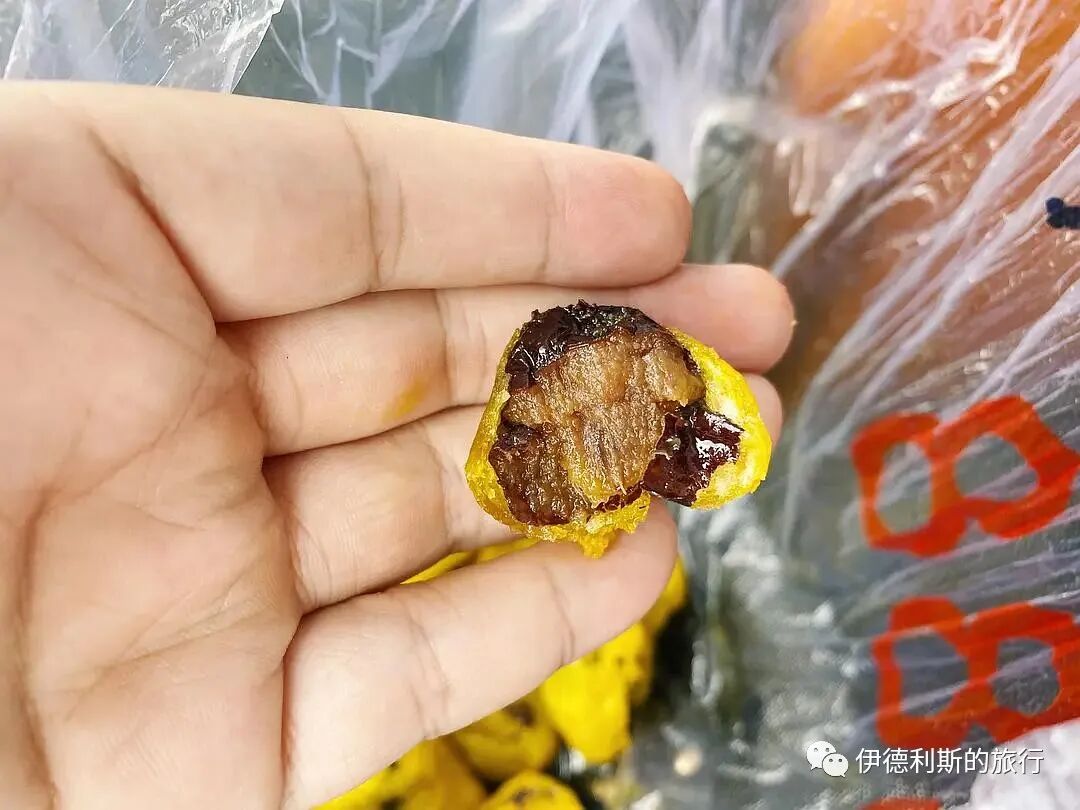
Then we went to the Jiezi Town fried dough twist (sanzi) market to buy Salar-style fried dates (youzao). These are large dates wrapped in dough and fried. One bite is full of date juice.
Jiezi Grand Mosque Quran Collection Hall
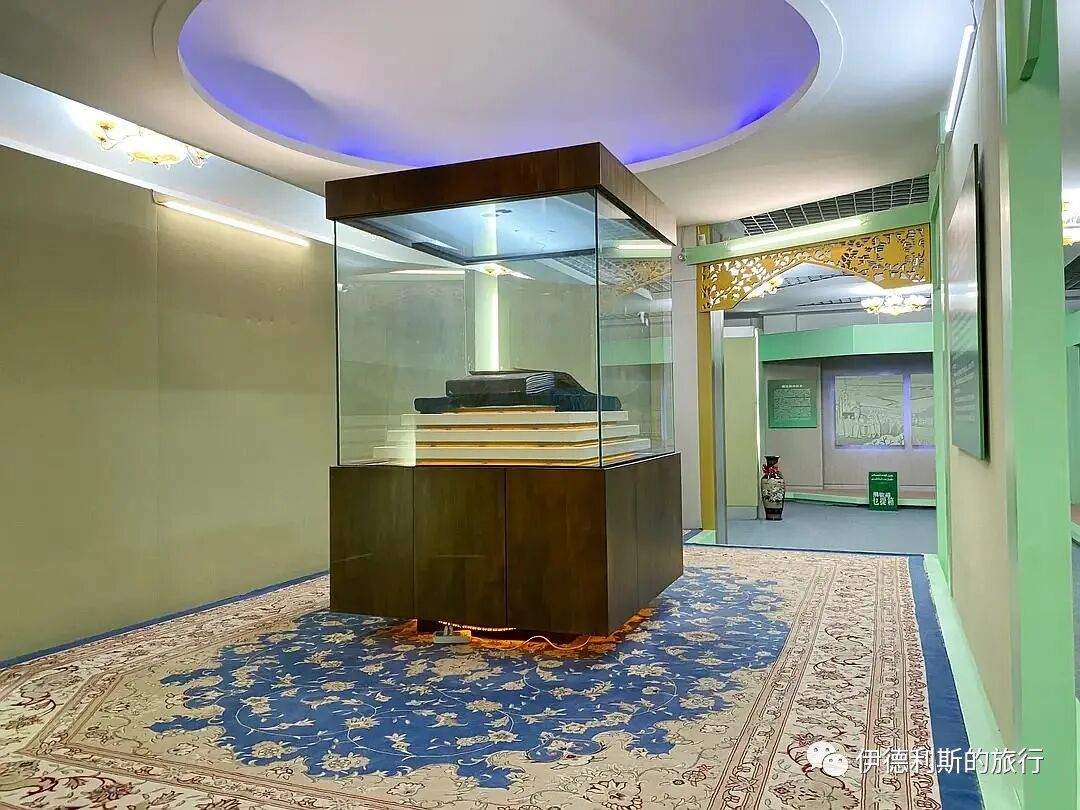
I was very lucky to visit the Quran Collection Hall at Jiezi Grand Mosque. I saw the handwritten Quran that the Salar people brought with them when they migrated from the Samarkand area to Xunhua over 700 years ago.
The Quran consists of 30 volumes, stored in two rhinoceros-hide cases. Historically, this set of the Quran was kept by the religious leader known as the 'Gazi'. When the Gazi system was abolished in 1896, the Quran remained in the care of the Gazi's descendants. People say in 1894, Ma Qishao (Ma Anliang) from Linxia seized the Quran. However, on his way back to Linxia from Xunhua, he encountered a violent storm and could not cross the mountains, so he had to return the Quran. During the Republic of China era, the Quran was seized by Ma Bufang. It was not returned to Han Wushiba, a descendant of the Jiezi Gazi, until the 1950s.
In 1954, the Quran was sent to Syria for an international exhibition, where it made a great impression on the Islamic world. After the '58 Religious Reform' in 1958, the burning of religious texts began. On the advice of the 'Salar Social History Investigation Group' then conducting research in Xunhua, the Quran was sent to the Cultural Palace of Nationalities under the guise of participating in a 10th-anniversary national exhibition. It was stored in the basement of the Cultural Palace for the next twenty years, only returning to Jiezi Grand Mosque in 1982.
The Quran I photographed.
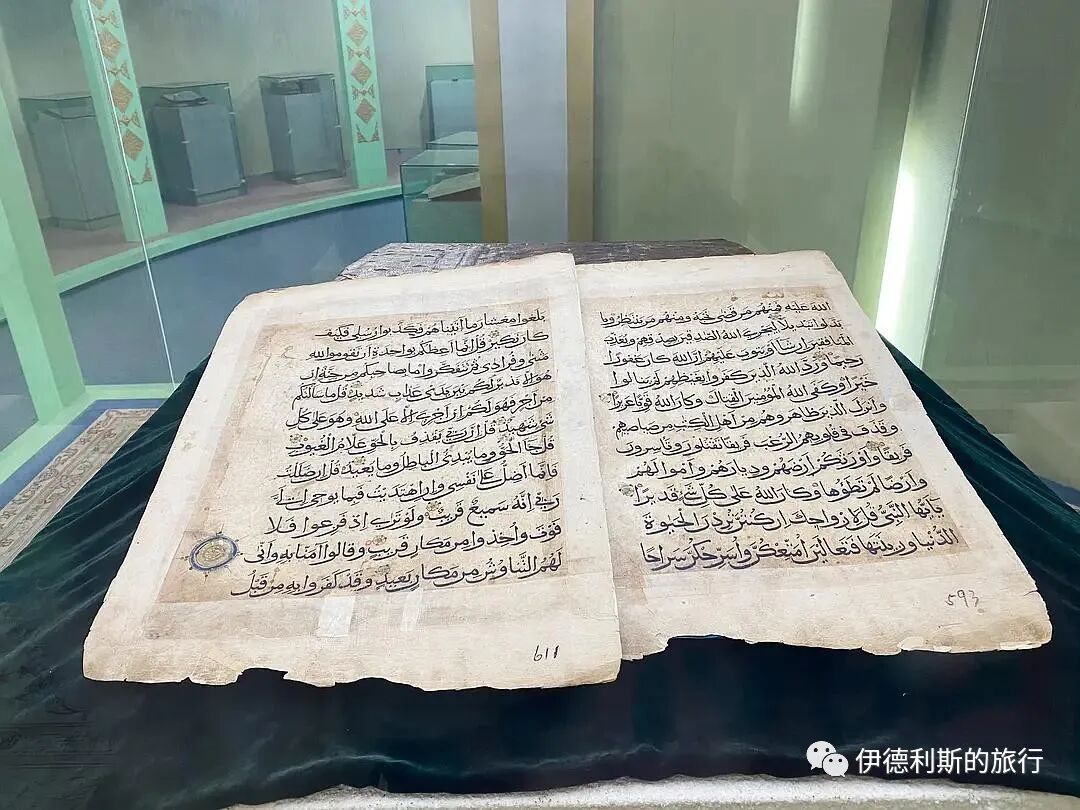
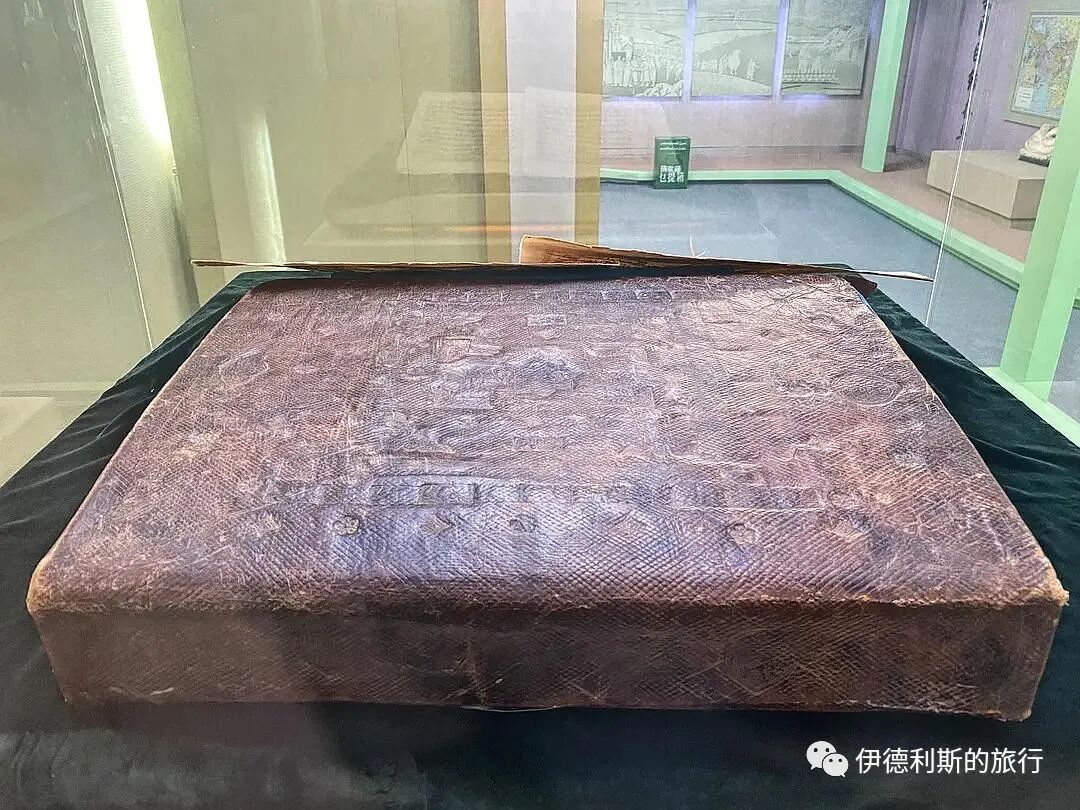
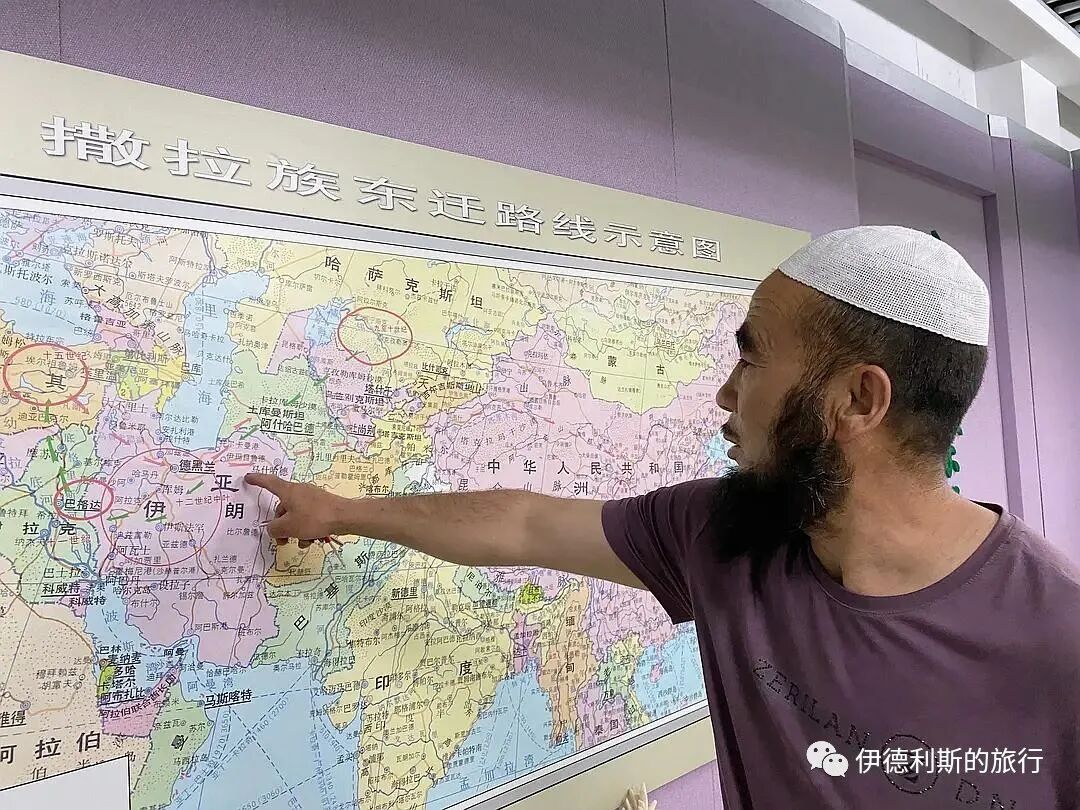
The uncle who showed us around the collection hall is telling us about the migration route of the Salar people.
The Quran was photographed in 1933 by the American missionary Reverend Carter Holton (Hai Yingguang). Reverend Holton lived in the Hehuang region for many years between the 1920s and 1940s. Reverend Holton loved photography and left behind over 5,000 photos of the ethnic customs in the Gansu and Qinghai regions. In the early 1990s, his second daughter donated them all to the Harvard University Library, where they can now be viewed on the library's official website.
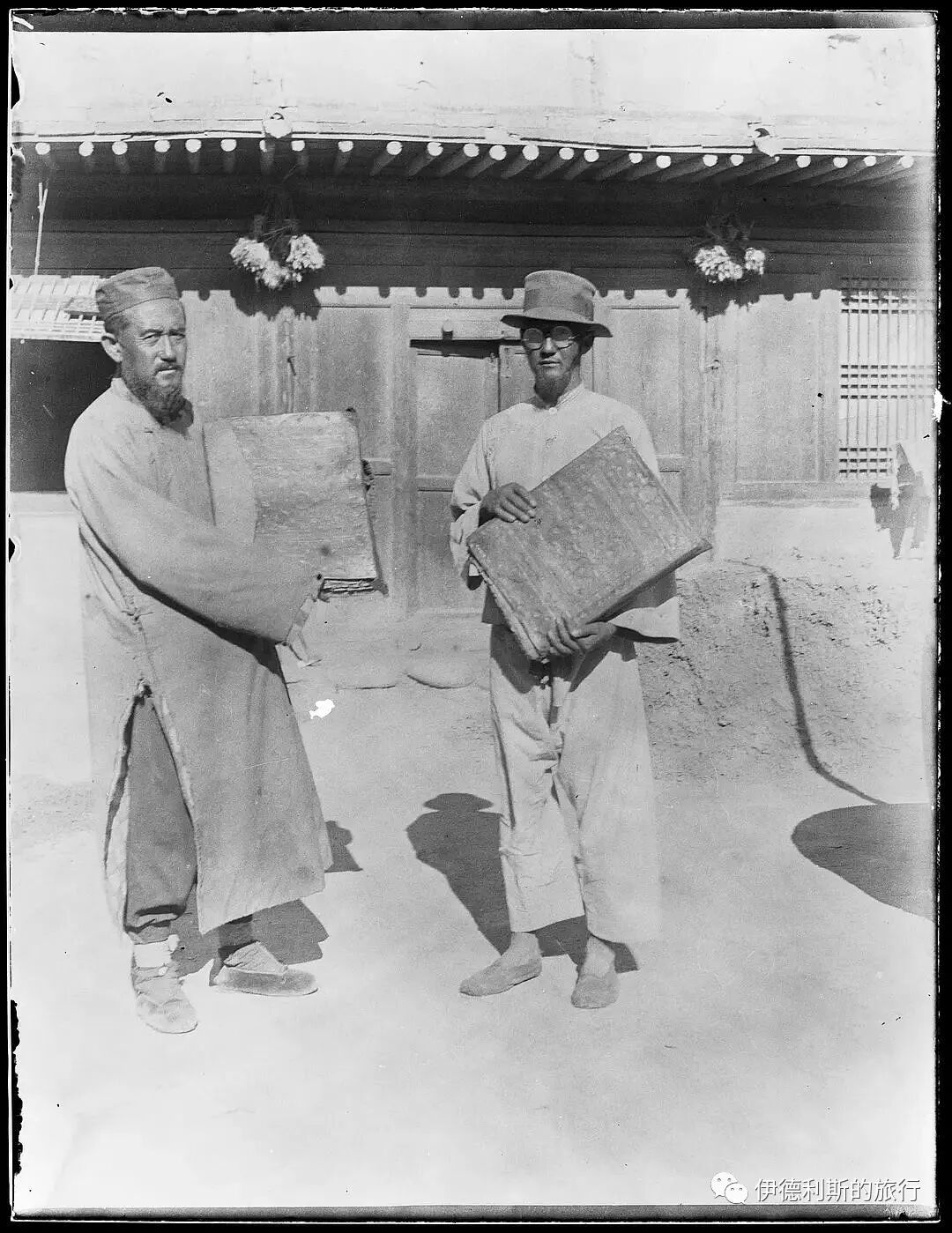
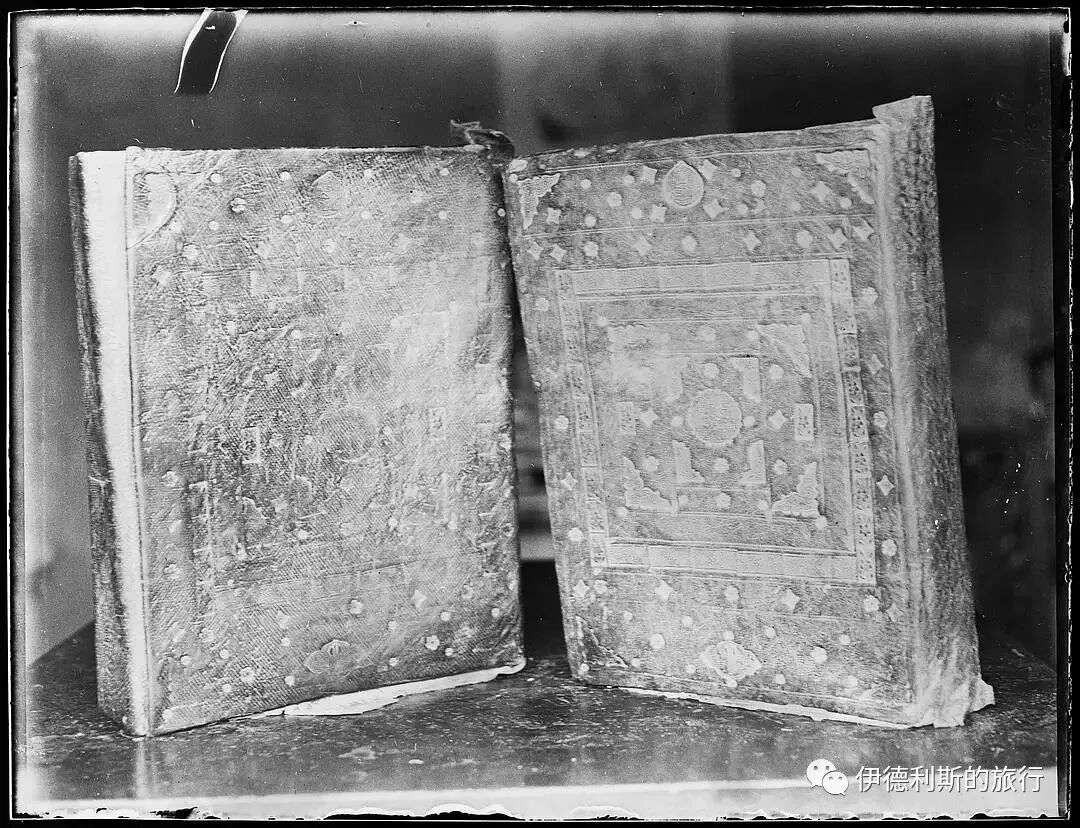
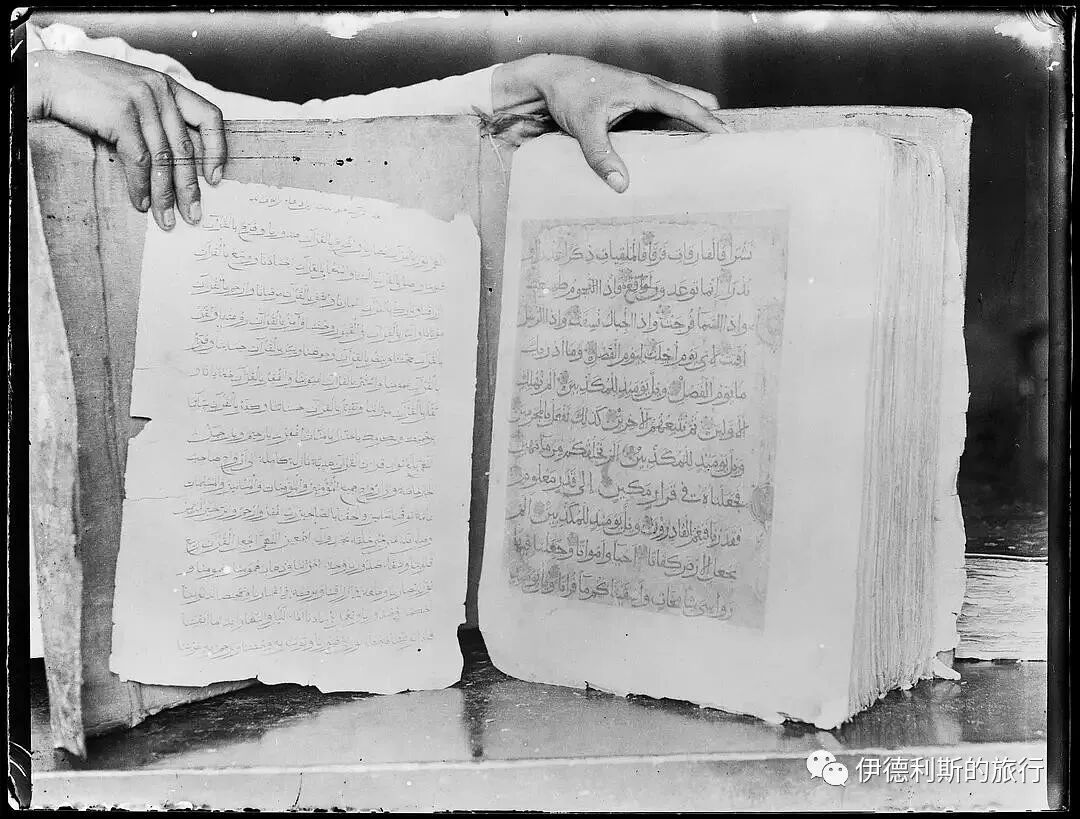
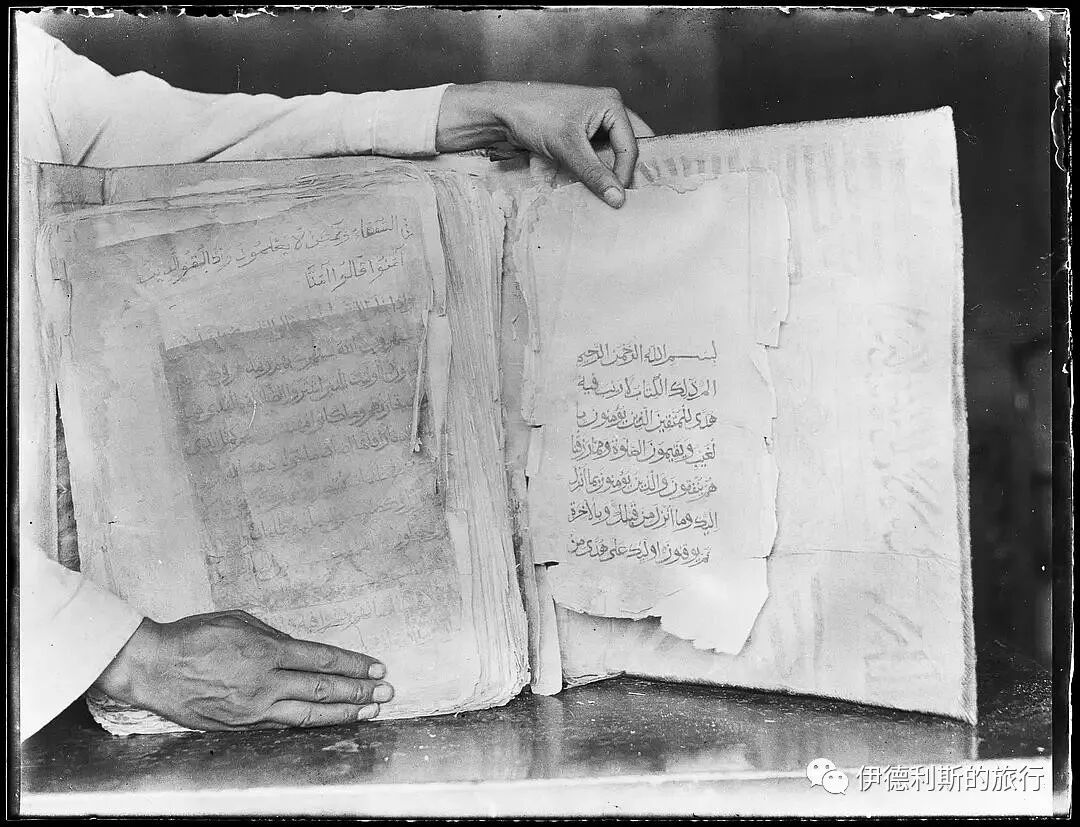
Imam Hai holds the Quran himself.
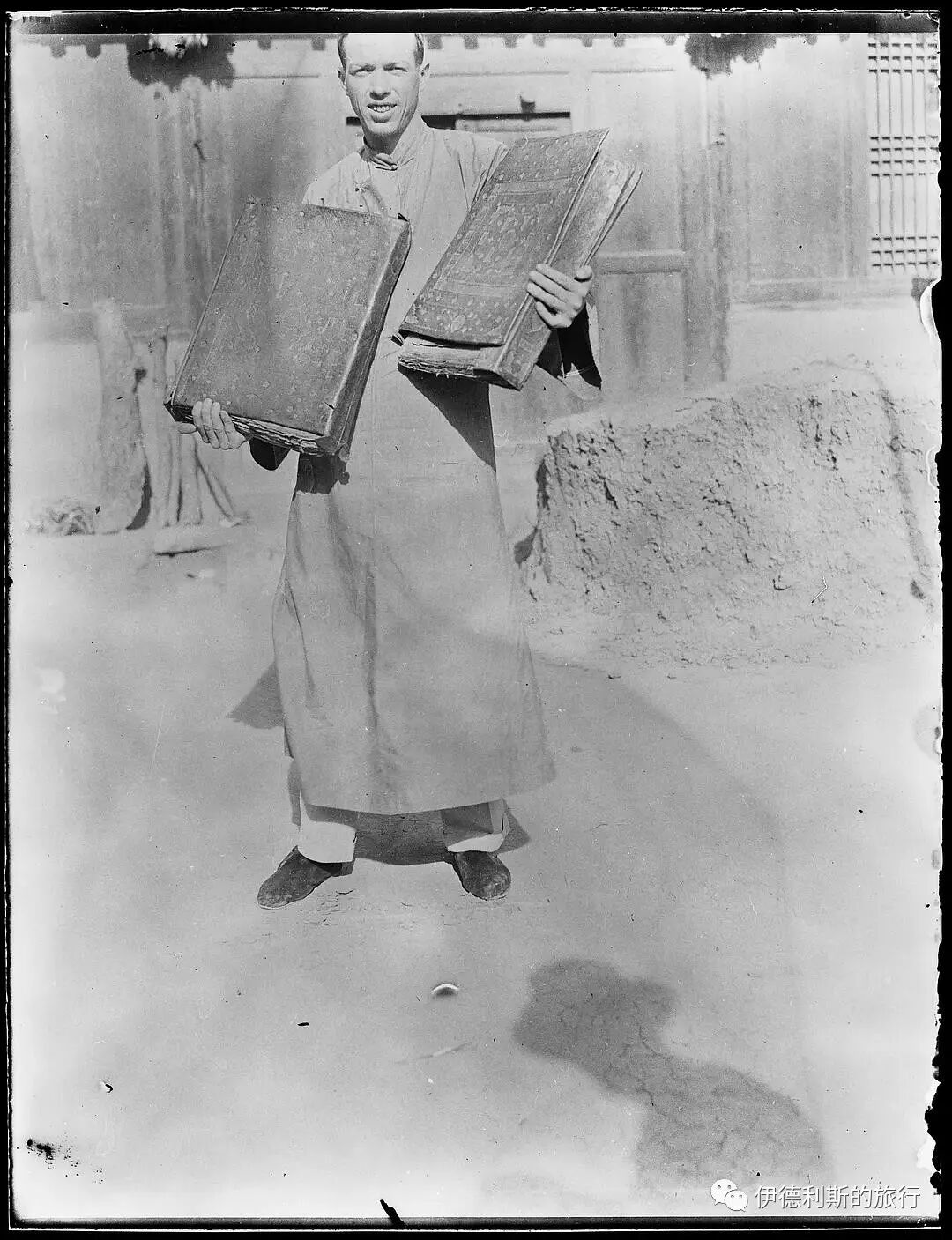
The Quran kept in the collection hall.
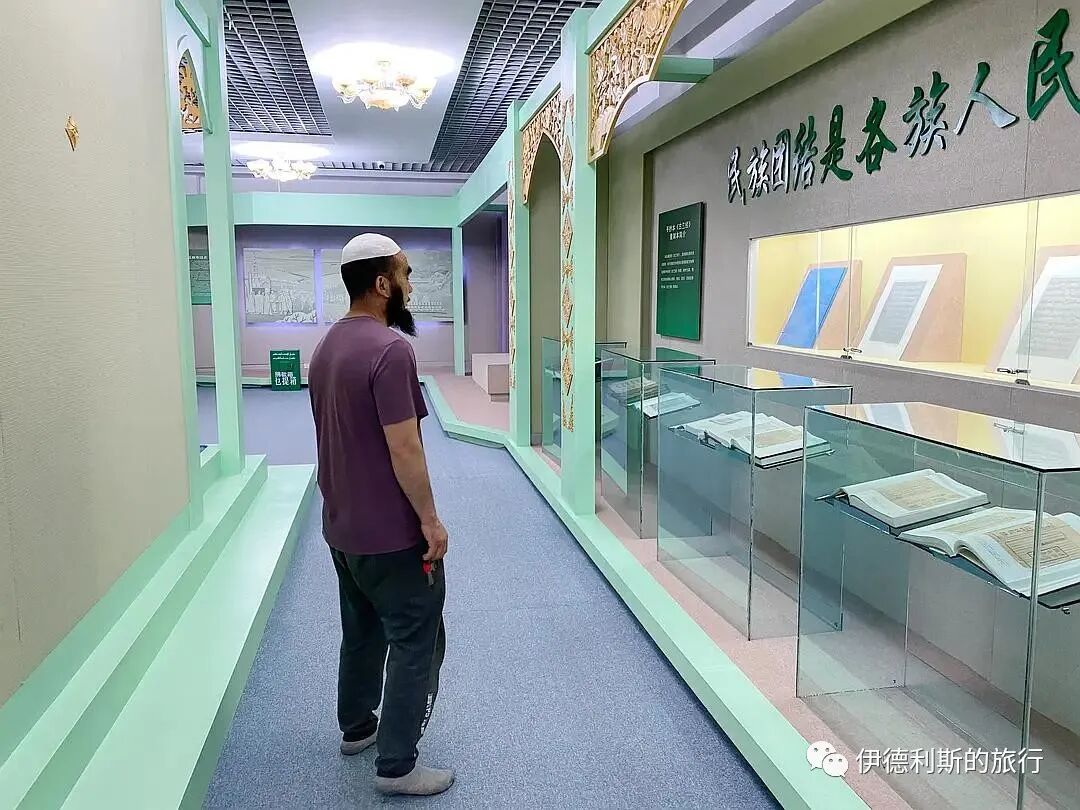
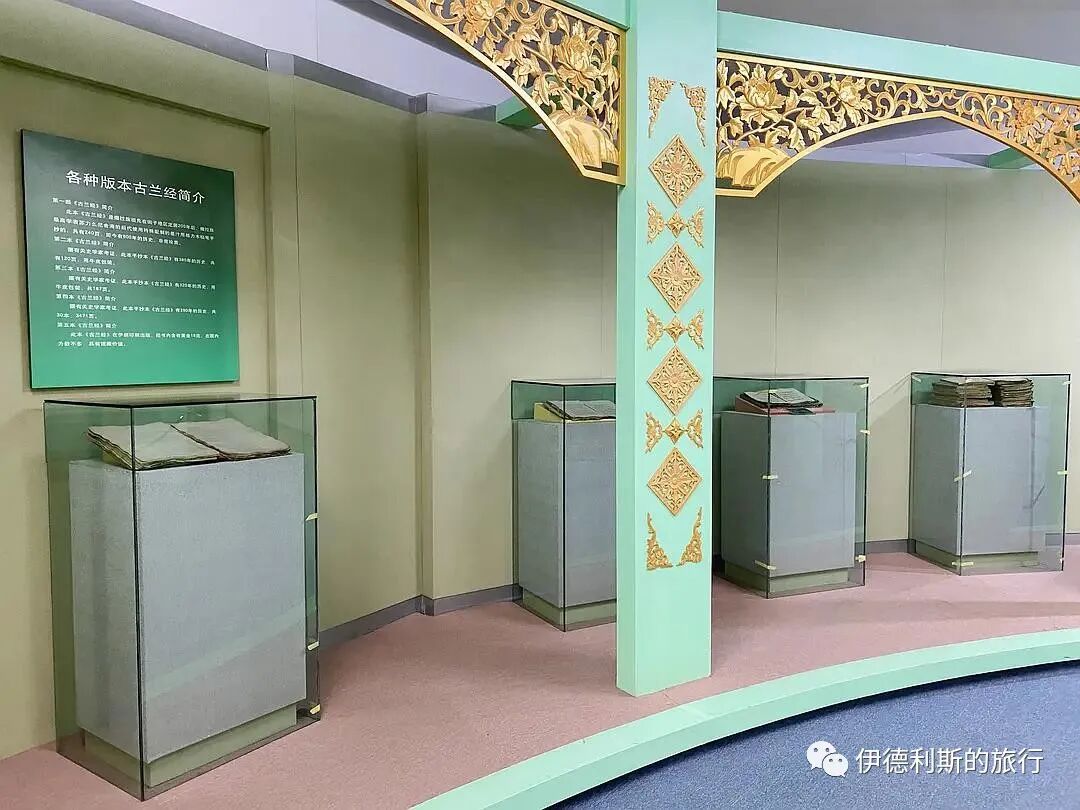
After the Salar people settled in Jiezi Town, the descendants of the highest Salar scholar, Sulimanisha Hai, hand-copied this using specially mixed ink and a tamarisk (gelimu) reed pen; it is over 600 years old.
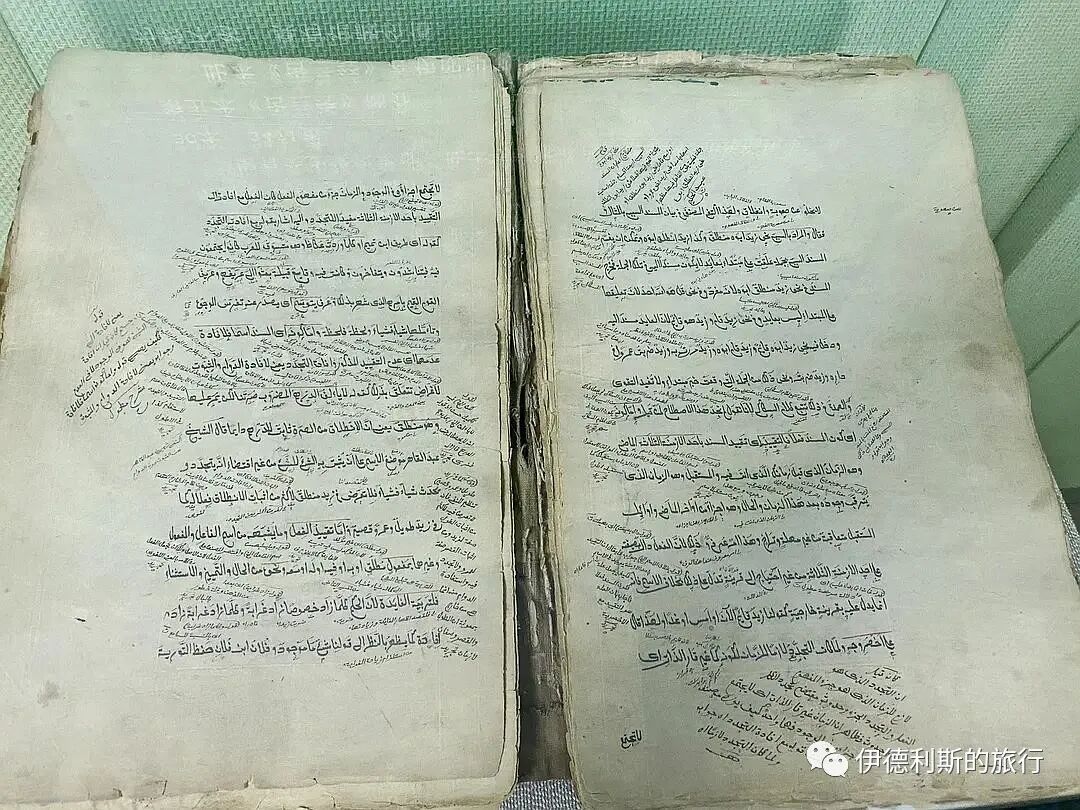
A manuscript from the 17th to 18th century, wrapped in cowhide.
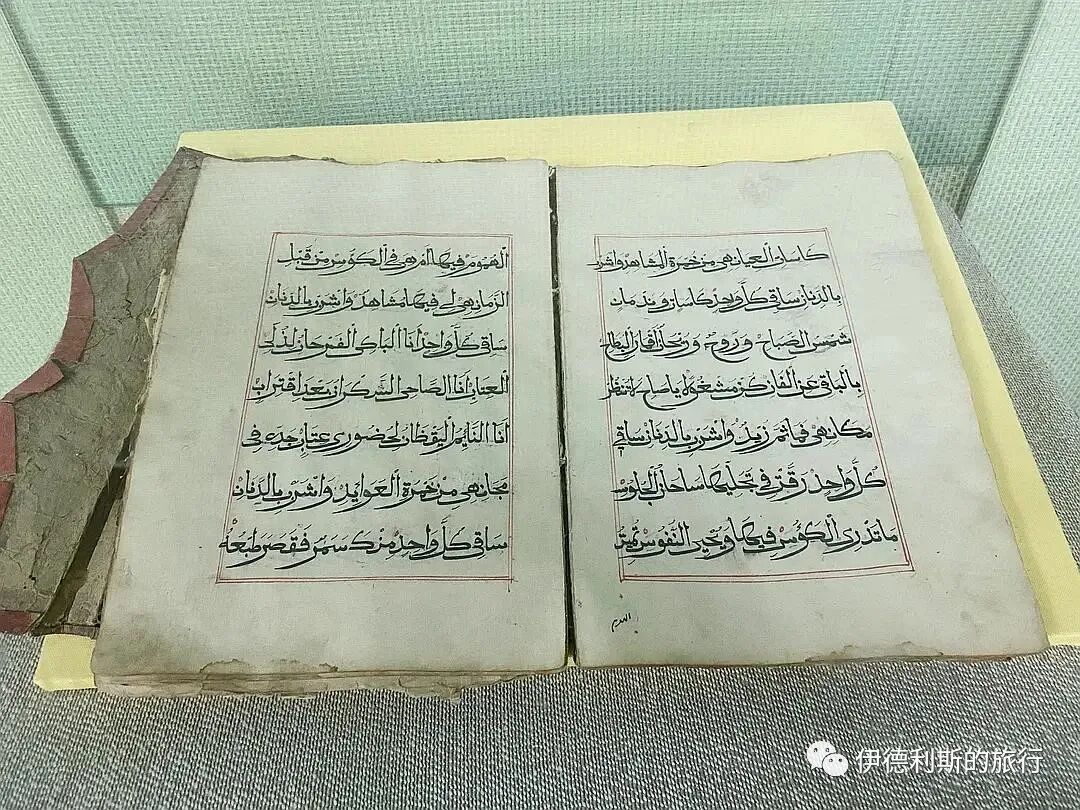
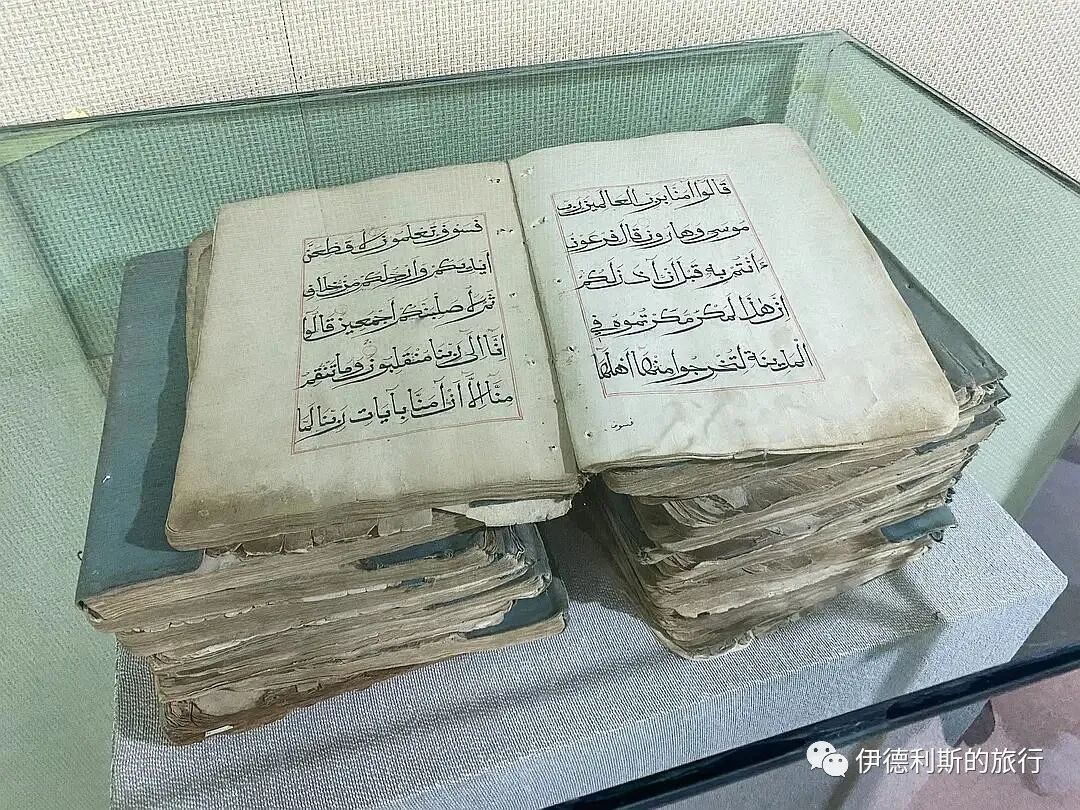
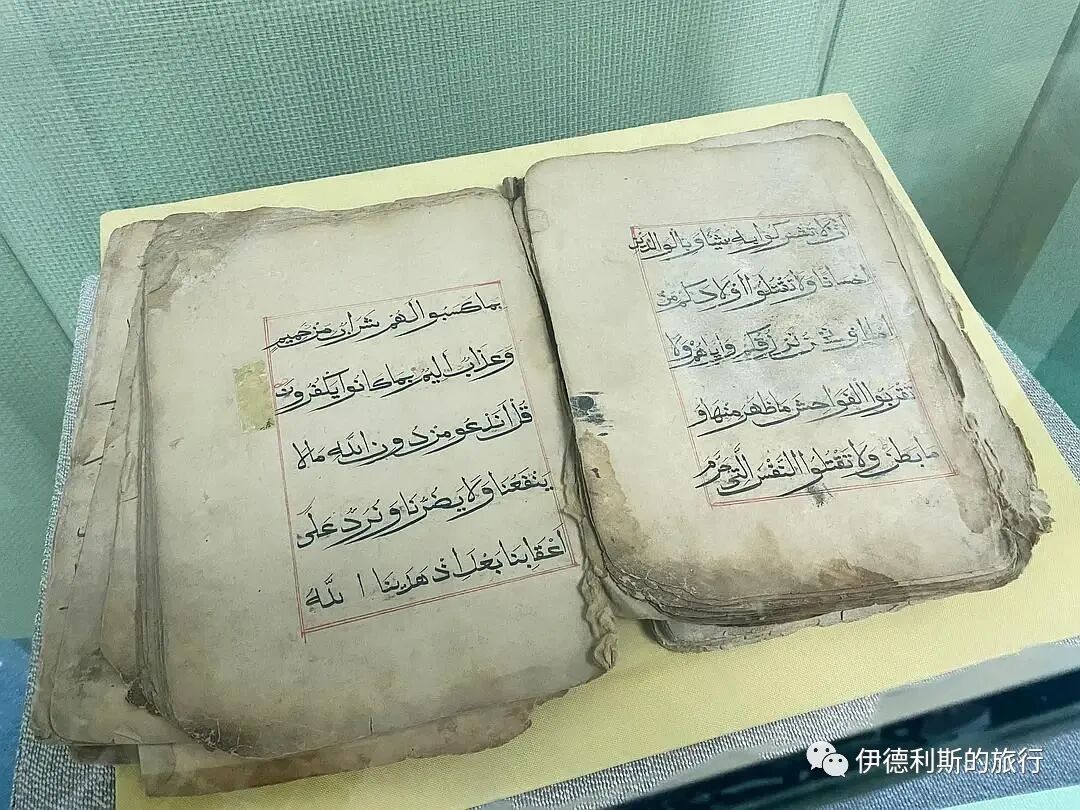
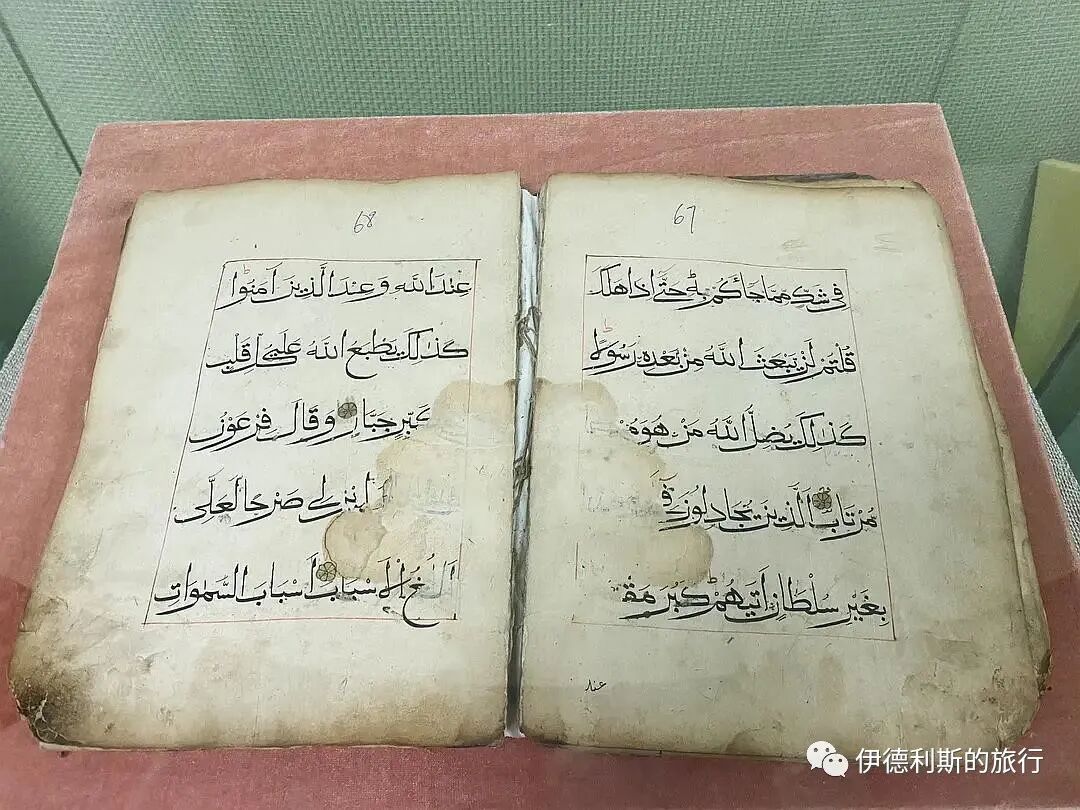
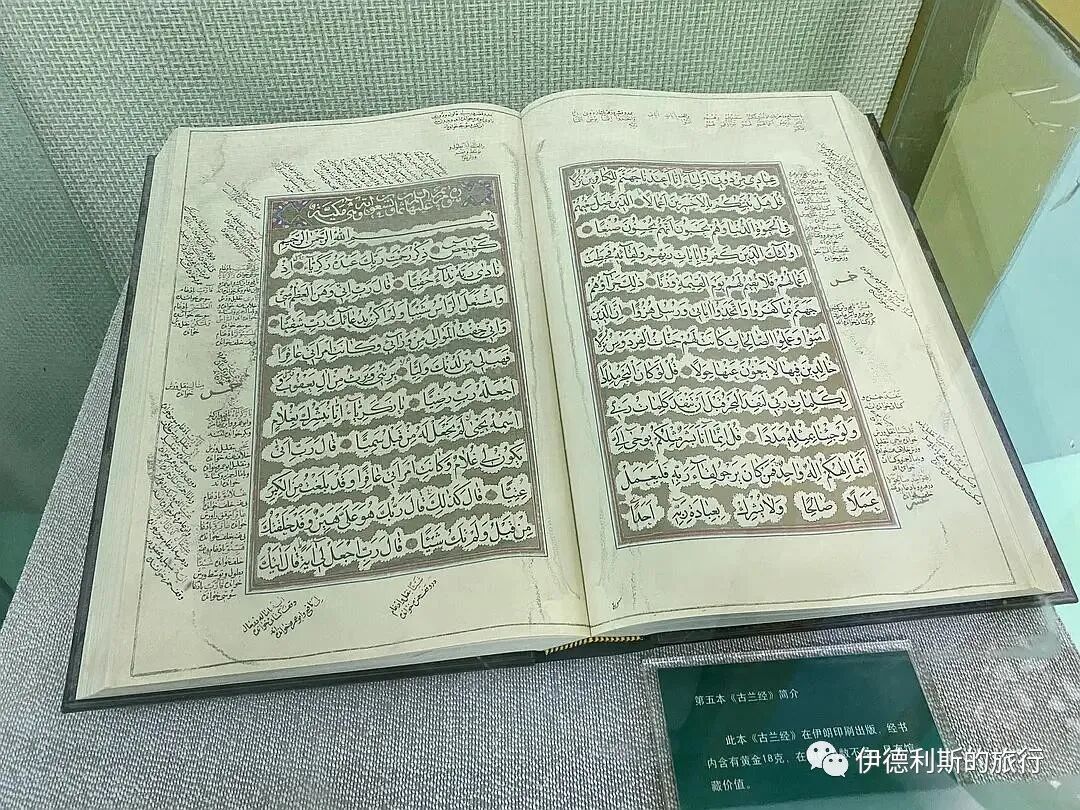
Printed and published in Iran, it contains 18 grams of gold.
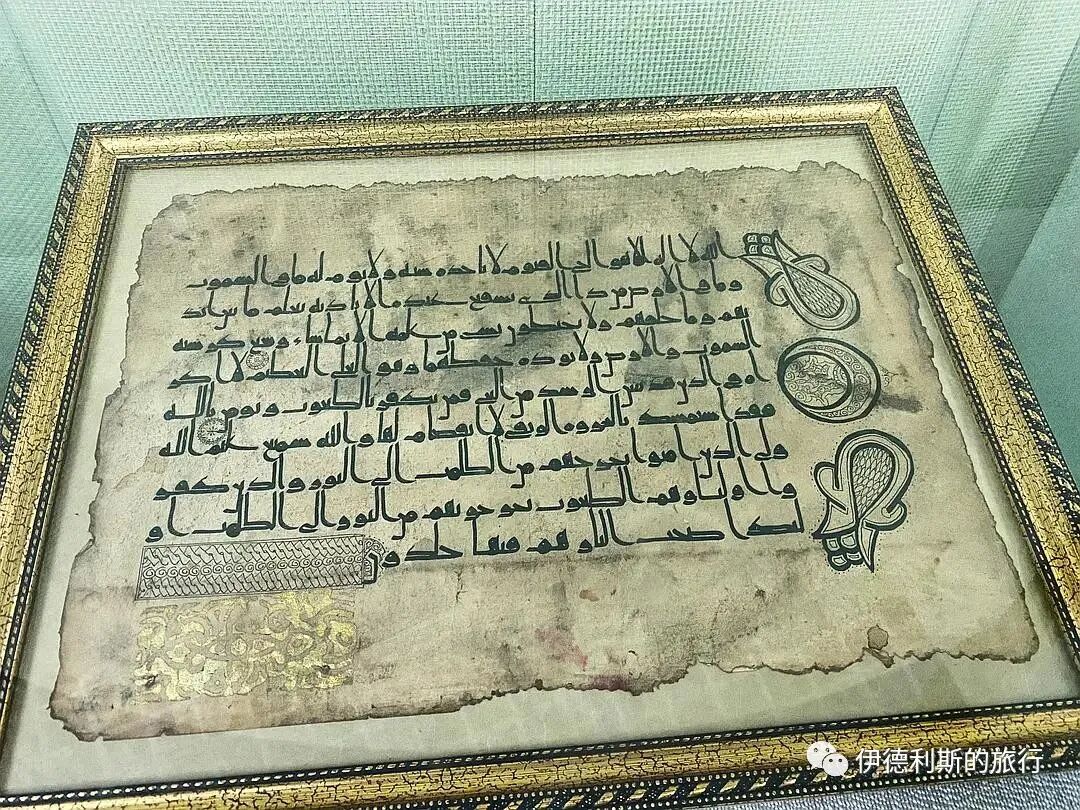
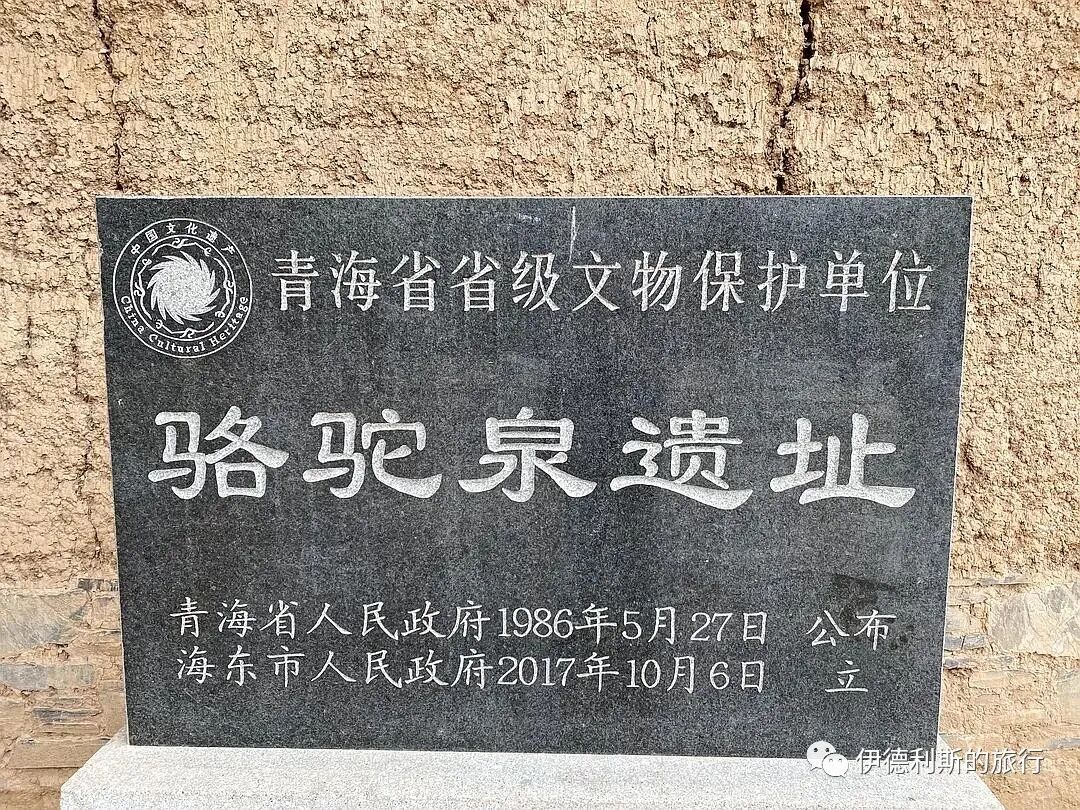
Camel Spring (Luotuo Quan).
Next to the Quran collection hall is Camel Spring, the first place the Salar people settled after migrating from Central Asia to Xunhua. In Salar legend, Ahman and Qarman originally lived near Samarkand. Because they were oppressed by their ruler, they led their people while pulling a white camel. The camel carried a bowl of soil from their hometown, a pot of water, and a Quran. They crossed the Tianshan Mountains heading east and finally arrived in Qinghai. When they reached Aotusi Mountain near Jiezi, they were very tired and decided to stop and rest. In the middle of the night, Qarman discovered the camel was missing. They searched everywhere and finally found the camel lying on the ground turned into stone, with water flowing from its mouth. They unloaded the water, soil, and Quran from the camel and began to recite the Quran. When they tasted the spring water flowing from the camel's mouth, they found it very sweet, exactly the same as the water they had brought with them. They compared it to the soil they brought and found it was also exactly the same, so they decided to settle down here.
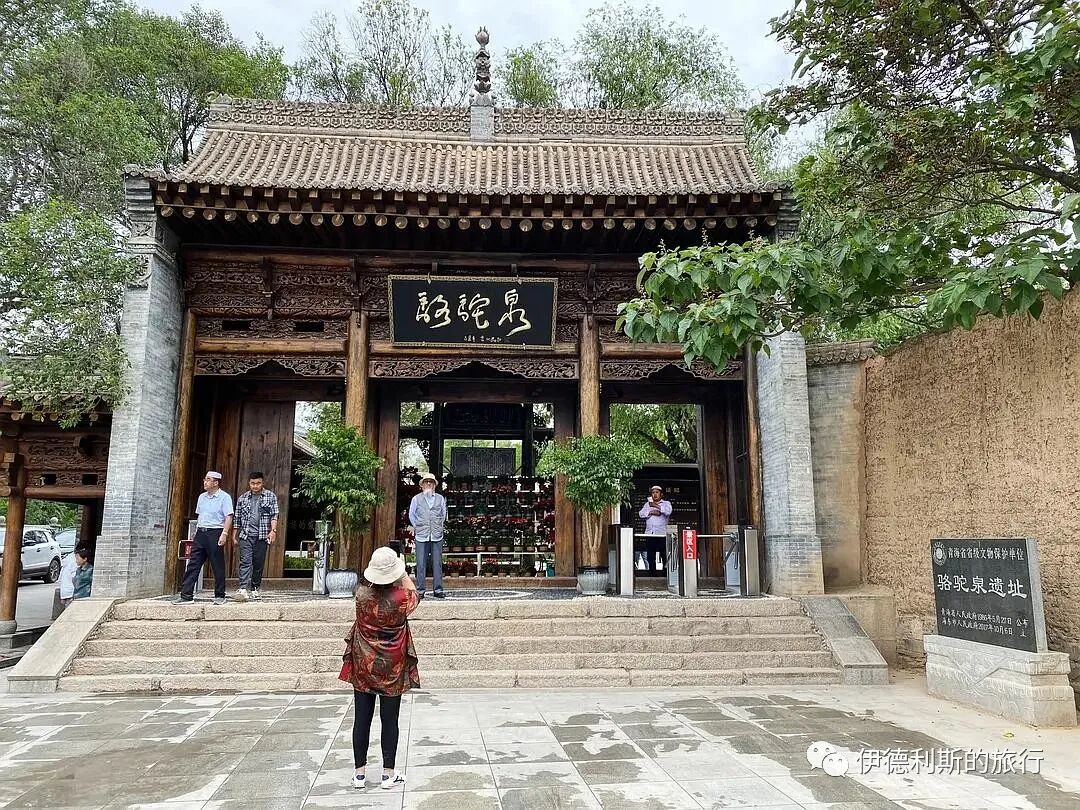
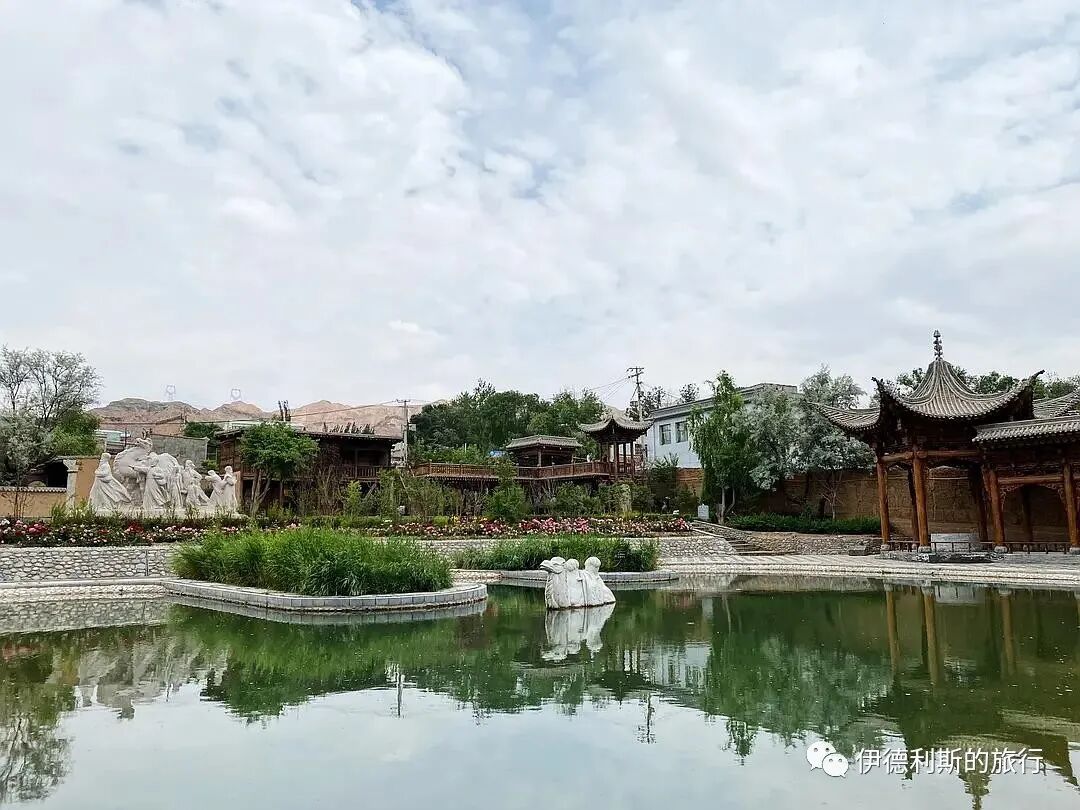
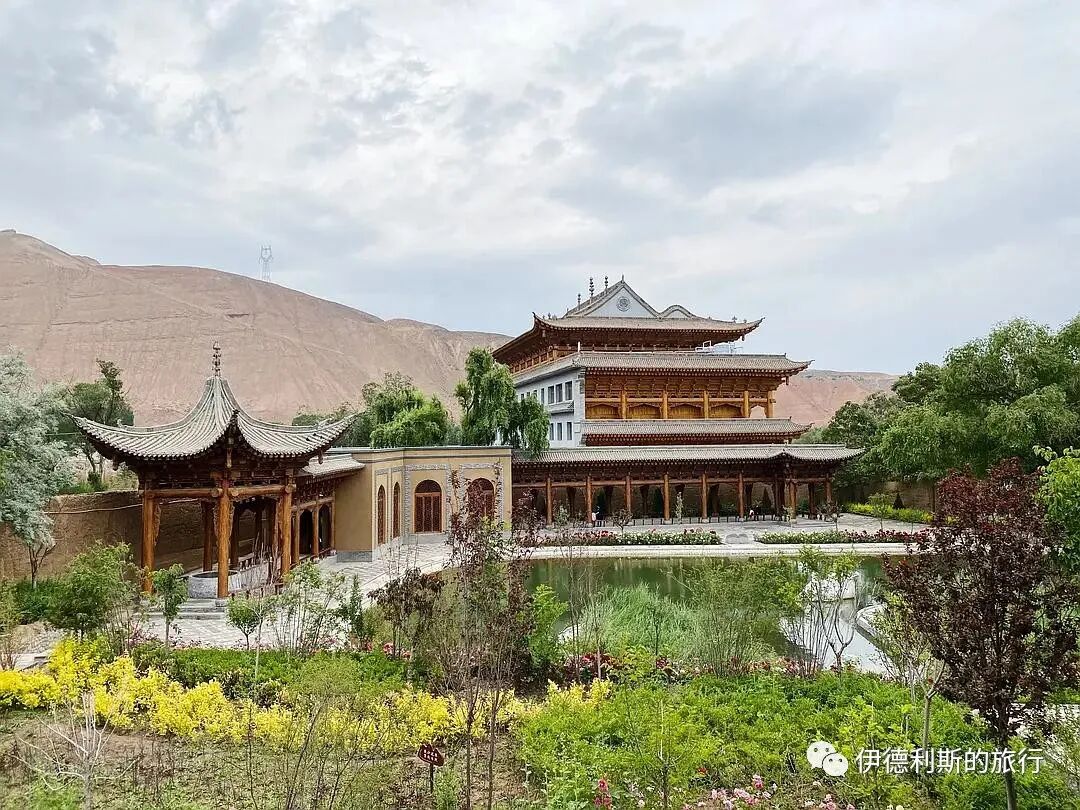
Several traditional Salar fence houses (libalou) were built in the Camel Spring scenic area. The fence house is called "baliaoyi" in the Salar language and has two floors. The upper floor is for guest rooms and bedrooms, while the lower floor is for storage and livestock pens. The fence walls use honeysuckle branches and pine boards, covered with a mixture of three types of soil, and the main structure is made of high rammed brown earth walls or a mix of stone and brick.
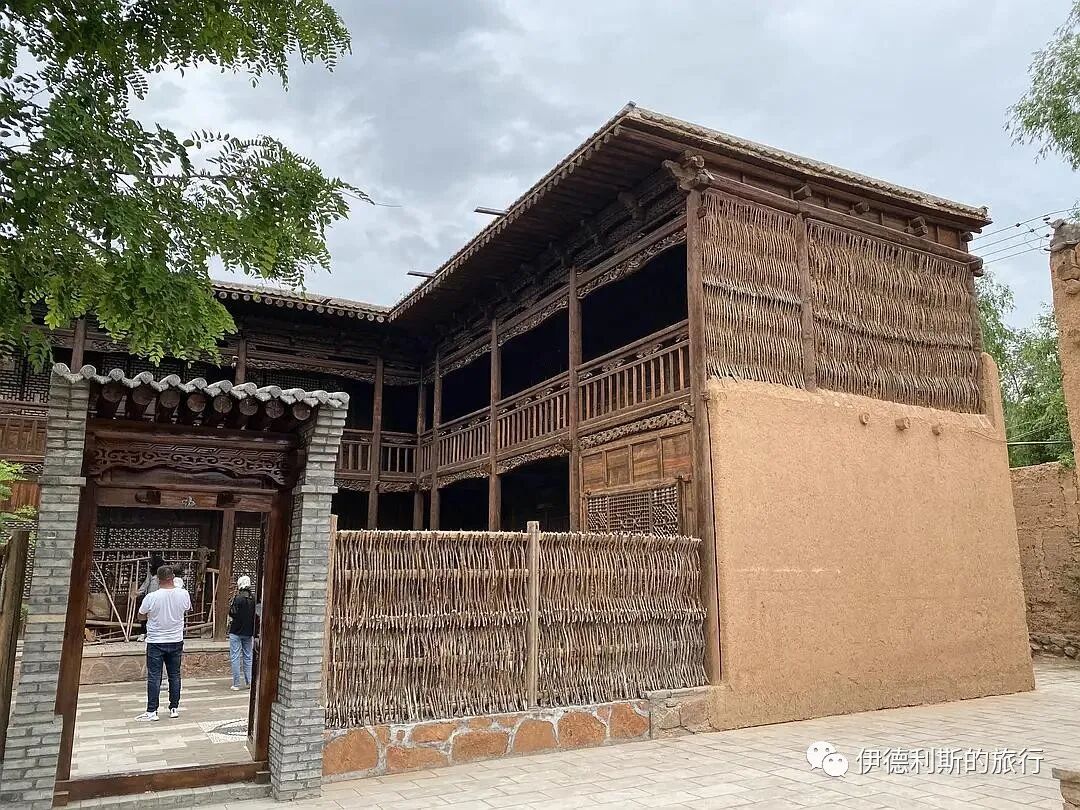
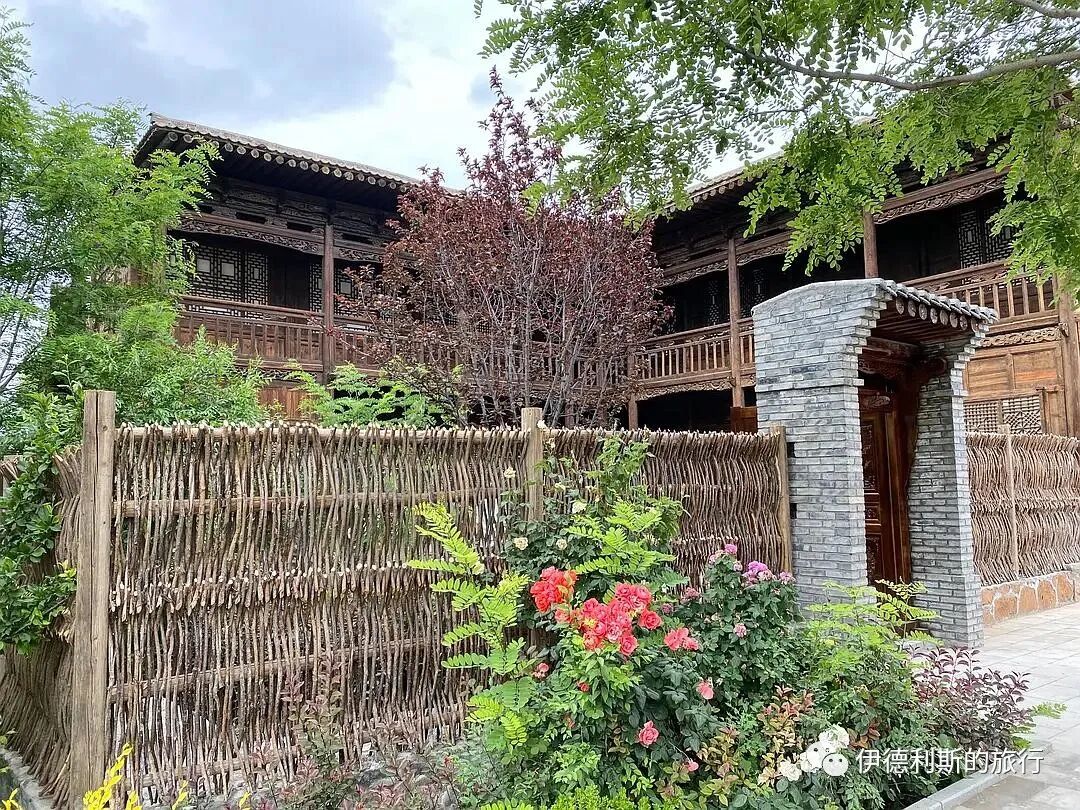
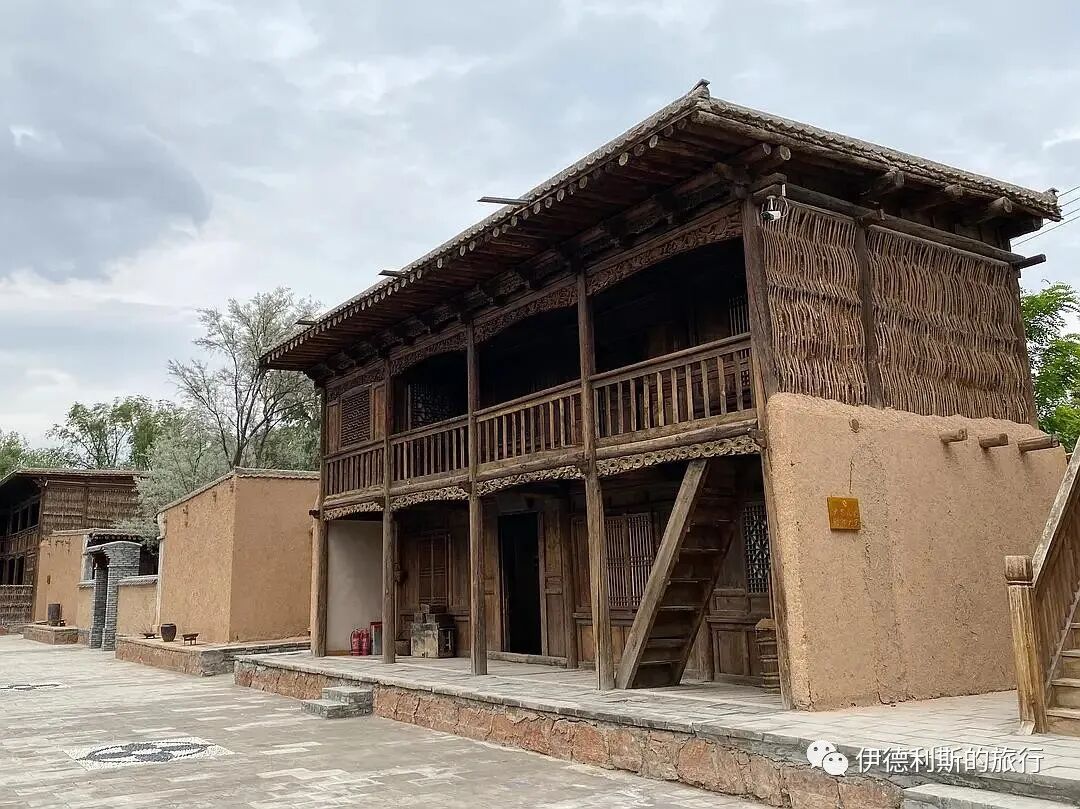
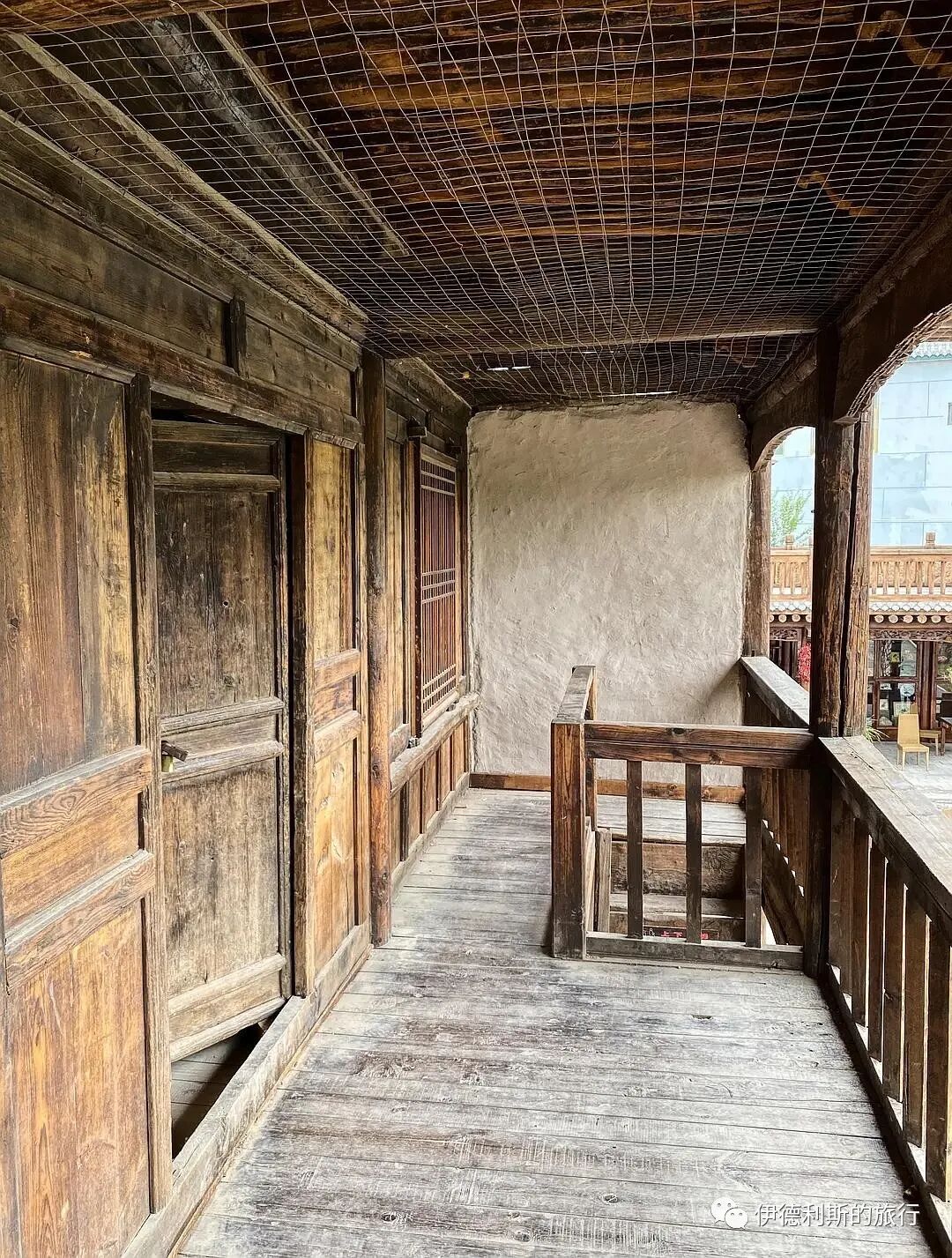
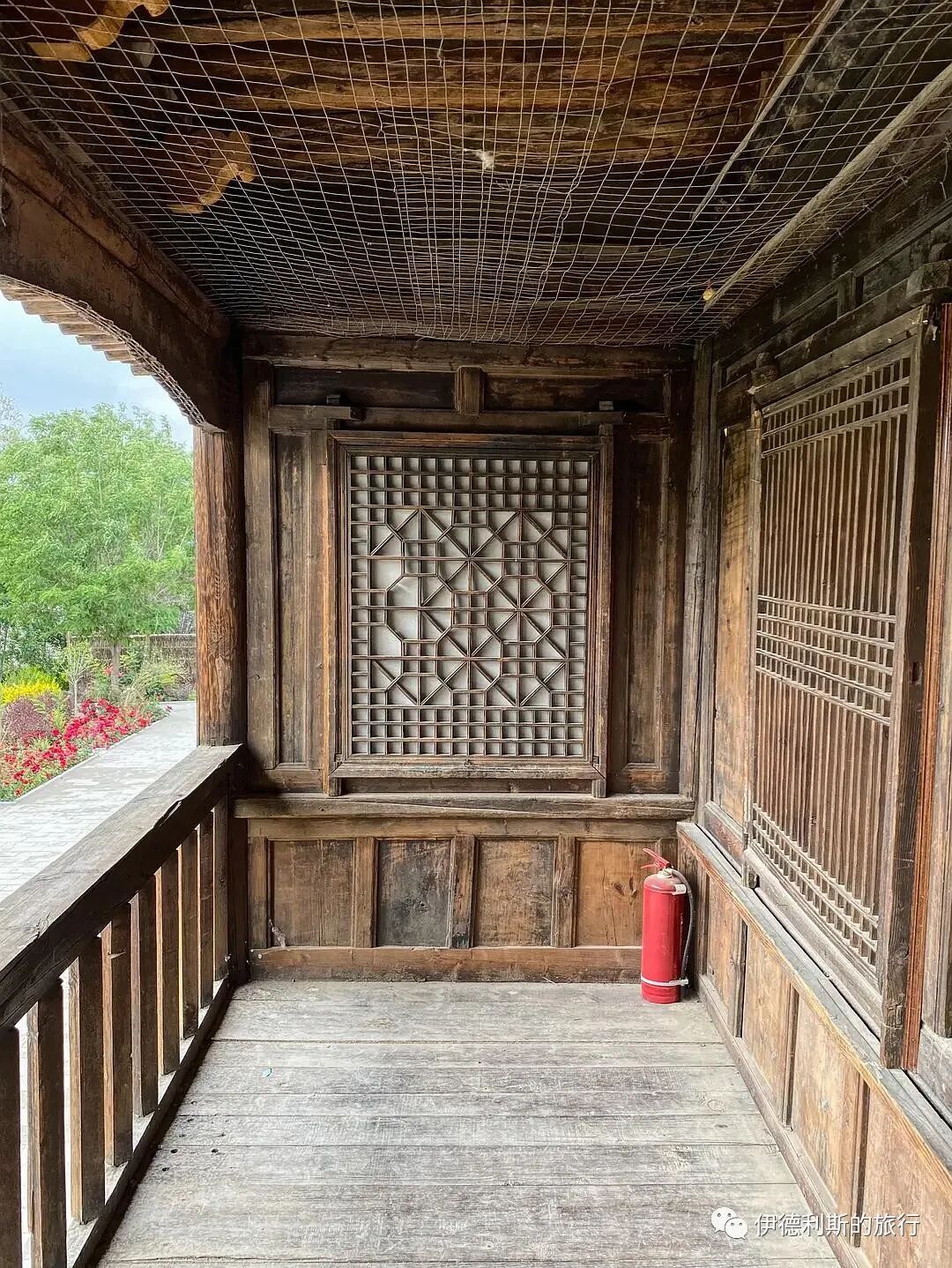
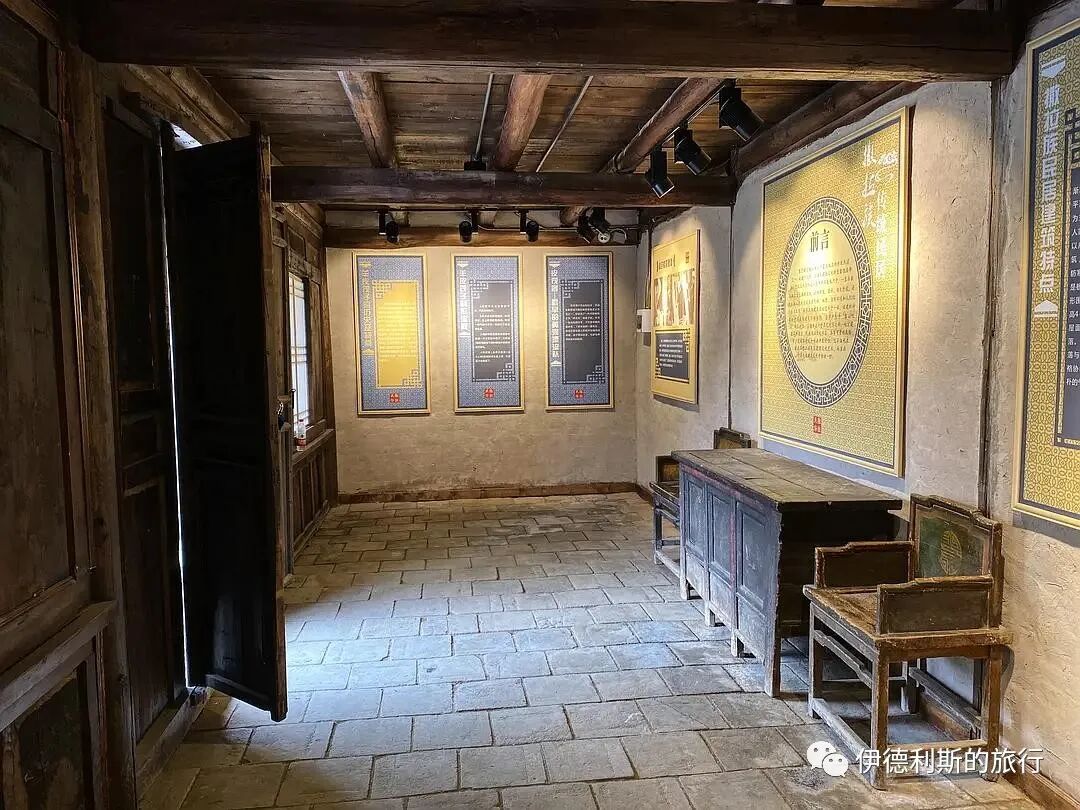
The Camel Spring scenic area features a restored Qing Dynasty Salar courtyard house, with a living room in the center of the main house, heated brick beds (kang) on both sides, and Arabic calligraphy hanging in the middle.
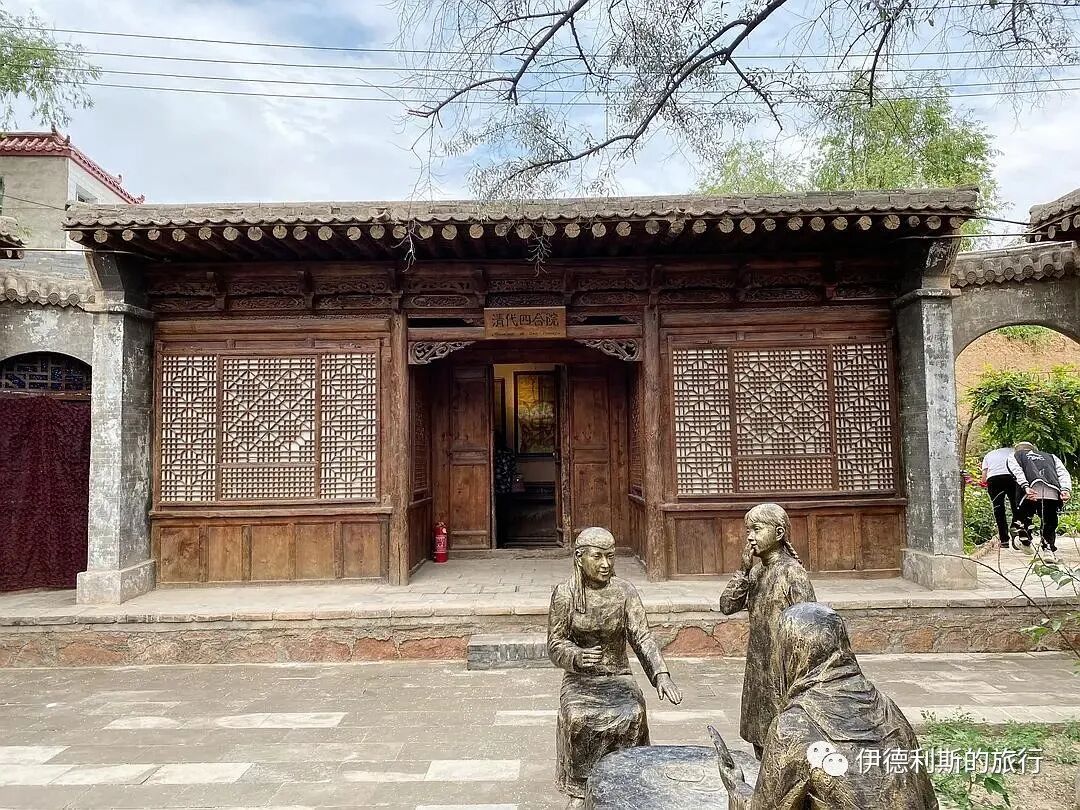
Jiezi Gongbei.
Hidden in the cemetery on the north side of the Great Mosque of Jiezi, the Jiezi Gongbei is the only historical relic left in Jiezi. Currently, only the lower brick section remains, featuring exquisite brick carvings and an inscription stating it was "rebuilt in the first year of Xianfeng," which is 1851.
Summary: Qinghai — Ping’an, Xunhua and Xining Muslim Heritage is presented here as a firsthand travel account in clear English, beginning with this scene: During the 2021 Dragon Boat Festival, I visited Ping'an, Xunhua, and Xining in Qinghai. My main goal was to visit the traditional historical mosques and gongbei buildings there, and I gained a lot. The account keeps its focus on Qinghai Travel, Hui Muslims, China Mosques while preserving the names, places, food, and historical details from the Chinese source.
During the 2021 Dragon Boat Festival, I visited Ping'an, Xunhua, and Xining in Qinghai. My main goal was to visit the traditional historical mosques and gongbei buildings there, and I gained a lot.
I stayed overnight at Ping'an Station (Ping'anyi).
I took a late flight to Xining Airport, then took a taxi to the Daqingzhen Kanguo Barbecue restaurant in the Ping'an District of Haidong to eat pan-roasted meat (kanguo). They have many types of pan-roasted meat, including lamb, tripe, intestines, and chicken. We had the pan-roasted lamb head and also ordered the wheat kernel porridge (mairen zhou), which is a must-have at Qinghai barbecue shops.
The restaurant layout features small private rooms common in Qinghai town restaurants. Even for two people, you can pull the curtain for privacy, which feels quite nice. After ordering, they brought out free pickles, radishes, mung bean jelly (liangfen), and boiled tea (aocha). The servers were very friendly. I had a few bites of the jelly and some tea, and then the pan-roasted meat arrived. Besides a whole lamb head, it came with potatoes, corn, and vermicelli, so we didn't really need to order any staple food. I finished with a bowl of wheat kernel porridge and felt very satisfied.
The next day, I had lamb offal soup (yangzasui) with flatbread (bingzi) at the Shalihai Lamb Offal shop on the main street of Ping'an, Haidong. Across the street is the Ping'an food street, Ping'anfang Pedestrian Street. I bought some handmade yogurt at the Hongshuiquan Starch Jelly (niangpi) shop inside. Hongshuiquan is where the most famous Hongshuiquan Great Mosque in Haidong is located.
The Upper and Lower Gongbei of Shangma Family in Bazanggou.
I took a Didi taxi from Ping'an to the famous Upper and Lower Gongbei of the Shangma family in Bazanggou, Haidong. The Upper Gongbei of the Shangma family is on the peak of Woniu Mountain, so it is also called Woniu Mountain Gongbei. It is the tomb of Ma Diangong (1643-1715), a leader of the Khufiyya Sufi order (menhuan).
The Lower Gongbei of the Shangma family in Bazanggou is the tomb of Xian Chengde (known as Chuanli Taiye), the third-generation sheikh of the Khufiyya Xianmen menhuan. Xian Chengde built this gongbei during the Jiaqing reign. Shortly after it was completed in 1812, he passed away (returned to Allah), and his followers buried him there. In 1895, the fifth-generation sheikh of the Xianmen, Xian Linyuan, also passed away and was buried in the Lower Gongbei.
We were warmly received at the Lower Gongbei of Shangmazhuang and were given fried dough (youxiang) and clear-stewed meat.
Yangulu Gongbei.
At noon, I chartered a car from Ping'an District, Haidong, to the famous Yangulu Gongbei in Xunhua. After a two-hour drive, we crossed the mountains from the Huangshui Valley into the Yellow River Valley and arrived at the Gongboxia Dam pier. When we reached the pier, a boat was about to depart. It carried a large family of Hui Muslims from Linxia who were visiting the gongbei, and we took the boat together to the gongbei pier.
To get from the pier to the gongbei, you have to walk along a mountain path by the Yellow River, but it has been widened in recent years and is much easier to walk than before.
At the end of the mountain road, there are over 30 houses built in 1985 with community funds to provide food, lodging, and rest for those visiting the gongbei. We performed wudu (abudaisi) here, listened to the advice of the Salar uncle who guards the gongbei, and prepared to head toward the cliff leading to the shrine.
After crossing the final stone threshold, we reached three rest pavilions built below the gongbei during the Guangxu reign. Not far above them stands the hexagonal, pointed-roof gongbei pavilion.
Going down the mountain is actually much harder than going up because it is a vertical cliff. You cannot see the path at all, so you have to feel your way with your feet, step by step. It is often hard to find where to place your next step, and halfway down, my calves started shaking from the intense tension. In the end, it took us even longer to reach the foot of the mountain than it did to climb up.
At the foot of the mountain, we were warmly welcomed by the Salar guardians of the gongbei. We ate delicious braised meat bowls (huiwan), steamed buns (momo), old-stock chicken (laotangji), and hand-grabbed lamb chops (shouzhuayangpai), and drank plenty of clear tea. The Yangulu Gongbei is currently guarded by four Salar families who have lived here for generations. Food and lodging are free for all believers who visit, and the income mainly comes from charitable donations (nietie).
After a full meal, we said goodbye to our warm Salar friends, returned to the pier, and took a boat to leave Yangulu.
Xunhua County Town
In the evening, we traveled from Yangulu to Xunhua County town, bought some handmade yogurt with rapeseed oil, and then ate some Salar dry-mixed beef noodles.
Here in Xunhua, even the beef noodle shops have small private rooms; the environment is really quite good. After ordering, they served meat broth and tea first, and we also ordered a platter of cold dishes. Besides the thread chili (xianlajiao), people in Xunhua also love eating tiger-skin chili (hupilajiao). While waiting for the bus earlier, I noticed the grandpas and grandmas shopping were all carrying a bag of tiger-skin chili. Dry-mixed noodles with meat sauce (roujiangganban) should be a specialty here in Qinghai. I had it before at a Salar restaurant in Beijing called A-Gong Noodle House, but this time it felt more authentic. The noodles were thin and chewy, the sauce was especially fragrant, and this meal cost less than twenty yuan, which is great value.
The Yellow River at the Xunhua section.
In the morning, we had a bowl of beef noodles in Xunhua County town, then set off to visit the beautiful traditional Salar mosques.
Qingshuihedong Mosque
Qingshuihedong Mosque is the main mosque (haiyisi) of the Qingshui Gong of the Salar Eight Gongs. It was first built in 1425 and has been rebuilt many times throughout history.
Mengda Mosque
Mengda Mosque is located in Dazhuang Village, Mengda Township, Xunhua, Qinghai. It was first built in 1408 (the sixth year of the Yongle reign of the Ming Dynasty) and expanded three times during the Qing Dynasty. It is the main mosque (haiyisi) of the Mengda Gong, one of the Salar Eight Gongs.
The Yellow River at the Mengda section.
Tashapo Mosque
Tashapo Mosque was first built in 1480 (the sixteenth year of the Chenghua reign of the Ming Dynasty) and rebuilt in 1755 (the twentieth year of the Qianlong reign of the Qing Dynasty).
Labian Mosque
Labian Mosque was first built during the Qianlong era. The main hall was rebuilt in 2015, leaving only the call-to-prayer tower (xuanlilou) and the two side gate towers as the original ancient structures.
Zhangga Mosque
Zhangga Mosque was first built in 1406 (the fourth year of the Yongle reign of the Ming Dynasty) and was rebuilt during the Qing Dynasty.
Kewa Mosque
Kewa Mosque was first built in 1403 (the first year of the Yongle reign of the Ming Dynasty) and expanded during the Qing Dynasty. It is the main Friday mosque (jumuasi) for the Salar people's eight gong (gong) and nine man (man) groups.
At Kewa Mosque, we were warmly welcomed by a Salar imam. He gave us a detailed introduction to the mosque and its wall paintings, and even cut up a melon for us to eat. I want to thank the imam here!
Returning to the county town.
At noon, we ate stir-fried beef and dough paste (jiaotuan) at a Salar family farmhouse restaurant in the county town. Dough paste (jiaotuan) is made by stir-frying flour until cooked, boiling it with water, and then adding refined vegetable oil. It tastes very fragrant. In Xunhua, Salar family eateries are divided into tea restaurants and farmhouse restaurants. The tea restaurants have a wider variety of dishes, but if you want authentic Salar food, I recommend going to a farmhouse restaurant.
Then we went to the Jiezi Town fried dough twist (sanzi) market to buy Salar-style fried dates (youzao). These are large dates wrapped in dough and fried. One bite is full of date juice.
Jiezi Grand Mosque Quran Collection Hall
I was very lucky to visit the Quran Collection Hall at Jiezi Grand Mosque. I saw the handwritten Quran that the Salar people brought with them when they migrated from the Samarkand area to Xunhua over 700 years ago.
The Quran consists of 30 volumes, stored in two rhinoceros-hide cases. Historically, this set of the Quran was kept by the religious leader known as the 'Gazi'. When the Gazi system was abolished in 1896, the Quran remained in the care of the Gazi's descendants. People say in 1894, Ma Qishao (Ma Anliang) from Linxia seized the Quran. However, on his way back to Linxia from Xunhua, he encountered a violent storm and could not cross the mountains, so he had to return the Quran. During the Republic of China era, the Quran was seized by Ma Bufang. It was not returned to Han Wushiba, a descendant of the Jiezi Gazi, until the 1950s.
In 1954, the Quran was sent to Syria for an international exhibition, where it made a great impression on the Islamic world. After the '58 Religious Reform' in 1958, the burning of religious texts began. On the advice of the 'Salar Social History Investigation Group' then conducting research in Xunhua, the Quran was sent to the Cultural Palace of Nationalities under the guise of participating in a 10th-anniversary national exhibition. It was stored in the basement of the Cultural Palace for the next twenty years, only returning to Jiezi Grand Mosque in 1982.
The Quran I photographed.
The uncle who showed us around the collection hall is telling us about the migration route of the Salar people.
The Quran was photographed in 1933 by the American missionary Reverend Carter Holton (Hai Yingguang). Reverend Holton lived in the Hehuang region for many years between the 1920s and 1940s. Reverend Holton loved photography and left behind over 5,000 photos of the ethnic customs in the Gansu and Qinghai regions. In the early 1990s, his second daughter donated them all to the Harvard University Library, where they can now be viewed on the library's official website.
Imam Hai holds the Quran himself.
The Quran kept in the collection hall.
After the Salar people settled in Jiezi Town, the descendants of the highest Salar scholar, Sulimanisha Hai, hand-copied this using specially mixed ink and a tamarisk (gelimu) reed pen; it is over 600 years old.
A manuscript from the 17th to 18th century, wrapped in cowhide.
Printed and published in Iran, it contains 18 grams of gold.
Camel Spring (Luotuo Quan).
Next to the Quran collection hall is Camel Spring, the first place the Salar people settled after migrating from Central Asia to Xunhua. In Salar legend, Ahman and Qarman originally lived near Samarkand. Because they were oppressed by their ruler, they led their people while pulling a white camel. The camel carried a bowl of soil from their hometown, a pot of water, and a Quran. They crossed the Tianshan Mountains heading east and finally arrived in Qinghai. When they reached Aotusi Mountain near Jiezi, they were very tired and decided to stop and rest. In the middle of the night, Qarman discovered the camel was missing. They searched everywhere and finally found the camel lying on the ground turned into stone, with water flowing from its mouth. They unloaded the water, soil, and Quran from the camel and began to recite the Quran. When they tasted the spring water flowing from the camel's mouth, they found it very sweet, exactly the same as the water they had brought with them. They compared it to the soil they brought and found it was also exactly the same, so they decided to settle down here.
Several traditional Salar fence houses (libalou) were built in the Camel Spring scenic area. The fence house is called "baliaoyi" in the Salar language and has two floors. The upper floor is for guest rooms and bedrooms, while the lower floor is for storage and livestock pens. The fence walls use honeysuckle branches and pine boards, covered with a mixture of three types of soil, and the main structure is made of high rammed brown earth walls or a mix of stone and brick.
The Camel Spring scenic area features a restored Qing Dynasty Salar courtyard house, with a living room in the center of the main house, heated brick beds (kang) on both sides, and Arabic calligraphy hanging in the middle.
Jiezi Gongbei.
Hidden in the cemetery on the north side of the Great Mosque of Jiezi, the Jiezi Gongbei is the only historical relic left in Jiezi. Currently, only the lower brick section remains, featuring exquisite brick carvings and an inscription stating it was "rebuilt in the first year of Xianfeng," which is 1851.
Halal Travel Guide: Qinghai — Ping’an, Xunhua and Xining Muslim Heritage (Part 2)
Articles • ali2007fr posted the article • 0 comments • 145 views • 2026-05-18 01:28
Reposted from the web
Summary: Qinghai — Ping’an, Xunhua and Xining Muslim Heritage is presented here as a firsthand travel account in clear English, beginning with this scene: It is very precious that Pastor Carter Holton, who was preaching in Xunhua in the 1930s, took photos of the Jiezi Gongbei that have been well-preserved for over 80 years. The account keeps its focus on Qinghai Travel, Hui Muslims, Halal Food while preserving the names, places, food, and historical details from the Chinese source.
It is very precious that Pastor Carter Holton, who was preaching in Xunhua in the 1930s, took photos of the Jiezi Gongbei that have been well-preserved for over 80 years.
Night in Xunhua County.
In the evening, we had the local specialty, colostrum milk (jiaonai), in the county town. Colostrum milk (jiaonai) is the milk produced by a cow within three days of giving birth, mixed with regular milk and steamed. It has a texture like egg custard, but a very unique taste. Some people might not be used to it, but many elderly grandparents in Qinghai love it.
At night, we ate barbecue at the East Gate Food Street in the county town. We ordered half a jin of grilled lamb chops, a clay pot dish, and a grilled flatbread (kaomo). Zainabu also ordered a bowl of fermented vegetable juice (jiangshui) on the side. Having a little barbecue at night is quite comfortable.
There are three main types of breakfast in Xunhua: beef noodles, lamb offal soup (yangzasui) with flatbread, and steamed buns with fermented rice wine (baozi laozao). We had breakfast at the Xiuying Baozi Laozao Restaurant on Jishi Street. Actually, the steamed bun and fermented rice wine shops here sell many other things. I saw that what people ate the most were stewed vegetable bowls (huiwan) and deep-fried dough sticks (youtiao). The stewed vegetable bowl (huiwan), also called mixed vegetables (huicai), mainly contains radishes, potatoes, vermicelli, and meat. We had eaten it before at the Yangu Road Gongbei. You can also drink milk, eat starch noodle soup (fentang), black rice porridge, and other things.
The Gasan Antique Shop in the county town has all kinds of ritual water jugs (tangping hu), which are quite interesting.
Suzhi Mosque.
The Suzhi Mosque in Xunhua, Qinghai, was first built in 1460 (the fourth year of the Tianshun reign of the Ming Dynasty) and expanded during the Qing Dynasty. It is currently a cultural relic protection unit of Qinghai Province.
Ahetan Mosque.
Although the Ahetan Mosque is located in Hualong County, north of the Yellow River, it is still a Salar ethnic mosque and belongs to the Suzhi Gong, one of the eight Salar Gongs, just like the Suzhi Mosque.
In the main hall of the mosque, we received a warm welcome from the imam.
Setting off for Xining.
At noon, we had a home-style mixed clay pot (shijin tu huoguo) in Xunhua County. It had a rich variety of vegetables, and there was actually a lot of meat hidden underneath. Two people were very full after finishing a small pot.
In the afternoon, we headed from Xunhua to Xining Airport. Halfway there, we received news that our flight was canceled due to heavy rain in Beijing, so we had to change our flight and head to downtown Xining instead.
With a few extra hours on our hands, we went to the Niluo Food City on the fifth floor of the Xining Wangfujing Department Store to have some snacks. Niluo Food City is not the kind of messy snack stall area often seen in shopping malls. It gathers many local halal snacks and is clean, hygienic, and cheap. We ate Qinghai specialties like wheat kernel porridge (mairen zhou), lamb intestine noodles (yangchang mian), and fermented oat milk tea (tianpeizi naicha). It felt very pleasant to have some snacks here after getting tired from walking around the mall.
Zainab tried river snail rice noodles (luosifen) for the first time at Nile Food City, haha. This shop is very clean and hygienic, and local Hui Muslim girls love to eat here.
Zainab couldn't stop thinking about the homemade yogurt (suannai) from Yangjia Third Alley after drinking it last year, so she made sure to have some this time while visiting Xining. Zainab loves this pure yogurt (suannai) that has no added sugar or rapeseed oil. view all
Summary: Qinghai — Ping’an, Xunhua and Xining Muslim Heritage is presented here as a firsthand travel account in clear English, beginning with this scene: It is very precious that Pastor Carter Holton, who was preaching in Xunhua in the 1930s, took photos of the Jiezi Gongbei that have been well-preserved for over 80 years. The account keeps its focus on Qinghai Travel, Hui Muslims, Halal Food while preserving the names, places, food, and historical details from the Chinese source.
It is very precious that Pastor Carter Holton, who was preaching in Xunhua in the 1930s, took photos of the Jiezi Gongbei that have been well-preserved for over 80 years.
Night in Xunhua County.
In the evening, we had the local specialty, colostrum milk (jiaonai), in the county town. Colostrum milk (jiaonai) is the milk produced by a cow within three days of giving birth, mixed with regular milk and steamed. It has a texture like egg custard, but a very unique taste. Some people might not be used to it, but many elderly grandparents in Qinghai love it.
At night, we ate barbecue at the East Gate Food Street in the county town. We ordered half a jin of grilled lamb chops, a clay pot dish, and a grilled flatbread (kaomo). Zainabu also ordered a bowl of fermented vegetable juice (jiangshui) on the side. Having a little barbecue at night is quite comfortable.
There are three main types of breakfast in Xunhua: beef noodles, lamb offal soup (yangzasui) with flatbread, and steamed buns with fermented rice wine (baozi laozao). We had breakfast at the Xiuying Baozi Laozao Restaurant on Jishi Street. Actually, the steamed bun and fermented rice wine shops here sell many other things. I saw that what people ate the most were stewed vegetable bowls (huiwan) and deep-fried dough sticks (youtiao). The stewed vegetable bowl (huiwan), also called mixed vegetables (huicai), mainly contains radishes, potatoes, vermicelli, and meat. We had eaten it before at the Yangu Road Gongbei. You can also drink milk, eat starch noodle soup (fentang), black rice porridge, and other things.
The Gasan Antique Shop in the county town has all kinds of ritual water jugs (tangping hu), which are quite interesting.
Suzhi Mosque.
The Suzhi Mosque in Xunhua, Qinghai, was first built in 1460 (the fourth year of the Tianshun reign of the Ming Dynasty) and expanded during the Qing Dynasty. It is currently a cultural relic protection unit of Qinghai Province.
Ahetan Mosque.
Although the Ahetan Mosque is located in Hualong County, north of the Yellow River, it is still a Salar ethnic mosque and belongs to the Suzhi Gong, one of the eight Salar Gongs, just like the Suzhi Mosque.
In the main hall of the mosque, we received a warm welcome from the imam.
Setting off for Xining.
At noon, we had a home-style mixed clay pot (shijin tu huoguo) in Xunhua County. It had a rich variety of vegetables, and there was actually a lot of meat hidden underneath. Two people were very full after finishing a small pot.
In the afternoon, we headed from Xunhua to Xining Airport. Halfway there, we received news that our flight was canceled due to heavy rain in Beijing, so we had to change our flight and head to downtown Xining instead.
With a few extra hours on our hands, we went to the Niluo Food City on the fifth floor of the Xining Wangfujing Department Store to have some snacks. Niluo Food City is not the kind of messy snack stall area often seen in shopping malls. It gathers many local halal snacks and is clean, hygienic, and cheap. We ate Qinghai specialties like wheat kernel porridge (mairen zhou), lamb intestine noodles (yangchang mian), and fermented oat milk tea (tianpeizi naicha). It felt very pleasant to have some snacks here after getting tired from walking around the mall.
Zainab tried river snail rice noodles (luosifen) for the first time at Nile Food City, haha. This shop is very clean and hygienic, and local Hui Muslim girls love to eat here.
Zainab couldn't stop thinking about the homemade yogurt (suannai) from Yangjia Third Alley after drinking it last year, so she made sure to have some this time while visiting Xining. Zainab loves this pure yogurt (suannai) that has no added sugar or rapeseed oil. view all
Reposted from the web
Summary: Qinghai — Ping’an, Xunhua and Xining Muslim Heritage is presented here as a firsthand travel account in clear English, beginning with this scene: It is very precious that Pastor Carter Holton, who was preaching in Xunhua in the 1930s, took photos of the Jiezi Gongbei that have been well-preserved for over 80 years. The account keeps its focus on Qinghai Travel, Hui Muslims, Halal Food while preserving the names, places, food, and historical details from the Chinese source.
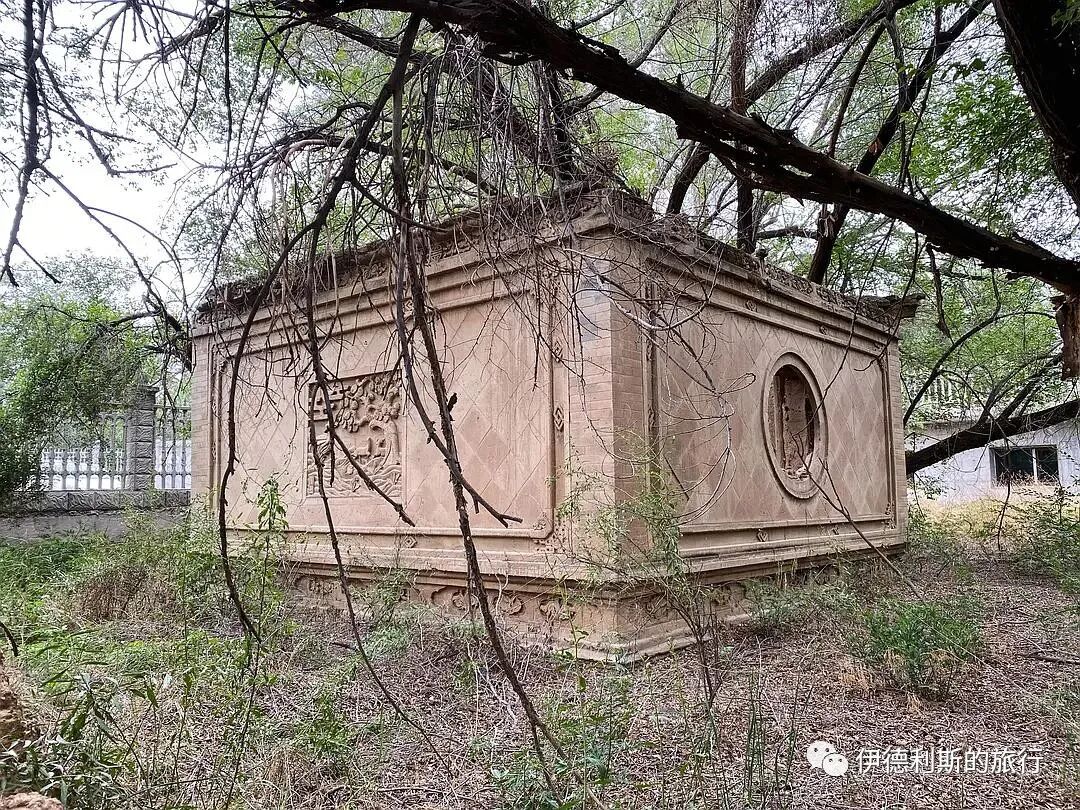
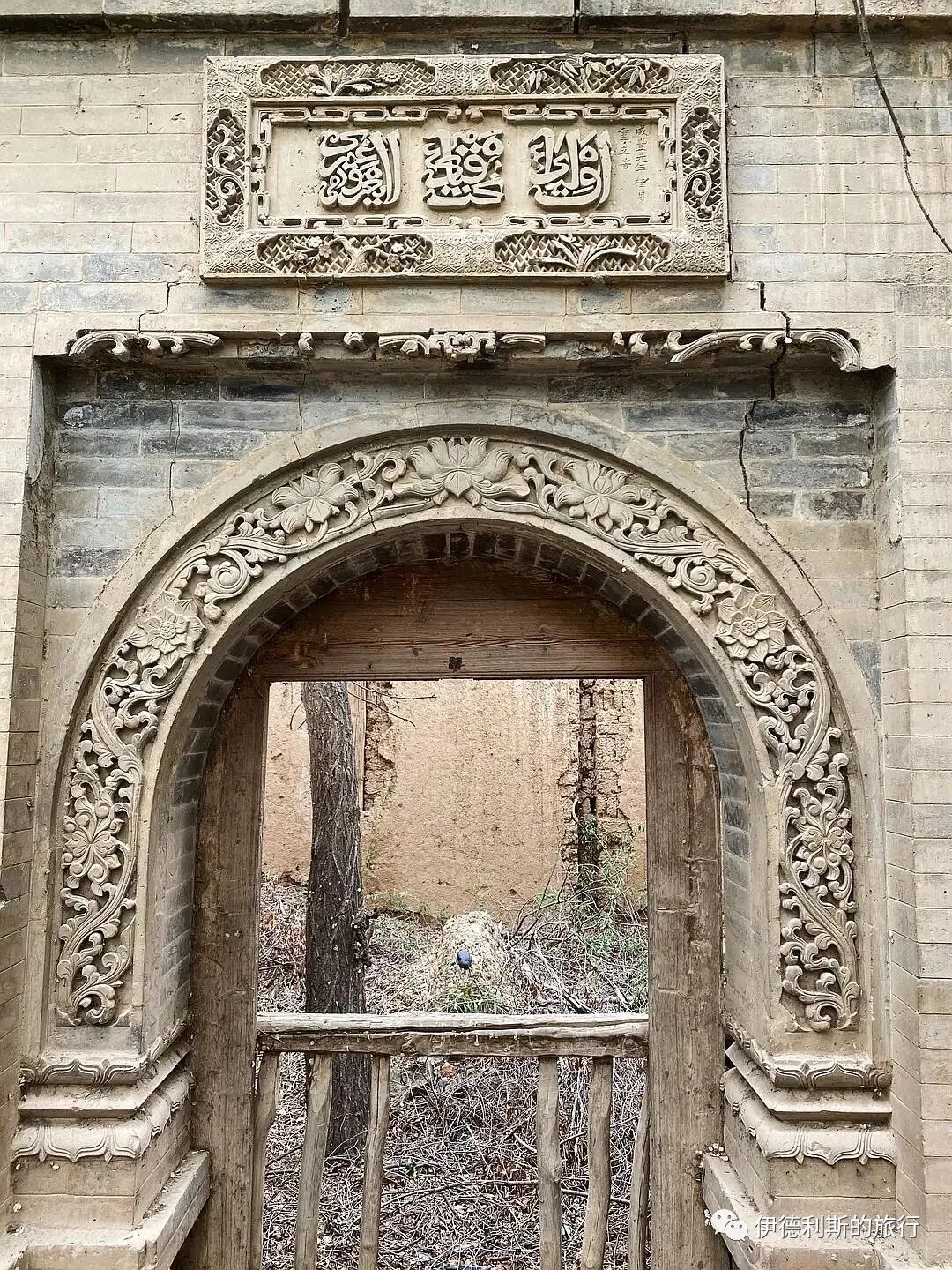
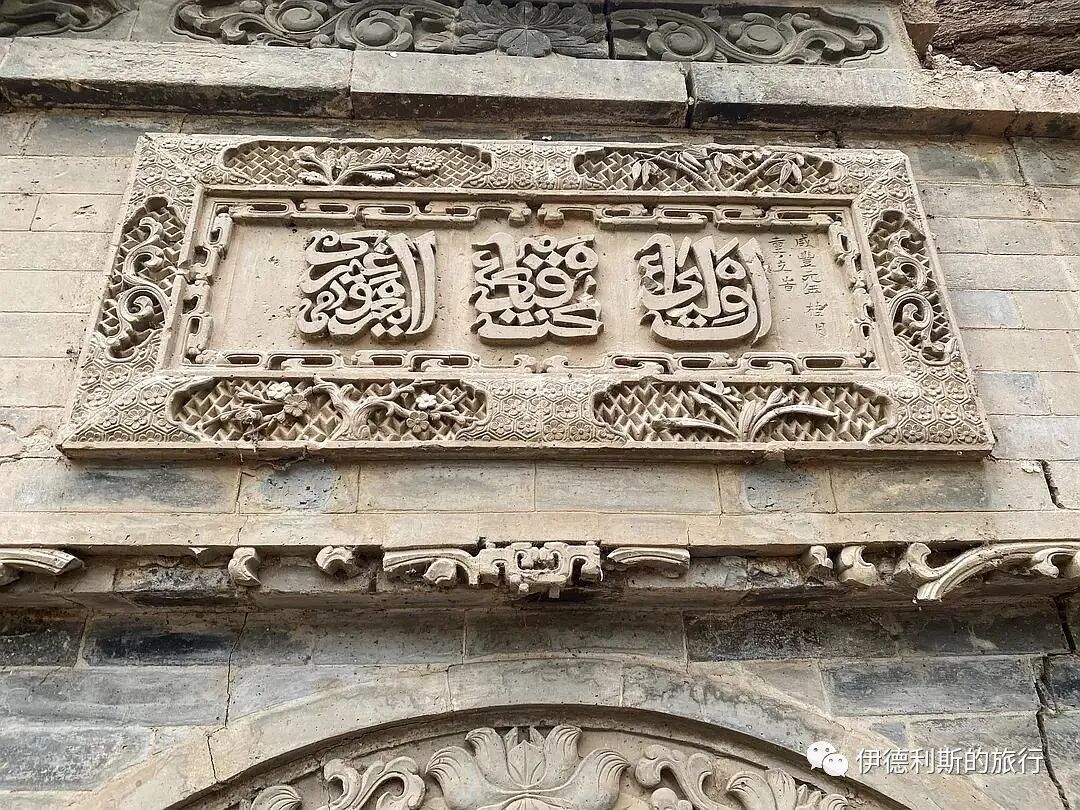
It is very precious that Pastor Carter Holton, who was preaching in Xunhua in the 1930s, took photos of the Jiezi Gongbei that have been well-preserved for over 80 years.
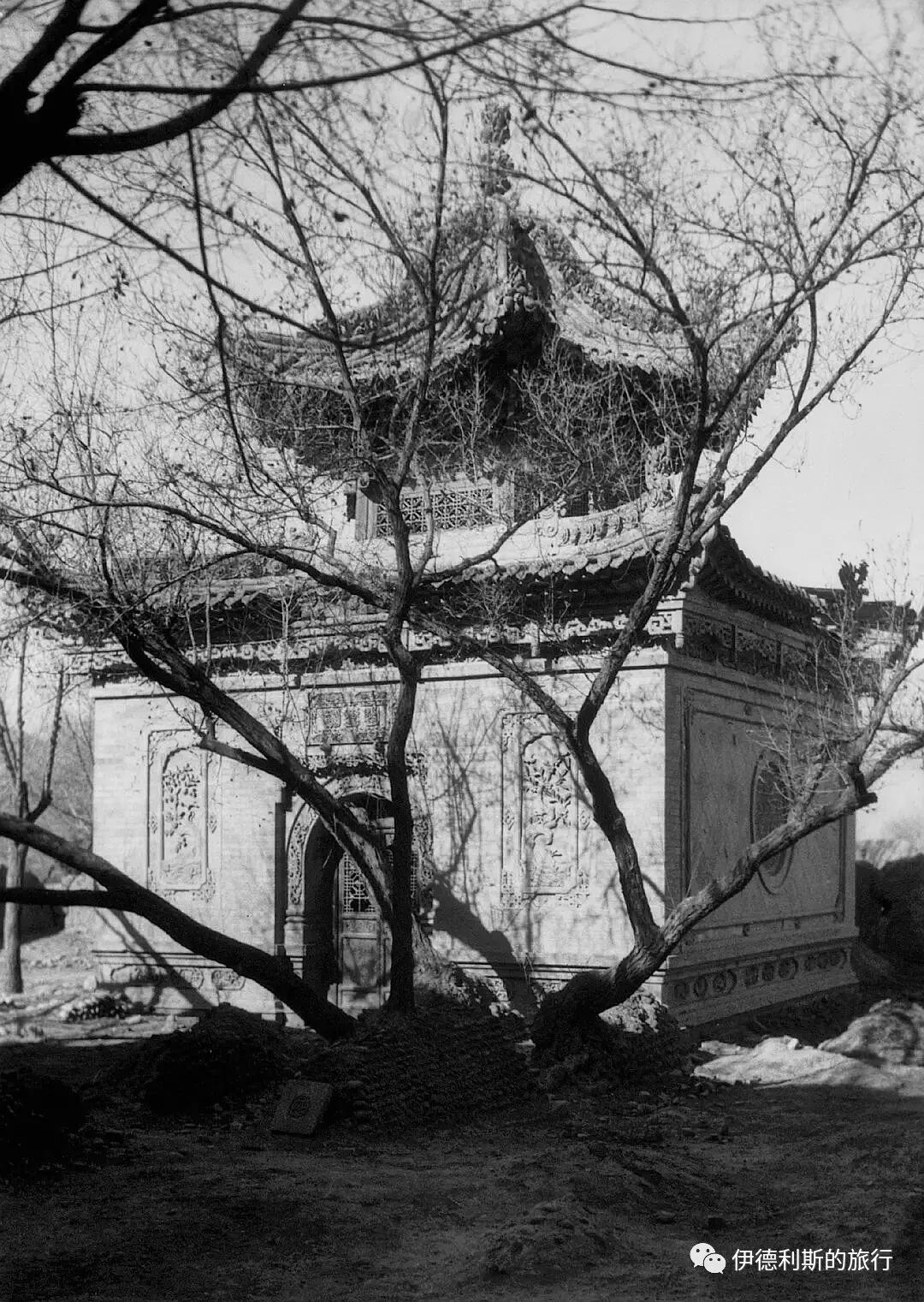
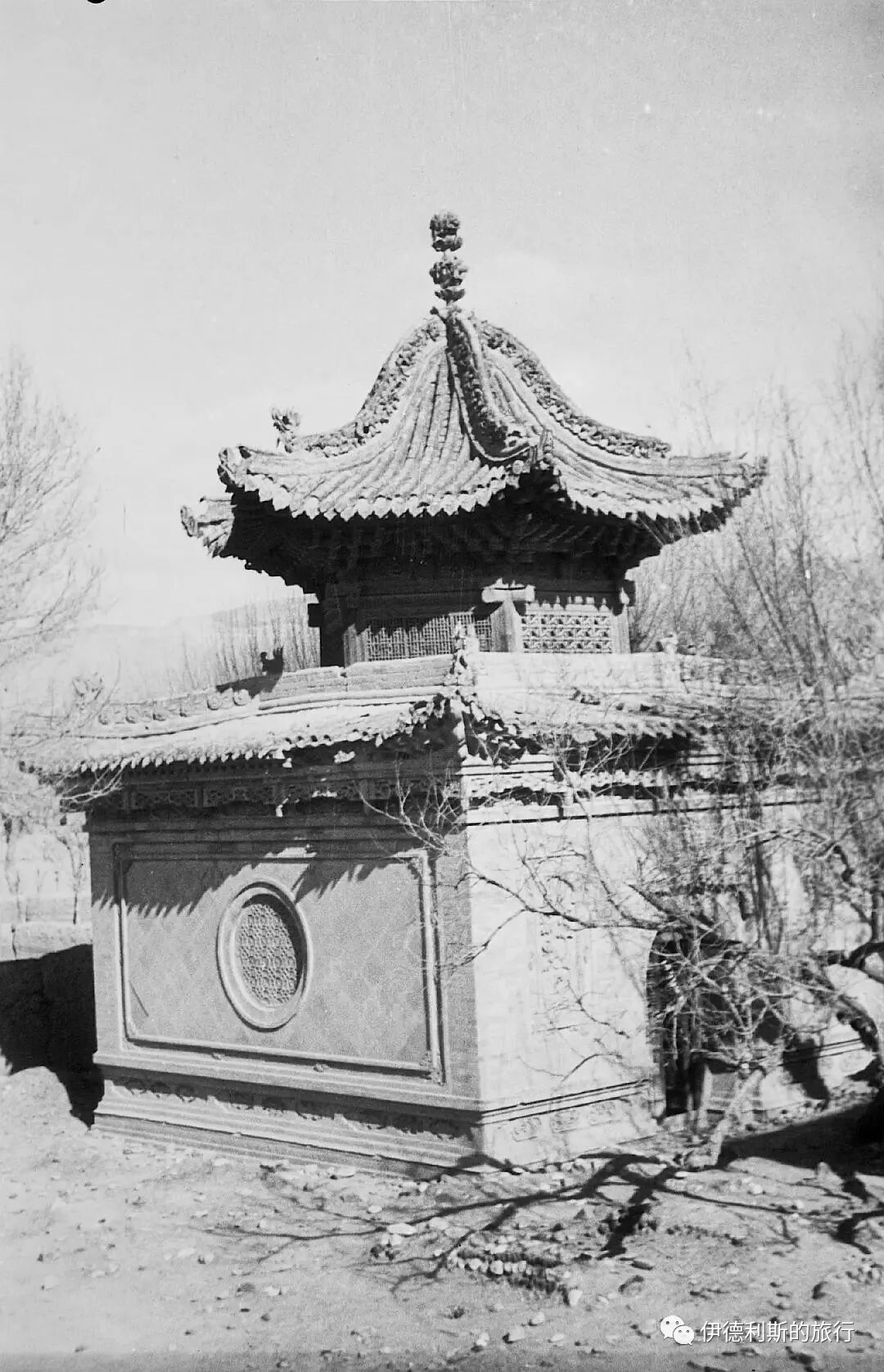
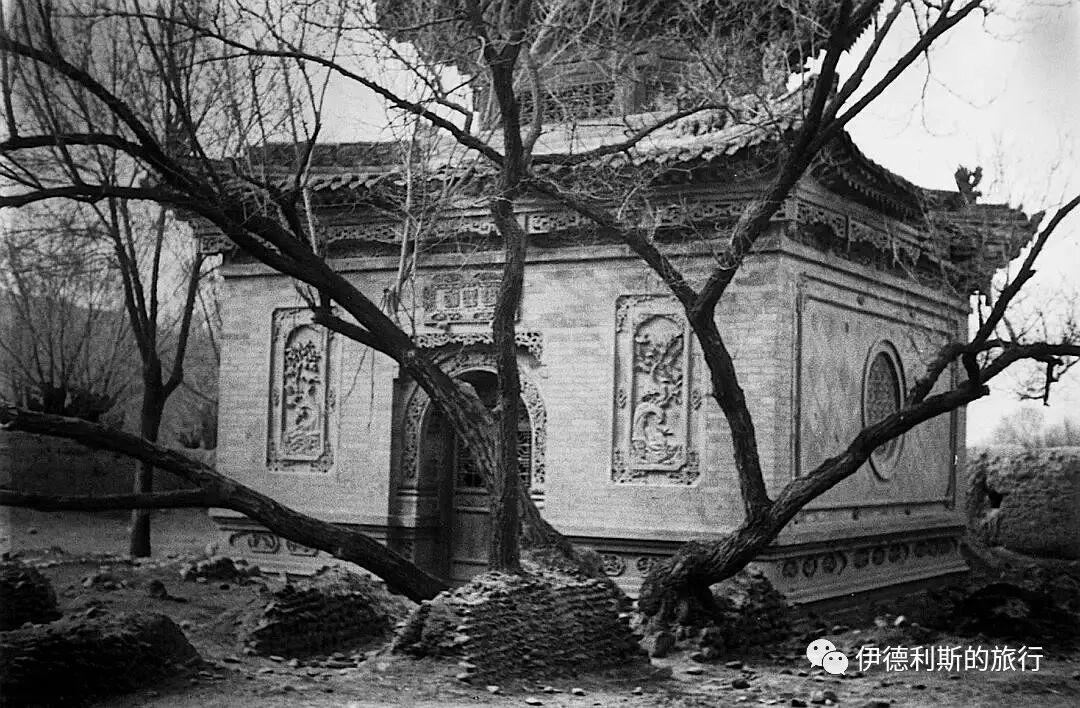
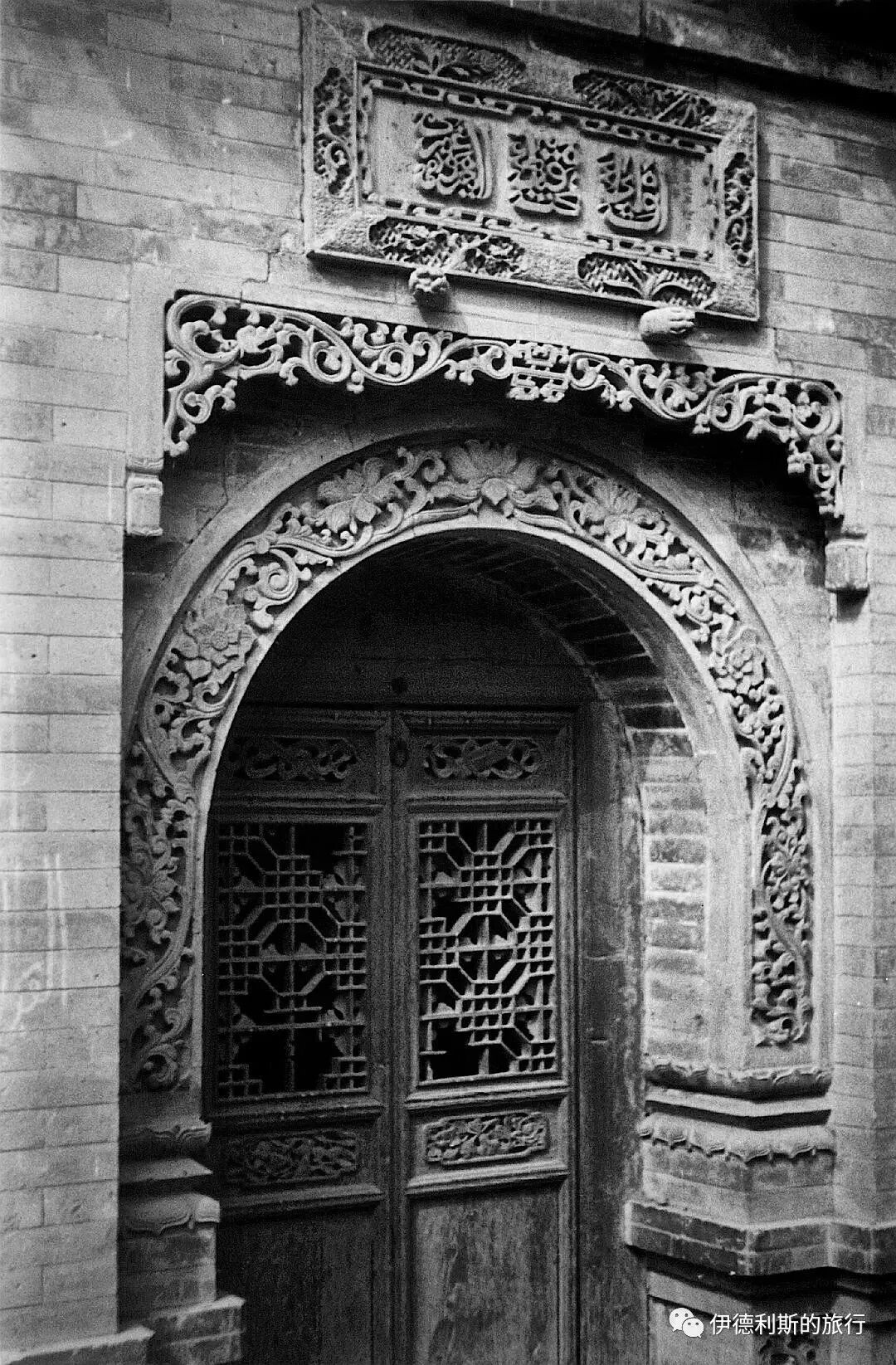
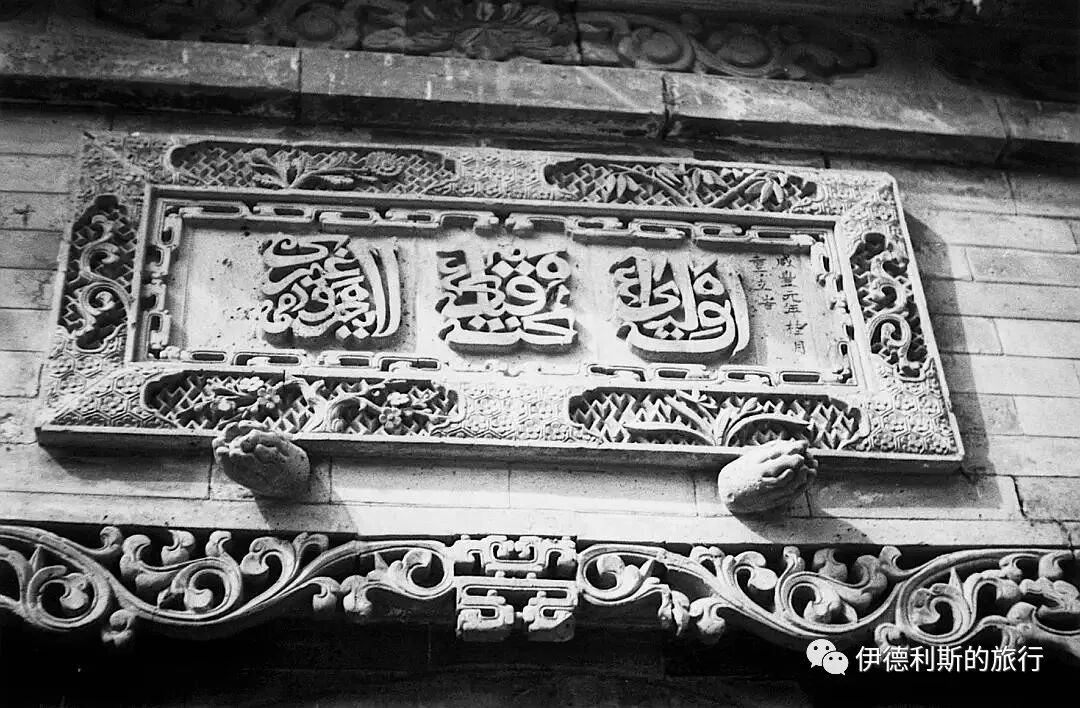
Night in Xunhua County.
In the evening, we had the local specialty, colostrum milk (jiaonai), in the county town. Colostrum milk (jiaonai) is the milk produced by a cow within three days of giving birth, mixed with regular milk and steamed. It has a texture like egg custard, but a very unique taste. Some people might not be used to it, but many elderly grandparents in Qinghai love it.
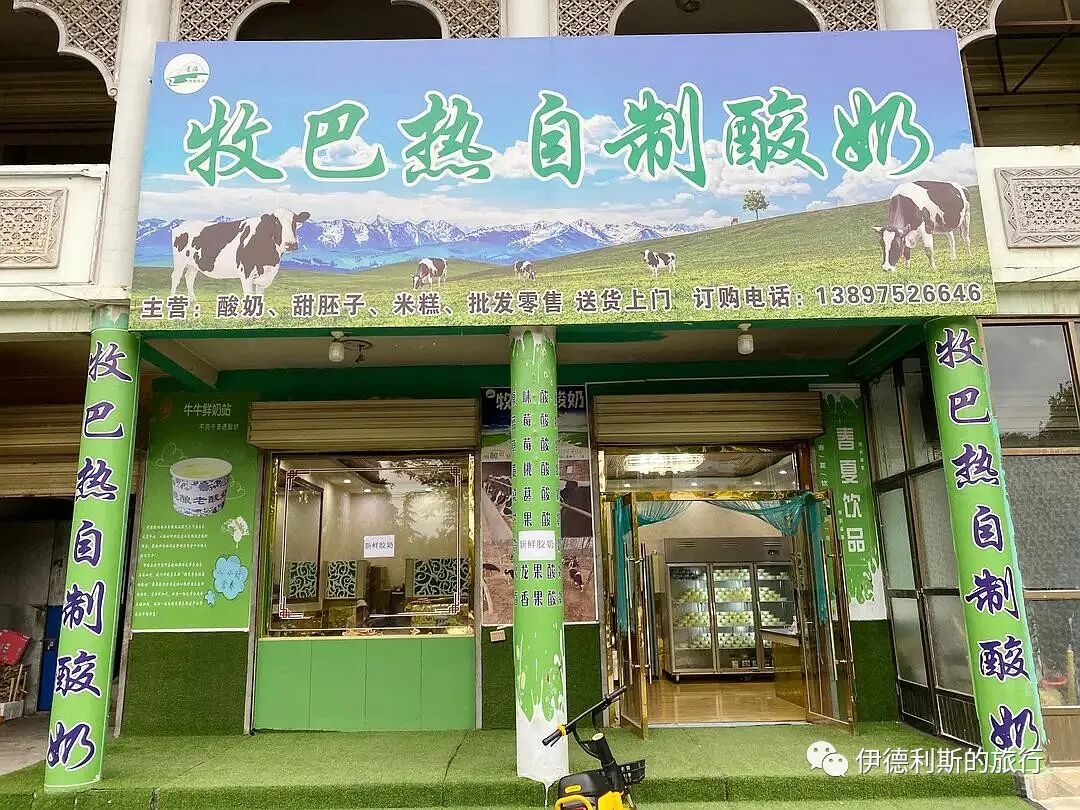
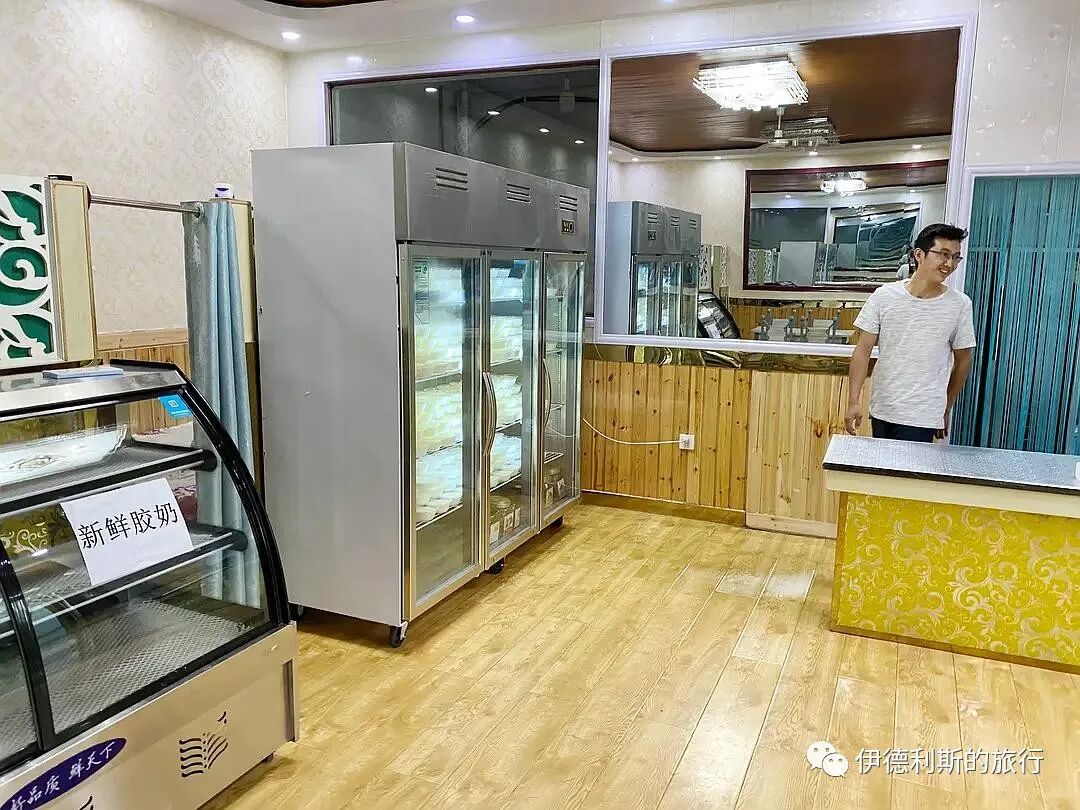
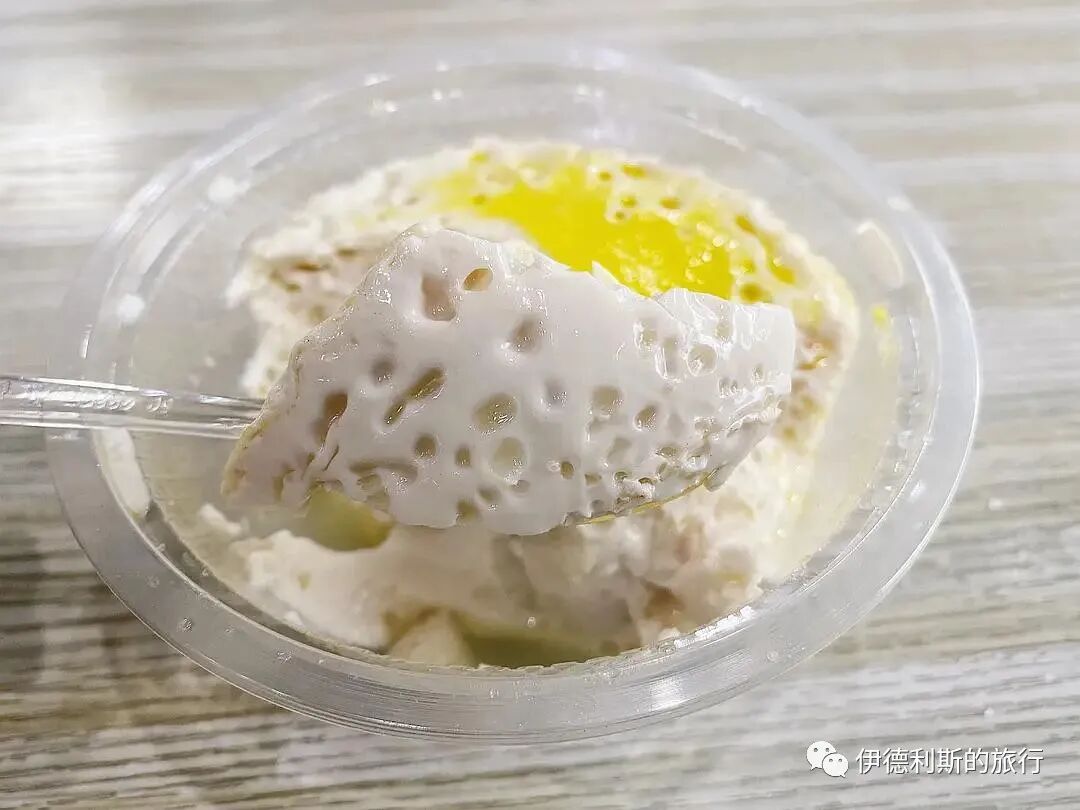
At night, we ate barbecue at the East Gate Food Street in the county town. We ordered half a jin of grilled lamb chops, a clay pot dish, and a grilled flatbread (kaomo). Zainabu also ordered a bowl of fermented vegetable juice (jiangshui) on the side. Having a little barbecue at night is quite comfortable.
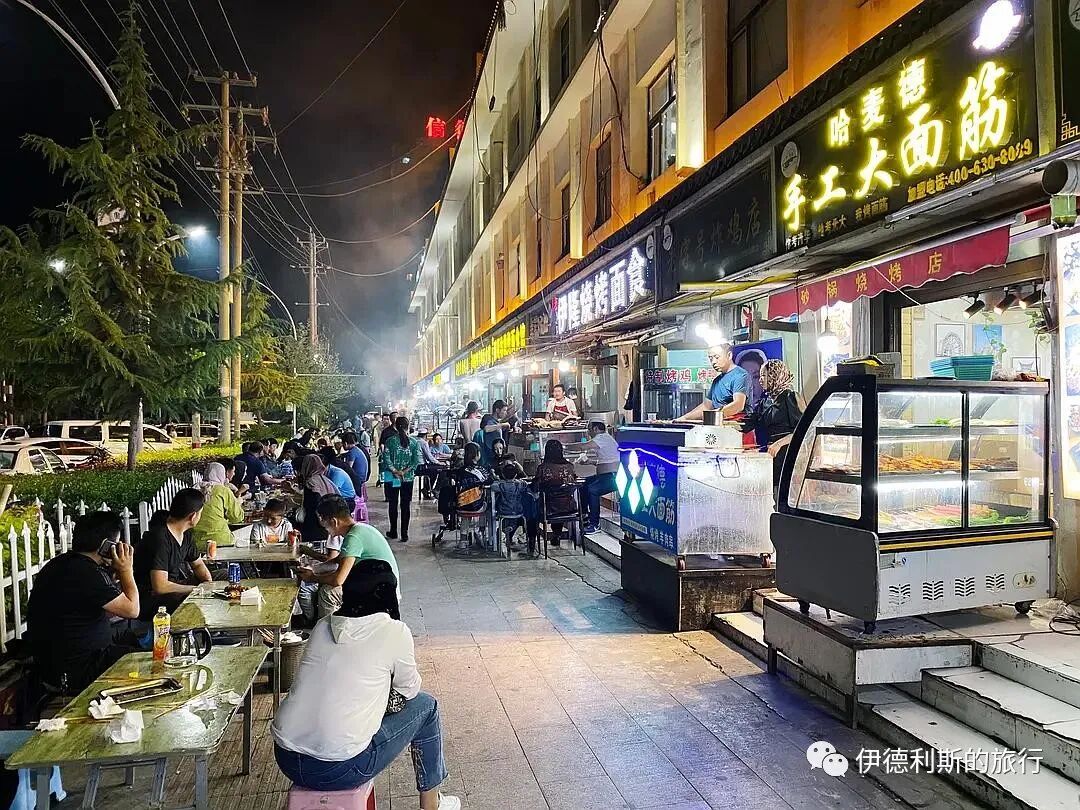
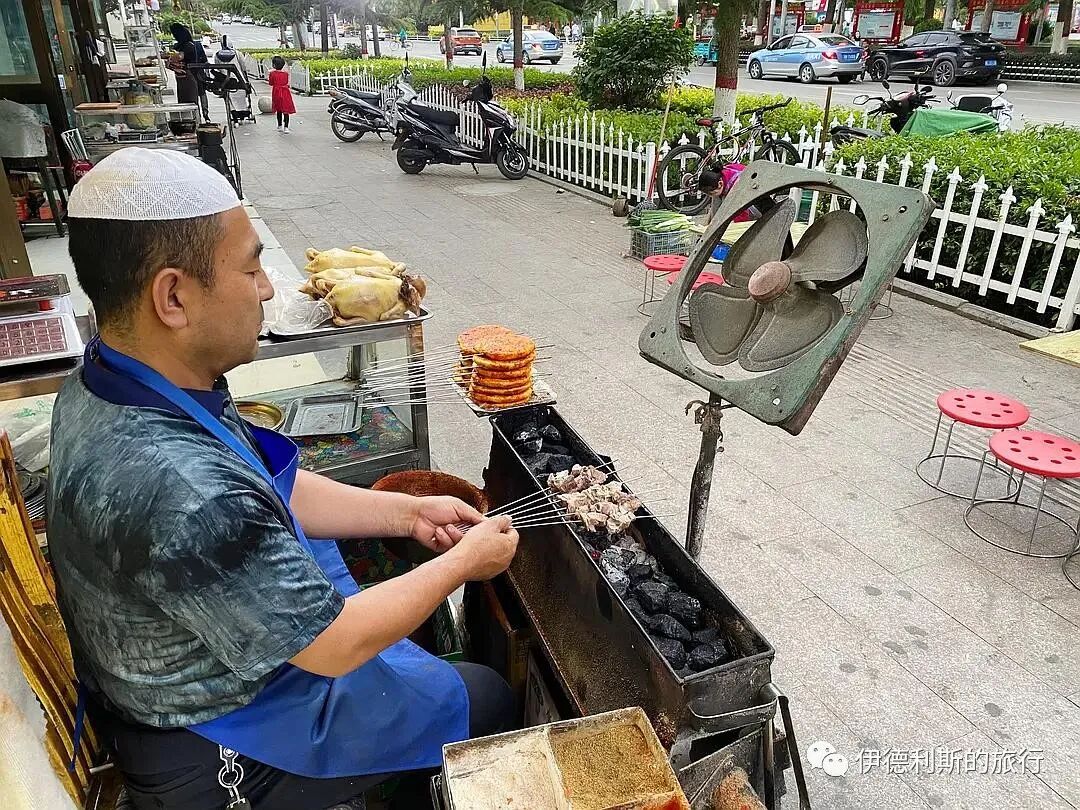
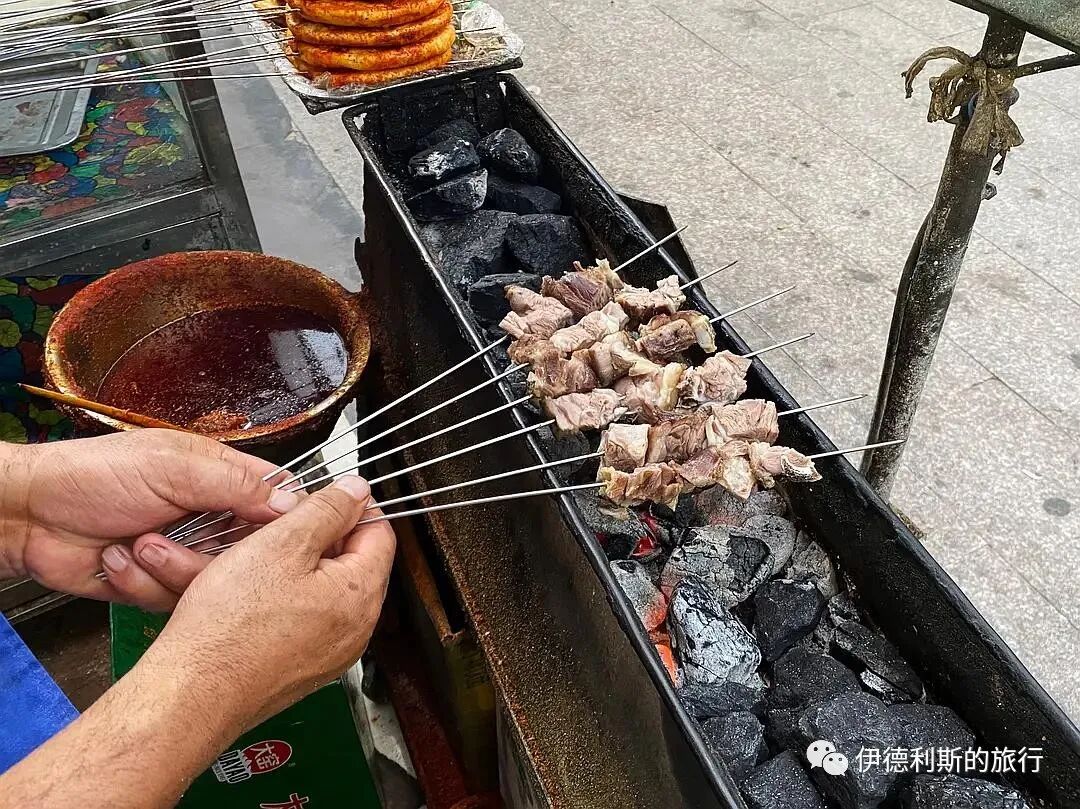
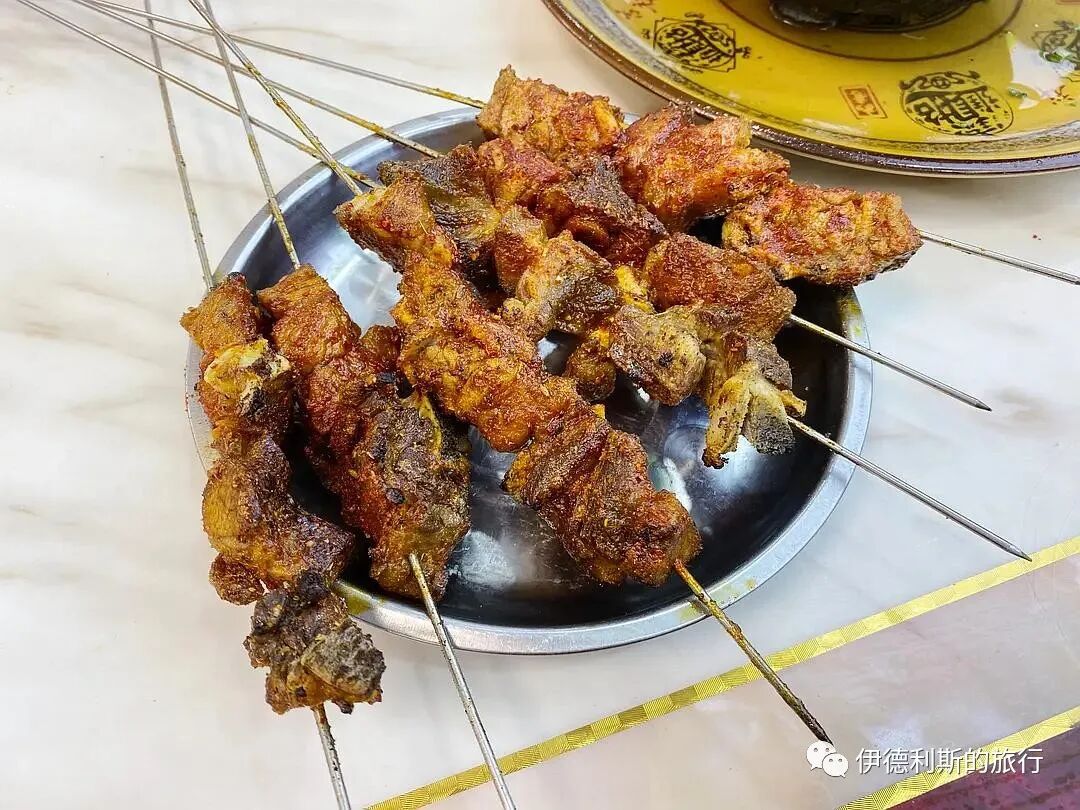
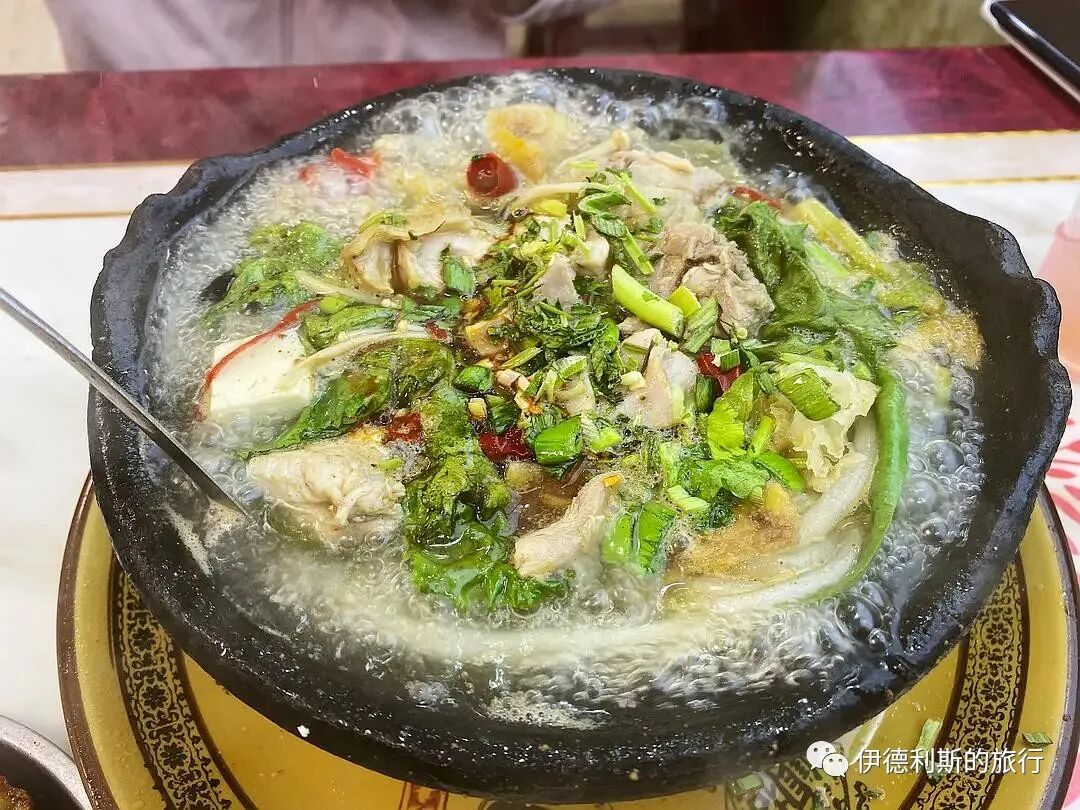
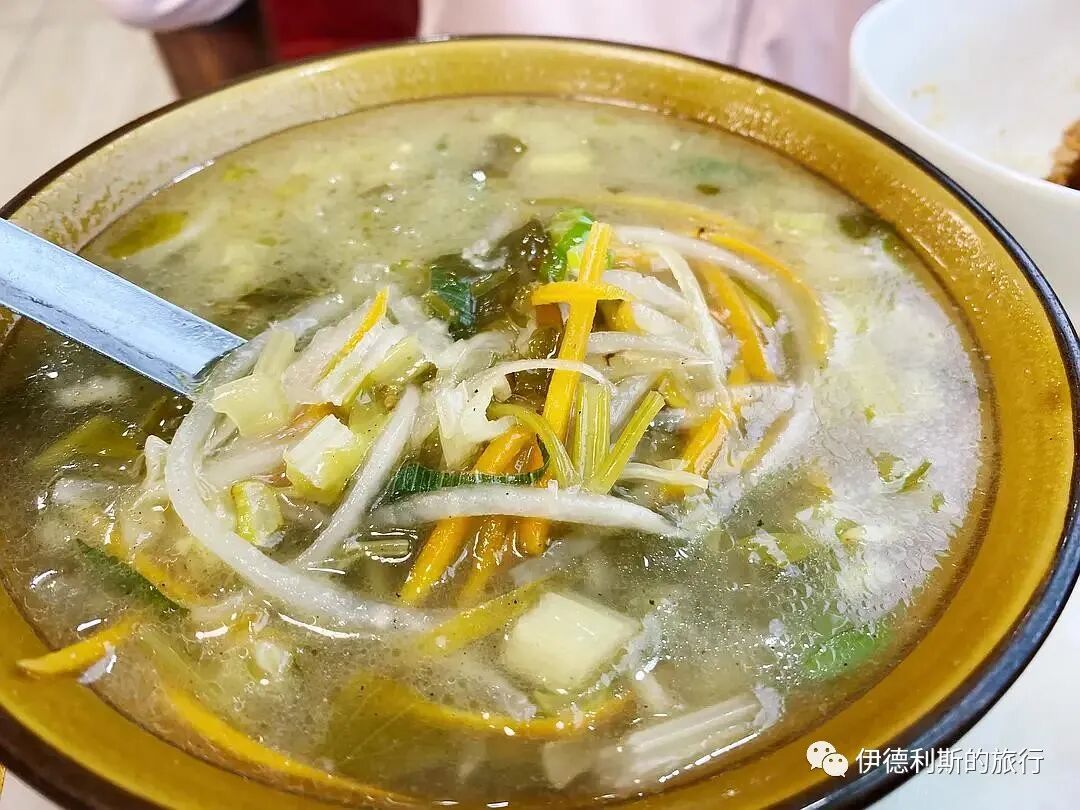
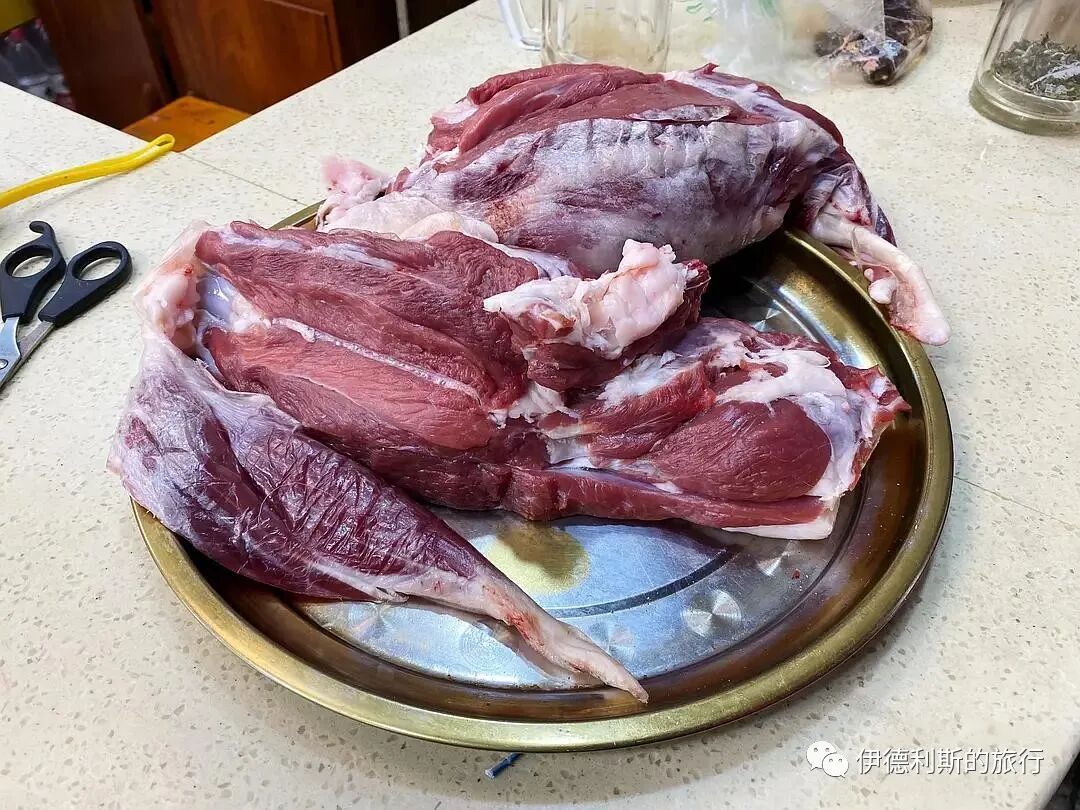
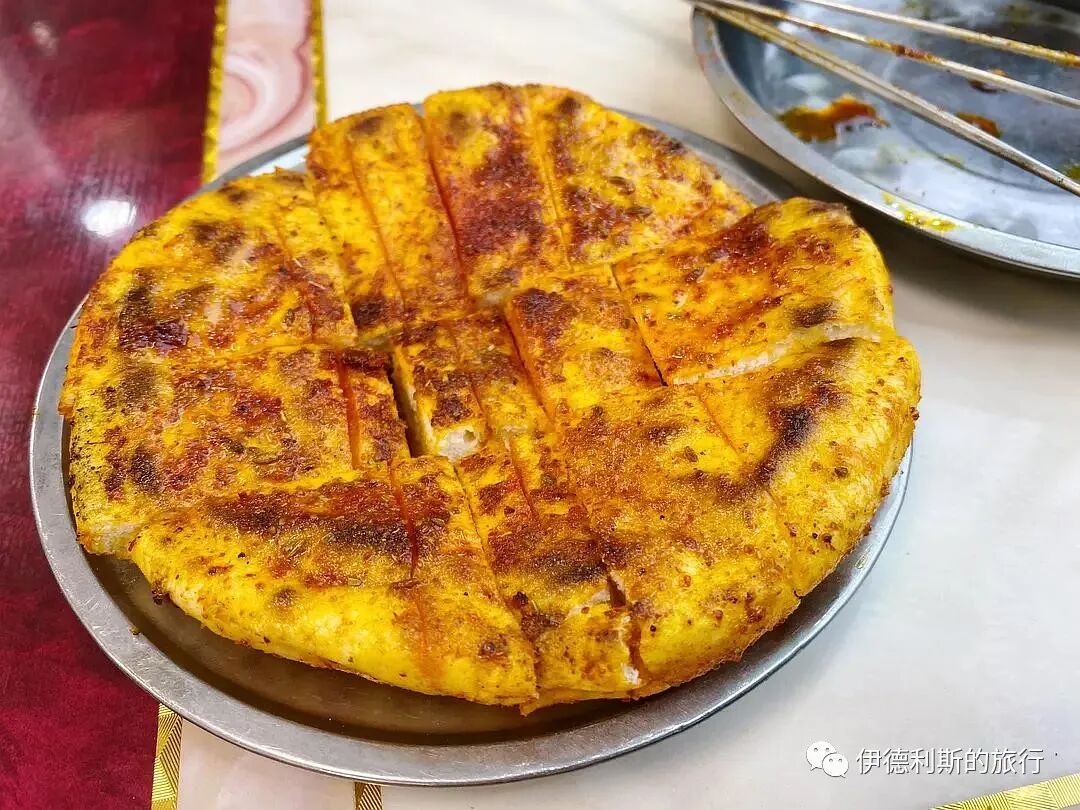
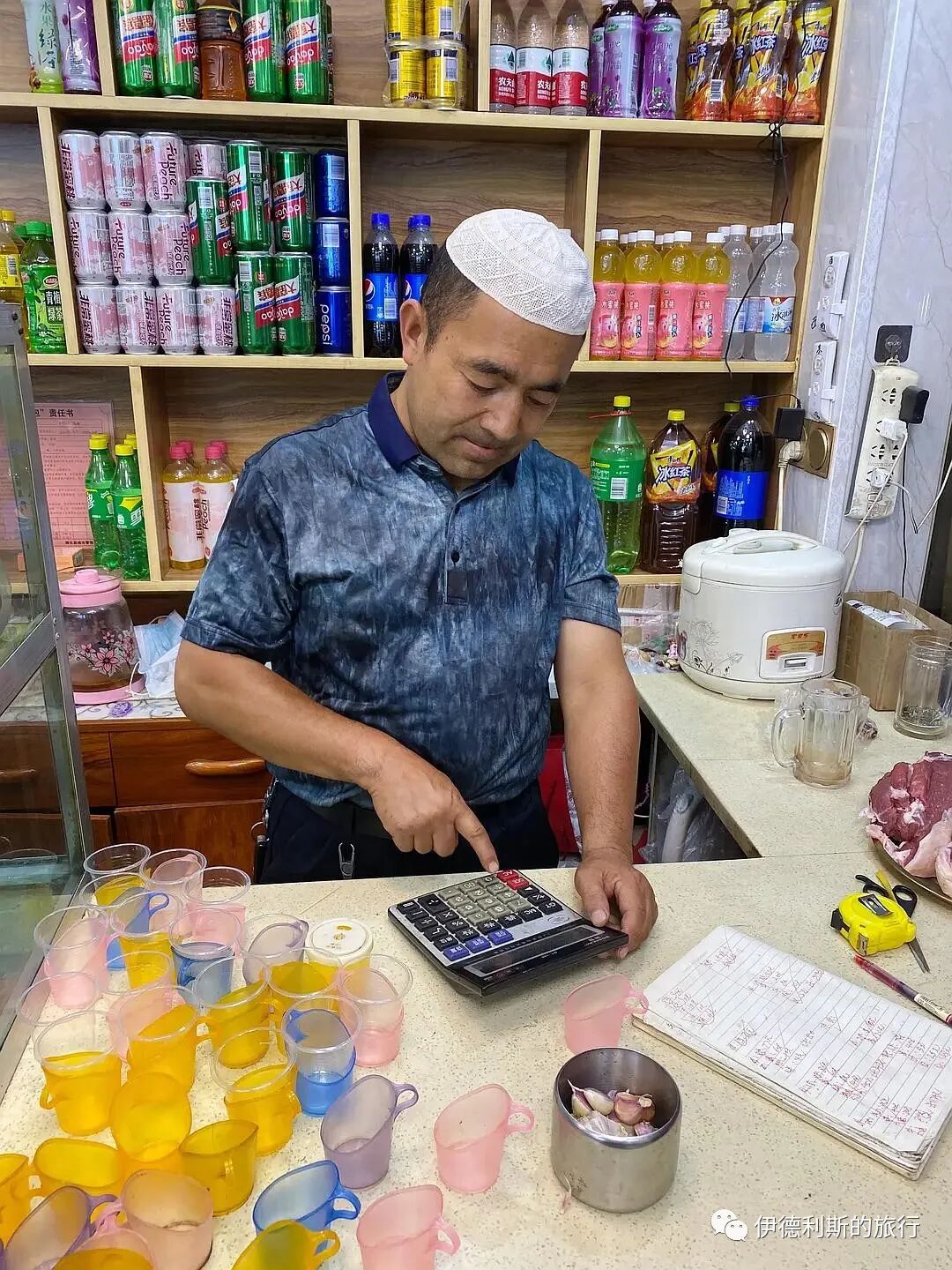
There are three main types of breakfast in Xunhua: beef noodles, lamb offal soup (yangzasui) with flatbread, and steamed buns with fermented rice wine (baozi laozao). We had breakfast at the Xiuying Baozi Laozao Restaurant on Jishi Street. Actually, the steamed bun and fermented rice wine shops here sell many other things. I saw that what people ate the most were stewed vegetable bowls (huiwan) and deep-fried dough sticks (youtiao). The stewed vegetable bowl (huiwan), also called mixed vegetables (huicai), mainly contains radishes, potatoes, vermicelli, and meat. We had eaten it before at the Yangu Road Gongbei. You can also drink milk, eat starch noodle soup (fentang), black rice porridge, and other things.
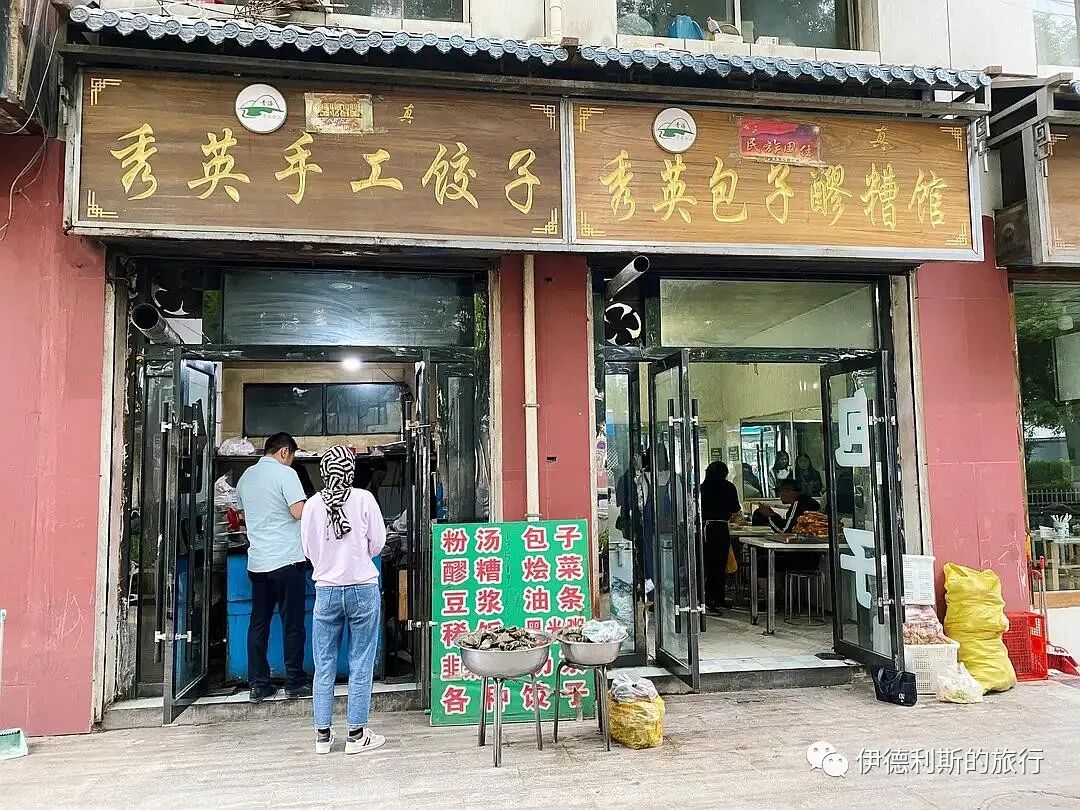
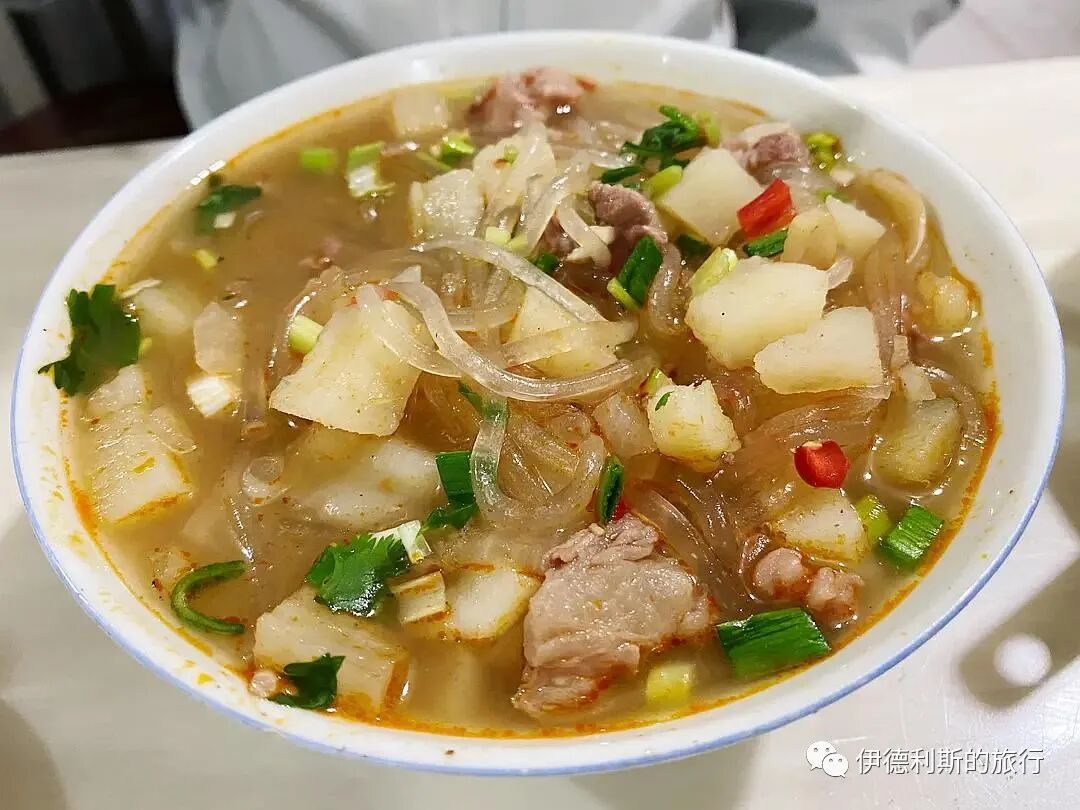
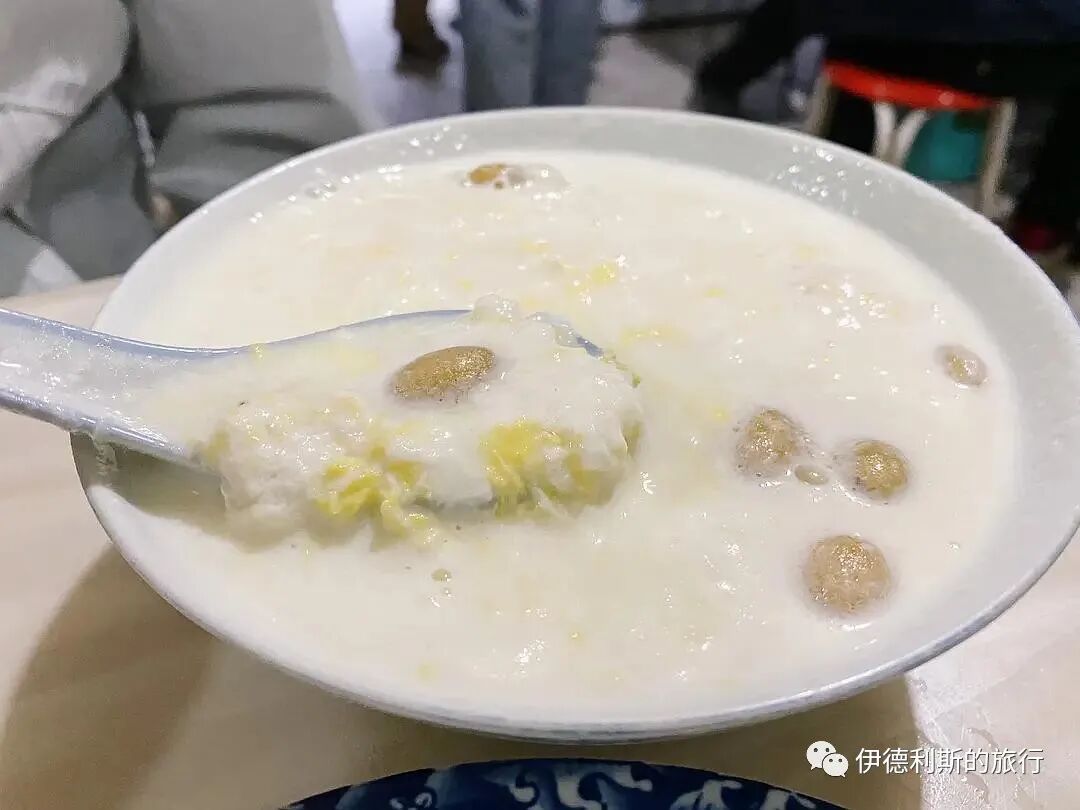
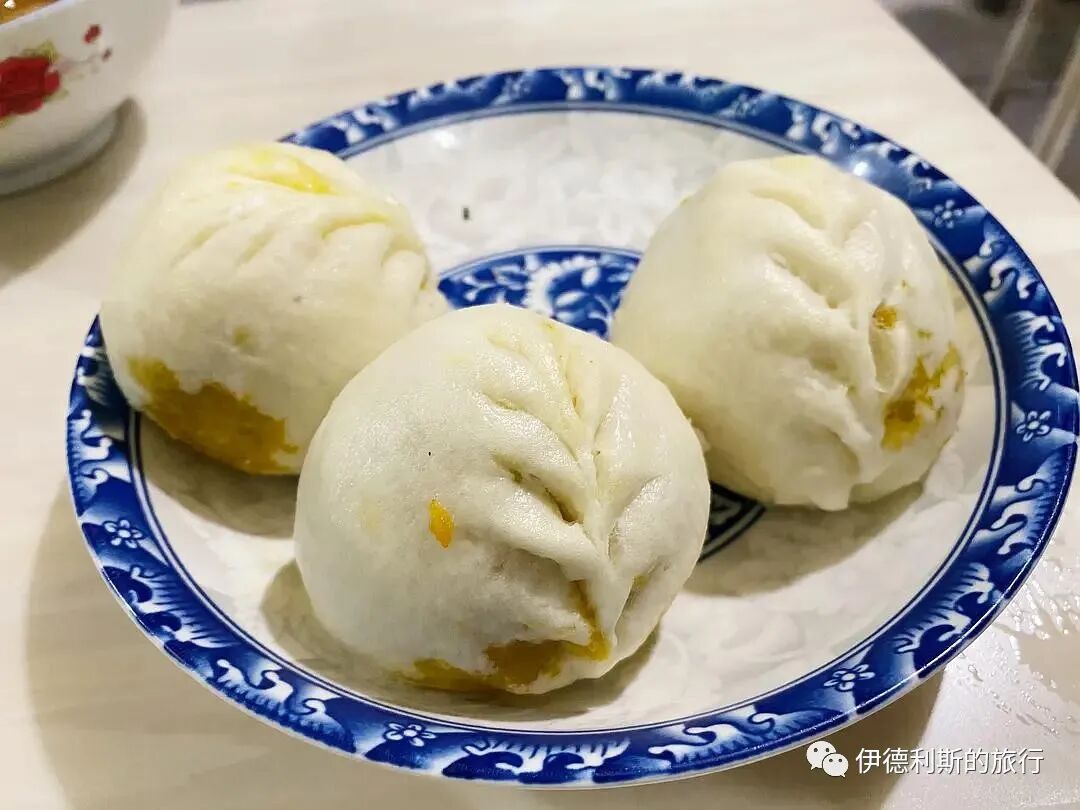
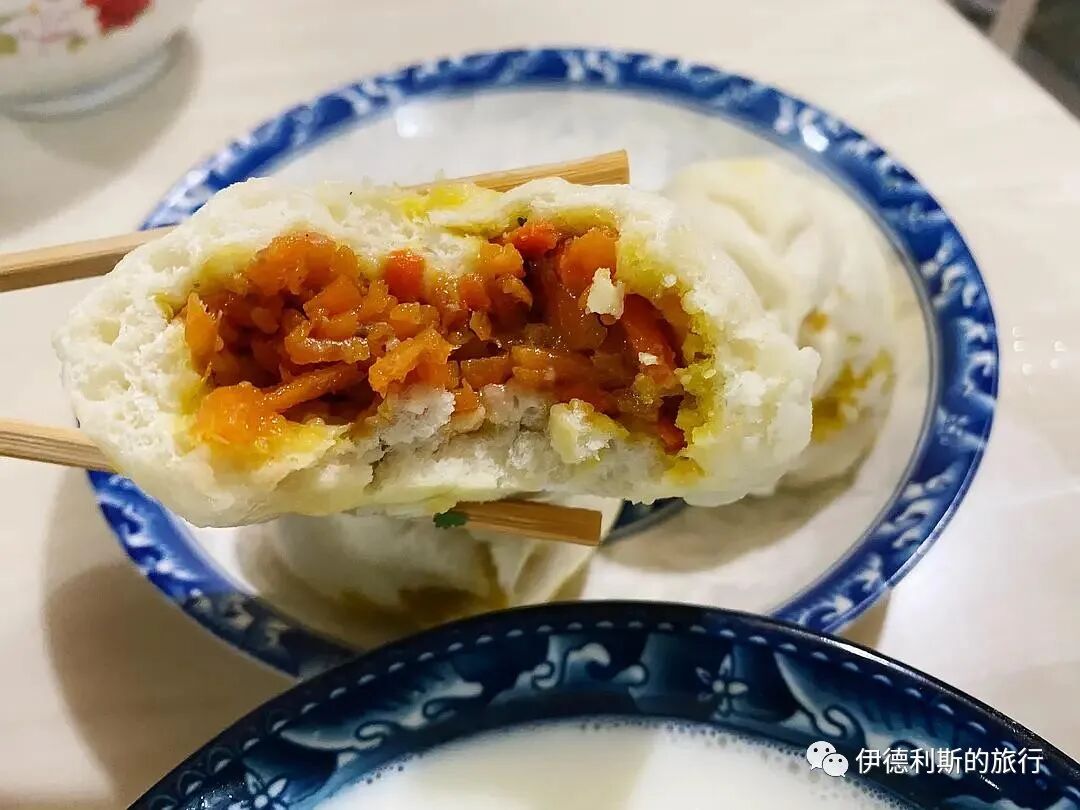
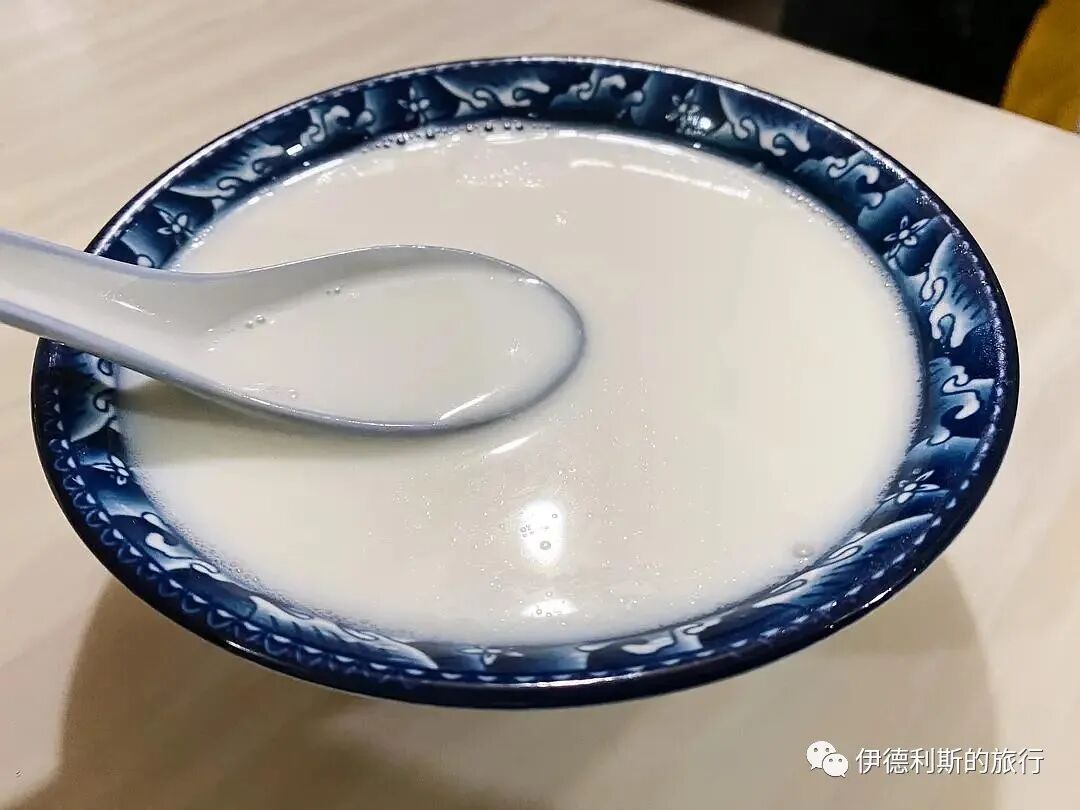
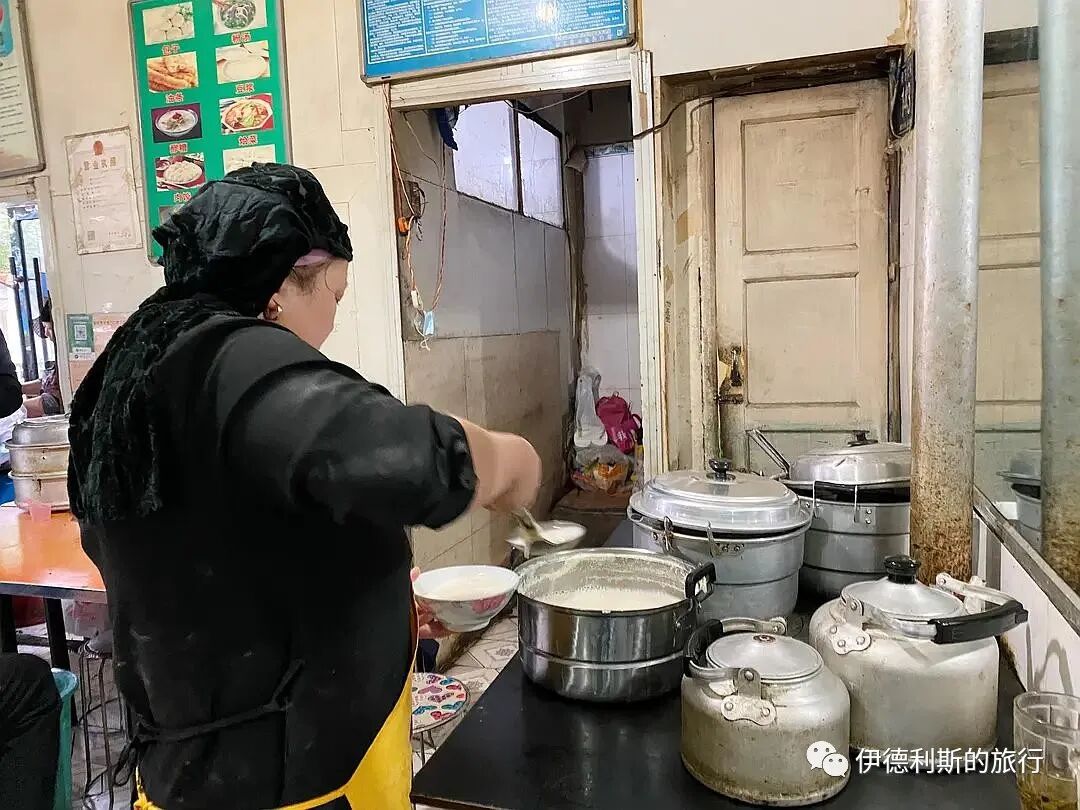
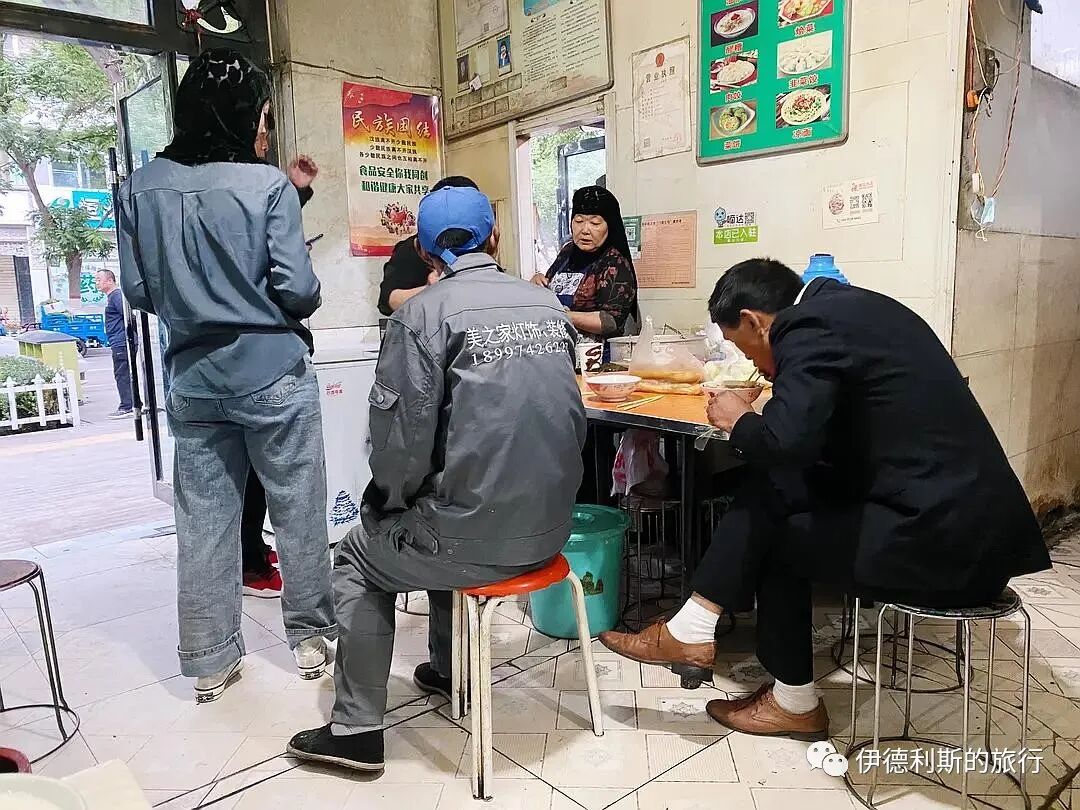
The Gasan Antique Shop in the county town has all kinds of ritual water jugs (tangping hu), which are quite interesting.
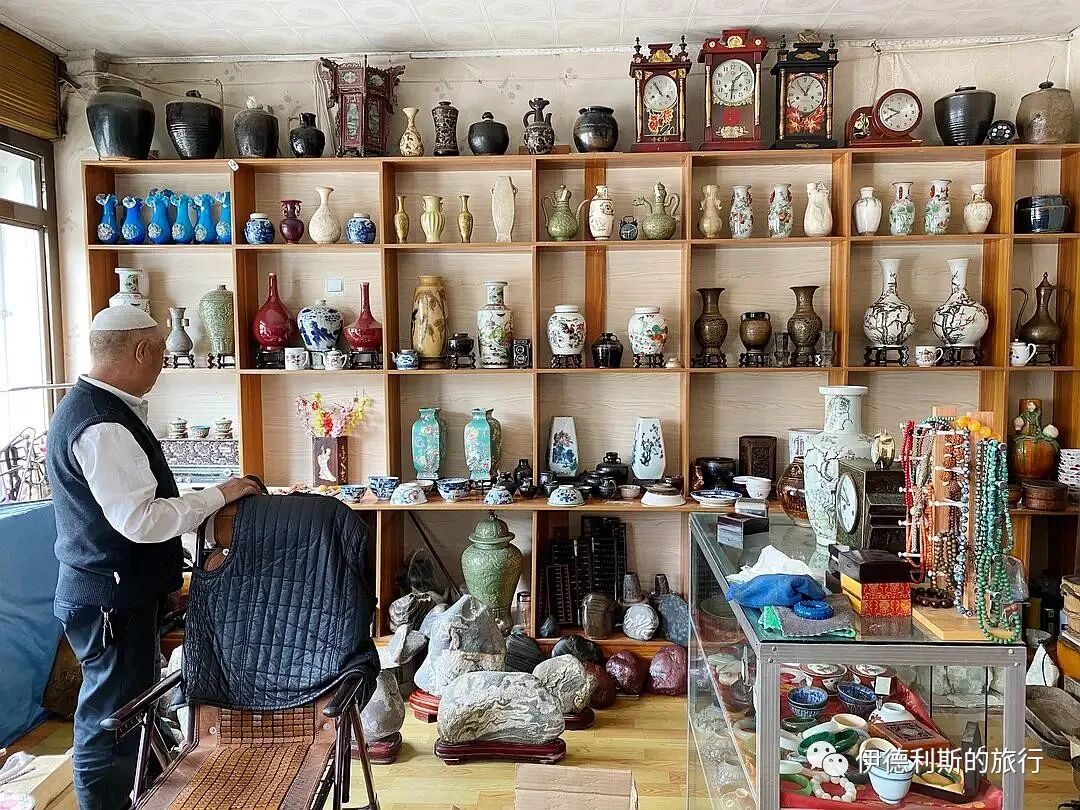
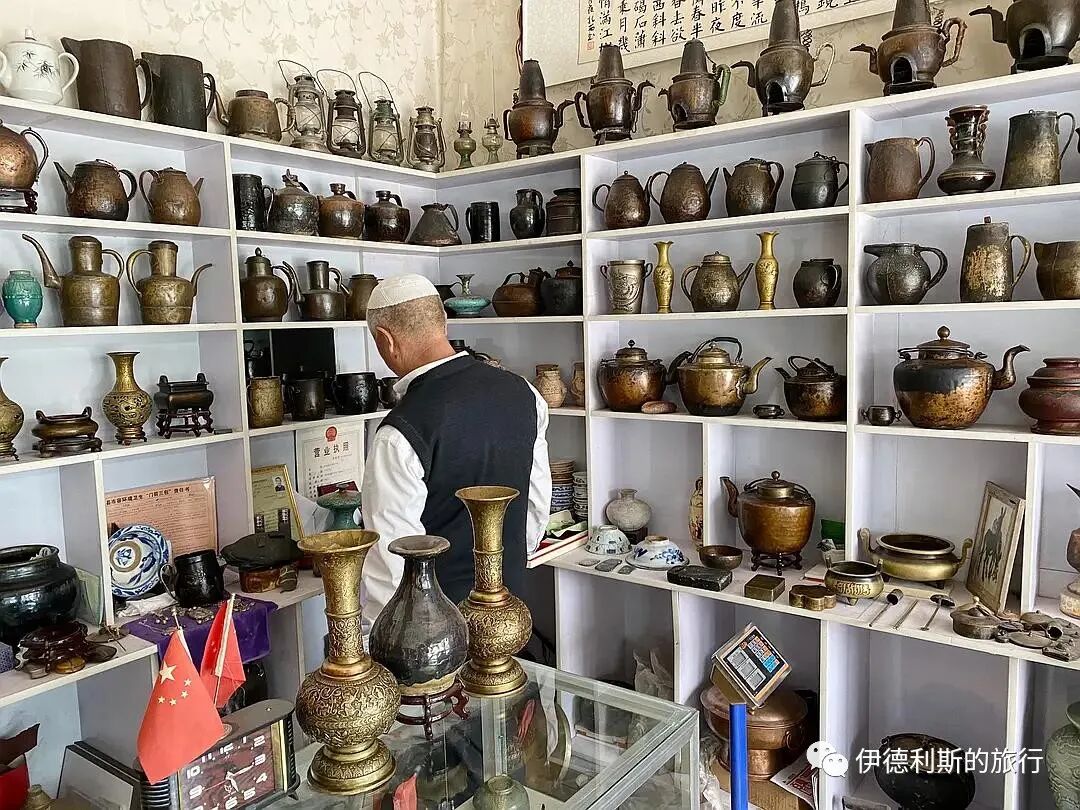
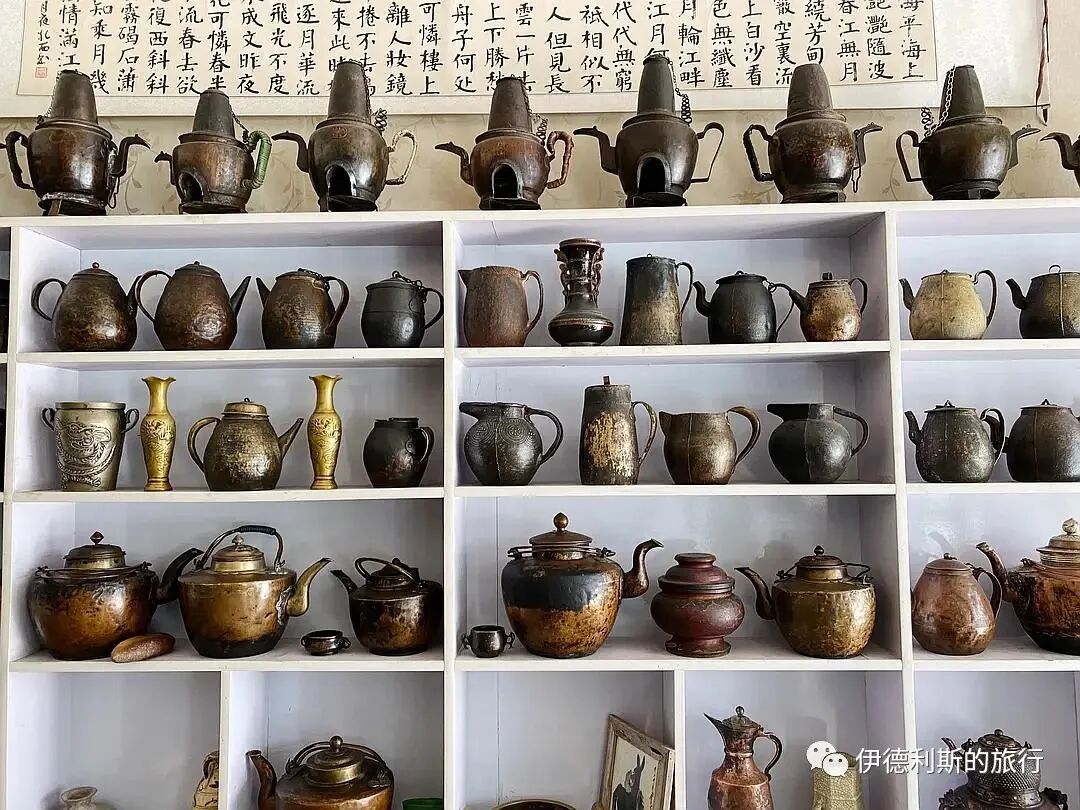
Suzhi Mosque.
The Suzhi Mosque in Xunhua, Qinghai, was first built in 1460 (the fourth year of the Tianshun reign of the Ming Dynasty) and expanded during the Qing Dynasty. It is currently a cultural relic protection unit of Qinghai Province.
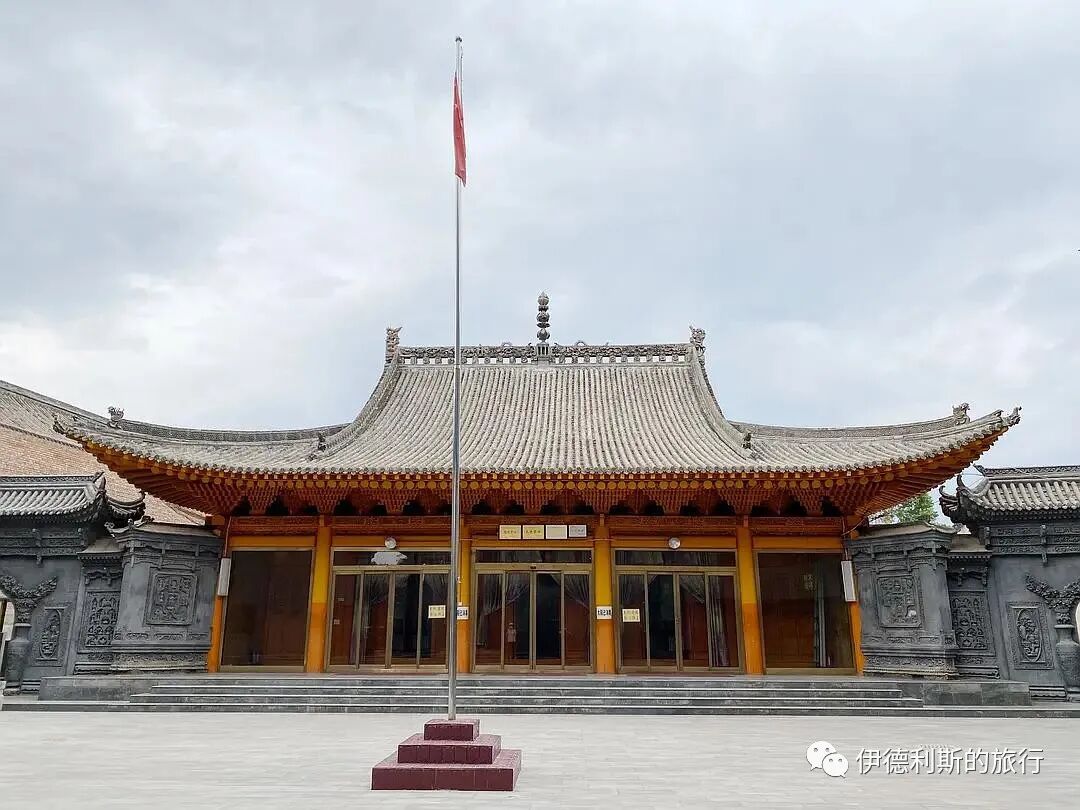
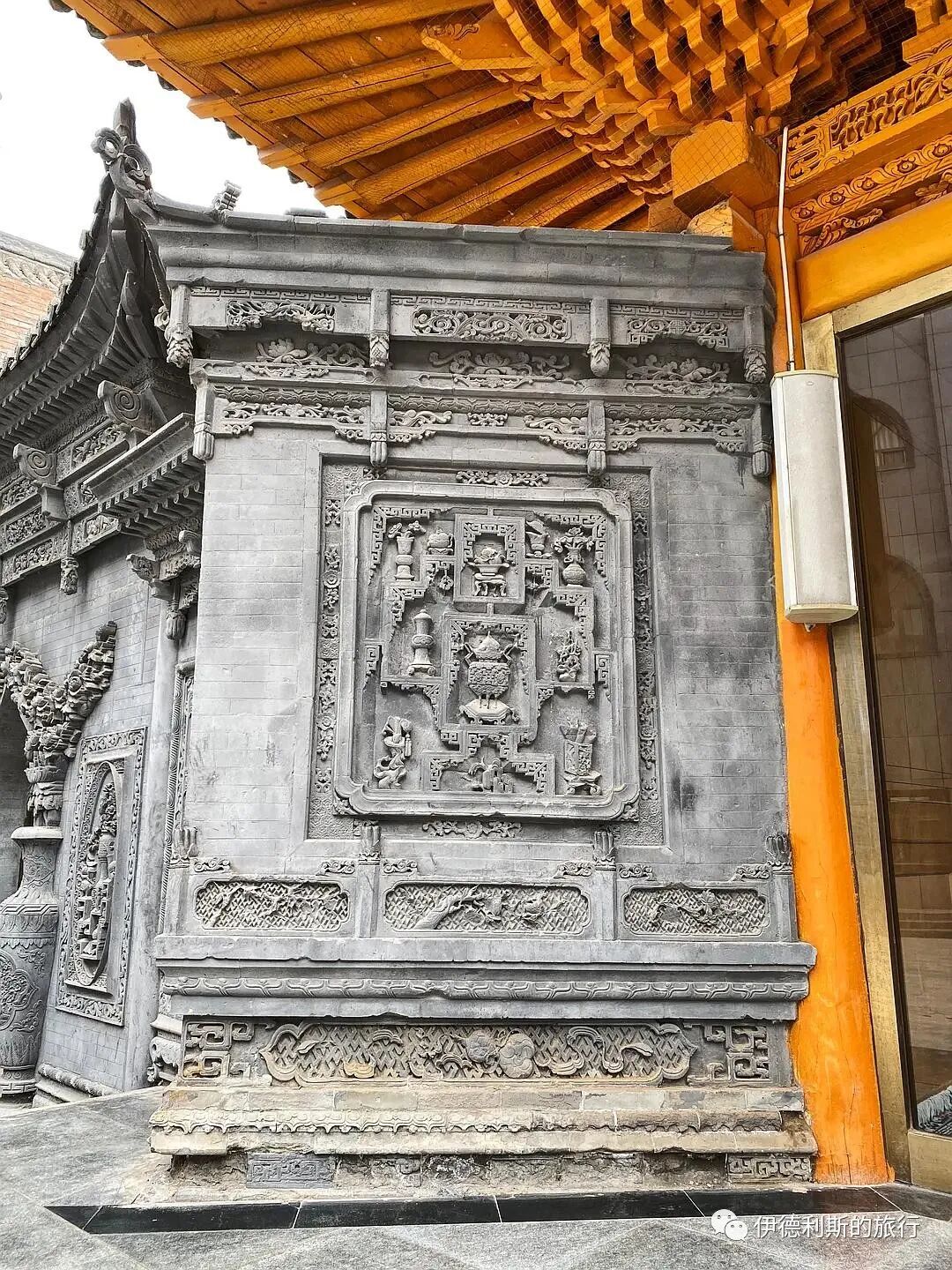
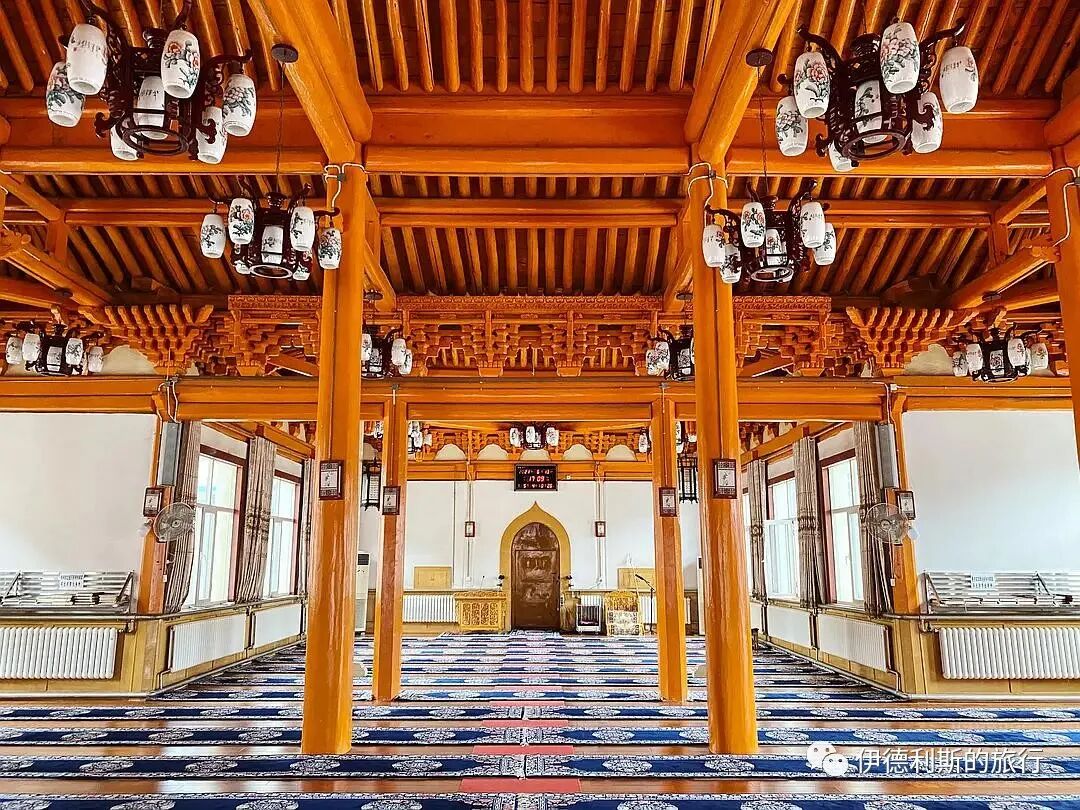
Ahetan Mosque.
Although the Ahetan Mosque is located in Hualong County, north of the Yellow River, it is still a Salar ethnic mosque and belongs to the Suzhi Gong, one of the eight Salar Gongs, just like the Suzhi Mosque.
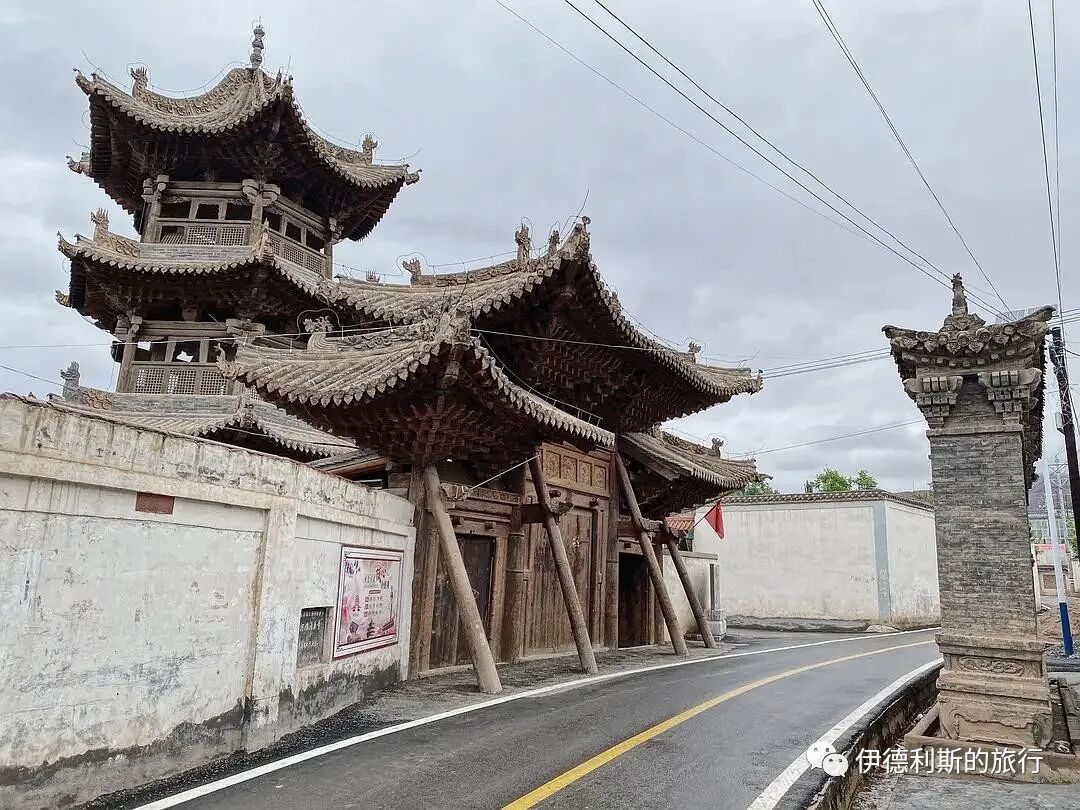
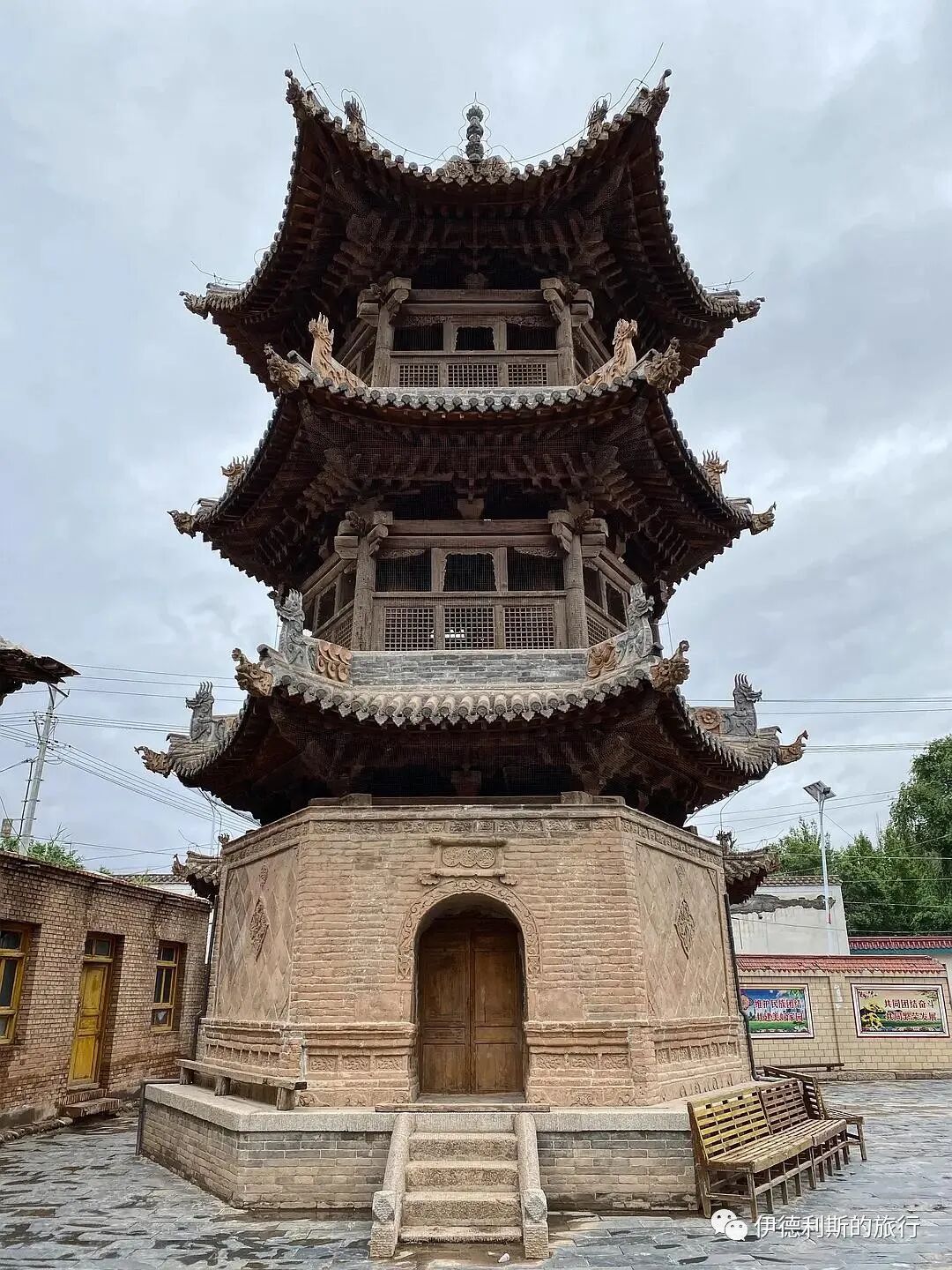
In the main hall of the mosque, we received a warm welcome from the imam.
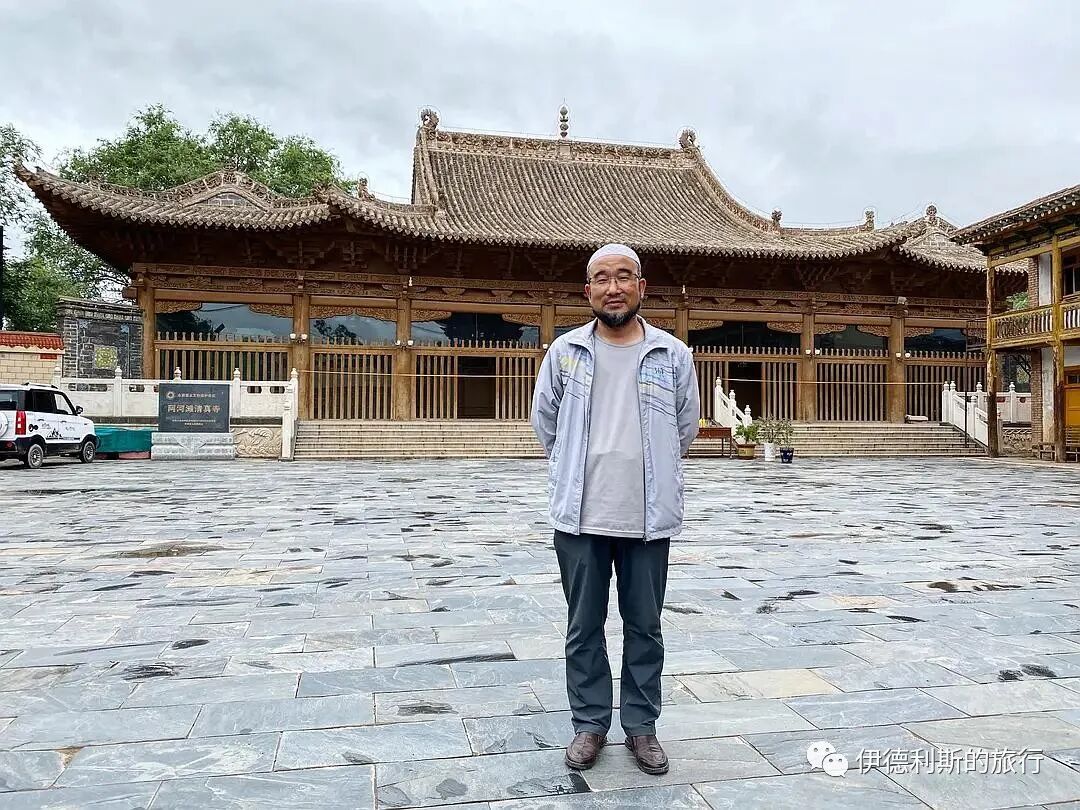
Setting off for Xining.
At noon, we had a home-style mixed clay pot (shijin tu huoguo) in Xunhua County. It had a rich variety of vegetables, and there was actually a lot of meat hidden underneath. Two people were very full after finishing a small pot.
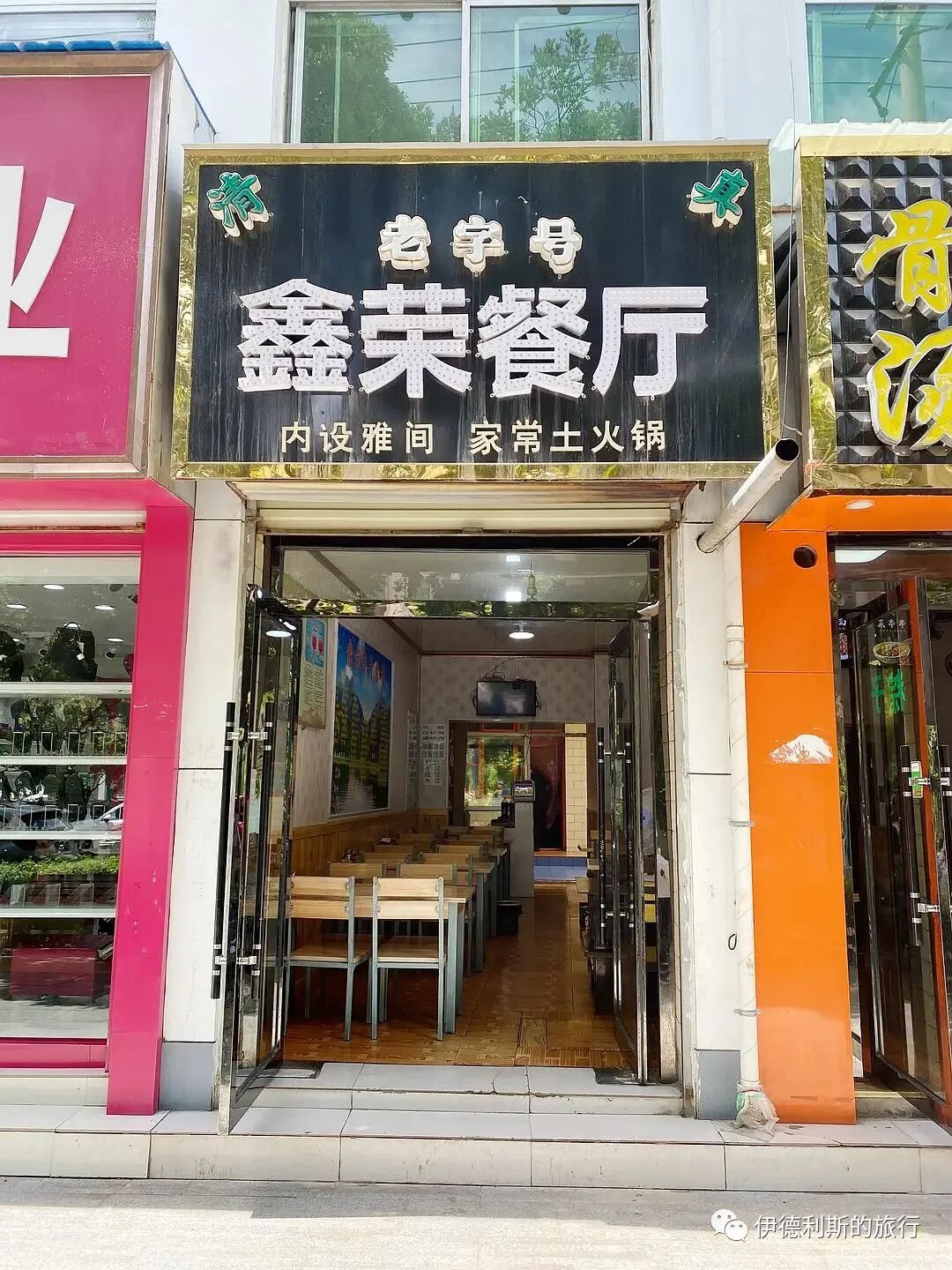
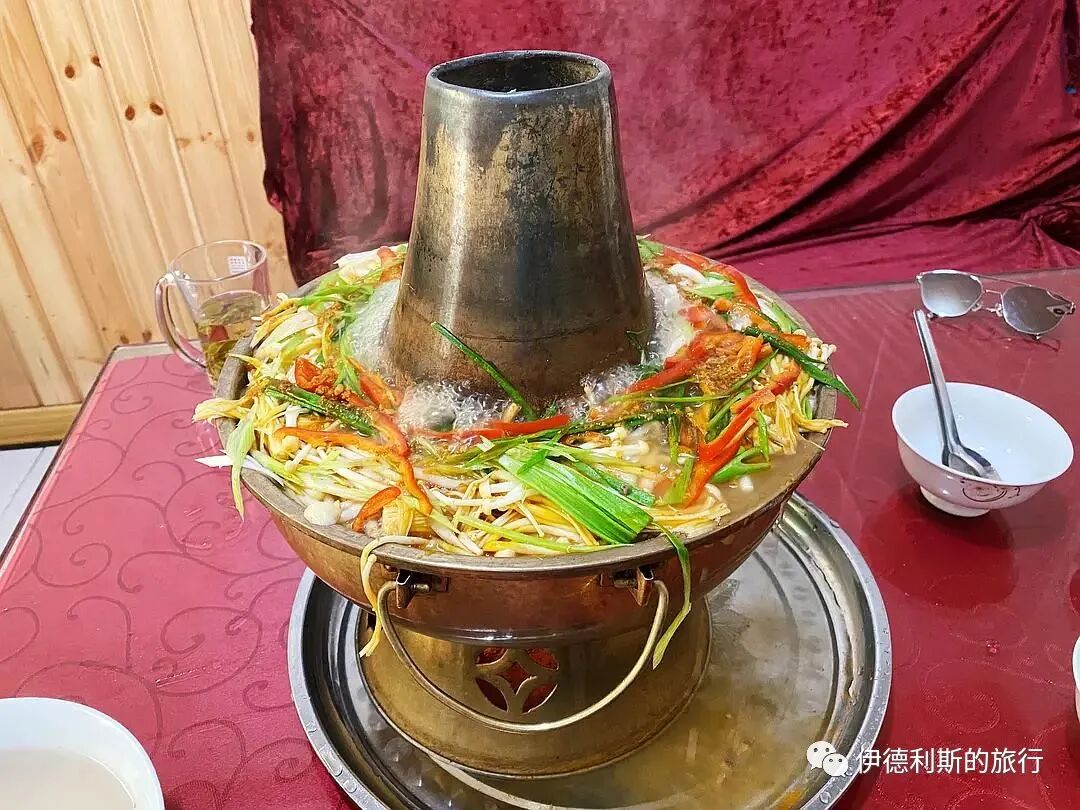
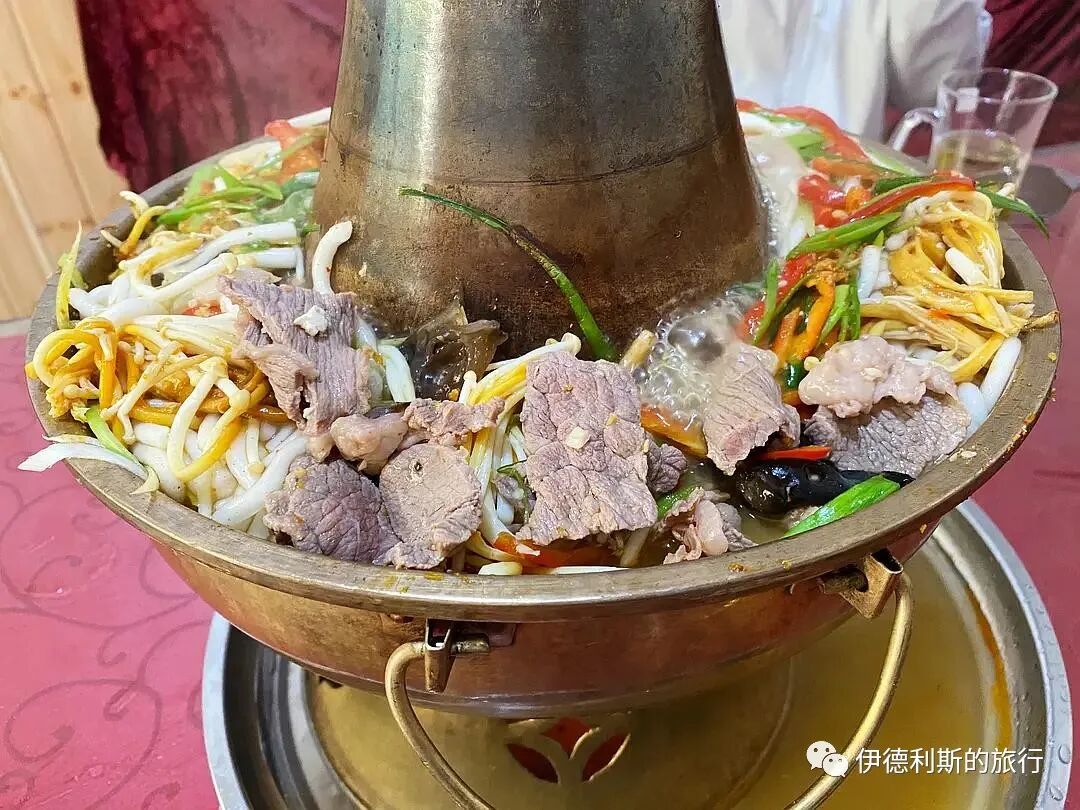
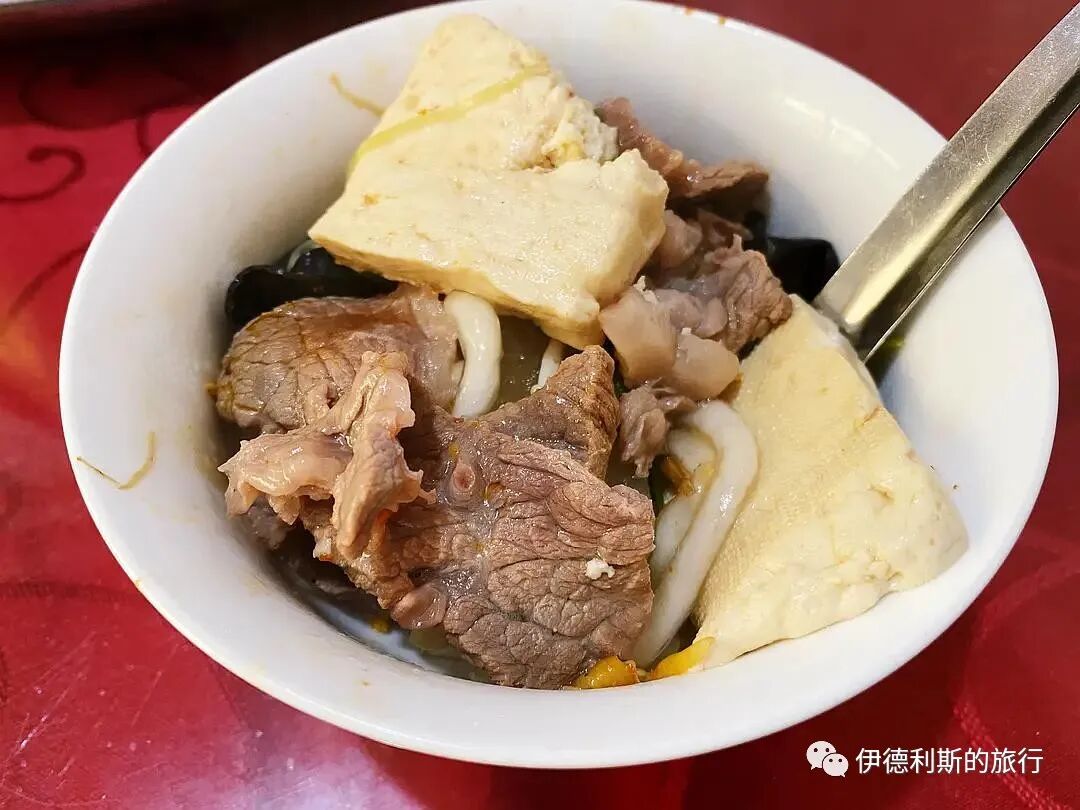
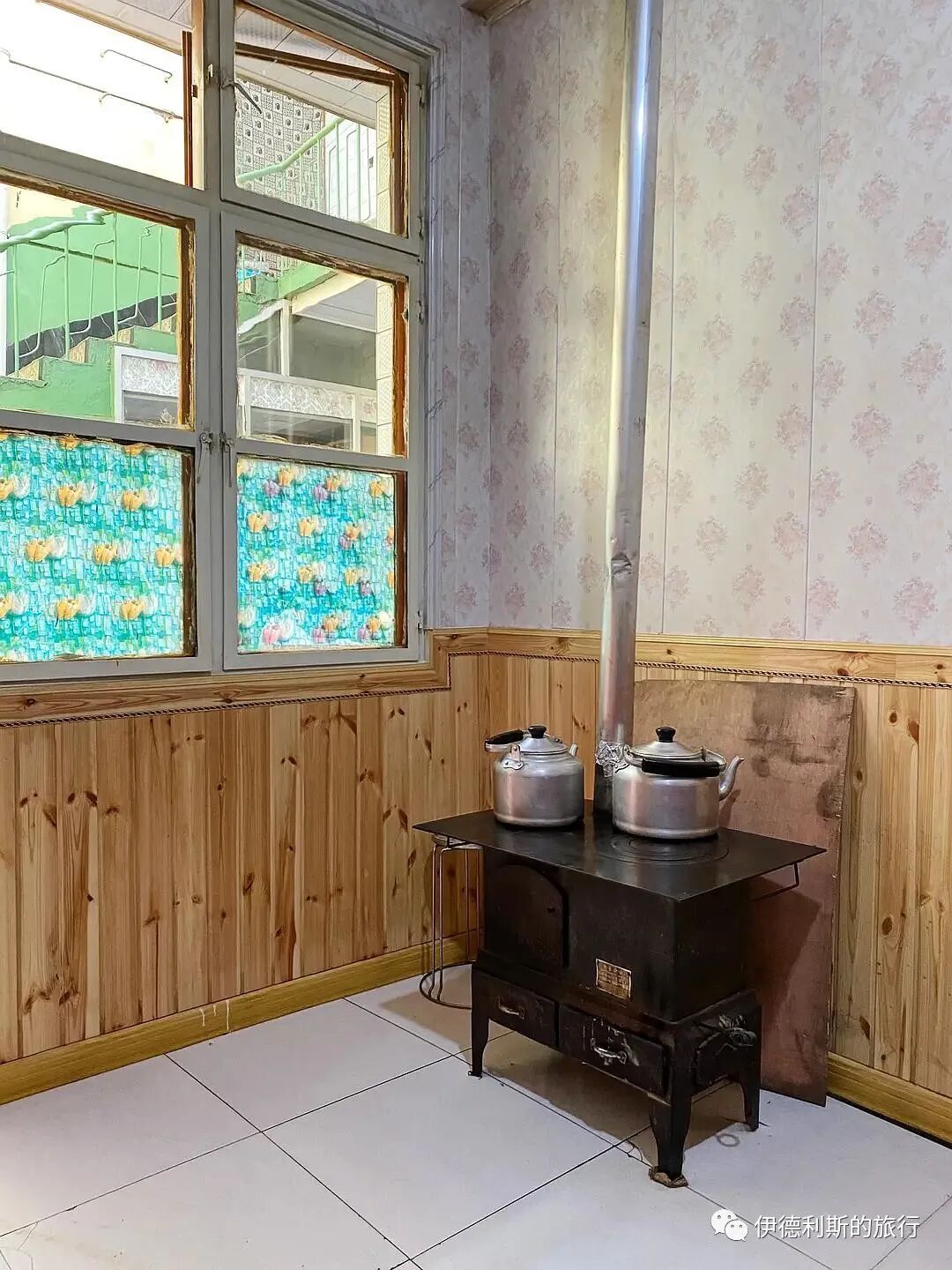
In the afternoon, we headed from Xunhua to Xining Airport. Halfway there, we received news that our flight was canceled due to heavy rain in Beijing, so we had to change our flight and head to downtown Xining instead.
With a few extra hours on our hands, we went to the Niluo Food City on the fifth floor of the Xining Wangfujing Department Store to have some snacks. Niluo Food City is not the kind of messy snack stall area often seen in shopping malls. It gathers many local halal snacks and is clean, hygienic, and cheap. We ate Qinghai specialties like wheat kernel porridge (mairen zhou), lamb intestine noodles (yangchang mian), and fermented oat milk tea (tianpeizi naicha). It felt very pleasant to have some snacks here after getting tired from walking around the mall.
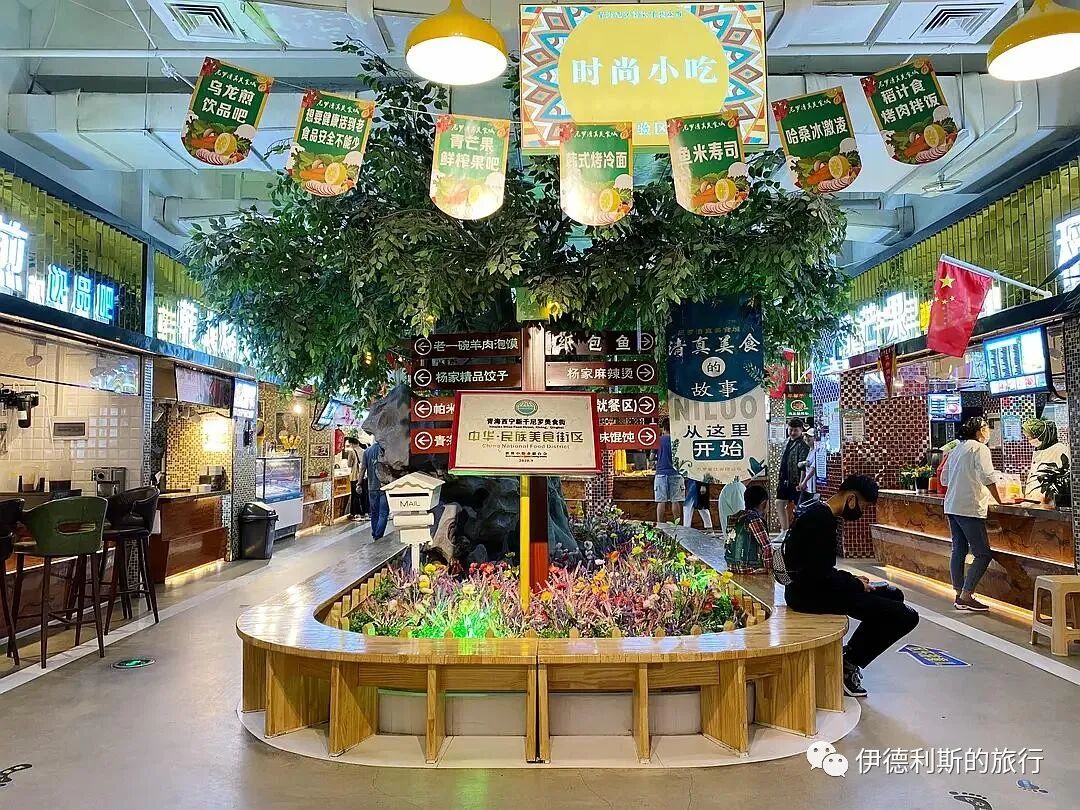
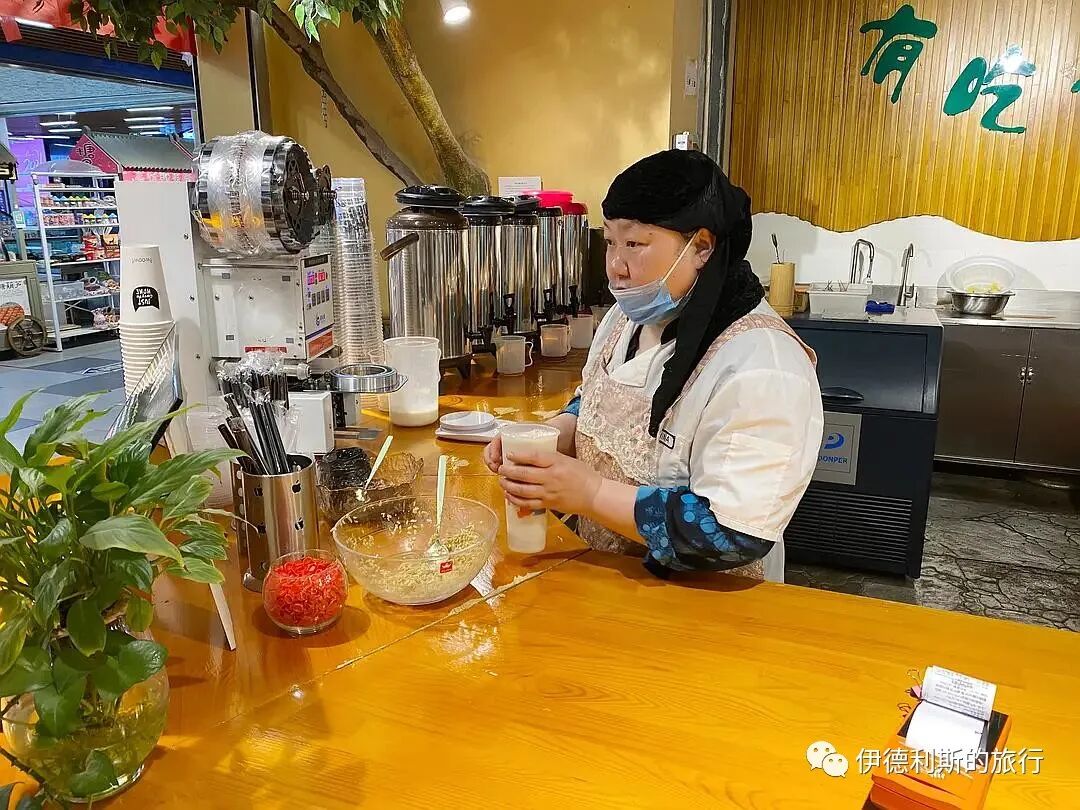
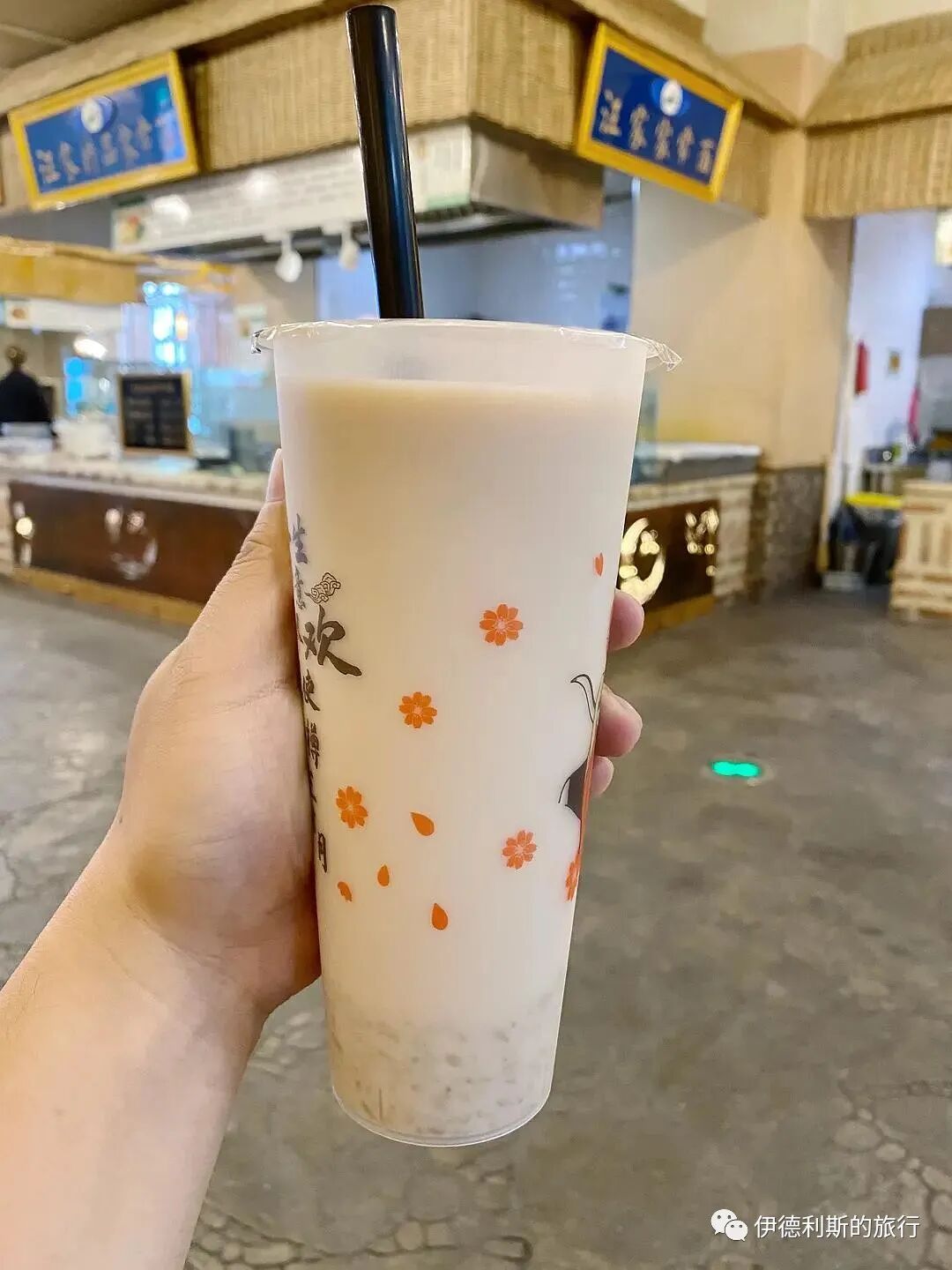
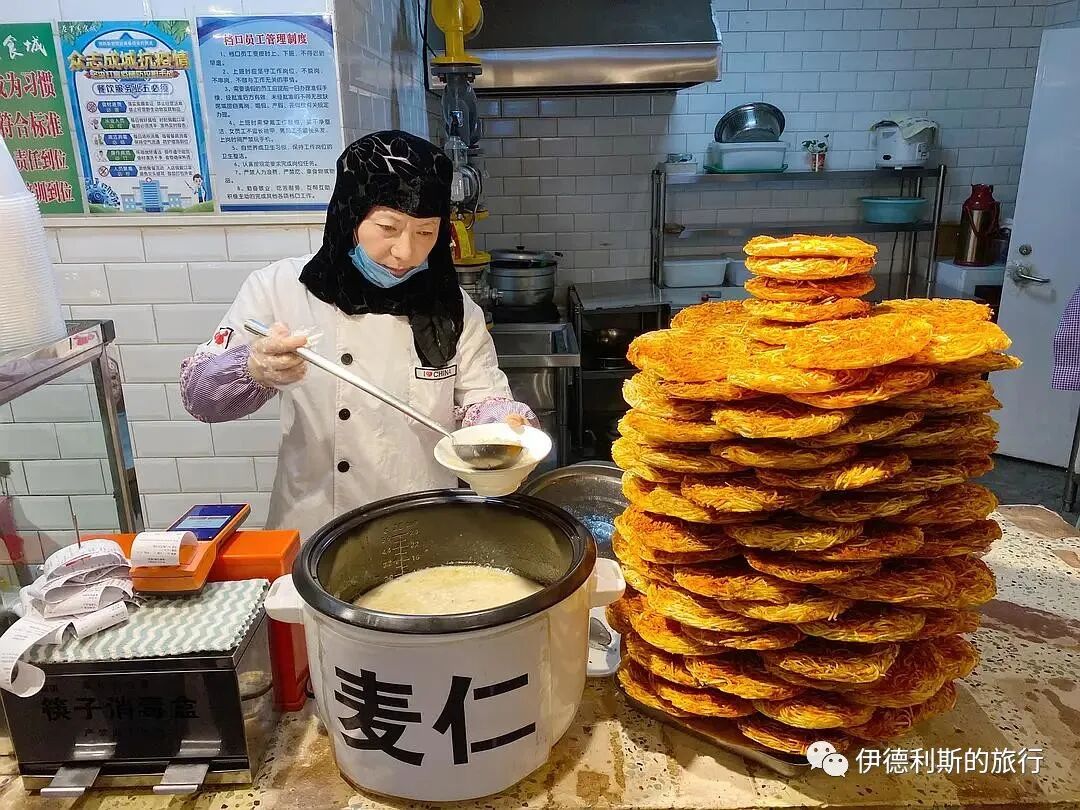
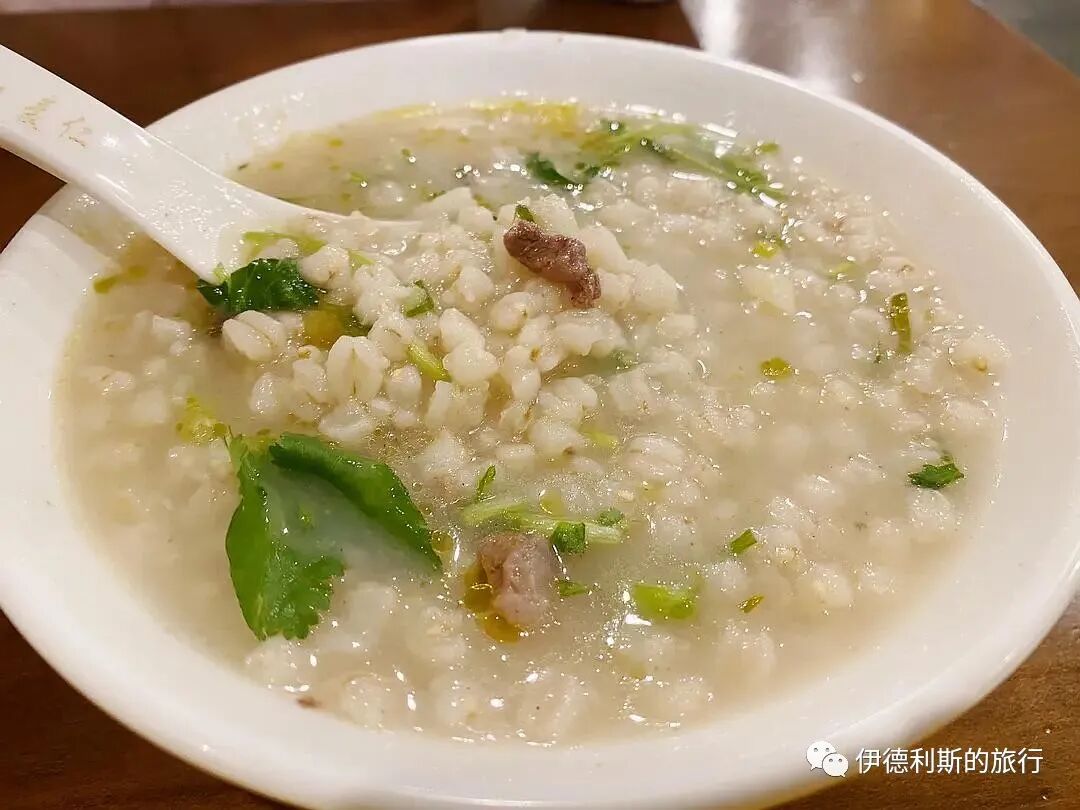
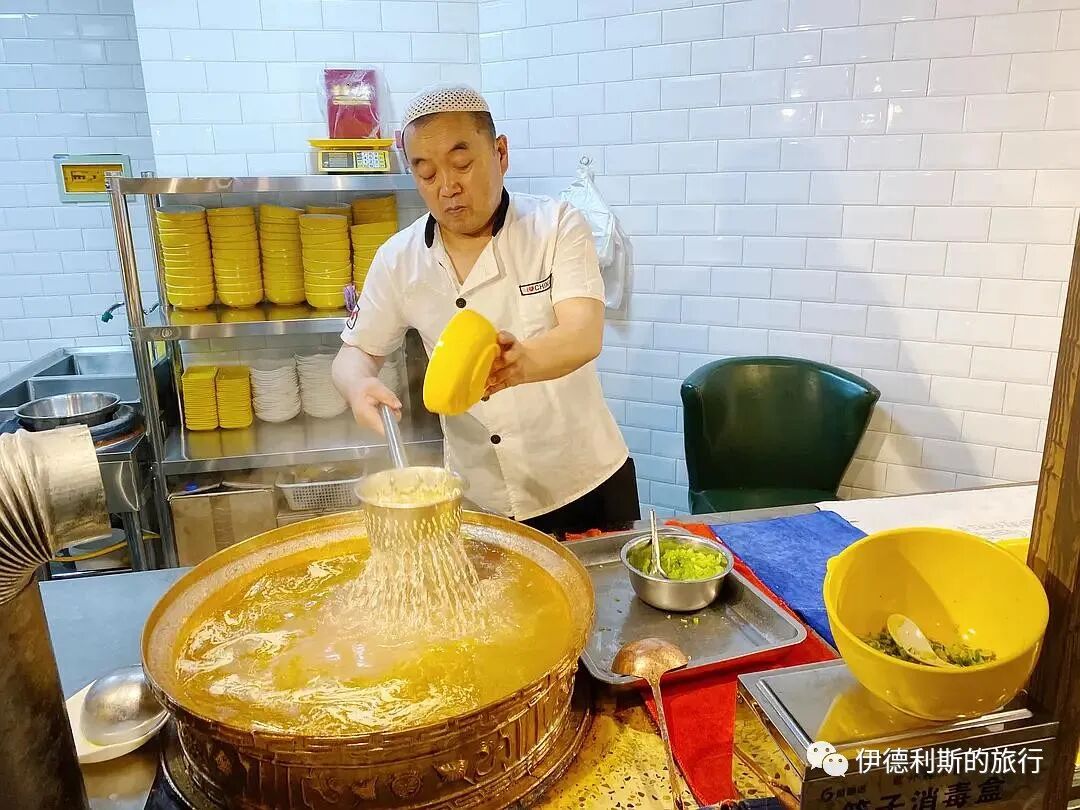
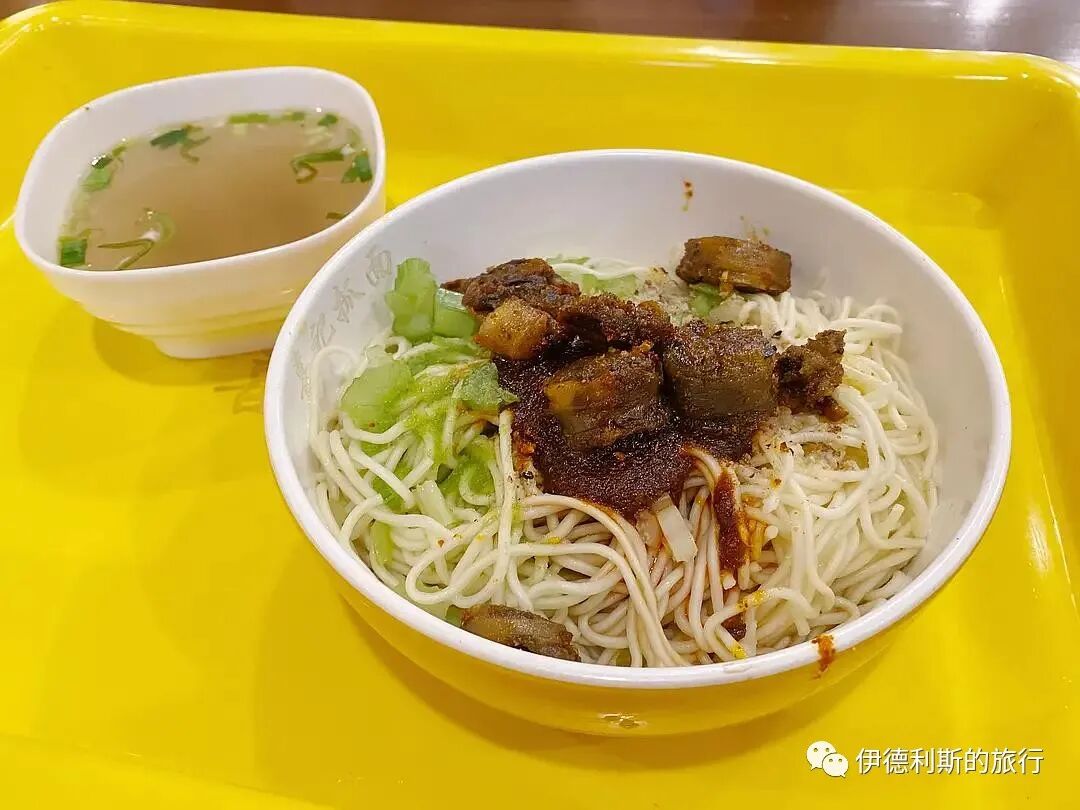
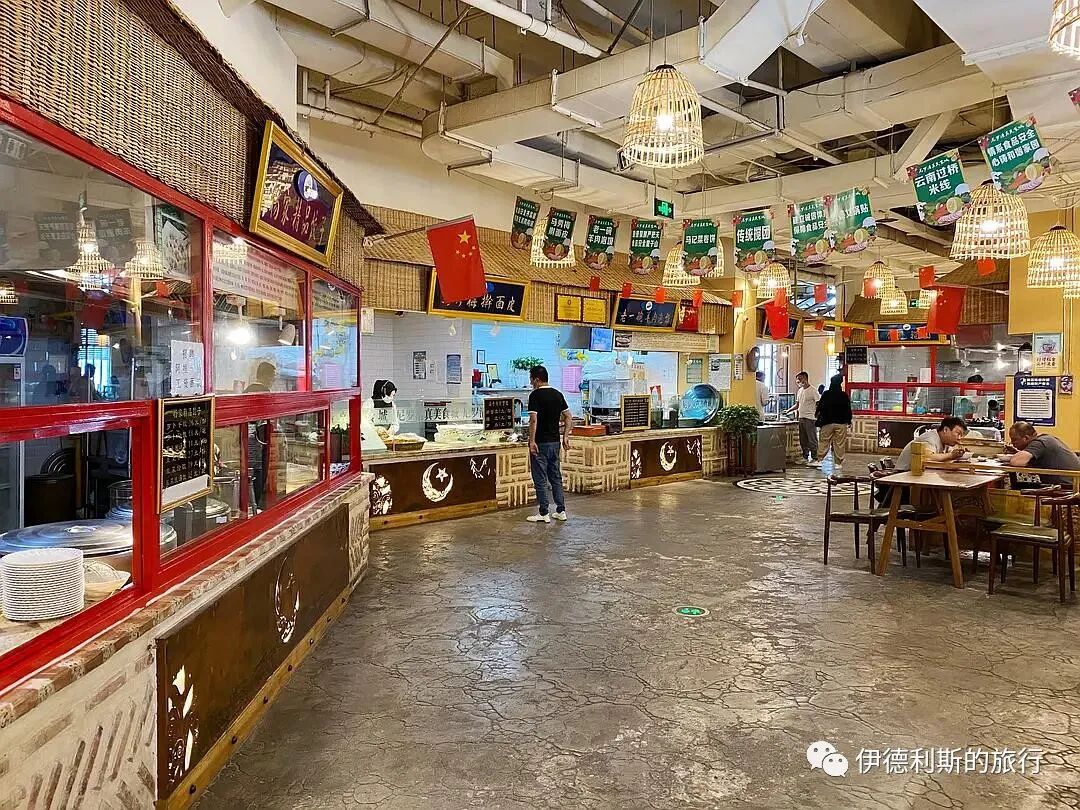
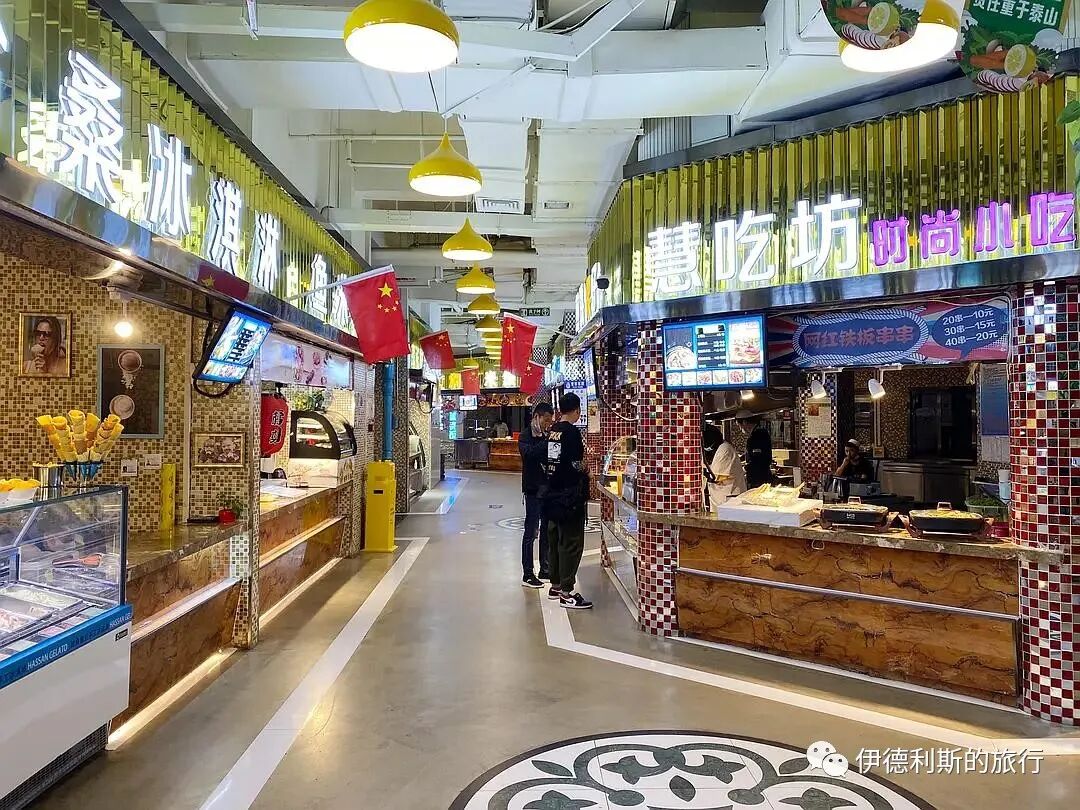
Zainab tried river snail rice noodles (luosifen) for the first time at Nile Food City, haha. This shop is very clean and hygienic, and local Hui Muslim girls love to eat here.
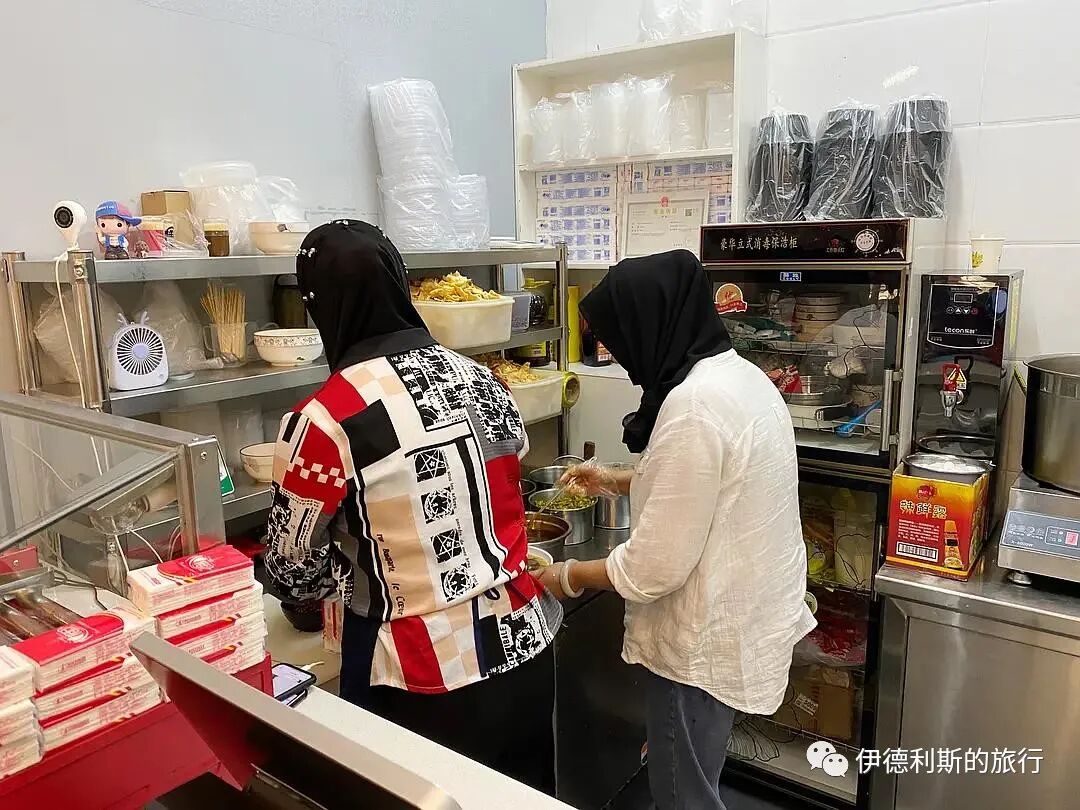
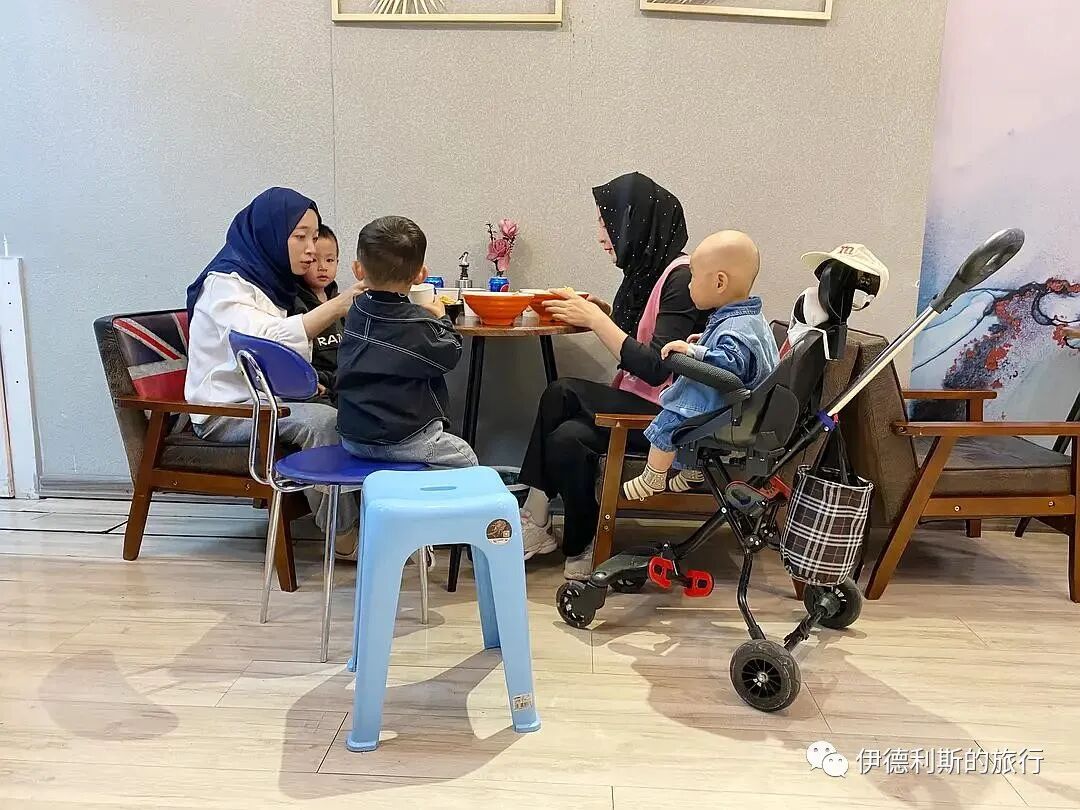
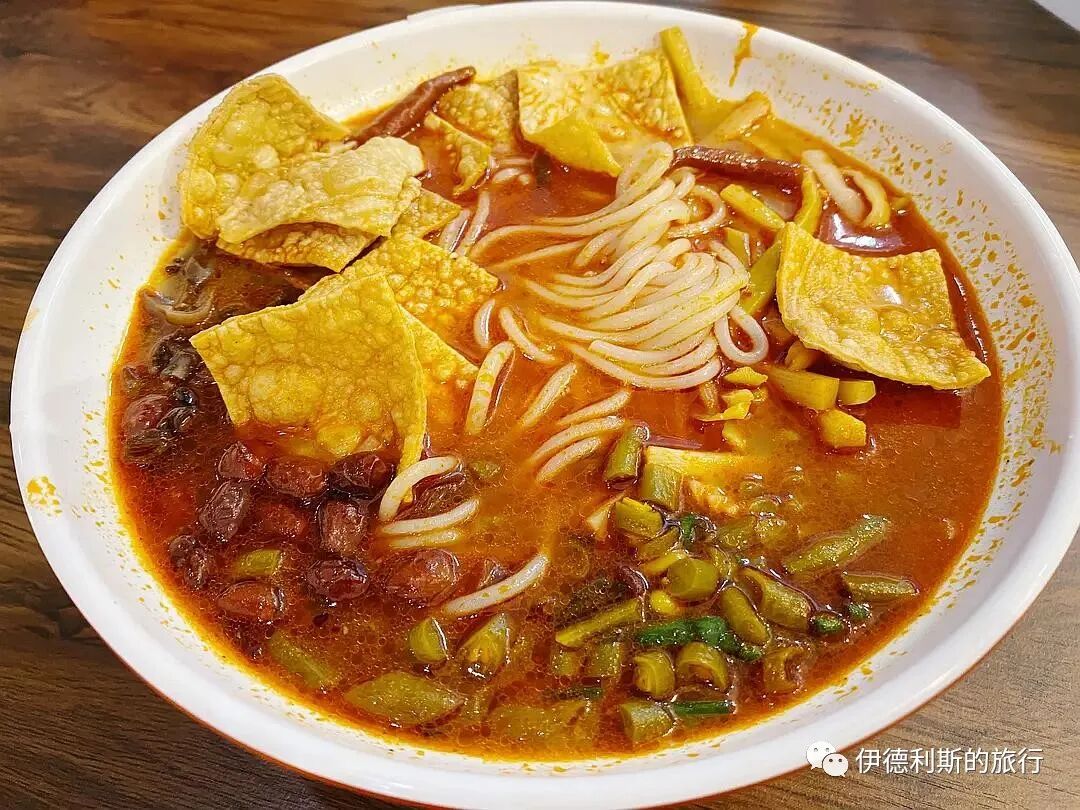
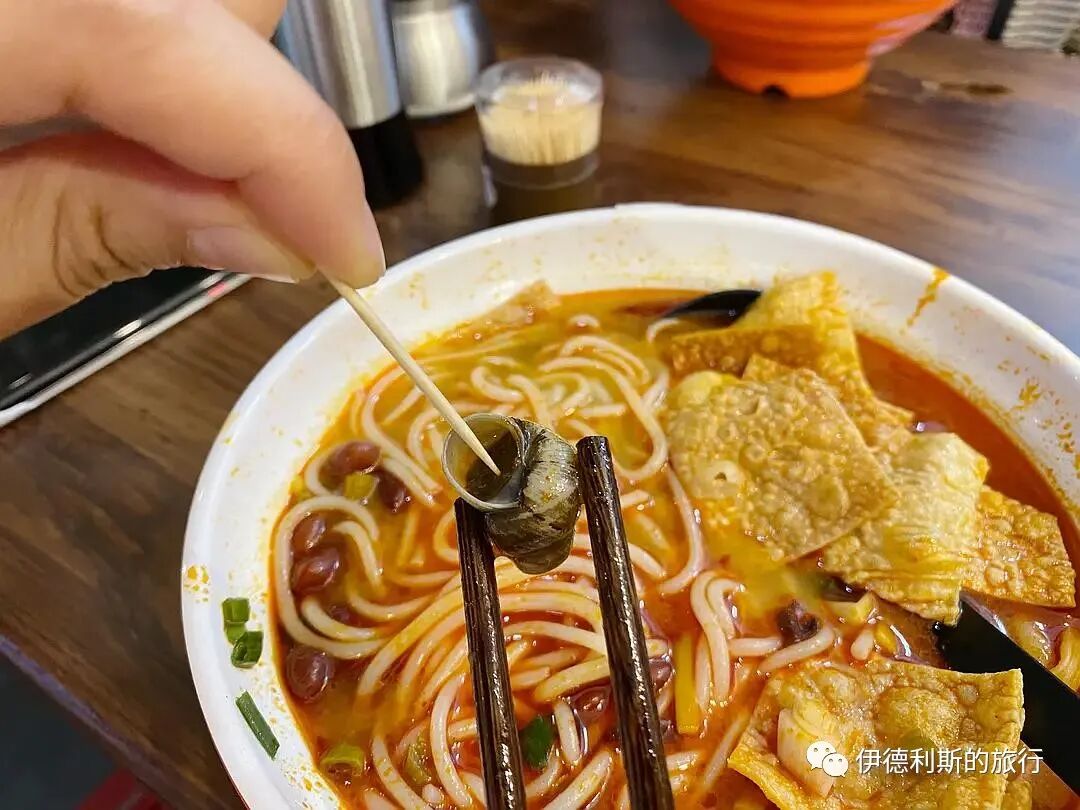
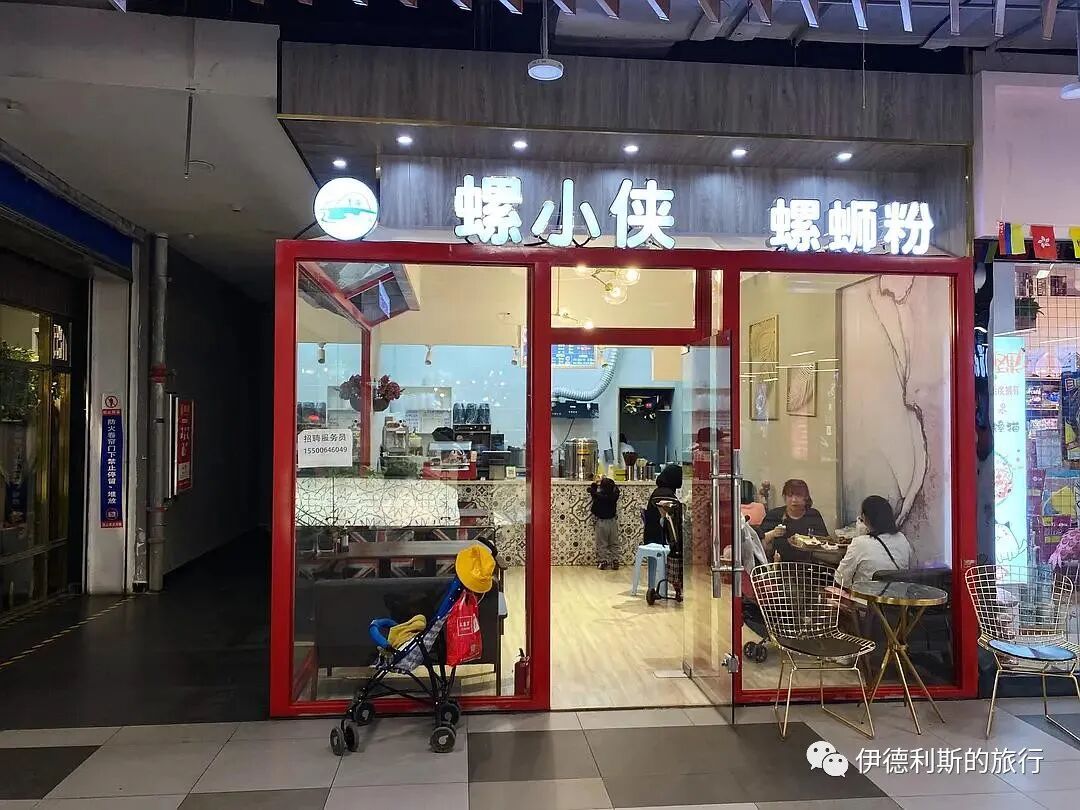
Zainab couldn't stop thinking about the homemade yogurt (suannai) from Yangjia Third Alley after drinking it last year, so she made sure to have some this time while visiting Xining. Zainab loves this pure yogurt (suannai) that has no added sugar or rapeseed oil.
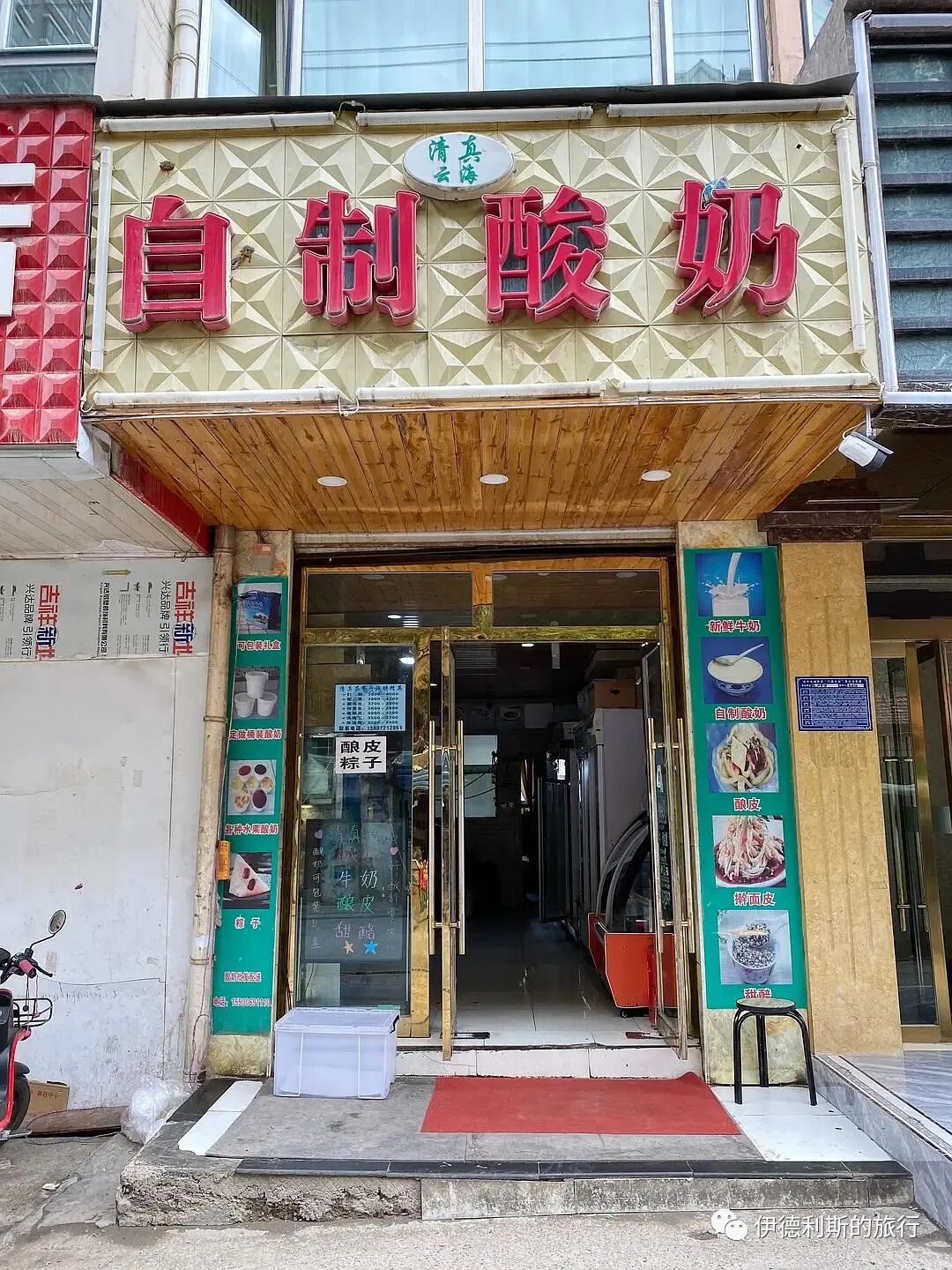
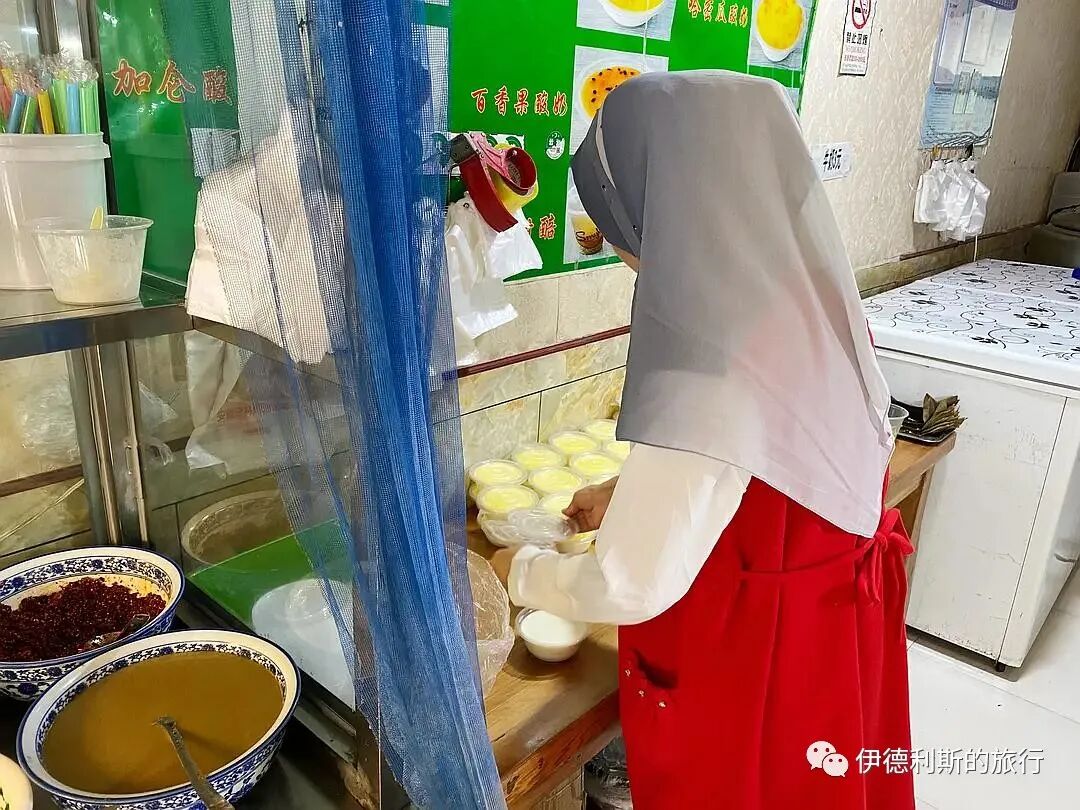
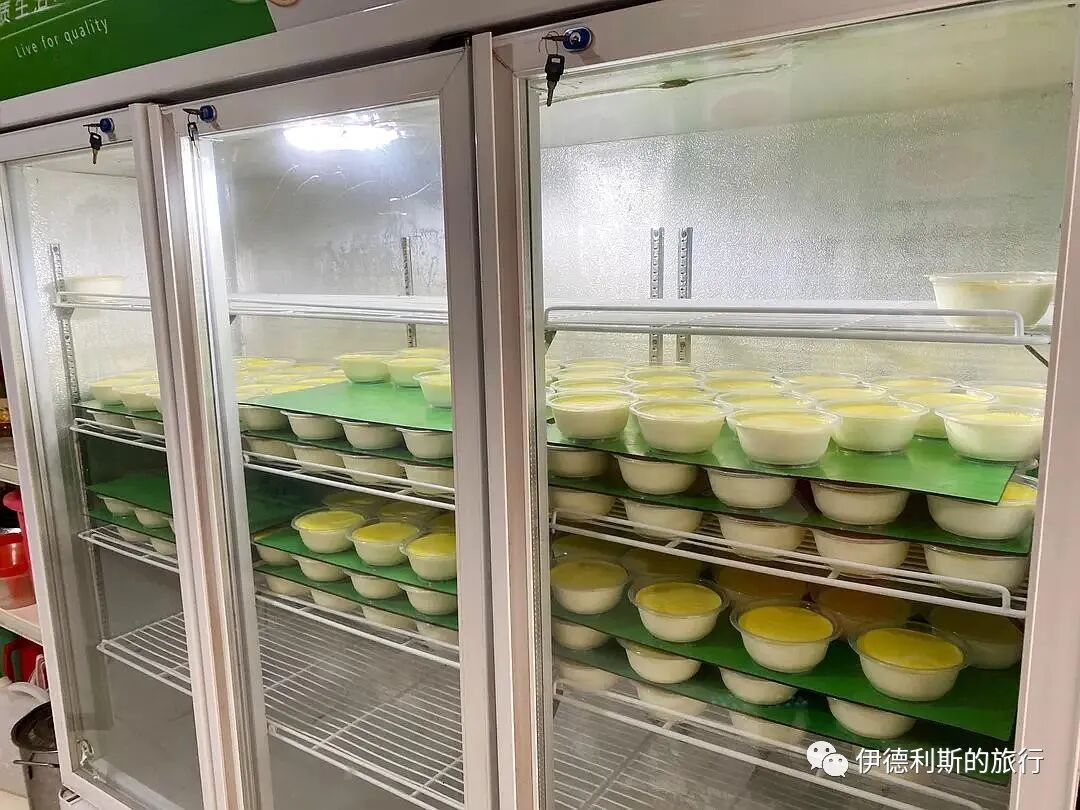
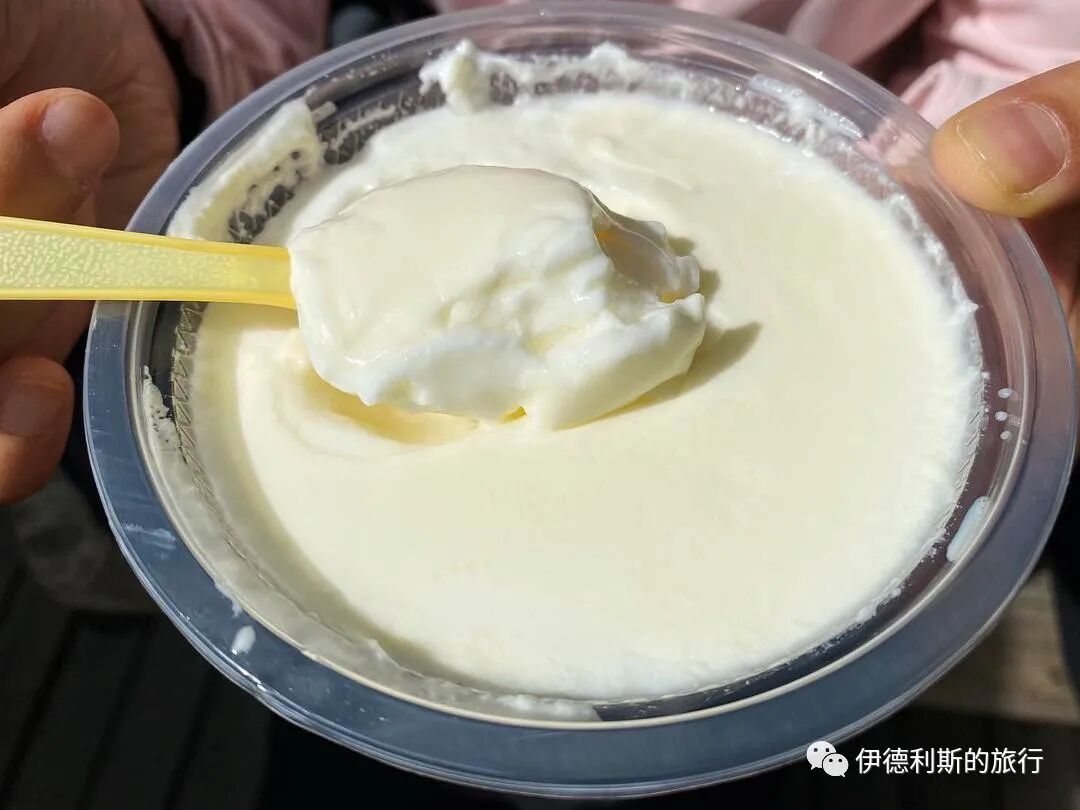
Summary: Qinghai — Ping’an, Xunhua and Xining Muslim Heritage is presented here as a firsthand travel account in clear English, beginning with this scene: It is very precious that Pastor Carter Holton, who was preaching in Xunhua in the 1930s, took photos of the Jiezi Gongbei that have been well-preserved for over 80 years. The account keeps its focus on Qinghai Travel, Hui Muslims, Halal Food while preserving the names, places, food, and historical details from the Chinese source.
It is very precious that Pastor Carter Holton, who was preaching in Xunhua in the 1930s, took photos of the Jiezi Gongbei that have been well-preserved for over 80 years.
Night in Xunhua County.
In the evening, we had the local specialty, colostrum milk (jiaonai), in the county town. Colostrum milk (jiaonai) is the milk produced by a cow within three days of giving birth, mixed with regular milk and steamed. It has a texture like egg custard, but a very unique taste. Some people might not be used to it, but many elderly grandparents in Qinghai love it.
At night, we ate barbecue at the East Gate Food Street in the county town. We ordered half a jin of grilled lamb chops, a clay pot dish, and a grilled flatbread (kaomo). Zainabu also ordered a bowl of fermented vegetable juice (jiangshui) on the side. Having a little barbecue at night is quite comfortable.
There are three main types of breakfast in Xunhua: beef noodles, lamb offal soup (yangzasui) with flatbread, and steamed buns with fermented rice wine (baozi laozao). We had breakfast at the Xiuying Baozi Laozao Restaurant on Jishi Street. Actually, the steamed bun and fermented rice wine shops here sell many other things. I saw that what people ate the most were stewed vegetable bowls (huiwan) and deep-fried dough sticks (youtiao). The stewed vegetable bowl (huiwan), also called mixed vegetables (huicai), mainly contains radishes, potatoes, vermicelli, and meat. We had eaten it before at the Yangu Road Gongbei. You can also drink milk, eat starch noodle soup (fentang), black rice porridge, and other things.
The Gasan Antique Shop in the county town has all kinds of ritual water jugs (tangping hu), which are quite interesting.
Suzhi Mosque.
The Suzhi Mosque in Xunhua, Qinghai, was first built in 1460 (the fourth year of the Tianshun reign of the Ming Dynasty) and expanded during the Qing Dynasty. It is currently a cultural relic protection unit of Qinghai Province.
Ahetan Mosque.
Although the Ahetan Mosque is located in Hualong County, north of the Yellow River, it is still a Salar ethnic mosque and belongs to the Suzhi Gong, one of the eight Salar Gongs, just like the Suzhi Mosque.
In the main hall of the mosque, we received a warm welcome from the imam.
Setting off for Xining.
At noon, we had a home-style mixed clay pot (shijin tu huoguo) in Xunhua County. It had a rich variety of vegetables, and there was actually a lot of meat hidden underneath. Two people were very full after finishing a small pot.
In the afternoon, we headed from Xunhua to Xining Airport. Halfway there, we received news that our flight was canceled due to heavy rain in Beijing, so we had to change our flight and head to downtown Xining instead.
With a few extra hours on our hands, we went to the Niluo Food City on the fifth floor of the Xining Wangfujing Department Store to have some snacks. Niluo Food City is not the kind of messy snack stall area often seen in shopping malls. It gathers many local halal snacks and is clean, hygienic, and cheap. We ate Qinghai specialties like wheat kernel porridge (mairen zhou), lamb intestine noodles (yangchang mian), and fermented oat milk tea (tianpeizi naicha). It felt very pleasant to have some snacks here after getting tired from walking around the mall.
Zainab tried river snail rice noodles (luosifen) for the first time at Nile Food City, haha. This shop is very clean and hygienic, and local Hui Muslim girls love to eat here.
Zainab couldn't stop thinking about the homemade yogurt (suannai) from Yangjia Third Alley after drinking it last year, so she made sure to have some this time while visiting Xining. Zainab loves this pure yogurt (suannai) that has no added sugar or rapeseed oil.
Real Muslim Food China: Xining Halal Baozi, Beef Hotpot & Qinghai Restaurant Map
Articles • ali2007fr posted the article • 0 comments • 155 views • 2026-05-21 10:01
Reposted from the web
Summary: A real Muslim food map for Xining, Qinghai, covering halal baozi (steamed buns), beef hotpot, bakeries, local restaurants, and the original address and photo details from the Chinese article.
Nearly half of the restaurants in Xining are halal, and these halal spots do not serve alcohol. Decent restaurants even have prayer rooms. There are so many delicious choices in Xining that it is unrealistic to try them all, so I will just recommend the ones I have visited.
1. Turkish Mediterranean Restaurant
There is a very clear Turkish sign hanging outside the Xinqian building. You can take the elevator directly to the restaurant on the third floor. Once you enter, a server will lead you to a small private room. This is a feature of halal restaurants in Xining; the tables are in small partitioned areas, and when you pull the curtain, you have a private space to chat. I recommend the steak and desserts here.
Address: 3rd Floor, Xinqian International, Xiadu Avenue
2. Yifan Restaurant
As soon as you walk in, you see a prayer room and a place for wudu (small ablution). All kinds of facilities are available, which is very common in Xining.
You need to pay extra for napkins in Xining restaurants.
This was my first time eating Qinghai clay pot hot pot (tu huoguo). A huge pot like this only costs a little over 100 yuan. The top is covered with lamb, which is already cooked when served. The middle layer has glass noodles and lettuce, and the bottom has potatoes and radishes. By the time you finish the top, the bottom layer is cooked perfectly. It tastes great.
Address: Northeast corner of the intersection of Nanxiao Street and Qingzhen Lane
3. Jinmai Bakery
This is a chain store where you can order delicious cakes. Because the cream is whipped fresh to order, you have to wait an hour. A 14-inch cake costs a little over 100 yuan. They also have many pastries like egg tarts, cream puffs, and wife cakes (laopobing), which are all cheap and tasty.
Address: Jinniu Residential Area Branch, No. 22 Beixiao Street, Chengdong District
4. Dazhong Steamed Buns
This is a famous, long-standing shop that has been open for decades and is very popular. I often come here for breakfast. They have steamed buns (baozi) with potato filling and chive filling. The buns have thin skins and lots of filling. Pair them with a bowl of starch noodle soup (fen tang), and it is delicious.
5. Qingzhen Niububi Hot Pot
A halal hot pot chain from Chengdu has opened in Xining. My Salar brothers invited me to try it. We ordered the mild spicy version, but it did not feel spicy at all. Although the chili peppers in Qinghai are red, they are low in heat and are mainly used for color and aroma. The environment here is much more spacious than the Chengdu branch.
Address: Room 81-51, Building 2, No. 81 Shengli Road
6. Zhenxiang Porridge
Eating beef and lamb as a staple every day in Xining makes you crave something light occasionally. Beijing really lacks a halal porridge shop like this. They have various flavors of porridge and Cantonese-style snacks. I have eaten at Xiapo Porridge and Pancake Shop in Xiamen, and I hope these porridge shops can open branches in Beijing soon.
Address: No. 44-4 Nandajie (next to Fengfan Bar)
7. Qingzhen Jincai Hot Pot City
There are many hot pot restaurants in Xining. This one is quite large and the ingredients are fresh. Eating lamb in Xining is a treat because it has very little gamey smell. I ordered a specialty snack called dog-pissing-on-the-wall pancake (goujiaoniao). It is a thin pancake with oil poured over it, which looks like a dog urinating.
Address: No. 66, Xinqian International Plaza, Xiadu Avenue
8. Delu Yogurt Shop
I visited Xining twice and made sure to go to Mojia Street to taste the yogurt at Delu, a long-established shop. Qinghai yogurt has a unique flavor with a layer of yellow milk skin (naipizi) on top. You do not need to add extra sugar, and it tastes neither sour nor greasy, with a smooth texture.
Address: Mojia Street
9. Hasan Ice Cream Shop
The girl selling Hasan ice cream is exceptionally beautiful, like a beauty of the ice cream world. I praised her on Weibo and her family saw it, telling me she is already married (giggle). There are so many beautiful women from ethnic minorities in the east of Xining city. They know how to dress, and they are thin, fair-skinned, and have big eyes, making them a beautiful sight.
Address: Mojia Street
11. Baituo Halal Yak Hot Pot
To eat authentic halal yak hot pot, you must come to Xining. Although Lhasa also has yak hot pot, the altitude in Lhasa is higher, so the water does not boil well, which affects the texture of the meat when you cook it. You can also try Tibetan goat meat here. Yak meat is a bit tough, so I suggest pairing it with lamb and fatty beef.
Address: 2nd Floor, Building 1, Huheng Building, 67 Dongguan Street
12. Mazhong Food Court
Mazhong Food Court at 1 Mojia Street is the place most visitors go to, similar to the snack street at Wangfujing in Beijing. You must eat hand-grabbed meat (shouzhuarou). There are many places to eat it in Xining. Qinghai lamb is fresh and tender; I could not even smell any gamey odor while standing in front of the meat stall. Eat the hand-grabbed meat with raw garlic and pair it with a bottle of Qinghai yogurt for a balanced and satisfying meal.
Address: 1 Mojia Street
13. Kamila Tea Restaurant
There are many halal tea restaurants in Xining, perfect for dates, matchmaking, and drinking tea. People here really know how to enjoy life, spending an entire afternoon with a covered tea bowl (gaiwan).
Address: 2nd Floor, Yonghe Building, Xiguan Street
14. Jingxifeng Halal Restaurant
Xining Jingxifeng Halal Restaurant is the largest halal restaurant I have ever seen. It was built by turning an ecological park into a restaurant. Walking through the restaurant is like walking through a park, and there is even an artificial lake. The environment is beautiful and suitable for wedding banquets and wedding photos. The meal standard is only over 1,000 yuan per table, but People say there are even larger halal restaurants in Xining.
Address: Bayi Road, Chengdong District
15. Xinqian Lijing Sky Garden Halal Restaurant
This is a tropical rainforest-style halal restaurant. During the Spring Festival, there are newlyweds holding weddings here every day. The meal standard is also over 1,000 yuan, with an additional 3,000 yuan venue fee. I am amazed at how many high-end restaurants Hui Muslims in Xining can choose from for weddings, with both great environments and food.
Address: 66 Jianguo Street view all
Summary: A real Muslim food map for Xining, Qinghai, covering halal baozi (steamed buns), beef hotpot, bakeries, local restaurants, and the original address and photo details from the Chinese article.
Nearly half of the restaurants in Xining are halal, and these halal spots do not serve alcohol. Decent restaurants even have prayer rooms. There are so many delicious choices in Xining that it is unrealistic to try them all, so I will just recommend the ones I have visited.
1. Turkish Mediterranean Restaurant
There is a very clear Turkish sign hanging outside the Xinqian building. You can take the elevator directly to the restaurant on the third floor. Once you enter, a server will lead you to a small private room. This is a feature of halal restaurants in Xining; the tables are in small partitioned areas, and when you pull the curtain, you have a private space to chat. I recommend the steak and desserts here.
Address: 3rd Floor, Xinqian International, Xiadu Avenue
2. Yifan Restaurant
As soon as you walk in, you see a prayer room and a place for wudu (small ablution). All kinds of facilities are available, which is very common in Xining.
You need to pay extra for napkins in Xining restaurants.
This was my first time eating Qinghai clay pot hot pot (tu huoguo). A huge pot like this only costs a little over 100 yuan. The top is covered with lamb, which is already cooked when served. The middle layer has glass noodles and lettuce, and the bottom has potatoes and radishes. By the time you finish the top, the bottom layer is cooked perfectly. It tastes great.
Address: Northeast corner of the intersection of Nanxiao Street and Qingzhen Lane
3. Jinmai Bakery
This is a chain store where you can order delicious cakes. Because the cream is whipped fresh to order, you have to wait an hour. A 14-inch cake costs a little over 100 yuan. They also have many pastries like egg tarts, cream puffs, and wife cakes (laopobing), which are all cheap and tasty.
Address: Jinniu Residential Area Branch, No. 22 Beixiao Street, Chengdong District
4. Dazhong Steamed Buns
This is a famous, long-standing shop that has been open for decades and is very popular. I often come here for breakfast. They have steamed buns (baozi) with potato filling and chive filling. The buns have thin skins and lots of filling. Pair them with a bowl of starch noodle soup (fen tang), and it is delicious.
5. Qingzhen Niububi Hot Pot
A halal hot pot chain from Chengdu has opened in Xining. My Salar brothers invited me to try it. We ordered the mild spicy version, but it did not feel spicy at all. Although the chili peppers in Qinghai are red, they are low in heat and are mainly used for color and aroma. The environment here is much more spacious than the Chengdu branch.
Address: Room 81-51, Building 2, No. 81 Shengli Road
6. Zhenxiang Porridge
Eating beef and lamb as a staple every day in Xining makes you crave something light occasionally. Beijing really lacks a halal porridge shop like this. They have various flavors of porridge and Cantonese-style snacks. I have eaten at Xiapo Porridge and Pancake Shop in Xiamen, and I hope these porridge shops can open branches in Beijing soon.
Address: No. 44-4 Nandajie (next to Fengfan Bar)
7. Qingzhen Jincai Hot Pot City
There are many hot pot restaurants in Xining. This one is quite large and the ingredients are fresh. Eating lamb in Xining is a treat because it has very little gamey smell. I ordered a specialty snack called dog-pissing-on-the-wall pancake (goujiaoniao). It is a thin pancake with oil poured over it, which looks like a dog urinating.
Address: No. 66, Xinqian International Plaza, Xiadu Avenue
8. Delu Yogurt Shop
I visited Xining twice and made sure to go to Mojia Street to taste the yogurt at Delu, a long-established shop. Qinghai yogurt has a unique flavor with a layer of yellow milk skin (naipizi) on top. You do not need to add extra sugar, and it tastes neither sour nor greasy, with a smooth texture.
Address: Mojia Street
9. Hasan Ice Cream Shop
The girl selling Hasan ice cream is exceptionally beautiful, like a beauty of the ice cream world. I praised her on Weibo and her family saw it, telling me she is already married (giggle). There are so many beautiful women from ethnic minorities in the east of Xining city. They know how to dress, and they are thin, fair-skinned, and have big eyes, making them a beautiful sight.
Address: Mojia Street
11. Baituo Halal Yak Hot Pot
To eat authentic halal yak hot pot, you must come to Xining. Although Lhasa also has yak hot pot, the altitude in Lhasa is higher, so the water does not boil well, which affects the texture of the meat when you cook it. You can also try Tibetan goat meat here. Yak meat is a bit tough, so I suggest pairing it with lamb and fatty beef.
Address: 2nd Floor, Building 1, Huheng Building, 67 Dongguan Street
12. Mazhong Food Court
Mazhong Food Court at 1 Mojia Street is the place most visitors go to, similar to the snack street at Wangfujing in Beijing. You must eat hand-grabbed meat (shouzhuarou). There are many places to eat it in Xining. Qinghai lamb is fresh and tender; I could not even smell any gamey odor while standing in front of the meat stall. Eat the hand-grabbed meat with raw garlic and pair it with a bottle of Qinghai yogurt for a balanced and satisfying meal.
Address: 1 Mojia Street
13. Kamila Tea Restaurant
There are many halal tea restaurants in Xining, perfect for dates, matchmaking, and drinking tea. People here really know how to enjoy life, spending an entire afternoon with a covered tea bowl (gaiwan).
Address: 2nd Floor, Yonghe Building, Xiguan Street
14. Jingxifeng Halal Restaurant
Xining Jingxifeng Halal Restaurant is the largest halal restaurant I have ever seen. It was built by turning an ecological park into a restaurant. Walking through the restaurant is like walking through a park, and there is even an artificial lake. The environment is beautiful and suitable for wedding banquets and wedding photos. The meal standard is only over 1,000 yuan per table, but People say there are even larger halal restaurants in Xining.
Address: Bayi Road, Chengdong District
15. Xinqian Lijing Sky Garden Halal Restaurant
This is a tropical rainforest-style halal restaurant. During the Spring Festival, there are newlyweds holding weddings here every day. The meal standard is also over 1,000 yuan, with an additional 3,000 yuan venue fee. I am amazed at how many high-end restaurants Hui Muslims in Xining can choose from for weddings, with both great environments and food.
Address: 66 Jianguo Street view all
Reposted from the web
Summary: A real Muslim food map for Xining, Qinghai, covering halal baozi (steamed buns), beef hotpot, bakeries, local restaurants, and the original address and photo details from the Chinese article.
Nearly half of the restaurants in Xining are halal, and these halal spots do not serve alcohol. Decent restaurants even have prayer rooms. There are so many delicious choices in Xining that it is unrealistic to try them all, so I will just recommend the ones I have visited.
1. Turkish Mediterranean Restaurant
There is a very clear Turkish sign hanging outside the Xinqian building. You can take the elevator directly to the restaurant on the third floor. Once you enter, a server will lead you to a small private room. This is a feature of halal restaurants in Xining; the tables are in small partitioned areas, and when you pull the curtain, you have a private space to chat. I recommend the steak and desserts here.
Address: 3rd Floor, Xinqian International, Xiadu Avenue
2. Yifan Restaurant
As soon as you walk in, you see a prayer room and a place for wudu (small ablution). All kinds of facilities are available, which is very common in Xining.
You need to pay extra for napkins in Xining restaurants.
This was my first time eating Qinghai clay pot hot pot (tu huoguo). A huge pot like this only costs a little over 100 yuan. The top is covered with lamb, which is already cooked when served. The middle layer has glass noodles and lettuce, and the bottom has potatoes and radishes. By the time you finish the top, the bottom layer is cooked perfectly. It tastes great.
Address: Northeast corner of the intersection of Nanxiao Street and Qingzhen Lane
3. Jinmai Bakery
This is a chain store where you can order delicious cakes. Because the cream is whipped fresh to order, you have to wait an hour. A 14-inch cake costs a little over 100 yuan. They also have many pastries like egg tarts, cream puffs, and wife cakes (laopobing), which are all cheap and tasty.
Address: Jinniu Residential Area Branch, No. 22 Beixiao Street, Chengdong District
4. Dazhong Steamed Buns
This is a famous, long-standing shop that has been open for decades and is very popular. I often come here for breakfast. They have steamed buns (baozi) with potato filling and chive filling. The buns have thin skins and lots of filling. Pair them with a bowl of starch noodle soup (fen tang), and it is delicious.
5. Qingzhen Niububi Hot Pot
A halal hot pot chain from Chengdu has opened in Xining. My Salar brothers invited me to try it. We ordered the mild spicy version, but it did not feel spicy at all. Although the chili peppers in Qinghai are red, they are low in heat and are mainly used for color and aroma. The environment here is much more spacious than the Chengdu branch.
Address: Room 81-51, Building 2, No. 81 Shengli Road
6. Zhenxiang Porridge
Eating beef and lamb as a staple every day in Xining makes you crave something light occasionally. Beijing really lacks a halal porridge shop like this. They have various flavors of porridge and Cantonese-style snacks. I have eaten at Xiapo Porridge and Pancake Shop in Xiamen, and I hope these porridge shops can open branches in Beijing soon.
Address: No. 44-4 Nandajie (next to Fengfan Bar)
7. Qingzhen Jincai Hot Pot City
There are many hot pot restaurants in Xining. This one is quite large and the ingredients are fresh. Eating lamb in Xining is a treat because it has very little gamey smell. I ordered a specialty snack called dog-pissing-on-the-wall pancake (goujiaoniao). It is a thin pancake with oil poured over it, which looks like a dog urinating.
Address: No. 66, Xinqian International Plaza, Xiadu Avenue
8. Delu Yogurt Shop
I visited Xining twice and made sure to go to Mojia Street to taste the yogurt at Delu, a long-established shop. Qinghai yogurt has a unique flavor with a layer of yellow milk skin (naipizi) on top. You do not need to add extra sugar, and it tastes neither sour nor greasy, with a smooth texture.
Address: Mojia Street
9. Hasan Ice Cream Shop
The girl selling Hasan ice cream is exceptionally beautiful, like a beauty of the ice cream world. I praised her on Weibo and her family saw it, telling me she is already married (giggle). There are so many beautiful women from ethnic minorities in the east of Xining city. They know how to dress, and they are thin, fair-skinned, and have big eyes, making them a beautiful sight.
Address: Mojia Street
11. Baituo Halal Yak Hot Pot
To eat authentic halal yak hot pot, you must come to Xining. Although Lhasa also has yak hot pot, the altitude in Lhasa is higher, so the water does not boil well, which affects the texture of the meat when you cook it. You can also try Tibetan goat meat here. Yak meat is a bit tough, so I suggest pairing it with lamb and fatty beef.
Address: 2nd Floor, Building 1, Huheng Building, 67 Dongguan Street
12. Mazhong Food Court
Mazhong Food Court at 1 Mojia Street is the place most visitors go to, similar to the snack street at Wangfujing in Beijing. You must eat hand-grabbed meat (shouzhuarou). There are many places to eat it in Xining. Qinghai lamb is fresh and tender; I could not even smell any gamey odor while standing in front of the meat stall. Eat the hand-grabbed meat with raw garlic and pair it with a bottle of Qinghai yogurt for a balanced and satisfying meal.
Address: 1 Mojia Street
13. Kamila Tea Restaurant
There are many halal tea restaurants in Xining, perfect for dates, matchmaking, and drinking tea. People here really know how to enjoy life, spending an entire afternoon with a covered tea bowl (gaiwan).
Address: 2nd Floor, Yonghe Building, Xiguan Street
14. Jingxifeng Halal Restaurant
Xining Jingxifeng Halal Restaurant is the largest halal restaurant I have ever seen. It was built by turning an ecological park into a restaurant. Walking through the restaurant is like walking through a park, and there is even an artificial lake. The environment is beautiful and suitable for wedding banquets and wedding photos. The meal standard is only over 1,000 yuan per table, but People say there are even larger halal restaurants in Xining.
Address: Bayi Road, Chengdong District
15. Xinqian Lijing Sky Garden Halal Restaurant
This is a tropical rainforest-style halal restaurant. During the Spring Festival, there are newlyweds holding weddings here every day. The meal standard is also over 1,000 yuan, with an additional 3,000 yuan venue fee. I am amazed at how many high-end restaurants Hui Muslims in Xining can choose from for weddings, with both great environments and food.
Address: 66 Jianguo Street
Summary: A real Muslim food map for Xining, Qinghai, covering halal baozi (steamed buns), beef hotpot, bakeries, local restaurants, and the original address and photo details from the Chinese article.
Nearly half of the restaurants in Xining are halal, and these halal spots do not serve alcohol. Decent restaurants even have prayer rooms. There are so many delicious choices in Xining that it is unrealistic to try them all, so I will just recommend the ones I have visited.
1. Turkish Mediterranean Restaurant
There is a very clear Turkish sign hanging outside the Xinqian building. You can take the elevator directly to the restaurant on the third floor. Once you enter, a server will lead you to a small private room. This is a feature of halal restaurants in Xining; the tables are in small partitioned areas, and when you pull the curtain, you have a private space to chat. I recommend the steak and desserts here.
Address: 3rd Floor, Xinqian International, Xiadu Avenue
2. Yifan Restaurant
As soon as you walk in, you see a prayer room and a place for wudu (small ablution). All kinds of facilities are available, which is very common in Xining.
You need to pay extra for napkins in Xining restaurants.
This was my first time eating Qinghai clay pot hot pot (tu huoguo). A huge pot like this only costs a little over 100 yuan. The top is covered with lamb, which is already cooked when served. The middle layer has glass noodles and lettuce, and the bottom has potatoes and radishes. By the time you finish the top, the bottom layer is cooked perfectly. It tastes great.
Address: Northeast corner of the intersection of Nanxiao Street and Qingzhen Lane
3. Jinmai Bakery
This is a chain store where you can order delicious cakes. Because the cream is whipped fresh to order, you have to wait an hour. A 14-inch cake costs a little over 100 yuan. They also have many pastries like egg tarts, cream puffs, and wife cakes (laopobing), which are all cheap and tasty.
Address: Jinniu Residential Area Branch, No. 22 Beixiao Street, Chengdong District
4. Dazhong Steamed Buns
This is a famous, long-standing shop that has been open for decades and is very popular. I often come here for breakfast. They have steamed buns (baozi) with potato filling and chive filling. The buns have thin skins and lots of filling. Pair them with a bowl of starch noodle soup (fen tang), and it is delicious.
5. Qingzhen Niububi Hot Pot
A halal hot pot chain from Chengdu has opened in Xining. My Salar brothers invited me to try it. We ordered the mild spicy version, but it did not feel spicy at all. Although the chili peppers in Qinghai are red, they are low in heat and are mainly used for color and aroma. The environment here is much more spacious than the Chengdu branch.
Address: Room 81-51, Building 2, No. 81 Shengli Road
6. Zhenxiang Porridge
Eating beef and lamb as a staple every day in Xining makes you crave something light occasionally. Beijing really lacks a halal porridge shop like this. They have various flavors of porridge and Cantonese-style snacks. I have eaten at Xiapo Porridge and Pancake Shop in Xiamen, and I hope these porridge shops can open branches in Beijing soon.
Address: No. 44-4 Nandajie (next to Fengfan Bar)
7. Qingzhen Jincai Hot Pot City
There are many hot pot restaurants in Xining. This one is quite large and the ingredients are fresh. Eating lamb in Xining is a treat because it has very little gamey smell. I ordered a specialty snack called dog-pissing-on-the-wall pancake (goujiaoniao). It is a thin pancake with oil poured over it, which looks like a dog urinating.
Address: No. 66, Xinqian International Plaza, Xiadu Avenue
8. Delu Yogurt Shop
I visited Xining twice and made sure to go to Mojia Street to taste the yogurt at Delu, a long-established shop. Qinghai yogurt has a unique flavor with a layer of yellow milk skin (naipizi) on top. You do not need to add extra sugar, and it tastes neither sour nor greasy, with a smooth texture.
Address: Mojia Street
9. Hasan Ice Cream Shop
The girl selling Hasan ice cream is exceptionally beautiful, like a beauty of the ice cream world. I praised her on Weibo and her family saw it, telling me she is already married (giggle). There are so many beautiful women from ethnic minorities in the east of Xining city. They know how to dress, and they are thin, fair-skinned, and have big eyes, making them a beautiful sight.
Address: Mojia Street
11. Baituo Halal Yak Hot Pot
To eat authentic halal yak hot pot, you must come to Xining. Although Lhasa also has yak hot pot, the altitude in Lhasa is higher, so the water does not boil well, which affects the texture of the meat when you cook it. You can also try Tibetan goat meat here. Yak meat is a bit tough, so I suggest pairing it with lamb and fatty beef.
Address: 2nd Floor, Building 1, Huheng Building, 67 Dongguan Street
12. Mazhong Food Court
Mazhong Food Court at 1 Mojia Street is the place most visitors go to, similar to the snack street at Wangfujing in Beijing. You must eat hand-grabbed meat (shouzhuarou). There are many places to eat it in Xining. Qinghai lamb is fresh and tender; I could not even smell any gamey odor while standing in front of the meat stall. Eat the hand-grabbed meat with raw garlic and pair it with a bottle of Qinghai yogurt for a balanced and satisfying meal.
Address: 1 Mojia Street
13. Kamila Tea Restaurant
There are many halal tea restaurants in Xining, perfect for dates, matchmaking, and drinking tea. People here really know how to enjoy life, spending an entire afternoon with a covered tea bowl (gaiwan).
Address: 2nd Floor, Yonghe Building, Xiguan Street
14. Jingxifeng Halal Restaurant
Xining Jingxifeng Halal Restaurant is the largest halal restaurant I have ever seen. It was built by turning an ecological park into a restaurant. Walking through the restaurant is like walking through a park, and there is even an artificial lake. The environment is beautiful and suitable for wedding banquets and wedding photos. The meal standard is only over 1,000 yuan per table, but People say there are even larger halal restaurants in Xining.
Address: Bayi Road, Chengdong District
15. Xinqian Lijing Sky Garden Halal Restaurant
This is a tropical rainforest-style halal restaurant. During the Spring Festival, there are newlyweds holding weddings here every day. The meal standard is also over 1,000 yuan, with an additional 3,000 yuan venue fee. I am amazed at how many high-end restaurants Hui Muslims in Xining can choose from for weddings, with both great environments and food.
Address: 66 Jianguo Street
Halal Travel Guide: Qinghai — Ping’an, Xunhua and Xining Muslim Heritage (Part 1)
Articles • ali2007fr posted the article • 0 comments • 162 views • 2026-05-18 01:28
Reposted from the web
Summary: Qinghai — Ping’an, Xunhua and Xining Muslim Heritage is presented here as a firsthand travel account in clear English, beginning with this scene: During the 2021 Dragon Boat Festival, I visited Ping'an, Xunhua, and Xining in Qinghai. My main goal was to visit the traditional historical mosques and gongbei buildings there, and I gained a lot. The account keeps its focus on Qinghai Travel, Hui Muslims, China Mosques while preserving the names, places, food, and historical details from the Chinese source.
During the 2021 Dragon Boat Festival, I visited Ping'an, Xunhua, and Xining in Qinghai. My main goal was to visit the traditional historical mosques and gongbei buildings there, and I gained a lot.
I stayed overnight at Ping'an Station (Ping'anyi).
I took a late flight to Xining Airport, then took a taxi to the Daqingzhen Kanguo Barbecue restaurant in the Ping'an District of Haidong to eat pan-roasted meat (kanguo). They have many types of pan-roasted meat, including lamb, tripe, intestines, and chicken. We had the pan-roasted lamb head and also ordered the wheat kernel porridge (mairen zhou), which is a must-have at Qinghai barbecue shops.
The restaurant layout features small private rooms common in Qinghai town restaurants. Even for two people, you can pull the curtain for privacy, which feels quite nice. After ordering, they brought out free pickles, radishes, mung bean jelly (liangfen), and boiled tea (aocha). The servers were very friendly. I had a few bites of the jelly and some tea, and then the pan-roasted meat arrived. Besides a whole lamb head, it came with potatoes, corn, and vermicelli, so we didn't really need to order any staple food. I finished with a bowl of wheat kernel porridge and felt very satisfied.
The next day, I had lamb offal soup (yangzasui) with flatbread (bingzi) at the Shalihai Lamb Offal shop on the main street of Ping'an, Haidong. Across the street is the Ping'an food street, Ping'anfang Pedestrian Street. I bought some handmade yogurt at the Hongshuiquan Starch Jelly (niangpi) shop inside. Hongshuiquan is where the most famous Hongshuiquan Great Mosque in Haidong is located.
The Upper and Lower Gongbei of Shangma Family in Bazanggou.
I took a Didi taxi from Ping'an to the famous Upper and Lower Gongbei of the Shangma family in Bazanggou, Haidong. The Upper Gongbei of the Shangma family is on the peak of Woniu Mountain, so it is also called Woniu Mountain Gongbei. It is the tomb of Ma Diangong (1643-1715), a leader of the Khufiyya Sufi order (menhuan).
The Lower Gongbei of the Shangma family in Bazanggou is the tomb of Xian Chengde (known as Chuanli Taiye), the third-generation sheikh of the Khufiyya Xianmen menhuan. Xian Chengde built this gongbei during the Jiaqing reign. Shortly after it was completed in 1812, he passed away (returned to Allah), and his followers buried him there. In 1895, the fifth-generation sheikh of the Xianmen, Xian Linyuan, also passed away and was buried in the Lower Gongbei.
We were warmly received at the Lower Gongbei of Shangmazhuang and were given fried dough (youxiang) and clear-stewed meat.
Yangulu Gongbei.
At noon, I chartered a car from Ping'an District, Haidong, to the famous Yangulu Gongbei in Xunhua. After a two-hour drive, we crossed the mountains from the Huangshui Valley into the Yellow River Valley and arrived at the Gongboxia Dam pier. When we reached the pier, a boat was about to depart. It carried a large family of Hui Muslims from Linxia who were visiting the gongbei, and we took the boat together to the gongbei pier.
To get from the pier to the gongbei, you have to walk along a mountain path by the Yellow River, but it has been widened in recent years and is much easier to walk than before.
At the end of the mountain road, there are over 30 houses built in 1985 with community funds to provide food, lodging, and rest for those visiting the gongbei. We performed wudu (abudaisi) here, listened to the advice of the Salar uncle who guards the gongbei, and prepared to head toward the cliff leading to the shrine.
After crossing the final stone threshold, we reached three rest pavilions built below the gongbei during the Guangxu reign. Not far above them stands the hexagonal, pointed-roof gongbei pavilion.
Going down the mountain is actually much harder than going up because it is a vertical cliff. You cannot see the path at all, so you have to feel your way with your feet, step by step. It is often hard to find where to place your next step, and halfway down, my calves started shaking from the intense tension. In the end, it took us even longer to reach the foot of the mountain than it did to climb up.
At the foot of the mountain, we were warmly welcomed by the Salar guardians of the gongbei. We ate delicious braised meat bowls (huiwan), steamed buns (momo), old-stock chicken (laotangji), and hand-grabbed lamb chops (shouzhuayangpai), and drank plenty of clear tea. The Yangulu Gongbei is currently guarded by four Salar families who have lived here for generations. Food and lodging are free for all believers who visit, and the income mainly comes from charitable donations (nietie).
After a full meal, we said goodbye to our warm Salar friends, returned to the pier, and took a boat to leave Yangulu.
Xunhua County Town
In the evening, we traveled from Yangulu to Xunhua County town, bought some handmade yogurt with rapeseed oil, and then ate some Salar dry-mixed beef noodles.
Here in Xunhua, even the beef noodle shops have small private rooms; the environment is really quite good. After ordering, they served meat broth and tea first, and we also ordered a platter of cold dishes. Besides the thread chili (xianlajiao), people in Xunhua also love eating tiger-skin chili (hupilajiao). While waiting for the bus earlier, I noticed the grandpas and grandmas shopping were all carrying a bag of tiger-skin chili. Dry-mixed noodles with meat sauce (roujiangganban) should be a specialty here in Qinghai. I had it before at a Salar restaurant in Beijing called A-Gong Noodle House, but this time it felt more authentic. The noodles were thin and chewy, the sauce was especially fragrant, and this meal cost less than twenty yuan, which is great value.
The Yellow River at the Xunhua section.
In the morning, we had a bowl of beef noodles in Xunhua County town, then set off to visit the beautiful traditional Salar mosques.
Qingshuihedong Mosque
Qingshuihedong Mosque is the main mosque (haiyisi) of the Qingshui Gong of the Salar Eight Gongs. It was first built in 1425 and has been rebuilt many times throughout history.
Mengda Mosque
Mengda Mosque is located in Dazhuang Village, Mengda Township, Xunhua, Qinghai. It was first built in 1408 (the sixth year of the Yongle reign of the Ming Dynasty) and expanded three times during the Qing Dynasty. It is the main mosque (haiyisi) of the Mengda Gong, one of the Salar Eight Gongs.
The Yellow River at the Mengda section.
Tashapo Mosque
Tashapo Mosque was first built in 1480 (the sixteenth year of the Chenghua reign of the Ming Dynasty) and rebuilt in 1755 (the twentieth year of the Qianlong reign of the Qing Dynasty).
Labian Mosque
Labian Mosque was first built during the Qianlong era. The main hall was rebuilt in 2015, leaving only the call-to-prayer tower (xuanlilou) and the two side gate towers as the original ancient structures.
Zhangga Mosque
Zhangga Mosque was first built in 1406 (the fourth year of the Yongle reign of the Ming Dynasty) and was rebuilt during the Qing Dynasty.
Kewa Mosque
Kewa Mosque was first built in 1403 (the first year of the Yongle reign of the Ming Dynasty) and expanded during the Qing Dynasty. It is the main Friday mosque (jumuasi) for the Salar people's eight gong (gong) and nine man (man) groups.
At Kewa Mosque, we were warmly welcomed by a Salar imam. He gave us a detailed introduction to the mosque and its wall paintings, and even cut up a melon for us to eat. I want to thank the imam here!
Returning to the county town.
At noon, we ate stir-fried beef and dough paste (jiaotuan) at a Salar family farmhouse restaurant in the county town. Dough paste (jiaotuan) is made by stir-frying flour until cooked, boiling it with water, and then adding refined vegetable oil. It tastes very fragrant. In Xunhua, Salar family eateries are divided into tea restaurants and farmhouse restaurants. The tea restaurants have a wider variety of dishes, but if you want authentic Salar food, I recommend going to a farmhouse restaurant.
Then we went to the Jiezi Town fried dough twist (sanzi) market to buy Salar-style fried dates (youzao). These are large dates wrapped in dough and fried. One bite is full of date juice.
Jiezi Grand Mosque Quran Collection Hall
I was very lucky to visit the Quran Collection Hall at Jiezi Grand Mosque. I saw the handwritten Quran that the Salar people brought with them when they migrated from the Samarkand area to Xunhua over 700 years ago.
The Quran consists of 30 volumes, stored in two rhinoceros-hide cases. Historically, this set of the Quran was kept by the religious leader known as the 'Gazi'. When the Gazi system was abolished in 1896, the Quran remained in the care of the Gazi's descendants. People say in 1894, Ma Qishao (Ma Anliang) from Linxia seized the Quran. However, on his way back to Linxia from Xunhua, he encountered a violent storm and could not cross the mountains, so he had to return the Quran. During the Republic of China era, the Quran was seized by Ma Bufang. It was not returned to Han Wushiba, a descendant of the Jiezi Gazi, until the 1950s.
In 1954, the Quran was sent to Syria for an international exhibition, where it made a great impression on the Islamic world. After the '58 Religious Reform' in 1958, the burning of religious texts began. On the advice of the 'Salar Social History Investigation Group' then conducting research in Xunhua, the Quran was sent to the Cultural Palace of Nationalities under the guise of participating in a 10th-anniversary national exhibition. It was stored in the basement of the Cultural Palace for the next twenty years, only returning to Jiezi Grand Mosque in 1982.
The Quran I photographed.
The uncle who showed us around the collection hall is telling us about the migration route of the Salar people.
The Quran was photographed in 1933 by the American missionary Reverend Carter Holton (Hai Yingguang). Reverend Holton lived in the Hehuang region for many years between the 1920s and 1940s. Reverend Holton loved photography and left behind over 5,000 photos of the ethnic customs in the Gansu and Qinghai regions. In the early 1990s, his second daughter donated them all to the Harvard University Library, where they can now be viewed on the library's official website.
Imam Hai holds the Quran himself.
The Quran kept in the collection hall.
After the Salar people settled in Jiezi Town, the descendants of the highest Salar scholar, Sulimanisha Hai, hand-copied this using specially mixed ink and a tamarisk (gelimu) reed pen; it is over 600 years old.
A manuscript from the 17th to 18th century, wrapped in cowhide.
Printed and published in Iran, it contains 18 grams of gold.
Camel Spring (Luotuo Quan).
Next to the Quran collection hall is Camel Spring, the first place the Salar people settled after migrating from Central Asia to Xunhua. In Salar legend, Ahman and Qarman originally lived near Samarkand. Because they were oppressed by their ruler, they led their people while pulling a white camel. The camel carried a bowl of soil from their hometown, a pot of water, and a Quran. They crossed the Tianshan Mountains heading east and finally arrived in Qinghai. When they reached Aotusi Mountain near Jiezi, they were very tired and decided to stop and rest. In the middle of the night, Qarman discovered the camel was missing. They searched everywhere and finally found the camel lying on the ground turned into stone, with water flowing from its mouth. They unloaded the water, soil, and Quran from the camel and began to recite the Quran. When they tasted the spring water flowing from the camel's mouth, they found it very sweet, exactly the same as the water they had brought with them. They compared it to the soil they brought and found it was also exactly the same, so they decided to settle down here.
Several traditional Salar fence houses (libalou) were built in the Camel Spring scenic area. The fence house is called "baliaoyi" in the Salar language and has two floors. The upper floor is for guest rooms and bedrooms, while the lower floor is for storage and livestock pens. The fence walls use honeysuckle branches and pine boards, covered with a mixture of three types of soil, and the main structure is made of high rammed brown earth walls or a mix of stone and brick.
The Camel Spring scenic area features a restored Qing Dynasty Salar courtyard house, with a living room in the center of the main house, heated brick beds (kang) on both sides, and Arabic calligraphy hanging in the middle.
Jiezi Gongbei.
Hidden in the cemetery on the north side of the Great Mosque of Jiezi, the Jiezi Gongbei is the only historical relic left in Jiezi. Currently, only the lower brick section remains, featuring exquisite brick carvings and an inscription stating it was "rebuilt in the first year of Xianfeng," which is 1851. view all
Summary: Qinghai — Ping’an, Xunhua and Xining Muslim Heritage is presented here as a firsthand travel account in clear English, beginning with this scene: During the 2021 Dragon Boat Festival, I visited Ping'an, Xunhua, and Xining in Qinghai. My main goal was to visit the traditional historical mosques and gongbei buildings there, and I gained a lot. The account keeps its focus on Qinghai Travel, Hui Muslims, China Mosques while preserving the names, places, food, and historical details from the Chinese source.
During the 2021 Dragon Boat Festival, I visited Ping'an, Xunhua, and Xining in Qinghai. My main goal was to visit the traditional historical mosques and gongbei buildings there, and I gained a lot.
I stayed overnight at Ping'an Station (Ping'anyi).
I took a late flight to Xining Airport, then took a taxi to the Daqingzhen Kanguo Barbecue restaurant in the Ping'an District of Haidong to eat pan-roasted meat (kanguo). They have many types of pan-roasted meat, including lamb, tripe, intestines, and chicken. We had the pan-roasted lamb head and also ordered the wheat kernel porridge (mairen zhou), which is a must-have at Qinghai barbecue shops.
The restaurant layout features small private rooms common in Qinghai town restaurants. Even for two people, you can pull the curtain for privacy, which feels quite nice. After ordering, they brought out free pickles, radishes, mung bean jelly (liangfen), and boiled tea (aocha). The servers were very friendly. I had a few bites of the jelly and some tea, and then the pan-roasted meat arrived. Besides a whole lamb head, it came with potatoes, corn, and vermicelli, so we didn't really need to order any staple food. I finished with a bowl of wheat kernel porridge and felt very satisfied.
The next day, I had lamb offal soup (yangzasui) with flatbread (bingzi) at the Shalihai Lamb Offal shop on the main street of Ping'an, Haidong. Across the street is the Ping'an food street, Ping'anfang Pedestrian Street. I bought some handmade yogurt at the Hongshuiquan Starch Jelly (niangpi) shop inside. Hongshuiquan is where the most famous Hongshuiquan Great Mosque in Haidong is located.
The Upper and Lower Gongbei of Shangma Family in Bazanggou.
I took a Didi taxi from Ping'an to the famous Upper and Lower Gongbei of the Shangma family in Bazanggou, Haidong. The Upper Gongbei of the Shangma family is on the peak of Woniu Mountain, so it is also called Woniu Mountain Gongbei. It is the tomb of Ma Diangong (1643-1715), a leader of the Khufiyya Sufi order (menhuan).
The Lower Gongbei of the Shangma family in Bazanggou is the tomb of Xian Chengde (known as Chuanli Taiye), the third-generation sheikh of the Khufiyya Xianmen menhuan. Xian Chengde built this gongbei during the Jiaqing reign. Shortly after it was completed in 1812, he passed away (returned to Allah), and his followers buried him there. In 1895, the fifth-generation sheikh of the Xianmen, Xian Linyuan, also passed away and was buried in the Lower Gongbei.
We were warmly received at the Lower Gongbei of Shangmazhuang and were given fried dough (youxiang) and clear-stewed meat.
Yangulu Gongbei.
At noon, I chartered a car from Ping'an District, Haidong, to the famous Yangulu Gongbei in Xunhua. After a two-hour drive, we crossed the mountains from the Huangshui Valley into the Yellow River Valley and arrived at the Gongboxia Dam pier. When we reached the pier, a boat was about to depart. It carried a large family of Hui Muslims from Linxia who were visiting the gongbei, and we took the boat together to the gongbei pier.
To get from the pier to the gongbei, you have to walk along a mountain path by the Yellow River, but it has been widened in recent years and is much easier to walk than before.
At the end of the mountain road, there are over 30 houses built in 1985 with community funds to provide food, lodging, and rest for those visiting the gongbei. We performed wudu (abudaisi) here, listened to the advice of the Salar uncle who guards the gongbei, and prepared to head toward the cliff leading to the shrine.
After crossing the final stone threshold, we reached three rest pavilions built below the gongbei during the Guangxu reign. Not far above them stands the hexagonal, pointed-roof gongbei pavilion.
Going down the mountain is actually much harder than going up because it is a vertical cliff. You cannot see the path at all, so you have to feel your way with your feet, step by step. It is often hard to find where to place your next step, and halfway down, my calves started shaking from the intense tension. In the end, it took us even longer to reach the foot of the mountain than it did to climb up.
At the foot of the mountain, we were warmly welcomed by the Salar guardians of the gongbei. We ate delicious braised meat bowls (huiwan), steamed buns (momo), old-stock chicken (laotangji), and hand-grabbed lamb chops (shouzhuayangpai), and drank plenty of clear tea. The Yangulu Gongbei is currently guarded by four Salar families who have lived here for generations. Food and lodging are free for all believers who visit, and the income mainly comes from charitable donations (nietie).
After a full meal, we said goodbye to our warm Salar friends, returned to the pier, and took a boat to leave Yangulu.
Xunhua County Town
In the evening, we traveled from Yangulu to Xunhua County town, bought some handmade yogurt with rapeseed oil, and then ate some Salar dry-mixed beef noodles.
Here in Xunhua, even the beef noodle shops have small private rooms; the environment is really quite good. After ordering, they served meat broth and tea first, and we also ordered a platter of cold dishes. Besides the thread chili (xianlajiao), people in Xunhua also love eating tiger-skin chili (hupilajiao). While waiting for the bus earlier, I noticed the grandpas and grandmas shopping were all carrying a bag of tiger-skin chili. Dry-mixed noodles with meat sauce (roujiangganban) should be a specialty here in Qinghai. I had it before at a Salar restaurant in Beijing called A-Gong Noodle House, but this time it felt more authentic. The noodles were thin and chewy, the sauce was especially fragrant, and this meal cost less than twenty yuan, which is great value.
The Yellow River at the Xunhua section.
In the morning, we had a bowl of beef noodles in Xunhua County town, then set off to visit the beautiful traditional Salar mosques.
Qingshuihedong Mosque
Qingshuihedong Mosque is the main mosque (haiyisi) of the Qingshui Gong of the Salar Eight Gongs. It was first built in 1425 and has been rebuilt many times throughout history.
Mengda Mosque
Mengda Mosque is located in Dazhuang Village, Mengda Township, Xunhua, Qinghai. It was first built in 1408 (the sixth year of the Yongle reign of the Ming Dynasty) and expanded three times during the Qing Dynasty. It is the main mosque (haiyisi) of the Mengda Gong, one of the Salar Eight Gongs.
The Yellow River at the Mengda section.
Tashapo Mosque
Tashapo Mosque was first built in 1480 (the sixteenth year of the Chenghua reign of the Ming Dynasty) and rebuilt in 1755 (the twentieth year of the Qianlong reign of the Qing Dynasty).
Labian Mosque
Labian Mosque was first built during the Qianlong era. The main hall was rebuilt in 2015, leaving only the call-to-prayer tower (xuanlilou) and the two side gate towers as the original ancient structures.
Zhangga Mosque
Zhangga Mosque was first built in 1406 (the fourth year of the Yongle reign of the Ming Dynasty) and was rebuilt during the Qing Dynasty.
Kewa Mosque
Kewa Mosque was first built in 1403 (the first year of the Yongle reign of the Ming Dynasty) and expanded during the Qing Dynasty. It is the main Friday mosque (jumuasi) for the Salar people's eight gong (gong) and nine man (man) groups.
At Kewa Mosque, we were warmly welcomed by a Salar imam. He gave us a detailed introduction to the mosque and its wall paintings, and even cut up a melon for us to eat. I want to thank the imam here!
Returning to the county town.
At noon, we ate stir-fried beef and dough paste (jiaotuan) at a Salar family farmhouse restaurant in the county town. Dough paste (jiaotuan) is made by stir-frying flour until cooked, boiling it with water, and then adding refined vegetable oil. It tastes very fragrant. In Xunhua, Salar family eateries are divided into tea restaurants and farmhouse restaurants. The tea restaurants have a wider variety of dishes, but if you want authentic Salar food, I recommend going to a farmhouse restaurant.
Then we went to the Jiezi Town fried dough twist (sanzi) market to buy Salar-style fried dates (youzao). These are large dates wrapped in dough and fried. One bite is full of date juice.
Jiezi Grand Mosque Quran Collection Hall
I was very lucky to visit the Quran Collection Hall at Jiezi Grand Mosque. I saw the handwritten Quran that the Salar people brought with them when they migrated from the Samarkand area to Xunhua over 700 years ago.
The Quran consists of 30 volumes, stored in two rhinoceros-hide cases. Historically, this set of the Quran was kept by the religious leader known as the 'Gazi'. When the Gazi system was abolished in 1896, the Quran remained in the care of the Gazi's descendants. People say in 1894, Ma Qishao (Ma Anliang) from Linxia seized the Quran. However, on his way back to Linxia from Xunhua, he encountered a violent storm and could not cross the mountains, so he had to return the Quran. During the Republic of China era, the Quran was seized by Ma Bufang. It was not returned to Han Wushiba, a descendant of the Jiezi Gazi, until the 1950s.
In 1954, the Quran was sent to Syria for an international exhibition, where it made a great impression on the Islamic world. After the '58 Religious Reform' in 1958, the burning of religious texts began. On the advice of the 'Salar Social History Investigation Group' then conducting research in Xunhua, the Quran was sent to the Cultural Palace of Nationalities under the guise of participating in a 10th-anniversary national exhibition. It was stored in the basement of the Cultural Palace for the next twenty years, only returning to Jiezi Grand Mosque in 1982.
The Quran I photographed.
The uncle who showed us around the collection hall is telling us about the migration route of the Salar people.
The Quran was photographed in 1933 by the American missionary Reverend Carter Holton (Hai Yingguang). Reverend Holton lived in the Hehuang region for many years between the 1920s and 1940s. Reverend Holton loved photography and left behind over 5,000 photos of the ethnic customs in the Gansu and Qinghai regions. In the early 1990s, his second daughter donated them all to the Harvard University Library, where they can now be viewed on the library's official website.
Imam Hai holds the Quran himself.
The Quran kept in the collection hall.
After the Salar people settled in Jiezi Town, the descendants of the highest Salar scholar, Sulimanisha Hai, hand-copied this using specially mixed ink and a tamarisk (gelimu) reed pen; it is over 600 years old.
A manuscript from the 17th to 18th century, wrapped in cowhide.
Printed and published in Iran, it contains 18 grams of gold.
Camel Spring (Luotuo Quan).
Next to the Quran collection hall is Camel Spring, the first place the Salar people settled after migrating from Central Asia to Xunhua. In Salar legend, Ahman and Qarman originally lived near Samarkand. Because they were oppressed by their ruler, they led their people while pulling a white camel. The camel carried a bowl of soil from their hometown, a pot of water, and a Quran. They crossed the Tianshan Mountains heading east and finally arrived in Qinghai. When they reached Aotusi Mountain near Jiezi, they were very tired and decided to stop and rest. In the middle of the night, Qarman discovered the camel was missing. They searched everywhere and finally found the camel lying on the ground turned into stone, with water flowing from its mouth. They unloaded the water, soil, and Quran from the camel and began to recite the Quran. When they tasted the spring water flowing from the camel's mouth, they found it very sweet, exactly the same as the water they had brought with them. They compared it to the soil they brought and found it was also exactly the same, so they decided to settle down here.
Several traditional Salar fence houses (libalou) were built in the Camel Spring scenic area. The fence house is called "baliaoyi" in the Salar language and has two floors. The upper floor is for guest rooms and bedrooms, while the lower floor is for storage and livestock pens. The fence walls use honeysuckle branches and pine boards, covered with a mixture of three types of soil, and the main structure is made of high rammed brown earth walls or a mix of stone and brick.
The Camel Spring scenic area features a restored Qing Dynasty Salar courtyard house, with a living room in the center of the main house, heated brick beds (kang) on both sides, and Arabic calligraphy hanging in the middle.
Jiezi Gongbei.
Hidden in the cemetery on the north side of the Great Mosque of Jiezi, the Jiezi Gongbei is the only historical relic left in Jiezi. Currently, only the lower brick section remains, featuring exquisite brick carvings and an inscription stating it was "rebuilt in the first year of Xianfeng," which is 1851. view all
Reposted from the web
Summary: Qinghai — Ping’an, Xunhua and Xining Muslim Heritage is presented here as a firsthand travel account in clear English, beginning with this scene: During the 2021 Dragon Boat Festival, I visited Ping'an, Xunhua, and Xining in Qinghai. My main goal was to visit the traditional historical mosques and gongbei buildings there, and I gained a lot. The account keeps its focus on Qinghai Travel, Hui Muslims, China Mosques while preserving the names, places, food, and historical details from the Chinese source.
During the 2021 Dragon Boat Festival, I visited Ping'an, Xunhua, and Xining in Qinghai. My main goal was to visit the traditional historical mosques and gongbei buildings there, and I gained a lot.
I stayed overnight at Ping'an Station (Ping'anyi).
I took a late flight to Xining Airport, then took a taxi to the Daqingzhen Kanguo Barbecue restaurant in the Ping'an District of Haidong to eat pan-roasted meat (kanguo). They have many types of pan-roasted meat, including lamb, tripe, intestines, and chicken. We had the pan-roasted lamb head and also ordered the wheat kernel porridge (mairen zhou), which is a must-have at Qinghai barbecue shops.
The restaurant layout features small private rooms common in Qinghai town restaurants. Even for two people, you can pull the curtain for privacy, which feels quite nice. After ordering, they brought out free pickles, radishes, mung bean jelly (liangfen), and boiled tea (aocha). The servers were very friendly. I had a few bites of the jelly and some tea, and then the pan-roasted meat arrived. Besides a whole lamb head, it came with potatoes, corn, and vermicelli, so we didn't really need to order any staple food. I finished with a bowl of wheat kernel porridge and felt very satisfied.
The next day, I had lamb offal soup (yangzasui) with flatbread (bingzi) at the Shalihai Lamb Offal shop on the main street of Ping'an, Haidong. Across the street is the Ping'an food street, Ping'anfang Pedestrian Street. I bought some handmade yogurt at the Hongshuiquan Starch Jelly (niangpi) shop inside. Hongshuiquan is where the most famous Hongshuiquan Great Mosque in Haidong is located.
The Upper and Lower Gongbei of Shangma Family in Bazanggou.
I took a Didi taxi from Ping'an to the famous Upper and Lower Gongbei of the Shangma family in Bazanggou, Haidong. The Upper Gongbei of the Shangma family is on the peak of Woniu Mountain, so it is also called Woniu Mountain Gongbei. It is the tomb of Ma Diangong (1643-1715), a leader of the Khufiyya Sufi order (menhuan).
The Lower Gongbei of the Shangma family in Bazanggou is the tomb of Xian Chengde (known as Chuanli Taiye), the third-generation sheikh of the Khufiyya Xianmen menhuan. Xian Chengde built this gongbei during the Jiaqing reign. Shortly after it was completed in 1812, he passed away (returned to Allah), and his followers buried him there. In 1895, the fifth-generation sheikh of the Xianmen, Xian Linyuan, also passed away and was buried in the Lower Gongbei.
We were warmly received at the Lower Gongbei of Shangmazhuang and were given fried dough (youxiang) and clear-stewed meat.
Yangulu Gongbei.
At noon, I chartered a car from Ping'an District, Haidong, to the famous Yangulu Gongbei in Xunhua. After a two-hour drive, we crossed the mountains from the Huangshui Valley into the Yellow River Valley and arrived at the Gongboxia Dam pier. When we reached the pier, a boat was about to depart. It carried a large family of Hui Muslims from Linxia who were visiting the gongbei, and we took the boat together to the gongbei pier.
To get from the pier to the gongbei, you have to walk along a mountain path by the Yellow River, but it has been widened in recent years and is much easier to walk than before.
At the end of the mountain road, there are over 30 houses built in 1985 with community funds to provide food, lodging, and rest for those visiting the gongbei. We performed wudu (abudaisi) here, listened to the advice of the Salar uncle who guards the gongbei, and prepared to head toward the cliff leading to the shrine.
After crossing the final stone threshold, we reached three rest pavilions built below the gongbei during the Guangxu reign. Not far above them stands the hexagonal, pointed-roof gongbei pavilion.
Going down the mountain is actually much harder than going up because it is a vertical cliff. You cannot see the path at all, so you have to feel your way with your feet, step by step. It is often hard to find where to place your next step, and halfway down, my calves started shaking from the intense tension. In the end, it took us even longer to reach the foot of the mountain than it did to climb up.
At the foot of the mountain, we were warmly welcomed by the Salar guardians of the gongbei. We ate delicious braised meat bowls (huiwan), steamed buns (momo), old-stock chicken (laotangji), and hand-grabbed lamb chops (shouzhuayangpai), and drank plenty of clear tea. The Yangulu Gongbei is currently guarded by four Salar families who have lived here for generations. Food and lodging are free for all believers who visit, and the income mainly comes from charitable donations (nietie).
After a full meal, we said goodbye to our warm Salar friends, returned to the pier, and took a boat to leave Yangulu.
Xunhua County Town
In the evening, we traveled from Yangulu to Xunhua County town, bought some handmade yogurt with rapeseed oil, and then ate some Salar dry-mixed beef noodles.
Here in Xunhua, even the beef noodle shops have small private rooms; the environment is really quite good. After ordering, they served meat broth and tea first, and we also ordered a platter of cold dishes. Besides the thread chili (xianlajiao), people in Xunhua also love eating tiger-skin chili (hupilajiao). While waiting for the bus earlier, I noticed the grandpas and grandmas shopping were all carrying a bag of tiger-skin chili. Dry-mixed noodles with meat sauce (roujiangganban) should be a specialty here in Qinghai. I had it before at a Salar restaurant in Beijing called A-Gong Noodle House, but this time it felt more authentic. The noodles were thin and chewy, the sauce was especially fragrant, and this meal cost less than twenty yuan, which is great value.
The Yellow River at the Xunhua section.
In the morning, we had a bowl of beef noodles in Xunhua County town, then set off to visit the beautiful traditional Salar mosques.
Qingshuihedong Mosque
Qingshuihedong Mosque is the main mosque (haiyisi) of the Qingshui Gong of the Salar Eight Gongs. It was first built in 1425 and has been rebuilt many times throughout history.
Mengda Mosque
Mengda Mosque is located in Dazhuang Village, Mengda Township, Xunhua, Qinghai. It was first built in 1408 (the sixth year of the Yongle reign of the Ming Dynasty) and expanded three times during the Qing Dynasty. It is the main mosque (haiyisi) of the Mengda Gong, one of the Salar Eight Gongs.
The Yellow River at the Mengda section.
Tashapo Mosque
Tashapo Mosque was first built in 1480 (the sixteenth year of the Chenghua reign of the Ming Dynasty) and rebuilt in 1755 (the twentieth year of the Qianlong reign of the Qing Dynasty).
Labian Mosque
Labian Mosque was first built during the Qianlong era. The main hall was rebuilt in 2015, leaving only the call-to-prayer tower (xuanlilou) and the two side gate towers as the original ancient structures.
Zhangga Mosque
Zhangga Mosque was first built in 1406 (the fourth year of the Yongle reign of the Ming Dynasty) and was rebuilt during the Qing Dynasty.
Kewa Mosque
Kewa Mosque was first built in 1403 (the first year of the Yongle reign of the Ming Dynasty) and expanded during the Qing Dynasty. It is the main Friday mosque (jumuasi) for the Salar people's eight gong (gong) and nine man (man) groups.
At Kewa Mosque, we were warmly welcomed by a Salar imam. He gave us a detailed introduction to the mosque and its wall paintings, and even cut up a melon for us to eat. I want to thank the imam here!
Returning to the county town.
At noon, we ate stir-fried beef and dough paste (jiaotuan) at a Salar family farmhouse restaurant in the county town. Dough paste (jiaotuan) is made by stir-frying flour until cooked, boiling it with water, and then adding refined vegetable oil. It tastes very fragrant. In Xunhua, Salar family eateries are divided into tea restaurants and farmhouse restaurants. The tea restaurants have a wider variety of dishes, but if you want authentic Salar food, I recommend going to a farmhouse restaurant.
Then we went to the Jiezi Town fried dough twist (sanzi) market to buy Salar-style fried dates (youzao). These are large dates wrapped in dough and fried. One bite is full of date juice.
Jiezi Grand Mosque Quran Collection Hall
I was very lucky to visit the Quran Collection Hall at Jiezi Grand Mosque. I saw the handwritten Quran that the Salar people brought with them when they migrated from the Samarkand area to Xunhua over 700 years ago.
The Quran consists of 30 volumes, stored in two rhinoceros-hide cases. Historically, this set of the Quran was kept by the religious leader known as the 'Gazi'. When the Gazi system was abolished in 1896, the Quran remained in the care of the Gazi's descendants. People say in 1894, Ma Qishao (Ma Anliang) from Linxia seized the Quran. However, on his way back to Linxia from Xunhua, he encountered a violent storm and could not cross the mountains, so he had to return the Quran. During the Republic of China era, the Quran was seized by Ma Bufang. It was not returned to Han Wushiba, a descendant of the Jiezi Gazi, until the 1950s.
In 1954, the Quran was sent to Syria for an international exhibition, where it made a great impression on the Islamic world. After the '58 Religious Reform' in 1958, the burning of religious texts began. On the advice of the 'Salar Social History Investigation Group' then conducting research in Xunhua, the Quran was sent to the Cultural Palace of Nationalities under the guise of participating in a 10th-anniversary national exhibition. It was stored in the basement of the Cultural Palace for the next twenty years, only returning to Jiezi Grand Mosque in 1982.
The Quran I photographed.
The uncle who showed us around the collection hall is telling us about the migration route of the Salar people.
The Quran was photographed in 1933 by the American missionary Reverend Carter Holton (Hai Yingguang). Reverend Holton lived in the Hehuang region for many years between the 1920s and 1940s. Reverend Holton loved photography and left behind over 5,000 photos of the ethnic customs in the Gansu and Qinghai regions. In the early 1990s, his second daughter donated them all to the Harvard University Library, where they can now be viewed on the library's official website.
Imam Hai holds the Quran himself.
The Quran kept in the collection hall.
After the Salar people settled in Jiezi Town, the descendants of the highest Salar scholar, Sulimanisha Hai, hand-copied this using specially mixed ink and a tamarisk (gelimu) reed pen; it is over 600 years old.
A manuscript from the 17th to 18th century, wrapped in cowhide.
Printed and published in Iran, it contains 18 grams of gold.
Camel Spring (Luotuo Quan).
Next to the Quran collection hall is Camel Spring, the first place the Salar people settled after migrating from Central Asia to Xunhua. In Salar legend, Ahman and Qarman originally lived near Samarkand. Because they were oppressed by their ruler, they led their people while pulling a white camel. The camel carried a bowl of soil from their hometown, a pot of water, and a Quran. They crossed the Tianshan Mountains heading east and finally arrived in Qinghai. When they reached Aotusi Mountain near Jiezi, they were very tired and decided to stop and rest. In the middle of the night, Qarman discovered the camel was missing. They searched everywhere and finally found the camel lying on the ground turned into stone, with water flowing from its mouth. They unloaded the water, soil, and Quran from the camel and began to recite the Quran. When they tasted the spring water flowing from the camel's mouth, they found it very sweet, exactly the same as the water they had brought with them. They compared it to the soil they brought and found it was also exactly the same, so they decided to settle down here.
Several traditional Salar fence houses (libalou) were built in the Camel Spring scenic area. The fence house is called "baliaoyi" in the Salar language and has two floors. The upper floor is for guest rooms and bedrooms, while the lower floor is for storage and livestock pens. The fence walls use honeysuckle branches and pine boards, covered with a mixture of three types of soil, and the main structure is made of high rammed brown earth walls or a mix of stone and brick.
The Camel Spring scenic area features a restored Qing Dynasty Salar courtyard house, with a living room in the center of the main house, heated brick beds (kang) on both sides, and Arabic calligraphy hanging in the middle.
Jiezi Gongbei.
Hidden in the cemetery on the north side of the Great Mosque of Jiezi, the Jiezi Gongbei is the only historical relic left in Jiezi. Currently, only the lower brick section remains, featuring exquisite brick carvings and an inscription stating it was "rebuilt in the first year of Xianfeng," which is 1851.
Summary: Qinghai — Ping’an, Xunhua and Xining Muslim Heritage is presented here as a firsthand travel account in clear English, beginning with this scene: During the 2021 Dragon Boat Festival, I visited Ping'an, Xunhua, and Xining in Qinghai. My main goal was to visit the traditional historical mosques and gongbei buildings there, and I gained a lot. The account keeps its focus on Qinghai Travel, Hui Muslims, China Mosques while preserving the names, places, food, and historical details from the Chinese source.
During the 2021 Dragon Boat Festival, I visited Ping'an, Xunhua, and Xining in Qinghai. My main goal was to visit the traditional historical mosques and gongbei buildings there, and I gained a lot.
I stayed overnight at Ping'an Station (Ping'anyi).
I took a late flight to Xining Airport, then took a taxi to the Daqingzhen Kanguo Barbecue restaurant in the Ping'an District of Haidong to eat pan-roasted meat (kanguo). They have many types of pan-roasted meat, including lamb, tripe, intestines, and chicken. We had the pan-roasted lamb head and also ordered the wheat kernel porridge (mairen zhou), which is a must-have at Qinghai barbecue shops.
The restaurant layout features small private rooms common in Qinghai town restaurants. Even for two people, you can pull the curtain for privacy, which feels quite nice. After ordering, they brought out free pickles, radishes, mung bean jelly (liangfen), and boiled tea (aocha). The servers were very friendly. I had a few bites of the jelly and some tea, and then the pan-roasted meat arrived. Besides a whole lamb head, it came with potatoes, corn, and vermicelli, so we didn't really need to order any staple food. I finished with a bowl of wheat kernel porridge and felt very satisfied.
The next day, I had lamb offal soup (yangzasui) with flatbread (bingzi) at the Shalihai Lamb Offal shop on the main street of Ping'an, Haidong. Across the street is the Ping'an food street, Ping'anfang Pedestrian Street. I bought some handmade yogurt at the Hongshuiquan Starch Jelly (niangpi) shop inside. Hongshuiquan is where the most famous Hongshuiquan Great Mosque in Haidong is located.
The Upper and Lower Gongbei of Shangma Family in Bazanggou.
I took a Didi taxi from Ping'an to the famous Upper and Lower Gongbei of the Shangma family in Bazanggou, Haidong. The Upper Gongbei of the Shangma family is on the peak of Woniu Mountain, so it is also called Woniu Mountain Gongbei. It is the tomb of Ma Diangong (1643-1715), a leader of the Khufiyya Sufi order (menhuan).
The Lower Gongbei of the Shangma family in Bazanggou is the tomb of Xian Chengde (known as Chuanli Taiye), the third-generation sheikh of the Khufiyya Xianmen menhuan. Xian Chengde built this gongbei during the Jiaqing reign. Shortly after it was completed in 1812, he passed away (returned to Allah), and his followers buried him there. In 1895, the fifth-generation sheikh of the Xianmen, Xian Linyuan, also passed away and was buried in the Lower Gongbei.
We were warmly received at the Lower Gongbei of Shangmazhuang and were given fried dough (youxiang) and clear-stewed meat.
Yangulu Gongbei.
At noon, I chartered a car from Ping'an District, Haidong, to the famous Yangulu Gongbei in Xunhua. After a two-hour drive, we crossed the mountains from the Huangshui Valley into the Yellow River Valley and arrived at the Gongboxia Dam pier. When we reached the pier, a boat was about to depart. It carried a large family of Hui Muslims from Linxia who were visiting the gongbei, and we took the boat together to the gongbei pier.
To get from the pier to the gongbei, you have to walk along a mountain path by the Yellow River, but it has been widened in recent years and is much easier to walk than before.
At the end of the mountain road, there are over 30 houses built in 1985 with community funds to provide food, lodging, and rest for those visiting the gongbei. We performed wudu (abudaisi) here, listened to the advice of the Salar uncle who guards the gongbei, and prepared to head toward the cliff leading to the shrine.
After crossing the final stone threshold, we reached three rest pavilions built below the gongbei during the Guangxu reign. Not far above them stands the hexagonal, pointed-roof gongbei pavilion.
Going down the mountain is actually much harder than going up because it is a vertical cliff. You cannot see the path at all, so you have to feel your way with your feet, step by step. It is often hard to find where to place your next step, and halfway down, my calves started shaking from the intense tension. In the end, it took us even longer to reach the foot of the mountain than it did to climb up.
At the foot of the mountain, we were warmly welcomed by the Salar guardians of the gongbei. We ate delicious braised meat bowls (huiwan), steamed buns (momo), old-stock chicken (laotangji), and hand-grabbed lamb chops (shouzhuayangpai), and drank plenty of clear tea. The Yangulu Gongbei is currently guarded by four Salar families who have lived here for generations. Food and lodging are free for all believers who visit, and the income mainly comes from charitable donations (nietie).
After a full meal, we said goodbye to our warm Salar friends, returned to the pier, and took a boat to leave Yangulu.
Xunhua County Town
In the evening, we traveled from Yangulu to Xunhua County town, bought some handmade yogurt with rapeseed oil, and then ate some Salar dry-mixed beef noodles.
Here in Xunhua, even the beef noodle shops have small private rooms; the environment is really quite good. After ordering, they served meat broth and tea first, and we also ordered a platter of cold dishes. Besides the thread chili (xianlajiao), people in Xunhua also love eating tiger-skin chili (hupilajiao). While waiting for the bus earlier, I noticed the grandpas and grandmas shopping were all carrying a bag of tiger-skin chili. Dry-mixed noodles with meat sauce (roujiangganban) should be a specialty here in Qinghai. I had it before at a Salar restaurant in Beijing called A-Gong Noodle House, but this time it felt more authentic. The noodles were thin and chewy, the sauce was especially fragrant, and this meal cost less than twenty yuan, which is great value.
The Yellow River at the Xunhua section.
In the morning, we had a bowl of beef noodles in Xunhua County town, then set off to visit the beautiful traditional Salar mosques.
Qingshuihedong Mosque
Qingshuihedong Mosque is the main mosque (haiyisi) of the Qingshui Gong of the Salar Eight Gongs. It was first built in 1425 and has been rebuilt many times throughout history.
Mengda Mosque
Mengda Mosque is located in Dazhuang Village, Mengda Township, Xunhua, Qinghai. It was first built in 1408 (the sixth year of the Yongle reign of the Ming Dynasty) and expanded three times during the Qing Dynasty. It is the main mosque (haiyisi) of the Mengda Gong, one of the Salar Eight Gongs.
The Yellow River at the Mengda section.
Tashapo Mosque
Tashapo Mosque was first built in 1480 (the sixteenth year of the Chenghua reign of the Ming Dynasty) and rebuilt in 1755 (the twentieth year of the Qianlong reign of the Qing Dynasty).
Labian Mosque
Labian Mosque was first built during the Qianlong era. The main hall was rebuilt in 2015, leaving only the call-to-prayer tower (xuanlilou) and the two side gate towers as the original ancient structures.
Zhangga Mosque
Zhangga Mosque was first built in 1406 (the fourth year of the Yongle reign of the Ming Dynasty) and was rebuilt during the Qing Dynasty.
Kewa Mosque
Kewa Mosque was first built in 1403 (the first year of the Yongle reign of the Ming Dynasty) and expanded during the Qing Dynasty. It is the main Friday mosque (jumuasi) for the Salar people's eight gong (gong) and nine man (man) groups.
At Kewa Mosque, we were warmly welcomed by a Salar imam. He gave us a detailed introduction to the mosque and its wall paintings, and even cut up a melon for us to eat. I want to thank the imam here!
Returning to the county town.
At noon, we ate stir-fried beef and dough paste (jiaotuan) at a Salar family farmhouse restaurant in the county town. Dough paste (jiaotuan) is made by stir-frying flour until cooked, boiling it with water, and then adding refined vegetable oil. It tastes very fragrant. In Xunhua, Salar family eateries are divided into tea restaurants and farmhouse restaurants. The tea restaurants have a wider variety of dishes, but if you want authentic Salar food, I recommend going to a farmhouse restaurant.
Then we went to the Jiezi Town fried dough twist (sanzi) market to buy Salar-style fried dates (youzao). These are large dates wrapped in dough and fried. One bite is full of date juice.
Jiezi Grand Mosque Quran Collection Hall
I was very lucky to visit the Quran Collection Hall at Jiezi Grand Mosque. I saw the handwritten Quran that the Salar people brought with them when they migrated from the Samarkand area to Xunhua over 700 years ago.
The Quran consists of 30 volumes, stored in two rhinoceros-hide cases. Historically, this set of the Quran was kept by the religious leader known as the 'Gazi'. When the Gazi system was abolished in 1896, the Quran remained in the care of the Gazi's descendants. People say in 1894, Ma Qishao (Ma Anliang) from Linxia seized the Quran. However, on his way back to Linxia from Xunhua, he encountered a violent storm and could not cross the mountains, so he had to return the Quran. During the Republic of China era, the Quran was seized by Ma Bufang. It was not returned to Han Wushiba, a descendant of the Jiezi Gazi, until the 1950s.
In 1954, the Quran was sent to Syria for an international exhibition, where it made a great impression on the Islamic world. After the '58 Religious Reform' in 1958, the burning of religious texts began. On the advice of the 'Salar Social History Investigation Group' then conducting research in Xunhua, the Quran was sent to the Cultural Palace of Nationalities under the guise of participating in a 10th-anniversary national exhibition. It was stored in the basement of the Cultural Palace for the next twenty years, only returning to Jiezi Grand Mosque in 1982.
The Quran I photographed.
The uncle who showed us around the collection hall is telling us about the migration route of the Salar people.
The Quran was photographed in 1933 by the American missionary Reverend Carter Holton (Hai Yingguang). Reverend Holton lived in the Hehuang region for many years between the 1920s and 1940s. Reverend Holton loved photography and left behind over 5,000 photos of the ethnic customs in the Gansu and Qinghai regions. In the early 1990s, his second daughter donated them all to the Harvard University Library, where they can now be viewed on the library's official website.
Imam Hai holds the Quran himself.
The Quran kept in the collection hall.
After the Salar people settled in Jiezi Town, the descendants of the highest Salar scholar, Sulimanisha Hai, hand-copied this using specially mixed ink and a tamarisk (gelimu) reed pen; it is over 600 years old.
A manuscript from the 17th to 18th century, wrapped in cowhide.
Printed and published in Iran, it contains 18 grams of gold.
Camel Spring (Luotuo Quan).
Next to the Quran collection hall is Camel Spring, the first place the Salar people settled after migrating from Central Asia to Xunhua. In Salar legend, Ahman and Qarman originally lived near Samarkand. Because they were oppressed by their ruler, they led their people while pulling a white camel. The camel carried a bowl of soil from their hometown, a pot of water, and a Quran. They crossed the Tianshan Mountains heading east and finally arrived in Qinghai. When they reached Aotusi Mountain near Jiezi, they were very tired and decided to stop and rest. In the middle of the night, Qarman discovered the camel was missing. They searched everywhere and finally found the camel lying on the ground turned into stone, with water flowing from its mouth. They unloaded the water, soil, and Quran from the camel and began to recite the Quran. When they tasted the spring water flowing from the camel's mouth, they found it very sweet, exactly the same as the water they had brought with them. They compared it to the soil they brought and found it was also exactly the same, so they decided to settle down here.
Several traditional Salar fence houses (libalou) were built in the Camel Spring scenic area. The fence house is called "baliaoyi" in the Salar language and has two floors. The upper floor is for guest rooms and bedrooms, while the lower floor is for storage and livestock pens. The fence walls use honeysuckle branches and pine boards, covered with a mixture of three types of soil, and the main structure is made of high rammed brown earth walls or a mix of stone and brick.
The Camel Spring scenic area features a restored Qing Dynasty Salar courtyard house, with a living room in the center of the main house, heated brick beds (kang) on both sides, and Arabic calligraphy hanging in the middle.
Jiezi Gongbei.
Hidden in the cemetery on the north side of the Great Mosque of Jiezi, the Jiezi Gongbei is the only historical relic left in Jiezi. Currently, only the lower brick section remains, featuring exquisite brick carvings and an inscription stating it was "rebuilt in the first year of Xianfeng," which is 1851.
Halal Travel Guide: Qinghai — Ping’an, Xunhua and Xining Muslim Heritage (Part 2)
Articles • ali2007fr posted the article • 0 comments • 145 views • 2026-05-18 01:28
Reposted from the web
Summary: Qinghai — Ping’an, Xunhua and Xining Muslim Heritage is presented here as a firsthand travel account in clear English, beginning with this scene: It is very precious that Pastor Carter Holton, who was preaching in Xunhua in the 1930s, took photos of the Jiezi Gongbei that have been well-preserved for over 80 years. The account keeps its focus on Qinghai Travel, Hui Muslims, Halal Food while preserving the names, places, food, and historical details from the Chinese source.
It is very precious that Pastor Carter Holton, who was preaching in Xunhua in the 1930s, took photos of the Jiezi Gongbei that have been well-preserved for over 80 years.
Night in Xunhua County.
In the evening, we had the local specialty, colostrum milk (jiaonai), in the county town. Colostrum milk (jiaonai) is the milk produced by a cow within three days of giving birth, mixed with regular milk and steamed. It has a texture like egg custard, but a very unique taste. Some people might not be used to it, but many elderly grandparents in Qinghai love it.
At night, we ate barbecue at the East Gate Food Street in the county town. We ordered half a jin of grilled lamb chops, a clay pot dish, and a grilled flatbread (kaomo). Zainabu also ordered a bowl of fermented vegetable juice (jiangshui) on the side. Having a little barbecue at night is quite comfortable.
There are three main types of breakfast in Xunhua: beef noodles, lamb offal soup (yangzasui) with flatbread, and steamed buns with fermented rice wine (baozi laozao). We had breakfast at the Xiuying Baozi Laozao Restaurant on Jishi Street. Actually, the steamed bun and fermented rice wine shops here sell many other things. I saw that what people ate the most were stewed vegetable bowls (huiwan) and deep-fried dough sticks (youtiao). The stewed vegetable bowl (huiwan), also called mixed vegetables (huicai), mainly contains radishes, potatoes, vermicelli, and meat. We had eaten it before at the Yangu Road Gongbei. You can also drink milk, eat starch noodle soup (fentang), black rice porridge, and other things.
The Gasan Antique Shop in the county town has all kinds of ritual water jugs (tangping hu), which are quite interesting.
Suzhi Mosque.
The Suzhi Mosque in Xunhua, Qinghai, was first built in 1460 (the fourth year of the Tianshun reign of the Ming Dynasty) and expanded during the Qing Dynasty. It is currently a cultural relic protection unit of Qinghai Province.
Ahetan Mosque.
Although the Ahetan Mosque is located in Hualong County, north of the Yellow River, it is still a Salar ethnic mosque and belongs to the Suzhi Gong, one of the eight Salar Gongs, just like the Suzhi Mosque.
In the main hall of the mosque, we received a warm welcome from the imam.
Setting off for Xining.
At noon, we had a home-style mixed clay pot (shijin tu huoguo) in Xunhua County. It had a rich variety of vegetables, and there was actually a lot of meat hidden underneath. Two people were very full after finishing a small pot.
In the afternoon, we headed from Xunhua to Xining Airport. Halfway there, we received news that our flight was canceled due to heavy rain in Beijing, so we had to change our flight and head to downtown Xining instead.
With a few extra hours on our hands, we went to the Niluo Food City on the fifth floor of the Xining Wangfujing Department Store to have some snacks. Niluo Food City is not the kind of messy snack stall area often seen in shopping malls. It gathers many local halal snacks and is clean, hygienic, and cheap. We ate Qinghai specialties like wheat kernel porridge (mairen zhou), lamb intestine noodles (yangchang mian), and fermented oat milk tea (tianpeizi naicha). It felt very pleasant to have some snacks here after getting tired from walking around the mall.
Zainab tried river snail rice noodles (luosifen) for the first time at Nile Food City, haha. This shop is very clean and hygienic, and local Hui Muslim girls love to eat here.
Zainab couldn't stop thinking about the homemade yogurt (suannai) from Yangjia Third Alley after drinking it last year, so she made sure to have some this time while visiting Xining. Zainab loves this pure yogurt (suannai) that has no added sugar or rapeseed oil. view all
Summary: Qinghai — Ping’an, Xunhua and Xining Muslim Heritage is presented here as a firsthand travel account in clear English, beginning with this scene: It is very precious that Pastor Carter Holton, who was preaching in Xunhua in the 1930s, took photos of the Jiezi Gongbei that have been well-preserved for over 80 years. The account keeps its focus on Qinghai Travel, Hui Muslims, Halal Food while preserving the names, places, food, and historical details from the Chinese source.
It is very precious that Pastor Carter Holton, who was preaching in Xunhua in the 1930s, took photos of the Jiezi Gongbei that have been well-preserved for over 80 years.
Night in Xunhua County.
In the evening, we had the local specialty, colostrum milk (jiaonai), in the county town. Colostrum milk (jiaonai) is the milk produced by a cow within three days of giving birth, mixed with regular milk and steamed. It has a texture like egg custard, but a very unique taste. Some people might not be used to it, but many elderly grandparents in Qinghai love it.
At night, we ate barbecue at the East Gate Food Street in the county town. We ordered half a jin of grilled lamb chops, a clay pot dish, and a grilled flatbread (kaomo). Zainabu also ordered a bowl of fermented vegetable juice (jiangshui) on the side. Having a little barbecue at night is quite comfortable.
There are three main types of breakfast in Xunhua: beef noodles, lamb offal soup (yangzasui) with flatbread, and steamed buns with fermented rice wine (baozi laozao). We had breakfast at the Xiuying Baozi Laozao Restaurant on Jishi Street. Actually, the steamed bun and fermented rice wine shops here sell many other things. I saw that what people ate the most were stewed vegetable bowls (huiwan) and deep-fried dough sticks (youtiao). The stewed vegetable bowl (huiwan), also called mixed vegetables (huicai), mainly contains radishes, potatoes, vermicelli, and meat. We had eaten it before at the Yangu Road Gongbei. You can also drink milk, eat starch noodle soup (fentang), black rice porridge, and other things.
The Gasan Antique Shop in the county town has all kinds of ritual water jugs (tangping hu), which are quite interesting.
Suzhi Mosque.
The Suzhi Mosque in Xunhua, Qinghai, was first built in 1460 (the fourth year of the Tianshun reign of the Ming Dynasty) and expanded during the Qing Dynasty. It is currently a cultural relic protection unit of Qinghai Province.
Ahetan Mosque.
Although the Ahetan Mosque is located in Hualong County, north of the Yellow River, it is still a Salar ethnic mosque and belongs to the Suzhi Gong, one of the eight Salar Gongs, just like the Suzhi Mosque.
In the main hall of the mosque, we received a warm welcome from the imam.
Setting off for Xining.
At noon, we had a home-style mixed clay pot (shijin tu huoguo) in Xunhua County. It had a rich variety of vegetables, and there was actually a lot of meat hidden underneath. Two people were very full after finishing a small pot.
In the afternoon, we headed from Xunhua to Xining Airport. Halfway there, we received news that our flight was canceled due to heavy rain in Beijing, so we had to change our flight and head to downtown Xining instead.
With a few extra hours on our hands, we went to the Niluo Food City on the fifth floor of the Xining Wangfujing Department Store to have some snacks. Niluo Food City is not the kind of messy snack stall area often seen in shopping malls. It gathers many local halal snacks and is clean, hygienic, and cheap. We ate Qinghai specialties like wheat kernel porridge (mairen zhou), lamb intestine noodles (yangchang mian), and fermented oat milk tea (tianpeizi naicha). It felt very pleasant to have some snacks here after getting tired from walking around the mall.
Zainab tried river snail rice noodles (luosifen) for the first time at Nile Food City, haha. This shop is very clean and hygienic, and local Hui Muslim girls love to eat here.
Zainab couldn't stop thinking about the homemade yogurt (suannai) from Yangjia Third Alley after drinking it last year, so she made sure to have some this time while visiting Xining. Zainab loves this pure yogurt (suannai) that has no added sugar or rapeseed oil. view all
Reposted from the web
Summary: Qinghai — Ping’an, Xunhua and Xining Muslim Heritage is presented here as a firsthand travel account in clear English, beginning with this scene: It is very precious that Pastor Carter Holton, who was preaching in Xunhua in the 1930s, took photos of the Jiezi Gongbei that have been well-preserved for over 80 years. The account keeps its focus on Qinghai Travel, Hui Muslims, Halal Food while preserving the names, places, food, and historical details from the Chinese source.
It is very precious that Pastor Carter Holton, who was preaching in Xunhua in the 1930s, took photos of the Jiezi Gongbei that have been well-preserved for over 80 years.
Night in Xunhua County.
In the evening, we had the local specialty, colostrum milk (jiaonai), in the county town. Colostrum milk (jiaonai) is the milk produced by a cow within three days of giving birth, mixed with regular milk and steamed. It has a texture like egg custard, but a very unique taste. Some people might not be used to it, but many elderly grandparents in Qinghai love it.
At night, we ate barbecue at the East Gate Food Street in the county town. We ordered half a jin of grilled lamb chops, a clay pot dish, and a grilled flatbread (kaomo). Zainabu also ordered a bowl of fermented vegetable juice (jiangshui) on the side. Having a little barbecue at night is quite comfortable.
There are three main types of breakfast in Xunhua: beef noodles, lamb offal soup (yangzasui) with flatbread, and steamed buns with fermented rice wine (baozi laozao). We had breakfast at the Xiuying Baozi Laozao Restaurant on Jishi Street. Actually, the steamed bun and fermented rice wine shops here sell many other things. I saw that what people ate the most were stewed vegetable bowls (huiwan) and deep-fried dough sticks (youtiao). The stewed vegetable bowl (huiwan), also called mixed vegetables (huicai), mainly contains radishes, potatoes, vermicelli, and meat. We had eaten it before at the Yangu Road Gongbei. You can also drink milk, eat starch noodle soup (fentang), black rice porridge, and other things.
The Gasan Antique Shop in the county town has all kinds of ritual water jugs (tangping hu), which are quite interesting.
Suzhi Mosque.
The Suzhi Mosque in Xunhua, Qinghai, was first built in 1460 (the fourth year of the Tianshun reign of the Ming Dynasty) and expanded during the Qing Dynasty. It is currently a cultural relic protection unit of Qinghai Province.
Ahetan Mosque.
Although the Ahetan Mosque is located in Hualong County, north of the Yellow River, it is still a Salar ethnic mosque and belongs to the Suzhi Gong, one of the eight Salar Gongs, just like the Suzhi Mosque.
In the main hall of the mosque, we received a warm welcome from the imam.
Setting off for Xining.
At noon, we had a home-style mixed clay pot (shijin tu huoguo) in Xunhua County. It had a rich variety of vegetables, and there was actually a lot of meat hidden underneath. Two people were very full after finishing a small pot.
In the afternoon, we headed from Xunhua to Xining Airport. Halfway there, we received news that our flight was canceled due to heavy rain in Beijing, so we had to change our flight and head to downtown Xining instead.
With a few extra hours on our hands, we went to the Niluo Food City on the fifth floor of the Xining Wangfujing Department Store to have some snacks. Niluo Food City is not the kind of messy snack stall area often seen in shopping malls. It gathers many local halal snacks and is clean, hygienic, and cheap. We ate Qinghai specialties like wheat kernel porridge (mairen zhou), lamb intestine noodles (yangchang mian), and fermented oat milk tea (tianpeizi naicha). It felt very pleasant to have some snacks here after getting tired from walking around the mall.
Zainab tried river snail rice noodles (luosifen) for the first time at Nile Food City, haha. This shop is very clean and hygienic, and local Hui Muslim girls love to eat here.
Zainab couldn't stop thinking about the homemade yogurt (suannai) from Yangjia Third Alley after drinking it last year, so she made sure to have some this time while visiting Xining. Zainab loves this pure yogurt (suannai) that has no added sugar or rapeseed oil.
Summary: Qinghai — Ping’an, Xunhua and Xining Muslim Heritage is presented here as a firsthand travel account in clear English, beginning with this scene: It is very precious that Pastor Carter Holton, who was preaching in Xunhua in the 1930s, took photos of the Jiezi Gongbei that have been well-preserved for over 80 years. The account keeps its focus on Qinghai Travel, Hui Muslims, Halal Food while preserving the names, places, food, and historical details from the Chinese source.
It is very precious that Pastor Carter Holton, who was preaching in Xunhua in the 1930s, took photos of the Jiezi Gongbei that have been well-preserved for over 80 years.
Night in Xunhua County.
In the evening, we had the local specialty, colostrum milk (jiaonai), in the county town. Colostrum milk (jiaonai) is the milk produced by a cow within three days of giving birth, mixed with regular milk and steamed. It has a texture like egg custard, but a very unique taste. Some people might not be used to it, but many elderly grandparents in Qinghai love it.
At night, we ate barbecue at the East Gate Food Street in the county town. We ordered half a jin of grilled lamb chops, a clay pot dish, and a grilled flatbread (kaomo). Zainabu also ordered a bowl of fermented vegetable juice (jiangshui) on the side. Having a little barbecue at night is quite comfortable.
There are three main types of breakfast in Xunhua: beef noodles, lamb offal soup (yangzasui) with flatbread, and steamed buns with fermented rice wine (baozi laozao). We had breakfast at the Xiuying Baozi Laozao Restaurant on Jishi Street. Actually, the steamed bun and fermented rice wine shops here sell many other things. I saw that what people ate the most were stewed vegetable bowls (huiwan) and deep-fried dough sticks (youtiao). The stewed vegetable bowl (huiwan), also called mixed vegetables (huicai), mainly contains radishes, potatoes, vermicelli, and meat. We had eaten it before at the Yangu Road Gongbei. You can also drink milk, eat starch noodle soup (fentang), black rice porridge, and other things.
The Gasan Antique Shop in the county town has all kinds of ritual water jugs (tangping hu), which are quite interesting.
Suzhi Mosque.
The Suzhi Mosque in Xunhua, Qinghai, was first built in 1460 (the fourth year of the Tianshun reign of the Ming Dynasty) and expanded during the Qing Dynasty. It is currently a cultural relic protection unit of Qinghai Province.
Ahetan Mosque.
Although the Ahetan Mosque is located in Hualong County, north of the Yellow River, it is still a Salar ethnic mosque and belongs to the Suzhi Gong, one of the eight Salar Gongs, just like the Suzhi Mosque.
In the main hall of the mosque, we received a warm welcome from the imam.
Setting off for Xining.
At noon, we had a home-style mixed clay pot (shijin tu huoguo) in Xunhua County. It had a rich variety of vegetables, and there was actually a lot of meat hidden underneath. Two people were very full after finishing a small pot.
In the afternoon, we headed from Xunhua to Xining Airport. Halfway there, we received news that our flight was canceled due to heavy rain in Beijing, so we had to change our flight and head to downtown Xining instead.
With a few extra hours on our hands, we went to the Niluo Food City on the fifth floor of the Xining Wangfujing Department Store to have some snacks. Niluo Food City is not the kind of messy snack stall area often seen in shopping malls. It gathers many local halal snacks and is clean, hygienic, and cheap. We ate Qinghai specialties like wheat kernel porridge (mairen zhou), lamb intestine noodles (yangchang mian), and fermented oat milk tea (tianpeizi naicha). It felt very pleasant to have some snacks here after getting tired from walking around the mall.
Zainab tried river snail rice noodles (luosifen) for the first time at Nile Food City, haha. This shop is very clean and hygienic, and local Hui Muslim girls love to eat here.
Zainab couldn't stop thinking about the homemade yogurt (suannai) from Yangjia Third Alley after drinking it last year, so she made sure to have some this time while visiting Xining. Zainab loves this pure yogurt (suannai) that has no added sugar or rapeseed oil.