

Quanzhou Muslims
Islamic History Guide: Quanzhou Lingshan Holy Tomb and Muslim Heritage
Articles • ali2007fr posted the article • 0 comments • 171 views • 2026-05-19 22:20
Summary: This article visits the Lingshan Holy Tomb in Quanzhou, one of the city's key Islamic heritage sites linked to early Muslim history on China's coast. It keeps the original tomb details, inscriptions, photographs, names, and historical context for readers studying Quanzhou Muslim heritage.
Lingshan Holy Tomb is in the east of Quanzhou city, also known as the Tomb of the Three and Four Sages. The story of the Three and Four Sages mainly comes from the Min Shu: Fang Yu Zhi written by He Qiaoyuan in 1629 (the second year of the Chongzhen reign of the Ming Dynasty). The Min Shu quotes a legend that four disciples of the Prophet Muhammad came to the Tang Dynasty to spread the faith during the Wude period (618-626). One sage went to Guangzhou, two went to Yangzhou, and the third and fourth went to Quanzhou. After the third and fourth sages passed away, they were buried in Quanzhou, where their graves glowed at night, making them holy sites.
In reality, Lingshan was a burial ground for monks from Chengtian Mosque from the Five Dynasties period to the Southern Song Dynasty. It was only abandoned after Chengtian Mosque failed in its resistance against the Yuan Dynasty at the end of the Southern Song. According to the Record of Burying Foreign Merchants at Dongban in Quanzhou by Lin Zhiqi, a Southern Song official, a merchant from the ancient Iranian port of Siraf followed the suggestion of Pu Xiasin to donate money and buy land to build the first tomb for foreign merchants at Dongban in Quanzhou. The cemetery was started in 1162 (the 32nd year of the Shaoxing reign of the Southern Song) and finished in 1163 (the first year of the Longxing reign).
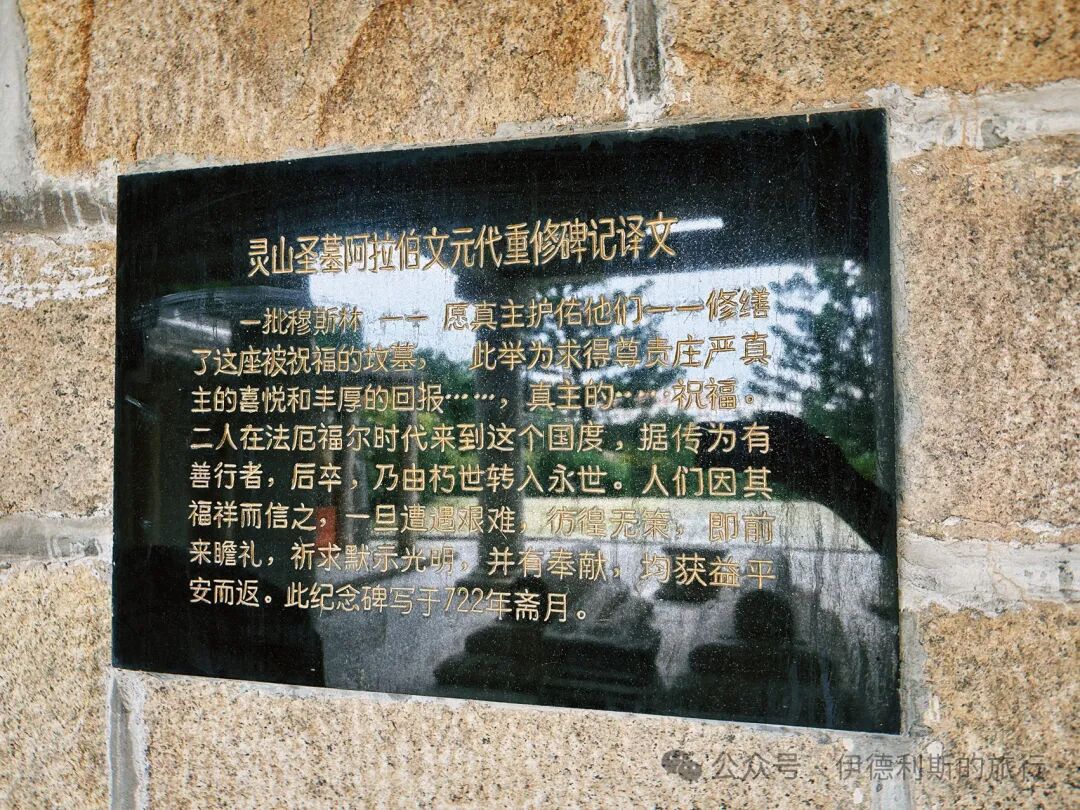
The holy tomb has a stone tablet from the Yuan Dynasty dated 1322, written in Arabic, which says: These two deceased came to this land during the time of the Faghur. It is said they were men of great virtue, so after death, they moved from the earthly world to the eternal one. According to research by Chen Dasheng in A Preliminary Study of the Date of Lingshan Holy Tomb in Quanzhou, Faghur is an Arabic transliteration of the Persian word Bagh pur, which specifically referred to the Emperor of China in Persian literature from the Five Dynasties to the Song and Yuan periods.
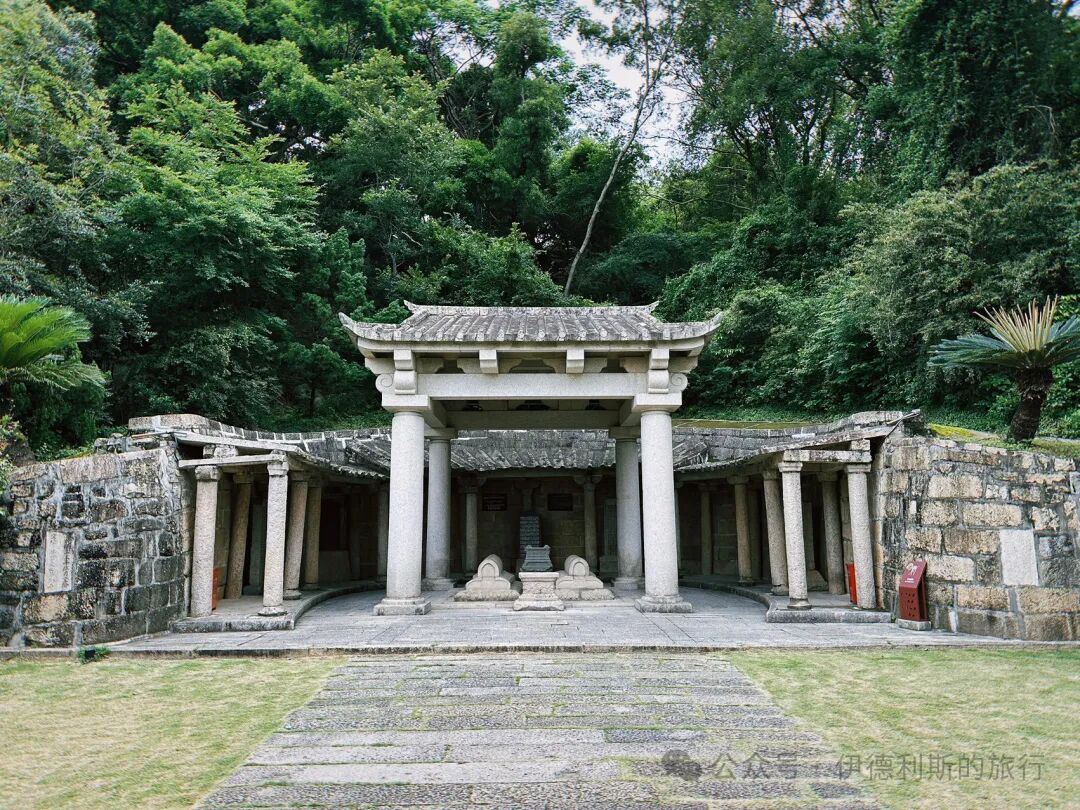
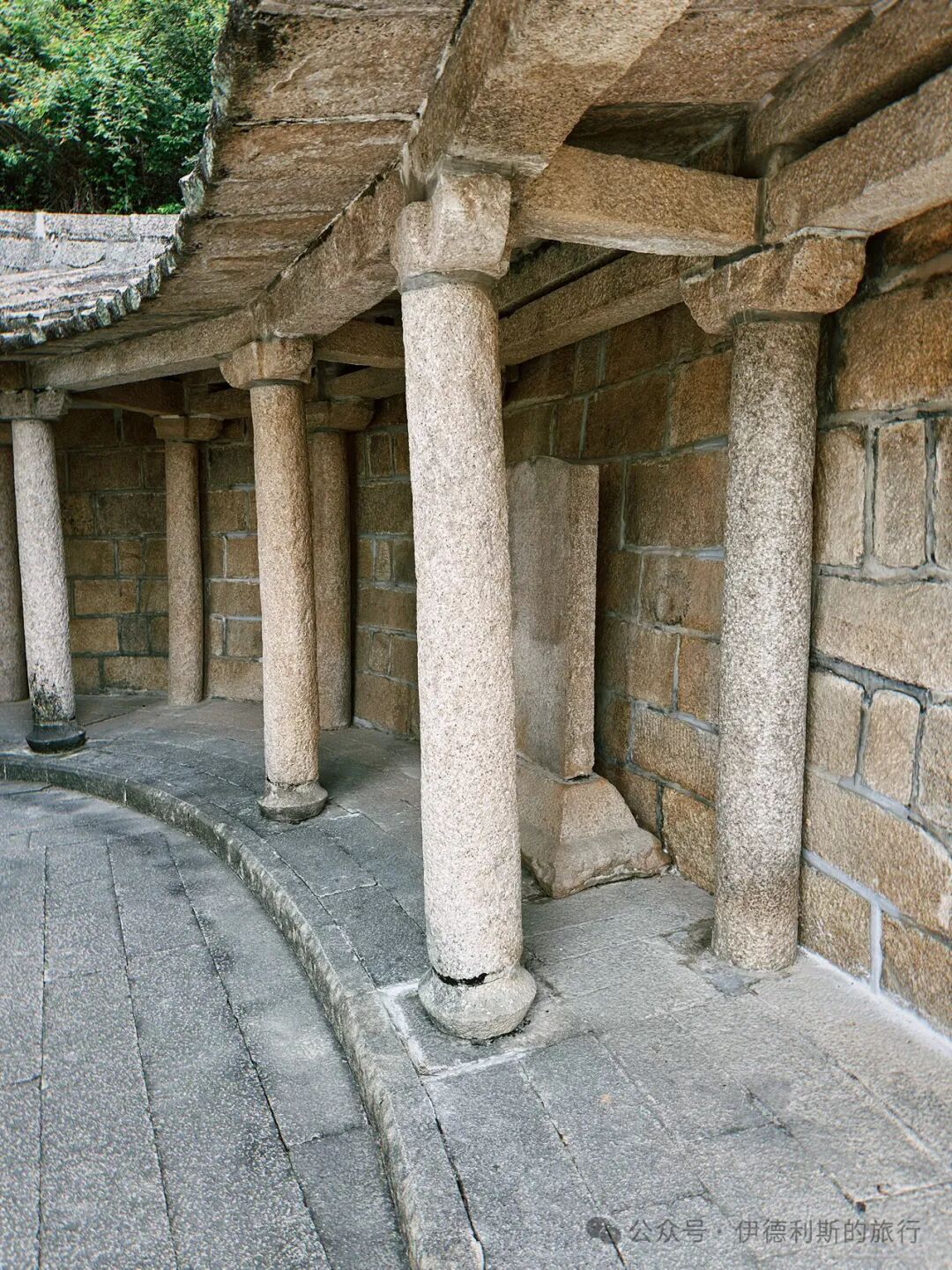
According to the Quanzhou Prefecture Gazetteer, when Zhou Daoguang, the prefect of Quanzhou, visited Lingshan Holy Tomb in 1562 (the 41st year of the Jiajing reign of the Ming Dynasty), he mentioned there were three mounds, which were the holy tombs. The Min Shu Chao, written during the Chongzhen reign, records that the owner of the third tomb was Gao Di Shi Xu Ba Ba. In the 1930s, the wooden frame of the pavilion at Lingshan Holy Tomb had collapsed, leaving only four stone shuttle-shaped pillars. At that time, the three Sumeru-style stone tombs arranged in a triangle were still well-preserved, with stone covers on top.
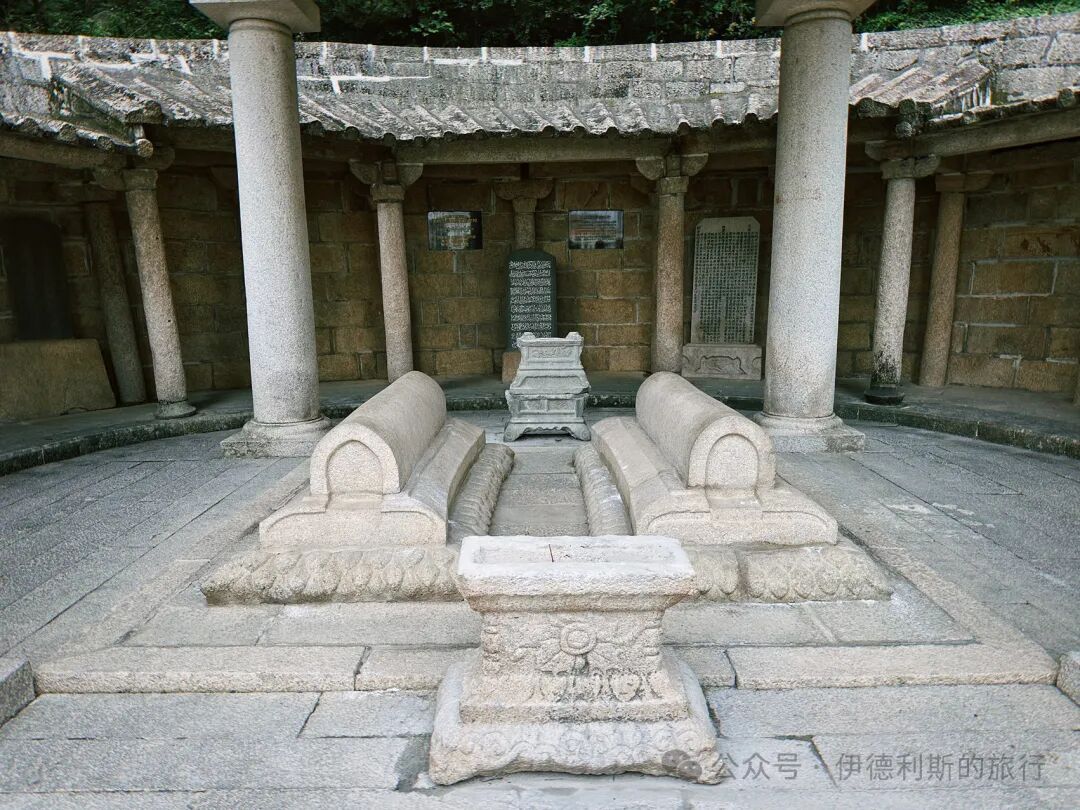
In 1958, the Quanzhou Cultural Bureau and the municipal committee moved the tombstone of Gao Di Shi Xu Ba Ba to the northern hillside to fit the legend in the Min Shu. At the same time, they moved the tombstone of the imam Ma Ahun Yongchun (Ma Yongchun) from the south of the holy tomb to the northern hillside. In March 1959, a new stone pavilion was built with three levels of terraces and stairs on both sides. All other tombstones in front of the graves were removed to create a lawn, forming the layout seen today.
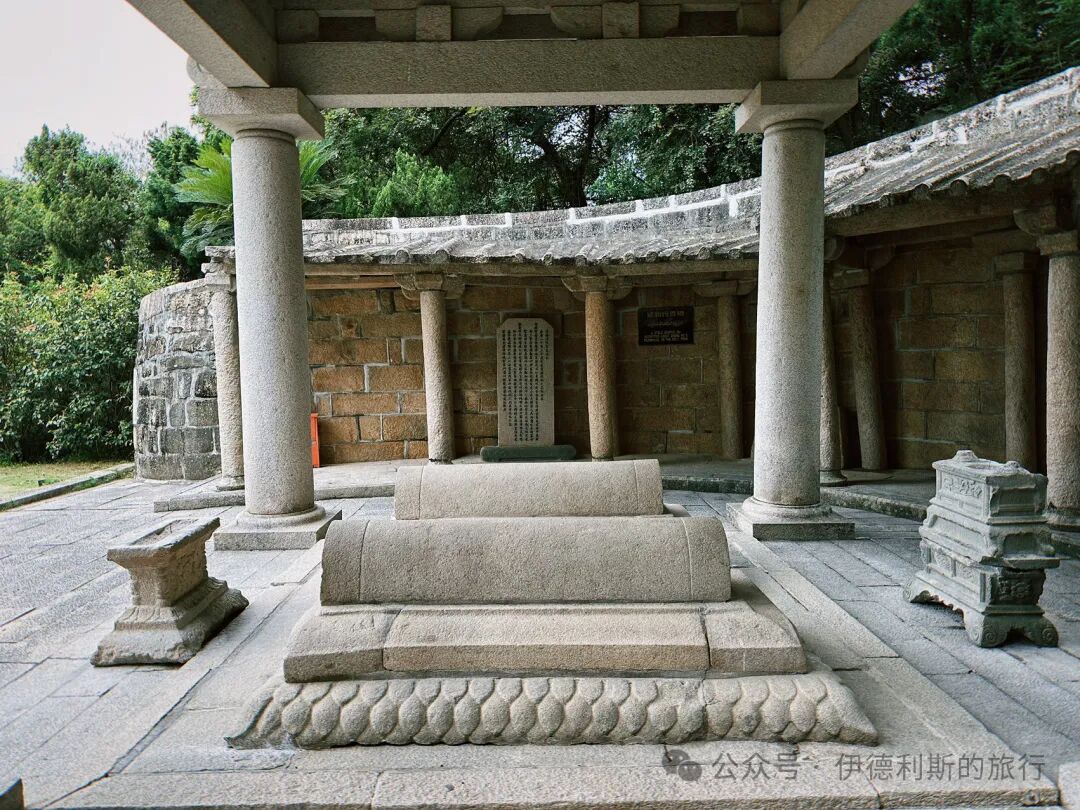
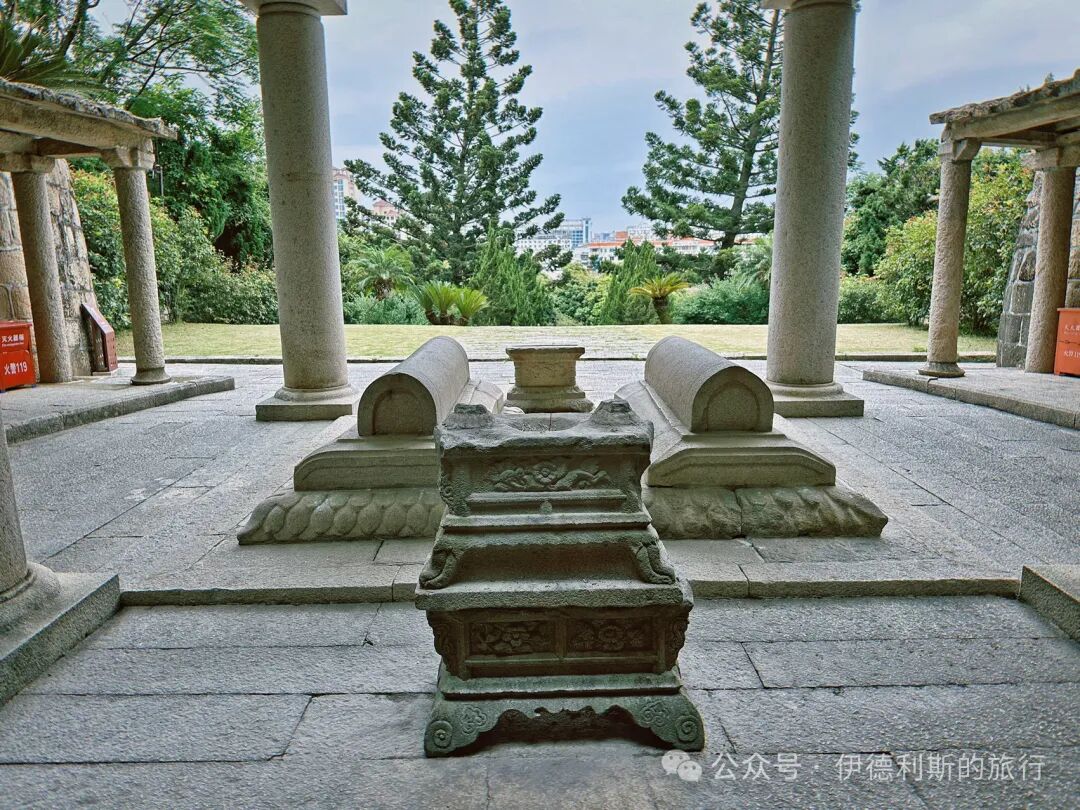
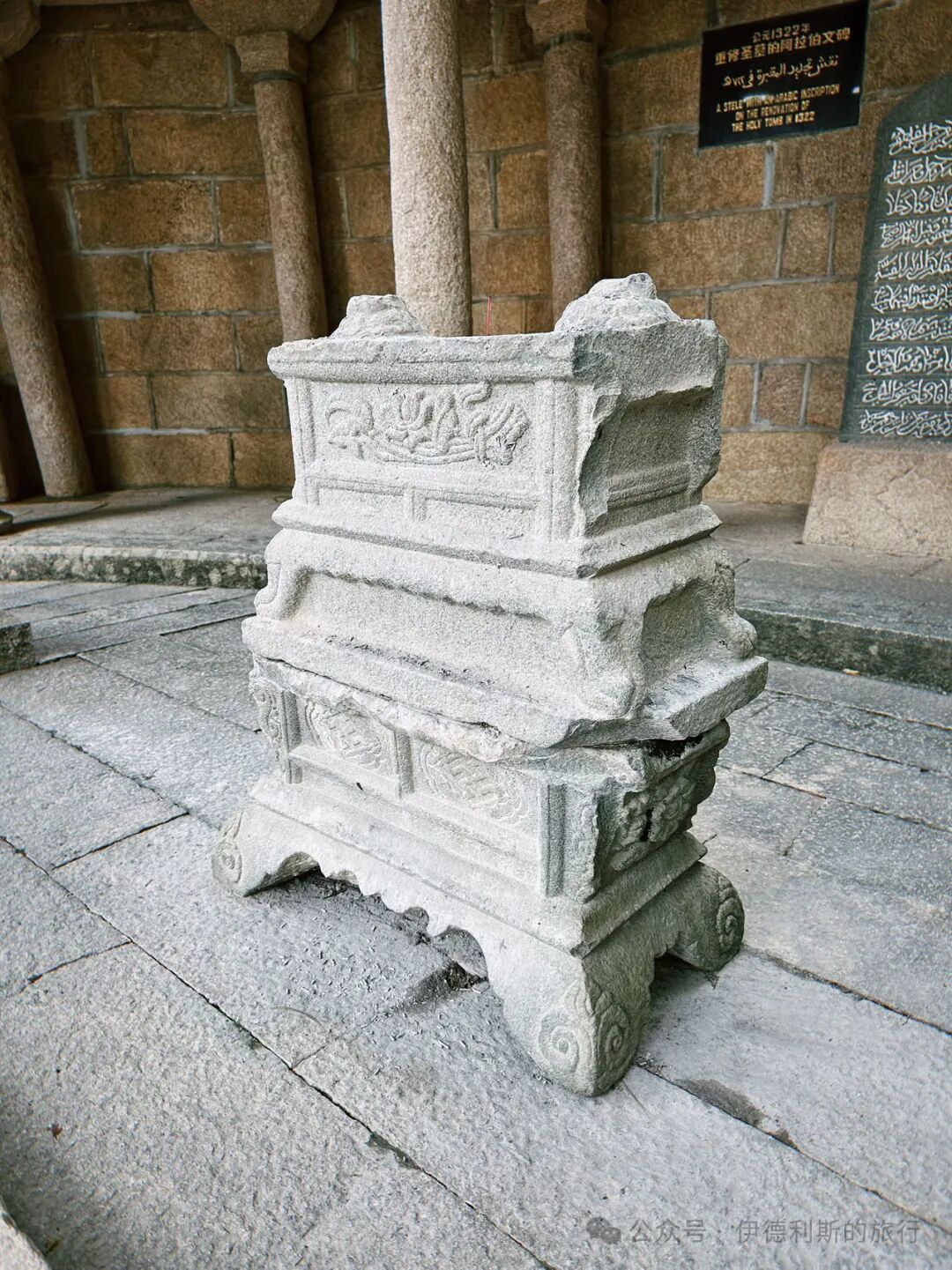
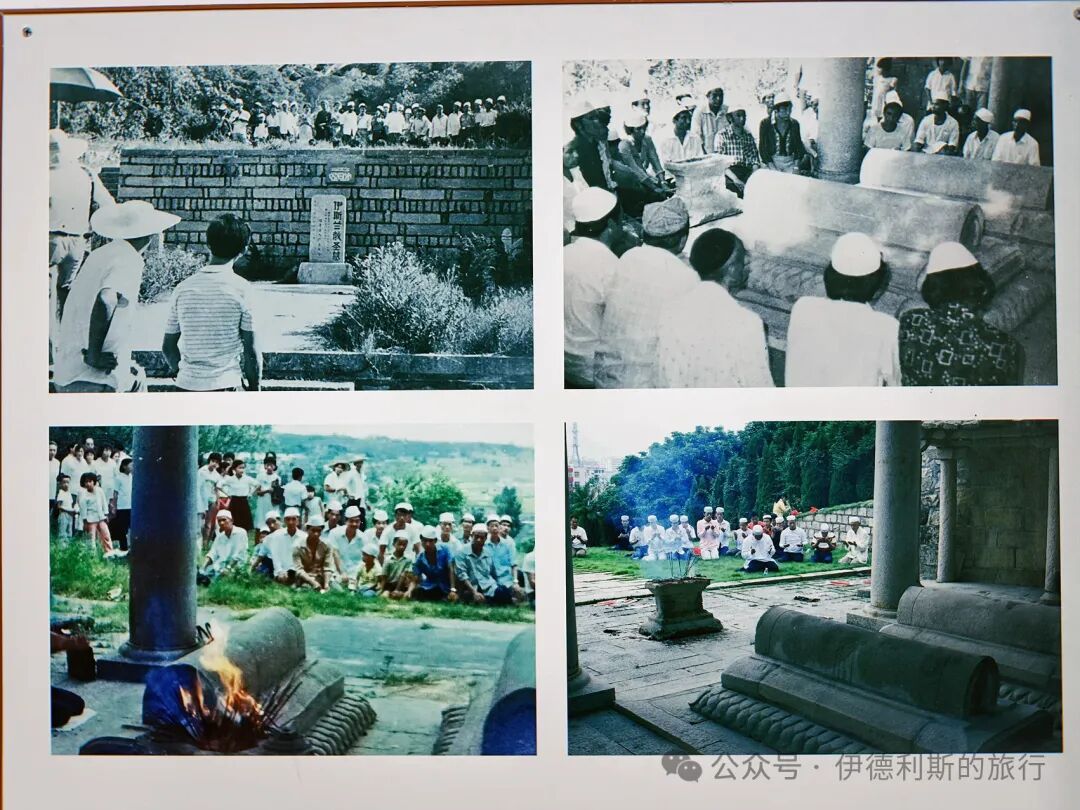
The holy tomb currently has two granite graves divided into three layers, with lotus petal carvings on the bottom layer. In the past, during Eid al-Fitr and Eid al-Adha, Hui Muslims in Quanzhou would attend prayers at Qingjing Mosque. First, an imam would lead the heads of households to visit the homes of other Hui Muslims near the mosque for a greeting, and then all the Hui Muslims would go together to visit the graves at Lingshan. When visiting the graves, they would first recite the Quran together at the holy tomb before going to their own family graves.
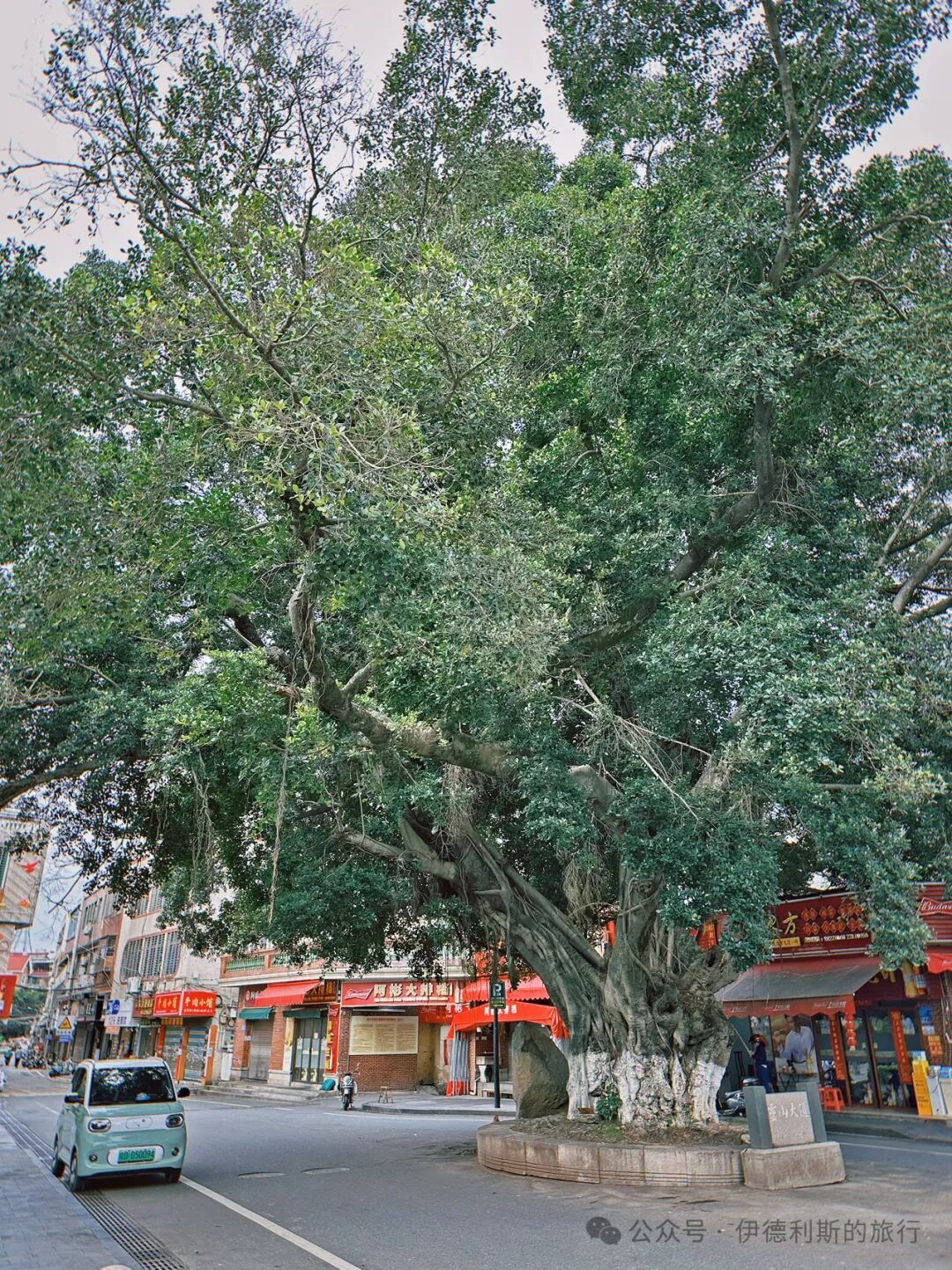
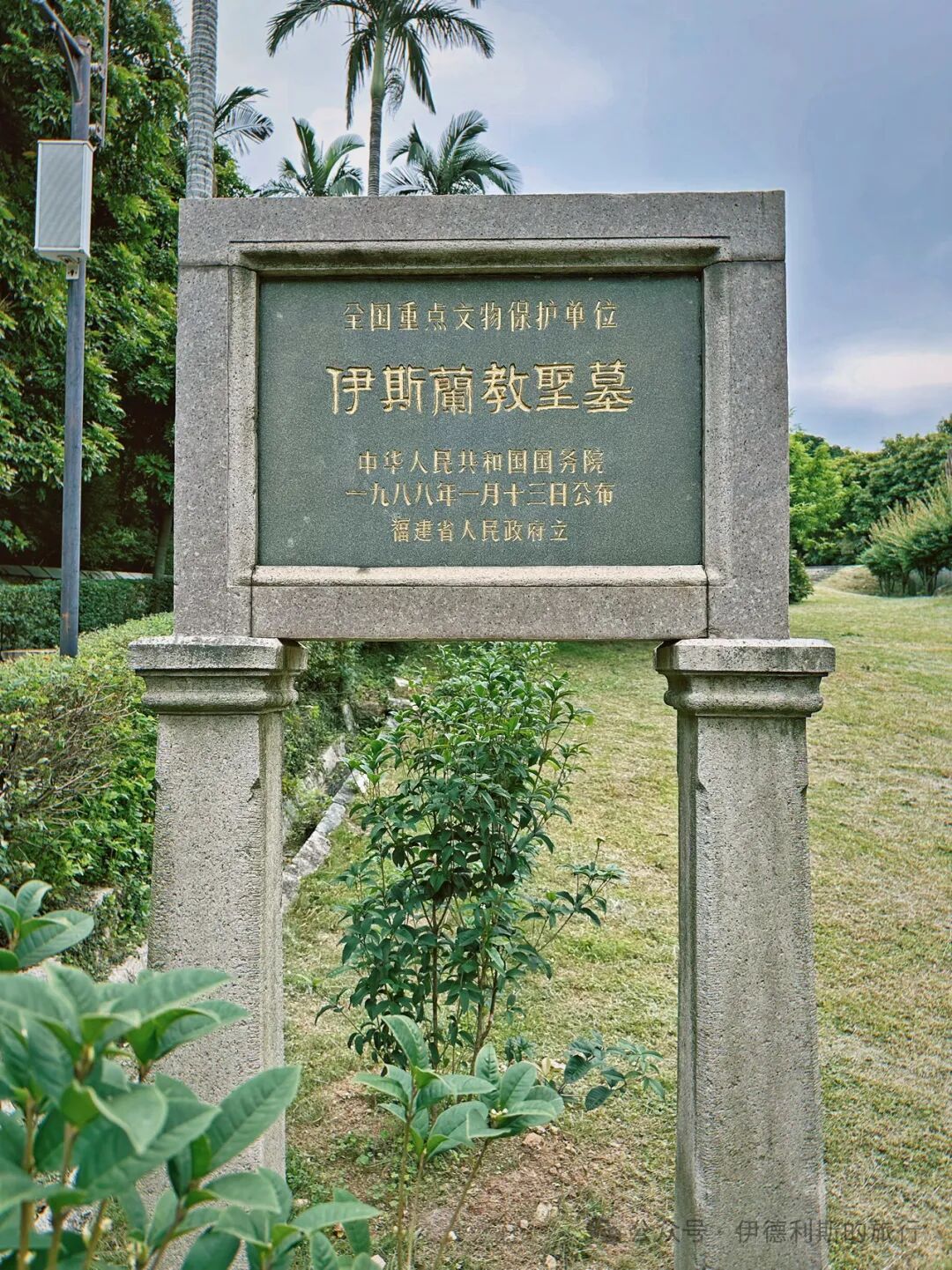
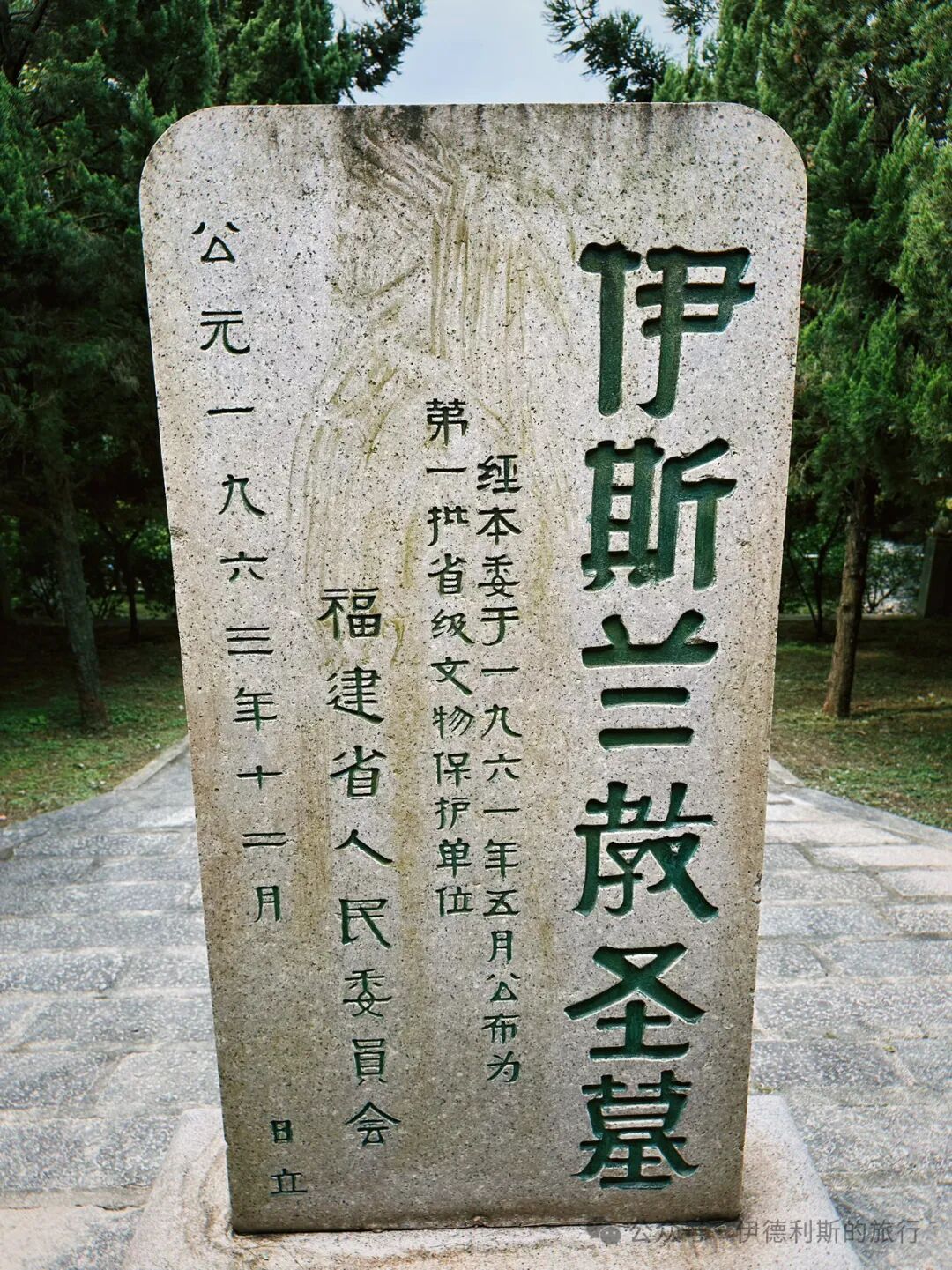
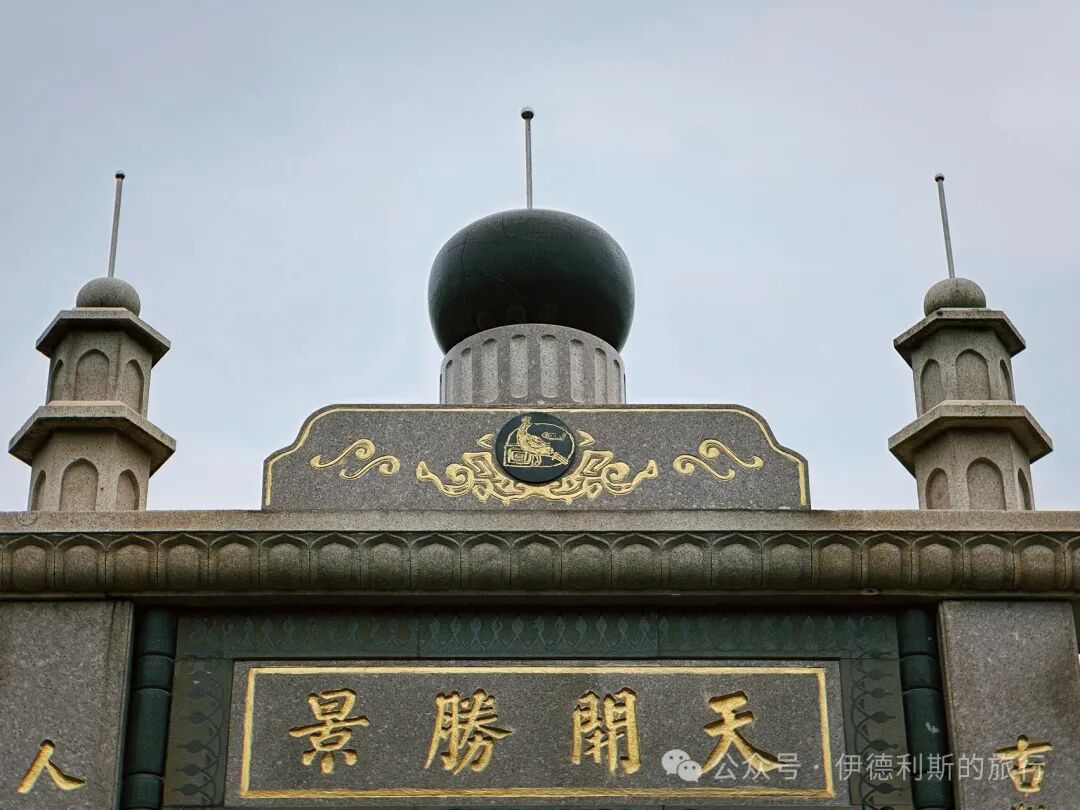
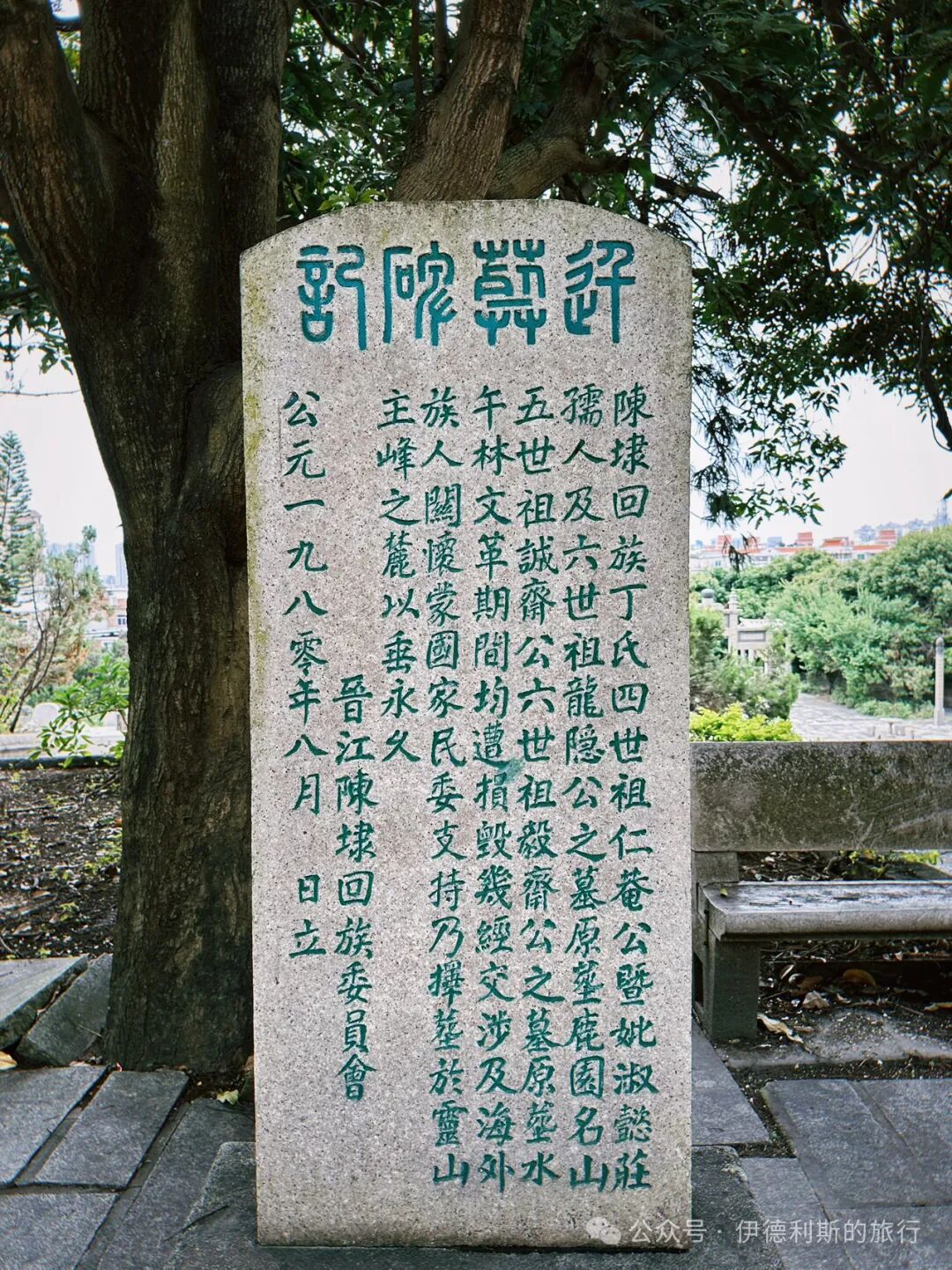
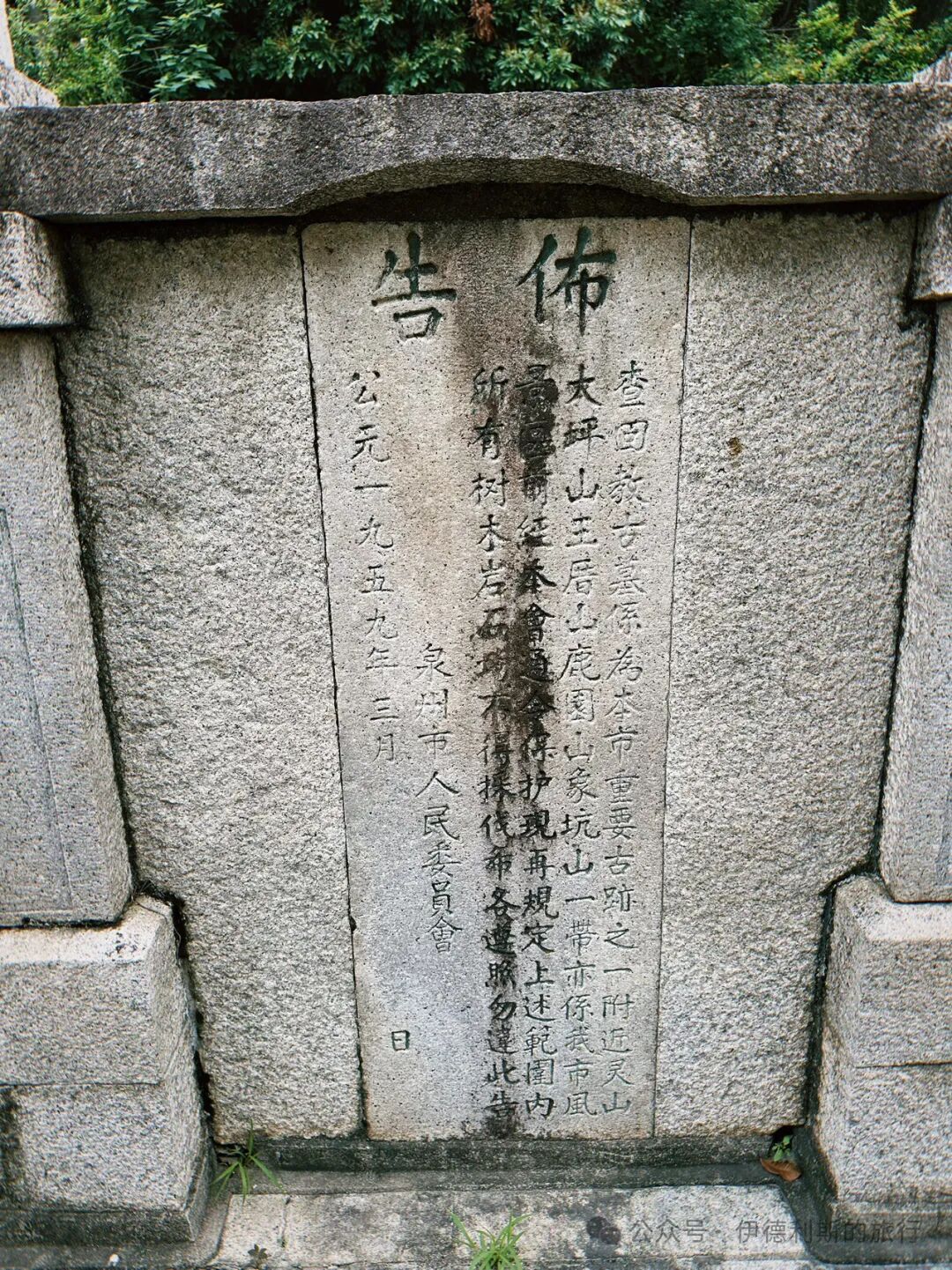
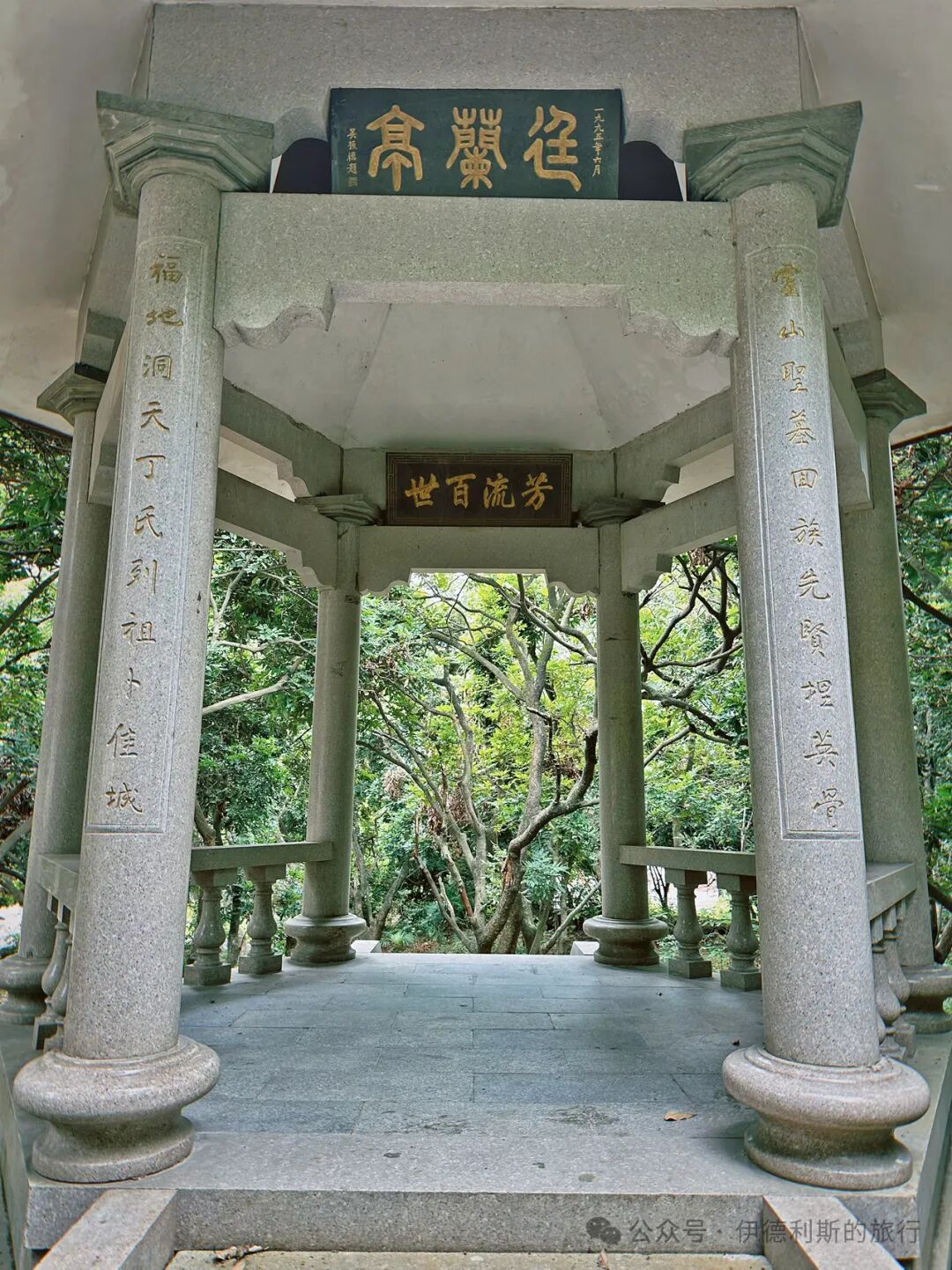
The archway and gate in front of Lingshan Holy Tomb, the banyan trees on Lingshan Avenue, and the national and provincial heritage site markers, introduction boards, and notices at the holy tomb.
The historical stone tablets at Lingshan Holy Tomb.
The Incense Offering Tablet: This records the visit of Zheng He to the graves before his fifth voyage to the Western Oceans in 1417 (the 15th year of the Yongle reign), erected by the commander Pu Heri. The name Hulumesi carved on the tablet refers to the ancient Persian port of Hormuz.
The Chen Yougong Repair Tablet: Erected in 1714 (the 53rd year of the Kangxi reign), it records the repair of Lingshan Holy Tomb by Chen Yougong, a regional commander in Fujian, and Chen Mei, a regional military official. The inscription below lists seven surnames: Chen, Ma, Guo, Huang, Li, Yang, Pu, and Ding.
The Xia Bidi Repair Tablet: Records the repair of the holy tomb by the director Xia Bidi in 1751 (the 16th year of the Qianlong reign).
The Guo Bacui Repair Tablet: Records the repair of the holy tomb by the scholar Guo Bacui in 1783 (the 48th year of the Qianlong reign). Guo Bacui was a Hui Muslim from the Guo family in Baiqi. He passed the military examination in 1779 (the 40th year of the Qianlong reign), was awarded the rank of military officer, and served in the Anping Left Battalion in Taiwan. When he erected the tablet in 1783, he was stationed in Xiamen and ordered to patrol the coastal areas of Taiwan and Penghu. In 1787 (the 52nd year of the Qianlong reign), the Lin Shuangwen uprising in Taiwan besieged Zhuluo County. Guo Bacui was ordered to rush to the rescue and died on the battlefield.
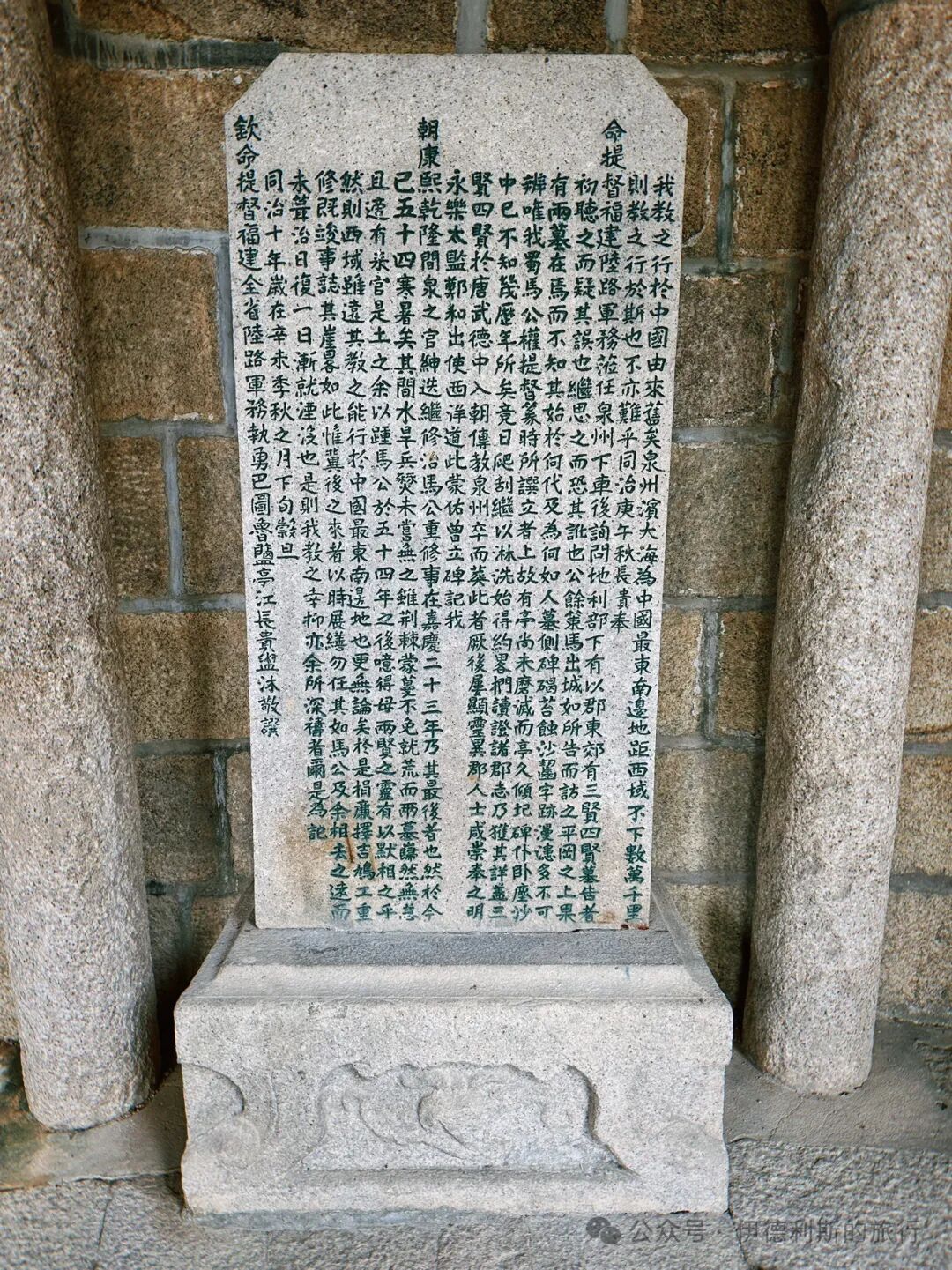
The Ma Jianji renovation stele records that in 1818 (the 23rd year of the Jiaqing reign), Ma Jianji, the acting commander-in-chief of the Fujian provincial land forces and general of Zhangzhou from Western Sichuan, rebuilt the tomb pavilion. The stele calls the Holy Tomb the 'Baba Tomb,' with 'Baba' being the Persian term of respect for an elder. Ma Jianji was from Nanchong, Sichuan. Besides renovating the Lingshan Holy Tomb, he also renovated the Qingjing Mosque in Quanzhou.
The Jiang Changgui renovation stele records that in 1871 (the 10th year of the Tongzhi reign), Fujian commander Jiang Changgui renovated the Holy Tomb. Jiang Changgui was a Hui Muslim from Yanting, Sichuan. His family practiced martial arts for generations. He was brave in battle, led troops against the Taiping Heavenly Kingdom for many years, earned many military merits, and was titled Zhiyong Baturu and General Jianwei. Besides renovating the Lingshan Holy Tomb, he also renovated the Qingjing Mosque and invited the army imam Ma Yongchun to lead religious affairs.
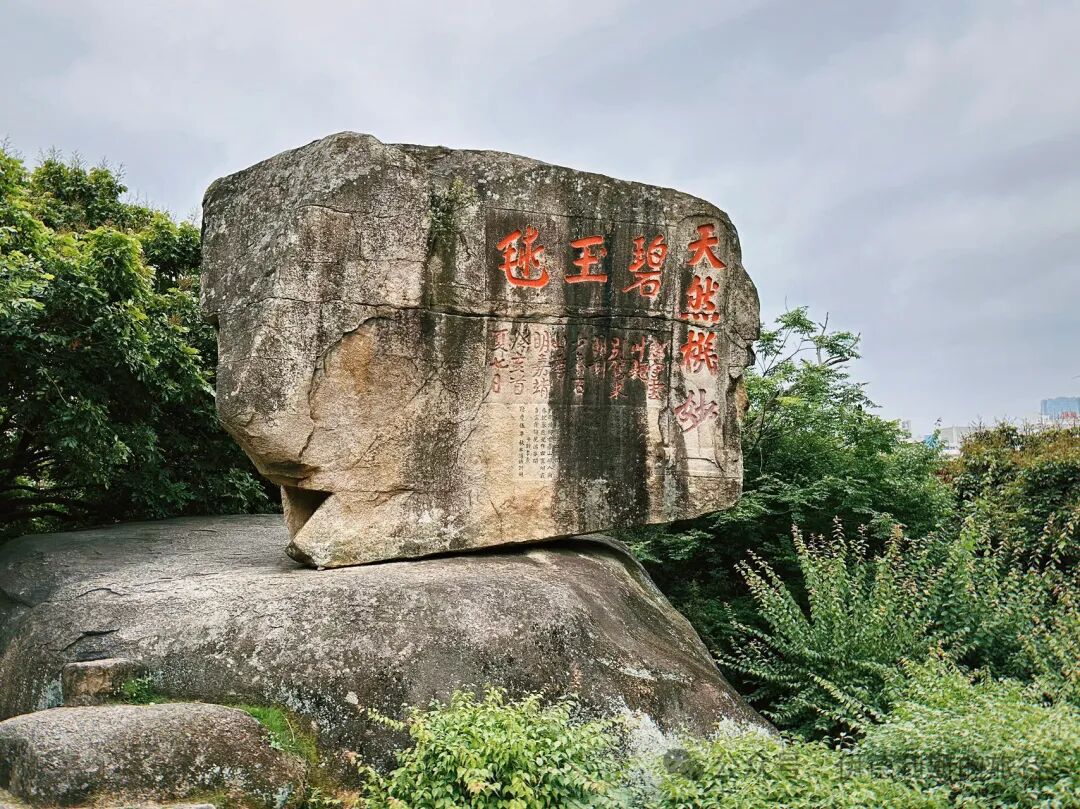
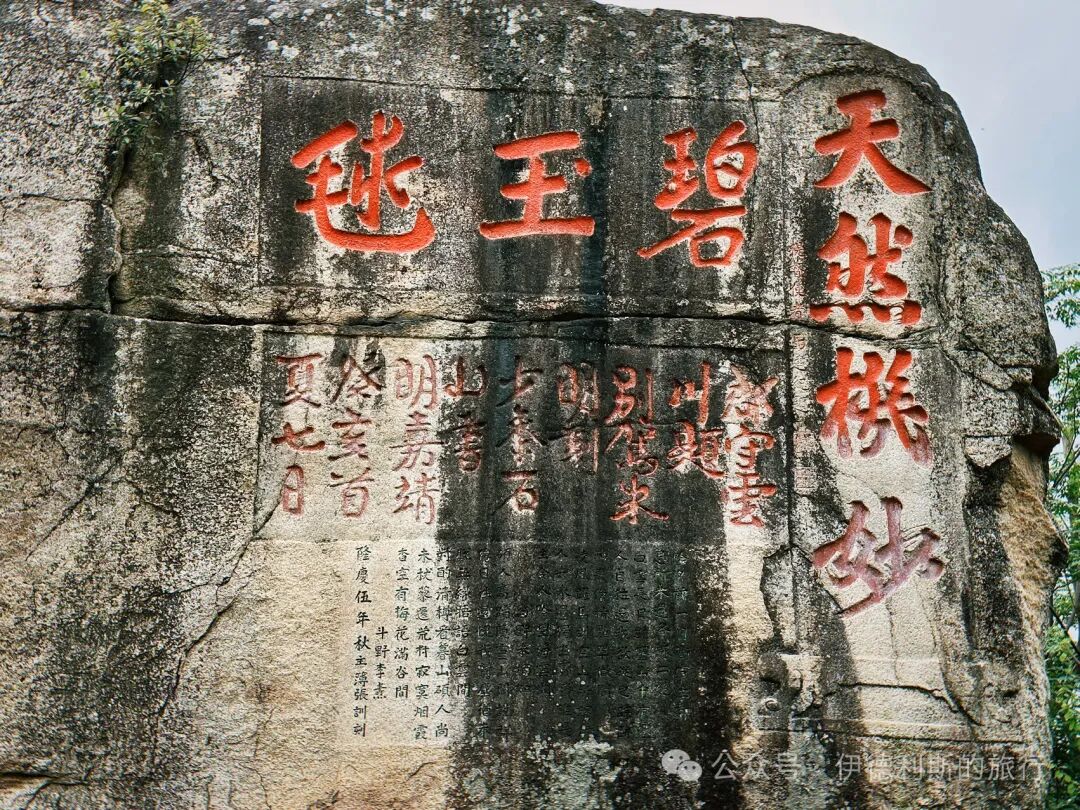
Beside the Holy Tomb is a 'Wind-Moving Stone' (fengdongshi). It features the inscription 'Jade Ball' (biyu qiu) by Quanzhou prefect Zhou Daoguang in 1563 (the 42nd year of the Jiajing reign) and 'Natural Ingenuity' (tianran jimiyao) by Ma Jianji in 1818 (the 23rd year of the Jiaqing reign).
Zhou Daoguang was the first person to record the term 'Lingshan Holy Tomb'. The Quanzhou Prefecture Gazetteer, Mountains and Rivers, Lingshan section records: 'Asking the locals, they say: This is the Lingshan Holy Tomb... Since the religion from foreign lands entered the Middle Kingdom, there have been Hui Muslims.' Its founder's surname and generation are unknown, but he loved this hill and was buried here...' He also described the tomb's layout at the time: 'Entering the gate, the path is very narrow.' Climbing to the hall, the atmosphere feels different. Reaching the top, there are three mounds, which are the Holy Tombs. In front of the tomb, there is a small pavilion on the right for namaz. On the left, there is a shed where one can rest.
In 1958, when the Fuzhou-Xiamen highway outside the East Gate of Quanzhou was widened, several Song and Yuan dynasty Muslim pedestal-style tomb stones by the road were moved next to the Lingshan Holy Tomb. That same year, farmers in Jintoupu village outside Tonghuai Gate in Quanzhou were collecting fertilizer and dredging pond sludge. They unearthed over ten pedestal-style tomb stones, which were temporarily moved to the Qingjing Mosque and later moved to the Lingshan Holy Tomb for preservation. That same year, residents on Tonghuai Street in Quanzhou unearthed three side-by-side pedestal-style tomb stones while building a house, which were also moved to the Lingshan Holy Tomb for preservation.
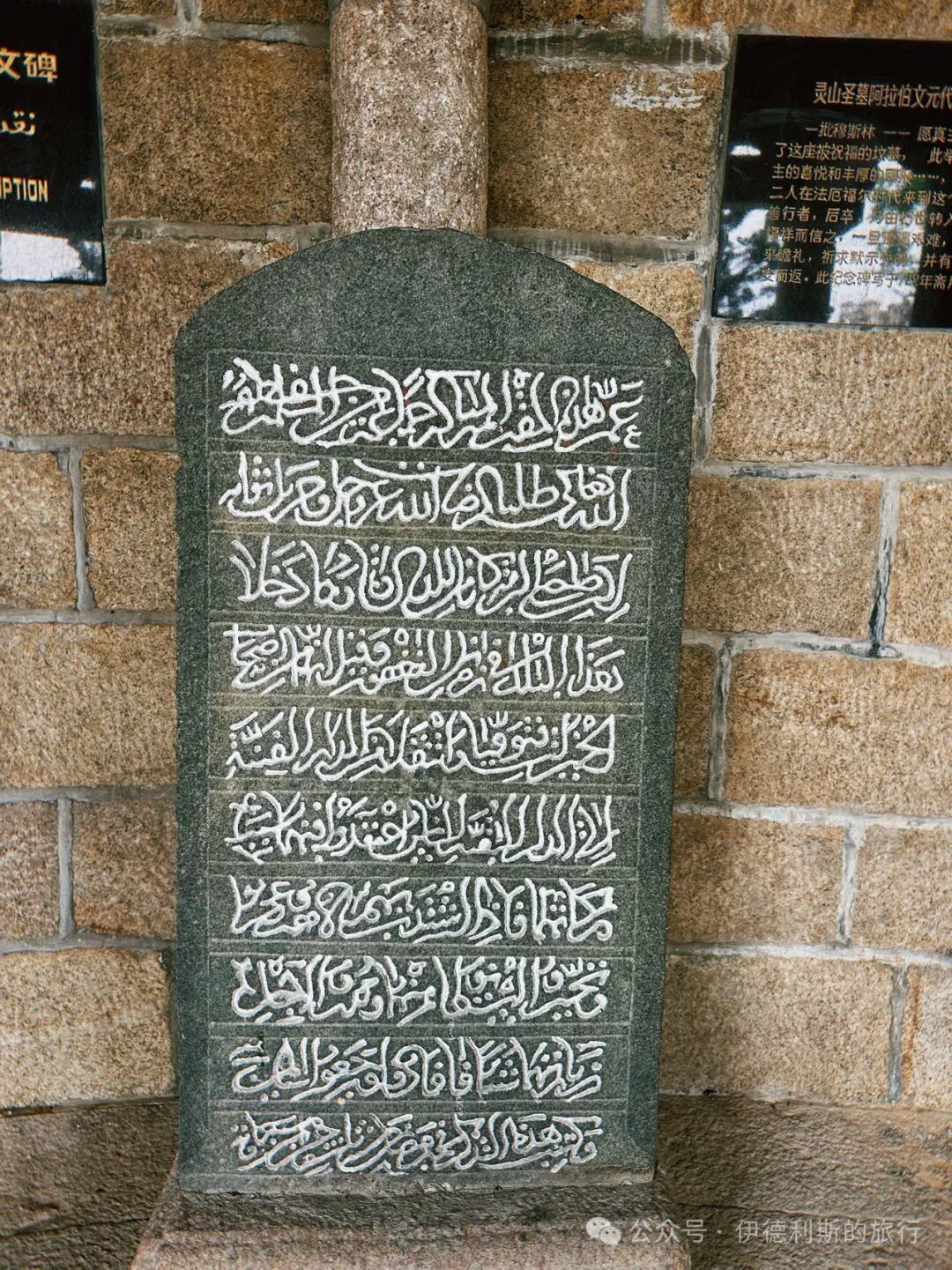
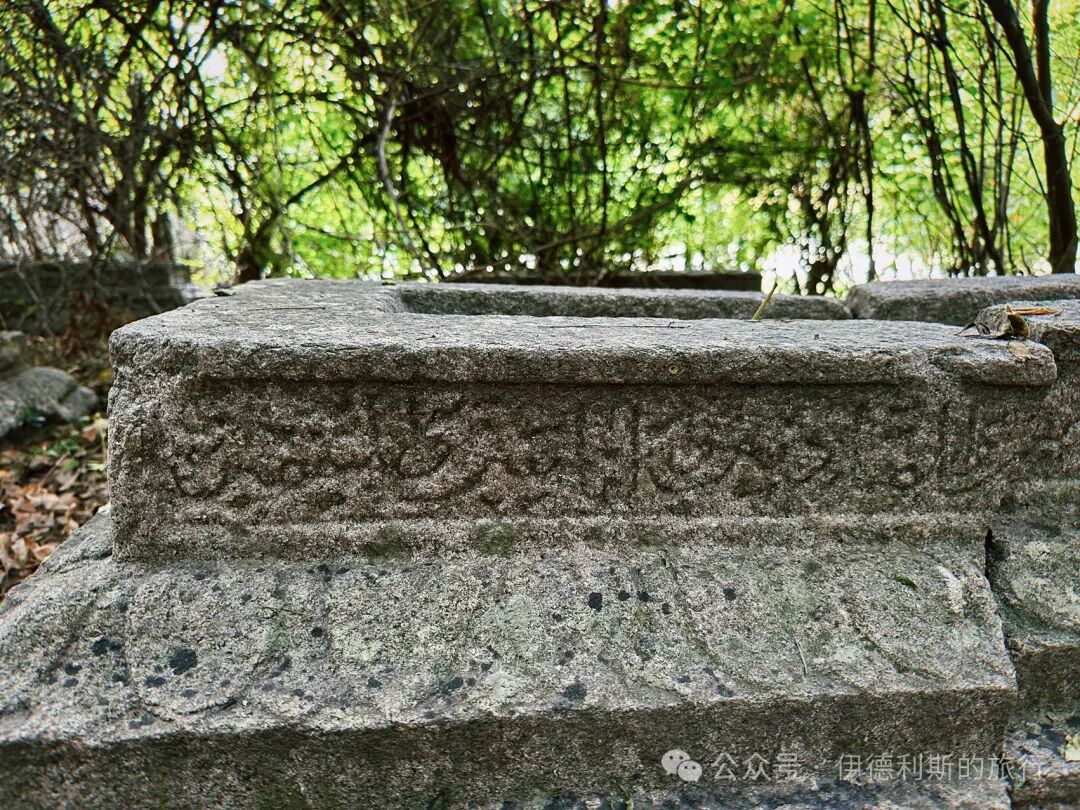
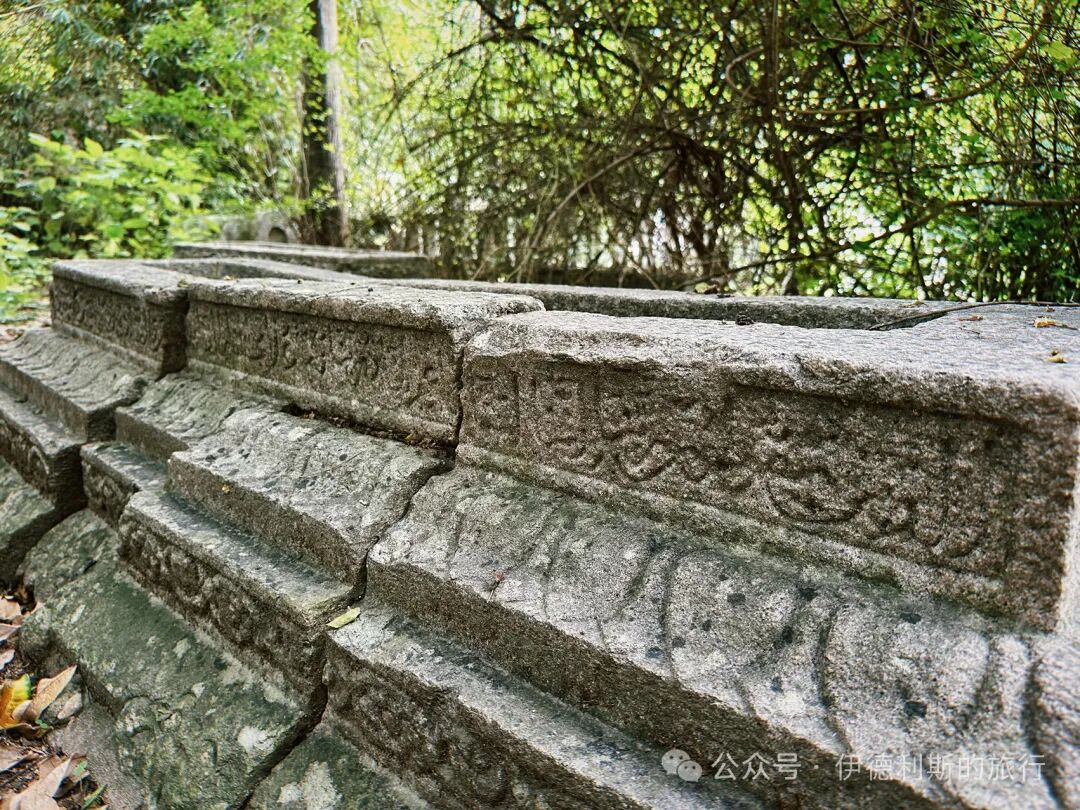
The image below is likely the tomb stone of Gaodi Shixu Baba, which was originally with the 'Three Sages and Four Sages' tomb stones and moved here during the 1958 renovation.
Details of the Arabic stone carving. The content of the carving is entirely scripture, with no identity information about the tomb owner. According to Quanzhou's Song and Yuan dynasty traditions, the tomb stone recording the owner's identity would have been a separate slab.
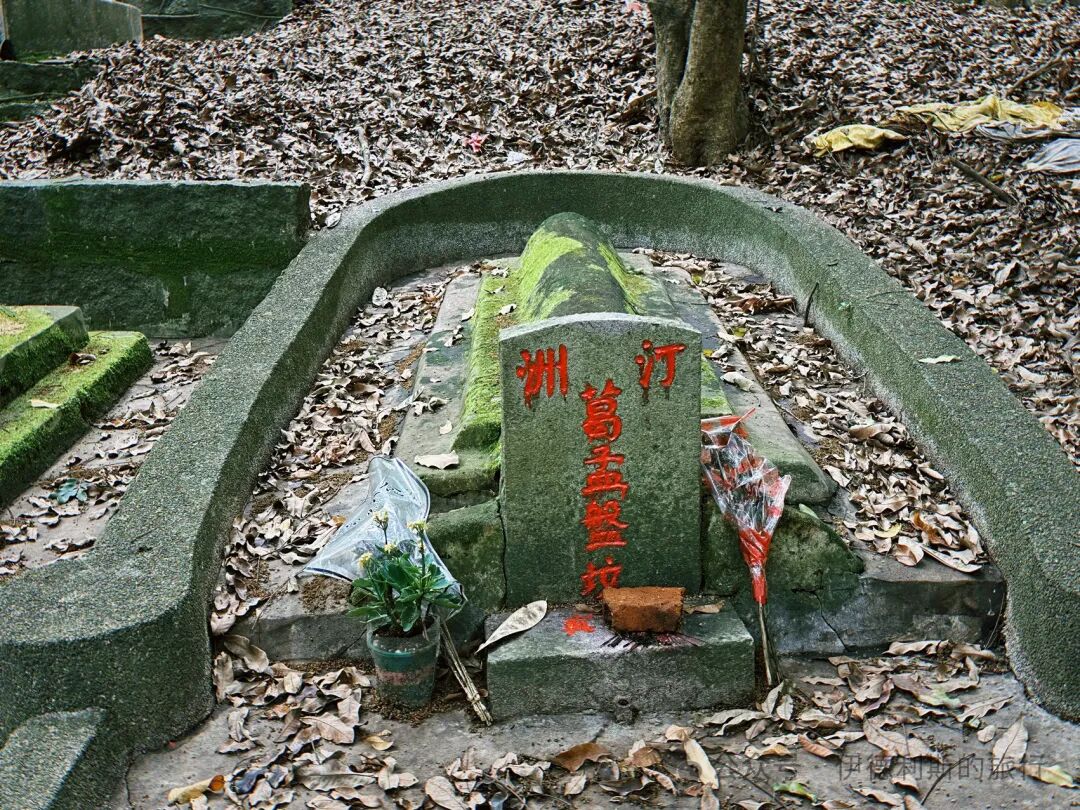
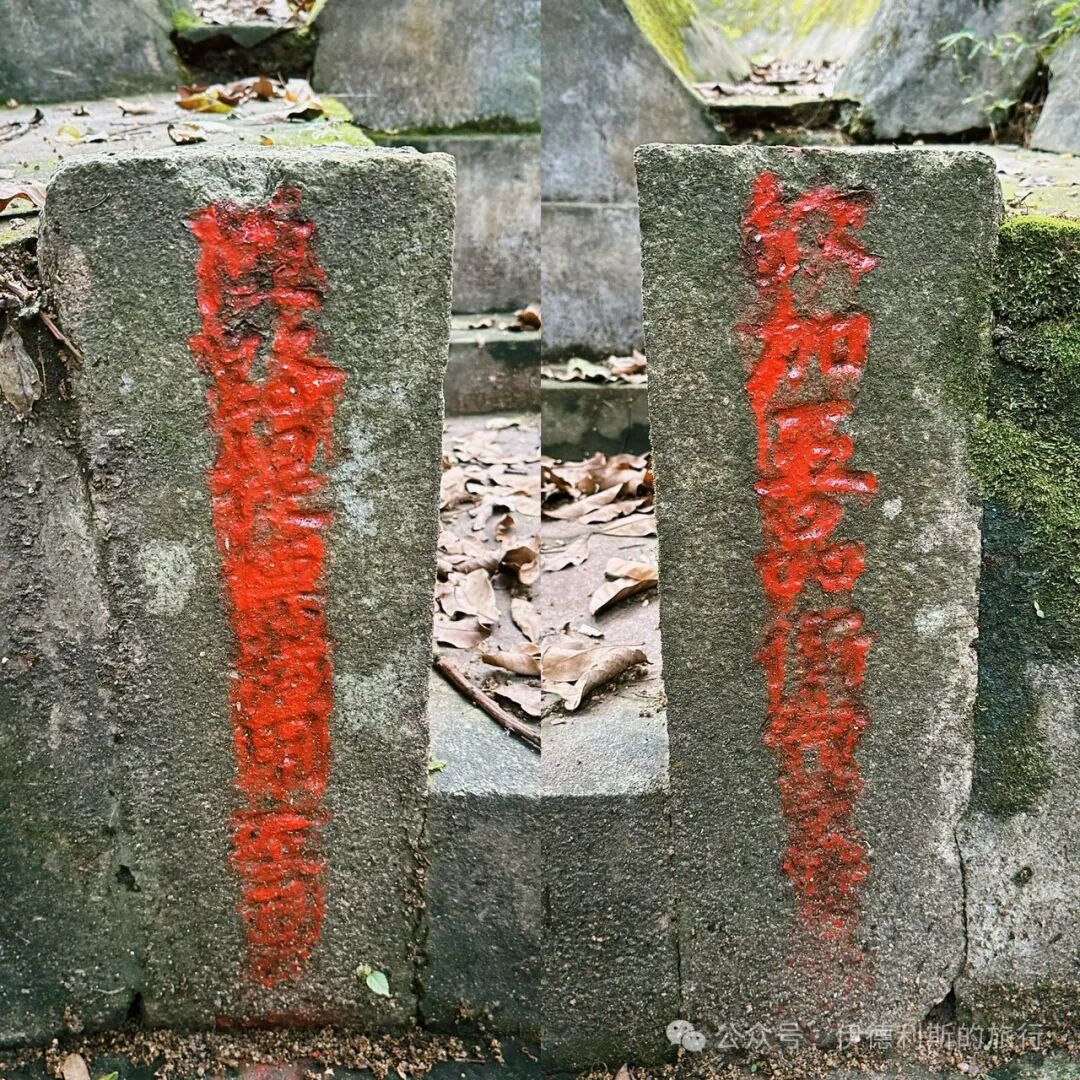
Next to the Lingshan Holy Tomb is the cemetery for local Quanzhou Hui Muslims. The Ge, Ma, and Huang families are descendants of the generations of imams from the Qingjing Mosque. They mostly worked in the leather industry in the past and lived inside the Qingjing Mosque until 1983. In the past, Quanzhou Hui Muslims would come here to visit the graves every Eid al-Fitr and Eid al-Adha. When visiting the graves, first light some incense (anxixiang), then trace the carvings on the tombstone with red paint, and finally invite an imam to recite scriptures.
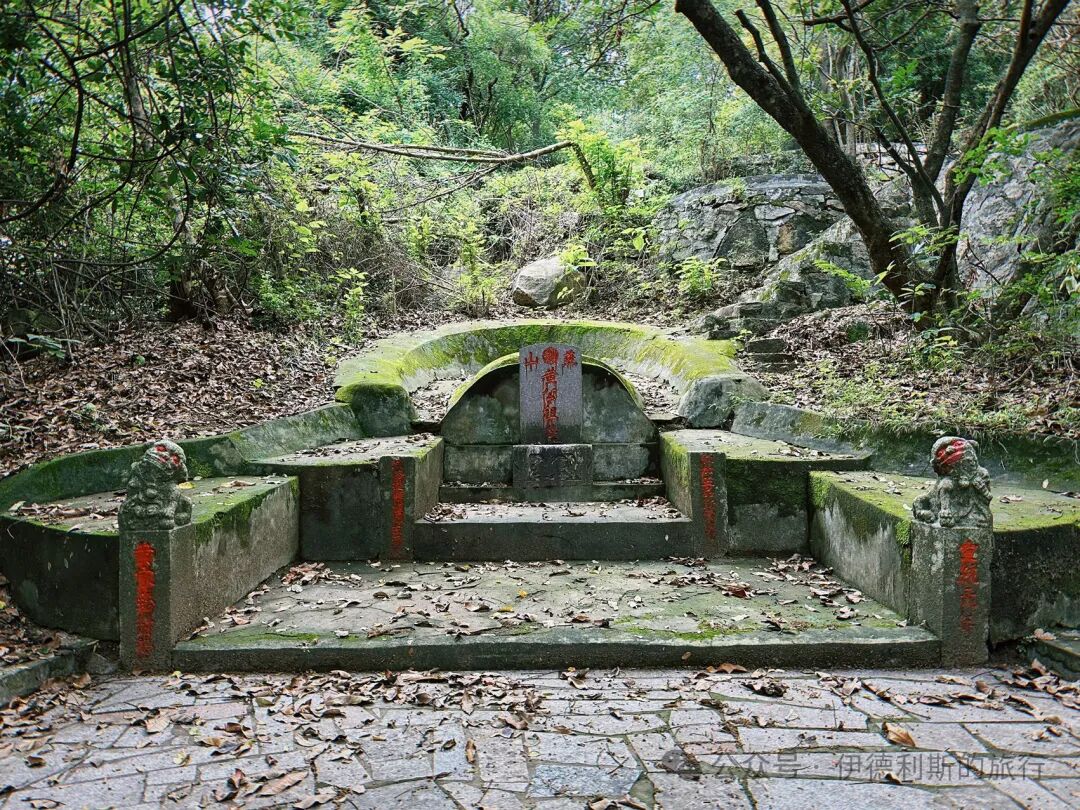
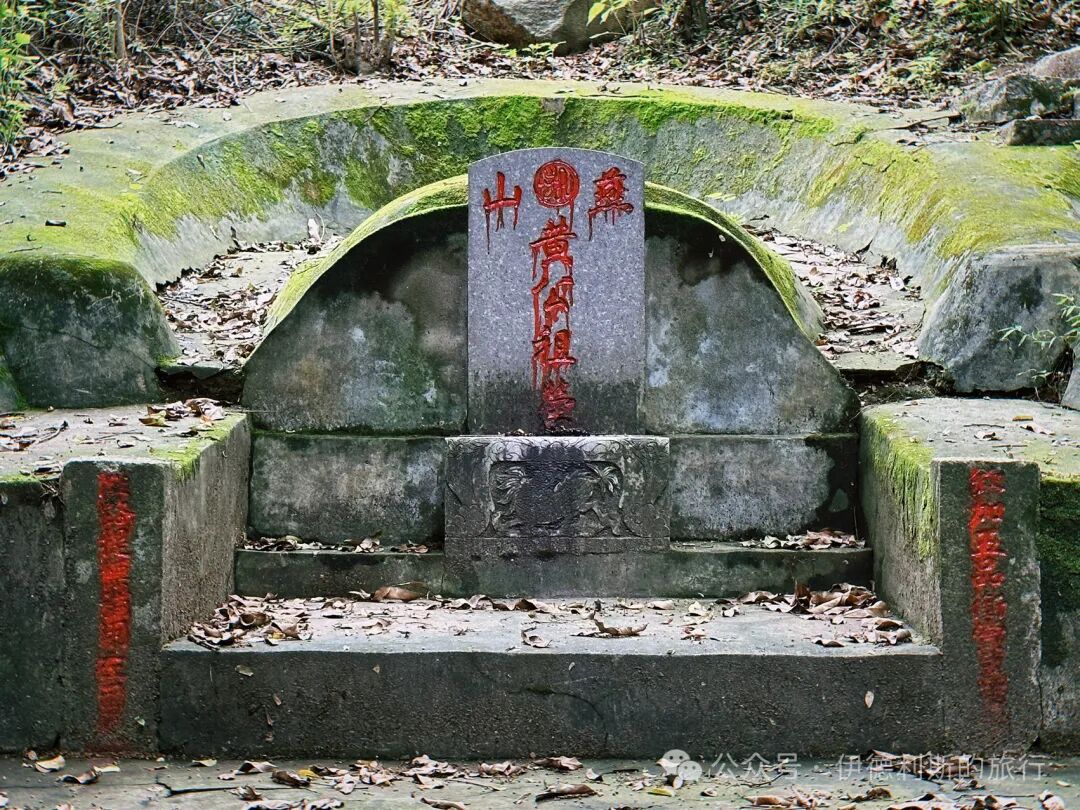
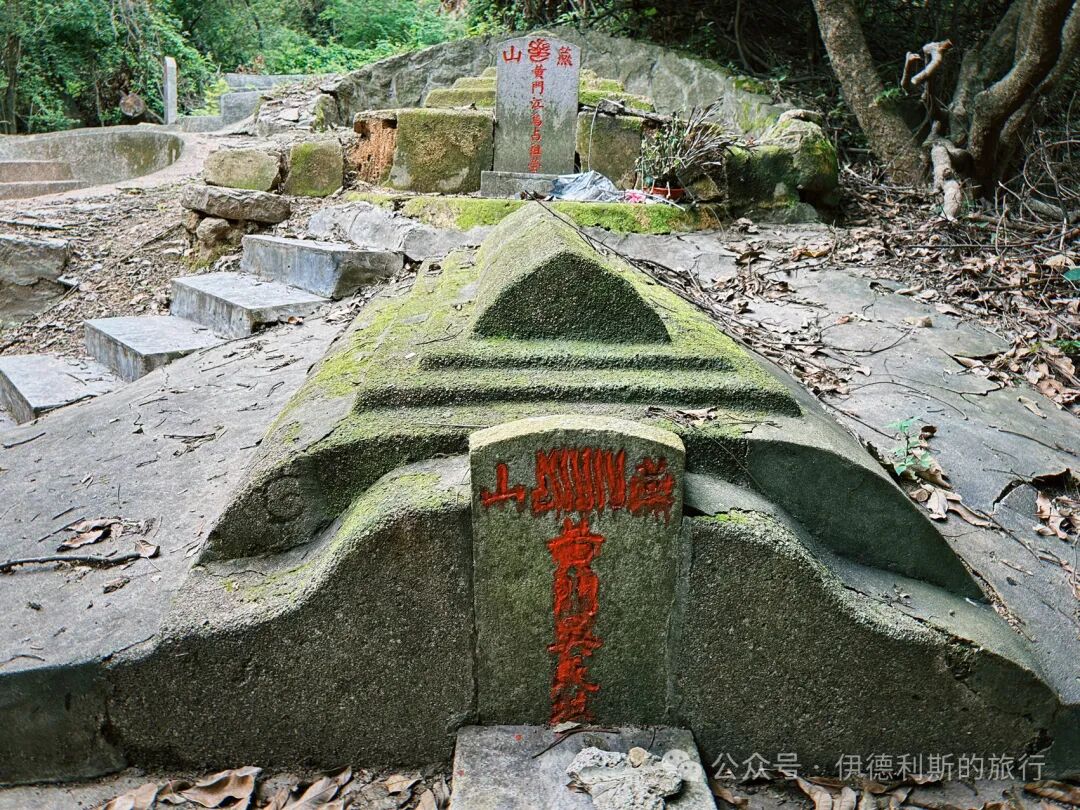
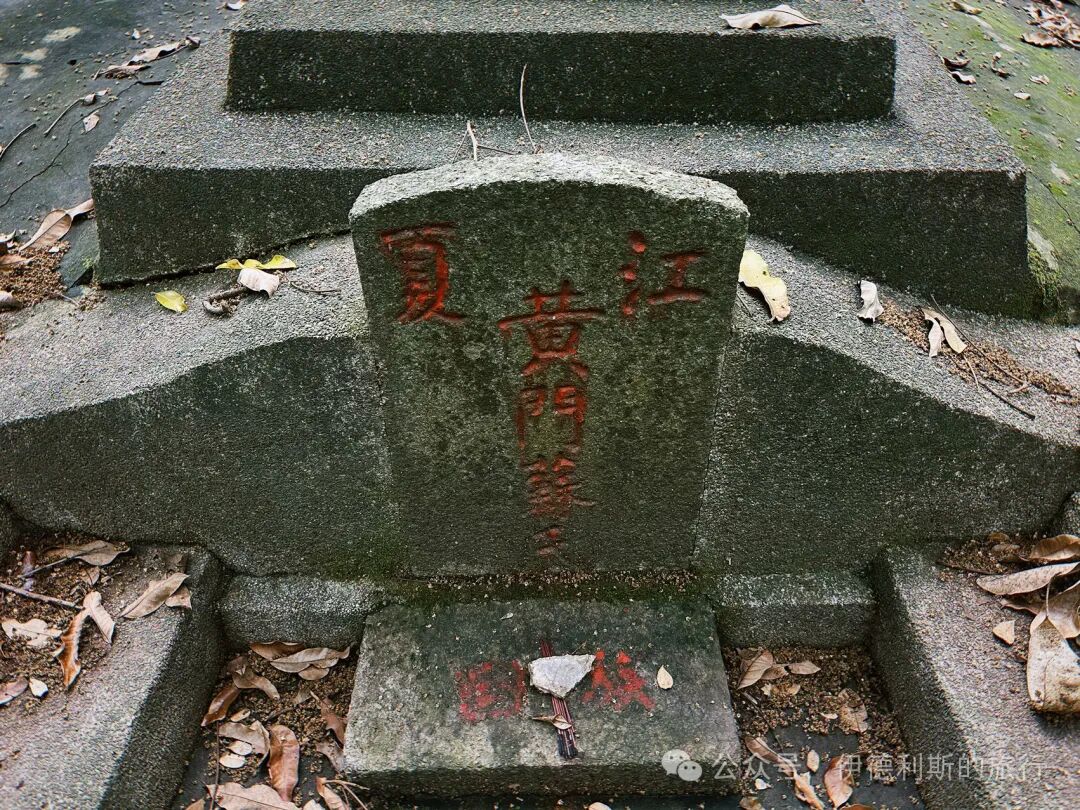
In the tomb complex, you can see the ancestral graves of the Huang family from Jiangxia and the Huang family from Yanshan. The Jiangxia Huang family ancestral grave is inscribed with 'Mosque Huang Residence,' while the Yanshan Huang family grave bears inscriptions like 'First Year of the Xuantong Reign' and 'Imperially Appointed Fifth-Rank Official... Land Route Commander...' which are hard to read completely due to the red paint.
According to their family records, the Guo family of Hui Muslims originally lived in Guo Family Village in Fuyang, Hangzhou, before arriving in Quanzhou during the Yuan Dynasty. During the Hongwu reign of the Ming Dynasty, Guo Zhongyuan moved from Quanzhou to Baiqipu on the opposite side of Houzhu Port, which eventually became the present-day Baiqi Hui Ethnic Township. The Baiqi Guo family left the faith in 1607 (the 35th year of the Wanli reign of the Ming Dynasty). In 1709 (the 48th year of the Kangxi reign), Chen Yougong, a regional commander and left-wing general for the Fujian Ting, Yan, and Shao areas, came to Quanzhou to revive the faith and established scripture hall education at the Qingjing Mosque. At that time, Guo Honglong, a member of the eighth generation of the Guo family's fourth branch, moved from He Cuo in Baiqipu to live at the Qingjing Mosque and returned to the faith, citing the need to strengthen the main family line. After Guo Honglong returned to the faith, his descendants lived at the Qingjing Mosque. His descendant, Guo Shifu, helped renovate the mosque in 1794 (the 59th year of the Qianlong reign) alongside Bai Yunhan, a deputy general of the Zhangzhou Left Battalion.
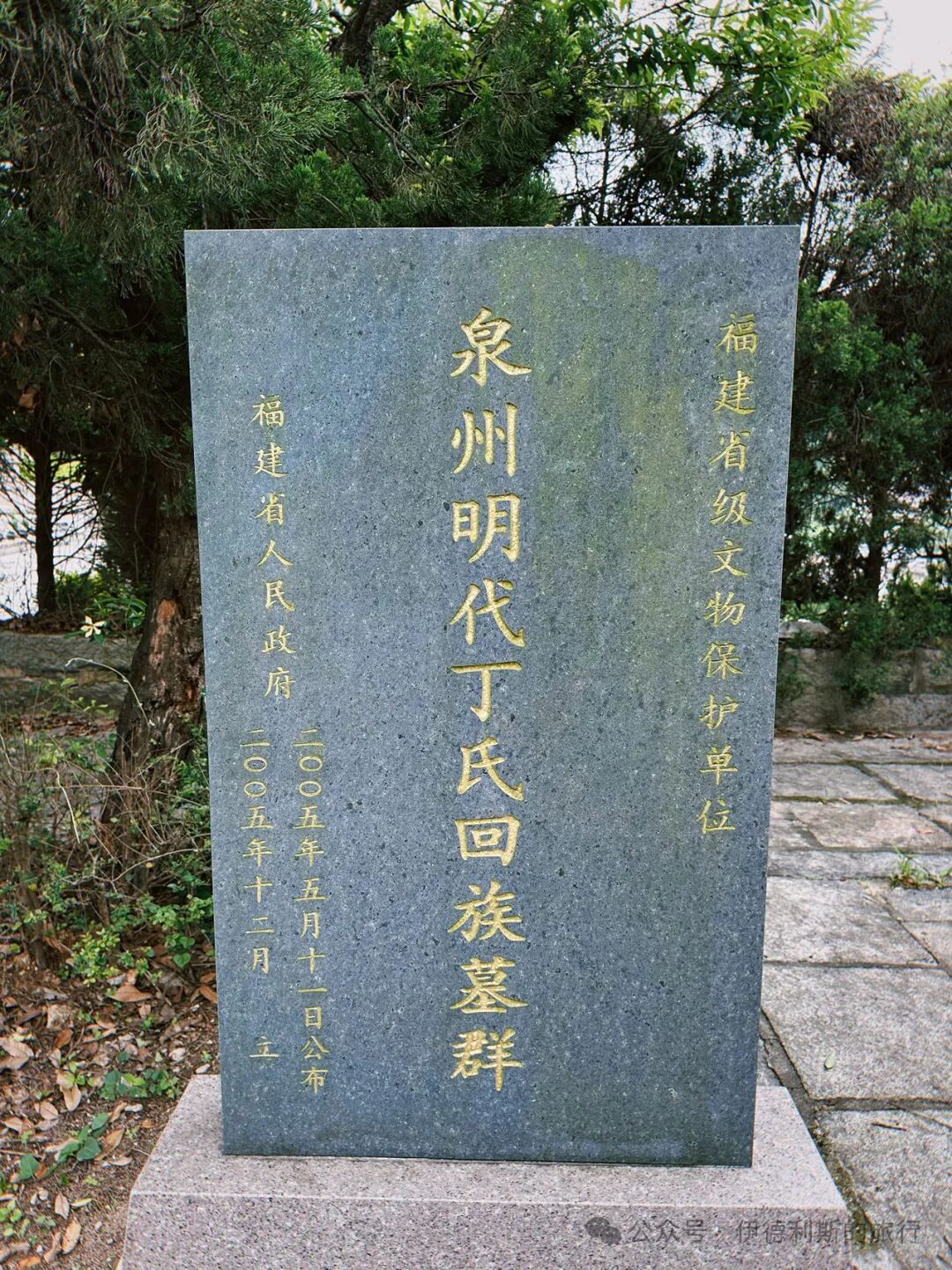
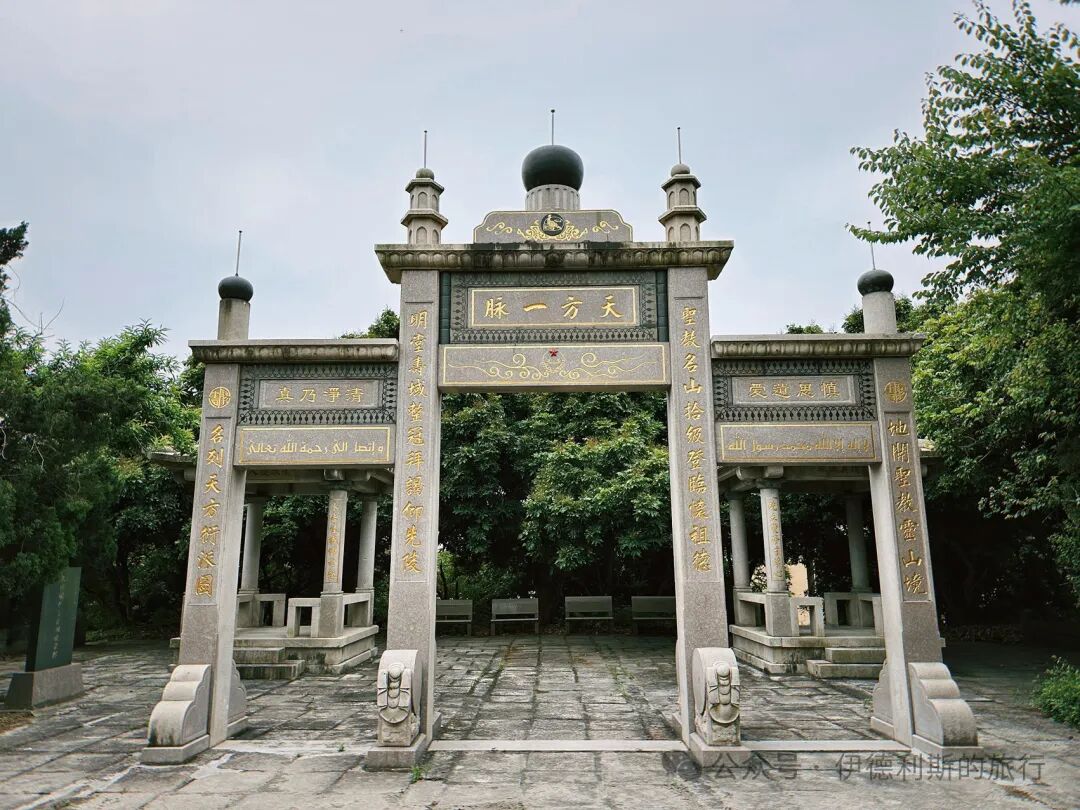
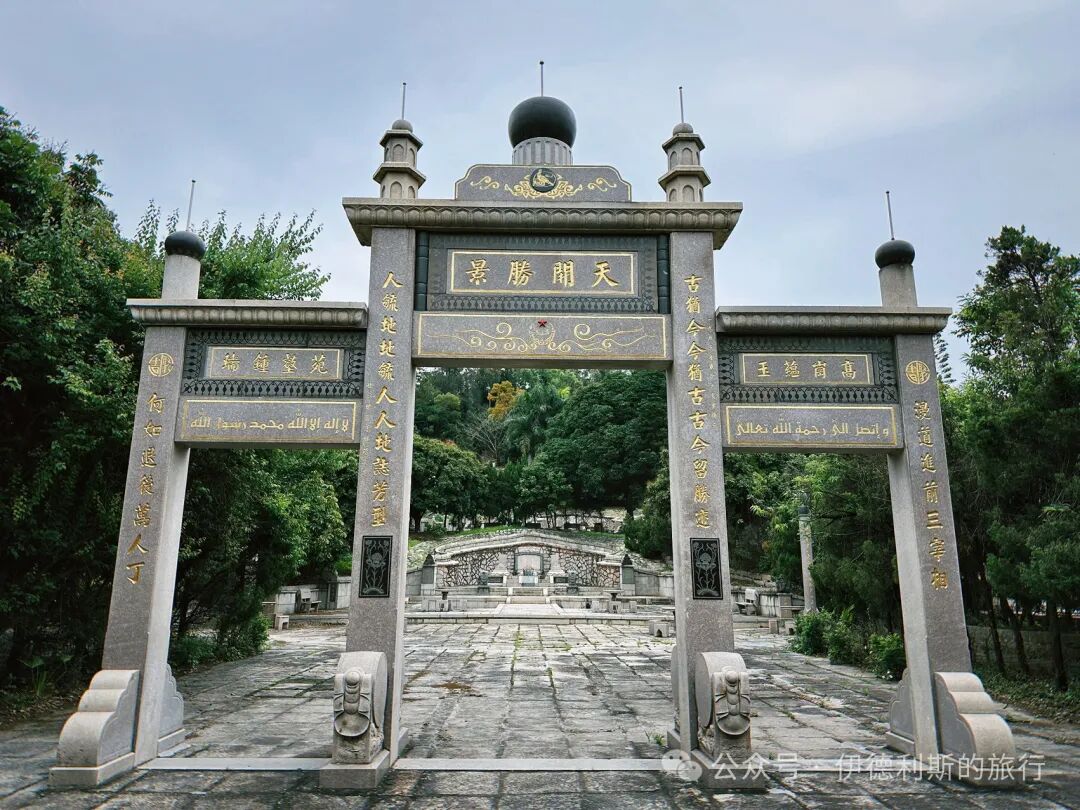
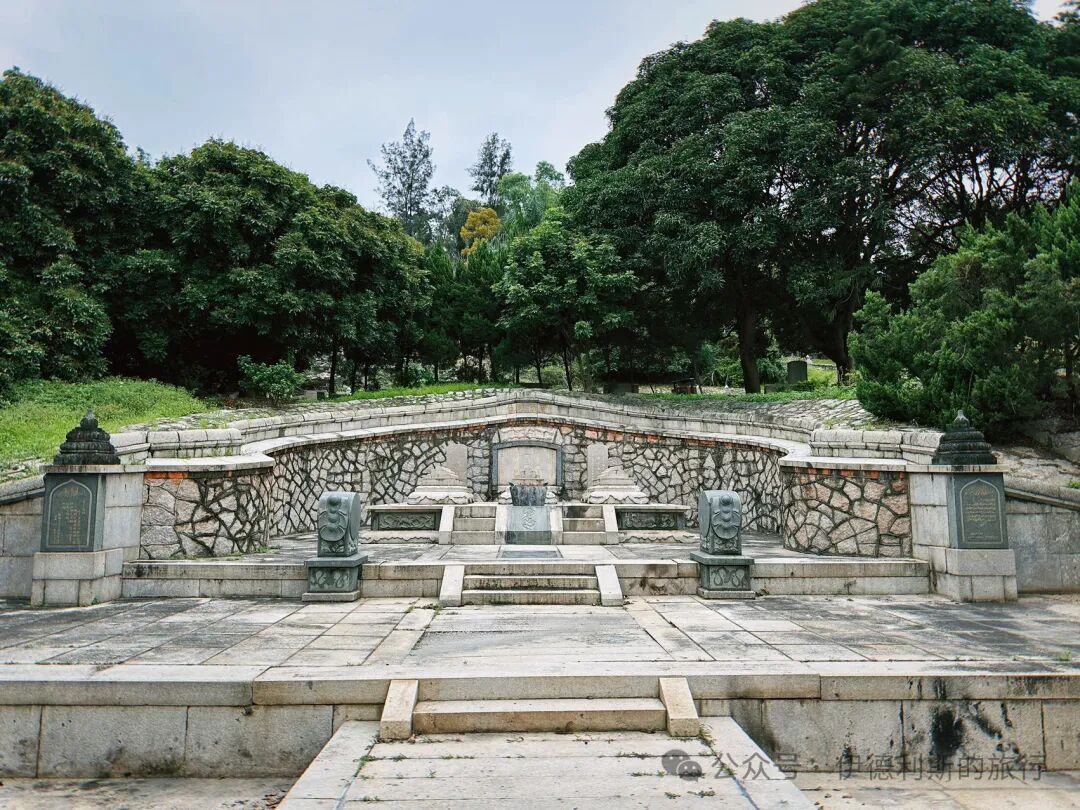
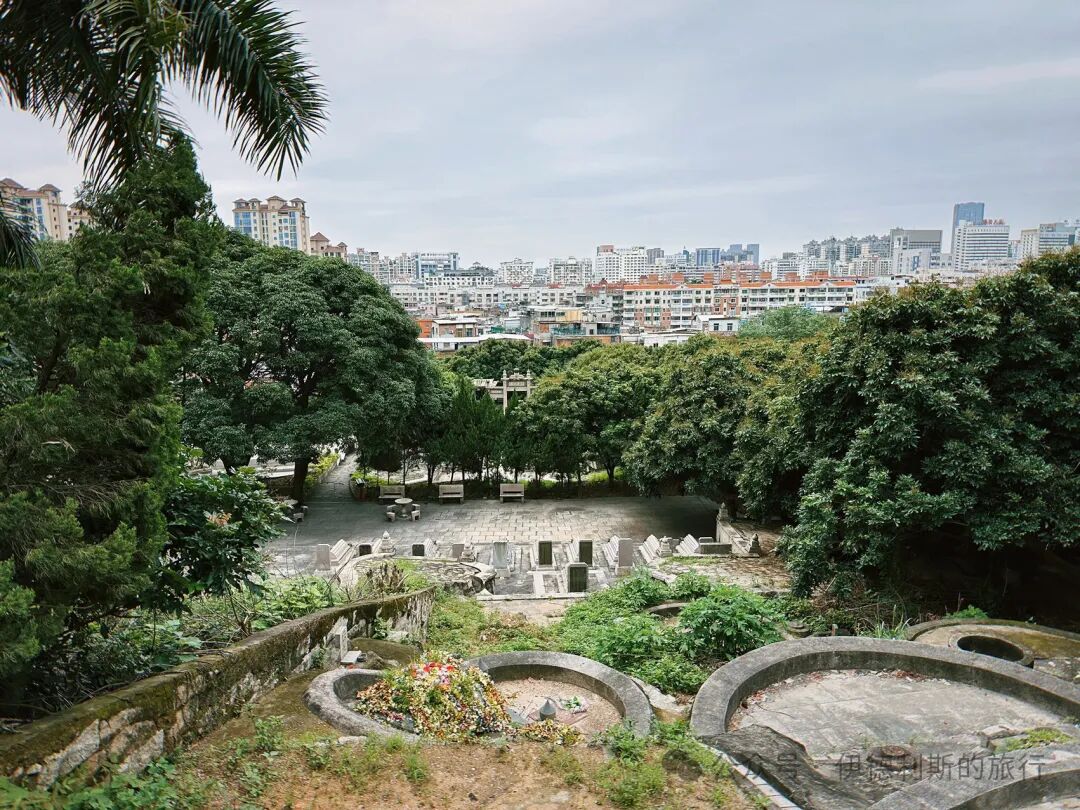
A large section of the Lingshan Sacred Tomb scenic area is dedicated to the Ding family cemetery from Chendai.
According to family records, the first-generation ancestor of the Chendai Ding family, Ding Jin (1251-1298), was originally from Suzhou and settled in Quanzhou for business. The Chendai Ding family maintained their faith for ten generations, spanning over two hundred years from the 13th to the 16th century. Ding Yanxia, the tenth-generation descendant born around 1517, wrote detailed accounts of the religious customs he experienced as a child in his work, 'On Ancestral Faith' (Zujiao Shuo). However, calculations suggest that by the eighth to ninth generation, the Chendai Ding family no longer prioritized scripture hall education. The remaining relics of the faith belonging to the Chendai Ding family are the several Ming Dynasty tomb stones located within the Lingshan Sacred Tomb.
Before the Ding family established their base in Chendai, the first, second, and third generations were all buried at Lingshan, east of Quanzhou city. After the fourth-generation ancestor, Ding Shan, established the family base in Chendai, he entrusted the management of the ancestral graves to others. Later, Xu Fu, the son of the second manager Xu Fen, repeatedly encroached on the ancestral graveyard, and the Ding family endured this in silence. Eighteen years later, in 1505, the eighth-generation descendant Ding Yi passed the imperial examinations to become a jinshi. Upon returning home, he filed a lawsuit and finally reclaimed the ancestral tomb land.
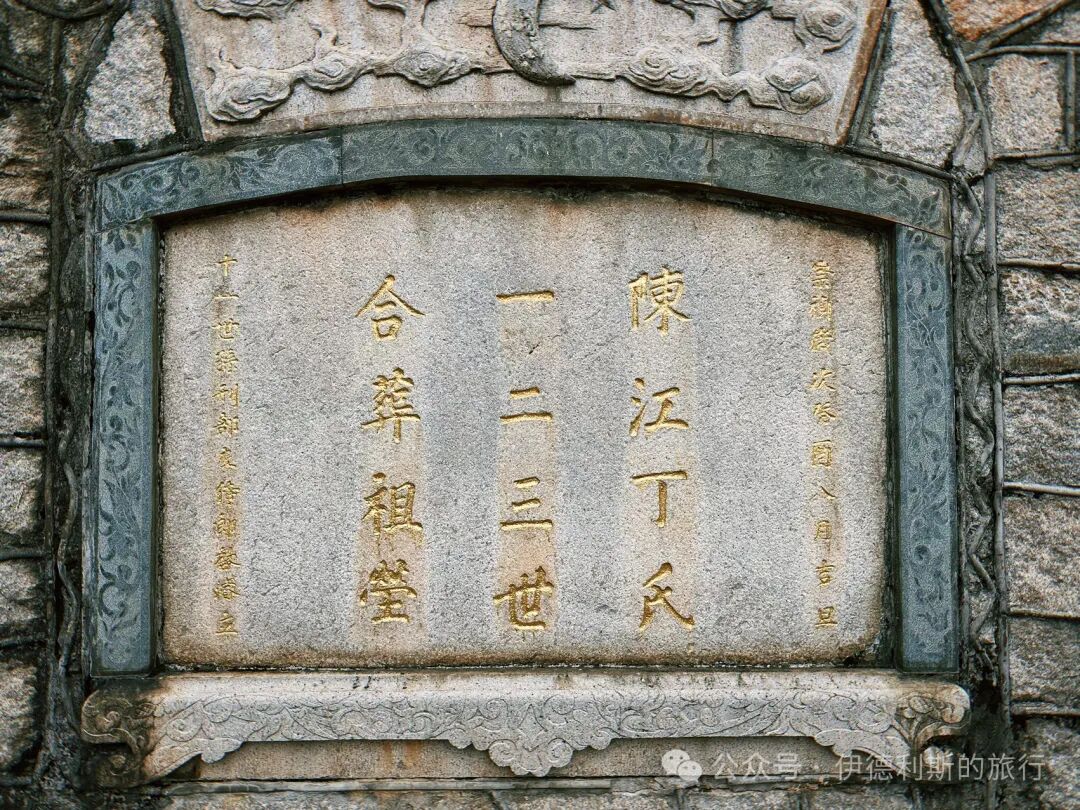
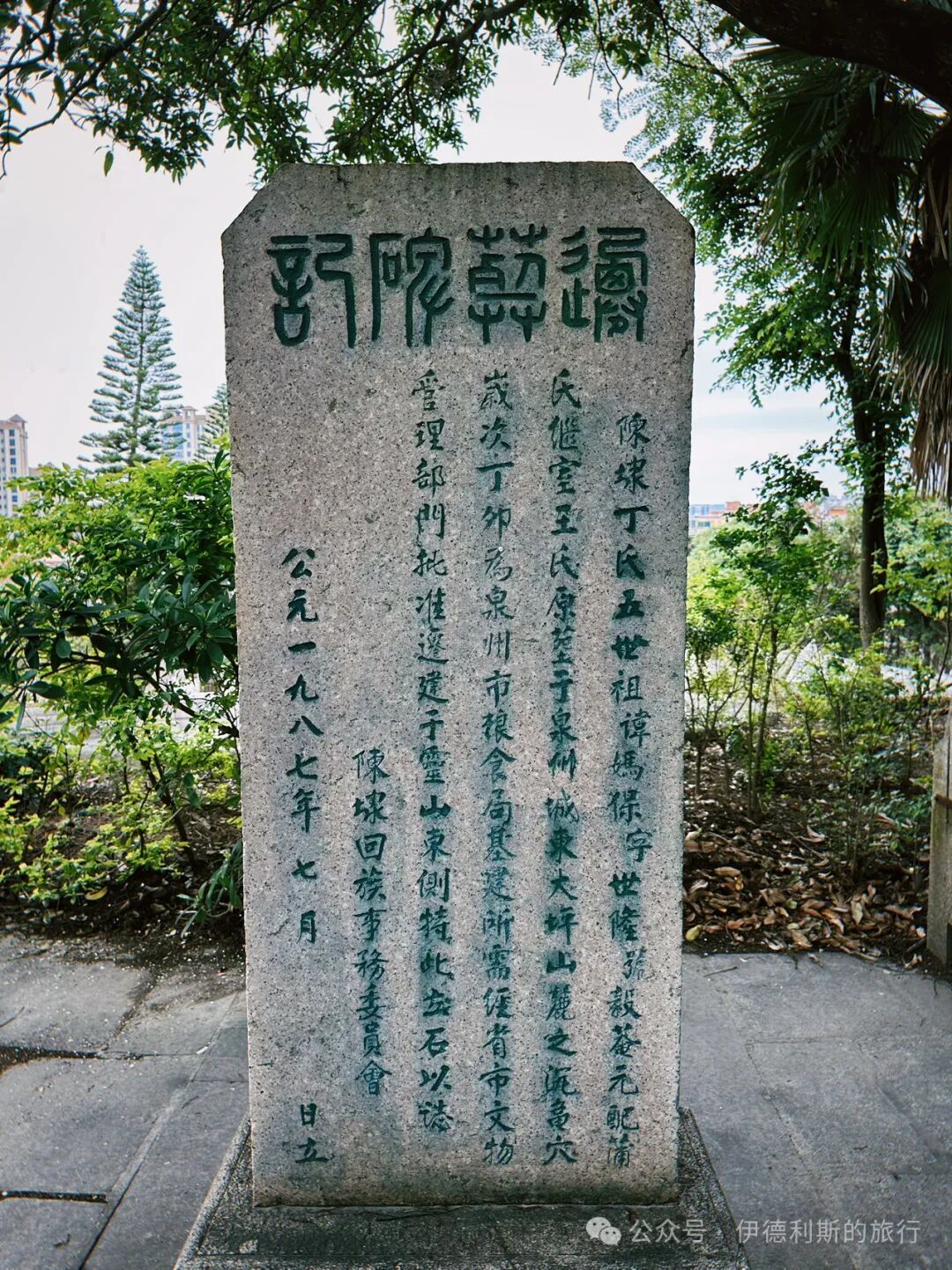
During the Chongzhen reign of the Ming Dynasty, the descendants of the Ding family combined the graves of the first, second, and third generations. In 1993, due to road construction, many of the Chendai Ding family's tomb stones were moved from outside the East Gate of Quanzhou and Luyuan to the Lingshan Sacred Tomb. The current combined tomb of the first, second, and third generations was also renovated during this period. The tomb stones and tombstones seen today are not the original ones.
After the Ming Dynasty, the Chendai Ding family claimed their ancestor was the Yuan Dynasty politician Sayyid Ajjal Shams al-Din, so the cemetery features inscriptions identifying them as descendants of a saint.
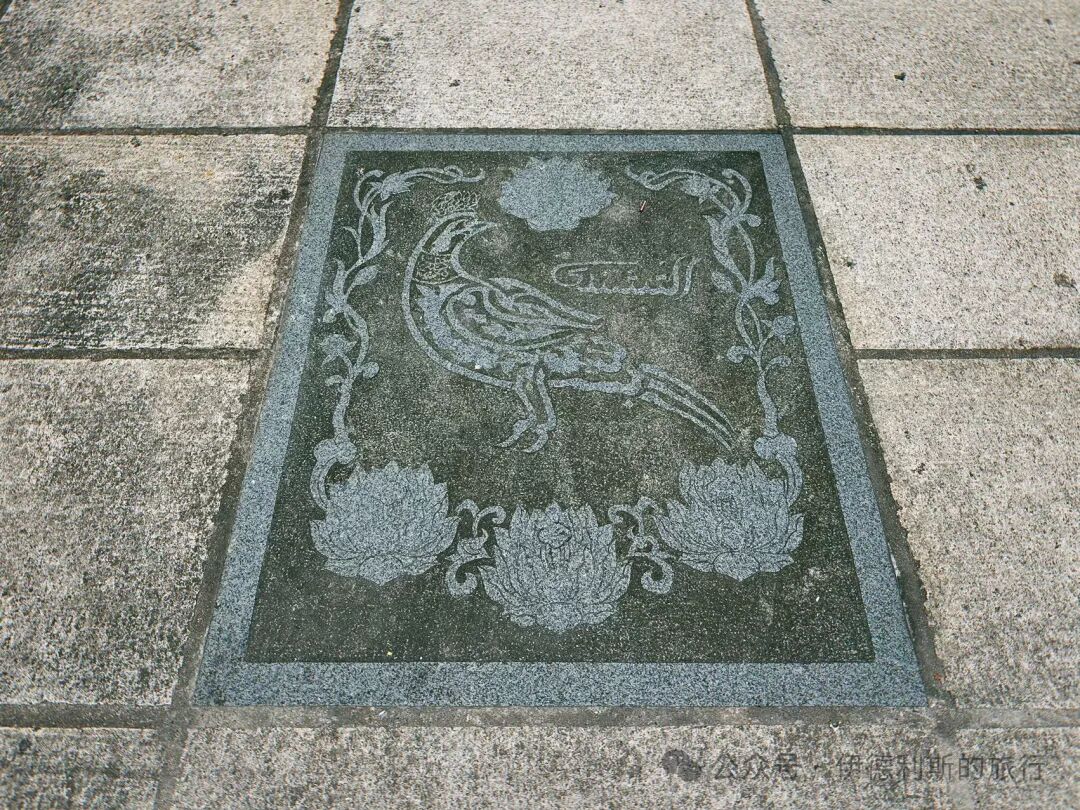
In the cemetery, you can also see the Basmala (tasimi) auspicious bird of the Chendai Ding family.
The tomb of the fourth-generation Chendai Ding family ancestor, Ding Shan, and his wife, Zhuang Xiniang.
Ding Shan (1343-1420), also known as Yanren and Ren'an, moved from Quanzhou to Chendai with his father at the end of the Yuan Dynasty. In the early Ming Dynasty, he settled in Chendai and established the Ding family clan. His wife, Zhuang Xiniang, also known as Runxiu, was the sixth-generation granddaughter of Zhuang Xia, who was named a founding baron and junior preceptor during the Southern Song Dynasty. The Zhuang family was very powerful at the end of the Southern Song Dynasty, but they gradually declined after the Yuan Dynasty. Many relatives left Quanzhou, and only Zhuang Xiniang's father remained in the Zhuang family mansion in the south of the city. The Ding and Zhuang families were neighbors at the time, so they married. Shortly after the wedding, Ding Shan and his father moved to Chendai. The Ding family's move to Chendai was likely related to Zhuang Xiniang, because the Zhuang clan lived nearby in Qingyang, a powerful group known as the Qingyang Zhuang family.
Ding Shan and his wife Zhuang Xiniang were originally buried in Luyuan, east of Quanzhou city. Luyuan means 'Paradise,' which is what the Quran refers to as the 'Garden of Heaven'. The tombstone is a traditional Islamic greenstone (huilvyan) tomb. Two five-story, pedestal-style tombstones sit on a Sumeru-style altar platform. The fourth layer of the tombstone is carved with scripture (2:255).
Tombs of the fifth-generation Ding Guanbao, sixth-generation Ding Kuan, and sixth-generation Ding Min.
Ding Guanbao (1369-1436), also known as Shifu and Chengzhai, was Ding Shan's second son and the founder of the second branch of the Chendai Ding family. He was originally buried at the foot of Shuiniulin, east of Quanzhou city.
Ding Kuan (1395-1446), also known as Tingyu and Longyin, was Ding Guanbao's second son. He was originally buried to the left of Ding Shan's tomb in Luyuan Mountain.
Ding Min (1407-1456), also known as Tingxue and Yizhai, was Ding Guanbao's fourth son. He was originally buried at the foot of Shuiniulin, east of Quanzhou city. Ding Min was the first local scholar among the Chendai Ding family to promote literary education.
Tomb of the fifth-generation Ding Mabao of the Chendai Ding family, with his wife Pu and his successor wife Wang.
Ding Mabao (1366-1431), also known as Shilong and Yi'an, was the eldest son of the fourth-generation founder Ding Shan. He was the founder of the first branch of the Chendai Ding family and was originally buried with his two wives at the Chenggui Baoxue site on Daping Mountain, east of Quanzhou city.
Tomb of the fifth-generation Ding Fubao and his wife Shi Dingniang.
Ding Fubao (1375-1432), also known as Shizhang and Yingjie, was Ding Shan's third son and the founder of the third branch of the Chendai Ding family. He is buried at Lingshan, east of Quanzhou city. The tomb features two pedestal-style stone graves on a traditional Islamic Sumeru-style altar platform, with swastikas and two lions playing with a ball carved into the waist of the platform.
Tombs of the sixth-generation Ding Xin and his wife Cai, and the seventh-generation Ding Lun and his wife Zhuang.
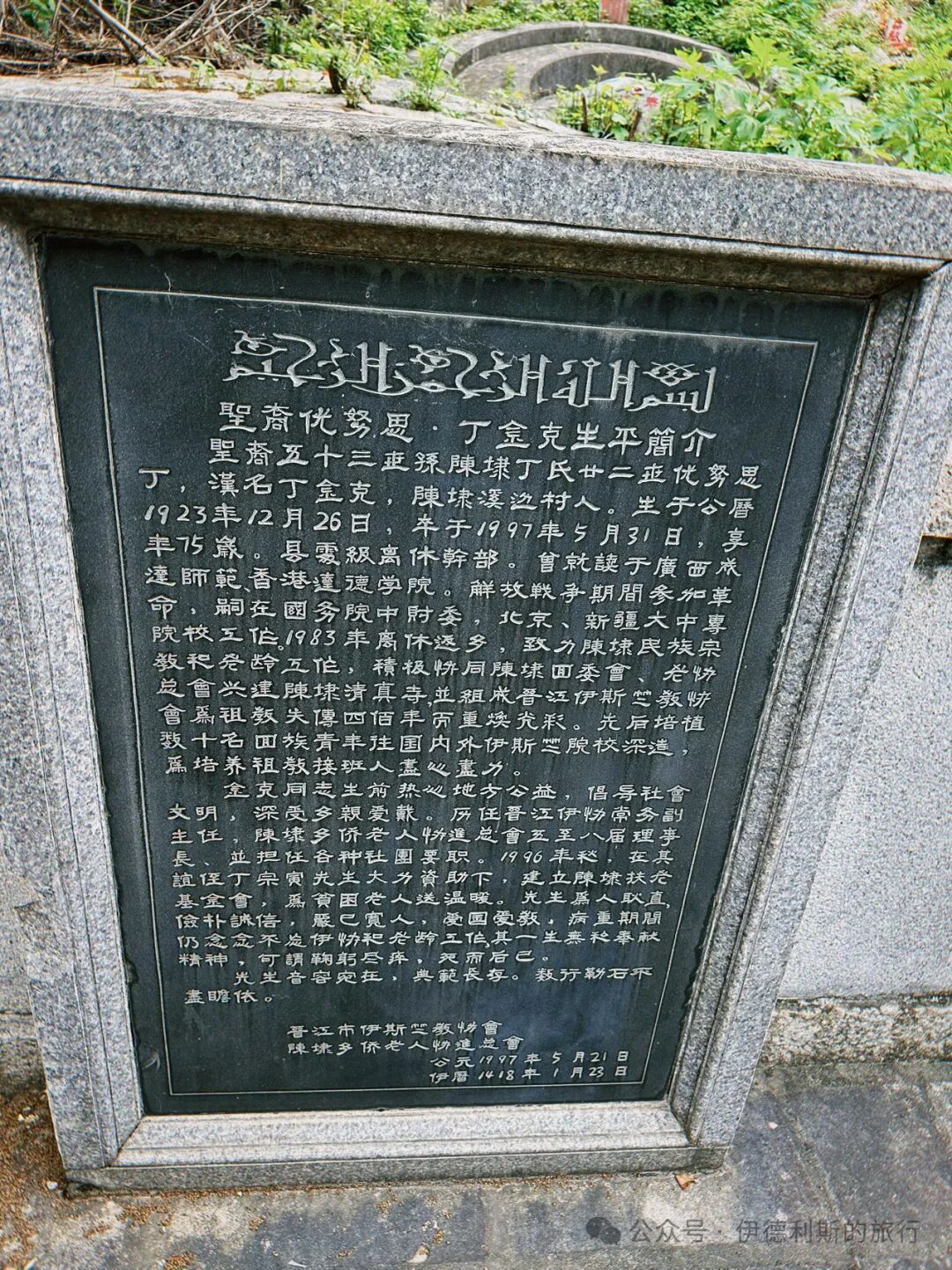
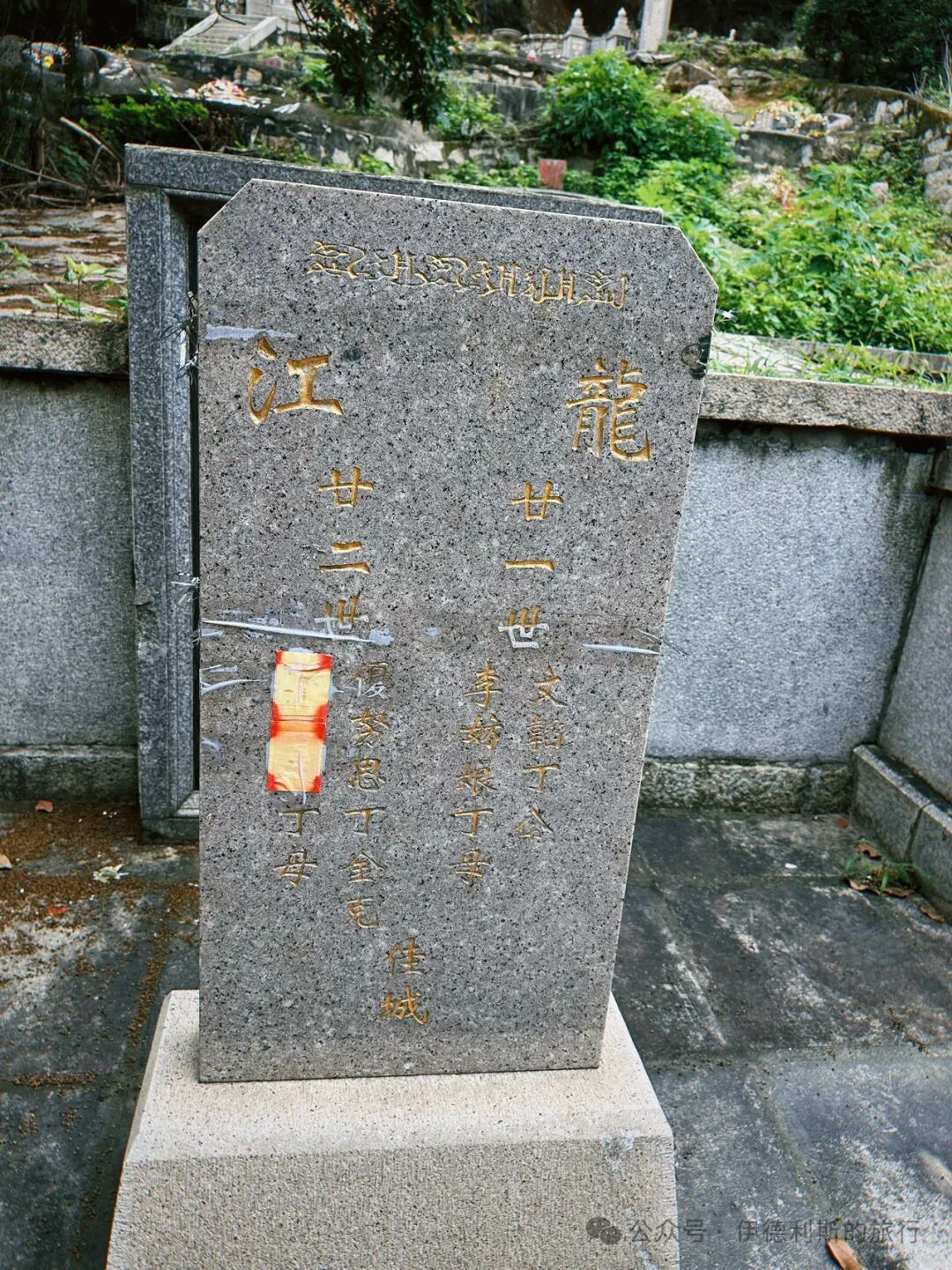
Tomb of the twenty-second generation Ding Jinke.
Ding Jinke (1923-1997), whose Islamic name was Yunus, studied at the Guangxi Chengda Normal School and the Hong Kong Dade College. In the early 1920s, the famous Hui Muslim Tang Kesan served as the director of the Xiamen Customs. He recommended his fellow townsman Zhang Guangyu to lead Islamic affairs in the Quanzhou area. After Imam Zhang Guangyu arrived in Quanzhou, he worked diligently on religious affairs, and the Islamic faith began to revive in Chendai. In 1939, the Chenjiang Branch of the China Islamic National Salvation Association was established in Chendai. Some members of the Ding family in Chendai went to the Qingjing Mosque in Quanzhou for their weekly Friday prayer (jumu'ah). Later, they converted the Wenchang Shrine in Sijing Village into a mosque and invited Imam Tie from Quanzhou to lead the religious affairs. Between 1937 and 1944, the Chengda Normal School moved south to Guilin. Its founders, Tang Kesan and Imam Ma Songting, accepted 17 young men from the Ding family in Chendai to study there, including Ding Jinke.
Ding Jinke joined the revolution during the War of Liberation. Later, he worked for the Financial and Economic Committee of the State Council and at various colleges and universities in Beijing and Xinjiang. He retired and returned to his hometown in 1983. In 1983, when the Fujian Islamic Association was founded, Ding Jinke, along with fellow Chengda Normal School graduates Ding Jinshun, Ding Jinhe, Ding Jinhong, and over twenty other dedicated community members, formed the Chendai Islamic Association Group to begin reviving religious activities. They borrowed the second-floor meeting room of the Chendai Hui Ethnic Affairs Committee and the back hall of the Ding Family Ancestral Hall to hold their Friday prayer (jumu'ah).
After years of hard work, Ding Jinke and other friends (dosti) raised funds to build the Chendai Mosque. The mosque was completed in 1991 and officially opened in 1993, with Ding Jinke serving as the first director of the mosque management committee. Soon after, the Jinjiang Islamic Association was established, and Ding Jinke served as its executive deputy director. After the 1990s, Ding Jinke helped dozens of young people from the Ding family in Chendai go to study religious knowledge both at home and abroad, with some attending Arabic language schools in Inner Mongolia. view all
Summary: This article visits the Lingshan Holy Tomb in Quanzhou, one of the city's key Islamic heritage sites linked to early Muslim history on China's coast. It keeps the original tomb details, inscriptions, photographs, names, and historical context for readers studying Quanzhou Muslim heritage.
Lingshan Holy Tomb is in the east of Quanzhou city, also known as the Tomb of the Three and Four Sages. The story of the Three and Four Sages mainly comes from the Min Shu: Fang Yu Zhi written by He Qiaoyuan in 1629 (the second year of the Chongzhen reign of the Ming Dynasty). The Min Shu quotes a legend that four disciples of the Prophet Muhammad came to the Tang Dynasty to spread the faith during the Wude period (618-626). One sage went to Guangzhou, two went to Yangzhou, and the third and fourth went to Quanzhou. After the third and fourth sages passed away, they were buried in Quanzhou, where their graves glowed at night, making them holy sites.
In reality, Lingshan was a burial ground for monks from Chengtian Mosque from the Five Dynasties period to the Southern Song Dynasty. It was only abandoned after Chengtian Mosque failed in its resistance against the Yuan Dynasty at the end of the Southern Song. According to the Record of Burying Foreign Merchants at Dongban in Quanzhou by Lin Zhiqi, a Southern Song official, a merchant from the ancient Iranian port of Siraf followed the suggestion of Pu Xiasin to donate money and buy land to build the first tomb for foreign merchants at Dongban in Quanzhou. The cemetery was started in 1162 (the 32nd year of the Shaoxing reign of the Southern Song) and finished in 1163 (the first year of the Longxing reign).
The holy tomb has a stone tablet from the Yuan Dynasty dated 1322, written in Arabic, which says: These two deceased came to this land during the time of the Faghur. It is said they were men of great virtue, so after death, they moved from the earthly world to the eternal one. According to research by Chen Dasheng in A Preliminary Study of the Date of Lingshan Holy Tomb in Quanzhou, Faghur is an Arabic transliteration of the Persian word Bagh pur, which specifically referred to the Emperor of China in Persian literature from the Five Dynasties to the Song and Yuan periods.
According to the Quanzhou Prefecture Gazetteer, when Zhou Daoguang, the prefect of Quanzhou, visited Lingshan Holy Tomb in 1562 (the 41st year of the Jiajing reign of the Ming Dynasty), he mentioned there were three mounds, which were the holy tombs. The Min Shu Chao, written during the Chongzhen reign, records that the owner of the third tomb was Gao Di Shi Xu Ba Ba. In the 1930s, the wooden frame of the pavilion at Lingshan Holy Tomb had collapsed, leaving only four stone shuttle-shaped pillars. At that time, the three Sumeru-style stone tombs arranged in a triangle were still well-preserved, with stone covers on top.
In 1958, the Quanzhou Cultural Bureau and the municipal committee moved the tombstone of Gao Di Shi Xu Ba Ba to the northern hillside to fit the legend in the Min Shu. At the same time, they moved the tombstone of the imam Ma Ahun Yongchun (Ma Yongchun) from the south of the holy tomb to the northern hillside. In March 1959, a new stone pavilion was built with three levels of terraces and stairs on both sides. All other tombstones in front of the graves were removed to create a lawn, forming the layout seen today.
The holy tomb currently has two granite graves divided into three layers, with lotus petal carvings on the bottom layer. In the past, during Eid al-Fitr and Eid al-Adha, Hui Muslims in Quanzhou would attend prayers at Qingjing Mosque. First, an imam would lead the heads of households to visit the homes of other Hui Muslims near the mosque for a greeting, and then all the Hui Muslims would go together to visit the graves at Lingshan. When visiting the graves, they would first recite the Quran together at the holy tomb before going to their own family graves.
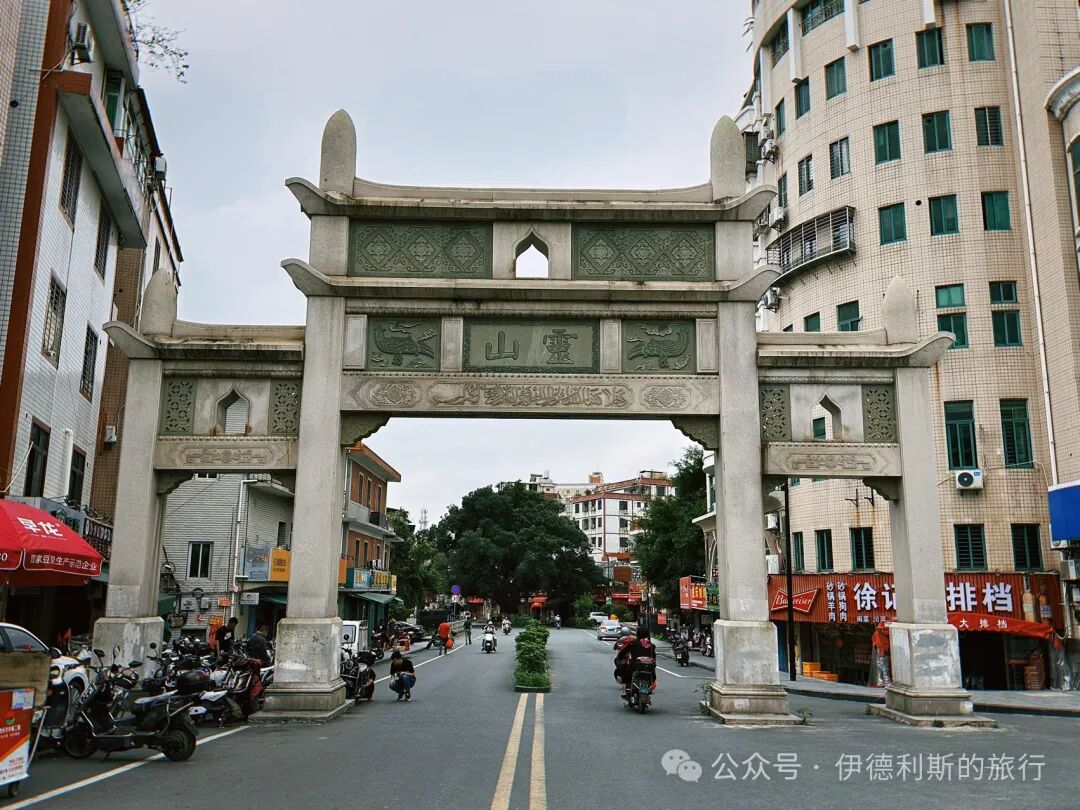
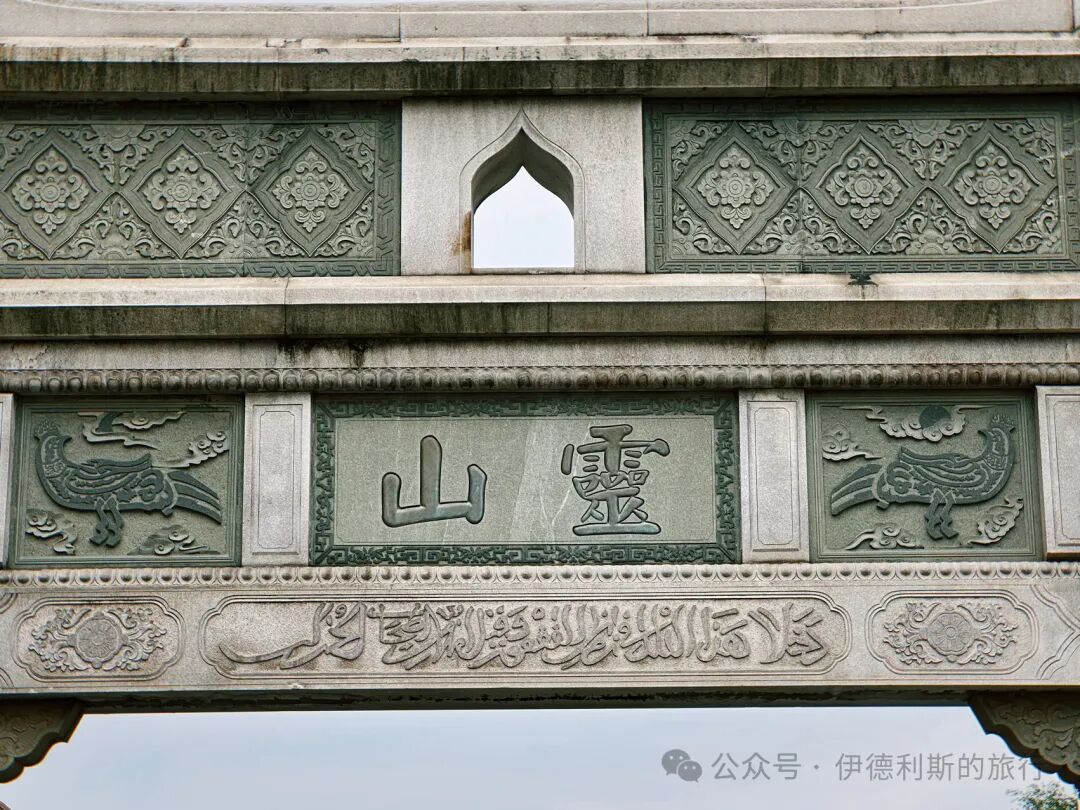
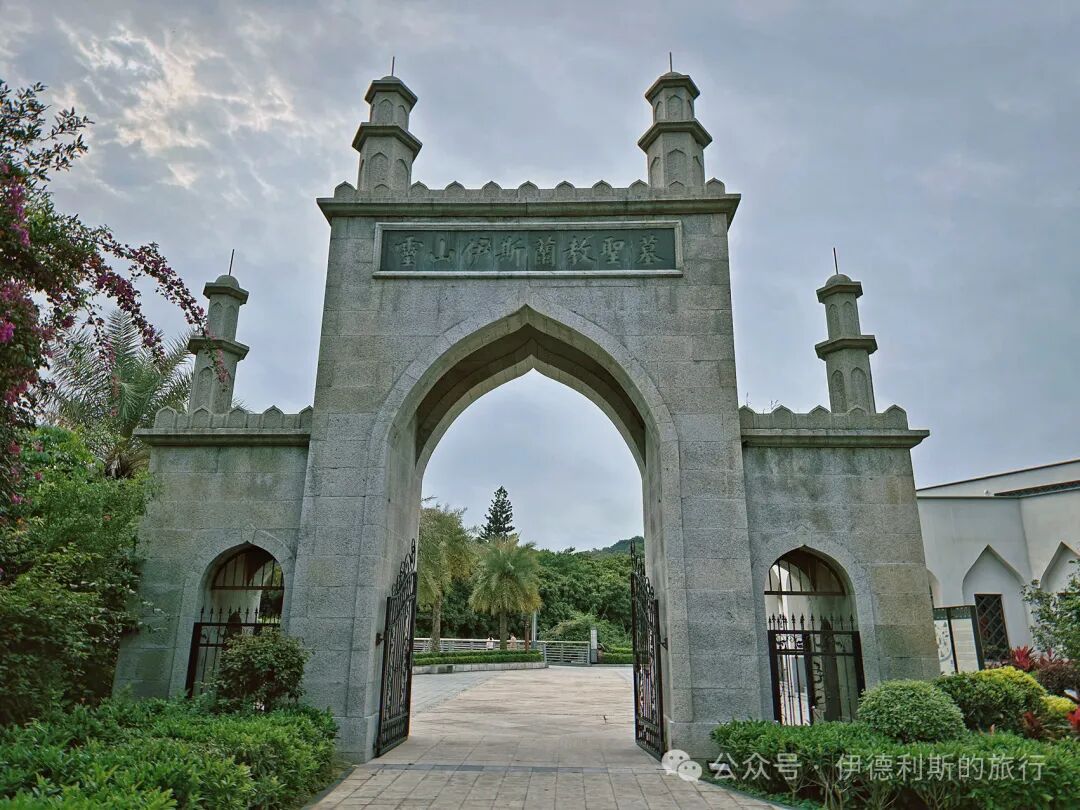
The archway and gate in front of Lingshan Holy Tomb, the banyan trees on Lingshan Avenue, and the national and provincial heritage site markers, introduction boards, and notices at the holy tomb.
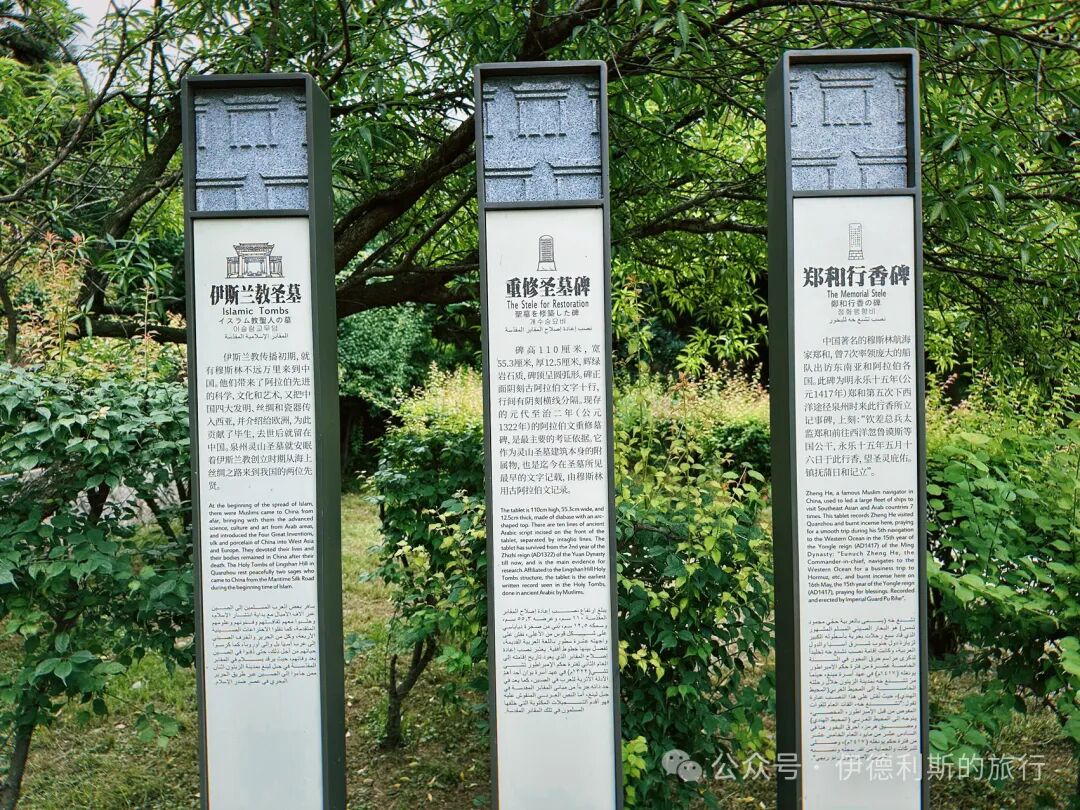
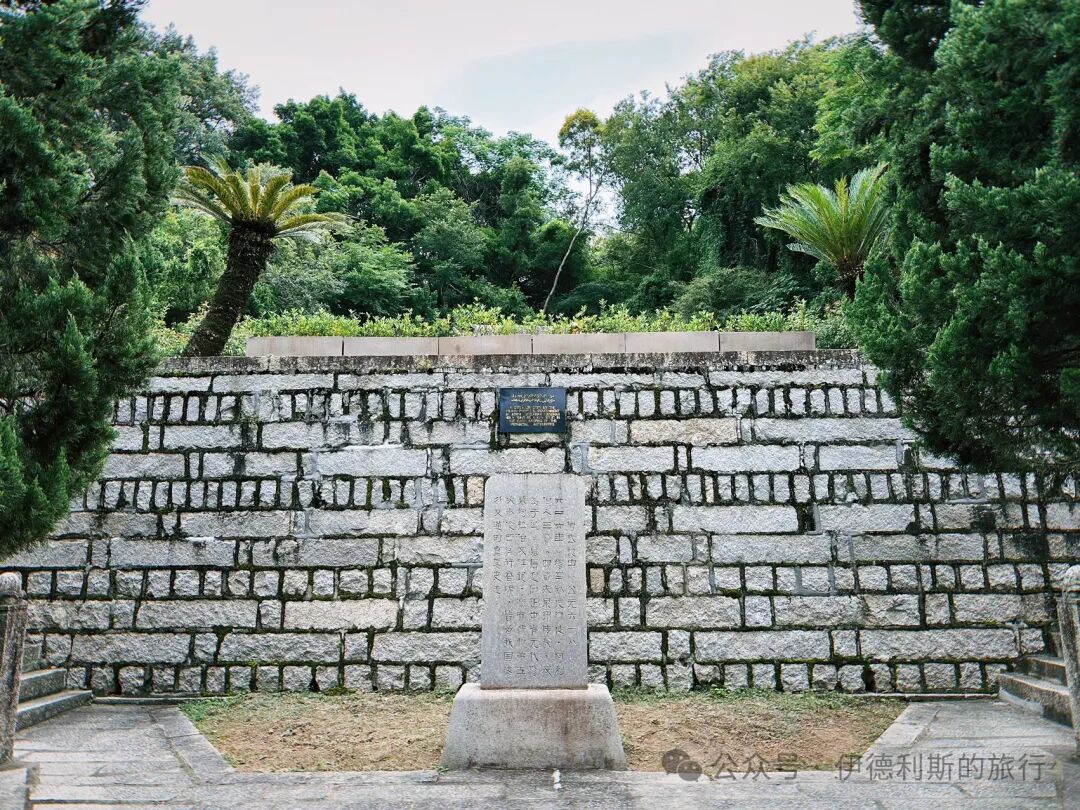
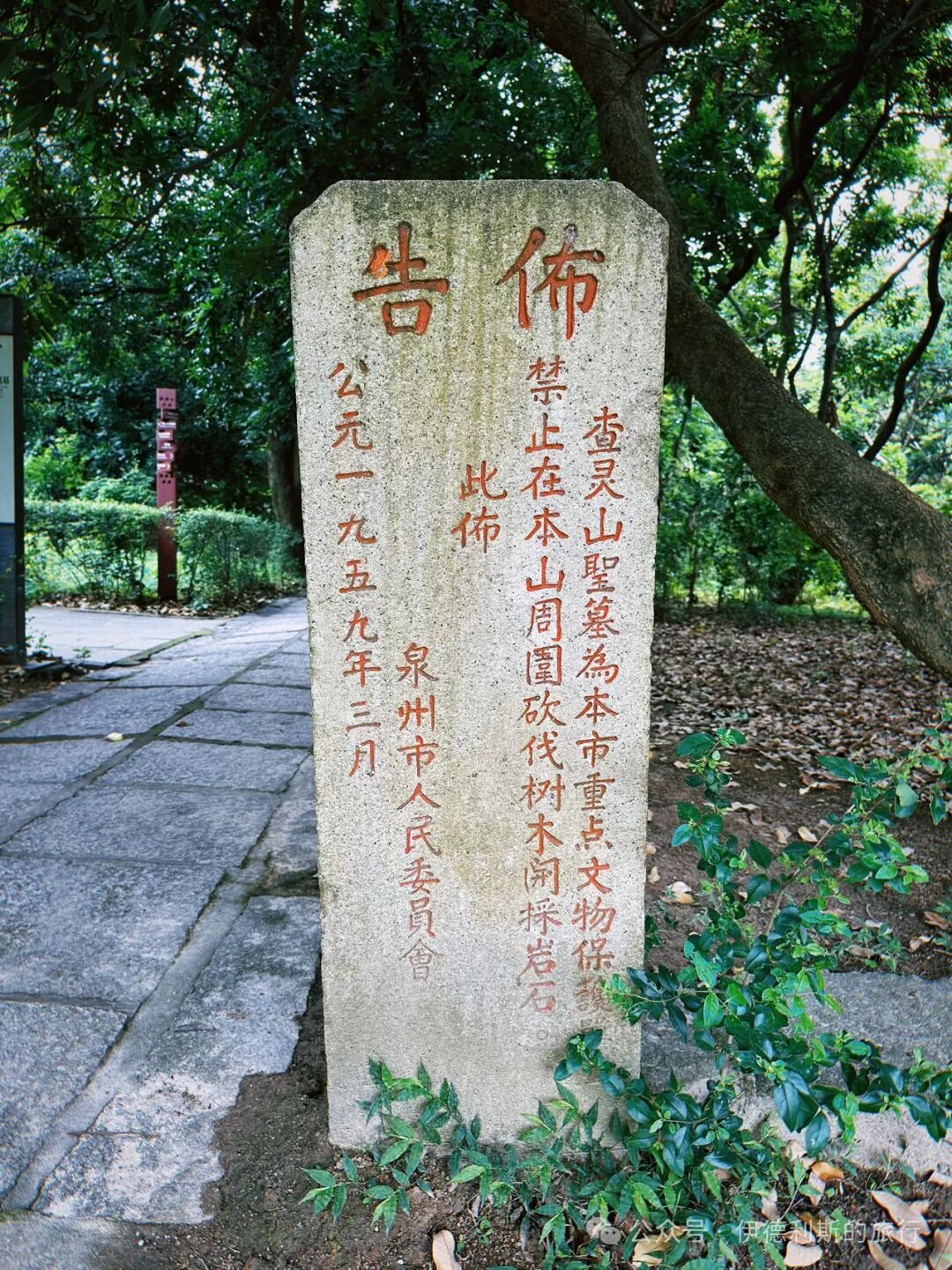
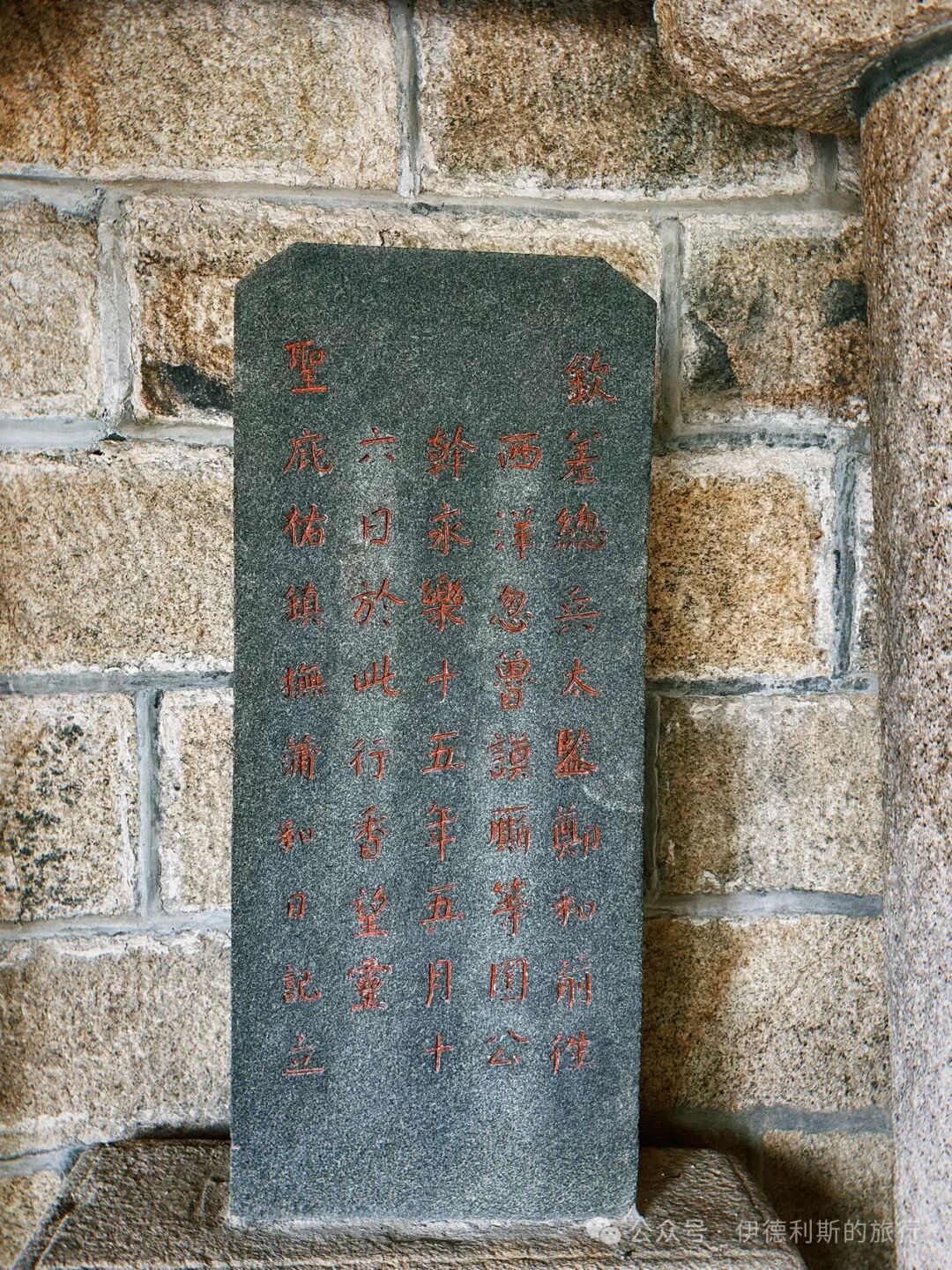
The historical stone tablets at Lingshan Holy Tomb.
The Incense Offering Tablet: This records the visit of Zheng He to the graves before his fifth voyage to the Western Oceans in 1417 (the 15th year of the Yongle reign), erected by the commander Pu Heri. The name Hulumesi carved on the tablet refers to the ancient Persian port of Hormuz.
The Chen Yougong Repair Tablet: Erected in 1714 (the 53rd year of the Kangxi reign), it records the repair of Lingshan Holy Tomb by Chen Yougong, a regional commander in Fujian, and Chen Mei, a regional military official. The inscription below lists seven surnames: Chen, Ma, Guo, Huang, Li, Yang, Pu, and Ding.
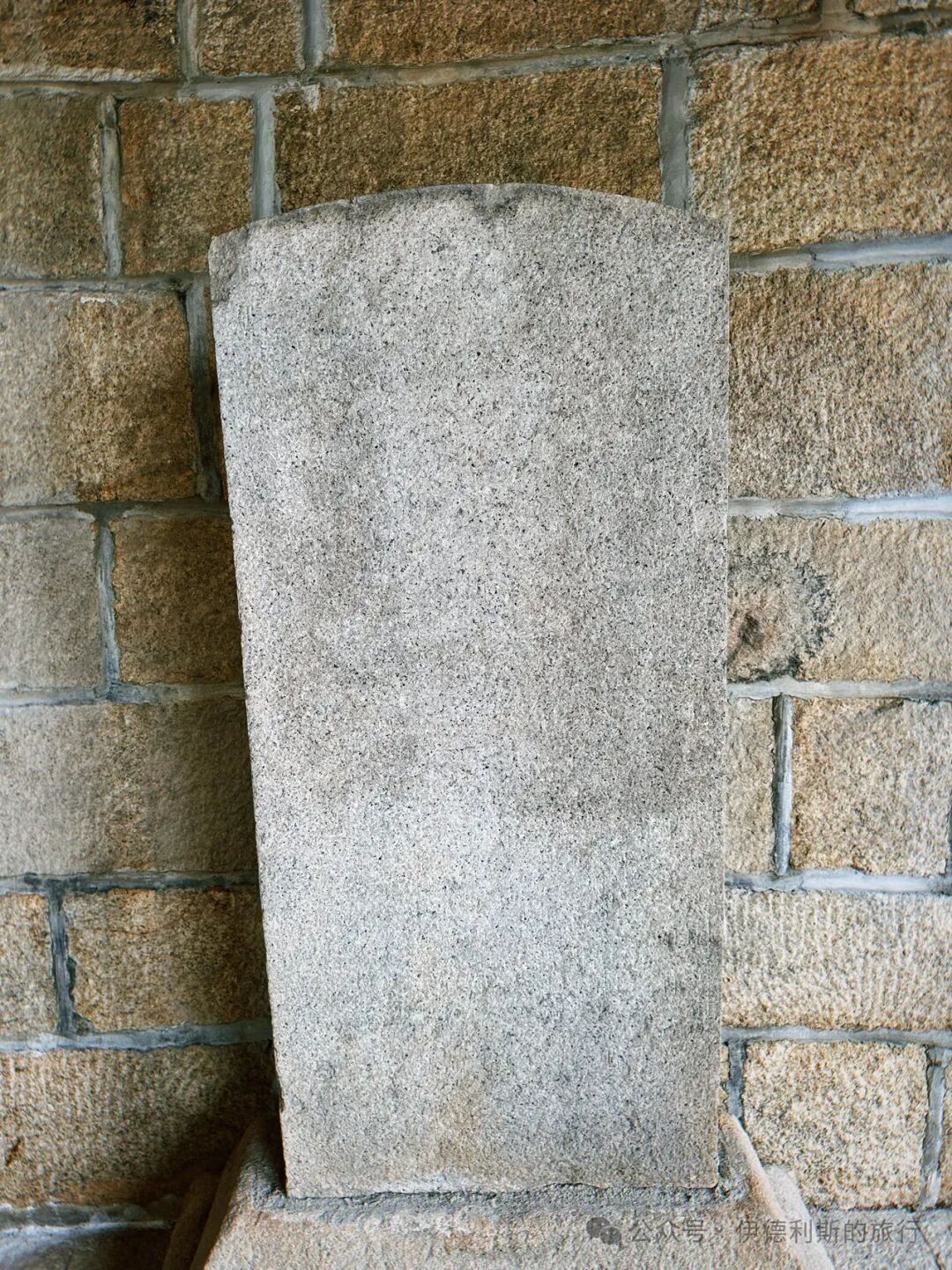
The Xia Bidi Repair Tablet: Records the repair of the holy tomb by the director Xia Bidi in 1751 (the 16th year of the Qianlong reign).
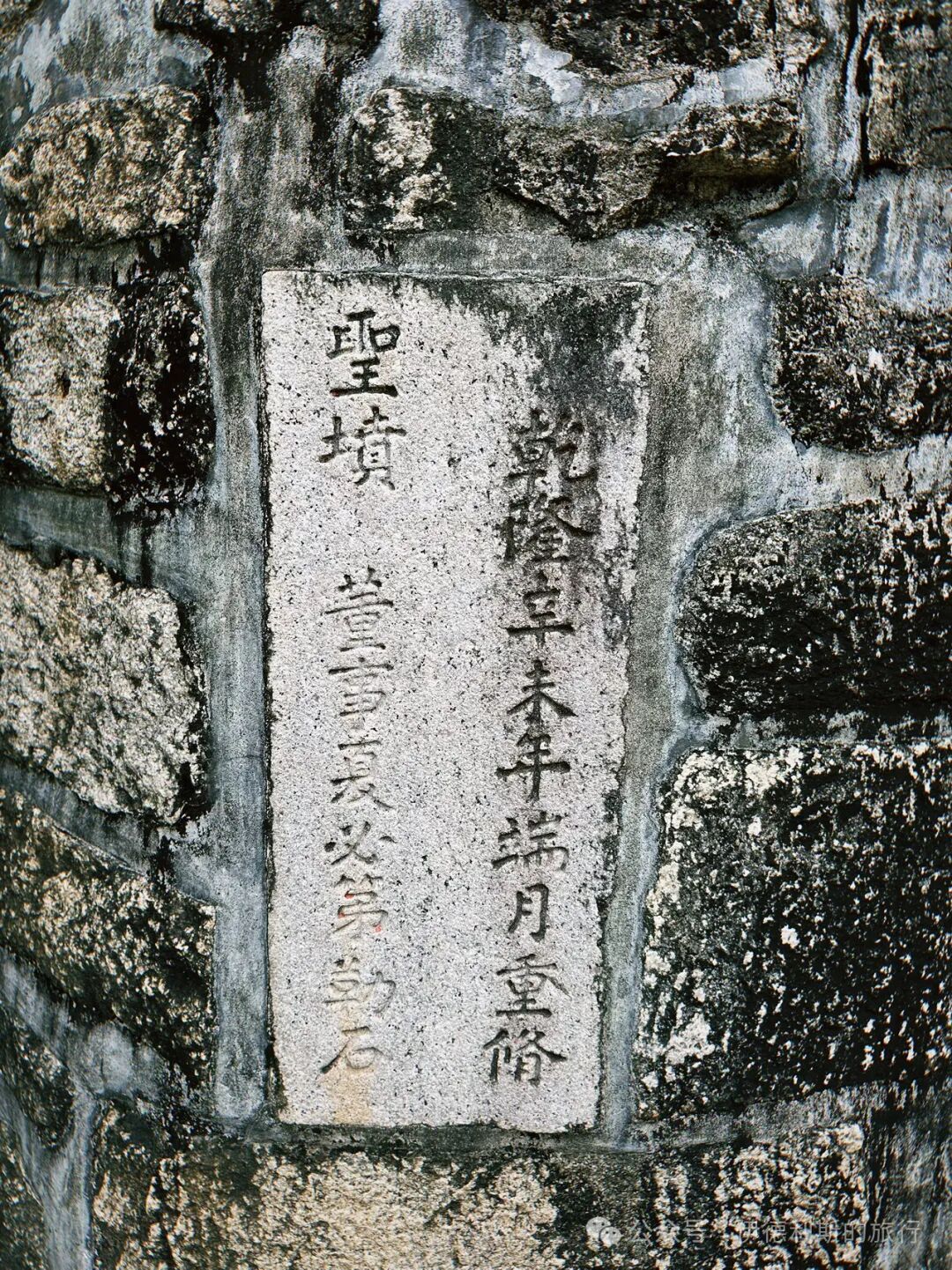
The Guo Bacui Repair Tablet: Records the repair of the holy tomb by the scholar Guo Bacui in 1783 (the 48th year of the Qianlong reign). Guo Bacui was a Hui Muslim from the Guo family in Baiqi. He passed the military examination in 1779 (the 40th year of the Qianlong reign), was awarded the rank of military officer, and served in the Anping Left Battalion in Taiwan. When he erected the tablet in 1783, he was stationed in Xiamen and ordered to patrol the coastal areas of Taiwan and Penghu. In 1787 (the 52nd year of the Qianlong reign), the Lin Shuangwen uprising in Taiwan besieged Zhuluo County. Guo Bacui was ordered to rush to the rescue and died on the battlefield.
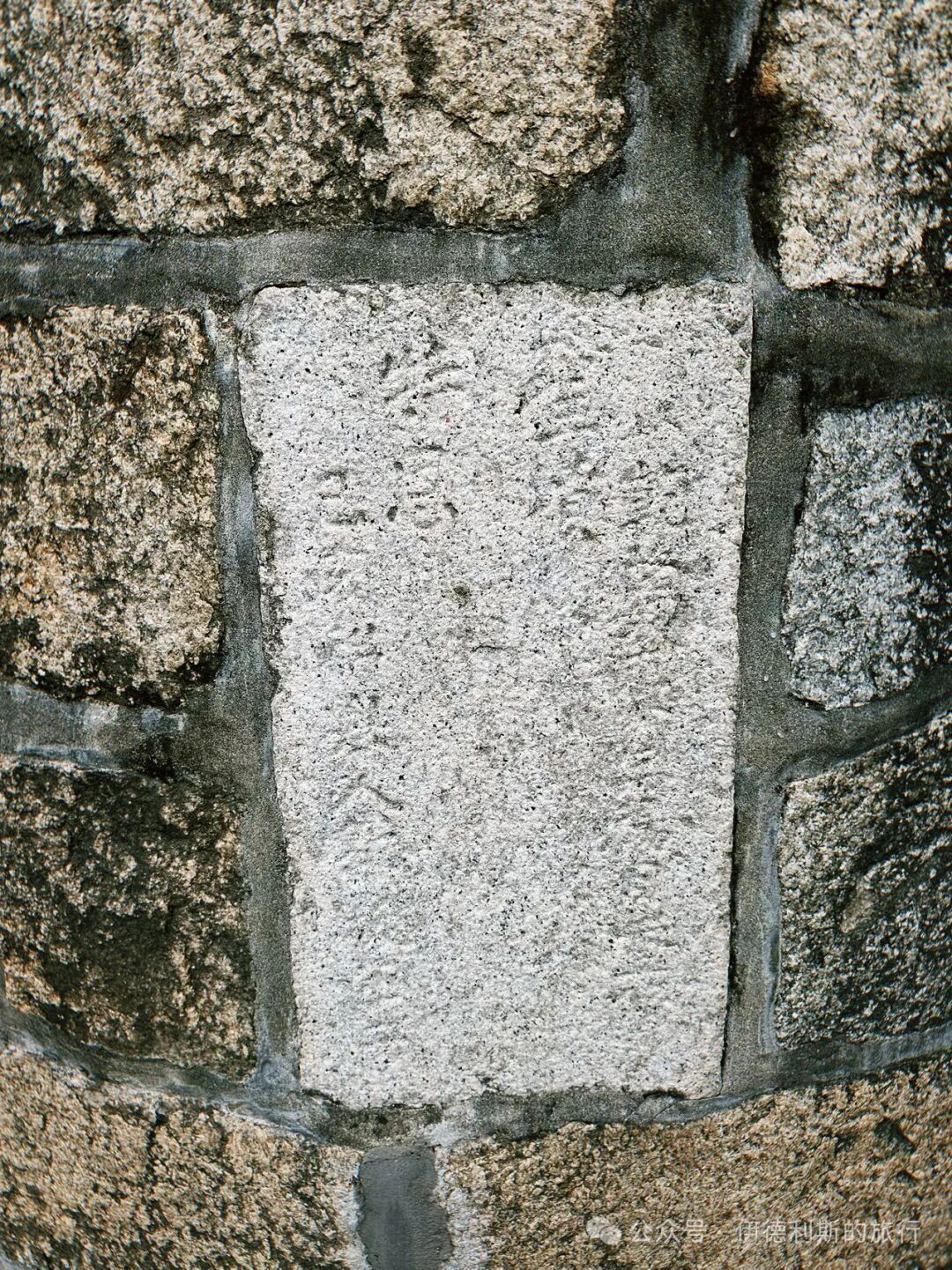
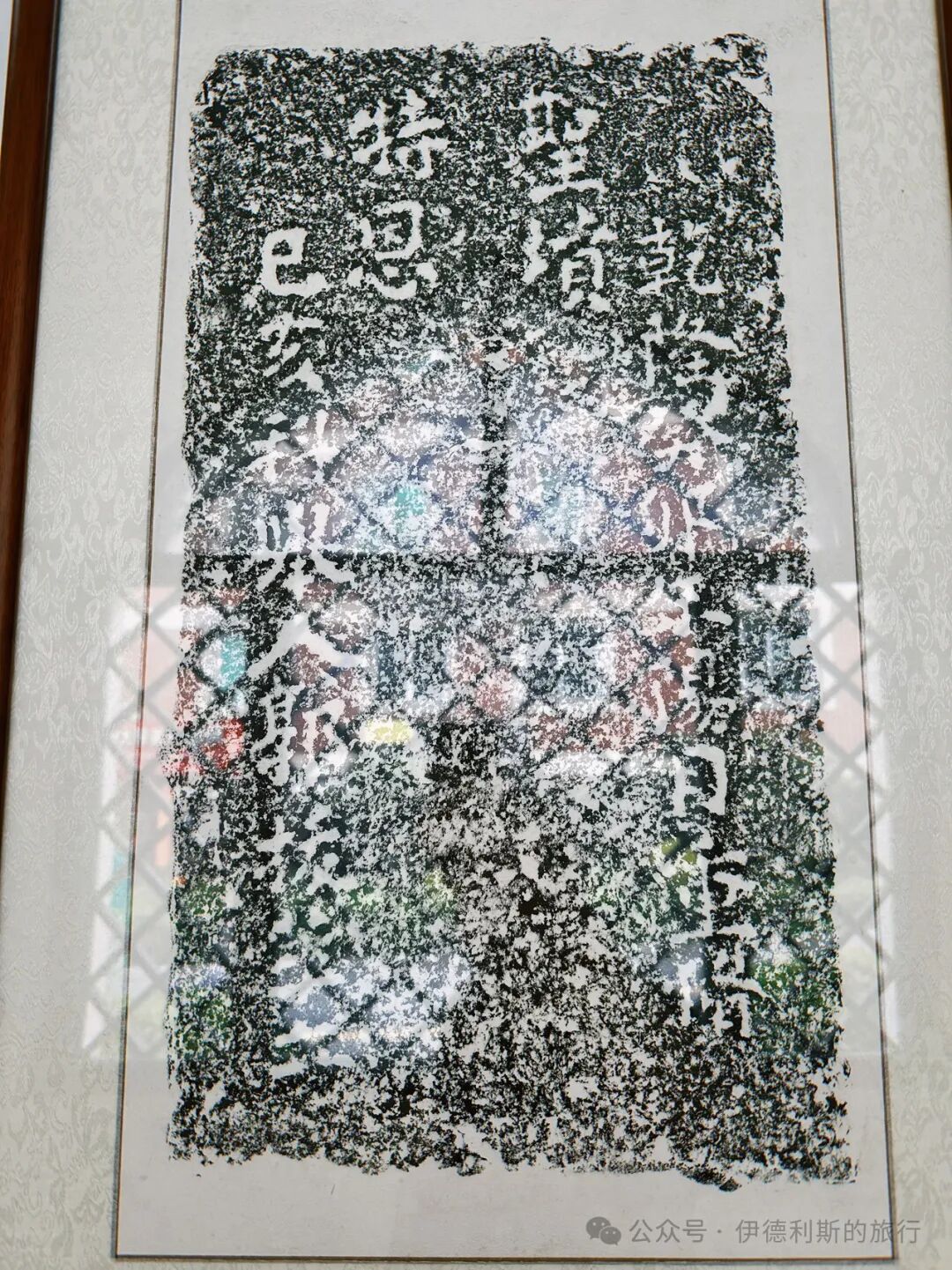
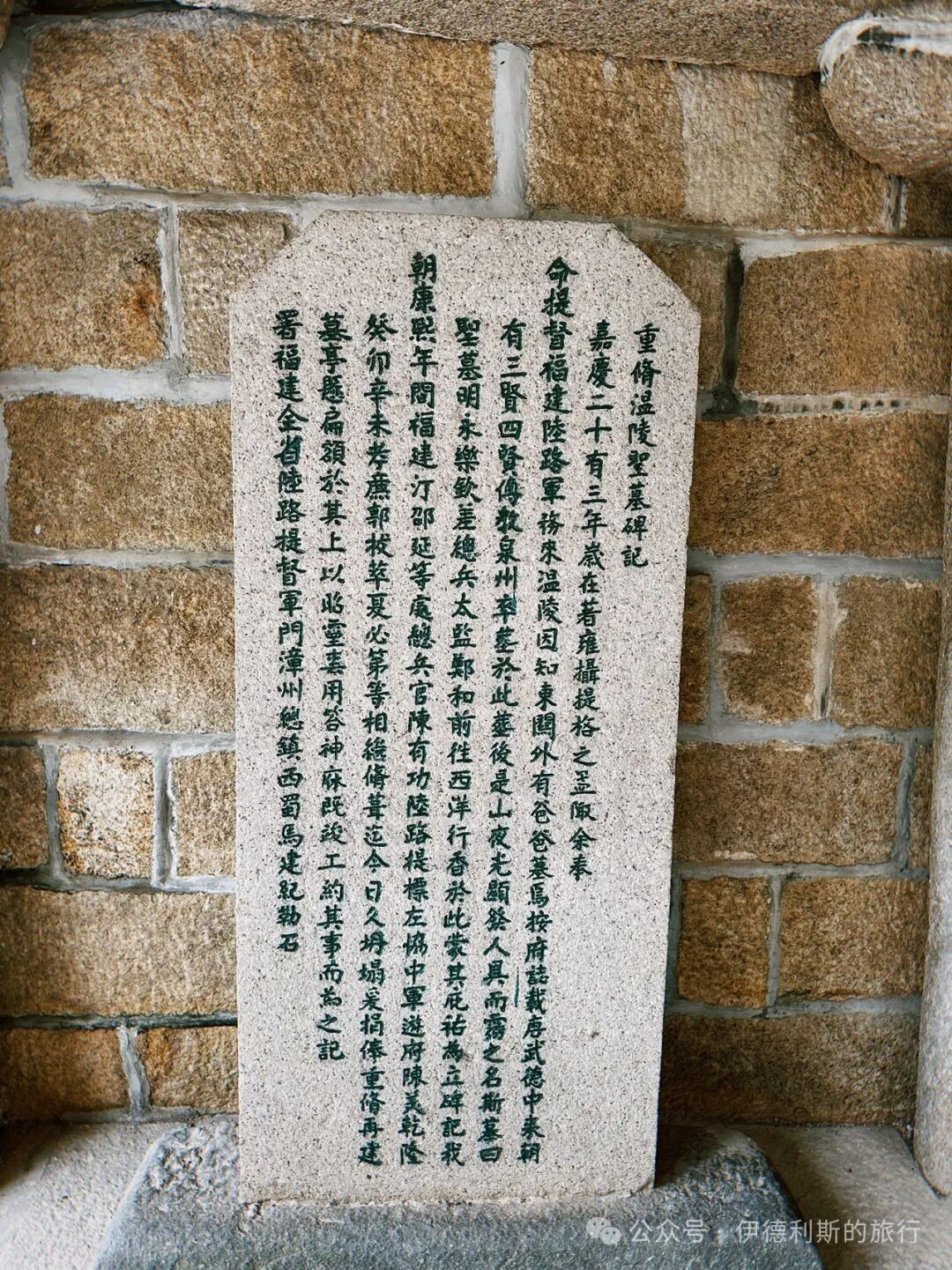
The Ma Jianji renovation stele records that in 1818 (the 23rd year of the Jiaqing reign), Ma Jianji, the acting commander-in-chief of the Fujian provincial land forces and general of Zhangzhou from Western Sichuan, rebuilt the tomb pavilion. The stele calls the Holy Tomb the 'Baba Tomb,' with 'Baba' being the Persian term of respect for an elder. Ma Jianji was from Nanchong, Sichuan. Besides renovating the Lingshan Holy Tomb, he also renovated the Qingjing Mosque in Quanzhou.
The Jiang Changgui renovation stele records that in 1871 (the 10th year of the Tongzhi reign), Fujian commander Jiang Changgui renovated the Holy Tomb. Jiang Changgui was a Hui Muslim from Yanting, Sichuan. His family practiced martial arts for generations. He was brave in battle, led troops against the Taiping Heavenly Kingdom for many years, earned many military merits, and was titled Zhiyong Baturu and General Jianwei. Besides renovating the Lingshan Holy Tomb, he also renovated the Qingjing Mosque and invited the army imam Ma Yongchun to lead religious affairs.
Beside the Holy Tomb is a 'Wind-Moving Stone' (fengdongshi). It features the inscription 'Jade Ball' (biyu qiu) by Quanzhou prefect Zhou Daoguang in 1563 (the 42nd year of the Jiajing reign) and 'Natural Ingenuity' (tianran jimiyao) by Ma Jianji in 1818 (the 23rd year of the Jiaqing reign).
Zhou Daoguang was the first person to record the term 'Lingshan Holy Tomb'. The Quanzhou Prefecture Gazetteer, Mountains and Rivers, Lingshan section records: 'Asking the locals, they say: This is the Lingshan Holy Tomb... Since the religion from foreign lands entered the Middle Kingdom, there have been Hui Muslims.' Its founder's surname and generation are unknown, but he loved this hill and was buried here...' He also described the tomb's layout at the time: 'Entering the gate, the path is very narrow.' Climbing to the hall, the atmosphere feels different. Reaching the top, there are three mounds, which are the Holy Tombs. In front of the tomb, there is a small pavilion on the right for namaz. On the left, there is a shed where one can rest.
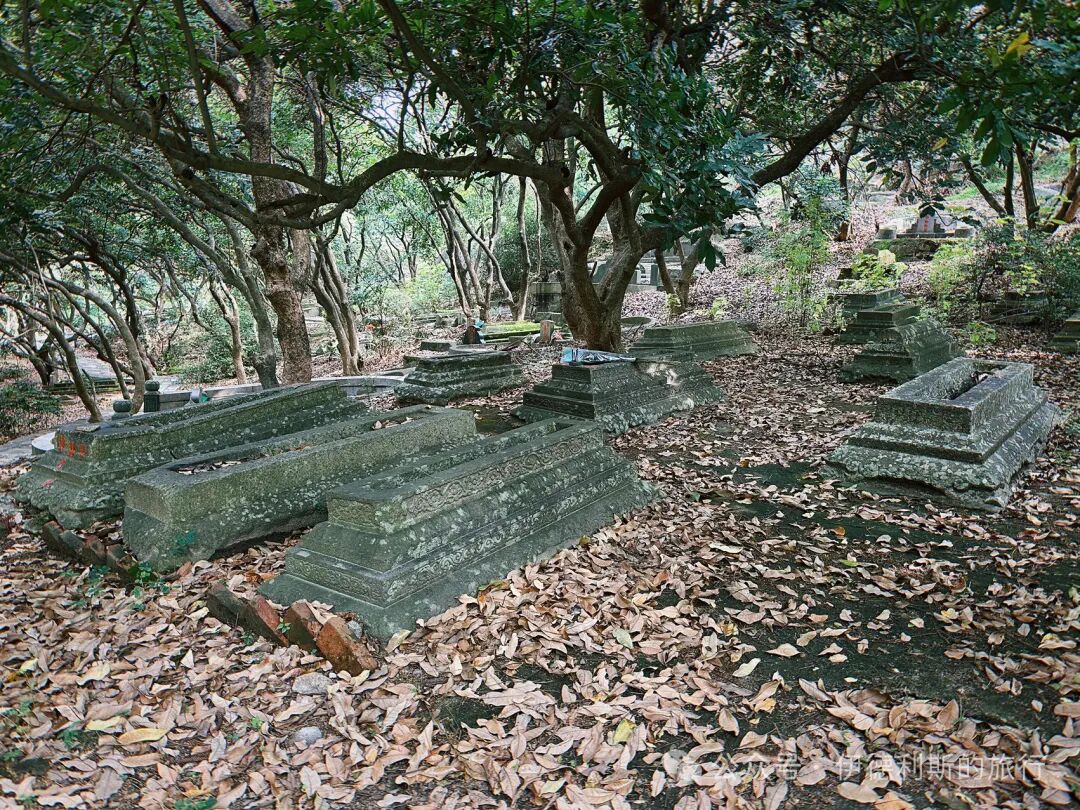
In 1958, when the Fuzhou-Xiamen highway outside the East Gate of Quanzhou was widened, several Song and Yuan dynasty Muslim pedestal-style tomb stones by the road were moved next to the Lingshan Holy Tomb. That same year, farmers in Jintoupu village outside Tonghuai Gate in Quanzhou were collecting fertilizer and dredging pond sludge. They unearthed over ten pedestal-style tomb stones, which were temporarily moved to the Qingjing Mosque and later moved to the Lingshan Holy Tomb for preservation. That same year, residents on Tonghuai Street in Quanzhou unearthed three side-by-side pedestal-style tomb stones while building a house, which were also moved to the Lingshan Holy Tomb for preservation.
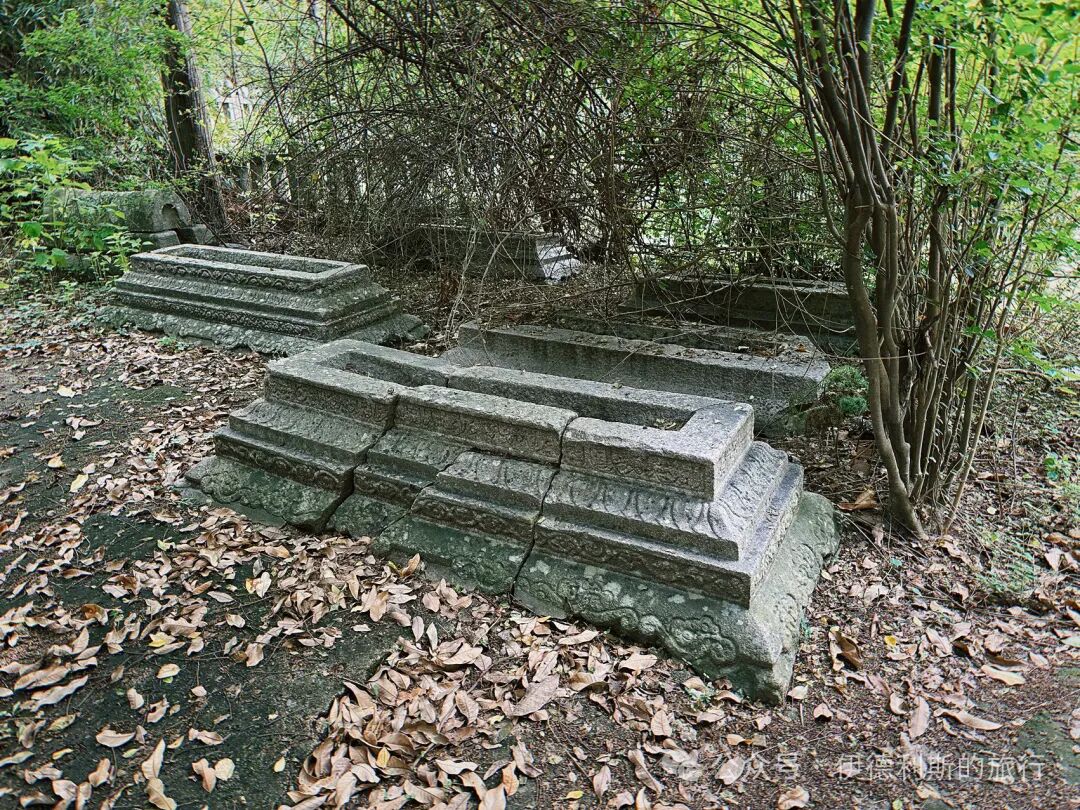
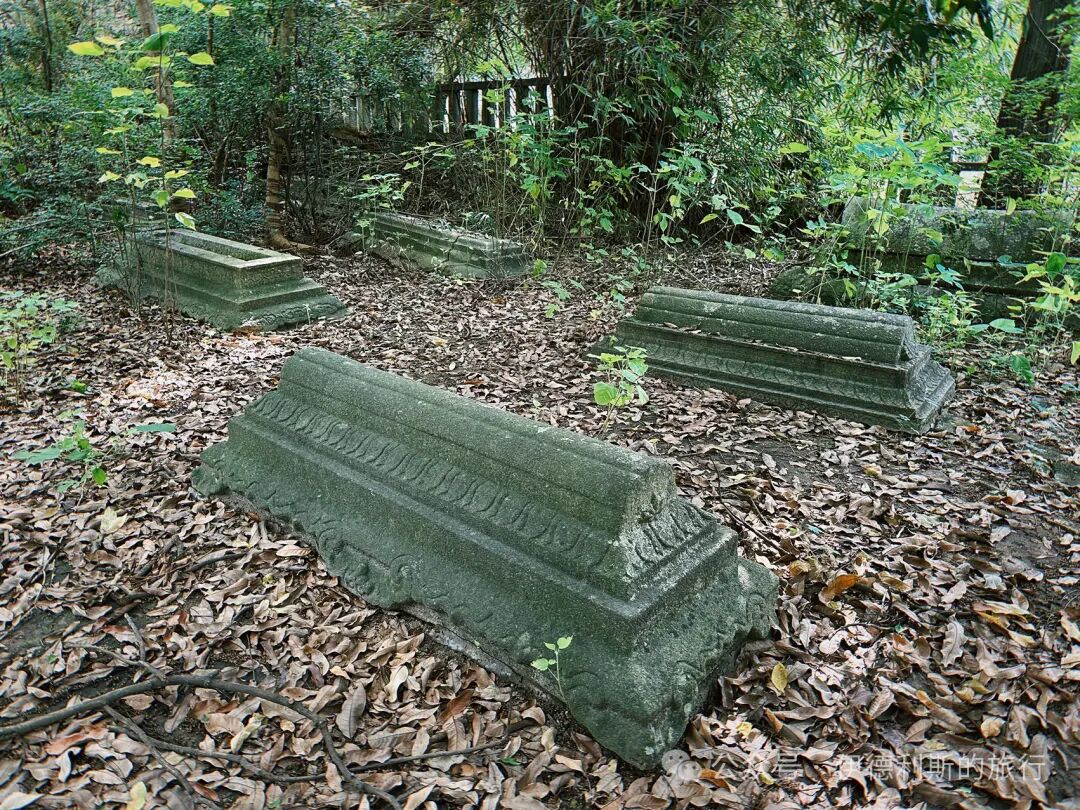
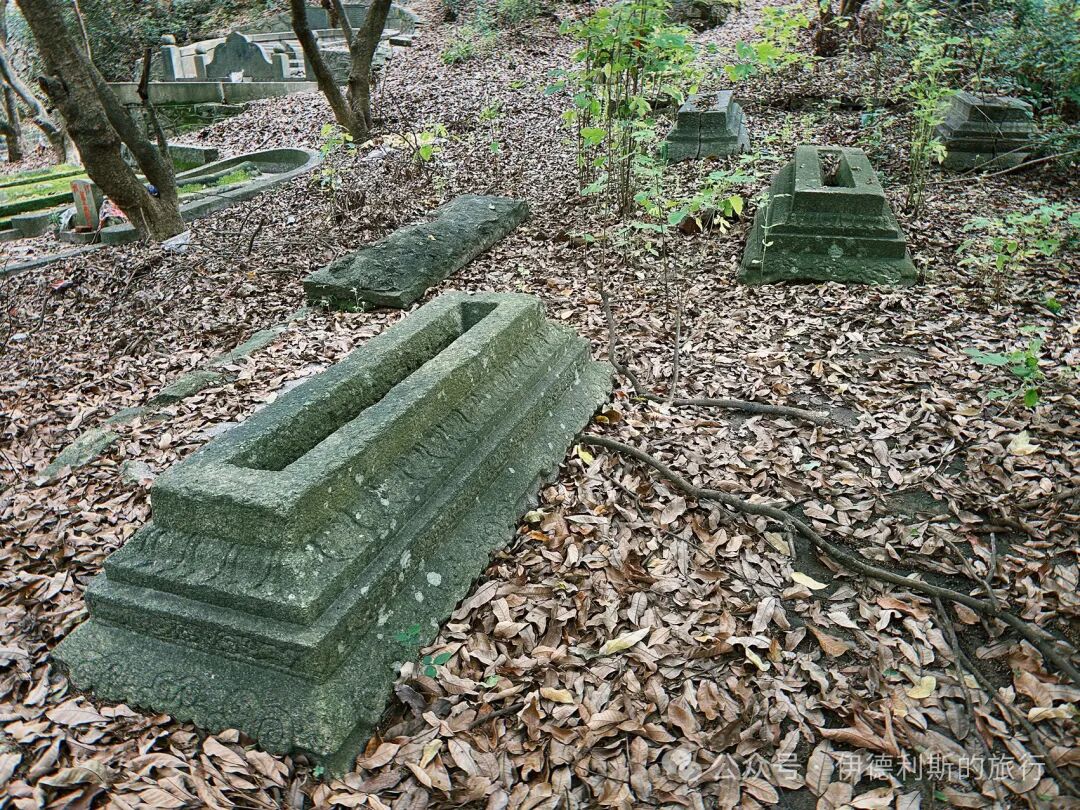
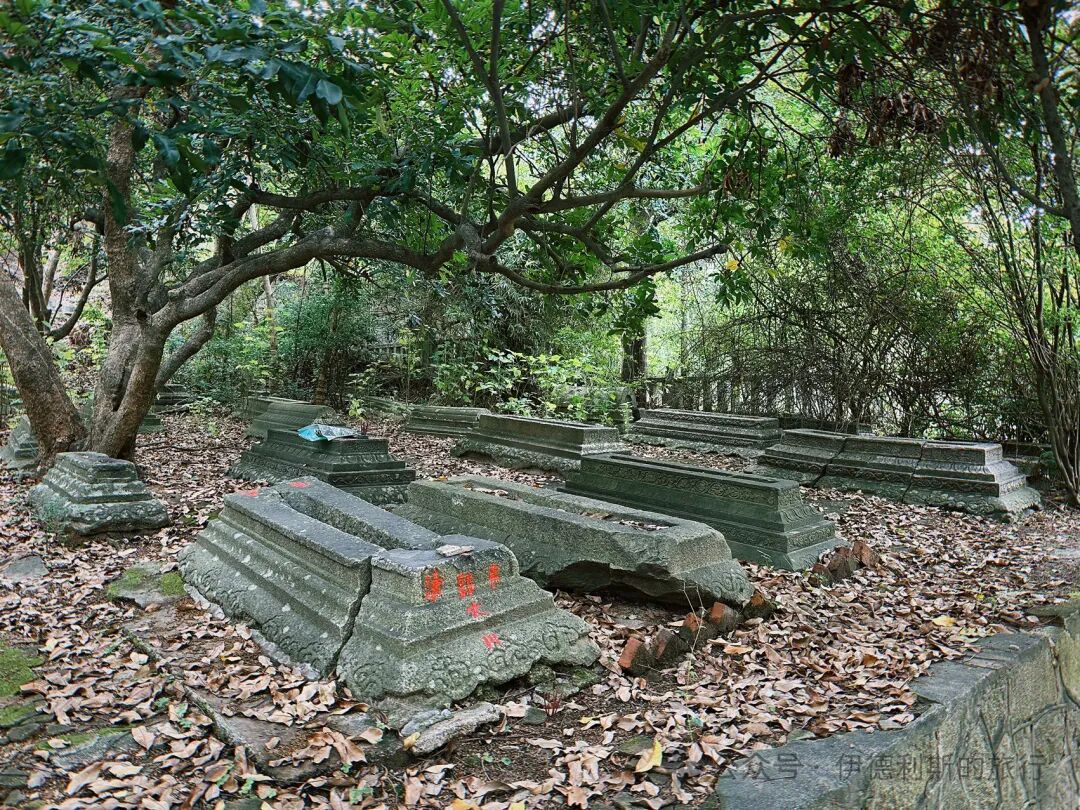
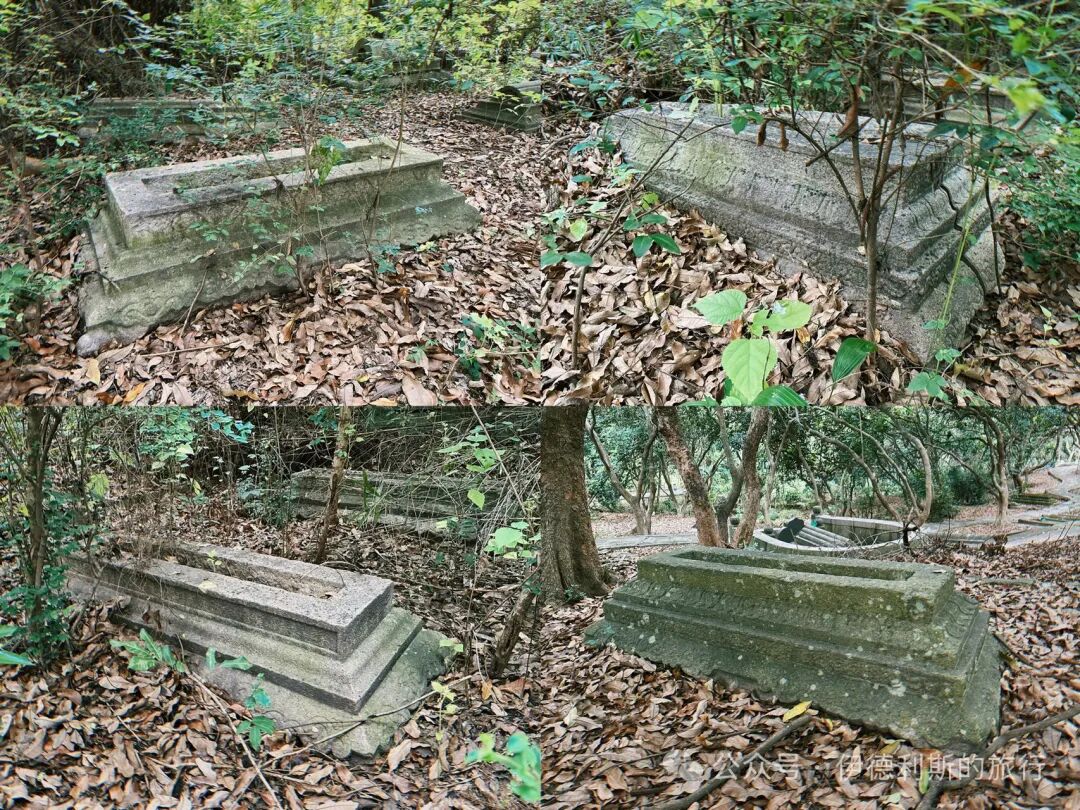
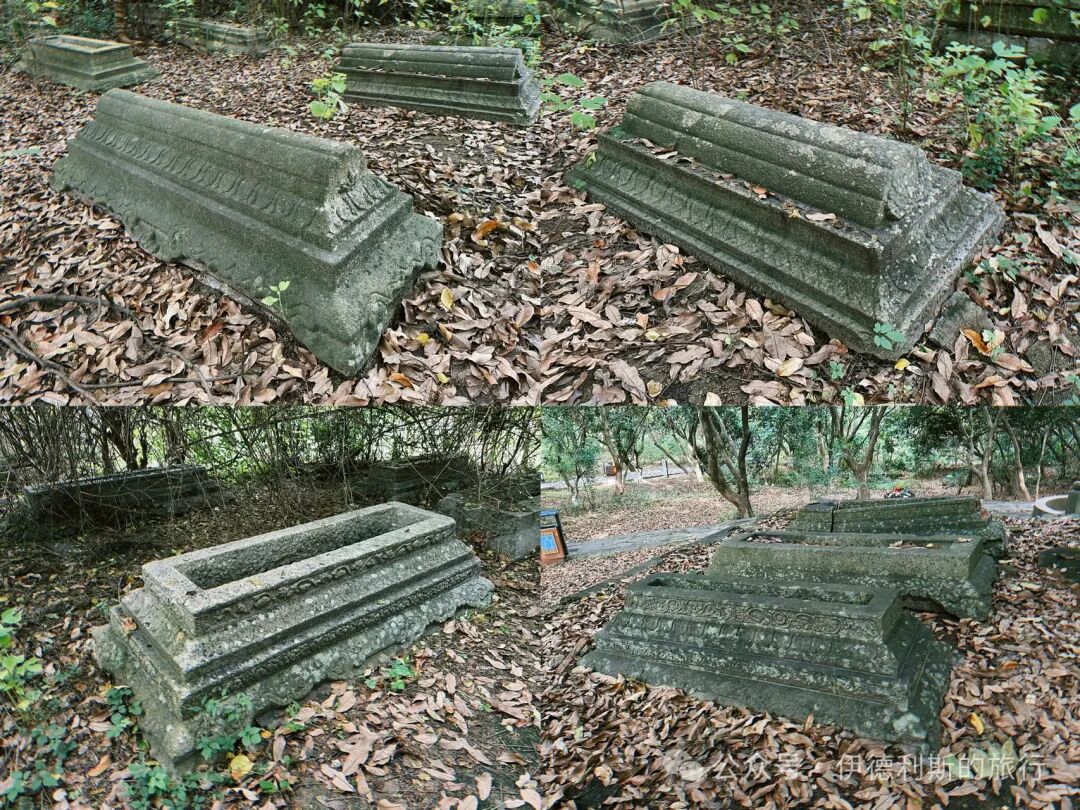
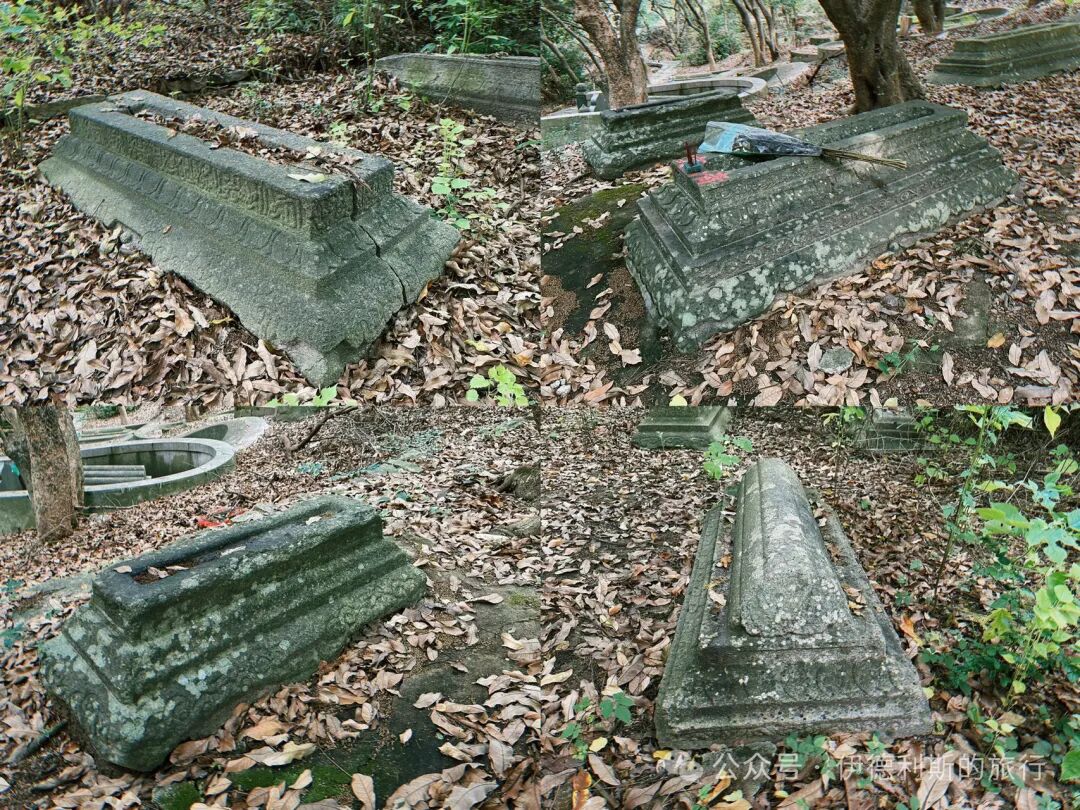
The image below is likely the tomb stone of Gaodi Shixu Baba, which was originally with the 'Three Sages and Four Sages' tomb stones and moved here during the 1958 renovation.
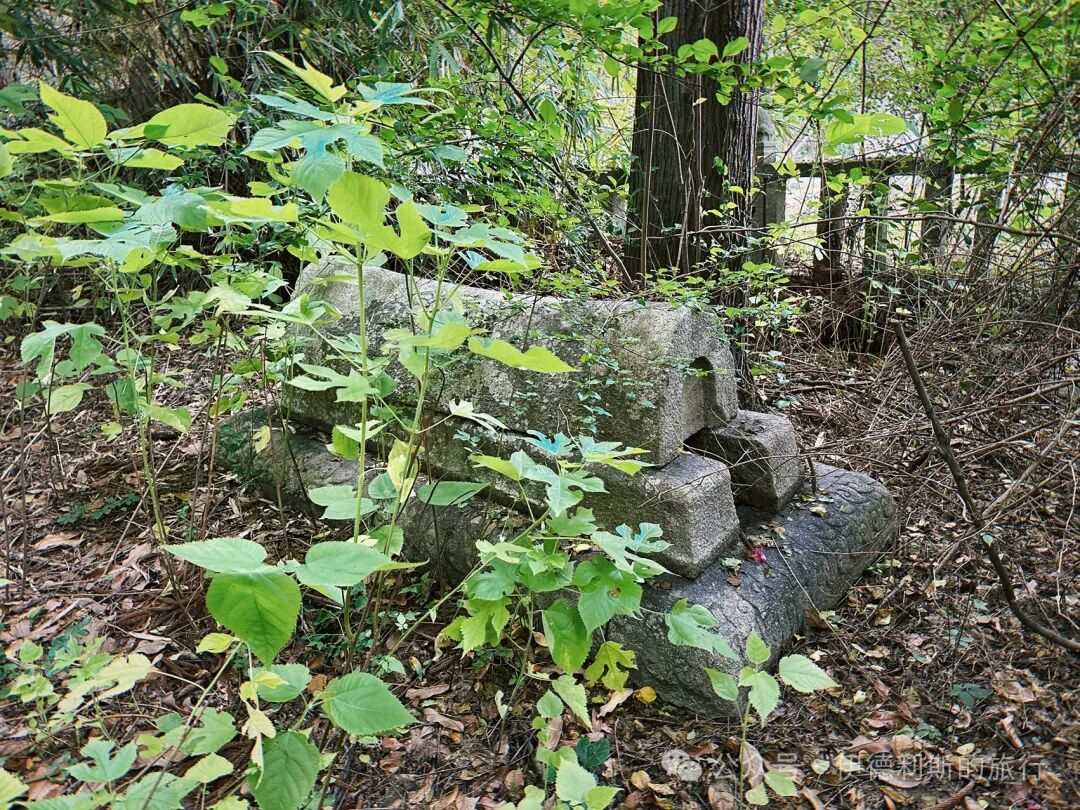
Details of the Arabic stone carving. The content of the carving is entirely scripture, with no identity information about the tomb owner. According to Quanzhou's Song and Yuan dynasty traditions, the tomb stone recording the owner's identity would have been a separate slab.
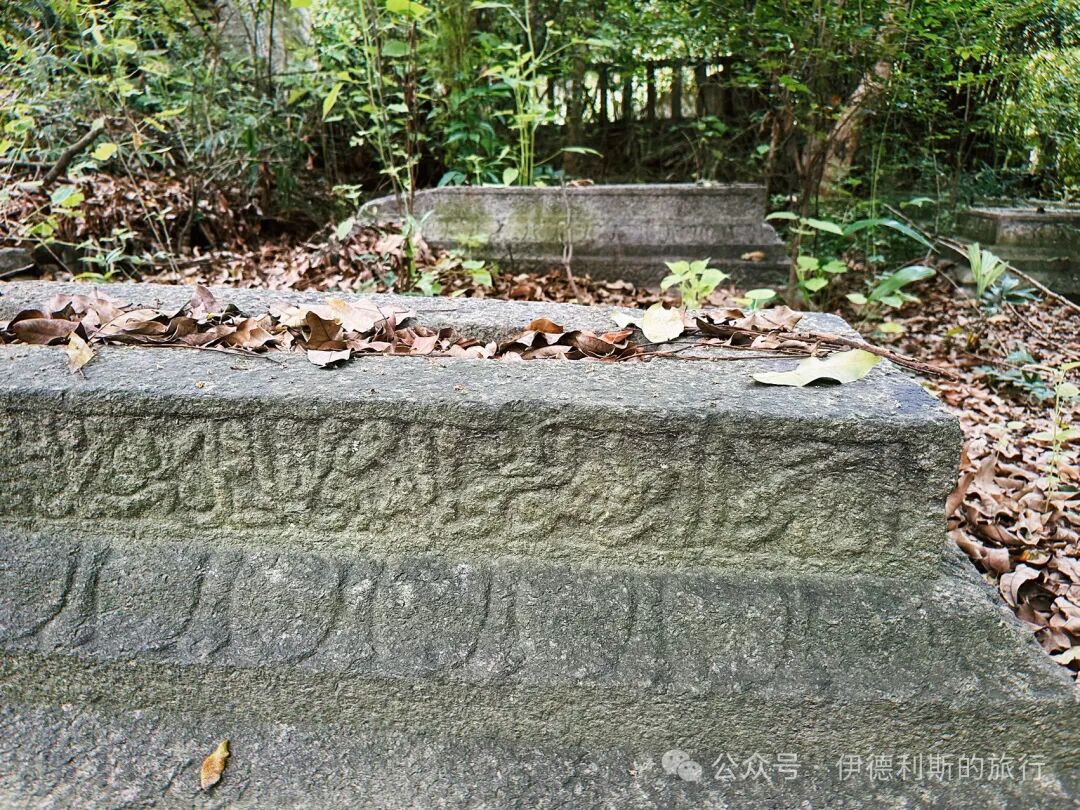
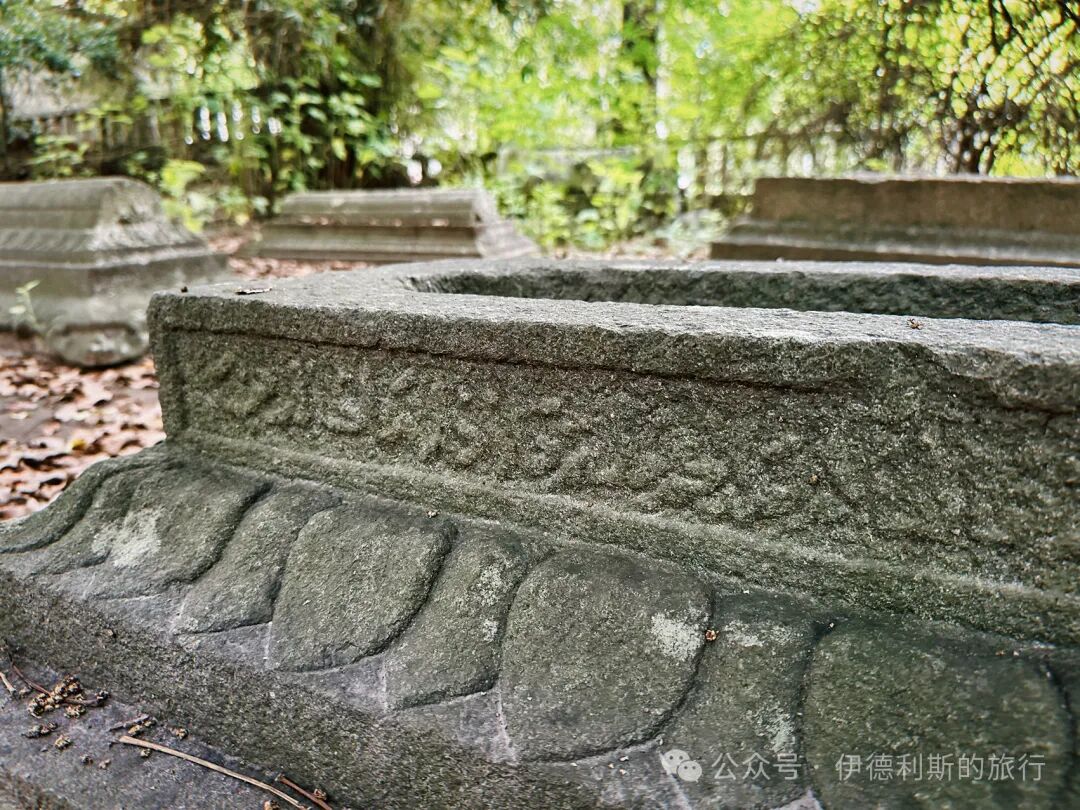
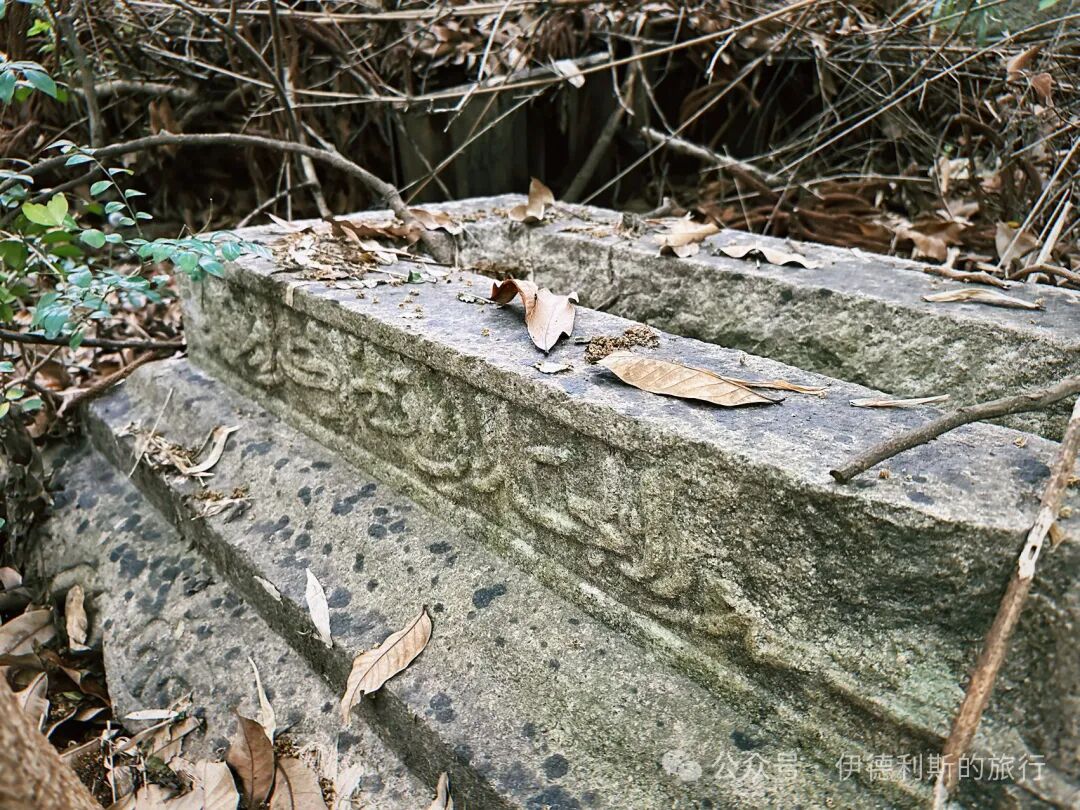
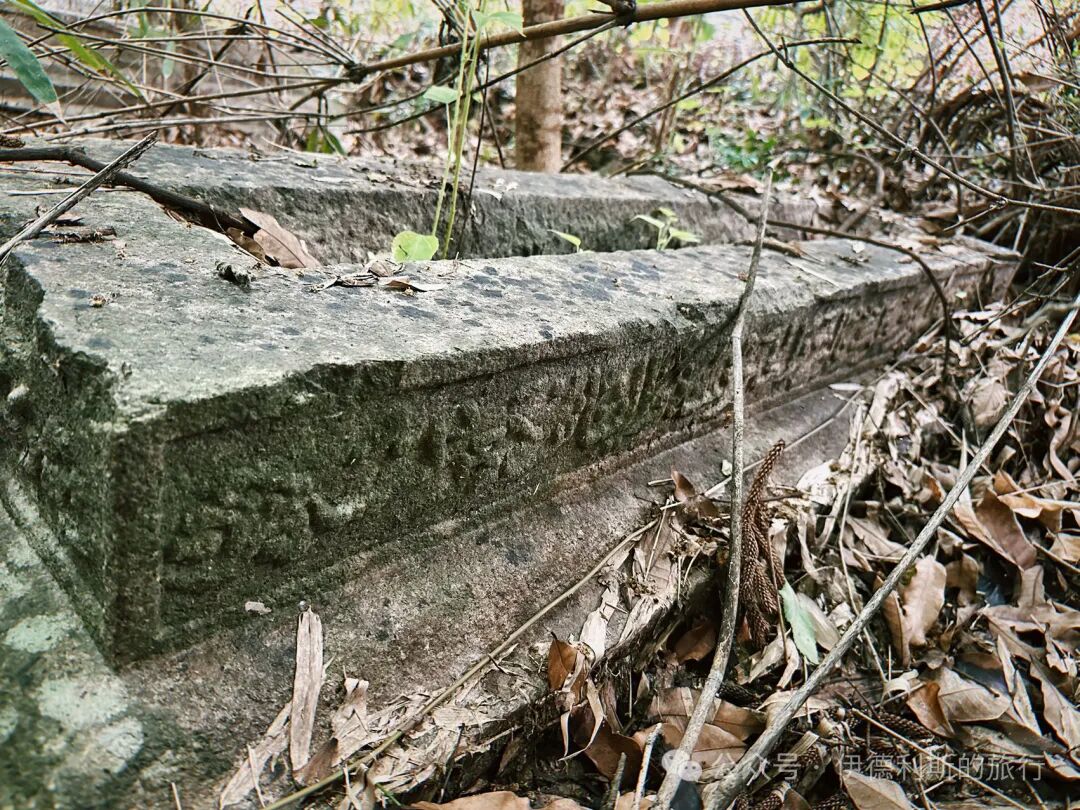
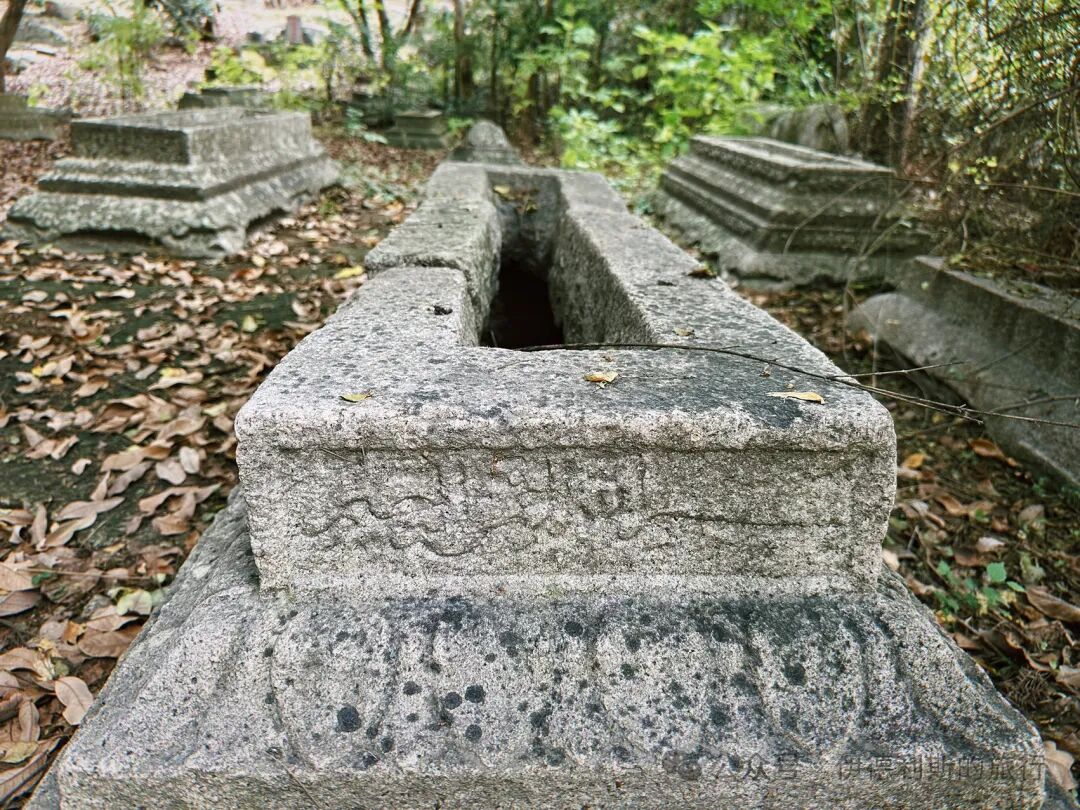
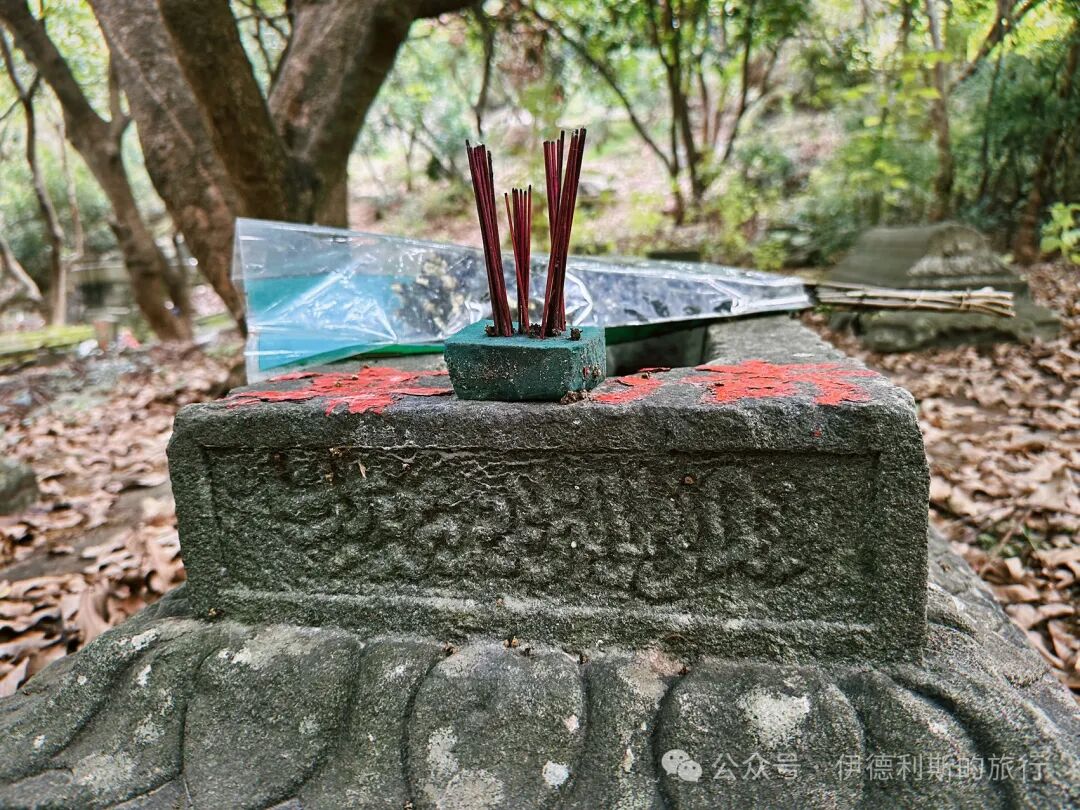
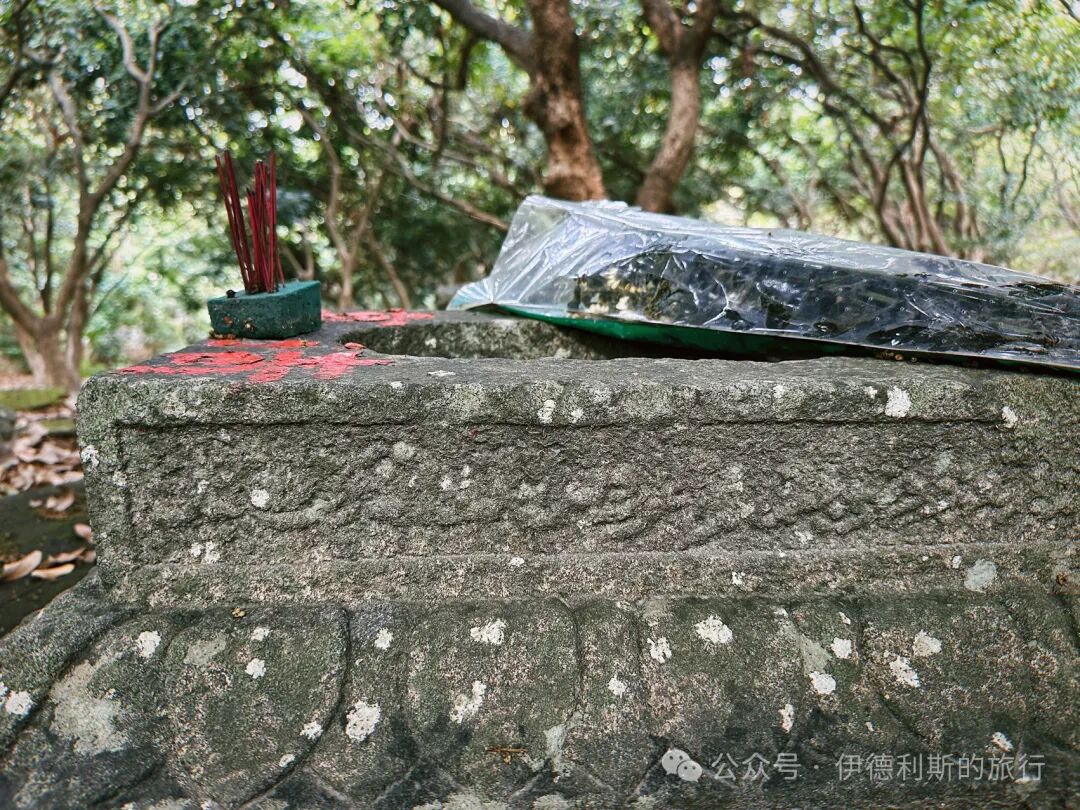
Next to the Lingshan Holy Tomb is the cemetery for local Quanzhou Hui Muslims. The Ge, Ma, and Huang families are descendants of the generations of imams from the Qingjing Mosque. They mostly worked in the leather industry in the past and lived inside the Qingjing Mosque until 1983. In the past, Quanzhou Hui Muslims would come here to visit the graves every Eid al-Fitr and Eid al-Adha. When visiting the graves, first light some incense (anxixiang), then trace the carvings on the tombstone with red paint, and finally invite an imam to recite scriptures.
In the tomb complex, you can see the ancestral graves of the Huang family from Jiangxia and the Huang family from Yanshan. The Jiangxia Huang family ancestral grave is inscribed with 'Mosque Huang Residence,' while the Yanshan Huang family grave bears inscriptions like 'First Year of the Xuantong Reign' and 'Imperially Appointed Fifth-Rank Official... Land Route Commander...' which are hard to read completely due to the red paint.
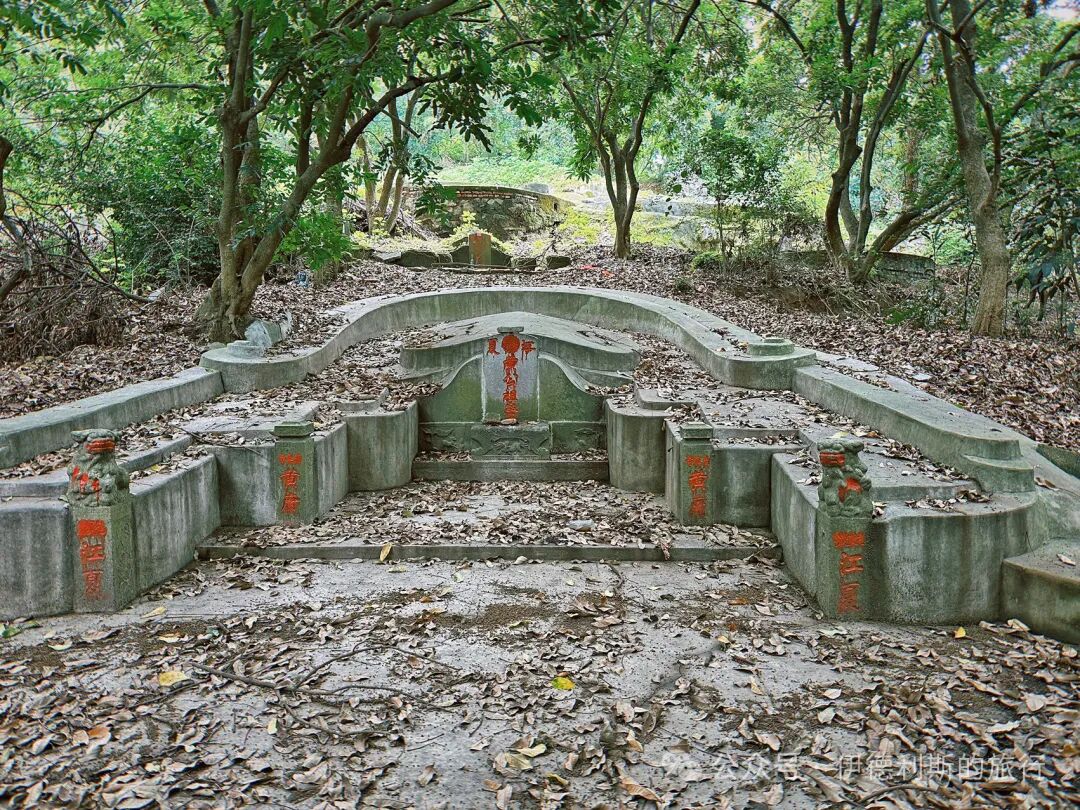
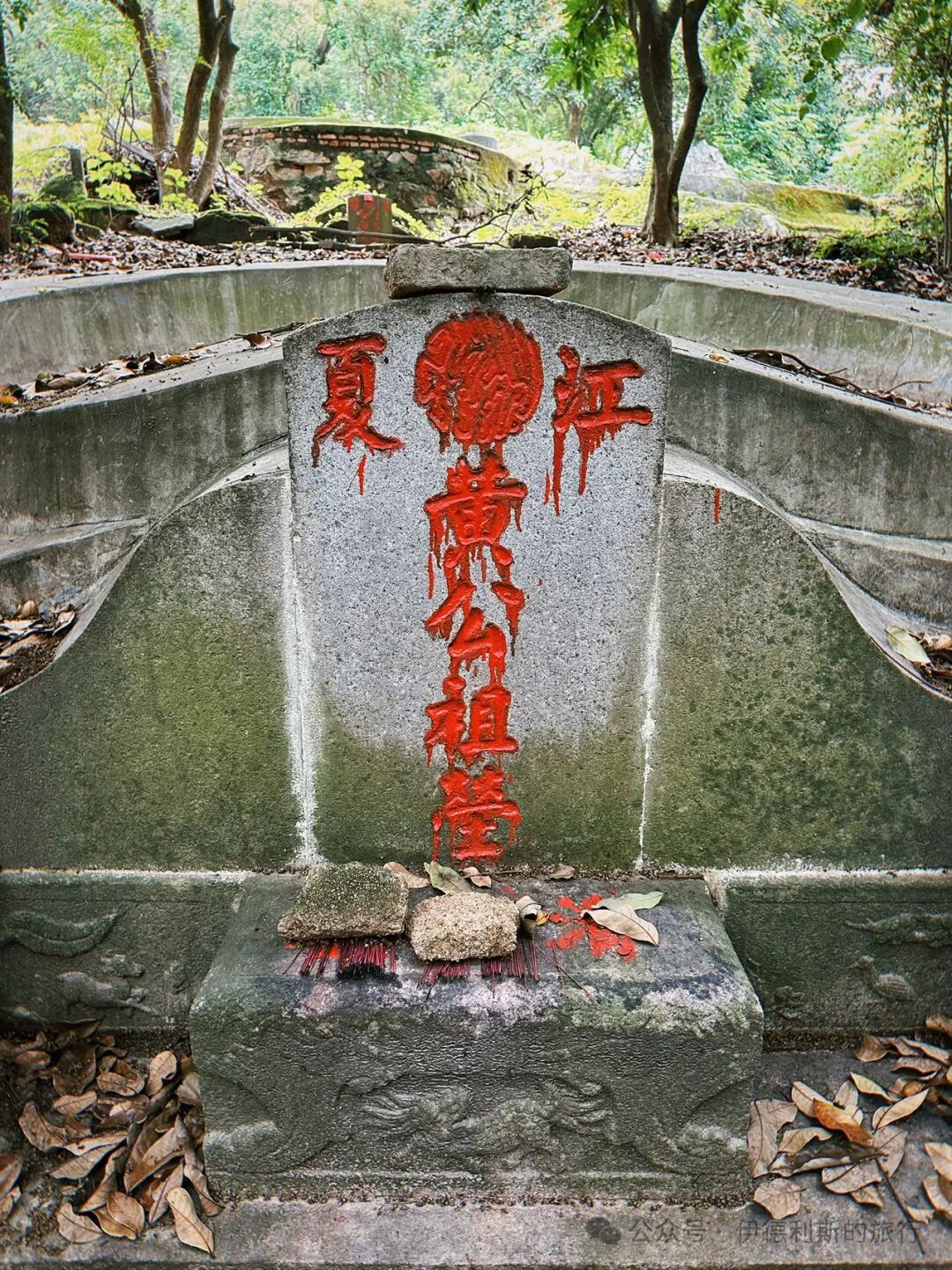
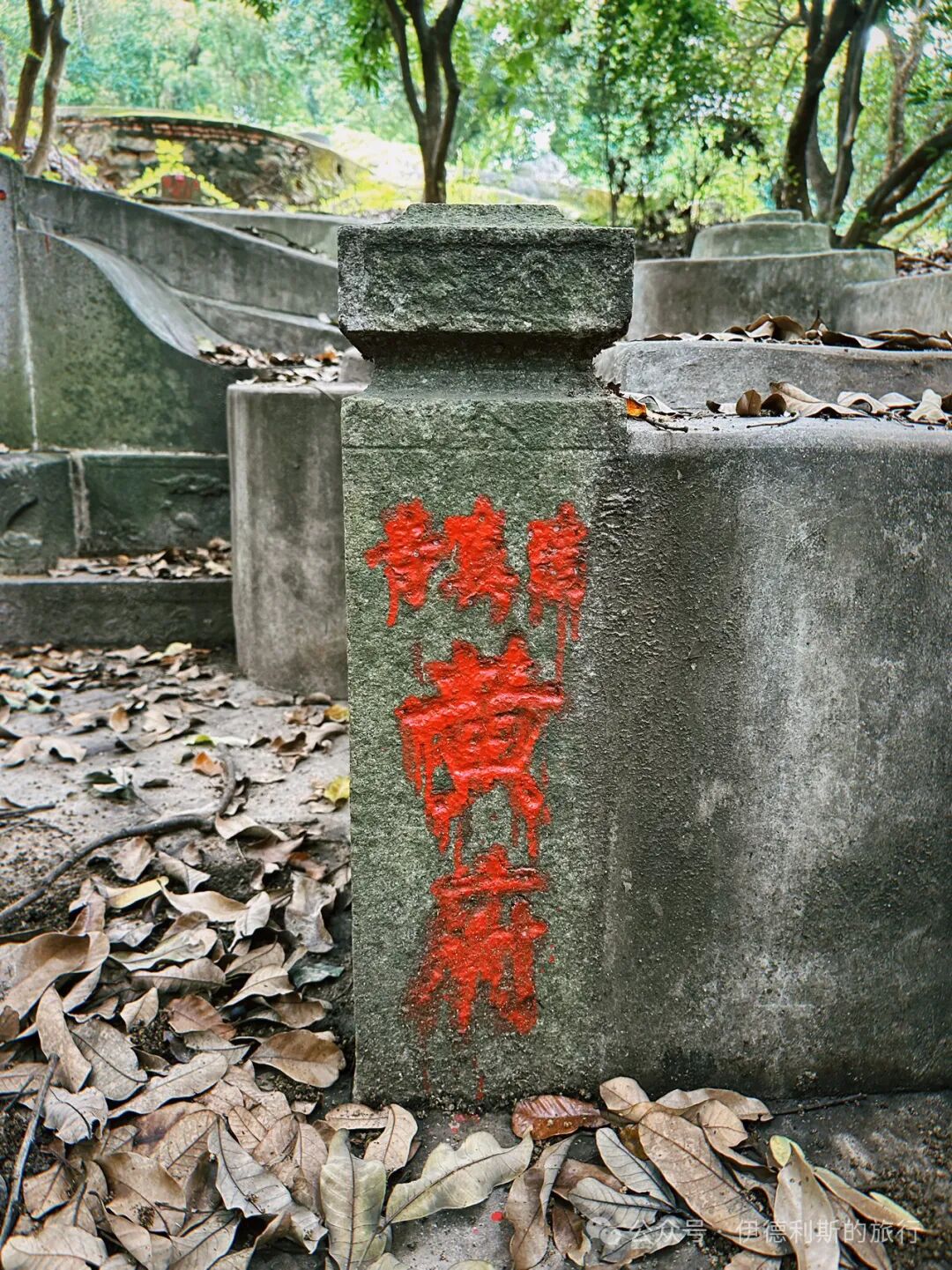
According to their family records, the Guo family of Hui Muslims originally lived in Guo Family Village in Fuyang, Hangzhou, before arriving in Quanzhou during the Yuan Dynasty. During the Hongwu reign of the Ming Dynasty, Guo Zhongyuan moved from Quanzhou to Baiqipu on the opposite side of Houzhu Port, which eventually became the present-day Baiqi Hui Ethnic Township. The Baiqi Guo family left the faith in 1607 (the 35th year of the Wanli reign of the Ming Dynasty). In 1709 (the 48th year of the Kangxi reign), Chen Yougong, a regional commander and left-wing general for the Fujian Ting, Yan, and Shao areas, came to Quanzhou to revive the faith and established scripture hall education at the Qingjing Mosque. At that time, Guo Honglong, a member of the eighth generation of the Guo family's fourth branch, moved from He Cuo in Baiqipu to live at the Qingjing Mosque and returned to the faith, citing the need to strengthen the main family line. After Guo Honglong returned to the faith, his descendants lived at the Qingjing Mosque. His descendant, Guo Shifu, helped renovate the mosque in 1794 (the 59th year of the Qianlong reign) alongside Bai Yunhan, a deputy general of the Zhangzhou Left Battalion.
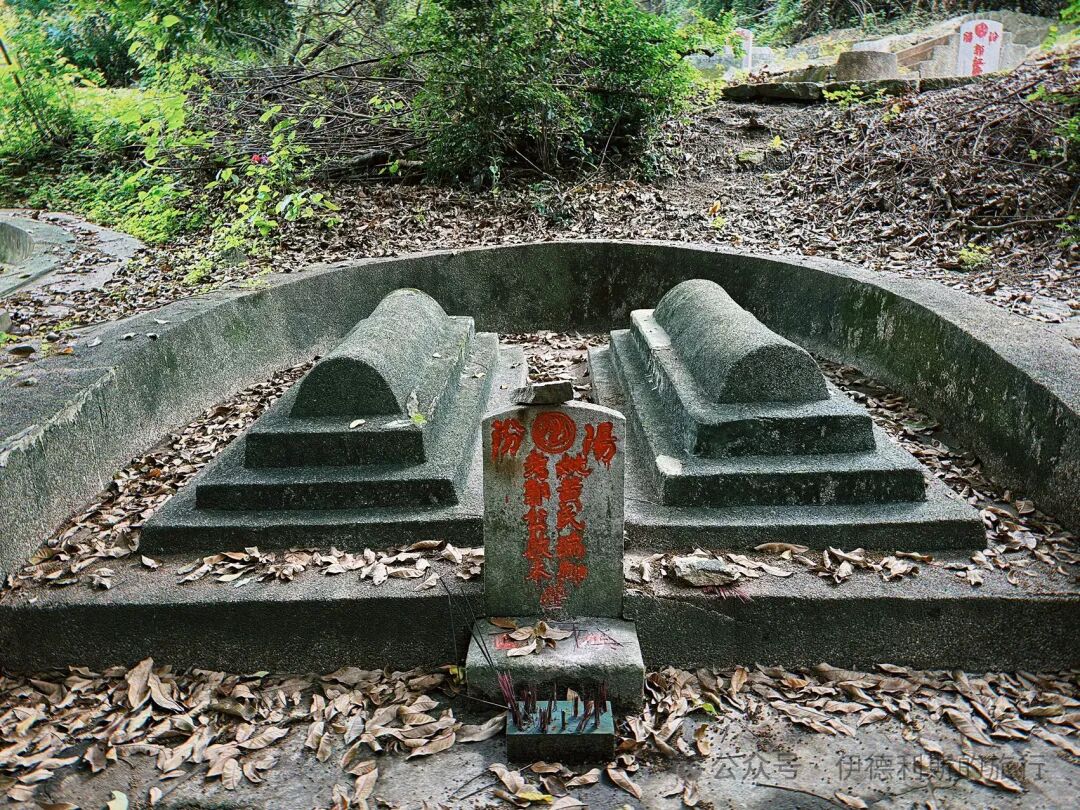
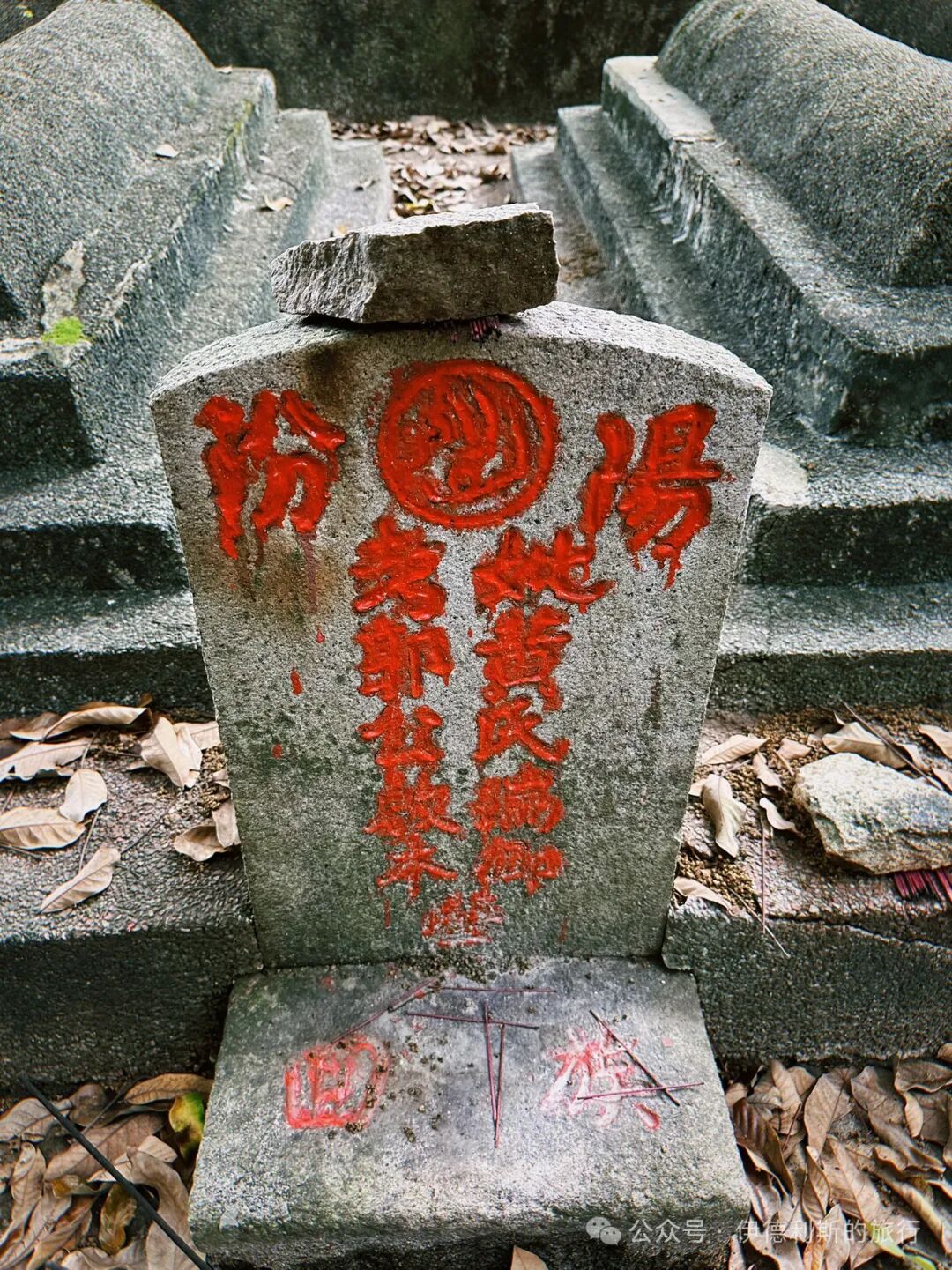
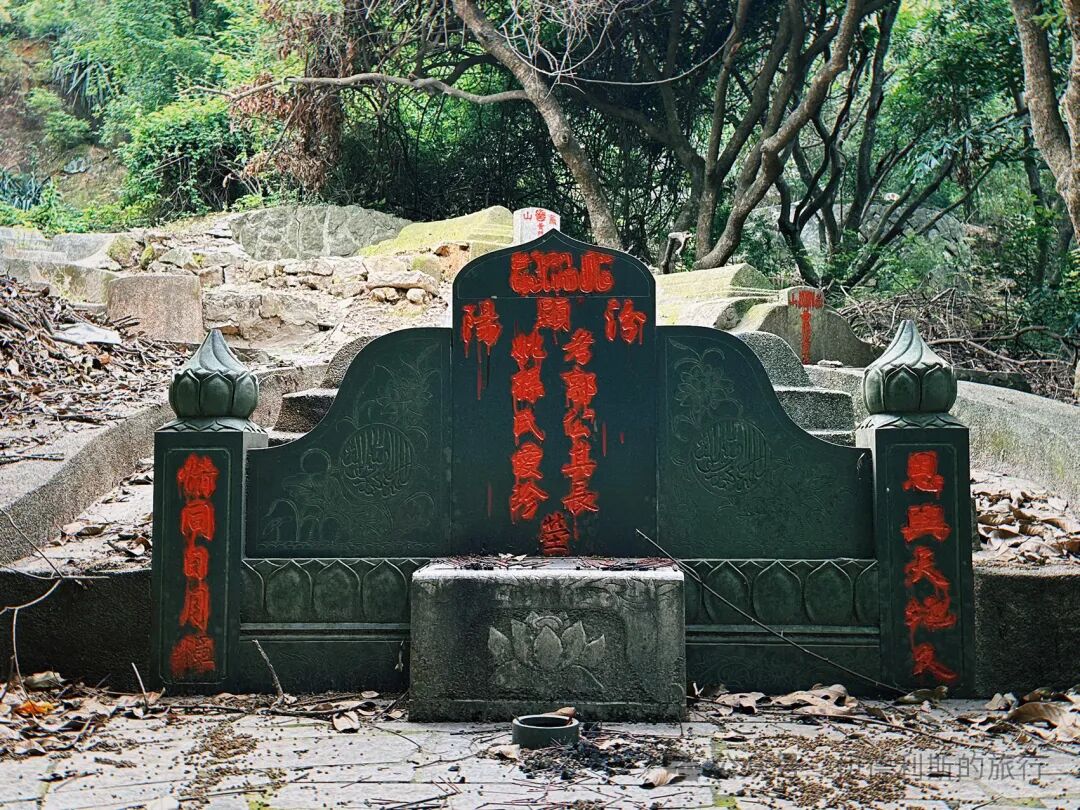
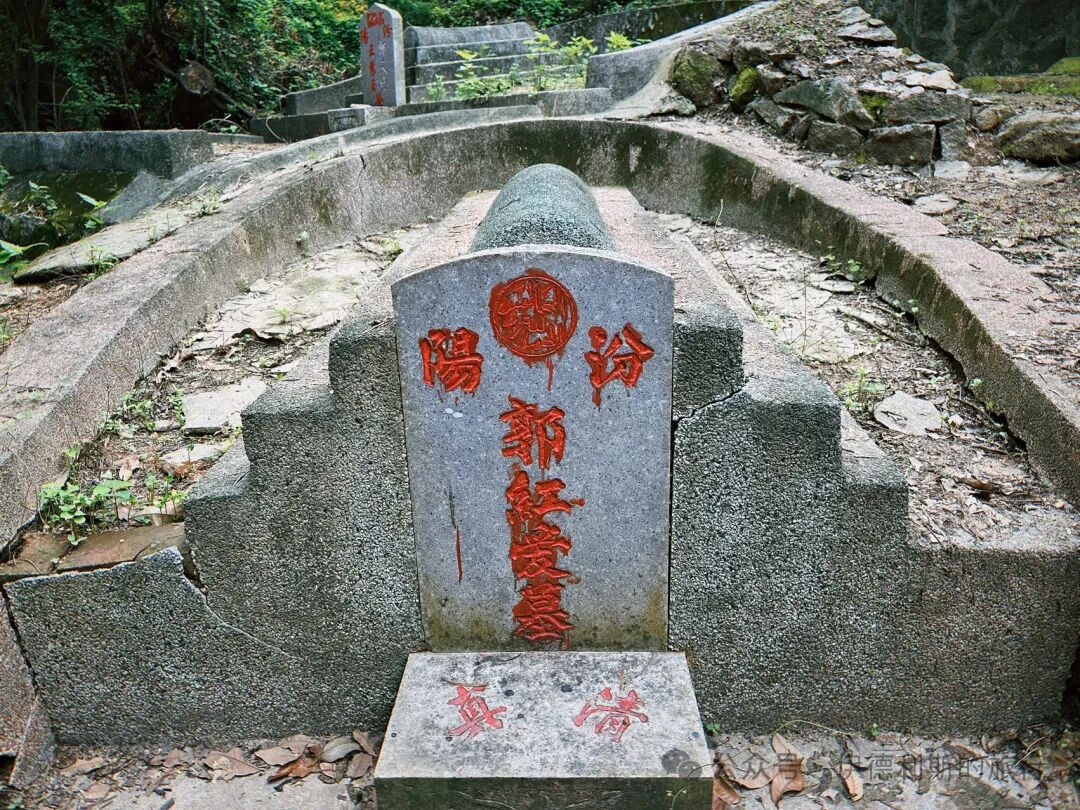
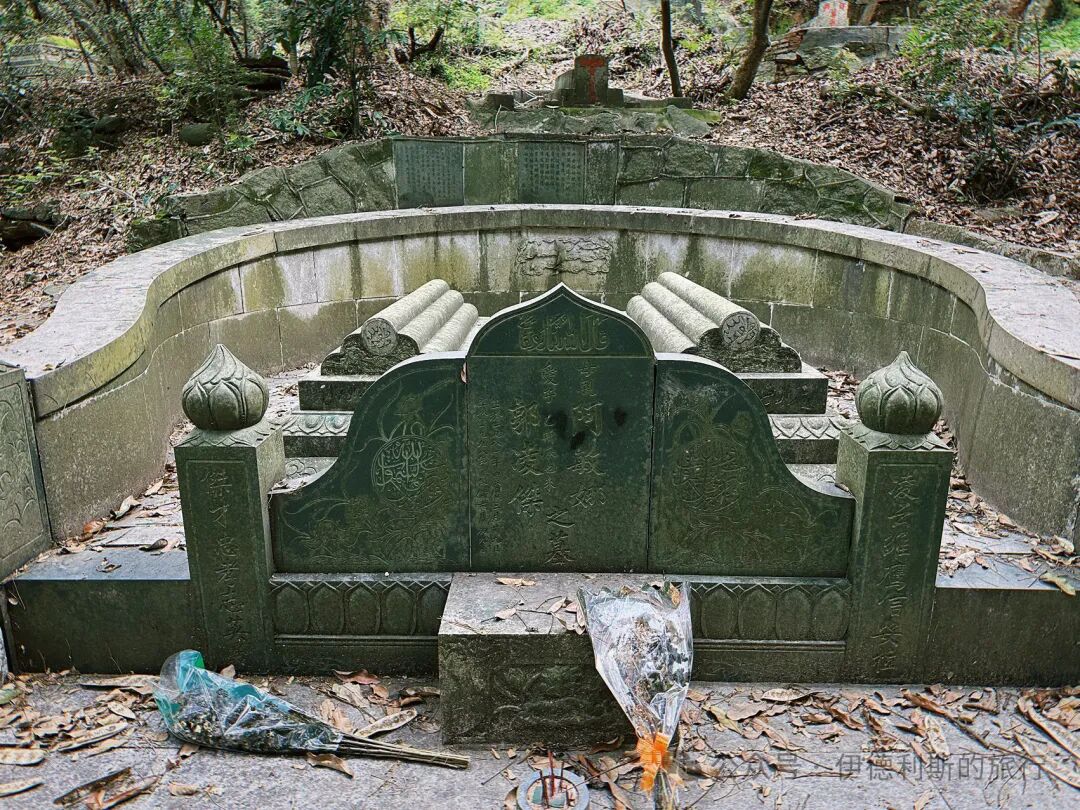
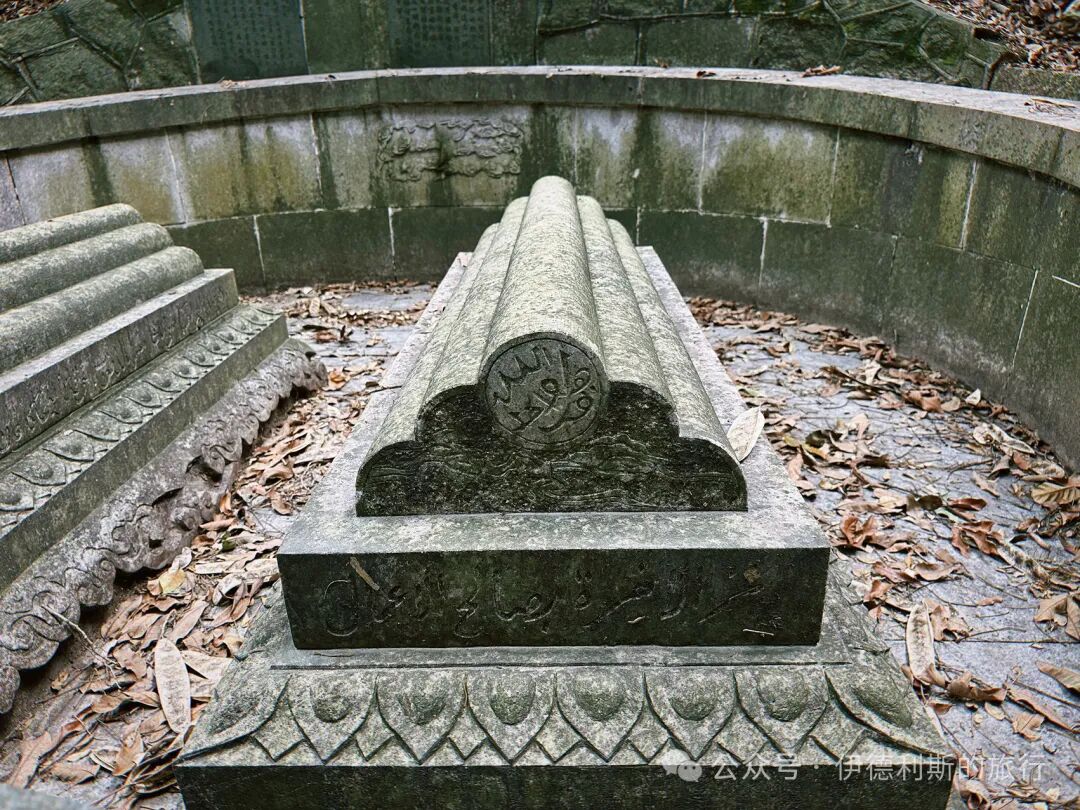
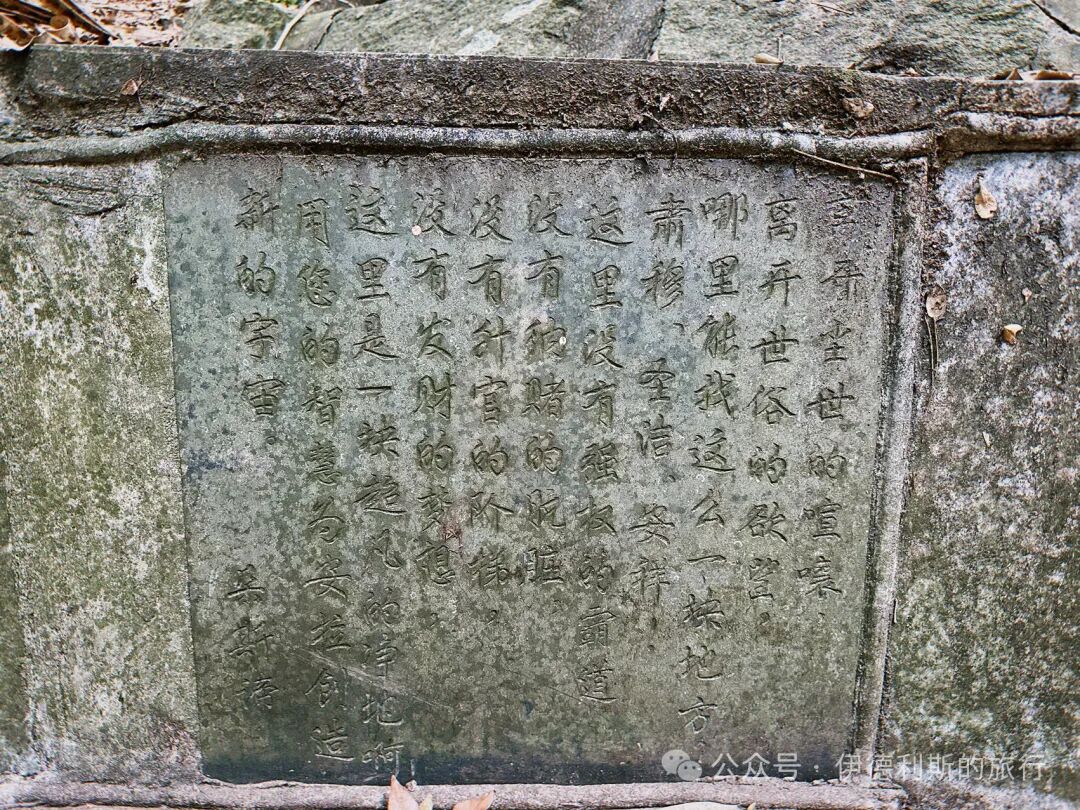
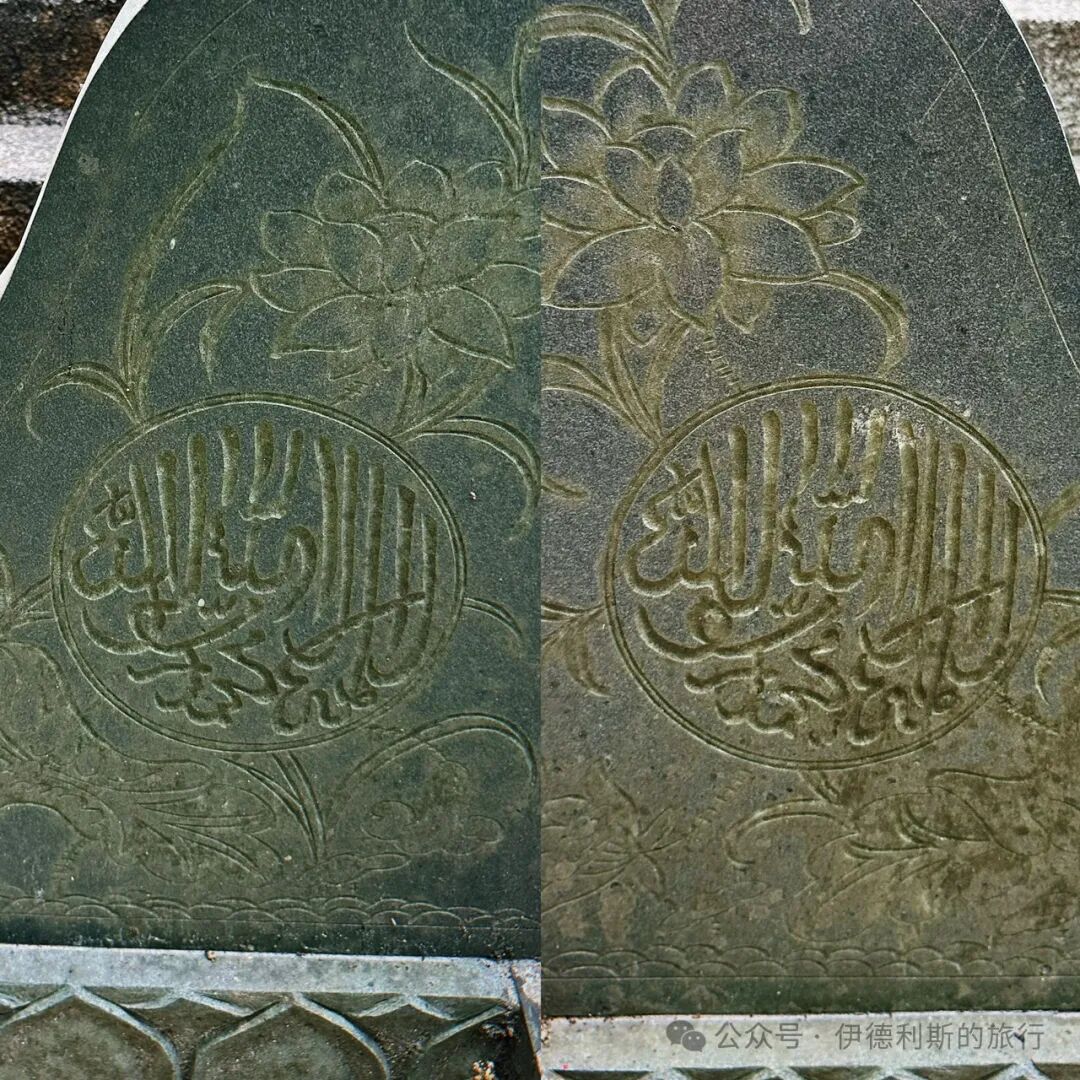
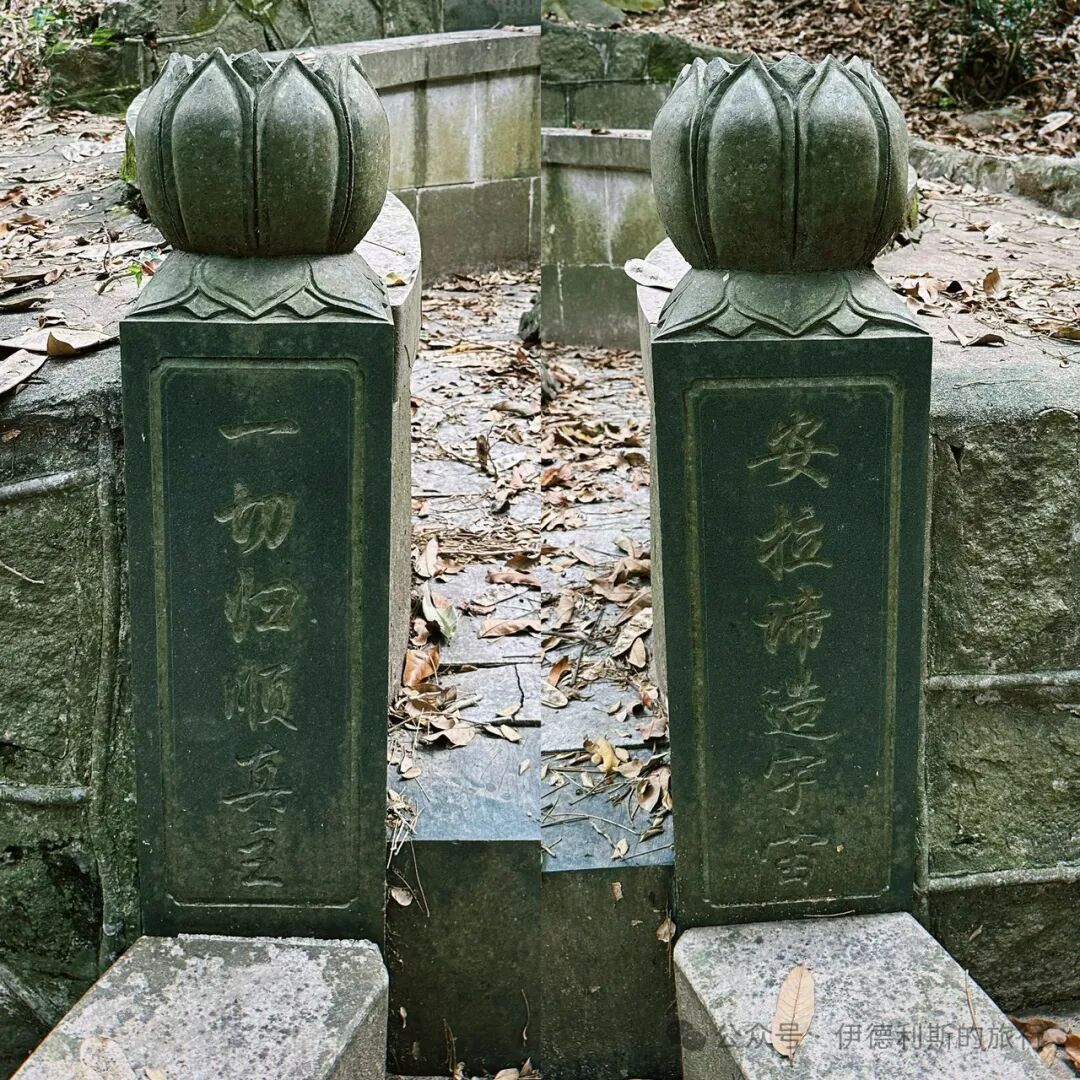
A large section of the Lingshan Sacred Tomb scenic area is dedicated to the Ding family cemetery from Chendai.
According to family records, the first-generation ancestor of the Chendai Ding family, Ding Jin (1251-1298), was originally from Suzhou and settled in Quanzhou for business. The Chendai Ding family maintained their faith for ten generations, spanning over two hundred years from the 13th to the 16th century. Ding Yanxia, the tenth-generation descendant born around 1517, wrote detailed accounts of the religious customs he experienced as a child in his work, 'On Ancestral Faith' (Zujiao Shuo). However, calculations suggest that by the eighth to ninth generation, the Chendai Ding family no longer prioritized scripture hall education. The remaining relics of the faith belonging to the Chendai Ding family are the several Ming Dynasty tomb stones located within the Lingshan Sacred Tomb.
Before the Ding family established their base in Chendai, the first, second, and third generations were all buried at Lingshan, east of Quanzhou city. After the fourth-generation ancestor, Ding Shan, established the family base in Chendai, he entrusted the management of the ancestral graves to others. Later, Xu Fu, the son of the second manager Xu Fen, repeatedly encroached on the ancestral graveyard, and the Ding family endured this in silence. Eighteen years later, in 1505, the eighth-generation descendant Ding Yi passed the imperial examinations to become a jinshi. Upon returning home, he filed a lawsuit and finally reclaimed the ancestral tomb land.
During the Chongzhen reign of the Ming Dynasty, the descendants of the Ding family combined the graves of the first, second, and third generations. In 1993, due to road construction, many of the Chendai Ding family's tomb stones were moved from outside the East Gate of Quanzhou and Luyuan to the Lingshan Sacred Tomb. The current combined tomb of the first, second, and third generations was also renovated during this period. The tomb stones and tombstones seen today are not the original ones.
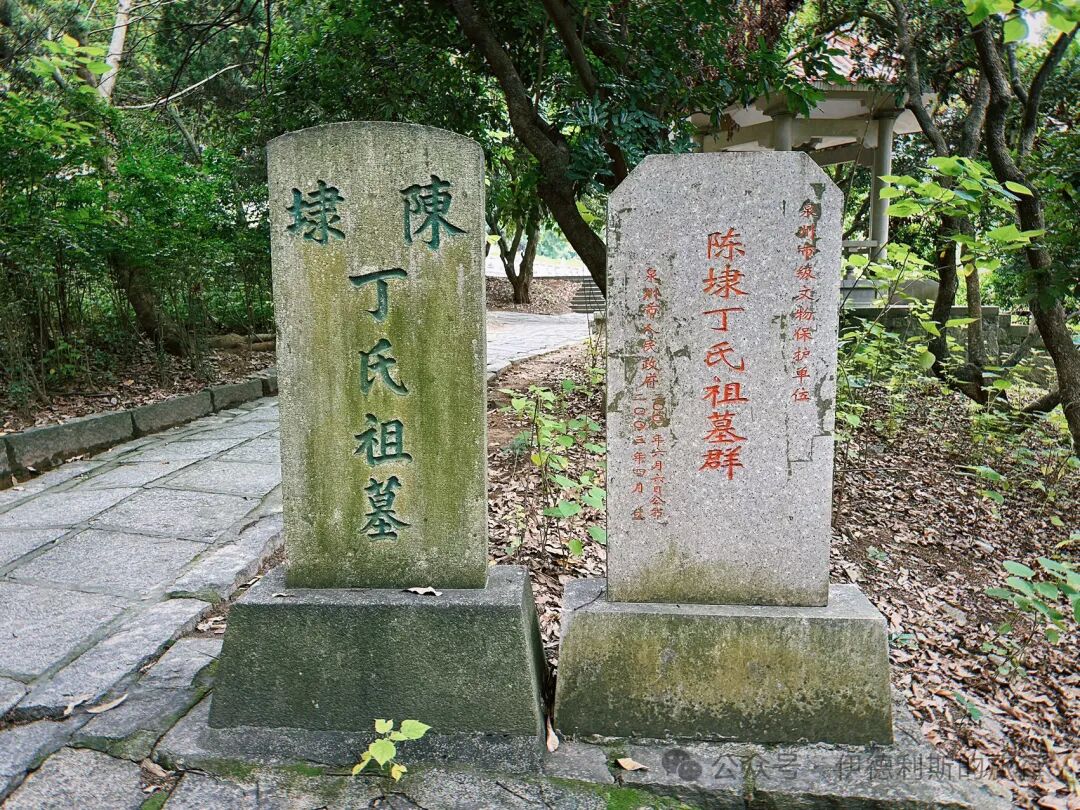
After the Ming Dynasty, the Chendai Ding family claimed their ancestor was the Yuan Dynasty politician Sayyid Ajjal Shams al-Din, so the cemetery features inscriptions identifying them as descendants of a saint.
In the cemetery, you can also see the Basmala (tasimi) auspicious bird of the Chendai Ding family.
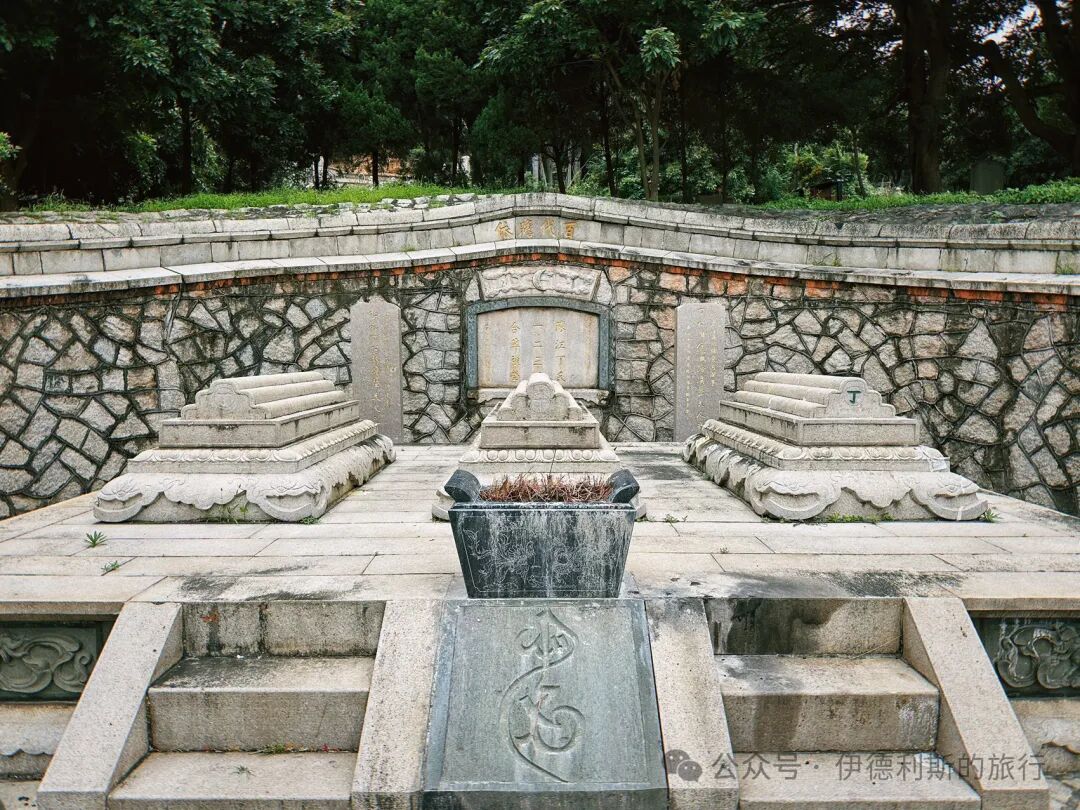
The tomb of the fourth-generation Chendai Ding family ancestor, Ding Shan, and his wife, Zhuang Xiniang.
Ding Shan (1343-1420), also known as Yanren and Ren'an, moved from Quanzhou to Chendai with his father at the end of the Yuan Dynasty. In the early Ming Dynasty, he settled in Chendai and established the Ding family clan. His wife, Zhuang Xiniang, also known as Runxiu, was the sixth-generation granddaughter of Zhuang Xia, who was named a founding baron and junior preceptor during the Southern Song Dynasty. The Zhuang family was very powerful at the end of the Southern Song Dynasty, but they gradually declined after the Yuan Dynasty. Many relatives left Quanzhou, and only Zhuang Xiniang's father remained in the Zhuang family mansion in the south of the city. The Ding and Zhuang families were neighbors at the time, so they married. Shortly after the wedding, Ding Shan and his father moved to Chendai. The Ding family's move to Chendai was likely related to Zhuang Xiniang, because the Zhuang clan lived nearby in Qingyang, a powerful group known as the Qingyang Zhuang family.
Ding Shan and his wife Zhuang Xiniang were originally buried in Luyuan, east of Quanzhou city. Luyuan means 'Paradise,' which is what the Quran refers to as the 'Garden of Heaven'. The tombstone is a traditional Islamic greenstone (huilvyan) tomb. Two five-story, pedestal-style tombstones sit on a Sumeru-style altar platform. The fourth layer of the tombstone is carved with scripture (2:255).
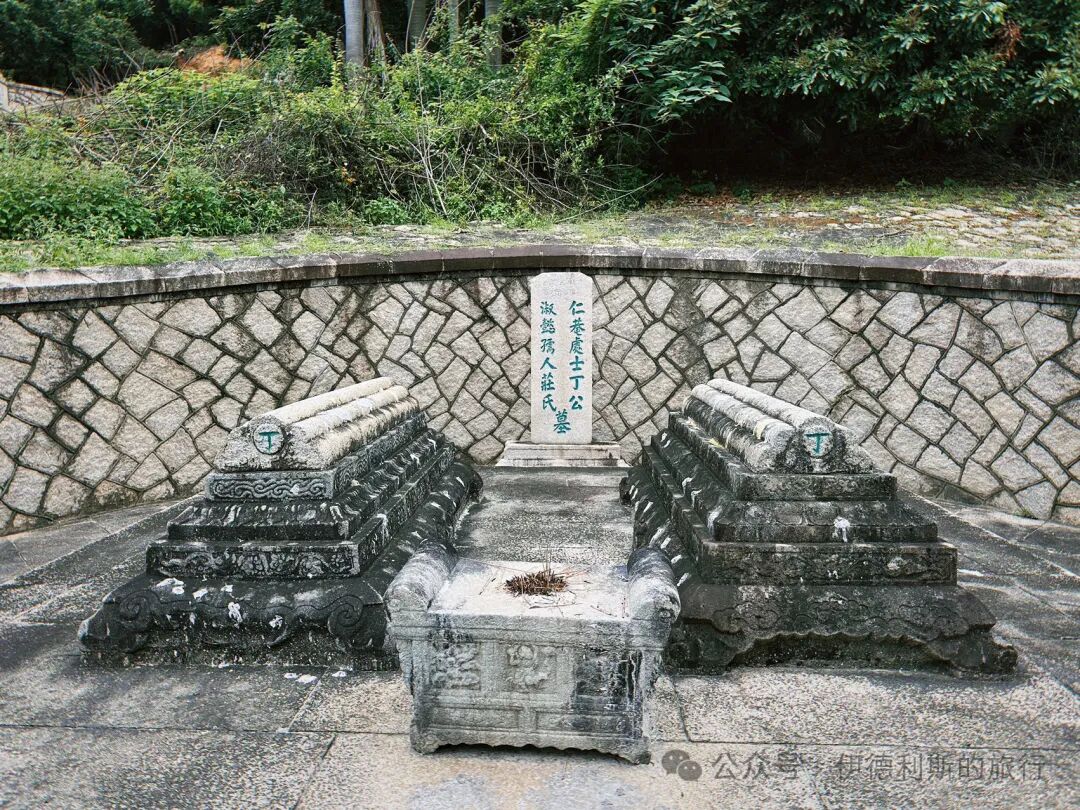
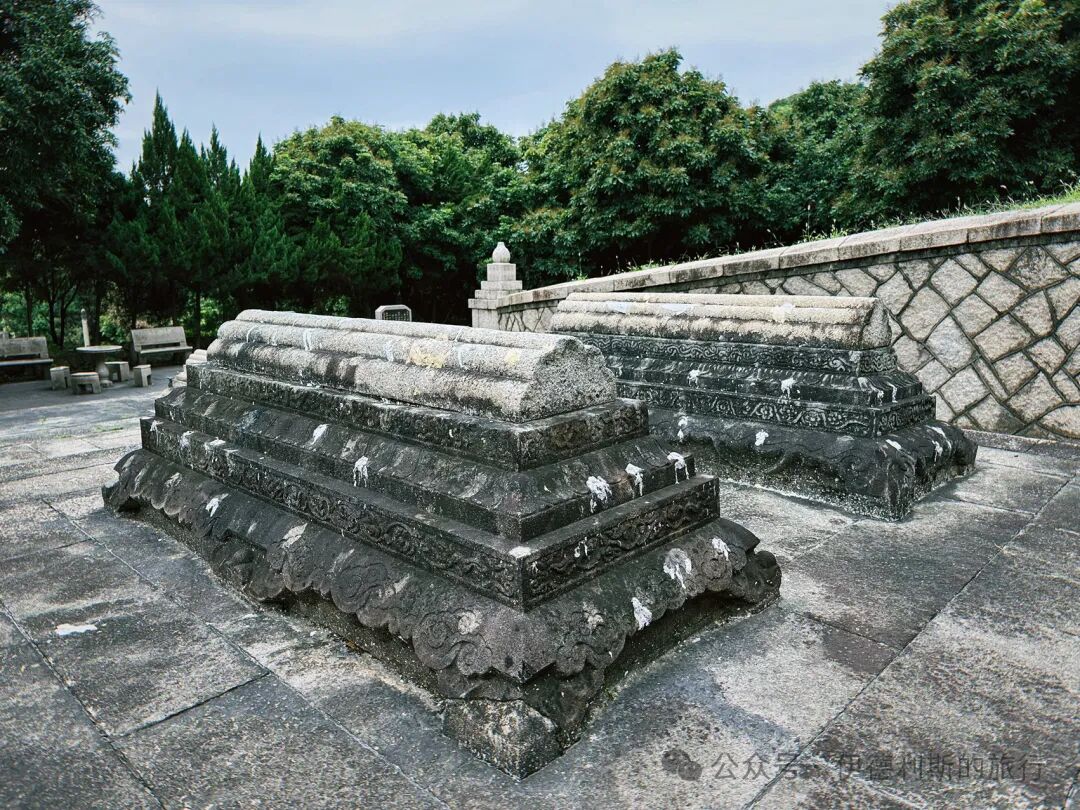
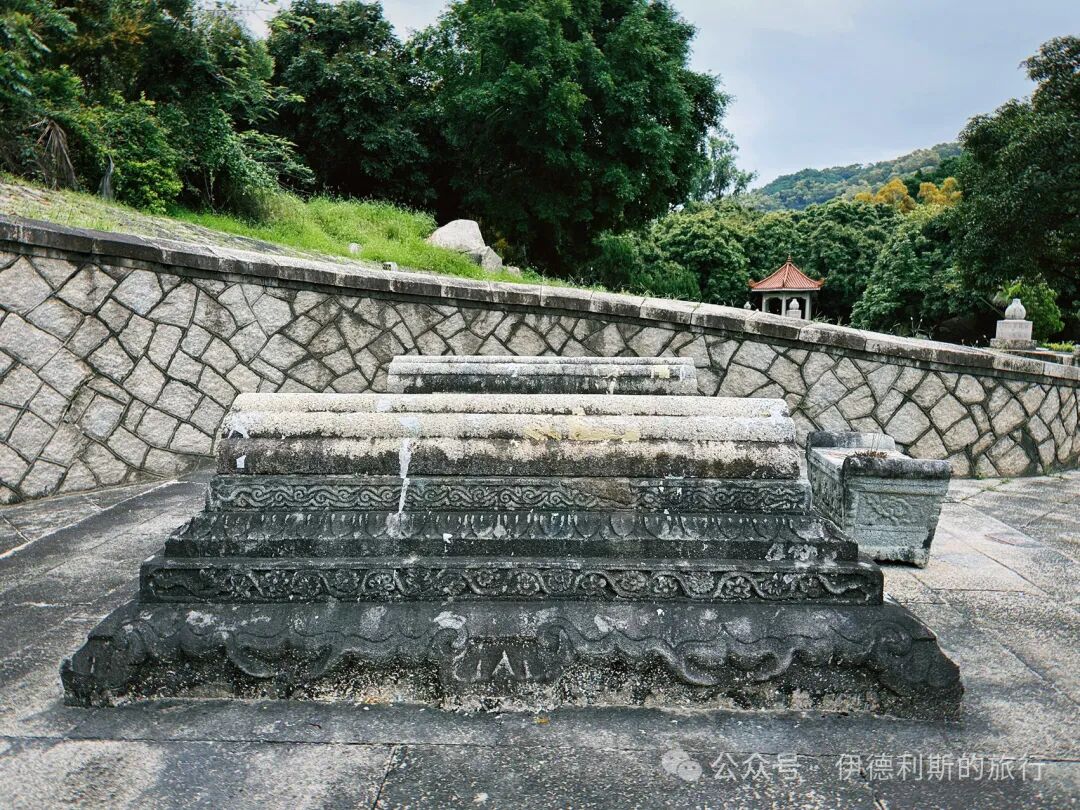
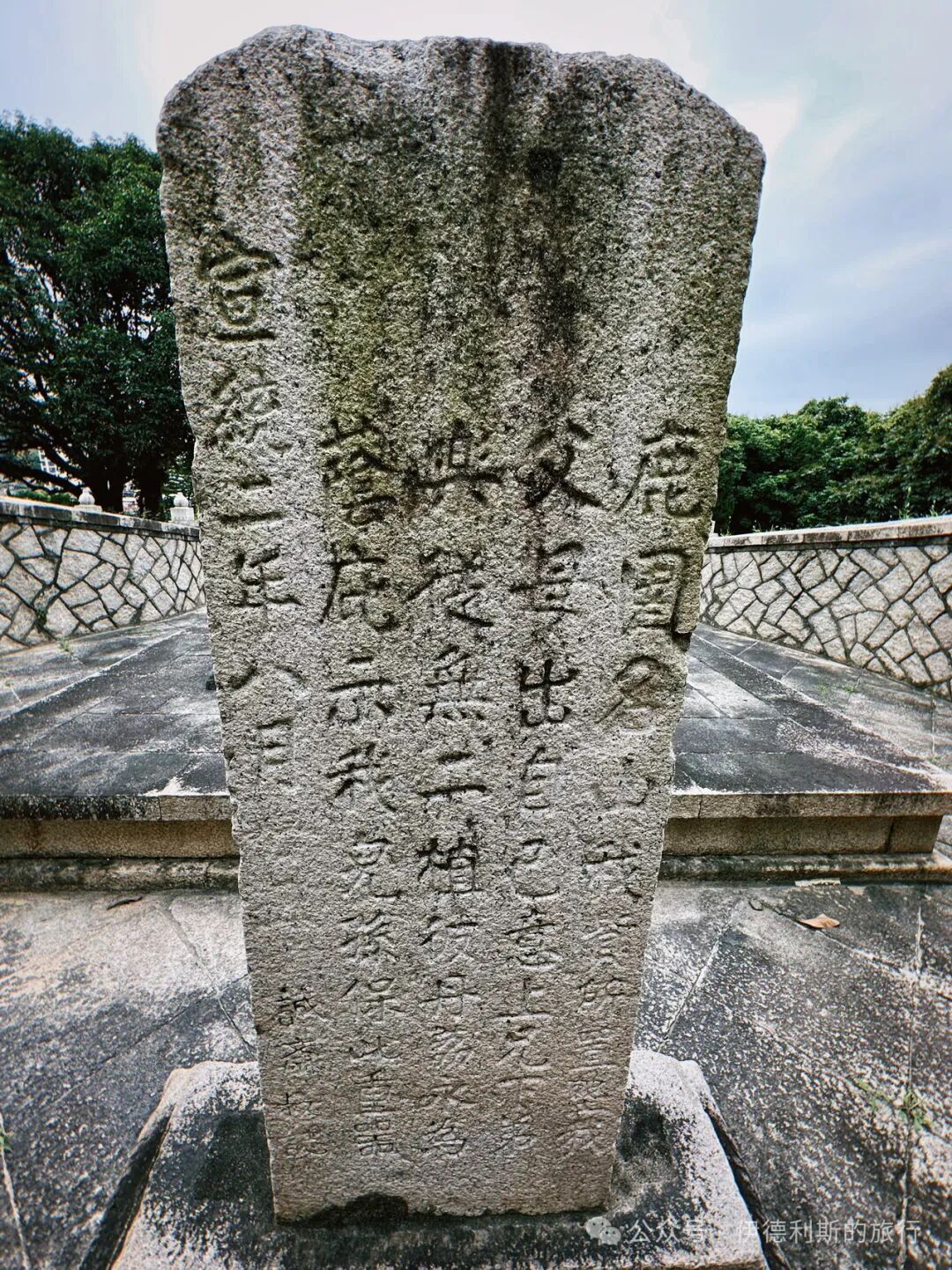
Tombs of the fifth-generation Ding Guanbao, sixth-generation Ding Kuan, and sixth-generation Ding Min.
Ding Guanbao (1369-1436), also known as Shifu and Chengzhai, was Ding Shan's second son and the founder of the second branch of the Chendai Ding family. He was originally buried at the foot of Shuiniulin, east of Quanzhou city.
Ding Kuan (1395-1446), also known as Tingyu and Longyin, was Ding Guanbao's second son. He was originally buried to the left of Ding Shan's tomb in Luyuan Mountain.
Ding Min (1407-1456), also known as Tingxue and Yizhai, was Ding Guanbao's fourth son. He was originally buried at the foot of Shuiniulin, east of Quanzhou city. Ding Min was the first local scholar among the Chendai Ding family to promote literary education.
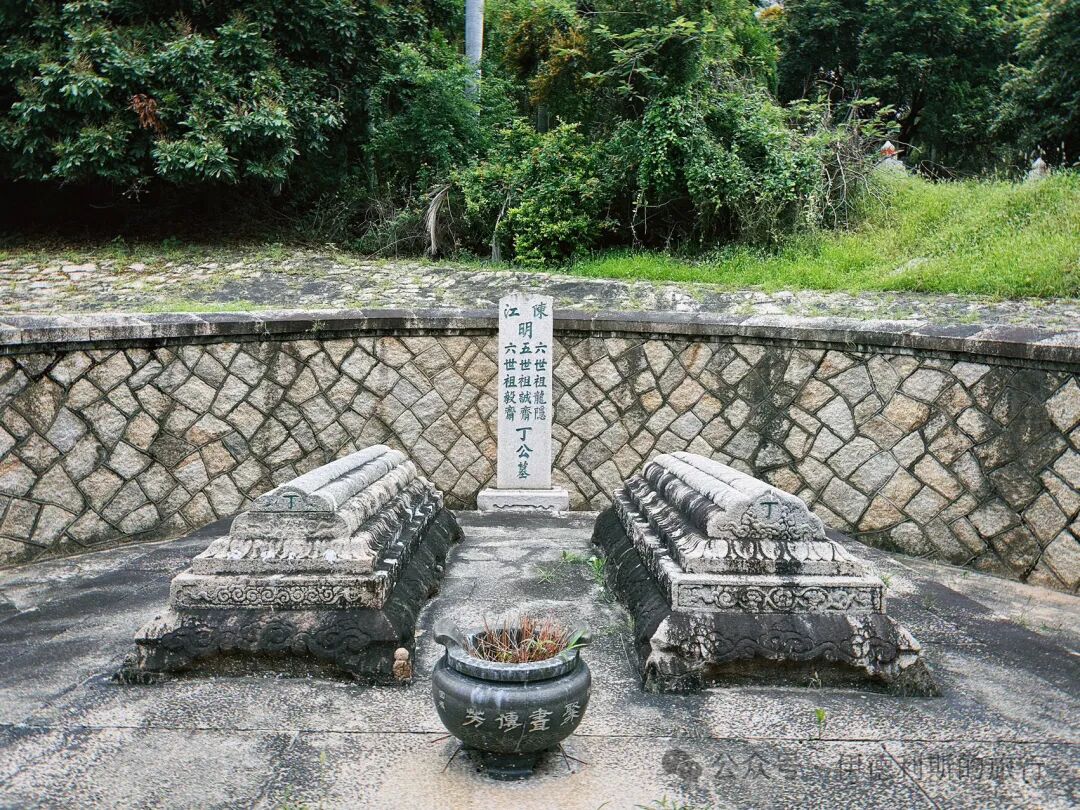
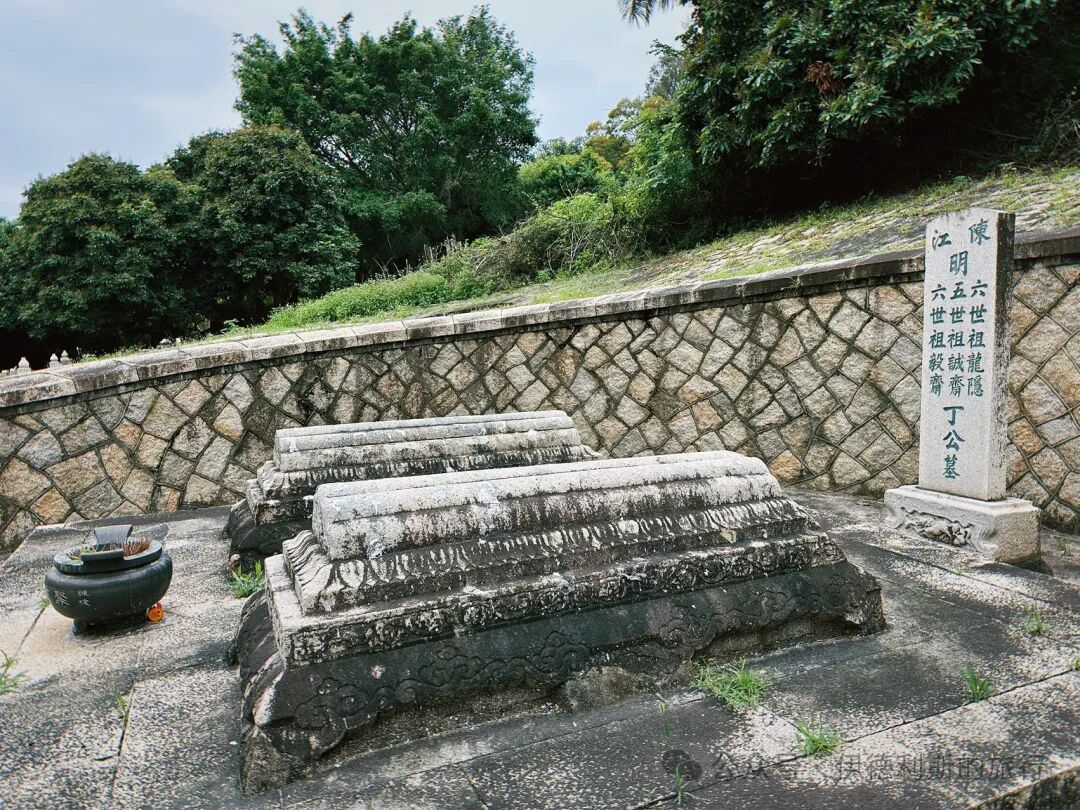
Tomb of the fifth-generation Ding Mabao of the Chendai Ding family, with his wife Pu and his successor wife Wang.
Ding Mabao (1366-1431), also known as Shilong and Yi'an, was the eldest son of the fourth-generation founder Ding Shan. He was the founder of the first branch of the Chendai Ding family and was originally buried with his two wives at the Chenggui Baoxue site on Daping Mountain, east of Quanzhou city.
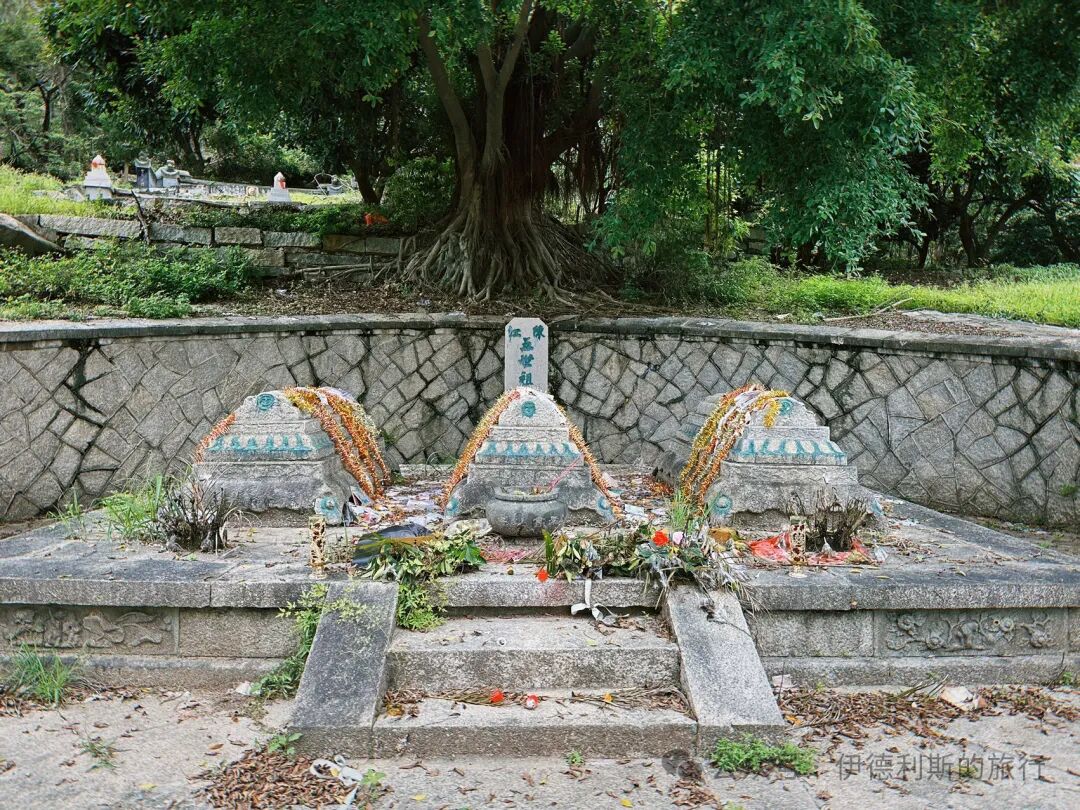
Tomb of the fifth-generation Ding Fubao and his wife Shi Dingniang.
Ding Fubao (1375-1432), also known as Shizhang and Yingjie, was Ding Shan's third son and the founder of the third branch of the Chendai Ding family. He is buried at Lingshan, east of Quanzhou city. The tomb features two pedestal-style stone graves on a traditional Islamic Sumeru-style altar platform, with swastikas and two lions playing with a ball carved into the waist of the platform.
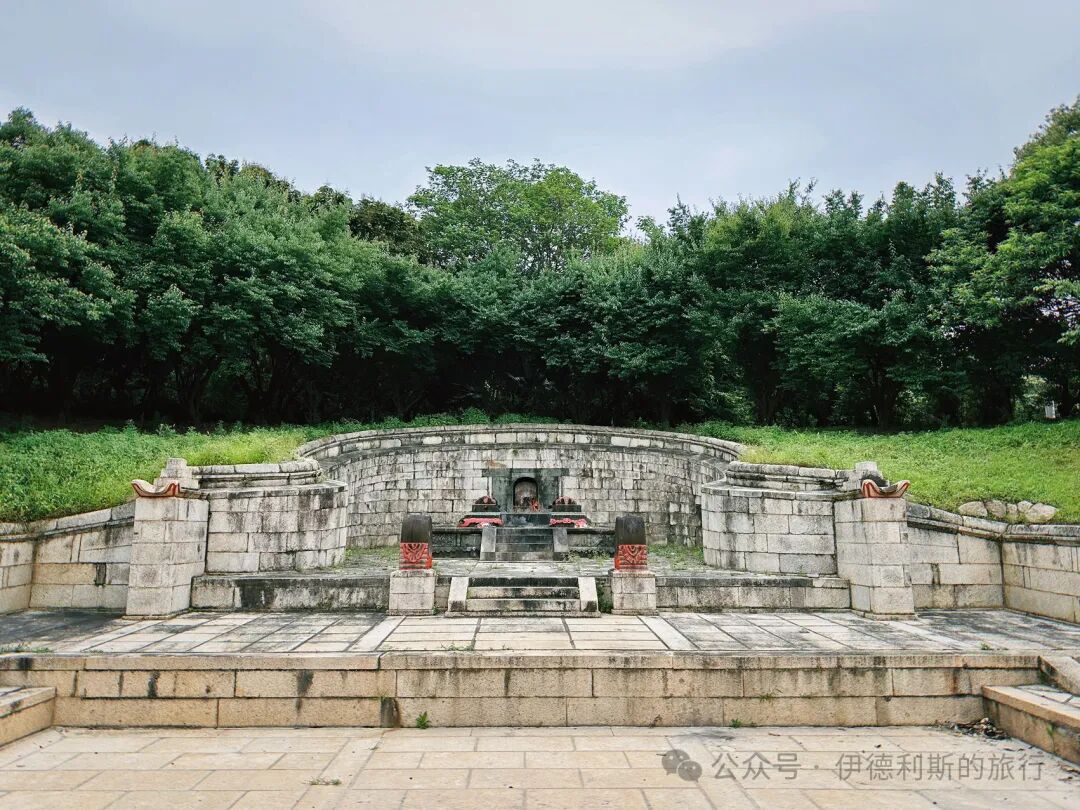
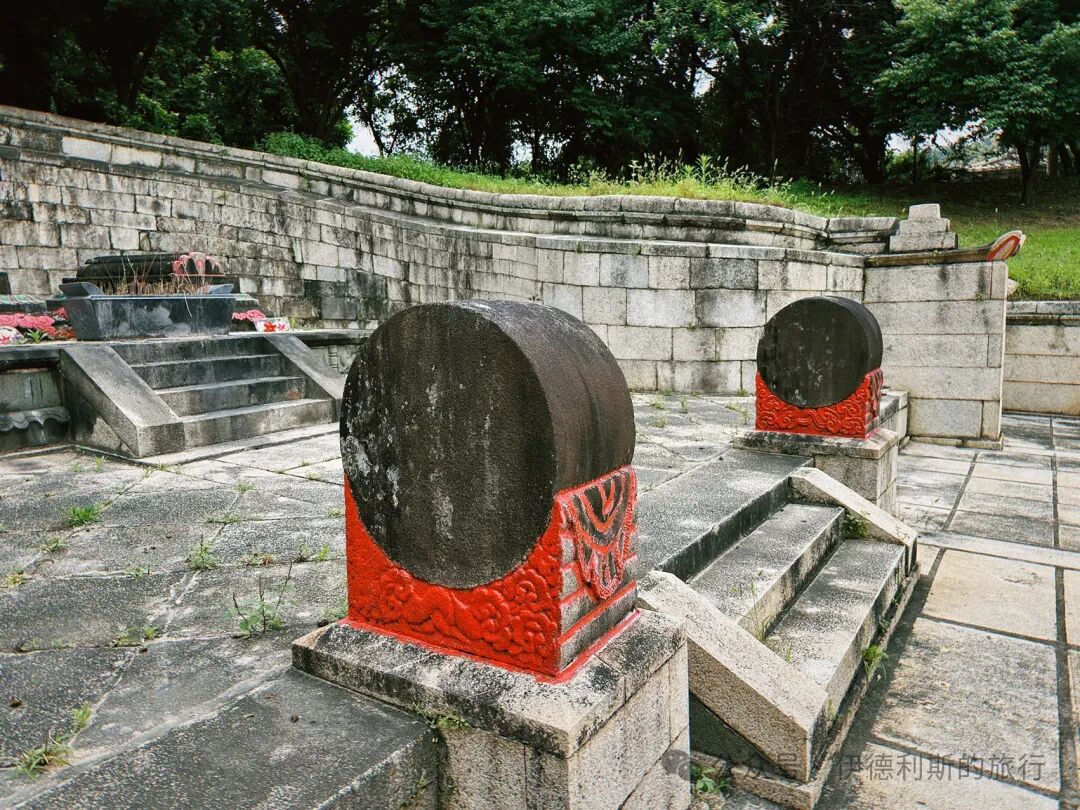
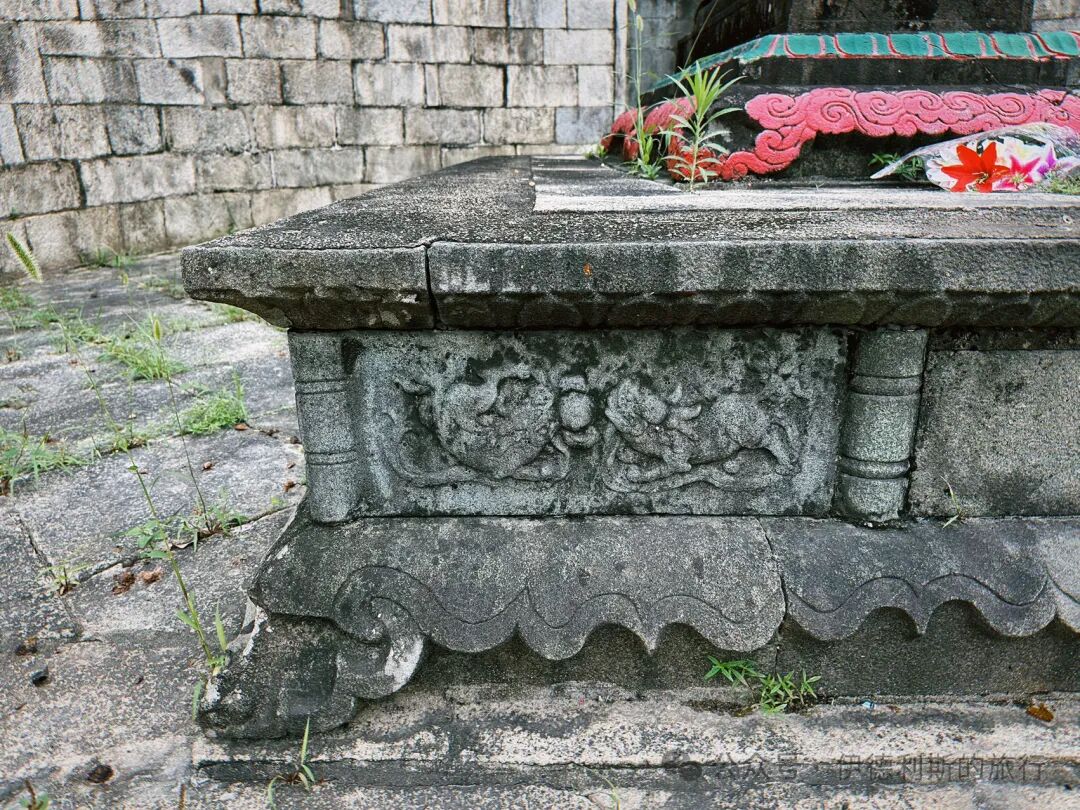
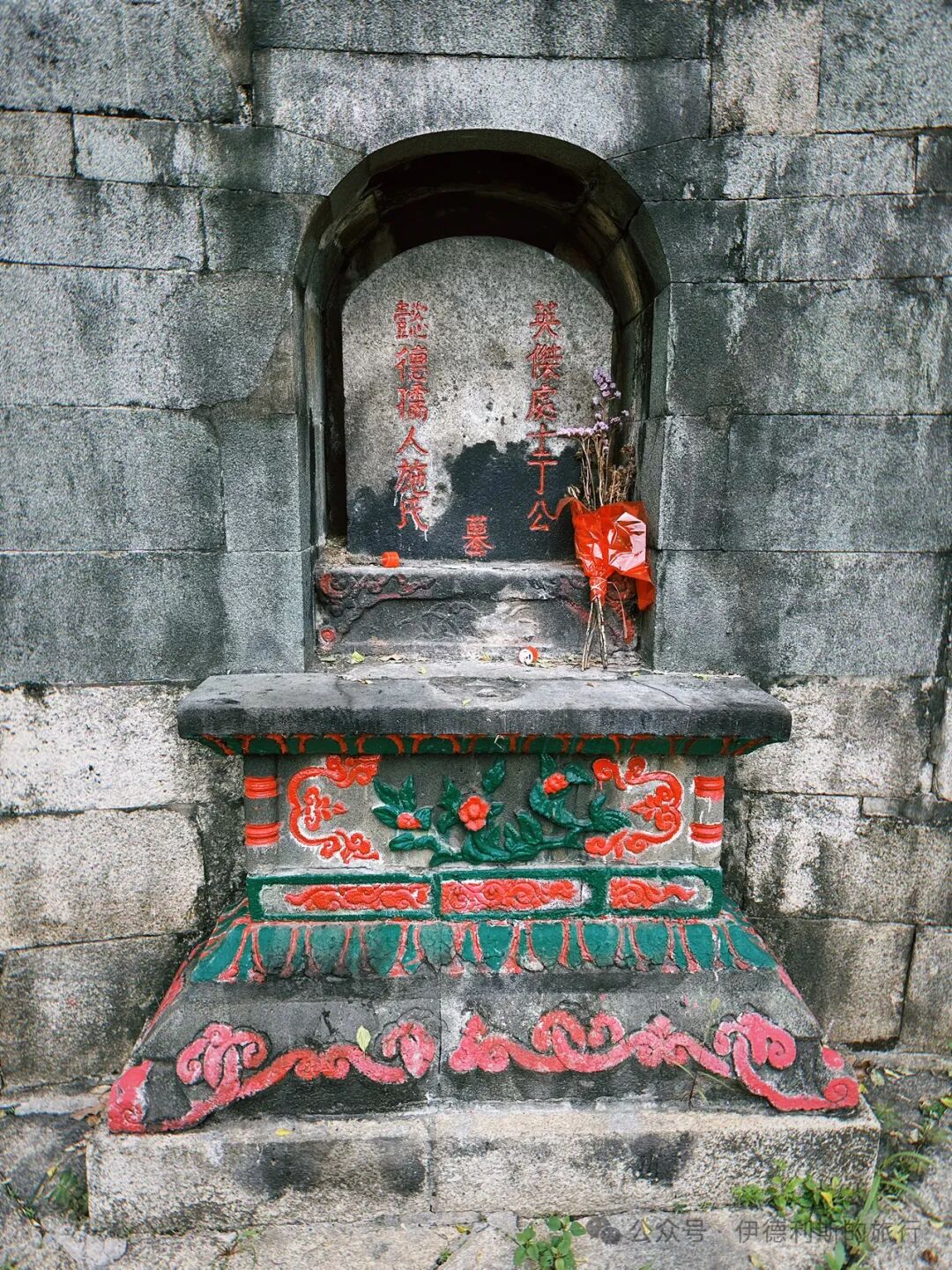
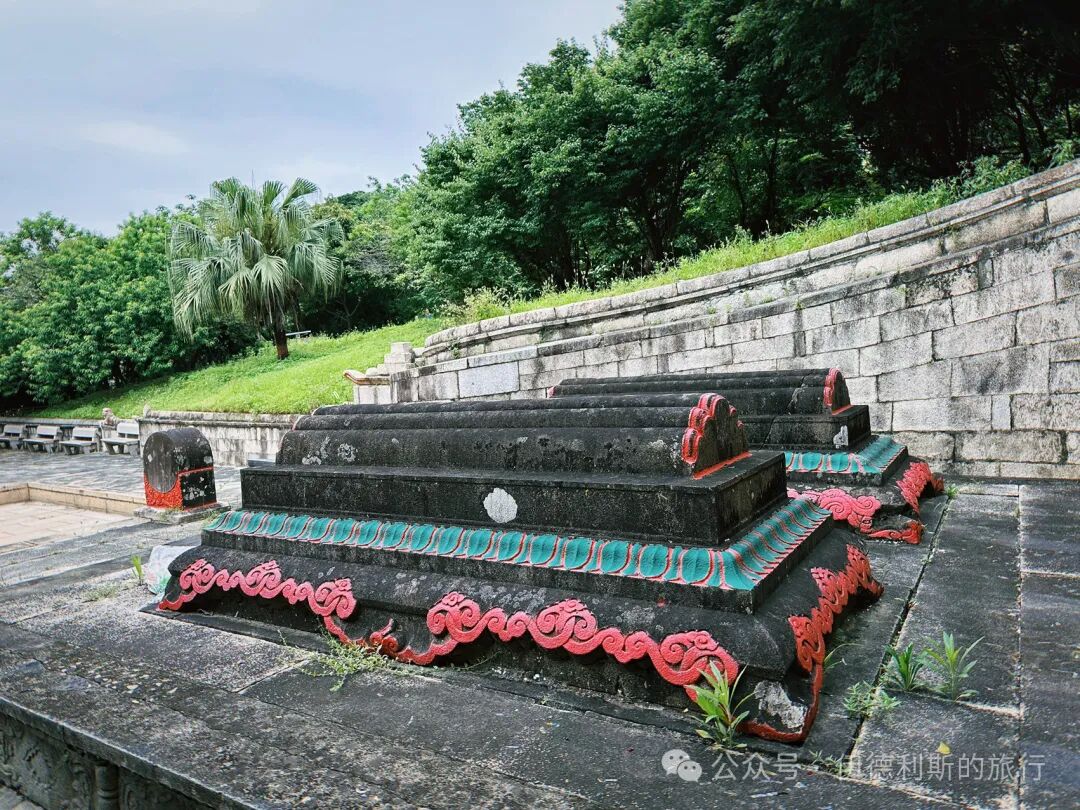
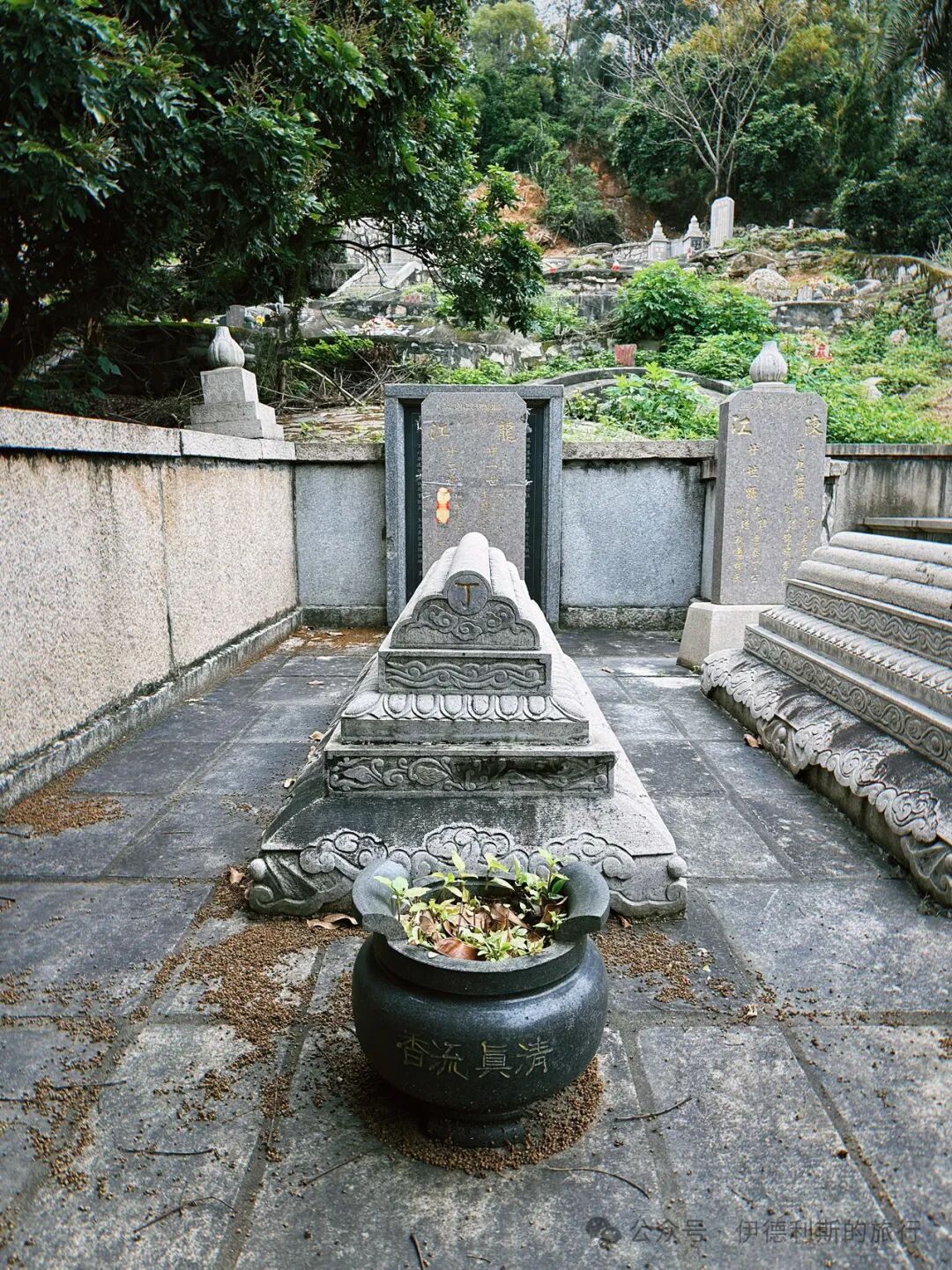
Tombs of the sixth-generation Ding Xin and his wife Cai, and the seventh-generation Ding Lun and his wife Zhuang.
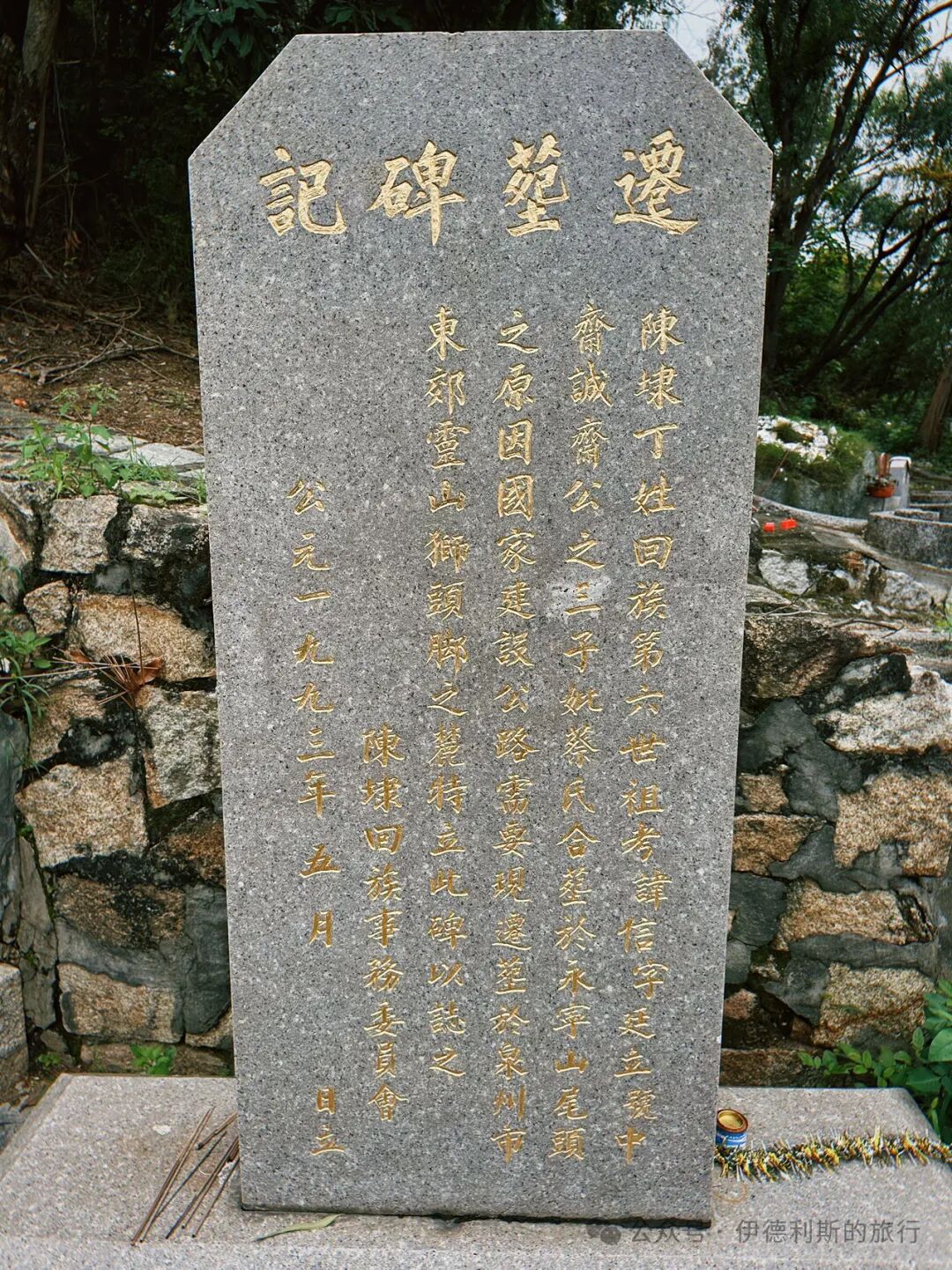
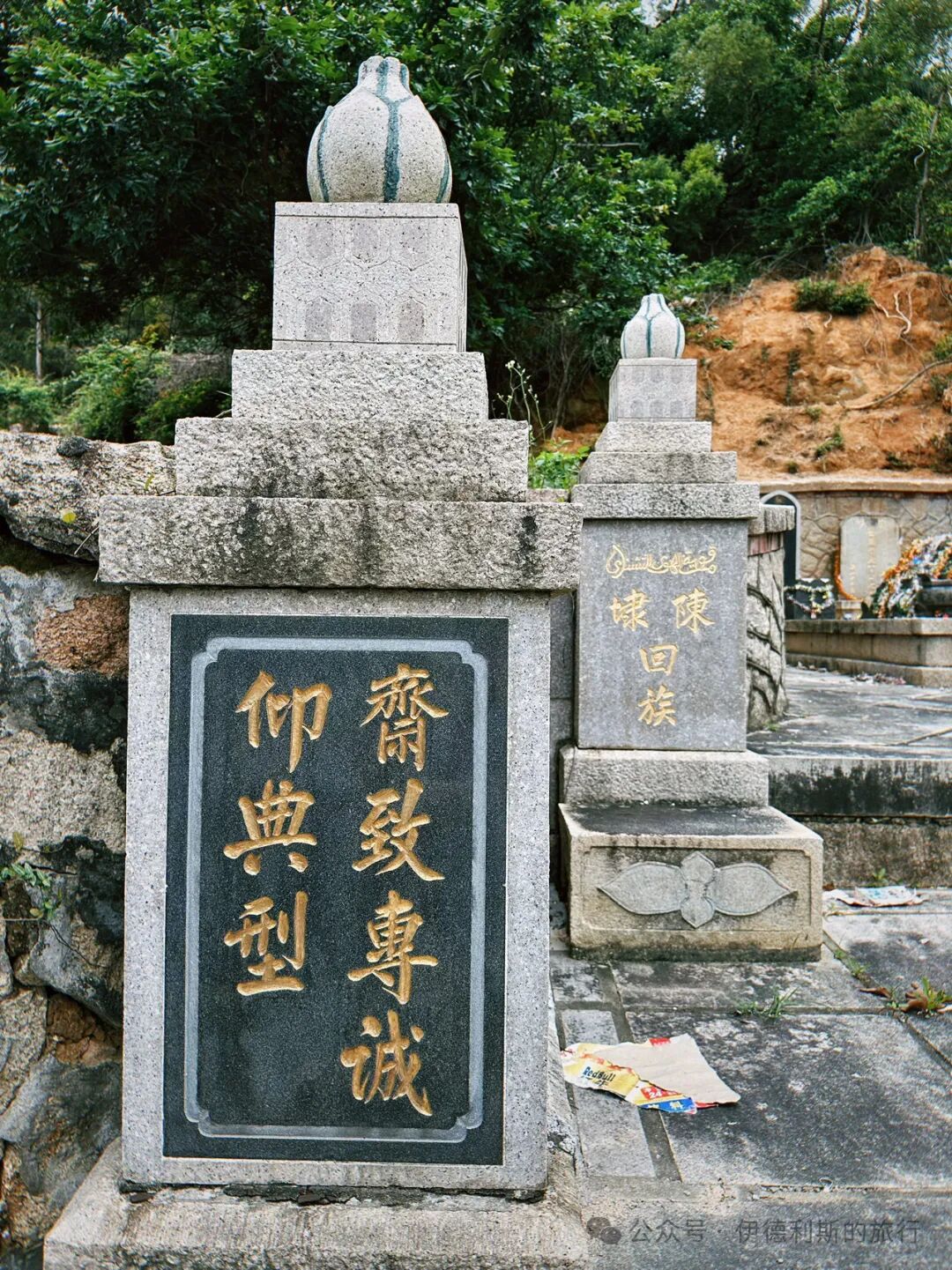
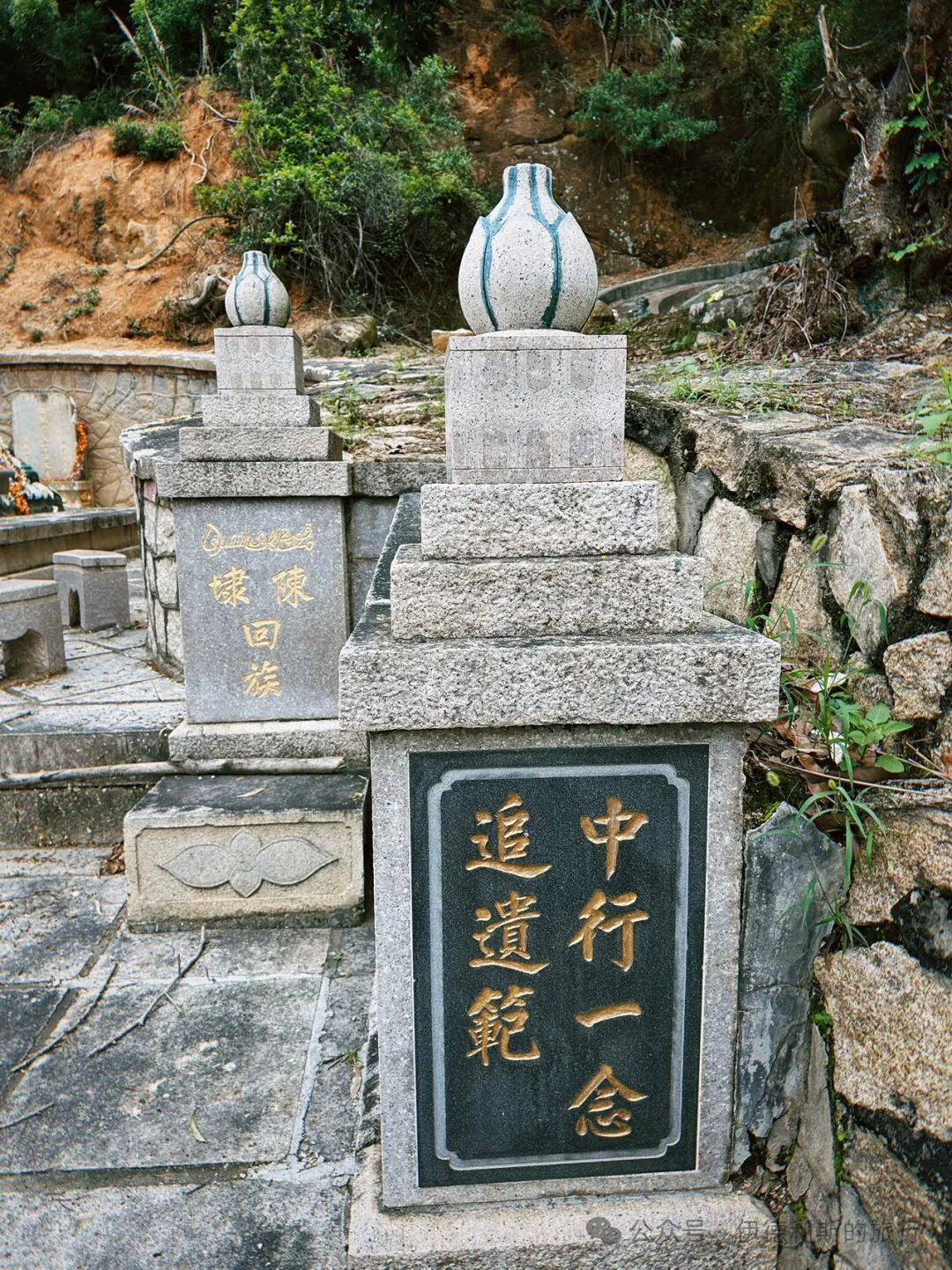
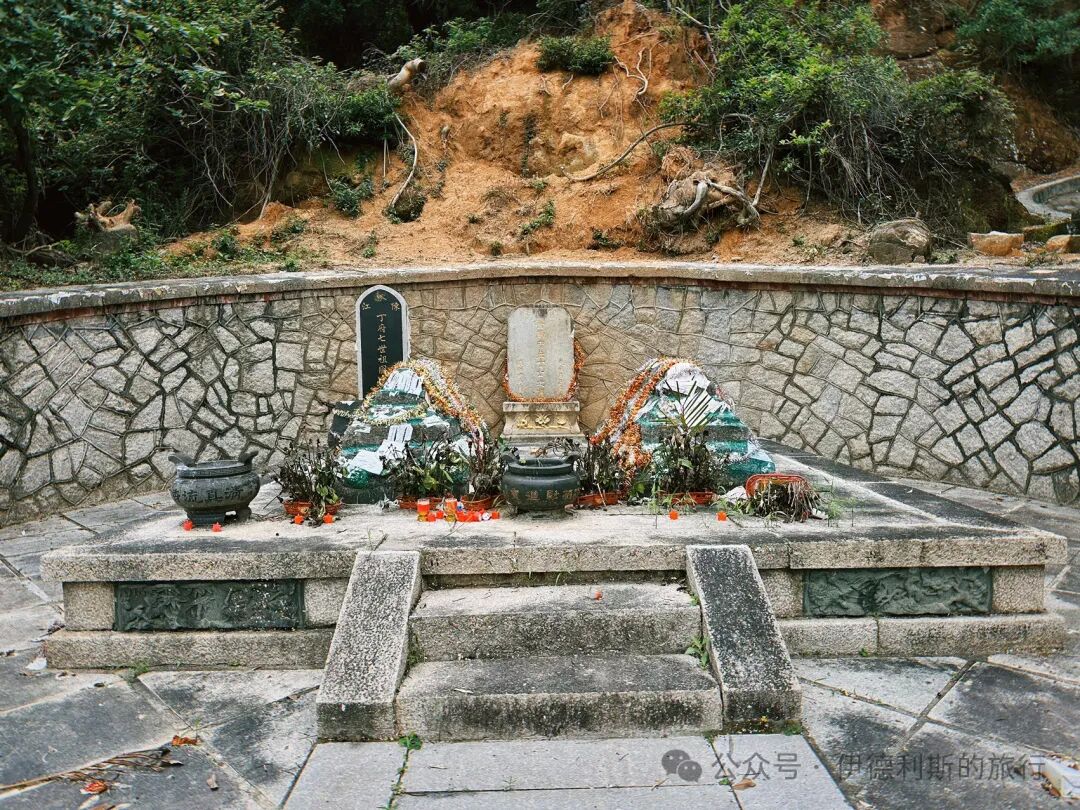
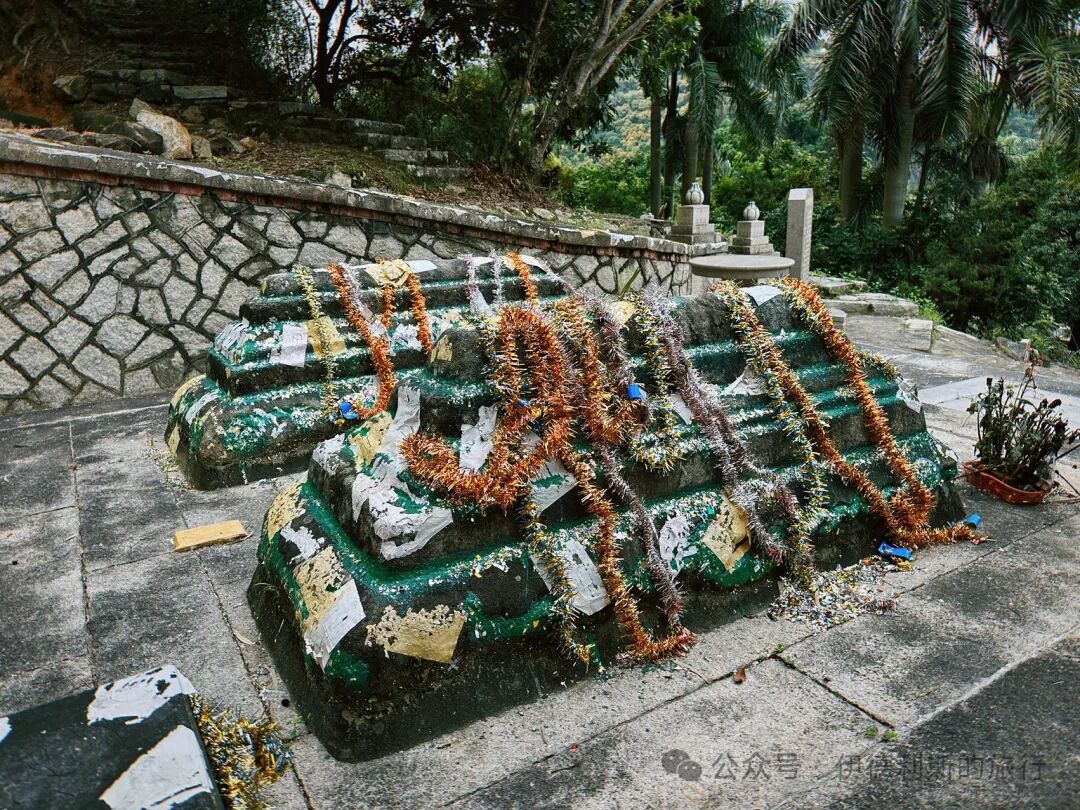
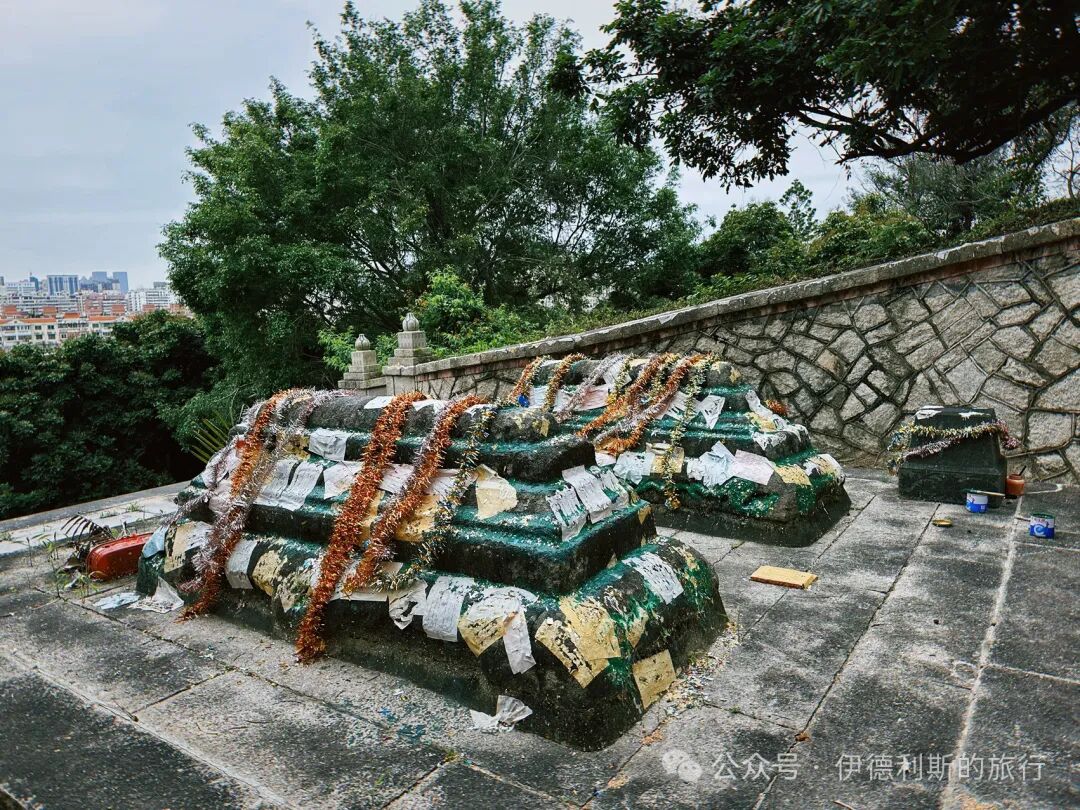
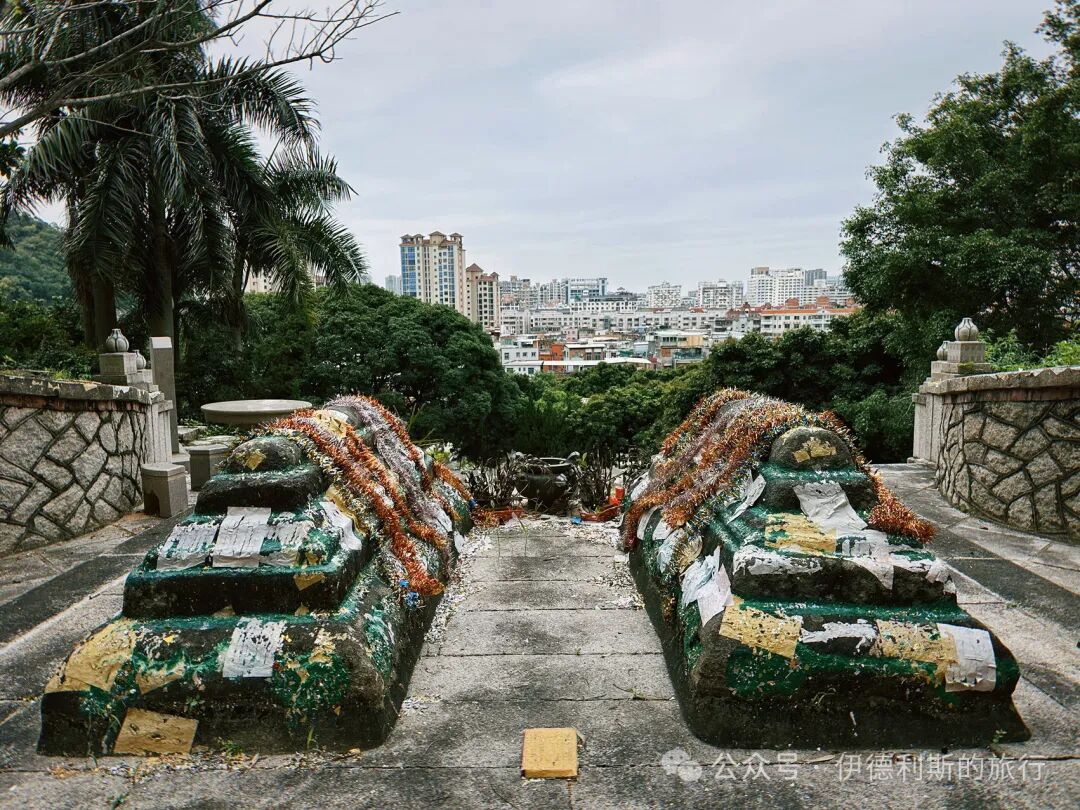
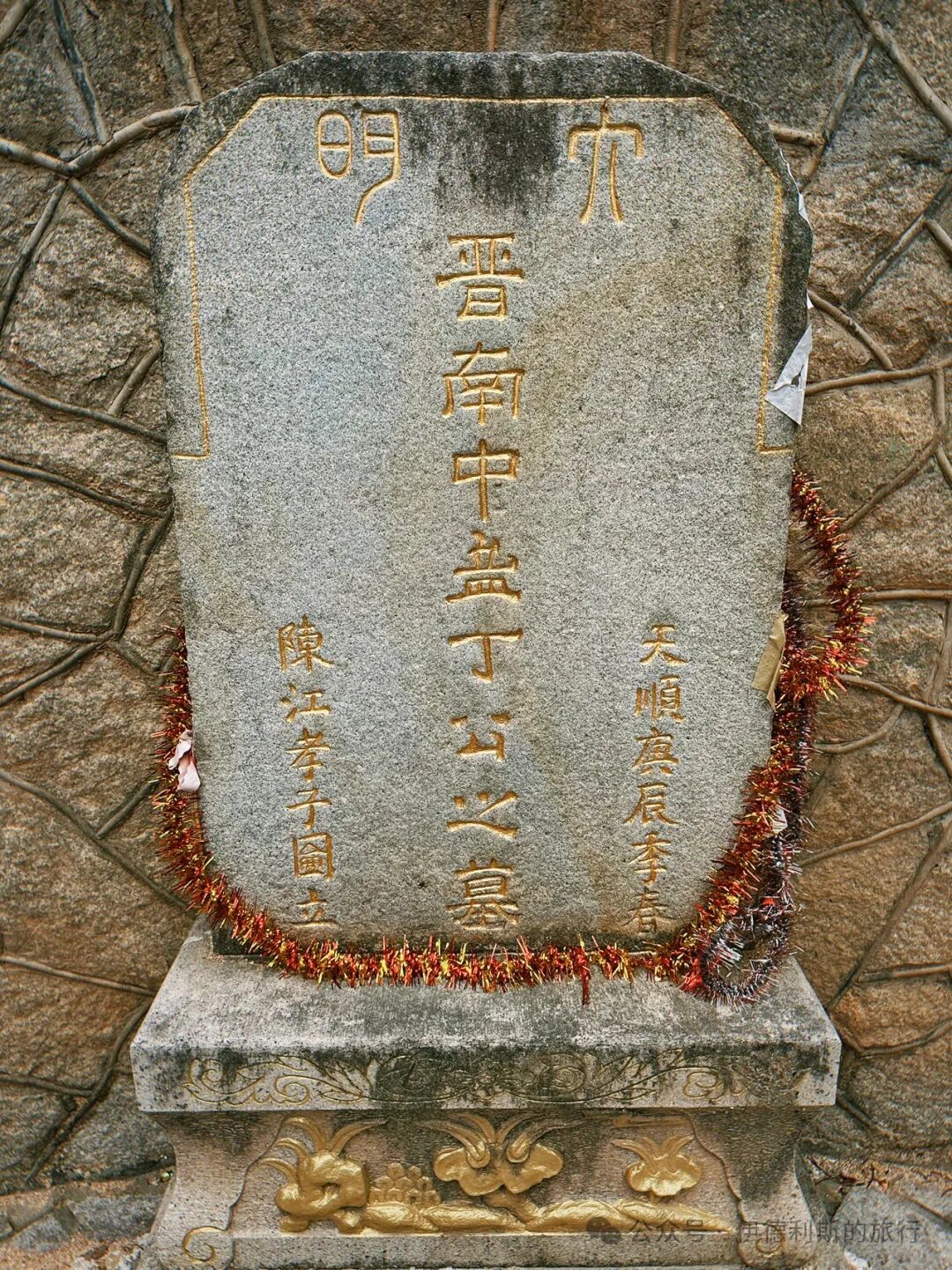
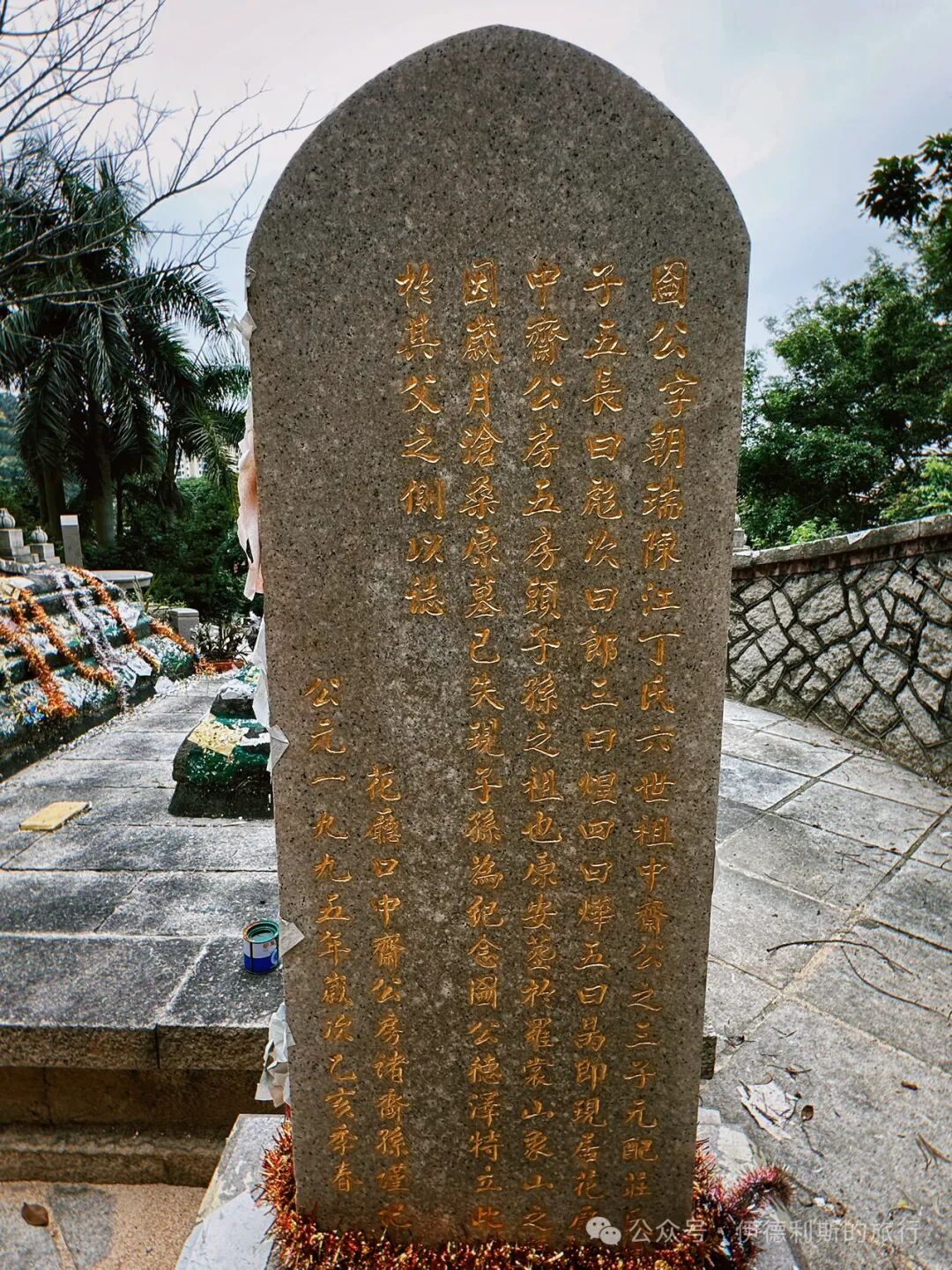
Tomb of the twenty-second generation Ding Jinke.
Ding Jinke (1923-1997), whose Islamic name was Yunus, studied at the Guangxi Chengda Normal School and the Hong Kong Dade College. In the early 1920s, the famous Hui Muslim Tang Kesan served as the director of the Xiamen Customs. He recommended his fellow townsman Zhang Guangyu to lead Islamic affairs in the Quanzhou area. After Imam Zhang Guangyu arrived in Quanzhou, he worked diligently on religious affairs, and the Islamic faith began to revive in Chendai. In 1939, the Chenjiang Branch of the China Islamic National Salvation Association was established in Chendai. Some members of the Ding family in Chendai went to the Qingjing Mosque in Quanzhou for their weekly Friday prayer (jumu'ah). Later, they converted the Wenchang Shrine in Sijing Village into a mosque and invited Imam Tie from Quanzhou to lead the religious affairs. Between 1937 and 1944, the Chengda Normal School moved south to Guilin. Its founders, Tang Kesan and Imam Ma Songting, accepted 17 young men from the Ding family in Chendai to study there, including Ding Jinke.
Ding Jinke joined the revolution during the War of Liberation. Later, he worked for the Financial and Economic Committee of the State Council and at various colleges and universities in Beijing and Xinjiang. He retired and returned to his hometown in 1983. In 1983, when the Fujian Islamic Association was founded, Ding Jinke, along with fellow Chengda Normal School graduates Ding Jinshun, Ding Jinhe, Ding Jinhong, and over twenty other dedicated community members, formed the Chendai Islamic Association Group to begin reviving religious activities. They borrowed the second-floor meeting room of the Chendai Hui Ethnic Affairs Committee and the back hall of the Ding Family Ancestral Hall to hold their Friday prayer (jumu'ah).
After years of hard work, Ding Jinke and other friends (dosti) raised funds to build the Chendai Mosque. The mosque was completed in 1991 and officially opened in 1993, with Ding Jinke serving as the first director of the mosque management committee. Soon after, the Jinjiang Islamic Association was established, and Ding Jinke served as its executive deputy director. After the 1990s, Ding Jinke helped dozens of young people from the Ding family in Chendai go to study religious knowledge both at home and abroad, with some attending Arabic language schools in Inner Mongolia.
Halal Travel Guide: Quanzhou Baiqi — Guo Hui Muslims and Islamic History (Part 1)
Articles • ali2007fr posted the article • 0 comments • 151 views • 2026-05-18 01:30
Summary: Quanzhou Baiqi — Guo Hui Muslims and Islamic History is presented here as a firsthand travel account in clear English, beginning with this scene: Over 10,000 Hui Muslims with the surname Guo live in Baizaki Hui Township, 12 kilometers east of Quanzhou city. The account keeps its focus on Quanzhou Muslims, Guo Hui Muslims, Islamic History while preserving the names, places, food, and historical details from the Chinese source.
Over 10,000 Hui Muslims with the surname Guo live in Baizaki Hui Township, 12 kilometers east of Quanzhou city. They are known as "Baiqi Guo" or "Jiuxiang Guo." The name "Jiuxiang Guo" comes from the nine villages where the Guo clan has lived since the Qing Dynasty: Baiqi, Xiadai, Daishang (also known as Liandai), Tiancen (also known as Tianyin), Lichun, Dashan, Hecuo, Shandou, and Houhai. The Guo clan also lives in five other villages: Kepu, Doumentou, Liangmu, Houtang, and Jiakeng.
In local gazetteers and clan genealogies from the Ming and Qing dynasties, Baiqi was referred to by three written variants of the same place name. After 1949, the area was uniformly called Baiqi. In August 1990, when the Hui Township was established, its name changed to Baizaki.
Part 1: History Before the Yuan Dynasty
The various genealogies of the Guo clan in Baiqi have vague and contradictory records about their life before settling there. These records likely include some embellishments and made-up stories. But by looking closely at these genealogies and checking them against the history of that time, we can still make a reasonable guess. Two valuable studies are 'Several Issues in the Early History of Baiqi Hui Muslims' by Professor Shi Yilong from Xiamen University, and 'Origins of the Guo Surname in Baiqi and Madrasa Education' by Professor Wu Youxiong from Quanzhou Normal University.
Were their ancestors Prince of Fenyang Guo Ziyi?
The Guo family of Baiqi claims Prince of Fenyang Guo Ziyi as their ancestor. This claim appears in the At this time, only a few decades had passed since the Guo family settled in Baiqi.
Although they claim Guo Ziyi as an ancestor, the Guo family genealogy does not provide reliable lineage evidence. It only states: "
Since the Song and Yuan dynasties, compiling family genealogies gradually became a key part of Confucian ethics and clan cohesion. More and more private family genealogies were created. After the Ming Dynasty, many ordinary families' genealogies also began to use a grander format. These genealogies traced back dozens of generations, often listing ancestors who were ancient emperors, from prominent lineages, or held high official ranks. Guo Ziyi was enshrined in the Ming Dynasty's Temple of Emperors and Kings in 1388 (the 21st year of Hongwu). He was listed as a meritorious official from ancient and modern times. Guo Ziyi was an important famous person with the surname Guo, and many Guo family genealogies from the Ming and Qing dynasties claimed him as an ancestor. Coincidentally, another branch of Guo Hui Muslims lives in Guocuo Village, Quangang District, 70 li northeast of Baiqi Hui Township. They have no direct connection with the Baiqi Guo clan, but they also claim Guo Ziyi as their ancestor.
2. Were their ancestors Han Chinese who converted to Islam?
If Guo Ziyi is their ancestor, then the question of why they, as Han Chinese, believe in Islam needs to be answered. In the Guo Zhaofen said that among the Guo clan, there were two theories: "following the mother's religion" and "originally Hui." He found both unreasonable, so he proposed a third theory: "adapting to Hui." This means the Guo ancestors had close ties with Muslims and then converted to Islam.
The "adapting to Hui" theory is quite reasonable. The Baiqi Guo clan did not face the same challenges as other Semu people during the late Yuan and early Ming dynasties. They lived peacefully. Soon after arriving in Baiqi, they built an ancestral temple (jiamiao) and compiled a family genealogy (jiapu). We will talk more about these later.
3. The Guo Clan's Founding Ancestor in Quanzhou
According to clan records, the Guo family once lived in Guojia Village, Fuyang, Hangzhou, and came to Quanzhou during the Yuan Dynasty. There are two theories about the earliest ancestor of the Guo family to arrive in Quanzhou. The mainstream theory names Guo Deguang (from
Genealogies that record Guo Zhang as the founding ancestor in Quanzhou state, and Records mention "Dezhao Gong's branch in Xingzhai, Dongjie, and other places." This means Guo Zhangsheng had two brothers, Guo Deguang and Guo Dezhao. Guo Deguang's descendants lived on Fashi Shitou Street and in Baiqi. Guo Dezhao's descendants lived in Xingzhai Village and on Quanzhou Dongjie. This theory connects the Guo clan of Baiqi with the Jundong Guo clan, who live in Quanzhou's Xingzhai Hui Muslim Village.
Thousands of Guo-surname Hui Muslims live in Xingzhai Hui Muslim Village and other areas in Luojiang District, east of Quanzhou city. Their family genealogies state in the preface: "First ancestor Tong, courtesy name Mengliang, sobriquet Leqiao Chushi." A person from Fuyang, Zhejiang, came to Quanzhou in the late Yuan Dynasty, following a commissioner. He enjoyed the beautiful scenery of Quanzhou and settled there. Because Guo Mengliang lived on Dongjie Street in Quanzhou, his descendants became known as the Jun Dong Guo clan. Later, Guo Mengliang's fifth-generation descendants, Guo Yuan and Guo Quan, moved to Xingzhai during the Chenghua reign of the Ming Dynasty. After that, they spread to various other places.
The "Quanzhou Prefecture Gazetteer" also has a record about Guo Mengliang, the first ancestor of the Jun Dong Guo clan: "Guo Tong, courtesy name Mengliang, alias Leqiao, was originally from Fuyang, Zhejiang." It also says, "In the late Yuan Dynasty, he followed his ancestor Qin, who served as Quanzhou Salt Commissioner." Additionally, the epitaph of Guo Mengliang's wife, Ms. He, records: "She married Guo Mengliang from the same village. Guo, from Fuyang, Zhejiang, served his ancestor Qin, who came to Fujian as an official in the late Yuan Dynasty." "
This states that Guo Mengliang came to Quanzhou from Fuyang, following his ancestor "Qin." The founding ancestor of the Baiqi Guo clan, Guo Deguang, was named "Qin." The Baqi Guo Family Genealogy records: "His official name was Qin, his courtesy name was Deguan. He was a descendant from Guojia Village, Fuyang, Zhejiang." In the local gazetteer, "congzu" refers to a grandfather's brother. So, Guo Mengliang was likely a junior relative of Guo Dezhao. He came to Quanzhou from Fuyang, Zhejiang, with Guo Deguan.
The "Qishan Guo Family Genealogy Preface" of the Baiqi Guo clan states that Guo Deguan first lived outside Xingchun Gate in Quanzhou. He later moved to Fashi. Xingchun Gate was the east gate of Quanzhou's inner city during the Tang Dynasty. After the Yuan Dynasty, it became part of the city. Its location is in the middle section of Quanzhou's East Street. This was exactly where Guo Mengliang, the ancestor of the Guodong Guo clan, lived.
Based on current documents, it is inferred that Guo Deguan and his junior relative Guo Mengliang likely came one after another from Guojia Village, Fuyang, Zhejiang, to settle on Quanzhou's East Street.
4. Guo Deguan Living in Fashi
Fashi Village is on the north bank of the Jinjiang River, in the eastern suburbs of Quanzhou city. It was an important commercial pier for Quanzhou Port during the Song and Yuan dynasties. During the Yuan Dynasty, from Meishan to Bantou in Fashi, there was a stone street several li long along the river. In 1346, Moroccan traveler Ibn Battuta came to Quanzhou Port. He wrote in *Ibn Battuta's Travels*: "The city's port is one of the world's great ports, perhaps even the largest." We saw about a hundred large ships anchored in the harbor, and countless smaller boats. This port is a huge bay that extends inland, meeting a large river. "
The Jiangkou Pier of Fashi Port is located where the river meets the sea at the end of Shitou Street in Fashi Village. It was a trade hub during the Song and Yuan dynasties. Jiangkou Pier once had eight ferry crossings, but today only Meishan Ferry Pier and Wenxing Ferry Pier remain.
Due to years of silt accumulation, the riverbed rose and formed an islet. Then, real estate development happened. The river's surface no longer looks as it did back then.
Meishan Ferry Pier is built with granite. The existing upper layer was built in modern times. The lower layer shows different periods from the Song to Qing dynasties, built one on top of another, mostly using a header-stretcher bond method.
The Wenxing Ferry Terminal was also built with granite, mainly using staggered joint masonry. The visible remaining section is nearly 20 meters long; the rest has sunk into the river.
Fashi was an important trading port in Quanzhou. During the Song and Yuan dynasties, many Muslim merchants from Arabia and Persia lived there. Even after the Ming and Qing dynasties, the Jin, Xia, and Guo families of Hui Muslims still lived in the area. In 1959, the Quanzhou Maritime Museum's investigation team found several Islamic stone tombs, built in the Sumeru pedestal style, at the "West Cemetery" on Jincuo Mountain in Meishan, Fashi.
5. Guo Deguang's Tombstone – Was the Guo family from Persia?
In 1956, villagers from Shitou Street in Fashi Village were leveling land at a place commonly known as "Liugongqi." They dug up a very large "foreign guest tomb" and turned the area into a garden. Villagers said this tomb had a large square stone platform, divided into upper and lower levels. Each level had two Islamic stone tombs in the Sumeru pedestal style. At the head of the upper level was a tombstone. Villagers broke it into two pieces and carried it back to the village to pave the floor of the collective warehouse.
The Quanzhou Maritime Museum has a Yuan Dynasty Sumeru pedestal-style Islamic stone tomb. The two stone tombs built by Liu Gong might have a similar design.
In 1959 and 1974, an investigation team from the Quanzhou Maritime Museum followed clues from the
The upper right corner of this tombstone has The upper left corner has Below that,
The Chinese characters on the tombstone are easy to explain, but interpreting the Arabic text is very difficult. In the early 1980s, the view of Chen Dasheng, director of the Quanzhou Maritime Museum, became widely accepted. He interpreted the Arabic text as
Professor Wu Youxiong of Quanzhou Normal University offered a completely different interpretation in his work "The Origin of the Guo Clan in Baiqi and Madrasa Education." Wu Youxiong consulted the director of the Arabic department at China National Radio. He then concluded that the inscription was Minnan dialect, spelled in Arabic script, reading "Yin Go Zi Ta-gag Mou." This translates to "Yuan Dynasty Guo Deguan's Tomb." Previous interpreters didn't know Minnan dialect, so they couldn't translate it. There is no evidence that the Guo clan came from Persia.
The method of writing Chinese with Arabic script is called Xiaoerjing or Xiaoerjin, and it is also known as Xiaojing. It was used to annotate Islamic texts during study. The Guo clan genealogy records show that Guo Deguan's tomb was rebuilt many times. This tombstone was likely re-erected during the Qing Dynasty by Guo descendants who were Muslim. The experience of the Guo descendants restarting madrasa education during the Qing Dynasty will be discussed in detail later.
Two: Settling in Baiqi in the Early Ming Dynasty.
One: Did they move to Baiqi to escape ethnic unrest at the end of the Yuan Dynasty and early Ming Dynasty?
Guo Deguan's grandson, Guo Zhongyuan, moved from Fashi to Baiqipu, across from Houzhu Port, during the Hongwu reign of the Ming Dynasty. This area then became the current Baiqi Hui Muslim Township. Many studies say Guo Zhongyuan moved because of wars at the end of the Yuan Dynasty and the oppression of Semu people in the early Ming Dynasty. But is that really true?
Between 1357 and 1366, the Ispah Rebellion (Yisibaxi Zhanluan) broke out in Quanzhou. It was organized by Persian Semu people. This caused unprecedented disaster and severe destruction in Quanzhou. After the war, Quanzhou saw a wave of anti-Semu sentiment. Many Semu people were killed in revenge. The "History of the Jin Clan Genealogy of Qingyuan" (Qingyuan Jinshi Zupu Lishi) records: "In this conflict, all people from the Western Regions were wiped out. Those with foreign hair and high noses were mistakenly killed. The gates were closed, and executions continued for three days." Many surviving "foreigners" (fanren) in Quanzhou fled the city to find refuge.
Based on genealogical records, Guo Deguang was likely born around 1283-1303 and died around 1367-1387. Guo Deguang's later years were the peak of anti-Semu sentiment in Quanzhou. However, genealogies generally record that Guo Deguang "registered his household in Fashi by custom in the early Hongwu period." The "Preface to the Qishan Family Genealogy" (Qishan Jiapu Bixu) gives more detail: "In the ninth year of Hongwu (1376), he registered his household by custom and settled in Fashi." 1376 was the second year the Ming army controlled Quanzhou. After the Ming Dynasty took control of Quanzhou, they began to reorganize household registration. Guo Deguang's family was registered into the Ming Dynasty's household system at this time.
Guo Deguang lived in Fashi until he died "of illness." He was buried in Fashi after his death. Guo Deguang's son, Guo Zihong, lived for 49 years and died in 1366. He never left Fashi his whole life and was buried there after his death. His wife, Lady Weng, died in 1372 and was also buried in Fashi. The Potting Genealogy also records that Guo Shiquan, the eldest son of Guo Jiyuan (Guo Zihong's third son who stayed in Fashi), passed the provincial examination in 1411 and became a county official. The record states: "In the ninth year of Yongle (1411), he passed the provincial examination and served in the county, choosing to register in Jiangyou." This shows that Guo Shiquan received at least a stable education at that time.
It seems the Guo Deguang family not only survived the Ispah Rebellion and the subsequent massacres of Semu people without any record of suffering, but they were also registered in the household census after the Ming Dynasty took Quanzhou. Later, they even educated their descendants to become officials through imperial examinations.
2. Reasons for Guo Zhongyuan's Relocation
Let's look at why Guo Zhongyuan moved to Baiqi. The "Biography of Lord Zhongyuan" in the Baiqi Guo Clan Genealogy states that Guo Zhongyuan "accumulated wealth bit by bit and achieved success." He then "chose a place to build a house under Qishan Mountain in the 23rd Dudu of the county." This means Guo Zhongyuan accumulated some capital and decided to start a business elsewhere. The "Preface to the Baiqi Guo Clan Genealogy" also records: "Lord Zhongyuan had five sons and loved the joy of mountains and rivers. He chose a place under Qishan Mountain by the sea in Huiyi, built a house, and lived there." Neither record mentions war or fleeing.
From Guo Deguang onwards, several generations of the Guo family had a custom: the eldest son would go out to establish a new branch, while the youngest son stayed at the old family home. Guo Mengliang, a descendant of Guo Deguang and his younger brother Guo Dezhao, first lived on East Street in Quanzhou. Later, Guo Deguang founded a new settlement in Fashi, and Guo Mengliang stayed on East Street. Guo Deguang had one son, Guo Zihong. Guo Zihong's three sons were: the eldest, Guo Qinggong, who moved to Jiangxi; the second, Guo Zhongyuan, who founded a new branch in Baiqi; and only the third, Guo Jiyuan, who stayed in Poting, Fashi. Guo Zhongyuan originally lived in Daishang (Liandai) in Baiqipu. His four sons also followed this pattern: the eldest son lived in Baiqi, the second son lived in Lichun, the third son went to Zhangzhou, and only the fourth son stayed in Daishang (Liandai). Therefore, Guo Zhongyuan's move from Fashi to Baiqi was likely a result of the common "tree branching out" phenomenon seen in clan societies.
After the turmoil at the end of the Yuan Dynasty and beginning of the Ming Dynasty, Quanzhou's maritime trade was severely damaged. The prosperity of Fashi Port was gone. After the Ming Dynasty began, maritime bans were issued six times during the Hongwu reign. The "Veritable Records of the Ming Dynasty" states that "coastal residents were forbidden from privately communicating with foreign countries," "the use of foreign incense and goods by the populace was prohibited," and "not a single plank was allowed to go to sea." It is very likely that the Guo family shifted from commerce to agriculture during this period. Guo Zhongyuan and his eldest brother successively went out to make a living. The eldest brother went far to Jiangxi, and the second brother moved to the opposite bank of Houzhu Port. Only the youngest brother stayed behind to look after the ancestral home and graves, and manage ancestral worship.
Shi Yilong's study, 'A Preliminary Study on the Evolution and Causes of Religious Beliefs of the Hui Muslims in Chendai,' points out that the Ding clan of Chendai, another group of Hui Muslims in Quanzhou, also did not suffer oppression from the Semu people during the late Yuan and early Ming dynasties. They moved mainly because the early Ming dynasty banned sea trade, which made them shift from business to farming. So, the early Ming dynasty's ban on maritime trade was likely the main reason Guo Zhongyuan came to Baiqi.
3. Baiqipu in the early Ming Dynasty
Baiqipu is on the east side of the Luoyang River mouth in Quanzhou Bay. It sits across the river from Houzhu Port in Quanzhou. The area has large bay tidal flats and few people. Around Baiqipu, eight Han Chinese families lived: Zheng, Liang, Sun, Chen, Li, Yang, Jiang, Fu, and He. All were newcomers who moved from other places at the end of the Yuan Dynasty. There were no local prominent families. Far across the way is Quanzhou Houzhu Port.
After Guo Zhongyuan arrived at Baiqipu, he settled down to farm. The family genealogy Family Genealogy Doubts: Ancestral Land and House Deeds records: In the 14th year of Hongwu (1381), funds were prepared to purchase Sunfu Daitian, or the Sun family reclaimed land, located in Baiqi and other places in the 23rd du of Hui-an. It carried more than 1,000 shi in rent, and part of the autumn grain tax record is illegible. Here, "Sunfu Daitian" refers to the Sun family who lived at the foot of Longtou Mountain at that time. This is today's Daishang (Liandai) Village, and it is also where Guo Zhongyuan lived.
Guo Zhongyuan also built roads. His family genealogy, "Biography of Zhongyuan Gong," states that he "personally laid 300 li (steps) of stone roads for travelers." The Qiaowei stone bridge road was still in good condition in the 1960s.
The Guo family genealogy, "Preface to Re-adhering to Islam," says that Guo Zhongyuan built a mosque in Baiqi. He also collected many Islamic scriptures. The text states: "Since our ancestor settled in Baiqi, he kept thirty volumes of heavenly scriptures, founded a mosque, respected the teachings, and based his life on Allah."
However, Guo descendants who re-embraced Islam during the Qing Dynasty wrote this, and no earlier historical records confirm it.
4. Baiqi Stone Pavilion
The Baiqi Stone Pavilion (Baiqi shiting) was first known as Qiaowei Pavilion. People say Guo Zhongyuan built it during the Ming Dynasty's Hongwu era. It served as a resting pavilion at the Baiqi ferry crossing and is made entirely of granite. The pavilion's roof is umbrella-shaped, and its base is square. The pillars are in two layers: four inner pillars and twelve outer pillars. Together, they form two squares that look like the Chinese character "hui".
Legend has it that in 1417, during his fifth voyage to the Western Seas, Zheng He met Guo Zhongyuan at the Qingjing Mosque. Zheng He was invited to Baiqi, and Guo Zhongyuan welcomed him at the stone pavilion. This is why it's also called Jieguaan Pavilion, or "Welcoming Official Pavilion". But no documents record this event.
The stone pavilion was rebuilt twice during the Qianlong and Guangxu eras. A stele from its 1771 reconstruction (the 36th year of Qianlong) still stands today.
The Baiqi Stone Pavilion appeared in "China Tourism" magazine in November 1986. Back then, people still lived inside it. The pavilion's current look comes from its 2005 reconstruction.
5. Tomb of Guo Zhongyuan and His Wife
Guo Zhongyuan died in 1422 at the age of 75. His wife, Lady Chen, died in 1433 at the age of 82. They are buried at the foot of Longtoushan (Dragon Head Mountain), east of Xiadai Village. People commonly call it the "Stone Lion Cemetery".
The tomb of Guo Zhongyuan and his wife is a classic Song-Yuan Quanzhou Muslim Sumeru-pedestal style stone tomb (xumizuo shi mu). The Guo family called these tombs, which have a stone lid on a stone base, "Jiaomu" (religious tombs). They were also known as "Gaozai Mu" (cake-like tombs), representing Islam.
The stone tomb is made from granite, which is common in Quanzhou, and has five layers. The first layer has carvings of six-legged and ruyi patterns. The second layer shows continuous floral branches. The third layer features inverted lotus petals. On the fourth layer, the Chen family tomb on the left has carvings of lotus flowers and branches. The Guo Zhongyuan tomb on the right has Arabic inscriptions from Quran Chapter 55, verses 26 and 27:
Everything on Earth will perish; Only the essence of your Lord, full of majesty and honor, will remain forever.
This verse appears often on the tomb covers of Song and Yuan dynasty Muslim tombs in Quanzhou. It is also the most common carving on ancient Muslim tombs in Sanya.
A tombstone from the Quanzhou Maritime Museum collection has Quran Chapter 55, verses 26 and 27 inscribed on it:
Two stone tombs sit side by side on a stone platform. Behind them, a horseshoe-shaped retaining wall holds a cloud-and-moon shaped stone stele in its center. This shape also appears on Song and Yuan dynasty Islamic stone tombs in Quanzhou.
Stone carvings on both sides of the tomb look like stone lions and dragon heads.
Today, you can see many Song and Yuan dynasty Islamic Sumeru pedestal (xumizuo) style stone tombs similar to Guo Zhongyuan's tomb at the Quanzhou Maritime Museum, Qingjing Mosque, and Lingshan Holy Tomb. After the Ming Dynasty, the Guo clan of Baiqi and the Ding clan of Chendai in Quanzhou continued to use this style. You can also find similar styles in Ming dynasty Islamic tombs in southeastern regions, like the Puhading Cemetery in Yangzhou and Ding Henian's tomb in Hangzhou.
A typical Quanzhou Islamic Sumeru pedestal (xumizuo) style stone tomb:
From the 2005 edition of "Quanzhou Religious Stone Carvings."
From the 2005 edition of "Quanzhou Religious Stone Carvings."
The Song and Yuan dynasty Islamic Sumeru pedestal (xumizuo) stone tomb at the Quanzhou Maritime Museum is the most magnificent one found to date.
The Islamic Sumeru pedestal (xumizuo) style stone tomb at Quanzhou's Lingshan Holy Tomb.
The Sumeru pedestal (xumizuo) style stone tomb of the descendants of Quanzhou's Chendai Ding clan.
By Hangzhou's West Lake is the Islamic stone tomb with a Sumeru-style base (xumizuo) for the great poet Ding Henian. He died in 1424, just two years after Guo Zhongyuan.
An Islamic stone tomb with a Sumeru-style base in Yangzhou's Puhading Cemetery.
6. The Tomb of Guo Mengwei and His Wife.
Guo Mengwei was the second son of Guo Shichu, Guo Zhongyuan's eldest son. He died in 1480 at the age of 77. His wife, Ms. Huang, died in 1474 at the age of 69. After their deaths, they were buried right next to Guo Zhongyuan's tomb. Their tombs are also Islamic stone tombs with a Sumeru-style base, but they have no carvings. Behind the tomb is a stele commemorating its renovation in 1983.
Guo Mengwei's tomb, as seen in China Tourism magazine in November 1986.
A pair of stone lions stands next to the tombs of Guo Zhongyuan and Guo Mengwei.
7. The Family Tomb of Guo Shiyuan.
Guo Shiyuan was Guo Zhongyuan's second son. He died in 1407 at the age of 34. After his death, he was buried east of Lichun Village, in a place commonly known as the
Guo Shiyuan's tomb is also an Islamic stone tomb with a Sumeru-style base. The front of its lid has an intaglio cloud and moon pattern. The base has continuous branch patterns around its sides.
Next to Guo Shiyuan's tomb are two Islamic stone tombs with a Sumeru-style base. To the east is the tomb of his wife, Ms. Chen. To the west is the tomb of Ms. Zeng, wife of his eldest son, Guo Bangyong. Ms. Chen died in 1457; her stone tomb has no carvings. Ms. Zeng died during the Chenghua reign of the Ming Dynasty (1465-1487); her stone tomb has continuous branch patterns.
Also, behind Guo Shiyuan's tomb are stone tombs of his descendants:
The tomb of Guo Yiqin, Guo Shiyuan's great-grandson (fourth generation), who died in 1504.
This is the tomb of Guo Yiqin's first wife, Ms. Wang. Her death year is unknown. This is the tomb of Guo Yiqin's second wife, Ms. Li. Her death year is unknown. This is the tomb of Guo Xuyuan, Guo Yiqin's eldest son from the fifth generation. He died in 1526. The tomb of Guo Huaiqin, Guo Yiqin's third younger brother from the fourth generation, and his wife, Ms. Hu, was moved here in 1994. This happened because of construction at their original site. Guo Lianfu, from the fifth generation of the Guo family's Xin branch (fifth branch), and his wife, Ms. Pu, were moved here in 1997. This was due to construction at their original site. The gate to Guo Shiyuan Cemetery was closed when I visited. So, I could not see the tombs further inside.
Tomb of Guo Shichu and his wife.
Guo Shichu was Guo Zhongyuan's eldest son. He died in 1448 (the 13th year of the Zhengtong reign of the Ming Dynasty) at the age of 79. His wife, Ms. Wu, died in 1439 (the 4th year of the Zhengtong reign of the Ming Dynasty) at the age of 57. After they died, they were buried west of Tianyin Village. This place is commonly called the "Eldest Branch Public Cemetery." It is a four-tiered dolerite Sumeru pedestal (xumizuo) stone tomb.
From the 2005 edition of "Quanzhou Religious Stone Carvings."
In the 1970s, during land reclamation work at Baiqi, a granite stone carving was unearthed. It was a waist-section stone from a Sumeru pedestal (xumizuo) altar-style stone tomb. Arabic script on it reads: "He - Allah has supreme power, and you will all return to Him."
From the 2005 edition of "Quanzhou Religious Stone Carvings."
A typical Sumeru pedestal (xumizuo) altar-style Islamic stone tomb.
From the 2005 edition of "Quanzhou Religious Stone Carvings."
It is still unclear if these Islamic tombs were rebuilt by later generations. After the Kangxi Emperor's reign in the Qing Dynasty, the Guo clan of Baiqi once again converted to Islam. Guo Honglong, the first to convert, changed his father Guo Mucheng's Han-style coffin into an Islamic stone tomb. According to the "Genealogy of the Guo Clan's Main Branch":
Lord Mucheng had left the faith earlier. When his son Honglong converted, they renovated the tomb and changed his coffin burial to a Hui Muslim burial. It still looks like a bone tomb today.
Besides this record, no other Muslim stone tombs with a Sumeru pedestal-style tomb base and a tomb cover stone appeared in the Qing Dynasty. Qing Dynasty Muslim tombs changed to use brick or stone construction. The tomb base and cover were made with sanhe ash (a traditional Chinese mortar) to imitate Ming Dynasty tombs.
Three. Clan-ization?
In Professor Wang Ke's 2017 book, "The Vanishing Citizens: Modern China's 'Ethnic' Discourse and the National Identity of Minorities," in the first chapter, "From 'Muslim' to 'Chinese'," Professor Wang Ke introduced us to the Ding clan of Chendai, another large Hui Muslim group in Quanzhou. They achieved "localization" in the Ming Dynasty through "indigenization," "clan-ization," and "imperial examination integration." The Ding clan of Chendai, during their 8th, 9th, and 10th generations, gradually formed strict generational names, compiled genealogies, and achieved great success in the imperial examinations. They eventually stopped believing in Islam.
The Ding clan of Baiqi, however, was very different. Besides the Sumeru pedestal-style stone tombs and descriptions from Qing Dynasty descendants who reconverted about their ancestors' beliefs 400 years ago, the Guo clan of Baiqi in the early Ming Dynasty seemed to have fully integrated into the clan society of the Confucian system in Southern China. This is evident from their ancestral temple and genealogy.
One. Guo Clan Ancestral Temple.
The Guo clan ancestral temple of Baiqi was built by Guo Zhongyuan's eldest son, Guo Shichu, in 1432 (the 7th year of Xuande in the Ming Dynasty). It is commonly known as the "Grand Ancestral Hall" (dacitang). It was originally a "three-bay" traditional Southern Fujian house (dacu). During a renovation in the Qianlong era, it was expanded to a "five-bay" traditional Southern Fujian house (dacu). It was renovated again in 1873 (the 12th year of Tongzhi). In 1898 (the 24th year of Guangxu), the Grand Ancestral Hall (dacitang) was destroyed by fire. It was rebuilt with donations from four Guo clan members during the Xuantong era and the early Republic of China period.
Exquisite and intricate Southern Fujian wood carvings.
In the past, the Baiqi Grand Ancestral Hall (dacitang) enshrined Guo Deguang, Guo Zihong, Guo Zhongyuan and his wife, Guo Zhongyuan's five sons — Guo Shichu, Guo Shiyuan, Guo Shibi, Guo Shimin, Guo Shizhao — and their wives, and 16 ancestral tablets for Guo Mengjun (third generation of the eldest branch) and Guo Mengwei (fourth generation). After renovation in the early Republican era, the ancestral spirit tablets of four donors were also added.
In front of the Guo family temple, there are also the ruins of the 'Wumen' (Meridian Gate).
2. Guo Family Genealogy
Guo Zhongyuan had five sons; four were legitimate, and one was born to a concubine. So, at first, they were divided into four branches: Ren, Yi, Li, and Zhi. Later, Lord Xitian established the fifth branch, Xin. This formed the five major branches of the Baiqi Guo clan: Ren, Yi, Li, Zhi, and Xin. Among them, the eldest branch, Guo Shichu, lived in Baiqi. The second branch, Guo Shiyuan, and the fifth branch, Guo Shizhao, lived in Lichun. Later, the second branch expanded to Tiancen (Tianyin), Houhai, Doumentou, Liangmu, Houtang, and Jiakeng. The fifth branch lived in Liangmu. The third branch, Guo Shibi, lived in Shandou. The fourth branch, Guo Shimin, stayed in Daishang (Liandai), where his father lived. Later, the fourth branch expanded to Xiadai, Dashan, and Kepu (Jupu).
The Guo Family Genealogy was first compiled in 1436 (the first year of the Zhengtong reign of the Ming Dynasty) by Guo Zhongyuan's eldest son, Guo Shichu. In 1436, Guo Shichu wrote the 'Preface to the Family Genealogy'. It mentioned: "If we do not clarify the generations, order the seniority, and distinguish closeness here, then as branches multiply and generations pass, will not clan members meet like strangers?" This clearly stated that compiling the genealogy was to strengthen the cohesion of the 'clan'.
The genealogy also includes the 'Family Instructions of Lord Yixuan' left by Guo Zhongyuan before his death in 1422 (the 20th year of the Yongle reign).
All family heads must strictly observe propriety and law. This is to uphold the family's reputation and establish meritorious achievements. Seniority must be respected, and genders kept separate. Brothers and sisters live in peace, and annual sacrifices are abundant and pure. Children and grandchildren are humble and respectful, never lacking in filial piety. Do not get used to idleness; be diligent in your studies. Follow good deeds diligently and aspire to be bright and wise. Relatives have shown kindness, so do not stop giving them gifts and checking in. Servants perform their duties, and you must distinguish between good and bad among them. What is harvested from the fields and gardens, expenses should be kept in check. Neighbors live in harmony; do not deceive or destroy each other. All these points must not be violated. If you do not follow them, it is called evil. When we meet again in the future, even if you regret it, it will be hard to clear your name.
The text mentions These are all typical expressions of a Confucian clan society.
View of Baiqi Village.
View of Xiadai Village.
3. The third-generation ancestral house (zucu) in Kepu Village.
In 2013, the Quanzhou Underwater Archaeology Land Survey Team found an ancestral house (zucu) in Kepu Village, Baiqi Township. It showed an early style of "brick-and-stone construction" (chuzhuanrushi), a unique architectural feature of Southern Fujian. Red tiles and crushed stones filled the gaps between the granite blocks, laid in a staggered vertical pattern.
Elder Guo Jialin, a descendant of the Guo family, said this was the home of Guo Jianping (1419-1487). Guo Jianping was the third-generation ancestor, and the son of Guo Shiming, who was the fourth son of Guo Zhongyuan.
Three. Abandoning the Faith During the Ming Dynasty's Wanli Era.
In 1607, during the 35th year of the Ming Dynasty's Wanli reign, the Guo family stopped practicing Islam.
The Guo family genealogy, "Shi Hui Bian," states: "The family abandoned the faith by the eighth or ninth generation, likely during the Ming Dynasty's Wanli era." The "eighth or ninth generation" here is counted from Guo Deguang. If counted from Guo Zhongyuan, it would be the "sixth or seventh generation." "
The "Guo Shi Ben Fang Ben Zhi Shi Xi" records: "Our family abandoned the faith, likely in the 35th year of the Ming Dynasty's Wanli reign." "
The Guo family genealogy, "Fu Zun Hui Hui Jiao Xu," explains why they abandoned the faith. It says war caused burning and destruction, and they lost their religious leader (zhangjiao). The text states: "Our family respected it for generations, never forgetting it through the ages." "However, after the fifth generation, they suffered from the ravages of war. The religious leadership was lost. This led them to be influenced by other faiths, and they became ignorant of the true teachings."
The war mentioned here was likely the famous "Jiajing Wokou raids" during the Ming Dynasty. The Jiajing Wokou raids started in 1552, the 31st year of the Jiajing reign. Wang Zhi, a merchant from Huizhou, joined forces with pirate groups from Fujian. They led many "Wokou" (Japanese pirates) to invade Zhejiang and Fujian. Volume 384 of the "Veritable Records of Emperor Shizong of Ming" states: "Pirates from Zhangzhou and Quanzhou lured over ten thousand Japanese, who sailed more than a thousand ships..."
In 1556, the 35th year of the Jiajing reign, the "Wokou" attacked Quanzhou. They captured Chongwu City, 20 kilometers east of Baiqi. This city was built to defend against the Wokou. The Quanzhou Garrison Commander died in battle. Huian County was plundered many times. Battles also broke out repeatedly at Yashan, 5 kilometers north of Baiqi.
Yu Dayou and Qi Jiguang led their armies to Quanzhou to fight back in 1563, the 42nd year of the Jiajing reign. The "Wokou rebellion" in Quanzhou finally ended in 1569, the 3rd year of the Longqing reign.
At the same time, Quanzhou's other major Hui Muslim clan, the Chencai Ding clan, also stopped practicing Islam. The tenth-generation ancestor of the Ding clan, Ding Yanxia (1516-1597?), recorded in the clan genealogy, "Ancestral Teachings" (Zujiaoshuo), that during his childhood, the Chencai Ding clan still followed Islamic rules. These included namaz, fasting, not eating pork, ritual slaughter, and burial in the ground. But by the late 16th century, when Ding Yanxia wrote his works, the Chencai Ding clan had switched to wooden coffins. They no longer performed namaz, did not fast, did not perform ritual slaughter, and ate pork. After this, many members of the Chencai Ding clan passed the imperial examinations and built many ancestral halls. Islam completely disappeared in the 17th century.
Ding Yanxia's "Discourse on Clan Gathering" (Zongjushuo) from 1562 states that the Chencai Ding clan suffered a severe raid by Japanese pirates (Wokou) in 1561. They had heavy losses. Many Ding clan members moved into the city to escape the disaster. The Chencai Ding clan's eventual abandonment of Islam was likely related to the Jiajing Wokou raids.
Today, the temples of the Chencai Ding clan:
In fact, Islam was in decline throughout Quanzhou between the 16th and 17th centuries. The "Record of the Reconstruction of Qingjing Mosque" (Chongxiu Qingjing Si Beiji) from 1607 states: "Therefore, the Qingjing (Muslim) talk of heaven is not as good as the Buddhist talk of hell. Even those families who once upheld the faith now turn their backs and abandon it. This is why the religion declined and the mosque fell into disrepair. It is due to a gradual loss of direction, not the original intent of the religion!" "
The phrase mentioned here, "Even those families who once upheld the faith now turn their backs and abandon it," most likely refers to the Baiqi Guo clan and the Chencai Ding clan, who had recently left Islam.
Four. Returning to Islam during the Kangxi Reign of the Qing Dynasty.
1. Moving to Qingjing Mosque.
In 1709 (the 48th year of Kangxi's reign), Chen Yougong, the Grand Commandant (Zuodudu) and Regional Commander (Zongbingguan) of Fujian's Ting, Yan, and Shao areas, came to Quanzhou. He revived the faith and started a school at Qingjing Mosque for madrasa education. At that time, Guo Honglong, the eighth-generation member of the fourth branch of the Guo clan, moved from Baiqipu Hecuo to live at Qingjing Mosque. He did this due to "the division of strong trunk and weak branches," a clan internal division. He then converted to Islam. After Honglong converted, more and more Guo clan members who did business in Quanzhou city came to Qingjing Mosque to convert. As the number of converts grew, a mosque was built in Daishang Village, where the fourth branch of the Guo clan lived. This happened with Chen Yougong's support. According to the Fenyang Guo Family Tree of Branches Relocating to Tonghuai Street in Quanzhou:
During the Kangxi Jichou year (1709), Governor Chen Yougong served as a military official in Quanzhou. He re-established the faith. The Baiqi uncle and nephew came to the city to trade, and many people re-entered the faith. Mr. Chen built the Daishang Mosque.
After Guo Honglong entered the faith, most of his descendants moved to live near Quanzhou Qingjing Mosque. Others lived at Daishang Mosque. The Fenyang Guo Family Tree of Branches Relocating to Tonghuai Street in Quanzhou states that during the Qianlong era, Guo Honglong's grandson, Guo Shifu, lived near Quanzhou Qingjing Mosque. Another grandson, Guo Shili, lived at Daishang Mosque. The family genealogy "Biography of Yizhai Gong" records that Guo Shifu, in 1794 (the 59th year of Qianlong), renovated the mosque with Bai Yunhan, the Deputy General of Zhangzhou Left Camp.
Qingjing Mosque was first built in 1009 (the second year of Dazhong Xiangfu in the Northern Song Dynasty). Ahmad from Shiraz, Persia, rebuilt it in 1309 (the second year of Zhida in the Yuan Dynasty). Qingjing Mosque was originally named Ashab Mosque, which means "Mosque of the Holy Companions." The name "Qingjing Mosque" originally belonged to another mosque built in the Southern Song Dynasty, south of Quanzhou city. Later, steles from the original Qingjing Mosque were moved to the Ashab Mosque, causing the names of the two mosques to become confused.
During the Kangxi era, when the Baiqi Guo family re-entered the faith, Qingjing Mosque's main prayer hall, Fengtiantan, had already collapsed from long-term disrepair. Some Muslims, including the Baiqi Guo family, built houses and lived within the Fengtiantan ruins.
In 1936, Imam Zhang Yuguang, a graduate of Chengda Normal School, came to oversee Islamic affairs in Quanzhou. In 1937, he published "Islam's Entry into China and the General Situation of Islam in Quanzhou" in "Yuehua" magazine. He wrote that four Baiqi Guo households still lived inside the Qingjing Mosque's main prayer hall at that time.
This is Qingjing Mosque, as photographed by "China Tourism" in November 1986. The four Baiqi Guo households lived here until they were moved out during the 1986 renovation.
After Fengtiantan collapsed, Mingshantang, on the north side, became the prayer hall. In 1818, it was rebuilt as a traditional courtyard house (siheyuan). In 1871, it was rebuilt again as a small three-room building with Southern Fujian (Min-nan) characteristics. In 1952, it was rebuilt as a simple tiled flat-roof house with a cement and wood frame. In 1998, it was rebuilt to restore its 1871 appearance.
The Guo family genealogy "Preface to Re-adhering to Islam" states that after the Guo family re-entered the faith, over a hundred people joined Islam. This happened under the leadership of the eighth-generation descendant Guo Sizhi and the tenth-generation descendant Guo Zhiquan, and after education from Imams "Master Zhuang" and "Master Ge." Most of these new converts came from the fourth branch, to which Guo Honglong belonged.
The eighth-generation descendant Sizhi Gong, the tenth-generation descendant Zhiquan Gong, and their junior relative Jing Gong, along with several others of their generation, had already received teachings from Master Zhuang. They were then transformed by Master Ge. As a result, over a hundred people in our clan re-adhered to this faith. Master Ge's sincere intention was to feel Allah's great grace. He traced back to the ancestors' tradition of sincere fasting and namaz, and explained the error of raising and eating pigs.
But in 1807 (the 12th year of Jiaqing), Guo Zhaofen also wrote in the family genealogy, in the essay 'On the Renovation of the Yizhai Guo Gong Tomb,' that the Baiqi Guo clan still had not translated Islamic scriptures. He wrote: 'The scriptures compiled by the religion are like a guiding rope, but their sounds and characters are different, and they remain untranslated to this day. Mr. Li Zhongyi appreciated that they were not translated, finding in this the ancient truth.' "
2. Qing Dynasty Islamic Stone Tombs
After the Guo clan Muslims rejoined Islam in the Qing Dynasty, they no longer used the Sumeru pedestal-style stone tombs from the Ming Dynasty. At 'Haitanbian,' west of Houhai Village in Baiqi Township, are the tombs of Guo Shuxian, from the 15th generation, and his three sons. Guo Shuxian died in 1875, at the age of 67. The tomb is a platform made of sanhetu (a traditional Chinese mortar of lime, sand, and clay). On the platform are two sanhetu tombs. A granite carving is set horizontally in front of the tomb table. It has the 'General Creed' of Islam inscribed on it: 'I believe in Allah. He has all noble names and all virtues. I accept all His laws.' "
From the 2005 edition of "Quanzhou Religious Stone Carvings."
From the 2005 edition of "Quanzhou Religious Stone Carvings."
Modern tombs of the Baiqi Guo clan near the Lingshan Holy Tomb.
5. Islam and Local Beliefs
1. Regulations Prohibiting Folk Buddhist and Taoist Beliefs
When the Guo clan rejoined Islam in the Qing Dynasty, folk Buddhist and Taoist beliefs were already thriving in Baiqi. Because of this, the patriarchs of the four branches of the Guo clan, who followed Islam, tried to regulate customs and curb the growth of folk Buddhist and Taoist beliefs.
Guo Zhaofen, a descendant of Guo Honglong, included a series of regulations he wrote to curb Buddhist and Taoist beliefs in the revised 'Guo Clan Genealogy' of 1808 (the 13th year of Jiaqing). These regulations included 4 chapters and 48 articles: 'Listing Warnings to Descendants Against Reckless Talk About Ancestors' Religion,' 'Listing Prohibitions to Instruct Descendants,' 'Listing Items Not Used in Ancestor Worship,' and 'Listing Funeral Regulations and Prohibitions.' These regulations show some aspects of the Baiqi Guo clan's religious beliefs in the early 19th century.
The first chapter, 'Listing Warnings to Descendants Against Reckless Talk About Ancestors' Religion,' explains some misunderstandings that later generations of the Baiqi Guo clan had about Islam. These include:
One rule states,
Another rule is,
A rule says,
The second chapter,
The family must not use merit-making rituals to send spirit money (mingjin), spirit paper (mingzhi), paper effigies (mingren), or any paper offerings to the deceased. "
The family must not use nuns to perform rituals for
The family must not use divine or Buddhist healing methods.
The family must not use popular sorcerers for
The family must not use spirit money (mingjin) or spirit silver (mingyin) after ancestor worship. Guo Zhaofen later added a note,
The family must not use cremation or jar (urn) burial.
The family must not use string puppet shows (xianxi), which are marionette shows. Guo Zhaofen pointed out, "
The third chapter,
Ancestor worship must not use drums or music.
Wear plain clothes for rituals.
For rituals, when slaughtering animals and preparing tools, you must follow religious rules.
For rituals, do not use aquatic animals that do not lay eggs.
For rituals, do not use shellfish or crustaceans.
Do not use pork at home.
Chapter Four, titled 'List of Appropriate Prohibitions for Funeral Systems,' forbids folk Buddhist and Taoist beliefs during funerals. These include:
Do not use drums and music at funerals.
Do not use Taoist or Buddhist guides for funerals.
Do not offer paper money at funerals.
Do not erect banners at funerals, as this has become a bad practice.
2. Islam and Confucianism: Neither Betraying Nor Rigidly Adhering to Faith.
Read the books of sages, learn from their deeds, and neither betray nor rigidly adhere to your faith. Guo Zhaofen quoted this view from Confucian scholar Ding Zishen in the Jiaqing edition of the Qing Dynasty's 'Guo Family Genealogy'. Ding Zishen came from another branch of Hui Muslims in Quanzhou, the Chengdai Ding clan. He was a key figure in the Confucianization of the Chengdai Ding clan during the late Ming Dynasty.
Guo Zhaofen's 'Debate on Adapting to Hui Customs,' written in 1807 (the 12th year of Jiaqing) and found in the 'Guo Family Genealogy,' begins by listing three different religious beliefs. The first type is 'following Confucianism while also incorporating Taoist and Buddhist teachings,' which means Han customs. The second type was "Hui Muslims who also followed the Confucian way," referring to the Jin, Ding, Xia, Ma, and Die families in Quanzhou city who kept their Islamic faith. The third type was "Confucians who kept the Hui Muslim teachings," referring to the Guo clan. From this, we can see that the Baiqi Guo clan at that time already separated themselves from the Muslims in Quanzhou city. They believed they primarily followed Confucianism and kept Islam as a way to preserve their ancestors' customs.
In the four regulations set by Guo Zhaofen, it is also clear that these rules were not just to maintain the Islamic faith itself. They also aimed to make descendants follow their ancestors' religious customs through Confucian thought. The regulations repeatedly stressed that following their ancestors' Islamic customs was to follow the Confucian way:
"Previous generations already experienced this. Later generations of descendants should be warned not to forget family rules and not to bring shame to the Confucian way." "
"All close to Daoist, Buddhist, or evil cults should be completely rejected. The Confucian way should be upheld."
When sacrificing to ancestors, Guo Zhaofen wrote a rule: "Use Confucian rites for sacrifices as well." He later explained, "The pure and true religion (Islam) follows the rites of ancestral worship. But now, our clan first performs ancestral worship and then sacrifices." This further shows how the Baiqi Guo clan in the Qing Dynasty used both Confucianism and Islam.
Six. The Final Disappearance of Islam.
In the late Qing Dynasty, the mosque in Daishang Village collapsed due to long-term disrepair. The mosque then moved to the more remote Dashan Village, where the village's imam, "Uncle Tong," led religious affairs. "Uncle Tong" passed on the role to "Caoniao," who then passed it on to "Uncle Mao." These three generations of imams were all members of the Guo clan from Dashan Village and belonged to the same close family branch. "Uncle Tong" and "Caoniao" both studied at the Qingjing Mosque in Quanzhou. "Uncle Mao"'s name was Guo Xingfa. He was an imam trained by the Guo clan themselves.
From the 1930s to the 1940s, Dashan Village had over 30 Muslims. They were mostly clan members from the imam's own family branch, and nearly half of them were women. Every Friday, the Dashan Village Mosque holds Jumu'ah prayer. The imam recites the Quran in Arabic, then preaches Islamic teachings in the Minnan dialect. Whenever they slaughter cattle, they always ask the imam to recite scriptures.
At that time, Muslims in Dashan Village did not know much about Islamic teachings. Some also worshipped folk Buddhist and Taoist deities like Guan Di. The imam did not interfere.
In November 1986, China Tourism magazine photographed a handwritten Quran in Baiqi.
Guo Zhichao's "The Status of Islam in the Cultural Changes of Baiqi Hui Muslims," Guo Qiujun's "Hui'an Hui Muslims - Baiqi Guo," and Ye Wencheng's "Funeral Rites and Characteristics of Hui'an Baiqi Hui Muslims" recorded funeral rituals in Dashan Village during the 1930s and 1940s.
After a person died, their clothes were removed. A white sheet covered the body, which was then ritually cleansed. After the body was washed, male deceased were wrapped in white cloth. Female deceased wore a white long gown with a front opening, a white high-top hat, and white long socks. Three white cloths were used to tie the calves, abdomen, and chest separately. Then the eldest son carried the body to the ancestral hall of their branch, which served as a temporary mourning hall. The mourning bed was made of two long benches and three planks. An incense burner was placed on the mourning table. On both sides, there was a plate with twenty-four pieces of fried oil pastries (youxiang) made from rice flour. Some grieving families also placed a few plates of vegetarian dishes. At this time, the imam wore a blue pointed six-panel hat and a blue long gown. He sat cross-legged facing west on a folding chair in front of the mourning table and began to read the Quran.
Before the funeral procession, the deceased was placed into a temporary coffin (bian'guan). This coffin had wooden sides and a removable bottom. During the funeral procession, the temporary coffin was covered with a coffin shroud. The imam led the way, followed by three children. Four people carried the coffin behind them. Filial sons and daughters, wearing white mourning clothes and white mourning hats, followed. Finally, the mourners, who wore white cloth around their waists or arms (yaobai), followed.
After arriving at the cemetery, spices were sprinkled under the stone coffin. The stone coffin was made of four stone slabs, two long and two short. Its bottom was open to the earth. Four people stood at the four corners of the grave. They pulled open a red carpet to cover the grave. Then the white cloth strips on the deceased are lifted, the bottom board of the simple coffin is pulled out, and the deceased falls into the grave. Five pieces of red earth are placed on the deceased's head, both hands, and both feet. Seven stone slabs (qixingban) are placed on top. Earth is piled on, and some families will later cover it with mortar.
Before the 1940s, many Guo families in Baiqi had the custom of inviting an imam for the deceased. They handled the body and performed a quick burial according to Islamic customs. At that time, Baiqi Village hired Imam Tie Kaichen from Shouxian, Anhui. He mainly led religious ceremonies for funerals and ancestral worship. When Imam Tie was not there, a Guo family member named Guo Xiuye had studied scriptures for a few days with Imam Liu from Tianjin. His family had thirty volumes of Islamic scriptures. Imam Tie passed away during the Anti-Japanese War. From then on, the Guo family in Baiqi only had one imam left, Guo Xingfa. view all
Summary: Quanzhou Baiqi — Guo Hui Muslims and Islamic History is presented here as a firsthand travel account in clear English, beginning with this scene: Over 10,000 Hui Muslims with the surname Guo live in Baizaki Hui Township, 12 kilometers east of Quanzhou city. The account keeps its focus on Quanzhou Muslims, Guo Hui Muslims, Islamic History while preserving the names, places, food, and historical details from the Chinese source.
Over 10,000 Hui Muslims with the surname Guo live in Baizaki Hui Township, 12 kilometers east of Quanzhou city. They are known as "Baiqi Guo" or "Jiuxiang Guo." The name "Jiuxiang Guo" comes from the nine villages where the Guo clan has lived since the Qing Dynasty: Baiqi, Xiadai, Daishang (also known as Liandai), Tiancen (also known as Tianyin), Lichun, Dashan, Hecuo, Shandou, and Houhai. The Guo clan also lives in five other villages: Kepu, Doumentou, Liangmu, Houtang, and Jiakeng.
In local gazetteers and clan genealogies from the Ming and Qing dynasties, Baiqi was referred to by three written variants of the same place name. After 1949, the area was uniformly called Baiqi. In August 1990, when the Hui Township was established, its name changed to Baizaki.
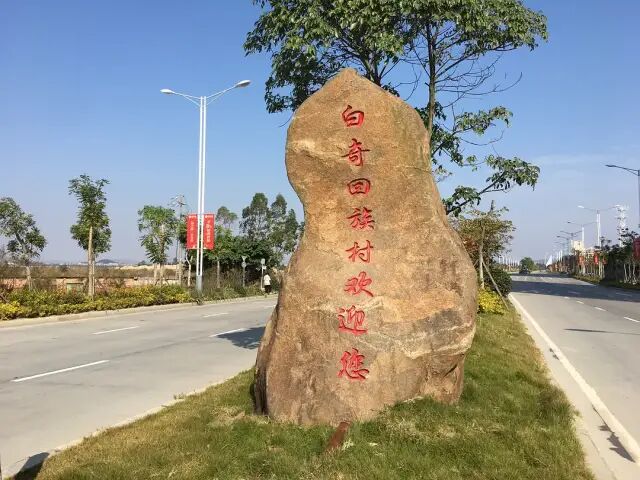
Part 1: History Before the Yuan Dynasty
The various genealogies of the Guo clan in Baiqi have vague and contradictory records about their life before settling there. These records likely include some embellishments and made-up stories. But by looking closely at these genealogies and checking them against the history of that time, we can still make a reasonable guess. Two valuable studies are 'Several Issues in the Early History of Baiqi Hui Muslims' by Professor Shi Yilong from Xiamen University, and 'Origins of the Guo Surname in Baiqi and Madrasa Education' by Professor Wu Youxiong from Quanzhou Normal University.
Were their ancestors Prince of Fenyang Guo Ziyi?
The Guo family of Baiqi claims Prince of Fenyang Guo Ziyi as their ancestor. This claim appears in the At this time, only a few decades had passed since the Guo family settled in Baiqi.
Although they claim Guo Ziyi as an ancestor, the Guo family genealogy does not provide reliable lineage evidence. It only states: "
Since the Song and Yuan dynasties, compiling family genealogies gradually became a key part of Confucian ethics and clan cohesion. More and more private family genealogies were created. After the Ming Dynasty, many ordinary families' genealogies also began to use a grander format. These genealogies traced back dozens of generations, often listing ancestors who were ancient emperors, from prominent lineages, or held high official ranks. Guo Ziyi was enshrined in the Ming Dynasty's Temple of Emperors and Kings in 1388 (the 21st year of Hongwu). He was listed as a meritorious official from ancient and modern times. Guo Ziyi was an important famous person with the surname Guo, and many Guo family genealogies from the Ming and Qing dynasties claimed him as an ancestor. Coincidentally, another branch of Guo Hui Muslims lives in Guocuo Village, Quangang District, 70 li northeast of Baiqi Hui Township. They have no direct connection with the Baiqi Guo clan, but they also claim Guo Ziyi as their ancestor.
2. Were their ancestors Han Chinese who converted to Islam?
If Guo Ziyi is their ancestor, then the question of why they, as Han Chinese, believe in Islam needs to be answered. In the Guo Zhaofen said that among the Guo clan, there were two theories: "following the mother's religion" and "originally Hui." He found both unreasonable, so he proposed a third theory: "adapting to Hui." This means the Guo ancestors had close ties with Muslims and then converted to Islam.
The "adapting to Hui" theory is quite reasonable. The Baiqi Guo clan did not face the same challenges as other Semu people during the late Yuan and early Ming dynasties. They lived peacefully. Soon after arriving in Baiqi, they built an ancestral temple (jiamiao) and compiled a family genealogy (jiapu). We will talk more about these later.
3. The Guo Clan's Founding Ancestor in Quanzhou
According to clan records, the Guo family once lived in Guojia Village, Fuyang, Hangzhou, and came to Quanzhou during the Yuan Dynasty. There are two theories about the earliest ancestor of the Guo family to arrive in Quanzhou. The mainstream theory names Guo Deguang (from
Genealogies that record Guo Zhang as the founding ancestor in Quanzhou state, and Records mention "Dezhao Gong's branch in Xingzhai, Dongjie, and other places." This means Guo Zhangsheng had two brothers, Guo Deguang and Guo Dezhao. Guo Deguang's descendants lived on Fashi Shitou Street and in Baiqi. Guo Dezhao's descendants lived in Xingzhai Village and on Quanzhou Dongjie. This theory connects the Guo clan of Baiqi with the Jundong Guo clan, who live in Quanzhou's Xingzhai Hui Muslim Village.
Thousands of Guo-surname Hui Muslims live in Xingzhai Hui Muslim Village and other areas in Luojiang District, east of Quanzhou city. Their family genealogies state in the preface: "First ancestor Tong, courtesy name Mengliang, sobriquet Leqiao Chushi." A person from Fuyang, Zhejiang, came to Quanzhou in the late Yuan Dynasty, following a commissioner. He enjoyed the beautiful scenery of Quanzhou and settled there. Because Guo Mengliang lived on Dongjie Street in Quanzhou, his descendants became known as the Jun Dong Guo clan. Later, Guo Mengliang's fifth-generation descendants, Guo Yuan and Guo Quan, moved to Xingzhai during the Chenghua reign of the Ming Dynasty. After that, they spread to various other places.
The "Quanzhou Prefecture Gazetteer" also has a record about Guo Mengliang, the first ancestor of the Jun Dong Guo clan: "Guo Tong, courtesy name Mengliang, alias Leqiao, was originally from Fuyang, Zhejiang." It also says, "In the late Yuan Dynasty, he followed his ancestor Qin, who served as Quanzhou Salt Commissioner." Additionally, the epitaph of Guo Mengliang's wife, Ms. He, records: "She married Guo Mengliang from the same village. Guo, from Fuyang, Zhejiang, served his ancestor Qin, who came to Fujian as an official in the late Yuan Dynasty." "
This states that Guo Mengliang came to Quanzhou from Fuyang, following his ancestor "Qin." The founding ancestor of the Baiqi Guo clan, Guo Deguang, was named "Qin." The Baqi Guo Family Genealogy records: "His official name was Qin, his courtesy name was Deguan. He was a descendant from Guojia Village, Fuyang, Zhejiang." In the local gazetteer, "congzu" refers to a grandfather's brother. So, Guo Mengliang was likely a junior relative of Guo Dezhao. He came to Quanzhou from Fuyang, Zhejiang, with Guo Deguan.
The "Qishan Guo Family Genealogy Preface" of the Baiqi Guo clan states that Guo Deguan first lived outside Xingchun Gate in Quanzhou. He later moved to Fashi. Xingchun Gate was the east gate of Quanzhou's inner city during the Tang Dynasty. After the Yuan Dynasty, it became part of the city. Its location is in the middle section of Quanzhou's East Street. This was exactly where Guo Mengliang, the ancestor of the Guodong Guo clan, lived.
Based on current documents, it is inferred that Guo Deguan and his junior relative Guo Mengliang likely came one after another from Guojia Village, Fuyang, Zhejiang, to settle on Quanzhou's East Street.
4. Guo Deguan Living in Fashi
Fashi Village is on the north bank of the Jinjiang River, in the eastern suburbs of Quanzhou city. It was an important commercial pier for Quanzhou Port during the Song and Yuan dynasties. During the Yuan Dynasty, from Meishan to Bantou in Fashi, there was a stone street several li long along the river. In 1346, Moroccan traveler Ibn Battuta came to Quanzhou Port. He wrote in *Ibn Battuta's Travels*: "The city's port is one of the world's great ports, perhaps even the largest." We saw about a hundred large ships anchored in the harbor, and countless smaller boats. This port is a huge bay that extends inland, meeting a large river. "
The Jiangkou Pier of Fashi Port is located where the river meets the sea at the end of Shitou Street in Fashi Village. It was a trade hub during the Song and Yuan dynasties. Jiangkou Pier once had eight ferry crossings, but today only Meishan Ferry Pier and Wenxing Ferry Pier remain.
Due to years of silt accumulation, the riverbed rose and formed an islet. Then, real estate development happened. The river's surface no longer looks as it did back then.
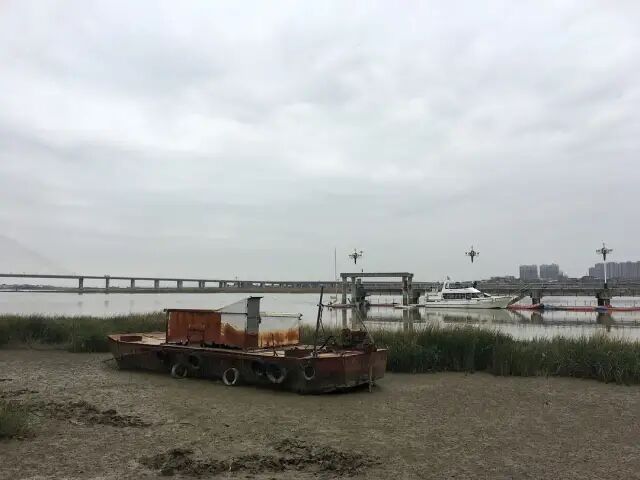
Meishan Ferry Pier is built with granite. The existing upper layer was built in modern times. The lower layer shows different periods from the Song to Qing dynasties, built one on top of another, mostly using a header-stretcher bond method.
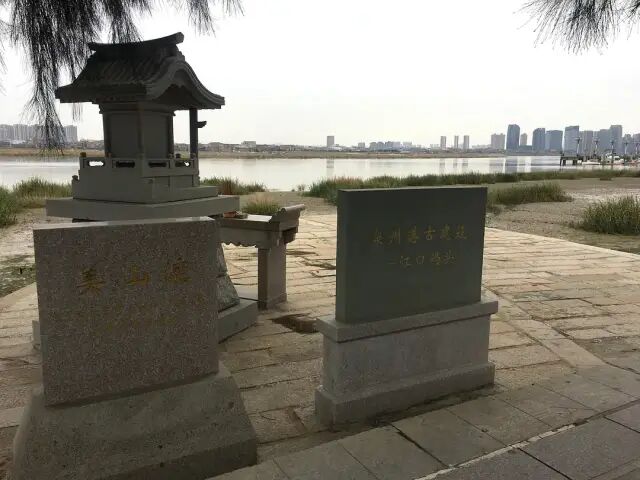
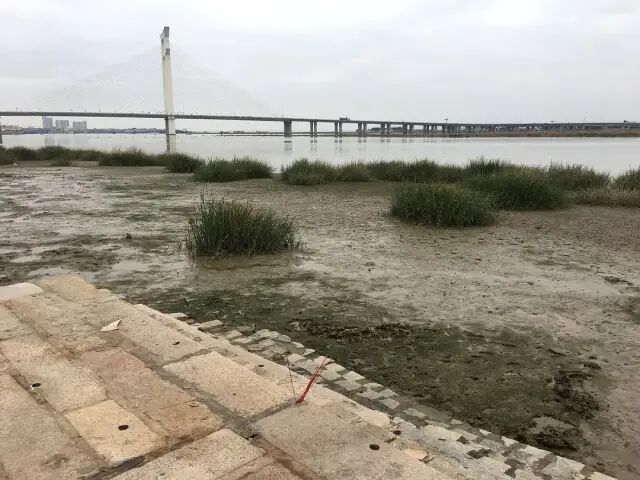
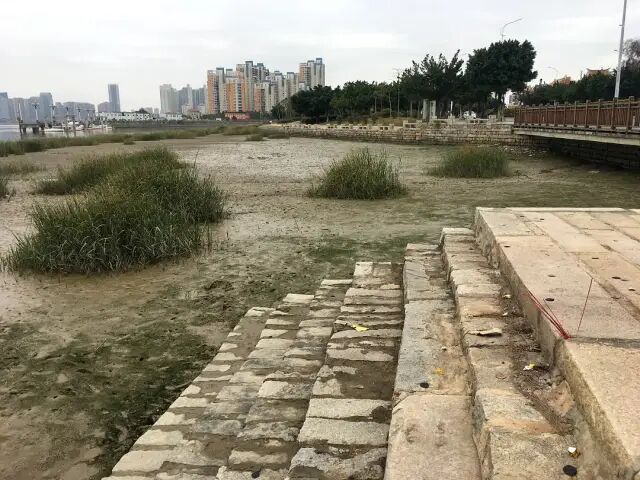
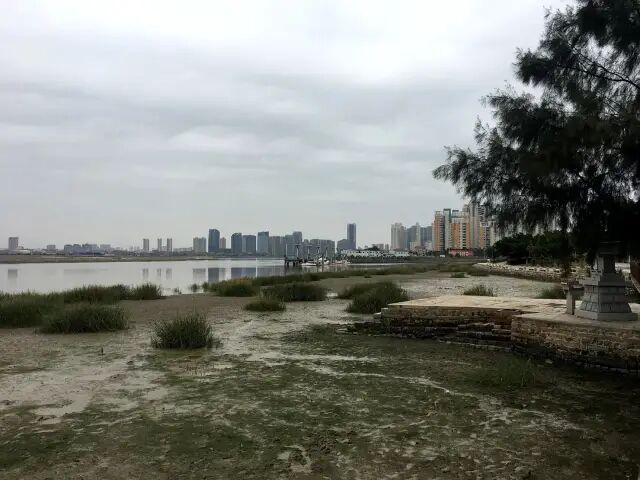
The Wenxing Ferry Terminal was also built with granite, mainly using staggered joint masonry. The visible remaining section is nearly 20 meters long; the rest has sunk into the river.
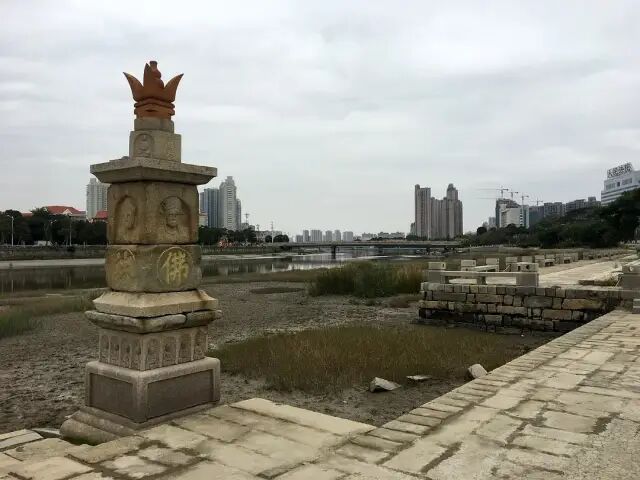
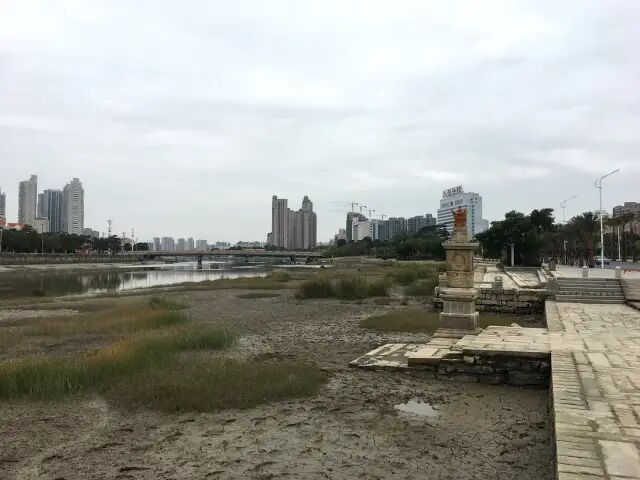
Fashi was an important trading port in Quanzhou. During the Song and Yuan dynasties, many Muslim merchants from Arabia and Persia lived there. Even after the Ming and Qing dynasties, the Jin, Xia, and Guo families of Hui Muslims still lived in the area. In 1959, the Quanzhou Maritime Museum's investigation team found several Islamic stone tombs, built in the Sumeru pedestal style, at the "West Cemetery" on Jincuo Mountain in Meishan, Fashi.
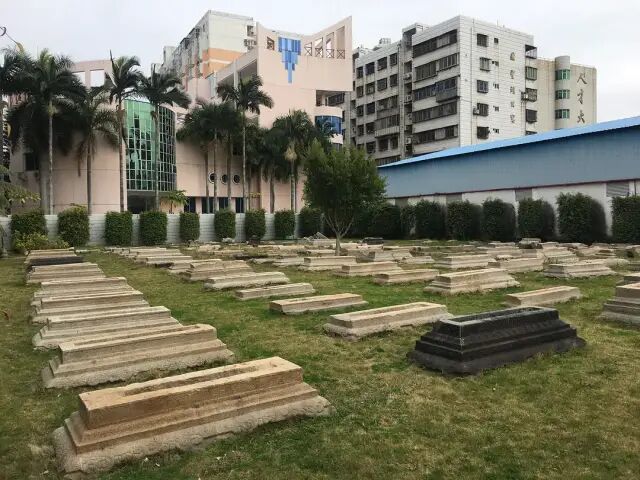
5. Guo Deguang's Tombstone – Was the Guo family from Persia?
In 1956, villagers from Shitou Street in Fashi Village were leveling land at a place commonly known as "Liugongqi." They dug up a very large "foreign guest tomb" and turned the area into a garden. Villagers said this tomb had a large square stone platform, divided into upper and lower levels. Each level had two Islamic stone tombs in the Sumeru pedestal style. At the head of the upper level was a tombstone. Villagers broke it into two pieces and carried it back to the village to pave the floor of the collective warehouse.
The Quanzhou Maritime Museum has a Yuan Dynasty Sumeru pedestal-style Islamic stone tomb. The two stone tombs built by Liu Gong might have a similar design.
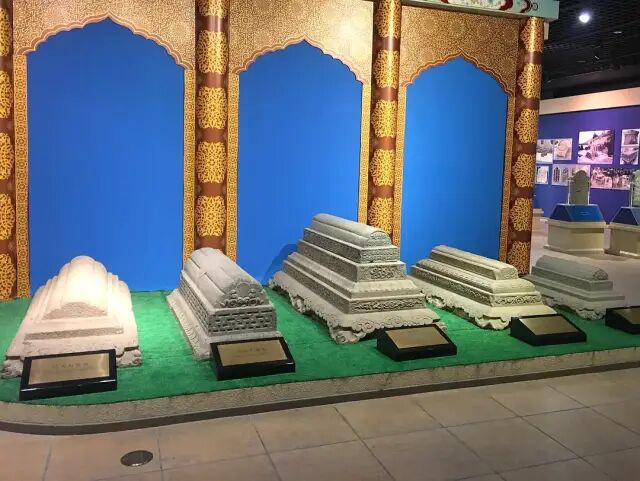
In 1959 and 1974, an investigation team from the Quanzhou Maritime Museum followed clues from the
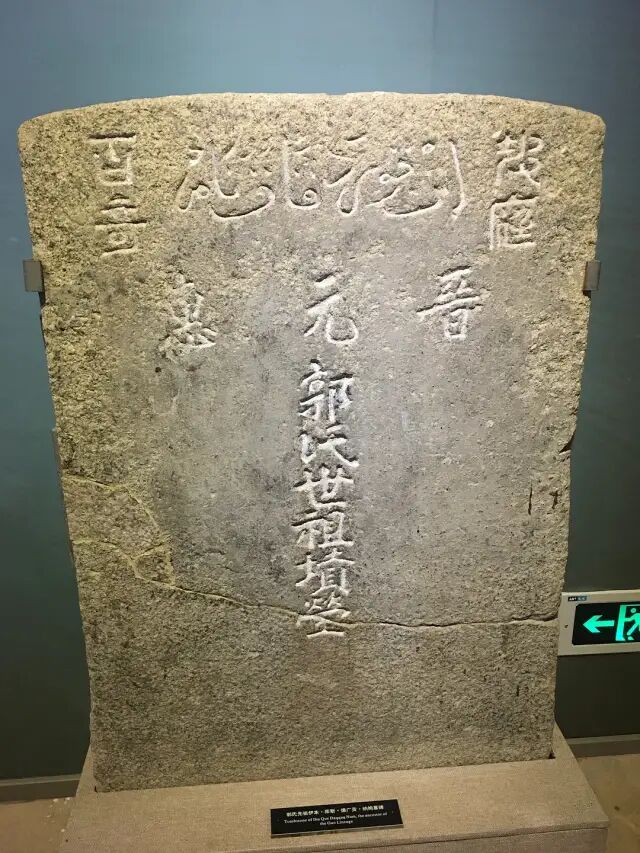
The upper right corner of this tombstone has The upper left corner has Below that,
The Chinese characters on the tombstone are easy to explain, but interpreting the Arabic text is very difficult. In the early 1980s, the view of Chen Dasheng, director of the Quanzhou Maritime Museum, became widely accepted. He interpreted the Arabic text as
Professor Wu Youxiong of Quanzhou Normal University offered a completely different interpretation in his work "The Origin of the Guo Clan in Baiqi and Madrasa Education." Wu Youxiong consulted the director of the Arabic department at China National Radio. He then concluded that the inscription was Minnan dialect, spelled in Arabic script, reading "Yin Go Zi Ta-gag Mou." This translates to "Yuan Dynasty Guo Deguan's Tomb." Previous interpreters didn't know Minnan dialect, so they couldn't translate it. There is no evidence that the Guo clan came from Persia.
The method of writing Chinese with Arabic script is called Xiaoerjing or Xiaoerjin, and it is also known as Xiaojing. It was used to annotate Islamic texts during study. The Guo clan genealogy records show that Guo Deguan's tomb was rebuilt many times. This tombstone was likely re-erected during the Qing Dynasty by Guo descendants who were Muslim. The experience of the Guo descendants restarting madrasa education during the Qing Dynasty will be discussed in detail later.
Two: Settling in Baiqi in the Early Ming Dynasty.
One: Did they move to Baiqi to escape ethnic unrest at the end of the Yuan Dynasty and early Ming Dynasty?
Guo Deguan's grandson, Guo Zhongyuan, moved from Fashi to Baiqipu, across from Houzhu Port, during the Hongwu reign of the Ming Dynasty. This area then became the current Baiqi Hui Muslim Township. Many studies say Guo Zhongyuan moved because of wars at the end of the Yuan Dynasty and the oppression of Semu people in the early Ming Dynasty. But is that really true?
Between 1357 and 1366, the Ispah Rebellion (Yisibaxi Zhanluan) broke out in Quanzhou. It was organized by Persian Semu people. This caused unprecedented disaster and severe destruction in Quanzhou. After the war, Quanzhou saw a wave of anti-Semu sentiment. Many Semu people were killed in revenge. The "History of the Jin Clan Genealogy of Qingyuan" (Qingyuan Jinshi Zupu Lishi) records: "In this conflict, all people from the Western Regions were wiped out. Those with foreign hair and high noses were mistakenly killed. The gates were closed, and executions continued for three days." Many surviving "foreigners" (fanren) in Quanzhou fled the city to find refuge.
Based on genealogical records, Guo Deguang was likely born around 1283-1303 and died around 1367-1387. Guo Deguang's later years were the peak of anti-Semu sentiment in Quanzhou. However, genealogies generally record that Guo Deguang "registered his household in Fashi by custom in the early Hongwu period." The "Preface to the Qishan Family Genealogy" (Qishan Jiapu Bixu) gives more detail: "In the ninth year of Hongwu (1376), he registered his household by custom and settled in Fashi." 1376 was the second year the Ming army controlled Quanzhou. After the Ming Dynasty took control of Quanzhou, they began to reorganize household registration. Guo Deguang's family was registered into the Ming Dynasty's household system at this time.
Guo Deguang lived in Fashi until he died "of illness." He was buried in Fashi after his death. Guo Deguang's son, Guo Zihong, lived for 49 years and died in 1366. He never left Fashi his whole life and was buried there after his death. His wife, Lady Weng, died in 1372 and was also buried in Fashi. The Potting Genealogy also records that Guo Shiquan, the eldest son of Guo Jiyuan (Guo Zihong's third son who stayed in Fashi), passed the provincial examination in 1411 and became a county official. The record states: "In the ninth year of Yongle (1411), he passed the provincial examination and served in the county, choosing to register in Jiangyou." This shows that Guo Shiquan received at least a stable education at that time.
It seems the Guo Deguang family not only survived the Ispah Rebellion and the subsequent massacres of Semu people without any record of suffering, but they were also registered in the household census after the Ming Dynasty took Quanzhou. Later, they even educated their descendants to become officials through imperial examinations.
2. Reasons for Guo Zhongyuan's Relocation
Let's look at why Guo Zhongyuan moved to Baiqi. The "Biography of Lord Zhongyuan" in the Baiqi Guo Clan Genealogy states that Guo Zhongyuan "accumulated wealth bit by bit and achieved success." He then "chose a place to build a house under Qishan Mountain in the 23rd Dudu of the county." This means Guo Zhongyuan accumulated some capital and decided to start a business elsewhere. The "Preface to the Baiqi Guo Clan Genealogy" also records: "Lord Zhongyuan had five sons and loved the joy of mountains and rivers. He chose a place under Qishan Mountain by the sea in Huiyi, built a house, and lived there." Neither record mentions war or fleeing.
From Guo Deguang onwards, several generations of the Guo family had a custom: the eldest son would go out to establish a new branch, while the youngest son stayed at the old family home. Guo Mengliang, a descendant of Guo Deguang and his younger brother Guo Dezhao, first lived on East Street in Quanzhou. Later, Guo Deguang founded a new settlement in Fashi, and Guo Mengliang stayed on East Street. Guo Deguang had one son, Guo Zihong. Guo Zihong's three sons were: the eldest, Guo Qinggong, who moved to Jiangxi; the second, Guo Zhongyuan, who founded a new branch in Baiqi; and only the third, Guo Jiyuan, who stayed in Poting, Fashi. Guo Zhongyuan originally lived in Daishang (Liandai) in Baiqipu. His four sons also followed this pattern: the eldest son lived in Baiqi, the second son lived in Lichun, the third son went to Zhangzhou, and only the fourth son stayed in Daishang (Liandai). Therefore, Guo Zhongyuan's move from Fashi to Baiqi was likely a result of the common "tree branching out" phenomenon seen in clan societies.
After the turmoil at the end of the Yuan Dynasty and beginning of the Ming Dynasty, Quanzhou's maritime trade was severely damaged. The prosperity of Fashi Port was gone. After the Ming Dynasty began, maritime bans were issued six times during the Hongwu reign. The "Veritable Records of the Ming Dynasty" states that "coastal residents were forbidden from privately communicating with foreign countries," "the use of foreign incense and goods by the populace was prohibited," and "not a single plank was allowed to go to sea." It is very likely that the Guo family shifted from commerce to agriculture during this period. Guo Zhongyuan and his eldest brother successively went out to make a living. The eldest brother went far to Jiangxi, and the second brother moved to the opposite bank of Houzhu Port. Only the youngest brother stayed behind to look after the ancestral home and graves, and manage ancestral worship.
Shi Yilong's study, 'A Preliminary Study on the Evolution and Causes of Religious Beliefs of the Hui Muslims in Chendai,' points out that the Ding clan of Chendai, another group of Hui Muslims in Quanzhou, also did not suffer oppression from the Semu people during the late Yuan and early Ming dynasties. They moved mainly because the early Ming dynasty banned sea trade, which made them shift from business to farming. So, the early Ming dynasty's ban on maritime trade was likely the main reason Guo Zhongyuan came to Baiqi.
3. Baiqipu in the early Ming Dynasty
Baiqipu is on the east side of the Luoyang River mouth in Quanzhou Bay. It sits across the river from Houzhu Port in Quanzhou. The area has large bay tidal flats and few people. Around Baiqipu, eight Han Chinese families lived: Zheng, Liang, Sun, Chen, Li, Yang, Jiang, Fu, and He. All were newcomers who moved from other places at the end of the Yuan Dynasty. There were no local prominent families. Far across the way is Quanzhou Houzhu Port.
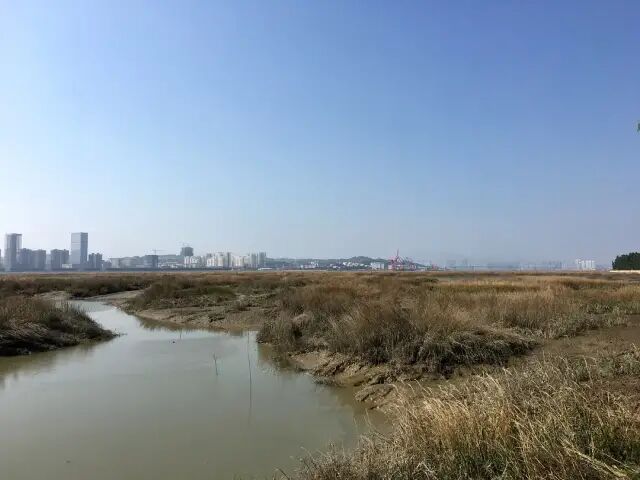
After Guo Zhongyuan arrived at Baiqipu, he settled down to farm. The family genealogy Family Genealogy Doubts: Ancestral Land and House Deeds records: In the 14th year of Hongwu (1381), funds were prepared to purchase Sunfu Daitian, or the Sun family reclaimed land, located in Baiqi and other places in the 23rd du of Hui-an. It carried more than 1,000 shi in rent, and part of the autumn grain tax record is illegible. Here, "Sunfu Daitian" refers to the Sun family who lived at the foot of Longtou Mountain at that time. This is today's Daishang (Liandai) Village, and it is also where Guo Zhongyuan lived.
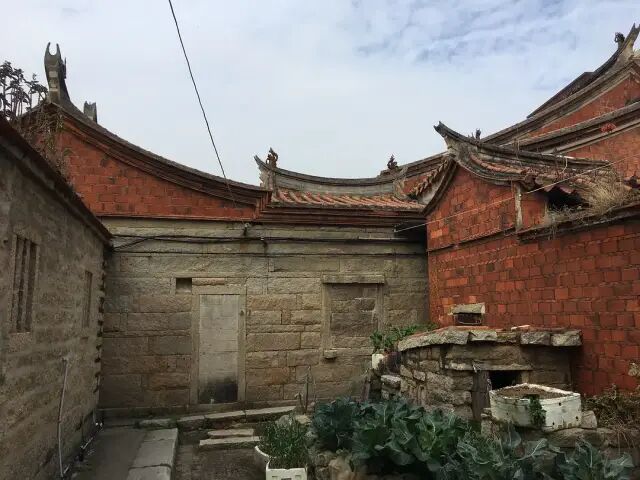
Guo Zhongyuan also built roads. His family genealogy, "Biography of Zhongyuan Gong," states that he "personally laid 300 li (steps) of stone roads for travelers." The Qiaowei stone bridge road was still in good condition in the 1960s.
The Guo family genealogy, "Preface to Re-adhering to Islam," says that Guo Zhongyuan built a mosque in Baiqi. He also collected many Islamic scriptures. The text states: "Since our ancestor settled in Baiqi, he kept thirty volumes of heavenly scriptures, founded a mosque, respected the teachings, and based his life on Allah."
However, Guo descendants who re-embraced Islam during the Qing Dynasty wrote this, and no earlier historical records confirm it.
4. Baiqi Stone Pavilion
The Baiqi Stone Pavilion (Baiqi shiting) was first known as Qiaowei Pavilion. People say Guo Zhongyuan built it during the Ming Dynasty's Hongwu era. It served as a resting pavilion at the Baiqi ferry crossing and is made entirely of granite. The pavilion's roof is umbrella-shaped, and its base is square. The pillars are in two layers: four inner pillars and twelve outer pillars. Together, they form two squares that look like the Chinese character "hui".
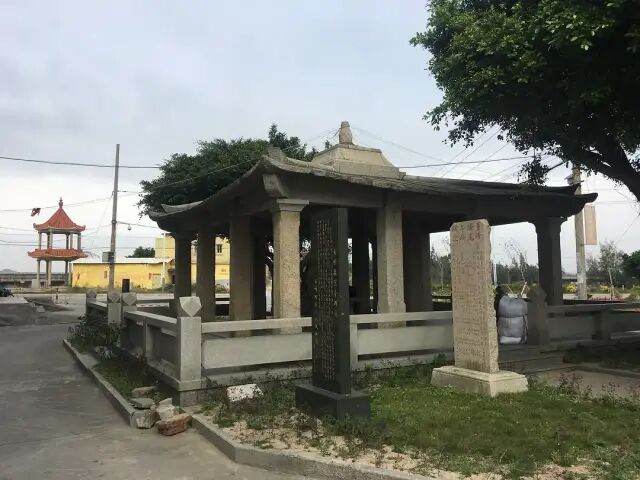
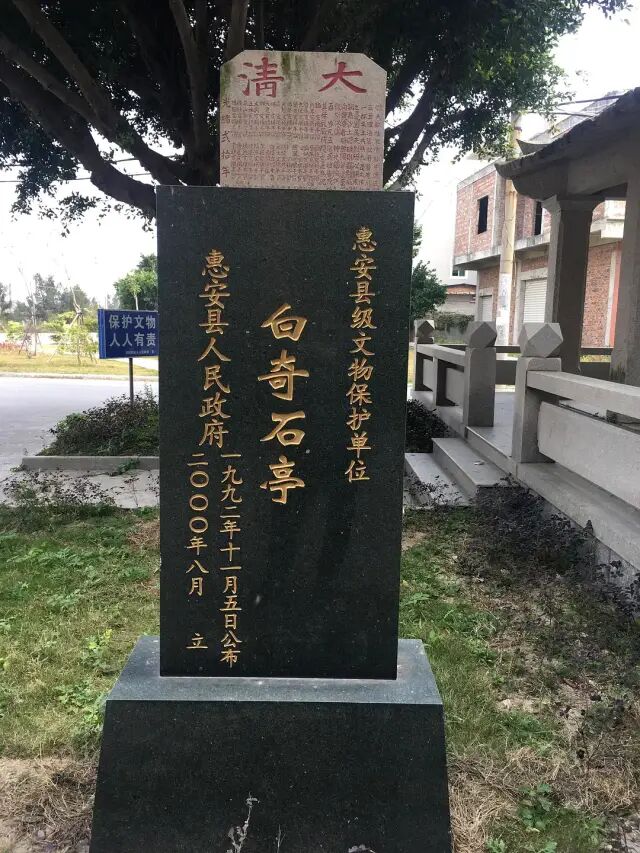
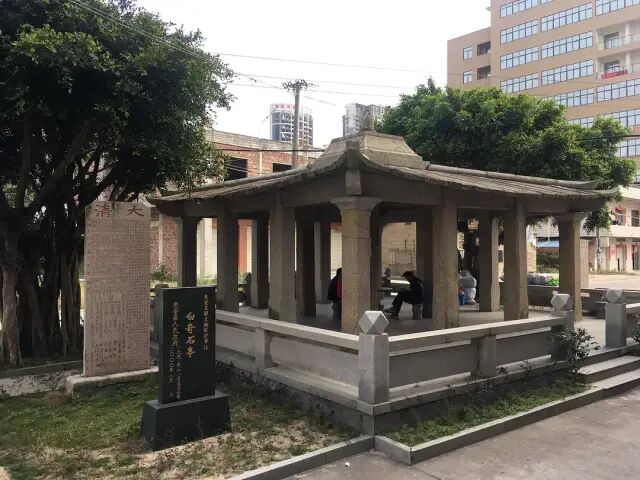
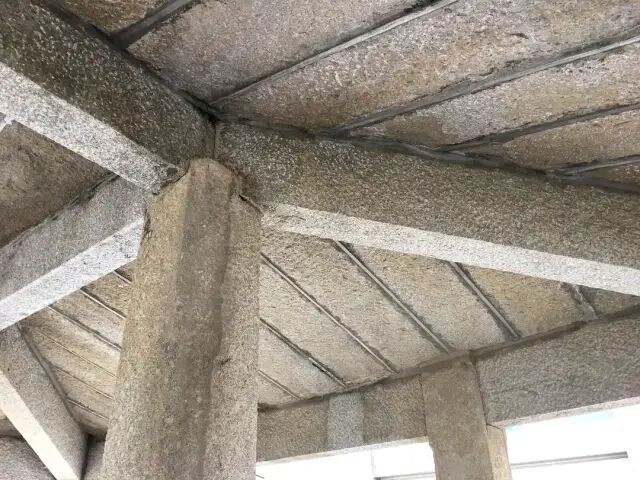
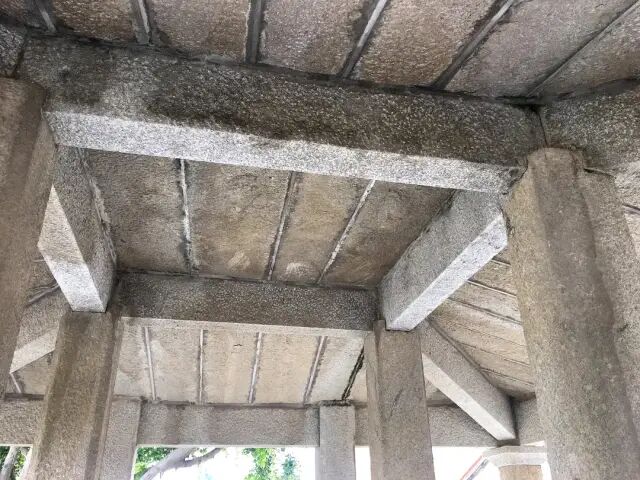
Legend has it that in 1417, during his fifth voyage to the Western Seas, Zheng He met Guo Zhongyuan at the Qingjing Mosque. Zheng He was invited to Baiqi, and Guo Zhongyuan welcomed him at the stone pavilion. This is why it's also called Jieguaan Pavilion, or "Welcoming Official Pavilion". But no documents record this event.
The stone pavilion was rebuilt twice during the Qianlong and Guangxu eras. A stele from its 1771 reconstruction (the 36th year of Qianlong) still stands today.
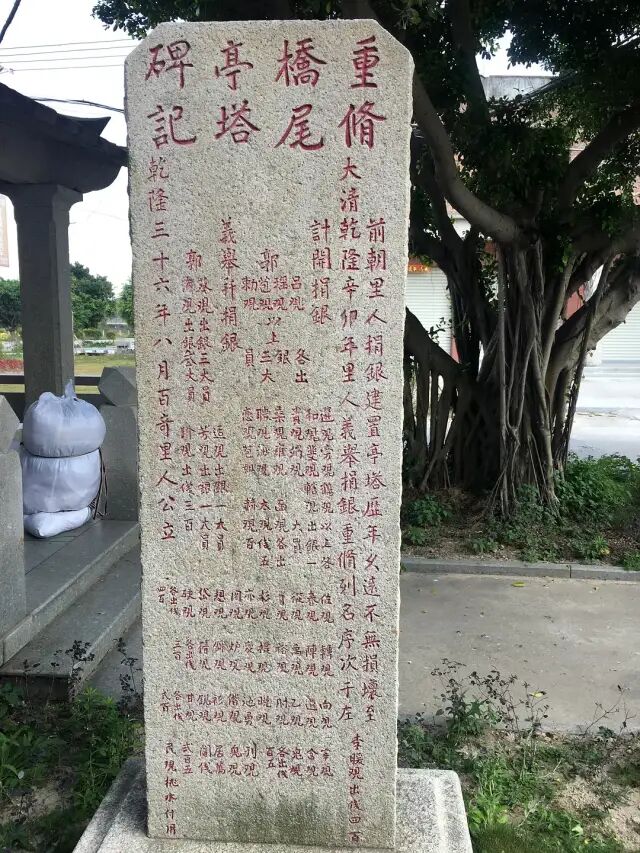
The Baiqi Stone Pavilion appeared in "China Tourism" magazine in November 1986. Back then, people still lived inside it. The pavilion's current look comes from its 2005 reconstruction.
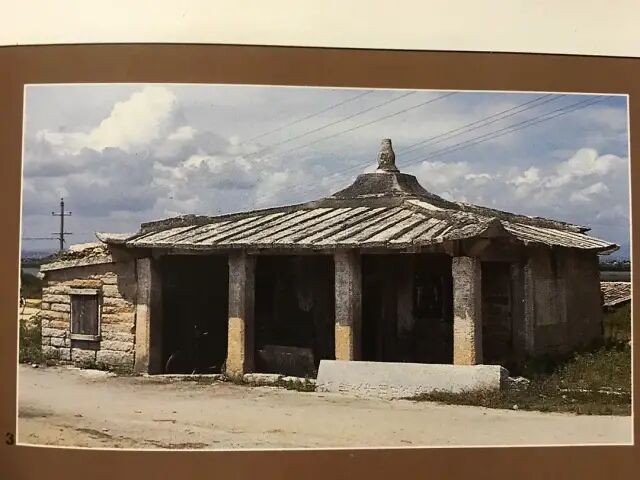
5. Tomb of Guo Zhongyuan and His Wife
Guo Zhongyuan died in 1422 at the age of 75. His wife, Lady Chen, died in 1433 at the age of 82. They are buried at the foot of Longtoushan (Dragon Head Mountain), east of Xiadai Village. People commonly call it the "Stone Lion Cemetery".
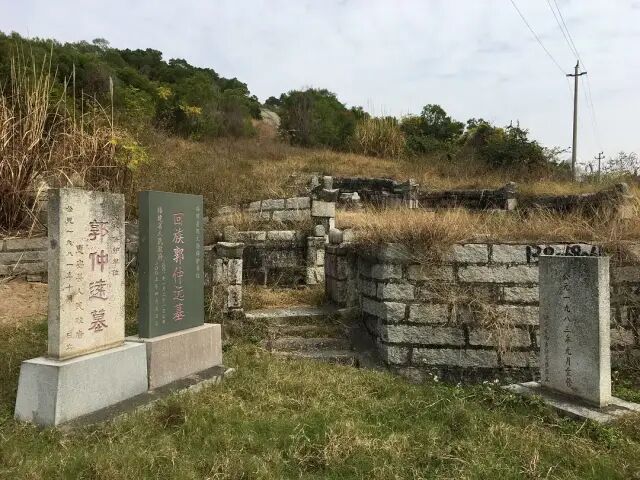
The tomb of Guo Zhongyuan and his wife is a classic Song-Yuan Quanzhou Muslim Sumeru-pedestal style stone tomb (xumizuo shi mu). The Guo family called these tombs, which have a stone lid on a stone base, "Jiaomu" (religious tombs). They were also known as "Gaozai Mu" (cake-like tombs), representing Islam.
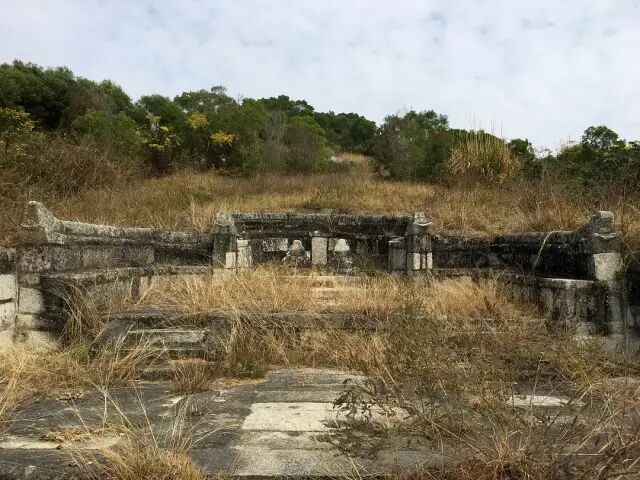
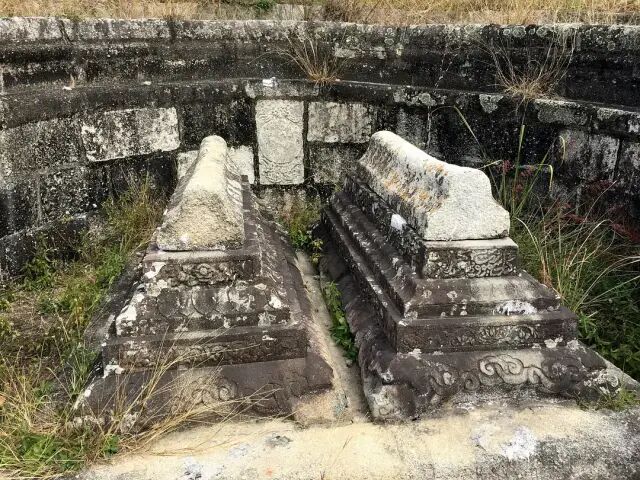
The stone tomb is made from granite, which is common in Quanzhou, and has five layers. The first layer has carvings of six-legged and ruyi patterns. The second layer shows continuous floral branches. The third layer features inverted lotus petals. On the fourth layer, the Chen family tomb on the left has carvings of lotus flowers and branches. The Guo Zhongyuan tomb on the right has Arabic inscriptions from Quran Chapter 55, verses 26 and 27:
Everything on Earth will perish; Only the essence of your Lord, full of majesty and honor, will remain forever.
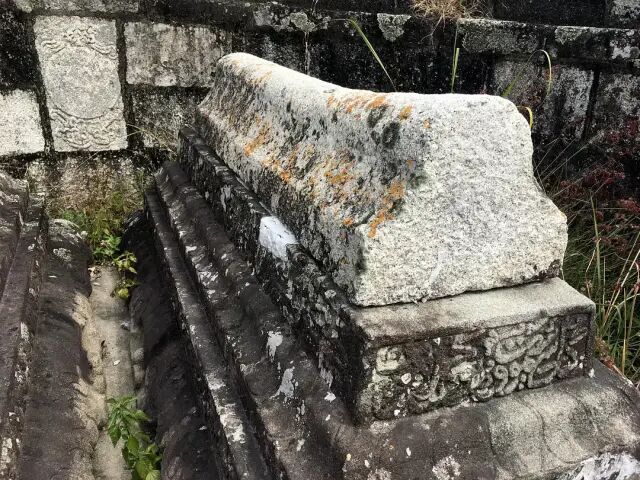
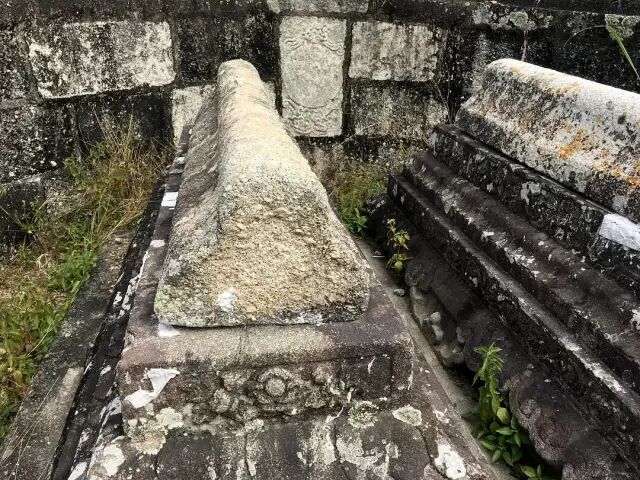
This verse appears often on the tomb covers of Song and Yuan dynasty Muslim tombs in Quanzhou. It is also the most common carving on ancient Muslim tombs in Sanya.
A tombstone from the Quanzhou Maritime Museum collection has Quran Chapter 55, verses 26 and 27 inscribed on it:
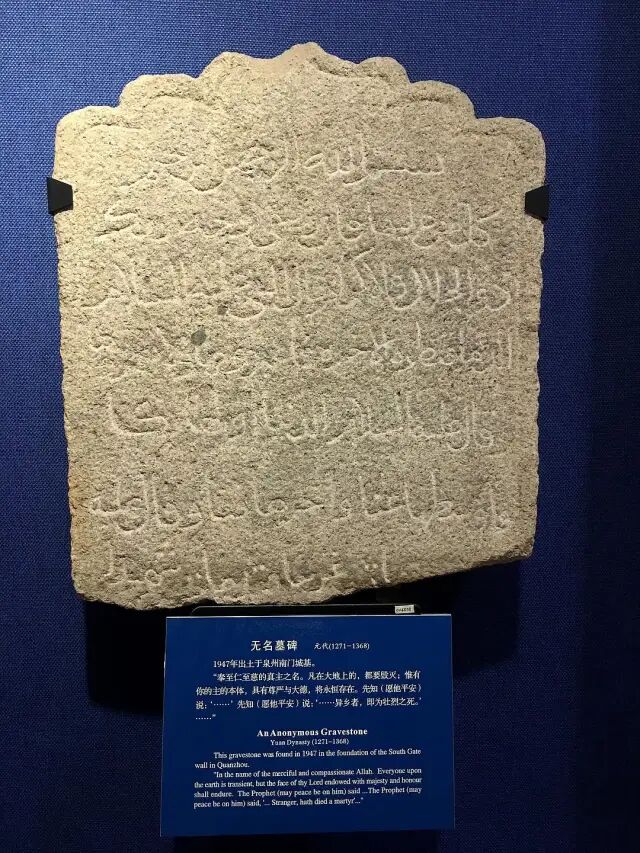
Two stone tombs sit side by side on a stone platform. Behind them, a horseshoe-shaped retaining wall holds a cloud-and-moon shaped stone stele in its center. This shape also appears on Song and Yuan dynasty Islamic stone tombs in Quanzhou.
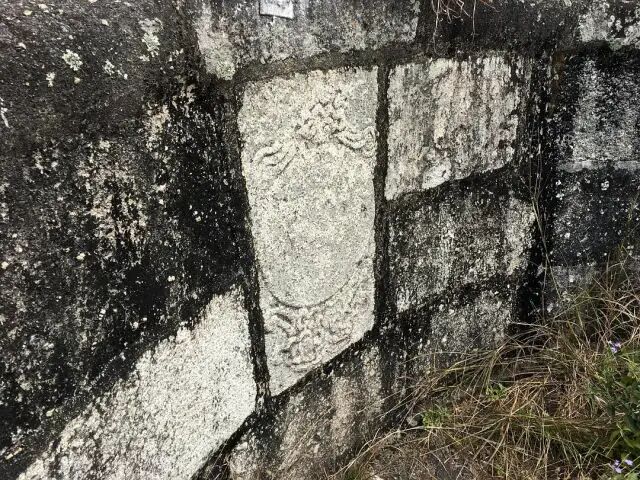
Stone carvings on both sides of the tomb look like stone lions and dragon heads.
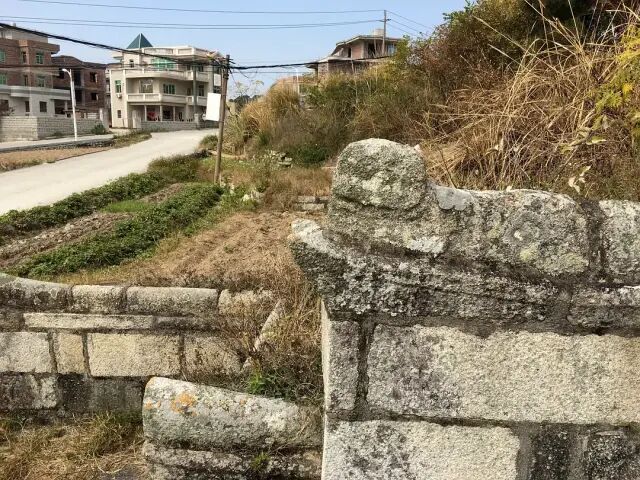
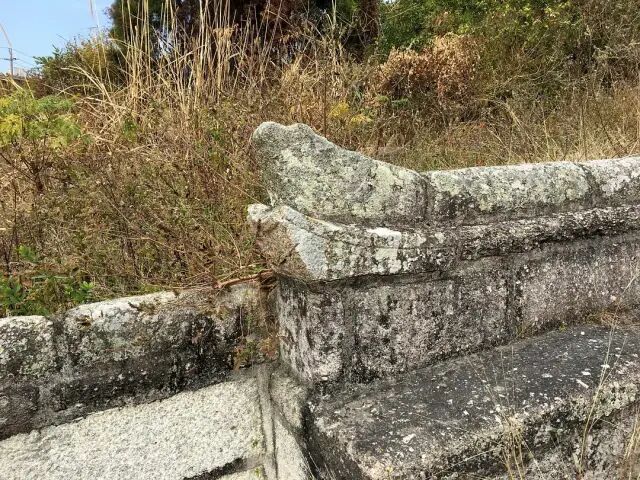
Today, you can see many Song and Yuan dynasty Islamic Sumeru pedestal (xumizuo) style stone tombs similar to Guo Zhongyuan's tomb at the Quanzhou Maritime Museum, Qingjing Mosque, and Lingshan Holy Tomb. After the Ming Dynasty, the Guo clan of Baiqi and the Ding clan of Chendai in Quanzhou continued to use this style. You can also find similar styles in Ming dynasty Islamic tombs in southeastern regions, like the Puhading Cemetery in Yangzhou and Ding Henian's tomb in Hangzhou.
A typical Quanzhou Islamic Sumeru pedestal (xumizuo) style stone tomb:
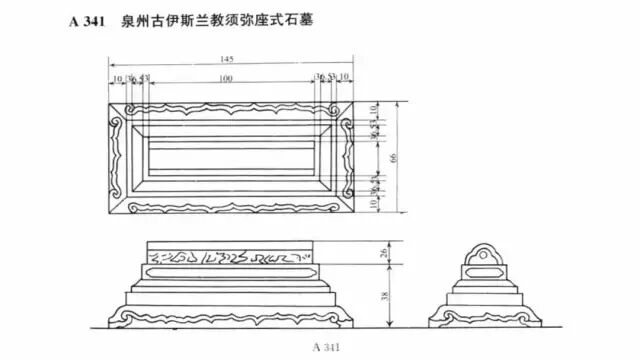
From the 2005 edition of "Quanzhou Religious Stone Carvings."
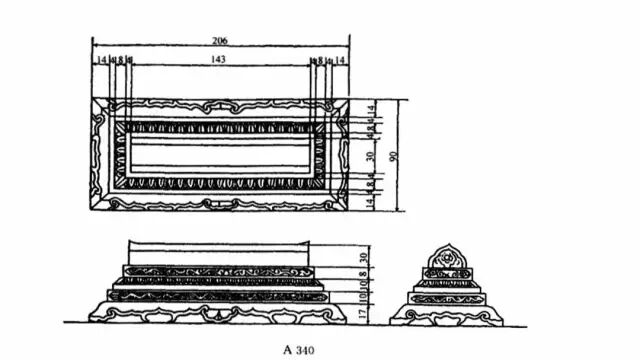
From the 2005 edition of "Quanzhou Religious Stone Carvings."
The Song and Yuan dynasty Islamic Sumeru pedestal (xumizuo) stone tomb at the Quanzhou Maritime Museum is the most magnificent one found to date.
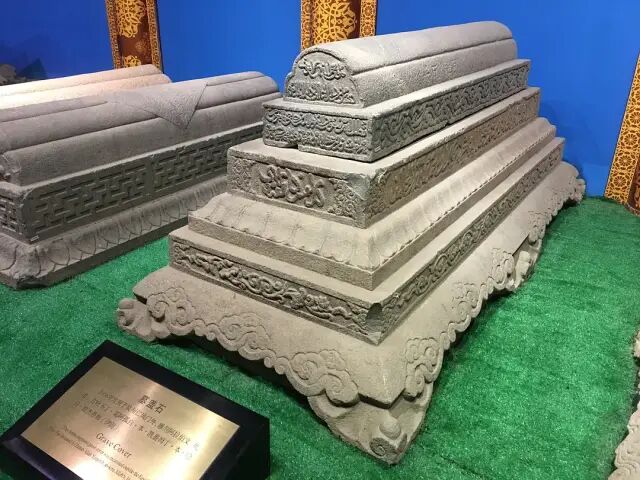
The Islamic Sumeru pedestal (xumizuo) style stone tomb at Quanzhou's Lingshan Holy Tomb.
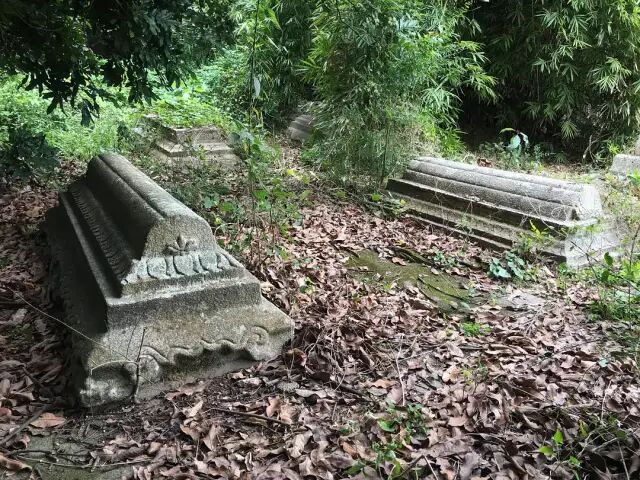
The Sumeru pedestal (xumizuo) style stone tomb of the descendants of Quanzhou's Chendai Ding clan.
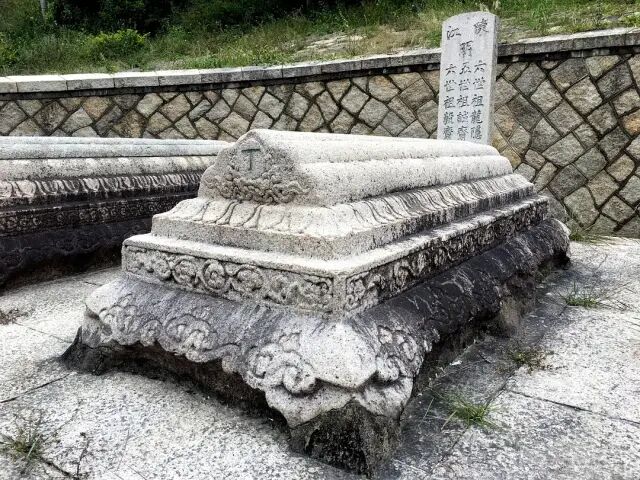
By Hangzhou's West Lake is the Islamic stone tomb with a Sumeru-style base (xumizuo) for the great poet Ding Henian. He died in 1424, just two years after Guo Zhongyuan.
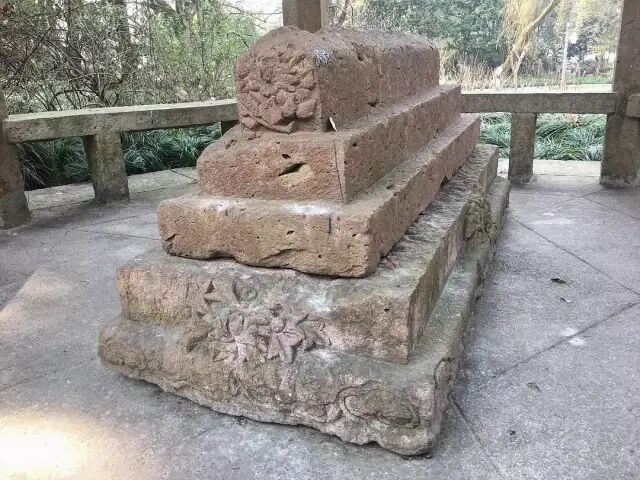
An Islamic stone tomb with a Sumeru-style base in Yangzhou's Puhading Cemetery.
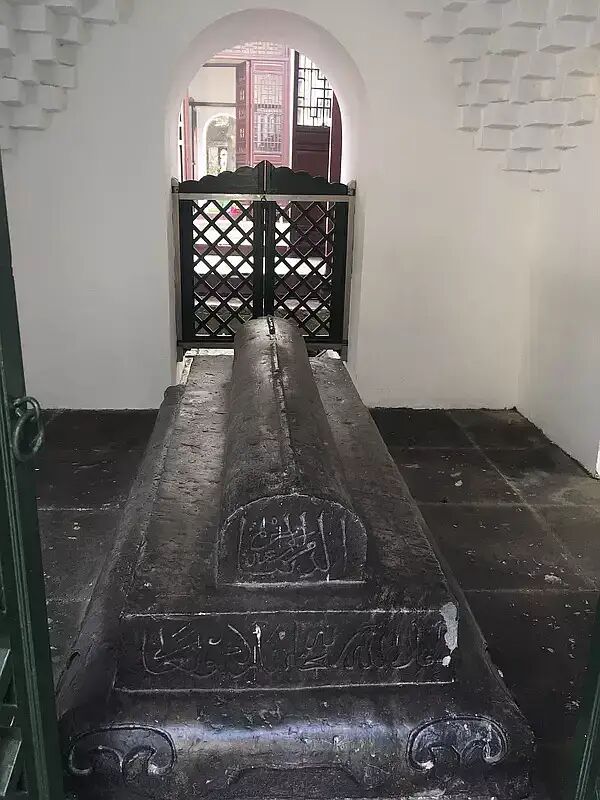
6. The Tomb of Guo Mengwei and His Wife.
Guo Mengwei was the second son of Guo Shichu, Guo Zhongyuan's eldest son. He died in 1480 at the age of 77. His wife, Ms. Huang, died in 1474 at the age of 69. After their deaths, they were buried right next to Guo Zhongyuan's tomb. Their tombs are also Islamic stone tombs with a Sumeru-style base, but they have no carvings. Behind the tomb is a stele commemorating its renovation in 1983.
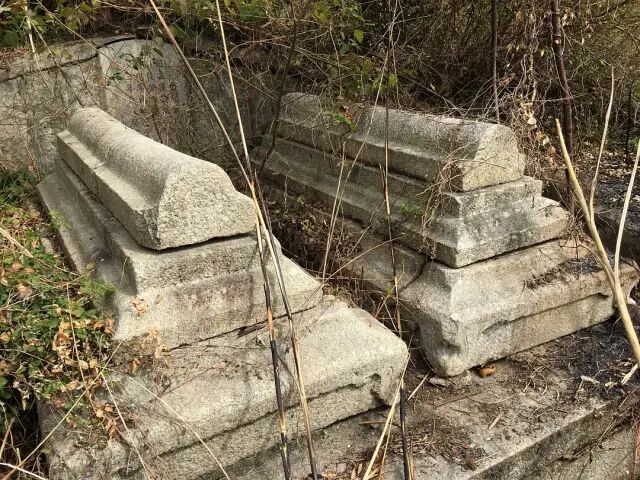
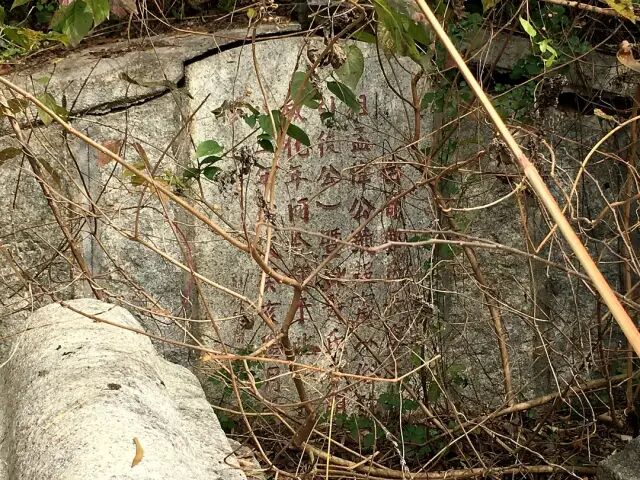
Guo Mengwei's tomb, as seen in China Tourism magazine in November 1986.
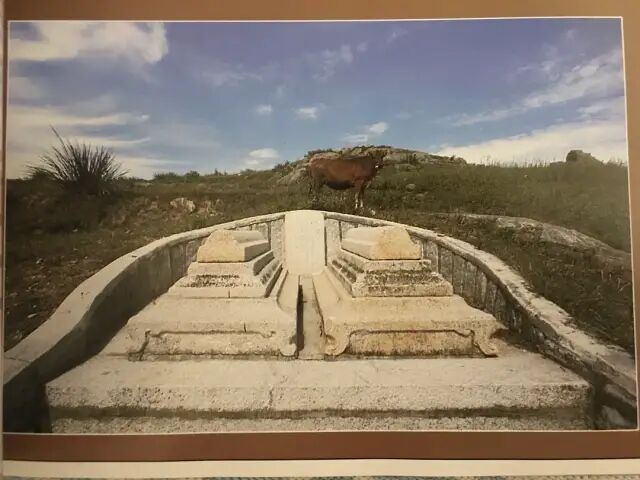
A pair of stone lions stands next to the tombs of Guo Zhongyuan and Guo Mengwei.
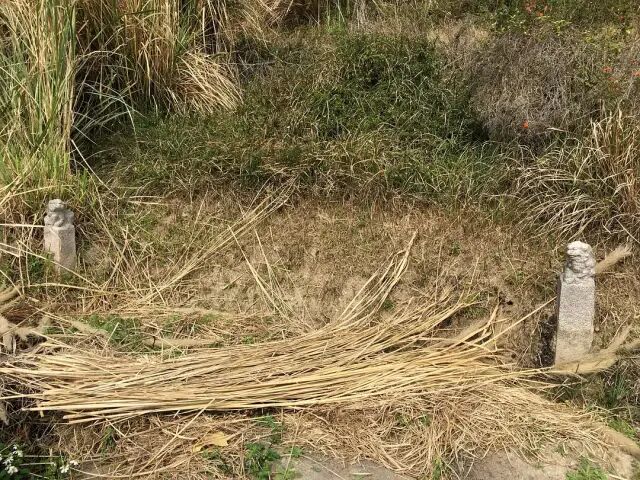
7. The Family Tomb of Guo Shiyuan.
Guo Shiyuan was Guo Zhongyuan's second son. He died in 1407 at the age of 34. After his death, he was buried east of Lichun Village, in a place commonly known as the
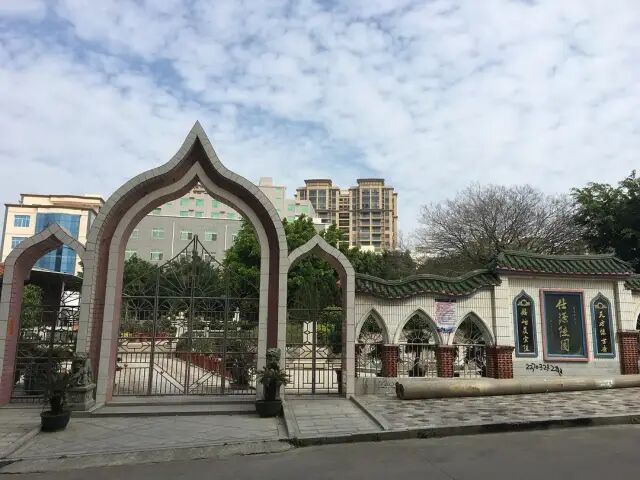
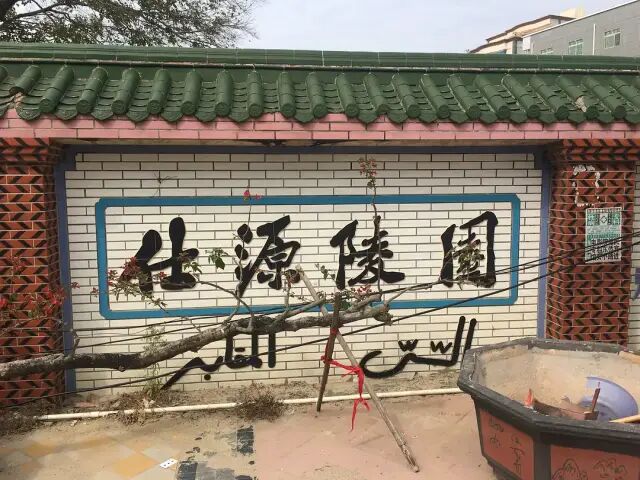
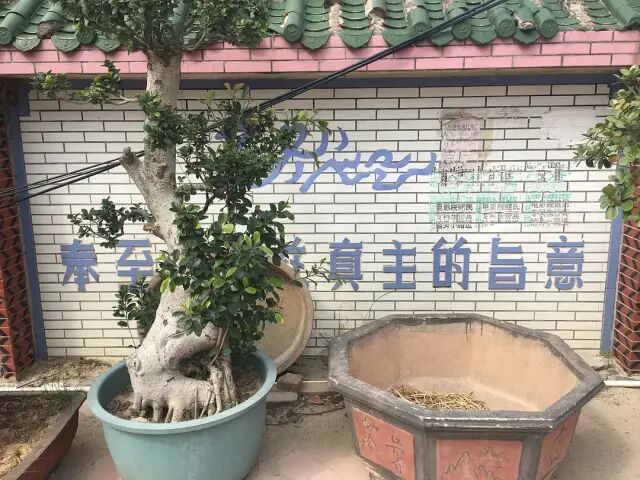
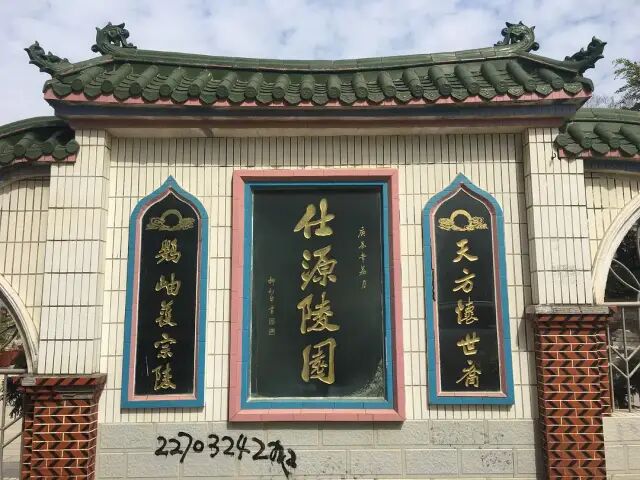
Guo Shiyuan's tomb is also an Islamic stone tomb with a Sumeru-style base. The front of its lid has an intaglio cloud and moon pattern. The base has continuous branch patterns around its sides.
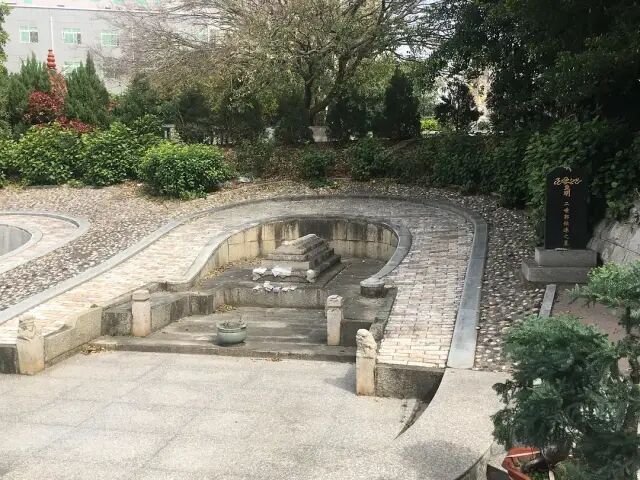
Next to Guo Shiyuan's tomb are two Islamic stone tombs with a Sumeru-style base. To the east is the tomb of his wife, Ms. Chen. To the west is the tomb of Ms. Zeng, wife of his eldest son, Guo Bangyong. Ms. Chen died in 1457; her stone tomb has no carvings. Ms. Zeng died during the Chenghua reign of the Ming Dynasty (1465-1487); her stone tomb has continuous branch patterns.
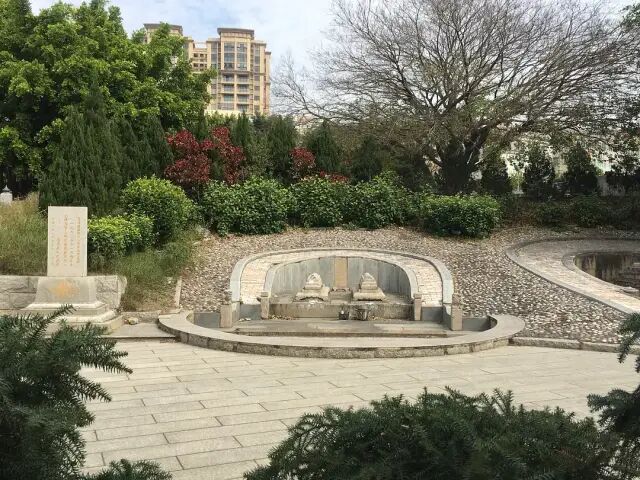
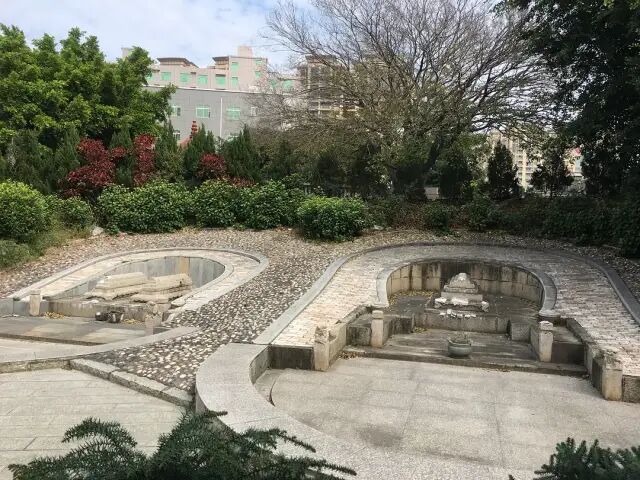
Also, behind Guo Shiyuan's tomb are stone tombs of his descendants:
The tomb of Guo Yiqin, Guo Shiyuan's great-grandson (fourth generation), who died in 1504.
This is the tomb of Guo Yiqin's first wife, Ms. Wang. Her death year is unknown. This is the tomb of Guo Yiqin's second wife, Ms. Li. Her death year is unknown. This is the tomb of Guo Xuyuan, Guo Yiqin's eldest son from the fifth generation. He died in 1526. The tomb of Guo Huaiqin, Guo Yiqin's third younger brother from the fourth generation, and his wife, Ms. Hu, was moved here in 1994. This happened because of construction at their original site. Guo Lianfu, from the fifth generation of the Guo family's Xin branch (fifth branch), and his wife, Ms. Pu, were moved here in 1997. This was due to construction at their original site. The gate to Guo Shiyuan Cemetery was closed when I visited. So, I could not see the tombs further inside.
Tomb of Guo Shichu and his wife.
Guo Shichu was Guo Zhongyuan's eldest son. He died in 1448 (the 13th year of the Zhengtong reign of the Ming Dynasty) at the age of 79. His wife, Ms. Wu, died in 1439 (the 4th year of the Zhengtong reign of the Ming Dynasty) at the age of 57. After they died, they were buried west of Tianyin Village. This place is commonly called the "Eldest Branch Public Cemetery." It is a four-tiered dolerite Sumeru pedestal (xumizuo) stone tomb.
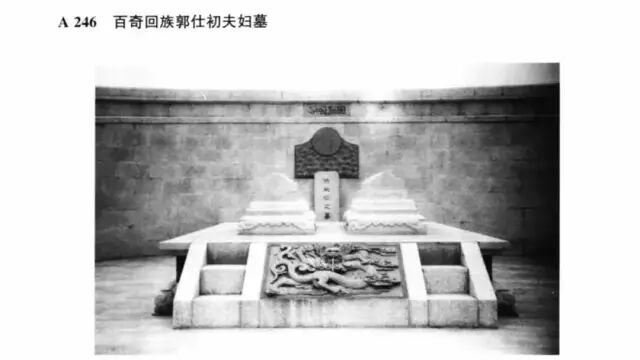
From the 2005 edition of "Quanzhou Religious Stone Carvings."
In the 1970s, during land reclamation work at Baiqi, a granite stone carving was unearthed. It was a waist-section stone from a Sumeru pedestal (xumizuo) altar-style stone tomb. Arabic script on it reads: "He - Allah has supreme power, and you will all return to Him."
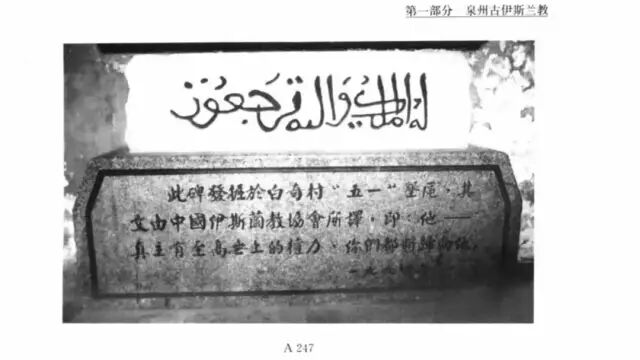
From the 2005 edition of "Quanzhou Religious Stone Carvings."
A typical Sumeru pedestal (xumizuo) altar-style Islamic stone tomb.
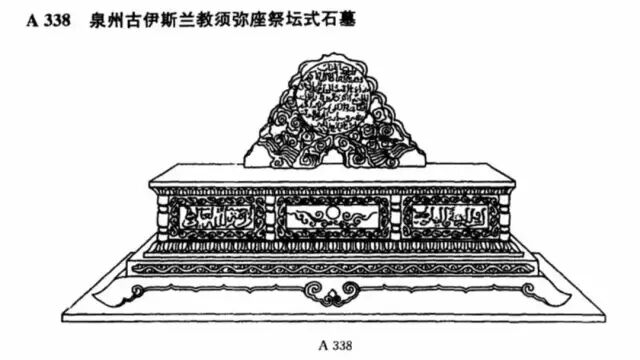
From the 2005 edition of "Quanzhou Religious Stone Carvings."
It is still unclear if these Islamic tombs were rebuilt by later generations. After the Kangxi Emperor's reign in the Qing Dynasty, the Guo clan of Baiqi once again converted to Islam. Guo Honglong, the first to convert, changed his father Guo Mucheng's Han-style coffin into an Islamic stone tomb. According to the "Genealogy of the Guo Clan's Main Branch":
Lord Mucheng had left the faith earlier. When his son Honglong converted, they renovated the tomb and changed his coffin burial to a Hui Muslim burial. It still looks like a bone tomb today.
Besides this record, no other Muslim stone tombs with a Sumeru pedestal-style tomb base and a tomb cover stone appeared in the Qing Dynasty. Qing Dynasty Muslim tombs changed to use brick or stone construction. The tomb base and cover were made with sanhe ash (a traditional Chinese mortar) to imitate Ming Dynasty tombs.
Three. Clan-ization?
In Professor Wang Ke's 2017 book, "The Vanishing Citizens: Modern China's 'Ethnic' Discourse and the National Identity of Minorities," in the first chapter, "From 'Muslim' to 'Chinese'," Professor Wang Ke introduced us to the Ding clan of Chendai, another large Hui Muslim group in Quanzhou. They achieved "localization" in the Ming Dynasty through "indigenization," "clan-ization," and "imperial examination integration." The Ding clan of Chendai, during their 8th, 9th, and 10th generations, gradually formed strict generational names, compiled genealogies, and achieved great success in the imperial examinations. They eventually stopped believing in Islam.
The Ding clan of Baiqi, however, was very different. Besides the Sumeru pedestal-style stone tombs and descriptions from Qing Dynasty descendants who reconverted about their ancestors' beliefs 400 years ago, the Guo clan of Baiqi in the early Ming Dynasty seemed to have fully integrated into the clan society of the Confucian system in Southern China. This is evident from their ancestral temple and genealogy.
One. Guo Clan Ancestral Temple.
The Guo clan ancestral temple of Baiqi was built by Guo Zhongyuan's eldest son, Guo Shichu, in 1432 (the 7th year of Xuande in the Ming Dynasty). It is commonly known as the "Grand Ancestral Hall" (dacitang). It was originally a "three-bay" traditional Southern Fujian house (dacu). During a renovation in the Qianlong era, it was expanded to a "five-bay" traditional Southern Fujian house (dacu). It was renovated again in 1873 (the 12th year of Tongzhi). In 1898 (the 24th year of Guangxu), the Grand Ancestral Hall (dacitang) was destroyed by fire. It was rebuilt with donations from four Guo clan members during the Xuantong era and the early Republic of China period.
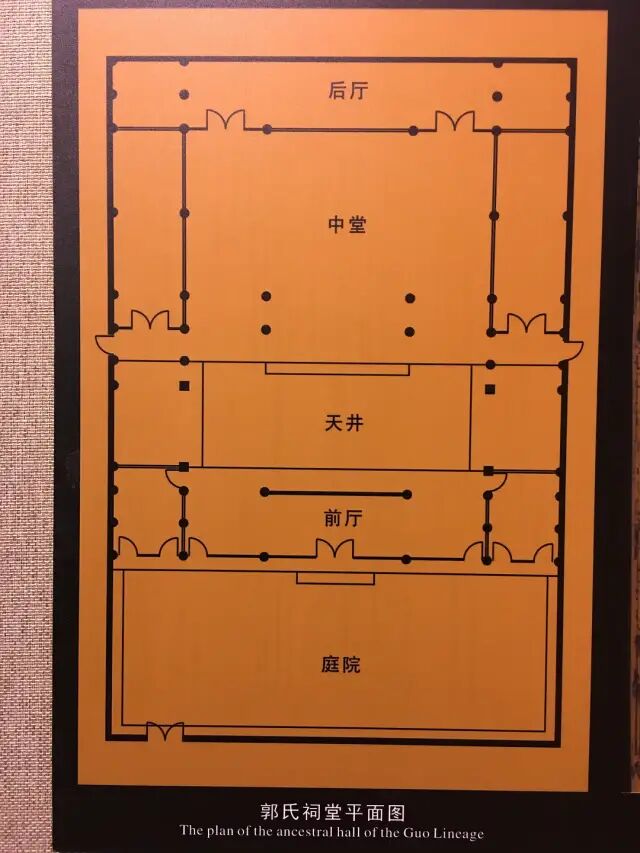
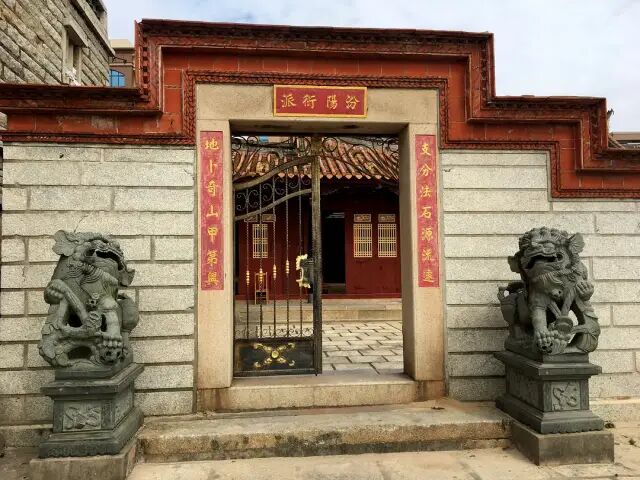
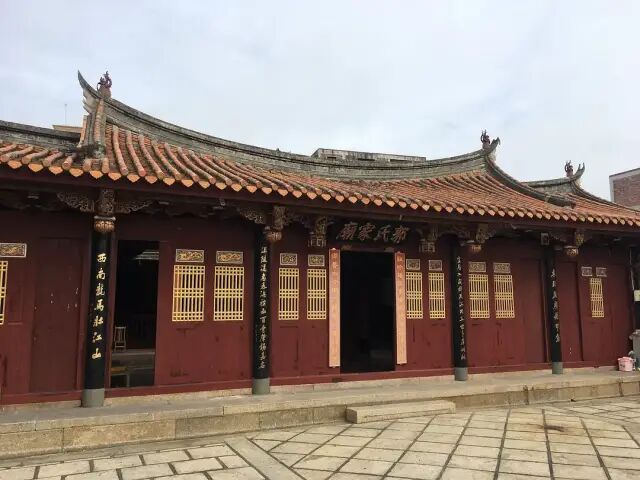
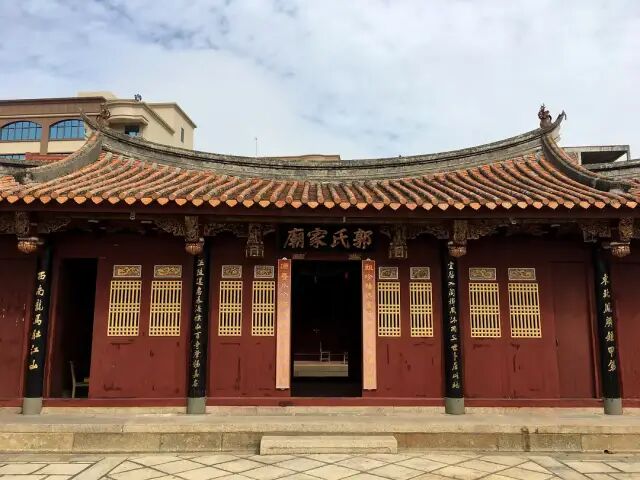
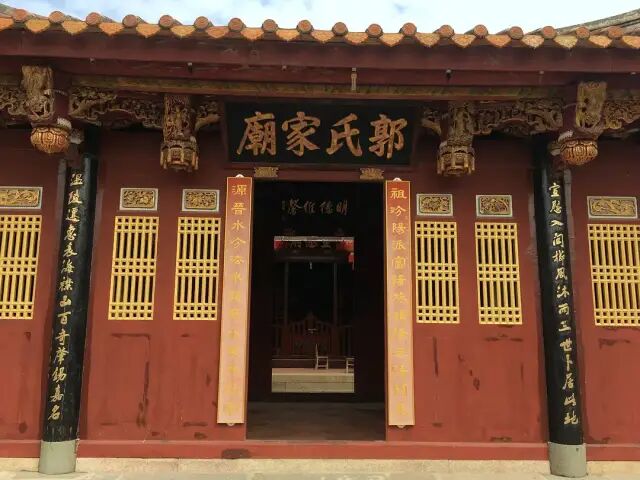
Exquisite and intricate Southern Fujian wood carvings.
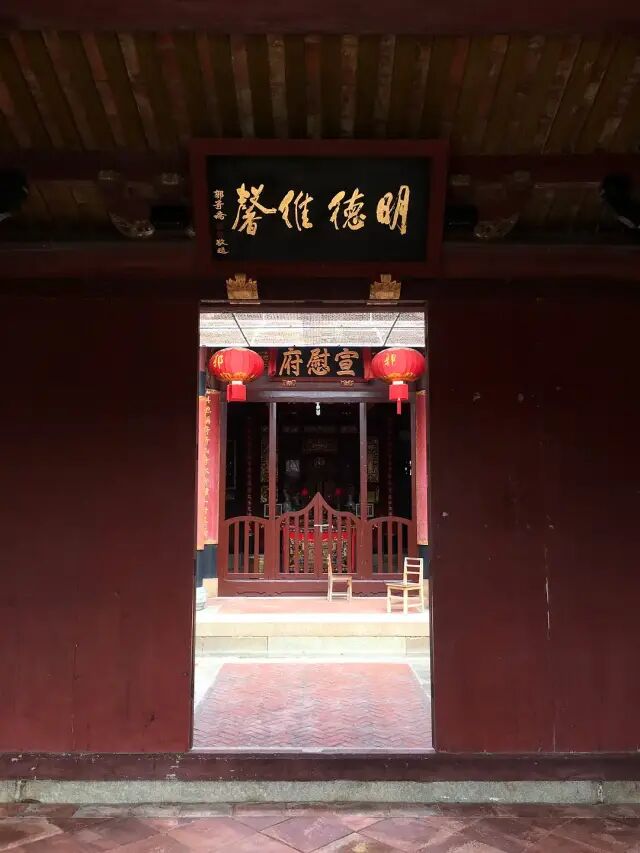
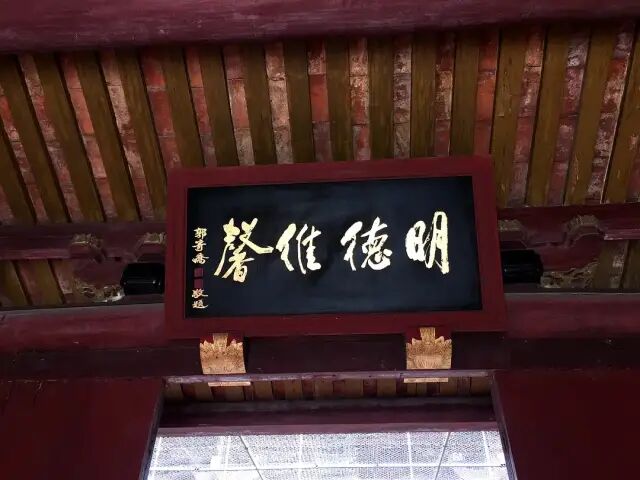
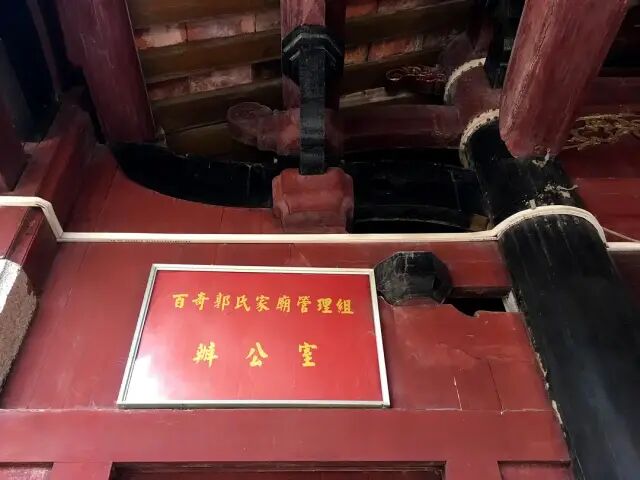
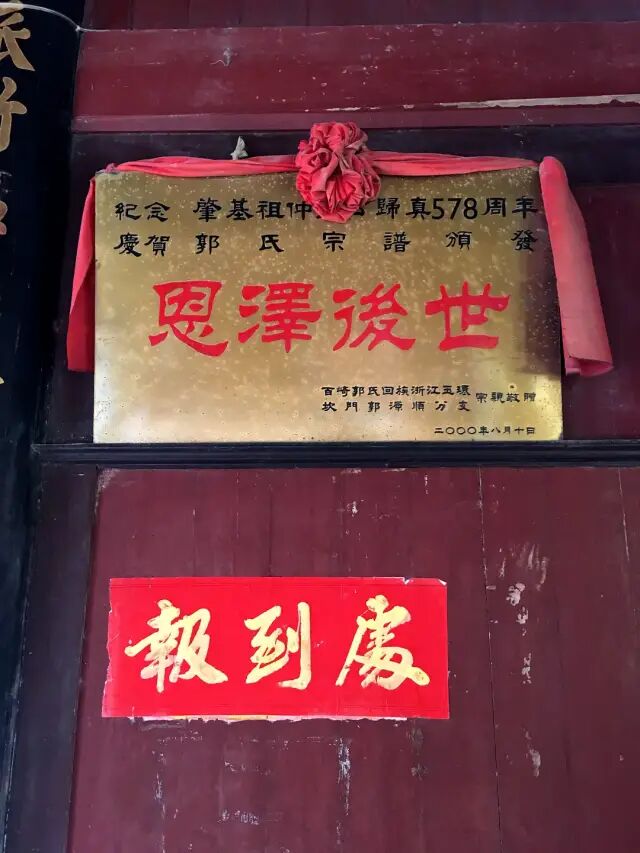
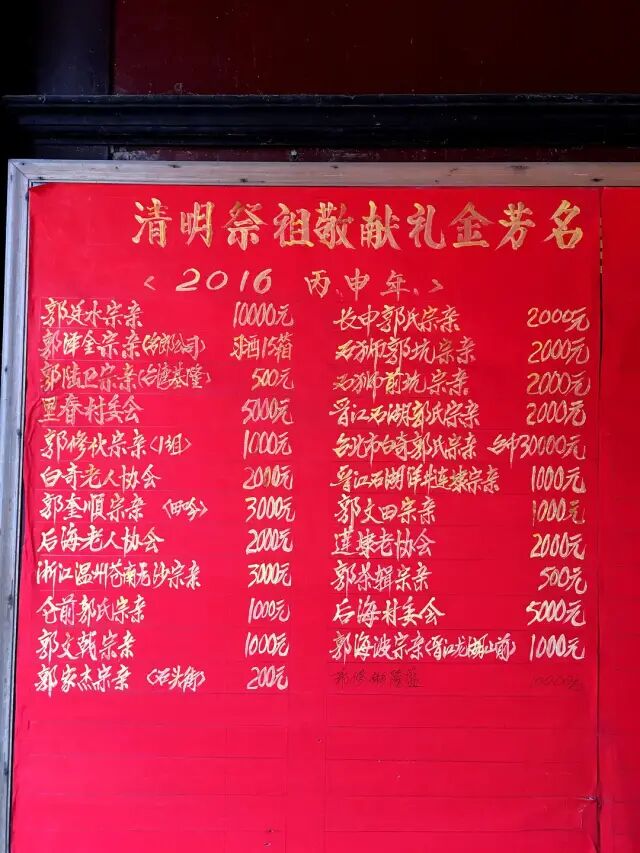
In the past, the Baiqi Grand Ancestral Hall (dacitang) enshrined Guo Deguang, Guo Zihong, Guo Zhongyuan and his wife, Guo Zhongyuan's five sons — Guo Shichu, Guo Shiyuan, Guo Shibi, Guo Shimin, Guo Shizhao — and their wives, and 16 ancestral tablets for Guo Mengjun (third generation of the eldest branch) and Guo Mengwei (fourth generation). After renovation in the early Republican era, the ancestral spirit tablets of four donors were also added.
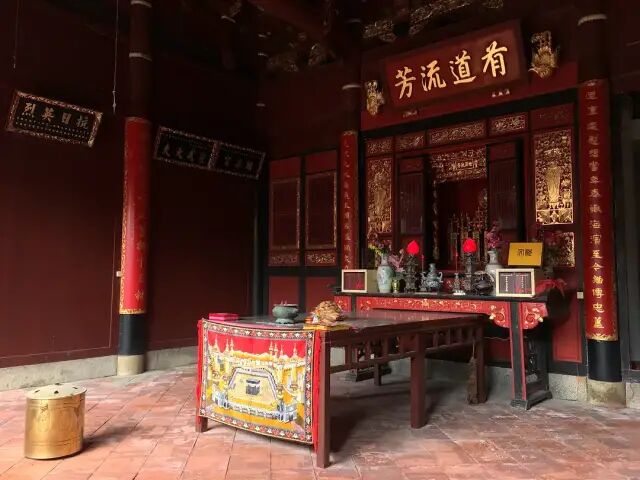
In front of the Guo family temple, there are also the ruins of the 'Wumen' (Meridian Gate).
2. Guo Family Genealogy
Guo Zhongyuan had five sons; four were legitimate, and one was born to a concubine. So, at first, they were divided into four branches: Ren, Yi, Li, and Zhi. Later, Lord Xitian established the fifth branch, Xin. This formed the five major branches of the Baiqi Guo clan: Ren, Yi, Li, Zhi, and Xin. Among them, the eldest branch, Guo Shichu, lived in Baiqi. The second branch, Guo Shiyuan, and the fifth branch, Guo Shizhao, lived in Lichun. Later, the second branch expanded to Tiancen (Tianyin), Houhai, Doumentou, Liangmu, Houtang, and Jiakeng. The fifth branch lived in Liangmu. The third branch, Guo Shibi, lived in Shandou. The fourth branch, Guo Shimin, stayed in Daishang (Liandai), where his father lived. Later, the fourth branch expanded to Xiadai, Dashan, and Kepu (Jupu).
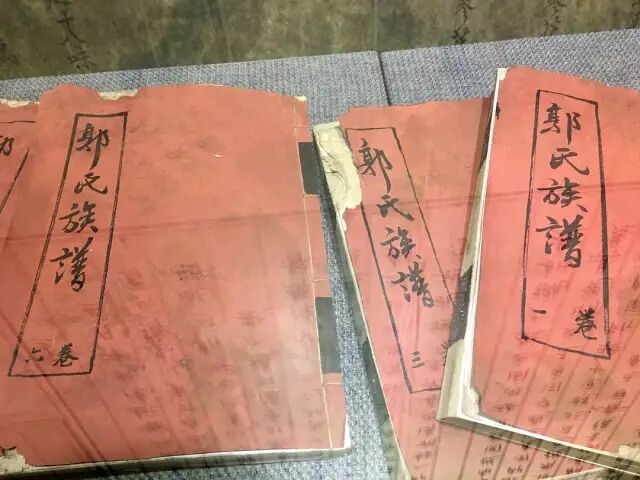
The Guo Family Genealogy was first compiled in 1436 (the first year of the Zhengtong reign of the Ming Dynasty) by Guo Zhongyuan's eldest son, Guo Shichu. In 1436, Guo Shichu wrote the 'Preface to the Family Genealogy'. It mentioned: "If we do not clarify the generations, order the seniority, and distinguish closeness here, then as branches multiply and generations pass, will not clan members meet like strangers?" This clearly stated that compiling the genealogy was to strengthen the cohesion of the 'clan'.
The genealogy also includes the 'Family Instructions of Lord Yixuan' left by Guo Zhongyuan before his death in 1422 (the 20th year of the Yongle reign).
All family heads must strictly observe propriety and law. This is to uphold the family's reputation and establish meritorious achievements. Seniority must be respected, and genders kept separate. Brothers and sisters live in peace, and annual sacrifices are abundant and pure. Children and grandchildren are humble and respectful, never lacking in filial piety. Do not get used to idleness; be diligent in your studies. Follow good deeds diligently and aspire to be bright and wise. Relatives have shown kindness, so do not stop giving them gifts and checking in. Servants perform their duties, and you must distinguish between good and bad among them. What is harvested from the fields and gardens, expenses should be kept in check. Neighbors live in harmony; do not deceive or destroy each other. All these points must not be violated. If you do not follow them, it is called evil. When we meet again in the future, even if you regret it, it will be hard to clear your name.
The text mentions These are all typical expressions of a Confucian clan society.
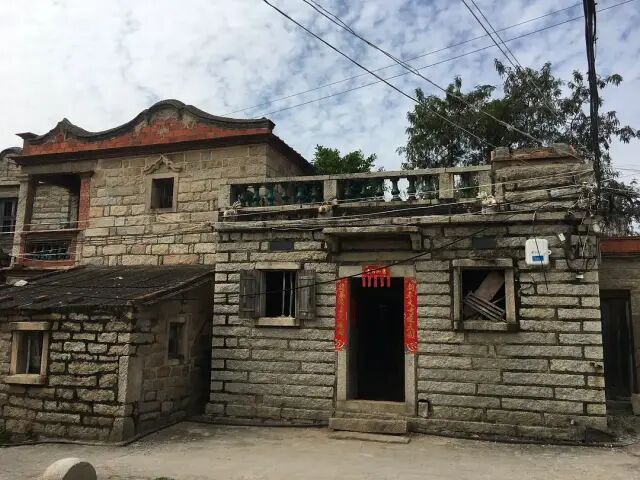
View of Baiqi Village.
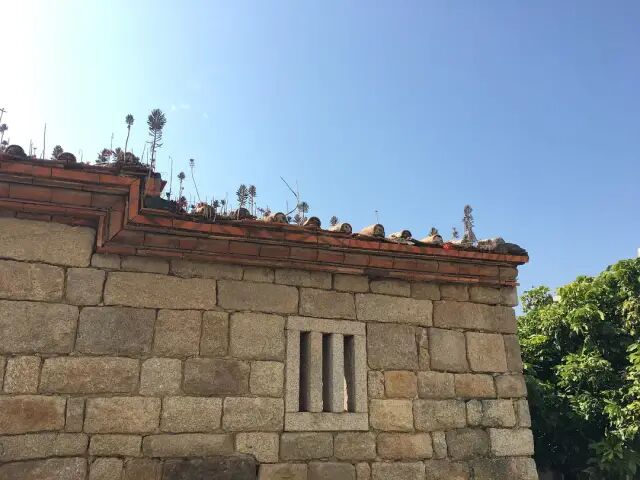
View of Xiadai Village.
3. The third-generation ancestral house (zucu) in Kepu Village.
In 2013, the Quanzhou Underwater Archaeology Land Survey Team found an ancestral house (zucu) in Kepu Village, Baiqi Township. It showed an early style of "brick-and-stone construction" (chuzhuanrushi), a unique architectural feature of Southern Fujian. Red tiles and crushed stones filled the gaps between the granite blocks, laid in a staggered vertical pattern.
Elder Guo Jialin, a descendant of the Guo family, said this was the home of Guo Jianping (1419-1487). Guo Jianping was the third-generation ancestor, and the son of Guo Shiming, who was the fourth son of Guo Zhongyuan.
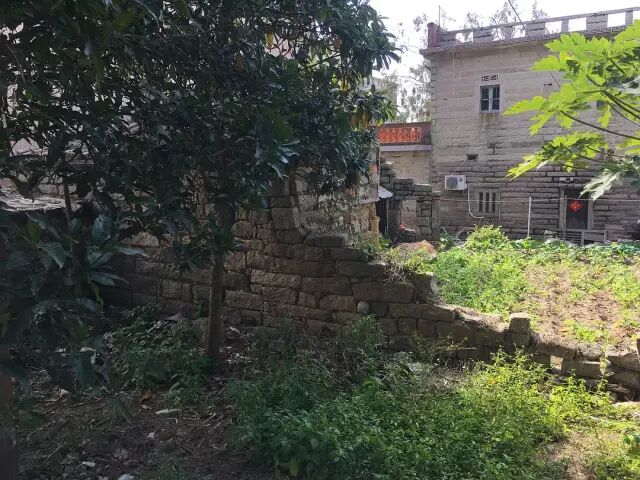
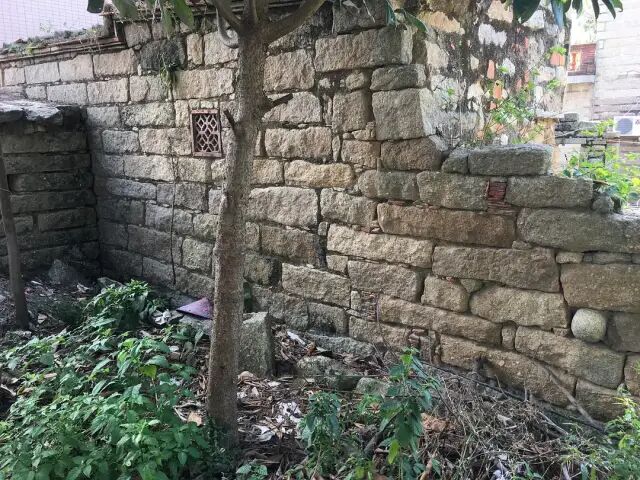
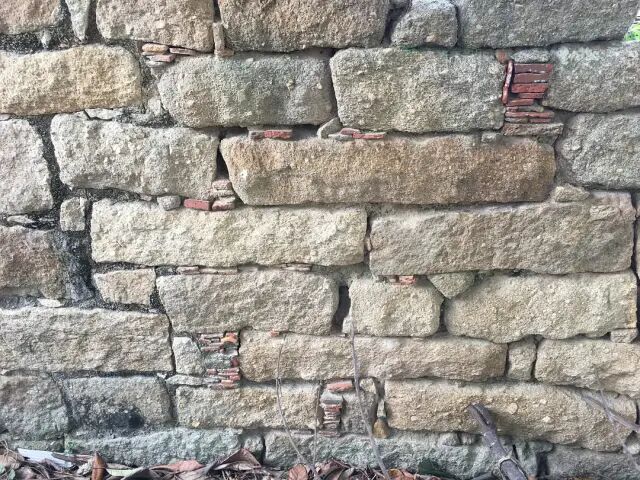
Three. Abandoning the Faith During the Ming Dynasty's Wanli Era.
In 1607, during the 35th year of the Ming Dynasty's Wanli reign, the Guo family stopped practicing Islam.
The Guo family genealogy, "Shi Hui Bian," states: "The family abandoned the faith by the eighth or ninth generation, likely during the Ming Dynasty's Wanli era." The "eighth or ninth generation" here is counted from Guo Deguang. If counted from Guo Zhongyuan, it would be the "sixth or seventh generation." "
The "Guo Shi Ben Fang Ben Zhi Shi Xi" records: "Our family abandoned the faith, likely in the 35th year of the Ming Dynasty's Wanli reign." "
The Guo family genealogy, "Fu Zun Hui Hui Jiao Xu," explains why they abandoned the faith. It says war caused burning and destruction, and they lost their religious leader (zhangjiao). The text states: "Our family respected it for generations, never forgetting it through the ages." "However, after the fifth generation, they suffered from the ravages of war. The religious leadership was lost. This led them to be influenced by other faiths, and they became ignorant of the true teachings."
The war mentioned here was likely the famous "Jiajing Wokou raids" during the Ming Dynasty. The Jiajing Wokou raids started in 1552, the 31st year of the Jiajing reign. Wang Zhi, a merchant from Huizhou, joined forces with pirate groups from Fujian. They led many "Wokou" (Japanese pirates) to invade Zhejiang and Fujian. Volume 384 of the "Veritable Records of Emperor Shizong of Ming" states: "Pirates from Zhangzhou and Quanzhou lured over ten thousand Japanese, who sailed more than a thousand ships..."
In 1556, the 35th year of the Jiajing reign, the "Wokou" attacked Quanzhou. They captured Chongwu City, 20 kilometers east of Baiqi. This city was built to defend against the Wokou. The Quanzhou Garrison Commander died in battle. Huian County was plundered many times. Battles also broke out repeatedly at Yashan, 5 kilometers north of Baiqi.
Yu Dayou and Qi Jiguang led their armies to Quanzhou to fight back in 1563, the 42nd year of the Jiajing reign. The "Wokou rebellion" in Quanzhou finally ended in 1569, the 3rd year of the Longqing reign.
At the same time, Quanzhou's other major Hui Muslim clan, the Chencai Ding clan, also stopped practicing Islam. The tenth-generation ancestor of the Ding clan, Ding Yanxia (1516-1597?), recorded in the clan genealogy, "Ancestral Teachings" (Zujiaoshuo), that during his childhood, the Chencai Ding clan still followed Islamic rules. These included namaz, fasting, not eating pork, ritual slaughter, and burial in the ground. But by the late 16th century, when Ding Yanxia wrote his works, the Chencai Ding clan had switched to wooden coffins. They no longer performed namaz, did not fast, did not perform ritual slaughter, and ate pork. After this, many members of the Chencai Ding clan passed the imperial examinations and built many ancestral halls. Islam completely disappeared in the 17th century.
Ding Yanxia's "Discourse on Clan Gathering" (Zongjushuo) from 1562 states that the Chencai Ding clan suffered a severe raid by Japanese pirates (Wokou) in 1561. They had heavy losses. Many Ding clan members moved into the city to escape the disaster. The Chencai Ding clan's eventual abandonment of Islam was likely related to the Jiajing Wokou raids.
Today, the temples of the Chencai Ding clan:
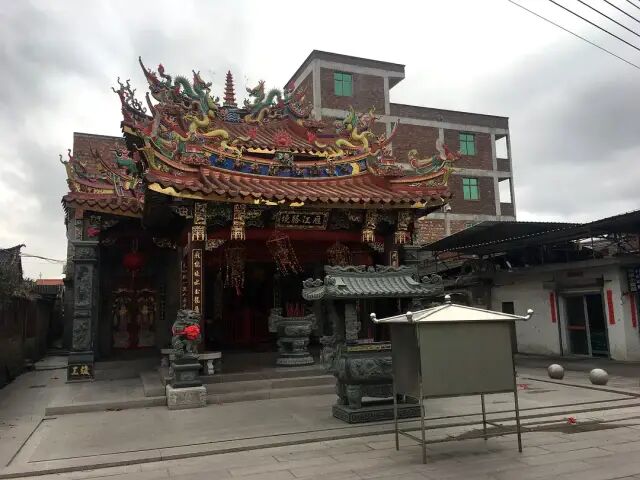
In fact, Islam was in decline throughout Quanzhou between the 16th and 17th centuries. The "Record of the Reconstruction of Qingjing Mosque" (Chongxiu Qingjing Si Beiji) from 1607 states: "Therefore, the Qingjing (Muslim) talk of heaven is not as good as the Buddhist talk of hell. Even those families who once upheld the faith now turn their backs and abandon it. This is why the religion declined and the mosque fell into disrepair. It is due to a gradual loss of direction, not the original intent of the religion!" "
The phrase mentioned here, "Even those families who once upheld the faith now turn their backs and abandon it," most likely refers to the Baiqi Guo clan and the Chencai Ding clan, who had recently left Islam.
Four. Returning to Islam during the Kangxi Reign of the Qing Dynasty.
1. Moving to Qingjing Mosque.
In 1709 (the 48th year of Kangxi's reign), Chen Yougong, the Grand Commandant (Zuodudu) and Regional Commander (Zongbingguan) of Fujian's Ting, Yan, and Shao areas, came to Quanzhou. He revived the faith and started a school at Qingjing Mosque for madrasa education. At that time, Guo Honglong, the eighth-generation member of the fourth branch of the Guo clan, moved from Baiqipu Hecuo to live at Qingjing Mosque. He did this due to "the division of strong trunk and weak branches," a clan internal division. He then converted to Islam. After Honglong converted, more and more Guo clan members who did business in Quanzhou city came to Qingjing Mosque to convert. As the number of converts grew, a mosque was built in Daishang Village, where the fourth branch of the Guo clan lived. This happened with Chen Yougong's support. According to the Fenyang Guo Family Tree of Branches Relocating to Tonghuai Street in Quanzhou:
During the Kangxi Jichou year (1709), Governor Chen Yougong served as a military official in Quanzhou. He re-established the faith. The Baiqi uncle and nephew came to the city to trade, and many people re-entered the faith. Mr. Chen built the Daishang Mosque.
After Guo Honglong entered the faith, most of his descendants moved to live near Quanzhou Qingjing Mosque. Others lived at Daishang Mosque. The Fenyang Guo Family Tree of Branches Relocating to Tonghuai Street in Quanzhou states that during the Qianlong era, Guo Honglong's grandson, Guo Shifu, lived near Quanzhou Qingjing Mosque. Another grandson, Guo Shili, lived at Daishang Mosque. The family genealogy "Biography of Yizhai Gong" records that Guo Shifu, in 1794 (the 59th year of Qianlong), renovated the mosque with Bai Yunhan, the Deputy General of Zhangzhou Left Camp.
Qingjing Mosque was first built in 1009 (the second year of Dazhong Xiangfu in the Northern Song Dynasty). Ahmad from Shiraz, Persia, rebuilt it in 1309 (the second year of Zhida in the Yuan Dynasty). Qingjing Mosque was originally named Ashab Mosque, which means "Mosque of the Holy Companions." The name "Qingjing Mosque" originally belonged to another mosque built in the Southern Song Dynasty, south of Quanzhou city. Later, steles from the original Qingjing Mosque were moved to the Ashab Mosque, causing the names of the two mosques to become confused.
During the Kangxi era, when the Baiqi Guo family re-entered the faith, Qingjing Mosque's main prayer hall, Fengtiantan, had already collapsed from long-term disrepair. Some Muslims, including the Baiqi Guo family, built houses and lived within the Fengtiantan ruins.
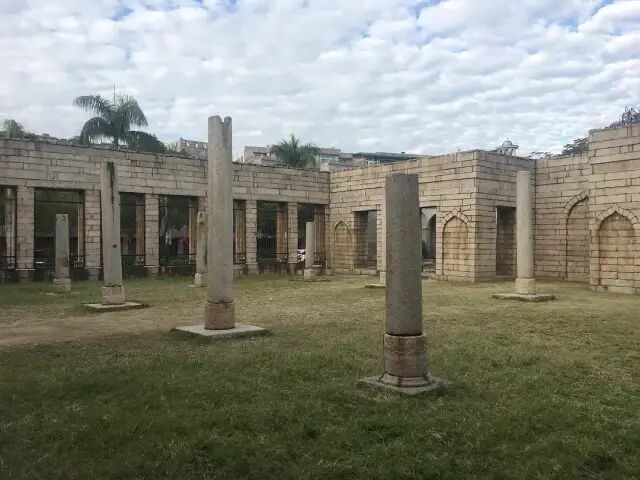
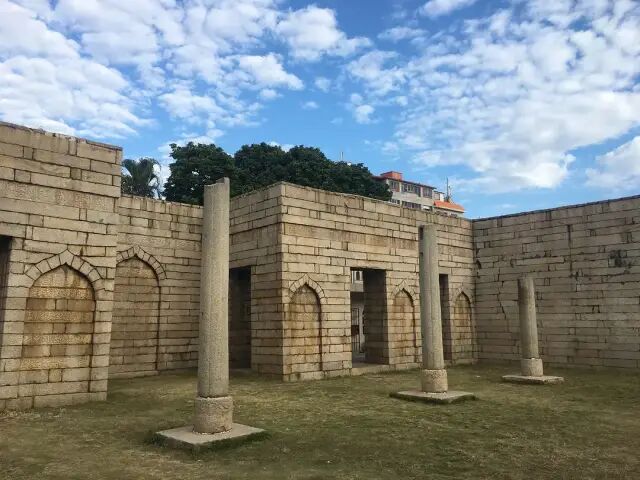
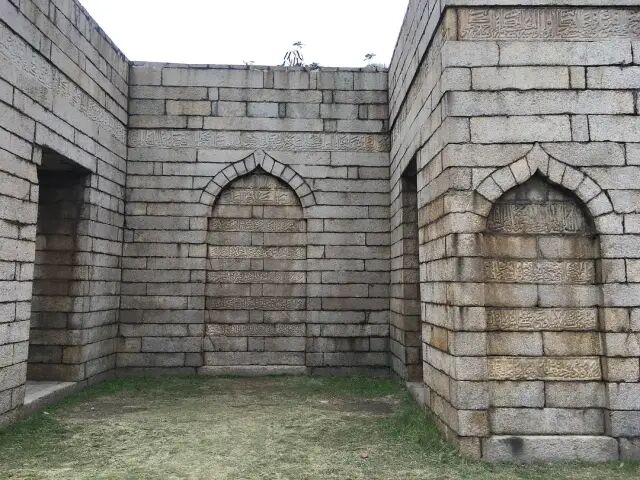
In 1936, Imam Zhang Yuguang, a graduate of Chengda Normal School, came to oversee Islamic affairs in Quanzhou. In 1937, he published "Islam's Entry into China and the General Situation of Islam in Quanzhou" in "Yuehua" magazine. He wrote that four Baiqi Guo households still lived inside the Qingjing Mosque's main prayer hall at that time.
This is Qingjing Mosque, as photographed by "China Tourism" in November 1986. The four Baiqi Guo households lived here until they were moved out during the 1986 renovation.
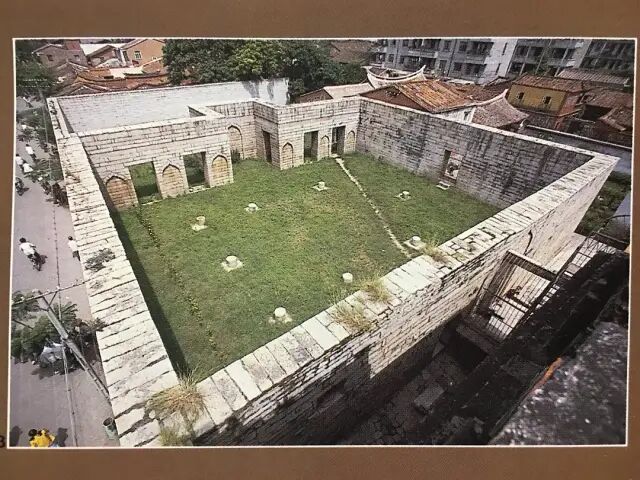
After Fengtiantan collapsed, Mingshantang, on the north side, became the prayer hall. In 1818, it was rebuilt as a traditional courtyard house (siheyuan). In 1871, it was rebuilt again as a small three-room building with Southern Fujian (Min-nan) characteristics. In 1952, it was rebuilt as a simple tiled flat-roof house with a cement and wood frame. In 1998, it was rebuilt to restore its 1871 appearance.
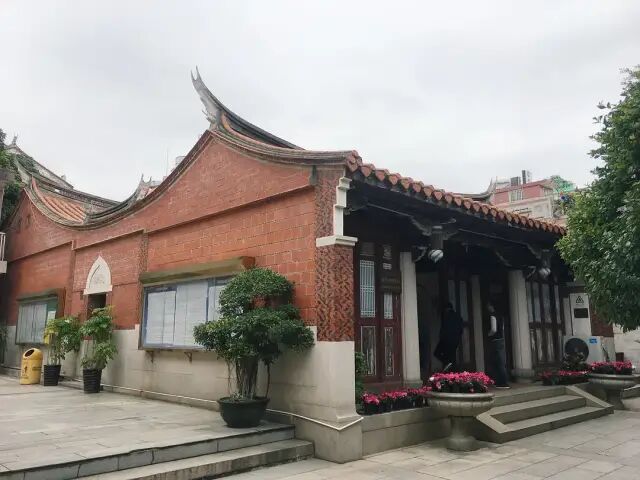
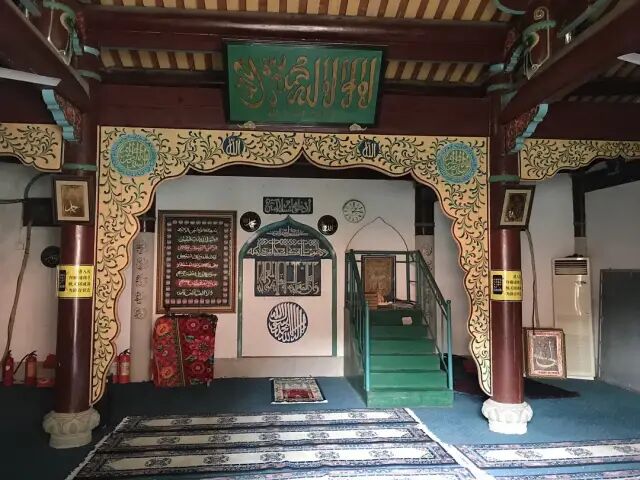
The Guo family genealogy "Preface to Re-adhering to Islam" states that after the Guo family re-entered the faith, over a hundred people joined Islam. This happened under the leadership of the eighth-generation descendant Guo Sizhi and the tenth-generation descendant Guo Zhiquan, and after education from Imams "Master Zhuang" and "Master Ge." Most of these new converts came from the fourth branch, to which Guo Honglong belonged.
The eighth-generation descendant Sizhi Gong, the tenth-generation descendant Zhiquan Gong, and their junior relative Jing Gong, along with several others of their generation, had already received teachings from Master Zhuang. They were then transformed by Master Ge. As a result, over a hundred people in our clan re-adhered to this faith. Master Ge's sincere intention was to feel Allah's great grace. He traced back to the ancestors' tradition of sincere fasting and namaz, and explained the error of raising and eating pigs.
But in 1807 (the 12th year of Jiaqing), Guo Zhaofen also wrote in the family genealogy, in the essay 'On the Renovation of the Yizhai Guo Gong Tomb,' that the Baiqi Guo clan still had not translated Islamic scriptures. He wrote: 'The scriptures compiled by the religion are like a guiding rope, but their sounds and characters are different, and they remain untranslated to this day. Mr. Li Zhongyi appreciated that they were not translated, finding in this the ancient truth.' "
2. Qing Dynasty Islamic Stone Tombs
After the Guo clan Muslims rejoined Islam in the Qing Dynasty, they no longer used the Sumeru pedestal-style stone tombs from the Ming Dynasty. At 'Haitanbian,' west of Houhai Village in Baiqi Township, are the tombs of Guo Shuxian, from the 15th generation, and his three sons. Guo Shuxian died in 1875, at the age of 67. The tomb is a platform made of sanhetu (a traditional Chinese mortar of lime, sand, and clay). On the platform are two sanhetu tombs. A granite carving is set horizontally in front of the tomb table. It has the 'General Creed' of Islam inscribed on it: 'I believe in Allah. He has all noble names and all virtues. I accept all His laws.' "
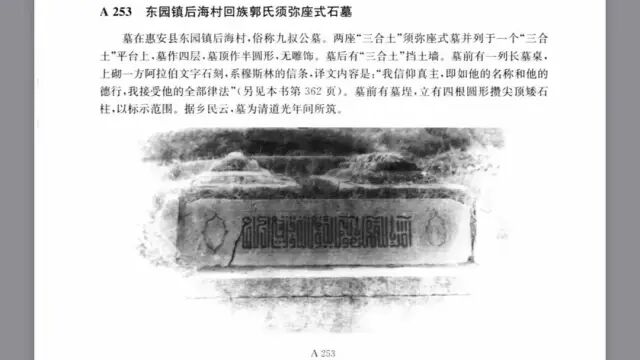
From the 2005 edition of "Quanzhou Religious Stone Carvings."
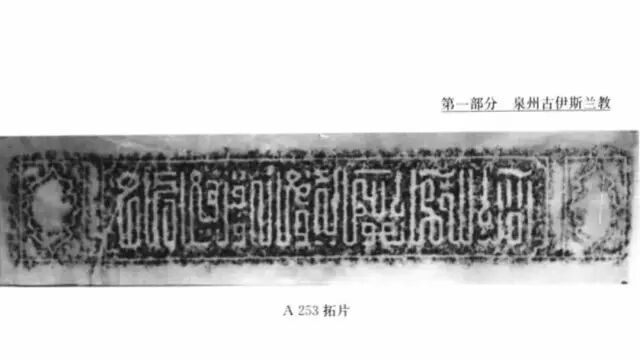
From the 2005 edition of "Quanzhou Religious Stone Carvings."
Modern tombs of the Baiqi Guo clan near the Lingshan Holy Tomb.
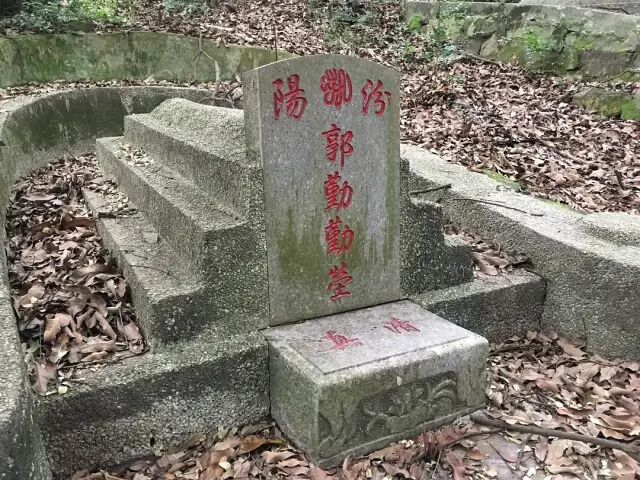
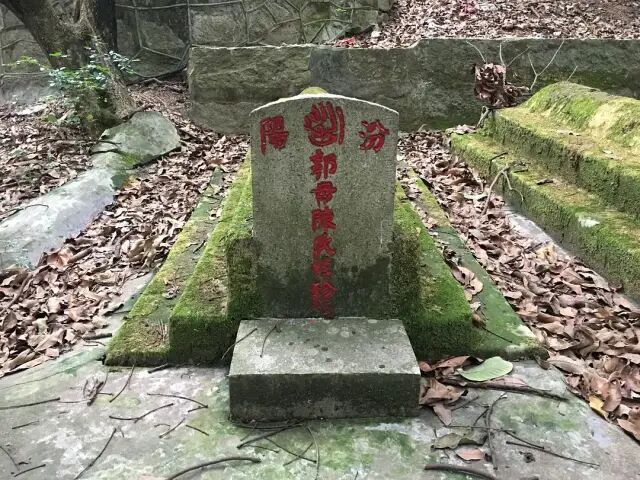
5. Islam and Local Beliefs
1. Regulations Prohibiting Folk Buddhist and Taoist Beliefs
When the Guo clan rejoined Islam in the Qing Dynasty, folk Buddhist and Taoist beliefs were already thriving in Baiqi. Because of this, the patriarchs of the four branches of the Guo clan, who followed Islam, tried to regulate customs and curb the growth of folk Buddhist and Taoist beliefs.
Guo Zhaofen, a descendant of Guo Honglong, included a series of regulations he wrote to curb Buddhist and Taoist beliefs in the revised 'Guo Clan Genealogy' of 1808 (the 13th year of Jiaqing). These regulations included 4 chapters and 48 articles: 'Listing Warnings to Descendants Against Reckless Talk About Ancestors' Religion,' 'Listing Prohibitions to Instruct Descendants,' 'Listing Items Not Used in Ancestor Worship,' and 'Listing Funeral Regulations and Prohibitions.' These regulations show some aspects of the Baiqi Guo clan's religious beliefs in the early 19th century.
The first chapter, 'Listing Warnings to Descendants Against Reckless Talk About Ancestors' Religion,' explains some misunderstandings that later generations of the Baiqi Guo clan had about Islam. These include:
One rule states,
Another rule is,
A rule says,
The second chapter,
The family must not use merit-making rituals to send spirit money (mingjin), spirit paper (mingzhi), paper effigies (mingren), or any paper offerings to the deceased. "
The family must not use nuns to perform rituals for
The family must not use divine or Buddhist healing methods.
The family must not use popular sorcerers for
The family must not use spirit money (mingjin) or spirit silver (mingyin) after ancestor worship. Guo Zhaofen later added a note,
The family must not use cremation or jar (urn) burial.
The family must not use string puppet shows (xianxi), which are marionette shows. Guo Zhaofen pointed out, "
The third chapter,
Ancestor worship must not use drums or music.
Wear plain clothes for rituals.
For rituals, when slaughtering animals and preparing tools, you must follow religious rules.
For rituals, do not use aquatic animals that do not lay eggs.
For rituals, do not use shellfish or crustaceans.
Do not use pork at home.
Chapter Four, titled 'List of Appropriate Prohibitions for Funeral Systems,' forbids folk Buddhist and Taoist beliefs during funerals. These include:
Do not use drums and music at funerals.
Do not use Taoist or Buddhist guides for funerals.
Do not offer paper money at funerals.
Do not erect banners at funerals, as this has become a bad practice.
2. Islam and Confucianism: Neither Betraying Nor Rigidly Adhering to Faith.
Read the books of sages, learn from their deeds, and neither betray nor rigidly adhere to your faith. Guo Zhaofen quoted this view from Confucian scholar Ding Zishen in the Jiaqing edition of the Qing Dynasty's 'Guo Family Genealogy'. Ding Zishen came from another branch of Hui Muslims in Quanzhou, the Chengdai Ding clan. He was a key figure in the Confucianization of the Chengdai Ding clan during the late Ming Dynasty.
Guo Zhaofen's 'Debate on Adapting to Hui Customs,' written in 1807 (the 12th year of Jiaqing) and found in the 'Guo Family Genealogy,' begins by listing three different religious beliefs. The first type is 'following Confucianism while also incorporating Taoist and Buddhist teachings,' which means Han customs. The second type was "Hui Muslims who also followed the Confucian way," referring to the Jin, Ding, Xia, Ma, and Die families in Quanzhou city who kept their Islamic faith. The third type was "Confucians who kept the Hui Muslim teachings," referring to the Guo clan. From this, we can see that the Baiqi Guo clan at that time already separated themselves from the Muslims in Quanzhou city. They believed they primarily followed Confucianism and kept Islam as a way to preserve their ancestors' customs.
In the four regulations set by Guo Zhaofen, it is also clear that these rules were not just to maintain the Islamic faith itself. They also aimed to make descendants follow their ancestors' religious customs through Confucian thought. The regulations repeatedly stressed that following their ancestors' Islamic customs was to follow the Confucian way:
"Previous generations already experienced this. Later generations of descendants should be warned not to forget family rules and not to bring shame to the Confucian way." "
"All close to Daoist, Buddhist, or evil cults should be completely rejected. The Confucian way should be upheld."
When sacrificing to ancestors, Guo Zhaofen wrote a rule: "Use Confucian rites for sacrifices as well." He later explained, "The pure and true religion (Islam) follows the rites of ancestral worship. But now, our clan first performs ancestral worship and then sacrifices." This further shows how the Baiqi Guo clan in the Qing Dynasty used both Confucianism and Islam.
Six. The Final Disappearance of Islam.
In the late Qing Dynasty, the mosque in Daishang Village collapsed due to long-term disrepair. The mosque then moved to the more remote Dashan Village, where the village's imam, "Uncle Tong," led religious affairs. "Uncle Tong" passed on the role to "Caoniao," who then passed it on to "Uncle Mao." These three generations of imams were all members of the Guo clan from Dashan Village and belonged to the same close family branch. "Uncle Tong" and "Caoniao" both studied at the Qingjing Mosque in Quanzhou. "Uncle Mao"'s name was Guo Xingfa. He was an imam trained by the Guo clan themselves.
From the 1930s to the 1940s, Dashan Village had over 30 Muslims. They were mostly clan members from the imam's own family branch, and nearly half of them were women. Every Friday, the Dashan Village Mosque holds Jumu'ah prayer. The imam recites the Quran in Arabic, then preaches Islamic teachings in the Minnan dialect. Whenever they slaughter cattle, they always ask the imam to recite scriptures.
At that time, Muslims in Dashan Village did not know much about Islamic teachings. Some also worshipped folk Buddhist and Taoist deities like Guan Di. The imam did not interfere.
In November 1986, China Tourism magazine photographed a handwritten Quran in Baiqi.
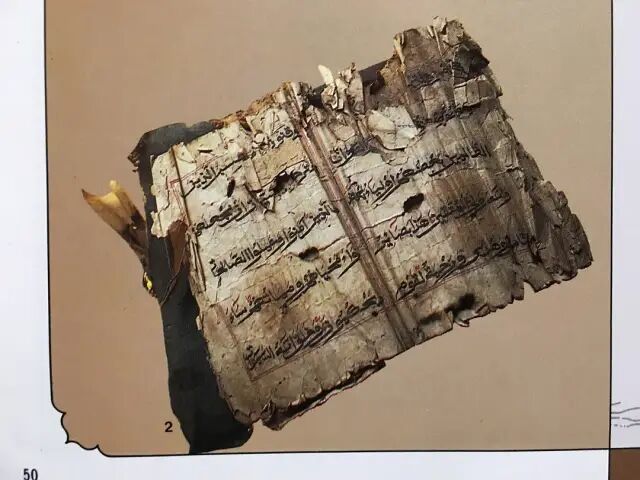
Guo Zhichao's "The Status of Islam in the Cultural Changes of Baiqi Hui Muslims," Guo Qiujun's "Hui'an Hui Muslims - Baiqi Guo," and Ye Wencheng's "Funeral Rites and Characteristics of Hui'an Baiqi Hui Muslims" recorded funeral rituals in Dashan Village during the 1930s and 1940s.
After a person died, their clothes were removed. A white sheet covered the body, which was then ritually cleansed. After the body was washed, male deceased were wrapped in white cloth. Female deceased wore a white long gown with a front opening, a white high-top hat, and white long socks. Three white cloths were used to tie the calves, abdomen, and chest separately. Then the eldest son carried the body to the ancestral hall of their branch, which served as a temporary mourning hall. The mourning bed was made of two long benches and three planks. An incense burner was placed on the mourning table. On both sides, there was a plate with twenty-four pieces of fried oil pastries (youxiang) made from rice flour. Some grieving families also placed a few plates of vegetarian dishes. At this time, the imam wore a blue pointed six-panel hat and a blue long gown. He sat cross-legged facing west on a folding chair in front of the mourning table and began to read the Quran.
Before the funeral procession, the deceased was placed into a temporary coffin (bian'guan). This coffin had wooden sides and a removable bottom. During the funeral procession, the temporary coffin was covered with a coffin shroud. The imam led the way, followed by three children. Four people carried the coffin behind them. Filial sons and daughters, wearing white mourning clothes and white mourning hats, followed. Finally, the mourners, who wore white cloth around their waists or arms (yaobai), followed.
After arriving at the cemetery, spices were sprinkled under the stone coffin. The stone coffin was made of four stone slabs, two long and two short. Its bottom was open to the earth. Four people stood at the four corners of the grave. They pulled open a red carpet to cover the grave. Then the white cloth strips on the deceased are lifted, the bottom board of the simple coffin is pulled out, and the deceased falls into the grave. Five pieces of red earth are placed on the deceased's head, both hands, and both feet. Seven stone slabs (qixingban) are placed on top. Earth is piled on, and some families will later cover it with mortar.
Before the 1940s, many Guo families in Baiqi had the custom of inviting an imam for the deceased. They handled the body and performed a quick burial according to Islamic customs. At that time, Baiqi Village hired Imam Tie Kaichen from Shouxian, Anhui. He mainly led religious ceremonies for funerals and ancestral worship. When Imam Tie was not there, a Guo family member named Guo Xiuye had studied scriptures for a few days with Imam Liu from Tianjin. His family had thirty volumes of Islamic scriptures. Imam Tie passed away during the Anti-Japanese War. From then on, the Guo family in Baiqi only had one imam left, Guo Xingfa.
Halal Travel Guide: Quanzhou Baiqi — Guo Hui Muslims and Islamic History (Part 1)
Articles • ali2007fr posted the article • 0 comments • 185 views • 2026-05-18 00:38
Summary: Quanzhou Baiqi — Guo Hui Muslims and Islamic History is presented here as a firsthand travel account in clear English, beginning with this scene: Over 10,000 Hui Muslims with the surname Guo live in Baizaki Hui Township, 12 kilometers east of Quanzhou city. The account keeps its focus on Quanzhou Muslims, Guo Hui Muslims, Islamic History while preserving the names, places, food, and historical details from the Chinese source.
Over 10,000 Hui Muslims with the surname Guo live in Baizaki Hui Township, 12 kilometers east of Quanzhou city. They are known as "Baiqi Guo" or "Jiuxiang Guo." The name "Jiuxiang Guo" comes from the nine villages where the Guo clan has lived since the Qing Dynasty: Baiqi, Xiadai, Daishang (also known as Liandai), Tiancen (also known as Tianyin), Lichun, Dashan, Hecuo, Shandou, and Houhai. The Guo clan also lives in five other villages: Kepu, Doumentou, Liangmu, Houtang, and Jiakeng.
In local gazetteers and clan genealogies from the Ming and Qing dynasties, Baiqi was referred to by three written variants of the same place name. After 1949, the area was uniformly called Baiqi. In August 1990, when the Hui Township was established, its name changed to Baizaki.
Part 1: History Before the Yuan Dynasty
The various genealogies of the Guo clan in Baiqi have vague and contradictory records about their life before settling there. These records likely include some embellishments and made-up stories. But by looking closely at these genealogies and checking them against the history of that time, we can still make a reasonable guess. Two valuable studies are 'Several Issues in the Early History of Baiqi Hui Muslims' by Professor Shi Yilong from Xiamen University, and 'Origins of the Guo Surname in Baiqi and Madrasa Education' by Professor Wu Youxiong from Quanzhou Normal University.
Were their ancestors Prince of Fenyang Guo Ziyi?
The Guo family of Baiqi claims Prince of Fenyang Guo Ziyi as their ancestor. This claim appears in the At this time, only a few decades had passed since the Guo family settled in Baiqi.
Although they claim Guo Ziyi as an ancestor, the Guo family genealogy does not provide reliable lineage evidence. It only states: "
Since the Song and Yuan dynasties, compiling family genealogies gradually became a key part of Confucian ethics and clan cohesion. More and more private family genealogies were created. After the Ming Dynasty, many ordinary families' genealogies also began to use a grander format. These genealogies traced back dozens of generations, often listing ancestors who were ancient emperors, from prominent lineages, or held high official ranks. Guo Ziyi was enshrined in the Ming Dynasty's Temple of Emperors and Kings in 1388 (the 21st year of Hongwu). He was listed as a meritorious official from ancient and modern times. Guo Ziyi was an important famous person with the surname Guo, and many Guo family genealogies from the Ming and Qing dynasties claimed him as an ancestor. Coincidentally, another branch of Guo Hui Muslims lives in Guocuo Village, Quangang District, 70 li northeast of Baiqi Hui Township. They have no direct connection with the Baiqi Guo clan, but they also claim Guo Ziyi as their ancestor.
2. Were their ancestors Han Chinese who converted to Islam?
If Guo Ziyi is their ancestor, then the question of why they, as Han Chinese, believe in Islam needs to be answered. In the Guo Zhaofen said that among the Guo clan, there were two theories: "following the mother's religion" and "originally Hui." He found both unreasonable, so he proposed a third theory: "adapting to Hui." This means the Guo ancestors had close ties with Muslims and then converted to Islam.
The "adapting to Hui" theory is quite reasonable. The Baiqi Guo clan did not face the same challenges as other Semu people during the late Yuan and early Ming dynasties. They lived peacefully. Soon after arriving in Baiqi, they built an ancestral temple (jiamiao) and compiled a family genealogy (jiapu). We will talk more about these later.
3. The Guo Clan's Founding Ancestor in Quanzhou
According to clan records, the Guo family once lived in Guojia Village, Fuyang, Hangzhou, and came to Quanzhou during the Yuan Dynasty. There are two theories about the earliest ancestor of the Guo family to arrive in Quanzhou. The mainstream theory names Guo Deguang (from
Genealogies that record Guo Zhang as the founding ancestor in Quanzhou state, and Records mention "Dezhao Gong's branch in Xingzhai, Dongjie, and other places." This means Guo Zhangsheng had two brothers, Guo Deguang and Guo Dezhao. Guo Deguang's descendants lived on Fashi Shitou Street and in Baiqi. Guo Dezhao's descendants lived in Xingzhai Village and on Quanzhou Dongjie. This theory connects the Guo clan of Baiqi with the Jundong Guo clan, who live in Quanzhou's Xingzhai Hui Muslim Village.
Thousands of Guo-surname Hui Muslims live in Xingzhai Hui Muslim Village and other areas in Luojiang District, east of Quanzhou city. Their family genealogies state in the preface: "First ancestor Tong, courtesy name Mengliang, sobriquet Leqiao Chushi." A person from Fuyang, Zhejiang, came to Quanzhou in the late Yuan Dynasty, following a commissioner. He enjoyed the beautiful scenery of Quanzhou and settled there. Because Guo Mengliang lived on Dongjie Street in Quanzhou, his descendants became known as the Jun Dong Guo clan. Later, Guo Mengliang's fifth-generation descendants, Guo Yuan and Guo Quan, moved to Xingzhai during the Chenghua reign of the Ming Dynasty. After that, they spread to various other places.
The "Quanzhou Prefecture Gazetteer" also has a record about Guo Mengliang, the first ancestor of the Jun Dong Guo clan: "Guo Tong, courtesy name Mengliang, alias Leqiao, was originally from Fuyang, Zhejiang." It also says, "In the late Yuan Dynasty, he followed his ancestor Qin, who served as Quanzhou Salt Commissioner." Additionally, the epitaph of Guo Mengliang's wife, Ms. He, records: "She married Guo Mengliang from the same village. Guo, from Fuyang, Zhejiang, served his ancestor Qin, who came to Fujian as an official in the late Yuan Dynasty." "
This states that Guo Mengliang came to Quanzhou from Fuyang, following his ancestor "Qin." The founding ancestor of the Baiqi Guo clan, Guo Deguang, was named "Qin." The Baqi Guo Family Genealogy records: "His official name was Qin, his courtesy name was Deguan. He was a descendant from Guojia Village, Fuyang, Zhejiang." In the local gazetteer, "congzu" refers to a grandfather's brother. So, Guo Mengliang was likely a junior relative of Guo Dezhao. He came to Quanzhou from Fuyang, Zhejiang, with Guo Deguan.
The "Qishan Guo Family Genealogy Preface" of the Baiqi Guo clan states that Guo Deguan first lived outside Xingchun Gate in Quanzhou. He later moved to Fashi. Xingchun Gate was the east gate of Quanzhou's inner city during the Tang Dynasty. After the Yuan Dynasty, it became part of the city. Its location is in the middle section of Quanzhou's East Street. This was exactly where Guo Mengliang, the ancestor of the Guodong Guo clan, lived.
Based on current documents, it is inferred that Guo Deguan and his junior relative Guo Mengliang likely came one after another from Guojia Village, Fuyang, Zhejiang, to settle on Quanzhou's East Street.
4. Guo Deguan Living in Fashi
Fashi Village is on the north bank of the Jinjiang River, in the eastern suburbs of Quanzhou city. It was an important commercial pier for Quanzhou Port during the Song and Yuan dynasties. During the Yuan Dynasty, from Meishan to Bantou in Fashi, there was a stone street several li long along the river. In 1346, Moroccan traveler Ibn Battuta came to Quanzhou Port. He wrote in *Ibn Battuta's Travels*: "The city's port is one of the world's great ports, perhaps even the largest." We saw about a hundred large ships anchored in the harbor, and countless smaller boats. This port is a huge bay that extends inland, meeting a large river. "
The Jiangkou Pier of Fashi Port is located where the river meets the sea at the end of Shitou Street in Fashi Village. It was a trade hub during the Song and Yuan dynasties. Jiangkou Pier once had eight ferry crossings, but today only Meishan Ferry Pier and Wenxing Ferry Pier remain.
Due to years of silt accumulation, the riverbed rose and formed an islet. Then, real estate development happened. The river's surface no longer looks as it did back then.
Meishan Ferry Pier is built with granite. The existing upper layer was built in modern times. The lower layer shows different periods from the Song to Qing dynasties, built one on top of another, mostly using a header-stretcher bond method.
The Wenxing Ferry Terminal was also built with granite, mainly using staggered joint masonry. The visible remaining section is nearly 20 meters long; the rest has sunk into the river.
Fashi was an important trading port in Quanzhou. During the Song and Yuan dynasties, many Muslim merchants from Arabia and Persia lived there. Even after the Ming and Qing dynasties, the Jin, Xia, and Guo families of Hui Muslims still lived in the area. In 1959, the Quanzhou Maritime Museum's investigation team found several Islamic stone tombs, built in the Sumeru pedestal style, at the "West Cemetery" on Jincuo Mountain in Meishan, Fashi.
5. Guo Deguang's Tombstone – Was the Guo family from Persia?
In 1956, villagers from Shitou Street in Fashi Village were leveling land at a place commonly known as "Liugongqi." They dug up a very large "foreign guest tomb" and turned the area into a garden. Villagers said this tomb had a large square stone platform, divided into upper and lower levels. Each level had two Islamic stone tombs in the Sumeru pedestal style. At the head of the upper level was a tombstone. Villagers broke it into two pieces and carried it back to the village to pave the floor of the collective warehouse.
The Quanzhou Maritime Museum has a Yuan Dynasty Sumeru pedestal-style Islamic stone tomb. The two stone tombs built by Liu Gong might have a similar design.
In 1959 and 1974, an investigation team from the Quanzhou Maritime Museum followed clues from the
The upper right corner of this tombstone has The upper left corner has Below that,
The Chinese characters on the tombstone are easy to explain, but interpreting the Arabic text is very difficult. In the early 1980s, the view of Chen Dasheng, director of the Quanzhou Maritime Museum, became widely accepted. He interpreted the Arabic text as
Professor Wu Youxiong of Quanzhou Normal University offered a completely different interpretation in his work "The Origin of the Guo Clan in Baiqi and Madrasa Education." Wu Youxiong consulted the director of the Arabic department at China National Radio. He then concluded that the inscription was Minnan dialect, spelled in Arabic script, reading "Yin Go Zi Ta-gag Mou." This translates to "Yuan Dynasty Guo Deguan's Tomb." Previous interpreters didn't know Minnan dialect, so they couldn't translate it. There is no evidence that the Guo clan came from Persia.
The method of writing Chinese with Arabic script is called Xiaoerjing or Xiaoerjin, and it is also known as Xiaojing. It was used to annotate Islamic texts during study. The Guo clan genealogy records show that Guo Deguan's tomb was rebuilt many times. This tombstone was likely re-erected during the Qing Dynasty by Guo descendants who were Muslim. The experience of the Guo descendants restarting madrasa education during the Qing Dynasty will be discussed in detail later.
Two: Settling in Baiqi in the Early Ming Dynasty.
One: Did they move to Baiqi to escape ethnic unrest at the end of the Yuan Dynasty and early Ming Dynasty?
Guo Deguan's grandson, Guo Zhongyuan, moved from Fashi to Baiqipu, across from Houzhu Port, during the Hongwu reign of the Ming Dynasty. This area then became the current Baiqi Hui Muslim Township. Many studies say Guo Zhongyuan moved because of wars at the end of the Yuan Dynasty and the oppression of Semu people in the early Ming Dynasty. But is that really true?
Between 1357 and 1366, the Ispah Rebellion (Yisibaxi Zhanluan) broke out in Quanzhou. It was organized by Persian Semu people. This caused unprecedented disaster and severe destruction in Quanzhou. After the war, Quanzhou saw a wave of anti-Semu sentiment. Many Semu people were killed in revenge. The "History of the Jin Clan Genealogy of Qingyuan" (Qingyuan Jinshi Zupu Lishi) records: "In this conflict, all people from the Western Regions were wiped out. Those with foreign hair and high noses were mistakenly killed. The gates were closed, and executions continued for three days." Many surviving "foreigners" (fanren) in Quanzhou fled the city to find refuge.
Based on genealogical records, Guo Deguang was likely born around 1283-1303 and died around 1367-1387. Guo Deguang's later years were the peak of anti-Semu sentiment in Quanzhou. However, genealogies generally record that Guo Deguang "registered his household in Fashi by custom in the early Hongwu period." The "Preface to the Qishan Family Genealogy" (Qishan Jiapu Bixu) gives more detail: "In the ninth year of Hongwu (1376), he registered his household by custom and settled in Fashi." 1376 was the second year the Ming army controlled Quanzhou. After the Ming Dynasty took control of Quanzhou, they began to reorganize household registration. Guo Deguang's family was registered into the Ming Dynasty's household system at this time.
Guo Deguang lived in Fashi until he died "of illness." He was buried in Fashi after his death. Guo Deguang's son, Guo Zihong, lived for 49 years and died in 1366. He never left Fashi his whole life and was buried there after his death. His wife, Lady Weng, died in 1372 and was also buried in Fashi. The Potting Genealogy also records that Guo Shiquan, the eldest son of Guo Jiyuan (Guo Zihong's third son who stayed in Fashi), passed the provincial examination in 1411 and became a county official. The record states: "In the ninth year of Yongle (1411), he passed the provincial examination and served in the county, choosing to register in Jiangyou." This shows that Guo Shiquan received at least a stable education at that time.
It seems the Guo Deguang family not only survived the Ispah Rebellion and the subsequent massacres of Semu people without any record of suffering, but they were also registered in the household census after the Ming Dynasty took Quanzhou. Later, they even educated their descendants to become officials through imperial examinations.
2. Reasons for Guo Zhongyuan's Relocation
Let's look at why Guo Zhongyuan moved to Baiqi. The "Biography of Lord Zhongyuan" in the Baiqi Guo Clan Genealogy states that Guo Zhongyuan "accumulated wealth bit by bit and achieved success." He then "chose a place to build a house under Qishan Mountain in the 23rd Dudu of the county." This means Guo Zhongyuan accumulated some capital and decided to start a business elsewhere. The "Preface to the Baiqi Guo Clan Genealogy" also records: "Lord Zhongyuan had five sons and loved the joy of mountains and rivers. He chose a place under Qishan Mountain by the sea in Huiyi, built a house, and lived there." Neither record mentions war or fleeing.
From Guo Deguang onwards, several generations of the Guo family had a custom: the eldest son would go out to establish a new branch, while the youngest son stayed at the old family home. Guo Mengliang, a descendant of Guo Deguang and his younger brother Guo Dezhao, first lived on East Street in Quanzhou. Later, Guo Deguang founded a new settlement in Fashi, and Guo Mengliang stayed on East Street. Guo Deguang had one son, Guo Zihong. Guo Zihong's three sons were: the eldest, Guo Qinggong, who moved to Jiangxi; the second, Guo Zhongyuan, who founded a new branch in Baiqi; and only the third, Guo Jiyuan, who stayed in Poting, Fashi. Guo Zhongyuan originally lived in Daishang (Liandai) in Baiqipu. His four sons also followed this pattern: the eldest son lived in Baiqi, the second son lived in Lichun, the third son went to Zhangzhou, and only the fourth son stayed in Daishang (Liandai). Therefore, Guo Zhongyuan's move from Fashi to Baiqi was likely a result of the common "tree branching out" phenomenon seen in clan societies.
After the turmoil at the end of the Yuan Dynasty and beginning of the Ming Dynasty, Quanzhou's maritime trade was severely damaged. The prosperity of Fashi Port was gone. After the Ming Dynasty began, maritime bans were issued six times during the Hongwu reign. The "Veritable Records of the Ming Dynasty" states that "coastal residents were forbidden from privately communicating with foreign countries," "the use of foreign incense and goods by the populace was prohibited," and "not a single plank was allowed to go to sea." It is very likely that the Guo family shifted from commerce to agriculture during this period. Guo Zhongyuan and his eldest brother successively went out to make a living. The eldest brother went far to Jiangxi, and the second brother moved to the opposite bank of Houzhu Port. Only the youngest brother stayed behind to look after the ancestral home and graves, and manage ancestral worship.
Shi Yilong's study, 'A Preliminary Study on the Evolution and Causes of Religious Beliefs of the Hui Muslims in Chendai,' points out that the Ding clan of Chendai, another group of Hui Muslims in Quanzhou, also did not suffer oppression from the Semu people during the late Yuan and early Ming dynasties. They moved mainly because the early Ming dynasty banned sea trade, which made them shift from business to farming. So, the early Ming dynasty's ban on maritime trade was likely the main reason Guo Zhongyuan came to Baiqi.
3. Baiqipu in the early Ming Dynasty
Baiqipu is on the east side of the Luoyang River mouth in Quanzhou Bay. It sits across the river from Houzhu Port in Quanzhou. The area has large bay tidal flats and few people. Around Baiqipu, eight Han Chinese families lived: Zheng, Liang, Sun, Chen, Li, Yang, Jiang, Fu, and He. All were newcomers who moved from other places at the end of the Yuan Dynasty. There were no local prominent families. Far across the way is Quanzhou Houzhu Port.
After Guo Zhongyuan arrived at Baiqipu, he settled down to farm. The family genealogy Family Genealogy Doubts: Ancestral Land and House Deeds records: In the 14th year of Hongwu (1381), funds were prepared to purchase Sunfu Daitian, or the Sun family reclaimed land, located in Baiqi and other places in the 23rd du of Hui-an. It carried more than 1,000 shi in rent, and part of the autumn grain tax record is illegible. Here, "Sunfu Daitian" refers to the Sun family who lived at the foot of Longtou Mountain at that time. This is today's Daishang (Liandai) Village, and it is also where Guo Zhongyuan lived.
Guo Zhongyuan also built roads. His family genealogy, "Biography of Zhongyuan Gong," states that he "personally laid 300 li (steps) of stone roads for travelers." The Qiaowei stone bridge road was still in good condition in the 1960s.
The Guo family genealogy, "Preface to Re-adhering to Islam," says that Guo Zhongyuan built a mosque in Baiqi. He also collected many Islamic scriptures. The text states: "Since our ancestor settled in Baiqi, he kept thirty volumes of heavenly scriptures, founded a mosque, respected the teachings, and based his life on Allah."
However, Guo descendants who re-embraced Islam during the Qing Dynasty wrote this, and no earlier historical records confirm it.
4. Baiqi Stone Pavilion
The Baiqi Stone Pavilion (Baiqi shiting) was first known as Qiaowei Pavilion. People say Guo Zhongyuan built it during the Ming Dynasty's Hongwu era. It served as a resting pavilion at the Baiqi ferry crossing and is made entirely of granite. The pavilion's roof is umbrella-shaped, and its base is square. The pillars are in two layers: four inner pillars and twelve outer pillars. Together, they form two squares that look like the Chinese character "hui".
Legend has it that in 1417, during his fifth voyage to the Western Seas, Zheng He met Guo Zhongyuan at the Qingjing Mosque. Zheng He was invited to Baiqi, and Guo Zhongyuan welcomed him at the stone pavilion. This is why it's also called Jieguaan Pavilion, or "Welcoming Official Pavilion". But no documents record this event.
The stone pavilion was rebuilt twice during the Qianlong and Guangxu eras. A stele from its 1771 reconstruction (the 36th year of Qianlong) still stands today.
The Baiqi Stone Pavilion appeared in "China Tourism" magazine in November 1986. Back then, people still lived inside it. The pavilion's current look comes from its 2005 reconstruction.
5. Tomb of Guo Zhongyuan and His Wife
Guo Zhongyuan died in 1422 at the age of 75. His wife, Lady Chen, died in 1433 at the age of 82. They are buried at the foot of Longtoushan (Dragon Head Mountain), east of Xiadai Village. People commonly call it the "Stone Lion Cemetery".
The tomb of Guo Zhongyuan and his wife is a classic Song-Yuan Quanzhou Muslim Sumeru-pedestal style stone tomb (xumizuo shi mu). The Guo family called these tombs, which have a stone lid on a stone base, "Jiaomu" (religious tombs). They were also known as "Gaozai Mu" (cake-like tombs), representing Islam.
The stone tomb is made from granite, which is common in Quanzhou, and has five layers. The first layer has carvings of six-legged and ruyi patterns. The second layer shows continuous floral branches. The third layer features inverted lotus petals. On the fourth layer, the Chen family tomb on the left has carvings of lotus flowers and branches. The Guo Zhongyuan tomb on the right has Arabic inscriptions from Quran Chapter 55, verses 26 and 27:
Everything on Earth will perish; Only the essence of your Lord, full of majesty and honor, will remain forever.
This verse appears often on the tomb covers of Song and Yuan dynasty Muslim tombs in Quanzhou. It is also the most common carving on ancient Muslim tombs in Sanya.
A tombstone from the Quanzhou Maritime Museum collection has Quran Chapter 55, verses 26 and 27 inscribed on it:
Two stone tombs sit side by side on a stone platform. Behind them, a horseshoe-shaped retaining wall holds a cloud-and-moon shaped stone stele in its center. This shape also appears on Song and Yuan dynasty Islamic stone tombs in Quanzhou.
Stone carvings on both sides of the tomb look like stone lions and dragon heads.
Today, you can see many Song and Yuan dynasty Islamic Sumeru pedestal (xumizuo) style stone tombs similar to Guo Zhongyuan's tomb at the Quanzhou Maritime Museum, Qingjing Mosque, and Lingshan Holy Tomb. After the Ming Dynasty, the Guo clan of Baiqi and the Ding clan of Chendai in Quanzhou continued to use this style. You can also find similar styles in Ming dynasty Islamic tombs in southeastern regions, like the Puhading Cemetery in Yangzhou and Ding Henian's tomb in Hangzhou.
A typical Quanzhou Islamic Sumeru pedestal (xumizuo) style stone tomb:
From the 2005 edition of "Quanzhou Religious Stone Carvings."
From the 2005 edition of "Quanzhou Religious Stone Carvings."
The Song and Yuan dynasty Islamic Sumeru pedestal (xumizuo) stone tomb at the Quanzhou Maritime Museum is the most magnificent one found to date.
The Islamic Sumeru pedestal (xumizuo) style stone tomb at Quanzhou's Lingshan Holy Tomb.
The Sumeru pedestal (xumizuo) style stone tomb of the descendants of Quanzhou's Chendai Ding clan.
By Hangzhou's West Lake is the Islamic stone tomb with a Sumeru-style base (xumizuo) for the great poet Ding Henian. He died in 1424, just two years after Guo Zhongyuan.
An Islamic stone tomb with a Sumeru-style base in Yangzhou's Puhading Cemetery.
6. The Tomb of Guo Mengwei and His Wife.
Guo Mengwei was the second son of Guo Shichu, Guo Zhongyuan's eldest son. He died in 1480 at the age of 77. His wife, Ms. Huang, died in 1474 at the age of 69. After their deaths, they were buried right next to Guo Zhongyuan's tomb. Their tombs are also Islamic stone tombs with a Sumeru-style base, but they have no carvings. Behind the tomb is a stele commemorating its renovation in 1983.
Guo Mengwei's tomb, as seen in China Tourism magazine in November 1986.
A pair of stone lions stands next to the tombs of Guo Zhongyuan and Guo Mengwei.
7. The Family Tomb of Guo Shiyuan.
Guo Shiyuan was Guo Zhongyuan's second son. He died in 1407 at the age of 34. After his death, he was buried east of Lichun Village, in a place commonly known as the
Guo Shiyuan's tomb is also an Islamic stone tomb with a Sumeru-style base. The front of its lid has an intaglio cloud and moon pattern. The base has continuous branch patterns around its sides.
Next to Guo Shiyuan's tomb are two Islamic stone tombs with a Sumeru-style base. To the east is the tomb of his wife, Ms. Chen. To the west is the tomb of Ms. Zeng, wife of his eldest son, Guo Bangyong. Ms. Chen died in 1457; her stone tomb has no carvings. Ms. Zeng died during the Chenghua reign of the Ming Dynasty (1465-1487); her stone tomb has continuous branch patterns.
Also, behind Guo Shiyuan's tomb are stone tombs of his descendants:
The tomb of Guo Yiqin, Guo Shiyuan's great-grandson (fourth generation), who died in 1504.
This is the tomb of Guo Yiqin's first wife, Ms. Wang. Her death year is unknown. This is the tomb of Guo Yiqin's second wife, Ms. Li. Her death year is unknown. This is the tomb of Guo Xuyuan, Guo Yiqin's eldest son from the fifth generation. He died in 1526. The tomb of Guo Huaiqin, Guo Yiqin's third younger brother from the fourth generation, and his wife, Ms. Hu, was moved here in 1994. This happened because of construction at their original site. Guo Lianfu, from the fifth generation of the Guo family's Xin branch (fifth branch), and his wife, Ms. Pu, were moved here in 1997. This was due to construction at their original site. The gate to Guo Shiyuan Cemetery was closed when I visited. So, I could not see the tombs further inside.
Tomb of Guo Shichu and his wife.
Guo Shichu was Guo Zhongyuan's eldest son. He died in 1448 (the 13th year of the Zhengtong reign of the Ming Dynasty) at the age of 79. His wife, Ms. Wu, died in 1439 (the 4th year of the Zhengtong reign of the Ming Dynasty) at the age of 57. After they died, they were buried west of Tianyin Village. This place is commonly called the "Eldest Branch Public Cemetery." It is a four-tiered dolerite Sumeru pedestal (xumizuo) stone tomb.
From the 2005 edition of "Quanzhou Religious Stone Carvings."
In the 1970s, during land reclamation work at Baiqi, a granite stone carving was unearthed. It was a waist-section stone from a Sumeru pedestal (xumizuo) altar-style stone tomb. Arabic script on it reads: "He - Allah has supreme power, and you will all return to Him."
From the 2005 edition of "Quanzhou Religious Stone Carvings."
A typical Sumeru pedestal (xumizuo) altar-style Islamic stone tomb.
From the 2005 edition of "Quanzhou Religious Stone Carvings."
It is still unclear if these Islamic tombs were rebuilt by later generations. After the Kangxi Emperor's reign in the Qing Dynasty, the Guo clan of Baiqi once again converted to Islam. Guo Honglong, the first to convert, changed his father Guo Mucheng's Han-style coffin into an Islamic stone tomb. According to the "Genealogy of the Guo Clan's Main Branch":
Lord Mucheng had left the faith earlier. When his son Honglong converted, they renovated the tomb and changed his coffin burial to a Hui Muslim burial. It still looks like a bone tomb today.
Besides this record, no other Muslim stone tombs with a Sumeru pedestal-style tomb base and a tomb cover stone appeared in the Qing Dynasty. Qing Dynasty Muslim tombs changed to use brick or stone construction. The tomb base and cover were made with sanhe ash (a traditional Chinese mortar) to imitate Ming Dynasty tombs.
Three. Clan-ization?
In Professor Wang Ke's 2017 book, "The Vanishing Citizens: Modern China's 'Ethnic' Discourse and the National Identity of Minorities," in the first chapter, "From 'Muslim' to 'Chinese'," Professor Wang Ke introduced us to the Ding clan of Chendai, another large Hui Muslim group in Quanzhou. They achieved "localization" in the Ming Dynasty through "indigenization," "clan-ization," and "imperial examination integration." The Ding clan of Chendai, during their 8th, 9th, and 10th generations, gradually formed strict generational names, compiled genealogies, and achieved great success in the imperial examinations. They eventually stopped believing in Islam.
The Ding clan of Baiqi, however, was very different. Besides the Sumeru pedestal-style stone tombs and descriptions from Qing Dynasty descendants who reconverted about their ancestors' beliefs 400 years ago, the Guo clan of Baiqi in the early Ming Dynasty seemed to have fully integrated into the clan society of the Confucian system in Southern China. This is evident from their ancestral temple and genealogy.
One. Guo Clan Ancestral Temple.
The Guo clan ancestral temple of Baiqi was built by Guo Zhongyuan's eldest son, Guo Shichu, in 1432 (the 7th year of Xuande in the Ming Dynasty). It is commonly known as the "Grand Ancestral Hall" (dacitang). It was originally a "three-bay" traditional Southern Fujian house (dacu). During a renovation in the Qianlong era, it was expanded to a "five-bay" traditional Southern Fujian house (dacu). It was renovated again in 1873 (the 12th year of Tongzhi). In 1898 (the 24th year of Guangxu), the Grand Ancestral Hall (dacitang) was destroyed by fire. It was rebuilt with donations from four Guo clan members during the Xuantong era and the early Republic of China period.
Exquisite and intricate Southern Fujian wood carvings.
In the past, the Baiqi Grand Ancestral Hall (dacitang) enshrined Guo Deguang, Guo Zihong, Guo Zhongyuan and his wife, Guo Zhongyuan's five sons — Guo Shichu, Guo Shiyuan, Guo Shibi, Guo Shimin, Guo Shizhao — and their wives, and 16 ancestral tablets for Guo Mengjun (third generation of the eldest branch) and Guo Mengwei (fourth generation). After renovation in the early Republican era, the ancestral spirit tablets of four donors were also added.
In front of the Guo family temple, there are also the ruins of the 'Wumen' (Meridian Gate).
2. Guo Family Genealogy
Guo Zhongyuan had five sons; four were legitimate, and one was born to a concubine. So, at first, they were divided into four branches: Ren, Yi, Li, and Zhi. Later, Lord Xitian established the fifth branch, Xin. This formed the five major branches of the Baiqi Guo clan: Ren, Yi, Li, Zhi, and Xin. Among them, the eldest branch, Guo Shichu, lived in Baiqi. The second branch, Guo Shiyuan, and the fifth branch, Guo Shizhao, lived in Lichun. Later, the second branch expanded to Tiancen (Tianyin), Houhai, Doumentou, Liangmu, Houtang, and Jiakeng. The fifth branch lived in Liangmu. The third branch, Guo Shibi, lived in Shandou. The fourth branch, Guo Shimin, stayed in Daishang (Liandai), where his father lived. Later, the fourth branch expanded to Xiadai, Dashan, and Kepu (Jupu).
The Guo Family Genealogy was first compiled in 1436 (the first year of the Zhengtong reign of the Ming Dynasty) by Guo Zhongyuan's eldest son, Guo Shichu. In 1436, Guo Shichu wrote the 'Preface to the Family Genealogy'. It mentioned: "If we do not clarify the generations, order the seniority, and distinguish closeness here, then as branches multiply and generations pass, will not clan members meet like strangers?" This clearly stated that compiling the genealogy was to strengthen the cohesion of the 'clan'.
The genealogy also includes the 'Family Instructions of Lord Yixuan' left by Guo Zhongyuan before his death in 1422 (the 20th year of the Yongle reign).
All family heads must strictly observe propriety and law. This is to uphold the family's reputation and establish meritorious achievements. Seniority must be respected, and genders kept separate. Brothers and sisters live in peace, and annual sacrifices are abundant and pure. Children and grandchildren are humble and respectful, never lacking in filial piety. Do not get used to idleness; be diligent in your studies. Follow good deeds diligently and aspire to be bright and wise. Relatives have shown kindness, so do not stop giving them gifts and checking in. Servants perform their duties, and you must distinguish between good and bad among them. What is harvested from the fields and gardens, expenses should be kept in check. Neighbors live in harmony; do not deceive or destroy each other. All these points must not be violated. If you do not follow them, it is called evil. When we meet again in the future, even if you regret it, it will be hard to clear your name.
The text mentions These are all typical expressions of a Confucian clan society.
View of Baiqi Village.
View of Xiadai Village.
3. The third-generation ancestral house (zucu) in Kepu Village.
In 2013, the Quanzhou Underwater Archaeology Land Survey Team found an ancestral house (zucu) in Kepu Village, Baiqi Township. It showed an early style of "brick-and-stone construction" (chuzhuanrushi), a unique architectural feature of Southern Fujian. Red tiles and crushed stones filled the gaps between the granite blocks, laid in a staggered vertical pattern.
Elder Guo Jialin, a descendant of the Guo family, said this was the home of Guo Jianping (1419-1487). Guo Jianping was the third-generation ancestor, and the son of Guo Shiming, who was the fourth son of Guo Zhongyuan.
Three. Abandoning the Faith During the Ming Dynasty's Wanli Era.
In 1607, during the 35th year of the Ming Dynasty's Wanli reign, the Guo family stopped practicing Islam.
The Guo family genealogy, "Shi Hui Bian," states: "The family abandoned the faith by the eighth or ninth generation, likely during the Ming Dynasty's Wanli era." The "eighth or ninth generation" here is counted from Guo Deguang. If counted from Guo Zhongyuan, it would be the "sixth or seventh generation." "
The "Guo Shi Ben Fang Ben Zhi Shi Xi" records: "Our family abandoned the faith, likely in the 35th year of the Ming Dynasty's Wanli reign." "
The Guo family genealogy, "Fu Zun Hui Hui Jiao Xu," explains why they abandoned the faith. It says war caused burning and destruction, and they lost their religious leader (zhangjiao). The text states: "Our family respected it for generations, never forgetting it through the ages." "However, after the fifth generation, they suffered from the ravages of war. The religious leadership was lost. This led them to be influenced by other faiths, and they became ignorant of the true teachings."
The war mentioned here was likely the famous "Jiajing Wokou raids" during the Ming Dynasty. The Jiajing Wokou raids started in 1552, the 31st year of the Jiajing reign. Wang Zhi, a merchant from Huizhou, joined forces with pirate groups from Fujian. They led many "Wokou" (Japanese pirates) to invade Zhejiang and Fujian. Volume 384 of the "Veritable Records of Emperor Shizong of Ming" states: "Pirates from Zhangzhou and Quanzhou lured over ten thousand Japanese, who sailed more than a thousand ships..."
In 1556, the 35th year of the Jiajing reign, the "Wokou" attacked Quanzhou. They captured Chongwu City, 20 kilometers east of Baiqi. This city was built to defend against the Wokou. The Quanzhou Garrison Commander died in battle. Huian County was plundered many times. Battles also broke out repeatedly at Yashan, 5 kilometers north of Baiqi.
Yu Dayou and Qi Jiguang led their armies to Quanzhou to fight back in 1563, the 42nd year of the Jiajing reign. The "Wokou rebellion" in Quanzhou finally ended in 1569, the 3rd year of the Longqing reign.
At the same time, Quanzhou's other major Hui Muslim clan, the Chencai Ding clan, also stopped practicing Islam. The tenth-generation ancestor of the Ding clan, Ding Yanxia (1516-1597?), recorded in the clan genealogy, "Ancestral Teachings" (Zujiaoshuo), that during his childhood, the Chencai Ding clan still followed Islamic rules. These included namaz, fasting, not eating pork, ritual slaughter, and burial in the ground. But by the late 16th century, when Ding Yanxia wrote his works, the Chencai Ding clan had switched to wooden coffins. They no longer performed namaz, did not fast, did not perform ritual slaughter, and ate pork. After this, many members of the Chencai Ding clan passed the imperial examinations and built many ancestral halls. Islam completely disappeared in the 17th century.
Ding Yanxia's "Discourse on Clan Gathering" (Zongjushuo) from 1562 states that the Chencai Ding clan suffered a severe raid by Japanese pirates (Wokou) in 1561. They had heavy losses. Many Ding clan members moved into the city to escape the disaster. The Chencai Ding clan's eventual abandonment of Islam was likely related to the Jiajing Wokou raids.
Today, the temples of the Chencai Ding clan:
In fact, Islam was in decline throughout Quanzhou between the 16th and 17th centuries. The "Record of the Reconstruction of Qingjing Mosque" (Chongxiu Qingjing Si Beiji) from 1607 states: "Therefore, the Qingjing (Muslim) talk of heaven is not as good as the Buddhist talk of hell. Even those families who once upheld the faith now turn their backs and abandon it. This is why the religion declined and the mosque fell into disrepair. It is due to a gradual loss of direction, not the original intent of the religion!" "
The phrase mentioned here, "Even those families who once upheld the faith now turn their backs and abandon it," most likely refers to the Baiqi Guo clan and the Chencai Ding clan, who had recently left Islam.
Four. Returning to Islam during the Kangxi Reign of the Qing Dynasty.
1. Moving to Qingjing Mosque.
In 1709 (the 48th year of Kangxi's reign), Chen Yougong, the Grand Commandant (Zuodudu) and Regional Commander (Zongbingguan) of Fujian's Ting, Yan, and Shao areas, came to Quanzhou. He revived the faith and started a school at Qingjing Mosque for madrasa education. At that time, Guo Honglong, the eighth-generation member of the fourth branch of the Guo clan, moved from Baiqipu Hecuo to live at Qingjing Mosque. He did this due to "the division of strong trunk and weak branches," a clan internal division. He then converted to Islam. After Honglong converted, more and more Guo clan members who did business in Quanzhou city came to Qingjing Mosque to convert. As the number of converts grew, a mosque was built in Daishang Village, where the fourth branch of the Guo clan lived. This happened with Chen Yougong's support. According to the Fenyang Guo Family Tree of Branches Relocating to Tonghuai Street in Quanzhou:
During the Kangxi Jichou year (1709), Governor Chen Yougong served as a military official in Quanzhou. He re-established the faith. The Baiqi uncle and nephew came to the city to trade, and many people re-entered the faith. Mr. Chen built the Daishang Mosque.
After Guo Honglong entered the faith, most of his descendants moved to live near Quanzhou Qingjing Mosque. Others lived at Daishang Mosque. The Fenyang Guo Family Tree of Branches Relocating to Tonghuai Street in Quanzhou states that during the Qianlong era, Guo Honglong's grandson, Guo Shifu, lived near Quanzhou Qingjing Mosque. Another grandson, Guo Shili, lived at Daishang Mosque. The family genealogy "Biography of Yizhai Gong" records that Guo Shifu, in 1794 (the 59th year of Qianlong), renovated the mosque with Bai Yunhan, the Deputy General of Zhangzhou Left Camp.
Qingjing Mosque was first built in 1009 (the second year of Dazhong Xiangfu in the Northern Song Dynasty). Ahmad from Shiraz, Persia, rebuilt it in 1309 (the second year of Zhida in the Yuan Dynasty). Qingjing Mosque was originally named Ashab Mosque, which means "Mosque of the Holy Companions." The name "Qingjing Mosque" originally belonged to another mosque built in the Southern Song Dynasty, south of Quanzhou city. Later, steles from the original Qingjing Mosque were moved to the Ashab Mosque, causing the names of the two mosques to become confused.
During the Kangxi era, when the Baiqi Guo family re-entered the faith, Qingjing Mosque's main prayer hall, Fengtiantan, had already collapsed from long-term disrepair. Some Muslims, including the Baiqi Guo family, built houses and lived within the Fengtiantan ruins.
In 1936, Imam Zhang Yuguang, a graduate of Chengda Normal School, came to oversee Islamic affairs in Quanzhou. In 1937, he published "Islam's Entry into China and the General Situation of Islam in Quanzhou" in "Yuehua" magazine. He wrote that four Baiqi Guo households still lived inside the Qingjing Mosque's main prayer hall at that time.
This is Qingjing Mosque, as photographed by "China Tourism" in November 1986. The four Baiqi Guo households lived here until they were moved out during the 1986 renovation.
After Fengtiantan collapsed, Mingshantang, on the north side, became the prayer hall. In 1818, it was rebuilt as a traditional courtyard house (siheyuan). In 1871, it was rebuilt again as a small three-room building with Southern Fujian (Min-nan) characteristics. In 1952, it was rebuilt as a simple tiled flat-roof house with a cement and wood frame. In 1998, it was rebuilt to restore its 1871 appearance.
The Guo family genealogy "Preface to Re-adhering to Islam" states that after the Guo family re-entered the faith, over a hundred people joined Islam. This happened under the leadership of the eighth-generation descendant Guo Sizhi and the tenth-generation descendant Guo Zhiquan, and after education from Imams "Master Zhuang" and "Master Ge." Most of these new converts came from the fourth branch, to which Guo Honglong belonged.
The eighth-generation descendant Sizhi Gong, the tenth-generation descendant Zhiquan Gong, and their junior relative Jing Gong, along with several others of their generation, had already received teachings from Master Zhuang. They were then transformed by Master Ge. As a result, over a hundred people in our clan re-adhered to this faith. Master Ge's sincere intention was to feel Allah's great grace. He traced back to the ancestors' tradition of sincere fasting and namaz, and explained the error of raising and eating pigs.
But in 1807 (the 12th year of Jiaqing), Guo Zhaofen also wrote in the family genealogy, in the essay 'On the Renovation of the Yizhai Guo Gong Tomb,' that the Baiqi Guo clan still had not translated Islamic scriptures. He wrote: 'The scriptures compiled by the religion are like a guiding rope, but their sounds and characters are different, and they remain untranslated to this day. Mr. Li Zhongyi appreciated that they were not translated, finding in this the ancient truth.' "
2. Qing Dynasty Islamic Stone Tombs
After the Guo clan Muslims rejoined Islam in the Qing Dynasty, they no longer used the Sumeru pedestal-style stone tombs from the Ming Dynasty. At 'Haitanbian,' west of Houhai Village in Baiqi Township, are the tombs of Guo Shuxian, from the 15th generation, and his three sons. Guo Shuxian died in 1875, at the age of 67. The tomb is a platform made of sanhetu (a traditional Chinese mortar of lime, sand, and clay). On the platform are two sanhetu tombs. A granite carving is set horizontally in front of the tomb table. It has the 'General Creed' of Islam inscribed on it: 'I believe in Allah. He has all noble names and all virtues. I accept all His laws.' "
From the 2005 edition of "Quanzhou Religious Stone Carvings."
From the 2005 edition of "Quanzhou Religious Stone Carvings."
Modern tombs of the Baiqi Guo clan near the Lingshan Holy Tomb.
5. Islam and Local Beliefs
1. Regulations Prohibiting Folk Buddhist and Taoist Beliefs
When the Guo clan rejoined Islam in the Qing Dynasty, folk Buddhist and Taoist beliefs were already thriving in Baiqi. Because of this, the patriarchs of the four branches of the Guo clan, who followed Islam, tried to regulate customs and curb the growth of folk Buddhist and Taoist beliefs.
Guo Zhaofen, a descendant of Guo Honglong, included a series of regulations he wrote to curb Buddhist and Taoist beliefs in the revised 'Guo Clan Genealogy' of 1808 (the 13th year of Jiaqing). These regulations included 4 chapters and 48 articles: 'Listing Warnings to Descendants Against Reckless Talk About Ancestors' Religion,' 'Listing Prohibitions to Instruct Descendants,' 'Listing Items Not Used in Ancestor Worship,' and 'Listing Funeral Regulations and Prohibitions.' These regulations show some aspects of the Baiqi Guo clan's religious beliefs in the early 19th century.
The first chapter, 'Listing Warnings to Descendants Against Reckless Talk About Ancestors' Religion,' explains some misunderstandings that later generations of the Baiqi Guo clan had about Islam. These include:
One rule states,
Another rule is,
A rule says,
The second chapter,
The family must not use merit-making rituals to send spirit money (mingjin), spirit paper (mingzhi), paper effigies (mingren), or any paper offerings to the deceased. "
The family must not use nuns to perform rituals for
The family must not use divine or Buddhist healing methods.
The family must not use popular sorcerers for
The family must not use spirit money (mingjin) or spirit silver (mingyin) after ancestor worship. Guo Zhaofen later added a note,
The family must not use cremation or jar (urn) burial.
The family must not use string puppet shows (xianxi), which are marionette shows. Guo Zhaofen pointed out, "
The third chapter,
Ancestor worship must not use drums or music.
Wear plain clothes for rituals.
For rituals, when slaughtering animals and preparing tools, you must follow religious rules.
For rituals, do not use aquatic animals that do not lay eggs.
For rituals, do not use shellfish or crustaceans.
Do not use pork at home.
Chapter Four, titled 'List of Appropriate Prohibitions for Funeral Systems,' forbids folk Buddhist and Taoist beliefs during funerals. These include:
Do not use drums and music at funerals.
Do not use Taoist or Buddhist guides for funerals.
Do not offer paper money at funerals.
Do not erect banners at funerals, as this has become a bad practice.
2. Islam and Confucianism: Neither Betraying Nor Rigidly Adhering to Faith.
Read the books of sages, learn from their deeds, and neither betray nor rigidly adhere to your faith. Guo Zhaofen quoted this view from Confucian scholar Ding Zishen in the Jiaqing edition of the Qing Dynasty's 'Guo Family Genealogy'. Ding Zishen came from another branch of Hui Muslims in Quanzhou, the Chengdai Ding clan. He was a key figure in the Confucianization of the Chengdai Ding clan during the late Ming Dynasty.
Guo Zhaofen's 'Debate on Adapting to Hui Customs,' written in 1807 (the 12th year of Jiaqing) and found in the 'Guo Family Genealogy,' begins by listing three different religious beliefs. The first type is 'following Confucianism while also incorporating Taoist and Buddhist teachings,' which means Han customs. The second type was "Hui Muslims who also followed the Confucian way," referring to the Jin, Ding, Xia, Ma, and Die families in Quanzhou city who kept their Islamic faith. The third type was "Confucians who kept the Hui Muslim teachings," referring to the Guo clan. From this, we can see that the Baiqi Guo clan at that time already separated themselves from the Muslims in Quanzhou city. They believed they primarily followed Confucianism and kept Islam as a way to preserve their ancestors' customs.
In the four regulations set by Guo Zhaofen, it is also clear that these rules were not just to maintain the Islamic faith itself. They also aimed to make descendants follow their ancestors' religious customs through Confucian thought. The regulations repeatedly stressed that following their ancestors' Islamic customs was to follow the Confucian way:
"Previous generations already experienced this. Later generations of descendants should be warned not to forget family rules and not to bring shame to the Confucian way." "
"All close to Daoist, Buddhist, or evil cults should be completely rejected. The Confucian way should be upheld."
When sacrificing to ancestors, Guo Zhaofen wrote a rule: "Use Confucian rites for sacrifices as well." He later explained, "The pure and true religion (Islam) follows the rites of ancestral worship. But now, our clan first performs ancestral worship and then sacrifices." This further shows how the Baiqi Guo clan in the Qing Dynasty used both Confucianism and Islam.
Six. The Final Disappearance of Islam.
In the late Qing Dynasty, the mosque in Daishang Village collapsed due to long-term disrepair. The mosque then moved to the more remote Dashan Village, where the village's imam, "Uncle Tong," led religious affairs. "Uncle Tong" passed on the role to "Caoniao," who then passed it on to "Uncle Mao." These three generations of imams were all members of the Guo clan from Dashan Village and belonged to the same close family branch. "Uncle Tong" and "Caoniao" both studied at the Qingjing Mosque in Quanzhou. "Uncle Mao"'s name was Guo Xingfa. He was an imam trained by the Guo clan themselves.
From the 1930s to the 1940s, Dashan Village had over 30 Muslims. They were mostly clan members from the imam's own family branch, and nearly half of them were women. Every Friday, the Dashan Village Mosque holds Jumu'ah prayer. The imam recites the Quran in Arabic, then preaches Islamic teachings in the Minnan dialect. Whenever they slaughter cattle, they always ask the imam to recite scriptures.
At that time, Muslims in Dashan Village did not know much about Islamic teachings. Some also worshipped folk Buddhist and Taoist deities like Guan Di. The imam did not interfere.
In November 1986, China Tourism magazine photographed a handwritten Quran in Baiqi.
Guo Zhichao's "The Status of Islam in the Cultural Changes of Baiqi Hui Muslims," Guo Qiujun's "Hui'an Hui Muslims - Baiqi Guo," and Ye Wencheng's "Funeral Rites and Characteristics of Hui'an Baiqi Hui Muslims" recorded funeral rituals in Dashan Village during the 1930s and 1940s.
After a person died, their clothes were removed. A white sheet covered the body, which was then ritually cleansed. After the body was washed, male deceased were wrapped in white cloth. Female deceased wore a white long gown with a front opening, a white high-top hat, and white long socks. Three white cloths were used to tie the calves, abdomen, and chest separately. Then the eldest son carried the body to the ancestral hall of their branch, which served as a temporary mourning hall. The mourning bed was made of two long benches and three planks. An incense burner was placed on the mourning table. On both sides, there was a plate with twenty-four pieces of fried oil pastries (youxiang) made from rice flour. Some grieving families also placed a few plates of vegetarian dishes. At this time, the imam wore a blue pointed six-panel hat and a blue long gown. He sat cross-legged facing west on a folding chair in front of the mourning table and began to read the Quran.
Before the funeral procession, the deceased was placed into a temporary coffin (bian'guan). This coffin had wooden sides and a removable bottom. During the funeral procession, the temporary coffin was covered with a coffin shroud. The imam led the way, followed by three children. Four people carried the coffin behind them. Filial sons and daughters, wearing white mourning clothes and white mourning hats, followed. Finally, the mourners, who wore white cloth around their waists or arms (yaobai), followed.
After arriving at the cemetery, spices were sprinkled under the stone coffin. The stone coffin was made of four stone slabs, two long and two short. Its bottom was open to the earth. Four people stood at the four corners of the grave. They pulled open a red carpet to cover the grave. Then the white cloth strips on the deceased are lifted, the bottom board of the simple coffin is pulled out, and the deceased falls into the grave. Five pieces of red earth are placed on the deceased's head, both hands, and both feet. Seven stone slabs (qixingban) are placed on top. Earth is piled on, and some families will later cover it with mortar.
Before the 1940s, many Guo families in Baiqi had the custom of inviting an imam for the deceased. They handled the body and performed a quick burial according to Islamic customs. At that time, Baiqi Village hired Imam Tie Kaichen from Shouxian, Anhui. He mainly led religious ceremonies for funerals and ancestral worship. When Imam Tie was not there, a Guo family member named Guo Xiuye had studied scriptures for a few days with Imam Liu from Tianjin. His family had thirty volumes of Islamic scriptures. Imam Tie passed away during the Anti-Japanese War. From then on, the Guo family in Baiqi only had one imam left, Guo Xingfa. view all
Summary: Quanzhou Baiqi — Guo Hui Muslims and Islamic History is presented here as a firsthand travel account in clear English, beginning with this scene: Over 10,000 Hui Muslims with the surname Guo live in Baizaki Hui Township, 12 kilometers east of Quanzhou city. The account keeps its focus on Quanzhou Muslims, Guo Hui Muslims, Islamic History while preserving the names, places, food, and historical details from the Chinese source.
Over 10,000 Hui Muslims with the surname Guo live in Baizaki Hui Township, 12 kilometers east of Quanzhou city. They are known as "Baiqi Guo" or "Jiuxiang Guo." The name "Jiuxiang Guo" comes from the nine villages where the Guo clan has lived since the Qing Dynasty: Baiqi, Xiadai, Daishang (also known as Liandai), Tiancen (also known as Tianyin), Lichun, Dashan, Hecuo, Shandou, and Houhai. The Guo clan also lives in five other villages: Kepu, Doumentou, Liangmu, Houtang, and Jiakeng.
In local gazetteers and clan genealogies from the Ming and Qing dynasties, Baiqi was referred to by three written variants of the same place name. After 1949, the area was uniformly called Baiqi. In August 1990, when the Hui Township was established, its name changed to Baizaki.
Part 1: History Before the Yuan Dynasty
The various genealogies of the Guo clan in Baiqi have vague and contradictory records about their life before settling there. These records likely include some embellishments and made-up stories. But by looking closely at these genealogies and checking them against the history of that time, we can still make a reasonable guess. Two valuable studies are 'Several Issues in the Early History of Baiqi Hui Muslims' by Professor Shi Yilong from Xiamen University, and 'Origins of the Guo Surname in Baiqi and Madrasa Education' by Professor Wu Youxiong from Quanzhou Normal University.
Were their ancestors Prince of Fenyang Guo Ziyi?
The Guo family of Baiqi claims Prince of Fenyang Guo Ziyi as their ancestor. This claim appears in the At this time, only a few decades had passed since the Guo family settled in Baiqi.
Although they claim Guo Ziyi as an ancestor, the Guo family genealogy does not provide reliable lineage evidence. It only states: "
Since the Song and Yuan dynasties, compiling family genealogies gradually became a key part of Confucian ethics and clan cohesion. More and more private family genealogies were created. After the Ming Dynasty, many ordinary families' genealogies also began to use a grander format. These genealogies traced back dozens of generations, often listing ancestors who were ancient emperors, from prominent lineages, or held high official ranks. Guo Ziyi was enshrined in the Ming Dynasty's Temple of Emperors and Kings in 1388 (the 21st year of Hongwu). He was listed as a meritorious official from ancient and modern times. Guo Ziyi was an important famous person with the surname Guo, and many Guo family genealogies from the Ming and Qing dynasties claimed him as an ancestor. Coincidentally, another branch of Guo Hui Muslims lives in Guocuo Village, Quangang District, 70 li northeast of Baiqi Hui Township. They have no direct connection with the Baiqi Guo clan, but they also claim Guo Ziyi as their ancestor.
2. Were their ancestors Han Chinese who converted to Islam?
If Guo Ziyi is their ancestor, then the question of why they, as Han Chinese, believe in Islam needs to be answered. In the Guo Zhaofen said that among the Guo clan, there were two theories: "following the mother's religion" and "originally Hui." He found both unreasonable, so he proposed a third theory: "adapting to Hui." This means the Guo ancestors had close ties with Muslims and then converted to Islam.
The "adapting to Hui" theory is quite reasonable. The Baiqi Guo clan did not face the same challenges as other Semu people during the late Yuan and early Ming dynasties. They lived peacefully. Soon after arriving in Baiqi, they built an ancestral temple (jiamiao) and compiled a family genealogy (jiapu). We will talk more about these later.
3. The Guo Clan's Founding Ancestor in Quanzhou
According to clan records, the Guo family once lived in Guojia Village, Fuyang, Hangzhou, and came to Quanzhou during the Yuan Dynasty. There are two theories about the earliest ancestor of the Guo family to arrive in Quanzhou. The mainstream theory names Guo Deguang (from
Genealogies that record Guo Zhang as the founding ancestor in Quanzhou state, and Records mention "Dezhao Gong's branch in Xingzhai, Dongjie, and other places." This means Guo Zhangsheng had two brothers, Guo Deguang and Guo Dezhao. Guo Deguang's descendants lived on Fashi Shitou Street and in Baiqi. Guo Dezhao's descendants lived in Xingzhai Village and on Quanzhou Dongjie. This theory connects the Guo clan of Baiqi with the Jundong Guo clan, who live in Quanzhou's Xingzhai Hui Muslim Village.
Thousands of Guo-surname Hui Muslims live in Xingzhai Hui Muslim Village and other areas in Luojiang District, east of Quanzhou city. Their family genealogies state in the preface: "First ancestor Tong, courtesy name Mengliang, sobriquet Leqiao Chushi." A person from Fuyang, Zhejiang, came to Quanzhou in the late Yuan Dynasty, following a commissioner. He enjoyed the beautiful scenery of Quanzhou and settled there. Because Guo Mengliang lived on Dongjie Street in Quanzhou, his descendants became known as the Jun Dong Guo clan. Later, Guo Mengliang's fifth-generation descendants, Guo Yuan and Guo Quan, moved to Xingzhai during the Chenghua reign of the Ming Dynasty. After that, they spread to various other places.
The "Quanzhou Prefecture Gazetteer" also has a record about Guo Mengliang, the first ancestor of the Jun Dong Guo clan: "Guo Tong, courtesy name Mengliang, alias Leqiao, was originally from Fuyang, Zhejiang." It also says, "In the late Yuan Dynasty, he followed his ancestor Qin, who served as Quanzhou Salt Commissioner." Additionally, the epitaph of Guo Mengliang's wife, Ms. He, records: "She married Guo Mengliang from the same village. Guo, from Fuyang, Zhejiang, served his ancestor Qin, who came to Fujian as an official in the late Yuan Dynasty." "
This states that Guo Mengliang came to Quanzhou from Fuyang, following his ancestor "Qin." The founding ancestor of the Baiqi Guo clan, Guo Deguang, was named "Qin." The Baqi Guo Family Genealogy records: "His official name was Qin, his courtesy name was Deguan. He was a descendant from Guojia Village, Fuyang, Zhejiang." In the local gazetteer, "congzu" refers to a grandfather's brother. So, Guo Mengliang was likely a junior relative of Guo Dezhao. He came to Quanzhou from Fuyang, Zhejiang, with Guo Deguan.
The "Qishan Guo Family Genealogy Preface" of the Baiqi Guo clan states that Guo Deguan first lived outside Xingchun Gate in Quanzhou. He later moved to Fashi. Xingchun Gate was the east gate of Quanzhou's inner city during the Tang Dynasty. After the Yuan Dynasty, it became part of the city. Its location is in the middle section of Quanzhou's East Street. This was exactly where Guo Mengliang, the ancestor of the Guodong Guo clan, lived.
Based on current documents, it is inferred that Guo Deguan and his junior relative Guo Mengliang likely came one after another from Guojia Village, Fuyang, Zhejiang, to settle on Quanzhou's East Street.
4. Guo Deguan Living in Fashi
Fashi Village is on the north bank of the Jinjiang River, in the eastern suburbs of Quanzhou city. It was an important commercial pier for Quanzhou Port during the Song and Yuan dynasties. During the Yuan Dynasty, from Meishan to Bantou in Fashi, there was a stone street several li long along the river. In 1346, Moroccan traveler Ibn Battuta came to Quanzhou Port. He wrote in *Ibn Battuta's Travels*: "The city's port is one of the world's great ports, perhaps even the largest." We saw about a hundred large ships anchored in the harbor, and countless smaller boats. This port is a huge bay that extends inland, meeting a large river. "
The Jiangkou Pier of Fashi Port is located where the river meets the sea at the end of Shitou Street in Fashi Village. It was a trade hub during the Song and Yuan dynasties. Jiangkou Pier once had eight ferry crossings, but today only Meishan Ferry Pier and Wenxing Ferry Pier remain.
Due to years of silt accumulation, the riverbed rose and formed an islet. Then, real estate development happened. The river's surface no longer looks as it did back then.
Meishan Ferry Pier is built with granite. The existing upper layer was built in modern times. The lower layer shows different periods from the Song to Qing dynasties, built one on top of another, mostly using a header-stretcher bond method.
The Wenxing Ferry Terminal was also built with granite, mainly using staggered joint masonry. The visible remaining section is nearly 20 meters long; the rest has sunk into the river.
Fashi was an important trading port in Quanzhou. During the Song and Yuan dynasties, many Muslim merchants from Arabia and Persia lived there. Even after the Ming and Qing dynasties, the Jin, Xia, and Guo families of Hui Muslims still lived in the area. In 1959, the Quanzhou Maritime Museum's investigation team found several Islamic stone tombs, built in the Sumeru pedestal style, at the "West Cemetery" on Jincuo Mountain in Meishan, Fashi.
5. Guo Deguang's Tombstone – Was the Guo family from Persia?
In 1956, villagers from Shitou Street in Fashi Village were leveling land at a place commonly known as "Liugongqi." They dug up a very large "foreign guest tomb" and turned the area into a garden. Villagers said this tomb had a large square stone platform, divided into upper and lower levels. Each level had two Islamic stone tombs in the Sumeru pedestal style. At the head of the upper level was a tombstone. Villagers broke it into two pieces and carried it back to the village to pave the floor of the collective warehouse.
The Quanzhou Maritime Museum has a Yuan Dynasty Sumeru pedestal-style Islamic stone tomb. The two stone tombs built by Liu Gong might have a similar design.
In 1959 and 1974, an investigation team from the Quanzhou Maritime Museum followed clues from the
The upper right corner of this tombstone has The upper left corner has Below that,
The Chinese characters on the tombstone are easy to explain, but interpreting the Arabic text is very difficult. In the early 1980s, the view of Chen Dasheng, director of the Quanzhou Maritime Museum, became widely accepted. He interpreted the Arabic text as
Professor Wu Youxiong of Quanzhou Normal University offered a completely different interpretation in his work "The Origin of the Guo Clan in Baiqi and Madrasa Education." Wu Youxiong consulted the director of the Arabic department at China National Radio. He then concluded that the inscription was Minnan dialect, spelled in Arabic script, reading "Yin Go Zi Ta-gag Mou." This translates to "Yuan Dynasty Guo Deguan's Tomb." Previous interpreters didn't know Minnan dialect, so they couldn't translate it. There is no evidence that the Guo clan came from Persia.
The method of writing Chinese with Arabic script is called Xiaoerjing or Xiaoerjin, and it is also known as Xiaojing. It was used to annotate Islamic texts during study. The Guo clan genealogy records show that Guo Deguan's tomb was rebuilt many times. This tombstone was likely re-erected during the Qing Dynasty by Guo descendants who were Muslim. The experience of the Guo descendants restarting madrasa education during the Qing Dynasty will be discussed in detail later.
Two: Settling in Baiqi in the Early Ming Dynasty.
One: Did they move to Baiqi to escape ethnic unrest at the end of the Yuan Dynasty and early Ming Dynasty?
Guo Deguan's grandson, Guo Zhongyuan, moved from Fashi to Baiqipu, across from Houzhu Port, during the Hongwu reign of the Ming Dynasty. This area then became the current Baiqi Hui Muslim Township. Many studies say Guo Zhongyuan moved because of wars at the end of the Yuan Dynasty and the oppression of Semu people in the early Ming Dynasty. But is that really true?
Between 1357 and 1366, the Ispah Rebellion (Yisibaxi Zhanluan) broke out in Quanzhou. It was organized by Persian Semu people. This caused unprecedented disaster and severe destruction in Quanzhou. After the war, Quanzhou saw a wave of anti-Semu sentiment. Many Semu people were killed in revenge. The "History of the Jin Clan Genealogy of Qingyuan" (Qingyuan Jinshi Zupu Lishi) records: "In this conflict, all people from the Western Regions were wiped out. Those with foreign hair and high noses were mistakenly killed. The gates were closed, and executions continued for three days." Many surviving "foreigners" (fanren) in Quanzhou fled the city to find refuge.
Based on genealogical records, Guo Deguang was likely born around 1283-1303 and died around 1367-1387. Guo Deguang's later years were the peak of anti-Semu sentiment in Quanzhou. However, genealogies generally record that Guo Deguang "registered his household in Fashi by custom in the early Hongwu period." The "Preface to the Qishan Family Genealogy" (Qishan Jiapu Bixu) gives more detail: "In the ninth year of Hongwu (1376), he registered his household by custom and settled in Fashi." 1376 was the second year the Ming army controlled Quanzhou. After the Ming Dynasty took control of Quanzhou, they began to reorganize household registration. Guo Deguang's family was registered into the Ming Dynasty's household system at this time.
Guo Deguang lived in Fashi until he died "of illness." He was buried in Fashi after his death. Guo Deguang's son, Guo Zihong, lived for 49 years and died in 1366. He never left Fashi his whole life and was buried there after his death. His wife, Lady Weng, died in 1372 and was also buried in Fashi. The Potting Genealogy also records that Guo Shiquan, the eldest son of Guo Jiyuan (Guo Zihong's third son who stayed in Fashi), passed the provincial examination in 1411 and became a county official. The record states: "In the ninth year of Yongle (1411), he passed the provincial examination and served in the county, choosing to register in Jiangyou." This shows that Guo Shiquan received at least a stable education at that time.
It seems the Guo Deguang family not only survived the Ispah Rebellion and the subsequent massacres of Semu people without any record of suffering, but they were also registered in the household census after the Ming Dynasty took Quanzhou. Later, they even educated their descendants to become officials through imperial examinations.
2. Reasons for Guo Zhongyuan's Relocation
Let's look at why Guo Zhongyuan moved to Baiqi. The "Biography of Lord Zhongyuan" in the Baiqi Guo Clan Genealogy states that Guo Zhongyuan "accumulated wealth bit by bit and achieved success." He then "chose a place to build a house under Qishan Mountain in the 23rd Dudu of the county." This means Guo Zhongyuan accumulated some capital and decided to start a business elsewhere. The "Preface to the Baiqi Guo Clan Genealogy" also records: "Lord Zhongyuan had five sons and loved the joy of mountains and rivers. He chose a place under Qishan Mountain by the sea in Huiyi, built a house, and lived there." Neither record mentions war or fleeing.
From Guo Deguang onwards, several generations of the Guo family had a custom: the eldest son would go out to establish a new branch, while the youngest son stayed at the old family home. Guo Mengliang, a descendant of Guo Deguang and his younger brother Guo Dezhao, first lived on East Street in Quanzhou. Later, Guo Deguang founded a new settlement in Fashi, and Guo Mengliang stayed on East Street. Guo Deguang had one son, Guo Zihong. Guo Zihong's three sons were: the eldest, Guo Qinggong, who moved to Jiangxi; the second, Guo Zhongyuan, who founded a new branch in Baiqi; and only the third, Guo Jiyuan, who stayed in Poting, Fashi. Guo Zhongyuan originally lived in Daishang (Liandai) in Baiqipu. His four sons also followed this pattern: the eldest son lived in Baiqi, the second son lived in Lichun, the third son went to Zhangzhou, and only the fourth son stayed in Daishang (Liandai). Therefore, Guo Zhongyuan's move from Fashi to Baiqi was likely a result of the common "tree branching out" phenomenon seen in clan societies.
After the turmoil at the end of the Yuan Dynasty and beginning of the Ming Dynasty, Quanzhou's maritime trade was severely damaged. The prosperity of Fashi Port was gone. After the Ming Dynasty began, maritime bans were issued six times during the Hongwu reign. The "Veritable Records of the Ming Dynasty" states that "coastal residents were forbidden from privately communicating with foreign countries," "the use of foreign incense and goods by the populace was prohibited," and "not a single plank was allowed to go to sea." It is very likely that the Guo family shifted from commerce to agriculture during this period. Guo Zhongyuan and his eldest brother successively went out to make a living. The eldest brother went far to Jiangxi, and the second brother moved to the opposite bank of Houzhu Port. Only the youngest brother stayed behind to look after the ancestral home and graves, and manage ancestral worship.
Shi Yilong's study, 'A Preliminary Study on the Evolution and Causes of Religious Beliefs of the Hui Muslims in Chendai,' points out that the Ding clan of Chendai, another group of Hui Muslims in Quanzhou, also did not suffer oppression from the Semu people during the late Yuan and early Ming dynasties. They moved mainly because the early Ming dynasty banned sea trade, which made them shift from business to farming. So, the early Ming dynasty's ban on maritime trade was likely the main reason Guo Zhongyuan came to Baiqi.
3. Baiqipu in the early Ming Dynasty
Baiqipu is on the east side of the Luoyang River mouth in Quanzhou Bay. It sits across the river from Houzhu Port in Quanzhou. The area has large bay tidal flats and few people. Around Baiqipu, eight Han Chinese families lived: Zheng, Liang, Sun, Chen, Li, Yang, Jiang, Fu, and He. All were newcomers who moved from other places at the end of the Yuan Dynasty. There were no local prominent families. Far across the way is Quanzhou Houzhu Port.
After Guo Zhongyuan arrived at Baiqipu, he settled down to farm. The family genealogy Family Genealogy Doubts: Ancestral Land and House Deeds records: In the 14th year of Hongwu (1381), funds were prepared to purchase Sunfu Daitian, or the Sun family reclaimed land, located in Baiqi and other places in the 23rd du of Hui-an. It carried more than 1,000 shi in rent, and part of the autumn grain tax record is illegible. Here, "Sunfu Daitian" refers to the Sun family who lived at the foot of Longtou Mountain at that time. This is today's Daishang (Liandai) Village, and it is also where Guo Zhongyuan lived.
Guo Zhongyuan also built roads. His family genealogy, "Biography of Zhongyuan Gong," states that he "personally laid 300 li (steps) of stone roads for travelers." The Qiaowei stone bridge road was still in good condition in the 1960s.
The Guo family genealogy, "Preface to Re-adhering to Islam," says that Guo Zhongyuan built a mosque in Baiqi. He also collected many Islamic scriptures. The text states: "Since our ancestor settled in Baiqi, he kept thirty volumes of heavenly scriptures, founded a mosque, respected the teachings, and based his life on Allah."
However, Guo descendants who re-embraced Islam during the Qing Dynasty wrote this, and no earlier historical records confirm it.
4. Baiqi Stone Pavilion
The Baiqi Stone Pavilion (Baiqi shiting) was first known as Qiaowei Pavilion. People say Guo Zhongyuan built it during the Ming Dynasty's Hongwu era. It served as a resting pavilion at the Baiqi ferry crossing and is made entirely of granite. The pavilion's roof is umbrella-shaped, and its base is square. The pillars are in two layers: four inner pillars and twelve outer pillars. Together, they form two squares that look like the Chinese character "hui".
Legend has it that in 1417, during his fifth voyage to the Western Seas, Zheng He met Guo Zhongyuan at the Qingjing Mosque. Zheng He was invited to Baiqi, and Guo Zhongyuan welcomed him at the stone pavilion. This is why it's also called Jieguaan Pavilion, or "Welcoming Official Pavilion". But no documents record this event.
The stone pavilion was rebuilt twice during the Qianlong and Guangxu eras. A stele from its 1771 reconstruction (the 36th year of Qianlong) still stands today.
The Baiqi Stone Pavilion appeared in "China Tourism" magazine in November 1986. Back then, people still lived inside it. The pavilion's current look comes from its 2005 reconstruction.
5. Tomb of Guo Zhongyuan and His Wife
Guo Zhongyuan died in 1422 at the age of 75. His wife, Lady Chen, died in 1433 at the age of 82. They are buried at the foot of Longtoushan (Dragon Head Mountain), east of Xiadai Village. People commonly call it the "Stone Lion Cemetery".
The tomb of Guo Zhongyuan and his wife is a classic Song-Yuan Quanzhou Muslim Sumeru-pedestal style stone tomb (xumizuo shi mu). The Guo family called these tombs, which have a stone lid on a stone base, "Jiaomu" (religious tombs). They were also known as "Gaozai Mu" (cake-like tombs), representing Islam.
The stone tomb is made from granite, which is common in Quanzhou, and has five layers. The first layer has carvings of six-legged and ruyi patterns. The second layer shows continuous floral branches. The third layer features inverted lotus petals. On the fourth layer, the Chen family tomb on the left has carvings of lotus flowers and branches. The Guo Zhongyuan tomb on the right has Arabic inscriptions from Quran Chapter 55, verses 26 and 27:
Everything on Earth will perish; Only the essence of your Lord, full of majesty and honor, will remain forever.
This verse appears often on the tomb covers of Song and Yuan dynasty Muslim tombs in Quanzhou. It is also the most common carving on ancient Muslim tombs in Sanya.
A tombstone from the Quanzhou Maritime Museum collection has Quran Chapter 55, verses 26 and 27 inscribed on it:
Two stone tombs sit side by side on a stone platform. Behind them, a horseshoe-shaped retaining wall holds a cloud-and-moon shaped stone stele in its center. This shape also appears on Song and Yuan dynasty Islamic stone tombs in Quanzhou.
Stone carvings on both sides of the tomb look like stone lions and dragon heads.
Today, you can see many Song and Yuan dynasty Islamic Sumeru pedestal (xumizuo) style stone tombs similar to Guo Zhongyuan's tomb at the Quanzhou Maritime Museum, Qingjing Mosque, and Lingshan Holy Tomb. After the Ming Dynasty, the Guo clan of Baiqi and the Ding clan of Chendai in Quanzhou continued to use this style. You can also find similar styles in Ming dynasty Islamic tombs in southeastern regions, like the Puhading Cemetery in Yangzhou and Ding Henian's tomb in Hangzhou.
A typical Quanzhou Islamic Sumeru pedestal (xumizuo) style stone tomb:
From the 2005 edition of "Quanzhou Religious Stone Carvings."
From the 2005 edition of "Quanzhou Religious Stone Carvings."
The Song and Yuan dynasty Islamic Sumeru pedestal (xumizuo) stone tomb at the Quanzhou Maritime Museum is the most magnificent one found to date.
The Islamic Sumeru pedestal (xumizuo) style stone tomb at Quanzhou's Lingshan Holy Tomb.
The Sumeru pedestal (xumizuo) style stone tomb of the descendants of Quanzhou's Chendai Ding clan.
By Hangzhou's West Lake is the Islamic stone tomb with a Sumeru-style base (xumizuo) for the great poet Ding Henian. He died in 1424, just two years after Guo Zhongyuan.
An Islamic stone tomb with a Sumeru-style base in Yangzhou's Puhading Cemetery.
6. The Tomb of Guo Mengwei and His Wife.
Guo Mengwei was the second son of Guo Shichu, Guo Zhongyuan's eldest son. He died in 1480 at the age of 77. His wife, Ms. Huang, died in 1474 at the age of 69. After their deaths, they were buried right next to Guo Zhongyuan's tomb. Their tombs are also Islamic stone tombs with a Sumeru-style base, but they have no carvings. Behind the tomb is a stele commemorating its renovation in 1983.
Guo Mengwei's tomb, as seen in China Tourism magazine in November 1986.
A pair of stone lions stands next to the tombs of Guo Zhongyuan and Guo Mengwei.
7. The Family Tomb of Guo Shiyuan.
Guo Shiyuan was Guo Zhongyuan's second son. He died in 1407 at the age of 34. After his death, he was buried east of Lichun Village, in a place commonly known as the
Guo Shiyuan's tomb is also an Islamic stone tomb with a Sumeru-style base. The front of its lid has an intaglio cloud and moon pattern. The base has continuous branch patterns around its sides.
Next to Guo Shiyuan's tomb are two Islamic stone tombs with a Sumeru-style base. To the east is the tomb of his wife, Ms. Chen. To the west is the tomb of Ms. Zeng, wife of his eldest son, Guo Bangyong. Ms. Chen died in 1457; her stone tomb has no carvings. Ms. Zeng died during the Chenghua reign of the Ming Dynasty (1465-1487); her stone tomb has continuous branch patterns.
Also, behind Guo Shiyuan's tomb are stone tombs of his descendants:
The tomb of Guo Yiqin, Guo Shiyuan's great-grandson (fourth generation), who died in 1504.
This is the tomb of Guo Yiqin's first wife, Ms. Wang. Her death year is unknown. This is the tomb of Guo Yiqin's second wife, Ms. Li. Her death year is unknown. This is the tomb of Guo Xuyuan, Guo Yiqin's eldest son from the fifth generation. He died in 1526. The tomb of Guo Huaiqin, Guo Yiqin's third younger brother from the fourth generation, and his wife, Ms. Hu, was moved here in 1994. This happened because of construction at their original site. Guo Lianfu, from the fifth generation of the Guo family's Xin branch (fifth branch), and his wife, Ms. Pu, were moved here in 1997. This was due to construction at their original site. The gate to Guo Shiyuan Cemetery was closed when I visited. So, I could not see the tombs further inside.
Tomb of Guo Shichu and his wife.
Guo Shichu was Guo Zhongyuan's eldest son. He died in 1448 (the 13th year of the Zhengtong reign of the Ming Dynasty) at the age of 79. His wife, Ms. Wu, died in 1439 (the 4th year of the Zhengtong reign of the Ming Dynasty) at the age of 57. After they died, they were buried west of Tianyin Village. This place is commonly called the "Eldest Branch Public Cemetery." It is a four-tiered dolerite Sumeru pedestal (xumizuo) stone tomb.
From the 2005 edition of "Quanzhou Religious Stone Carvings."
In the 1970s, during land reclamation work at Baiqi, a granite stone carving was unearthed. It was a waist-section stone from a Sumeru pedestal (xumizuo) altar-style stone tomb. Arabic script on it reads: "He - Allah has supreme power, and you will all return to Him."
From the 2005 edition of "Quanzhou Religious Stone Carvings."
A typical Sumeru pedestal (xumizuo) altar-style Islamic stone tomb.
From the 2005 edition of "Quanzhou Religious Stone Carvings."
It is still unclear if these Islamic tombs were rebuilt by later generations. After the Kangxi Emperor's reign in the Qing Dynasty, the Guo clan of Baiqi once again converted to Islam. Guo Honglong, the first to convert, changed his father Guo Mucheng's Han-style coffin into an Islamic stone tomb. According to the "Genealogy of the Guo Clan's Main Branch":
Lord Mucheng had left the faith earlier. When his son Honglong converted, they renovated the tomb and changed his coffin burial to a Hui Muslim burial. It still looks like a bone tomb today.
Besides this record, no other Muslim stone tombs with a Sumeru pedestal-style tomb base and a tomb cover stone appeared in the Qing Dynasty. Qing Dynasty Muslim tombs changed to use brick or stone construction. The tomb base and cover were made with sanhe ash (a traditional Chinese mortar) to imitate Ming Dynasty tombs.
Three. Clan-ization?
In Professor Wang Ke's 2017 book, "The Vanishing Citizens: Modern China's 'Ethnic' Discourse and the National Identity of Minorities," in the first chapter, "From 'Muslim' to 'Chinese'," Professor Wang Ke introduced us to the Ding clan of Chendai, another large Hui Muslim group in Quanzhou. They achieved "localization" in the Ming Dynasty through "indigenization," "clan-ization," and "imperial examination integration." The Ding clan of Chendai, during their 8th, 9th, and 10th generations, gradually formed strict generational names, compiled genealogies, and achieved great success in the imperial examinations. They eventually stopped believing in Islam.
The Ding clan of Baiqi, however, was very different. Besides the Sumeru pedestal-style stone tombs and descriptions from Qing Dynasty descendants who reconverted about their ancestors' beliefs 400 years ago, the Guo clan of Baiqi in the early Ming Dynasty seemed to have fully integrated into the clan society of the Confucian system in Southern China. This is evident from their ancestral temple and genealogy.
One. Guo Clan Ancestral Temple.
The Guo clan ancestral temple of Baiqi was built by Guo Zhongyuan's eldest son, Guo Shichu, in 1432 (the 7th year of Xuande in the Ming Dynasty). It is commonly known as the "Grand Ancestral Hall" (dacitang). It was originally a "three-bay" traditional Southern Fujian house (dacu). During a renovation in the Qianlong era, it was expanded to a "five-bay" traditional Southern Fujian house (dacu). It was renovated again in 1873 (the 12th year of Tongzhi). In 1898 (the 24th year of Guangxu), the Grand Ancestral Hall (dacitang) was destroyed by fire. It was rebuilt with donations from four Guo clan members during the Xuantong era and the early Republic of China period.
Exquisite and intricate Southern Fujian wood carvings.
In the past, the Baiqi Grand Ancestral Hall (dacitang) enshrined Guo Deguang, Guo Zihong, Guo Zhongyuan and his wife, Guo Zhongyuan's five sons — Guo Shichu, Guo Shiyuan, Guo Shibi, Guo Shimin, Guo Shizhao — and their wives, and 16 ancestral tablets for Guo Mengjun (third generation of the eldest branch) and Guo Mengwei (fourth generation). After renovation in the early Republican era, the ancestral spirit tablets of four donors were also added.
In front of the Guo family temple, there are also the ruins of the 'Wumen' (Meridian Gate).
2. Guo Family Genealogy
Guo Zhongyuan had five sons; four were legitimate, and one was born to a concubine. So, at first, they were divided into four branches: Ren, Yi, Li, and Zhi. Later, Lord Xitian established the fifth branch, Xin. This formed the five major branches of the Baiqi Guo clan: Ren, Yi, Li, Zhi, and Xin. Among them, the eldest branch, Guo Shichu, lived in Baiqi. The second branch, Guo Shiyuan, and the fifth branch, Guo Shizhao, lived in Lichun. Later, the second branch expanded to Tiancen (Tianyin), Houhai, Doumentou, Liangmu, Houtang, and Jiakeng. The fifth branch lived in Liangmu. The third branch, Guo Shibi, lived in Shandou. The fourth branch, Guo Shimin, stayed in Daishang (Liandai), where his father lived. Later, the fourth branch expanded to Xiadai, Dashan, and Kepu (Jupu).
The Guo Family Genealogy was first compiled in 1436 (the first year of the Zhengtong reign of the Ming Dynasty) by Guo Zhongyuan's eldest son, Guo Shichu. In 1436, Guo Shichu wrote the 'Preface to the Family Genealogy'. It mentioned: "If we do not clarify the generations, order the seniority, and distinguish closeness here, then as branches multiply and generations pass, will not clan members meet like strangers?" This clearly stated that compiling the genealogy was to strengthen the cohesion of the 'clan'.
The genealogy also includes the 'Family Instructions of Lord Yixuan' left by Guo Zhongyuan before his death in 1422 (the 20th year of the Yongle reign).
All family heads must strictly observe propriety and law. This is to uphold the family's reputation and establish meritorious achievements. Seniority must be respected, and genders kept separate. Brothers and sisters live in peace, and annual sacrifices are abundant and pure. Children and grandchildren are humble and respectful, never lacking in filial piety. Do not get used to idleness; be diligent in your studies. Follow good deeds diligently and aspire to be bright and wise. Relatives have shown kindness, so do not stop giving them gifts and checking in. Servants perform their duties, and you must distinguish between good and bad among them. What is harvested from the fields and gardens, expenses should be kept in check. Neighbors live in harmony; do not deceive or destroy each other. All these points must not be violated. If you do not follow them, it is called evil. When we meet again in the future, even if you regret it, it will be hard to clear your name.
The text mentions These are all typical expressions of a Confucian clan society.
View of Baiqi Village.
View of Xiadai Village.
3. The third-generation ancestral house (zucu) in Kepu Village.
In 2013, the Quanzhou Underwater Archaeology Land Survey Team found an ancestral house (zucu) in Kepu Village, Baiqi Township. It showed an early style of "brick-and-stone construction" (chuzhuanrushi), a unique architectural feature of Southern Fujian. Red tiles and crushed stones filled the gaps between the granite blocks, laid in a staggered vertical pattern.
Elder Guo Jialin, a descendant of the Guo family, said this was the home of Guo Jianping (1419-1487). Guo Jianping was the third-generation ancestor, and the son of Guo Shiming, who was the fourth son of Guo Zhongyuan.
Three. Abandoning the Faith During the Ming Dynasty's Wanli Era.
In 1607, during the 35th year of the Ming Dynasty's Wanli reign, the Guo family stopped practicing Islam.
The Guo family genealogy, "Shi Hui Bian," states: "The family abandoned the faith by the eighth or ninth generation, likely during the Ming Dynasty's Wanli era." The "eighth or ninth generation" here is counted from Guo Deguang. If counted from Guo Zhongyuan, it would be the "sixth or seventh generation." "
The "Guo Shi Ben Fang Ben Zhi Shi Xi" records: "Our family abandoned the faith, likely in the 35th year of the Ming Dynasty's Wanli reign." "
The Guo family genealogy, "Fu Zun Hui Hui Jiao Xu," explains why they abandoned the faith. It says war caused burning and destruction, and they lost their religious leader (zhangjiao). The text states: "Our family respected it for generations, never forgetting it through the ages." "However, after the fifth generation, they suffered from the ravages of war. The religious leadership was lost. This led them to be influenced by other faiths, and they became ignorant of the true teachings."
The war mentioned here was likely the famous "Jiajing Wokou raids" during the Ming Dynasty. The Jiajing Wokou raids started in 1552, the 31st year of the Jiajing reign. Wang Zhi, a merchant from Huizhou, joined forces with pirate groups from Fujian. They led many "Wokou" (Japanese pirates) to invade Zhejiang and Fujian. Volume 384 of the "Veritable Records of Emperor Shizong of Ming" states: "Pirates from Zhangzhou and Quanzhou lured over ten thousand Japanese, who sailed more than a thousand ships..."
In 1556, the 35th year of the Jiajing reign, the "Wokou" attacked Quanzhou. They captured Chongwu City, 20 kilometers east of Baiqi. This city was built to defend against the Wokou. The Quanzhou Garrison Commander died in battle. Huian County was plundered many times. Battles also broke out repeatedly at Yashan, 5 kilometers north of Baiqi.
Yu Dayou and Qi Jiguang led their armies to Quanzhou to fight back in 1563, the 42nd year of the Jiajing reign. The "Wokou rebellion" in Quanzhou finally ended in 1569, the 3rd year of the Longqing reign.
At the same time, Quanzhou's other major Hui Muslim clan, the Chencai Ding clan, also stopped practicing Islam. The tenth-generation ancestor of the Ding clan, Ding Yanxia (1516-1597?), recorded in the clan genealogy, "Ancestral Teachings" (Zujiaoshuo), that during his childhood, the Chencai Ding clan still followed Islamic rules. These included namaz, fasting, not eating pork, ritual slaughter, and burial in the ground. But by the late 16th century, when Ding Yanxia wrote his works, the Chencai Ding clan had switched to wooden coffins. They no longer performed namaz, did not fast, did not perform ritual slaughter, and ate pork. After this, many members of the Chencai Ding clan passed the imperial examinations and built many ancestral halls. Islam completely disappeared in the 17th century.
Ding Yanxia's "Discourse on Clan Gathering" (Zongjushuo) from 1562 states that the Chencai Ding clan suffered a severe raid by Japanese pirates (Wokou) in 1561. They had heavy losses. Many Ding clan members moved into the city to escape the disaster. The Chencai Ding clan's eventual abandonment of Islam was likely related to the Jiajing Wokou raids.
Today, the temples of the Chencai Ding clan:
In fact, Islam was in decline throughout Quanzhou between the 16th and 17th centuries. The "Record of the Reconstruction of Qingjing Mosque" (Chongxiu Qingjing Si Beiji) from 1607 states: "Therefore, the Qingjing (Muslim) talk of heaven is not as good as the Buddhist talk of hell. Even those families who once upheld the faith now turn their backs and abandon it. This is why the religion declined and the mosque fell into disrepair. It is due to a gradual loss of direction, not the original intent of the religion!" "
The phrase mentioned here, "Even those families who once upheld the faith now turn their backs and abandon it," most likely refers to the Baiqi Guo clan and the Chencai Ding clan, who had recently left Islam.
Four. Returning to Islam during the Kangxi Reign of the Qing Dynasty.
1. Moving to Qingjing Mosque.
In 1709 (the 48th year of Kangxi's reign), Chen Yougong, the Grand Commandant (Zuodudu) and Regional Commander (Zongbingguan) of Fujian's Ting, Yan, and Shao areas, came to Quanzhou. He revived the faith and started a school at Qingjing Mosque for madrasa education. At that time, Guo Honglong, the eighth-generation member of the fourth branch of the Guo clan, moved from Baiqipu Hecuo to live at Qingjing Mosque. He did this due to "the division of strong trunk and weak branches," a clan internal division. He then converted to Islam. After Honglong converted, more and more Guo clan members who did business in Quanzhou city came to Qingjing Mosque to convert. As the number of converts grew, a mosque was built in Daishang Village, where the fourth branch of the Guo clan lived. This happened with Chen Yougong's support. According to the Fenyang Guo Family Tree of Branches Relocating to Tonghuai Street in Quanzhou:
During the Kangxi Jichou year (1709), Governor Chen Yougong served as a military official in Quanzhou. He re-established the faith. The Baiqi uncle and nephew came to the city to trade, and many people re-entered the faith. Mr. Chen built the Daishang Mosque.
After Guo Honglong entered the faith, most of his descendants moved to live near Quanzhou Qingjing Mosque. Others lived at Daishang Mosque. The Fenyang Guo Family Tree of Branches Relocating to Tonghuai Street in Quanzhou states that during the Qianlong era, Guo Honglong's grandson, Guo Shifu, lived near Quanzhou Qingjing Mosque. Another grandson, Guo Shili, lived at Daishang Mosque. The family genealogy "Biography of Yizhai Gong" records that Guo Shifu, in 1794 (the 59th year of Qianlong), renovated the mosque with Bai Yunhan, the Deputy General of Zhangzhou Left Camp.
Qingjing Mosque was first built in 1009 (the second year of Dazhong Xiangfu in the Northern Song Dynasty). Ahmad from Shiraz, Persia, rebuilt it in 1309 (the second year of Zhida in the Yuan Dynasty). Qingjing Mosque was originally named Ashab Mosque, which means "Mosque of the Holy Companions." The name "Qingjing Mosque" originally belonged to another mosque built in the Southern Song Dynasty, south of Quanzhou city. Later, steles from the original Qingjing Mosque were moved to the Ashab Mosque, causing the names of the two mosques to become confused.
During the Kangxi era, when the Baiqi Guo family re-entered the faith, Qingjing Mosque's main prayer hall, Fengtiantan, had already collapsed from long-term disrepair. Some Muslims, including the Baiqi Guo family, built houses and lived within the Fengtiantan ruins.
In 1936, Imam Zhang Yuguang, a graduate of Chengda Normal School, came to oversee Islamic affairs in Quanzhou. In 1937, he published "Islam's Entry into China and the General Situation of Islam in Quanzhou" in "Yuehua" magazine. He wrote that four Baiqi Guo households still lived inside the Qingjing Mosque's main prayer hall at that time.
This is Qingjing Mosque, as photographed by "China Tourism" in November 1986. The four Baiqi Guo households lived here until they were moved out during the 1986 renovation.
After Fengtiantan collapsed, Mingshantang, on the north side, became the prayer hall. In 1818, it was rebuilt as a traditional courtyard house (siheyuan). In 1871, it was rebuilt again as a small three-room building with Southern Fujian (Min-nan) characteristics. In 1952, it was rebuilt as a simple tiled flat-roof house with a cement and wood frame. In 1998, it was rebuilt to restore its 1871 appearance.
The Guo family genealogy "Preface to Re-adhering to Islam" states that after the Guo family re-entered the faith, over a hundred people joined Islam. This happened under the leadership of the eighth-generation descendant Guo Sizhi and the tenth-generation descendant Guo Zhiquan, and after education from Imams "Master Zhuang" and "Master Ge." Most of these new converts came from the fourth branch, to which Guo Honglong belonged.
The eighth-generation descendant Sizhi Gong, the tenth-generation descendant Zhiquan Gong, and their junior relative Jing Gong, along with several others of their generation, had already received teachings from Master Zhuang. They were then transformed by Master Ge. As a result, over a hundred people in our clan re-adhered to this faith. Master Ge's sincere intention was to feel Allah's great grace. He traced back to the ancestors' tradition of sincere fasting and namaz, and explained the error of raising and eating pigs.
But in 1807 (the 12th year of Jiaqing), Guo Zhaofen also wrote in the family genealogy, in the essay 'On the Renovation of the Yizhai Guo Gong Tomb,' that the Baiqi Guo clan still had not translated Islamic scriptures. He wrote: 'The scriptures compiled by the religion are like a guiding rope, but their sounds and characters are different, and they remain untranslated to this day. Mr. Li Zhongyi appreciated that they were not translated, finding in this the ancient truth.' "
2. Qing Dynasty Islamic Stone Tombs
After the Guo clan Muslims rejoined Islam in the Qing Dynasty, they no longer used the Sumeru pedestal-style stone tombs from the Ming Dynasty. At 'Haitanbian,' west of Houhai Village in Baiqi Township, are the tombs of Guo Shuxian, from the 15th generation, and his three sons. Guo Shuxian died in 1875, at the age of 67. The tomb is a platform made of sanhetu (a traditional Chinese mortar of lime, sand, and clay). On the platform are two sanhetu tombs. A granite carving is set horizontally in front of the tomb table. It has the 'General Creed' of Islam inscribed on it: 'I believe in Allah. He has all noble names and all virtues. I accept all His laws.' "
From the 2005 edition of "Quanzhou Religious Stone Carvings."
From the 2005 edition of "Quanzhou Religious Stone Carvings."
Modern tombs of the Baiqi Guo clan near the Lingshan Holy Tomb.
5. Islam and Local Beliefs
1. Regulations Prohibiting Folk Buddhist and Taoist Beliefs
When the Guo clan rejoined Islam in the Qing Dynasty, folk Buddhist and Taoist beliefs were already thriving in Baiqi. Because of this, the patriarchs of the four branches of the Guo clan, who followed Islam, tried to regulate customs and curb the growth of folk Buddhist and Taoist beliefs.
Guo Zhaofen, a descendant of Guo Honglong, included a series of regulations he wrote to curb Buddhist and Taoist beliefs in the revised 'Guo Clan Genealogy' of 1808 (the 13th year of Jiaqing). These regulations included 4 chapters and 48 articles: 'Listing Warnings to Descendants Against Reckless Talk About Ancestors' Religion,' 'Listing Prohibitions to Instruct Descendants,' 'Listing Items Not Used in Ancestor Worship,' and 'Listing Funeral Regulations and Prohibitions.' These regulations show some aspects of the Baiqi Guo clan's religious beliefs in the early 19th century.
The first chapter, 'Listing Warnings to Descendants Against Reckless Talk About Ancestors' Religion,' explains some misunderstandings that later generations of the Baiqi Guo clan had about Islam. These include:
One rule states,
Another rule is,
A rule says,
The second chapter,
The family must not use merit-making rituals to send spirit money (mingjin), spirit paper (mingzhi), paper effigies (mingren), or any paper offerings to the deceased. "
The family must not use nuns to perform rituals for
The family must not use divine or Buddhist healing methods.
The family must not use popular sorcerers for
The family must not use spirit money (mingjin) or spirit silver (mingyin) after ancestor worship. Guo Zhaofen later added a note,
The family must not use cremation or jar (urn) burial.
The family must not use string puppet shows (xianxi), which are marionette shows. Guo Zhaofen pointed out, "
The third chapter,
Ancestor worship must not use drums or music.
Wear plain clothes for rituals.
For rituals, when slaughtering animals and preparing tools, you must follow religious rules.
For rituals, do not use aquatic animals that do not lay eggs.
For rituals, do not use shellfish or crustaceans.
Do not use pork at home.
Chapter Four, titled 'List of Appropriate Prohibitions for Funeral Systems,' forbids folk Buddhist and Taoist beliefs during funerals. These include:
Do not use drums and music at funerals.
Do not use Taoist or Buddhist guides for funerals.
Do not offer paper money at funerals.
Do not erect banners at funerals, as this has become a bad practice.
2. Islam and Confucianism: Neither Betraying Nor Rigidly Adhering to Faith.
Read the books of sages, learn from their deeds, and neither betray nor rigidly adhere to your faith. Guo Zhaofen quoted this view from Confucian scholar Ding Zishen in the Jiaqing edition of the Qing Dynasty's 'Guo Family Genealogy'. Ding Zishen came from another branch of Hui Muslims in Quanzhou, the Chengdai Ding clan. He was a key figure in the Confucianization of the Chengdai Ding clan during the late Ming Dynasty.
Guo Zhaofen's 'Debate on Adapting to Hui Customs,' written in 1807 (the 12th year of Jiaqing) and found in the 'Guo Family Genealogy,' begins by listing three different religious beliefs. The first type is 'following Confucianism while also incorporating Taoist and Buddhist teachings,' which means Han customs. The second type was "Hui Muslims who also followed the Confucian way," referring to the Jin, Ding, Xia, Ma, and Die families in Quanzhou city who kept their Islamic faith. The third type was "Confucians who kept the Hui Muslim teachings," referring to the Guo clan. From this, we can see that the Baiqi Guo clan at that time already separated themselves from the Muslims in Quanzhou city. They believed they primarily followed Confucianism and kept Islam as a way to preserve their ancestors' customs.
In the four regulations set by Guo Zhaofen, it is also clear that these rules were not just to maintain the Islamic faith itself. They also aimed to make descendants follow their ancestors' religious customs through Confucian thought. The regulations repeatedly stressed that following their ancestors' Islamic customs was to follow the Confucian way:
"Previous generations already experienced this. Later generations of descendants should be warned not to forget family rules and not to bring shame to the Confucian way." "
"All close to Daoist, Buddhist, or evil cults should be completely rejected. The Confucian way should be upheld."
When sacrificing to ancestors, Guo Zhaofen wrote a rule: "Use Confucian rites for sacrifices as well." He later explained, "The pure and true religion (Islam) follows the rites of ancestral worship. But now, our clan first performs ancestral worship and then sacrifices." This further shows how the Baiqi Guo clan in the Qing Dynasty used both Confucianism and Islam.
Six. The Final Disappearance of Islam.
In the late Qing Dynasty, the mosque in Daishang Village collapsed due to long-term disrepair. The mosque then moved to the more remote Dashan Village, where the village's imam, "Uncle Tong," led religious affairs. "Uncle Tong" passed on the role to "Caoniao," who then passed it on to "Uncle Mao." These three generations of imams were all members of the Guo clan from Dashan Village and belonged to the same close family branch. "Uncle Tong" and "Caoniao" both studied at the Qingjing Mosque in Quanzhou. "Uncle Mao"'s name was Guo Xingfa. He was an imam trained by the Guo clan themselves.
From the 1930s to the 1940s, Dashan Village had over 30 Muslims. They were mostly clan members from the imam's own family branch, and nearly half of them were women. Every Friday, the Dashan Village Mosque holds Jumu'ah prayer. The imam recites the Quran in Arabic, then preaches Islamic teachings in the Minnan dialect. Whenever they slaughter cattle, they always ask the imam to recite scriptures.
At that time, Muslims in Dashan Village did not know much about Islamic teachings. Some also worshipped folk Buddhist and Taoist deities like Guan Di. The imam did not interfere.
In November 1986, China Tourism magazine photographed a handwritten Quran in Baiqi.
Guo Zhichao's "The Status of Islam in the Cultural Changes of Baiqi Hui Muslims," Guo Qiujun's "Hui'an Hui Muslims - Baiqi Guo," and Ye Wencheng's "Funeral Rites and Characteristics of Hui'an Baiqi Hui Muslims" recorded funeral rituals in Dashan Village during the 1930s and 1940s.
After a person died, their clothes were removed. A white sheet covered the body, which was then ritually cleansed. After the body was washed, male deceased were wrapped in white cloth. Female deceased wore a white long gown with a front opening, a white high-top hat, and white long socks. Three white cloths were used to tie the calves, abdomen, and chest separately. Then the eldest son carried the body to the ancestral hall of their branch, which served as a temporary mourning hall. The mourning bed was made of two long benches and three planks. An incense burner was placed on the mourning table. On both sides, there was a plate with twenty-four pieces of fried oil pastries (youxiang) made from rice flour. Some grieving families also placed a few plates of vegetarian dishes. At this time, the imam wore a blue pointed six-panel hat and a blue long gown. He sat cross-legged facing west on a folding chair in front of the mourning table and began to read the Quran.
Before the funeral procession, the deceased was placed into a temporary coffin (bian'guan). This coffin had wooden sides and a removable bottom. During the funeral procession, the temporary coffin was covered with a coffin shroud. The imam led the way, followed by three children. Four people carried the coffin behind them. Filial sons and daughters, wearing white mourning clothes and white mourning hats, followed. Finally, the mourners, who wore white cloth around their waists or arms (yaobai), followed.
After arriving at the cemetery, spices were sprinkled under the stone coffin. The stone coffin was made of four stone slabs, two long and two short. Its bottom was open to the earth. Four people stood at the four corners of the grave. They pulled open a red carpet to cover the grave. Then the white cloth strips on the deceased are lifted, the bottom board of the simple coffin is pulled out, and the deceased falls into the grave. Five pieces of red earth are placed on the deceased's head, both hands, and both feet. Seven stone slabs (qixingban) are placed on top. Earth is piled on, and some families will later cover it with mortar.
Before the 1940s, many Guo families in Baiqi had the custom of inviting an imam for the deceased. They handled the body and performed a quick burial according to Islamic customs. At that time, Baiqi Village hired Imam Tie Kaichen from Shouxian, Anhui. He mainly led religious ceremonies for funerals and ancestral worship. When Imam Tie was not there, a Guo family member named Guo Xiuye had studied scriptures for a few days with Imam Liu from Tianjin. His family had thirty volumes of Islamic scriptures. Imam Tie passed away during the Anti-Japanese War. From then on, the Guo family in Baiqi only had one imam left, Guo Xingfa.
Halal Travel Guide: Quanzhou Baiqi — Guo Hui Muslims and Islamic History (Part 2)
Articles • ali2007fr posted the article • 0 comments • 161 views • 2026-05-17 21:55
Summary: Quanzhou Baiqi — Guo Hui Muslims and Islamic History is presented here as a firsthand travel account in clear English, beginning with this scene: In the mid-1940s, Imam Guo Xingfa passed away. According to Huang Qiurun's book The Evolution of Customs Among the Baiqi Hui Muslims, after Imam Guo died, his family sent people to the Qingjing Mosque in Quanzhou to. The account keeps its focus on Quanzhou Muslims, Guo Hui Muslims, Islamic History while preserving the names, places, food, and historical details from the Chinese source.
In the mid-1940s, Imam Guo Xingfa passed away. According to Huang Qiurun's book The Evolution of Customs Among the Baiqi Hui Muslims, after Imam Guo died, his family sent people to the Qingjing Mosque in Quanzhou to invite Imam Zhang Yuguang and Imam Cao Shaolun to lead the funeral. They also asked Muslims Ma Kangjian, Guo Sansheng, Guo Songling, and Huang Jianzhao to perform the ritual washing of the body (maiti yongshui). Additionally, they invited over ten cousins to go to the Qingjing Mosque to carry the coffin (tabu).
After Imam Guo passed away, the funeral customs of the Baiqi Guo clan changed from chanting scriptures to holding the scriptures, and later to requesting the scriptures. This meant the grieving family would borrow a Quran from a clan member who kept one, placing it in front of the memorial altar. During the funeral procession, a young boy would carry the Quran at the very front.
During the Qingming Festival in 2015, the Baiqi Guo clan placed the Quran on the offering table while paying respects to their ancestors at the Guo family temple:
With the passing of Imam Guo, the practice of Islam among the Baiqi Guo clan came to an end. In the 1950s, the production team turned the Dashan Village mosque into a warehouse to store grain and farm tools, and eventually, it was converted into a private home. The last villagers in Dashan Village who avoided pork also stopped this practice in the 1950s, though some villagers still used stone coffin burials. In 1984, Guo Xijin's wife, Zeng Ying, passed away at the age of 95; she was the last person from the Guo family in Baiqi to be buried in a stone coffin.
7. Living without halal, dying with halal
If you keep the oil pure, your children and grandchildren will prosper. This is an important saying among the Guo family of Baiqi.
During the Qing Dynasty, many members of the Guo clan still followed the ancestral rule of not eating pork. As mentioned earlier, in 1807 (the 12th year of the Jiaqing reign), Guo Zhaofen ordered that pork be banned in the family in his section of the clan genealogy titled 'List of Items Not to Be Used for Ancestral Offerings'.
The 1807 (12th year of the Jiaqing reign) Guo Clan Genealogy records: 'According to clan rules, whenever there is a sacrificial ceremony, even for those who have left the faith and are required to perform sacrifices, the offerings must be pure and clean. Do not use unclean items; discard anything that is forbidden.' This is still the case today for ceremonies at both the main ancestral hall and the smaller ancestral halls, as it honors the intentions of our ancestors and is a way to show filial piety. "
Later, the village elders repeated: "Since the living eat pork, it is hard to change them, but the sacrifices for our ancestors must remain clean." The living have turned away from the ancestral faith, but the dead must return to halal ways. "
This custom of eating pork while alive but avoiding it after death has continued to this day. In the final days before a sick or elderly person passes away, the family switches to a clean diet and provides plenty of tea to help cleanse their stomach and intestines. After a death, the family washes all their cooking and eating utensils and begins a period of avoiding oil, which specifically means avoiding any pork products. This period of avoiding oil usually lasts for 7, 14, or 49 days. If someone accidentally eats pork or lard during the funeral period, they must immediately drink tea made from the tea leaves placed next to the Quran on the altar. It is believed this clears away misfortune and prevents mouth sores.
Besides the mourning period, families must also strictly avoid oil when paying respects to ancestors, ensuring all offerings are clean and pure. Since the 1990s, the Guo family of Baiqi has held an ancestor worship ceremony at their family temple every year around the Qingming Festival. The offerings must be completely free of oil, and some must also avoid "four-unlike" foods like squid, crab, and shrimp. The offerings must include a whole lamb and fried dough (youxiang). The utensils and cookware used for ancestor worship must be a dedicated set. They are cleaned, stored in plastic bags, and only taken out for use during the ceremony.
Guo Bangyi, the head of the Guo family temple management group, during an interview at the 2015 Qingming ancestor worship ceremony:
The Sixiao Hall in Xiadai Village is an Islamic-style building inscribed with "Firmly believe in Islam, advocate halal," but it is actually a place for ancestor worship.
Modern Guo family graves are built in the style of the Ming Dynasty.
Beyond the Baiqi area, the Baiqi Guo clan members who moved elsewhere also keep the rule of eating only what is slaughtered alive and never eating what dies of natural causes. The Guo clan in Lixin Village, Tuzhai Township, Hui'an County moved there three or four hundred years ago, and they still strictly follow the rule of avoiding oil during funerals. The Baiqi Guo clan who moved to Guanqiao in Jinjiang hundreds of years ago broke the no-oil rule in the 1950s and 1960s, but after sending people to pay respects to their ancestors in Dashan Village, Baiqi, in the 1980s, they returned to observing the no-oil rule.
In 1958, Xiao Yongtai, chairman of the China Islamic Youth Association, went to Lukang, Taiwan, for research. He wrote that some Baiqi Guo families in Lukang still kept the Quran and did not eat pork for forty days after a death:
There are now over three hundred households of Guo-surnamed Muslims in Lukang, and those over sixty years old all know they are Muslims, with a few families still keeping the Quran.
After a fellow Muslim passes away, people must avoid eating pork for forty days, a tradition that still preserves the customs of Islam.
The Muslim pharmacy (huihui yaodian) in Baiqi.
The beef shop called Huiwei Niuqiang is actually not halal.
The Baiqi village committee building with its Arabic-style dome.
Although the Guo family in Baiqi no longer practices Islam, they still keep their Islamic memories. This makes them a very important case study for researching how minority group beliefs change over time.
Some of the information in this article comes from "Research on the Baiqi Hui Muslims," "Selected Research Papers on Islam in Quanzhou," and "Ancient Ethnic Minority Books of Fujian Province: Hui Muslim Family Genealogies." view all
Summary: Quanzhou Baiqi — Guo Hui Muslims and Islamic History is presented here as a firsthand travel account in clear English, beginning with this scene: In the mid-1940s, Imam Guo Xingfa passed away. According to Huang Qiurun's book The Evolution of Customs Among the Baiqi Hui Muslims, after Imam Guo died, his family sent people to the Qingjing Mosque in Quanzhou to. The account keeps its focus on Quanzhou Muslims, Guo Hui Muslims, Islamic History while preserving the names, places, food, and historical details from the Chinese source.
In the mid-1940s, Imam Guo Xingfa passed away. According to Huang Qiurun's book The Evolution of Customs Among the Baiqi Hui Muslims, after Imam Guo died, his family sent people to the Qingjing Mosque in Quanzhou to invite Imam Zhang Yuguang and Imam Cao Shaolun to lead the funeral. They also asked Muslims Ma Kangjian, Guo Sansheng, Guo Songling, and Huang Jianzhao to perform the ritual washing of the body (maiti yongshui). Additionally, they invited over ten cousins to go to the Qingjing Mosque to carry the coffin (tabu).
After Imam Guo passed away, the funeral customs of the Baiqi Guo clan changed from chanting scriptures to holding the scriptures, and later to requesting the scriptures. This meant the grieving family would borrow a Quran from a clan member who kept one, placing it in front of the memorial altar. During the funeral procession, a young boy would carry the Quran at the very front.
During the Qingming Festival in 2015, the Baiqi Guo clan placed the Quran on the offering table while paying respects to their ancestors at the Guo family temple:
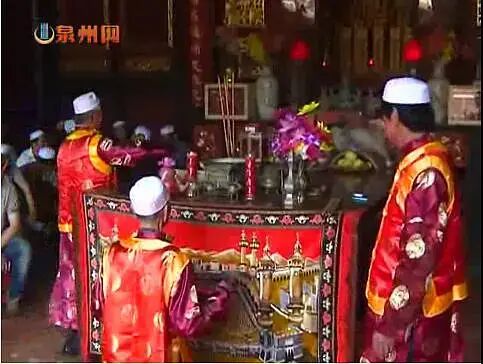
With the passing of Imam Guo, the practice of Islam among the Baiqi Guo clan came to an end. In the 1950s, the production team turned the Dashan Village mosque into a warehouse to store grain and farm tools, and eventually, it was converted into a private home. The last villagers in Dashan Village who avoided pork also stopped this practice in the 1950s, though some villagers still used stone coffin burials. In 1984, Guo Xijin's wife, Zeng Ying, passed away at the age of 95; she was the last person from the Guo family in Baiqi to be buried in a stone coffin.
7. Living without halal, dying with halal
If you keep the oil pure, your children and grandchildren will prosper. This is an important saying among the Guo family of Baiqi.
During the Qing Dynasty, many members of the Guo clan still followed the ancestral rule of not eating pork. As mentioned earlier, in 1807 (the 12th year of the Jiaqing reign), Guo Zhaofen ordered that pork be banned in the family in his section of the clan genealogy titled 'List of Items Not to Be Used for Ancestral Offerings'.
The 1807 (12th year of the Jiaqing reign) Guo Clan Genealogy records: 'According to clan rules, whenever there is a sacrificial ceremony, even for those who have left the faith and are required to perform sacrifices, the offerings must be pure and clean. Do not use unclean items; discard anything that is forbidden.' This is still the case today for ceremonies at both the main ancestral hall and the smaller ancestral halls, as it honors the intentions of our ancestors and is a way to show filial piety. "
Later, the village elders repeated: "Since the living eat pork, it is hard to change them, but the sacrifices for our ancestors must remain clean." The living have turned away from the ancestral faith, but the dead must return to halal ways. "
This custom of eating pork while alive but avoiding it after death has continued to this day. In the final days before a sick or elderly person passes away, the family switches to a clean diet and provides plenty of tea to help cleanse their stomach and intestines. After a death, the family washes all their cooking and eating utensils and begins a period of avoiding oil, which specifically means avoiding any pork products. This period of avoiding oil usually lasts for 7, 14, or 49 days. If someone accidentally eats pork or lard during the funeral period, they must immediately drink tea made from the tea leaves placed next to the Quran on the altar. It is believed this clears away misfortune and prevents mouth sores.
Besides the mourning period, families must also strictly avoid oil when paying respects to ancestors, ensuring all offerings are clean and pure. Since the 1990s, the Guo family of Baiqi has held an ancestor worship ceremony at their family temple every year around the Qingming Festival. The offerings must be completely free of oil, and some must also avoid "four-unlike" foods like squid, crab, and shrimp. The offerings must include a whole lamb and fried dough (youxiang). The utensils and cookware used for ancestor worship must be a dedicated set. They are cleaned, stored in plastic bags, and only taken out for use during the ceremony.
Guo Bangyi, the head of the Guo family temple management group, during an interview at the 2015 Qingming ancestor worship ceremony:
The Sixiao Hall in Xiadai Village is an Islamic-style building inscribed with "Firmly believe in Islam, advocate halal," but it is actually a place for ancestor worship.
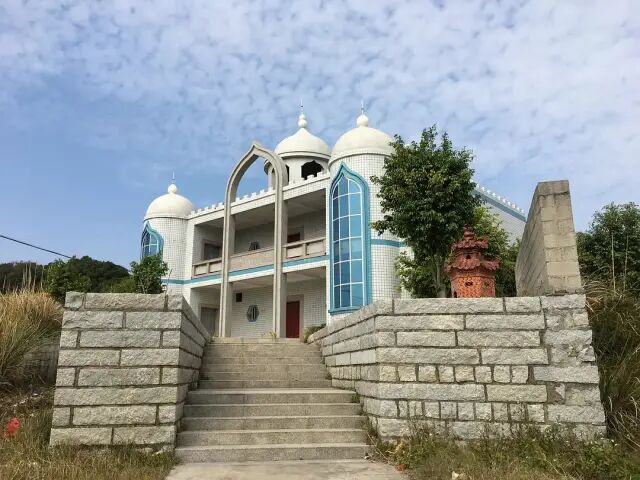
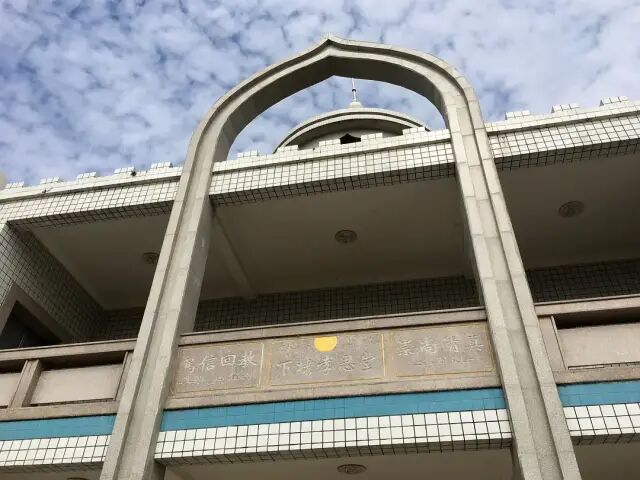
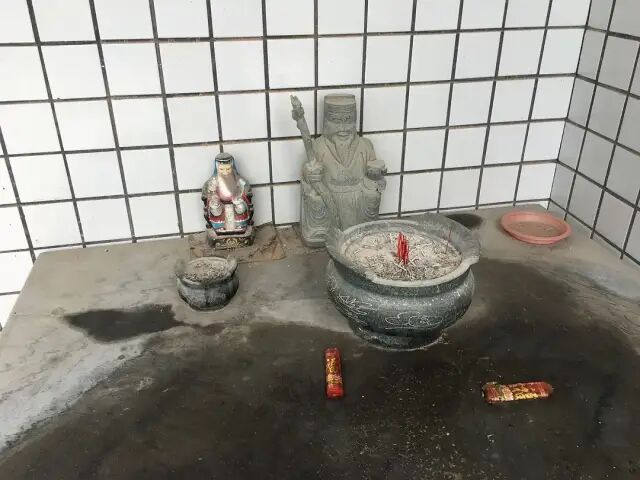
Modern Guo family graves are built in the style of the Ming Dynasty.
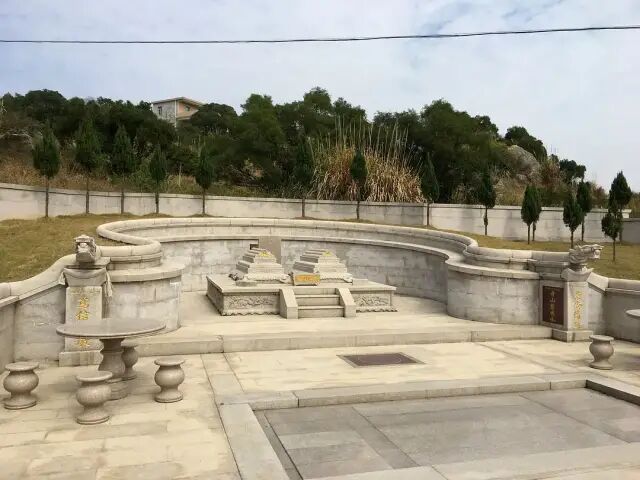
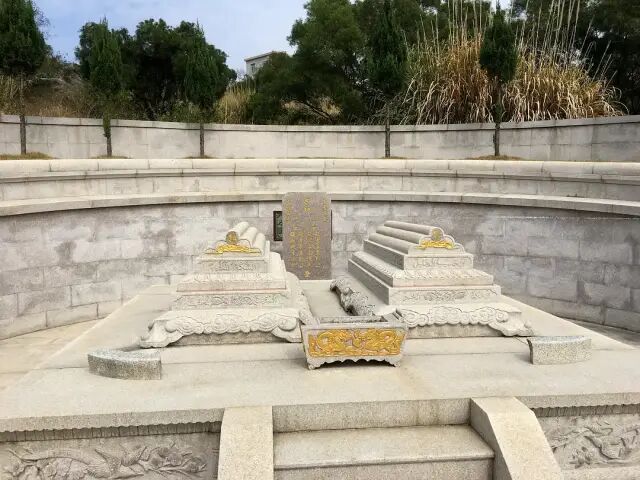
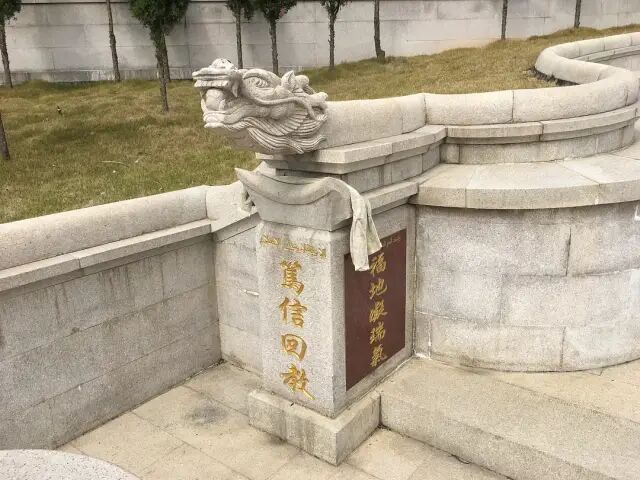
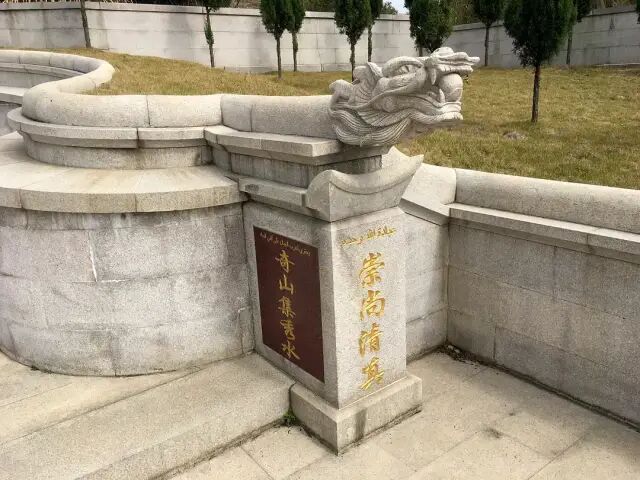
Beyond the Baiqi area, the Baiqi Guo clan members who moved elsewhere also keep the rule of eating only what is slaughtered alive and never eating what dies of natural causes. The Guo clan in Lixin Village, Tuzhai Township, Hui'an County moved there three or four hundred years ago, and they still strictly follow the rule of avoiding oil during funerals. The Baiqi Guo clan who moved to Guanqiao in Jinjiang hundreds of years ago broke the no-oil rule in the 1950s and 1960s, but after sending people to pay respects to their ancestors in Dashan Village, Baiqi, in the 1980s, they returned to observing the no-oil rule.
In 1958, Xiao Yongtai, chairman of the China Islamic Youth Association, went to Lukang, Taiwan, for research. He wrote that some Baiqi Guo families in Lukang still kept the Quran and did not eat pork for forty days after a death:
There are now over three hundred households of Guo-surnamed Muslims in Lukang, and those over sixty years old all know they are Muslims, with a few families still keeping the Quran.
After a fellow Muslim passes away, people must avoid eating pork for forty days, a tradition that still preserves the customs of Islam.
The Muslim pharmacy (huihui yaodian) in Baiqi.
The beef shop called Huiwei Niuqiang is actually not halal.
The Baiqi village committee building with its Arabic-style dome.
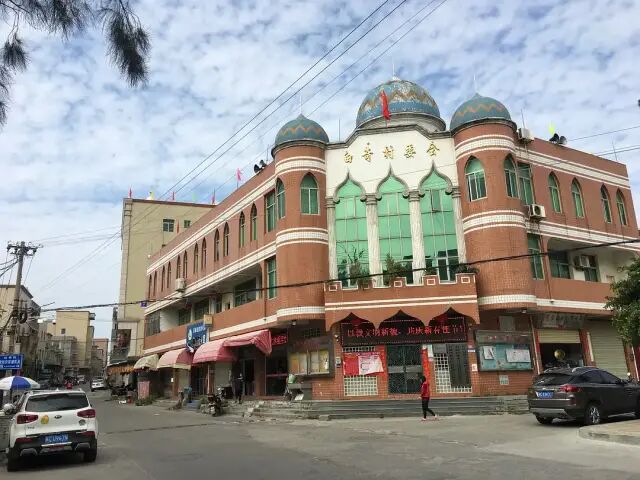
Although the Guo family in Baiqi no longer practices Islam, they still keep their Islamic memories. This makes them a very important case study for researching how minority group beliefs change over time.
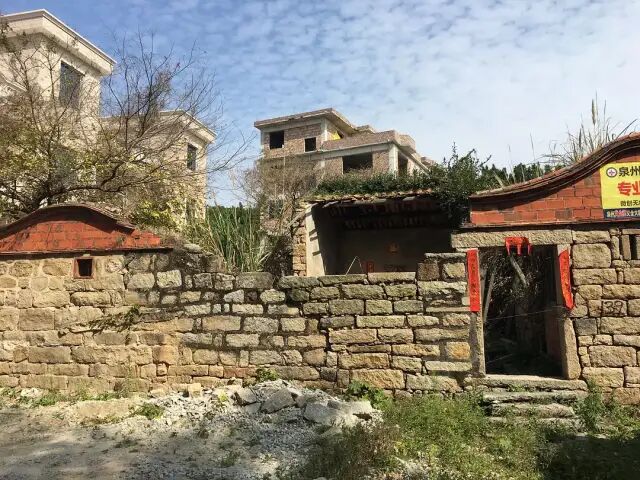
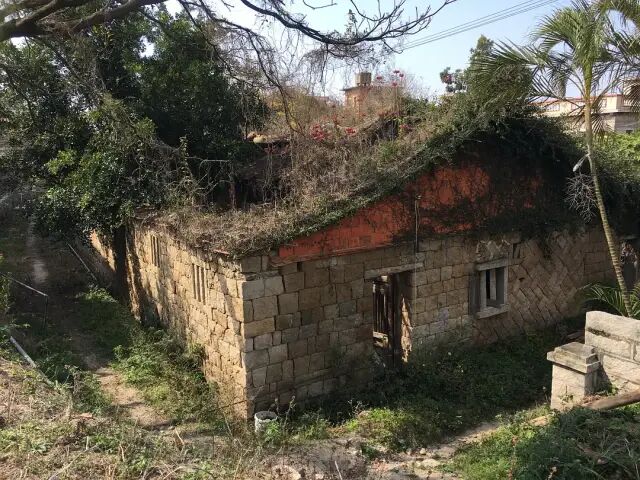
Some of the information in this article comes from "Research on the Baiqi Hui Muslims," "Selected Research Papers on Islam in Quanzhou," and "Ancient Ethnic Minority Books of Fujian Province: Hui Muslim Family Genealogies."
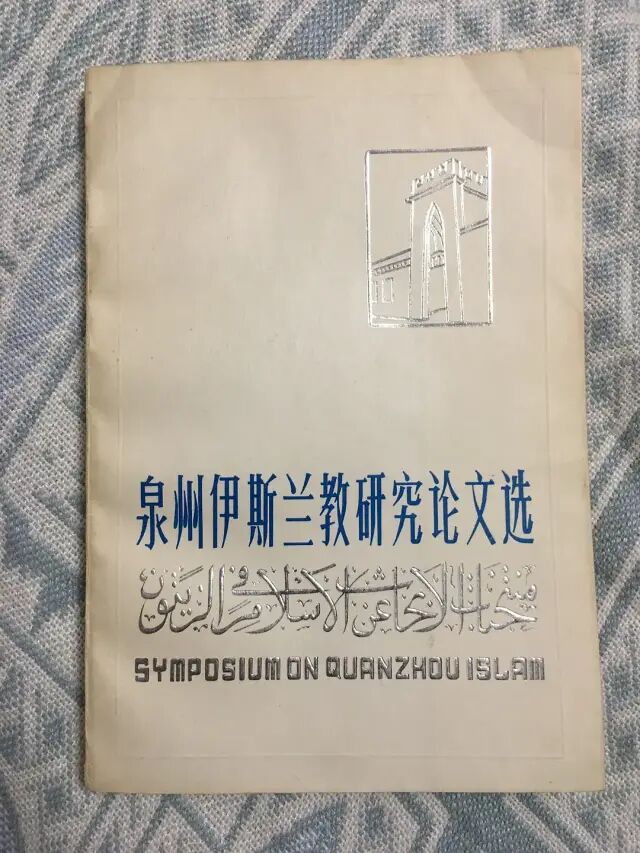
Quanzhou Muslim Heritage: The Ding Hui Muslims of Chendai
Articles • ali2007fr posted the article • 0 comments • 177 views • 2026-05-17 06:52
Summary: This travel note introduces Quanzhou Muslim Heritage: The Ding Hui Muslims of Chendai. The Ding family of Chendai is a branch of Hui Muslims living in Chendai Town, Jinjiang, south of Quanzhou city. It is useful for readers interested in Quanzhou Muslims, Hui Muslims, Islamic History.
The Ding family of Chendai is a branch of Hui Muslims living in Chendai Town, Jinjiang, south of Quanzhou city. They arrived in Quanzhou during the Yuan Dynasty, and between the end of the Yuan and the beginning of the Ming Dynasty, they moved to Chendai, abandoned commerce for farming, and during the mid-Ming Dynasty, they abandoned their Islamic faith through 'clan-building' and 'imperial examination-oriented' processes; today, most follow the traditional religions of the Minnan region. After the Republic of China era, a small number of the Chendai Ding family returned to the Islamic faith and, after the 1980s, established a mosque and an Islamic association.
Today, one can still see traces left by the Chendai Ding family from various historical periods in Quanzhou. Next to the Lingshan Holy Tomb in the east of Quanzhou city, one can see several traditional Islamic tombstones of the Chendai Ding family from the early Ming Dynasty, which still bear Quranic verses from exactly 600 years ago. In Chendai Town, one can see a series of ancestral halls and ancestral homes built by the Ding family since the Ming and Qing dynasties, which are symbols of the clan-building of the Chendai Ding family. In addition, next to the Ding family ancestral hall is the Chendai Mosque, built in 1990, which is a testament to the small number of Chendai Ding family members who have returned to the Islamic faith since the Republic of China era.
Table of Contents
I. Two Hundred Years of Islam — The Ding Family Cemetery
1. Joint tomb of the first, second, and third generations
2. Tomb of the fourth generation Ding Shan and his wife Zhuang Xiniang
3. Tomb of the fifth generation Ding Mabao and his wives, Pu and Wang
4. Tombs of the fifth generation Ding Guanbao, sixth generation Ding Kuan, and sixth generation Ding Min
5. Tomb of the fifth generation Ding Fubao and his wife Shi Dingniang
6. Tomb of the seventh generation Ding Lun and his wife Zhuang
II. Gradual Change to Conform to Rites — The Ding Family Ancestral Halls
1. The Ding Family Grand Ancestral Hall
2. Yizhai Ding Gong Ancestral Hall
3. Fenxi Ding Gong Ancestral Residence
4. Ding Yanzhong's Jinshi Residence
III. The Reappearance of Islam — Chendai Mosque
I. Two Hundred Years of Islam — The Ding Family Cemetery
According to the genealogy, the first ancestor of the Chendai Ding family, Ding Jin (1251-1298), was originally from Suzhou and settled in Quanzhou due to trade. By the time of the third ancestor, Ding Kui (1298-1379), he brought the fourth ancestor, Ding Shan (1343-1420), from Quanzhou city to Chendai, more than twenty li (a unit of distance) south of the city, but the third ancestor traveled between Suzhou and Quanzhou for trade for a long time and did not settle down until the early Ming Dynasty, when the fourth ancestor truly settled in Chendai.
There are many reasons for the Ding family's move to Chendai, the main one being that the Quanzhou port declined at the end of the Yuan and the beginning of the Ming Dynasty, trade was cut off, and the Ding family had no business to conduct, so they chose to abandon commerce for farming, coming to Chendai for tidal flat work and rice cultivation.
The Islamic faith of the Chendai Ding family was maintained for ten generations, spanning more than two hundred years from the 13th to the 16th century. The tenth generation Ding Yanxia, born around 1517, recorded in his 'Zujiao Shuo' (Discourse on Ancestral Religion) the Islamic customs he experienced in his childhood in great detail. However, according to calculations, by the eighth to ninth generations, the Chendai Ding family no longer valued scripture education:
'The shroud is not layered, the coffin is not made of wood, and burial does not exceed three days. The mound is like a horse's mane and shallow, mourning clothes are made of cotton, no ancestral tablets are set up for worship, and no offerings are arranged. For prayer times, at sunset, they gather and face west to pray to Allah. They fast once a year, eating when they see the stars in the morning and evening, and remaining hungry throughout the day. They offer only incense and flowers to the divine, do not set up wine or fruit, and do not burn paper offerings. They recite the pure scriptures, imitating the transmitted foreign sounds, without understanding the meaning, nor seeking to understand it, and use them for both auspicious and inauspicious occasions. Animals must be slaughtered by their own butchers before being eaten, and pork is not consumed. They bathe constantly, for they dare not approach the divine otherwise. They prefer cotton clothing over silk, generally valuing brightness and cleanliness. This is what I, Xia, saw in my youth. ”
The existing Islamic relics of the Chendai Ding family are the several Ming Dynasty Islamic tombstones within the Lingshan Holy Tomb.
1. Joint tomb of the first, second, and third generations
Before the Ding family established their base in Chendai, the first, second, and third generations were all buried at Lingshan, east of Quanzhou city. Lingshan was the main burial area for Muslims in Quanzhou during the Song and Yuan dynasties, built in 1162 by the Song Dynasty Arab merchant Shi Nawei. It was called the 'Foreign Merchant Tomb' during the Song and Yuan dynasties.
After the fourth generation Ding Shan established the base in Chendai, he entrusted the ancestral tombs to others for management. Later, the son of the second manager, Xu Fen, named Xu Fu, continuously encroached on the ancestral tomb land, and the Ding family endured it in silence. It was not until 18 years later, in 1505, that the eighth generation Ding Yi passed the imperial examination and became a Jinshi, and after returning to his hometown, he filed a lawsuit and finally reclaimed the ancestral tomb land.
During the Chongzhen period of the Ming Dynasty, the descendants of the Ding family buried the first, second, and third generation ancestors together. In 1993, due to the need for road construction, a large number of Chendai Ding family tombstones were moved from outside the East Gate of Quanzhou, Luyuan, and other places to the Lingshan Holy Tomb; the current joint tomb of the first, second, and third generations was also rebuilt during this period. The tombstones and monuments seen now are not the originals. The Chendai Ding family has legends from the Ming Dynasty that their ancestor was the Yuan Dynasty politician Sayyid Ajjal Shams al-Din, so the cemetery is inscribed with words stating they are descendants of a saint.
2. Tomb of the fourth generation Ding Shan and his wife Zhuang Xiniang
Ding Shan (1343-1420), courtesy name Yanren, pseudonym Ren'an, followed his father from Quanzhou to Chendai at the end of the Yuan Dynasty and officially established the base in Chendai at the beginning of the Ming Dynasty, founding the Chendai Ding clan. His wife, Zhuang Xiniang, courtesy name Runxiu, was the sixth-generation granddaughter of Zhuang Xia, who was enfeoffed as a founding baron and junior preceptor in the Southern Song Dynasty. The Zhuang family was prominent in the late Southern Song Dynasty but gradually declined after the Yuan Dynasty, and their relatives left Quanzhou one after another; only Zhuang Xiniang's father still lived in the Zhuang mansion south of the city. At that time, the Ding family and the Zhuang family were neighbors, so they became husband and wife, and shortly after the marriage, Ding Shan and his father moved to Chendai. The Ding family's move to Chendai was likely related to Zhuang Xiniang, because near Chendai at that time was Qingyang, where the Zhuang clan lived, a powerful clan known as the 'Qingyang Zhuang family'.
Ding Shan and Zhuang Xiniang were originally buried in Luyuan, east of Quanzhou city; 'Luyuan' means 'Paradise', which is the 'Garden' (Jannah) in the Quran. The tomb is a traditional Islamic chlorite tomb, with two sumeru-pedestal style five-layer tombstones placed on a sumeru-pedestal altar platform. The first layer of the tombstone has six gnomon feet, carved with ruyi (auspicious) patterns; The second layer is carved with continuous scrolling patterns; The third layer is carved with overlapping lotus patterns; The fourth layer is carved with Quranic verses; The fifth layer is a curved arch-shaped tombstone top. Behind the tombstone is a monument erected in 1910.
The verses on the tombstone are from the Quran, Chapter 2, Verse 255.
3. Tomb of the fifth generation Ding Mabao and his wives, Pu and Wang
Ding Mabao (1366-1431), courtesy name Shilong, pseudonym Yi'an, was the eldest son of the fourth generation Ding Shan who established the base in Chendai, and the founding ancestor of the main branch of the Chendai Ding family; he was originally buried with his two wives in the Chengui Baoxue (a geomantically auspicious site) on Daping Mountain, east of Quanzhou city.
4. Tombs of the fifth generation Ding Guanbao, sixth generation Ding Kuan, and sixth generation Ding Min
Ding Guanbao (1369-1436), courtesy name Shifu, pseudonym Chengzhai, was the second son of Ding Shan and the founding ancestor of the second main branch of the Chendai Ding family. He was originally buried at the foot of Shuiuniulin, east of Quanzhou city.
Ding Kuan (1395-1446), courtesy name Tingyu, pseudonym Longyin, was the second son of Ding Guanbao and was originally buried to the left of Ding Shan's tomb in Luyuan Mountain.
Ding Min (1407-1456), courtesy name Tingxue, pseudonym Yizhai, was the fourth son of Ding Guanbao and was originally buried at the foot of Shuiuniulin, east of Quanzhou city. Ding Min was the earliest local worthy among the Chendai Ding family to promote literary education.
5. Tomb of the fifth generation Ding Fubao and his wife Shi Dingniang
Ding Fubao (1375-1432), courtesy name Shizhang, pseudonym Yingjie, was the third son of Ding Shan and the founding ancestor of the third main branch of the Chendai Ding family, buried at Lingshan, east of Quanzhou city. The tomb consists of two sumeru-pedestal stone tombs placed on a traditional Islamic sumeru-pedestal altar platform, with swastikas and double lions playing with a pearl carved on the waist of the platform.
6. Tomb of the seventh generation Ding Lun and his wife Zhuang
Ding Lun (1442-1485), courtesy name Zhaorui, was the third son of the sixth generation Ding Xin.
For information on the Ming Dynasty Islamic tombstones of the Chendai Ding family, see 'Quanzhou Religious Stone Carvings'.
II. Gradual Change to Conform to Rites — The Ding Family Ancestral Halls
By the mid-16th century, the religious customs of the Chendai Ding family had undergone significant changes; Ding Yanxia recorded in 'Zujiao Shuo':
'Later, shrouds were layered, coffins were made of wood, and burials were delayed. Mourning clothes were half cotton, ancestral tablets were set up, mounds were large, offerings were arranged, animals were fat, and prayers to Allah were rare. Fasting disappeared, and animals did not have to be slaughtered by their own butchers. Clothing was made of silk, bathing was not required for approaching the divine, wine and fruit were set out, and cotton and silk were burned for other gods, though not for ancestors. The offering of incense and flowers remained as before. ”
Finally, by the late 16th century, the Chendai Ding family had completely abandoned Islam; 'Zujiao Shuo' records:
'Now, when worshipping ancestors, some burn cotton and silk, animals do not have to be slaughtered by their own butchers, mourning clothes are all made of hemp without cotton, burials are delayed for more than ten years, Taoist priests and Buddhist monks are used for auspicious and inauspicious occasions, and pork is eaten. ”
According to folklore, the Chendai Ding family began eating pork in 1592 when the eleventh generation Ding Qijun, who became a Jinshi, was gifted food by the Wanli Emperor. However, the statement by the twelfth generation Ding Qing in 'Jiyi Jiyan' (Records of Sacrificial Rites) in 1698 is more credible:
'Fenxi Gong (Ding Yi) was the first to enter the official ranks, and he worshipped his ancestors according to the rites of a high official, not daring to violate the Islamic faith. But the three generations of Huai Gong (Ding Zishen), Wuting Gong (Ding Rijn), and Zhechu Gong (Ding Qijun) all passed the imperial examinations, and the family's reputation grew, while the Islamic faith almost ceased. ”
The Chendai Ding family began their official careers starting with the eighth generation Ding Yi, and by the tenth generation, 20 people had become Jinshi; these people used Confucian ethics and principles as their standard everywhere, which had an important impact on the Chendai Ding family and accelerated the dissolution of the Islamic faith. This is what Ding Yanxia referred to as 'gradually conforming to the rites', living according to Confucian behavioral standards. Wang Ke's book 'The Vanishing "Nationals"' provides an in-depth discussion of the 'clan-building' and 'imperial examination-oriented' processes of the Chendai Ding family; interested friends can take a look.
1. The Ding Family Grand Ancestral Hall
The most important sign of the Chendai Ding family's departure from Islam was the reconstruction of the Ding family ancestral hall in 1561. The early Ding family ancestral hall is presumed to have been built in the early 15th century, was destroyed by war in 1561, was rebuilt shortly after under the leadership of Ding Yi and Ding Zishen, and was rebuilt and expanded again by Ding Rijn in 1599 to its current scale.
The ancestral hall enshrines the spirit tablets of the first to fifth generation ancestors and ancestors who held titles and merits, but initially, there were no spirit tablets; instead, there were small wooden screens handwritten by the eighth generation Ding Yi (1472-1521) listing the first to fourth generation ancestors.
In 1561, the Ding family ancestral hall was destroyed due to 'Japanese pirate disturbances', and in 1562, Ding Yanxia initiated the formulation of the 'Sacrificial Covenant', which officially determined the way the Chendai Ding family worshipped their ancestors. The 'Sacrificial Covenant' mentions 'kneeling in order to offer incense, bowing four times to the spirits, and kneeling to offer wine', which was already completely in line with traditional Chinese customs.
In addition to the Grand Ancestral Hall, the Chendai Ding family has many small ancestral halls and ancestral homes for worshipping ancestors. The 6 small ancestral halls are the 'Yi'an Ding Gong Ancestral Hall' for the fifth generation Ding Mabao, the 'Zhongzhai Ding Family Ancestral Hall' for the sixth generation Ding Xin, the 'Yizhai Ding Gong Ancestral Hall' for the sixth generation Ding Min, the 'Dunpu Ding Gong Ancestral Hall' for the seventh generation Ding Chang, the 'Gusu Ding Gong Ancestral Hall' for the eighth generation Ding Gui, and the 'Daozhen Ding Gong Ancestral Hall' for the twelfth generation Ding Shibo. The establishment of small ancestral halls is usually for the prosperity of the descendants of a specific branch, built to bring honor to the ancestors.
Below the small ancestral halls are ancestral homes, which enshrine the ancestors of the branch and their descendants, formed as descendants multiplied and families branched out; there are about 200 of them.
2.
Yizhai Ding Gong Ancestral Hall
The sixth generation Ding Min (1407-1456), courtesy name Tingxue, pseudonym Yizhai, was the earliest local worthy among the Chendai Ding family to promote literary education.
3. Fenxi Ding Gong Ancestral Residence
The eighth generation Ding Yi (1472-1521), courtesy name Wenfan, pseudonym Fenxi, passed the Jinshi examination in 1505 and was the first person from the Chendai Ding family to enter an official career, serving as an inspector in the Sichuan Surveillance Commission. At the same time, Ding Yi was also a famous poet of the mid-Ming Dynasty, with his 'Gui Nang Yi Gao' (Posthumous Manuscripts of the Returning Bag) circulating.
4. Ding Yanzhong's Jinshi Residence
The tenth generation Ding Yanzhong passed the military Jinshi examinations in 1582 and 1583 and served as the commander-in-chief of Guangxi Prefecture.
III. The Reappearance of Islam — Chendai Mosque
In the early 1920s, the famous Hui Muslim Tang Kesan, while serving as the Superintendent of the Xiamen Customs, paid great attention to the religious affairs in Quanzhou, and on the eve of the War of Resistance, he recommended his fellow townsman Zhang Guangyu to preside over religious work in the Quanzhou area. After Zhang Guangyu arrived in Quanzhou, he earnestly carried out religious affairs, and the religious life in Chendai began to reappear.
In 1939, the 'China Islamic National Salvation Association Chendai Branch' was established in Chendai, and some Chendai Ding family members often went to the Qingjing Mosque in Quanzhou for Jumu'ah (Friday congregational prayer); later, they converted the 'Wenchang Mosque' in Sijing Village into a mosque and hired an Ahong (Imam) from Quanzhou to preside over religious affairs.
Between 1937 and 1944, the most famous modern Islamic school during the Republic of China, the Chengda Normal School, moved south to Guilin, and the founders Tang Kesan and Ma Songting successively accepted 17 young people from the Chendai Ding family to study there.
In the late 1950s, all Islamic activities in Chendai were forced to stop, and Ding Jinshun, a graduate of Chengda Normal School, was criticized and struggled against for mentioning in class that he was a Hui Muslim.
In 1983, Ding Jinshun and Ding Jinhe, graduates of Chengda Normal School, attended the founding meeting of the Fujian Islamic Association. After this, Chengda Normal School graduates Ding Jinshun, Ding Jinhe, Ding Jinke, and Ding Jinhong, along with more than twenty other people enthusiastic about the faith, established the 'Chendai Islamic Association Group' and began to restore religious life. They borrowed the second-floor conference room of the Chendai Hui Muslim Affairs Committee and the back hall of the Ding family ancestral hall for Jumu'ah prayers, with Ding Jinshun serving as the Imam. During Eid al-Fitr and Eid al-Adha, they invited their former Chengda Normal School classmates who were now serving as Ahongs in Guilin, as well as Ahongs from Jiaxing, Zhejiang, to preside over the congregational prayers.
After the Chendai Islamic Association Group was established, they began preparing to build a mosque. They issued a 'Letter to Fellow Muslims Nationwide' to the national Islamic association, but only a few mosques in Ankang, Shaanxi, and Yunnan sent a few hundred yuan in funds. After this, former Chengda Normal School classmates in Hong Kong forwarded the 'Letter to Ding Family Relatives and Fellow Countrymen' to the Chendai Ding family in Hong Kong, Taiwan, and overseas, and received 70,000 yuan in donations from the 'Five Surnames Islamic Association (originating from the Jin, Ding, Ma, Bai, and Guo Hui Muslim families of Quanzhou) of Filipinos' in Hong Kong, Taiwan, Singapore, and the Philippines.
In 1991, the Chendai Mosque was completed, opened officially in 1993, and the Jinjiang Islamic Association was immediately established. The Chendai Ding family hired Ahong Ma Zhiwei from Inner Mongolia as the first head of the mosque, and Ding Jinke and Ding Jinshun served as the first director of the mosque management committee and the director of the Islamic association, respectively.
After the 1990s, the Chendai Ding family selected nearly 60 young people to study Islam at home and abroad, some of whom went to Arabic language schools in mosques in Inner Mongolia.
Tomb of the twenty-second generation Ding Jinke
Ding Jinke (1923-1997), religious name Yunus, studied at the Guangxi Chengda Normal School and the Hong Kong Dade College. He participated in the revolution during the War of Liberation and later worked in the Financial Committee of the State Council and in colleges and universities in Beijing and Xinjiang. After retiring and returning to his hometown in 1983, he participated in the construction of the Chendai Mosque and the formation of the Jinjiang Islamic Association, serving as the executive deputy director of the Jinjiang Islamic Association, and later cultivated dozens of Chendai Ding family youths to go to Islamic colleges at home and abroad for further studies.
For research on the Chendai Ding family, see the book 'Research on the History of the Chendai Hui Muslims'.
Finally, here are some Chendai Ding family residences.
The unique Minnan wall-building method of 'using bricks and stones'. view all
Summary: This travel note introduces Quanzhou Muslim Heritage: The Ding Hui Muslims of Chendai. The Ding family of Chendai is a branch of Hui Muslims living in Chendai Town, Jinjiang, south of Quanzhou city. It is useful for readers interested in Quanzhou Muslims, Hui Muslims, Islamic History.
The Ding family of Chendai is a branch of Hui Muslims living in Chendai Town, Jinjiang, south of Quanzhou city. They arrived in Quanzhou during the Yuan Dynasty, and between the end of the Yuan and the beginning of the Ming Dynasty, they moved to Chendai, abandoned commerce for farming, and during the mid-Ming Dynasty, they abandoned their Islamic faith through 'clan-building' and 'imperial examination-oriented' processes; today, most follow the traditional religions of the Minnan region. After the Republic of China era, a small number of the Chendai Ding family returned to the Islamic faith and, after the 1980s, established a mosque and an Islamic association.
Today, one can still see traces left by the Chendai Ding family from various historical periods in Quanzhou. Next to the Lingshan Holy Tomb in the east of Quanzhou city, one can see several traditional Islamic tombstones of the Chendai Ding family from the early Ming Dynasty, which still bear Quranic verses from exactly 600 years ago. In Chendai Town, one can see a series of ancestral halls and ancestral homes built by the Ding family since the Ming and Qing dynasties, which are symbols of the clan-building of the Chendai Ding family. In addition, next to the Ding family ancestral hall is the Chendai Mosque, built in 1990, which is a testament to the small number of Chendai Ding family members who have returned to the Islamic faith since the Republic of China era.
Table of Contents
I. Two Hundred Years of Islam — The Ding Family Cemetery
1. Joint tomb of the first, second, and third generations
2. Tomb of the fourth generation Ding Shan and his wife Zhuang Xiniang
3. Tomb of the fifth generation Ding Mabao and his wives, Pu and Wang
4. Tombs of the fifth generation Ding Guanbao, sixth generation Ding Kuan, and sixth generation Ding Min
5. Tomb of the fifth generation Ding Fubao and his wife Shi Dingniang
6. Tomb of the seventh generation Ding Lun and his wife Zhuang
II. Gradual Change to Conform to Rites — The Ding Family Ancestral Halls
1. The Ding Family Grand Ancestral Hall
2. Yizhai Ding Gong Ancestral Hall
3. Fenxi Ding Gong Ancestral Residence
4. Ding Yanzhong's Jinshi Residence
III. The Reappearance of Islam — Chendai Mosque
I. Two Hundred Years of Islam — The Ding Family Cemetery
According to the genealogy, the first ancestor of the Chendai Ding family, Ding Jin (1251-1298), was originally from Suzhou and settled in Quanzhou due to trade. By the time of the third ancestor, Ding Kui (1298-1379), he brought the fourth ancestor, Ding Shan (1343-1420), from Quanzhou city to Chendai, more than twenty li (a unit of distance) south of the city, but the third ancestor traveled between Suzhou and Quanzhou for trade for a long time and did not settle down until the early Ming Dynasty, when the fourth ancestor truly settled in Chendai.
There are many reasons for the Ding family's move to Chendai, the main one being that the Quanzhou port declined at the end of the Yuan and the beginning of the Ming Dynasty, trade was cut off, and the Ding family had no business to conduct, so they chose to abandon commerce for farming, coming to Chendai for tidal flat work and rice cultivation.
The Islamic faith of the Chendai Ding family was maintained for ten generations, spanning more than two hundred years from the 13th to the 16th century. The tenth generation Ding Yanxia, born around 1517, recorded in his 'Zujiao Shuo' (Discourse on Ancestral Religion) the Islamic customs he experienced in his childhood in great detail. However, according to calculations, by the eighth to ninth generations, the Chendai Ding family no longer valued scripture education:
'The shroud is not layered, the coffin is not made of wood, and burial does not exceed three days. The mound is like a horse's mane and shallow, mourning clothes are made of cotton, no ancestral tablets are set up for worship, and no offerings are arranged. For prayer times, at sunset, they gather and face west to pray to Allah. They fast once a year, eating when they see the stars in the morning and evening, and remaining hungry throughout the day. They offer only incense and flowers to the divine, do not set up wine or fruit, and do not burn paper offerings. They recite the pure scriptures, imitating the transmitted foreign sounds, without understanding the meaning, nor seeking to understand it, and use them for both auspicious and inauspicious occasions. Animals must be slaughtered by their own butchers before being eaten, and pork is not consumed. They bathe constantly, for they dare not approach the divine otherwise. They prefer cotton clothing over silk, generally valuing brightness and cleanliness. This is what I, Xia, saw in my youth. ”
The existing Islamic relics of the Chendai Ding family are the several Ming Dynasty Islamic tombstones within the Lingshan Holy Tomb.
1. Joint tomb of the first, second, and third generations
Before the Ding family established their base in Chendai, the first, second, and third generations were all buried at Lingshan, east of Quanzhou city. Lingshan was the main burial area for Muslims in Quanzhou during the Song and Yuan dynasties, built in 1162 by the Song Dynasty Arab merchant Shi Nawei. It was called the 'Foreign Merchant Tomb' during the Song and Yuan dynasties.
After the fourth generation Ding Shan established the base in Chendai, he entrusted the ancestral tombs to others for management. Later, the son of the second manager, Xu Fen, named Xu Fu, continuously encroached on the ancestral tomb land, and the Ding family endured it in silence. It was not until 18 years later, in 1505, that the eighth generation Ding Yi passed the imperial examination and became a Jinshi, and after returning to his hometown, he filed a lawsuit and finally reclaimed the ancestral tomb land.
During the Chongzhen period of the Ming Dynasty, the descendants of the Ding family buried the first, second, and third generation ancestors together. In 1993, due to the need for road construction, a large number of Chendai Ding family tombstones were moved from outside the East Gate of Quanzhou, Luyuan, and other places to the Lingshan Holy Tomb; the current joint tomb of the first, second, and third generations was also rebuilt during this period. The tombstones and monuments seen now are not the originals. The Chendai Ding family has legends from the Ming Dynasty that their ancestor was the Yuan Dynasty politician Sayyid Ajjal Shams al-Din, so the cemetery is inscribed with words stating they are descendants of a saint.
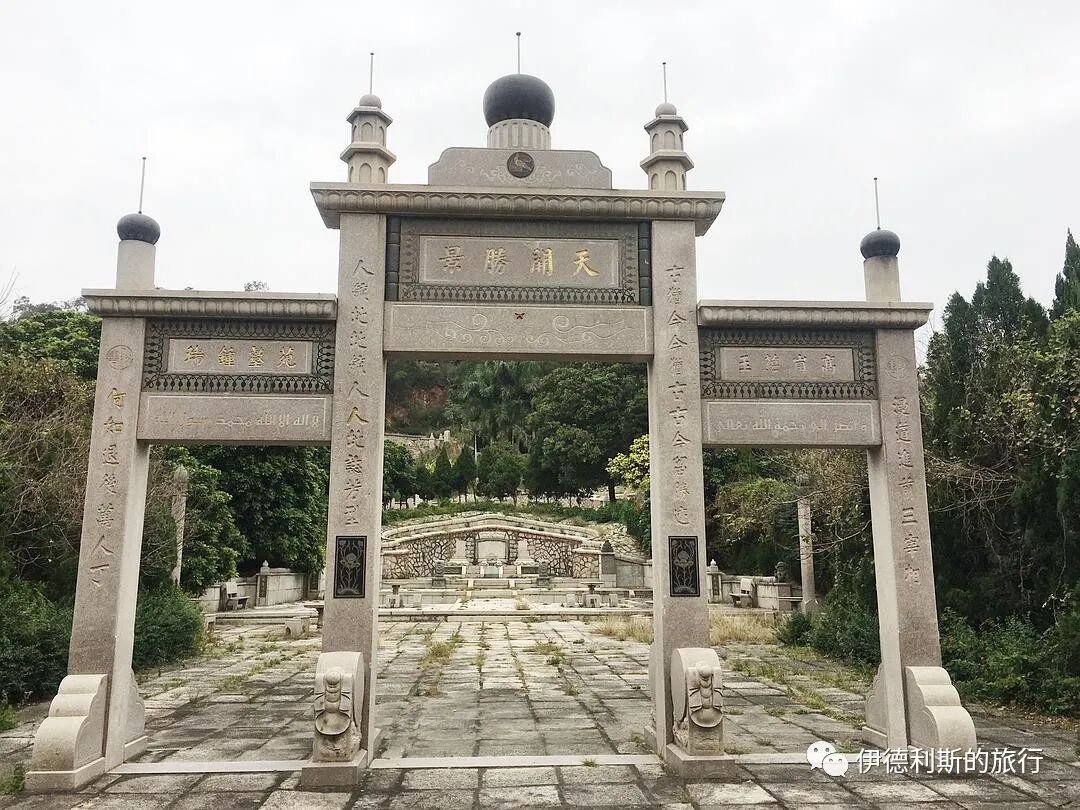
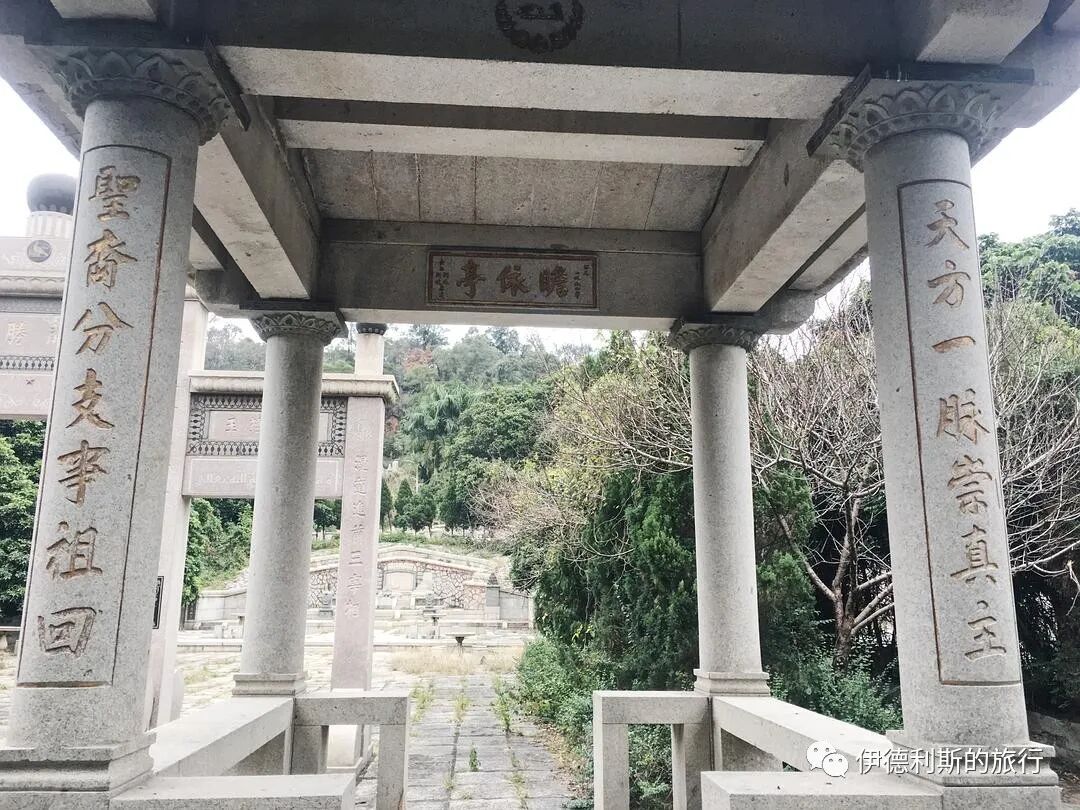
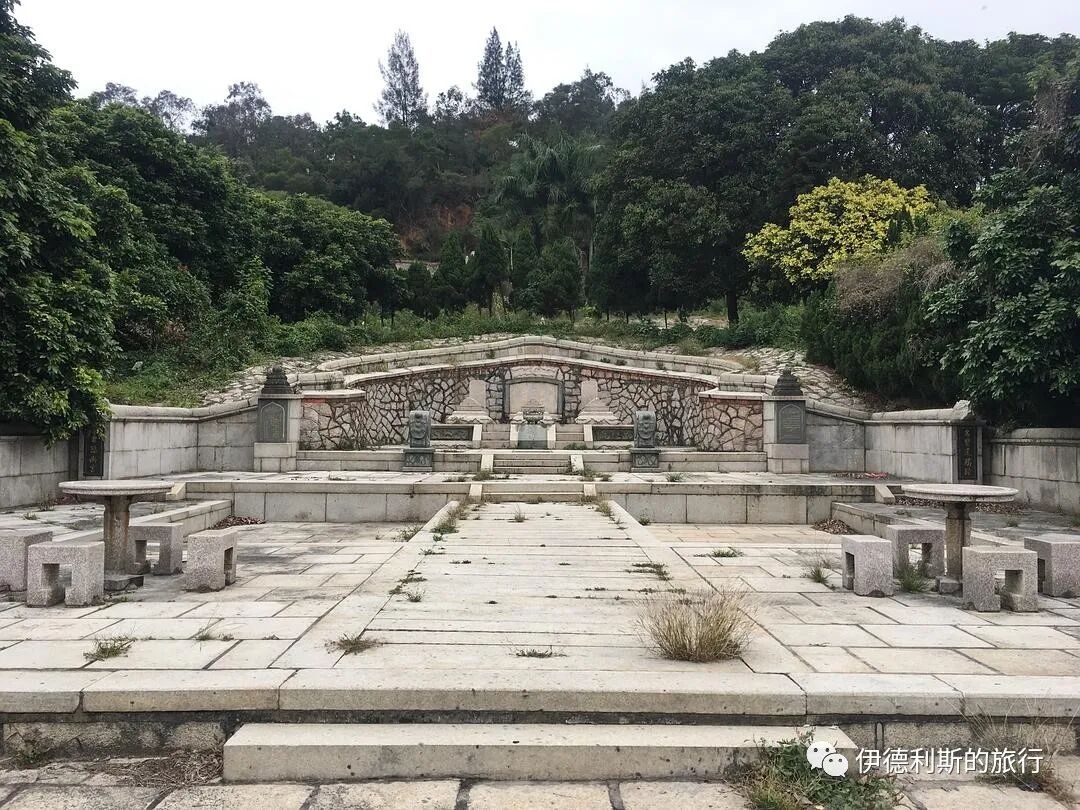
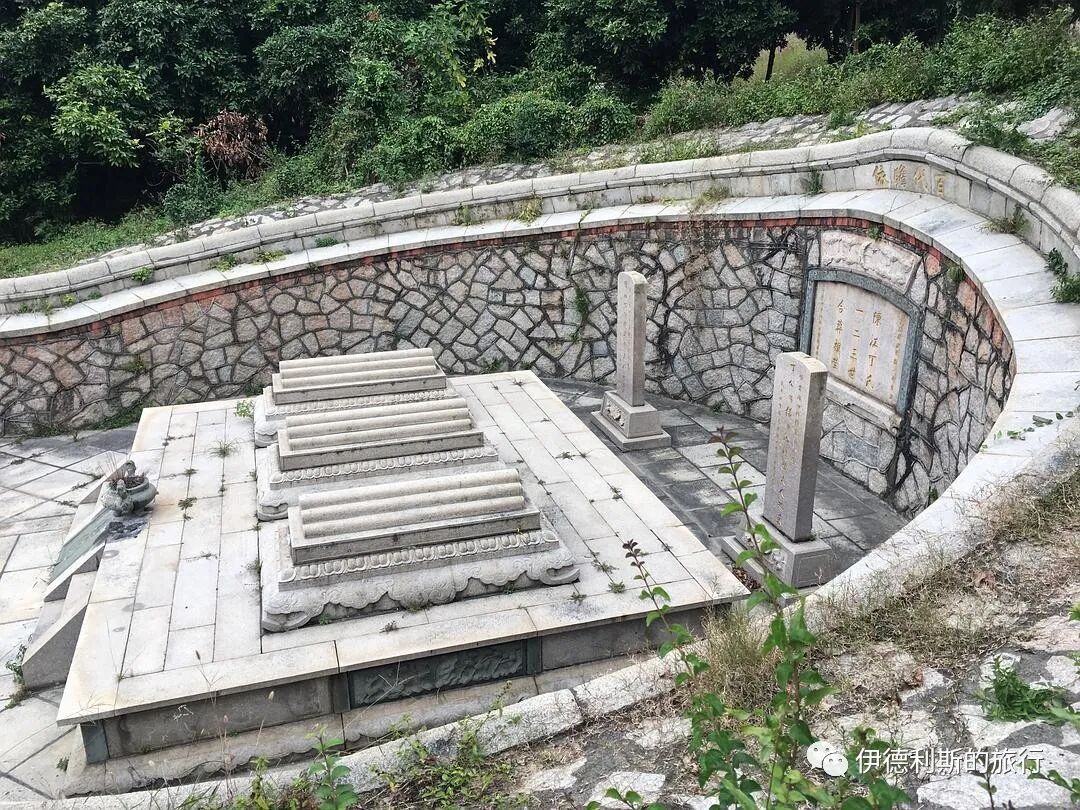
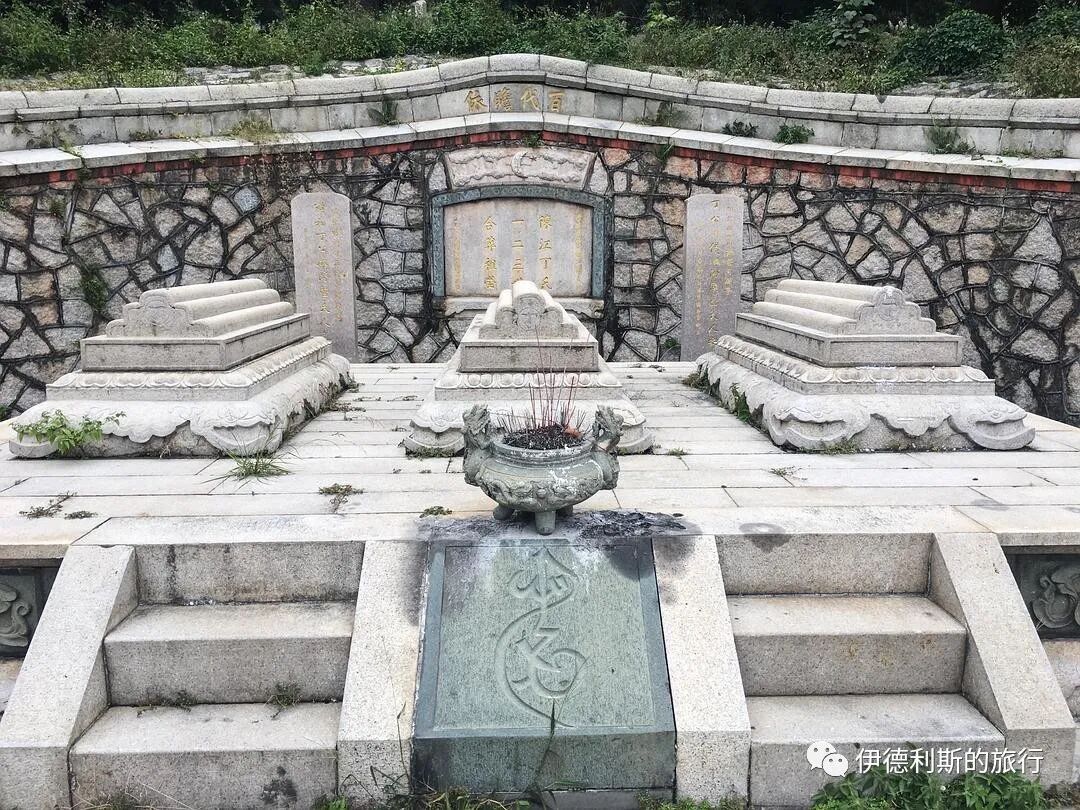
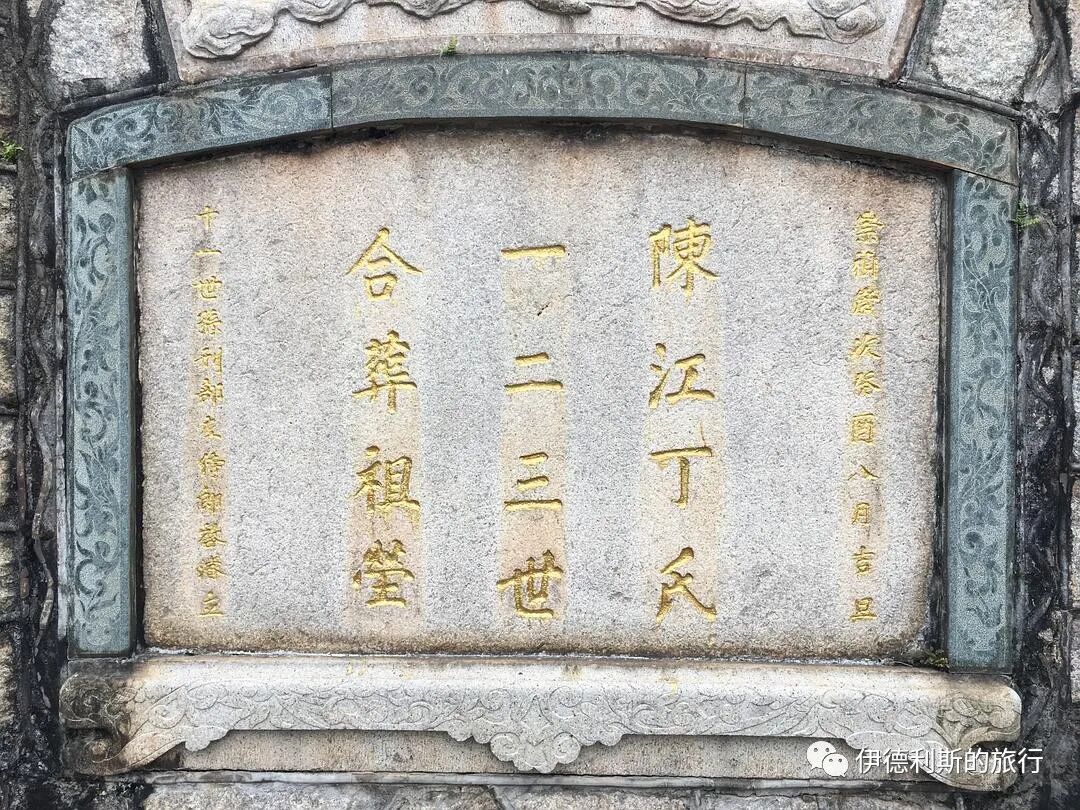
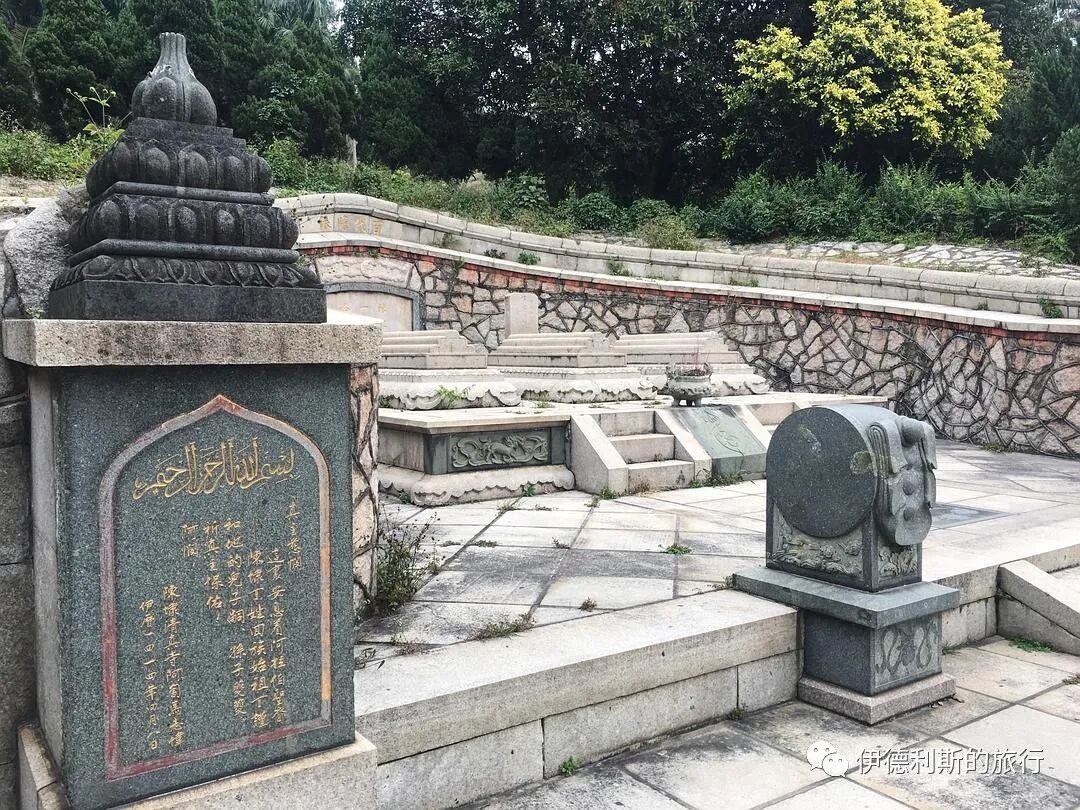
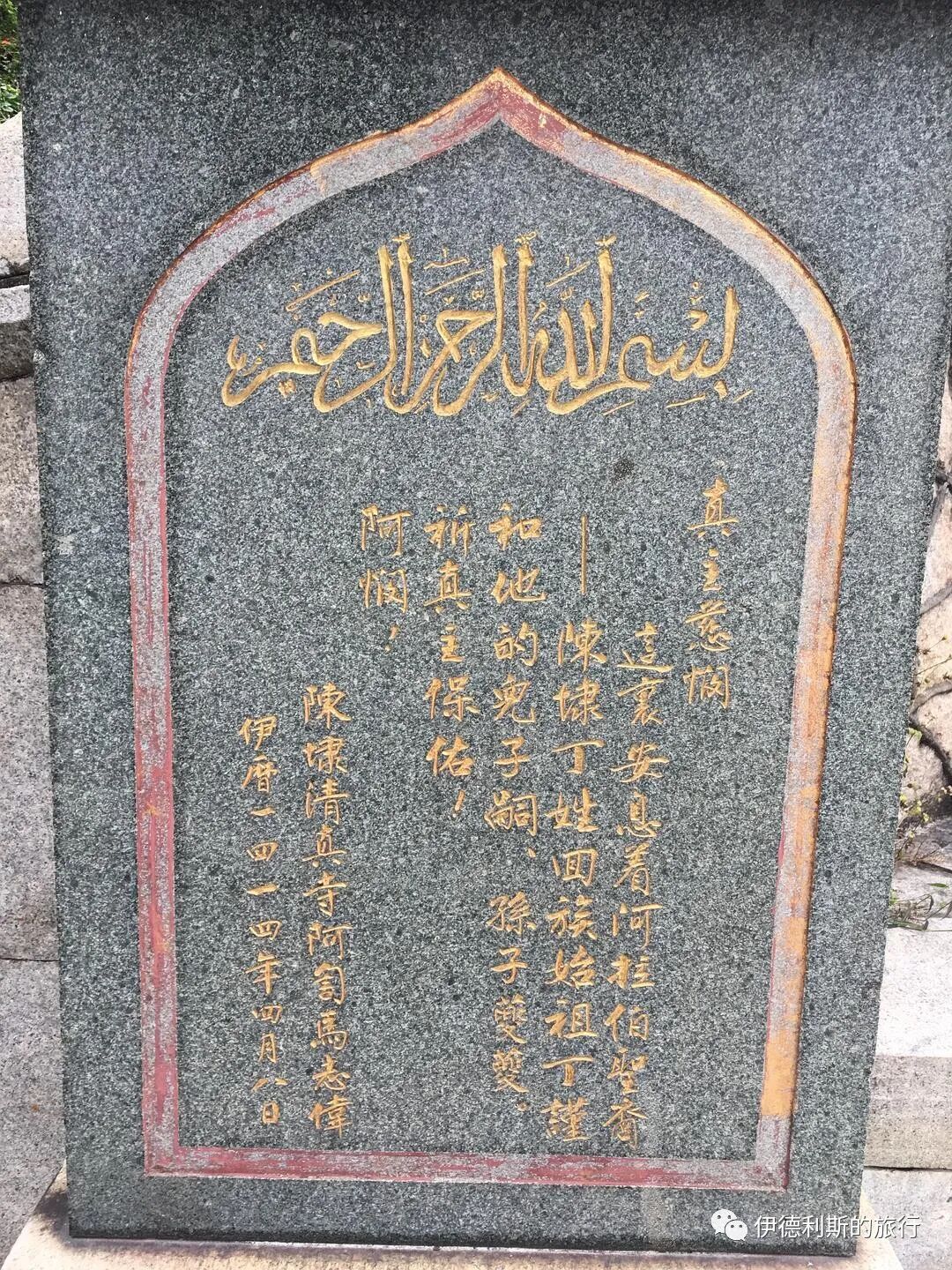
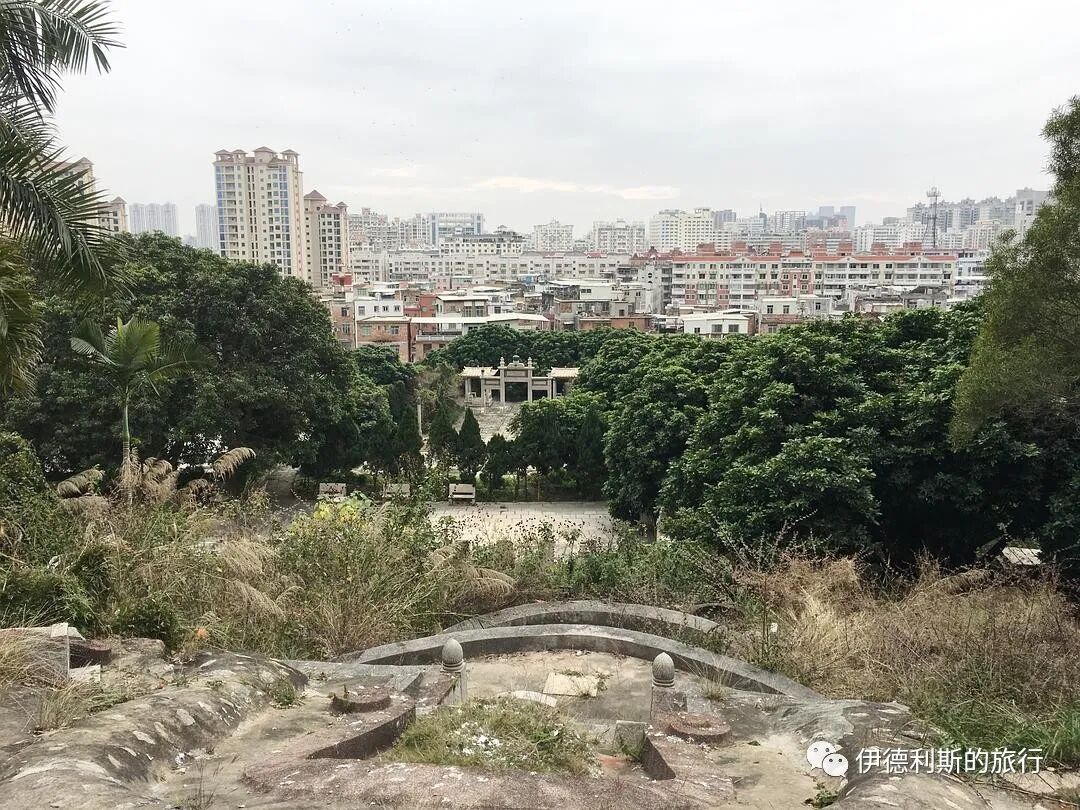
2. Tomb of the fourth generation Ding Shan and his wife Zhuang Xiniang
Ding Shan (1343-1420), courtesy name Yanren, pseudonym Ren'an, followed his father from Quanzhou to Chendai at the end of the Yuan Dynasty and officially established the base in Chendai at the beginning of the Ming Dynasty, founding the Chendai Ding clan. His wife, Zhuang Xiniang, courtesy name Runxiu, was the sixth-generation granddaughter of Zhuang Xia, who was enfeoffed as a founding baron and junior preceptor in the Southern Song Dynasty. The Zhuang family was prominent in the late Southern Song Dynasty but gradually declined after the Yuan Dynasty, and their relatives left Quanzhou one after another; only Zhuang Xiniang's father still lived in the Zhuang mansion south of the city. At that time, the Ding family and the Zhuang family were neighbors, so they became husband and wife, and shortly after the marriage, Ding Shan and his father moved to Chendai. The Ding family's move to Chendai was likely related to Zhuang Xiniang, because near Chendai at that time was Qingyang, where the Zhuang clan lived, a powerful clan known as the 'Qingyang Zhuang family'.
Ding Shan and Zhuang Xiniang were originally buried in Luyuan, east of Quanzhou city; 'Luyuan' means 'Paradise', which is the 'Garden' (Jannah) in the Quran. The tomb is a traditional Islamic chlorite tomb, with two sumeru-pedestal style five-layer tombstones placed on a sumeru-pedestal altar platform. The first layer of the tombstone has six gnomon feet, carved with ruyi (auspicious) patterns; The second layer is carved with continuous scrolling patterns; The third layer is carved with overlapping lotus patterns; The fourth layer is carved with Quranic verses; The fifth layer is a curved arch-shaped tombstone top. Behind the tombstone is a monument erected in 1910.
The verses on the tombstone are from the Quran, Chapter 2, Verse 255.
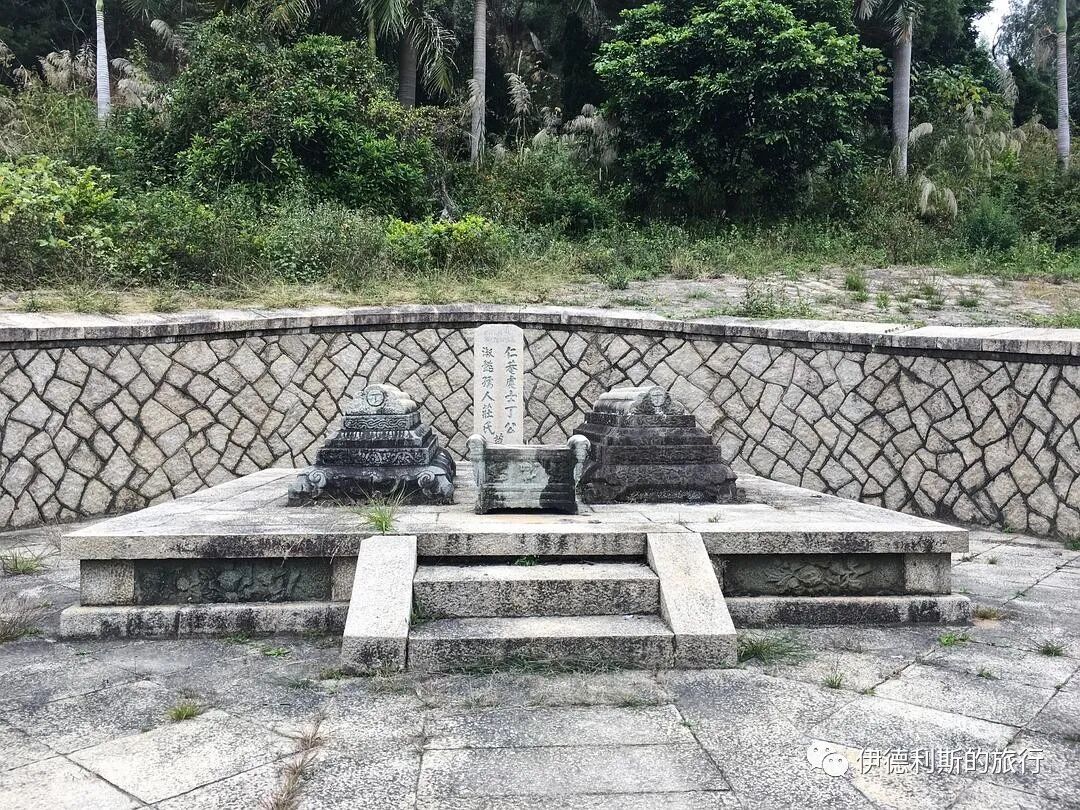
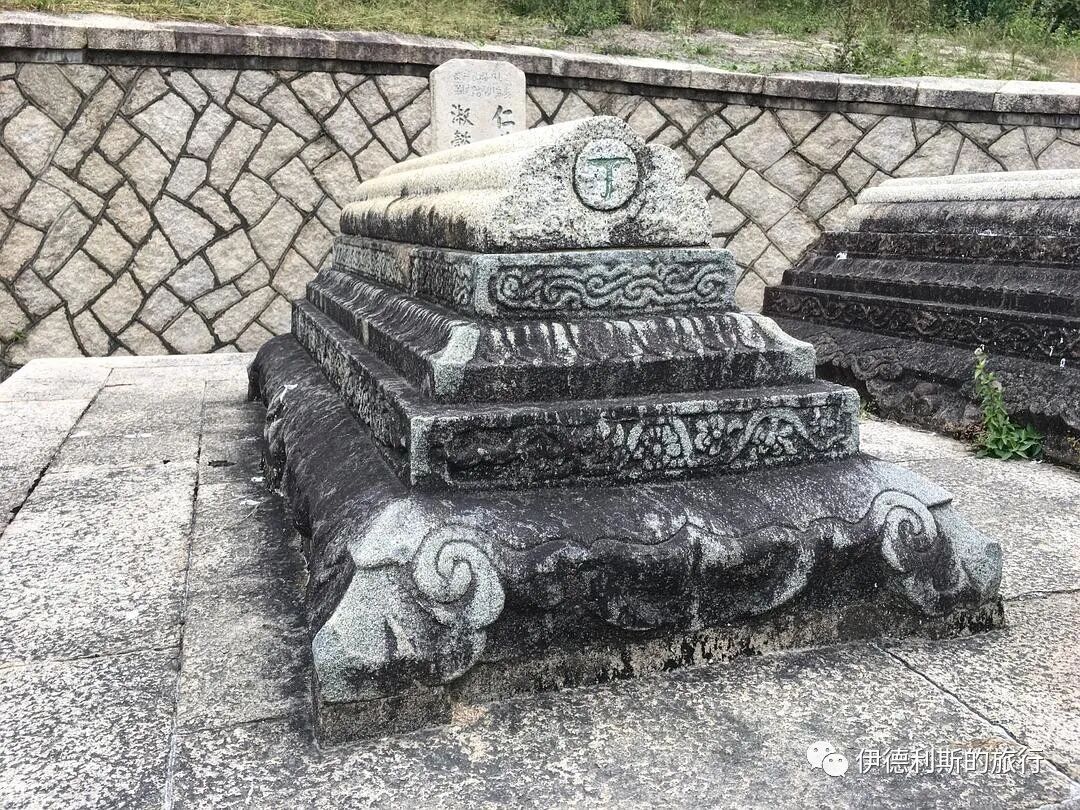
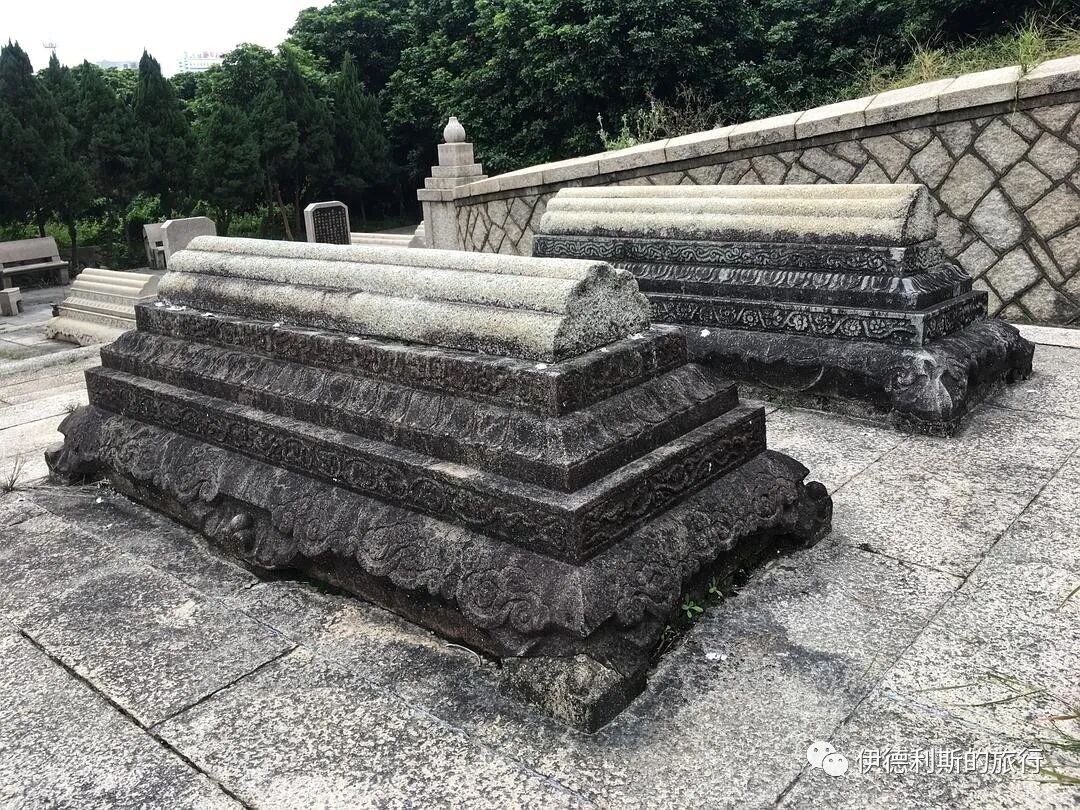
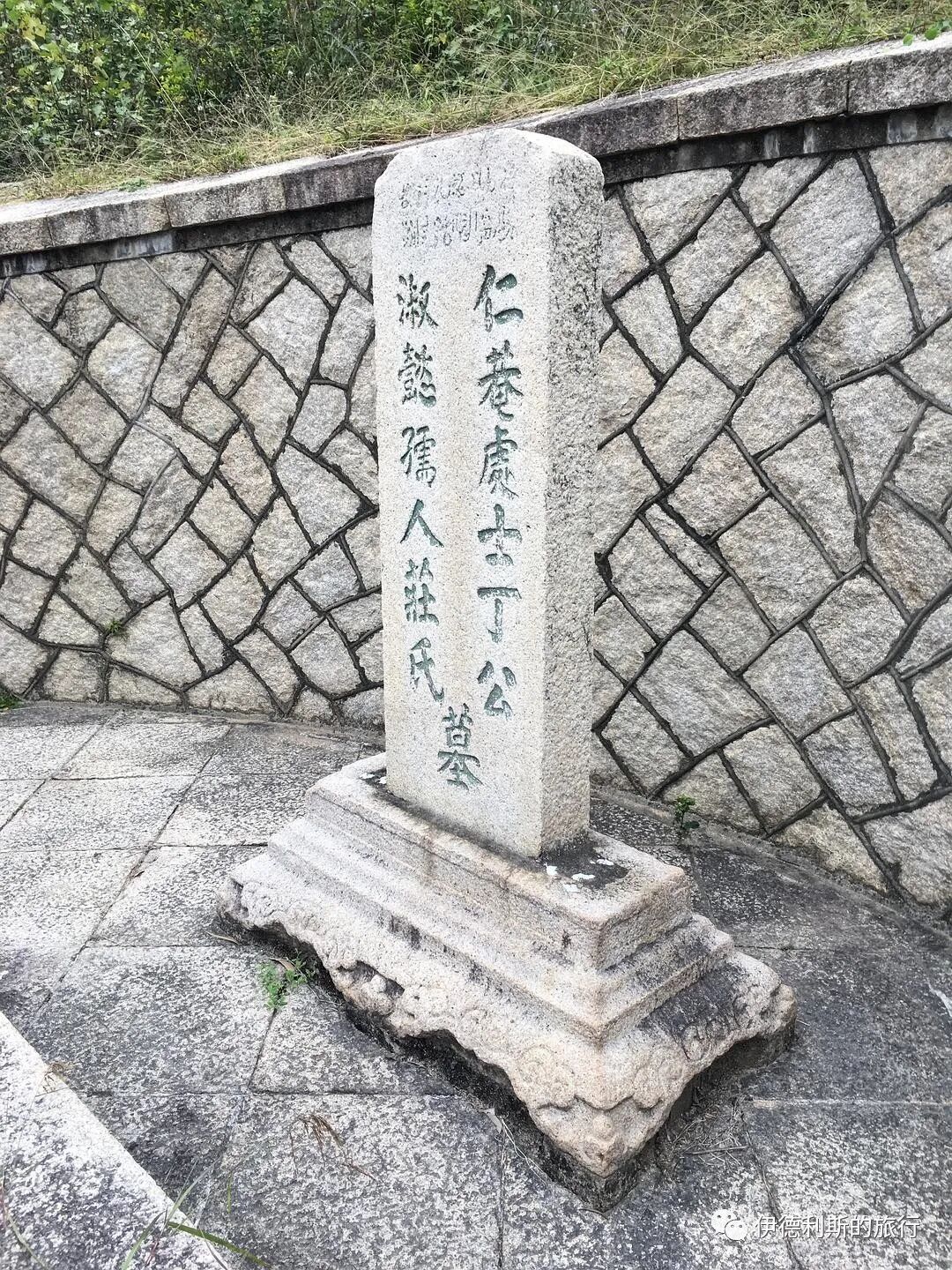
3. Tomb of the fifth generation Ding Mabao and his wives, Pu and Wang
Ding Mabao (1366-1431), courtesy name Shilong, pseudonym Yi'an, was the eldest son of the fourth generation Ding Shan who established the base in Chendai, and the founding ancestor of the main branch of the Chendai Ding family; he was originally buried with his two wives in the Chengui Baoxue (a geomantically auspicious site) on Daping Mountain, east of Quanzhou city.
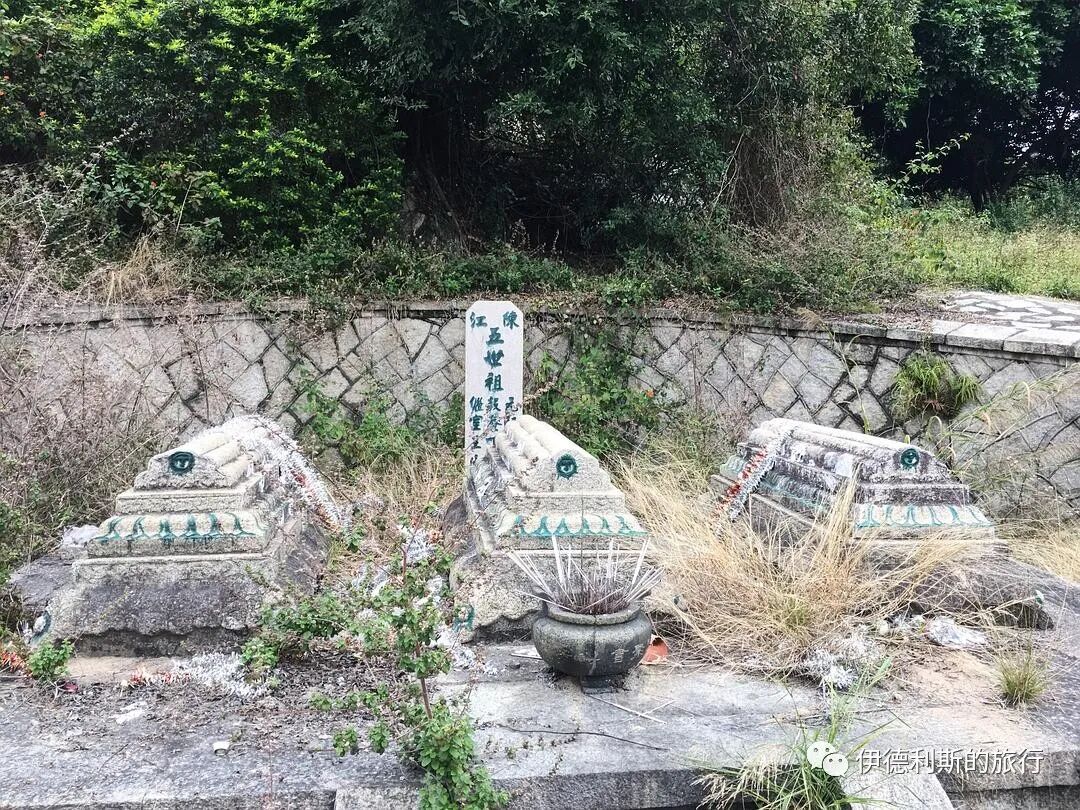
4. Tombs of the fifth generation Ding Guanbao, sixth generation Ding Kuan, and sixth generation Ding Min
Ding Guanbao (1369-1436), courtesy name Shifu, pseudonym Chengzhai, was the second son of Ding Shan and the founding ancestor of the second main branch of the Chendai Ding family. He was originally buried at the foot of Shuiuniulin, east of Quanzhou city.
Ding Kuan (1395-1446), courtesy name Tingyu, pseudonym Longyin, was the second son of Ding Guanbao and was originally buried to the left of Ding Shan's tomb in Luyuan Mountain.
Ding Min (1407-1456), courtesy name Tingxue, pseudonym Yizhai, was the fourth son of Ding Guanbao and was originally buried at the foot of Shuiuniulin, east of Quanzhou city. Ding Min was the earliest local worthy among the Chendai Ding family to promote literary education.
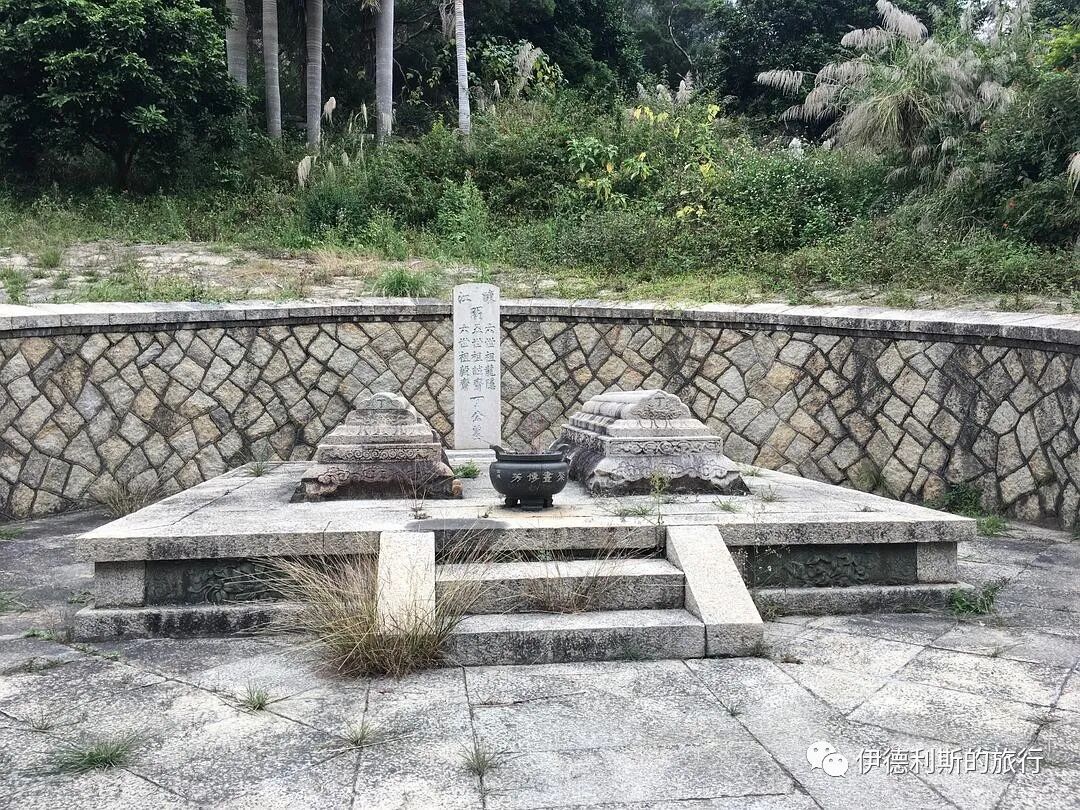
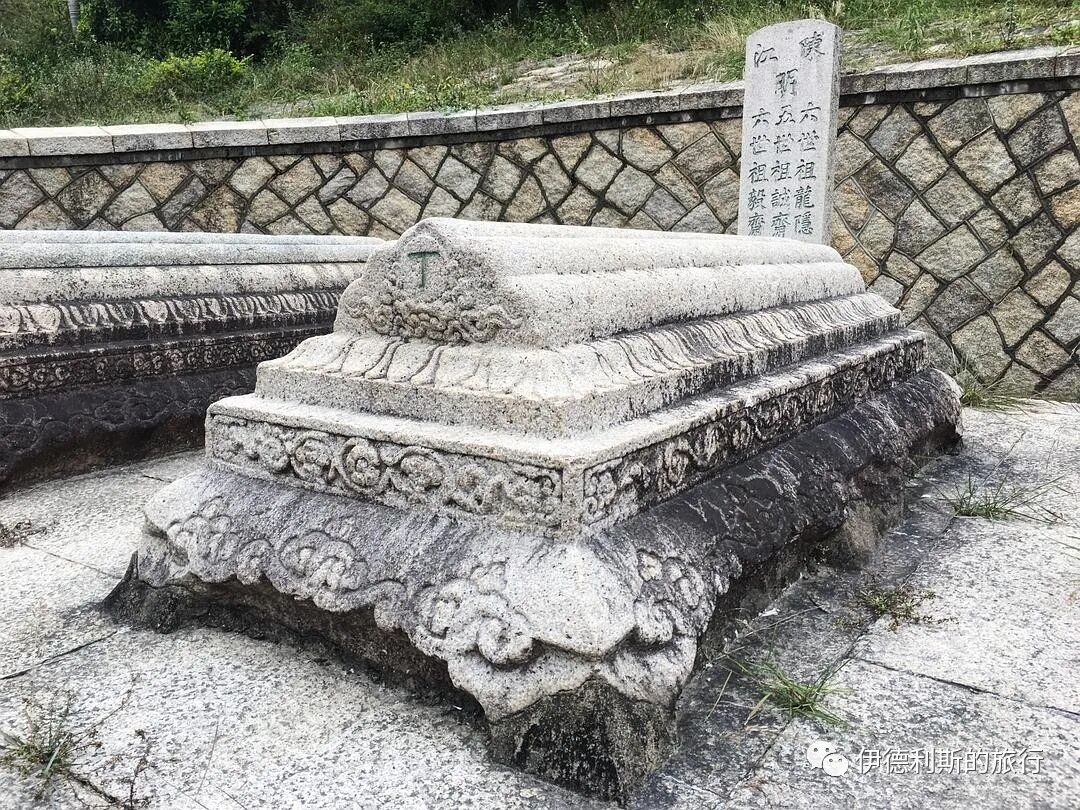
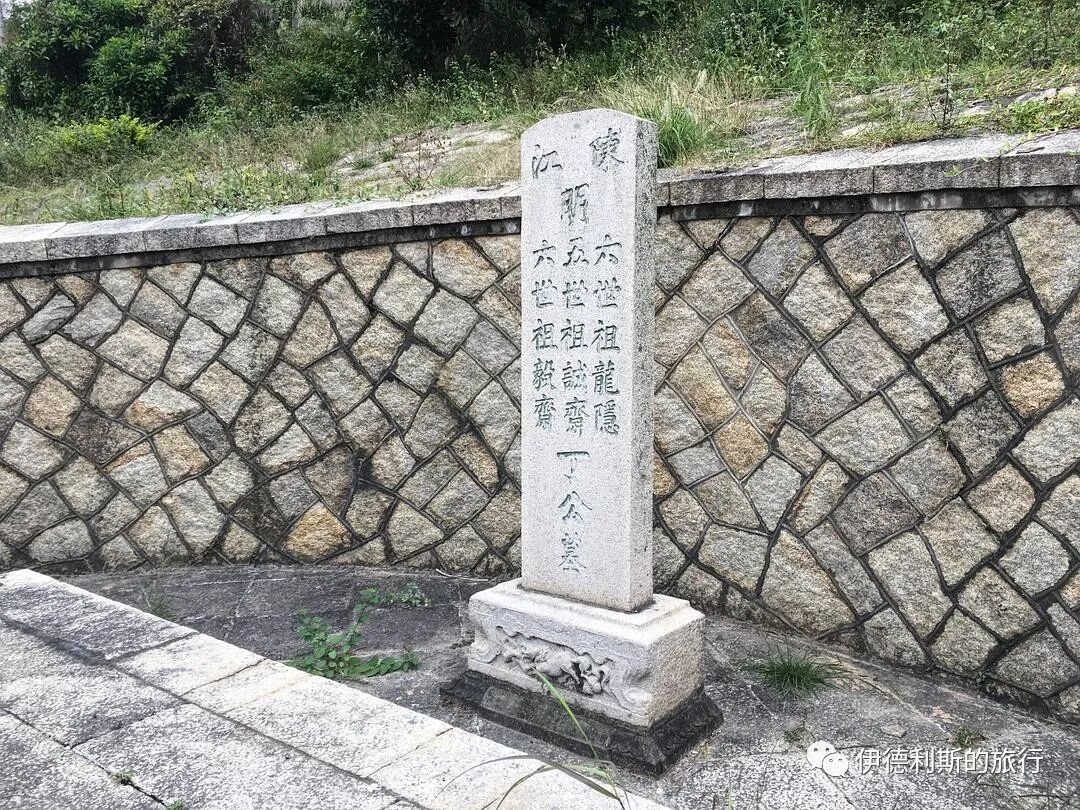
5. Tomb of the fifth generation Ding Fubao and his wife Shi Dingniang
Ding Fubao (1375-1432), courtesy name Shizhang, pseudonym Yingjie, was the third son of Ding Shan and the founding ancestor of the third main branch of the Chendai Ding family, buried at Lingshan, east of Quanzhou city. The tomb consists of two sumeru-pedestal stone tombs placed on a traditional Islamic sumeru-pedestal altar platform, with swastikas and double lions playing with a pearl carved on the waist of the platform.
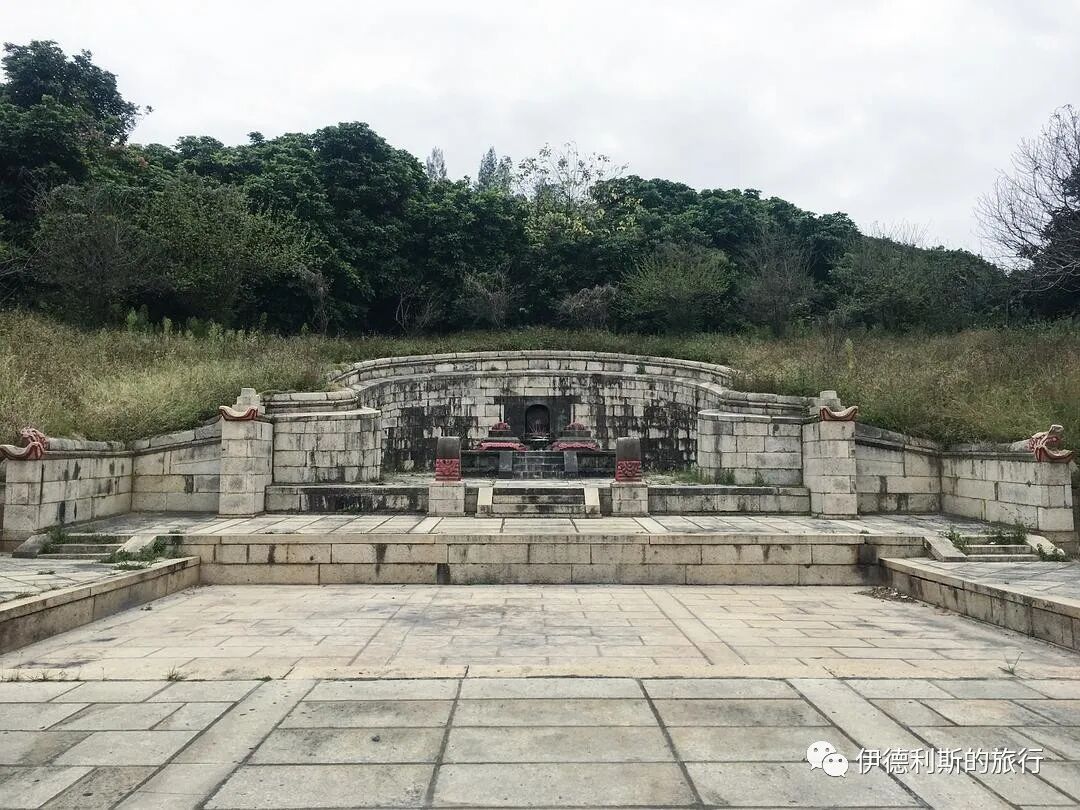
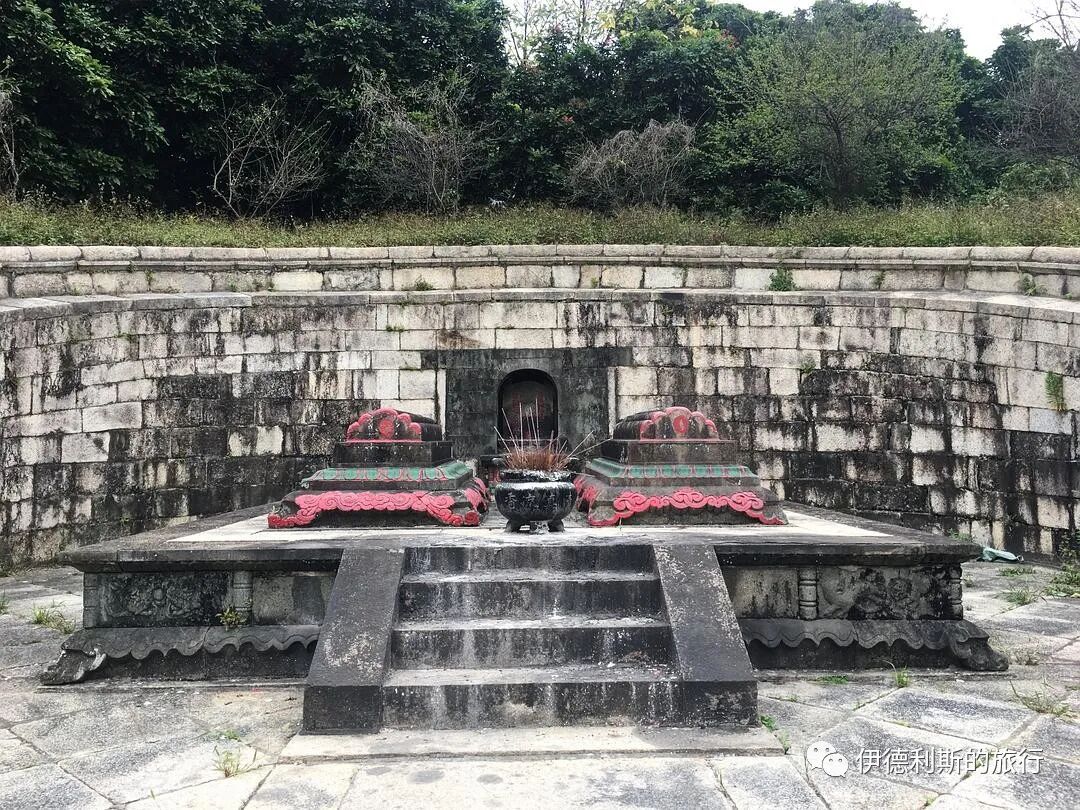
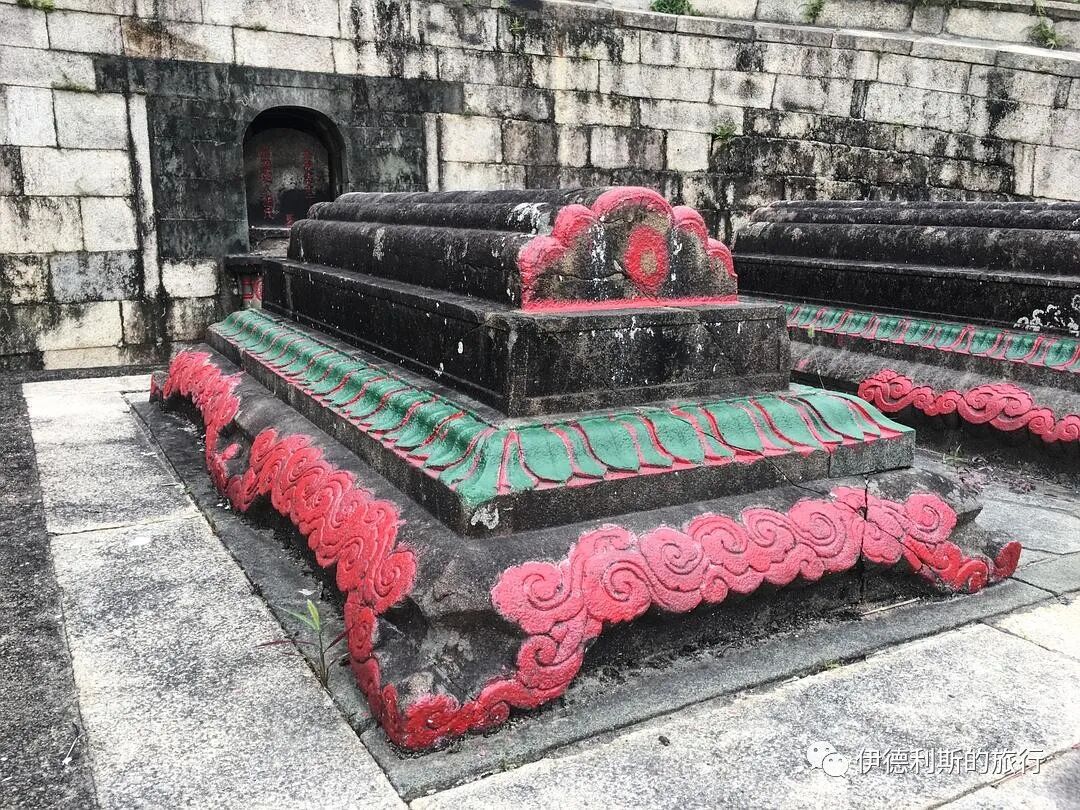
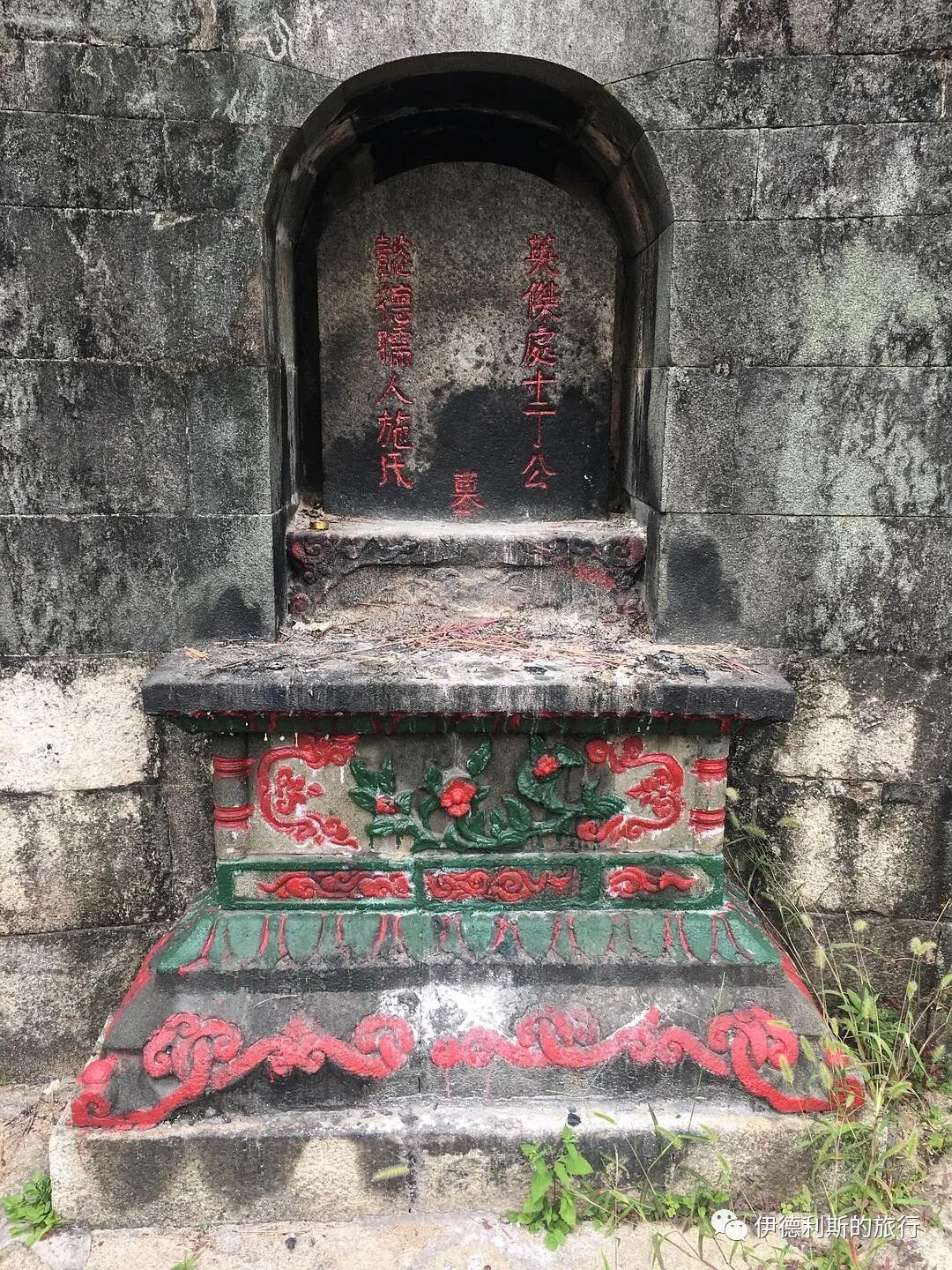
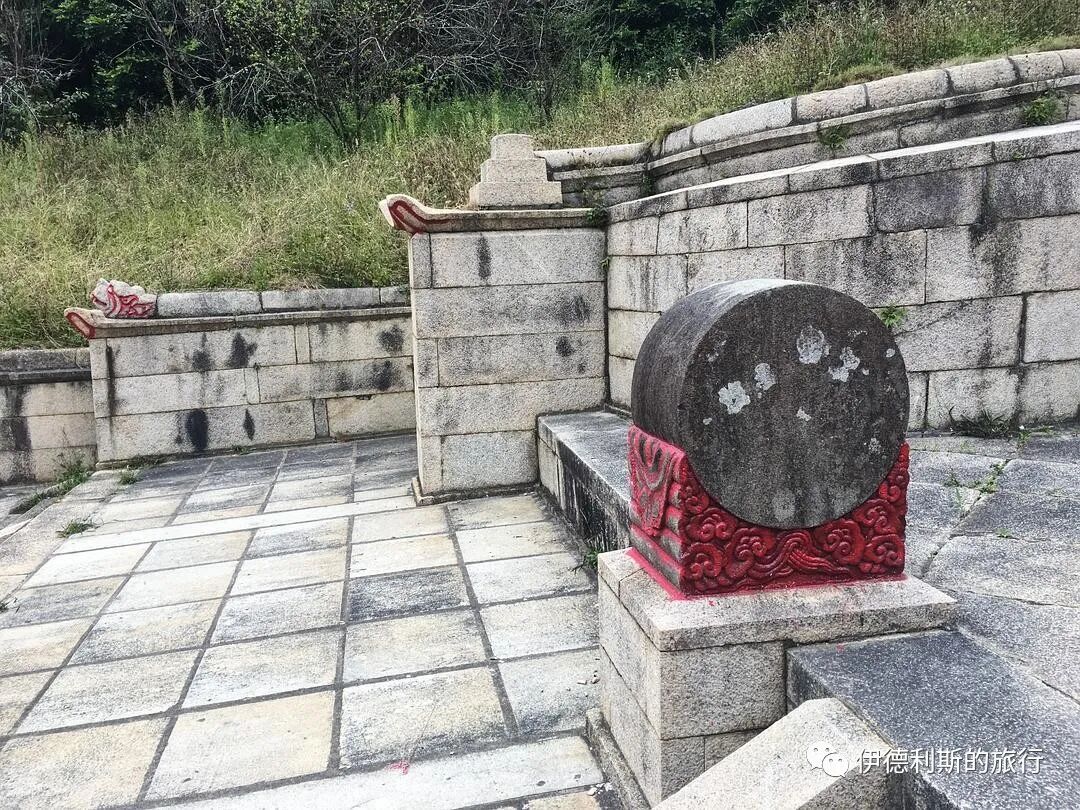
6. Tomb of the seventh generation Ding Lun and his wife Zhuang
Ding Lun (1442-1485), courtesy name Zhaorui, was the third son of the sixth generation Ding Xin.
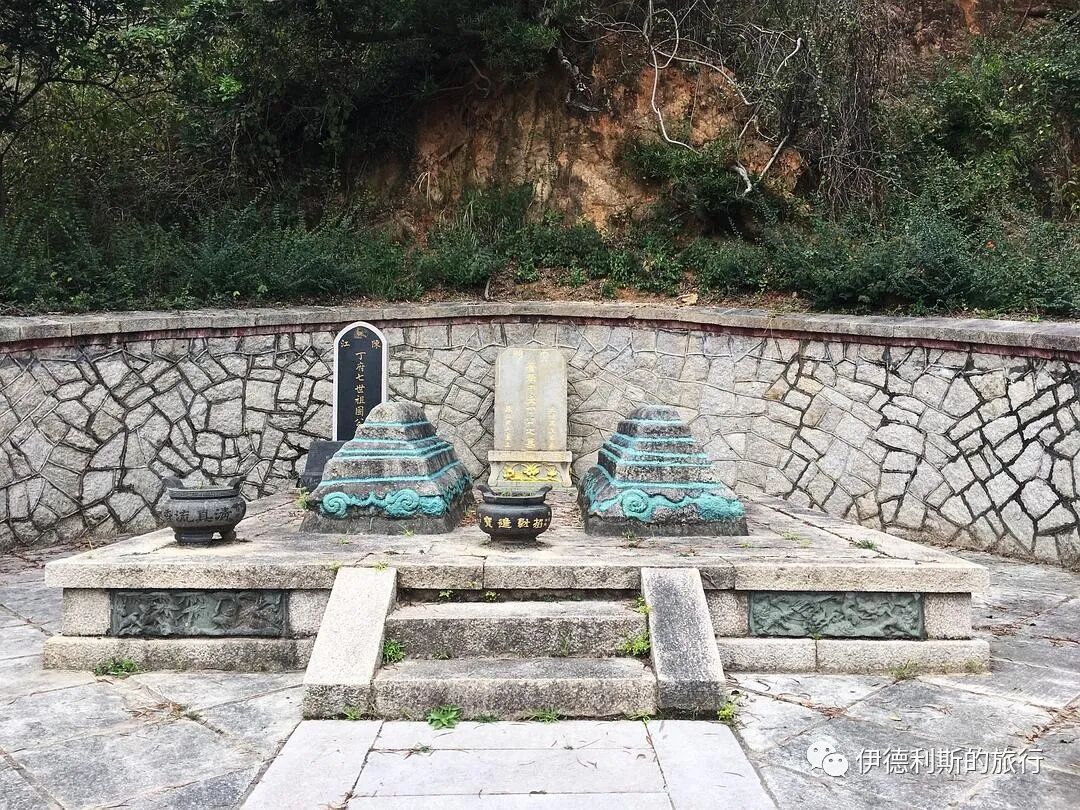
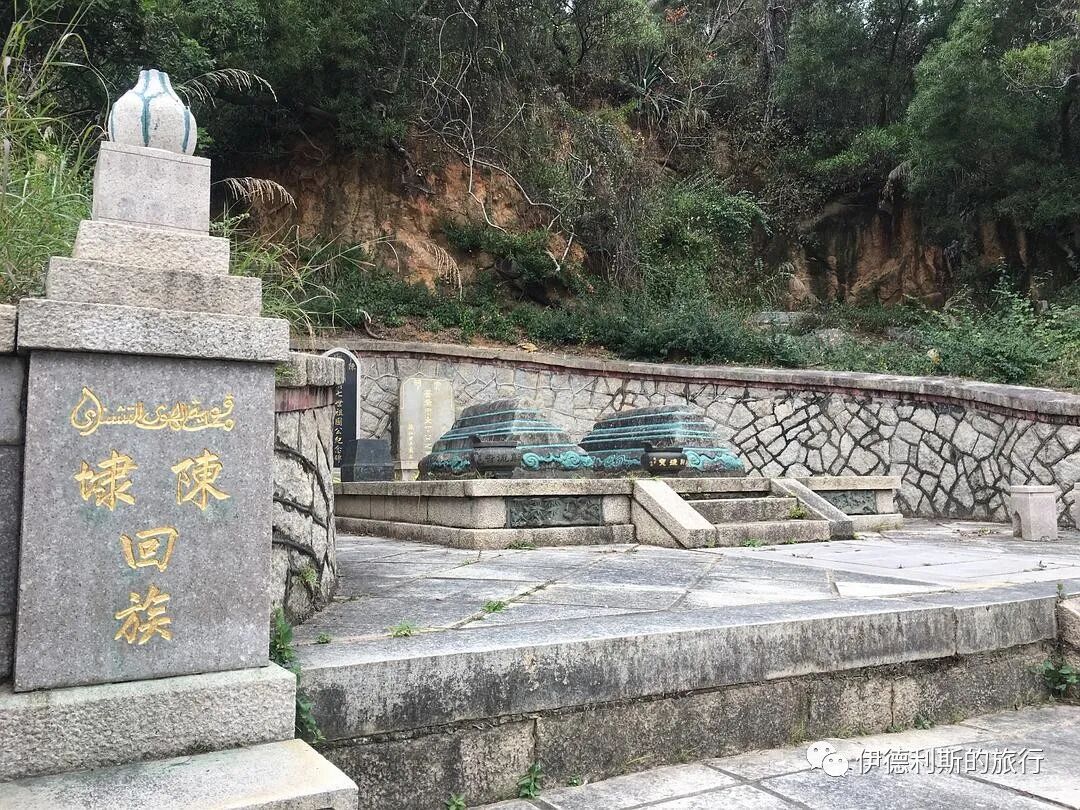
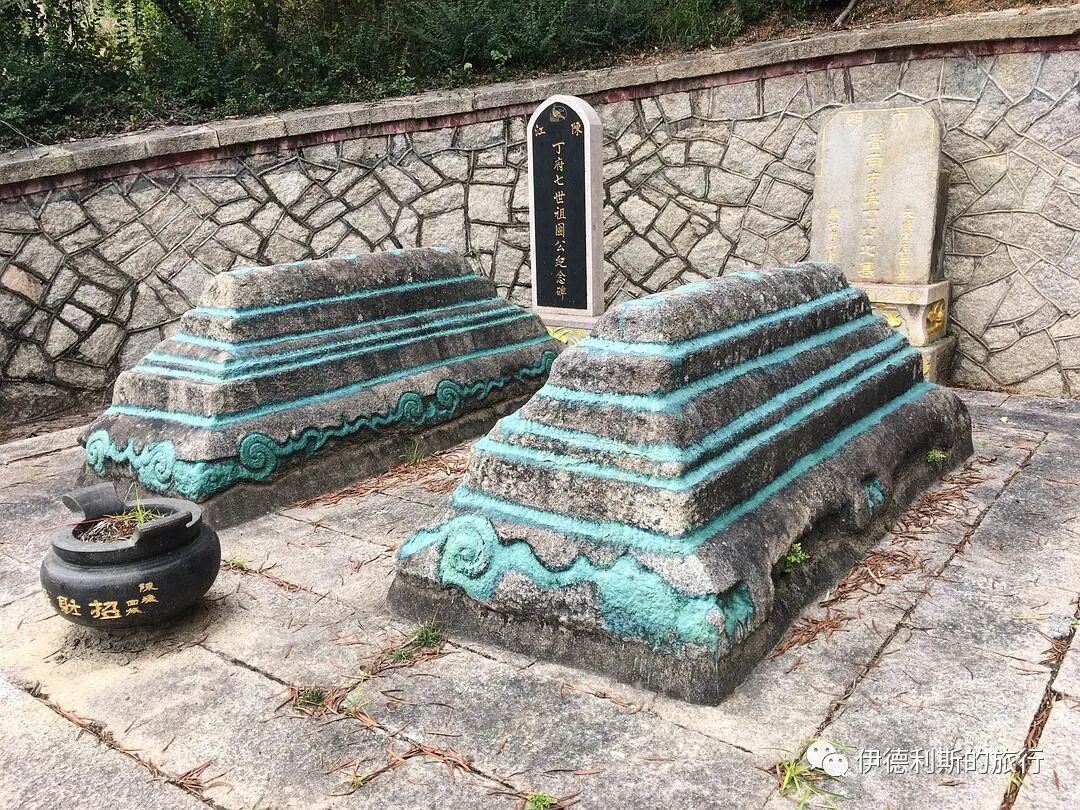
For information on the Ming Dynasty Islamic tombstones of the Chendai Ding family, see 'Quanzhou Religious Stone Carvings'.
II. Gradual Change to Conform to Rites — The Ding Family Ancestral Halls
By the mid-16th century, the religious customs of the Chendai Ding family had undergone significant changes; Ding Yanxia recorded in 'Zujiao Shuo':
'Later, shrouds were layered, coffins were made of wood, and burials were delayed. Mourning clothes were half cotton, ancestral tablets were set up, mounds were large, offerings were arranged, animals were fat, and prayers to Allah were rare. Fasting disappeared, and animals did not have to be slaughtered by their own butchers. Clothing was made of silk, bathing was not required for approaching the divine, wine and fruit were set out, and cotton and silk were burned for other gods, though not for ancestors. The offering of incense and flowers remained as before. ”
Finally, by the late 16th century, the Chendai Ding family had completely abandoned Islam; 'Zujiao Shuo' records:
'Now, when worshipping ancestors, some burn cotton and silk, animals do not have to be slaughtered by their own butchers, mourning clothes are all made of hemp without cotton, burials are delayed for more than ten years, Taoist priests and Buddhist monks are used for auspicious and inauspicious occasions, and pork is eaten. ”
According to folklore, the Chendai Ding family began eating pork in 1592 when the eleventh generation Ding Qijun, who became a Jinshi, was gifted food by the Wanli Emperor. However, the statement by the twelfth generation Ding Qing in 'Jiyi Jiyan' (Records of Sacrificial Rites) in 1698 is more credible:
'Fenxi Gong (Ding Yi) was the first to enter the official ranks, and he worshipped his ancestors according to the rites of a high official, not daring to violate the Islamic faith. But the three generations of Huai Gong (Ding Zishen), Wuting Gong (Ding Rijn), and Zhechu Gong (Ding Qijun) all passed the imperial examinations, and the family's reputation grew, while the Islamic faith almost ceased. ”
The Chendai Ding family began their official careers starting with the eighth generation Ding Yi, and by the tenth generation, 20 people had become Jinshi; these people used Confucian ethics and principles as their standard everywhere, which had an important impact on the Chendai Ding family and accelerated the dissolution of the Islamic faith. This is what Ding Yanxia referred to as 'gradually conforming to the rites', living according to Confucian behavioral standards. Wang Ke's book 'The Vanishing "Nationals"' provides an in-depth discussion of the 'clan-building' and 'imperial examination-oriented' processes of the Chendai Ding family; interested friends can take a look.
1. The Ding Family Grand Ancestral Hall
The most important sign of the Chendai Ding family's departure from Islam was the reconstruction of the Ding family ancestral hall in 1561. The early Ding family ancestral hall is presumed to have been built in the early 15th century, was destroyed by war in 1561, was rebuilt shortly after under the leadership of Ding Yi and Ding Zishen, and was rebuilt and expanded again by Ding Rijn in 1599 to its current scale.
The ancestral hall enshrines the spirit tablets of the first to fifth generation ancestors and ancestors who held titles and merits, but initially, there were no spirit tablets; instead, there were small wooden screens handwritten by the eighth generation Ding Yi (1472-1521) listing the first to fourth generation ancestors.
In 1561, the Ding family ancestral hall was destroyed due to 'Japanese pirate disturbances', and in 1562, Ding Yanxia initiated the formulation of the 'Sacrificial Covenant', which officially determined the way the Chendai Ding family worshipped their ancestors. The 'Sacrificial Covenant' mentions 'kneeling in order to offer incense, bowing four times to the spirits, and kneeling to offer wine', which was already completely in line with traditional Chinese customs.
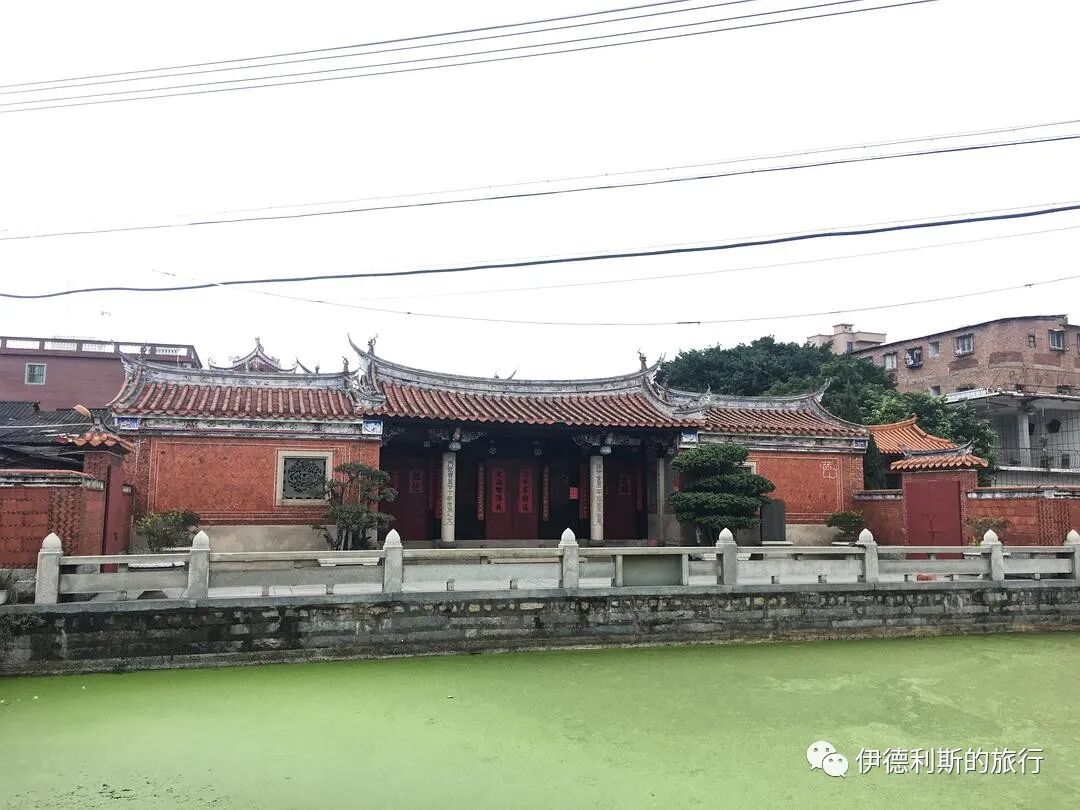
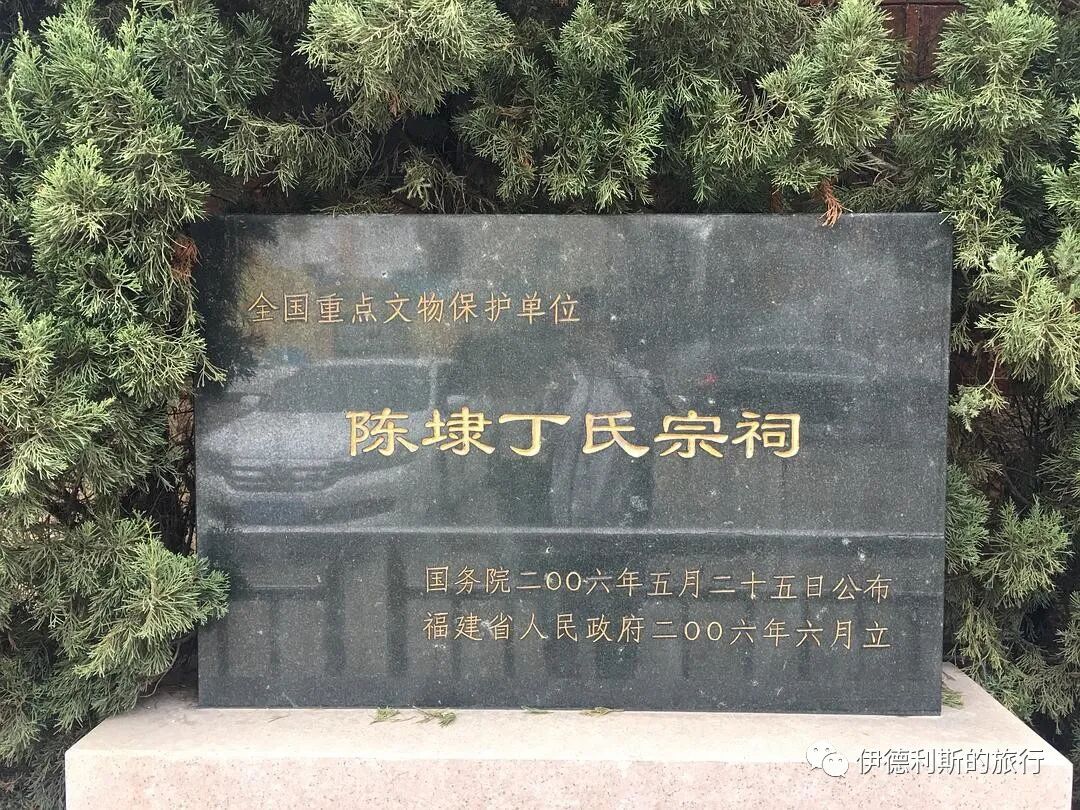
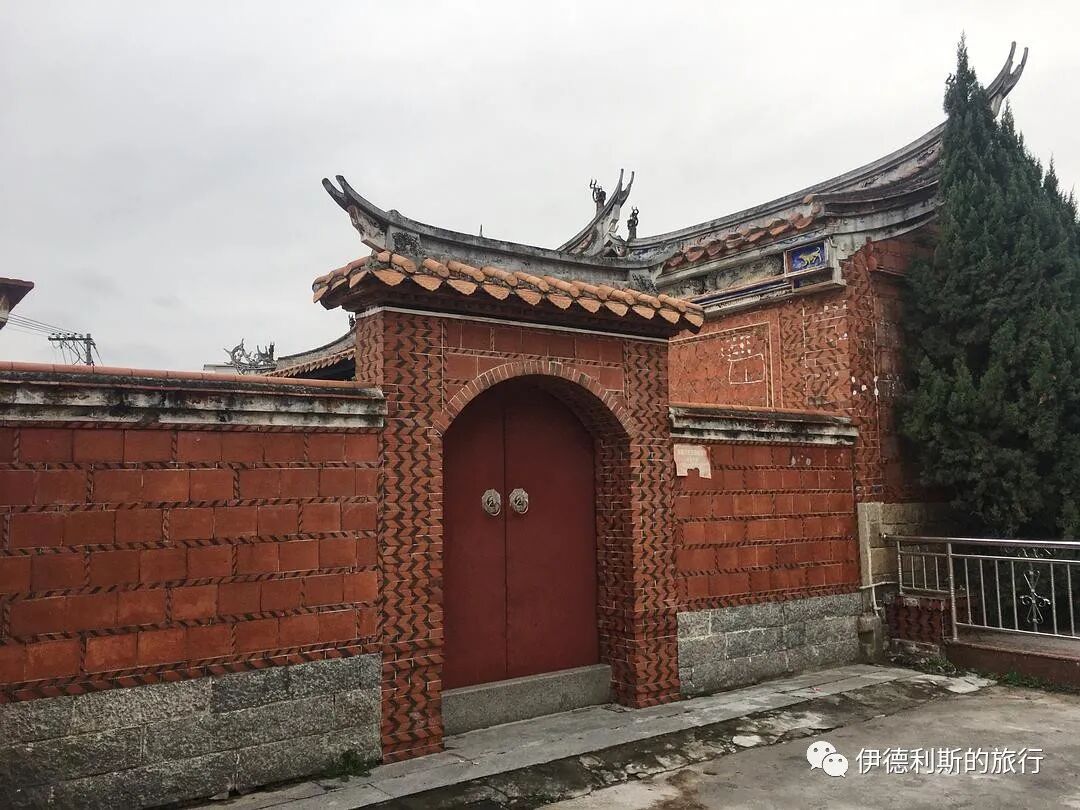
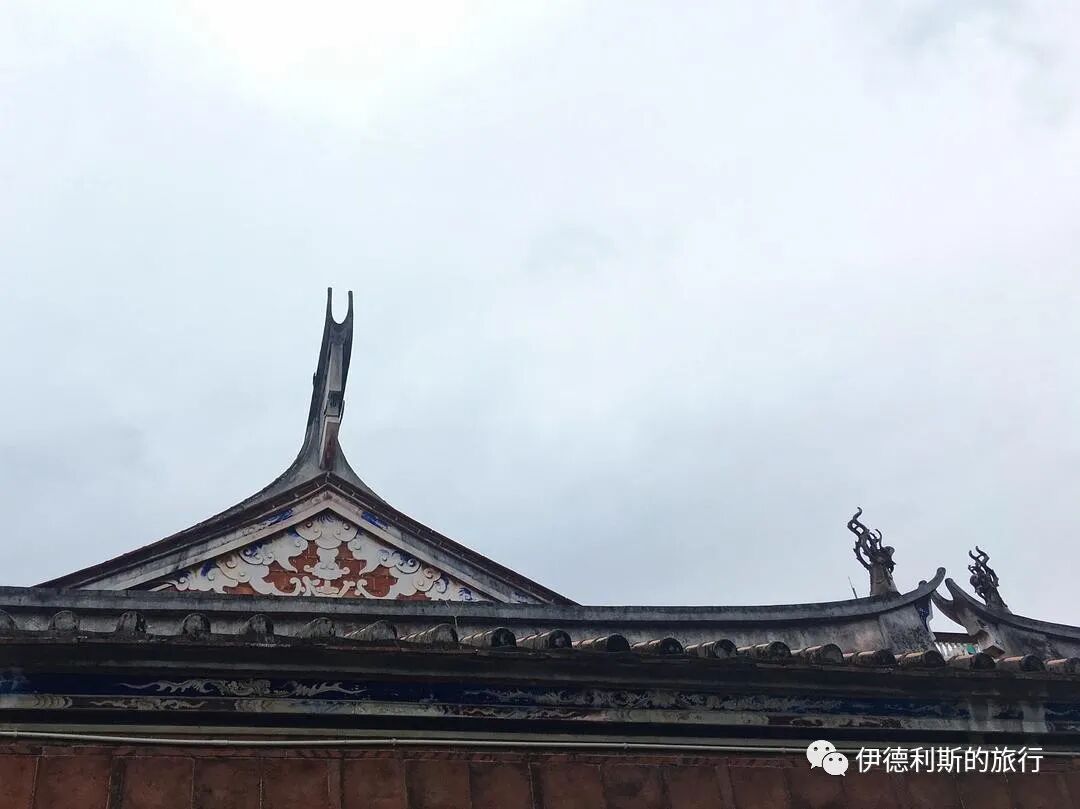
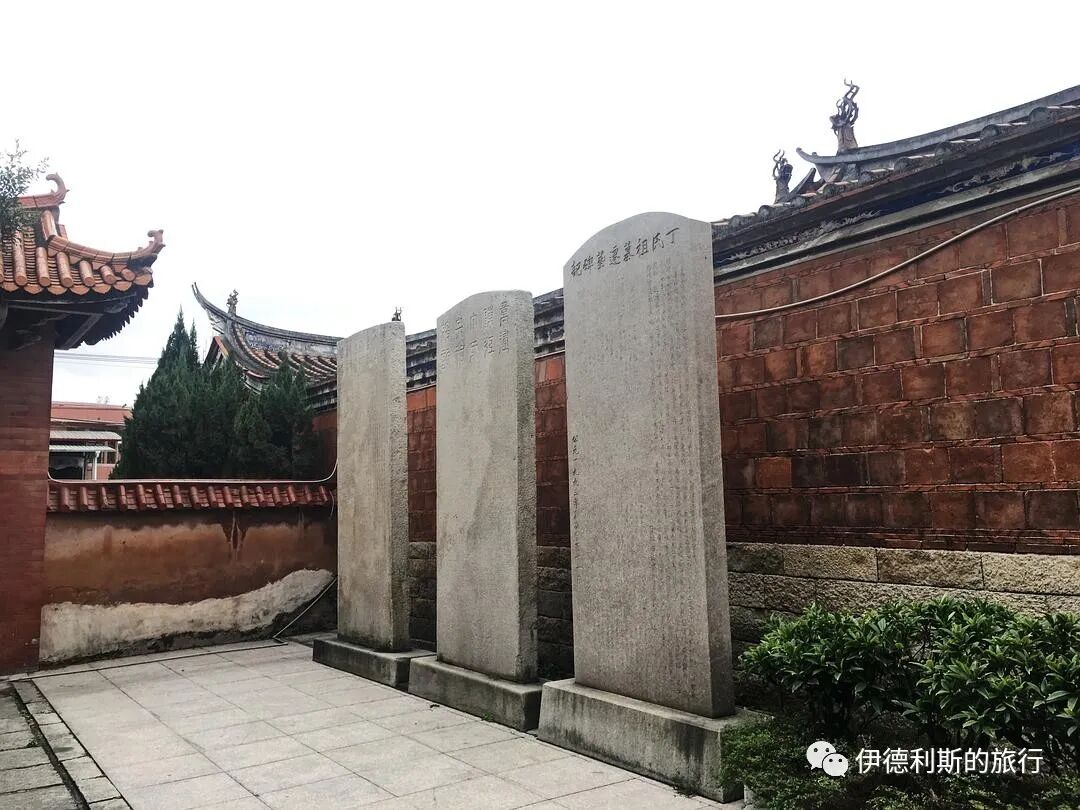
In addition to the Grand Ancestral Hall, the Chendai Ding family has many small ancestral halls and ancestral homes for worshipping ancestors. The 6 small ancestral halls are the 'Yi'an Ding Gong Ancestral Hall' for the fifth generation Ding Mabao, the 'Zhongzhai Ding Family Ancestral Hall' for the sixth generation Ding Xin, the 'Yizhai Ding Gong Ancestral Hall' for the sixth generation Ding Min, the 'Dunpu Ding Gong Ancestral Hall' for the seventh generation Ding Chang, the 'Gusu Ding Gong Ancestral Hall' for the eighth generation Ding Gui, and the 'Daozhen Ding Gong Ancestral Hall' for the twelfth generation Ding Shibo. The establishment of small ancestral halls is usually for the prosperity of the descendants of a specific branch, built to bring honor to the ancestors.
Below the small ancestral halls are ancestral homes, which enshrine the ancestors of the branch and their descendants, formed as descendants multiplied and families branched out; there are about 200 of them.
2.
Yizhai Ding Gong Ancestral Hall
The sixth generation Ding Min (1407-1456), courtesy name Tingxue, pseudonym Yizhai, was the earliest local worthy among the Chendai Ding family to promote literary education.
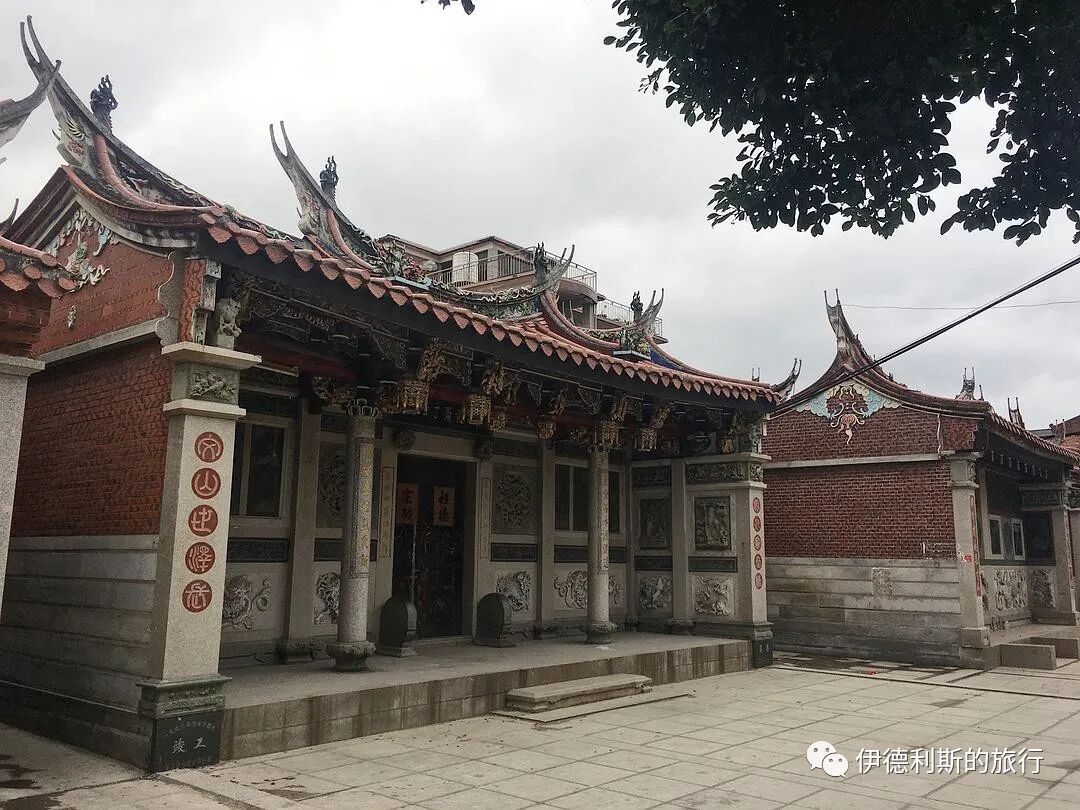
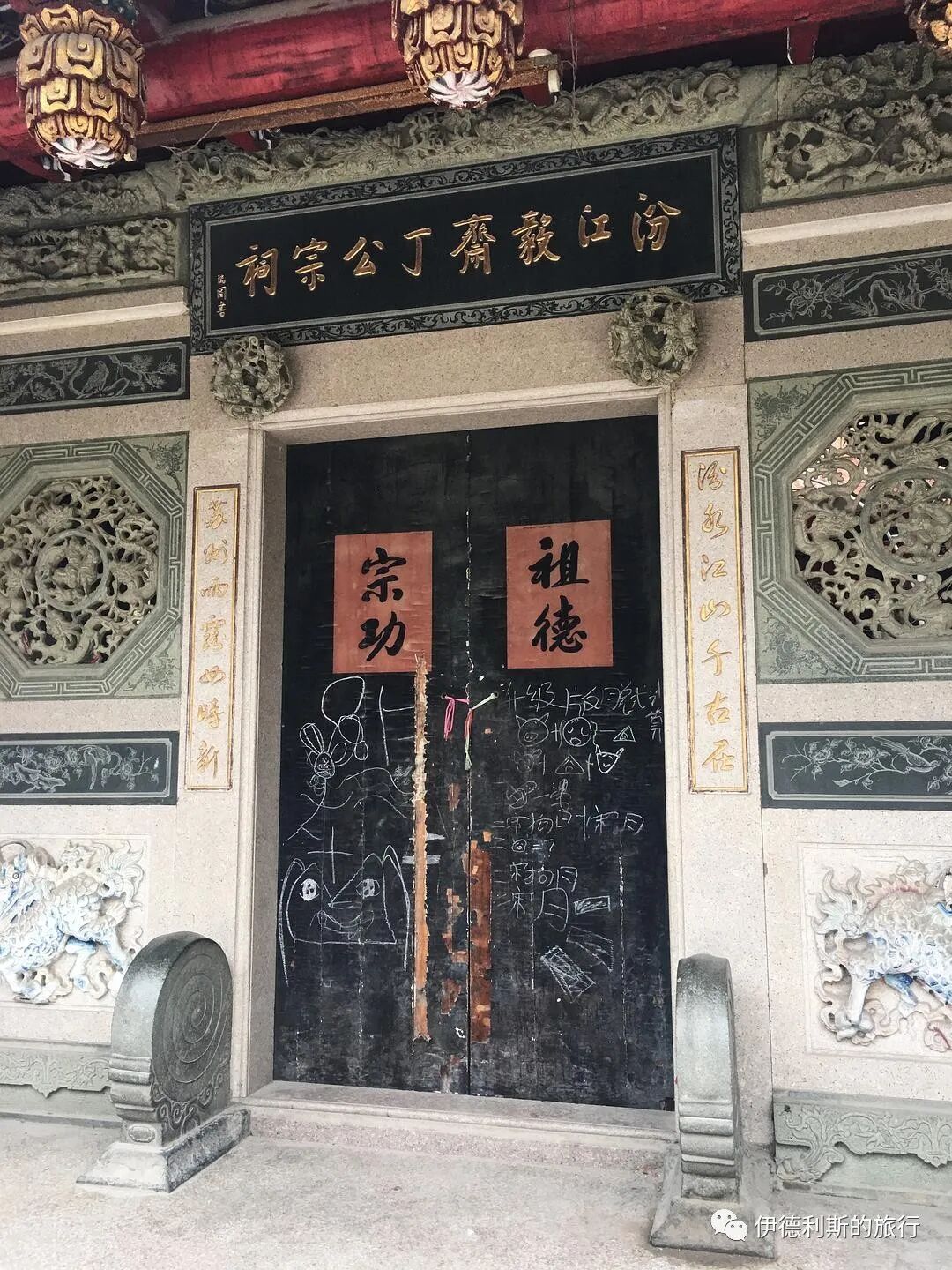
3. Fenxi Ding Gong Ancestral Residence
The eighth generation Ding Yi (1472-1521), courtesy name Wenfan, pseudonym Fenxi, passed the Jinshi examination in 1505 and was the first person from the Chendai Ding family to enter an official career, serving as an inspector in the Sichuan Surveillance Commission. At the same time, Ding Yi was also a famous poet of the mid-Ming Dynasty, with his 'Gui Nang Yi Gao' (Posthumous Manuscripts of the Returning Bag) circulating.
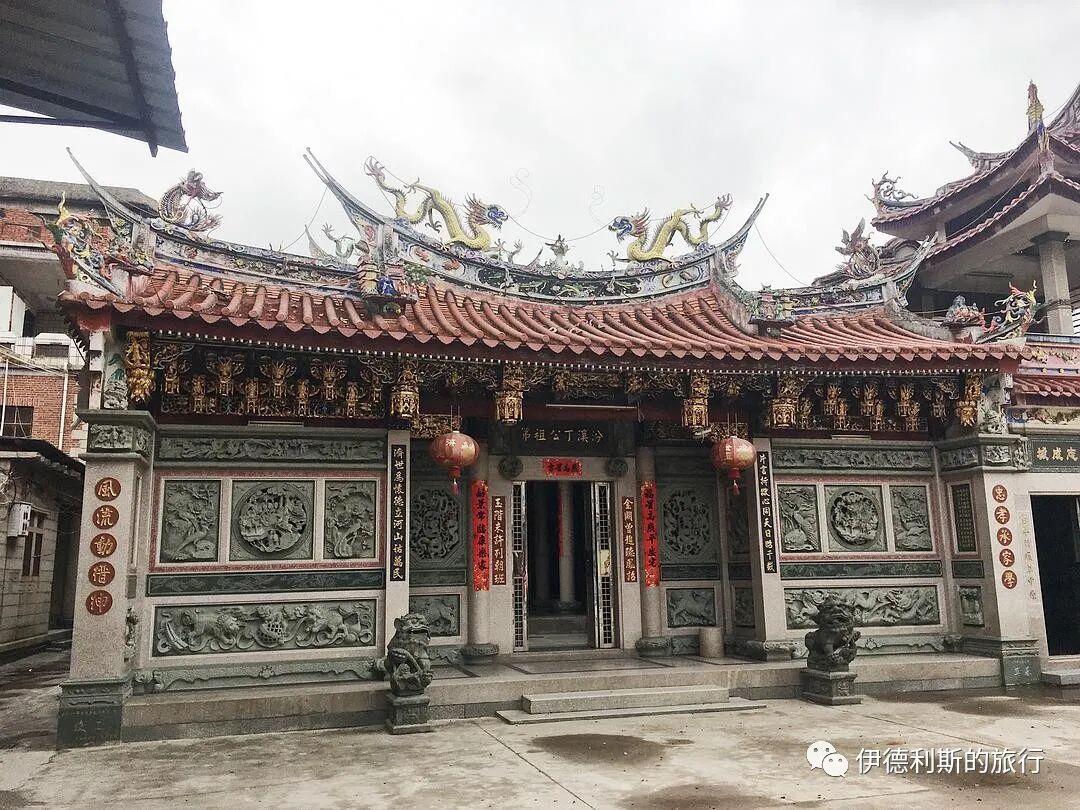
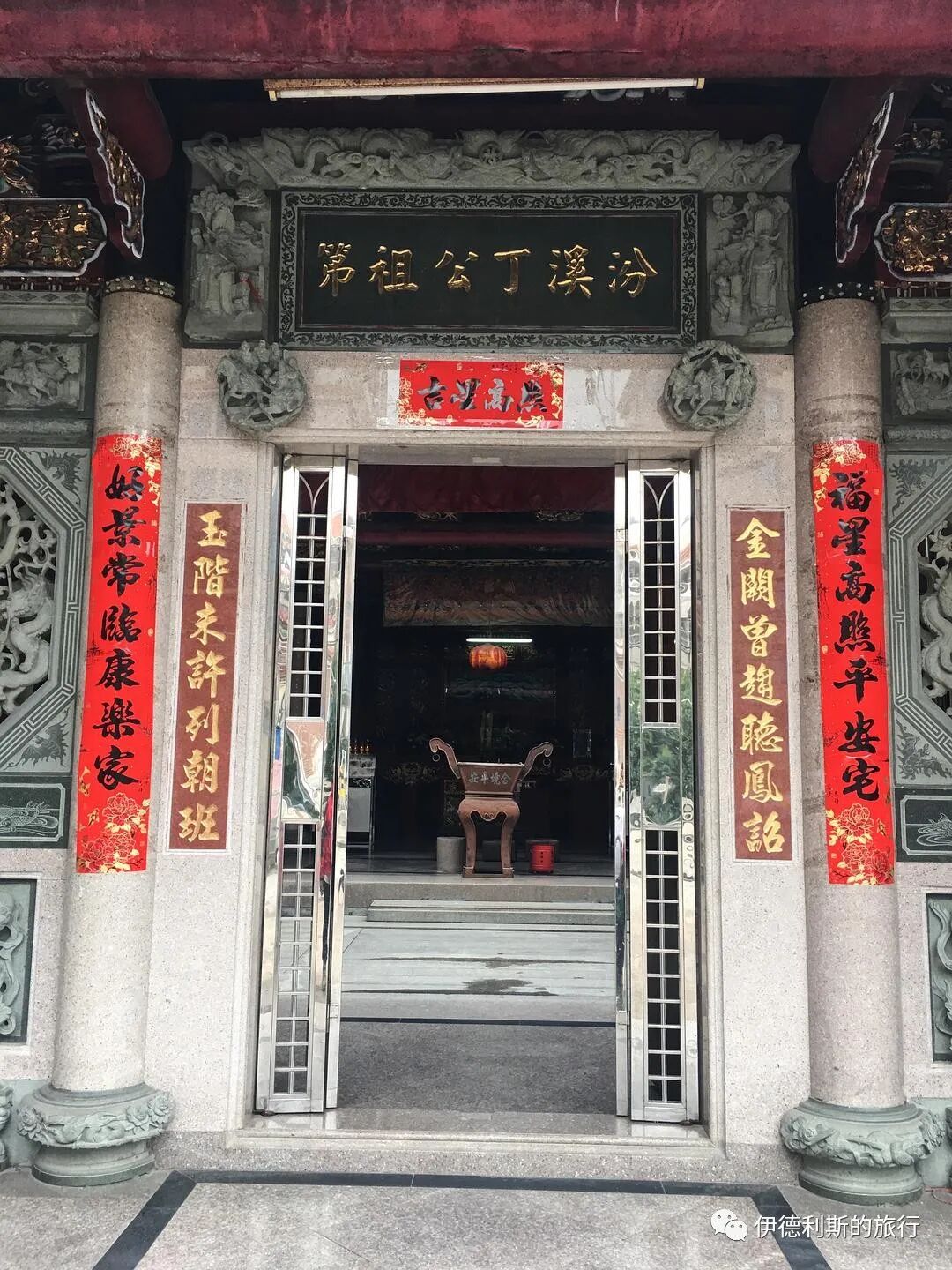
4. Ding Yanzhong's Jinshi Residence
The tenth generation Ding Yanzhong passed the military Jinshi examinations in 1582 and 1583 and served as the commander-in-chief of Guangxi Prefecture.
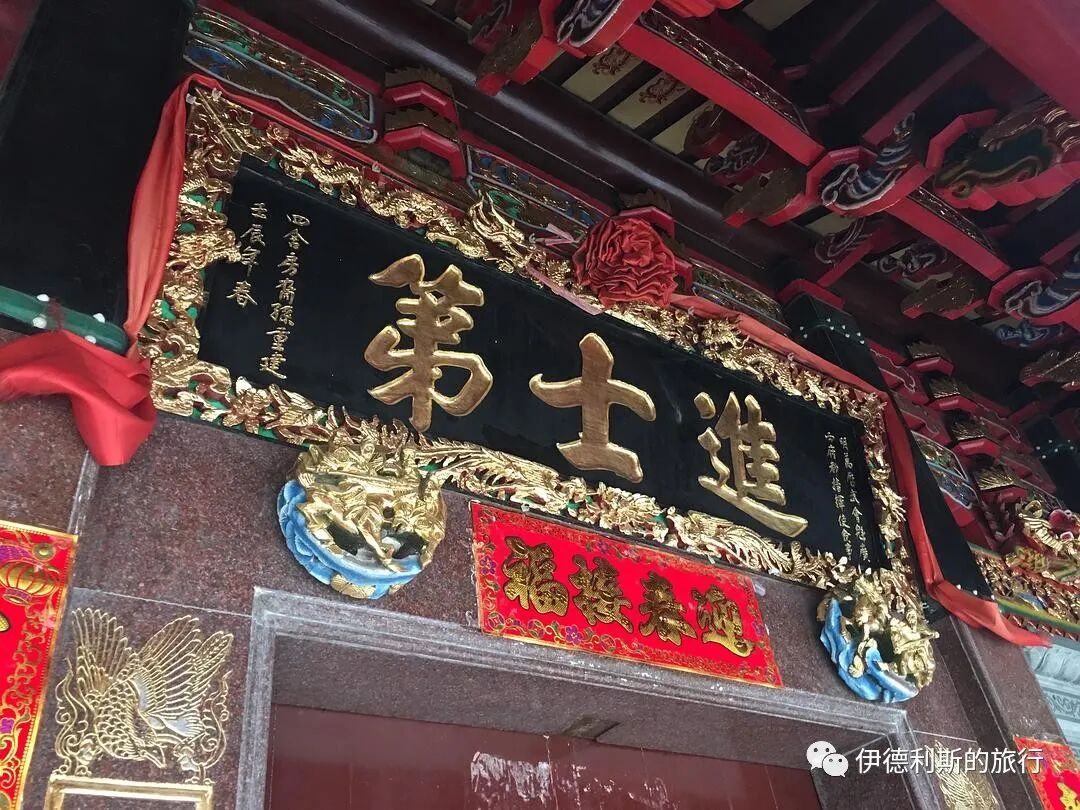
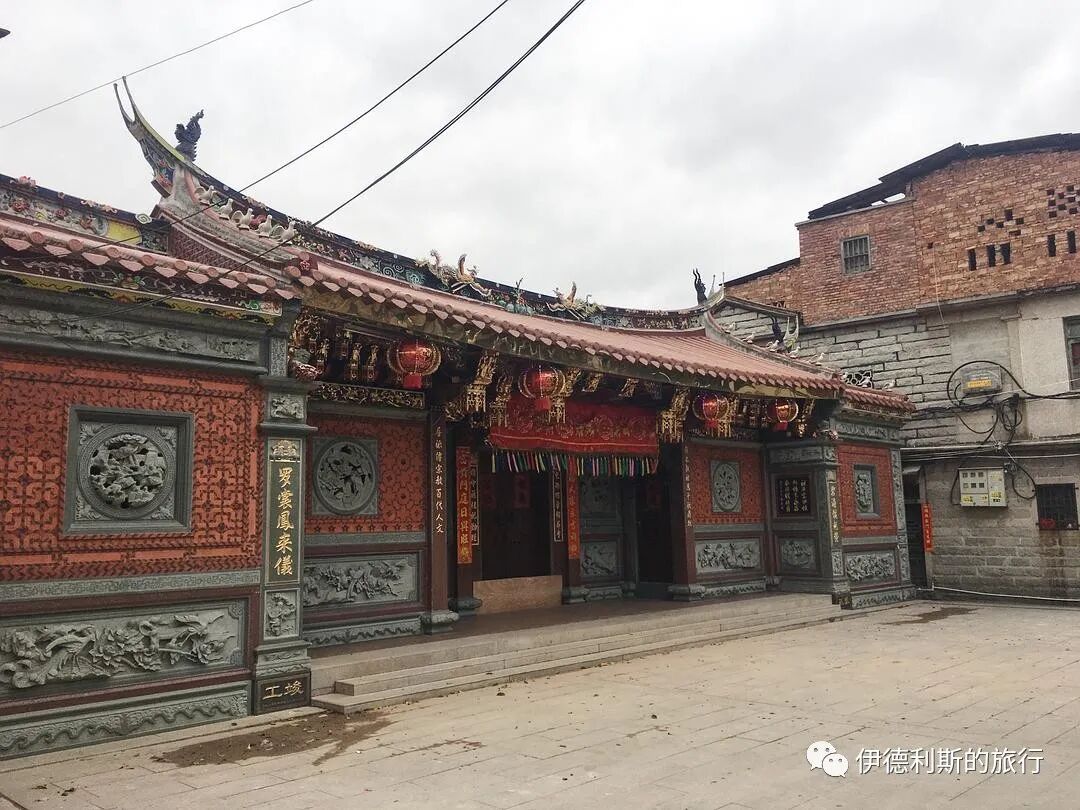
III. The Reappearance of Islam — Chendai Mosque
In the early 1920s, the famous Hui Muslim Tang Kesan, while serving as the Superintendent of the Xiamen Customs, paid great attention to the religious affairs in Quanzhou, and on the eve of the War of Resistance, he recommended his fellow townsman Zhang Guangyu to preside over religious work in the Quanzhou area. After Zhang Guangyu arrived in Quanzhou, he earnestly carried out religious affairs, and the religious life in Chendai began to reappear.
In 1939, the 'China Islamic National Salvation Association Chendai Branch' was established in Chendai, and some Chendai Ding family members often went to the Qingjing Mosque in Quanzhou for Jumu'ah (Friday congregational prayer); later, they converted the 'Wenchang Mosque' in Sijing Village into a mosque and hired an Ahong (Imam) from Quanzhou to preside over religious affairs.
Between 1937 and 1944, the most famous modern Islamic school during the Republic of China, the Chengda Normal School, moved south to Guilin, and the founders Tang Kesan and Ma Songting successively accepted 17 young people from the Chendai Ding family to study there.
In the late 1950s, all Islamic activities in Chendai were forced to stop, and Ding Jinshun, a graduate of Chengda Normal School, was criticized and struggled against for mentioning in class that he was a Hui Muslim.
In 1983, Ding Jinshun and Ding Jinhe, graduates of Chengda Normal School, attended the founding meeting of the Fujian Islamic Association. After this, Chengda Normal School graduates Ding Jinshun, Ding Jinhe, Ding Jinke, and Ding Jinhong, along with more than twenty other people enthusiastic about the faith, established the 'Chendai Islamic Association Group' and began to restore religious life. They borrowed the second-floor conference room of the Chendai Hui Muslim Affairs Committee and the back hall of the Ding family ancestral hall for Jumu'ah prayers, with Ding Jinshun serving as the Imam. During Eid al-Fitr and Eid al-Adha, they invited their former Chengda Normal School classmates who were now serving as Ahongs in Guilin, as well as Ahongs from Jiaxing, Zhejiang, to preside over the congregational prayers.
After the Chendai Islamic Association Group was established, they began preparing to build a mosque. They issued a 'Letter to Fellow Muslims Nationwide' to the national Islamic association, but only a few mosques in Ankang, Shaanxi, and Yunnan sent a few hundred yuan in funds. After this, former Chengda Normal School classmates in Hong Kong forwarded the 'Letter to Ding Family Relatives and Fellow Countrymen' to the Chendai Ding family in Hong Kong, Taiwan, and overseas, and received 70,000 yuan in donations from the 'Five Surnames Islamic Association (originating from the Jin, Ding, Ma, Bai, and Guo Hui Muslim families of Quanzhou) of Filipinos' in Hong Kong, Taiwan, Singapore, and the Philippines.
In 1991, the Chendai Mosque was completed, opened officially in 1993, and the Jinjiang Islamic Association was immediately established. The Chendai Ding family hired Ahong Ma Zhiwei from Inner Mongolia as the first head of the mosque, and Ding Jinke and Ding Jinshun served as the first director of the mosque management committee and the director of the Islamic association, respectively.
After the 1990s, the Chendai Ding family selected nearly 60 young people to study Islam at home and abroad, some of whom went to Arabic language schools in mosques in Inner Mongolia.
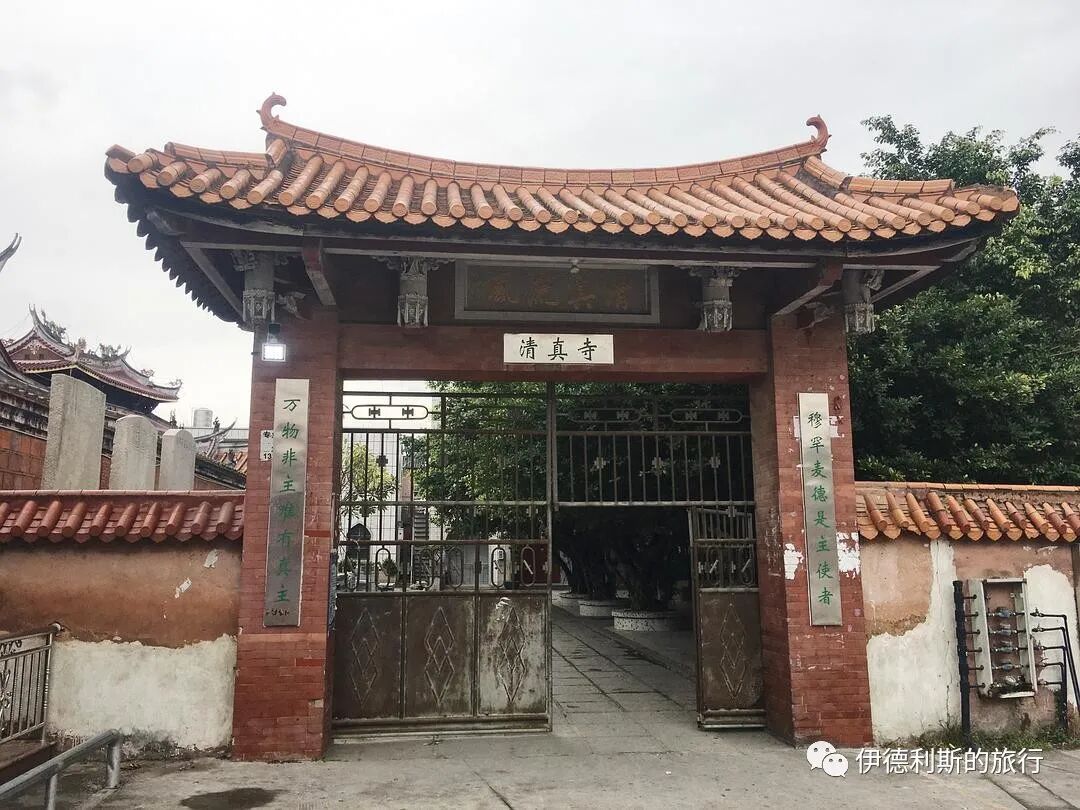
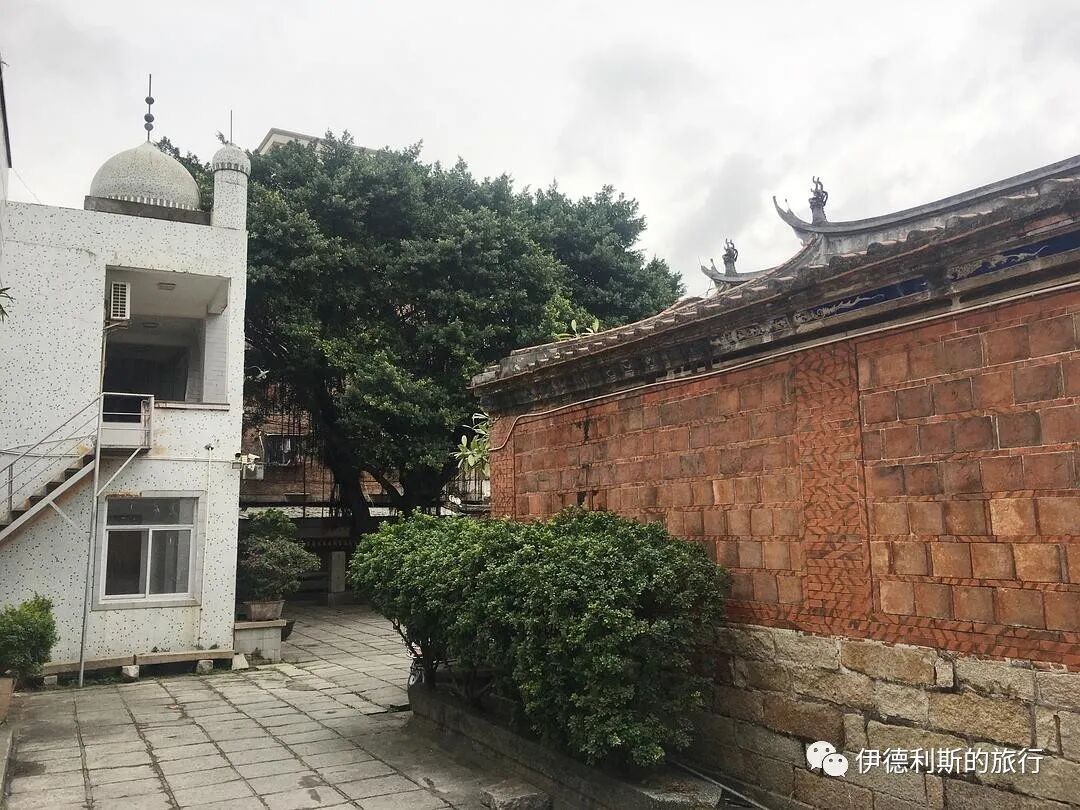
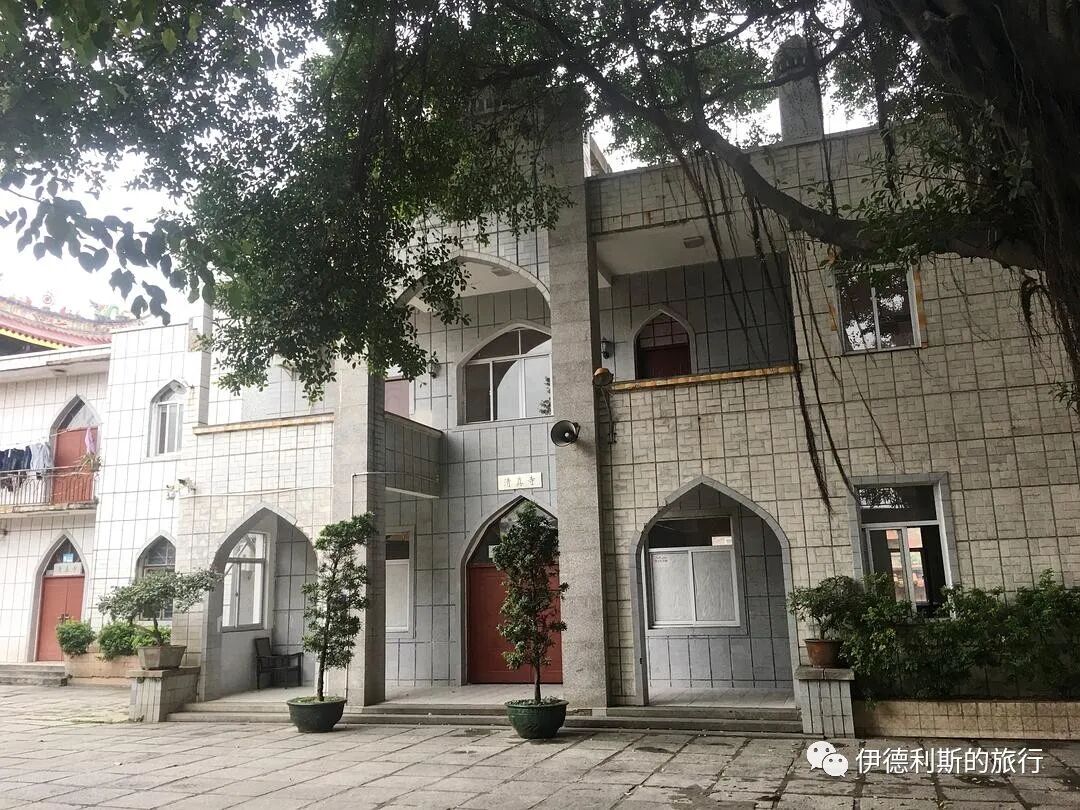
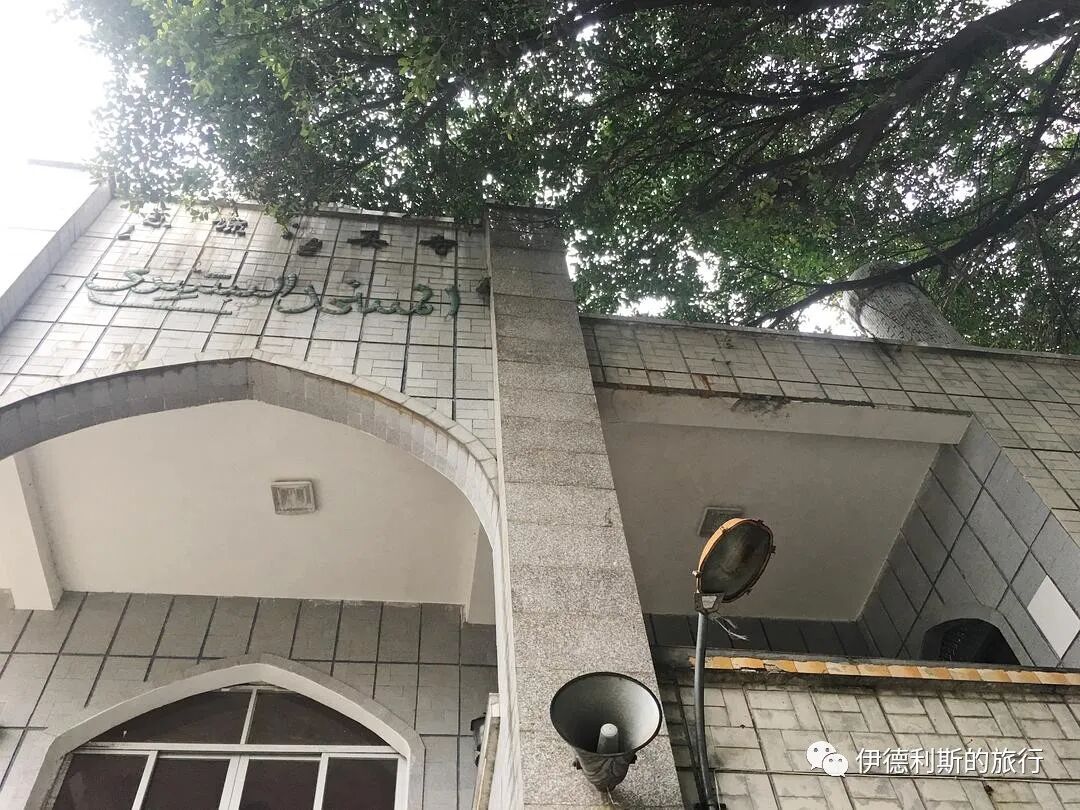
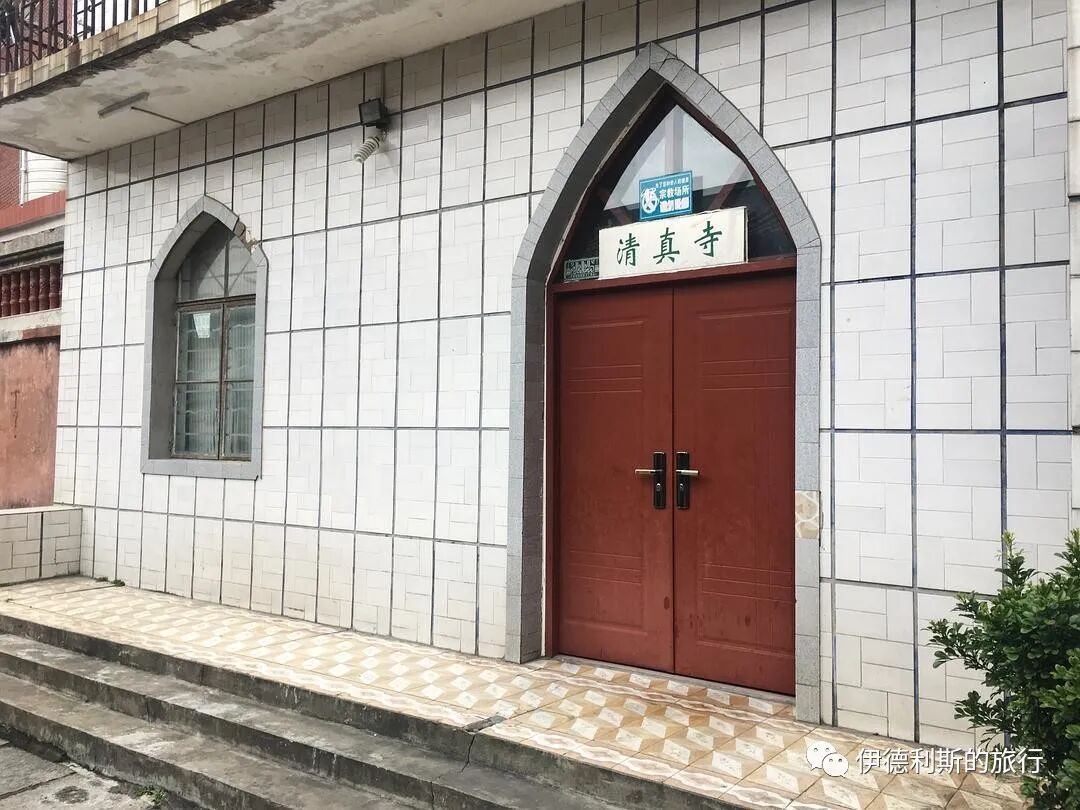
Tomb of the twenty-second generation Ding Jinke
Ding Jinke (1923-1997), religious name Yunus, studied at the Guangxi Chengda Normal School and the Hong Kong Dade College. He participated in the revolution during the War of Liberation and later worked in the Financial Committee of the State Council and in colleges and universities in Beijing and Xinjiang. After retiring and returning to his hometown in 1983, he participated in the construction of the Chendai Mosque and the formation of the Jinjiang Islamic Association, serving as the executive deputy director of the Jinjiang Islamic Association, and later cultivated dozens of Chendai Ding family youths to go to Islamic colleges at home and abroad for further studies.
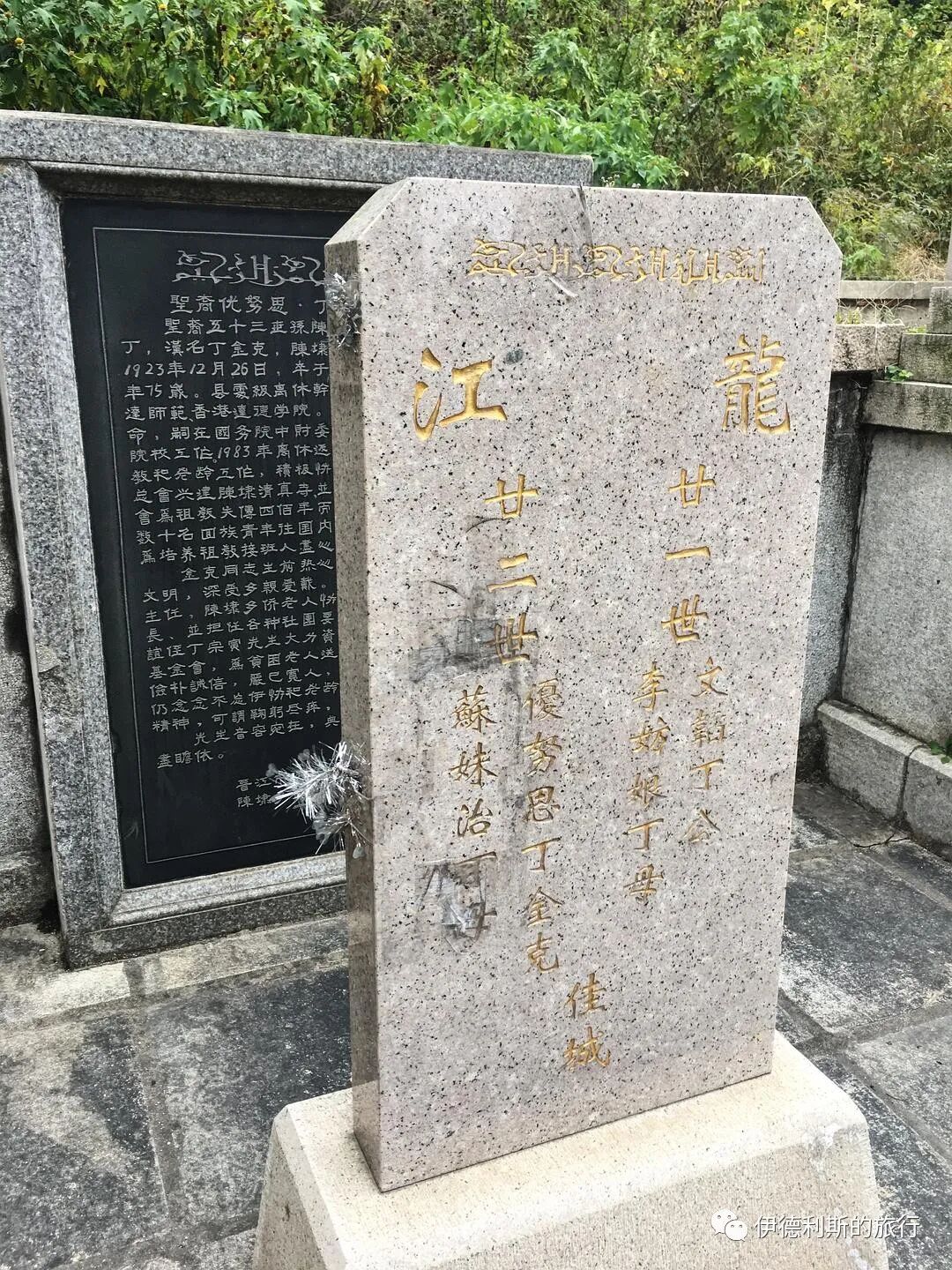
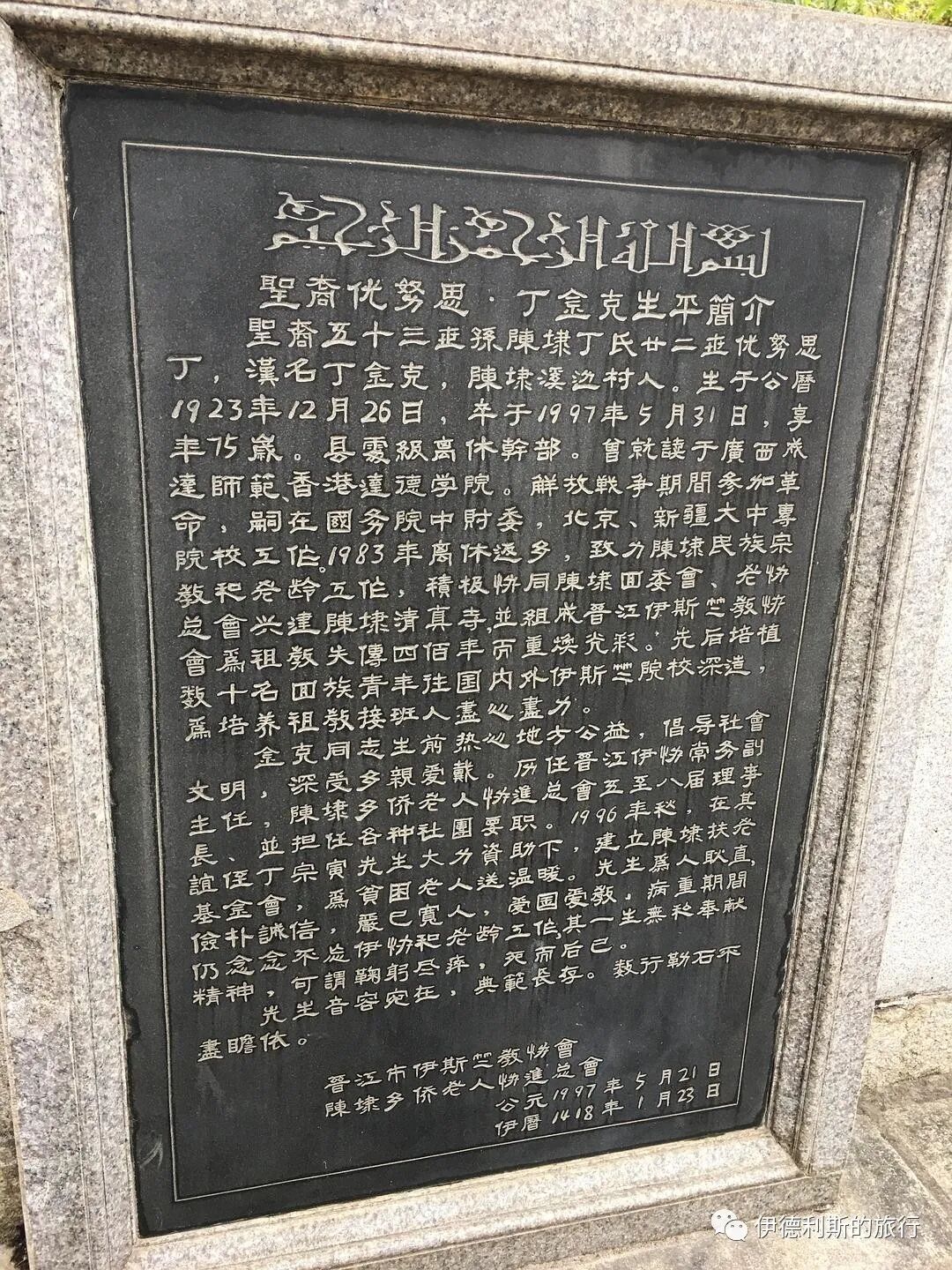
For research on the Chendai Ding family, see the book 'Research on the History of the Chendai Hui Muslims'.
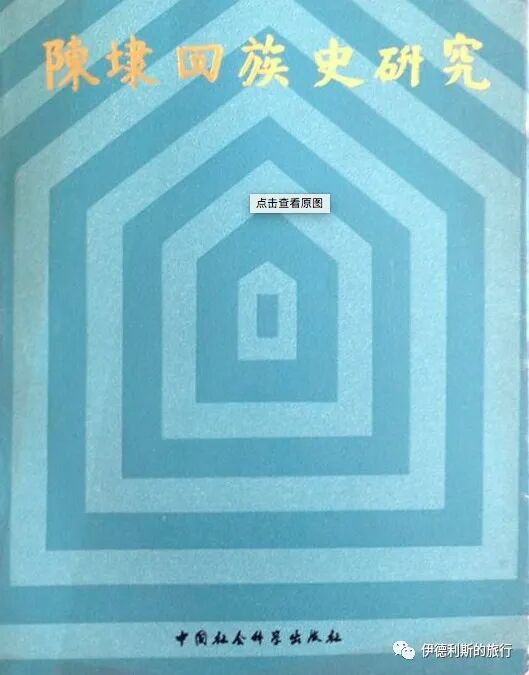
Finally, here are some Chendai Ding family residences.
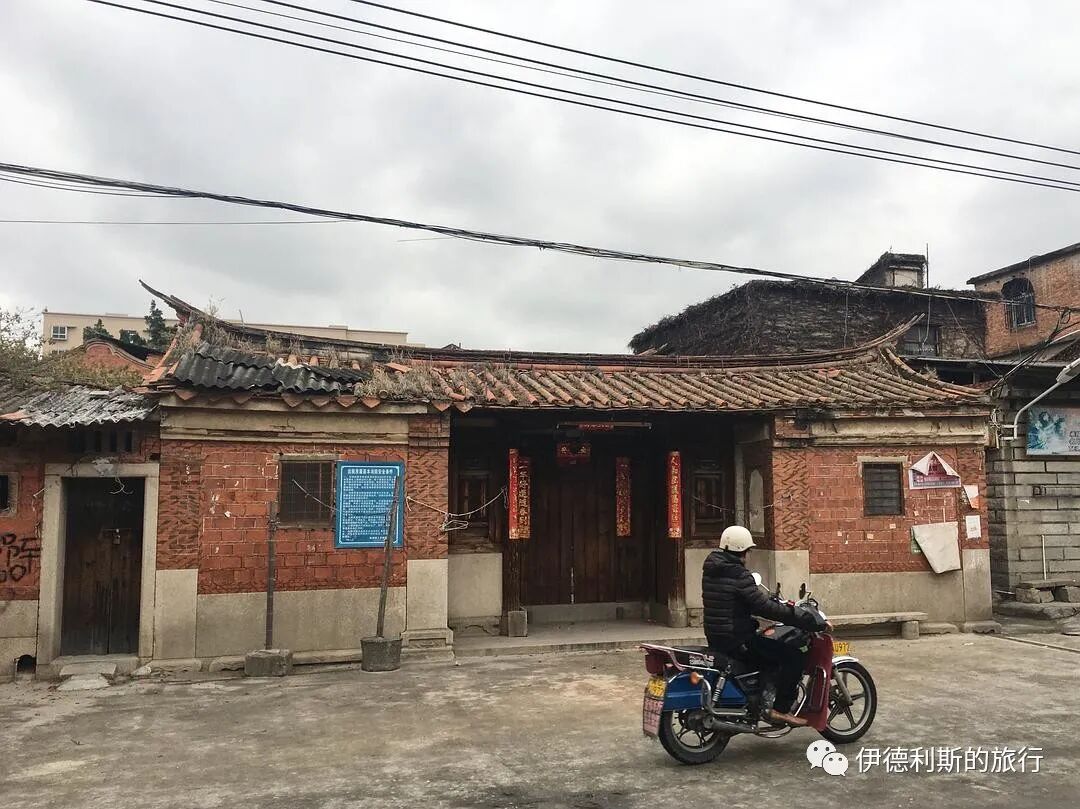
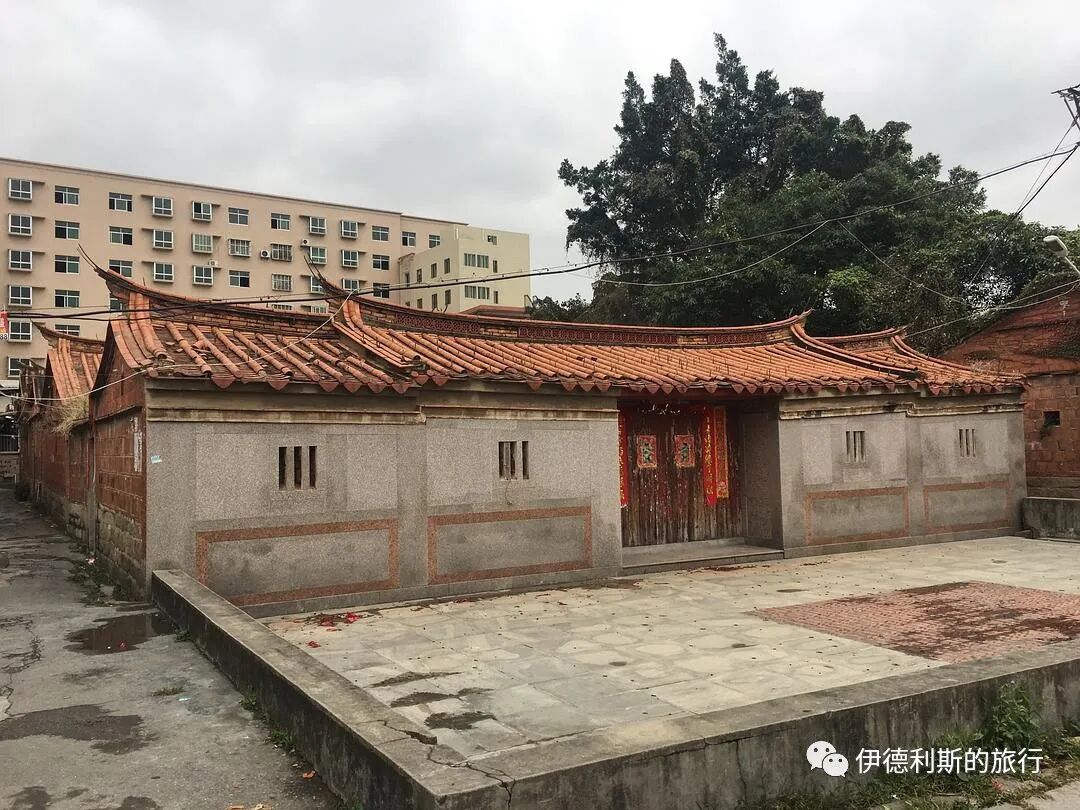
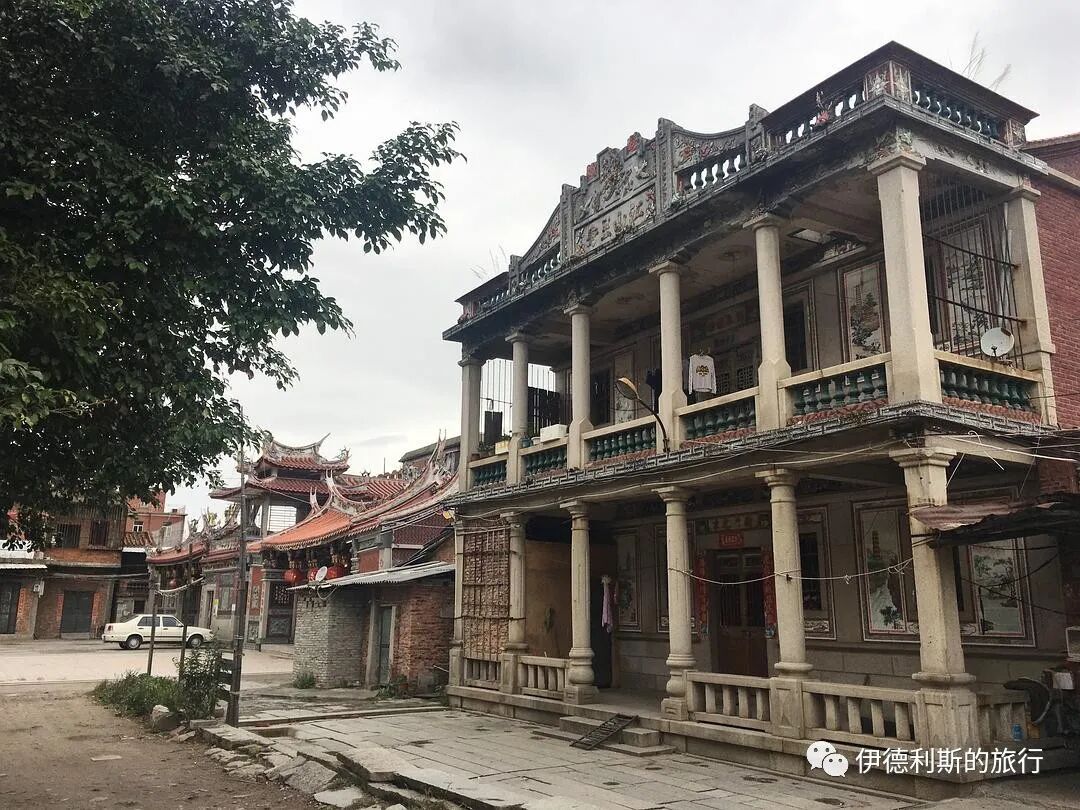
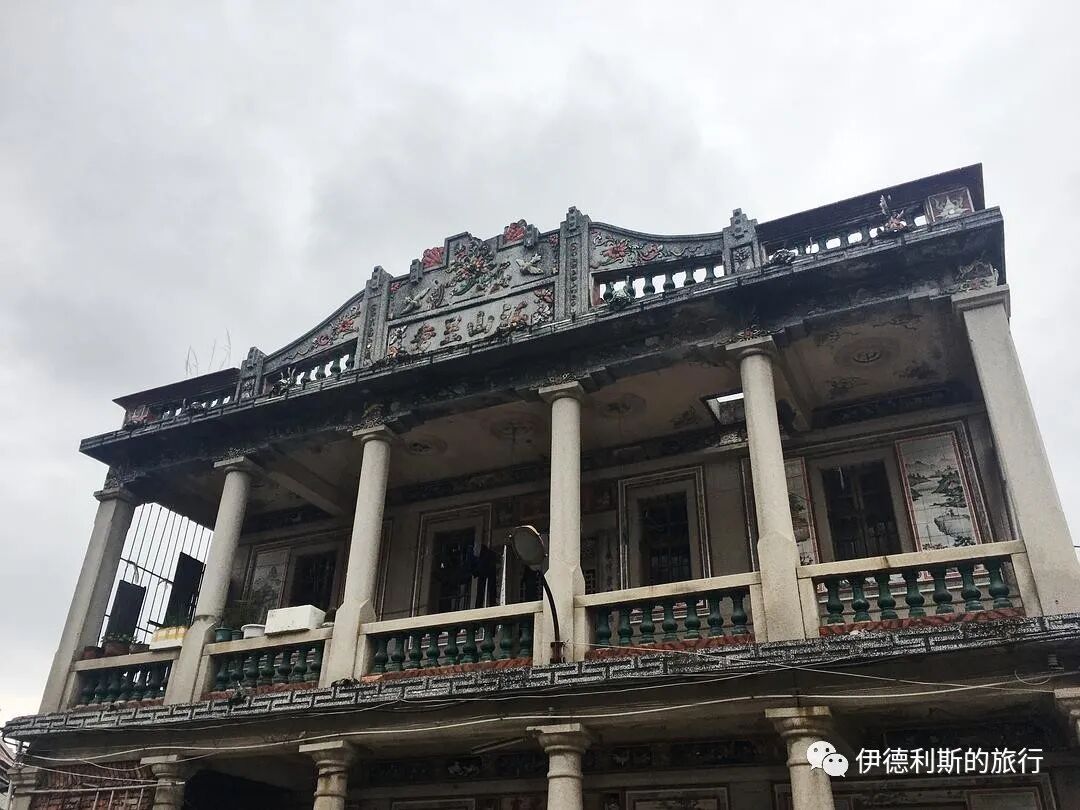
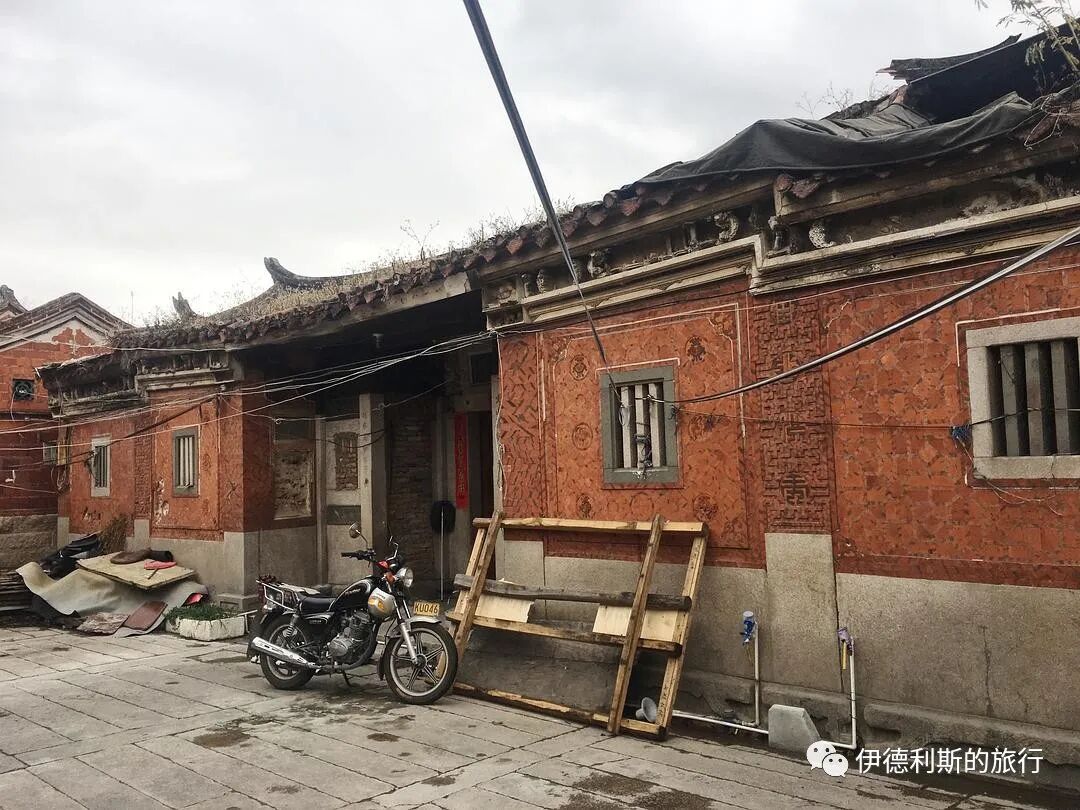
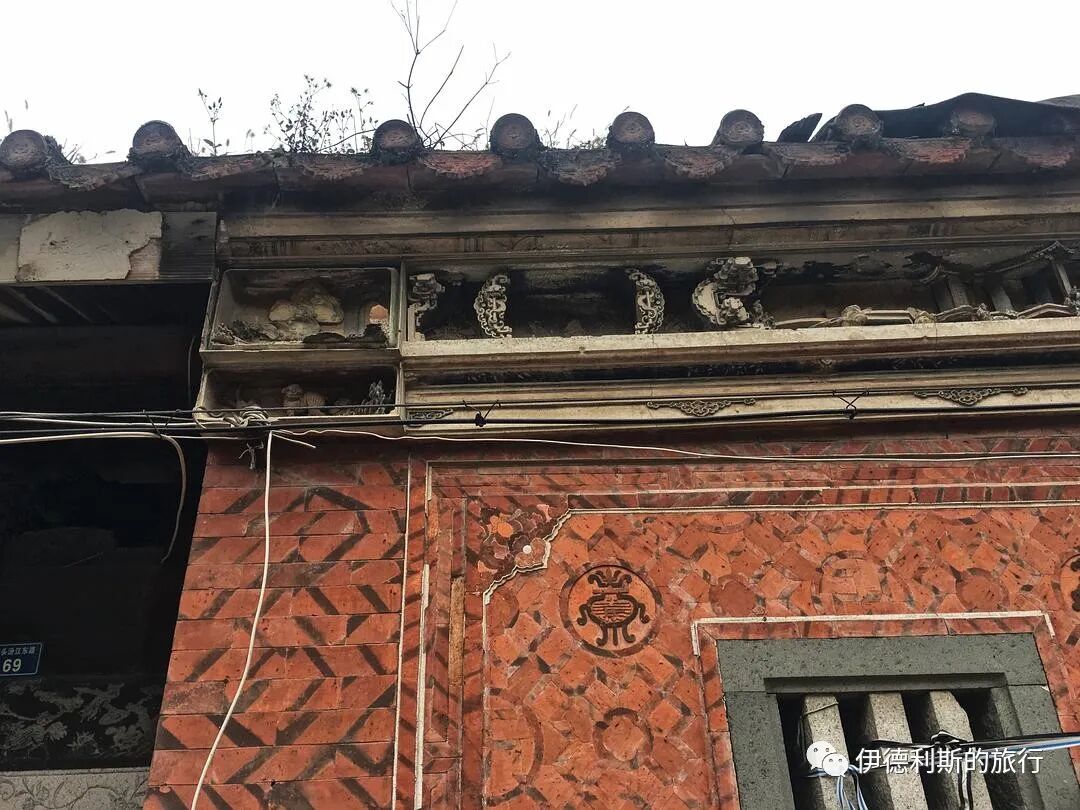
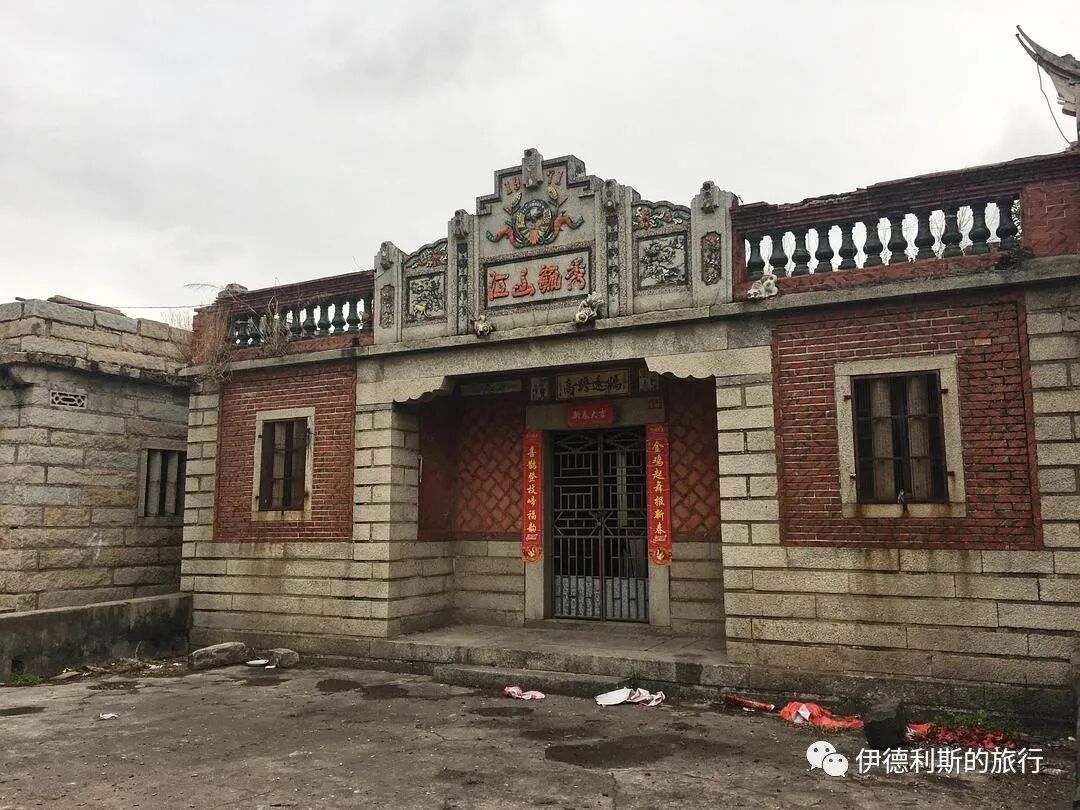
The unique Minnan wall-building method of 'using bricks and stones'.
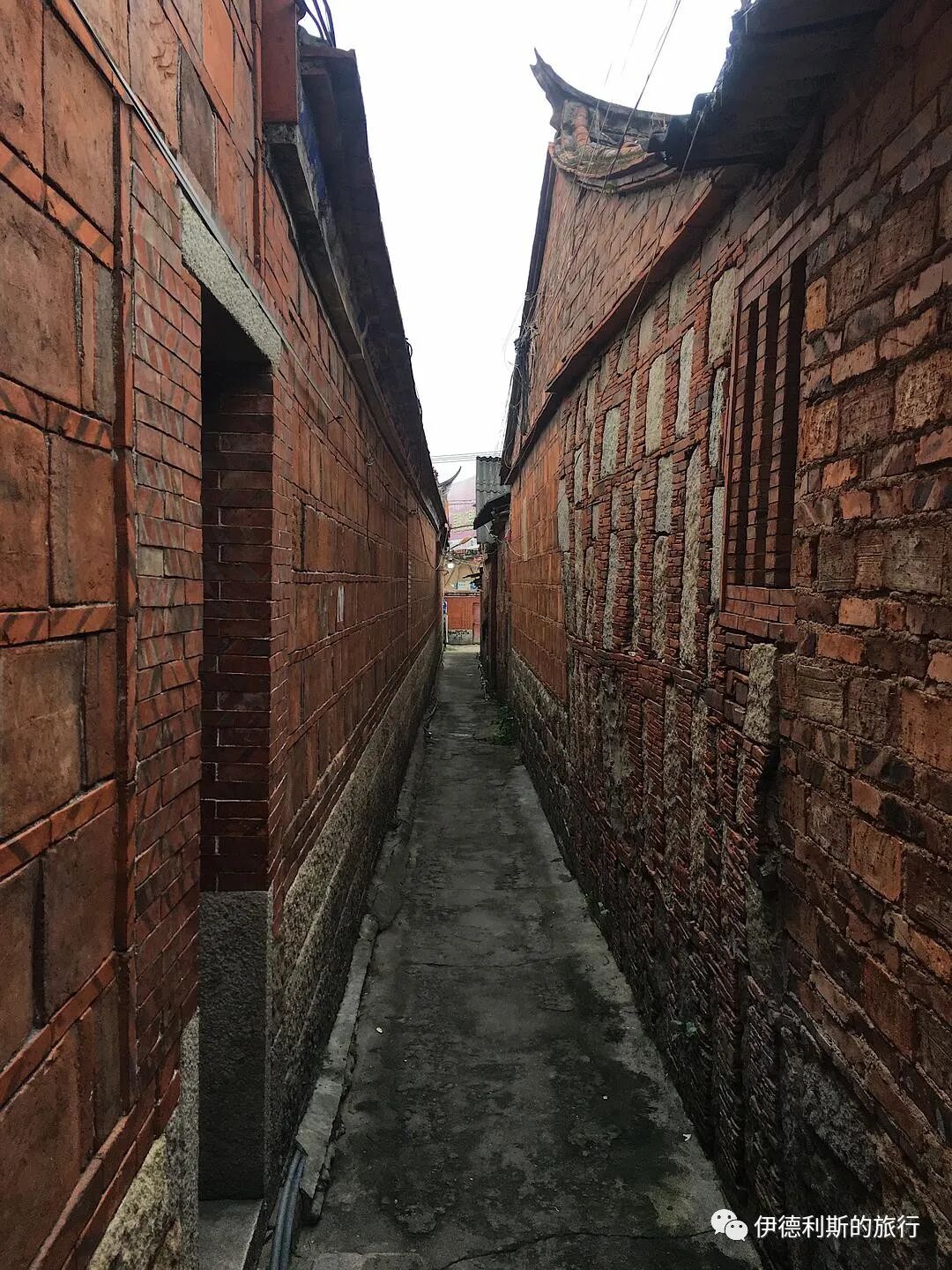
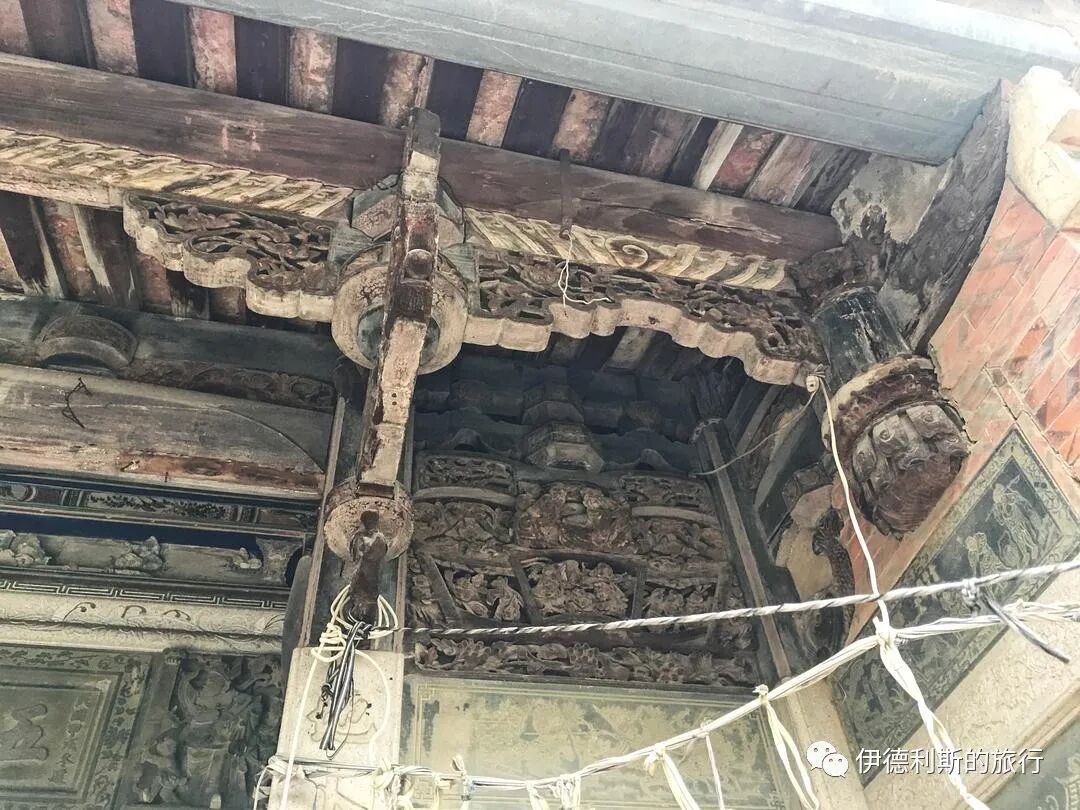
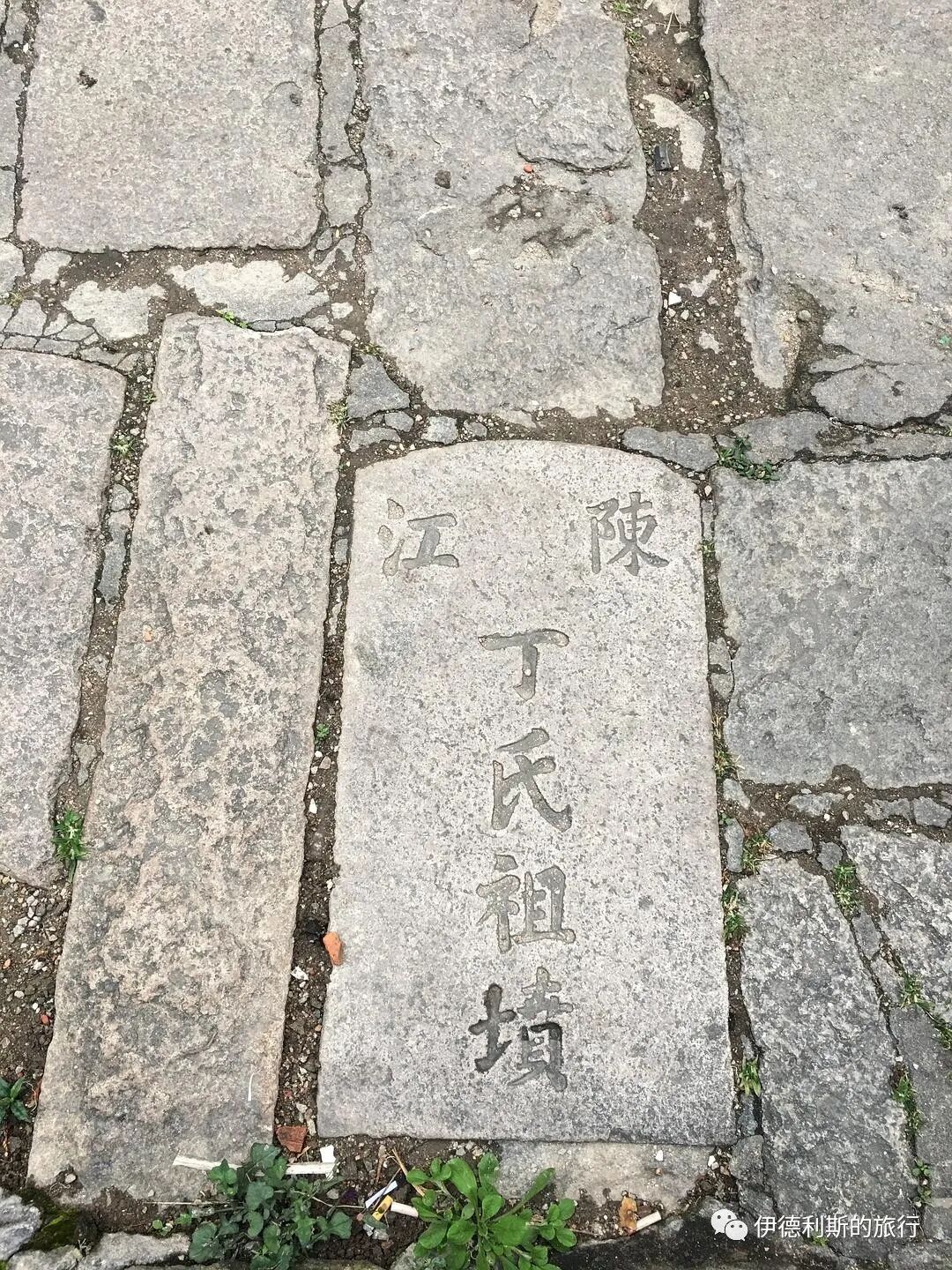
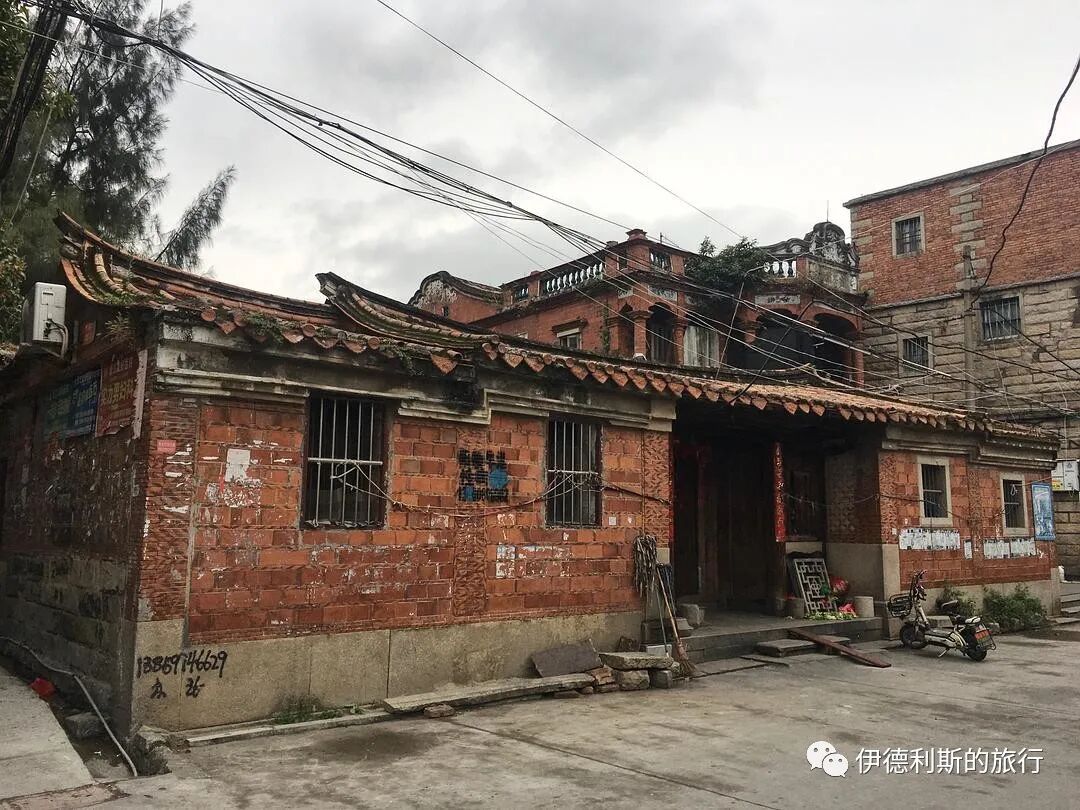
Quanzhou Muslim Heritage: The Ding Hui Muslims of Chendai (Part 1)
Articles • ali2007fr posted the article • 0 comments • 206 views • 2026-05-17 06:52
Summary: This is Part 1 of Quanzhou Muslim Heritage: The Ding Hui Muslims of Chendai. It preserves the original travel notes and historical details, with images kept in their original order. It is useful for readers interested in Quanzhou Muslims, Hui Muslims, Islamic History.
The Ding family of Chendai is a branch of Hui Muslims living in Chendai Town, Jinjiang, south of Quanzhou city. They arrived in Quanzhou during the Yuan Dynasty, and between the end of the Yuan and the beginning of the Ming Dynasty, they moved to Chendai, abandoned commerce for farming, and during the mid-Ming Dynasty, they abandoned their Islamic faith through 'clan-building' and 'imperial examination-oriented' processes; today, most follow the traditional religions of the Minnan region. After the Republic of China era, a small number of the Chendai Ding family returned to the Islamic faith and, after the 1980s, established a mosque and an Islamic association.
Today, one can still see traces left by the Chendai Ding family from various historical periods in Quanzhou. Next to the Lingshan Holy Tomb in the east of Quanzhou city, one can see several traditional Islamic tombstones of the Chendai Ding family from the early Ming Dynasty, which still bear Quranic verses from exactly 600 years ago. In Chendai Town, one can see a series of ancestral halls and ancestral homes built by the Ding family since the Ming and Qing dynasties, which are symbols of the clan-building of the Chendai Ding family. In addition, next to the Ding family ancestral hall is the Chendai Mosque, built in 1990, which is a testament to the small number of Chendai Ding family members who have returned to the Islamic faith since the Republic of China era.
Table of Contents
I. Two Hundred Years of Islam — The Ding Family Cemetery
1. Joint tomb of the first, second, and third generations
2. Tomb of the fourth generation Ding Shan and his wife Zhuang Xiniang
3. Tomb of the fifth generation Ding Mabao and his wives, Pu and Wang
4. Tombs of the fifth generation Ding Guanbao, sixth generation Ding Kuan, and sixth generation Ding Min
5. Tomb of the fifth generation Ding Fubao and his wife Shi Dingniang
6. Tomb of the seventh generation Ding Lun and his wife Zhuang
II. Gradual Change to Conform to Rites — The Ding Family Ancestral Halls
1. The Ding Family Grand Ancestral Hall
2. Yizhai Ding Gong Ancestral Hall
3. Fenxi Ding Gong Ancestral Residence
4. Ding Yanzhong's Jinshi Residence
III. The Reappearance of Islam — Chendai Mosque
I. Two Hundred Years of Islam — The Ding Family Cemetery
According to the genealogy, the first ancestor of the Chendai Ding family, Ding Jin (1251-1298), was originally from Suzhou and settled in Quanzhou due to trade. By the time of the third ancestor, Ding Kui (1298-1379), he brought the fourth ancestor, Ding Shan (1343-1420), from Quanzhou city to Chendai, more than twenty li (a unit of distance) south of the city, but the third ancestor traveled between Suzhou and Quanzhou for trade for a long time and did not settle down until the early Ming Dynasty, when the fourth ancestor truly settled in Chendai.
There are many reasons for the Ding family's move to Chendai, the main one being that the Quanzhou port declined at the end of the Yuan and the beginning of the Ming Dynasty, trade was cut off, and the Ding family had no business to conduct, so they chose to abandon commerce for farming, coming to Chendai for tidal flat work and rice cultivation.
The Islamic faith of the Chendai Ding family was maintained for ten generations, spanning more than two hundred years from the 13th to the 16th century. The tenth generation Ding Yanxia, born around 1517, recorded in his 'Zujiao Shuo' (Discourse on Ancestral Religion) the Islamic customs he experienced in his childhood in great detail. However, according to calculations, by the eighth to ninth generations, the Chendai Ding family no longer valued scripture education:
'The shroud is not layered, the coffin is not made of wood, and burial does not exceed three days. The mound is like a horse's mane and shallow, mourning clothes are made of cotton, no ancestral tablets are set up for worship, and no offerings are arranged. For prayer times, at sunset, they gather and face west to pray to Allah. They fast once a year, eating when they see the stars in the morning and evening, and remaining hungry throughout the day. They offer only incense and flowers to the divine, do not set up wine or fruit, and do not burn paper offerings. They recite the pure scriptures, imitating the transmitted foreign sounds, without understanding the meaning, nor seeking to understand it, and use them for both auspicious and inauspicious occasions. Animals must be slaughtered by their own butchers before being eaten, and pork is not consumed. They bathe constantly, for they dare not approach the divine otherwise. They prefer cotton clothing over silk, generally valuing brightness and cleanliness. This is what I, Xia, saw in my youth. ”
The existing Islamic relics of the Chendai Ding family are the several Ming Dynasty Islamic tombstones within the Lingshan Holy Tomb.
1. Joint tomb of the first, second, and third generations
Before the Ding family established their base in Chendai, the first, second, and third generations were all buried at Lingshan, east of Quanzhou city. Lingshan was the main burial area for Muslims in Quanzhou during the Song and Yuan dynasties, built in 1162 by the Song Dynasty Arab merchant Shi Nawei. It was called the 'Foreign Merchant Tomb' during the Song and Yuan dynasties.
After the fourth generation Ding Shan established the base in Chendai, he entrusted the ancestral tombs to others for management. Later, the son of the second manager, Xu Fen, named Xu Fu, continuously encroached on the ancestral tomb land, and the Ding family endured it in silence. It was not until 18 years later, in 1505, that the eighth generation Ding Yi passed the imperial examination and became a Jinshi, and after returning to his hometown, he filed a lawsuit and finally reclaimed the ancestral tomb land.
During the Chongzhen period of the Ming Dynasty, the descendants of the Ding family buried the first, second, and third generation ancestors together. In 1993, due to the need for road construction, a large number of Chendai Ding family tombstones were moved from outside the East Gate of Quanzhou, Luyuan, and other places to the Lingshan Holy Tomb; the current joint tomb of the first, second, and third generations was also rebuilt during this period. The tombstones and monuments seen now are not the originals. The Chendai Ding family has legends from the Ming Dynasty that their ancestor was the Yuan Dynasty politician Sayyid Ajjal Shams al-Din, so the cemetery is inscribed with words stating they are descendants of a saint.
2. Tomb of the fourth generation Ding Shan and his wife Zhuang Xiniang
Ding Shan (1343-1420), courtesy name Yanren, pseudonym Ren'an, followed his father from Quanzhou to Chendai at the end of the Yuan Dynasty and officially established the base in Chendai at the beginning of the Ming Dynasty, founding the Chendai Ding clan. His wife, Zhuang Xiniang, courtesy name Runxiu, was the sixth-generation granddaughter of Zhuang Xia, who was enfeoffed as a founding baron and junior preceptor in the Southern Song Dynasty. The Zhuang family was prominent in the late Southern Song Dynasty but gradually declined after the Yuan Dynasty, and their relatives left Quanzhou one after another; only Zhuang Xiniang's father still lived in the Zhuang mansion south of the city. At that time, the Ding family and the Zhuang family were neighbors, so they became husband and wife, and shortly after the marriage, Ding Shan and his father moved to Chendai. The Ding family's move to Chendai was likely related to Zhuang Xiniang, because near Chendai at that time was Qingyang, where the Zhuang clan lived, a powerful clan known as the 'Qingyang Zhuang family'.
Ding Shan and Zhuang Xiniang were originally buried in Luyuan, east of Quanzhou city; 'Luyuan' means 'Paradise', which is the 'Garden' (Jannah) in the Quran. The tomb is a traditional Islamic chlorite tomb, with two sumeru-pedestal style five-layer tombstones placed on a sumeru-pedestal altar platform. The first layer of the tombstone has six gnomon feet, carved with ruyi (auspicious) patterns; The second layer is carved with continuous scrolling patterns; The third layer is carved with overlapping lotus patterns; The fourth layer is carved with Quranic verses; The fifth layer is a curved arch-shaped tombstone top. Behind the tombstone is a monument erected in 1910.
The verses on the tombstone are from the Quran, Chapter 2, Verse 255.
3. Tomb of the fifth generation Ding Mabao and his wives, Pu and Wang
Ding Mabao (1366-1431), courtesy name Shilong, pseudonym Yi'an, was the eldest son of the fourth generation Ding Shan who established the base in Chendai, and the founding ancestor of the main branch of the Chendai Ding family; he was originally buried with his two wives in the Chengui Baoxue (a geomantically auspicious site) on Daping Mountain, east of Quanzhou city.
4. Tombs of the fifth generation Ding Guanbao, sixth generation Ding Kuan, and sixth generation Ding Min
Ding Guanbao (1369-1436), courtesy name Shifu, pseudonym Chengzhai, was the second son of Ding Shan and the founding ancestor of the second main branch of the Chendai Ding family. He was originally buried at the foot of Shuiuniulin, east of Quanzhou city.
Ding Kuan (1395-1446), courtesy name Tingyu, pseudonym Longyin, was the second son of Ding Guanbao and was originally buried to the left of Ding Shan's tomb in Luyuan Mountain.
Ding Min (1407-1456), courtesy name Tingxue, pseudonym Yizhai, was the fourth son of Ding Guanbao and was originally buried at the foot of Shuiuniulin, east of Quanzhou city. Ding Min was the earliest local worthy among the Chendai Ding family to promote literary education.
5. Tomb of the fifth generation Ding Fubao and his wife Shi Dingniang
Ding Fubao (1375-1432), courtesy name Shizhang, pseudonym Yingjie, was the third son of Ding Shan and the founding ancestor of the third main branch of the Chendai Ding family, buried at Lingshan, east of Quanzhou city. The tomb consists of two sumeru-pedestal stone tombs placed on a traditional Islamic sumeru-pedestal altar platform, with swastikas and double lions playing with a pearl carved on the waist of the platform.
6. Tomb of the seventh generation Ding Lun and his wife Zhuang
Ding Lun (1442-1485), courtesy name Zhaorui, was the third son of the sixth generation Ding Xin.
For information on the Ming Dynasty Islamic tombstones of the Chendai Ding family, see 'Quanzhou Religious Stone Carvings'.
II. Gradual Change to Conform to Rites — The Ding Family Ancestral Halls
By the mid-16th century, the religious customs of the Chendai Ding family had undergone significant changes; Ding Yanxia recorded in 'Zujiao Shuo':
'Later, shrouds were layered, coffins were made of wood, and burials were delayed. Mourning clothes were half cotton, ancestral tablets were set up, mounds were large, offerings were arranged, animals were fat, and prayers to Allah were rare. Fasting disappeared, and animals did not have to be slaughtered by their own butchers. Clothing was made of silk, bathing was not required for approaching the divine, wine and fruit were set out, and cotton and silk were burned for other gods, though not for ancestors. The offering of incense and flowers remained as before. ”
Finally, by the late 16th century, the Chendai Ding family had completely abandoned Islam; 'Zujiao Shuo' records:
'Now, when worshipping ancestors, some burn cotton and silk, animals do not have to be slaughtered by their own butchers, mourning clothes are all made of hemp without cotton, burials are delayed for more than ten years, Taoist priests and Buddhist monks are used for auspicious and inauspicious occasions, and pork is eaten. ”
According to folklore, the Chendai Ding family began eating pork in 1592 when the eleventh generation Ding Qijun, who became a Jinshi, was gifted food by the Wanli Emperor. However, the statement by the twelfth generation Ding Qing in 'Jiyi Jiyan' (Records of Sacrificial Rites) in 1698 is more credible:
'Fenxi Gong (Ding Yi) was the first to enter the official ranks, and he worshipped his ancestors according to the rites of a high official, not daring to violate the Islamic faith. But the three generations of Huai Gong (Ding Zishen), Wuting Gong (Ding Rijn), and Zhechu Gong (Ding Qijun) all passed the imperial examinations, and the family's reputation grew, while the Islamic faith almost ceased. ”
The Chendai Ding family began their official careers starting with the eighth generation Ding Yi, and by the tenth generation, 20 people had become Jinshi; these people used Confucian ethics and principles as their standard everywhere, which had an important impact on the Chendai Ding family and accelerated the dissolution of the Islamic faith. This is what Ding Yanxia referred to as 'gradually conforming to the rites', living according to Confucian behavioral standards. Wang Ke's book 'The Vanishing "Nationals"' provides an in-depth discussion of the 'clan-building' and 'imperial examination-oriented' processes of the Chendai Ding family; interested friends can take a look.
1. The Ding Family Grand Ancestral Hall
The most important sign of the Chendai Ding family's departure from Islam was the reconstruction of the Ding family ancestral hall in 1561. The early Ding family ancestral hall is presumed to have been built in the early 15th century, was destroyed by war in 1561, was rebuilt shortly after under the leadership of Ding Yi and Ding Zishen, and was rebuilt and expanded again by Ding Rijn in 1599 to its current scale.
The ancestral hall enshrines the spirit tablets of the first to fifth generation ancestors and ancestors who held titles and merits, but initially, there were no spirit tablets; instead, there were small wooden screens handwritten by the eighth generation Ding Yi (1472-1521) listing the first to fourth generation ancestors.
In 1561, the Ding family ancestral hall was destroyed due to 'Japanese pirate disturbances', and in 1562, Ding Yanxia initiated the formulation of the 'Sacrificial Covenant', which officially determined the way the Chendai Ding family worshipped their ancestors. The 'Sacrificial Covenant' mentions 'kneeling in order to offer incense, bowing four times to the spirits, and kneeling to offer wine', which was already completely in line with traditional Chinese customs.
In addition to the Grand Ancestral Hall, the Chendai Ding family has many small ancestral halls and ancestral homes for worshipping ancestors. The 6 small ancestral halls are the 'Yi'an Ding Gong Ancestral Hall' for the fifth generation Ding Mabao, the 'Zhongzhai Ding Family Ancestral Hall' for the sixth generation Ding Xin, the 'Yizhai Ding Gong Ancestral Hall' for the sixth generation Ding Min, the 'Dunpu Ding Gong Ancestral Hall' for the seventh generation Ding Chang, the 'Gusu Ding Gong Ancestral Hall' for the eighth generation Ding Gui, and the 'Daozhen Ding Gong Ancestral Hall' for the twelfth generation Ding Shibo. The establishment of small ancestral halls is usually for the prosperity of the descendants of a specific branch, built to bring honor to the ancestors.
Below the small ancestral halls are ancestral homes, which enshrine the ancestors of the branch and their descendants, formed as descendants multiplied and families branched out; there are about 200 of them.
2.
Yizhai Ding Gong Ancestral Hall
The sixth generation Ding Min (1407-1456), courtesy name Tingxue, pseudonym Yizhai, was the earliest local worthy among the Chendai Ding family to promote literary education. view all
Summary: This is Part 1 of Quanzhou Muslim Heritage: The Ding Hui Muslims of Chendai. It preserves the original travel notes and historical details, with images kept in their original order. It is useful for readers interested in Quanzhou Muslims, Hui Muslims, Islamic History.
The Ding family of Chendai is a branch of Hui Muslims living in Chendai Town, Jinjiang, south of Quanzhou city. They arrived in Quanzhou during the Yuan Dynasty, and between the end of the Yuan and the beginning of the Ming Dynasty, they moved to Chendai, abandoned commerce for farming, and during the mid-Ming Dynasty, they abandoned their Islamic faith through 'clan-building' and 'imperial examination-oriented' processes; today, most follow the traditional religions of the Minnan region. After the Republic of China era, a small number of the Chendai Ding family returned to the Islamic faith and, after the 1980s, established a mosque and an Islamic association.
Today, one can still see traces left by the Chendai Ding family from various historical periods in Quanzhou. Next to the Lingshan Holy Tomb in the east of Quanzhou city, one can see several traditional Islamic tombstones of the Chendai Ding family from the early Ming Dynasty, which still bear Quranic verses from exactly 600 years ago. In Chendai Town, one can see a series of ancestral halls and ancestral homes built by the Ding family since the Ming and Qing dynasties, which are symbols of the clan-building of the Chendai Ding family. In addition, next to the Ding family ancestral hall is the Chendai Mosque, built in 1990, which is a testament to the small number of Chendai Ding family members who have returned to the Islamic faith since the Republic of China era.
Table of Contents
I. Two Hundred Years of Islam — The Ding Family Cemetery
1. Joint tomb of the first, second, and third generations
2. Tomb of the fourth generation Ding Shan and his wife Zhuang Xiniang
3. Tomb of the fifth generation Ding Mabao and his wives, Pu and Wang
4. Tombs of the fifth generation Ding Guanbao, sixth generation Ding Kuan, and sixth generation Ding Min
5. Tomb of the fifth generation Ding Fubao and his wife Shi Dingniang
6. Tomb of the seventh generation Ding Lun and his wife Zhuang
II. Gradual Change to Conform to Rites — The Ding Family Ancestral Halls
1. The Ding Family Grand Ancestral Hall
2. Yizhai Ding Gong Ancestral Hall
3. Fenxi Ding Gong Ancestral Residence
4. Ding Yanzhong's Jinshi Residence
III. The Reappearance of Islam — Chendai Mosque
I. Two Hundred Years of Islam — The Ding Family Cemetery
According to the genealogy, the first ancestor of the Chendai Ding family, Ding Jin (1251-1298), was originally from Suzhou and settled in Quanzhou due to trade. By the time of the third ancestor, Ding Kui (1298-1379), he brought the fourth ancestor, Ding Shan (1343-1420), from Quanzhou city to Chendai, more than twenty li (a unit of distance) south of the city, but the third ancestor traveled between Suzhou and Quanzhou for trade for a long time and did not settle down until the early Ming Dynasty, when the fourth ancestor truly settled in Chendai.
There are many reasons for the Ding family's move to Chendai, the main one being that the Quanzhou port declined at the end of the Yuan and the beginning of the Ming Dynasty, trade was cut off, and the Ding family had no business to conduct, so they chose to abandon commerce for farming, coming to Chendai for tidal flat work and rice cultivation.
The Islamic faith of the Chendai Ding family was maintained for ten generations, spanning more than two hundred years from the 13th to the 16th century. The tenth generation Ding Yanxia, born around 1517, recorded in his 'Zujiao Shuo' (Discourse on Ancestral Religion) the Islamic customs he experienced in his childhood in great detail. However, according to calculations, by the eighth to ninth generations, the Chendai Ding family no longer valued scripture education:
'The shroud is not layered, the coffin is not made of wood, and burial does not exceed three days. The mound is like a horse's mane and shallow, mourning clothes are made of cotton, no ancestral tablets are set up for worship, and no offerings are arranged. For prayer times, at sunset, they gather and face west to pray to Allah. They fast once a year, eating when they see the stars in the morning and evening, and remaining hungry throughout the day. They offer only incense and flowers to the divine, do not set up wine or fruit, and do not burn paper offerings. They recite the pure scriptures, imitating the transmitted foreign sounds, without understanding the meaning, nor seeking to understand it, and use them for both auspicious and inauspicious occasions. Animals must be slaughtered by their own butchers before being eaten, and pork is not consumed. They bathe constantly, for they dare not approach the divine otherwise. They prefer cotton clothing over silk, generally valuing brightness and cleanliness. This is what I, Xia, saw in my youth. ”
The existing Islamic relics of the Chendai Ding family are the several Ming Dynasty Islamic tombstones within the Lingshan Holy Tomb.
1. Joint tomb of the first, second, and third generations
Before the Ding family established their base in Chendai, the first, second, and third generations were all buried at Lingshan, east of Quanzhou city. Lingshan was the main burial area for Muslims in Quanzhou during the Song and Yuan dynasties, built in 1162 by the Song Dynasty Arab merchant Shi Nawei. It was called the 'Foreign Merchant Tomb' during the Song and Yuan dynasties.
After the fourth generation Ding Shan established the base in Chendai, he entrusted the ancestral tombs to others for management. Later, the son of the second manager, Xu Fen, named Xu Fu, continuously encroached on the ancestral tomb land, and the Ding family endured it in silence. It was not until 18 years later, in 1505, that the eighth generation Ding Yi passed the imperial examination and became a Jinshi, and after returning to his hometown, he filed a lawsuit and finally reclaimed the ancestral tomb land.
During the Chongzhen period of the Ming Dynasty, the descendants of the Ding family buried the first, second, and third generation ancestors together. In 1993, due to the need for road construction, a large number of Chendai Ding family tombstones were moved from outside the East Gate of Quanzhou, Luyuan, and other places to the Lingshan Holy Tomb; the current joint tomb of the first, second, and third generations was also rebuilt during this period. The tombstones and monuments seen now are not the originals. The Chendai Ding family has legends from the Ming Dynasty that their ancestor was the Yuan Dynasty politician Sayyid Ajjal Shams al-Din, so the cemetery is inscribed with words stating they are descendants of a saint.
2. Tomb of the fourth generation Ding Shan and his wife Zhuang Xiniang
Ding Shan (1343-1420), courtesy name Yanren, pseudonym Ren'an, followed his father from Quanzhou to Chendai at the end of the Yuan Dynasty and officially established the base in Chendai at the beginning of the Ming Dynasty, founding the Chendai Ding clan. His wife, Zhuang Xiniang, courtesy name Runxiu, was the sixth-generation granddaughter of Zhuang Xia, who was enfeoffed as a founding baron and junior preceptor in the Southern Song Dynasty. The Zhuang family was prominent in the late Southern Song Dynasty but gradually declined after the Yuan Dynasty, and their relatives left Quanzhou one after another; only Zhuang Xiniang's father still lived in the Zhuang mansion south of the city. At that time, the Ding family and the Zhuang family were neighbors, so they became husband and wife, and shortly after the marriage, Ding Shan and his father moved to Chendai. The Ding family's move to Chendai was likely related to Zhuang Xiniang, because near Chendai at that time was Qingyang, where the Zhuang clan lived, a powerful clan known as the 'Qingyang Zhuang family'.
Ding Shan and Zhuang Xiniang were originally buried in Luyuan, east of Quanzhou city; 'Luyuan' means 'Paradise', which is the 'Garden' (Jannah) in the Quran. The tomb is a traditional Islamic chlorite tomb, with two sumeru-pedestal style five-layer tombstones placed on a sumeru-pedestal altar platform. The first layer of the tombstone has six gnomon feet, carved with ruyi (auspicious) patterns; The second layer is carved with continuous scrolling patterns; The third layer is carved with overlapping lotus patterns; The fourth layer is carved with Quranic verses; The fifth layer is a curved arch-shaped tombstone top. Behind the tombstone is a monument erected in 1910.
The verses on the tombstone are from the Quran, Chapter 2, Verse 255.
3. Tomb of the fifth generation Ding Mabao and his wives, Pu and Wang
Ding Mabao (1366-1431), courtesy name Shilong, pseudonym Yi'an, was the eldest son of the fourth generation Ding Shan who established the base in Chendai, and the founding ancestor of the main branch of the Chendai Ding family; he was originally buried with his two wives in the Chengui Baoxue (a geomantically auspicious site) on Daping Mountain, east of Quanzhou city.
4. Tombs of the fifth generation Ding Guanbao, sixth generation Ding Kuan, and sixth generation Ding Min
Ding Guanbao (1369-1436), courtesy name Shifu, pseudonym Chengzhai, was the second son of Ding Shan and the founding ancestor of the second main branch of the Chendai Ding family. He was originally buried at the foot of Shuiuniulin, east of Quanzhou city.
Ding Kuan (1395-1446), courtesy name Tingyu, pseudonym Longyin, was the second son of Ding Guanbao and was originally buried to the left of Ding Shan's tomb in Luyuan Mountain.
Ding Min (1407-1456), courtesy name Tingxue, pseudonym Yizhai, was the fourth son of Ding Guanbao and was originally buried at the foot of Shuiuniulin, east of Quanzhou city. Ding Min was the earliest local worthy among the Chendai Ding family to promote literary education.
5. Tomb of the fifth generation Ding Fubao and his wife Shi Dingniang
Ding Fubao (1375-1432), courtesy name Shizhang, pseudonym Yingjie, was the third son of Ding Shan and the founding ancestor of the third main branch of the Chendai Ding family, buried at Lingshan, east of Quanzhou city. The tomb consists of two sumeru-pedestal stone tombs placed on a traditional Islamic sumeru-pedestal altar platform, with swastikas and double lions playing with a pearl carved on the waist of the platform.
6. Tomb of the seventh generation Ding Lun and his wife Zhuang
Ding Lun (1442-1485), courtesy name Zhaorui, was the third son of the sixth generation Ding Xin.
For information on the Ming Dynasty Islamic tombstones of the Chendai Ding family, see 'Quanzhou Religious Stone Carvings'.
II. Gradual Change to Conform to Rites — The Ding Family Ancestral Halls
By the mid-16th century, the religious customs of the Chendai Ding family had undergone significant changes; Ding Yanxia recorded in 'Zujiao Shuo':
'Later, shrouds were layered, coffins were made of wood, and burials were delayed. Mourning clothes were half cotton, ancestral tablets were set up, mounds were large, offerings were arranged, animals were fat, and prayers to Allah were rare. Fasting disappeared, and animals did not have to be slaughtered by their own butchers. Clothing was made of silk, bathing was not required for approaching the divine, wine and fruit were set out, and cotton and silk were burned for other gods, though not for ancestors. The offering of incense and flowers remained as before. ”
Finally, by the late 16th century, the Chendai Ding family had completely abandoned Islam; 'Zujiao Shuo' records:
'Now, when worshipping ancestors, some burn cotton and silk, animals do not have to be slaughtered by their own butchers, mourning clothes are all made of hemp without cotton, burials are delayed for more than ten years, Taoist priests and Buddhist monks are used for auspicious and inauspicious occasions, and pork is eaten. ”
According to folklore, the Chendai Ding family began eating pork in 1592 when the eleventh generation Ding Qijun, who became a Jinshi, was gifted food by the Wanli Emperor. However, the statement by the twelfth generation Ding Qing in 'Jiyi Jiyan' (Records of Sacrificial Rites) in 1698 is more credible:
'Fenxi Gong (Ding Yi) was the first to enter the official ranks, and he worshipped his ancestors according to the rites of a high official, not daring to violate the Islamic faith. But the three generations of Huai Gong (Ding Zishen), Wuting Gong (Ding Rijn), and Zhechu Gong (Ding Qijun) all passed the imperial examinations, and the family's reputation grew, while the Islamic faith almost ceased. ”
The Chendai Ding family began their official careers starting with the eighth generation Ding Yi, and by the tenth generation, 20 people had become Jinshi; these people used Confucian ethics and principles as their standard everywhere, which had an important impact on the Chendai Ding family and accelerated the dissolution of the Islamic faith. This is what Ding Yanxia referred to as 'gradually conforming to the rites', living according to Confucian behavioral standards. Wang Ke's book 'The Vanishing "Nationals"' provides an in-depth discussion of the 'clan-building' and 'imperial examination-oriented' processes of the Chendai Ding family; interested friends can take a look.
1. The Ding Family Grand Ancestral Hall
The most important sign of the Chendai Ding family's departure from Islam was the reconstruction of the Ding family ancestral hall in 1561. The early Ding family ancestral hall is presumed to have been built in the early 15th century, was destroyed by war in 1561, was rebuilt shortly after under the leadership of Ding Yi and Ding Zishen, and was rebuilt and expanded again by Ding Rijn in 1599 to its current scale.
The ancestral hall enshrines the spirit tablets of the first to fifth generation ancestors and ancestors who held titles and merits, but initially, there were no spirit tablets; instead, there were small wooden screens handwritten by the eighth generation Ding Yi (1472-1521) listing the first to fourth generation ancestors.
In 1561, the Ding family ancestral hall was destroyed due to 'Japanese pirate disturbances', and in 1562, Ding Yanxia initiated the formulation of the 'Sacrificial Covenant', which officially determined the way the Chendai Ding family worshipped their ancestors. The 'Sacrificial Covenant' mentions 'kneeling in order to offer incense, bowing four times to the spirits, and kneeling to offer wine', which was already completely in line with traditional Chinese customs.
In addition to the Grand Ancestral Hall, the Chendai Ding family has many small ancestral halls and ancestral homes for worshipping ancestors. The 6 small ancestral halls are the 'Yi'an Ding Gong Ancestral Hall' for the fifth generation Ding Mabao, the 'Zhongzhai Ding Family Ancestral Hall' for the sixth generation Ding Xin, the 'Yizhai Ding Gong Ancestral Hall' for the sixth generation Ding Min, the 'Dunpu Ding Gong Ancestral Hall' for the seventh generation Ding Chang, the 'Gusu Ding Gong Ancestral Hall' for the eighth generation Ding Gui, and the 'Daozhen Ding Gong Ancestral Hall' for the twelfth generation Ding Shibo. The establishment of small ancestral halls is usually for the prosperity of the descendants of a specific branch, built to bring honor to the ancestors.
Below the small ancestral halls are ancestral homes, which enshrine the ancestors of the branch and their descendants, formed as descendants multiplied and families branched out; there are about 200 of them.
2.
Yizhai Ding Gong Ancestral Hall
The sixth generation Ding Min (1407-1456), courtesy name Tingxue, pseudonym Yizhai, was the earliest local worthy among the Chendai Ding family to promote literary education.
Quanzhou Muslim Heritage: The Ding Hui Muslims of Chendai
Articles • ali2007fr posted the article • 0 comments • 159 views • 2026-05-17 06:30
Summary: This travel note introduces Quanzhou Muslim Heritage: The Ding Hui Muslims of Chendai. The Ding family of Chendai is a branch of Hui Muslims living in Chendai Town, Jinjiang, south of Quanzhou city. It is useful for readers interested in Quanzhou Muslims, Hui Muslims, Islamic History.
The Ding family of Chendai is a branch of Hui Muslims living in Chendai Town, Jinjiang, south of Quanzhou city. They arrived in Quanzhou during the Yuan Dynasty, and between the end of the Yuan and the beginning of the Ming Dynasty, they moved to Chendai, abandoned commerce for farming, and during the mid-Ming Dynasty, they abandoned their Islamic faith through 'clan-building' and 'imperial examination-oriented' processes; today, most follow the traditional religions of the Minnan region. After the Republic of China era, a small number of the Chendai Ding family returned to the Islamic faith and, after the 1980s, established a mosque and an Islamic association.
Today, one can still see traces left by the Chendai Ding family from various historical periods in Quanzhou. Next to the Lingshan Holy Tomb in the east of Quanzhou city, one can see several traditional Islamic tombstones of the Chendai Ding family from the early Ming Dynasty, which still bear Quranic verses from exactly 600 years ago. In Chendai Town, one can see a series of ancestral halls and ancestral homes built by the Ding family since the Ming and Qing dynasties, which are symbols of the clan-building of the Chendai Ding family. In addition, next to the Ding family ancestral hall is the Chendai Mosque, built in 1990, which is a testament to the small number of Chendai Ding family members who have returned to the Islamic faith since the Republic of China era.
Table of Contents
I. Two Hundred Years of Islam — The Ding Family Cemetery
1. Joint tomb of the first, second, and third generations
2. Tomb of the fourth generation Ding Shan and his wife Zhuang Xiniang
3. Tomb of the fifth generation Ding Mabao and his wives, Pu and Wang
4. Tombs of the fifth generation Ding Guanbao, sixth generation Ding Kuan, and sixth generation Ding Min
5. Tomb of the fifth generation Ding Fubao and his wife Shi Dingniang
6. Tomb of the seventh generation Ding Lun and his wife Zhuang
II. Gradual Change to Conform to Rites — The Ding Family Ancestral Halls
1. The Ding Family Grand Ancestral Hall
2. Yizhai Ding Gong Ancestral Hall
3. Fenxi Ding Gong Ancestral Residence
4. Ding Yanzhong's Jinshi Residence
III. The Reappearance of Islam — Chendai Mosque
I. Two Hundred Years of Islam — The Ding Family Cemetery
According to the genealogy, the first ancestor of the Chendai Ding family, Ding Jin (1251-1298), was originally from Suzhou and settled in Quanzhou due to trade. By the time of the third ancestor, Ding Kui (1298-1379), he brought the fourth ancestor, Ding Shan (1343-1420), from Quanzhou city to Chendai, more than twenty li (a unit of distance) south of the city, but the third ancestor traveled between Suzhou and Quanzhou for trade for a long time and did not settle down until the early Ming Dynasty, when the fourth ancestor truly settled in Chendai.
There are many reasons for the Ding family's move to Chendai, the main one being that the Quanzhou port declined at the end of the Yuan and the beginning of the Ming Dynasty, trade was cut off, and the Ding family had no business to conduct, so they chose to abandon commerce for farming, coming to Chendai for tidal flat work and rice cultivation.
The Islamic faith of the Chendai Ding family was maintained for ten generations, spanning more than two hundred years from the 13th to the 16th century. The tenth generation Ding Yanxia, born around 1517, recorded in his 'Zujiao Shuo' (Discourse on Ancestral Religion) the Islamic customs he experienced in his childhood in great detail. However, according to calculations, by the eighth to ninth generations, the Chendai Ding family no longer valued scripture education:
'The shroud is not layered, the coffin is not made of wood, and burial does not exceed three days. The mound is like a horse's mane and shallow, mourning clothes are made of cotton, no ancestral tablets are set up for worship, and no offerings are arranged. For prayer times, at sunset, they gather and face west to pray to Allah. They fast once a year, eating when they see the stars in the morning and evening, and remaining hungry throughout the day. They offer only incense and flowers to the divine, do not set up wine or fruit, and do not burn paper offerings. They recite the pure scriptures, imitating the transmitted foreign sounds, without understanding the meaning, nor seeking to understand it, and use them for both auspicious and inauspicious occasions. Animals must be slaughtered by their own butchers before being eaten, and pork is not consumed. They bathe constantly, for they dare not approach the divine otherwise. They prefer cotton clothing over silk, generally valuing brightness and cleanliness. This is what I, Xia, saw in my youth. ”
The existing Islamic relics of the Chendai Ding family are the several Ming Dynasty Islamic tombstones within the Lingshan Holy Tomb.
1. Joint tomb of the first, second, and third generations
Before the Ding family established their base in Chendai, the first, second, and third generations were all buried at Lingshan, east of Quanzhou city. Lingshan was the main burial area for Muslims in Quanzhou during the Song and Yuan dynasties, built in 1162 by the Song Dynasty Arab merchant Shi Nawei. It was called the 'Foreign Merchant Tomb' during the Song and Yuan dynasties.
After the fourth generation Ding Shan established the base in Chendai, he entrusted the ancestral tombs to others for management. Later, the son of the second manager, Xu Fen, named Xu Fu, continuously encroached on the ancestral tomb land, and the Ding family endured it in silence. It was not until 18 years later, in 1505, that the eighth generation Ding Yi passed the imperial examination and became a Jinshi, and after returning to his hometown, he filed a lawsuit and finally reclaimed the ancestral tomb land.
During the Chongzhen period of the Ming Dynasty, the descendants of the Ding family buried the first, second, and third generation ancestors together. In 1993, due to the need for road construction, a large number of Chendai Ding family tombstones were moved from outside the East Gate of Quanzhou, Luyuan, and other places to the Lingshan Holy Tomb; the current joint tomb of the first, second, and third generations was also rebuilt during this period. The tombstones and monuments seen now are not the originals. The Chendai Ding family has legends from the Ming Dynasty that their ancestor was the Yuan Dynasty politician Sayyid Ajjal Shams al-Din, so the cemetery is inscribed with words stating they are descendants of a saint.
2. Tomb of the fourth generation Ding Shan and his wife Zhuang Xiniang
Ding Shan (1343-1420), courtesy name Yanren, pseudonym Ren'an, followed his father from Quanzhou to Chendai at the end of the Yuan Dynasty and officially established the base in Chendai at the beginning of the Ming Dynasty, founding the Chendai Ding clan. His wife, Zhuang Xiniang, courtesy name Runxiu, was the sixth-generation granddaughter of Zhuang Xia, who was enfeoffed as a founding baron and junior preceptor in the Southern Song Dynasty. The Zhuang family was prominent in the late Southern Song Dynasty but gradually declined after the Yuan Dynasty, and their relatives left Quanzhou one after another; only Zhuang Xiniang's father still lived in the Zhuang mansion south of the city. At that time, the Ding family and the Zhuang family were neighbors, so they became husband and wife, and shortly after the marriage, Ding Shan and his father moved to Chendai. The Ding family's move to Chendai was likely related to Zhuang Xiniang, because near Chendai at that time was Qingyang, where the Zhuang clan lived, a powerful clan known as the 'Qingyang Zhuang family'.
Ding Shan and Zhuang Xiniang were originally buried in Luyuan, east of Quanzhou city; 'Luyuan' means 'Paradise', which is the 'Garden' (Jannah) in the Quran. The tomb is a traditional Islamic chlorite tomb, with two sumeru-pedestal style five-layer tombstones placed on a sumeru-pedestal altar platform. The first layer of the tombstone has six gnomon feet, carved with ruyi (auspicious) patterns; The second layer is carved with continuous scrolling patterns; The third layer is carved with overlapping lotus patterns; The fourth layer is carved with Quranic verses; The fifth layer is a curved arch-shaped tombstone top. Behind the tombstone is a monument erected in 1910.
The verses on the tombstone are from the Quran, Chapter 2, Verse 255.
3. Tomb of the fifth generation Ding Mabao and his wives, Pu and Wang
Ding Mabao (1366-1431), courtesy name Shilong, pseudonym Yi'an, was the eldest son of the fourth generation Ding Shan who established the base in Chendai, and the founding ancestor of the main branch of the Chendai Ding family; he was originally buried with his two wives in the Chengui Baoxue (a geomantically auspicious site) on Daping Mountain, east of Quanzhou city.
4. Tombs of the fifth generation Ding Guanbao, sixth generation Ding Kuan, and sixth generation Ding Min
Ding Guanbao (1369-1436), courtesy name Shifu, pseudonym Chengzhai, was the second son of Ding Shan and the founding ancestor of the second main branch of the Chendai Ding family. He was originally buried at the foot of Shuiuniulin, east of Quanzhou city.
Ding Kuan (1395-1446), courtesy name Tingyu, pseudonym Longyin, was the second son of Ding Guanbao and was originally buried to the left of Ding Shan's tomb in Luyuan Mountain.
Ding Min (1407-1456), courtesy name Tingxue, pseudonym Yizhai, was the fourth son of Ding Guanbao and was originally buried at the foot of Shuiuniulin, east of Quanzhou city. Ding Min was the earliest local worthy among the Chendai Ding family to promote literary education.
5. Tomb of the fifth generation Ding Fubao and his wife Shi Dingniang
Ding Fubao (1375-1432), courtesy name Shizhang, pseudonym Yingjie, was the third son of Ding Shan and the founding ancestor of the third main branch of the Chendai Ding family, buried at Lingshan, east of Quanzhou city. The tomb consists of two sumeru-pedestal stone tombs placed on a traditional Islamic sumeru-pedestal altar platform, with swastikas and double lions playing with a pearl carved on the waist of the platform.
6. Tomb of the seventh generation Ding Lun and his wife Zhuang
Ding Lun (1442-1485), courtesy name Zhaorui, was the third son of the sixth generation Ding Xin.
For information on the Ming Dynasty Islamic tombstones of the Chendai Ding family, see 'Quanzhou Religious Stone Carvings'.
II. Gradual Change to Conform to Rites — The Ding Family Ancestral Halls
By the mid-16th century, the religious customs of the Chendai Ding family had undergone significant changes; Ding Yanxia recorded in 'Zujiao Shuo':
'Later, shrouds were layered, coffins were made of wood, and burials were delayed. Mourning clothes were half cotton, ancestral tablets were set up, mounds were large, offerings were arranged, animals were fat, and prayers to Allah were rare. Fasting disappeared, and animals did not have to be slaughtered by their own butchers. Clothing was made of silk, bathing was not required for approaching the divine, wine and fruit were set out, and cotton and silk were burned for other gods, though not for ancestors. The offering of incense and flowers remained as before. ”
Finally, by the late 16th century, the Chendai Ding family had completely abandoned Islam; 'Zujiao Shuo' records:
'Now, when worshipping ancestors, some burn cotton and silk, animals do not have to be slaughtered by their own butchers, mourning clothes are all made of hemp without cotton, burials are delayed for more than ten years, Taoist priests and Buddhist monks are used for auspicious and inauspicious occasions, and pork is eaten. ”
According to folklore, the Chendai Ding family began eating pork in 1592 when the eleventh generation Ding Qijun, who became a Jinshi, was gifted food by the Wanli Emperor. However, the statement by the twelfth generation Ding Qing in 'Jiyi Jiyan' (Records of Sacrificial Rites) in 1698 is more credible:
'Fenxi Gong (Ding Yi) was the first to enter the official ranks, and he worshipped his ancestors according to the rites of a high official, not daring to violate the Islamic faith. But the three generations of Huai Gong (Ding Zishen), Wuting Gong (Ding Rijn), and Zhechu Gong (Ding Qijun) all passed the imperial examinations, and the family's reputation grew, while the Islamic faith almost ceased. ”
The Chendai Ding family began their official careers starting with the eighth generation Ding Yi, and by the tenth generation, 20 people had become Jinshi; these people used Confucian ethics and principles as their standard everywhere, which had an important impact on the Chendai Ding family and accelerated the dissolution of the Islamic faith. This is what Ding Yanxia referred to as 'gradually conforming to the rites', living according to Confucian behavioral standards. Wang Ke's book 'The Vanishing "Nationals"' provides an in-depth discussion of the 'clan-building' and 'imperial examination-oriented' processes of the Chendai Ding family; interested friends can take a look.
1. The Ding Family Grand Ancestral Hall
The most important sign of the Chendai Ding family's departure from Islam was the reconstruction of the Ding family ancestral hall in 1561. The early Ding family ancestral hall is presumed to have been built in the early 15th century, was destroyed by war in 1561, was rebuilt shortly after under the leadership of Ding Yi and Ding Zishen, and was rebuilt and expanded again by Ding Rijn in 1599 to its current scale.
The ancestral hall enshrines the spirit tablets of the first to fifth generation ancestors and ancestors who held titles and merits, but initially, there were no spirit tablets; instead, there were small wooden screens handwritten by the eighth generation Ding Yi (1472-1521) listing the first to fourth generation ancestors.
In 1561, the Ding family ancestral hall was destroyed due to 'Japanese pirate disturbances', and in 1562, Ding Yanxia initiated the formulation of the 'Sacrificial Covenant', which officially determined the way the Chendai Ding family worshipped their ancestors. The 'Sacrificial Covenant' mentions 'kneeling in order to offer incense, bowing four times to the spirits, and kneeling to offer wine', which was already completely in line with traditional Chinese customs.
In addition to the Grand Ancestral Hall, the Chendai Ding family has many small ancestral halls and ancestral homes for worshipping ancestors. The 6 small ancestral halls are the 'Yi'an Ding Gong Ancestral Hall' for the fifth generation Ding Mabao, the 'Zhongzhai Ding Family Ancestral Hall' for the sixth generation Ding Xin, the 'Yizhai Ding Gong Ancestral Hall' for the sixth generation Ding Min, the 'Dunpu Ding Gong Ancestral Hall' for the seventh generation Ding Chang, the 'Gusu Ding Gong Ancestral Hall' for the eighth generation Ding Gui, and the 'Daozhen Ding Gong Ancestral Hall' for the twelfth generation Ding Shibo. The establishment of small ancestral halls is usually for the prosperity of the descendants of a specific branch, built to bring honor to the ancestors.
Below the small ancestral halls are ancestral homes, which enshrine the ancestors of the branch and their descendants, formed as descendants multiplied and families branched out; there are about 200 of them.
2.
Yizhai Ding Gong Ancestral Hall
The sixth generation Ding Min (1407-1456), courtesy name Tingxue, pseudonym Yizhai, was the earliest local worthy among the Chendai Ding family to promote literary education.
3. Fenxi Ding Gong Ancestral Residence
The eighth generation Ding Yi (1472-1521), courtesy name Wenfan, pseudonym Fenxi, passed the Jinshi examination in 1505 and was the first person from the Chendai Ding family to enter an official career, serving as an inspector in the Sichuan Surveillance Commission. At the same time, Ding Yi was also a famous poet of the mid-Ming Dynasty, with his 'Gui Nang Yi Gao' (Posthumous Manuscripts of the Returning Bag) circulating.
4. Ding Yanzhong's Jinshi Residence
The tenth generation Ding Yanzhong passed the military Jinshi examinations in 1582 and 1583 and served as the commander-in-chief of Guangxi Prefecture.
III. The Reappearance of Islam — Chendai Mosque
In the early 1920s, the famous Hui Muslim Tang Kesan, while serving as the Superintendent of the Xiamen Customs, paid great attention to the religious affairs in Quanzhou, and on the eve of the War of Resistance, he recommended his fellow townsman Zhang Guangyu to preside over religious work in the Quanzhou area. After Zhang Guangyu arrived in Quanzhou, he earnestly carried out religious affairs, and the religious life in Chendai began to reappear.
In 1939, the 'China Islamic National Salvation Association Chendai Branch' was established in Chendai, and some Chendai Ding family members often went to the Qingjing Mosque in Quanzhou for Jumu'ah (Friday congregational prayer); later, they converted the 'Wenchang Mosque' in Sijing Village into a mosque and hired an Ahong (Imam) from Quanzhou to preside over religious affairs.
Between 1937 and 1944, the most famous modern Islamic school during the Republic of China, the Chengda Normal School, moved south to Guilin, and the founders Tang Kesan and Ma Songting successively accepted 17 young people from the Chendai Ding family to study there.
In the late 1950s, all Islamic activities in Chendai were forced to stop, and Ding Jinshun, a graduate of Chengda Normal School, was criticized and struggled against for mentioning in class that he was a Hui Muslim.
In 1983, Ding Jinshun and Ding Jinhe, graduates of Chengda Normal School, attended the founding meeting of the Fujian Islamic Association. After this, Chengda Normal School graduates Ding Jinshun, Ding Jinhe, Ding Jinke, and Ding Jinhong, along with more than twenty other people enthusiastic about the faith, established the 'Chendai Islamic Association Group' and began to restore religious life. They borrowed the second-floor conference room of the Chendai Hui Muslim Affairs Committee and the back hall of the Ding family ancestral hall for Jumu'ah prayers, with Ding Jinshun serving as the Imam. During Eid al-Fitr and Eid al-Adha, they invited their former Chengda Normal School classmates who were now serving as Ahongs in Guilin, as well as Ahongs from Jiaxing, Zhejiang, to preside over the congregational prayers.
After the Chendai Islamic Association Group was established, they began preparing to build a mosque. They issued a 'Letter to Fellow Muslims Nationwide' to the national Islamic association, but only a few mosques in Ankang, Shaanxi, and Yunnan sent a few hundred yuan in funds. After this, former Chengda Normal School classmates in Hong Kong forwarded the 'Letter to Ding Family Relatives and Fellow Countrymen' to the Chendai Ding family in Hong Kong, Taiwan, and overseas, and received 70,000 yuan in donations from the 'Five Surnames Islamic Association (originating from the Jin, Ding, Ma, Bai, and Guo Hui Muslim families of Quanzhou) of Filipinos' in Hong Kong, Taiwan, Singapore, and the Philippines.
In 1991, the Chendai Mosque was completed, opened officially in 1993, and the Jinjiang Islamic Association was immediately established. The Chendai Ding family hired Ahong Ma Zhiwei from Inner Mongolia as the first head of the mosque, and Ding Jinke and Ding Jinshun served as the first director of the mosque management committee and the director of the Islamic association, respectively.
After the 1990s, the Chendai Ding family selected nearly 60 young people to study Islam at home and abroad, some of whom went to Arabic language schools in mosques in Inner Mongolia.
Tomb of the twenty-second generation Ding Jinke
Ding Jinke (1923-1997), religious name Yunus, studied at the Guangxi Chengda Normal School and the Hong Kong Dade College. He participated in the revolution during the War of Liberation and later worked in the Financial Committee of the State Council and in colleges and universities in Beijing and Xinjiang. After retiring and returning to his hometown in 1983, he participated in the construction of the Chendai Mosque and the formation of the Jinjiang Islamic Association, serving as the executive deputy director of the Jinjiang Islamic Association, and later cultivated dozens of Chendai Ding family youths to go to Islamic colleges at home and abroad for further studies.
For research on the Chendai Ding family, see the book 'Research on the History of the Chendai Hui Muslims'.
Finally, here are some Chendai Ding family residences.
The unique Minnan wall-building method of 'using bricks and stones'. view all
Summary: This travel note introduces Quanzhou Muslim Heritage: The Ding Hui Muslims of Chendai. The Ding family of Chendai is a branch of Hui Muslims living in Chendai Town, Jinjiang, south of Quanzhou city. It is useful for readers interested in Quanzhou Muslims, Hui Muslims, Islamic History.
The Ding family of Chendai is a branch of Hui Muslims living in Chendai Town, Jinjiang, south of Quanzhou city. They arrived in Quanzhou during the Yuan Dynasty, and between the end of the Yuan and the beginning of the Ming Dynasty, they moved to Chendai, abandoned commerce for farming, and during the mid-Ming Dynasty, they abandoned their Islamic faith through 'clan-building' and 'imperial examination-oriented' processes; today, most follow the traditional religions of the Minnan region. After the Republic of China era, a small number of the Chendai Ding family returned to the Islamic faith and, after the 1980s, established a mosque and an Islamic association.
Today, one can still see traces left by the Chendai Ding family from various historical periods in Quanzhou. Next to the Lingshan Holy Tomb in the east of Quanzhou city, one can see several traditional Islamic tombstones of the Chendai Ding family from the early Ming Dynasty, which still bear Quranic verses from exactly 600 years ago. In Chendai Town, one can see a series of ancestral halls and ancestral homes built by the Ding family since the Ming and Qing dynasties, which are symbols of the clan-building of the Chendai Ding family. In addition, next to the Ding family ancestral hall is the Chendai Mosque, built in 1990, which is a testament to the small number of Chendai Ding family members who have returned to the Islamic faith since the Republic of China era.
Table of Contents
I. Two Hundred Years of Islam — The Ding Family Cemetery
1. Joint tomb of the first, second, and third generations
2. Tomb of the fourth generation Ding Shan and his wife Zhuang Xiniang
3. Tomb of the fifth generation Ding Mabao and his wives, Pu and Wang
4. Tombs of the fifth generation Ding Guanbao, sixth generation Ding Kuan, and sixth generation Ding Min
5. Tomb of the fifth generation Ding Fubao and his wife Shi Dingniang
6. Tomb of the seventh generation Ding Lun and his wife Zhuang
II. Gradual Change to Conform to Rites — The Ding Family Ancestral Halls
1. The Ding Family Grand Ancestral Hall
2. Yizhai Ding Gong Ancestral Hall
3. Fenxi Ding Gong Ancestral Residence
4. Ding Yanzhong's Jinshi Residence
III. The Reappearance of Islam — Chendai Mosque
I. Two Hundred Years of Islam — The Ding Family Cemetery
According to the genealogy, the first ancestor of the Chendai Ding family, Ding Jin (1251-1298), was originally from Suzhou and settled in Quanzhou due to trade. By the time of the third ancestor, Ding Kui (1298-1379), he brought the fourth ancestor, Ding Shan (1343-1420), from Quanzhou city to Chendai, more than twenty li (a unit of distance) south of the city, but the third ancestor traveled between Suzhou and Quanzhou for trade for a long time and did not settle down until the early Ming Dynasty, when the fourth ancestor truly settled in Chendai.
There are many reasons for the Ding family's move to Chendai, the main one being that the Quanzhou port declined at the end of the Yuan and the beginning of the Ming Dynasty, trade was cut off, and the Ding family had no business to conduct, so they chose to abandon commerce for farming, coming to Chendai for tidal flat work and rice cultivation.
The Islamic faith of the Chendai Ding family was maintained for ten generations, spanning more than two hundred years from the 13th to the 16th century. The tenth generation Ding Yanxia, born around 1517, recorded in his 'Zujiao Shuo' (Discourse on Ancestral Religion) the Islamic customs he experienced in his childhood in great detail. However, according to calculations, by the eighth to ninth generations, the Chendai Ding family no longer valued scripture education:
'The shroud is not layered, the coffin is not made of wood, and burial does not exceed three days. The mound is like a horse's mane and shallow, mourning clothes are made of cotton, no ancestral tablets are set up for worship, and no offerings are arranged. For prayer times, at sunset, they gather and face west to pray to Allah. They fast once a year, eating when they see the stars in the morning and evening, and remaining hungry throughout the day. They offer only incense and flowers to the divine, do not set up wine or fruit, and do not burn paper offerings. They recite the pure scriptures, imitating the transmitted foreign sounds, without understanding the meaning, nor seeking to understand it, and use them for both auspicious and inauspicious occasions. Animals must be slaughtered by their own butchers before being eaten, and pork is not consumed. They bathe constantly, for they dare not approach the divine otherwise. They prefer cotton clothing over silk, generally valuing brightness and cleanliness. This is what I, Xia, saw in my youth. ”
The existing Islamic relics of the Chendai Ding family are the several Ming Dynasty Islamic tombstones within the Lingshan Holy Tomb.
1. Joint tomb of the first, second, and third generations
Before the Ding family established their base in Chendai, the first, second, and third generations were all buried at Lingshan, east of Quanzhou city. Lingshan was the main burial area for Muslims in Quanzhou during the Song and Yuan dynasties, built in 1162 by the Song Dynasty Arab merchant Shi Nawei. It was called the 'Foreign Merchant Tomb' during the Song and Yuan dynasties.
After the fourth generation Ding Shan established the base in Chendai, he entrusted the ancestral tombs to others for management. Later, the son of the second manager, Xu Fen, named Xu Fu, continuously encroached on the ancestral tomb land, and the Ding family endured it in silence. It was not until 18 years later, in 1505, that the eighth generation Ding Yi passed the imperial examination and became a Jinshi, and after returning to his hometown, he filed a lawsuit and finally reclaimed the ancestral tomb land.
During the Chongzhen period of the Ming Dynasty, the descendants of the Ding family buried the first, second, and third generation ancestors together. In 1993, due to the need for road construction, a large number of Chendai Ding family tombstones were moved from outside the East Gate of Quanzhou, Luyuan, and other places to the Lingshan Holy Tomb; the current joint tomb of the first, second, and third generations was also rebuilt during this period. The tombstones and monuments seen now are not the originals. The Chendai Ding family has legends from the Ming Dynasty that their ancestor was the Yuan Dynasty politician Sayyid Ajjal Shams al-Din, so the cemetery is inscribed with words stating they are descendants of a saint.
2. Tomb of the fourth generation Ding Shan and his wife Zhuang Xiniang
Ding Shan (1343-1420), courtesy name Yanren, pseudonym Ren'an, followed his father from Quanzhou to Chendai at the end of the Yuan Dynasty and officially established the base in Chendai at the beginning of the Ming Dynasty, founding the Chendai Ding clan. His wife, Zhuang Xiniang, courtesy name Runxiu, was the sixth-generation granddaughter of Zhuang Xia, who was enfeoffed as a founding baron and junior preceptor in the Southern Song Dynasty. The Zhuang family was prominent in the late Southern Song Dynasty but gradually declined after the Yuan Dynasty, and their relatives left Quanzhou one after another; only Zhuang Xiniang's father still lived in the Zhuang mansion south of the city. At that time, the Ding family and the Zhuang family were neighbors, so they became husband and wife, and shortly after the marriage, Ding Shan and his father moved to Chendai. The Ding family's move to Chendai was likely related to Zhuang Xiniang, because near Chendai at that time was Qingyang, where the Zhuang clan lived, a powerful clan known as the 'Qingyang Zhuang family'.
Ding Shan and Zhuang Xiniang were originally buried in Luyuan, east of Quanzhou city; 'Luyuan' means 'Paradise', which is the 'Garden' (Jannah) in the Quran. The tomb is a traditional Islamic chlorite tomb, with two sumeru-pedestal style five-layer tombstones placed on a sumeru-pedestal altar platform. The first layer of the tombstone has six gnomon feet, carved with ruyi (auspicious) patterns; The second layer is carved with continuous scrolling patterns; The third layer is carved with overlapping lotus patterns; The fourth layer is carved with Quranic verses; The fifth layer is a curved arch-shaped tombstone top. Behind the tombstone is a monument erected in 1910.
The verses on the tombstone are from the Quran, Chapter 2, Verse 255.
3. Tomb of the fifth generation Ding Mabao and his wives, Pu and Wang
Ding Mabao (1366-1431), courtesy name Shilong, pseudonym Yi'an, was the eldest son of the fourth generation Ding Shan who established the base in Chendai, and the founding ancestor of the main branch of the Chendai Ding family; he was originally buried with his two wives in the Chengui Baoxue (a geomantically auspicious site) on Daping Mountain, east of Quanzhou city.
4. Tombs of the fifth generation Ding Guanbao, sixth generation Ding Kuan, and sixth generation Ding Min
Ding Guanbao (1369-1436), courtesy name Shifu, pseudonym Chengzhai, was the second son of Ding Shan and the founding ancestor of the second main branch of the Chendai Ding family. He was originally buried at the foot of Shuiuniulin, east of Quanzhou city.
Ding Kuan (1395-1446), courtesy name Tingyu, pseudonym Longyin, was the second son of Ding Guanbao and was originally buried to the left of Ding Shan's tomb in Luyuan Mountain.
Ding Min (1407-1456), courtesy name Tingxue, pseudonym Yizhai, was the fourth son of Ding Guanbao and was originally buried at the foot of Shuiuniulin, east of Quanzhou city. Ding Min was the earliest local worthy among the Chendai Ding family to promote literary education.
5. Tomb of the fifth generation Ding Fubao and his wife Shi Dingniang
Ding Fubao (1375-1432), courtesy name Shizhang, pseudonym Yingjie, was the third son of Ding Shan and the founding ancestor of the third main branch of the Chendai Ding family, buried at Lingshan, east of Quanzhou city. The tomb consists of two sumeru-pedestal stone tombs placed on a traditional Islamic sumeru-pedestal altar platform, with swastikas and double lions playing with a pearl carved on the waist of the platform.
6. Tomb of the seventh generation Ding Lun and his wife Zhuang
Ding Lun (1442-1485), courtesy name Zhaorui, was the third son of the sixth generation Ding Xin.
For information on the Ming Dynasty Islamic tombstones of the Chendai Ding family, see 'Quanzhou Religious Stone Carvings'.
II. Gradual Change to Conform to Rites — The Ding Family Ancestral Halls
By the mid-16th century, the religious customs of the Chendai Ding family had undergone significant changes; Ding Yanxia recorded in 'Zujiao Shuo':
'Later, shrouds were layered, coffins were made of wood, and burials were delayed. Mourning clothes were half cotton, ancestral tablets were set up, mounds were large, offerings were arranged, animals were fat, and prayers to Allah were rare. Fasting disappeared, and animals did not have to be slaughtered by their own butchers. Clothing was made of silk, bathing was not required for approaching the divine, wine and fruit were set out, and cotton and silk were burned for other gods, though not for ancestors. The offering of incense and flowers remained as before. ”
Finally, by the late 16th century, the Chendai Ding family had completely abandoned Islam; 'Zujiao Shuo' records:
'Now, when worshipping ancestors, some burn cotton and silk, animals do not have to be slaughtered by their own butchers, mourning clothes are all made of hemp without cotton, burials are delayed for more than ten years, Taoist priests and Buddhist monks are used for auspicious and inauspicious occasions, and pork is eaten. ”
According to folklore, the Chendai Ding family began eating pork in 1592 when the eleventh generation Ding Qijun, who became a Jinshi, was gifted food by the Wanli Emperor. However, the statement by the twelfth generation Ding Qing in 'Jiyi Jiyan' (Records of Sacrificial Rites) in 1698 is more credible:
'Fenxi Gong (Ding Yi) was the first to enter the official ranks, and he worshipped his ancestors according to the rites of a high official, not daring to violate the Islamic faith. But the three generations of Huai Gong (Ding Zishen), Wuting Gong (Ding Rijn), and Zhechu Gong (Ding Qijun) all passed the imperial examinations, and the family's reputation grew, while the Islamic faith almost ceased. ”
The Chendai Ding family began their official careers starting with the eighth generation Ding Yi, and by the tenth generation, 20 people had become Jinshi; these people used Confucian ethics and principles as their standard everywhere, which had an important impact on the Chendai Ding family and accelerated the dissolution of the Islamic faith. This is what Ding Yanxia referred to as 'gradually conforming to the rites', living according to Confucian behavioral standards. Wang Ke's book 'The Vanishing "Nationals"' provides an in-depth discussion of the 'clan-building' and 'imperial examination-oriented' processes of the Chendai Ding family; interested friends can take a look.
1. The Ding Family Grand Ancestral Hall
The most important sign of the Chendai Ding family's departure from Islam was the reconstruction of the Ding family ancestral hall in 1561. The early Ding family ancestral hall is presumed to have been built in the early 15th century, was destroyed by war in 1561, was rebuilt shortly after under the leadership of Ding Yi and Ding Zishen, and was rebuilt and expanded again by Ding Rijn in 1599 to its current scale.
The ancestral hall enshrines the spirit tablets of the first to fifth generation ancestors and ancestors who held titles and merits, but initially, there were no spirit tablets; instead, there were small wooden screens handwritten by the eighth generation Ding Yi (1472-1521) listing the first to fourth generation ancestors.
In 1561, the Ding family ancestral hall was destroyed due to 'Japanese pirate disturbances', and in 1562, Ding Yanxia initiated the formulation of the 'Sacrificial Covenant', which officially determined the way the Chendai Ding family worshipped their ancestors. The 'Sacrificial Covenant' mentions 'kneeling in order to offer incense, bowing four times to the spirits, and kneeling to offer wine', which was already completely in line with traditional Chinese customs.
In addition to the Grand Ancestral Hall, the Chendai Ding family has many small ancestral halls and ancestral homes for worshipping ancestors. The 6 small ancestral halls are the 'Yi'an Ding Gong Ancestral Hall' for the fifth generation Ding Mabao, the 'Zhongzhai Ding Family Ancestral Hall' for the sixth generation Ding Xin, the 'Yizhai Ding Gong Ancestral Hall' for the sixth generation Ding Min, the 'Dunpu Ding Gong Ancestral Hall' for the seventh generation Ding Chang, the 'Gusu Ding Gong Ancestral Hall' for the eighth generation Ding Gui, and the 'Daozhen Ding Gong Ancestral Hall' for the twelfth generation Ding Shibo. The establishment of small ancestral halls is usually for the prosperity of the descendants of a specific branch, built to bring honor to the ancestors.
Below the small ancestral halls are ancestral homes, which enshrine the ancestors of the branch and their descendants, formed as descendants multiplied and families branched out; there are about 200 of them.
2.
Yizhai Ding Gong Ancestral Hall
The sixth generation Ding Min (1407-1456), courtesy name Tingxue, pseudonym Yizhai, was the earliest local worthy among the Chendai Ding family to promote literary education.
3. Fenxi Ding Gong Ancestral Residence
The eighth generation Ding Yi (1472-1521), courtesy name Wenfan, pseudonym Fenxi, passed the Jinshi examination in 1505 and was the first person from the Chendai Ding family to enter an official career, serving as an inspector in the Sichuan Surveillance Commission. At the same time, Ding Yi was also a famous poet of the mid-Ming Dynasty, with his 'Gui Nang Yi Gao' (Posthumous Manuscripts of the Returning Bag) circulating.
4. Ding Yanzhong's Jinshi Residence
The tenth generation Ding Yanzhong passed the military Jinshi examinations in 1582 and 1583 and served as the commander-in-chief of Guangxi Prefecture.
III. The Reappearance of Islam — Chendai Mosque
In the early 1920s, the famous Hui Muslim Tang Kesan, while serving as the Superintendent of the Xiamen Customs, paid great attention to the religious affairs in Quanzhou, and on the eve of the War of Resistance, he recommended his fellow townsman Zhang Guangyu to preside over religious work in the Quanzhou area. After Zhang Guangyu arrived in Quanzhou, he earnestly carried out religious affairs, and the religious life in Chendai began to reappear.
In 1939, the 'China Islamic National Salvation Association Chendai Branch' was established in Chendai, and some Chendai Ding family members often went to the Qingjing Mosque in Quanzhou for Jumu'ah (Friday congregational prayer); later, they converted the 'Wenchang Mosque' in Sijing Village into a mosque and hired an Ahong (Imam) from Quanzhou to preside over religious affairs.
Between 1937 and 1944, the most famous modern Islamic school during the Republic of China, the Chengda Normal School, moved south to Guilin, and the founders Tang Kesan and Ma Songting successively accepted 17 young people from the Chendai Ding family to study there.
In the late 1950s, all Islamic activities in Chendai were forced to stop, and Ding Jinshun, a graduate of Chengda Normal School, was criticized and struggled against for mentioning in class that he was a Hui Muslim.
In 1983, Ding Jinshun and Ding Jinhe, graduates of Chengda Normal School, attended the founding meeting of the Fujian Islamic Association. After this, Chengda Normal School graduates Ding Jinshun, Ding Jinhe, Ding Jinke, and Ding Jinhong, along with more than twenty other people enthusiastic about the faith, established the 'Chendai Islamic Association Group' and began to restore religious life. They borrowed the second-floor conference room of the Chendai Hui Muslim Affairs Committee and the back hall of the Ding family ancestral hall for Jumu'ah prayers, with Ding Jinshun serving as the Imam. During Eid al-Fitr and Eid al-Adha, they invited their former Chengda Normal School classmates who were now serving as Ahongs in Guilin, as well as Ahongs from Jiaxing, Zhejiang, to preside over the congregational prayers.
After the Chendai Islamic Association Group was established, they began preparing to build a mosque. They issued a 'Letter to Fellow Muslims Nationwide' to the national Islamic association, but only a few mosques in Ankang, Shaanxi, and Yunnan sent a few hundred yuan in funds. After this, former Chengda Normal School classmates in Hong Kong forwarded the 'Letter to Ding Family Relatives and Fellow Countrymen' to the Chendai Ding family in Hong Kong, Taiwan, and overseas, and received 70,000 yuan in donations from the 'Five Surnames Islamic Association (originating from the Jin, Ding, Ma, Bai, and Guo Hui Muslim families of Quanzhou) of Filipinos' in Hong Kong, Taiwan, Singapore, and the Philippines.
In 1991, the Chendai Mosque was completed, opened officially in 1993, and the Jinjiang Islamic Association was immediately established. The Chendai Ding family hired Ahong Ma Zhiwei from Inner Mongolia as the first head of the mosque, and Ding Jinke and Ding Jinshun served as the first director of the mosque management committee and the director of the Islamic association, respectively.
After the 1990s, the Chendai Ding family selected nearly 60 young people to study Islam at home and abroad, some of whom went to Arabic language schools in mosques in Inner Mongolia.
Tomb of the twenty-second generation Ding Jinke
Ding Jinke (1923-1997), religious name Yunus, studied at the Guangxi Chengda Normal School and the Hong Kong Dade College. He participated in the revolution during the War of Liberation and later worked in the Financial Committee of the State Council and in colleges and universities in Beijing and Xinjiang. After retiring and returning to his hometown in 1983, he participated in the construction of the Chendai Mosque and the formation of the Jinjiang Islamic Association, serving as the executive deputy director of the Jinjiang Islamic Association, and later cultivated dozens of Chendai Ding family youths to go to Islamic colleges at home and abroad for further studies.
For research on the Chendai Ding family, see the book 'Research on the History of the Chendai Hui Muslims'.
Finally, here are some Chendai Ding family residences.
The unique Minnan wall-building method of 'using bricks and stones'.
Islamic History Guide: Quanzhou Lingshan Holy Tomb and Muslim Heritage
Articles • ali2007fr posted the article • 0 comments • 171 views • 2026-05-19 22:20
Summary: This article visits the Lingshan Holy Tomb in Quanzhou, one of the city's key Islamic heritage sites linked to early Muslim history on China's coast. It keeps the original tomb details, inscriptions, photographs, names, and historical context for readers studying Quanzhou Muslim heritage.
Lingshan Holy Tomb is in the east of Quanzhou city, also known as the Tomb of the Three and Four Sages. The story of the Three and Four Sages mainly comes from the Min Shu: Fang Yu Zhi written by He Qiaoyuan in 1629 (the second year of the Chongzhen reign of the Ming Dynasty). The Min Shu quotes a legend that four disciples of the Prophet Muhammad came to the Tang Dynasty to spread the faith during the Wude period (618-626). One sage went to Guangzhou, two went to Yangzhou, and the third and fourth went to Quanzhou. After the third and fourth sages passed away, they were buried in Quanzhou, where their graves glowed at night, making them holy sites.
In reality, Lingshan was a burial ground for monks from Chengtian Mosque from the Five Dynasties period to the Southern Song Dynasty. It was only abandoned after Chengtian Mosque failed in its resistance against the Yuan Dynasty at the end of the Southern Song. According to the Record of Burying Foreign Merchants at Dongban in Quanzhou by Lin Zhiqi, a Southern Song official, a merchant from the ancient Iranian port of Siraf followed the suggestion of Pu Xiasin to donate money and buy land to build the first tomb for foreign merchants at Dongban in Quanzhou. The cemetery was started in 1162 (the 32nd year of the Shaoxing reign of the Southern Song) and finished in 1163 (the first year of the Longxing reign).
The holy tomb has a stone tablet from the Yuan Dynasty dated 1322, written in Arabic, which says: These two deceased came to this land during the time of the Faghur. It is said they were men of great virtue, so after death, they moved from the earthly world to the eternal one. According to research by Chen Dasheng in A Preliminary Study of the Date of Lingshan Holy Tomb in Quanzhou, Faghur is an Arabic transliteration of the Persian word Bagh pur, which specifically referred to the Emperor of China in Persian literature from the Five Dynasties to the Song and Yuan periods.
According to the Quanzhou Prefecture Gazetteer, when Zhou Daoguang, the prefect of Quanzhou, visited Lingshan Holy Tomb in 1562 (the 41st year of the Jiajing reign of the Ming Dynasty), he mentioned there were three mounds, which were the holy tombs. The Min Shu Chao, written during the Chongzhen reign, records that the owner of the third tomb was Gao Di Shi Xu Ba Ba. In the 1930s, the wooden frame of the pavilion at Lingshan Holy Tomb had collapsed, leaving only four stone shuttle-shaped pillars. At that time, the three Sumeru-style stone tombs arranged in a triangle were still well-preserved, with stone covers on top.
In 1958, the Quanzhou Cultural Bureau and the municipal committee moved the tombstone of Gao Di Shi Xu Ba Ba to the northern hillside to fit the legend in the Min Shu. At the same time, they moved the tombstone of the imam Ma Ahun Yongchun (Ma Yongchun) from the south of the holy tomb to the northern hillside. In March 1959, a new stone pavilion was built with three levels of terraces and stairs on both sides. All other tombstones in front of the graves were removed to create a lawn, forming the layout seen today.
The holy tomb currently has two granite graves divided into three layers, with lotus petal carvings on the bottom layer. In the past, during Eid al-Fitr and Eid al-Adha, Hui Muslims in Quanzhou would attend prayers at Qingjing Mosque. First, an imam would lead the heads of households to visit the homes of other Hui Muslims near the mosque for a greeting, and then all the Hui Muslims would go together to visit the graves at Lingshan. When visiting the graves, they would first recite the Quran together at the holy tomb before going to their own family graves.
The archway and gate in front of Lingshan Holy Tomb, the banyan trees on Lingshan Avenue, and the national and provincial heritage site markers, introduction boards, and notices at the holy tomb.
The historical stone tablets at Lingshan Holy Tomb.
The Incense Offering Tablet: This records the visit of Zheng He to the graves before his fifth voyage to the Western Oceans in 1417 (the 15th year of the Yongle reign), erected by the commander Pu Heri. The name Hulumesi carved on the tablet refers to the ancient Persian port of Hormuz.
The Chen Yougong Repair Tablet: Erected in 1714 (the 53rd year of the Kangxi reign), it records the repair of Lingshan Holy Tomb by Chen Yougong, a regional commander in Fujian, and Chen Mei, a regional military official. The inscription below lists seven surnames: Chen, Ma, Guo, Huang, Li, Yang, Pu, and Ding.
The Xia Bidi Repair Tablet: Records the repair of the holy tomb by the director Xia Bidi in 1751 (the 16th year of the Qianlong reign).
The Guo Bacui Repair Tablet: Records the repair of the holy tomb by the scholar Guo Bacui in 1783 (the 48th year of the Qianlong reign). Guo Bacui was a Hui Muslim from the Guo family in Baiqi. He passed the military examination in 1779 (the 40th year of the Qianlong reign), was awarded the rank of military officer, and served in the Anping Left Battalion in Taiwan. When he erected the tablet in 1783, he was stationed in Xiamen and ordered to patrol the coastal areas of Taiwan and Penghu. In 1787 (the 52nd year of the Qianlong reign), the Lin Shuangwen uprising in Taiwan besieged Zhuluo County. Guo Bacui was ordered to rush to the rescue and died on the battlefield.
The Ma Jianji renovation stele records that in 1818 (the 23rd year of the Jiaqing reign), Ma Jianji, the acting commander-in-chief of the Fujian provincial land forces and general of Zhangzhou from Western Sichuan, rebuilt the tomb pavilion. The stele calls the Holy Tomb the 'Baba Tomb,' with 'Baba' being the Persian term of respect for an elder. Ma Jianji was from Nanchong, Sichuan. Besides renovating the Lingshan Holy Tomb, he also renovated the Qingjing Mosque in Quanzhou.
The Jiang Changgui renovation stele records that in 1871 (the 10th year of the Tongzhi reign), Fujian commander Jiang Changgui renovated the Holy Tomb. Jiang Changgui was a Hui Muslim from Yanting, Sichuan. His family practiced martial arts for generations. He was brave in battle, led troops against the Taiping Heavenly Kingdom for many years, earned many military merits, and was titled Zhiyong Baturu and General Jianwei. Besides renovating the Lingshan Holy Tomb, he also renovated the Qingjing Mosque and invited the army imam Ma Yongchun to lead religious affairs.
Beside the Holy Tomb is a 'Wind-Moving Stone' (fengdongshi). It features the inscription 'Jade Ball' (biyu qiu) by Quanzhou prefect Zhou Daoguang in 1563 (the 42nd year of the Jiajing reign) and 'Natural Ingenuity' (tianran jimiyao) by Ma Jianji in 1818 (the 23rd year of the Jiaqing reign).
Zhou Daoguang was the first person to record the term 'Lingshan Holy Tomb'. The Quanzhou Prefecture Gazetteer, Mountains and Rivers, Lingshan section records: 'Asking the locals, they say: This is the Lingshan Holy Tomb... Since the religion from foreign lands entered the Middle Kingdom, there have been Hui Muslims.' Its founder's surname and generation are unknown, but he loved this hill and was buried here...' He also described the tomb's layout at the time: 'Entering the gate, the path is very narrow.' Climbing to the hall, the atmosphere feels different. Reaching the top, there are three mounds, which are the Holy Tombs. In front of the tomb, there is a small pavilion on the right for namaz. On the left, there is a shed where one can rest.
In 1958, when the Fuzhou-Xiamen highway outside the East Gate of Quanzhou was widened, several Song and Yuan dynasty Muslim pedestal-style tomb stones by the road were moved next to the Lingshan Holy Tomb. That same year, farmers in Jintoupu village outside Tonghuai Gate in Quanzhou were collecting fertilizer and dredging pond sludge. They unearthed over ten pedestal-style tomb stones, which were temporarily moved to the Qingjing Mosque and later moved to the Lingshan Holy Tomb for preservation. That same year, residents on Tonghuai Street in Quanzhou unearthed three side-by-side pedestal-style tomb stones while building a house, which were also moved to the Lingshan Holy Tomb for preservation.
The image below is likely the tomb stone of Gaodi Shixu Baba, which was originally with the 'Three Sages and Four Sages' tomb stones and moved here during the 1958 renovation.
Details of the Arabic stone carving. The content of the carving is entirely scripture, with no identity information about the tomb owner. According to Quanzhou's Song and Yuan dynasty traditions, the tomb stone recording the owner's identity would have been a separate slab.
Next to the Lingshan Holy Tomb is the cemetery for local Quanzhou Hui Muslims. The Ge, Ma, and Huang families are descendants of the generations of imams from the Qingjing Mosque. They mostly worked in the leather industry in the past and lived inside the Qingjing Mosque until 1983. In the past, Quanzhou Hui Muslims would come here to visit the graves every Eid al-Fitr and Eid al-Adha. When visiting the graves, first light some incense (anxixiang), then trace the carvings on the tombstone with red paint, and finally invite an imam to recite scriptures.
In the tomb complex, you can see the ancestral graves of the Huang family from Jiangxia and the Huang family from Yanshan. The Jiangxia Huang family ancestral grave is inscribed with 'Mosque Huang Residence,' while the Yanshan Huang family grave bears inscriptions like 'First Year of the Xuantong Reign' and 'Imperially Appointed Fifth-Rank Official... Land Route Commander...' which are hard to read completely due to the red paint.
According to their family records, the Guo family of Hui Muslims originally lived in Guo Family Village in Fuyang, Hangzhou, before arriving in Quanzhou during the Yuan Dynasty. During the Hongwu reign of the Ming Dynasty, Guo Zhongyuan moved from Quanzhou to Baiqipu on the opposite side of Houzhu Port, which eventually became the present-day Baiqi Hui Ethnic Township. The Baiqi Guo family left the faith in 1607 (the 35th year of the Wanli reign of the Ming Dynasty). In 1709 (the 48th year of the Kangxi reign), Chen Yougong, a regional commander and left-wing general for the Fujian Ting, Yan, and Shao areas, came to Quanzhou to revive the faith and established scripture hall education at the Qingjing Mosque. At that time, Guo Honglong, a member of the eighth generation of the Guo family's fourth branch, moved from He Cuo in Baiqipu to live at the Qingjing Mosque and returned to the faith, citing the need to strengthen the main family line. After Guo Honglong returned to the faith, his descendants lived at the Qingjing Mosque. His descendant, Guo Shifu, helped renovate the mosque in 1794 (the 59th year of the Qianlong reign) alongside Bai Yunhan, a deputy general of the Zhangzhou Left Battalion.
A large section of the Lingshan Sacred Tomb scenic area is dedicated to the Ding family cemetery from Chendai.
According to family records, the first-generation ancestor of the Chendai Ding family, Ding Jin (1251-1298), was originally from Suzhou and settled in Quanzhou for business. The Chendai Ding family maintained their faith for ten generations, spanning over two hundred years from the 13th to the 16th century. Ding Yanxia, the tenth-generation descendant born around 1517, wrote detailed accounts of the religious customs he experienced as a child in his work, 'On Ancestral Faith' (Zujiao Shuo). However, calculations suggest that by the eighth to ninth generation, the Chendai Ding family no longer prioritized scripture hall education. The remaining relics of the faith belonging to the Chendai Ding family are the several Ming Dynasty tomb stones located within the Lingshan Sacred Tomb.
Before the Ding family established their base in Chendai, the first, second, and third generations were all buried at Lingshan, east of Quanzhou city. After the fourth-generation ancestor, Ding Shan, established the family base in Chendai, he entrusted the management of the ancestral graves to others. Later, Xu Fu, the son of the second manager Xu Fen, repeatedly encroached on the ancestral graveyard, and the Ding family endured this in silence. Eighteen years later, in 1505, the eighth-generation descendant Ding Yi passed the imperial examinations to become a jinshi. Upon returning home, he filed a lawsuit and finally reclaimed the ancestral tomb land.
During the Chongzhen reign of the Ming Dynasty, the descendants of the Ding family combined the graves of the first, second, and third generations. In 1993, due to road construction, many of the Chendai Ding family's tomb stones were moved from outside the East Gate of Quanzhou and Luyuan to the Lingshan Sacred Tomb. The current combined tomb of the first, second, and third generations was also renovated during this period. The tomb stones and tombstones seen today are not the original ones.
After the Ming Dynasty, the Chendai Ding family claimed their ancestor was the Yuan Dynasty politician Sayyid Ajjal Shams al-Din, so the cemetery features inscriptions identifying them as descendants of a saint.
In the cemetery, you can also see the Basmala (tasimi) auspicious bird of the Chendai Ding family.
The tomb of the fourth-generation Chendai Ding family ancestor, Ding Shan, and his wife, Zhuang Xiniang.
Ding Shan (1343-1420), also known as Yanren and Ren'an, moved from Quanzhou to Chendai with his father at the end of the Yuan Dynasty. In the early Ming Dynasty, he settled in Chendai and established the Ding family clan. His wife, Zhuang Xiniang, also known as Runxiu, was the sixth-generation granddaughter of Zhuang Xia, who was named a founding baron and junior preceptor during the Southern Song Dynasty. The Zhuang family was very powerful at the end of the Southern Song Dynasty, but they gradually declined after the Yuan Dynasty. Many relatives left Quanzhou, and only Zhuang Xiniang's father remained in the Zhuang family mansion in the south of the city. The Ding and Zhuang families were neighbors at the time, so they married. Shortly after the wedding, Ding Shan and his father moved to Chendai. The Ding family's move to Chendai was likely related to Zhuang Xiniang, because the Zhuang clan lived nearby in Qingyang, a powerful group known as the Qingyang Zhuang family.
Ding Shan and his wife Zhuang Xiniang were originally buried in Luyuan, east of Quanzhou city. Luyuan means 'Paradise,' which is what the Quran refers to as the 'Garden of Heaven'. The tombstone is a traditional Islamic greenstone (huilvyan) tomb. Two five-story, pedestal-style tombstones sit on a Sumeru-style altar platform. The fourth layer of the tombstone is carved with scripture (2:255).
Tombs of the fifth-generation Ding Guanbao, sixth-generation Ding Kuan, and sixth-generation Ding Min.
Ding Guanbao (1369-1436), also known as Shifu and Chengzhai, was Ding Shan's second son and the founder of the second branch of the Chendai Ding family. He was originally buried at the foot of Shuiniulin, east of Quanzhou city.
Ding Kuan (1395-1446), also known as Tingyu and Longyin, was Ding Guanbao's second son. He was originally buried to the left of Ding Shan's tomb in Luyuan Mountain.
Ding Min (1407-1456), also known as Tingxue and Yizhai, was Ding Guanbao's fourth son. He was originally buried at the foot of Shuiniulin, east of Quanzhou city. Ding Min was the first local scholar among the Chendai Ding family to promote literary education.
Tomb of the fifth-generation Ding Mabao of the Chendai Ding family, with his wife Pu and his successor wife Wang.
Ding Mabao (1366-1431), also known as Shilong and Yi'an, was the eldest son of the fourth-generation founder Ding Shan. He was the founder of the first branch of the Chendai Ding family and was originally buried with his two wives at the Chenggui Baoxue site on Daping Mountain, east of Quanzhou city.
Tomb of the fifth-generation Ding Fubao and his wife Shi Dingniang.
Ding Fubao (1375-1432), also known as Shizhang and Yingjie, was Ding Shan's third son and the founder of the third branch of the Chendai Ding family. He is buried at Lingshan, east of Quanzhou city. The tomb features two pedestal-style stone graves on a traditional Islamic Sumeru-style altar platform, with swastikas and two lions playing with a ball carved into the waist of the platform.
Tombs of the sixth-generation Ding Xin and his wife Cai, and the seventh-generation Ding Lun and his wife Zhuang.
Tomb of the twenty-second generation Ding Jinke.
Ding Jinke (1923-1997), whose Islamic name was Yunus, studied at the Guangxi Chengda Normal School and the Hong Kong Dade College. In the early 1920s, the famous Hui Muslim Tang Kesan served as the director of the Xiamen Customs. He recommended his fellow townsman Zhang Guangyu to lead Islamic affairs in the Quanzhou area. After Imam Zhang Guangyu arrived in Quanzhou, he worked diligently on religious affairs, and the Islamic faith began to revive in Chendai. In 1939, the Chenjiang Branch of the China Islamic National Salvation Association was established in Chendai. Some members of the Ding family in Chendai went to the Qingjing Mosque in Quanzhou for their weekly Friday prayer (jumu'ah). Later, they converted the Wenchang Shrine in Sijing Village into a mosque and invited Imam Tie from Quanzhou to lead the religious affairs. Between 1937 and 1944, the Chengda Normal School moved south to Guilin. Its founders, Tang Kesan and Imam Ma Songting, accepted 17 young men from the Ding family in Chendai to study there, including Ding Jinke.
Ding Jinke joined the revolution during the War of Liberation. Later, he worked for the Financial and Economic Committee of the State Council and at various colleges and universities in Beijing and Xinjiang. He retired and returned to his hometown in 1983. In 1983, when the Fujian Islamic Association was founded, Ding Jinke, along with fellow Chengda Normal School graduates Ding Jinshun, Ding Jinhe, Ding Jinhong, and over twenty other dedicated community members, formed the Chendai Islamic Association Group to begin reviving religious activities. They borrowed the second-floor meeting room of the Chendai Hui Ethnic Affairs Committee and the back hall of the Ding Family Ancestral Hall to hold their Friday prayer (jumu'ah).
After years of hard work, Ding Jinke and other friends (dosti) raised funds to build the Chendai Mosque. The mosque was completed in 1991 and officially opened in 1993, with Ding Jinke serving as the first director of the mosque management committee. Soon after, the Jinjiang Islamic Association was established, and Ding Jinke served as its executive deputy director. After the 1990s, Ding Jinke helped dozens of young people from the Ding family in Chendai go to study religious knowledge both at home and abroad, with some attending Arabic language schools in Inner Mongolia. view all
Summary: This article visits the Lingshan Holy Tomb in Quanzhou, one of the city's key Islamic heritage sites linked to early Muslim history on China's coast. It keeps the original tomb details, inscriptions, photographs, names, and historical context for readers studying Quanzhou Muslim heritage.
Lingshan Holy Tomb is in the east of Quanzhou city, also known as the Tomb of the Three and Four Sages. The story of the Three and Four Sages mainly comes from the Min Shu: Fang Yu Zhi written by He Qiaoyuan in 1629 (the second year of the Chongzhen reign of the Ming Dynasty). The Min Shu quotes a legend that four disciples of the Prophet Muhammad came to the Tang Dynasty to spread the faith during the Wude period (618-626). One sage went to Guangzhou, two went to Yangzhou, and the third and fourth went to Quanzhou. After the third and fourth sages passed away, they were buried in Quanzhou, where their graves glowed at night, making them holy sites.
In reality, Lingshan was a burial ground for monks from Chengtian Mosque from the Five Dynasties period to the Southern Song Dynasty. It was only abandoned after Chengtian Mosque failed in its resistance against the Yuan Dynasty at the end of the Southern Song. According to the Record of Burying Foreign Merchants at Dongban in Quanzhou by Lin Zhiqi, a Southern Song official, a merchant from the ancient Iranian port of Siraf followed the suggestion of Pu Xiasin to donate money and buy land to build the first tomb for foreign merchants at Dongban in Quanzhou. The cemetery was started in 1162 (the 32nd year of the Shaoxing reign of the Southern Song) and finished in 1163 (the first year of the Longxing reign).
The holy tomb has a stone tablet from the Yuan Dynasty dated 1322, written in Arabic, which says: These two deceased came to this land during the time of the Faghur. It is said they were men of great virtue, so after death, they moved from the earthly world to the eternal one. According to research by Chen Dasheng in A Preliminary Study of the Date of Lingshan Holy Tomb in Quanzhou, Faghur is an Arabic transliteration of the Persian word Bagh pur, which specifically referred to the Emperor of China in Persian literature from the Five Dynasties to the Song and Yuan periods.
According to the Quanzhou Prefecture Gazetteer, when Zhou Daoguang, the prefect of Quanzhou, visited Lingshan Holy Tomb in 1562 (the 41st year of the Jiajing reign of the Ming Dynasty), he mentioned there were three mounds, which were the holy tombs. The Min Shu Chao, written during the Chongzhen reign, records that the owner of the third tomb was Gao Di Shi Xu Ba Ba. In the 1930s, the wooden frame of the pavilion at Lingshan Holy Tomb had collapsed, leaving only four stone shuttle-shaped pillars. At that time, the three Sumeru-style stone tombs arranged in a triangle were still well-preserved, with stone covers on top.
In 1958, the Quanzhou Cultural Bureau and the municipal committee moved the tombstone of Gao Di Shi Xu Ba Ba to the northern hillside to fit the legend in the Min Shu. At the same time, they moved the tombstone of the imam Ma Ahun Yongchun (Ma Yongchun) from the south of the holy tomb to the northern hillside. In March 1959, a new stone pavilion was built with three levels of terraces and stairs on both sides. All other tombstones in front of the graves were removed to create a lawn, forming the layout seen today.
The holy tomb currently has two granite graves divided into three layers, with lotus petal carvings on the bottom layer. In the past, during Eid al-Fitr and Eid al-Adha, Hui Muslims in Quanzhou would attend prayers at Qingjing Mosque. First, an imam would lead the heads of households to visit the homes of other Hui Muslims near the mosque for a greeting, and then all the Hui Muslims would go together to visit the graves at Lingshan. When visiting the graves, they would first recite the Quran together at the holy tomb before going to their own family graves.
The archway and gate in front of Lingshan Holy Tomb, the banyan trees on Lingshan Avenue, and the national and provincial heritage site markers, introduction boards, and notices at the holy tomb.
The historical stone tablets at Lingshan Holy Tomb.
The Incense Offering Tablet: This records the visit of Zheng He to the graves before his fifth voyage to the Western Oceans in 1417 (the 15th year of the Yongle reign), erected by the commander Pu Heri. The name Hulumesi carved on the tablet refers to the ancient Persian port of Hormuz.
The Chen Yougong Repair Tablet: Erected in 1714 (the 53rd year of the Kangxi reign), it records the repair of Lingshan Holy Tomb by Chen Yougong, a regional commander in Fujian, and Chen Mei, a regional military official. The inscription below lists seven surnames: Chen, Ma, Guo, Huang, Li, Yang, Pu, and Ding.
The Xia Bidi Repair Tablet: Records the repair of the holy tomb by the director Xia Bidi in 1751 (the 16th year of the Qianlong reign).
The Guo Bacui Repair Tablet: Records the repair of the holy tomb by the scholar Guo Bacui in 1783 (the 48th year of the Qianlong reign). Guo Bacui was a Hui Muslim from the Guo family in Baiqi. He passed the military examination in 1779 (the 40th year of the Qianlong reign), was awarded the rank of military officer, and served in the Anping Left Battalion in Taiwan. When he erected the tablet in 1783, he was stationed in Xiamen and ordered to patrol the coastal areas of Taiwan and Penghu. In 1787 (the 52nd year of the Qianlong reign), the Lin Shuangwen uprising in Taiwan besieged Zhuluo County. Guo Bacui was ordered to rush to the rescue and died on the battlefield.
The Ma Jianji renovation stele records that in 1818 (the 23rd year of the Jiaqing reign), Ma Jianji, the acting commander-in-chief of the Fujian provincial land forces and general of Zhangzhou from Western Sichuan, rebuilt the tomb pavilion. The stele calls the Holy Tomb the 'Baba Tomb,' with 'Baba' being the Persian term of respect for an elder. Ma Jianji was from Nanchong, Sichuan. Besides renovating the Lingshan Holy Tomb, he also renovated the Qingjing Mosque in Quanzhou.
The Jiang Changgui renovation stele records that in 1871 (the 10th year of the Tongzhi reign), Fujian commander Jiang Changgui renovated the Holy Tomb. Jiang Changgui was a Hui Muslim from Yanting, Sichuan. His family practiced martial arts for generations. He was brave in battle, led troops against the Taiping Heavenly Kingdom for many years, earned many military merits, and was titled Zhiyong Baturu and General Jianwei. Besides renovating the Lingshan Holy Tomb, he also renovated the Qingjing Mosque and invited the army imam Ma Yongchun to lead religious affairs.
Beside the Holy Tomb is a 'Wind-Moving Stone' (fengdongshi). It features the inscription 'Jade Ball' (biyu qiu) by Quanzhou prefect Zhou Daoguang in 1563 (the 42nd year of the Jiajing reign) and 'Natural Ingenuity' (tianran jimiyao) by Ma Jianji in 1818 (the 23rd year of the Jiaqing reign).
Zhou Daoguang was the first person to record the term 'Lingshan Holy Tomb'. The Quanzhou Prefecture Gazetteer, Mountains and Rivers, Lingshan section records: 'Asking the locals, they say: This is the Lingshan Holy Tomb... Since the religion from foreign lands entered the Middle Kingdom, there have been Hui Muslims.' Its founder's surname and generation are unknown, but he loved this hill and was buried here...' He also described the tomb's layout at the time: 'Entering the gate, the path is very narrow.' Climbing to the hall, the atmosphere feels different. Reaching the top, there are three mounds, which are the Holy Tombs. In front of the tomb, there is a small pavilion on the right for namaz. On the left, there is a shed where one can rest.
In 1958, when the Fuzhou-Xiamen highway outside the East Gate of Quanzhou was widened, several Song and Yuan dynasty Muslim pedestal-style tomb stones by the road were moved next to the Lingshan Holy Tomb. That same year, farmers in Jintoupu village outside Tonghuai Gate in Quanzhou were collecting fertilizer and dredging pond sludge. They unearthed over ten pedestal-style tomb stones, which were temporarily moved to the Qingjing Mosque and later moved to the Lingshan Holy Tomb for preservation. That same year, residents on Tonghuai Street in Quanzhou unearthed three side-by-side pedestal-style tomb stones while building a house, which were also moved to the Lingshan Holy Tomb for preservation.
The image below is likely the tomb stone of Gaodi Shixu Baba, which was originally with the 'Three Sages and Four Sages' tomb stones and moved here during the 1958 renovation.
Details of the Arabic stone carving. The content of the carving is entirely scripture, with no identity information about the tomb owner. According to Quanzhou's Song and Yuan dynasty traditions, the tomb stone recording the owner's identity would have been a separate slab.
Next to the Lingshan Holy Tomb is the cemetery for local Quanzhou Hui Muslims. The Ge, Ma, and Huang families are descendants of the generations of imams from the Qingjing Mosque. They mostly worked in the leather industry in the past and lived inside the Qingjing Mosque until 1983. In the past, Quanzhou Hui Muslims would come here to visit the graves every Eid al-Fitr and Eid al-Adha. When visiting the graves, first light some incense (anxixiang), then trace the carvings on the tombstone with red paint, and finally invite an imam to recite scriptures.
In the tomb complex, you can see the ancestral graves of the Huang family from Jiangxia and the Huang family from Yanshan. The Jiangxia Huang family ancestral grave is inscribed with 'Mosque Huang Residence,' while the Yanshan Huang family grave bears inscriptions like 'First Year of the Xuantong Reign' and 'Imperially Appointed Fifth-Rank Official... Land Route Commander...' which are hard to read completely due to the red paint.
According to their family records, the Guo family of Hui Muslims originally lived in Guo Family Village in Fuyang, Hangzhou, before arriving in Quanzhou during the Yuan Dynasty. During the Hongwu reign of the Ming Dynasty, Guo Zhongyuan moved from Quanzhou to Baiqipu on the opposite side of Houzhu Port, which eventually became the present-day Baiqi Hui Ethnic Township. The Baiqi Guo family left the faith in 1607 (the 35th year of the Wanli reign of the Ming Dynasty). In 1709 (the 48th year of the Kangxi reign), Chen Yougong, a regional commander and left-wing general for the Fujian Ting, Yan, and Shao areas, came to Quanzhou to revive the faith and established scripture hall education at the Qingjing Mosque. At that time, Guo Honglong, a member of the eighth generation of the Guo family's fourth branch, moved from He Cuo in Baiqipu to live at the Qingjing Mosque and returned to the faith, citing the need to strengthen the main family line. After Guo Honglong returned to the faith, his descendants lived at the Qingjing Mosque. His descendant, Guo Shifu, helped renovate the mosque in 1794 (the 59th year of the Qianlong reign) alongside Bai Yunhan, a deputy general of the Zhangzhou Left Battalion.
A large section of the Lingshan Sacred Tomb scenic area is dedicated to the Ding family cemetery from Chendai.
According to family records, the first-generation ancestor of the Chendai Ding family, Ding Jin (1251-1298), was originally from Suzhou and settled in Quanzhou for business. The Chendai Ding family maintained their faith for ten generations, spanning over two hundred years from the 13th to the 16th century. Ding Yanxia, the tenth-generation descendant born around 1517, wrote detailed accounts of the religious customs he experienced as a child in his work, 'On Ancestral Faith' (Zujiao Shuo). However, calculations suggest that by the eighth to ninth generation, the Chendai Ding family no longer prioritized scripture hall education. The remaining relics of the faith belonging to the Chendai Ding family are the several Ming Dynasty tomb stones located within the Lingshan Sacred Tomb.
Before the Ding family established their base in Chendai, the first, second, and third generations were all buried at Lingshan, east of Quanzhou city. After the fourth-generation ancestor, Ding Shan, established the family base in Chendai, he entrusted the management of the ancestral graves to others. Later, Xu Fu, the son of the second manager Xu Fen, repeatedly encroached on the ancestral graveyard, and the Ding family endured this in silence. Eighteen years later, in 1505, the eighth-generation descendant Ding Yi passed the imperial examinations to become a jinshi. Upon returning home, he filed a lawsuit and finally reclaimed the ancestral tomb land.
During the Chongzhen reign of the Ming Dynasty, the descendants of the Ding family combined the graves of the first, second, and third generations. In 1993, due to road construction, many of the Chendai Ding family's tomb stones were moved from outside the East Gate of Quanzhou and Luyuan to the Lingshan Sacred Tomb. The current combined tomb of the first, second, and third generations was also renovated during this period. The tomb stones and tombstones seen today are not the original ones.
After the Ming Dynasty, the Chendai Ding family claimed their ancestor was the Yuan Dynasty politician Sayyid Ajjal Shams al-Din, so the cemetery features inscriptions identifying them as descendants of a saint.
In the cemetery, you can also see the Basmala (tasimi) auspicious bird of the Chendai Ding family.
The tomb of the fourth-generation Chendai Ding family ancestor, Ding Shan, and his wife, Zhuang Xiniang.
Ding Shan (1343-1420), also known as Yanren and Ren'an, moved from Quanzhou to Chendai with his father at the end of the Yuan Dynasty. In the early Ming Dynasty, he settled in Chendai and established the Ding family clan. His wife, Zhuang Xiniang, also known as Runxiu, was the sixth-generation granddaughter of Zhuang Xia, who was named a founding baron and junior preceptor during the Southern Song Dynasty. The Zhuang family was very powerful at the end of the Southern Song Dynasty, but they gradually declined after the Yuan Dynasty. Many relatives left Quanzhou, and only Zhuang Xiniang's father remained in the Zhuang family mansion in the south of the city. The Ding and Zhuang families were neighbors at the time, so they married. Shortly after the wedding, Ding Shan and his father moved to Chendai. The Ding family's move to Chendai was likely related to Zhuang Xiniang, because the Zhuang clan lived nearby in Qingyang, a powerful group known as the Qingyang Zhuang family.
Ding Shan and his wife Zhuang Xiniang were originally buried in Luyuan, east of Quanzhou city. Luyuan means 'Paradise,' which is what the Quran refers to as the 'Garden of Heaven'. The tombstone is a traditional Islamic greenstone (huilvyan) tomb. Two five-story, pedestal-style tombstones sit on a Sumeru-style altar platform. The fourth layer of the tombstone is carved with scripture (2:255).
Tombs of the fifth-generation Ding Guanbao, sixth-generation Ding Kuan, and sixth-generation Ding Min.
Ding Guanbao (1369-1436), also known as Shifu and Chengzhai, was Ding Shan's second son and the founder of the second branch of the Chendai Ding family. He was originally buried at the foot of Shuiniulin, east of Quanzhou city.
Ding Kuan (1395-1446), also known as Tingyu and Longyin, was Ding Guanbao's second son. He was originally buried to the left of Ding Shan's tomb in Luyuan Mountain.
Ding Min (1407-1456), also known as Tingxue and Yizhai, was Ding Guanbao's fourth son. He was originally buried at the foot of Shuiniulin, east of Quanzhou city. Ding Min was the first local scholar among the Chendai Ding family to promote literary education.
Tomb of the fifth-generation Ding Mabao of the Chendai Ding family, with his wife Pu and his successor wife Wang.
Ding Mabao (1366-1431), also known as Shilong and Yi'an, was the eldest son of the fourth-generation founder Ding Shan. He was the founder of the first branch of the Chendai Ding family and was originally buried with his two wives at the Chenggui Baoxue site on Daping Mountain, east of Quanzhou city.
Tomb of the fifth-generation Ding Fubao and his wife Shi Dingniang.
Ding Fubao (1375-1432), also known as Shizhang and Yingjie, was Ding Shan's third son and the founder of the third branch of the Chendai Ding family. He is buried at Lingshan, east of Quanzhou city. The tomb features two pedestal-style stone graves on a traditional Islamic Sumeru-style altar platform, with swastikas and two lions playing with a ball carved into the waist of the platform.
Tombs of the sixth-generation Ding Xin and his wife Cai, and the seventh-generation Ding Lun and his wife Zhuang.
Tomb of the twenty-second generation Ding Jinke.
Ding Jinke (1923-1997), whose Islamic name was Yunus, studied at the Guangxi Chengda Normal School and the Hong Kong Dade College. In the early 1920s, the famous Hui Muslim Tang Kesan served as the director of the Xiamen Customs. He recommended his fellow townsman Zhang Guangyu to lead Islamic affairs in the Quanzhou area. After Imam Zhang Guangyu arrived in Quanzhou, he worked diligently on religious affairs, and the Islamic faith began to revive in Chendai. In 1939, the Chenjiang Branch of the China Islamic National Salvation Association was established in Chendai. Some members of the Ding family in Chendai went to the Qingjing Mosque in Quanzhou for their weekly Friday prayer (jumu'ah). Later, they converted the Wenchang Shrine in Sijing Village into a mosque and invited Imam Tie from Quanzhou to lead the religious affairs. Between 1937 and 1944, the Chengda Normal School moved south to Guilin. Its founders, Tang Kesan and Imam Ma Songting, accepted 17 young men from the Ding family in Chendai to study there, including Ding Jinke.
Ding Jinke joined the revolution during the War of Liberation. Later, he worked for the Financial and Economic Committee of the State Council and at various colleges and universities in Beijing and Xinjiang. He retired and returned to his hometown in 1983. In 1983, when the Fujian Islamic Association was founded, Ding Jinke, along with fellow Chengda Normal School graduates Ding Jinshun, Ding Jinhe, Ding Jinhong, and over twenty other dedicated community members, formed the Chendai Islamic Association Group to begin reviving religious activities. They borrowed the second-floor meeting room of the Chendai Hui Ethnic Affairs Committee and the back hall of the Ding Family Ancestral Hall to hold their Friday prayer (jumu'ah).
After years of hard work, Ding Jinke and other friends (dosti) raised funds to build the Chendai Mosque. The mosque was completed in 1991 and officially opened in 1993, with Ding Jinke serving as the first director of the mosque management committee. Soon after, the Jinjiang Islamic Association was established, and Ding Jinke served as its executive deputy director. After the 1990s, Ding Jinke helped dozens of young people from the Ding family in Chendai go to study religious knowledge both at home and abroad, with some attending Arabic language schools in Inner Mongolia.
Halal Travel Guide: Quanzhou Baiqi — Guo Hui Muslims and Islamic History (Part 1)
Articles • ali2007fr posted the article • 0 comments • 151 views • 2026-05-18 01:30
Summary: Quanzhou Baiqi — Guo Hui Muslims and Islamic History is presented here as a firsthand travel account in clear English, beginning with this scene: Over 10,000 Hui Muslims with the surname Guo live in Baizaki Hui Township, 12 kilometers east of Quanzhou city. The account keeps its focus on Quanzhou Muslims, Guo Hui Muslims, Islamic History while preserving the names, places, food, and historical details from the Chinese source.
Over 10,000 Hui Muslims with the surname Guo live in Baizaki Hui Township, 12 kilometers east of Quanzhou city. They are known as "Baiqi Guo" or "Jiuxiang Guo." The name "Jiuxiang Guo" comes from the nine villages where the Guo clan has lived since the Qing Dynasty: Baiqi, Xiadai, Daishang (also known as Liandai), Tiancen (also known as Tianyin), Lichun, Dashan, Hecuo, Shandou, and Houhai. The Guo clan also lives in five other villages: Kepu, Doumentou, Liangmu, Houtang, and Jiakeng.
In local gazetteers and clan genealogies from the Ming and Qing dynasties, Baiqi was referred to by three written variants of the same place name. After 1949, the area was uniformly called Baiqi. In August 1990, when the Hui Township was established, its name changed to Baizaki.
Part 1: History Before the Yuan Dynasty
The various genealogies of the Guo clan in Baiqi have vague and contradictory records about their life before settling there. These records likely include some embellishments and made-up stories. But by looking closely at these genealogies and checking them against the history of that time, we can still make a reasonable guess. Two valuable studies are 'Several Issues in the Early History of Baiqi Hui Muslims' by Professor Shi Yilong from Xiamen University, and 'Origins of the Guo Surname in Baiqi and Madrasa Education' by Professor Wu Youxiong from Quanzhou Normal University.
Were their ancestors Prince of Fenyang Guo Ziyi?
The Guo family of Baiqi claims Prince of Fenyang Guo Ziyi as their ancestor. This claim appears in the At this time, only a few decades had passed since the Guo family settled in Baiqi.
Although they claim Guo Ziyi as an ancestor, the Guo family genealogy does not provide reliable lineage evidence. It only states: "
Since the Song and Yuan dynasties, compiling family genealogies gradually became a key part of Confucian ethics and clan cohesion. More and more private family genealogies were created. After the Ming Dynasty, many ordinary families' genealogies also began to use a grander format. These genealogies traced back dozens of generations, often listing ancestors who were ancient emperors, from prominent lineages, or held high official ranks. Guo Ziyi was enshrined in the Ming Dynasty's Temple of Emperors and Kings in 1388 (the 21st year of Hongwu). He was listed as a meritorious official from ancient and modern times. Guo Ziyi was an important famous person with the surname Guo, and many Guo family genealogies from the Ming and Qing dynasties claimed him as an ancestor. Coincidentally, another branch of Guo Hui Muslims lives in Guocuo Village, Quangang District, 70 li northeast of Baiqi Hui Township. They have no direct connection with the Baiqi Guo clan, but they also claim Guo Ziyi as their ancestor.
2. Were their ancestors Han Chinese who converted to Islam?
If Guo Ziyi is their ancestor, then the question of why they, as Han Chinese, believe in Islam needs to be answered. In the Guo Zhaofen said that among the Guo clan, there were two theories: "following the mother's religion" and "originally Hui." He found both unreasonable, so he proposed a third theory: "adapting to Hui." This means the Guo ancestors had close ties with Muslims and then converted to Islam.
The "adapting to Hui" theory is quite reasonable. The Baiqi Guo clan did not face the same challenges as other Semu people during the late Yuan and early Ming dynasties. They lived peacefully. Soon after arriving in Baiqi, they built an ancestral temple (jiamiao) and compiled a family genealogy (jiapu). We will talk more about these later.
3. The Guo Clan's Founding Ancestor in Quanzhou
According to clan records, the Guo family once lived in Guojia Village, Fuyang, Hangzhou, and came to Quanzhou during the Yuan Dynasty. There are two theories about the earliest ancestor of the Guo family to arrive in Quanzhou. The mainstream theory names Guo Deguang (from
Genealogies that record Guo Zhang as the founding ancestor in Quanzhou state, and Records mention "Dezhao Gong's branch in Xingzhai, Dongjie, and other places." This means Guo Zhangsheng had two brothers, Guo Deguang and Guo Dezhao. Guo Deguang's descendants lived on Fashi Shitou Street and in Baiqi. Guo Dezhao's descendants lived in Xingzhai Village and on Quanzhou Dongjie. This theory connects the Guo clan of Baiqi with the Jundong Guo clan, who live in Quanzhou's Xingzhai Hui Muslim Village.
Thousands of Guo-surname Hui Muslims live in Xingzhai Hui Muslim Village and other areas in Luojiang District, east of Quanzhou city. Their family genealogies state in the preface: "First ancestor Tong, courtesy name Mengliang, sobriquet Leqiao Chushi." A person from Fuyang, Zhejiang, came to Quanzhou in the late Yuan Dynasty, following a commissioner. He enjoyed the beautiful scenery of Quanzhou and settled there. Because Guo Mengliang lived on Dongjie Street in Quanzhou, his descendants became known as the Jun Dong Guo clan. Later, Guo Mengliang's fifth-generation descendants, Guo Yuan and Guo Quan, moved to Xingzhai during the Chenghua reign of the Ming Dynasty. After that, they spread to various other places.
The "Quanzhou Prefecture Gazetteer" also has a record about Guo Mengliang, the first ancestor of the Jun Dong Guo clan: "Guo Tong, courtesy name Mengliang, alias Leqiao, was originally from Fuyang, Zhejiang." It also says, "In the late Yuan Dynasty, he followed his ancestor Qin, who served as Quanzhou Salt Commissioner." Additionally, the epitaph of Guo Mengliang's wife, Ms. He, records: "She married Guo Mengliang from the same village. Guo, from Fuyang, Zhejiang, served his ancestor Qin, who came to Fujian as an official in the late Yuan Dynasty." "
This states that Guo Mengliang came to Quanzhou from Fuyang, following his ancestor "Qin." The founding ancestor of the Baiqi Guo clan, Guo Deguang, was named "Qin." The Baqi Guo Family Genealogy records: "His official name was Qin, his courtesy name was Deguan. He was a descendant from Guojia Village, Fuyang, Zhejiang." In the local gazetteer, "congzu" refers to a grandfather's brother. So, Guo Mengliang was likely a junior relative of Guo Dezhao. He came to Quanzhou from Fuyang, Zhejiang, with Guo Deguan.
The "Qishan Guo Family Genealogy Preface" of the Baiqi Guo clan states that Guo Deguan first lived outside Xingchun Gate in Quanzhou. He later moved to Fashi. Xingchun Gate was the east gate of Quanzhou's inner city during the Tang Dynasty. After the Yuan Dynasty, it became part of the city. Its location is in the middle section of Quanzhou's East Street. This was exactly where Guo Mengliang, the ancestor of the Guodong Guo clan, lived.
Based on current documents, it is inferred that Guo Deguan and his junior relative Guo Mengliang likely came one after another from Guojia Village, Fuyang, Zhejiang, to settle on Quanzhou's East Street.
4. Guo Deguan Living in Fashi
Fashi Village is on the north bank of the Jinjiang River, in the eastern suburbs of Quanzhou city. It was an important commercial pier for Quanzhou Port during the Song and Yuan dynasties. During the Yuan Dynasty, from Meishan to Bantou in Fashi, there was a stone street several li long along the river. In 1346, Moroccan traveler Ibn Battuta came to Quanzhou Port. He wrote in *Ibn Battuta's Travels*: "The city's port is one of the world's great ports, perhaps even the largest." We saw about a hundred large ships anchored in the harbor, and countless smaller boats. This port is a huge bay that extends inland, meeting a large river. "
The Jiangkou Pier of Fashi Port is located where the river meets the sea at the end of Shitou Street in Fashi Village. It was a trade hub during the Song and Yuan dynasties. Jiangkou Pier once had eight ferry crossings, but today only Meishan Ferry Pier and Wenxing Ferry Pier remain.
Due to years of silt accumulation, the riverbed rose and formed an islet. Then, real estate development happened. The river's surface no longer looks as it did back then.
Meishan Ferry Pier is built with granite. The existing upper layer was built in modern times. The lower layer shows different periods from the Song to Qing dynasties, built one on top of another, mostly using a header-stretcher bond method.
The Wenxing Ferry Terminal was also built with granite, mainly using staggered joint masonry. The visible remaining section is nearly 20 meters long; the rest has sunk into the river.
Fashi was an important trading port in Quanzhou. During the Song and Yuan dynasties, many Muslim merchants from Arabia and Persia lived there. Even after the Ming and Qing dynasties, the Jin, Xia, and Guo families of Hui Muslims still lived in the area. In 1959, the Quanzhou Maritime Museum's investigation team found several Islamic stone tombs, built in the Sumeru pedestal style, at the "West Cemetery" on Jincuo Mountain in Meishan, Fashi.
5. Guo Deguang's Tombstone – Was the Guo family from Persia?
In 1956, villagers from Shitou Street in Fashi Village were leveling land at a place commonly known as "Liugongqi." They dug up a very large "foreign guest tomb" and turned the area into a garden. Villagers said this tomb had a large square stone platform, divided into upper and lower levels. Each level had two Islamic stone tombs in the Sumeru pedestal style. At the head of the upper level was a tombstone. Villagers broke it into two pieces and carried it back to the village to pave the floor of the collective warehouse.
The Quanzhou Maritime Museum has a Yuan Dynasty Sumeru pedestal-style Islamic stone tomb. The two stone tombs built by Liu Gong might have a similar design.
In 1959 and 1974, an investigation team from the Quanzhou Maritime Museum followed clues from the
The upper right corner of this tombstone has The upper left corner has Below that,
The Chinese characters on the tombstone are easy to explain, but interpreting the Arabic text is very difficult. In the early 1980s, the view of Chen Dasheng, director of the Quanzhou Maritime Museum, became widely accepted. He interpreted the Arabic text as
Professor Wu Youxiong of Quanzhou Normal University offered a completely different interpretation in his work "The Origin of the Guo Clan in Baiqi and Madrasa Education." Wu Youxiong consulted the director of the Arabic department at China National Radio. He then concluded that the inscription was Minnan dialect, spelled in Arabic script, reading "Yin Go Zi Ta-gag Mou." This translates to "Yuan Dynasty Guo Deguan's Tomb." Previous interpreters didn't know Minnan dialect, so they couldn't translate it. There is no evidence that the Guo clan came from Persia.
The method of writing Chinese with Arabic script is called Xiaoerjing or Xiaoerjin, and it is also known as Xiaojing. It was used to annotate Islamic texts during study. The Guo clan genealogy records show that Guo Deguan's tomb was rebuilt many times. This tombstone was likely re-erected during the Qing Dynasty by Guo descendants who were Muslim. The experience of the Guo descendants restarting madrasa education during the Qing Dynasty will be discussed in detail later.
Two: Settling in Baiqi in the Early Ming Dynasty.
One: Did they move to Baiqi to escape ethnic unrest at the end of the Yuan Dynasty and early Ming Dynasty?
Guo Deguan's grandson, Guo Zhongyuan, moved from Fashi to Baiqipu, across from Houzhu Port, during the Hongwu reign of the Ming Dynasty. This area then became the current Baiqi Hui Muslim Township. Many studies say Guo Zhongyuan moved because of wars at the end of the Yuan Dynasty and the oppression of Semu people in the early Ming Dynasty. But is that really true?
Between 1357 and 1366, the Ispah Rebellion (Yisibaxi Zhanluan) broke out in Quanzhou. It was organized by Persian Semu people. This caused unprecedented disaster and severe destruction in Quanzhou. After the war, Quanzhou saw a wave of anti-Semu sentiment. Many Semu people were killed in revenge. The "History of the Jin Clan Genealogy of Qingyuan" (Qingyuan Jinshi Zupu Lishi) records: "In this conflict, all people from the Western Regions were wiped out. Those with foreign hair and high noses were mistakenly killed. The gates were closed, and executions continued for three days." Many surviving "foreigners" (fanren) in Quanzhou fled the city to find refuge.
Based on genealogical records, Guo Deguang was likely born around 1283-1303 and died around 1367-1387. Guo Deguang's later years were the peak of anti-Semu sentiment in Quanzhou. However, genealogies generally record that Guo Deguang "registered his household in Fashi by custom in the early Hongwu period." The "Preface to the Qishan Family Genealogy" (Qishan Jiapu Bixu) gives more detail: "In the ninth year of Hongwu (1376), he registered his household by custom and settled in Fashi." 1376 was the second year the Ming army controlled Quanzhou. After the Ming Dynasty took control of Quanzhou, they began to reorganize household registration. Guo Deguang's family was registered into the Ming Dynasty's household system at this time.
Guo Deguang lived in Fashi until he died "of illness." He was buried in Fashi after his death. Guo Deguang's son, Guo Zihong, lived for 49 years and died in 1366. He never left Fashi his whole life and was buried there after his death. His wife, Lady Weng, died in 1372 and was also buried in Fashi. The Potting Genealogy also records that Guo Shiquan, the eldest son of Guo Jiyuan (Guo Zihong's third son who stayed in Fashi), passed the provincial examination in 1411 and became a county official. The record states: "In the ninth year of Yongle (1411), he passed the provincial examination and served in the county, choosing to register in Jiangyou." This shows that Guo Shiquan received at least a stable education at that time.
It seems the Guo Deguang family not only survived the Ispah Rebellion and the subsequent massacres of Semu people without any record of suffering, but they were also registered in the household census after the Ming Dynasty took Quanzhou. Later, they even educated their descendants to become officials through imperial examinations.
2. Reasons for Guo Zhongyuan's Relocation
Let's look at why Guo Zhongyuan moved to Baiqi. The "Biography of Lord Zhongyuan" in the Baiqi Guo Clan Genealogy states that Guo Zhongyuan "accumulated wealth bit by bit and achieved success." He then "chose a place to build a house under Qishan Mountain in the 23rd Dudu of the county." This means Guo Zhongyuan accumulated some capital and decided to start a business elsewhere. The "Preface to the Baiqi Guo Clan Genealogy" also records: "Lord Zhongyuan had five sons and loved the joy of mountains and rivers. He chose a place under Qishan Mountain by the sea in Huiyi, built a house, and lived there." Neither record mentions war or fleeing.
From Guo Deguang onwards, several generations of the Guo family had a custom: the eldest son would go out to establish a new branch, while the youngest son stayed at the old family home. Guo Mengliang, a descendant of Guo Deguang and his younger brother Guo Dezhao, first lived on East Street in Quanzhou. Later, Guo Deguang founded a new settlement in Fashi, and Guo Mengliang stayed on East Street. Guo Deguang had one son, Guo Zihong. Guo Zihong's three sons were: the eldest, Guo Qinggong, who moved to Jiangxi; the second, Guo Zhongyuan, who founded a new branch in Baiqi; and only the third, Guo Jiyuan, who stayed in Poting, Fashi. Guo Zhongyuan originally lived in Daishang (Liandai) in Baiqipu. His four sons also followed this pattern: the eldest son lived in Baiqi, the second son lived in Lichun, the third son went to Zhangzhou, and only the fourth son stayed in Daishang (Liandai). Therefore, Guo Zhongyuan's move from Fashi to Baiqi was likely a result of the common "tree branching out" phenomenon seen in clan societies.
After the turmoil at the end of the Yuan Dynasty and beginning of the Ming Dynasty, Quanzhou's maritime trade was severely damaged. The prosperity of Fashi Port was gone. After the Ming Dynasty began, maritime bans were issued six times during the Hongwu reign. The "Veritable Records of the Ming Dynasty" states that "coastal residents were forbidden from privately communicating with foreign countries," "the use of foreign incense and goods by the populace was prohibited," and "not a single plank was allowed to go to sea." It is very likely that the Guo family shifted from commerce to agriculture during this period. Guo Zhongyuan and his eldest brother successively went out to make a living. The eldest brother went far to Jiangxi, and the second brother moved to the opposite bank of Houzhu Port. Only the youngest brother stayed behind to look after the ancestral home and graves, and manage ancestral worship.
Shi Yilong's study, 'A Preliminary Study on the Evolution and Causes of Religious Beliefs of the Hui Muslims in Chendai,' points out that the Ding clan of Chendai, another group of Hui Muslims in Quanzhou, also did not suffer oppression from the Semu people during the late Yuan and early Ming dynasties. They moved mainly because the early Ming dynasty banned sea trade, which made them shift from business to farming. So, the early Ming dynasty's ban on maritime trade was likely the main reason Guo Zhongyuan came to Baiqi.
3. Baiqipu in the early Ming Dynasty
Baiqipu is on the east side of the Luoyang River mouth in Quanzhou Bay. It sits across the river from Houzhu Port in Quanzhou. The area has large bay tidal flats and few people. Around Baiqipu, eight Han Chinese families lived: Zheng, Liang, Sun, Chen, Li, Yang, Jiang, Fu, and He. All were newcomers who moved from other places at the end of the Yuan Dynasty. There were no local prominent families. Far across the way is Quanzhou Houzhu Port.
After Guo Zhongyuan arrived at Baiqipu, he settled down to farm. The family genealogy Family Genealogy Doubts: Ancestral Land and House Deeds records: In the 14th year of Hongwu (1381), funds were prepared to purchase Sunfu Daitian, or the Sun family reclaimed land, located in Baiqi and other places in the 23rd du of Hui-an. It carried more than 1,000 shi in rent, and part of the autumn grain tax record is illegible. Here, "Sunfu Daitian" refers to the Sun family who lived at the foot of Longtou Mountain at that time. This is today's Daishang (Liandai) Village, and it is also where Guo Zhongyuan lived.
Guo Zhongyuan also built roads. His family genealogy, "Biography of Zhongyuan Gong," states that he "personally laid 300 li (steps) of stone roads for travelers." The Qiaowei stone bridge road was still in good condition in the 1960s.
The Guo family genealogy, "Preface to Re-adhering to Islam," says that Guo Zhongyuan built a mosque in Baiqi. He also collected many Islamic scriptures. The text states: "Since our ancestor settled in Baiqi, he kept thirty volumes of heavenly scriptures, founded a mosque, respected the teachings, and based his life on Allah."
However, Guo descendants who re-embraced Islam during the Qing Dynasty wrote this, and no earlier historical records confirm it.
4. Baiqi Stone Pavilion
The Baiqi Stone Pavilion (Baiqi shiting) was first known as Qiaowei Pavilion. People say Guo Zhongyuan built it during the Ming Dynasty's Hongwu era. It served as a resting pavilion at the Baiqi ferry crossing and is made entirely of granite. The pavilion's roof is umbrella-shaped, and its base is square. The pillars are in two layers: four inner pillars and twelve outer pillars. Together, they form two squares that look like the Chinese character "hui".
Legend has it that in 1417, during his fifth voyage to the Western Seas, Zheng He met Guo Zhongyuan at the Qingjing Mosque. Zheng He was invited to Baiqi, and Guo Zhongyuan welcomed him at the stone pavilion. This is why it's also called Jieguaan Pavilion, or "Welcoming Official Pavilion". But no documents record this event.
The stone pavilion was rebuilt twice during the Qianlong and Guangxu eras. A stele from its 1771 reconstruction (the 36th year of Qianlong) still stands today.
The Baiqi Stone Pavilion appeared in "China Tourism" magazine in November 1986. Back then, people still lived inside it. The pavilion's current look comes from its 2005 reconstruction.
5. Tomb of Guo Zhongyuan and His Wife
Guo Zhongyuan died in 1422 at the age of 75. His wife, Lady Chen, died in 1433 at the age of 82. They are buried at the foot of Longtoushan (Dragon Head Mountain), east of Xiadai Village. People commonly call it the "Stone Lion Cemetery".
The tomb of Guo Zhongyuan and his wife is a classic Song-Yuan Quanzhou Muslim Sumeru-pedestal style stone tomb (xumizuo shi mu). The Guo family called these tombs, which have a stone lid on a stone base, "Jiaomu" (religious tombs). They were also known as "Gaozai Mu" (cake-like tombs), representing Islam.
The stone tomb is made from granite, which is common in Quanzhou, and has five layers. The first layer has carvings of six-legged and ruyi patterns. The second layer shows continuous floral branches. The third layer features inverted lotus petals. On the fourth layer, the Chen family tomb on the left has carvings of lotus flowers and branches. The Guo Zhongyuan tomb on the right has Arabic inscriptions from Quran Chapter 55, verses 26 and 27:
Everything on Earth will perish; Only the essence of your Lord, full of majesty and honor, will remain forever.
This verse appears often on the tomb covers of Song and Yuan dynasty Muslim tombs in Quanzhou. It is also the most common carving on ancient Muslim tombs in Sanya.
A tombstone from the Quanzhou Maritime Museum collection has Quran Chapter 55, verses 26 and 27 inscribed on it:
Two stone tombs sit side by side on a stone platform. Behind them, a horseshoe-shaped retaining wall holds a cloud-and-moon shaped stone stele in its center. This shape also appears on Song and Yuan dynasty Islamic stone tombs in Quanzhou.
Stone carvings on both sides of the tomb look like stone lions and dragon heads.
Today, you can see many Song and Yuan dynasty Islamic Sumeru pedestal (xumizuo) style stone tombs similar to Guo Zhongyuan's tomb at the Quanzhou Maritime Museum, Qingjing Mosque, and Lingshan Holy Tomb. After the Ming Dynasty, the Guo clan of Baiqi and the Ding clan of Chendai in Quanzhou continued to use this style. You can also find similar styles in Ming dynasty Islamic tombs in southeastern regions, like the Puhading Cemetery in Yangzhou and Ding Henian's tomb in Hangzhou.
A typical Quanzhou Islamic Sumeru pedestal (xumizuo) style stone tomb:
From the 2005 edition of "Quanzhou Religious Stone Carvings."
From the 2005 edition of "Quanzhou Religious Stone Carvings."
The Song and Yuan dynasty Islamic Sumeru pedestal (xumizuo) stone tomb at the Quanzhou Maritime Museum is the most magnificent one found to date.
The Islamic Sumeru pedestal (xumizuo) style stone tomb at Quanzhou's Lingshan Holy Tomb.
The Sumeru pedestal (xumizuo) style stone tomb of the descendants of Quanzhou's Chendai Ding clan.
By Hangzhou's West Lake is the Islamic stone tomb with a Sumeru-style base (xumizuo) for the great poet Ding Henian. He died in 1424, just two years after Guo Zhongyuan.
An Islamic stone tomb with a Sumeru-style base in Yangzhou's Puhading Cemetery.
6. The Tomb of Guo Mengwei and His Wife.
Guo Mengwei was the second son of Guo Shichu, Guo Zhongyuan's eldest son. He died in 1480 at the age of 77. His wife, Ms. Huang, died in 1474 at the age of 69. After their deaths, they were buried right next to Guo Zhongyuan's tomb. Their tombs are also Islamic stone tombs with a Sumeru-style base, but they have no carvings. Behind the tomb is a stele commemorating its renovation in 1983.
Guo Mengwei's tomb, as seen in China Tourism magazine in November 1986.
A pair of stone lions stands next to the tombs of Guo Zhongyuan and Guo Mengwei.
7. The Family Tomb of Guo Shiyuan.
Guo Shiyuan was Guo Zhongyuan's second son. He died in 1407 at the age of 34. After his death, he was buried east of Lichun Village, in a place commonly known as the
Guo Shiyuan's tomb is also an Islamic stone tomb with a Sumeru-style base. The front of its lid has an intaglio cloud and moon pattern. The base has continuous branch patterns around its sides.
Next to Guo Shiyuan's tomb are two Islamic stone tombs with a Sumeru-style base. To the east is the tomb of his wife, Ms. Chen. To the west is the tomb of Ms. Zeng, wife of his eldest son, Guo Bangyong. Ms. Chen died in 1457; her stone tomb has no carvings. Ms. Zeng died during the Chenghua reign of the Ming Dynasty (1465-1487); her stone tomb has continuous branch patterns.
Also, behind Guo Shiyuan's tomb are stone tombs of his descendants:
The tomb of Guo Yiqin, Guo Shiyuan's great-grandson (fourth generation), who died in 1504.
This is the tomb of Guo Yiqin's first wife, Ms. Wang. Her death year is unknown. This is the tomb of Guo Yiqin's second wife, Ms. Li. Her death year is unknown. This is the tomb of Guo Xuyuan, Guo Yiqin's eldest son from the fifth generation. He died in 1526. The tomb of Guo Huaiqin, Guo Yiqin's third younger brother from the fourth generation, and his wife, Ms. Hu, was moved here in 1994. This happened because of construction at their original site. Guo Lianfu, from the fifth generation of the Guo family's Xin branch (fifth branch), and his wife, Ms. Pu, were moved here in 1997. This was due to construction at their original site. The gate to Guo Shiyuan Cemetery was closed when I visited. So, I could not see the tombs further inside.
Tomb of Guo Shichu and his wife.
Guo Shichu was Guo Zhongyuan's eldest son. He died in 1448 (the 13th year of the Zhengtong reign of the Ming Dynasty) at the age of 79. His wife, Ms. Wu, died in 1439 (the 4th year of the Zhengtong reign of the Ming Dynasty) at the age of 57. After they died, they were buried west of Tianyin Village. This place is commonly called the "Eldest Branch Public Cemetery." It is a four-tiered dolerite Sumeru pedestal (xumizuo) stone tomb.
From the 2005 edition of "Quanzhou Religious Stone Carvings."
In the 1970s, during land reclamation work at Baiqi, a granite stone carving was unearthed. It was a waist-section stone from a Sumeru pedestal (xumizuo) altar-style stone tomb. Arabic script on it reads: "He - Allah has supreme power, and you will all return to Him."
From the 2005 edition of "Quanzhou Religious Stone Carvings."
A typical Sumeru pedestal (xumizuo) altar-style Islamic stone tomb.
From the 2005 edition of "Quanzhou Religious Stone Carvings."
It is still unclear if these Islamic tombs were rebuilt by later generations. After the Kangxi Emperor's reign in the Qing Dynasty, the Guo clan of Baiqi once again converted to Islam. Guo Honglong, the first to convert, changed his father Guo Mucheng's Han-style coffin into an Islamic stone tomb. According to the "Genealogy of the Guo Clan's Main Branch":
Lord Mucheng had left the faith earlier. When his son Honglong converted, they renovated the tomb and changed his coffin burial to a Hui Muslim burial. It still looks like a bone tomb today.
Besides this record, no other Muslim stone tombs with a Sumeru pedestal-style tomb base and a tomb cover stone appeared in the Qing Dynasty. Qing Dynasty Muslim tombs changed to use brick or stone construction. The tomb base and cover were made with sanhe ash (a traditional Chinese mortar) to imitate Ming Dynasty tombs.
Three. Clan-ization?
In Professor Wang Ke's 2017 book, "The Vanishing Citizens: Modern China's 'Ethnic' Discourse and the National Identity of Minorities," in the first chapter, "From 'Muslim' to 'Chinese'," Professor Wang Ke introduced us to the Ding clan of Chendai, another large Hui Muslim group in Quanzhou. They achieved "localization" in the Ming Dynasty through "indigenization," "clan-ization," and "imperial examination integration." The Ding clan of Chendai, during their 8th, 9th, and 10th generations, gradually formed strict generational names, compiled genealogies, and achieved great success in the imperial examinations. They eventually stopped believing in Islam.
The Ding clan of Baiqi, however, was very different. Besides the Sumeru pedestal-style stone tombs and descriptions from Qing Dynasty descendants who reconverted about their ancestors' beliefs 400 years ago, the Guo clan of Baiqi in the early Ming Dynasty seemed to have fully integrated into the clan society of the Confucian system in Southern China. This is evident from their ancestral temple and genealogy.
One. Guo Clan Ancestral Temple.
The Guo clan ancestral temple of Baiqi was built by Guo Zhongyuan's eldest son, Guo Shichu, in 1432 (the 7th year of Xuande in the Ming Dynasty). It is commonly known as the "Grand Ancestral Hall" (dacitang). It was originally a "three-bay" traditional Southern Fujian house (dacu). During a renovation in the Qianlong era, it was expanded to a "five-bay" traditional Southern Fujian house (dacu). It was renovated again in 1873 (the 12th year of Tongzhi). In 1898 (the 24th year of Guangxu), the Grand Ancestral Hall (dacitang) was destroyed by fire. It was rebuilt with donations from four Guo clan members during the Xuantong era and the early Republic of China period.
Exquisite and intricate Southern Fujian wood carvings.
In the past, the Baiqi Grand Ancestral Hall (dacitang) enshrined Guo Deguang, Guo Zihong, Guo Zhongyuan and his wife, Guo Zhongyuan's five sons — Guo Shichu, Guo Shiyuan, Guo Shibi, Guo Shimin, Guo Shizhao — and their wives, and 16 ancestral tablets for Guo Mengjun (third generation of the eldest branch) and Guo Mengwei (fourth generation). After renovation in the early Republican era, the ancestral spirit tablets of four donors were also added.
In front of the Guo family temple, there are also the ruins of the 'Wumen' (Meridian Gate).
2. Guo Family Genealogy
Guo Zhongyuan had five sons; four were legitimate, and one was born to a concubine. So, at first, they were divided into four branches: Ren, Yi, Li, and Zhi. Later, Lord Xitian established the fifth branch, Xin. This formed the five major branches of the Baiqi Guo clan: Ren, Yi, Li, Zhi, and Xin. Among them, the eldest branch, Guo Shichu, lived in Baiqi. The second branch, Guo Shiyuan, and the fifth branch, Guo Shizhao, lived in Lichun. Later, the second branch expanded to Tiancen (Tianyin), Houhai, Doumentou, Liangmu, Houtang, and Jiakeng. The fifth branch lived in Liangmu. The third branch, Guo Shibi, lived in Shandou. The fourth branch, Guo Shimin, stayed in Daishang (Liandai), where his father lived. Later, the fourth branch expanded to Xiadai, Dashan, and Kepu (Jupu).
The Guo Family Genealogy was first compiled in 1436 (the first year of the Zhengtong reign of the Ming Dynasty) by Guo Zhongyuan's eldest son, Guo Shichu. In 1436, Guo Shichu wrote the 'Preface to the Family Genealogy'. It mentioned: "If we do not clarify the generations, order the seniority, and distinguish closeness here, then as branches multiply and generations pass, will not clan members meet like strangers?" This clearly stated that compiling the genealogy was to strengthen the cohesion of the 'clan'.
The genealogy also includes the 'Family Instructions of Lord Yixuan' left by Guo Zhongyuan before his death in 1422 (the 20th year of the Yongle reign).
All family heads must strictly observe propriety and law. This is to uphold the family's reputation and establish meritorious achievements. Seniority must be respected, and genders kept separate. Brothers and sisters live in peace, and annual sacrifices are abundant and pure. Children and grandchildren are humble and respectful, never lacking in filial piety. Do not get used to idleness; be diligent in your studies. Follow good deeds diligently and aspire to be bright and wise. Relatives have shown kindness, so do not stop giving them gifts and checking in. Servants perform their duties, and you must distinguish between good and bad among them. What is harvested from the fields and gardens, expenses should be kept in check. Neighbors live in harmony; do not deceive or destroy each other. All these points must not be violated. If you do not follow them, it is called evil. When we meet again in the future, even if you regret it, it will be hard to clear your name.
The text mentions These are all typical expressions of a Confucian clan society.
View of Baiqi Village.
View of Xiadai Village.
3. The third-generation ancestral house (zucu) in Kepu Village.
In 2013, the Quanzhou Underwater Archaeology Land Survey Team found an ancestral house (zucu) in Kepu Village, Baiqi Township. It showed an early style of "brick-and-stone construction" (chuzhuanrushi), a unique architectural feature of Southern Fujian. Red tiles and crushed stones filled the gaps between the granite blocks, laid in a staggered vertical pattern.
Elder Guo Jialin, a descendant of the Guo family, said this was the home of Guo Jianping (1419-1487). Guo Jianping was the third-generation ancestor, and the son of Guo Shiming, who was the fourth son of Guo Zhongyuan.
Three. Abandoning the Faith During the Ming Dynasty's Wanli Era.
In 1607, during the 35th year of the Ming Dynasty's Wanli reign, the Guo family stopped practicing Islam.
The Guo family genealogy, "Shi Hui Bian," states: "The family abandoned the faith by the eighth or ninth generation, likely during the Ming Dynasty's Wanli era." The "eighth or ninth generation" here is counted from Guo Deguang. If counted from Guo Zhongyuan, it would be the "sixth or seventh generation." "
The "Guo Shi Ben Fang Ben Zhi Shi Xi" records: "Our family abandoned the faith, likely in the 35th year of the Ming Dynasty's Wanli reign." "
The Guo family genealogy, "Fu Zun Hui Hui Jiao Xu," explains why they abandoned the faith. It says war caused burning and destruction, and they lost their religious leader (zhangjiao). The text states: "Our family respected it for generations, never forgetting it through the ages." "However, after the fifth generation, they suffered from the ravages of war. The religious leadership was lost. This led them to be influenced by other faiths, and they became ignorant of the true teachings."
The war mentioned here was likely the famous "Jiajing Wokou raids" during the Ming Dynasty. The Jiajing Wokou raids started in 1552, the 31st year of the Jiajing reign. Wang Zhi, a merchant from Huizhou, joined forces with pirate groups from Fujian. They led many "Wokou" (Japanese pirates) to invade Zhejiang and Fujian. Volume 384 of the "Veritable Records of Emperor Shizong of Ming" states: "Pirates from Zhangzhou and Quanzhou lured over ten thousand Japanese, who sailed more than a thousand ships..."
In 1556, the 35th year of the Jiajing reign, the "Wokou" attacked Quanzhou. They captured Chongwu City, 20 kilometers east of Baiqi. This city was built to defend against the Wokou. The Quanzhou Garrison Commander died in battle. Huian County was plundered many times. Battles also broke out repeatedly at Yashan, 5 kilometers north of Baiqi.
Yu Dayou and Qi Jiguang led their armies to Quanzhou to fight back in 1563, the 42nd year of the Jiajing reign. The "Wokou rebellion" in Quanzhou finally ended in 1569, the 3rd year of the Longqing reign.
At the same time, Quanzhou's other major Hui Muslim clan, the Chencai Ding clan, also stopped practicing Islam. The tenth-generation ancestor of the Ding clan, Ding Yanxia (1516-1597?), recorded in the clan genealogy, "Ancestral Teachings" (Zujiaoshuo), that during his childhood, the Chencai Ding clan still followed Islamic rules. These included namaz, fasting, not eating pork, ritual slaughter, and burial in the ground. But by the late 16th century, when Ding Yanxia wrote his works, the Chencai Ding clan had switched to wooden coffins. They no longer performed namaz, did not fast, did not perform ritual slaughter, and ate pork. After this, many members of the Chencai Ding clan passed the imperial examinations and built many ancestral halls. Islam completely disappeared in the 17th century.
Ding Yanxia's "Discourse on Clan Gathering" (Zongjushuo) from 1562 states that the Chencai Ding clan suffered a severe raid by Japanese pirates (Wokou) in 1561. They had heavy losses. Many Ding clan members moved into the city to escape the disaster. The Chencai Ding clan's eventual abandonment of Islam was likely related to the Jiajing Wokou raids.
Today, the temples of the Chencai Ding clan:
In fact, Islam was in decline throughout Quanzhou between the 16th and 17th centuries. The "Record of the Reconstruction of Qingjing Mosque" (Chongxiu Qingjing Si Beiji) from 1607 states: "Therefore, the Qingjing (Muslim) talk of heaven is not as good as the Buddhist talk of hell. Even those families who once upheld the faith now turn their backs and abandon it. This is why the religion declined and the mosque fell into disrepair. It is due to a gradual loss of direction, not the original intent of the religion!" "
The phrase mentioned here, "Even those families who once upheld the faith now turn their backs and abandon it," most likely refers to the Baiqi Guo clan and the Chencai Ding clan, who had recently left Islam.
Four. Returning to Islam during the Kangxi Reign of the Qing Dynasty.
1. Moving to Qingjing Mosque.
In 1709 (the 48th year of Kangxi's reign), Chen Yougong, the Grand Commandant (Zuodudu) and Regional Commander (Zongbingguan) of Fujian's Ting, Yan, and Shao areas, came to Quanzhou. He revived the faith and started a school at Qingjing Mosque for madrasa education. At that time, Guo Honglong, the eighth-generation member of the fourth branch of the Guo clan, moved from Baiqipu Hecuo to live at Qingjing Mosque. He did this due to "the division of strong trunk and weak branches," a clan internal division. He then converted to Islam. After Honglong converted, more and more Guo clan members who did business in Quanzhou city came to Qingjing Mosque to convert. As the number of converts grew, a mosque was built in Daishang Village, where the fourth branch of the Guo clan lived. This happened with Chen Yougong's support. According to the Fenyang Guo Family Tree of Branches Relocating to Tonghuai Street in Quanzhou:
During the Kangxi Jichou year (1709), Governor Chen Yougong served as a military official in Quanzhou. He re-established the faith. The Baiqi uncle and nephew came to the city to trade, and many people re-entered the faith. Mr. Chen built the Daishang Mosque.
After Guo Honglong entered the faith, most of his descendants moved to live near Quanzhou Qingjing Mosque. Others lived at Daishang Mosque. The Fenyang Guo Family Tree of Branches Relocating to Tonghuai Street in Quanzhou states that during the Qianlong era, Guo Honglong's grandson, Guo Shifu, lived near Quanzhou Qingjing Mosque. Another grandson, Guo Shili, lived at Daishang Mosque. The family genealogy "Biography of Yizhai Gong" records that Guo Shifu, in 1794 (the 59th year of Qianlong), renovated the mosque with Bai Yunhan, the Deputy General of Zhangzhou Left Camp.
Qingjing Mosque was first built in 1009 (the second year of Dazhong Xiangfu in the Northern Song Dynasty). Ahmad from Shiraz, Persia, rebuilt it in 1309 (the second year of Zhida in the Yuan Dynasty). Qingjing Mosque was originally named Ashab Mosque, which means "Mosque of the Holy Companions." The name "Qingjing Mosque" originally belonged to another mosque built in the Southern Song Dynasty, south of Quanzhou city. Later, steles from the original Qingjing Mosque were moved to the Ashab Mosque, causing the names of the two mosques to become confused.
During the Kangxi era, when the Baiqi Guo family re-entered the faith, Qingjing Mosque's main prayer hall, Fengtiantan, had already collapsed from long-term disrepair. Some Muslims, including the Baiqi Guo family, built houses and lived within the Fengtiantan ruins.
In 1936, Imam Zhang Yuguang, a graduate of Chengda Normal School, came to oversee Islamic affairs in Quanzhou. In 1937, he published "Islam's Entry into China and the General Situation of Islam in Quanzhou" in "Yuehua" magazine. He wrote that four Baiqi Guo households still lived inside the Qingjing Mosque's main prayer hall at that time.
This is Qingjing Mosque, as photographed by "China Tourism" in November 1986. The four Baiqi Guo households lived here until they were moved out during the 1986 renovation.
After Fengtiantan collapsed, Mingshantang, on the north side, became the prayer hall. In 1818, it was rebuilt as a traditional courtyard house (siheyuan). In 1871, it was rebuilt again as a small three-room building with Southern Fujian (Min-nan) characteristics. In 1952, it was rebuilt as a simple tiled flat-roof house with a cement and wood frame. In 1998, it was rebuilt to restore its 1871 appearance.
The Guo family genealogy "Preface to Re-adhering to Islam" states that after the Guo family re-entered the faith, over a hundred people joined Islam. This happened under the leadership of the eighth-generation descendant Guo Sizhi and the tenth-generation descendant Guo Zhiquan, and after education from Imams "Master Zhuang" and "Master Ge." Most of these new converts came from the fourth branch, to which Guo Honglong belonged.
The eighth-generation descendant Sizhi Gong, the tenth-generation descendant Zhiquan Gong, and their junior relative Jing Gong, along with several others of their generation, had already received teachings from Master Zhuang. They were then transformed by Master Ge. As a result, over a hundred people in our clan re-adhered to this faith. Master Ge's sincere intention was to feel Allah's great grace. He traced back to the ancestors' tradition of sincere fasting and namaz, and explained the error of raising and eating pigs.
But in 1807 (the 12th year of Jiaqing), Guo Zhaofen also wrote in the family genealogy, in the essay 'On the Renovation of the Yizhai Guo Gong Tomb,' that the Baiqi Guo clan still had not translated Islamic scriptures. He wrote: 'The scriptures compiled by the religion are like a guiding rope, but their sounds and characters are different, and they remain untranslated to this day. Mr. Li Zhongyi appreciated that they were not translated, finding in this the ancient truth.' "
2. Qing Dynasty Islamic Stone Tombs
After the Guo clan Muslims rejoined Islam in the Qing Dynasty, they no longer used the Sumeru pedestal-style stone tombs from the Ming Dynasty. At 'Haitanbian,' west of Houhai Village in Baiqi Township, are the tombs of Guo Shuxian, from the 15th generation, and his three sons. Guo Shuxian died in 1875, at the age of 67. The tomb is a platform made of sanhetu (a traditional Chinese mortar of lime, sand, and clay). On the platform are two sanhetu tombs. A granite carving is set horizontally in front of the tomb table. It has the 'General Creed' of Islam inscribed on it: 'I believe in Allah. He has all noble names and all virtues. I accept all His laws.' "
From the 2005 edition of "Quanzhou Religious Stone Carvings."
From the 2005 edition of "Quanzhou Religious Stone Carvings."
Modern tombs of the Baiqi Guo clan near the Lingshan Holy Tomb.
5. Islam and Local Beliefs
1. Regulations Prohibiting Folk Buddhist and Taoist Beliefs
When the Guo clan rejoined Islam in the Qing Dynasty, folk Buddhist and Taoist beliefs were already thriving in Baiqi. Because of this, the patriarchs of the four branches of the Guo clan, who followed Islam, tried to regulate customs and curb the growth of folk Buddhist and Taoist beliefs.
Guo Zhaofen, a descendant of Guo Honglong, included a series of regulations he wrote to curb Buddhist and Taoist beliefs in the revised 'Guo Clan Genealogy' of 1808 (the 13th year of Jiaqing). These regulations included 4 chapters and 48 articles: 'Listing Warnings to Descendants Against Reckless Talk About Ancestors' Religion,' 'Listing Prohibitions to Instruct Descendants,' 'Listing Items Not Used in Ancestor Worship,' and 'Listing Funeral Regulations and Prohibitions.' These regulations show some aspects of the Baiqi Guo clan's religious beliefs in the early 19th century.
The first chapter, 'Listing Warnings to Descendants Against Reckless Talk About Ancestors' Religion,' explains some misunderstandings that later generations of the Baiqi Guo clan had about Islam. These include:
One rule states,
Another rule is,
A rule says,
The second chapter,
The family must not use merit-making rituals to send spirit money (mingjin), spirit paper (mingzhi), paper effigies (mingren), or any paper offerings to the deceased. "
The family must not use nuns to perform rituals for
The family must not use divine or Buddhist healing methods.
The family must not use popular sorcerers for
The family must not use spirit money (mingjin) or spirit silver (mingyin) after ancestor worship. Guo Zhaofen later added a note,
The family must not use cremation or jar (urn) burial.
The family must not use string puppet shows (xianxi), which are marionette shows. Guo Zhaofen pointed out, "
The third chapter,
Ancestor worship must not use drums or music.
Wear plain clothes for rituals.
For rituals, when slaughtering animals and preparing tools, you must follow religious rules.
For rituals, do not use aquatic animals that do not lay eggs.
For rituals, do not use shellfish or crustaceans.
Do not use pork at home.
Chapter Four, titled 'List of Appropriate Prohibitions for Funeral Systems,' forbids folk Buddhist and Taoist beliefs during funerals. These include:
Do not use drums and music at funerals.
Do not use Taoist or Buddhist guides for funerals.
Do not offer paper money at funerals.
Do not erect banners at funerals, as this has become a bad practice.
2. Islam and Confucianism: Neither Betraying Nor Rigidly Adhering to Faith.
Read the books of sages, learn from their deeds, and neither betray nor rigidly adhere to your faith. Guo Zhaofen quoted this view from Confucian scholar Ding Zishen in the Jiaqing edition of the Qing Dynasty's 'Guo Family Genealogy'. Ding Zishen came from another branch of Hui Muslims in Quanzhou, the Chengdai Ding clan. He was a key figure in the Confucianization of the Chengdai Ding clan during the late Ming Dynasty.
Guo Zhaofen's 'Debate on Adapting to Hui Customs,' written in 1807 (the 12th year of Jiaqing) and found in the 'Guo Family Genealogy,' begins by listing three different religious beliefs. The first type is 'following Confucianism while also incorporating Taoist and Buddhist teachings,' which means Han customs. The second type was "Hui Muslims who also followed the Confucian way," referring to the Jin, Ding, Xia, Ma, and Die families in Quanzhou city who kept their Islamic faith. The third type was "Confucians who kept the Hui Muslim teachings," referring to the Guo clan. From this, we can see that the Baiqi Guo clan at that time already separated themselves from the Muslims in Quanzhou city. They believed they primarily followed Confucianism and kept Islam as a way to preserve their ancestors' customs.
In the four regulations set by Guo Zhaofen, it is also clear that these rules were not just to maintain the Islamic faith itself. They also aimed to make descendants follow their ancestors' religious customs through Confucian thought. The regulations repeatedly stressed that following their ancestors' Islamic customs was to follow the Confucian way:
"Previous generations already experienced this. Later generations of descendants should be warned not to forget family rules and not to bring shame to the Confucian way." "
"All close to Daoist, Buddhist, or evil cults should be completely rejected. The Confucian way should be upheld."
When sacrificing to ancestors, Guo Zhaofen wrote a rule: "Use Confucian rites for sacrifices as well." He later explained, "The pure and true religion (Islam) follows the rites of ancestral worship. But now, our clan first performs ancestral worship and then sacrifices." This further shows how the Baiqi Guo clan in the Qing Dynasty used both Confucianism and Islam.
Six. The Final Disappearance of Islam.
In the late Qing Dynasty, the mosque in Daishang Village collapsed due to long-term disrepair. The mosque then moved to the more remote Dashan Village, where the village's imam, "Uncle Tong," led religious affairs. "Uncle Tong" passed on the role to "Caoniao," who then passed it on to "Uncle Mao." These three generations of imams were all members of the Guo clan from Dashan Village and belonged to the same close family branch. "Uncle Tong" and "Caoniao" both studied at the Qingjing Mosque in Quanzhou. "Uncle Mao"'s name was Guo Xingfa. He was an imam trained by the Guo clan themselves.
From the 1930s to the 1940s, Dashan Village had over 30 Muslims. They were mostly clan members from the imam's own family branch, and nearly half of them were women. Every Friday, the Dashan Village Mosque holds Jumu'ah prayer. The imam recites the Quran in Arabic, then preaches Islamic teachings in the Minnan dialect. Whenever they slaughter cattle, they always ask the imam to recite scriptures.
At that time, Muslims in Dashan Village did not know much about Islamic teachings. Some also worshipped folk Buddhist and Taoist deities like Guan Di. The imam did not interfere.
In November 1986, China Tourism magazine photographed a handwritten Quran in Baiqi.
Guo Zhichao's "The Status of Islam in the Cultural Changes of Baiqi Hui Muslims," Guo Qiujun's "Hui'an Hui Muslims - Baiqi Guo," and Ye Wencheng's "Funeral Rites and Characteristics of Hui'an Baiqi Hui Muslims" recorded funeral rituals in Dashan Village during the 1930s and 1940s.
After a person died, their clothes were removed. A white sheet covered the body, which was then ritually cleansed. After the body was washed, male deceased were wrapped in white cloth. Female deceased wore a white long gown with a front opening, a white high-top hat, and white long socks. Three white cloths were used to tie the calves, abdomen, and chest separately. Then the eldest son carried the body to the ancestral hall of their branch, which served as a temporary mourning hall. The mourning bed was made of two long benches and three planks. An incense burner was placed on the mourning table. On both sides, there was a plate with twenty-four pieces of fried oil pastries (youxiang) made from rice flour. Some grieving families also placed a few plates of vegetarian dishes. At this time, the imam wore a blue pointed six-panel hat and a blue long gown. He sat cross-legged facing west on a folding chair in front of the mourning table and began to read the Quran.
Before the funeral procession, the deceased was placed into a temporary coffin (bian'guan). This coffin had wooden sides and a removable bottom. During the funeral procession, the temporary coffin was covered with a coffin shroud. The imam led the way, followed by three children. Four people carried the coffin behind them. Filial sons and daughters, wearing white mourning clothes and white mourning hats, followed. Finally, the mourners, who wore white cloth around their waists or arms (yaobai), followed.
After arriving at the cemetery, spices were sprinkled under the stone coffin. The stone coffin was made of four stone slabs, two long and two short. Its bottom was open to the earth. Four people stood at the four corners of the grave. They pulled open a red carpet to cover the grave. Then the white cloth strips on the deceased are lifted, the bottom board of the simple coffin is pulled out, and the deceased falls into the grave. Five pieces of red earth are placed on the deceased's head, both hands, and both feet. Seven stone slabs (qixingban) are placed on top. Earth is piled on, and some families will later cover it with mortar.
Before the 1940s, many Guo families in Baiqi had the custom of inviting an imam for the deceased. They handled the body and performed a quick burial according to Islamic customs. At that time, Baiqi Village hired Imam Tie Kaichen from Shouxian, Anhui. He mainly led religious ceremonies for funerals and ancestral worship. When Imam Tie was not there, a Guo family member named Guo Xiuye had studied scriptures for a few days with Imam Liu from Tianjin. His family had thirty volumes of Islamic scriptures. Imam Tie passed away during the Anti-Japanese War. From then on, the Guo family in Baiqi only had one imam left, Guo Xingfa. view all
Summary: Quanzhou Baiqi — Guo Hui Muslims and Islamic History is presented here as a firsthand travel account in clear English, beginning with this scene: Over 10,000 Hui Muslims with the surname Guo live in Baizaki Hui Township, 12 kilometers east of Quanzhou city. The account keeps its focus on Quanzhou Muslims, Guo Hui Muslims, Islamic History while preserving the names, places, food, and historical details from the Chinese source.
Over 10,000 Hui Muslims with the surname Guo live in Baizaki Hui Township, 12 kilometers east of Quanzhou city. They are known as "Baiqi Guo" or "Jiuxiang Guo." The name "Jiuxiang Guo" comes from the nine villages where the Guo clan has lived since the Qing Dynasty: Baiqi, Xiadai, Daishang (also known as Liandai), Tiancen (also known as Tianyin), Lichun, Dashan, Hecuo, Shandou, and Houhai. The Guo clan also lives in five other villages: Kepu, Doumentou, Liangmu, Houtang, and Jiakeng.
In local gazetteers and clan genealogies from the Ming and Qing dynasties, Baiqi was referred to by three written variants of the same place name. After 1949, the area was uniformly called Baiqi. In August 1990, when the Hui Township was established, its name changed to Baizaki.
Part 1: History Before the Yuan Dynasty
The various genealogies of the Guo clan in Baiqi have vague and contradictory records about their life before settling there. These records likely include some embellishments and made-up stories. But by looking closely at these genealogies and checking them against the history of that time, we can still make a reasonable guess. Two valuable studies are 'Several Issues in the Early History of Baiqi Hui Muslims' by Professor Shi Yilong from Xiamen University, and 'Origins of the Guo Surname in Baiqi and Madrasa Education' by Professor Wu Youxiong from Quanzhou Normal University.
Were their ancestors Prince of Fenyang Guo Ziyi?
The Guo family of Baiqi claims Prince of Fenyang Guo Ziyi as their ancestor. This claim appears in the At this time, only a few decades had passed since the Guo family settled in Baiqi.
Although they claim Guo Ziyi as an ancestor, the Guo family genealogy does not provide reliable lineage evidence. It only states: "
Since the Song and Yuan dynasties, compiling family genealogies gradually became a key part of Confucian ethics and clan cohesion. More and more private family genealogies were created. After the Ming Dynasty, many ordinary families' genealogies also began to use a grander format. These genealogies traced back dozens of generations, often listing ancestors who were ancient emperors, from prominent lineages, or held high official ranks. Guo Ziyi was enshrined in the Ming Dynasty's Temple of Emperors and Kings in 1388 (the 21st year of Hongwu). He was listed as a meritorious official from ancient and modern times. Guo Ziyi was an important famous person with the surname Guo, and many Guo family genealogies from the Ming and Qing dynasties claimed him as an ancestor. Coincidentally, another branch of Guo Hui Muslims lives in Guocuo Village, Quangang District, 70 li northeast of Baiqi Hui Township. They have no direct connection with the Baiqi Guo clan, but they also claim Guo Ziyi as their ancestor.
2. Were their ancestors Han Chinese who converted to Islam?
If Guo Ziyi is their ancestor, then the question of why they, as Han Chinese, believe in Islam needs to be answered. In the Guo Zhaofen said that among the Guo clan, there were two theories: "following the mother's religion" and "originally Hui." He found both unreasonable, so he proposed a third theory: "adapting to Hui." This means the Guo ancestors had close ties with Muslims and then converted to Islam.
The "adapting to Hui" theory is quite reasonable. The Baiqi Guo clan did not face the same challenges as other Semu people during the late Yuan and early Ming dynasties. They lived peacefully. Soon after arriving in Baiqi, they built an ancestral temple (jiamiao) and compiled a family genealogy (jiapu). We will talk more about these later.
3. The Guo Clan's Founding Ancestor in Quanzhou
According to clan records, the Guo family once lived in Guojia Village, Fuyang, Hangzhou, and came to Quanzhou during the Yuan Dynasty. There are two theories about the earliest ancestor of the Guo family to arrive in Quanzhou. The mainstream theory names Guo Deguang (from
Genealogies that record Guo Zhang as the founding ancestor in Quanzhou state, and Records mention "Dezhao Gong's branch in Xingzhai, Dongjie, and other places." This means Guo Zhangsheng had two brothers, Guo Deguang and Guo Dezhao. Guo Deguang's descendants lived on Fashi Shitou Street and in Baiqi. Guo Dezhao's descendants lived in Xingzhai Village and on Quanzhou Dongjie. This theory connects the Guo clan of Baiqi with the Jundong Guo clan, who live in Quanzhou's Xingzhai Hui Muslim Village.
Thousands of Guo-surname Hui Muslims live in Xingzhai Hui Muslim Village and other areas in Luojiang District, east of Quanzhou city. Their family genealogies state in the preface: "First ancestor Tong, courtesy name Mengliang, sobriquet Leqiao Chushi." A person from Fuyang, Zhejiang, came to Quanzhou in the late Yuan Dynasty, following a commissioner. He enjoyed the beautiful scenery of Quanzhou and settled there. Because Guo Mengliang lived on Dongjie Street in Quanzhou, his descendants became known as the Jun Dong Guo clan. Later, Guo Mengliang's fifth-generation descendants, Guo Yuan and Guo Quan, moved to Xingzhai during the Chenghua reign of the Ming Dynasty. After that, they spread to various other places.
The "Quanzhou Prefecture Gazetteer" also has a record about Guo Mengliang, the first ancestor of the Jun Dong Guo clan: "Guo Tong, courtesy name Mengliang, alias Leqiao, was originally from Fuyang, Zhejiang." It also says, "In the late Yuan Dynasty, he followed his ancestor Qin, who served as Quanzhou Salt Commissioner." Additionally, the epitaph of Guo Mengliang's wife, Ms. He, records: "She married Guo Mengliang from the same village. Guo, from Fuyang, Zhejiang, served his ancestor Qin, who came to Fujian as an official in the late Yuan Dynasty." "
This states that Guo Mengliang came to Quanzhou from Fuyang, following his ancestor "Qin." The founding ancestor of the Baiqi Guo clan, Guo Deguang, was named "Qin." The Baqi Guo Family Genealogy records: "His official name was Qin, his courtesy name was Deguan. He was a descendant from Guojia Village, Fuyang, Zhejiang." In the local gazetteer, "congzu" refers to a grandfather's brother. So, Guo Mengliang was likely a junior relative of Guo Dezhao. He came to Quanzhou from Fuyang, Zhejiang, with Guo Deguan.
The "Qishan Guo Family Genealogy Preface" of the Baiqi Guo clan states that Guo Deguan first lived outside Xingchun Gate in Quanzhou. He later moved to Fashi. Xingchun Gate was the east gate of Quanzhou's inner city during the Tang Dynasty. After the Yuan Dynasty, it became part of the city. Its location is in the middle section of Quanzhou's East Street. This was exactly where Guo Mengliang, the ancestor of the Guodong Guo clan, lived.
Based on current documents, it is inferred that Guo Deguan and his junior relative Guo Mengliang likely came one after another from Guojia Village, Fuyang, Zhejiang, to settle on Quanzhou's East Street.
4. Guo Deguan Living in Fashi
Fashi Village is on the north bank of the Jinjiang River, in the eastern suburbs of Quanzhou city. It was an important commercial pier for Quanzhou Port during the Song and Yuan dynasties. During the Yuan Dynasty, from Meishan to Bantou in Fashi, there was a stone street several li long along the river. In 1346, Moroccan traveler Ibn Battuta came to Quanzhou Port. He wrote in *Ibn Battuta's Travels*: "The city's port is one of the world's great ports, perhaps even the largest." We saw about a hundred large ships anchored in the harbor, and countless smaller boats. This port is a huge bay that extends inland, meeting a large river. "
The Jiangkou Pier of Fashi Port is located where the river meets the sea at the end of Shitou Street in Fashi Village. It was a trade hub during the Song and Yuan dynasties. Jiangkou Pier once had eight ferry crossings, but today only Meishan Ferry Pier and Wenxing Ferry Pier remain.
Due to years of silt accumulation, the riverbed rose and formed an islet. Then, real estate development happened. The river's surface no longer looks as it did back then.
Meishan Ferry Pier is built with granite. The existing upper layer was built in modern times. The lower layer shows different periods from the Song to Qing dynasties, built one on top of another, mostly using a header-stretcher bond method.
The Wenxing Ferry Terminal was also built with granite, mainly using staggered joint masonry. The visible remaining section is nearly 20 meters long; the rest has sunk into the river.
Fashi was an important trading port in Quanzhou. During the Song and Yuan dynasties, many Muslim merchants from Arabia and Persia lived there. Even after the Ming and Qing dynasties, the Jin, Xia, and Guo families of Hui Muslims still lived in the area. In 1959, the Quanzhou Maritime Museum's investigation team found several Islamic stone tombs, built in the Sumeru pedestal style, at the "West Cemetery" on Jincuo Mountain in Meishan, Fashi.
5. Guo Deguang's Tombstone – Was the Guo family from Persia?
In 1956, villagers from Shitou Street in Fashi Village were leveling land at a place commonly known as "Liugongqi." They dug up a very large "foreign guest tomb" and turned the area into a garden. Villagers said this tomb had a large square stone platform, divided into upper and lower levels. Each level had two Islamic stone tombs in the Sumeru pedestal style. At the head of the upper level was a tombstone. Villagers broke it into two pieces and carried it back to the village to pave the floor of the collective warehouse.
The Quanzhou Maritime Museum has a Yuan Dynasty Sumeru pedestal-style Islamic stone tomb. The two stone tombs built by Liu Gong might have a similar design.
In 1959 and 1974, an investigation team from the Quanzhou Maritime Museum followed clues from the
The upper right corner of this tombstone has The upper left corner has Below that,
The Chinese characters on the tombstone are easy to explain, but interpreting the Arabic text is very difficult. In the early 1980s, the view of Chen Dasheng, director of the Quanzhou Maritime Museum, became widely accepted. He interpreted the Arabic text as
Professor Wu Youxiong of Quanzhou Normal University offered a completely different interpretation in his work "The Origin of the Guo Clan in Baiqi and Madrasa Education." Wu Youxiong consulted the director of the Arabic department at China National Radio. He then concluded that the inscription was Minnan dialect, spelled in Arabic script, reading "Yin Go Zi Ta-gag Mou." This translates to "Yuan Dynasty Guo Deguan's Tomb." Previous interpreters didn't know Minnan dialect, so they couldn't translate it. There is no evidence that the Guo clan came from Persia.
The method of writing Chinese with Arabic script is called Xiaoerjing or Xiaoerjin, and it is also known as Xiaojing. It was used to annotate Islamic texts during study. The Guo clan genealogy records show that Guo Deguan's tomb was rebuilt many times. This tombstone was likely re-erected during the Qing Dynasty by Guo descendants who were Muslim. The experience of the Guo descendants restarting madrasa education during the Qing Dynasty will be discussed in detail later.
Two: Settling in Baiqi in the Early Ming Dynasty.
One: Did they move to Baiqi to escape ethnic unrest at the end of the Yuan Dynasty and early Ming Dynasty?
Guo Deguan's grandson, Guo Zhongyuan, moved from Fashi to Baiqipu, across from Houzhu Port, during the Hongwu reign of the Ming Dynasty. This area then became the current Baiqi Hui Muslim Township. Many studies say Guo Zhongyuan moved because of wars at the end of the Yuan Dynasty and the oppression of Semu people in the early Ming Dynasty. But is that really true?
Between 1357 and 1366, the Ispah Rebellion (Yisibaxi Zhanluan) broke out in Quanzhou. It was organized by Persian Semu people. This caused unprecedented disaster and severe destruction in Quanzhou. After the war, Quanzhou saw a wave of anti-Semu sentiment. Many Semu people were killed in revenge. The "History of the Jin Clan Genealogy of Qingyuan" (Qingyuan Jinshi Zupu Lishi) records: "In this conflict, all people from the Western Regions were wiped out. Those with foreign hair and high noses were mistakenly killed. The gates were closed, and executions continued for three days." Many surviving "foreigners" (fanren) in Quanzhou fled the city to find refuge.
Based on genealogical records, Guo Deguang was likely born around 1283-1303 and died around 1367-1387. Guo Deguang's later years were the peak of anti-Semu sentiment in Quanzhou. However, genealogies generally record that Guo Deguang "registered his household in Fashi by custom in the early Hongwu period." The "Preface to the Qishan Family Genealogy" (Qishan Jiapu Bixu) gives more detail: "In the ninth year of Hongwu (1376), he registered his household by custom and settled in Fashi." 1376 was the second year the Ming army controlled Quanzhou. After the Ming Dynasty took control of Quanzhou, they began to reorganize household registration. Guo Deguang's family was registered into the Ming Dynasty's household system at this time.
Guo Deguang lived in Fashi until he died "of illness." He was buried in Fashi after his death. Guo Deguang's son, Guo Zihong, lived for 49 years and died in 1366. He never left Fashi his whole life and was buried there after his death. His wife, Lady Weng, died in 1372 and was also buried in Fashi. The Potting Genealogy also records that Guo Shiquan, the eldest son of Guo Jiyuan (Guo Zihong's third son who stayed in Fashi), passed the provincial examination in 1411 and became a county official. The record states: "In the ninth year of Yongle (1411), he passed the provincial examination and served in the county, choosing to register in Jiangyou." This shows that Guo Shiquan received at least a stable education at that time.
It seems the Guo Deguang family not only survived the Ispah Rebellion and the subsequent massacres of Semu people without any record of suffering, but they were also registered in the household census after the Ming Dynasty took Quanzhou. Later, they even educated their descendants to become officials through imperial examinations.
2. Reasons for Guo Zhongyuan's Relocation
Let's look at why Guo Zhongyuan moved to Baiqi. The "Biography of Lord Zhongyuan" in the Baiqi Guo Clan Genealogy states that Guo Zhongyuan "accumulated wealth bit by bit and achieved success." He then "chose a place to build a house under Qishan Mountain in the 23rd Dudu of the county." This means Guo Zhongyuan accumulated some capital and decided to start a business elsewhere. The "Preface to the Baiqi Guo Clan Genealogy" also records: "Lord Zhongyuan had five sons and loved the joy of mountains and rivers. He chose a place under Qishan Mountain by the sea in Huiyi, built a house, and lived there." Neither record mentions war or fleeing.
From Guo Deguang onwards, several generations of the Guo family had a custom: the eldest son would go out to establish a new branch, while the youngest son stayed at the old family home. Guo Mengliang, a descendant of Guo Deguang and his younger brother Guo Dezhao, first lived on East Street in Quanzhou. Later, Guo Deguang founded a new settlement in Fashi, and Guo Mengliang stayed on East Street. Guo Deguang had one son, Guo Zihong. Guo Zihong's three sons were: the eldest, Guo Qinggong, who moved to Jiangxi; the second, Guo Zhongyuan, who founded a new branch in Baiqi; and only the third, Guo Jiyuan, who stayed in Poting, Fashi. Guo Zhongyuan originally lived in Daishang (Liandai) in Baiqipu. His four sons also followed this pattern: the eldest son lived in Baiqi, the second son lived in Lichun, the third son went to Zhangzhou, and only the fourth son stayed in Daishang (Liandai). Therefore, Guo Zhongyuan's move from Fashi to Baiqi was likely a result of the common "tree branching out" phenomenon seen in clan societies.
After the turmoil at the end of the Yuan Dynasty and beginning of the Ming Dynasty, Quanzhou's maritime trade was severely damaged. The prosperity of Fashi Port was gone. After the Ming Dynasty began, maritime bans were issued six times during the Hongwu reign. The "Veritable Records of the Ming Dynasty" states that "coastal residents were forbidden from privately communicating with foreign countries," "the use of foreign incense and goods by the populace was prohibited," and "not a single plank was allowed to go to sea." It is very likely that the Guo family shifted from commerce to agriculture during this period. Guo Zhongyuan and his eldest brother successively went out to make a living. The eldest brother went far to Jiangxi, and the second brother moved to the opposite bank of Houzhu Port. Only the youngest brother stayed behind to look after the ancestral home and graves, and manage ancestral worship.
Shi Yilong's study, 'A Preliminary Study on the Evolution and Causes of Religious Beliefs of the Hui Muslims in Chendai,' points out that the Ding clan of Chendai, another group of Hui Muslims in Quanzhou, also did not suffer oppression from the Semu people during the late Yuan and early Ming dynasties. They moved mainly because the early Ming dynasty banned sea trade, which made them shift from business to farming. So, the early Ming dynasty's ban on maritime trade was likely the main reason Guo Zhongyuan came to Baiqi.
3. Baiqipu in the early Ming Dynasty
Baiqipu is on the east side of the Luoyang River mouth in Quanzhou Bay. It sits across the river from Houzhu Port in Quanzhou. The area has large bay tidal flats and few people. Around Baiqipu, eight Han Chinese families lived: Zheng, Liang, Sun, Chen, Li, Yang, Jiang, Fu, and He. All were newcomers who moved from other places at the end of the Yuan Dynasty. There were no local prominent families. Far across the way is Quanzhou Houzhu Port.
After Guo Zhongyuan arrived at Baiqipu, he settled down to farm. The family genealogy Family Genealogy Doubts: Ancestral Land and House Deeds records: In the 14th year of Hongwu (1381), funds were prepared to purchase Sunfu Daitian, or the Sun family reclaimed land, located in Baiqi and other places in the 23rd du of Hui-an. It carried more than 1,000 shi in rent, and part of the autumn grain tax record is illegible. Here, "Sunfu Daitian" refers to the Sun family who lived at the foot of Longtou Mountain at that time. This is today's Daishang (Liandai) Village, and it is also where Guo Zhongyuan lived.
Guo Zhongyuan also built roads. His family genealogy, "Biography of Zhongyuan Gong," states that he "personally laid 300 li (steps) of stone roads for travelers." The Qiaowei stone bridge road was still in good condition in the 1960s.
The Guo family genealogy, "Preface to Re-adhering to Islam," says that Guo Zhongyuan built a mosque in Baiqi. He also collected many Islamic scriptures. The text states: "Since our ancestor settled in Baiqi, he kept thirty volumes of heavenly scriptures, founded a mosque, respected the teachings, and based his life on Allah."
However, Guo descendants who re-embraced Islam during the Qing Dynasty wrote this, and no earlier historical records confirm it.
4. Baiqi Stone Pavilion
The Baiqi Stone Pavilion (Baiqi shiting) was first known as Qiaowei Pavilion. People say Guo Zhongyuan built it during the Ming Dynasty's Hongwu era. It served as a resting pavilion at the Baiqi ferry crossing and is made entirely of granite. The pavilion's roof is umbrella-shaped, and its base is square. The pillars are in two layers: four inner pillars and twelve outer pillars. Together, they form two squares that look like the Chinese character "hui".
Legend has it that in 1417, during his fifth voyage to the Western Seas, Zheng He met Guo Zhongyuan at the Qingjing Mosque. Zheng He was invited to Baiqi, and Guo Zhongyuan welcomed him at the stone pavilion. This is why it's also called Jieguaan Pavilion, or "Welcoming Official Pavilion". But no documents record this event.
The stone pavilion was rebuilt twice during the Qianlong and Guangxu eras. A stele from its 1771 reconstruction (the 36th year of Qianlong) still stands today.
The Baiqi Stone Pavilion appeared in "China Tourism" magazine in November 1986. Back then, people still lived inside it. The pavilion's current look comes from its 2005 reconstruction.
5. Tomb of Guo Zhongyuan and His Wife
Guo Zhongyuan died in 1422 at the age of 75. His wife, Lady Chen, died in 1433 at the age of 82. They are buried at the foot of Longtoushan (Dragon Head Mountain), east of Xiadai Village. People commonly call it the "Stone Lion Cemetery".
The tomb of Guo Zhongyuan and his wife is a classic Song-Yuan Quanzhou Muslim Sumeru-pedestal style stone tomb (xumizuo shi mu). The Guo family called these tombs, which have a stone lid on a stone base, "Jiaomu" (religious tombs). They were also known as "Gaozai Mu" (cake-like tombs), representing Islam.
The stone tomb is made from granite, which is common in Quanzhou, and has five layers. The first layer has carvings of six-legged and ruyi patterns. The second layer shows continuous floral branches. The third layer features inverted lotus petals. On the fourth layer, the Chen family tomb on the left has carvings of lotus flowers and branches. The Guo Zhongyuan tomb on the right has Arabic inscriptions from Quran Chapter 55, verses 26 and 27:
Everything on Earth will perish; Only the essence of your Lord, full of majesty and honor, will remain forever.
This verse appears often on the tomb covers of Song and Yuan dynasty Muslim tombs in Quanzhou. It is also the most common carving on ancient Muslim tombs in Sanya.
A tombstone from the Quanzhou Maritime Museum collection has Quran Chapter 55, verses 26 and 27 inscribed on it:
Two stone tombs sit side by side on a stone platform. Behind them, a horseshoe-shaped retaining wall holds a cloud-and-moon shaped stone stele in its center. This shape also appears on Song and Yuan dynasty Islamic stone tombs in Quanzhou.
Stone carvings on both sides of the tomb look like stone lions and dragon heads.
Today, you can see many Song and Yuan dynasty Islamic Sumeru pedestal (xumizuo) style stone tombs similar to Guo Zhongyuan's tomb at the Quanzhou Maritime Museum, Qingjing Mosque, and Lingshan Holy Tomb. After the Ming Dynasty, the Guo clan of Baiqi and the Ding clan of Chendai in Quanzhou continued to use this style. You can also find similar styles in Ming dynasty Islamic tombs in southeastern regions, like the Puhading Cemetery in Yangzhou and Ding Henian's tomb in Hangzhou.
A typical Quanzhou Islamic Sumeru pedestal (xumizuo) style stone tomb:
From the 2005 edition of "Quanzhou Religious Stone Carvings."
From the 2005 edition of "Quanzhou Religious Stone Carvings."
The Song and Yuan dynasty Islamic Sumeru pedestal (xumizuo) stone tomb at the Quanzhou Maritime Museum is the most magnificent one found to date.
The Islamic Sumeru pedestal (xumizuo) style stone tomb at Quanzhou's Lingshan Holy Tomb.
The Sumeru pedestal (xumizuo) style stone tomb of the descendants of Quanzhou's Chendai Ding clan.
By Hangzhou's West Lake is the Islamic stone tomb with a Sumeru-style base (xumizuo) for the great poet Ding Henian. He died in 1424, just two years after Guo Zhongyuan.
An Islamic stone tomb with a Sumeru-style base in Yangzhou's Puhading Cemetery.
6. The Tomb of Guo Mengwei and His Wife.
Guo Mengwei was the second son of Guo Shichu, Guo Zhongyuan's eldest son. He died in 1480 at the age of 77. His wife, Ms. Huang, died in 1474 at the age of 69. After their deaths, they were buried right next to Guo Zhongyuan's tomb. Their tombs are also Islamic stone tombs with a Sumeru-style base, but they have no carvings. Behind the tomb is a stele commemorating its renovation in 1983.
Guo Mengwei's tomb, as seen in China Tourism magazine in November 1986.
A pair of stone lions stands next to the tombs of Guo Zhongyuan and Guo Mengwei.
7. The Family Tomb of Guo Shiyuan.
Guo Shiyuan was Guo Zhongyuan's second son. He died in 1407 at the age of 34. After his death, he was buried east of Lichun Village, in a place commonly known as the
Guo Shiyuan's tomb is also an Islamic stone tomb with a Sumeru-style base. The front of its lid has an intaglio cloud and moon pattern. The base has continuous branch patterns around its sides.
Next to Guo Shiyuan's tomb are two Islamic stone tombs with a Sumeru-style base. To the east is the tomb of his wife, Ms. Chen. To the west is the tomb of Ms. Zeng, wife of his eldest son, Guo Bangyong. Ms. Chen died in 1457; her stone tomb has no carvings. Ms. Zeng died during the Chenghua reign of the Ming Dynasty (1465-1487); her stone tomb has continuous branch patterns.
Also, behind Guo Shiyuan's tomb are stone tombs of his descendants:
The tomb of Guo Yiqin, Guo Shiyuan's great-grandson (fourth generation), who died in 1504.
This is the tomb of Guo Yiqin's first wife, Ms. Wang. Her death year is unknown. This is the tomb of Guo Yiqin's second wife, Ms. Li. Her death year is unknown. This is the tomb of Guo Xuyuan, Guo Yiqin's eldest son from the fifth generation. He died in 1526. The tomb of Guo Huaiqin, Guo Yiqin's third younger brother from the fourth generation, and his wife, Ms. Hu, was moved here in 1994. This happened because of construction at their original site. Guo Lianfu, from the fifth generation of the Guo family's Xin branch (fifth branch), and his wife, Ms. Pu, were moved here in 1997. This was due to construction at their original site. The gate to Guo Shiyuan Cemetery was closed when I visited. So, I could not see the tombs further inside.
Tomb of Guo Shichu and his wife.
Guo Shichu was Guo Zhongyuan's eldest son. He died in 1448 (the 13th year of the Zhengtong reign of the Ming Dynasty) at the age of 79. His wife, Ms. Wu, died in 1439 (the 4th year of the Zhengtong reign of the Ming Dynasty) at the age of 57. After they died, they were buried west of Tianyin Village. This place is commonly called the "Eldest Branch Public Cemetery." It is a four-tiered dolerite Sumeru pedestal (xumizuo) stone tomb.
From the 2005 edition of "Quanzhou Religious Stone Carvings."
In the 1970s, during land reclamation work at Baiqi, a granite stone carving was unearthed. It was a waist-section stone from a Sumeru pedestal (xumizuo) altar-style stone tomb. Arabic script on it reads: "He - Allah has supreme power, and you will all return to Him."
From the 2005 edition of "Quanzhou Religious Stone Carvings."
A typical Sumeru pedestal (xumizuo) altar-style Islamic stone tomb.
From the 2005 edition of "Quanzhou Religious Stone Carvings."
It is still unclear if these Islamic tombs were rebuilt by later generations. After the Kangxi Emperor's reign in the Qing Dynasty, the Guo clan of Baiqi once again converted to Islam. Guo Honglong, the first to convert, changed his father Guo Mucheng's Han-style coffin into an Islamic stone tomb. According to the "Genealogy of the Guo Clan's Main Branch":
Lord Mucheng had left the faith earlier. When his son Honglong converted, they renovated the tomb and changed his coffin burial to a Hui Muslim burial. It still looks like a bone tomb today.
Besides this record, no other Muslim stone tombs with a Sumeru pedestal-style tomb base and a tomb cover stone appeared in the Qing Dynasty. Qing Dynasty Muslim tombs changed to use brick or stone construction. The tomb base and cover were made with sanhe ash (a traditional Chinese mortar) to imitate Ming Dynasty tombs.
Three. Clan-ization?
In Professor Wang Ke's 2017 book, "The Vanishing Citizens: Modern China's 'Ethnic' Discourse and the National Identity of Minorities," in the first chapter, "From 'Muslim' to 'Chinese'," Professor Wang Ke introduced us to the Ding clan of Chendai, another large Hui Muslim group in Quanzhou. They achieved "localization" in the Ming Dynasty through "indigenization," "clan-ization," and "imperial examination integration." The Ding clan of Chendai, during their 8th, 9th, and 10th generations, gradually formed strict generational names, compiled genealogies, and achieved great success in the imperial examinations. They eventually stopped believing in Islam.
The Ding clan of Baiqi, however, was very different. Besides the Sumeru pedestal-style stone tombs and descriptions from Qing Dynasty descendants who reconverted about their ancestors' beliefs 400 years ago, the Guo clan of Baiqi in the early Ming Dynasty seemed to have fully integrated into the clan society of the Confucian system in Southern China. This is evident from their ancestral temple and genealogy.
One. Guo Clan Ancestral Temple.
The Guo clan ancestral temple of Baiqi was built by Guo Zhongyuan's eldest son, Guo Shichu, in 1432 (the 7th year of Xuande in the Ming Dynasty). It is commonly known as the "Grand Ancestral Hall" (dacitang). It was originally a "three-bay" traditional Southern Fujian house (dacu). During a renovation in the Qianlong era, it was expanded to a "five-bay" traditional Southern Fujian house (dacu). It was renovated again in 1873 (the 12th year of Tongzhi). In 1898 (the 24th year of Guangxu), the Grand Ancestral Hall (dacitang) was destroyed by fire. It was rebuilt with donations from four Guo clan members during the Xuantong era and the early Republic of China period.
Exquisite and intricate Southern Fujian wood carvings.
In the past, the Baiqi Grand Ancestral Hall (dacitang) enshrined Guo Deguang, Guo Zihong, Guo Zhongyuan and his wife, Guo Zhongyuan's five sons — Guo Shichu, Guo Shiyuan, Guo Shibi, Guo Shimin, Guo Shizhao — and their wives, and 16 ancestral tablets for Guo Mengjun (third generation of the eldest branch) and Guo Mengwei (fourth generation). After renovation in the early Republican era, the ancestral spirit tablets of four donors were also added.
In front of the Guo family temple, there are also the ruins of the 'Wumen' (Meridian Gate).
2. Guo Family Genealogy
Guo Zhongyuan had five sons; four were legitimate, and one was born to a concubine. So, at first, they were divided into four branches: Ren, Yi, Li, and Zhi. Later, Lord Xitian established the fifth branch, Xin. This formed the five major branches of the Baiqi Guo clan: Ren, Yi, Li, Zhi, and Xin. Among them, the eldest branch, Guo Shichu, lived in Baiqi. The second branch, Guo Shiyuan, and the fifth branch, Guo Shizhao, lived in Lichun. Later, the second branch expanded to Tiancen (Tianyin), Houhai, Doumentou, Liangmu, Houtang, and Jiakeng. The fifth branch lived in Liangmu. The third branch, Guo Shibi, lived in Shandou. The fourth branch, Guo Shimin, stayed in Daishang (Liandai), where his father lived. Later, the fourth branch expanded to Xiadai, Dashan, and Kepu (Jupu).
The Guo Family Genealogy was first compiled in 1436 (the first year of the Zhengtong reign of the Ming Dynasty) by Guo Zhongyuan's eldest son, Guo Shichu. In 1436, Guo Shichu wrote the 'Preface to the Family Genealogy'. It mentioned: "If we do not clarify the generations, order the seniority, and distinguish closeness here, then as branches multiply and generations pass, will not clan members meet like strangers?" This clearly stated that compiling the genealogy was to strengthen the cohesion of the 'clan'.
The genealogy also includes the 'Family Instructions of Lord Yixuan' left by Guo Zhongyuan before his death in 1422 (the 20th year of the Yongle reign).
All family heads must strictly observe propriety and law. This is to uphold the family's reputation and establish meritorious achievements. Seniority must be respected, and genders kept separate. Brothers and sisters live in peace, and annual sacrifices are abundant and pure. Children and grandchildren are humble and respectful, never lacking in filial piety. Do not get used to idleness; be diligent in your studies. Follow good deeds diligently and aspire to be bright and wise. Relatives have shown kindness, so do not stop giving them gifts and checking in. Servants perform their duties, and you must distinguish between good and bad among them. What is harvested from the fields and gardens, expenses should be kept in check. Neighbors live in harmony; do not deceive or destroy each other. All these points must not be violated. If you do not follow them, it is called evil. When we meet again in the future, even if you regret it, it will be hard to clear your name.
The text mentions These are all typical expressions of a Confucian clan society.
View of Baiqi Village.
View of Xiadai Village.
3. The third-generation ancestral house (zucu) in Kepu Village.
In 2013, the Quanzhou Underwater Archaeology Land Survey Team found an ancestral house (zucu) in Kepu Village, Baiqi Township. It showed an early style of "brick-and-stone construction" (chuzhuanrushi), a unique architectural feature of Southern Fujian. Red tiles and crushed stones filled the gaps between the granite blocks, laid in a staggered vertical pattern.
Elder Guo Jialin, a descendant of the Guo family, said this was the home of Guo Jianping (1419-1487). Guo Jianping was the third-generation ancestor, and the son of Guo Shiming, who was the fourth son of Guo Zhongyuan.
Three. Abandoning the Faith During the Ming Dynasty's Wanli Era.
In 1607, during the 35th year of the Ming Dynasty's Wanli reign, the Guo family stopped practicing Islam.
The Guo family genealogy, "Shi Hui Bian," states: "The family abandoned the faith by the eighth or ninth generation, likely during the Ming Dynasty's Wanli era." The "eighth or ninth generation" here is counted from Guo Deguang. If counted from Guo Zhongyuan, it would be the "sixth or seventh generation." "
The "Guo Shi Ben Fang Ben Zhi Shi Xi" records: "Our family abandoned the faith, likely in the 35th year of the Ming Dynasty's Wanli reign." "
The Guo family genealogy, "Fu Zun Hui Hui Jiao Xu," explains why they abandoned the faith. It says war caused burning and destruction, and they lost their religious leader (zhangjiao). The text states: "Our family respected it for generations, never forgetting it through the ages." "However, after the fifth generation, they suffered from the ravages of war. The religious leadership was lost. This led them to be influenced by other faiths, and they became ignorant of the true teachings."
The war mentioned here was likely the famous "Jiajing Wokou raids" during the Ming Dynasty. The Jiajing Wokou raids started in 1552, the 31st year of the Jiajing reign. Wang Zhi, a merchant from Huizhou, joined forces with pirate groups from Fujian. They led many "Wokou" (Japanese pirates) to invade Zhejiang and Fujian. Volume 384 of the "Veritable Records of Emperor Shizong of Ming" states: "Pirates from Zhangzhou and Quanzhou lured over ten thousand Japanese, who sailed more than a thousand ships..."
In 1556, the 35th year of the Jiajing reign, the "Wokou" attacked Quanzhou. They captured Chongwu City, 20 kilometers east of Baiqi. This city was built to defend against the Wokou. The Quanzhou Garrison Commander died in battle. Huian County was plundered many times. Battles also broke out repeatedly at Yashan, 5 kilometers north of Baiqi.
Yu Dayou and Qi Jiguang led their armies to Quanzhou to fight back in 1563, the 42nd year of the Jiajing reign. The "Wokou rebellion" in Quanzhou finally ended in 1569, the 3rd year of the Longqing reign.
At the same time, Quanzhou's other major Hui Muslim clan, the Chencai Ding clan, also stopped practicing Islam. The tenth-generation ancestor of the Ding clan, Ding Yanxia (1516-1597?), recorded in the clan genealogy, "Ancestral Teachings" (Zujiaoshuo), that during his childhood, the Chencai Ding clan still followed Islamic rules. These included namaz, fasting, not eating pork, ritual slaughter, and burial in the ground. But by the late 16th century, when Ding Yanxia wrote his works, the Chencai Ding clan had switched to wooden coffins. They no longer performed namaz, did not fast, did not perform ritual slaughter, and ate pork. After this, many members of the Chencai Ding clan passed the imperial examinations and built many ancestral halls. Islam completely disappeared in the 17th century.
Ding Yanxia's "Discourse on Clan Gathering" (Zongjushuo) from 1562 states that the Chencai Ding clan suffered a severe raid by Japanese pirates (Wokou) in 1561. They had heavy losses. Many Ding clan members moved into the city to escape the disaster. The Chencai Ding clan's eventual abandonment of Islam was likely related to the Jiajing Wokou raids.
Today, the temples of the Chencai Ding clan:
In fact, Islam was in decline throughout Quanzhou between the 16th and 17th centuries. The "Record of the Reconstruction of Qingjing Mosque" (Chongxiu Qingjing Si Beiji) from 1607 states: "Therefore, the Qingjing (Muslim) talk of heaven is not as good as the Buddhist talk of hell. Even those families who once upheld the faith now turn their backs and abandon it. This is why the religion declined and the mosque fell into disrepair. It is due to a gradual loss of direction, not the original intent of the religion!" "
The phrase mentioned here, "Even those families who once upheld the faith now turn their backs and abandon it," most likely refers to the Baiqi Guo clan and the Chencai Ding clan, who had recently left Islam.
Four. Returning to Islam during the Kangxi Reign of the Qing Dynasty.
1. Moving to Qingjing Mosque.
In 1709 (the 48th year of Kangxi's reign), Chen Yougong, the Grand Commandant (Zuodudu) and Regional Commander (Zongbingguan) of Fujian's Ting, Yan, and Shao areas, came to Quanzhou. He revived the faith and started a school at Qingjing Mosque for madrasa education. At that time, Guo Honglong, the eighth-generation member of the fourth branch of the Guo clan, moved from Baiqipu Hecuo to live at Qingjing Mosque. He did this due to "the division of strong trunk and weak branches," a clan internal division. He then converted to Islam. After Honglong converted, more and more Guo clan members who did business in Quanzhou city came to Qingjing Mosque to convert. As the number of converts grew, a mosque was built in Daishang Village, where the fourth branch of the Guo clan lived. This happened with Chen Yougong's support. According to the Fenyang Guo Family Tree of Branches Relocating to Tonghuai Street in Quanzhou:
During the Kangxi Jichou year (1709), Governor Chen Yougong served as a military official in Quanzhou. He re-established the faith. The Baiqi uncle and nephew came to the city to trade, and many people re-entered the faith. Mr. Chen built the Daishang Mosque.
After Guo Honglong entered the faith, most of his descendants moved to live near Quanzhou Qingjing Mosque. Others lived at Daishang Mosque. The Fenyang Guo Family Tree of Branches Relocating to Tonghuai Street in Quanzhou states that during the Qianlong era, Guo Honglong's grandson, Guo Shifu, lived near Quanzhou Qingjing Mosque. Another grandson, Guo Shili, lived at Daishang Mosque. The family genealogy "Biography of Yizhai Gong" records that Guo Shifu, in 1794 (the 59th year of Qianlong), renovated the mosque with Bai Yunhan, the Deputy General of Zhangzhou Left Camp.
Qingjing Mosque was first built in 1009 (the second year of Dazhong Xiangfu in the Northern Song Dynasty). Ahmad from Shiraz, Persia, rebuilt it in 1309 (the second year of Zhida in the Yuan Dynasty). Qingjing Mosque was originally named Ashab Mosque, which means "Mosque of the Holy Companions." The name "Qingjing Mosque" originally belonged to another mosque built in the Southern Song Dynasty, south of Quanzhou city. Later, steles from the original Qingjing Mosque were moved to the Ashab Mosque, causing the names of the two mosques to become confused.
During the Kangxi era, when the Baiqi Guo family re-entered the faith, Qingjing Mosque's main prayer hall, Fengtiantan, had already collapsed from long-term disrepair. Some Muslims, including the Baiqi Guo family, built houses and lived within the Fengtiantan ruins.
In 1936, Imam Zhang Yuguang, a graduate of Chengda Normal School, came to oversee Islamic affairs in Quanzhou. In 1937, he published "Islam's Entry into China and the General Situation of Islam in Quanzhou" in "Yuehua" magazine. He wrote that four Baiqi Guo households still lived inside the Qingjing Mosque's main prayer hall at that time.
This is Qingjing Mosque, as photographed by "China Tourism" in November 1986. The four Baiqi Guo households lived here until they were moved out during the 1986 renovation.
After Fengtiantan collapsed, Mingshantang, on the north side, became the prayer hall. In 1818, it was rebuilt as a traditional courtyard house (siheyuan). In 1871, it was rebuilt again as a small three-room building with Southern Fujian (Min-nan) characteristics. In 1952, it was rebuilt as a simple tiled flat-roof house with a cement and wood frame. In 1998, it was rebuilt to restore its 1871 appearance.
The Guo family genealogy "Preface to Re-adhering to Islam" states that after the Guo family re-entered the faith, over a hundred people joined Islam. This happened under the leadership of the eighth-generation descendant Guo Sizhi and the tenth-generation descendant Guo Zhiquan, and after education from Imams "Master Zhuang" and "Master Ge." Most of these new converts came from the fourth branch, to which Guo Honglong belonged.
The eighth-generation descendant Sizhi Gong, the tenth-generation descendant Zhiquan Gong, and their junior relative Jing Gong, along with several others of their generation, had already received teachings from Master Zhuang. They were then transformed by Master Ge. As a result, over a hundred people in our clan re-adhered to this faith. Master Ge's sincere intention was to feel Allah's great grace. He traced back to the ancestors' tradition of sincere fasting and namaz, and explained the error of raising and eating pigs.
But in 1807 (the 12th year of Jiaqing), Guo Zhaofen also wrote in the family genealogy, in the essay 'On the Renovation of the Yizhai Guo Gong Tomb,' that the Baiqi Guo clan still had not translated Islamic scriptures. He wrote: 'The scriptures compiled by the religion are like a guiding rope, but their sounds and characters are different, and they remain untranslated to this day. Mr. Li Zhongyi appreciated that they were not translated, finding in this the ancient truth.' "
2. Qing Dynasty Islamic Stone Tombs
After the Guo clan Muslims rejoined Islam in the Qing Dynasty, they no longer used the Sumeru pedestal-style stone tombs from the Ming Dynasty. At 'Haitanbian,' west of Houhai Village in Baiqi Township, are the tombs of Guo Shuxian, from the 15th generation, and his three sons. Guo Shuxian died in 1875, at the age of 67. The tomb is a platform made of sanhetu (a traditional Chinese mortar of lime, sand, and clay). On the platform are two sanhetu tombs. A granite carving is set horizontally in front of the tomb table. It has the 'General Creed' of Islam inscribed on it: 'I believe in Allah. He has all noble names and all virtues. I accept all His laws.' "
From the 2005 edition of "Quanzhou Religious Stone Carvings."
From the 2005 edition of "Quanzhou Religious Stone Carvings."
Modern tombs of the Baiqi Guo clan near the Lingshan Holy Tomb.
5. Islam and Local Beliefs
1. Regulations Prohibiting Folk Buddhist and Taoist Beliefs
When the Guo clan rejoined Islam in the Qing Dynasty, folk Buddhist and Taoist beliefs were already thriving in Baiqi. Because of this, the patriarchs of the four branches of the Guo clan, who followed Islam, tried to regulate customs and curb the growth of folk Buddhist and Taoist beliefs.
Guo Zhaofen, a descendant of Guo Honglong, included a series of regulations he wrote to curb Buddhist and Taoist beliefs in the revised 'Guo Clan Genealogy' of 1808 (the 13th year of Jiaqing). These regulations included 4 chapters and 48 articles: 'Listing Warnings to Descendants Against Reckless Talk About Ancestors' Religion,' 'Listing Prohibitions to Instruct Descendants,' 'Listing Items Not Used in Ancestor Worship,' and 'Listing Funeral Regulations and Prohibitions.' These regulations show some aspects of the Baiqi Guo clan's religious beliefs in the early 19th century.
The first chapter, 'Listing Warnings to Descendants Against Reckless Talk About Ancestors' Religion,' explains some misunderstandings that later generations of the Baiqi Guo clan had about Islam. These include:
One rule states,
Another rule is,
A rule says,
The second chapter,
The family must not use merit-making rituals to send spirit money (mingjin), spirit paper (mingzhi), paper effigies (mingren), or any paper offerings to the deceased. "
The family must not use nuns to perform rituals for
The family must not use divine or Buddhist healing methods.
The family must not use popular sorcerers for
The family must not use spirit money (mingjin) or spirit silver (mingyin) after ancestor worship. Guo Zhaofen later added a note,
The family must not use cremation or jar (urn) burial.
The family must not use string puppet shows (xianxi), which are marionette shows. Guo Zhaofen pointed out, "
The third chapter,
Ancestor worship must not use drums or music.
Wear plain clothes for rituals.
For rituals, when slaughtering animals and preparing tools, you must follow religious rules.
For rituals, do not use aquatic animals that do not lay eggs.
For rituals, do not use shellfish or crustaceans.
Do not use pork at home.
Chapter Four, titled 'List of Appropriate Prohibitions for Funeral Systems,' forbids folk Buddhist and Taoist beliefs during funerals. These include:
Do not use drums and music at funerals.
Do not use Taoist or Buddhist guides for funerals.
Do not offer paper money at funerals.
Do not erect banners at funerals, as this has become a bad practice.
2. Islam and Confucianism: Neither Betraying Nor Rigidly Adhering to Faith.
Read the books of sages, learn from their deeds, and neither betray nor rigidly adhere to your faith. Guo Zhaofen quoted this view from Confucian scholar Ding Zishen in the Jiaqing edition of the Qing Dynasty's 'Guo Family Genealogy'. Ding Zishen came from another branch of Hui Muslims in Quanzhou, the Chengdai Ding clan. He was a key figure in the Confucianization of the Chengdai Ding clan during the late Ming Dynasty.
Guo Zhaofen's 'Debate on Adapting to Hui Customs,' written in 1807 (the 12th year of Jiaqing) and found in the 'Guo Family Genealogy,' begins by listing three different religious beliefs. The first type is 'following Confucianism while also incorporating Taoist and Buddhist teachings,' which means Han customs. The second type was "Hui Muslims who also followed the Confucian way," referring to the Jin, Ding, Xia, Ma, and Die families in Quanzhou city who kept their Islamic faith. The third type was "Confucians who kept the Hui Muslim teachings," referring to the Guo clan. From this, we can see that the Baiqi Guo clan at that time already separated themselves from the Muslims in Quanzhou city. They believed they primarily followed Confucianism and kept Islam as a way to preserve their ancestors' customs.
In the four regulations set by Guo Zhaofen, it is also clear that these rules were not just to maintain the Islamic faith itself. They also aimed to make descendants follow their ancestors' religious customs through Confucian thought. The regulations repeatedly stressed that following their ancestors' Islamic customs was to follow the Confucian way:
"Previous generations already experienced this. Later generations of descendants should be warned not to forget family rules and not to bring shame to the Confucian way." "
"All close to Daoist, Buddhist, or evil cults should be completely rejected. The Confucian way should be upheld."
When sacrificing to ancestors, Guo Zhaofen wrote a rule: "Use Confucian rites for sacrifices as well." He later explained, "The pure and true religion (Islam) follows the rites of ancestral worship. But now, our clan first performs ancestral worship and then sacrifices." This further shows how the Baiqi Guo clan in the Qing Dynasty used both Confucianism and Islam.
Six. The Final Disappearance of Islam.
In the late Qing Dynasty, the mosque in Daishang Village collapsed due to long-term disrepair. The mosque then moved to the more remote Dashan Village, where the village's imam, "Uncle Tong," led religious affairs. "Uncle Tong" passed on the role to "Caoniao," who then passed it on to "Uncle Mao." These three generations of imams were all members of the Guo clan from Dashan Village and belonged to the same close family branch. "Uncle Tong" and "Caoniao" both studied at the Qingjing Mosque in Quanzhou. "Uncle Mao"'s name was Guo Xingfa. He was an imam trained by the Guo clan themselves.
From the 1930s to the 1940s, Dashan Village had over 30 Muslims. They were mostly clan members from the imam's own family branch, and nearly half of them were women. Every Friday, the Dashan Village Mosque holds Jumu'ah prayer. The imam recites the Quran in Arabic, then preaches Islamic teachings in the Minnan dialect. Whenever they slaughter cattle, they always ask the imam to recite scriptures.
At that time, Muslims in Dashan Village did not know much about Islamic teachings. Some also worshipped folk Buddhist and Taoist deities like Guan Di. The imam did not interfere.
In November 1986, China Tourism magazine photographed a handwritten Quran in Baiqi.
Guo Zhichao's "The Status of Islam in the Cultural Changes of Baiqi Hui Muslims," Guo Qiujun's "Hui'an Hui Muslims - Baiqi Guo," and Ye Wencheng's "Funeral Rites and Characteristics of Hui'an Baiqi Hui Muslims" recorded funeral rituals in Dashan Village during the 1930s and 1940s.
After a person died, their clothes were removed. A white sheet covered the body, which was then ritually cleansed. After the body was washed, male deceased were wrapped in white cloth. Female deceased wore a white long gown with a front opening, a white high-top hat, and white long socks. Three white cloths were used to tie the calves, abdomen, and chest separately. Then the eldest son carried the body to the ancestral hall of their branch, which served as a temporary mourning hall. The mourning bed was made of two long benches and three planks. An incense burner was placed on the mourning table. On both sides, there was a plate with twenty-four pieces of fried oil pastries (youxiang) made from rice flour. Some grieving families also placed a few plates of vegetarian dishes. At this time, the imam wore a blue pointed six-panel hat and a blue long gown. He sat cross-legged facing west on a folding chair in front of the mourning table and began to read the Quran.
Before the funeral procession, the deceased was placed into a temporary coffin (bian'guan). This coffin had wooden sides and a removable bottom. During the funeral procession, the temporary coffin was covered with a coffin shroud. The imam led the way, followed by three children. Four people carried the coffin behind them. Filial sons and daughters, wearing white mourning clothes and white mourning hats, followed. Finally, the mourners, who wore white cloth around their waists or arms (yaobai), followed.
After arriving at the cemetery, spices were sprinkled under the stone coffin. The stone coffin was made of four stone slabs, two long and two short. Its bottom was open to the earth. Four people stood at the four corners of the grave. They pulled open a red carpet to cover the grave. Then the white cloth strips on the deceased are lifted, the bottom board of the simple coffin is pulled out, and the deceased falls into the grave. Five pieces of red earth are placed on the deceased's head, both hands, and both feet. Seven stone slabs (qixingban) are placed on top. Earth is piled on, and some families will later cover it with mortar.
Before the 1940s, many Guo families in Baiqi had the custom of inviting an imam for the deceased. They handled the body and performed a quick burial according to Islamic customs. At that time, Baiqi Village hired Imam Tie Kaichen from Shouxian, Anhui. He mainly led religious ceremonies for funerals and ancestral worship. When Imam Tie was not there, a Guo family member named Guo Xiuye had studied scriptures for a few days with Imam Liu from Tianjin. His family had thirty volumes of Islamic scriptures. Imam Tie passed away during the Anti-Japanese War. From then on, the Guo family in Baiqi only had one imam left, Guo Xingfa.
Halal Travel Guide: Quanzhou Baiqi — Guo Hui Muslims and Islamic History (Part 1)
Articles • ali2007fr posted the article • 0 comments • 185 views • 2026-05-18 00:38
Summary: Quanzhou Baiqi — Guo Hui Muslims and Islamic History is presented here as a firsthand travel account in clear English, beginning with this scene: Over 10,000 Hui Muslims with the surname Guo live in Baizaki Hui Township, 12 kilometers east of Quanzhou city. The account keeps its focus on Quanzhou Muslims, Guo Hui Muslims, Islamic History while preserving the names, places, food, and historical details from the Chinese source.
Over 10,000 Hui Muslims with the surname Guo live in Baizaki Hui Township, 12 kilometers east of Quanzhou city. They are known as "Baiqi Guo" or "Jiuxiang Guo." The name "Jiuxiang Guo" comes from the nine villages where the Guo clan has lived since the Qing Dynasty: Baiqi, Xiadai, Daishang (also known as Liandai), Tiancen (also known as Tianyin), Lichun, Dashan, Hecuo, Shandou, and Houhai. The Guo clan also lives in five other villages: Kepu, Doumentou, Liangmu, Houtang, and Jiakeng.
In local gazetteers and clan genealogies from the Ming and Qing dynasties, Baiqi was referred to by three written variants of the same place name. After 1949, the area was uniformly called Baiqi. In August 1990, when the Hui Township was established, its name changed to Baizaki.
Part 1: History Before the Yuan Dynasty
The various genealogies of the Guo clan in Baiqi have vague and contradictory records about their life before settling there. These records likely include some embellishments and made-up stories. But by looking closely at these genealogies and checking them against the history of that time, we can still make a reasonable guess. Two valuable studies are 'Several Issues in the Early History of Baiqi Hui Muslims' by Professor Shi Yilong from Xiamen University, and 'Origins of the Guo Surname in Baiqi and Madrasa Education' by Professor Wu Youxiong from Quanzhou Normal University.
Were their ancestors Prince of Fenyang Guo Ziyi?
The Guo family of Baiqi claims Prince of Fenyang Guo Ziyi as their ancestor. This claim appears in the At this time, only a few decades had passed since the Guo family settled in Baiqi.
Although they claim Guo Ziyi as an ancestor, the Guo family genealogy does not provide reliable lineage evidence. It only states: "
Since the Song and Yuan dynasties, compiling family genealogies gradually became a key part of Confucian ethics and clan cohesion. More and more private family genealogies were created. After the Ming Dynasty, many ordinary families' genealogies also began to use a grander format. These genealogies traced back dozens of generations, often listing ancestors who were ancient emperors, from prominent lineages, or held high official ranks. Guo Ziyi was enshrined in the Ming Dynasty's Temple of Emperors and Kings in 1388 (the 21st year of Hongwu). He was listed as a meritorious official from ancient and modern times. Guo Ziyi was an important famous person with the surname Guo, and many Guo family genealogies from the Ming and Qing dynasties claimed him as an ancestor. Coincidentally, another branch of Guo Hui Muslims lives in Guocuo Village, Quangang District, 70 li northeast of Baiqi Hui Township. They have no direct connection with the Baiqi Guo clan, but they also claim Guo Ziyi as their ancestor.
2. Were their ancestors Han Chinese who converted to Islam?
If Guo Ziyi is their ancestor, then the question of why they, as Han Chinese, believe in Islam needs to be answered. In the Guo Zhaofen said that among the Guo clan, there were two theories: "following the mother's religion" and "originally Hui." He found both unreasonable, so he proposed a third theory: "adapting to Hui." This means the Guo ancestors had close ties with Muslims and then converted to Islam.
The "adapting to Hui" theory is quite reasonable. The Baiqi Guo clan did not face the same challenges as other Semu people during the late Yuan and early Ming dynasties. They lived peacefully. Soon after arriving in Baiqi, they built an ancestral temple (jiamiao) and compiled a family genealogy (jiapu). We will talk more about these later.
3. The Guo Clan's Founding Ancestor in Quanzhou
According to clan records, the Guo family once lived in Guojia Village, Fuyang, Hangzhou, and came to Quanzhou during the Yuan Dynasty. There are two theories about the earliest ancestor of the Guo family to arrive in Quanzhou. The mainstream theory names Guo Deguang (from
Genealogies that record Guo Zhang as the founding ancestor in Quanzhou state, and Records mention "Dezhao Gong's branch in Xingzhai, Dongjie, and other places." This means Guo Zhangsheng had two brothers, Guo Deguang and Guo Dezhao. Guo Deguang's descendants lived on Fashi Shitou Street and in Baiqi. Guo Dezhao's descendants lived in Xingzhai Village and on Quanzhou Dongjie. This theory connects the Guo clan of Baiqi with the Jundong Guo clan, who live in Quanzhou's Xingzhai Hui Muslim Village.
Thousands of Guo-surname Hui Muslims live in Xingzhai Hui Muslim Village and other areas in Luojiang District, east of Quanzhou city. Their family genealogies state in the preface: "First ancestor Tong, courtesy name Mengliang, sobriquet Leqiao Chushi." A person from Fuyang, Zhejiang, came to Quanzhou in the late Yuan Dynasty, following a commissioner. He enjoyed the beautiful scenery of Quanzhou and settled there. Because Guo Mengliang lived on Dongjie Street in Quanzhou, his descendants became known as the Jun Dong Guo clan. Later, Guo Mengliang's fifth-generation descendants, Guo Yuan and Guo Quan, moved to Xingzhai during the Chenghua reign of the Ming Dynasty. After that, they spread to various other places.
The "Quanzhou Prefecture Gazetteer" also has a record about Guo Mengliang, the first ancestor of the Jun Dong Guo clan: "Guo Tong, courtesy name Mengliang, alias Leqiao, was originally from Fuyang, Zhejiang." It also says, "In the late Yuan Dynasty, he followed his ancestor Qin, who served as Quanzhou Salt Commissioner." Additionally, the epitaph of Guo Mengliang's wife, Ms. He, records: "She married Guo Mengliang from the same village. Guo, from Fuyang, Zhejiang, served his ancestor Qin, who came to Fujian as an official in the late Yuan Dynasty." "
This states that Guo Mengliang came to Quanzhou from Fuyang, following his ancestor "Qin." The founding ancestor of the Baiqi Guo clan, Guo Deguang, was named "Qin." The Baqi Guo Family Genealogy records: "His official name was Qin, his courtesy name was Deguan. He was a descendant from Guojia Village, Fuyang, Zhejiang." In the local gazetteer, "congzu" refers to a grandfather's brother. So, Guo Mengliang was likely a junior relative of Guo Dezhao. He came to Quanzhou from Fuyang, Zhejiang, with Guo Deguan.
The "Qishan Guo Family Genealogy Preface" of the Baiqi Guo clan states that Guo Deguan first lived outside Xingchun Gate in Quanzhou. He later moved to Fashi. Xingchun Gate was the east gate of Quanzhou's inner city during the Tang Dynasty. After the Yuan Dynasty, it became part of the city. Its location is in the middle section of Quanzhou's East Street. This was exactly where Guo Mengliang, the ancestor of the Guodong Guo clan, lived.
Based on current documents, it is inferred that Guo Deguan and his junior relative Guo Mengliang likely came one after another from Guojia Village, Fuyang, Zhejiang, to settle on Quanzhou's East Street.
4. Guo Deguan Living in Fashi
Fashi Village is on the north bank of the Jinjiang River, in the eastern suburbs of Quanzhou city. It was an important commercial pier for Quanzhou Port during the Song and Yuan dynasties. During the Yuan Dynasty, from Meishan to Bantou in Fashi, there was a stone street several li long along the river. In 1346, Moroccan traveler Ibn Battuta came to Quanzhou Port. He wrote in *Ibn Battuta's Travels*: "The city's port is one of the world's great ports, perhaps even the largest." We saw about a hundred large ships anchored in the harbor, and countless smaller boats. This port is a huge bay that extends inland, meeting a large river. "
The Jiangkou Pier of Fashi Port is located where the river meets the sea at the end of Shitou Street in Fashi Village. It was a trade hub during the Song and Yuan dynasties. Jiangkou Pier once had eight ferry crossings, but today only Meishan Ferry Pier and Wenxing Ferry Pier remain.
Due to years of silt accumulation, the riverbed rose and formed an islet. Then, real estate development happened. The river's surface no longer looks as it did back then.
Meishan Ferry Pier is built with granite. The existing upper layer was built in modern times. The lower layer shows different periods from the Song to Qing dynasties, built one on top of another, mostly using a header-stretcher bond method.
The Wenxing Ferry Terminal was also built with granite, mainly using staggered joint masonry. The visible remaining section is nearly 20 meters long; the rest has sunk into the river.
Fashi was an important trading port in Quanzhou. During the Song and Yuan dynasties, many Muslim merchants from Arabia and Persia lived there. Even after the Ming and Qing dynasties, the Jin, Xia, and Guo families of Hui Muslims still lived in the area. In 1959, the Quanzhou Maritime Museum's investigation team found several Islamic stone tombs, built in the Sumeru pedestal style, at the "West Cemetery" on Jincuo Mountain in Meishan, Fashi.
5. Guo Deguang's Tombstone – Was the Guo family from Persia?
In 1956, villagers from Shitou Street in Fashi Village were leveling land at a place commonly known as "Liugongqi." They dug up a very large "foreign guest tomb" and turned the area into a garden. Villagers said this tomb had a large square stone platform, divided into upper and lower levels. Each level had two Islamic stone tombs in the Sumeru pedestal style. At the head of the upper level was a tombstone. Villagers broke it into two pieces and carried it back to the village to pave the floor of the collective warehouse.
The Quanzhou Maritime Museum has a Yuan Dynasty Sumeru pedestal-style Islamic stone tomb. The two stone tombs built by Liu Gong might have a similar design.
In 1959 and 1974, an investigation team from the Quanzhou Maritime Museum followed clues from the
The upper right corner of this tombstone has The upper left corner has Below that,
The Chinese characters on the tombstone are easy to explain, but interpreting the Arabic text is very difficult. In the early 1980s, the view of Chen Dasheng, director of the Quanzhou Maritime Museum, became widely accepted. He interpreted the Arabic text as
Professor Wu Youxiong of Quanzhou Normal University offered a completely different interpretation in his work "The Origin of the Guo Clan in Baiqi and Madrasa Education." Wu Youxiong consulted the director of the Arabic department at China National Radio. He then concluded that the inscription was Minnan dialect, spelled in Arabic script, reading "Yin Go Zi Ta-gag Mou." This translates to "Yuan Dynasty Guo Deguan's Tomb." Previous interpreters didn't know Minnan dialect, so they couldn't translate it. There is no evidence that the Guo clan came from Persia.
The method of writing Chinese with Arabic script is called Xiaoerjing or Xiaoerjin, and it is also known as Xiaojing. It was used to annotate Islamic texts during study. The Guo clan genealogy records show that Guo Deguan's tomb was rebuilt many times. This tombstone was likely re-erected during the Qing Dynasty by Guo descendants who were Muslim. The experience of the Guo descendants restarting madrasa education during the Qing Dynasty will be discussed in detail later.
Two: Settling in Baiqi in the Early Ming Dynasty.
One: Did they move to Baiqi to escape ethnic unrest at the end of the Yuan Dynasty and early Ming Dynasty?
Guo Deguan's grandson, Guo Zhongyuan, moved from Fashi to Baiqipu, across from Houzhu Port, during the Hongwu reign of the Ming Dynasty. This area then became the current Baiqi Hui Muslim Township. Many studies say Guo Zhongyuan moved because of wars at the end of the Yuan Dynasty and the oppression of Semu people in the early Ming Dynasty. But is that really true?
Between 1357 and 1366, the Ispah Rebellion (Yisibaxi Zhanluan) broke out in Quanzhou. It was organized by Persian Semu people. This caused unprecedented disaster and severe destruction in Quanzhou. After the war, Quanzhou saw a wave of anti-Semu sentiment. Many Semu people were killed in revenge. The "History of the Jin Clan Genealogy of Qingyuan" (Qingyuan Jinshi Zupu Lishi) records: "In this conflict, all people from the Western Regions were wiped out. Those with foreign hair and high noses were mistakenly killed. The gates were closed, and executions continued for three days." Many surviving "foreigners" (fanren) in Quanzhou fled the city to find refuge.
Based on genealogical records, Guo Deguang was likely born around 1283-1303 and died around 1367-1387. Guo Deguang's later years were the peak of anti-Semu sentiment in Quanzhou. However, genealogies generally record that Guo Deguang "registered his household in Fashi by custom in the early Hongwu period." The "Preface to the Qishan Family Genealogy" (Qishan Jiapu Bixu) gives more detail: "In the ninth year of Hongwu (1376), he registered his household by custom and settled in Fashi." 1376 was the second year the Ming army controlled Quanzhou. After the Ming Dynasty took control of Quanzhou, they began to reorganize household registration. Guo Deguang's family was registered into the Ming Dynasty's household system at this time.
Guo Deguang lived in Fashi until he died "of illness." He was buried in Fashi after his death. Guo Deguang's son, Guo Zihong, lived for 49 years and died in 1366. He never left Fashi his whole life and was buried there after his death. His wife, Lady Weng, died in 1372 and was also buried in Fashi. The Potting Genealogy also records that Guo Shiquan, the eldest son of Guo Jiyuan (Guo Zihong's third son who stayed in Fashi), passed the provincial examination in 1411 and became a county official. The record states: "In the ninth year of Yongle (1411), he passed the provincial examination and served in the county, choosing to register in Jiangyou." This shows that Guo Shiquan received at least a stable education at that time.
It seems the Guo Deguang family not only survived the Ispah Rebellion and the subsequent massacres of Semu people without any record of suffering, but they were also registered in the household census after the Ming Dynasty took Quanzhou. Later, they even educated their descendants to become officials through imperial examinations.
2. Reasons for Guo Zhongyuan's Relocation
Let's look at why Guo Zhongyuan moved to Baiqi. The "Biography of Lord Zhongyuan" in the Baiqi Guo Clan Genealogy states that Guo Zhongyuan "accumulated wealth bit by bit and achieved success." He then "chose a place to build a house under Qishan Mountain in the 23rd Dudu of the county." This means Guo Zhongyuan accumulated some capital and decided to start a business elsewhere. The "Preface to the Baiqi Guo Clan Genealogy" also records: "Lord Zhongyuan had five sons and loved the joy of mountains and rivers. He chose a place under Qishan Mountain by the sea in Huiyi, built a house, and lived there." Neither record mentions war or fleeing.
From Guo Deguang onwards, several generations of the Guo family had a custom: the eldest son would go out to establish a new branch, while the youngest son stayed at the old family home. Guo Mengliang, a descendant of Guo Deguang and his younger brother Guo Dezhao, first lived on East Street in Quanzhou. Later, Guo Deguang founded a new settlement in Fashi, and Guo Mengliang stayed on East Street. Guo Deguang had one son, Guo Zihong. Guo Zihong's three sons were: the eldest, Guo Qinggong, who moved to Jiangxi; the second, Guo Zhongyuan, who founded a new branch in Baiqi; and only the third, Guo Jiyuan, who stayed in Poting, Fashi. Guo Zhongyuan originally lived in Daishang (Liandai) in Baiqipu. His four sons also followed this pattern: the eldest son lived in Baiqi, the second son lived in Lichun, the third son went to Zhangzhou, and only the fourth son stayed in Daishang (Liandai). Therefore, Guo Zhongyuan's move from Fashi to Baiqi was likely a result of the common "tree branching out" phenomenon seen in clan societies.
After the turmoil at the end of the Yuan Dynasty and beginning of the Ming Dynasty, Quanzhou's maritime trade was severely damaged. The prosperity of Fashi Port was gone. After the Ming Dynasty began, maritime bans were issued six times during the Hongwu reign. The "Veritable Records of the Ming Dynasty" states that "coastal residents were forbidden from privately communicating with foreign countries," "the use of foreign incense and goods by the populace was prohibited," and "not a single plank was allowed to go to sea." It is very likely that the Guo family shifted from commerce to agriculture during this period. Guo Zhongyuan and his eldest brother successively went out to make a living. The eldest brother went far to Jiangxi, and the second brother moved to the opposite bank of Houzhu Port. Only the youngest brother stayed behind to look after the ancestral home and graves, and manage ancestral worship.
Shi Yilong's study, 'A Preliminary Study on the Evolution and Causes of Religious Beliefs of the Hui Muslims in Chendai,' points out that the Ding clan of Chendai, another group of Hui Muslims in Quanzhou, also did not suffer oppression from the Semu people during the late Yuan and early Ming dynasties. They moved mainly because the early Ming dynasty banned sea trade, which made them shift from business to farming. So, the early Ming dynasty's ban on maritime trade was likely the main reason Guo Zhongyuan came to Baiqi.
3. Baiqipu in the early Ming Dynasty
Baiqipu is on the east side of the Luoyang River mouth in Quanzhou Bay. It sits across the river from Houzhu Port in Quanzhou. The area has large bay tidal flats and few people. Around Baiqipu, eight Han Chinese families lived: Zheng, Liang, Sun, Chen, Li, Yang, Jiang, Fu, and He. All were newcomers who moved from other places at the end of the Yuan Dynasty. There were no local prominent families. Far across the way is Quanzhou Houzhu Port.
After Guo Zhongyuan arrived at Baiqipu, he settled down to farm. The family genealogy Family Genealogy Doubts: Ancestral Land and House Deeds records: In the 14th year of Hongwu (1381), funds were prepared to purchase Sunfu Daitian, or the Sun family reclaimed land, located in Baiqi and other places in the 23rd du of Hui-an. It carried more than 1,000 shi in rent, and part of the autumn grain tax record is illegible. Here, "Sunfu Daitian" refers to the Sun family who lived at the foot of Longtou Mountain at that time. This is today's Daishang (Liandai) Village, and it is also where Guo Zhongyuan lived.
Guo Zhongyuan also built roads. His family genealogy, "Biography of Zhongyuan Gong," states that he "personally laid 300 li (steps) of stone roads for travelers." The Qiaowei stone bridge road was still in good condition in the 1960s.
The Guo family genealogy, "Preface to Re-adhering to Islam," says that Guo Zhongyuan built a mosque in Baiqi. He also collected many Islamic scriptures. The text states: "Since our ancestor settled in Baiqi, he kept thirty volumes of heavenly scriptures, founded a mosque, respected the teachings, and based his life on Allah."
However, Guo descendants who re-embraced Islam during the Qing Dynasty wrote this, and no earlier historical records confirm it.
4. Baiqi Stone Pavilion
The Baiqi Stone Pavilion (Baiqi shiting) was first known as Qiaowei Pavilion. People say Guo Zhongyuan built it during the Ming Dynasty's Hongwu era. It served as a resting pavilion at the Baiqi ferry crossing and is made entirely of granite. The pavilion's roof is umbrella-shaped, and its base is square. The pillars are in two layers: four inner pillars and twelve outer pillars. Together, they form two squares that look like the Chinese character "hui".
Legend has it that in 1417, during his fifth voyage to the Western Seas, Zheng He met Guo Zhongyuan at the Qingjing Mosque. Zheng He was invited to Baiqi, and Guo Zhongyuan welcomed him at the stone pavilion. This is why it's also called Jieguaan Pavilion, or "Welcoming Official Pavilion". But no documents record this event.
The stone pavilion was rebuilt twice during the Qianlong and Guangxu eras. A stele from its 1771 reconstruction (the 36th year of Qianlong) still stands today.
The Baiqi Stone Pavilion appeared in "China Tourism" magazine in November 1986. Back then, people still lived inside it. The pavilion's current look comes from its 2005 reconstruction.
5. Tomb of Guo Zhongyuan and His Wife
Guo Zhongyuan died in 1422 at the age of 75. His wife, Lady Chen, died in 1433 at the age of 82. They are buried at the foot of Longtoushan (Dragon Head Mountain), east of Xiadai Village. People commonly call it the "Stone Lion Cemetery".
The tomb of Guo Zhongyuan and his wife is a classic Song-Yuan Quanzhou Muslim Sumeru-pedestal style stone tomb (xumizuo shi mu). The Guo family called these tombs, which have a stone lid on a stone base, "Jiaomu" (religious tombs). They were also known as "Gaozai Mu" (cake-like tombs), representing Islam.
The stone tomb is made from granite, which is common in Quanzhou, and has five layers. The first layer has carvings of six-legged and ruyi patterns. The second layer shows continuous floral branches. The third layer features inverted lotus petals. On the fourth layer, the Chen family tomb on the left has carvings of lotus flowers and branches. The Guo Zhongyuan tomb on the right has Arabic inscriptions from Quran Chapter 55, verses 26 and 27:
Everything on Earth will perish; Only the essence of your Lord, full of majesty and honor, will remain forever.
This verse appears often on the tomb covers of Song and Yuan dynasty Muslim tombs in Quanzhou. It is also the most common carving on ancient Muslim tombs in Sanya.
A tombstone from the Quanzhou Maritime Museum collection has Quran Chapter 55, verses 26 and 27 inscribed on it:
Two stone tombs sit side by side on a stone platform. Behind them, a horseshoe-shaped retaining wall holds a cloud-and-moon shaped stone stele in its center. This shape also appears on Song and Yuan dynasty Islamic stone tombs in Quanzhou.
Stone carvings on both sides of the tomb look like stone lions and dragon heads.
Today, you can see many Song and Yuan dynasty Islamic Sumeru pedestal (xumizuo) style stone tombs similar to Guo Zhongyuan's tomb at the Quanzhou Maritime Museum, Qingjing Mosque, and Lingshan Holy Tomb. After the Ming Dynasty, the Guo clan of Baiqi and the Ding clan of Chendai in Quanzhou continued to use this style. You can also find similar styles in Ming dynasty Islamic tombs in southeastern regions, like the Puhading Cemetery in Yangzhou and Ding Henian's tomb in Hangzhou.
A typical Quanzhou Islamic Sumeru pedestal (xumizuo) style stone tomb:
From the 2005 edition of "Quanzhou Religious Stone Carvings."
From the 2005 edition of "Quanzhou Religious Stone Carvings."
The Song and Yuan dynasty Islamic Sumeru pedestal (xumizuo) stone tomb at the Quanzhou Maritime Museum is the most magnificent one found to date.
The Islamic Sumeru pedestal (xumizuo) style stone tomb at Quanzhou's Lingshan Holy Tomb.
The Sumeru pedestal (xumizuo) style stone tomb of the descendants of Quanzhou's Chendai Ding clan.
By Hangzhou's West Lake is the Islamic stone tomb with a Sumeru-style base (xumizuo) for the great poet Ding Henian. He died in 1424, just two years after Guo Zhongyuan.
An Islamic stone tomb with a Sumeru-style base in Yangzhou's Puhading Cemetery.
6. The Tomb of Guo Mengwei and His Wife.
Guo Mengwei was the second son of Guo Shichu, Guo Zhongyuan's eldest son. He died in 1480 at the age of 77. His wife, Ms. Huang, died in 1474 at the age of 69. After their deaths, they were buried right next to Guo Zhongyuan's tomb. Their tombs are also Islamic stone tombs with a Sumeru-style base, but they have no carvings. Behind the tomb is a stele commemorating its renovation in 1983.
Guo Mengwei's tomb, as seen in China Tourism magazine in November 1986.
A pair of stone lions stands next to the tombs of Guo Zhongyuan and Guo Mengwei.
7. The Family Tomb of Guo Shiyuan.
Guo Shiyuan was Guo Zhongyuan's second son. He died in 1407 at the age of 34. After his death, he was buried east of Lichun Village, in a place commonly known as the
Guo Shiyuan's tomb is also an Islamic stone tomb with a Sumeru-style base. The front of its lid has an intaglio cloud and moon pattern. The base has continuous branch patterns around its sides.
Next to Guo Shiyuan's tomb are two Islamic stone tombs with a Sumeru-style base. To the east is the tomb of his wife, Ms. Chen. To the west is the tomb of Ms. Zeng, wife of his eldest son, Guo Bangyong. Ms. Chen died in 1457; her stone tomb has no carvings. Ms. Zeng died during the Chenghua reign of the Ming Dynasty (1465-1487); her stone tomb has continuous branch patterns.
Also, behind Guo Shiyuan's tomb are stone tombs of his descendants:
The tomb of Guo Yiqin, Guo Shiyuan's great-grandson (fourth generation), who died in 1504.
This is the tomb of Guo Yiqin's first wife, Ms. Wang. Her death year is unknown. This is the tomb of Guo Yiqin's second wife, Ms. Li. Her death year is unknown. This is the tomb of Guo Xuyuan, Guo Yiqin's eldest son from the fifth generation. He died in 1526. The tomb of Guo Huaiqin, Guo Yiqin's third younger brother from the fourth generation, and his wife, Ms. Hu, was moved here in 1994. This happened because of construction at their original site. Guo Lianfu, from the fifth generation of the Guo family's Xin branch (fifth branch), and his wife, Ms. Pu, were moved here in 1997. This was due to construction at their original site. The gate to Guo Shiyuan Cemetery was closed when I visited. So, I could not see the tombs further inside.
Tomb of Guo Shichu and his wife.
Guo Shichu was Guo Zhongyuan's eldest son. He died in 1448 (the 13th year of the Zhengtong reign of the Ming Dynasty) at the age of 79. His wife, Ms. Wu, died in 1439 (the 4th year of the Zhengtong reign of the Ming Dynasty) at the age of 57. After they died, they were buried west of Tianyin Village. This place is commonly called the "Eldest Branch Public Cemetery." It is a four-tiered dolerite Sumeru pedestal (xumizuo) stone tomb.
From the 2005 edition of "Quanzhou Religious Stone Carvings."
In the 1970s, during land reclamation work at Baiqi, a granite stone carving was unearthed. It was a waist-section stone from a Sumeru pedestal (xumizuo) altar-style stone tomb. Arabic script on it reads: "He - Allah has supreme power, and you will all return to Him."
From the 2005 edition of "Quanzhou Religious Stone Carvings."
A typical Sumeru pedestal (xumizuo) altar-style Islamic stone tomb.
From the 2005 edition of "Quanzhou Religious Stone Carvings."
It is still unclear if these Islamic tombs were rebuilt by later generations. After the Kangxi Emperor's reign in the Qing Dynasty, the Guo clan of Baiqi once again converted to Islam. Guo Honglong, the first to convert, changed his father Guo Mucheng's Han-style coffin into an Islamic stone tomb. According to the "Genealogy of the Guo Clan's Main Branch":
Lord Mucheng had left the faith earlier. When his son Honglong converted, they renovated the tomb and changed his coffin burial to a Hui Muslim burial. It still looks like a bone tomb today.
Besides this record, no other Muslim stone tombs with a Sumeru pedestal-style tomb base and a tomb cover stone appeared in the Qing Dynasty. Qing Dynasty Muslim tombs changed to use brick or stone construction. The tomb base and cover were made with sanhe ash (a traditional Chinese mortar) to imitate Ming Dynasty tombs.
Three. Clan-ization?
In Professor Wang Ke's 2017 book, "The Vanishing Citizens: Modern China's 'Ethnic' Discourse and the National Identity of Minorities," in the first chapter, "From 'Muslim' to 'Chinese'," Professor Wang Ke introduced us to the Ding clan of Chendai, another large Hui Muslim group in Quanzhou. They achieved "localization" in the Ming Dynasty through "indigenization," "clan-ization," and "imperial examination integration." The Ding clan of Chendai, during their 8th, 9th, and 10th generations, gradually formed strict generational names, compiled genealogies, and achieved great success in the imperial examinations. They eventually stopped believing in Islam.
The Ding clan of Baiqi, however, was very different. Besides the Sumeru pedestal-style stone tombs and descriptions from Qing Dynasty descendants who reconverted about their ancestors' beliefs 400 years ago, the Guo clan of Baiqi in the early Ming Dynasty seemed to have fully integrated into the clan society of the Confucian system in Southern China. This is evident from their ancestral temple and genealogy.
One. Guo Clan Ancestral Temple.
The Guo clan ancestral temple of Baiqi was built by Guo Zhongyuan's eldest son, Guo Shichu, in 1432 (the 7th year of Xuande in the Ming Dynasty). It is commonly known as the "Grand Ancestral Hall" (dacitang). It was originally a "three-bay" traditional Southern Fujian house (dacu). During a renovation in the Qianlong era, it was expanded to a "five-bay" traditional Southern Fujian house (dacu). It was renovated again in 1873 (the 12th year of Tongzhi). In 1898 (the 24th year of Guangxu), the Grand Ancestral Hall (dacitang) was destroyed by fire. It was rebuilt with donations from four Guo clan members during the Xuantong era and the early Republic of China period.
Exquisite and intricate Southern Fujian wood carvings.
In the past, the Baiqi Grand Ancestral Hall (dacitang) enshrined Guo Deguang, Guo Zihong, Guo Zhongyuan and his wife, Guo Zhongyuan's five sons — Guo Shichu, Guo Shiyuan, Guo Shibi, Guo Shimin, Guo Shizhao — and their wives, and 16 ancestral tablets for Guo Mengjun (third generation of the eldest branch) and Guo Mengwei (fourth generation). After renovation in the early Republican era, the ancestral spirit tablets of four donors were also added.
In front of the Guo family temple, there are also the ruins of the 'Wumen' (Meridian Gate).
2. Guo Family Genealogy
Guo Zhongyuan had five sons; four were legitimate, and one was born to a concubine. So, at first, they were divided into four branches: Ren, Yi, Li, and Zhi. Later, Lord Xitian established the fifth branch, Xin. This formed the five major branches of the Baiqi Guo clan: Ren, Yi, Li, Zhi, and Xin. Among them, the eldest branch, Guo Shichu, lived in Baiqi. The second branch, Guo Shiyuan, and the fifth branch, Guo Shizhao, lived in Lichun. Later, the second branch expanded to Tiancen (Tianyin), Houhai, Doumentou, Liangmu, Houtang, and Jiakeng. The fifth branch lived in Liangmu. The third branch, Guo Shibi, lived in Shandou. The fourth branch, Guo Shimin, stayed in Daishang (Liandai), where his father lived. Later, the fourth branch expanded to Xiadai, Dashan, and Kepu (Jupu).
The Guo Family Genealogy was first compiled in 1436 (the first year of the Zhengtong reign of the Ming Dynasty) by Guo Zhongyuan's eldest son, Guo Shichu. In 1436, Guo Shichu wrote the 'Preface to the Family Genealogy'. It mentioned: "If we do not clarify the generations, order the seniority, and distinguish closeness here, then as branches multiply and generations pass, will not clan members meet like strangers?" This clearly stated that compiling the genealogy was to strengthen the cohesion of the 'clan'.
The genealogy also includes the 'Family Instructions of Lord Yixuan' left by Guo Zhongyuan before his death in 1422 (the 20th year of the Yongle reign).
All family heads must strictly observe propriety and law. This is to uphold the family's reputation and establish meritorious achievements. Seniority must be respected, and genders kept separate. Brothers and sisters live in peace, and annual sacrifices are abundant and pure. Children and grandchildren are humble and respectful, never lacking in filial piety. Do not get used to idleness; be diligent in your studies. Follow good deeds diligently and aspire to be bright and wise. Relatives have shown kindness, so do not stop giving them gifts and checking in. Servants perform their duties, and you must distinguish between good and bad among them. What is harvested from the fields and gardens, expenses should be kept in check. Neighbors live in harmony; do not deceive or destroy each other. All these points must not be violated. If you do not follow them, it is called evil. When we meet again in the future, even if you regret it, it will be hard to clear your name.
The text mentions These are all typical expressions of a Confucian clan society.
View of Baiqi Village.
View of Xiadai Village.
3. The third-generation ancestral house (zucu) in Kepu Village.
In 2013, the Quanzhou Underwater Archaeology Land Survey Team found an ancestral house (zucu) in Kepu Village, Baiqi Township. It showed an early style of "brick-and-stone construction" (chuzhuanrushi), a unique architectural feature of Southern Fujian. Red tiles and crushed stones filled the gaps between the granite blocks, laid in a staggered vertical pattern.
Elder Guo Jialin, a descendant of the Guo family, said this was the home of Guo Jianping (1419-1487). Guo Jianping was the third-generation ancestor, and the son of Guo Shiming, who was the fourth son of Guo Zhongyuan.
Three. Abandoning the Faith During the Ming Dynasty's Wanli Era.
In 1607, during the 35th year of the Ming Dynasty's Wanli reign, the Guo family stopped practicing Islam.
The Guo family genealogy, "Shi Hui Bian," states: "The family abandoned the faith by the eighth or ninth generation, likely during the Ming Dynasty's Wanli era." The "eighth or ninth generation" here is counted from Guo Deguang. If counted from Guo Zhongyuan, it would be the "sixth or seventh generation." "
The "Guo Shi Ben Fang Ben Zhi Shi Xi" records: "Our family abandoned the faith, likely in the 35th year of the Ming Dynasty's Wanli reign." "
The Guo family genealogy, "Fu Zun Hui Hui Jiao Xu," explains why they abandoned the faith. It says war caused burning and destruction, and they lost their religious leader (zhangjiao). The text states: "Our family respected it for generations, never forgetting it through the ages." "However, after the fifth generation, they suffered from the ravages of war. The religious leadership was lost. This led them to be influenced by other faiths, and they became ignorant of the true teachings."
The war mentioned here was likely the famous "Jiajing Wokou raids" during the Ming Dynasty. The Jiajing Wokou raids started in 1552, the 31st year of the Jiajing reign. Wang Zhi, a merchant from Huizhou, joined forces with pirate groups from Fujian. They led many "Wokou" (Japanese pirates) to invade Zhejiang and Fujian. Volume 384 of the "Veritable Records of Emperor Shizong of Ming" states: "Pirates from Zhangzhou and Quanzhou lured over ten thousand Japanese, who sailed more than a thousand ships..."
In 1556, the 35th year of the Jiajing reign, the "Wokou" attacked Quanzhou. They captured Chongwu City, 20 kilometers east of Baiqi. This city was built to defend against the Wokou. The Quanzhou Garrison Commander died in battle. Huian County was plundered many times. Battles also broke out repeatedly at Yashan, 5 kilometers north of Baiqi.
Yu Dayou and Qi Jiguang led their armies to Quanzhou to fight back in 1563, the 42nd year of the Jiajing reign. The "Wokou rebellion" in Quanzhou finally ended in 1569, the 3rd year of the Longqing reign.
At the same time, Quanzhou's other major Hui Muslim clan, the Chencai Ding clan, also stopped practicing Islam. The tenth-generation ancestor of the Ding clan, Ding Yanxia (1516-1597?), recorded in the clan genealogy, "Ancestral Teachings" (Zujiaoshuo), that during his childhood, the Chencai Ding clan still followed Islamic rules. These included namaz, fasting, not eating pork, ritual slaughter, and burial in the ground. But by the late 16th century, when Ding Yanxia wrote his works, the Chencai Ding clan had switched to wooden coffins. They no longer performed namaz, did not fast, did not perform ritual slaughter, and ate pork. After this, many members of the Chencai Ding clan passed the imperial examinations and built many ancestral halls. Islam completely disappeared in the 17th century.
Ding Yanxia's "Discourse on Clan Gathering" (Zongjushuo) from 1562 states that the Chencai Ding clan suffered a severe raid by Japanese pirates (Wokou) in 1561. They had heavy losses. Many Ding clan members moved into the city to escape the disaster. The Chencai Ding clan's eventual abandonment of Islam was likely related to the Jiajing Wokou raids.
Today, the temples of the Chencai Ding clan:
In fact, Islam was in decline throughout Quanzhou between the 16th and 17th centuries. The "Record of the Reconstruction of Qingjing Mosque" (Chongxiu Qingjing Si Beiji) from 1607 states: "Therefore, the Qingjing (Muslim) talk of heaven is not as good as the Buddhist talk of hell. Even those families who once upheld the faith now turn their backs and abandon it. This is why the religion declined and the mosque fell into disrepair. It is due to a gradual loss of direction, not the original intent of the religion!" "
The phrase mentioned here, "Even those families who once upheld the faith now turn their backs and abandon it," most likely refers to the Baiqi Guo clan and the Chencai Ding clan, who had recently left Islam.
Four. Returning to Islam during the Kangxi Reign of the Qing Dynasty.
1. Moving to Qingjing Mosque.
In 1709 (the 48th year of Kangxi's reign), Chen Yougong, the Grand Commandant (Zuodudu) and Regional Commander (Zongbingguan) of Fujian's Ting, Yan, and Shao areas, came to Quanzhou. He revived the faith and started a school at Qingjing Mosque for madrasa education. At that time, Guo Honglong, the eighth-generation member of the fourth branch of the Guo clan, moved from Baiqipu Hecuo to live at Qingjing Mosque. He did this due to "the division of strong trunk and weak branches," a clan internal division. He then converted to Islam. After Honglong converted, more and more Guo clan members who did business in Quanzhou city came to Qingjing Mosque to convert. As the number of converts grew, a mosque was built in Daishang Village, where the fourth branch of the Guo clan lived. This happened with Chen Yougong's support. According to the Fenyang Guo Family Tree of Branches Relocating to Tonghuai Street in Quanzhou:
During the Kangxi Jichou year (1709), Governor Chen Yougong served as a military official in Quanzhou. He re-established the faith. The Baiqi uncle and nephew came to the city to trade, and many people re-entered the faith. Mr. Chen built the Daishang Mosque.
After Guo Honglong entered the faith, most of his descendants moved to live near Quanzhou Qingjing Mosque. Others lived at Daishang Mosque. The Fenyang Guo Family Tree of Branches Relocating to Tonghuai Street in Quanzhou states that during the Qianlong era, Guo Honglong's grandson, Guo Shifu, lived near Quanzhou Qingjing Mosque. Another grandson, Guo Shili, lived at Daishang Mosque. The family genealogy "Biography of Yizhai Gong" records that Guo Shifu, in 1794 (the 59th year of Qianlong), renovated the mosque with Bai Yunhan, the Deputy General of Zhangzhou Left Camp.
Qingjing Mosque was first built in 1009 (the second year of Dazhong Xiangfu in the Northern Song Dynasty). Ahmad from Shiraz, Persia, rebuilt it in 1309 (the second year of Zhida in the Yuan Dynasty). Qingjing Mosque was originally named Ashab Mosque, which means "Mosque of the Holy Companions." The name "Qingjing Mosque" originally belonged to another mosque built in the Southern Song Dynasty, south of Quanzhou city. Later, steles from the original Qingjing Mosque were moved to the Ashab Mosque, causing the names of the two mosques to become confused.
During the Kangxi era, when the Baiqi Guo family re-entered the faith, Qingjing Mosque's main prayer hall, Fengtiantan, had already collapsed from long-term disrepair. Some Muslims, including the Baiqi Guo family, built houses and lived within the Fengtiantan ruins.
In 1936, Imam Zhang Yuguang, a graduate of Chengda Normal School, came to oversee Islamic affairs in Quanzhou. In 1937, he published "Islam's Entry into China and the General Situation of Islam in Quanzhou" in "Yuehua" magazine. He wrote that four Baiqi Guo households still lived inside the Qingjing Mosque's main prayer hall at that time.
This is Qingjing Mosque, as photographed by "China Tourism" in November 1986. The four Baiqi Guo households lived here until they were moved out during the 1986 renovation.
After Fengtiantan collapsed, Mingshantang, on the north side, became the prayer hall. In 1818, it was rebuilt as a traditional courtyard house (siheyuan). In 1871, it was rebuilt again as a small three-room building with Southern Fujian (Min-nan) characteristics. In 1952, it was rebuilt as a simple tiled flat-roof house with a cement and wood frame. In 1998, it was rebuilt to restore its 1871 appearance.
The Guo family genealogy "Preface to Re-adhering to Islam" states that after the Guo family re-entered the faith, over a hundred people joined Islam. This happened under the leadership of the eighth-generation descendant Guo Sizhi and the tenth-generation descendant Guo Zhiquan, and after education from Imams "Master Zhuang" and "Master Ge." Most of these new converts came from the fourth branch, to which Guo Honglong belonged.
The eighth-generation descendant Sizhi Gong, the tenth-generation descendant Zhiquan Gong, and their junior relative Jing Gong, along with several others of their generation, had already received teachings from Master Zhuang. They were then transformed by Master Ge. As a result, over a hundred people in our clan re-adhered to this faith. Master Ge's sincere intention was to feel Allah's great grace. He traced back to the ancestors' tradition of sincere fasting and namaz, and explained the error of raising and eating pigs.
But in 1807 (the 12th year of Jiaqing), Guo Zhaofen also wrote in the family genealogy, in the essay 'On the Renovation of the Yizhai Guo Gong Tomb,' that the Baiqi Guo clan still had not translated Islamic scriptures. He wrote: 'The scriptures compiled by the religion are like a guiding rope, but their sounds and characters are different, and they remain untranslated to this day. Mr. Li Zhongyi appreciated that they were not translated, finding in this the ancient truth.' "
2. Qing Dynasty Islamic Stone Tombs
After the Guo clan Muslims rejoined Islam in the Qing Dynasty, they no longer used the Sumeru pedestal-style stone tombs from the Ming Dynasty. At 'Haitanbian,' west of Houhai Village in Baiqi Township, are the tombs of Guo Shuxian, from the 15th generation, and his three sons. Guo Shuxian died in 1875, at the age of 67. The tomb is a platform made of sanhetu (a traditional Chinese mortar of lime, sand, and clay). On the platform are two sanhetu tombs. A granite carving is set horizontally in front of the tomb table. It has the 'General Creed' of Islam inscribed on it: 'I believe in Allah. He has all noble names and all virtues. I accept all His laws.' "
From the 2005 edition of "Quanzhou Religious Stone Carvings."
From the 2005 edition of "Quanzhou Religious Stone Carvings."
Modern tombs of the Baiqi Guo clan near the Lingshan Holy Tomb.
5. Islam and Local Beliefs
1. Regulations Prohibiting Folk Buddhist and Taoist Beliefs
When the Guo clan rejoined Islam in the Qing Dynasty, folk Buddhist and Taoist beliefs were already thriving in Baiqi. Because of this, the patriarchs of the four branches of the Guo clan, who followed Islam, tried to regulate customs and curb the growth of folk Buddhist and Taoist beliefs.
Guo Zhaofen, a descendant of Guo Honglong, included a series of regulations he wrote to curb Buddhist and Taoist beliefs in the revised 'Guo Clan Genealogy' of 1808 (the 13th year of Jiaqing). These regulations included 4 chapters and 48 articles: 'Listing Warnings to Descendants Against Reckless Talk About Ancestors' Religion,' 'Listing Prohibitions to Instruct Descendants,' 'Listing Items Not Used in Ancestor Worship,' and 'Listing Funeral Regulations and Prohibitions.' These regulations show some aspects of the Baiqi Guo clan's religious beliefs in the early 19th century.
The first chapter, 'Listing Warnings to Descendants Against Reckless Talk About Ancestors' Religion,' explains some misunderstandings that later generations of the Baiqi Guo clan had about Islam. These include:
One rule states,
Another rule is,
A rule says,
The second chapter,
The family must not use merit-making rituals to send spirit money (mingjin), spirit paper (mingzhi), paper effigies (mingren), or any paper offerings to the deceased. "
The family must not use nuns to perform rituals for
The family must not use divine or Buddhist healing methods.
The family must not use popular sorcerers for
The family must not use spirit money (mingjin) or spirit silver (mingyin) after ancestor worship. Guo Zhaofen later added a note,
The family must not use cremation or jar (urn) burial.
The family must not use string puppet shows (xianxi), which are marionette shows. Guo Zhaofen pointed out, "
The third chapter,
Ancestor worship must not use drums or music.
Wear plain clothes for rituals.
For rituals, when slaughtering animals and preparing tools, you must follow religious rules.
For rituals, do not use aquatic animals that do not lay eggs.
For rituals, do not use shellfish or crustaceans.
Do not use pork at home.
Chapter Four, titled 'List of Appropriate Prohibitions for Funeral Systems,' forbids folk Buddhist and Taoist beliefs during funerals. These include:
Do not use drums and music at funerals.
Do not use Taoist or Buddhist guides for funerals.
Do not offer paper money at funerals.
Do not erect banners at funerals, as this has become a bad practice.
2. Islam and Confucianism: Neither Betraying Nor Rigidly Adhering to Faith.
Read the books of sages, learn from their deeds, and neither betray nor rigidly adhere to your faith. Guo Zhaofen quoted this view from Confucian scholar Ding Zishen in the Jiaqing edition of the Qing Dynasty's 'Guo Family Genealogy'. Ding Zishen came from another branch of Hui Muslims in Quanzhou, the Chengdai Ding clan. He was a key figure in the Confucianization of the Chengdai Ding clan during the late Ming Dynasty.
Guo Zhaofen's 'Debate on Adapting to Hui Customs,' written in 1807 (the 12th year of Jiaqing) and found in the 'Guo Family Genealogy,' begins by listing three different religious beliefs. The first type is 'following Confucianism while also incorporating Taoist and Buddhist teachings,' which means Han customs. The second type was "Hui Muslims who also followed the Confucian way," referring to the Jin, Ding, Xia, Ma, and Die families in Quanzhou city who kept their Islamic faith. The third type was "Confucians who kept the Hui Muslim teachings," referring to the Guo clan. From this, we can see that the Baiqi Guo clan at that time already separated themselves from the Muslims in Quanzhou city. They believed they primarily followed Confucianism and kept Islam as a way to preserve their ancestors' customs.
In the four regulations set by Guo Zhaofen, it is also clear that these rules were not just to maintain the Islamic faith itself. They also aimed to make descendants follow their ancestors' religious customs through Confucian thought. The regulations repeatedly stressed that following their ancestors' Islamic customs was to follow the Confucian way:
"Previous generations already experienced this. Later generations of descendants should be warned not to forget family rules and not to bring shame to the Confucian way." "
"All close to Daoist, Buddhist, or evil cults should be completely rejected. The Confucian way should be upheld."
When sacrificing to ancestors, Guo Zhaofen wrote a rule: "Use Confucian rites for sacrifices as well." He later explained, "The pure and true religion (Islam) follows the rites of ancestral worship. But now, our clan first performs ancestral worship and then sacrifices." This further shows how the Baiqi Guo clan in the Qing Dynasty used both Confucianism and Islam.
Six. The Final Disappearance of Islam.
In the late Qing Dynasty, the mosque in Daishang Village collapsed due to long-term disrepair. The mosque then moved to the more remote Dashan Village, where the village's imam, "Uncle Tong," led religious affairs. "Uncle Tong" passed on the role to "Caoniao," who then passed it on to "Uncle Mao." These three generations of imams were all members of the Guo clan from Dashan Village and belonged to the same close family branch. "Uncle Tong" and "Caoniao" both studied at the Qingjing Mosque in Quanzhou. "Uncle Mao"'s name was Guo Xingfa. He was an imam trained by the Guo clan themselves.
From the 1930s to the 1940s, Dashan Village had over 30 Muslims. They were mostly clan members from the imam's own family branch, and nearly half of them were women. Every Friday, the Dashan Village Mosque holds Jumu'ah prayer. The imam recites the Quran in Arabic, then preaches Islamic teachings in the Minnan dialect. Whenever they slaughter cattle, they always ask the imam to recite scriptures.
At that time, Muslims in Dashan Village did not know much about Islamic teachings. Some also worshipped folk Buddhist and Taoist deities like Guan Di. The imam did not interfere.
In November 1986, China Tourism magazine photographed a handwritten Quran in Baiqi.
Guo Zhichao's "The Status of Islam in the Cultural Changes of Baiqi Hui Muslims," Guo Qiujun's "Hui'an Hui Muslims - Baiqi Guo," and Ye Wencheng's "Funeral Rites and Characteristics of Hui'an Baiqi Hui Muslims" recorded funeral rituals in Dashan Village during the 1930s and 1940s.
After a person died, their clothes were removed. A white sheet covered the body, which was then ritually cleansed. After the body was washed, male deceased were wrapped in white cloth. Female deceased wore a white long gown with a front opening, a white high-top hat, and white long socks. Three white cloths were used to tie the calves, abdomen, and chest separately. Then the eldest son carried the body to the ancestral hall of their branch, which served as a temporary mourning hall. The mourning bed was made of two long benches and three planks. An incense burner was placed on the mourning table. On both sides, there was a plate with twenty-four pieces of fried oil pastries (youxiang) made from rice flour. Some grieving families also placed a few plates of vegetarian dishes. At this time, the imam wore a blue pointed six-panel hat and a blue long gown. He sat cross-legged facing west on a folding chair in front of the mourning table and began to read the Quran.
Before the funeral procession, the deceased was placed into a temporary coffin (bian'guan). This coffin had wooden sides and a removable bottom. During the funeral procession, the temporary coffin was covered with a coffin shroud. The imam led the way, followed by three children. Four people carried the coffin behind them. Filial sons and daughters, wearing white mourning clothes and white mourning hats, followed. Finally, the mourners, who wore white cloth around their waists or arms (yaobai), followed.
After arriving at the cemetery, spices were sprinkled under the stone coffin. The stone coffin was made of four stone slabs, two long and two short. Its bottom was open to the earth. Four people stood at the four corners of the grave. They pulled open a red carpet to cover the grave. Then the white cloth strips on the deceased are lifted, the bottom board of the simple coffin is pulled out, and the deceased falls into the grave. Five pieces of red earth are placed on the deceased's head, both hands, and both feet. Seven stone slabs (qixingban) are placed on top. Earth is piled on, and some families will later cover it with mortar.
Before the 1940s, many Guo families in Baiqi had the custom of inviting an imam for the deceased. They handled the body and performed a quick burial according to Islamic customs. At that time, Baiqi Village hired Imam Tie Kaichen from Shouxian, Anhui. He mainly led religious ceremonies for funerals and ancestral worship. When Imam Tie was not there, a Guo family member named Guo Xiuye had studied scriptures for a few days with Imam Liu from Tianjin. His family had thirty volumes of Islamic scriptures. Imam Tie passed away during the Anti-Japanese War. From then on, the Guo family in Baiqi only had one imam left, Guo Xingfa. view all
Summary: Quanzhou Baiqi — Guo Hui Muslims and Islamic History is presented here as a firsthand travel account in clear English, beginning with this scene: Over 10,000 Hui Muslims with the surname Guo live in Baizaki Hui Township, 12 kilometers east of Quanzhou city. The account keeps its focus on Quanzhou Muslims, Guo Hui Muslims, Islamic History while preserving the names, places, food, and historical details from the Chinese source.
Over 10,000 Hui Muslims with the surname Guo live in Baizaki Hui Township, 12 kilometers east of Quanzhou city. They are known as "Baiqi Guo" or "Jiuxiang Guo." The name "Jiuxiang Guo" comes from the nine villages where the Guo clan has lived since the Qing Dynasty: Baiqi, Xiadai, Daishang (also known as Liandai), Tiancen (also known as Tianyin), Lichun, Dashan, Hecuo, Shandou, and Houhai. The Guo clan also lives in five other villages: Kepu, Doumentou, Liangmu, Houtang, and Jiakeng.
In local gazetteers and clan genealogies from the Ming and Qing dynasties, Baiqi was referred to by three written variants of the same place name. After 1949, the area was uniformly called Baiqi. In August 1990, when the Hui Township was established, its name changed to Baizaki.
Part 1: History Before the Yuan Dynasty
The various genealogies of the Guo clan in Baiqi have vague and contradictory records about their life before settling there. These records likely include some embellishments and made-up stories. But by looking closely at these genealogies and checking them against the history of that time, we can still make a reasonable guess. Two valuable studies are 'Several Issues in the Early History of Baiqi Hui Muslims' by Professor Shi Yilong from Xiamen University, and 'Origins of the Guo Surname in Baiqi and Madrasa Education' by Professor Wu Youxiong from Quanzhou Normal University.
Were their ancestors Prince of Fenyang Guo Ziyi?
The Guo family of Baiqi claims Prince of Fenyang Guo Ziyi as their ancestor. This claim appears in the At this time, only a few decades had passed since the Guo family settled in Baiqi.
Although they claim Guo Ziyi as an ancestor, the Guo family genealogy does not provide reliable lineage evidence. It only states: "
Since the Song and Yuan dynasties, compiling family genealogies gradually became a key part of Confucian ethics and clan cohesion. More and more private family genealogies were created. After the Ming Dynasty, many ordinary families' genealogies also began to use a grander format. These genealogies traced back dozens of generations, often listing ancestors who were ancient emperors, from prominent lineages, or held high official ranks. Guo Ziyi was enshrined in the Ming Dynasty's Temple of Emperors and Kings in 1388 (the 21st year of Hongwu). He was listed as a meritorious official from ancient and modern times. Guo Ziyi was an important famous person with the surname Guo, and many Guo family genealogies from the Ming and Qing dynasties claimed him as an ancestor. Coincidentally, another branch of Guo Hui Muslims lives in Guocuo Village, Quangang District, 70 li northeast of Baiqi Hui Township. They have no direct connection with the Baiqi Guo clan, but they also claim Guo Ziyi as their ancestor.
2. Were their ancestors Han Chinese who converted to Islam?
If Guo Ziyi is their ancestor, then the question of why they, as Han Chinese, believe in Islam needs to be answered. In the Guo Zhaofen said that among the Guo clan, there were two theories: "following the mother's religion" and "originally Hui." He found both unreasonable, so he proposed a third theory: "adapting to Hui." This means the Guo ancestors had close ties with Muslims and then converted to Islam.
The "adapting to Hui" theory is quite reasonable. The Baiqi Guo clan did not face the same challenges as other Semu people during the late Yuan and early Ming dynasties. They lived peacefully. Soon after arriving in Baiqi, they built an ancestral temple (jiamiao) and compiled a family genealogy (jiapu). We will talk more about these later.
3. The Guo Clan's Founding Ancestor in Quanzhou
According to clan records, the Guo family once lived in Guojia Village, Fuyang, Hangzhou, and came to Quanzhou during the Yuan Dynasty. There are two theories about the earliest ancestor of the Guo family to arrive in Quanzhou. The mainstream theory names Guo Deguang (from
Genealogies that record Guo Zhang as the founding ancestor in Quanzhou state, and Records mention "Dezhao Gong's branch in Xingzhai, Dongjie, and other places." This means Guo Zhangsheng had two brothers, Guo Deguang and Guo Dezhao. Guo Deguang's descendants lived on Fashi Shitou Street and in Baiqi. Guo Dezhao's descendants lived in Xingzhai Village and on Quanzhou Dongjie. This theory connects the Guo clan of Baiqi with the Jundong Guo clan, who live in Quanzhou's Xingzhai Hui Muslim Village.
Thousands of Guo-surname Hui Muslims live in Xingzhai Hui Muslim Village and other areas in Luojiang District, east of Quanzhou city. Their family genealogies state in the preface: "First ancestor Tong, courtesy name Mengliang, sobriquet Leqiao Chushi." A person from Fuyang, Zhejiang, came to Quanzhou in the late Yuan Dynasty, following a commissioner. He enjoyed the beautiful scenery of Quanzhou and settled there. Because Guo Mengliang lived on Dongjie Street in Quanzhou, his descendants became known as the Jun Dong Guo clan. Later, Guo Mengliang's fifth-generation descendants, Guo Yuan and Guo Quan, moved to Xingzhai during the Chenghua reign of the Ming Dynasty. After that, they spread to various other places.
The "Quanzhou Prefecture Gazetteer" also has a record about Guo Mengliang, the first ancestor of the Jun Dong Guo clan: "Guo Tong, courtesy name Mengliang, alias Leqiao, was originally from Fuyang, Zhejiang." It also says, "In the late Yuan Dynasty, he followed his ancestor Qin, who served as Quanzhou Salt Commissioner." Additionally, the epitaph of Guo Mengliang's wife, Ms. He, records: "She married Guo Mengliang from the same village. Guo, from Fuyang, Zhejiang, served his ancestor Qin, who came to Fujian as an official in the late Yuan Dynasty." "
This states that Guo Mengliang came to Quanzhou from Fuyang, following his ancestor "Qin." The founding ancestor of the Baiqi Guo clan, Guo Deguang, was named "Qin." The Baqi Guo Family Genealogy records: "His official name was Qin, his courtesy name was Deguan. He was a descendant from Guojia Village, Fuyang, Zhejiang." In the local gazetteer, "congzu" refers to a grandfather's brother. So, Guo Mengliang was likely a junior relative of Guo Dezhao. He came to Quanzhou from Fuyang, Zhejiang, with Guo Deguan.
The "Qishan Guo Family Genealogy Preface" of the Baiqi Guo clan states that Guo Deguan first lived outside Xingchun Gate in Quanzhou. He later moved to Fashi. Xingchun Gate was the east gate of Quanzhou's inner city during the Tang Dynasty. After the Yuan Dynasty, it became part of the city. Its location is in the middle section of Quanzhou's East Street. This was exactly where Guo Mengliang, the ancestor of the Guodong Guo clan, lived.
Based on current documents, it is inferred that Guo Deguan and his junior relative Guo Mengliang likely came one after another from Guojia Village, Fuyang, Zhejiang, to settle on Quanzhou's East Street.
4. Guo Deguan Living in Fashi
Fashi Village is on the north bank of the Jinjiang River, in the eastern suburbs of Quanzhou city. It was an important commercial pier for Quanzhou Port during the Song and Yuan dynasties. During the Yuan Dynasty, from Meishan to Bantou in Fashi, there was a stone street several li long along the river. In 1346, Moroccan traveler Ibn Battuta came to Quanzhou Port. He wrote in *Ibn Battuta's Travels*: "The city's port is one of the world's great ports, perhaps even the largest." We saw about a hundred large ships anchored in the harbor, and countless smaller boats. This port is a huge bay that extends inland, meeting a large river. "
The Jiangkou Pier of Fashi Port is located where the river meets the sea at the end of Shitou Street in Fashi Village. It was a trade hub during the Song and Yuan dynasties. Jiangkou Pier once had eight ferry crossings, but today only Meishan Ferry Pier and Wenxing Ferry Pier remain.
Due to years of silt accumulation, the riverbed rose and formed an islet. Then, real estate development happened. The river's surface no longer looks as it did back then.
Meishan Ferry Pier is built with granite. The existing upper layer was built in modern times. The lower layer shows different periods from the Song to Qing dynasties, built one on top of another, mostly using a header-stretcher bond method.
The Wenxing Ferry Terminal was also built with granite, mainly using staggered joint masonry. The visible remaining section is nearly 20 meters long; the rest has sunk into the river.
Fashi was an important trading port in Quanzhou. During the Song and Yuan dynasties, many Muslim merchants from Arabia and Persia lived there. Even after the Ming and Qing dynasties, the Jin, Xia, and Guo families of Hui Muslims still lived in the area. In 1959, the Quanzhou Maritime Museum's investigation team found several Islamic stone tombs, built in the Sumeru pedestal style, at the "West Cemetery" on Jincuo Mountain in Meishan, Fashi.
5. Guo Deguang's Tombstone – Was the Guo family from Persia?
In 1956, villagers from Shitou Street in Fashi Village were leveling land at a place commonly known as "Liugongqi." They dug up a very large "foreign guest tomb" and turned the area into a garden. Villagers said this tomb had a large square stone platform, divided into upper and lower levels. Each level had two Islamic stone tombs in the Sumeru pedestal style. At the head of the upper level was a tombstone. Villagers broke it into two pieces and carried it back to the village to pave the floor of the collective warehouse.
The Quanzhou Maritime Museum has a Yuan Dynasty Sumeru pedestal-style Islamic stone tomb. The two stone tombs built by Liu Gong might have a similar design.
In 1959 and 1974, an investigation team from the Quanzhou Maritime Museum followed clues from the
The upper right corner of this tombstone has The upper left corner has Below that,
The Chinese characters on the tombstone are easy to explain, but interpreting the Arabic text is very difficult. In the early 1980s, the view of Chen Dasheng, director of the Quanzhou Maritime Museum, became widely accepted. He interpreted the Arabic text as
Professor Wu Youxiong of Quanzhou Normal University offered a completely different interpretation in his work "The Origin of the Guo Clan in Baiqi and Madrasa Education." Wu Youxiong consulted the director of the Arabic department at China National Radio. He then concluded that the inscription was Minnan dialect, spelled in Arabic script, reading "Yin Go Zi Ta-gag Mou." This translates to "Yuan Dynasty Guo Deguan's Tomb." Previous interpreters didn't know Minnan dialect, so they couldn't translate it. There is no evidence that the Guo clan came from Persia.
The method of writing Chinese with Arabic script is called Xiaoerjing or Xiaoerjin, and it is also known as Xiaojing. It was used to annotate Islamic texts during study. The Guo clan genealogy records show that Guo Deguan's tomb was rebuilt many times. This tombstone was likely re-erected during the Qing Dynasty by Guo descendants who were Muslim. The experience of the Guo descendants restarting madrasa education during the Qing Dynasty will be discussed in detail later.
Two: Settling in Baiqi in the Early Ming Dynasty.
One: Did they move to Baiqi to escape ethnic unrest at the end of the Yuan Dynasty and early Ming Dynasty?
Guo Deguan's grandson, Guo Zhongyuan, moved from Fashi to Baiqipu, across from Houzhu Port, during the Hongwu reign of the Ming Dynasty. This area then became the current Baiqi Hui Muslim Township. Many studies say Guo Zhongyuan moved because of wars at the end of the Yuan Dynasty and the oppression of Semu people in the early Ming Dynasty. But is that really true?
Between 1357 and 1366, the Ispah Rebellion (Yisibaxi Zhanluan) broke out in Quanzhou. It was organized by Persian Semu people. This caused unprecedented disaster and severe destruction in Quanzhou. After the war, Quanzhou saw a wave of anti-Semu sentiment. Many Semu people were killed in revenge. The "History of the Jin Clan Genealogy of Qingyuan" (Qingyuan Jinshi Zupu Lishi) records: "In this conflict, all people from the Western Regions were wiped out. Those with foreign hair and high noses were mistakenly killed. The gates were closed, and executions continued for three days." Many surviving "foreigners" (fanren) in Quanzhou fled the city to find refuge.
Based on genealogical records, Guo Deguang was likely born around 1283-1303 and died around 1367-1387. Guo Deguang's later years were the peak of anti-Semu sentiment in Quanzhou. However, genealogies generally record that Guo Deguang "registered his household in Fashi by custom in the early Hongwu period." The "Preface to the Qishan Family Genealogy" (Qishan Jiapu Bixu) gives more detail: "In the ninth year of Hongwu (1376), he registered his household by custom and settled in Fashi." 1376 was the second year the Ming army controlled Quanzhou. After the Ming Dynasty took control of Quanzhou, they began to reorganize household registration. Guo Deguang's family was registered into the Ming Dynasty's household system at this time.
Guo Deguang lived in Fashi until he died "of illness." He was buried in Fashi after his death. Guo Deguang's son, Guo Zihong, lived for 49 years and died in 1366. He never left Fashi his whole life and was buried there after his death. His wife, Lady Weng, died in 1372 and was also buried in Fashi. The Potting Genealogy also records that Guo Shiquan, the eldest son of Guo Jiyuan (Guo Zihong's third son who stayed in Fashi), passed the provincial examination in 1411 and became a county official. The record states: "In the ninth year of Yongle (1411), he passed the provincial examination and served in the county, choosing to register in Jiangyou." This shows that Guo Shiquan received at least a stable education at that time.
It seems the Guo Deguang family not only survived the Ispah Rebellion and the subsequent massacres of Semu people without any record of suffering, but they were also registered in the household census after the Ming Dynasty took Quanzhou. Later, they even educated their descendants to become officials through imperial examinations.
2. Reasons for Guo Zhongyuan's Relocation
Let's look at why Guo Zhongyuan moved to Baiqi. The "Biography of Lord Zhongyuan" in the Baiqi Guo Clan Genealogy states that Guo Zhongyuan "accumulated wealth bit by bit and achieved success." He then "chose a place to build a house under Qishan Mountain in the 23rd Dudu of the county." This means Guo Zhongyuan accumulated some capital and decided to start a business elsewhere. The "Preface to the Baiqi Guo Clan Genealogy" also records: "Lord Zhongyuan had five sons and loved the joy of mountains and rivers. He chose a place under Qishan Mountain by the sea in Huiyi, built a house, and lived there." Neither record mentions war or fleeing.
From Guo Deguang onwards, several generations of the Guo family had a custom: the eldest son would go out to establish a new branch, while the youngest son stayed at the old family home. Guo Mengliang, a descendant of Guo Deguang and his younger brother Guo Dezhao, first lived on East Street in Quanzhou. Later, Guo Deguang founded a new settlement in Fashi, and Guo Mengliang stayed on East Street. Guo Deguang had one son, Guo Zihong. Guo Zihong's three sons were: the eldest, Guo Qinggong, who moved to Jiangxi; the second, Guo Zhongyuan, who founded a new branch in Baiqi; and only the third, Guo Jiyuan, who stayed in Poting, Fashi. Guo Zhongyuan originally lived in Daishang (Liandai) in Baiqipu. His four sons also followed this pattern: the eldest son lived in Baiqi, the second son lived in Lichun, the third son went to Zhangzhou, and only the fourth son stayed in Daishang (Liandai). Therefore, Guo Zhongyuan's move from Fashi to Baiqi was likely a result of the common "tree branching out" phenomenon seen in clan societies.
After the turmoil at the end of the Yuan Dynasty and beginning of the Ming Dynasty, Quanzhou's maritime trade was severely damaged. The prosperity of Fashi Port was gone. After the Ming Dynasty began, maritime bans were issued six times during the Hongwu reign. The "Veritable Records of the Ming Dynasty" states that "coastal residents were forbidden from privately communicating with foreign countries," "the use of foreign incense and goods by the populace was prohibited," and "not a single plank was allowed to go to sea." It is very likely that the Guo family shifted from commerce to agriculture during this period. Guo Zhongyuan and his eldest brother successively went out to make a living. The eldest brother went far to Jiangxi, and the second brother moved to the opposite bank of Houzhu Port. Only the youngest brother stayed behind to look after the ancestral home and graves, and manage ancestral worship.
Shi Yilong's study, 'A Preliminary Study on the Evolution and Causes of Religious Beliefs of the Hui Muslims in Chendai,' points out that the Ding clan of Chendai, another group of Hui Muslims in Quanzhou, also did not suffer oppression from the Semu people during the late Yuan and early Ming dynasties. They moved mainly because the early Ming dynasty banned sea trade, which made them shift from business to farming. So, the early Ming dynasty's ban on maritime trade was likely the main reason Guo Zhongyuan came to Baiqi.
3. Baiqipu in the early Ming Dynasty
Baiqipu is on the east side of the Luoyang River mouth in Quanzhou Bay. It sits across the river from Houzhu Port in Quanzhou. The area has large bay tidal flats and few people. Around Baiqipu, eight Han Chinese families lived: Zheng, Liang, Sun, Chen, Li, Yang, Jiang, Fu, and He. All were newcomers who moved from other places at the end of the Yuan Dynasty. There were no local prominent families. Far across the way is Quanzhou Houzhu Port.
After Guo Zhongyuan arrived at Baiqipu, he settled down to farm. The family genealogy Family Genealogy Doubts: Ancestral Land and House Deeds records: In the 14th year of Hongwu (1381), funds were prepared to purchase Sunfu Daitian, or the Sun family reclaimed land, located in Baiqi and other places in the 23rd du of Hui-an. It carried more than 1,000 shi in rent, and part of the autumn grain tax record is illegible. Here, "Sunfu Daitian" refers to the Sun family who lived at the foot of Longtou Mountain at that time. This is today's Daishang (Liandai) Village, and it is also where Guo Zhongyuan lived.
Guo Zhongyuan also built roads. His family genealogy, "Biography of Zhongyuan Gong," states that he "personally laid 300 li (steps) of stone roads for travelers." The Qiaowei stone bridge road was still in good condition in the 1960s.
The Guo family genealogy, "Preface to Re-adhering to Islam," says that Guo Zhongyuan built a mosque in Baiqi. He also collected many Islamic scriptures. The text states: "Since our ancestor settled in Baiqi, he kept thirty volumes of heavenly scriptures, founded a mosque, respected the teachings, and based his life on Allah."
However, Guo descendants who re-embraced Islam during the Qing Dynasty wrote this, and no earlier historical records confirm it.
4. Baiqi Stone Pavilion
The Baiqi Stone Pavilion (Baiqi shiting) was first known as Qiaowei Pavilion. People say Guo Zhongyuan built it during the Ming Dynasty's Hongwu era. It served as a resting pavilion at the Baiqi ferry crossing and is made entirely of granite. The pavilion's roof is umbrella-shaped, and its base is square. The pillars are in two layers: four inner pillars and twelve outer pillars. Together, they form two squares that look like the Chinese character "hui".
Legend has it that in 1417, during his fifth voyage to the Western Seas, Zheng He met Guo Zhongyuan at the Qingjing Mosque. Zheng He was invited to Baiqi, and Guo Zhongyuan welcomed him at the stone pavilion. This is why it's also called Jieguaan Pavilion, or "Welcoming Official Pavilion". But no documents record this event.
The stone pavilion was rebuilt twice during the Qianlong and Guangxu eras. A stele from its 1771 reconstruction (the 36th year of Qianlong) still stands today.
The Baiqi Stone Pavilion appeared in "China Tourism" magazine in November 1986. Back then, people still lived inside it. The pavilion's current look comes from its 2005 reconstruction.
5. Tomb of Guo Zhongyuan and His Wife
Guo Zhongyuan died in 1422 at the age of 75. His wife, Lady Chen, died in 1433 at the age of 82. They are buried at the foot of Longtoushan (Dragon Head Mountain), east of Xiadai Village. People commonly call it the "Stone Lion Cemetery".
The tomb of Guo Zhongyuan and his wife is a classic Song-Yuan Quanzhou Muslim Sumeru-pedestal style stone tomb (xumizuo shi mu). The Guo family called these tombs, which have a stone lid on a stone base, "Jiaomu" (religious tombs). They were also known as "Gaozai Mu" (cake-like tombs), representing Islam.
The stone tomb is made from granite, which is common in Quanzhou, and has five layers. The first layer has carvings of six-legged and ruyi patterns. The second layer shows continuous floral branches. The third layer features inverted lotus petals. On the fourth layer, the Chen family tomb on the left has carvings of lotus flowers and branches. The Guo Zhongyuan tomb on the right has Arabic inscriptions from Quran Chapter 55, verses 26 and 27:
Everything on Earth will perish; Only the essence of your Lord, full of majesty and honor, will remain forever.
This verse appears often on the tomb covers of Song and Yuan dynasty Muslim tombs in Quanzhou. It is also the most common carving on ancient Muslim tombs in Sanya.
A tombstone from the Quanzhou Maritime Museum collection has Quran Chapter 55, verses 26 and 27 inscribed on it:
Two stone tombs sit side by side on a stone platform. Behind them, a horseshoe-shaped retaining wall holds a cloud-and-moon shaped stone stele in its center. This shape also appears on Song and Yuan dynasty Islamic stone tombs in Quanzhou.
Stone carvings on both sides of the tomb look like stone lions and dragon heads.
Today, you can see many Song and Yuan dynasty Islamic Sumeru pedestal (xumizuo) style stone tombs similar to Guo Zhongyuan's tomb at the Quanzhou Maritime Museum, Qingjing Mosque, and Lingshan Holy Tomb. After the Ming Dynasty, the Guo clan of Baiqi and the Ding clan of Chendai in Quanzhou continued to use this style. You can also find similar styles in Ming dynasty Islamic tombs in southeastern regions, like the Puhading Cemetery in Yangzhou and Ding Henian's tomb in Hangzhou.
A typical Quanzhou Islamic Sumeru pedestal (xumizuo) style stone tomb:
From the 2005 edition of "Quanzhou Religious Stone Carvings."
From the 2005 edition of "Quanzhou Religious Stone Carvings."
The Song and Yuan dynasty Islamic Sumeru pedestal (xumizuo) stone tomb at the Quanzhou Maritime Museum is the most magnificent one found to date.
The Islamic Sumeru pedestal (xumizuo) style stone tomb at Quanzhou's Lingshan Holy Tomb.
The Sumeru pedestal (xumizuo) style stone tomb of the descendants of Quanzhou's Chendai Ding clan.
By Hangzhou's West Lake is the Islamic stone tomb with a Sumeru-style base (xumizuo) for the great poet Ding Henian. He died in 1424, just two years after Guo Zhongyuan.
An Islamic stone tomb with a Sumeru-style base in Yangzhou's Puhading Cemetery.
6. The Tomb of Guo Mengwei and His Wife.
Guo Mengwei was the second son of Guo Shichu, Guo Zhongyuan's eldest son. He died in 1480 at the age of 77. His wife, Ms. Huang, died in 1474 at the age of 69. After their deaths, they were buried right next to Guo Zhongyuan's tomb. Their tombs are also Islamic stone tombs with a Sumeru-style base, but they have no carvings. Behind the tomb is a stele commemorating its renovation in 1983.
Guo Mengwei's tomb, as seen in China Tourism magazine in November 1986.
A pair of stone lions stands next to the tombs of Guo Zhongyuan and Guo Mengwei.
7. The Family Tomb of Guo Shiyuan.
Guo Shiyuan was Guo Zhongyuan's second son. He died in 1407 at the age of 34. After his death, he was buried east of Lichun Village, in a place commonly known as the
Guo Shiyuan's tomb is also an Islamic stone tomb with a Sumeru-style base. The front of its lid has an intaglio cloud and moon pattern. The base has continuous branch patterns around its sides.
Next to Guo Shiyuan's tomb are two Islamic stone tombs with a Sumeru-style base. To the east is the tomb of his wife, Ms. Chen. To the west is the tomb of Ms. Zeng, wife of his eldest son, Guo Bangyong. Ms. Chen died in 1457; her stone tomb has no carvings. Ms. Zeng died during the Chenghua reign of the Ming Dynasty (1465-1487); her stone tomb has continuous branch patterns.
Also, behind Guo Shiyuan's tomb are stone tombs of his descendants:
The tomb of Guo Yiqin, Guo Shiyuan's great-grandson (fourth generation), who died in 1504.
This is the tomb of Guo Yiqin's first wife, Ms. Wang. Her death year is unknown. This is the tomb of Guo Yiqin's second wife, Ms. Li. Her death year is unknown. This is the tomb of Guo Xuyuan, Guo Yiqin's eldest son from the fifth generation. He died in 1526. The tomb of Guo Huaiqin, Guo Yiqin's third younger brother from the fourth generation, and his wife, Ms. Hu, was moved here in 1994. This happened because of construction at their original site. Guo Lianfu, from the fifth generation of the Guo family's Xin branch (fifth branch), and his wife, Ms. Pu, were moved here in 1997. This was due to construction at their original site. The gate to Guo Shiyuan Cemetery was closed when I visited. So, I could not see the tombs further inside.
Tomb of Guo Shichu and his wife.
Guo Shichu was Guo Zhongyuan's eldest son. He died in 1448 (the 13th year of the Zhengtong reign of the Ming Dynasty) at the age of 79. His wife, Ms. Wu, died in 1439 (the 4th year of the Zhengtong reign of the Ming Dynasty) at the age of 57. After they died, they were buried west of Tianyin Village. This place is commonly called the "Eldest Branch Public Cemetery." It is a four-tiered dolerite Sumeru pedestal (xumizuo) stone tomb.
From the 2005 edition of "Quanzhou Religious Stone Carvings."
In the 1970s, during land reclamation work at Baiqi, a granite stone carving was unearthed. It was a waist-section stone from a Sumeru pedestal (xumizuo) altar-style stone tomb. Arabic script on it reads: "He - Allah has supreme power, and you will all return to Him."
From the 2005 edition of "Quanzhou Religious Stone Carvings."
A typical Sumeru pedestal (xumizuo) altar-style Islamic stone tomb.
From the 2005 edition of "Quanzhou Religious Stone Carvings."
It is still unclear if these Islamic tombs were rebuilt by later generations. After the Kangxi Emperor's reign in the Qing Dynasty, the Guo clan of Baiqi once again converted to Islam. Guo Honglong, the first to convert, changed his father Guo Mucheng's Han-style coffin into an Islamic stone tomb. According to the "Genealogy of the Guo Clan's Main Branch":
Lord Mucheng had left the faith earlier. When his son Honglong converted, they renovated the tomb and changed his coffin burial to a Hui Muslim burial. It still looks like a bone tomb today.
Besides this record, no other Muslim stone tombs with a Sumeru pedestal-style tomb base and a tomb cover stone appeared in the Qing Dynasty. Qing Dynasty Muslim tombs changed to use brick or stone construction. The tomb base and cover were made with sanhe ash (a traditional Chinese mortar) to imitate Ming Dynasty tombs.
Three. Clan-ization?
In Professor Wang Ke's 2017 book, "The Vanishing Citizens: Modern China's 'Ethnic' Discourse and the National Identity of Minorities," in the first chapter, "From 'Muslim' to 'Chinese'," Professor Wang Ke introduced us to the Ding clan of Chendai, another large Hui Muslim group in Quanzhou. They achieved "localization" in the Ming Dynasty through "indigenization," "clan-ization," and "imperial examination integration." The Ding clan of Chendai, during their 8th, 9th, and 10th generations, gradually formed strict generational names, compiled genealogies, and achieved great success in the imperial examinations. They eventually stopped believing in Islam.
The Ding clan of Baiqi, however, was very different. Besides the Sumeru pedestal-style stone tombs and descriptions from Qing Dynasty descendants who reconverted about their ancestors' beliefs 400 years ago, the Guo clan of Baiqi in the early Ming Dynasty seemed to have fully integrated into the clan society of the Confucian system in Southern China. This is evident from their ancestral temple and genealogy.
One. Guo Clan Ancestral Temple.
The Guo clan ancestral temple of Baiqi was built by Guo Zhongyuan's eldest son, Guo Shichu, in 1432 (the 7th year of Xuande in the Ming Dynasty). It is commonly known as the "Grand Ancestral Hall" (dacitang). It was originally a "three-bay" traditional Southern Fujian house (dacu). During a renovation in the Qianlong era, it was expanded to a "five-bay" traditional Southern Fujian house (dacu). It was renovated again in 1873 (the 12th year of Tongzhi). In 1898 (the 24th year of Guangxu), the Grand Ancestral Hall (dacitang) was destroyed by fire. It was rebuilt with donations from four Guo clan members during the Xuantong era and the early Republic of China period.
Exquisite and intricate Southern Fujian wood carvings.
In the past, the Baiqi Grand Ancestral Hall (dacitang) enshrined Guo Deguang, Guo Zihong, Guo Zhongyuan and his wife, Guo Zhongyuan's five sons — Guo Shichu, Guo Shiyuan, Guo Shibi, Guo Shimin, Guo Shizhao — and their wives, and 16 ancestral tablets for Guo Mengjun (third generation of the eldest branch) and Guo Mengwei (fourth generation). After renovation in the early Republican era, the ancestral spirit tablets of four donors were also added.
In front of the Guo family temple, there are also the ruins of the 'Wumen' (Meridian Gate).
2. Guo Family Genealogy
Guo Zhongyuan had five sons; four were legitimate, and one was born to a concubine. So, at first, they were divided into four branches: Ren, Yi, Li, and Zhi. Later, Lord Xitian established the fifth branch, Xin. This formed the five major branches of the Baiqi Guo clan: Ren, Yi, Li, Zhi, and Xin. Among them, the eldest branch, Guo Shichu, lived in Baiqi. The second branch, Guo Shiyuan, and the fifth branch, Guo Shizhao, lived in Lichun. Later, the second branch expanded to Tiancen (Tianyin), Houhai, Doumentou, Liangmu, Houtang, and Jiakeng. The fifth branch lived in Liangmu. The third branch, Guo Shibi, lived in Shandou. The fourth branch, Guo Shimin, stayed in Daishang (Liandai), where his father lived. Later, the fourth branch expanded to Xiadai, Dashan, and Kepu (Jupu).
The Guo Family Genealogy was first compiled in 1436 (the first year of the Zhengtong reign of the Ming Dynasty) by Guo Zhongyuan's eldest son, Guo Shichu. In 1436, Guo Shichu wrote the 'Preface to the Family Genealogy'. It mentioned: "If we do not clarify the generations, order the seniority, and distinguish closeness here, then as branches multiply and generations pass, will not clan members meet like strangers?" This clearly stated that compiling the genealogy was to strengthen the cohesion of the 'clan'.
The genealogy also includes the 'Family Instructions of Lord Yixuan' left by Guo Zhongyuan before his death in 1422 (the 20th year of the Yongle reign).
All family heads must strictly observe propriety and law. This is to uphold the family's reputation and establish meritorious achievements. Seniority must be respected, and genders kept separate. Brothers and sisters live in peace, and annual sacrifices are abundant and pure. Children and grandchildren are humble and respectful, never lacking in filial piety. Do not get used to idleness; be diligent in your studies. Follow good deeds diligently and aspire to be bright and wise. Relatives have shown kindness, so do not stop giving them gifts and checking in. Servants perform their duties, and you must distinguish between good and bad among them. What is harvested from the fields and gardens, expenses should be kept in check. Neighbors live in harmony; do not deceive or destroy each other. All these points must not be violated. If you do not follow them, it is called evil. When we meet again in the future, even if you regret it, it will be hard to clear your name.
The text mentions These are all typical expressions of a Confucian clan society.
View of Baiqi Village.
View of Xiadai Village.
3. The third-generation ancestral house (zucu) in Kepu Village.
In 2013, the Quanzhou Underwater Archaeology Land Survey Team found an ancestral house (zucu) in Kepu Village, Baiqi Township. It showed an early style of "brick-and-stone construction" (chuzhuanrushi), a unique architectural feature of Southern Fujian. Red tiles and crushed stones filled the gaps between the granite blocks, laid in a staggered vertical pattern.
Elder Guo Jialin, a descendant of the Guo family, said this was the home of Guo Jianping (1419-1487). Guo Jianping was the third-generation ancestor, and the son of Guo Shiming, who was the fourth son of Guo Zhongyuan.
Three. Abandoning the Faith During the Ming Dynasty's Wanli Era.
In 1607, during the 35th year of the Ming Dynasty's Wanli reign, the Guo family stopped practicing Islam.
The Guo family genealogy, "Shi Hui Bian," states: "The family abandoned the faith by the eighth or ninth generation, likely during the Ming Dynasty's Wanli era." The "eighth or ninth generation" here is counted from Guo Deguang. If counted from Guo Zhongyuan, it would be the "sixth or seventh generation." "
The "Guo Shi Ben Fang Ben Zhi Shi Xi" records: "Our family abandoned the faith, likely in the 35th year of the Ming Dynasty's Wanli reign." "
The Guo family genealogy, "Fu Zun Hui Hui Jiao Xu," explains why they abandoned the faith. It says war caused burning and destruction, and they lost their religious leader (zhangjiao). The text states: "Our family respected it for generations, never forgetting it through the ages." "However, after the fifth generation, they suffered from the ravages of war. The religious leadership was lost. This led them to be influenced by other faiths, and they became ignorant of the true teachings."
The war mentioned here was likely the famous "Jiajing Wokou raids" during the Ming Dynasty. The Jiajing Wokou raids started in 1552, the 31st year of the Jiajing reign. Wang Zhi, a merchant from Huizhou, joined forces with pirate groups from Fujian. They led many "Wokou" (Japanese pirates) to invade Zhejiang and Fujian. Volume 384 of the "Veritable Records of Emperor Shizong of Ming" states: "Pirates from Zhangzhou and Quanzhou lured over ten thousand Japanese, who sailed more than a thousand ships..."
In 1556, the 35th year of the Jiajing reign, the "Wokou" attacked Quanzhou. They captured Chongwu City, 20 kilometers east of Baiqi. This city was built to defend against the Wokou. The Quanzhou Garrison Commander died in battle. Huian County was plundered many times. Battles also broke out repeatedly at Yashan, 5 kilometers north of Baiqi.
Yu Dayou and Qi Jiguang led their armies to Quanzhou to fight back in 1563, the 42nd year of the Jiajing reign. The "Wokou rebellion" in Quanzhou finally ended in 1569, the 3rd year of the Longqing reign.
At the same time, Quanzhou's other major Hui Muslim clan, the Chencai Ding clan, also stopped practicing Islam. The tenth-generation ancestor of the Ding clan, Ding Yanxia (1516-1597?), recorded in the clan genealogy, "Ancestral Teachings" (Zujiaoshuo), that during his childhood, the Chencai Ding clan still followed Islamic rules. These included namaz, fasting, not eating pork, ritual slaughter, and burial in the ground. But by the late 16th century, when Ding Yanxia wrote his works, the Chencai Ding clan had switched to wooden coffins. They no longer performed namaz, did not fast, did not perform ritual slaughter, and ate pork. After this, many members of the Chencai Ding clan passed the imperial examinations and built many ancestral halls. Islam completely disappeared in the 17th century.
Ding Yanxia's "Discourse on Clan Gathering" (Zongjushuo) from 1562 states that the Chencai Ding clan suffered a severe raid by Japanese pirates (Wokou) in 1561. They had heavy losses. Many Ding clan members moved into the city to escape the disaster. The Chencai Ding clan's eventual abandonment of Islam was likely related to the Jiajing Wokou raids.
Today, the temples of the Chencai Ding clan:
In fact, Islam was in decline throughout Quanzhou between the 16th and 17th centuries. The "Record of the Reconstruction of Qingjing Mosque" (Chongxiu Qingjing Si Beiji) from 1607 states: "Therefore, the Qingjing (Muslim) talk of heaven is not as good as the Buddhist talk of hell. Even those families who once upheld the faith now turn their backs and abandon it. This is why the religion declined and the mosque fell into disrepair. It is due to a gradual loss of direction, not the original intent of the religion!" "
The phrase mentioned here, "Even those families who once upheld the faith now turn their backs and abandon it," most likely refers to the Baiqi Guo clan and the Chencai Ding clan, who had recently left Islam.
Four. Returning to Islam during the Kangxi Reign of the Qing Dynasty.
1. Moving to Qingjing Mosque.
In 1709 (the 48th year of Kangxi's reign), Chen Yougong, the Grand Commandant (Zuodudu) and Regional Commander (Zongbingguan) of Fujian's Ting, Yan, and Shao areas, came to Quanzhou. He revived the faith and started a school at Qingjing Mosque for madrasa education. At that time, Guo Honglong, the eighth-generation member of the fourth branch of the Guo clan, moved from Baiqipu Hecuo to live at Qingjing Mosque. He did this due to "the division of strong trunk and weak branches," a clan internal division. He then converted to Islam. After Honglong converted, more and more Guo clan members who did business in Quanzhou city came to Qingjing Mosque to convert. As the number of converts grew, a mosque was built in Daishang Village, where the fourth branch of the Guo clan lived. This happened with Chen Yougong's support. According to the Fenyang Guo Family Tree of Branches Relocating to Tonghuai Street in Quanzhou:
During the Kangxi Jichou year (1709), Governor Chen Yougong served as a military official in Quanzhou. He re-established the faith. The Baiqi uncle and nephew came to the city to trade, and many people re-entered the faith. Mr. Chen built the Daishang Mosque.
After Guo Honglong entered the faith, most of his descendants moved to live near Quanzhou Qingjing Mosque. Others lived at Daishang Mosque. The Fenyang Guo Family Tree of Branches Relocating to Tonghuai Street in Quanzhou states that during the Qianlong era, Guo Honglong's grandson, Guo Shifu, lived near Quanzhou Qingjing Mosque. Another grandson, Guo Shili, lived at Daishang Mosque. The family genealogy "Biography of Yizhai Gong" records that Guo Shifu, in 1794 (the 59th year of Qianlong), renovated the mosque with Bai Yunhan, the Deputy General of Zhangzhou Left Camp.
Qingjing Mosque was first built in 1009 (the second year of Dazhong Xiangfu in the Northern Song Dynasty). Ahmad from Shiraz, Persia, rebuilt it in 1309 (the second year of Zhida in the Yuan Dynasty). Qingjing Mosque was originally named Ashab Mosque, which means "Mosque of the Holy Companions." The name "Qingjing Mosque" originally belonged to another mosque built in the Southern Song Dynasty, south of Quanzhou city. Later, steles from the original Qingjing Mosque were moved to the Ashab Mosque, causing the names of the two mosques to become confused.
During the Kangxi era, when the Baiqi Guo family re-entered the faith, Qingjing Mosque's main prayer hall, Fengtiantan, had already collapsed from long-term disrepair. Some Muslims, including the Baiqi Guo family, built houses and lived within the Fengtiantan ruins.
In 1936, Imam Zhang Yuguang, a graduate of Chengda Normal School, came to oversee Islamic affairs in Quanzhou. In 1937, he published "Islam's Entry into China and the General Situation of Islam in Quanzhou" in "Yuehua" magazine. He wrote that four Baiqi Guo households still lived inside the Qingjing Mosque's main prayer hall at that time.
This is Qingjing Mosque, as photographed by "China Tourism" in November 1986. The four Baiqi Guo households lived here until they were moved out during the 1986 renovation.
After Fengtiantan collapsed, Mingshantang, on the north side, became the prayer hall. In 1818, it was rebuilt as a traditional courtyard house (siheyuan). In 1871, it was rebuilt again as a small three-room building with Southern Fujian (Min-nan) characteristics. In 1952, it was rebuilt as a simple tiled flat-roof house with a cement and wood frame. In 1998, it was rebuilt to restore its 1871 appearance.
The Guo family genealogy "Preface to Re-adhering to Islam" states that after the Guo family re-entered the faith, over a hundred people joined Islam. This happened under the leadership of the eighth-generation descendant Guo Sizhi and the tenth-generation descendant Guo Zhiquan, and after education from Imams "Master Zhuang" and "Master Ge." Most of these new converts came from the fourth branch, to which Guo Honglong belonged.
The eighth-generation descendant Sizhi Gong, the tenth-generation descendant Zhiquan Gong, and their junior relative Jing Gong, along with several others of their generation, had already received teachings from Master Zhuang. They were then transformed by Master Ge. As a result, over a hundred people in our clan re-adhered to this faith. Master Ge's sincere intention was to feel Allah's great grace. He traced back to the ancestors' tradition of sincere fasting and namaz, and explained the error of raising and eating pigs.
But in 1807 (the 12th year of Jiaqing), Guo Zhaofen also wrote in the family genealogy, in the essay 'On the Renovation of the Yizhai Guo Gong Tomb,' that the Baiqi Guo clan still had not translated Islamic scriptures. He wrote: 'The scriptures compiled by the religion are like a guiding rope, but their sounds and characters are different, and they remain untranslated to this day. Mr. Li Zhongyi appreciated that they were not translated, finding in this the ancient truth.' "
2. Qing Dynasty Islamic Stone Tombs
After the Guo clan Muslims rejoined Islam in the Qing Dynasty, they no longer used the Sumeru pedestal-style stone tombs from the Ming Dynasty. At 'Haitanbian,' west of Houhai Village in Baiqi Township, are the tombs of Guo Shuxian, from the 15th generation, and his three sons. Guo Shuxian died in 1875, at the age of 67. The tomb is a platform made of sanhetu (a traditional Chinese mortar of lime, sand, and clay). On the platform are two sanhetu tombs. A granite carving is set horizontally in front of the tomb table. It has the 'General Creed' of Islam inscribed on it: 'I believe in Allah. He has all noble names and all virtues. I accept all His laws.' "
From the 2005 edition of "Quanzhou Religious Stone Carvings."
From the 2005 edition of "Quanzhou Religious Stone Carvings."
Modern tombs of the Baiqi Guo clan near the Lingshan Holy Tomb.
5. Islam and Local Beliefs
1. Regulations Prohibiting Folk Buddhist and Taoist Beliefs
When the Guo clan rejoined Islam in the Qing Dynasty, folk Buddhist and Taoist beliefs were already thriving in Baiqi. Because of this, the patriarchs of the four branches of the Guo clan, who followed Islam, tried to regulate customs and curb the growth of folk Buddhist and Taoist beliefs.
Guo Zhaofen, a descendant of Guo Honglong, included a series of regulations he wrote to curb Buddhist and Taoist beliefs in the revised 'Guo Clan Genealogy' of 1808 (the 13th year of Jiaqing). These regulations included 4 chapters and 48 articles: 'Listing Warnings to Descendants Against Reckless Talk About Ancestors' Religion,' 'Listing Prohibitions to Instruct Descendants,' 'Listing Items Not Used in Ancestor Worship,' and 'Listing Funeral Regulations and Prohibitions.' These regulations show some aspects of the Baiqi Guo clan's religious beliefs in the early 19th century.
The first chapter, 'Listing Warnings to Descendants Against Reckless Talk About Ancestors' Religion,' explains some misunderstandings that later generations of the Baiqi Guo clan had about Islam. These include:
One rule states,
Another rule is,
A rule says,
The second chapter,
The family must not use merit-making rituals to send spirit money (mingjin), spirit paper (mingzhi), paper effigies (mingren), or any paper offerings to the deceased. "
The family must not use nuns to perform rituals for
The family must not use divine or Buddhist healing methods.
The family must not use popular sorcerers for
The family must not use spirit money (mingjin) or spirit silver (mingyin) after ancestor worship. Guo Zhaofen later added a note,
The family must not use cremation or jar (urn) burial.
The family must not use string puppet shows (xianxi), which are marionette shows. Guo Zhaofen pointed out, "
The third chapter,
Ancestor worship must not use drums or music.
Wear plain clothes for rituals.
For rituals, when slaughtering animals and preparing tools, you must follow religious rules.
For rituals, do not use aquatic animals that do not lay eggs.
For rituals, do not use shellfish or crustaceans.
Do not use pork at home.
Chapter Four, titled 'List of Appropriate Prohibitions for Funeral Systems,' forbids folk Buddhist and Taoist beliefs during funerals. These include:
Do not use drums and music at funerals.
Do not use Taoist or Buddhist guides for funerals.
Do not offer paper money at funerals.
Do not erect banners at funerals, as this has become a bad practice.
2. Islam and Confucianism: Neither Betraying Nor Rigidly Adhering to Faith.
Read the books of sages, learn from their deeds, and neither betray nor rigidly adhere to your faith. Guo Zhaofen quoted this view from Confucian scholar Ding Zishen in the Jiaqing edition of the Qing Dynasty's 'Guo Family Genealogy'. Ding Zishen came from another branch of Hui Muslims in Quanzhou, the Chengdai Ding clan. He was a key figure in the Confucianization of the Chengdai Ding clan during the late Ming Dynasty.
Guo Zhaofen's 'Debate on Adapting to Hui Customs,' written in 1807 (the 12th year of Jiaqing) and found in the 'Guo Family Genealogy,' begins by listing three different religious beliefs. The first type is 'following Confucianism while also incorporating Taoist and Buddhist teachings,' which means Han customs. The second type was "Hui Muslims who also followed the Confucian way," referring to the Jin, Ding, Xia, Ma, and Die families in Quanzhou city who kept their Islamic faith. The third type was "Confucians who kept the Hui Muslim teachings," referring to the Guo clan. From this, we can see that the Baiqi Guo clan at that time already separated themselves from the Muslims in Quanzhou city. They believed they primarily followed Confucianism and kept Islam as a way to preserve their ancestors' customs.
In the four regulations set by Guo Zhaofen, it is also clear that these rules were not just to maintain the Islamic faith itself. They also aimed to make descendants follow their ancestors' religious customs through Confucian thought. The regulations repeatedly stressed that following their ancestors' Islamic customs was to follow the Confucian way:
"Previous generations already experienced this. Later generations of descendants should be warned not to forget family rules and not to bring shame to the Confucian way." "
"All close to Daoist, Buddhist, or evil cults should be completely rejected. The Confucian way should be upheld."
When sacrificing to ancestors, Guo Zhaofen wrote a rule: "Use Confucian rites for sacrifices as well." He later explained, "The pure and true religion (Islam) follows the rites of ancestral worship. But now, our clan first performs ancestral worship and then sacrifices." This further shows how the Baiqi Guo clan in the Qing Dynasty used both Confucianism and Islam.
Six. The Final Disappearance of Islam.
In the late Qing Dynasty, the mosque in Daishang Village collapsed due to long-term disrepair. The mosque then moved to the more remote Dashan Village, where the village's imam, "Uncle Tong," led religious affairs. "Uncle Tong" passed on the role to "Caoniao," who then passed it on to "Uncle Mao." These three generations of imams were all members of the Guo clan from Dashan Village and belonged to the same close family branch. "Uncle Tong" and "Caoniao" both studied at the Qingjing Mosque in Quanzhou. "Uncle Mao"'s name was Guo Xingfa. He was an imam trained by the Guo clan themselves.
From the 1930s to the 1940s, Dashan Village had over 30 Muslims. They were mostly clan members from the imam's own family branch, and nearly half of them were women. Every Friday, the Dashan Village Mosque holds Jumu'ah prayer. The imam recites the Quran in Arabic, then preaches Islamic teachings in the Minnan dialect. Whenever they slaughter cattle, they always ask the imam to recite scriptures.
At that time, Muslims in Dashan Village did not know much about Islamic teachings. Some also worshipped folk Buddhist and Taoist deities like Guan Di. The imam did not interfere.
In November 1986, China Tourism magazine photographed a handwritten Quran in Baiqi.
Guo Zhichao's "The Status of Islam in the Cultural Changes of Baiqi Hui Muslims," Guo Qiujun's "Hui'an Hui Muslims - Baiqi Guo," and Ye Wencheng's "Funeral Rites and Characteristics of Hui'an Baiqi Hui Muslims" recorded funeral rituals in Dashan Village during the 1930s and 1940s.
After a person died, their clothes were removed. A white sheet covered the body, which was then ritually cleansed. After the body was washed, male deceased were wrapped in white cloth. Female deceased wore a white long gown with a front opening, a white high-top hat, and white long socks. Three white cloths were used to tie the calves, abdomen, and chest separately. Then the eldest son carried the body to the ancestral hall of their branch, which served as a temporary mourning hall. The mourning bed was made of two long benches and three planks. An incense burner was placed on the mourning table. On both sides, there was a plate with twenty-four pieces of fried oil pastries (youxiang) made from rice flour. Some grieving families also placed a few plates of vegetarian dishes. At this time, the imam wore a blue pointed six-panel hat and a blue long gown. He sat cross-legged facing west on a folding chair in front of the mourning table and began to read the Quran.
Before the funeral procession, the deceased was placed into a temporary coffin (bian'guan). This coffin had wooden sides and a removable bottom. During the funeral procession, the temporary coffin was covered with a coffin shroud. The imam led the way, followed by three children. Four people carried the coffin behind them. Filial sons and daughters, wearing white mourning clothes and white mourning hats, followed. Finally, the mourners, who wore white cloth around their waists or arms (yaobai), followed.
After arriving at the cemetery, spices were sprinkled under the stone coffin. The stone coffin was made of four stone slabs, two long and two short. Its bottom was open to the earth. Four people stood at the four corners of the grave. They pulled open a red carpet to cover the grave. Then the white cloth strips on the deceased are lifted, the bottom board of the simple coffin is pulled out, and the deceased falls into the grave. Five pieces of red earth are placed on the deceased's head, both hands, and both feet. Seven stone slabs (qixingban) are placed on top. Earth is piled on, and some families will later cover it with mortar.
Before the 1940s, many Guo families in Baiqi had the custom of inviting an imam for the deceased. They handled the body and performed a quick burial according to Islamic customs. At that time, Baiqi Village hired Imam Tie Kaichen from Shouxian, Anhui. He mainly led religious ceremonies for funerals and ancestral worship. When Imam Tie was not there, a Guo family member named Guo Xiuye had studied scriptures for a few days with Imam Liu from Tianjin. His family had thirty volumes of Islamic scriptures. Imam Tie passed away during the Anti-Japanese War. From then on, the Guo family in Baiqi only had one imam left, Guo Xingfa.
Halal Travel Guide: Quanzhou Baiqi — Guo Hui Muslims and Islamic History (Part 2)
Articles • ali2007fr posted the article • 0 comments • 161 views • 2026-05-17 21:55
Summary: Quanzhou Baiqi — Guo Hui Muslims and Islamic History is presented here as a firsthand travel account in clear English, beginning with this scene: In the mid-1940s, Imam Guo Xingfa passed away. According to Huang Qiurun's book The Evolution of Customs Among the Baiqi Hui Muslims, after Imam Guo died, his family sent people to the Qingjing Mosque in Quanzhou to. The account keeps its focus on Quanzhou Muslims, Guo Hui Muslims, Islamic History while preserving the names, places, food, and historical details from the Chinese source.
In the mid-1940s, Imam Guo Xingfa passed away. According to Huang Qiurun's book The Evolution of Customs Among the Baiqi Hui Muslims, after Imam Guo died, his family sent people to the Qingjing Mosque in Quanzhou to invite Imam Zhang Yuguang and Imam Cao Shaolun to lead the funeral. They also asked Muslims Ma Kangjian, Guo Sansheng, Guo Songling, and Huang Jianzhao to perform the ritual washing of the body (maiti yongshui). Additionally, they invited over ten cousins to go to the Qingjing Mosque to carry the coffin (tabu).
After Imam Guo passed away, the funeral customs of the Baiqi Guo clan changed from chanting scriptures to holding the scriptures, and later to requesting the scriptures. This meant the grieving family would borrow a Quran from a clan member who kept one, placing it in front of the memorial altar. During the funeral procession, a young boy would carry the Quran at the very front.
During the Qingming Festival in 2015, the Baiqi Guo clan placed the Quran on the offering table while paying respects to their ancestors at the Guo family temple:
With the passing of Imam Guo, the practice of Islam among the Baiqi Guo clan came to an end. In the 1950s, the production team turned the Dashan Village mosque into a warehouse to store grain and farm tools, and eventually, it was converted into a private home. The last villagers in Dashan Village who avoided pork also stopped this practice in the 1950s, though some villagers still used stone coffin burials. In 1984, Guo Xijin's wife, Zeng Ying, passed away at the age of 95; she was the last person from the Guo family in Baiqi to be buried in a stone coffin.
7. Living without halal, dying with halal
If you keep the oil pure, your children and grandchildren will prosper. This is an important saying among the Guo family of Baiqi.
During the Qing Dynasty, many members of the Guo clan still followed the ancestral rule of not eating pork. As mentioned earlier, in 1807 (the 12th year of the Jiaqing reign), Guo Zhaofen ordered that pork be banned in the family in his section of the clan genealogy titled 'List of Items Not to Be Used for Ancestral Offerings'.
The 1807 (12th year of the Jiaqing reign) Guo Clan Genealogy records: 'According to clan rules, whenever there is a sacrificial ceremony, even for those who have left the faith and are required to perform sacrifices, the offerings must be pure and clean. Do not use unclean items; discard anything that is forbidden.' This is still the case today for ceremonies at both the main ancestral hall and the smaller ancestral halls, as it honors the intentions of our ancestors and is a way to show filial piety. "
Later, the village elders repeated: "Since the living eat pork, it is hard to change them, but the sacrifices for our ancestors must remain clean." The living have turned away from the ancestral faith, but the dead must return to halal ways. "
This custom of eating pork while alive but avoiding it after death has continued to this day. In the final days before a sick or elderly person passes away, the family switches to a clean diet and provides plenty of tea to help cleanse their stomach and intestines. After a death, the family washes all their cooking and eating utensils and begins a period of avoiding oil, which specifically means avoiding any pork products. This period of avoiding oil usually lasts for 7, 14, or 49 days. If someone accidentally eats pork or lard during the funeral period, they must immediately drink tea made from the tea leaves placed next to the Quran on the altar. It is believed this clears away misfortune and prevents mouth sores.
Besides the mourning period, families must also strictly avoid oil when paying respects to ancestors, ensuring all offerings are clean and pure. Since the 1990s, the Guo family of Baiqi has held an ancestor worship ceremony at their family temple every year around the Qingming Festival. The offerings must be completely free of oil, and some must also avoid "four-unlike" foods like squid, crab, and shrimp. The offerings must include a whole lamb and fried dough (youxiang). The utensils and cookware used for ancestor worship must be a dedicated set. They are cleaned, stored in plastic bags, and only taken out for use during the ceremony.
Guo Bangyi, the head of the Guo family temple management group, during an interview at the 2015 Qingming ancestor worship ceremony:
The Sixiao Hall in Xiadai Village is an Islamic-style building inscribed with "Firmly believe in Islam, advocate halal," but it is actually a place for ancestor worship.
Modern Guo family graves are built in the style of the Ming Dynasty.
Beyond the Baiqi area, the Baiqi Guo clan members who moved elsewhere also keep the rule of eating only what is slaughtered alive and never eating what dies of natural causes. The Guo clan in Lixin Village, Tuzhai Township, Hui'an County moved there three or four hundred years ago, and they still strictly follow the rule of avoiding oil during funerals. The Baiqi Guo clan who moved to Guanqiao in Jinjiang hundreds of years ago broke the no-oil rule in the 1950s and 1960s, but after sending people to pay respects to their ancestors in Dashan Village, Baiqi, in the 1980s, they returned to observing the no-oil rule.
In 1958, Xiao Yongtai, chairman of the China Islamic Youth Association, went to Lukang, Taiwan, for research. He wrote that some Baiqi Guo families in Lukang still kept the Quran and did not eat pork for forty days after a death:
There are now over three hundred households of Guo-surnamed Muslims in Lukang, and those over sixty years old all know they are Muslims, with a few families still keeping the Quran.
After a fellow Muslim passes away, people must avoid eating pork for forty days, a tradition that still preserves the customs of Islam.
The Muslim pharmacy (huihui yaodian) in Baiqi.
The beef shop called Huiwei Niuqiang is actually not halal.
The Baiqi village committee building with its Arabic-style dome.
Although the Guo family in Baiqi no longer practices Islam, they still keep their Islamic memories. This makes them a very important case study for researching how minority group beliefs change over time.
Some of the information in this article comes from "Research on the Baiqi Hui Muslims," "Selected Research Papers on Islam in Quanzhou," and "Ancient Ethnic Minority Books of Fujian Province: Hui Muslim Family Genealogies." view all
Summary: Quanzhou Baiqi — Guo Hui Muslims and Islamic History is presented here as a firsthand travel account in clear English, beginning with this scene: In the mid-1940s, Imam Guo Xingfa passed away. According to Huang Qiurun's book The Evolution of Customs Among the Baiqi Hui Muslims, after Imam Guo died, his family sent people to the Qingjing Mosque in Quanzhou to. The account keeps its focus on Quanzhou Muslims, Guo Hui Muslims, Islamic History while preserving the names, places, food, and historical details from the Chinese source.
In the mid-1940s, Imam Guo Xingfa passed away. According to Huang Qiurun's book The Evolution of Customs Among the Baiqi Hui Muslims, after Imam Guo died, his family sent people to the Qingjing Mosque in Quanzhou to invite Imam Zhang Yuguang and Imam Cao Shaolun to lead the funeral. They also asked Muslims Ma Kangjian, Guo Sansheng, Guo Songling, and Huang Jianzhao to perform the ritual washing of the body (maiti yongshui). Additionally, they invited over ten cousins to go to the Qingjing Mosque to carry the coffin (tabu).
After Imam Guo passed away, the funeral customs of the Baiqi Guo clan changed from chanting scriptures to holding the scriptures, and later to requesting the scriptures. This meant the grieving family would borrow a Quran from a clan member who kept one, placing it in front of the memorial altar. During the funeral procession, a young boy would carry the Quran at the very front.
During the Qingming Festival in 2015, the Baiqi Guo clan placed the Quran on the offering table while paying respects to their ancestors at the Guo family temple:
With the passing of Imam Guo, the practice of Islam among the Baiqi Guo clan came to an end. In the 1950s, the production team turned the Dashan Village mosque into a warehouse to store grain and farm tools, and eventually, it was converted into a private home. The last villagers in Dashan Village who avoided pork also stopped this practice in the 1950s, though some villagers still used stone coffin burials. In 1984, Guo Xijin's wife, Zeng Ying, passed away at the age of 95; she was the last person from the Guo family in Baiqi to be buried in a stone coffin.
7. Living without halal, dying with halal
If you keep the oil pure, your children and grandchildren will prosper. This is an important saying among the Guo family of Baiqi.
During the Qing Dynasty, many members of the Guo clan still followed the ancestral rule of not eating pork. As mentioned earlier, in 1807 (the 12th year of the Jiaqing reign), Guo Zhaofen ordered that pork be banned in the family in his section of the clan genealogy titled 'List of Items Not to Be Used for Ancestral Offerings'.
The 1807 (12th year of the Jiaqing reign) Guo Clan Genealogy records: 'According to clan rules, whenever there is a sacrificial ceremony, even for those who have left the faith and are required to perform sacrifices, the offerings must be pure and clean. Do not use unclean items; discard anything that is forbidden.' This is still the case today for ceremonies at both the main ancestral hall and the smaller ancestral halls, as it honors the intentions of our ancestors and is a way to show filial piety. "
Later, the village elders repeated: "Since the living eat pork, it is hard to change them, but the sacrifices for our ancestors must remain clean." The living have turned away from the ancestral faith, but the dead must return to halal ways. "
This custom of eating pork while alive but avoiding it after death has continued to this day. In the final days before a sick or elderly person passes away, the family switches to a clean diet and provides plenty of tea to help cleanse their stomach and intestines. After a death, the family washes all their cooking and eating utensils and begins a period of avoiding oil, which specifically means avoiding any pork products. This period of avoiding oil usually lasts for 7, 14, or 49 days. If someone accidentally eats pork or lard during the funeral period, they must immediately drink tea made from the tea leaves placed next to the Quran on the altar. It is believed this clears away misfortune and prevents mouth sores.
Besides the mourning period, families must also strictly avoid oil when paying respects to ancestors, ensuring all offerings are clean and pure. Since the 1990s, the Guo family of Baiqi has held an ancestor worship ceremony at their family temple every year around the Qingming Festival. The offerings must be completely free of oil, and some must also avoid "four-unlike" foods like squid, crab, and shrimp. The offerings must include a whole lamb and fried dough (youxiang). The utensils and cookware used for ancestor worship must be a dedicated set. They are cleaned, stored in plastic bags, and only taken out for use during the ceremony.
Guo Bangyi, the head of the Guo family temple management group, during an interview at the 2015 Qingming ancestor worship ceremony:
The Sixiao Hall in Xiadai Village is an Islamic-style building inscribed with "Firmly believe in Islam, advocate halal," but it is actually a place for ancestor worship.
Modern Guo family graves are built in the style of the Ming Dynasty.
Beyond the Baiqi area, the Baiqi Guo clan members who moved elsewhere also keep the rule of eating only what is slaughtered alive and never eating what dies of natural causes. The Guo clan in Lixin Village, Tuzhai Township, Hui'an County moved there three or four hundred years ago, and they still strictly follow the rule of avoiding oil during funerals. The Baiqi Guo clan who moved to Guanqiao in Jinjiang hundreds of years ago broke the no-oil rule in the 1950s and 1960s, but after sending people to pay respects to their ancestors in Dashan Village, Baiqi, in the 1980s, they returned to observing the no-oil rule.
In 1958, Xiao Yongtai, chairman of the China Islamic Youth Association, went to Lukang, Taiwan, for research. He wrote that some Baiqi Guo families in Lukang still kept the Quran and did not eat pork for forty days after a death:
There are now over three hundred households of Guo-surnamed Muslims in Lukang, and those over sixty years old all know they are Muslims, with a few families still keeping the Quran.
After a fellow Muslim passes away, people must avoid eating pork for forty days, a tradition that still preserves the customs of Islam.
The Muslim pharmacy (huihui yaodian) in Baiqi.
The beef shop called Huiwei Niuqiang is actually not halal.
The Baiqi village committee building with its Arabic-style dome.
Although the Guo family in Baiqi no longer practices Islam, they still keep their Islamic memories. This makes them a very important case study for researching how minority group beliefs change over time.
Some of the information in this article comes from "Research on the Baiqi Hui Muslims," "Selected Research Papers on Islam in Quanzhou," and "Ancient Ethnic Minority Books of Fujian Province: Hui Muslim Family Genealogies."
Quanzhou Muslim Heritage: The Ding Hui Muslims of Chendai
Articles • ali2007fr posted the article • 0 comments • 177 views • 2026-05-17 06:52
Summary: This travel note introduces Quanzhou Muslim Heritage: The Ding Hui Muslims of Chendai. The Ding family of Chendai is a branch of Hui Muslims living in Chendai Town, Jinjiang, south of Quanzhou city. It is useful for readers interested in Quanzhou Muslims, Hui Muslims, Islamic History.
The Ding family of Chendai is a branch of Hui Muslims living in Chendai Town, Jinjiang, south of Quanzhou city. They arrived in Quanzhou during the Yuan Dynasty, and between the end of the Yuan and the beginning of the Ming Dynasty, they moved to Chendai, abandoned commerce for farming, and during the mid-Ming Dynasty, they abandoned their Islamic faith through 'clan-building' and 'imperial examination-oriented' processes; today, most follow the traditional religions of the Minnan region. After the Republic of China era, a small number of the Chendai Ding family returned to the Islamic faith and, after the 1980s, established a mosque and an Islamic association.
Today, one can still see traces left by the Chendai Ding family from various historical periods in Quanzhou. Next to the Lingshan Holy Tomb in the east of Quanzhou city, one can see several traditional Islamic tombstones of the Chendai Ding family from the early Ming Dynasty, which still bear Quranic verses from exactly 600 years ago. In Chendai Town, one can see a series of ancestral halls and ancestral homes built by the Ding family since the Ming and Qing dynasties, which are symbols of the clan-building of the Chendai Ding family. In addition, next to the Ding family ancestral hall is the Chendai Mosque, built in 1990, which is a testament to the small number of Chendai Ding family members who have returned to the Islamic faith since the Republic of China era.
Table of Contents
I. Two Hundred Years of Islam — The Ding Family Cemetery
1. Joint tomb of the first, second, and third generations
2. Tomb of the fourth generation Ding Shan and his wife Zhuang Xiniang
3. Tomb of the fifth generation Ding Mabao and his wives, Pu and Wang
4. Tombs of the fifth generation Ding Guanbao, sixth generation Ding Kuan, and sixth generation Ding Min
5. Tomb of the fifth generation Ding Fubao and his wife Shi Dingniang
6. Tomb of the seventh generation Ding Lun and his wife Zhuang
II. Gradual Change to Conform to Rites — The Ding Family Ancestral Halls
1. The Ding Family Grand Ancestral Hall
2. Yizhai Ding Gong Ancestral Hall
3. Fenxi Ding Gong Ancestral Residence
4. Ding Yanzhong's Jinshi Residence
III. The Reappearance of Islam — Chendai Mosque
I. Two Hundred Years of Islam — The Ding Family Cemetery
According to the genealogy, the first ancestor of the Chendai Ding family, Ding Jin (1251-1298), was originally from Suzhou and settled in Quanzhou due to trade. By the time of the third ancestor, Ding Kui (1298-1379), he brought the fourth ancestor, Ding Shan (1343-1420), from Quanzhou city to Chendai, more than twenty li (a unit of distance) south of the city, but the third ancestor traveled between Suzhou and Quanzhou for trade for a long time and did not settle down until the early Ming Dynasty, when the fourth ancestor truly settled in Chendai.
There are many reasons for the Ding family's move to Chendai, the main one being that the Quanzhou port declined at the end of the Yuan and the beginning of the Ming Dynasty, trade was cut off, and the Ding family had no business to conduct, so they chose to abandon commerce for farming, coming to Chendai for tidal flat work and rice cultivation.
The Islamic faith of the Chendai Ding family was maintained for ten generations, spanning more than two hundred years from the 13th to the 16th century. The tenth generation Ding Yanxia, born around 1517, recorded in his 'Zujiao Shuo' (Discourse on Ancestral Religion) the Islamic customs he experienced in his childhood in great detail. However, according to calculations, by the eighth to ninth generations, the Chendai Ding family no longer valued scripture education:
'The shroud is not layered, the coffin is not made of wood, and burial does not exceed three days. The mound is like a horse's mane and shallow, mourning clothes are made of cotton, no ancestral tablets are set up for worship, and no offerings are arranged. For prayer times, at sunset, they gather and face west to pray to Allah. They fast once a year, eating when they see the stars in the morning and evening, and remaining hungry throughout the day. They offer only incense and flowers to the divine, do not set up wine or fruit, and do not burn paper offerings. They recite the pure scriptures, imitating the transmitted foreign sounds, without understanding the meaning, nor seeking to understand it, and use them for both auspicious and inauspicious occasions. Animals must be slaughtered by their own butchers before being eaten, and pork is not consumed. They bathe constantly, for they dare not approach the divine otherwise. They prefer cotton clothing over silk, generally valuing brightness and cleanliness. This is what I, Xia, saw in my youth. ”
The existing Islamic relics of the Chendai Ding family are the several Ming Dynasty Islamic tombstones within the Lingshan Holy Tomb.
1. Joint tomb of the first, second, and third generations
Before the Ding family established their base in Chendai, the first, second, and third generations were all buried at Lingshan, east of Quanzhou city. Lingshan was the main burial area for Muslims in Quanzhou during the Song and Yuan dynasties, built in 1162 by the Song Dynasty Arab merchant Shi Nawei. It was called the 'Foreign Merchant Tomb' during the Song and Yuan dynasties.
After the fourth generation Ding Shan established the base in Chendai, he entrusted the ancestral tombs to others for management. Later, the son of the second manager, Xu Fen, named Xu Fu, continuously encroached on the ancestral tomb land, and the Ding family endured it in silence. It was not until 18 years later, in 1505, that the eighth generation Ding Yi passed the imperial examination and became a Jinshi, and after returning to his hometown, he filed a lawsuit and finally reclaimed the ancestral tomb land.
During the Chongzhen period of the Ming Dynasty, the descendants of the Ding family buried the first, second, and third generation ancestors together. In 1993, due to the need for road construction, a large number of Chendai Ding family tombstones were moved from outside the East Gate of Quanzhou, Luyuan, and other places to the Lingshan Holy Tomb; the current joint tomb of the first, second, and third generations was also rebuilt during this period. The tombstones and monuments seen now are not the originals. The Chendai Ding family has legends from the Ming Dynasty that their ancestor was the Yuan Dynasty politician Sayyid Ajjal Shams al-Din, so the cemetery is inscribed with words stating they are descendants of a saint.
2. Tomb of the fourth generation Ding Shan and his wife Zhuang Xiniang
Ding Shan (1343-1420), courtesy name Yanren, pseudonym Ren'an, followed his father from Quanzhou to Chendai at the end of the Yuan Dynasty and officially established the base in Chendai at the beginning of the Ming Dynasty, founding the Chendai Ding clan. His wife, Zhuang Xiniang, courtesy name Runxiu, was the sixth-generation granddaughter of Zhuang Xia, who was enfeoffed as a founding baron and junior preceptor in the Southern Song Dynasty. The Zhuang family was prominent in the late Southern Song Dynasty but gradually declined after the Yuan Dynasty, and their relatives left Quanzhou one after another; only Zhuang Xiniang's father still lived in the Zhuang mansion south of the city. At that time, the Ding family and the Zhuang family were neighbors, so they became husband and wife, and shortly after the marriage, Ding Shan and his father moved to Chendai. The Ding family's move to Chendai was likely related to Zhuang Xiniang, because near Chendai at that time was Qingyang, where the Zhuang clan lived, a powerful clan known as the 'Qingyang Zhuang family'.
Ding Shan and Zhuang Xiniang were originally buried in Luyuan, east of Quanzhou city; 'Luyuan' means 'Paradise', which is the 'Garden' (Jannah) in the Quran. The tomb is a traditional Islamic chlorite tomb, with two sumeru-pedestal style five-layer tombstones placed on a sumeru-pedestal altar platform. The first layer of the tombstone has six gnomon feet, carved with ruyi (auspicious) patterns; The second layer is carved with continuous scrolling patterns; The third layer is carved with overlapping lotus patterns; The fourth layer is carved with Quranic verses; The fifth layer is a curved arch-shaped tombstone top. Behind the tombstone is a monument erected in 1910.
The verses on the tombstone are from the Quran, Chapter 2, Verse 255.
3. Tomb of the fifth generation Ding Mabao and his wives, Pu and Wang
Ding Mabao (1366-1431), courtesy name Shilong, pseudonym Yi'an, was the eldest son of the fourth generation Ding Shan who established the base in Chendai, and the founding ancestor of the main branch of the Chendai Ding family; he was originally buried with his two wives in the Chengui Baoxue (a geomantically auspicious site) on Daping Mountain, east of Quanzhou city.
4. Tombs of the fifth generation Ding Guanbao, sixth generation Ding Kuan, and sixth generation Ding Min
Ding Guanbao (1369-1436), courtesy name Shifu, pseudonym Chengzhai, was the second son of Ding Shan and the founding ancestor of the second main branch of the Chendai Ding family. He was originally buried at the foot of Shuiuniulin, east of Quanzhou city.
Ding Kuan (1395-1446), courtesy name Tingyu, pseudonym Longyin, was the second son of Ding Guanbao and was originally buried to the left of Ding Shan's tomb in Luyuan Mountain.
Ding Min (1407-1456), courtesy name Tingxue, pseudonym Yizhai, was the fourth son of Ding Guanbao and was originally buried at the foot of Shuiuniulin, east of Quanzhou city. Ding Min was the earliest local worthy among the Chendai Ding family to promote literary education.
5. Tomb of the fifth generation Ding Fubao and his wife Shi Dingniang
Ding Fubao (1375-1432), courtesy name Shizhang, pseudonym Yingjie, was the third son of Ding Shan and the founding ancestor of the third main branch of the Chendai Ding family, buried at Lingshan, east of Quanzhou city. The tomb consists of two sumeru-pedestal stone tombs placed on a traditional Islamic sumeru-pedestal altar platform, with swastikas and double lions playing with a pearl carved on the waist of the platform.
6. Tomb of the seventh generation Ding Lun and his wife Zhuang
Ding Lun (1442-1485), courtesy name Zhaorui, was the third son of the sixth generation Ding Xin.
For information on the Ming Dynasty Islamic tombstones of the Chendai Ding family, see 'Quanzhou Religious Stone Carvings'.
II. Gradual Change to Conform to Rites — The Ding Family Ancestral Halls
By the mid-16th century, the religious customs of the Chendai Ding family had undergone significant changes; Ding Yanxia recorded in 'Zujiao Shuo':
'Later, shrouds were layered, coffins were made of wood, and burials were delayed. Mourning clothes were half cotton, ancestral tablets were set up, mounds were large, offerings were arranged, animals were fat, and prayers to Allah were rare. Fasting disappeared, and animals did not have to be slaughtered by their own butchers. Clothing was made of silk, bathing was not required for approaching the divine, wine and fruit were set out, and cotton and silk were burned for other gods, though not for ancestors. The offering of incense and flowers remained as before. ”
Finally, by the late 16th century, the Chendai Ding family had completely abandoned Islam; 'Zujiao Shuo' records:
'Now, when worshipping ancestors, some burn cotton and silk, animals do not have to be slaughtered by their own butchers, mourning clothes are all made of hemp without cotton, burials are delayed for more than ten years, Taoist priests and Buddhist monks are used for auspicious and inauspicious occasions, and pork is eaten. ”
According to folklore, the Chendai Ding family began eating pork in 1592 when the eleventh generation Ding Qijun, who became a Jinshi, was gifted food by the Wanli Emperor. However, the statement by the twelfth generation Ding Qing in 'Jiyi Jiyan' (Records of Sacrificial Rites) in 1698 is more credible:
'Fenxi Gong (Ding Yi) was the first to enter the official ranks, and he worshipped his ancestors according to the rites of a high official, not daring to violate the Islamic faith. But the three generations of Huai Gong (Ding Zishen), Wuting Gong (Ding Rijn), and Zhechu Gong (Ding Qijun) all passed the imperial examinations, and the family's reputation grew, while the Islamic faith almost ceased. ”
The Chendai Ding family began their official careers starting with the eighth generation Ding Yi, and by the tenth generation, 20 people had become Jinshi; these people used Confucian ethics and principles as their standard everywhere, which had an important impact on the Chendai Ding family and accelerated the dissolution of the Islamic faith. This is what Ding Yanxia referred to as 'gradually conforming to the rites', living according to Confucian behavioral standards. Wang Ke's book 'The Vanishing "Nationals"' provides an in-depth discussion of the 'clan-building' and 'imperial examination-oriented' processes of the Chendai Ding family; interested friends can take a look.
1. The Ding Family Grand Ancestral Hall
The most important sign of the Chendai Ding family's departure from Islam was the reconstruction of the Ding family ancestral hall in 1561. The early Ding family ancestral hall is presumed to have been built in the early 15th century, was destroyed by war in 1561, was rebuilt shortly after under the leadership of Ding Yi and Ding Zishen, and was rebuilt and expanded again by Ding Rijn in 1599 to its current scale.
The ancestral hall enshrines the spirit tablets of the first to fifth generation ancestors and ancestors who held titles and merits, but initially, there were no spirit tablets; instead, there were small wooden screens handwritten by the eighth generation Ding Yi (1472-1521) listing the first to fourth generation ancestors.
In 1561, the Ding family ancestral hall was destroyed due to 'Japanese pirate disturbances', and in 1562, Ding Yanxia initiated the formulation of the 'Sacrificial Covenant', which officially determined the way the Chendai Ding family worshipped their ancestors. The 'Sacrificial Covenant' mentions 'kneeling in order to offer incense, bowing four times to the spirits, and kneeling to offer wine', which was already completely in line with traditional Chinese customs.
In addition to the Grand Ancestral Hall, the Chendai Ding family has many small ancestral halls and ancestral homes for worshipping ancestors. The 6 small ancestral halls are the 'Yi'an Ding Gong Ancestral Hall' for the fifth generation Ding Mabao, the 'Zhongzhai Ding Family Ancestral Hall' for the sixth generation Ding Xin, the 'Yizhai Ding Gong Ancestral Hall' for the sixth generation Ding Min, the 'Dunpu Ding Gong Ancestral Hall' for the seventh generation Ding Chang, the 'Gusu Ding Gong Ancestral Hall' for the eighth generation Ding Gui, and the 'Daozhen Ding Gong Ancestral Hall' for the twelfth generation Ding Shibo. The establishment of small ancestral halls is usually for the prosperity of the descendants of a specific branch, built to bring honor to the ancestors.
Below the small ancestral halls are ancestral homes, which enshrine the ancestors of the branch and their descendants, formed as descendants multiplied and families branched out; there are about 200 of them.
2.
Yizhai Ding Gong Ancestral Hall
The sixth generation Ding Min (1407-1456), courtesy name Tingxue, pseudonym Yizhai, was the earliest local worthy among the Chendai Ding family to promote literary education.
3. Fenxi Ding Gong Ancestral Residence
The eighth generation Ding Yi (1472-1521), courtesy name Wenfan, pseudonym Fenxi, passed the Jinshi examination in 1505 and was the first person from the Chendai Ding family to enter an official career, serving as an inspector in the Sichuan Surveillance Commission. At the same time, Ding Yi was also a famous poet of the mid-Ming Dynasty, with his 'Gui Nang Yi Gao' (Posthumous Manuscripts of the Returning Bag) circulating.
4. Ding Yanzhong's Jinshi Residence
The tenth generation Ding Yanzhong passed the military Jinshi examinations in 1582 and 1583 and served as the commander-in-chief of Guangxi Prefecture.
III. The Reappearance of Islam — Chendai Mosque
In the early 1920s, the famous Hui Muslim Tang Kesan, while serving as the Superintendent of the Xiamen Customs, paid great attention to the religious affairs in Quanzhou, and on the eve of the War of Resistance, he recommended his fellow townsman Zhang Guangyu to preside over religious work in the Quanzhou area. After Zhang Guangyu arrived in Quanzhou, he earnestly carried out religious affairs, and the religious life in Chendai began to reappear.
In 1939, the 'China Islamic National Salvation Association Chendai Branch' was established in Chendai, and some Chendai Ding family members often went to the Qingjing Mosque in Quanzhou for Jumu'ah (Friday congregational prayer); later, they converted the 'Wenchang Mosque' in Sijing Village into a mosque and hired an Ahong (Imam) from Quanzhou to preside over religious affairs.
Between 1937 and 1944, the most famous modern Islamic school during the Republic of China, the Chengda Normal School, moved south to Guilin, and the founders Tang Kesan and Ma Songting successively accepted 17 young people from the Chendai Ding family to study there.
In the late 1950s, all Islamic activities in Chendai were forced to stop, and Ding Jinshun, a graduate of Chengda Normal School, was criticized and struggled against for mentioning in class that he was a Hui Muslim.
In 1983, Ding Jinshun and Ding Jinhe, graduates of Chengda Normal School, attended the founding meeting of the Fujian Islamic Association. After this, Chengda Normal School graduates Ding Jinshun, Ding Jinhe, Ding Jinke, and Ding Jinhong, along with more than twenty other people enthusiastic about the faith, established the 'Chendai Islamic Association Group' and began to restore religious life. They borrowed the second-floor conference room of the Chendai Hui Muslim Affairs Committee and the back hall of the Ding family ancestral hall for Jumu'ah prayers, with Ding Jinshun serving as the Imam. During Eid al-Fitr and Eid al-Adha, they invited their former Chengda Normal School classmates who were now serving as Ahongs in Guilin, as well as Ahongs from Jiaxing, Zhejiang, to preside over the congregational prayers.
After the Chendai Islamic Association Group was established, they began preparing to build a mosque. They issued a 'Letter to Fellow Muslims Nationwide' to the national Islamic association, but only a few mosques in Ankang, Shaanxi, and Yunnan sent a few hundred yuan in funds. After this, former Chengda Normal School classmates in Hong Kong forwarded the 'Letter to Ding Family Relatives and Fellow Countrymen' to the Chendai Ding family in Hong Kong, Taiwan, and overseas, and received 70,000 yuan in donations from the 'Five Surnames Islamic Association (originating from the Jin, Ding, Ma, Bai, and Guo Hui Muslim families of Quanzhou) of Filipinos' in Hong Kong, Taiwan, Singapore, and the Philippines.
In 1991, the Chendai Mosque was completed, opened officially in 1993, and the Jinjiang Islamic Association was immediately established. The Chendai Ding family hired Ahong Ma Zhiwei from Inner Mongolia as the first head of the mosque, and Ding Jinke and Ding Jinshun served as the first director of the mosque management committee and the director of the Islamic association, respectively.
After the 1990s, the Chendai Ding family selected nearly 60 young people to study Islam at home and abroad, some of whom went to Arabic language schools in mosques in Inner Mongolia.
Tomb of the twenty-second generation Ding Jinke
Ding Jinke (1923-1997), religious name Yunus, studied at the Guangxi Chengda Normal School and the Hong Kong Dade College. He participated in the revolution during the War of Liberation and later worked in the Financial Committee of the State Council and in colleges and universities in Beijing and Xinjiang. After retiring and returning to his hometown in 1983, he participated in the construction of the Chendai Mosque and the formation of the Jinjiang Islamic Association, serving as the executive deputy director of the Jinjiang Islamic Association, and later cultivated dozens of Chendai Ding family youths to go to Islamic colleges at home and abroad for further studies.
For research on the Chendai Ding family, see the book 'Research on the History of the Chendai Hui Muslims'.
Finally, here are some Chendai Ding family residences.
The unique Minnan wall-building method of 'using bricks and stones'. view all
Summary: This travel note introduces Quanzhou Muslim Heritage: The Ding Hui Muslims of Chendai. The Ding family of Chendai is a branch of Hui Muslims living in Chendai Town, Jinjiang, south of Quanzhou city. It is useful for readers interested in Quanzhou Muslims, Hui Muslims, Islamic History.
The Ding family of Chendai is a branch of Hui Muslims living in Chendai Town, Jinjiang, south of Quanzhou city. They arrived in Quanzhou during the Yuan Dynasty, and between the end of the Yuan and the beginning of the Ming Dynasty, they moved to Chendai, abandoned commerce for farming, and during the mid-Ming Dynasty, they abandoned their Islamic faith through 'clan-building' and 'imperial examination-oriented' processes; today, most follow the traditional religions of the Minnan region. After the Republic of China era, a small number of the Chendai Ding family returned to the Islamic faith and, after the 1980s, established a mosque and an Islamic association.
Today, one can still see traces left by the Chendai Ding family from various historical periods in Quanzhou. Next to the Lingshan Holy Tomb in the east of Quanzhou city, one can see several traditional Islamic tombstones of the Chendai Ding family from the early Ming Dynasty, which still bear Quranic verses from exactly 600 years ago. In Chendai Town, one can see a series of ancestral halls and ancestral homes built by the Ding family since the Ming and Qing dynasties, which are symbols of the clan-building of the Chendai Ding family. In addition, next to the Ding family ancestral hall is the Chendai Mosque, built in 1990, which is a testament to the small number of Chendai Ding family members who have returned to the Islamic faith since the Republic of China era.
Table of Contents
I. Two Hundred Years of Islam — The Ding Family Cemetery
1. Joint tomb of the first, second, and third generations
2. Tomb of the fourth generation Ding Shan and his wife Zhuang Xiniang
3. Tomb of the fifth generation Ding Mabao and his wives, Pu and Wang
4. Tombs of the fifth generation Ding Guanbao, sixth generation Ding Kuan, and sixth generation Ding Min
5. Tomb of the fifth generation Ding Fubao and his wife Shi Dingniang
6. Tomb of the seventh generation Ding Lun and his wife Zhuang
II. Gradual Change to Conform to Rites — The Ding Family Ancestral Halls
1. The Ding Family Grand Ancestral Hall
2. Yizhai Ding Gong Ancestral Hall
3. Fenxi Ding Gong Ancestral Residence
4. Ding Yanzhong's Jinshi Residence
III. The Reappearance of Islam — Chendai Mosque
I. Two Hundred Years of Islam — The Ding Family Cemetery
According to the genealogy, the first ancestor of the Chendai Ding family, Ding Jin (1251-1298), was originally from Suzhou and settled in Quanzhou due to trade. By the time of the third ancestor, Ding Kui (1298-1379), he brought the fourth ancestor, Ding Shan (1343-1420), from Quanzhou city to Chendai, more than twenty li (a unit of distance) south of the city, but the third ancestor traveled between Suzhou and Quanzhou for trade for a long time and did not settle down until the early Ming Dynasty, when the fourth ancestor truly settled in Chendai.
There are many reasons for the Ding family's move to Chendai, the main one being that the Quanzhou port declined at the end of the Yuan and the beginning of the Ming Dynasty, trade was cut off, and the Ding family had no business to conduct, so they chose to abandon commerce for farming, coming to Chendai for tidal flat work and rice cultivation.
The Islamic faith of the Chendai Ding family was maintained for ten generations, spanning more than two hundred years from the 13th to the 16th century. The tenth generation Ding Yanxia, born around 1517, recorded in his 'Zujiao Shuo' (Discourse on Ancestral Religion) the Islamic customs he experienced in his childhood in great detail. However, according to calculations, by the eighth to ninth generations, the Chendai Ding family no longer valued scripture education:
'The shroud is not layered, the coffin is not made of wood, and burial does not exceed three days. The mound is like a horse's mane and shallow, mourning clothes are made of cotton, no ancestral tablets are set up for worship, and no offerings are arranged. For prayer times, at sunset, they gather and face west to pray to Allah. They fast once a year, eating when they see the stars in the morning and evening, and remaining hungry throughout the day. They offer only incense and flowers to the divine, do not set up wine or fruit, and do not burn paper offerings. They recite the pure scriptures, imitating the transmitted foreign sounds, without understanding the meaning, nor seeking to understand it, and use them for both auspicious and inauspicious occasions. Animals must be slaughtered by their own butchers before being eaten, and pork is not consumed. They bathe constantly, for they dare not approach the divine otherwise. They prefer cotton clothing over silk, generally valuing brightness and cleanliness. This is what I, Xia, saw in my youth. ”
The existing Islamic relics of the Chendai Ding family are the several Ming Dynasty Islamic tombstones within the Lingshan Holy Tomb.
1. Joint tomb of the first, second, and third generations
Before the Ding family established their base in Chendai, the first, second, and third generations were all buried at Lingshan, east of Quanzhou city. Lingshan was the main burial area for Muslims in Quanzhou during the Song and Yuan dynasties, built in 1162 by the Song Dynasty Arab merchant Shi Nawei. It was called the 'Foreign Merchant Tomb' during the Song and Yuan dynasties.
After the fourth generation Ding Shan established the base in Chendai, he entrusted the ancestral tombs to others for management. Later, the son of the second manager, Xu Fen, named Xu Fu, continuously encroached on the ancestral tomb land, and the Ding family endured it in silence. It was not until 18 years later, in 1505, that the eighth generation Ding Yi passed the imperial examination and became a Jinshi, and after returning to his hometown, he filed a lawsuit and finally reclaimed the ancestral tomb land.
During the Chongzhen period of the Ming Dynasty, the descendants of the Ding family buried the first, second, and third generation ancestors together. In 1993, due to the need for road construction, a large number of Chendai Ding family tombstones were moved from outside the East Gate of Quanzhou, Luyuan, and other places to the Lingshan Holy Tomb; the current joint tomb of the first, second, and third generations was also rebuilt during this period. The tombstones and monuments seen now are not the originals. The Chendai Ding family has legends from the Ming Dynasty that their ancestor was the Yuan Dynasty politician Sayyid Ajjal Shams al-Din, so the cemetery is inscribed with words stating they are descendants of a saint.
2. Tomb of the fourth generation Ding Shan and his wife Zhuang Xiniang
Ding Shan (1343-1420), courtesy name Yanren, pseudonym Ren'an, followed his father from Quanzhou to Chendai at the end of the Yuan Dynasty and officially established the base in Chendai at the beginning of the Ming Dynasty, founding the Chendai Ding clan. His wife, Zhuang Xiniang, courtesy name Runxiu, was the sixth-generation granddaughter of Zhuang Xia, who was enfeoffed as a founding baron and junior preceptor in the Southern Song Dynasty. The Zhuang family was prominent in the late Southern Song Dynasty but gradually declined after the Yuan Dynasty, and their relatives left Quanzhou one after another; only Zhuang Xiniang's father still lived in the Zhuang mansion south of the city. At that time, the Ding family and the Zhuang family were neighbors, so they became husband and wife, and shortly after the marriage, Ding Shan and his father moved to Chendai. The Ding family's move to Chendai was likely related to Zhuang Xiniang, because near Chendai at that time was Qingyang, where the Zhuang clan lived, a powerful clan known as the 'Qingyang Zhuang family'.
Ding Shan and Zhuang Xiniang were originally buried in Luyuan, east of Quanzhou city; 'Luyuan' means 'Paradise', which is the 'Garden' (Jannah) in the Quran. The tomb is a traditional Islamic chlorite tomb, with two sumeru-pedestal style five-layer tombstones placed on a sumeru-pedestal altar platform. The first layer of the tombstone has six gnomon feet, carved with ruyi (auspicious) patterns; The second layer is carved with continuous scrolling patterns; The third layer is carved with overlapping lotus patterns; The fourth layer is carved with Quranic verses; The fifth layer is a curved arch-shaped tombstone top. Behind the tombstone is a monument erected in 1910.
The verses on the tombstone are from the Quran, Chapter 2, Verse 255.
3. Tomb of the fifth generation Ding Mabao and his wives, Pu and Wang
Ding Mabao (1366-1431), courtesy name Shilong, pseudonym Yi'an, was the eldest son of the fourth generation Ding Shan who established the base in Chendai, and the founding ancestor of the main branch of the Chendai Ding family; he was originally buried with his two wives in the Chengui Baoxue (a geomantically auspicious site) on Daping Mountain, east of Quanzhou city.
4. Tombs of the fifth generation Ding Guanbao, sixth generation Ding Kuan, and sixth generation Ding Min
Ding Guanbao (1369-1436), courtesy name Shifu, pseudonym Chengzhai, was the second son of Ding Shan and the founding ancestor of the second main branch of the Chendai Ding family. He was originally buried at the foot of Shuiuniulin, east of Quanzhou city.
Ding Kuan (1395-1446), courtesy name Tingyu, pseudonym Longyin, was the second son of Ding Guanbao and was originally buried to the left of Ding Shan's tomb in Luyuan Mountain.
Ding Min (1407-1456), courtesy name Tingxue, pseudonym Yizhai, was the fourth son of Ding Guanbao and was originally buried at the foot of Shuiuniulin, east of Quanzhou city. Ding Min was the earliest local worthy among the Chendai Ding family to promote literary education.
5. Tomb of the fifth generation Ding Fubao and his wife Shi Dingniang
Ding Fubao (1375-1432), courtesy name Shizhang, pseudonym Yingjie, was the third son of Ding Shan and the founding ancestor of the third main branch of the Chendai Ding family, buried at Lingshan, east of Quanzhou city. The tomb consists of two sumeru-pedestal stone tombs placed on a traditional Islamic sumeru-pedestal altar platform, with swastikas and double lions playing with a pearl carved on the waist of the platform.
6. Tomb of the seventh generation Ding Lun and his wife Zhuang
Ding Lun (1442-1485), courtesy name Zhaorui, was the third son of the sixth generation Ding Xin.
For information on the Ming Dynasty Islamic tombstones of the Chendai Ding family, see 'Quanzhou Religious Stone Carvings'.
II. Gradual Change to Conform to Rites — The Ding Family Ancestral Halls
By the mid-16th century, the religious customs of the Chendai Ding family had undergone significant changes; Ding Yanxia recorded in 'Zujiao Shuo':
'Later, shrouds were layered, coffins were made of wood, and burials were delayed. Mourning clothes were half cotton, ancestral tablets were set up, mounds were large, offerings were arranged, animals were fat, and prayers to Allah were rare. Fasting disappeared, and animals did not have to be slaughtered by their own butchers. Clothing was made of silk, bathing was not required for approaching the divine, wine and fruit were set out, and cotton and silk were burned for other gods, though not for ancestors. The offering of incense and flowers remained as before. ”
Finally, by the late 16th century, the Chendai Ding family had completely abandoned Islam; 'Zujiao Shuo' records:
'Now, when worshipping ancestors, some burn cotton and silk, animals do not have to be slaughtered by their own butchers, mourning clothes are all made of hemp without cotton, burials are delayed for more than ten years, Taoist priests and Buddhist monks are used for auspicious and inauspicious occasions, and pork is eaten. ”
According to folklore, the Chendai Ding family began eating pork in 1592 when the eleventh generation Ding Qijun, who became a Jinshi, was gifted food by the Wanli Emperor. However, the statement by the twelfth generation Ding Qing in 'Jiyi Jiyan' (Records of Sacrificial Rites) in 1698 is more credible:
'Fenxi Gong (Ding Yi) was the first to enter the official ranks, and he worshipped his ancestors according to the rites of a high official, not daring to violate the Islamic faith. But the three generations of Huai Gong (Ding Zishen), Wuting Gong (Ding Rijn), and Zhechu Gong (Ding Qijun) all passed the imperial examinations, and the family's reputation grew, while the Islamic faith almost ceased. ”
The Chendai Ding family began their official careers starting with the eighth generation Ding Yi, and by the tenth generation, 20 people had become Jinshi; these people used Confucian ethics and principles as their standard everywhere, which had an important impact on the Chendai Ding family and accelerated the dissolution of the Islamic faith. This is what Ding Yanxia referred to as 'gradually conforming to the rites', living according to Confucian behavioral standards. Wang Ke's book 'The Vanishing "Nationals"' provides an in-depth discussion of the 'clan-building' and 'imperial examination-oriented' processes of the Chendai Ding family; interested friends can take a look.
1. The Ding Family Grand Ancestral Hall
The most important sign of the Chendai Ding family's departure from Islam was the reconstruction of the Ding family ancestral hall in 1561. The early Ding family ancestral hall is presumed to have been built in the early 15th century, was destroyed by war in 1561, was rebuilt shortly after under the leadership of Ding Yi and Ding Zishen, and was rebuilt and expanded again by Ding Rijn in 1599 to its current scale.
The ancestral hall enshrines the spirit tablets of the first to fifth generation ancestors and ancestors who held titles and merits, but initially, there were no spirit tablets; instead, there were small wooden screens handwritten by the eighth generation Ding Yi (1472-1521) listing the first to fourth generation ancestors.
In 1561, the Ding family ancestral hall was destroyed due to 'Japanese pirate disturbances', and in 1562, Ding Yanxia initiated the formulation of the 'Sacrificial Covenant', which officially determined the way the Chendai Ding family worshipped their ancestors. The 'Sacrificial Covenant' mentions 'kneeling in order to offer incense, bowing four times to the spirits, and kneeling to offer wine', which was already completely in line with traditional Chinese customs.
In addition to the Grand Ancestral Hall, the Chendai Ding family has many small ancestral halls and ancestral homes for worshipping ancestors. The 6 small ancestral halls are the 'Yi'an Ding Gong Ancestral Hall' for the fifth generation Ding Mabao, the 'Zhongzhai Ding Family Ancestral Hall' for the sixth generation Ding Xin, the 'Yizhai Ding Gong Ancestral Hall' for the sixth generation Ding Min, the 'Dunpu Ding Gong Ancestral Hall' for the seventh generation Ding Chang, the 'Gusu Ding Gong Ancestral Hall' for the eighth generation Ding Gui, and the 'Daozhen Ding Gong Ancestral Hall' for the twelfth generation Ding Shibo. The establishment of small ancestral halls is usually for the prosperity of the descendants of a specific branch, built to bring honor to the ancestors.
Below the small ancestral halls are ancestral homes, which enshrine the ancestors of the branch and their descendants, formed as descendants multiplied and families branched out; there are about 200 of them.
2.
Yizhai Ding Gong Ancestral Hall
The sixth generation Ding Min (1407-1456), courtesy name Tingxue, pseudonym Yizhai, was the earliest local worthy among the Chendai Ding family to promote literary education.
3. Fenxi Ding Gong Ancestral Residence
The eighth generation Ding Yi (1472-1521), courtesy name Wenfan, pseudonym Fenxi, passed the Jinshi examination in 1505 and was the first person from the Chendai Ding family to enter an official career, serving as an inspector in the Sichuan Surveillance Commission. At the same time, Ding Yi was also a famous poet of the mid-Ming Dynasty, with his 'Gui Nang Yi Gao' (Posthumous Manuscripts of the Returning Bag) circulating.
4. Ding Yanzhong's Jinshi Residence
The tenth generation Ding Yanzhong passed the military Jinshi examinations in 1582 and 1583 and served as the commander-in-chief of Guangxi Prefecture.
III. The Reappearance of Islam — Chendai Mosque
In the early 1920s, the famous Hui Muslim Tang Kesan, while serving as the Superintendent of the Xiamen Customs, paid great attention to the religious affairs in Quanzhou, and on the eve of the War of Resistance, he recommended his fellow townsman Zhang Guangyu to preside over religious work in the Quanzhou area. After Zhang Guangyu arrived in Quanzhou, he earnestly carried out religious affairs, and the religious life in Chendai began to reappear.
In 1939, the 'China Islamic National Salvation Association Chendai Branch' was established in Chendai, and some Chendai Ding family members often went to the Qingjing Mosque in Quanzhou for Jumu'ah (Friday congregational prayer); later, they converted the 'Wenchang Mosque' in Sijing Village into a mosque and hired an Ahong (Imam) from Quanzhou to preside over religious affairs.
Between 1937 and 1944, the most famous modern Islamic school during the Republic of China, the Chengda Normal School, moved south to Guilin, and the founders Tang Kesan and Ma Songting successively accepted 17 young people from the Chendai Ding family to study there.
In the late 1950s, all Islamic activities in Chendai were forced to stop, and Ding Jinshun, a graduate of Chengda Normal School, was criticized and struggled against for mentioning in class that he was a Hui Muslim.
In 1983, Ding Jinshun and Ding Jinhe, graduates of Chengda Normal School, attended the founding meeting of the Fujian Islamic Association. After this, Chengda Normal School graduates Ding Jinshun, Ding Jinhe, Ding Jinke, and Ding Jinhong, along with more than twenty other people enthusiastic about the faith, established the 'Chendai Islamic Association Group' and began to restore religious life. They borrowed the second-floor conference room of the Chendai Hui Muslim Affairs Committee and the back hall of the Ding family ancestral hall for Jumu'ah prayers, with Ding Jinshun serving as the Imam. During Eid al-Fitr and Eid al-Adha, they invited their former Chengda Normal School classmates who were now serving as Ahongs in Guilin, as well as Ahongs from Jiaxing, Zhejiang, to preside over the congregational prayers.
After the Chendai Islamic Association Group was established, they began preparing to build a mosque. They issued a 'Letter to Fellow Muslims Nationwide' to the national Islamic association, but only a few mosques in Ankang, Shaanxi, and Yunnan sent a few hundred yuan in funds. After this, former Chengda Normal School classmates in Hong Kong forwarded the 'Letter to Ding Family Relatives and Fellow Countrymen' to the Chendai Ding family in Hong Kong, Taiwan, and overseas, and received 70,000 yuan in donations from the 'Five Surnames Islamic Association (originating from the Jin, Ding, Ma, Bai, and Guo Hui Muslim families of Quanzhou) of Filipinos' in Hong Kong, Taiwan, Singapore, and the Philippines.
In 1991, the Chendai Mosque was completed, opened officially in 1993, and the Jinjiang Islamic Association was immediately established. The Chendai Ding family hired Ahong Ma Zhiwei from Inner Mongolia as the first head of the mosque, and Ding Jinke and Ding Jinshun served as the first director of the mosque management committee and the director of the Islamic association, respectively.
After the 1990s, the Chendai Ding family selected nearly 60 young people to study Islam at home and abroad, some of whom went to Arabic language schools in mosques in Inner Mongolia.
Tomb of the twenty-second generation Ding Jinke
Ding Jinke (1923-1997), religious name Yunus, studied at the Guangxi Chengda Normal School and the Hong Kong Dade College. He participated in the revolution during the War of Liberation and later worked in the Financial Committee of the State Council and in colleges and universities in Beijing and Xinjiang. After retiring and returning to his hometown in 1983, he participated in the construction of the Chendai Mosque and the formation of the Jinjiang Islamic Association, serving as the executive deputy director of the Jinjiang Islamic Association, and later cultivated dozens of Chendai Ding family youths to go to Islamic colleges at home and abroad for further studies.
For research on the Chendai Ding family, see the book 'Research on the History of the Chendai Hui Muslims'.
Finally, here are some Chendai Ding family residences.
The unique Minnan wall-building method of 'using bricks and stones'.
Quanzhou Muslim Heritage: The Ding Hui Muslims of Chendai (Part 1)
Articles • ali2007fr posted the article • 0 comments • 206 views • 2026-05-17 06:52
Summary: This is Part 1 of Quanzhou Muslim Heritage: The Ding Hui Muslims of Chendai. It preserves the original travel notes and historical details, with images kept in their original order. It is useful for readers interested in Quanzhou Muslims, Hui Muslims, Islamic History.
The Ding family of Chendai is a branch of Hui Muslims living in Chendai Town, Jinjiang, south of Quanzhou city. They arrived in Quanzhou during the Yuan Dynasty, and between the end of the Yuan and the beginning of the Ming Dynasty, they moved to Chendai, abandoned commerce for farming, and during the mid-Ming Dynasty, they abandoned their Islamic faith through 'clan-building' and 'imperial examination-oriented' processes; today, most follow the traditional religions of the Minnan region. After the Republic of China era, a small number of the Chendai Ding family returned to the Islamic faith and, after the 1980s, established a mosque and an Islamic association.
Today, one can still see traces left by the Chendai Ding family from various historical periods in Quanzhou. Next to the Lingshan Holy Tomb in the east of Quanzhou city, one can see several traditional Islamic tombstones of the Chendai Ding family from the early Ming Dynasty, which still bear Quranic verses from exactly 600 years ago. In Chendai Town, one can see a series of ancestral halls and ancestral homes built by the Ding family since the Ming and Qing dynasties, which are symbols of the clan-building of the Chendai Ding family. In addition, next to the Ding family ancestral hall is the Chendai Mosque, built in 1990, which is a testament to the small number of Chendai Ding family members who have returned to the Islamic faith since the Republic of China era.
Table of Contents
I. Two Hundred Years of Islam — The Ding Family Cemetery
1. Joint tomb of the first, second, and third generations
2. Tomb of the fourth generation Ding Shan and his wife Zhuang Xiniang
3. Tomb of the fifth generation Ding Mabao and his wives, Pu and Wang
4. Tombs of the fifth generation Ding Guanbao, sixth generation Ding Kuan, and sixth generation Ding Min
5. Tomb of the fifth generation Ding Fubao and his wife Shi Dingniang
6. Tomb of the seventh generation Ding Lun and his wife Zhuang
II. Gradual Change to Conform to Rites — The Ding Family Ancestral Halls
1. The Ding Family Grand Ancestral Hall
2. Yizhai Ding Gong Ancestral Hall
3. Fenxi Ding Gong Ancestral Residence
4. Ding Yanzhong's Jinshi Residence
III. The Reappearance of Islam — Chendai Mosque
I. Two Hundred Years of Islam — The Ding Family Cemetery
According to the genealogy, the first ancestor of the Chendai Ding family, Ding Jin (1251-1298), was originally from Suzhou and settled in Quanzhou due to trade. By the time of the third ancestor, Ding Kui (1298-1379), he brought the fourth ancestor, Ding Shan (1343-1420), from Quanzhou city to Chendai, more than twenty li (a unit of distance) south of the city, but the third ancestor traveled between Suzhou and Quanzhou for trade for a long time and did not settle down until the early Ming Dynasty, when the fourth ancestor truly settled in Chendai.
There are many reasons for the Ding family's move to Chendai, the main one being that the Quanzhou port declined at the end of the Yuan and the beginning of the Ming Dynasty, trade was cut off, and the Ding family had no business to conduct, so they chose to abandon commerce for farming, coming to Chendai for tidal flat work and rice cultivation.
The Islamic faith of the Chendai Ding family was maintained for ten generations, spanning more than two hundred years from the 13th to the 16th century. The tenth generation Ding Yanxia, born around 1517, recorded in his 'Zujiao Shuo' (Discourse on Ancestral Religion) the Islamic customs he experienced in his childhood in great detail. However, according to calculations, by the eighth to ninth generations, the Chendai Ding family no longer valued scripture education:
'The shroud is not layered, the coffin is not made of wood, and burial does not exceed three days. The mound is like a horse's mane and shallow, mourning clothes are made of cotton, no ancestral tablets are set up for worship, and no offerings are arranged. For prayer times, at sunset, they gather and face west to pray to Allah. They fast once a year, eating when they see the stars in the morning and evening, and remaining hungry throughout the day. They offer only incense and flowers to the divine, do not set up wine or fruit, and do not burn paper offerings. They recite the pure scriptures, imitating the transmitted foreign sounds, without understanding the meaning, nor seeking to understand it, and use them for both auspicious and inauspicious occasions. Animals must be slaughtered by their own butchers before being eaten, and pork is not consumed. They bathe constantly, for they dare not approach the divine otherwise. They prefer cotton clothing over silk, generally valuing brightness and cleanliness. This is what I, Xia, saw in my youth. ”
The existing Islamic relics of the Chendai Ding family are the several Ming Dynasty Islamic tombstones within the Lingshan Holy Tomb.
1. Joint tomb of the first, second, and third generations
Before the Ding family established their base in Chendai, the first, second, and third generations were all buried at Lingshan, east of Quanzhou city. Lingshan was the main burial area for Muslims in Quanzhou during the Song and Yuan dynasties, built in 1162 by the Song Dynasty Arab merchant Shi Nawei. It was called the 'Foreign Merchant Tomb' during the Song and Yuan dynasties.
After the fourth generation Ding Shan established the base in Chendai, he entrusted the ancestral tombs to others for management. Later, the son of the second manager, Xu Fen, named Xu Fu, continuously encroached on the ancestral tomb land, and the Ding family endured it in silence. It was not until 18 years later, in 1505, that the eighth generation Ding Yi passed the imperial examination and became a Jinshi, and after returning to his hometown, he filed a lawsuit and finally reclaimed the ancestral tomb land.
During the Chongzhen period of the Ming Dynasty, the descendants of the Ding family buried the first, second, and third generation ancestors together. In 1993, due to the need for road construction, a large number of Chendai Ding family tombstones were moved from outside the East Gate of Quanzhou, Luyuan, and other places to the Lingshan Holy Tomb; the current joint tomb of the first, second, and third generations was also rebuilt during this period. The tombstones and monuments seen now are not the originals. The Chendai Ding family has legends from the Ming Dynasty that their ancestor was the Yuan Dynasty politician Sayyid Ajjal Shams al-Din, so the cemetery is inscribed with words stating they are descendants of a saint.
2. Tomb of the fourth generation Ding Shan and his wife Zhuang Xiniang
Ding Shan (1343-1420), courtesy name Yanren, pseudonym Ren'an, followed his father from Quanzhou to Chendai at the end of the Yuan Dynasty and officially established the base in Chendai at the beginning of the Ming Dynasty, founding the Chendai Ding clan. His wife, Zhuang Xiniang, courtesy name Runxiu, was the sixth-generation granddaughter of Zhuang Xia, who was enfeoffed as a founding baron and junior preceptor in the Southern Song Dynasty. The Zhuang family was prominent in the late Southern Song Dynasty but gradually declined after the Yuan Dynasty, and their relatives left Quanzhou one after another; only Zhuang Xiniang's father still lived in the Zhuang mansion south of the city. At that time, the Ding family and the Zhuang family were neighbors, so they became husband and wife, and shortly after the marriage, Ding Shan and his father moved to Chendai. The Ding family's move to Chendai was likely related to Zhuang Xiniang, because near Chendai at that time was Qingyang, where the Zhuang clan lived, a powerful clan known as the 'Qingyang Zhuang family'.
Ding Shan and Zhuang Xiniang were originally buried in Luyuan, east of Quanzhou city; 'Luyuan' means 'Paradise', which is the 'Garden' (Jannah) in the Quran. The tomb is a traditional Islamic chlorite tomb, with two sumeru-pedestal style five-layer tombstones placed on a sumeru-pedestal altar platform. The first layer of the tombstone has six gnomon feet, carved with ruyi (auspicious) patterns; The second layer is carved with continuous scrolling patterns; The third layer is carved with overlapping lotus patterns; The fourth layer is carved with Quranic verses; The fifth layer is a curved arch-shaped tombstone top. Behind the tombstone is a monument erected in 1910.
The verses on the tombstone are from the Quran, Chapter 2, Verse 255.
3. Tomb of the fifth generation Ding Mabao and his wives, Pu and Wang
Ding Mabao (1366-1431), courtesy name Shilong, pseudonym Yi'an, was the eldest son of the fourth generation Ding Shan who established the base in Chendai, and the founding ancestor of the main branch of the Chendai Ding family; he was originally buried with his two wives in the Chengui Baoxue (a geomantically auspicious site) on Daping Mountain, east of Quanzhou city.
4. Tombs of the fifth generation Ding Guanbao, sixth generation Ding Kuan, and sixth generation Ding Min
Ding Guanbao (1369-1436), courtesy name Shifu, pseudonym Chengzhai, was the second son of Ding Shan and the founding ancestor of the second main branch of the Chendai Ding family. He was originally buried at the foot of Shuiuniulin, east of Quanzhou city.
Ding Kuan (1395-1446), courtesy name Tingyu, pseudonym Longyin, was the second son of Ding Guanbao and was originally buried to the left of Ding Shan's tomb in Luyuan Mountain.
Ding Min (1407-1456), courtesy name Tingxue, pseudonym Yizhai, was the fourth son of Ding Guanbao and was originally buried at the foot of Shuiuniulin, east of Quanzhou city. Ding Min was the earliest local worthy among the Chendai Ding family to promote literary education.
5. Tomb of the fifth generation Ding Fubao and his wife Shi Dingniang
Ding Fubao (1375-1432), courtesy name Shizhang, pseudonym Yingjie, was the third son of Ding Shan and the founding ancestor of the third main branch of the Chendai Ding family, buried at Lingshan, east of Quanzhou city. The tomb consists of two sumeru-pedestal stone tombs placed on a traditional Islamic sumeru-pedestal altar platform, with swastikas and double lions playing with a pearl carved on the waist of the platform.
6. Tomb of the seventh generation Ding Lun and his wife Zhuang
Ding Lun (1442-1485), courtesy name Zhaorui, was the third son of the sixth generation Ding Xin.
For information on the Ming Dynasty Islamic tombstones of the Chendai Ding family, see 'Quanzhou Religious Stone Carvings'.
II. Gradual Change to Conform to Rites — The Ding Family Ancestral Halls
By the mid-16th century, the religious customs of the Chendai Ding family had undergone significant changes; Ding Yanxia recorded in 'Zujiao Shuo':
'Later, shrouds were layered, coffins were made of wood, and burials were delayed. Mourning clothes were half cotton, ancestral tablets were set up, mounds were large, offerings were arranged, animals were fat, and prayers to Allah were rare. Fasting disappeared, and animals did not have to be slaughtered by their own butchers. Clothing was made of silk, bathing was not required for approaching the divine, wine and fruit were set out, and cotton and silk were burned for other gods, though not for ancestors. The offering of incense and flowers remained as before. ”
Finally, by the late 16th century, the Chendai Ding family had completely abandoned Islam; 'Zujiao Shuo' records:
'Now, when worshipping ancestors, some burn cotton and silk, animals do not have to be slaughtered by their own butchers, mourning clothes are all made of hemp without cotton, burials are delayed for more than ten years, Taoist priests and Buddhist monks are used for auspicious and inauspicious occasions, and pork is eaten. ”
According to folklore, the Chendai Ding family began eating pork in 1592 when the eleventh generation Ding Qijun, who became a Jinshi, was gifted food by the Wanli Emperor. However, the statement by the twelfth generation Ding Qing in 'Jiyi Jiyan' (Records of Sacrificial Rites) in 1698 is more credible:
'Fenxi Gong (Ding Yi) was the first to enter the official ranks, and he worshipped his ancestors according to the rites of a high official, not daring to violate the Islamic faith. But the three generations of Huai Gong (Ding Zishen), Wuting Gong (Ding Rijn), and Zhechu Gong (Ding Qijun) all passed the imperial examinations, and the family's reputation grew, while the Islamic faith almost ceased. ”
The Chendai Ding family began their official careers starting with the eighth generation Ding Yi, and by the tenth generation, 20 people had become Jinshi; these people used Confucian ethics and principles as their standard everywhere, which had an important impact on the Chendai Ding family and accelerated the dissolution of the Islamic faith. This is what Ding Yanxia referred to as 'gradually conforming to the rites', living according to Confucian behavioral standards. Wang Ke's book 'The Vanishing "Nationals"' provides an in-depth discussion of the 'clan-building' and 'imperial examination-oriented' processes of the Chendai Ding family; interested friends can take a look.
1. The Ding Family Grand Ancestral Hall
The most important sign of the Chendai Ding family's departure from Islam was the reconstruction of the Ding family ancestral hall in 1561. The early Ding family ancestral hall is presumed to have been built in the early 15th century, was destroyed by war in 1561, was rebuilt shortly after under the leadership of Ding Yi and Ding Zishen, and was rebuilt and expanded again by Ding Rijn in 1599 to its current scale.
The ancestral hall enshrines the spirit tablets of the first to fifth generation ancestors and ancestors who held titles and merits, but initially, there were no spirit tablets; instead, there were small wooden screens handwritten by the eighth generation Ding Yi (1472-1521) listing the first to fourth generation ancestors.
In 1561, the Ding family ancestral hall was destroyed due to 'Japanese pirate disturbances', and in 1562, Ding Yanxia initiated the formulation of the 'Sacrificial Covenant', which officially determined the way the Chendai Ding family worshipped their ancestors. The 'Sacrificial Covenant' mentions 'kneeling in order to offer incense, bowing four times to the spirits, and kneeling to offer wine', which was already completely in line with traditional Chinese customs.
In addition to the Grand Ancestral Hall, the Chendai Ding family has many small ancestral halls and ancestral homes for worshipping ancestors. The 6 small ancestral halls are the 'Yi'an Ding Gong Ancestral Hall' for the fifth generation Ding Mabao, the 'Zhongzhai Ding Family Ancestral Hall' for the sixth generation Ding Xin, the 'Yizhai Ding Gong Ancestral Hall' for the sixth generation Ding Min, the 'Dunpu Ding Gong Ancestral Hall' for the seventh generation Ding Chang, the 'Gusu Ding Gong Ancestral Hall' for the eighth generation Ding Gui, and the 'Daozhen Ding Gong Ancestral Hall' for the twelfth generation Ding Shibo. The establishment of small ancestral halls is usually for the prosperity of the descendants of a specific branch, built to bring honor to the ancestors.
Below the small ancestral halls are ancestral homes, which enshrine the ancestors of the branch and their descendants, formed as descendants multiplied and families branched out; there are about 200 of them.
2.
Yizhai Ding Gong Ancestral Hall
The sixth generation Ding Min (1407-1456), courtesy name Tingxue, pseudonym Yizhai, was the earliest local worthy among the Chendai Ding family to promote literary education. view all
Summary: This is Part 1 of Quanzhou Muslim Heritage: The Ding Hui Muslims of Chendai. It preserves the original travel notes and historical details, with images kept in their original order. It is useful for readers interested in Quanzhou Muslims, Hui Muslims, Islamic History.
The Ding family of Chendai is a branch of Hui Muslims living in Chendai Town, Jinjiang, south of Quanzhou city. They arrived in Quanzhou during the Yuan Dynasty, and between the end of the Yuan and the beginning of the Ming Dynasty, they moved to Chendai, abandoned commerce for farming, and during the mid-Ming Dynasty, they abandoned their Islamic faith through 'clan-building' and 'imperial examination-oriented' processes; today, most follow the traditional religions of the Minnan region. After the Republic of China era, a small number of the Chendai Ding family returned to the Islamic faith and, after the 1980s, established a mosque and an Islamic association.
Today, one can still see traces left by the Chendai Ding family from various historical periods in Quanzhou. Next to the Lingshan Holy Tomb in the east of Quanzhou city, one can see several traditional Islamic tombstones of the Chendai Ding family from the early Ming Dynasty, which still bear Quranic verses from exactly 600 years ago. In Chendai Town, one can see a series of ancestral halls and ancestral homes built by the Ding family since the Ming and Qing dynasties, which are symbols of the clan-building of the Chendai Ding family. In addition, next to the Ding family ancestral hall is the Chendai Mosque, built in 1990, which is a testament to the small number of Chendai Ding family members who have returned to the Islamic faith since the Republic of China era.
Table of Contents
I. Two Hundred Years of Islam — The Ding Family Cemetery
1. Joint tomb of the first, second, and third generations
2. Tomb of the fourth generation Ding Shan and his wife Zhuang Xiniang
3. Tomb of the fifth generation Ding Mabao and his wives, Pu and Wang
4. Tombs of the fifth generation Ding Guanbao, sixth generation Ding Kuan, and sixth generation Ding Min
5. Tomb of the fifth generation Ding Fubao and his wife Shi Dingniang
6. Tomb of the seventh generation Ding Lun and his wife Zhuang
II. Gradual Change to Conform to Rites — The Ding Family Ancestral Halls
1. The Ding Family Grand Ancestral Hall
2. Yizhai Ding Gong Ancestral Hall
3. Fenxi Ding Gong Ancestral Residence
4. Ding Yanzhong's Jinshi Residence
III. The Reappearance of Islam — Chendai Mosque
I. Two Hundred Years of Islam — The Ding Family Cemetery
According to the genealogy, the first ancestor of the Chendai Ding family, Ding Jin (1251-1298), was originally from Suzhou and settled in Quanzhou due to trade. By the time of the third ancestor, Ding Kui (1298-1379), he brought the fourth ancestor, Ding Shan (1343-1420), from Quanzhou city to Chendai, more than twenty li (a unit of distance) south of the city, but the third ancestor traveled between Suzhou and Quanzhou for trade for a long time and did not settle down until the early Ming Dynasty, when the fourth ancestor truly settled in Chendai.
There are many reasons for the Ding family's move to Chendai, the main one being that the Quanzhou port declined at the end of the Yuan and the beginning of the Ming Dynasty, trade was cut off, and the Ding family had no business to conduct, so they chose to abandon commerce for farming, coming to Chendai for tidal flat work and rice cultivation.
The Islamic faith of the Chendai Ding family was maintained for ten generations, spanning more than two hundred years from the 13th to the 16th century. The tenth generation Ding Yanxia, born around 1517, recorded in his 'Zujiao Shuo' (Discourse on Ancestral Religion) the Islamic customs he experienced in his childhood in great detail. However, according to calculations, by the eighth to ninth generations, the Chendai Ding family no longer valued scripture education:
'The shroud is not layered, the coffin is not made of wood, and burial does not exceed three days. The mound is like a horse's mane and shallow, mourning clothes are made of cotton, no ancestral tablets are set up for worship, and no offerings are arranged. For prayer times, at sunset, they gather and face west to pray to Allah. They fast once a year, eating when they see the stars in the morning and evening, and remaining hungry throughout the day. They offer only incense and flowers to the divine, do not set up wine or fruit, and do not burn paper offerings. They recite the pure scriptures, imitating the transmitted foreign sounds, without understanding the meaning, nor seeking to understand it, and use them for both auspicious and inauspicious occasions. Animals must be slaughtered by their own butchers before being eaten, and pork is not consumed. They bathe constantly, for they dare not approach the divine otherwise. They prefer cotton clothing over silk, generally valuing brightness and cleanliness. This is what I, Xia, saw in my youth. ”
The existing Islamic relics of the Chendai Ding family are the several Ming Dynasty Islamic tombstones within the Lingshan Holy Tomb.
1. Joint tomb of the first, second, and third generations
Before the Ding family established their base in Chendai, the first, second, and third generations were all buried at Lingshan, east of Quanzhou city. Lingshan was the main burial area for Muslims in Quanzhou during the Song and Yuan dynasties, built in 1162 by the Song Dynasty Arab merchant Shi Nawei. It was called the 'Foreign Merchant Tomb' during the Song and Yuan dynasties.
After the fourth generation Ding Shan established the base in Chendai, he entrusted the ancestral tombs to others for management. Later, the son of the second manager, Xu Fen, named Xu Fu, continuously encroached on the ancestral tomb land, and the Ding family endured it in silence. It was not until 18 years later, in 1505, that the eighth generation Ding Yi passed the imperial examination and became a Jinshi, and after returning to his hometown, he filed a lawsuit and finally reclaimed the ancestral tomb land.
During the Chongzhen period of the Ming Dynasty, the descendants of the Ding family buried the first, second, and third generation ancestors together. In 1993, due to the need for road construction, a large number of Chendai Ding family tombstones were moved from outside the East Gate of Quanzhou, Luyuan, and other places to the Lingshan Holy Tomb; the current joint tomb of the first, second, and third generations was also rebuilt during this period. The tombstones and monuments seen now are not the originals. The Chendai Ding family has legends from the Ming Dynasty that their ancestor was the Yuan Dynasty politician Sayyid Ajjal Shams al-Din, so the cemetery is inscribed with words stating they are descendants of a saint.
2. Tomb of the fourth generation Ding Shan and his wife Zhuang Xiniang
Ding Shan (1343-1420), courtesy name Yanren, pseudonym Ren'an, followed his father from Quanzhou to Chendai at the end of the Yuan Dynasty and officially established the base in Chendai at the beginning of the Ming Dynasty, founding the Chendai Ding clan. His wife, Zhuang Xiniang, courtesy name Runxiu, was the sixth-generation granddaughter of Zhuang Xia, who was enfeoffed as a founding baron and junior preceptor in the Southern Song Dynasty. The Zhuang family was prominent in the late Southern Song Dynasty but gradually declined after the Yuan Dynasty, and their relatives left Quanzhou one after another; only Zhuang Xiniang's father still lived in the Zhuang mansion south of the city. At that time, the Ding family and the Zhuang family were neighbors, so they became husband and wife, and shortly after the marriage, Ding Shan and his father moved to Chendai. The Ding family's move to Chendai was likely related to Zhuang Xiniang, because near Chendai at that time was Qingyang, where the Zhuang clan lived, a powerful clan known as the 'Qingyang Zhuang family'.
Ding Shan and Zhuang Xiniang were originally buried in Luyuan, east of Quanzhou city; 'Luyuan' means 'Paradise', which is the 'Garden' (Jannah) in the Quran. The tomb is a traditional Islamic chlorite tomb, with two sumeru-pedestal style five-layer tombstones placed on a sumeru-pedestal altar platform. The first layer of the tombstone has six gnomon feet, carved with ruyi (auspicious) patterns; The second layer is carved with continuous scrolling patterns; The third layer is carved with overlapping lotus patterns; The fourth layer is carved with Quranic verses; The fifth layer is a curved arch-shaped tombstone top. Behind the tombstone is a monument erected in 1910.
The verses on the tombstone are from the Quran, Chapter 2, Verse 255.
3. Tomb of the fifth generation Ding Mabao and his wives, Pu and Wang
Ding Mabao (1366-1431), courtesy name Shilong, pseudonym Yi'an, was the eldest son of the fourth generation Ding Shan who established the base in Chendai, and the founding ancestor of the main branch of the Chendai Ding family; he was originally buried with his two wives in the Chengui Baoxue (a geomantically auspicious site) on Daping Mountain, east of Quanzhou city.
4. Tombs of the fifth generation Ding Guanbao, sixth generation Ding Kuan, and sixth generation Ding Min
Ding Guanbao (1369-1436), courtesy name Shifu, pseudonym Chengzhai, was the second son of Ding Shan and the founding ancestor of the second main branch of the Chendai Ding family. He was originally buried at the foot of Shuiuniulin, east of Quanzhou city.
Ding Kuan (1395-1446), courtesy name Tingyu, pseudonym Longyin, was the second son of Ding Guanbao and was originally buried to the left of Ding Shan's tomb in Luyuan Mountain.
Ding Min (1407-1456), courtesy name Tingxue, pseudonym Yizhai, was the fourth son of Ding Guanbao and was originally buried at the foot of Shuiuniulin, east of Quanzhou city. Ding Min was the earliest local worthy among the Chendai Ding family to promote literary education.
5. Tomb of the fifth generation Ding Fubao and his wife Shi Dingniang
Ding Fubao (1375-1432), courtesy name Shizhang, pseudonym Yingjie, was the third son of Ding Shan and the founding ancestor of the third main branch of the Chendai Ding family, buried at Lingshan, east of Quanzhou city. The tomb consists of two sumeru-pedestal stone tombs placed on a traditional Islamic sumeru-pedestal altar platform, with swastikas and double lions playing with a pearl carved on the waist of the platform.
6. Tomb of the seventh generation Ding Lun and his wife Zhuang
Ding Lun (1442-1485), courtesy name Zhaorui, was the third son of the sixth generation Ding Xin.
For information on the Ming Dynasty Islamic tombstones of the Chendai Ding family, see 'Quanzhou Religious Stone Carvings'.
II. Gradual Change to Conform to Rites — The Ding Family Ancestral Halls
By the mid-16th century, the religious customs of the Chendai Ding family had undergone significant changes; Ding Yanxia recorded in 'Zujiao Shuo':
'Later, shrouds were layered, coffins were made of wood, and burials were delayed. Mourning clothes were half cotton, ancestral tablets were set up, mounds were large, offerings were arranged, animals were fat, and prayers to Allah were rare. Fasting disappeared, and animals did not have to be slaughtered by their own butchers. Clothing was made of silk, bathing was not required for approaching the divine, wine and fruit were set out, and cotton and silk were burned for other gods, though not for ancestors. The offering of incense and flowers remained as before. ”
Finally, by the late 16th century, the Chendai Ding family had completely abandoned Islam; 'Zujiao Shuo' records:
'Now, when worshipping ancestors, some burn cotton and silk, animals do not have to be slaughtered by their own butchers, mourning clothes are all made of hemp without cotton, burials are delayed for more than ten years, Taoist priests and Buddhist monks are used for auspicious and inauspicious occasions, and pork is eaten. ”
According to folklore, the Chendai Ding family began eating pork in 1592 when the eleventh generation Ding Qijun, who became a Jinshi, was gifted food by the Wanli Emperor. However, the statement by the twelfth generation Ding Qing in 'Jiyi Jiyan' (Records of Sacrificial Rites) in 1698 is more credible:
'Fenxi Gong (Ding Yi) was the first to enter the official ranks, and he worshipped his ancestors according to the rites of a high official, not daring to violate the Islamic faith. But the three generations of Huai Gong (Ding Zishen), Wuting Gong (Ding Rijn), and Zhechu Gong (Ding Qijun) all passed the imperial examinations, and the family's reputation grew, while the Islamic faith almost ceased. ”
The Chendai Ding family began their official careers starting with the eighth generation Ding Yi, and by the tenth generation, 20 people had become Jinshi; these people used Confucian ethics and principles as their standard everywhere, which had an important impact on the Chendai Ding family and accelerated the dissolution of the Islamic faith. This is what Ding Yanxia referred to as 'gradually conforming to the rites', living according to Confucian behavioral standards. Wang Ke's book 'The Vanishing "Nationals"' provides an in-depth discussion of the 'clan-building' and 'imperial examination-oriented' processes of the Chendai Ding family; interested friends can take a look.
1. The Ding Family Grand Ancestral Hall
The most important sign of the Chendai Ding family's departure from Islam was the reconstruction of the Ding family ancestral hall in 1561. The early Ding family ancestral hall is presumed to have been built in the early 15th century, was destroyed by war in 1561, was rebuilt shortly after under the leadership of Ding Yi and Ding Zishen, and was rebuilt and expanded again by Ding Rijn in 1599 to its current scale.
The ancestral hall enshrines the spirit tablets of the first to fifth generation ancestors and ancestors who held titles and merits, but initially, there were no spirit tablets; instead, there were small wooden screens handwritten by the eighth generation Ding Yi (1472-1521) listing the first to fourth generation ancestors.
In 1561, the Ding family ancestral hall was destroyed due to 'Japanese pirate disturbances', and in 1562, Ding Yanxia initiated the formulation of the 'Sacrificial Covenant', which officially determined the way the Chendai Ding family worshipped their ancestors. The 'Sacrificial Covenant' mentions 'kneeling in order to offer incense, bowing four times to the spirits, and kneeling to offer wine', which was already completely in line with traditional Chinese customs.
In addition to the Grand Ancestral Hall, the Chendai Ding family has many small ancestral halls and ancestral homes for worshipping ancestors. The 6 small ancestral halls are the 'Yi'an Ding Gong Ancestral Hall' for the fifth generation Ding Mabao, the 'Zhongzhai Ding Family Ancestral Hall' for the sixth generation Ding Xin, the 'Yizhai Ding Gong Ancestral Hall' for the sixth generation Ding Min, the 'Dunpu Ding Gong Ancestral Hall' for the seventh generation Ding Chang, the 'Gusu Ding Gong Ancestral Hall' for the eighth generation Ding Gui, and the 'Daozhen Ding Gong Ancestral Hall' for the twelfth generation Ding Shibo. The establishment of small ancestral halls is usually for the prosperity of the descendants of a specific branch, built to bring honor to the ancestors.
Below the small ancestral halls are ancestral homes, which enshrine the ancestors of the branch and their descendants, formed as descendants multiplied and families branched out; there are about 200 of them.
2.
Yizhai Ding Gong Ancestral Hall
The sixth generation Ding Min (1407-1456), courtesy name Tingxue, pseudonym Yizhai, was the earliest local worthy among the Chendai Ding family to promote literary education.
Quanzhou Muslim Heritage: The Ding Hui Muslims of Chendai
Articles • ali2007fr posted the article • 0 comments • 159 views • 2026-05-17 06:30
Summary: This travel note introduces Quanzhou Muslim Heritage: The Ding Hui Muslims of Chendai. The Ding family of Chendai is a branch of Hui Muslims living in Chendai Town, Jinjiang, south of Quanzhou city. It is useful for readers interested in Quanzhou Muslims, Hui Muslims, Islamic History.
The Ding family of Chendai is a branch of Hui Muslims living in Chendai Town, Jinjiang, south of Quanzhou city. They arrived in Quanzhou during the Yuan Dynasty, and between the end of the Yuan and the beginning of the Ming Dynasty, they moved to Chendai, abandoned commerce for farming, and during the mid-Ming Dynasty, they abandoned their Islamic faith through 'clan-building' and 'imperial examination-oriented' processes; today, most follow the traditional religions of the Minnan region. After the Republic of China era, a small number of the Chendai Ding family returned to the Islamic faith and, after the 1980s, established a mosque and an Islamic association.
Today, one can still see traces left by the Chendai Ding family from various historical periods in Quanzhou. Next to the Lingshan Holy Tomb in the east of Quanzhou city, one can see several traditional Islamic tombstones of the Chendai Ding family from the early Ming Dynasty, which still bear Quranic verses from exactly 600 years ago. In Chendai Town, one can see a series of ancestral halls and ancestral homes built by the Ding family since the Ming and Qing dynasties, which are symbols of the clan-building of the Chendai Ding family. In addition, next to the Ding family ancestral hall is the Chendai Mosque, built in 1990, which is a testament to the small number of Chendai Ding family members who have returned to the Islamic faith since the Republic of China era.
Table of Contents
I. Two Hundred Years of Islam — The Ding Family Cemetery
1. Joint tomb of the first, second, and third generations
2. Tomb of the fourth generation Ding Shan and his wife Zhuang Xiniang
3. Tomb of the fifth generation Ding Mabao and his wives, Pu and Wang
4. Tombs of the fifth generation Ding Guanbao, sixth generation Ding Kuan, and sixth generation Ding Min
5. Tomb of the fifth generation Ding Fubao and his wife Shi Dingniang
6. Tomb of the seventh generation Ding Lun and his wife Zhuang
II. Gradual Change to Conform to Rites — The Ding Family Ancestral Halls
1. The Ding Family Grand Ancestral Hall
2. Yizhai Ding Gong Ancestral Hall
3. Fenxi Ding Gong Ancestral Residence
4. Ding Yanzhong's Jinshi Residence
III. The Reappearance of Islam — Chendai Mosque
I. Two Hundred Years of Islam — The Ding Family Cemetery
According to the genealogy, the first ancestor of the Chendai Ding family, Ding Jin (1251-1298), was originally from Suzhou and settled in Quanzhou due to trade. By the time of the third ancestor, Ding Kui (1298-1379), he brought the fourth ancestor, Ding Shan (1343-1420), from Quanzhou city to Chendai, more than twenty li (a unit of distance) south of the city, but the third ancestor traveled between Suzhou and Quanzhou for trade for a long time and did not settle down until the early Ming Dynasty, when the fourth ancestor truly settled in Chendai.
There are many reasons for the Ding family's move to Chendai, the main one being that the Quanzhou port declined at the end of the Yuan and the beginning of the Ming Dynasty, trade was cut off, and the Ding family had no business to conduct, so they chose to abandon commerce for farming, coming to Chendai for tidal flat work and rice cultivation.
The Islamic faith of the Chendai Ding family was maintained for ten generations, spanning more than two hundred years from the 13th to the 16th century. The tenth generation Ding Yanxia, born around 1517, recorded in his 'Zujiao Shuo' (Discourse on Ancestral Religion) the Islamic customs he experienced in his childhood in great detail. However, according to calculations, by the eighth to ninth generations, the Chendai Ding family no longer valued scripture education:
'The shroud is not layered, the coffin is not made of wood, and burial does not exceed three days. The mound is like a horse's mane and shallow, mourning clothes are made of cotton, no ancestral tablets are set up for worship, and no offerings are arranged. For prayer times, at sunset, they gather and face west to pray to Allah. They fast once a year, eating when they see the stars in the morning and evening, and remaining hungry throughout the day. They offer only incense and flowers to the divine, do not set up wine or fruit, and do not burn paper offerings. They recite the pure scriptures, imitating the transmitted foreign sounds, without understanding the meaning, nor seeking to understand it, and use them for both auspicious and inauspicious occasions. Animals must be slaughtered by their own butchers before being eaten, and pork is not consumed. They bathe constantly, for they dare not approach the divine otherwise. They prefer cotton clothing over silk, generally valuing brightness and cleanliness. This is what I, Xia, saw in my youth. ”
The existing Islamic relics of the Chendai Ding family are the several Ming Dynasty Islamic tombstones within the Lingshan Holy Tomb.
1. Joint tomb of the first, second, and third generations
Before the Ding family established their base in Chendai, the first, second, and third generations were all buried at Lingshan, east of Quanzhou city. Lingshan was the main burial area for Muslims in Quanzhou during the Song and Yuan dynasties, built in 1162 by the Song Dynasty Arab merchant Shi Nawei. It was called the 'Foreign Merchant Tomb' during the Song and Yuan dynasties.
After the fourth generation Ding Shan established the base in Chendai, he entrusted the ancestral tombs to others for management. Later, the son of the second manager, Xu Fen, named Xu Fu, continuously encroached on the ancestral tomb land, and the Ding family endured it in silence. It was not until 18 years later, in 1505, that the eighth generation Ding Yi passed the imperial examination and became a Jinshi, and after returning to his hometown, he filed a lawsuit and finally reclaimed the ancestral tomb land.
During the Chongzhen period of the Ming Dynasty, the descendants of the Ding family buried the first, second, and third generation ancestors together. In 1993, due to the need for road construction, a large number of Chendai Ding family tombstones were moved from outside the East Gate of Quanzhou, Luyuan, and other places to the Lingshan Holy Tomb; the current joint tomb of the first, second, and third generations was also rebuilt during this period. The tombstones and monuments seen now are not the originals. The Chendai Ding family has legends from the Ming Dynasty that their ancestor was the Yuan Dynasty politician Sayyid Ajjal Shams al-Din, so the cemetery is inscribed with words stating they are descendants of a saint.
2. Tomb of the fourth generation Ding Shan and his wife Zhuang Xiniang
Ding Shan (1343-1420), courtesy name Yanren, pseudonym Ren'an, followed his father from Quanzhou to Chendai at the end of the Yuan Dynasty and officially established the base in Chendai at the beginning of the Ming Dynasty, founding the Chendai Ding clan. His wife, Zhuang Xiniang, courtesy name Runxiu, was the sixth-generation granddaughter of Zhuang Xia, who was enfeoffed as a founding baron and junior preceptor in the Southern Song Dynasty. The Zhuang family was prominent in the late Southern Song Dynasty but gradually declined after the Yuan Dynasty, and their relatives left Quanzhou one after another; only Zhuang Xiniang's father still lived in the Zhuang mansion south of the city. At that time, the Ding family and the Zhuang family were neighbors, so they became husband and wife, and shortly after the marriage, Ding Shan and his father moved to Chendai. The Ding family's move to Chendai was likely related to Zhuang Xiniang, because near Chendai at that time was Qingyang, where the Zhuang clan lived, a powerful clan known as the 'Qingyang Zhuang family'.
Ding Shan and Zhuang Xiniang were originally buried in Luyuan, east of Quanzhou city; 'Luyuan' means 'Paradise', which is the 'Garden' (Jannah) in the Quran. The tomb is a traditional Islamic chlorite tomb, with two sumeru-pedestal style five-layer tombstones placed on a sumeru-pedestal altar platform. The first layer of the tombstone has six gnomon feet, carved with ruyi (auspicious) patterns; The second layer is carved with continuous scrolling patterns; The third layer is carved with overlapping lotus patterns; The fourth layer is carved with Quranic verses; The fifth layer is a curved arch-shaped tombstone top. Behind the tombstone is a monument erected in 1910.
The verses on the tombstone are from the Quran, Chapter 2, Verse 255.
3. Tomb of the fifth generation Ding Mabao and his wives, Pu and Wang
Ding Mabao (1366-1431), courtesy name Shilong, pseudonym Yi'an, was the eldest son of the fourth generation Ding Shan who established the base in Chendai, and the founding ancestor of the main branch of the Chendai Ding family; he was originally buried with his two wives in the Chengui Baoxue (a geomantically auspicious site) on Daping Mountain, east of Quanzhou city.
4. Tombs of the fifth generation Ding Guanbao, sixth generation Ding Kuan, and sixth generation Ding Min
Ding Guanbao (1369-1436), courtesy name Shifu, pseudonym Chengzhai, was the second son of Ding Shan and the founding ancestor of the second main branch of the Chendai Ding family. He was originally buried at the foot of Shuiuniulin, east of Quanzhou city.
Ding Kuan (1395-1446), courtesy name Tingyu, pseudonym Longyin, was the second son of Ding Guanbao and was originally buried to the left of Ding Shan's tomb in Luyuan Mountain.
Ding Min (1407-1456), courtesy name Tingxue, pseudonym Yizhai, was the fourth son of Ding Guanbao and was originally buried at the foot of Shuiuniulin, east of Quanzhou city. Ding Min was the earliest local worthy among the Chendai Ding family to promote literary education.
5. Tomb of the fifth generation Ding Fubao and his wife Shi Dingniang
Ding Fubao (1375-1432), courtesy name Shizhang, pseudonym Yingjie, was the third son of Ding Shan and the founding ancestor of the third main branch of the Chendai Ding family, buried at Lingshan, east of Quanzhou city. The tomb consists of two sumeru-pedestal stone tombs placed on a traditional Islamic sumeru-pedestal altar platform, with swastikas and double lions playing with a pearl carved on the waist of the platform.
6. Tomb of the seventh generation Ding Lun and his wife Zhuang
Ding Lun (1442-1485), courtesy name Zhaorui, was the third son of the sixth generation Ding Xin.
For information on the Ming Dynasty Islamic tombstones of the Chendai Ding family, see 'Quanzhou Religious Stone Carvings'.
II. Gradual Change to Conform to Rites — The Ding Family Ancestral Halls
By the mid-16th century, the religious customs of the Chendai Ding family had undergone significant changes; Ding Yanxia recorded in 'Zujiao Shuo':
'Later, shrouds were layered, coffins were made of wood, and burials were delayed. Mourning clothes were half cotton, ancestral tablets were set up, mounds were large, offerings were arranged, animals were fat, and prayers to Allah were rare. Fasting disappeared, and animals did not have to be slaughtered by their own butchers. Clothing was made of silk, bathing was not required for approaching the divine, wine and fruit were set out, and cotton and silk were burned for other gods, though not for ancestors. The offering of incense and flowers remained as before. ”
Finally, by the late 16th century, the Chendai Ding family had completely abandoned Islam; 'Zujiao Shuo' records:
'Now, when worshipping ancestors, some burn cotton and silk, animals do not have to be slaughtered by their own butchers, mourning clothes are all made of hemp without cotton, burials are delayed for more than ten years, Taoist priests and Buddhist monks are used for auspicious and inauspicious occasions, and pork is eaten. ”
According to folklore, the Chendai Ding family began eating pork in 1592 when the eleventh generation Ding Qijun, who became a Jinshi, was gifted food by the Wanli Emperor. However, the statement by the twelfth generation Ding Qing in 'Jiyi Jiyan' (Records of Sacrificial Rites) in 1698 is more credible:
'Fenxi Gong (Ding Yi) was the first to enter the official ranks, and he worshipped his ancestors according to the rites of a high official, not daring to violate the Islamic faith. But the three generations of Huai Gong (Ding Zishen), Wuting Gong (Ding Rijn), and Zhechu Gong (Ding Qijun) all passed the imperial examinations, and the family's reputation grew, while the Islamic faith almost ceased. ”
The Chendai Ding family began their official careers starting with the eighth generation Ding Yi, and by the tenth generation, 20 people had become Jinshi; these people used Confucian ethics and principles as their standard everywhere, which had an important impact on the Chendai Ding family and accelerated the dissolution of the Islamic faith. This is what Ding Yanxia referred to as 'gradually conforming to the rites', living according to Confucian behavioral standards. Wang Ke's book 'The Vanishing "Nationals"' provides an in-depth discussion of the 'clan-building' and 'imperial examination-oriented' processes of the Chendai Ding family; interested friends can take a look.
1. The Ding Family Grand Ancestral Hall
The most important sign of the Chendai Ding family's departure from Islam was the reconstruction of the Ding family ancestral hall in 1561. The early Ding family ancestral hall is presumed to have been built in the early 15th century, was destroyed by war in 1561, was rebuilt shortly after under the leadership of Ding Yi and Ding Zishen, and was rebuilt and expanded again by Ding Rijn in 1599 to its current scale.
The ancestral hall enshrines the spirit tablets of the first to fifth generation ancestors and ancestors who held titles and merits, but initially, there were no spirit tablets; instead, there were small wooden screens handwritten by the eighth generation Ding Yi (1472-1521) listing the first to fourth generation ancestors.
In 1561, the Ding family ancestral hall was destroyed due to 'Japanese pirate disturbances', and in 1562, Ding Yanxia initiated the formulation of the 'Sacrificial Covenant', which officially determined the way the Chendai Ding family worshipped their ancestors. The 'Sacrificial Covenant' mentions 'kneeling in order to offer incense, bowing four times to the spirits, and kneeling to offer wine', which was already completely in line with traditional Chinese customs.
In addition to the Grand Ancestral Hall, the Chendai Ding family has many small ancestral halls and ancestral homes for worshipping ancestors. The 6 small ancestral halls are the 'Yi'an Ding Gong Ancestral Hall' for the fifth generation Ding Mabao, the 'Zhongzhai Ding Family Ancestral Hall' for the sixth generation Ding Xin, the 'Yizhai Ding Gong Ancestral Hall' for the sixth generation Ding Min, the 'Dunpu Ding Gong Ancestral Hall' for the seventh generation Ding Chang, the 'Gusu Ding Gong Ancestral Hall' for the eighth generation Ding Gui, and the 'Daozhen Ding Gong Ancestral Hall' for the twelfth generation Ding Shibo. The establishment of small ancestral halls is usually for the prosperity of the descendants of a specific branch, built to bring honor to the ancestors.
Below the small ancestral halls are ancestral homes, which enshrine the ancestors of the branch and their descendants, formed as descendants multiplied and families branched out; there are about 200 of them.
2.
Yizhai Ding Gong Ancestral Hall
The sixth generation Ding Min (1407-1456), courtesy name Tingxue, pseudonym Yizhai, was the earliest local worthy among the Chendai Ding family to promote literary education.
3. Fenxi Ding Gong Ancestral Residence
The eighth generation Ding Yi (1472-1521), courtesy name Wenfan, pseudonym Fenxi, passed the Jinshi examination in 1505 and was the first person from the Chendai Ding family to enter an official career, serving as an inspector in the Sichuan Surveillance Commission. At the same time, Ding Yi was also a famous poet of the mid-Ming Dynasty, with his 'Gui Nang Yi Gao' (Posthumous Manuscripts of the Returning Bag) circulating.
4. Ding Yanzhong's Jinshi Residence
The tenth generation Ding Yanzhong passed the military Jinshi examinations in 1582 and 1583 and served as the commander-in-chief of Guangxi Prefecture.
III. The Reappearance of Islam — Chendai Mosque
In the early 1920s, the famous Hui Muslim Tang Kesan, while serving as the Superintendent of the Xiamen Customs, paid great attention to the religious affairs in Quanzhou, and on the eve of the War of Resistance, he recommended his fellow townsman Zhang Guangyu to preside over religious work in the Quanzhou area. After Zhang Guangyu arrived in Quanzhou, he earnestly carried out religious affairs, and the religious life in Chendai began to reappear.
In 1939, the 'China Islamic National Salvation Association Chendai Branch' was established in Chendai, and some Chendai Ding family members often went to the Qingjing Mosque in Quanzhou for Jumu'ah (Friday congregational prayer); later, they converted the 'Wenchang Mosque' in Sijing Village into a mosque and hired an Ahong (Imam) from Quanzhou to preside over religious affairs.
Between 1937 and 1944, the most famous modern Islamic school during the Republic of China, the Chengda Normal School, moved south to Guilin, and the founders Tang Kesan and Ma Songting successively accepted 17 young people from the Chendai Ding family to study there.
In the late 1950s, all Islamic activities in Chendai were forced to stop, and Ding Jinshun, a graduate of Chengda Normal School, was criticized and struggled against for mentioning in class that he was a Hui Muslim.
In 1983, Ding Jinshun and Ding Jinhe, graduates of Chengda Normal School, attended the founding meeting of the Fujian Islamic Association. After this, Chengda Normal School graduates Ding Jinshun, Ding Jinhe, Ding Jinke, and Ding Jinhong, along with more than twenty other people enthusiastic about the faith, established the 'Chendai Islamic Association Group' and began to restore religious life. They borrowed the second-floor conference room of the Chendai Hui Muslim Affairs Committee and the back hall of the Ding family ancestral hall for Jumu'ah prayers, with Ding Jinshun serving as the Imam. During Eid al-Fitr and Eid al-Adha, they invited their former Chengda Normal School classmates who were now serving as Ahongs in Guilin, as well as Ahongs from Jiaxing, Zhejiang, to preside over the congregational prayers.
After the Chendai Islamic Association Group was established, they began preparing to build a mosque. They issued a 'Letter to Fellow Muslims Nationwide' to the national Islamic association, but only a few mosques in Ankang, Shaanxi, and Yunnan sent a few hundred yuan in funds. After this, former Chengda Normal School classmates in Hong Kong forwarded the 'Letter to Ding Family Relatives and Fellow Countrymen' to the Chendai Ding family in Hong Kong, Taiwan, and overseas, and received 70,000 yuan in donations from the 'Five Surnames Islamic Association (originating from the Jin, Ding, Ma, Bai, and Guo Hui Muslim families of Quanzhou) of Filipinos' in Hong Kong, Taiwan, Singapore, and the Philippines.
In 1991, the Chendai Mosque was completed, opened officially in 1993, and the Jinjiang Islamic Association was immediately established. The Chendai Ding family hired Ahong Ma Zhiwei from Inner Mongolia as the first head of the mosque, and Ding Jinke and Ding Jinshun served as the first director of the mosque management committee and the director of the Islamic association, respectively.
After the 1990s, the Chendai Ding family selected nearly 60 young people to study Islam at home and abroad, some of whom went to Arabic language schools in mosques in Inner Mongolia.
Tomb of the twenty-second generation Ding Jinke
Ding Jinke (1923-1997), religious name Yunus, studied at the Guangxi Chengda Normal School and the Hong Kong Dade College. He participated in the revolution during the War of Liberation and later worked in the Financial Committee of the State Council and in colleges and universities in Beijing and Xinjiang. After retiring and returning to his hometown in 1983, he participated in the construction of the Chendai Mosque and the formation of the Jinjiang Islamic Association, serving as the executive deputy director of the Jinjiang Islamic Association, and later cultivated dozens of Chendai Ding family youths to go to Islamic colleges at home and abroad for further studies.
For research on the Chendai Ding family, see the book 'Research on the History of the Chendai Hui Muslims'.
Finally, here are some Chendai Ding family residences.
The unique Minnan wall-building method of 'using bricks and stones'. view all
Summary: This travel note introduces Quanzhou Muslim Heritage: The Ding Hui Muslims of Chendai. The Ding family of Chendai is a branch of Hui Muslims living in Chendai Town, Jinjiang, south of Quanzhou city. It is useful for readers interested in Quanzhou Muslims, Hui Muslims, Islamic History.
The Ding family of Chendai is a branch of Hui Muslims living in Chendai Town, Jinjiang, south of Quanzhou city. They arrived in Quanzhou during the Yuan Dynasty, and between the end of the Yuan and the beginning of the Ming Dynasty, they moved to Chendai, abandoned commerce for farming, and during the mid-Ming Dynasty, they abandoned their Islamic faith through 'clan-building' and 'imperial examination-oriented' processes; today, most follow the traditional religions of the Minnan region. After the Republic of China era, a small number of the Chendai Ding family returned to the Islamic faith and, after the 1980s, established a mosque and an Islamic association.
Today, one can still see traces left by the Chendai Ding family from various historical periods in Quanzhou. Next to the Lingshan Holy Tomb in the east of Quanzhou city, one can see several traditional Islamic tombstones of the Chendai Ding family from the early Ming Dynasty, which still bear Quranic verses from exactly 600 years ago. In Chendai Town, one can see a series of ancestral halls and ancestral homes built by the Ding family since the Ming and Qing dynasties, which are symbols of the clan-building of the Chendai Ding family. In addition, next to the Ding family ancestral hall is the Chendai Mosque, built in 1990, which is a testament to the small number of Chendai Ding family members who have returned to the Islamic faith since the Republic of China era.
Table of Contents
I. Two Hundred Years of Islam — The Ding Family Cemetery
1. Joint tomb of the first, second, and third generations
2. Tomb of the fourth generation Ding Shan and his wife Zhuang Xiniang
3. Tomb of the fifth generation Ding Mabao and his wives, Pu and Wang
4. Tombs of the fifth generation Ding Guanbao, sixth generation Ding Kuan, and sixth generation Ding Min
5. Tomb of the fifth generation Ding Fubao and his wife Shi Dingniang
6. Tomb of the seventh generation Ding Lun and his wife Zhuang
II. Gradual Change to Conform to Rites — The Ding Family Ancestral Halls
1. The Ding Family Grand Ancestral Hall
2. Yizhai Ding Gong Ancestral Hall
3. Fenxi Ding Gong Ancestral Residence
4. Ding Yanzhong's Jinshi Residence
III. The Reappearance of Islam — Chendai Mosque
I. Two Hundred Years of Islam — The Ding Family Cemetery
According to the genealogy, the first ancestor of the Chendai Ding family, Ding Jin (1251-1298), was originally from Suzhou and settled in Quanzhou due to trade. By the time of the third ancestor, Ding Kui (1298-1379), he brought the fourth ancestor, Ding Shan (1343-1420), from Quanzhou city to Chendai, more than twenty li (a unit of distance) south of the city, but the third ancestor traveled between Suzhou and Quanzhou for trade for a long time and did not settle down until the early Ming Dynasty, when the fourth ancestor truly settled in Chendai.
There are many reasons for the Ding family's move to Chendai, the main one being that the Quanzhou port declined at the end of the Yuan and the beginning of the Ming Dynasty, trade was cut off, and the Ding family had no business to conduct, so they chose to abandon commerce for farming, coming to Chendai for tidal flat work and rice cultivation.
The Islamic faith of the Chendai Ding family was maintained for ten generations, spanning more than two hundred years from the 13th to the 16th century. The tenth generation Ding Yanxia, born around 1517, recorded in his 'Zujiao Shuo' (Discourse on Ancestral Religion) the Islamic customs he experienced in his childhood in great detail. However, according to calculations, by the eighth to ninth generations, the Chendai Ding family no longer valued scripture education:
'The shroud is not layered, the coffin is not made of wood, and burial does not exceed three days. The mound is like a horse's mane and shallow, mourning clothes are made of cotton, no ancestral tablets are set up for worship, and no offerings are arranged. For prayer times, at sunset, they gather and face west to pray to Allah. They fast once a year, eating when they see the stars in the morning and evening, and remaining hungry throughout the day. They offer only incense and flowers to the divine, do not set up wine or fruit, and do not burn paper offerings. They recite the pure scriptures, imitating the transmitted foreign sounds, without understanding the meaning, nor seeking to understand it, and use them for both auspicious and inauspicious occasions. Animals must be slaughtered by their own butchers before being eaten, and pork is not consumed. They bathe constantly, for they dare not approach the divine otherwise. They prefer cotton clothing over silk, generally valuing brightness and cleanliness. This is what I, Xia, saw in my youth. ”
The existing Islamic relics of the Chendai Ding family are the several Ming Dynasty Islamic tombstones within the Lingshan Holy Tomb.
1. Joint tomb of the first, second, and third generations
Before the Ding family established their base in Chendai, the first, second, and third generations were all buried at Lingshan, east of Quanzhou city. Lingshan was the main burial area for Muslims in Quanzhou during the Song and Yuan dynasties, built in 1162 by the Song Dynasty Arab merchant Shi Nawei. It was called the 'Foreign Merchant Tomb' during the Song and Yuan dynasties.
After the fourth generation Ding Shan established the base in Chendai, he entrusted the ancestral tombs to others for management. Later, the son of the second manager, Xu Fen, named Xu Fu, continuously encroached on the ancestral tomb land, and the Ding family endured it in silence. It was not until 18 years later, in 1505, that the eighth generation Ding Yi passed the imperial examination and became a Jinshi, and after returning to his hometown, he filed a lawsuit and finally reclaimed the ancestral tomb land.
During the Chongzhen period of the Ming Dynasty, the descendants of the Ding family buried the first, second, and third generation ancestors together. In 1993, due to the need for road construction, a large number of Chendai Ding family tombstones were moved from outside the East Gate of Quanzhou, Luyuan, and other places to the Lingshan Holy Tomb; the current joint tomb of the first, second, and third generations was also rebuilt during this period. The tombstones and monuments seen now are not the originals. The Chendai Ding family has legends from the Ming Dynasty that their ancestor was the Yuan Dynasty politician Sayyid Ajjal Shams al-Din, so the cemetery is inscribed with words stating they are descendants of a saint.
2. Tomb of the fourth generation Ding Shan and his wife Zhuang Xiniang
Ding Shan (1343-1420), courtesy name Yanren, pseudonym Ren'an, followed his father from Quanzhou to Chendai at the end of the Yuan Dynasty and officially established the base in Chendai at the beginning of the Ming Dynasty, founding the Chendai Ding clan. His wife, Zhuang Xiniang, courtesy name Runxiu, was the sixth-generation granddaughter of Zhuang Xia, who was enfeoffed as a founding baron and junior preceptor in the Southern Song Dynasty. The Zhuang family was prominent in the late Southern Song Dynasty but gradually declined after the Yuan Dynasty, and their relatives left Quanzhou one after another; only Zhuang Xiniang's father still lived in the Zhuang mansion south of the city. At that time, the Ding family and the Zhuang family were neighbors, so they became husband and wife, and shortly after the marriage, Ding Shan and his father moved to Chendai. The Ding family's move to Chendai was likely related to Zhuang Xiniang, because near Chendai at that time was Qingyang, where the Zhuang clan lived, a powerful clan known as the 'Qingyang Zhuang family'.
Ding Shan and Zhuang Xiniang were originally buried in Luyuan, east of Quanzhou city; 'Luyuan' means 'Paradise', which is the 'Garden' (Jannah) in the Quran. The tomb is a traditional Islamic chlorite tomb, with two sumeru-pedestal style five-layer tombstones placed on a sumeru-pedestal altar platform. The first layer of the tombstone has six gnomon feet, carved with ruyi (auspicious) patterns; The second layer is carved with continuous scrolling patterns; The third layer is carved with overlapping lotus patterns; The fourth layer is carved with Quranic verses; The fifth layer is a curved arch-shaped tombstone top. Behind the tombstone is a monument erected in 1910.
The verses on the tombstone are from the Quran, Chapter 2, Verse 255.
3. Tomb of the fifth generation Ding Mabao and his wives, Pu and Wang
Ding Mabao (1366-1431), courtesy name Shilong, pseudonym Yi'an, was the eldest son of the fourth generation Ding Shan who established the base in Chendai, and the founding ancestor of the main branch of the Chendai Ding family; he was originally buried with his two wives in the Chengui Baoxue (a geomantically auspicious site) on Daping Mountain, east of Quanzhou city.
4. Tombs of the fifth generation Ding Guanbao, sixth generation Ding Kuan, and sixth generation Ding Min
Ding Guanbao (1369-1436), courtesy name Shifu, pseudonym Chengzhai, was the second son of Ding Shan and the founding ancestor of the second main branch of the Chendai Ding family. He was originally buried at the foot of Shuiuniulin, east of Quanzhou city.
Ding Kuan (1395-1446), courtesy name Tingyu, pseudonym Longyin, was the second son of Ding Guanbao and was originally buried to the left of Ding Shan's tomb in Luyuan Mountain.
Ding Min (1407-1456), courtesy name Tingxue, pseudonym Yizhai, was the fourth son of Ding Guanbao and was originally buried at the foot of Shuiuniulin, east of Quanzhou city. Ding Min was the earliest local worthy among the Chendai Ding family to promote literary education.
5. Tomb of the fifth generation Ding Fubao and his wife Shi Dingniang
Ding Fubao (1375-1432), courtesy name Shizhang, pseudonym Yingjie, was the third son of Ding Shan and the founding ancestor of the third main branch of the Chendai Ding family, buried at Lingshan, east of Quanzhou city. The tomb consists of two sumeru-pedestal stone tombs placed on a traditional Islamic sumeru-pedestal altar platform, with swastikas and double lions playing with a pearl carved on the waist of the platform.
6. Tomb of the seventh generation Ding Lun and his wife Zhuang
Ding Lun (1442-1485), courtesy name Zhaorui, was the third son of the sixth generation Ding Xin.
For information on the Ming Dynasty Islamic tombstones of the Chendai Ding family, see 'Quanzhou Religious Stone Carvings'.
II. Gradual Change to Conform to Rites — The Ding Family Ancestral Halls
By the mid-16th century, the religious customs of the Chendai Ding family had undergone significant changes; Ding Yanxia recorded in 'Zujiao Shuo':
'Later, shrouds were layered, coffins were made of wood, and burials were delayed. Mourning clothes were half cotton, ancestral tablets were set up, mounds were large, offerings were arranged, animals were fat, and prayers to Allah were rare. Fasting disappeared, and animals did not have to be slaughtered by their own butchers. Clothing was made of silk, bathing was not required for approaching the divine, wine and fruit were set out, and cotton and silk were burned for other gods, though not for ancestors. The offering of incense and flowers remained as before. ”
Finally, by the late 16th century, the Chendai Ding family had completely abandoned Islam; 'Zujiao Shuo' records:
'Now, when worshipping ancestors, some burn cotton and silk, animals do not have to be slaughtered by their own butchers, mourning clothes are all made of hemp without cotton, burials are delayed for more than ten years, Taoist priests and Buddhist monks are used for auspicious and inauspicious occasions, and pork is eaten. ”
According to folklore, the Chendai Ding family began eating pork in 1592 when the eleventh generation Ding Qijun, who became a Jinshi, was gifted food by the Wanli Emperor. However, the statement by the twelfth generation Ding Qing in 'Jiyi Jiyan' (Records of Sacrificial Rites) in 1698 is more credible:
'Fenxi Gong (Ding Yi) was the first to enter the official ranks, and he worshipped his ancestors according to the rites of a high official, not daring to violate the Islamic faith. But the three generations of Huai Gong (Ding Zishen), Wuting Gong (Ding Rijn), and Zhechu Gong (Ding Qijun) all passed the imperial examinations, and the family's reputation grew, while the Islamic faith almost ceased. ”
The Chendai Ding family began their official careers starting with the eighth generation Ding Yi, and by the tenth generation, 20 people had become Jinshi; these people used Confucian ethics and principles as their standard everywhere, which had an important impact on the Chendai Ding family and accelerated the dissolution of the Islamic faith. This is what Ding Yanxia referred to as 'gradually conforming to the rites', living according to Confucian behavioral standards. Wang Ke's book 'The Vanishing "Nationals"' provides an in-depth discussion of the 'clan-building' and 'imperial examination-oriented' processes of the Chendai Ding family; interested friends can take a look.
1. The Ding Family Grand Ancestral Hall
The most important sign of the Chendai Ding family's departure from Islam was the reconstruction of the Ding family ancestral hall in 1561. The early Ding family ancestral hall is presumed to have been built in the early 15th century, was destroyed by war in 1561, was rebuilt shortly after under the leadership of Ding Yi and Ding Zishen, and was rebuilt and expanded again by Ding Rijn in 1599 to its current scale.
The ancestral hall enshrines the spirit tablets of the first to fifth generation ancestors and ancestors who held titles and merits, but initially, there were no spirit tablets; instead, there were small wooden screens handwritten by the eighth generation Ding Yi (1472-1521) listing the first to fourth generation ancestors.
In 1561, the Ding family ancestral hall was destroyed due to 'Japanese pirate disturbances', and in 1562, Ding Yanxia initiated the formulation of the 'Sacrificial Covenant', which officially determined the way the Chendai Ding family worshipped their ancestors. The 'Sacrificial Covenant' mentions 'kneeling in order to offer incense, bowing four times to the spirits, and kneeling to offer wine', which was already completely in line with traditional Chinese customs.
In addition to the Grand Ancestral Hall, the Chendai Ding family has many small ancestral halls and ancestral homes for worshipping ancestors. The 6 small ancestral halls are the 'Yi'an Ding Gong Ancestral Hall' for the fifth generation Ding Mabao, the 'Zhongzhai Ding Family Ancestral Hall' for the sixth generation Ding Xin, the 'Yizhai Ding Gong Ancestral Hall' for the sixth generation Ding Min, the 'Dunpu Ding Gong Ancestral Hall' for the seventh generation Ding Chang, the 'Gusu Ding Gong Ancestral Hall' for the eighth generation Ding Gui, and the 'Daozhen Ding Gong Ancestral Hall' for the twelfth generation Ding Shibo. The establishment of small ancestral halls is usually for the prosperity of the descendants of a specific branch, built to bring honor to the ancestors.
Below the small ancestral halls are ancestral homes, which enshrine the ancestors of the branch and their descendants, formed as descendants multiplied and families branched out; there are about 200 of them.
2.
Yizhai Ding Gong Ancestral Hall
The sixth generation Ding Min (1407-1456), courtesy name Tingxue, pseudonym Yizhai, was the earliest local worthy among the Chendai Ding family to promote literary education.
3. Fenxi Ding Gong Ancestral Residence
The eighth generation Ding Yi (1472-1521), courtesy name Wenfan, pseudonym Fenxi, passed the Jinshi examination in 1505 and was the first person from the Chendai Ding family to enter an official career, serving as an inspector in the Sichuan Surveillance Commission. At the same time, Ding Yi was also a famous poet of the mid-Ming Dynasty, with his 'Gui Nang Yi Gao' (Posthumous Manuscripts of the Returning Bag) circulating.
4. Ding Yanzhong's Jinshi Residence
The tenth generation Ding Yanzhong passed the military Jinshi examinations in 1582 and 1583 and served as the commander-in-chief of Guangxi Prefecture.
III. The Reappearance of Islam — Chendai Mosque
In the early 1920s, the famous Hui Muslim Tang Kesan, while serving as the Superintendent of the Xiamen Customs, paid great attention to the religious affairs in Quanzhou, and on the eve of the War of Resistance, he recommended his fellow townsman Zhang Guangyu to preside over religious work in the Quanzhou area. After Zhang Guangyu arrived in Quanzhou, he earnestly carried out religious affairs, and the religious life in Chendai began to reappear.
In 1939, the 'China Islamic National Salvation Association Chendai Branch' was established in Chendai, and some Chendai Ding family members often went to the Qingjing Mosque in Quanzhou for Jumu'ah (Friday congregational prayer); later, they converted the 'Wenchang Mosque' in Sijing Village into a mosque and hired an Ahong (Imam) from Quanzhou to preside over religious affairs.
Between 1937 and 1944, the most famous modern Islamic school during the Republic of China, the Chengda Normal School, moved south to Guilin, and the founders Tang Kesan and Ma Songting successively accepted 17 young people from the Chendai Ding family to study there.
In the late 1950s, all Islamic activities in Chendai were forced to stop, and Ding Jinshun, a graduate of Chengda Normal School, was criticized and struggled against for mentioning in class that he was a Hui Muslim.
In 1983, Ding Jinshun and Ding Jinhe, graduates of Chengda Normal School, attended the founding meeting of the Fujian Islamic Association. After this, Chengda Normal School graduates Ding Jinshun, Ding Jinhe, Ding Jinke, and Ding Jinhong, along with more than twenty other people enthusiastic about the faith, established the 'Chendai Islamic Association Group' and began to restore religious life. They borrowed the second-floor conference room of the Chendai Hui Muslim Affairs Committee and the back hall of the Ding family ancestral hall for Jumu'ah prayers, with Ding Jinshun serving as the Imam. During Eid al-Fitr and Eid al-Adha, they invited their former Chengda Normal School classmates who were now serving as Ahongs in Guilin, as well as Ahongs from Jiaxing, Zhejiang, to preside over the congregational prayers.
After the Chendai Islamic Association Group was established, they began preparing to build a mosque. They issued a 'Letter to Fellow Muslims Nationwide' to the national Islamic association, but only a few mosques in Ankang, Shaanxi, and Yunnan sent a few hundred yuan in funds. After this, former Chengda Normal School classmates in Hong Kong forwarded the 'Letter to Ding Family Relatives and Fellow Countrymen' to the Chendai Ding family in Hong Kong, Taiwan, and overseas, and received 70,000 yuan in donations from the 'Five Surnames Islamic Association (originating from the Jin, Ding, Ma, Bai, and Guo Hui Muslim families of Quanzhou) of Filipinos' in Hong Kong, Taiwan, Singapore, and the Philippines.
In 1991, the Chendai Mosque was completed, opened officially in 1993, and the Jinjiang Islamic Association was immediately established. The Chendai Ding family hired Ahong Ma Zhiwei from Inner Mongolia as the first head of the mosque, and Ding Jinke and Ding Jinshun served as the first director of the mosque management committee and the director of the Islamic association, respectively.
After the 1990s, the Chendai Ding family selected nearly 60 young people to study Islam at home and abroad, some of whom went to Arabic language schools in mosques in Inner Mongolia.
Tomb of the twenty-second generation Ding Jinke
Ding Jinke (1923-1997), religious name Yunus, studied at the Guangxi Chengda Normal School and the Hong Kong Dade College. He participated in the revolution during the War of Liberation and later worked in the Financial Committee of the State Council and in colleges and universities in Beijing and Xinjiang. After retiring and returning to his hometown in 1983, he participated in the construction of the Chendai Mosque and the formation of the Jinjiang Islamic Association, serving as the executive deputy director of the Jinjiang Islamic Association, and later cultivated dozens of Chendai Ding family youths to go to Islamic colleges at home and abroad for further studies.
For research on the Chendai Ding family, see the book 'Research on the History of the Chendai Hui Muslims'.
Finally, here are some Chendai Ding family residences.
The unique Minnan wall-building method of 'using bricks and stones'.