

Quran Manuscripts
Islamic Museum Guide: Malaysia — 92 Handwritten Qurans and Manuscripts
Articles • ali2007fr posted the article • 0 comments • 137 views • 2026-05-20 00:57
Summary: The Islamic Arts Museum Malaysia holds a large manuscript collection, including 92 handwritten Qurans and related works from different regions and periods. This article preserves the original museum captions, photos, names, and manuscript details in clear English.
The Islamic Arts Museum Malaysia has the best collection of Islamic art in Southeast Asia. I visited Kuala Lumpur again at the end of 2024 to take another look at the handwritten manuscripts from different regions and eras.
This museum likely holds the largest collection of handwritten Quran manuscripts in Southeast Asia. The collection spans a thousand years, from the 8th to the 19th century. It covers regions from Andalusia, North Africa, Turkey, and Persia to China and the Malay Archipelago. You can see parchment from over a thousand years ago, as well as rare manuscripts from Southern Thailand and Mindanao. It is definitely worth a visit. I am sharing 38 early manuscript pages and 92 handwritten books that were on display at the museum in 2024.
Early parchment in Kufic script
Fatimid Caliphate, Egypt, 10th century
The Two Holy Cities, 8th century
North Africa, 9th century
North Africa, 8th century
North Africa, 8th century
North Africa, 8th century
Near East or North Africa, 850-950 AD
Damascus or Jerusalem, mid-8th century
North Africa or Near East, 10th century
Andalusia or North Africa, 13th-14th century
North Africa, 9th-10th century
Andalusia, 10th century
Andalusia, early 13th century
Andalusia or North Africa, 12th century
While North Africa still commonly used parchment for manuscripts, the Andalusia region began using paper widely after the 12th century. In 1151, the first paper mill in Andalusia was established in Xativa (in present-day southeastern Spain). The handwritten manuscripts on pink paper that exist today are said to use paper produced by this mill. These manuscripts may have been commissioned by royalty or nobles in Granada or Valencia. They feature large chapter headings and gold rose markings.
Andalusia or North Africa, 12th century
Andalusia, 13th century
Andalusia, 13th century
Seville or Xativa, Al-Andalus, 13th century
Andalusia or North Africa, 12th century
North Africa, 9th-10th century
Al-Andalus or North Africa, 12th-13th century
North Africa or the Near East, 8th century
North Africa, 9th-10th century
Early parchment manuscripts from North Africa and Al-Andalus were mostly horizontal. As paper from Baghdad spread across the Middle East, more manuscripts began using vertical paper. This change led to more decorative styles and more delicate calligraphy.
Seljuk Empire, Persia, 12th century
Persia, possibly Shiraz, 16th century
India, 15th century
Persia, 12th century
Anatolia or Central Asia, 1335
South Asia
Delhi Sultanate, 15th-16th century
Delhi Sultanate, 16th century
Central India, 16th century
Delhi Sultanate, 15th century
Mughal Empire, 1775
Mughal Empire, 18th century
Kashmir, 18th century
Kashmir, 19th century
North India or Kashmir, 1831
Kashmir, 18th century
Kashmir, 18th to 19th century.
Kashmir, early 19th century.
Kashmir, early 19th century.
Northern India, 1893-1894.
African region.
North Africa, 16th century.
North Africa, 19th century.
Harar, Ethiopia, 1800. Harar is an important center for the faith in eastern Ethiopia and is known as the fourth holiest city of the faith. The old city contains 82 mosques and 9 gongbei, and it was listed as a UNESCO World Heritage site in 2006. Because of long-term trade with the Arabian Peninsula, the faith flourished in the old city by the 10th century and became widespread after the 13th century. Harar became the capital of the Adal Sultanate after 1520 and the capital of the Emirate of Harar after 1647. In the 18th century, Harar was an important center for the faith in the Ethiopia and Somalia region.
Sudan, 1857-1858.
Sudan, 19th century.
Morocco or Andalusia, 13th century.
North Africa, 18th century.
North Africa, 19th century.
Comoros Islands, East Africa, 1824. The Comoros Islands are located in the southwest Indian Ocean, between the African continent and Madagascar. Arab and Persian merchants often came here to trade. The faith spread across the islands starting in the 10th century, and several sultanates were established on the islands after the 16th century.
Caucasus region.
South Caucasus or Dagestan, 19th century.
Dagestan, North Caucasus, 1780.
Dagestan, North Caucasus, 19th century
Persia
Ilkhanate of Persia, 1291
Ilkhanate of Persia, 1304
Persia, 1684
Persia, 17th century
Turkmen people of Persia, 1483-1484
Isfahan, Safavid Dynasty of Persia, 1708
Qajar Dynasty of Persia, 19th century
Qajar Dynasty of Persia, 1862
Persia, 1700
Qajar Dynasty of Persia, 19th century
Qajar Dynasty of Persia, 1845-1846
Shiraz, Qajar Dynasty of Persia, 19th century
Safavid Dynasty of Persia, 16th century
Shiraz, Safavid Dynasty of Persia, 16th century
Persia, 1684
Qajar Dynasty of Persia, 1842. The donor was a soap merchant named Haji Aqa Muhammad.
Uzbekistan
Bukhara, Uzbekistan, 18th century
Ottoman Dynasty
Ottoman Turkey, 1848
Ottoman Turkey, 1869
Ottoman Turkey, 1836-1837
Ottoman Turkey, 17th century
Ottoman Turkey, 1775
Ottoman Turkey, 1840
Ottoman Turkey, 1803-1804
Ottoman Turkey, 1862-1863
Ottoman Turkey, 1748-1749
Ottoman Turkey, 1850
Ottoman Turkey, 1852
Ottoman Turkey, 1843-1844
Mamluk Sultanate
Mamluk Sultanate, Egypt or Syria, 14th-15th century
Mamluk Sultanate, Egypt, 14th century
Mamluk Sultanate, Egypt, 15th century
Mamluk Sultanate, Egypt or Syria, 14th century
Mamluk Sultanate, Egypt, 14th century
China
Copied in 1730, with a traditional scripture case
Said to be a hand-copied scripture from the Ming Dynasty
China, 17th century
China, 17th century
Malay Peninsula, 18th-19th century
Terengganu, Malaysia, 19th century
Indonesia
Java, 19th century
Possibly Indonesia, 1818.
Possibly Indonesia, 1818.
Java Island, 1845.
Possibly Cirebon, Java Island, 19th century.
Java, 19th century
Java, 19th century
Java, 19th century
Aceh, Sumatra Island, 19th century.
Aceh, Sumatra Island, 18th to 19th century.
Thailand.
Handwritten scripture from Pattani Province, Thailand, 19th century.
Philippines.
Mindanao Island, Philippines, 1882. view all
Summary: The Islamic Arts Museum Malaysia holds a large manuscript collection, including 92 handwritten Qurans and related works from different regions and periods. This article preserves the original museum captions, photos, names, and manuscript details in clear English.
The Islamic Arts Museum Malaysia has the best collection of Islamic art in Southeast Asia. I visited Kuala Lumpur again at the end of 2024 to take another look at the handwritten manuscripts from different regions and eras.
This museum likely holds the largest collection of handwritten Quran manuscripts in Southeast Asia. The collection spans a thousand years, from the 8th to the 19th century. It covers regions from Andalusia, North Africa, Turkey, and Persia to China and the Malay Archipelago. You can see parchment from over a thousand years ago, as well as rare manuscripts from Southern Thailand and Mindanao. It is definitely worth a visit. I am sharing 38 early manuscript pages and 92 handwritten books that were on display at the museum in 2024.
Early parchment in Kufic script
Fatimid Caliphate, Egypt, 10th century
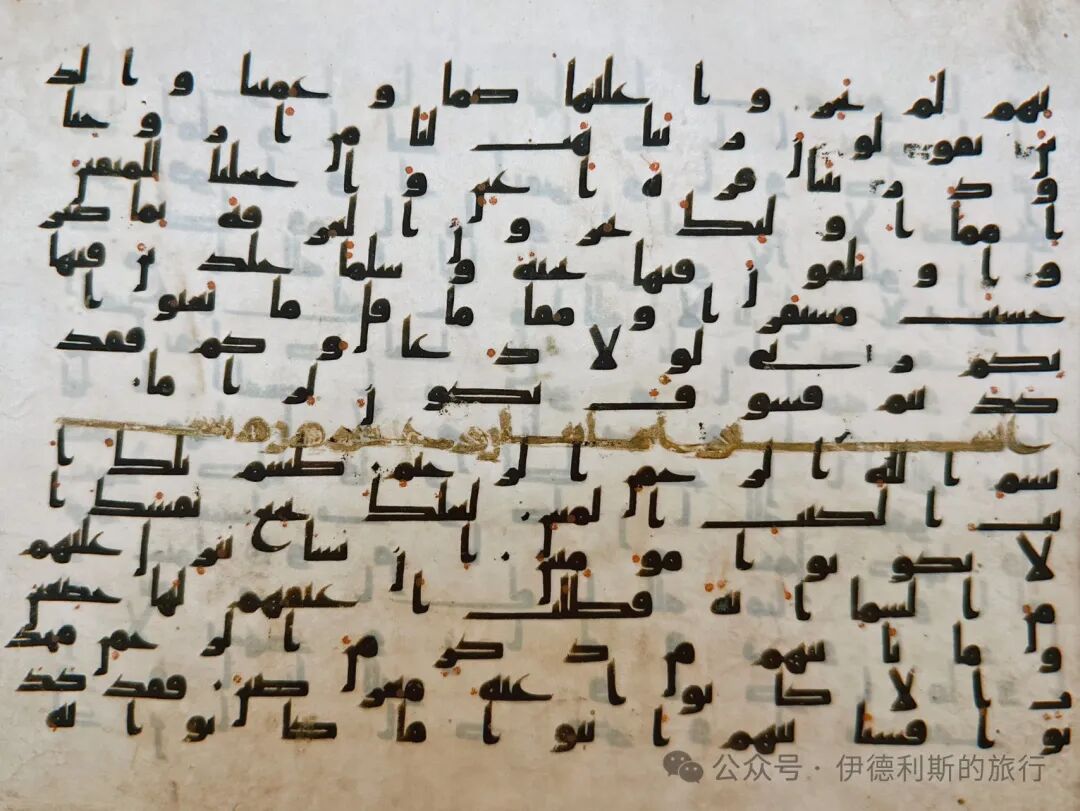
The Two Holy Cities, 8th century
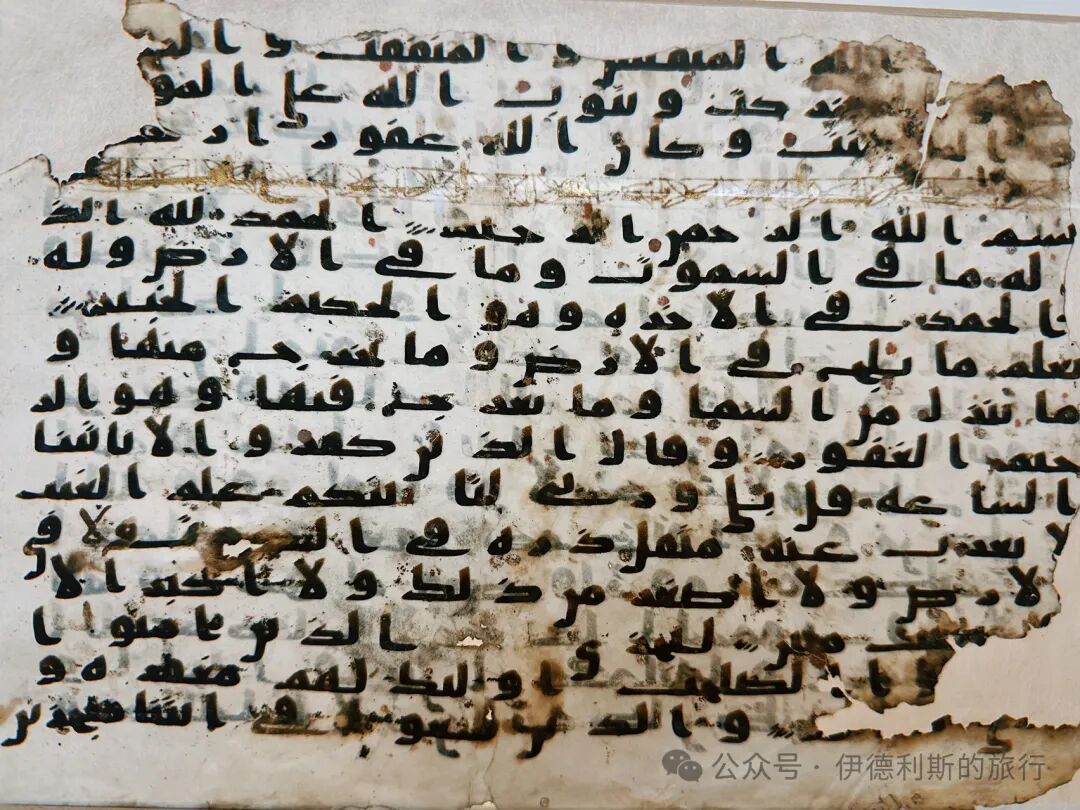
North Africa, 9th century
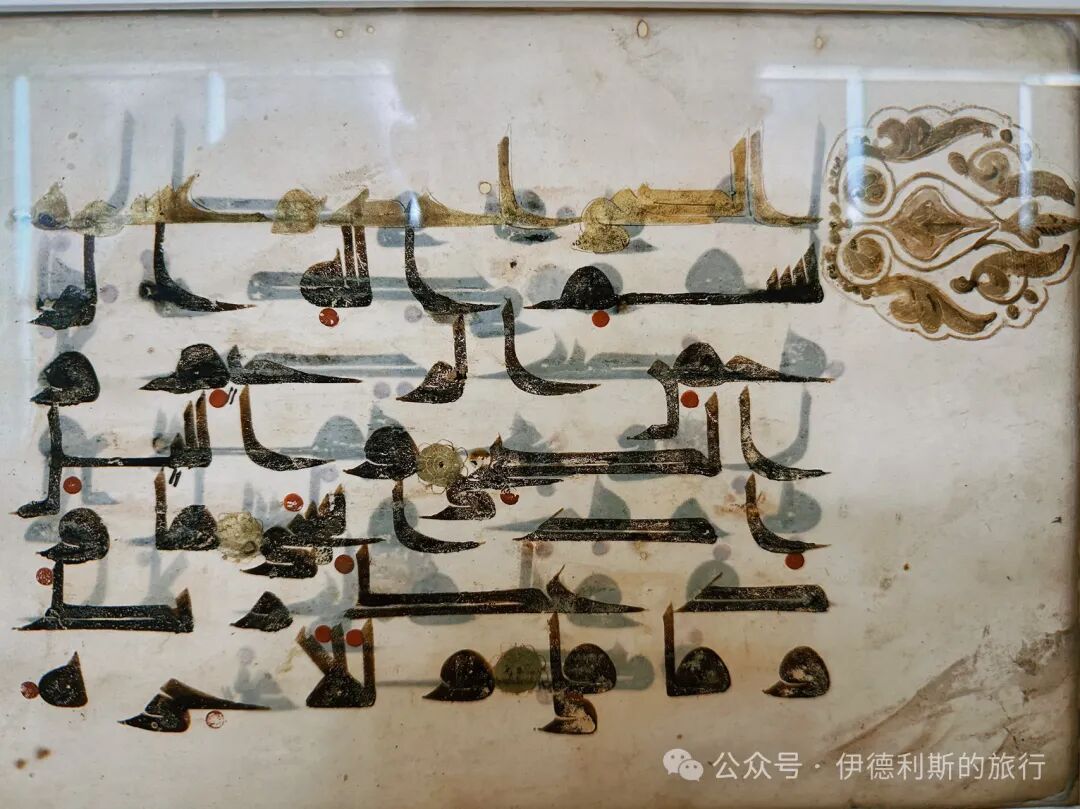
North Africa, 8th century
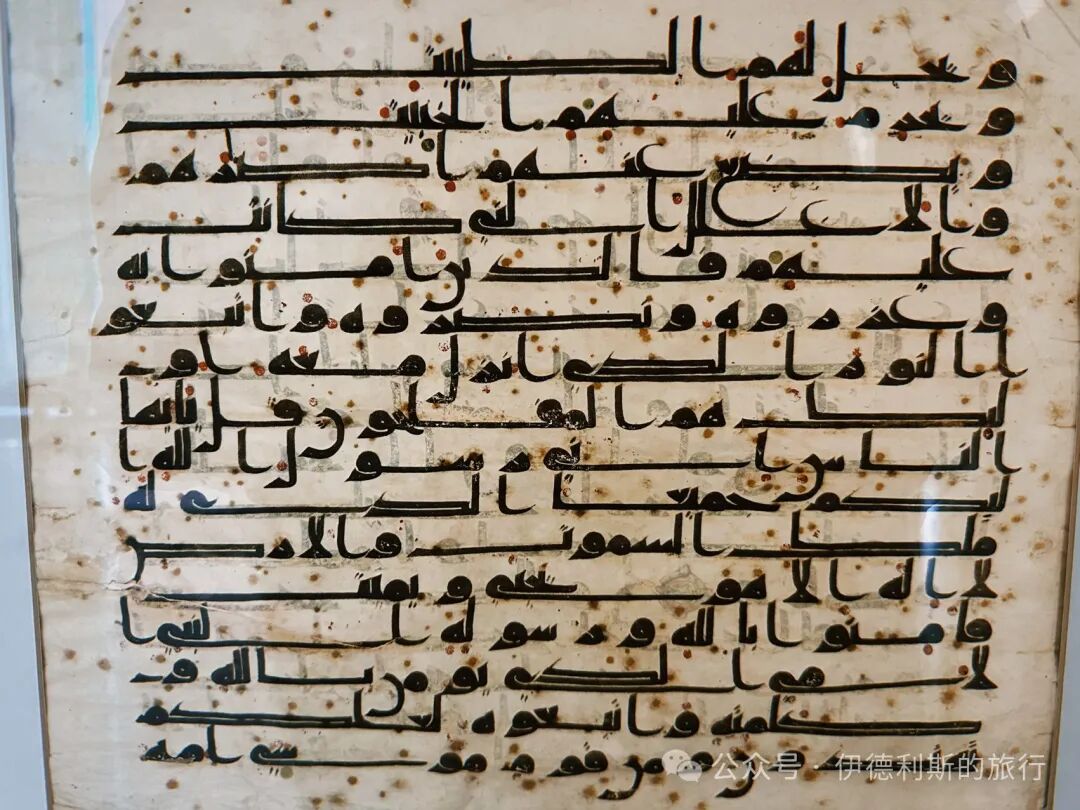
North Africa, 8th century
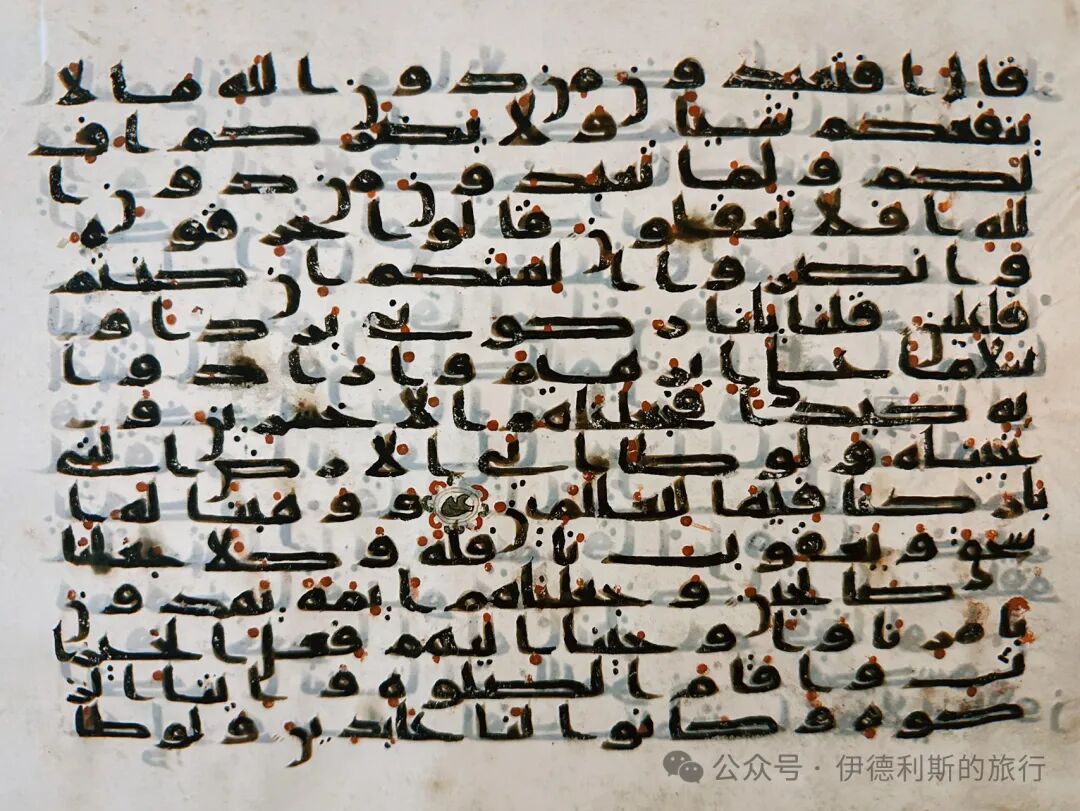
North Africa, 8th century
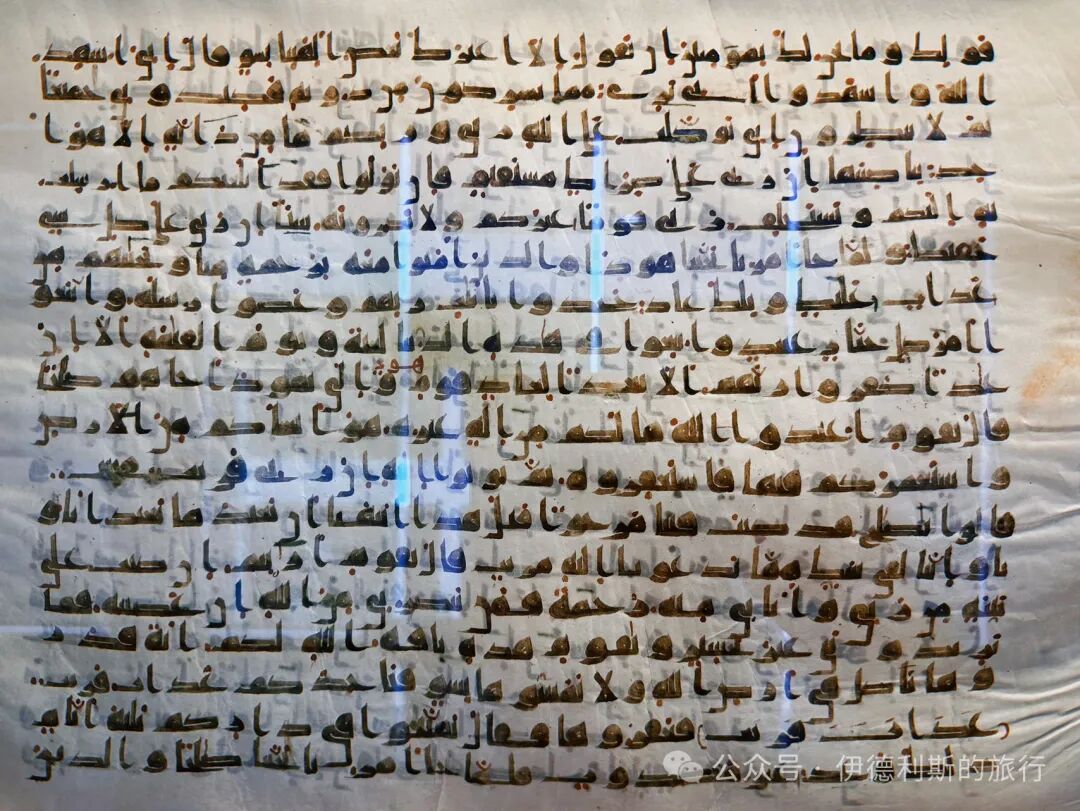
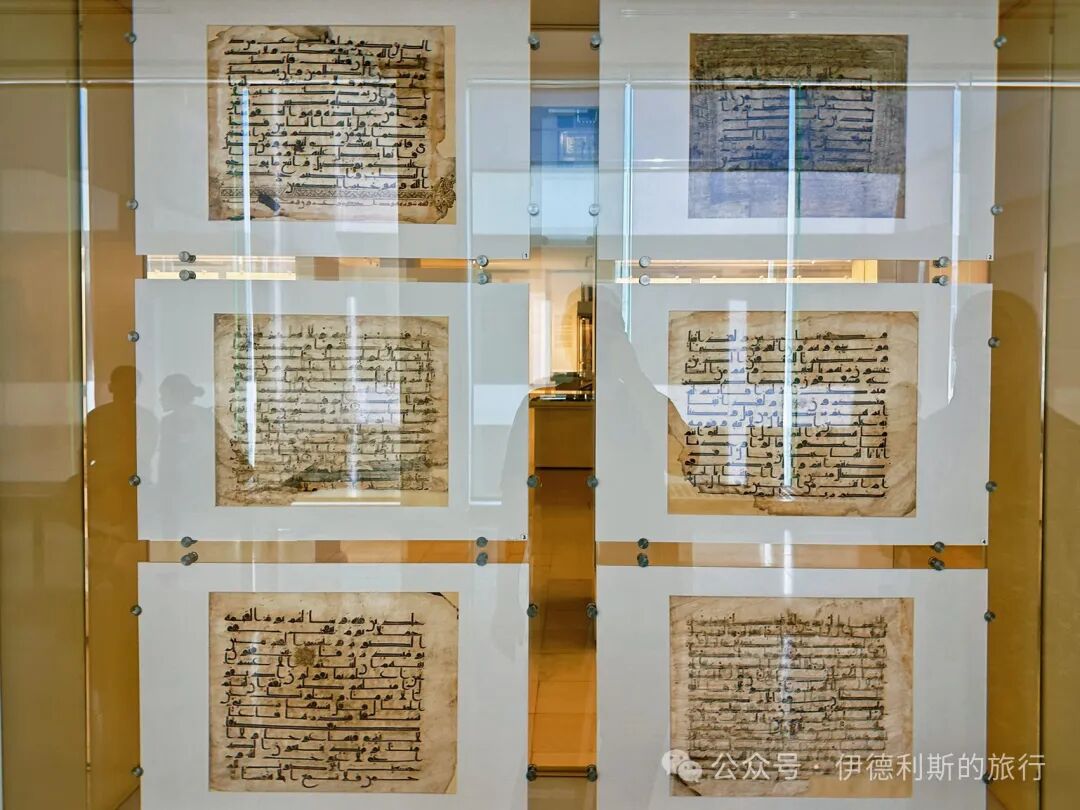
Near East or North Africa, 850-950 AD
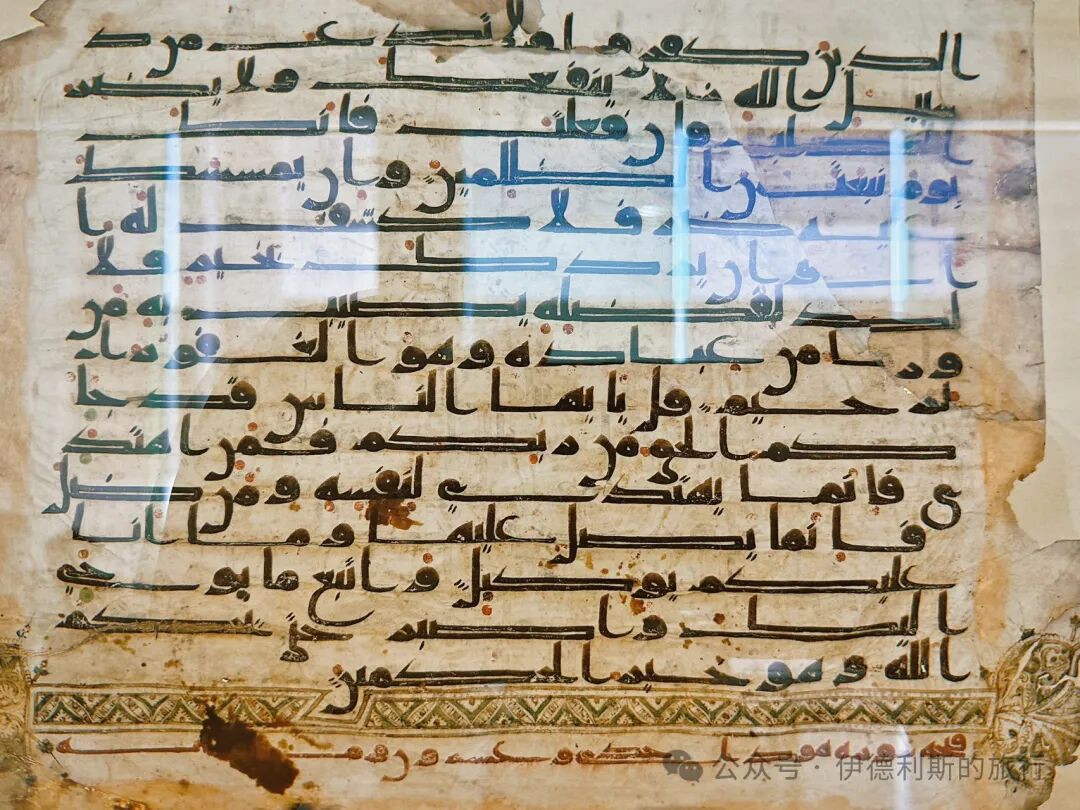
Damascus or Jerusalem, mid-8th century
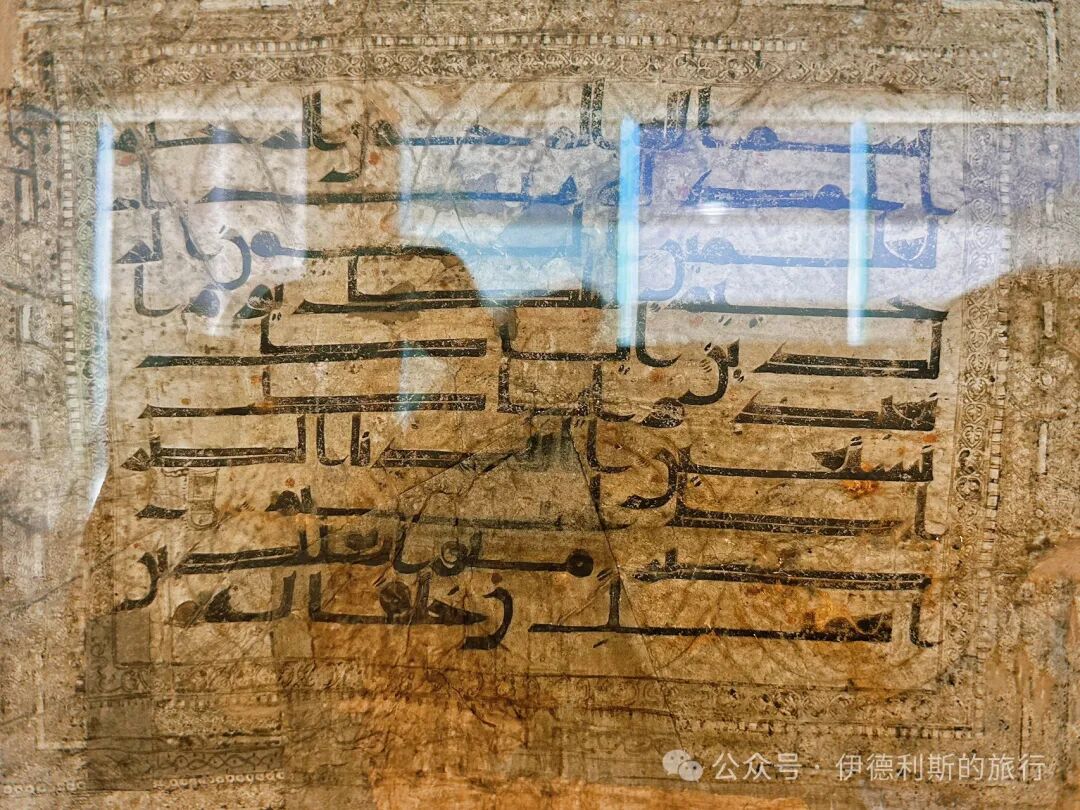
North Africa or Near East, 10th century
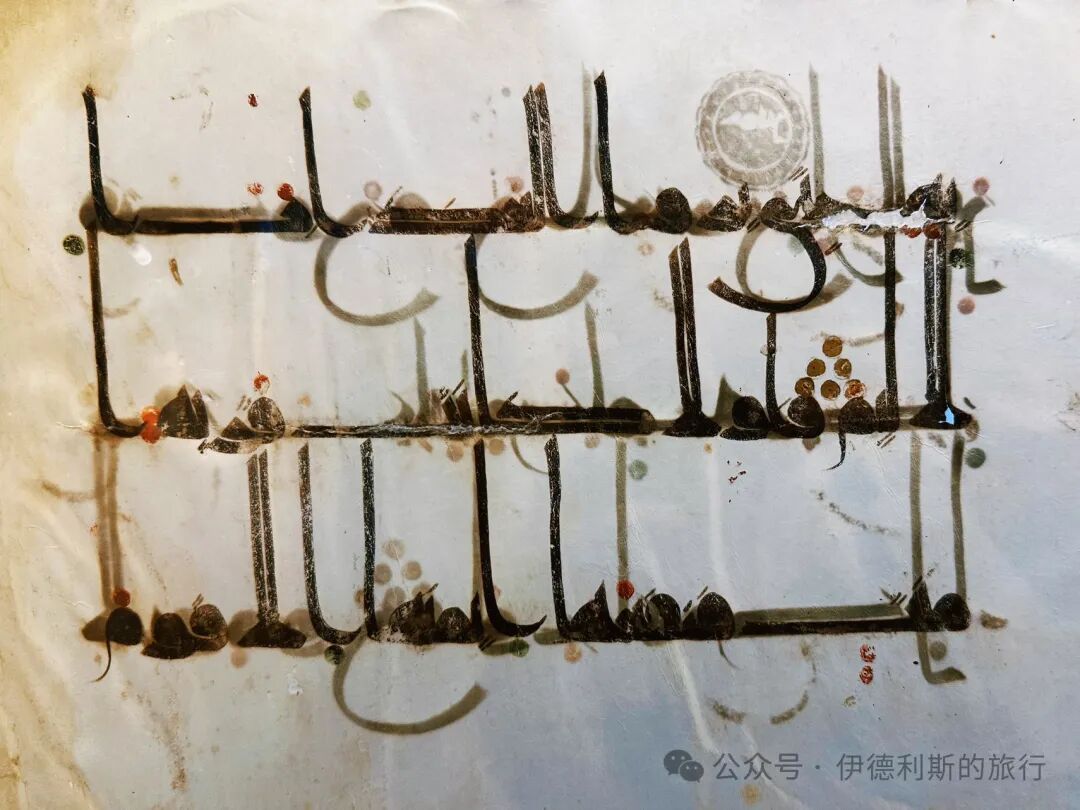
Andalusia or North Africa, 13th-14th century
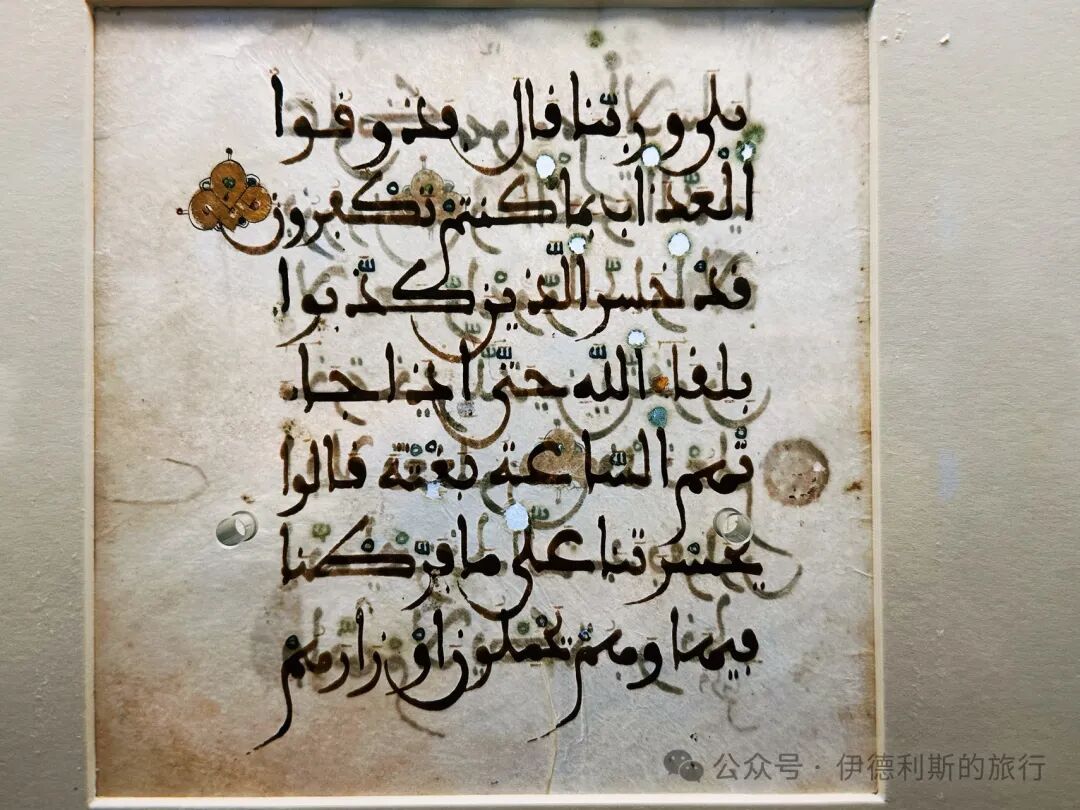
North Africa, 9th-10th century
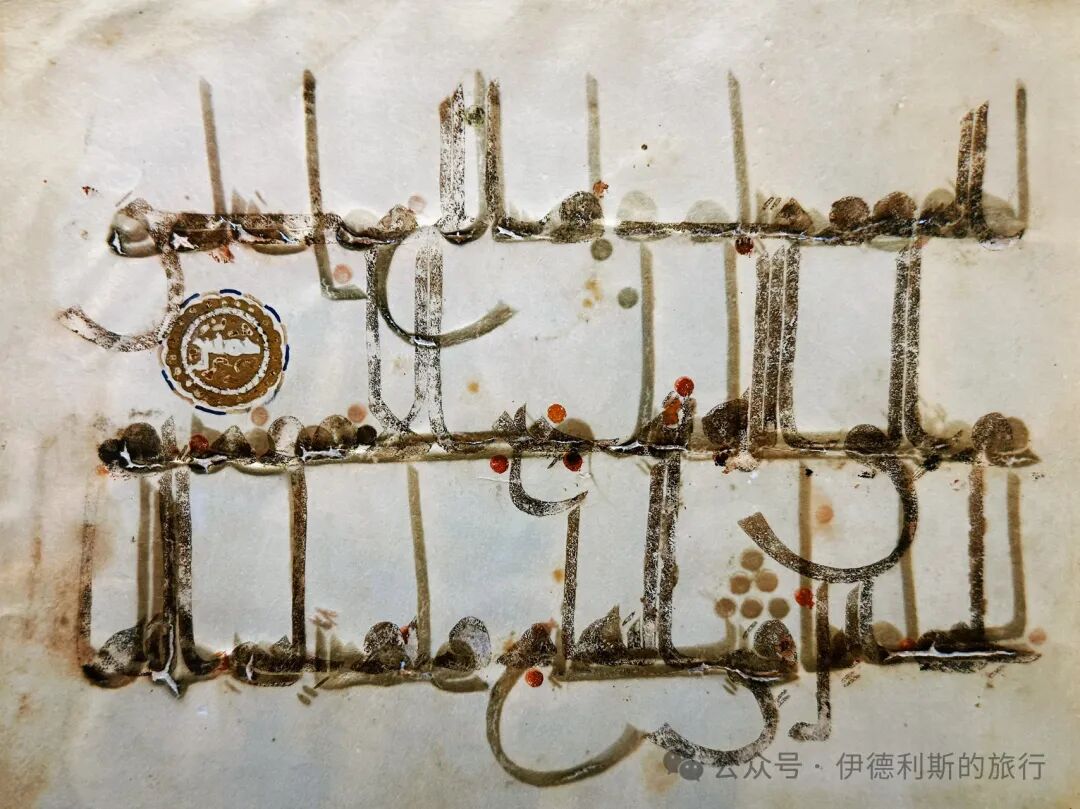
Andalusia, 10th century
Andalusia, early 13th century
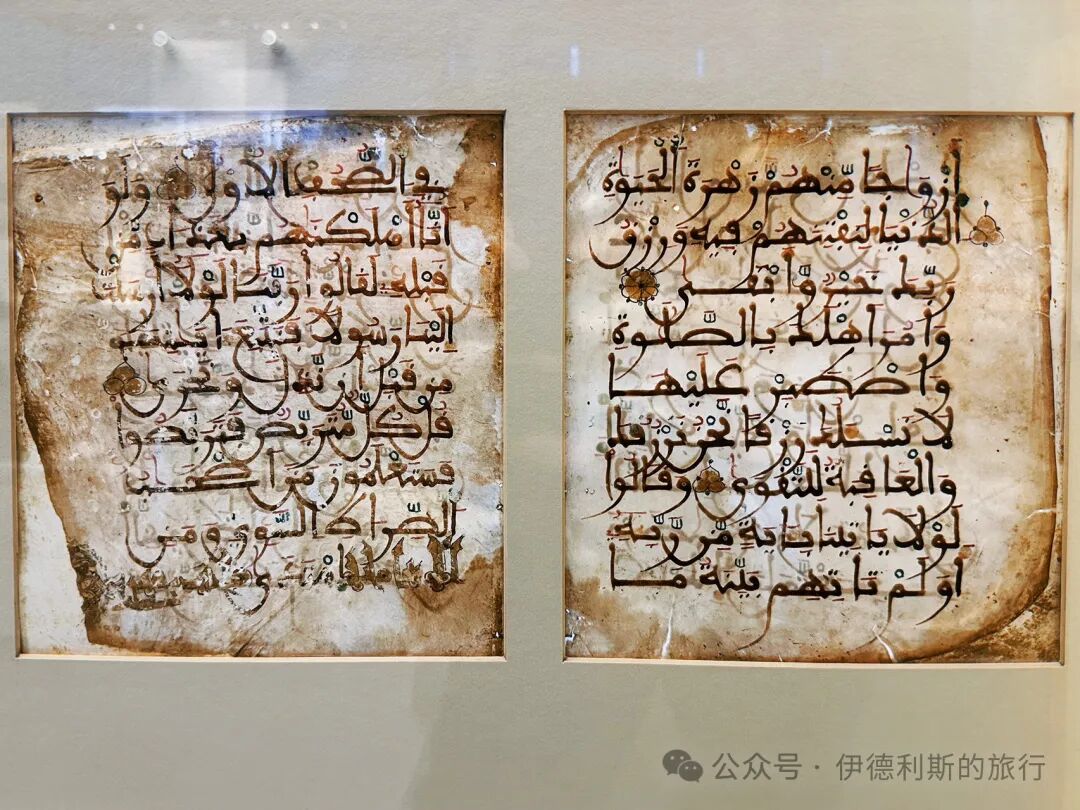
Andalusia or North Africa, 12th century
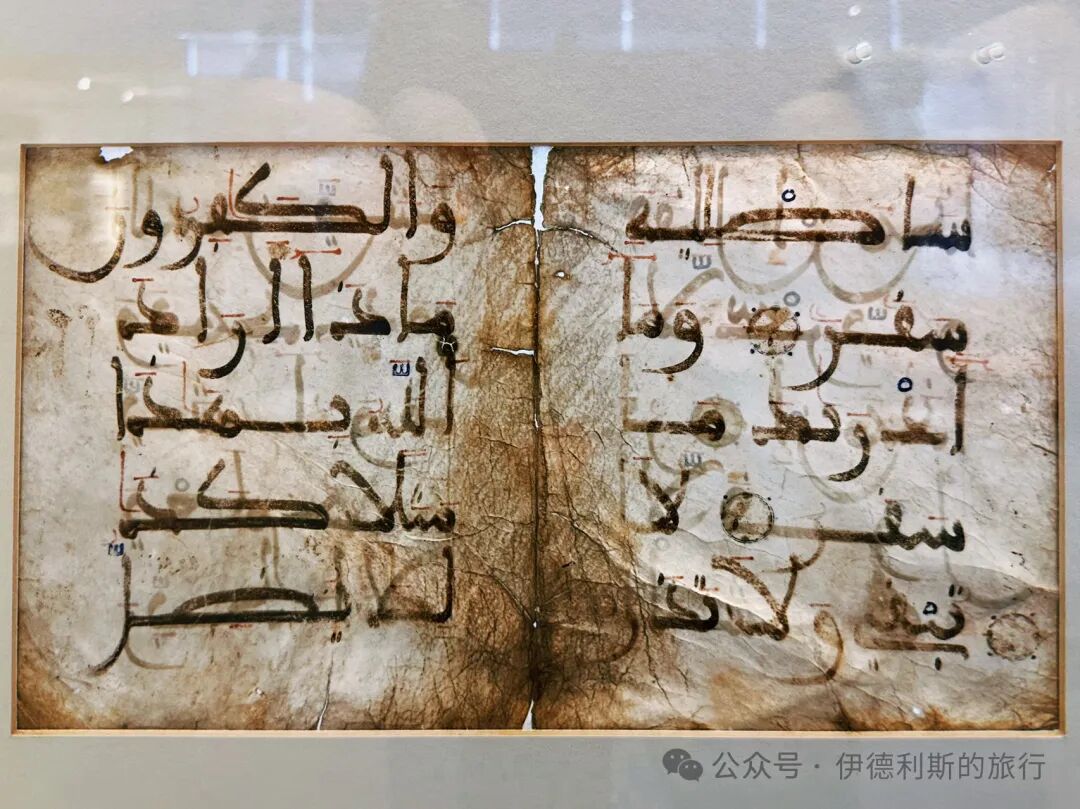
While North Africa still commonly used parchment for manuscripts, the Andalusia region began using paper widely after the 12th century. In 1151, the first paper mill in Andalusia was established in Xativa (in present-day southeastern Spain). The handwritten manuscripts on pink paper that exist today are said to use paper produced by this mill. These manuscripts may have been commissioned by royalty or nobles in Granada or Valencia. They feature large chapter headings and gold rose markings.
Andalusia or North Africa, 12th century
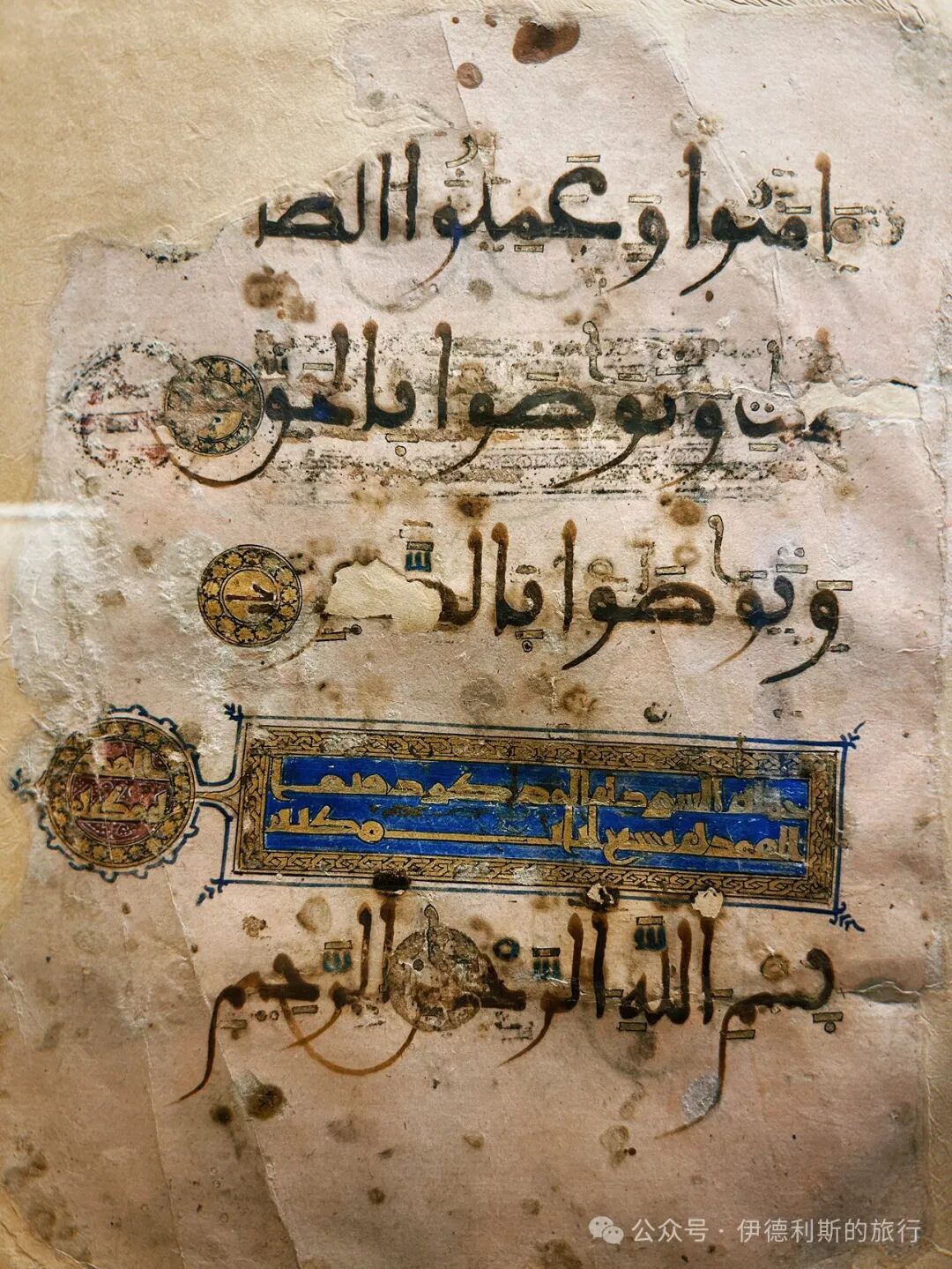
Andalusia, 13th century
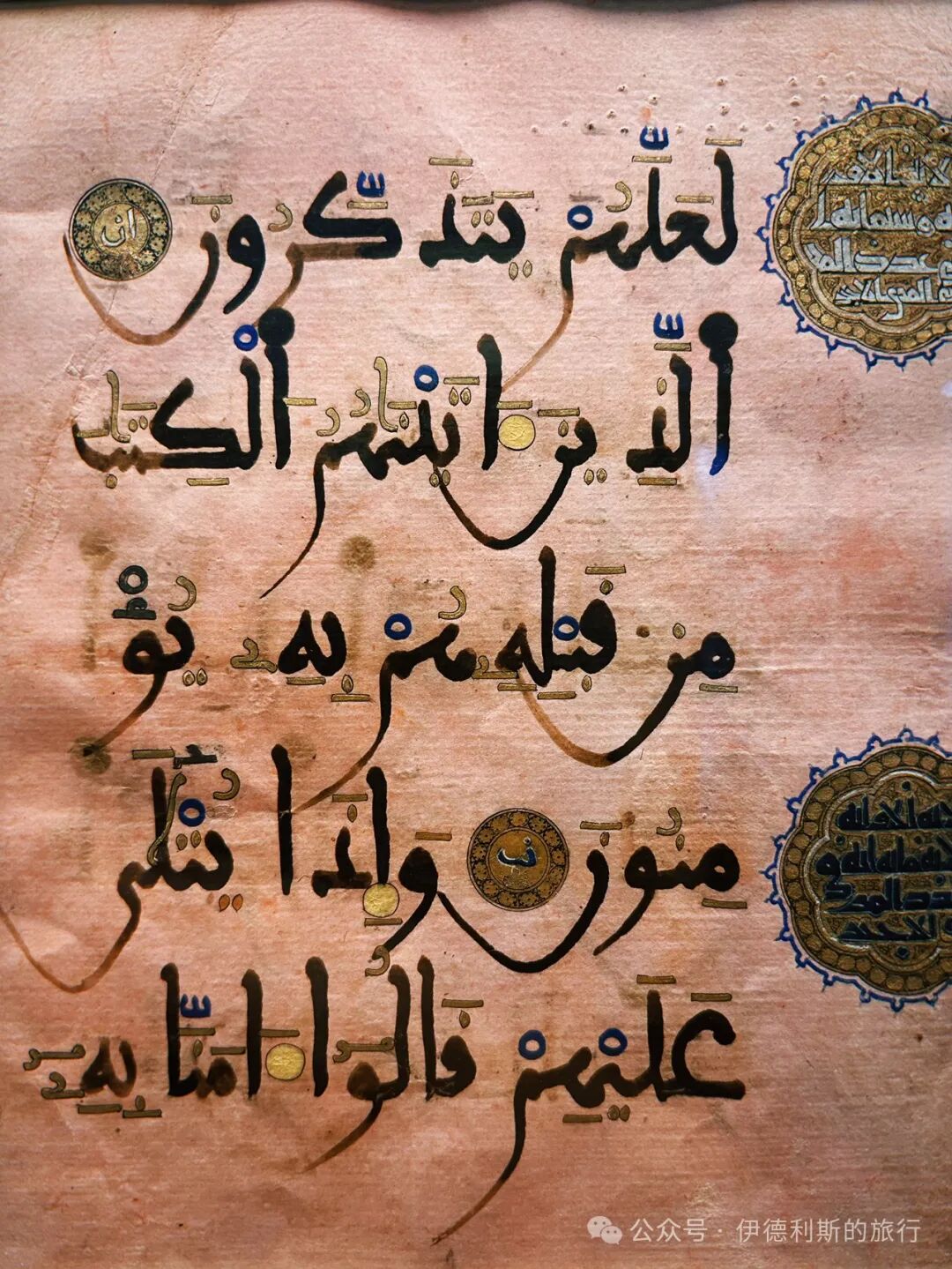
Andalusia, 13th century
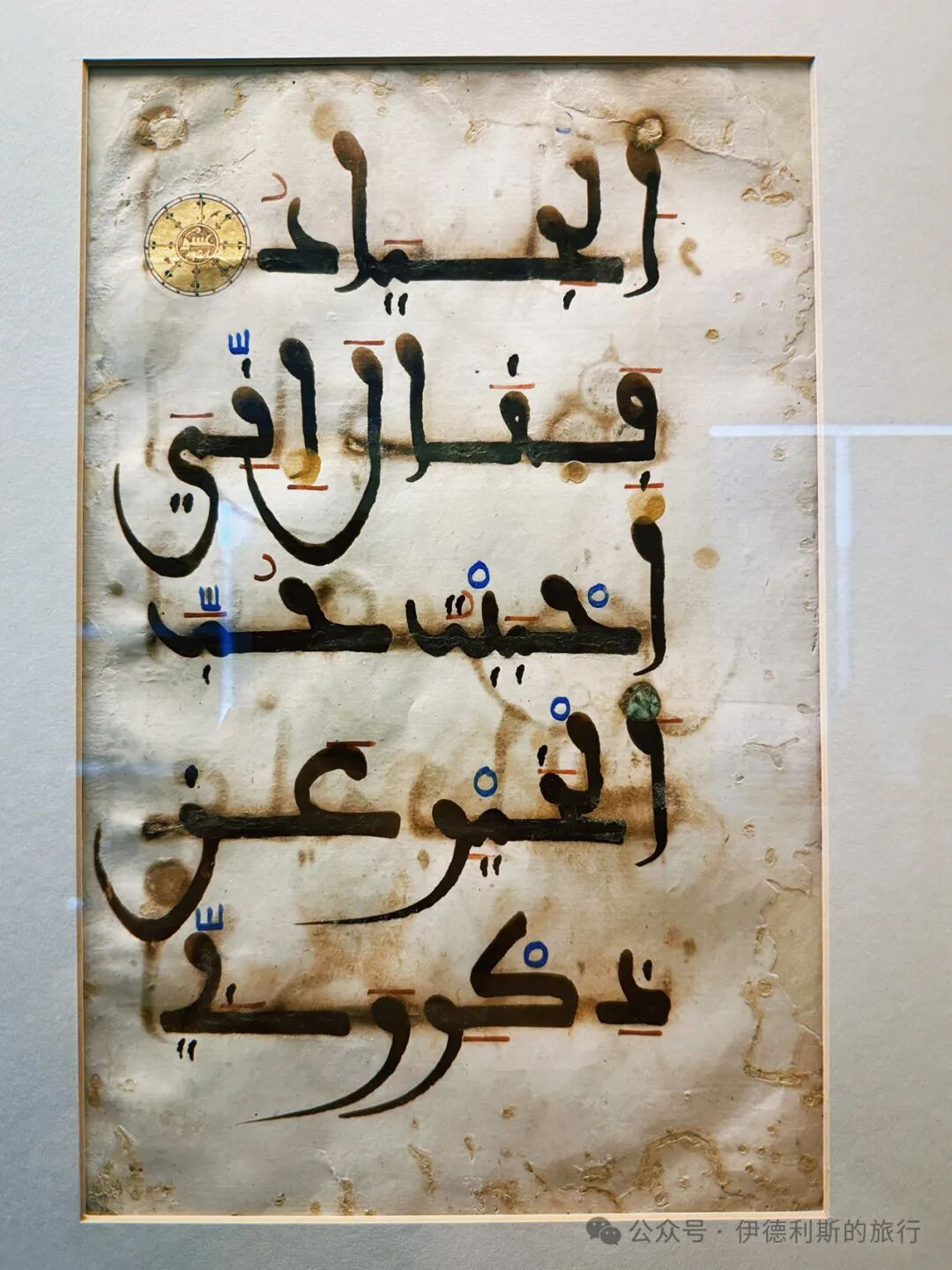
Seville or Xativa, Al-Andalus, 13th century
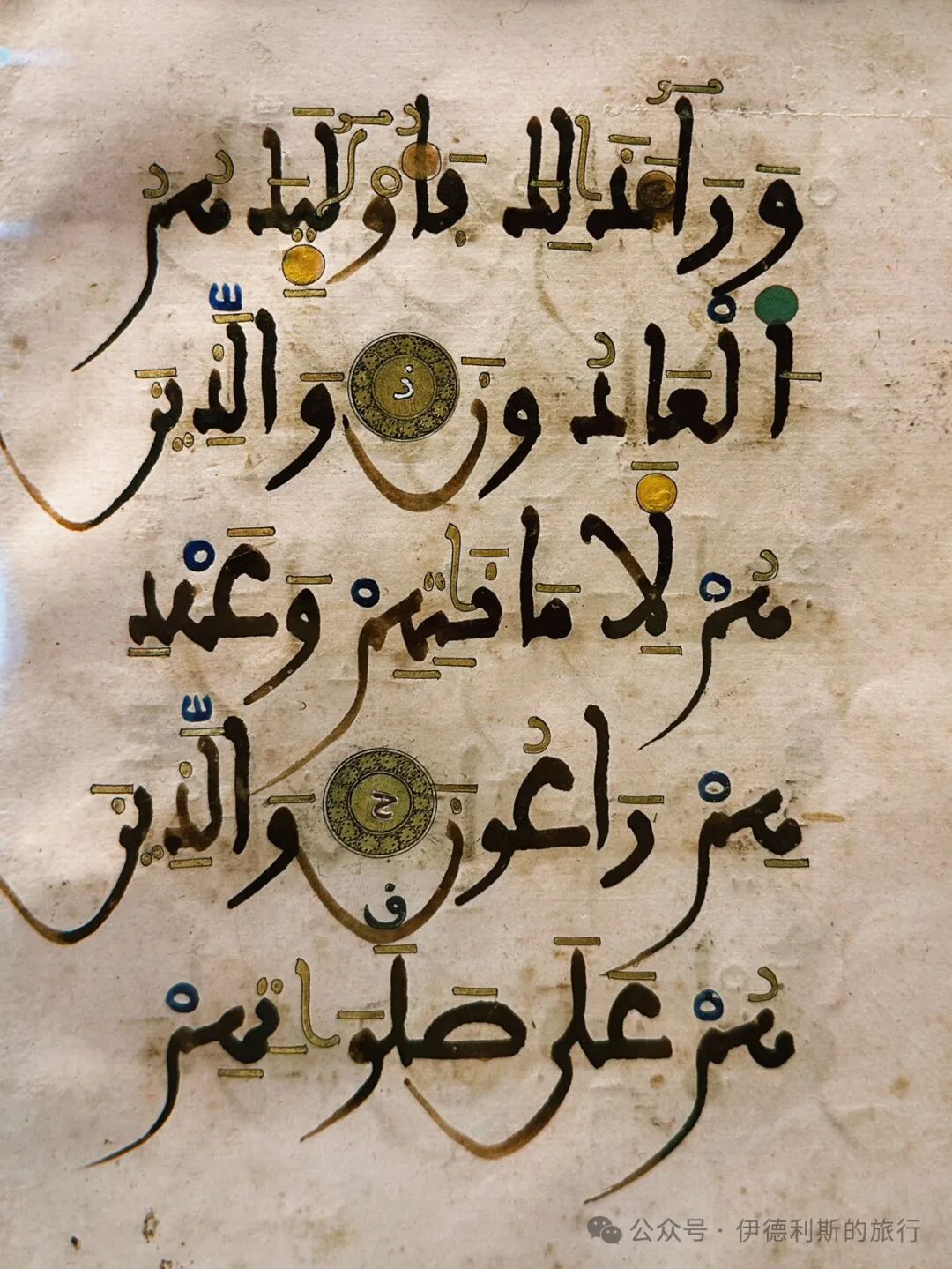
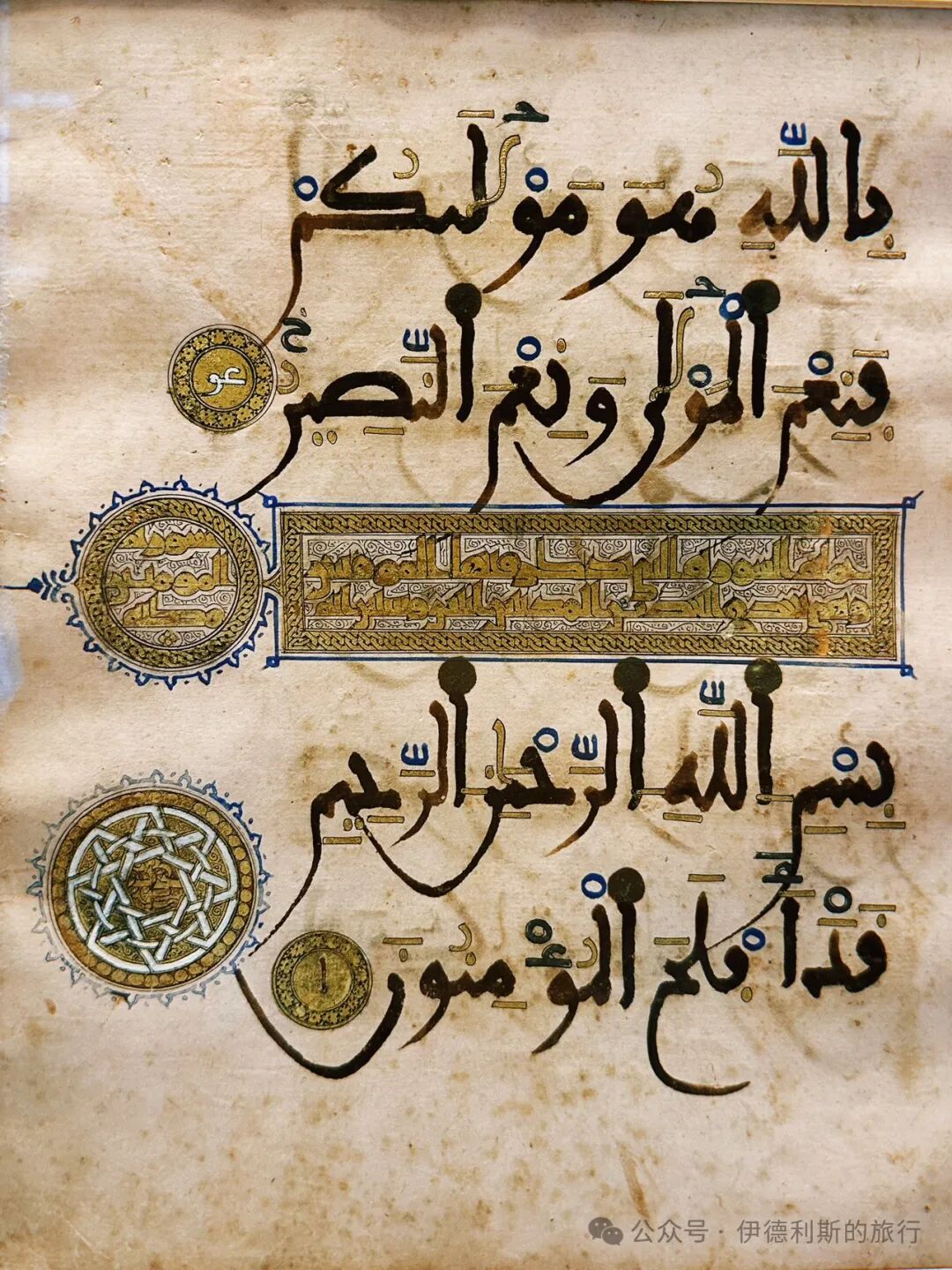
Andalusia or North Africa, 12th century
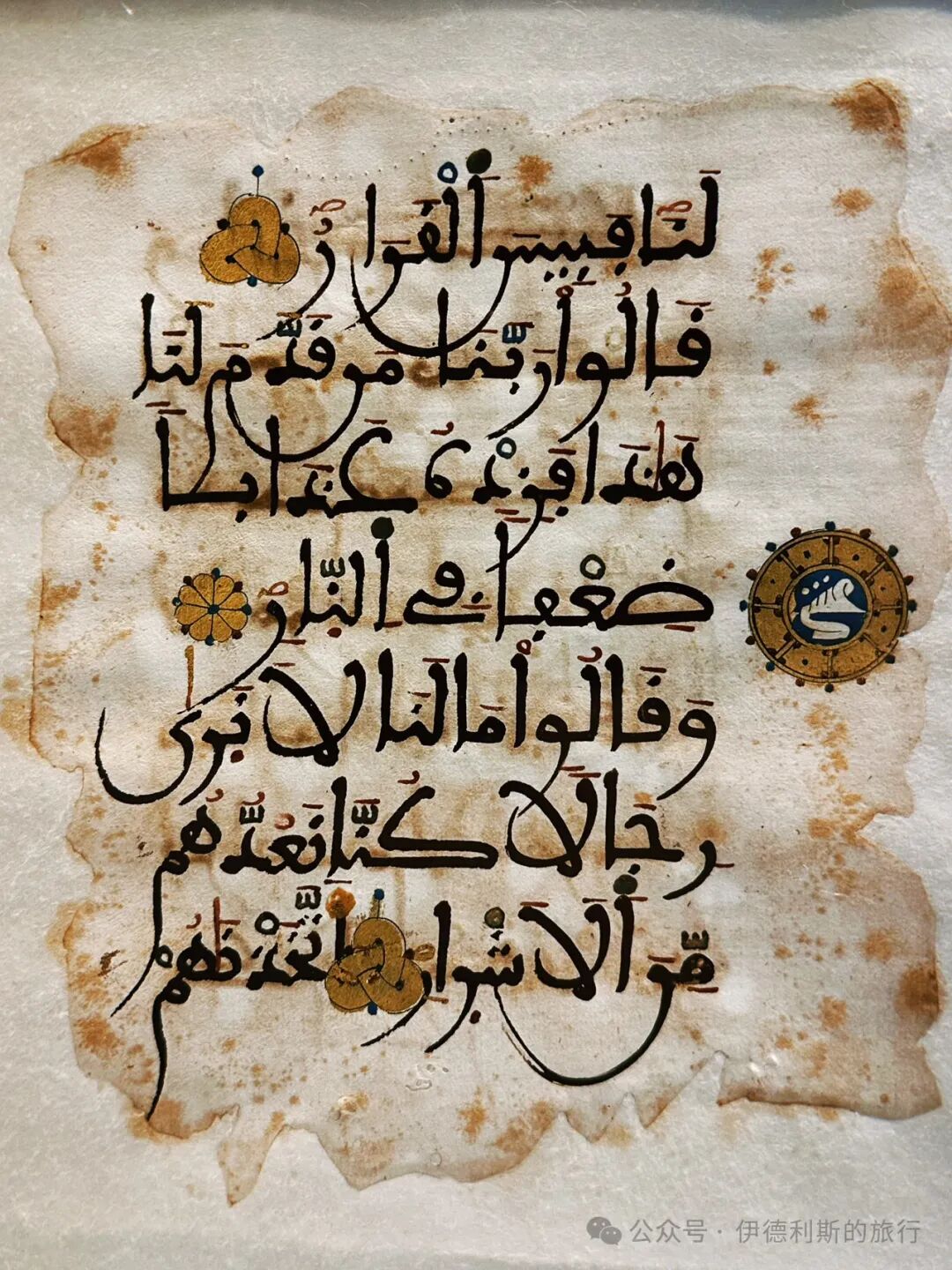
North Africa, 9th-10th century
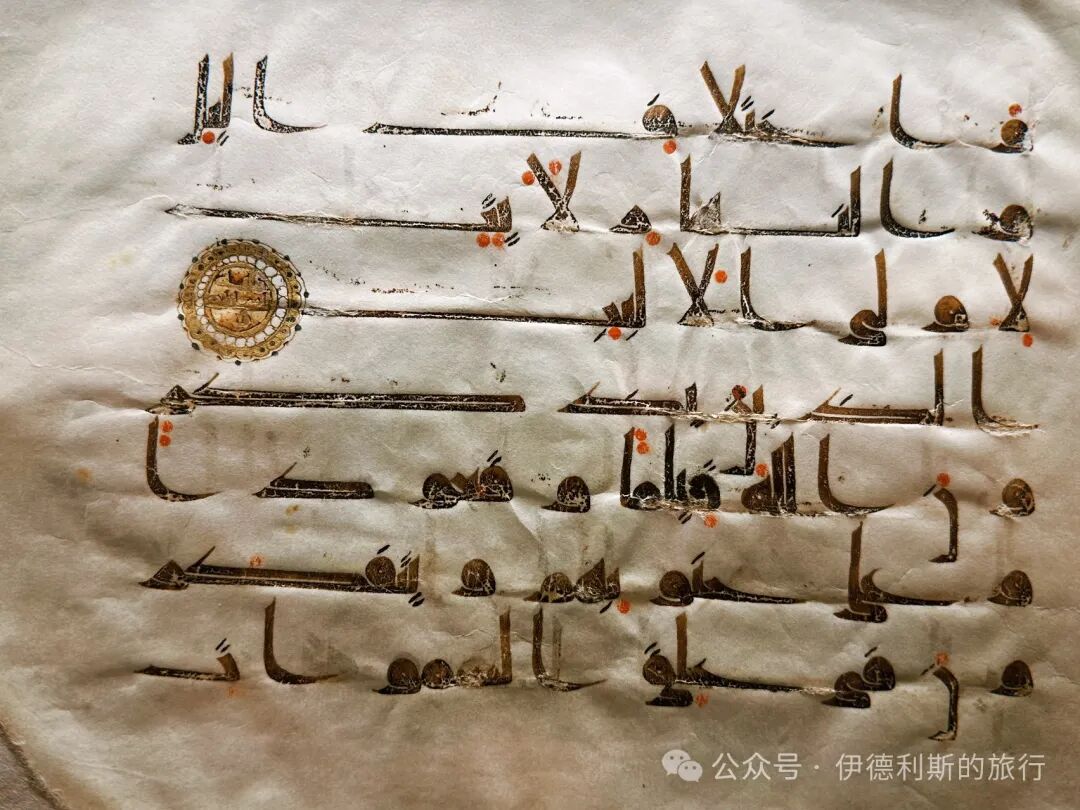
Al-Andalus or North Africa, 12th-13th century
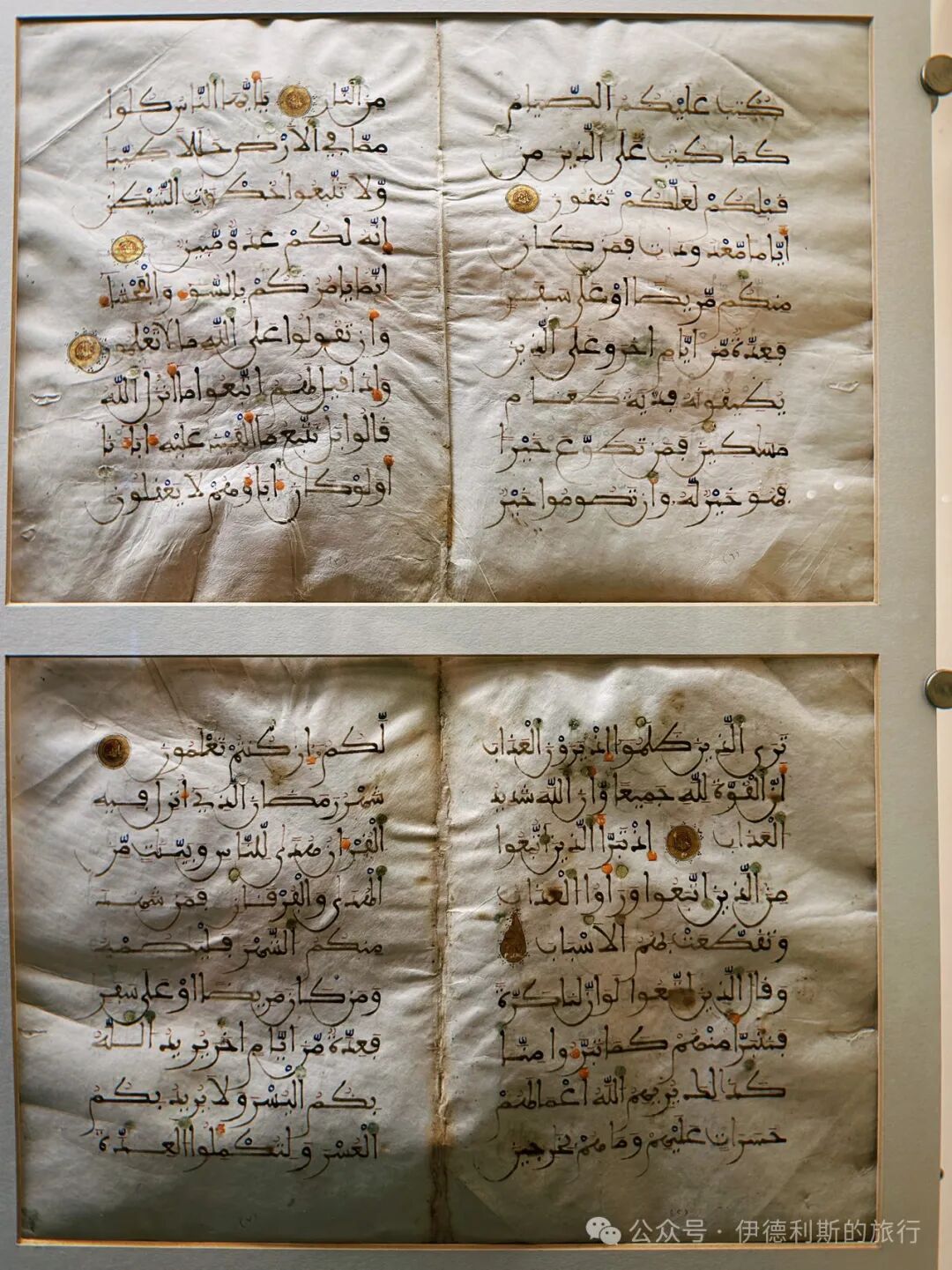
North Africa or the Near East, 8th century
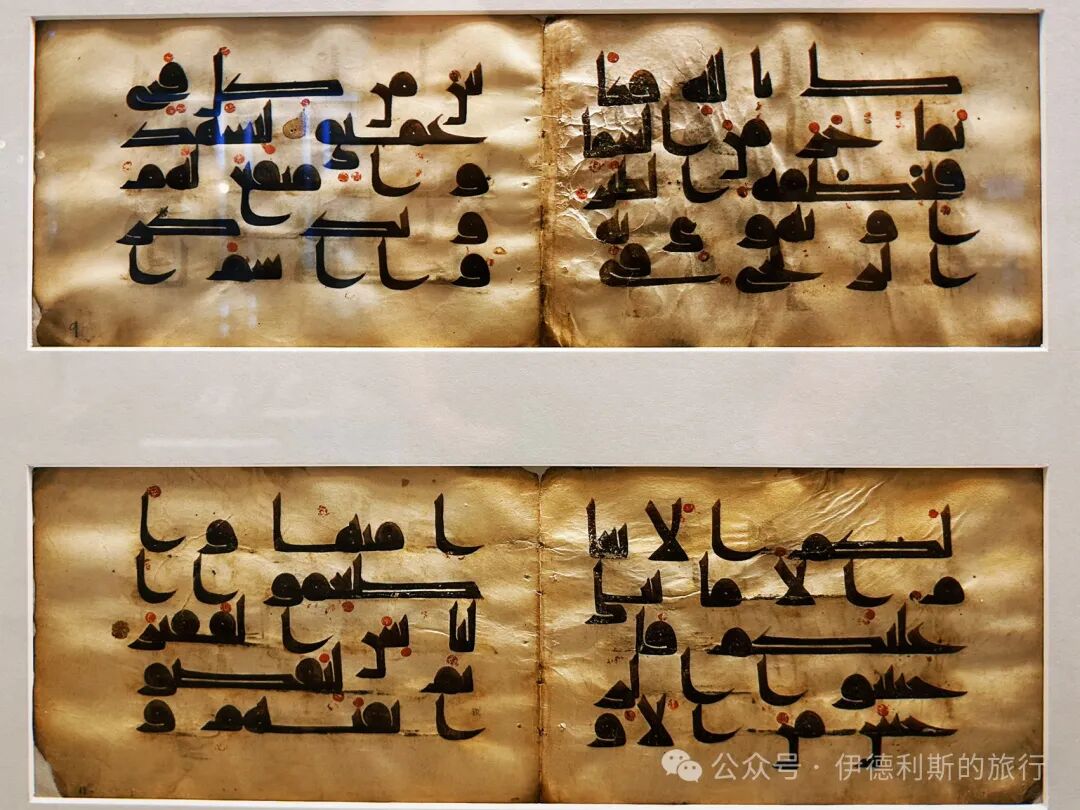
North Africa, 9th-10th century
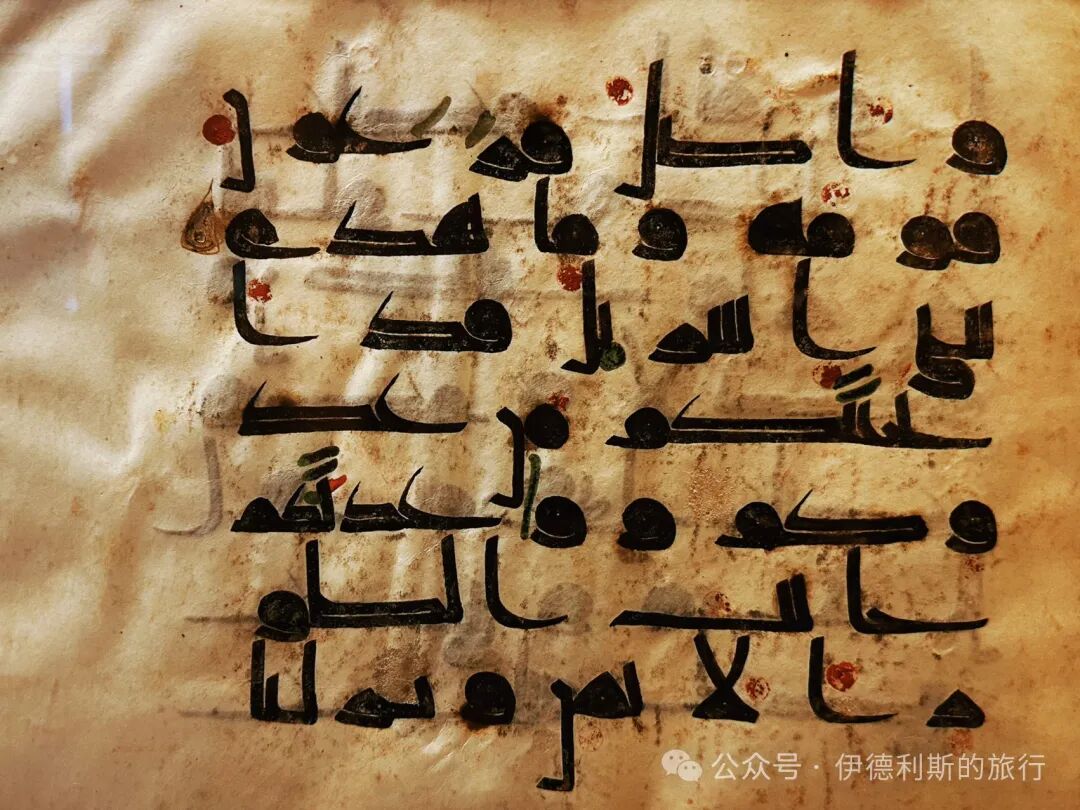
Early parchment manuscripts from North Africa and Al-Andalus were mostly horizontal. As paper from Baghdad spread across the Middle East, more manuscripts began using vertical paper. This change led to more decorative styles and more delicate calligraphy.
Seljuk Empire, Persia, 12th century
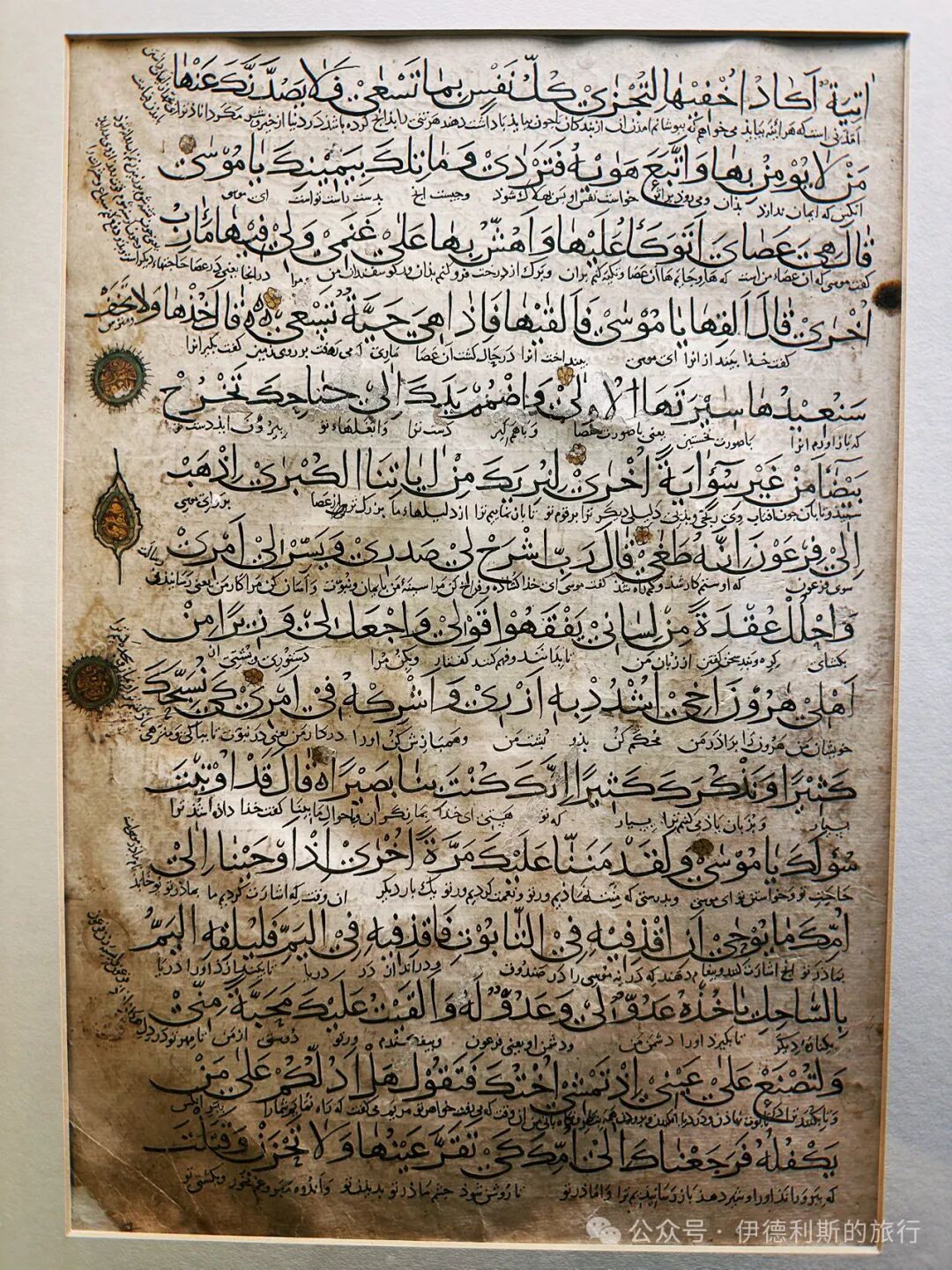
Persia, possibly Shiraz, 16th century
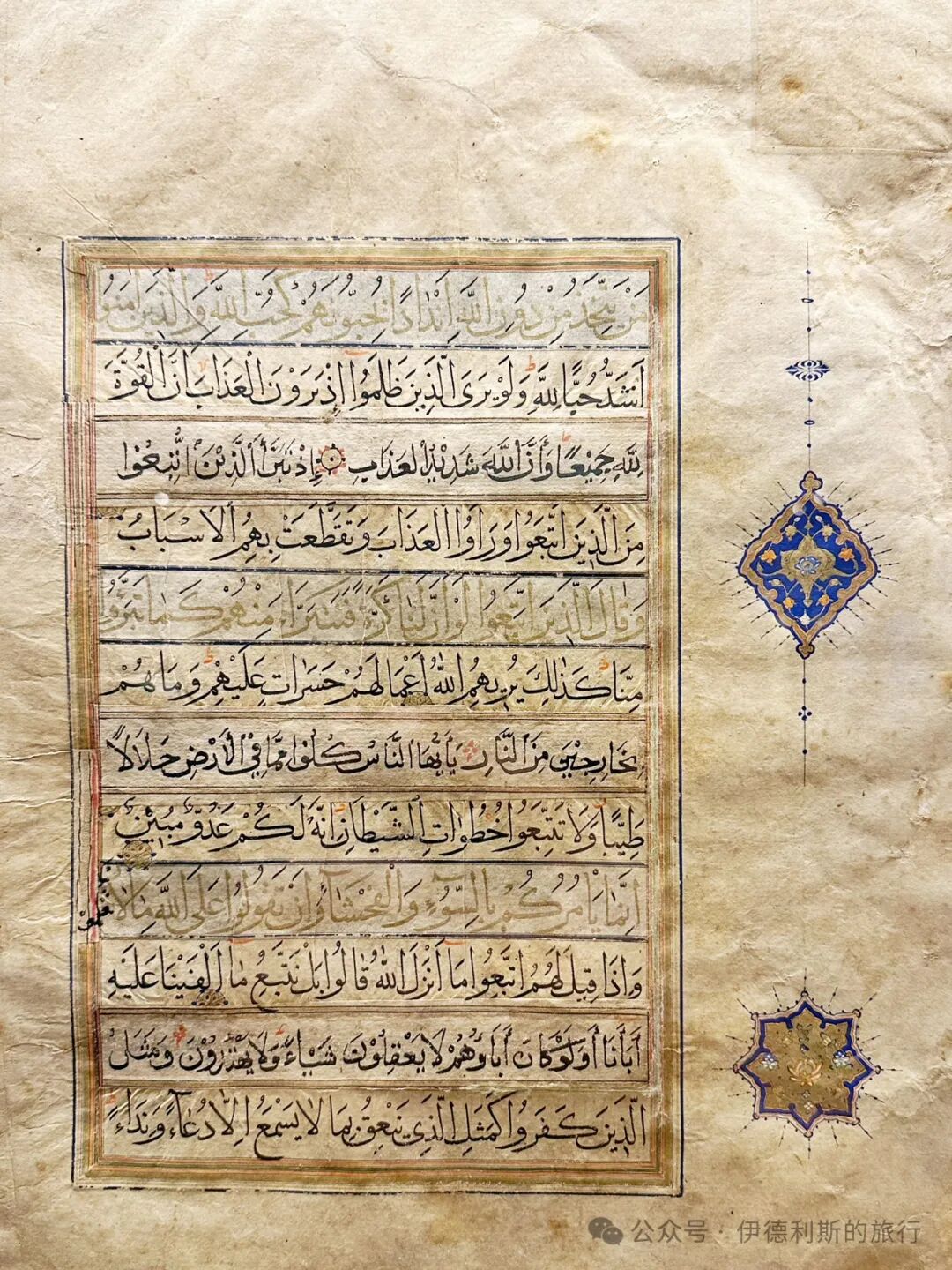
India, 15th century
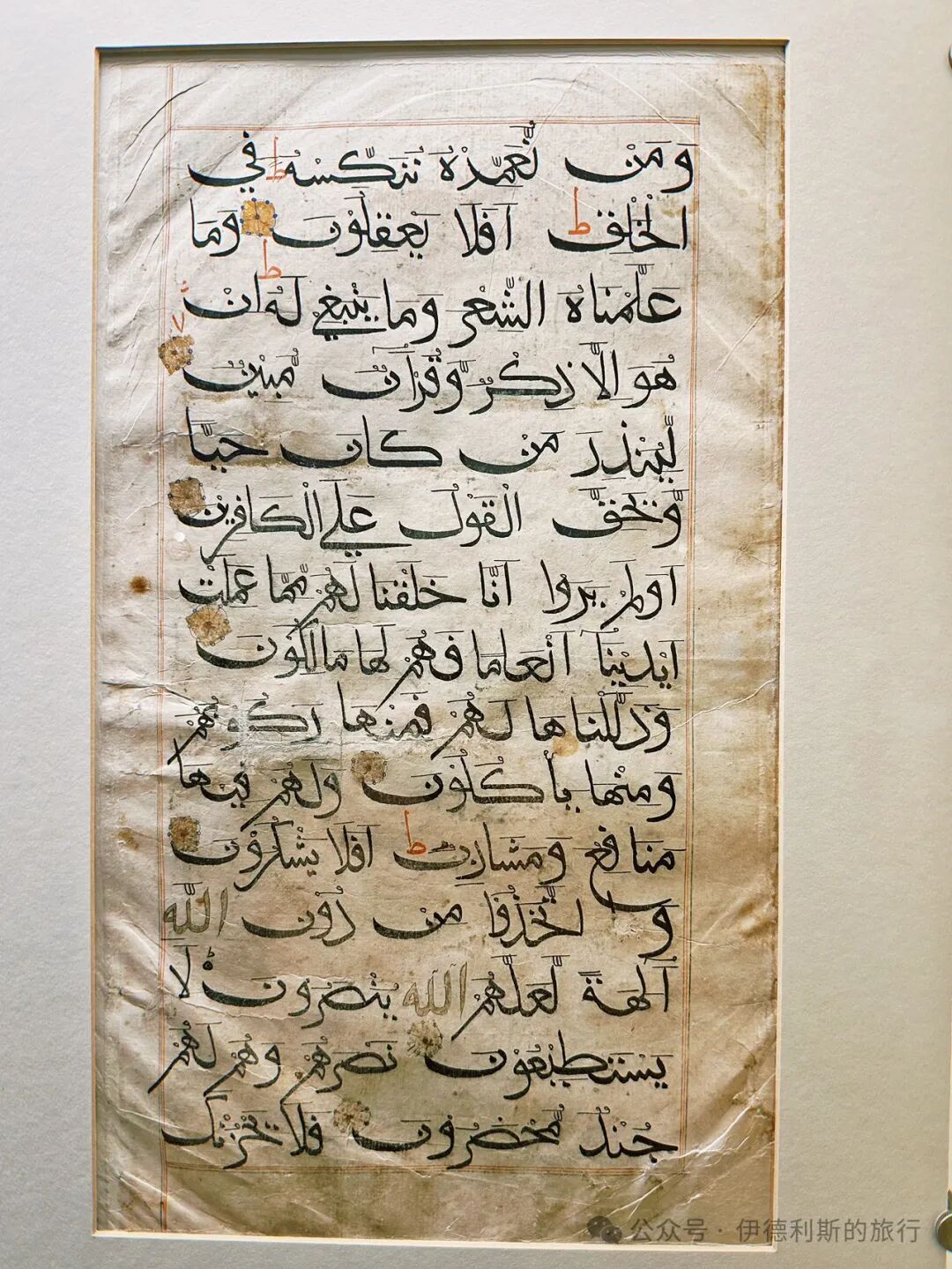
Persia, 12th century
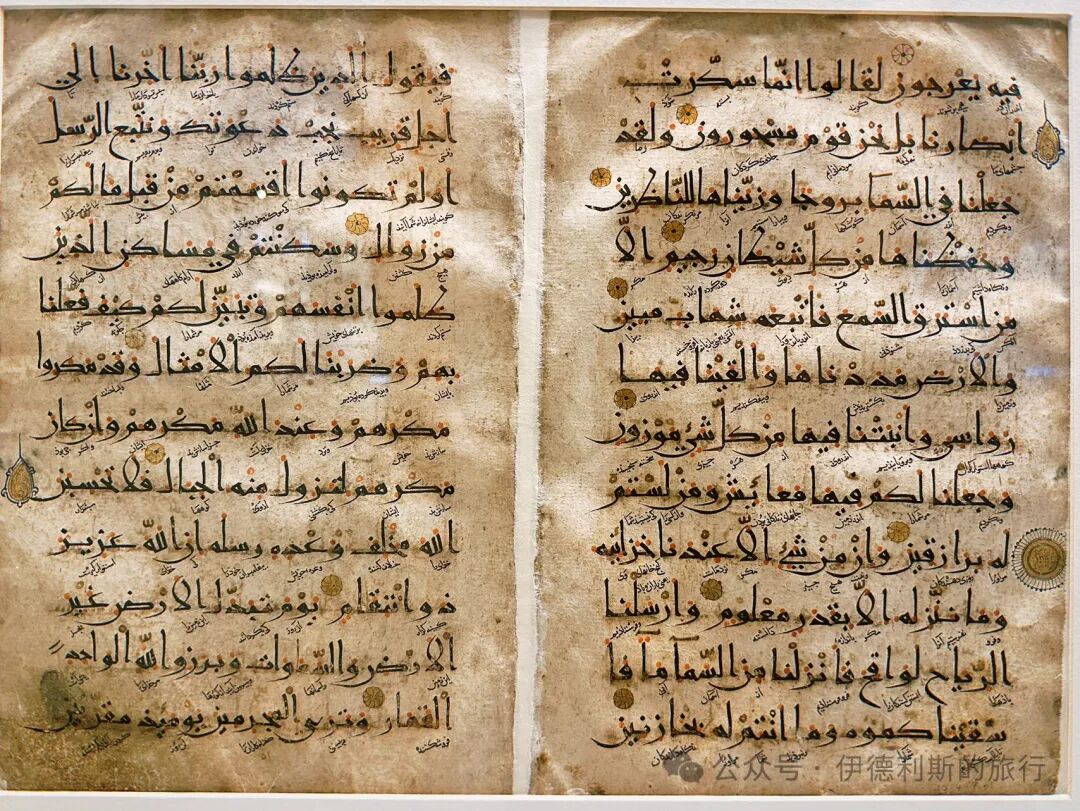
Anatolia or Central Asia, 1335
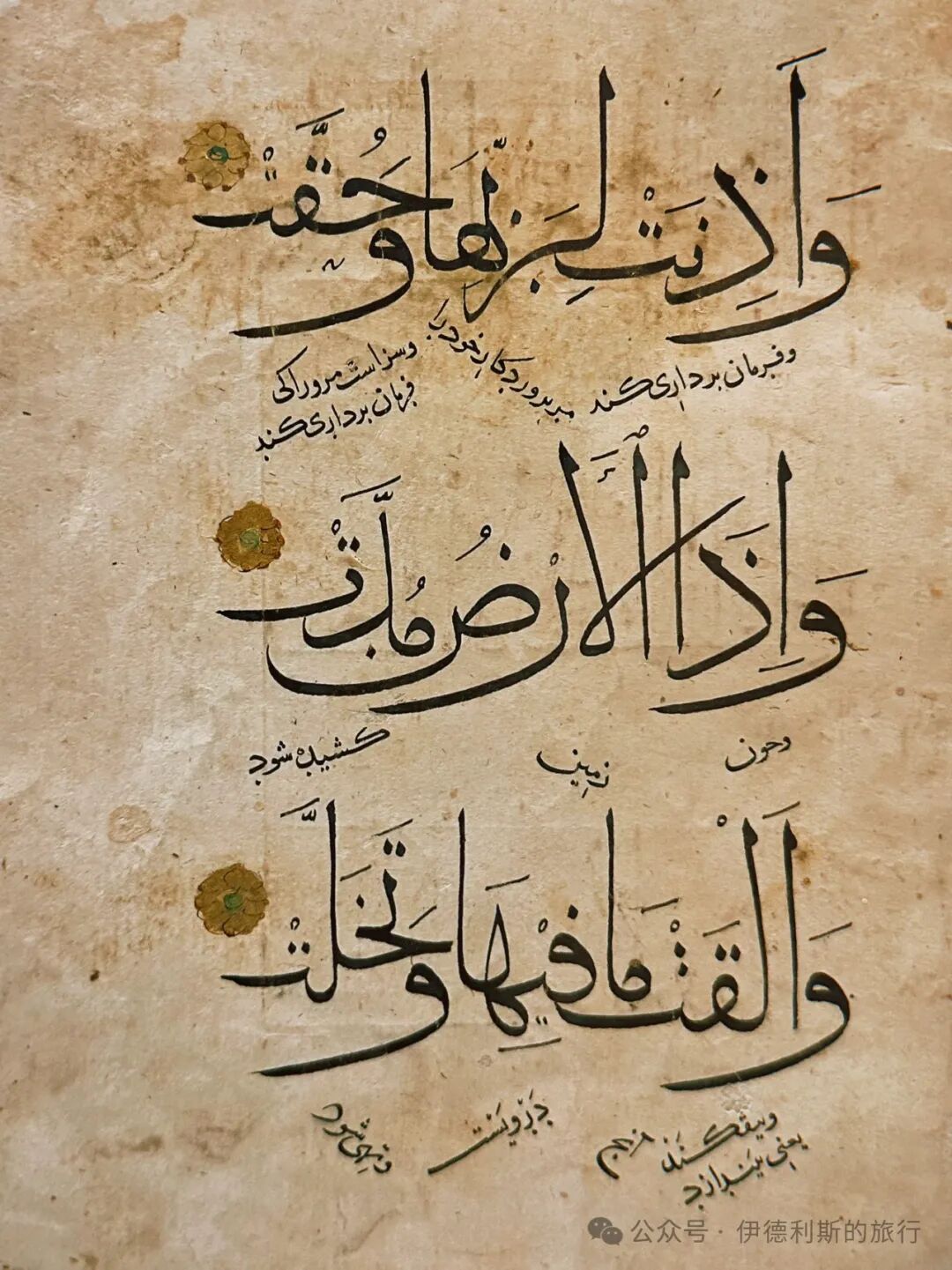
South Asia
Delhi Sultanate, 15th-16th century
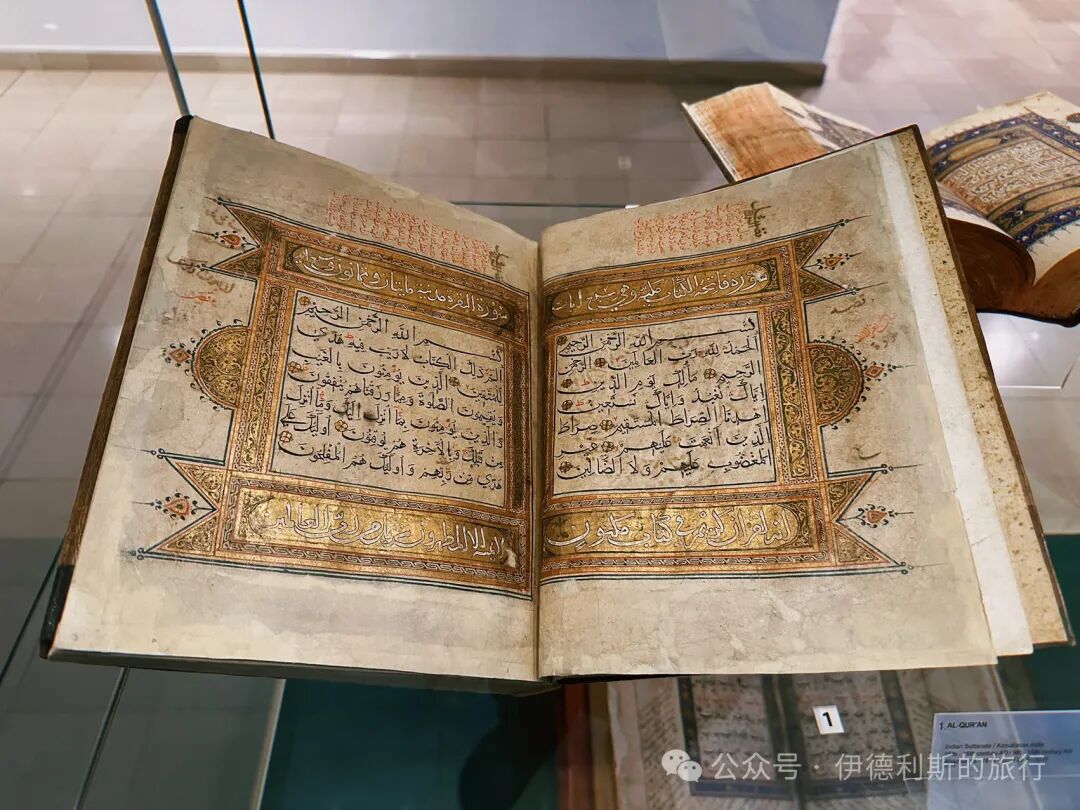
Delhi Sultanate, 16th century
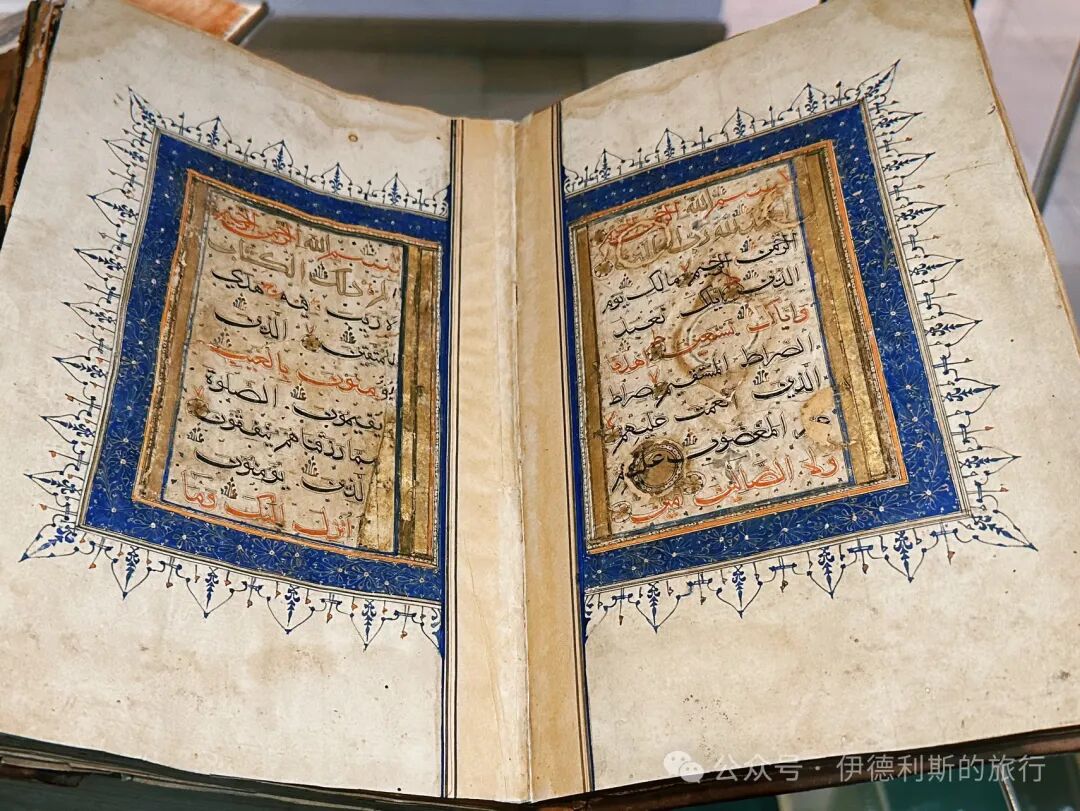
Central India, 16th century
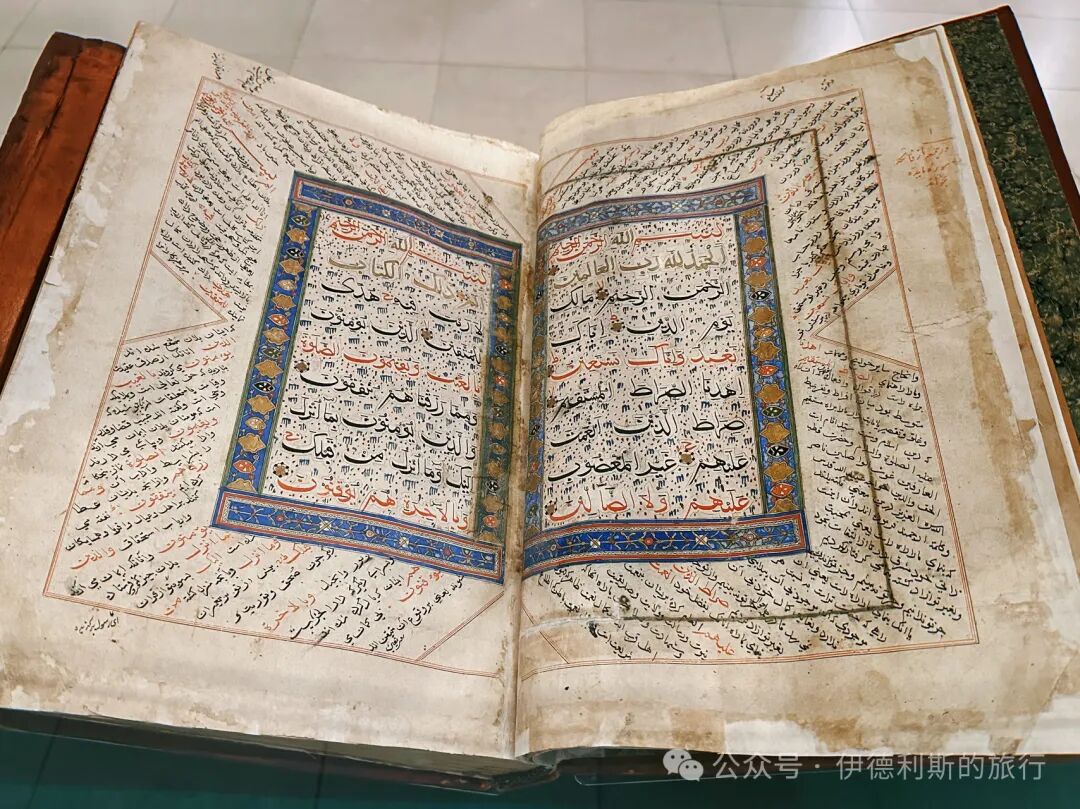
Delhi Sultanate, 15th century
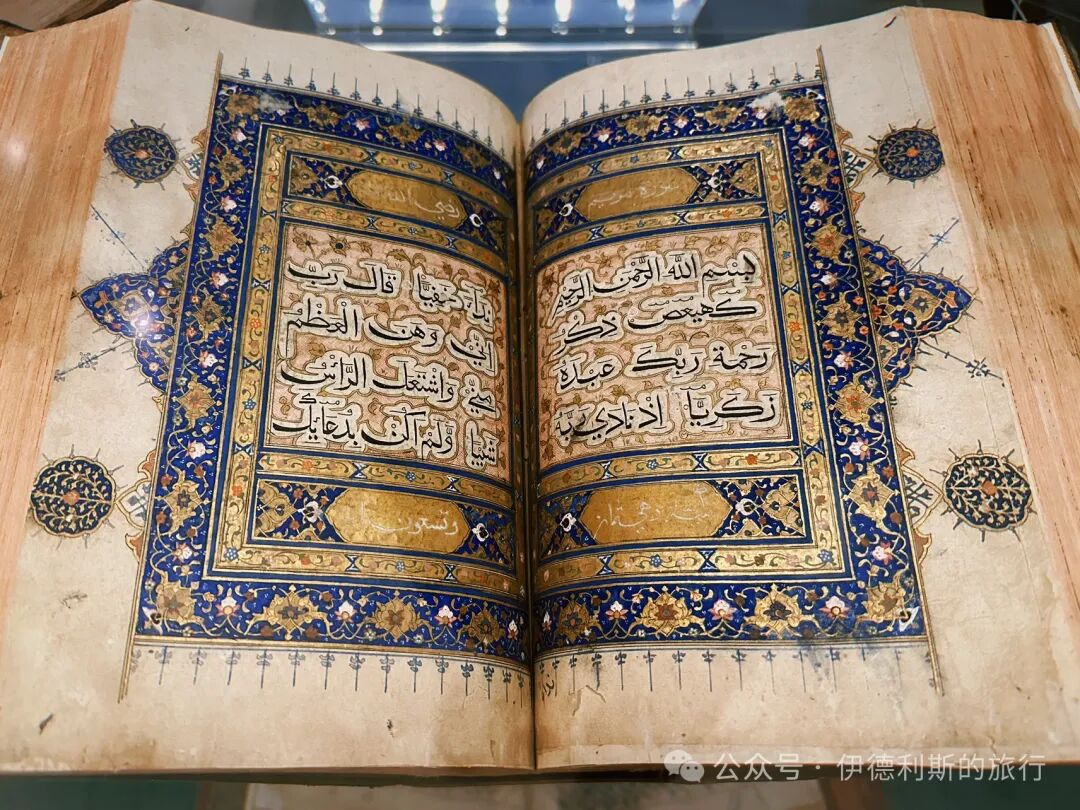
Mughal Empire, 1775
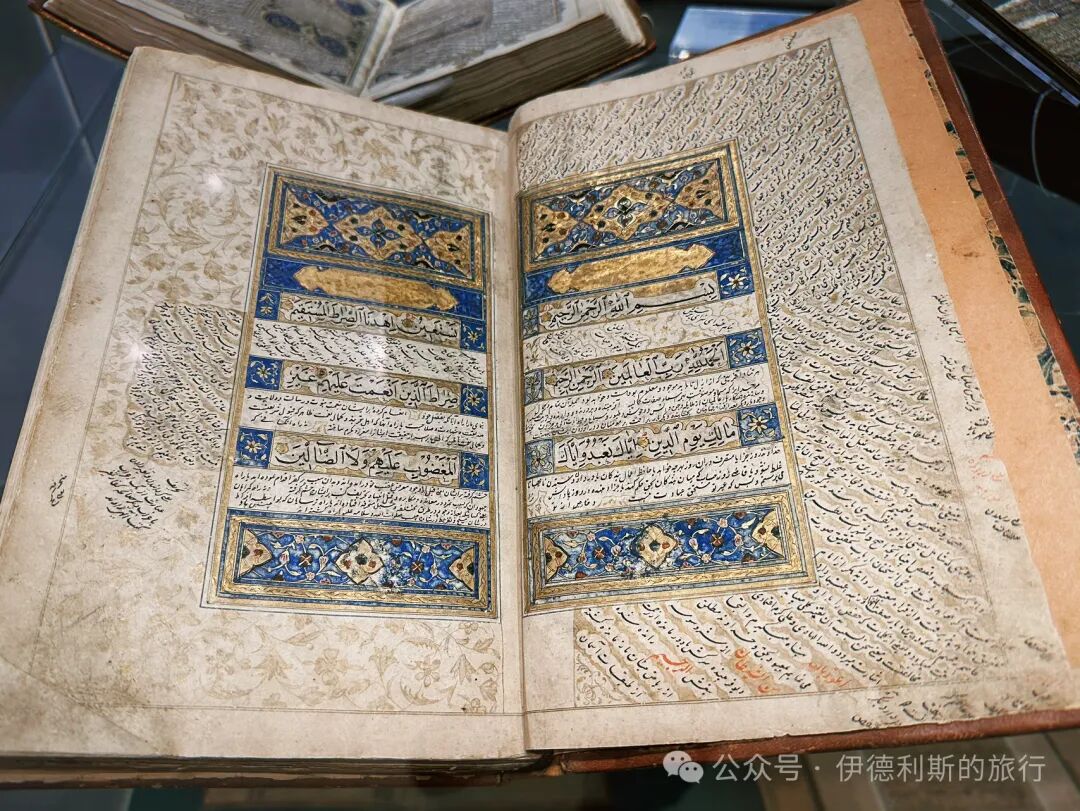
Mughal Empire, 18th century
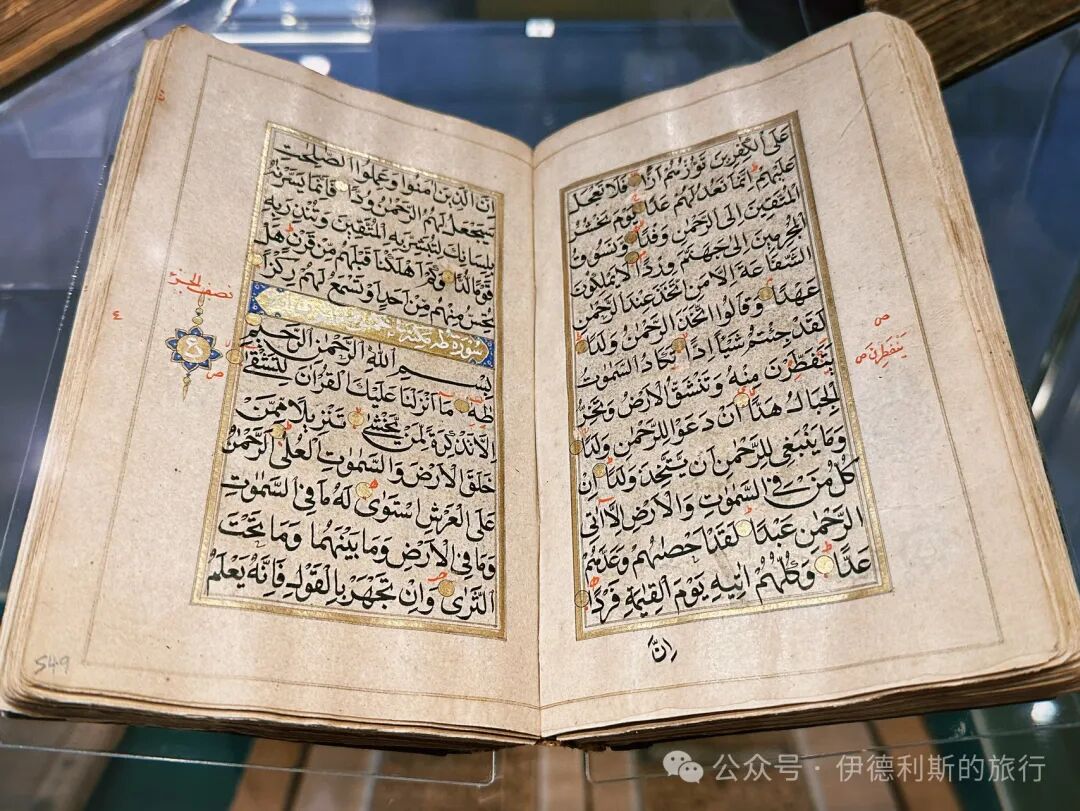
Kashmir, 18th century
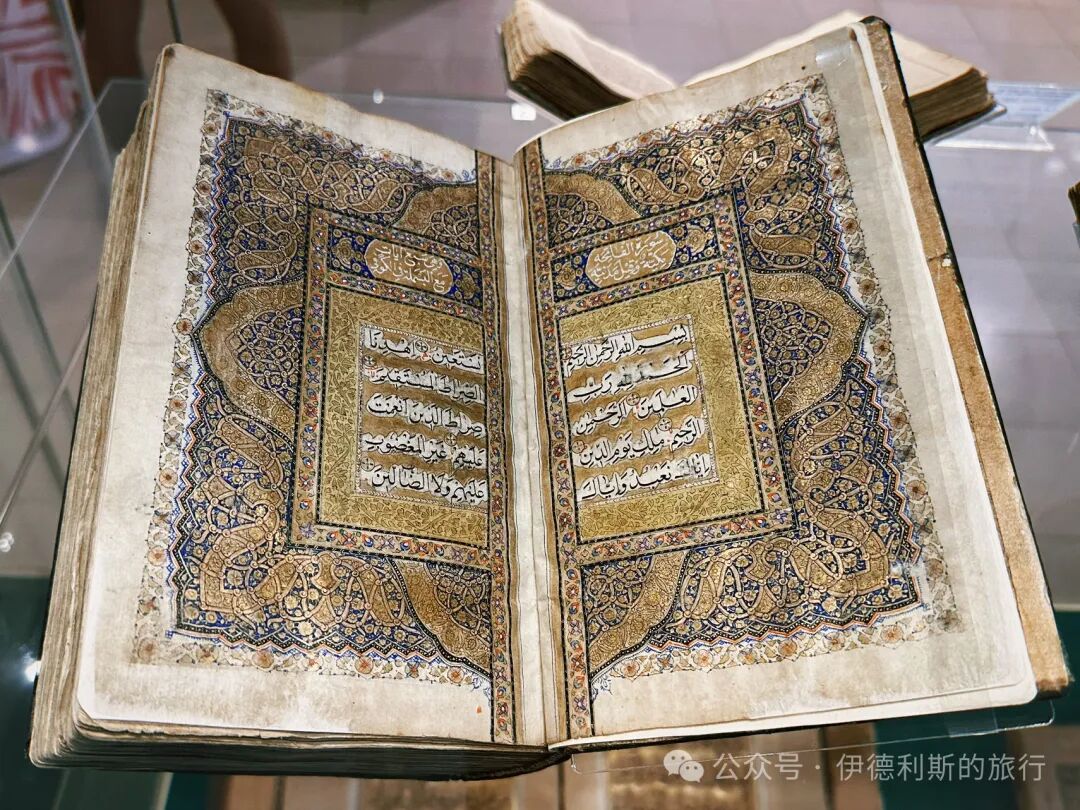
Kashmir, 19th century
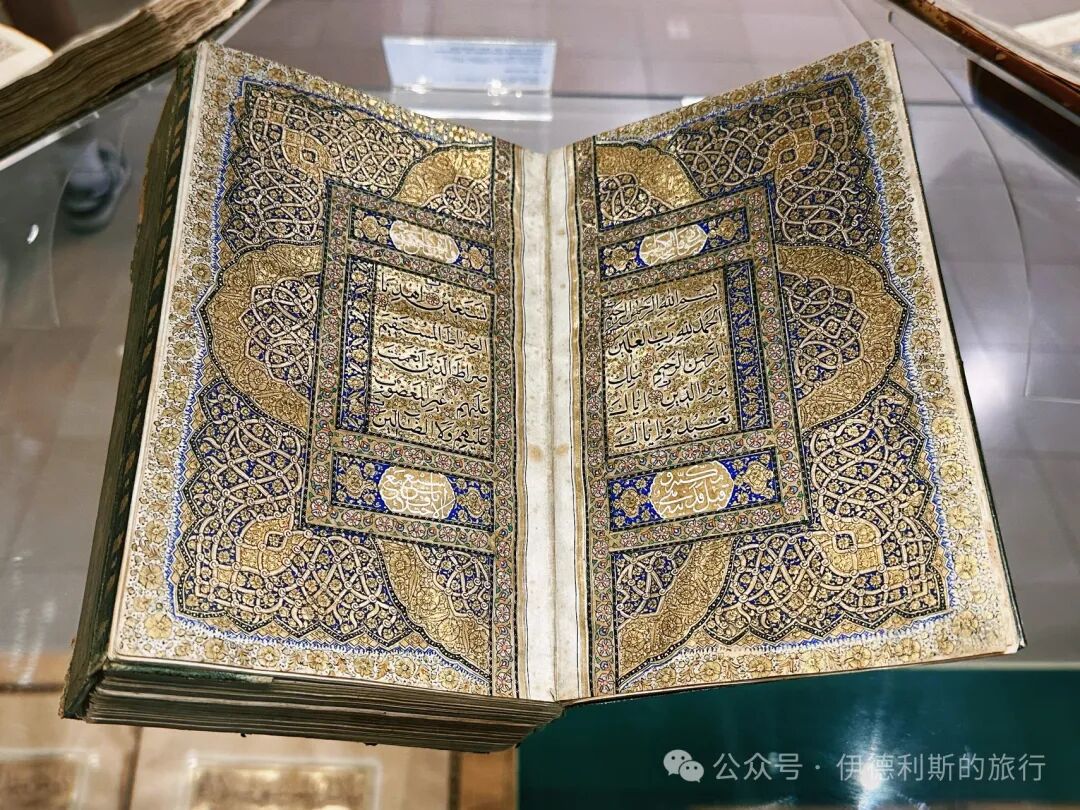
North India or Kashmir, 1831
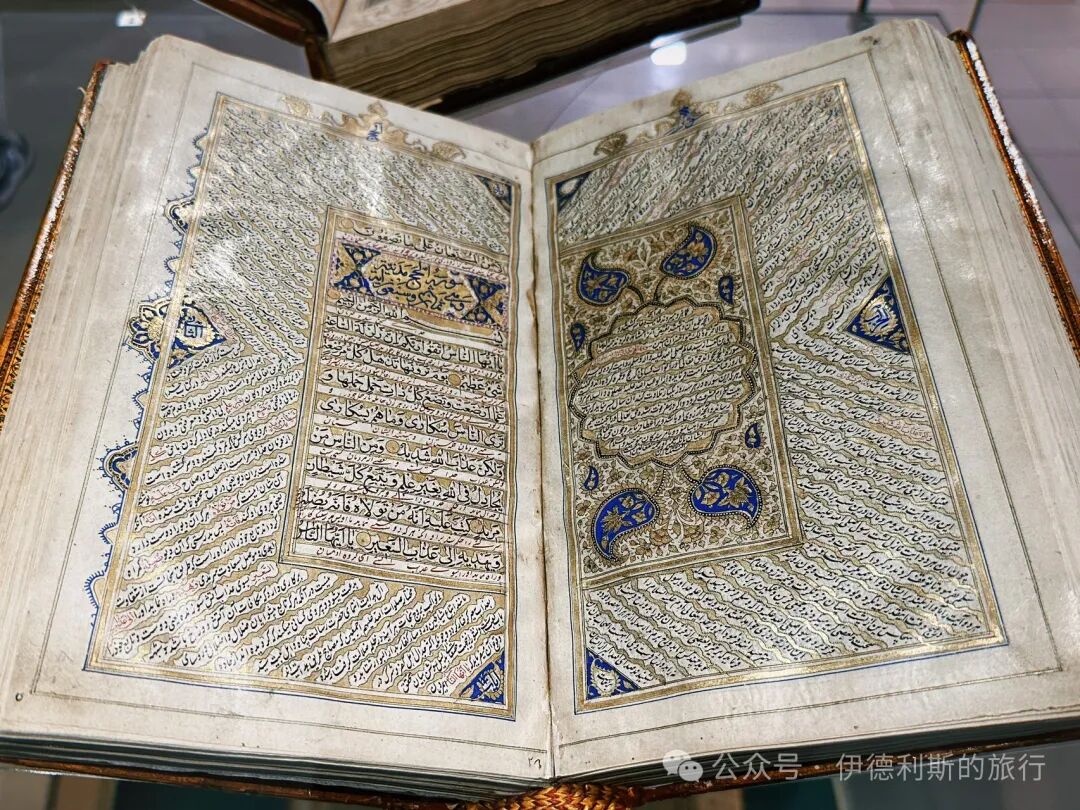
Kashmir, 18th century
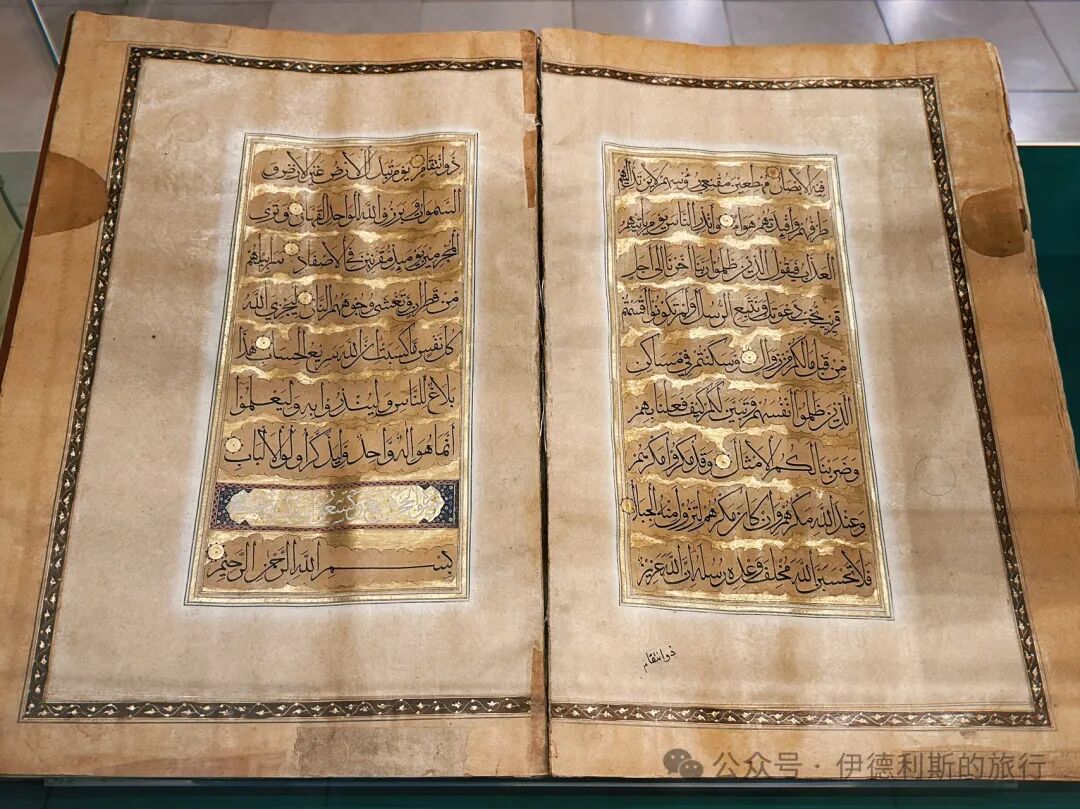
Kashmir, 18th to 19th century.
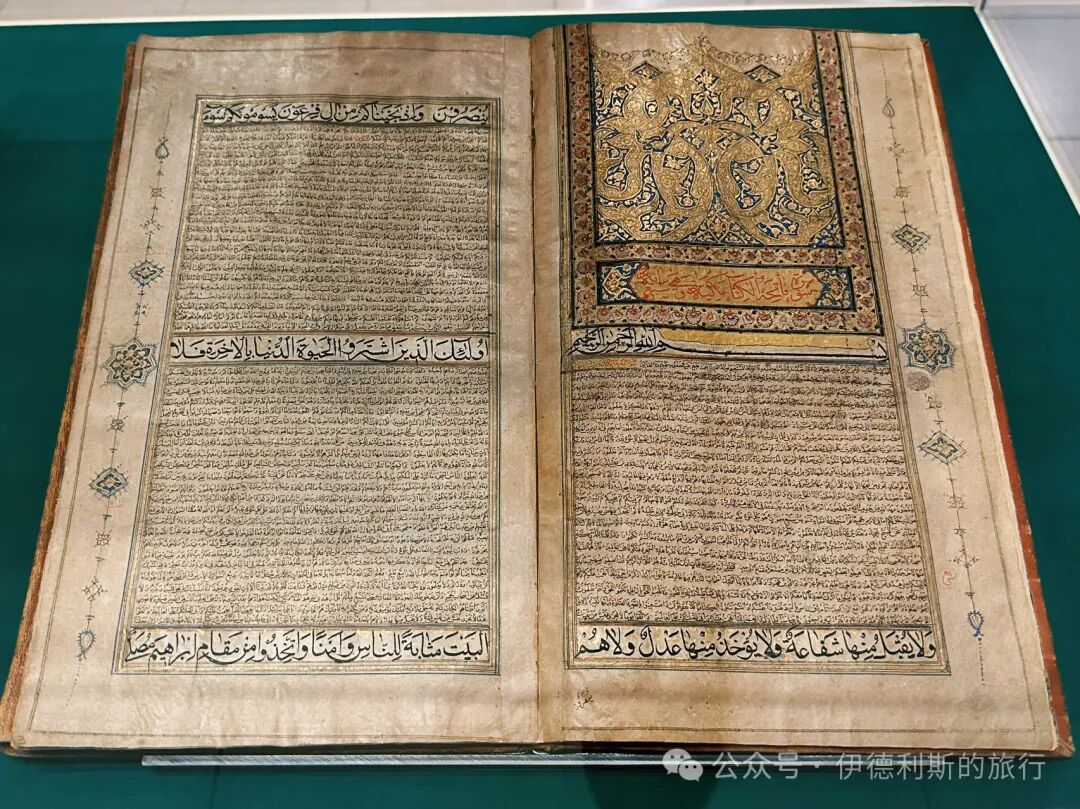
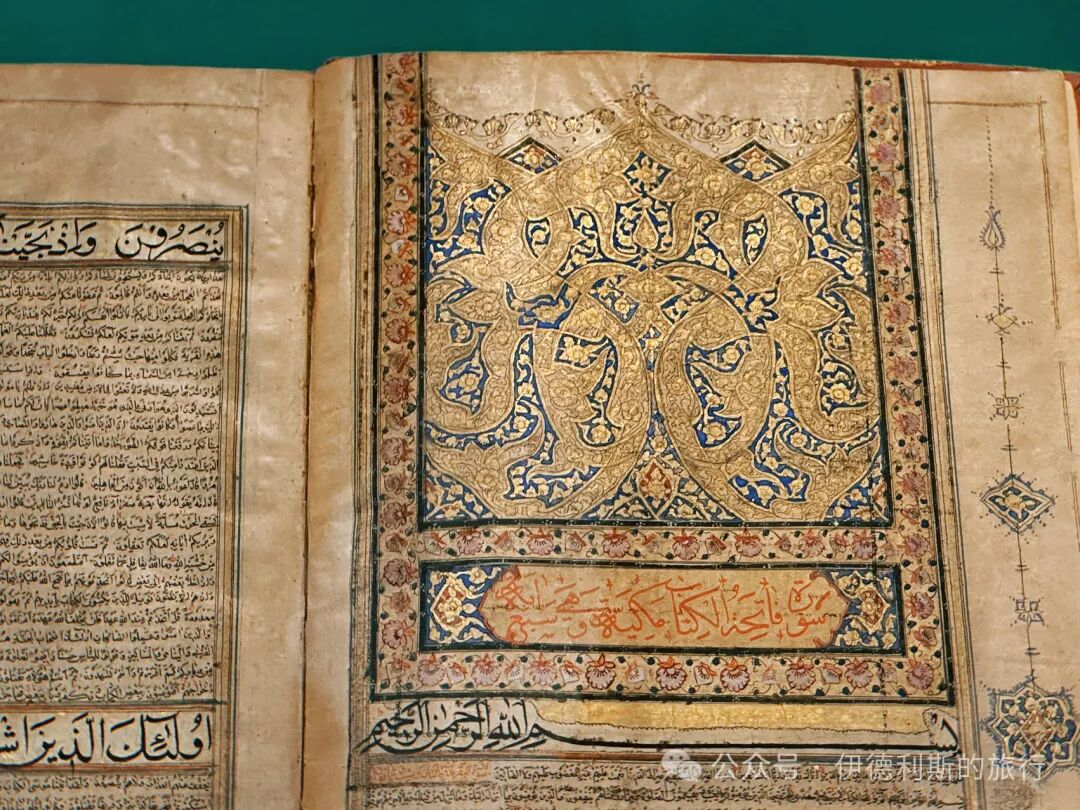
Kashmir, early 19th century.
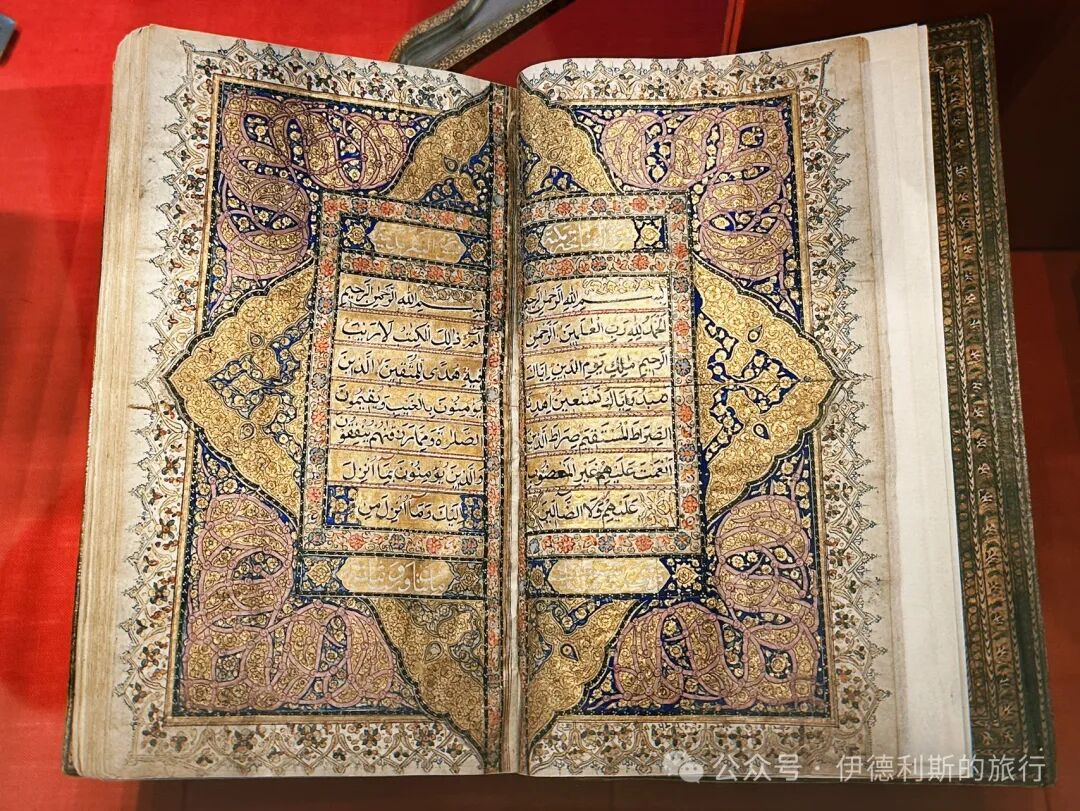
Kashmir, early 19th century.
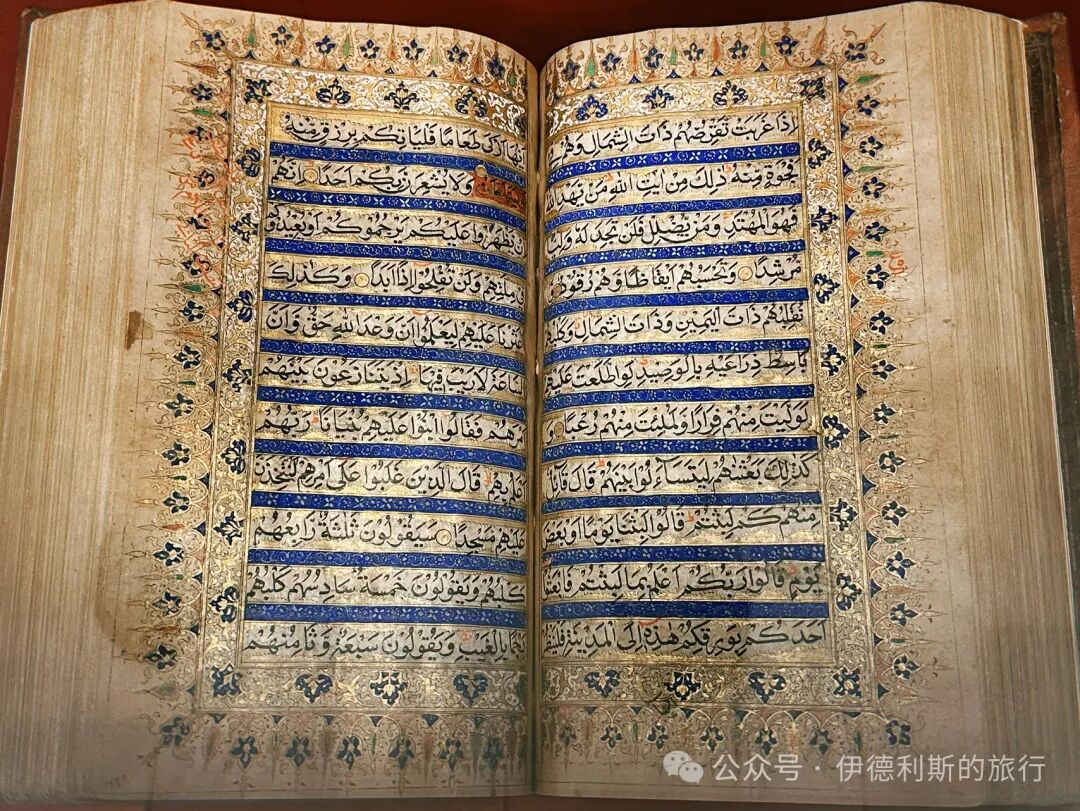
Northern India, 1893-1894.
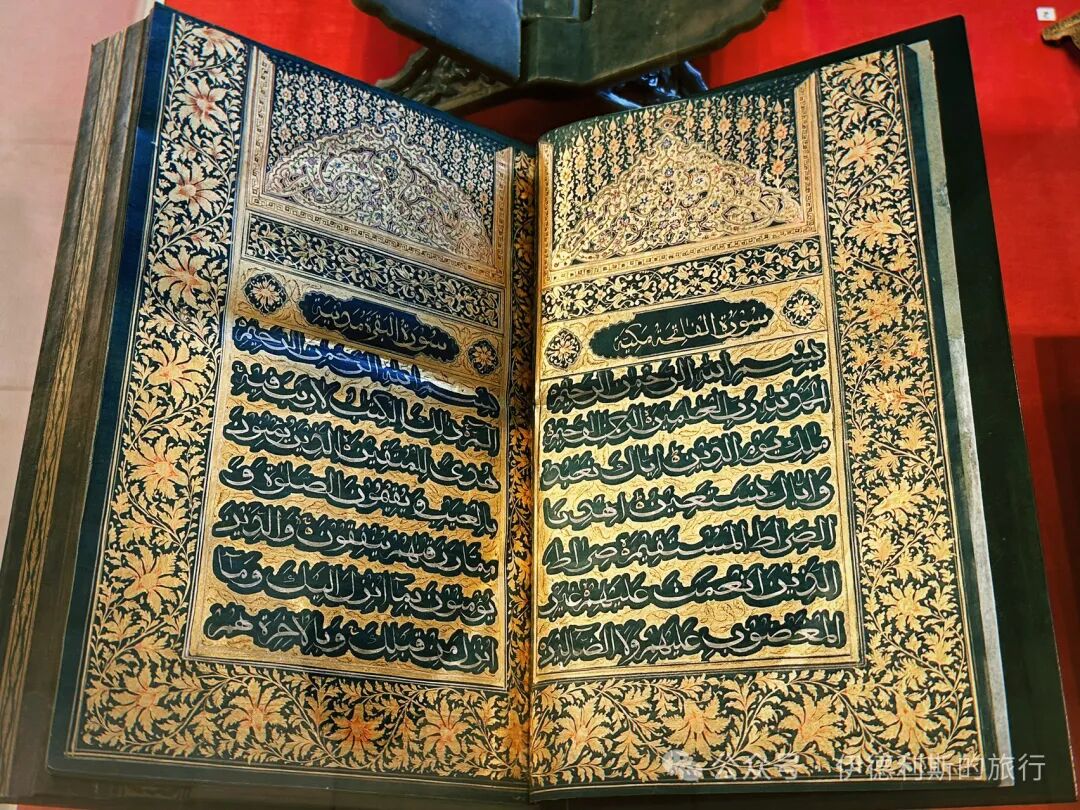
African region.
North Africa, 16th century.
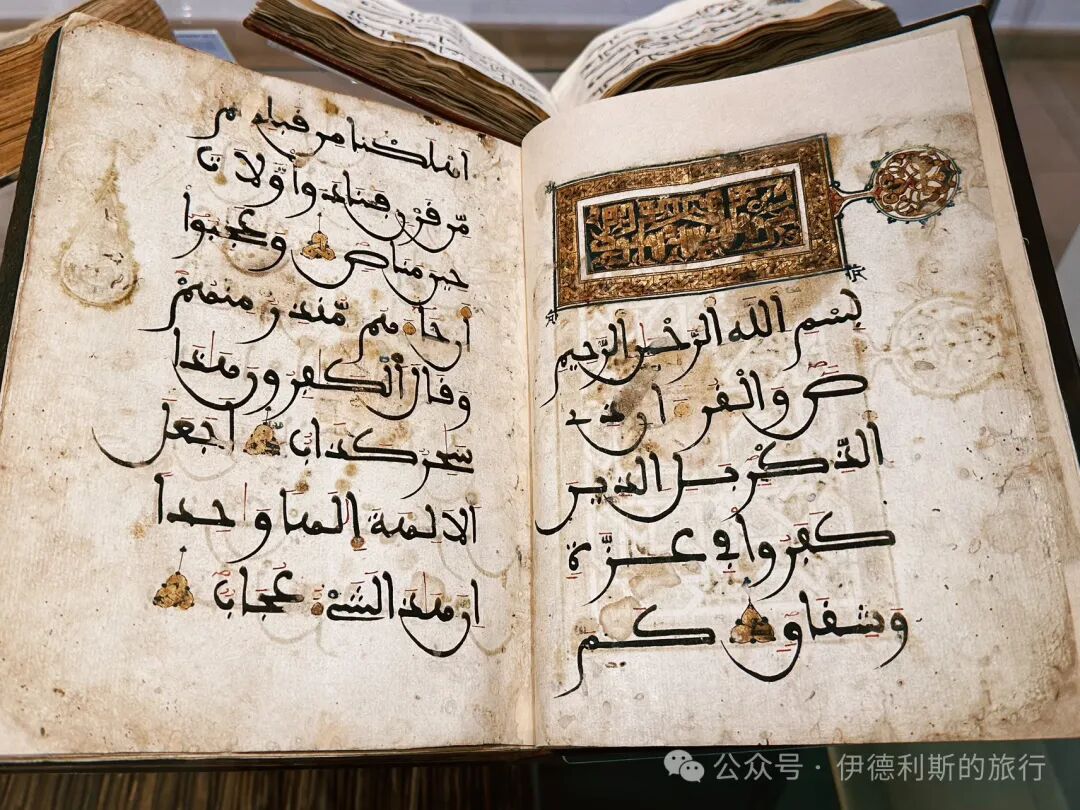
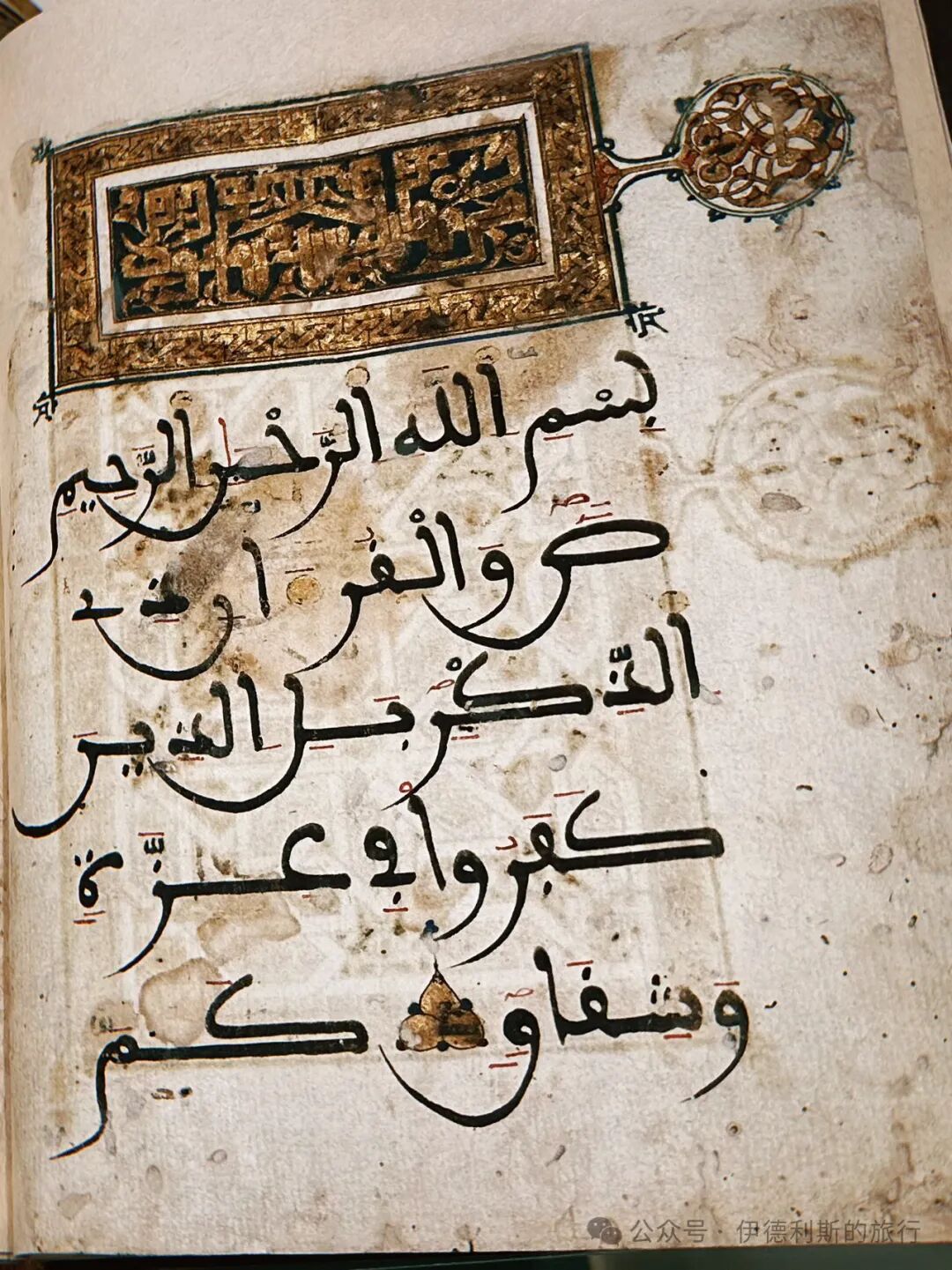
North Africa, 19th century.
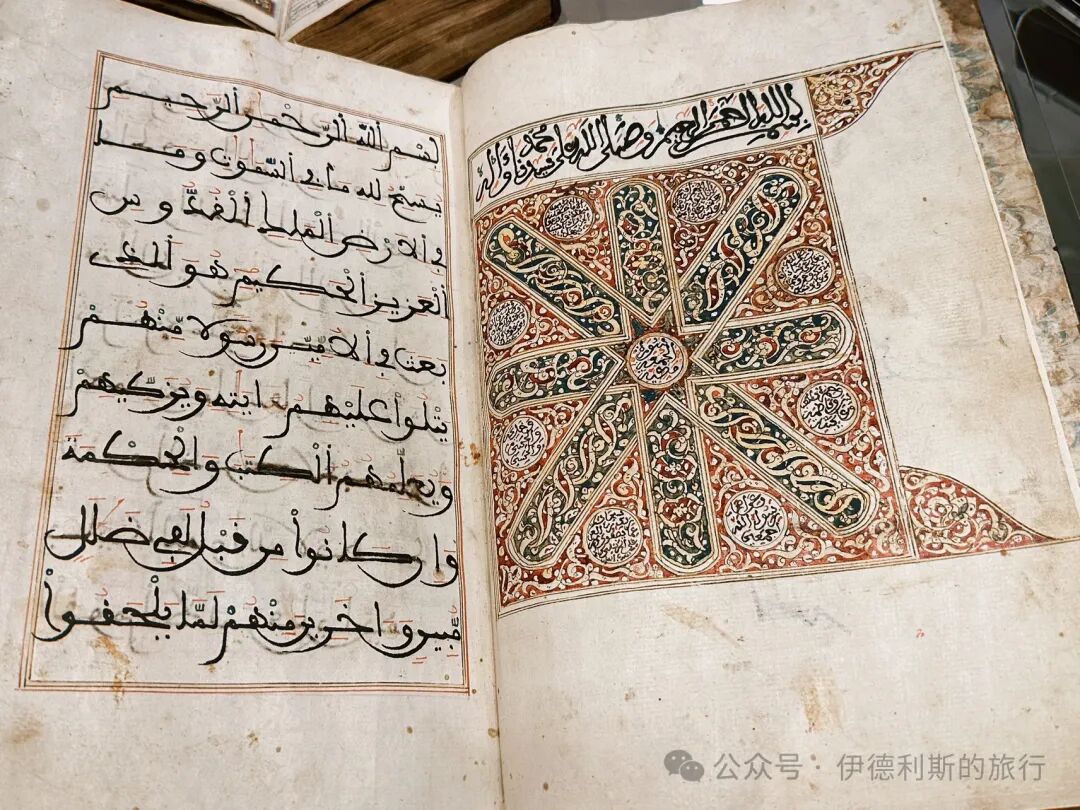
Harar, Ethiopia, 1800. Harar is an important center for the faith in eastern Ethiopia and is known as the fourth holiest city of the faith. The old city contains 82 mosques and 9 gongbei, and it was listed as a UNESCO World Heritage site in 2006. Because of long-term trade with the Arabian Peninsula, the faith flourished in the old city by the 10th century and became widespread after the 13th century. Harar became the capital of the Adal Sultanate after 1520 and the capital of the Emirate of Harar after 1647. In the 18th century, Harar was an important center for the faith in the Ethiopia and Somalia region.
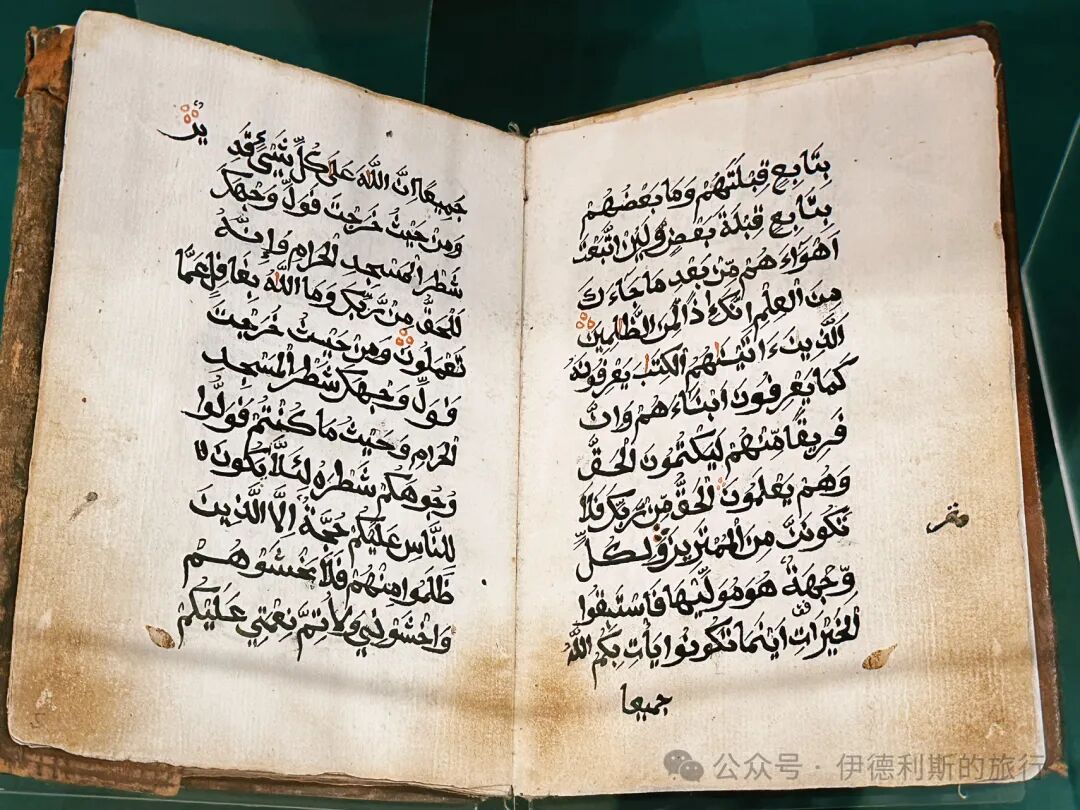
Sudan, 1857-1858.
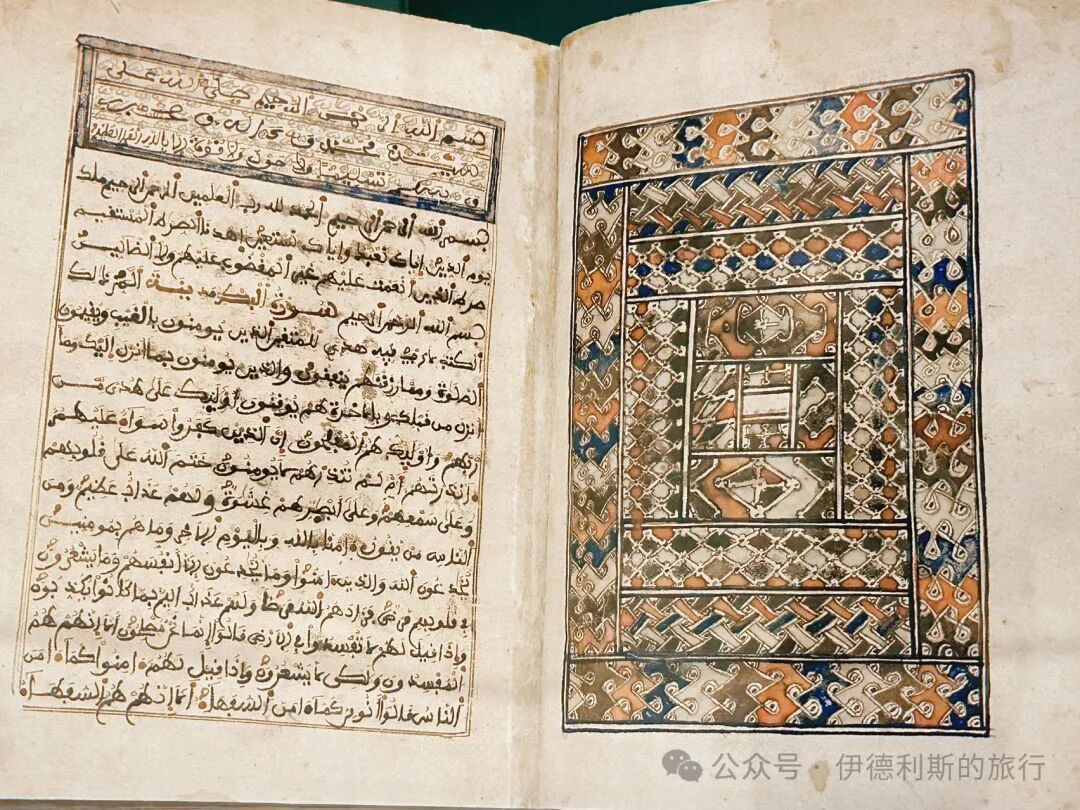
Sudan, 19th century.
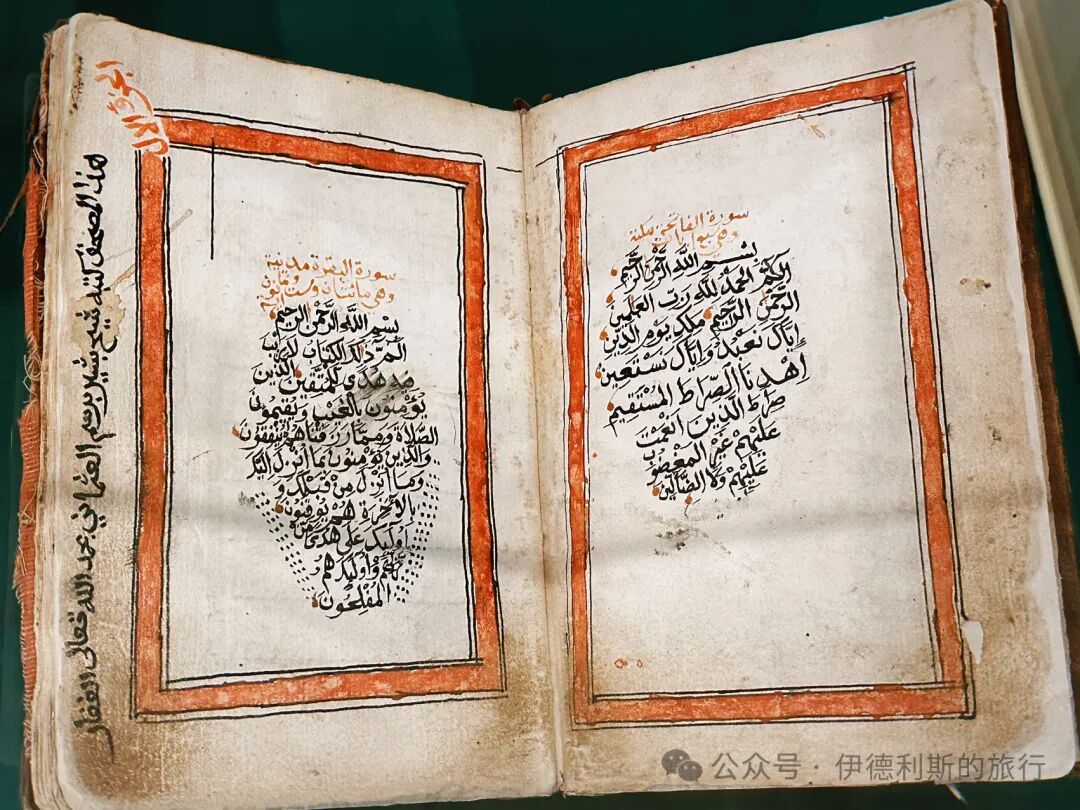
Morocco or Andalusia, 13th century.
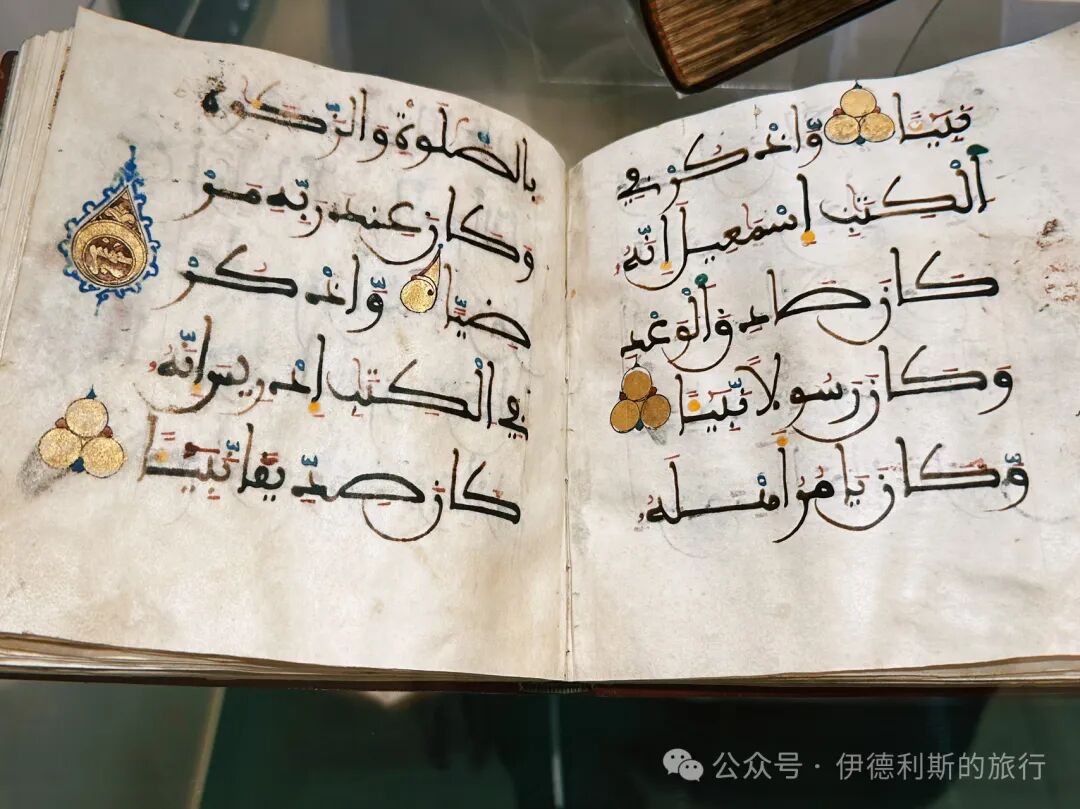
North Africa, 18th century.
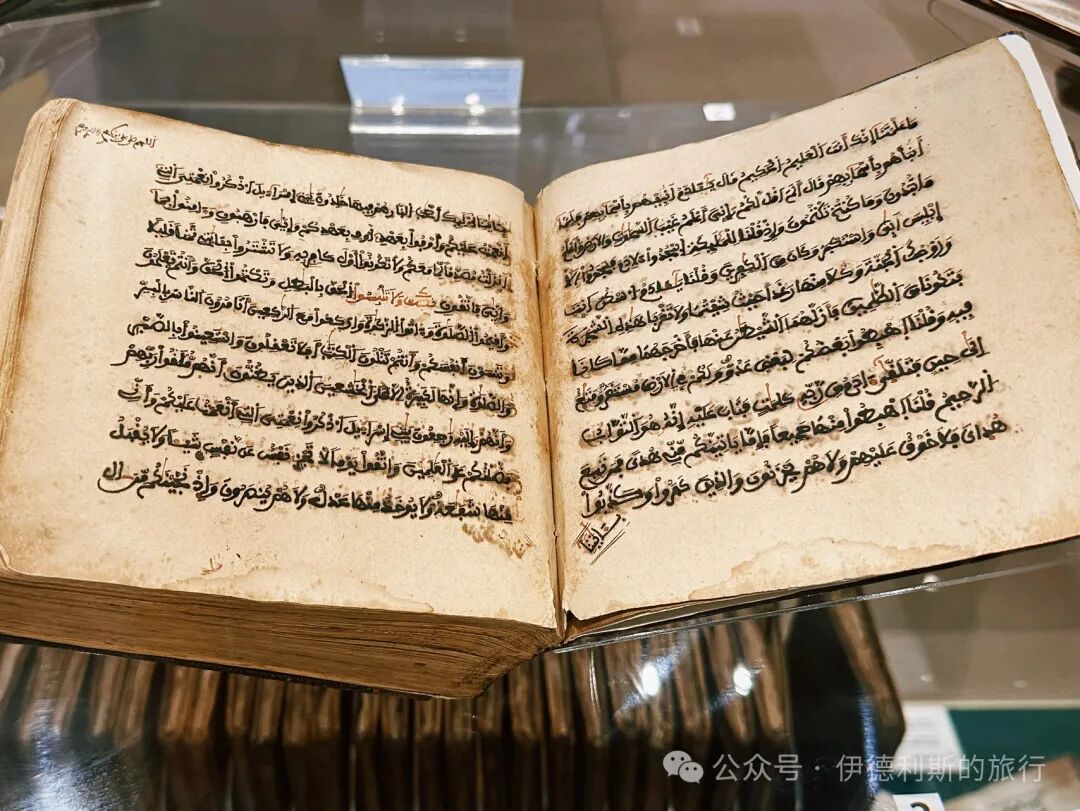
North Africa, 19th century.
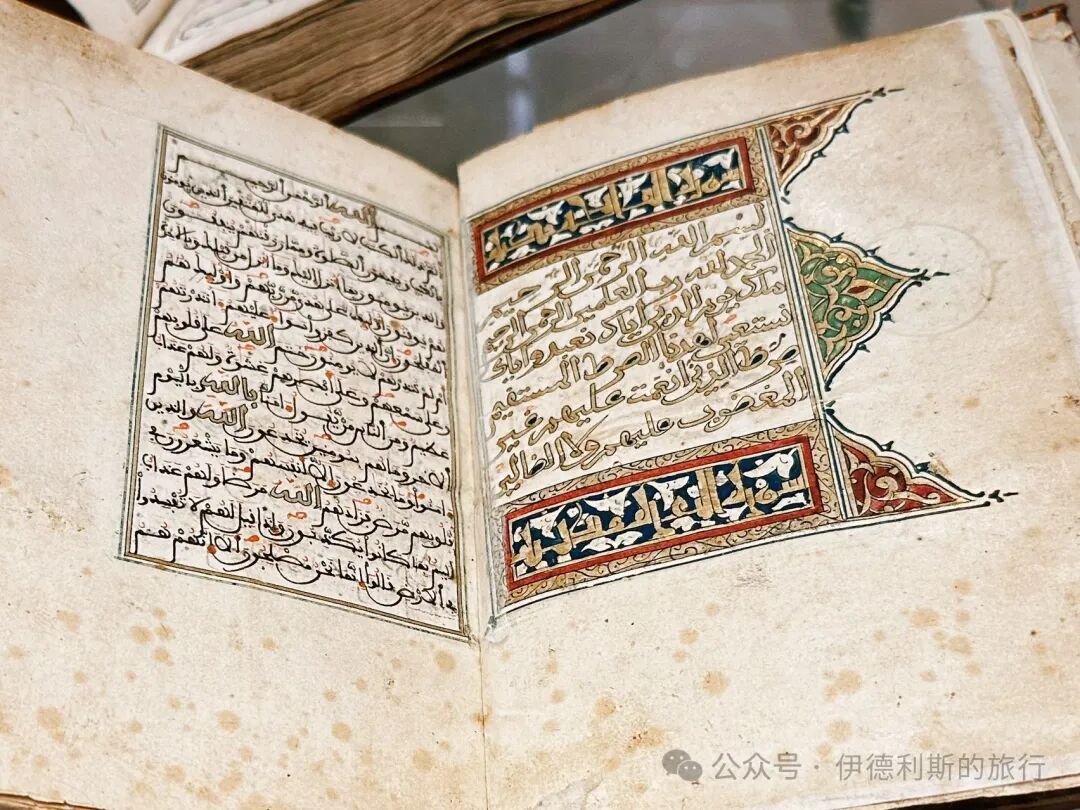
Comoros Islands, East Africa, 1824. The Comoros Islands are located in the southwest Indian Ocean, between the African continent and Madagascar. Arab and Persian merchants often came here to trade. The faith spread across the islands starting in the 10th century, and several sultanates were established on the islands after the 16th century.
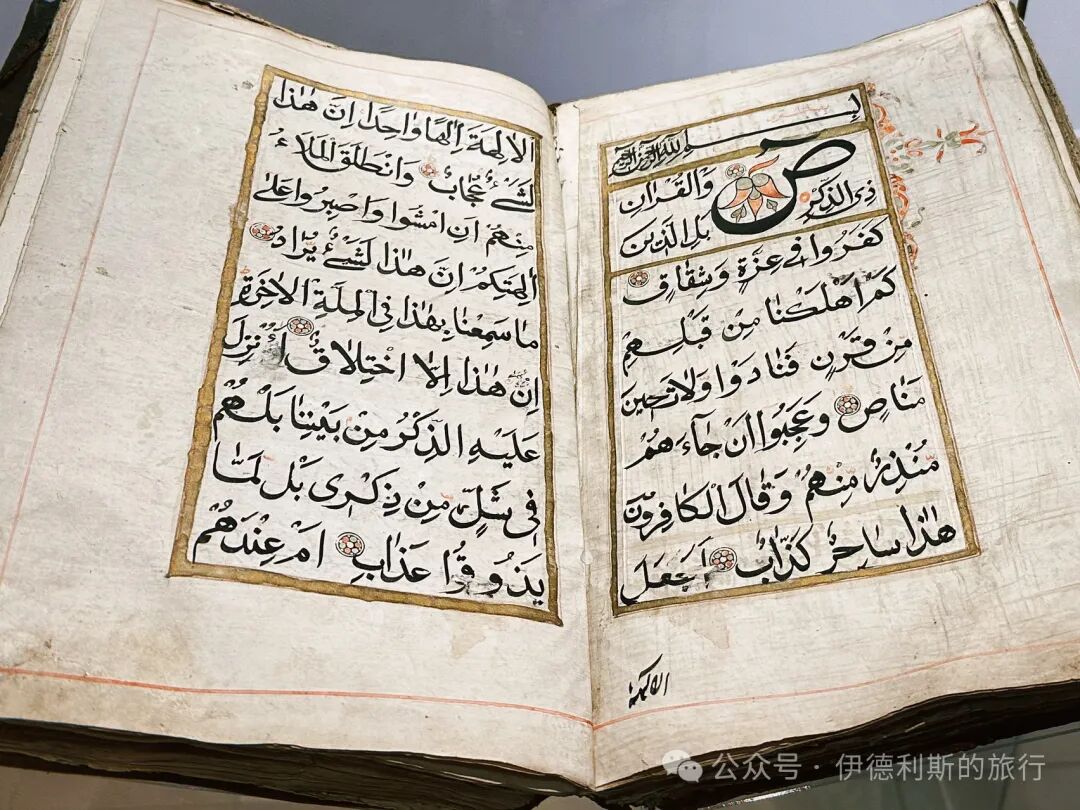
Caucasus region.
South Caucasus or Dagestan, 19th century.
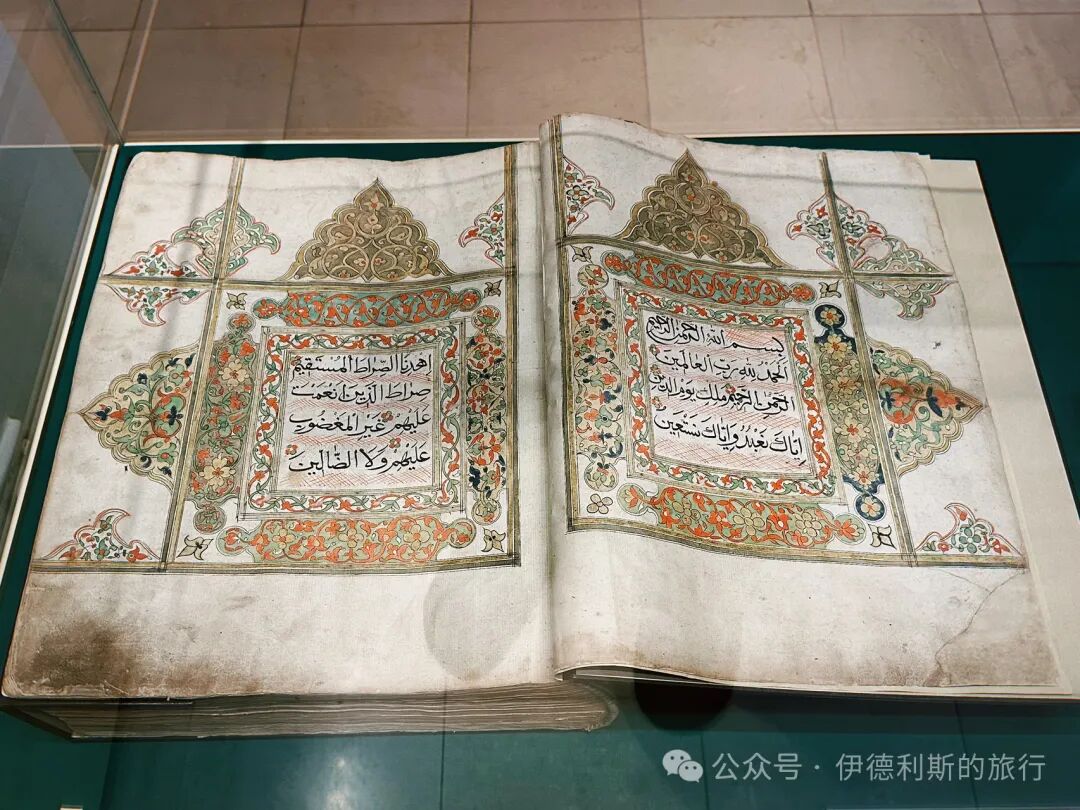
Dagestan, North Caucasus, 1780.
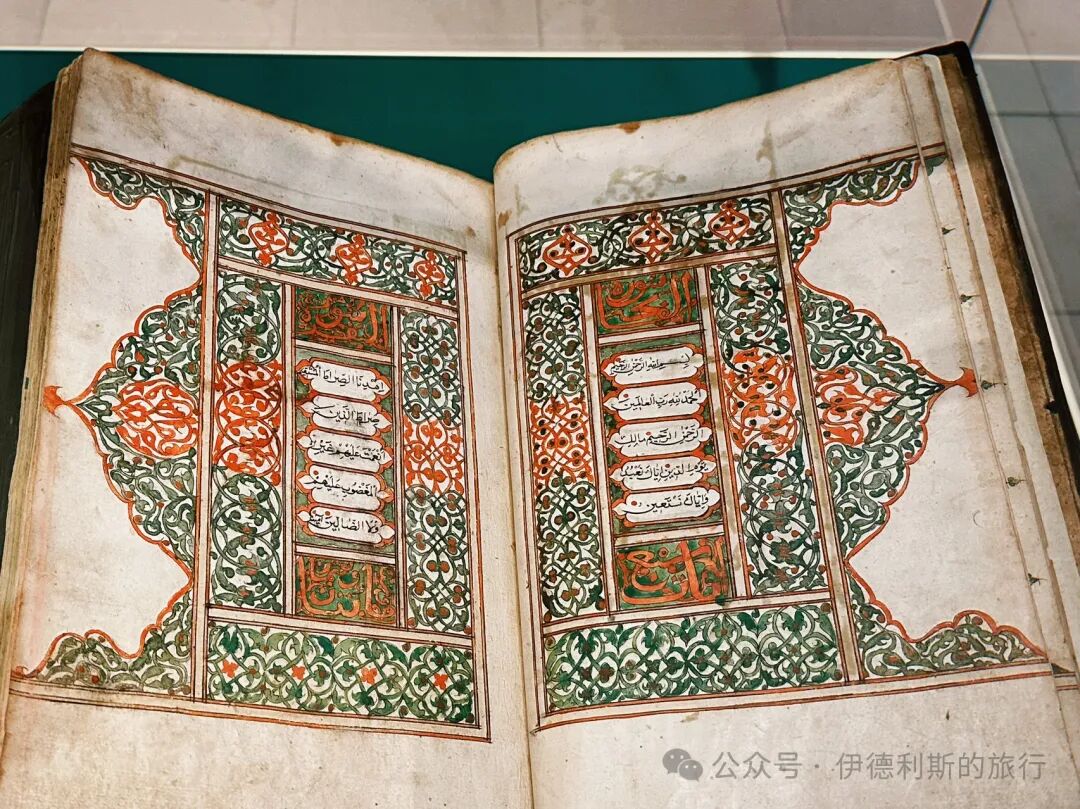
Dagestan, North Caucasus, 19th century
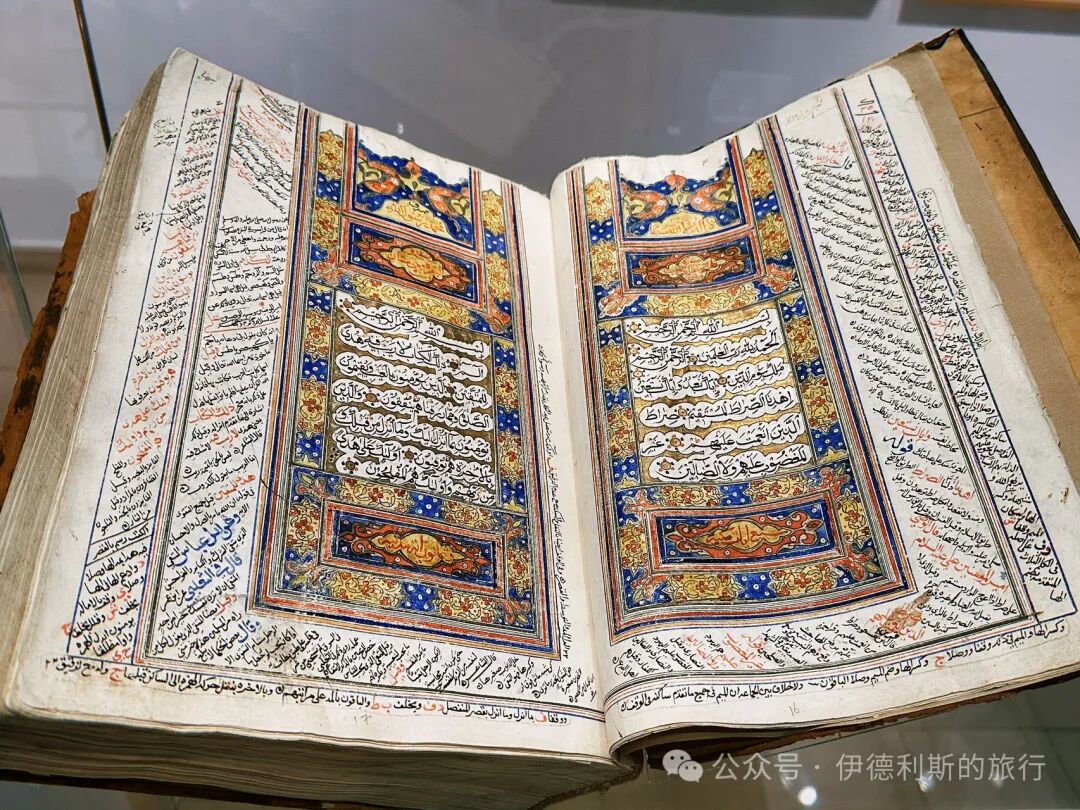
Persia
Ilkhanate of Persia, 1291
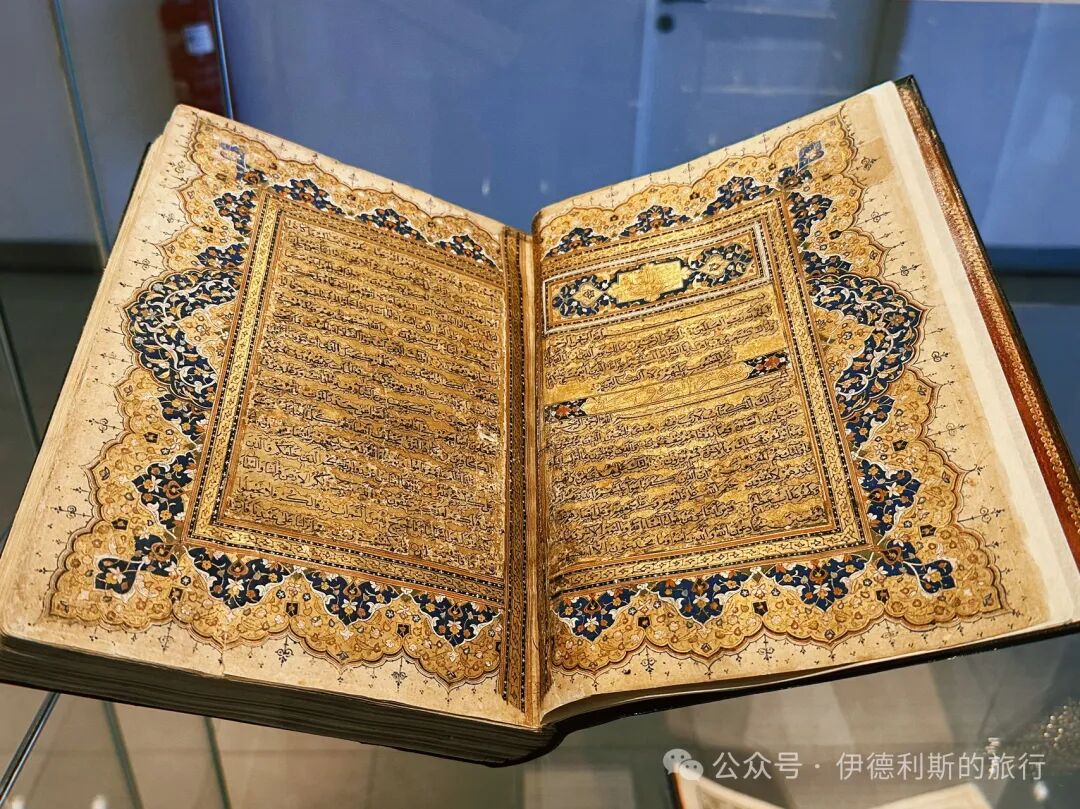
Ilkhanate of Persia, 1304
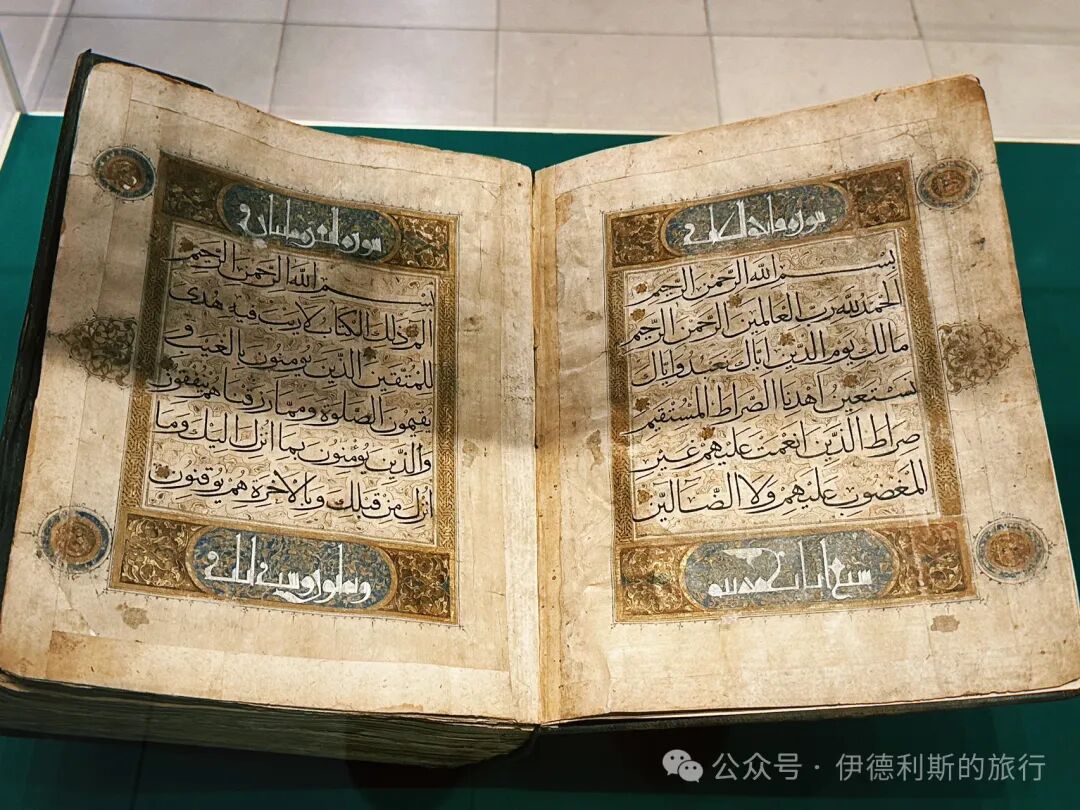
Persia, 1684
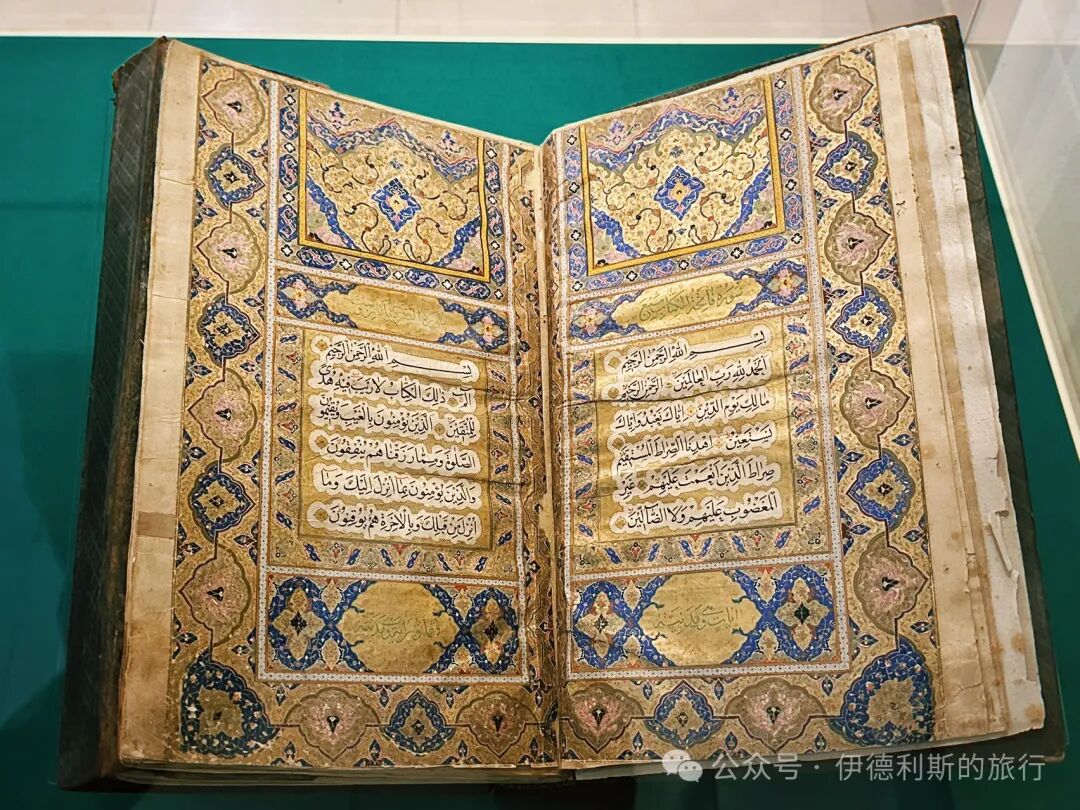
Persia, 17th century
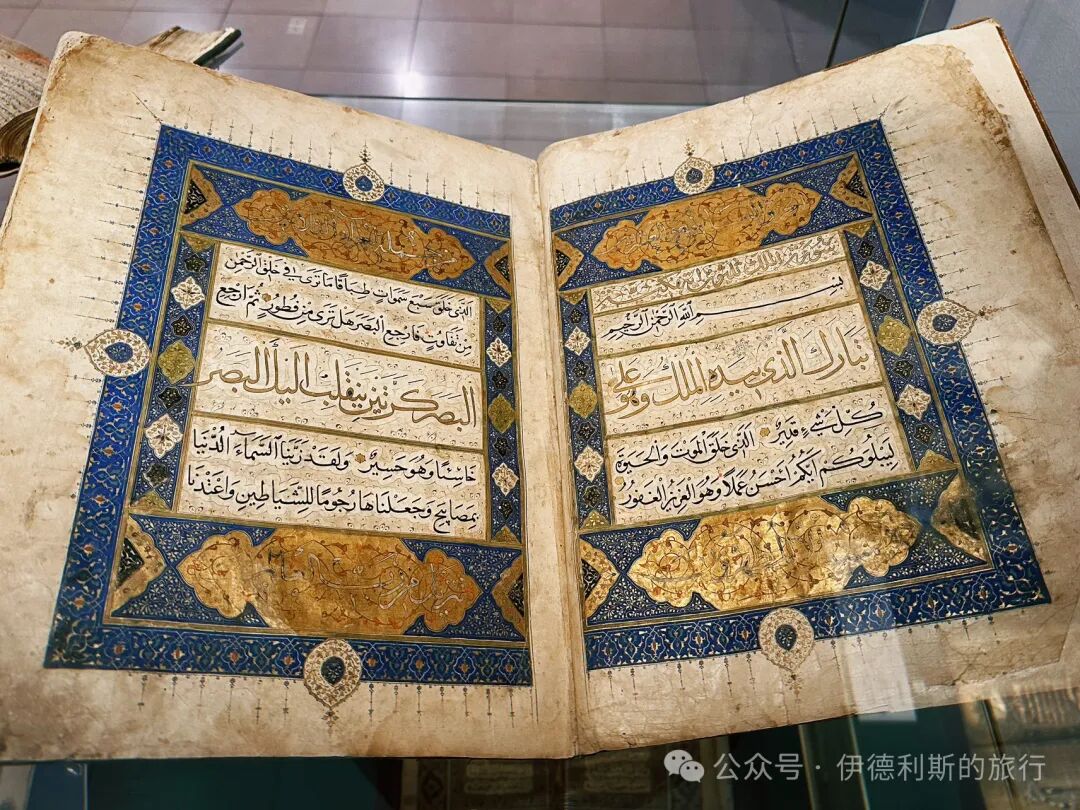
Turkmen people of Persia, 1483-1484
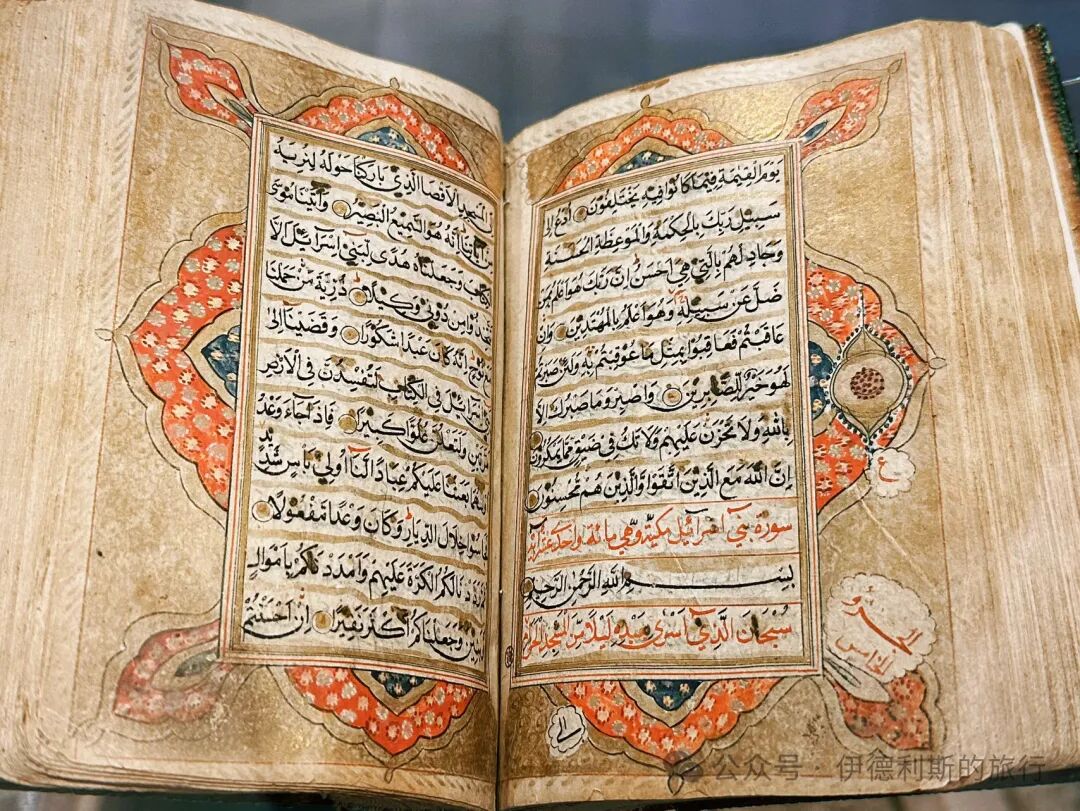
Isfahan, Safavid Dynasty of Persia, 1708
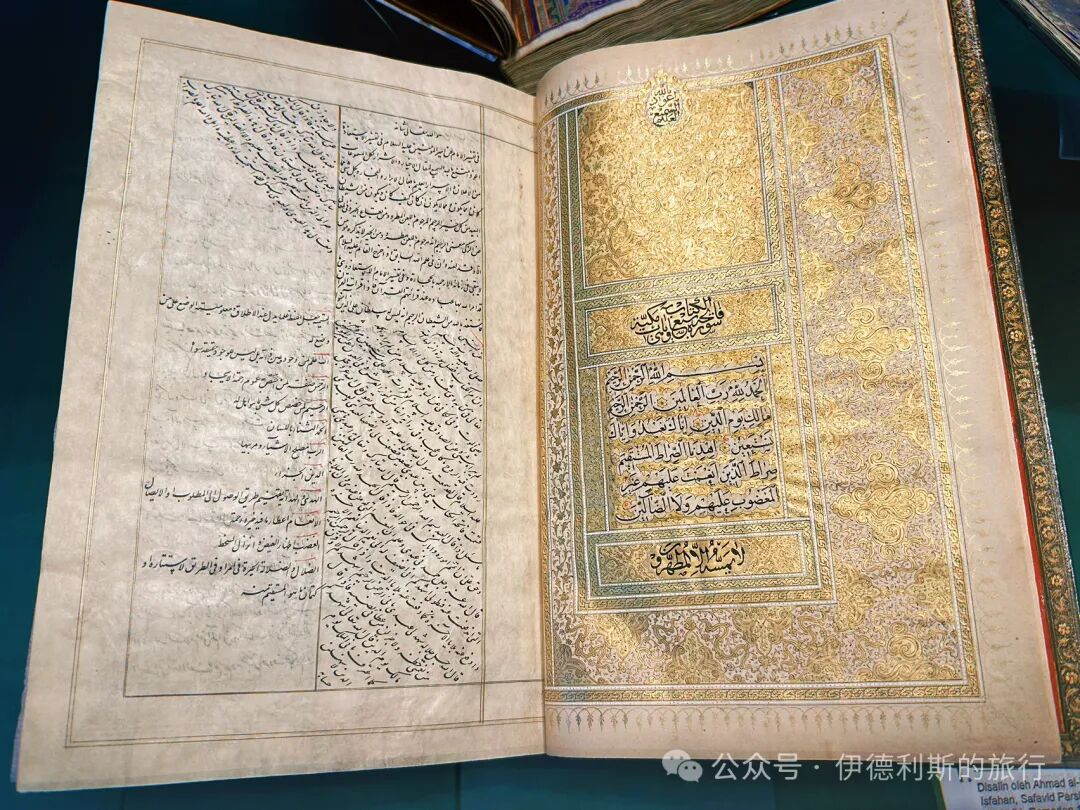
Qajar Dynasty of Persia, 19th century
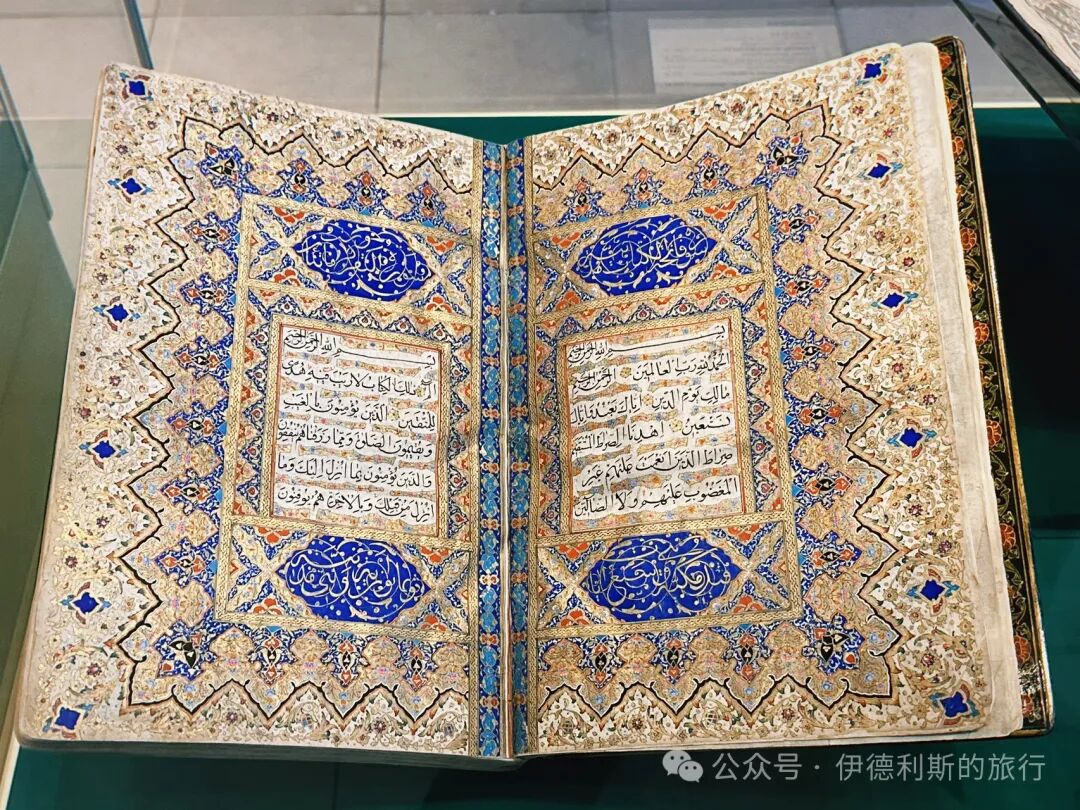
Qajar Dynasty of Persia, 1862
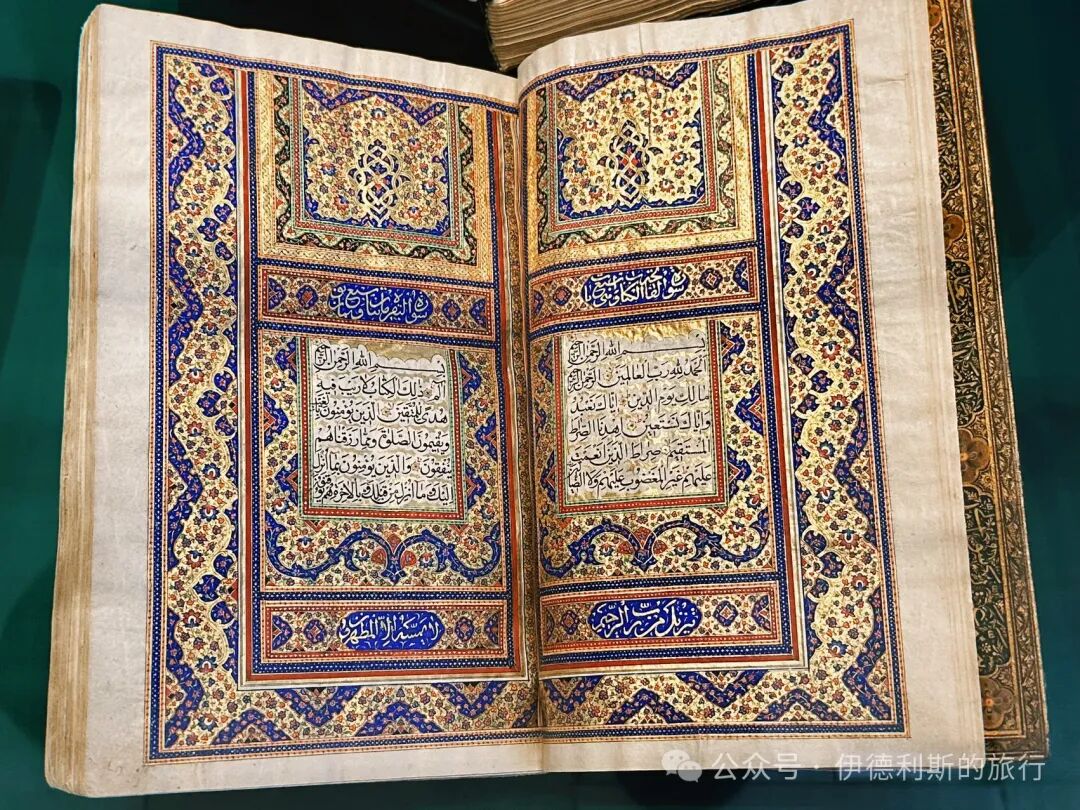
Persia, 1700
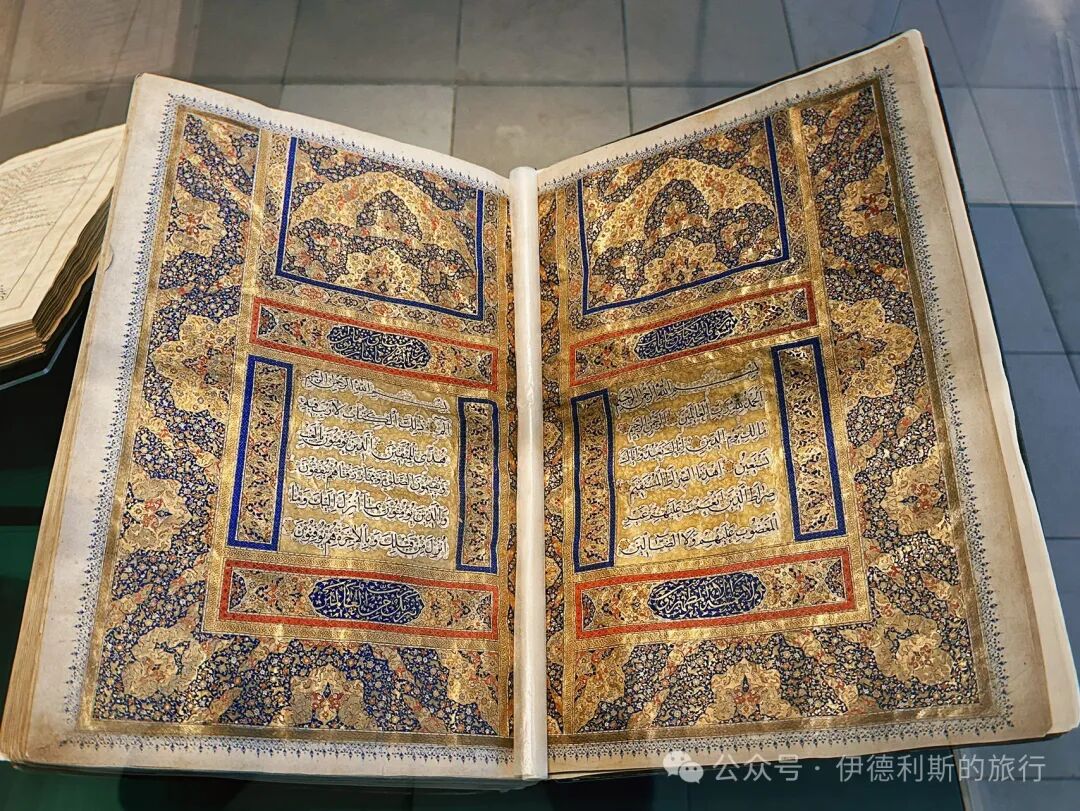
Qajar Dynasty of Persia, 19th century
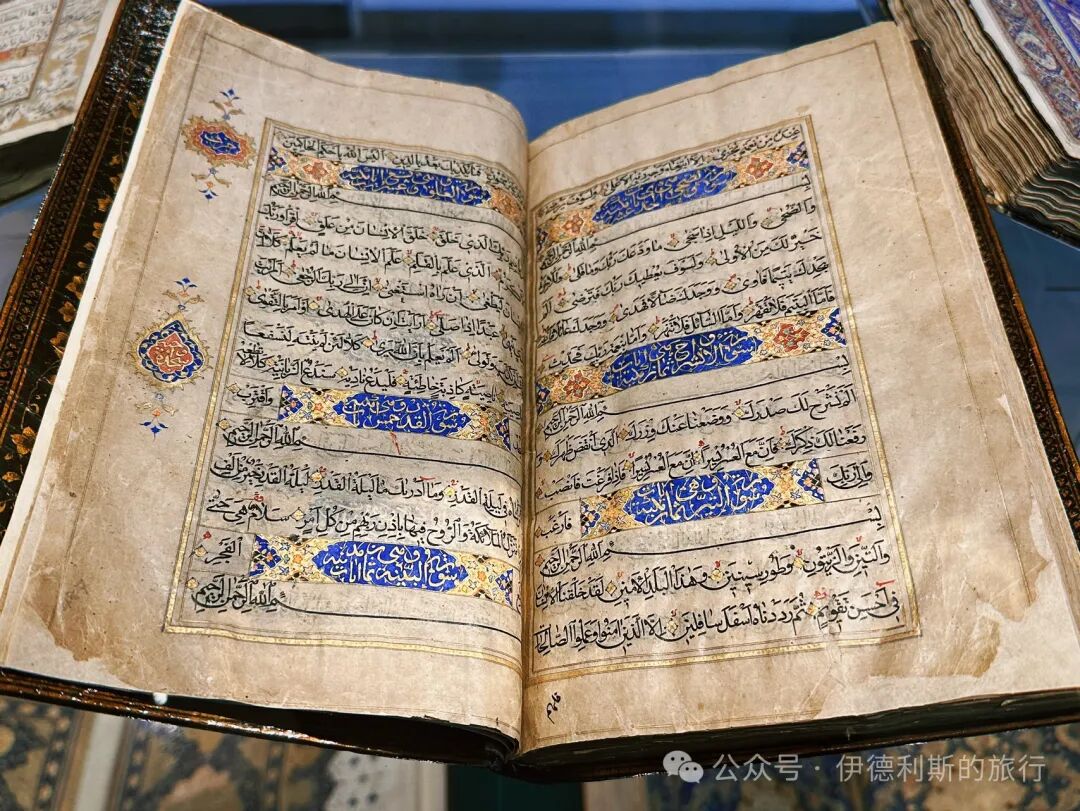
Qajar Dynasty of Persia, 1845-1846
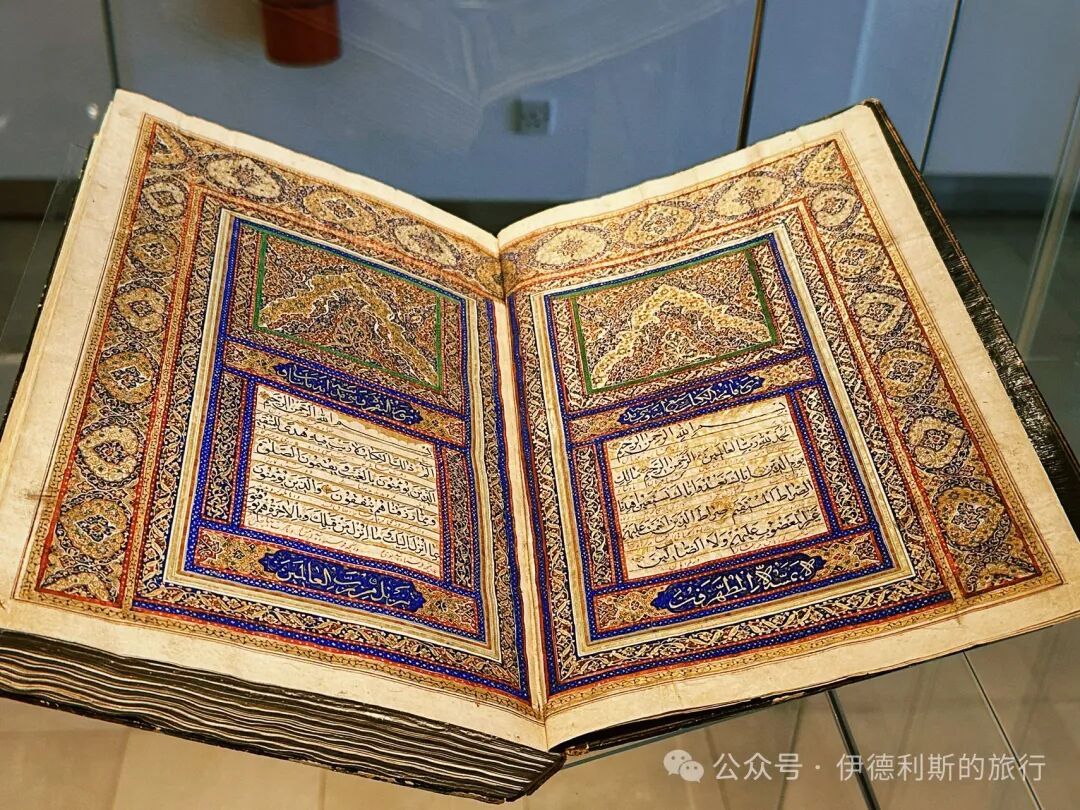
Shiraz, Qajar Dynasty of Persia, 19th century
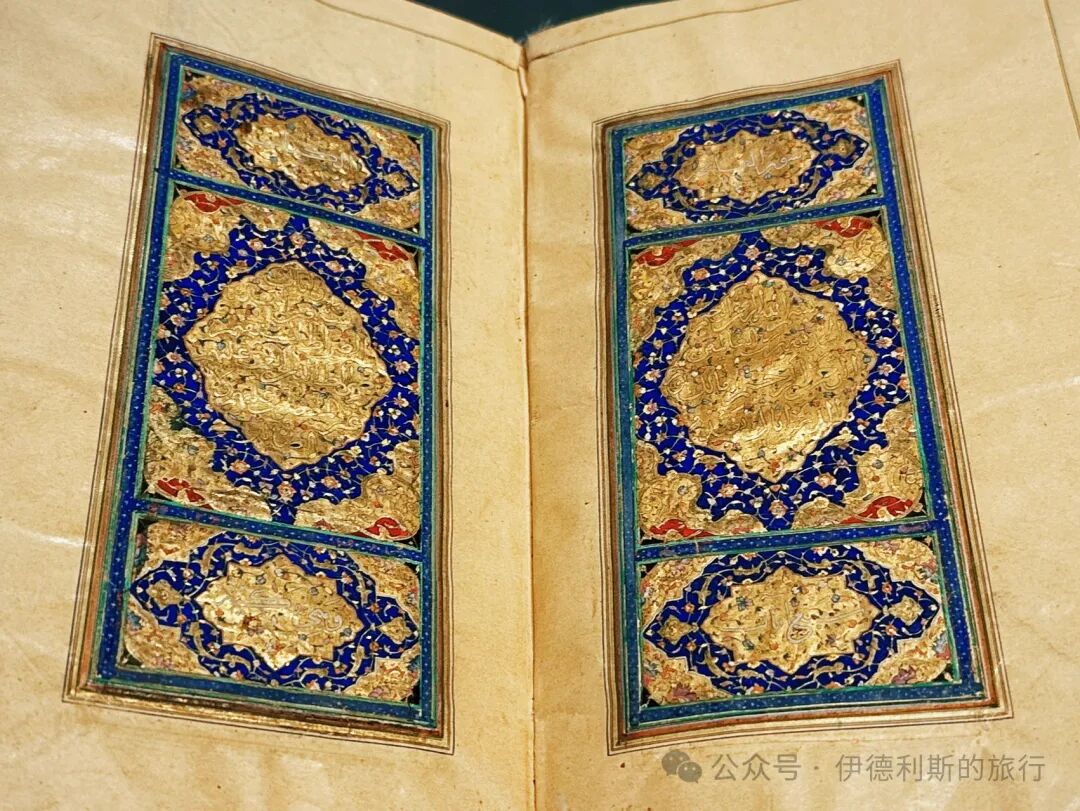
Safavid Dynasty of Persia, 16th century
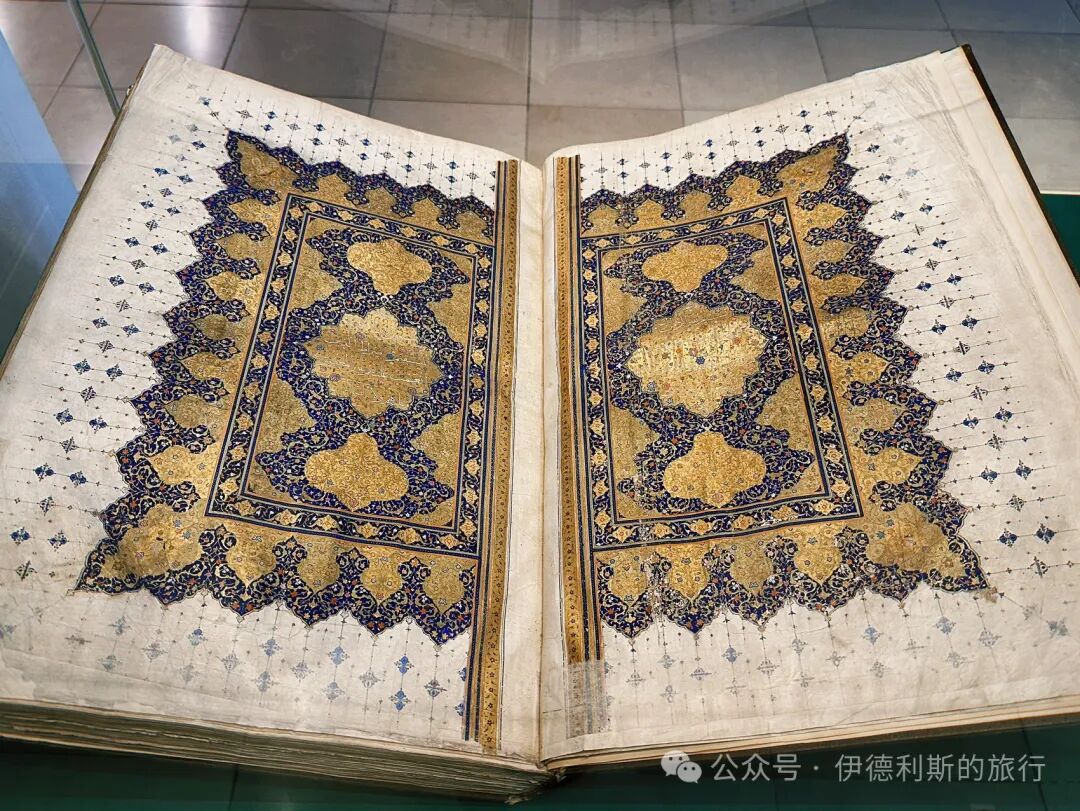
Shiraz, Safavid Dynasty of Persia, 16th century
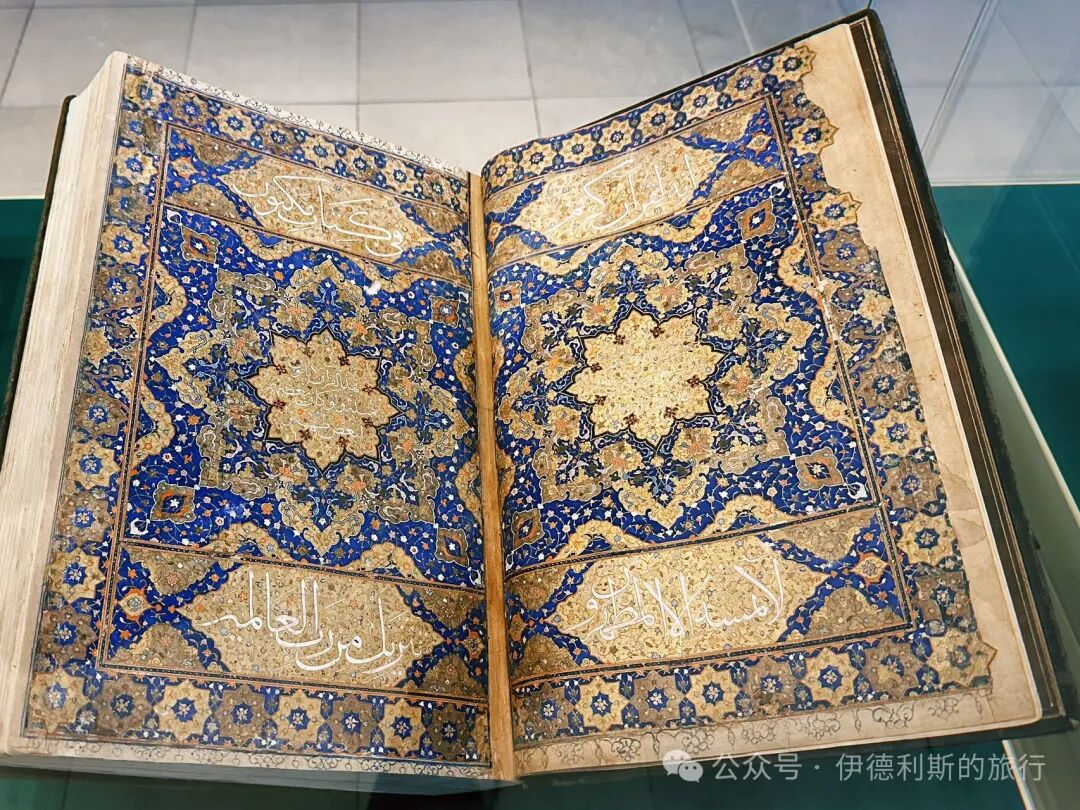
Persia, 1684
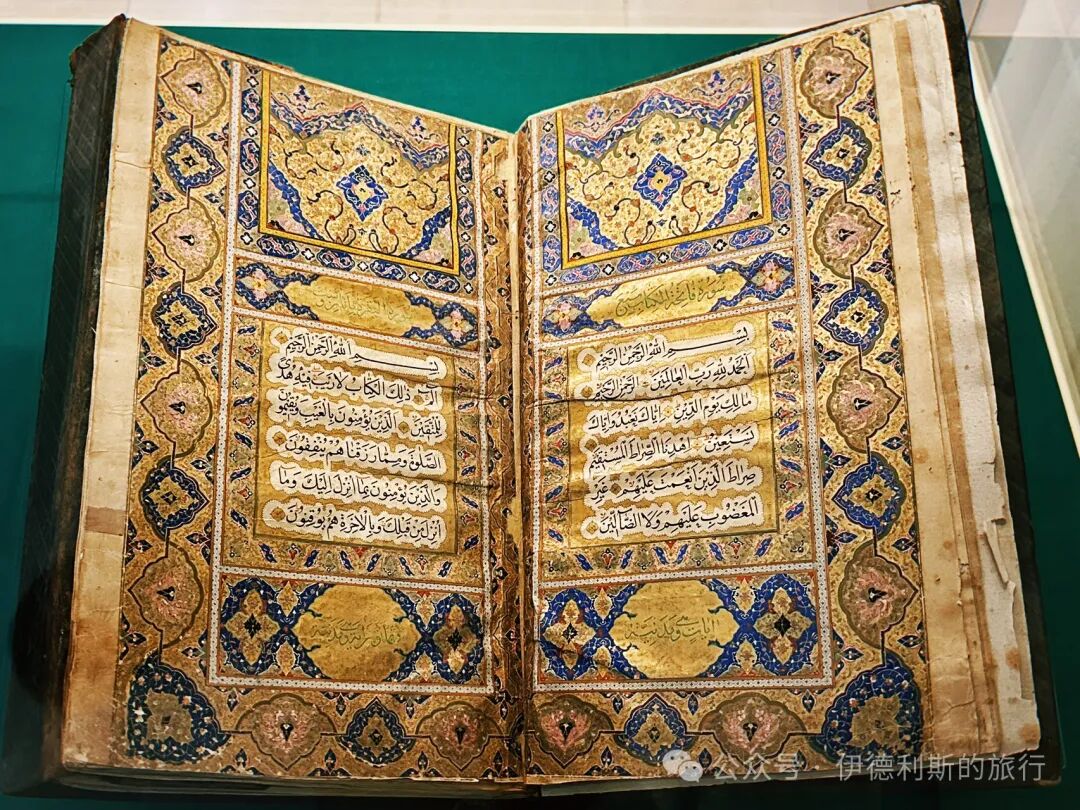
Qajar Dynasty of Persia, 1842. The donor was a soap merchant named Haji Aqa Muhammad.
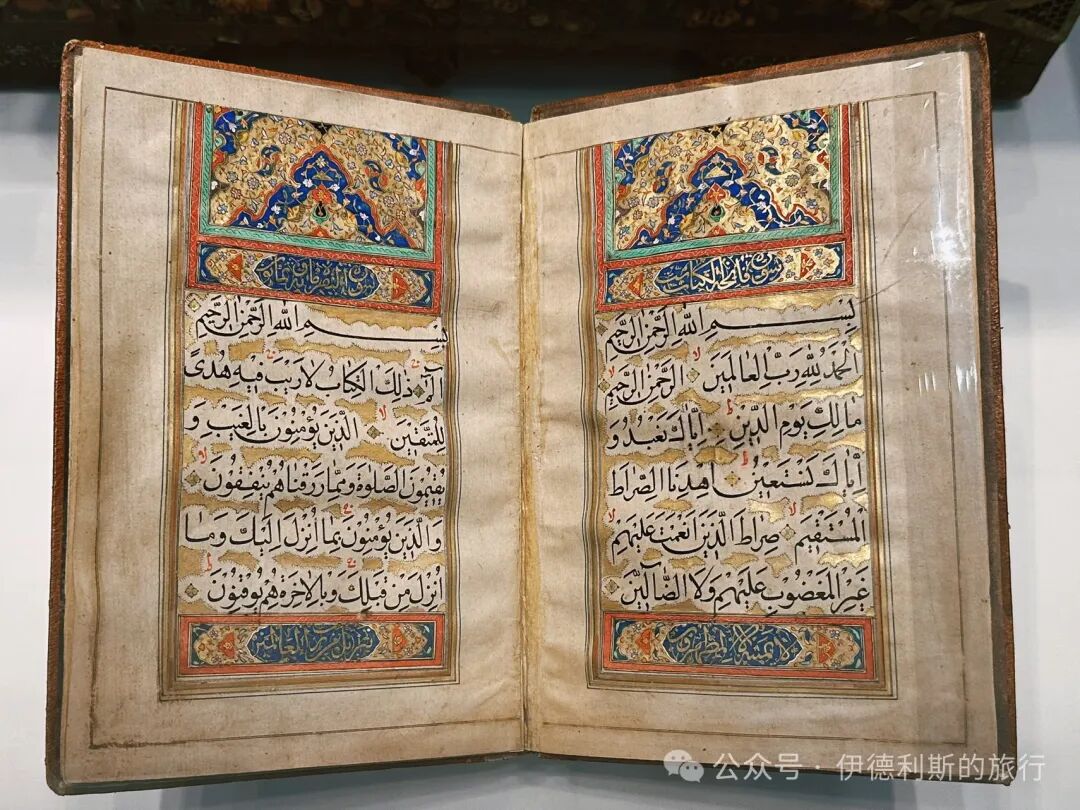
Uzbekistan
Bukhara, Uzbekistan, 18th century
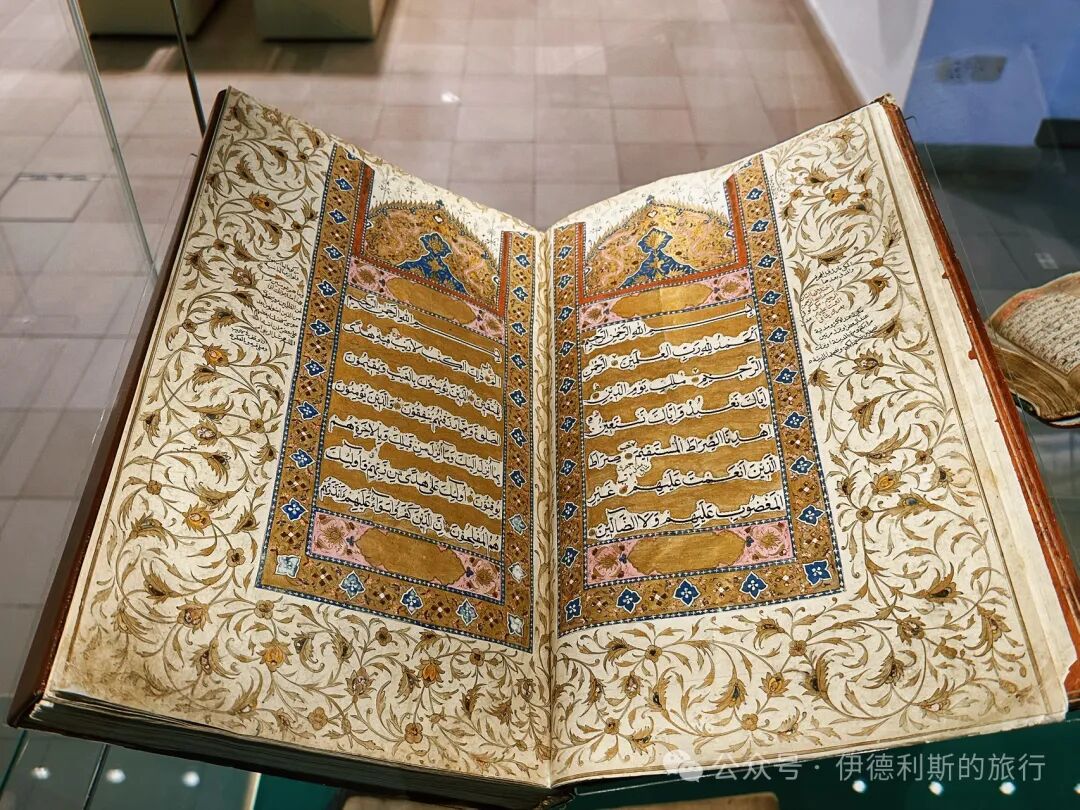
Ottoman Dynasty
Ottoman Turkey, 1848
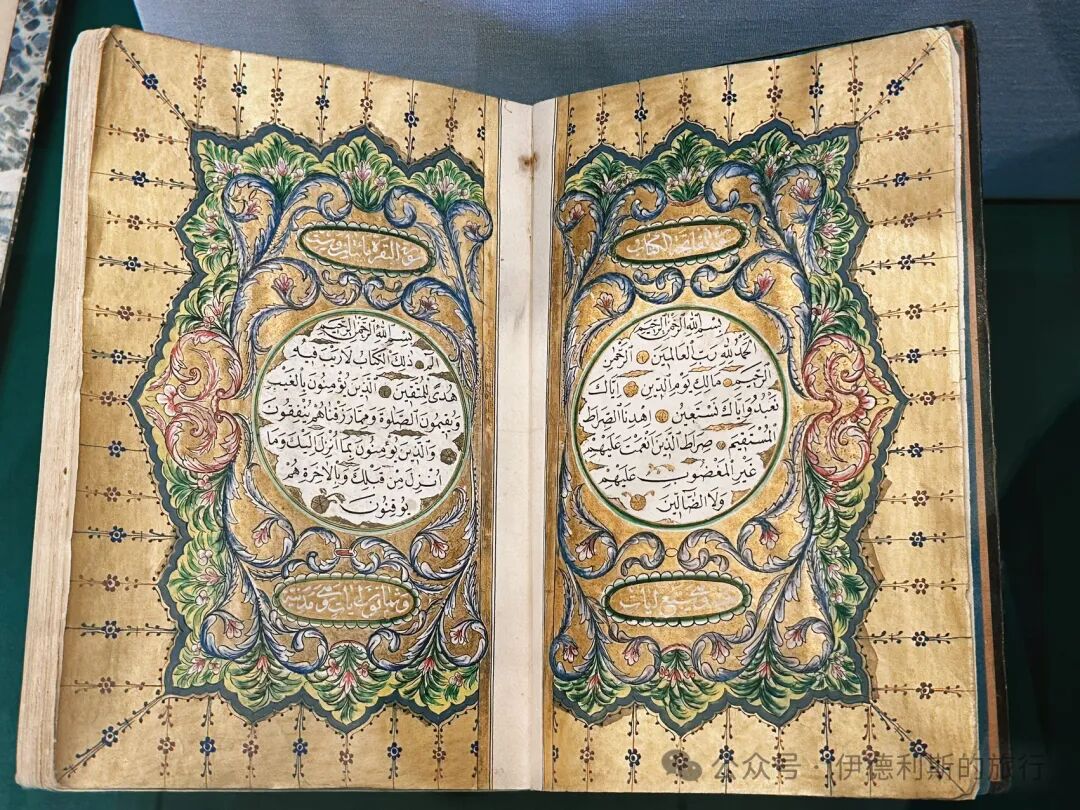
Ottoman Turkey, 1869
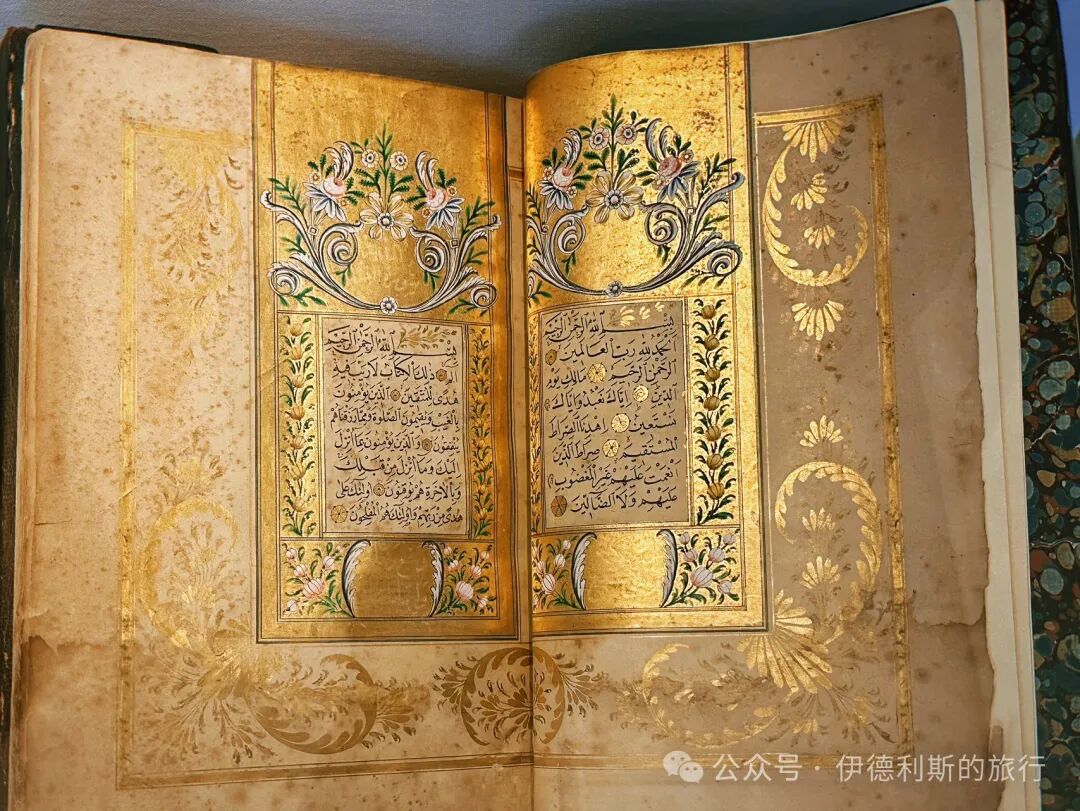
Ottoman Turkey, 1836-1837
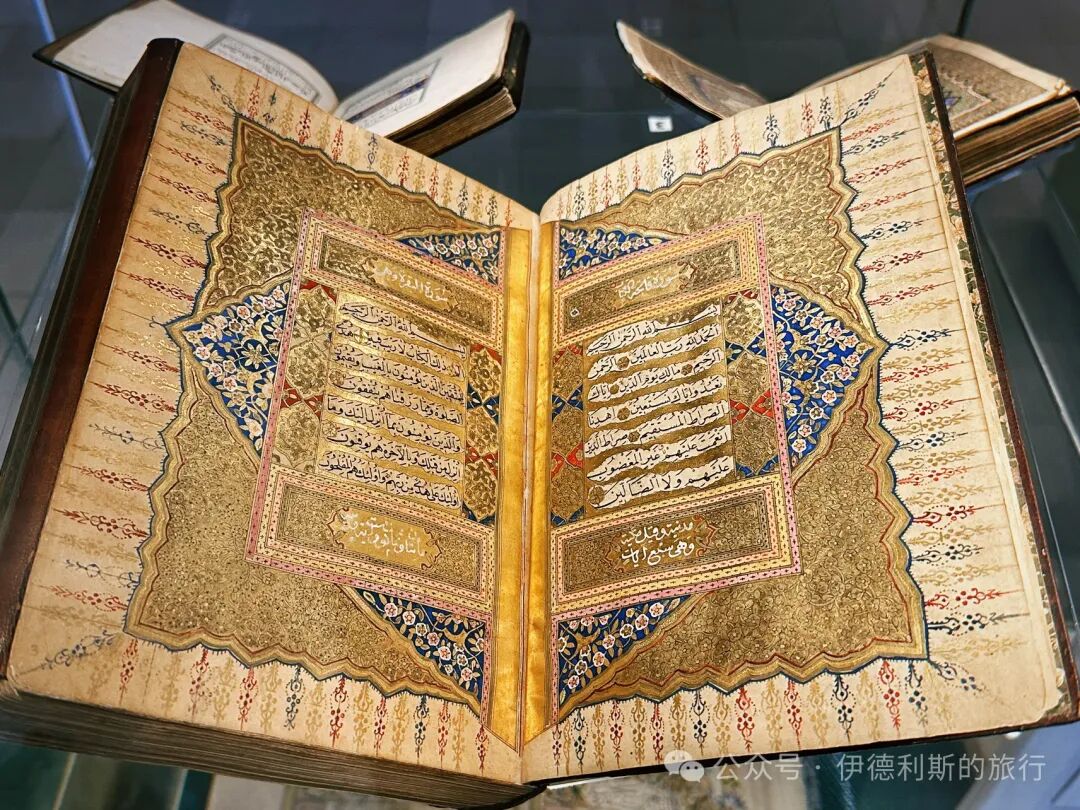
Ottoman Turkey, 17th century
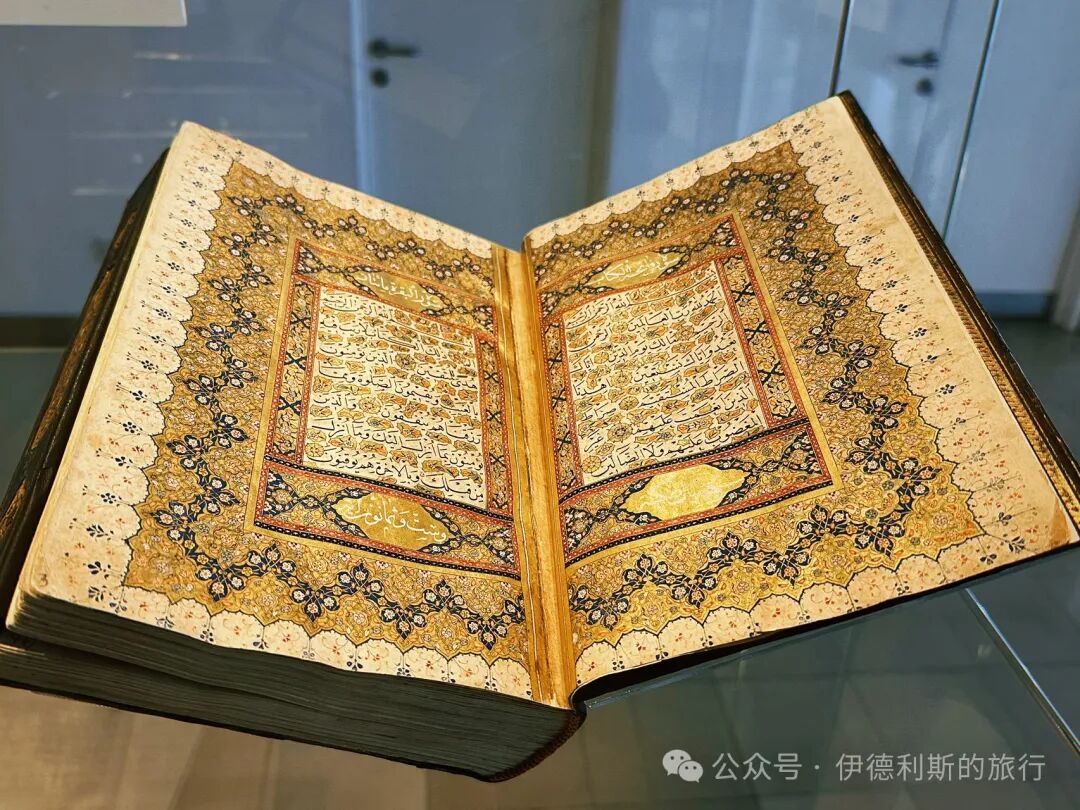
Ottoman Turkey, 1775
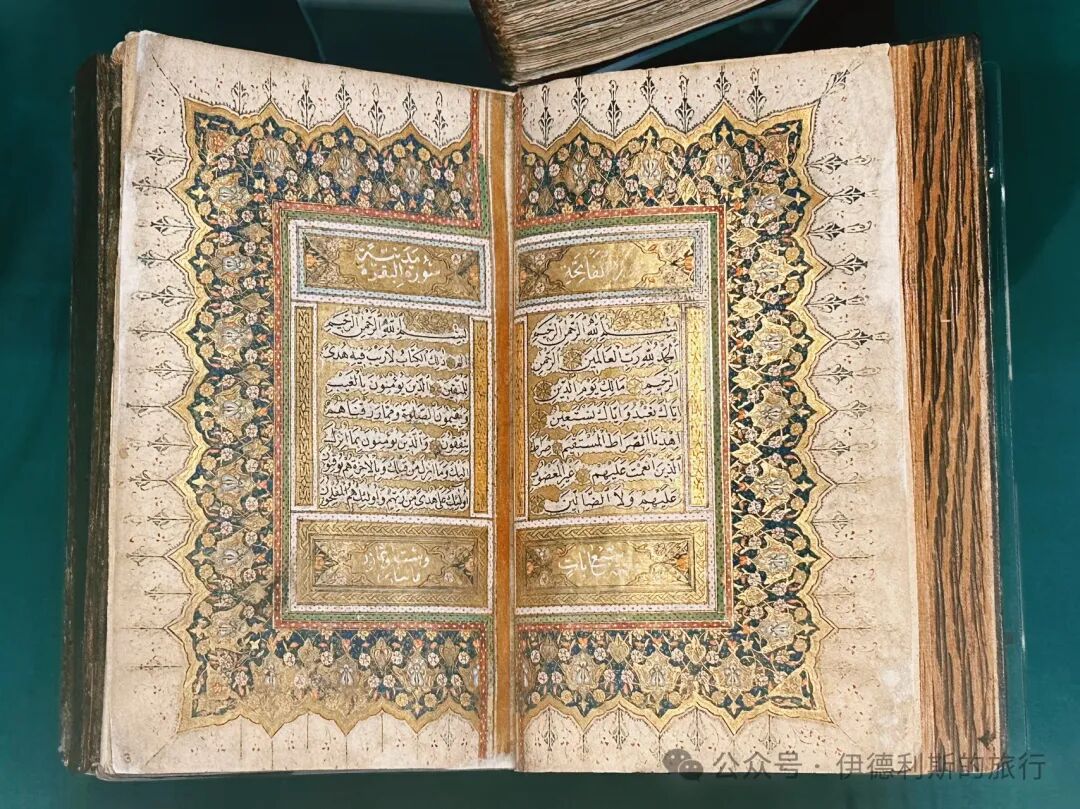
Ottoman Turkey, 1840
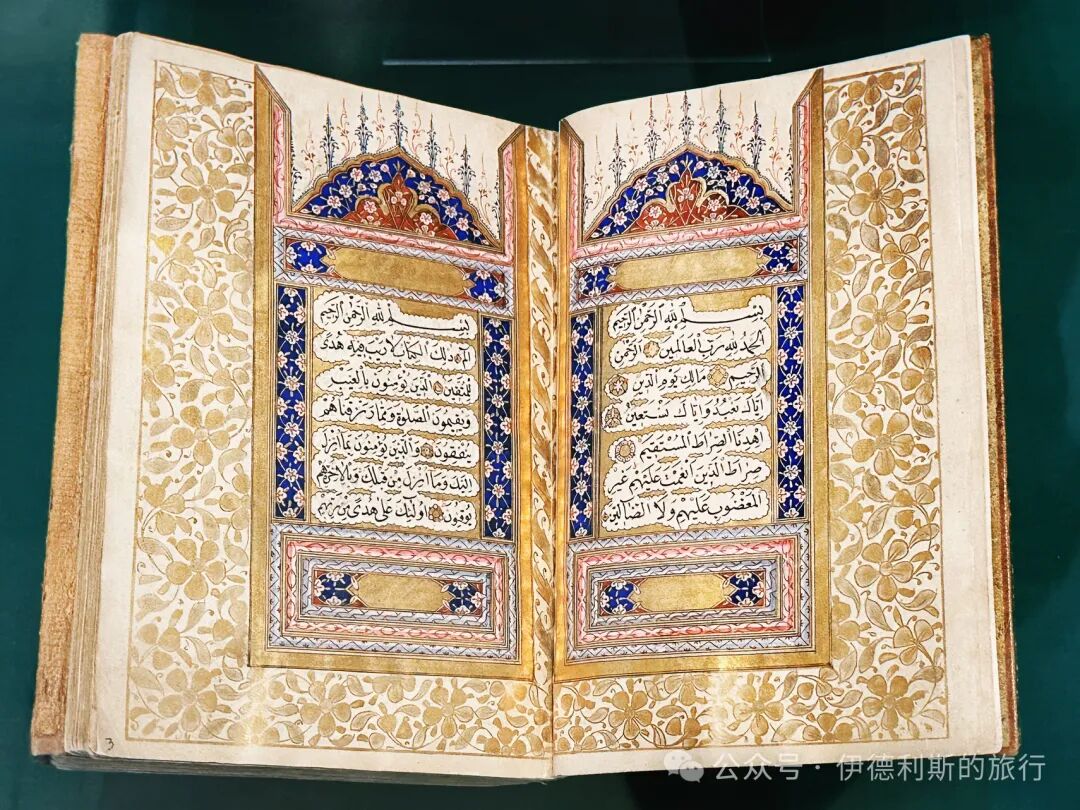
Ottoman Turkey, 1803-1804
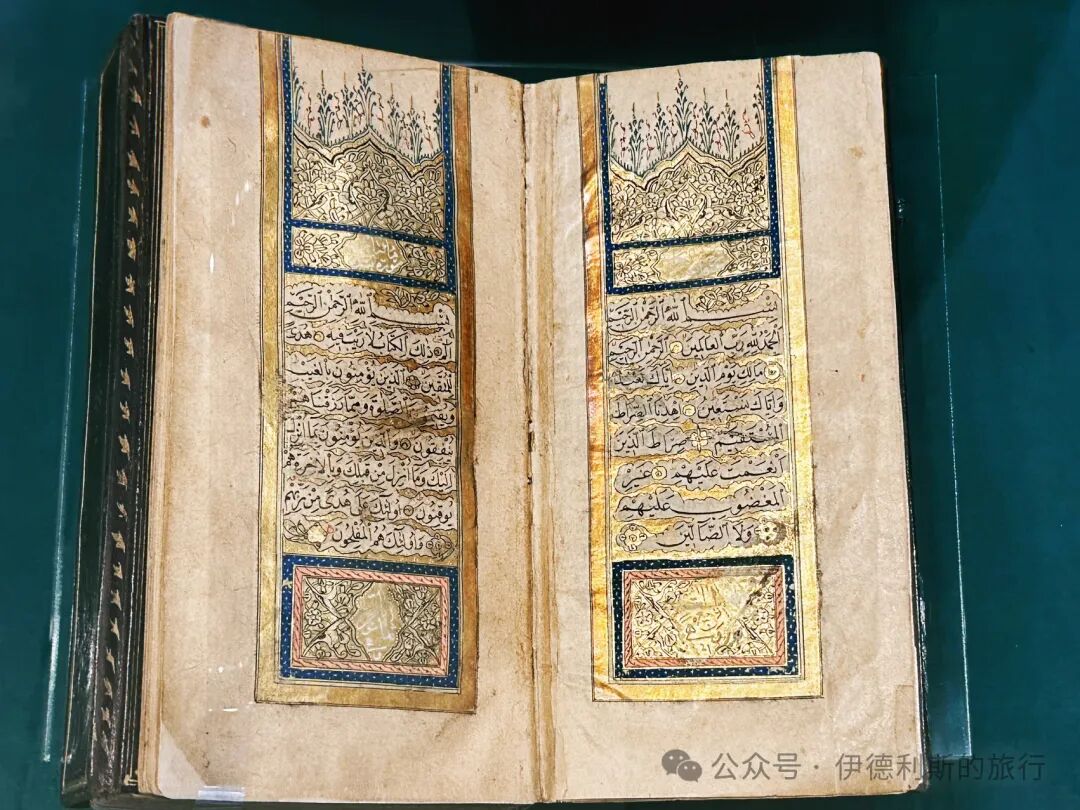
Ottoman Turkey, 1862-1863
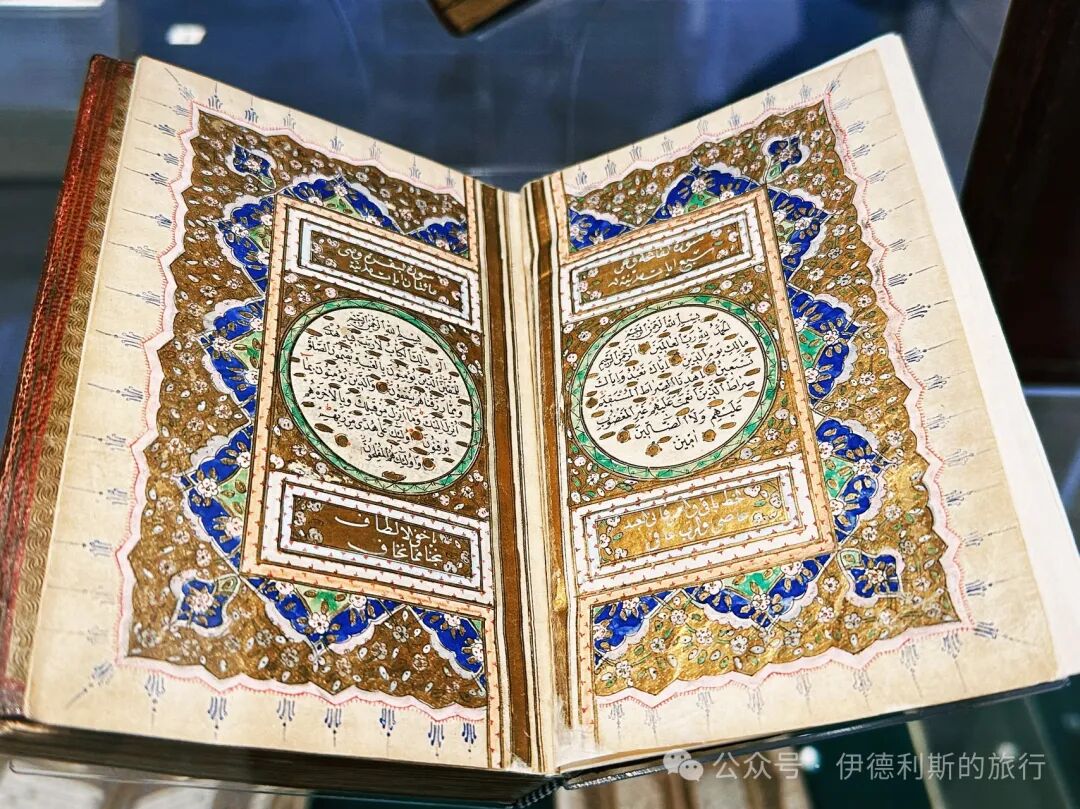
Ottoman Turkey, 1748-1749
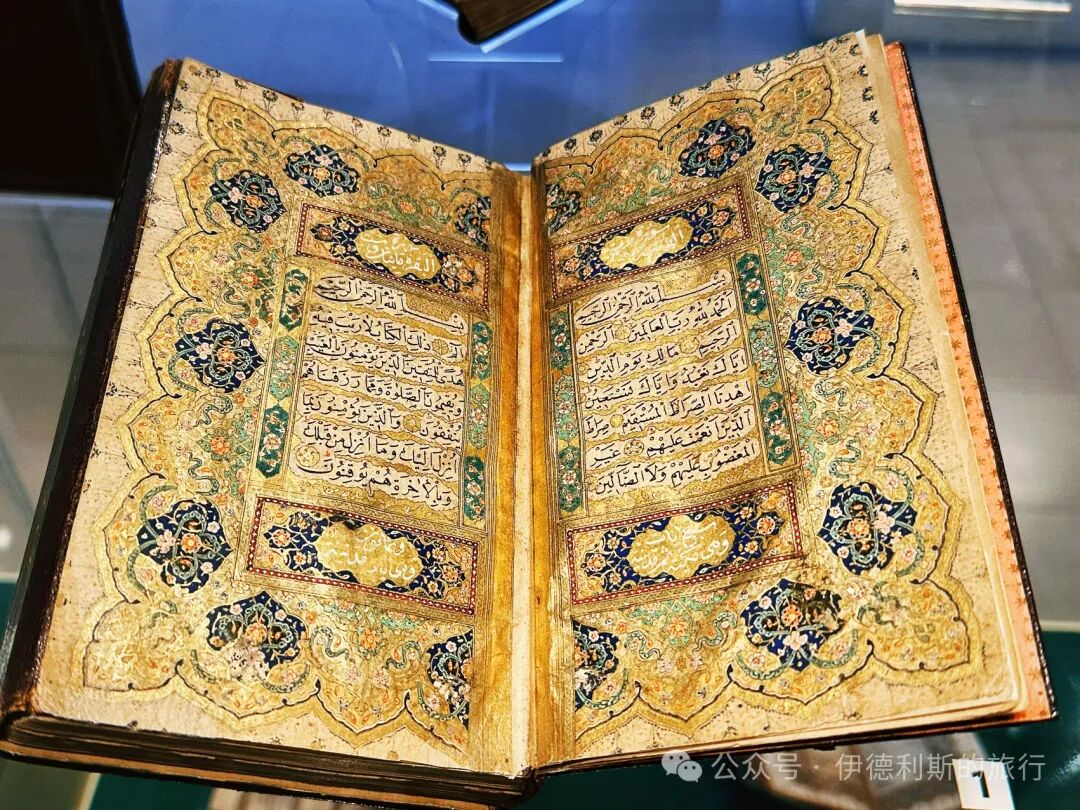
Ottoman Turkey, 1850
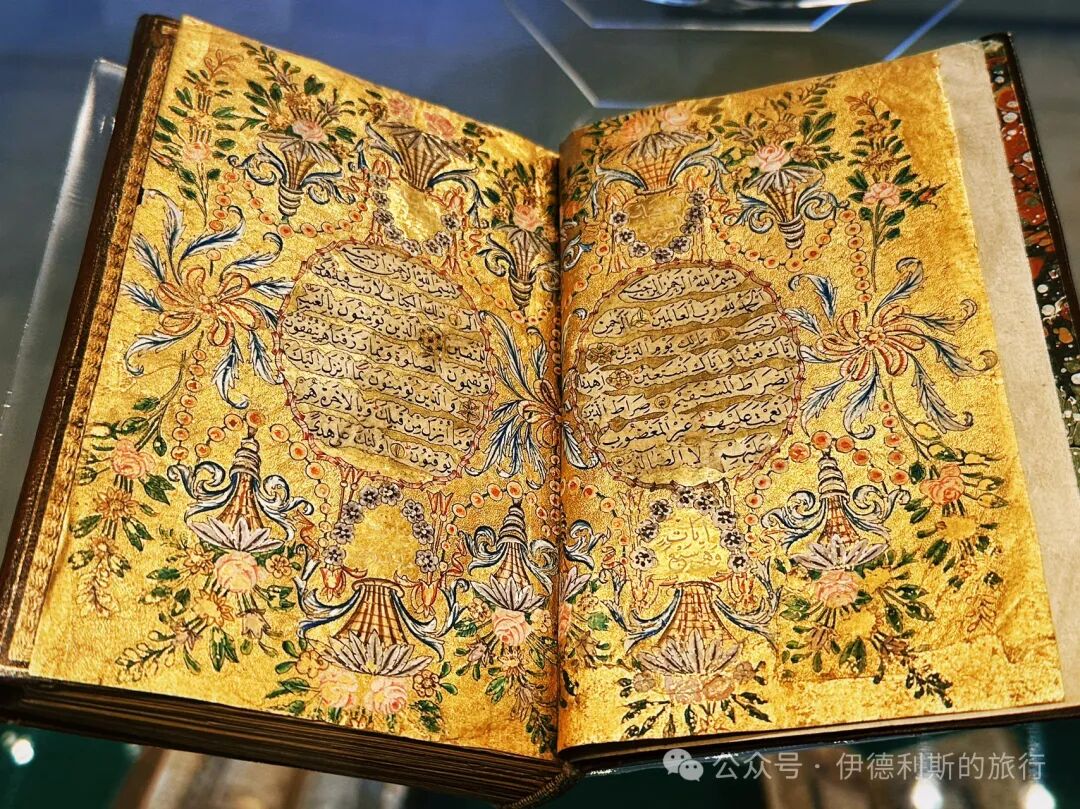
Ottoman Turkey, 1852
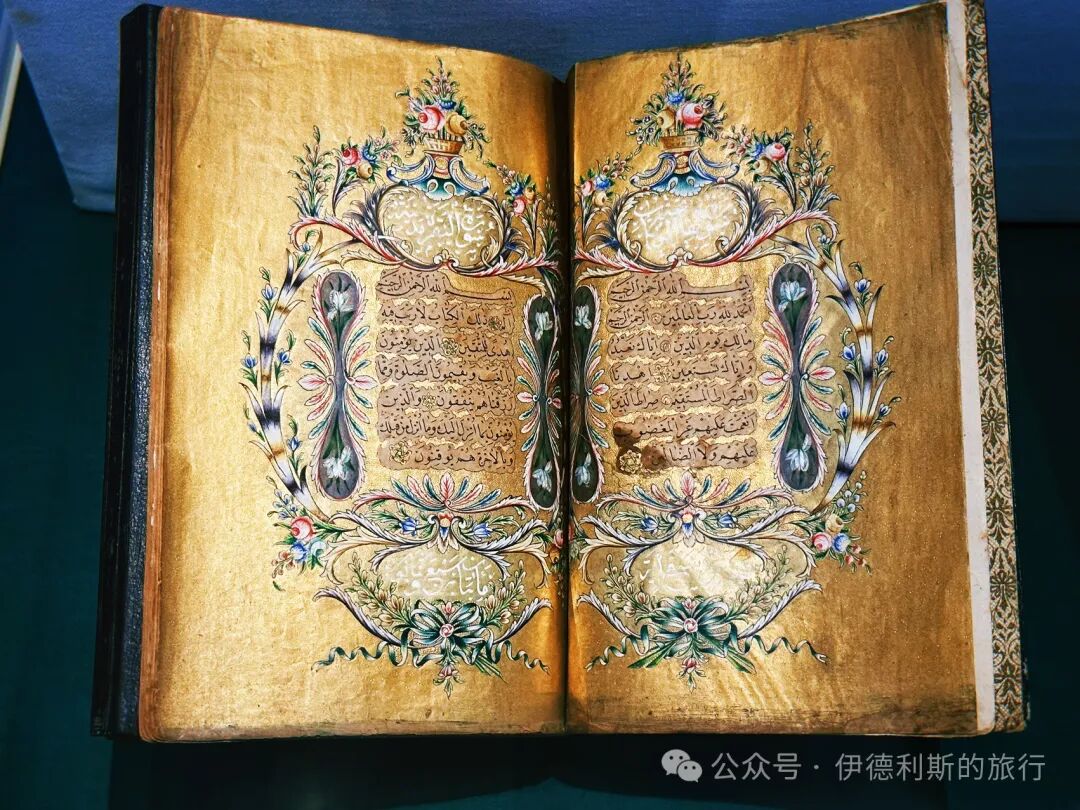
Ottoman Turkey, 1843-1844
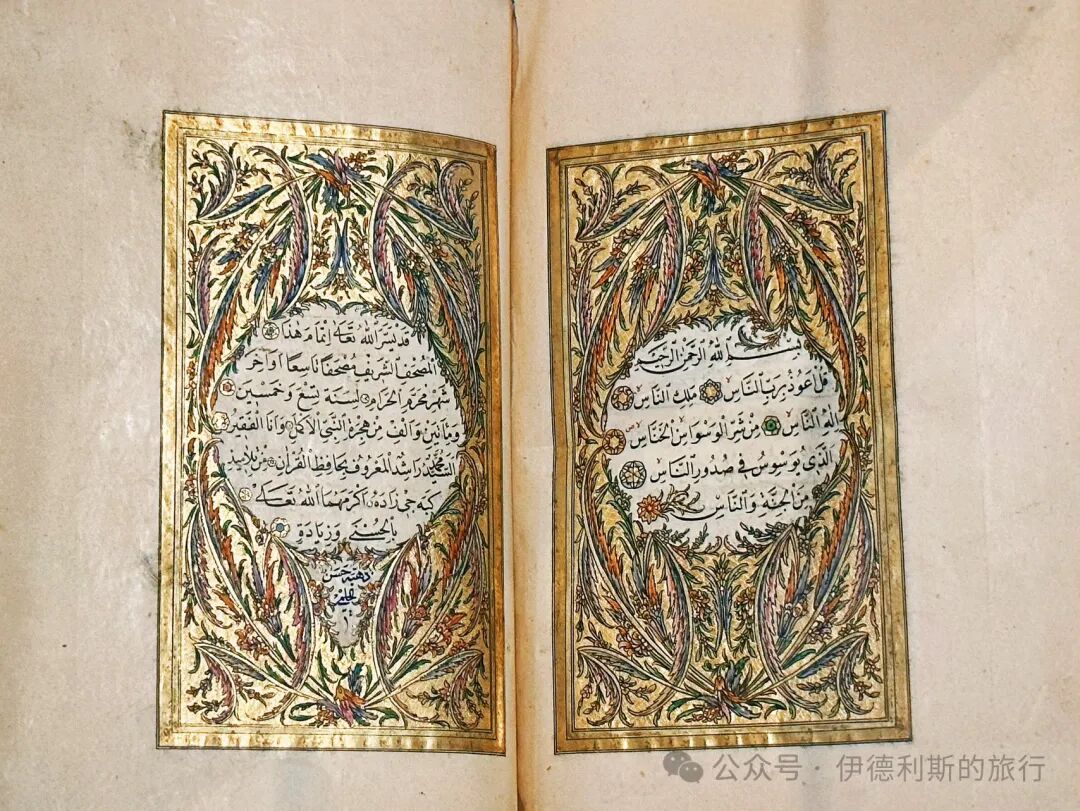
Mamluk Sultanate
Mamluk Sultanate, Egypt or Syria, 14th-15th century
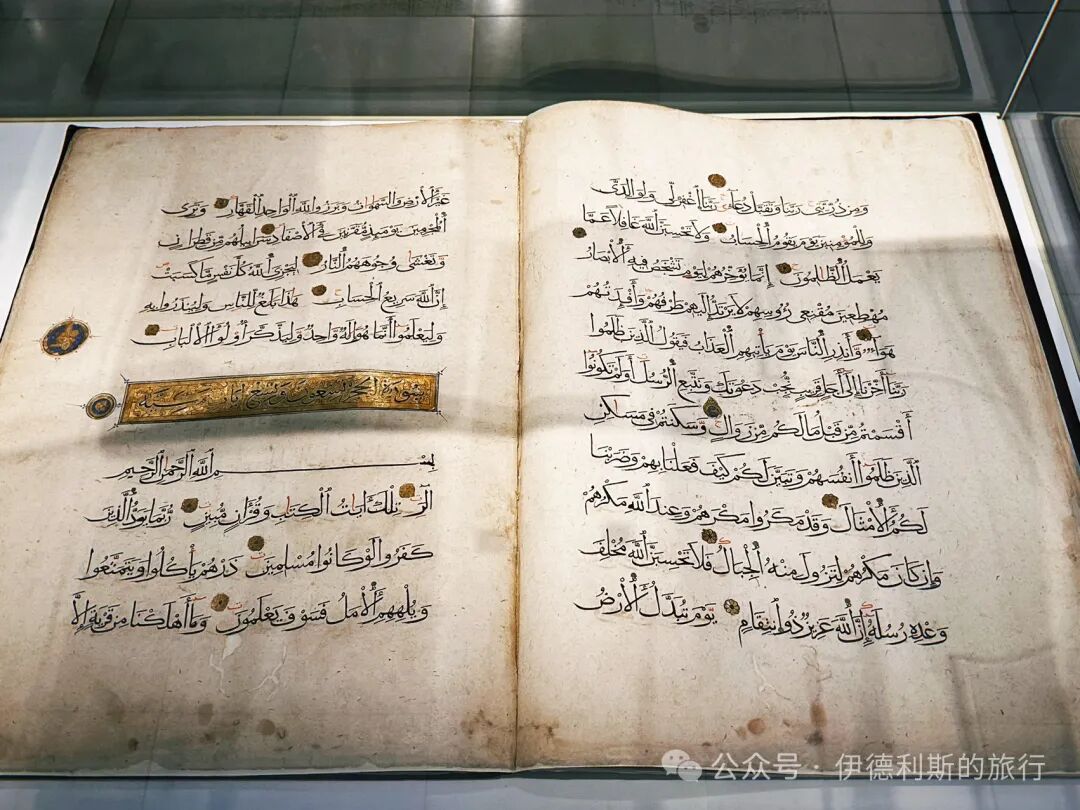
Mamluk Sultanate, Egypt, 14th century
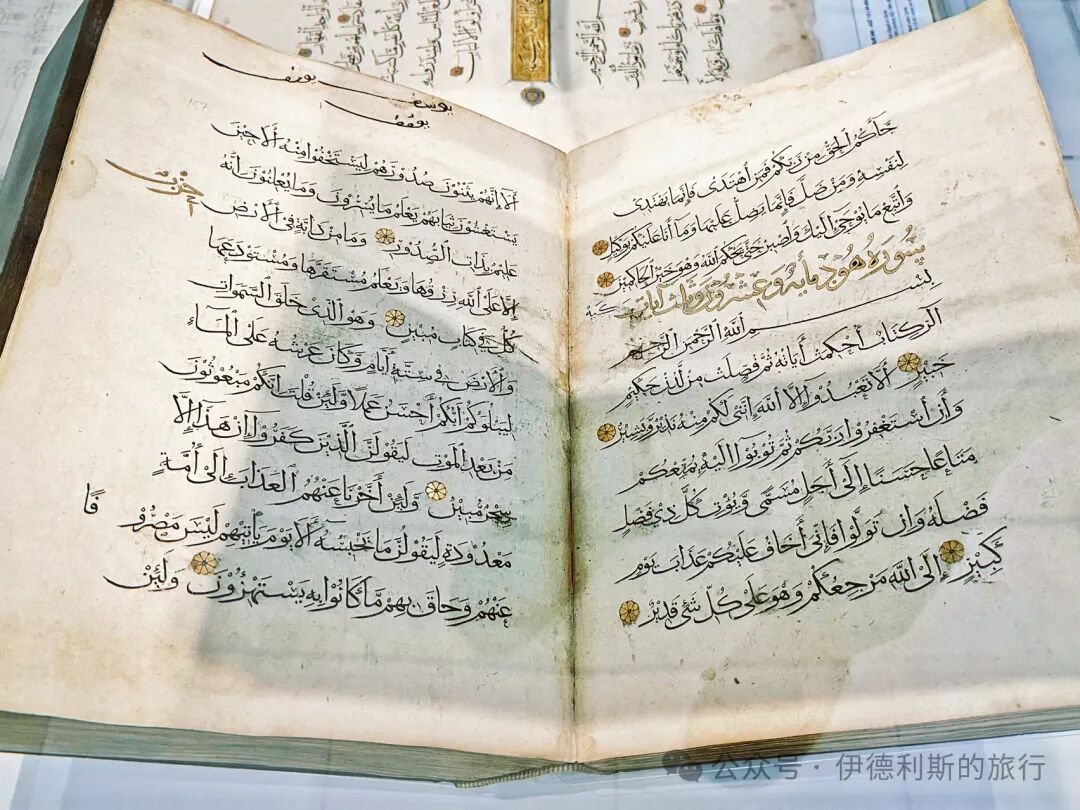
Mamluk Sultanate, Egypt, 15th century
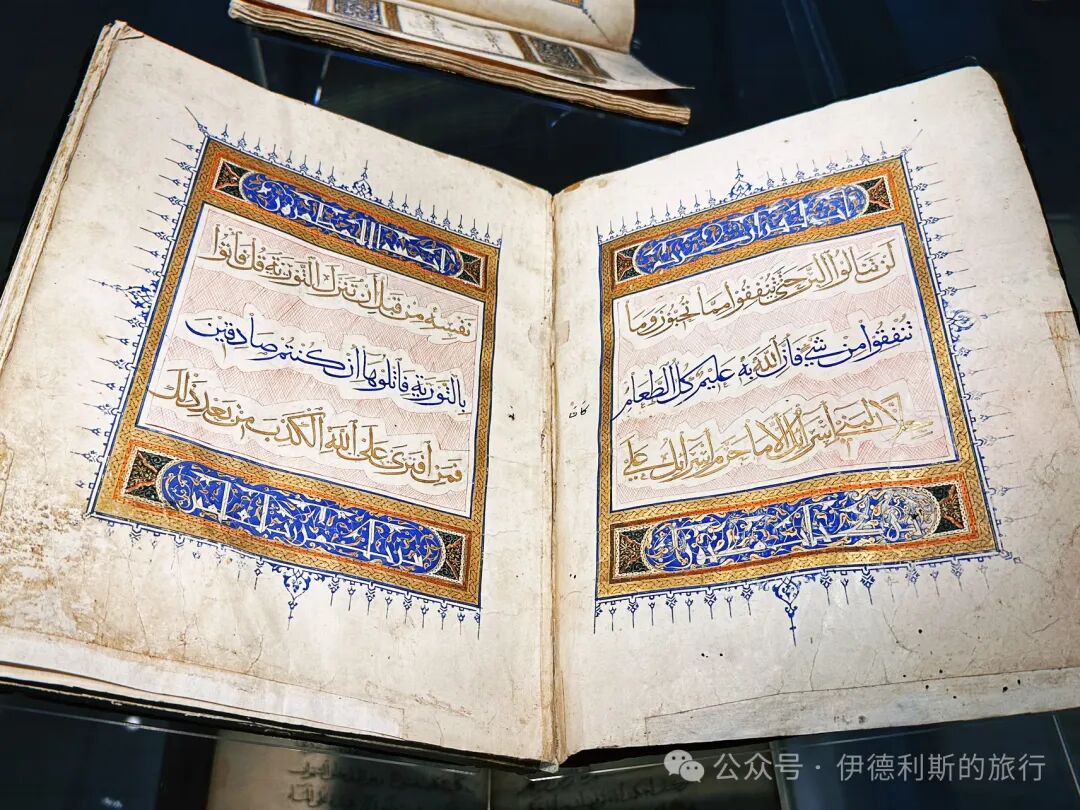
Mamluk Sultanate, Egypt or Syria, 14th century
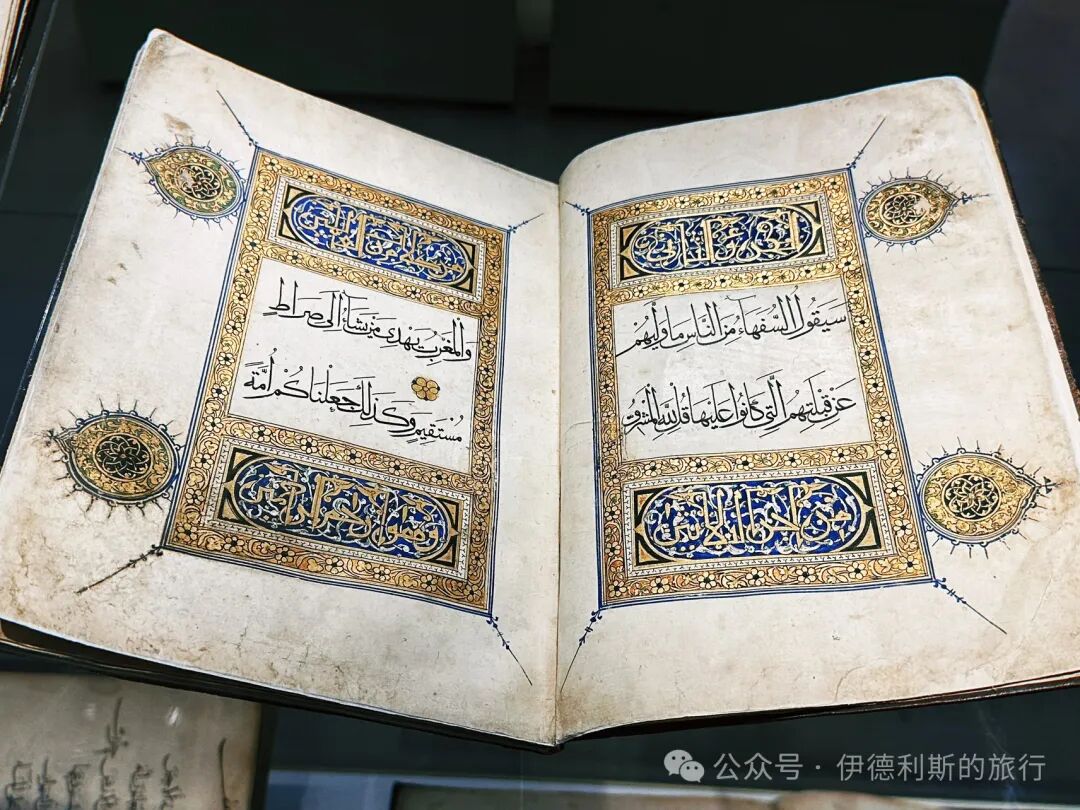
Mamluk Sultanate, Egypt, 14th century
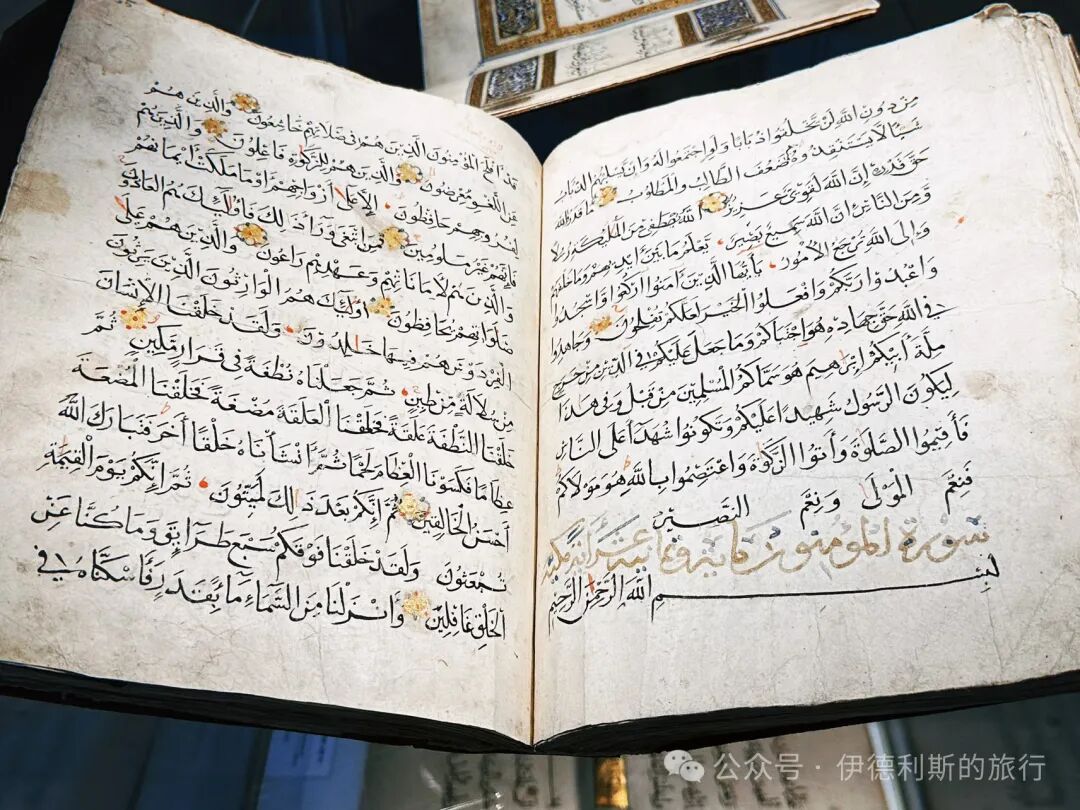
China
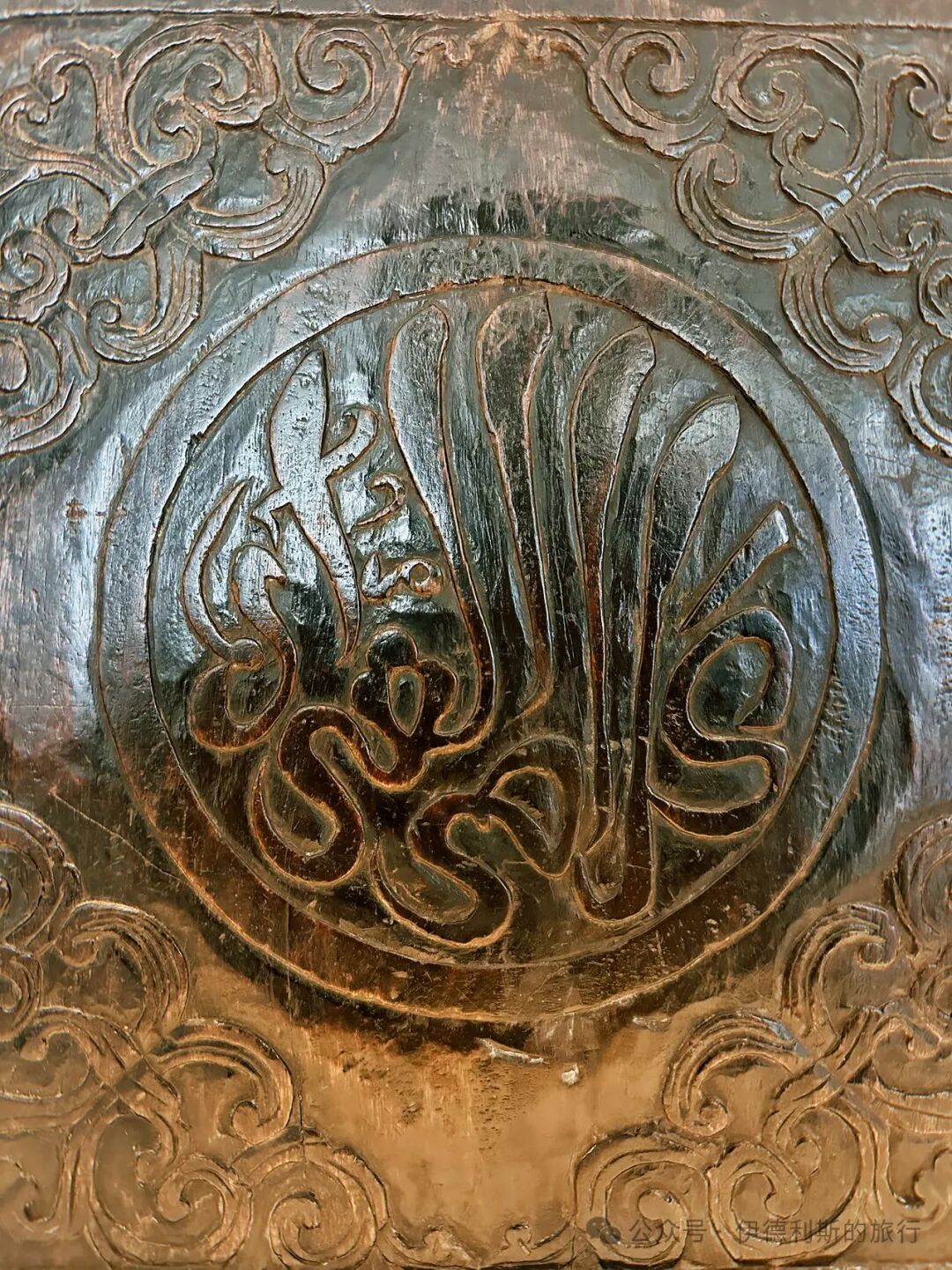
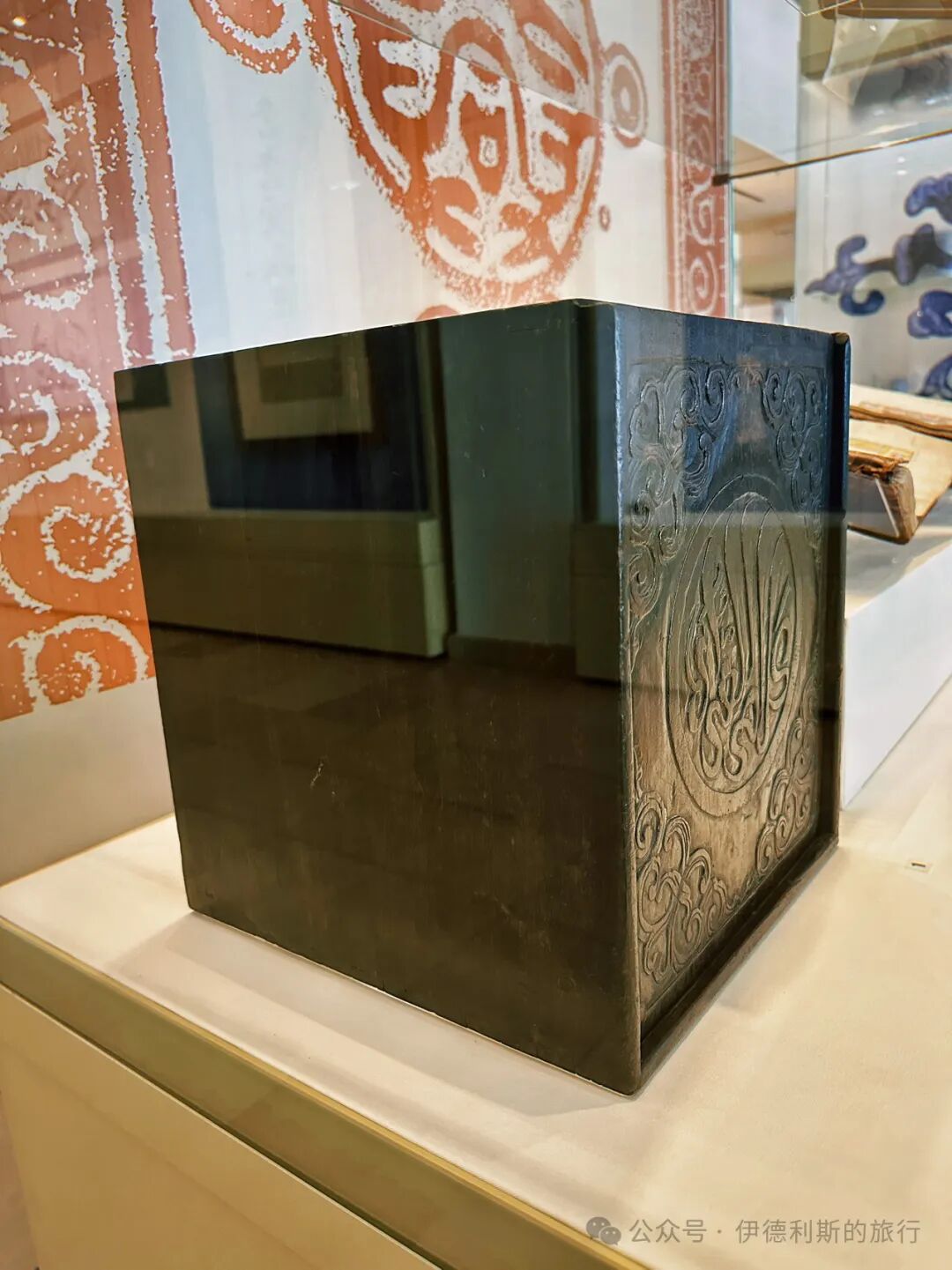
Copied in 1730, with a traditional scripture case
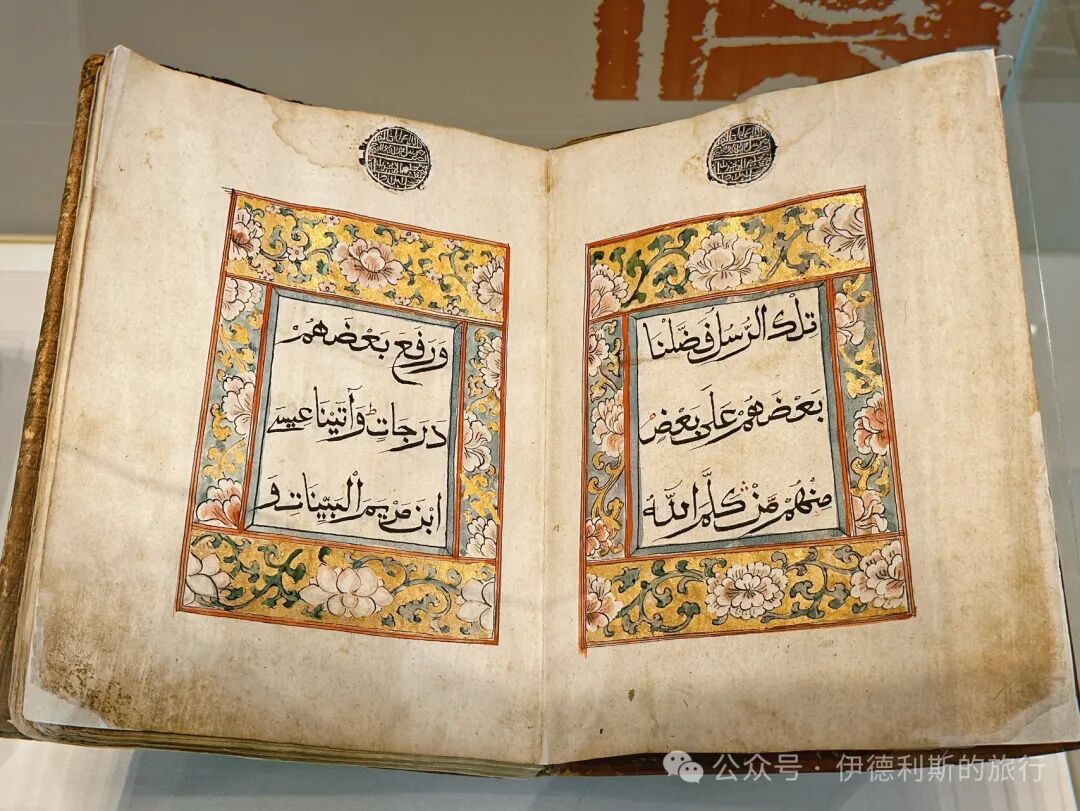
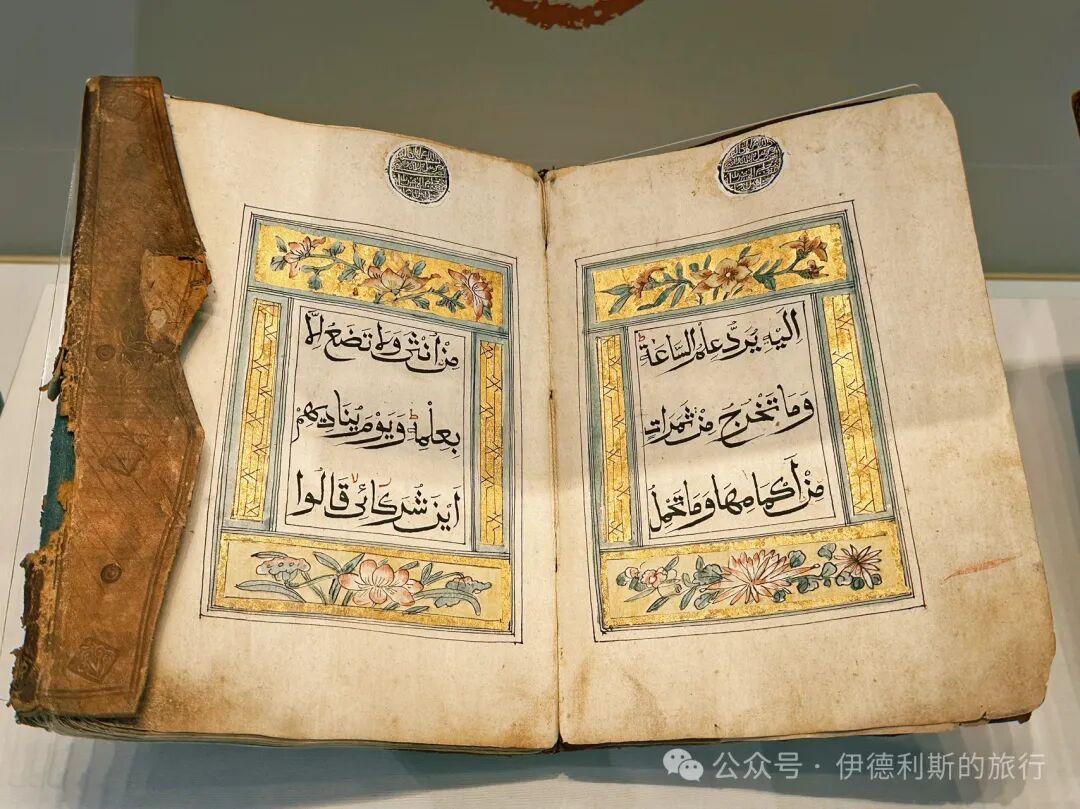
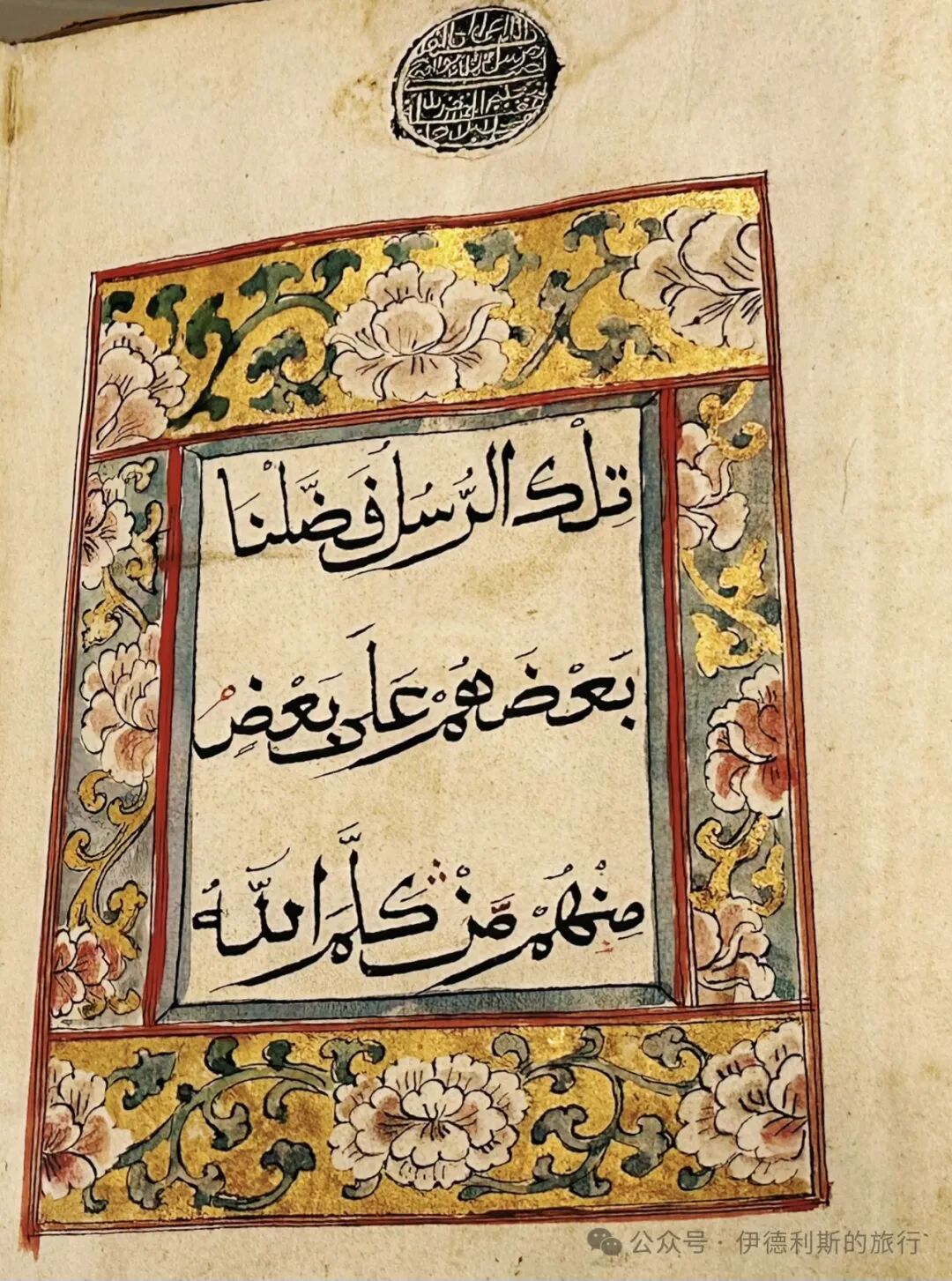
Said to be a hand-copied scripture from the Ming Dynasty
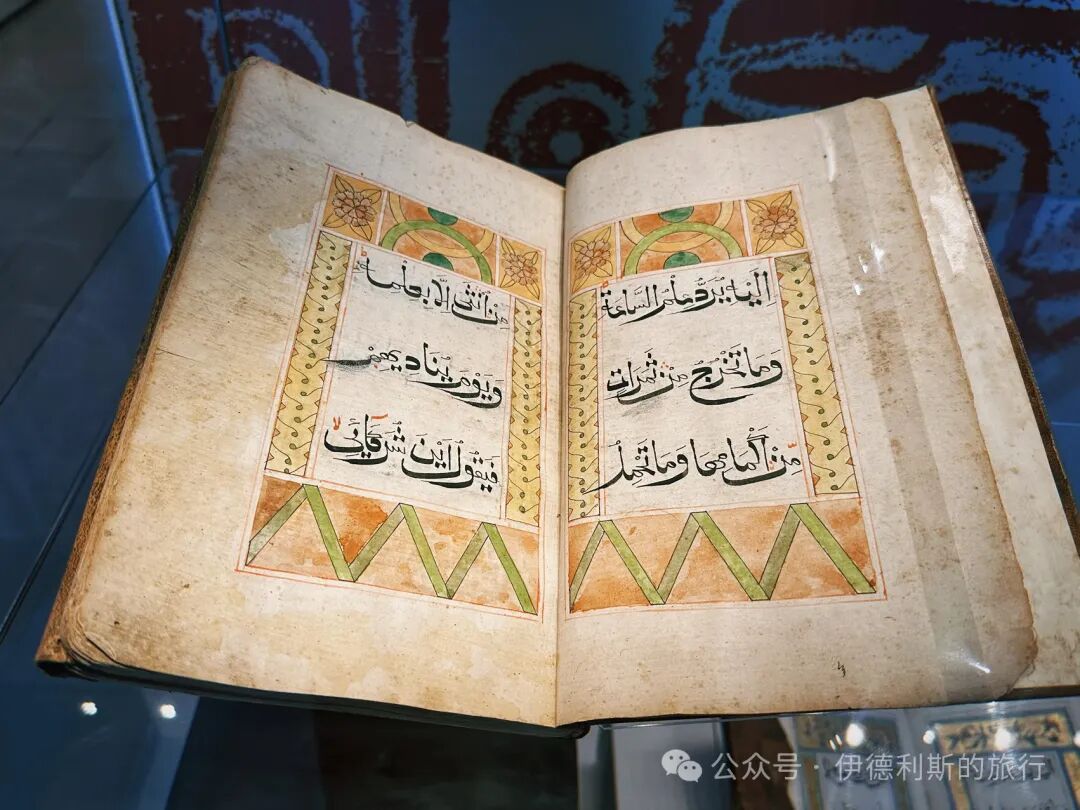
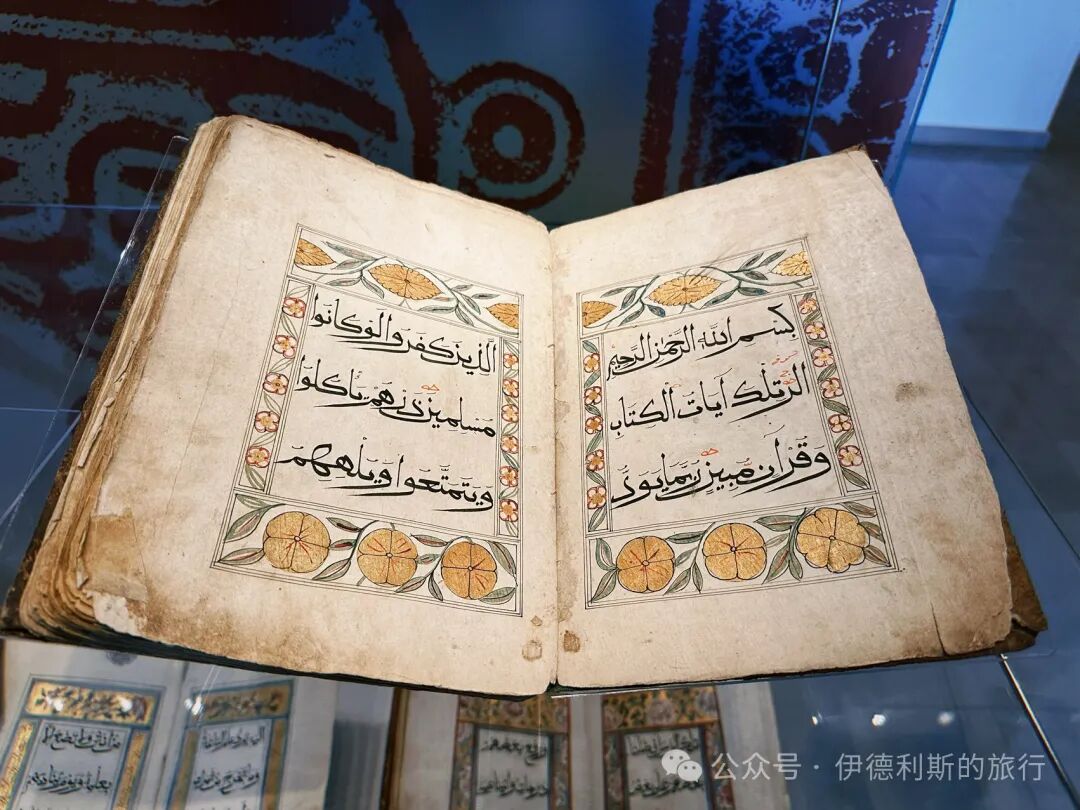
China, 17th century
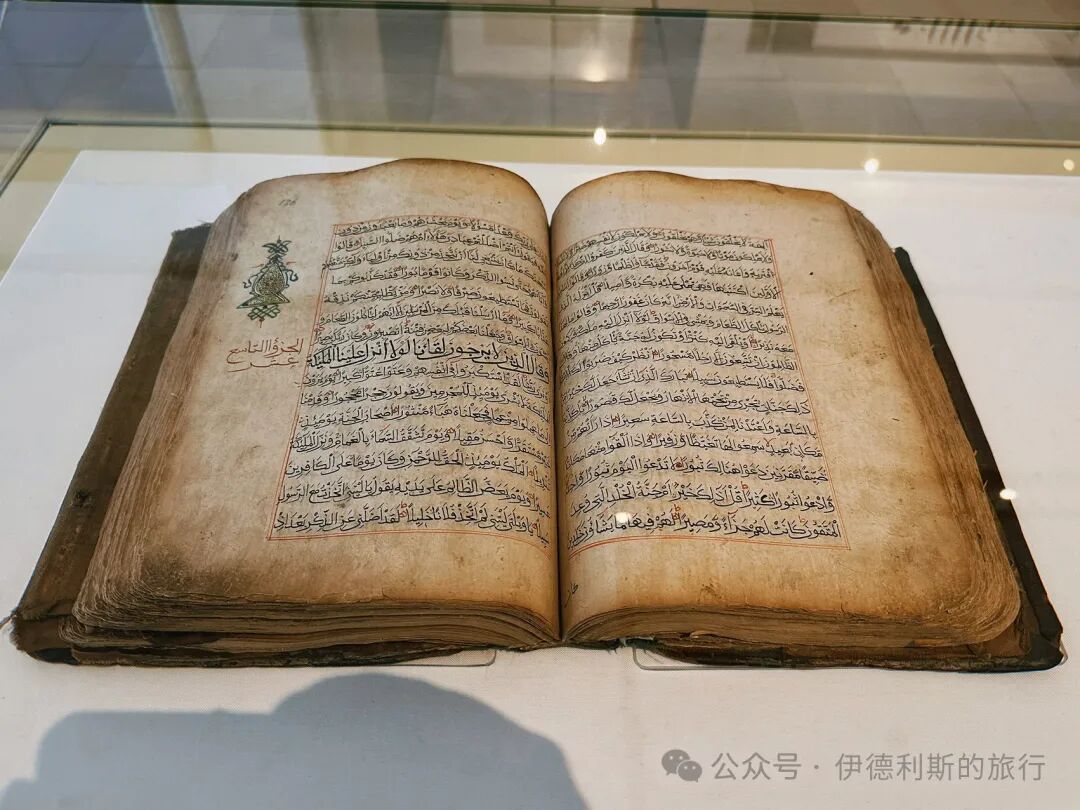
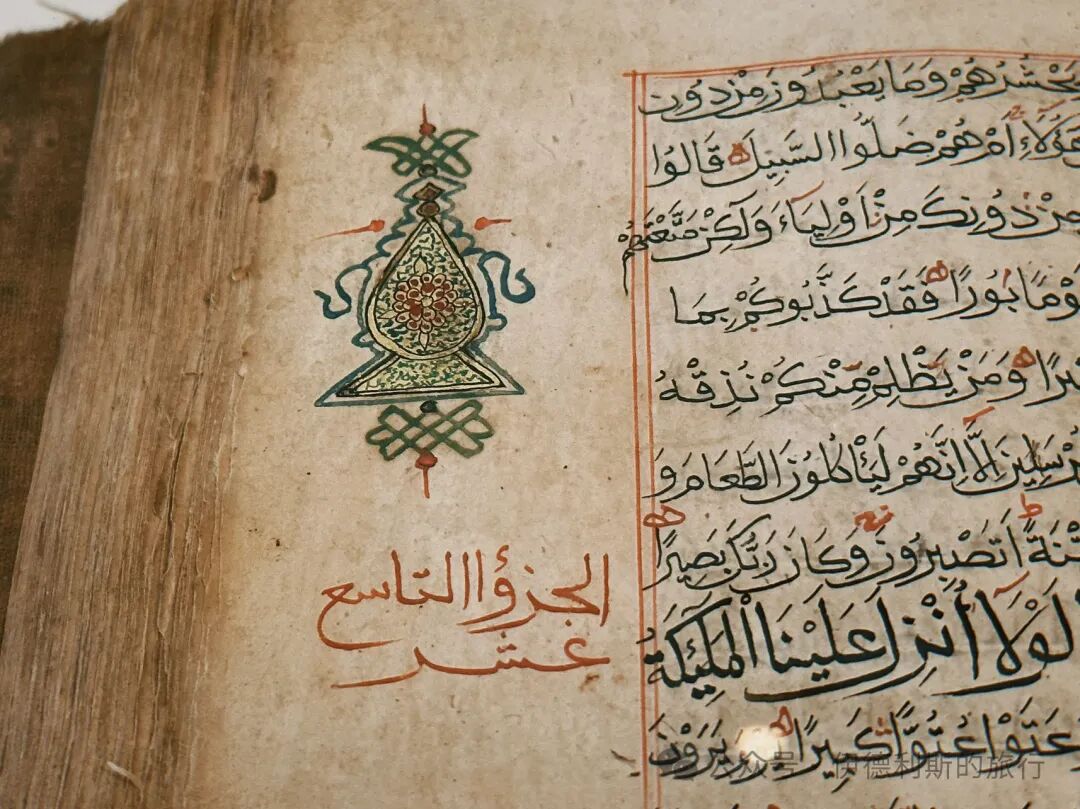
China, 17th century
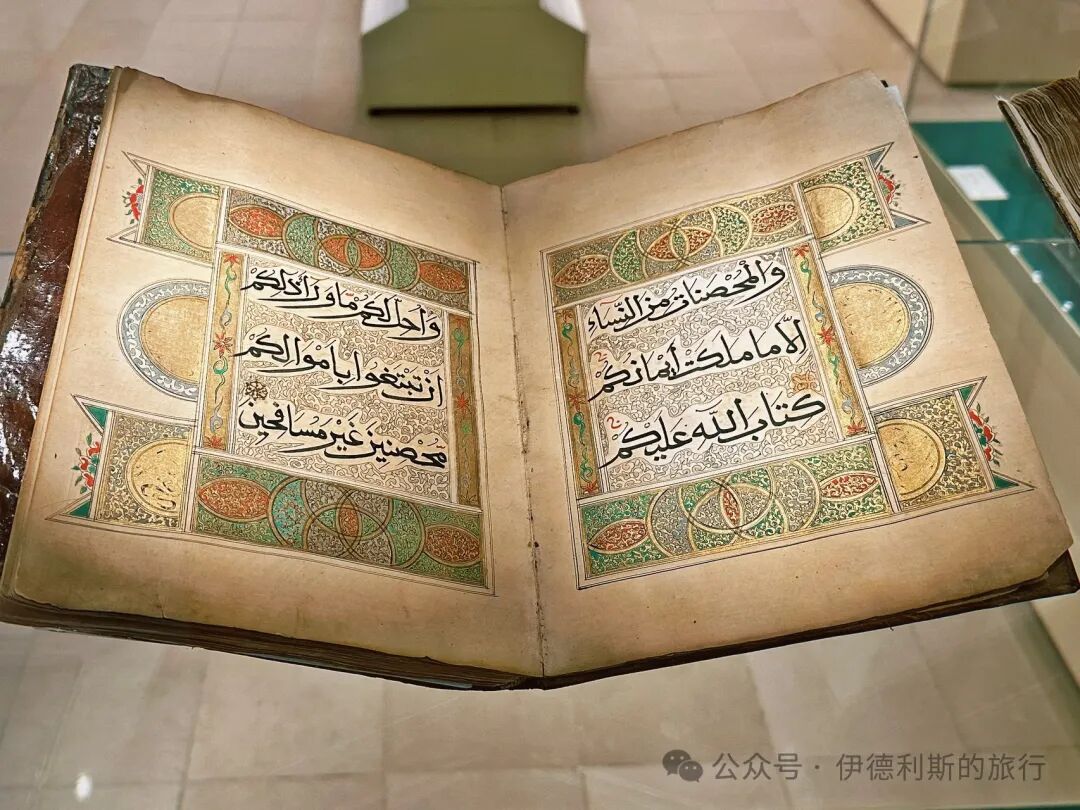
Malay Peninsula, 18th-19th century
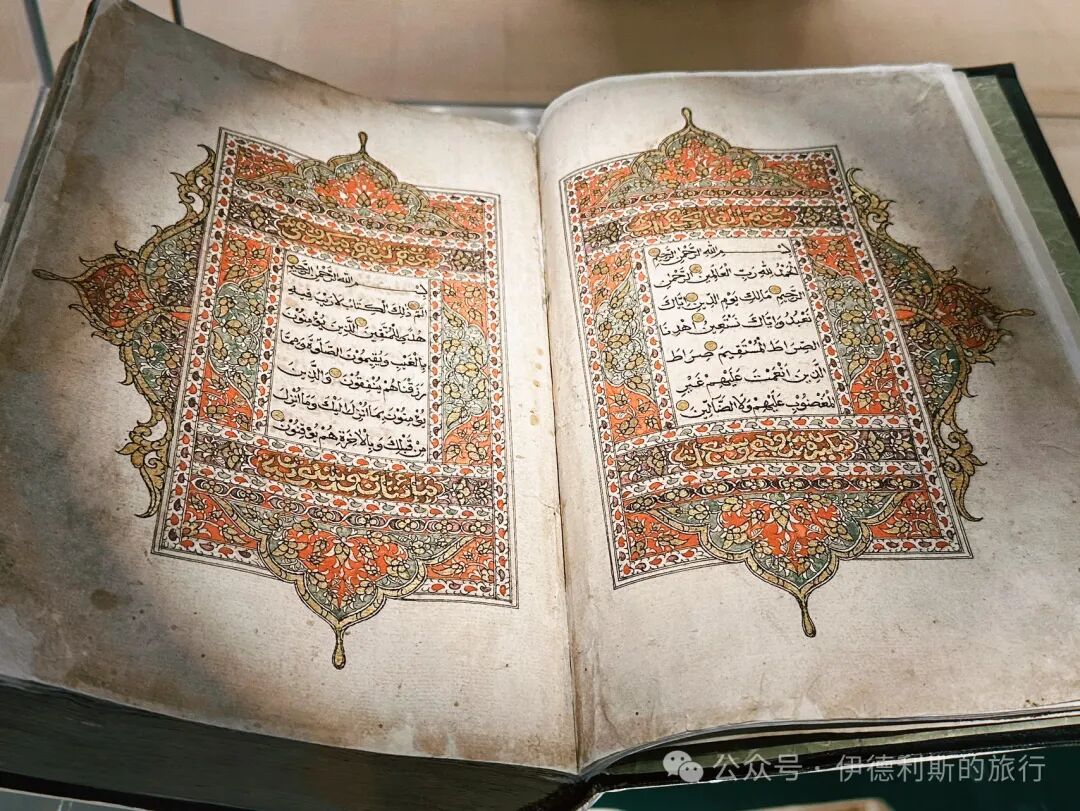
Terengganu, Malaysia, 19th century
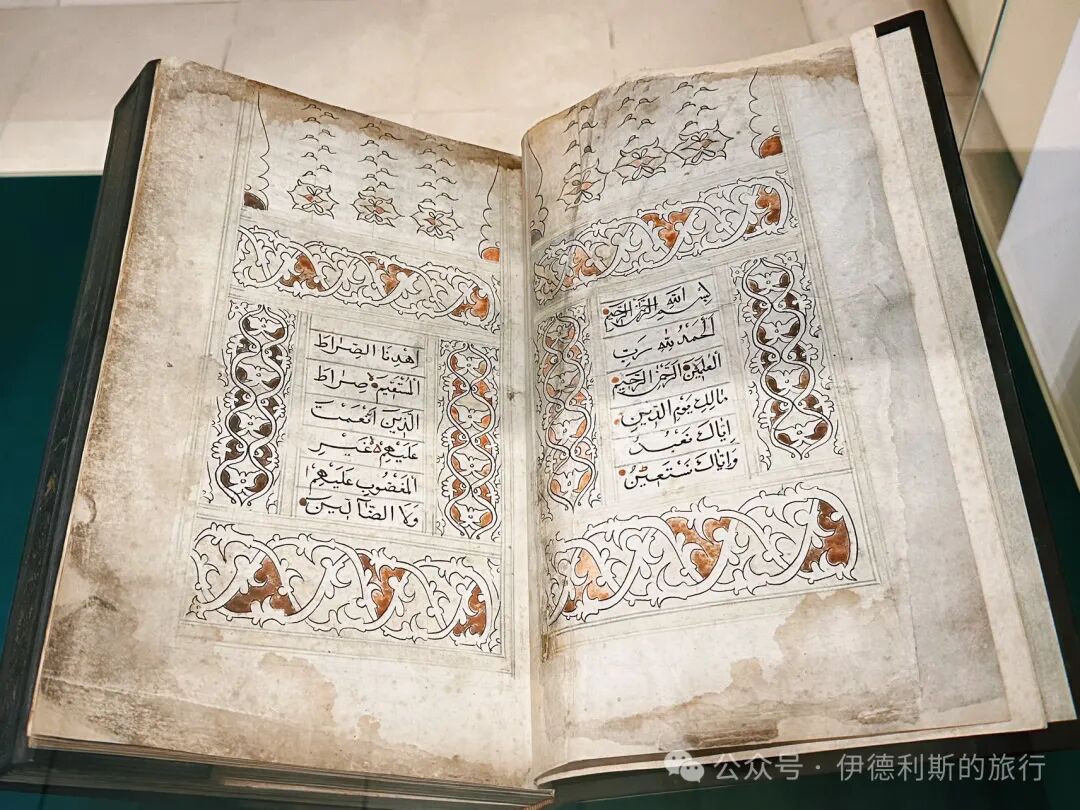
Indonesia
Java, 19th century
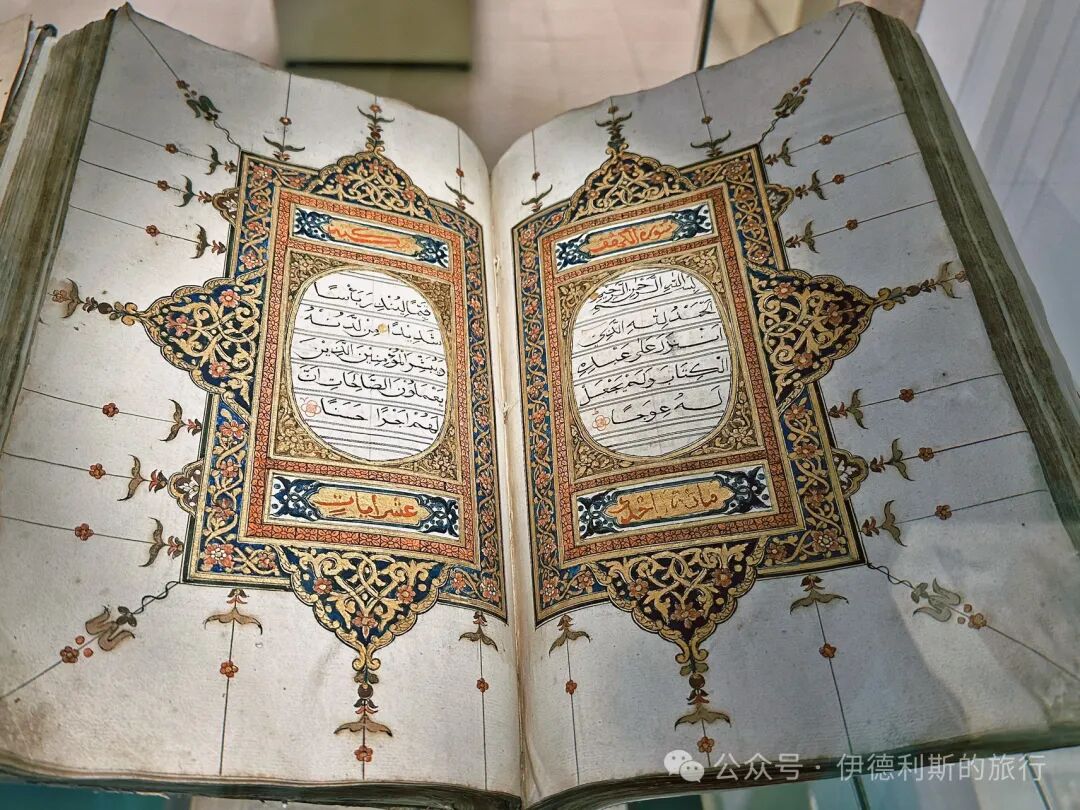
Possibly Indonesia, 1818.
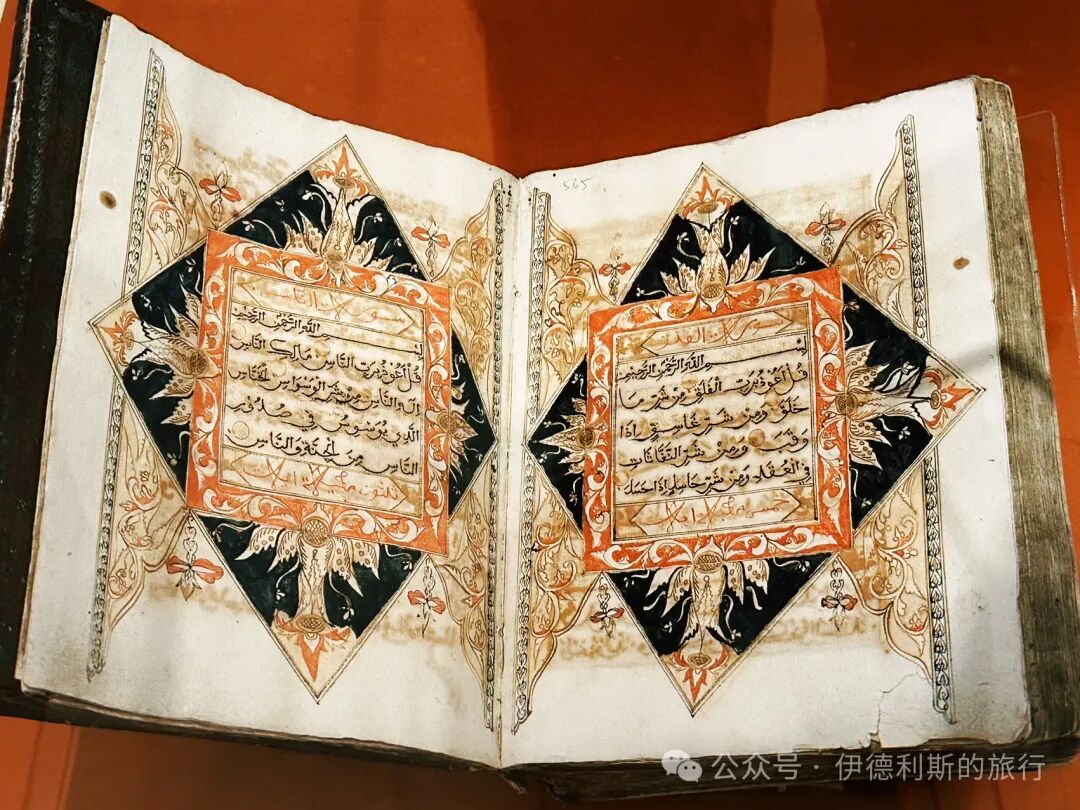
Possibly Indonesia, 1818.
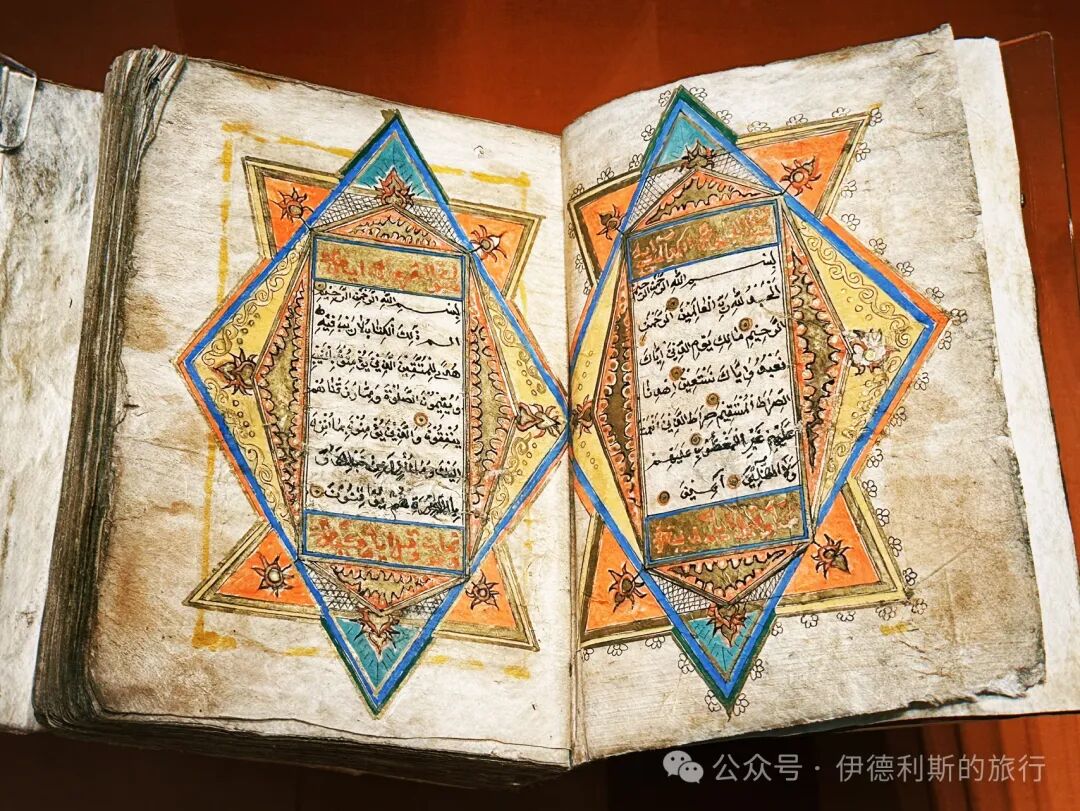
Java Island, 1845.
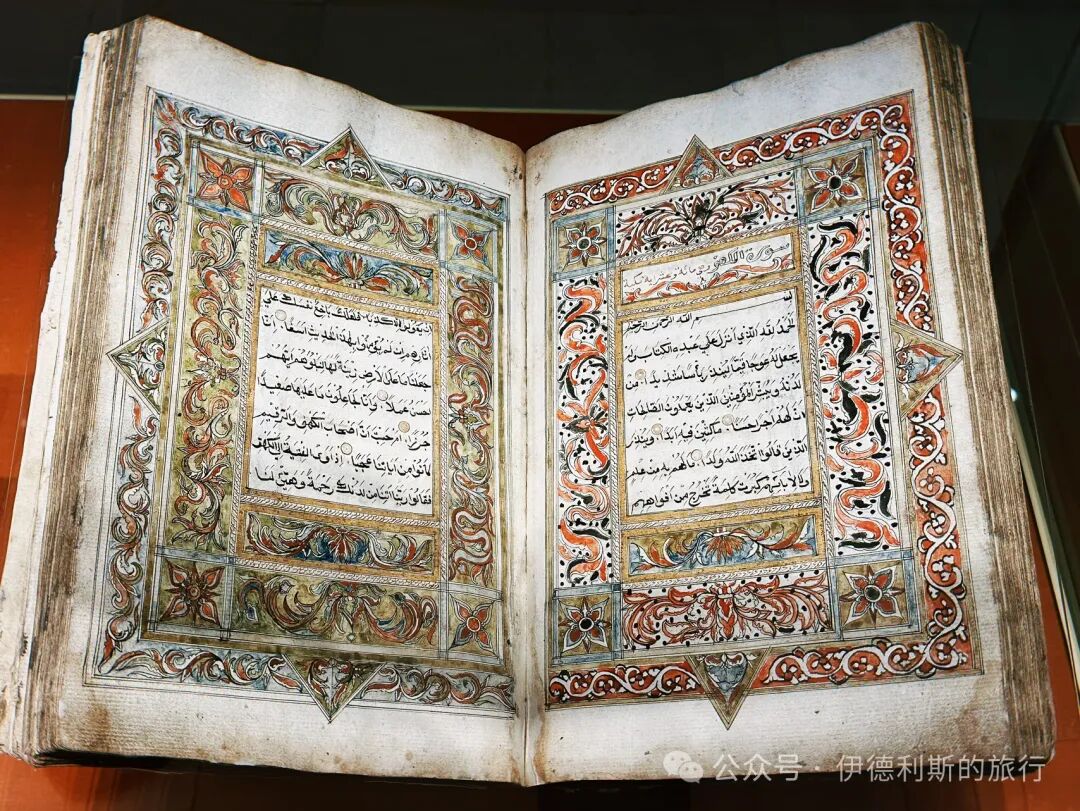
Possibly Cirebon, Java Island, 19th century.
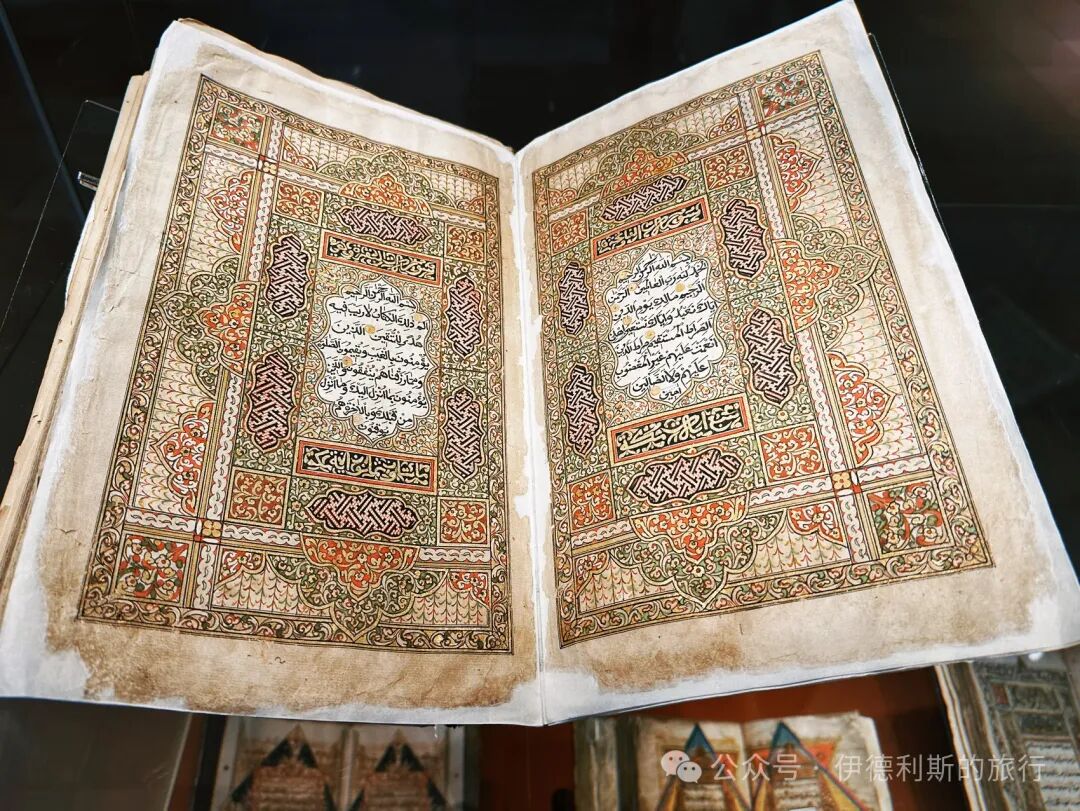
Java, 19th century
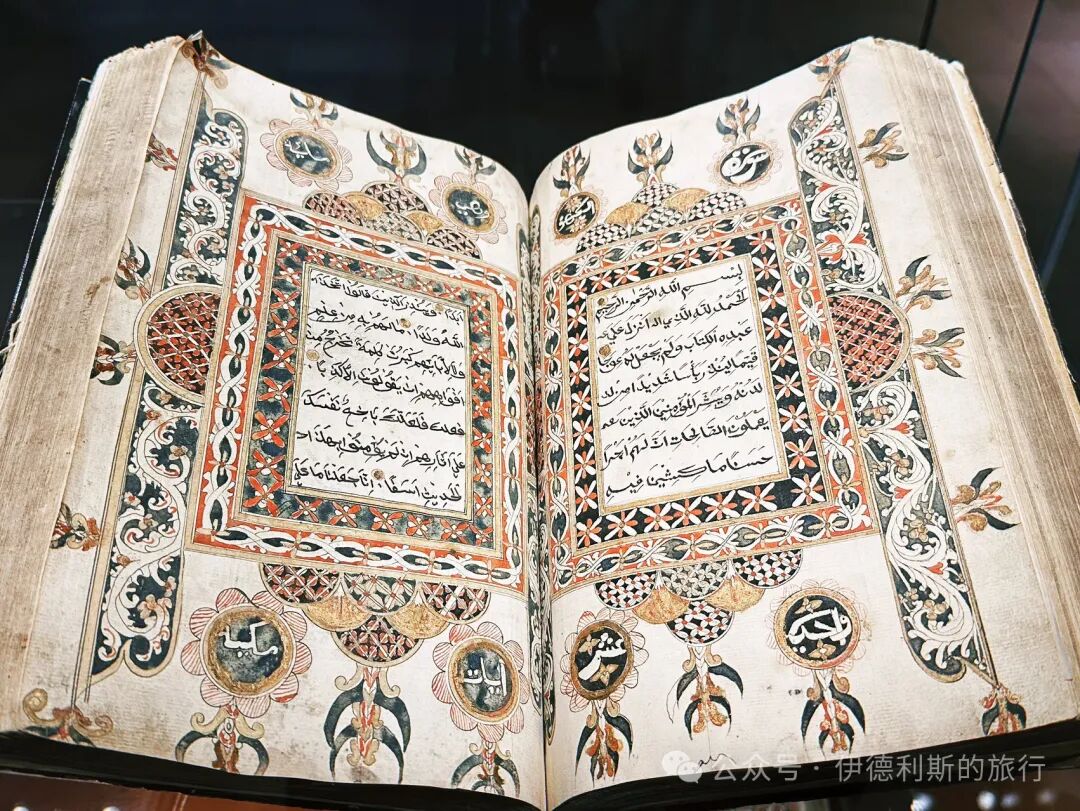
Java, 19th century
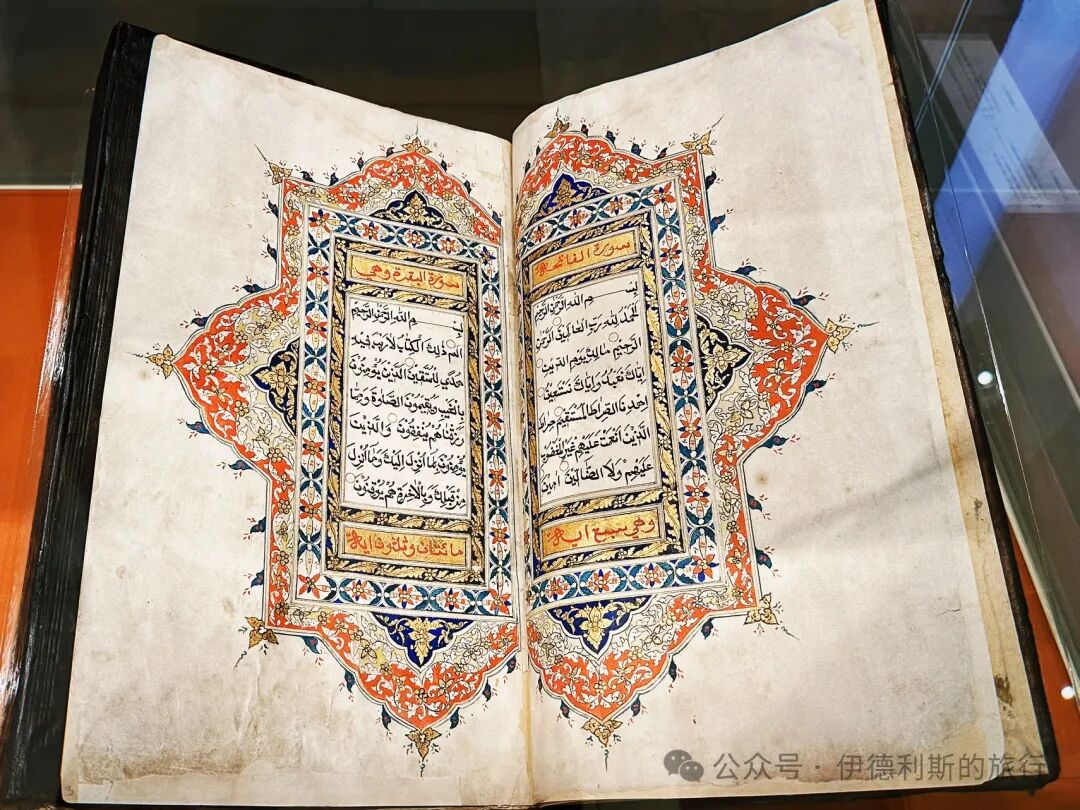
Java, 19th century
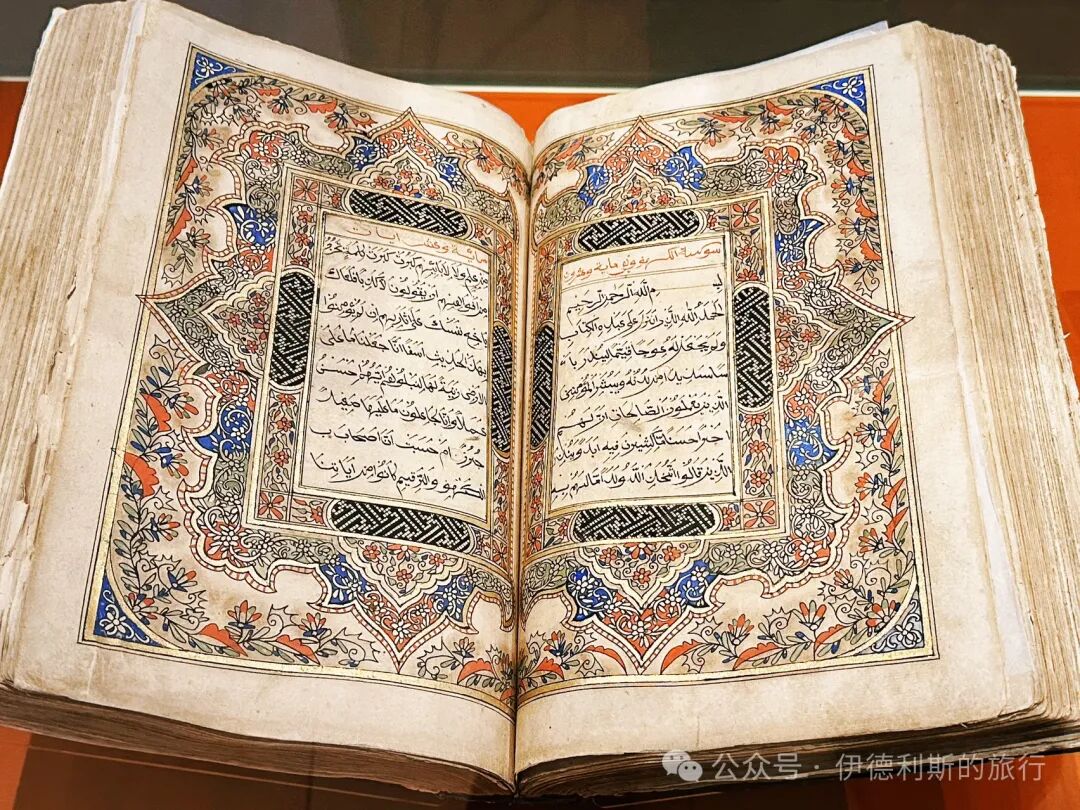
Aceh, Sumatra Island, 19th century.
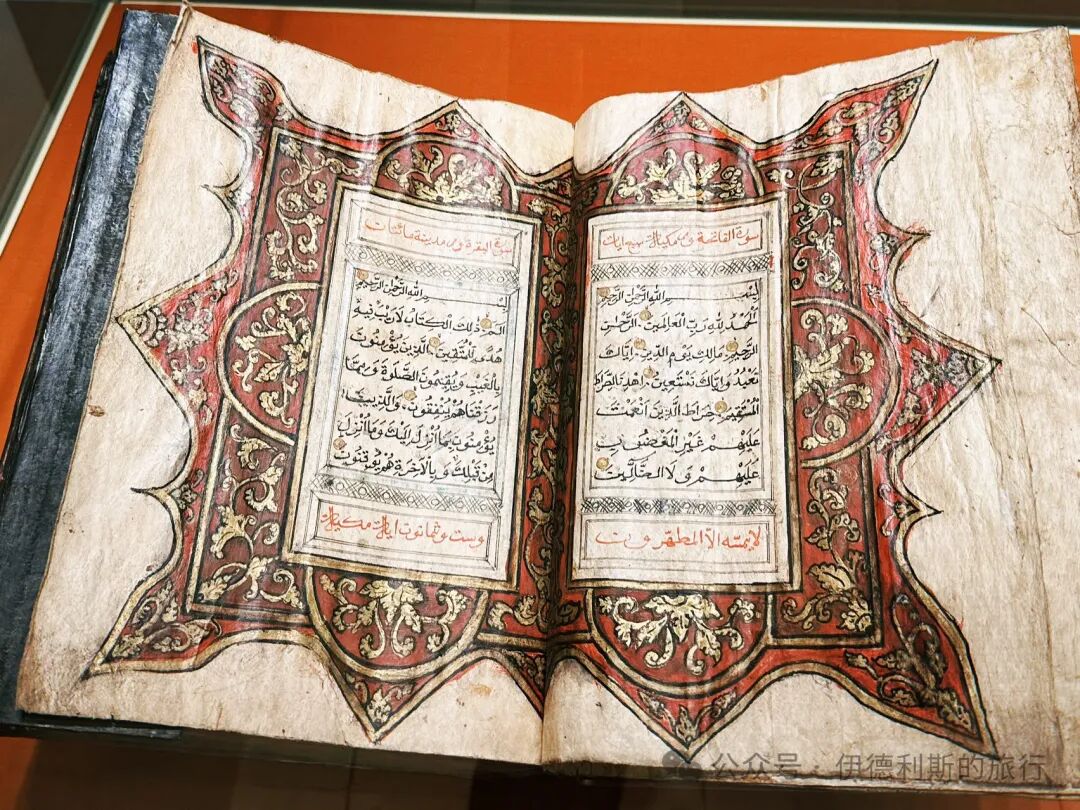
Aceh, Sumatra Island, 18th to 19th century.
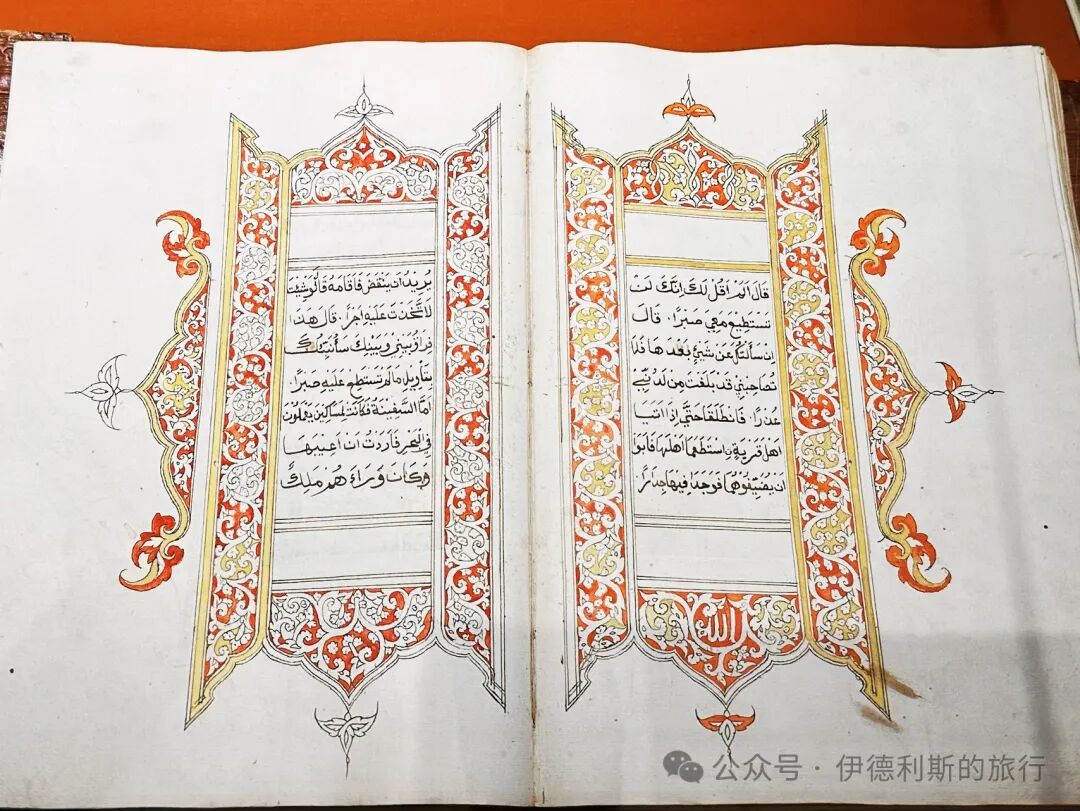
Thailand.
Handwritten scripture from Pattani Province, Thailand, 19th century.
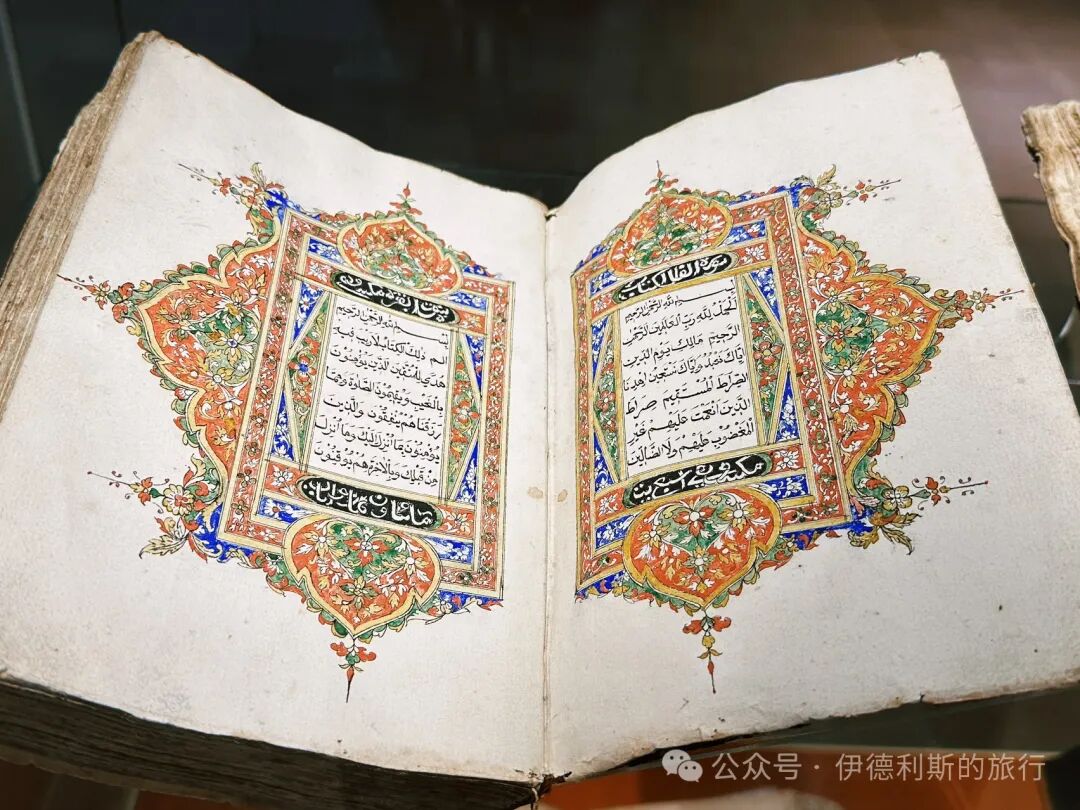
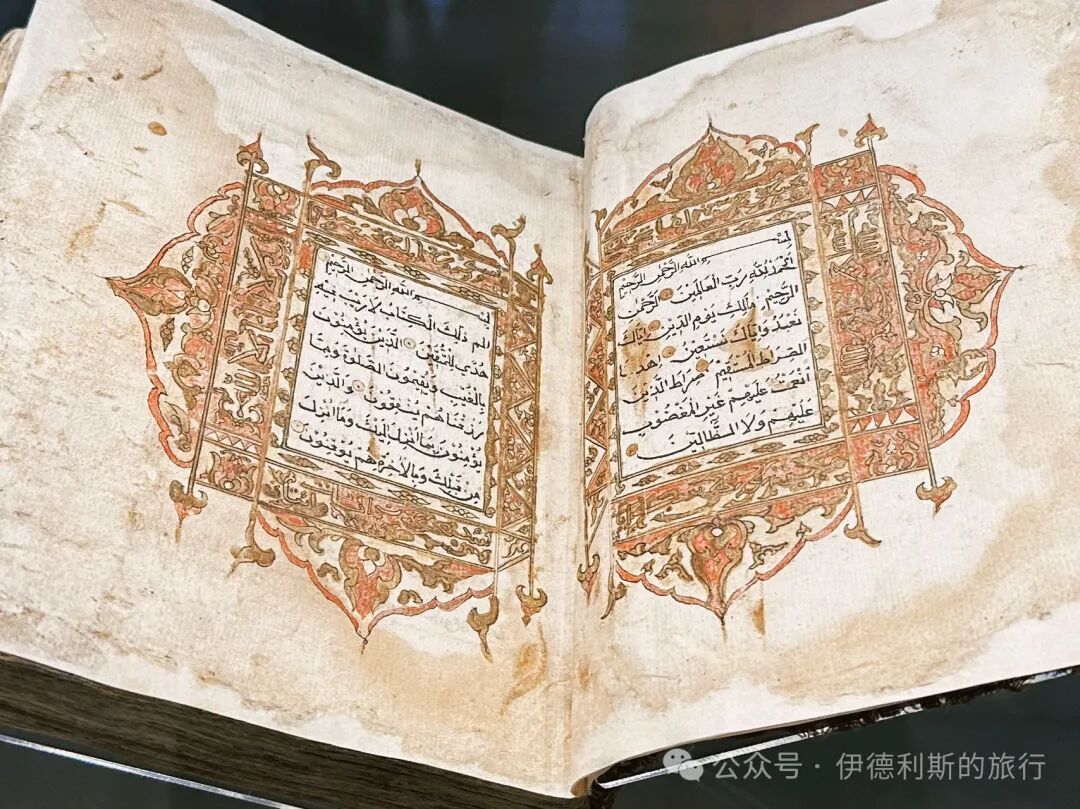
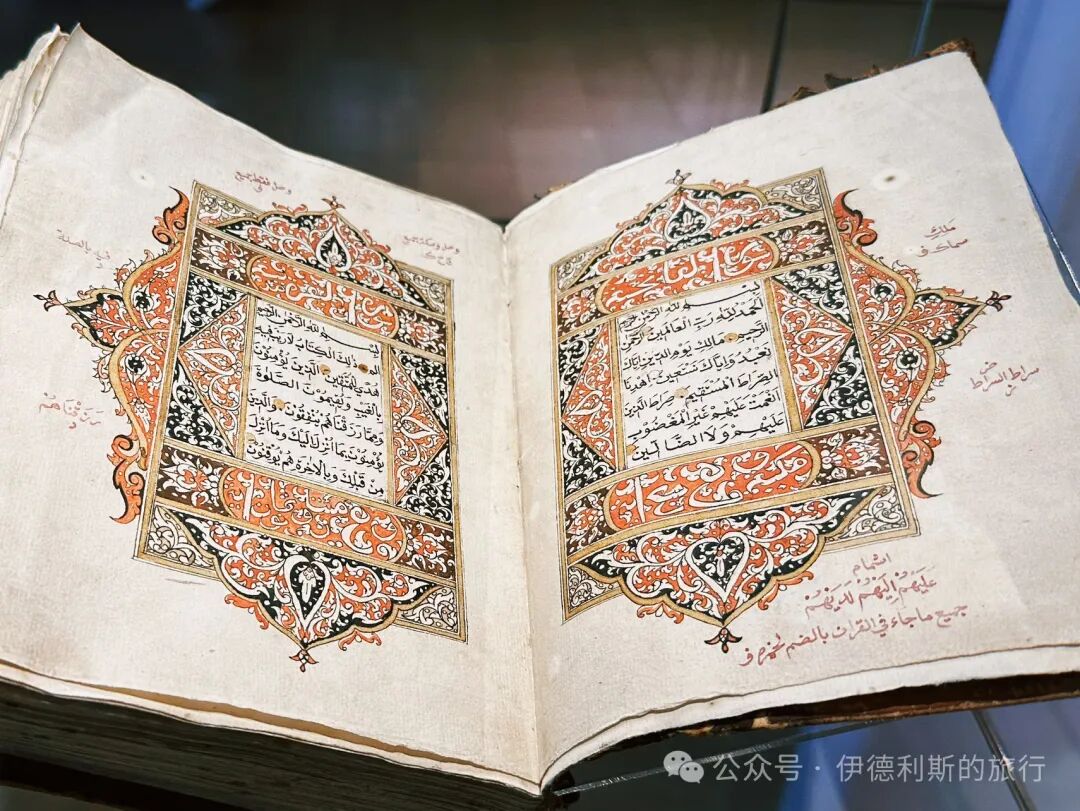
Philippines.
Mindanao Island, Philippines, 1882.
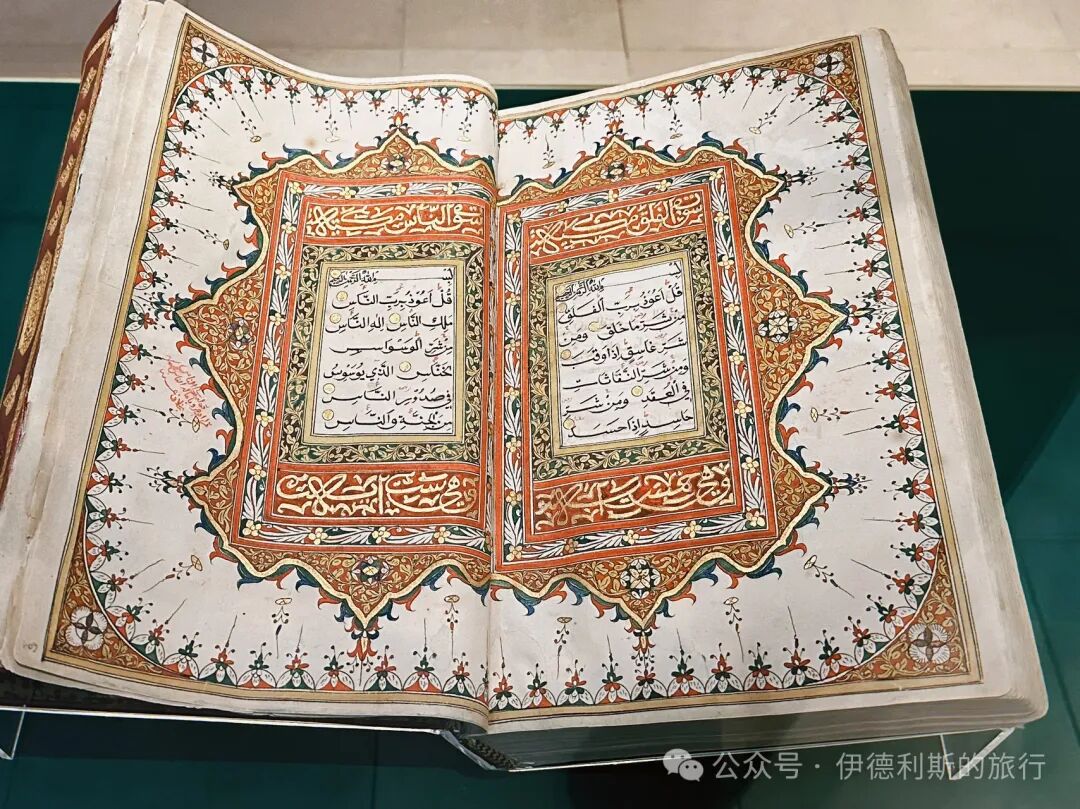
Islamic Manuscripts Around the World: Qurans, Calligraphy and Muslim Heritage (Part 1)
Articles • ali2007fr posted the article • 0 comments • 121 views • 2026-05-18 08:38
Summary: Islamic Manuscripts Around the World: Qurans, Calligraphy and Muslim Heritage is presented here as a firsthand travel account in clear English, beginning with this scene: I want to share some of the handwritten scriptures I have seen at exhibitions and museums. The account keeps its focus on Islamic Manuscripts, Quran Manuscripts, Muslim Calligraphy while preserving the names, places, food, and historical details from the Chinese source.
I want to share some of the handwritten scriptures I have seen at exhibitions and museums. These include the Quran Collection Hall in Jiezi, Xunhua, Qinghai; the East Great Mosque (Dongdasi) in Jining, Shandong; the City Mosque (Chengli Si) in Qingzhou, Shandong; the Khan Mosque at the Bakhchisaray Palace in Crimea; the Museum of Islamic Civilization in Sharjah, UAE; the Mevlana Mausoleum in Konya, Turkey; the Museum of Turkish and Islamic Arts in Turkey; the Islamic Museum in Malacca, Malaysia; the Islamic World Museum in Malaysia; the Quran Museum in Malacca, Malaysia; and the Islamic Arts Museum in Malaysia.
The Quran Collection Hall in Jiezi, Xunhua, Qinghai.
I was very lucky to visit the Quran Collection Hall at the Jiezi Great Mosque. I saw the handwritten scriptures that the Salar people brought with them when they moved from the Samarkand area to Xunhua over 700 years ago.
This set of scriptures has 30 volumes kept in two rhinoceros-hide cases. Historically, they were kept by the qadi (gazi). After the qadi system was abolished in 1896, the descendants of the qadi continued to look after them. People say in 1894, Ma Qishao (Ma Anliang) from Linxia seized the scriptures. However, on his way back to Linxia from Xunhua, he ran into a fierce storm and could not cross the mountains, so he had to return them. During the Republic of China era, Ma Bufang took them away again. They were not returned to Han Wushiba, a descendant of the Jiezi qadi, until the 1950s.
In 1954, these scriptures were sent to Syria for an international exhibition, where they made a big impression. After 1958, following a suggestion from the Salar Social History Investigation Group that was doing research in Xunhua, the scriptures were sent to the Cultural Palace of Nationalities under the name of participating in a 10th-anniversary ethnic exhibition. They were kept in the basement storage of the Cultural Palace of Nationalities for the next twenty years until they finally returned to the Jiezi Great Mosque in 1982.
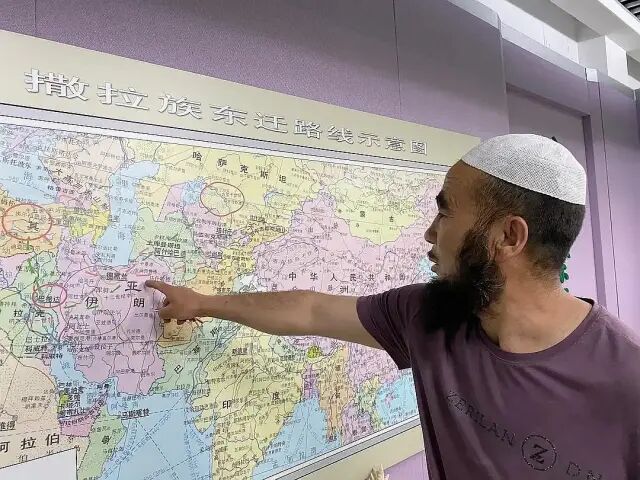
The man who showed us around the collection museum told us about the migration route of the Salar people.
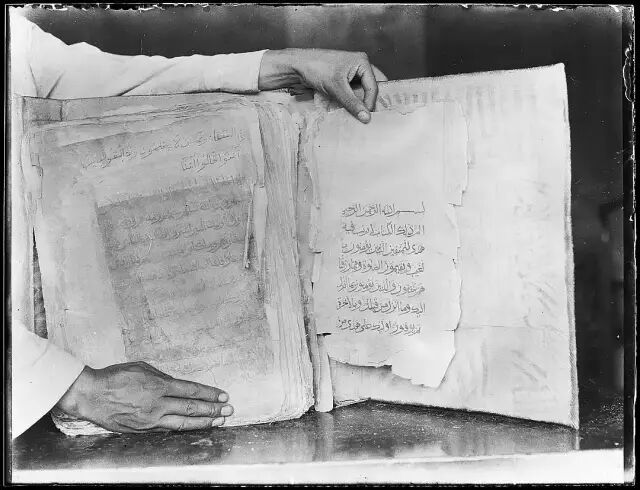
Taken in 1933 by the American missionary Pastor Carter Holton. Pastor Carter Holton lived in the Hehuang region for many years between the 1920s and 1940s. He left behind over 5,000 photos of ethnic customs in the Gansu and Qinghai areas. His second daughter donated the entire collection to the Harvard University Library in the early 1990s, and you can now view them on the library's official website.
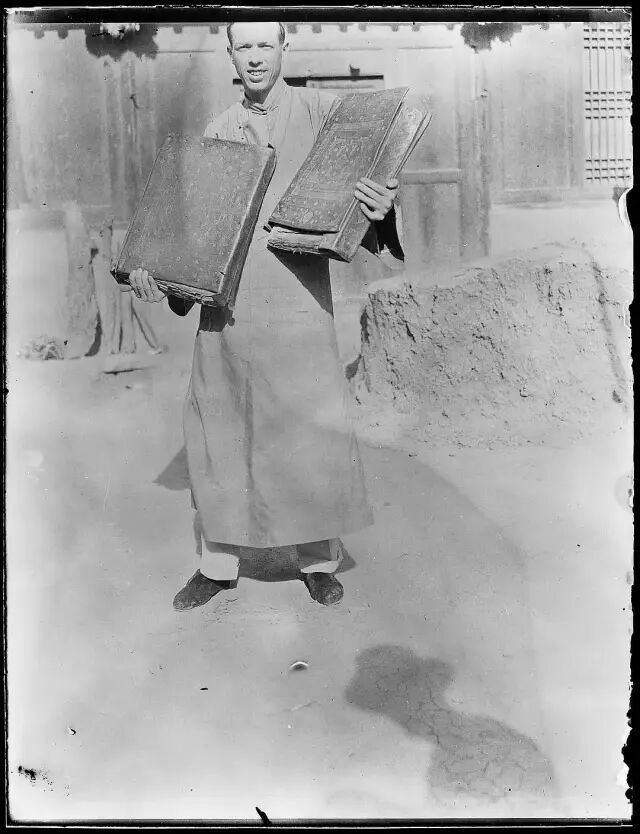
Pastor Holton holding it himself.
Other hand-copied scriptures kept in the collection museum.
After the Salar people settled in Jiezi Town, the descendants of their highest scholar, Sulimanishahe, hand-copied these using specially mixed ink and a stick pen made from a tamarisk branch (gelimu). They are over 600 years old.
A hand-copied manuscript from the 17th to 18th century, bound in cowhide.
Shunhe East Mosque in Jining, Shandong.
Dongda Mosque in Jining, Shandong, was built during the Yongle period of the Ming Dynasty. It was renovated in 1459 (the third year of the Tianshun period), expanded during the Kangxi reign, and renovated again under Qianlong, eventually reaching its current size. As Professor Liu Zhiping said, the rear archway, Moon-Watching Tower (Wangyuelou), rear hall, and main hall of Dongda Mosque create a grand and towering atmosphere with their overlapping structures. The artistic design of all its buildings represents the spirit and ambition of the Qianlong era.
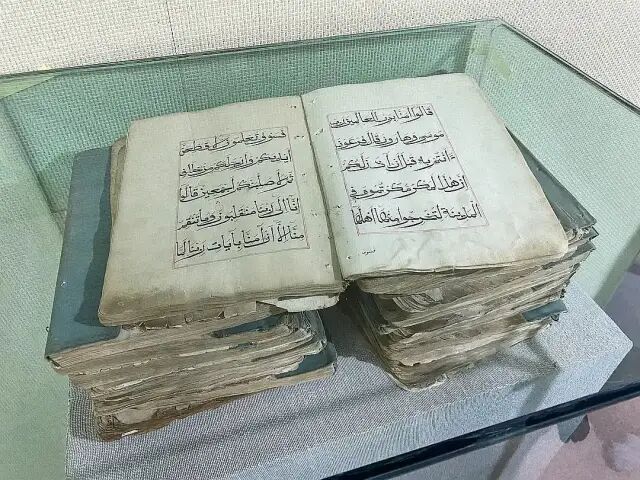
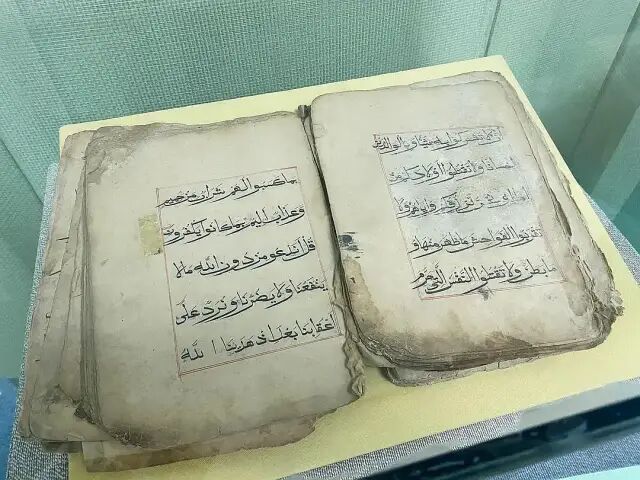
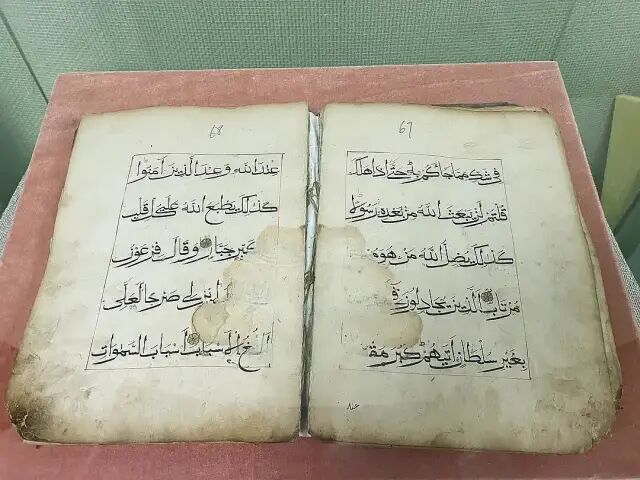
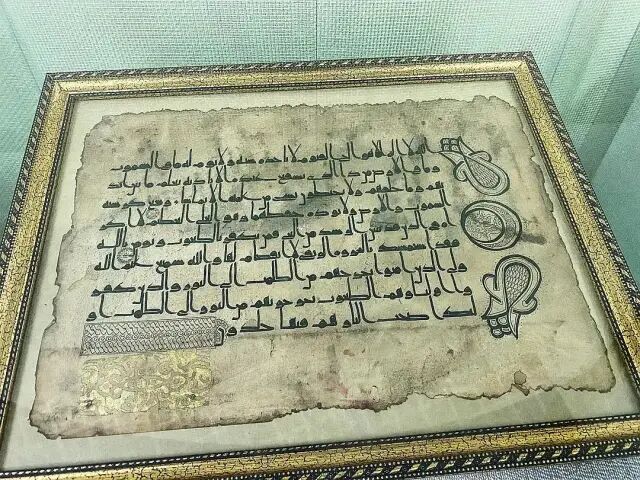
Hand-copied scriptures kept at Dongda Mosque
Chengli Mosque in Qingzhou, Shandong
The oldest mosque in Qingzhou, Shandong, is the Dongguan Zhenjiao Mosque built during the Yuan Dynasty. However, Hui Muslims living in the city found it inconvenient to visit because the city gates would close early and open late. So, in 1546 (the 25th year of the Jiajing period of the Ming Dynasty), local elders bought the Tao family's residential land in Taojia Lane and built Chengli Mosque inside the east city wall.
Hand-copied scriptures kept at Chengli Mosque
Khan Mosque at the Bakhchisaray Palace in Crimea
The Great Khan Mosque (Büyük Han Cami) is inside the Bakhchysarai Palace in Crimea. In 1532, Crimean Khan Sahib I Giray moved the capital of the Crimean Khanate to Bakhchysarai, and the Great Khan Mosque was one of the first buildings constructed in the palace complex. The Great Khan Mosque was originally made of several domes, similar to the Seljuk style that was popular in the Ottoman Empire during the 15th century. During the Soviet era, the Great Khan Mosque was closed and turned into an exhibition hall for an archaeological museum. After Russia occupied Crimea in 2014, the mosque underwent restoration, but some of this work caused damage to the building.
Handwritten scriptures on display in the Maqsurah loft of the Great Khan Mosque:
Copied by Hafiz Mas'ud in Bakhchysarai in 1794.
An 18th-century scripture bag.
A scripture copied in Crimea in 1748, paired with an 18th-century scripture bag.
Copied in 1808.
Copied by Hajj Mahmoud in 1746.
Sharjah Museum of Islamic Civilization in the UAE.
The Sharjah Museum of Islamic Civilization was converted from a traditional indoor market in 2008. It houses over 5,000 Islamic artifacts from around the world, including calligraphy, manuscripts, carvings, ceramics, coins, and various scientific instruments.
Kufic script from Syria or Iraq around the 10th century.
Kufic script from Kairouan, Tunisia, in the 10th century.
15th-century India, written in Bihari script with Persian translations and commentaries. Bihari script was a popular style for copying scriptures in India during the 14th and 15th centuries. Its main features are elongated and thickened letter tails, vowel marks written as horizontal strokes, and most cursive strokes written at a 45-degree angle. Bihari script almost disappeared after the 16th century and only appears in a very small number of handwritten scriptures.
In 16th-century Iran, large text used the Thuluth script and small text used the Naskh script.
15th-century Egypt or Ottoman Empire.
12th to 13th-century Iran.
18th-century Syria.
17th-century Iran.
17th to 19th-century Iran or India.
17th-century India.
12th-century Iran
Rumi's tomb in Konya, Turkey
Rumi (1207-1273) was a famous 13th-century Sufi scholar and Persian poet. In Turkey, he is honored as Mevlâna. Rumi died in Konya in 1273 and was buried next to his father. His successor, Hüsamettin Çelebi, decided to build a tomb for Rumi. The architect Badr al-Din Tabrizi led the construction, and the tomb was finished in 1274.
The entire complex includes the tombs of Rumi and his followers, a mosque, a dervish lodge (tekke), and living areas for those practicing their faith. During the Ottoman era, this place served as the center for the Mevlevi Sufi order. In 1925, the Republic of Turkey closed all Sufi lodges and disbanded the orders. In 1927, the Rumi tomb became the Konya History Museum and opened to the public. It was renamed the Mevlana Museum in 1954. Today, this is a famous Sufi holy site in Turkey, and people from all over the world visit every day.
9th-century Kufic script
Written by the calligrapher Yakutu'l-Mustasimi in 1296
1314
Museum of Turkish and Islamic Arts
The Museum of Turkish and Islamic Arts is located in a building from 1524 next to Sultanahmet Square in the old city of Istanbul. This was originally the palace of Pargalı Ibrahim Pasha, the second vizier during the reign of the Ottoman Sultan Suleiman the Magnificent.
The museum started in 1914. It was first an Islamic Foundation Museum (Vakıf-ı İslamiye Museum) inside the Süleymaniye complex. After the Republic of Turkey began in 1923, it was renamed the Museum of Turkish and Islamic Arts. The exhibits changed from Ottoman Empire culture to art and culture from all periods of the Islamic world. In 1983, the museum moved to its current home in the Ibrahim Pasha Palace. It now holds over 40,000 pieces of art, including Islamic calligraphy, tiles, and carpets.
Early 8th century, Umayyad Dynasty.
10th century, Abbasid Dynasty period.
13th century, Seljuk Sultanate of Rum period, from Konya, the capital of the Sultanate of Rum at that time.
Late 14th century, Mamluk Dynasty of Egypt period.
1380, Mamluk Dynasty of Egypt period.
1333-1334, Ilkhanate period in Iran, copied by a scribe named Muhammed el-Hac Devletshah esh-Shirazi.
In 1338-9, during the Ilkhanate period in Iran, the scribe was named Yahya el-Sufi.
In 1318, during the Ilkhanate period in Iran, the scribe was named Ahmed b.al-Suhreverdi.
In 1323-4, during the Ilkhanate period in Iran, the scribe was named Huseyin bin Ali bin Camii.
In 1320-21, during the Ilkhanate period in Iran, the scribe was named Argun bin Abdullah Kamili.
Two copies written by Ali ibn-i Mehmed in 1306-7 and 1310-11 during the Ilkhanate period in Iran.
In 1286-87, during the Ilkhanate period in Iran, the scribe was named Yakut el-Musta'simi.
Shiraz, Iran, during the 17th-century Safavid dynasty.
Shiraz, Iran, in 1591 during the Safavid dynasty.
Shiraz, Iran, during the Safavid dynasty in 1549.
Shiraz, Iran, during the Safavid dynasty in 1580.
A book cover from the Safavid dynasty in Iran during the 17th century.
A scripture box from the Ottoman period, dating to the late 15th or early 16th century.
Written by the calligrapher Seyh Hamdullah during the Ottoman period in 1494.
Written by the calligrapher Ahmed Karahisari during the Ottoman period in 1443.
Written by the calligrapher Hafiz Osman during the Ottoman period between 1540 and 1550.
The Islamic Museum in Malacca, Malaysia.
The Melaka Islamic Museum is housed in the former office of the Melaka Islamic Council. The exact construction date is unknown, but it is thought to date back to the British occupation in the 1850s. Some believe the lower level was built during the Dutch occupation (1641-1824) and the upper level was added during the British colonial period. This building served as the office for the Melaka Islamic Council until 1990, when it became the Melaka Islamic Museum.
Hand-copied by a Haji from Melaka in 1881. The dark text is the original, and the light text is the Indonesian translation.
Hand-copied manuscripts in the museum collection.
Museum of Malaysia and the Islamic World.
The Museum of Malaysia and the Islamic World in Melaka is located next to the A Famosa gate. The building was originally an office for a British rubber company built in 1910. Melaka enjoyed a brief period of prosperity in the early 20th century due to the rubber industry. This left behind many large mansions belonging to Nanyang Chinese, as well as this British-style building.
Handwritten manuscripts kept in the museum.
Tools for copying manuscripts.
The Quran Museum (Muzium Al-quran) in Malacca, Malaysia.
The Malacca Quran Museum (Muzium Al-quran Melaka) is next to the Malacca State Mosque. It opened in 2008 and holds some interesting items.
From the Aceh region in northwestern Sumatra.
From Java.
Belongings left behind by a professor from Universiti Putra Malaysia.
A manuscript from the 18th-century Sultanate of Patani. This sultanate was located on the border of modern-day northern Malaysia and Thailand. Between the 15th and 18th centuries, it served as a center for Islam and printing in northern Malaysia.
A 19th-century Javanese manuscript made from a local Javanese tree leaf called deluwang.
A manuscript from the Aceh region in northwestern Sumatra dating between the 18th and 19th centuries.
A manuscript from the east coast of the Malay Peninsula dating to the early 19th century.
A modern manuscript.
Islamic Arts Museum Malaysia.
The Islamic Arts Museum Malaysia is likely the museum with the richest collection and highest quality in the country, far surpassing the National Museum. The museum houses a large number of exquisite artifacts collected from all over the world.
Qajar dynasty of Iran, 1831.
Ottoman, 1599-1600
Ottoman, 19th century
Iran, 17th-18th century
North Africa, 18th century
Ottoman, 18th century
Dagestan, Caucasus, 19th century
China, 17th century
30-volume edition from 17th-century China
A 30-volume set from 1730 during the Qing Dynasty in China, featuring a brown embossed leather cover.
From the Mughal Empire in India, 1715.
A 15th-century miniature from India.
A 30-volume set from Gansu Province, dated March to April 1546, signed by Khaili Ibrahim Yunus Al-sini, featuring peony and cloud patterns.
From Terengganu state on the east coast of the Malay Peninsula, 1871.
From Pattani Province in southern Thailand, 19th century.
From the port of Cirebon in East Java, Indonesia, 19th century.
From Java, Indonesia, 19th century.
A scripture box from the Malay Peninsula in the late 19th century.
A 19th-century scripture box from Terengganu state on the east coast of the Malay Peninsula.
A special exhibition on bookbinding at the museum from May 8 to December 31, 2017.
Book cover.
A 19th-century woven book cover from the Malay Peninsula. Woven covers with grid or striped patterns were very popular on the peninsula, especially those from the three southern provinces of Thailand, known as the Patani region. view all
Summary: Islamic Manuscripts Around the World: Qurans, Calligraphy and Muslim Heritage is presented here as a firsthand travel account in clear English, beginning with this scene: I want to share some of the handwritten scriptures I have seen at exhibitions and museums. The account keeps its focus on Islamic Manuscripts, Quran Manuscripts, Muslim Calligraphy while preserving the names, places, food, and historical details from the Chinese source.
I want to share some of the handwritten scriptures I have seen at exhibitions and museums. These include the Quran Collection Hall in Jiezi, Xunhua, Qinghai; the East Great Mosque (Dongdasi) in Jining, Shandong; the City Mosque (Chengli Si) in Qingzhou, Shandong; the Khan Mosque at the Bakhchisaray Palace in Crimea; the Museum of Islamic Civilization in Sharjah, UAE; the Mevlana Mausoleum in Konya, Turkey; the Museum of Turkish and Islamic Arts in Turkey; the Islamic Museum in Malacca, Malaysia; the Islamic World Museum in Malaysia; the Quran Museum in Malacca, Malaysia; and the Islamic Arts Museum in Malaysia.
The Quran Collection Hall in Jiezi, Xunhua, Qinghai.
I was very lucky to visit the Quran Collection Hall at the Jiezi Great Mosque. I saw the handwritten scriptures that the Salar people brought with them when they moved from the Samarkand area to Xunhua over 700 years ago.
This set of scriptures has 30 volumes kept in two rhinoceros-hide cases. Historically, they were kept by the qadi (gazi). After the qadi system was abolished in 1896, the descendants of the qadi continued to look after them. People say in 1894, Ma Qishao (Ma Anliang) from Linxia seized the scriptures. However, on his way back to Linxia from Xunhua, he ran into a fierce storm and could not cross the mountains, so he had to return them. During the Republic of China era, Ma Bufang took them away again. They were not returned to Han Wushiba, a descendant of the Jiezi qadi, until the 1950s.
In 1954, these scriptures were sent to Syria for an international exhibition, where they made a big impression. After 1958, following a suggestion from the Salar Social History Investigation Group that was doing research in Xunhua, the scriptures were sent to the Cultural Palace of Nationalities under the name of participating in a 10th-anniversary ethnic exhibition. They were kept in the basement storage of the Cultural Palace of Nationalities for the next twenty years until they finally returned to the Jiezi Great Mosque in 1982.
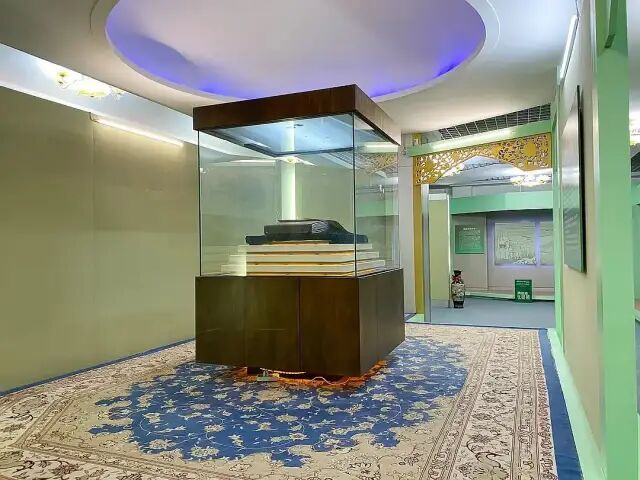
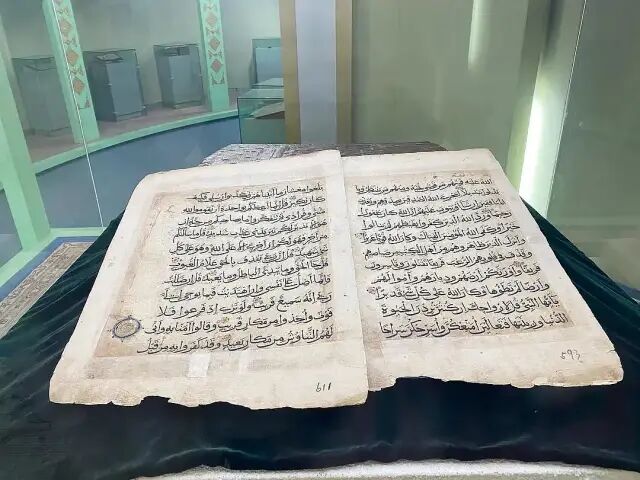
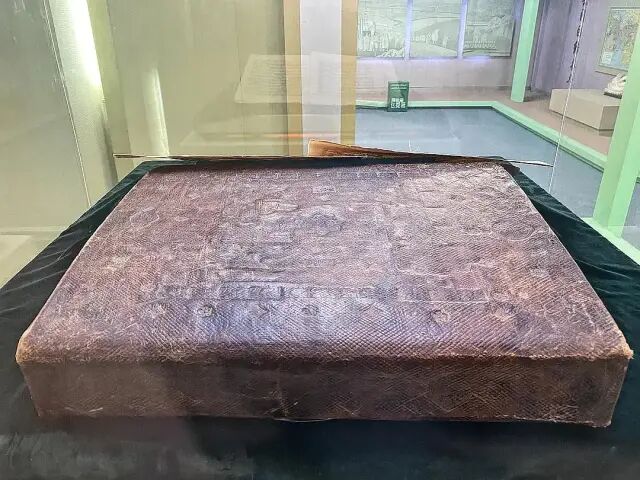
The man who showed us around the collection museum told us about the migration route of the Salar people.
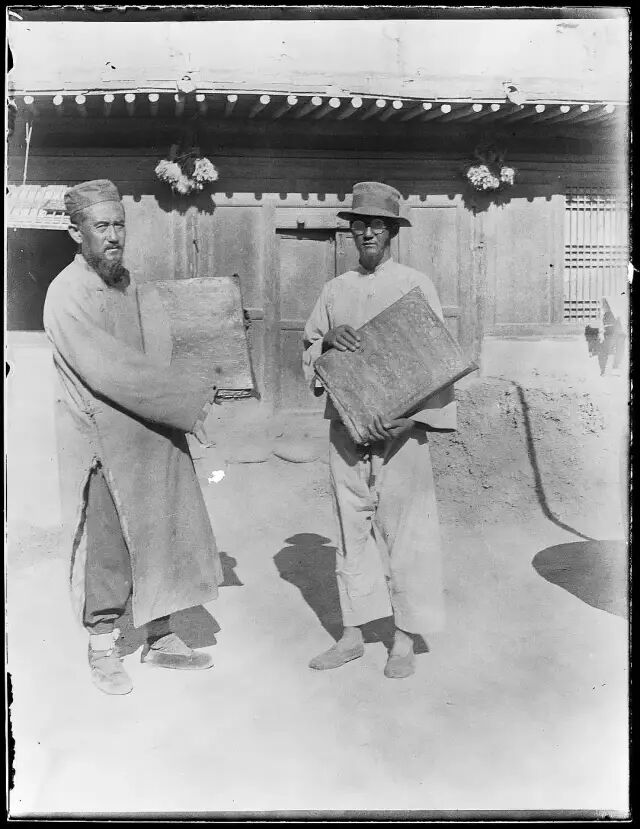
Taken in 1933 by the American missionary Pastor Carter Holton. Pastor Carter Holton lived in the Hehuang region for many years between the 1920s and 1940s. He left behind over 5,000 photos of ethnic customs in the Gansu and Qinghai areas. His second daughter donated the entire collection to the Harvard University Library in the early 1990s, and you can now view them on the library's official website.
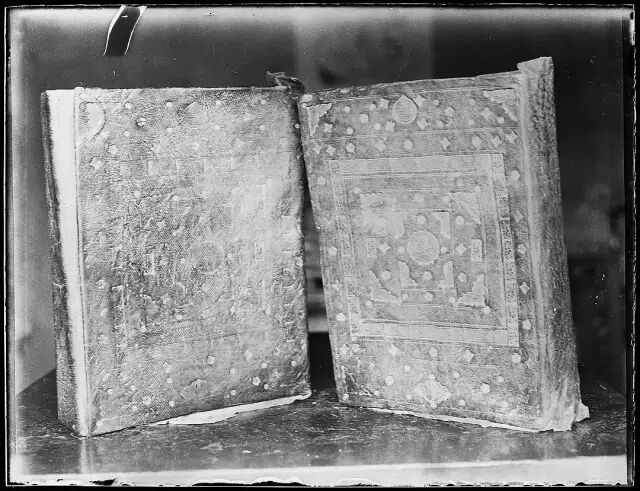
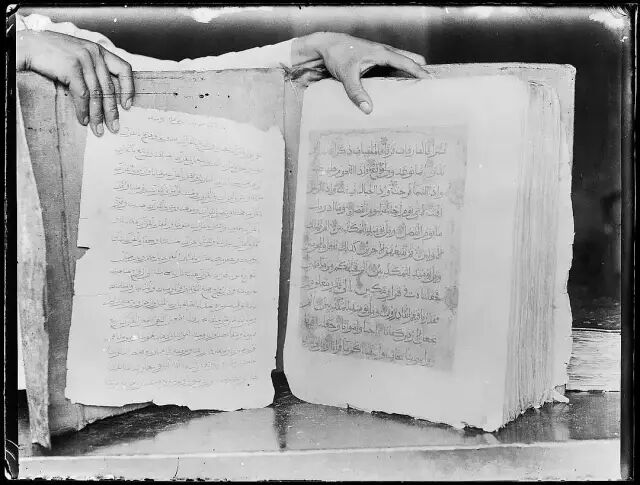
Pastor Holton holding it himself.
Other hand-copied scriptures kept in the collection museum.
After the Salar people settled in Jiezi Town, the descendants of their highest scholar, Sulimanishahe, hand-copied these using specially mixed ink and a stick pen made from a tamarisk branch (gelimu). They are over 600 years old.
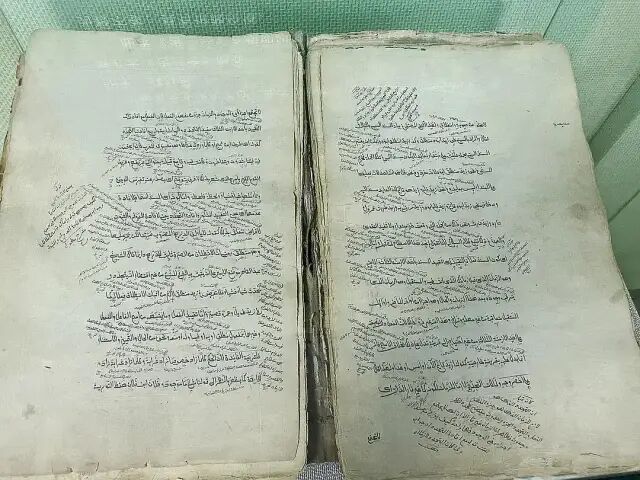
A hand-copied manuscript from the 17th to 18th century, bound in cowhide.
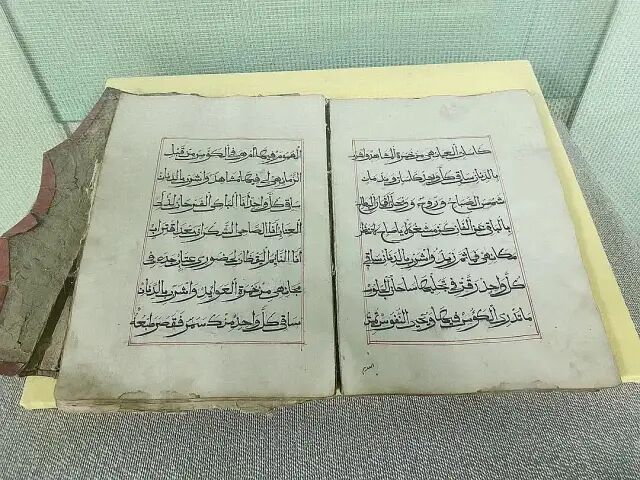
Shunhe East Mosque in Jining, Shandong.
Dongda Mosque in Jining, Shandong, was built during the Yongle period of the Ming Dynasty. It was renovated in 1459 (the third year of the Tianshun period), expanded during the Kangxi reign, and renovated again under Qianlong, eventually reaching its current size. As Professor Liu Zhiping said, the rear archway, Moon-Watching Tower (Wangyuelou), rear hall, and main hall of Dongda Mosque create a grand and towering atmosphere with their overlapping structures. The artistic design of all its buildings represents the spirit and ambition of the Qianlong era.
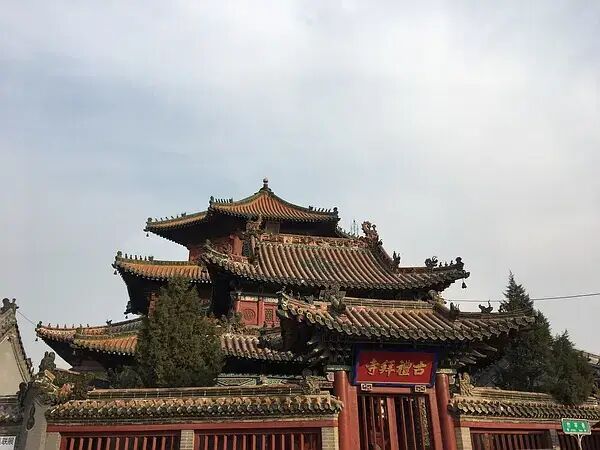
Hand-copied scriptures kept at Dongda Mosque
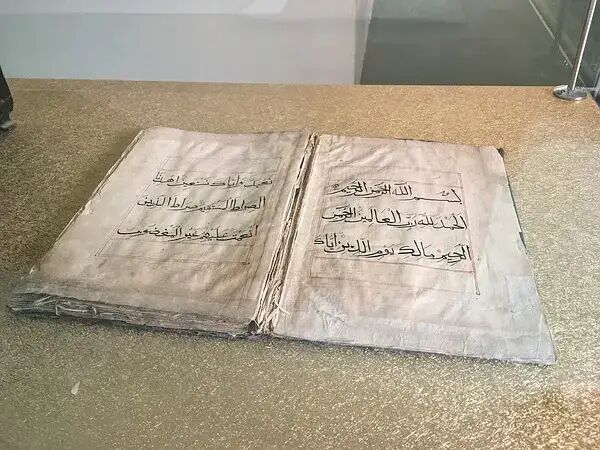
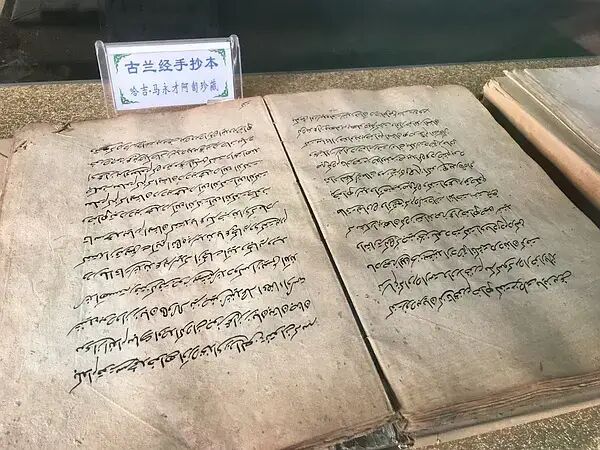
Chengli Mosque in Qingzhou, Shandong
The oldest mosque in Qingzhou, Shandong, is the Dongguan Zhenjiao Mosque built during the Yuan Dynasty. However, Hui Muslims living in the city found it inconvenient to visit because the city gates would close early and open late. So, in 1546 (the 25th year of the Jiajing period of the Ming Dynasty), local elders bought the Tao family's residential land in Taojia Lane and built Chengli Mosque inside the east city wall.
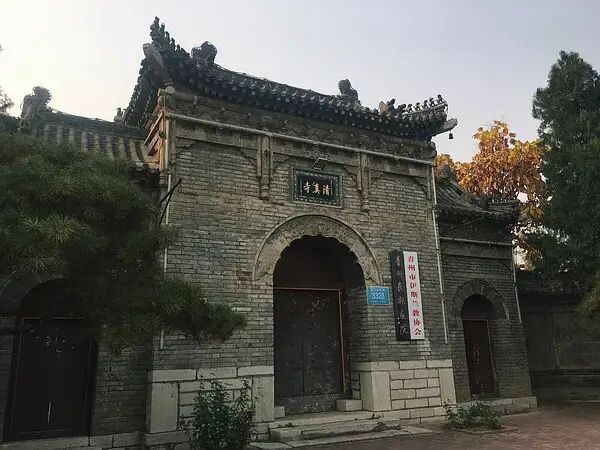
Hand-copied scriptures kept at Chengli Mosque
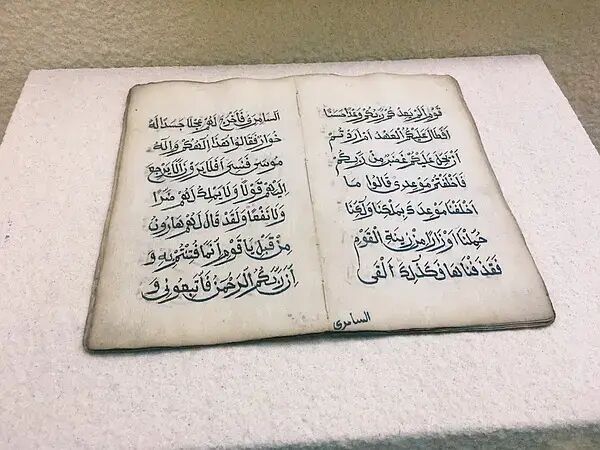
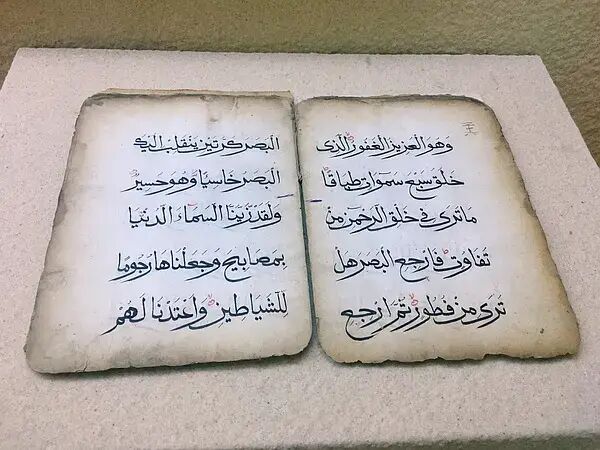
Khan Mosque at the Bakhchisaray Palace in Crimea
The Great Khan Mosque (Büyük Han Cami) is inside the Bakhchysarai Palace in Crimea. In 1532, Crimean Khan Sahib I Giray moved the capital of the Crimean Khanate to Bakhchysarai, and the Great Khan Mosque was one of the first buildings constructed in the palace complex. The Great Khan Mosque was originally made of several domes, similar to the Seljuk style that was popular in the Ottoman Empire during the 15th century. During the Soviet era, the Great Khan Mosque was closed and turned into an exhibition hall for an archaeological museum. After Russia occupied Crimea in 2014, the mosque underwent restoration, but some of this work caused damage to the building.
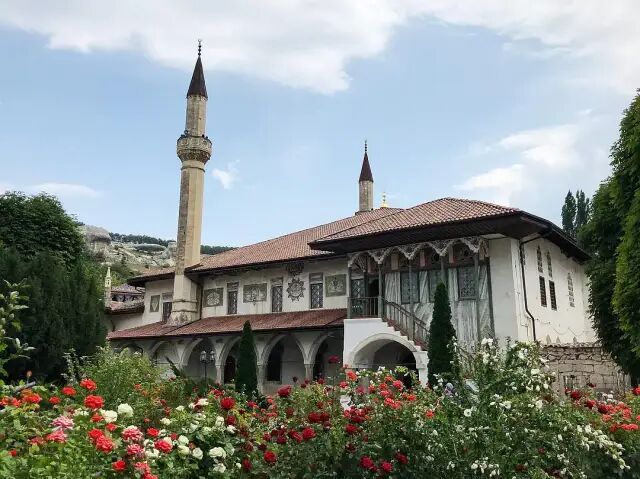
Handwritten scriptures on display in the Maqsurah loft of the Great Khan Mosque:
Copied by Hafiz Mas'ud in Bakhchysarai in 1794.
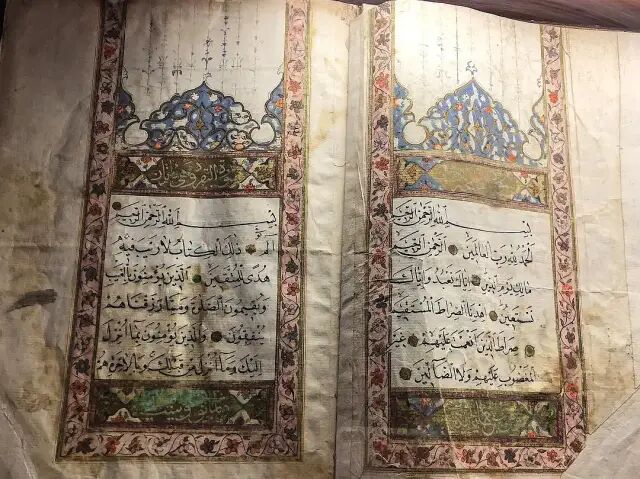
An 18th-century scripture bag.
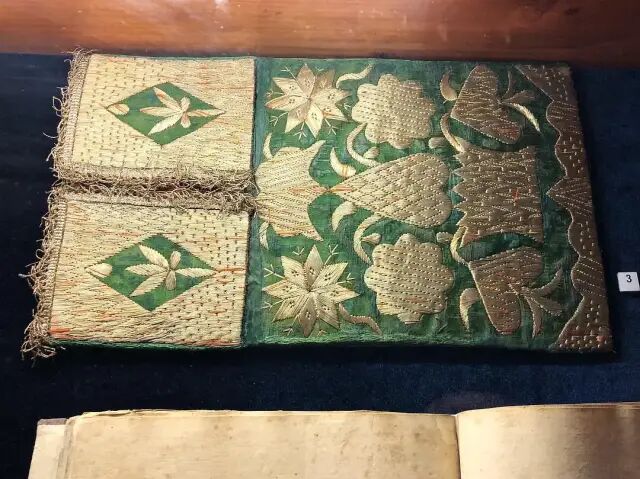
A scripture copied in Crimea in 1748, paired with an 18th-century scripture bag.
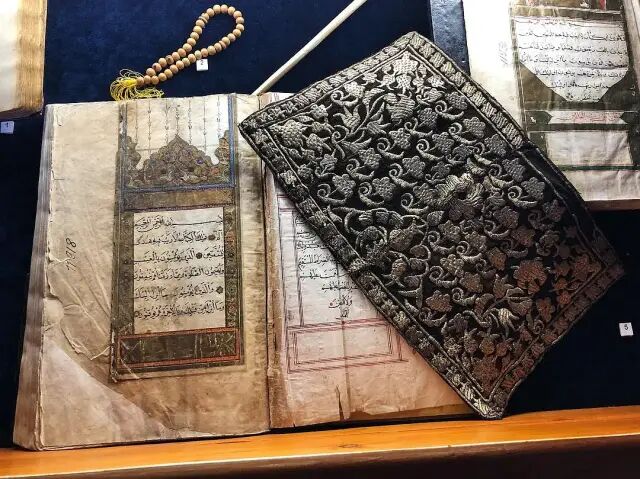
Copied in 1808.
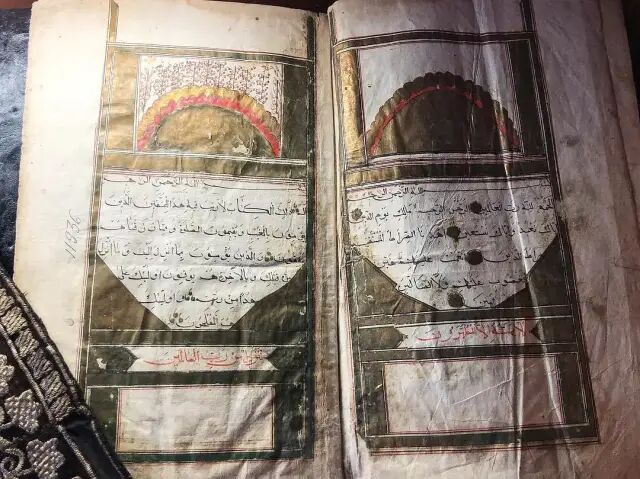
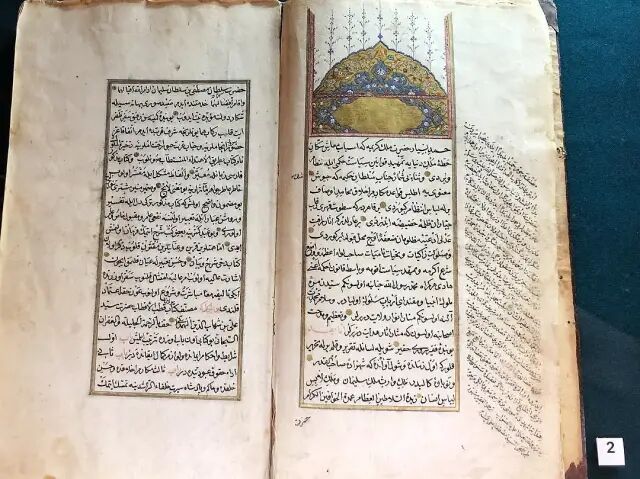
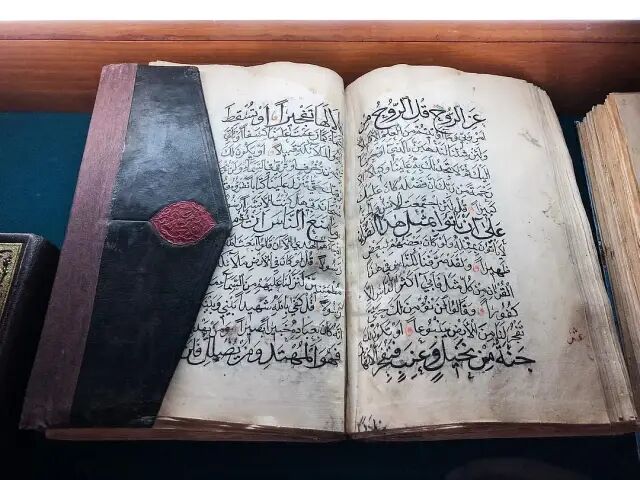
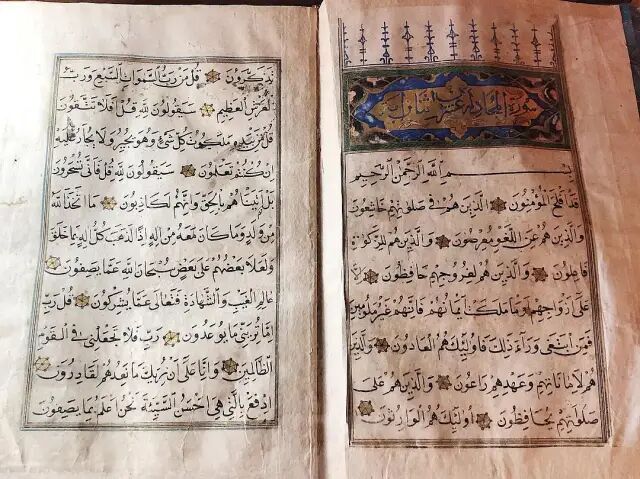
Copied by Hajj Mahmoud in 1746.
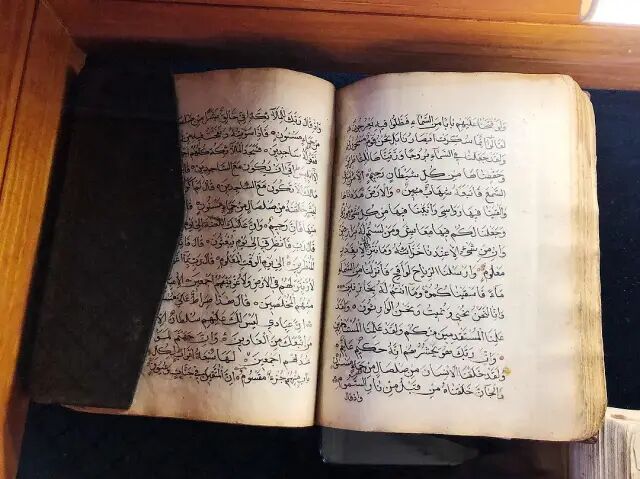
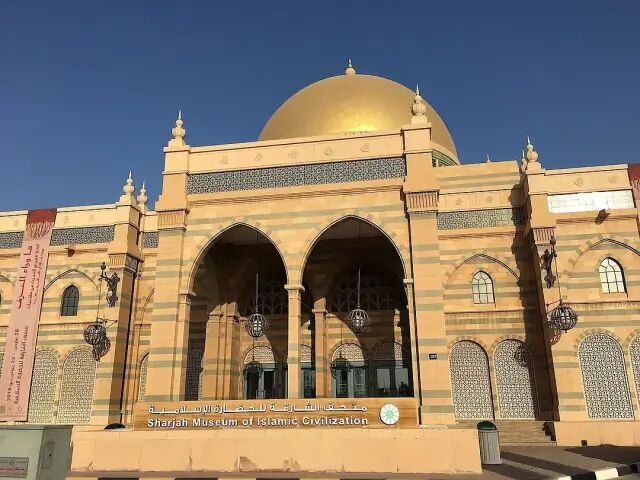
Sharjah Museum of Islamic Civilization in the UAE.
The Sharjah Museum of Islamic Civilization was converted from a traditional indoor market in 2008. It houses over 5,000 Islamic artifacts from around the world, including calligraphy, manuscripts, carvings, ceramics, coins, and various scientific instruments.
Kufic script from Syria or Iraq around the 10th century.
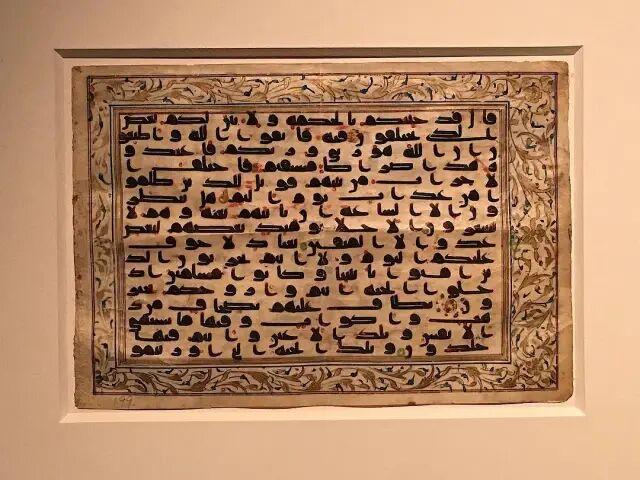
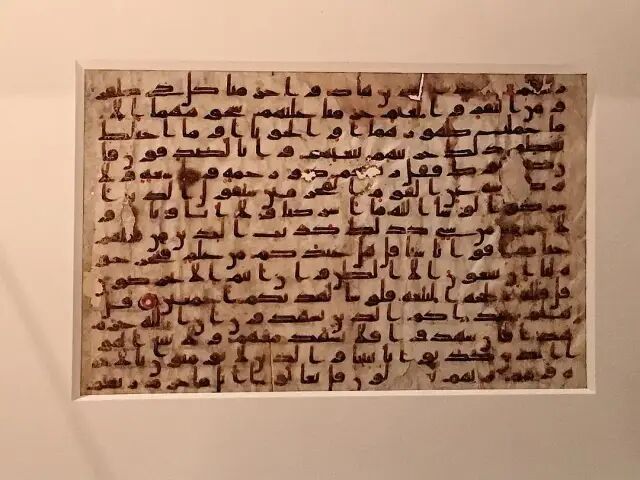
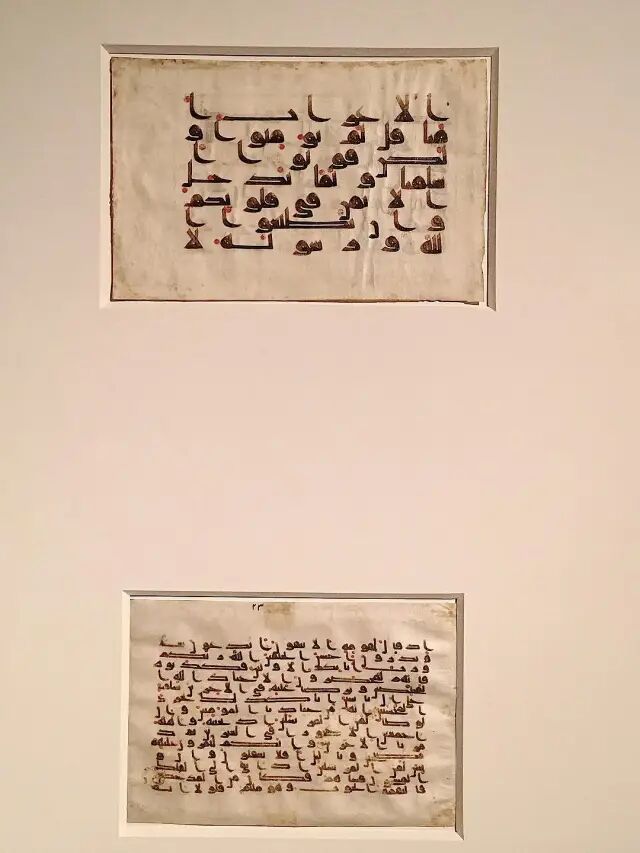
Kufic script from Kairouan, Tunisia, in the 10th century.
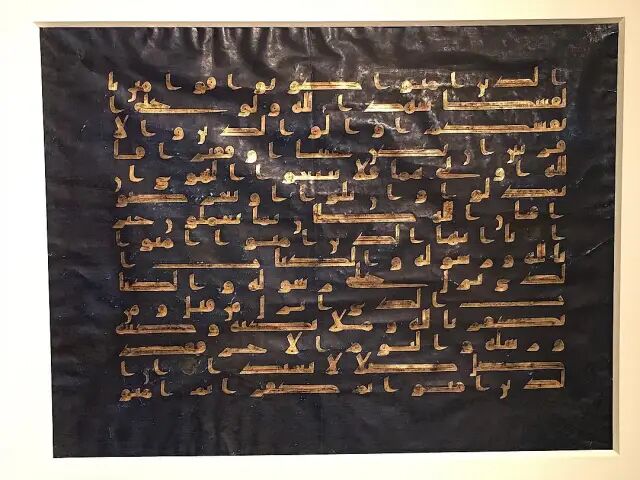
15th-century India, written in Bihari script with Persian translations and commentaries. Bihari script was a popular style for copying scriptures in India during the 14th and 15th centuries. Its main features are elongated and thickened letter tails, vowel marks written as horizontal strokes, and most cursive strokes written at a 45-degree angle. Bihari script almost disappeared after the 16th century and only appears in a very small number of handwritten scriptures.
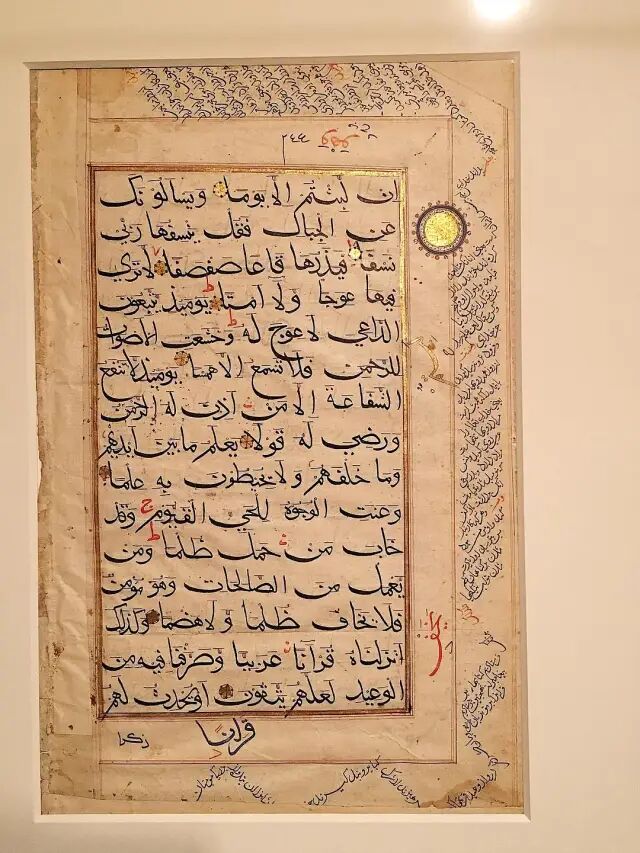
In 16th-century Iran, large text used the Thuluth script and small text used the Naskh script.
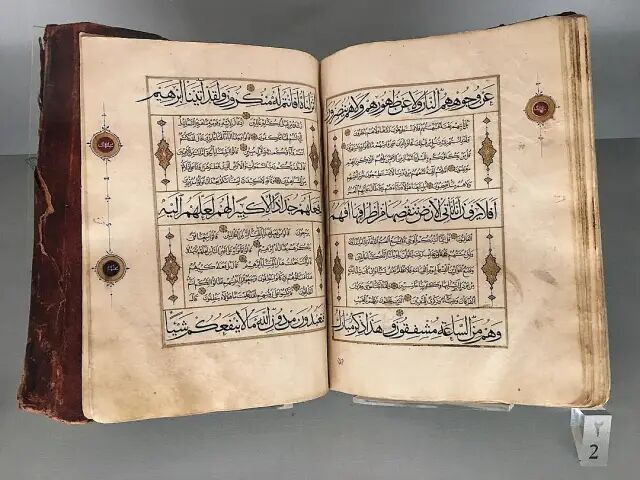
15th-century Egypt or Ottoman Empire.
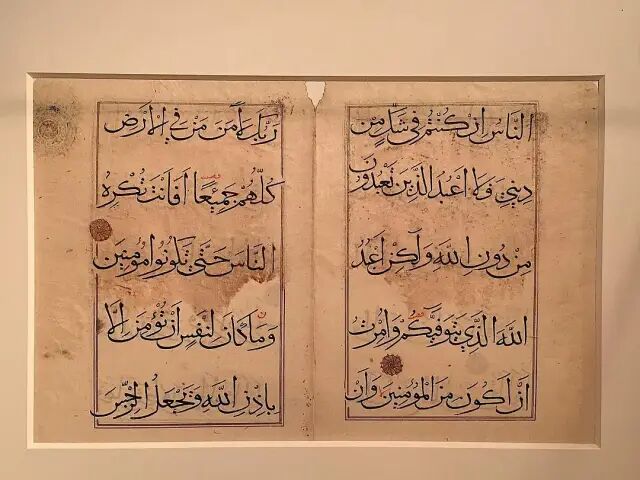
12th to 13th-century Iran.
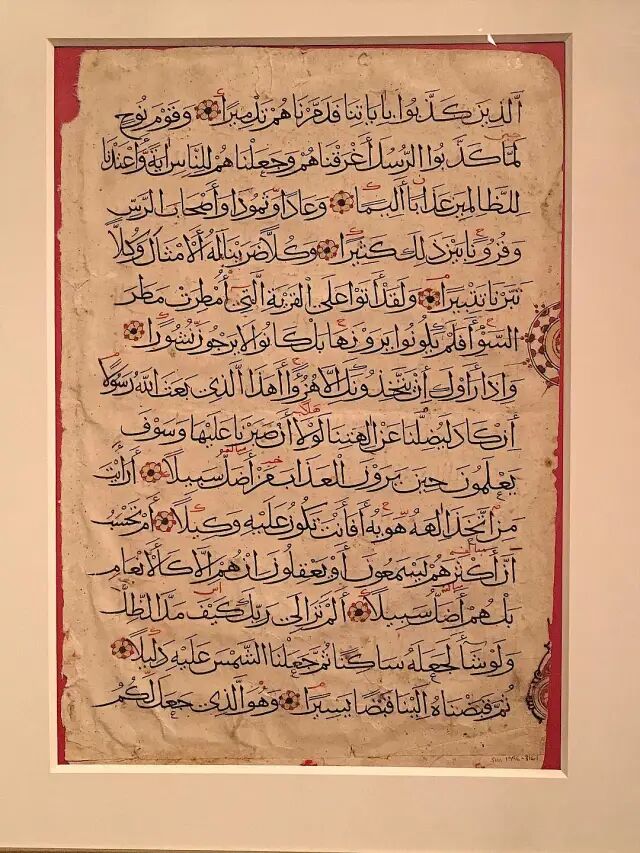
18th-century Syria.
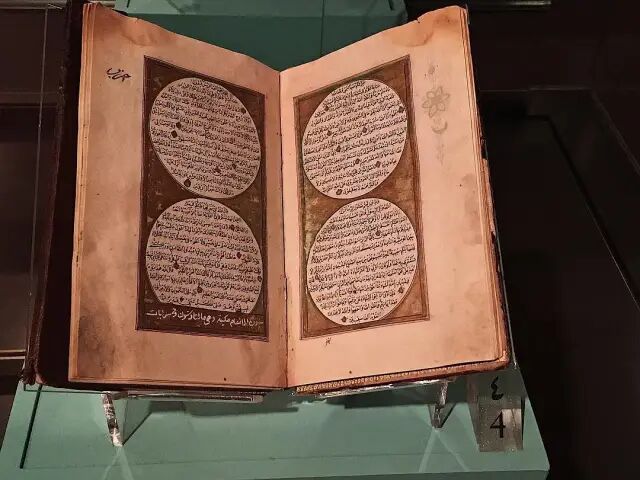
17th-century Iran.
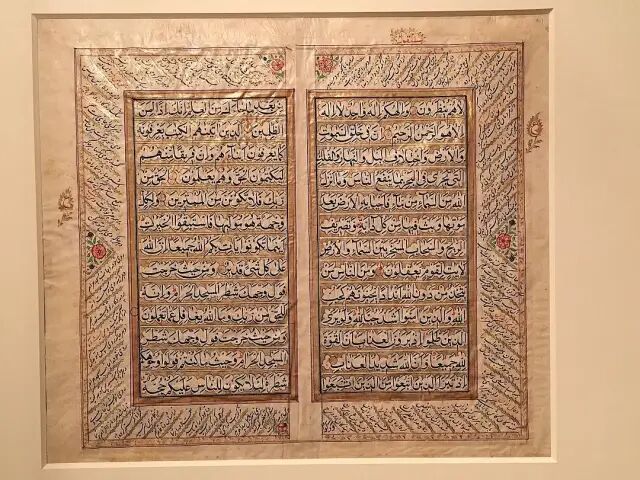
17th to 19th-century Iran or India.
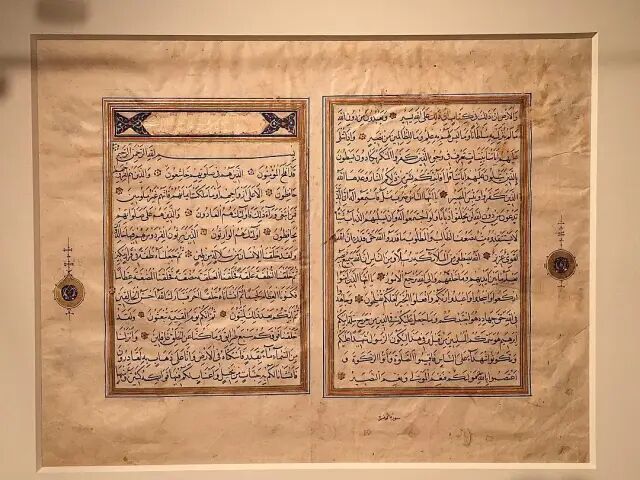
17th-century India.
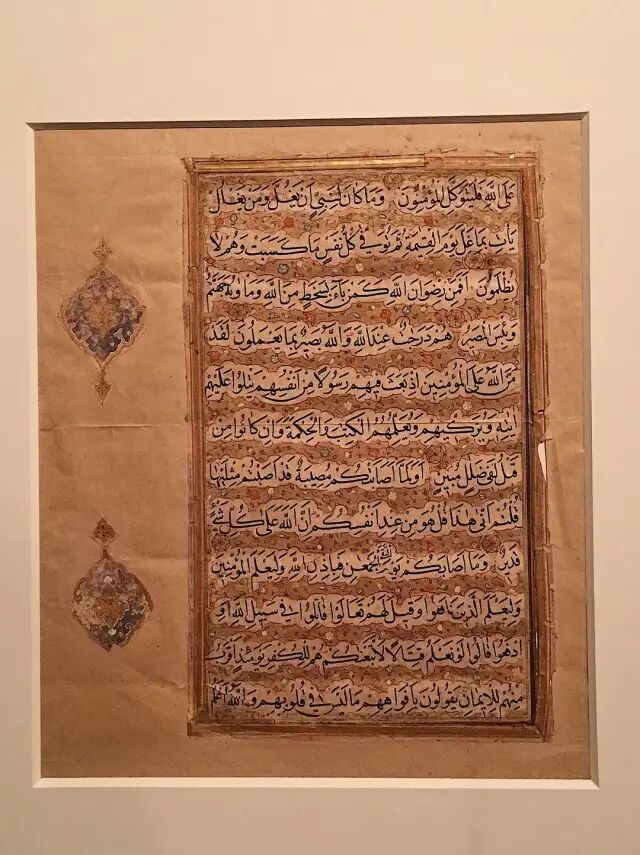
12th-century Iran
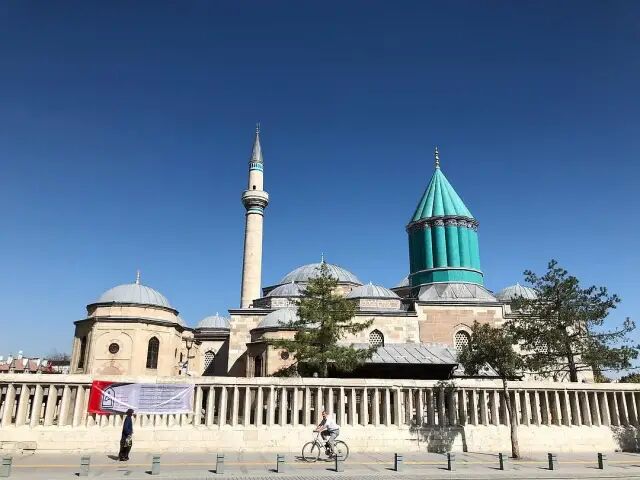
Rumi's tomb in Konya, Turkey
Rumi (1207-1273) was a famous 13th-century Sufi scholar and Persian poet. In Turkey, he is honored as Mevlâna. Rumi died in Konya in 1273 and was buried next to his father. His successor, Hüsamettin Çelebi, decided to build a tomb for Rumi. The architect Badr al-Din Tabrizi led the construction, and the tomb was finished in 1274.
The entire complex includes the tombs of Rumi and his followers, a mosque, a dervish lodge (tekke), and living areas for those practicing their faith. During the Ottoman era, this place served as the center for the Mevlevi Sufi order. In 1925, the Republic of Turkey closed all Sufi lodges and disbanded the orders. In 1927, the Rumi tomb became the Konya History Museum and opened to the public. It was renamed the Mevlana Museum in 1954. Today, this is a famous Sufi holy site in Turkey, and people from all over the world visit every day.
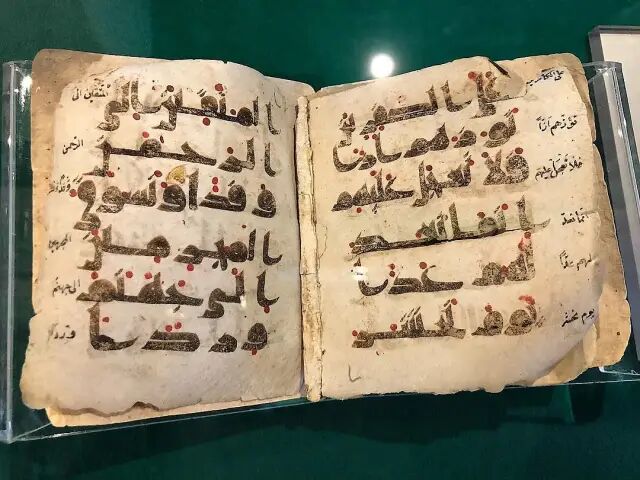
9th-century Kufic script
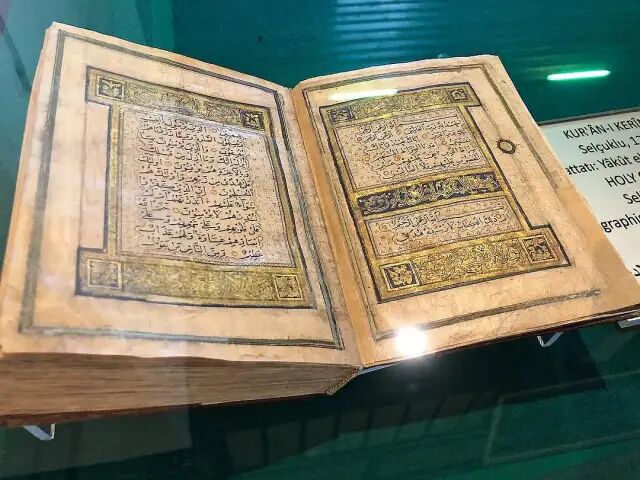
Written by the calligrapher Yakutu'l-Mustasimi in 1296
1314
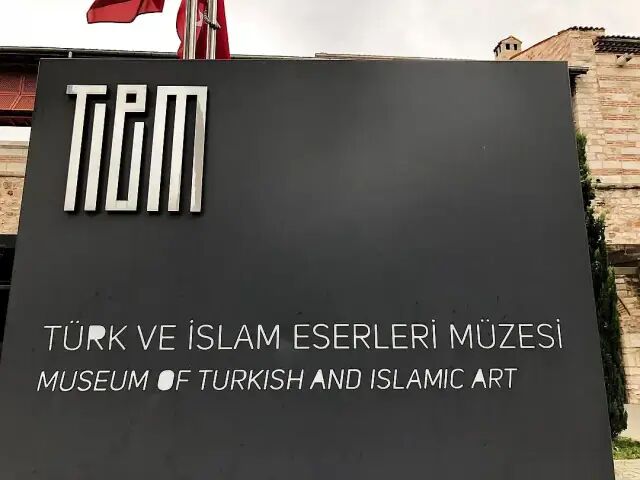
Museum of Turkish and Islamic Arts
The Museum of Turkish and Islamic Arts is located in a building from 1524 next to Sultanahmet Square in the old city of Istanbul. This was originally the palace of Pargalı Ibrahim Pasha, the second vizier during the reign of the Ottoman Sultan Suleiman the Magnificent.
The museum started in 1914. It was first an Islamic Foundation Museum (Vakıf-ı İslamiye Museum) inside the Süleymaniye complex. After the Republic of Turkey began in 1923, it was renamed the Museum of Turkish and Islamic Arts. The exhibits changed from Ottoman Empire culture to art and culture from all periods of the Islamic world. In 1983, the museum moved to its current home in the Ibrahim Pasha Palace. It now holds over 40,000 pieces of art, including Islamic calligraphy, tiles, and carpets.
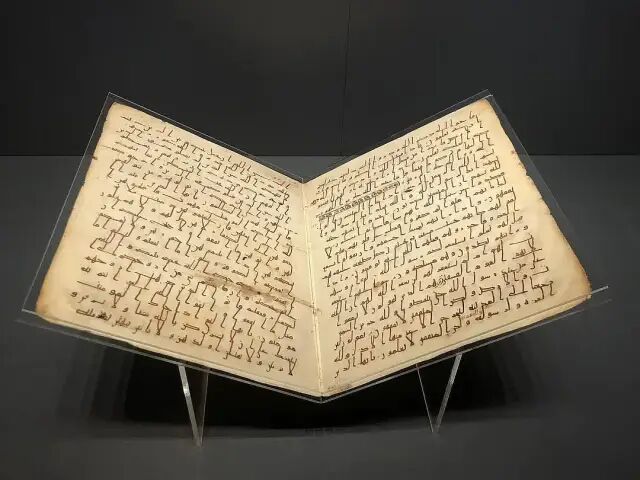
Early 8th century, Umayyad Dynasty.
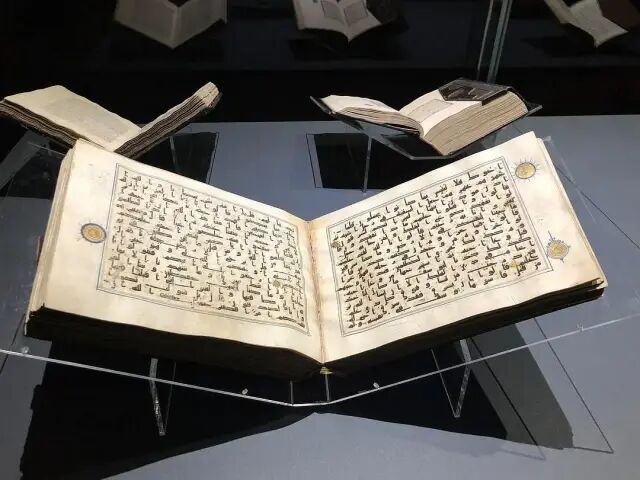
10th century, Abbasid Dynasty period.
13th century, Seljuk Sultanate of Rum period, from Konya, the capital of the Sultanate of Rum at that time.
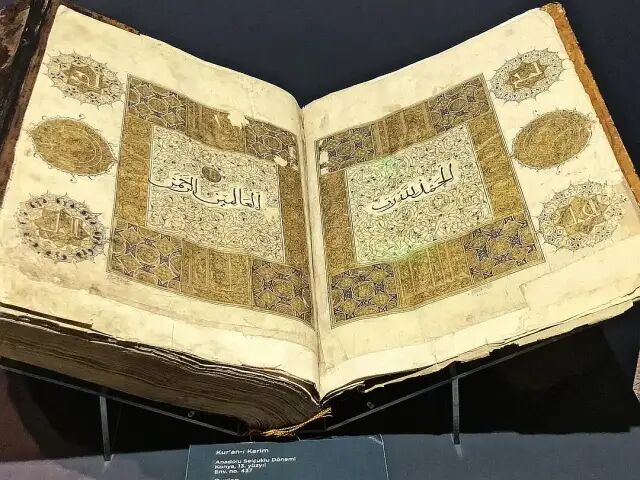
Late 14th century, Mamluk Dynasty of Egypt period.
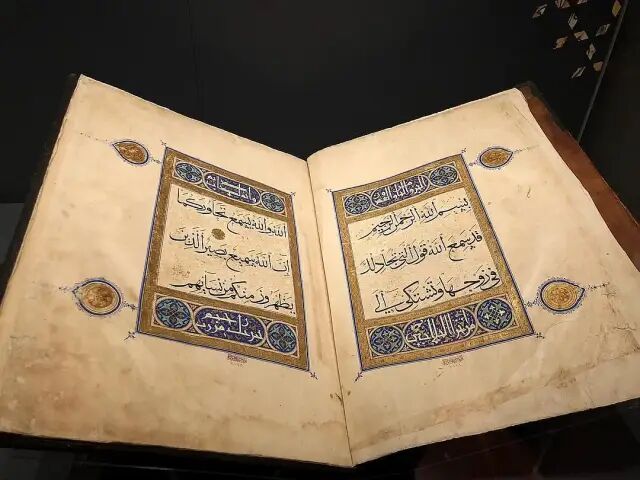
1380, Mamluk Dynasty of Egypt period.
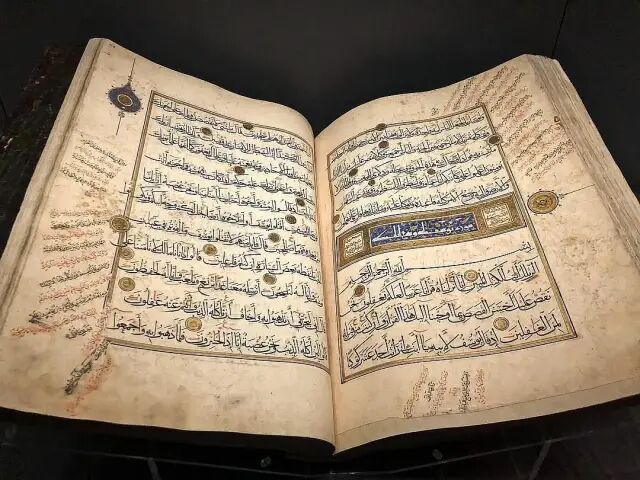
1333-1334, Ilkhanate period in Iran, copied by a scribe named Muhammed el-Hac Devletshah esh-Shirazi.
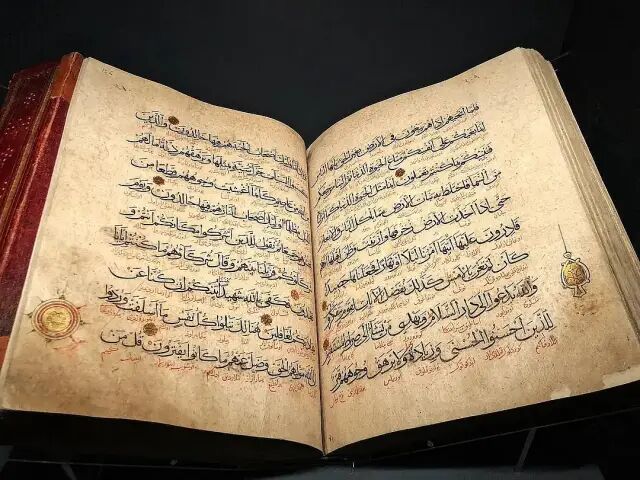
In 1338-9, during the Ilkhanate period in Iran, the scribe was named Yahya el-Sufi.
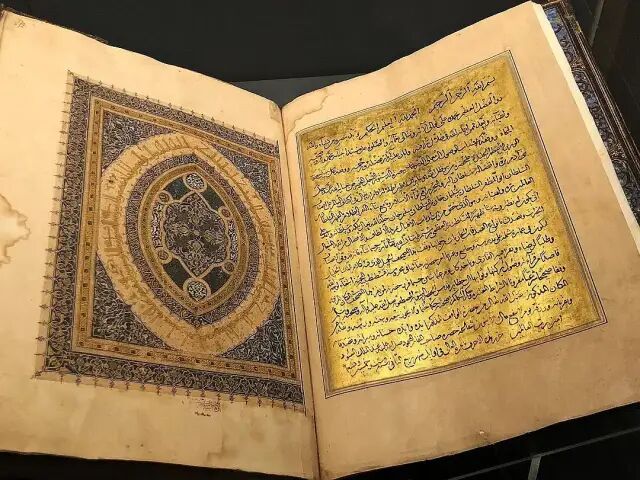
In 1318, during the Ilkhanate period in Iran, the scribe was named Ahmed b.al-Suhreverdi.
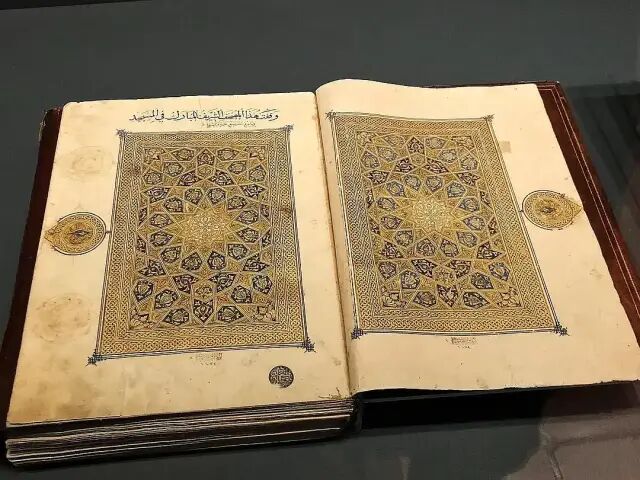
In 1323-4, during the Ilkhanate period in Iran, the scribe was named Huseyin bin Ali bin Camii.
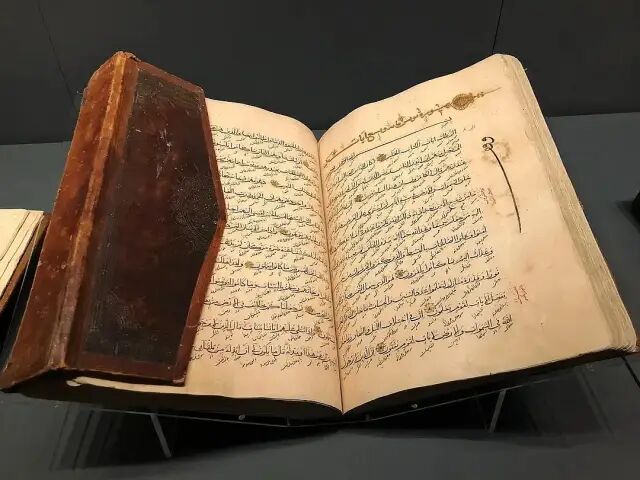
In 1320-21, during the Ilkhanate period in Iran, the scribe was named Argun bin Abdullah Kamili.
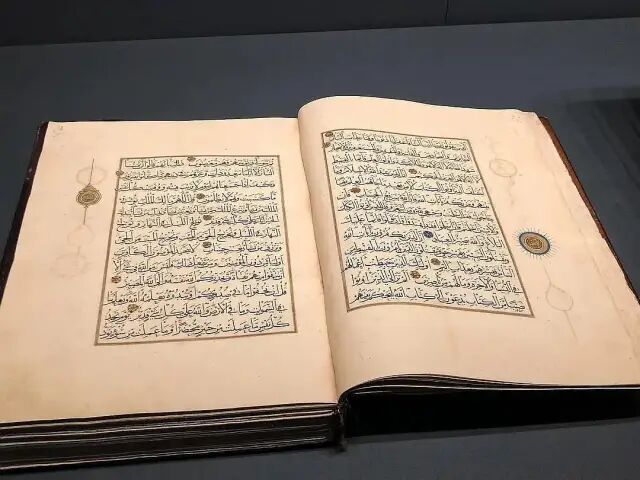
Two copies written by Ali ibn-i Mehmed in 1306-7 and 1310-11 during the Ilkhanate period in Iran.
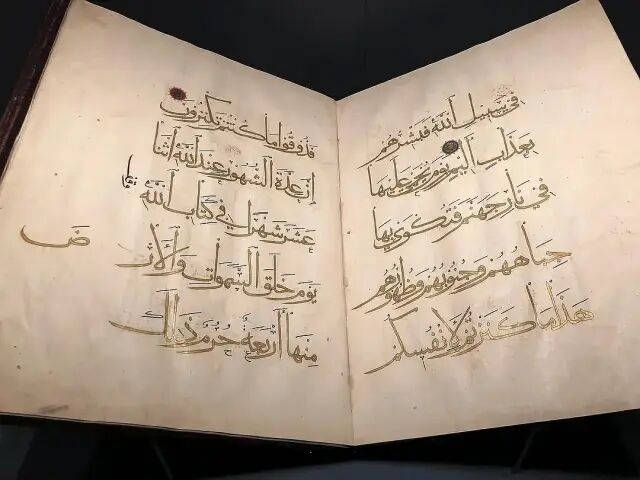
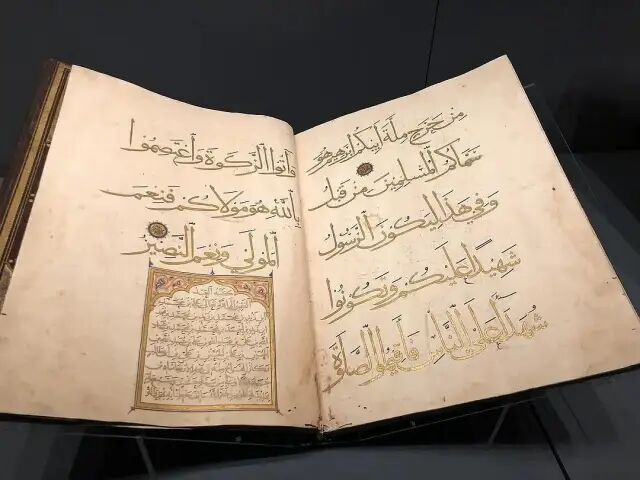
In 1286-87, during the Ilkhanate period in Iran, the scribe was named Yakut el-Musta'simi.
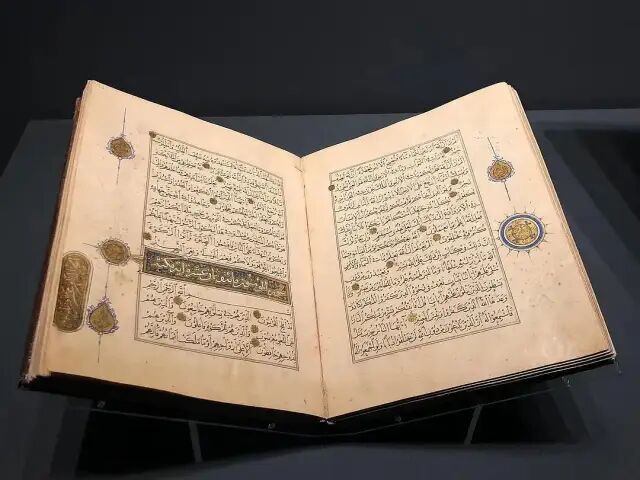
Shiraz, Iran, during the 17th-century Safavid dynasty.
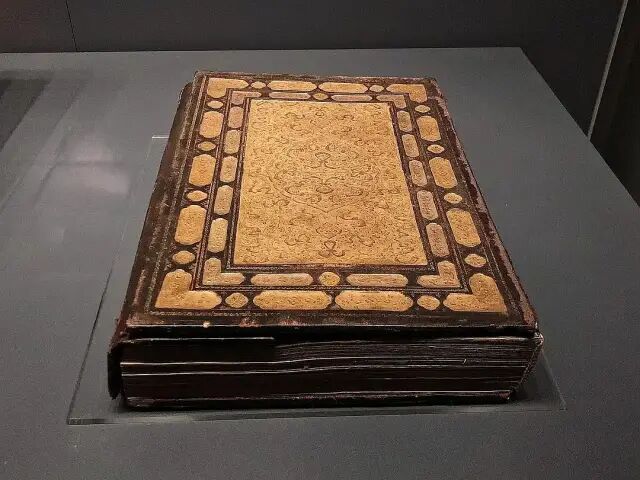
Shiraz, Iran, in 1591 during the Safavid dynasty.
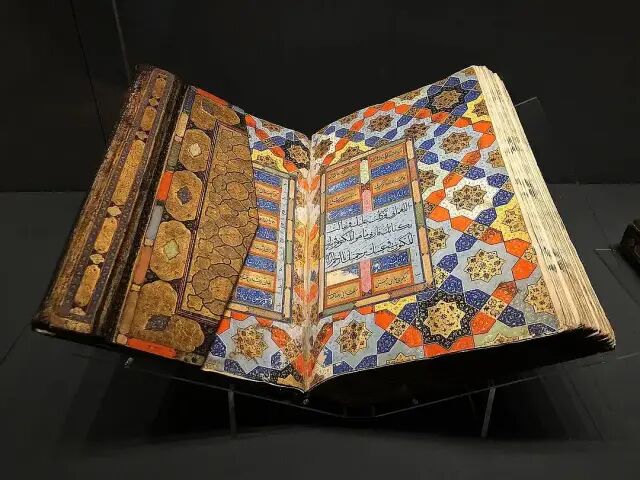
Shiraz, Iran, during the Safavid dynasty in 1549.
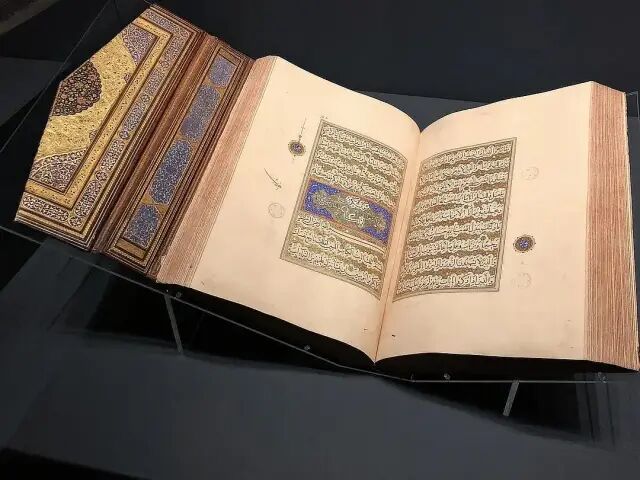
Shiraz, Iran, during the Safavid dynasty in 1580.
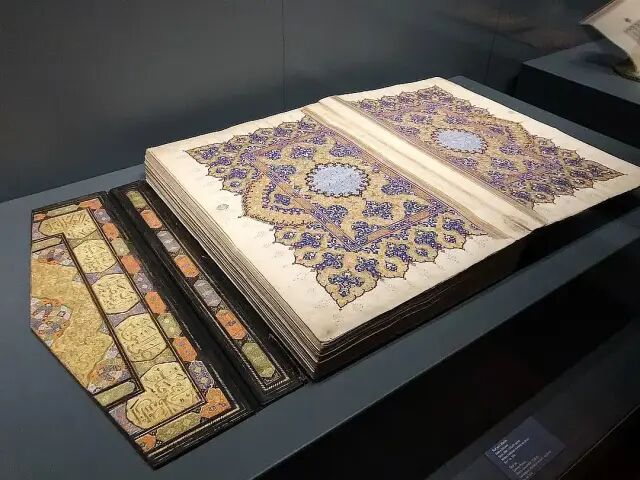
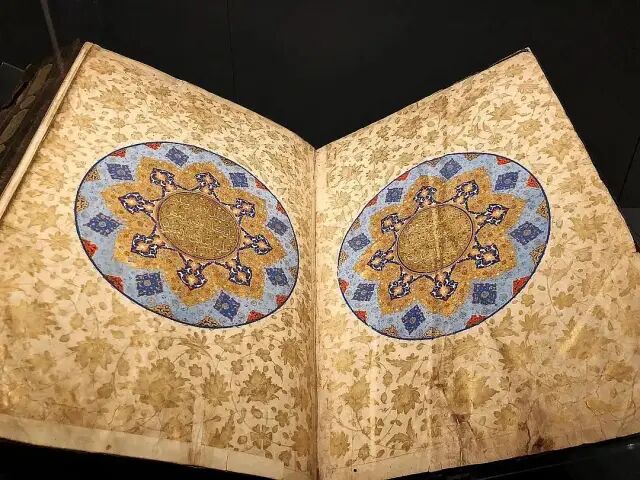
A book cover from the Safavid dynasty in Iran during the 17th century.
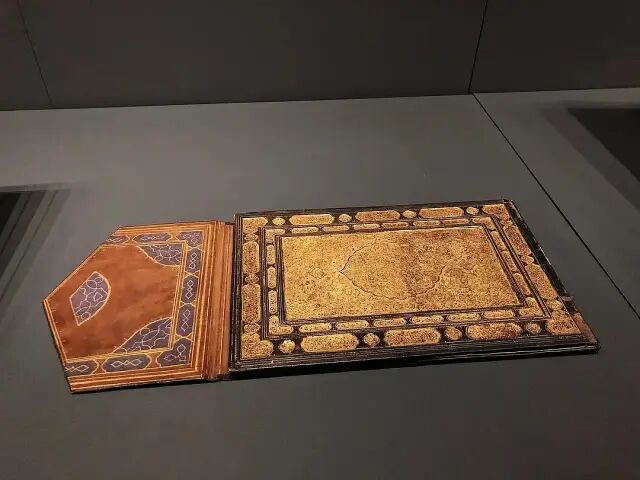
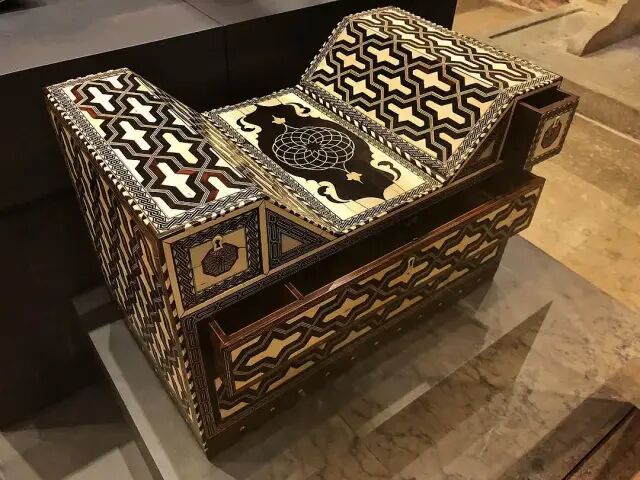
A scripture box from the Ottoman period, dating to the late 15th or early 16th century.
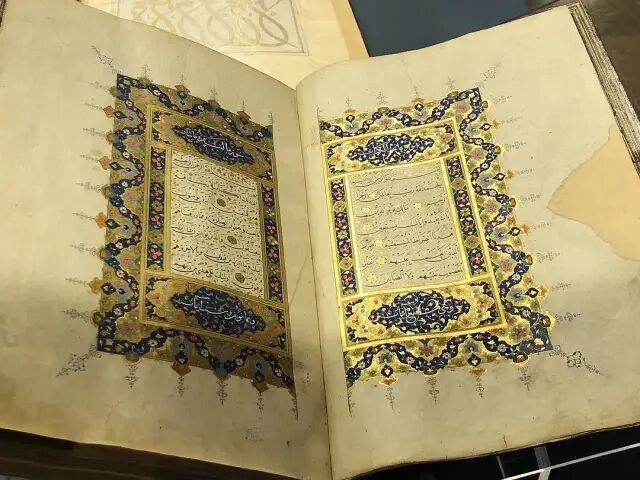
Written by the calligrapher Seyh Hamdullah during the Ottoman period in 1494.
Written by the calligrapher Ahmed Karahisari during the Ottoman period in 1443.
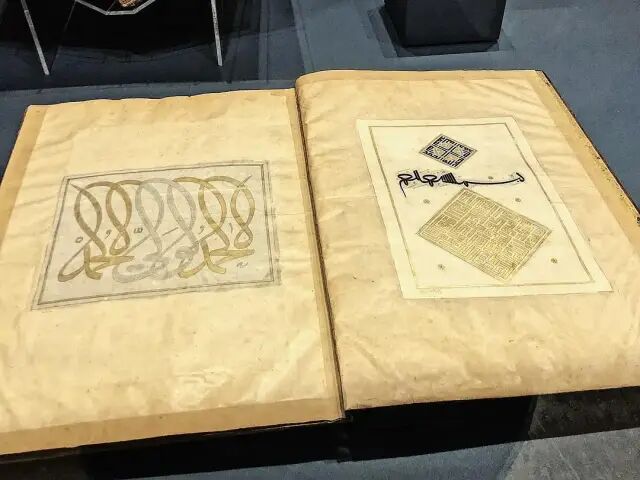
Written by the calligrapher Hafiz Osman during the Ottoman period between 1540 and 1550.
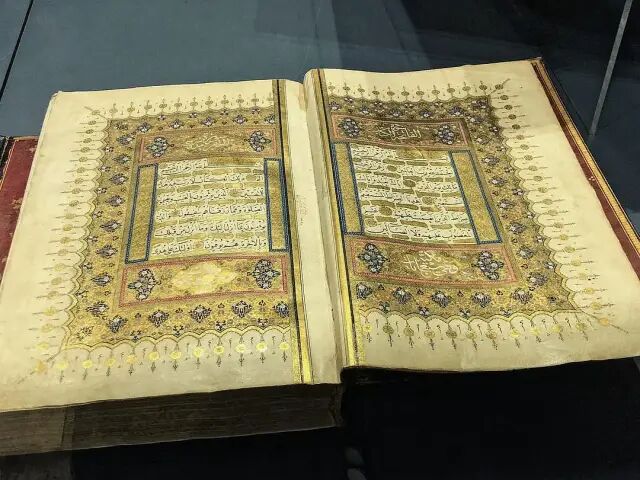
The Islamic Museum in Malacca, Malaysia.
The Melaka Islamic Museum is housed in the former office of the Melaka Islamic Council. The exact construction date is unknown, but it is thought to date back to the British occupation in the 1850s. Some believe the lower level was built during the Dutch occupation (1641-1824) and the upper level was added during the British colonial period. This building served as the office for the Melaka Islamic Council until 1990, when it became the Melaka Islamic Museum.
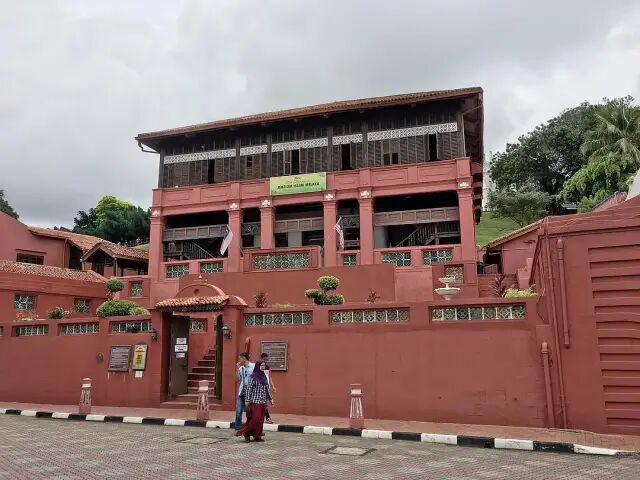
Hand-copied by a Haji from Melaka in 1881. The dark text is the original, and the light text is the Indonesian translation.
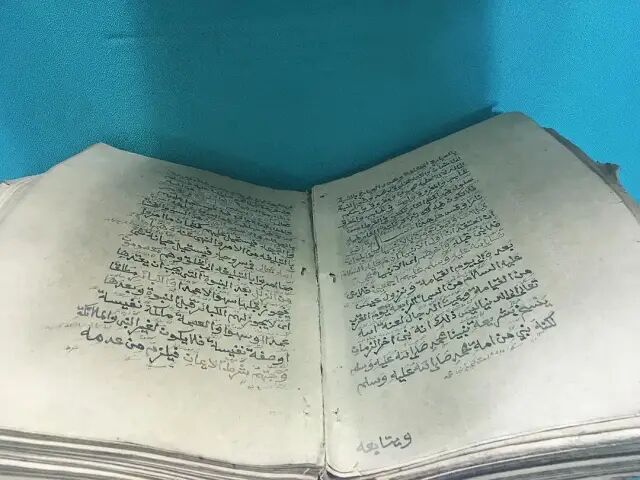
Hand-copied manuscripts in the museum collection.
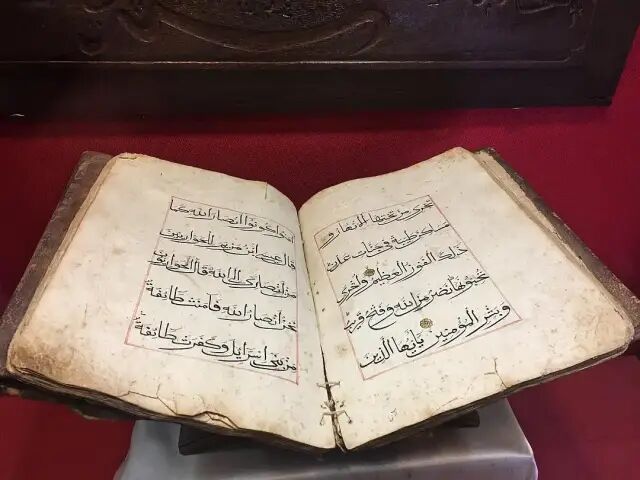
Museum of Malaysia and the Islamic World.
The Museum of Malaysia and the Islamic World in Melaka is located next to the A Famosa gate. The building was originally an office for a British rubber company built in 1910. Melaka enjoyed a brief period of prosperity in the early 20th century due to the rubber industry. This left behind many large mansions belonging to Nanyang Chinese, as well as this British-style building.
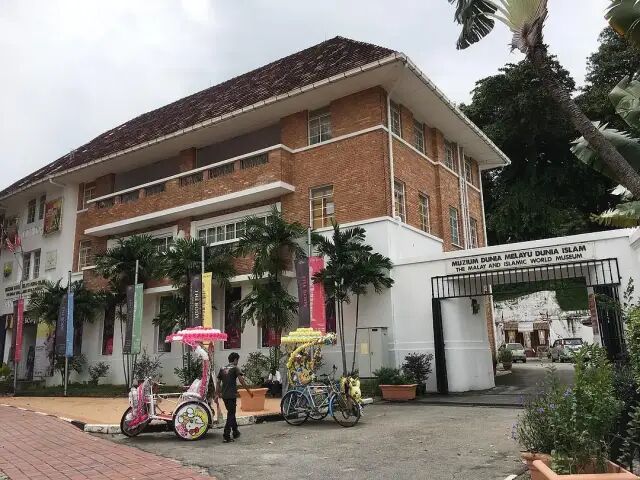
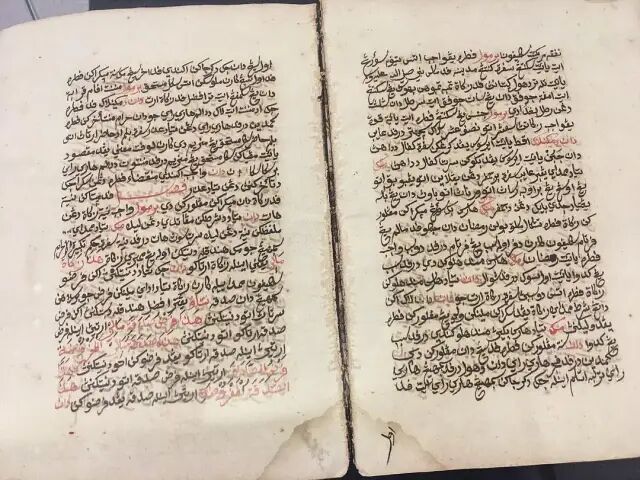
Handwritten manuscripts kept in the museum.
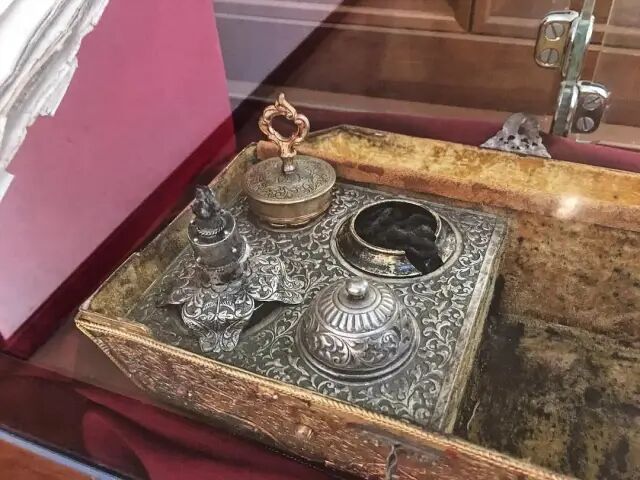
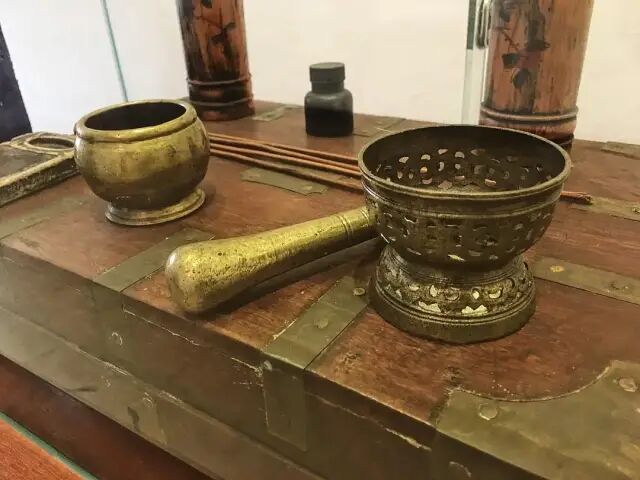
Tools for copying manuscripts.
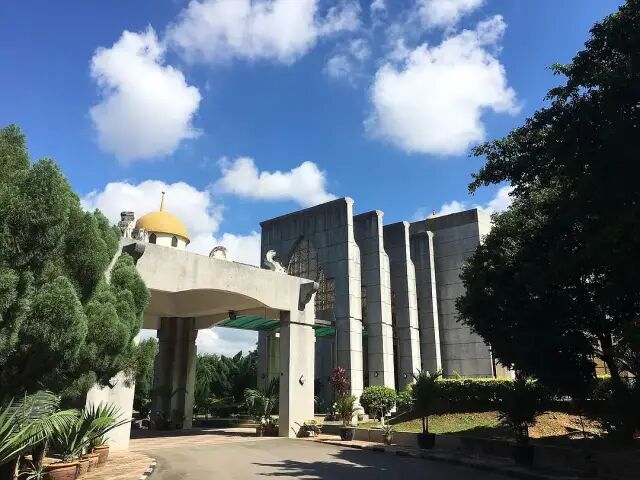
The Quran Museum (Muzium Al-quran) in Malacca, Malaysia.
The Malacca Quran Museum (Muzium Al-quran Melaka) is next to the Malacca State Mosque. It opened in 2008 and holds some interesting items.
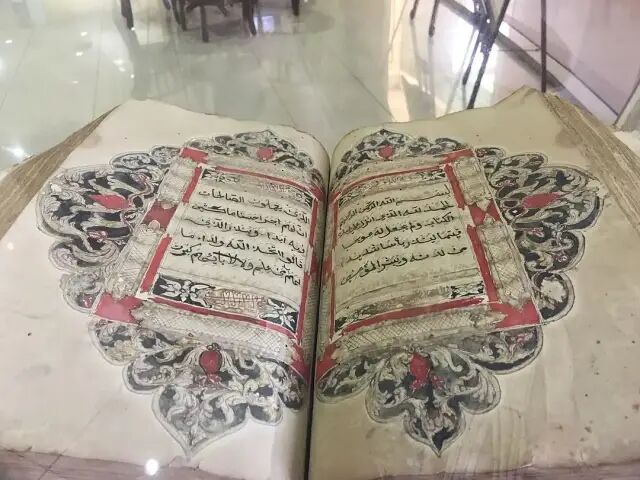
From the Aceh region in northwestern Sumatra.
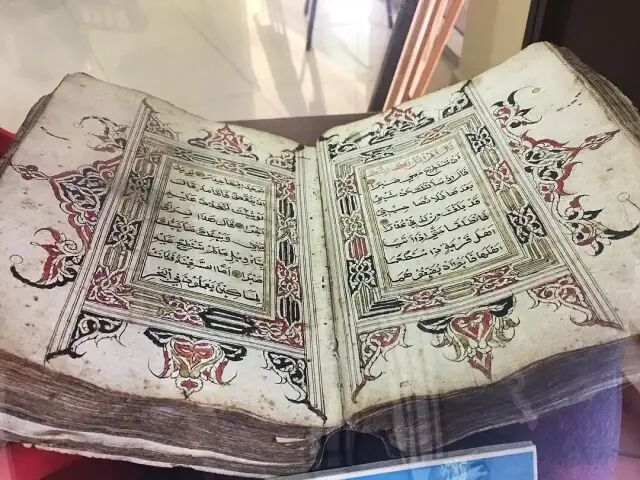
From Java.
Belongings left behind by a professor from Universiti Putra Malaysia.
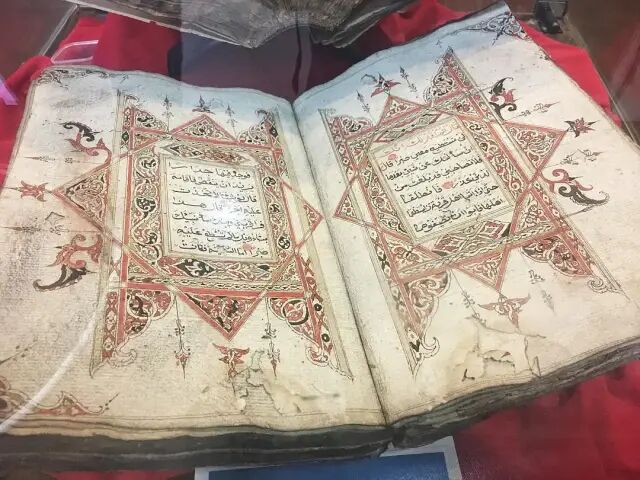
A manuscript from the 18th-century Sultanate of Patani. This sultanate was located on the border of modern-day northern Malaysia and Thailand. Between the 15th and 18th centuries, it served as a center for Islam and printing in northern Malaysia.
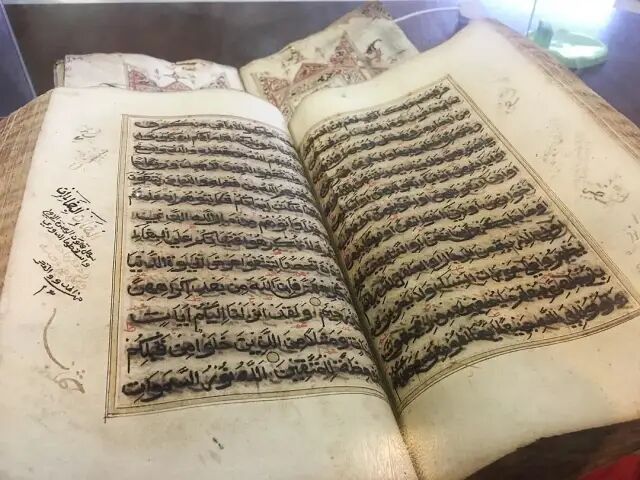
A 19th-century Javanese manuscript made from a local Javanese tree leaf called deluwang.
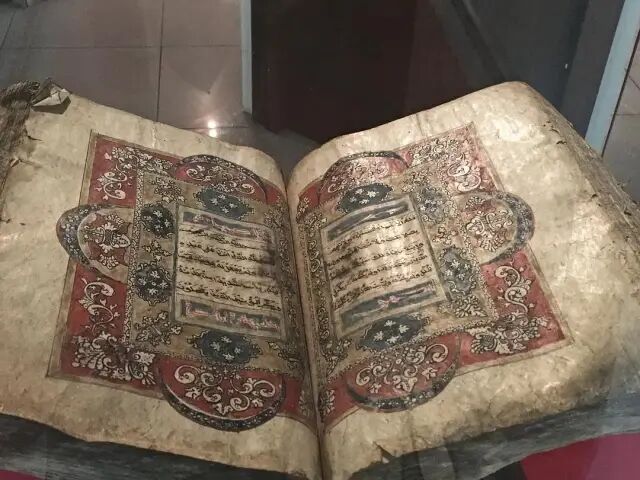
A manuscript from the Aceh region in northwestern Sumatra dating between the 18th and 19th centuries.
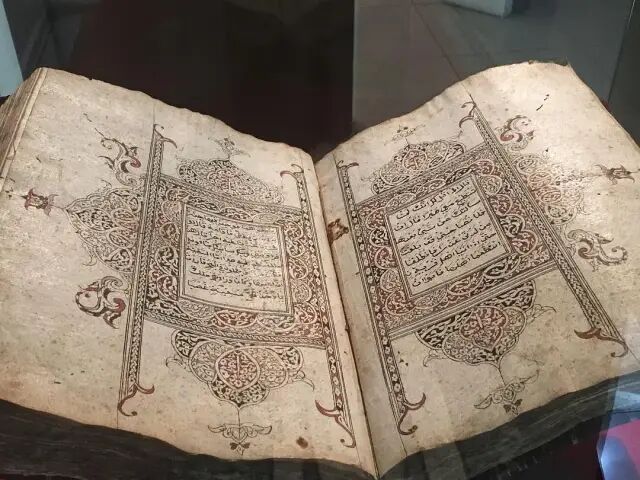
A manuscript from the east coast of the Malay Peninsula dating to the early 19th century.
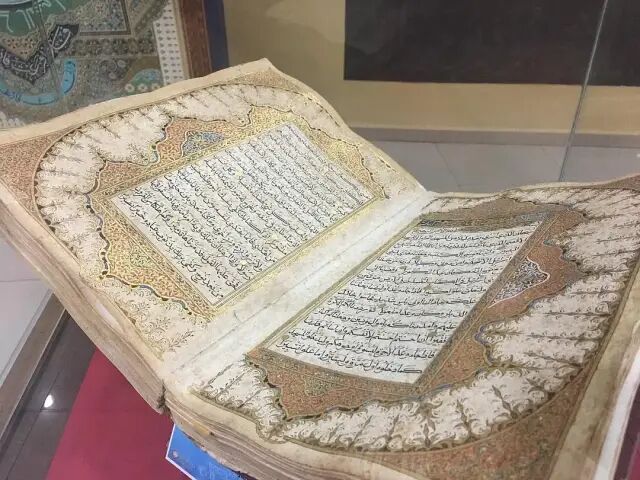
A modern manuscript.
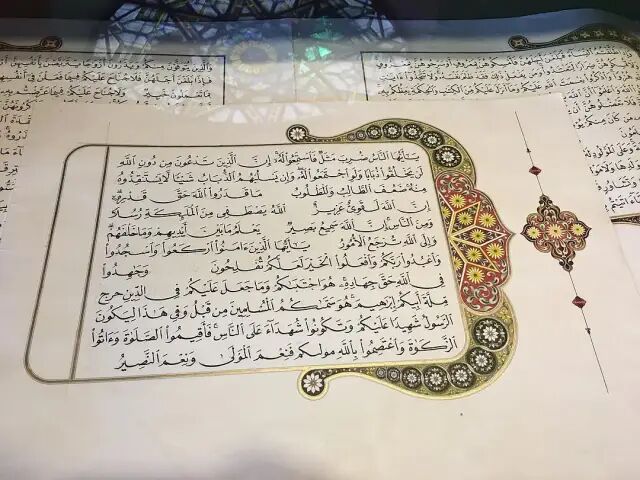
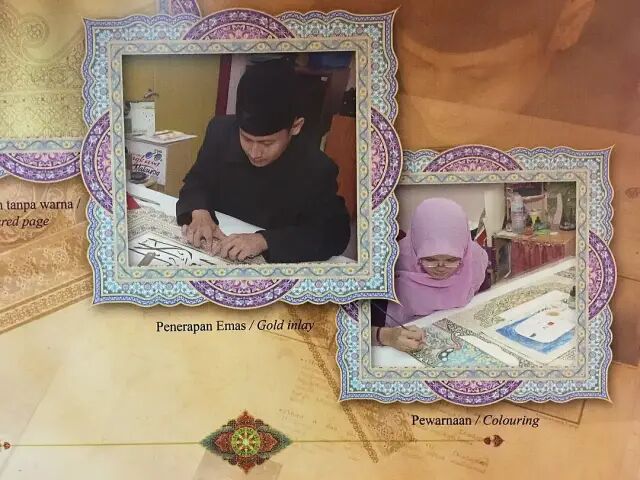
Islamic Arts Museum Malaysia.
The Islamic Arts Museum Malaysia is likely the museum with the richest collection and highest quality in the country, far surpassing the National Museum. The museum houses a large number of exquisite artifacts collected from all over the world.
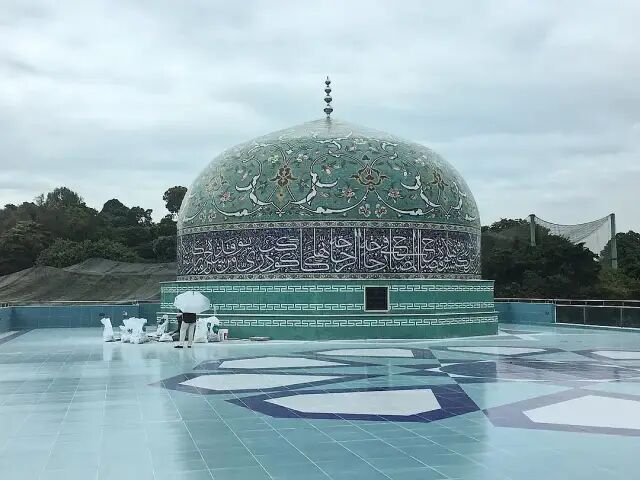
Qajar dynasty of Iran, 1831.
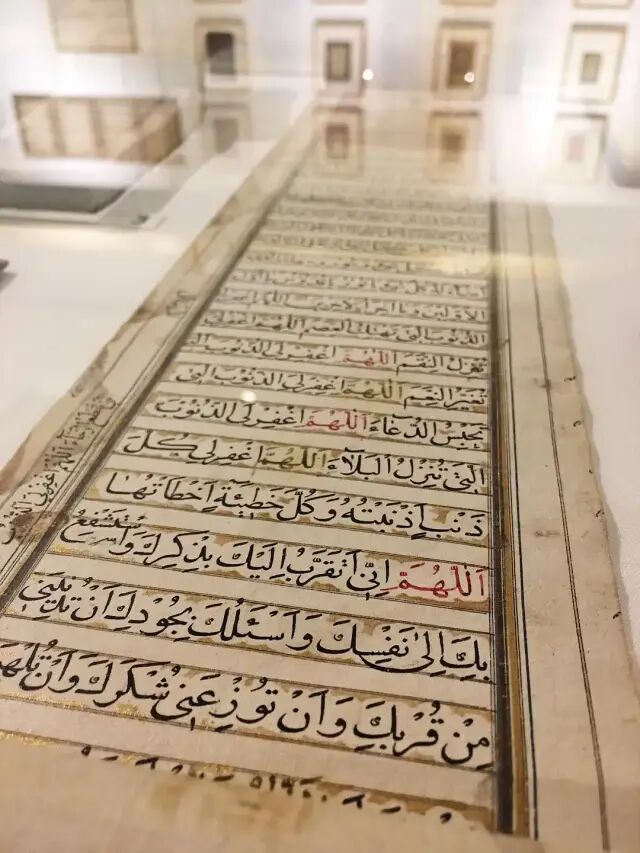
Ottoman, 1599-1600
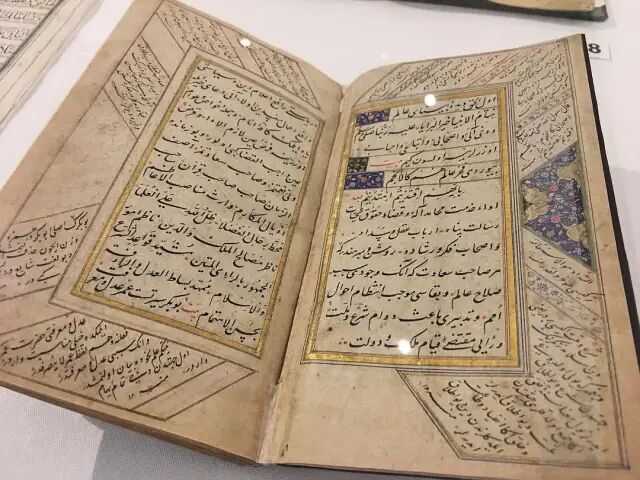
Ottoman, 19th century
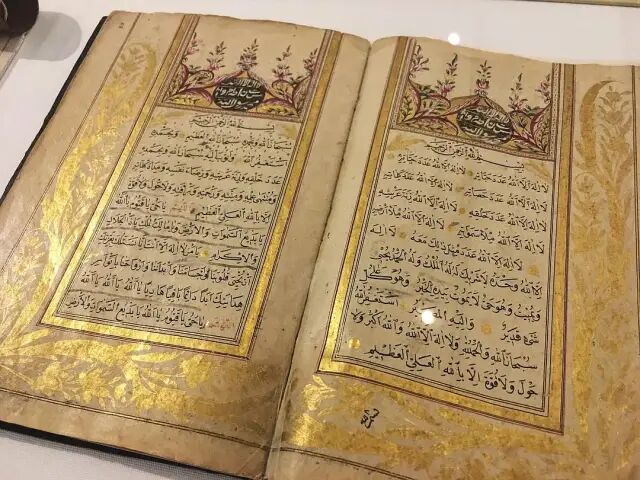
Iran, 17th-18th century
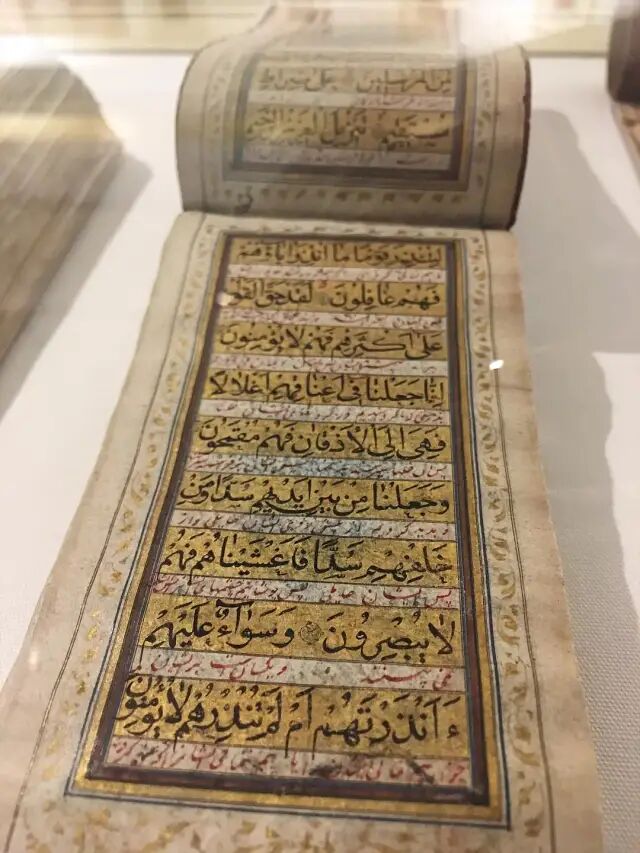
North Africa, 18th century
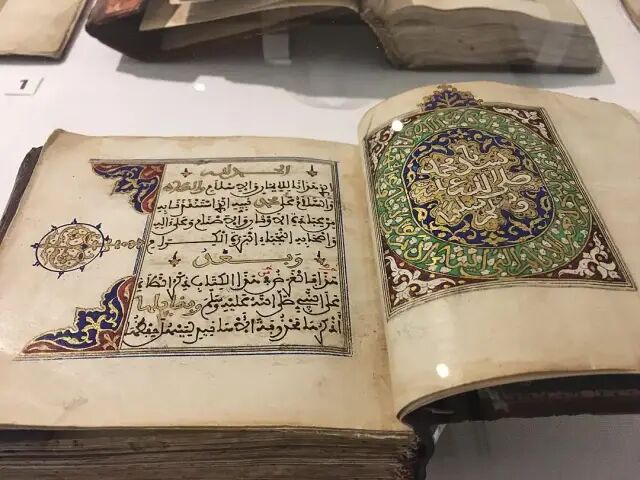
Ottoman, 18th century
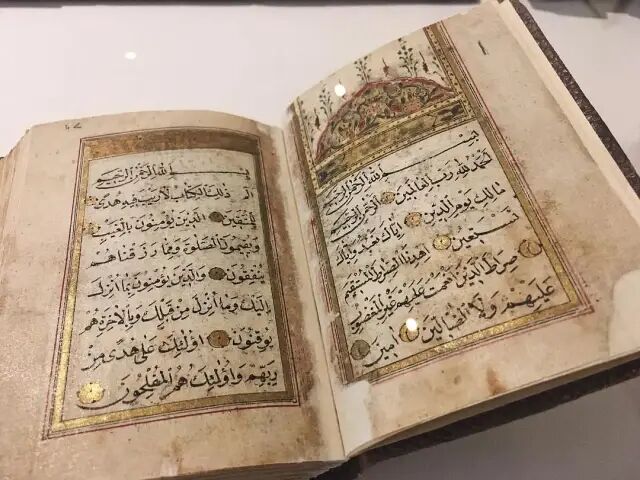
Dagestan, Caucasus, 19th century
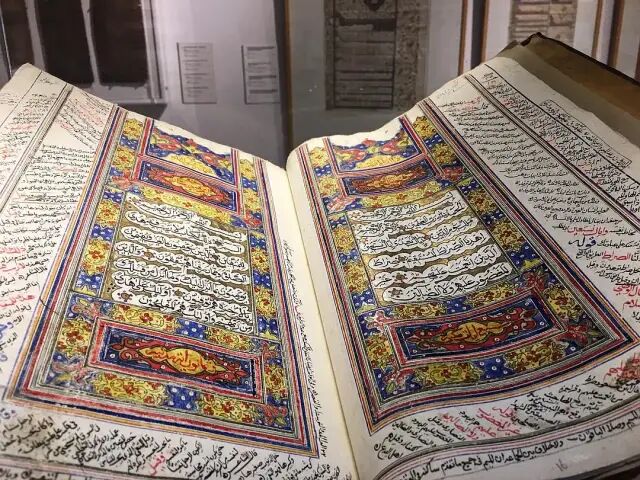
China, 17th century
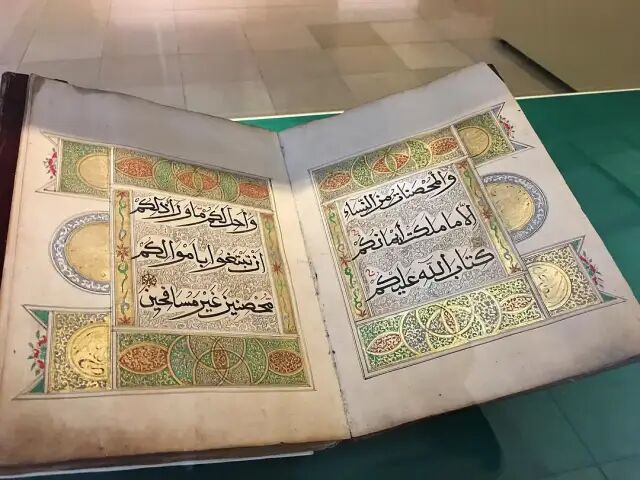
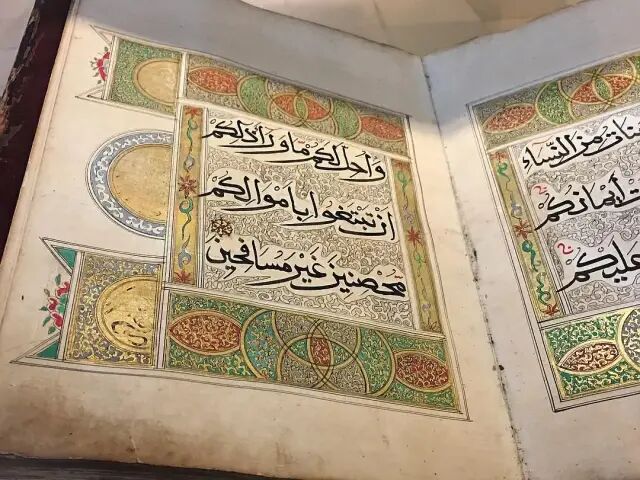
30-volume edition from 17th-century China
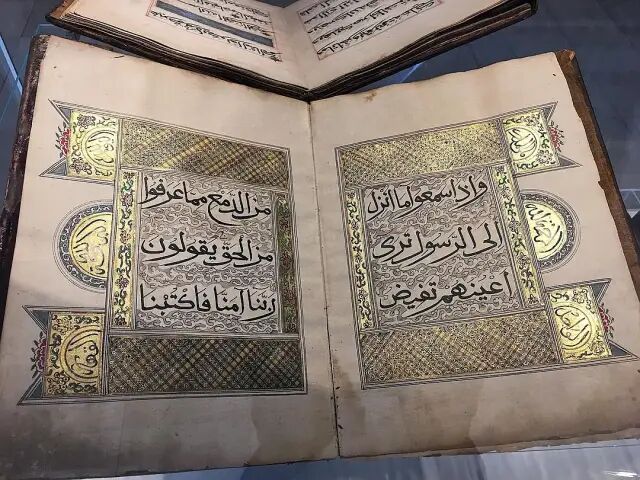
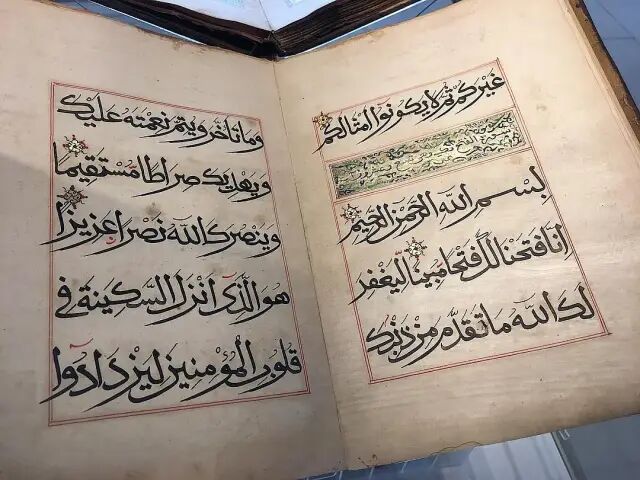
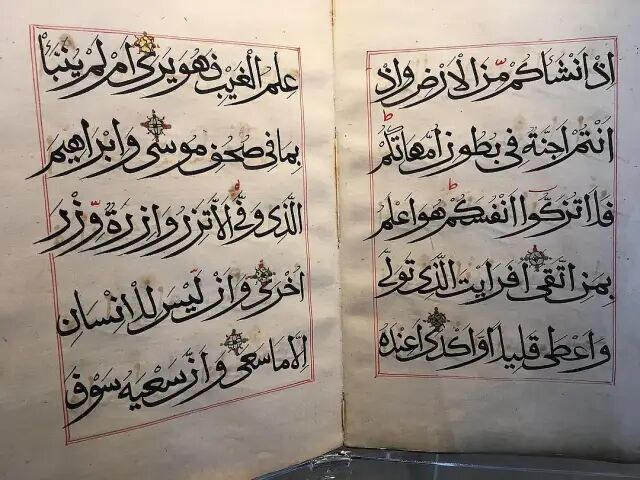
A 30-volume set from 1730 during the Qing Dynasty in China, featuring a brown embossed leather cover.
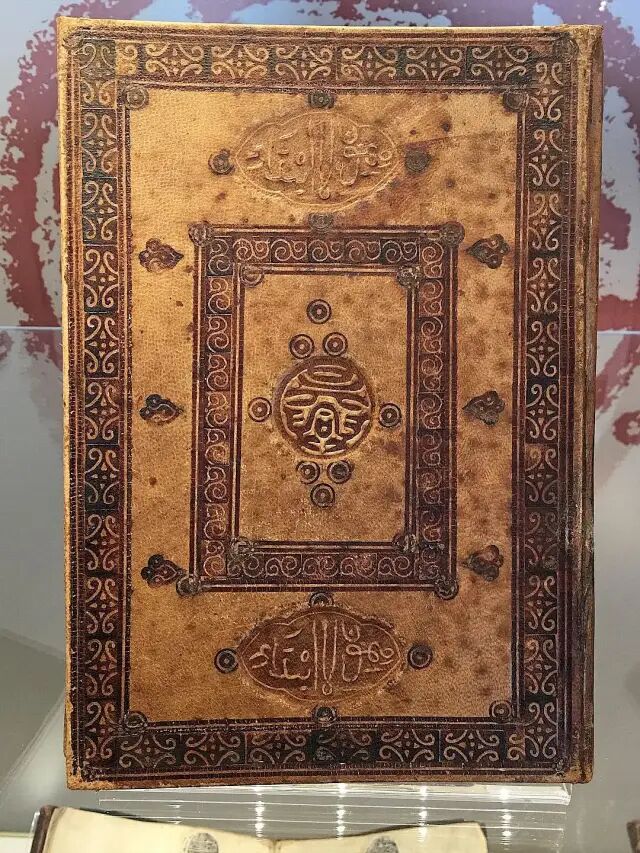
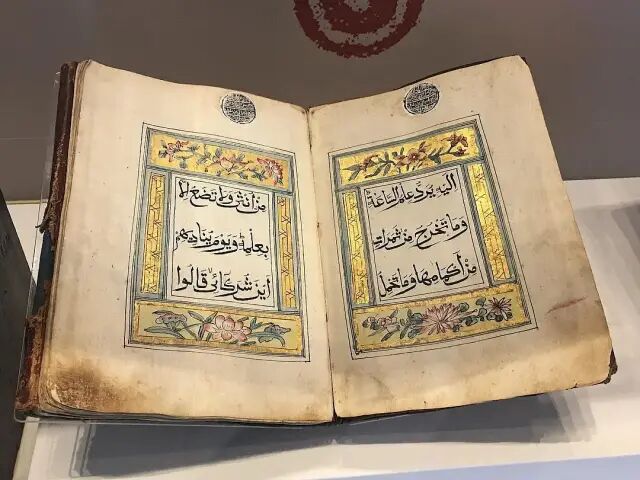
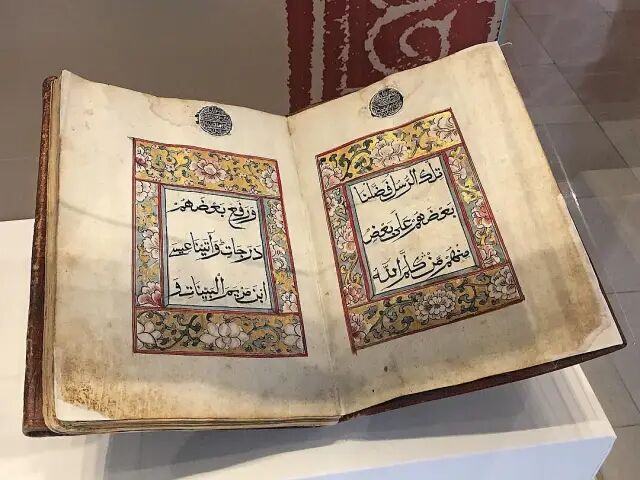
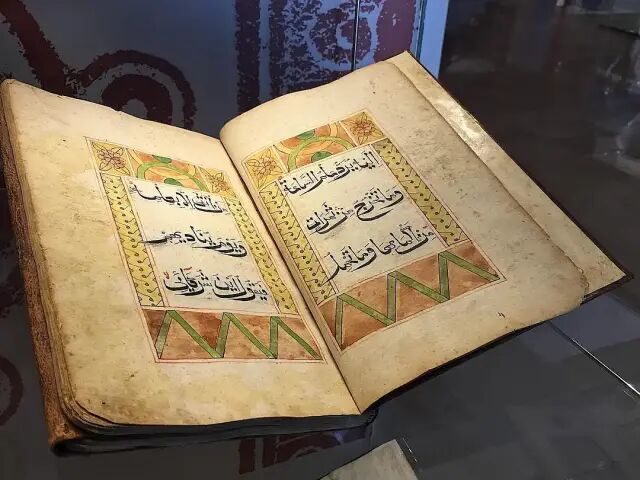
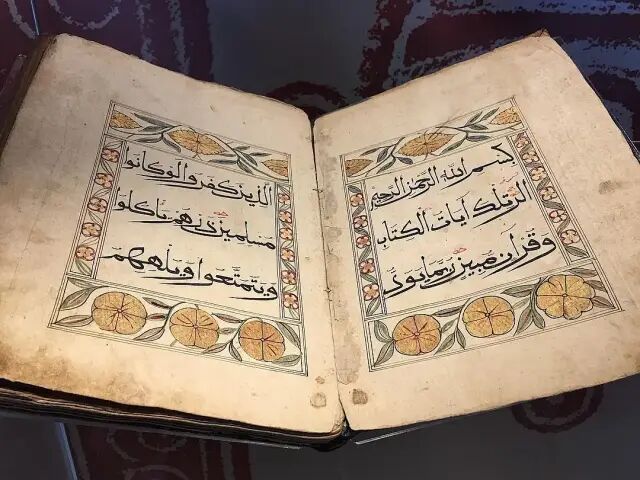
From the Mughal Empire in India, 1715.
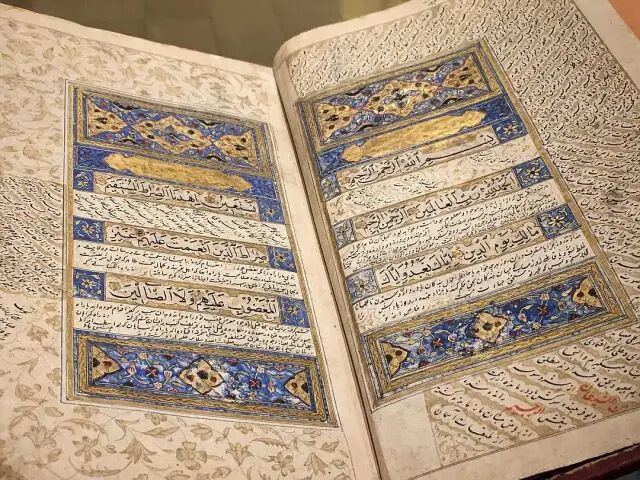
A 15th-century miniature from India.
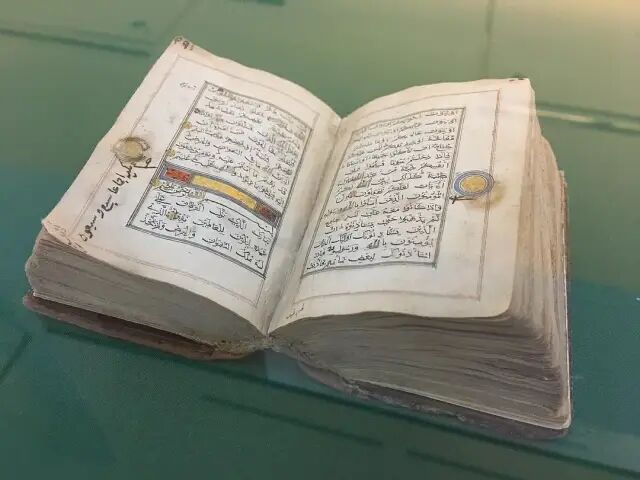
A 30-volume set from Gansu Province, dated March to April 1546, signed by Khaili Ibrahim Yunus Al-sini, featuring peony and cloud patterns.
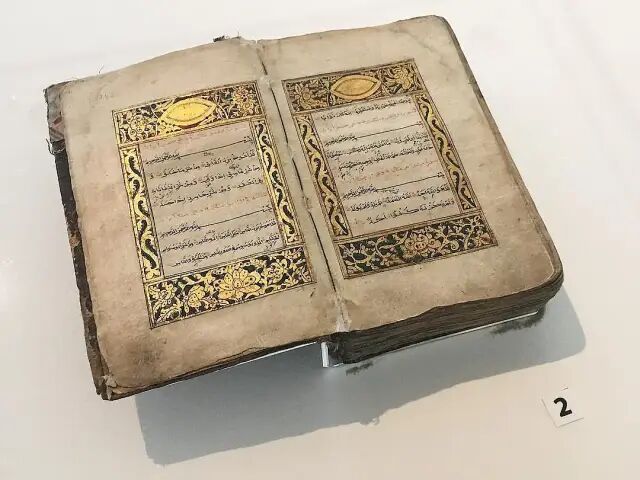
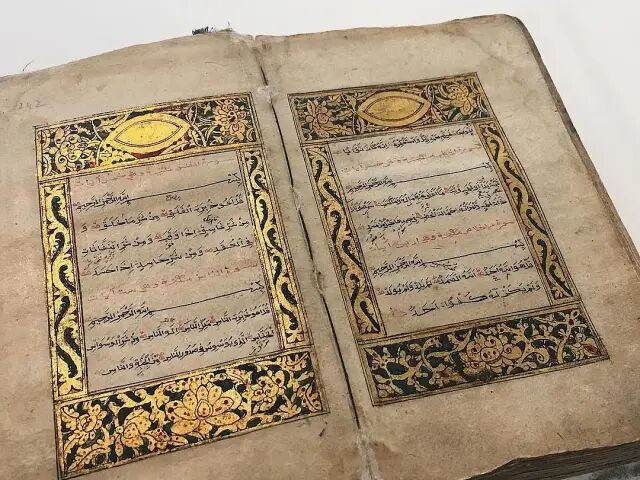
From Terengganu state on the east coast of the Malay Peninsula, 1871.
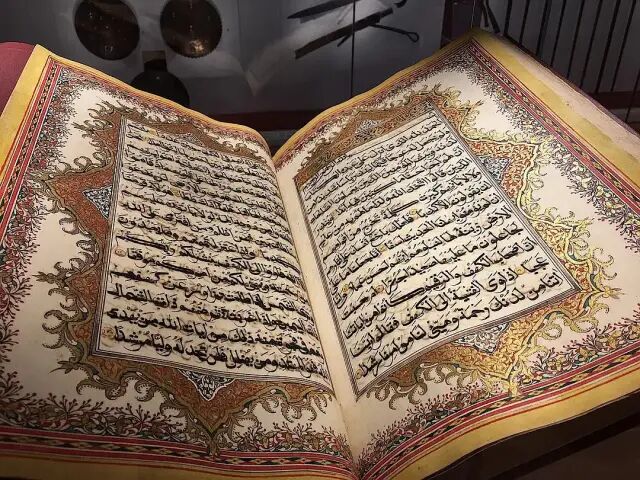
From Pattani Province in southern Thailand, 19th century.
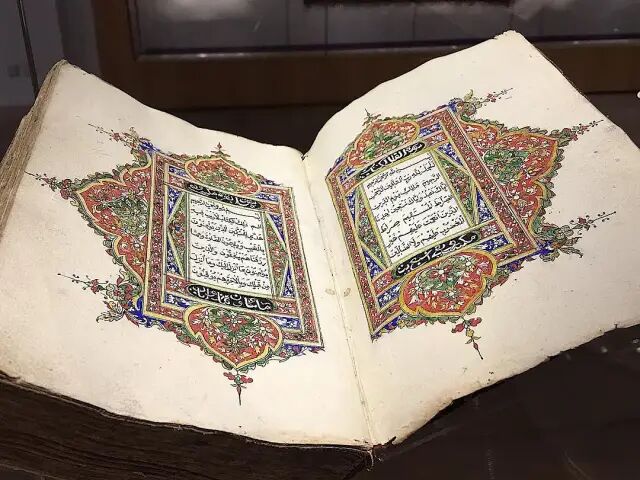
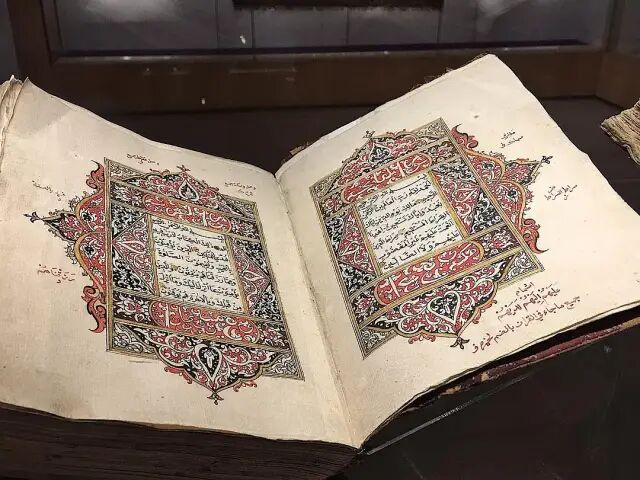
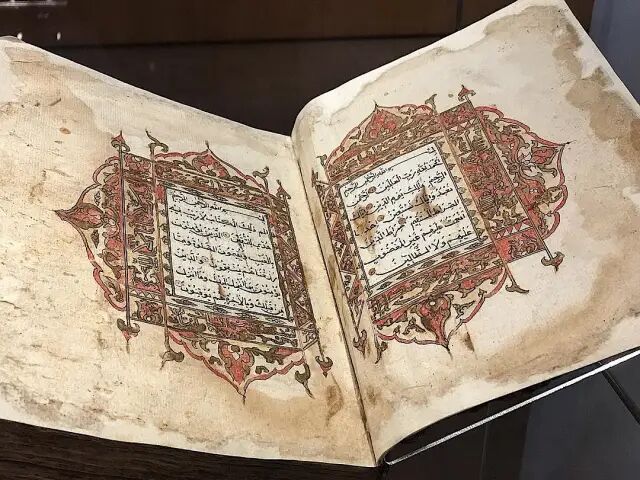
From the port of Cirebon in East Java, Indonesia, 19th century.
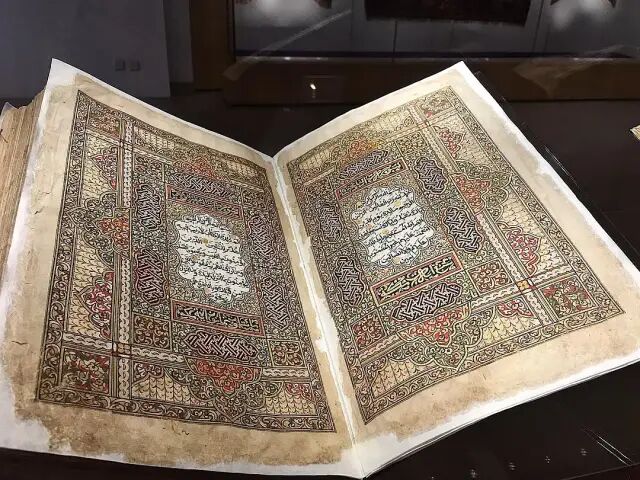
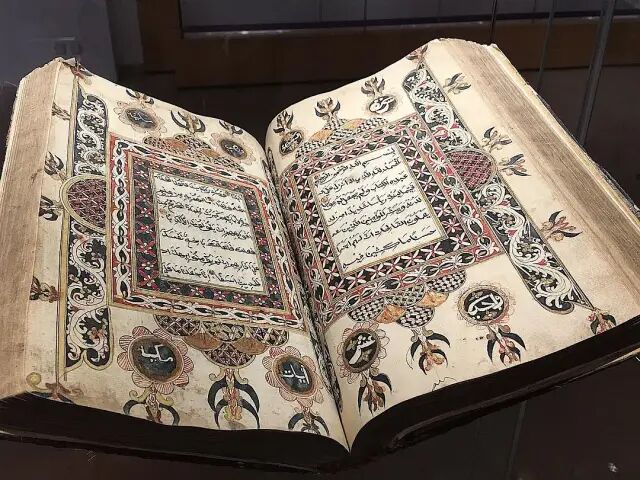
From Java, Indonesia, 19th century.
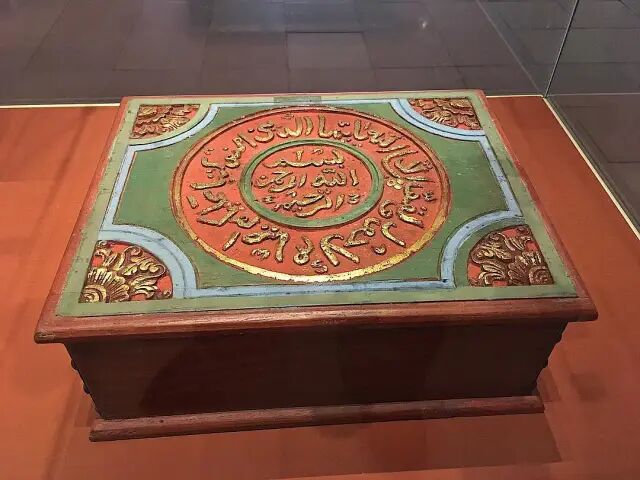
A scripture box from the Malay Peninsula in the late 19th century.
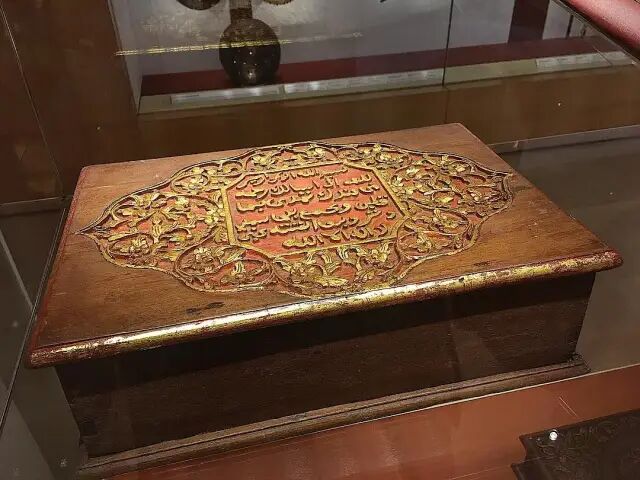
A 19th-century scripture box from Terengganu state on the east coast of the Malay Peninsula.
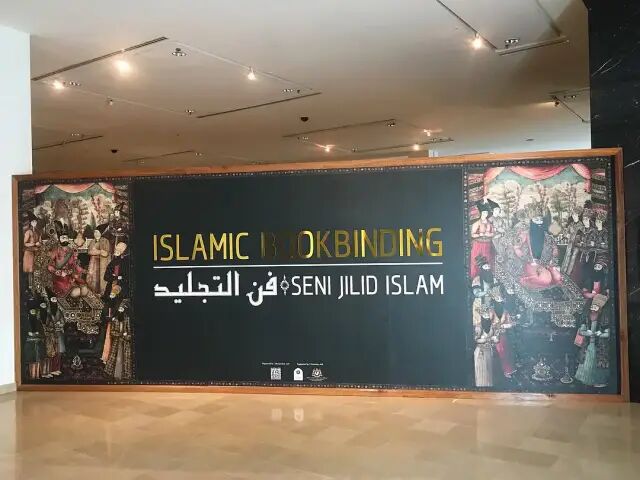
A special exhibition on bookbinding at the museum from May 8 to December 31, 2017.
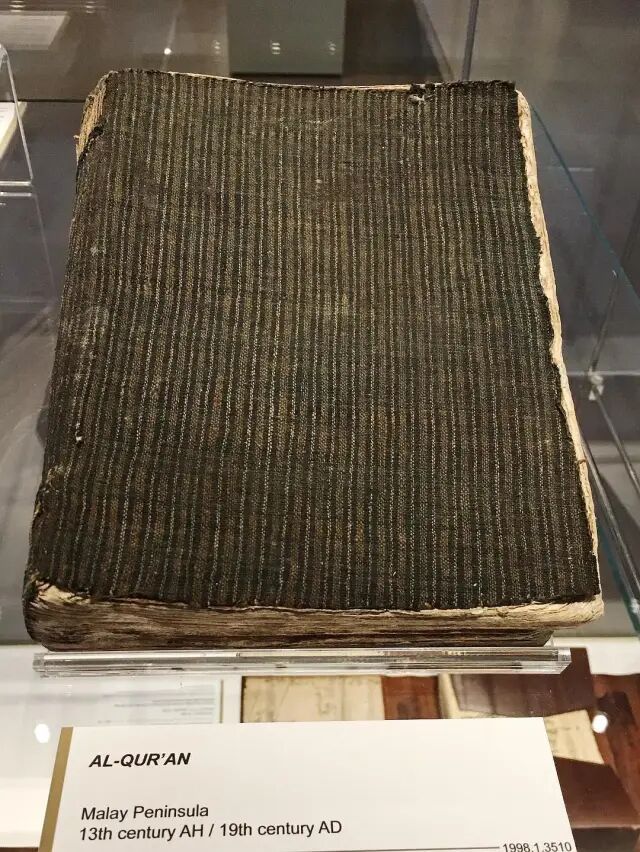
Book cover.
A 19th-century woven book cover from the Malay Peninsula. Woven covers with grid or striped patterns were very popular on the peninsula, especially those from the three southern provinces of Thailand, known as the Patani region.
Islamic Manuscripts Around the World: Qurans, Calligraphy and Muslim Heritage (Part 2)
Articles • ali2007fr posted the article • 0 comments • 130 views • 2026-05-18 08:38
Summary: Islamic Manuscripts Around the World: Qurans, Calligraphy and Muslim Heritage is presented here as a firsthand travel account in clear English, beginning with this scene: A 19th-century leather book cover from sub-Saharan Africa. This region kept the tradition of using leather straps to wrap leather book covers, a style that dates back to the 10th century. The account keeps its focus on Islamic Manuscripts, Quran Manuscripts, Muslim Calligraphy while preserving the names, places, food, and historical details from the Chinese source.
A 19th-century leather book cover from sub-Saharan Africa. This region kept the tradition of using leather straps to wrap leather book covers, a style that dates back to the 10th century.
Omdurman, Sudan, 19th century. Omdurman sits across the Nile River from Khartoum, the capital of Sudan, and serves as a center for the faith in the country. This book is written on loose paper and kept inside an early-style box-shaped leather cover.
Mamluk Sultanate, Egypt, 14th century. This pattern of stars was a classic carving design used by the Mamluk Sultanate starting in the 14th century.
Ilkhanate, Iran, 1304. This eight-pointed star pattern was influenced by the Mamluk Sultanate.
Mamluk Sultanate, 1400. The medallion design with geometric patterns in the center of the cover is a typical circular arrangement from the early Mamluk period.
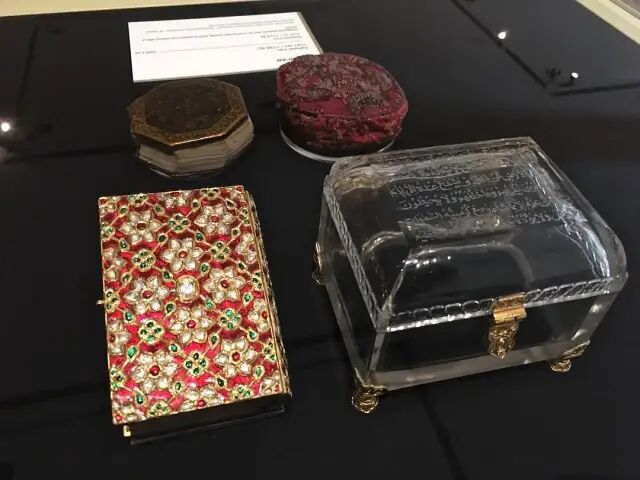
Mughal Empire, India, 18th-century miniature. This miniature scripture with a metal casing was very easy to carry.
Iran, 1725. These book covers, inlaid with colorful gemstones, were usually made for noble guests.
In 18th-century Bukhara, Uzbekistan, the book cover features an Arabic inscription reading 'Amal-i Muhammad Sharif-i Shhhaf'.
In 19th-century Iran, the medallion on the book cover is inscribed with the name 'Ashraf Anbiya Habib Khoda'.
On this 17th-century Ottoman book cover, the central medallion and the four corners feature complex floral patterns that blend arabesque and hatayi styles.
From the 19th to 20th century on the east coast of the Malay Peninsula, this book cover is made of bright red dyed leather. It features a medallion pattern in the center of a diamond-shaped inlay, with the edges and spine decorated in the same exquisite style as the cover. This is a classic 19th-century bookbinding style from the east coast of the Malay Peninsula.
A 19th-century book cover from the east coast of the Malay Peninsula.
In 1555, during the Safavid dynasty in Iran, this technique involved lining the inside of the book cover with gold-stamped filigree, often arranged in a honeycomb pattern.
In 19th-century Qajar Iran, the colorful floral patterns on book covers likely emerged in the mid-17th century, inspired by herbal packaging imported from Europe.
In the 18th-century Mughal Empire of India, the overall design of book covers was influenced by Iran, but they used local Indian floral patterns.
Doublure
A doublure is the inner surface of a book cover, made from materials like leather, paper, or fabric. Lacquer painting, leather stamping, and filigree are the three main types of doublure decoration. Filigree is often used in Southeast Asia, while Turkey is most famous for its marbling technique called ebru.
In 16th-century Ottoman Turkey, they also used filigree on book doublures, cutting gold paper into intricate patterns against colorful backgrounds.
During the 19th-century Qajar dynasty in Iran, the calligraphy on doublures was complex and beautiful, representing the peak of Iranian doublure calligraphy art.
In the 19th-century Qajar dynasty of Iran, doublures often featured paintings of six-flowered narcissus on a single stem against a red background. view all
Summary: Islamic Manuscripts Around the World: Qurans, Calligraphy and Muslim Heritage is presented here as a firsthand travel account in clear English, beginning with this scene: A 19th-century leather book cover from sub-Saharan Africa. This region kept the tradition of using leather straps to wrap leather book covers, a style that dates back to the 10th century. The account keeps its focus on Islamic Manuscripts, Quran Manuscripts, Muslim Calligraphy while preserving the names, places, food, and historical details from the Chinese source.
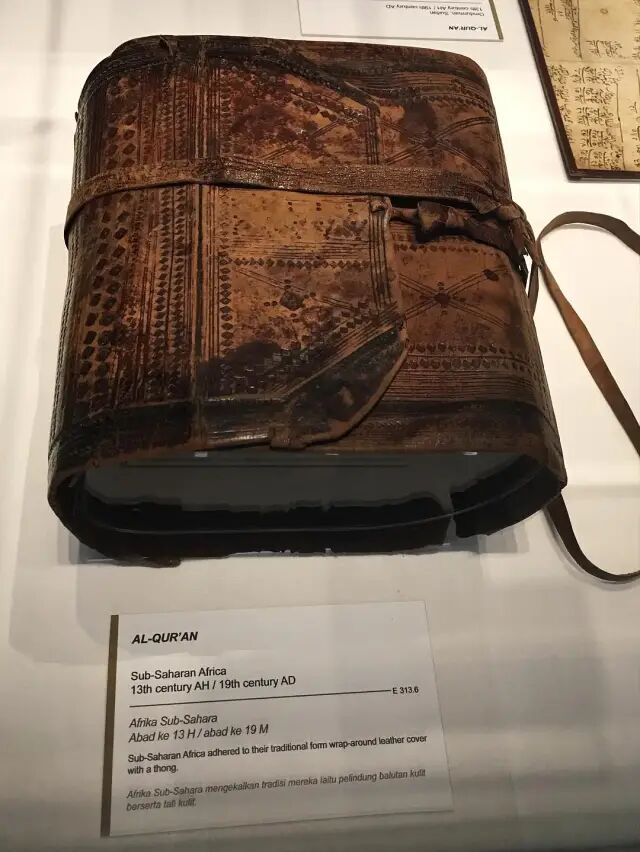
A 19th-century leather book cover from sub-Saharan Africa. This region kept the tradition of using leather straps to wrap leather book covers, a style that dates back to the 10th century.
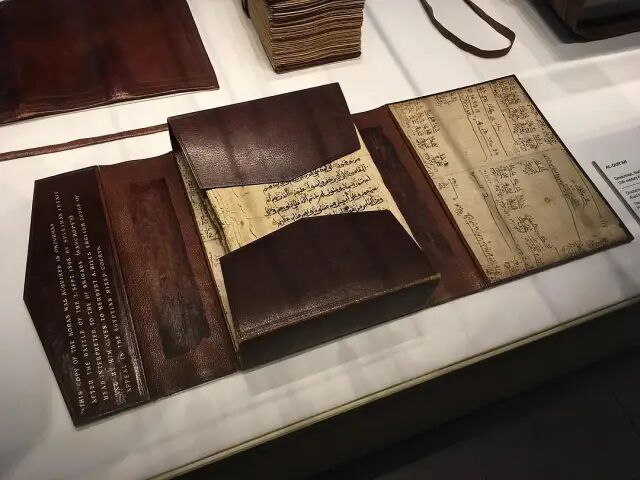
Omdurman, Sudan, 19th century. Omdurman sits across the Nile River from Khartoum, the capital of Sudan, and serves as a center for the faith in the country. This book is written on loose paper and kept inside an early-style box-shaped leather cover.
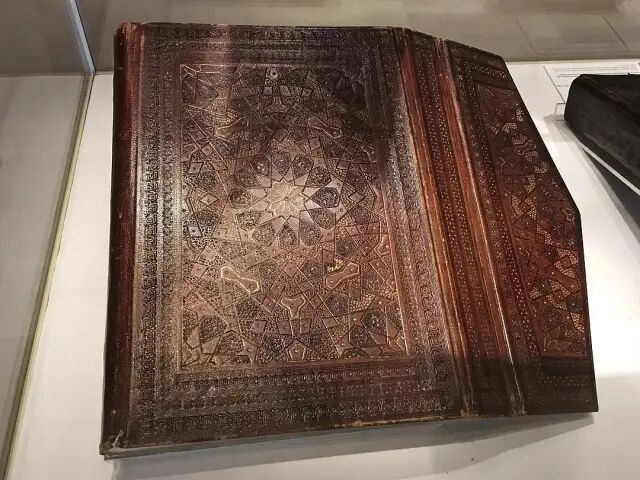
Mamluk Sultanate, Egypt, 14th century. This pattern of stars was a classic carving design used by the Mamluk Sultanate starting in the 14th century.
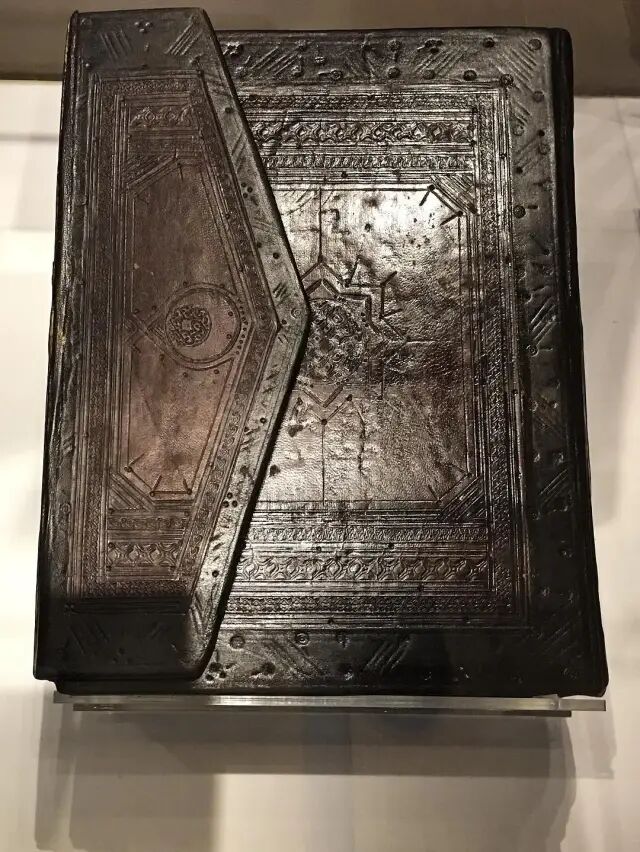
Ilkhanate, Iran, 1304. This eight-pointed star pattern was influenced by the Mamluk Sultanate.
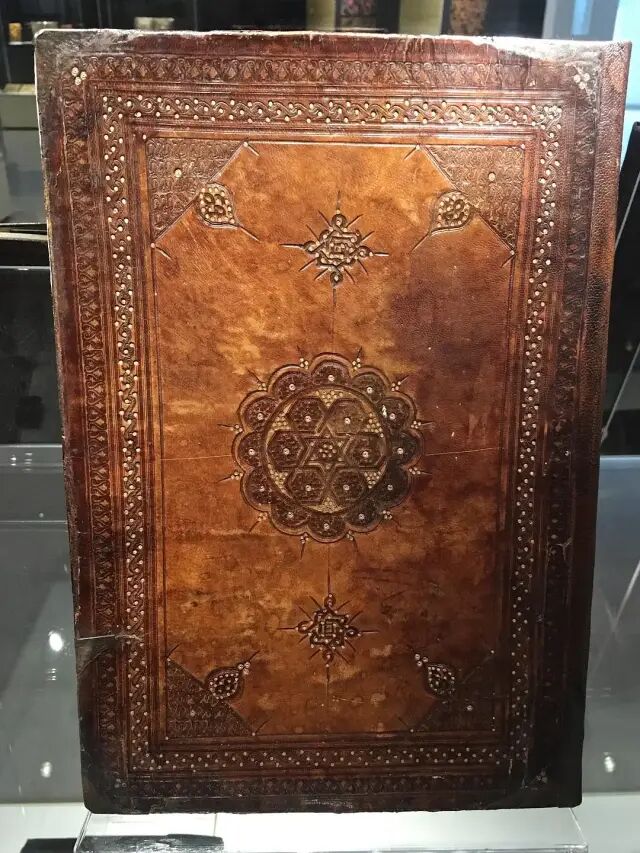
Mamluk Sultanate, 1400. The medallion design with geometric patterns in the center of the cover is a typical circular arrangement from the early Mamluk period.
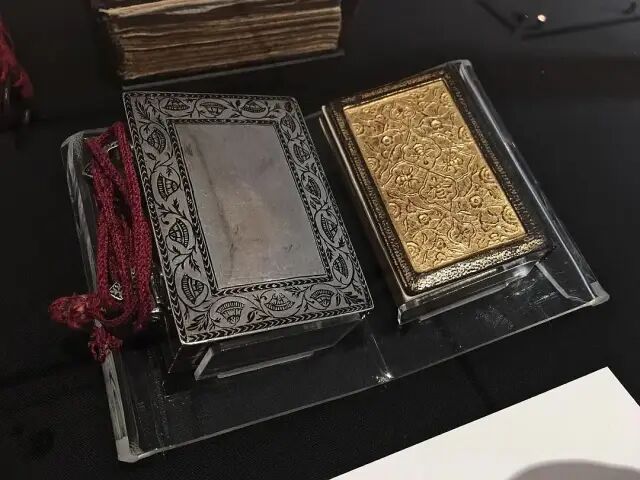
Mughal Empire, India, 18th-century miniature. This miniature scripture with a metal casing was very easy to carry.
Iran, 1725. These book covers, inlaid with colorful gemstones, were usually made for noble guests.
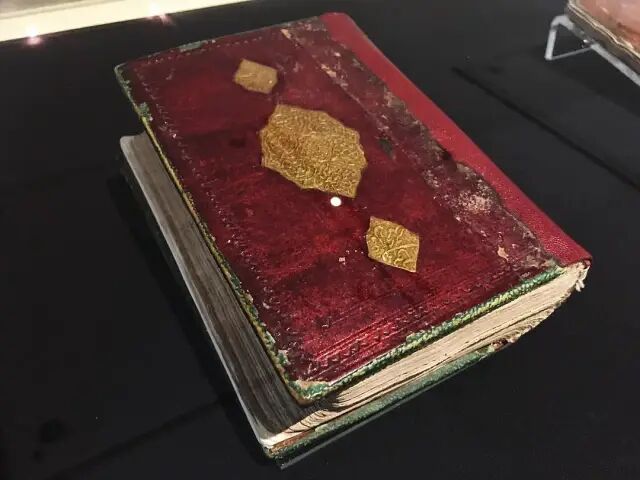
In 18th-century Bukhara, Uzbekistan, the book cover features an Arabic inscription reading 'Amal-i Muhammad Sharif-i Shhhaf'.
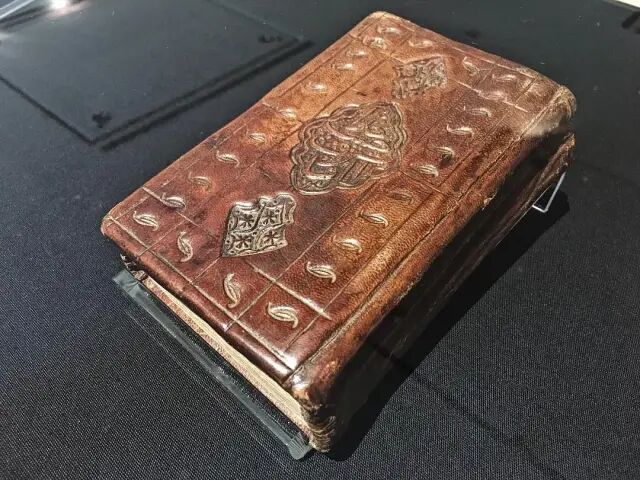
In 19th-century Iran, the medallion on the book cover is inscribed with the name 'Ashraf Anbiya Habib Khoda'.
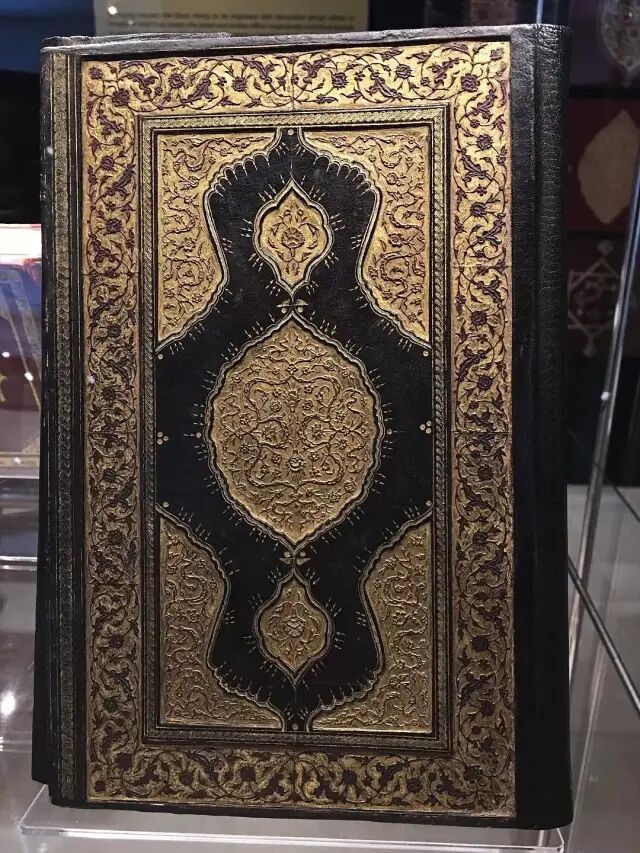
On this 17th-century Ottoman book cover, the central medallion and the four corners feature complex floral patterns that blend arabesque and hatayi styles.
From the 19th to 20th century on the east coast of the Malay Peninsula, this book cover is made of bright red dyed leather. It features a medallion pattern in the center of a diamond-shaped inlay, with the edges and spine decorated in the same exquisite style as the cover. This is a classic 19th-century bookbinding style from the east coast of the Malay Peninsula.
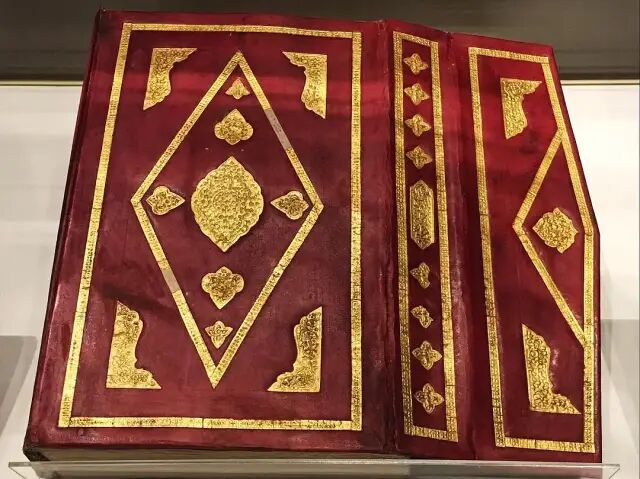
A 19th-century book cover from the east coast of the Malay Peninsula.
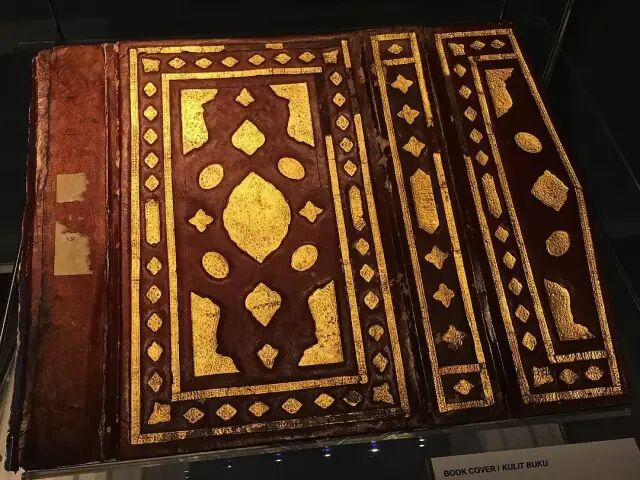
In 1555, during the Safavid dynasty in Iran, this technique involved lining the inside of the book cover with gold-stamped filigree, often arranged in a honeycomb pattern.
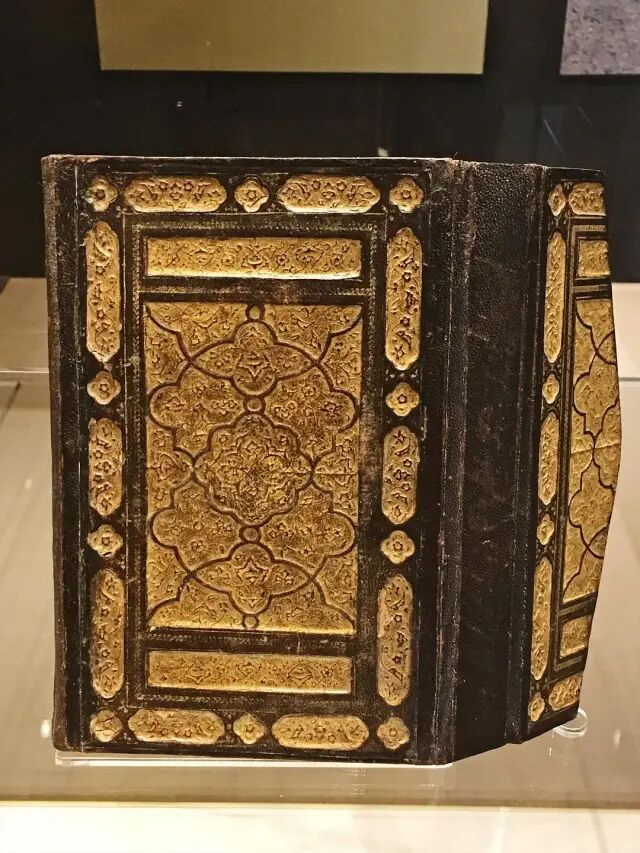
In 19th-century Qajar Iran, the colorful floral patterns on book covers likely emerged in the mid-17th century, inspired by herbal packaging imported from Europe.
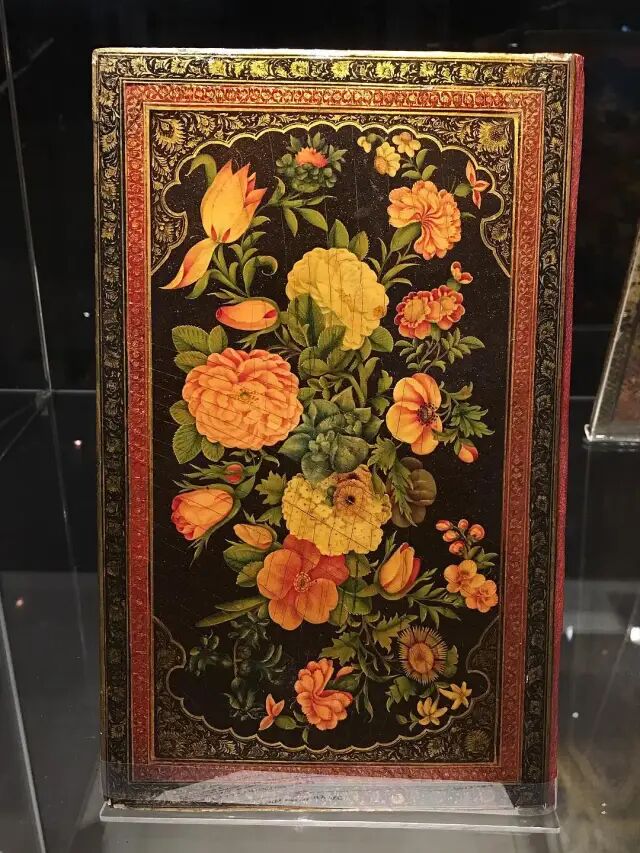
In the 18th-century Mughal Empire of India, the overall design of book covers was influenced by Iran, but they used local Indian floral patterns.
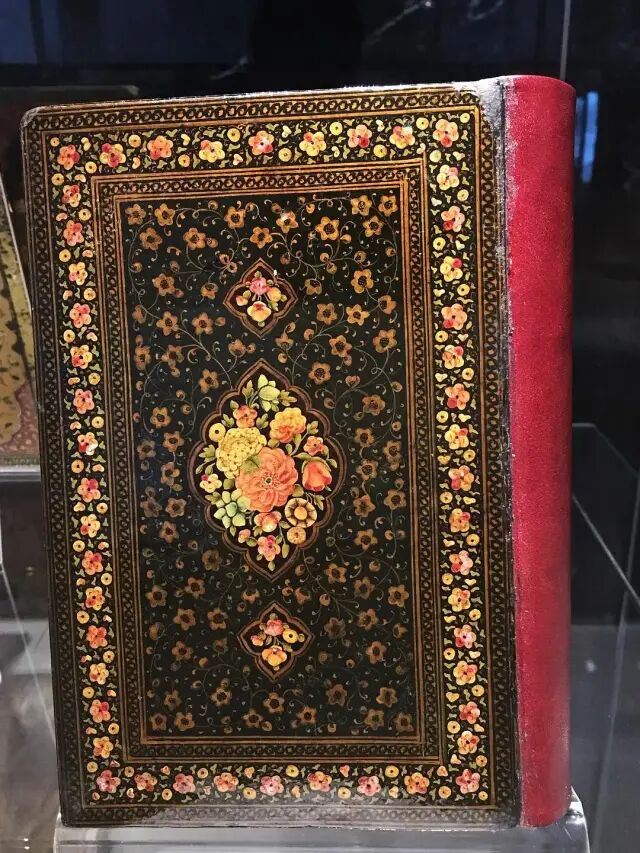
Doublure
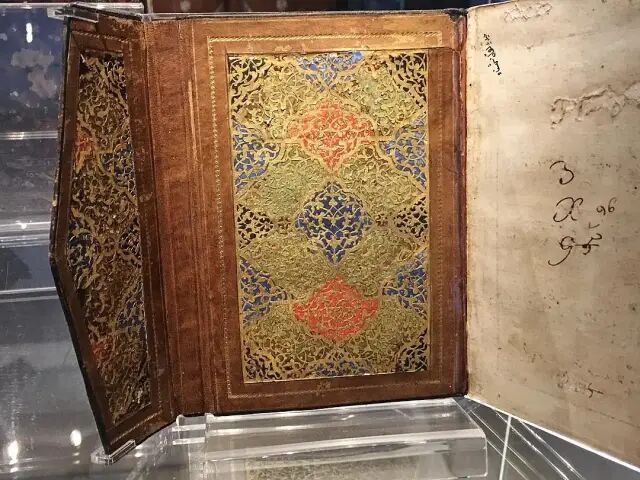
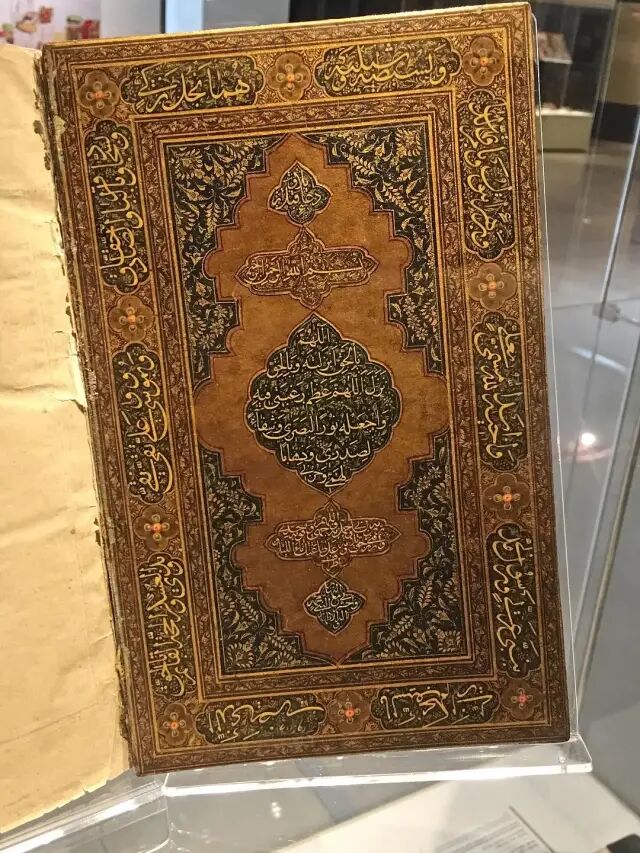
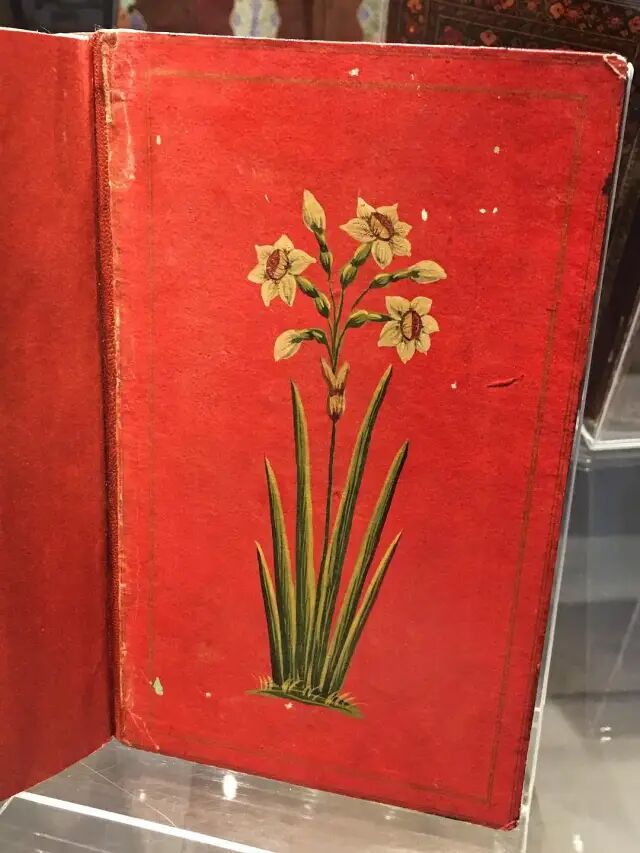
A doublure is the inner surface of a book cover, made from materials like leather, paper, or fabric. Lacquer painting, leather stamping, and filigree are the three main types of doublure decoration. Filigree is often used in Southeast Asia, while Turkey is most famous for its marbling technique called ebru.
In 16th-century Ottoman Turkey, they also used filigree on book doublures, cutting gold paper into intricate patterns against colorful backgrounds.
During the 19th-century Qajar dynasty in Iran, the calligraphy on doublures was complex and beautiful, representing the peak of Iranian doublure calligraphy art.
In the 19th-century Qajar dynasty of Iran, doublures often featured paintings of six-flowered narcissus on a single stem against a red background.
Qur'anic Manuscripts in Foreign Libraries: Islamic Calligraphy and Art
Articles • ali2007fr posted the article • 0 comments • 140 views • 2026-05-18 02:27
Summary: Qur'anic Manuscripts in Foreign Libraries: Islamic Calligraphy and Art is presented here as a firsthand travel account in clear English, beginning with this scene: You can view beautiful ancient Quran manuscripts from various library and museum collections online at the Library of Congress website. The account keeps its focus on Quran Manuscripts, Islamic Art, Calligraphy while preserving the names, places, food, and historical details from the Chinese source.
You can view beautiful ancient Quran manuscripts from various library and museum collections online at the Library of Congress website.
Online address: www.loc.gov/search/? fa=subject%3Akoran&st=list&c=150
9th-century Damascus
This Quran manuscript held by the Bavarian State Library originally came from a private library in Damascus and is one of the most important and oldest Quran manuscripts preserved in the West. This manuscript uses verse separation marks that originated in the 8th century, and the consonants lack diacritical marks, so it is estimated to be from the 9th century.
11th-12th century Seljuk Empire
This Quran manuscript held by the Bavarian State Library was produced in Iran or Iraq during the 11th-12th century Seljuk Empire and is written in Naskhi script on gilded pages. The manuscript was heavily trimmed when the cover was made in the 18th century, causing losses to the titles and margins.
11th-12th century Eastern Iran
This Quran manuscript held by the Bavarian State Library is believed to come from Eastern Iran and dates to the 11th-12th century Samanid period based on its calligraphy and decoration.
1226 Seville, Spain
This Quran manuscript in the Bavarian State Library was made in Seville, Spain, in 1226. It is a very rare surviving Andalusian Quran manuscript, written in Andalusian script on parchment. During the Reconquista, exiled Andalusians took this manuscript to North Africa. In 1535, Holy Roman Emperor Charles V seized it from Tunis while on an expedition against Barbary pirates. It later made its way into the Munich Court Library.
1306 Morocco
This Quran manuscript in the Bavarian State Library was commissioned in 1306 by a Moroccan ruler, Abu Ya'qub Yusuf Ibn Ya'qub (reigned 1286-1307). The main text is written in black Maghrebi script, and the headings are in gold Kufic ink.
13th-15th century Andalusia, Spain
This is a wooden board from the National Library of Spain, used by students at a madrasa in Andalusia between the 13th and 15th centuries. Students wrote surahs on it for practice, and teachers corrected their work.
14th-century Mamluk Egypt
This Quran manuscript in the Bavarian State Library was made during the 14th-century Mamluk dynasty in Egypt. It is written in large, golden Muhaqqaq script, a style commonly used during the Mamluk period. The lotus patterns on the manuscript were introduced to the Middle East by the Mongols in the 13th century.
15th-century Northern India
This Quran manuscript in the Walters Art Museum is believed to have been made in northern India in the 15th century. The seal of Ottoman Sultan Bayezid II (reigned 1481-1512) appears on the eighth page. The manuscript is written in Muhaqqaq script, with some explanations in Naskh and Thuluth scripts.
18th-century Maghreb
This Quran manuscript in the Walters Art Museum collection contains surahs 19 through 23. It was made in the 19th-century Maghreb region, which includes Mauritania, Algeria, Libya, Morocco, and Tunisia. The manuscript is written in Maghrebi script, while the titles are in New Abbasid script written with gold ink.
1714 Iran
This Quran manuscript in the Bavarian State Library was made in 1714 during the Persian Safavid dynasty. It uses a tiny but clear Naskh script. The golden cloud swirls on the edges are typical of Shia style, and the floral decorations are written in beautiful Persian.
Late 19th-century Malay Peninsula
This Quran manuscript in the British Library is believed to be from the east coast of the Malay Peninsula in the late 19th century. The manuscript has features typical of the Pattani region in southern Thailand, including black backing paper made in Thailand and wave patterns in the Pattani style. However, the paintings and decorative patterns are more typical of the Kelantan region in Malaysia, and it likely belonged to the Sultan's court in Terengganu.
1852 Iran
This Quran manuscript in the National Library of Iran was made in 1852 in the ancient Persian city of Shiraz. The scribe was the calligrapher Abdol-Vahhab Naghmeh.
1945 Oman
This Quran manuscript in the Sultan Qaboos University library was made in Oman in 1945. It was copied by Sayf ibn Muhammad ibn Salim al-Tawqi and Abdulkarīm ibn ʻUmar ibn Mūsā al-Nawfalī. This Quran contains the first six surahs. The first chapter, Al-Fatiha, is decorated to look like a door, which symbolizes that Al-Fatiha is the entrance to the Quran. The script in this manuscript is very unique. While it has some elements of cursive script (naskh) and thuluth script (thuluth), the overall style is different from any other font. view all
Summary: Qur'anic Manuscripts in Foreign Libraries: Islamic Calligraphy and Art is presented here as a firsthand travel account in clear English, beginning with this scene: You can view beautiful ancient Quran manuscripts from various library and museum collections online at the Library of Congress website. The account keeps its focus on Quran Manuscripts, Islamic Art, Calligraphy while preserving the names, places, food, and historical details from the Chinese source.
You can view beautiful ancient Quran manuscripts from various library and museum collections online at the Library of Congress website.
Online address: www.loc.gov/search/? fa=subject%3Akoran&st=list&c=150
9th-century Damascus
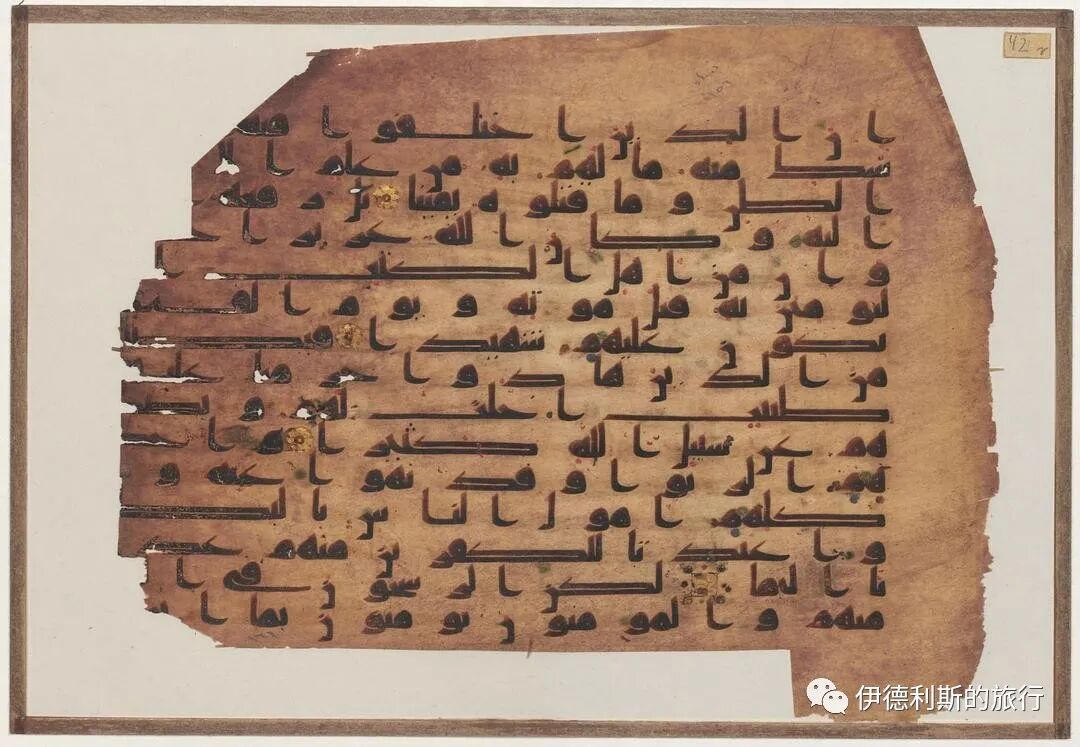
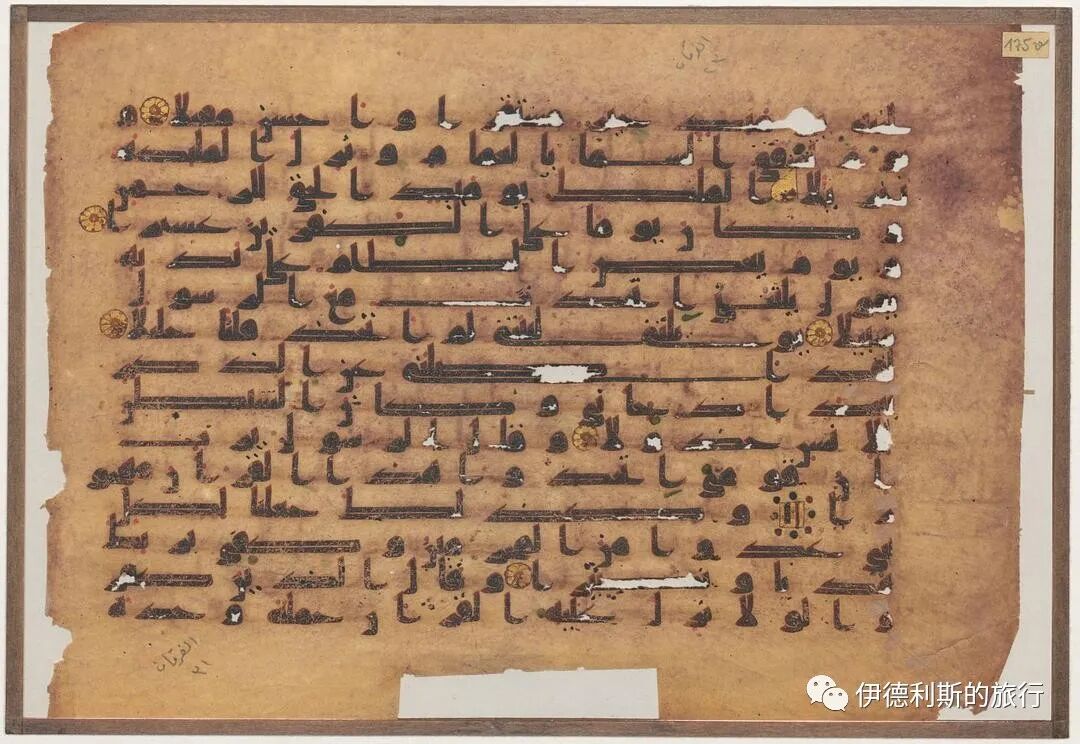
This Quran manuscript held by the Bavarian State Library originally came from a private library in Damascus and is one of the most important and oldest Quran manuscripts preserved in the West. This manuscript uses verse separation marks that originated in the 8th century, and the consonants lack diacritical marks, so it is estimated to be from the 9th century.
11th-12th century Seljuk Empire
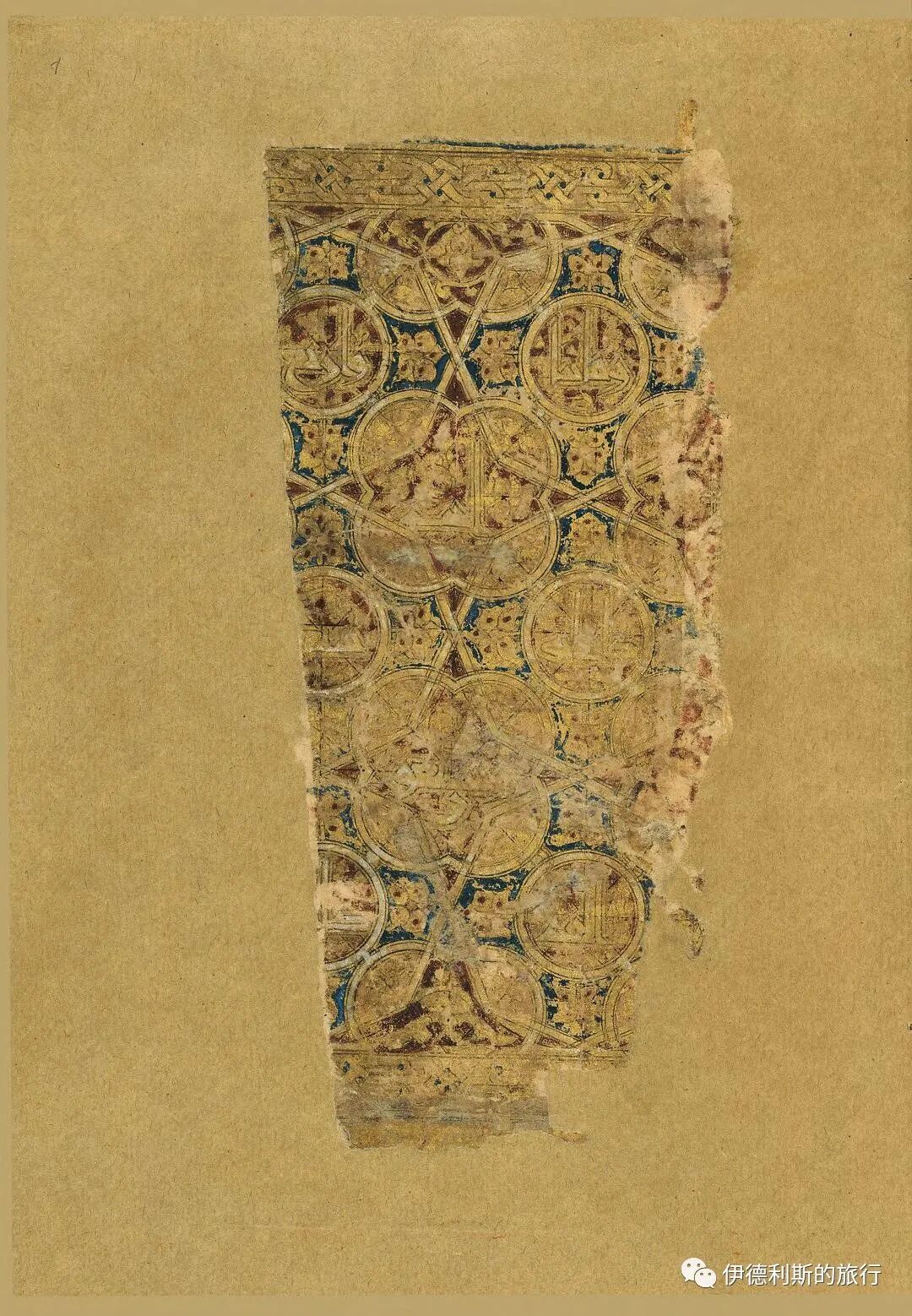
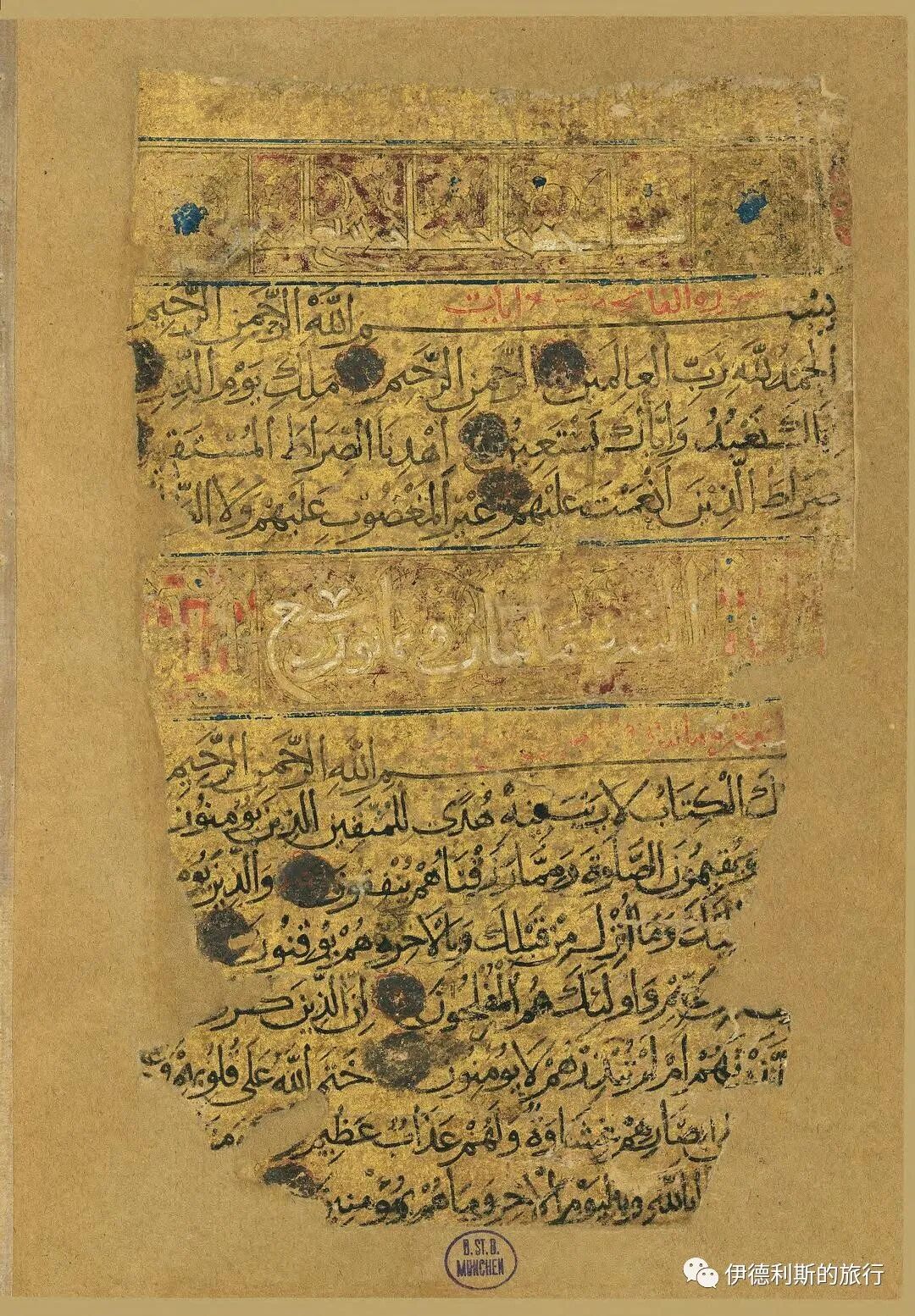
This Quran manuscript held by the Bavarian State Library was produced in Iran or Iraq during the 11th-12th century Seljuk Empire and is written in Naskhi script on gilded pages. The manuscript was heavily trimmed when the cover was made in the 18th century, causing losses to the titles and margins.
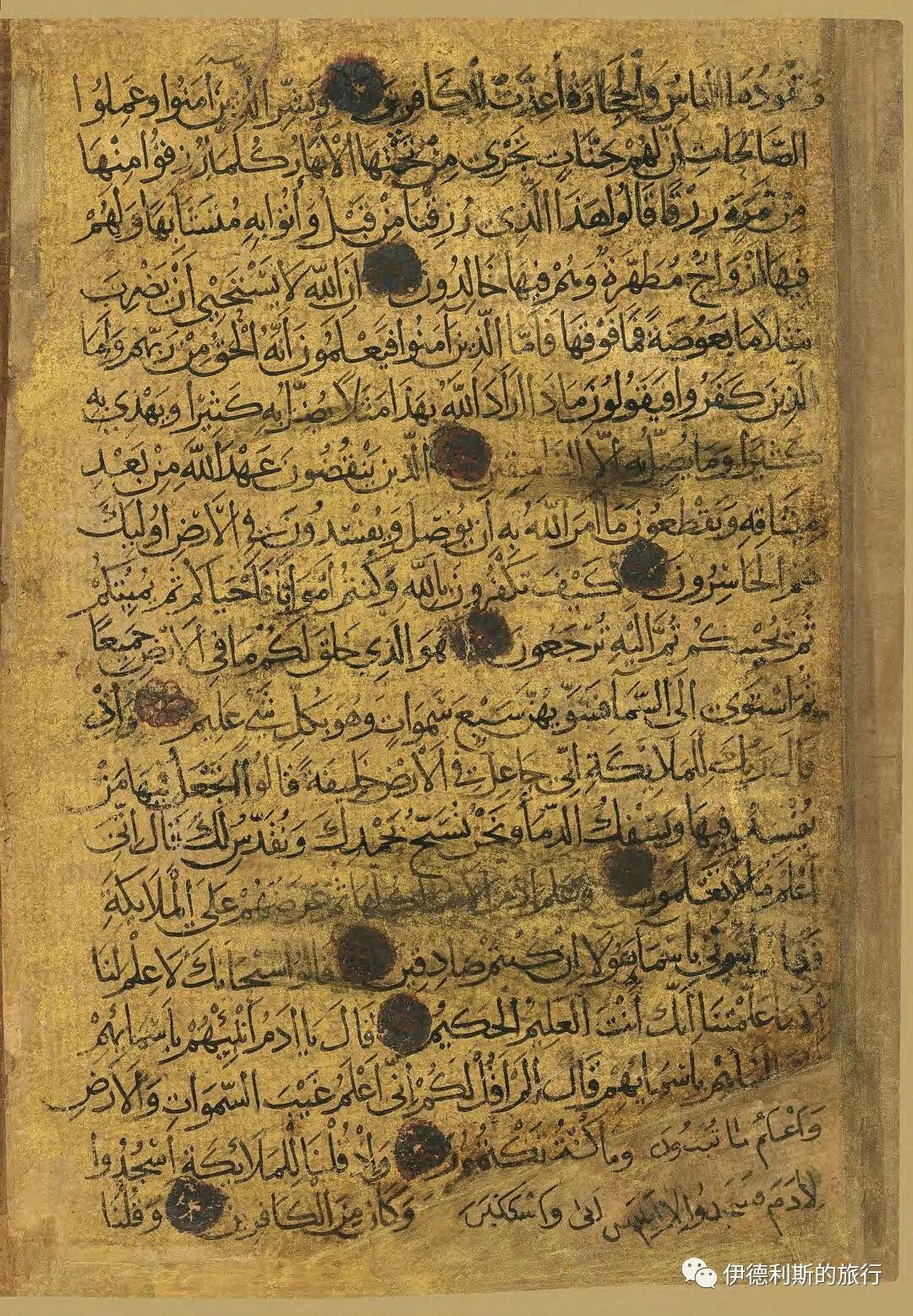
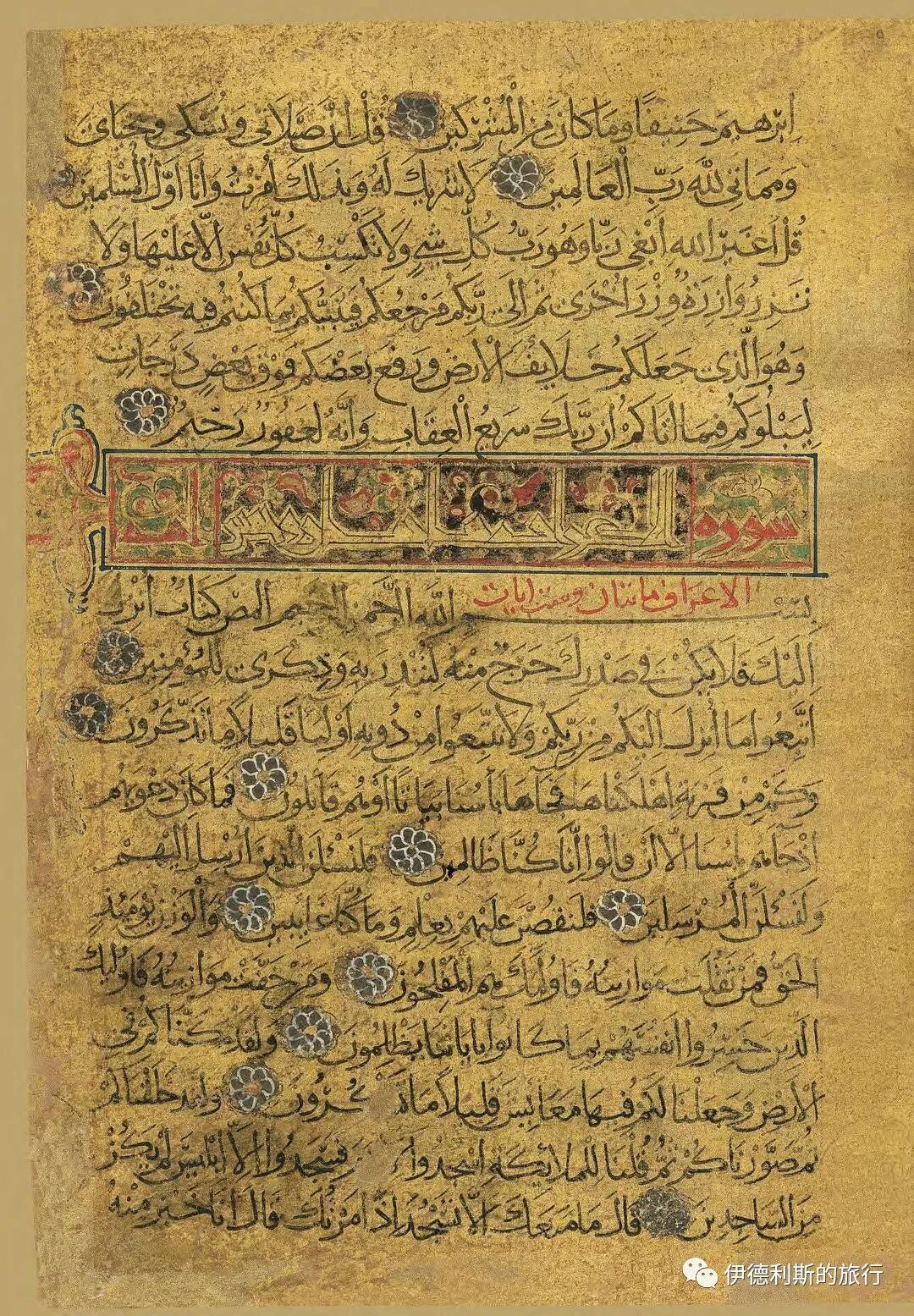
11th-12th century Eastern Iran
This Quran manuscript held by the Bavarian State Library is believed to come from Eastern Iran and dates to the 11th-12th century Samanid period based on its calligraphy and decoration.
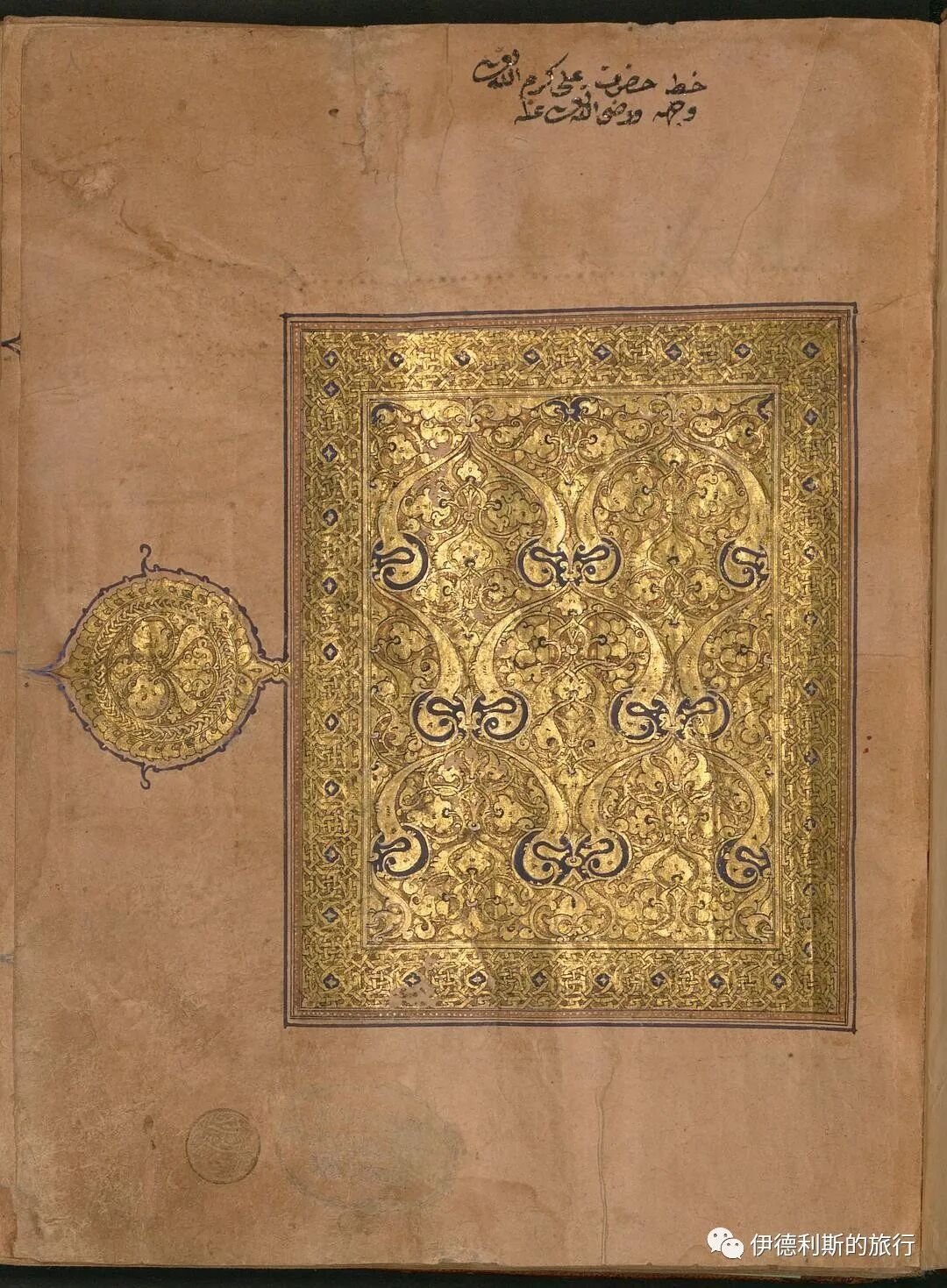
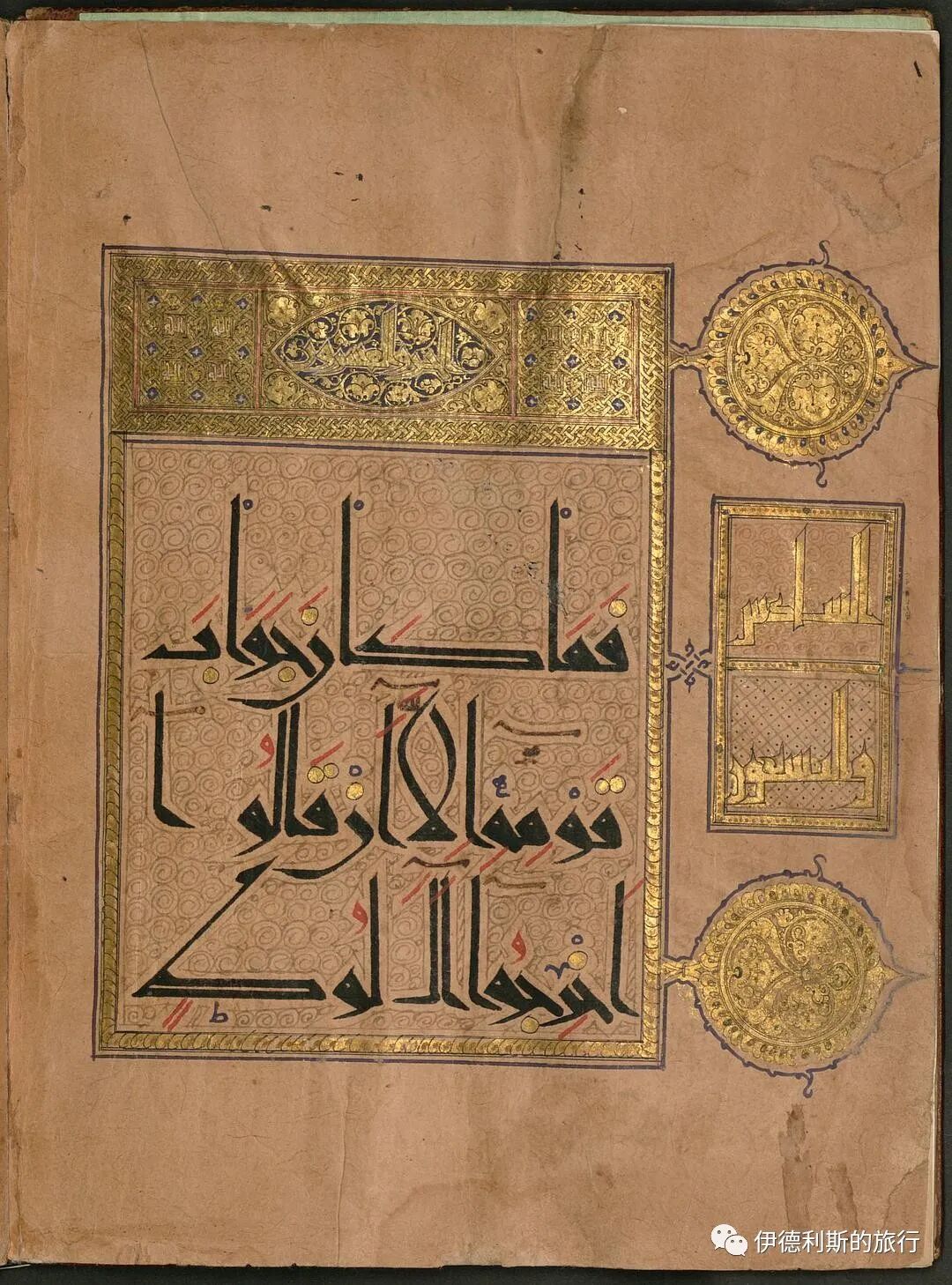
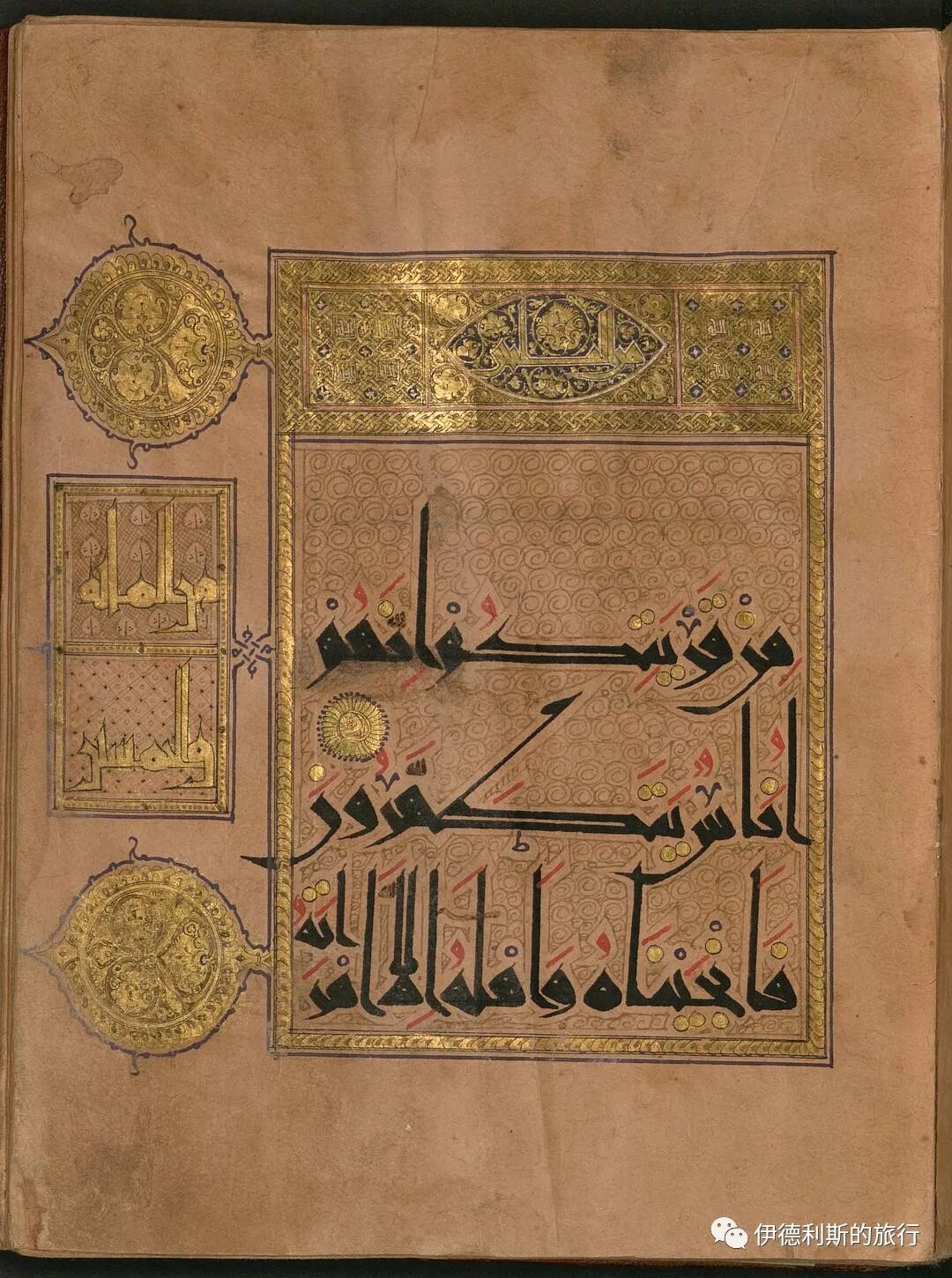
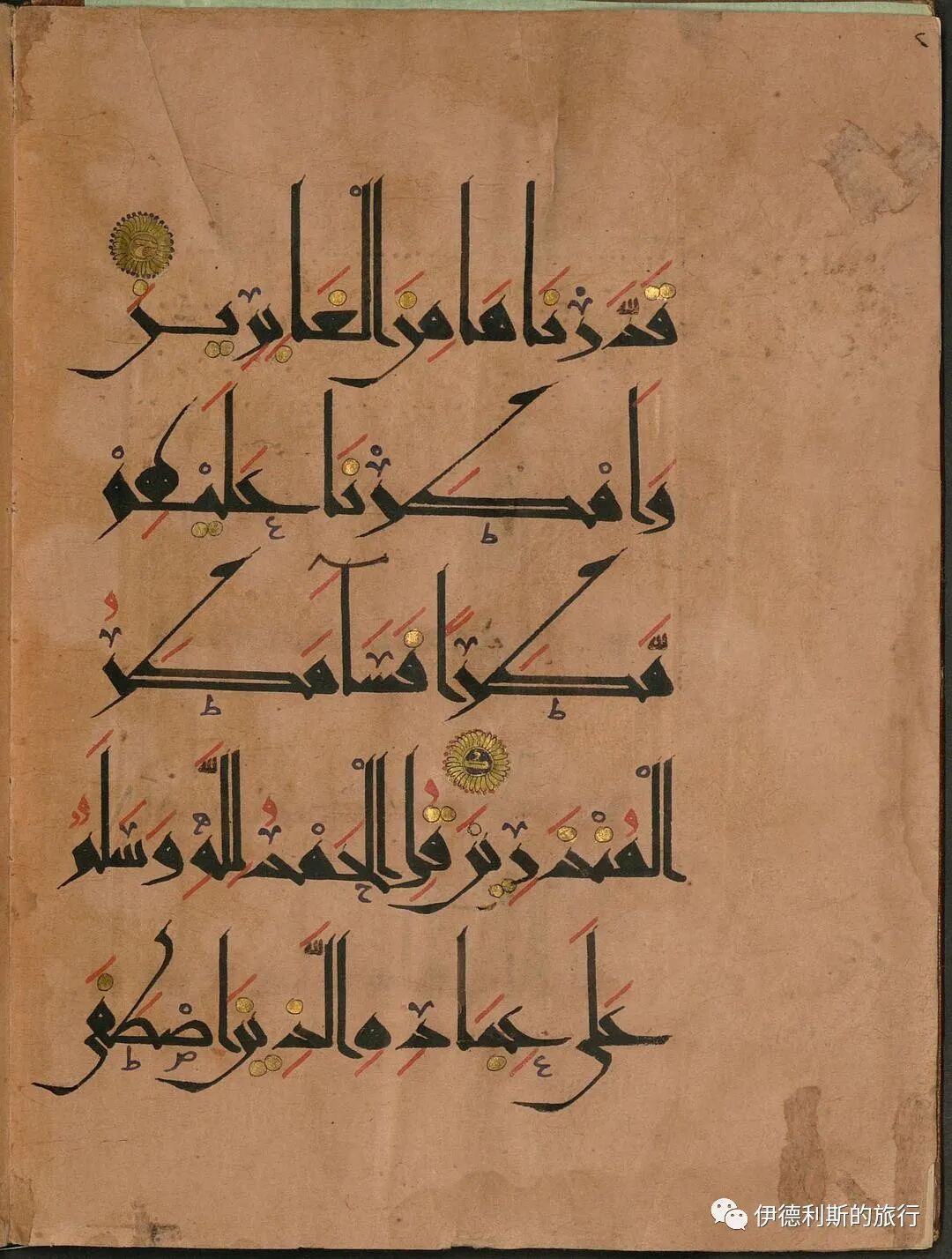
1226 Seville, Spain
This Quran manuscript in the Bavarian State Library was made in Seville, Spain, in 1226. It is a very rare surviving Andalusian Quran manuscript, written in Andalusian script on parchment. During the Reconquista, exiled Andalusians took this manuscript to North Africa. In 1535, Holy Roman Emperor Charles V seized it from Tunis while on an expedition against Barbary pirates. It later made its way into the Munich Court Library.
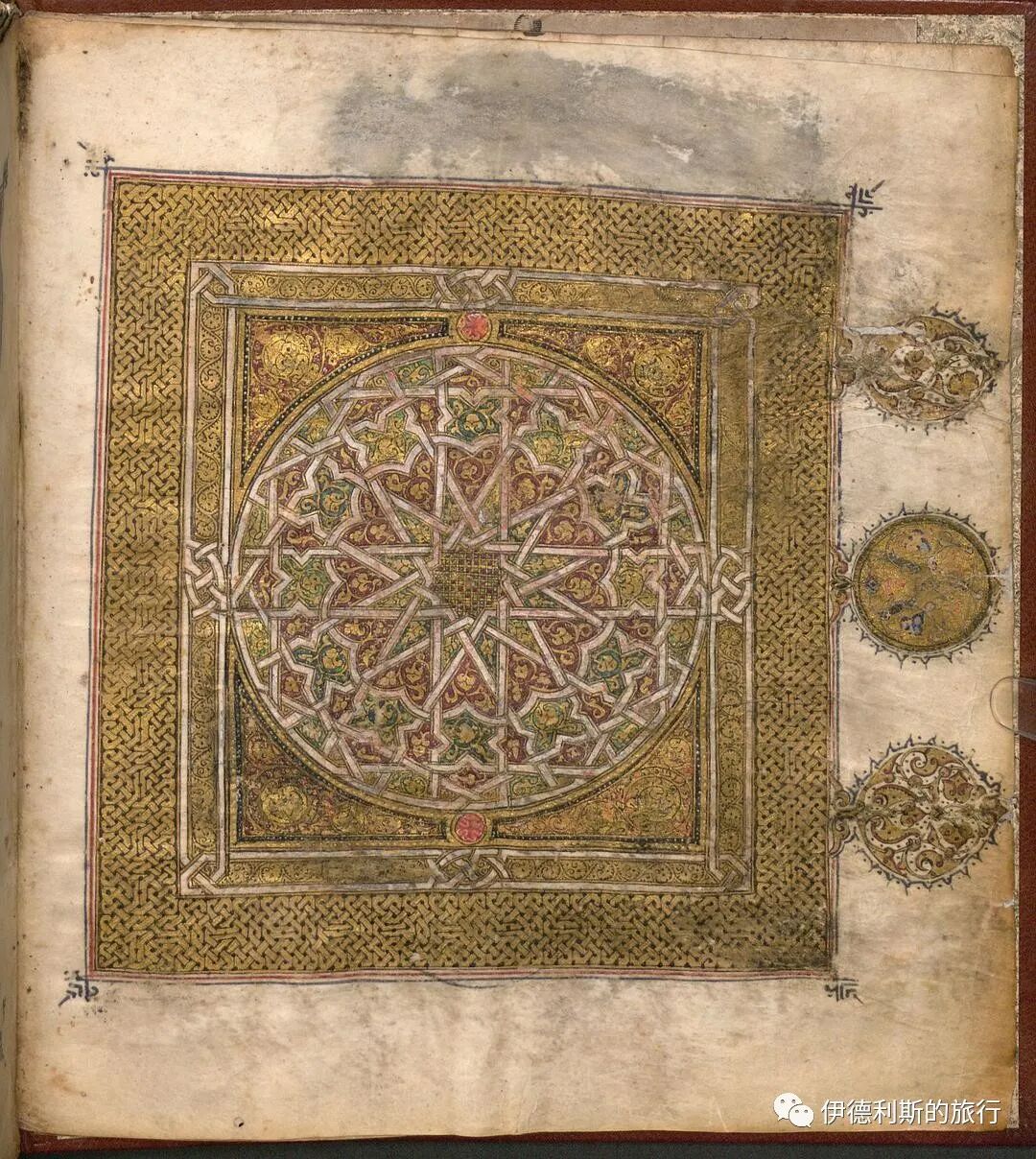
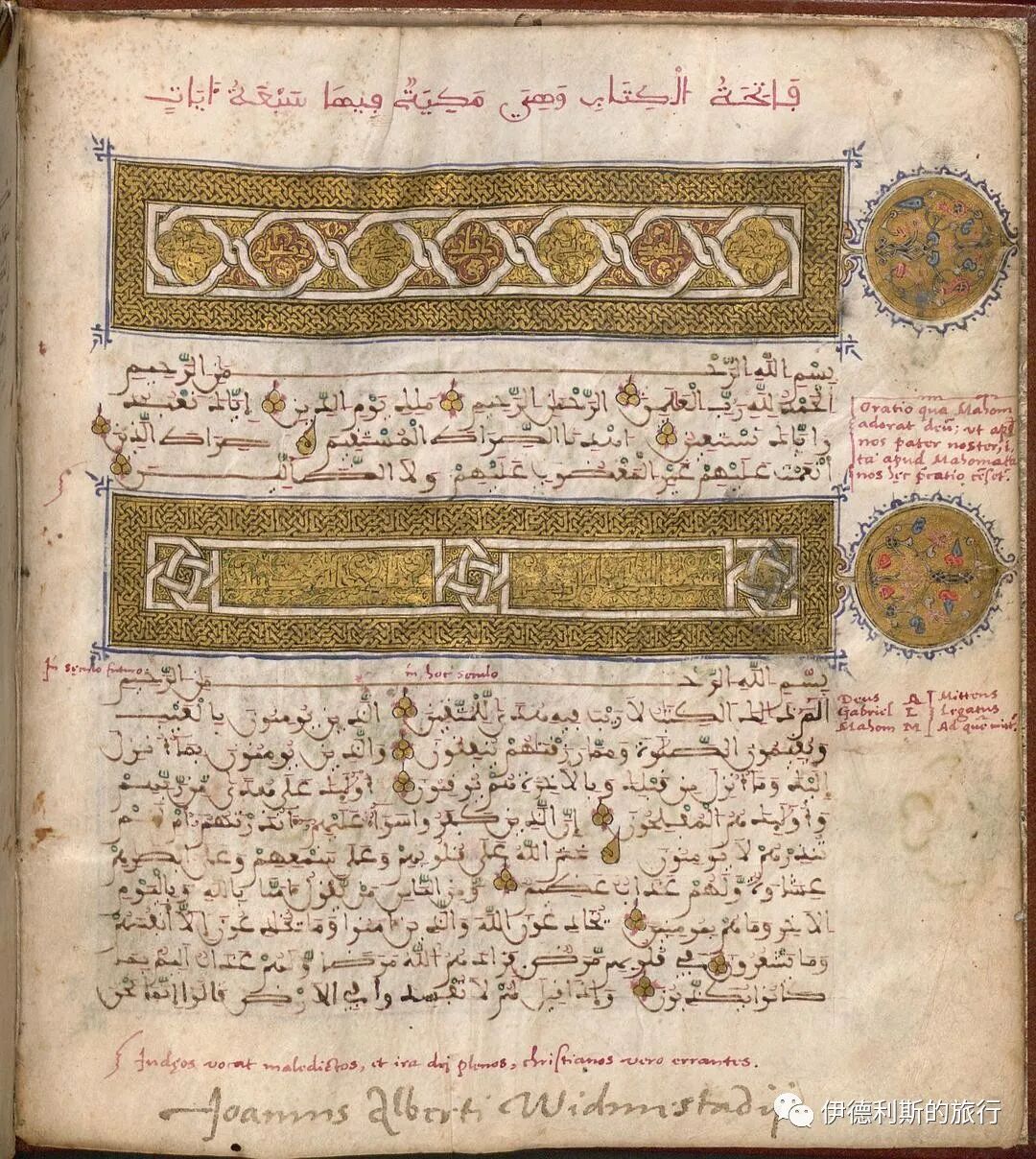
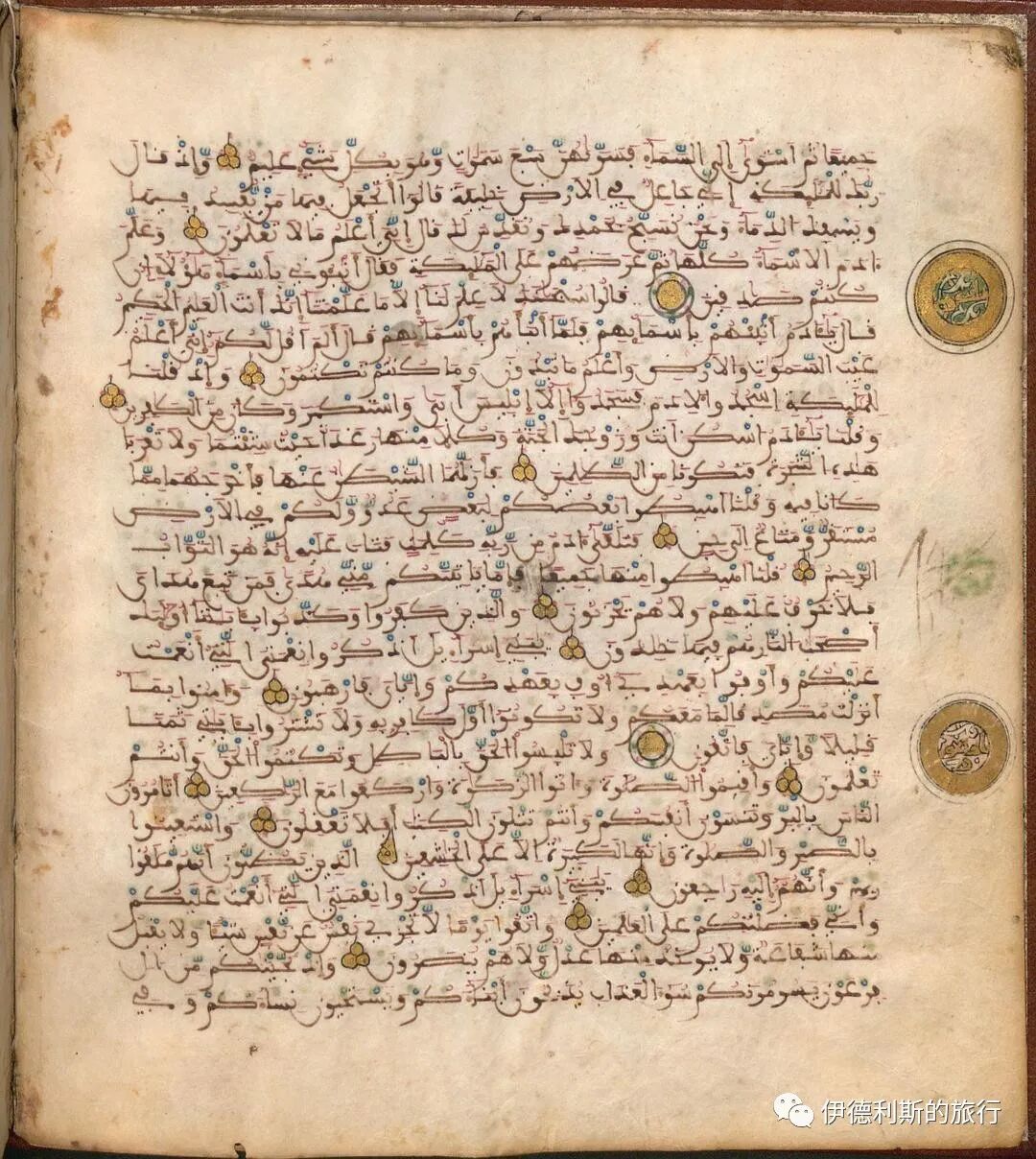
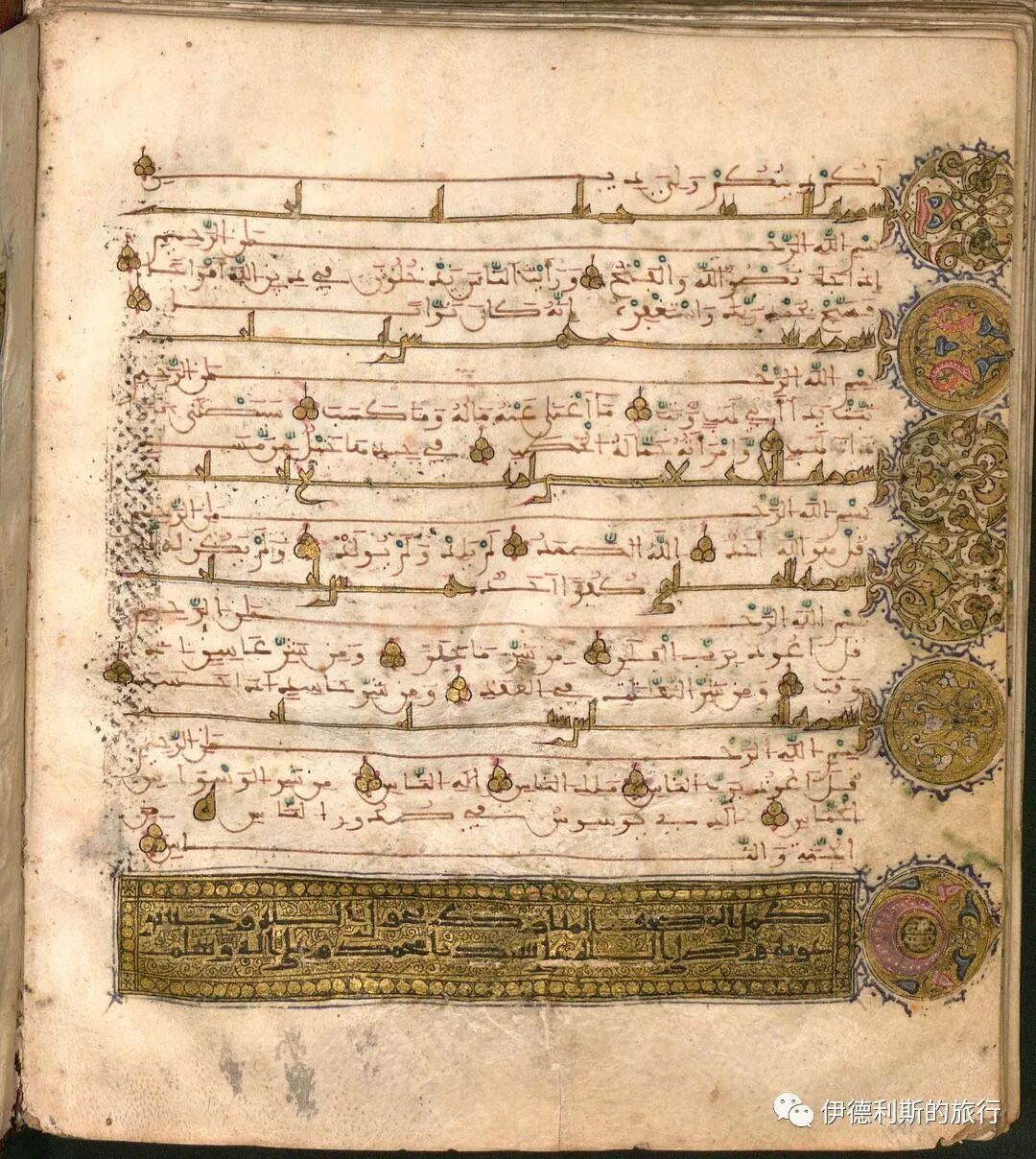
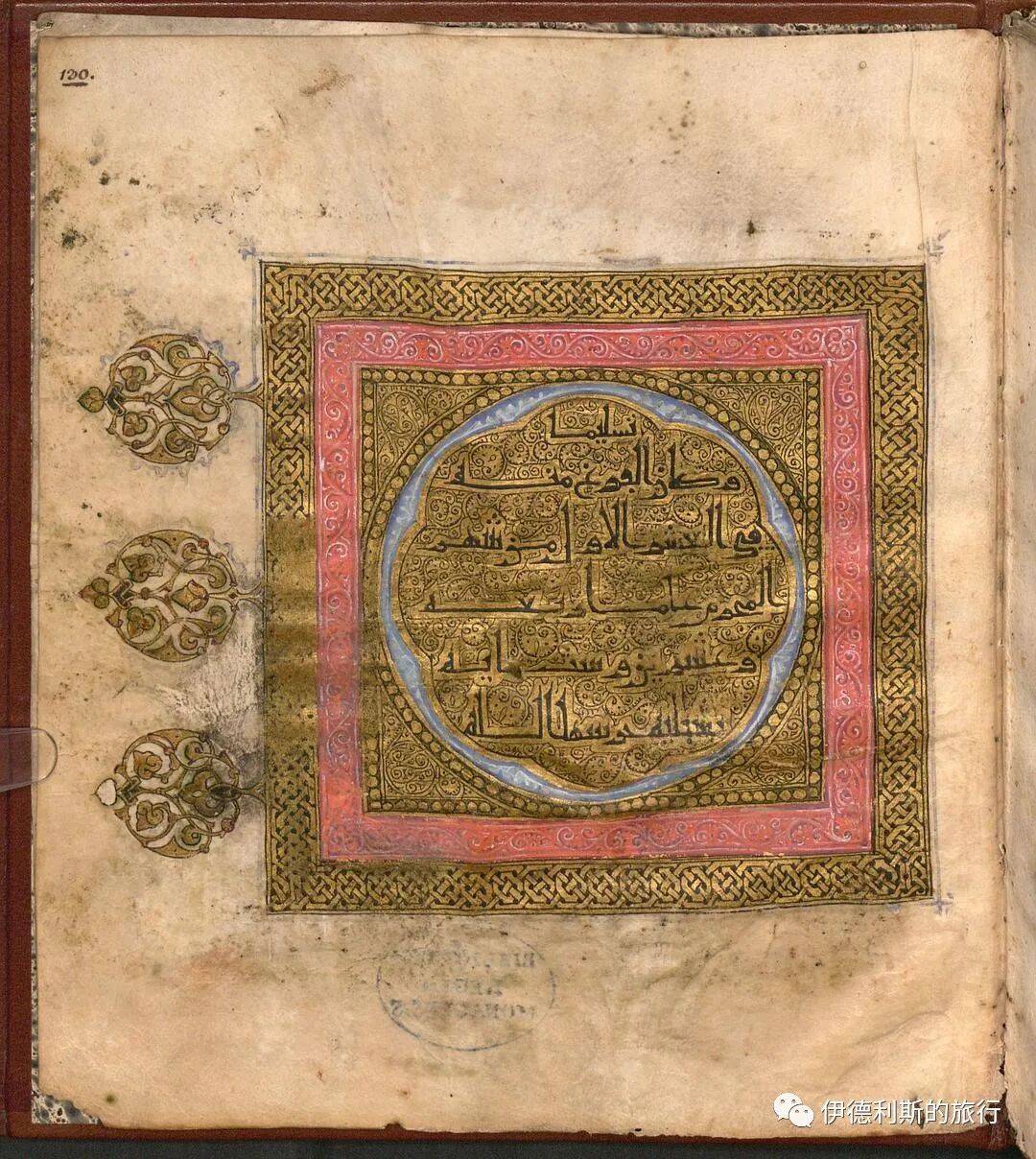
1306 Morocco
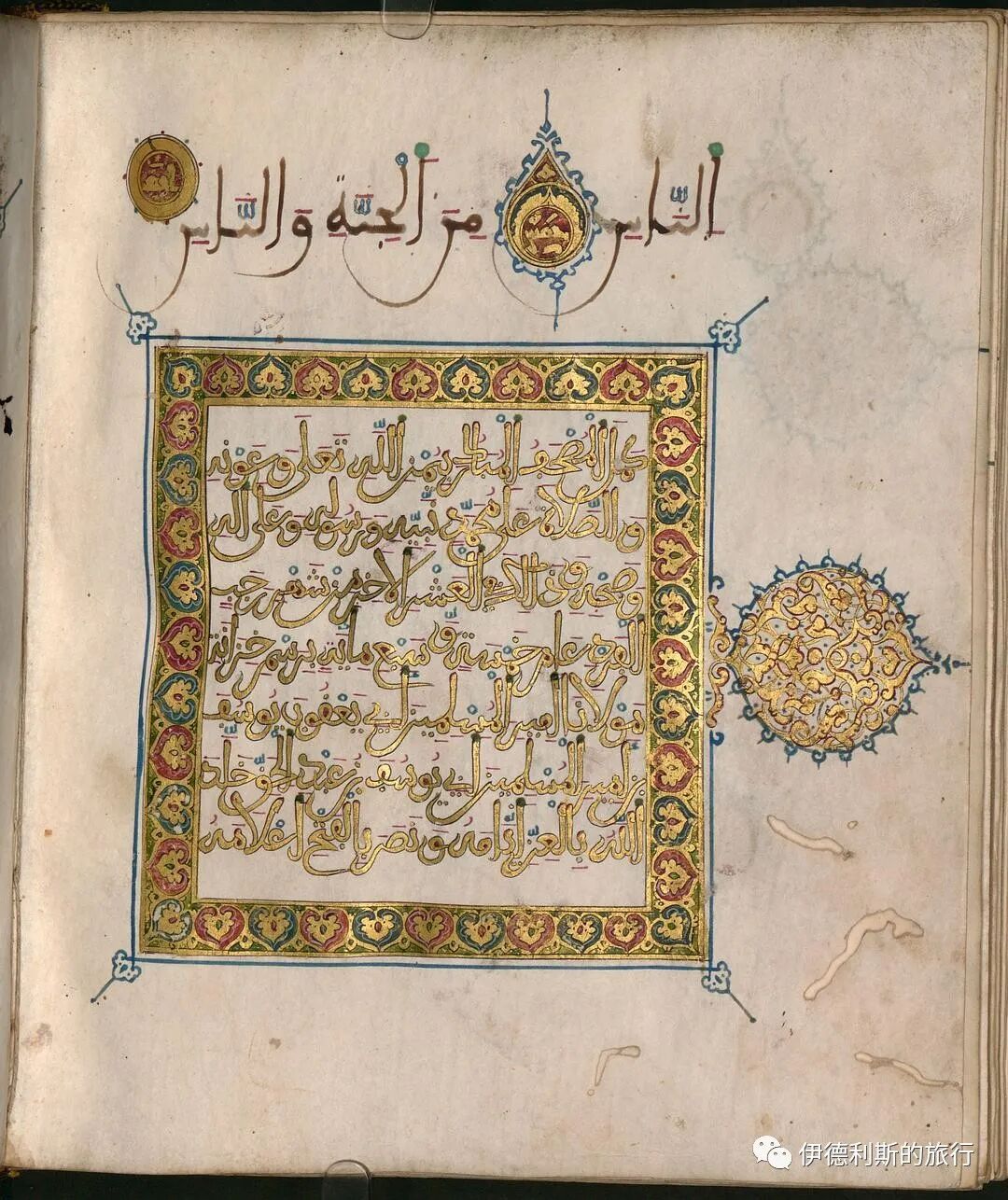
This Quran manuscript in the Bavarian State Library was commissioned in 1306 by a Moroccan ruler, Abu Ya'qub Yusuf Ibn Ya'qub (reigned 1286-1307). The main text is written in black Maghrebi script, and the headings are in gold Kufic ink.
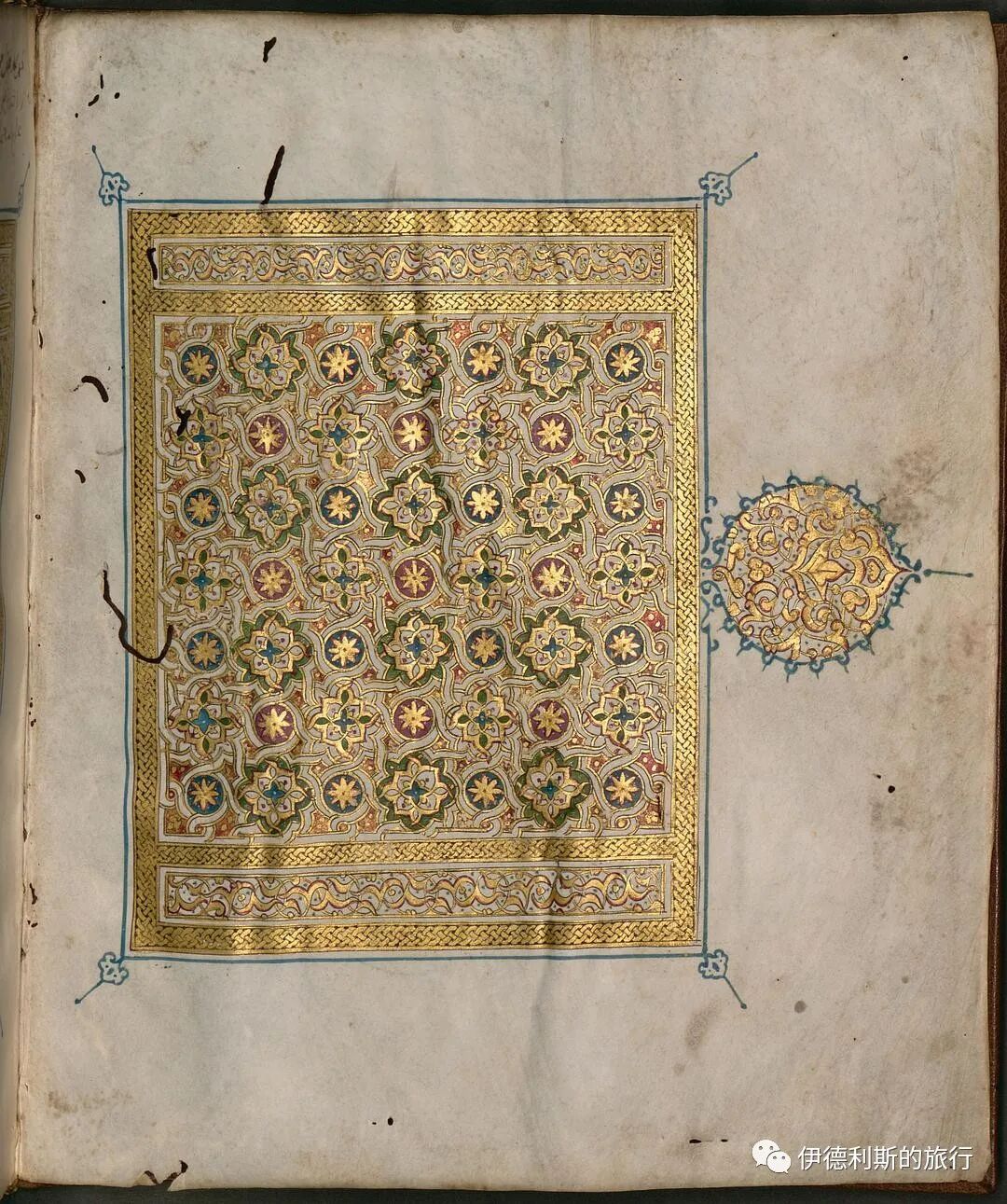
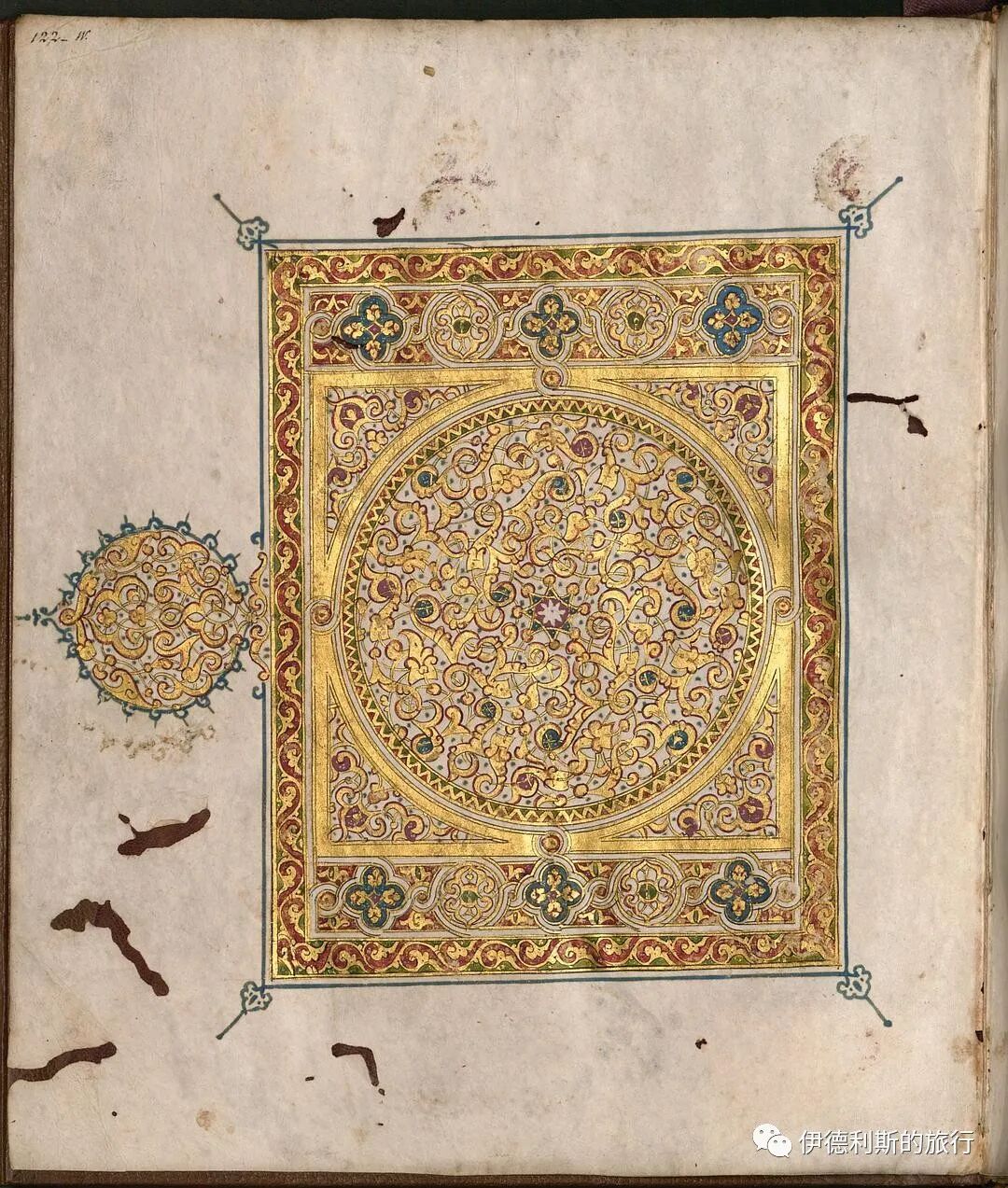
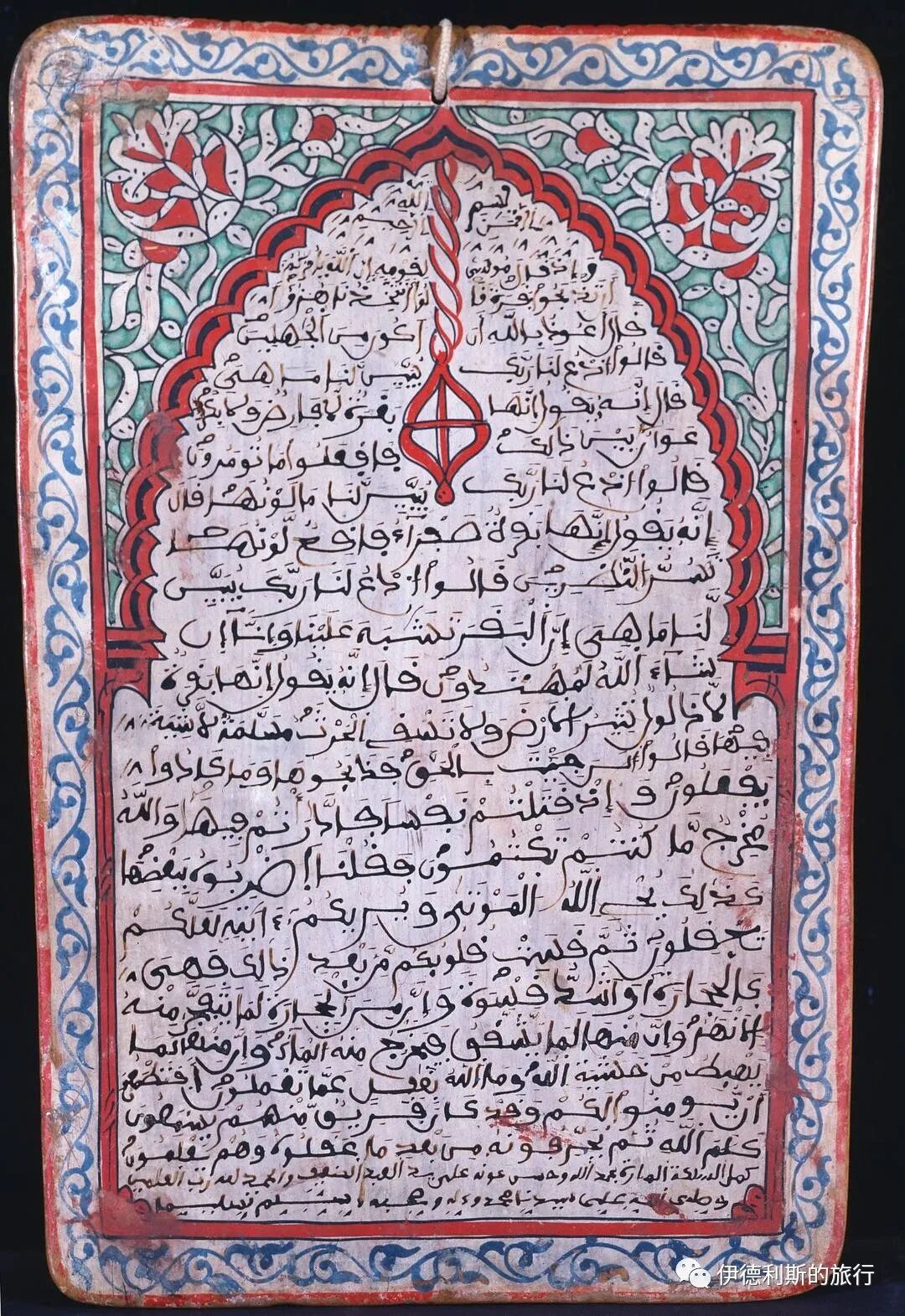
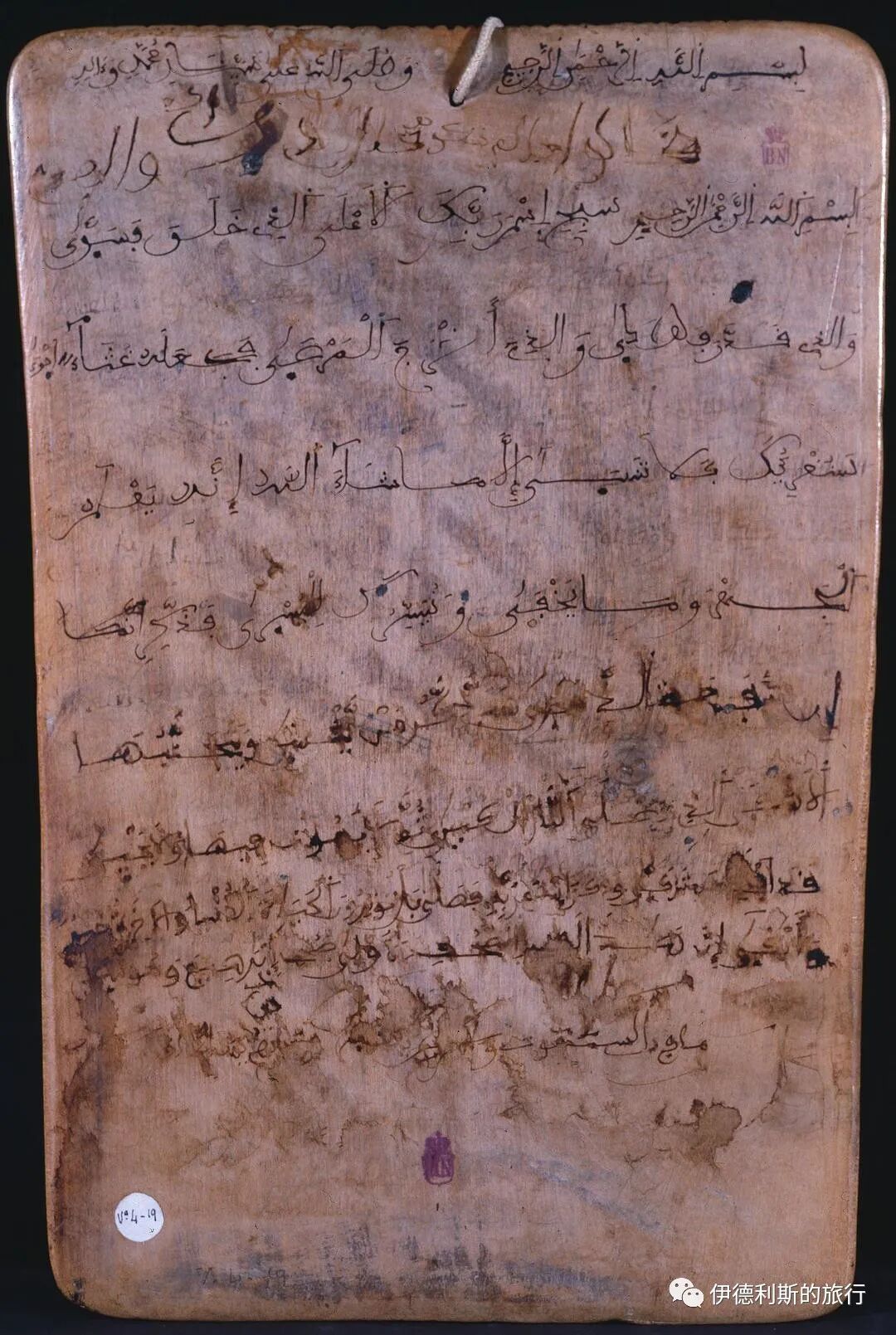
13th-15th century Andalusia, Spain
This is a wooden board from the National Library of Spain, used by students at a madrasa in Andalusia between the 13th and 15th centuries. Students wrote surahs on it for practice, and teachers corrected their work.
14th-century Mamluk Egypt
This Quran manuscript in the Bavarian State Library was made during the 14th-century Mamluk dynasty in Egypt. It is written in large, golden Muhaqqaq script, a style commonly used during the Mamluk period. The lotus patterns on the manuscript were introduced to the Middle East by the Mongols in the 13th century.
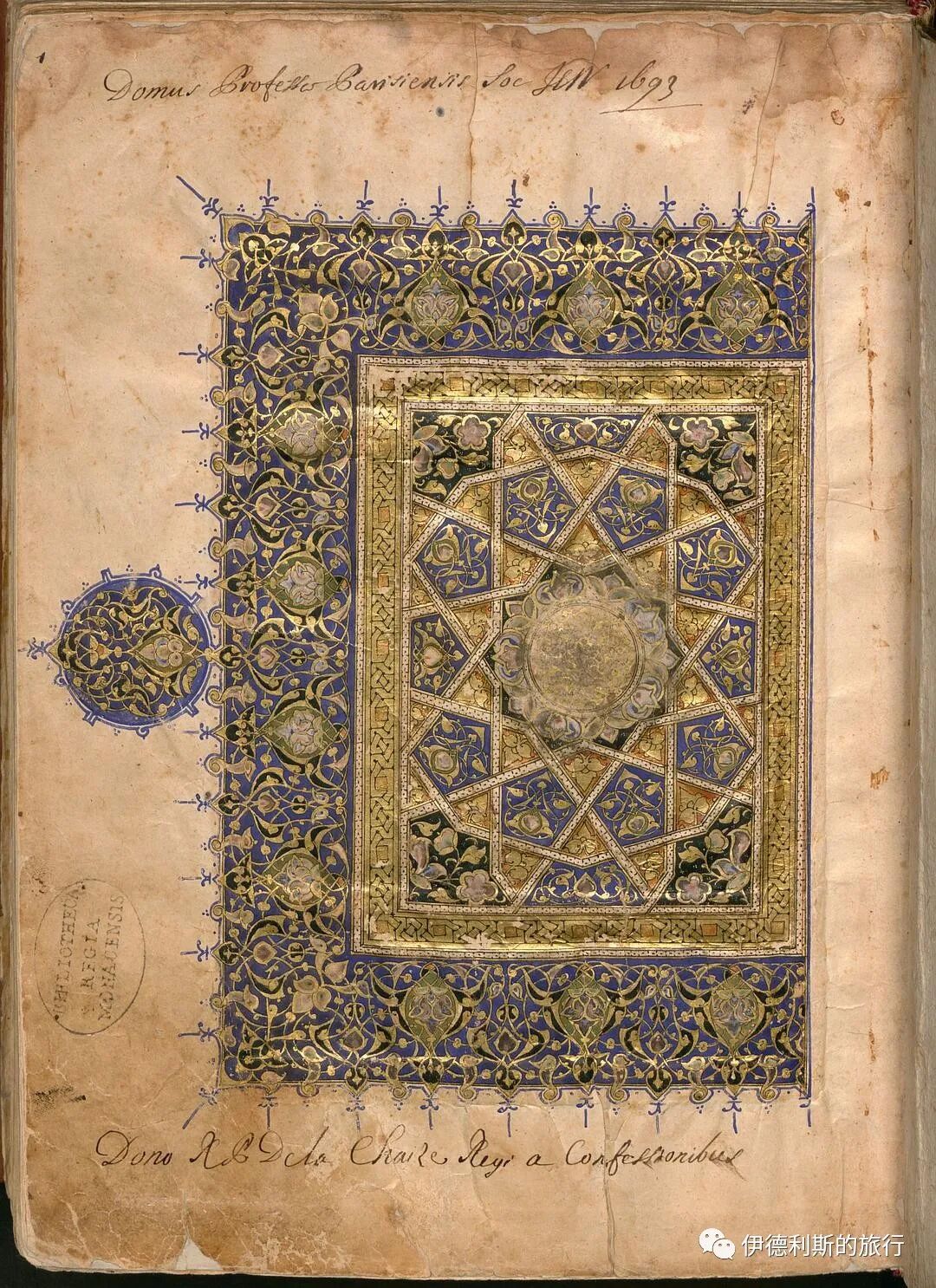
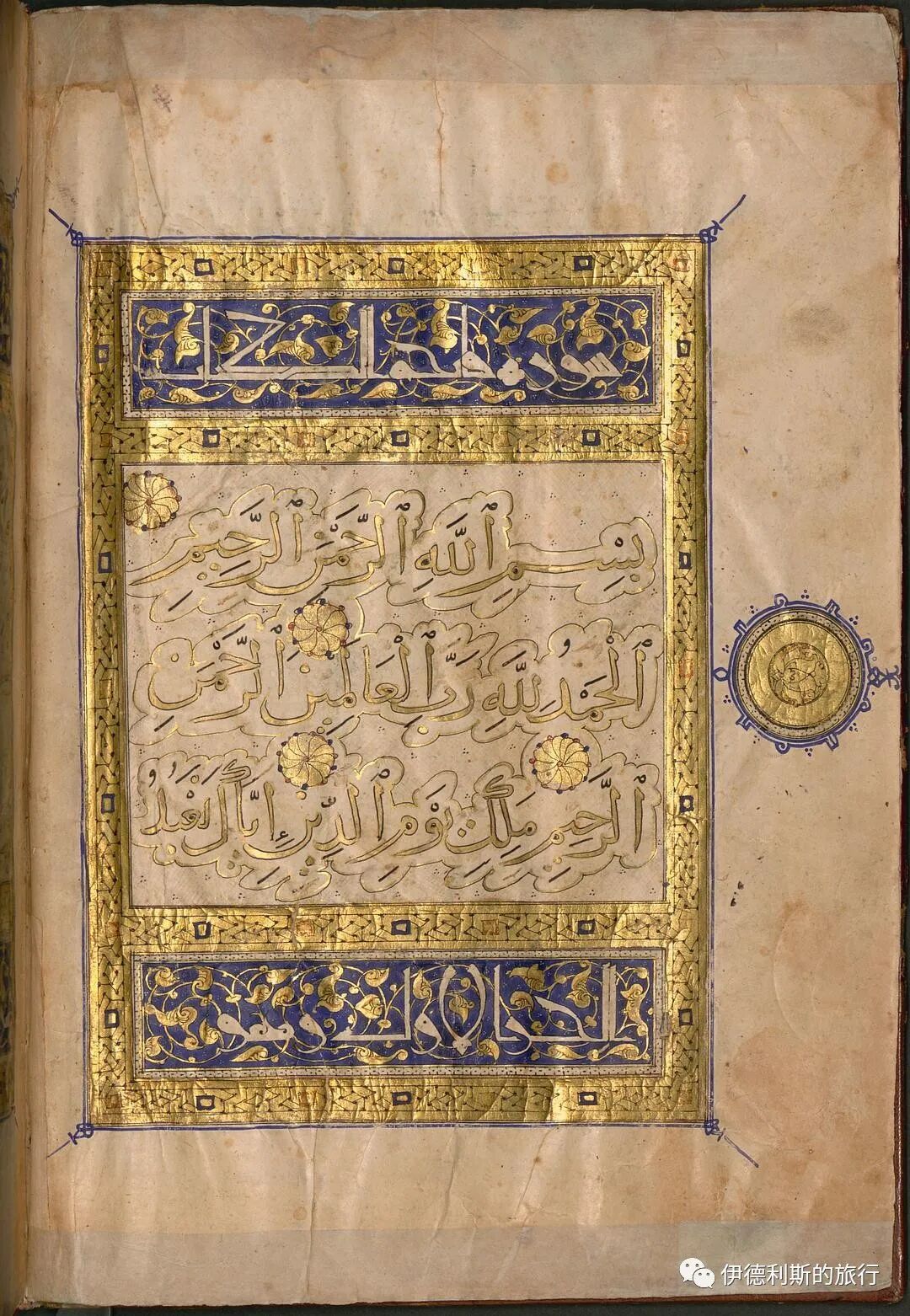
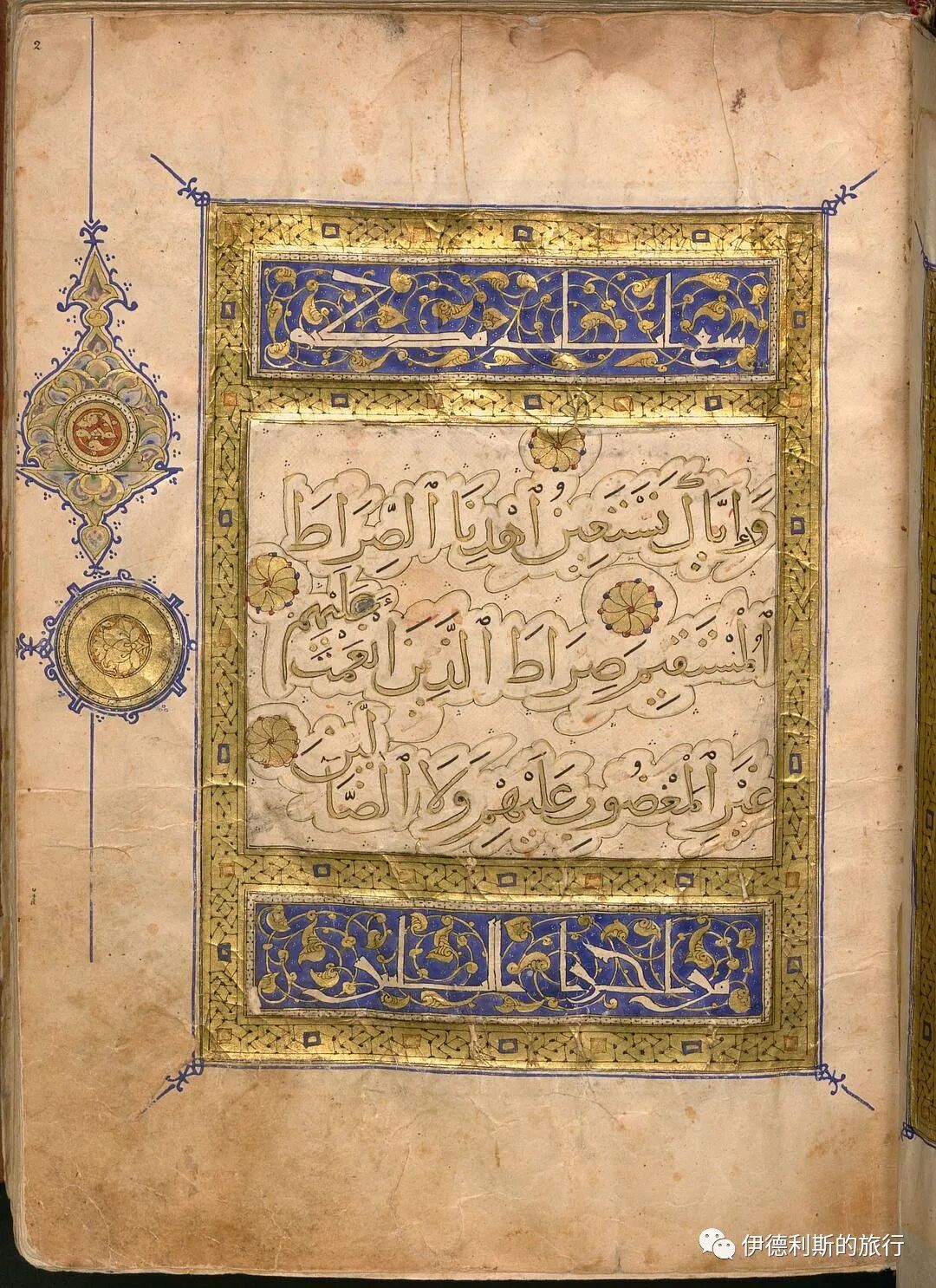
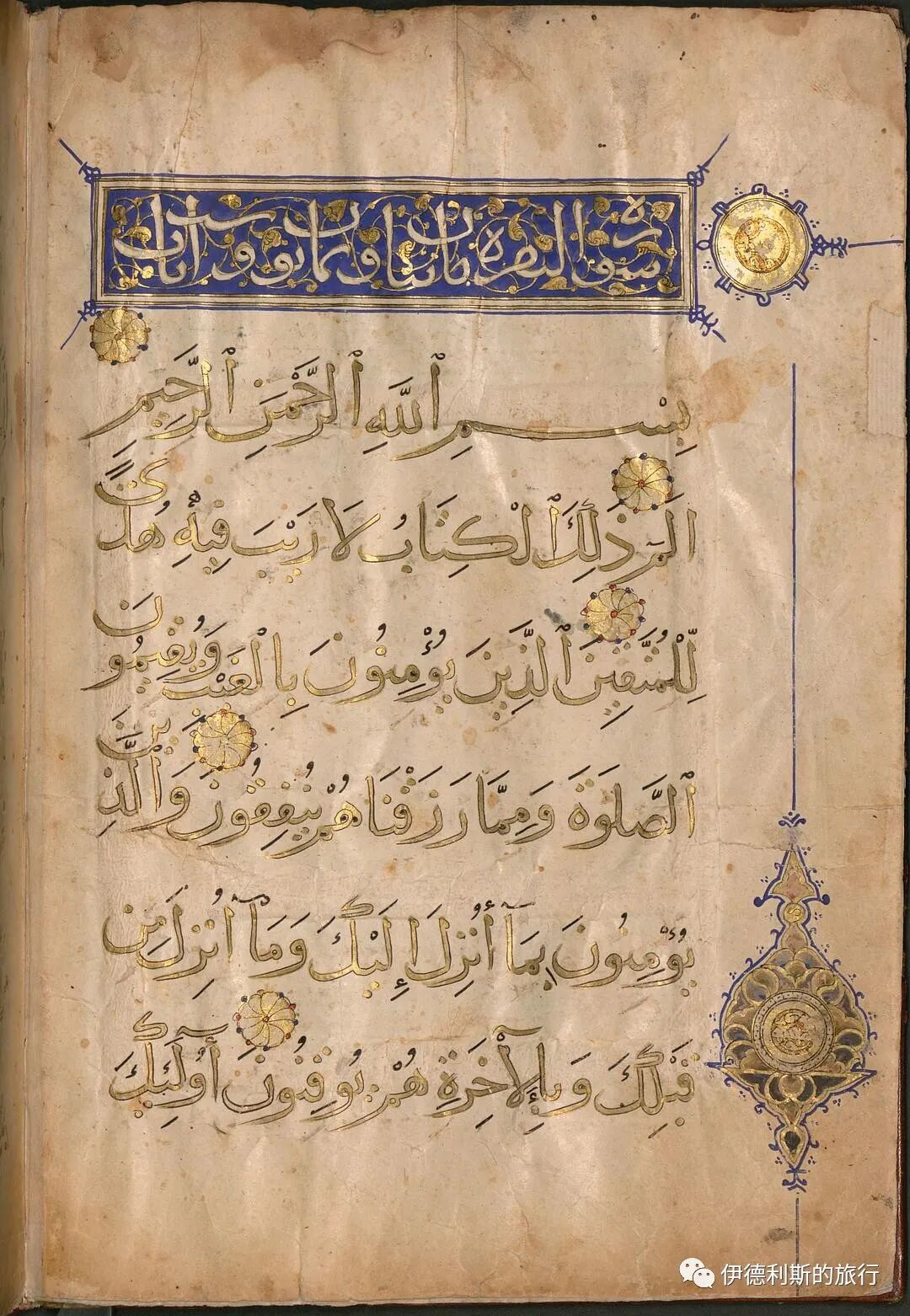
15th-century Northern India
This Quran manuscript in the Walters Art Museum is believed to have been made in northern India in the 15th century. The seal of Ottoman Sultan Bayezid II (reigned 1481-1512) appears on the eighth page. The manuscript is written in Muhaqqaq script, with some explanations in Naskh and Thuluth scripts.
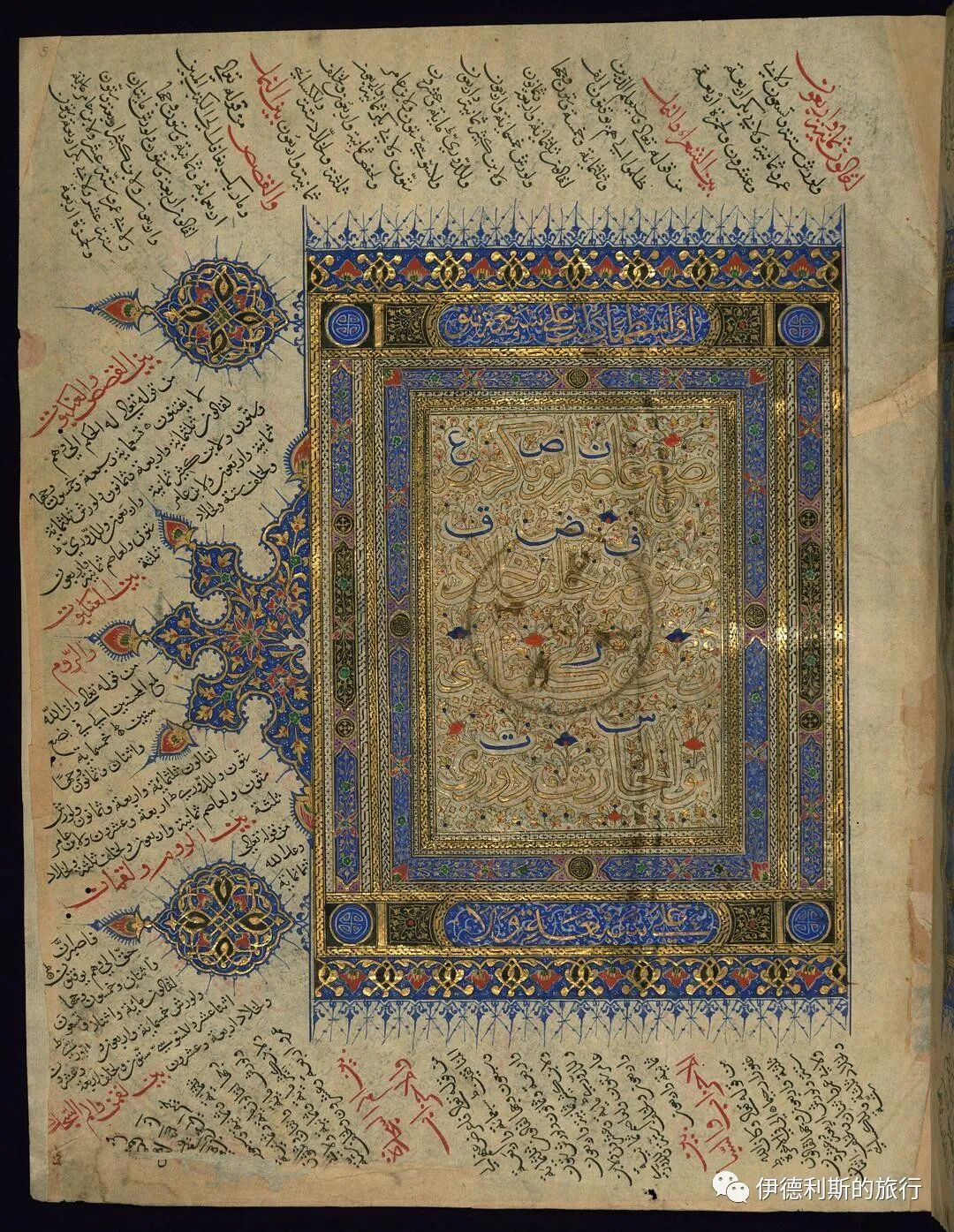
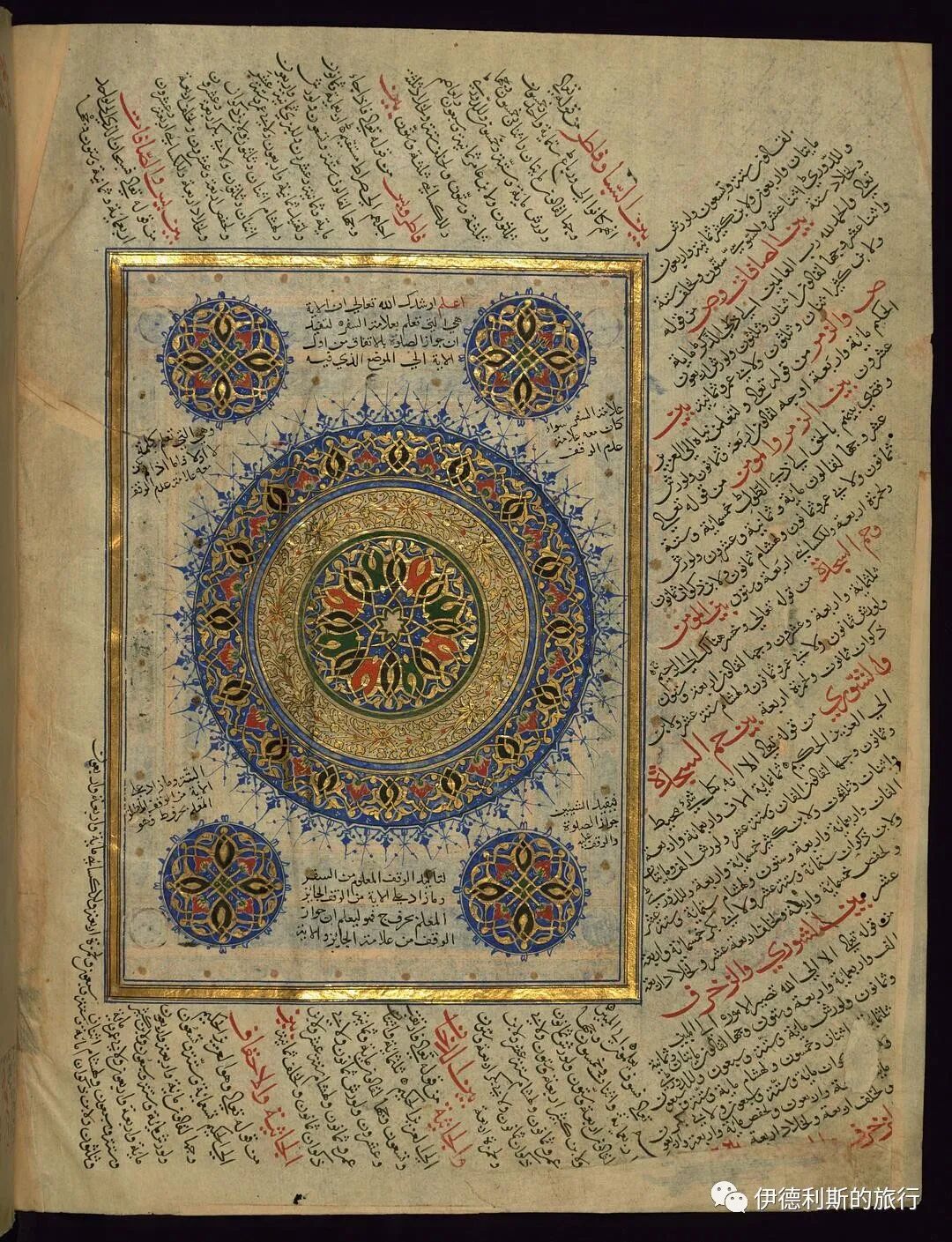
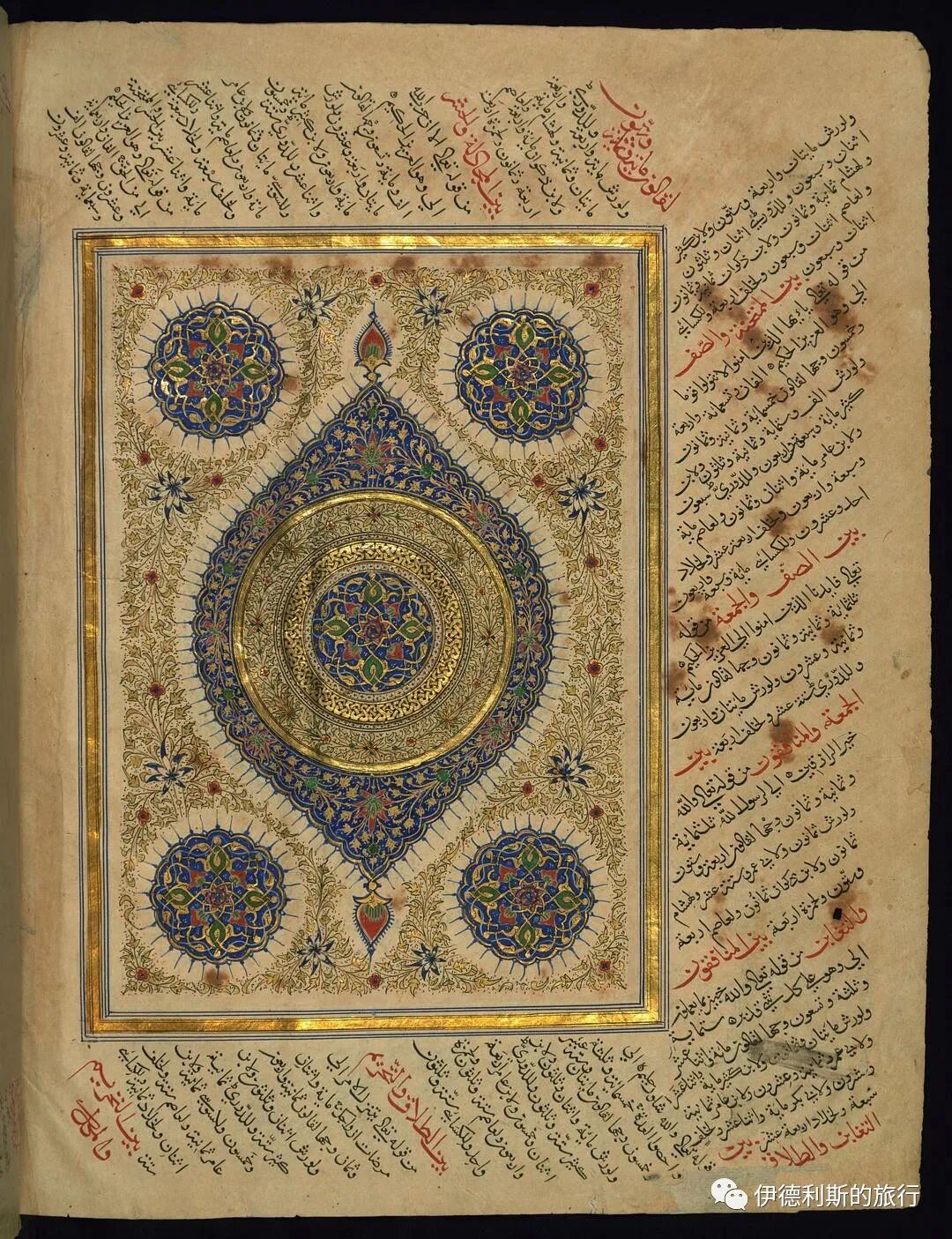
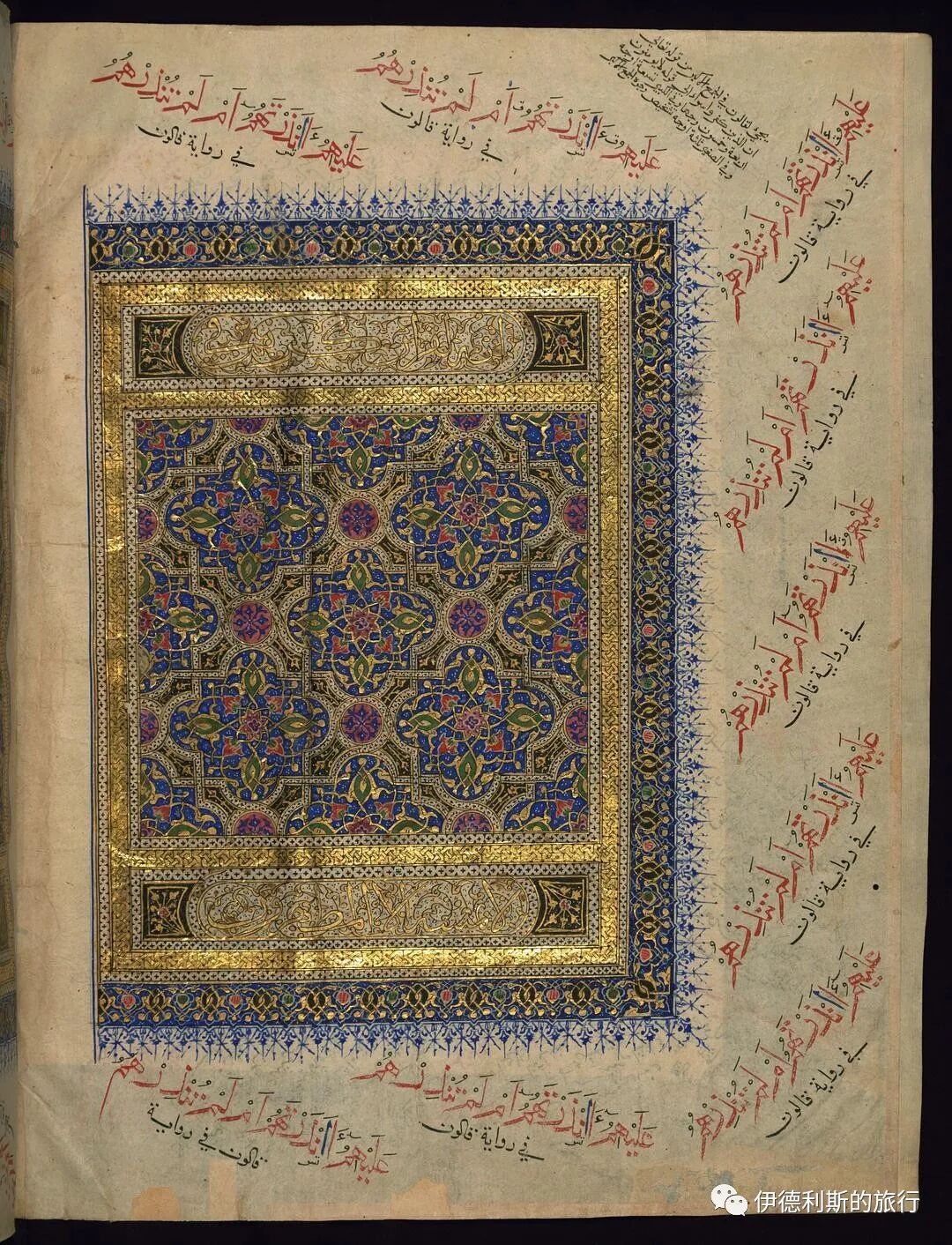
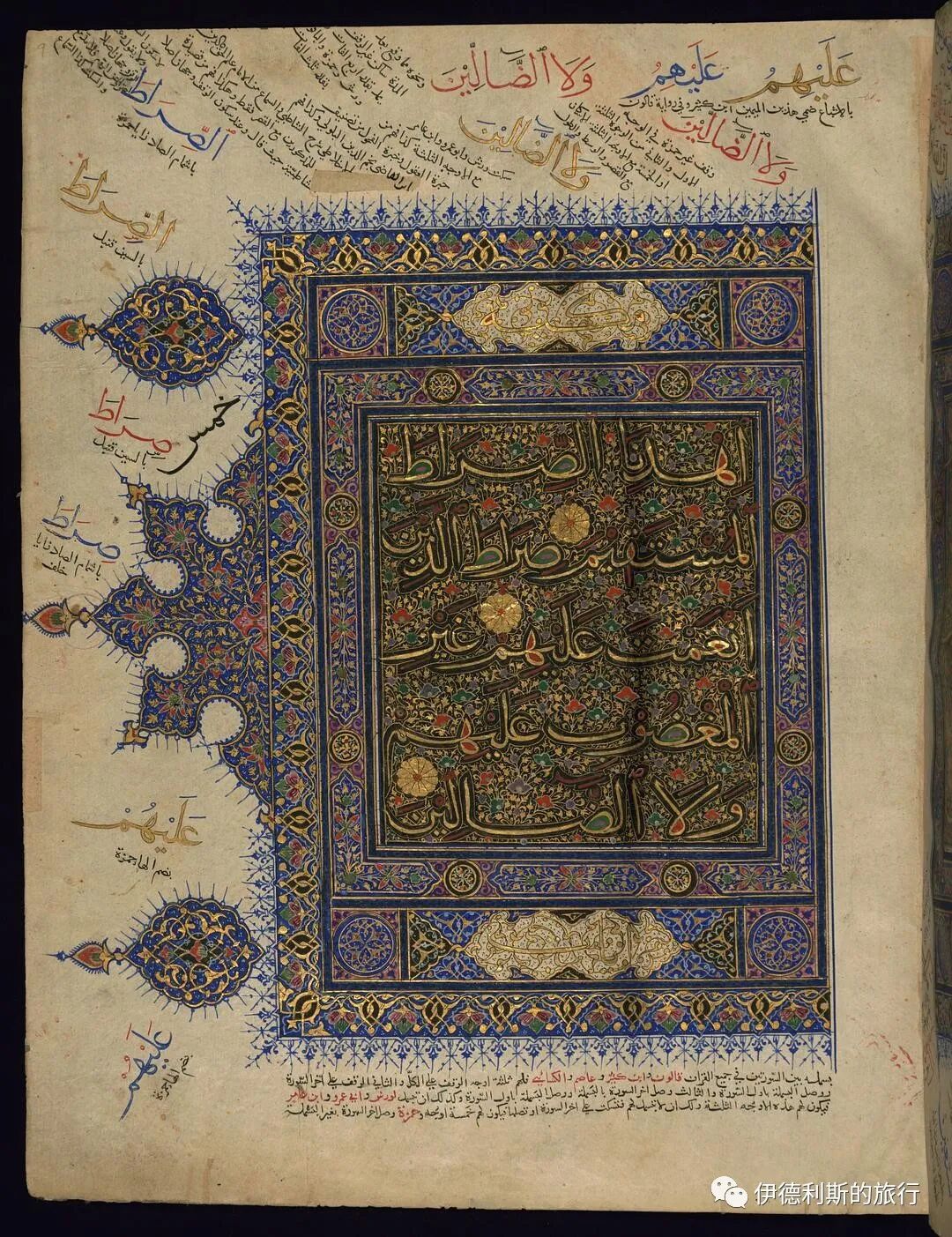
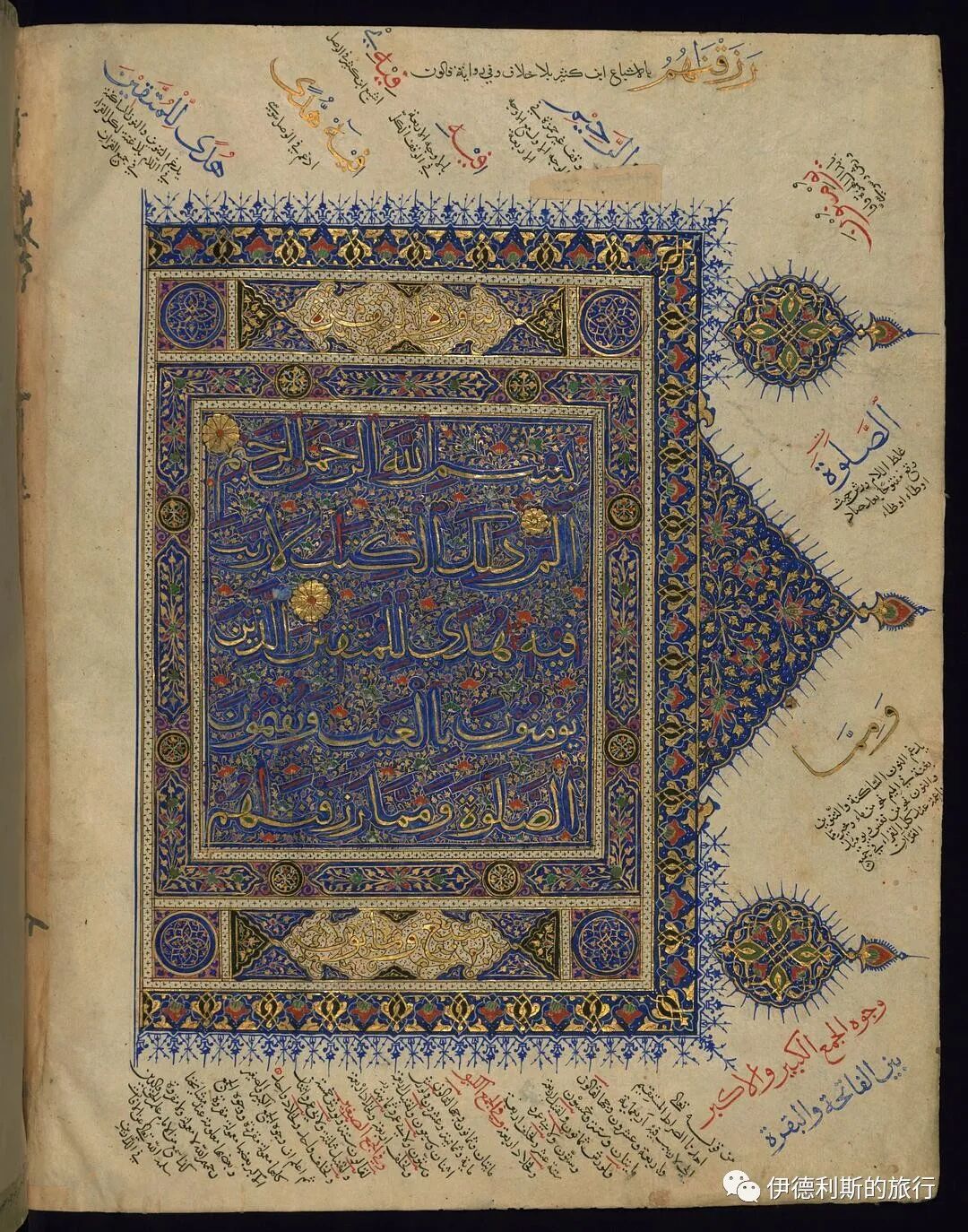
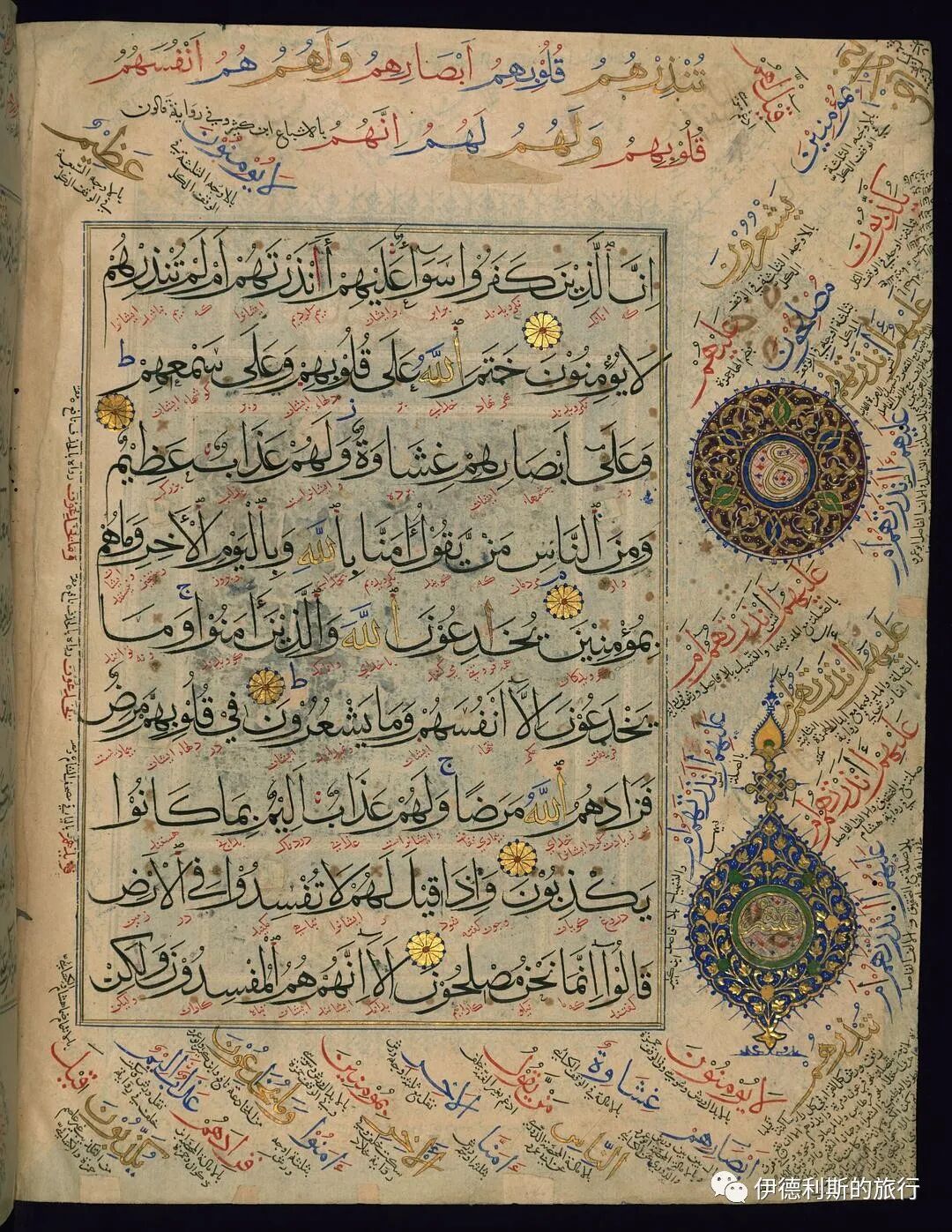
18th-century Maghreb
This Quran manuscript in the Walters Art Museum collection contains surahs 19 through 23. It was made in the 19th-century Maghreb region, which includes Mauritania, Algeria, Libya, Morocco, and Tunisia. The manuscript is written in Maghrebi script, while the titles are in New Abbasid script written with gold ink.
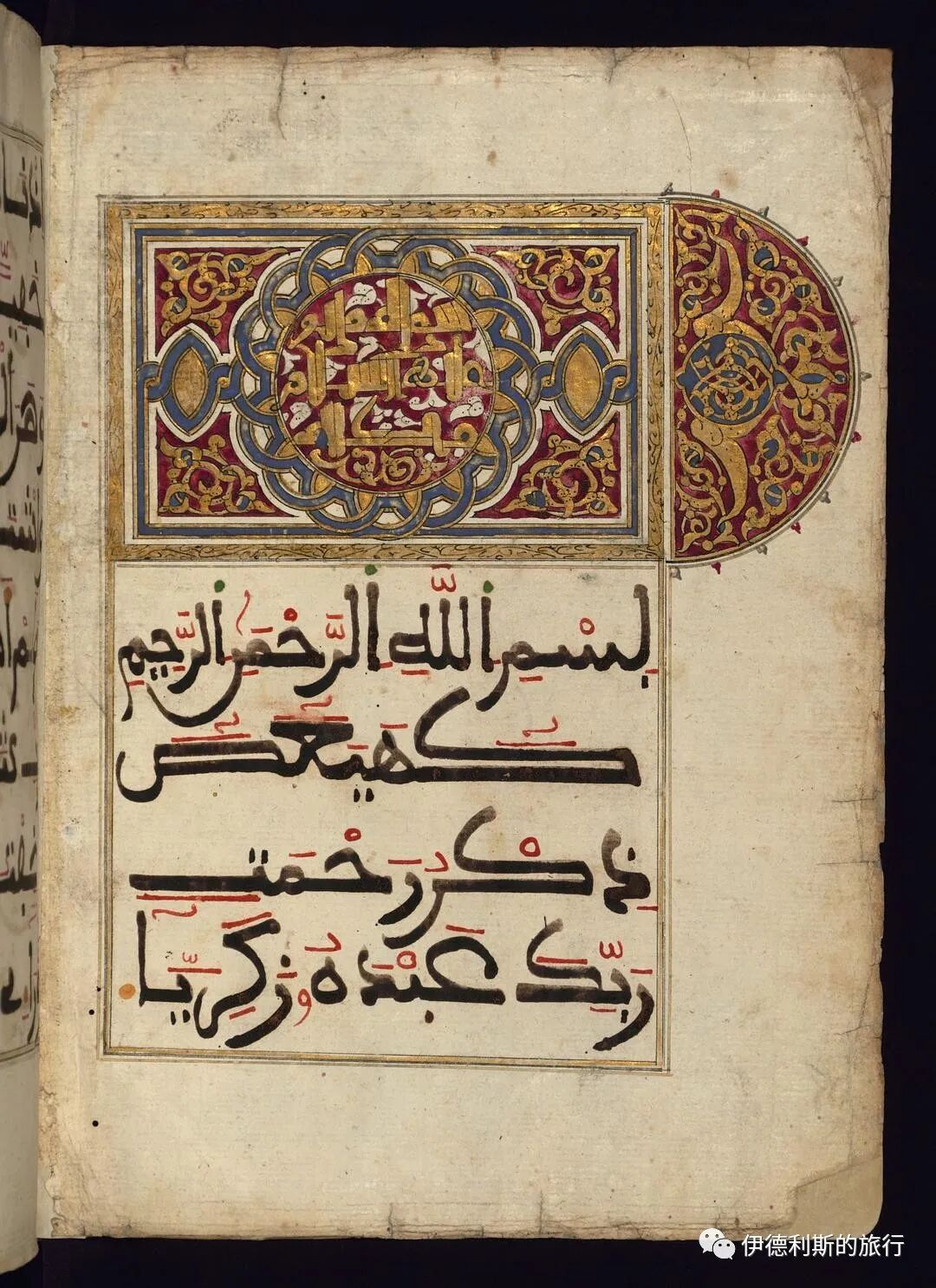
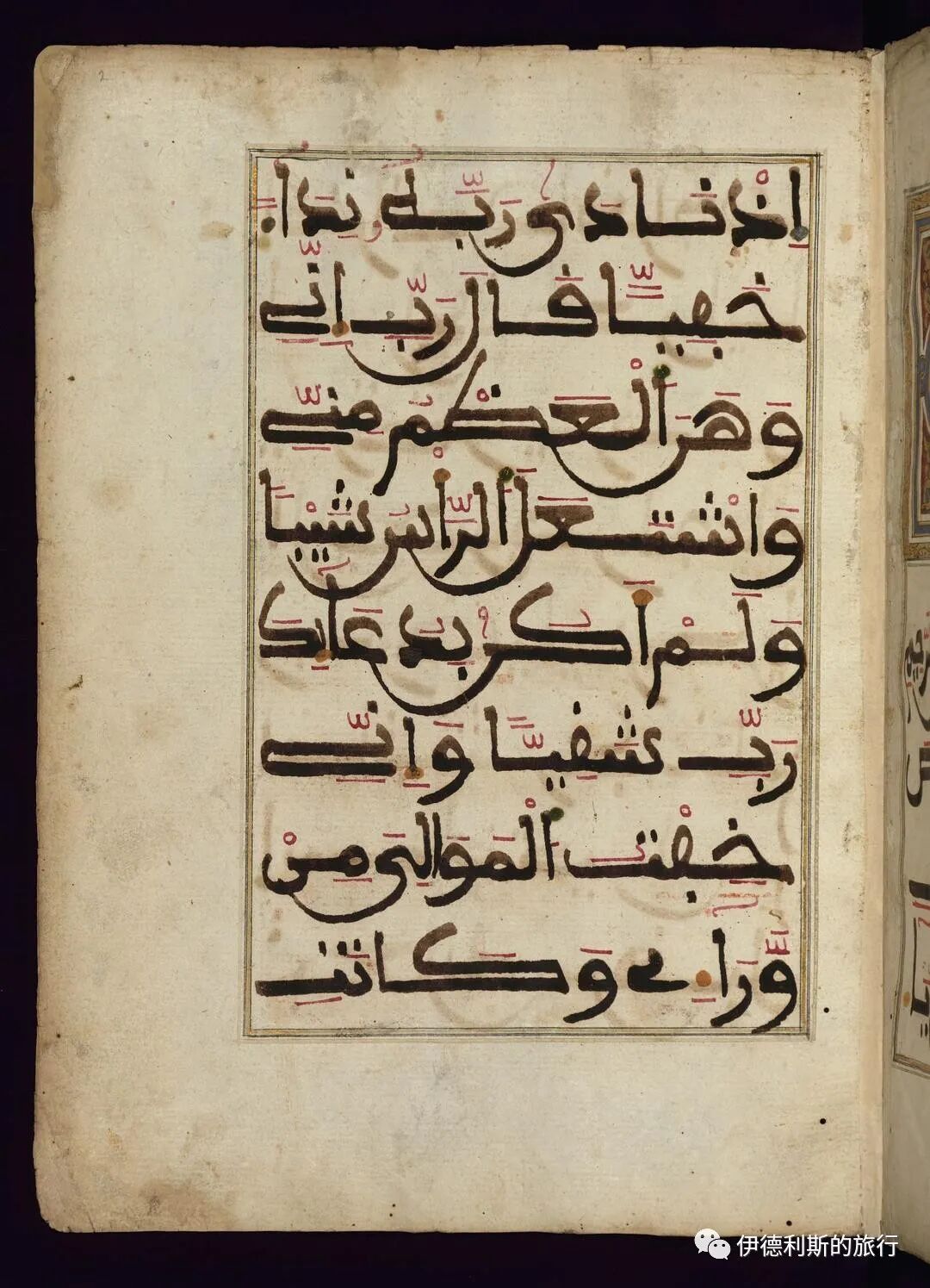
1714 Iran
This Quran manuscript in the Bavarian State Library was made in 1714 during the Persian Safavid dynasty. It uses a tiny but clear Naskh script. The golden cloud swirls on the edges are typical of Shia style, and the floral decorations are written in beautiful Persian.
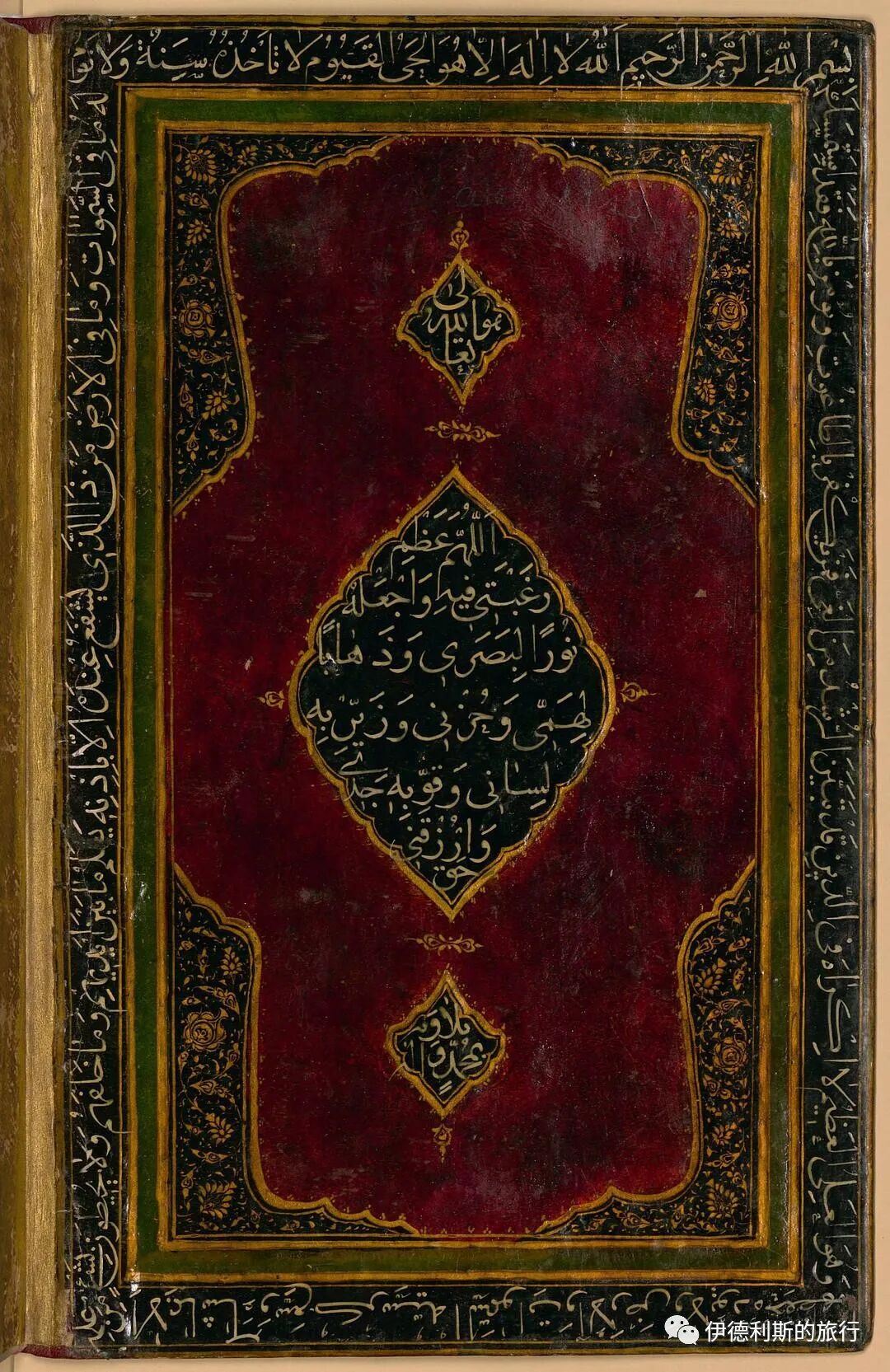
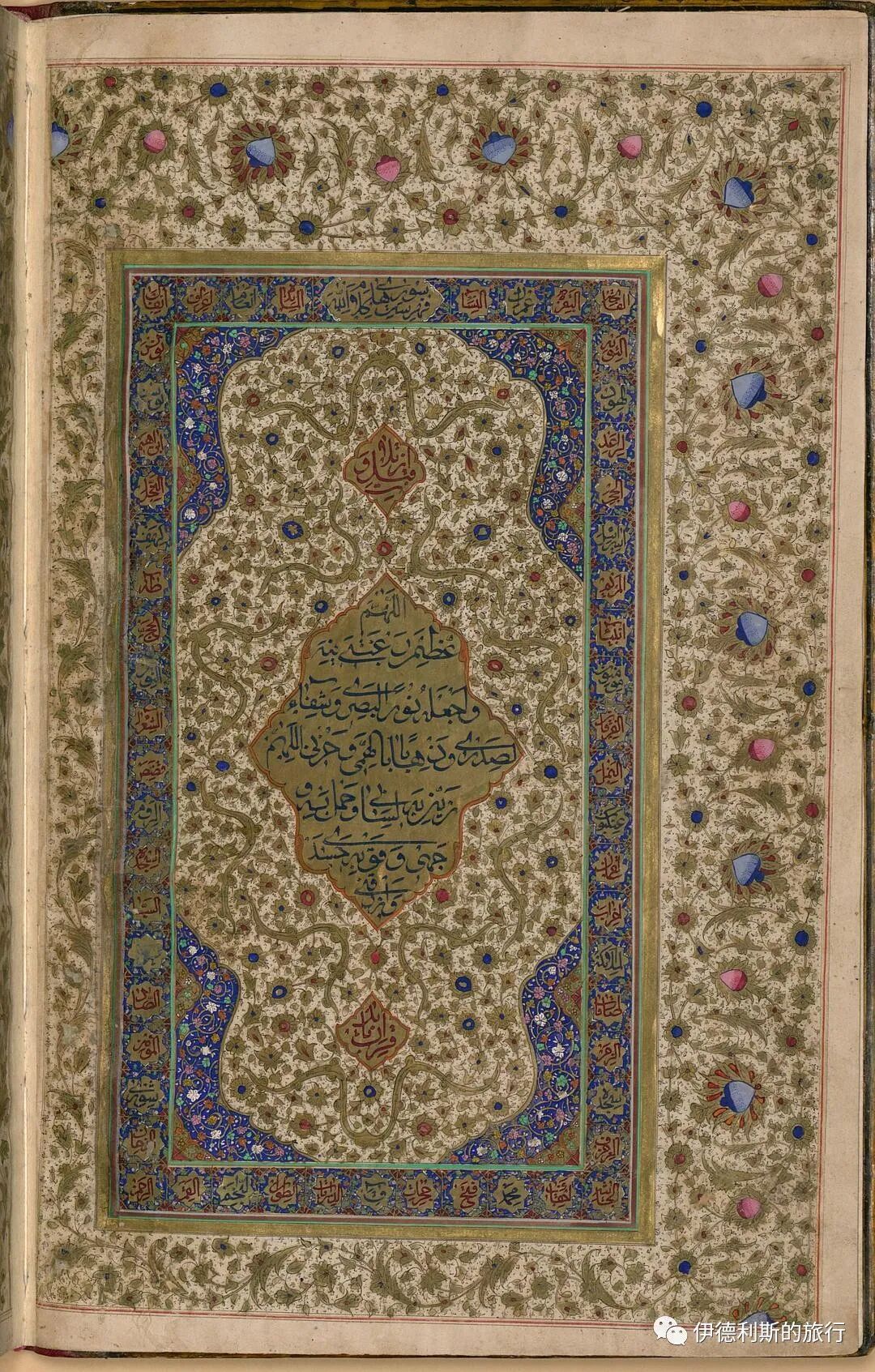
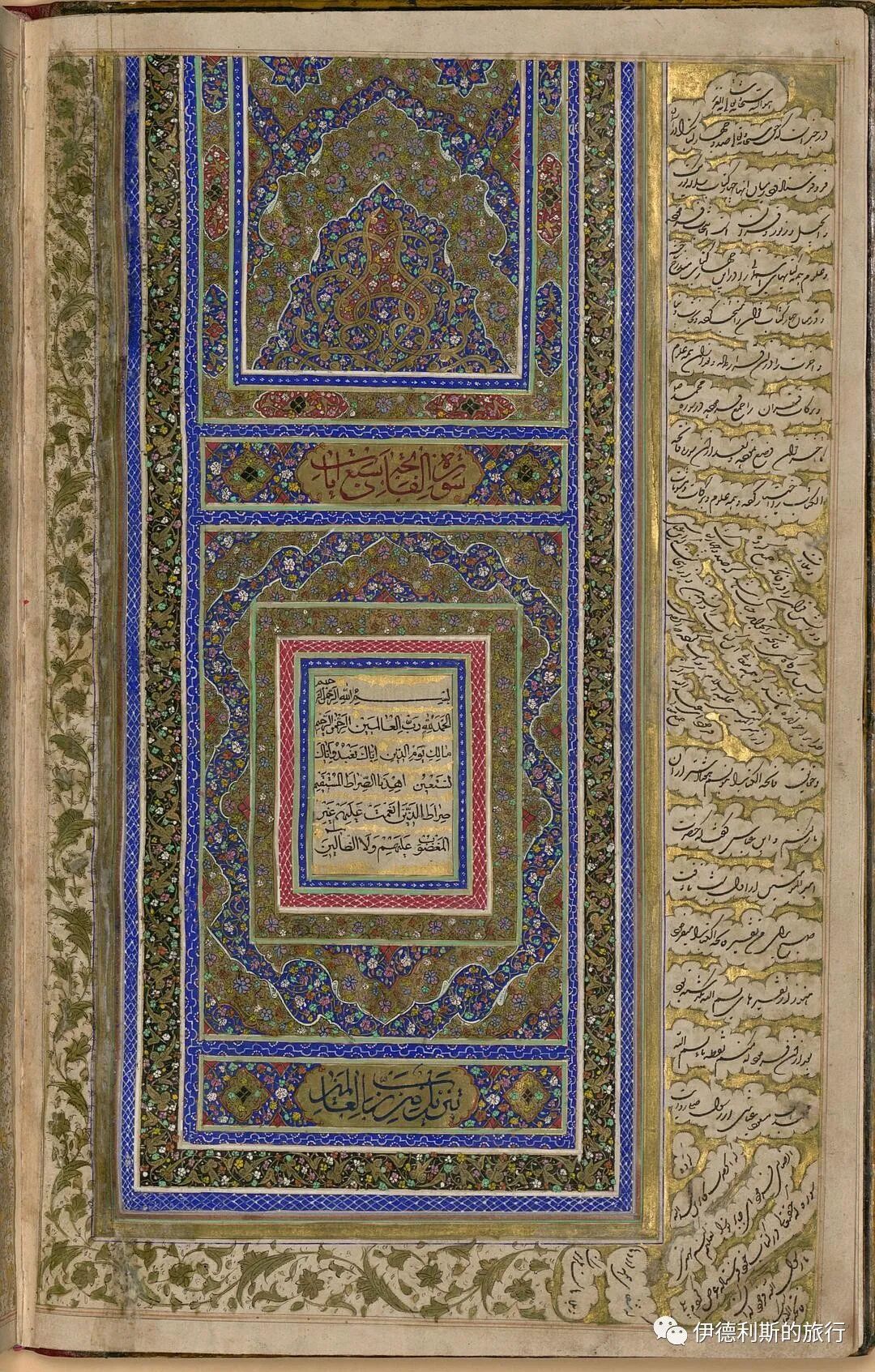
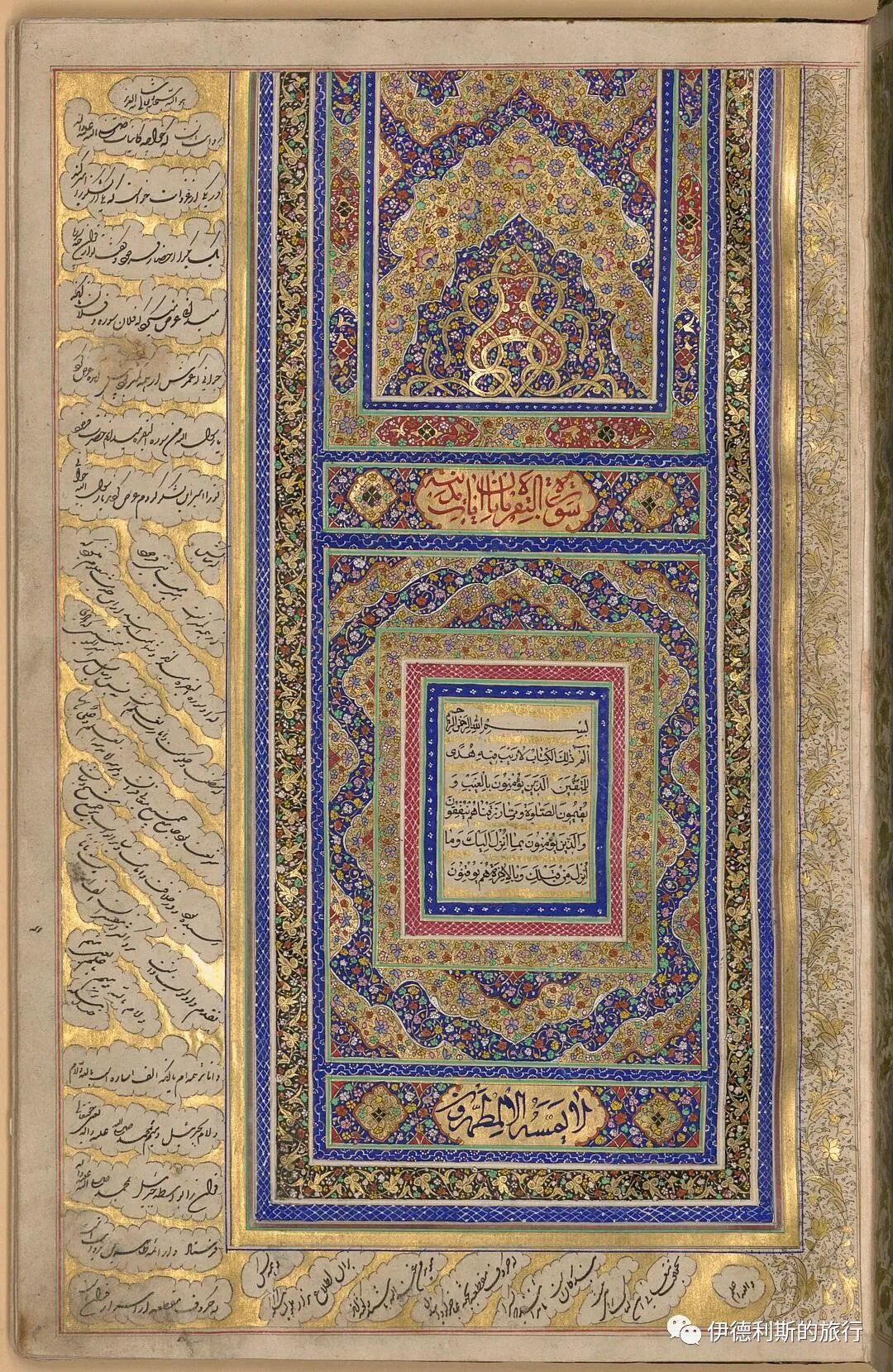
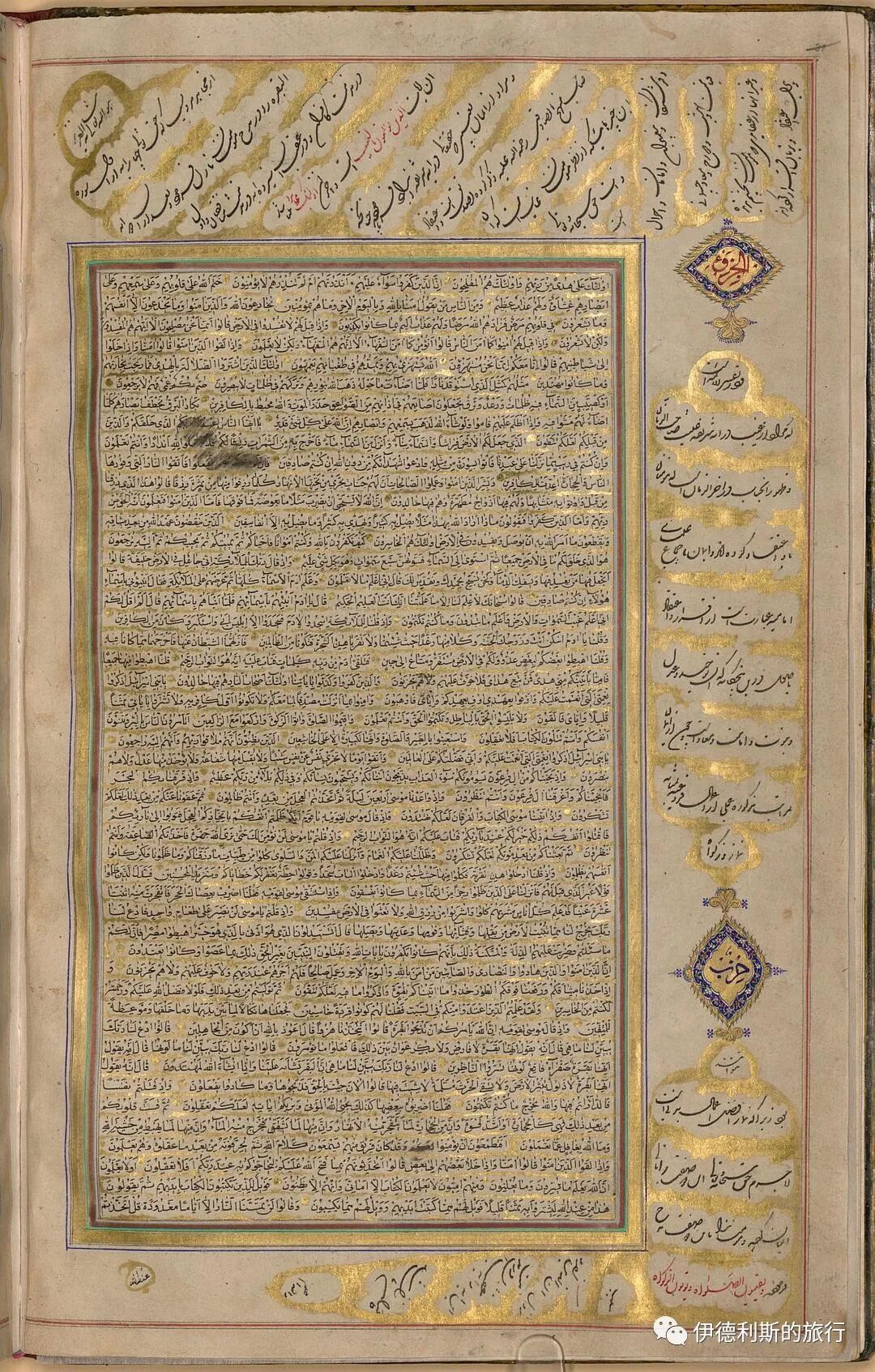
Late 19th-century Malay Peninsula
This Quran manuscript in the British Library is believed to be from the east coast of the Malay Peninsula in the late 19th century. The manuscript has features typical of the Pattani region in southern Thailand, including black backing paper made in Thailand and wave patterns in the Pattani style. However, the paintings and decorative patterns are more typical of the Kelantan region in Malaysia, and it likely belonged to the Sultan's court in Terengganu.
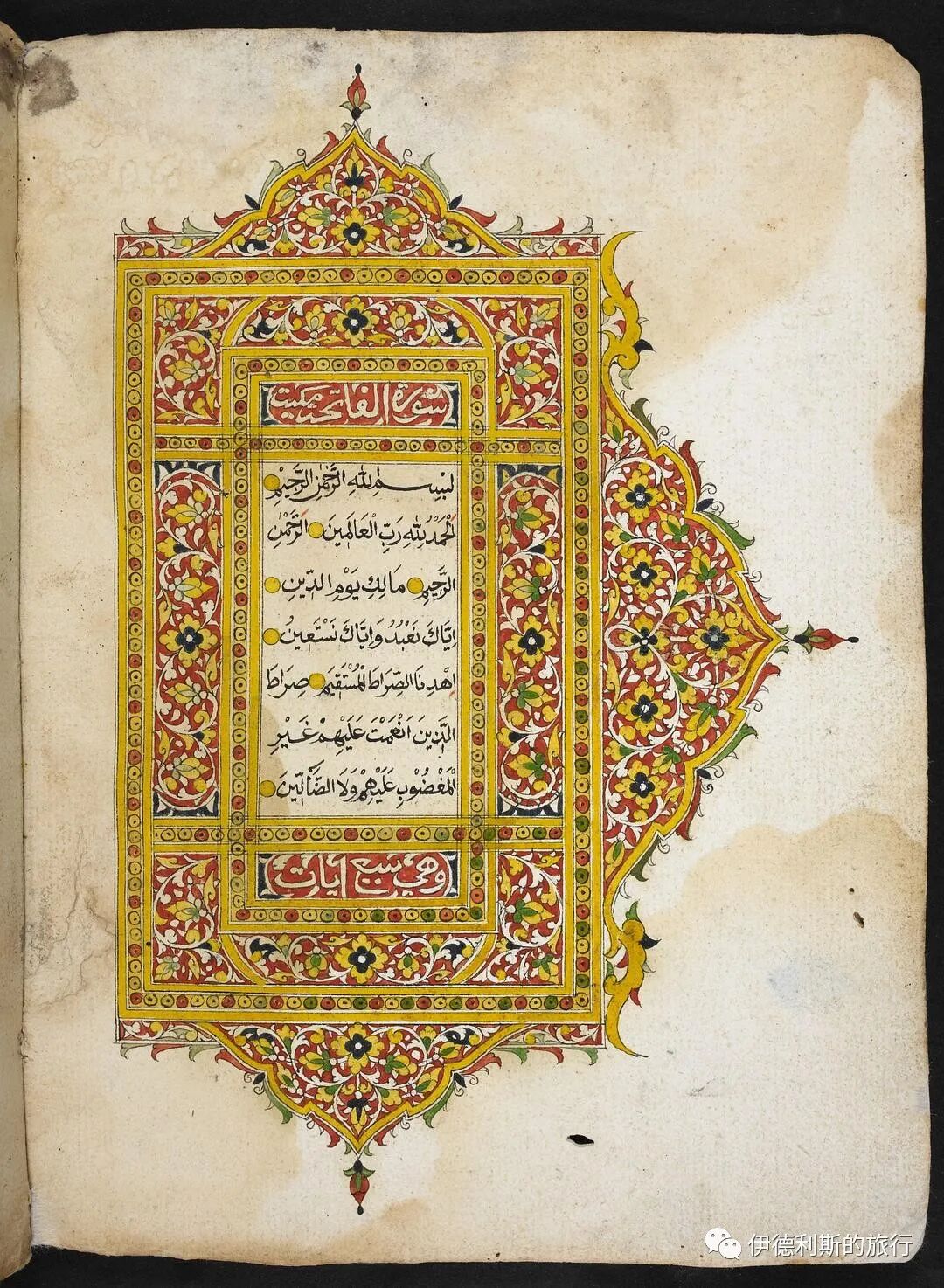
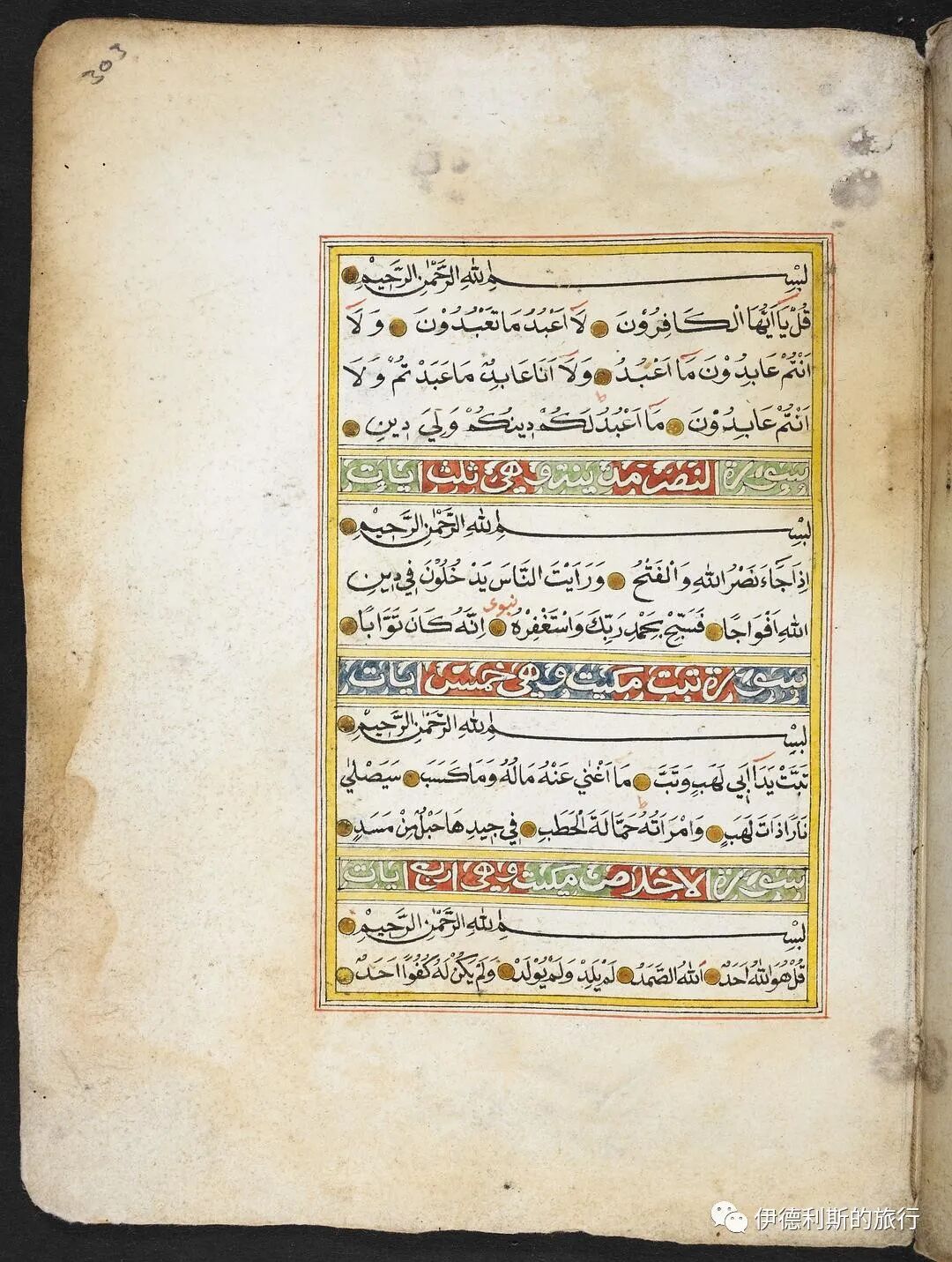
1852 Iran
This Quran manuscript in the National Library of Iran was made in 1852 in the ancient Persian city of Shiraz. The scribe was the calligrapher Abdol-Vahhab Naghmeh.
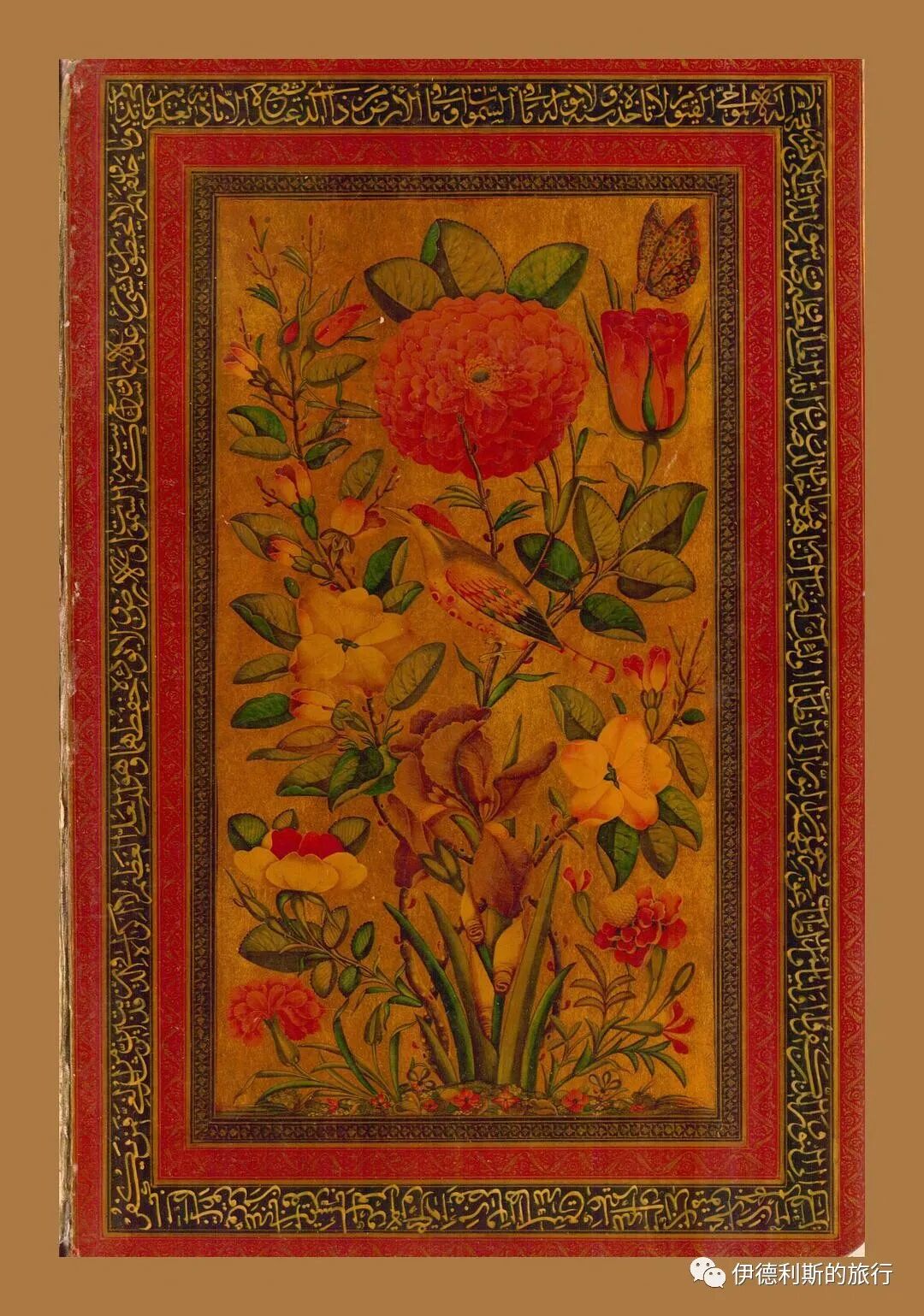
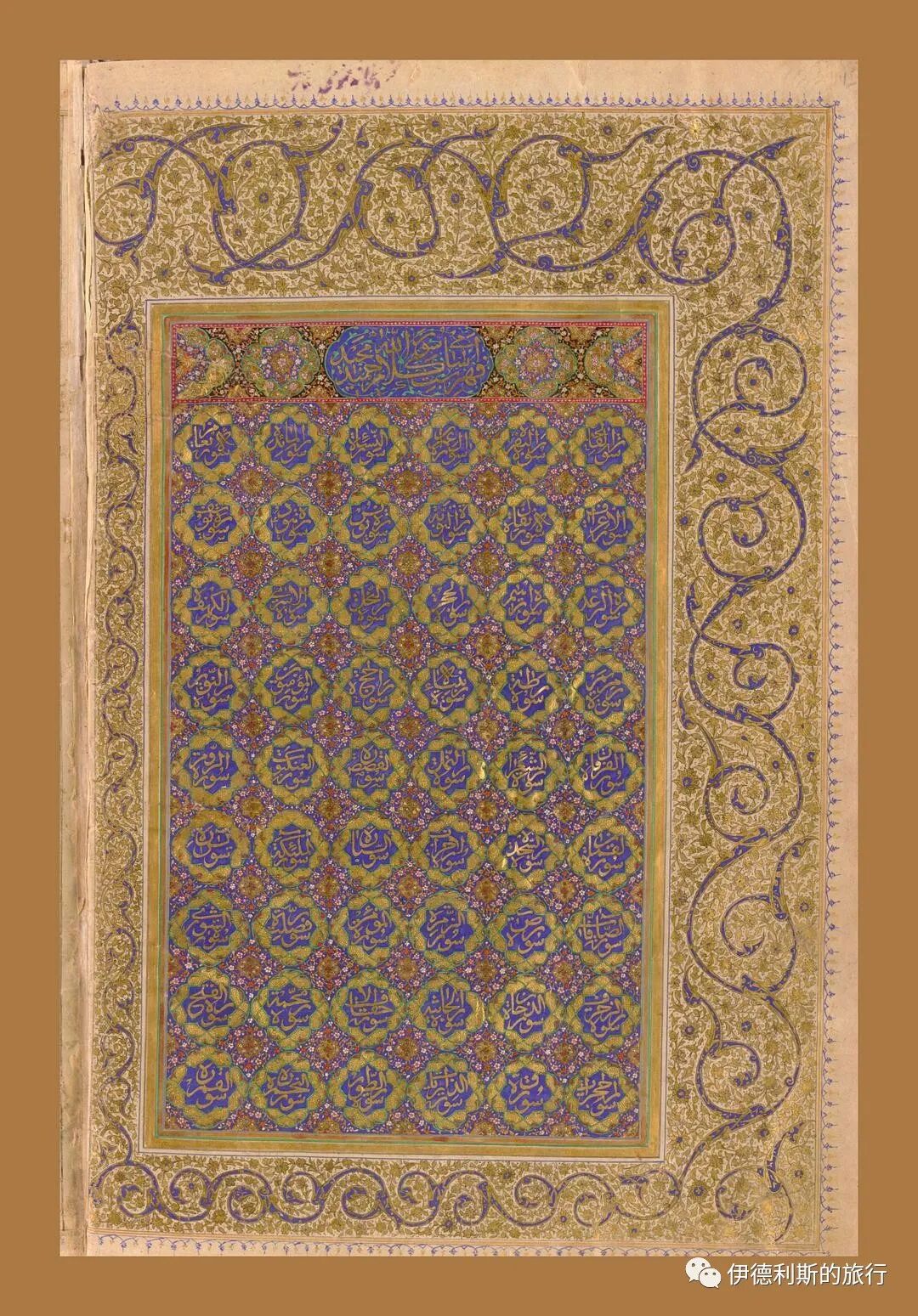
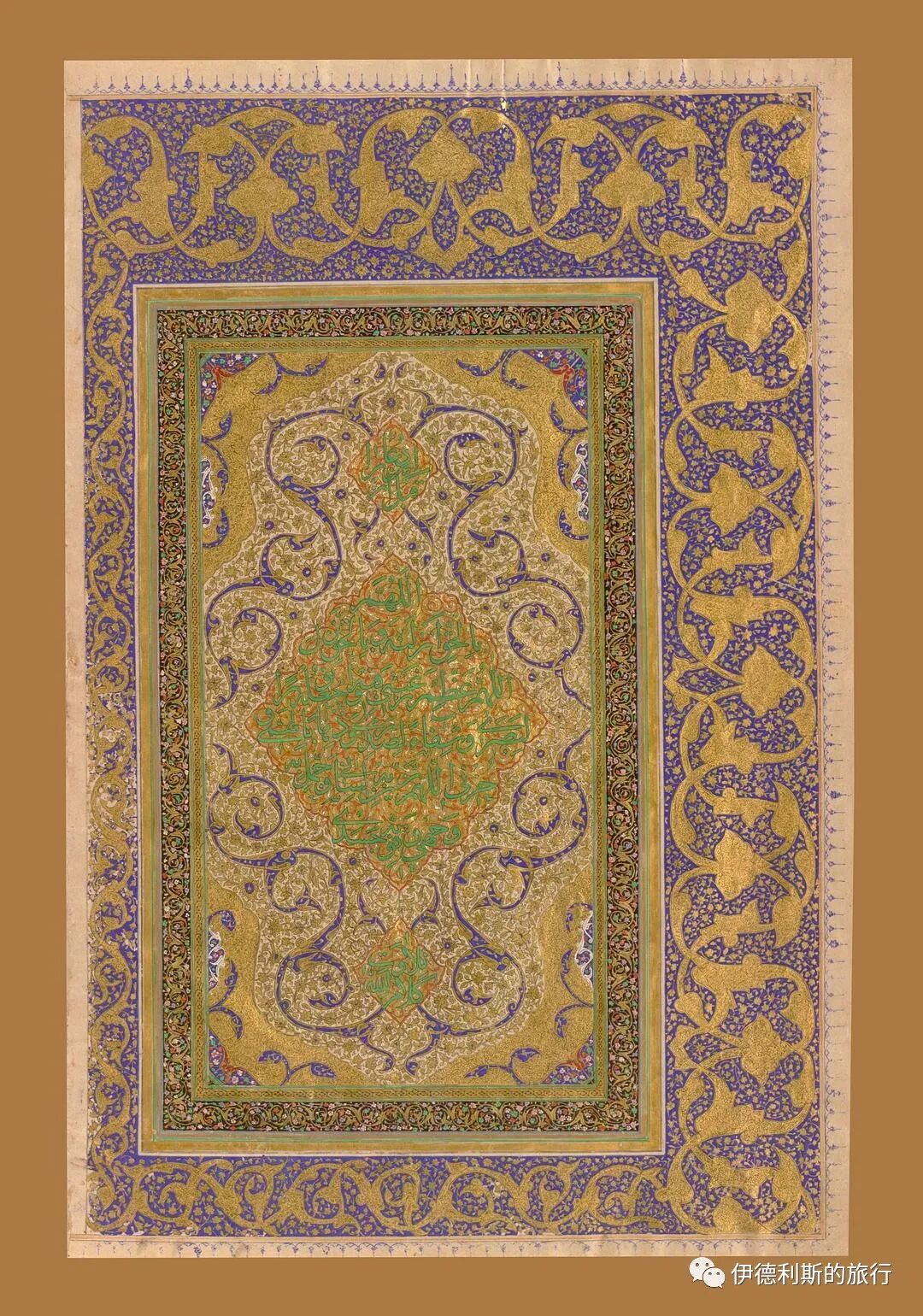
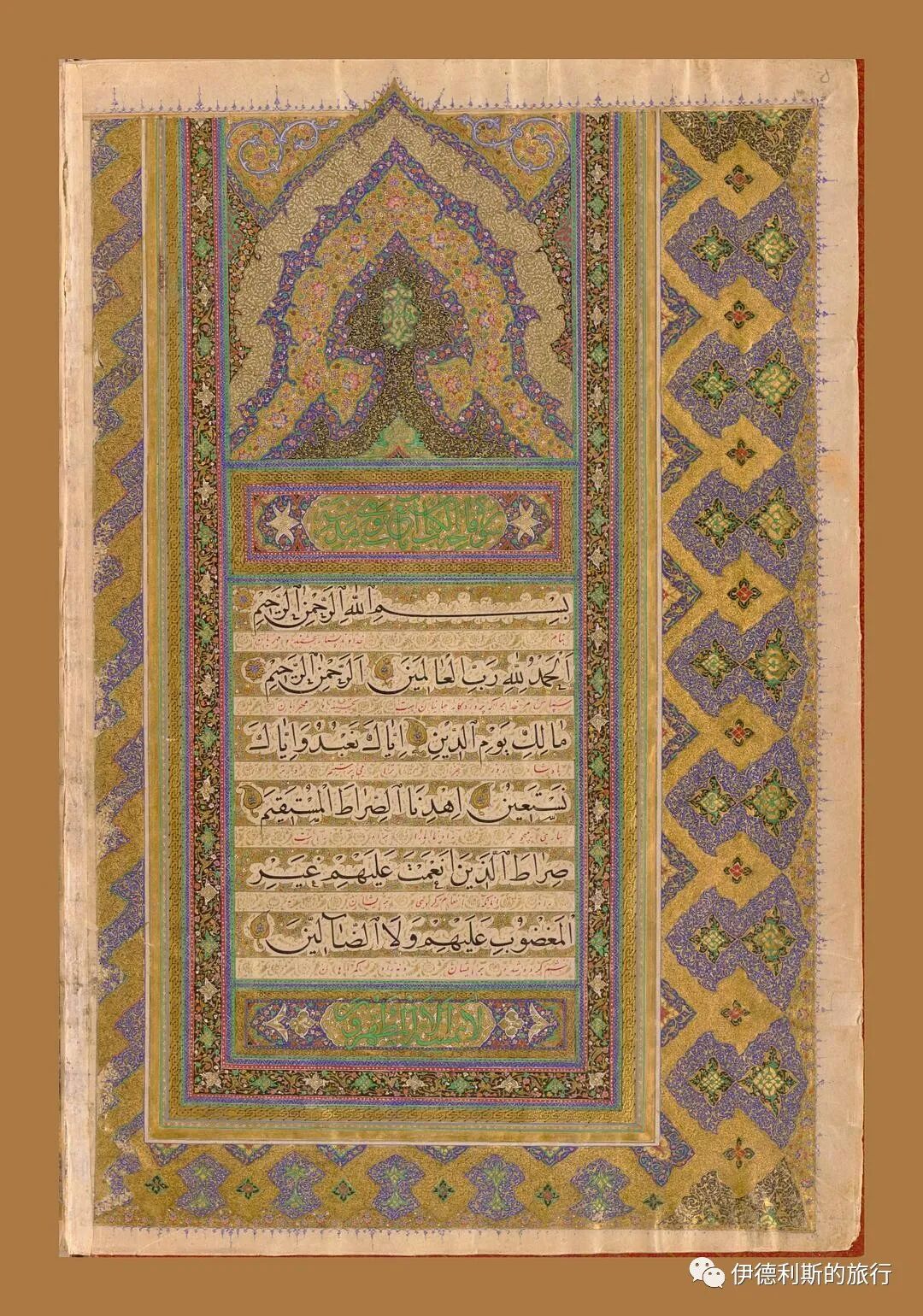
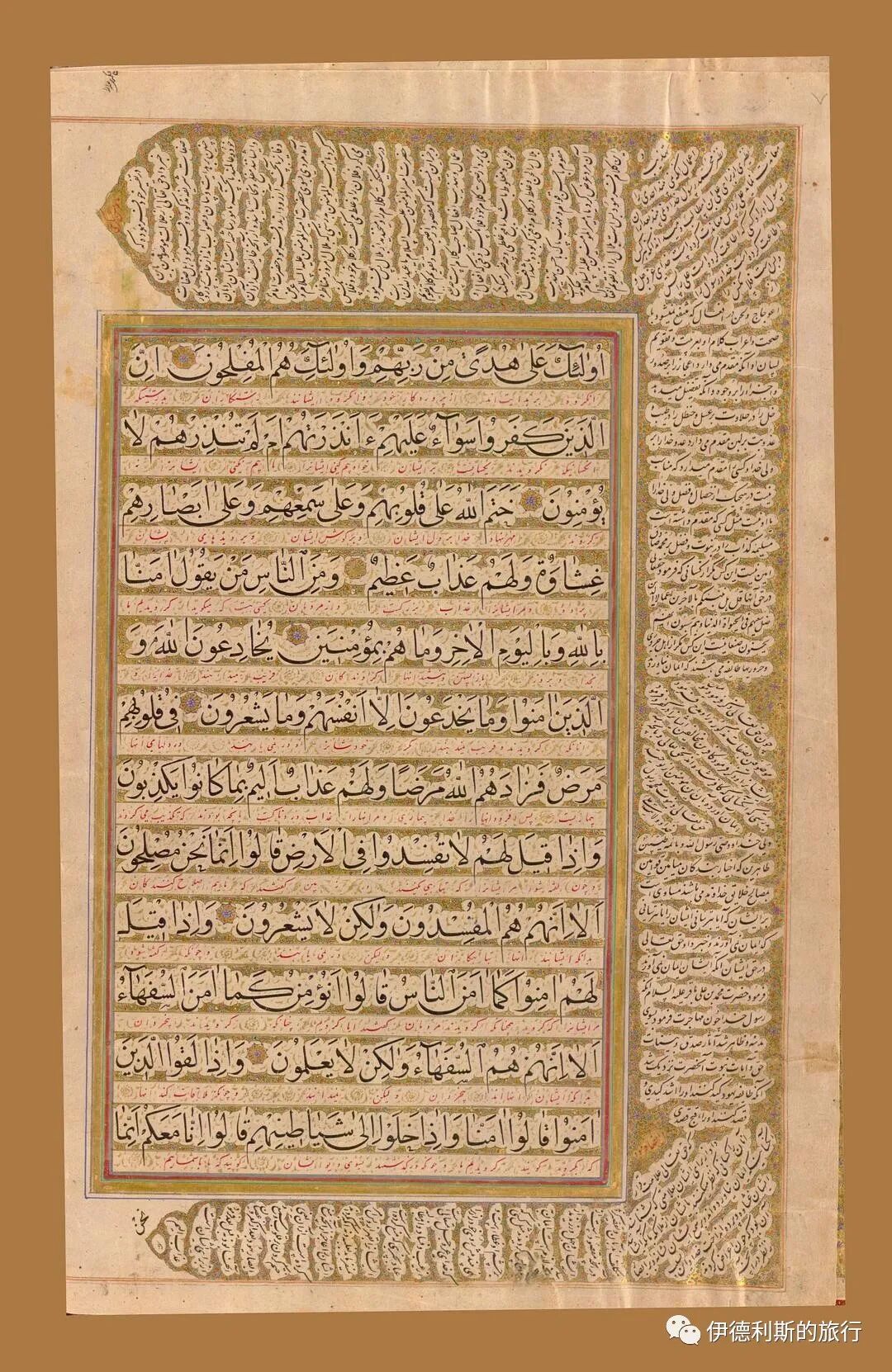
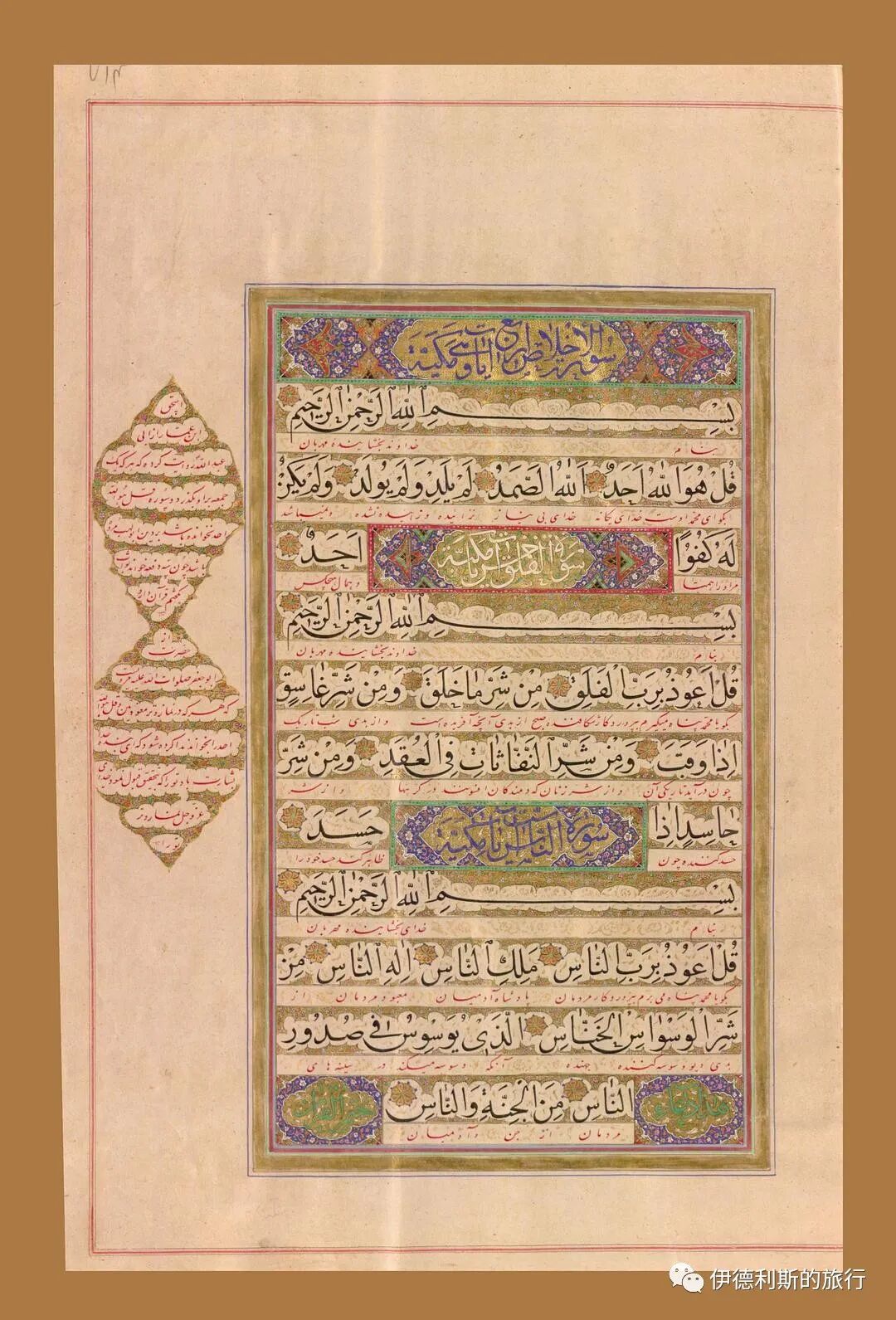
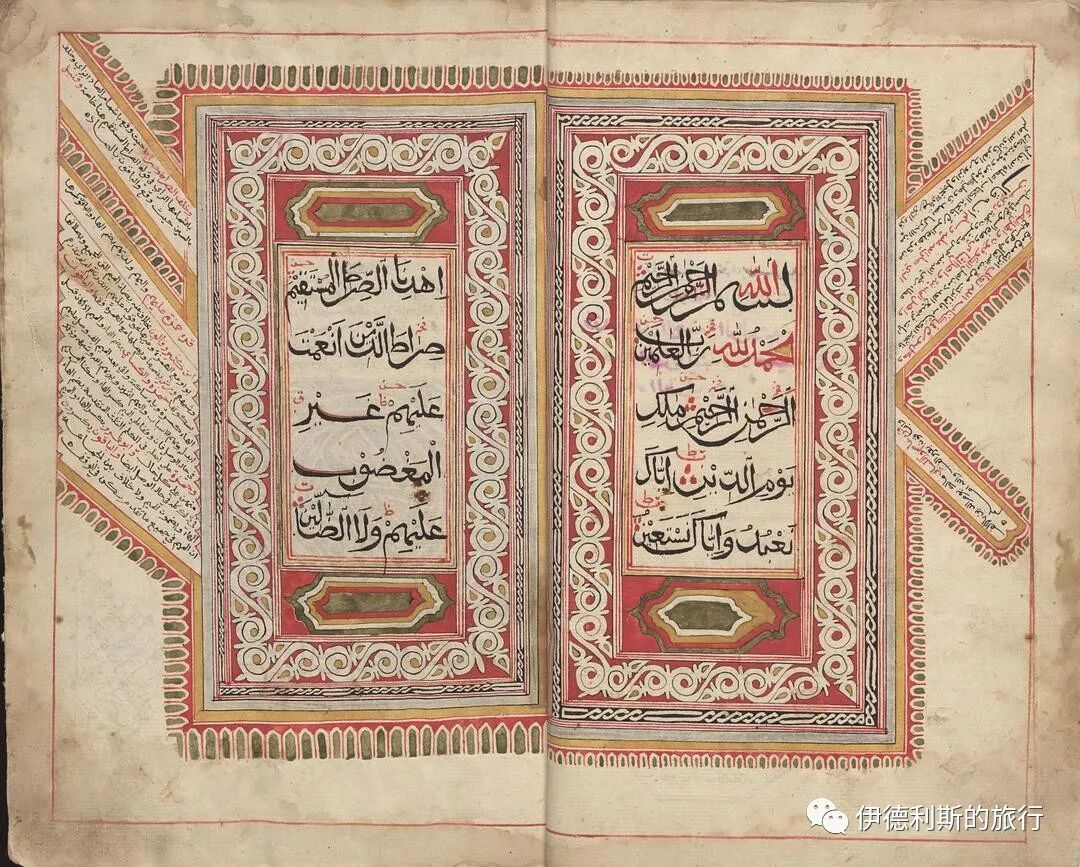
1945 Oman
This Quran manuscript in the Sultan Qaboos University library was made in Oman in 1945. It was copied by Sayf ibn Muhammad ibn Salim al-Tawqi and Abdulkarīm ibn ʻUmar ibn Mūsā al-Nawfalī. This Quran contains the first six surahs. The first chapter, Al-Fatiha, is decorated to look like a door, which symbolizes that Al-Fatiha is the entrance to the Quran. The script in this manuscript is very unique. While it has some elements of cursive script (naskh) and thuluth script (thuluth), the overall style is different from any other font.
Islamic Museum Guide: Malaysia — 92 Handwritten Qurans and Manuscripts
Articles • ali2007fr posted the article • 0 comments • 137 views • 2026-05-20 00:57
Summary: The Islamic Arts Museum Malaysia holds a large manuscript collection, including 92 handwritten Qurans and related works from different regions and periods. This article preserves the original museum captions, photos, names, and manuscript details in clear English.
The Islamic Arts Museum Malaysia has the best collection of Islamic art in Southeast Asia. I visited Kuala Lumpur again at the end of 2024 to take another look at the handwritten manuscripts from different regions and eras.
This museum likely holds the largest collection of handwritten Quran manuscripts in Southeast Asia. The collection spans a thousand years, from the 8th to the 19th century. It covers regions from Andalusia, North Africa, Turkey, and Persia to China and the Malay Archipelago. You can see parchment from over a thousand years ago, as well as rare manuscripts from Southern Thailand and Mindanao. It is definitely worth a visit. I am sharing 38 early manuscript pages and 92 handwritten books that were on display at the museum in 2024.
Early parchment in Kufic script
Fatimid Caliphate, Egypt, 10th century
The Two Holy Cities, 8th century
North Africa, 9th century
North Africa, 8th century
North Africa, 8th century
North Africa, 8th century
Near East or North Africa, 850-950 AD
Damascus or Jerusalem, mid-8th century
North Africa or Near East, 10th century
Andalusia or North Africa, 13th-14th century
North Africa, 9th-10th century
Andalusia, 10th century
Andalusia, early 13th century
Andalusia or North Africa, 12th century
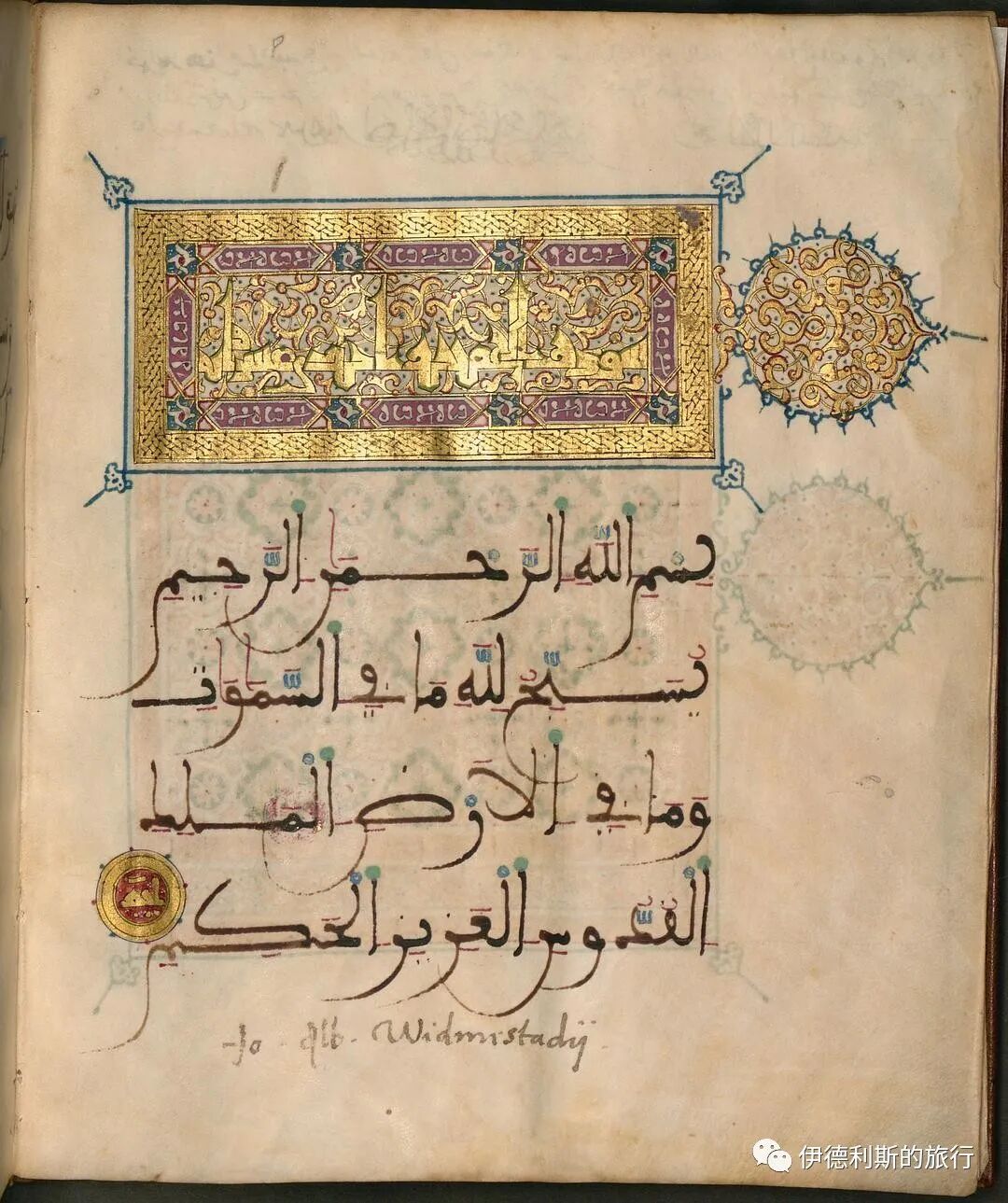
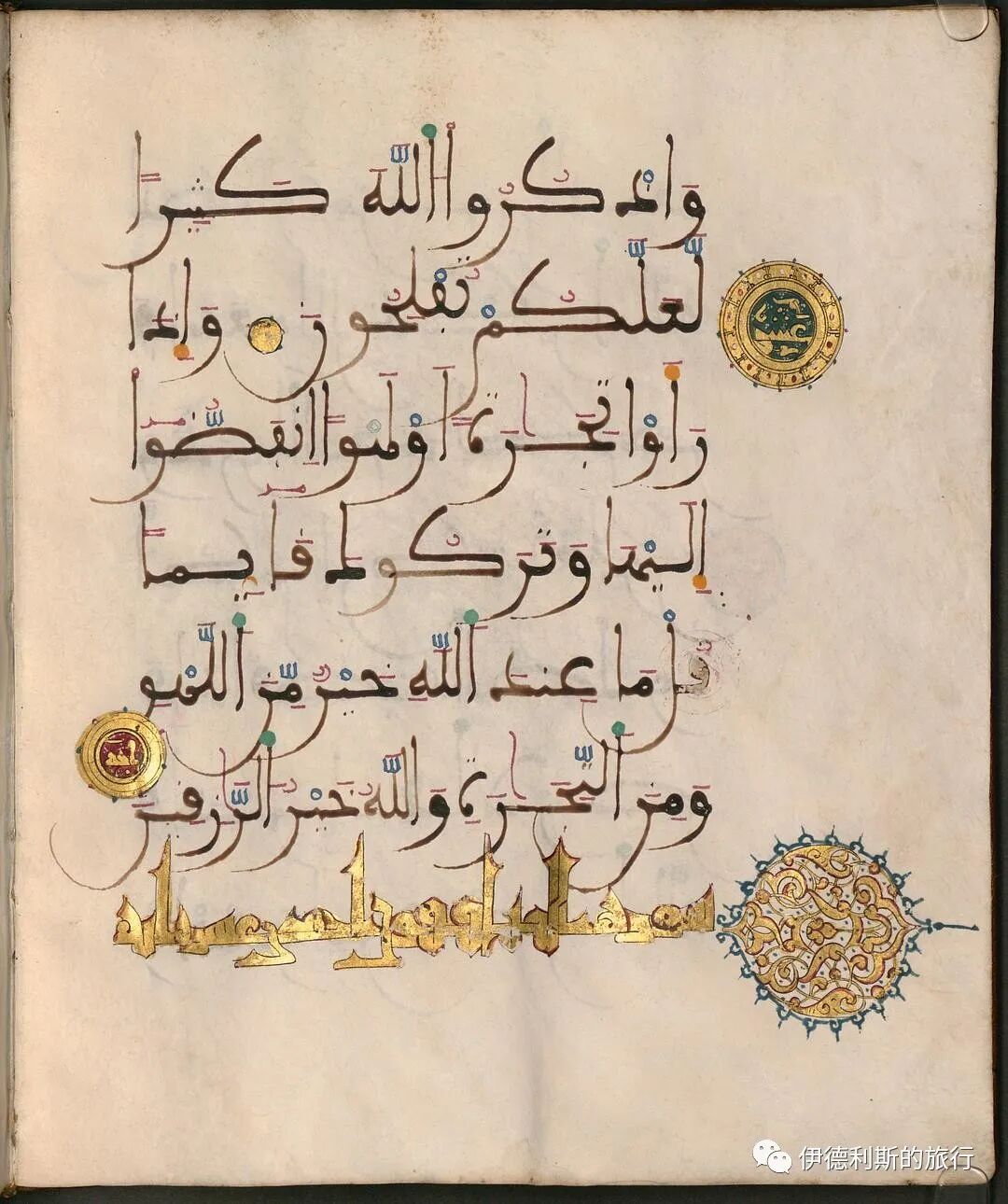
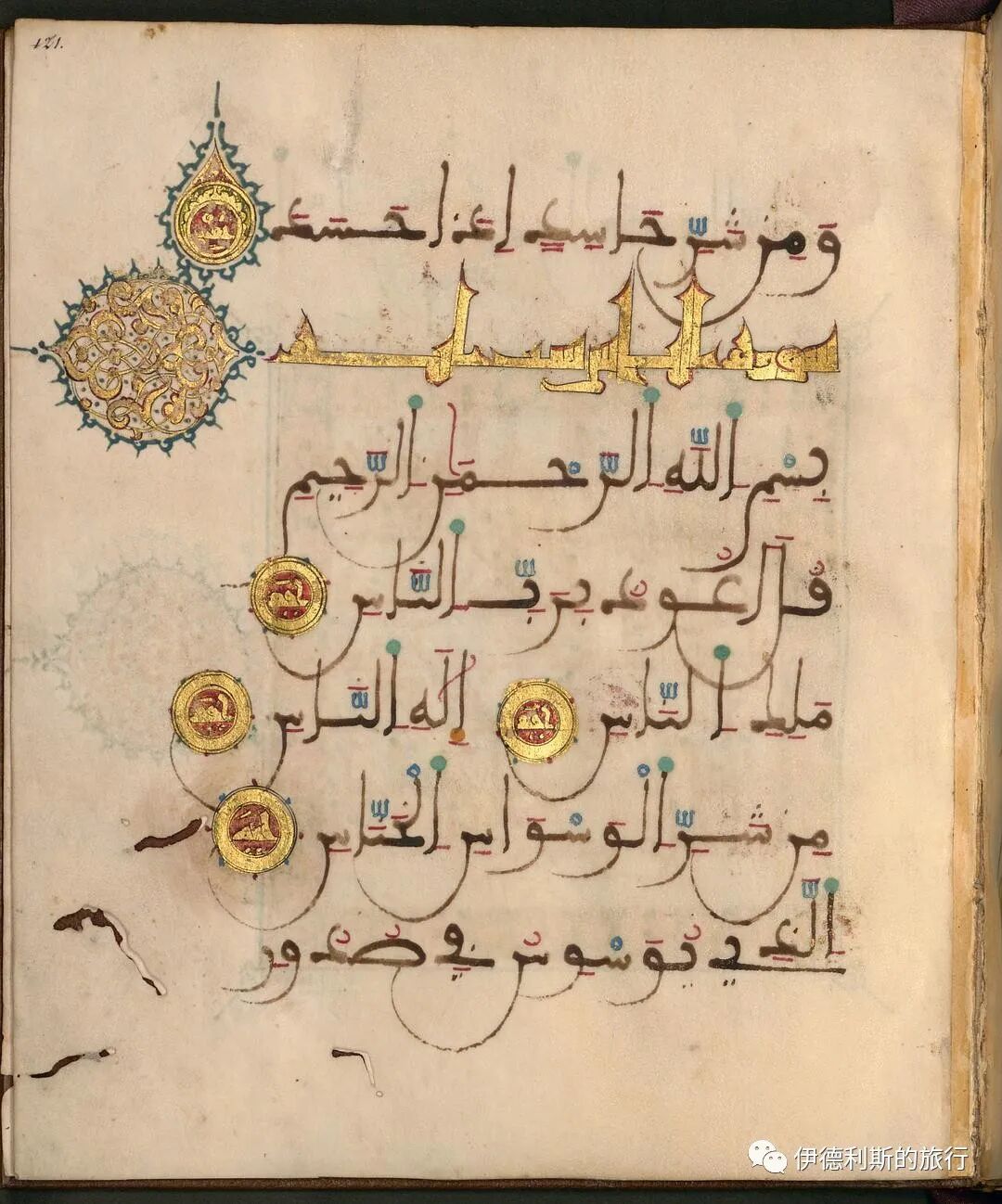
While North Africa still commonly used parchment for manuscripts, the Andalusia region began using paper widely after the 12th century. In 1151, the first paper mill in Andalusia was established in Xativa (in present-day southeastern Spain). The handwritten manuscripts on pink paper that exist today are said to use paper produced by this mill. These manuscripts may have been commissioned by royalty or nobles in Granada or Valencia. They feature large chapter headings and gold rose markings.
Andalusia or North Africa, 12th century
Andalusia, 13th century
Andalusia, 13th century
Seville or Xativa, Al-Andalus, 13th century
Andalusia or North Africa, 12th century
North Africa, 9th-10th century
Al-Andalus or North Africa, 12th-13th century
North Africa or the Near East, 8th century
North Africa, 9th-10th century
Early parchment manuscripts from North Africa and Al-Andalus were mostly horizontal. As paper from Baghdad spread across the Middle East, more manuscripts began using vertical paper. This change led to more decorative styles and more delicate calligraphy.
Seljuk Empire, Persia, 12th century
Persia, possibly Shiraz, 16th century
India, 15th century
Persia, 12th century
Anatolia or Central Asia, 1335
South Asia
Delhi Sultanate, 15th-16th century
Delhi Sultanate, 16th century
Central India, 16th century
Delhi Sultanate, 15th century
Mughal Empire, 1775
Mughal Empire, 18th century
Kashmir, 18th century
Kashmir, 19th century
North India or Kashmir, 1831
Kashmir, 18th century
Kashmir, 18th to 19th century.
Kashmir, early 19th century.
Kashmir, early 19th century.
Northern India, 1893-1894.
African region.
North Africa, 16th century.
North Africa, 19th century.
Harar, Ethiopia, 1800. Harar is an important center for the faith in eastern Ethiopia and is known as the fourth holiest city of the faith. The old city contains 82 mosques and 9 gongbei, and it was listed as a UNESCO World Heritage site in 2006. Because of long-term trade with the Arabian Peninsula, the faith flourished in the old city by the 10th century and became widespread after the 13th century. Harar became the capital of the Adal Sultanate after 1520 and the capital of the Emirate of Harar after 1647. In the 18th century, Harar was an important center for the faith in the Ethiopia and Somalia region.
Sudan, 1857-1858.
Sudan, 19th century.
Morocco or Andalusia, 13th century.
North Africa, 18th century.
North Africa, 19th century.
Comoros Islands, East Africa, 1824. The Comoros Islands are located in the southwest Indian Ocean, between the African continent and Madagascar. Arab and Persian merchants often came here to trade. The faith spread across the islands starting in the 10th century, and several sultanates were established on the islands after the 16th century.
Caucasus region.
South Caucasus or Dagestan, 19th century.
Dagestan, North Caucasus, 1780.
Dagestan, North Caucasus, 19th century
Persia
Ilkhanate of Persia, 1291
Ilkhanate of Persia, 1304
Persia, 1684
Persia, 17th century
Turkmen people of Persia, 1483-1484
Isfahan, Safavid Dynasty of Persia, 1708
Qajar Dynasty of Persia, 19th century
Qajar Dynasty of Persia, 1862
Persia, 1700
Qajar Dynasty of Persia, 19th century
Qajar Dynasty of Persia, 1845-1846
Shiraz, Qajar Dynasty of Persia, 19th century
Safavid Dynasty of Persia, 16th century
Shiraz, Safavid Dynasty of Persia, 16th century
Persia, 1684
Qajar Dynasty of Persia, 1842. The donor was a soap merchant named Haji Aqa Muhammad.
Uzbekistan
Bukhara, Uzbekistan, 18th century
Ottoman Dynasty
Ottoman Turkey, 1848
Ottoman Turkey, 1869
Ottoman Turkey, 1836-1837
Ottoman Turkey, 17th century
Ottoman Turkey, 1775
Ottoman Turkey, 1840
Ottoman Turkey, 1803-1804
Ottoman Turkey, 1862-1863
Ottoman Turkey, 1748-1749
Ottoman Turkey, 1850
Ottoman Turkey, 1852
Ottoman Turkey, 1843-1844
Mamluk Sultanate
Mamluk Sultanate, Egypt or Syria, 14th-15th century
Mamluk Sultanate, Egypt, 14th century
Mamluk Sultanate, Egypt, 15th century
Mamluk Sultanate, Egypt or Syria, 14th century
Mamluk Sultanate, Egypt, 14th century
China
Copied in 1730, with a traditional scripture case
Said to be a hand-copied scripture from the Ming Dynasty
China, 17th century
China, 17th century
Malay Peninsula, 18th-19th century
Terengganu, Malaysia, 19th century
Indonesia
Java, 19th century
Possibly Indonesia, 1818.
Possibly Indonesia, 1818.
Java Island, 1845.
Possibly Cirebon, Java Island, 19th century.
Java, 19th century
Java, 19th century
Java, 19th century
Aceh, Sumatra Island, 19th century.
Aceh, Sumatra Island, 18th to 19th century.
Thailand.
Handwritten scripture from Pattani Province, Thailand, 19th century.
Philippines.
Mindanao Island, Philippines, 1882. view all
Summary: The Islamic Arts Museum Malaysia holds a large manuscript collection, including 92 handwritten Qurans and related works from different regions and periods. This article preserves the original museum captions, photos, names, and manuscript details in clear English.
The Islamic Arts Museum Malaysia has the best collection of Islamic art in Southeast Asia. I visited Kuala Lumpur again at the end of 2024 to take another look at the handwritten manuscripts from different regions and eras.
This museum likely holds the largest collection of handwritten Quran manuscripts in Southeast Asia. The collection spans a thousand years, from the 8th to the 19th century. It covers regions from Andalusia, North Africa, Turkey, and Persia to China and the Malay Archipelago. You can see parchment from over a thousand years ago, as well as rare manuscripts from Southern Thailand and Mindanao. It is definitely worth a visit. I am sharing 38 early manuscript pages and 92 handwritten books that were on display at the museum in 2024.
Early parchment in Kufic script
Fatimid Caliphate, Egypt, 10th century
The Two Holy Cities, 8th century
North Africa, 9th century
North Africa, 8th century
North Africa, 8th century
North Africa, 8th century
Near East or North Africa, 850-950 AD
Damascus or Jerusalem, mid-8th century
North Africa or Near East, 10th century
Andalusia or North Africa, 13th-14th century
North Africa, 9th-10th century
Andalusia, 10th century
Andalusia, early 13th century
Andalusia or North Africa, 12th century
While North Africa still commonly used parchment for manuscripts, the Andalusia region began using paper widely after the 12th century. In 1151, the first paper mill in Andalusia was established in Xativa (in present-day southeastern Spain). The handwritten manuscripts on pink paper that exist today are said to use paper produced by this mill. These manuscripts may have been commissioned by royalty or nobles in Granada or Valencia. They feature large chapter headings and gold rose markings.
Andalusia or North Africa, 12th century
Andalusia, 13th century
Andalusia, 13th century
Seville or Xativa, Al-Andalus, 13th century
Andalusia or North Africa, 12th century
North Africa, 9th-10th century
Al-Andalus or North Africa, 12th-13th century
North Africa or the Near East, 8th century
North Africa, 9th-10th century
Early parchment manuscripts from North Africa and Al-Andalus were mostly horizontal. As paper from Baghdad spread across the Middle East, more manuscripts began using vertical paper. This change led to more decorative styles and more delicate calligraphy.
Seljuk Empire, Persia, 12th century
Persia, possibly Shiraz, 16th century
India, 15th century
Persia, 12th century
Anatolia or Central Asia, 1335
South Asia
Delhi Sultanate, 15th-16th century
Delhi Sultanate, 16th century
Central India, 16th century
Delhi Sultanate, 15th century
Mughal Empire, 1775
Mughal Empire, 18th century
Kashmir, 18th century
Kashmir, 19th century
North India or Kashmir, 1831
Kashmir, 18th century
Kashmir, 18th to 19th century.
Kashmir, early 19th century.
Kashmir, early 19th century.
Northern India, 1893-1894.
African region.
North Africa, 16th century.
North Africa, 19th century.
Harar, Ethiopia, 1800. Harar is an important center for the faith in eastern Ethiopia and is known as the fourth holiest city of the faith. The old city contains 82 mosques and 9 gongbei, and it was listed as a UNESCO World Heritage site in 2006. Because of long-term trade with the Arabian Peninsula, the faith flourished in the old city by the 10th century and became widespread after the 13th century. Harar became the capital of the Adal Sultanate after 1520 and the capital of the Emirate of Harar after 1647. In the 18th century, Harar was an important center for the faith in the Ethiopia and Somalia region.
Sudan, 1857-1858.
Sudan, 19th century.
Morocco or Andalusia, 13th century.
North Africa, 18th century.
North Africa, 19th century.
Comoros Islands, East Africa, 1824. The Comoros Islands are located in the southwest Indian Ocean, between the African continent and Madagascar. Arab and Persian merchants often came here to trade. The faith spread across the islands starting in the 10th century, and several sultanates were established on the islands after the 16th century.
Caucasus region.
South Caucasus or Dagestan, 19th century.
Dagestan, North Caucasus, 1780.
Dagestan, North Caucasus, 19th century
Persia
Ilkhanate of Persia, 1291
Ilkhanate of Persia, 1304
Persia, 1684
Persia, 17th century
Turkmen people of Persia, 1483-1484
Isfahan, Safavid Dynasty of Persia, 1708
Qajar Dynasty of Persia, 19th century
Qajar Dynasty of Persia, 1862
Persia, 1700
Qajar Dynasty of Persia, 19th century
Qajar Dynasty of Persia, 1845-1846
Shiraz, Qajar Dynasty of Persia, 19th century
Safavid Dynasty of Persia, 16th century
Shiraz, Safavid Dynasty of Persia, 16th century
Persia, 1684
Qajar Dynasty of Persia, 1842. The donor was a soap merchant named Haji Aqa Muhammad.
Uzbekistan
Bukhara, Uzbekistan, 18th century
Ottoman Dynasty
Ottoman Turkey, 1848
Ottoman Turkey, 1869
Ottoman Turkey, 1836-1837
Ottoman Turkey, 17th century
Ottoman Turkey, 1775
Ottoman Turkey, 1840
Ottoman Turkey, 1803-1804
Ottoman Turkey, 1862-1863
Ottoman Turkey, 1748-1749
Ottoman Turkey, 1850
Ottoman Turkey, 1852
Ottoman Turkey, 1843-1844
Mamluk Sultanate
Mamluk Sultanate, Egypt or Syria, 14th-15th century
Mamluk Sultanate, Egypt, 14th century
Mamluk Sultanate, Egypt, 15th century
Mamluk Sultanate, Egypt or Syria, 14th century
Mamluk Sultanate, Egypt, 14th century
China
Copied in 1730, with a traditional scripture case
Said to be a hand-copied scripture from the Ming Dynasty
China, 17th century
China, 17th century
Malay Peninsula, 18th-19th century
Terengganu, Malaysia, 19th century
Indonesia
Java, 19th century
Possibly Indonesia, 1818.
Possibly Indonesia, 1818.
Java Island, 1845.
Possibly Cirebon, Java Island, 19th century.
Java, 19th century
Java, 19th century
Java, 19th century
Aceh, Sumatra Island, 19th century.
Aceh, Sumatra Island, 18th to 19th century.
Thailand.
Handwritten scripture from Pattani Province, Thailand, 19th century.
Philippines.
Mindanao Island, Philippines, 1882.
Islamic Manuscripts Around the World: Qurans, Calligraphy and Muslim Heritage (Part 1)
Articles • ali2007fr posted the article • 0 comments • 121 views • 2026-05-18 08:38
Summary: Islamic Manuscripts Around the World: Qurans, Calligraphy and Muslim Heritage is presented here as a firsthand travel account in clear English, beginning with this scene: I want to share some of the handwritten scriptures I have seen at exhibitions and museums. The account keeps its focus on Islamic Manuscripts, Quran Manuscripts, Muslim Calligraphy while preserving the names, places, food, and historical details from the Chinese source.
I want to share some of the handwritten scriptures I have seen at exhibitions and museums. These include the Quran Collection Hall in Jiezi, Xunhua, Qinghai; the East Great Mosque (Dongdasi) in Jining, Shandong; the City Mosque (Chengli Si) in Qingzhou, Shandong; the Khan Mosque at the Bakhchisaray Palace in Crimea; the Museum of Islamic Civilization in Sharjah, UAE; the Mevlana Mausoleum in Konya, Turkey; the Museum of Turkish and Islamic Arts in Turkey; the Islamic Museum in Malacca, Malaysia; the Islamic World Museum in Malaysia; the Quran Museum in Malacca, Malaysia; and the Islamic Arts Museum in Malaysia.
The Quran Collection Hall in Jiezi, Xunhua, Qinghai.
I was very lucky to visit the Quran Collection Hall at the Jiezi Great Mosque. I saw the handwritten scriptures that the Salar people brought with them when they moved from the Samarkand area to Xunhua over 700 years ago.
This set of scriptures has 30 volumes kept in two rhinoceros-hide cases. Historically, they were kept by the qadi (gazi). After the qadi system was abolished in 1896, the descendants of the qadi continued to look after them. People say in 1894, Ma Qishao (Ma Anliang) from Linxia seized the scriptures. However, on his way back to Linxia from Xunhua, he ran into a fierce storm and could not cross the mountains, so he had to return them. During the Republic of China era, Ma Bufang took them away again. They were not returned to Han Wushiba, a descendant of the Jiezi qadi, until the 1950s.
In 1954, these scriptures were sent to Syria for an international exhibition, where they made a big impression. After 1958, following a suggestion from the Salar Social History Investigation Group that was doing research in Xunhua, the scriptures were sent to the Cultural Palace of Nationalities under the name of participating in a 10th-anniversary ethnic exhibition. They were kept in the basement storage of the Cultural Palace of Nationalities for the next twenty years until they finally returned to the Jiezi Great Mosque in 1982.
The man who showed us around the collection museum told us about the migration route of the Salar people.
Taken in 1933 by the American missionary Pastor Carter Holton. Pastor Carter Holton lived in the Hehuang region for many years between the 1920s and 1940s. He left behind over 5,000 photos of ethnic customs in the Gansu and Qinghai areas. His second daughter donated the entire collection to the Harvard University Library in the early 1990s, and you can now view them on the library's official website.
Pastor Holton holding it himself.
Other hand-copied scriptures kept in the collection museum.
After the Salar people settled in Jiezi Town, the descendants of their highest scholar, Sulimanishahe, hand-copied these using specially mixed ink and a stick pen made from a tamarisk branch (gelimu). They are over 600 years old.
A hand-copied manuscript from the 17th to 18th century, bound in cowhide.
Shunhe East Mosque in Jining, Shandong.
Dongda Mosque in Jining, Shandong, was built during the Yongle period of the Ming Dynasty. It was renovated in 1459 (the third year of the Tianshun period), expanded during the Kangxi reign, and renovated again under Qianlong, eventually reaching its current size. As Professor Liu Zhiping said, the rear archway, Moon-Watching Tower (Wangyuelou), rear hall, and main hall of Dongda Mosque create a grand and towering atmosphere with their overlapping structures. The artistic design of all its buildings represents the spirit and ambition of the Qianlong era.
Hand-copied scriptures kept at Dongda Mosque
Chengli Mosque in Qingzhou, Shandong
The oldest mosque in Qingzhou, Shandong, is the Dongguan Zhenjiao Mosque built during the Yuan Dynasty. However, Hui Muslims living in the city found it inconvenient to visit because the city gates would close early and open late. So, in 1546 (the 25th year of the Jiajing period of the Ming Dynasty), local elders bought the Tao family's residential land in Taojia Lane and built Chengli Mosque inside the east city wall.
Hand-copied scriptures kept at Chengli Mosque
Khan Mosque at the Bakhchisaray Palace in Crimea
The Great Khan Mosque (Büyük Han Cami) is inside the Bakhchysarai Palace in Crimea. In 1532, Crimean Khan Sahib I Giray moved the capital of the Crimean Khanate to Bakhchysarai, and the Great Khan Mosque was one of the first buildings constructed in the palace complex. The Great Khan Mosque was originally made of several domes, similar to the Seljuk style that was popular in the Ottoman Empire during the 15th century. During the Soviet era, the Great Khan Mosque was closed and turned into an exhibition hall for an archaeological museum. After Russia occupied Crimea in 2014, the mosque underwent restoration, but some of this work caused damage to the building.
Handwritten scriptures on display in the Maqsurah loft of the Great Khan Mosque:
Copied by Hafiz Mas'ud in Bakhchysarai in 1794.
An 18th-century scripture bag.
A scripture copied in Crimea in 1748, paired with an 18th-century scripture bag.
Copied in 1808.
Copied by Hajj Mahmoud in 1746.
Sharjah Museum of Islamic Civilization in the UAE.
The Sharjah Museum of Islamic Civilization was converted from a traditional indoor market in 2008. It houses over 5,000 Islamic artifacts from around the world, including calligraphy, manuscripts, carvings, ceramics, coins, and various scientific instruments.
Kufic script from Syria or Iraq around the 10th century.
Kufic script from Kairouan, Tunisia, in the 10th century.
15th-century India, written in Bihari script with Persian translations and commentaries. Bihari script was a popular style for copying scriptures in India during the 14th and 15th centuries. Its main features are elongated and thickened letter tails, vowel marks written as horizontal strokes, and most cursive strokes written at a 45-degree angle. Bihari script almost disappeared after the 16th century and only appears in a very small number of handwritten scriptures.
In 16th-century Iran, large text used the Thuluth script and small text used the Naskh script.
15th-century Egypt or Ottoman Empire.
12th to 13th-century Iran.
18th-century Syria.
17th-century Iran.
17th to 19th-century Iran or India.
17th-century India.
12th-century Iran
Rumi's tomb in Konya, Turkey
Rumi (1207-1273) was a famous 13th-century Sufi scholar and Persian poet. In Turkey, he is honored as Mevlâna. Rumi died in Konya in 1273 and was buried next to his father. His successor, Hüsamettin Çelebi, decided to build a tomb for Rumi. The architect Badr al-Din Tabrizi led the construction, and the tomb was finished in 1274.
The entire complex includes the tombs of Rumi and his followers, a mosque, a dervish lodge (tekke), and living areas for those practicing their faith. During the Ottoman era, this place served as the center for the Mevlevi Sufi order. In 1925, the Republic of Turkey closed all Sufi lodges and disbanded the orders. In 1927, the Rumi tomb became the Konya History Museum and opened to the public. It was renamed the Mevlana Museum in 1954. Today, this is a famous Sufi holy site in Turkey, and people from all over the world visit every day.
9th-century Kufic script
Written by the calligrapher Yakutu'l-Mustasimi in 1296
1314
Museum of Turkish and Islamic Arts
The Museum of Turkish and Islamic Arts is located in a building from 1524 next to Sultanahmet Square in the old city of Istanbul. This was originally the palace of Pargalı Ibrahim Pasha, the second vizier during the reign of the Ottoman Sultan Suleiman the Magnificent.
The museum started in 1914. It was first an Islamic Foundation Museum (Vakıf-ı İslamiye Museum) inside the Süleymaniye complex. After the Republic of Turkey began in 1923, it was renamed the Museum of Turkish and Islamic Arts. The exhibits changed from Ottoman Empire culture to art and culture from all periods of the Islamic world. In 1983, the museum moved to its current home in the Ibrahim Pasha Palace. It now holds over 40,000 pieces of art, including Islamic calligraphy, tiles, and carpets.
Early 8th century, Umayyad Dynasty.
10th century, Abbasid Dynasty period.
13th century, Seljuk Sultanate of Rum period, from Konya, the capital of the Sultanate of Rum at that time.
Late 14th century, Mamluk Dynasty of Egypt period.
1380, Mamluk Dynasty of Egypt period.
1333-1334, Ilkhanate period in Iran, copied by a scribe named Muhammed el-Hac Devletshah esh-Shirazi.
In 1338-9, during the Ilkhanate period in Iran, the scribe was named Yahya el-Sufi.
In 1318, during the Ilkhanate period in Iran, the scribe was named Ahmed b.al-Suhreverdi.
In 1323-4, during the Ilkhanate period in Iran, the scribe was named Huseyin bin Ali bin Camii.
In 1320-21, during the Ilkhanate period in Iran, the scribe was named Argun bin Abdullah Kamili.
Two copies written by Ali ibn-i Mehmed in 1306-7 and 1310-11 during the Ilkhanate period in Iran.
In 1286-87, during the Ilkhanate period in Iran, the scribe was named Yakut el-Musta'simi.
Shiraz, Iran, during the 17th-century Safavid dynasty.
Shiraz, Iran, in 1591 during the Safavid dynasty.
Shiraz, Iran, during the Safavid dynasty in 1549.
Shiraz, Iran, during the Safavid dynasty in 1580.
A book cover from the Safavid dynasty in Iran during the 17th century.
A scripture box from the Ottoman period, dating to the late 15th or early 16th century.
Written by the calligrapher Seyh Hamdullah during the Ottoman period in 1494.
Written by the calligrapher Ahmed Karahisari during the Ottoman period in 1443.
Written by the calligrapher Hafiz Osman during the Ottoman period between 1540 and 1550.
The Islamic Museum in Malacca, Malaysia.
The Melaka Islamic Museum is housed in the former office of the Melaka Islamic Council. The exact construction date is unknown, but it is thought to date back to the British occupation in the 1850s. Some believe the lower level was built during the Dutch occupation (1641-1824) and the upper level was added during the British colonial period. This building served as the office for the Melaka Islamic Council until 1990, when it became the Melaka Islamic Museum.
Hand-copied by a Haji from Melaka in 1881. The dark text is the original, and the light text is the Indonesian translation.
Hand-copied manuscripts in the museum collection.
Museum of Malaysia and the Islamic World.
The Museum of Malaysia and the Islamic World in Melaka is located next to the A Famosa gate. The building was originally an office for a British rubber company built in 1910. Melaka enjoyed a brief period of prosperity in the early 20th century due to the rubber industry. This left behind many large mansions belonging to Nanyang Chinese, as well as this British-style building.
Handwritten manuscripts kept in the museum.
Tools for copying manuscripts.
The Quran Museum (Muzium Al-quran) in Malacca, Malaysia.
The Malacca Quran Museum (Muzium Al-quran Melaka) is next to the Malacca State Mosque. It opened in 2008 and holds some interesting items.
From the Aceh region in northwestern Sumatra.
From Java.
Belongings left behind by a professor from Universiti Putra Malaysia.
A manuscript from the 18th-century Sultanate of Patani. This sultanate was located on the border of modern-day northern Malaysia and Thailand. Between the 15th and 18th centuries, it served as a center for Islam and printing in northern Malaysia.
A 19th-century Javanese manuscript made from a local Javanese tree leaf called deluwang.
A manuscript from the Aceh region in northwestern Sumatra dating between the 18th and 19th centuries.
A manuscript from the east coast of the Malay Peninsula dating to the early 19th century.
A modern manuscript.
Islamic Arts Museum Malaysia.
The Islamic Arts Museum Malaysia is likely the museum with the richest collection and highest quality in the country, far surpassing the National Museum. The museum houses a large number of exquisite artifacts collected from all over the world.
Qajar dynasty of Iran, 1831.
Ottoman, 1599-1600
Ottoman, 19th century
Iran, 17th-18th century
North Africa, 18th century
Ottoman, 18th century
Dagestan, Caucasus, 19th century
China, 17th century
30-volume edition from 17th-century China
A 30-volume set from 1730 during the Qing Dynasty in China, featuring a brown embossed leather cover.
From the Mughal Empire in India, 1715.
A 15th-century miniature from India.
A 30-volume set from Gansu Province, dated March to April 1546, signed by Khaili Ibrahim Yunus Al-sini, featuring peony and cloud patterns.
From Terengganu state on the east coast of the Malay Peninsula, 1871.
From Pattani Province in southern Thailand, 19th century.
From the port of Cirebon in East Java, Indonesia, 19th century.
From Java, Indonesia, 19th century.
A scripture box from the Malay Peninsula in the late 19th century.
A 19th-century scripture box from Terengganu state on the east coast of the Malay Peninsula.
A special exhibition on bookbinding at the museum from May 8 to December 31, 2017.
Book cover.
A 19th-century woven book cover from the Malay Peninsula. Woven covers with grid or striped patterns were very popular on the peninsula, especially those from the three southern provinces of Thailand, known as the Patani region. view all
Summary: Islamic Manuscripts Around the World: Qurans, Calligraphy and Muslim Heritage is presented here as a firsthand travel account in clear English, beginning with this scene: I want to share some of the handwritten scriptures I have seen at exhibitions and museums. The account keeps its focus on Islamic Manuscripts, Quran Manuscripts, Muslim Calligraphy while preserving the names, places, food, and historical details from the Chinese source.
I want to share some of the handwritten scriptures I have seen at exhibitions and museums. These include the Quran Collection Hall in Jiezi, Xunhua, Qinghai; the East Great Mosque (Dongdasi) in Jining, Shandong; the City Mosque (Chengli Si) in Qingzhou, Shandong; the Khan Mosque at the Bakhchisaray Palace in Crimea; the Museum of Islamic Civilization in Sharjah, UAE; the Mevlana Mausoleum in Konya, Turkey; the Museum of Turkish and Islamic Arts in Turkey; the Islamic Museum in Malacca, Malaysia; the Islamic World Museum in Malaysia; the Quran Museum in Malacca, Malaysia; and the Islamic Arts Museum in Malaysia.
The Quran Collection Hall in Jiezi, Xunhua, Qinghai.
I was very lucky to visit the Quran Collection Hall at the Jiezi Great Mosque. I saw the handwritten scriptures that the Salar people brought with them when they moved from the Samarkand area to Xunhua over 700 years ago.
This set of scriptures has 30 volumes kept in two rhinoceros-hide cases. Historically, they were kept by the qadi (gazi). After the qadi system was abolished in 1896, the descendants of the qadi continued to look after them. People say in 1894, Ma Qishao (Ma Anliang) from Linxia seized the scriptures. However, on his way back to Linxia from Xunhua, he ran into a fierce storm and could not cross the mountains, so he had to return them. During the Republic of China era, Ma Bufang took them away again. They were not returned to Han Wushiba, a descendant of the Jiezi qadi, until the 1950s.
In 1954, these scriptures were sent to Syria for an international exhibition, where they made a big impression. After 1958, following a suggestion from the Salar Social History Investigation Group that was doing research in Xunhua, the scriptures were sent to the Cultural Palace of Nationalities under the name of participating in a 10th-anniversary ethnic exhibition. They were kept in the basement storage of the Cultural Palace of Nationalities for the next twenty years until they finally returned to the Jiezi Great Mosque in 1982.
The man who showed us around the collection museum told us about the migration route of the Salar people.
Taken in 1933 by the American missionary Pastor Carter Holton. Pastor Carter Holton lived in the Hehuang region for many years between the 1920s and 1940s. He left behind over 5,000 photos of ethnic customs in the Gansu and Qinghai areas. His second daughter donated the entire collection to the Harvard University Library in the early 1990s, and you can now view them on the library's official website.
Pastor Holton holding it himself.
Other hand-copied scriptures kept in the collection museum.
After the Salar people settled in Jiezi Town, the descendants of their highest scholar, Sulimanishahe, hand-copied these using specially mixed ink and a stick pen made from a tamarisk branch (gelimu). They are over 600 years old.
A hand-copied manuscript from the 17th to 18th century, bound in cowhide.
Shunhe East Mosque in Jining, Shandong.
Dongda Mosque in Jining, Shandong, was built during the Yongle period of the Ming Dynasty. It was renovated in 1459 (the third year of the Tianshun period), expanded during the Kangxi reign, and renovated again under Qianlong, eventually reaching its current size. As Professor Liu Zhiping said, the rear archway, Moon-Watching Tower (Wangyuelou), rear hall, and main hall of Dongda Mosque create a grand and towering atmosphere with their overlapping structures. The artistic design of all its buildings represents the spirit and ambition of the Qianlong era.
Hand-copied scriptures kept at Dongda Mosque
Chengli Mosque in Qingzhou, Shandong
The oldest mosque in Qingzhou, Shandong, is the Dongguan Zhenjiao Mosque built during the Yuan Dynasty. However, Hui Muslims living in the city found it inconvenient to visit because the city gates would close early and open late. So, in 1546 (the 25th year of the Jiajing period of the Ming Dynasty), local elders bought the Tao family's residential land in Taojia Lane and built Chengli Mosque inside the east city wall.
Hand-copied scriptures kept at Chengli Mosque
Khan Mosque at the Bakhchisaray Palace in Crimea
The Great Khan Mosque (Büyük Han Cami) is inside the Bakhchysarai Palace in Crimea. In 1532, Crimean Khan Sahib I Giray moved the capital of the Crimean Khanate to Bakhchysarai, and the Great Khan Mosque was one of the first buildings constructed in the palace complex. The Great Khan Mosque was originally made of several domes, similar to the Seljuk style that was popular in the Ottoman Empire during the 15th century. During the Soviet era, the Great Khan Mosque was closed and turned into an exhibition hall for an archaeological museum. After Russia occupied Crimea in 2014, the mosque underwent restoration, but some of this work caused damage to the building.
Handwritten scriptures on display in the Maqsurah loft of the Great Khan Mosque:
Copied by Hafiz Mas'ud in Bakhchysarai in 1794.
An 18th-century scripture bag.
A scripture copied in Crimea in 1748, paired with an 18th-century scripture bag.
Copied in 1808.
Copied by Hajj Mahmoud in 1746.
Sharjah Museum of Islamic Civilization in the UAE.
The Sharjah Museum of Islamic Civilization was converted from a traditional indoor market in 2008. It houses over 5,000 Islamic artifacts from around the world, including calligraphy, manuscripts, carvings, ceramics, coins, and various scientific instruments.
Kufic script from Syria or Iraq around the 10th century.
Kufic script from Kairouan, Tunisia, in the 10th century.
15th-century India, written in Bihari script with Persian translations and commentaries. Bihari script was a popular style for copying scriptures in India during the 14th and 15th centuries. Its main features are elongated and thickened letter tails, vowel marks written as horizontal strokes, and most cursive strokes written at a 45-degree angle. Bihari script almost disappeared after the 16th century and only appears in a very small number of handwritten scriptures.
In 16th-century Iran, large text used the Thuluth script and small text used the Naskh script.
15th-century Egypt or Ottoman Empire.
12th to 13th-century Iran.
18th-century Syria.
17th-century Iran.
17th to 19th-century Iran or India.
17th-century India.
12th-century Iran
Rumi's tomb in Konya, Turkey
Rumi (1207-1273) was a famous 13th-century Sufi scholar and Persian poet. In Turkey, he is honored as Mevlâna. Rumi died in Konya in 1273 and was buried next to his father. His successor, Hüsamettin Çelebi, decided to build a tomb for Rumi. The architect Badr al-Din Tabrizi led the construction, and the tomb was finished in 1274.
The entire complex includes the tombs of Rumi and his followers, a mosque, a dervish lodge (tekke), and living areas for those practicing their faith. During the Ottoman era, this place served as the center for the Mevlevi Sufi order. In 1925, the Republic of Turkey closed all Sufi lodges and disbanded the orders. In 1927, the Rumi tomb became the Konya History Museum and opened to the public. It was renamed the Mevlana Museum in 1954. Today, this is a famous Sufi holy site in Turkey, and people from all over the world visit every day.
9th-century Kufic script
Written by the calligrapher Yakutu'l-Mustasimi in 1296
1314
Museum of Turkish and Islamic Arts
The Museum of Turkish and Islamic Arts is located in a building from 1524 next to Sultanahmet Square in the old city of Istanbul. This was originally the palace of Pargalı Ibrahim Pasha, the second vizier during the reign of the Ottoman Sultan Suleiman the Magnificent.
The museum started in 1914. It was first an Islamic Foundation Museum (Vakıf-ı İslamiye Museum) inside the Süleymaniye complex. After the Republic of Turkey began in 1923, it was renamed the Museum of Turkish and Islamic Arts. The exhibits changed from Ottoman Empire culture to art and culture from all periods of the Islamic world. In 1983, the museum moved to its current home in the Ibrahim Pasha Palace. It now holds over 40,000 pieces of art, including Islamic calligraphy, tiles, and carpets.
Early 8th century, Umayyad Dynasty.
10th century, Abbasid Dynasty period.
13th century, Seljuk Sultanate of Rum period, from Konya, the capital of the Sultanate of Rum at that time.
Late 14th century, Mamluk Dynasty of Egypt period.
1380, Mamluk Dynasty of Egypt period.
1333-1334, Ilkhanate period in Iran, copied by a scribe named Muhammed el-Hac Devletshah esh-Shirazi.
In 1338-9, during the Ilkhanate period in Iran, the scribe was named Yahya el-Sufi.
In 1318, during the Ilkhanate period in Iran, the scribe was named Ahmed b.al-Suhreverdi.
In 1323-4, during the Ilkhanate period in Iran, the scribe was named Huseyin bin Ali bin Camii.
In 1320-21, during the Ilkhanate period in Iran, the scribe was named Argun bin Abdullah Kamili.
Two copies written by Ali ibn-i Mehmed in 1306-7 and 1310-11 during the Ilkhanate period in Iran.
In 1286-87, during the Ilkhanate period in Iran, the scribe was named Yakut el-Musta'simi.
Shiraz, Iran, during the 17th-century Safavid dynasty.
Shiraz, Iran, in 1591 during the Safavid dynasty.
Shiraz, Iran, during the Safavid dynasty in 1549.
Shiraz, Iran, during the Safavid dynasty in 1580.
A book cover from the Safavid dynasty in Iran during the 17th century.
A scripture box from the Ottoman period, dating to the late 15th or early 16th century.
Written by the calligrapher Seyh Hamdullah during the Ottoman period in 1494.
Written by the calligrapher Ahmed Karahisari during the Ottoman period in 1443.
Written by the calligrapher Hafiz Osman during the Ottoman period between 1540 and 1550.
The Islamic Museum in Malacca, Malaysia.
The Melaka Islamic Museum is housed in the former office of the Melaka Islamic Council. The exact construction date is unknown, but it is thought to date back to the British occupation in the 1850s. Some believe the lower level was built during the Dutch occupation (1641-1824) and the upper level was added during the British colonial period. This building served as the office for the Melaka Islamic Council until 1990, when it became the Melaka Islamic Museum.
Hand-copied by a Haji from Melaka in 1881. The dark text is the original, and the light text is the Indonesian translation.
Hand-copied manuscripts in the museum collection.
Museum of Malaysia and the Islamic World.
The Museum of Malaysia and the Islamic World in Melaka is located next to the A Famosa gate. The building was originally an office for a British rubber company built in 1910. Melaka enjoyed a brief period of prosperity in the early 20th century due to the rubber industry. This left behind many large mansions belonging to Nanyang Chinese, as well as this British-style building.
Handwritten manuscripts kept in the museum.
Tools for copying manuscripts.
The Quran Museum (Muzium Al-quran) in Malacca, Malaysia.
The Malacca Quran Museum (Muzium Al-quran Melaka) is next to the Malacca State Mosque. It opened in 2008 and holds some interesting items.
From the Aceh region in northwestern Sumatra.
From Java.
Belongings left behind by a professor from Universiti Putra Malaysia.
A manuscript from the 18th-century Sultanate of Patani. This sultanate was located on the border of modern-day northern Malaysia and Thailand. Between the 15th and 18th centuries, it served as a center for Islam and printing in northern Malaysia.
A 19th-century Javanese manuscript made from a local Javanese tree leaf called deluwang.
A manuscript from the Aceh region in northwestern Sumatra dating between the 18th and 19th centuries.
A manuscript from the east coast of the Malay Peninsula dating to the early 19th century.
A modern manuscript.
Islamic Arts Museum Malaysia.
The Islamic Arts Museum Malaysia is likely the museum with the richest collection and highest quality in the country, far surpassing the National Museum. The museum houses a large number of exquisite artifacts collected from all over the world.
Qajar dynasty of Iran, 1831.
Ottoman, 1599-1600
Ottoman, 19th century
Iran, 17th-18th century
North Africa, 18th century
Ottoman, 18th century
Dagestan, Caucasus, 19th century
China, 17th century
30-volume edition from 17th-century China
A 30-volume set from 1730 during the Qing Dynasty in China, featuring a brown embossed leather cover.
From the Mughal Empire in India, 1715.
A 15th-century miniature from India.
A 30-volume set from Gansu Province, dated March to April 1546, signed by Khaili Ibrahim Yunus Al-sini, featuring peony and cloud patterns.
From Terengganu state on the east coast of the Malay Peninsula, 1871.
From Pattani Province in southern Thailand, 19th century.
From the port of Cirebon in East Java, Indonesia, 19th century.
From Java, Indonesia, 19th century.
A scripture box from the Malay Peninsula in the late 19th century.
A 19th-century scripture box from Terengganu state on the east coast of the Malay Peninsula.
A special exhibition on bookbinding at the museum from May 8 to December 31, 2017.
Book cover.
A 19th-century woven book cover from the Malay Peninsula. Woven covers with grid or striped patterns were very popular on the peninsula, especially those from the three southern provinces of Thailand, known as the Patani region.
Islamic Manuscripts Around the World: Qurans, Calligraphy and Muslim Heritage (Part 2)
Articles • ali2007fr posted the article • 0 comments • 130 views • 2026-05-18 08:38
Summary: Islamic Manuscripts Around the World: Qurans, Calligraphy and Muslim Heritage is presented here as a firsthand travel account in clear English, beginning with this scene: A 19th-century leather book cover from sub-Saharan Africa. This region kept the tradition of using leather straps to wrap leather book covers, a style that dates back to the 10th century. The account keeps its focus on Islamic Manuscripts, Quran Manuscripts, Muslim Calligraphy while preserving the names, places, food, and historical details from the Chinese source.
A 19th-century leather book cover from sub-Saharan Africa. This region kept the tradition of using leather straps to wrap leather book covers, a style that dates back to the 10th century.
Omdurman, Sudan, 19th century. Omdurman sits across the Nile River from Khartoum, the capital of Sudan, and serves as a center for the faith in the country. This book is written on loose paper and kept inside an early-style box-shaped leather cover.
Mamluk Sultanate, Egypt, 14th century. This pattern of stars was a classic carving design used by the Mamluk Sultanate starting in the 14th century.
Ilkhanate, Iran, 1304. This eight-pointed star pattern was influenced by the Mamluk Sultanate.
Mamluk Sultanate, 1400. The medallion design with geometric patterns in the center of the cover is a typical circular arrangement from the early Mamluk period.
Mughal Empire, India, 18th-century miniature. This miniature scripture with a metal casing was very easy to carry.
Iran, 1725. These book covers, inlaid with colorful gemstones, were usually made for noble guests.
In 18th-century Bukhara, Uzbekistan, the book cover features an Arabic inscription reading 'Amal-i Muhammad Sharif-i Shhhaf'.
In 19th-century Iran, the medallion on the book cover is inscribed with the name 'Ashraf Anbiya Habib Khoda'.
On this 17th-century Ottoman book cover, the central medallion and the four corners feature complex floral patterns that blend arabesque and hatayi styles.
From the 19th to 20th century on the east coast of the Malay Peninsula, this book cover is made of bright red dyed leather. It features a medallion pattern in the center of a diamond-shaped inlay, with the edges and spine decorated in the same exquisite style as the cover. This is a classic 19th-century bookbinding style from the east coast of the Malay Peninsula.
A 19th-century book cover from the east coast of the Malay Peninsula.
In 1555, during the Safavid dynasty in Iran, this technique involved lining the inside of the book cover with gold-stamped filigree, often arranged in a honeycomb pattern.
In 19th-century Qajar Iran, the colorful floral patterns on book covers likely emerged in the mid-17th century, inspired by herbal packaging imported from Europe.
In the 18th-century Mughal Empire of India, the overall design of book covers was influenced by Iran, but they used local Indian floral patterns.
Doublure
A doublure is the inner surface of a book cover, made from materials like leather, paper, or fabric. Lacquer painting, leather stamping, and filigree are the three main types of doublure decoration. Filigree is often used in Southeast Asia, while Turkey is most famous for its marbling technique called ebru.
In 16th-century Ottoman Turkey, they also used filigree on book doublures, cutting gold paper into intricate patterns against colorful backgrounds.
During the 19th-century Qajar dynasty in Iran, the calligraphy on doublures was complex and beautiful, representing the peak of Iranian doublure calligraphy art.
In the 19th-century Qajar dynasty of Iran, doublures often featured paintings of six-flowered narcissus on a single stem against a red background. view all
Summary: Islamic Manuscripts Around the World: Qurans, Calligraphy and Muslim Heritage is presented here as a firsthand travel account in clear English, beginning with this scene: A 19th-century leather book cover from sub-Saharan Africa. This region kept the tradition of using leather straps to wrap leather book covers, a style that dates back to the 10th century. The account keeps its focus on Islamic Manuscripts, Quran Manuscripts, Muslim Calligraphy while preserving the names, places, food, and historical details from the Chinese source.
A 19th-century leather book cover from sub-Saharan Africa. This region kept the tradition of using leather straps to wrap leather book covers, a style that dates back to the 10th century.
Omdurman, Sudan, 19th century. Omdurman sits across the Nile River from Khartoum, the capital of Sudan, and serves as a center for the faith in the country. This book is written on loose paper and kept inside an early-style box-shaped leather cover.
Mamluk Sultanate, Egypt, 14th century. This pattern of stars was a classic carving design used by the Mamluk Sultanate starting in the 14th century.
Ilkhanate, Iran, 1304. This eight-pointed star pattern was influenced by the Mamluk Sultanate.
Mamluk Sultanate, 1400. The medallion design with geometric patterns in the center of the cover is a typical circular arrangement from the early Mamluk period.
Mughal Empire, India, 18th-century miniature. This miniature scripture with a metal casing was very easy to carry.
Iran, 1725. These book covers, inlaid with colorful gemstones, were usually made for noble guests.
In 18th-century Bukhara, Uzbekistan, the book cover features an Arabic inscription reading 'Amal-i Muhammad Sharif-i Shhhaf'.
In 19th-century Iran, the medallion on the book cover is inscribed with the name 'Ashraf Anbiya Habib Khoda'.
On this 17th-century Ottoman book cover, the central medallion and the four corners feature complex floral patterns that blend arabesque and hatayi styles.
From the 19th to 20th century on the east coast of the Malay Peninsula, this book cover is made of bright red dyed leather. It features a medallion pattern in the center of a diamond-shaped inlay, with the edges and spine decorated in the same exquisite style as the cover. This is a classic 19th-century bookbinding style from the east coast of the Malay Peninsula.
A 19th-century book cover from the east coast of the Malay Peninsula.
In 1555, during the Safavid dynasty in Iran, this technique involved lining the inside of the book cover with gold-stamped filigree, often arranged in a honeycomb pattern.
In 19th-century Qajar Iran, the colorful floral patterns on book covers likely emerged in the mid-17th century, inspired by herbal packaging imported from Europe.
In the 18th-century Mughal Empire of India, the overall design of book covers was influenced by Iran, but they used local Indian floral patterns.
Doublure
A doublure is the inner surface of a book cover, made from materials like leather, paper, or fabric. Lacquer painting, leather stamping, and filigree are the three main types of doublure decoration. Filigree is often used in Southeast Asia, while Turkey is most famous for its marbling technique called ebru.
In 16th-century Ottoman Turkey, they also used filigree on book doublures, cutting gold paper into intricate patterns against colorful backgrounds.
During the 19th-century Qajar dynasty in Iran, the calligraphy on doublures was complex and beautiful, representing the peak of Iranian doublure calligraphy art.
In the 19th-century Qajar dynasty of Iran, doublures often featured paintings of six-flowered narcissus on a single stem against a red background.
Qur'anic Manuscripts in Foreign Libraries: Islamic Calligraphy and Art
Articles • ali2007fr posted the article • 0 comments • 140 views • 2026-05-18 02:27
Summary: Qur'anic Manuscripts in Foreign Libraries: Islamic Calligraphy and Art is presented here as a firsthand travel account in clear English, beginning with this scene: You can view beautiful ancient Quran manuscripts from various library and museum collections online at the Library of Congress website. The account keeps its focus on Quran Manuscripts, Islamic Art, Calligraphy while preserving the names, places, food, and historical details from the Chinese source.
You can view beautiful ancient Quran manuscripts from various library and museum collections online at the Library of Congress website.
Online address: www.loc.gov/search/? fa=subject%3Akoran&st=list&c=150
9th-century Damascus
This Quran manuscript held by the Bavarian State Library originally came from a private library in Damascus and is one of the most important and oldest Quran manuscripts preserved in the West. This manuscript uses verse separation marks that originated in the 8th century, and the consonants lack diacritical marks, so it is estimated to be from the 9th century.
11th-12th century Seljuk Empire
This Quran manuscript held by the Bavarian State Library was produced in Iran or Iraq during the 11th-12th century Seljuk Empire and is written in Naskhi script on gilded pages. The manuscript was heavily trimmed when the cover was made in the 18th century, causing losses to the titles and margins.
11th-12th century Eastern Iran
This Quran manuscript held by the Bavarian State Library is believed to come from Eastern Iran and dates to the 11th-12th century Samanid period based on its calligraphy and decoration.
1226 Seville, Spain
This Quran manuscript in the Bavarian State Library was made in Seville, Spain, in 1226. It is a very rare surviving Andalusian Quran manuscript, written in Andalusian script on parchment. During the Reconquista, exiled Andalusians took this manuscript to North Africa. In 1535, Holy Roman Emperor Charles V seized it from Tunis while on an expedition against Barbary pirates. It later made its way into the Munich Court Library.
1306 Morocco
This Quran manuscript in the Bavarian State Library was commissioned in 1306 by a Moroccan ruler, Abu Ya'qub Yusuf Ibn Ya'qub (reigned 1286-1307). The main text is written in black Maghrebi script, and the headings are in gold Kufic ink.
13th-15th century Andalusia, Spain
This is a wooden board from the National Library of Spain, used by students at a madrasa in Andalusia between the 13th and 15th centuries. Students wrote surahs on it for practice, and teachers corrected their work.
14th-century Mamluk Egypt
This Quran manuscript in the Bavarian State Library was made during the 14th-century Mamluk dynasty in Egypt. It is written in large, golden Muhaqqaq script, a style commonly used during the Mamluk period. The lotus patterns on the manuscript were introduced to the Middle East by the Mongols in the 13th century.
15th-century Northern India
This Quran manuscript in the Walters Art Museum is believed to have been made in northern India in the 15th century. The seal of Ottoman Sultan Bayezid II (reigned 1481-1512) appears on the eighth page. The manuscript is written in Muhaqqaq script, with some explanations in Naskh and Thuluth scripts.
18th-century Maghreb
This Quran manuscript in the Walters Art Museum collection contains surahs 19 through 23. It was made in the 19th-century Maghreb region, which includes Mauritania, Algeria, Libya, Morocco, and Tunisia. The manuscript is written in Maghrebi script, while the titles are in New Abbasid script written with gold ink.
1714 Iran
This Quran manuscript in the Bavarian State Library was made in 1714 during the Persian Safavid dynasty. It uses a tiny but clear Naskh script. The golden cloud swirls on the edges are typical of Shia style, and the floral decorations are written in beautiful Persian.
Late 19th-century Malay Peninsula
This Quran manuscript in the British Library is believed to be from the east coast of the Malay Peninsula in the late 19th century. The manuscript has features typical of the Pattani region in southern Thailand, including black backing paper made in Thailand and wave patterns in the Pattani style. However, the paintings and decorative patterns are more typical of the Kelantan region in Malaysia, and it likely belonged to the Sultan's court in Terengganu.
1852 Iran
This Quran manuscript in the National Library of Iran was made in 1852 in the ancient Persian city of Shiraz. The scribe was the calligrapher Abdol-Vahhab Naghmeh.
1945 Oman
This Quran manuscript in the Sultan Qaboos University library was made in Oman in 1945. It was copied by Sayf ibn Muhammad ibn Salim al-Tawqi and Abdulkarīm ibn ʻUmar ibn Mūsā al-Nawfalī. This Quran contains the first six surahs. The first chapter, Al-Fatiha, is decorated to look like a door, which symbolizes that Al-Fatiha is the entrance to the Quran. The script in this manuscript is very unique. While it has some elements of cursive script (naskh) and thuluth script (thuluth), the overall style is different from any other font. view all
Summary: Qur'anic Manuscripts in Foreign Libraries: Islamic Calligraphy and Art is presented here as a firsthand travel account in clear English, beginning with this scene: You can view beautiful ancient Quran manuscripts from various library and museum collections online at the Library of Congress website. The account keeps its focus on Quran Manuscripts, Islamic Art, Calligraphy while preserving the names, places, food, and historical details from the Chinese source.
You can view beautiful ancient Quran manuscripts from various library and museum collections online at the Library of Congress website.
Online address: www.loc.gov/search/? fa=subject%3Akoran&st=list&c=150
9th-century Damascus
This Quran manuscript held by the Bavarian State Library originally came from a private library in Damascus and is one of the most important and oldest Quran manuscripts preserved in the West. This manuscript uses verse separation marks that originated in the 8th century, and the consonants lack diacritical marks, so it is estimated to be from the 9th century.
11th-12th century Seljuk Empire
This Quran manuscript held by the Bavarian State Library was produced in Iran or Iraq during the 11th-12th century Seljuk Empire and is written in Naskhi script on gilded pages. The manuscript was heavily trimmed when the cover was made in the 18th century, causing losses to the titles and margins.
11th-12th century Eastern Iran
This Quran manuscript held by the Bavarian State Library is believed to come from Eastern Iran and dates to the 11th-12th century Samanid period based on its calligraphy and decoration.
1226 Seville, Spain
This Quran manuscript in the Bavarian State Library was made in Seville, Spain, in 1226. It is a very rare surviving Andalusian Quran manuscript, written in Andalusian script on parchment. During the Reconquista, exiled Andalusians took this manuscript to North Africa. In 1535, Holy Roman Emperor Charles V seized it from Tunis while on an expedition against Barbary pirates. It later made its way into the Munich Court Library.
1306 Morocco
This Quran manuscript in the Bavarian State Library was commissioned in 1306 by a Moroccan ruler, Abu Ya'qub Yusuf Ibn Ya'qub (reigned 1286-1307). The main text is written in black Maghrebi script, and the headings are in gold Kufic ink.
13th-15th century Andalusia, Spain
This is a wooden board from the National Library of Spain, used by students at a madrasa in Andalusia between the 13th and 15th centuries. Students wrote surahs on it for practice, and teachers corrected their work.
14th-century Mamluk Egypt
This Quran manuscript in the Bavarian State Library was made during the 14th-century Mamluk dynasty in Egypt. It is written in large, golden Muhaqqaq script, a style commonly used during the Mamluk period. The lotus patterns on the manuscript were introduced to the Middle East by the Mongols in the 13th century.
15th-century Northern India
This Quran manuscript in the Walters Art Museum is believed to have been made in northern India in the 15th century. The seal of Ottoman Sultan Bayezid II (reigned 1481-1512) appears on the eighth page. The manuscript is written in Muhaqqaq script, with some explanations in Naskh and Thuluth scripts.
18th-century Maghreb
This Quran manuscript in the Walters Art Museum collection contains surahs 19 through 23. It was made in the 19th-century Maghreb region, which includes Mauritania, Algeria, Libya, Morocco, and Tunisia. The manuscript is written in Maghrebi script, while the titles are in New Abbasid script written with gold ink.
1714 Iran
This Quran manuscript in the Bavarian State Library was made in 1714 during the Persian Safavid dynasty. It uses a tiny but clear Naskh script. The golden cloud swirls on the edges are typical of Shia style, and the floral decorations are written in beautiful Persian.
Late 19th-century Malay Peninsula
This Quran manuscript in the British Library is believed to be from the east coast of the Malay Peninsula in the late 19th century. The manuscript has features typical of the Pattani region in southern Thailand, including black backing paper made in Thailand and wave patterns in the Pattani style. However, the paintings and decorative patterns are more typical of the Kelantan region in Malaysia, and it likely belonged to the Sultan's court in Terengganu.
1852 Iran
This Quran manuscript in the National Library of Iran was made in 1852 in the ancient Persian city of Shiraz. The scribe was the calligrapher Abdol-Vahhab Naghmeh.
1945 Oman
This Quran manuscript in the Sultan Qaboos University library was made in Oman in 1945. It was copied by Sayf ibn Muhammad ibn Salim al-Tawqi and Abdulkarīm ibn ʻUmar ibn Mūsā al-Nawfalī. This Quran contains the first six surahs. The first chapter, Al-Fatiha, is decorated to look like a door, which symbolizes that Al-Fatiha is the entrance to the Quran. The script in this manuscript is very unique. While it has some elements of cursive script (naskh) and thuluth script (thuluth), the overall style is different from any other font.