

Shandong
Halal Travel Guide: Linqing, Shandong - Canal City Mosques, Food and History (Part 1)
Articles • ali2007fr posted the article • 0 comments • 222 views • 2026-05-19 10:24
Reposted from the web
Summary: Linqing, Shandong - Canal City Mosques, Food and History (Part 1) is presented as a clear English travel account for readers interested in Muslim life, halal food, mosques, and local history. The article keeps the original place names, food details, photographs, and cultural context while focusing on Linqing, Shandong, Canal History.
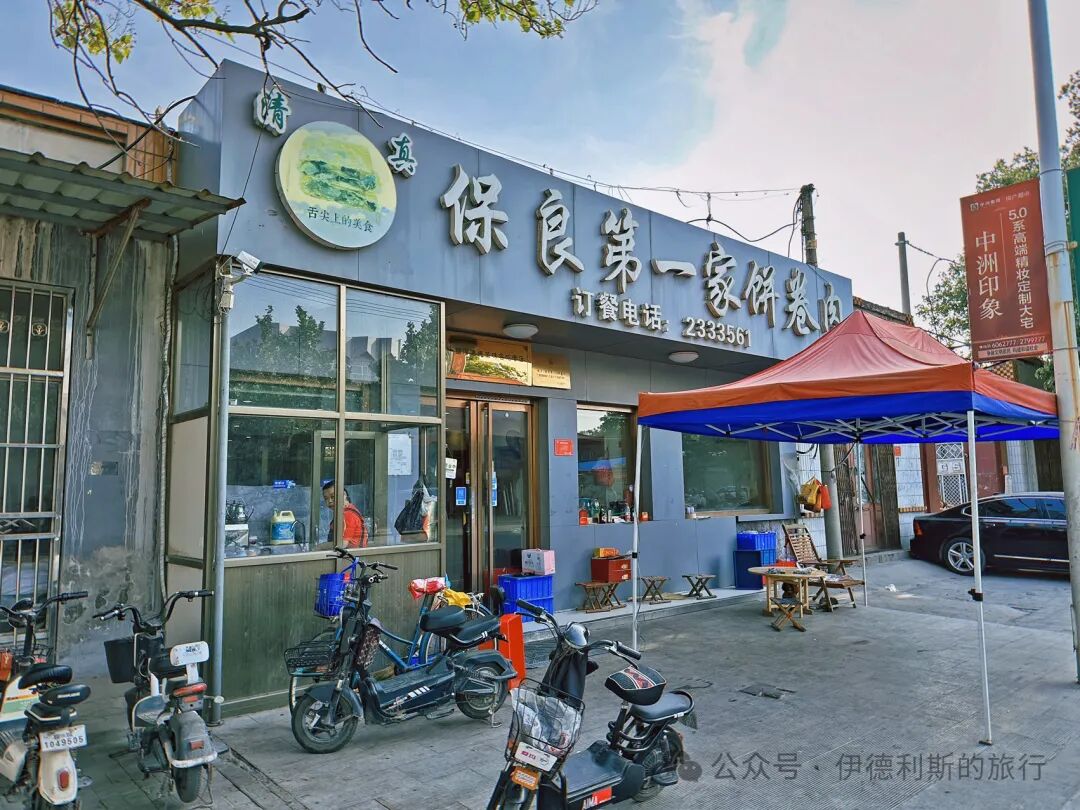
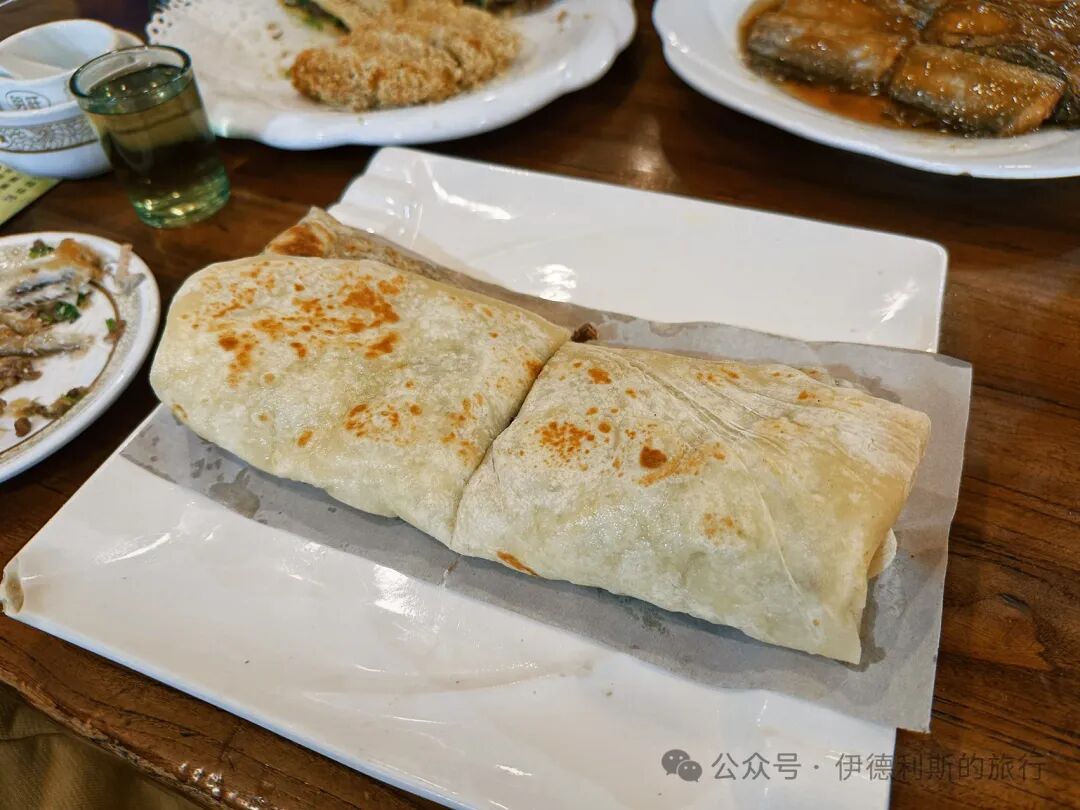
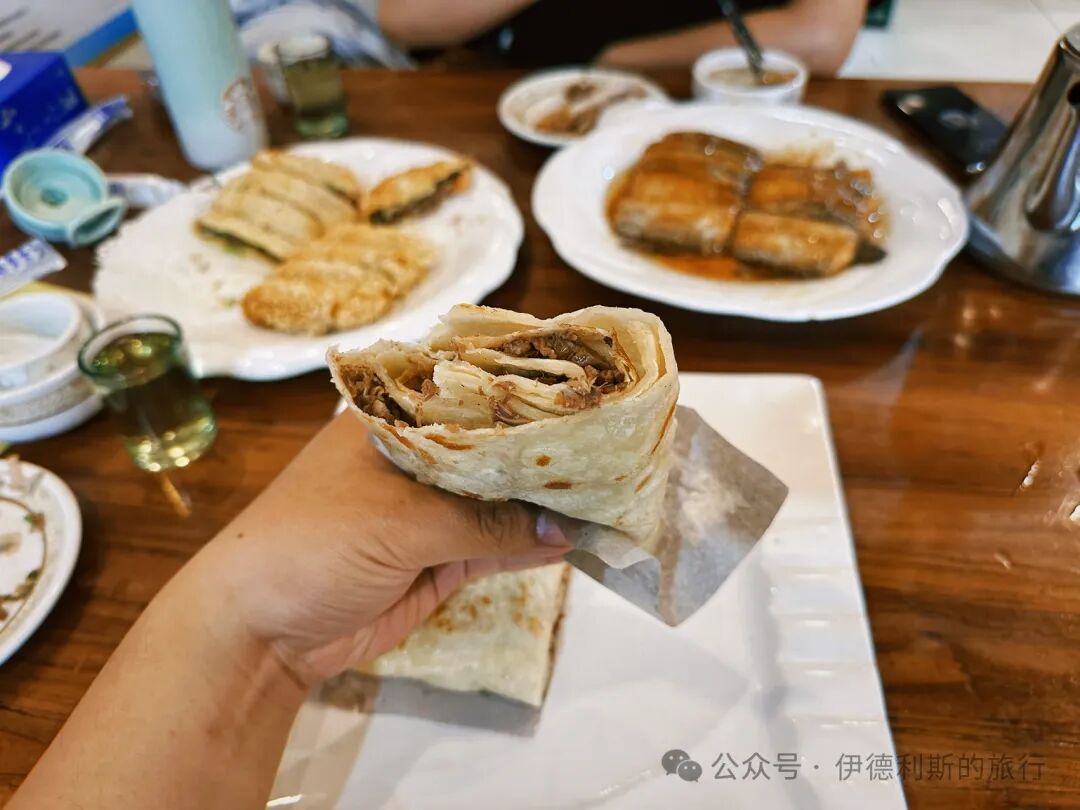
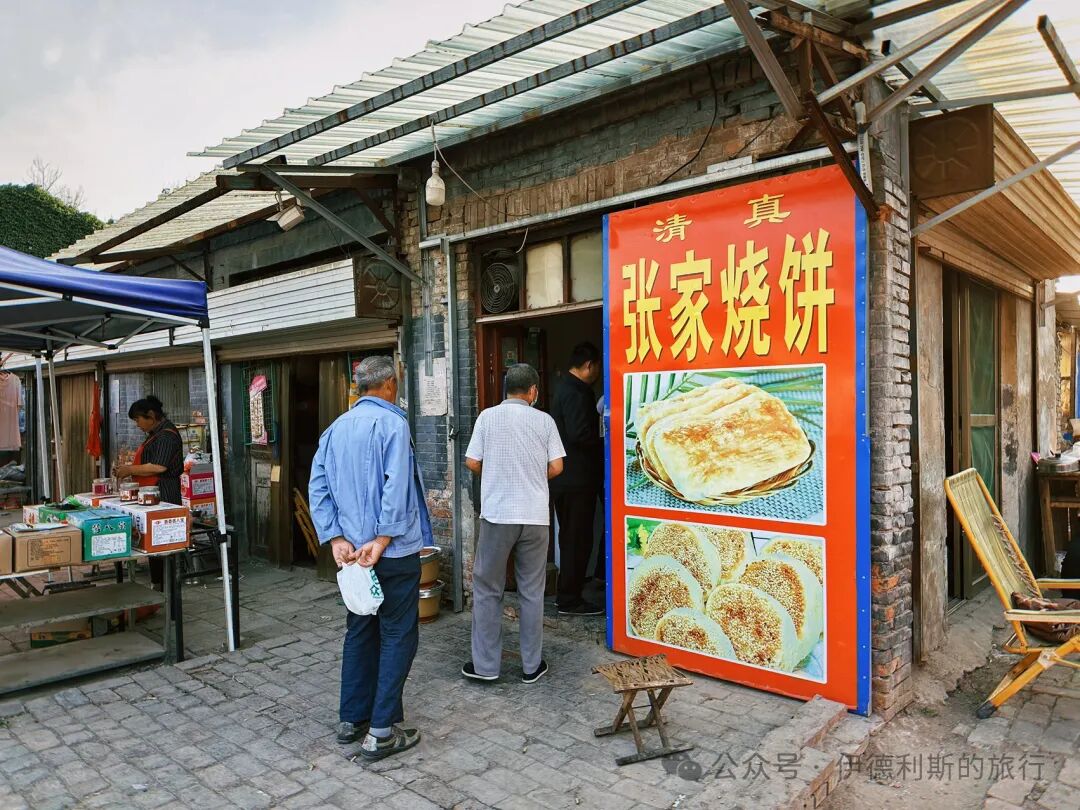
Following my last post, 'Revisiting the Big and Small Mosque Streets in Dongguan, Liaocheng,' we took an afternoon train from Liaocheng to Linqing. We went straight to Baoliang's First Shop for a meat-filled flatbread roll (bingjuanrou). Wang Baoliang opened this shop in the 1980s, so it has been around for 40 years now. I ate their meat-filled flatbread roll back in 2017, and it was truly satisfying. The price of the roll has gone up by 5 yuan since my last visit, but it still tastes great.
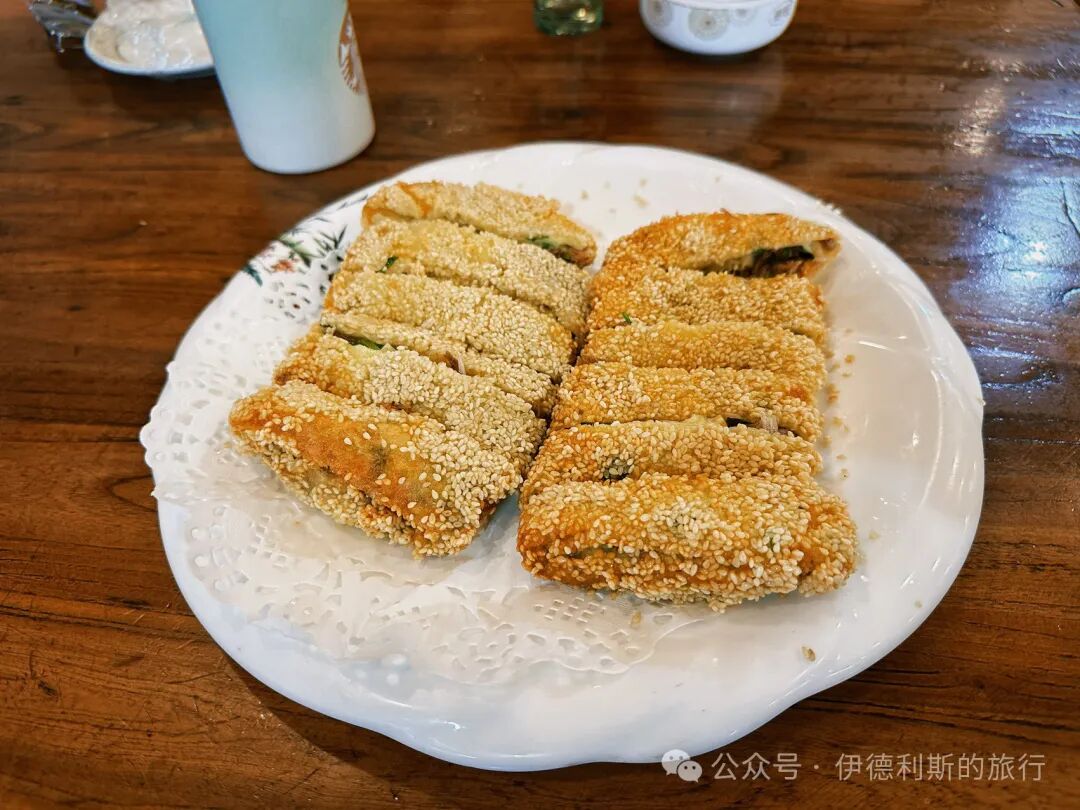
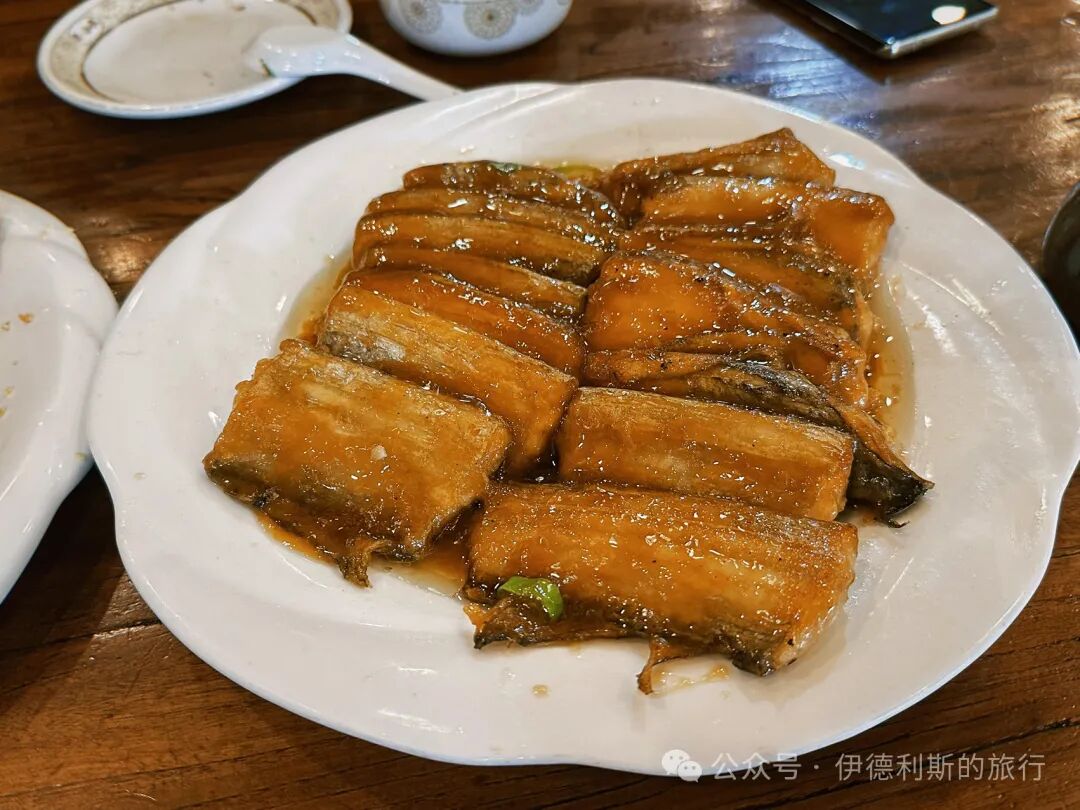
Last time, I ordered the braised butterfly fish head, which was delicious, but I did not choose my dishes as well this time. This time, I ordered sesame beef and pan-braised hairtail fish. The meat in the sesame beef is the same as the meat in the flatbread roll, so I ended up ordering the same thing twice. The pan-braised hairtail fish had a fishy smell. I think ordering the braised hairtail or fried hairtail would have been a better choice.
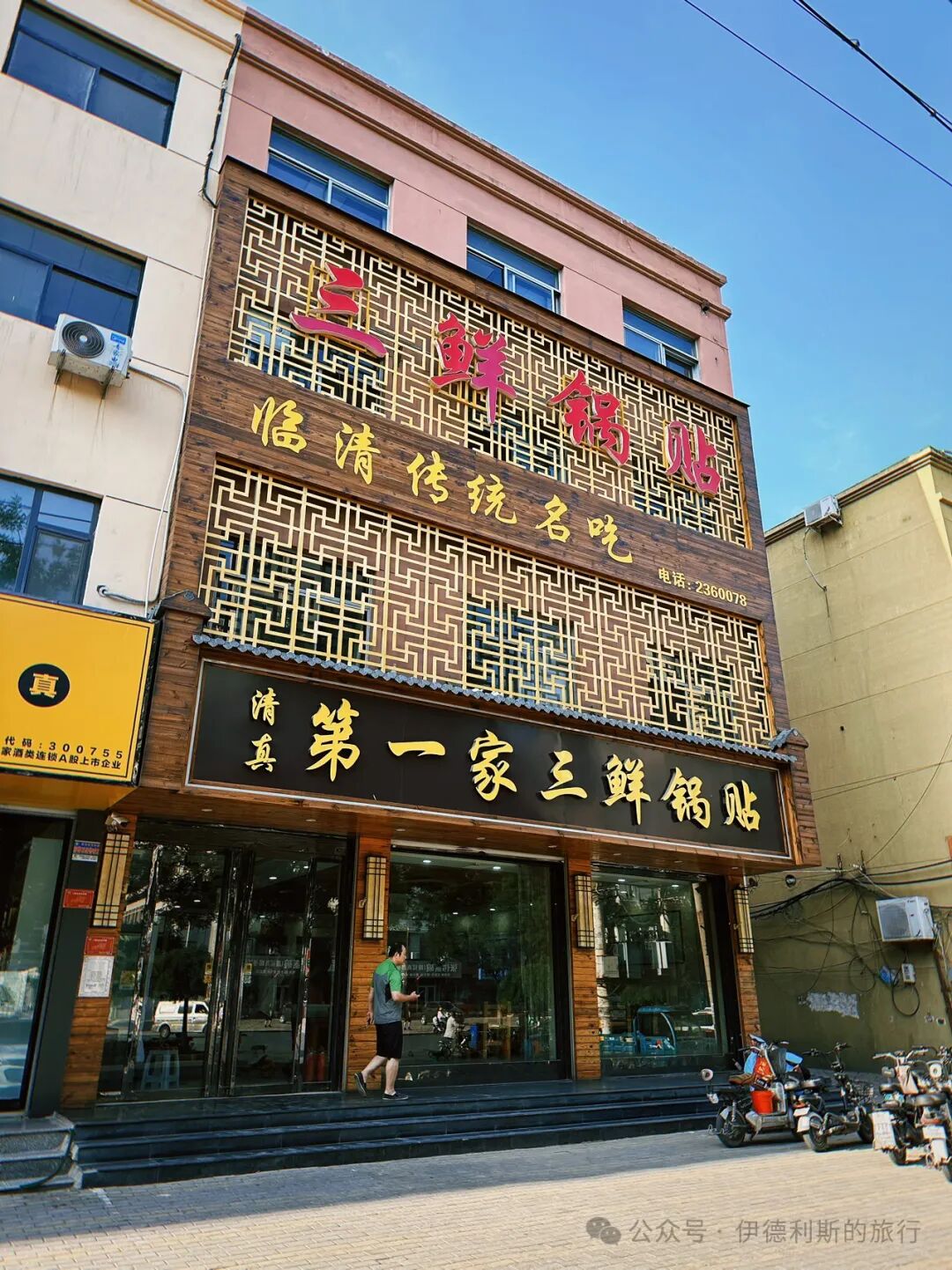
Leaving Linqing Railway Station, I passed by the First Family Three-Fresh Potstickers (diyijia sanxian guotie). I ate there when I visited Linqing 17 years ago, and it remains the best Shandong cuisine I have ever had, especially the sesame lamb which was delicious.
Linqing North Mosque
I spent the afternoon performing namaz at the Linqing North Mosque. Linqing North Mosque sits where the Huitong River and Wei River meet. It was first built in 1504 (the seventh year of the Hongzhi reign of the Ming Dynasty). It underwent major expansions in 1564 (the 43rd year of the Jiajing reign), 1779 (the 44th year of the Qianlong reign), and 1809 (the 14th year of the Jiaqing reign) to reach its current form.
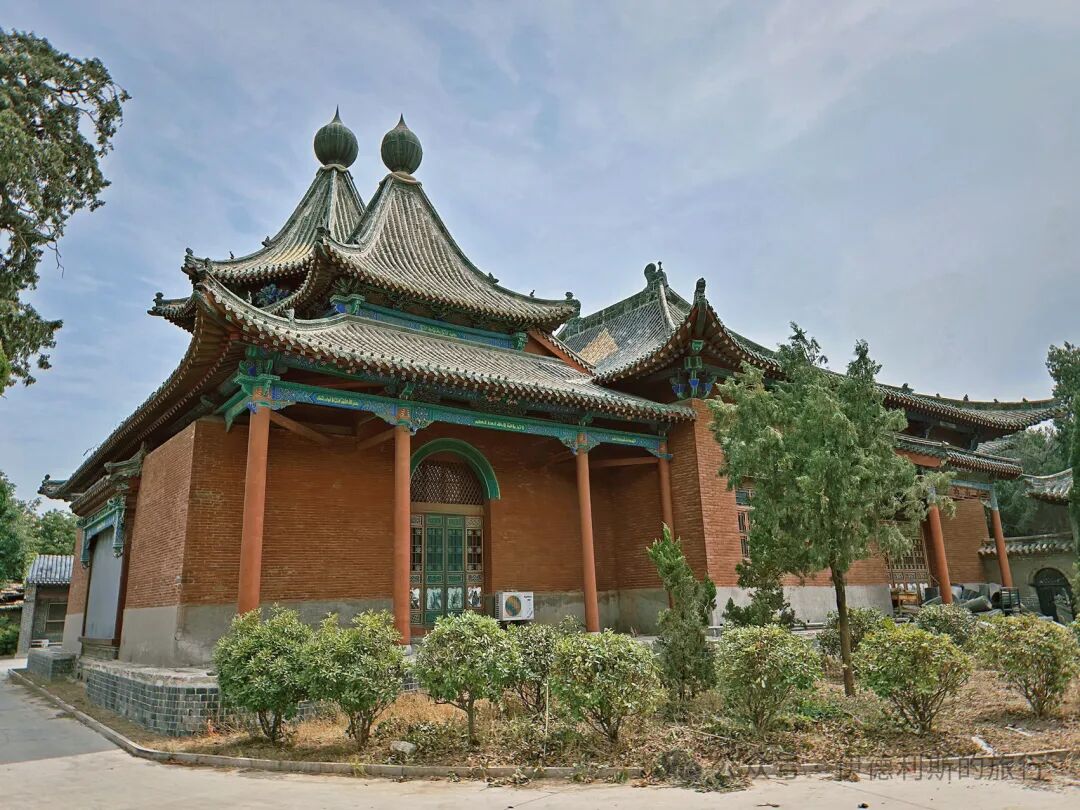
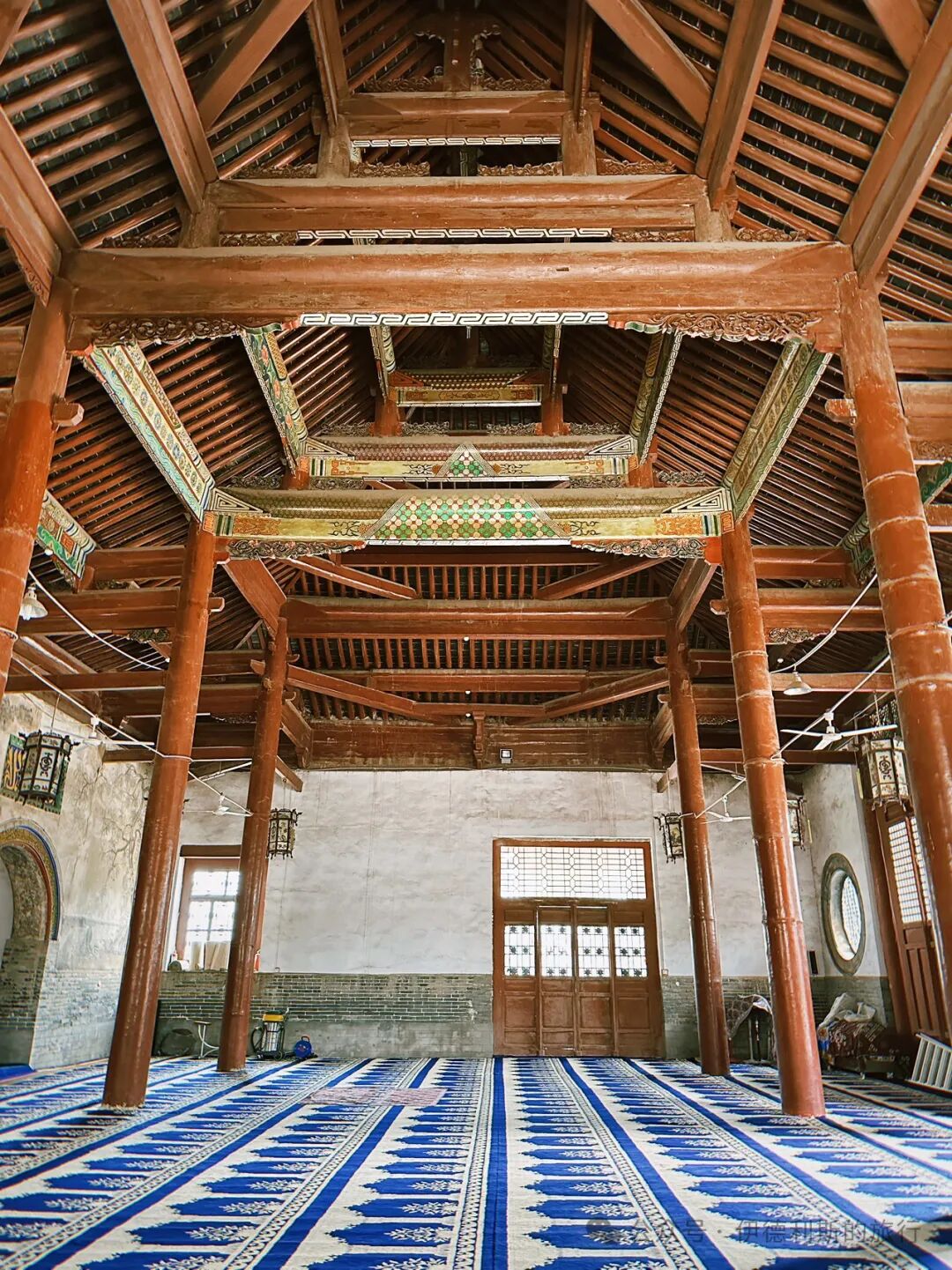
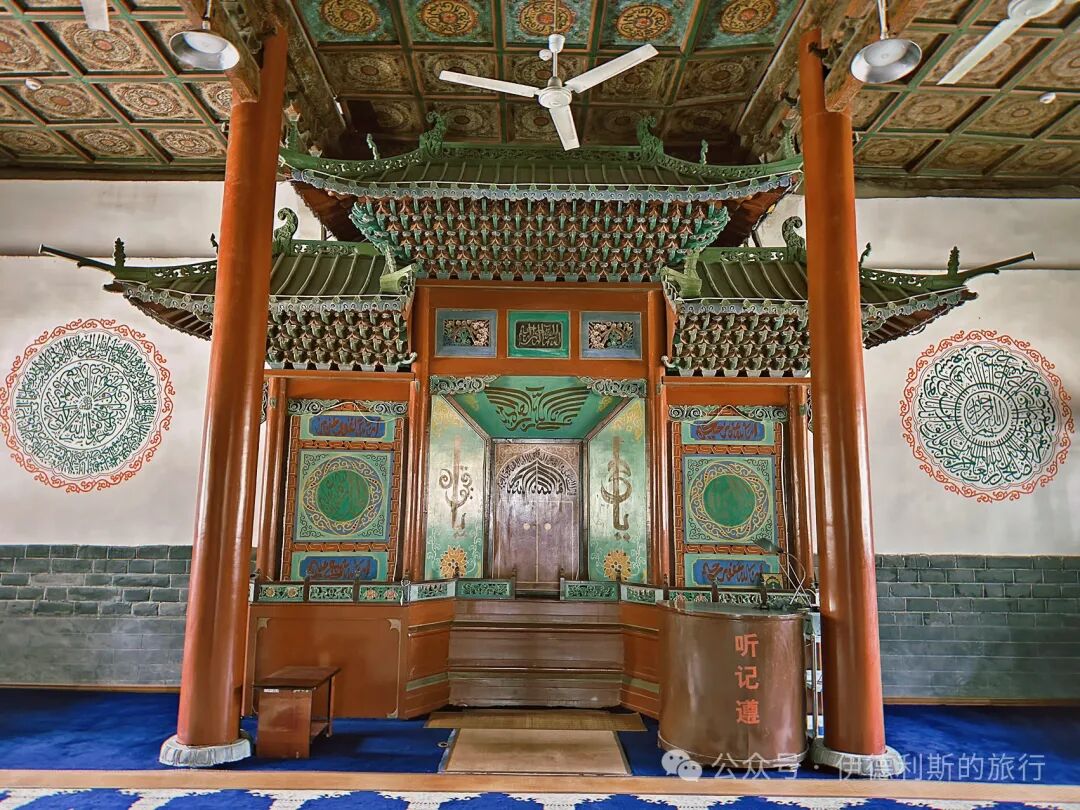
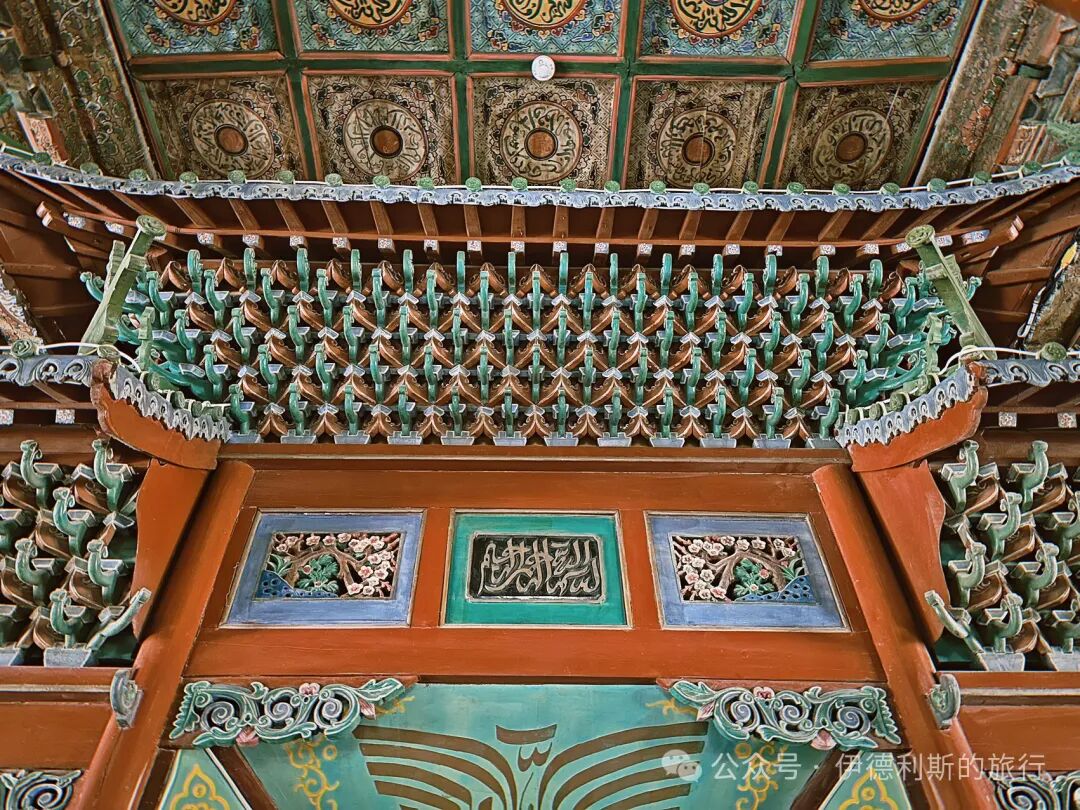
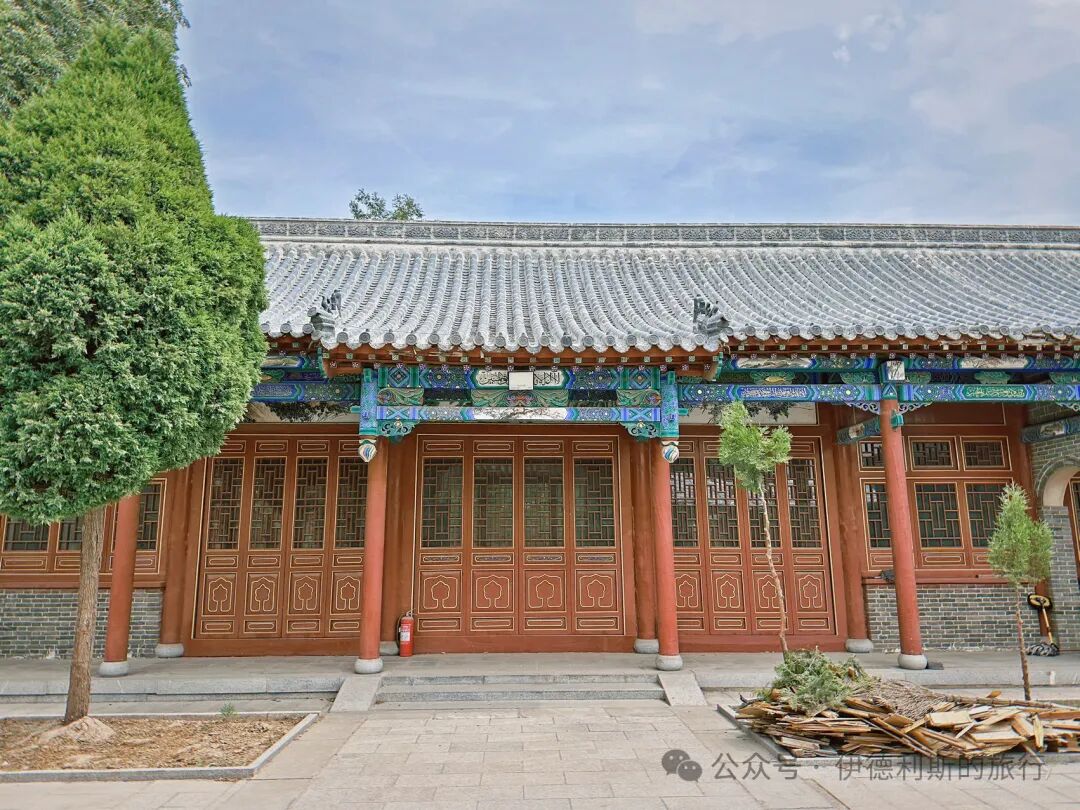
The main hall of Linqing North Mosque stands on a 1-meter-high stone platform and consists of a porch, the main hall, and a rear kiln-style hall (yaodian), making it very grand. The roof of the kiln-style hall has three moon-watching towers. The middle one has an octagonal pointed roof, while the two sides have square pointed roofs, all topped with peach-shaped finials.
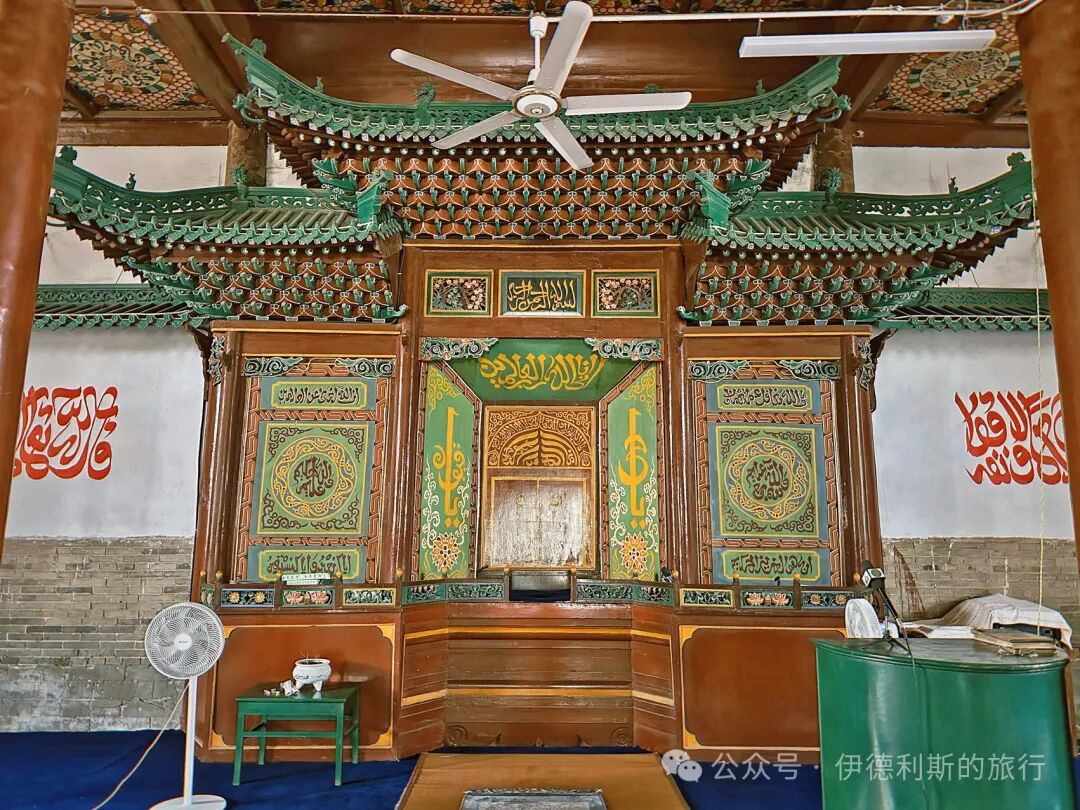
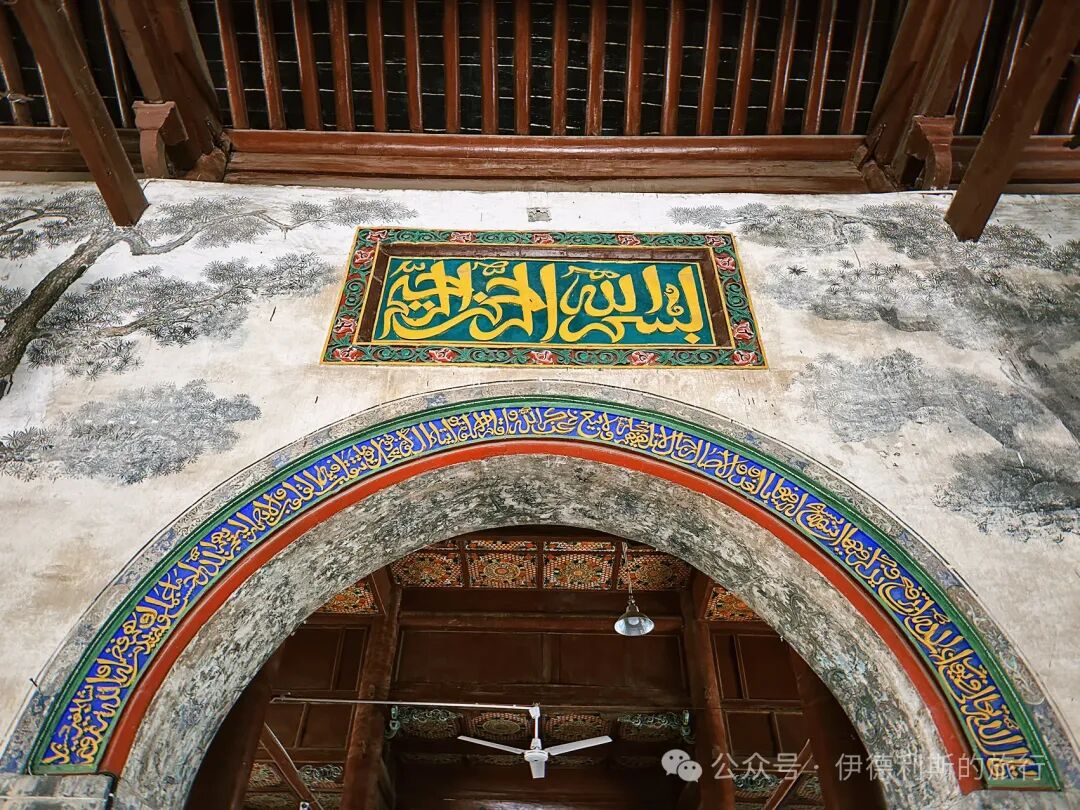
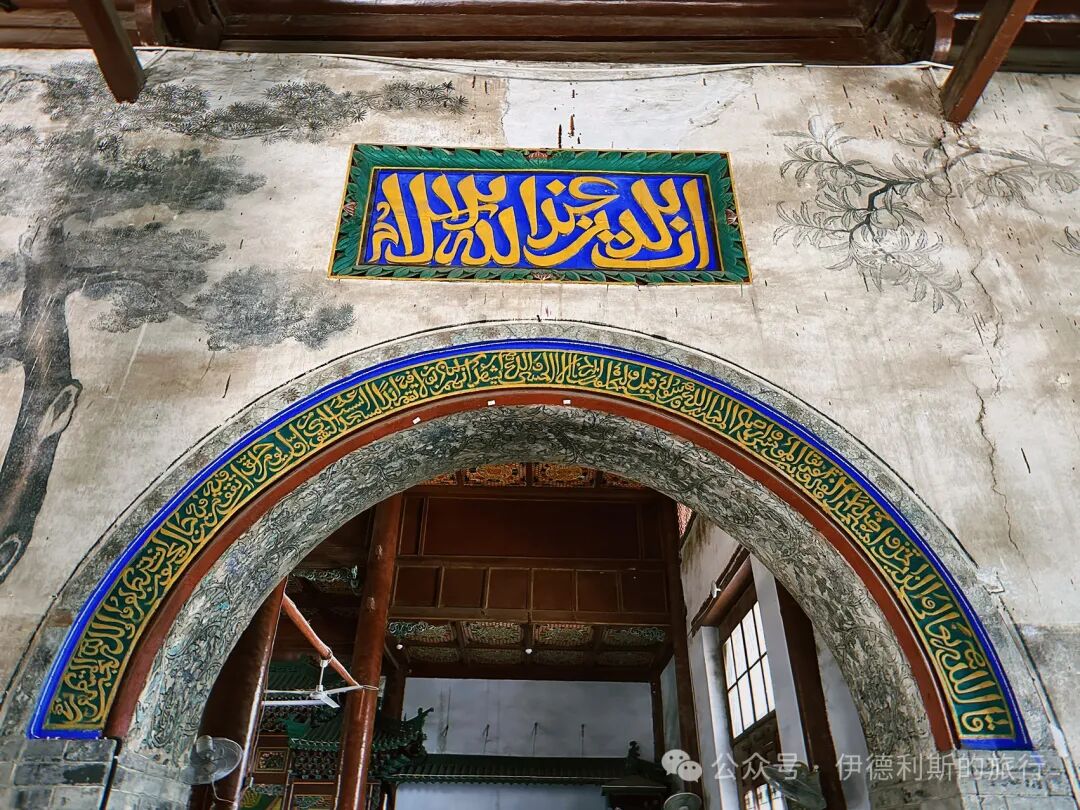
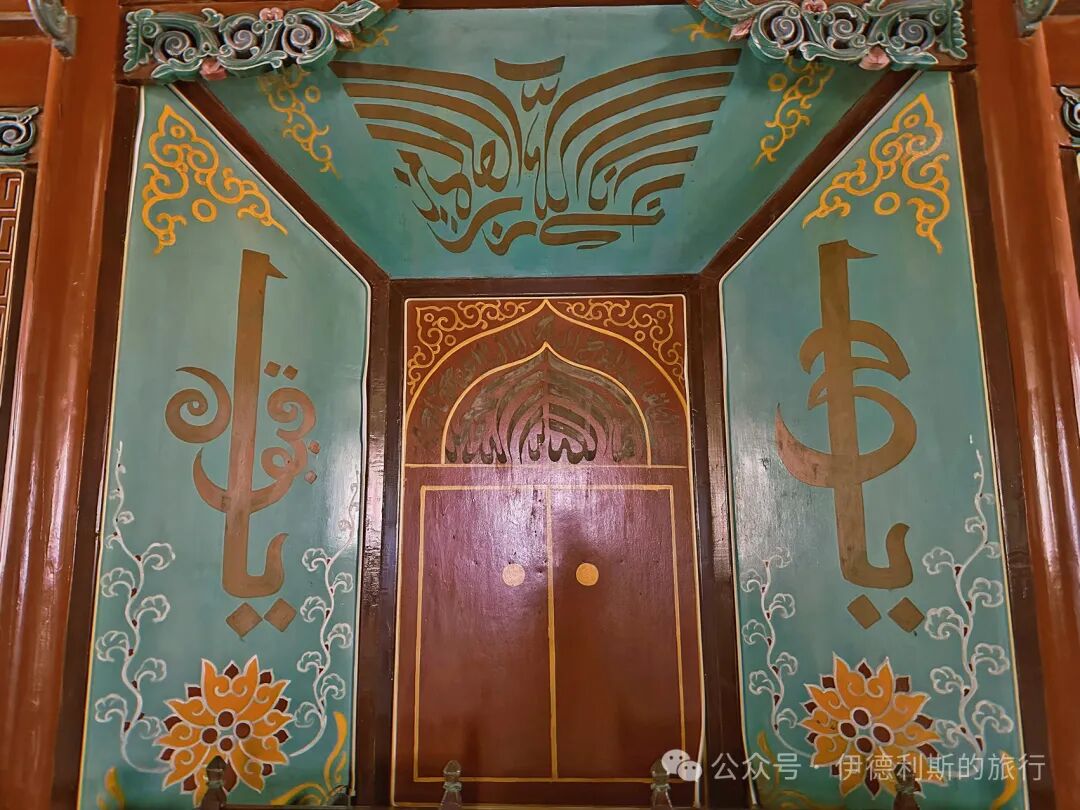
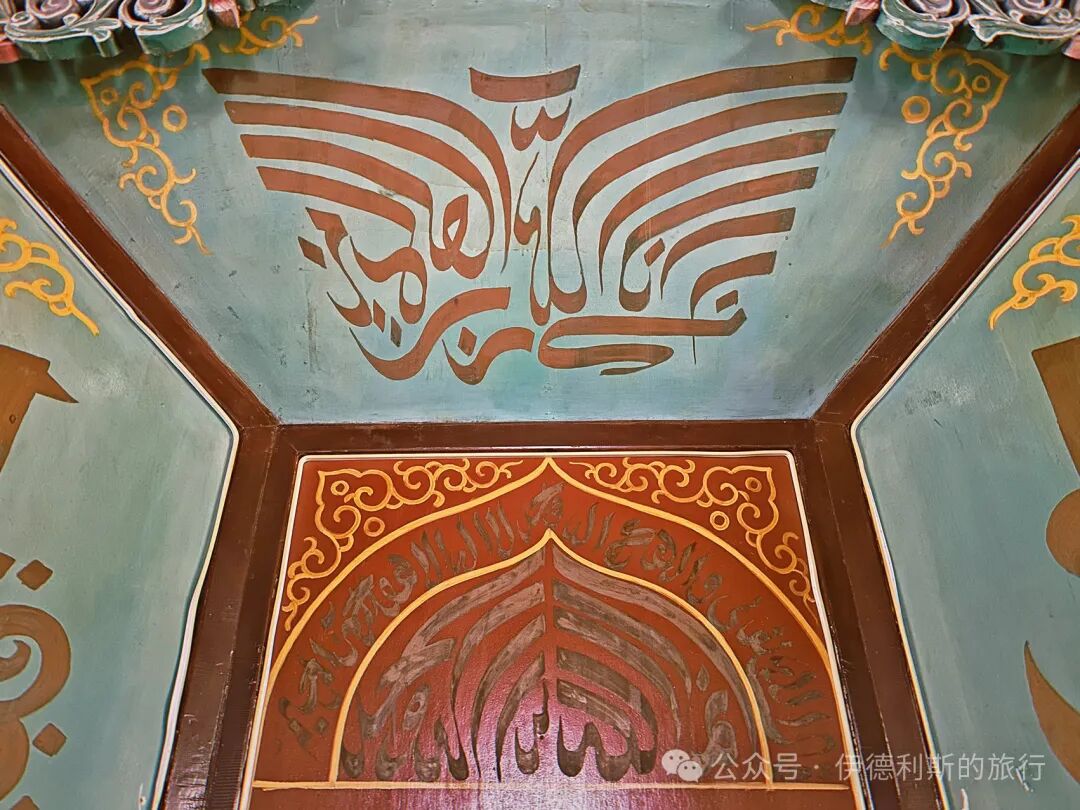
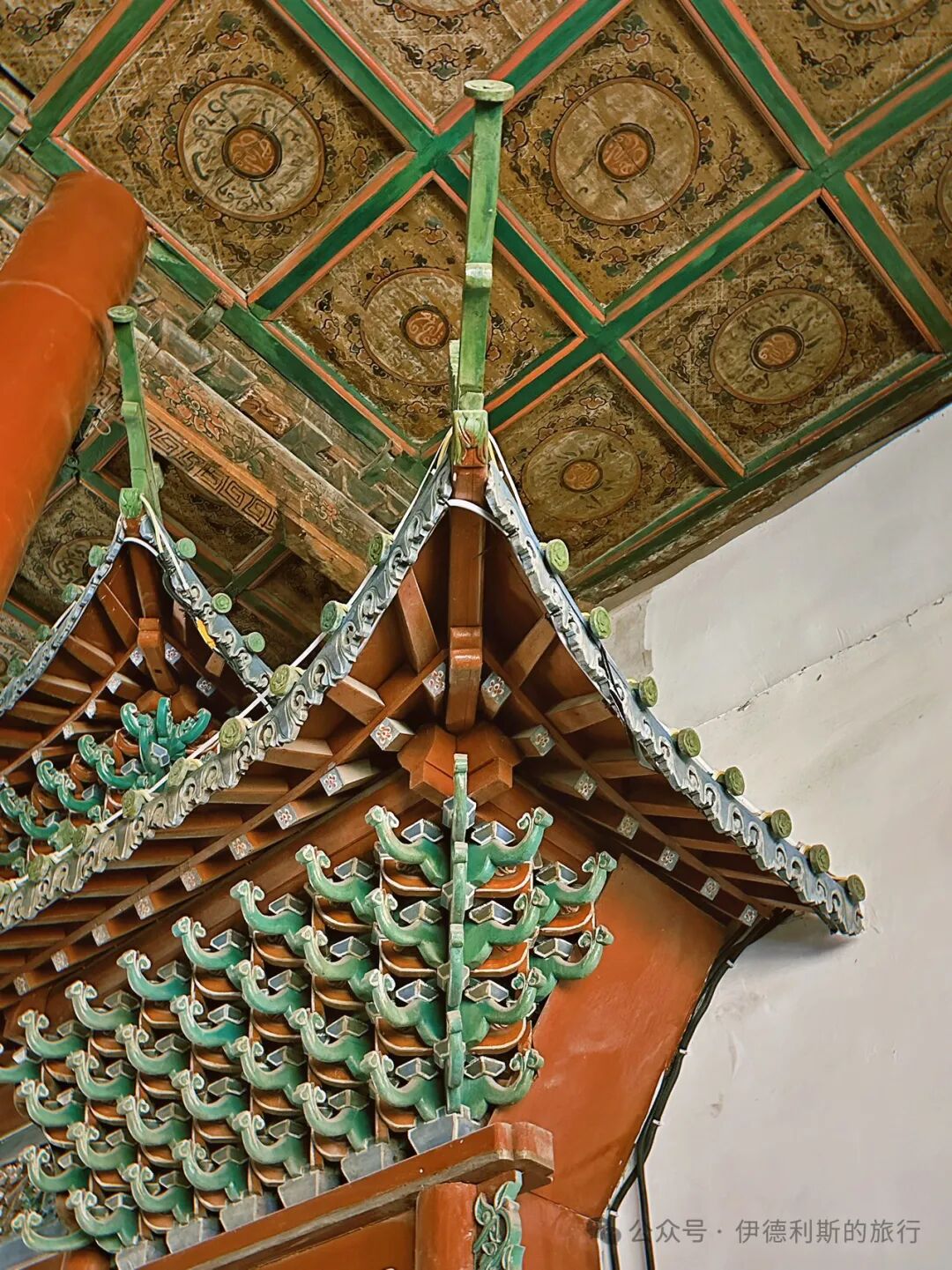
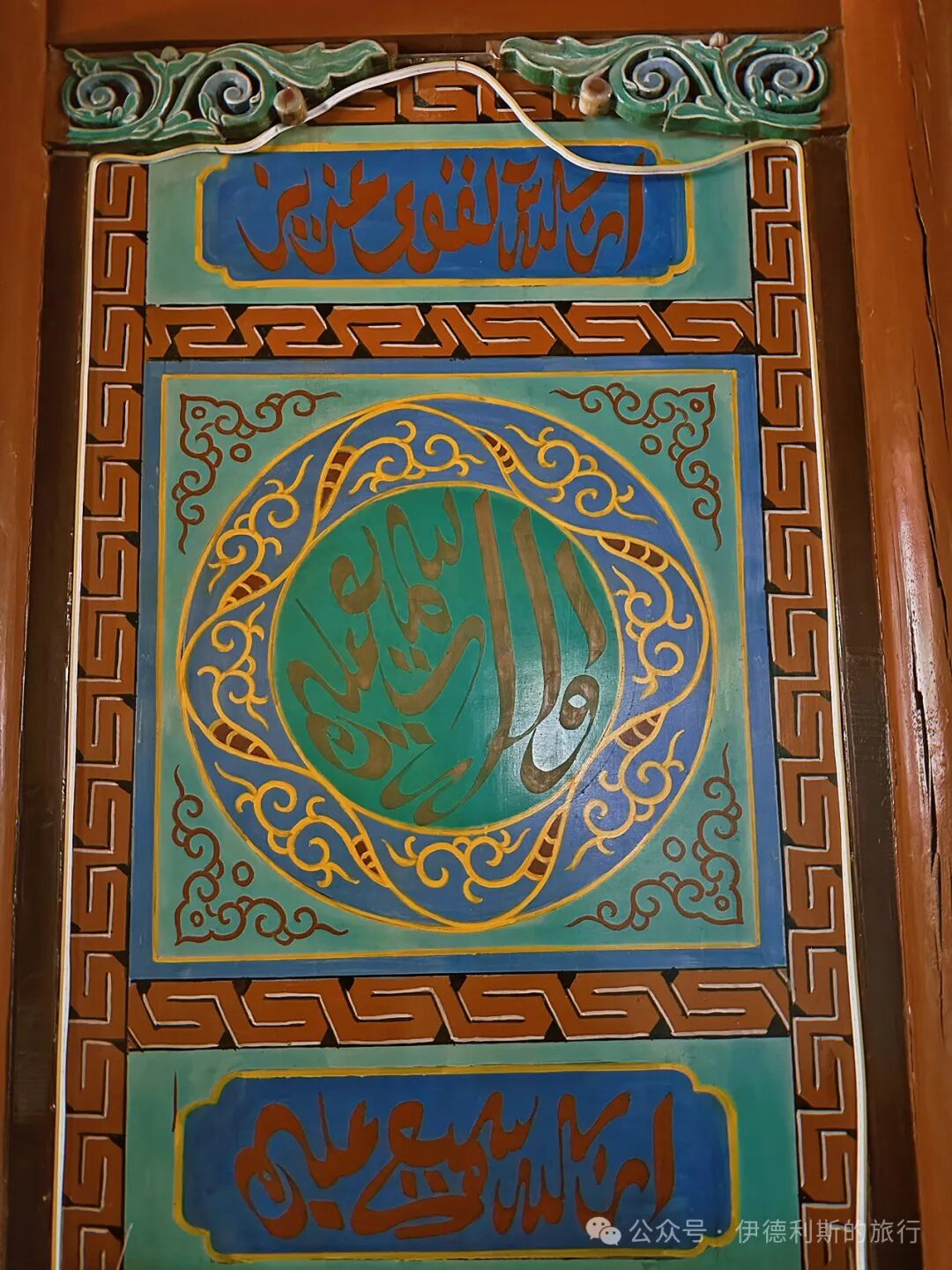
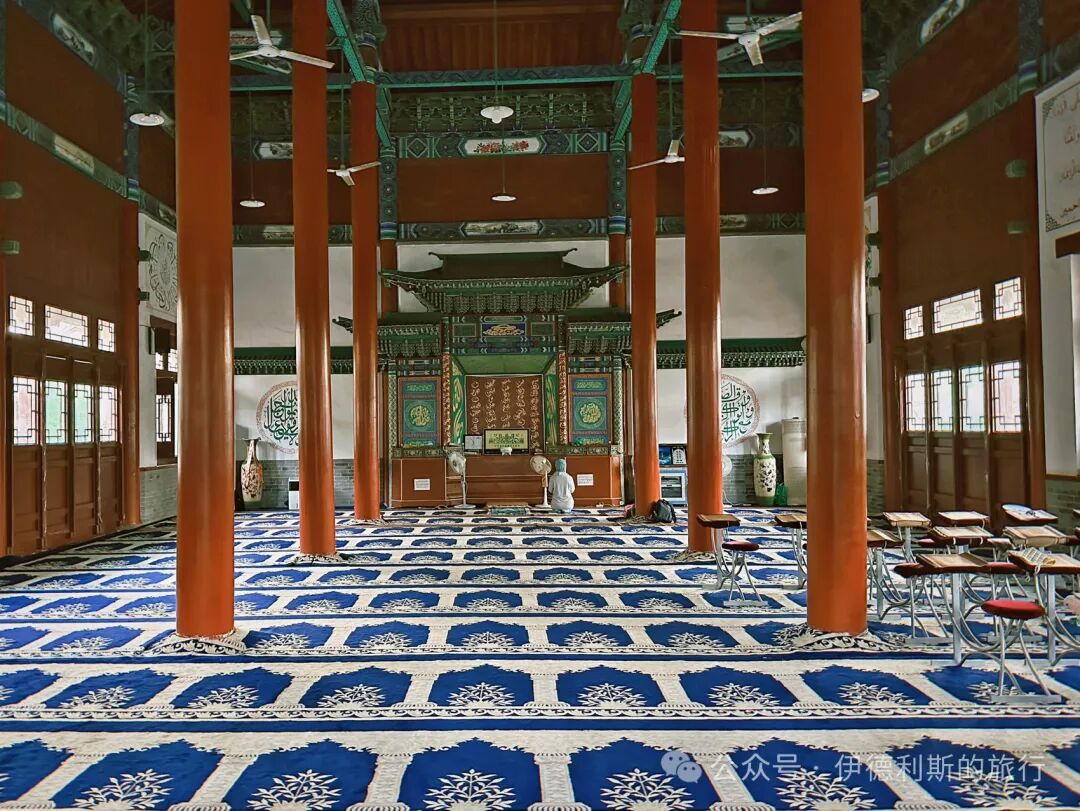
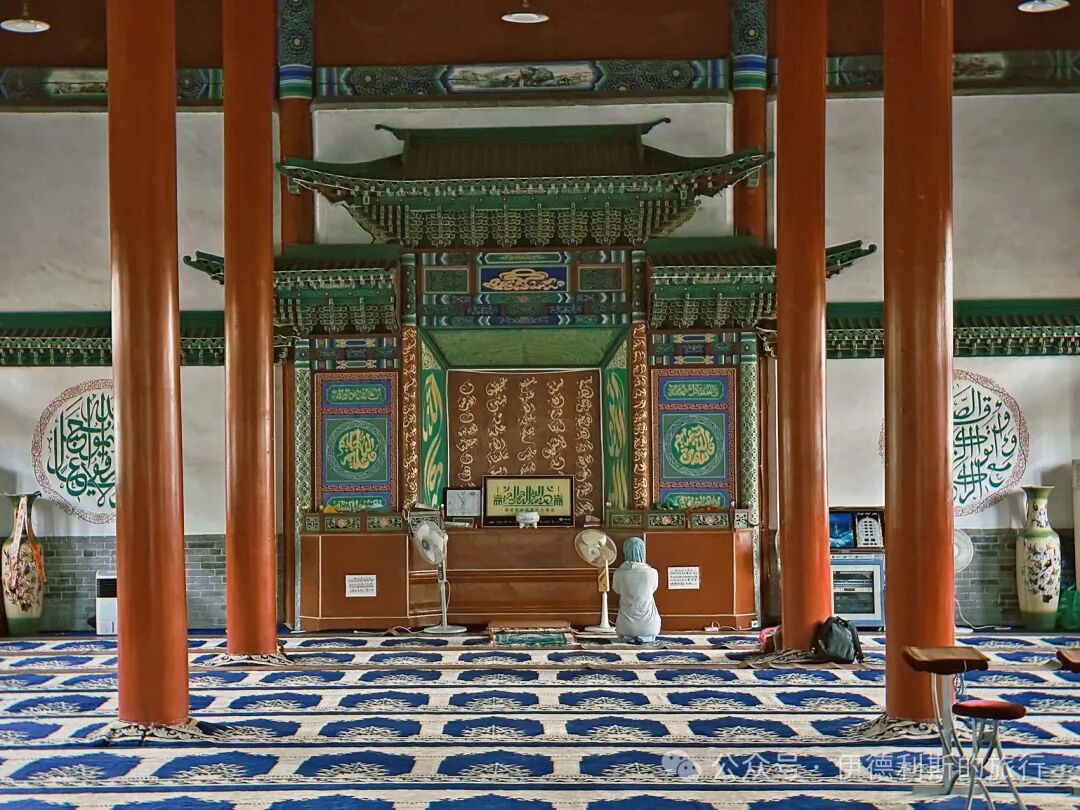
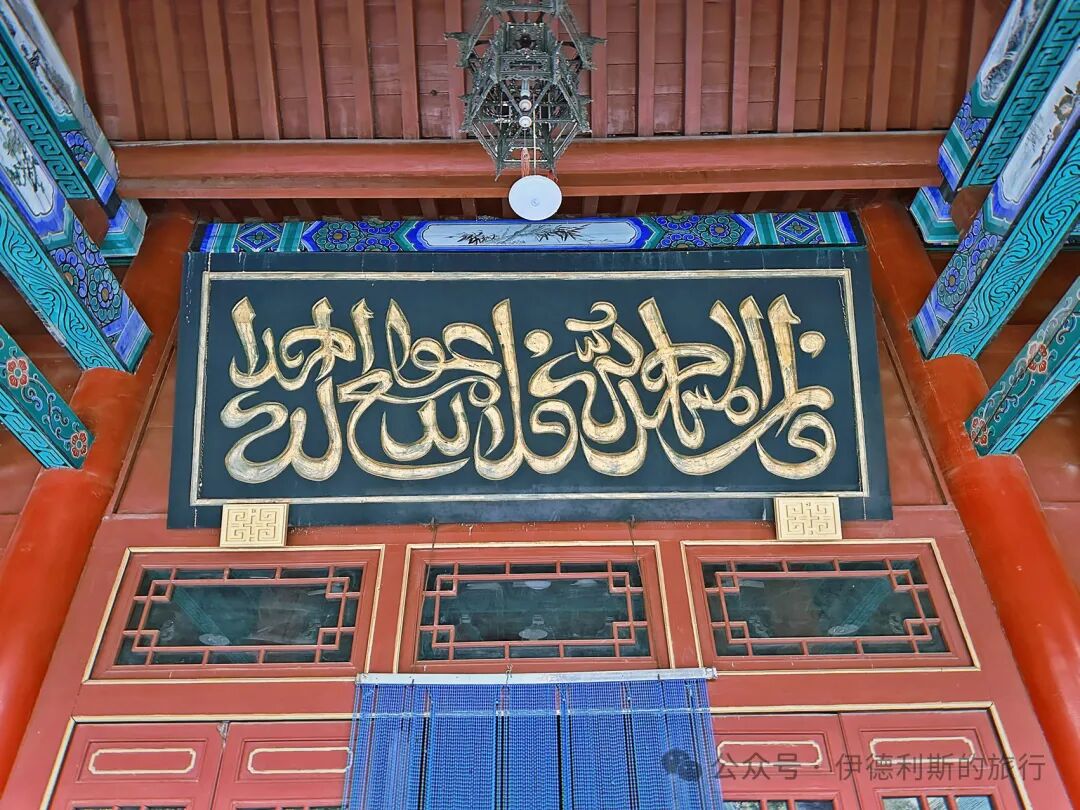
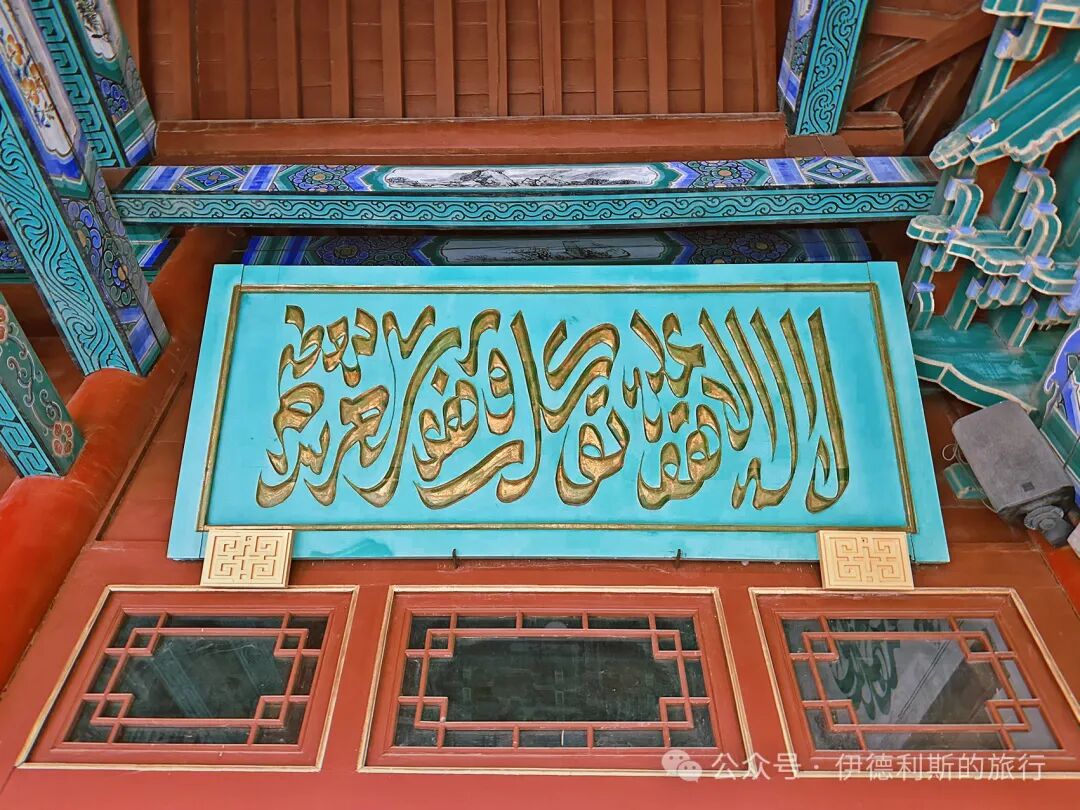
The mosque features a memorial archway-style mihrab decorated with floral patterns and Arabic calligraphy, and the ceiling of the kiln-style hall also displays Arabic calligraphy.
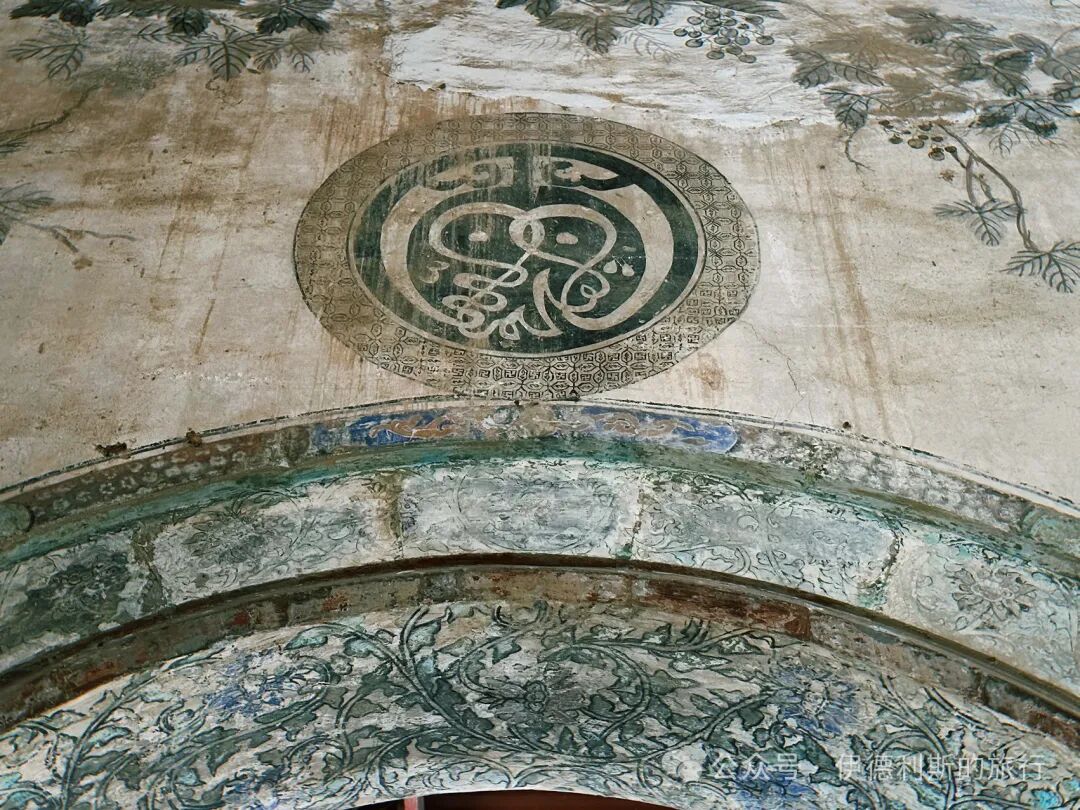
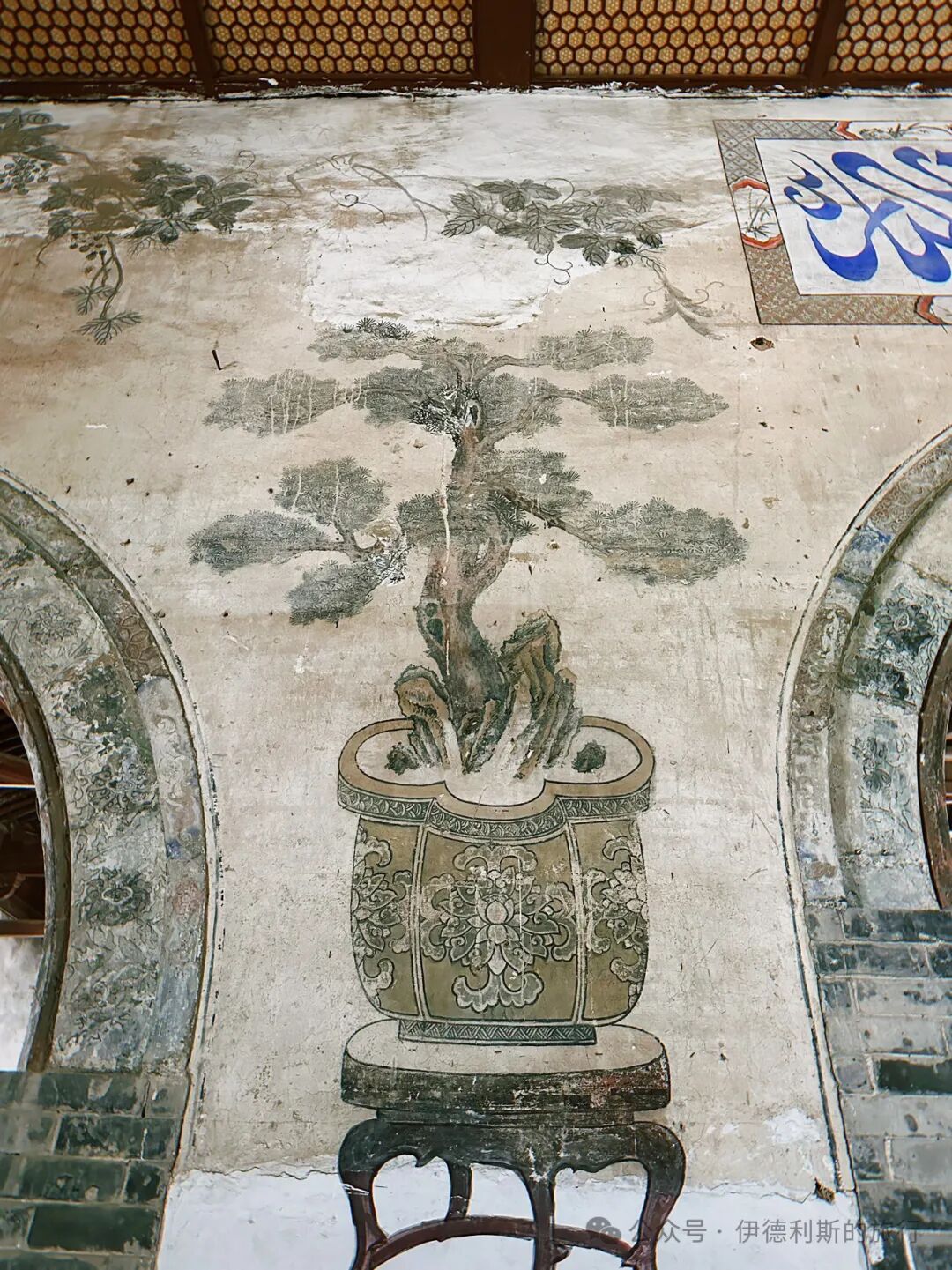
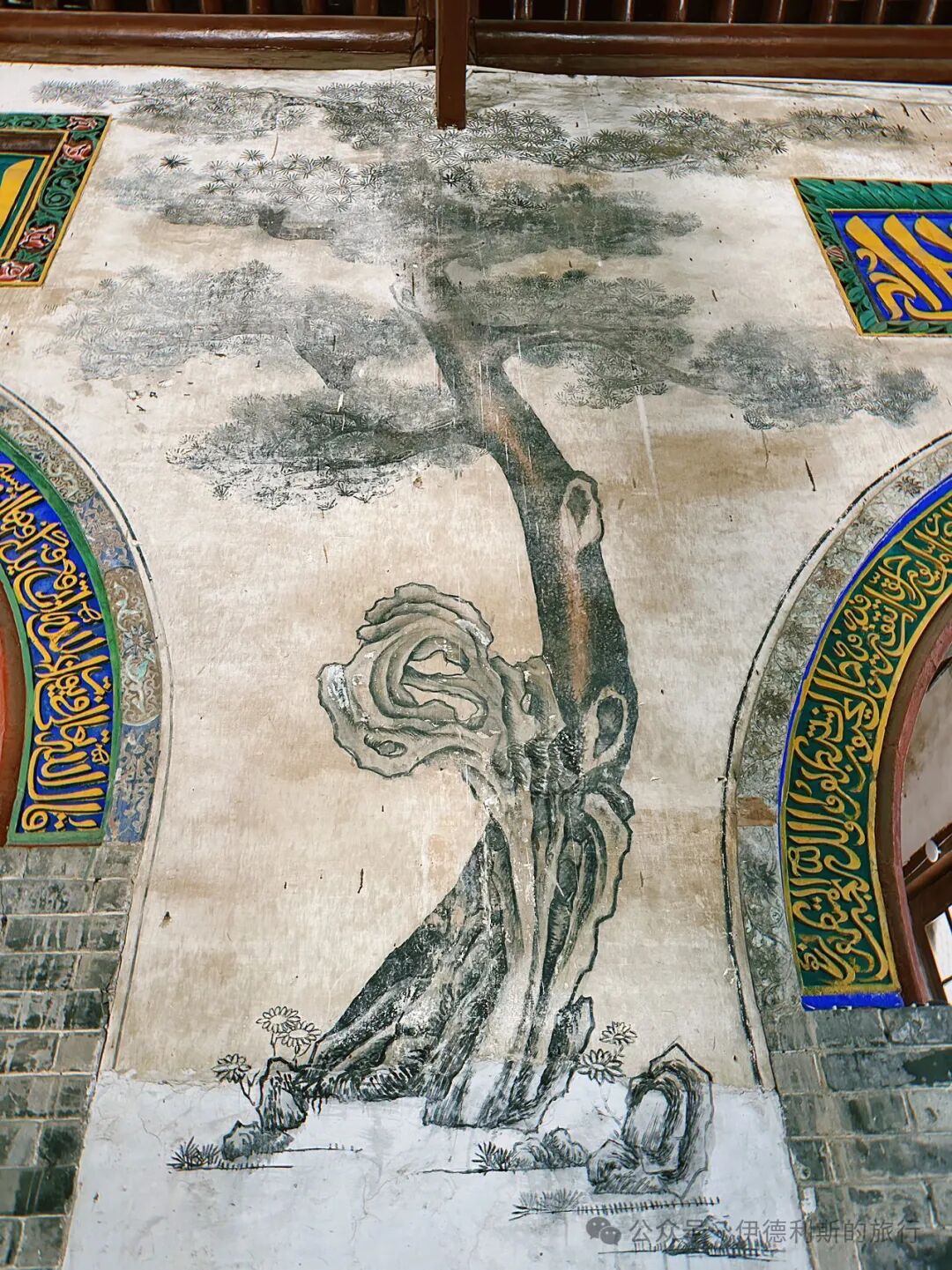
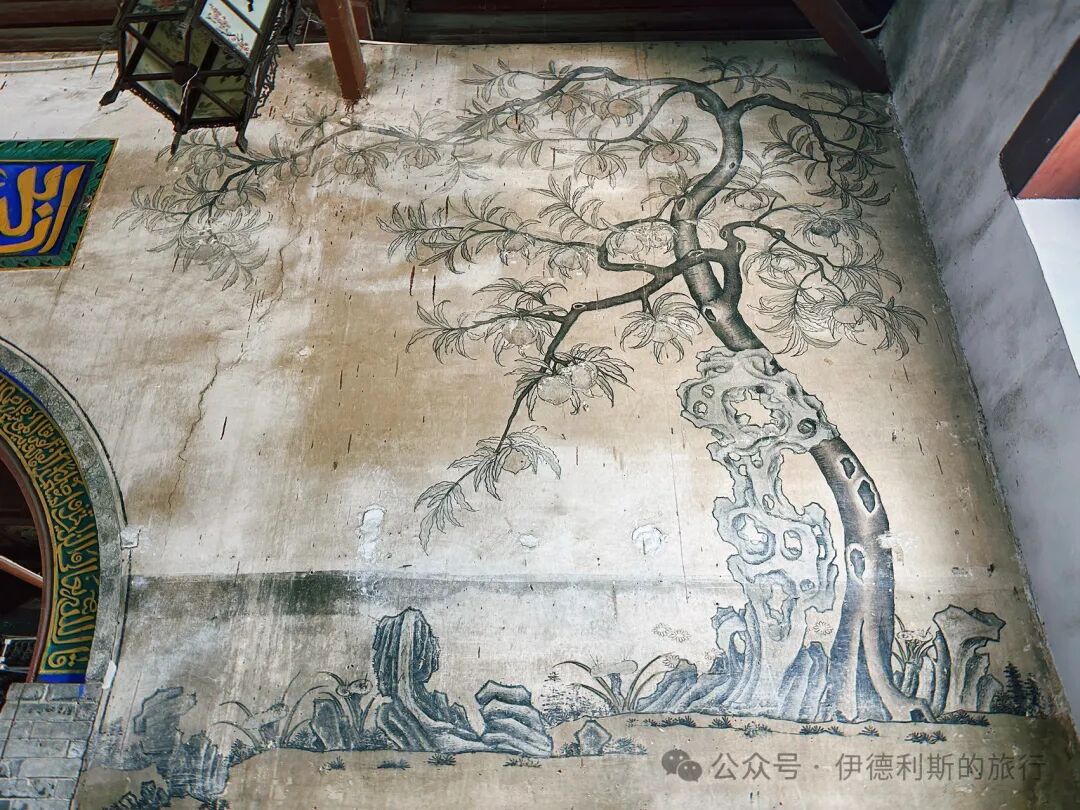
The main hall of the North Mosque preserves precious murals from the Qing Dynasty.
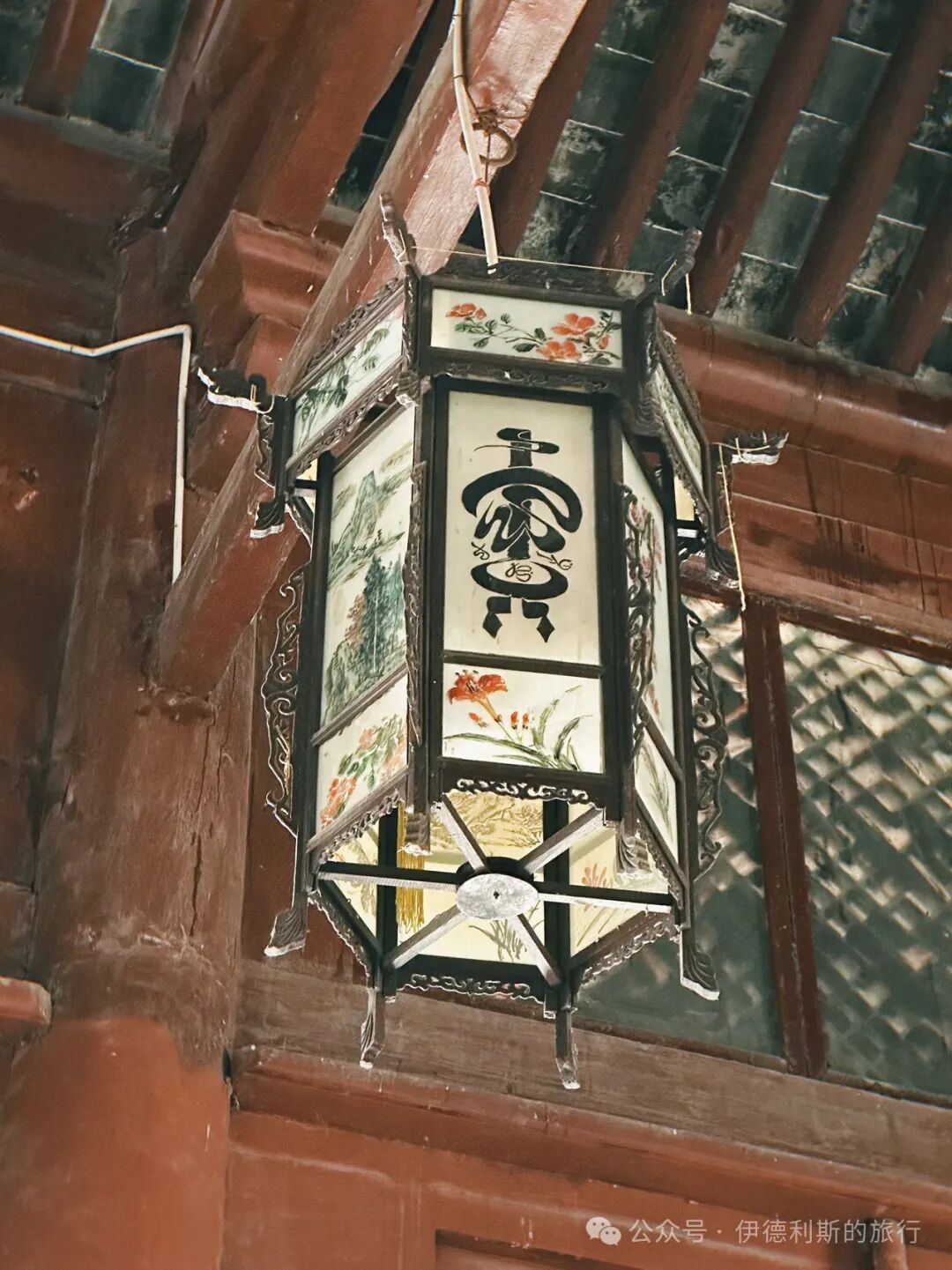
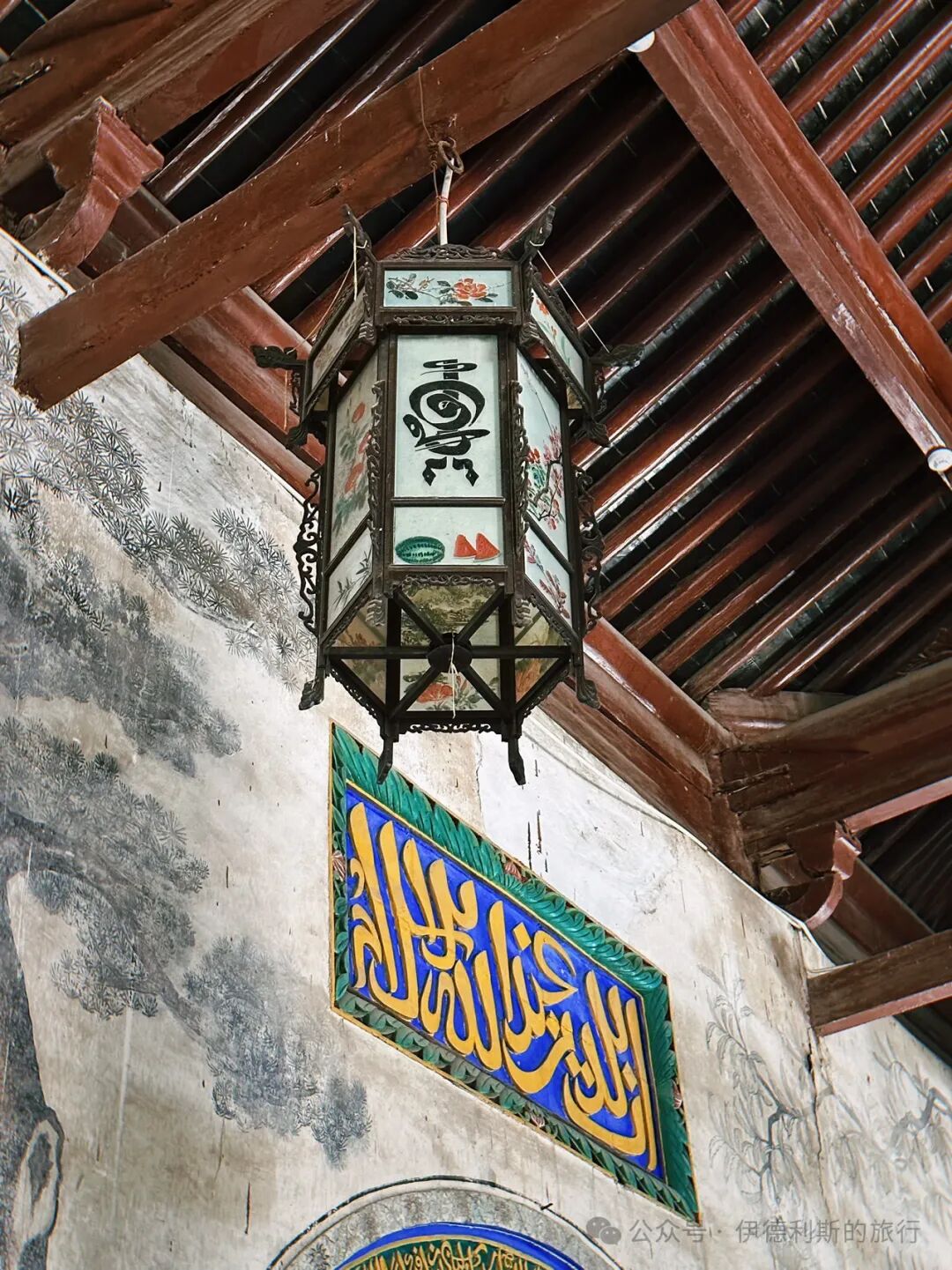
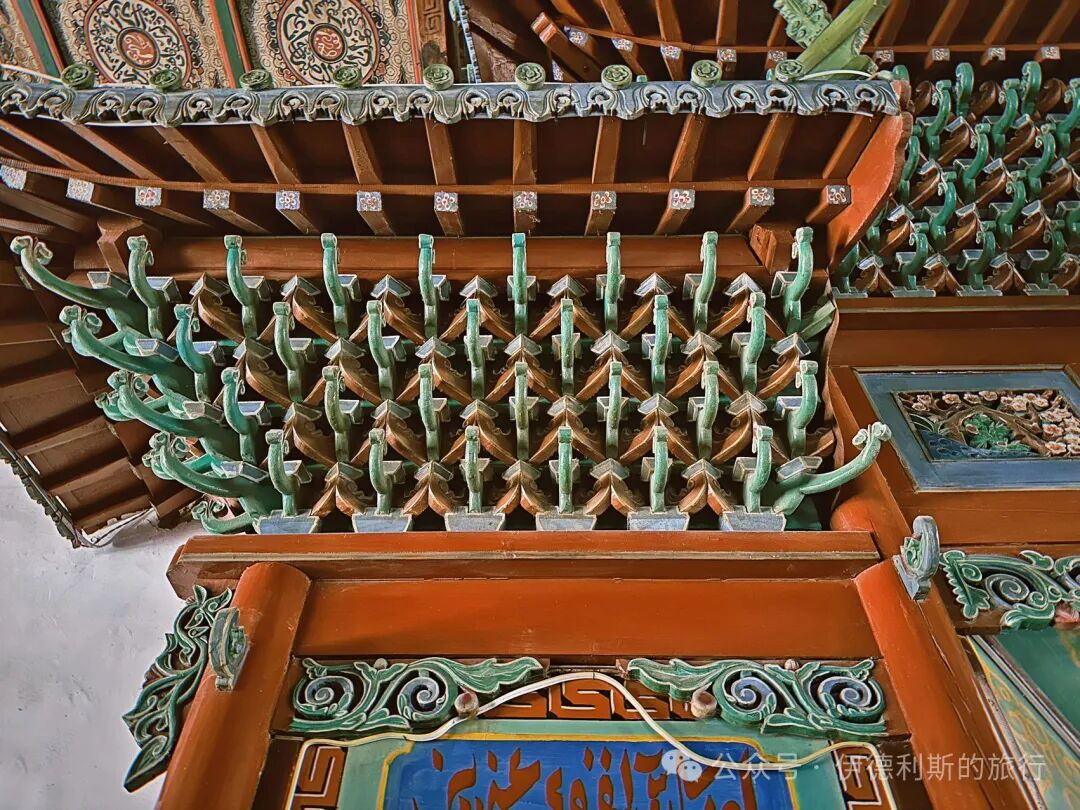
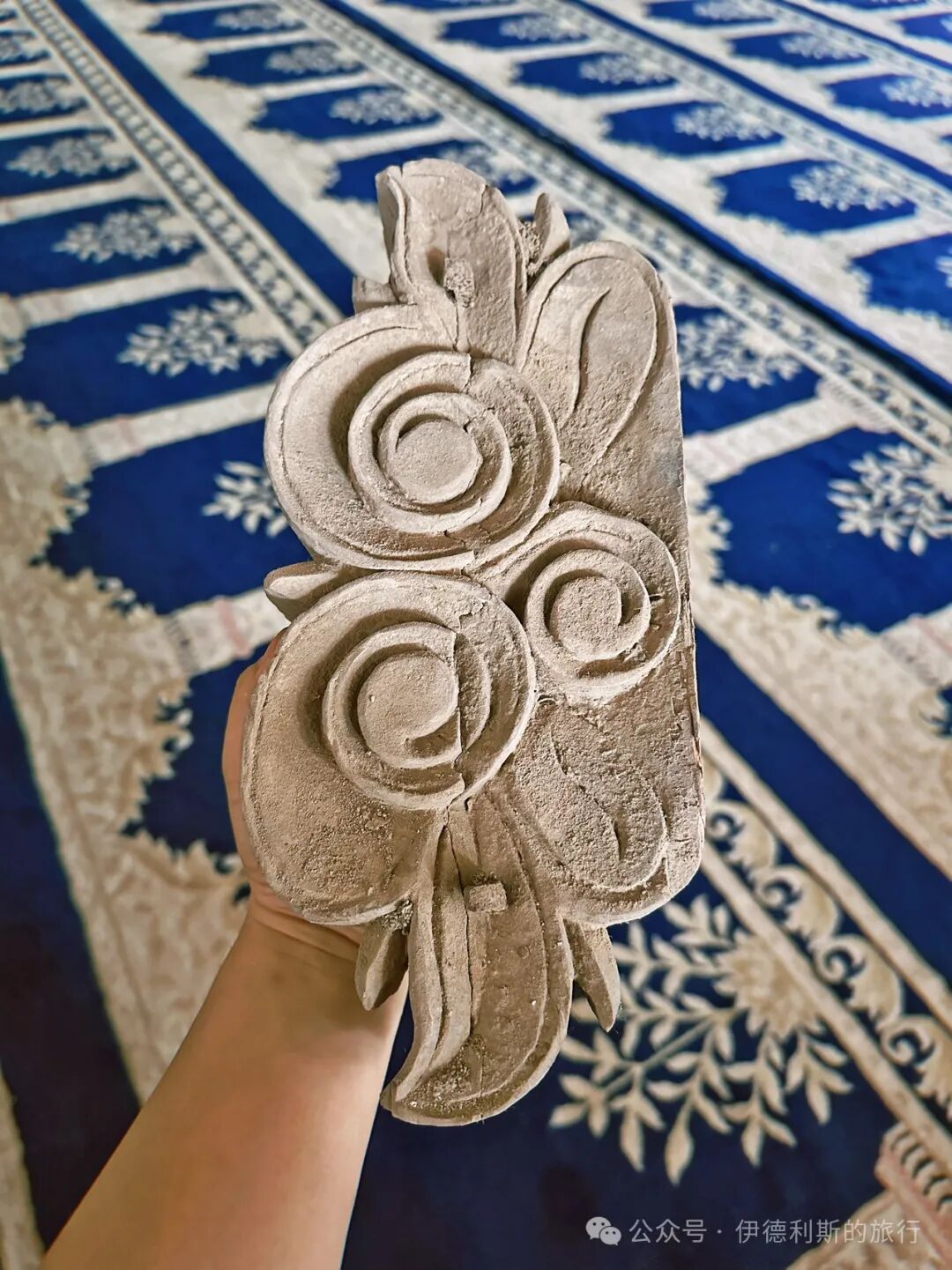
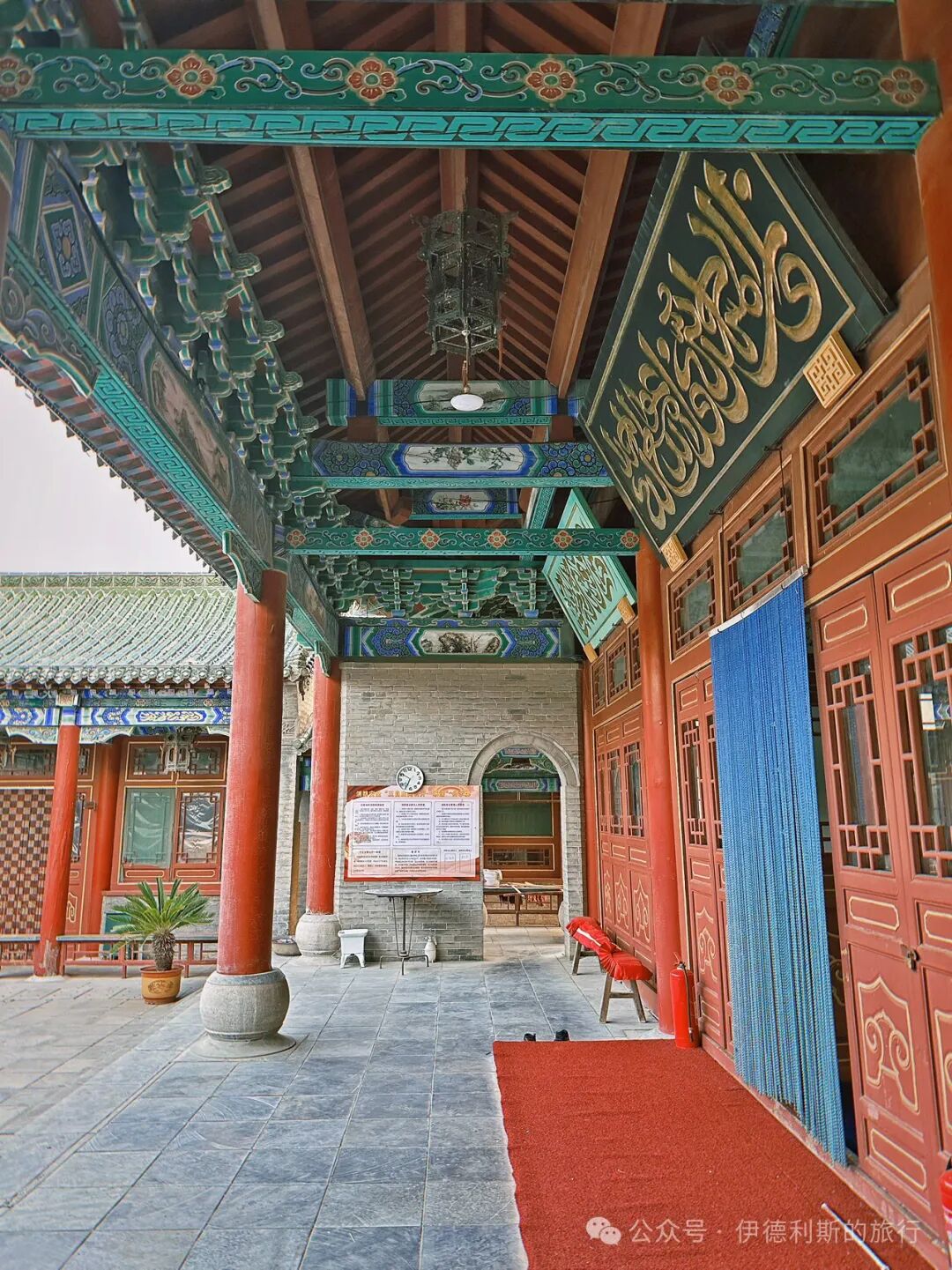
The North Mosque (Beidasi) features various forms of calligraphy, including palace lanterns (gongdeng), brick carvings, plaques, architectural paintings, and wood carvings.
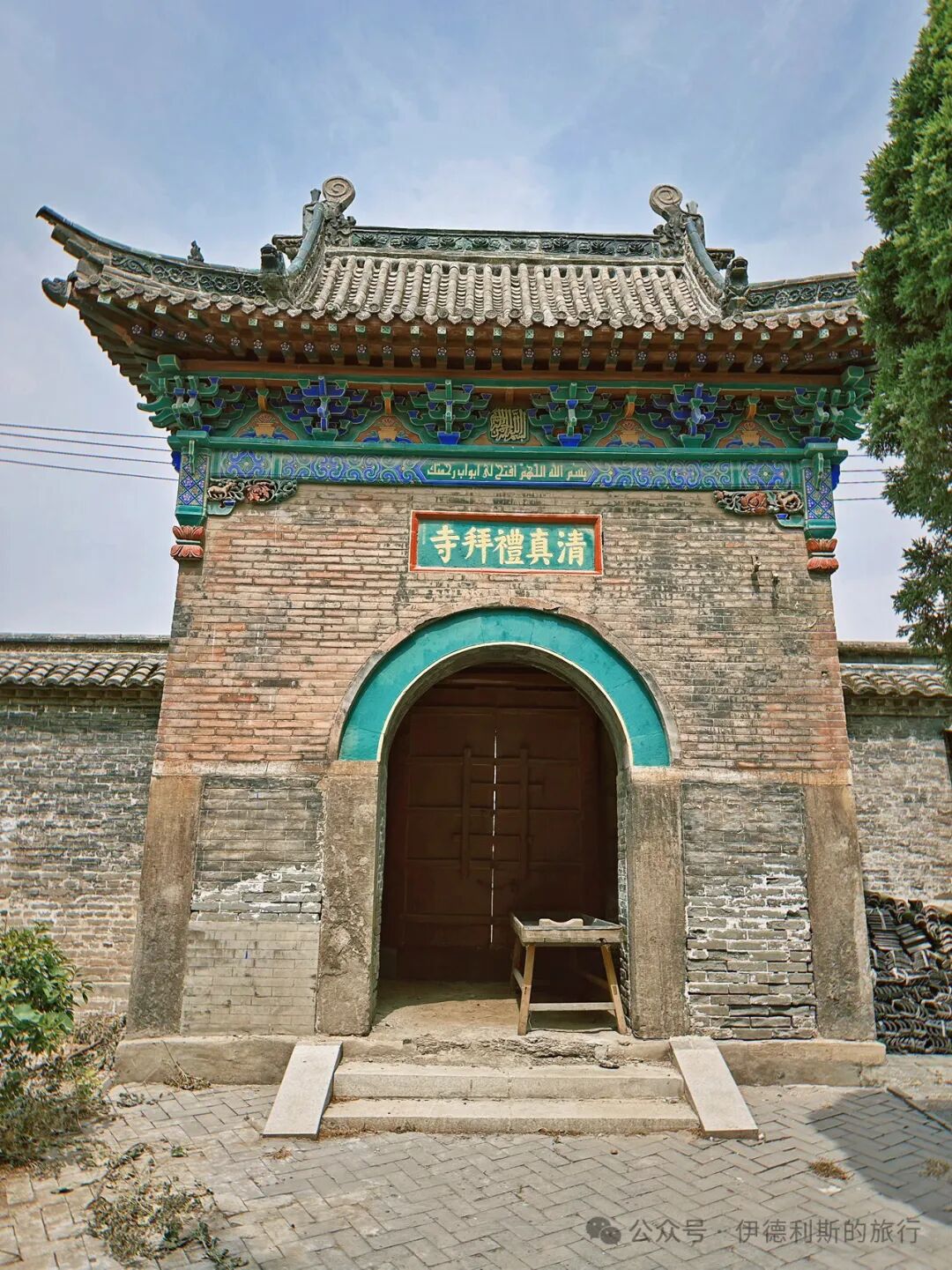
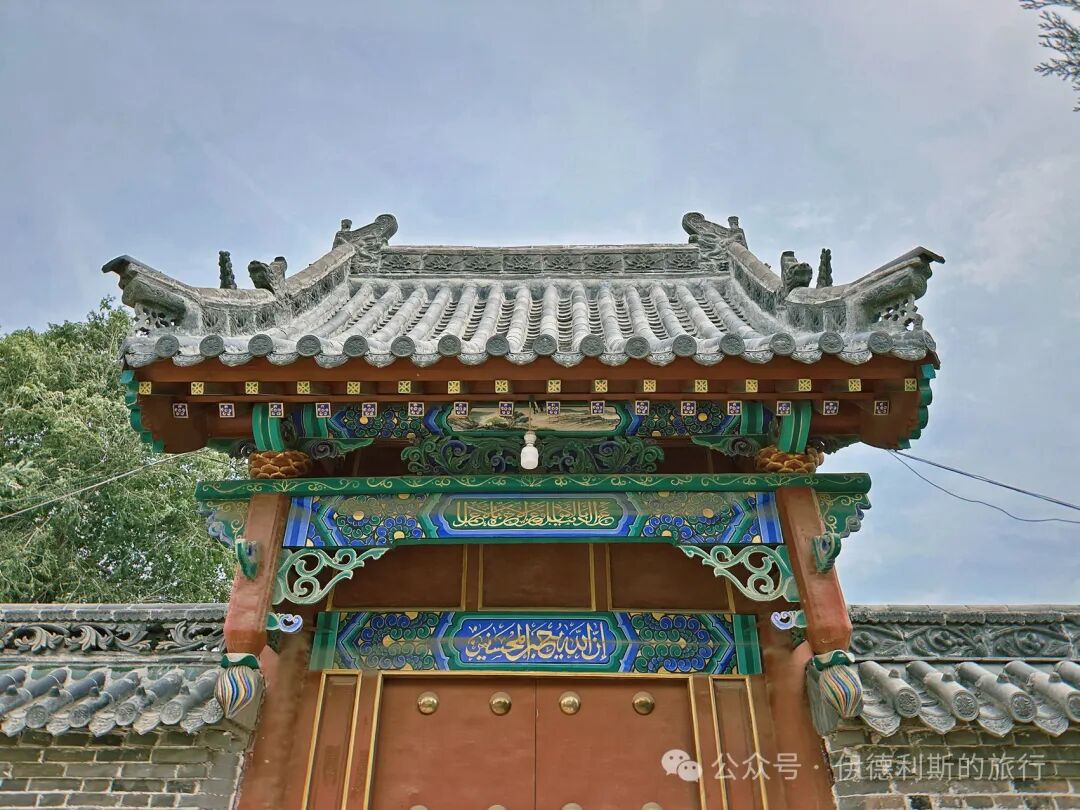
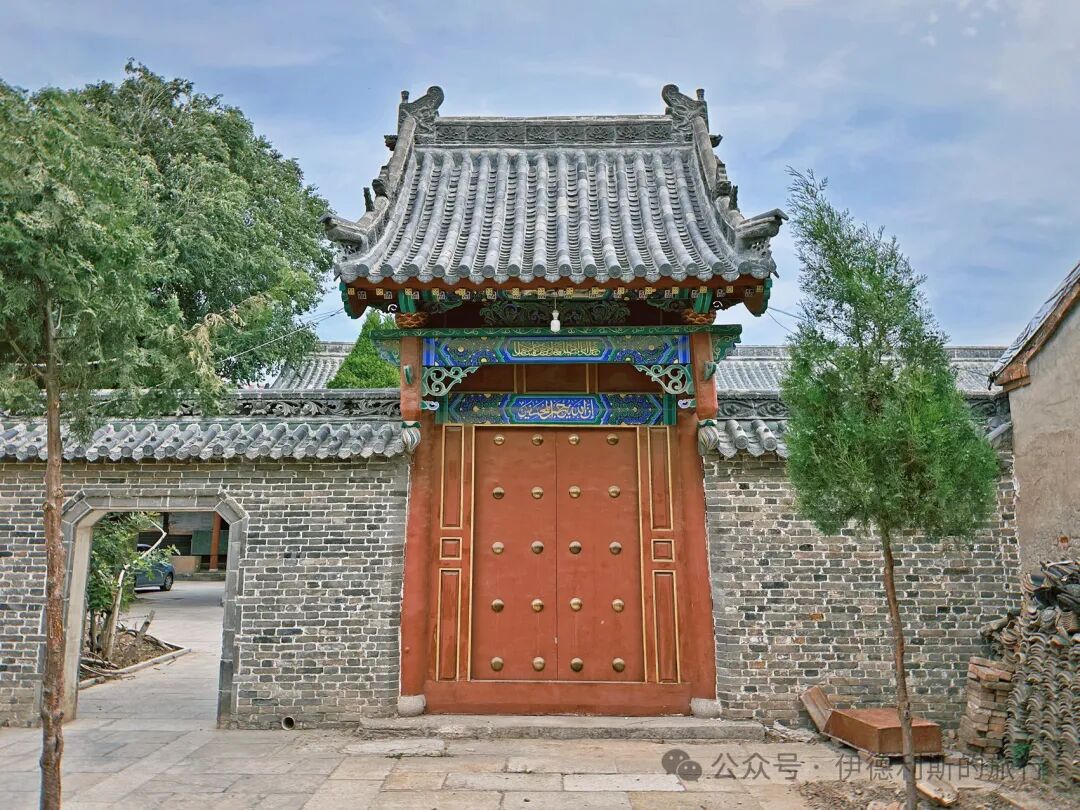
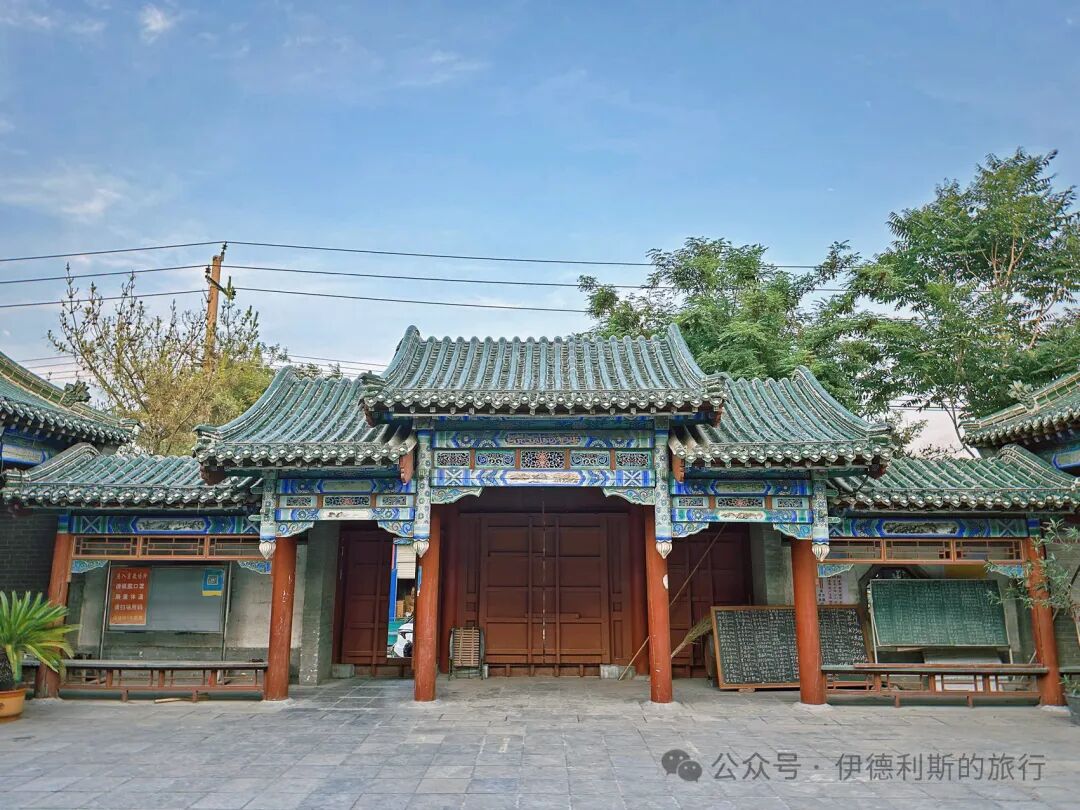
At the far east end of the North Mosque stands a gate in the style of a memorial archway (pailou), featuring delicate bracket sets (dougong) and upturned eaves.
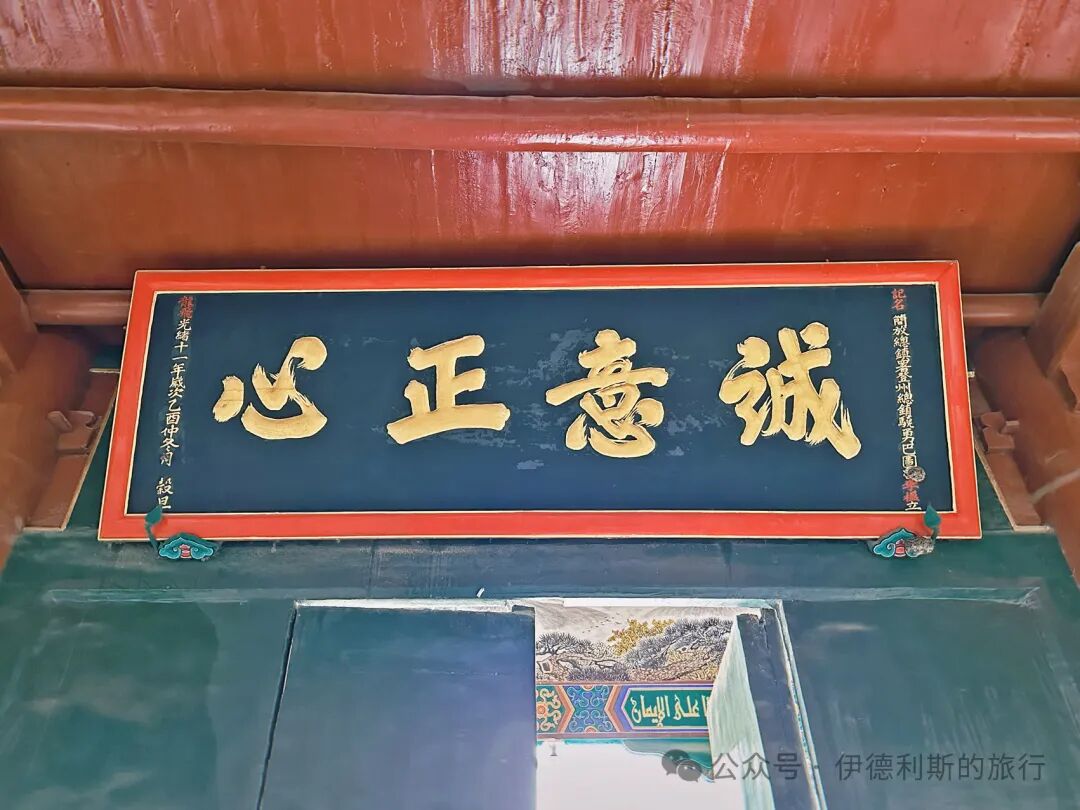
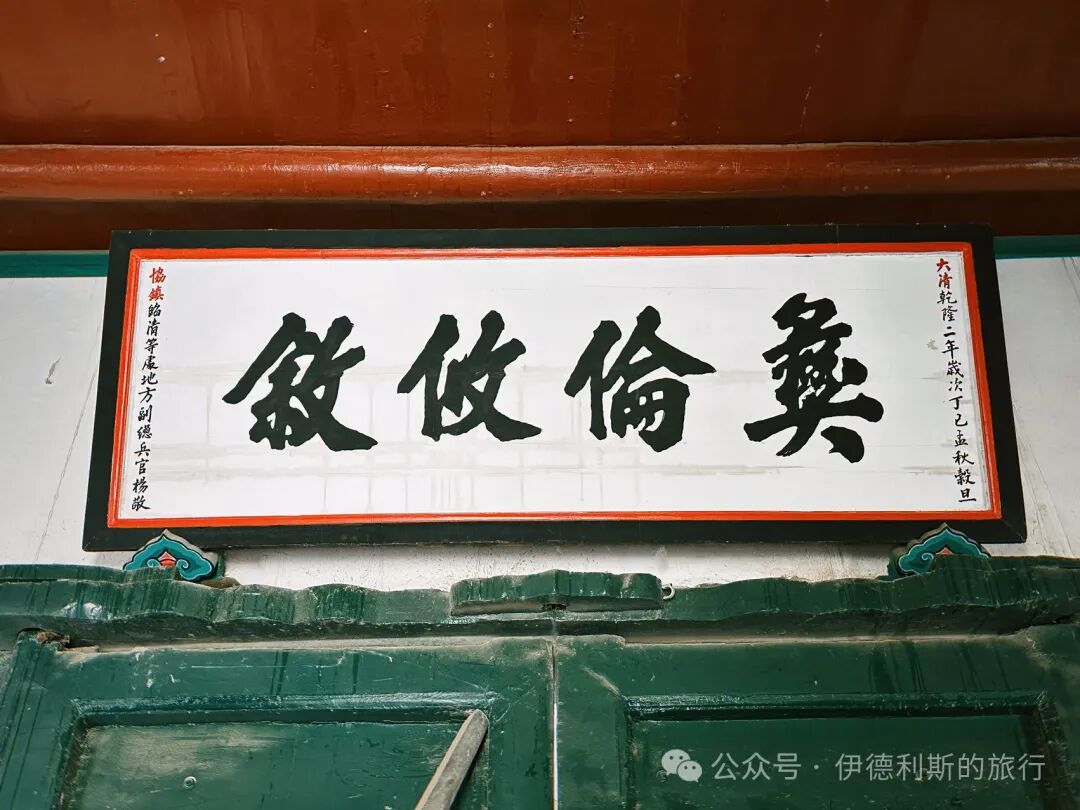
After entering the main gate, you reach a ceremonial gate (yimen) built in the style of a memorial archway. Two Qing Dynasty plaques hang on the ceremonial gate:
A plaque reading 'Sincerity and Rectitude' (Chengyi Zhengxin) erected in the 11th year of the Guangxu reign by Li Ying, a decorated military official.
A plaque reading 'Orderly Human Relations' (Yilun Youxu) from the 2nd year of the Qianlong reign by Yang Jing, a deputy military commander; this one appears to be a replica.
Behind the ceremonial gate is a path leading to the main prayer hall, with lecture halls (jiangtang) located on the north and south sides.
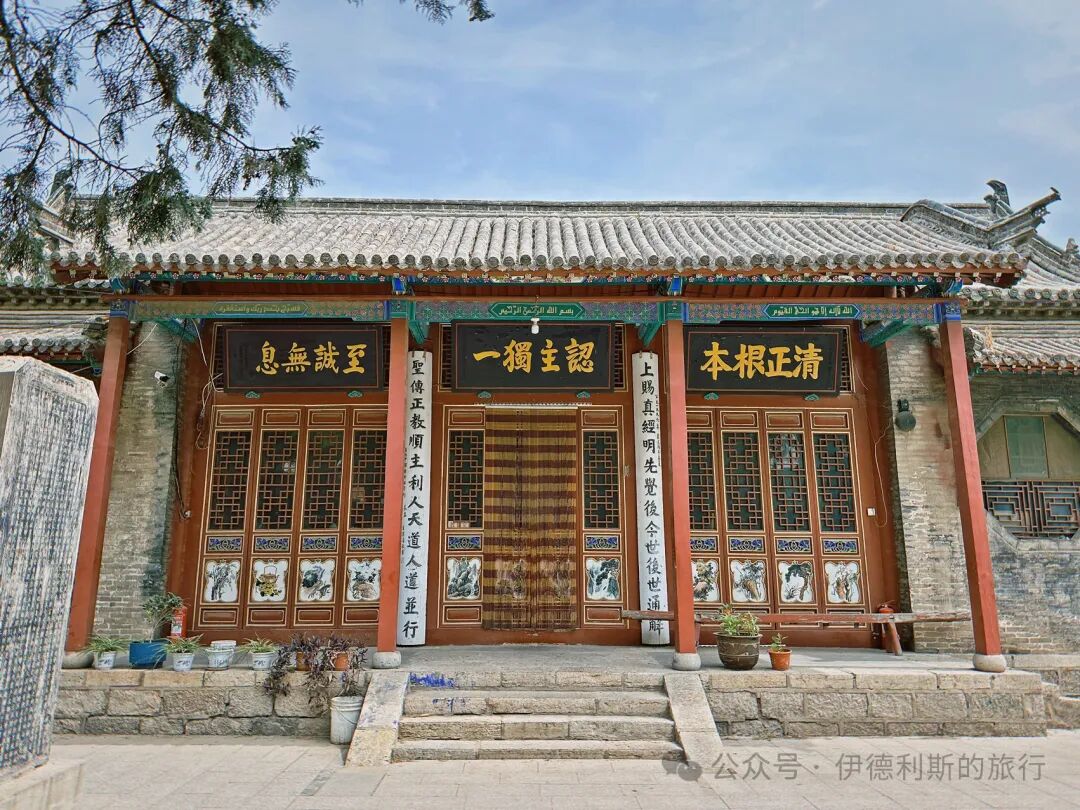
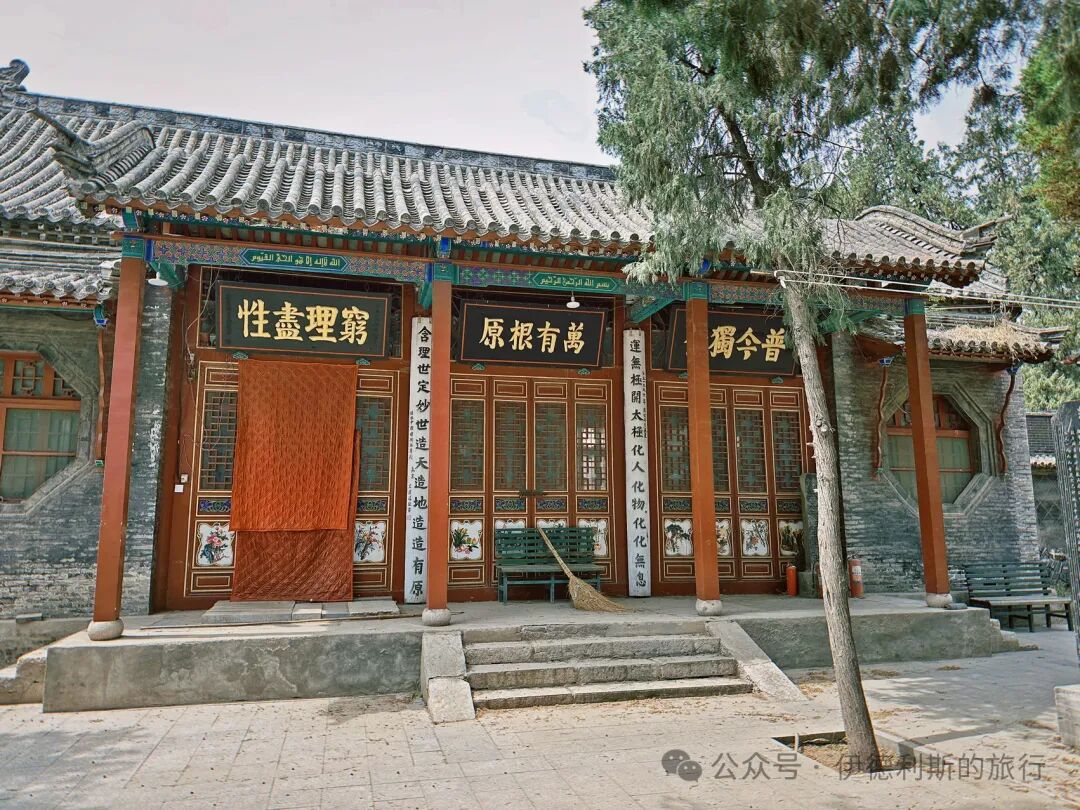
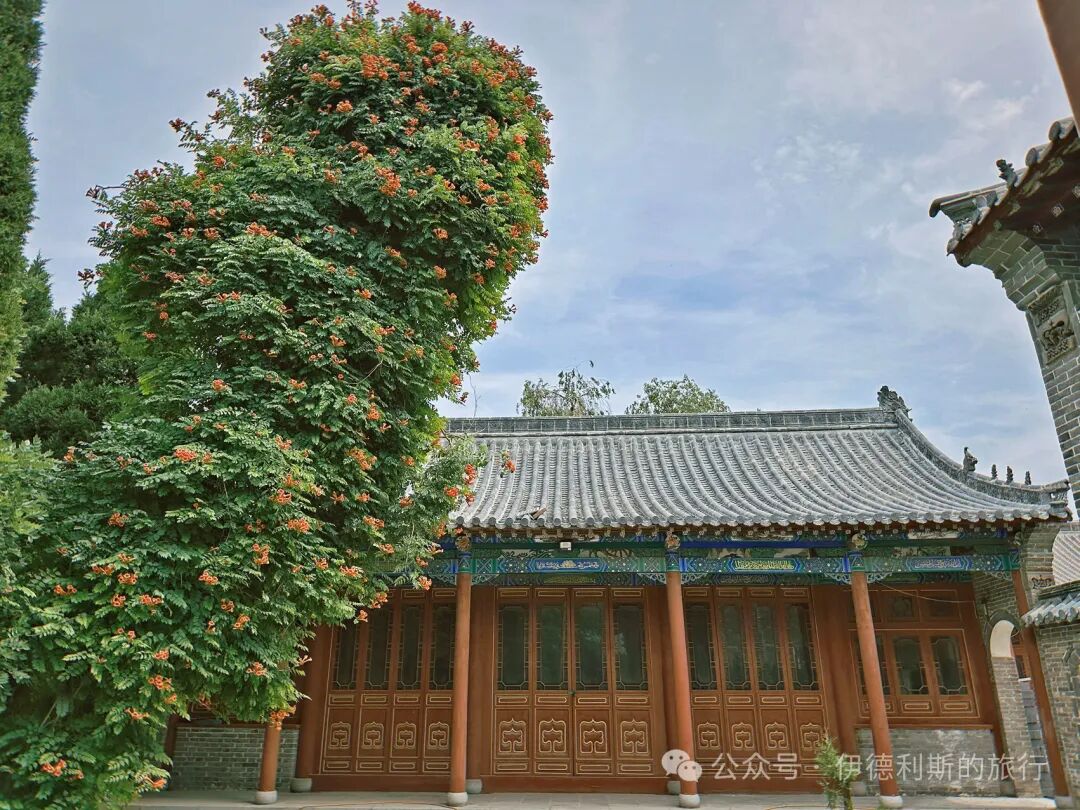
On the north and south sides of the main prayer hall are two scripture pavilions (cangjingting) with four-cornered pointed roofs and small porches (baoxia) in front of the doors. In front of the pavilion stands a 500-year-old Chinese arborvitae (cebai) planted when the mosque was built.
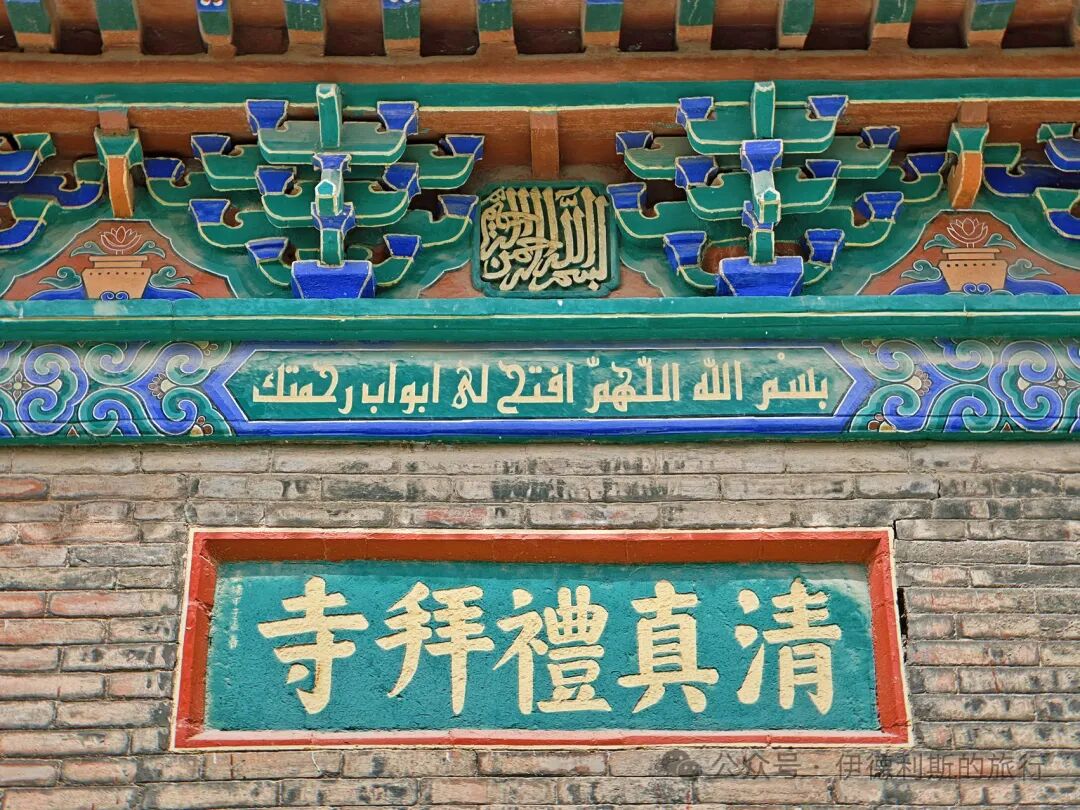
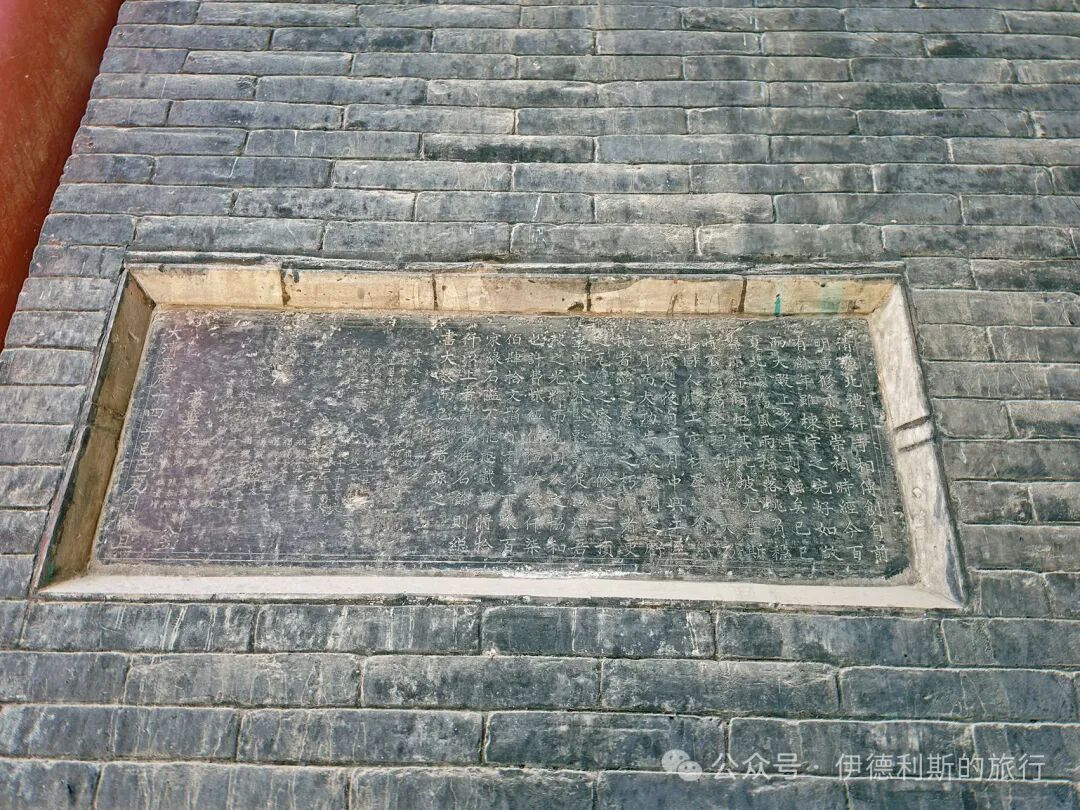
Behind the main hall is the back gate, which features a plaque inscribed with "Qingzhen Libaisi" (Mosque) dated to the first month of the Jiajing jiazi year. The mosque also houses several stone tablets from the Qing dynasty and the Republic of China era.
Linqing East Mosque
After leaving the Linqing North Mosque, I went across the street to the East Mosque to pay my respects at the tombs of the saints (shamu) and the Hufu cemetery (Hufutan). The Linqing East Mosque was first built in 1465 (the first year of the Chenghua reign of the Ming dynasty). It was renovated twice in 1583 (the eleventh year of the Wanli reign) and 1649 (the sixth year of the Shunzhi reign), then expanded again in 1734 (the twelfth year of the Yongzheng reign), resulting in its grand scale.
On the far west side of the Linqing East Mosque is the back gate, which features a "Libaisi" (Mosque) plaque inscribed during the renovation in the sixth year of the Shunzhi reign. Behind the back gate is the main prayer hall, which consists of a front porch (juanpeng), the main hall, and a rear vaulted hall (yaodian). The roof of the vaulted hall has four sloping sides meeting at a point, topped with a gilded gourd-shaped finial.
The main hall is nearly 30 meters deep, with 14 pillars supporting the roof beams. The mihrab is the same style as the one in the North Mosque, featuring a decorative archway design.
The East Mosque has a porch roof (juanpeng) over the main hall and traditional calligraphy preserved on the pillars inside.
The main hall of the East Mosque features detailed roof beams and ridges, along with beautiful painted ceilings inside the prayer niche (yaodian).
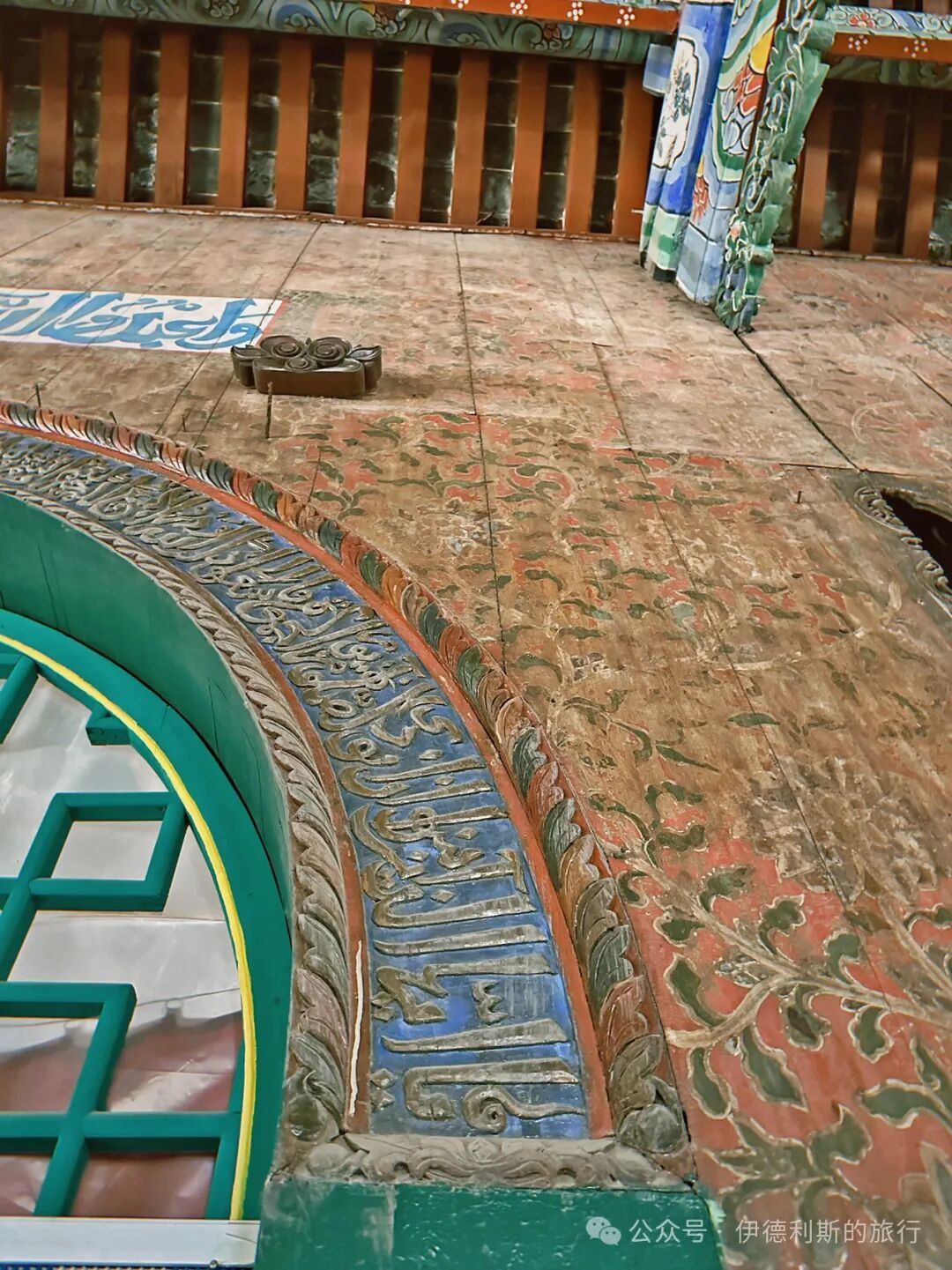
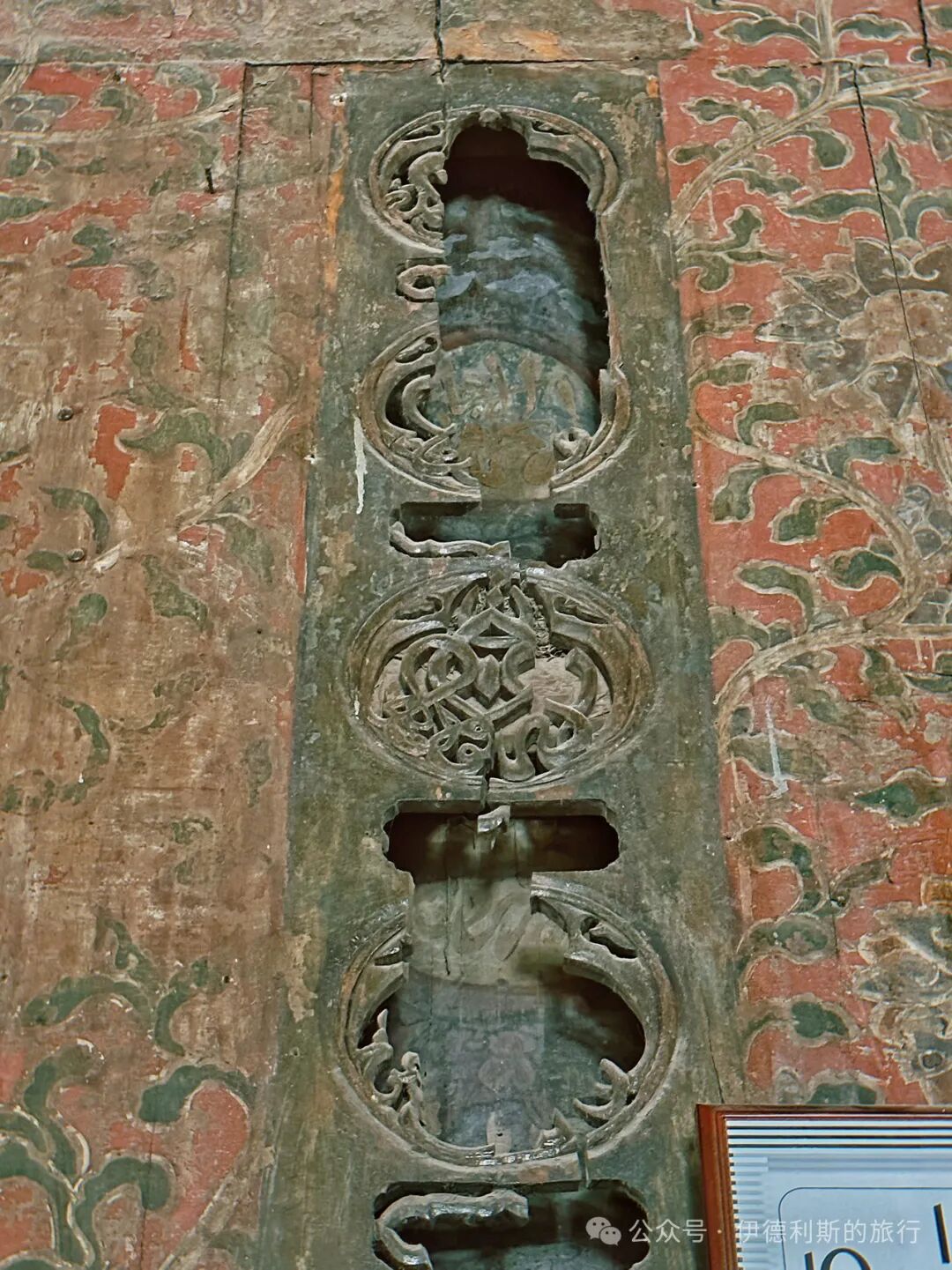
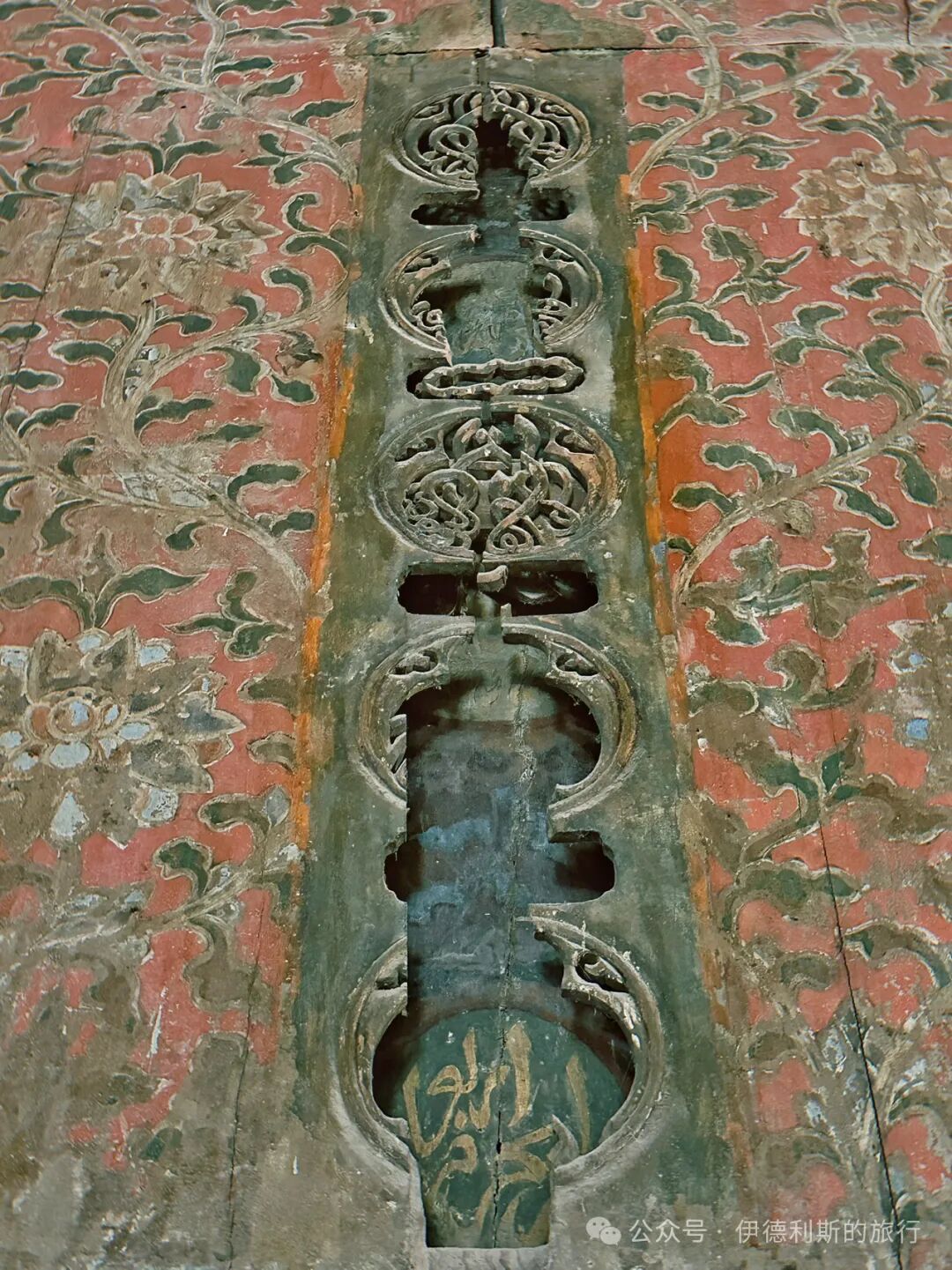
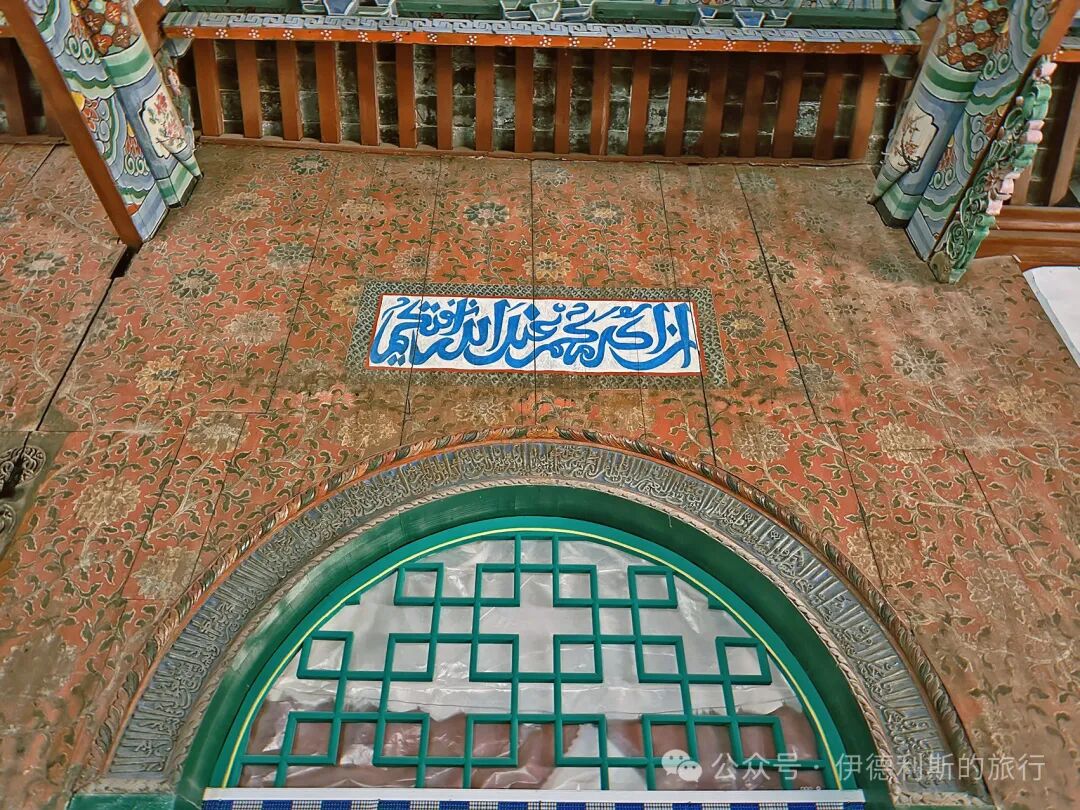
The partition wall between the main hall and the prayer niche (yaodian) once held beautiful paintings. On both sides of the arched door in the middle were rows of intricate openwork calligraphy wood carvings. They were very beautiful, but unfortunately, they were destroyed during a difficult period.
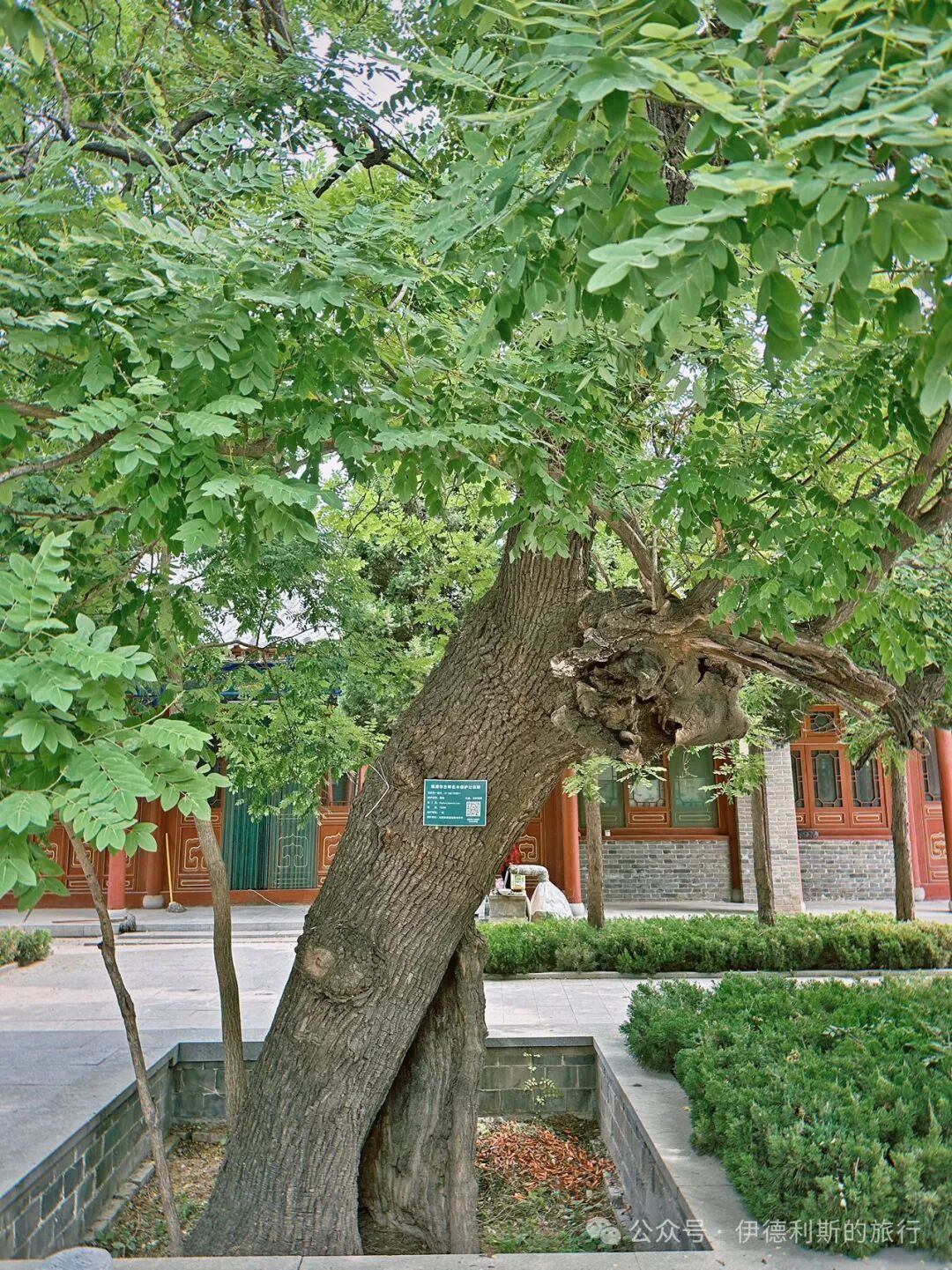
The East Mosque features an archway-style mihrab, traditional wooden structures, and a 700-year-old locust tree in the courtyard.
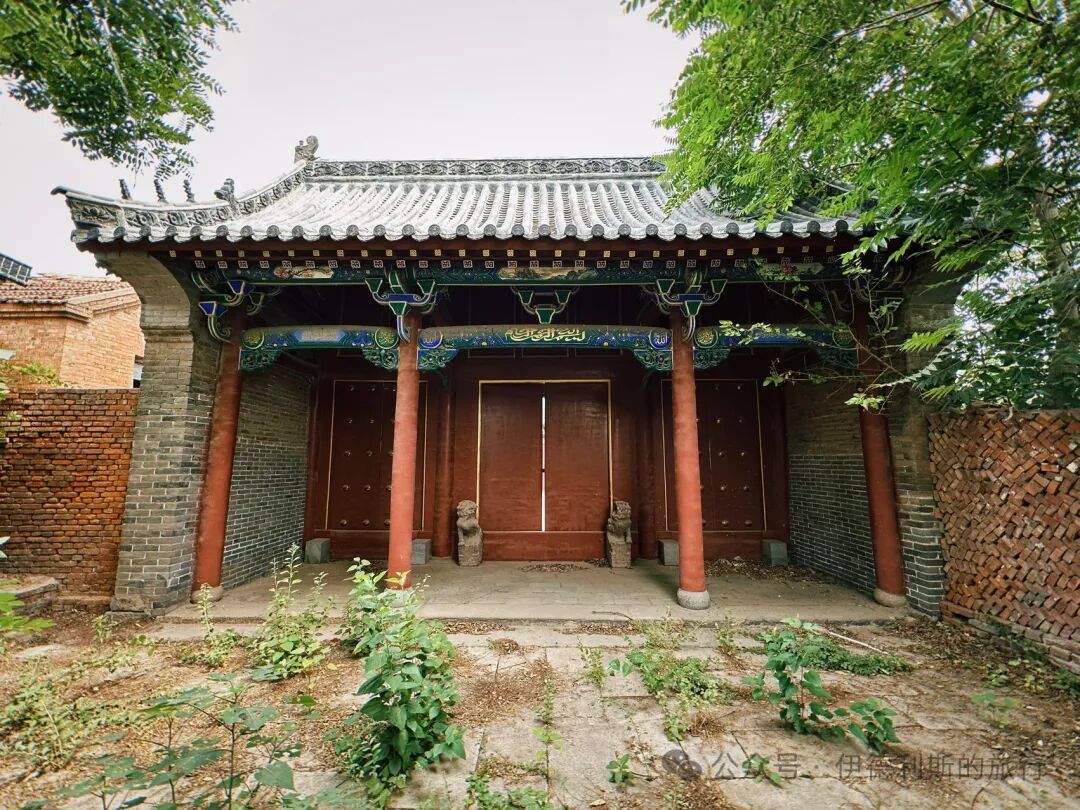
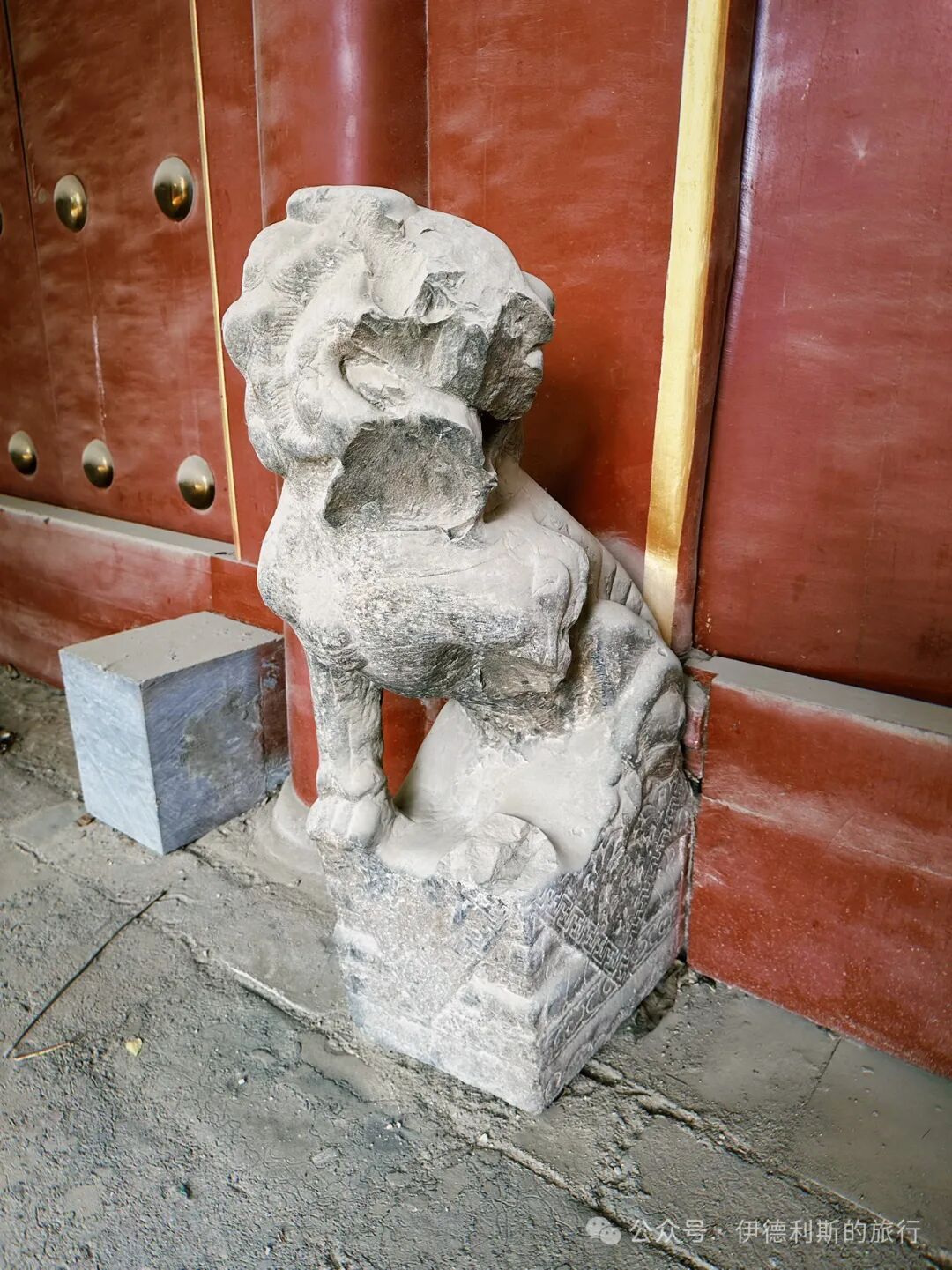
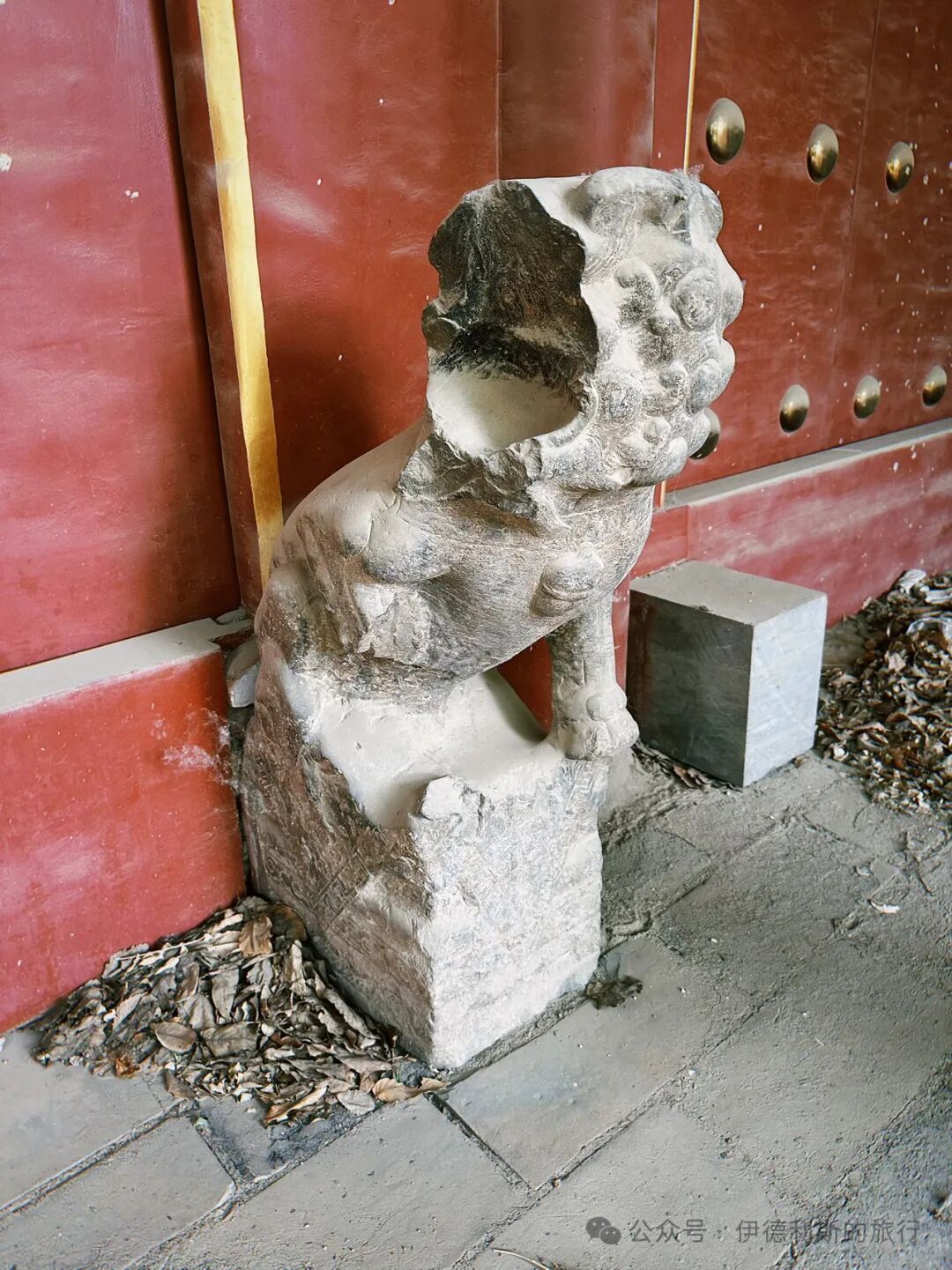
The south gate of the East Mosque is no longer in use, and a pair of damaged stone lions sit in front of it. After entering the main gate, you reach the first courtyard and the hanging flower gate (chuihuamen) on the north side. Moving further in, you find the second courtyard and the South Lecture Hall on the north side. You must pass through the South Lecture Hall to reach the main courtyard where the main hall is located.
Linqing Women's Mosque
After leaving Hufu Beach, I rode my bike from the Linqing East Mosque to the Linqing Women's Mosque to find Zainab. The Linqing Women's Mosque was first built in 1924, making it exactly one hundred years old this year. In 2009, community elder Wan Yongcai and his wife Chen Zhong'e initiated the project, and their eldest son, Wan Qiusheng, chairman of the Linqing Sanhe Textile Group, along with his wife Hei Yuzhi, funded the reconstruction of the current building. This women's mosque is likely the largest one I have ever visited. view all
Summary: Linqing, Shandong - Canal City Mosques, Food and History (Part 1) is presented as a clear English travel account for readers interested in Muslim life, halal food, mosques, and local history. The article keeps the original place names, food details, photographs, and cultural context while focusing on Linqing, Shandong, Canal History.
Following my last post, 'Revisiting the Big and Small Mosque Streets in Dongguan, Liaocheng,' we took an afternoon train from Liaocheng to Linqing. We went straight to Baoliang's First Shop for a meat-filled flatbread roll (bingjuanrou). Wang Baoliang opened this shop in the 1980s, so it has been around for 40 years now. I ate their meat-filled flatbread roll back in 2017, and it was truly satisfying. The price of the roll has gone up by 5 yuan since my last visit, but it still tastes great.
Last time, I ordered the braised butterfly fish head, which was delicious, but I did not choose my dishes as well this time. This time, I ordered sesame beef and pan-braised hairtail fish. The meat in the sesame beef is the same as the meat in the flatbread roll, so I ended up ordering the same thing twice. The pan-braised hairtail fish had a fishy smell. I think ordering the braised hairtail or fried hairtail would have been a better choice.
Leaving Linqing Railway Station, I passed by the First Family Three-Fresh Potstickers (diyijia sanxian guotie). I ate there when I visited Linqing 17 years ago, and it remains the best Shandong cuisine I have ever had, especially the sesame lamb which was delicious.
Linqing North Mosque
I spent the afternoon performing namaz at the Linqing North Mosque. Linqing North Mosque sits where the Huitong River and Wei River meet. It was first built in 1504 (the seventh year of the Hongzhi reign of the Ming Dynasty). It underwent major expansions in 1564 (the 43rd year of the Jiajing reign), 1779 (the 44th year of the Qianlong reign), and 1809 (the 14th year of the Jiaqing reign) to reach its current form.
The main hall of Linqing North Mosque stands on a 1-meter-high stone platform and consists of a porch, the main hall, and a rear kiln-style hall (yaodian), making it very grand. The roof of the kiln-style hall has three moon-watching towers. The middle one has an octagonal pointed roof, while the two sides have square pointed roofs, all topped with peach-shaped finials.
The mosque features a memorial archway-style mihrab decorated with floral patterns and Arabic calligraphy, and the ceiling of the kiln-style hall also displays Arabic calligraphy.
The main hall of the North Mosque preserves precious murals from the Qing Dynasty.
The North Mosque (Beidasi) features various forms of calligraphy, including palace lanterns (gongdeng), brick carvings, plaques, architectural paintings, and wood carvings.
At the far east end of the North Mosque stands a gate in the style of a memorial archway (pailou), featuring delicate bracket sets (dougong) and upturned eaves.
After entering the main gate, you reach a ceremonial gate (yimen) built in the style of a memorial archway. Two Qing Dynasty plaques hang on the ceremonial gate:
A plaque reading 'Sincerity and Rectitude' (Chengyi Zhengxin) erected in the 11th year of the Guangxu reign by Li Ying, a decorated military official.
A plaque reading 'Orderly Human Relations' (Yilun Youxu) from the 2nd year of the Qianlong reign by Yang Jing, a deputy military commander; this one appears to be a replica.
Behind the ceremonial gate is a path leading to the main prayer hall, with lecture halls (jiangtang) located on the north and south sides.
On the north and south sides of the main prayer hall are two scripture pavilions (cangjingting) with four-cornered pointed roofs and small porches (baoxia) in front of the doors. In front of the pavilion stands a 500-year-old Chinese arborvitae (cebai) planted when the mosque was built.
Behind the main hall is the back gate, which features a plaque inscribed with "Qingzhen Libaisi" (Mosque) dated to the first month of the Jiajing jiazi year. The mosque also houses several stone tablets from the Qing dynasty and the Republic of China era.
Linqing East Mosque
After leaving the Linqing North Mosque, I went across the street to the East Mosque to pay my respects at the tombs of the saints (shamu) and the Hufu cemetery (Hufutan). The Linqing East Mosque was first built in 1465 (the first year of the Chenghua reign of the Ming dynasty). It was renovated twice in 1583 (the eleventh year of the Wanli reign) and 1649 (the sixth year of the Shunzhi reign), then expanded again in 1734 (the twelfth year of the Yongzheng reign), resulting in its grand scale.
On the far west side of the Linqing East Mosque is the back gate, which features a "Libaisi" (Mosque) plaque inscribed during the renovation in the sixth year of the Shunzhi reign. Behind the back gate is the main prayer hall, which consists of a front porch (juanpeng), the main hall, and a rear vaulted hall (yaodian). The roof of the vaulted hall has four sloping sides meeting at a point, topped with a gilded gourd-shaped finial.
The main hall is nearly 30 meters deep, with 14 pillars supporting the roof beams. The mihrab is the same style as the one in the North Mosque, featuring a decorative archway design.
The East Mosque has a porch roof (juanpeng) over the main hall and traditional calligraphy preserved on the pillars inside.
The main hall of the East Mosque features detailed roof beams and ridges, along with beautiful painted ceilings inside the prayer niche (yaodian).
The partition wall between the main hall and the prayer niche (yaodian) once held beautiful paintings. On both sides of the arched door in the middle were rows of intricate openwork calligraphy wood carvings. They were very beautiful, but unfortunately, they were destroyed during a difficult period.
The East Mosque features an archway-style mihrab, traditional wooden structures, and a 700-year-old locust tree in the courtyard.
The south gate of the East Mosque is no longer in use, and a pair of damaged stone lions sit in front of it. After entering the main gate, you reach the first courtyard and the hanging flower gate (chuihuamen) on the north side. Moving further in, you find the second courtyard and the South Lecture Hall on the north side. You must pass through the South Lecture Hall to reach the main courtyard where the main hall is located.
Linqing Women's Mosque
After leaving Hufu Beach, I rode my bike from the Linqing East Mosque to the Linqing Women's Mosque to find Zainab. The Linqing Women's Mosque was first built in 1924, making it exactly one hundred years old this year. In 2009, community elder Wan Yongcai and his wife Chen Zhong'e initiated the project, and their eldest son, Wan Qiusheng, chairman of the Linqing Sanhe Textile Group, along with his wife Hei Yuzhi, funded the reconstruction of the current building. This women's mosque is likely the largest one I have ever visited. view all
Reposted from the web
Summary: Linqing, Shandong - Canal City Mosques, Food and History (Part 1) is presented as a clear English travel account for readers interested in Muslim life, halal food, mosques, and local history. The article keeps the original place names, food details, photographs, and cultural context while focusing on Linqing, Shandong, Canal History.
Following my last post, 'Revisiting the Big and Small Mosque Streets in Dongguan, Liaocheng,' we took an afternoon train from Liaocheng to Linqing. We went straight to Baoliang's First Shop for a meat-filled flatbread roll (bingjuanrou). Wang Baoliang opened this shop in the 1980s, so it has been around for 40 years now. I ate their meat-filled flatbread roll back in 2017, and it was truly satisfying. The price of the roll has gone up by 5 yuan since my last visit, but it still tastes great.
Last time, I ordered the braised butterfly fish head, which was delicious, but I did not choose my dishes as well this time. This time, I ordered sesame beef and pan-braised hairtail fish. The meat in the sesame beef is the same as the meat in the flatbread roll, so I ended up ordering the same thing twice. The pan-braised hairtail fish had a fishy smell. I think ordering the braised hairtail or fried hairtail would have been a better choice.
Leaving Linqing Railway Station, I passed by the First Family Three-Fresh Potstickers (diyijia sanxian guotie). I ate there when I visited Linqing 17 years ago, and it remains the best Shandong cuisine I have ever had, especially the sesame lamb which was delicious.
Linqing North Mosque
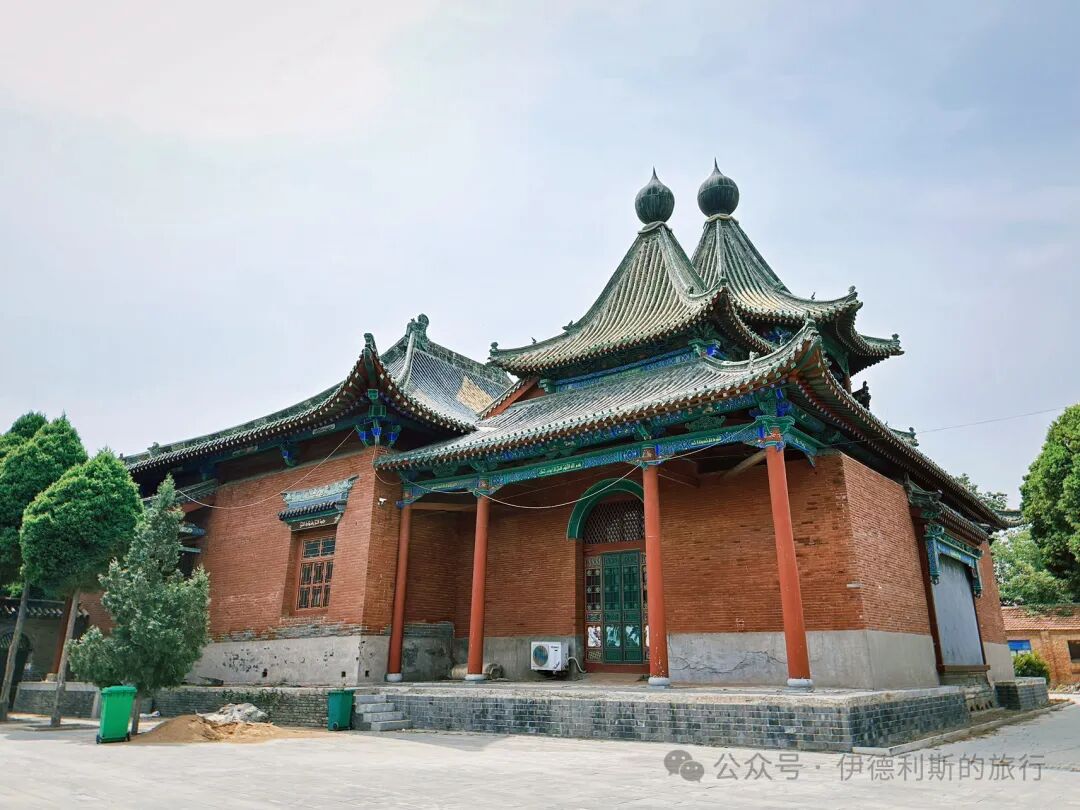
I spent the afternoon performing namaz at the Linqing North Mosque. Linqing North Mosque sits where the Huitong River and Wei River meet. It was first built in 1504 (the seventh year of the Hongzhi reign of the Ming Dynasty). It underwent major expansions in 1564 (the 43rd year of the Jiajing reign), 1779 (the 44th year of the Qianlong reign), and 1809 (the 14th year of the Jiaqing reign) to reach its current form.
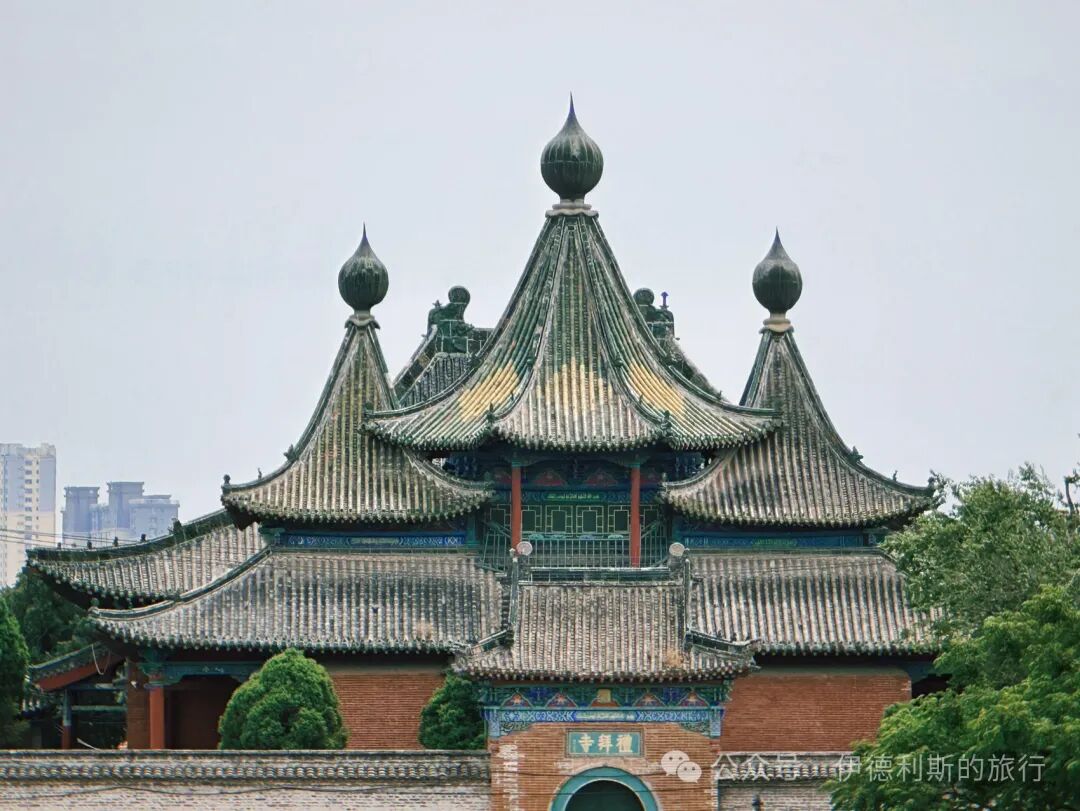
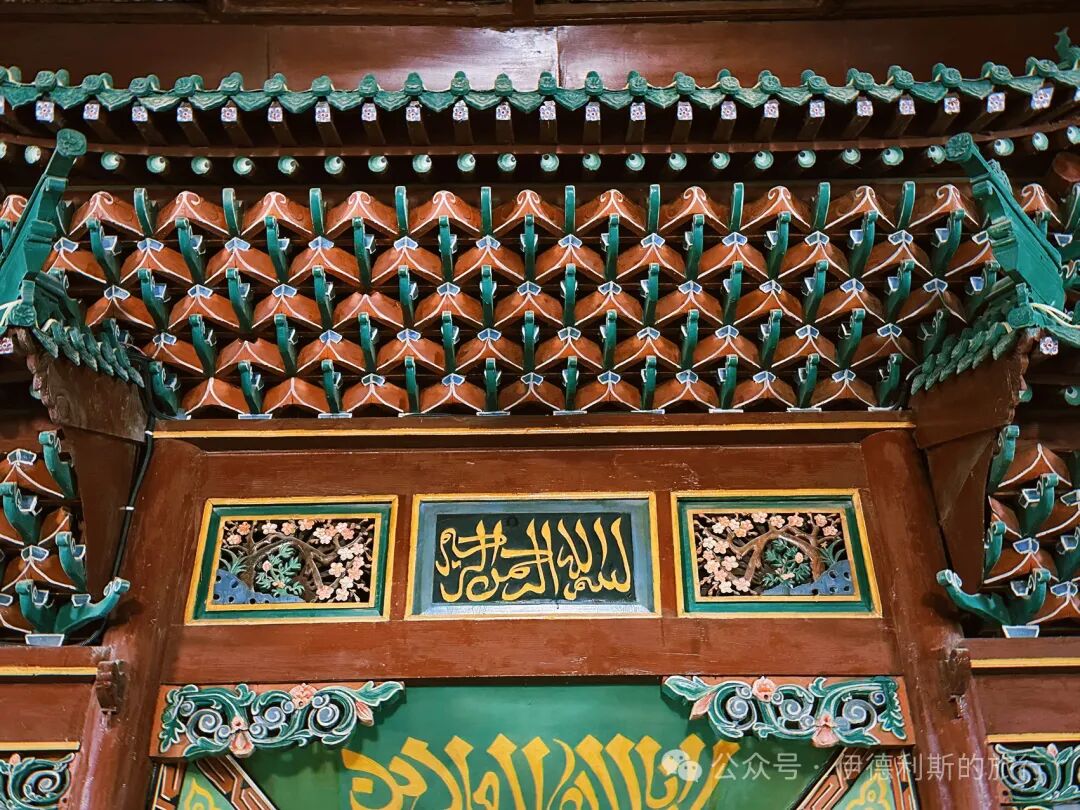
The main hall of Linqing North Mosque stands on a 1-meter-high stone platform and consists of a porch, the main hall, and a rear kiln-style hall (yaodian), making it very grand. The roof of the kiln-style hall has three moon-watching towers. The middle one has an octagonal pointed roof, while the two sides have square pointed roofs, all topped with peach-shaped finials.
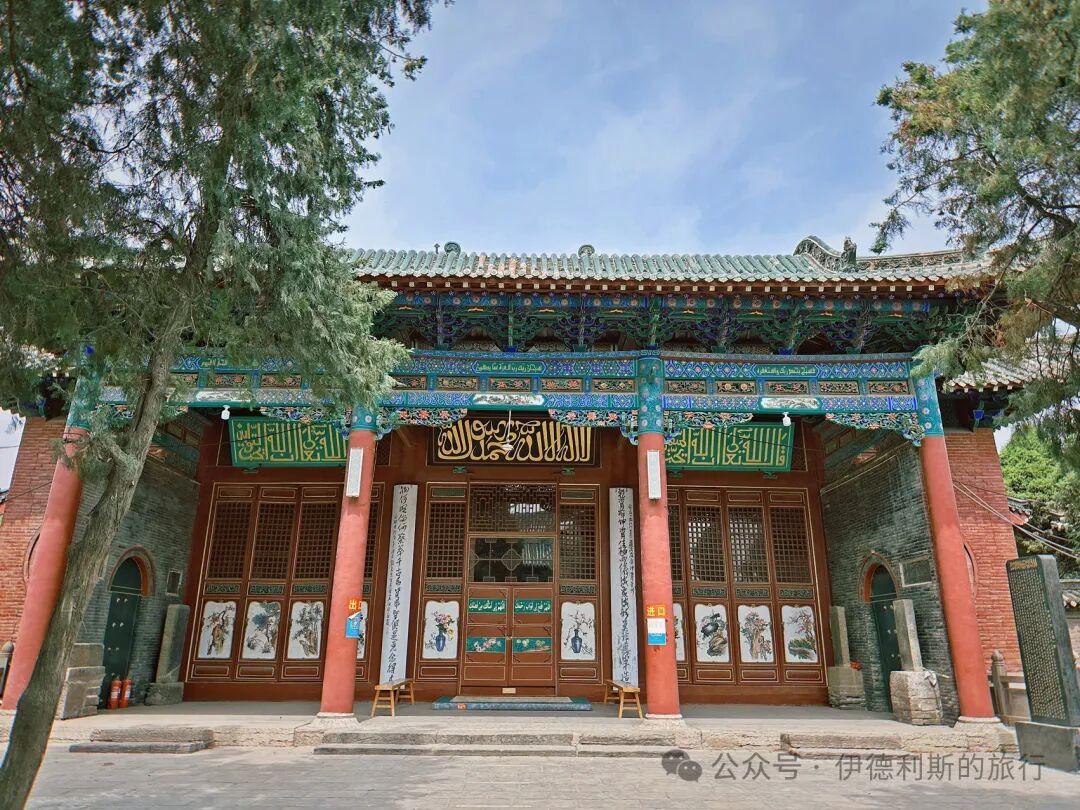
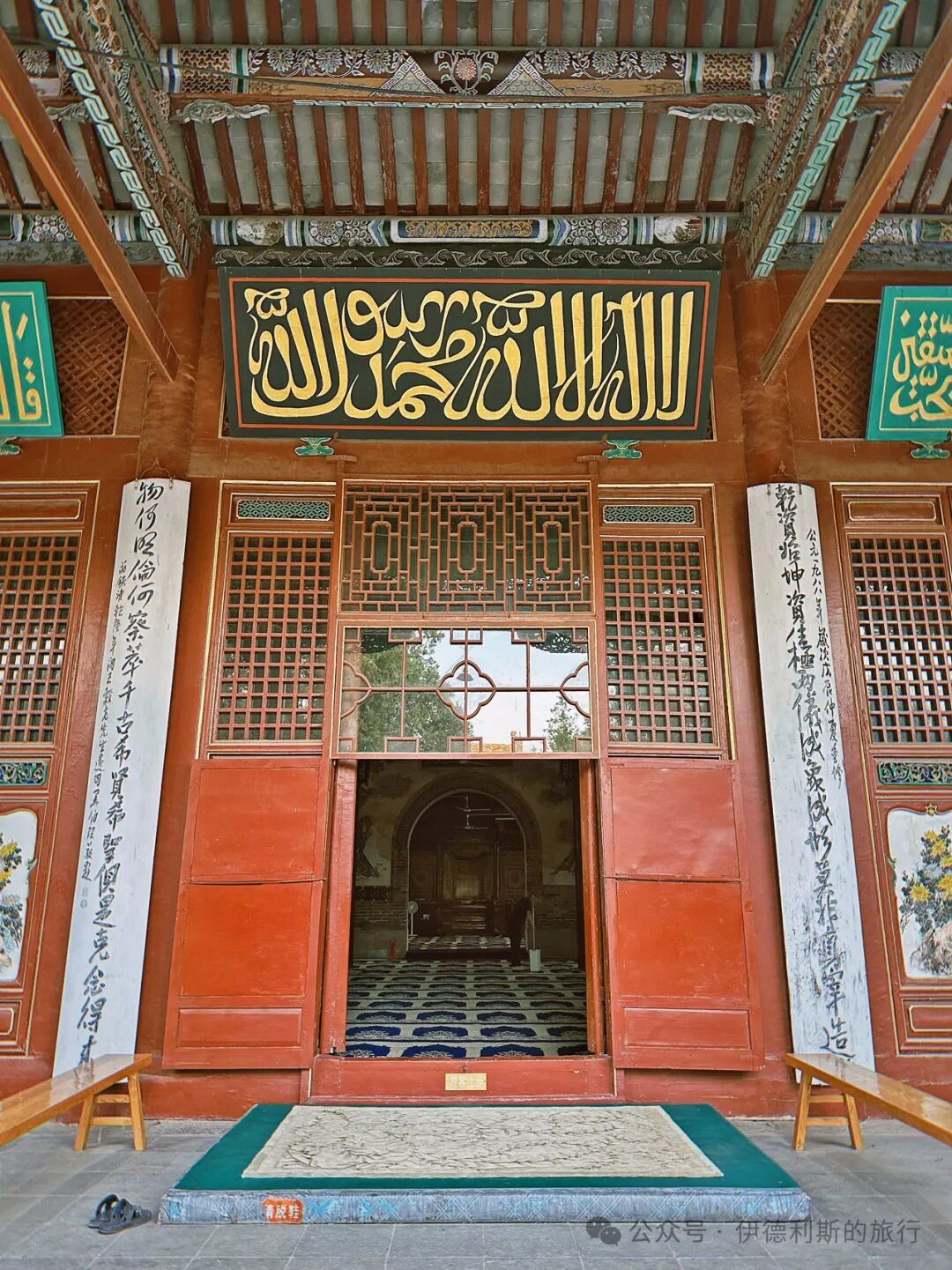
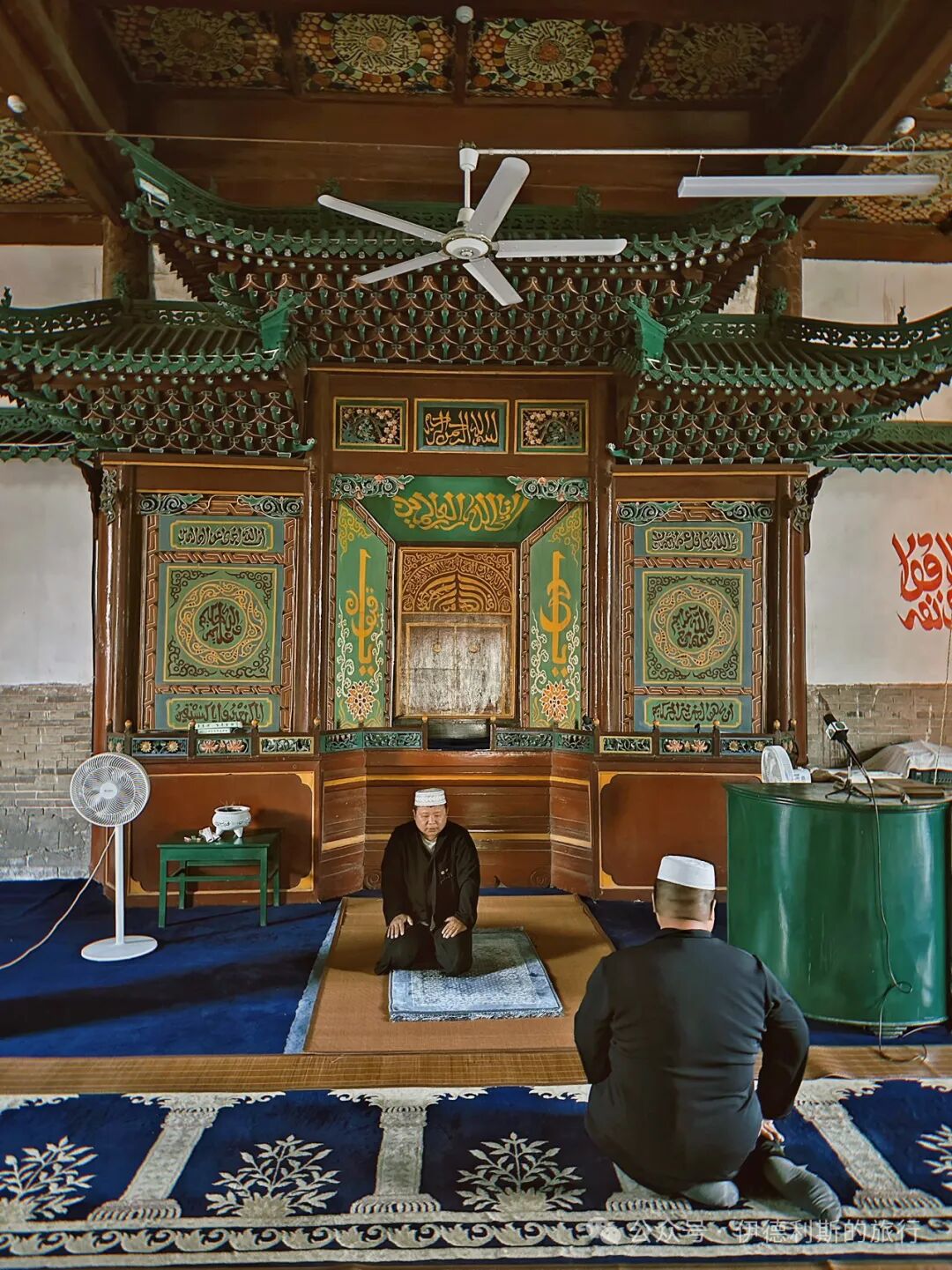
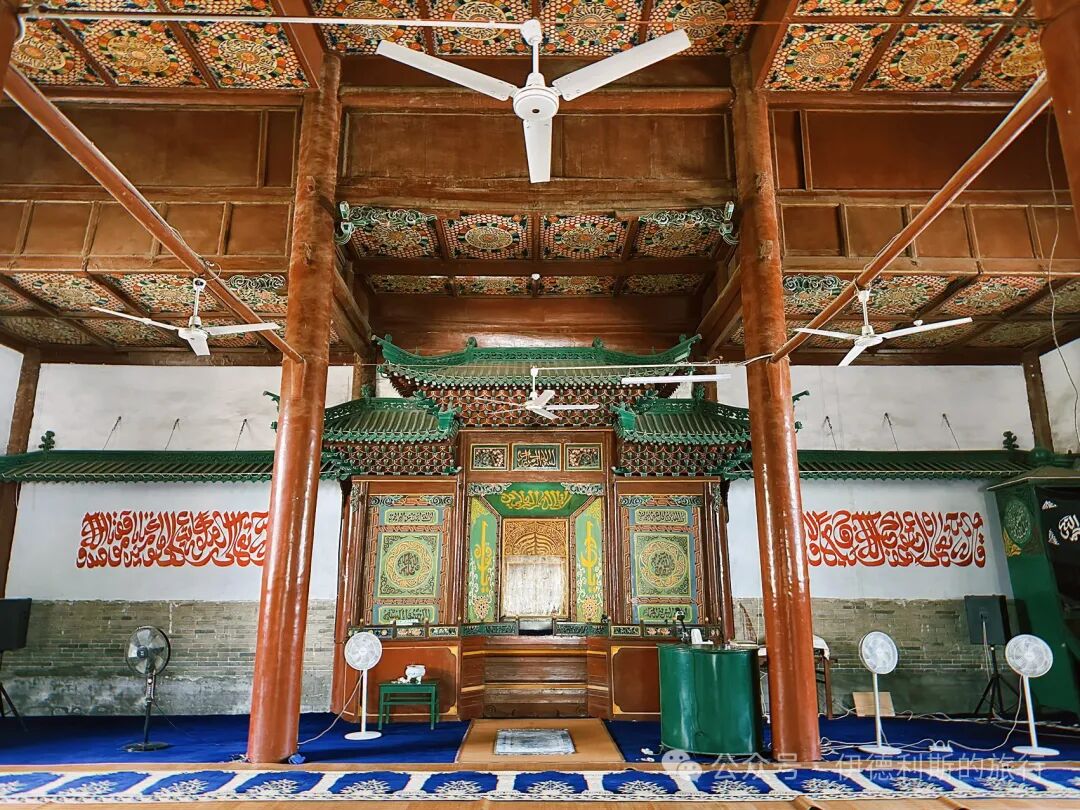
The mosque features a memorial archway-style mihrab decorated with floral patterns and Arabic calligraphy, and the ceiling of the kiln-style hall also displays Arabic calligraphy.
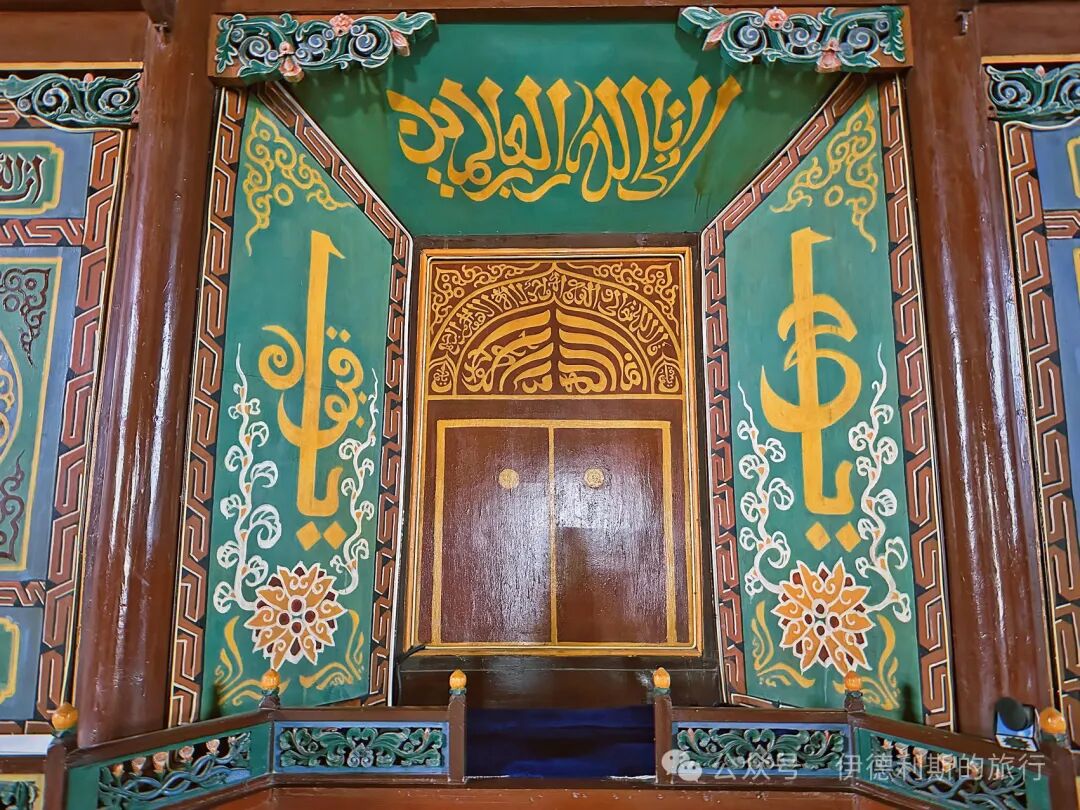
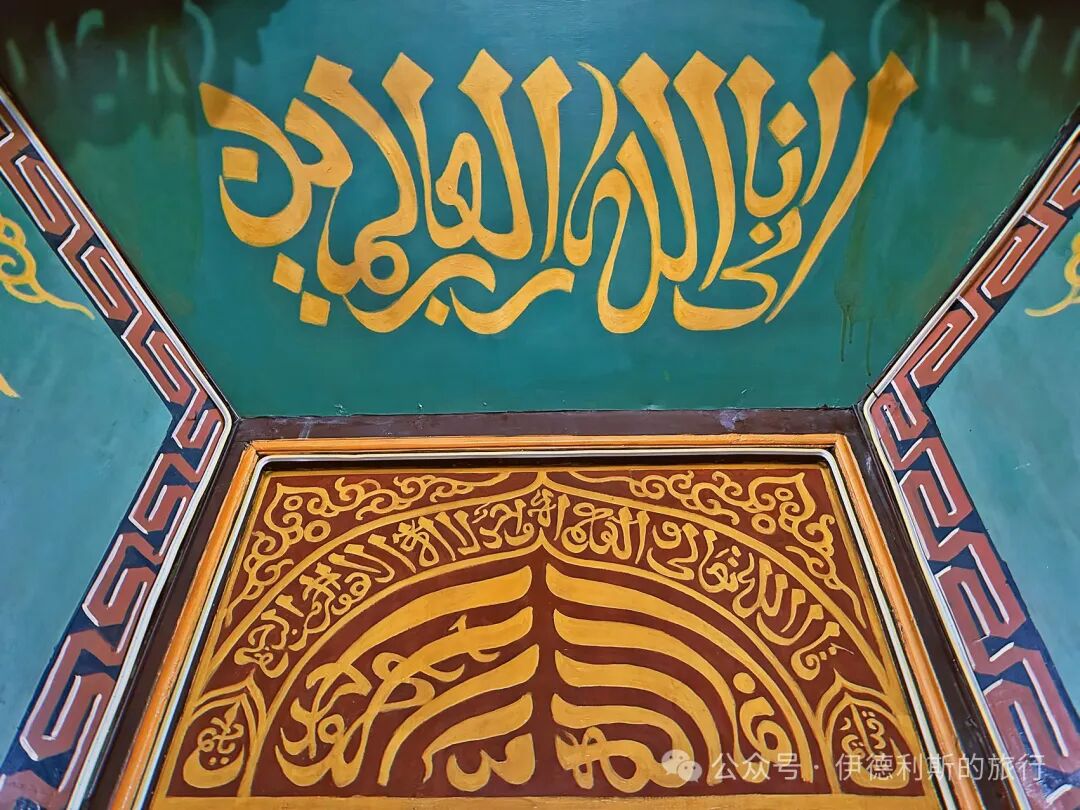
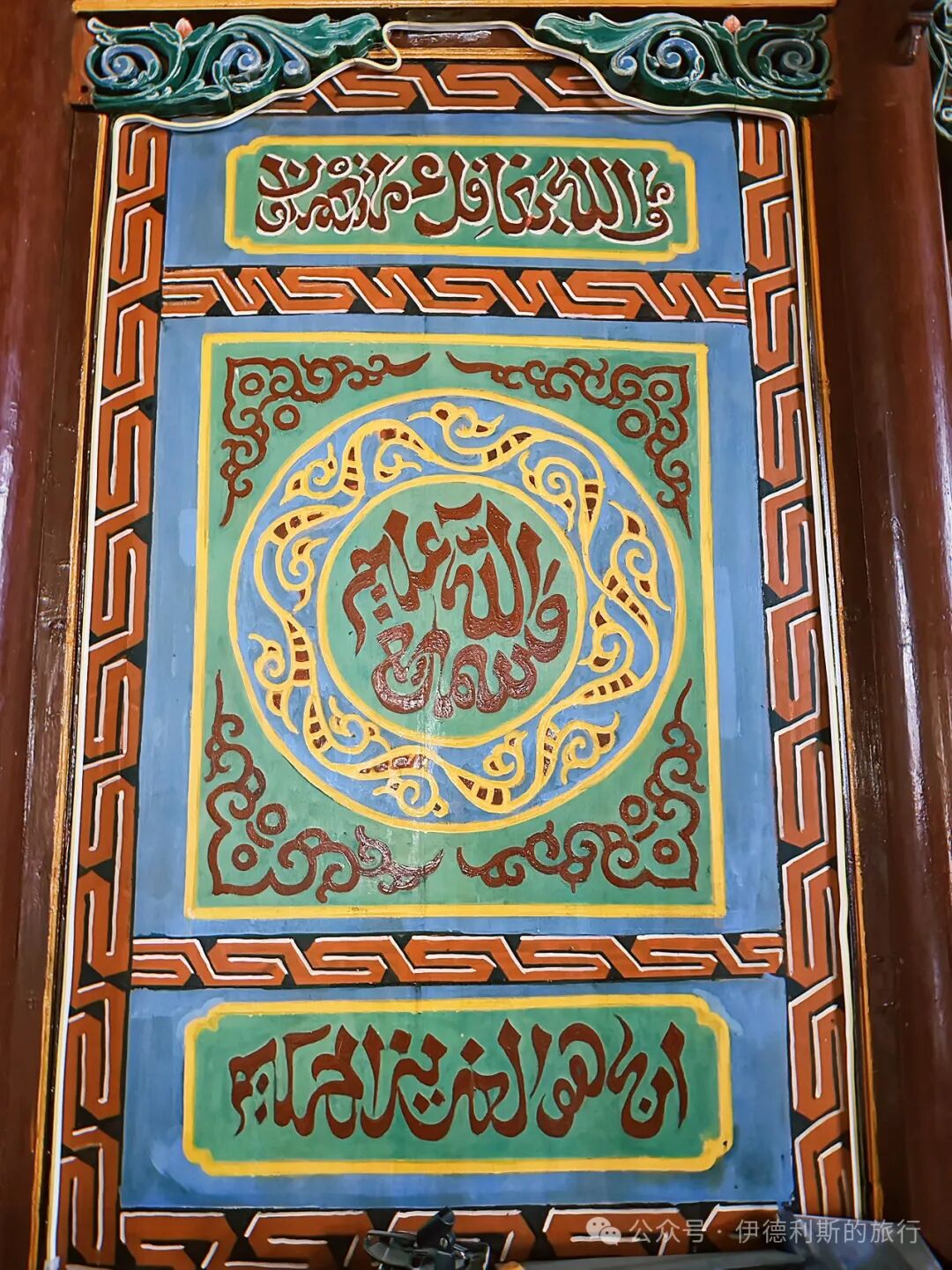
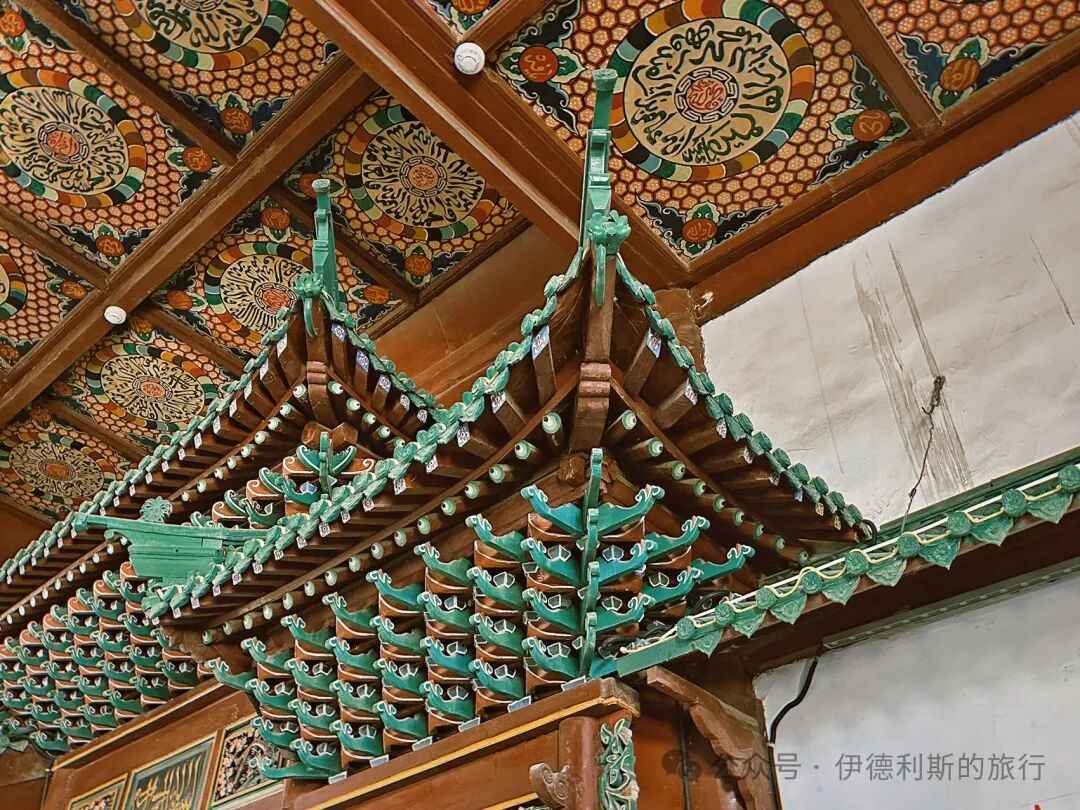
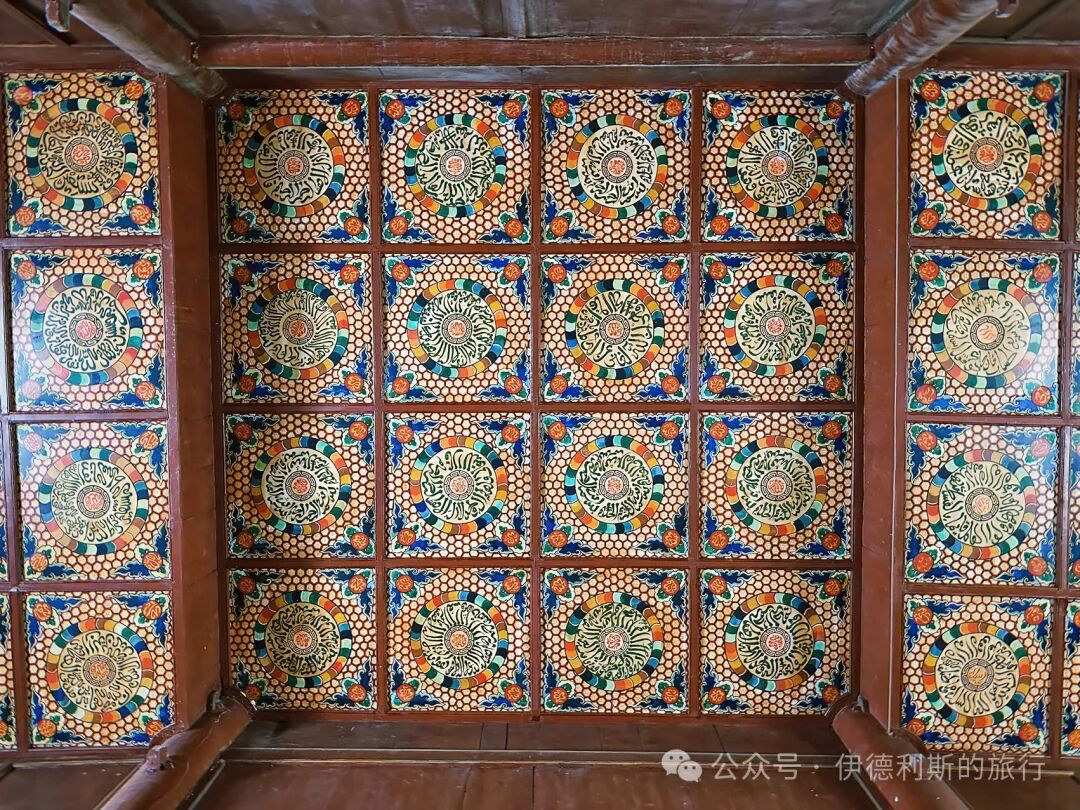
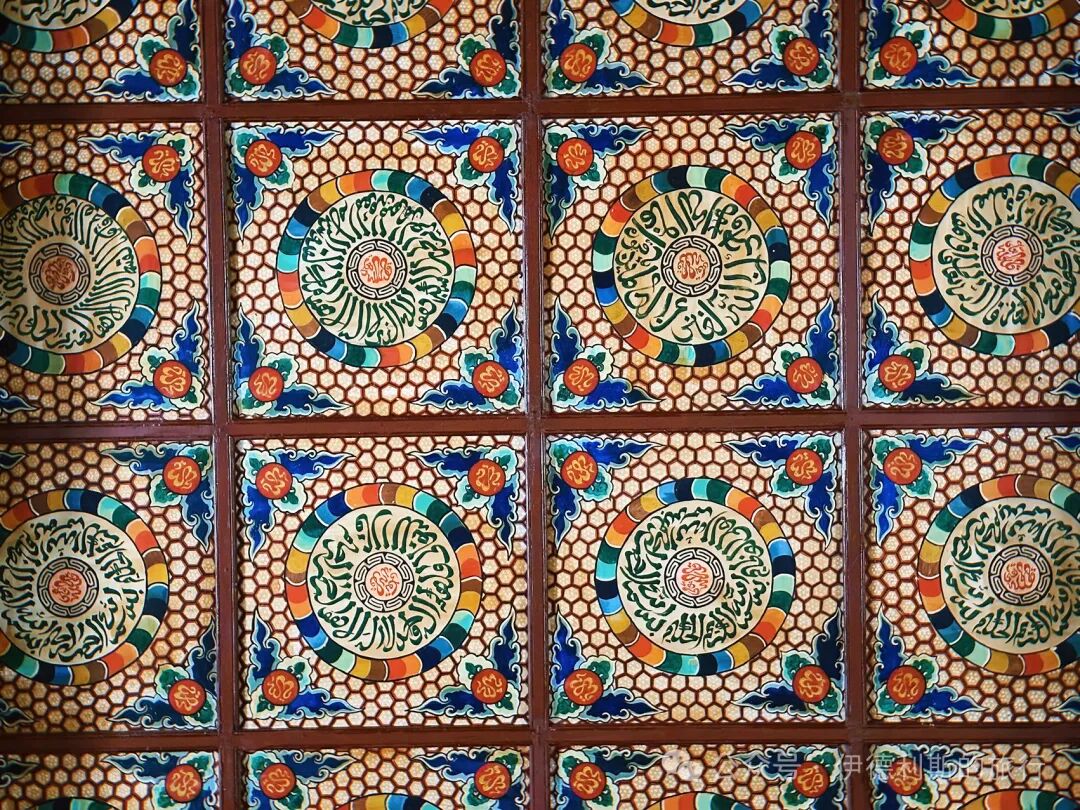
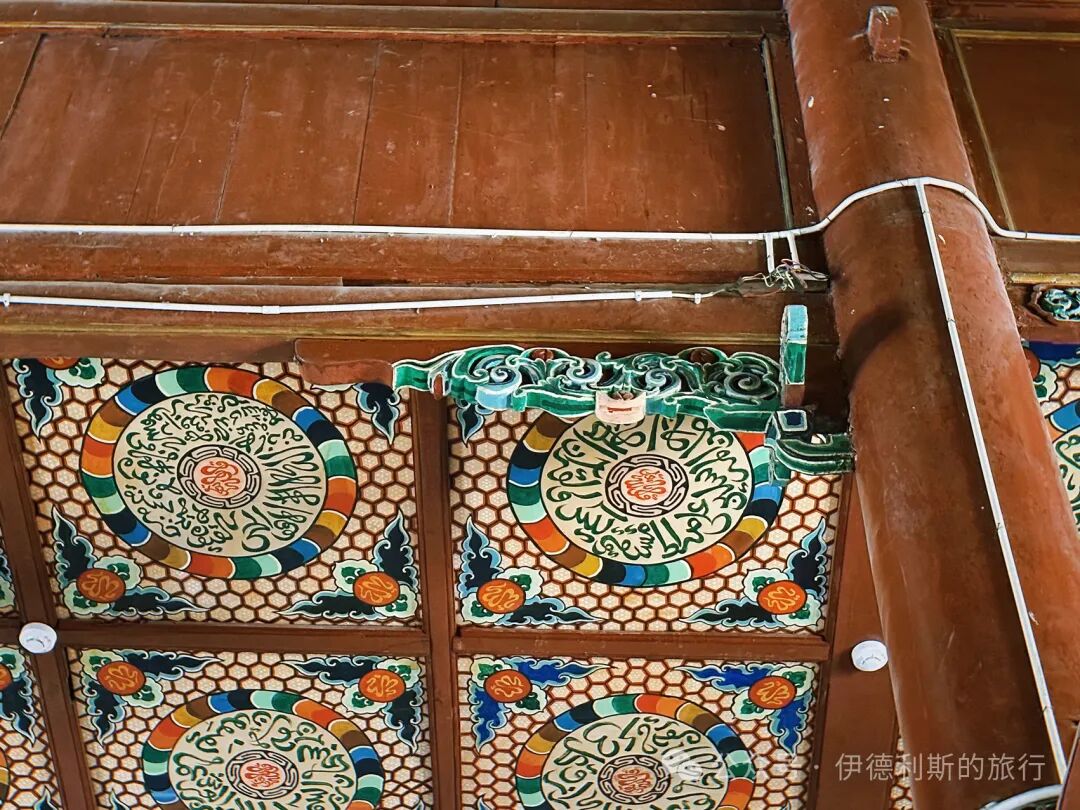
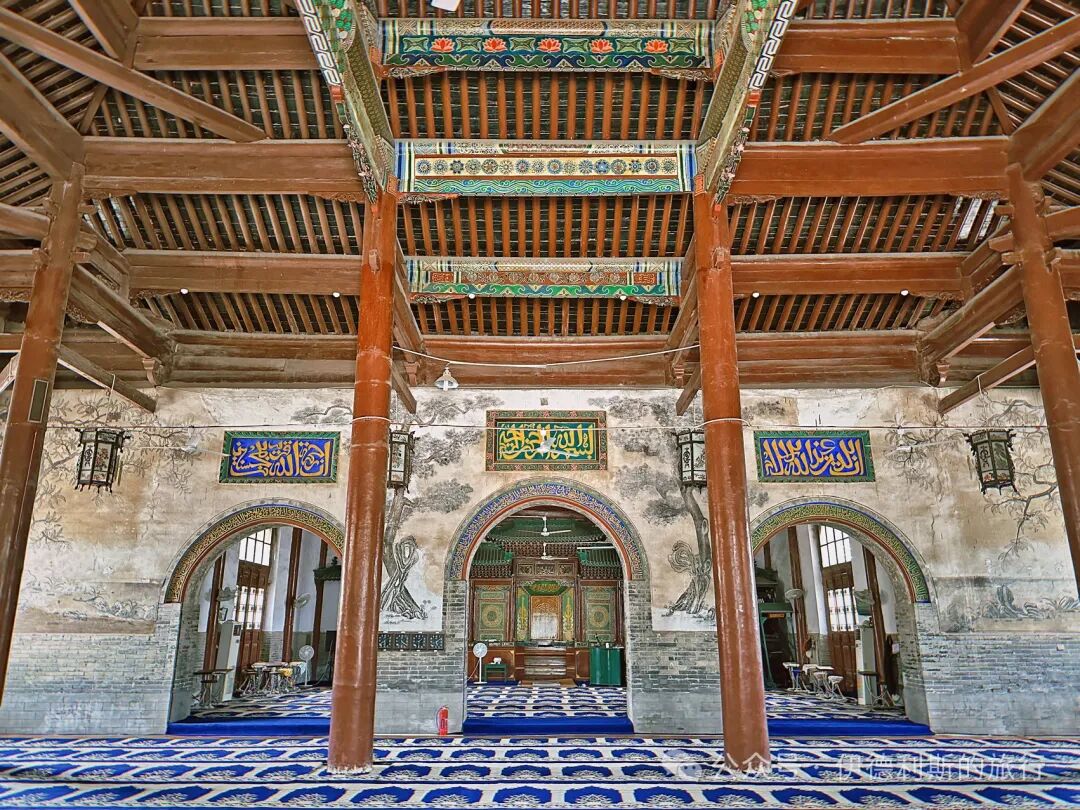
The main hall of the North Mosque preserves precious murals from the Qing Dynasty.
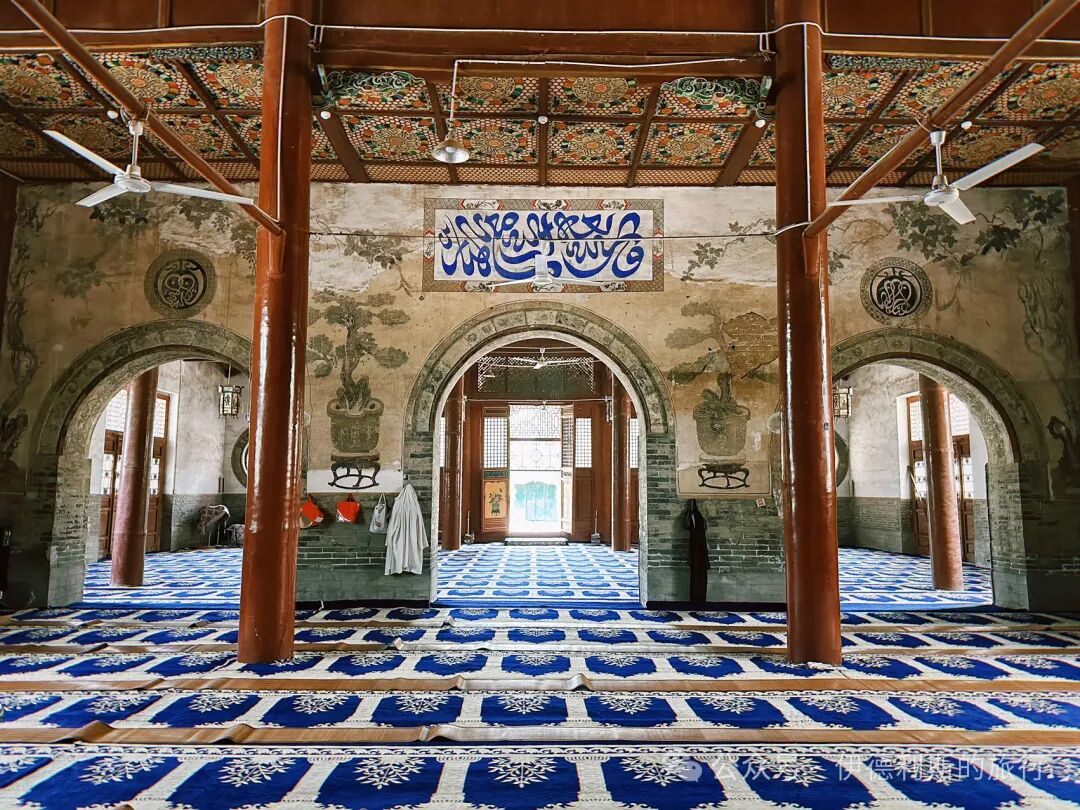
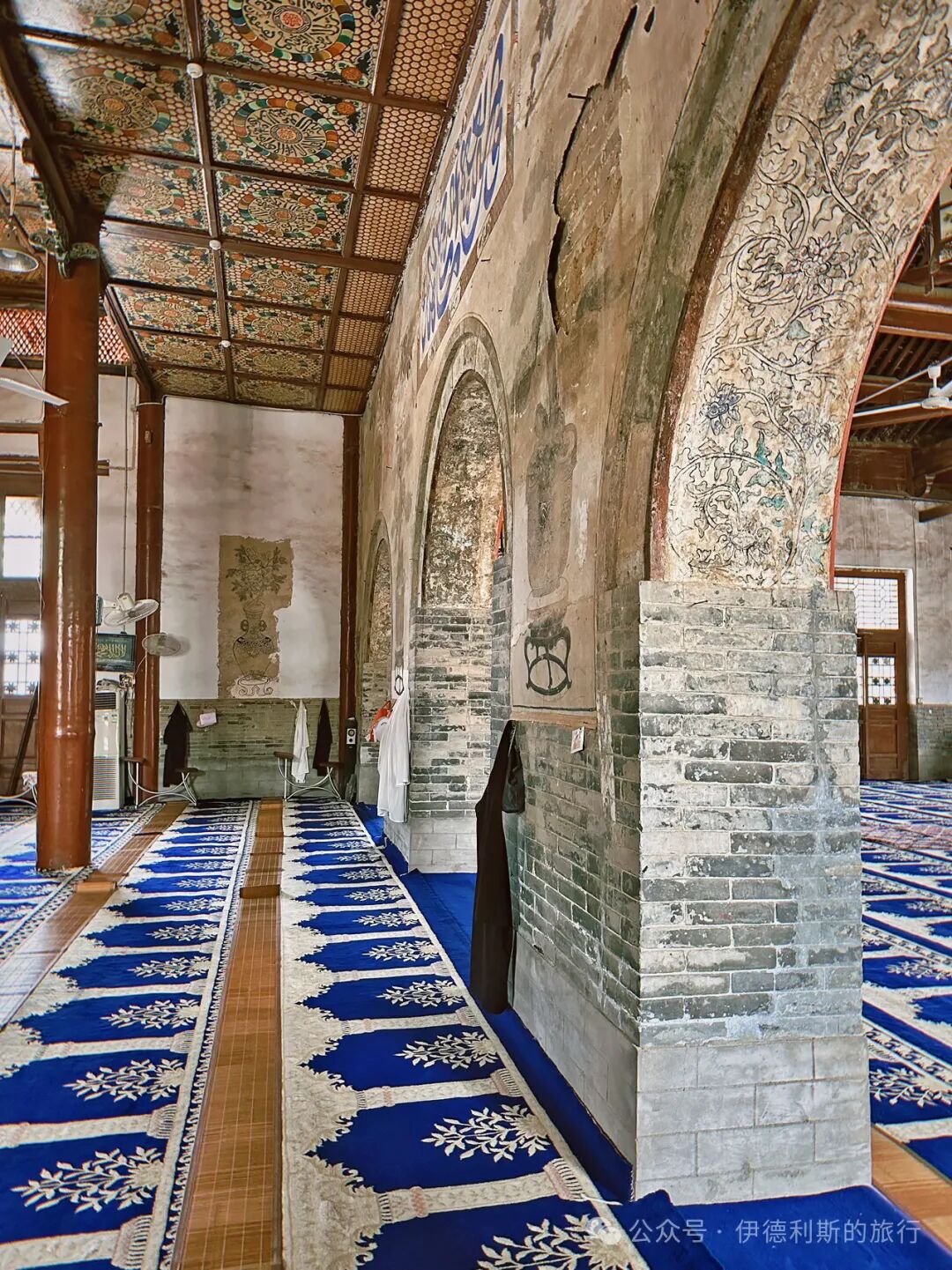
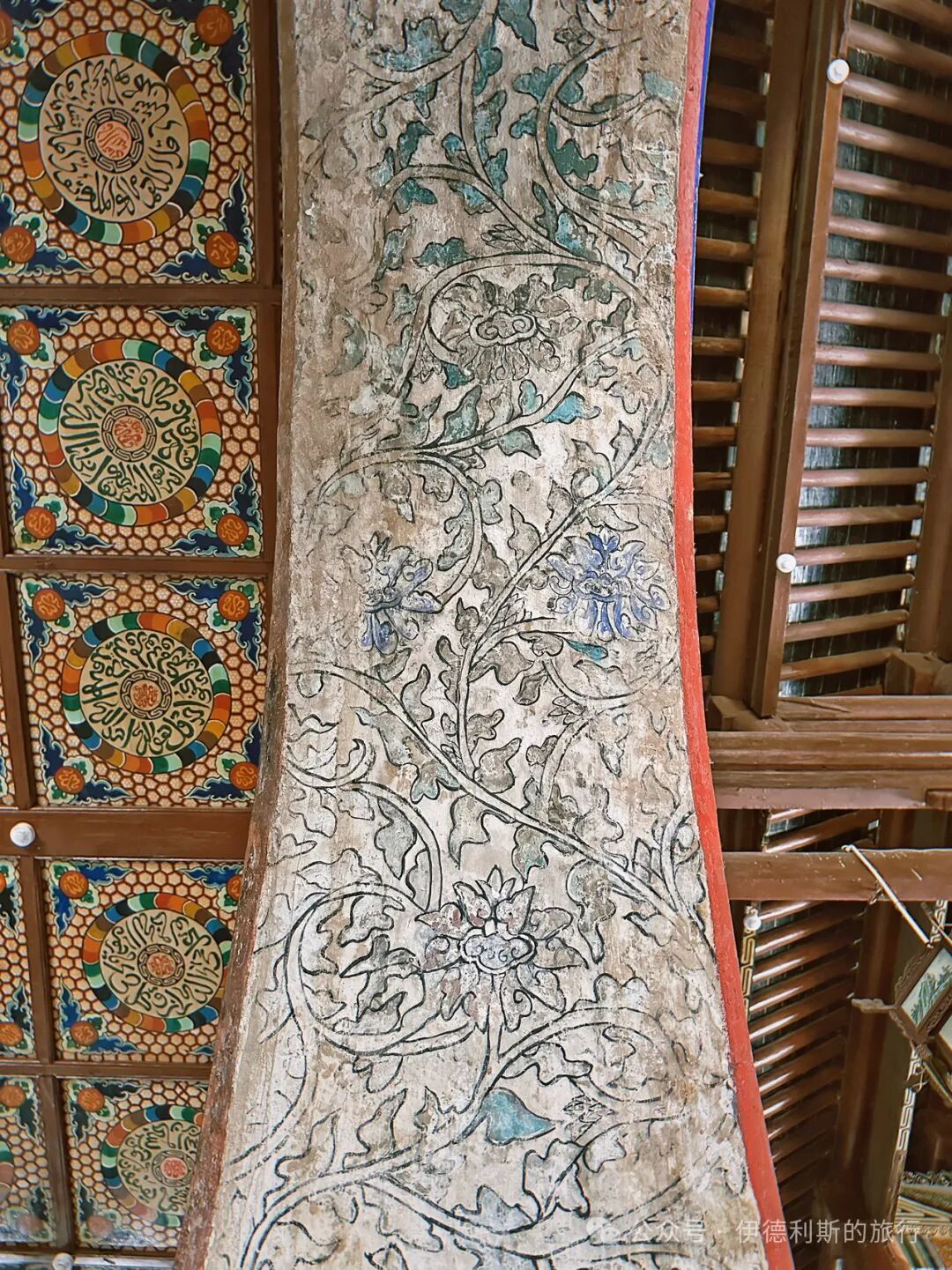
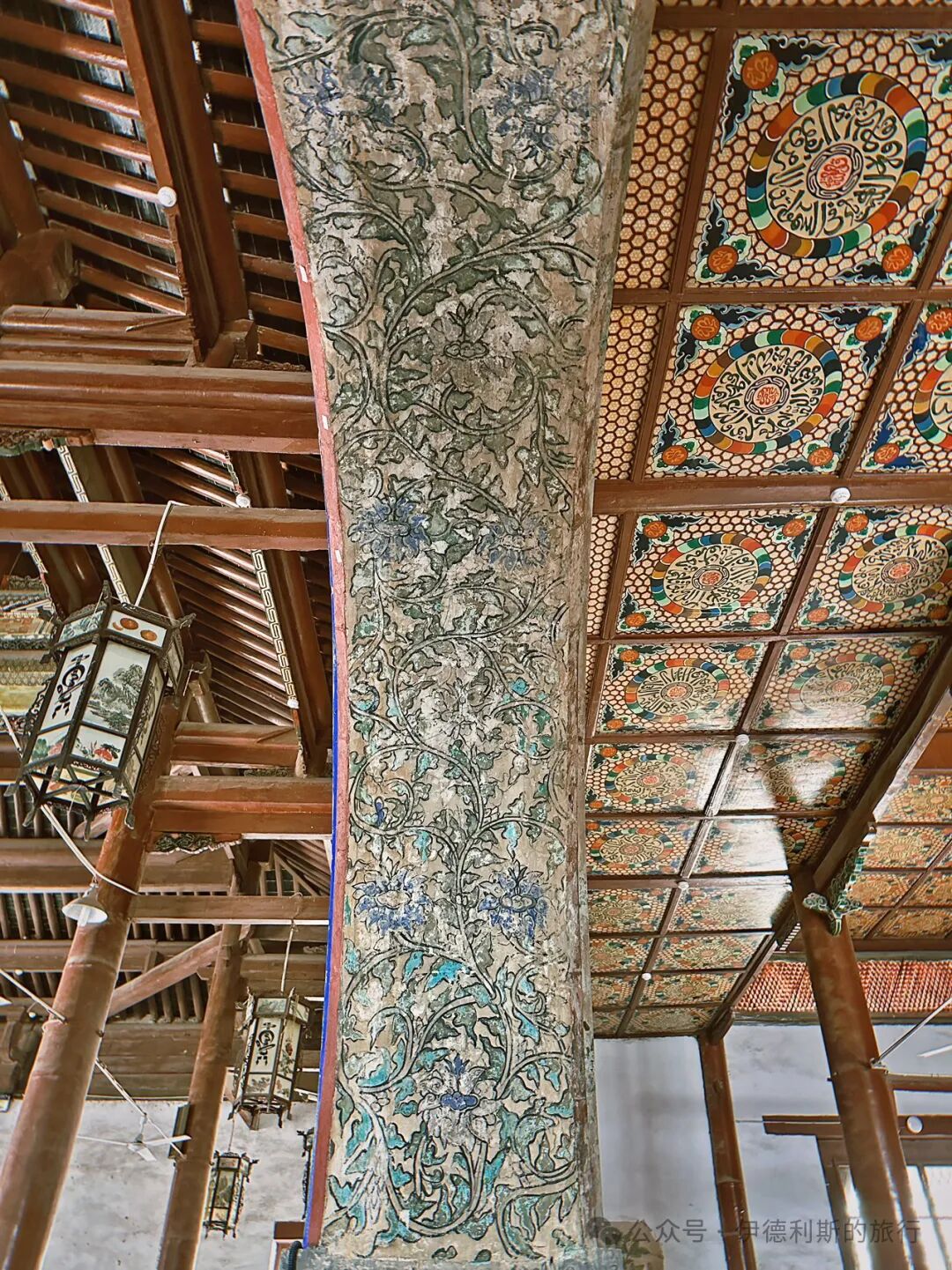
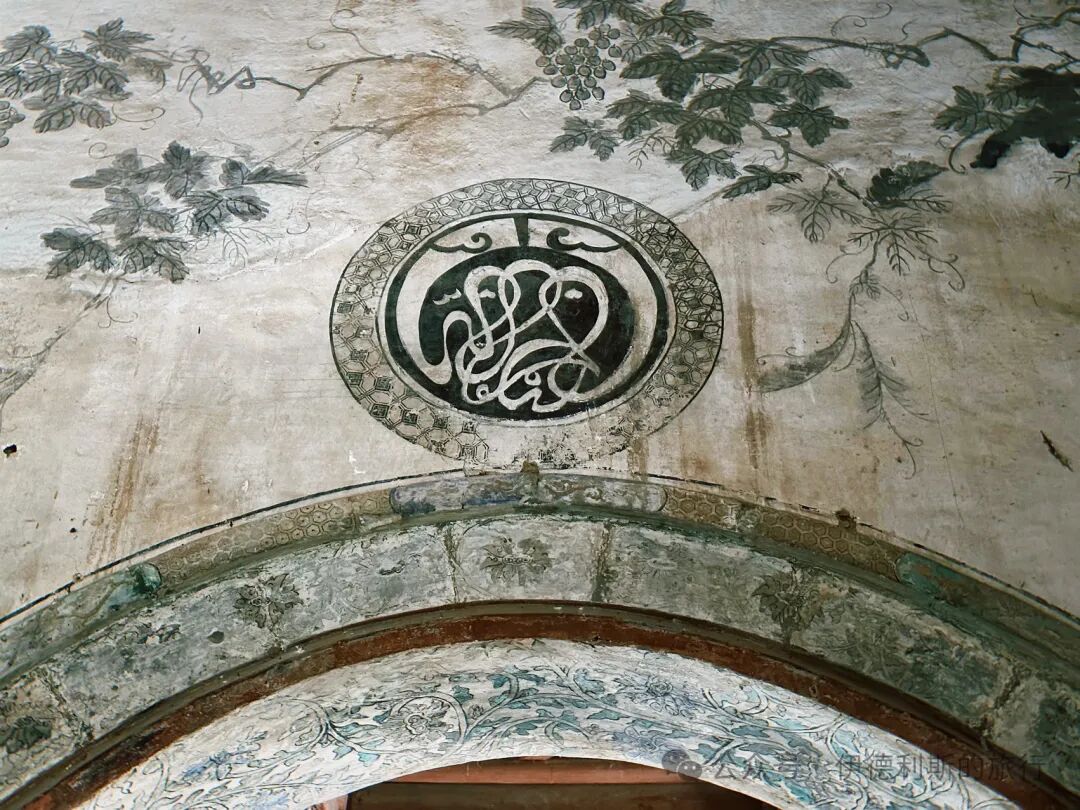
The North Mosque (Beidasi) features various forms of calligraphy, including palace lanterns (gongdeng), brick carvings, plaques, architectural paintings, and wood carvings.
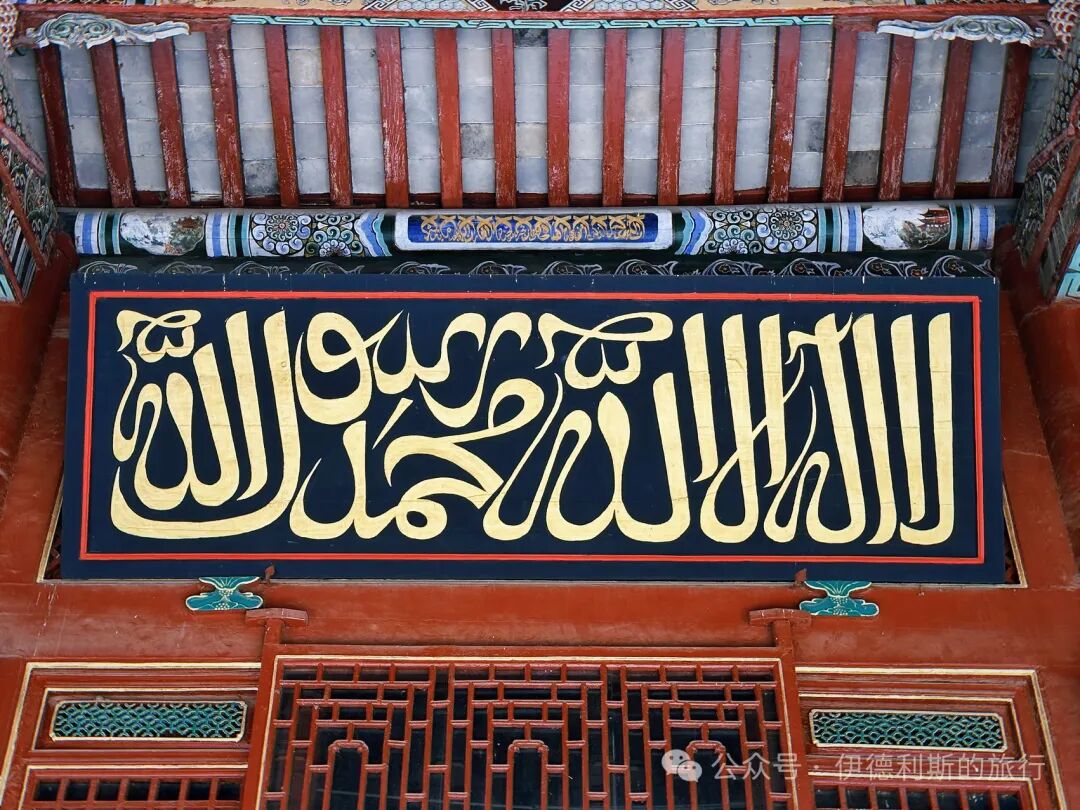
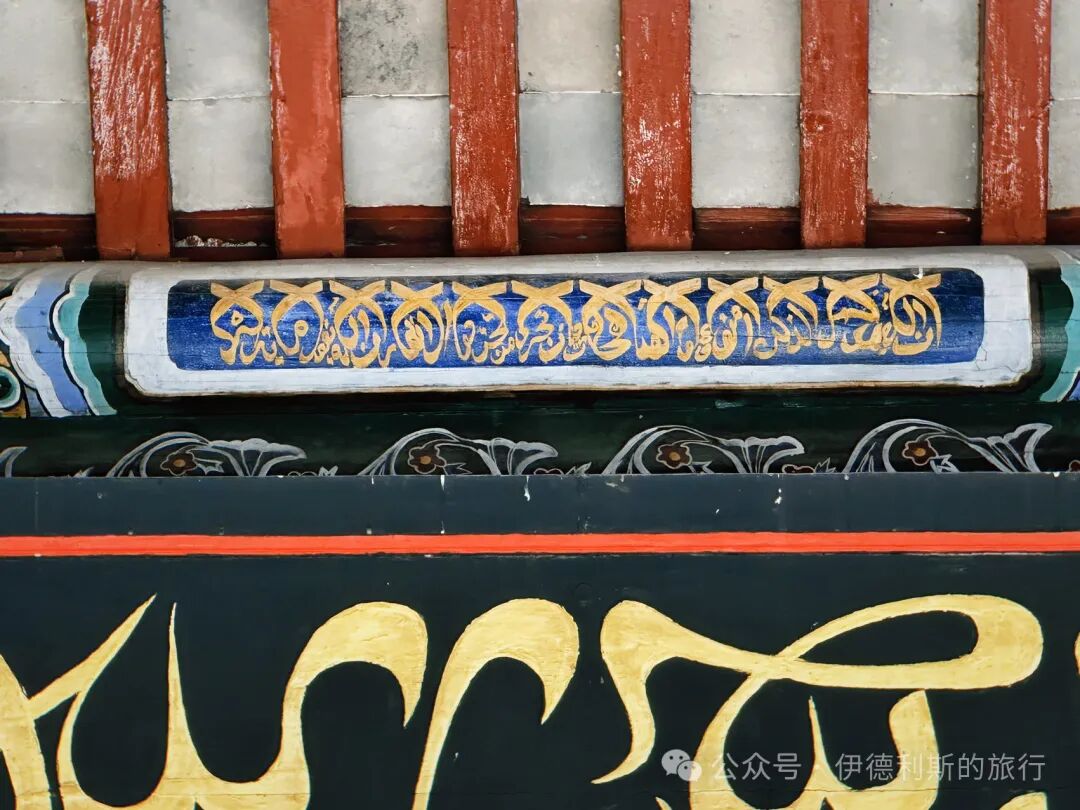
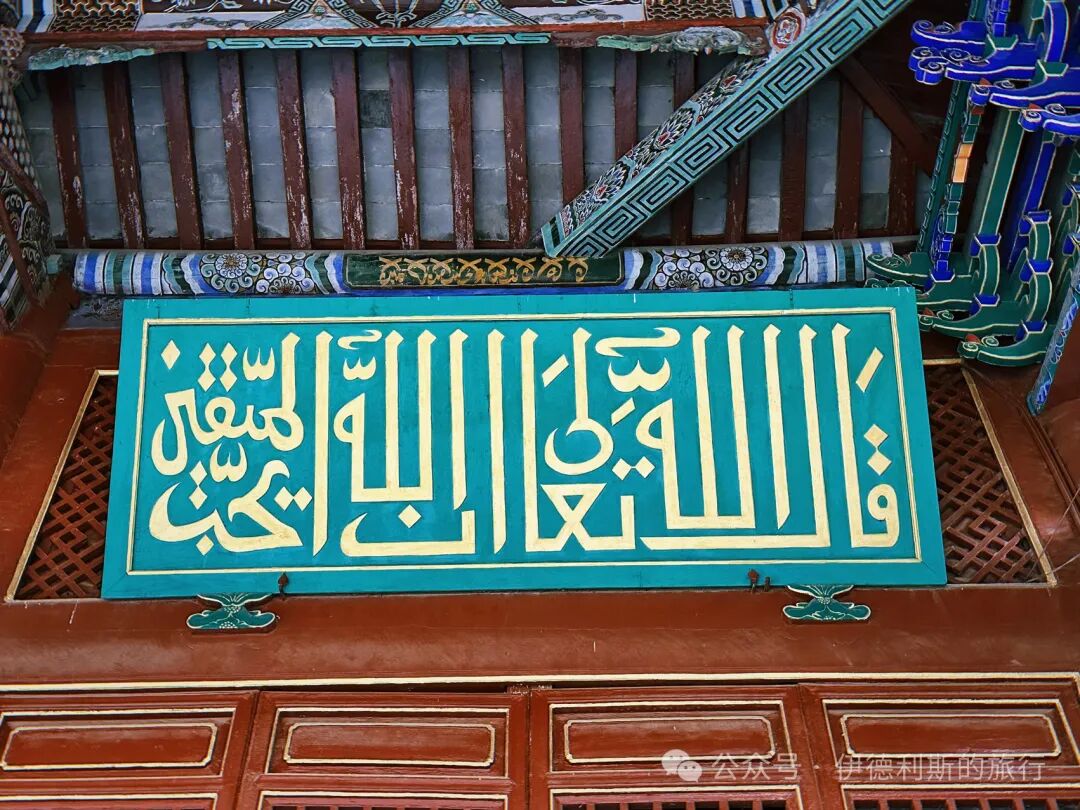
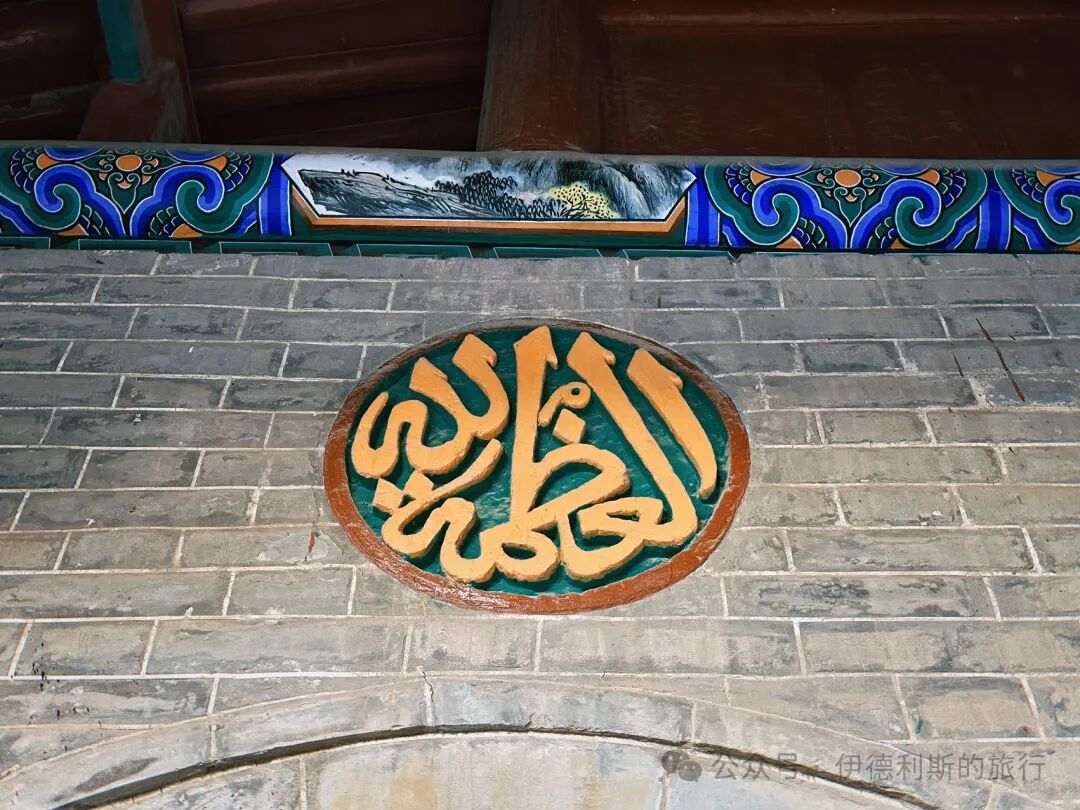
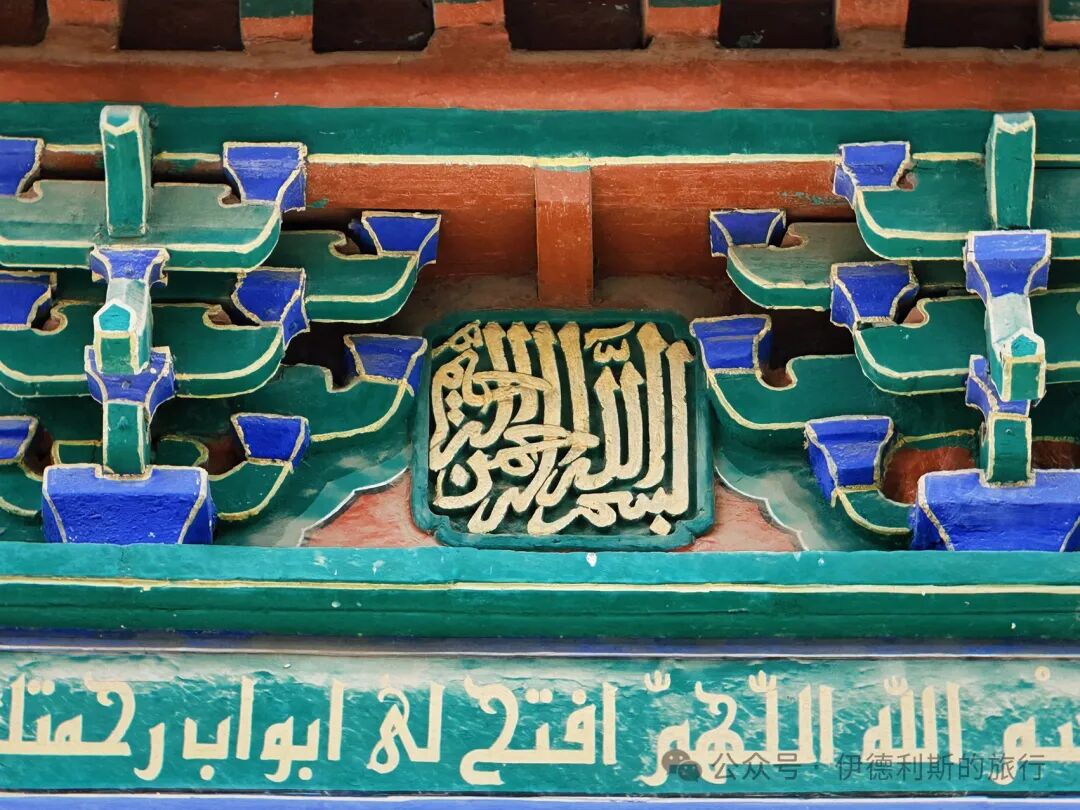
At the far east end of the North Mosque stands a gate in the style of a memorial archway (pailou), featuring delicate bracket sets (dougong) and upturned eaves.
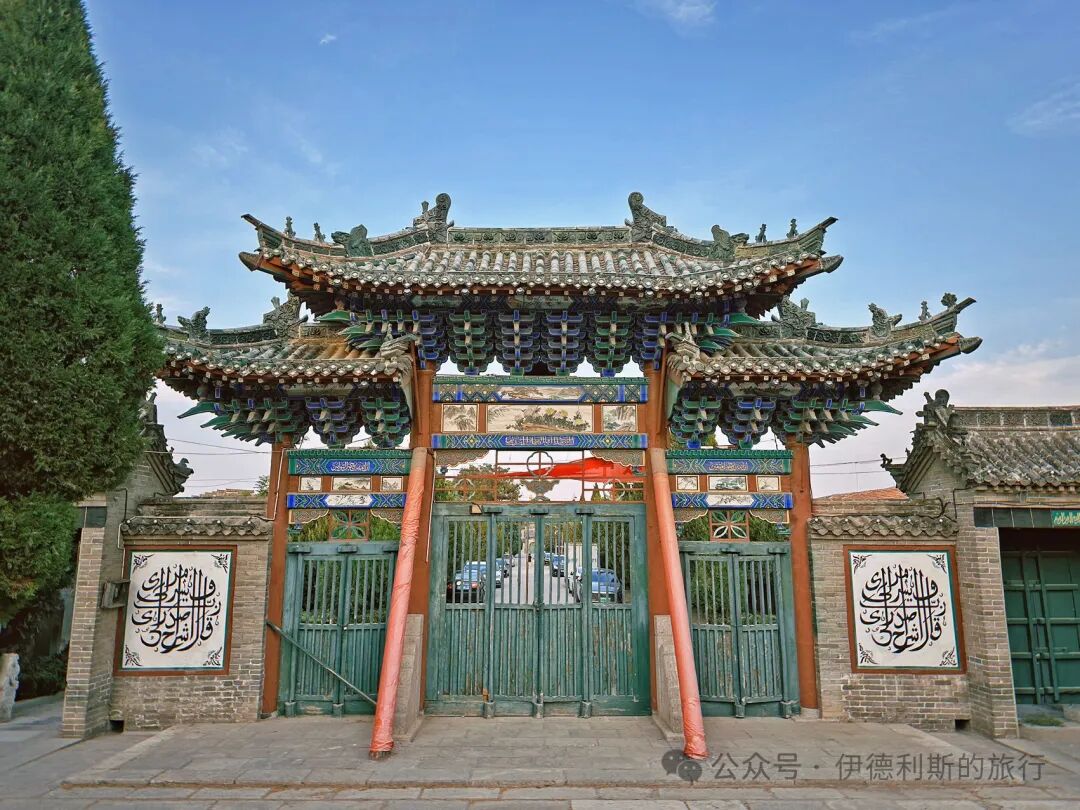
After entering the main gate, you reach a ceremonial gate (yimen) built in the style of a memorial archway. Two Qing Dynasty plaques hang on the ceremonial gate:
A plaque reading 'Sincerity and Rectitude' (Chengyi Zhengxin) erected in the 11th year of the Guangxu reign by Li Ying, a decorated military official.
A plaque reading 'Orderly Human Relations' (Yilun Youxu) from the 2nd year of the Qianlong reign by Yang Jing, a deputy military commander; this one appears to be a replica.
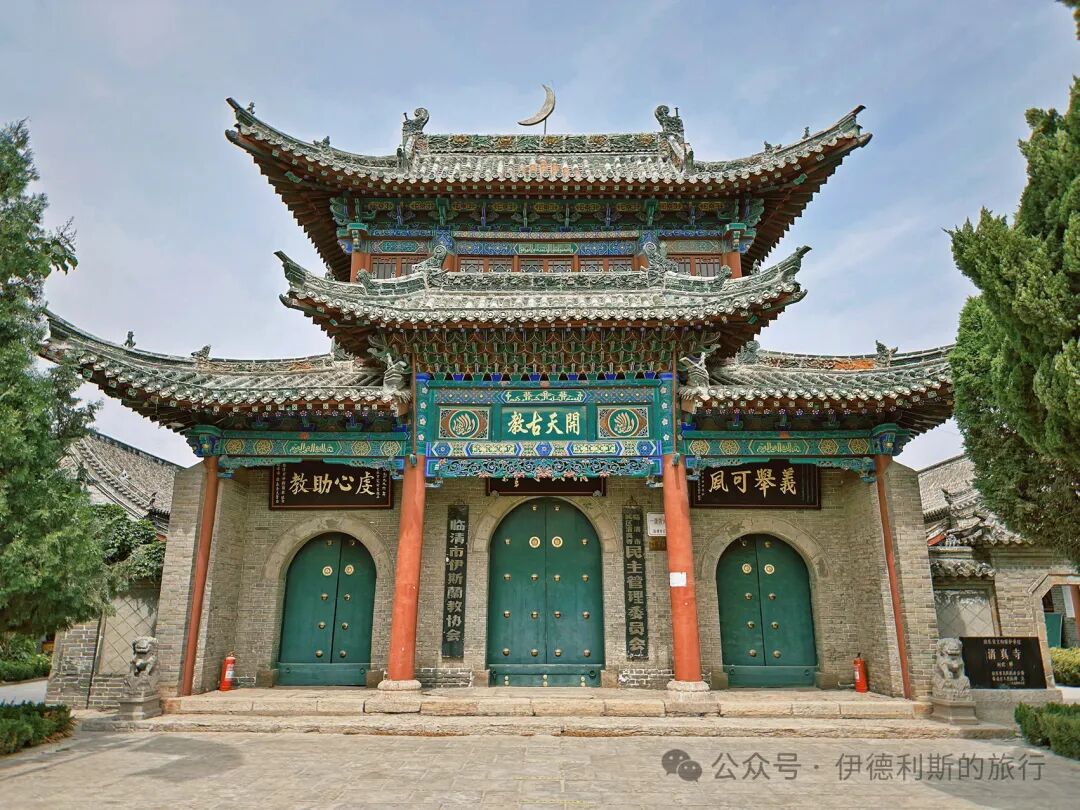
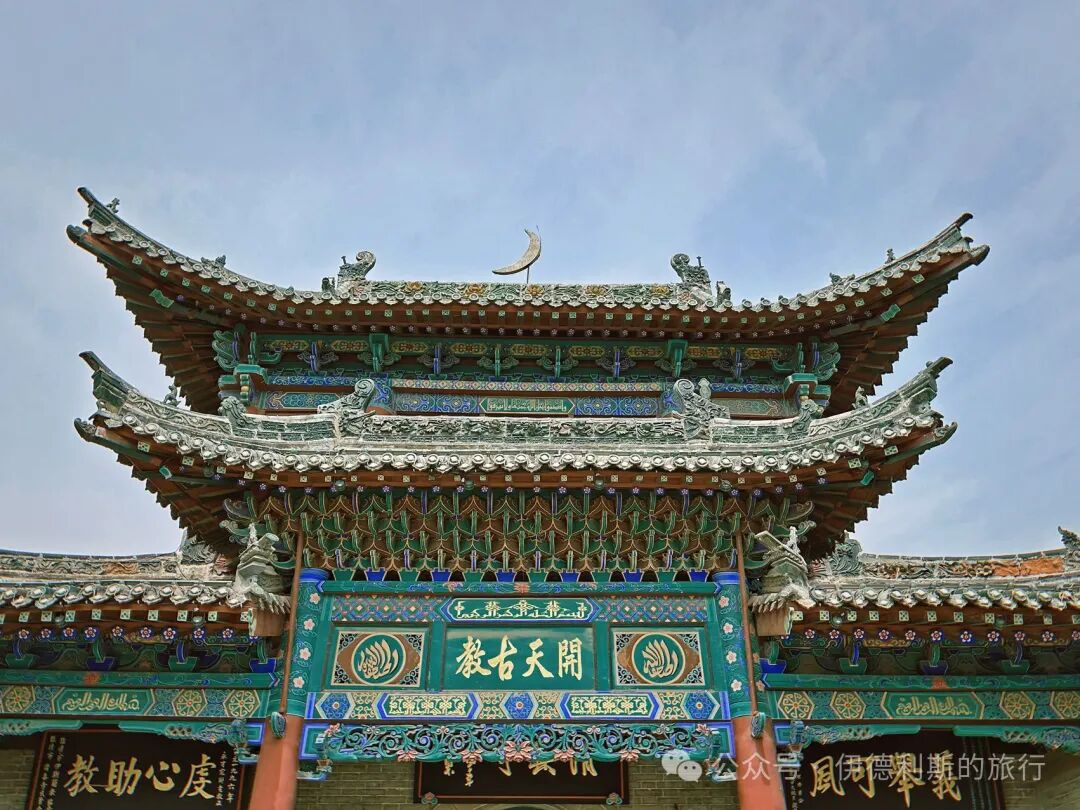
Behind the ceremonial gate is a path leading to the main prayer hall, with lecture halls (jiangtang) located on the north and south sides.
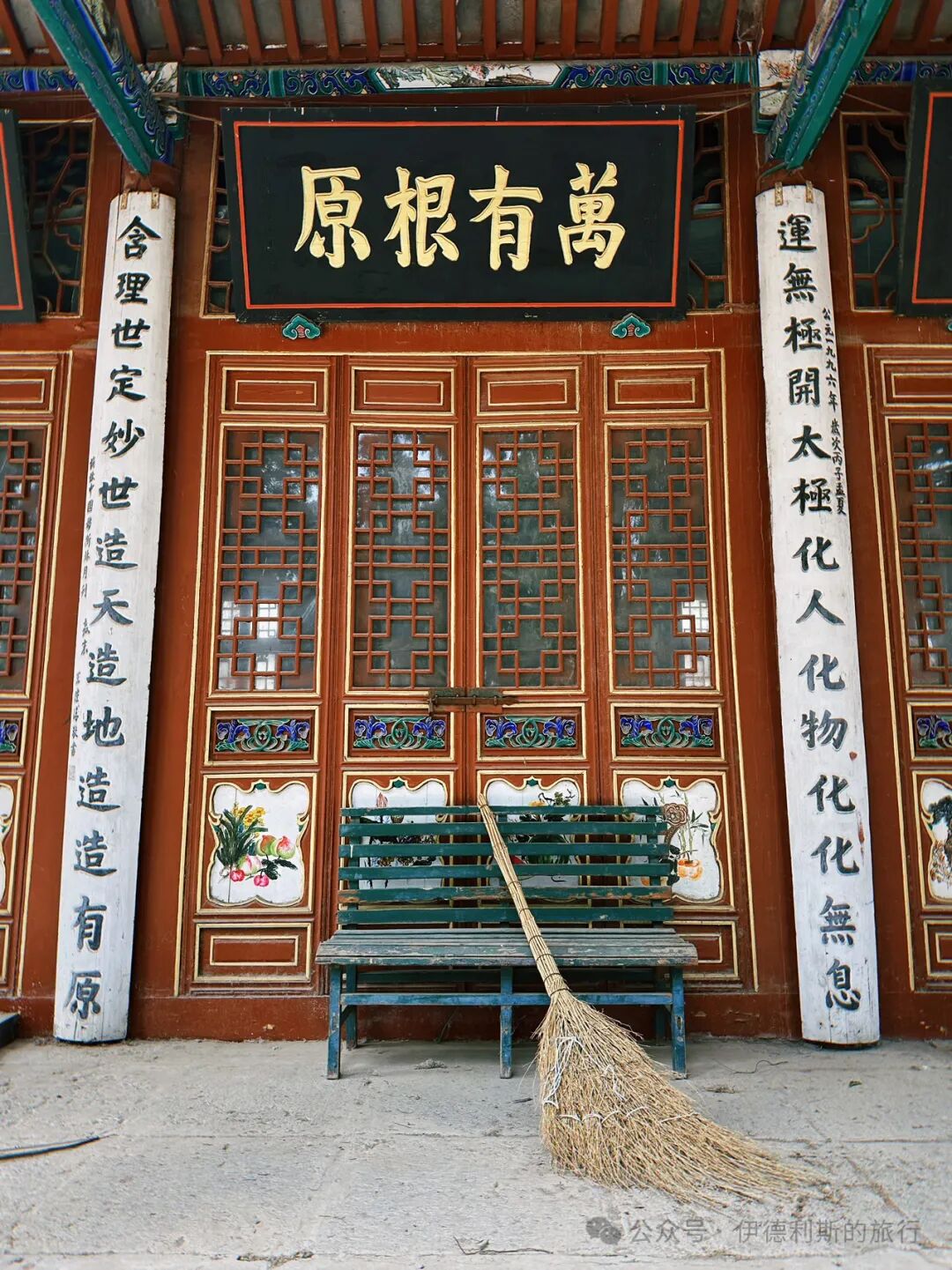
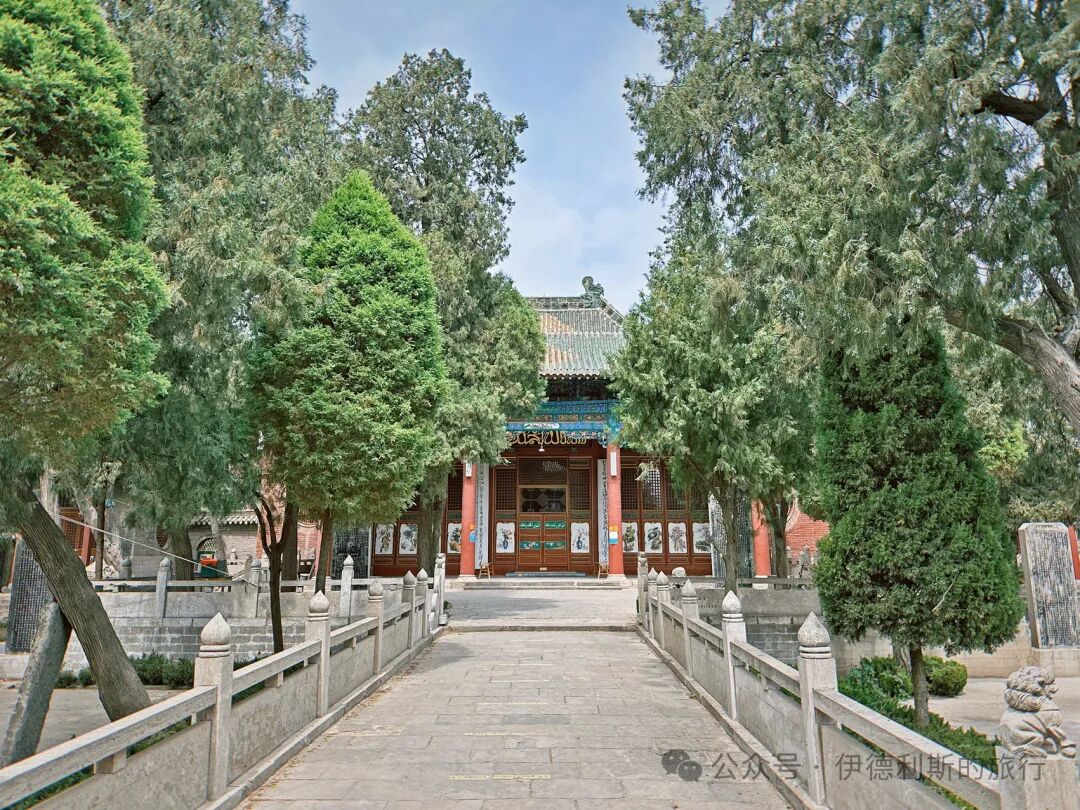
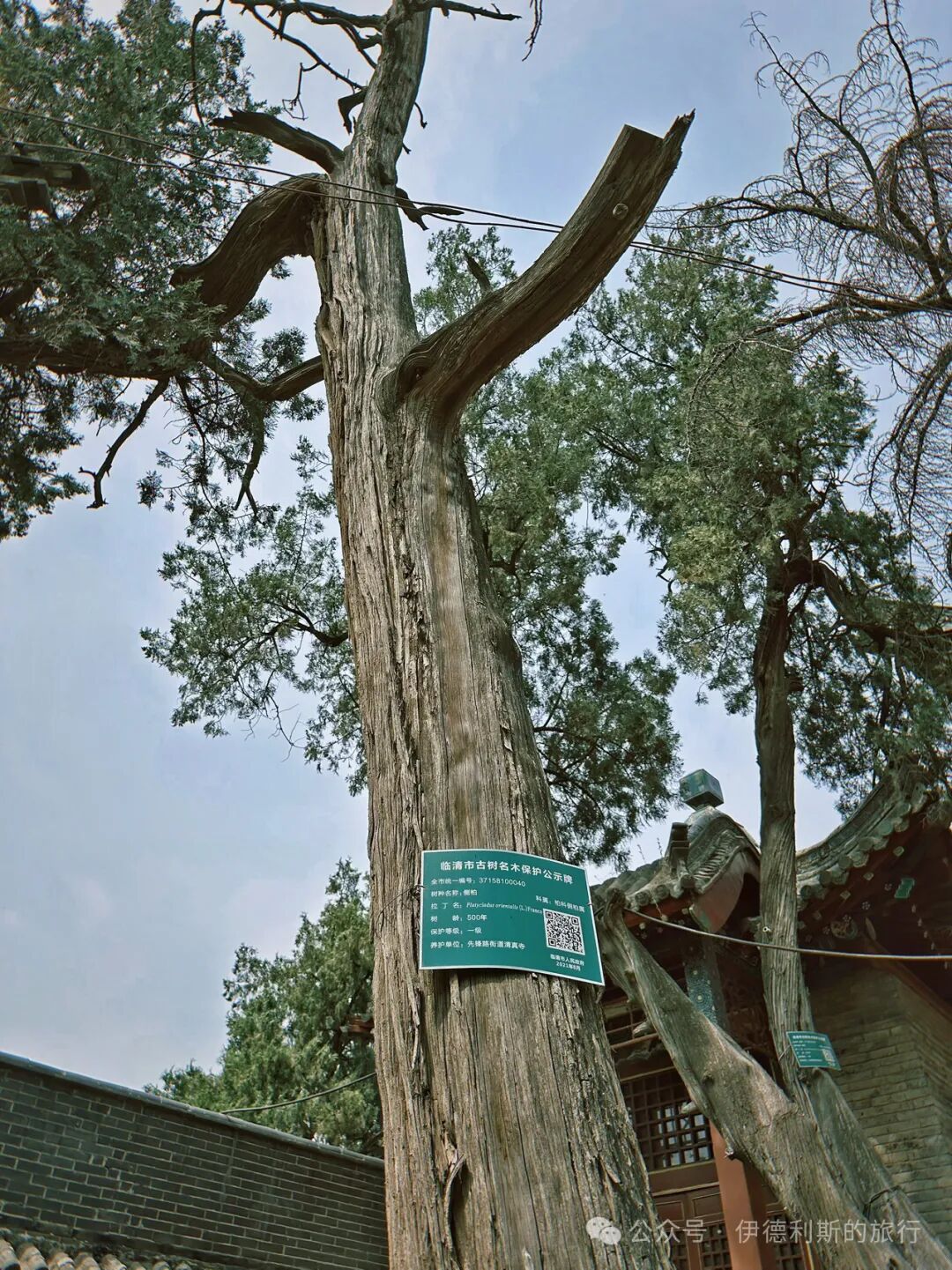
On the north and south sides of the main prayer hall are two scripture pavilions (cangjingting) with four-cornered pointed roofs and small porches (baoxia) in front of the doors. In front of the pavilion stands a 500-year-old Chinese arborvitae (cebai) planted when the mosque was built.
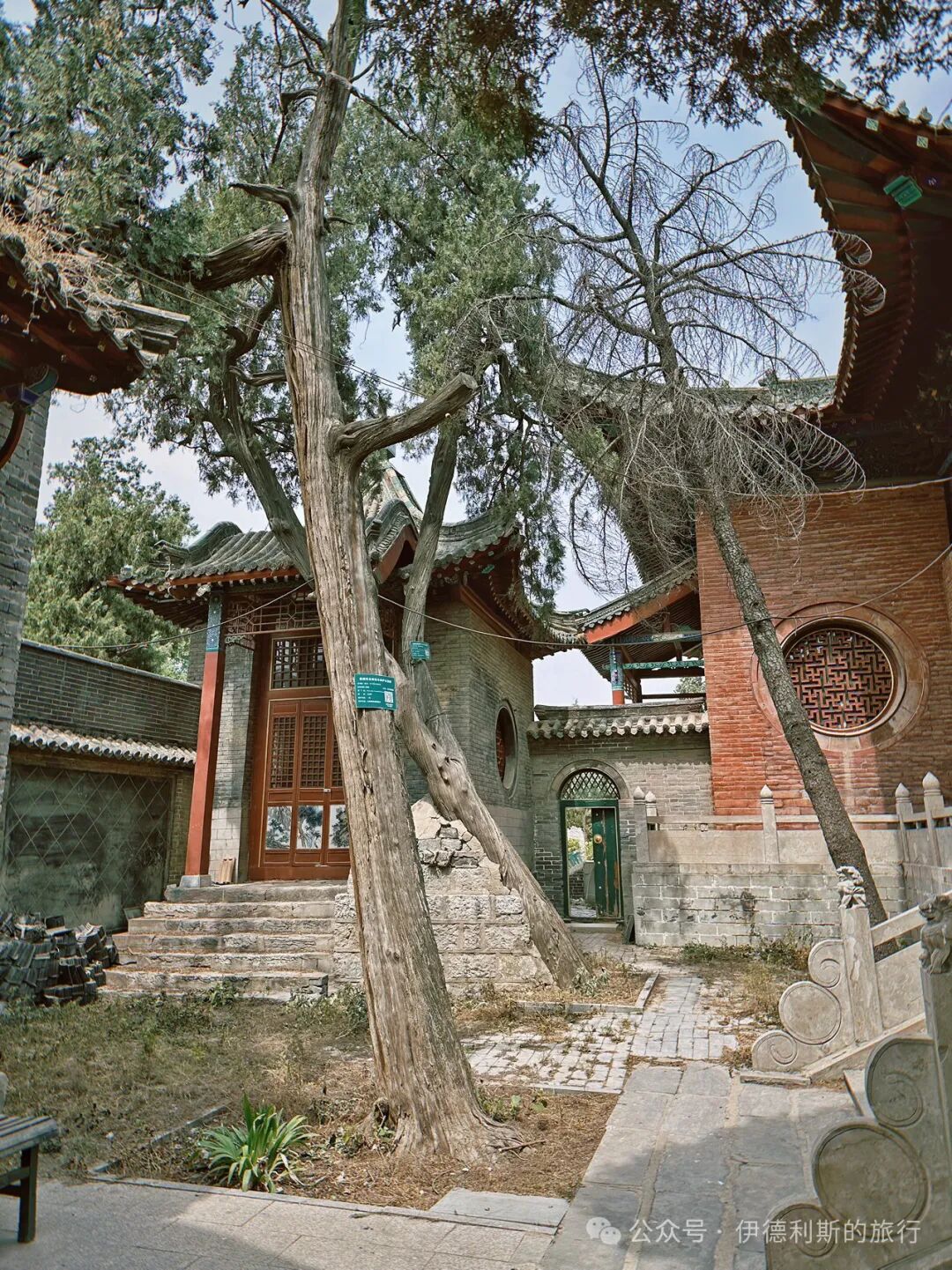
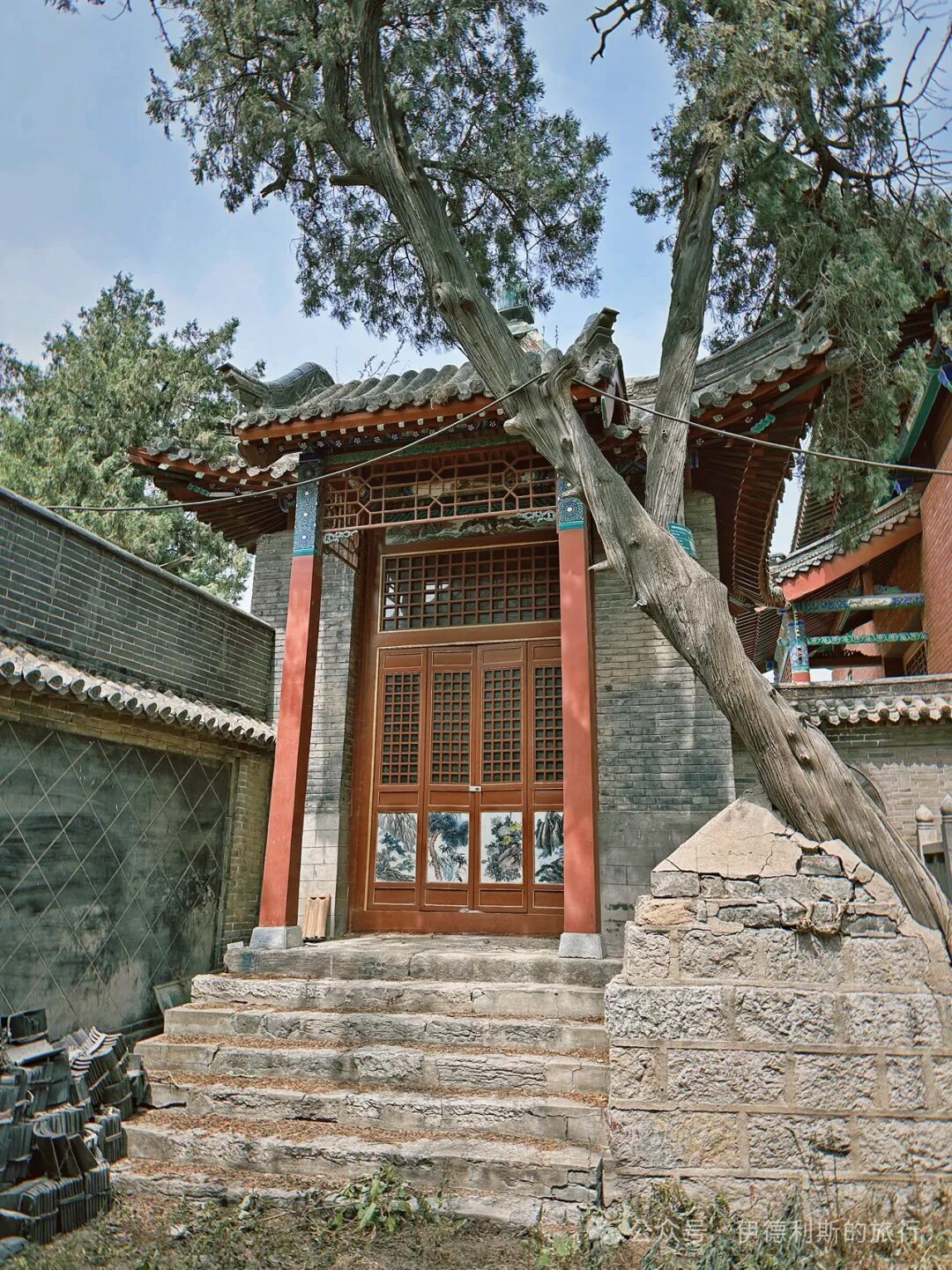
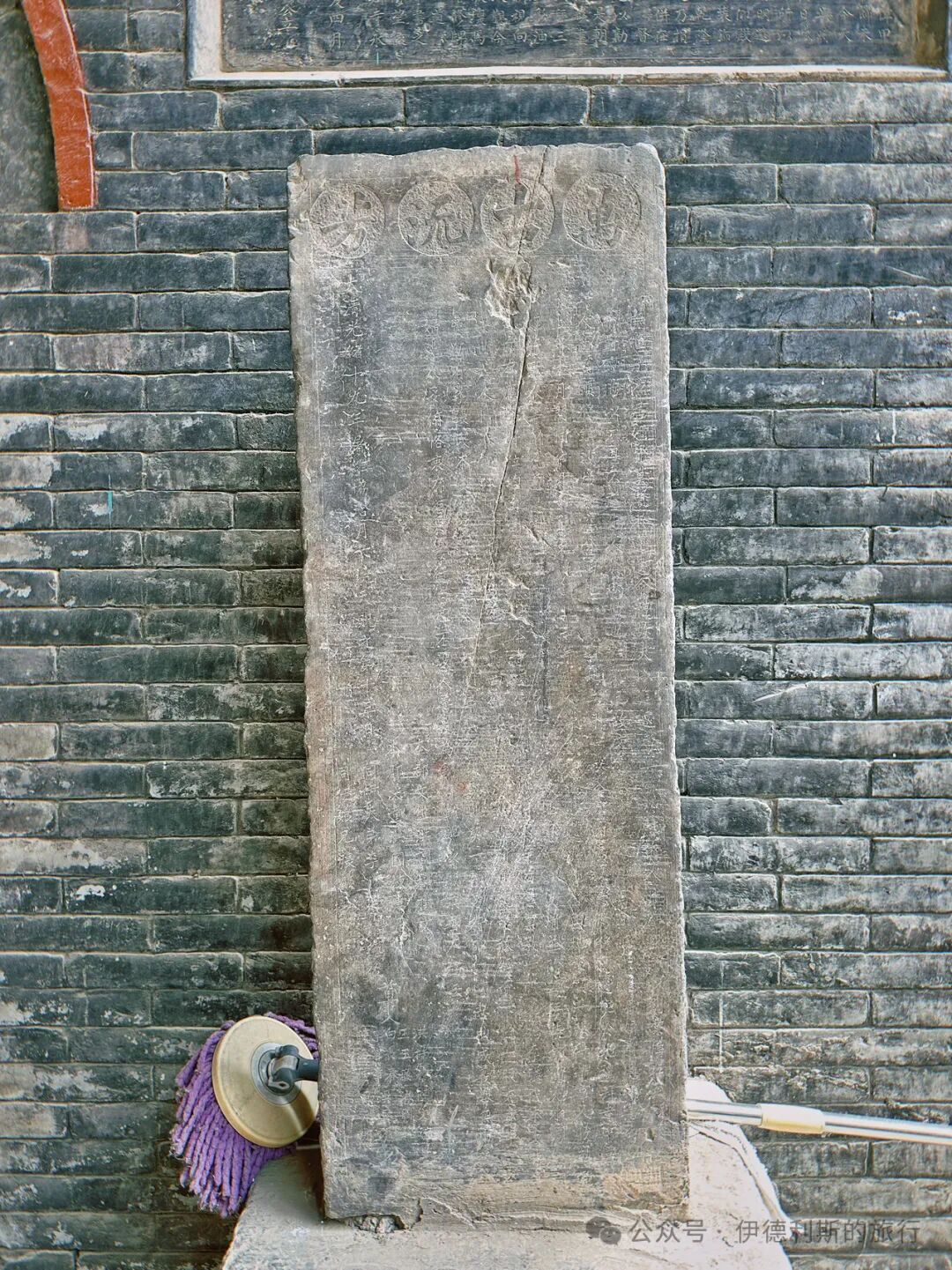
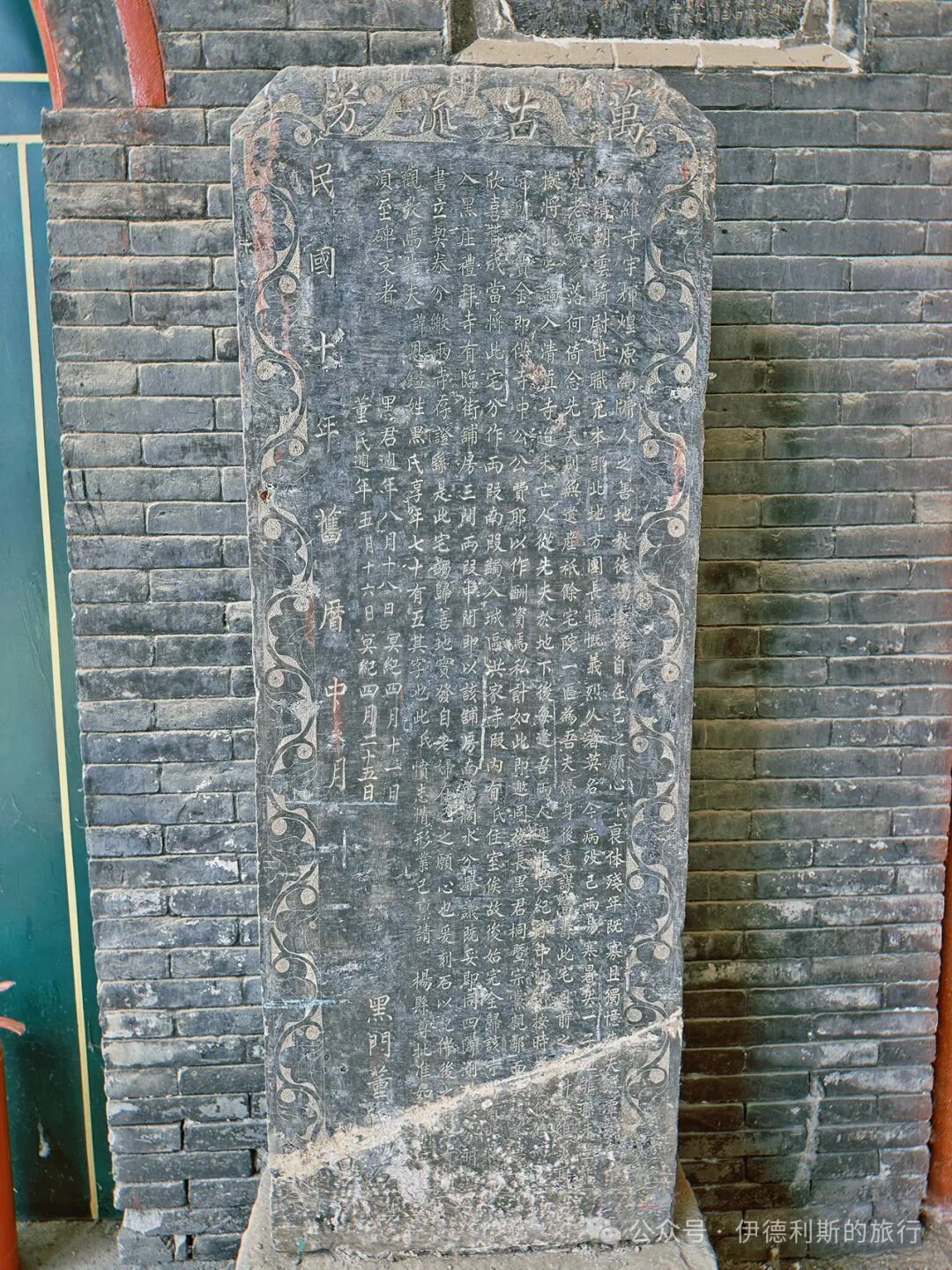
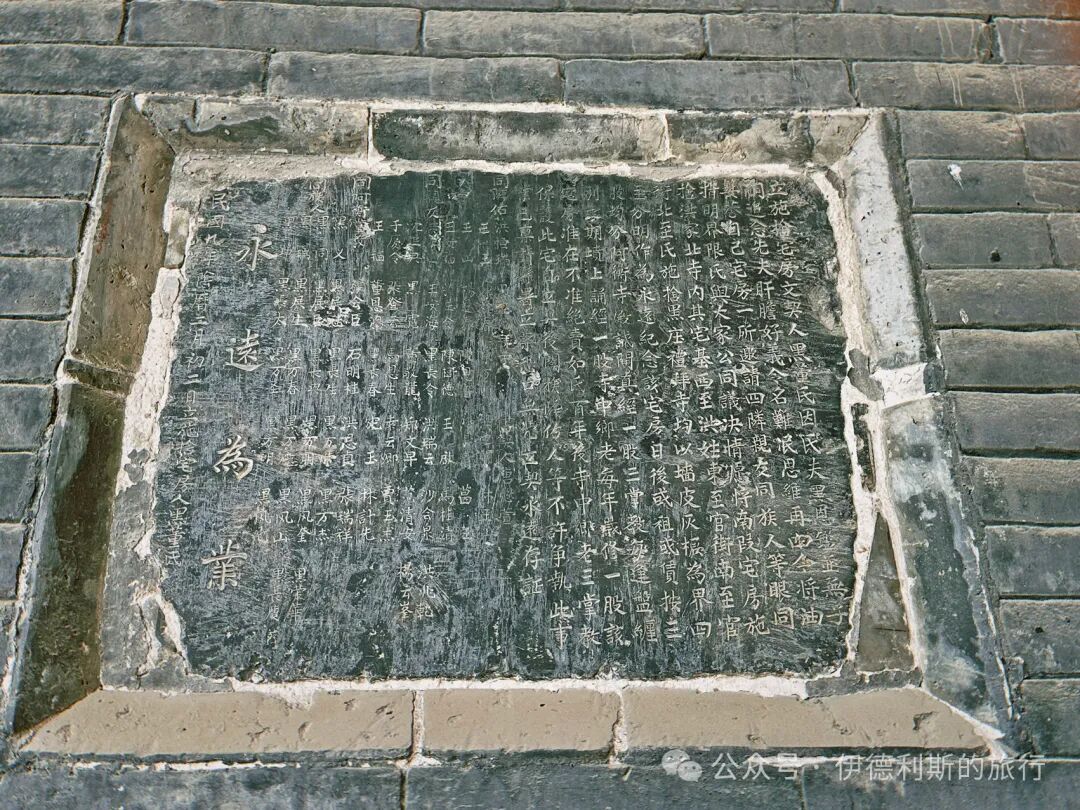
Behind the main hall is the back gate, which features a plaque inscribed with "Qingzhen Libaisi" (Mosque) dated to the first month of the Jiajing jiazi year. The mosque also houses several stone tablets from the Qing dynasty and the Republic of China era.
Linqing East Mosque
After leaving the Linqing North Mosque, I went across the street to the East Mosque to pay my respects at the tombs of the saints (shamu) and the Hufu cemetery (Hufutan). The Linqing East Mosque was first built in 1465 (the first year of the Chenghua reign of the Ming dynasty). It was renovated twice in 1583 (the eleventh year of the Wanli reign) and 1649 (the sixth year of the Shunzhi reign), then expanded again in 1734 (the twelfth year of the Yongzheng reign), resulting in its grand scale.
On the far west side of the Linqing East Mosque is the back gate, which features a "Libaisi" (Mosque) plaque inscribed during the renovation in the sixth year of the Shunzhi reign. Behind the back gate is the main prayer hall, which consists of a front porch (juanpeng), the main hall, and a rear vaulted hall (yaodian). The roof of the vaulted hall has four sloping sides meeting at a point, topped with a gilded gourd-shaped finial.
The main hall is nearly 30 meters deep, with 14 pillars supporting the roof beams. The mihrab is the same style as the one in the North Mosque, featuring a decorative archway design.
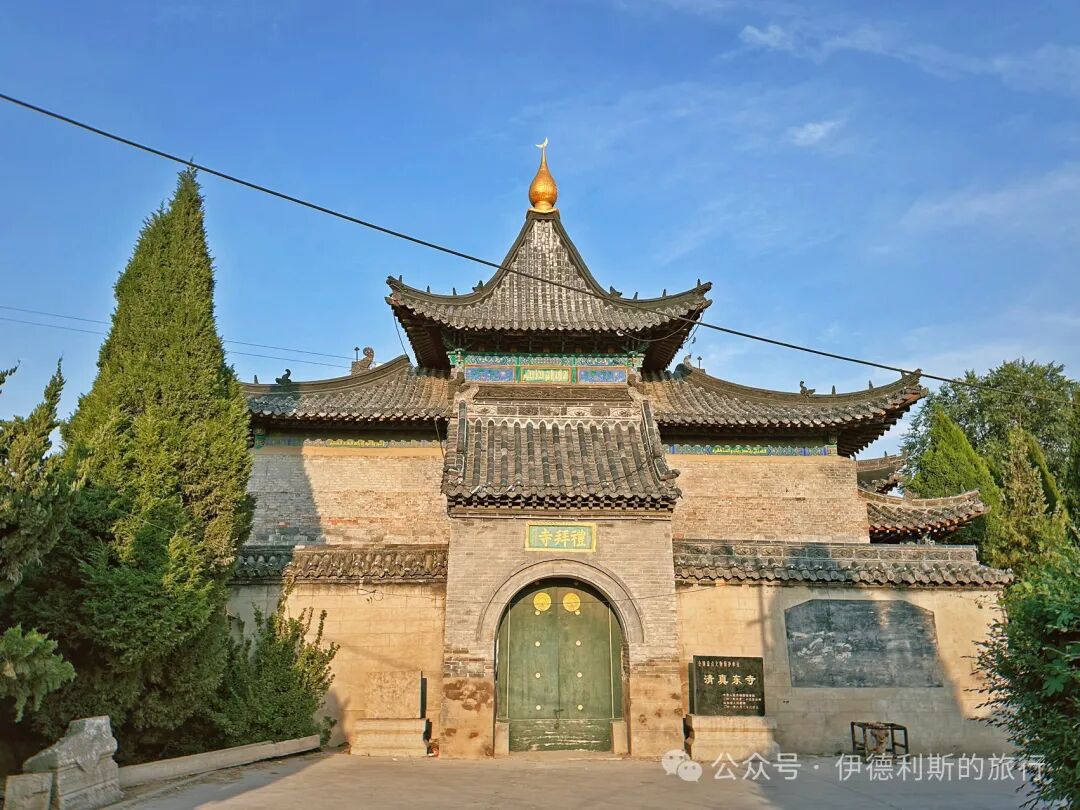
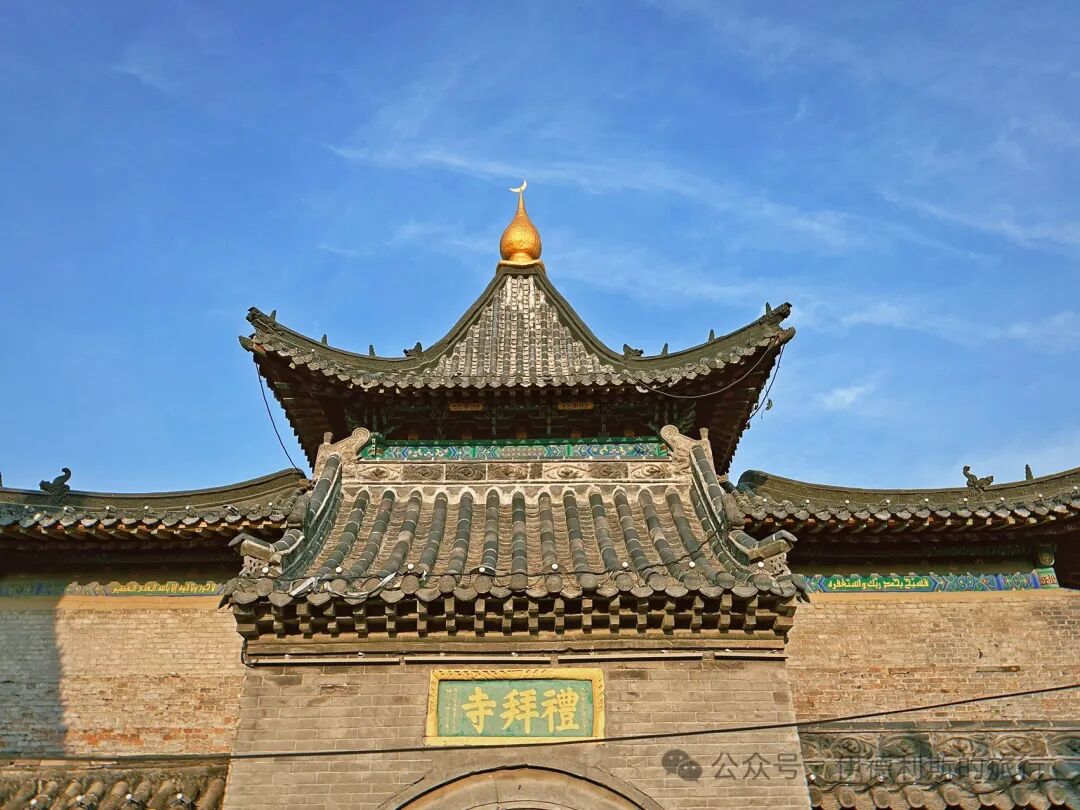
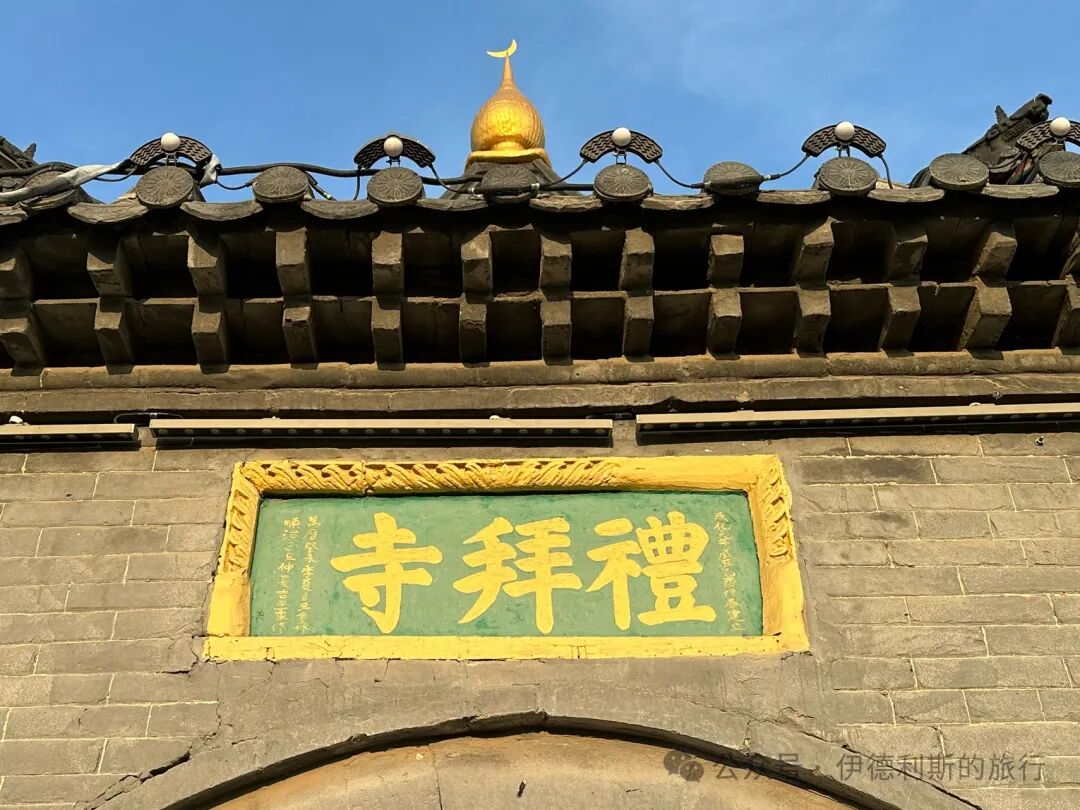
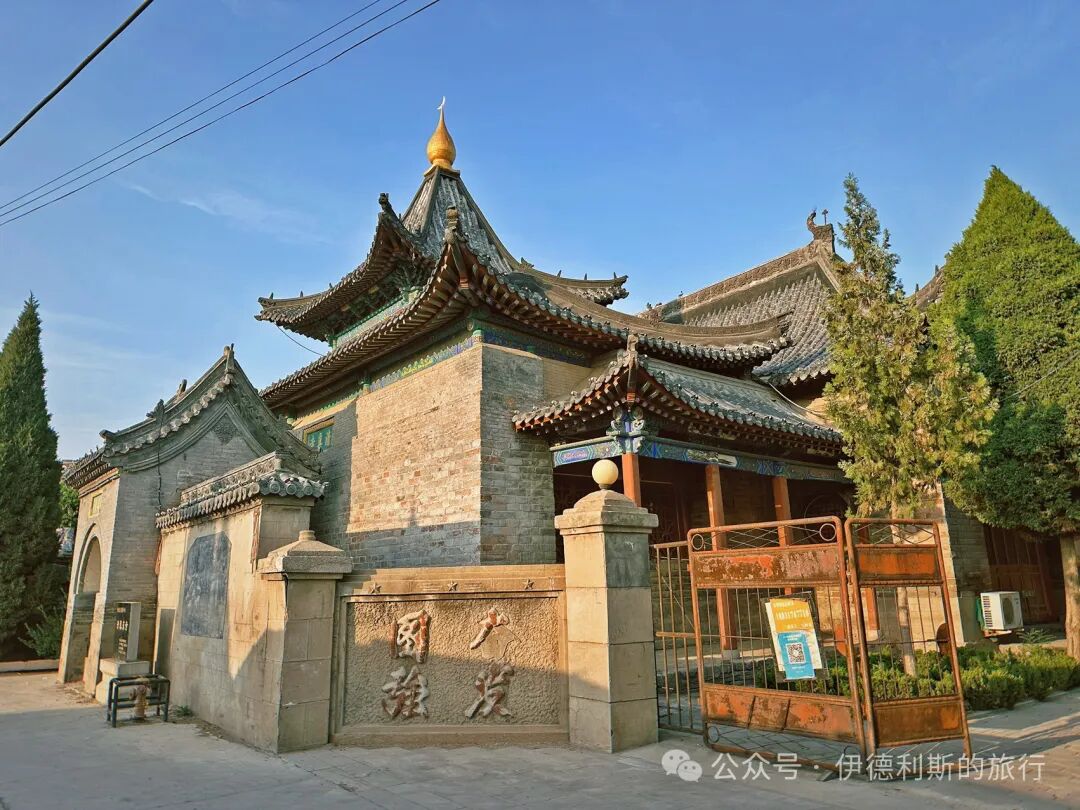
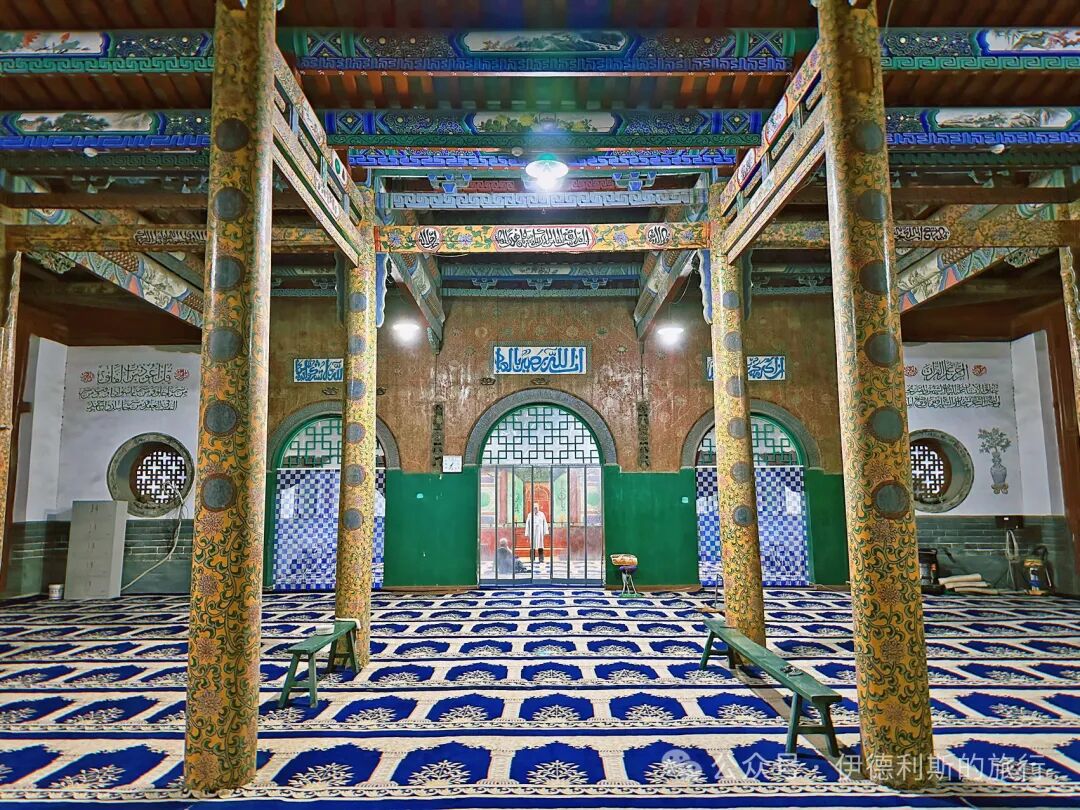
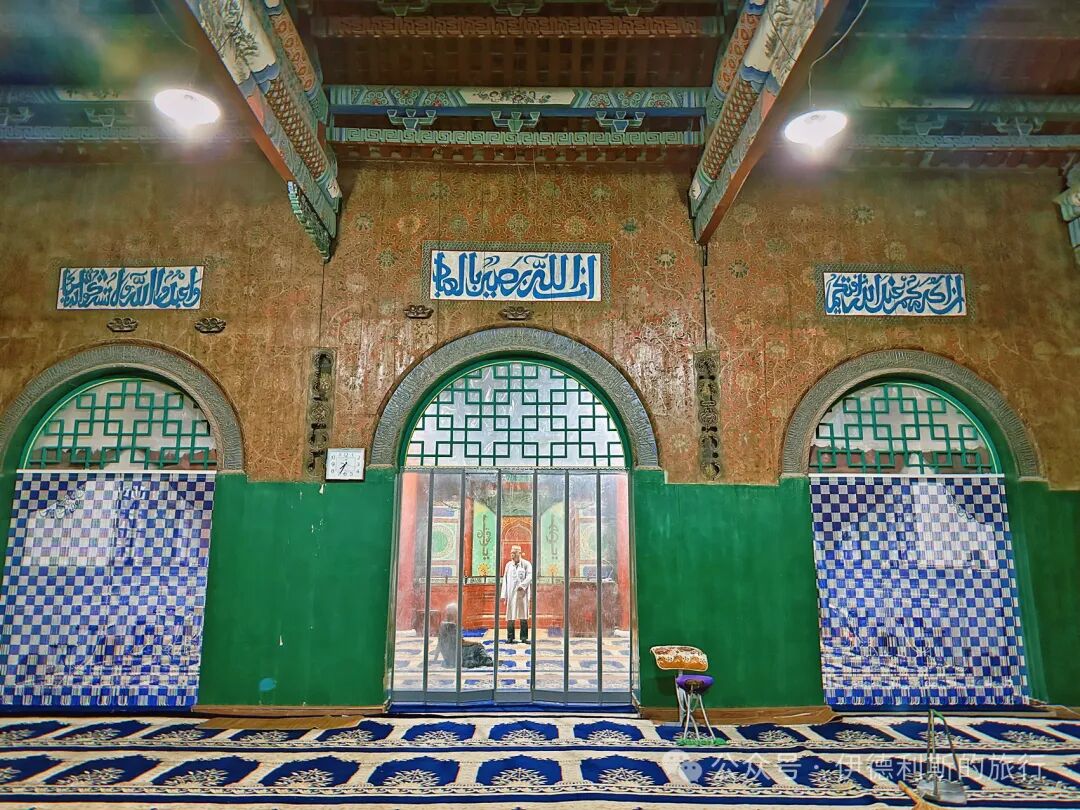
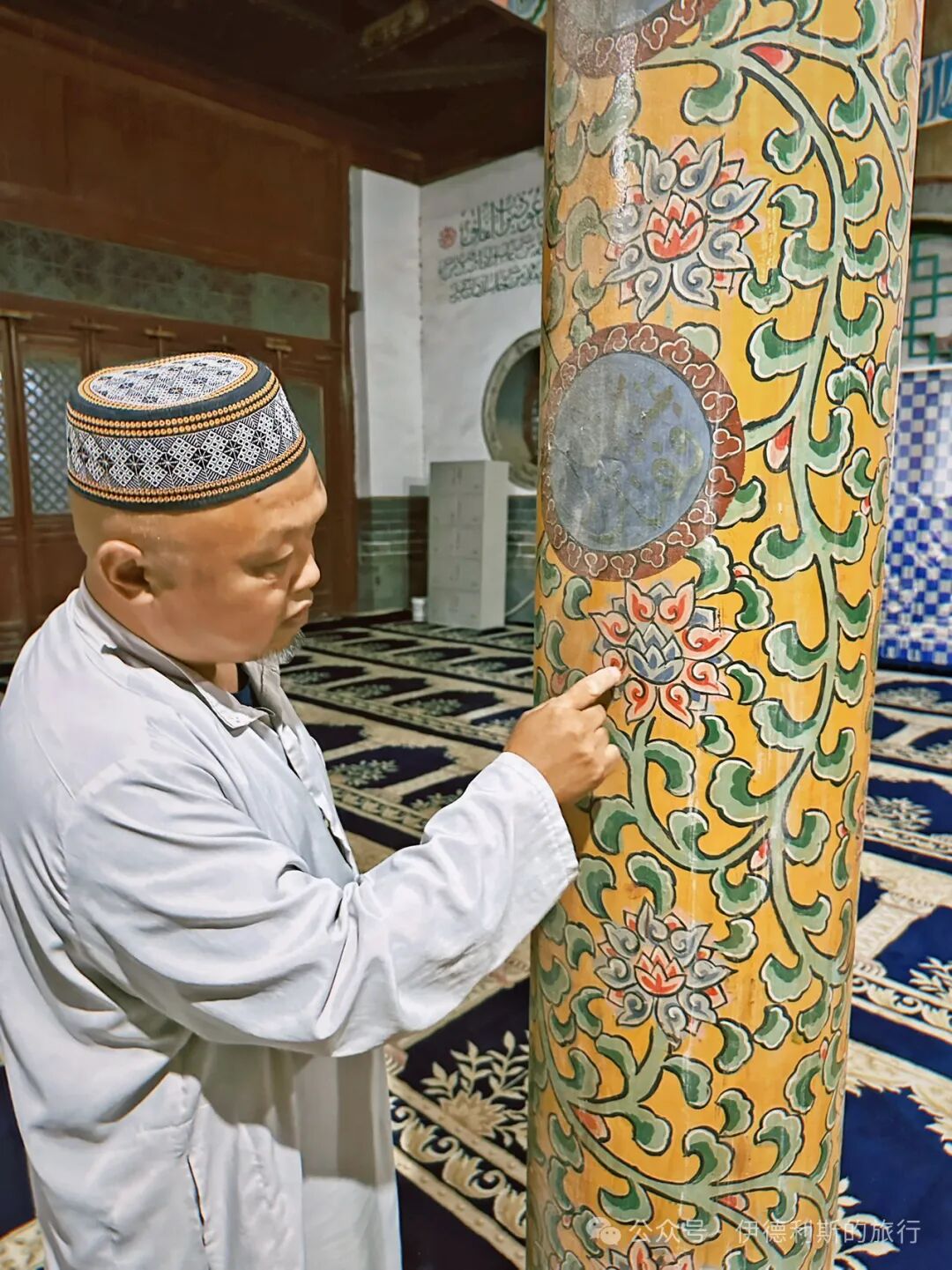
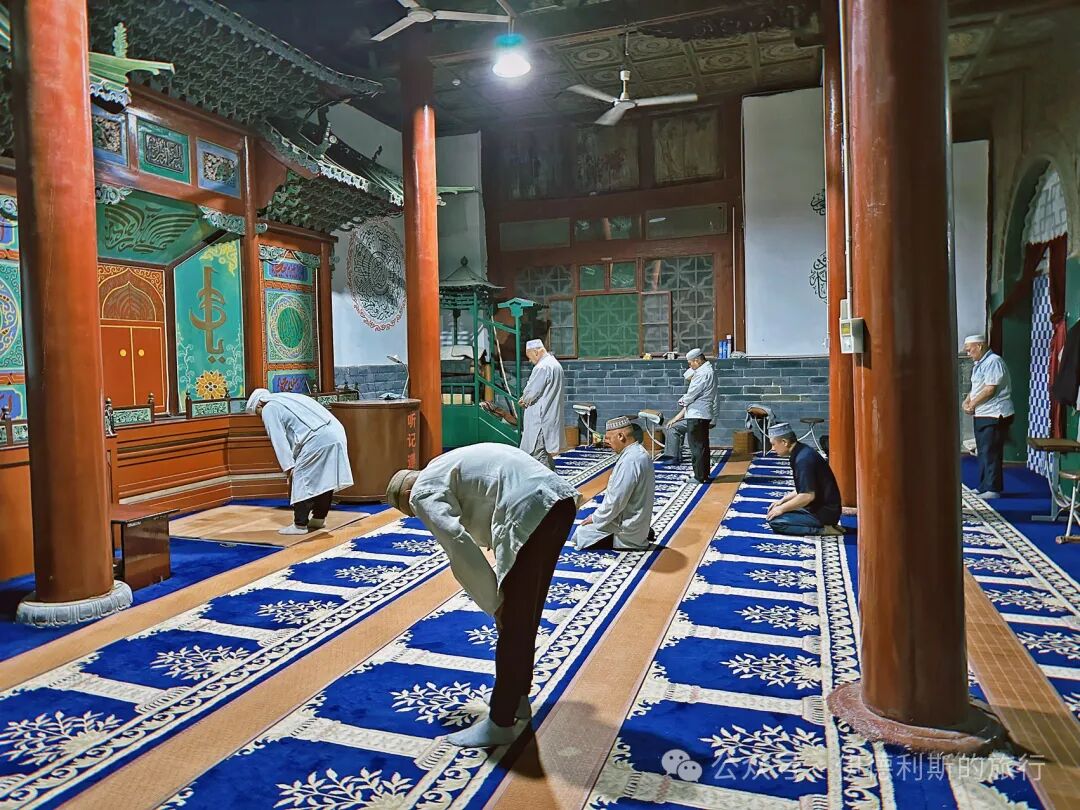
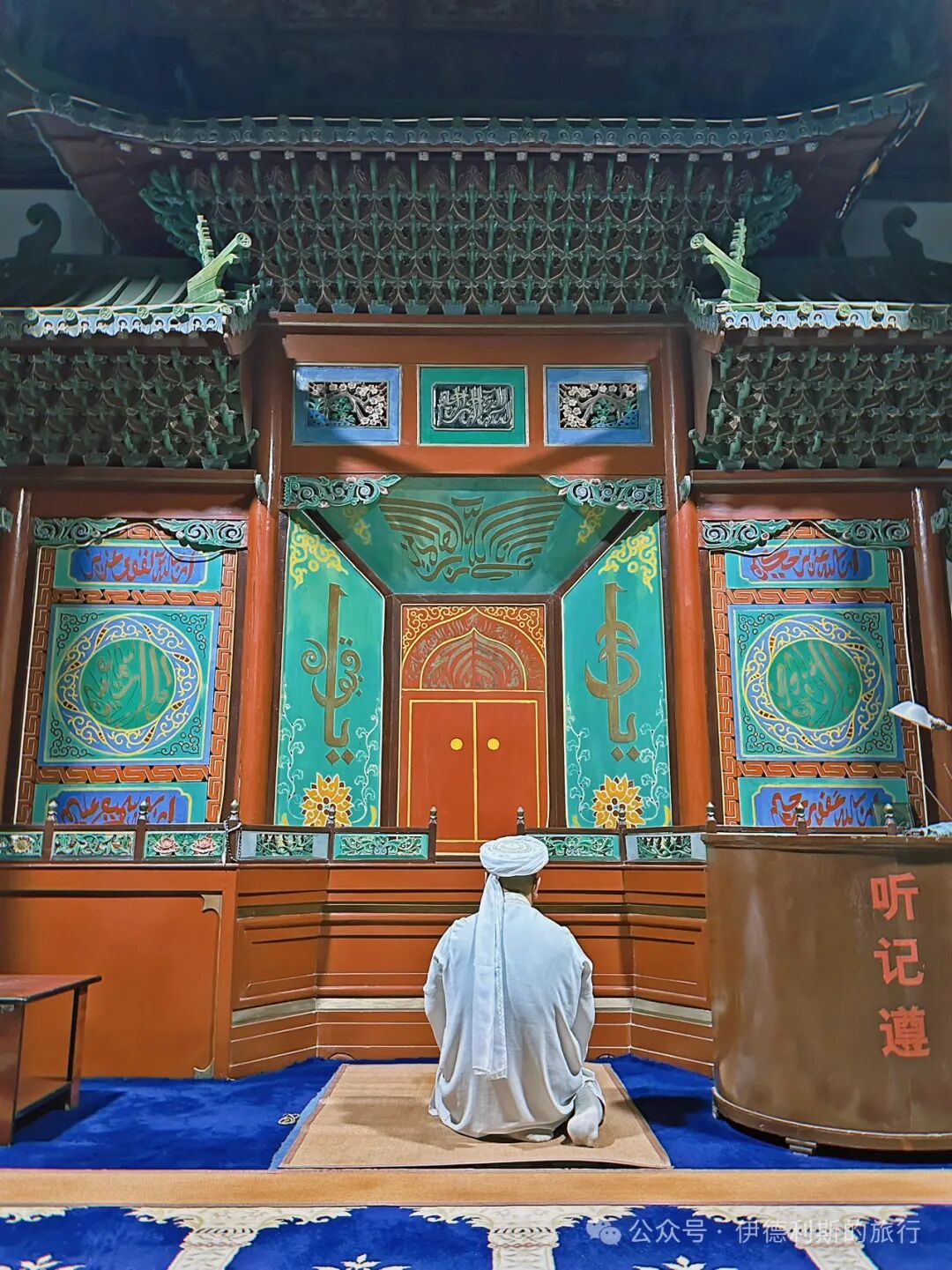
The East Mosque has a porch roof (juanpeng) over the main hall and traditional calligraphy preserved on the pillars inside.
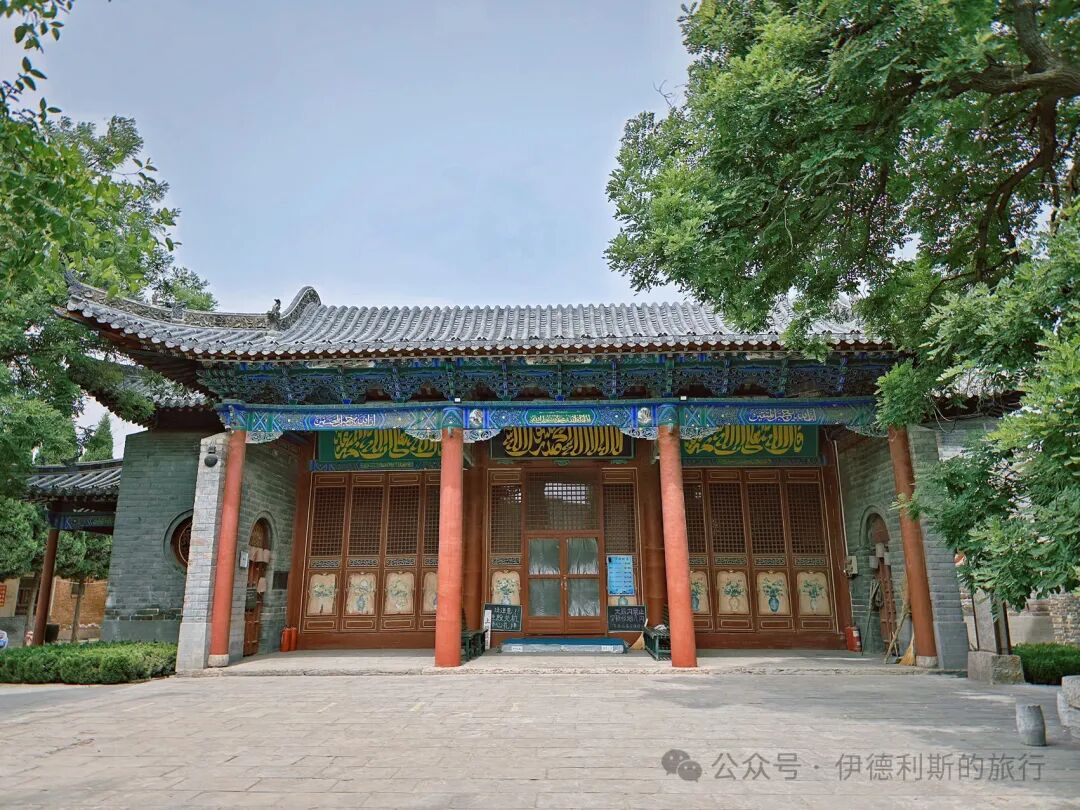
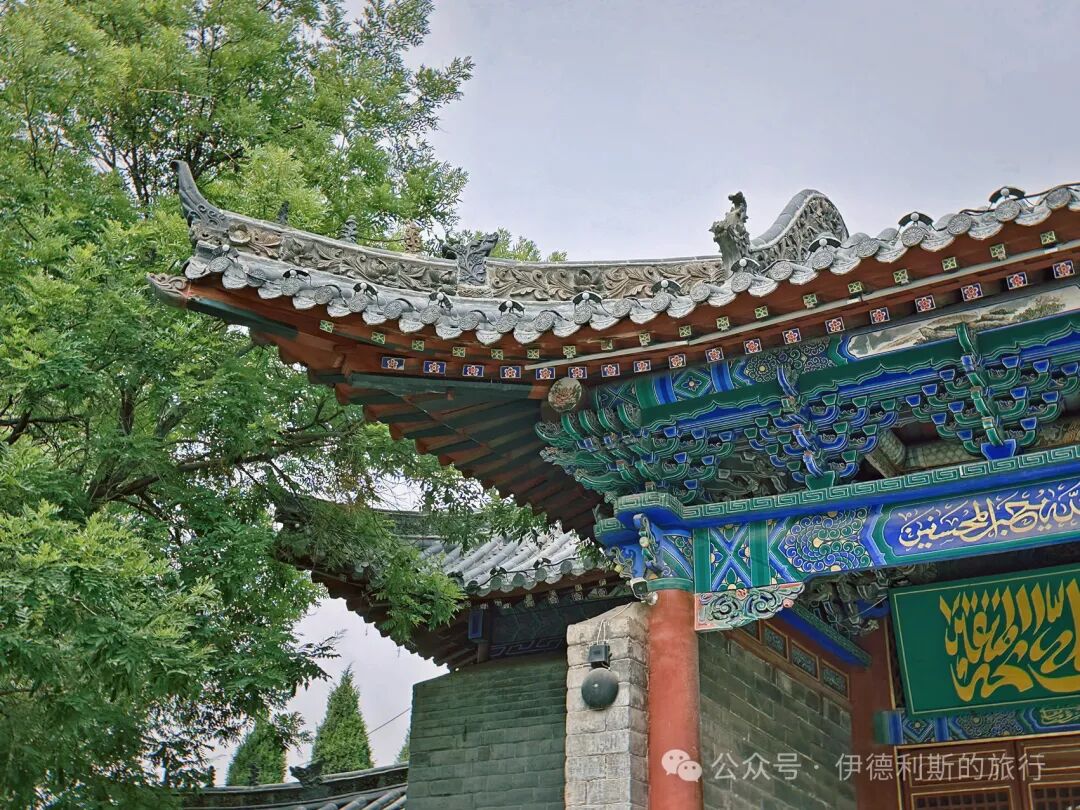
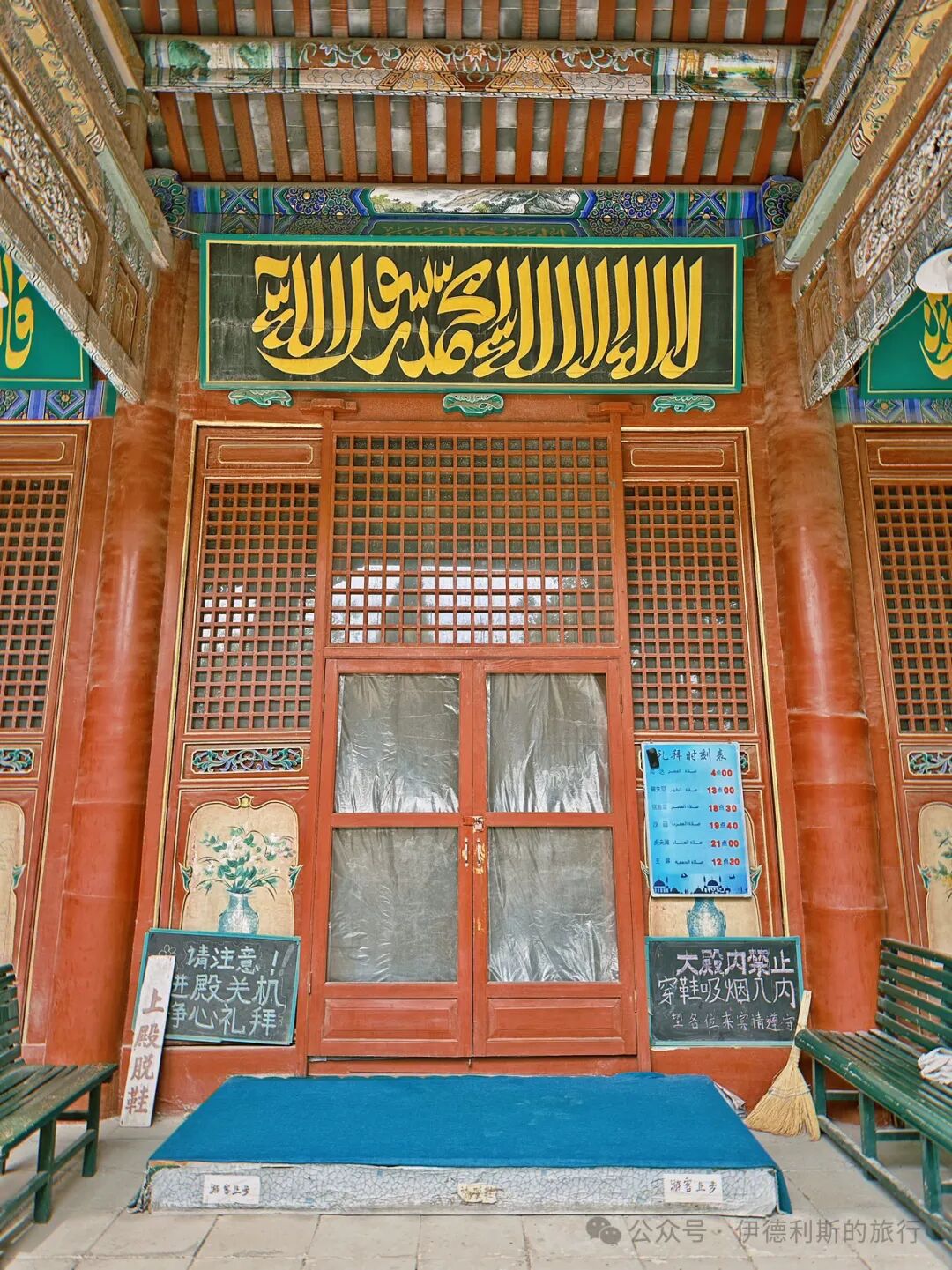
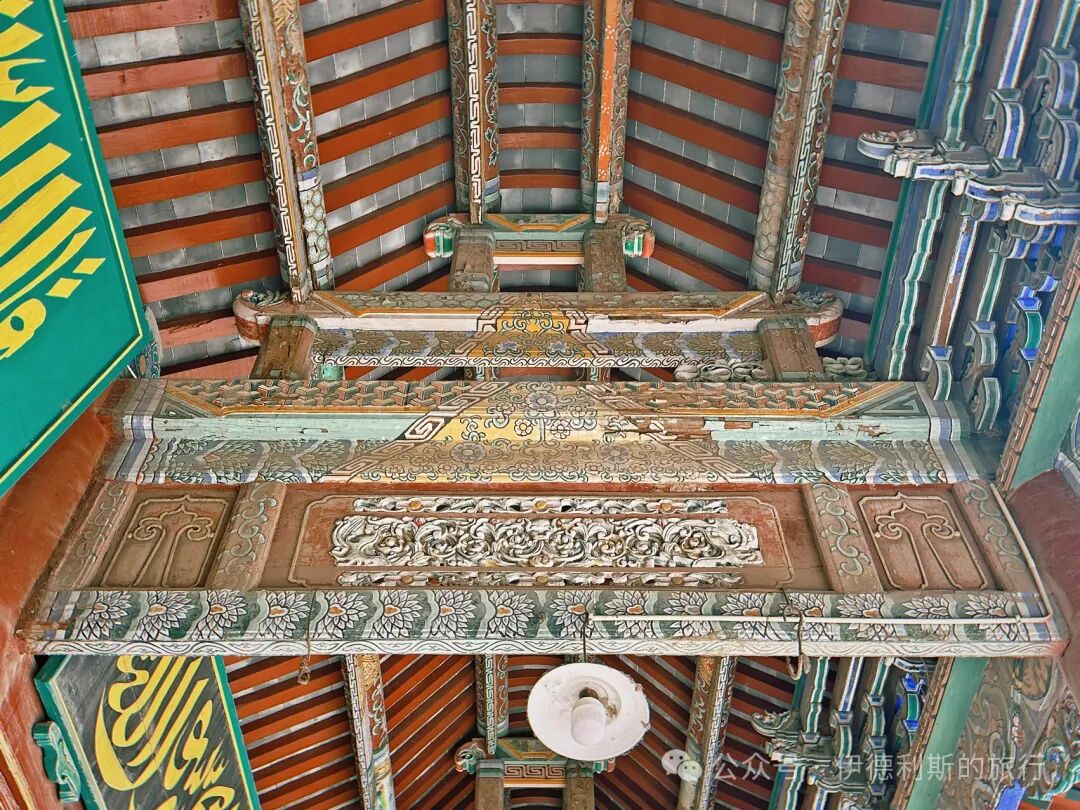
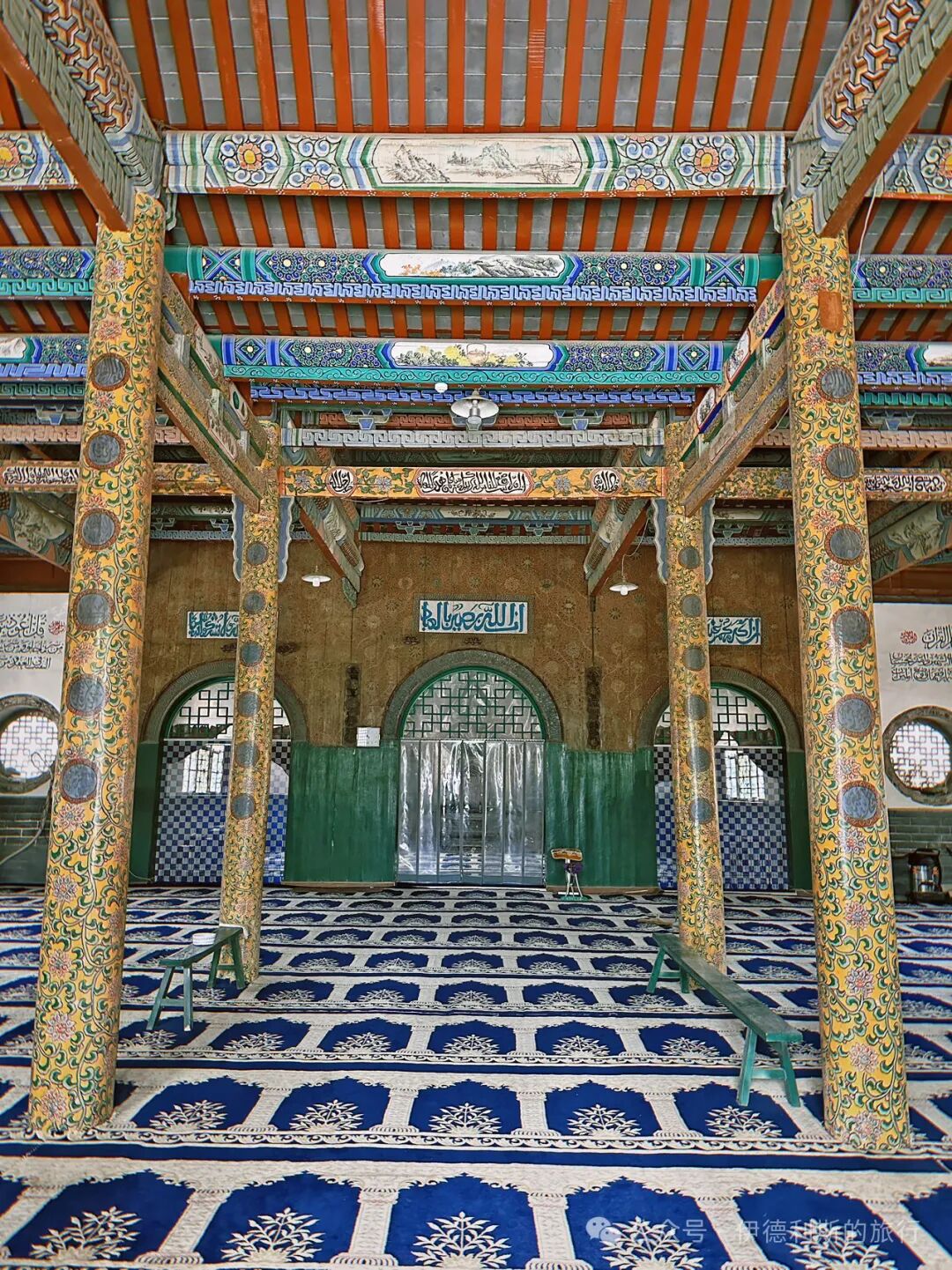
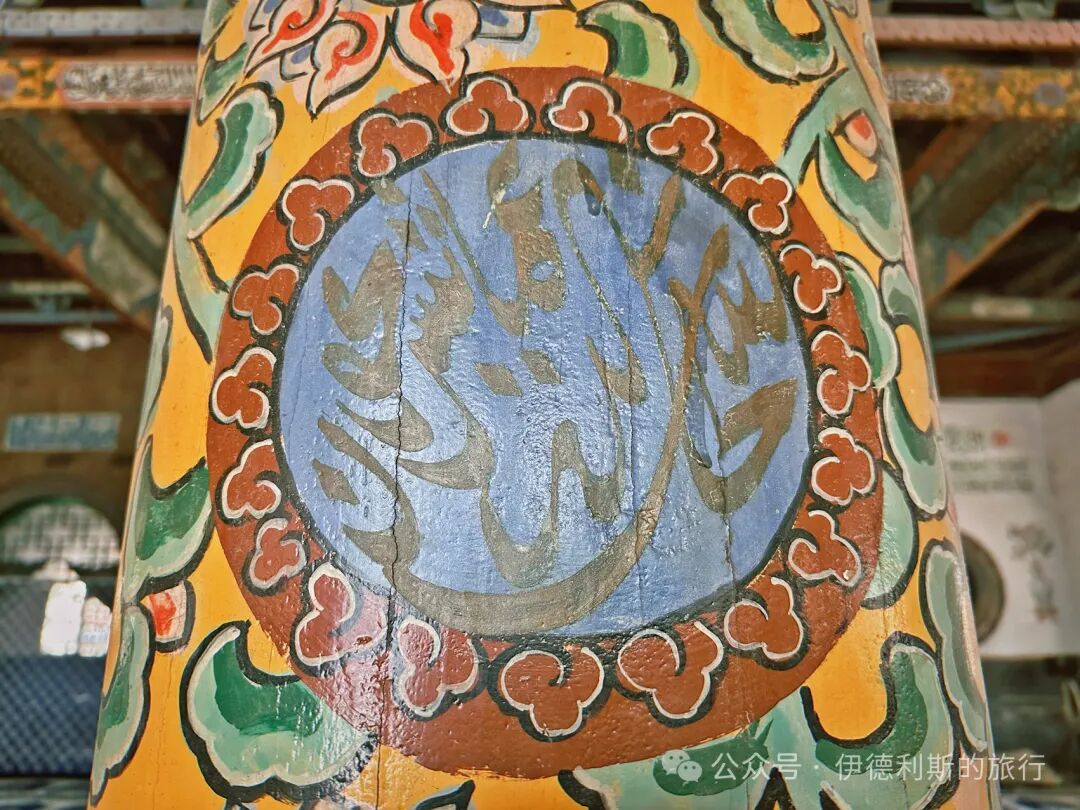
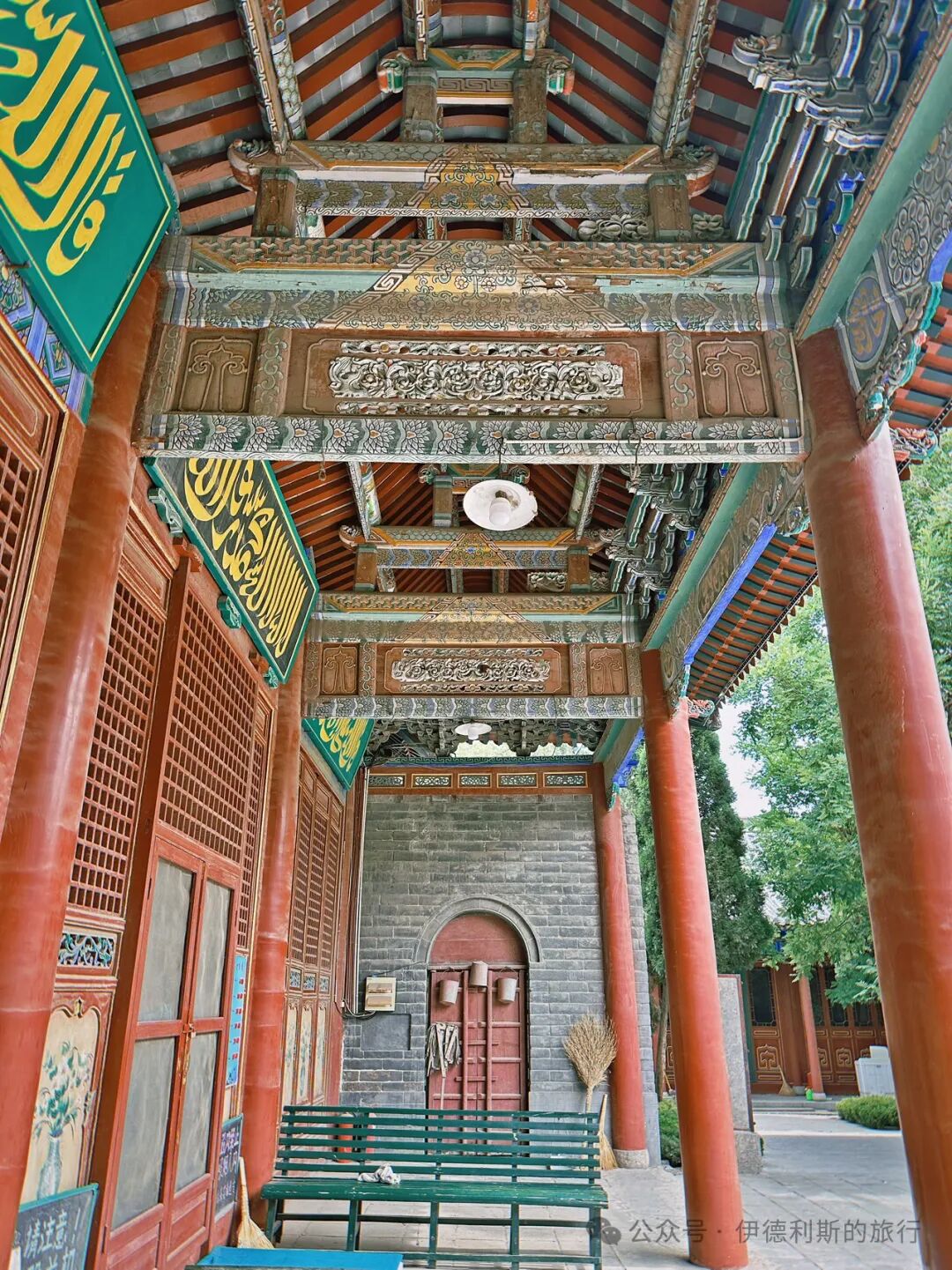
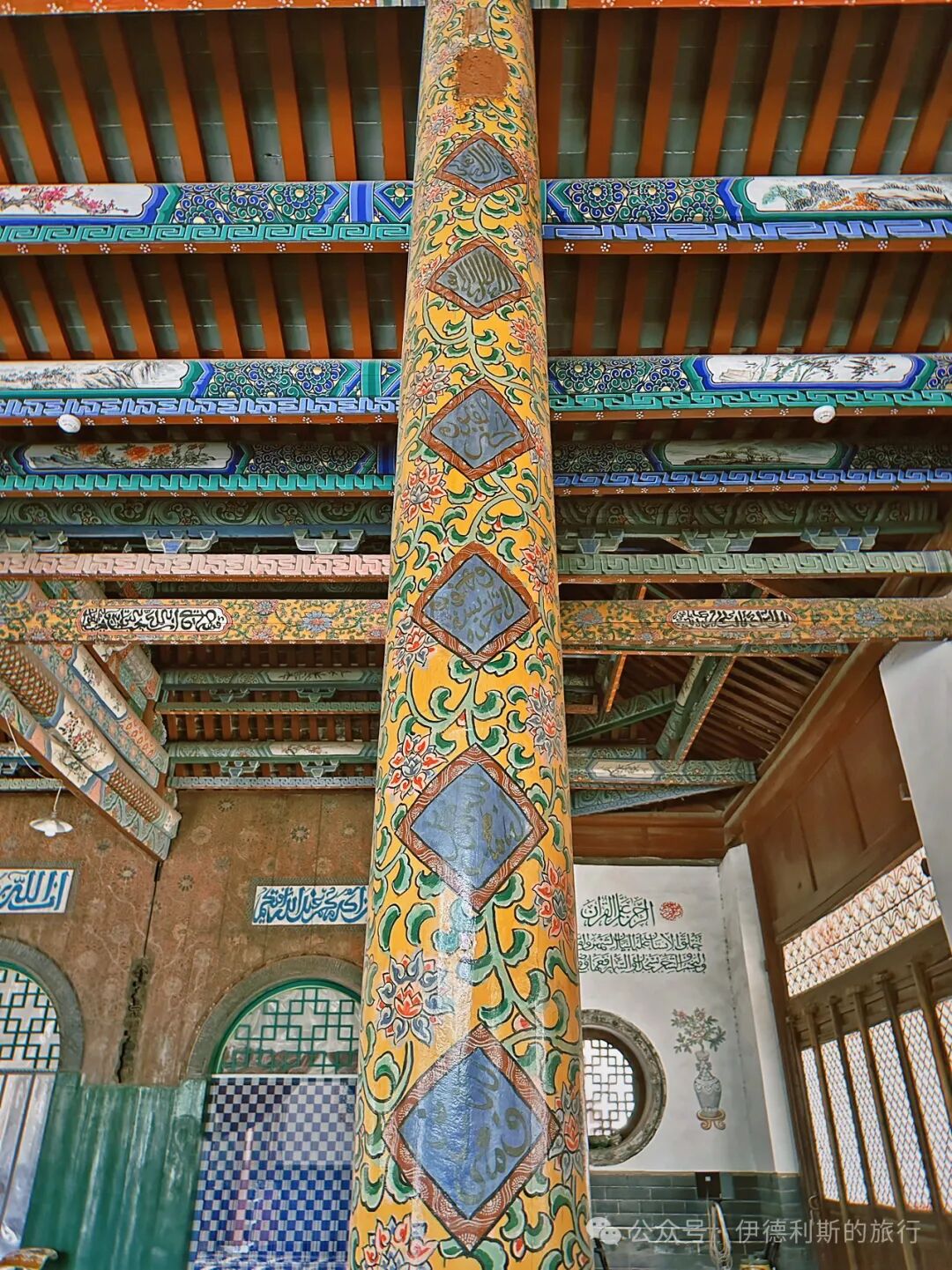
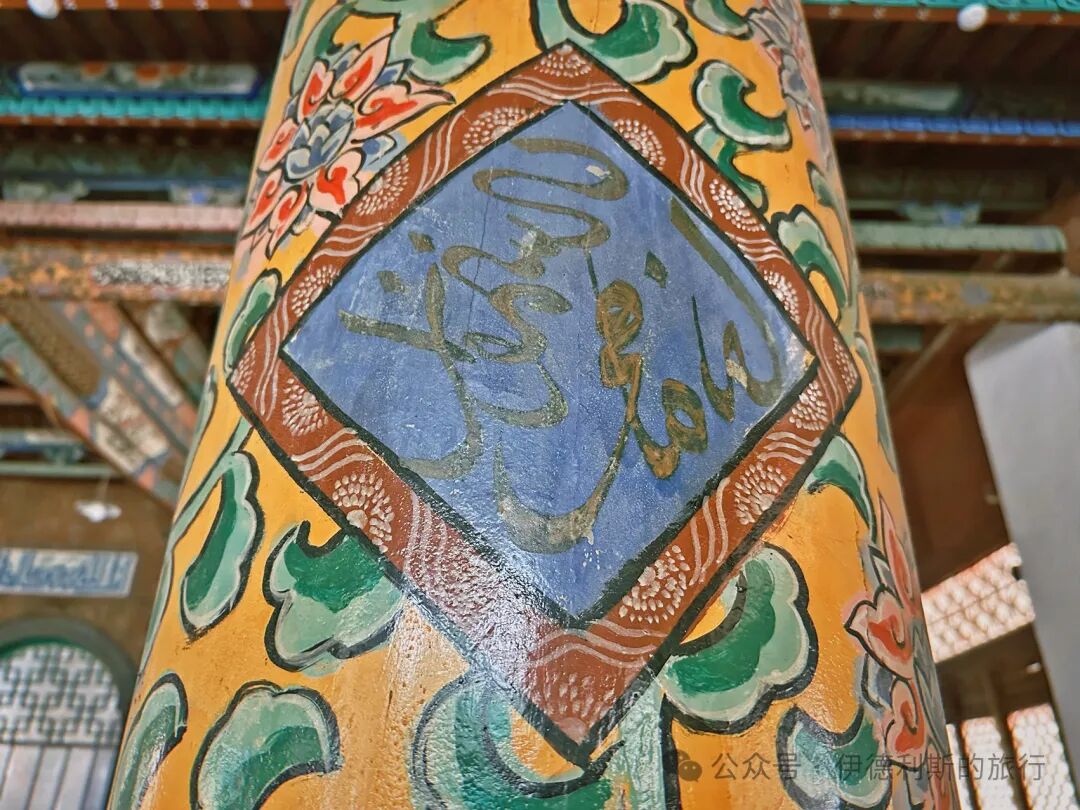
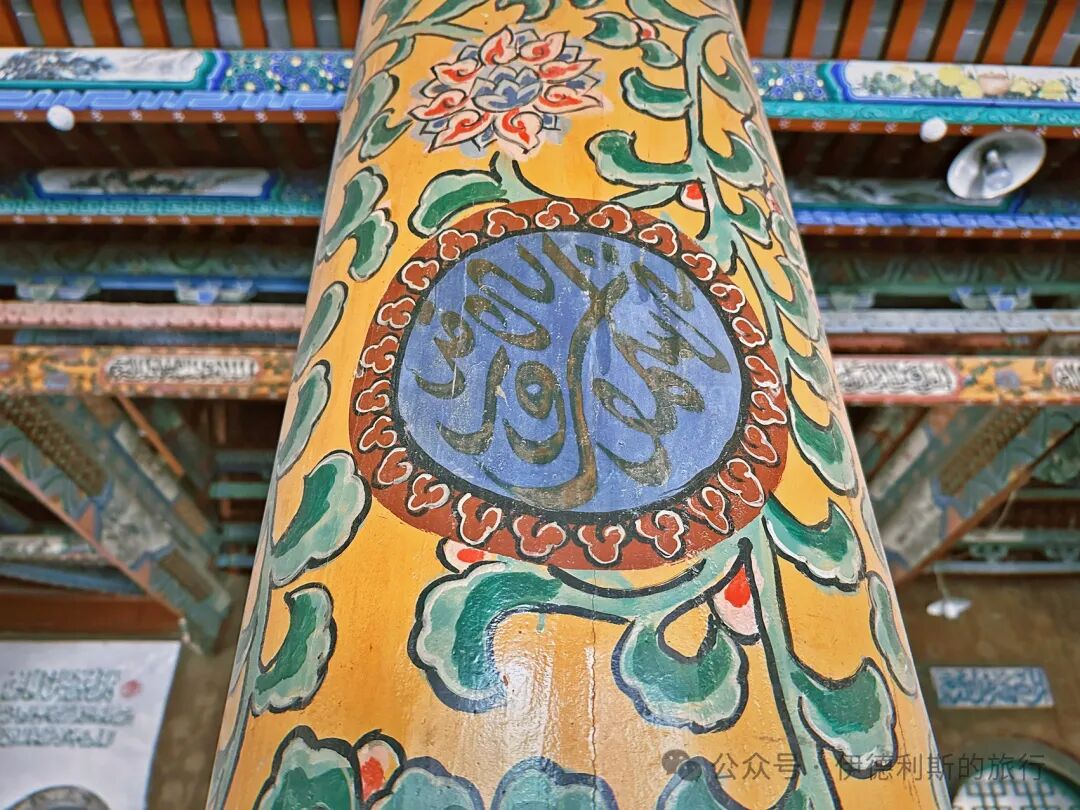
The main hall of the East Mosque features detailed roof beams and ridges, along with beautiful painted ceilings inside the prayer niche (yaodian).
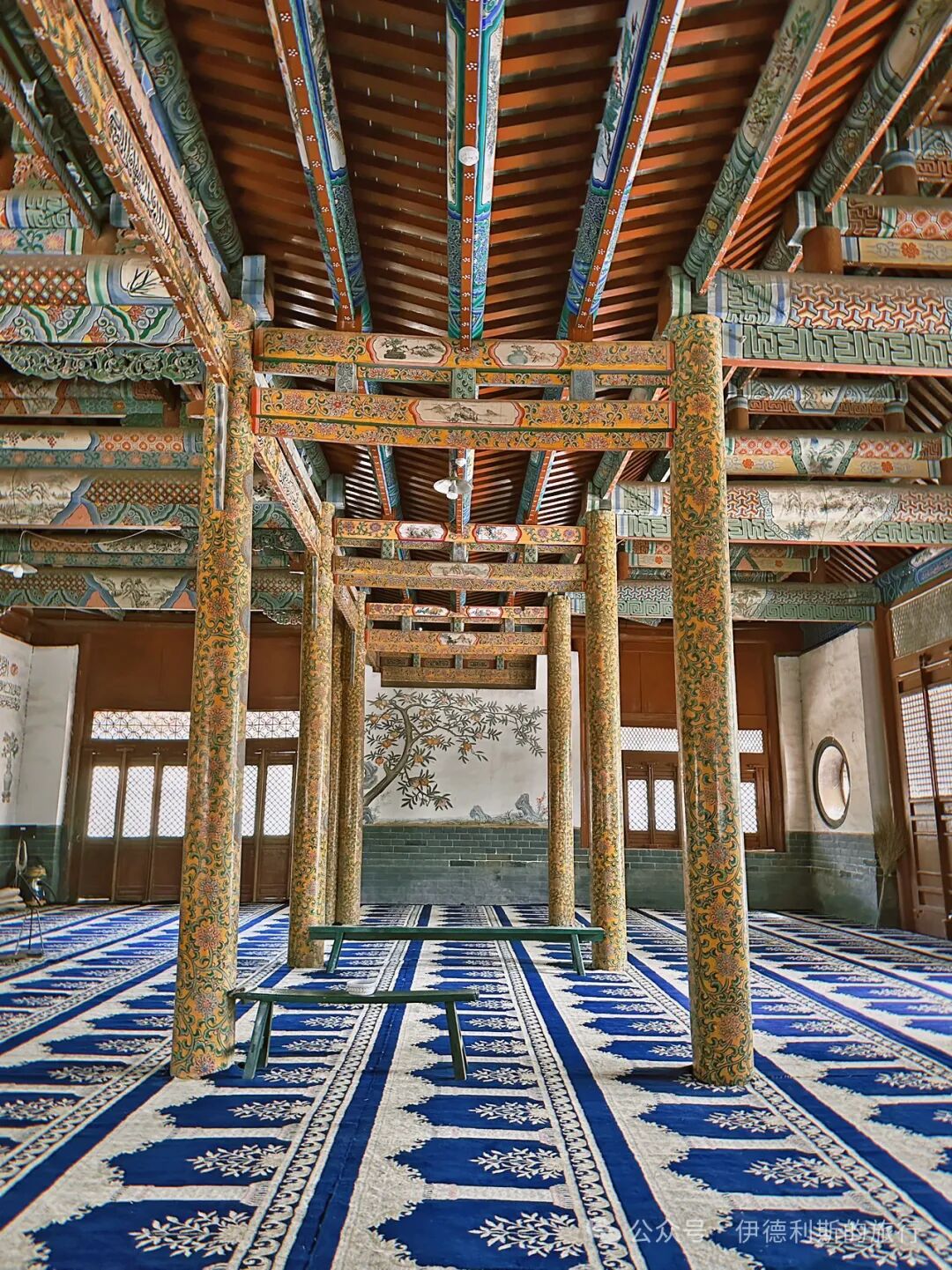
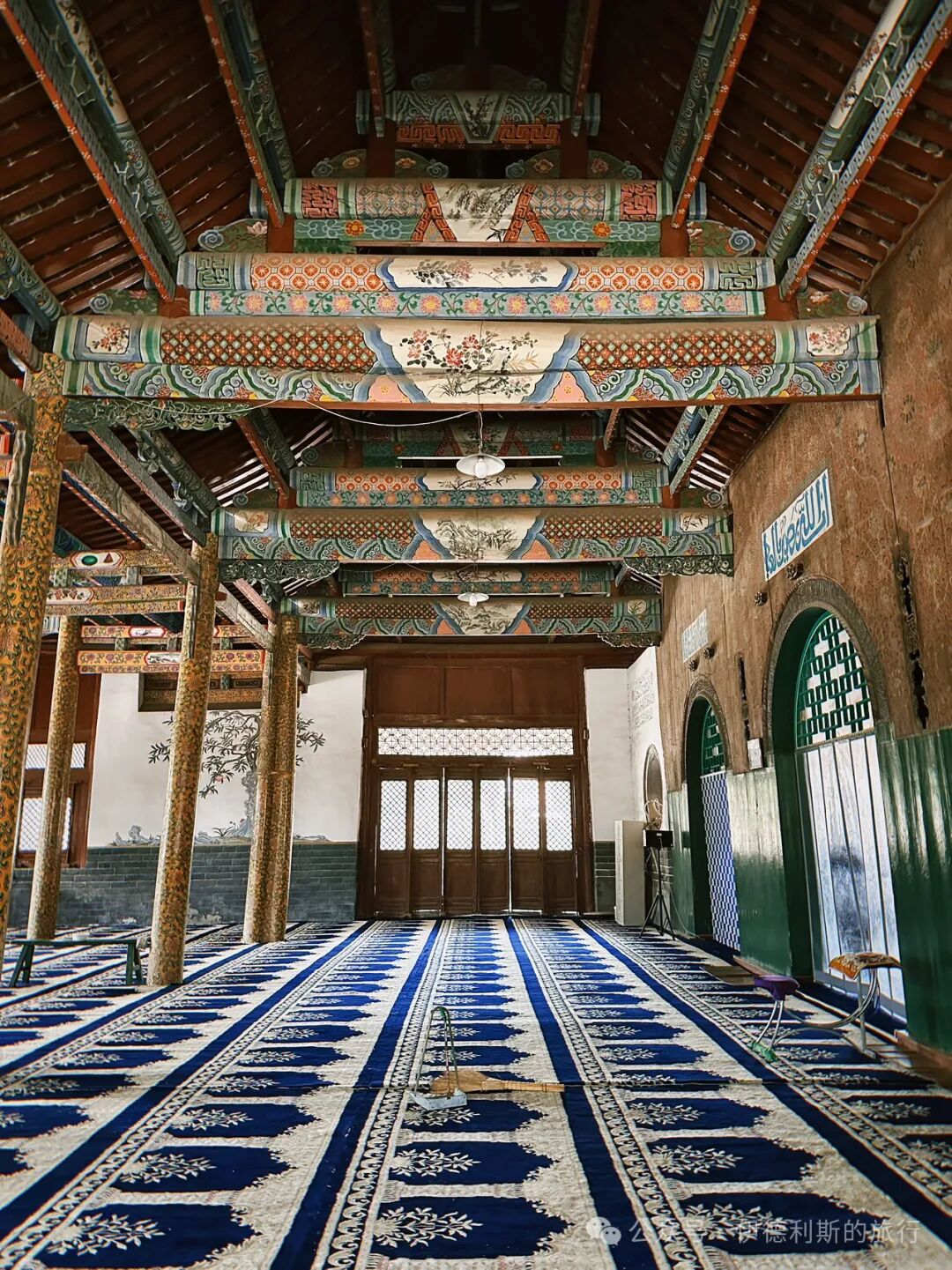
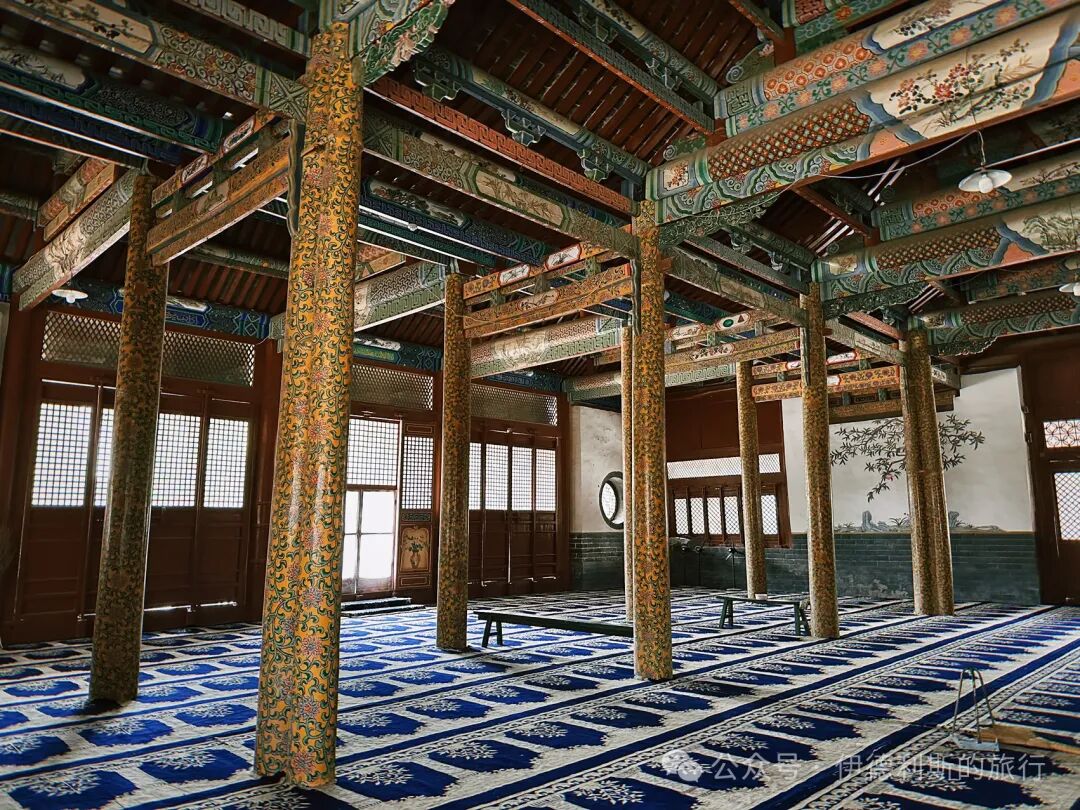
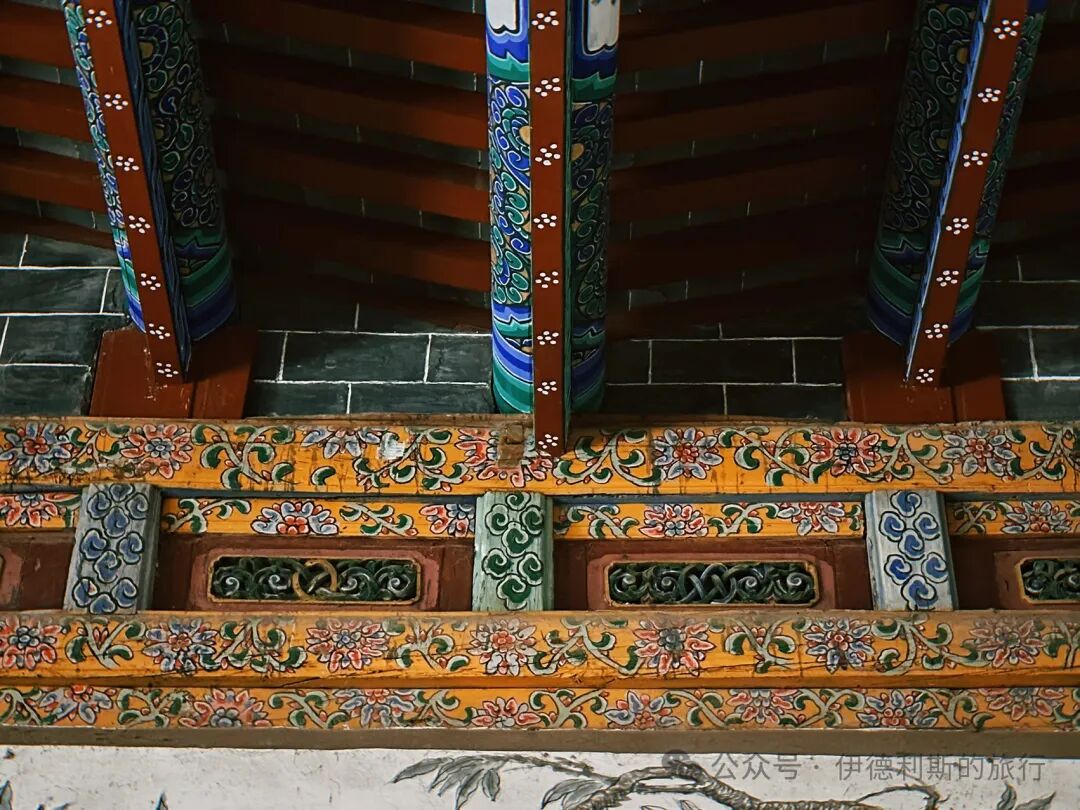
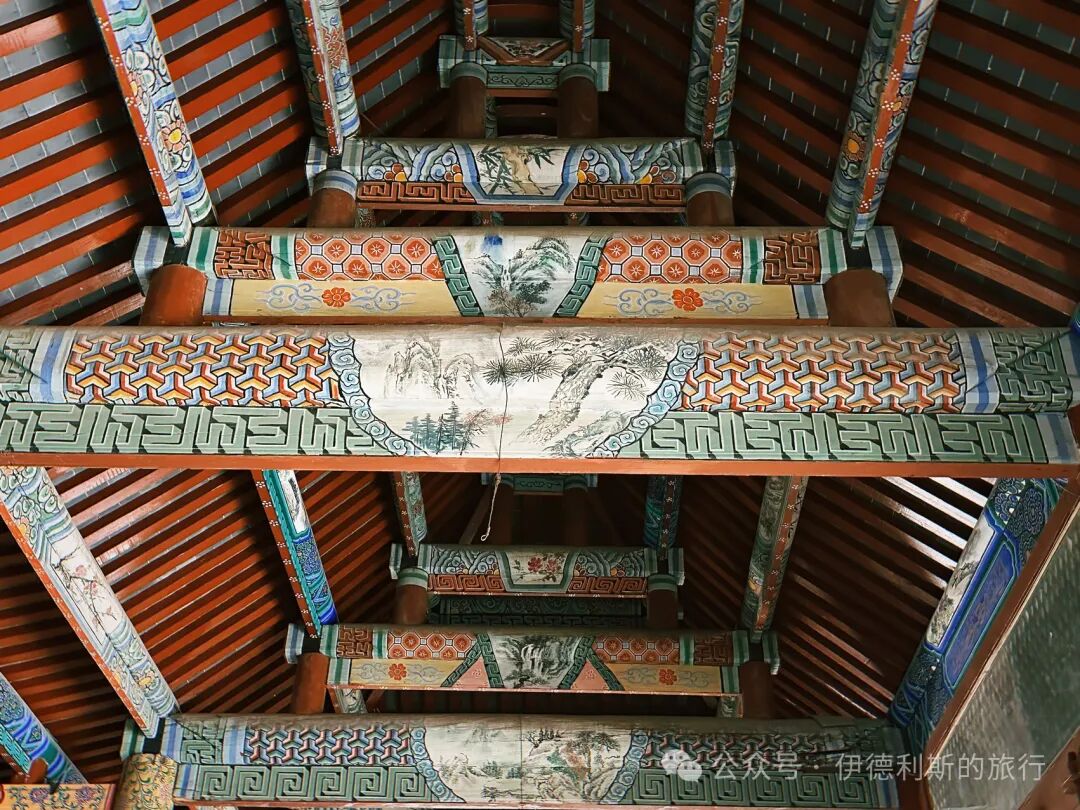
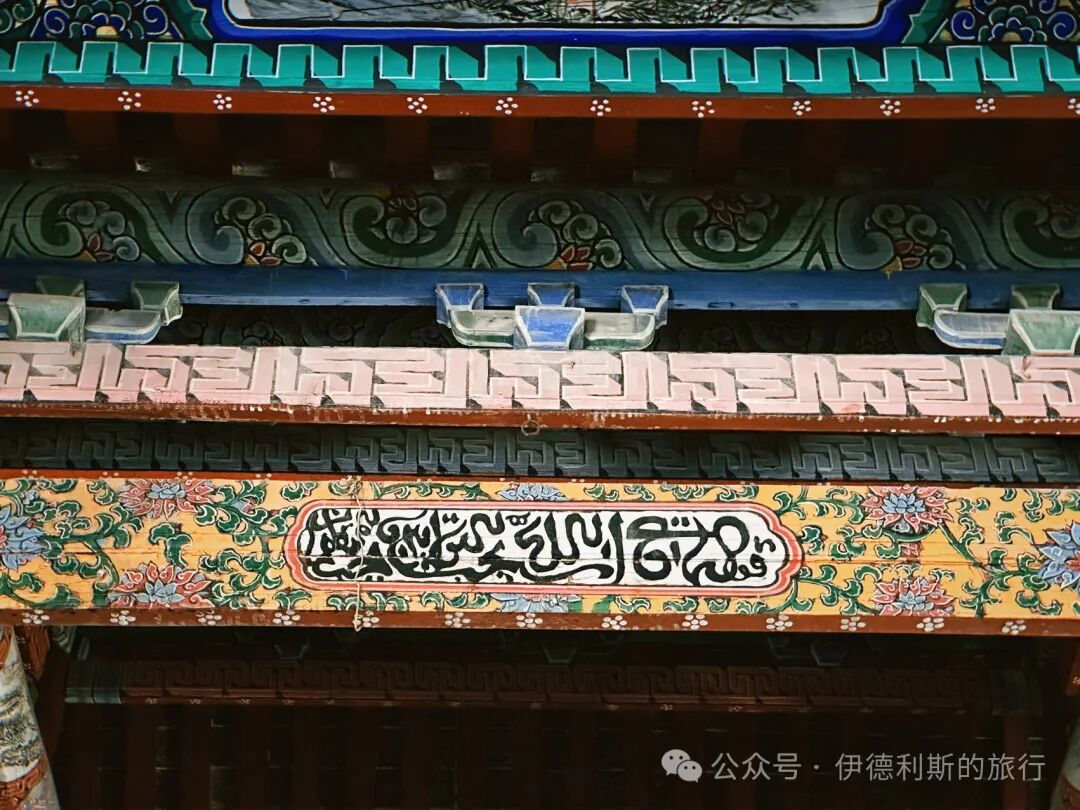
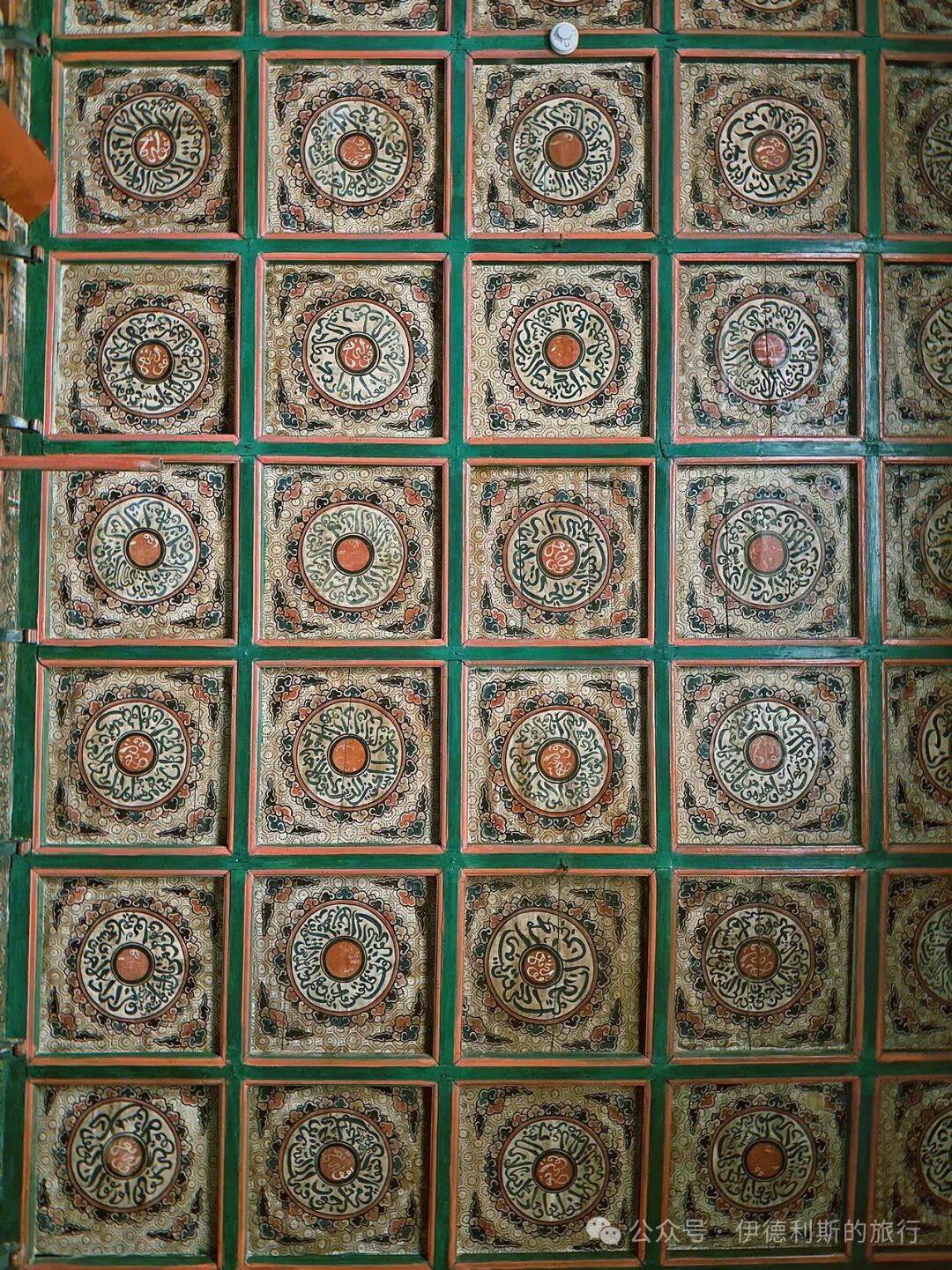
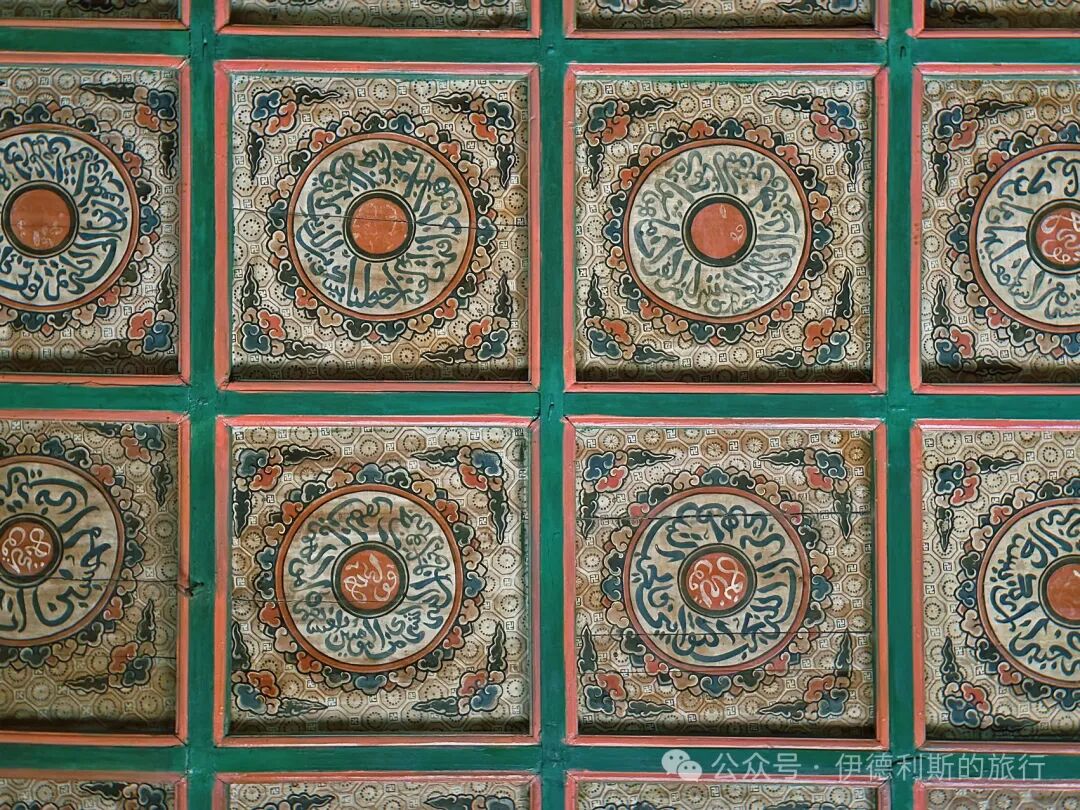
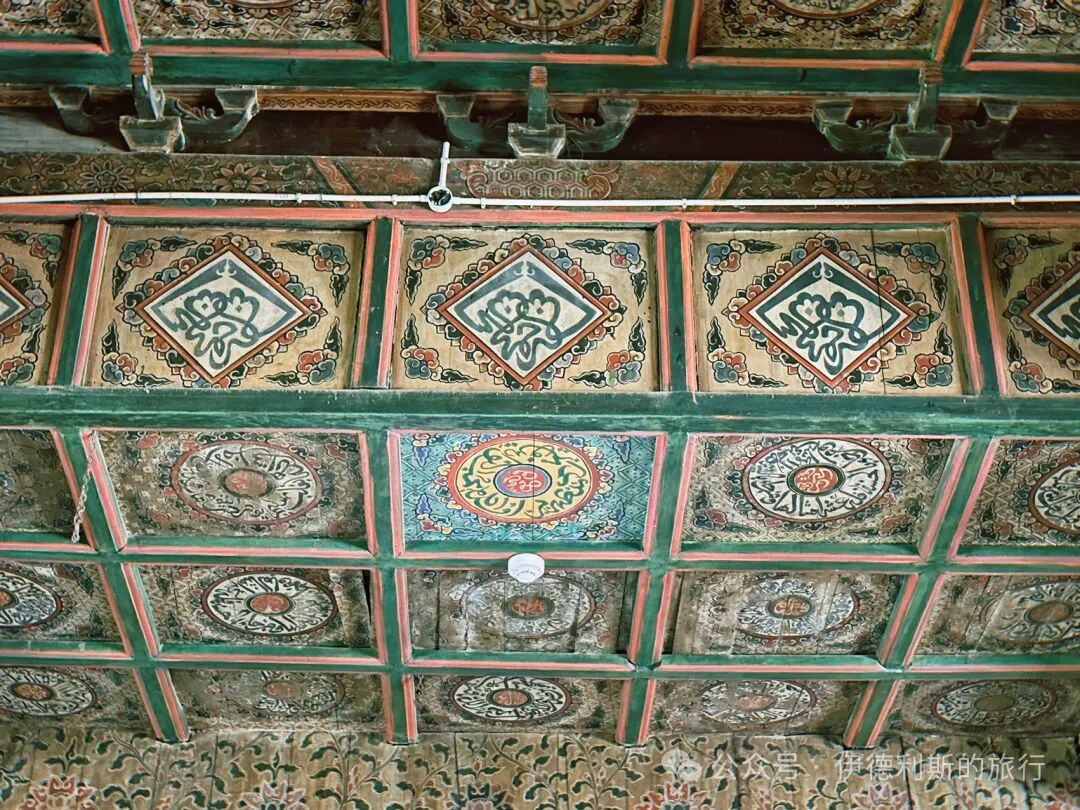
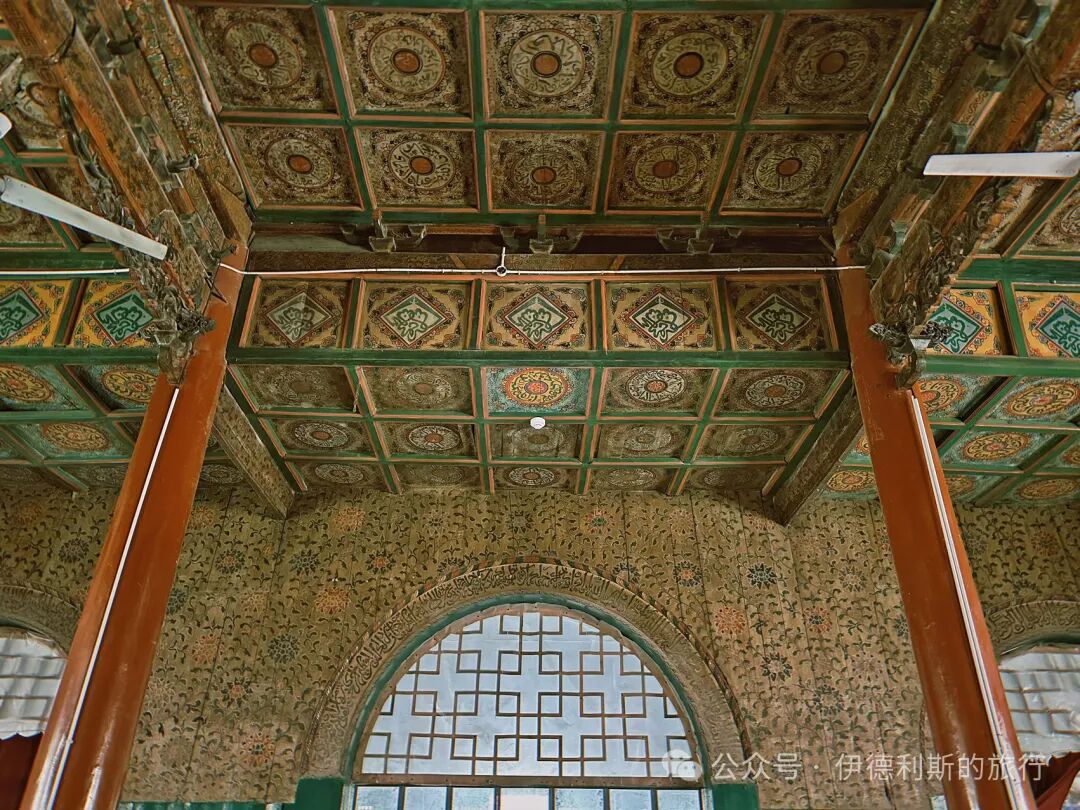
The partition wall between the main hall and the prayer niche (yaodian) once held beautiful paintings. On both sides of the arched door in the middle were rows of intricate openwork calligraphy wood carvings. They were very beautiful, but unfortunately, they were destroyed during a difficult period.
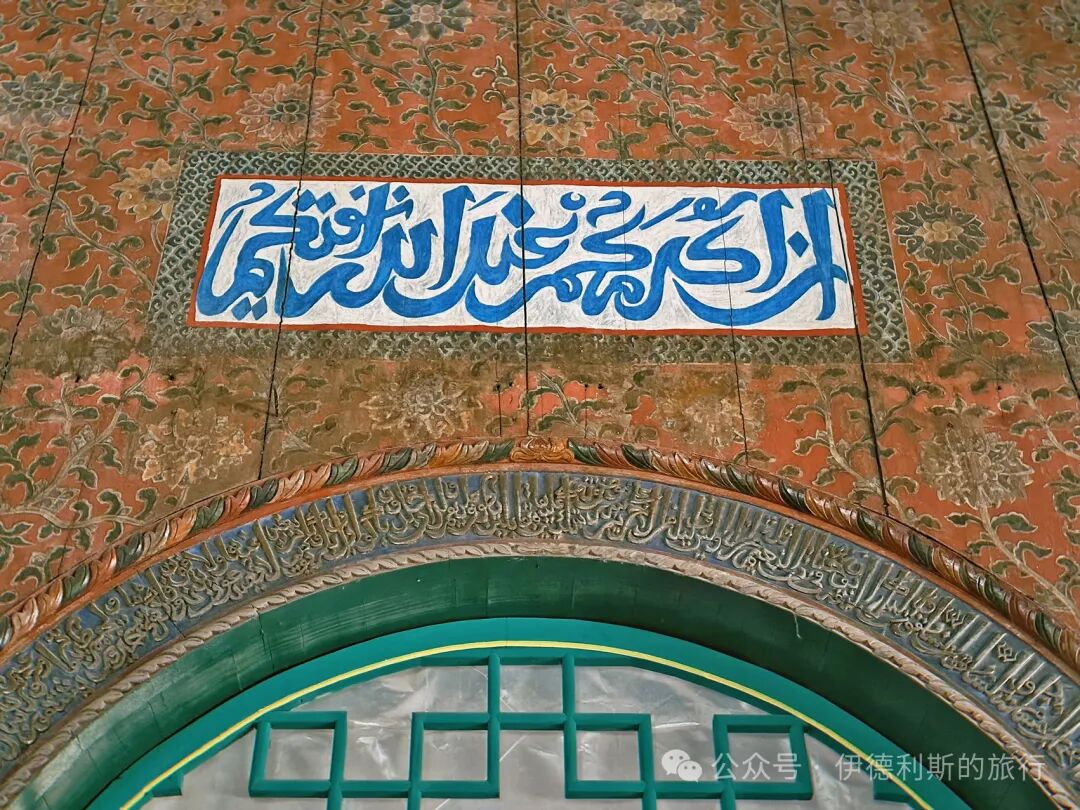
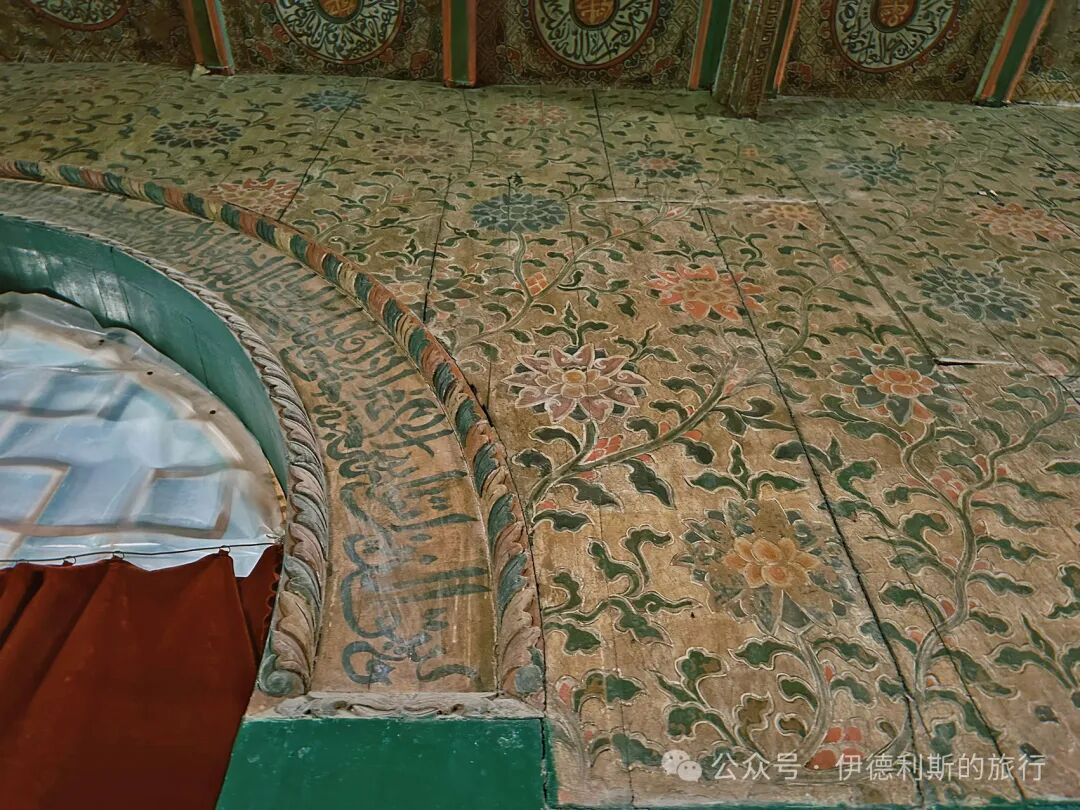
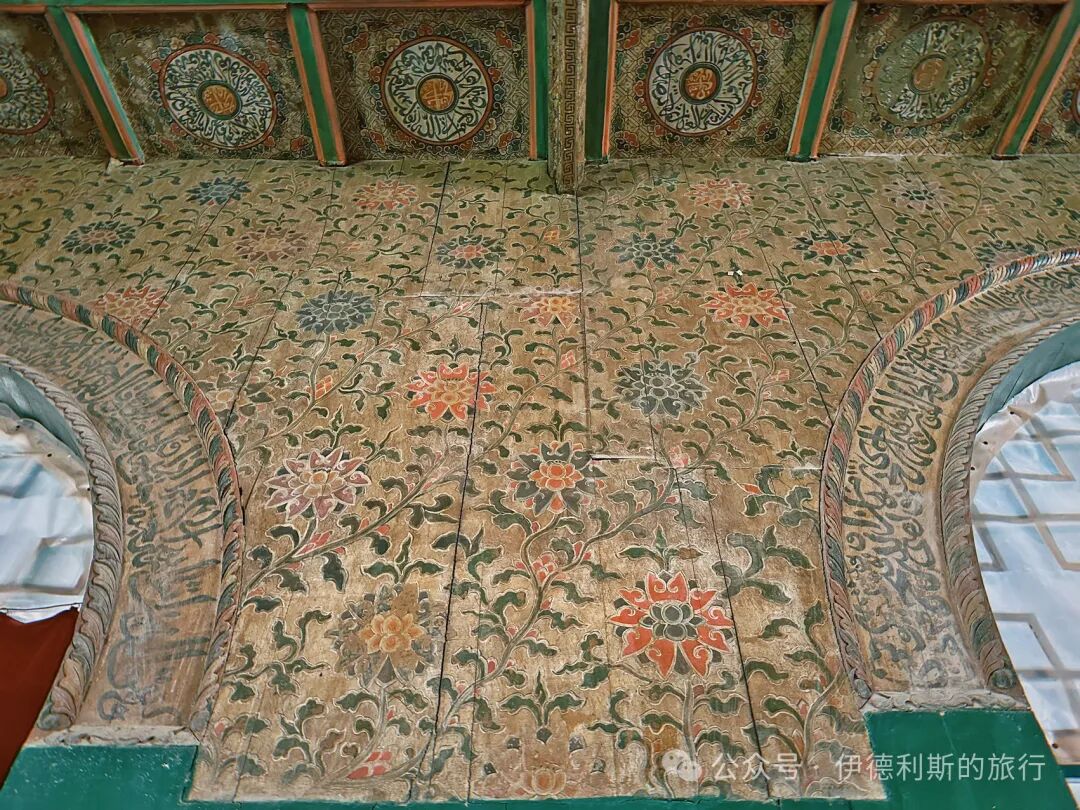
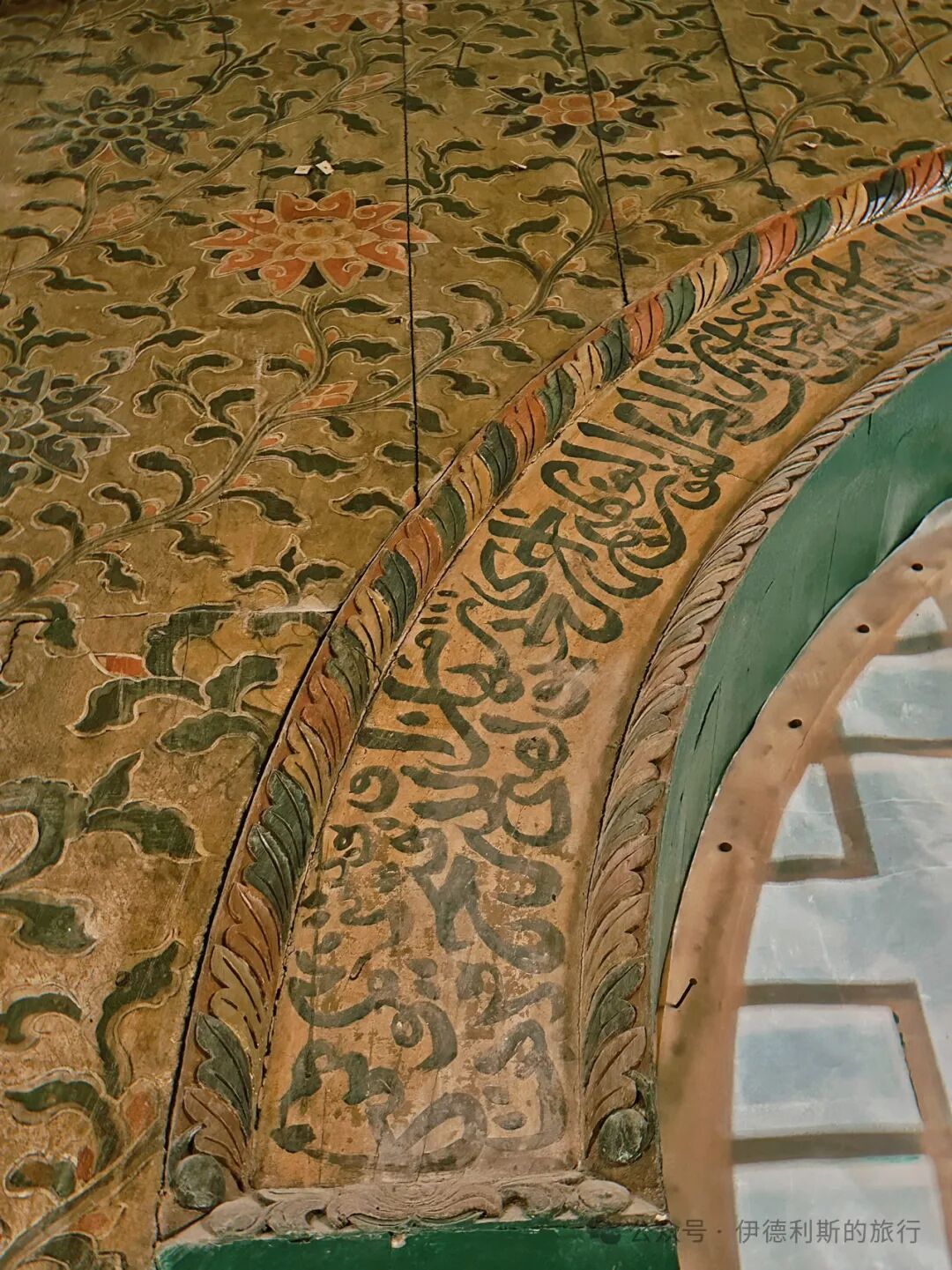
The East Mosque features an archway-style mihrab, traditional wooden structures, and a 700-year-old locust tree in the courtyard.
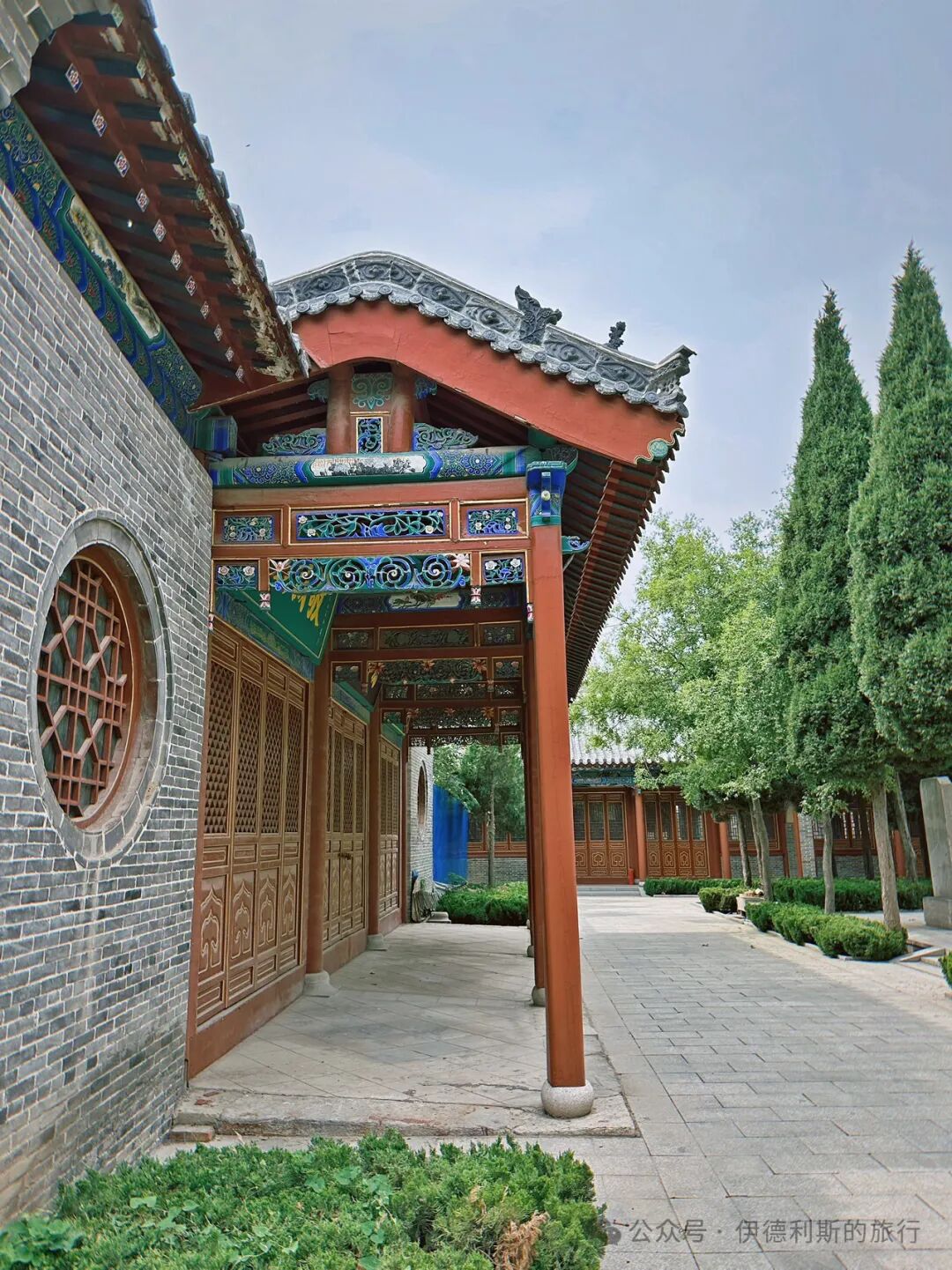
The south gate of the East Mosque is no longer in use, and a pair of damaged stone lions sit in front of it. After entering the main gate, you reach the first courtyard and the hanging flower gate (chuihuamen) on the north side. Moving further in, you find the second courtyard and the South Lecture Hall on the north side. You must pass through the South Lecture Hall to reach the main courtyard where the main hall is located.
Linqing Women's Mosque
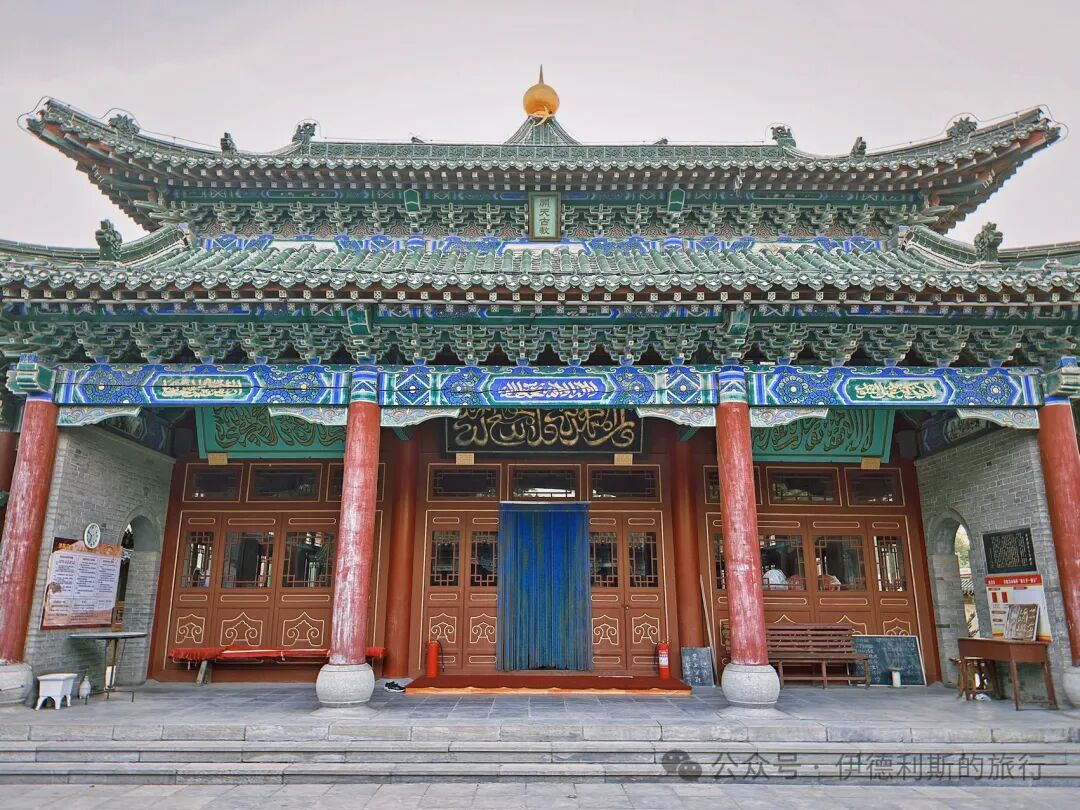
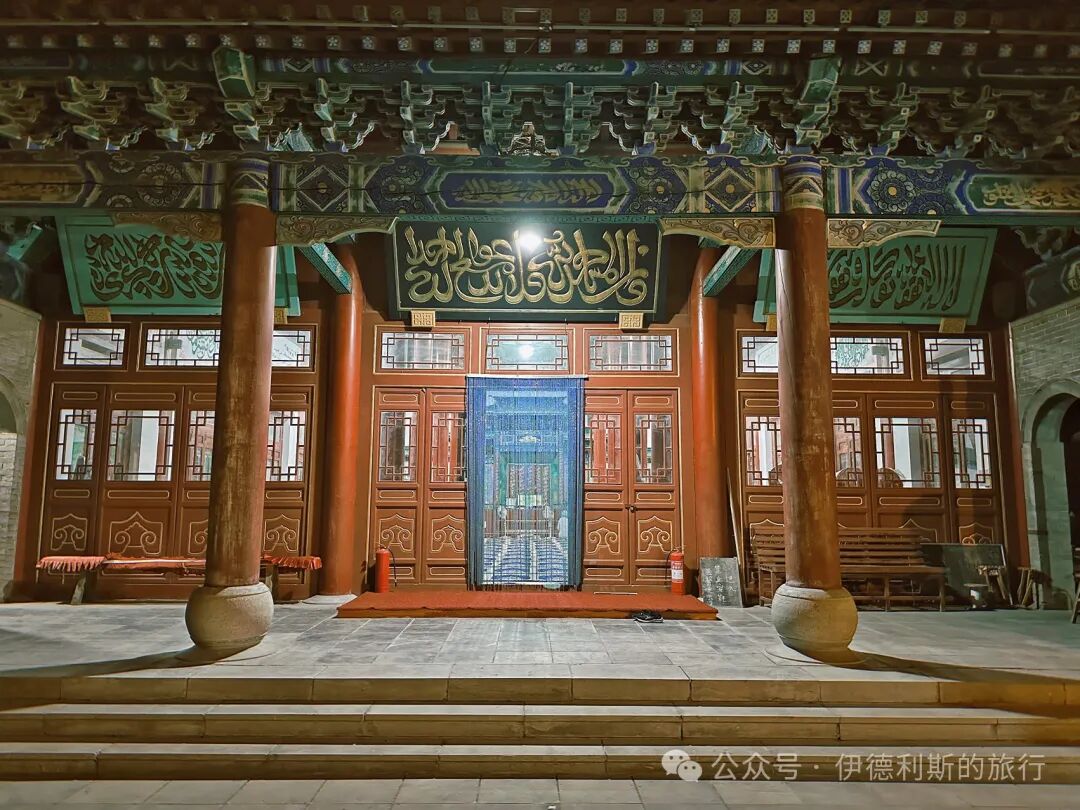
After leaving Hufu Beach, I rode my bike from the Linqing East Mosque to the Linqing Women's Mosque to find Zainab. The Linqing Women's Mosque was first built in 1924, making it exactly one hundred years old this year. In 2009, community elder Wan Yongcai and his wife Chen Zhong'e initiated the project, and their eldest son, Wan Qiusheng, chairman of the Linqing Sanhe Textile Group, along with his wife Hei Yuzhi, funded the reconstruction of the current building. This women's mosque is likely the largest one I have ever visited.
Summary: Linqing, Shandong - Canal City Mosques, Food and History (Part 1) is presented as a clear English travel account for readers interested in Muslim life, halal food, mosques, and local history. The article keeps the original place names, food details, photographs, and cultural context while focusing on Linqing, Shandong, Canal History.
Following my last post, 'Revisiting the Big and Small Mosque Streets in Dongguan, Liaocheng,' we took an afternoon train from Liaocheng to Linqing. We went straight to Baoliang's First Shop for a meat-filled flatbread roll (bingjuanrou). Wang Baoliang opened this shop in the 1980s, so it has been around for 40 years now. I ate their meat-filled flatbread roll back in 2017, and it was truly satisfying. The price of the roll has gone up by 5 yuan since my last visit, but it still tastes great.
Last time, I ordered the braised butterfly fish head, which was delicious, but I did not choose my dishes as well this time. This time, I ordered sesame beef and pan-braised hairtail fish. The meat in the sesame beef is the same as the meat in the flatbread roll, so I ended up ordering the same thing twice. The pan-braised hairtail fish had a fishy smell. I think ordering the braised hairtail or fried hairtail would have been a better choice.
Leaving Linqing Railway Station, I passed by the First Family Three-Fresh Potstickers (diyijia sanxian guotie). I ate there when I visited Linqing 17 years ago, and it remains the best Shandong cuisine I have ever had, especially the sesame lamb which was delicious.
Linqing North Mosque
I spent the afternoon performing namaz at the Linqing North Mosque. Linqing North Mosque sits where the Huitong River and Wei River meet. It was first built in 1504 (the seventh year of the Hongzhi reign of the Ming Dynasty). It underwent major expansions in 1564 (the 43rd year of the Jiajing reign), 1779 (the 44th year of the Qianlong reign), and 1809 (the 14th year of the Jiaqing reign) to reach its current form.
The main hall of Linqing North Mosque stands on a 1-meter-high stone platform and consists of a porch, the main hall, and a rear kiln-style hall (yaodian), making it very grand. The roof of the kiln-style hall has three moon-watching towers. The middle one has an octagonal pointed roof, while the two sides have square pointed roofs, all topped with peach-shaped finials.
The mosque features a memorial archway-style mihrab decorated with floral patterns and Arabic calligraphy, and the ceiling of the kiln-style hall also displays Arabic calligraphy.
The main hall of the North Mosque preserves precious murals from the Qing Dynasty.
The North Mosque (Beidasi) features various forms of calligraphy, including palace lanterns (gongdeng), brick carvings, plaques, architectural paintings, and wood carvings.
At the far east end of the North Mosque stands a gate in the style of a memorial archway (pailou), featuring delicate bracket sets (dougong) and upturned eaves.
After entering the main gate, you reach a ceremonial gate (yimen) built in the style of a memorial archway. Two Qing Dynasty plaques hang on the ceremonial gate:
A plaque reading 'Sincerity and Rectitude' (Chengyi Zhengxin) erected in the 11th year of the Guangxu reign by Li Ying, a decorated military official.
A plaque reading 'Orderly Human Relations' (Yilun Youxu) from the 2nd year of the Qianlong reign by Yang Jing, a deputy military commander; this one appears to be a replica.
Behind the ceremonial gate is a path leading to the main prayer hall, with lecture halls (jiangtang) located on the north and south sides.
On the north and south sides of the main prayer hall are two scripture pavilions (cangjingting) with four-cornered pointed roofs and small porches (baoxia) in front of the doors. In front of the pavilion stands a 500-year-old Chinese arborvitae (cebai) planted when the mosque was built.
Behind the main hall is the back gate, which features a plaque inscribed with "Qingzhen Libaisi" (Mosque) dated to the first month of the Jiajing jiazi year. The mosque also houses several stone tablets from the Qing dynasty and the Republic of China era.
Linqing East Mosque
After leaving the Linqing North Mosque, I went across the street to the East Mosque to pay my respects at the tombs of the saints (shamu) and the Hufu cemetery (Hufutan). The Linqing East Mosque was first built in 1465 (the first year of the Chenghua reign of the Ming dynasty). It was renovated twice in 1583 (the eleventh year of the Wanli reign) and 1649 (the sixth year of the Shunzhi reign), then expanded again in 1734 (the twelfth year of the Yongzheng reign), resulting in its grand scale.
On the far west side of the Linqing East Mosque is the back gate, which features a "Libaisi" (Mosque) plaque inscribed during the renovation in the sixth year of the Shunzhi reign. Behind the back gate is the main prayer hall, which consists of a front porch (juanpeng), the main hall, and a rear vaulted hall (yaodian). The roof of the vaulted hall has four sloping sides meeting at a point, topped with a gilded gourd-shaped finial.
The main hall is nearly 30 meters deep, with 14 pillars supporting the roof beams. The mihrab is the same style as the one in the North Mosque, featuring a decorative archway design.
The East Mosque has a porch roof (juanpeng) over the main hall and traditional calligraphy preserved on the pillars inside.
The main hall of the East Mosque features detailed roof beams and ridges, along with beautiful painted ceilings inside the prayer niche (yaodian).
The partition wall between the main hall and the prayer niche (yaodian) once held beautiful paintings. On both sides of the arched door in the middle were rows of intricate openwork calligraphy wood carvings. They were very beautiful, but unfortunately, they were destroyed during a difficult period.
The East Mosque features an archway-style mihrab, traditional wooden structures, and a 700-year-old locust tree in the courtyard.
The south gate of the East Mosque is no longer in use, and a pair of damaged stone lions sit in front of it. After entering the main gate, you reach the first courtyard and the hanging flower gate (chuihuamen) on the north side. Moving further in, you find the second courtyard and the South Lecture Hall on the north side. You must pass through the South Lecture Hall to reach the main courtyard where the main hall is located.
Linqing Women's Mosque
After leaving Hufu Beach, I rode my bike from the Linqing East Mosque to the Linqing Women's Mosque to find Zainab. The Linqing Women's Mosque was first built in 1924, making it exactly one hundred years old this year. In 2009, community elder Wan Yongcai and his wife Chen Zhong'e initiated the project, and their eldest son, Wan Qiusheng, chairman of the Linqing Sanhe Textile Group, along with his wife Hei Yuzhi, funded the reconstruction of the current building. This women's mosque is likely the largest one I have ever visited.
Halal Travel Guide: Linqing, Shandong - Canal City Mosques, Food and History (Part 2)
Articles • ali2007fr posted the article • 0 comments • 260 views • 2026-05-19 10:23
Reposted from the web
Summary: Linqing, Shandong - Canal City Mosques, Food and History (Part 2) is presented as a clear English travel account for readers interested in Muslim life, halal food, mosques, and local history. The article keeps the original place names, food details, photographs, and cultural context while focusing on Linqing, Shandong, Canal History.
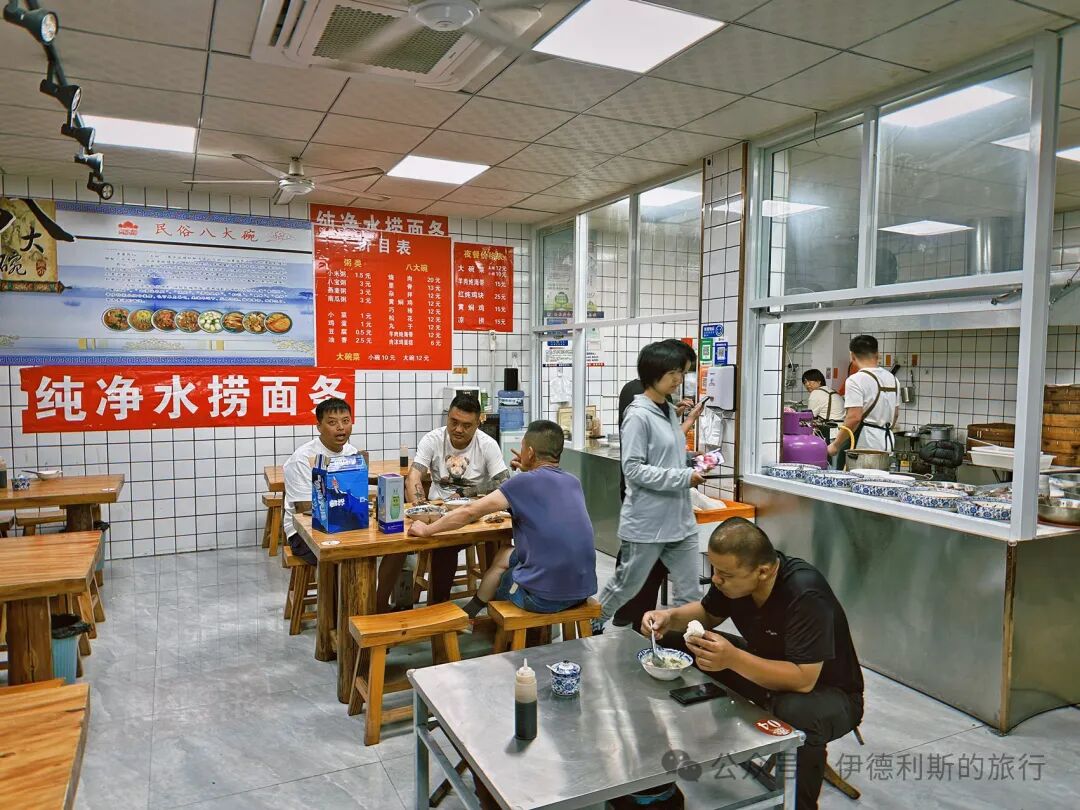
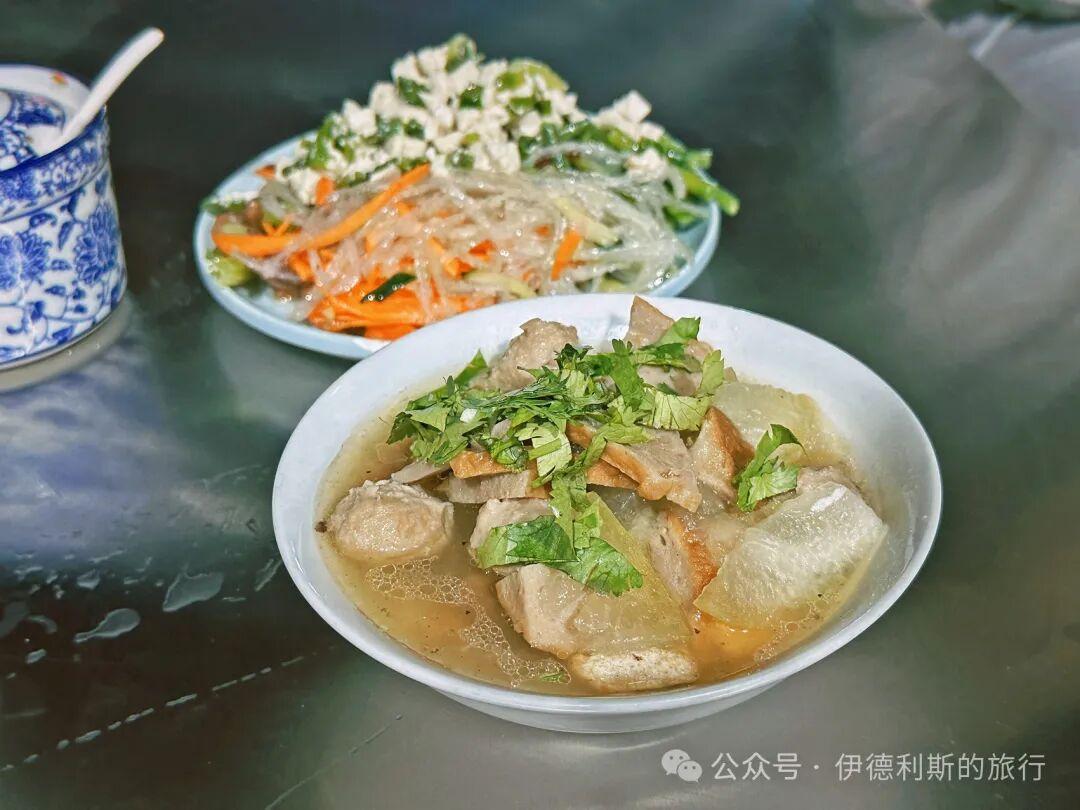
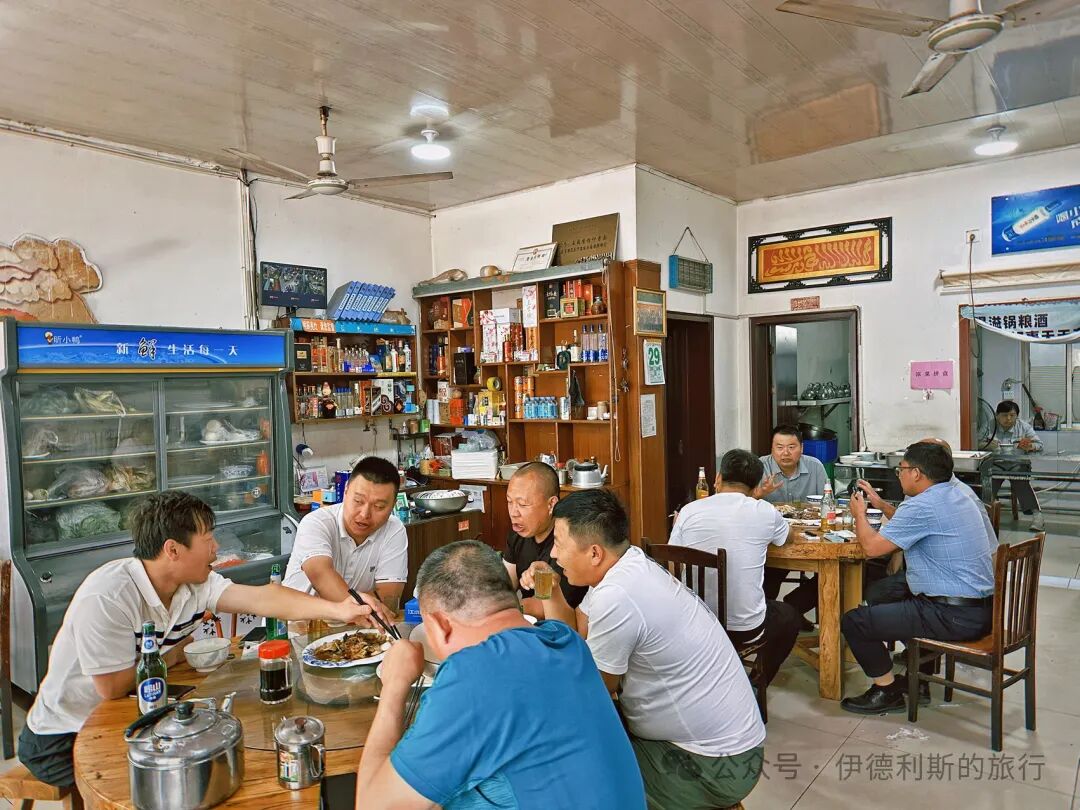
After the evening prayer (shamu), we ate big bowl dishes (dawan cai) at Erliang Diguo Millet Porridge, located at the intersection of Xianfeng Road and Dazhong Road in Linqing. They serve porridge and eight big bowls (ba da wan) in the morning, noodles in the afternoon, and big bowl dishes (dawan cai) at night, all of which look delicious. We ordered a serving of big bowl dishes and a cold appetizer. The big bowl dish had plenty of ingredients inside, and it felt very healthy to eat.
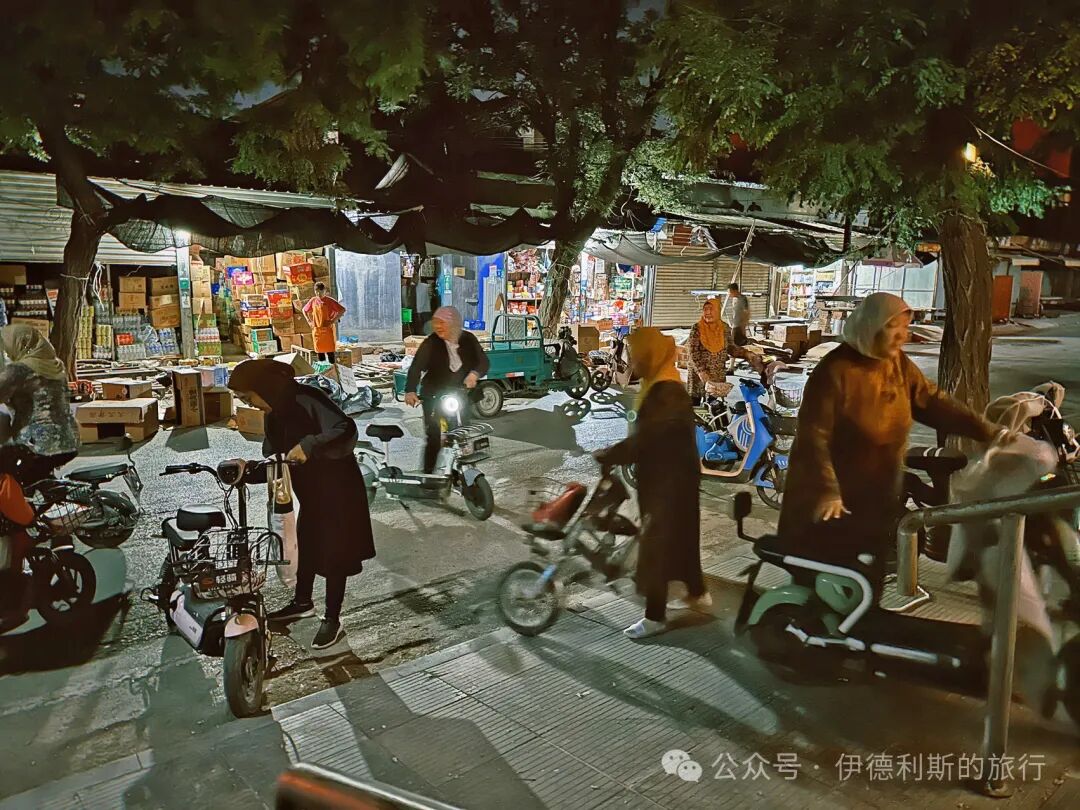
Zainab and I both really like the atmosphere in Linqing. There are few cars on the street at night, no delivery scooters, and it feels great to ride a shared electric bike around. There are many halal restaurants on Xianfeng Road. People sit on small stools outside the shops at night to eat and chat, which feels very relaxed.
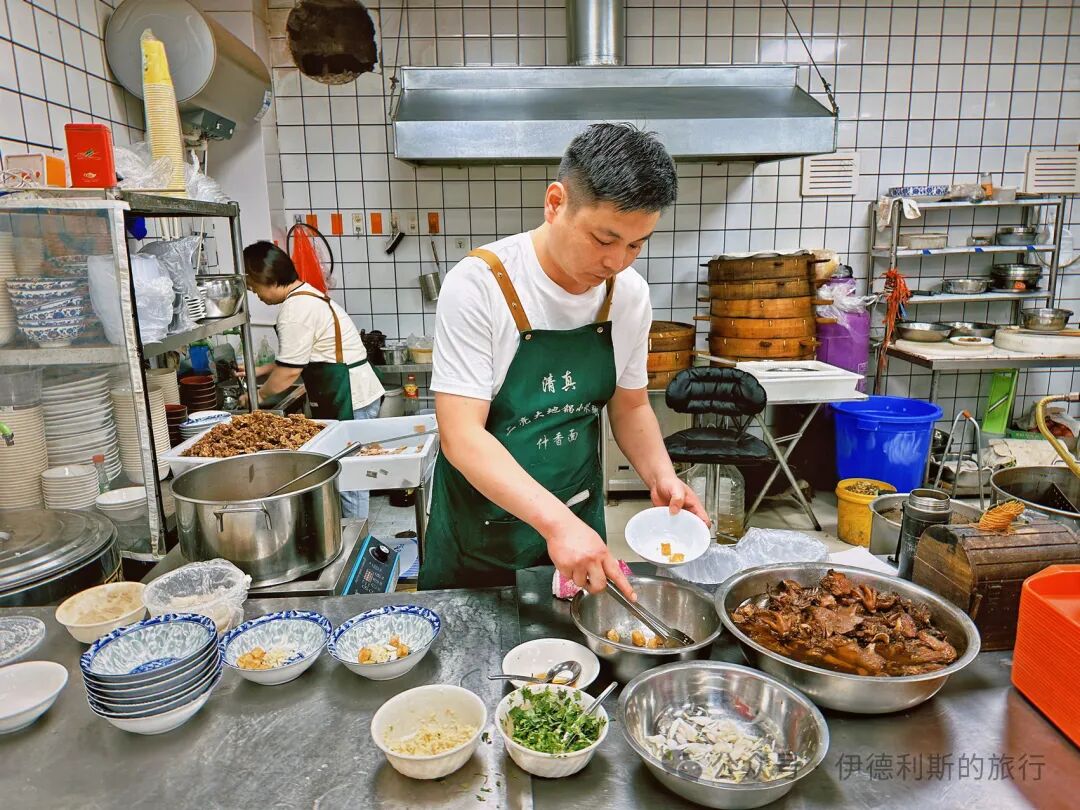
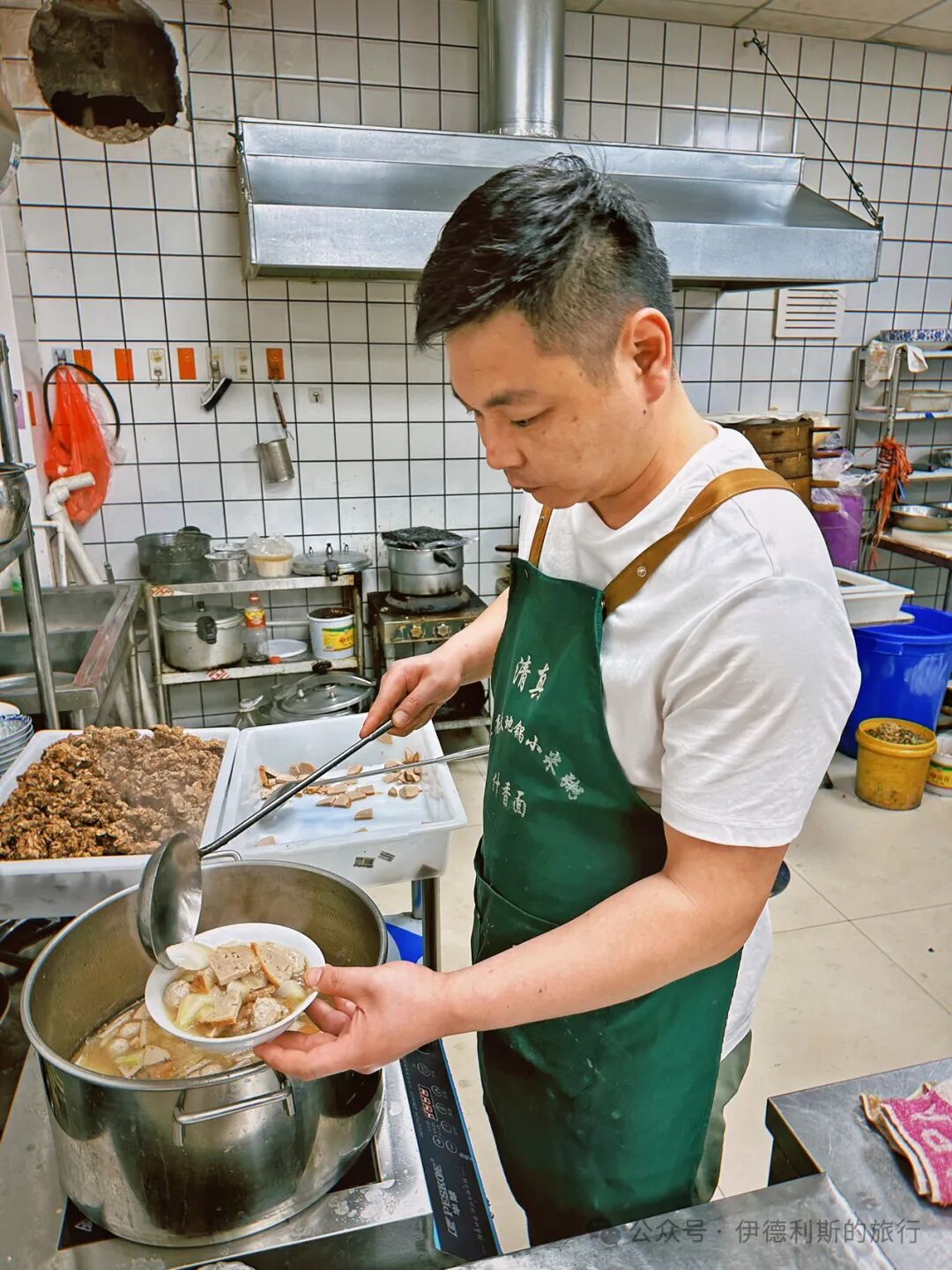
Linqing at night is full of various halal restaurants and even a small halal night market.
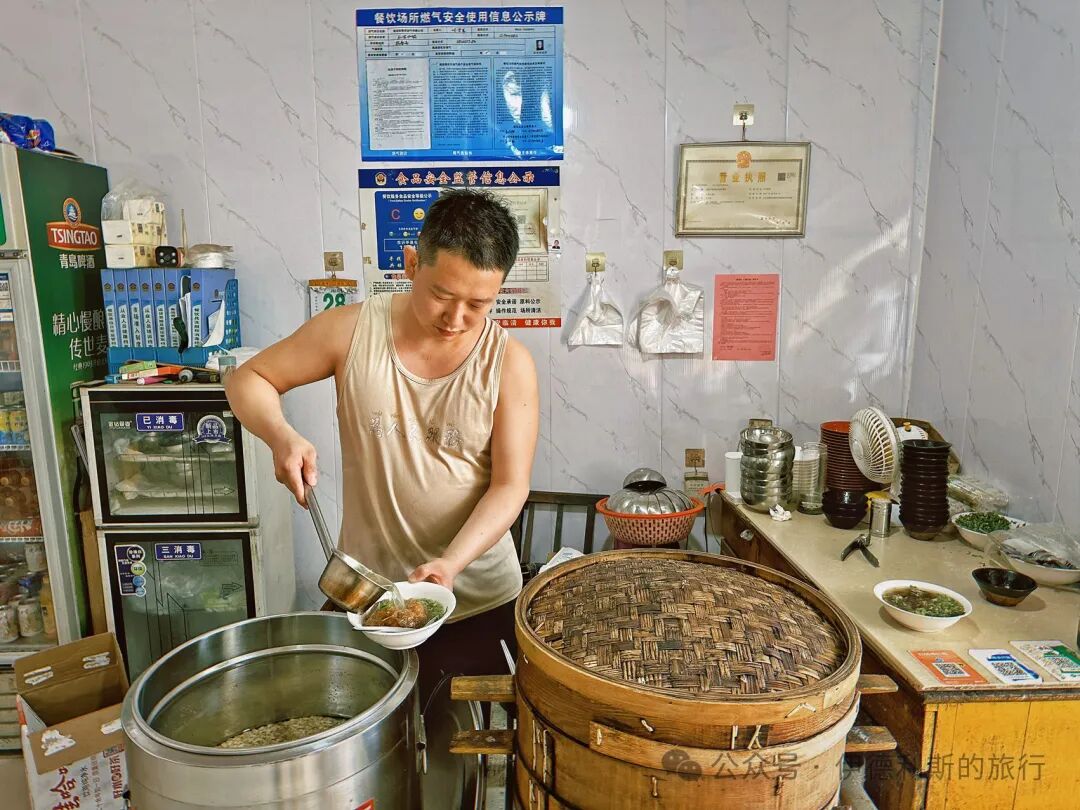
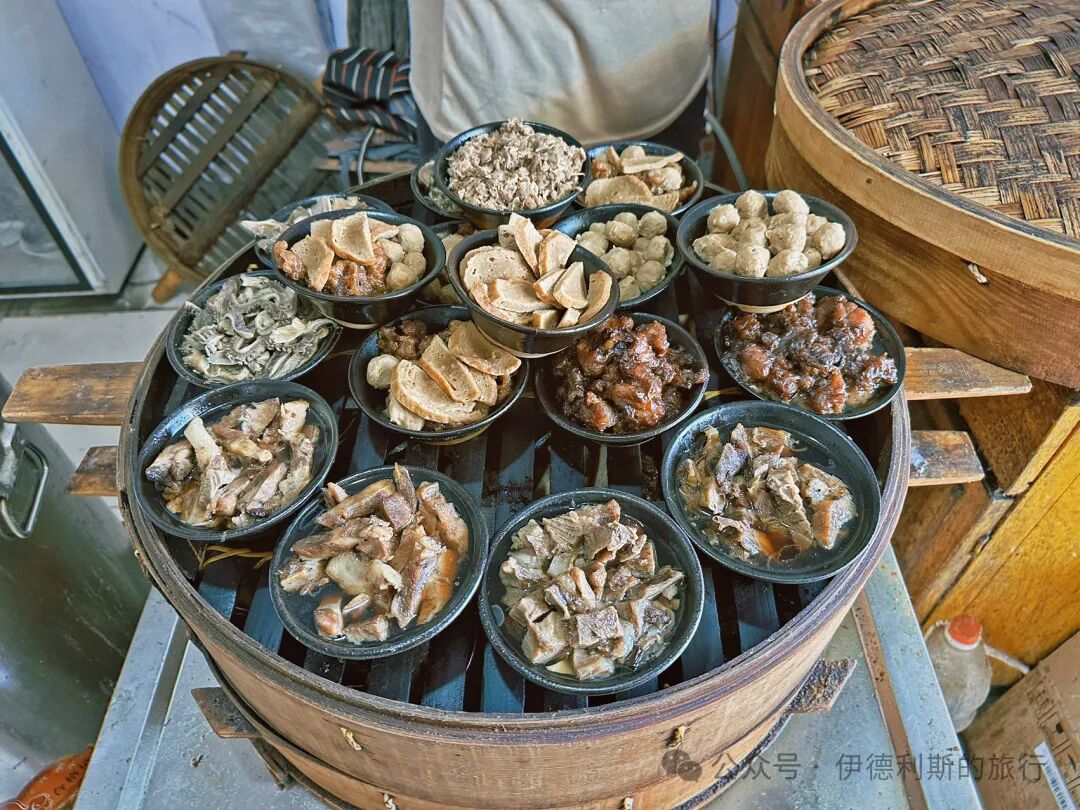
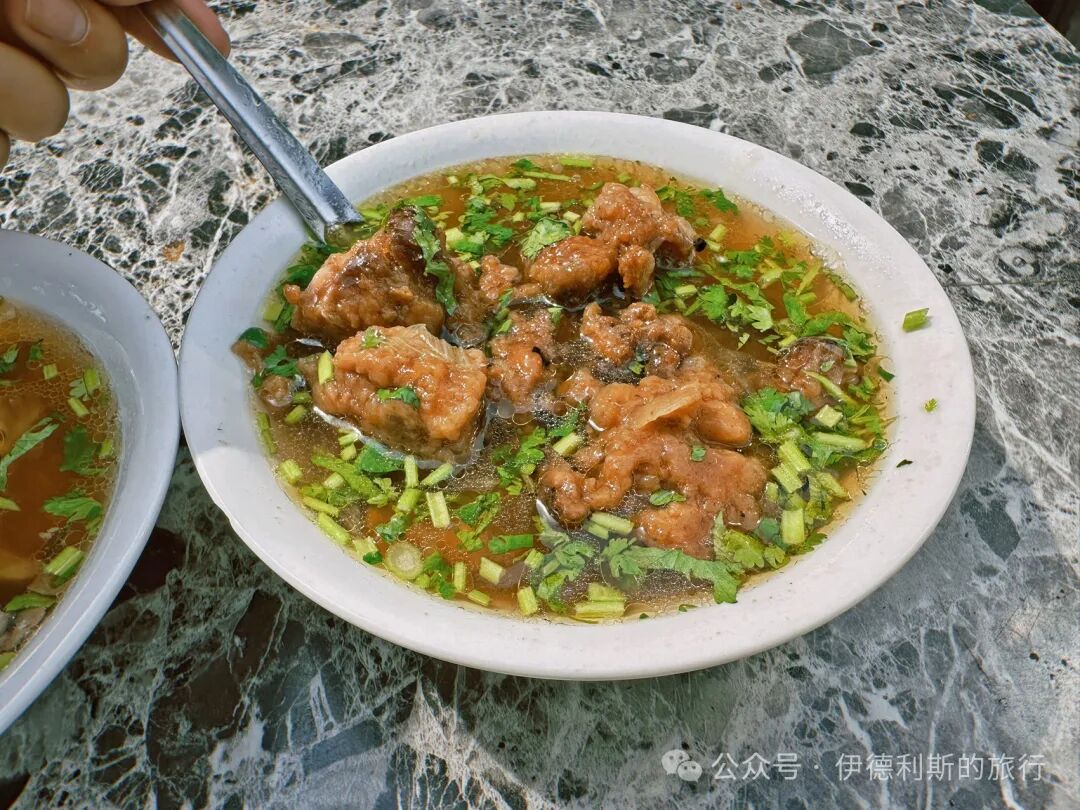
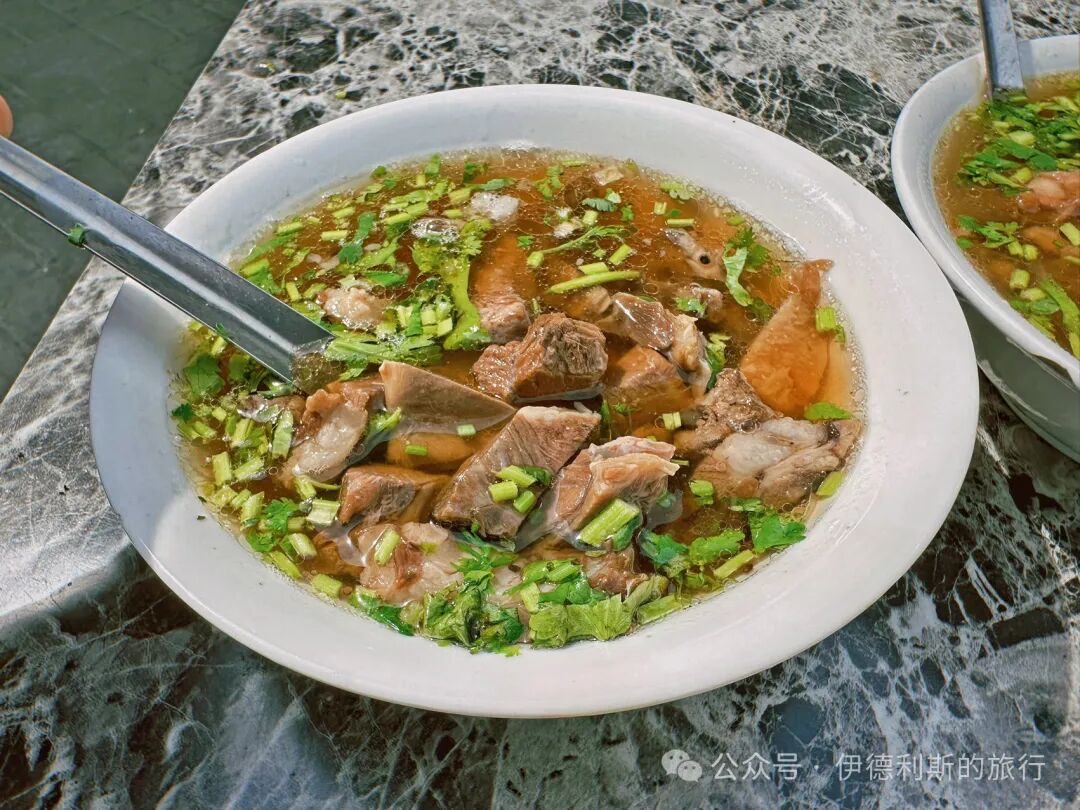
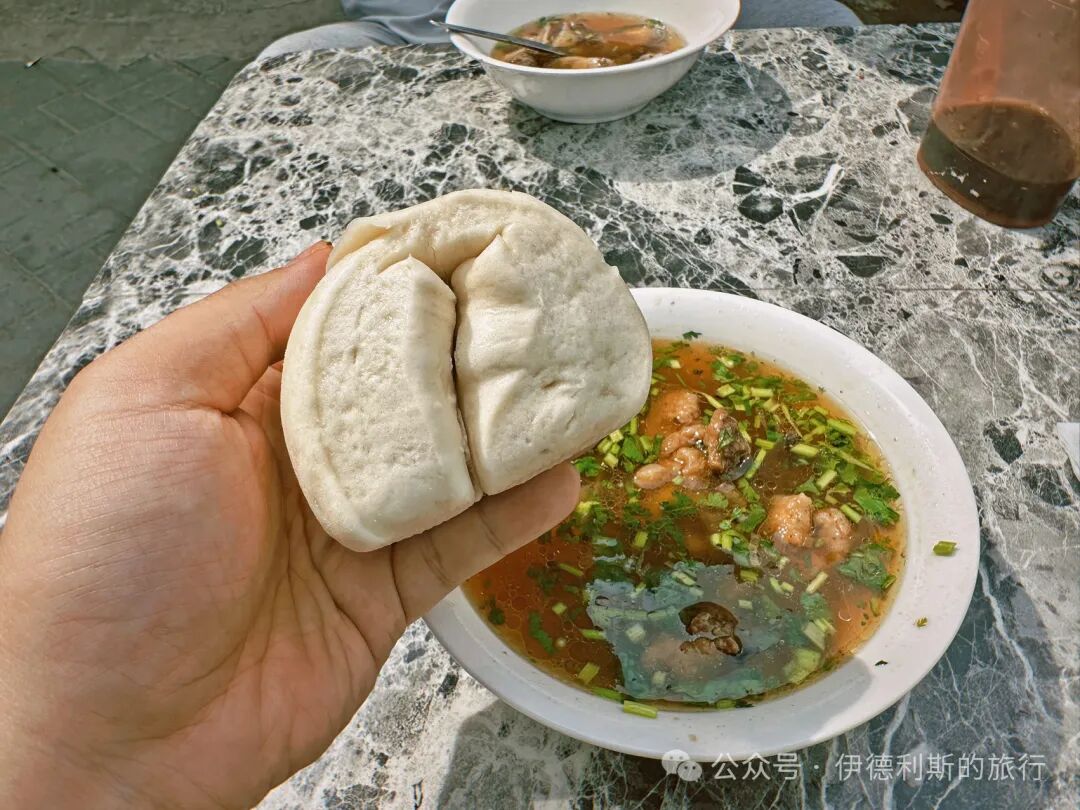
We had breakfast at Kong Family Steamed Bowls (Kongjia kouwan) at the intersection of Xianfeng Road, where we ate braised pork and steamed pork tenderloin (liji kouwan) with steamed buns (mantou). Turning the traditional steamed bowls (kouwan) from North China's scripture hall banquets into a breakfast seems to be a local specialty of Linqing, allowing tourists like us to enjoy traditional banquet dishes. They keep their steamed bowls (kouwan) in a large steamer. They have many kinds like pine-flower egg (songhua), meatballs (wanzi), pork tenderloin (liji), starch jelly (menzi), and braised pork (shaorou). You pick what you want, they flip it into a bowl, pour broth over it, and it is ready to eat.
Their shop was originally the Taoyuan Street Supply and Marketing Cooperative built in the 1970s. Eating here feels very retro. Besides selling steamed bowls in the morning, they also sell cold noodles (liangmian) at noon, which is another specialty of Linqing.
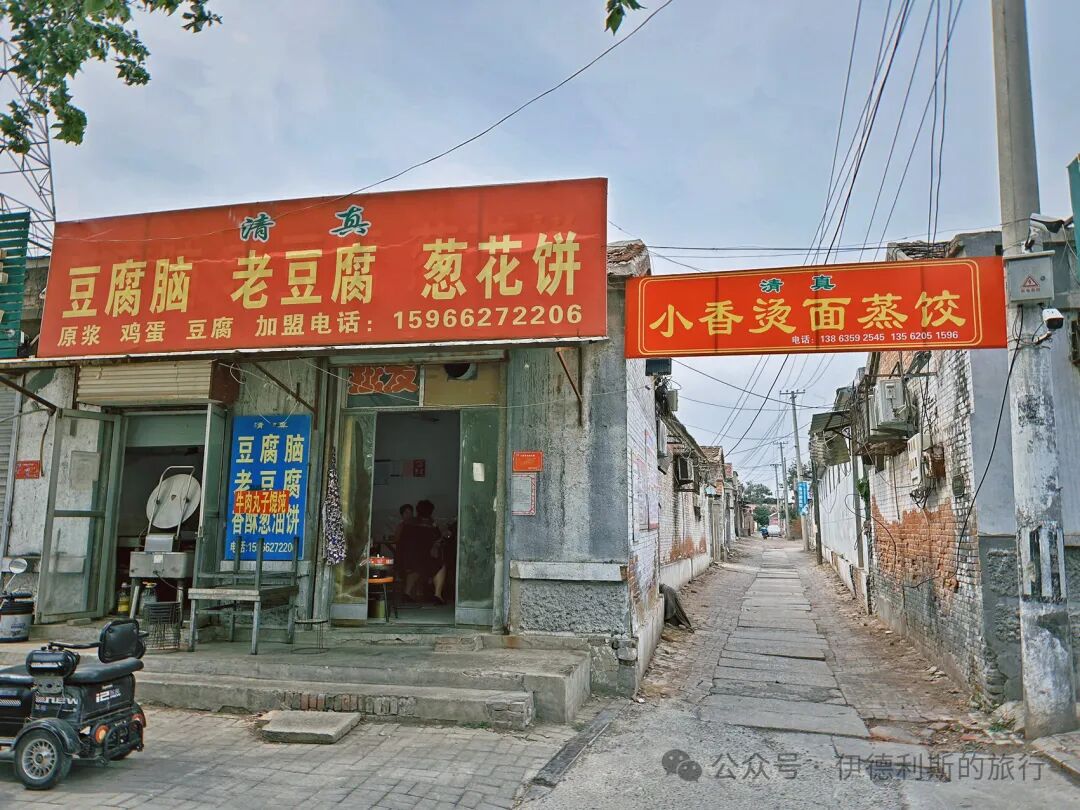
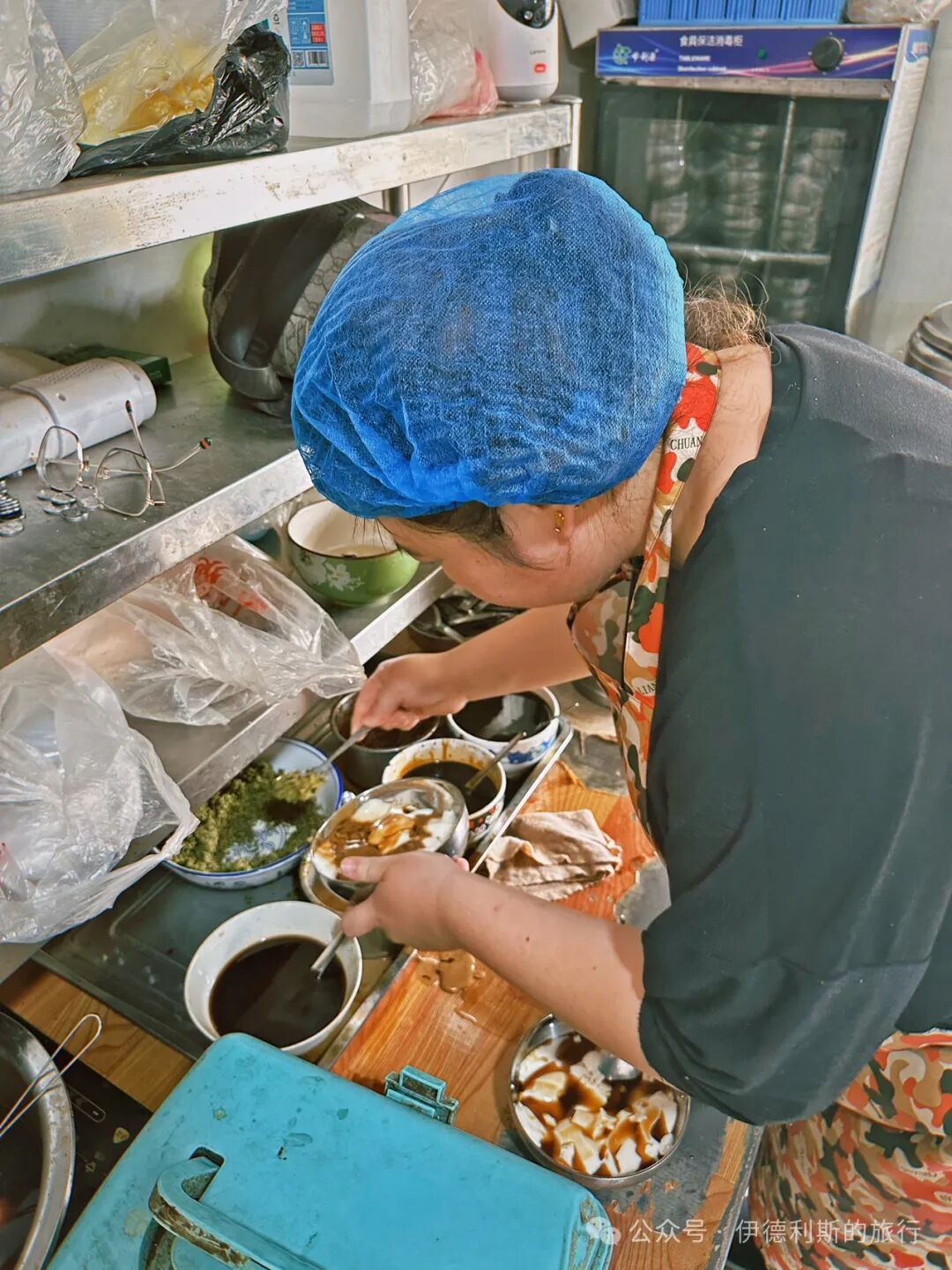
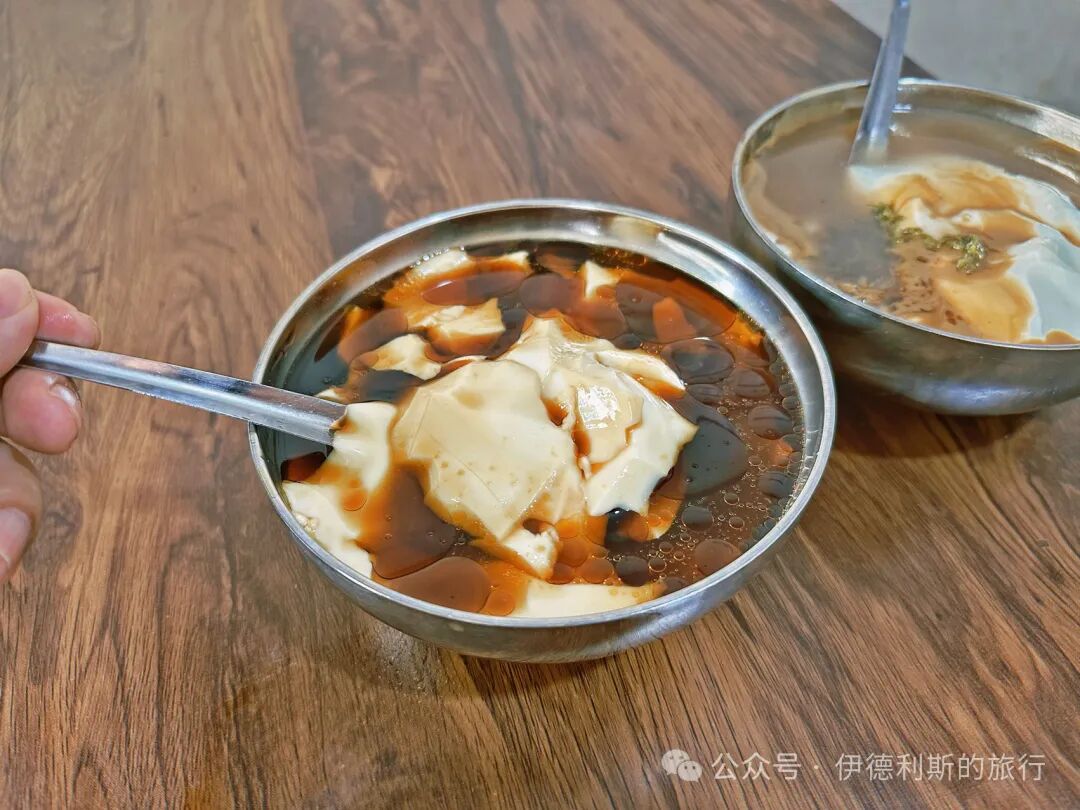
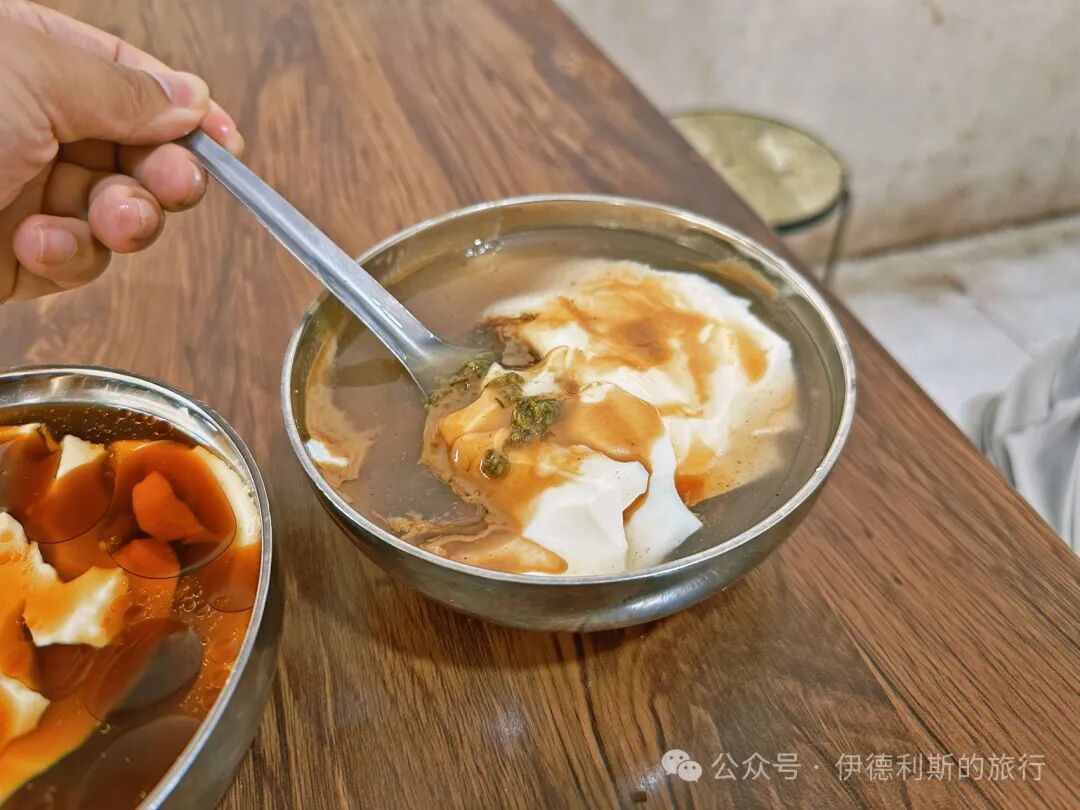
After finishing the steamed bowls, I went to Xianfeng Road to eat tofu pudding (doufunao) and firm tofu (laodoufu). Breakfast shops in Linqing sell both tofu pudding and firm tofu. The difference is that tofu pudding is set with gypsum, making the texture smooth and delicate. Firm tofu is set with brine, making the texture tough and chewy. I like both kinds.
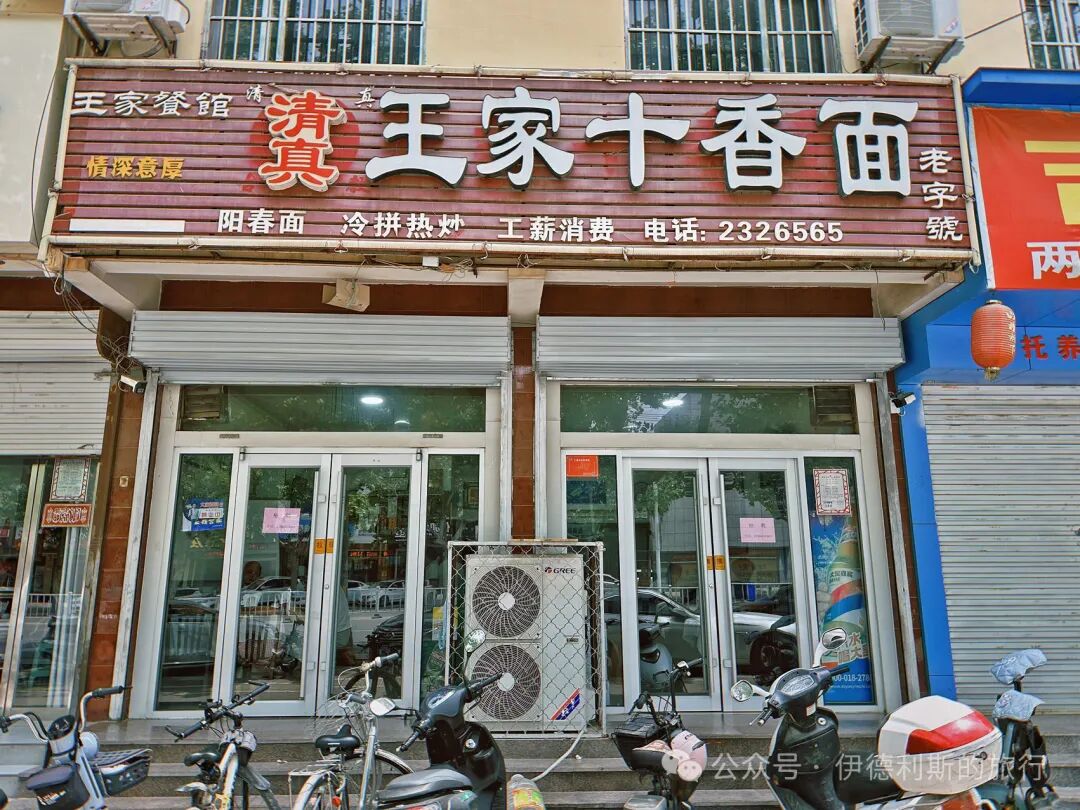
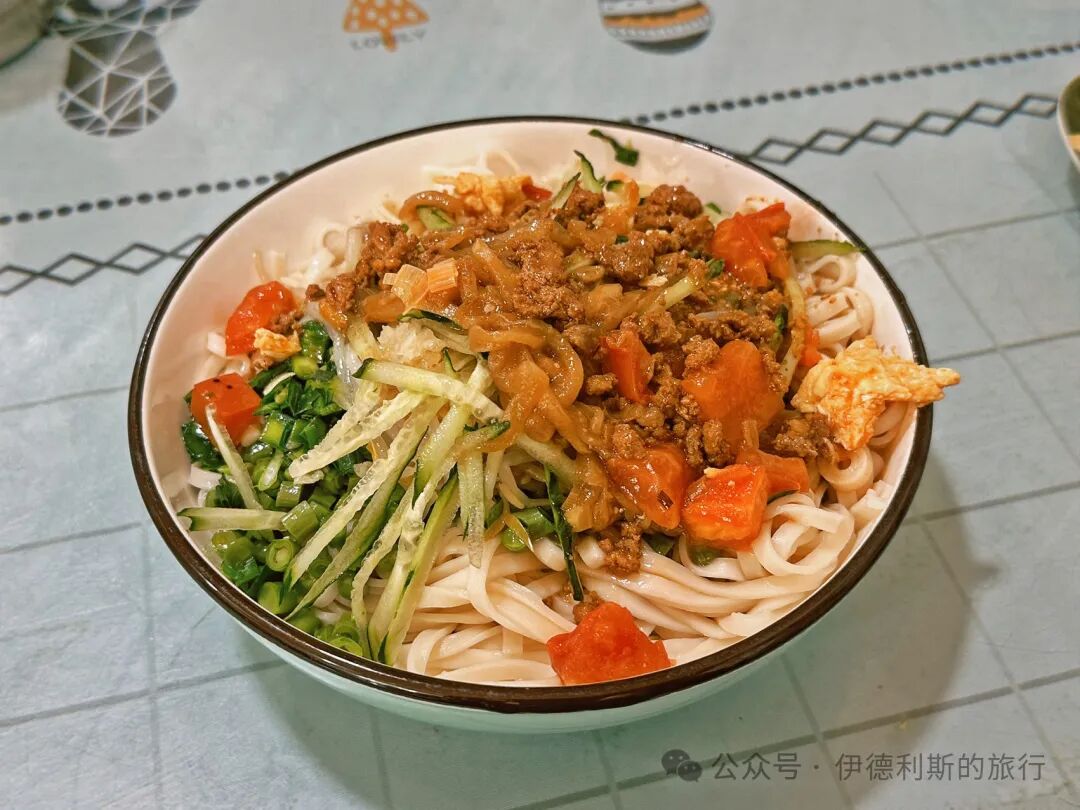
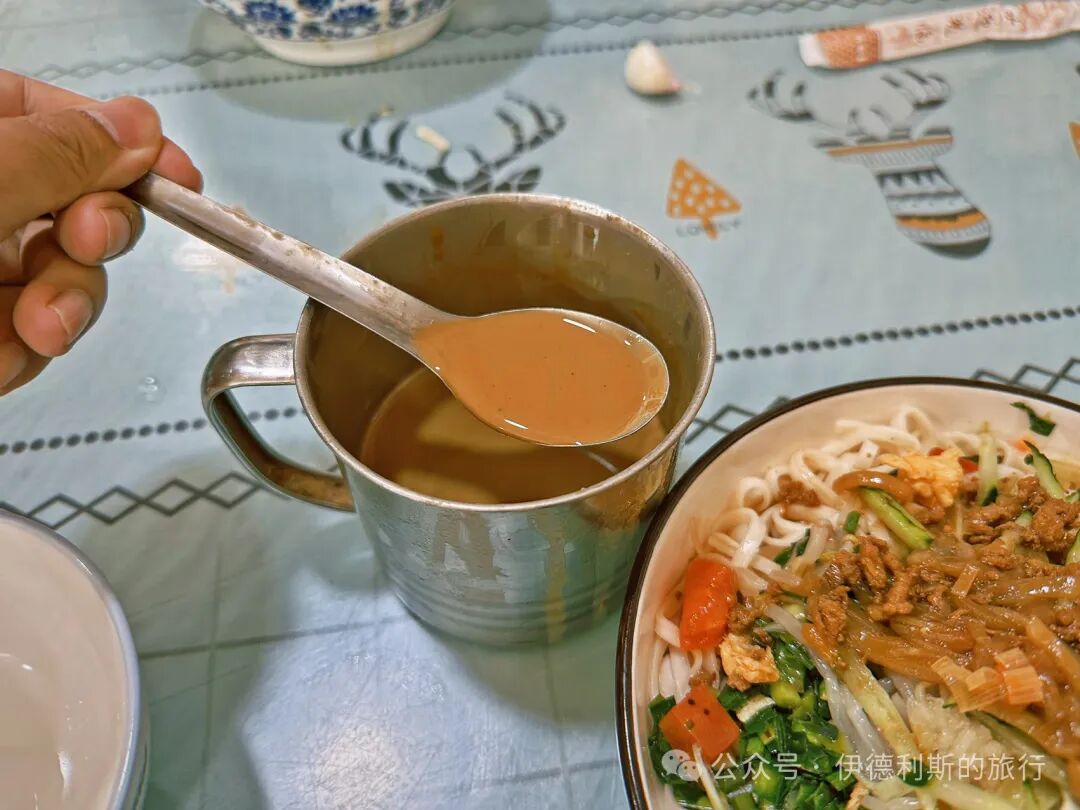
At noon, we ate Wang Family Ten-Fragrance Noodles (shixiangmian) on Xinhua Road. Ten-Fragrance Noodles are also called Assorted-Fragrance Noodles (shixiangmian). The main feature is the large variety of vegetable toppings. A deluxe bowl can have over eighteen types, and the ingredients change based on the solar terms. The toppings mainly include stir-fried minced meat with eggplant strips, mung bean sprouts, chives, minced garlic sprouts, minced green beans, and tomato with egg. You also get fresh shredded cucumber, minced carrots, and pickled vegetables like pickled melon (jianggua), salted mustard greens (xian gede), and minced chive flowers (jiuhua mo), all finished with a drizzle of sesame paste. The homemade version we ate wasn't quite as elaborate, but it still had plenty of variety.
Hongguanying Mosque
At noon, we went to the Hongguanying Mosque in Linxi County, Xingtai, Hebei. Linxi County in Xingtai is actually right on the west side of the Wei Canal in Linqing. Once you cross the Xianfeng Bridge, there is a bus that goes to Hongguanying.
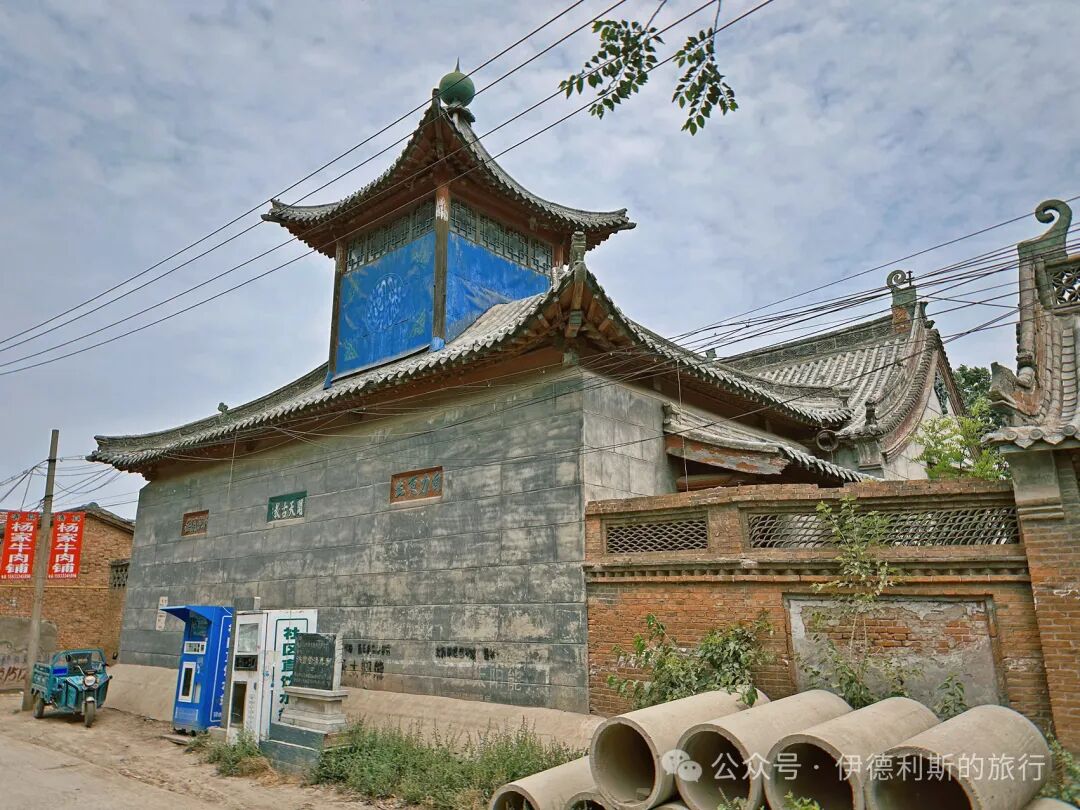
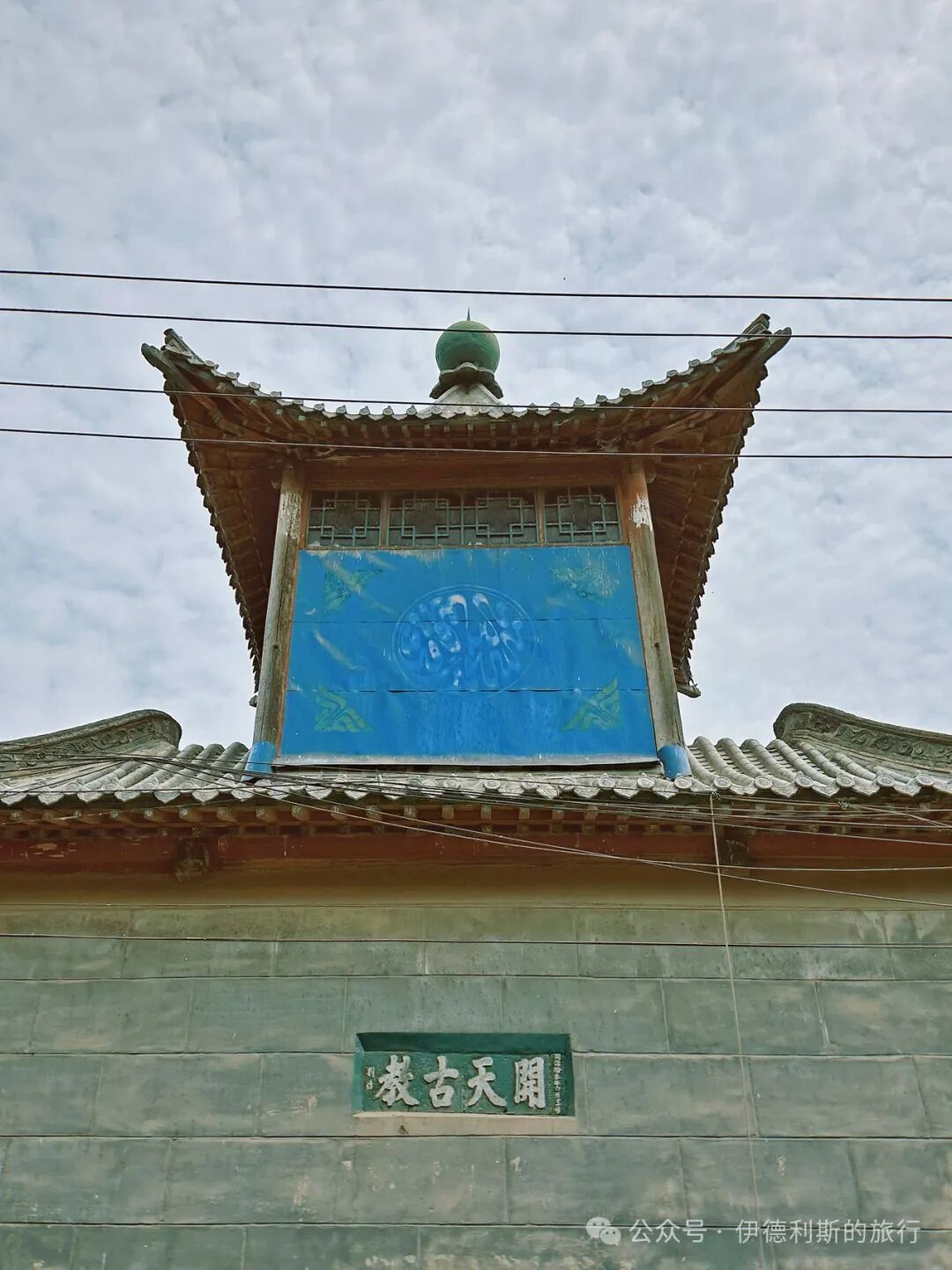
Hongguanying gets its name from the Hong family of Hui Muslims. According to the Linqing Hong Family Genealogy, the ancestor of the Hong family of Hui Muslims was Sayyid Ajjal Shams al-Din. His sixth-generation descendant, Hong Badan, served as an official in Linqing during the Ming Dynasty. His descendants took Hong as their surname and settled in Linqing. One branch settled in the urban area of Linqing and once built the Hong Family Mosque, but unfortunately, it no longer exists. Another group settled in Hongguanying Village and built the Hongguanying Mosque. The Hongguanying Mosque was first built between the Xuande and Tianshun periods of the Ming Dynasty. It was burned down in 1854 during the Northern Expedition of the Taiping Rebellion and rebuilt into its current form in 1874.
We were warmly welcomed at the Hongguanying Mosque by Imam Lan. He is skilled at Arabic calligraphy, and his scripture paintings and stone carvings are very impressive. I was very lucky to receive a one-stroke Basmala (tasmi) as a gift from Imam Lan.
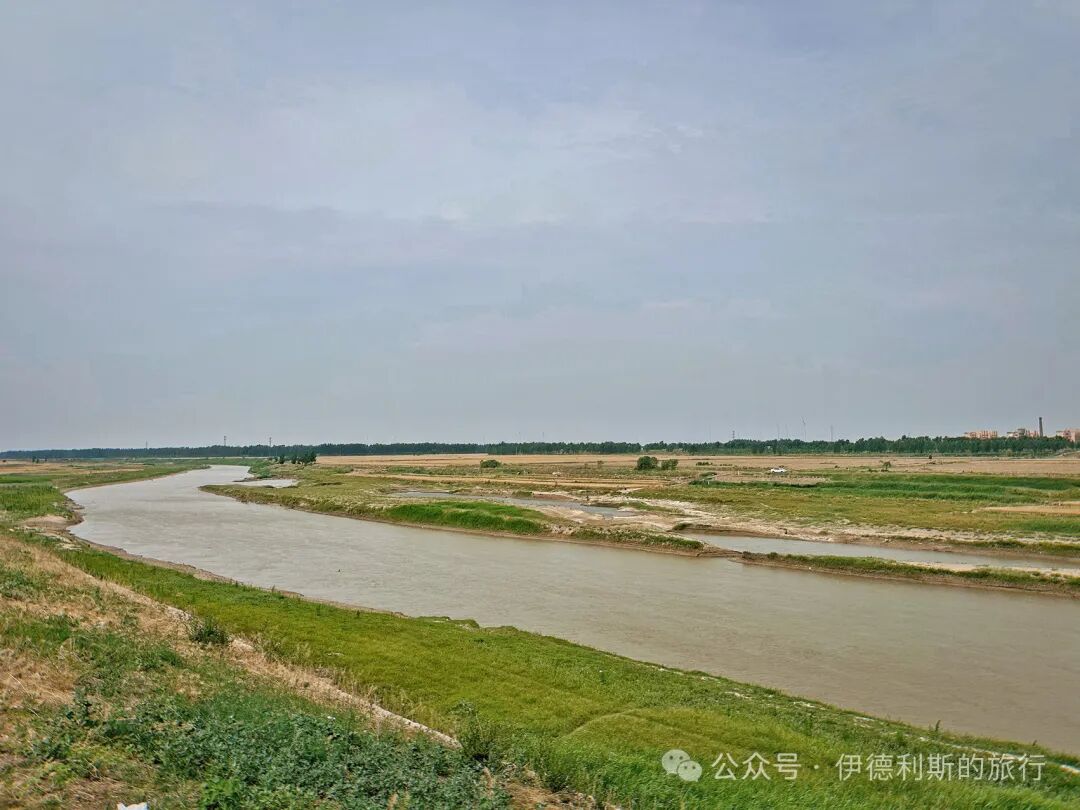
On the road heading west from Linqing to Hongguanying, we saw wheat fields, the Wei Canal, and Hui Muslim villages. The Xianfeng Bridge over the Wei Canal was built in 1959 and expanded in 1974. It was once very famous, but it stopped allowing motor vehicles in 1992 and is now a protected cultural site.
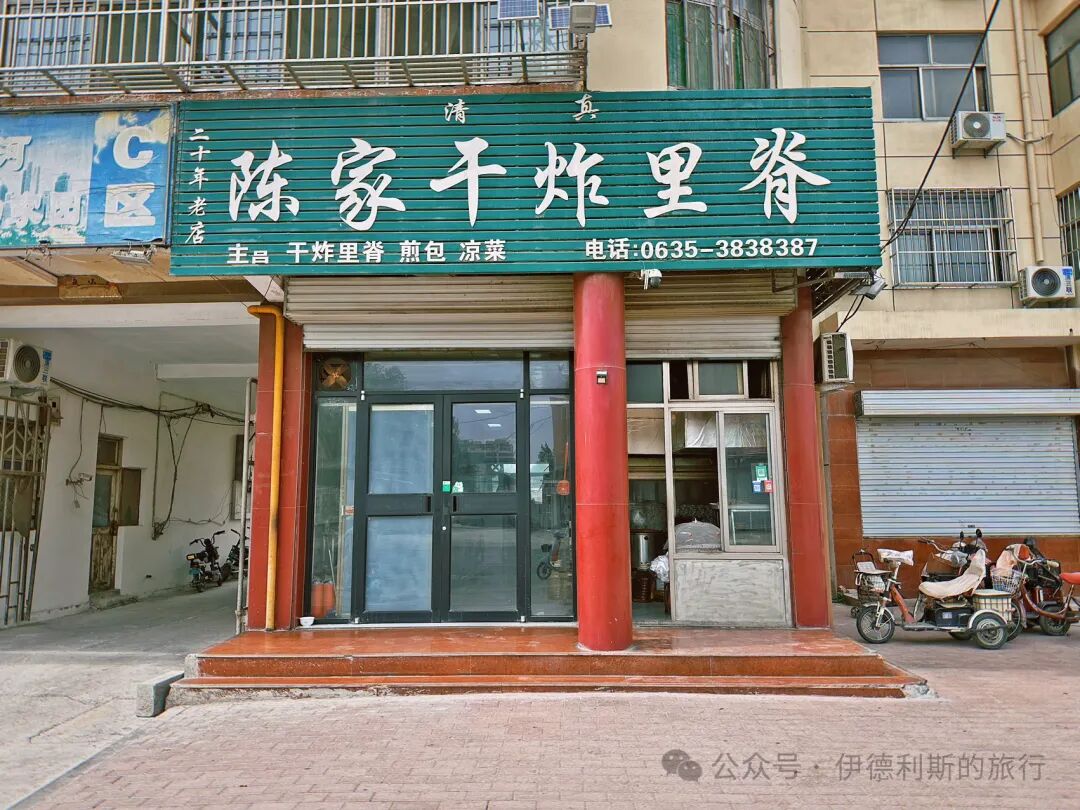
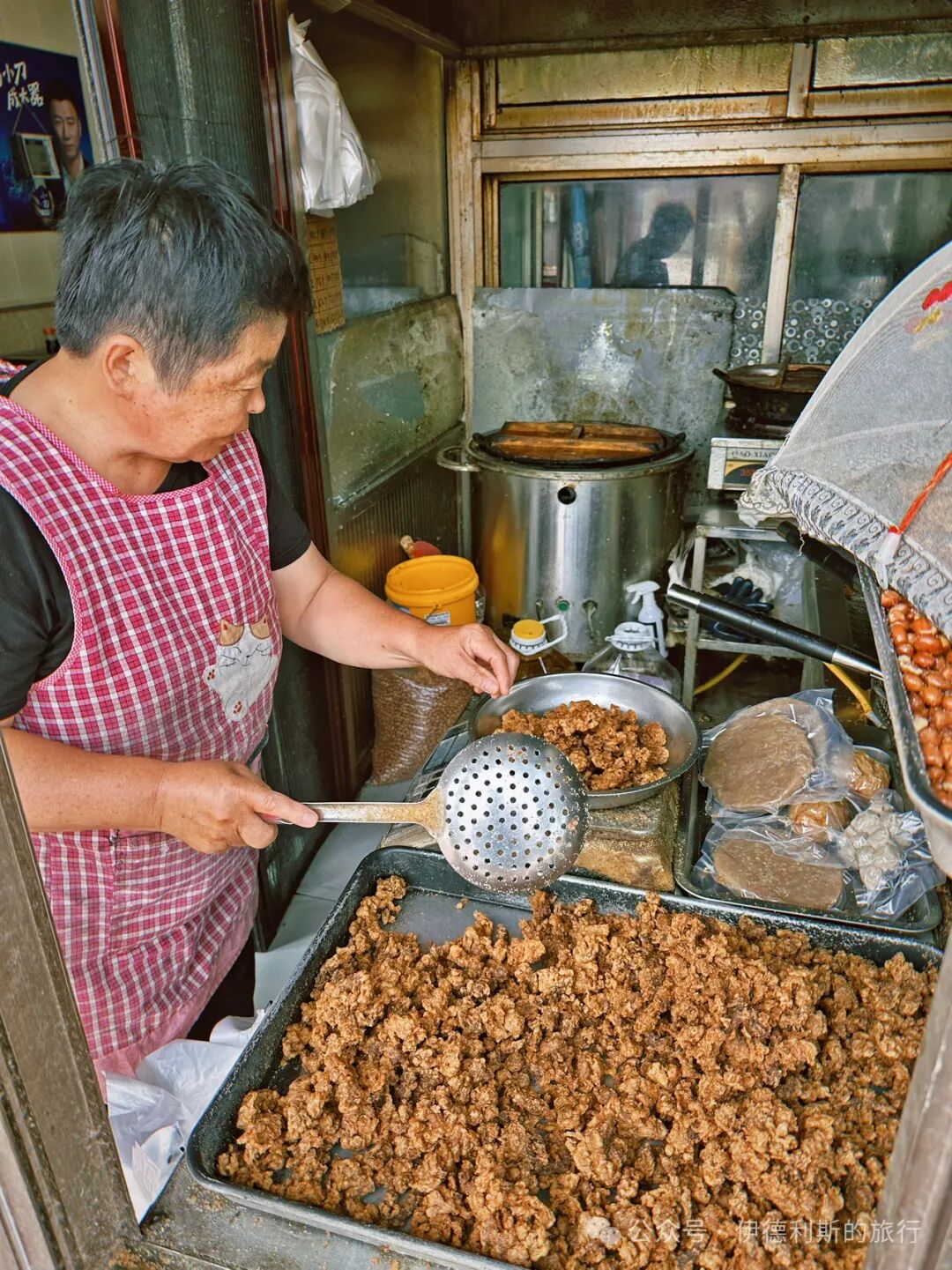
Returning from Hongguanying to downtown Linqing, we found that most restaurants here are closed between 2:00 PM and 5:00 PM. We found a place that sells deep-stir-fried meat tenderloin (ganzha liji) and bought some to eat on the train. I tried it as soon as I got on the train and it was super delicious! It was fried but not greasy at all. It even tasted great cold, just like a snack, and I couldn't stop eating it. Then we went to a shop that sells meat flatbreads (huoshao) and stuffed flatbreads (xian huoshao). There are many ways to make flatbreads here in Linqing. We bought a beef-stuffed flatbread, and it was packed with filling. I think it tasted much better than the ones I've had in Beijing.
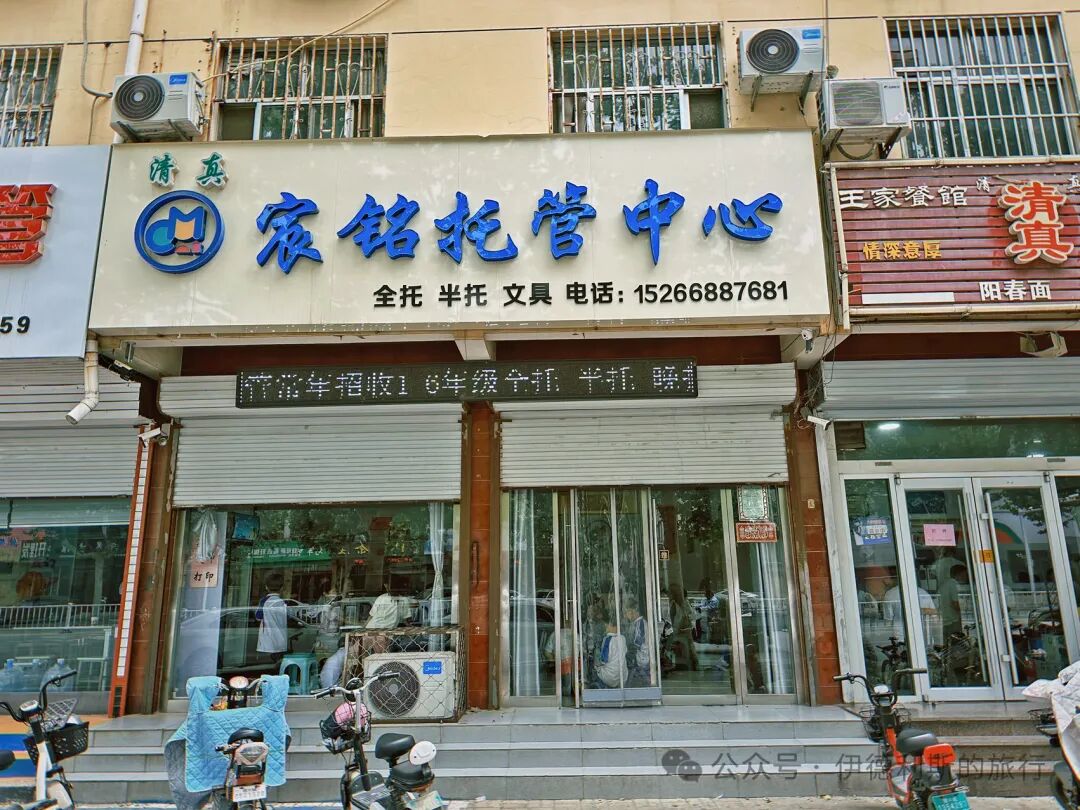
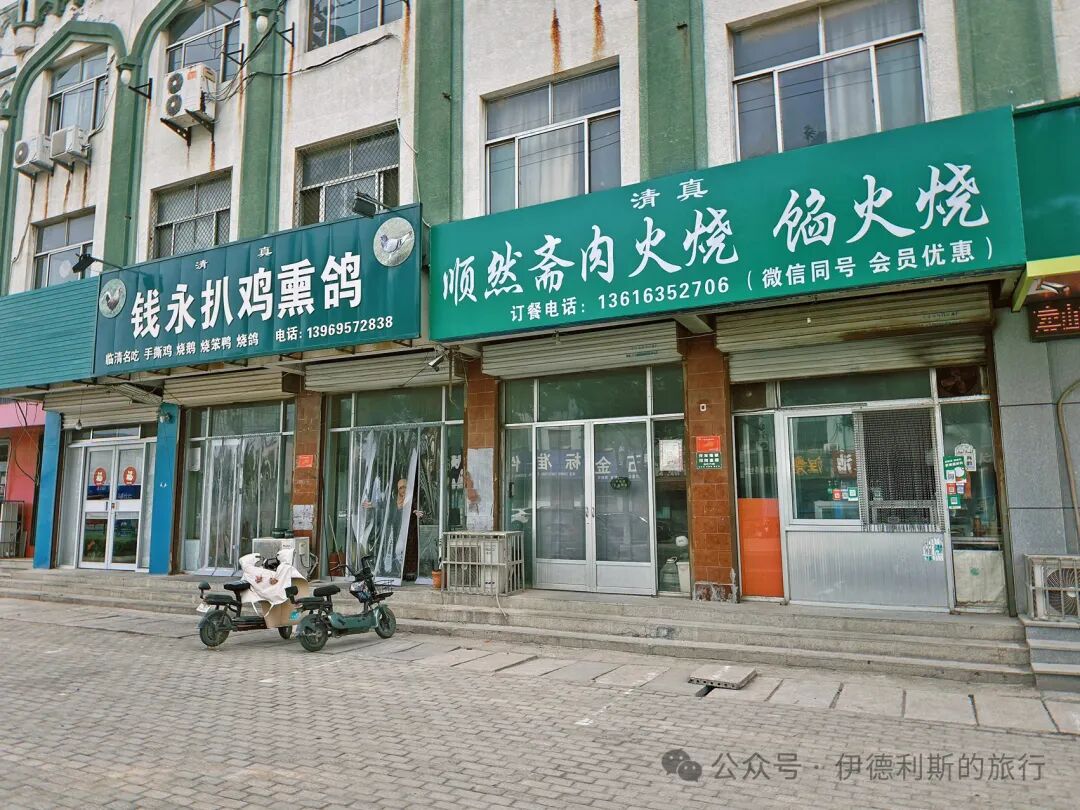
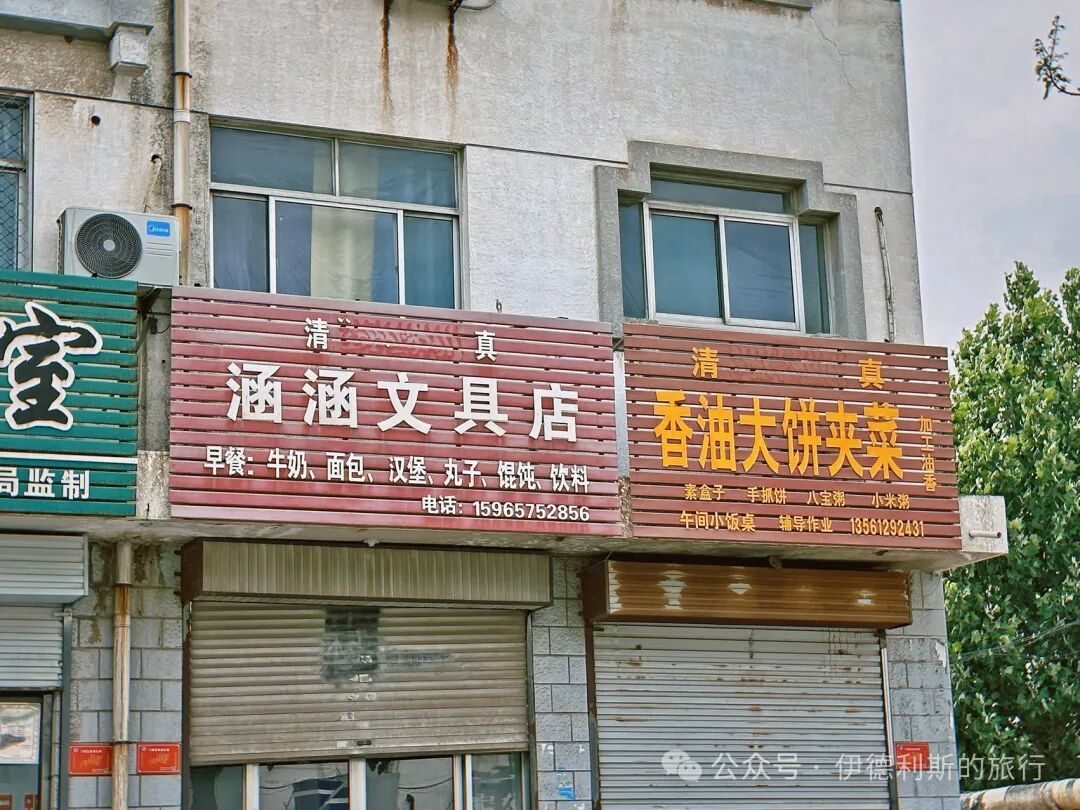
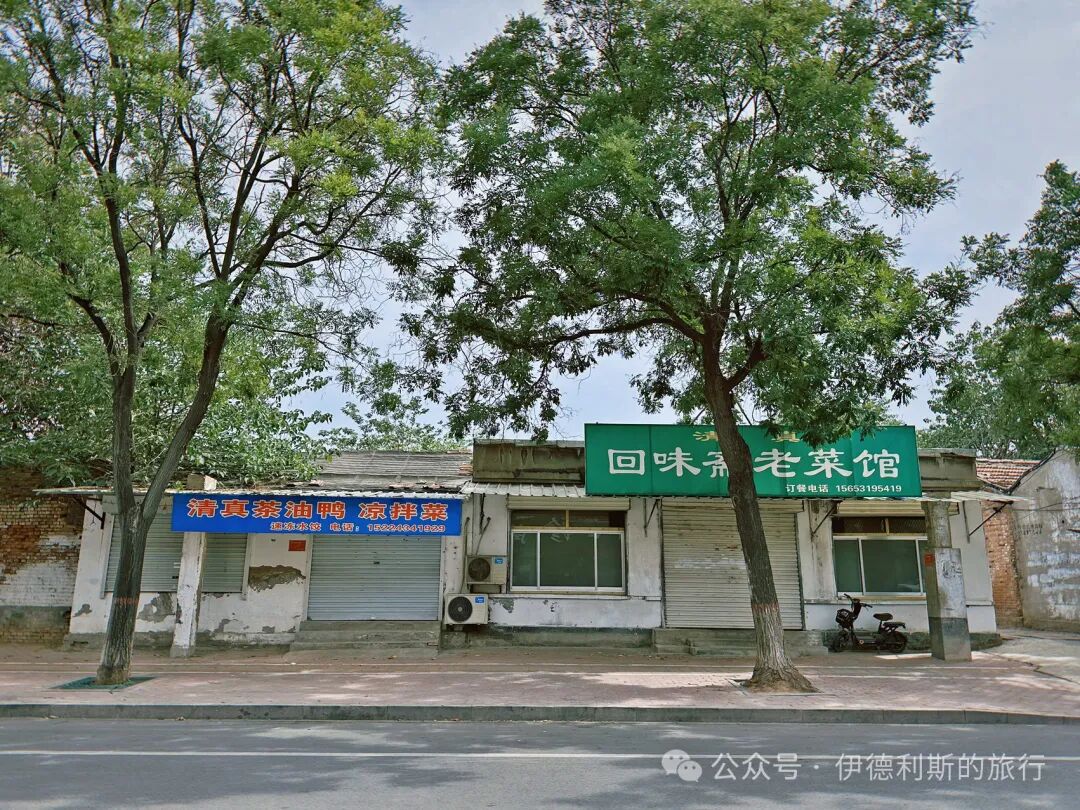
The last photo shows two shops next to the Linqing No. 1 Kindergarten. One is a stationery shop that also serves breakfast, and the other is a sesame oil shop that provides lunch and tutoring for students. I thought that was really interesting.
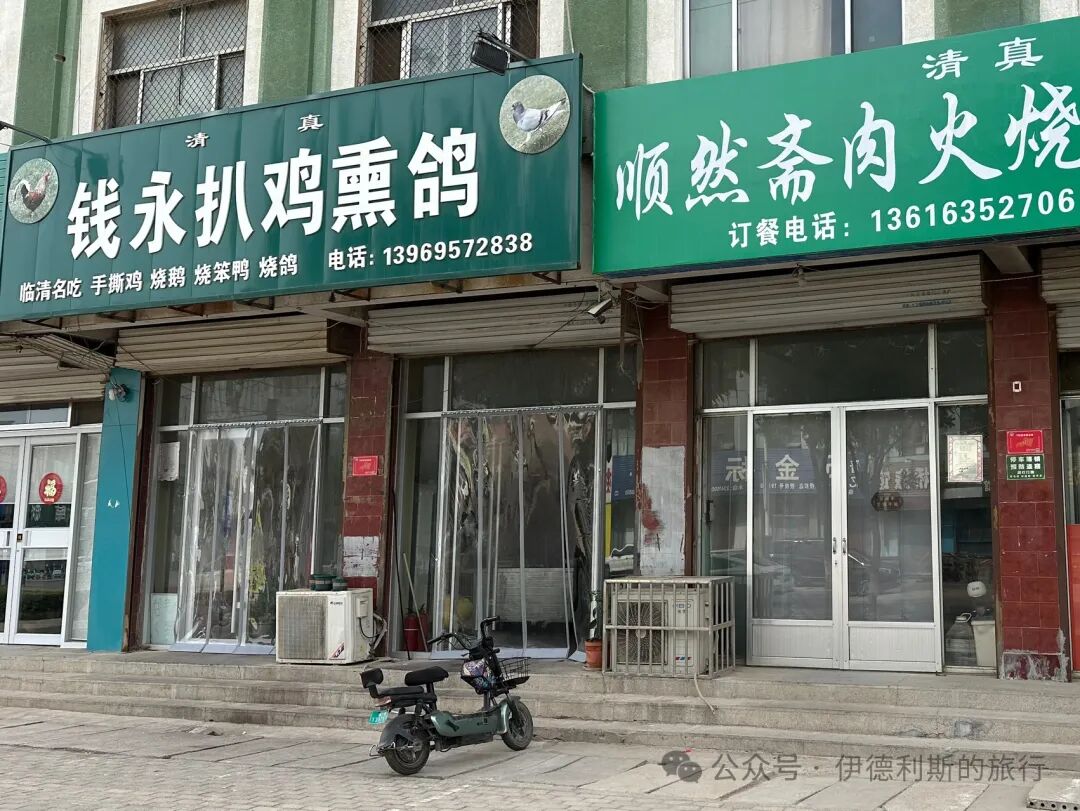
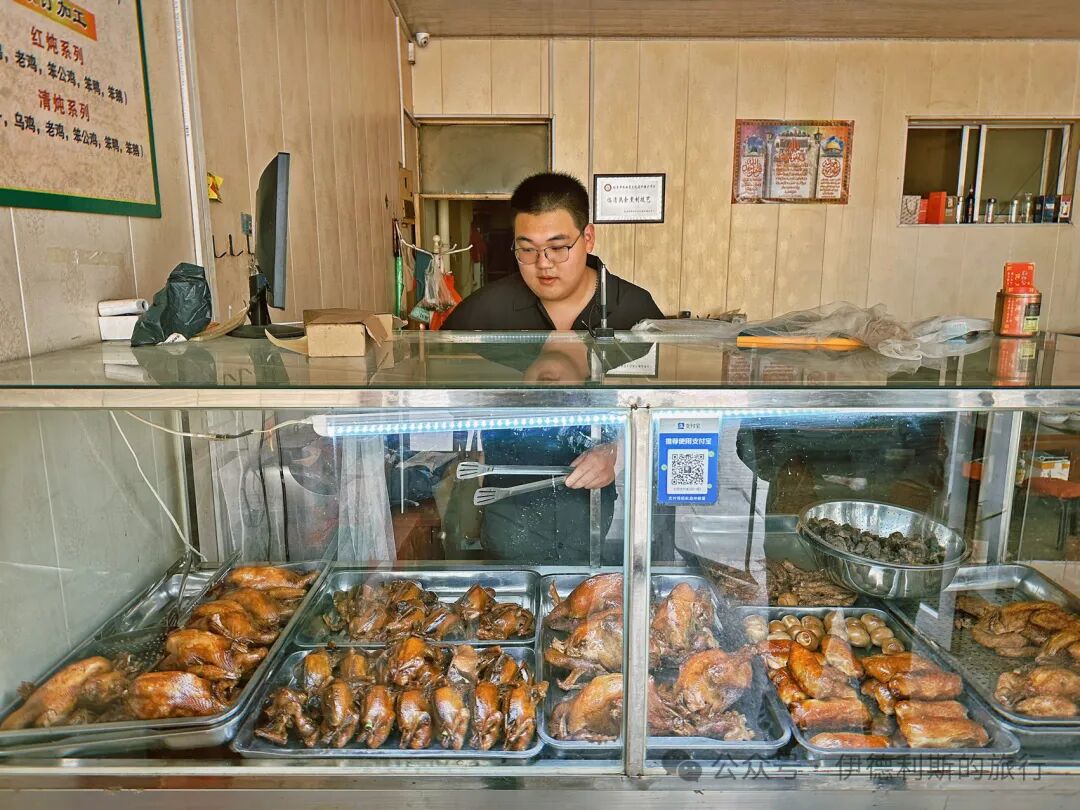
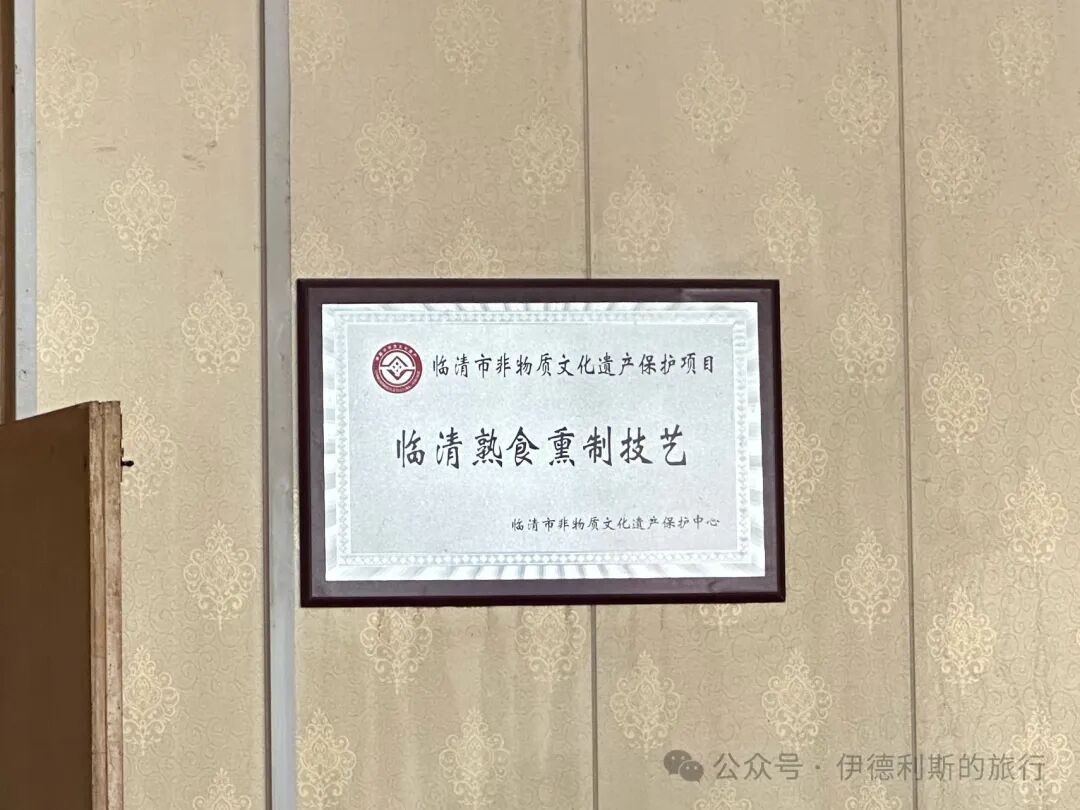
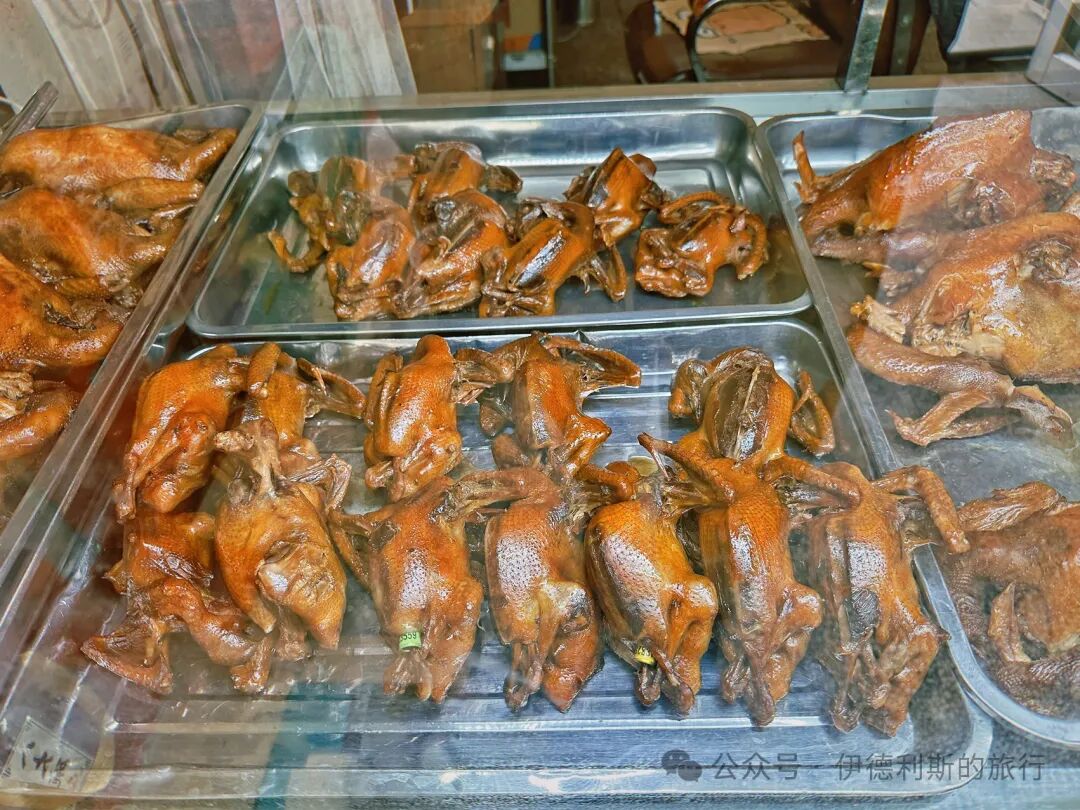
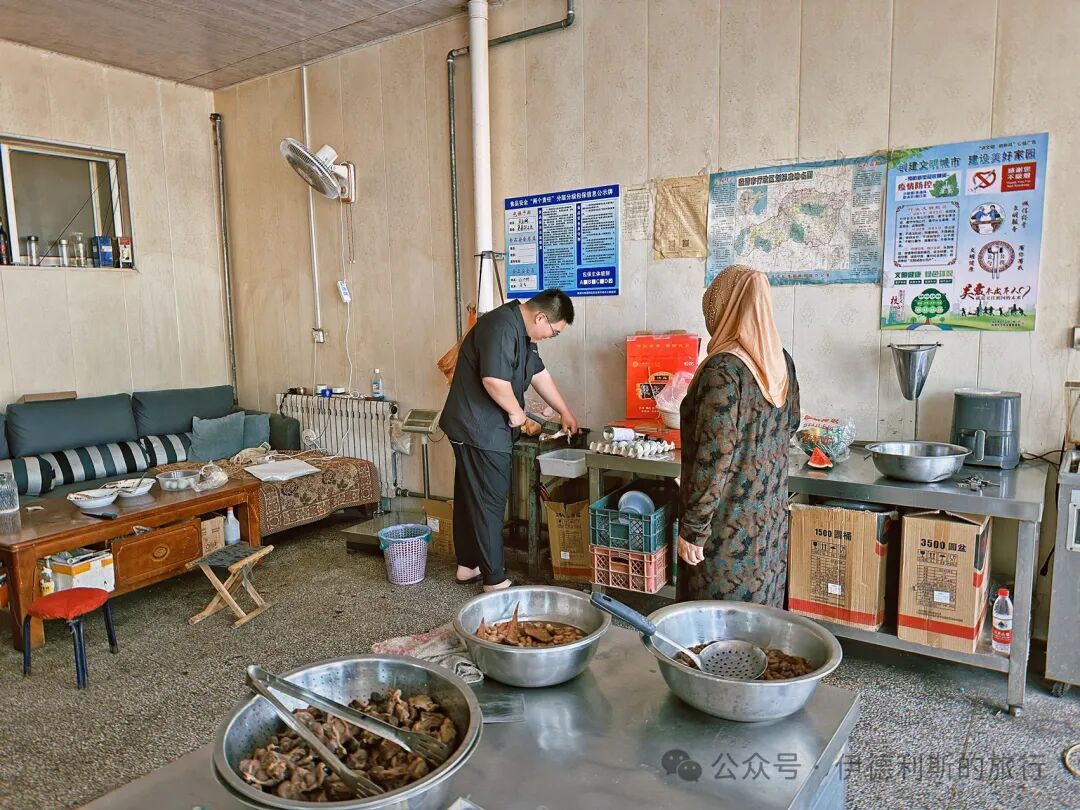
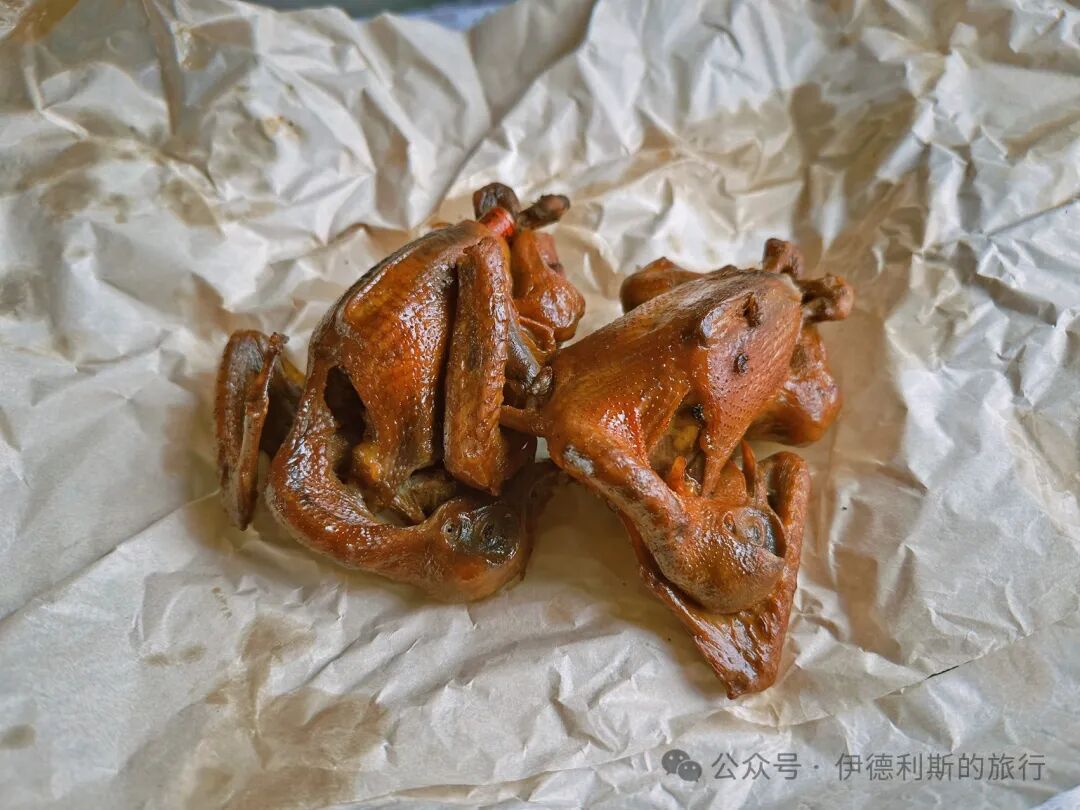
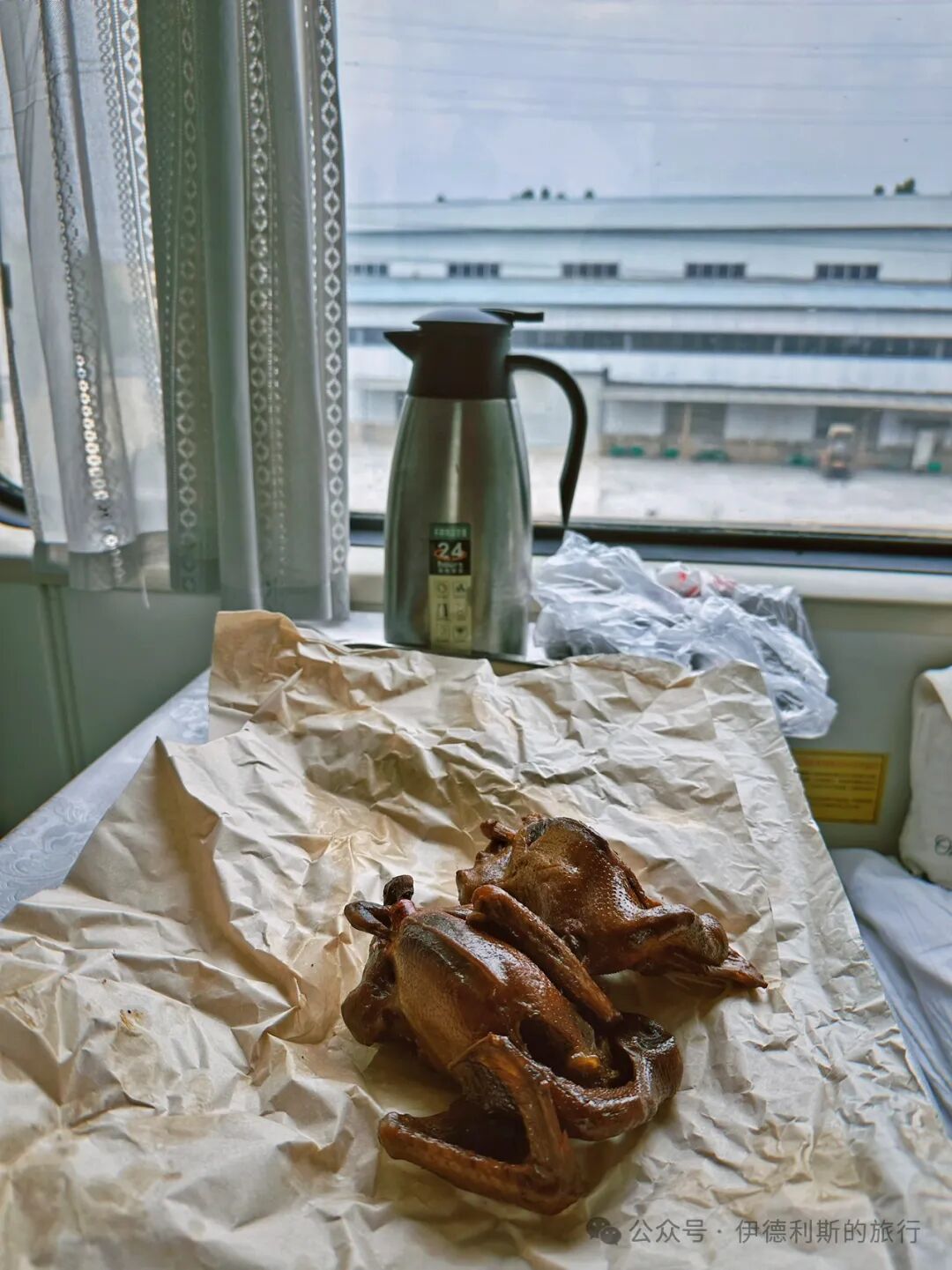
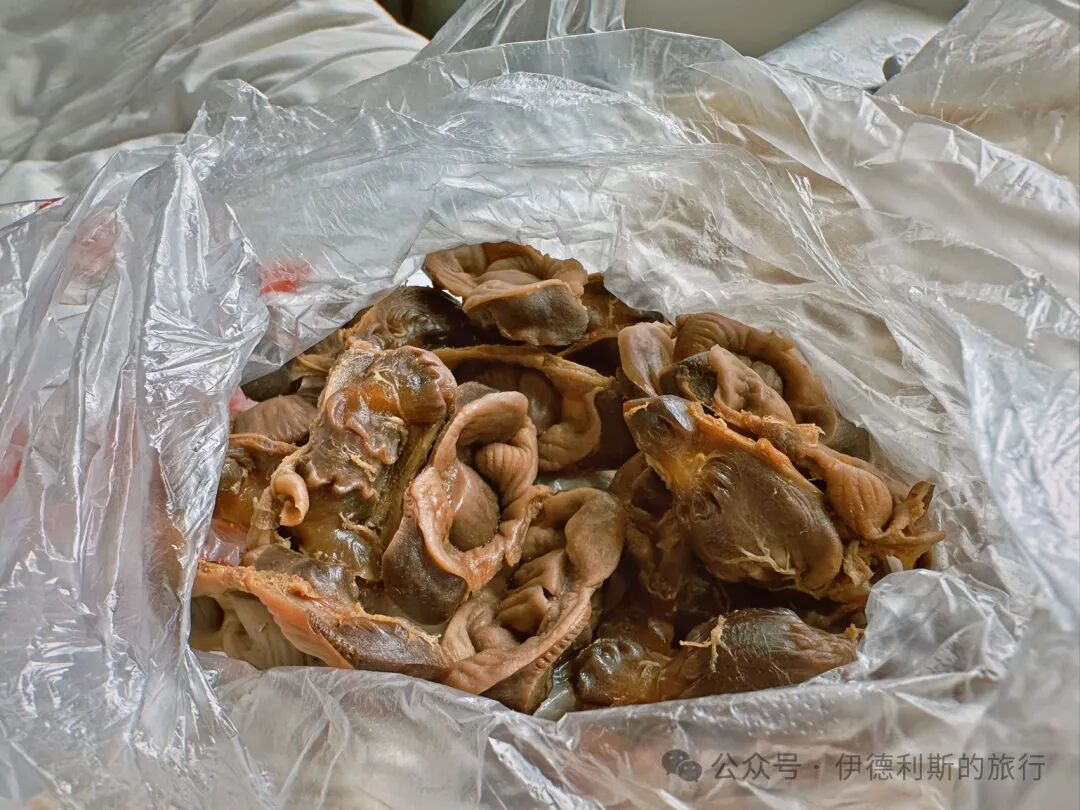
After buying the stuffed flatbread, we happened to run into the imam's wife from the Linqing Women's Mosque. She told us her family runs a braised chicken and smoked pigeon shop right next door, so we went in to take a look. Once inside, we learned that their shop is a city-level intangible cultural heritage site for Linqing smoked deli techniques. We bought two of their signature smoked pigeons and some chicken gizzards to eat on the train. The smoked pigeon was really fragrant. Even though it didn't have as much meat as chicken, the smoky flavor was delicious and worth eating. view all
Summary: Linqing, Shandong - Canal City Mosques, Food and History (Part 2) is presented as a clear English travel account for readers interested in Muslim life, halal food, mosques, and local history. The article keeps the original place names, food details, photographs, and cultural context while focusing on Linqing, Shandong, Canal History.
After the evening prayer (shamu), we ate big bowl dishes (dawan cai) at Erliang Diguo Millet Porridge, located at the intersection of Xianfeng Road and Dazhong Road in Linqing. They serve porridge and eight big bowls (ba da wan) in the morning, noodles in the afternoon, and big bowl dishes (dawan cai) at night, all of which look delicious. We ordered a serving of big bowl dishes and a cold appetizer. The big bowl dish had plenty of ingredients inside, and it felt very healthy to eat.
Zainab and I both really like the atmosphere in Linqing. There are few cars on the street at night, no delivery scooters, and it feels great to ride a shared electric bike around. There are many halal restaurants on Xianfeng Road. People sit on small stools outside the shops at night to eat and chat, which feels very relaxed.
Linqing at night is full of various halal restaurants and even a small halal night market.
We had breakfast at Kong Family Steamed Bowls (Kongjia kouwan) at the intersection of Xianfeng Road, where we ate braised pork and steamed pork tenderloin (liji kouwan) with steamed buns (mantou). Turning the traditional steamed bowls (kouwan) from North China's scripture hall banquets into a breakfast seems to be a local specialty of Linqing, allowing tourists like us to enjoy traditional banquet dishes. They keep their steamed bowls (kouwan) in a large steamer. They have many kinds like pine-flower egg (songhua), meatballs (wanzi), pork tenderloin (liji), starch jelly (menzi), and braised pork (shaorou). You pick what you want, they flip it into a bowl, pour broth over it, and it is ready to eat.
Their shop was originally the Taoyuan Street Supply and Marketing Cooperative built in the 1970s. Eating here feels very retro. Besides selling steamed bowls in the morning, they also sell cold noodles (liangmian) at noon, which is another specialty of Linqing.
After finishing the steamed bowls, I went to Xianfeng Road to eat tofu pudding (doufunao) and firm tofu (laodoufu). Breakfast shops in Linqing sell both tofu pudding and firm tofu. The difference is that tofu pudding is set with gypsum, making the texture smooth and delicate. Firm tofu is set with brine, making the texture tough and chewy. I like both kinds.
At noon, we ate Wang Family Ten-Fragrance Noodles (shixiangmian) on Xinhua Road. Ten-Fragrance Noodles are also called Assorted-Fragrance Noodles (shixiangmian). The main feature is the large variety of vegetable toppings. A deluxe bowl can have over eighteen types, and the ingredients change based on the solar terms. The toppings mainly include stir-fried minced meat with eggplant strips, mung bean sprouts, chives, minced garlic sprouts, minced green beans, and tomato with egg. You also get fresh shredded cucumber, minced carrots, and pickled vegetables like pickled melon (jianggua), salted mustard greens (xian gede), and minced chive flowers (jiuhua mo), all finished with a drizzle of sesame paste. The homemade version we ate wasn't quite as elaborate, but it still had plenty of variety.
Hongguanying Mosque
At noon, we went to the Hongguanying Mosque in Linxi County, Xingtai, Hebei. Linxi County in Xingtai is actually right on the west side of the Wei Canal in Linqing. Once you cross the Xianfeng Bridge, there is a bus that goes to Hongguanying.
Hongguanying gets its name from the Hong family of Hui Muslims. According to the Linqing Hong Family Genealogy, the ancestor of the Hong family of Hui Muslims was Sayyid Ajjal Shams al-Din. His sixth-generation descendant, Hong Badan, served as an official in Linqing during the Ming Dynasty. His descendants took Hong as their surname and settled in Linqing. One branch settled in the urban area of Linqing and once built the Hong Family Mosque, but unfortunately, it no longer exists. Another group settled in Hongguanying Village and built the Hongguanying Mosque. The Hongguanying Mosque was first built between the Xuande and Tianshun periods of the Ming Dynasty. It was burned down in 1854 during the Northern Expedition of the Taiping Rebellion and rebuilt into its current form in 1874.
We were warmly welcomed at the Hongguanying Mosque by Imam Lan. He is skilled at Arabic calligraphy, and his scripture paintings and stone carvings are very impressive. I was very lucky to receive a one-stroke Basmala (tasmi) as a gift from Imam Lan.
On the road heading west from Linqing to Hongguanying, we saw wheat fields, the Wei Canal, and Hui Muslim villages. The Xianfeng Bridge over the Wei Canal was built in 1959 and expanded in 1974. It was once very famous, but it stopped allowing motor vehicles in 1992 and is now a protected cultural site.
Returning from Hongguanying to downtown Linqing, we found that most restaurants here are closed between 2:00 PM and 5:00 PM. We found a place that sells deep-stir-fried meat tenderloin (ganzha liji) and bought some to eat on the train. I tried it as soon as I got on the train and it was super delicious! It was fried but not greasy at all. It even tasted great cold, just like a snack, and I couldn't stop eating it. Then we went to a shop that sells meat flatbreads (huoshao) and stuffed flatbreads (xian huoshao). There are many ways to make flatbreads here in Linqing. We bought a beef-stuffed flatbread, and it was packed with filling. I think it tasted much better than the ones I've had in Beijing.
The last photo shows two shops next to the Linqing No. 1 Kindergarten. One is a stationery shop that also serves breakfast, and the other is a sesame oil shop that provides lunch and tutoring for students. I thought that was really interesting.
After buying the stuffed flatbread, we happened to run into the imam's wife from the Linqing Women's Mosque. She told us her family runs a braised chicken and smoked pigeon shop right next door, so we went in to take a look. Once inside, we learned that their shop is a city-level intangible cultural heritage site for Linqing smoked deli techniques. We bought two of their signature smoked pigeons and some chicken gizzards to eat on the train. The smoked pigeon was really fragrant. Even though it didn't have as much meat as chicken, the smoky flavor was delicious and worth eating. view all
Reposted from the web
Summary: Linqing, Shandong - Canal City Mosques, Food and History (Part 2) is presented as a clear English travel account for readers interested in Muslim life, halal food, mosques, and local history. The article keeps the original place names, food details, photographs, and cultural context while focusing on Linqing, Shandong, Canal History.
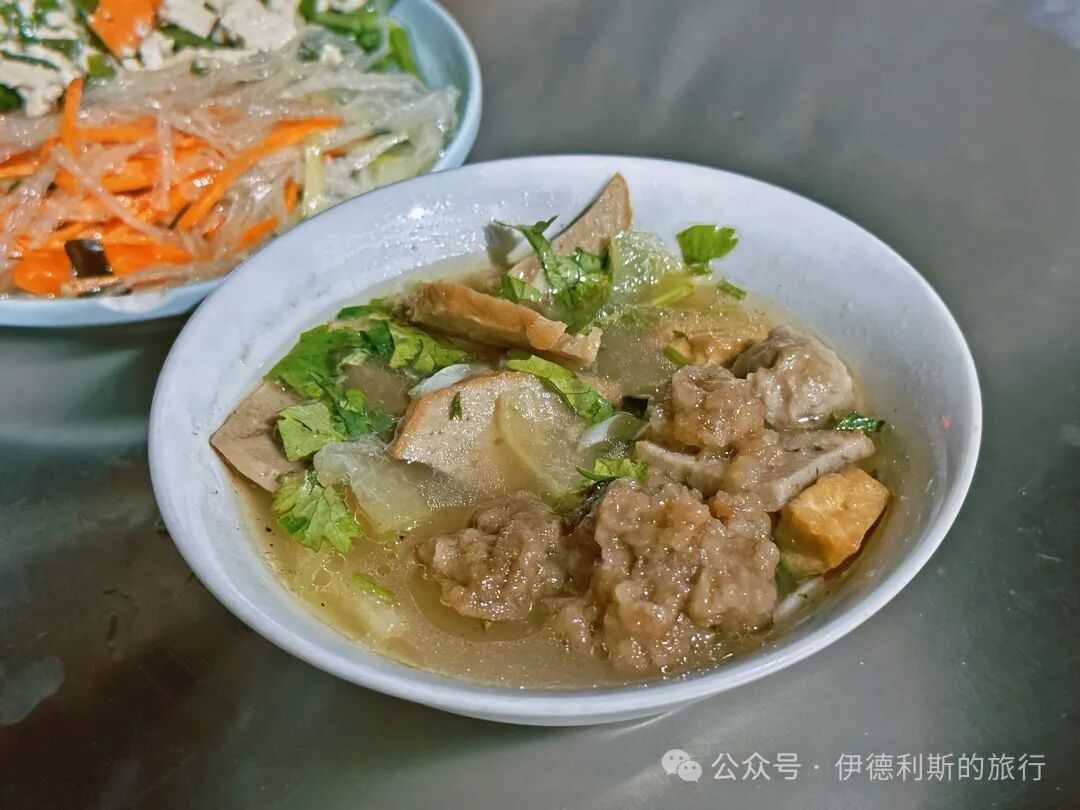
After the evening prayer (shamu), we ate big bowl dishes (dawan cai) at Erliang Diguo Millet Porridge, located at the intersection of Xianfeng Road and Dazhong Road in Linqing. They serve porridge and eight big bowls (ba da wan) in the morning, noodles in the afternoon, and big bowl dishes (dawan cai) at night, all of which look delicious. We ordered a serving of big bowl dishes and a cold appetizer. The big bowl dish had plenty of ingredients inside, and it felt very healthy to eat.
Zainab and I both really like the atmosphere in Linqing. There are few cars on the street at night, no delivery scooters, and it feels great to ride a shared electric bike around. There are many halal restaurants on Xianfeng Road. People sit on small stools outside the shops at night to eat and chat, which feels very relaxed.
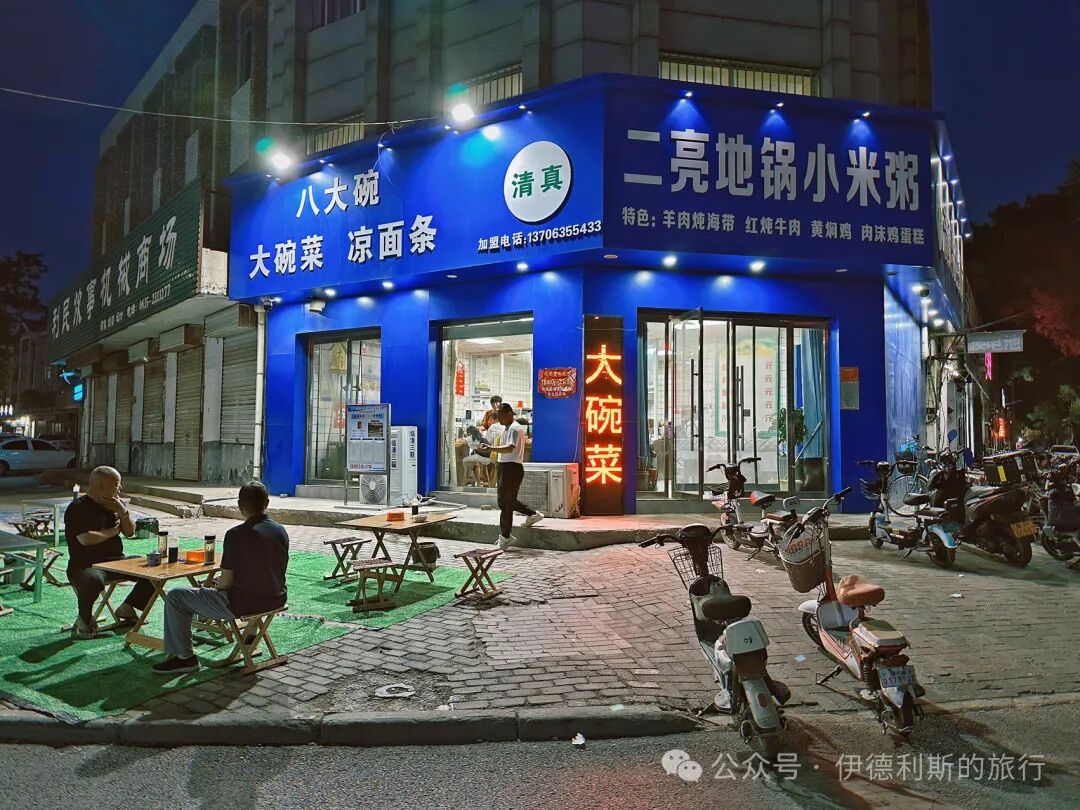
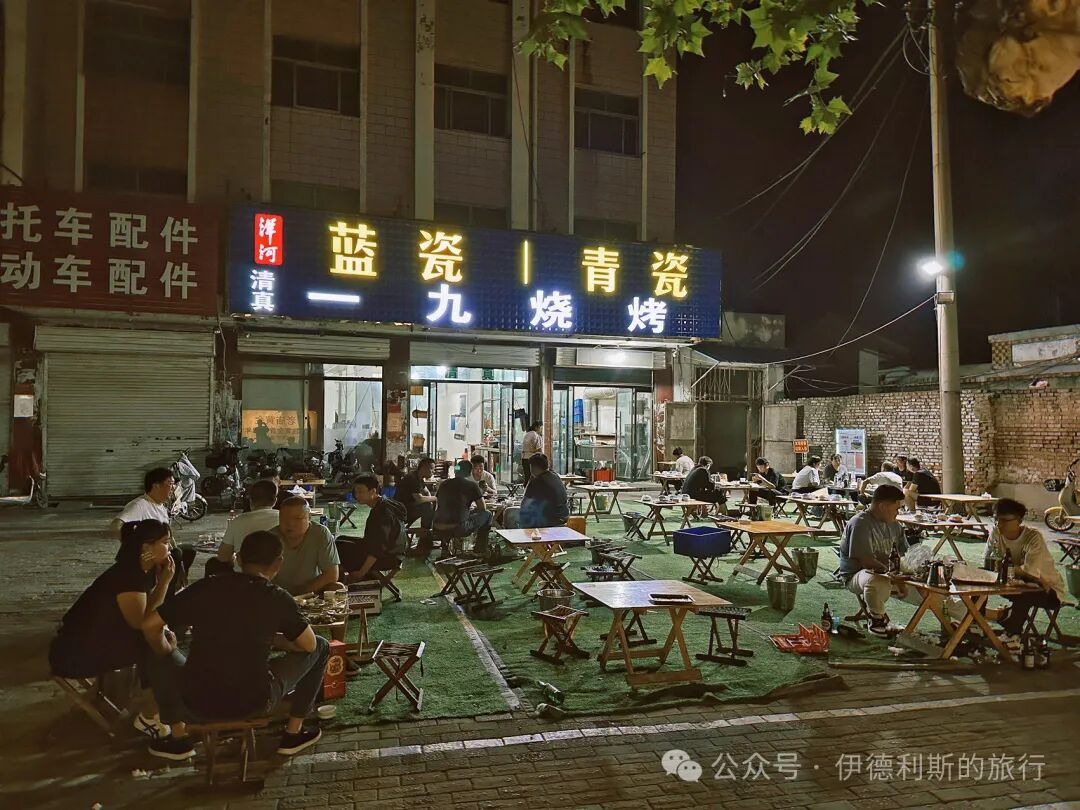
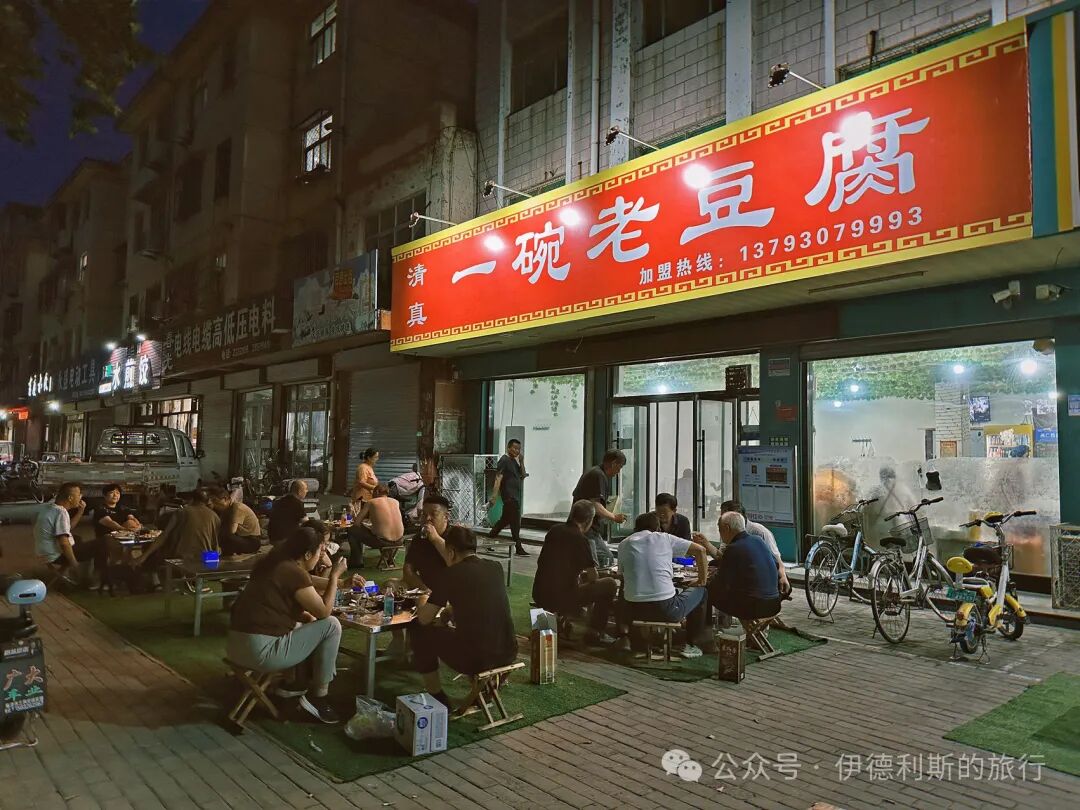
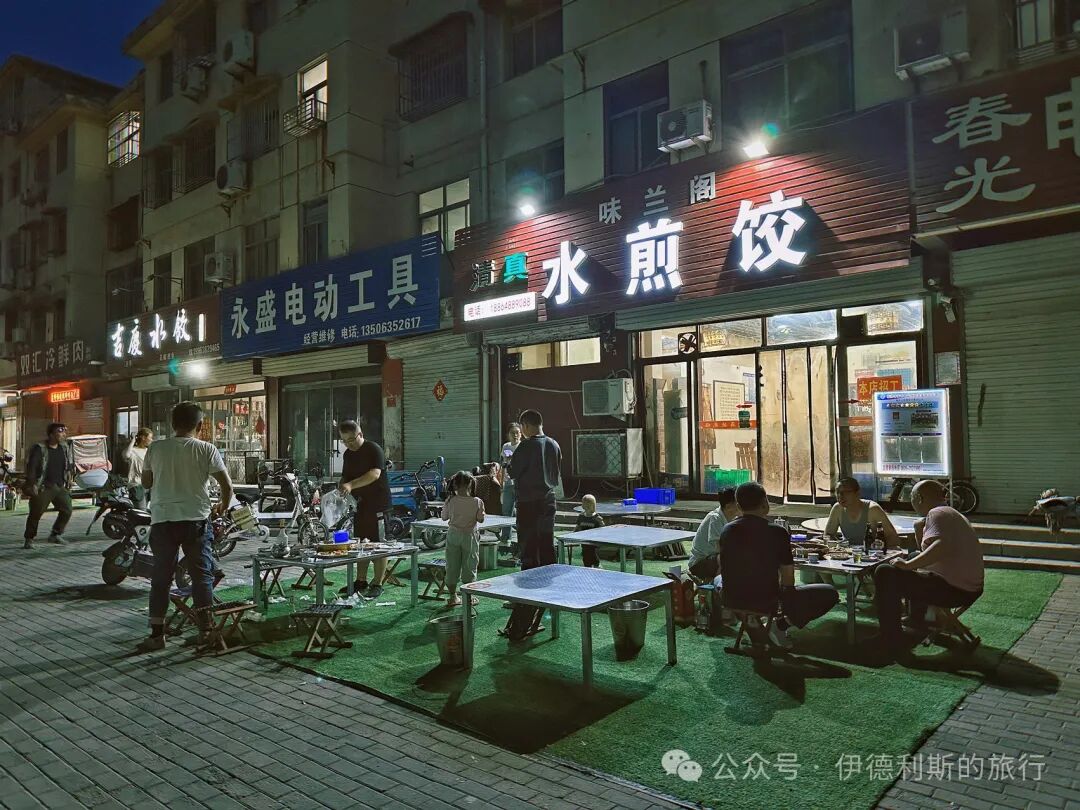
Linqing at night is full of various halal restaurants and even a small halal night market.
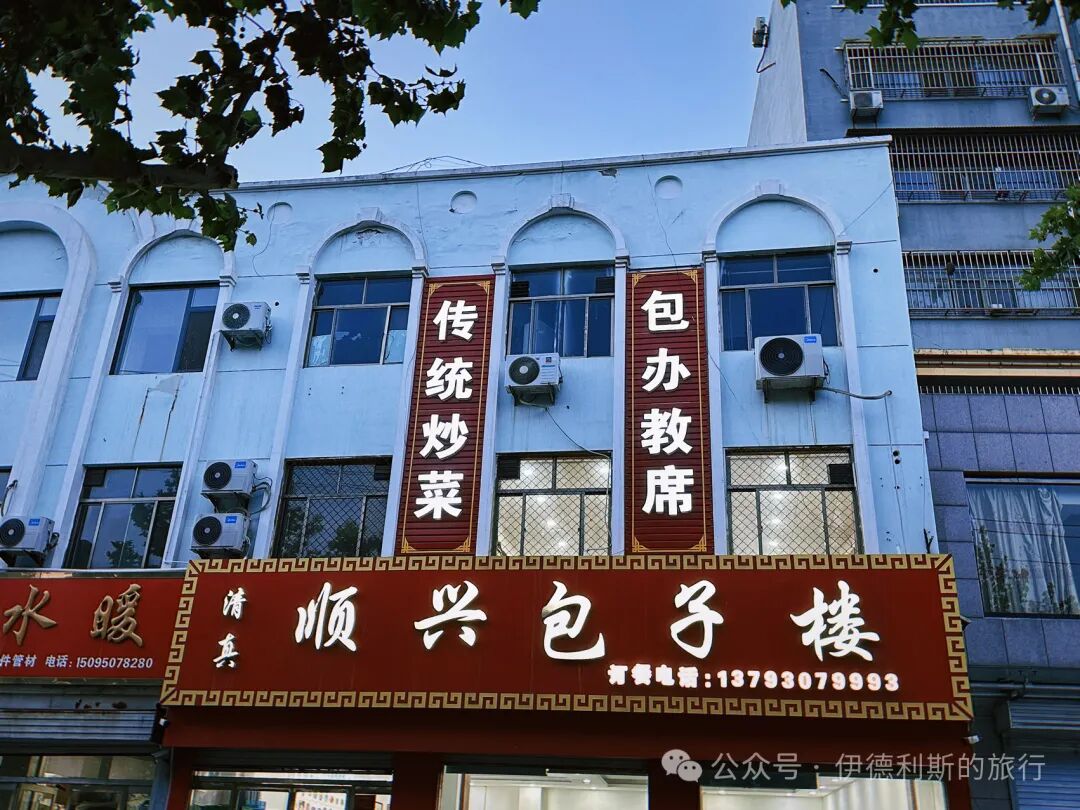
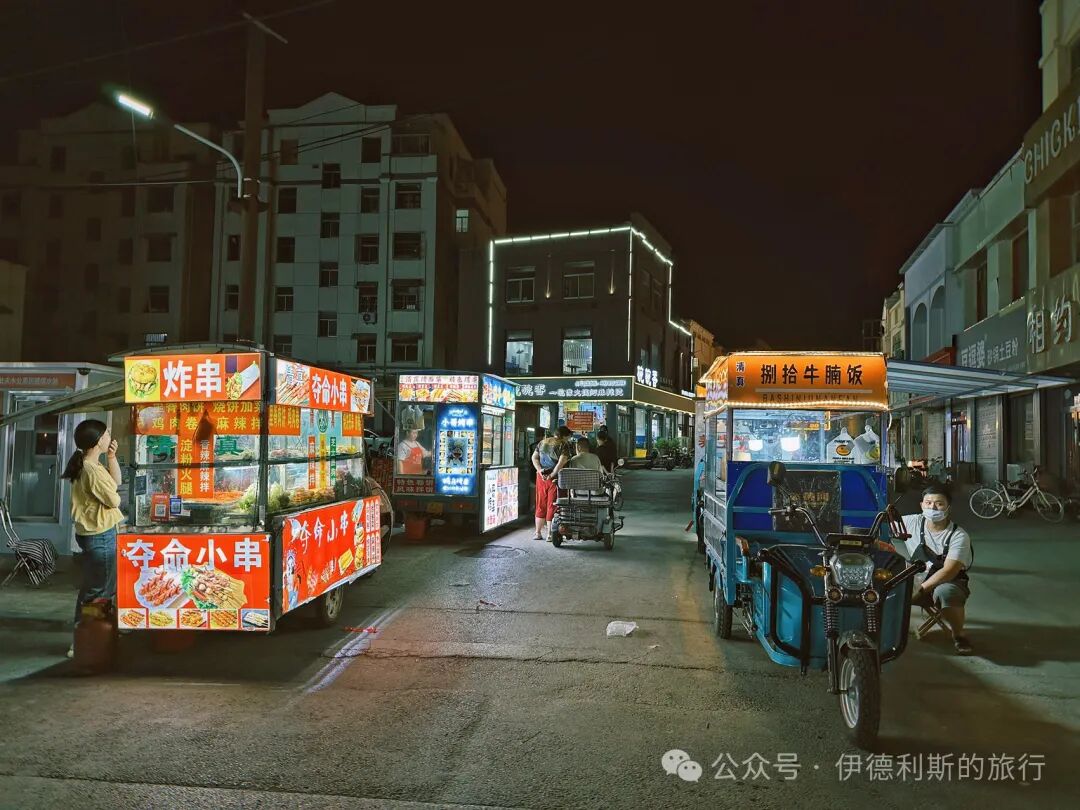
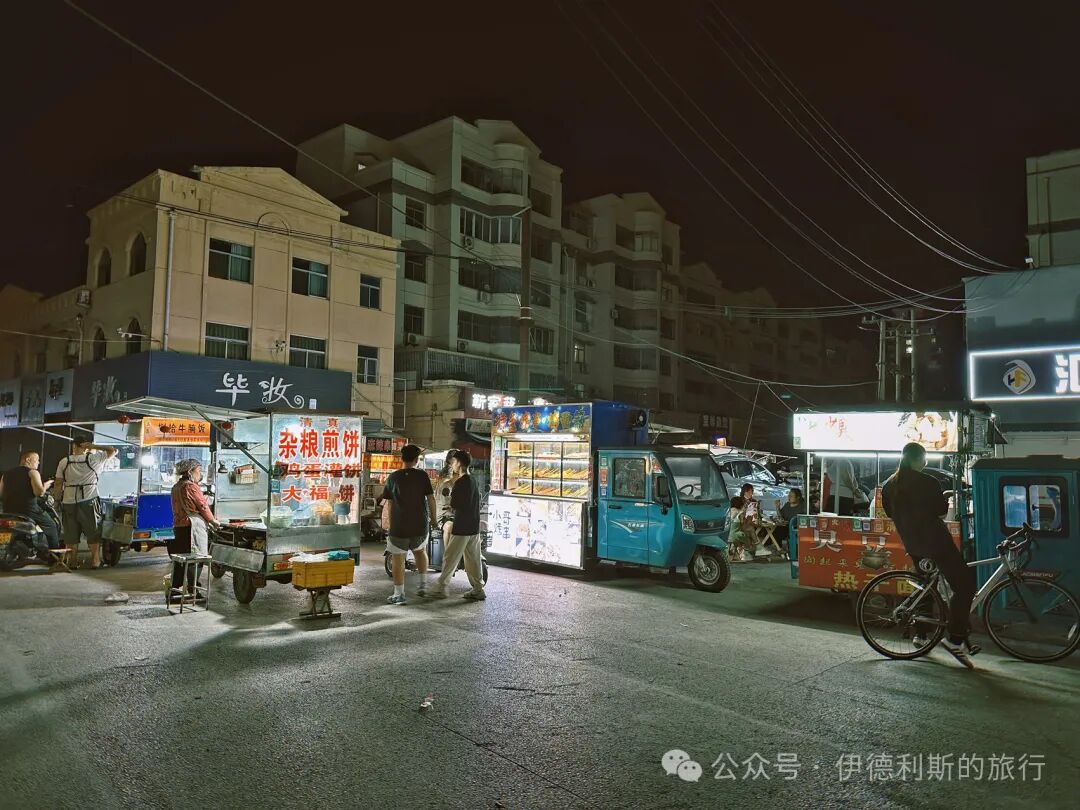
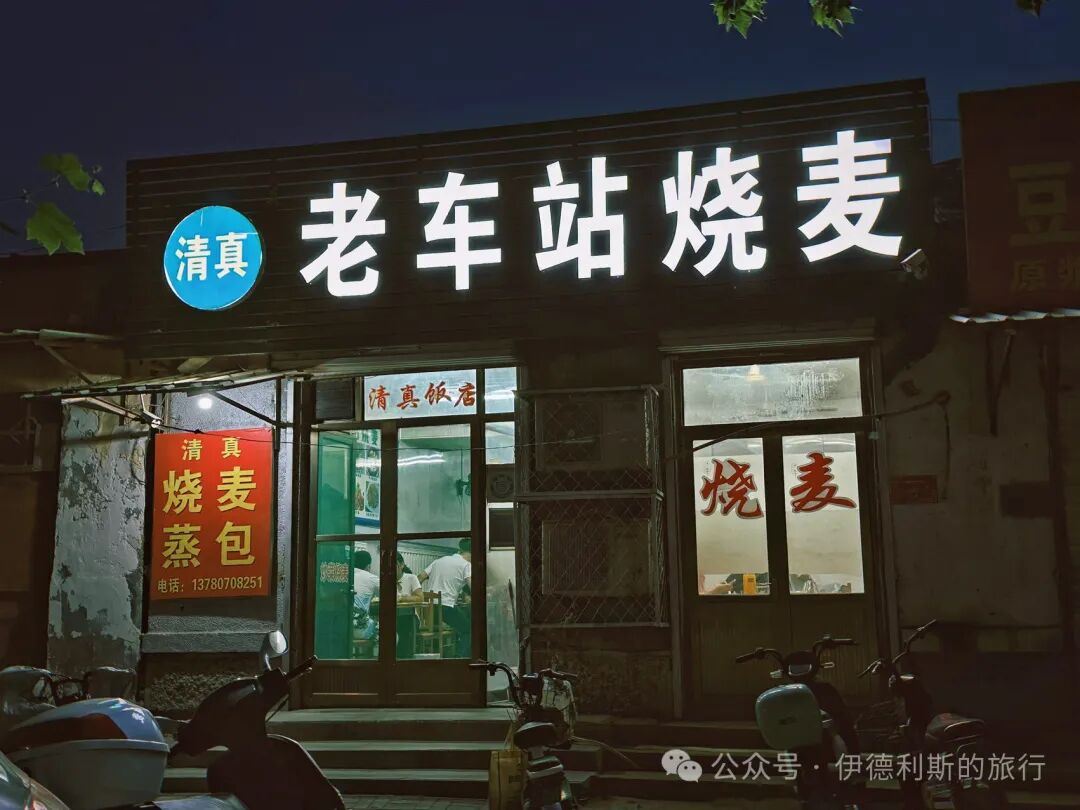
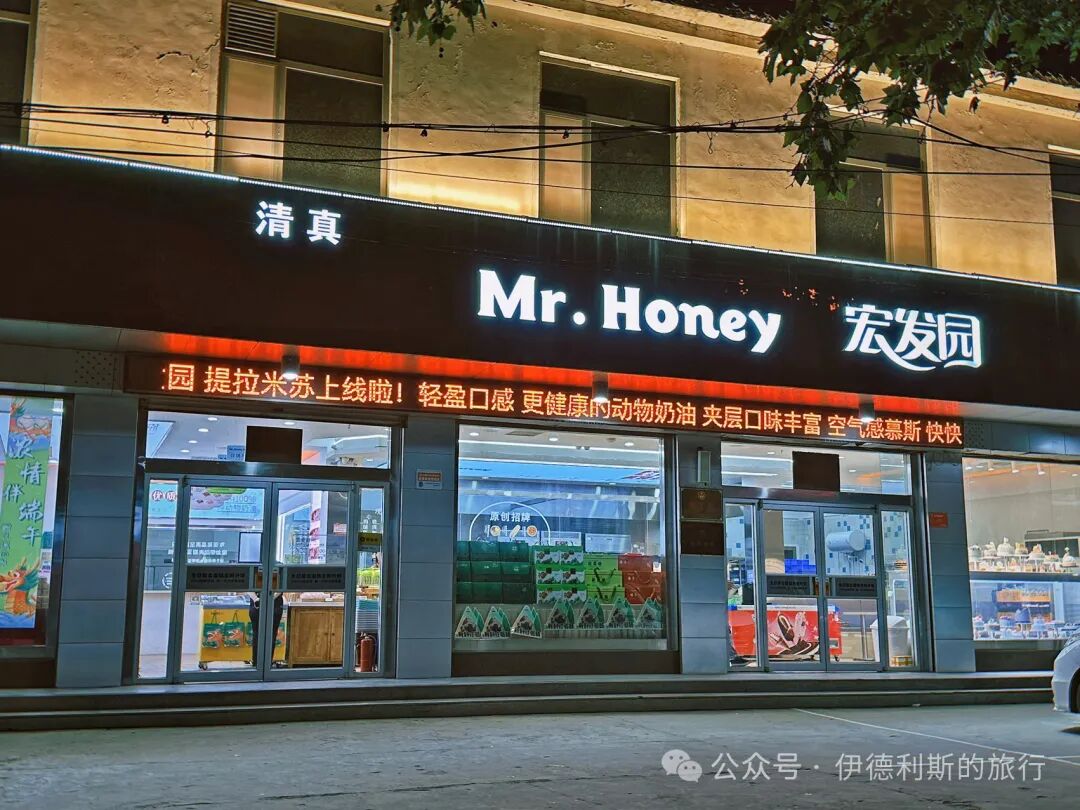
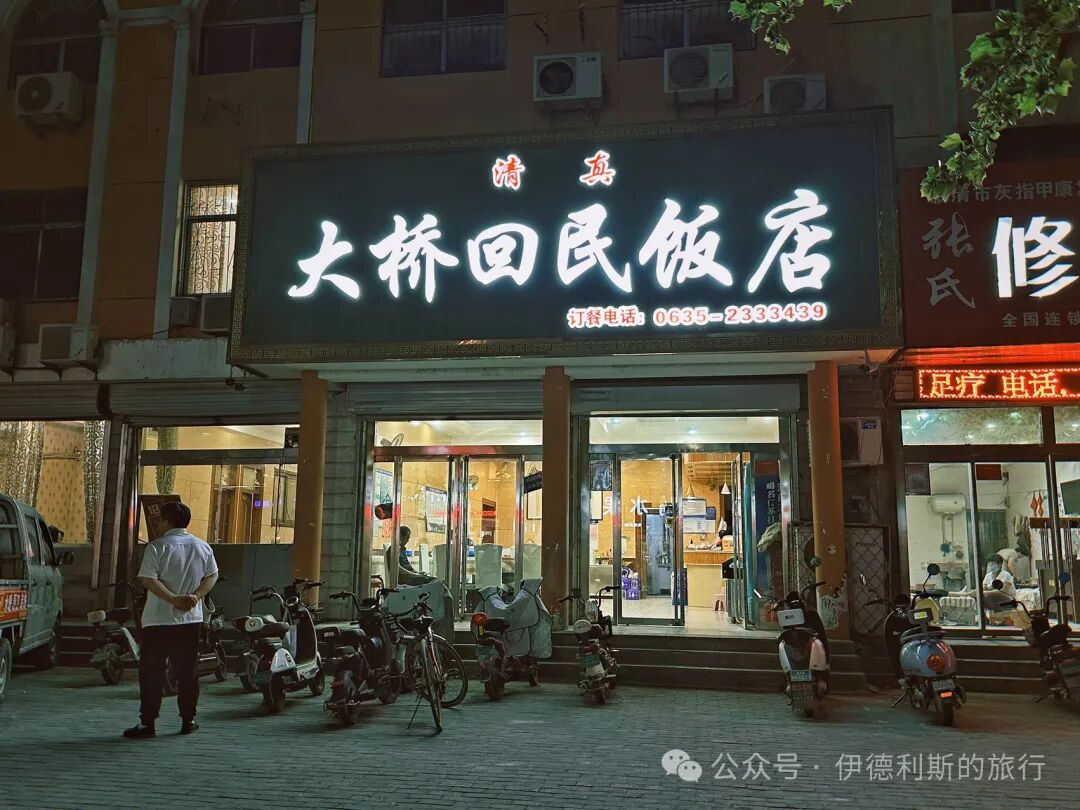
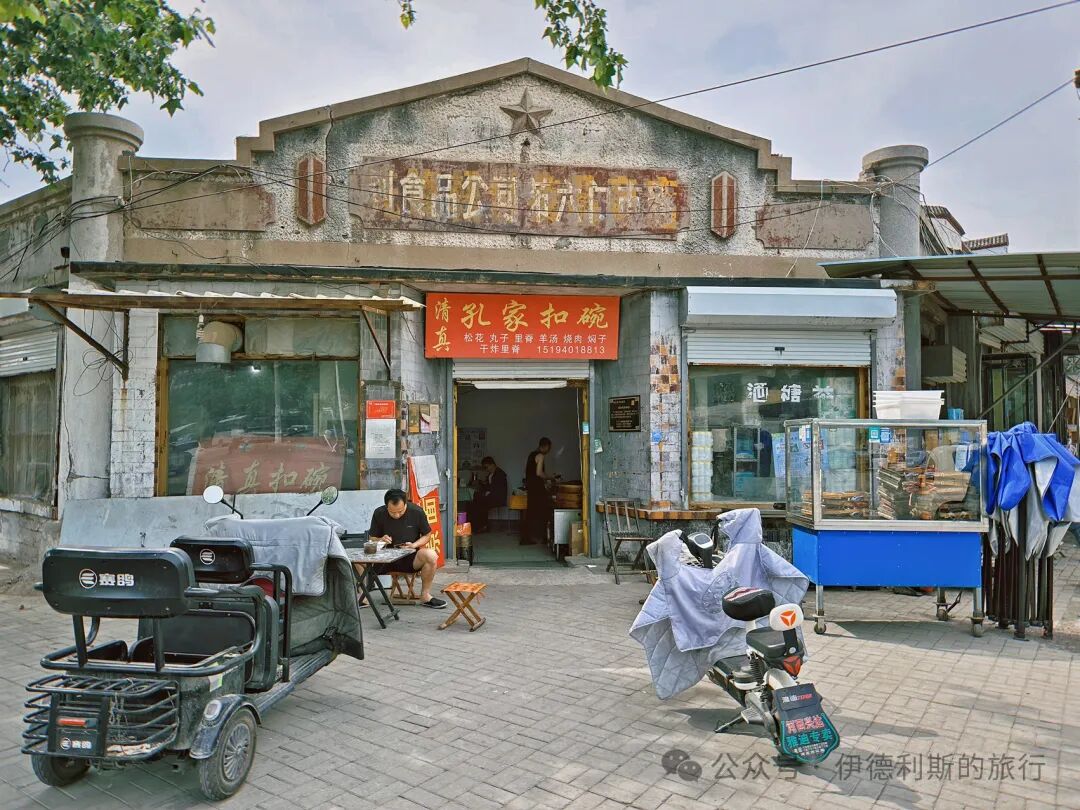
We had breakfast at Kong Family Steamed Bowls (Kongjia kouwan) at the intersection of Xianfeng Road, where we ate braised pork and steamed pork tenderloin (liji kouwan) with steamed buns (mantou). Turning the traditional steamed bowls (kouwan) from North China's scripture hall banquets into a breakfast seems to be a local specialty of Linqing, allowing tourists like us to enjoy traditional banquet dishes. They keep their steamed bowls (kouwan) in a large steamer. They have many kinds like pine-flower egg (songhua), meatballs (wanzi), pork tenderloin (liji), starch jelly (menzi), and braised pork (shaorou). You pick what you want, they flip it into a bowl, pour broth over it, and it is ready to eat.
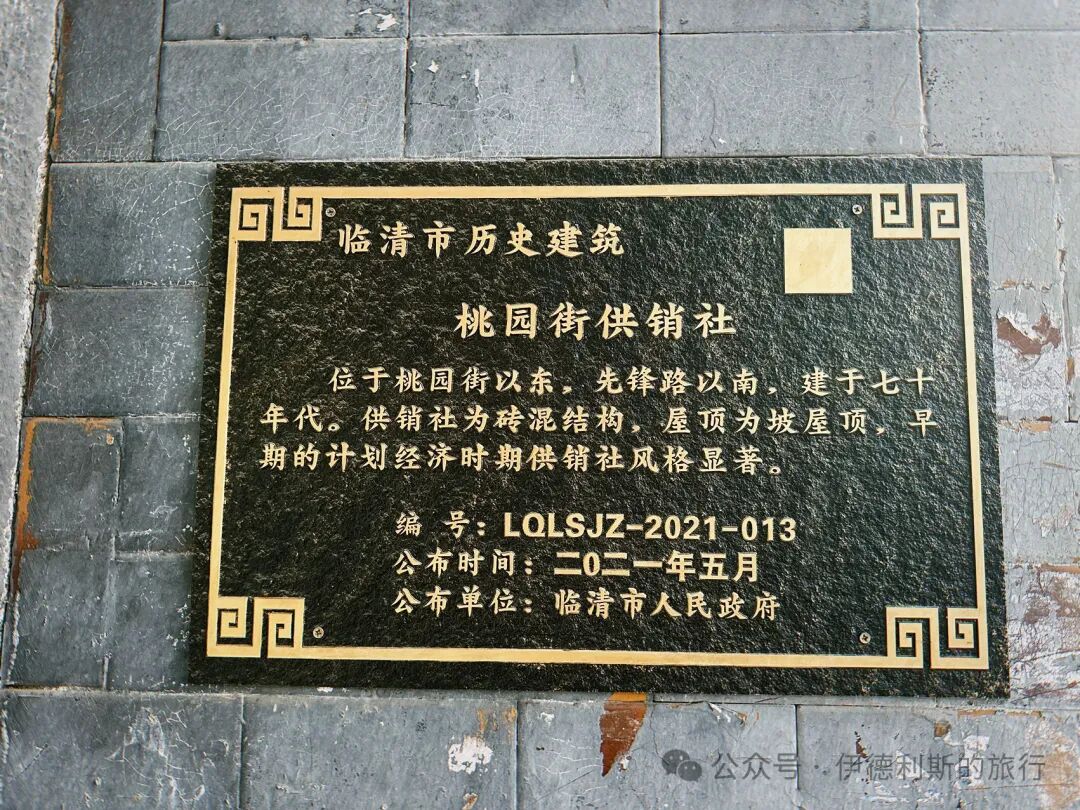
Their shop was originally the Taoyuan Street Supply and Marketing Cooperative built in the 1970s. Eating here feels very retro. Besides selling steamed bowls in the morning, they also sell cold noodles (liangmian) at noon, which is another specialty of Linqing.
After finishing the steamed bowls, I went to Xianfeng Road to eat tofu pudding (doufunao) and firm tofu (laodoufu). Breakfast shops in Linqing sell both tofu pudding and firm tofu. The difference is that tofu pudding is set with gypsum, making the texture smooth and delicate. Firm tofu is set with brine, making the texture tough and chewy. I like both kinds.
At noon, we ate Wang Family Ten-Fragrance Noodles (shixiangmian) on Xinhua Road. Ten-Fragrance Noodles are also called Assorted-Fragrance Noodles (shixiangmian). The main feature is the large variety of vegetable toppings. A deluxe bowl can have over eighteen types, and the ingredients change based on the solar terms. The toppings mainly include stir-fried minced meat with eggplant strips, mung bean sprouts, chives, minced garlic sprouts, minced green beans, and tomato with egg. You also get fresh shredded cucumber, minced carrots, and pickled vegetables like pickled melon (jianggua), salted mustard greens (xian gede), and minced chive flowers (jiuhua mo), all finished with a drizzle of sesame paste. The homemade version we ate wasn't quite as elaborate, but it still had plenty of variety.
Hongguanying Mosque
At noon, we went to the Hongguanying Mosque in Linxi County, Xingtai, Hebei. Linxi County in Xingtai is actually right on the west side of the Wei Canal in Linqing. Once you cross the Xianfeng Bridge, there is a bus that goes to Hongguanying.
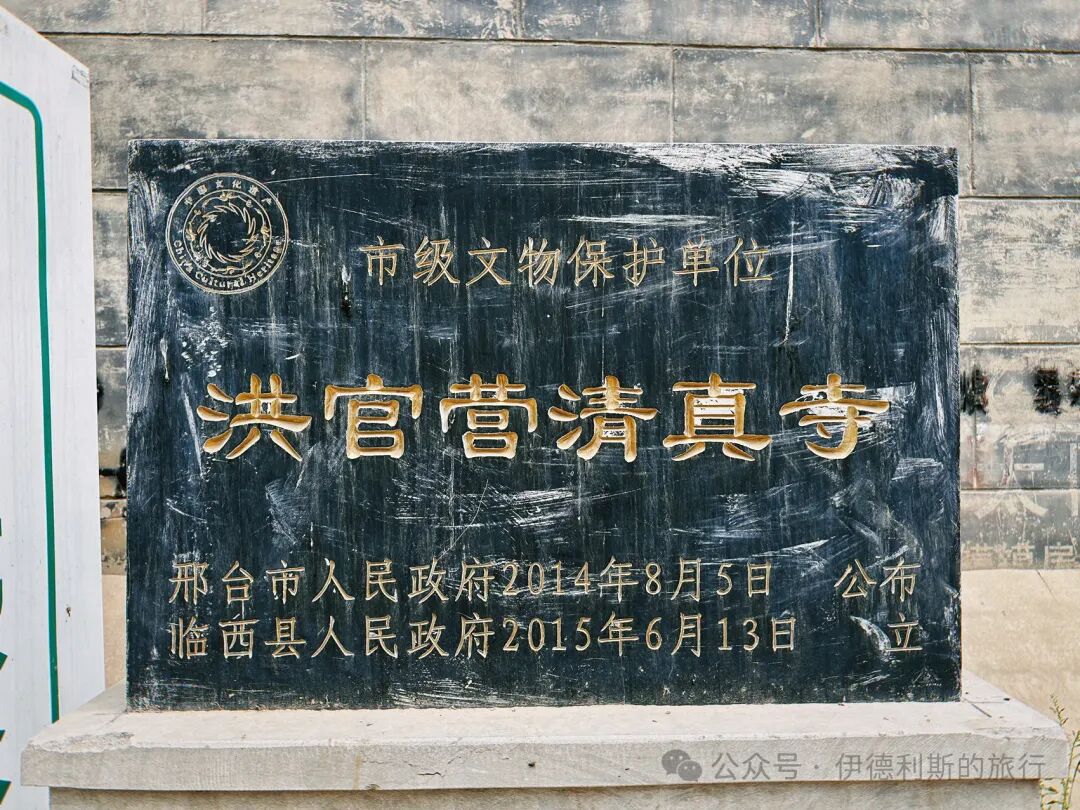
Hongguanying gets its name from the Hong family of Hui Muslims. According to the Linqing Hong Family Genealogy, the ancestor of the Hong family of Hui Muslims was Sayyid Ajjal Shams al-Din. His sixth-generation descendant, Hong Badan, served as an official in Linqing during the Ming Dynasty. His descendants took Hong as their surname and settled in Linqing. One branch settled in the urban area of Linqing and once built the Hong Family Mosque, but unfortunately, it no longer exists. Another group settled in Hongguanying Village and built the Hongguanying Mosque. The Hongguanying Mosque was first built between the Xuande and Tianshun periods of the Ming Dynasty. It was burned down in 1854 during the Northern Expedition of the Taiping Rebellion and rebuilt into its current form in 1874.
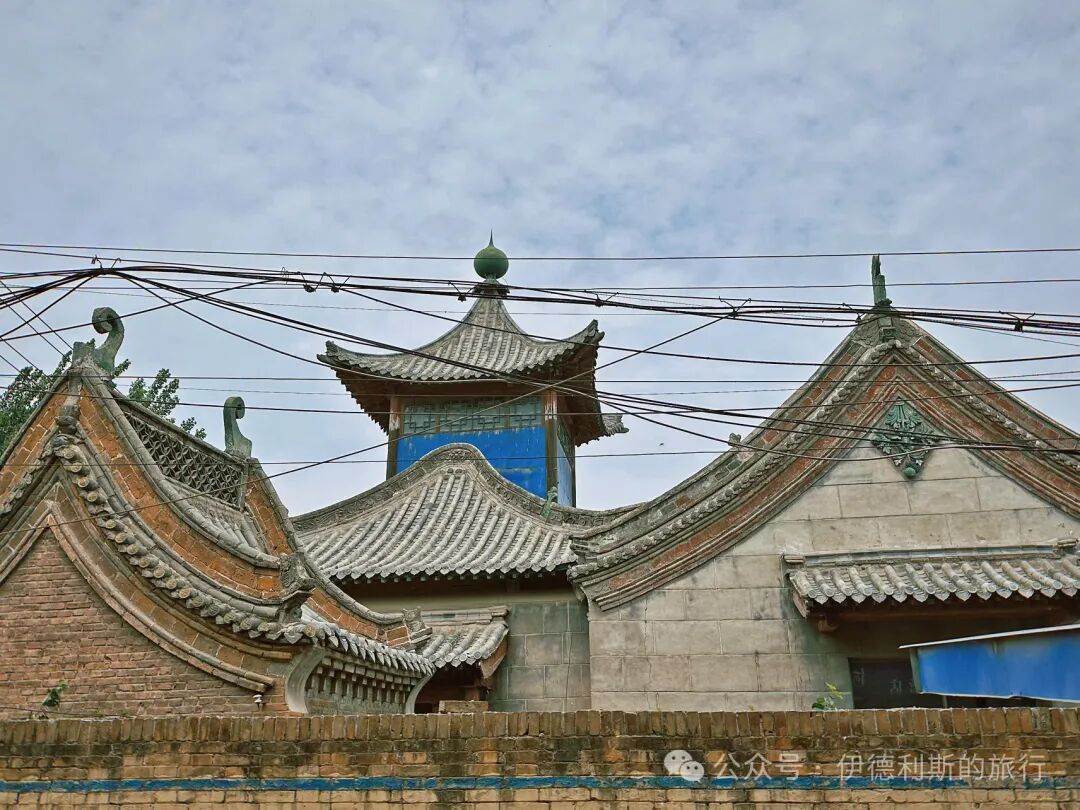
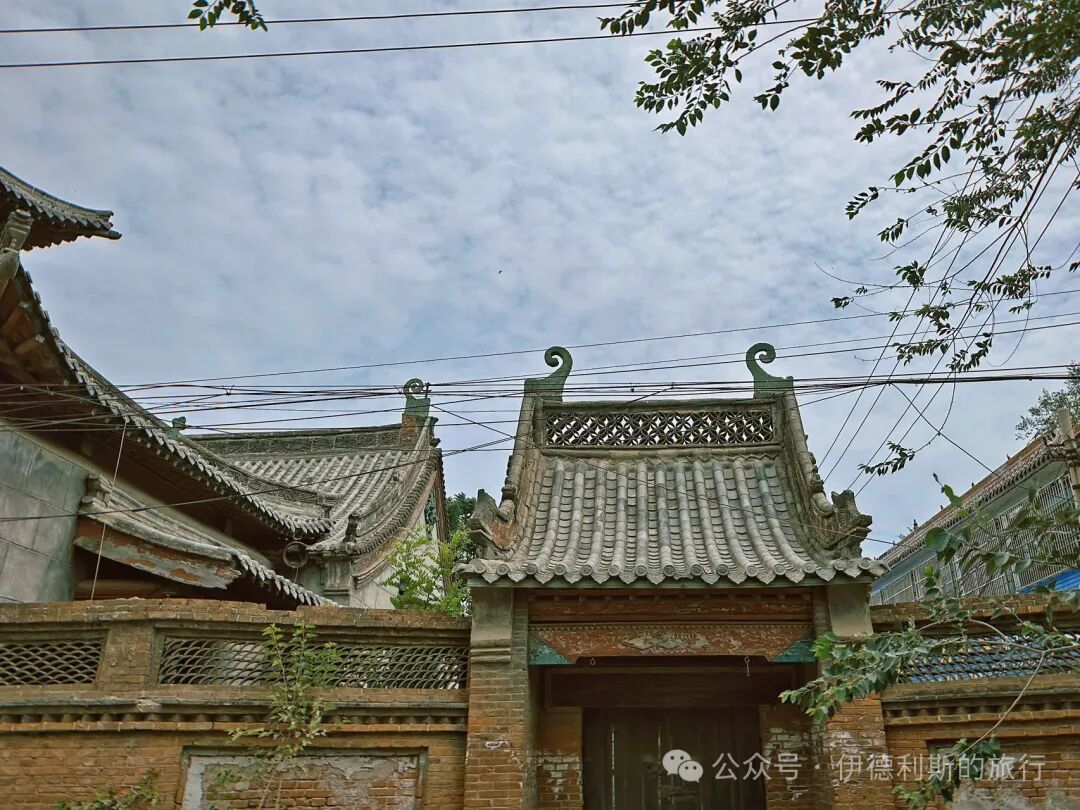
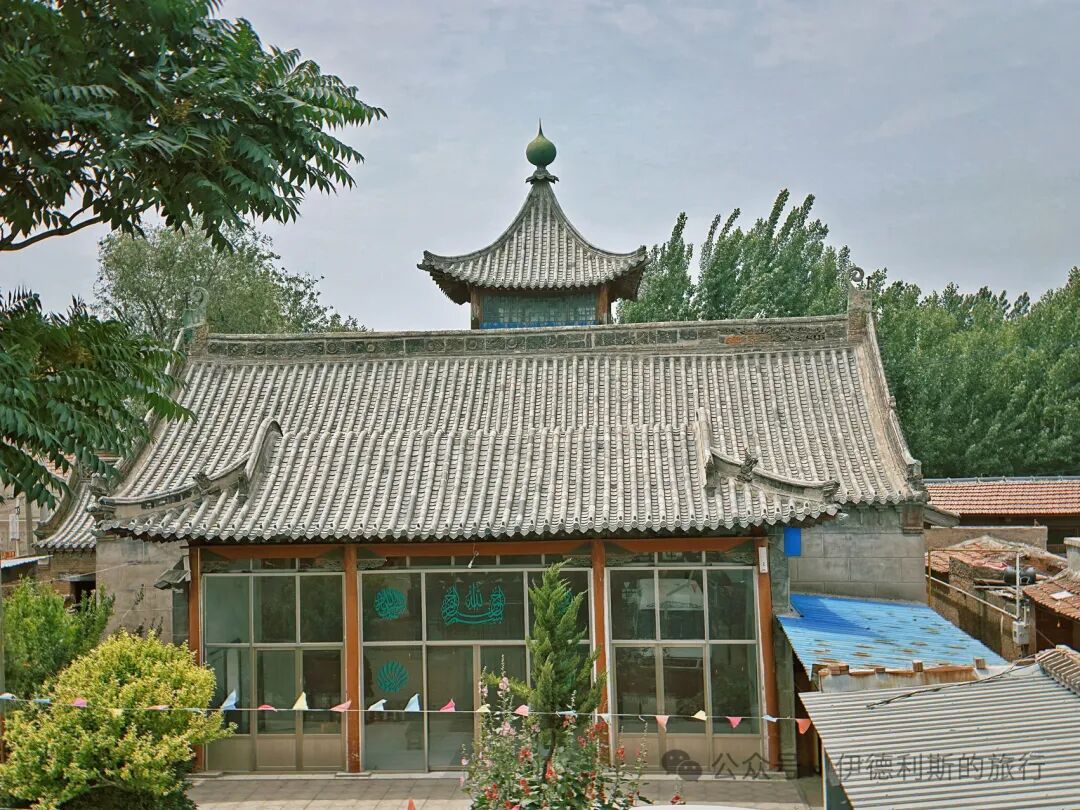
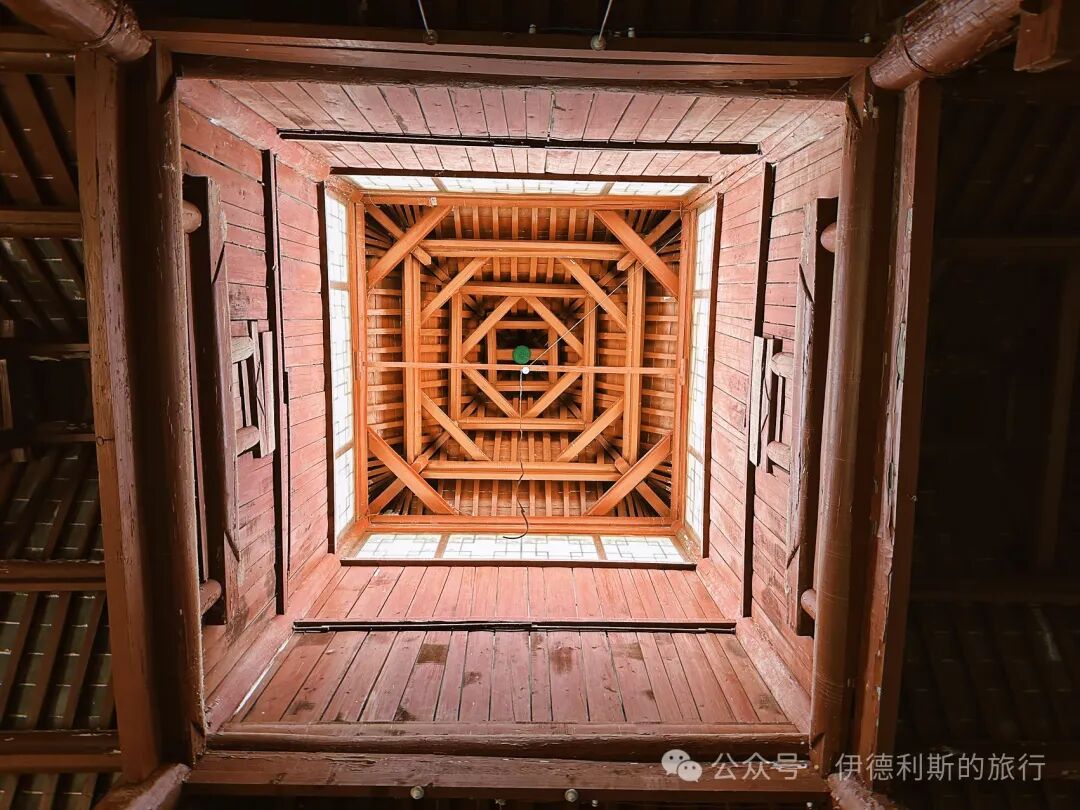
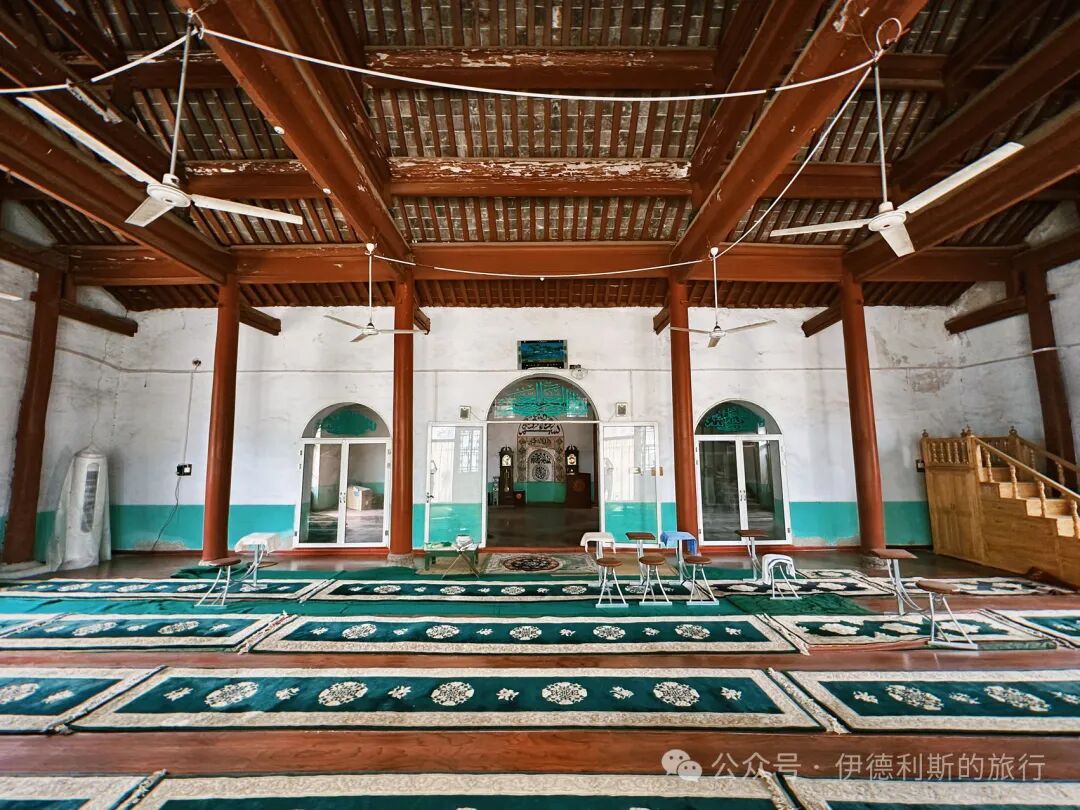
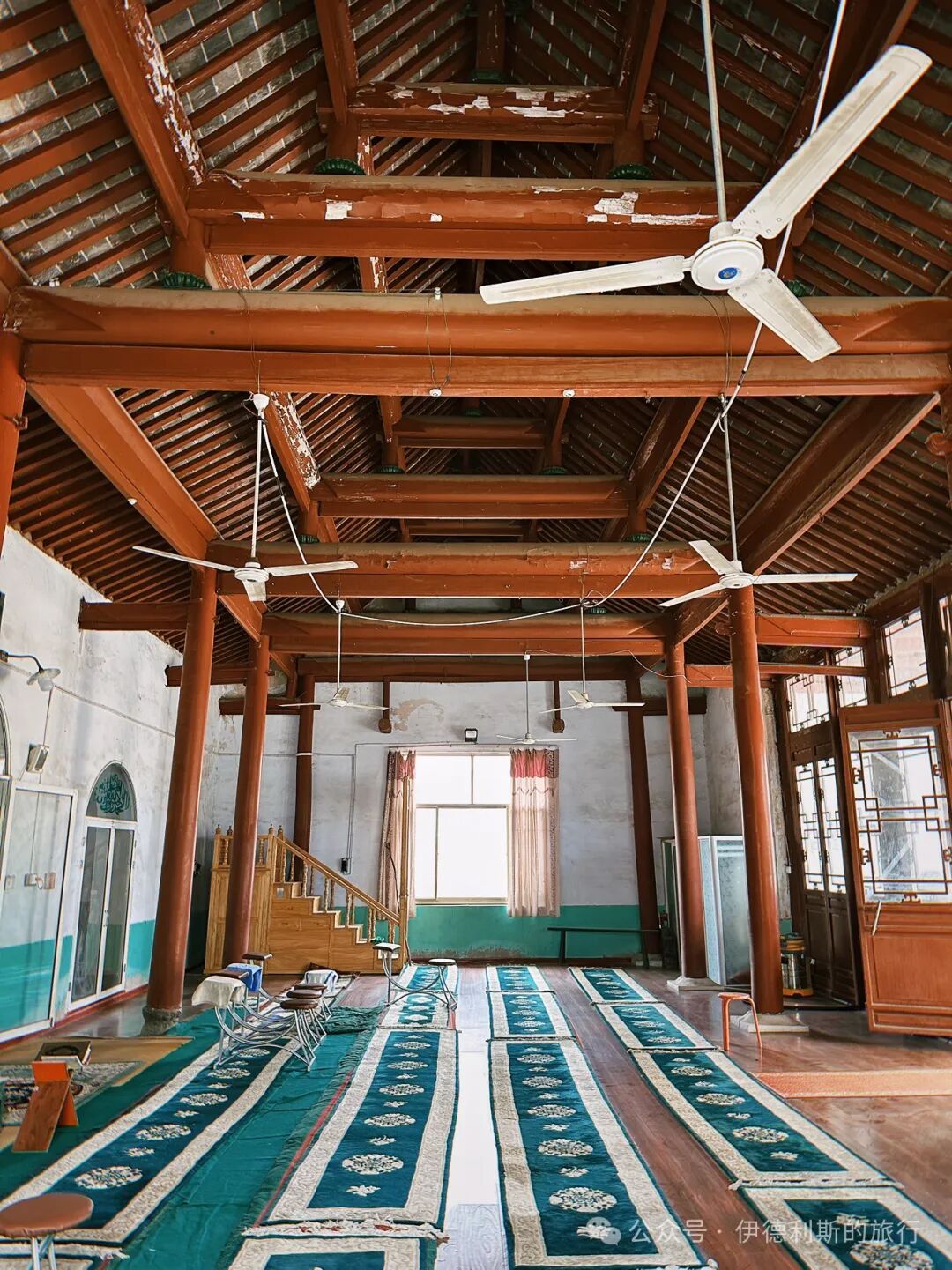
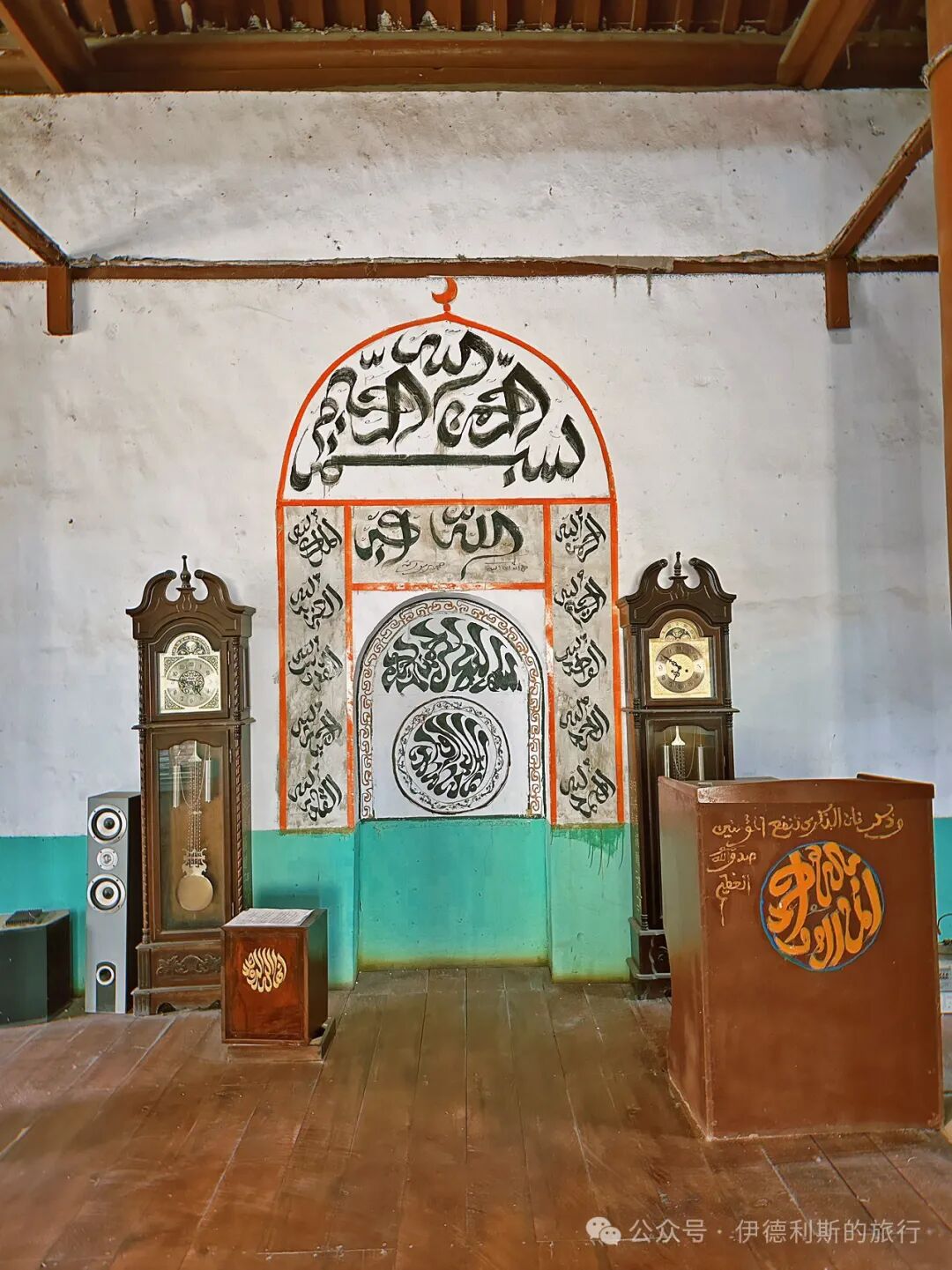
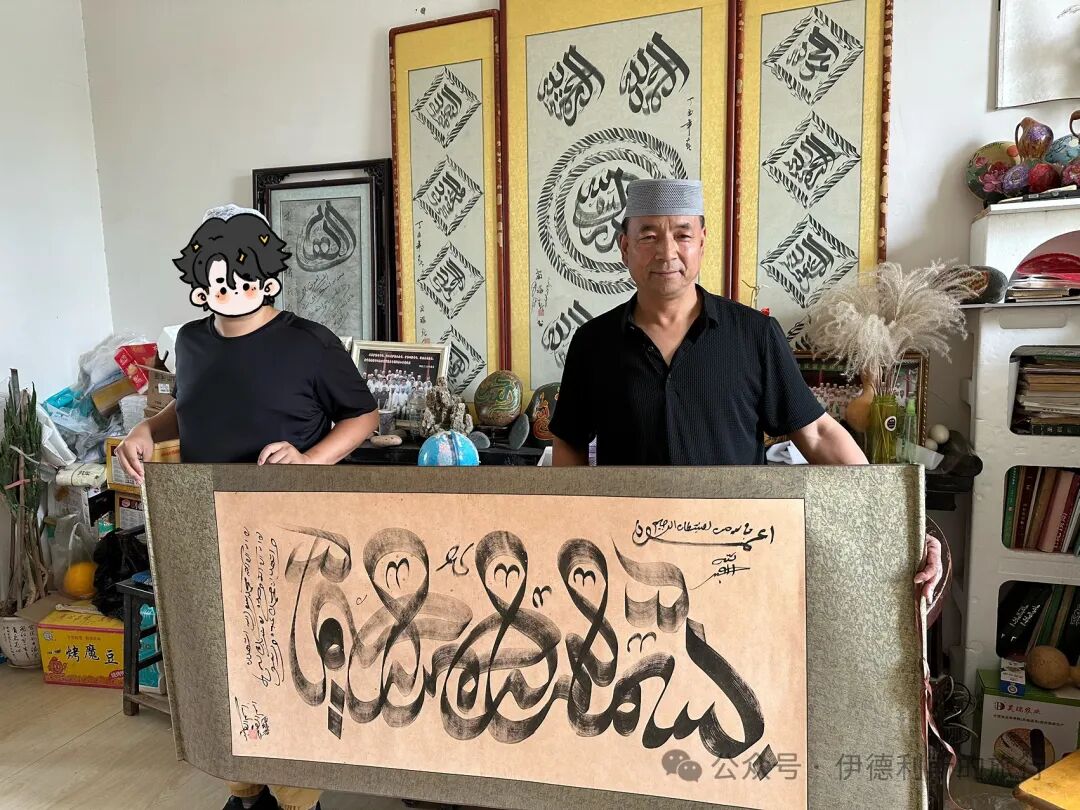
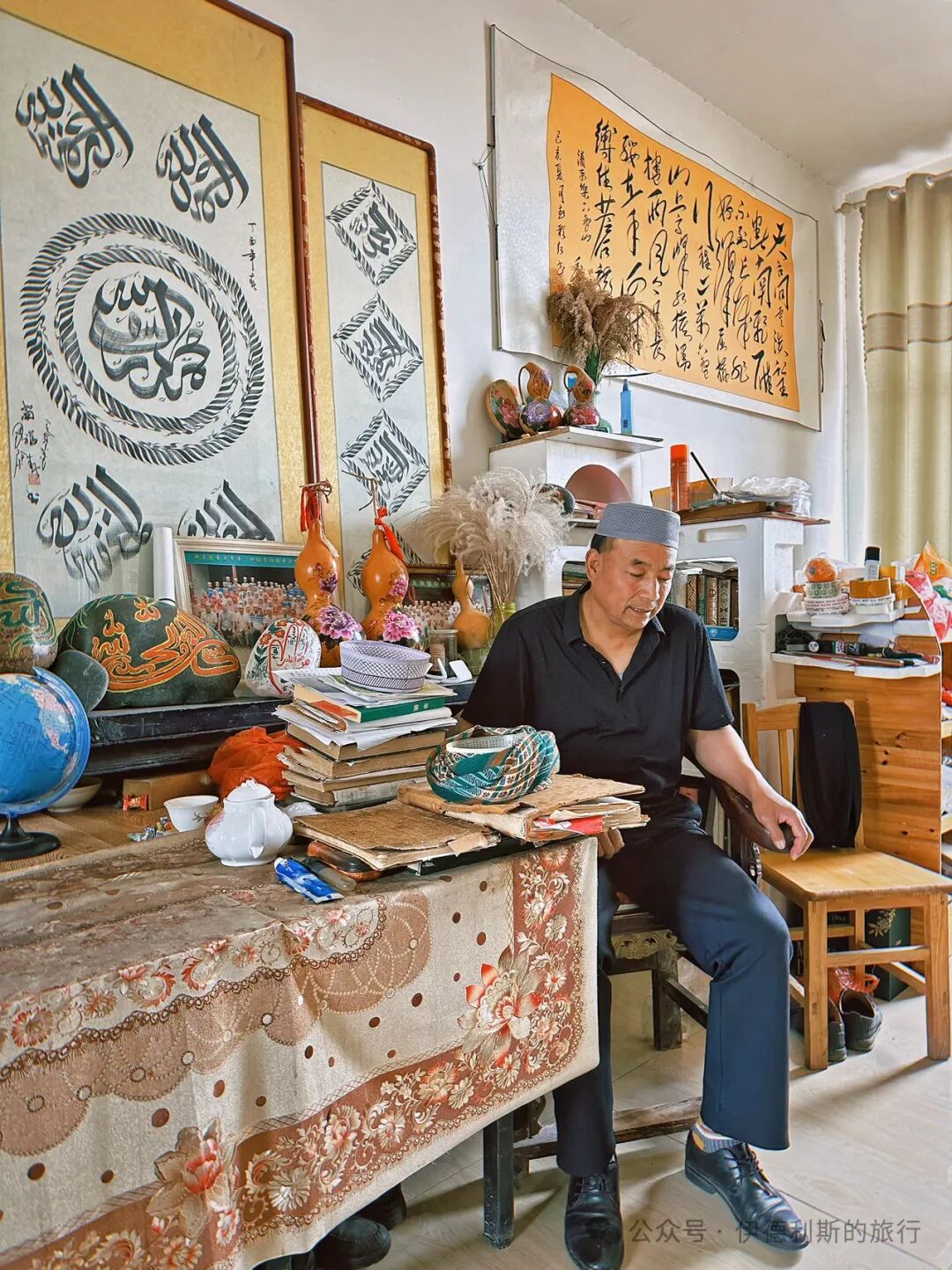
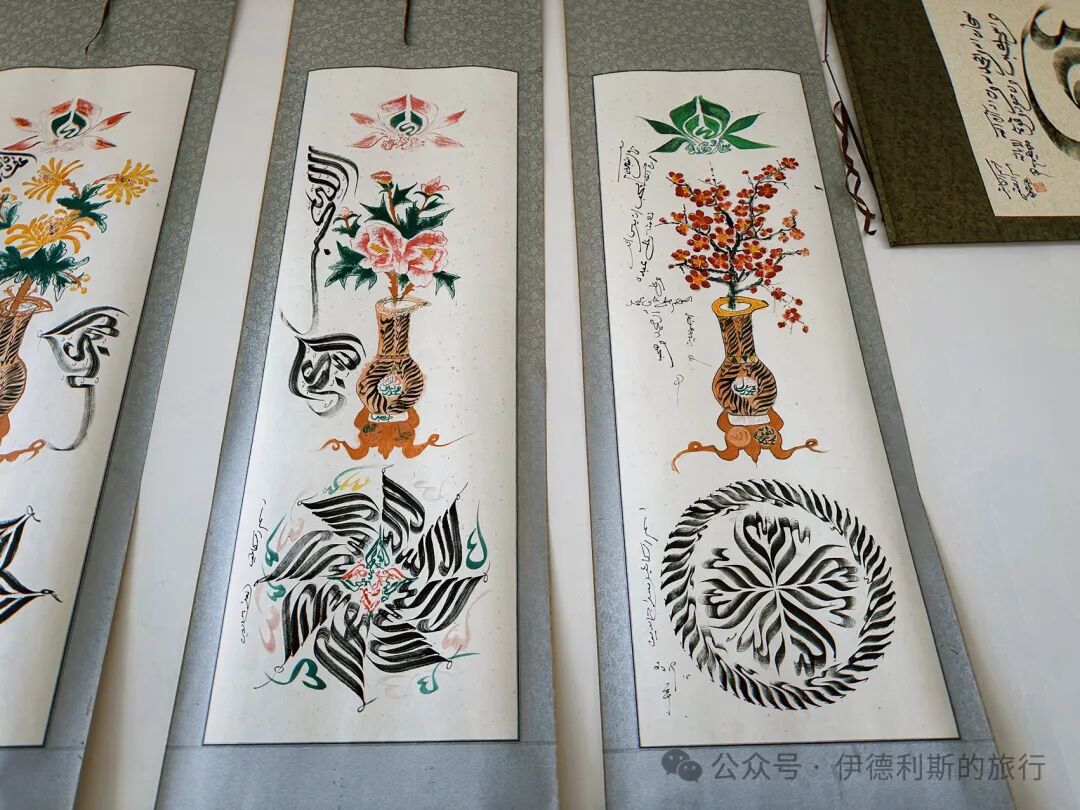
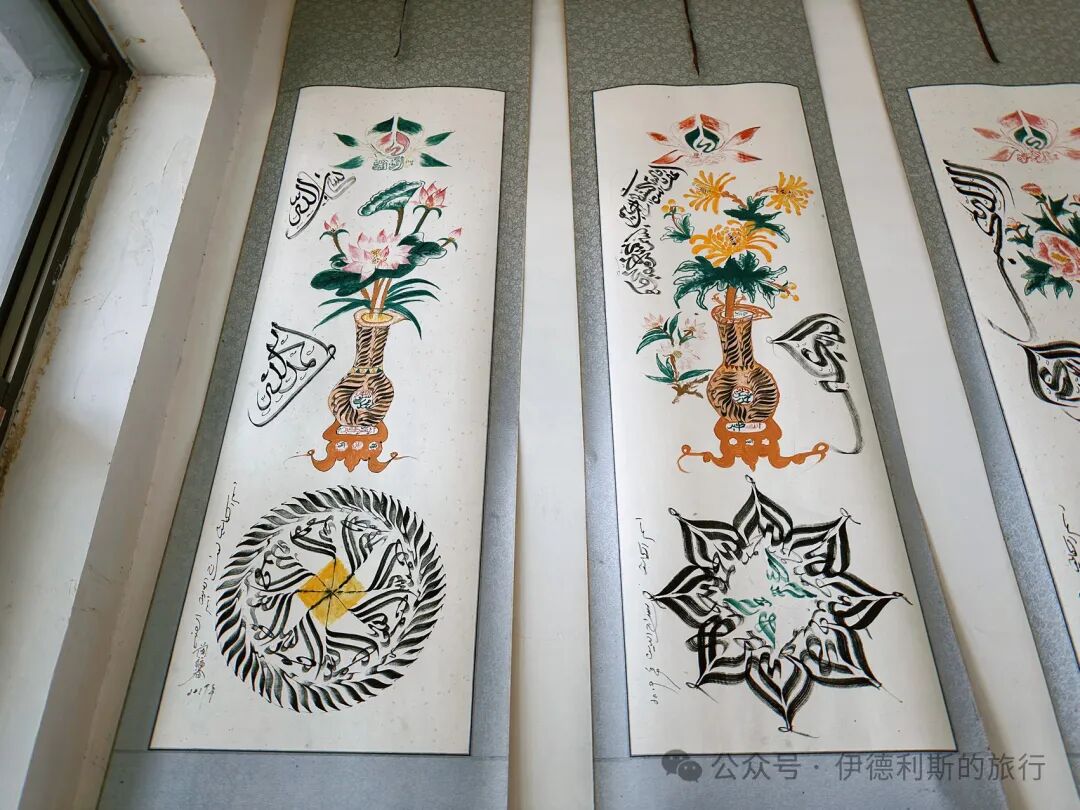
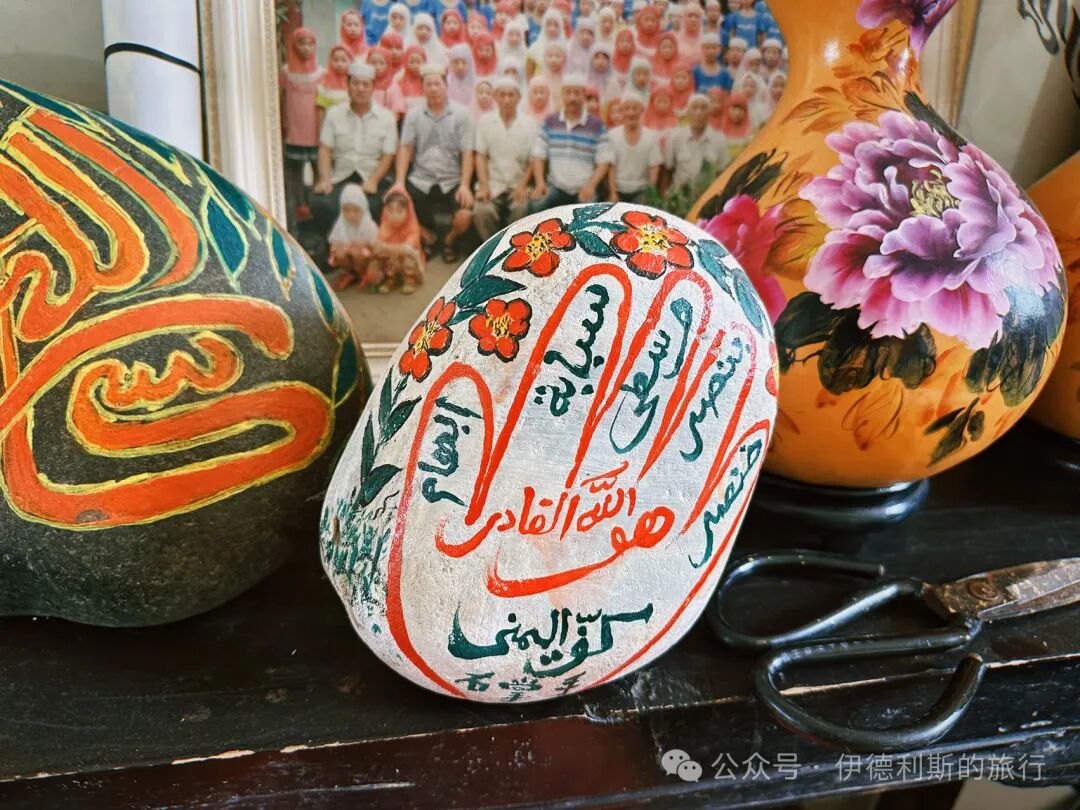
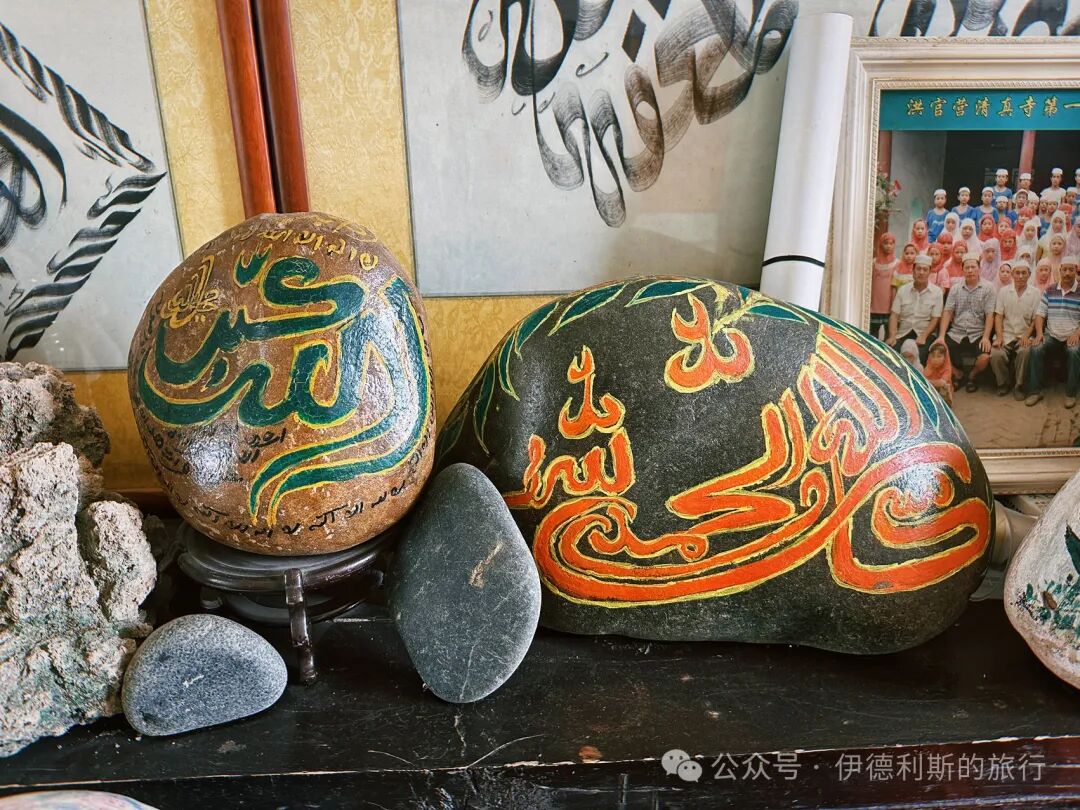
We were warmly welcomed at the Hongguanying Mosque by Imam Lan. He is skilled at Arabic calligraphy, and his scripture paintings and stone carvings are very impressive. I was very lucky to receive a one-stroke Basmala (tasmi) as a gift from Imam Lan.
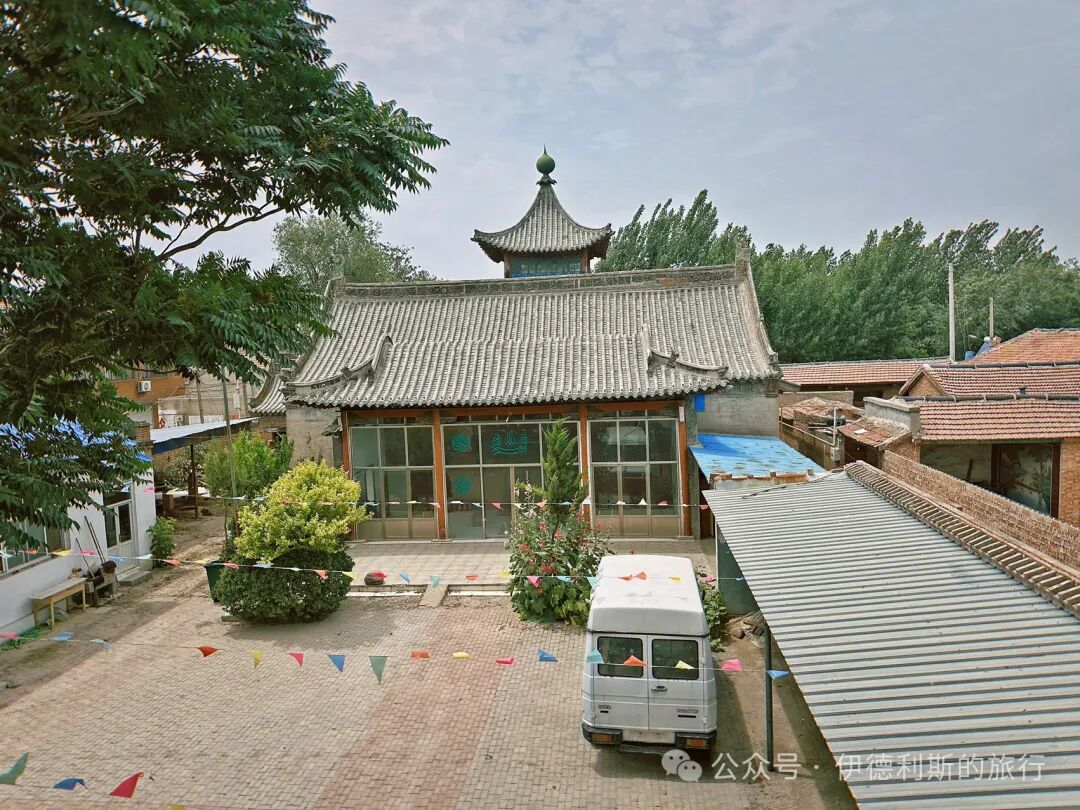
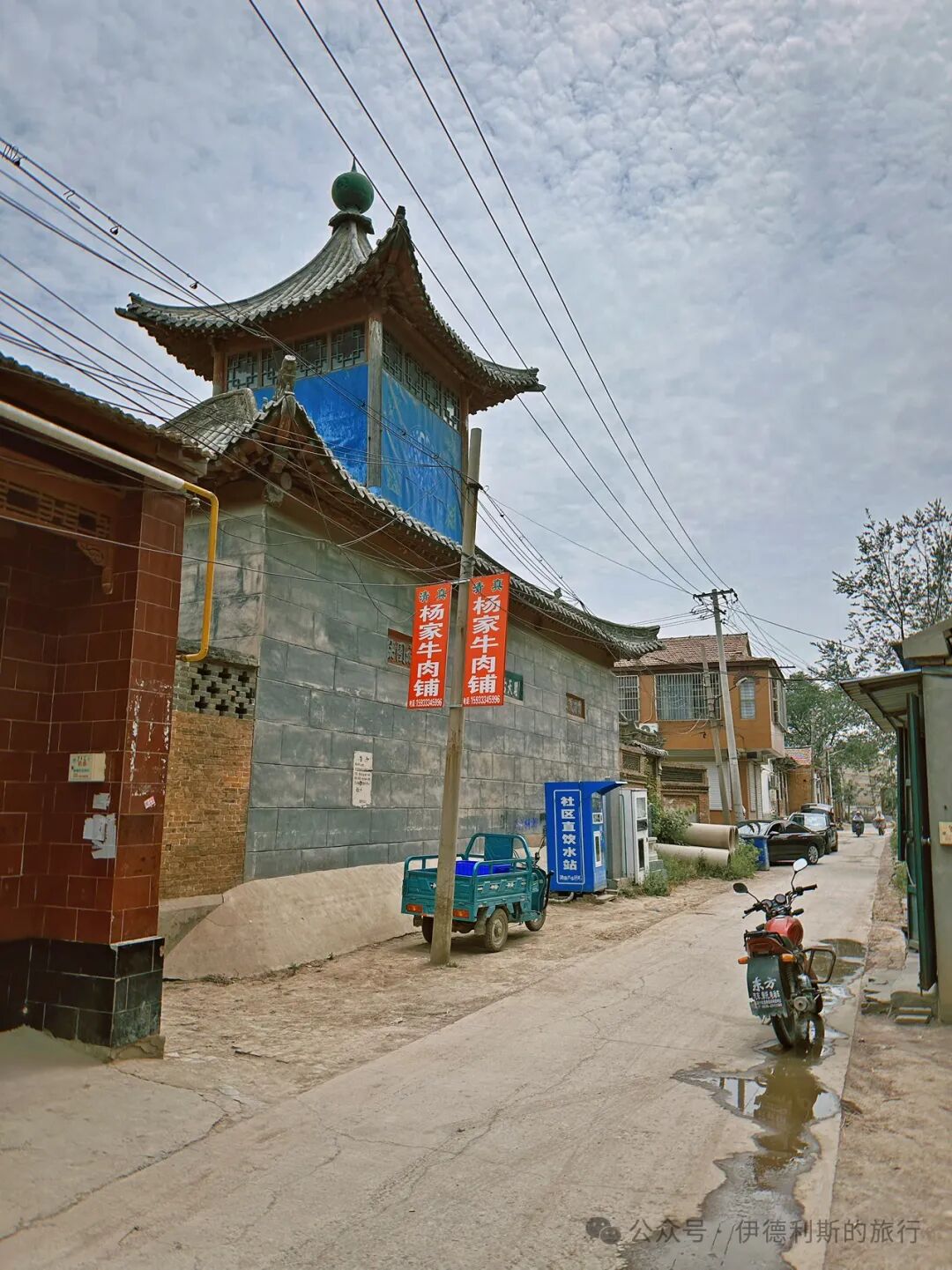
On the road heading west from Linqing to Hongguanying, we saw wheat fields, the Wei Canal, and Hui Muslim villages. The Xianfeng Bridge over the Wei Canal was built in 1959 and expanded in 1974. It was once very famous, but it stopped allowing motor vehicles in 1992 and is now a protected cultural site.
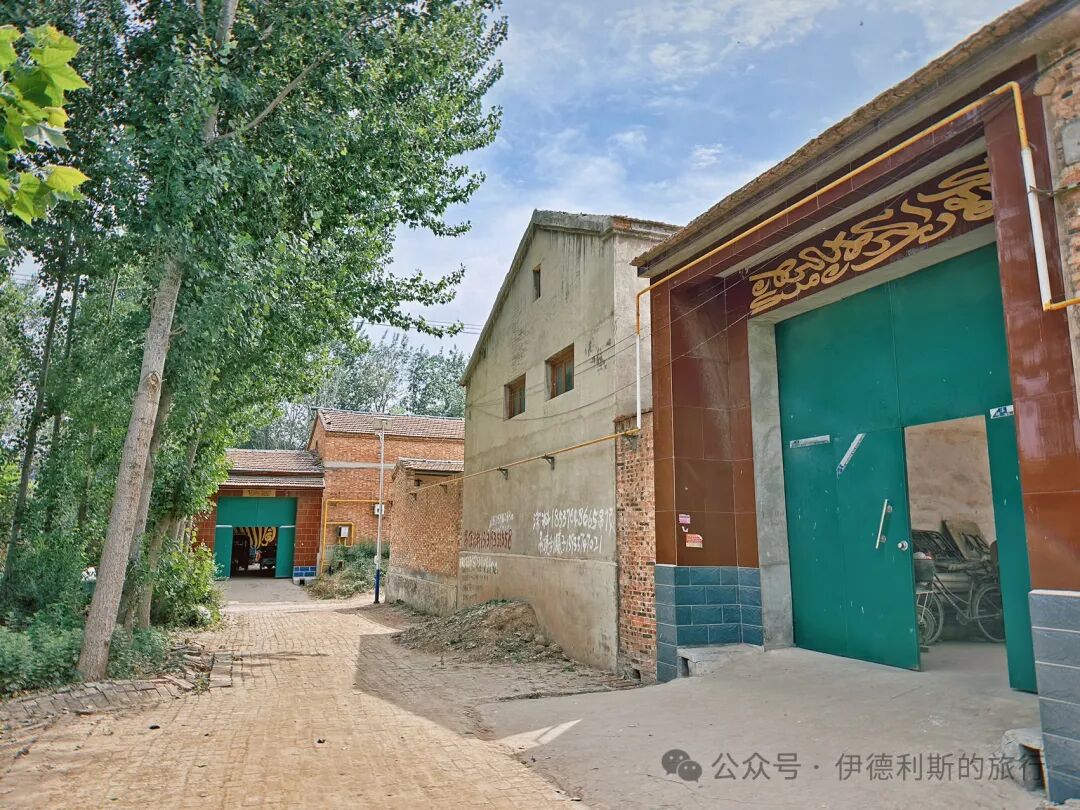
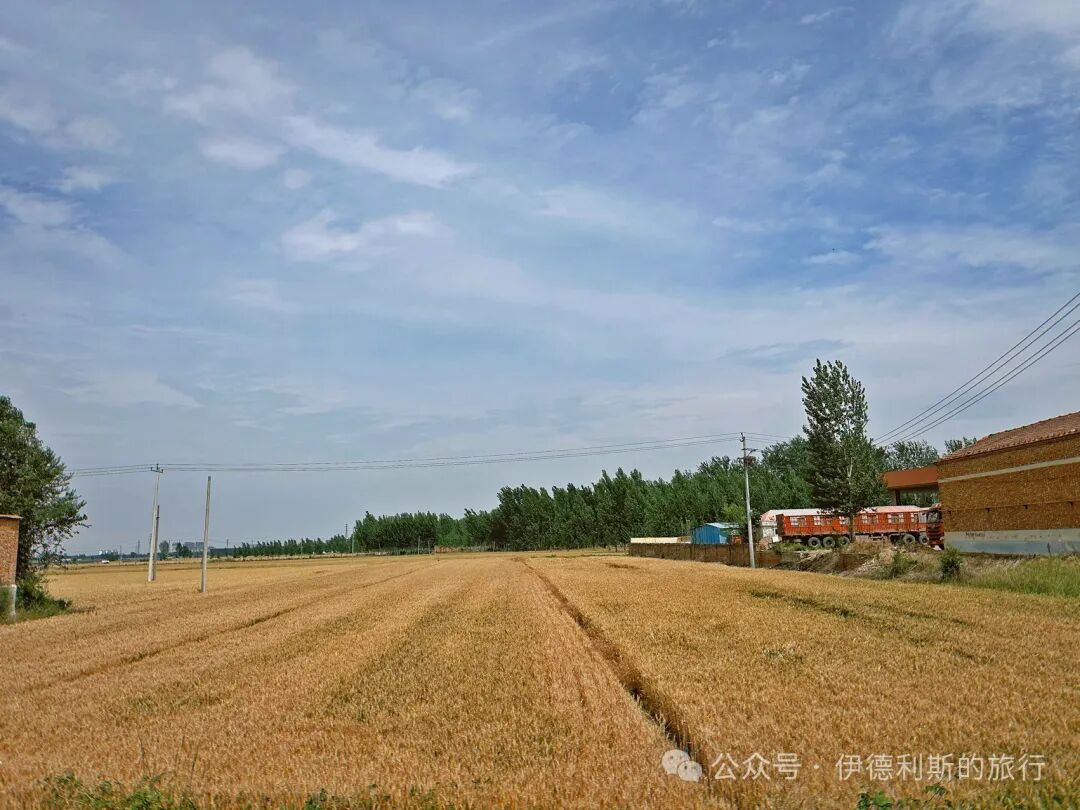
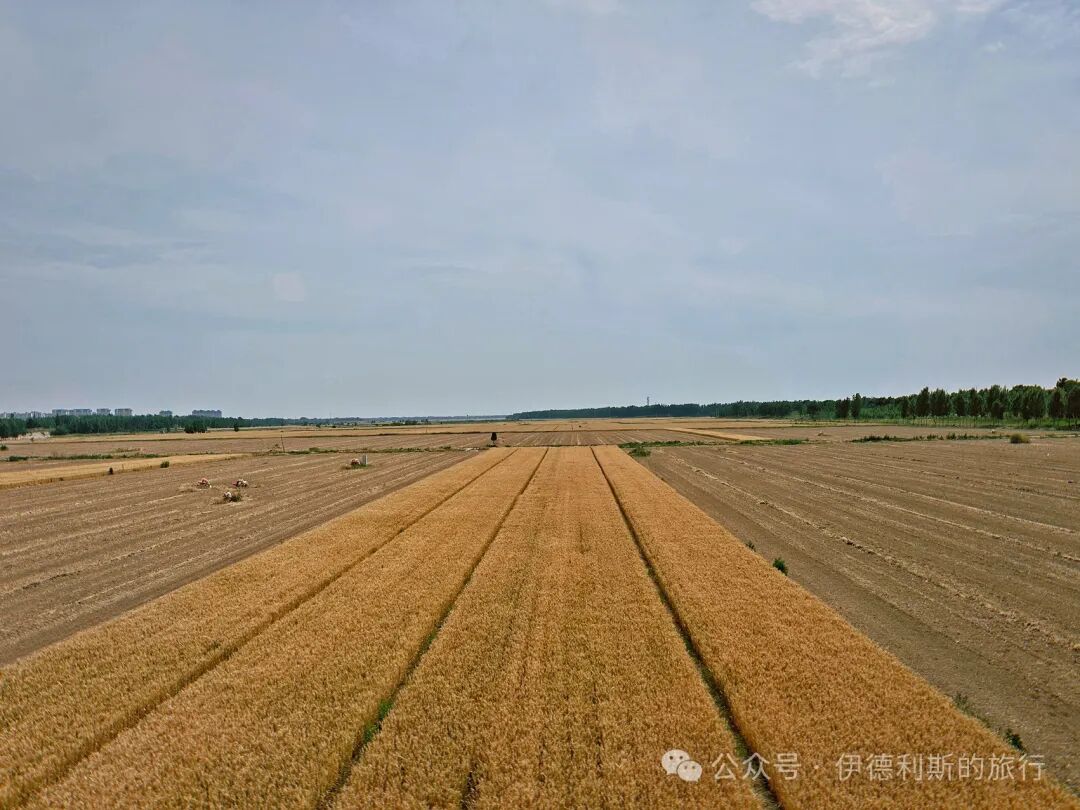
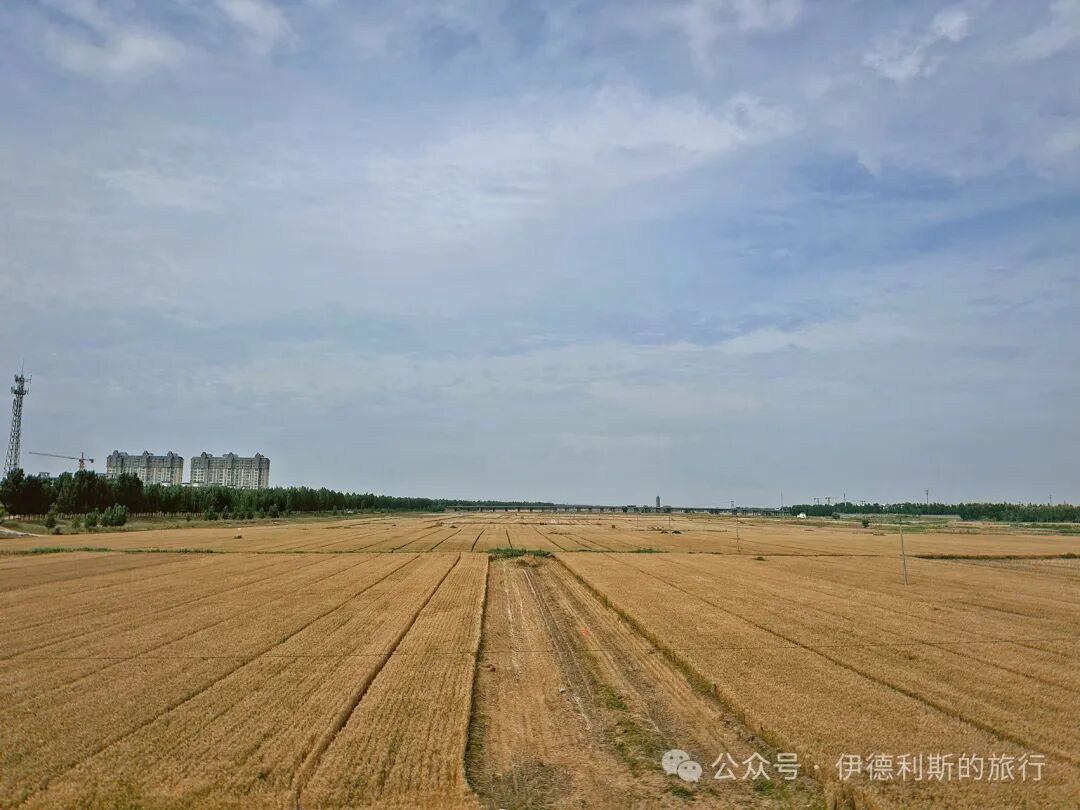
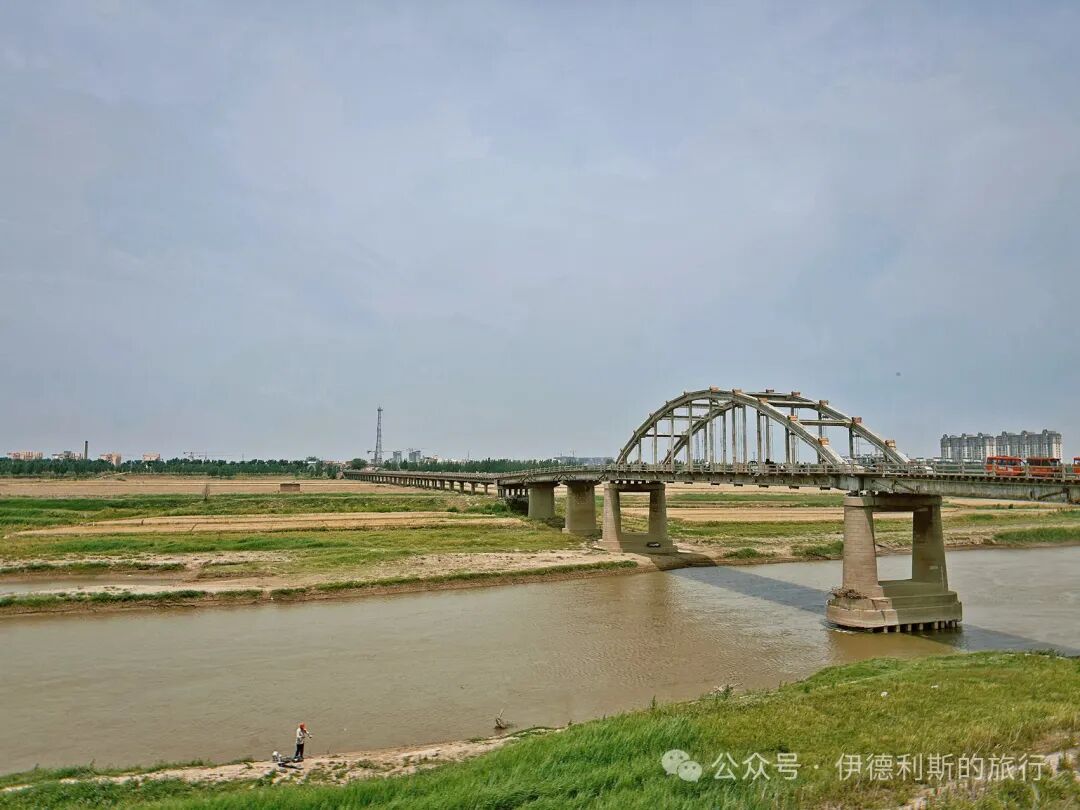
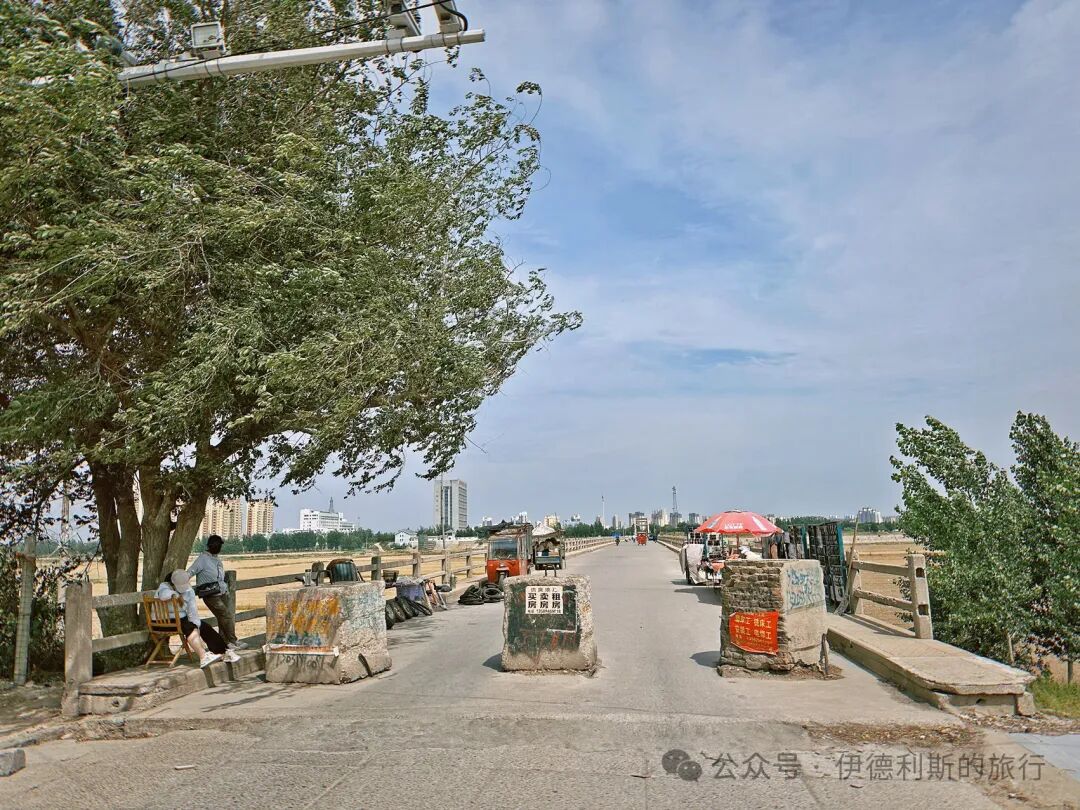
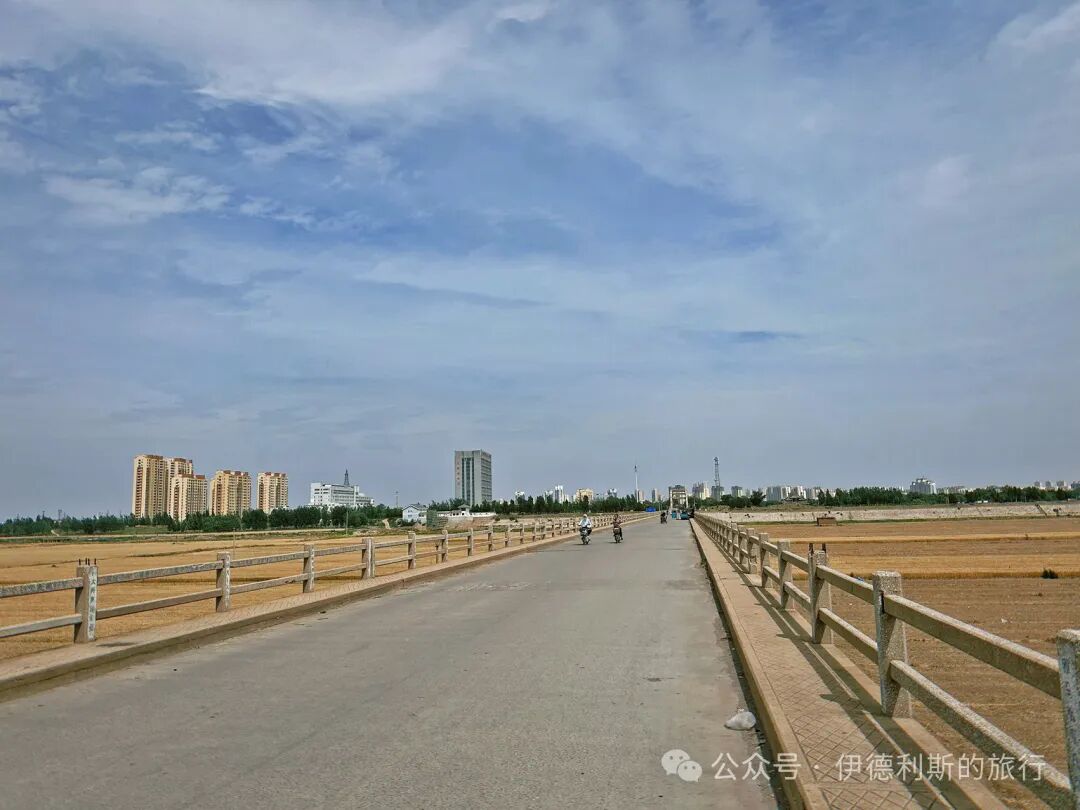
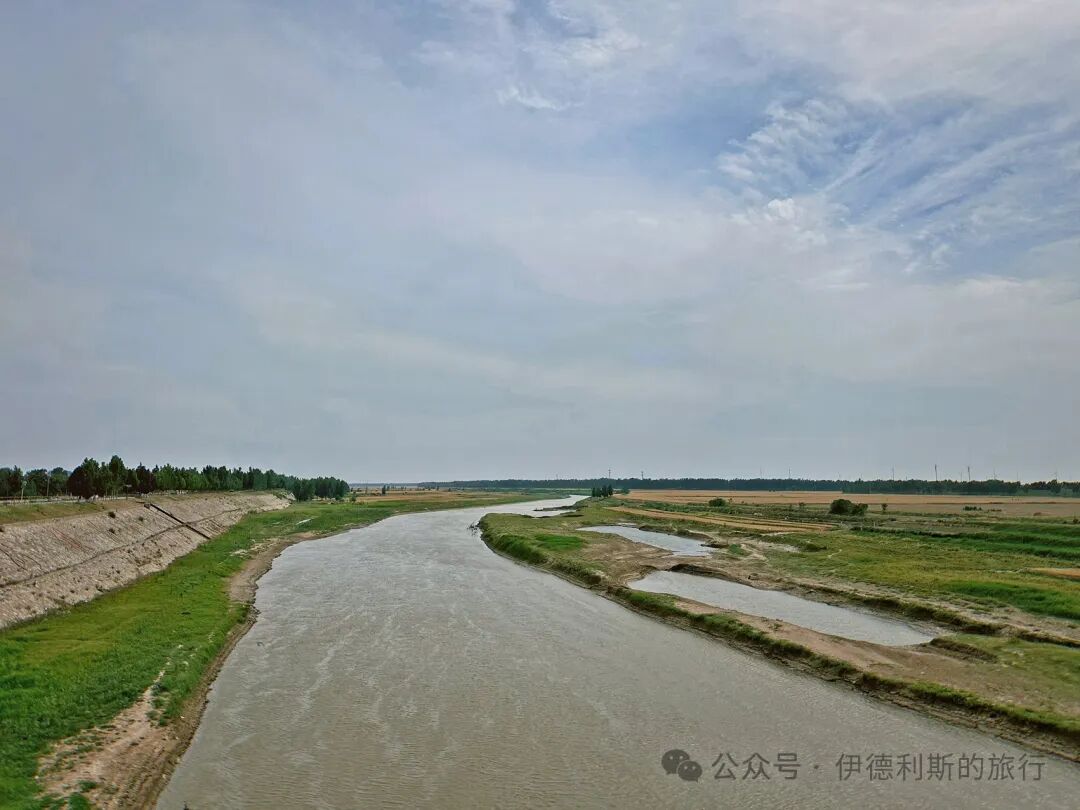
Returning from Hongguanying to downtown Linqing, we found that most restaurants here are closed between 2:00 PM and 5:00 PM. We found a place that sells deep-stir-fried meat tenderloin (ganzha liji) and bought some to eat on the train. I tried it as soon as I got on the train and it was super delicious! It was fried but not greasy at all. It even tasted great cold, just like a snack, and I couldn't stop eating it. Then we went to a shop that sells meat flatbreads (huoshao) and stuffed flatbreads (xian huoshao). There are many ways to make flatbreads here in Linqing. We bought a beef-stuffed flatbread, and it was packed with filling. I think it tasted much better than the ones I've had in Beijing.
The last photo shows two shops next to the Linqing No. 1 Kindergarten. One is a stationery shop that also serves breakfast, and the other is a sesame oil shop that provides lunch and tutoring for students. I thought that was really interesting.
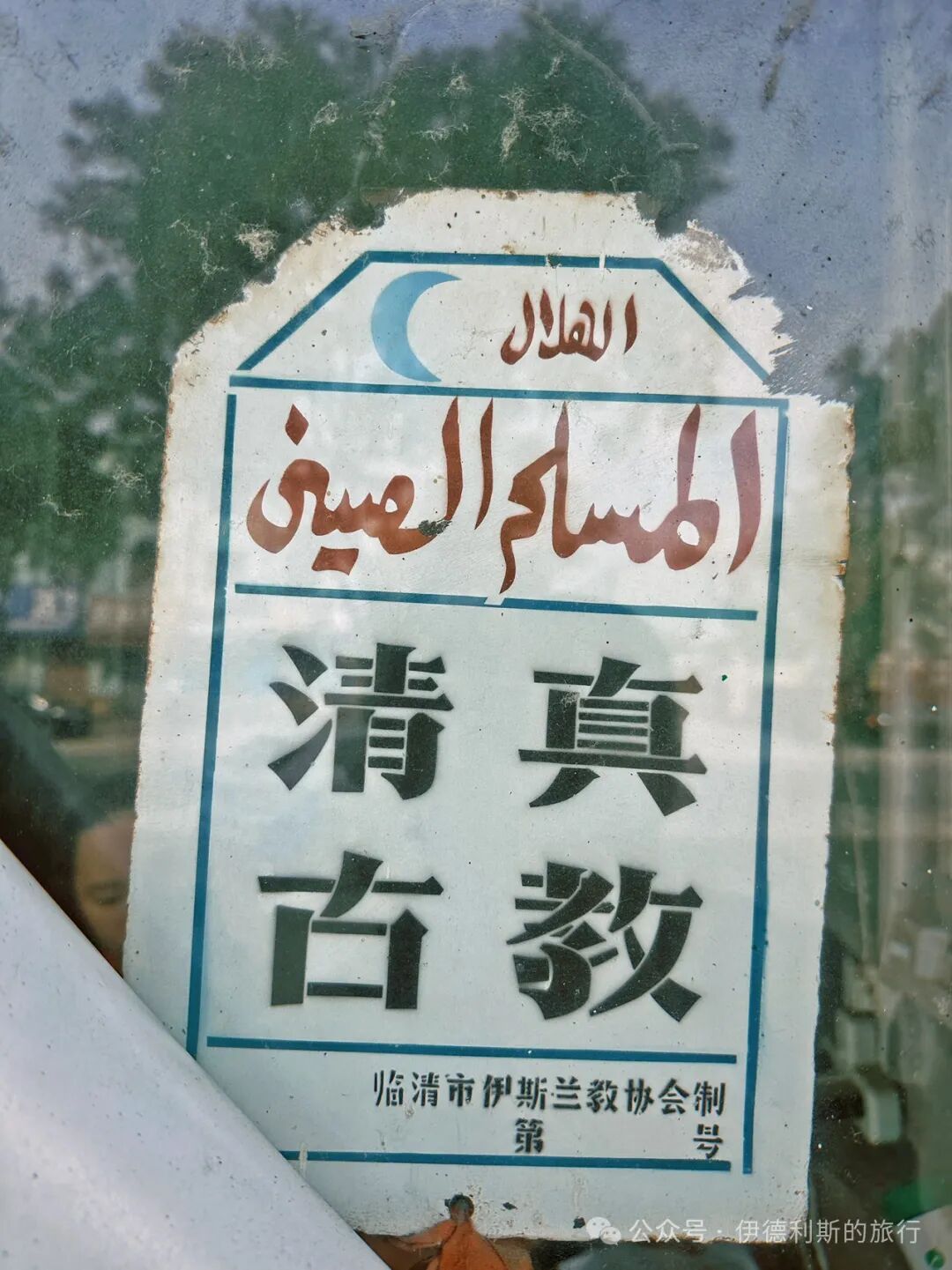
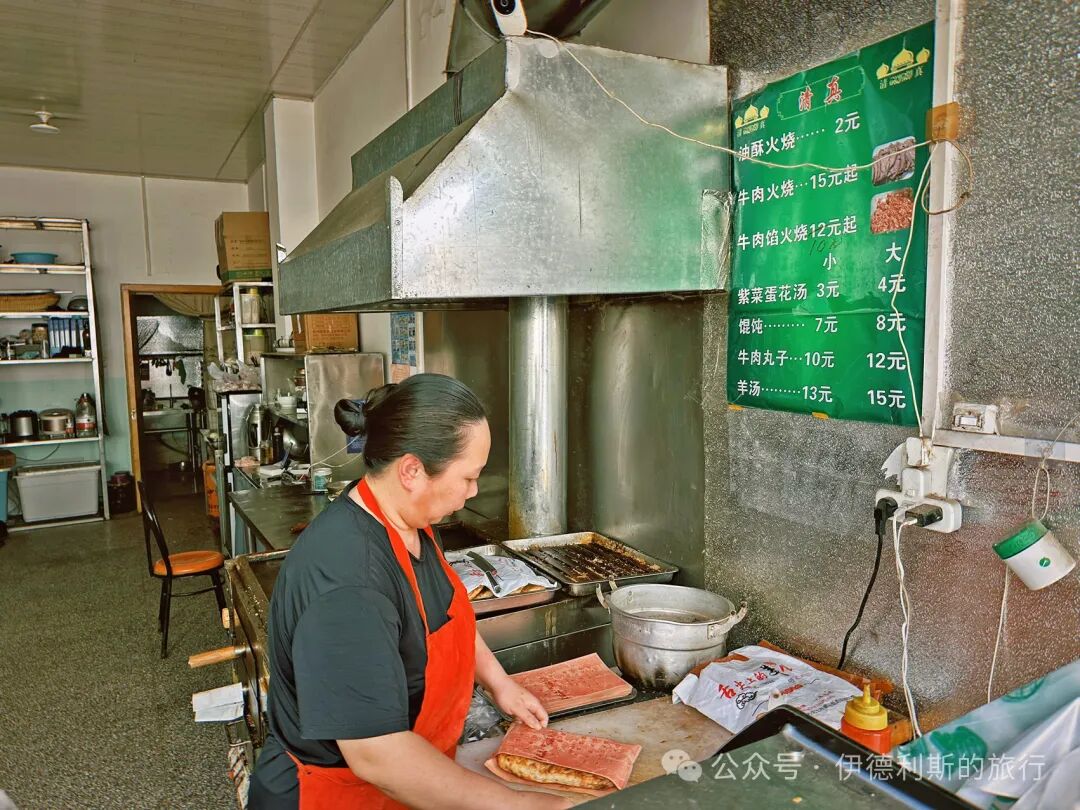
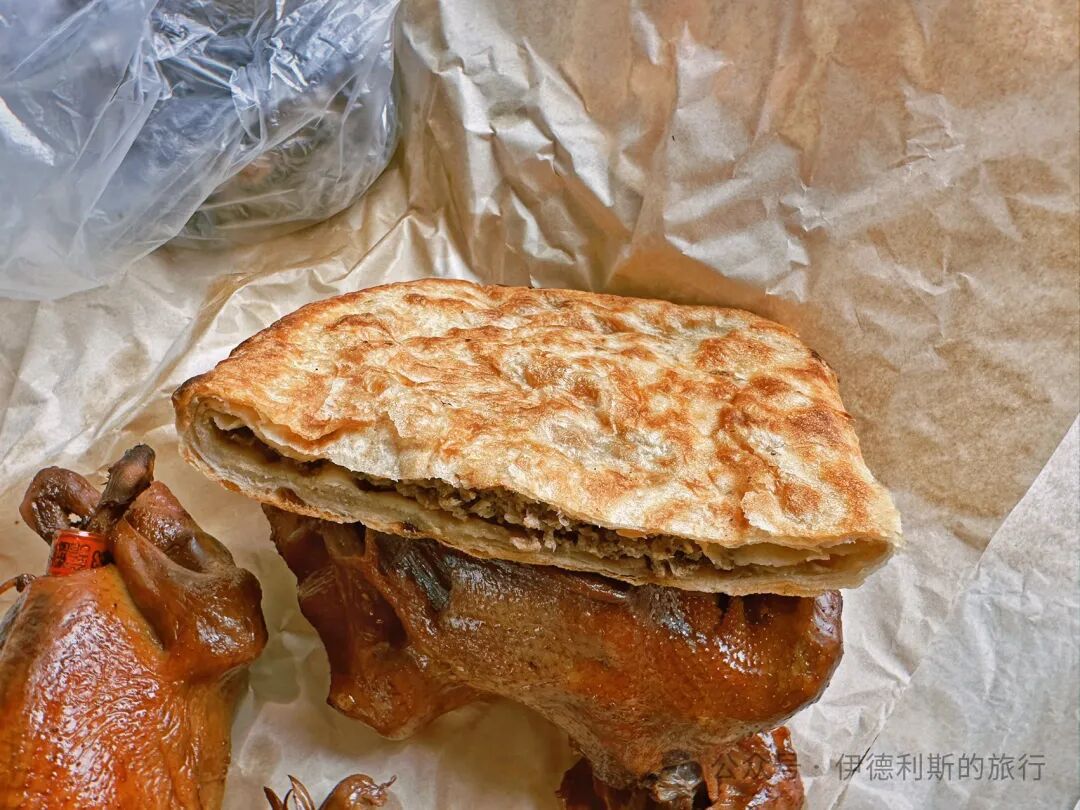
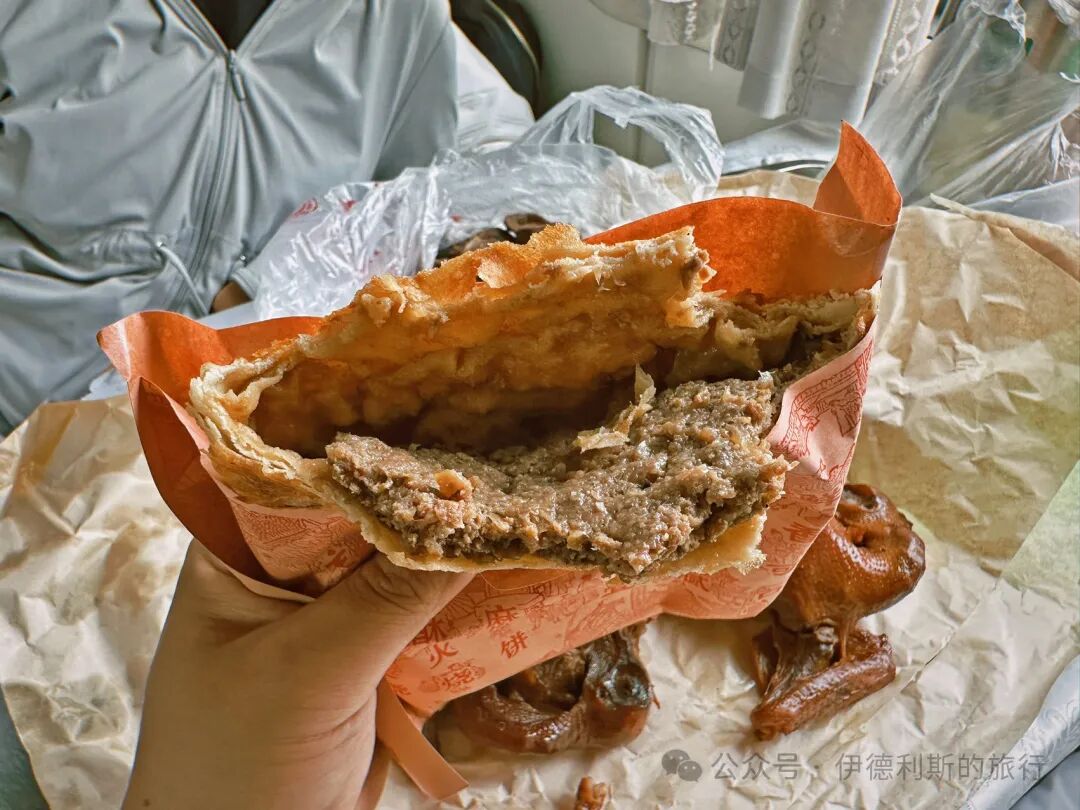
After buying the stuffed flatbread, we happened to run into the imam's wife from the Linqing Women's Mosque. She told us her family runs a braised chicken and smoked pigeon shop right next door, so we went in to take a look. Once inside, we learned that their shop is a city-level intangible cultural heritage site for Linqing smoked deli techniques. We bought two of their signature smoked pigeons and some chicken gizzards to eat on the train. The smoked pigeon was really fragrant. Even though it didn't have as much meat as chicken, the smoky flavor was delicious and worth eating.
Summary: Linqing, Shandong - Canal City Mosques, Food and History (Part 2) is presented as a clear English travel account for readers interested in Muslim life, halal food, mosques, and local history. The article keeps the original place names, food details, photographs, and cultural context while focusing on Linqing, Shandong, Canal History.
After the evening prayer (shamu), we ate big bowl dishes (dawan cai) at Erliang Diguo Millet Porridge, located at the intersection of Xianfeng Road and Dazhong Road in Linqing. They serve porridge and eight big bowls (ba da wan) in the morning, noodles in the afternoon, and big bowl dishes (dawan cai) at night, all of which look delicious. We ordered a serving of big bowl dishes and a cold appetizer. The big bowl dish had plenty of ingredients inside, and it felt very healthy to eat.
Zainab and I both really like the atmosphere in Linqing. There are few cars on the street at night, no delivery scooters, and it feels great to ride a shared electric bike around. There are many halal restaurants on Xianfeng Road. People sit on small stools outside the shops at night to eat and chat, which feels very relaxed.
Linqing at night is full of various halal restaurants and even a small halal night market.
We had breakfast at Kong Family Steamed Bowls (Kongjia kouwan) at the intersection of Xianfeng Road, where we ate braised pork and steamed pork tenderloin (liji kouwan) with steamed buns (mantou). Turning the traditional steamed bowls (kouwan) from North China's scripture hall banquets into a breakfast seems to be a local specialty of Linqing, allowing tourists like us to enjoy traditional banquet dishes. They keep their steamed bowls (kouwan) in a large steamer. They have many kinds like pine-flower egg (songhua), meatballs (wanzi), pork tenderloin (liji), starch jelly (menzi), and braised pork (shaorou). You pick what you want, they flip it into a bowl, pour broth over it, and it is ready to eat.
Their shop was originally the Taoyuan Street Supply and Marketing Cooperative built in the 1970s. Eating here feels very retro. Besides selling steamed bowls in the morning, they also sell cold noodles (liangmian) at noon, which is another specialty of Linqing.
After finishing the steamed bowls, I went to Xianfeng Road to eat tofu pudding (doufunao) and firm tofu (laodoufu). Breakfast shops in Linqing sell both tofu pudding and firm tofu. The difference is that tofu pudding is set with gypsum, making the texture smooth and delicate. Firm tofu is set with brine, making the texture tough and chewy. I like both kinds.
At noon, we ate Wang Family Ten-Fragrance Noodles (shixiangmian) on Xinhua Road. Ten-Fragrance Noodles are also called Assorted-Fragrance Noodles (shixiangmian). The main feature is the large variety of vegetable toppings. A deluxe bowl can have over eighteen types, and the ingredients change based on the solar terms. The toppings mainly include stir-fried minced meat with eggplant strips, mung bean sprouts, chives, minced garlic sprouts, minced green beans, and tomato with egg. You also get fresh shredded cucumber, minced carrots, and pickled vegetables like pickled melon (jianggua), salted mustard greens (xian gede), and minced chive flowers (jiuhua mo), all finished with a drizzle of sesame paste. The homemade version we ate wasn't quite as elaborate, but it still had plenty of variety.
Hongguanying Mosque
At noon, we went to the Hongguanying Mosque in Linxi County, Xingtai, Hebei. Linxi County in Xingtai is actually right on the west side of the Wei Canal in Linqing. Once you cross the Xianfeng Bridge, there is a bus that goes to Hongguanying.
Hongguanying gets its name from the Hong family of Hui Muslims. According to the Linqing Hong Family Genealogy, the ancestor of the Hong family of Hui Muslims was Sayyid Ajjal Shams al-Din. His sixth-generation descendant, Hong Badan, served as an official in Linqing during the Ming Dynasty. His descendants took Hong as their surname and settled in Linqing. One branch settled in the urban area of Linqing and once built the Hong Family Mosque, but unfortunately, it no longer exists. Another group settled in Hongguanying Village and built the Hongguanying Mosque. The Hongguanying Mosque was first built between the Xuande and Tianshun periods of the Ming Dynasty. It was burned down in 1854 during the Northern Expedition of the Taiping Rebellion and rebuilt into its current form in 1874.
We were warmly welcomed at the Hongguanying Mosque by Imam Lan. He is skilled at Arabic calligraphy, and his scripture paintings and stone carvings are very impressive. I was very lucky to receive a one-stroke Basmala (tasmi) as a gift from Imam Lan.
On the road heading west from Linqing to Hongguanying, we saw wheat fields, the Wei Canal, and Hui Muslim villages. The Xianfeng Bridge over the Wei Canal was built in 1959 and expanded in 1974. It was once very famous, but it stopped allowing motor vehicles in 1992 and is now a protected cultural site.
Returning from Hongguanying to downtown Linqing, we found that most restaurants here are closed between 2:00 PM and 5:00 PM. We found a place that sells deep-stir-fried meat tenderloin (ganzha liji) and bought some to eat on the train. I tried it as soon as I got on the train and it was super delicious! It was fried but not greasy at all. It even tasted great cold, just like a snack, and I couldn't stop eating it. Then we went to a shop that sells meat flatbreads (huoshao) and stuffed flatbreads (xian huoshao). There are many ways to make flatbreads here in Linqing. We bought a beef-stuffed flatbread, and it was packed with filling. I think it tasted much better than the ones I've had in Beijing.
The last photo shows two shops next to the Linqing No. 1 Kindergarten. One is a stationery shop that also serves breakfast, and the other is a sesame oil shop that provides lunch and tutoring for students. I thought that was really interesting.
After buying the stuffed flatbread, we happened to run into the imam's wife from the Linqing Women's Mosque. She told us her family runs a braised chicken and smoked pigeon shop right next door, so we went in to take a look. Once inside, we learned that their shop is a city-level intangible cultural heritage site for Linqing smoked deli techniques. We bought two of their signature smoked pigeons and some chicken gizzards to eat on the train. The smoked pigeon was really fragrant. Even though it didn't have as much meat as chicken, the smoky flavor was delicious and worth eating.
Halal Travel Guide: Linqing, Shandong - Canal City Mosques, Food and History (Part 1)
Articles • ali2007fr posted the article • 0 comments • 222 views • 2026-05-19 10:24
Reposted from the web
Summary: Linqing, Shandong - Canal City Mosques, Food and History (Part 1) is presented as a clear English travel account for readers interested in Muslim life, halal food, mosques, and local history. The article keeps the original place names, food details, photographs, and cultural context while focusing on Linqing, Shandong, Canal History.
Following my last post, 'Revisiting the Big and Small Mosque Streets in Dongguan, Liaocheng,' we took an afternoon train from Liaocheng to Linqing. We went straight to Baoliang's First Shop for a meat-filled flatbread roll (bingjuanrou). Wang Baoliang opened this shop in the 1980s, so it has been around for 40 years now. I ate their meat-filled flatbread roll back in 2017, and it was truly satisfying. The price of the roll has gone up by 5 yuan since my last visit, but it still tastes great.
Last time, I ordered the braised butterfly fish head, which was delicious, but I did not choose my dishes as well this time. This time, I ordered sesame beef and pan-braised hairtail fish. The meat in the sesame beef is the same as the meat in the flatbread roll, so I ended up ordering the same thing twice. The pan-braised hairtail fish had a fishy smell. I think ordering the braised hairtail or fried hairtail would have been a better choice.
Leaving Linqing Railway Station, I passed by the First Family Three-Fresh Potstickers (diyijia sanxian guotie). I ate there when I visited Linqing 17 years ago, and it remains the best Shandong cuisine I have ever had, especially the sesame lamb which was delicious.
Linqing North Mosque
I spent the afternoon performing namaz at the Linqing North Mosque. Linqing North Mosque sits where the Huitong River and Wei River meet. It was first built in 1504 (the seventh year of the Hongzhi reign of the Ming Dynasty). It underwent major expansions in 1564 (the 43rd year of the Jiajing reign), 1779 (the 44th year of the Qianlong reign), and 1809 (the 14th year of the Jiaqing reign) to reach its current form.
The main hall of Linqing North Mosque stands on a 1-meter-high stone platform and consists of a porch, the main hall, and a rear kiln-style hall (yaodian), making it very grand. The roof of the kiln-style hall has three moon-watching towers. The middle one has an octagonal pointed roof, while the two sides have square pointed roofs, all topped with peach-shaped finials.
The mosque features a memorial archway-style mihrab decorated with floral patterns and Arabic calligraphy, and the ceiling of the kiln-style hall also displays Arabic calligraphy.
The main hall of the North Mosque preserves precious murals from the Qing Dynasty.
The North Mosque (Beidasi) features various forms of calligraphy, including palace lanterns (gongdeng), brick carvings, plaques, architectural paintings, and wood carvings.
At the far east end of the North Mosque stands a gate in the style of a memorial archway (pailou), featuring delicate bracket sets (dougong) and upturned eaves.
After entering the main gate, you reach a ceremonial gate (yimen) built in the style of a memorial archway. Two Qing Dynasty plaques hang on the ceremonial gate:
A plaque reading 'Sincerity and Rectitude' (Chengyi Zhengxin) erected in the 11th year of the Guangxu reign by Li Ying, a decorated military official.
A plaque reading 'Orderly Human Relations' (Yilun Youxu) from the 2nd year of the Qianlong reign by Yang Jing, a deputy military commander; this one appears to be a replica.
Behind the ceremonial gate is a path leading to the main prayer hall, with lecture halls (jiangtang) located on the north and south sides.
On the north and south sides of the main prayer hall are two scripture pavilions (cangjingting) with four-cornered pointed roofs and small porches (baoxia) in front of the doors. In front of the pavilion stands a 500-year-old Chinese arborvitae (cebai) planted when the mosque was built.
Behind the main hall is the back gate, which features a plaque inscribed with "Qingzhen Libaisi" (Mosque) dated to the first month of the Jiajing jiazi year. The mosque also houses several stone tablets from the Qing dynasty and the Republic of China era.
Linqing East Mosque
After leaving the Linqing North Mosque, I went across the street to the East Mosque to pay my respects at the tombs of the saints (shamu) and the Hufu cemetery (Hufutan). The Linqing East Mosque was first built in 1465 (the first year of the Chenghua reign of the Ming dynasty). It was renovated twice in 1583 (the eleventh year of the Wanli reign) and 1649 (the sixth year of the Shunzhi reign), then expanded again in 1734 (the twelfth year of the Yongzheng reign), resulting in its grand scale.
On the far west side of the Linqing East Mosque is the back gate, which features a "Libaisi" (Mosque) plaque inscribed during the renovation in the sixth year of the Shunzhi reign. Behind the back gate is the main prayer hall, which consists of a front porch (juanpeng), the main hall, and a rear vaulted hall (yaodian). The roof of the vaulted hall has four sloping sides meeting at a point, topped with a gilded gourd-shaped finial.
The main hall is nearly 30 meters deep, with 14 pillars supporting the roof beams. The mihrab is the same style as the one in the North Mosque, featuring a decorative archway design.
The East Mosque has a porch roof (juanpeng) over the main hall and traditional calligraphy preserved on the pillars inside.
The main hall of the East Mosque features detailed roof beams and ridges, along with beautiful painted ceilings inside the prayer niche (yaodian).
The partition wall between the main hall and the prayer niche (yaodian) once held beautiful paintings. On both sides of the arched door in the middle were rows of intricate openwork calligraphy wood carvings. They were very beautiful, but unfortunately, they were destroyed during a difficult period.
The East Mosque features an archway-style mihrab, traditional wooden structures, and a 700-year-old locust tree in the courtyard.
The south gate of the East Mosque is no longer in use, and a pair of damaged stone lions sit in front of it. After entering the main gate, you reach the first courtyard and the hanging flower gate (chuihuamen) on the north side. Moving further in, you find the second courtyard and the South Lecture Hall on the north side. You must pass through the South Lecture Hall to reach the main courtyard where the main hall is located.
Linqing Women's Mosque
After leaving Hufu Beach, I rode my bike from the Linqing East Mosque to the Linqing Women's Mosque to find Zainab. The Linqing Women's Mosque was first built in 1924, making it exactly one hundred years old this year. In 2009, community elder Wan Yongcai and his wife Chen Zhong'e initiated the project, and their eldest son, Wan Qiusheng, chairman of the Linqing Sanhe Textile Group, along with his wife Hei Yuzhi, funded the reconstruction of the current building. This women's mosque is likely the largest one I have ever visited. view all
Summary: Linqing, Shandong - Canal City Mosques, Food and History (Part 1) is presented as a clear English travel account for readers interested in Muslim life, halal food, mosques, and local history. The article keeps the original place names, food details, photographs, and cultural context while focusing on Linqing, Shandong, Canal History.
Following my last post, 'Revisiting the Big and Small Mosque Streets in Dongguan, Liaocheng,' we took an afternoon train from Liaocheng to Linqing. We went straight to Baoliang's First Shop for a meat-filled flatbread roll (bingjuanrou). Wang Baoliang opened this shop in the 1980s, so it has been around for 40 years now. I ate their meat-filled flatbread roll back in 2017, and it was truly satisfying. The price of the roll has gone up by 5 yuan since my last visit, but it still tastes great.
Last time, I ordered the braised butterfly fish head, which was delicious, but I did not choose my dishes as well this time. This time, I ordered sesame beef and pan-braised hairtail fish. The meat in the sesame beef is the same as the meat in the flatbread roll, so I ended up ordering the same thing twice. The pan-braised hairtail fish had a fishy smell. I think ordering the braised hairtail or fried hairtail would have been a better choice.
Leaving Linqing Railway Station, I passed by the First Family Three-Fresh Potstickers (diyijia sanxian guotie). I ate there when I visited Linqing 17 years ago, and it remains the best Shandong cuisine I have ever had, especially the sesame lamb which was delicious.
Linqing North Mosque
I spent the afternoon performing namaz at the Linqing North Mosque. Linqing North Mosque sits where the Huitong River and Wei River meet. It was first built in 1504 (the seventh year of the Hongzhi reign of the Ming Dynasty). It underwent major expansions in 1564 (the 43rd year of the Jiajing reign), 1779 (the 44th year of the Qianlong reign), and 1809 (the 14th year of the Jiaqing reign) to reach its current form.
The main hall of Linqing North Mosque stands on a 1-meter-high stone platform and consists of a porch, the main hall, and a rear kiln-style hall (yaodian), making it very grand. The roof of the kiln-style hall has three moon-watching towers. The middle one has an octagonal pointed roof, while the two sides have square pointed roofs, all topped with peach-shaped finials.
The mosque features a memorial archway-style mihrab decorated with floral patterns and Arabic calligraphy, and the ceiling of the kiln-style hall also displays Arabic calligraphy.
The main hall of the North Mosque preserves precious murals from the Qing Dynasty.
The North Mosque (Beidasi) features various forms of calligraphy, including palace lanterns (gongdeng), brick carvings, plaques, architectural paintings, and wood carvings.
At the far east end of the North Mosque stands a gate in the style of a memorial archway (pailou), featuring delicate bracket sets (dougong) and upturned eaves.
After entering the main gate, you reach a ceremonial gate (yimen) built in the style of a memorial archway. Two Qing Dynasty plaques hang on the ceremonial gate:
A plaque reading 'Sincerity and Rectitude' (Chengyi Zhengxin) erected in the 11th year of the Guangxu reign by Li Ying, a decorated military official.
A plaque reading 'Orderly Human Relations' (Yilun Youxu) from the 2nd year of the Qianlong reign by Yang Jing, a deputy military commander; this one appears to be a replica.
Behind the ceremonial gate is a path leading to the main prayer hall, with lecture halls (jiangtang) located on the north and south sides.
On the north and south sides of the main prayer hall are two scripture pavilions (cangjingting) with four-cornered pointed roofs and small porches (baoxia) in front of the doors. In front of the pavilion stands a 500-year-old Chinese arborvitae (cebai) planted when the mosque was built.
Behind the main hall is the back gate, which features a plaque inscribed with "Qingzhen Libaisi" (Mosque) dated to the first month of the Jiajing jiazi year. The mosque also houses several stone tablets from the Qing dynasty and the Republic of China era.
Linqing East Mosque
After leaving the Linqing North Mosque, I went across the street to the East Mosque to pay my respects at the tombs of the saints (shamu) and the Hufu cemetery (Hufutan). The Linqing East Mosque was first built in 1465 (the first year of the Chenghua reign of the Ming dynasty). It was renovated twice in 1583 (the eleventh year of the Wanli reign) and 1649 (the sixth year of the Shunzhi reign), then expanded again in 1734 (the twelfth year of the Yongzheng reign), resulting in its grand scale.
On the far west side of the Linqing East Mosque is the back gate, which features a "Libaisi" (Mosque) plaque inscribed during the renovation in the sixth year of the Shunzhi reign. Behind the back gate is the main prayer hall, which consists of a front porch (juanpeng), the main hall, and a rear vaulted hall (yaodian). The roof of the vaulted hall has four sloping sides meeting at a point, topped with a gilded gourd-shaped finial.
The main hall is nearly 30 meters deep, with 14 pillars supporting the roof beams. The mihrab is the same style as the one in the North Mosque, featuring a decorative archway design.
The East Mosque has a porch roof (juanpeng) over the main hall and traditional calligraphy preserved on the pillars inside.
The main hall of the East Mosque features detailed roof beams and ridges, along with beautiful painted ceilings inside the prayer niche (yaodian).
The partition wall between the main hall and the prayer niche (yaodian) once held beautiful paintings. On both sides of the arched door in the middle were rows of intricate openwork calligraphy wood carvings. They were very beautiful, but unfortunately, they were destroyed during a difficult period.
The East Mosque features an archway-style mihrab, traditional wooden structures, and a 700-year-old locust tree in the courtyard.
The south gate of the East Mosque is no longer in use, and a pair of damaged stone lions sit in front of it. After entering the main gate, you reach the first courtyard and the hanging flower gate (chuihuamen) on the north side. Moving further in, you find the second courtyard and the South Lecture Hall on the north side. You must pass through the South Lecture Hall to reach the main courtyard where the main hall is located.
Linqing Women's Mosque
After leaving Hufu Beach, I rode my bike from the Linqing East Mosque to the Linqing Women's Mosque to find Zainab. The Linqing Women's Mosque was first built in 1924, making it exactly one hundred years old this year. In 2009, community elder Wan Yongcai and his wife Chen Zhong'e initiated the project, and their eldest son, Wan Qiusheng, chairman of the Linqing Sanhe Textile Group, along with his wife Hei Yuzhi, funded the reconstruction of the current building. This women's mosque is likely the largest one I have ever visited. view all
Reposted from the web
Summary: Linqing, Shandong - Canal City Mosques, Food and History (Part 1) is presented as a clear English travel account for readers interested in Muslim life, halal food, mosques, and local history. The article keeps the original place names, food details, photographs, and cultural context while focusing on Linqing, Shandong, Canal History.
Following my last post, 'Revisiting the Big and Small Mosque Streets in Dongguan, Liaocheng,' we took an afternoon train from Liaocheng to Linqing. We went straight to Baoliang's First Shop for a meat-filled flatbread roll (bingjuanrou). Wang Baoliang opened this shop in the 1980s, so it has been around for 40 years now. I ate their meat-filled flatbread roll back in 2017, and it was truly satisfying. The price of the roll has gone up by 5 yuan since my last visit, but it still tastes great.
Last time, I ordered the braised butterfly fish head, which was delicious, but I did not choose my dishes as well this time. This time, I ordered sesame beef and pan-braised hairtail fish. The meat in the sesame beef is the same as the meat in the flatbread roll, so I ended up ordering the same thing twice. The pan-braised hairtail fish had a fishy smell. I think ordering the braised hairtail or fried hairtail would have been a better choice.
Leaving Linqing Railway Station, I passed by the First Family Three-Fresh Potstickers (diyijia sanxian guotie). I ate there when I visited Linqing 17 years ago, and it remains the best Shandong cuisine I have ever had, especially the sesame lamb which was delicious.
Linqing North Mosque
I spent the afternoon performing namaz at the Linqing North Mosque. Linqing North Mosque sits where the Huitong River and Wei River meet. It was first built in 1504 (the seventh year of the Hongzhi reign of the Ming Dynasty). It underwent major expansions in 1564 (the 43rd year of the Jiajing reign), 1779 (the 44th year of the Qianlong reign), and 1809 (the 14th year of the Jiaqing reign) to reach its current form.
The main hall of Linqing North Mosque stands on a 1-meter-high stone platform and consists of a porch, the main hall, and a rear kiln-style hall (yaodian), making it very grand. The roof of the kiln-style hall has three moon-watching towers. The middle one has an octagonal pointed roof, while the two sides have square pointed roofs, all topped with peach-shaped finials.
The mosque features a memorial archway-style mihrab decorated with floral patterns and Arabic calligraphy, and the ceiling of the kiln-style hall also displays Arabic calligraphy.
The main hall of the North Mosque preserves precious murals from the Qing Dynasty.
The North Mosque (Beidasi) features various forms of calligraphy, including palace lanterns (gongdeng), brick carvings, plaques, architectural paintings, and wood carvings.
At the far east end of the North Mosque stands a gate in the style of a memorial archway (pailou), featuring delicate bracket sets (dougong) and upturned eaves.
After entering the main gate, you reach a ceremonial gate (yimen) built in the style of a memorial archway. Two Qing Dynasty plaques hang on the ceremonial gate:
A plaque reading 'Sincerity and Rectitude' (Chengyi Zhengxin) erected in the 11th year of the Guangxu reign by Li Ying, a decorated military official.
A plaque reading 'Orderly Human Relations' (Yilun Youxu) from the 2nd year of the Qianlong reign by Yang Jing, a deputy military commander; this one appears to be a replica.
Behind the ceremonial gate is a path leading to the main prayer hall, with lecture halls (jiangtang) located on the north and south sides.
On the north and south sides of the main prayer hall are two scripture pavilions (cangjingting) with four-cornered pointed roofs and small porches (baoxia) in front of the doors. In front of the pavilion stands a 500-year-old Chinese arborvitae (cebai) planted when the mosque was built.
Behind the main hall is the back gate, which features a plaque inscribed with "Qingzhen Libaisi" (Mosque) dated to the first month of the Jiajing jiazi year. The mosque also houses several stone tablets from the Qing dynasty and the Republic of China era.
Linqing East Mosque
After leaving the Linqing North Mosque, I went across the street to the East Mosque to pay my respects at the tombs of the saints (shamu) and the Hufu cemetery (Hufutan). The Linqing East Mosque was first built in 1465 (the first year of the Chenghua reign of the Ming dynasty). It was renovated twice in 1583 (the eleventh year of the Wanli reign) and 1649 (the sixth year of the Shunzhi reign), then expanded again in 1734 (the twelfth year of the Yongzheng reign), resulting in its grand scale.
On the far west side of the Linqing East Mosque is the back gate, which features a "Libaisi" (Mosque) plaque inscribed during the renovation in the sixth year of the Shunzhi reign. Behind the back gate is the main prayer hall, which consists of a front porch (juanpeng), the main hall, and a rear vaulted hall (yaodian). The roof of the vaulted hall has four sloping sides meeting at a point, topped with a gilded gourd-shaped finial.
The main hall is nearly 30 meters deep, with 14 pillars supporting the roof beams. The mihrab is the same style as the one in the North Mosque, featuring a decorative archway design.
The East Mosque has a porch roof (juanpeng) over the main hall and traditional calligraphy preserved on the pillars inside.
The main hall of the East Mosque features detailed roof beams and ridges, along with beautiful painted ceilings inside the prayer niche (yaodian).
The partition wall between the main hall and the prayer niche (yaodian) once held beautiful paintings. On both sides of the arched door in the middle were rows of intricate openwork calligraphy wood carvings. They were very beautiful, but unfortunately, they were destroyed during a difficult period.
The East Mosque features an archway-style mihrab, traditional wooden structures, and a 700-year-old locust tree in the courtyard.
The south gate of the East Mosque is no longer in use, and a pair of damaged stone lions sit in front of it. After entering the main gate, you reach the first courtyard and the hanging flower gate (chuihuamen) on the north side. Moving further in, you find the second courtyard and the South Lecture Hall on the north side. You must pass through the South Lecture Hall to reach the main courtyard where the main hall is located.
Linqing Women's Mosque
After leaving Hufu Beach, I rode my bike from the Linqing East Mosque to the Linqing Women's Mosque to find Zainab. The Linqing Women's Mosque was first built in 1924, making it exactly one hundred years old this year. In 2009, community elder Wan Yongcai and his wife Chen Zhong'e initiated the project, and their eldest son, Wan Qiusheng, chairman of the Linqing Sanhe Textile Group, along with his wife Hei Yuzhi, funded the reconstruction of the current building. This women's mosque is likely the largest one I have ever visited.
Summary: Linqing, Shandong - Canal City Mosques, Food and History (Part 1) is presented as a clear English travel account for readers interested in Muslim life, halal food, mosques, and local history. The article keeps the original place names, food details, photographs, and cultural context while focusing on Linqing, Shandong, Canal History.
Following my last post, 'Revisiting the Big and Small Mosque Streets in Dongguan, Liaocheng,' we took an afternoon train from Liaocheng to Linqing. We went straight to Baoliang's First Shop for a meat-filled flatbread roll (bingjuanrou). Wang Baoliang opened this shop in the 1980s, so it has been around for 40 years now. I ate their meat-filled flatbread roll back in 2017, and it was truly satisfying. The price of the roll has gone up by 5 yuan since my last visit, but it still tastes great.
Last time, I ordered the braised butterfly fish head, which was delicious, but I did not choose my dishes as well this time. This time, I ordered sesame beef and pan-braised hairtail fish. The meat in the sesame beef is the same as the meat in the flatbread roll, so I ended up ordering the same thing twice. The pan-braised hairtail fish had a fishy smell. I think ordering the braised hairtail or fried hairtail would have been a better choice.
Leaving Linqing Railway Station, I passed by the First Family Three-Fresh Potstickers (diyijia sanxian guotie). I ate there when I visited Linqing 17 years ago, and it remains the best Shandong cuisine I have ever had, especially the sesame lamb which was delicious.
Linqing North Mosque
I spent the afternoon performing namaz at the Linqing North Mosque. Linqing North Mosque sits where the Huitong River and Wei River meet. It was first built in 1504 (the seventh year of the Hongzhi reign of the Ming Dynasty). It underwent major expansions in 1564 (the 43rd year of the Jiajing reign), 1779 (the 44th year of the Qianlong reign), and 1809 (the 14th year of the Jiaqing reign) to reach its current form.
The main hall of Linqing North Mosque stands on a 1-meter-high stone platform and consists of a porch, the main hall, and a rear kiln-style hall (yaodian), making it very grand. The roof of the kiln-style hall has three moon-watching towers. The middle one has an octagonal pointed roof, while the two sides have square pointed roofs, all topped with peach-shaped finials.
The mosque features a memorial archway-style mihrab decorated with floral patterns and Arabic calligraphy, and the ceiling of the kiln-style hall also displays Arabic calligraphy.
The main hall of the North Mosque preserves precious murals from the Qing Dynasty.
The North Mosque (Beidasi) features various forms of calligraphy, including palace lanterns (gongdeng), brick carvings, plaques, architectural paintings, and wood carvings.
At the far east end of the North Mosque stands a gate in the style of a memorial archway (pailou), featuring delicate bracket sets (dougong) and upturned eaves.
After entering the main gate, you reach a ceremonial gate (yimen) built in the style of a memorial archway. Two Qing Dynasty plaques hang on the ceremonial gate:
A plaque reading 'Sincerity and Rectitude' (Chengyi Zhengxin) erected in the 11th year of the Guangxu reign by Li Ying, a decorated military official.
A plaque reading 'Orderly Human Relations' (Yilun Youxu) from the 2nd year of the Qianlong reign by Yang Jing, a deputy military commander; this one appears to be a replica.
Behind the ceremonial gate is a path leading to the main prayer hall, with lecture halls (jiangtang) located on the north and south sides.
On the north and south sides of the main prayer hall are two scripture pavilions (cangjingting) with four-cornered pointed roofs and small porches (baoxia) in front of the doors. In front of the pavilion stands a 500-year-old Chinese arborvitae (cebai) planted when the mosque was built.
Behind the main hall is the back gate, which features a plaque inscribed with "Qingzhen Libaisi" (Mosque) dated to the first month of the Jiajing jiazi year. The mosque also houses several stone tablets from the Qing dynasty and the Republic of China era.
Linqing East Mosque
After leaving the Linqing North Mosque, I went across the street to the East Mosque to pay my respects at the tombs of the saints (shamu) and the Hufu cemetery (Hufutan). The Linqing East Mosque was first built in 1465 (the first year of the Chenghua reign of the Ming dynasty). It was renovated twice in 1583 (the eleventh year of the Wanli reign) and 1649 (the sixth year of the Shunzhi reign), then expanded again in 1734 (the twelfth year of the Yongzheng reign), resulting in its grand scale.
On the far west side of the Linqing East Mosque is the back gate, which features a "Libaisi" (Mosque) plaque inscribed during the renovation in the sixth year of the Shunzhi reign. Behind the back gate is the main prayer hall, which consists of a front porch (juanpeng), the main hall, and a rear vaulted hall (yaodian). The roof of the vaulted hall has four sloping sides meeting at a point, topped with a gilded gourd-shaped finial.
The main hall is nearly 30 meters deep, with 14 pillars supporting the roof beams. The mihrab is the same style as the one in the North Mosque, featuring a decorative archway design.
The East Mosque has a porch roof (juanpeng) over the main hall and traditional calligraphy preserved on the pillars inside.
The main hall of the East Mosque features detailed roof beams and ridges, along with beautiful painted ceilings inside the prayer niche (yaodian).
The partition wall between the main hall and the prayer niche (yaodian) once held beautiful paintings. On both sides of the arched door in the middle were rows of intricate openwork calligraphy wood carvings. They were very beautiful, but unfortunately, they were destroyed during a difficult period.
The East Mosque features an archway-style mihrab, traditional wooden structures, and a 700-year-old locust tree in the courtyard.
The south gate of the East Mosque is no longer in use, and a pair of damaged stone lions sit in front of it. After entering the main gate, you reach the first courtyard and the hanging flower gate (chuihuamen) on the north side. Moving further in, you find the second courtyard and the South Lecture Hall on the north side. You must pass through the South Lecture Hall to reach the main courtyard where the main hall is located.
Linqing Women's Mosque
After leaving Hufu Beach, I rode my bike from the Linqing East Mosque to the Linqing Women's Mosque to find Zainab. The Linqing Women's Mosque was first built in 1924, making it exactly one hundred years old this year. In 2009, community elder Wan Yongcai and his wife Chen Zhong'e initiated the project, and their eldest son, Wan Qiusheng, chairman of the Linqing Sanhe Textile Group, along with his wife Hei Yuzhi, funded the reconstruction of the current building. This women's mosque is likely the largest one I have ever visited.
Halal Travel Guide: Linqing, Shandong - Canal City Mosques, Food and History (Part 2)
Articles • ali2007fr posted the article • 0 comments • 260 views • 2026-05-19 10:23
Reposted from the web
Summary: Linqing, Shandong - Canal City Mosques, Food and History (Part 2) is presented as a clear English travel account for readers interested in Muslim life, halal food, mosques, and local history. The article keeps the original place names, food details, photographs, and cultural context while focusing on Linqing, Shandong, Canal History.
After the evening prayer (shamu), we ate big bowl dishes (dawan cai) at Erliang Diguo Millet Porridge, located at the intersection of Xianfeng Road and Dazhong Road in Linqing. They serve porridge and eight big bowls (ba da wan) in the morning, noodles in the afternoon, and big bowl dishes (dawan cai) at night, all of which look delicious. We ordered a serving of big bowl dishes and a cold appetizer. The big bowl dish had plenty of ingredients inside, and it felt very healthy to eat.
Zainab and I both really like the atmosphere in Linqing. There are few cars on the street at night, no delivery scooters, and it feels great to ride a shared electric bike around. There are many halal restaurants on Xianfeng Road. People sit on small stools outside the shops at night to eat and chat, which feels very relaxed.
Linqing at night is full of various halal restaurants and even a small halal night market.
We had breakfast at Kong Family Steamed Bowls (Kongjia kouwan) at the intersection of Xianfeng Road, where we ate braised pork and steamed pork tenderloin (liji kouwan) with steamed buns (mantou). Turning the traditional steamed bowls (kouwan) from North China's scripture hall banquets into a breakfast seems to be a local specialty of Linqing, allowing tourists like us to enjoy traditional banquet dishes. They keep their steamed bowls (kouwan) in a large steamer. They have many kinds like pine-flower egg (songhua), meatballs (wanzi), pork tenderloin (liji), starch jelly (menzi), and braised pork (shaorou). You pick what you want, they flip it into a bowl, pour broth over it, and it is ready to eat.
Their shop was originally the Taoyuan Street Supply and Marketing Cooperative built in the 1970s. Eating here feels very retro. Besides selling steamed bowls in the morning, they also sell cold noodles (liangmian) at noon, which is another specialty of Linqing.
After finishing the steamed bowls, I went to Xianfeng Road to eat tofu pudding (doufunao) and firm tofu (laodoufu). Breakfast shops in Linqing sell both tofu pudding and firm tofu. The difference is that tofu pudding is set with gypsum, making the texture smooth and delicate. Firm tofu is set with brine, making the texture tough and chewy. I like both kinds.
At noon, we ate Wang Family Ten-Fragrance Noodles (shixiangmian) on Xinhua Road. Ten-Fragrance Noodles are also called Assorted-Fragrance Noodles (shixiangmian). The main feature is the large variety of vegetable toppings. A deluxe bowl can have over eighteen types, and the ingredients change based on the solar terms. The toppings mainly include stir-fried minced meat with eggplant strips, mung bean sprouts, chives, minced garlic sprouts, minced green beans, and tomato with egg. You also get fresh shredded cucumber, minced carrots, and pickled vegetables like pickled melon (jianggua), salted mustard greens (xian gede), and minced chive flowers (jiuhua mo), all finished with a drizzle of sesame paste. The homemade version we ate wasn't quite as elaborate, but it still had plenty of variety.
Hongguanying Mosque
At noon, we went to the Hongguanying Mosque in Linxi County, Xingtai, Hebei. Linxi County in Xingtai is actually right on the west side of the Wei Canal in Linqing. Once you cross the Xianfeng Bridge, there is a bus that goes to Hongguanying.
Hongguanying gets its name from the Hong family of Hui Muslims. According to the Linqing Hong Family Genealogy, the ancestor of the Hong family of Hui Muslims was Sayyid Ajjal Shams al-Din. His sixth-generation descendant, Hong Badan, served as an official in Linqing during the Ming Dynasty. His descendants took Hong as their surname and settled in Linqing. One branch settled in the urban area of Linqing and once built the Hong Family Mosque, but unfortunately, it no longer exists. Another group settled in Hongguanying Village and built the Hongguanying Mosque. The Hongguanying Mosque was first built between the Xuande and Tianshun periods of the Ming Dynasty. It was burned down in 1854 during the Northern Expedition of the Taiping Rebellion and rebuilt into its current form in 1874.
We were warmly welcomed at the Hongguanying Mosque by Imam Lan. He is skilled at Arabic calligraphy, and his scripture paintings and stone carvings are very impressive. I was very lucky to receive a one-stroke Basmala (tasmi) as a gift from Imam Lan.
On the road heading west from Linqing to Hongguanying, we saw wheat fields, the Wei Canal, and Hui Muslim villages. The Xianfeng Bridge over the Wei Canal was built in 1959 and expanded in 1974. It was once very famous, but it stopped allowing motor vehicles in 1992 and is now a protected cultural site.
Returning from Hongguanying to downtown Linqing, we found that most restaurants here are closed between 2:00 PM and 5:00 PM. We found a place that sells deep-stir-fried meat tenderloin (ganzha liji) and bought some to eat on the train. I tried it as soon as I got on the train and it was super delicious! It was fried but not greasy at all. It even tasted great cold, just like a snack, and I couldn't stop eating it. Then we went to a shop that sells meat flatbreads (huoshao) and stuffed flatbreads (xian huoshao). There are many ways to make flatbreads here in Linqing. We bought a beef-stuffed flatbread, and it was packed with filling. I think it tasted much better than the ones I've had in Beijing.
The last photo shows two shops next to the Linqing No. 1 Kindergarten. One is a stationery shop that also serves breakfast, and the other is a sesame oil shop that provides lunch and tutoring for students. I thought that was really interesting.
After buying the stuffed flatbread, we happened to run into the imam's wife from the Linqing Women's Mosque. She told us her family runs a braised chicken and smoked pigeon shop right next door, so we went in to take a look. Once inside, we learned that their shop is a city-level intangible cultural heritage site for Linqing smoked deli techniques. We bought two of their signature smoked pigeons and some chicken gizzards to eat on the train. The smoked pigeon was really fragrant. Even though it didn't have as much meat as chicken, the smoky flavor was delicious and worth eating. view all
Summary: Linqing, Shandong - Canal City Mosques, Food and History (Part 2) is presented as a clear English travel account for readers interested in Muslim life, halal food, mosques, and local history. The article keeps the original place names, food details, photographs, and cultural context while focusing on Linqing, Shandong, Canal History.
After the evening prayer (shamu), we ate big bowl dishes (dawan cai) at Erliang Diguo Millet Porridge, located at the intersection of Xianfeng Road and Dazhong Road in Linqing. They serve porridge and eight big bowls (ba da wan) in the morning, noodles in the afternoon, and big bowl dishes (dawan cai) at night, all of which look delicious. We ordered a serving of big bowl dishes and a cold appetizer. The big bowl dish had plenty of ingredients inside, and it felt very healthy to eat.
Zainab and I both really like the atmosphere in Linqing. There are few cars on the street at night, no delivery scooters, and it feels great to ride a shared electric bike around. There are many halal restaurants on Xianfeng Road. People sit on small stools outside the shops at night to eat and chat, which feels very relaxed.
Linqing at night is full of various halal restaurants and even a small halal night market.
We had breakfast at Kong Family Steamed Bowls (Kongjia kouwan) at the intersection of Xianfeng Road, where we ate braised pork and steamed pork tenderloin (liji kouwan) with steamed buns (mantou). Turning the traditional steamed bowls (kouwan) from North China's scripture hall banquets into a breakfast seems to be a local specialty of Linqing, allowing tourists like us to enjoy traditional banquet dishes. They keep their steamed bowls (kouwan) in a large steamer. They have many kinds like pine-flower egg (songhua), meatballs (wanzi), pork tenderloin (liji), starch jelly (menzi), and braised pork (shaorou). You pick what you want, they flip it into a bowl, pour broth over it, and it is ready to eat.
Their shop was originally the Taoyuan Street Supply and Marketing Cooperative built in the 1970s. Eating here feels very retro. Besides selling steamed bowls in the morning, they also sell cold noodles (liangmian) at noon, which is another specialty of Linqing.
After finishing the steamed bowls, I went to Xianfeng Road to eat tofu pudding (doufunao) and firm tofu (laodoufu). Breakfast shops in Linqing sell both tofu pudding and firm tofu. The difference is that tofu pudding is set with gypsum, making the texture smooth and delicate. Firm tofu is set with brine, making the texture tough and chewy. I like both kinds.
At noon, we ate Wang Family Ten-Fragrance Noodles (shixiangmian) on Xinhua Road. Ten-Fragrance Noodles are also called Assorted-Fragrance Noodles (shixiangmian). The main feature is the large variety of vegetable toppings. A deluxe bowl can have over eighteen types, and the ingredients change based on the solar terms. The toppings mainly include stir-fried minced meat with eggplant strips, mung bean sprouts, chives, minced garlic sprouts, minced green beans, and tomato with egg. You also get fresh shredded cucumber, minced carrots, and pickled vegetables like pickled melon (jianggua), salted mustard greens (xian gede), and minced chive flowers (jiuhua mo), all finished with a drizzle of sesame paste. The homemade version we ate wasn't quite as elaborate, but it still had plenty of variety.
Hongguanying Mosque
At noon, we went to the Hongguanying Mosque in Linxi County, Xingtai, Hebei. Linxi County in Xingtai is actually right on the west side of the Wei Canal in Linqing. Once you cross the Xianfeng Bridge, there is a bus that goes to Hongguanying.
Hongguanying gets its name from the Hong family of Hui Muslims. According to the Linqing Hong Family Genealogy, the ancestor of the Hong family of Hui Muslims was Sayyid Ajjal Shams al-Din. His sixth-generation descendant, Hong Badan, served as an official in Linqing during the Ming Dynasty. His descendants took Hong as their surname and settled in Linqing. One branch settled in the urban area of Linqing and once built the Hong Family Mosque, but unfortunately, it no longer exists. Another group settled in Hongguanying Village and built the Hongguanying Mosque. The Hongguanying Mosque was first built between the Xuande and Tianshun periods of the Ming Dynasty. It was burned down in 1854 during the Northern Expedition of the Taiping Rebellion and rebuilt into its current form in 1874.
We were warmly welcomed at the Hongguanying Mosque by Imam Lan. He is skilled at Arabic calligraphy, and his scripture paintings and stone carvings are very impressive. I was very lucky to receive a one-stroke Basmala (tasmi) as a gift from Imam Lan.
On the road heading west from Linqing to Hongguanying, we saw wheat fields, the Wei Canal, and Hui Muslim villages. The Xianfeng Bridge over the Wei Canal was built in 1959 and expanded in 1974. It was once very famous, but it stopped allowing motor vehicles in 1992 and is now a protected cultural site.
Returning from Hongguanying to downtown Linqing, we found that most restaurants here are closed between 2:00 PM and 5:00 PM. We found a place that sells deep-stir-fried meat tenderloin (ganzha liji) and bought some to eat on the train. I tried it as soon as I got on the train and it was super delicious! It was fried but not greasy at all. It even tasted great cold, just like a snack, and I couldn't stop eating it. Then we went to a shop that sells meat flatbreads (huoshao) and stuffed flatbreads (xian huoshao). There are many ways to make flatbreads here in Linqing. We bought a beef-stuffed flatbread, and it was packed with filling. I think it tasted much better than the ones I've had in Beijing.
The last photo shows two shops next to the Linqing No. 1 Kindergarten. One is a stationery shop that also serves breakfast, and the other is a sesame oil shop that provides lunch and tutoring for students. I thought that was really interesting.
After buying the stuffed flatbread, we happened to run into the imam's wife from the Linqing Women's Mosque. She told us her family runs a braised chicken and smoked pigeon shop right next door, so we went in to take a look. Once inside, we learned that their shop is a city-level intangible cultural heritage site for Linqing smoked deli techniques. We bought two of their signature smoked pigeons and some chicken gizzards to eat on the train. The smoked pigeon was really fragrant. Even though it didn't have as much meat as chicken, the smoky flavor was delicious and worth eating. view all
Reposted from the web
Summary: Linqing, Shandong - Canal City Mosques, Food and History (Part 2) is presented as a clear English travel account for readers interested in Muslim life, halal food, mosques, and local history. The article keeps the original place names, food details, photographs, and cultural context while focusing on Linqing, Shandong, Canal History.
After the evening prayer (shamu), we ate big bowl dishes (dawan cai) at Erliang Diguo Millet Porridge, located at the intersection of Xianfeng Road and Dazhong Road in Linqing. They serve porridge and eight big bowls (ba da wan) in the morning, noodles in the afternoon, and big bowl dishes (dawan cai) at night, all of which look delicious. We ordered a serving of big bowl dishes and a cold appetizer. The big bowl dish had plenty of ingredients inside, and it felt very healthy to eat.
Zainab and I both really like the atmosphere in Linqing. There are few cars on the street at night, no delivery scooters, and it feels great to ride a shared electric bike around. There are many halal restaurants on Xianfeng Road. People sit on small stools outside the shops at night to eat and chat, which feels very relaxed.
Linqing at night is full of various halal restaurants and even a small halal night market.
We had breakfast at Kong Family Steamed Bowls (Kongjia kouwan) at the intersection of Xianfeng Road, where we ate braised pork and steamed pork tenderloin (liji kouwan) with steamed buns (mantou). Turning the traditional steamed bowls (kouwan) from North China's scripture hall banquets into a breakfast seems to be a local specialty of Linqing, allowing tourists like us to enjoy traditional banquet dishes. They keep their steamed bowls (kouwan) in a large steamer. They have many kinds like pine-flower egg (songhua), meatballs (wanzi), pork tenderloin (liji), starch jelly (menzi), and braised pork (shaorou). You pick what you want, they flip it into a bowl, pour broth over it, and it is ready to eat.
Their shop was originally the Taoyuan Street Supply and Marketing Cooperative built in the 1970s. Eating here feels very retro. Besides selling steamed bowls in the morning, they also sell cold noodles (liangmian) at noon, which is another specialty of Linqing.
After finishing the steamed bowls, I went to Xianfeng Road to eat tofu pudding (doufunao) and firm tofu (laodoufu). Breakfast shops in Linqing sell both tofu pudding and firm tofu. The difference is that tofu pudding is set with gypsum, making the texture smooth and delicate. Firm tofu is set with brine, making the texture tough and chewy. I like both kinds.
At noon, we ate Wang Family Ten-Fragrance Noodles (shixiangmian) on Xinhua Road. Ten-Fragrance Noodles are also called Assorted-Fragrance Noodles (shixiangmian). The main feature is the large variety of vegetable toppings. A deluxe bowl can have over eighteen types, and the ingredients change based on the solar terms. The toppings mainly include stir-fried minced meat with eggplant strips, mung bean sprouts, chives, minced garlic sprouts, minced green beans, and tomato with egg. You also get fresh shredded cucumber, minced carrots, and pickled vegetables like pickled melon (jianggua), salted mustard greens (xian gede), and minced chive flowers (jiuhua mo), all finished with a drizzle of sesame paste. The homemade version we ate wasn't quite as elaborate, but it still had plenty of variety.
Hongguanying Mosque
At noon, we went to the Hongguanying Mosque in Linxi County, Xingtai, Hebei. Linxi County in Xingtai is actually right on the west side of the Wei Canal in Linqing. Once you cross the Xianfeng Bridge, there is a bus that goes to Hongguanying.
Hongguanying gets its name from the Hong family of Hui Muslims. According to the Linqing Hong Family Genealogy, the ancestor of the Hong family of Hui Muslims was Sayyid Ajjal Shams al-Din. His sixth-generation descendant, Hong Badan, served as an official in Linqing during the Ming Dynasty. His descendants took Hong as their surname and settled in Linqing. One branch settled in the urban area of Linqing and once built the Hong Family Mosque, but unfortunately, it no longer exists. Another group settled in Hongguanying Village and built the Hongguanying Mosque. The Hongguanying Mosque was first built between the Xuande and Tianshun periods of the Ming Dynasty. It was burned down in 1854 during the Northern Expedition of the Taiping Rebellion and rebuilt into its current form in 1874.
We were warmly welcomed at the Hongguanying Mosque by Imam Lan. He is skilled at Arabic calligraphy, and his scripture paintings and stone carvings are very impressive. I was very lucky to receive a one-stroke Basmala (tasmi) as a gift from Imam Lan.
On the road heading west from Linqing to Hongguanying, we saw wheat fields, the Wei Canal, and Hui Muslim villages. The Xianfeng Bridge over the Wei Canal was built in 1959 and expanded in 1974. It was once very famous, but it stopped allowing motor vehicles in 1992 and is now a protected cultural site.
Returning from Hongguanying to downtown Linqing, we found that most restaurants here are closed between 2:00 PM and 5:00 PM. We found a place that sells deep-stir-fried meat tenderloin (ganzha liji) and bought some to eat on the train. I tried it as soon as I got on the train and it was super delicious! It was fried but not greasy at all. It even tasted great cold, just like a snack, and I couldn't stop eating it. Then we went to a shop that sells meat flatbreads (huoshao) and stuffed flatbreads (xian huoshao). There are many ways to make flatbreads here in Linqing. We bought a beef-stuffed flatbread, and it was packed with filling. I think it tasted much better than the ones I've had in Beijing.
The last photo shows two shops next to the Linqing No. 1 Kindergarten. One is a stationery shop that also serves breakfast, and the other is a sesame oil shop that provides lunch and tutoring for students. I thought that was really interesting.
After buying the stuffed flatbread, we happened to run into the imam's wife from the Linqing Women's Mosque. She told us her family runs a braised chicken and smoked pigeon shop right next door, so we went in to take a look. Once inside, we learned that their shop is a city-level intangible cultural heritage site for Linqing smoked deli techniques. We bought two of their signature smoked pigeons and some chicken gizzards to eat on the train. The smoked pigeon was really fragrant. Even though it didn't have as much meat as chicken, the smoky flavor was delicious and worth eating.
Summary: Linqing, Shandong - Canal City Mosques, Food and History (Part 2) is presented as a clear English travel account for readers interested in Muslim life, halal food, mosques, and local history. The article keeps the original place names, food details, photographs, and cultural context while focusing on Linqing, Shandong, Canal History.
After the evening prayer (shamu), we ate big bowl dishes (dawan cai) at Erliang Diguo Millet Porridge, located at the intersection of Xianfeng Road and Dazhong Road in Linqing. They serve porridge and eight big bowls (ba da wan) in the morning, noodles in the afternoon, and big bowl dishes (dawan cai) at night, all of which look delicious. We ordered a serving of big bowl dishes and a cold appetizer. The big bowl dish had plenty of ingredients inside, and it felt very healthy to eat.
Zainab and I both really like the atmosphere in Linqing. There are few cars on the street at night, no delivery scooters, and it feels great to ride a shared electric bike around. There are many halal restaurants on Xianfeng Road. People sit on small stools outside the shops at night to eat and chat, which feels very relaxed.
Linqing at night is full of various halal restaurants and even a small halal night market.
We had breakfast at Kong Family Steamed Bowls (Kongjia kouwan) at the intersection of Xianfeng Road, where we ate braised pork and steamed pork tenderloin (liji kouwan) with steamed buns (mantou). Turning the traditional steamed bowls (kouwan) from North China's scripture hall banquets into a breakfast seems to be a local specialty of Linqing, allowing tourists like us to enjoy traditional banquet dishes. They keep their steamed bowls (kouwan) in a large steamer. They have many kinds like pine-flower egg (songhua), meatballs (wanzi), pork tenderloin (liji), starch jelly (menzi), and braised pork (shaorou). You pick what you want, they flip it into a bowl, pour broth over it, and it is ready to eat.
Their shop was originally the Taoyuan Street Supply and Marketing Cooperative built in the 1970s. Eating here feels very retro. Besides selling steamed bowls in the morning, they also sell cold noodles (liangmian) at noon, which is another specialty of Linqing.
After finishing the steamed bowls, I went to Xianfeng Road to eat tofu pudding (doufunao) and firm tofu (laodoufu). Breakfast shops in Linqing sell both tofu pudding and firm tofu. The difference is that tofu pudding is set with gypsum, making the texture smooth and delicate. Firm tofu is set with brine, making the texture tough and chewy. I like both kinds.
At noon, we ate Wang Family Ten-Fragrance Noodles (shixiangmian) on Xinhua Road. Ten-Fragrance Noodles are also called Assorted-Fragrance Noodles (shixiangmian). The main feature is the large variety of vegetable toppings. A deluxe bowl can have over eighteen types, and the ingredients change based on the solar terms. The toppings mainly include stir-fried minced meat with eggplant strips, mung bean sprouts, chives, minced garlic sprouts, minced green beans, and tomato with egg. You also get fresh shredded cucumber, minced carrots, and pickled vegetables like pickled melon (jianggua), salted mustard greens (xian gede), and minced chive flowers (jiuhua mo), all finished with a drizzle of sesame paste. The homemade version we ate wasn't quite as elaborate, but it still had plenty of variety.
Hongguanying Mosque
At noon, we went to the Hongguanying Mosque in Linxi County, Xingtai, Hebei. Linxi County in Xingtai is actually right on the west side of the Wei Canal in Linqing. Once you cross the Xianfeng Bridge, there is a bus that goes to Hongguanying.
Hongguanying gets its name from the Hong family of Hui Muslims. According to the Linqing Hong Family Genealogy, the ancestor of the Hong family of Hui Muslims was Sayyid Ajjal Shams al-Din. His sixth-generation descendant, Hong Badan, served as an official in Linqing during the Ming Dynasty. His descendants took Hong as their surname and settled in Linqing. One branch settled in the urban area of Linqing and once built the Hong Family Mosque, but unfortunately, it no longer exists. Another group settled in Hongguanying Village and built the Hongguanying Mosque. The Hongguanying Mosque was first built between the Xuande and Tianshun periods of the Ming Dynasty. It was burned down in 1854 during the Northern Expedition of the Taiping Rebellion and rebuilt into its current form in 1874.
We were warmly welcomed at the Hongguanying Mosque by Imam Lan. He is skilled at Arabic calligraphy, and his scripture paintings and stone carvings are very impressive. I was very lucky to receive a one-stroke Basmala (tasmi) as a gift from Imam Lan.
On the road heading west from Linqing to Hongguanying, we saw wheat fields, the Wei Canal, and Hui Muslim villages. The Xianfeng Bridge over the Wei Canal was built in 1959 and expanded in 1974. It was once very famous, but it stopped allowing motor vehicles in 1992 and is now a protected cultural site.
Returning from Hongguanying to downtown Linqing, we found that most restaurants here are closed between 2:00 PM and 5:00 PM. We found a place that sells deep-stir-fried meat tenderloin (ganzha liji) and bought some to eat on the train. I tried it as soon as I got on the train and it was super delicious! It was fried but not greasy at all. It even tasted great cold, just like a snack, and I couldn't stop eating it. Then we went to a shop that sells meat flatbreads (huoshao) and stuffed flatbreads (xian huoshao). There are many ways to make flatbreads here in Linqing. We bought a beef-stuffed flatbread, and it was packed with filling. I think it tasted much better than the ones I've had in Beijing.
The last photo shows two shops next to the Linqing No. 1 Kindergarten. One is a stationery shop that also serves breakfast, and the other is a sesame oil shop that provides lunch and tutoring for students. I thought that was really interesting.
After buying the stuffed flatbread, we happened to run into the imam's wife from the Linqing Women's Mosque. She told us her family runs a braised chicken and smoked pigeon shop right next door, so we went in to take a look. Once inside, we learned that their shop is a city-level intangible cultural heritage site for Linqing smoked deli techniques. We bought two of their signature smoked pigeons and some chicken gizzards to eat on the train. The smoked pigeon was really fragrant. Even though it didn't have as much meat as chicken, the smoky flavor was delicious and worth eating.