

Tianjin Halal Food
Halal Food Guide Tianjin: Syrian, Yemeni, Tunisian and Algerian Restaurants
Articles • yusuf908 posted the article • 0 comments • 215 views • 2026-05-23 23:23
Summary: This Tianjin food article follows Arabic restaurants representing Syrian, Yemeni, Tunisian, and Algerian cooking. It preserves the original restaurant details, dishes, photos, and travel observations while presenting the account in natural English.
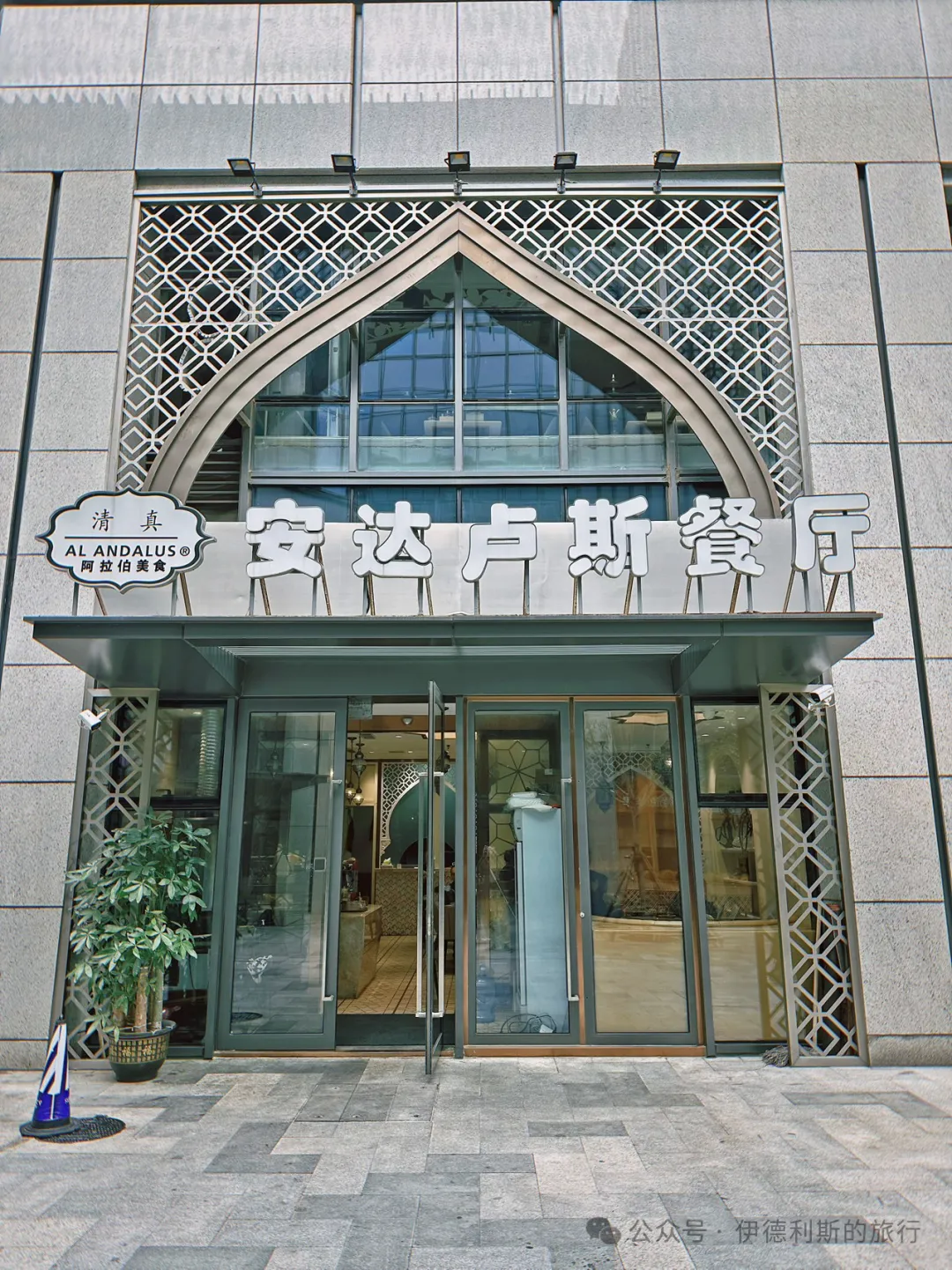
Syrian food: Al-Andalus Restaurant.
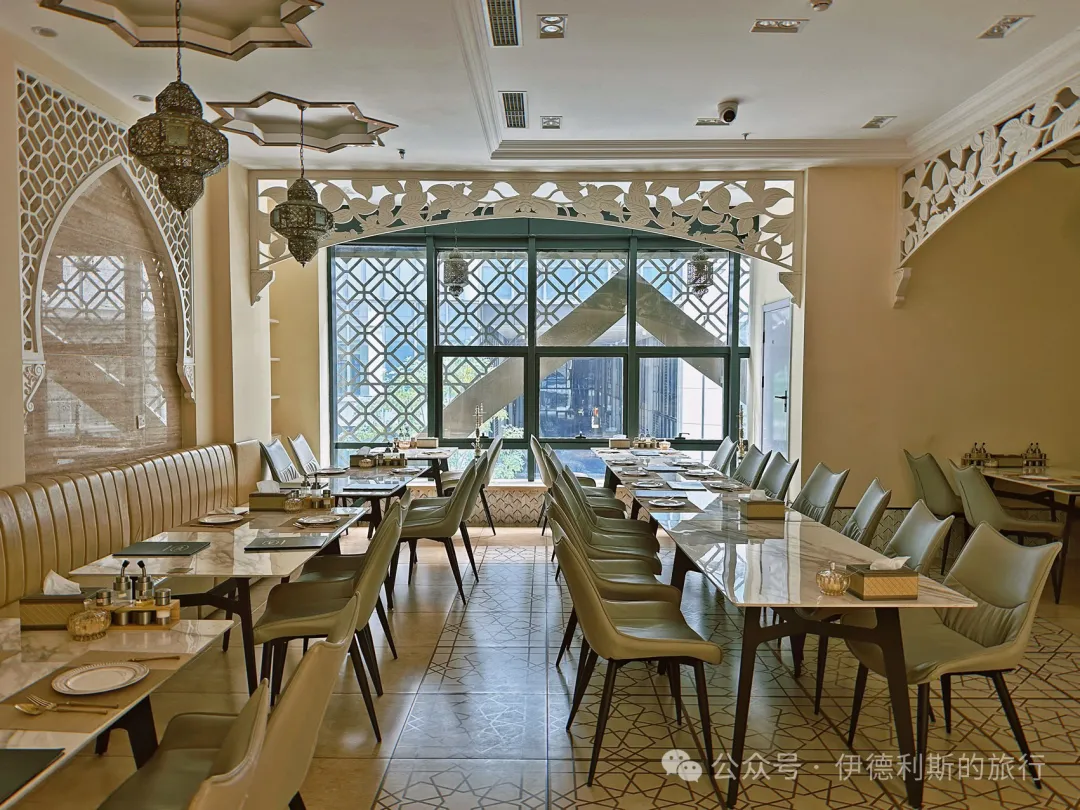
We had Levantine food at Al-Andalus Restaurant in the Sunac Center, Nankai District. The owner is Syrian. Al-Andalus was the name Arabs used for the Iberian Peninsula during the Middle Ages. In the 8th century, under the Umayyad dynasty, it was a famous center for economy, culture, academics, and education, serving as a key bridge for cultural and scientific exchange between East and West.
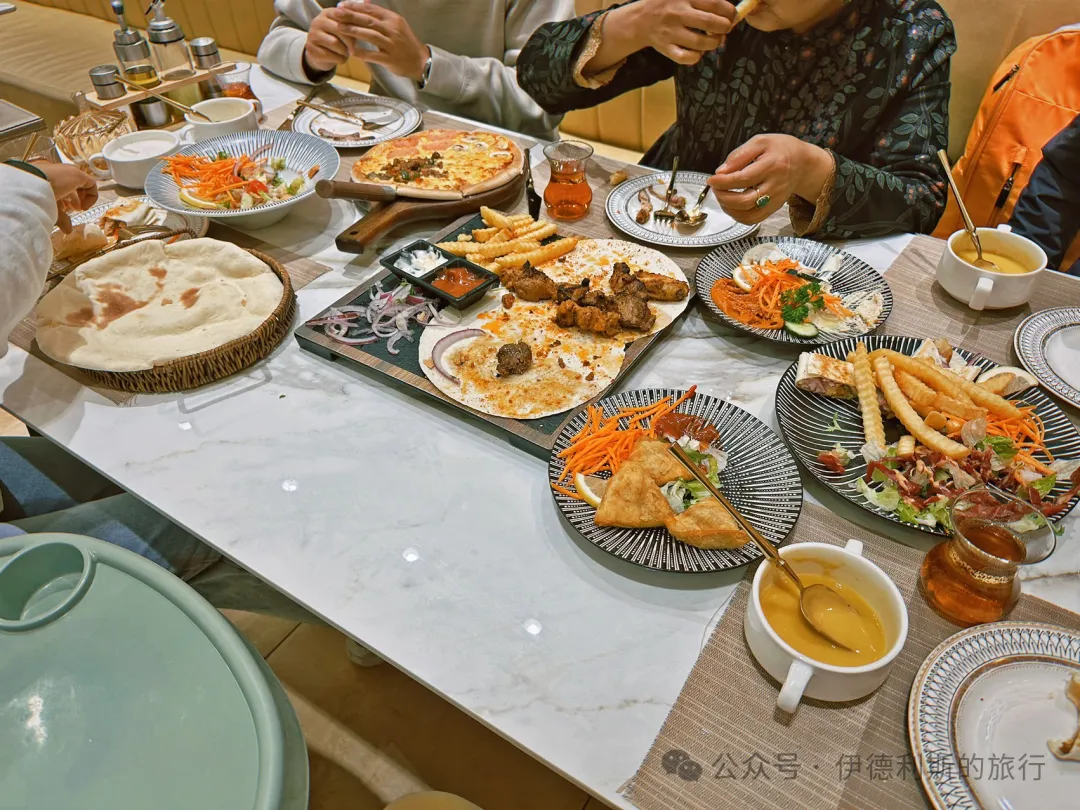
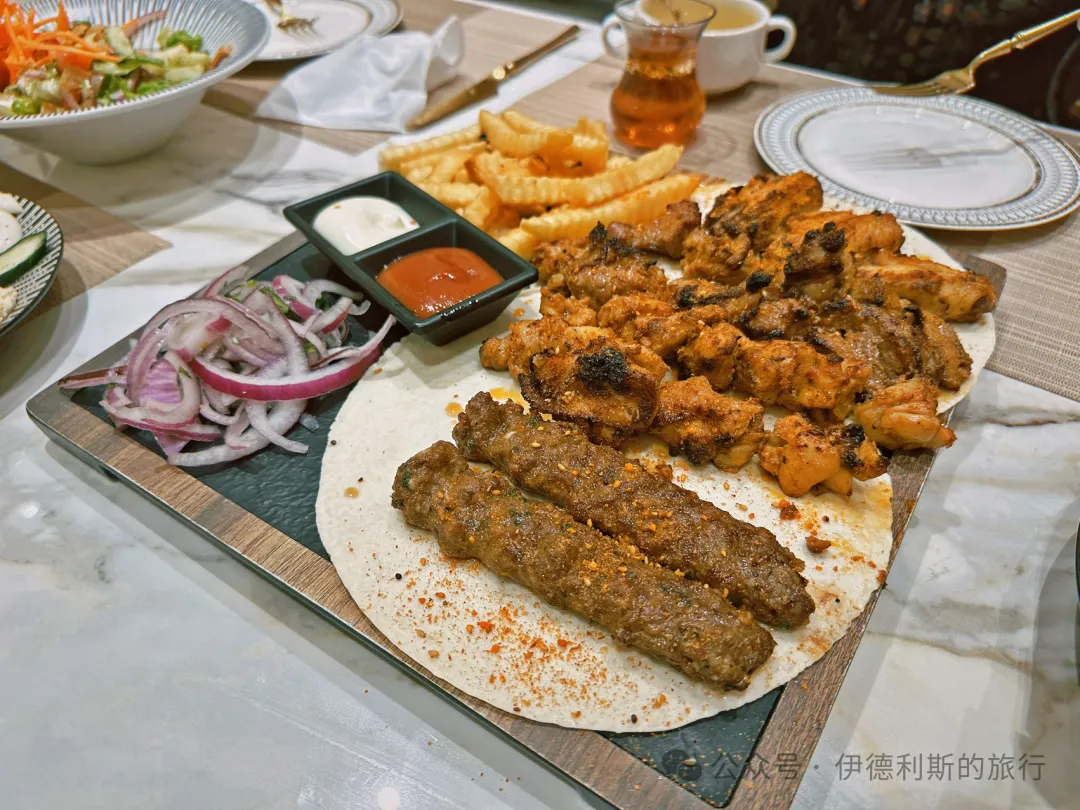
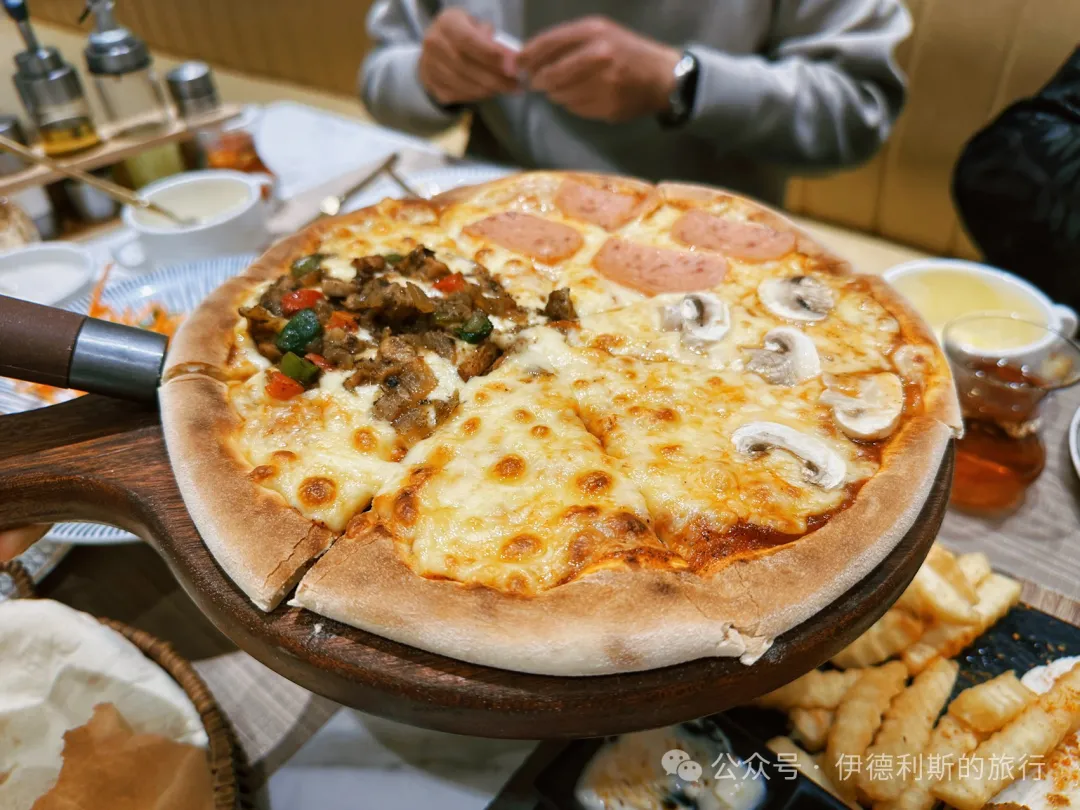
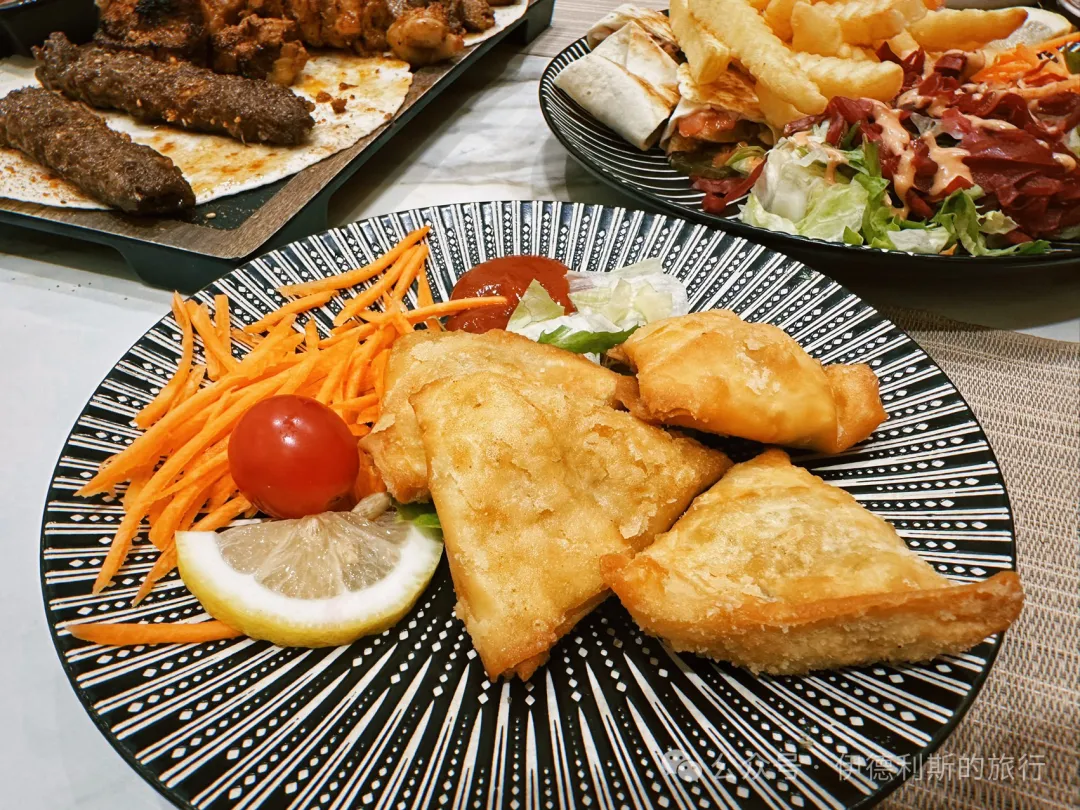
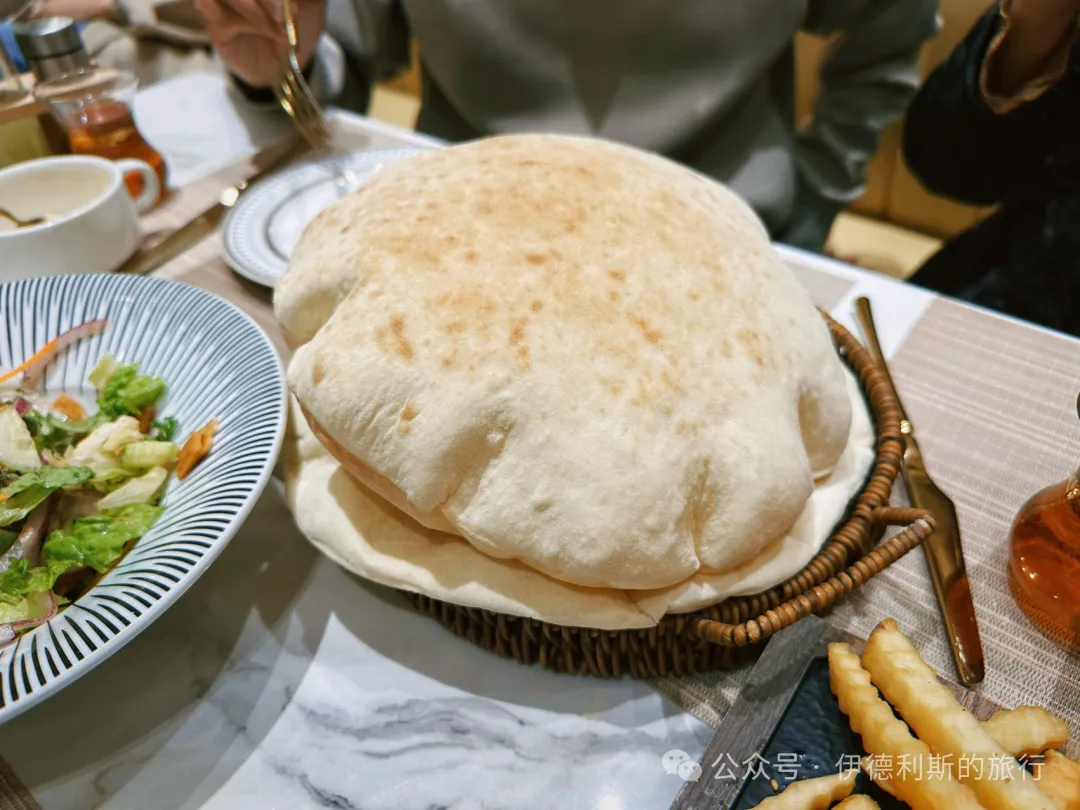
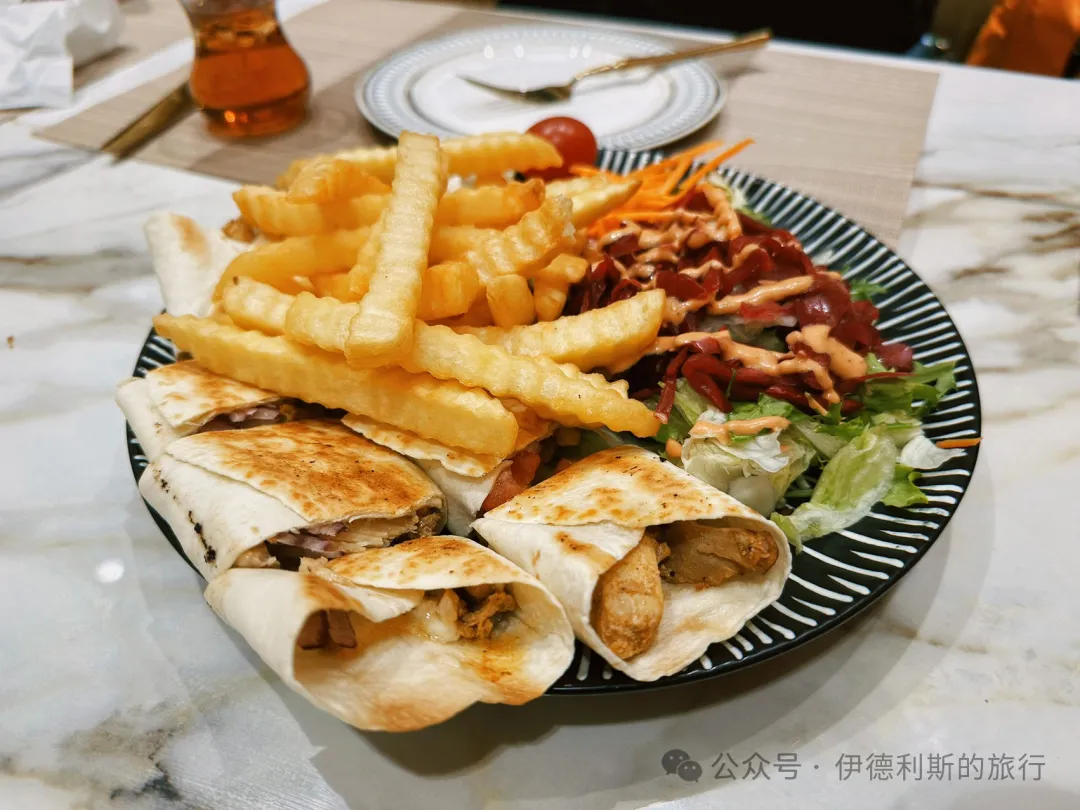
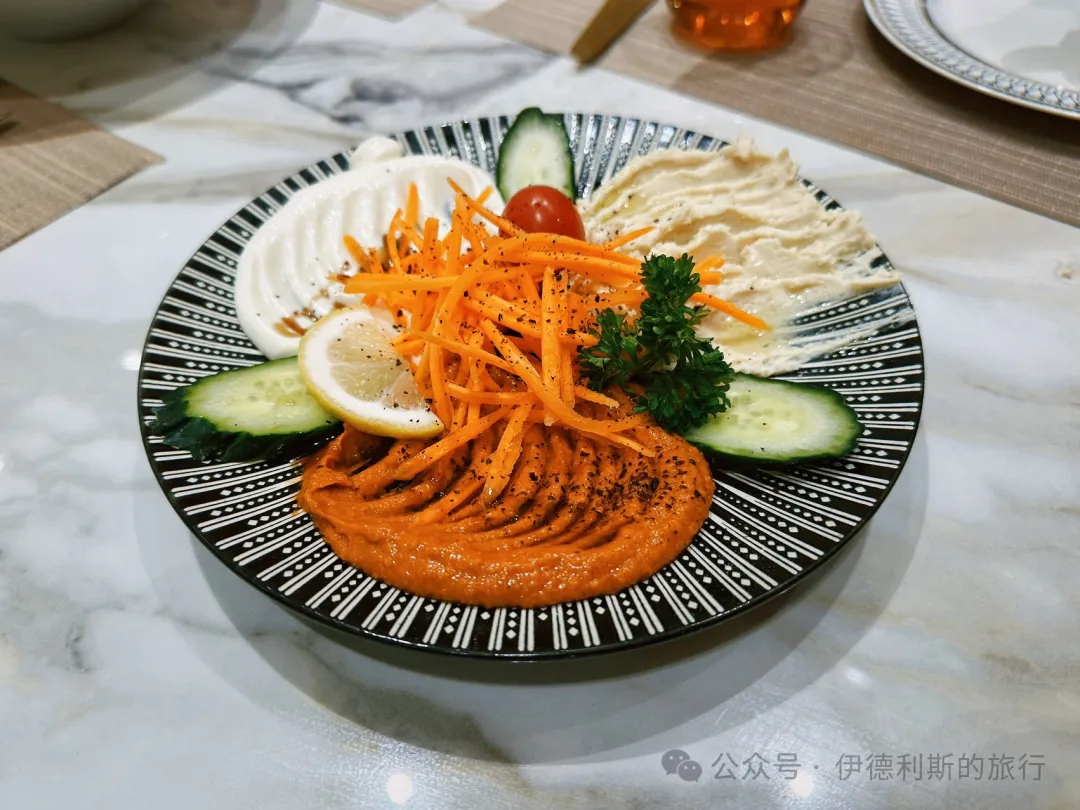
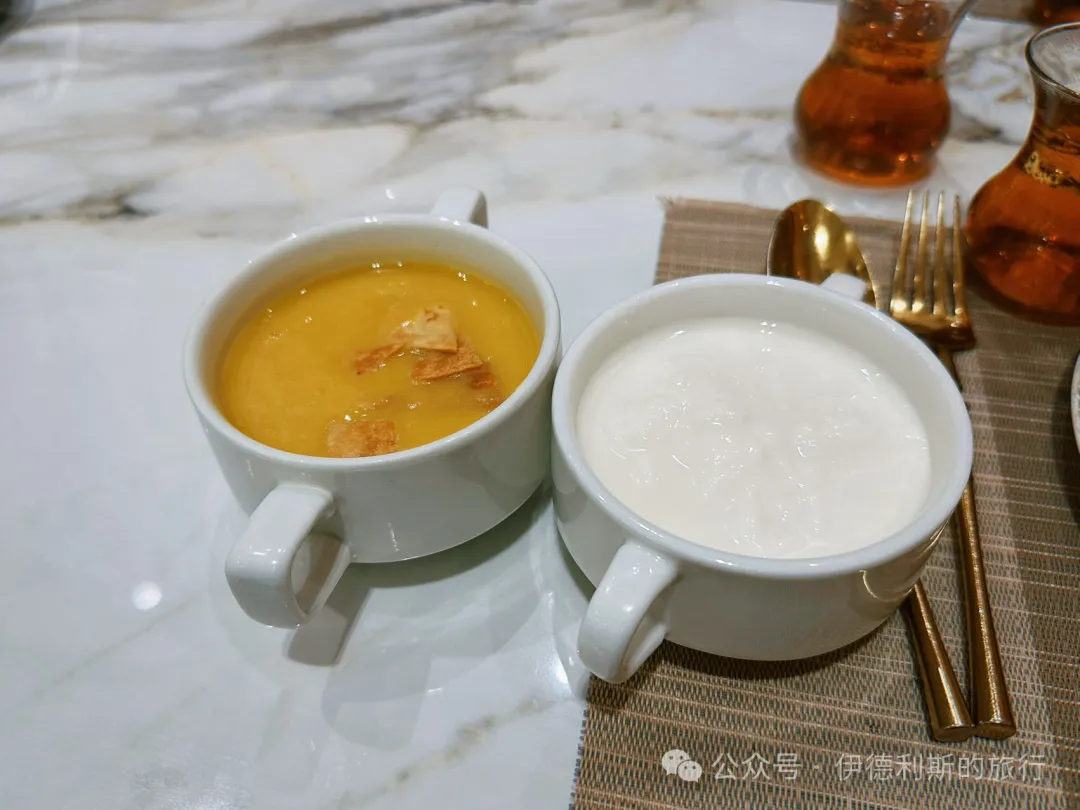
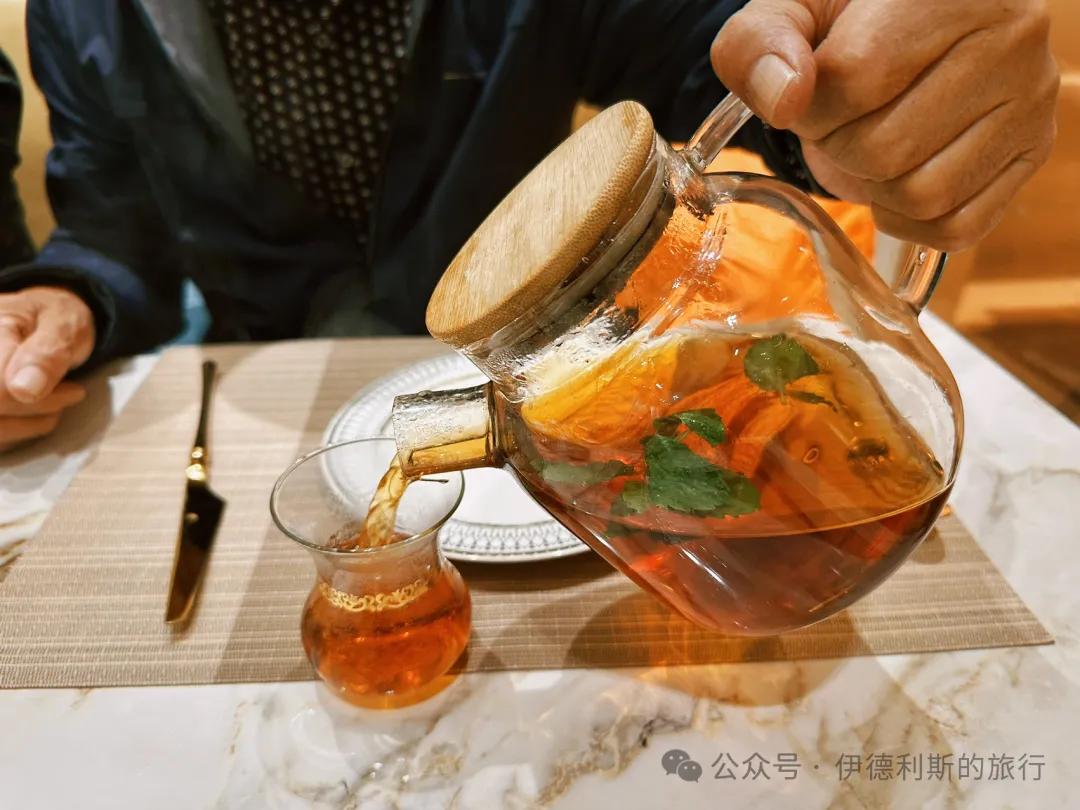
We ordered the four-person feast set. It included lentil soup, cream of mushroom soup, a trio of hummus, lamb samosa (samosa), chicken shawarma (shawarma), four-season pizza, mixed grilled meats, black tea, and a crispy salad. We also ordered yogurt separately. Overall, the food is very authentic. It offers better value than Arab restaurants in Beijing, and you do not have to wait in line. Their yogurt is especially good. It has a rich, tangy milk flavor that beats many Arab restaurants in Beijing. The only downside is that the samosa pastry is a bit thick, more like the South Asian version than the thin-crust Levantine style.
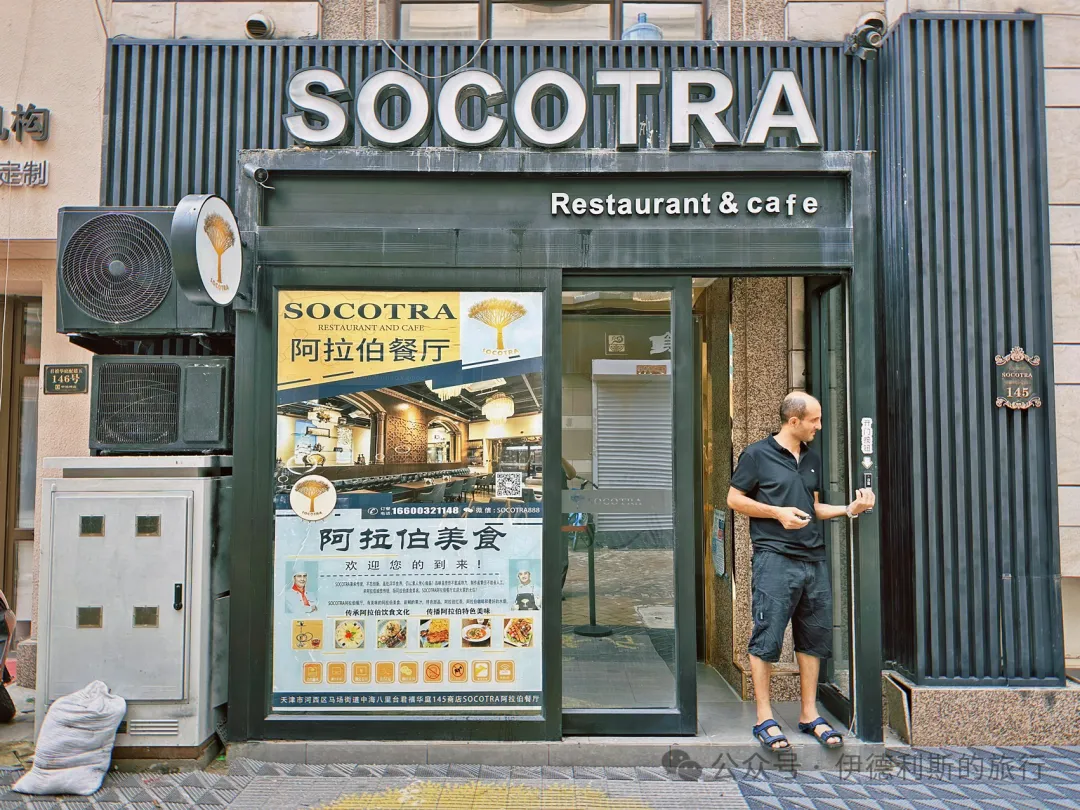
Yemeni food: Socotra.
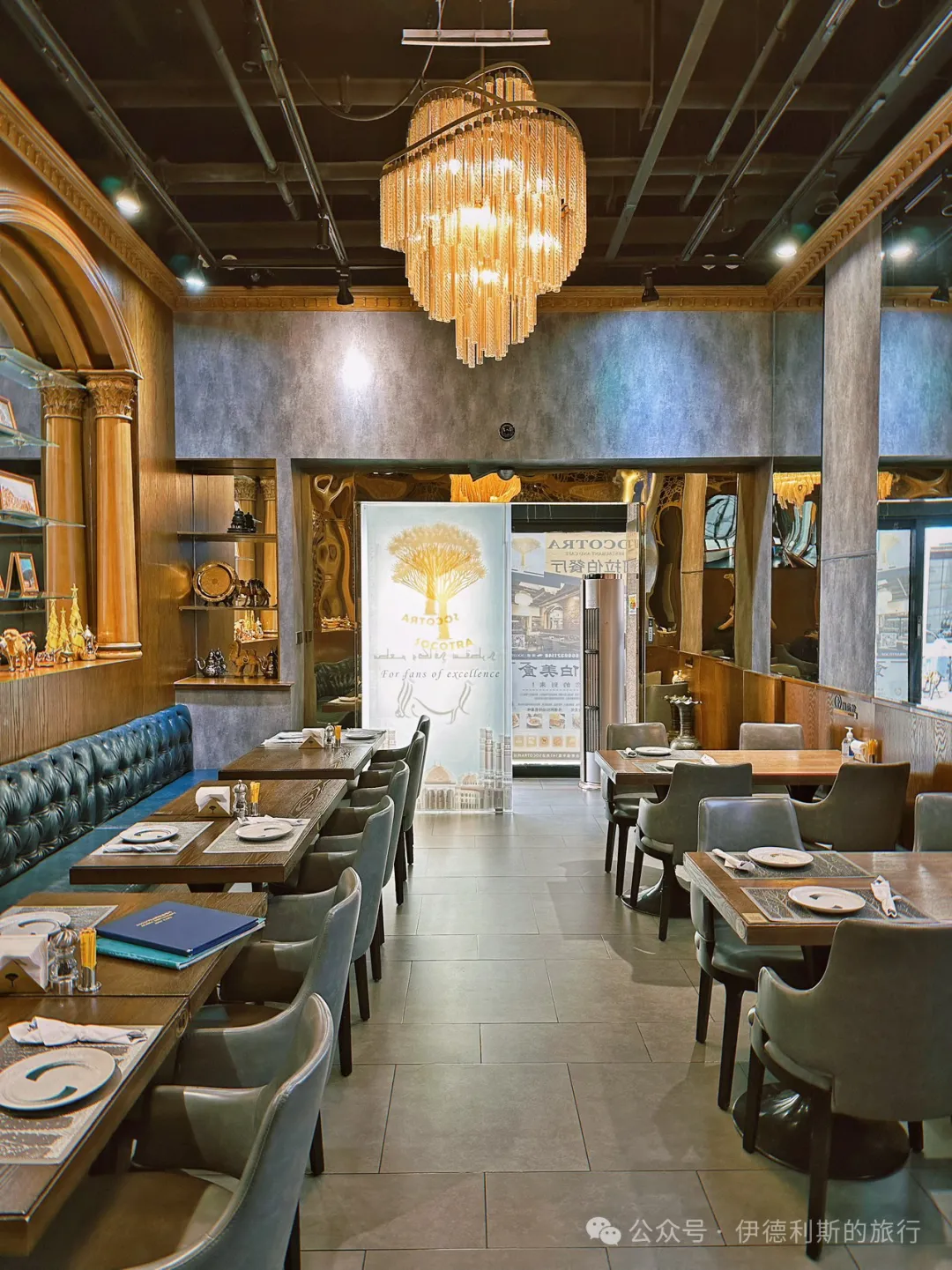
Socotra is an island in the Arabian Sea, southeast of Yemen. In the Ming Dynasty, the Zheng He navigation charts called it Sugudala. Socotra Island became a World Natural Heritage site in 2008 and is famous for its dragon blood trees. The Socotra restaurant logo is a dragon blood tree, and photos of the trees hang in the shop.
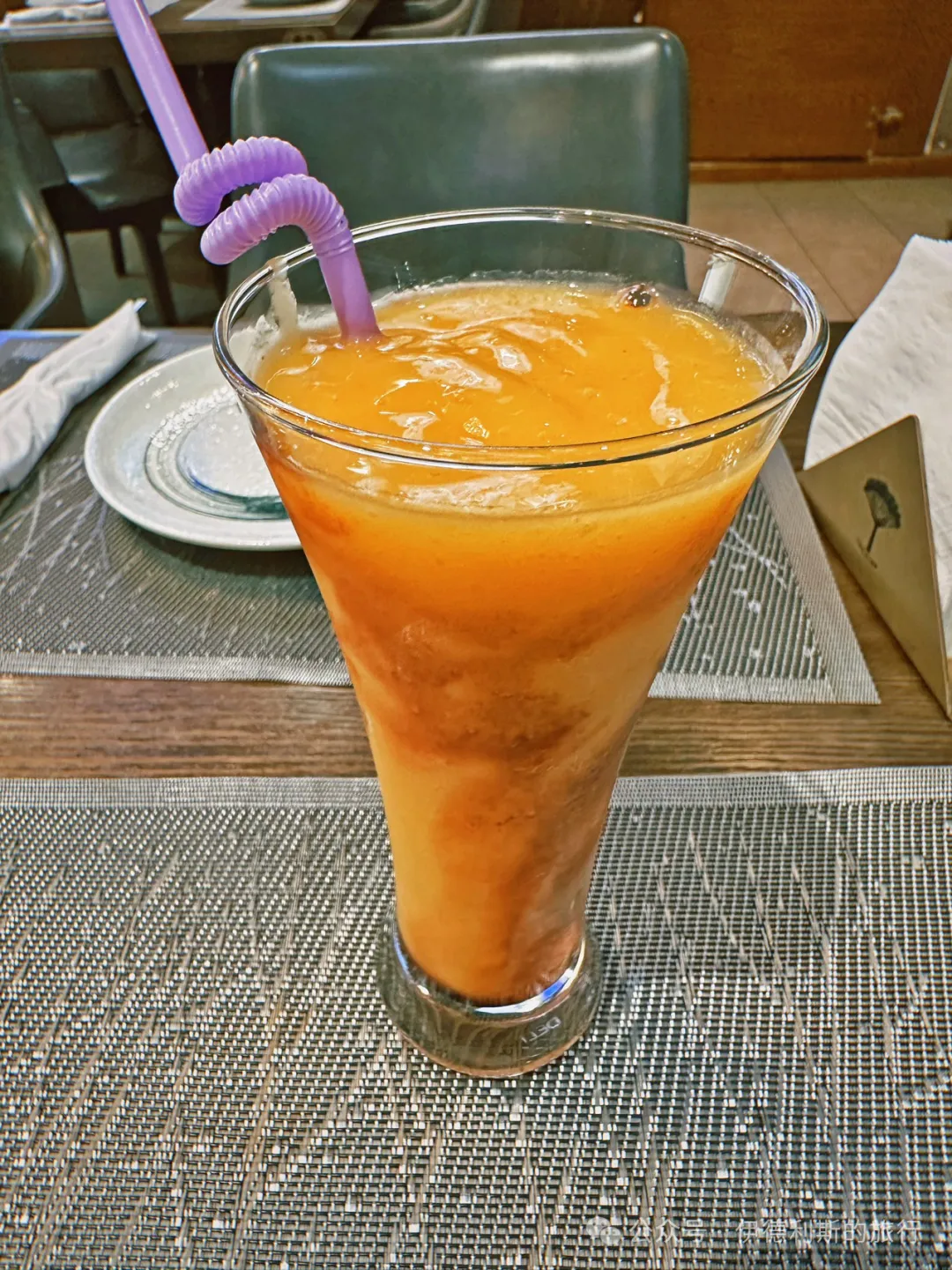
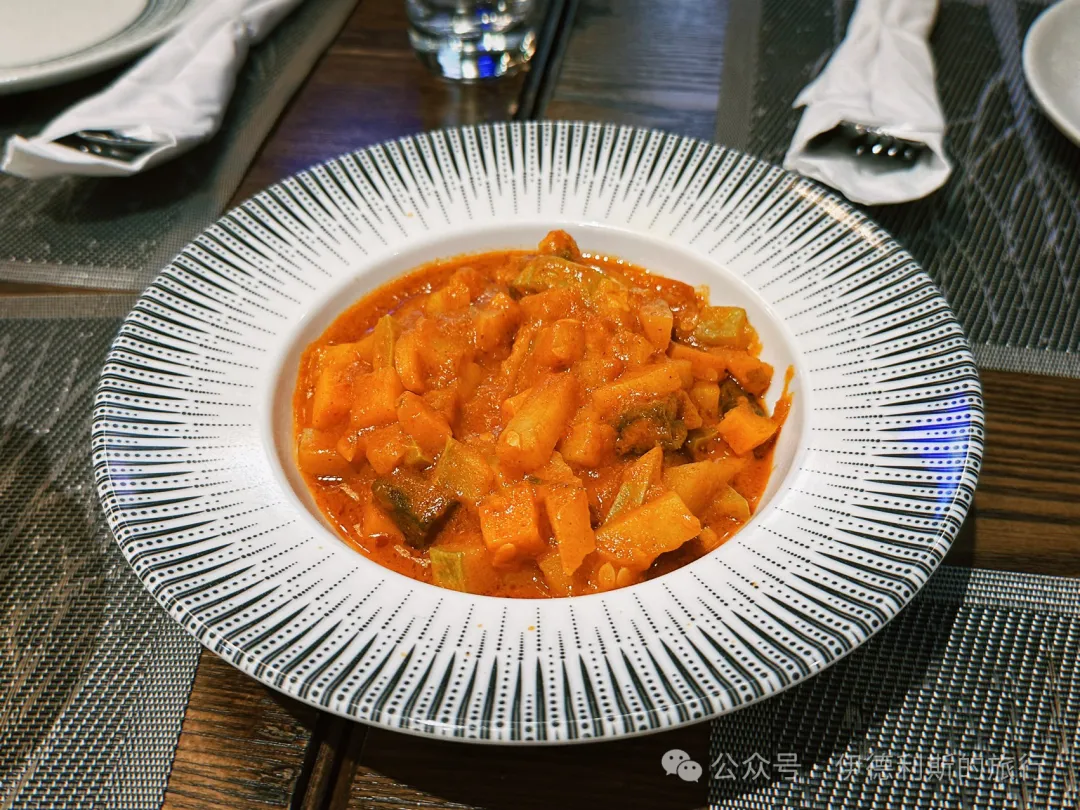
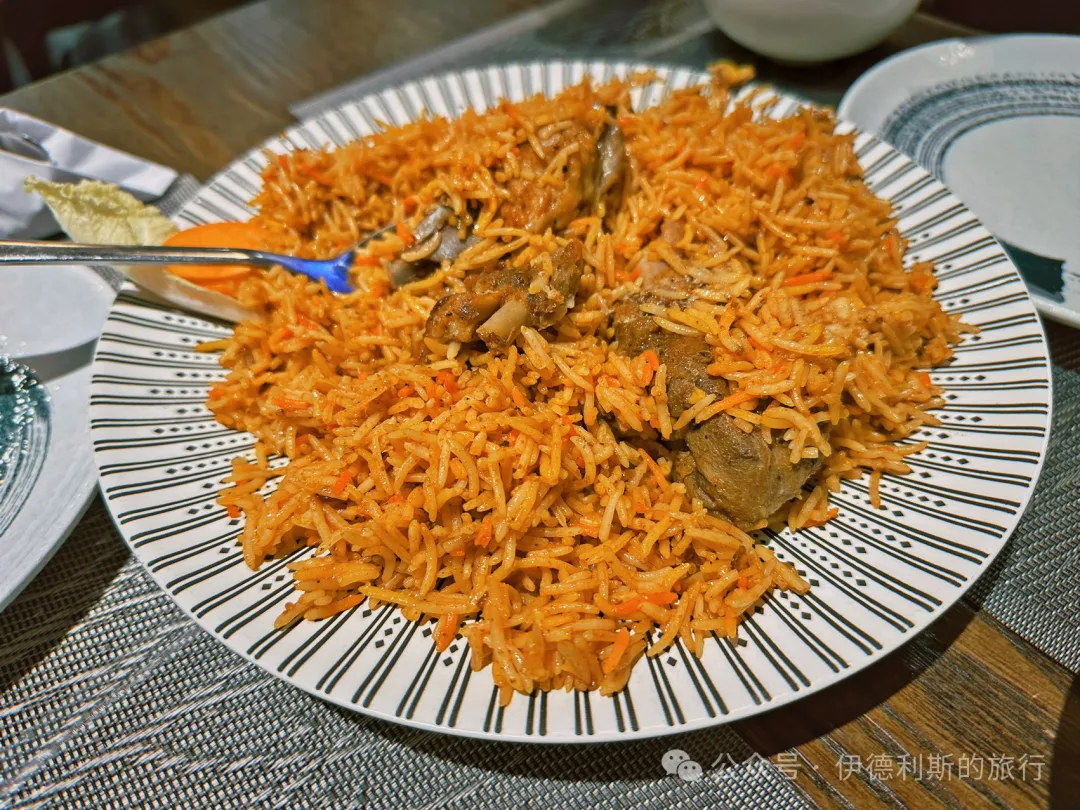
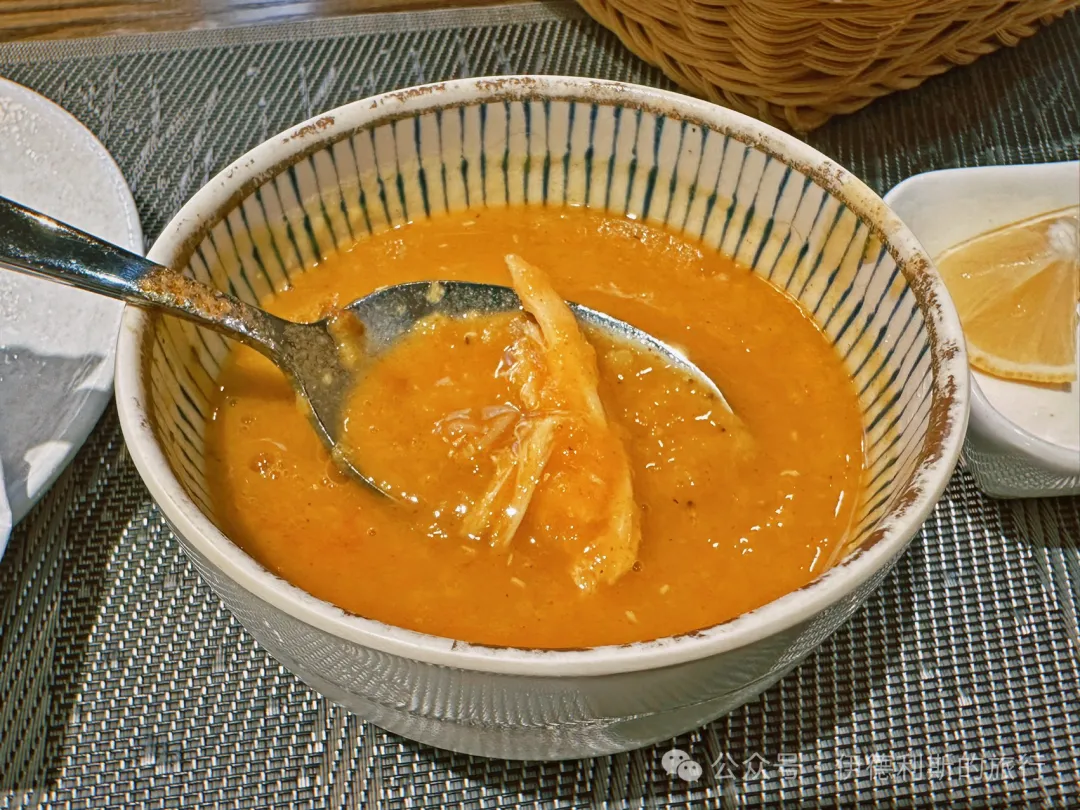
We ordered the specialty soup, chicken lentil soup, lamb zurbian (zurbian) rice, mushakkal (mushakkal) stir-fried vegetables, fahsa (fahsa) beef stew, banana mango juice, and khubz (khubz) flatbread. Zurbian rice is similar to Indian biryani, as both are stir-fried with various spices. Their lamb is grilled and very fragrant, but we found the rice a bit dry. It also contained small bone fragments, so be careful if feeding children.
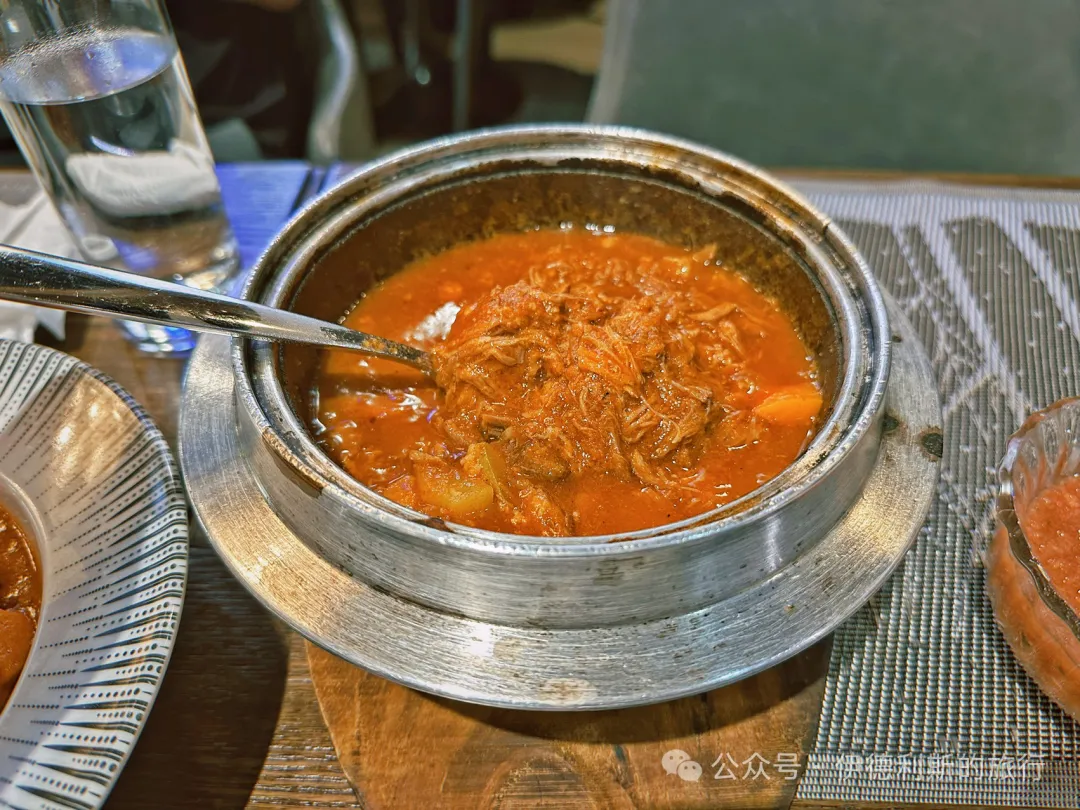
When visiting a Yemeni restaurant, you must try the classic Yemeni dish, fahsa beef stew. Fahsa is usually made with lamb, but they use beef. The meat is stewed until very tender, first in a large vat and then finished in a small pot. Besides ginger, garlic, and cumin, the stew requires a spice called fenugreek (hulbah). Fenugreek is what people in Northwest China often call xiangdouzi (bitter beans). Northwesterners dry the leaves and grind them into powder to steam buns, while Yemenis grind the seeds to stew meat. Fenugreek seeds expand in water and easily foam up when stirred in a bowl.
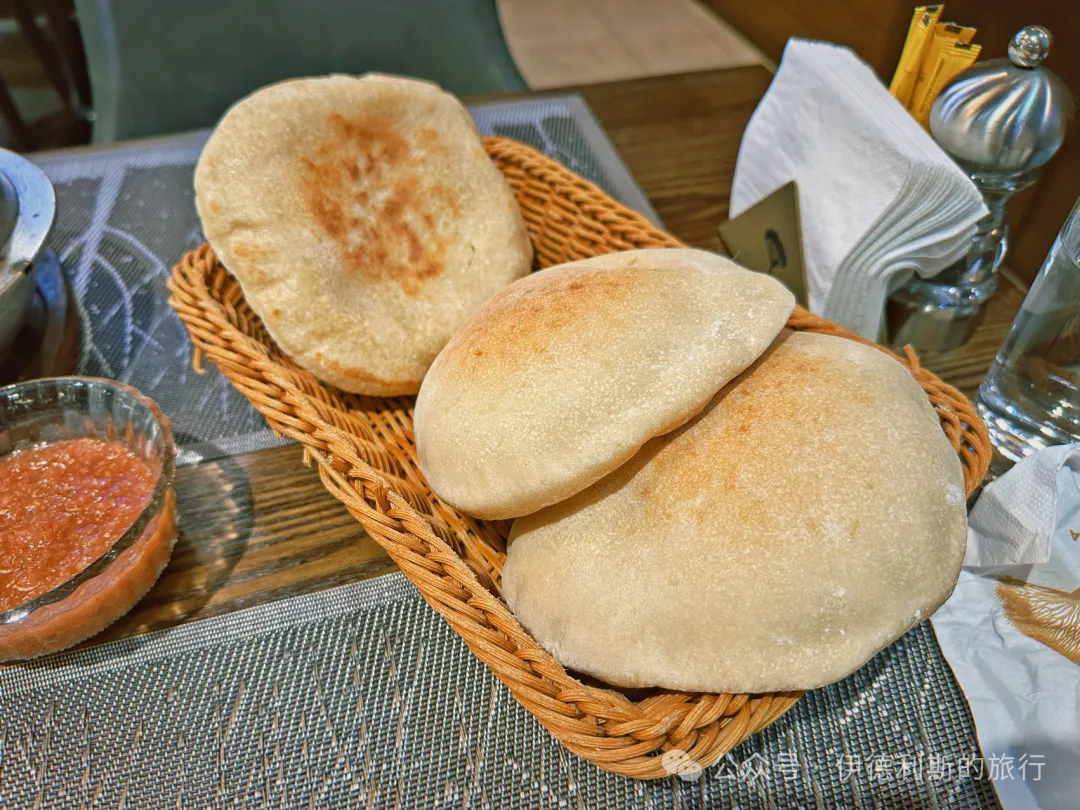
The classic pairing for fahsa is mulawah (mulawah) Yemeni bread, but they require you to order it in advance. We could only get khubz flatbread at the restaurant. Khubz is essentially the pita bread found in Levantine cuisine. Their version was quite hard and, honestly, not very tasty.
Algerian tea and snacks: Lyn's Healthy Bakeshop.
We had Algerian afternoon tea at Lyn's Healthy Bakeshop on Chifeng Road in Tianjin. Chifeng Road is in the former French Concession area. There are many small Western-style buildings here, along with all kinds of little restaurants.
The owner is from Algeria and opened a small shop here for tea and desserts. It is likely the first Algerian restaurant in China. It is impressive to see Tianjin leading the way in international dining again!
You can order à la carte or choose an afternoon tea set. They serve both traditional Algerian desserts and Western pastries. They use maple syrup instead of white sugar for a healthier approach. This is probably the least sweet Arabic dessert shop I have ever visited!
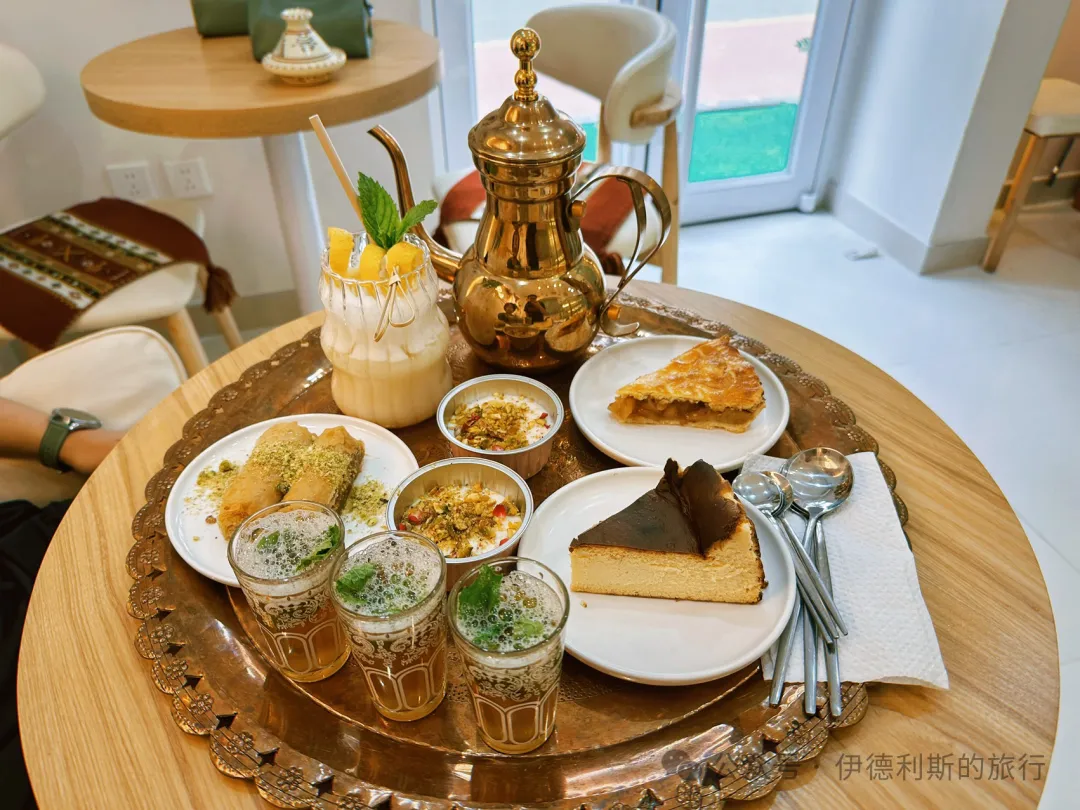
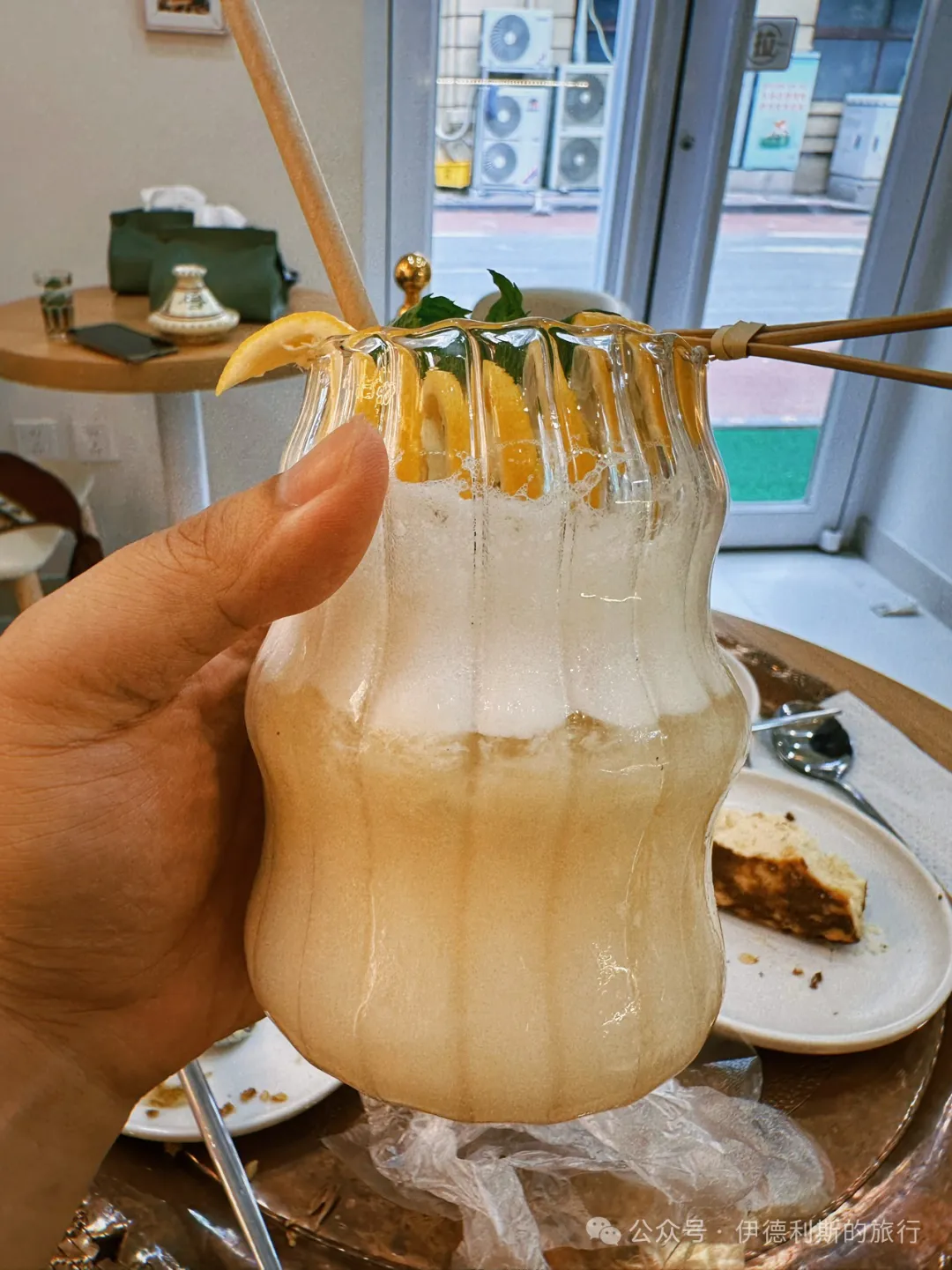
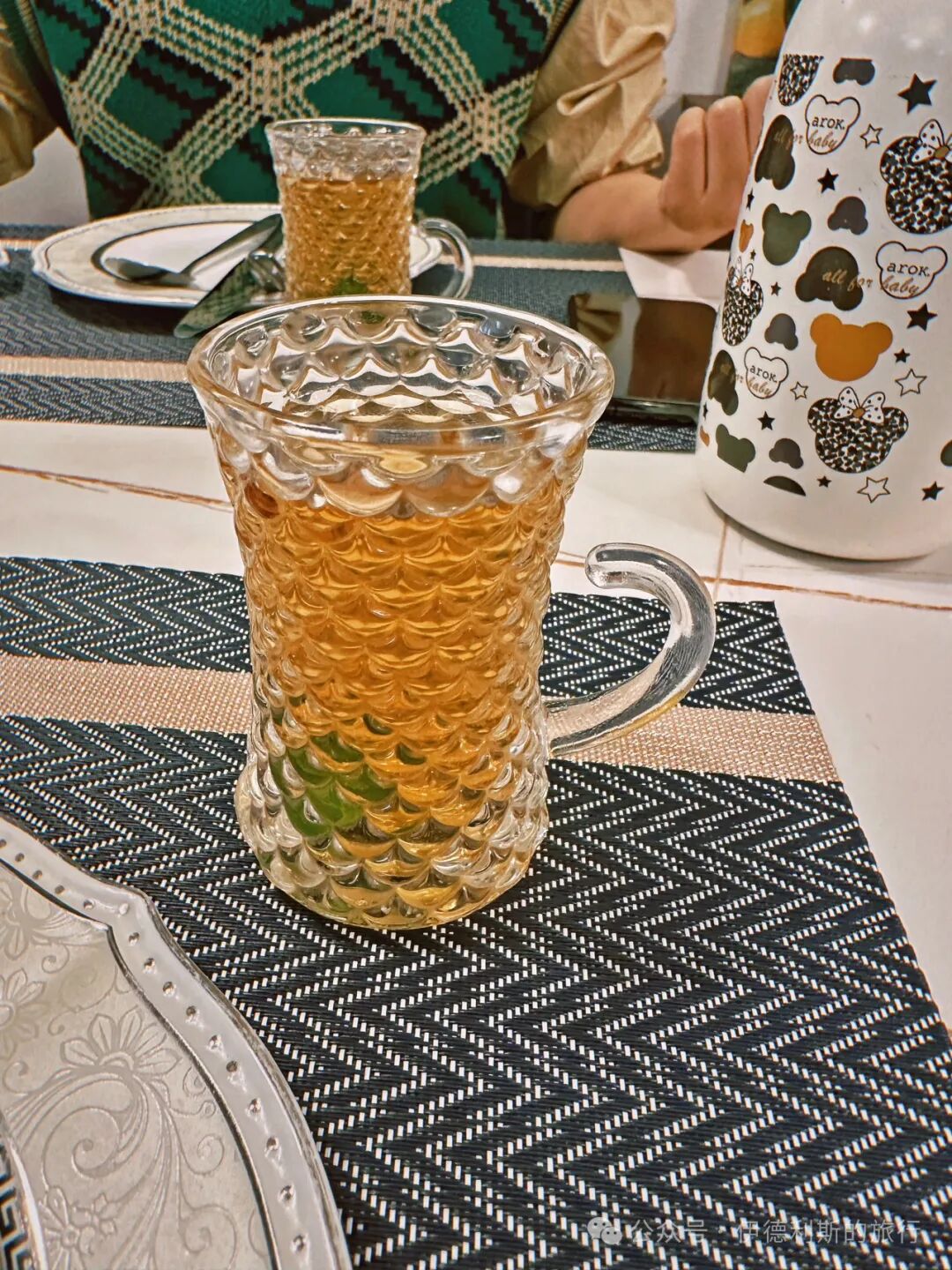
We drank Algerian mint tea and an Algerian orange blossom lemonade called Sherbet Mazhar. The mint tea is brewed to order, so it takes a while. It has a very strong aroma, but since it is freshly brewed, you cannot get refills. Orange blossom water is definitely a signature Algerian drink, especially classic at wedding feasts in northern Algeria. This drink is made from orange blossom water distilled from bitter orange blossoms, mixed with syrup and water. It is very refreshing in the summer.
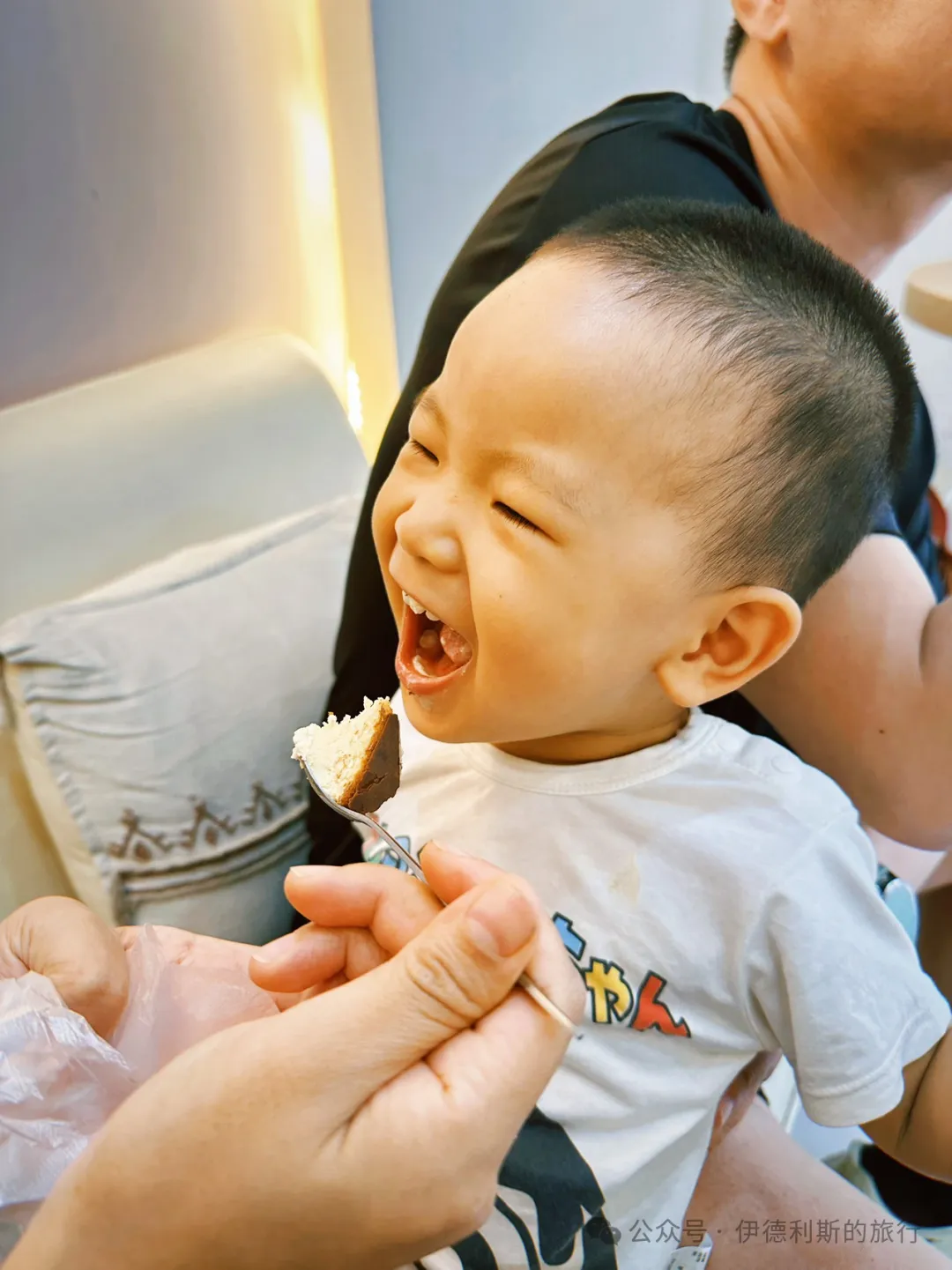
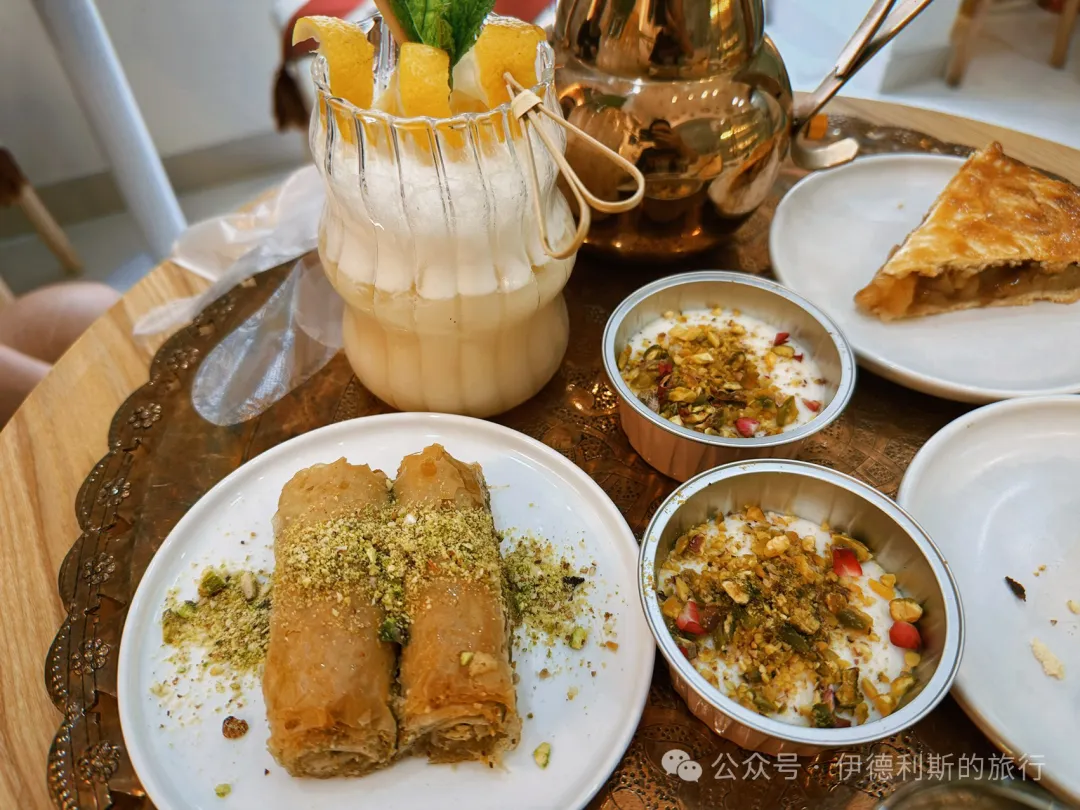
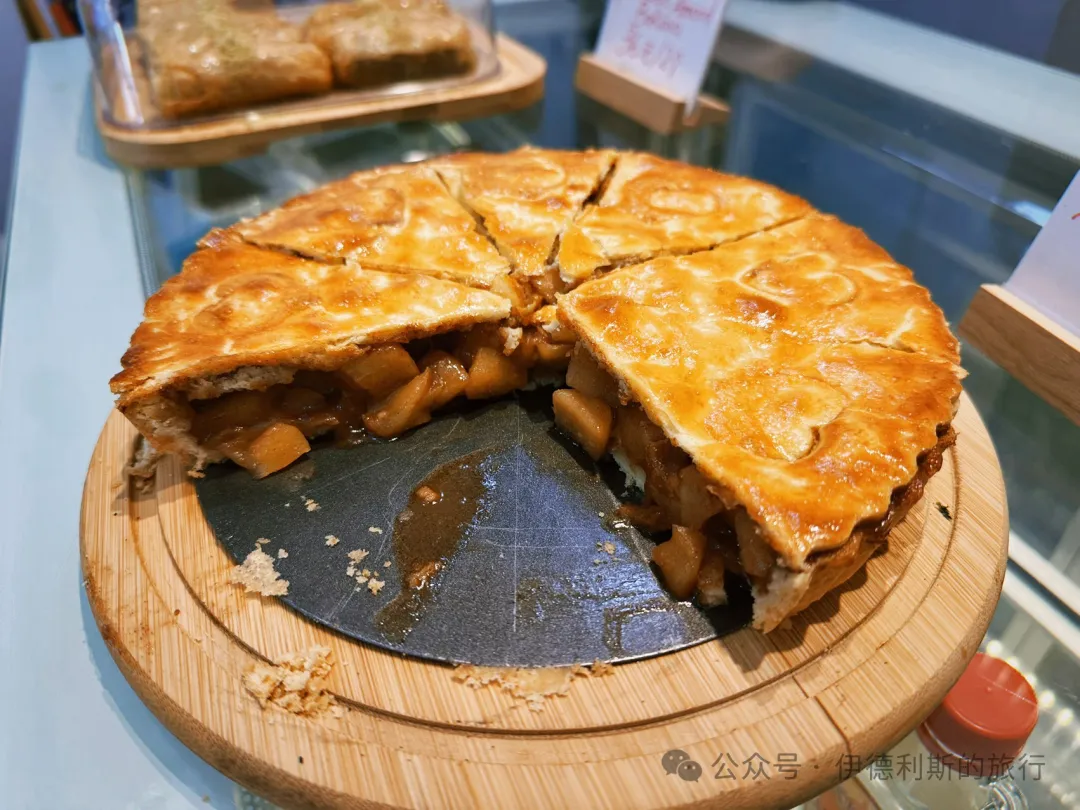
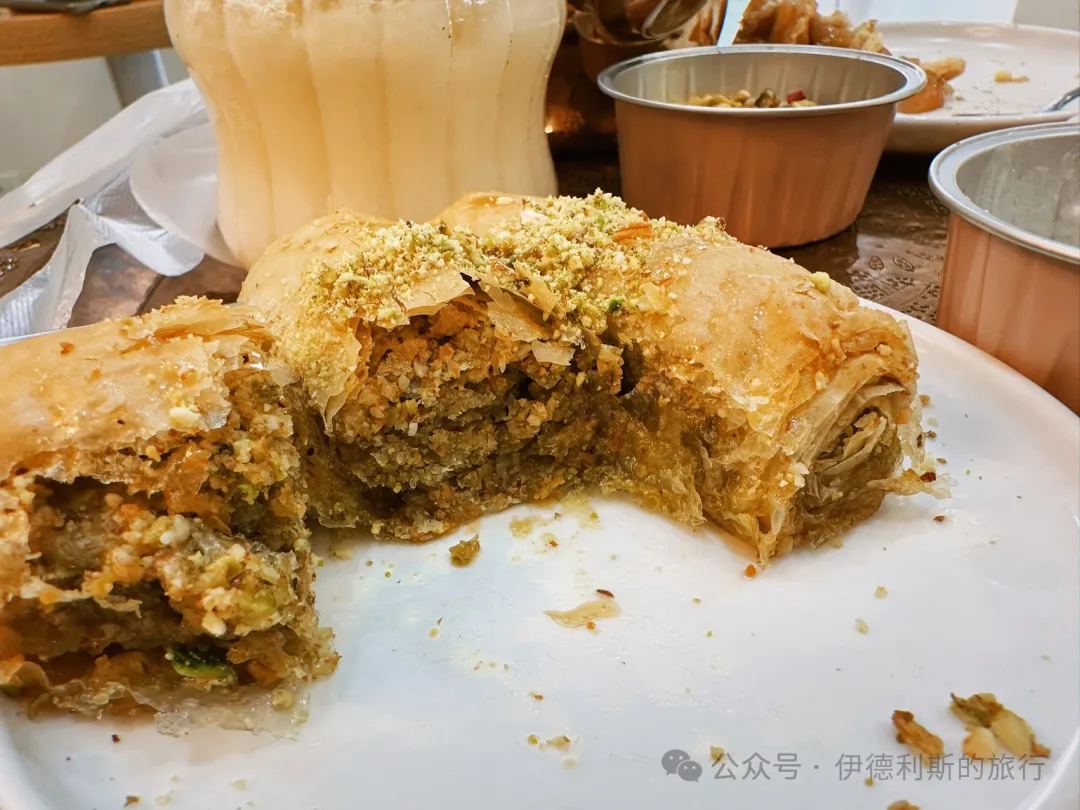
We ate Algerian baklava (Baklawa), apple pie, milk pudding (M'halbi), and cheesecake. Suleiman loved the cheesecake the most. Baklava was introduced to Algeria from Turkey during the Ottoman period. The Algerian version adds crushed almonds and orange blossom water, so the taste is different from the Turkish one.
Milk pudding (M'halbi) is a classic Middle Eastern dessert for breaking the fast and is most popular during Ramadan. The name M'halbi comes from Al-Muhallab, a governor of Khorasan during the Umayyad Caliphate. Legend says he once had a stomachache, and his doctor fed him rice flour cooked with milk and sugar. He liked it so much that he named the dessert after himself.
Finally, the food here is excellent, though the decor is a bit simple. If they could highlight the Algerian theme more, this place would definitely become a new trendy spot in Tianjin.
Tunisian food: Sidi Bou Said.
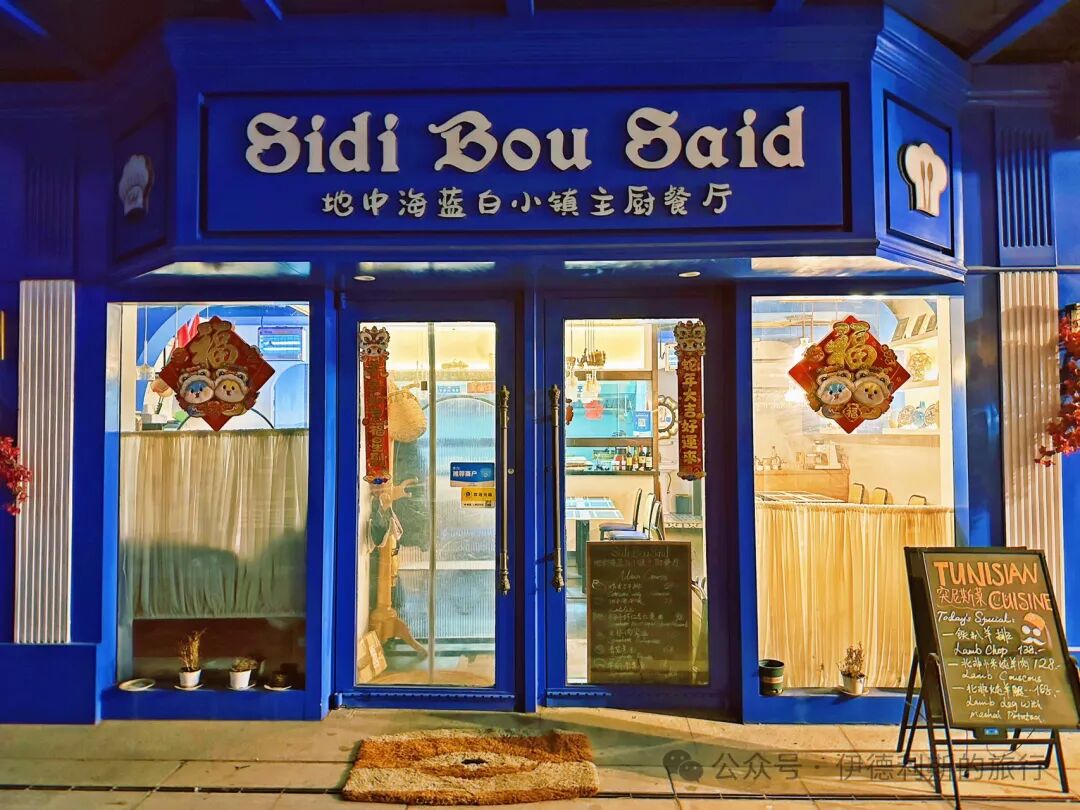
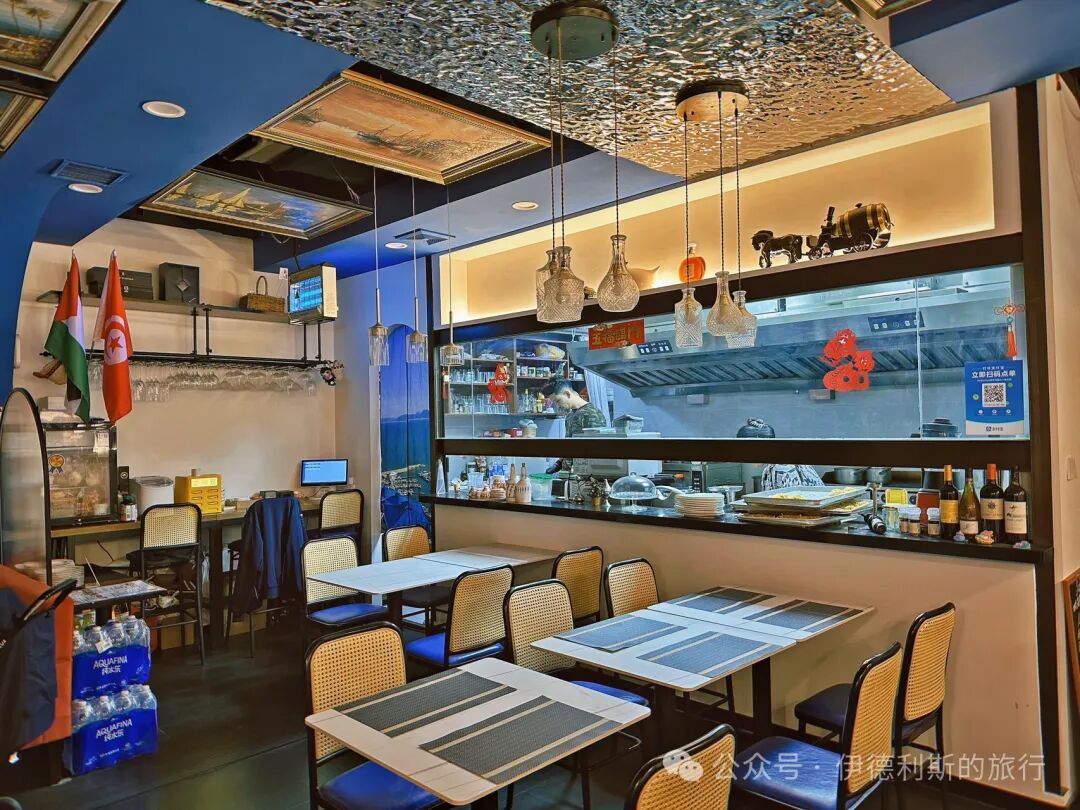
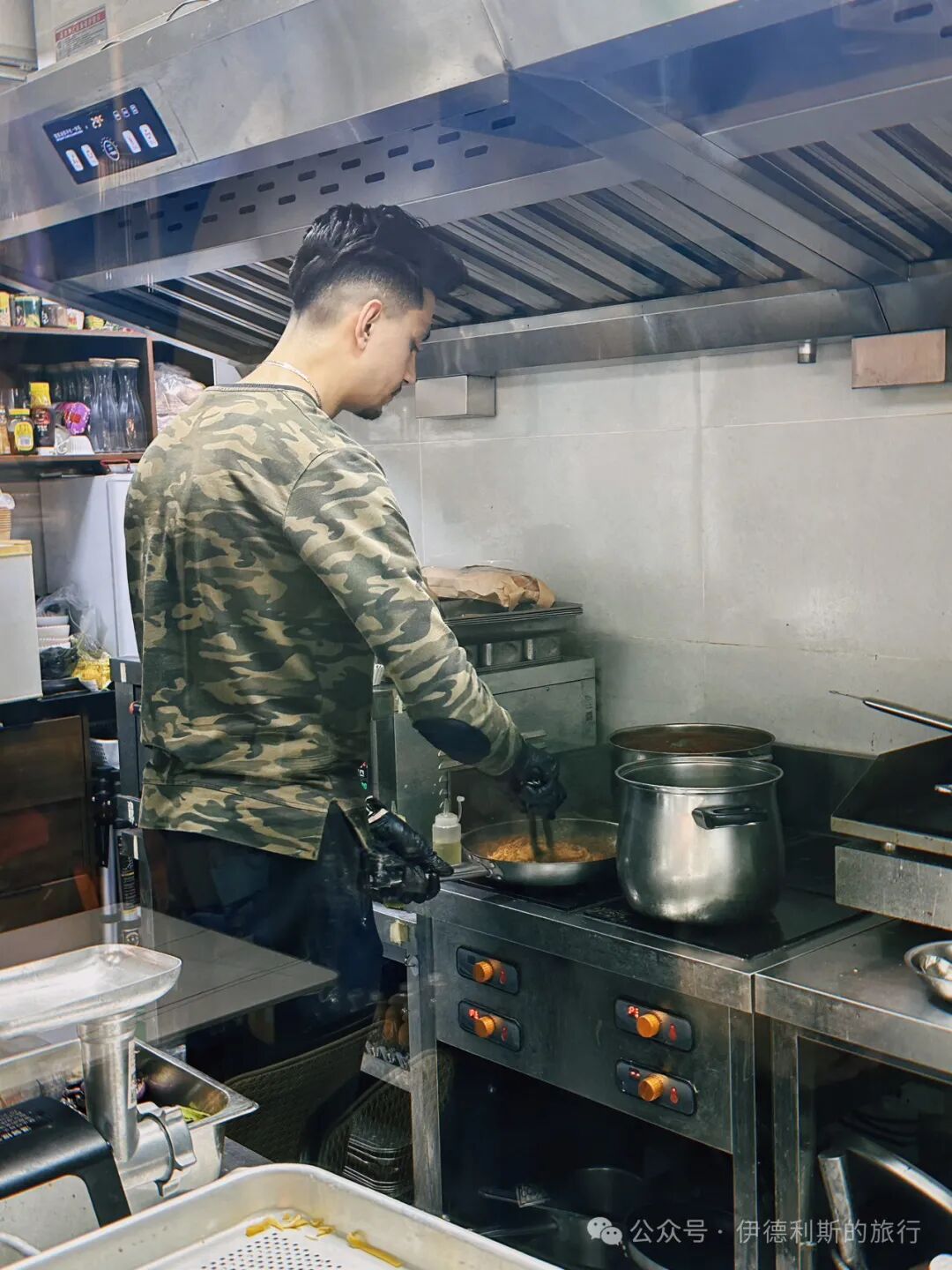
There is a Tunisian restaurant called Sidi Bou Said (Blue and White Town) in Aocheng Plaza where you can eat Tunisian food. The shop is small. The owner is Chinese, and the head chef is Tunisian. Since there is only one chef, service might be slow when it is busy. It is best to call ahead and book a table. We were the only table when we went, so our meal went quite smoothly.
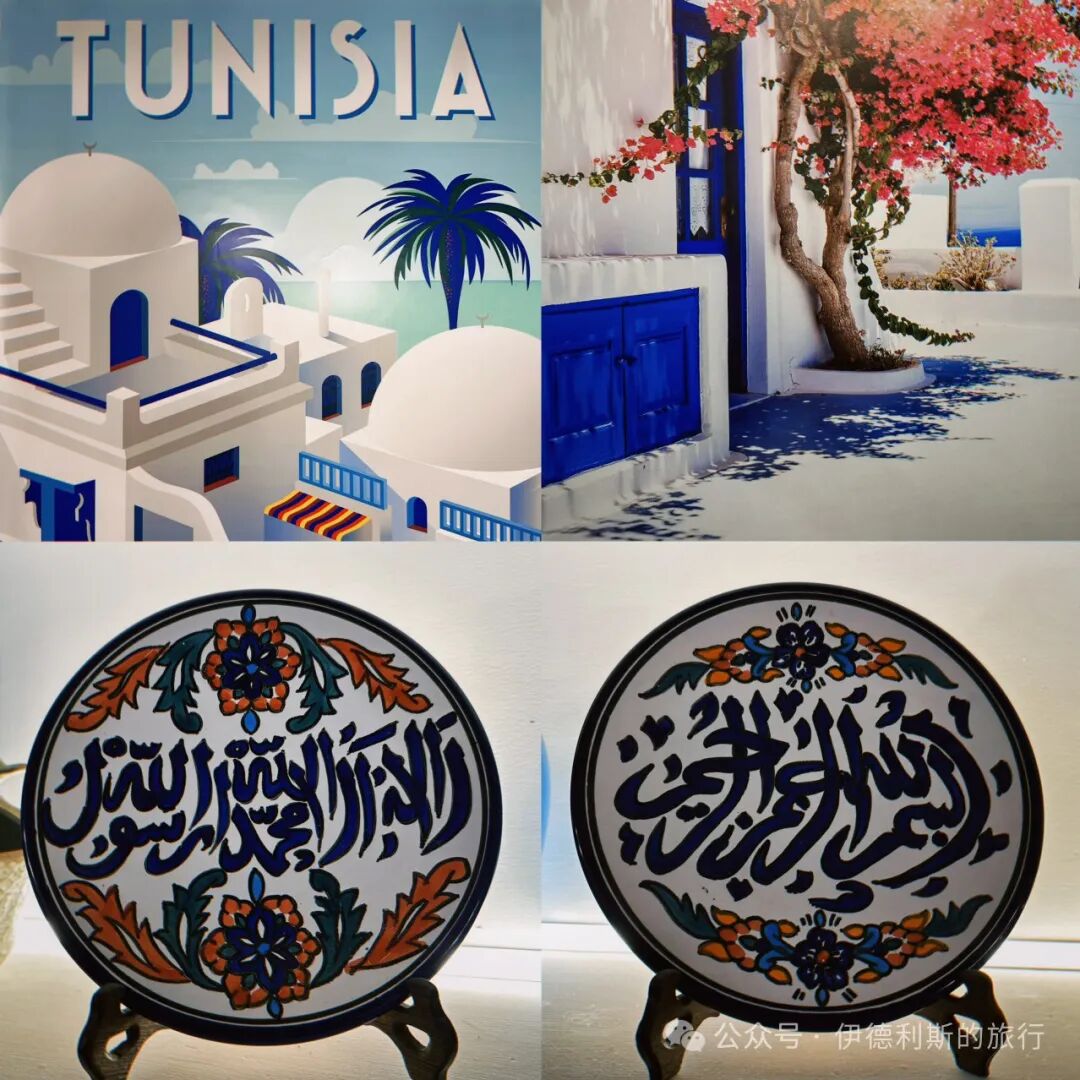
The name Sidi Bou Said comes from a small Mediterranean town northeast of Tunis. It is named after the famous Sufi saint Abu Said al-Baji, who is buried there. In the 1920s, the French painter and musician Baron Rodolphe d'Erlanger introduced the blue and white color scheme, turning it into a famous tourist destination in Tunisia.
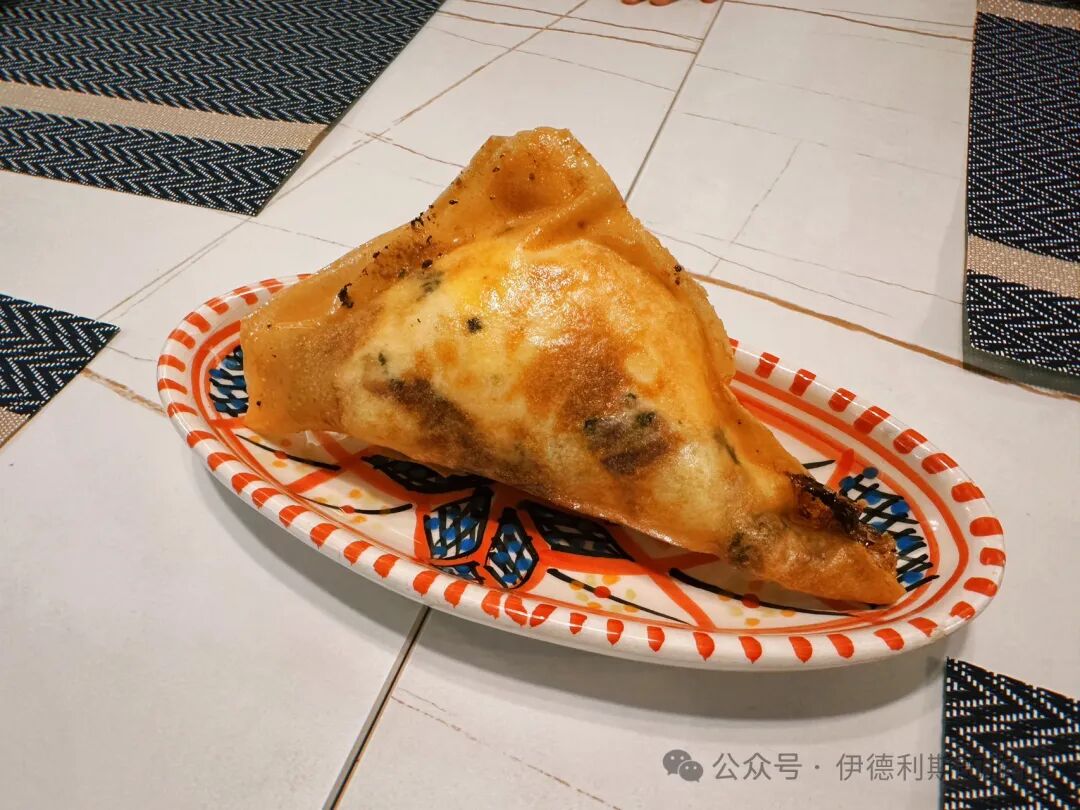
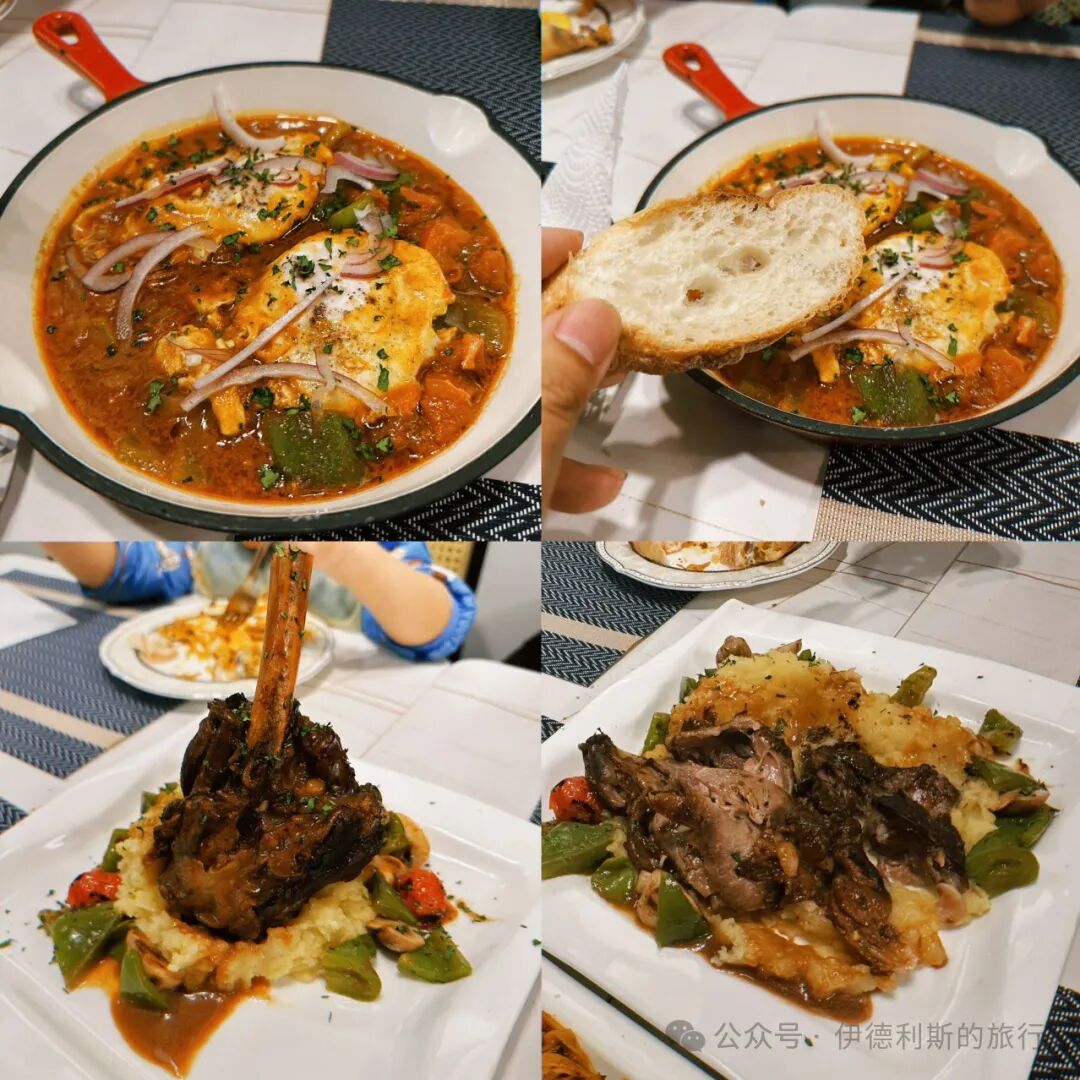
We ordered the 3-4 person set, which included tuna fried triangles (Brick), North African eggs (Shakshouka), lamb stew, pasta with meat sauce, and a dessert called Kunafa. They served mint tea first, which is very Tunisian. Then they brought the Brick. It is a classic Tunisian snack filled with tuna, minced meat, a raw egg, and harissa chili paste, wrapped in a very thin pastry called Malsouka. The North African eggs are made with eggs, tomatoes, olive oil, harissa, and onions, then sprinkled with cumin and chili powder. Tomatoes were not actually introduced to Tunisia from the Middle East until the late Ottoman period. Turkey has an appetizer with the same name, shakshuka (Şakşuka), but it does not contain eggs.
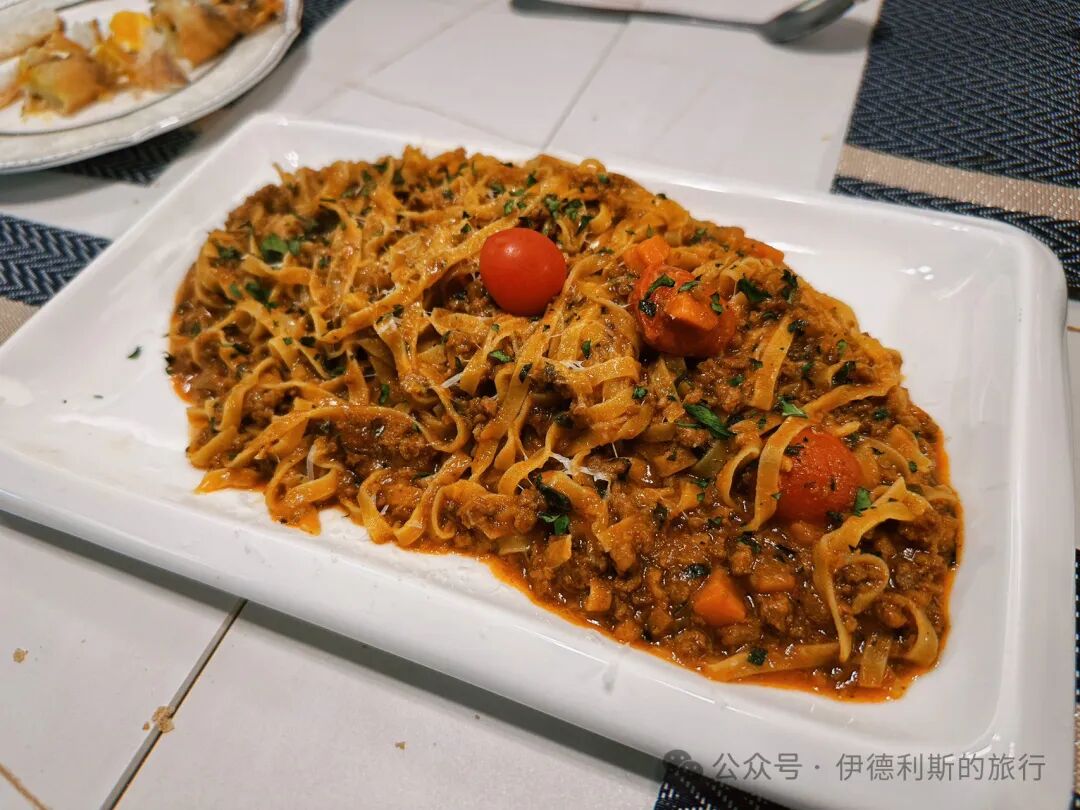
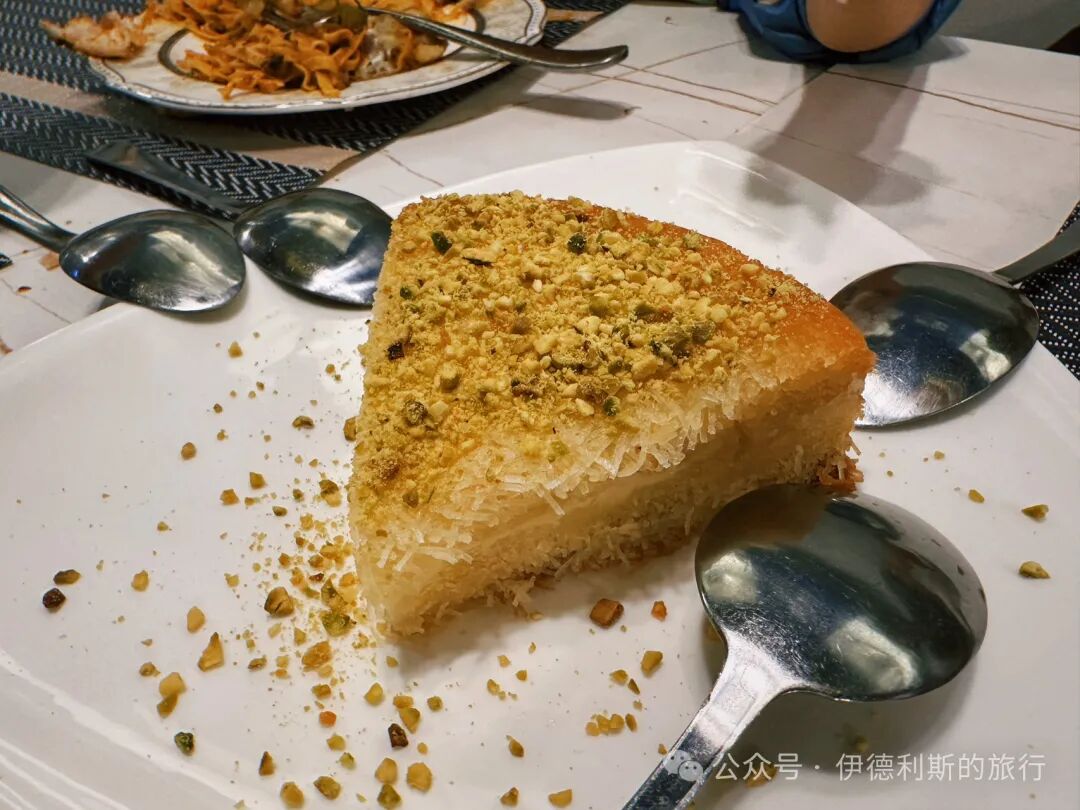
Their lamb leg is stewed until very tender and falls right off the bone, which is perfect for children. The lamb leg sits on a bed of mashed potatoes, which are soft and delicious. The pasta uses an Italian meat sauce (Bolognese), but it seems to be made with hand-rolled noodles. It ends up tasting a lot like the dry meat sauce noodles (saozi mian) eaten by Hui Muslims in Xinjiang. Their kunafa (kunafa) is delicious, and it is a low-sugar version that suits the Chinese palate. Kunafa appears in One Thousand and One Nights, and legend says it was invented by an Arab caliph for breaking the fast. view all
Summary: This Tianjin food article follows Arabic restaurants representing Syrian, Yemeni, Tunisian, and Algerian cooking. It preserves the original restaurant details, dishes, photos, and travel observations while presenting the account in natural English.
Syrian food: Al-Andalus Restaurant.
We had Levantine food at Al-Andalus Restaurant in the Sunac Center, Nankai District. The owner is Syrian. Al-Andalus was the name Arabs used for the Iberian Peninsula during the Middle Ages. In the 8th century, under the Umayyad dynasty, it was a famous center for economy, culture, academics, and education, serving as a key bridge for cultural and scientific exchange between East and West.
We ordered the four-person feast set. It included lentil soup, cream of mushroom soup, a trio of hummus, lamb samosa (samosa), chicken shawarma (shawarma), four-season pizza, mixed grilled meats, black tea, and a crispy salad. We also ordered yogurt separately. Overall, the food is very authentic. It offers better value than Arab restaurants in Beijing, and you do not have to wait in line. Their yogurt is especially good. It has a rich, tangy milk flavor that beats many Arab restaurants in Beijing. The only downside is that the samosa pastry is a bit thick, more like the South Asian version than the thin-crust Levantine style.
Yemeni food: Socotra.
Socotra is an island in the Arabian Sea, southeast of Yemen. In the Ming Dynasty, the Zheng He navigation charts called it Sugudala. Socotra Island became a World Natural Heritage site in 2008 and is famous for its dragon blood trees. The Socotra restaurant logo is a dragon blood tree, and photos of the trees hang in the shop.
We ordered the specialty soup, chicken lentil soup, lamb zurbian (zurbian) rice, mushakkal (mushakkal) stir-fried vegetables, fahsa (fahsa) beef stew, banana mango juice, and khubz (khubz) flatbread. Zurbian rice is similar to Indian biryani, as both are stir-fried with various spices. Their lamb is grilled and very fragrant, but we found the rice a bit dry. It also contained small bone fragments, so be careful if feeding children.
When visiting a Yemeni restaurant, you must try the classic Yemeni dish, fahsa beef stew. Fahsa is usually made with lamb, but they use beef. The meat is stewed until very tender, first in a large vat and then finished in a small pot. Besides ginger, garlic, and cumin, the stew requires a spice called fenugreek (hulbah). Fenugreek is what people in Northwest China often call xiangdouzi (bitter beans). Northwesterners dry the leaves and grind them into powder to steam buns, while Yemenis grind the seeds to stew meat. Fenugreek seeds expand in water and easily foam up when stirred in a bowl.
The classic pairing for fahsa is mulawah (mulawah) Yemeni bread, but they require you to order it in advance. We could only get khubz flatbread at the restaurant. Khubz is essentially the pita bread found in Levantine cuisine. Their version was quite hard and, honestly, not very tasty.
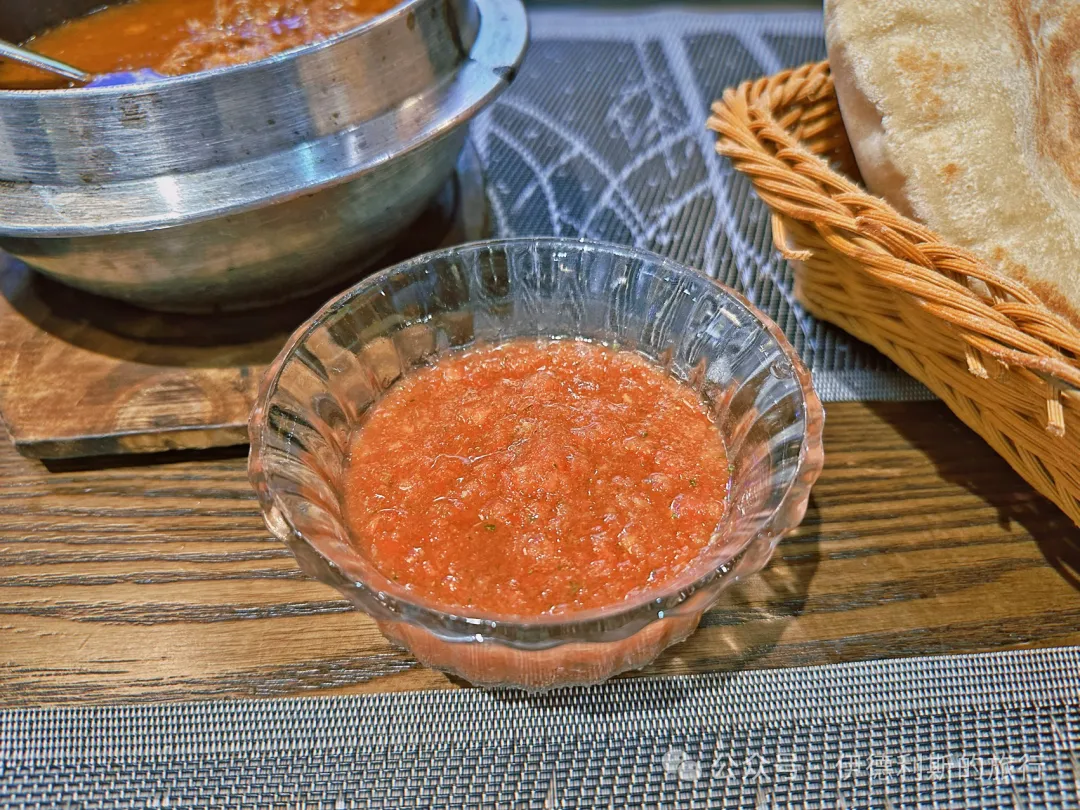
Algerian tea and snacks: Lyn's Healthy Bakeshop.
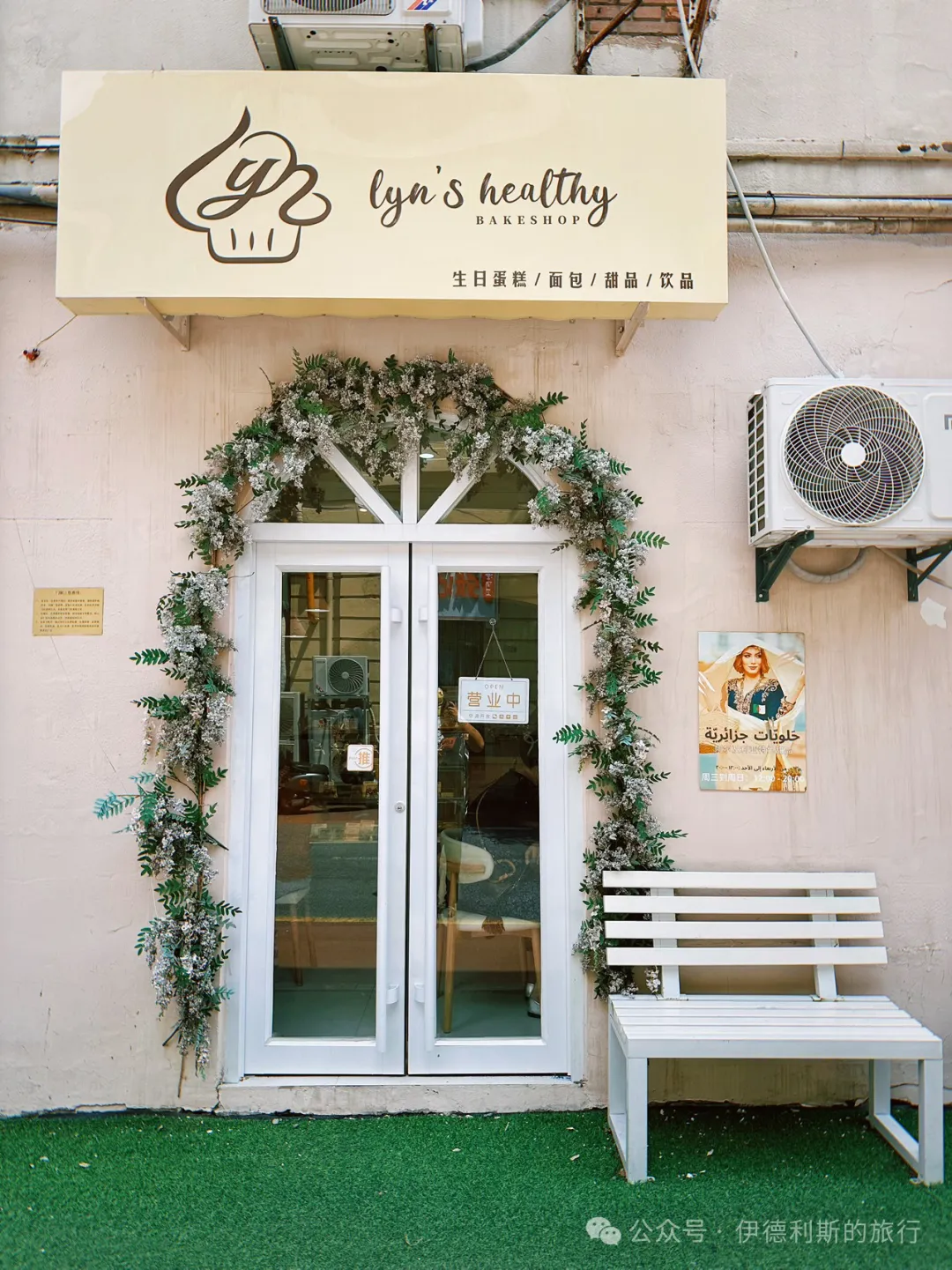
We had Algerian afternoon tea at Lyn's Healthy Bakeshop on Chifeng Road in Tianjin. Chifeng Road is in the former French Concession area. There are many small Western-style buildings here, along with all kinds of little restaurants.
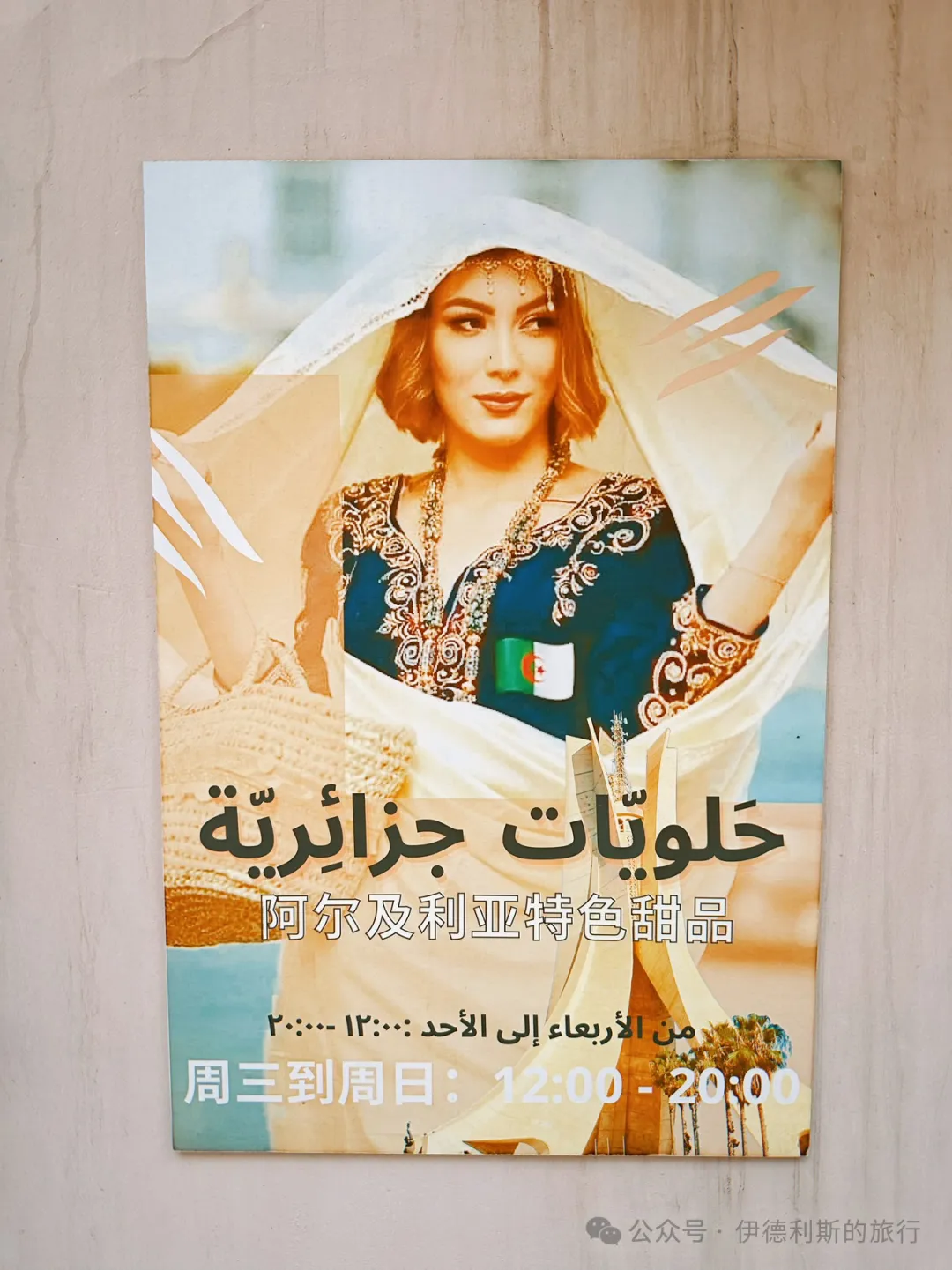
The owner is from Algeria and opened a small shop here for tea and desserts. It is likely the first Algerian restaurant in China. It is impressive to see Tianjin leading the way in international dining again!
You can order à la carte or choose an afternoon tea set. They serve both traditional Algerian desserts and Western pastries. They use maple syrup instead of white sugar for a healthier approach. This is probably the least sweet Arabic dessert shop I have ever visited!
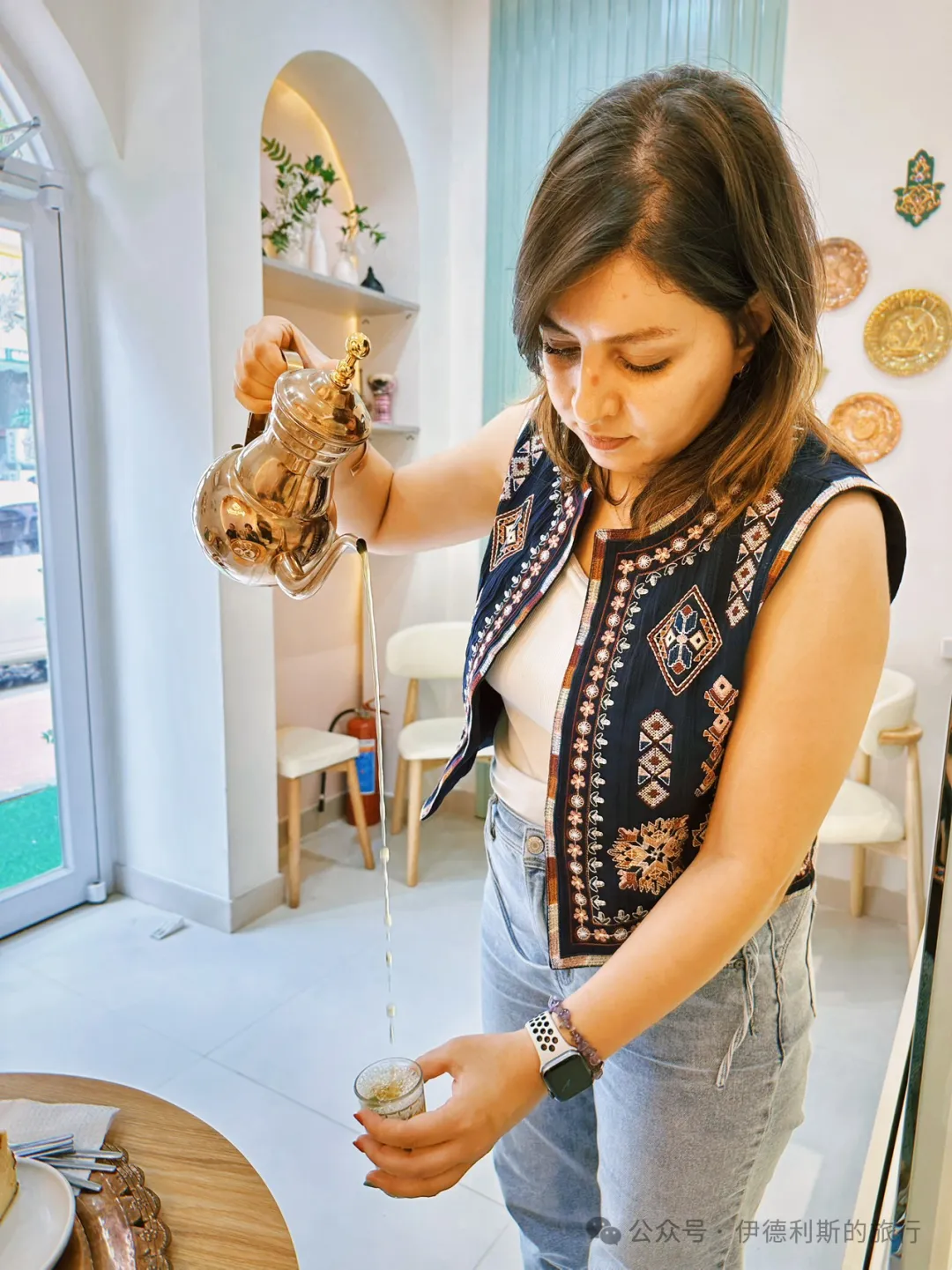
We drank Algerian mint tea and an Algerian orange blossom lemonade called Sherbet Mazhar. The mint tea is brewed to order, so it takes a while. It has a very strong aroma, but since it is freshly brewed, you cannot get refills. Orange blossom water is definitely a signature Algerian drink, especially classic at wedding feasts in northern Algeria. This drink is made from orange blossom water distilled from bitter orange blossoms, mixed with syrup and water. It is very refreshing in the summer.
We ate Algerian baklava (Baklawa), apple pie, milk pudding (M'halbi), and cheesecake. Suleiman loved the cheesecake the most. Baklava was introduced to Algeria from Turkey during the Ottoman period. The Algerian version adds crushed almonds and orange blossom water, so the taste is different from the Turkish one.
Milk pudding (M'halbi) is a classic Middle Eastern dessert for breaking the fast and is most popular during Ramadan. The name M'halbi comes from Al-Muhallab, a governor of Khorasan during the Umayyad Caliphate. Legend says he once had a stomachache, and his doctor fed him rice flour cooked with milk and sugar. He liked it so much that he named the dessert after himself.
Finally, the food here is excellent, though the decor is a bit simple. If they could highlight the Algerian theme more, this place would definitely become a new trendy spot in Tianjin.
Tunisian food: Sidi Bou Said.
There is a Tunisian restaurant called Sidi Bou Said (Blue and White Town) in Aocheng Plaza where you can eat Tunisian food. The shop is small. The owner is Chinese, and the head chef is Tunisian. Since there is only one chef, service might be slow when it is busy. It is best to call ahead and book a table. We were the only table when we went, so our meal went quite smoothly.
The name Sidi Bou Said comes from a small Mediterranean town northeast of Tunis. It is named after the famous Sufi saint Abu Said al-Baji, who is buried there. In the 1920s, the French painter and musician Baron Rodolphe d'Erlanger introduced the blue and white color scheme, turning it into a famous tourist destination in Tunisia.
We ordered the 3-4 person set, which included tuna fried triangles (Brick), North African eggs (Shakshouka), lamb stew, pasta with meat sauce, and a dessert called Kunafa. They served mint tea first, which is very Tunisian. Then they brought the Brick. It is a classic Tunisian snack filled with tuna, minced meat, a raw egg, and harissa chili paste, wrapped in a very thin pastry called Malsouka. The North African eggs are made with eggs, tomatoes, olive oil, harissa, and onions, then sprinkled with cumin and chili powder. Tomatoes were not actually introduced to Tunisia from the Middle East until the late Ottoman period. Turkey has an appetizer with the same name, shakshuka (Şakşuka), but it does not contain eggs.
Their lamb leg is stewed until very tender and falls right off the bone, which is perfect for children. The lamb leg sits on a bed of mashed potatoes, which are soft and delicious. The pasta uses an Italian meat sauce (Bolognese), but it seems to be made with hand-rolled noodles. It ends up tasting a lot like the dry meat sauce noodles (saozi mian) eaten by Hui Muslims in Xinjiang. Their kunafa (kunafa) is delicious, and it is a low-sugar version that suits the Chinese palate. Kunafa appears in One Thousand and One Nights, and legend says it was invented by an Arab caliph for breaking the fast.
Halal Food Guide Tianjin: Syrian, Turkish, Xinjiang Noodles and Autumn Eats
Articles • yusuf908 posted the article • 0 comments • 159 views • 2026-05-23 23:23
Summary: This Tianjin halal food guide follows an autumn eating route through Syrian dishes, giant river prawns, yellow broth pulled noodles, Turkish food, and Xinjiang fresh milk ice cream. It keeps the original restaurant details, dishes, photos, and food notes for readers planning Muslim-friendly meals in Tianjin.
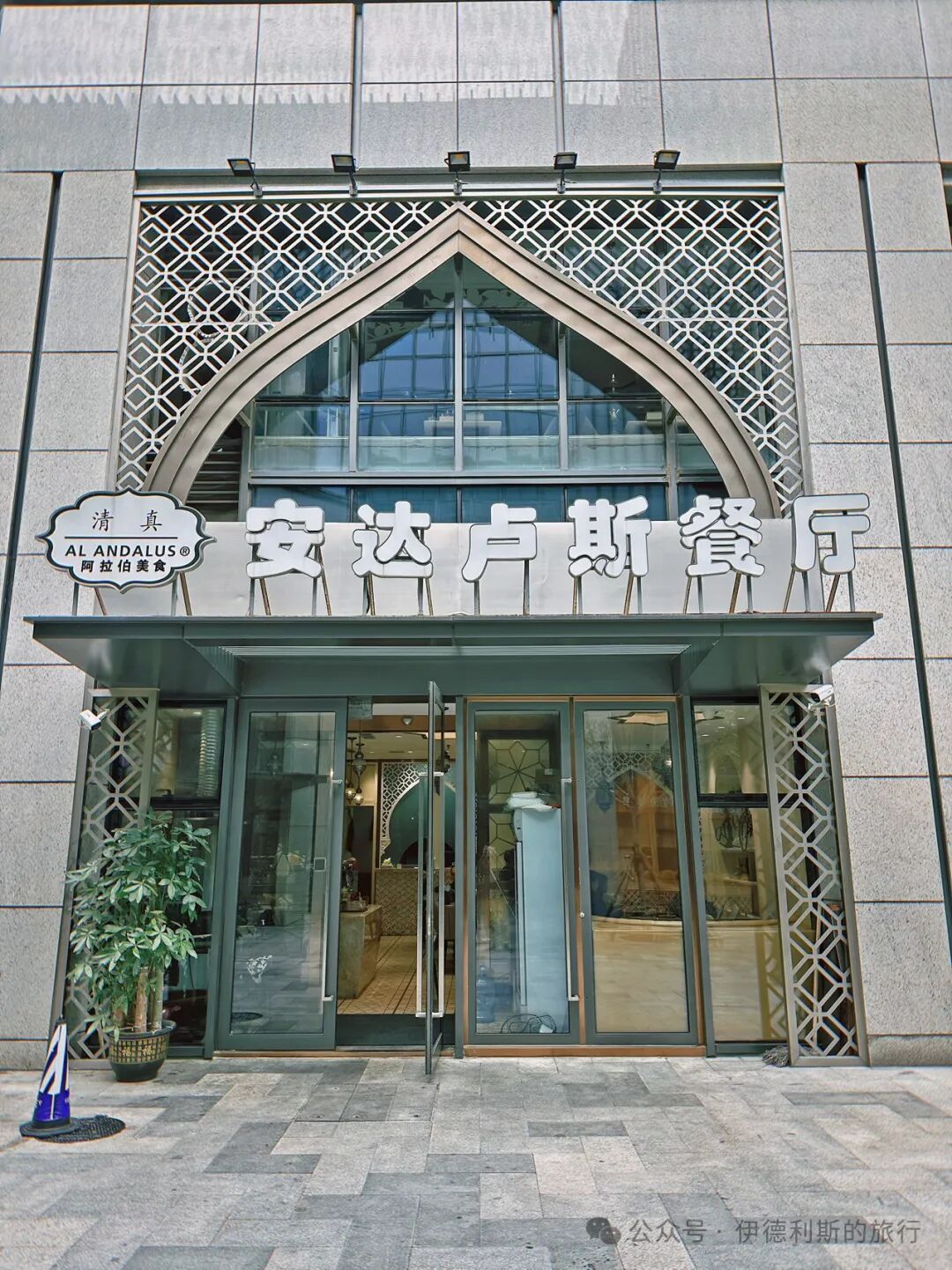
Two months later, we went back to Tianjin for a weekend trip with our kids. We arrived in Tianjin on Saturday at noon and headed straight to the Al-Andalus restaurant in the Nankai District Sunac Center for some Levantine food. The owner is Syrian. Al-Andalus was the name Arabs used for the Iberian Peninsula during the Middle Ages. In the 8th century, under the Umayyad dynasty, Al-Andalus was a famous center for economy, culture, academics, and education, serving as an important bridge for cultural and scientific exchange between the East and the West.
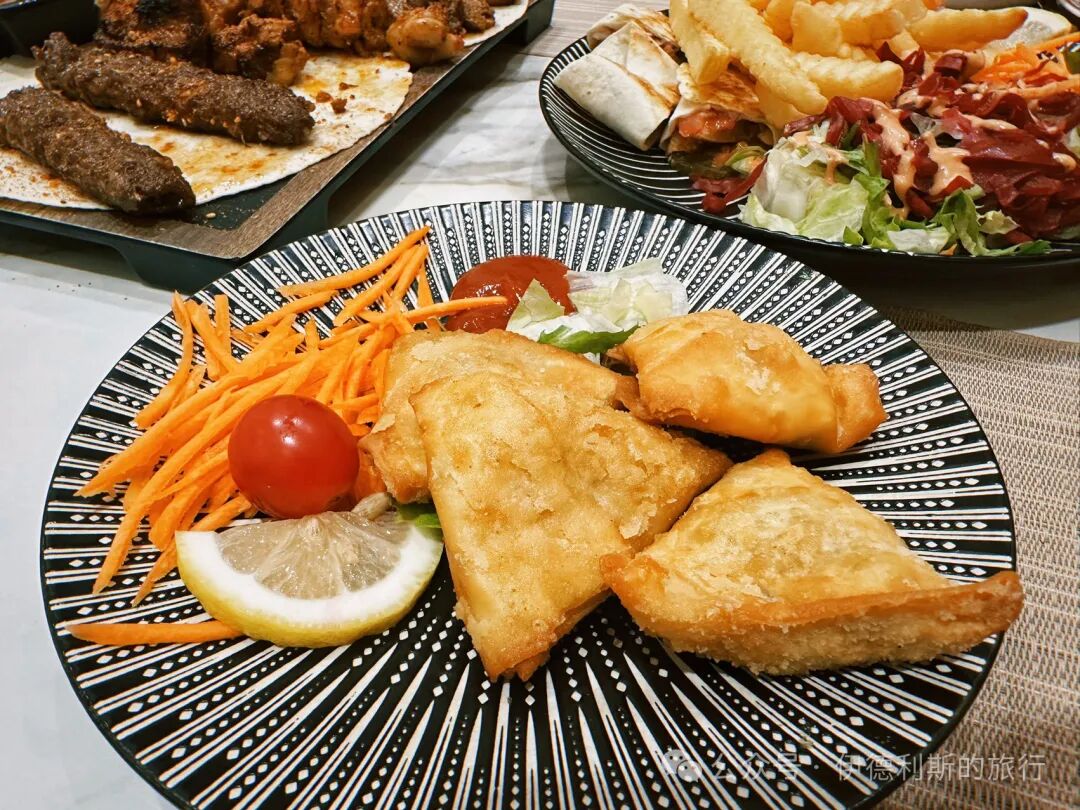
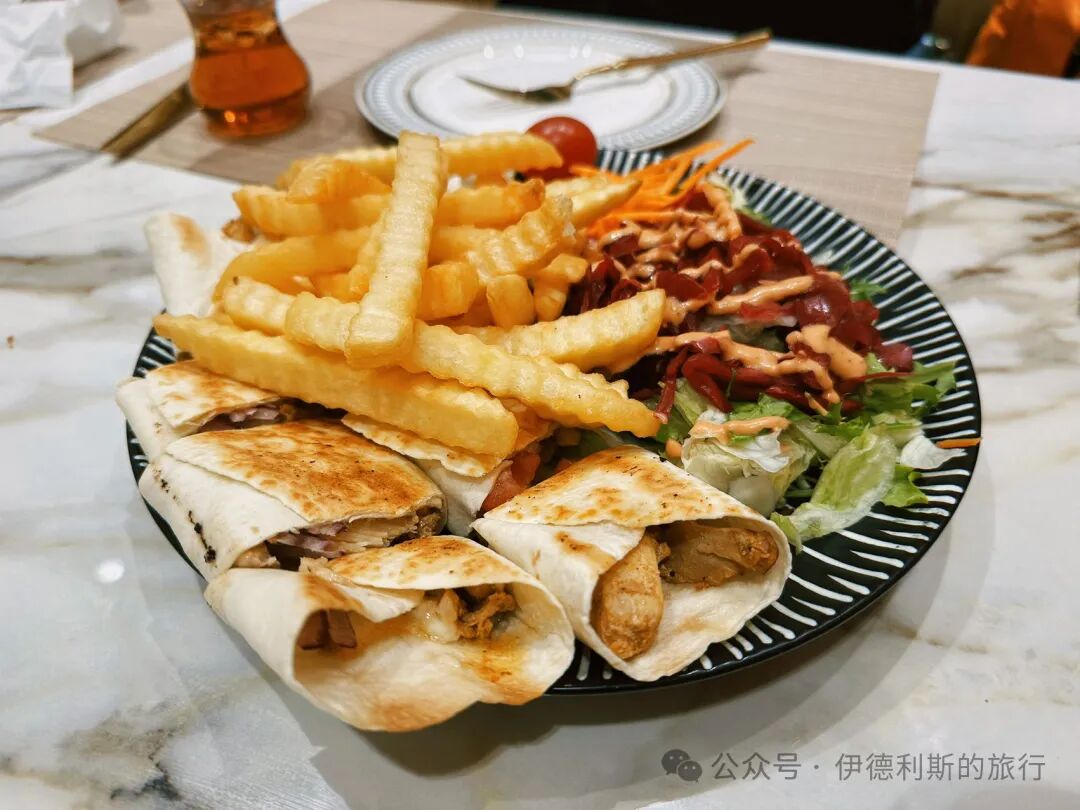
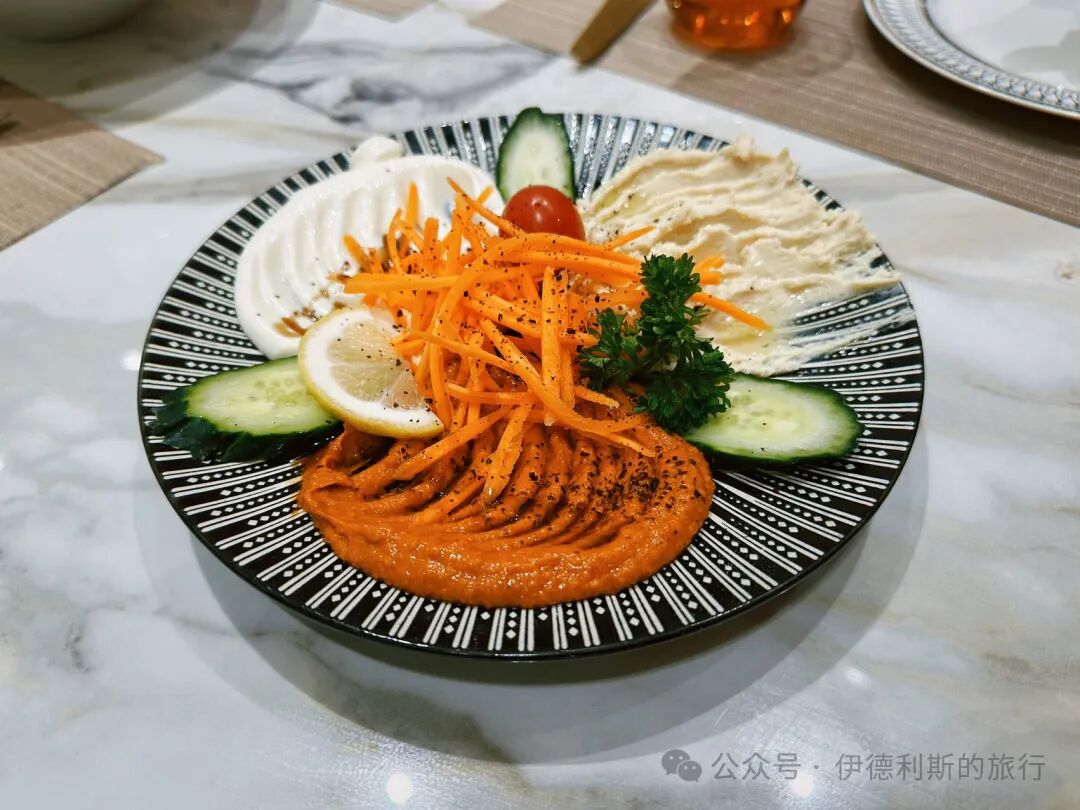
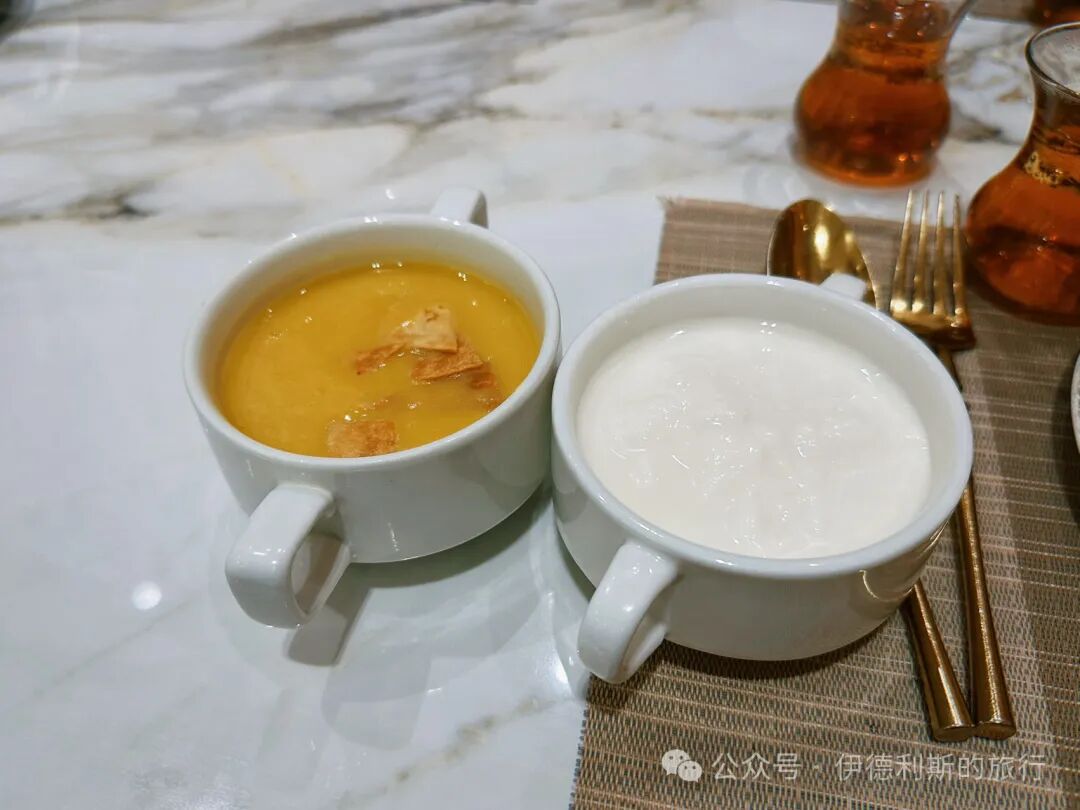
We ordered the four-person feast set, which included lentil soup, cream of mushroom soup, a hummus trio, lamb samosas (samosa), chicken wraps (shawarma), a four-season pizza, a mixed grill platter, black tea, and a crispy salad. We also ordered yogurt separately. Overall, the food was very authentic. It offers better value than the Arab restaurants in Beijing, and you don't have to wait in line. Their yogurt was especially good, with a rich, tangy flavor that beats many of the Arab restaurants in Beijing. The only downside was that the samosa dough was a bit thick, more like the South Asian version than the thin-crust Levantine style.
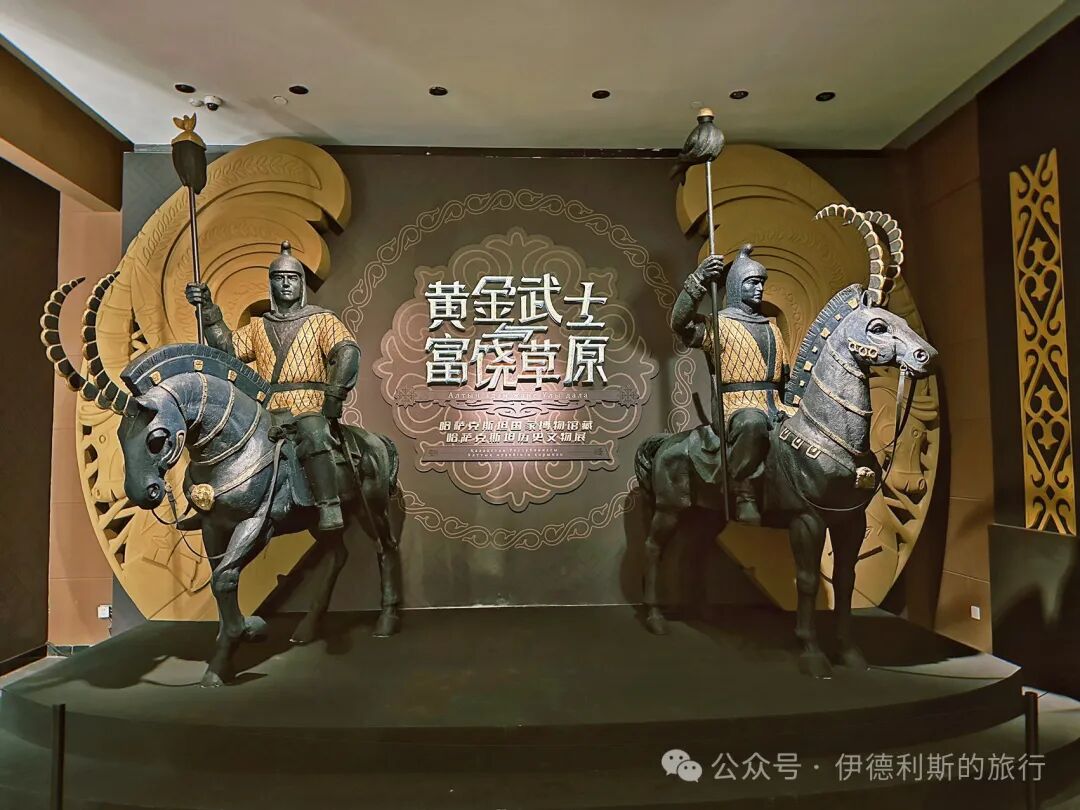
After lunch, we went to the Tianjin Museum, which is currently hosting an exhibition of historical artifacts from the National Museum of Kazakhstan. See diary: [Exhibition Visit] Tianjin Museum's Kazakhstan National Museum Historical Artifacts Exhibition.
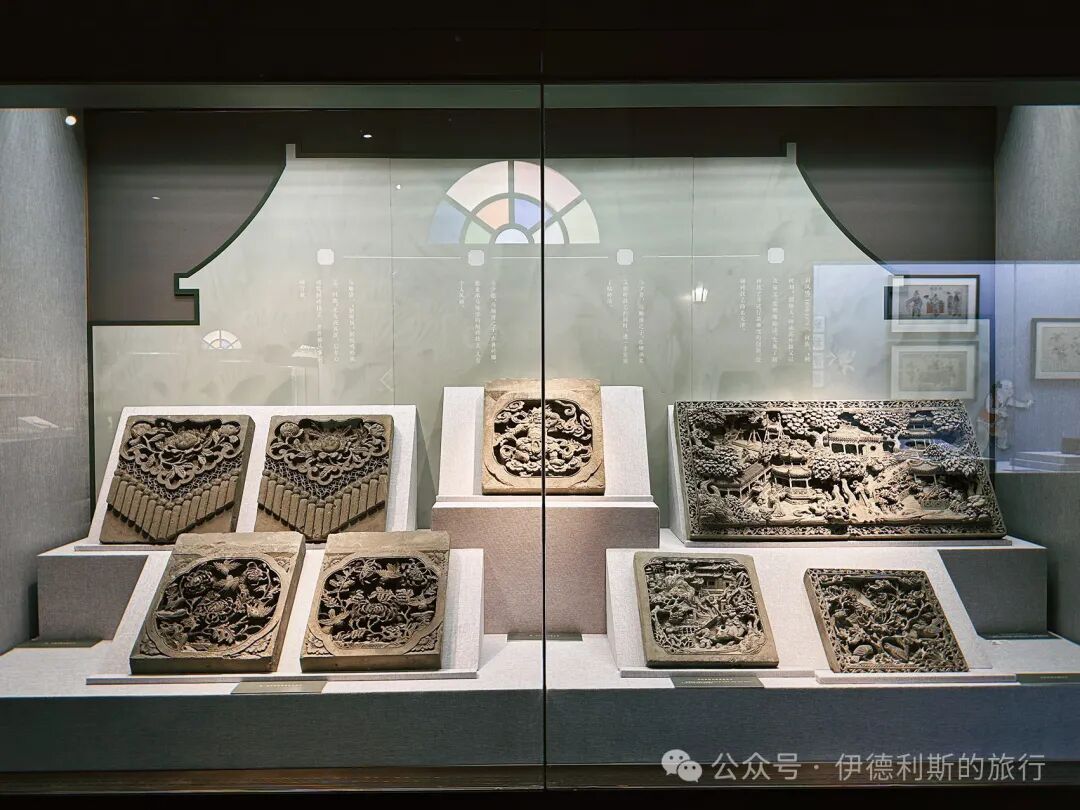
The Tianjin Museum displays exquisite brick carvings by the Hui Muslim families known as the 'Fancy Work Ma Family' (Huahuo Majia) and 'Brick Carver Liu' (Kezhuan Liu) from the Northwest Corner. See diary: [Exhibition Visit] Exquisite brick carvings by Hui Muslim artisans 'Huahuomajia' and 'Kezhuanliu' in the Northwest Corner of Tianjin.
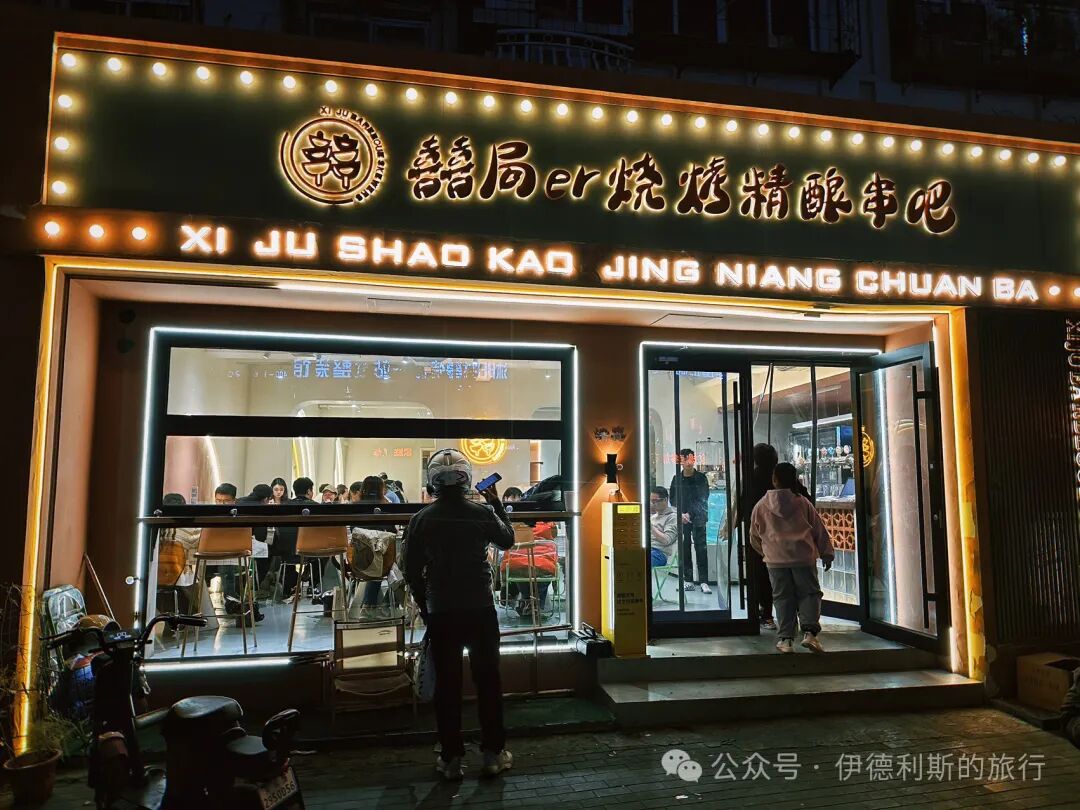
If you are a friend (dosti) from Beijing and are tired of the same old restaurants, a trip to Tianjin will definitely open your eyes. On this trip to Tianjin, we discovered a restaurant called Xiju that specializes in giant river prawns (luoshixia). It is located on Fuxing Road, just west of the Northwest Corner. It is run by local Hui Muslims and is very busy at night.
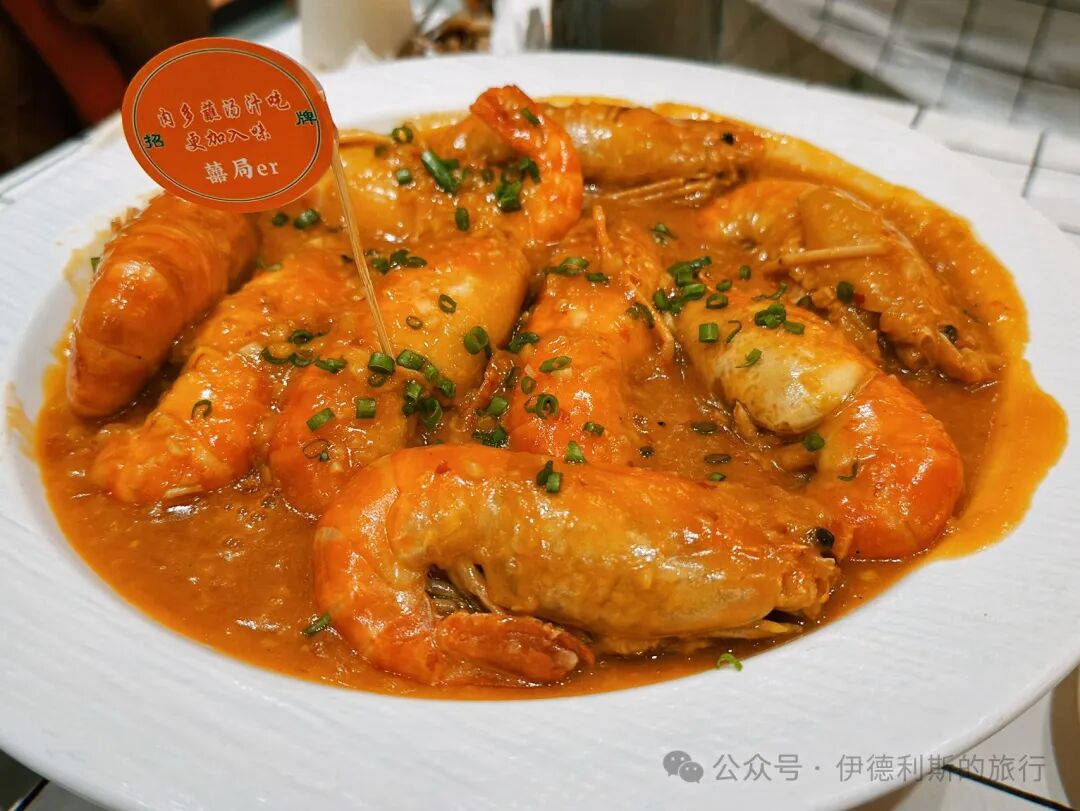
Their signature dish is a two-pound platter of giant river prawns, which you can get spicy or with garlic sauce. Giant river prawns are freshwater prawns originally from Malaysia in Southeast Asia. They are large and have plump, tender meat, but the texture isn't as firm as sea prawns, and the prawn flavor isn't as intense. It is similar to the difference between freshwater fish and sea fish. We ordered the garlic giant river prawns. You can add noodles to the sauce, which my son loved. He couldn't stop eating them, from start to finish, and he was the one at our table who enjoyed the meal the most.
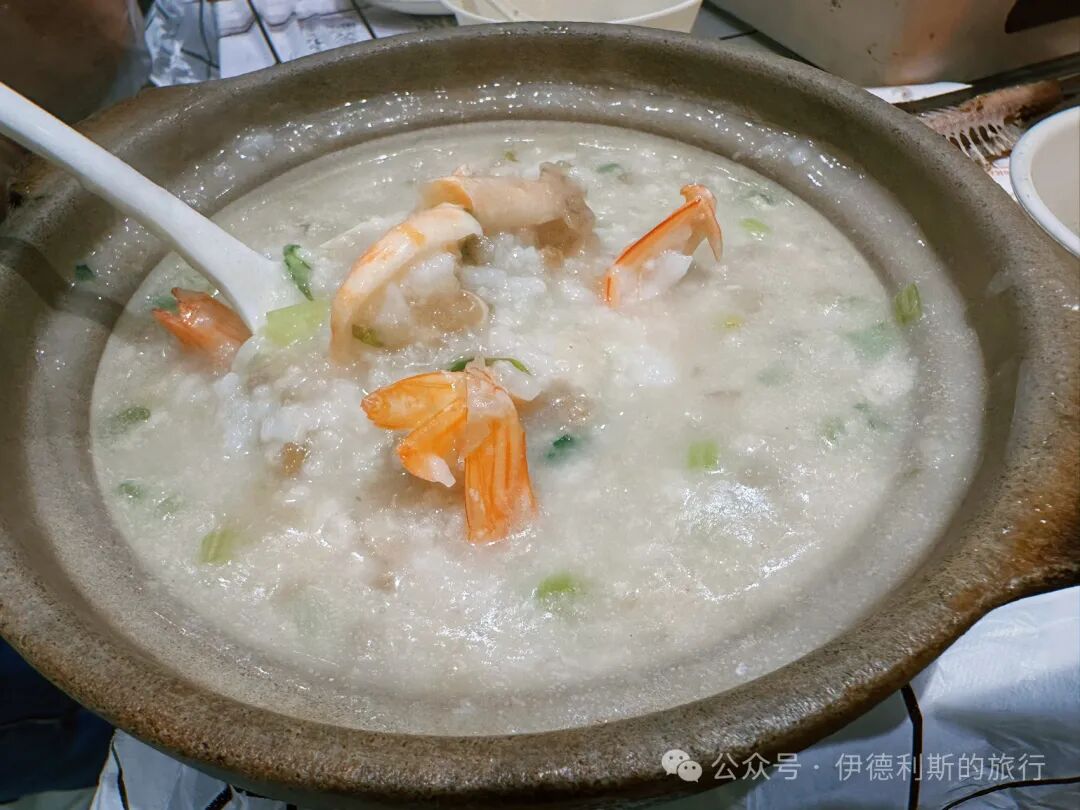
Their Chaoshan seafood porridge was also excellent. Besides having plenty of prawns, it was packed with other seafood, making the flavor very rich.
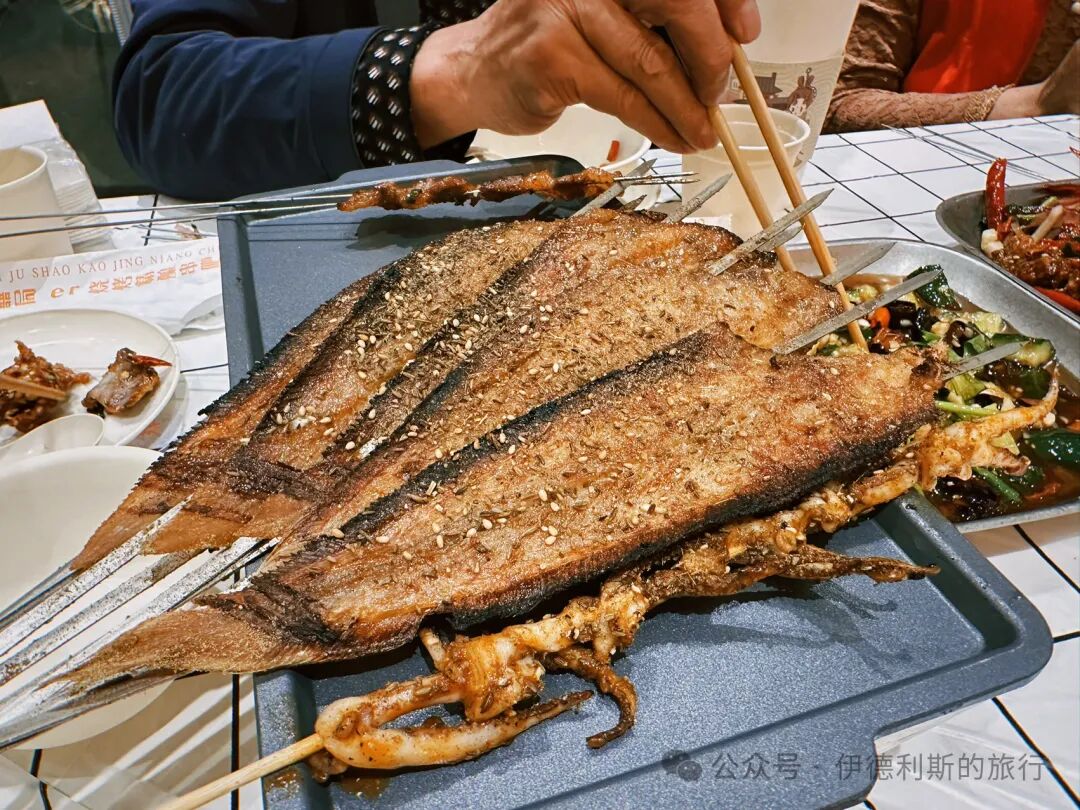
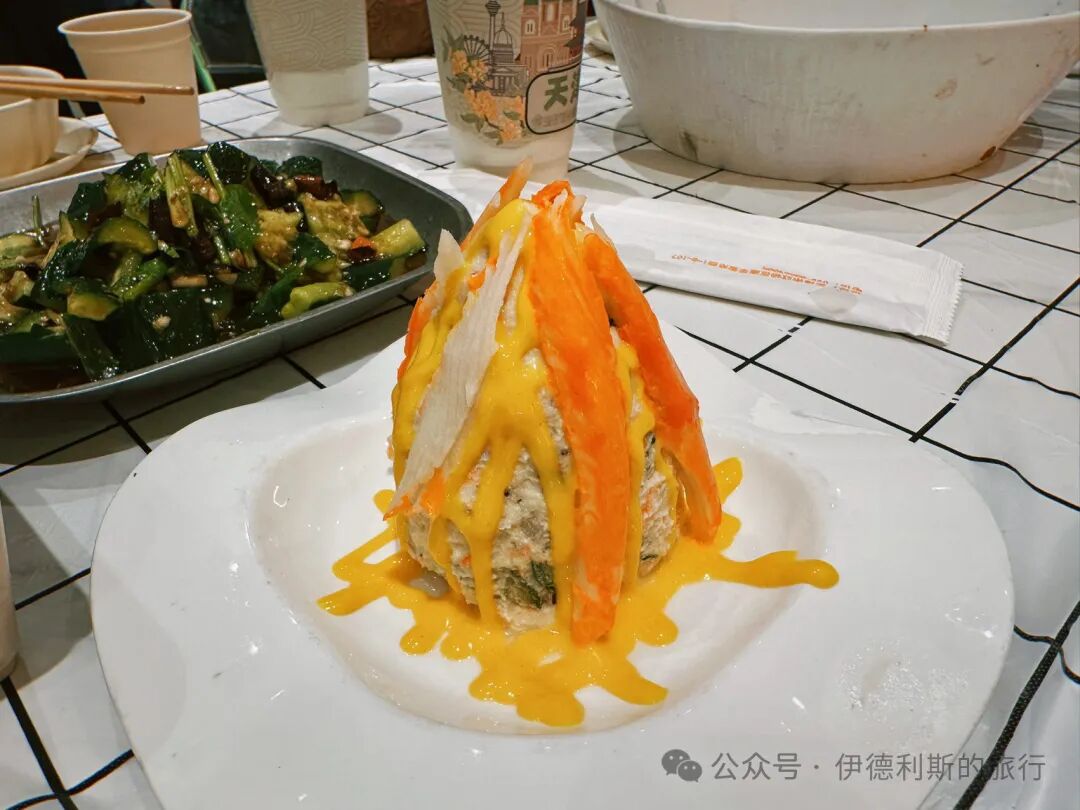
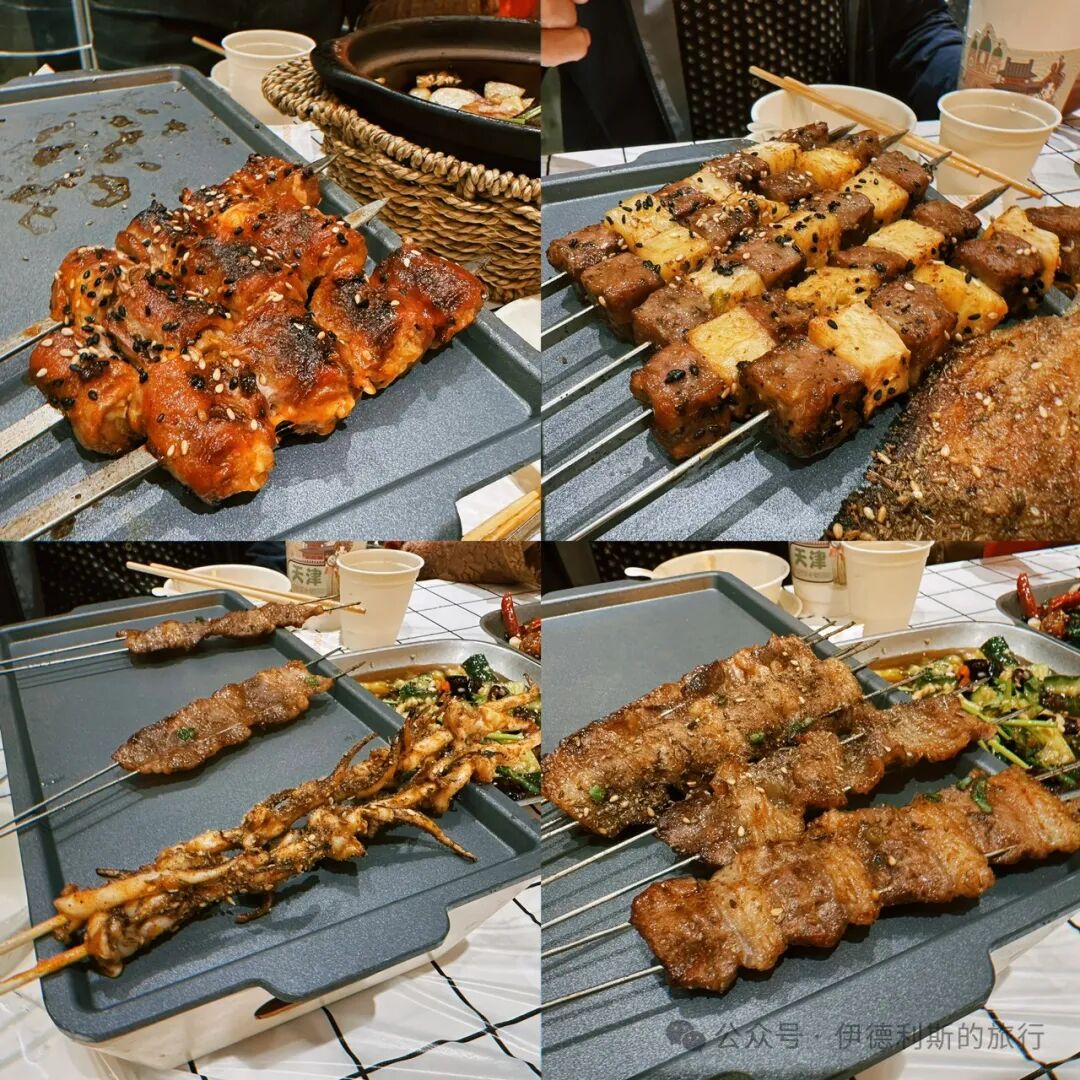
They also have various barbecue items. We ordered squid, flounder, pineapple beef skewers, cheese bread slices, charcoal-grilled beef short ribs, and beef kimchi cheese rolls. Everything tasted great, especially the flounder, which had a wonderful texture and flavor.
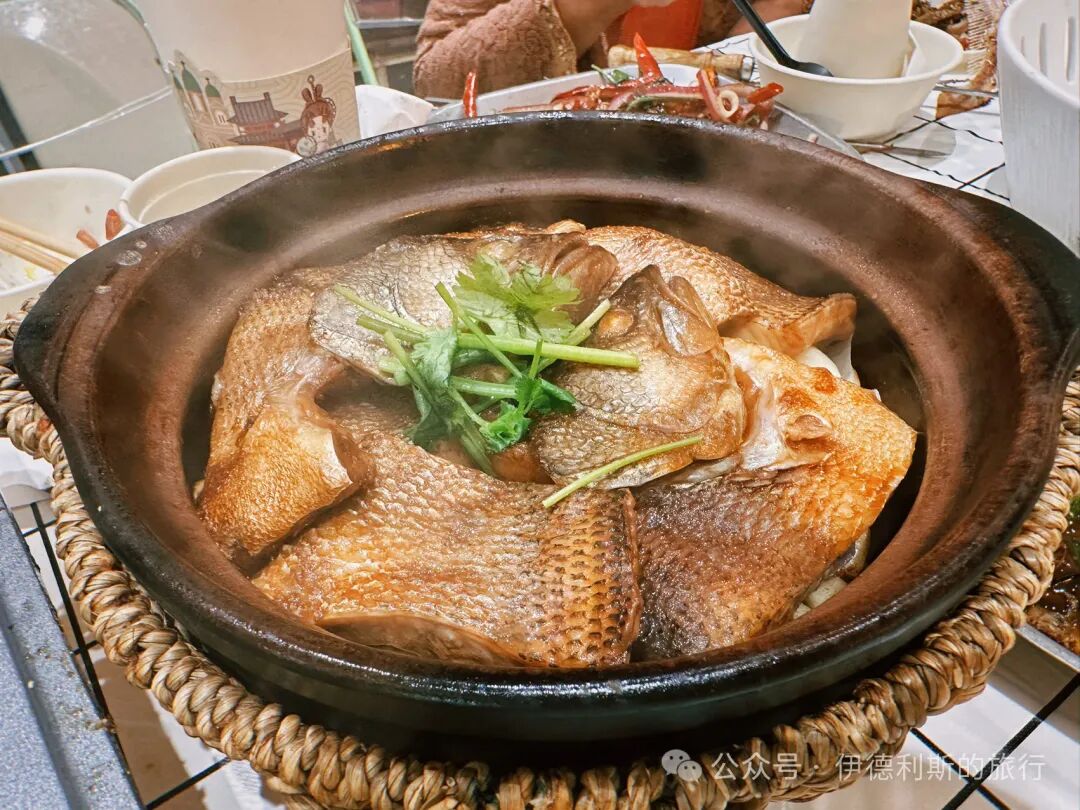
Their sizzling sea bass pot (zhuzhu luyu bao) was also a hit with everyone. The sea bass was very fresh, and the garlic-clove-shaped meat had a great texture.
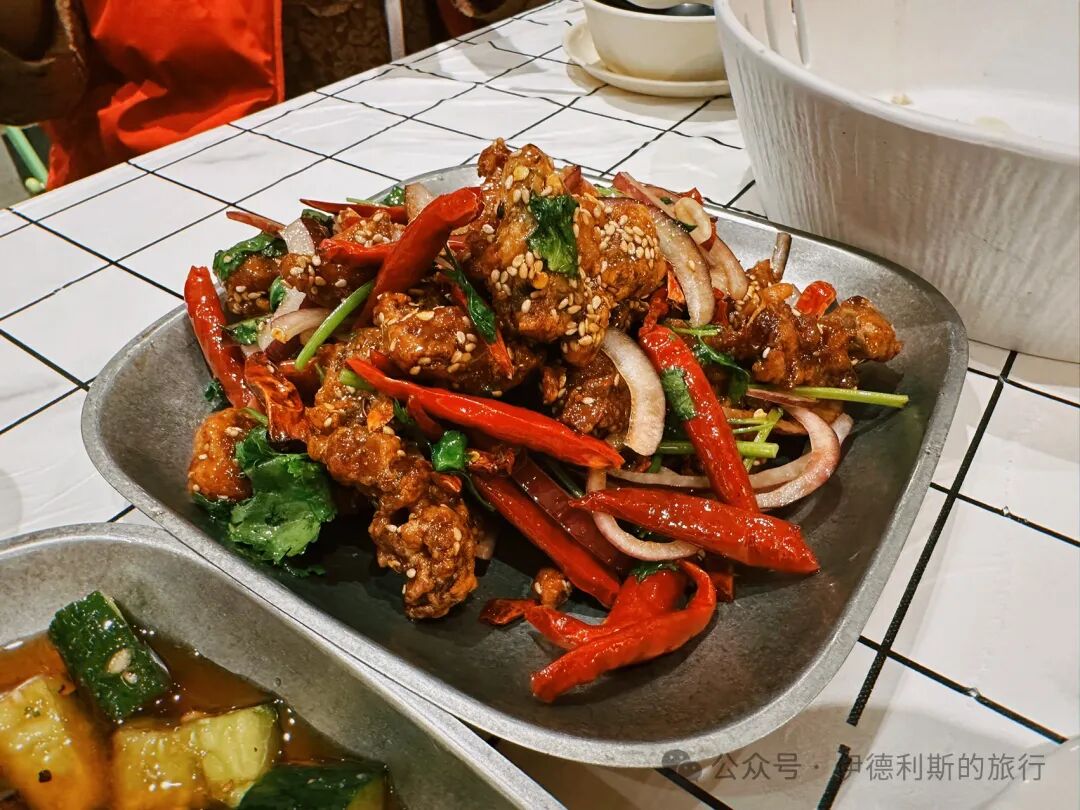
Their fried chicken racks are sweet and sour, making them a perfect snack that gets addictive the more you eat.
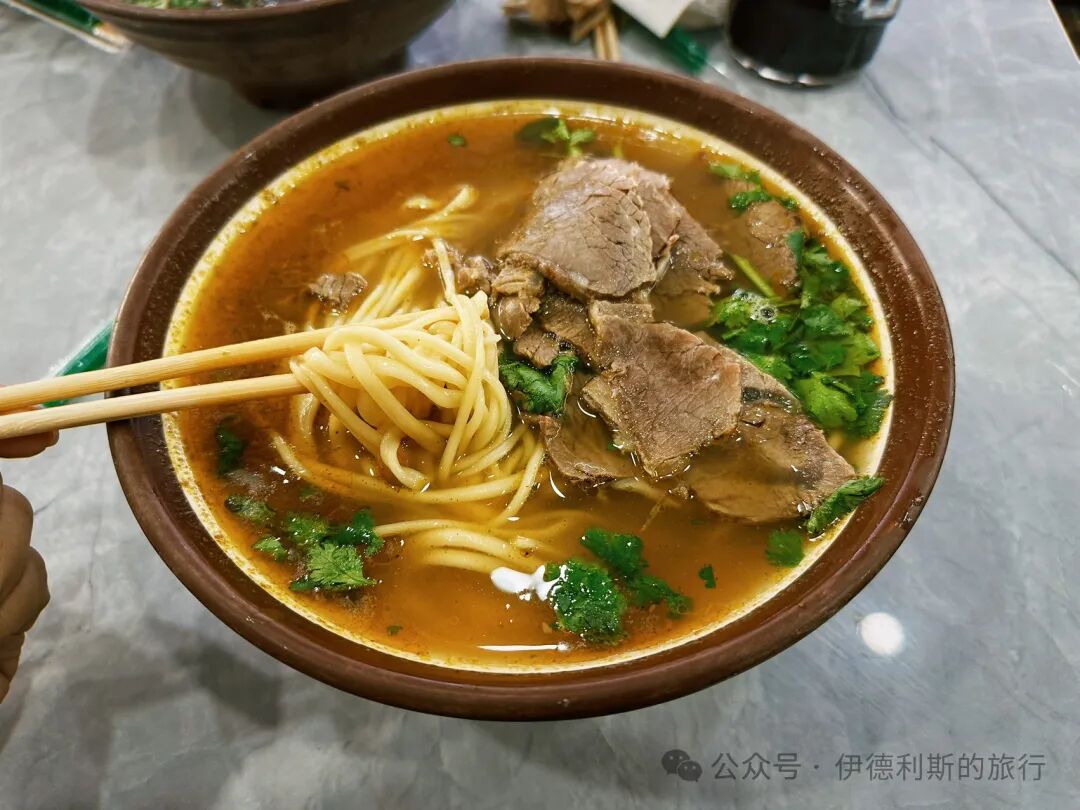
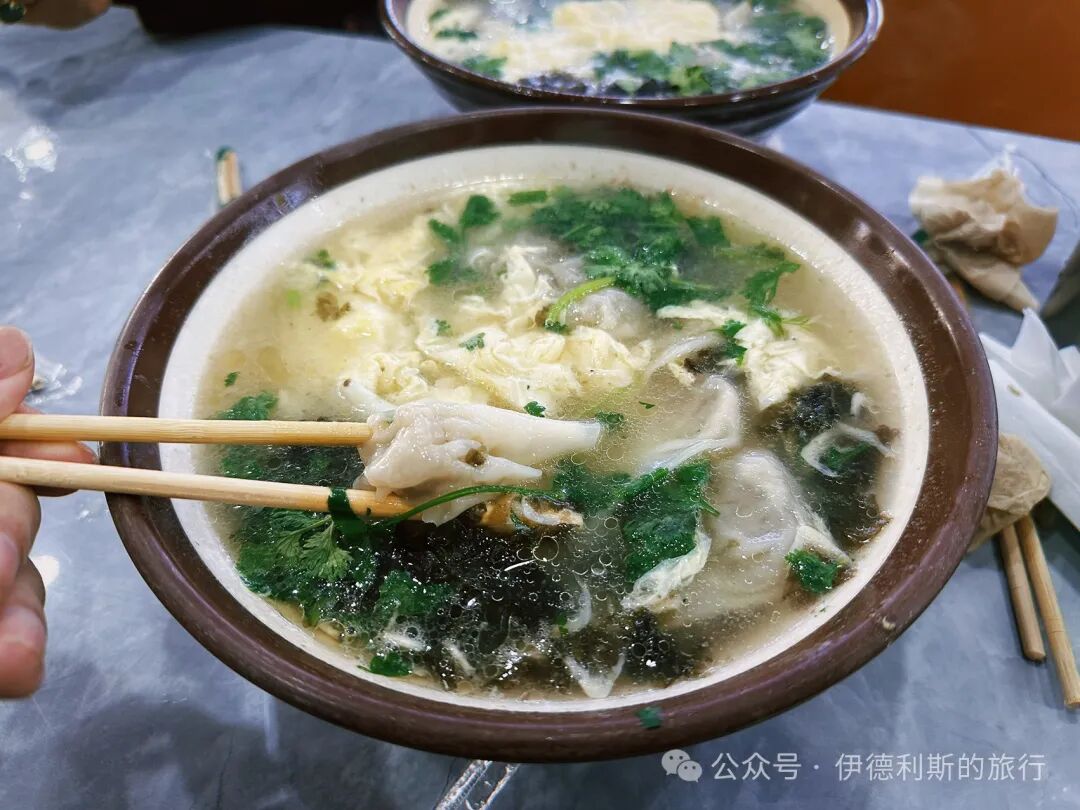
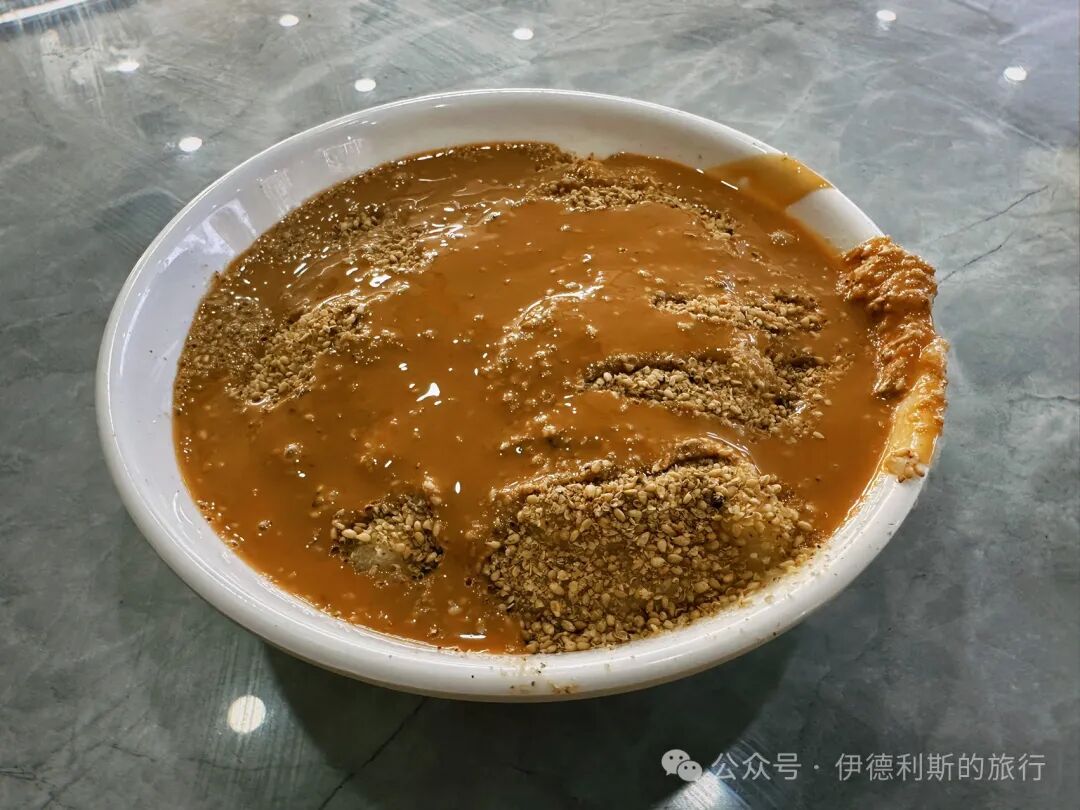
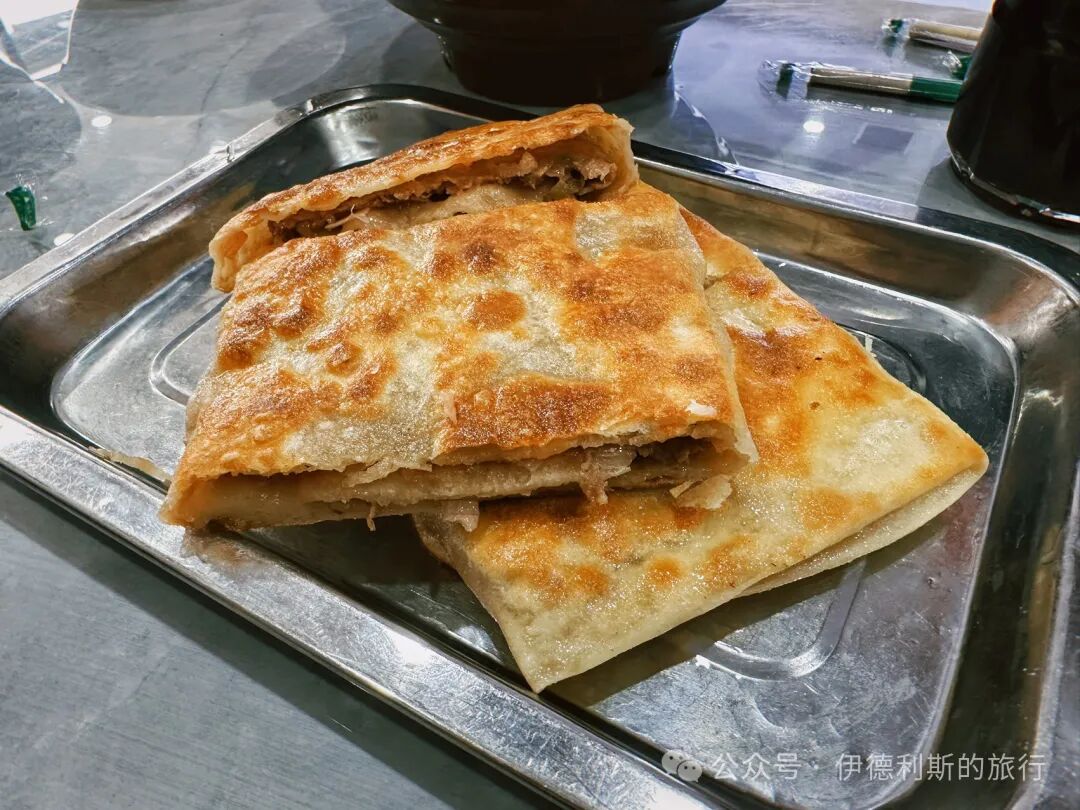
On Sunday morning, we had breakfast at Shunfa Lamian and Zhensucheng in the Xiaohaidi area of the Hexi District. Xiaohaidi is a lively residential area in the south of Tianjin with plenty of halal snacks. Shunfa Lamian is a noodle shop that has been open for over twenty years, specializing in yellow broth pulled noodles (lamian) and braised noodles (banmian). Zhensucheng is a breakfast shop that opened in 1979, specializing in crispy crepe strips in savory sauce (guobacai). Both of these shops are now franchises. The one in Xiaohaidi joined both brands, so now you can have yellow broth pulled noodles (huangtang lamian) and traditional breakfast at the same time in the morning.
We ordered yellow broth pulled noodles, water caltrop soup (lingjiao tang), flour tea (miancha), and beef pie (niurou bing). It was my first time having yellow broth pulled noodles. The yellow curry powder makes the flavor very rich, and I think it tastes even more satisfying than the clear broth version. Their water caltrop soup and flour tea both taste good, and Suleiman especially likes their flour tea. However, their beef pie has a bit too little filling. I noticed many people at the neighboring tables were eating flatbread rolls with fried fritters (dabing juanquan).
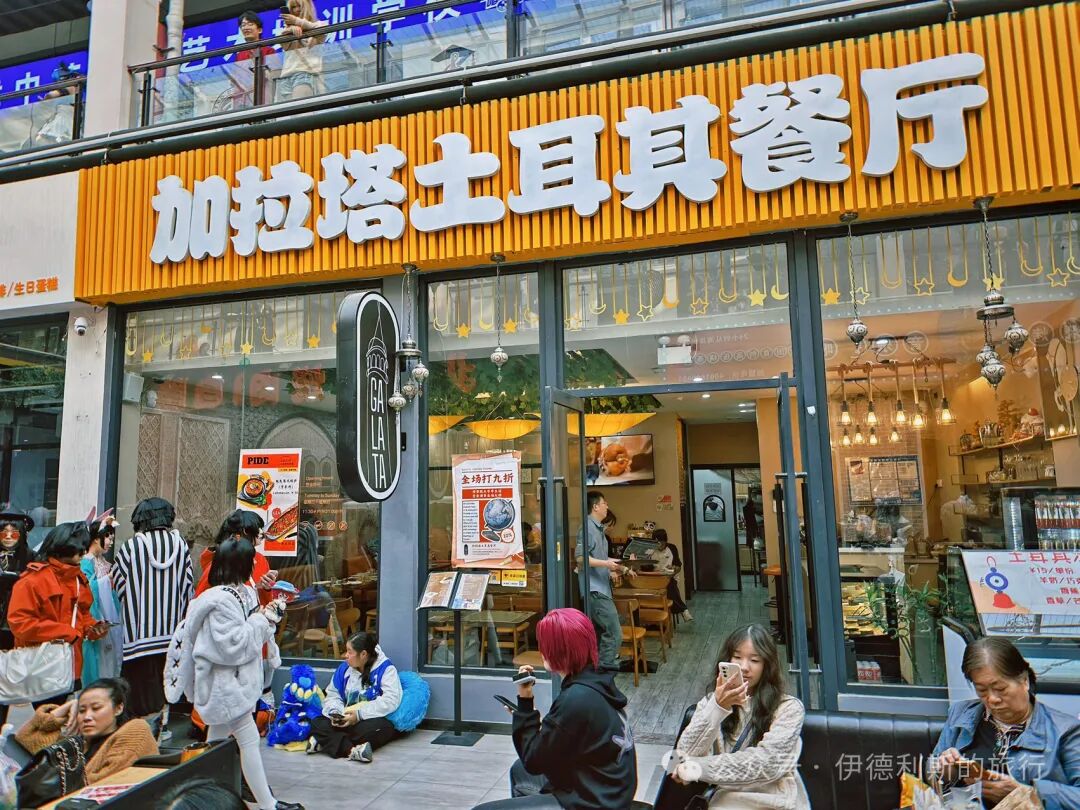
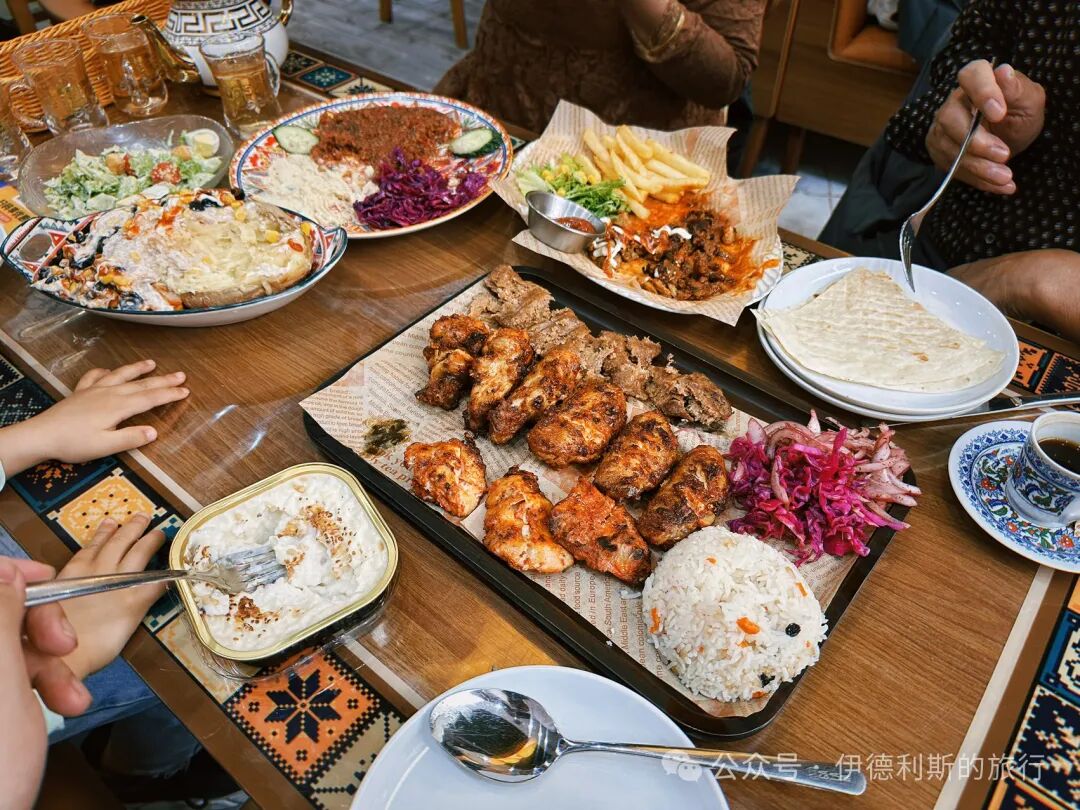
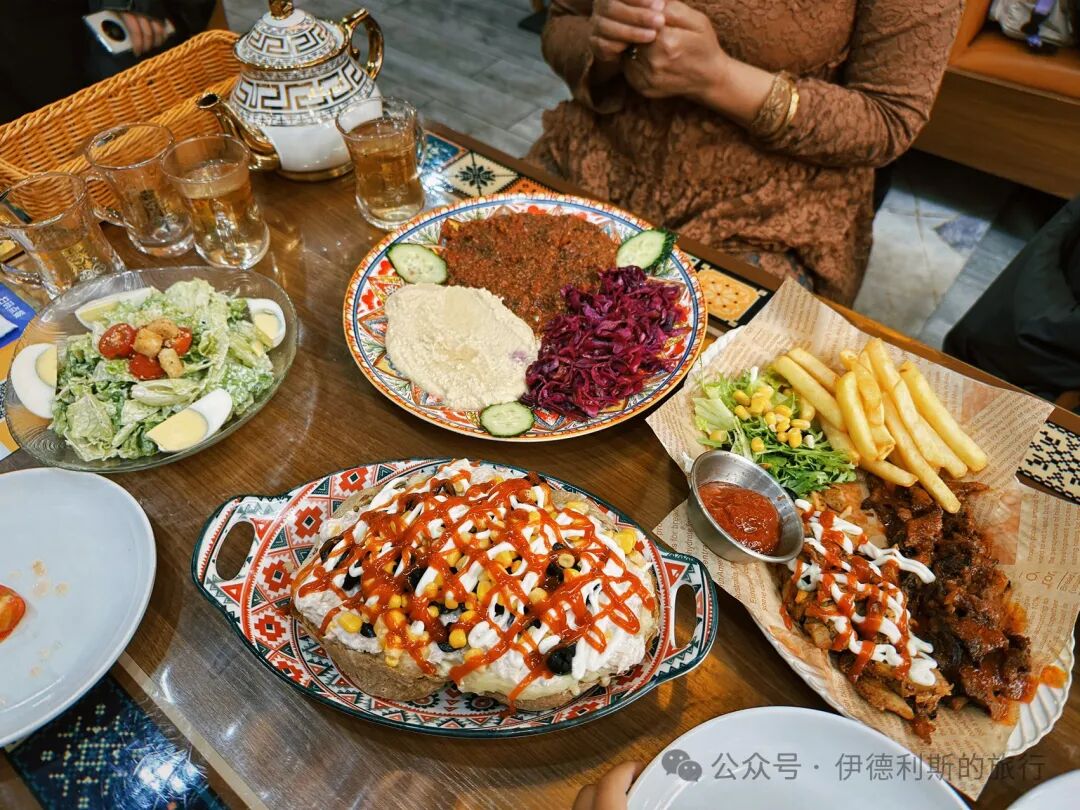
After eating at so many good restaurants in Tianjin, I finally hit a dud this time. On Sunday at noon, we went to the Galata Turkish Restaurant in Hengji Plaza, Hexi District. First of all, their tables are tiny. We ordered a meal for four, and it couldn't even fit on the table. Secondly, it is not authentic! We have eaten at so many Turkish restaurants in Beijing, Yiwu, Fuzhou, and Guangzhou, and they were all very authentic, whether run by Turkish or Azerbaijani people. This is the first time we have eaten at an inauthentic one; it is nothing like what we ate in Turkey.
Their potatoes and roasted chicken were covered in thick layers of salad dressing and ketchup. It felt just like fast food sold at a temple fair, which doesn't fit the Mediterranean diet of Turkey that focuses on spices. Also, the grilled meat was not good. Some parts were dry, and some were salty. The grill chef's skills need improvement. The grilled meat was served with pilaf (zhuafan) made with domestic short-grain rice. I suspect the chef is our fellow countryman from Xinjiang.
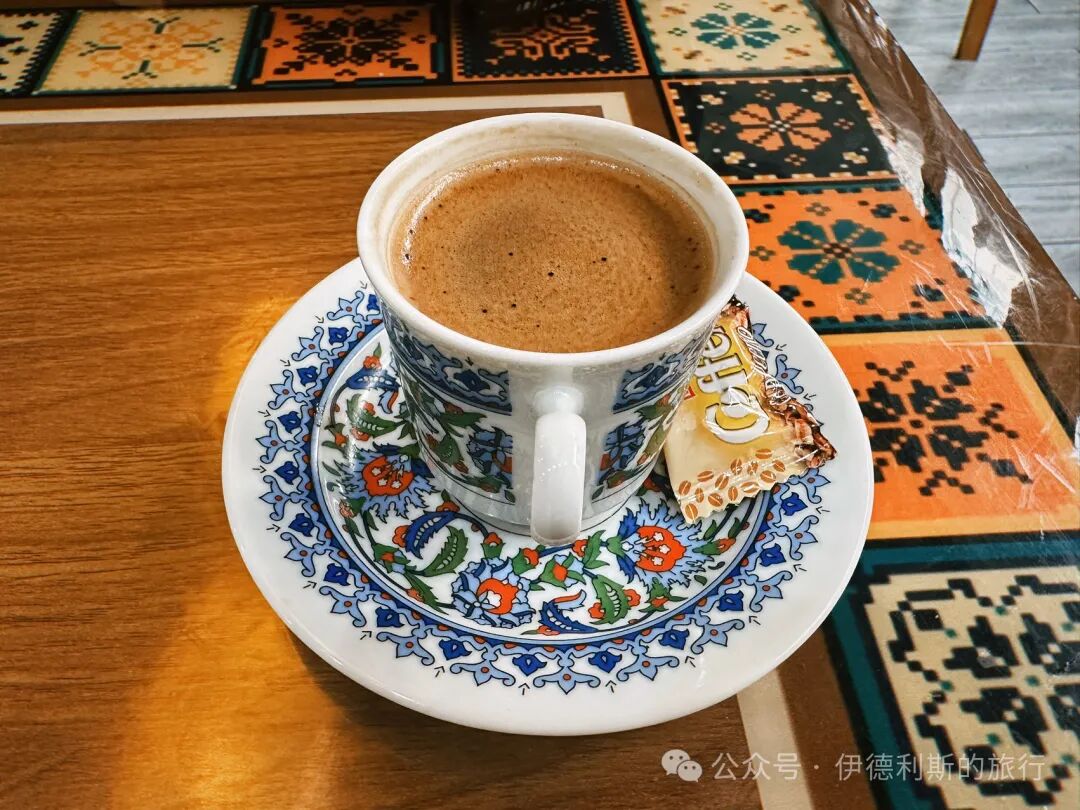
They do have one big advantage, which is that it is cheap! The price is about half of what you would pay at a Turkish restaurant in Beijing, so you get what you pay for. Their milk pudding and Turkish coffee also taste good. The milk pudding is not sweet, and it is quite pleasant to have with coffee. It is just that they served the coffee with a candy ball that children often eat, which is also a bad match. They should at least serve it with Turkish delight or even a piece of chocolate.
After leaving Hengji Plaza, we went to the Tatami Xinjiang Restaurant at the entrance to pack some diced noodle stir-fry (dingding chaomian) for Suleiman to eat in the evening. Their decor is quite good and very Xinjiang-style. The waiter who served us was Uyghur, and the chefs in the kitchen were all Hui Muslims. It is an open kitchen, and the chefs have real skill. We specifically asked for it to be made for a child, and the diced noodle stir-fry was indeed very suitable. Suleiman loved it. They also sell fresh milk ice cream from Tacheng, and I bought one that tasted quite good.
I just remembered that I can add locations to my official account posts, so I will also add locations for the Tianjin restaurants recommended in previous issues.
Between the mountains and the sea: from Huairou farmhouses to coastal Western restaurants.
Haishiwan Halal Western Restaurant.
Eating Halal Western food at Haishiwan on Binjiang Road in Tianjin. Overall, their dish names and plating are quite fancy and look great in photos, but the actual taste is average, similar to fast food in a shopping mall.
The best thing they have is probably the avocado salad, which is very healthy. The tuna salad is more like a simple home-style mixed vegetable dish. The seafood fried rice and beef fried rice are both soy sauce-based, which feels more suited to the tastes of the Shandong cuisine region. The seafood pizza is plated very beautifully, but the pizza base itself is very average, just like the taste of a cheap fast-food chain. They also have various drinks with names I don't recognize, which are just sparkling water mixed with syrup. The fog coffee is great for photos, but the coffee itself is also very average.
Nuobona Halal Western Restaurant.
Nuobona Halal Western Restaurant at the 80 Food Plaza in TEDA, Tianjin, is definitely the best Halal Western food I have ever eaten! The taste is far better than the ones in downtown Tianjin.
Muyi Chinese Restaurant, Nuobona Western Restaurant, and the Western bakery on the first floor in Taifeng are all part of the Yisilai Mu Restaurant founded in 1994, and their Halal license number is Binhai 001. We have eaten at Muyi before; it is creative Chinese food with many dishes they invented themselves, and the taste is excellent. This time we tried their Western food and still had nothing but praise. Their environment is also very good, and they have a special area for children to play, which is very thoughtful.
We ordered charcoal-grilled baby lobster and creamy lobster soup served two ways, French escargot, British fish and chips, baked potato skins, golden pillow durian pizza, lasagna, tiramisu, non-alcoholic mojito, dirty milk, and rose soda, and we also ordered a kids' meal for Suleiman (spaghetti, pumpkin soup, french fries, grilled chicken wings, and fruit salad). The lobster is very tender, and the creamy lobster soup is rich and very fragrant. This was my first time eating baked escargot; the texture is very chewy and bouncy, and the various spices are added perfectly. It was my first time eating British-style fried fish, though it didn't come with french fries. The way they make it is very different from the common cod cakes in China; the fish meat is ground very finely, and the texture is very moist.
Taking kids out to eat in Tianjin: Yemeni food, Algerian desserts, rice noodle rolls (changfen), Japanese food, and water caltrop soup.
Socotra Yemeni Restaurant.
Many Yemeni restaurants have opened in Guangzhou and Yiwu, but Beijing's Arab restaurants are still mostly Levantine style. If you want a Yemeni meal, you have to take an intercity train to Tianjin.
Socotra is Socotra Island in the Arabian Sea, southeast of Yemen. It was called Sugudala in the Ming Dynasty's Zheng He Navigation Map. Socotra Island was listed as a World Natural Heritage site in 2008. The island is most famous for its dragon blood trees. The Socotra restaurant's logo is a dragon blood tree, and there are photos of the trees hanging in the shop.
We ordered the signature soup, chicken lentil soup, lamb Zurbian rice, Mushakkal stir-fried vegetables, Fahsa beef stew, banana mango juice, and Khubz flatbread. Zurbian rice is a bit like Indian Biryani rice, as both are stir-fried with various spices. Their lamb is roasted and smells great, but we found the rice a bit dry. There are also small bone fragments inside, so be careful not to let children eat it.
When you go to a Yemeni restaurant, you must try the classic Yemeni dish, Fahsa beef stew. Fahsa is usually made with lamb, but this place uses beef. When they make it, they stew the meat until it is very tender. It starts in a large vat and is then moved to a small pot to continue stewing. Besides ginger, garlic, and cumin, they add a spice called fenugreek (Hulbah) when stewing the meat. Fenugreek is actually what people in Northwest China often call fragrant beans (kudou). People in the Northwest dry the leaves of the fenugreek plant and grind them into powder to steam buns, while Yemenis grind the seeds to stew meat. Fenugreek seeds expand when they meet water and easily foam up when stirred in a bowl.
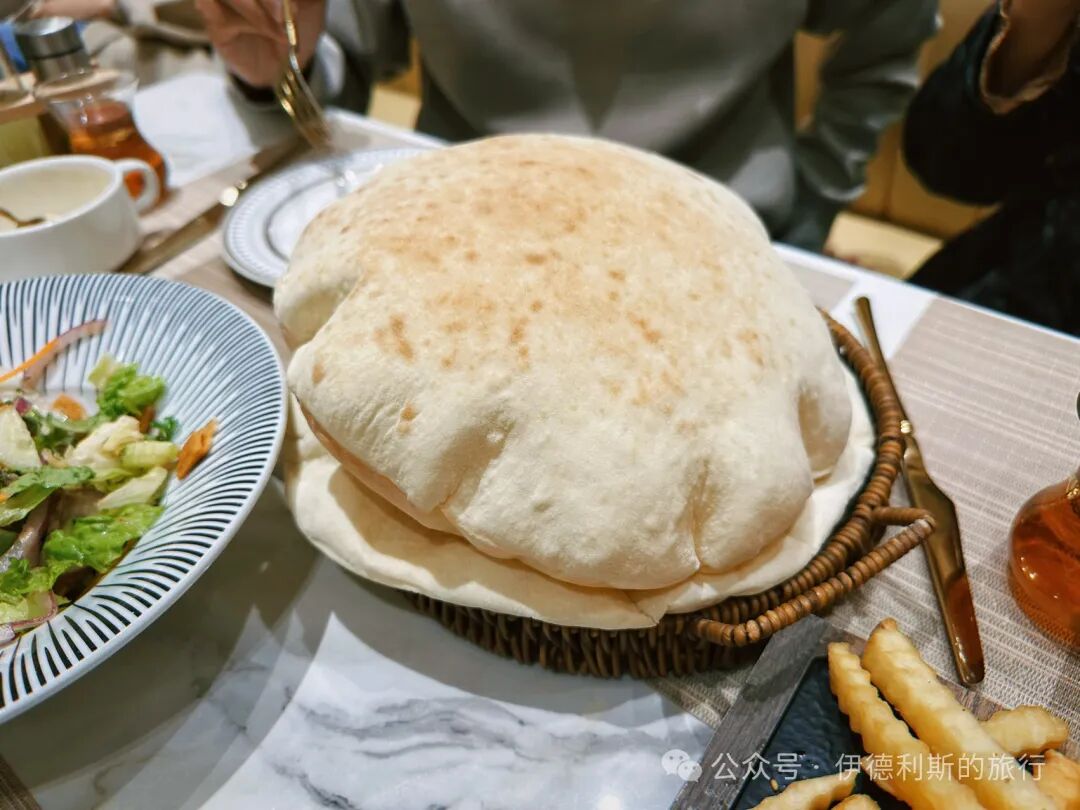
The classic pairing for Fahsa stew is Mulawah Yemeni flatbread, but this place requires you to order it in advance. You can only get Khubz flatbread if you walk in. Khubz flatbread is actually the same as the pita bread in Levantine cuisine. The version they make is quite hard, and to be honest, it is not very tasty.
Qianmu Halal Japanese Cuisine
There are no longer any halal Japanese restaurants in Beijing, so you have to go to Tianjin for this. This place is very popular, and it is hard to get a seat without booking in advance. When we went after eight o'clock, they had even sold out of rice, so we had to go to the ramen shop across the street to buy some.
We ordered tempura udon, sukiyaki, eel rice, a grilled platter, cod roe potato gratin, cheese-baked crab shell, a slow-cooked sushi platter, and marble soda. Suleiman loves their udon noodles. He couldn't stop eating them, and after he finished, he was so happy that he fell right asleep. There are quite a few grilled items, but they are mostly mushroom-based vegetable dishes with less meat. The soy sauce for the sushi is a bit salty, and the sushi itself is just average, which is a pity. The staff saw we had a child, so they cooked the sukiyaki for us before bringing it to the table. That deserves a thumbs up. The eel rice tastes okay, and next time I want to try their teriyaki chicken rice.
Xue's Northwest Corner Old-Style Breakfast
Ever since the Northwest Corner became super popular, I basically stopped going there to eat. Actually, Tianjin has so many delicious breakfast spots, not just the Northwest Corner. I used to go to Tianmu and Jinjiayao for breakfast, but this time I went to Xue's Northwest Corner Old-Style Breakfast in the Lushuidao area of Jinnan District. Their shop is a simple neighborhood eatery on the ground floor of an apartment complex, where all the local seniors come to eat.
We didn't arrive until nine, so most things were sold out. We just ordered water caltrop dumplings (lingjiao tang), sesame flatbread with meat (shaobing jiarou), and savory crepe strips in sauce (guobacai). Their water caltrop dumplings are truly delicious. The skin is the perfect texture, and the filling is very fragrant. Suleiman ate several in one go. The sesame flatbread for the meat sandwich is crispy, and the flavor is quite good. The savory crepe strips are a traditional old-school flavor, but eating both the dumplings and the crepe strips together is a bit heavy. I feel like the crepe strips go best with iron-pot soy milk.
Algerian Bakery
I had an Algerian afternoon tea at Lyn's Healthy Bakeshop on Chifeng Road in Tianjin. Chifeng Road is in the former French Concession area, which is full of small Western-style villas and all kinds of little shops.
The owner, who is from Algeria, opened this small shop for tea and desserts. It should be the first Algerian restaurant in China. I have to say, Tianjin's food scene is once again at the forefront of internationalization!
They offer both à la carte and afternoon tea sets. They have both traditional Algerian desserts and Western pastries. Everything uses maple syrup instead of white sugar, focusing on healthy eating. It is probably the least sweet Arabic dessert shop I have ever visited!
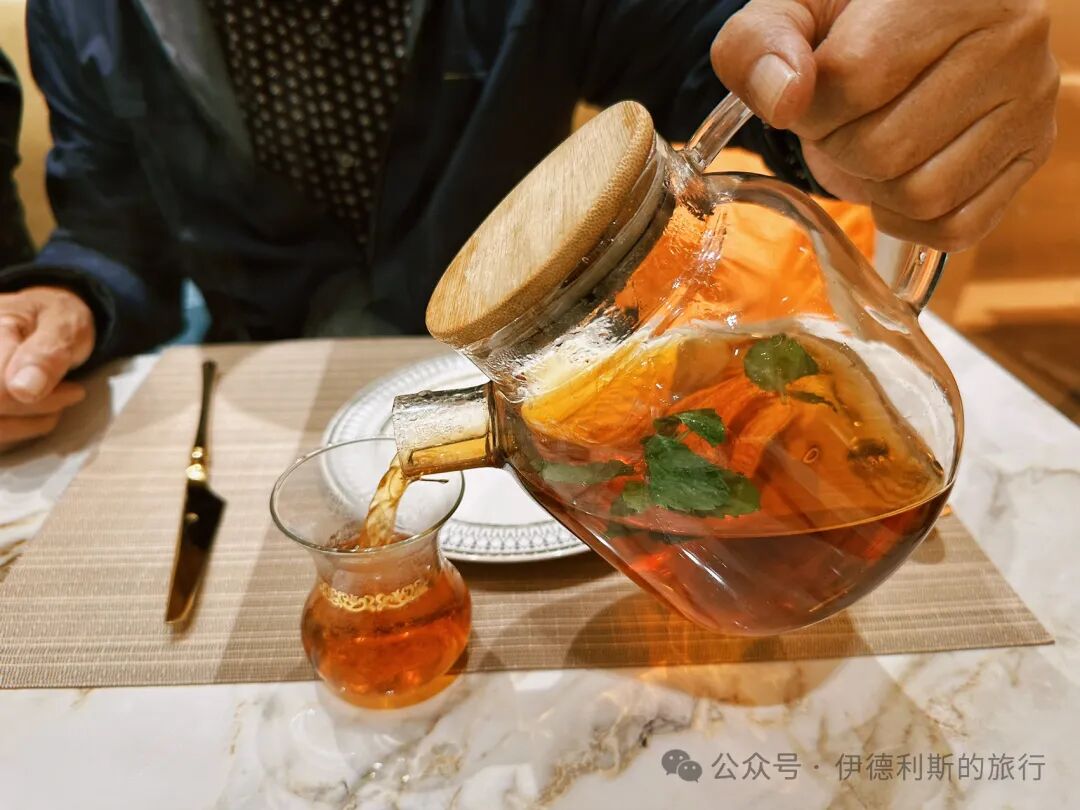
We drank Algerian mint tea and Algerian orange blossom lemonade (Sherbet Mazhar). The mint tea is brewed to order, so you have to wait a while. The aroma is very strong, but because it is freshly brewed, you cannot get refills. Orange blossom water is definitely a signature Algerian drink, especially classic at wedding banquets in northern Algeria. The orange blossom drink is made from orange blossom water distilled from bitter orange blossoms, mixed with syrup and water. It is very refreshing in the summer.
We ate Algerian baklava (Baklawa), apple pie, milk pudding (M'halbi), and cheesecake. Suleiman loved the cheesecake the most. Baklava was introduced to Algeria from Turkey during the Ottoman period. The Algerian version adds crushed almonds and orange blossom water, so the taste is different from the Turkish one.
Milk pudding (M'halbi) is a classic Middle Eastern dessert for breaking the fast and is most popular during Ramadan. The name M'halbi comes from Al-Muhallab, the governor of Khorasan during the Umayyad Caliphate. Legend has it that he once had a stomachache, and a doctor made him milk-boiled rice flour with sugar. He liked it so much that he named the dessert after himself.
Finally, I want to say that their food is excellent, but the decor is still a bit simple. If they could highlight the Algerian theme more, it would definitely become a new trendy spot in Tianjin.
Yiweizhai Halal Rice Noodle Rolls
I ate rice noodle rolls (changfen) at Yiweizhai on Xihu Road in Tianjin. I used to go to Yeji Changfen whenever I visited Tianjin, but this was my first time at Yiweizhai. The shop at Yiweizhai is small, but they have a huge variety of dishes. We ordered seafood rice noodle rolls, fresh shrimp steamed dumplings (shaomai), chicken feet in black bean sauce (chizhi fengzhua), claypot rice with cured beef (laoniurou baozai fan), plain beef tendon balls, curry beef balls, curry fish balls, and traditional crispy mung bean starch jelly (laowei cuipi menzi). Except for the claypot rice, which takes a while because it is cooked from raw rice, the other dishes arrived very quickly.
Overall, their food is very good. It really shows how much effort Tianjin people put into their cooking. Their rice noodle rolls have a great texture, not as firm as the ones I had in Hong Kong. Their beef tendon balls and fish balls also have a fantastic texture; we ordered one portion and then added another. By comparison, the beef balls were just average. This was my first time eating crispy mung bean starch jelly. I had only ever had pan-fried versions before, which clearly do not taste as good as this crispy-on-the-outside, tender-on-the-inside version.
My hometown: Hexiwu Town, Wuqing, Tianjin.
Xinpengzhai Restaurant.
I first bought the signature golden-rimmed braised noodles (jinbian koumen) at Xinpengzhai Restaurant. It is beef and bean sprout braised noodles (menbing) topped with a fried egg. The egg was very fragrant, and it was my first time eating menbing this way. It tasted excellent.
Wangji Lirenzhai.
Inside the Hexiwu farmers' market is the Shouyi Snack Street, where the most famous item is the yellow rice fried cake (huangmi zhagao) from the century-old shop Wangji Lirenzhai. We arrived a bit late and they were closing at 1:00 PM, so we just bought all the remaining fried cakes.
Lirenzhai is a Tianjin intangible cultural heritage project for the craft of making Hexiwu Lirenzhai fried cakes. The Wang family's ancestral home was in Cangzhou, Hebei. At the end of the Qing Dynasty, they fled the war and came to Wuqing. They first settled in Yangcun, but later heard that Hexiwu was densely populated and had a large community of Hui Muslims, so they moved to Hexiwu to settle down. In 1918, Wang Zhenlong inherited the family craft and officially set up a stall in Hexiwu, specializing in yellow rice fried cakes. After 1958, the Wangji fried cake business was merged into a cooperative store, and it was shut down after the 1960s. It wasn't until 1979 that the second-generation successor, Wang Jinyuan, inherited the family business and revived Wangji fried cakes. In 1999, the third-generation successor, Wang Xueren, took over and renamed it Lirenzhai, which is what it is called today.
Yangji Gezhihe.
Besides yellow rice fried cakes, the fried mung bean flour rolls (gezhihe) in Hexiwu are also very famous. Unlike the common version, the ones here are filled. They come in mung bean flour and wheat flour varieties, giving them a richer texture than standard fried mung bean flour rolls. view all
Summary: This Tianjin halal food guide follows an autumn eating route through Syrian dishes, giant river prawns, yellow broth pulled noodles, Turkish food, and Xinjiang fresh milk ice cream. It keeps the original restaurant details, dishes, photos, and food notes for readers planning Muslim-friendly meals in Tianjin.
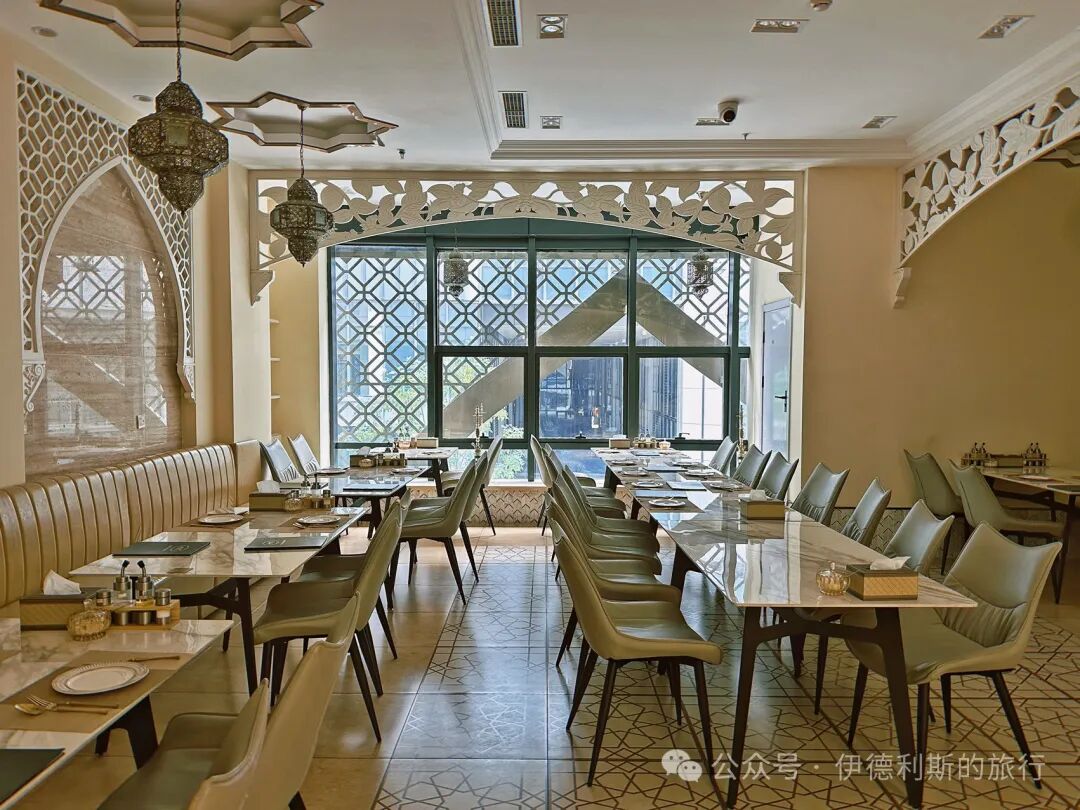
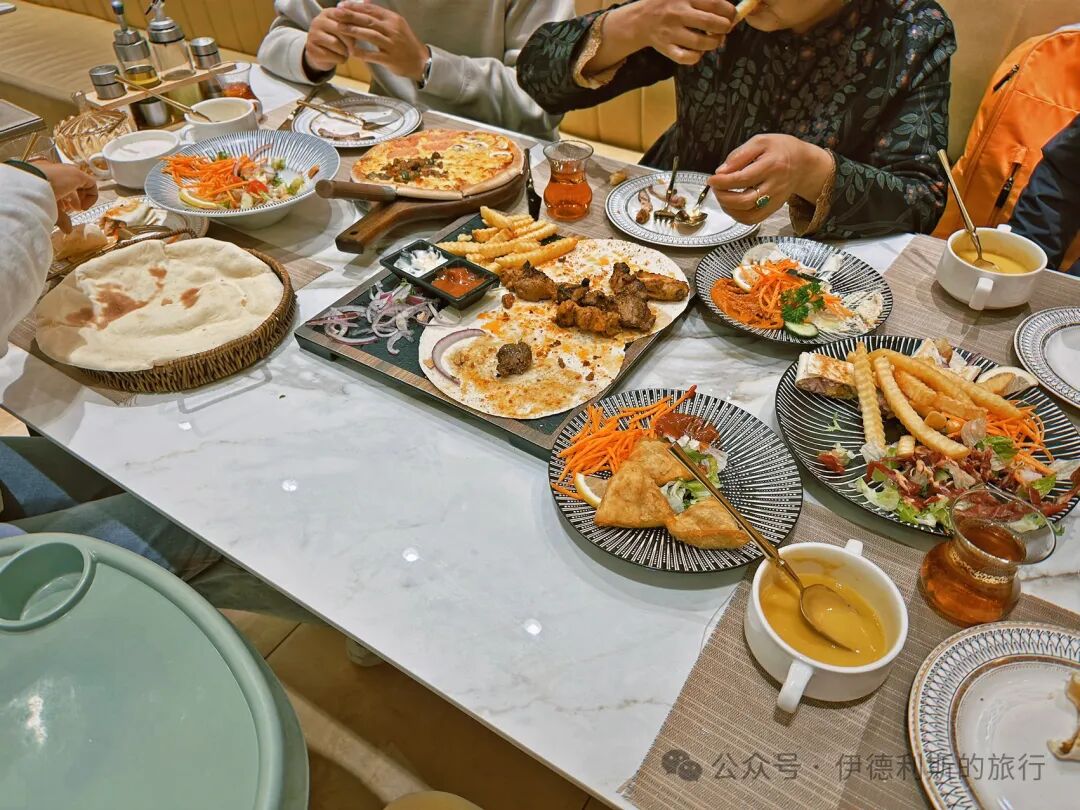
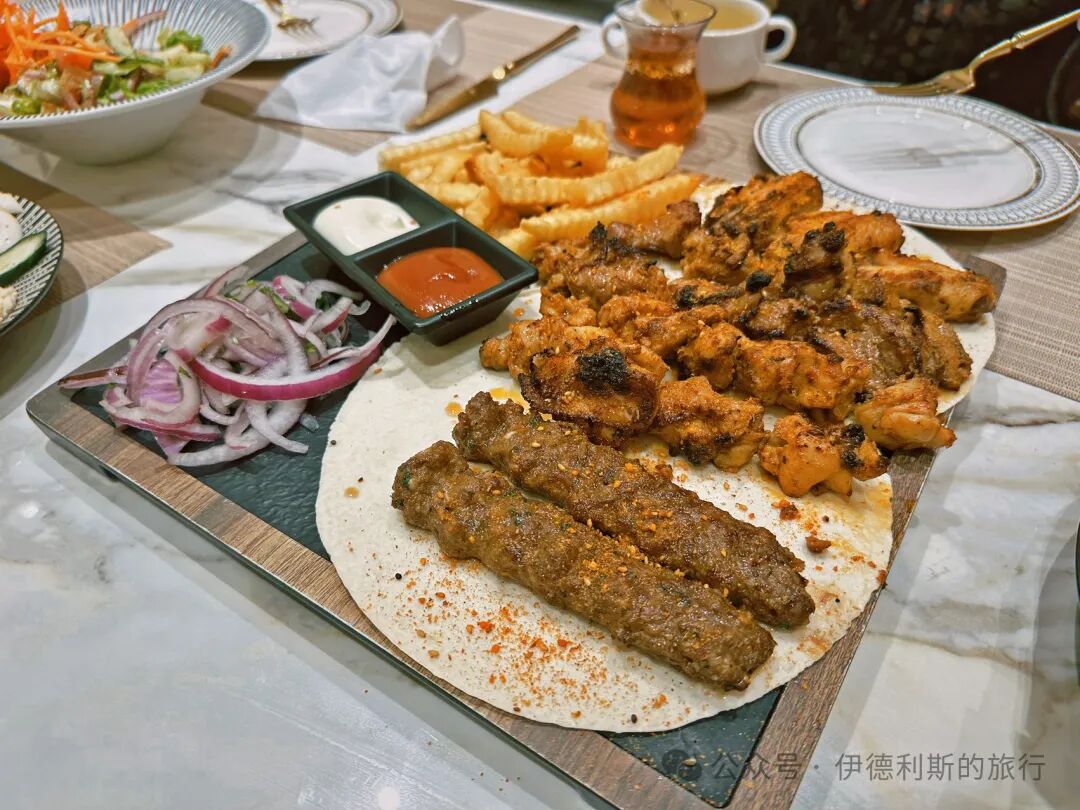
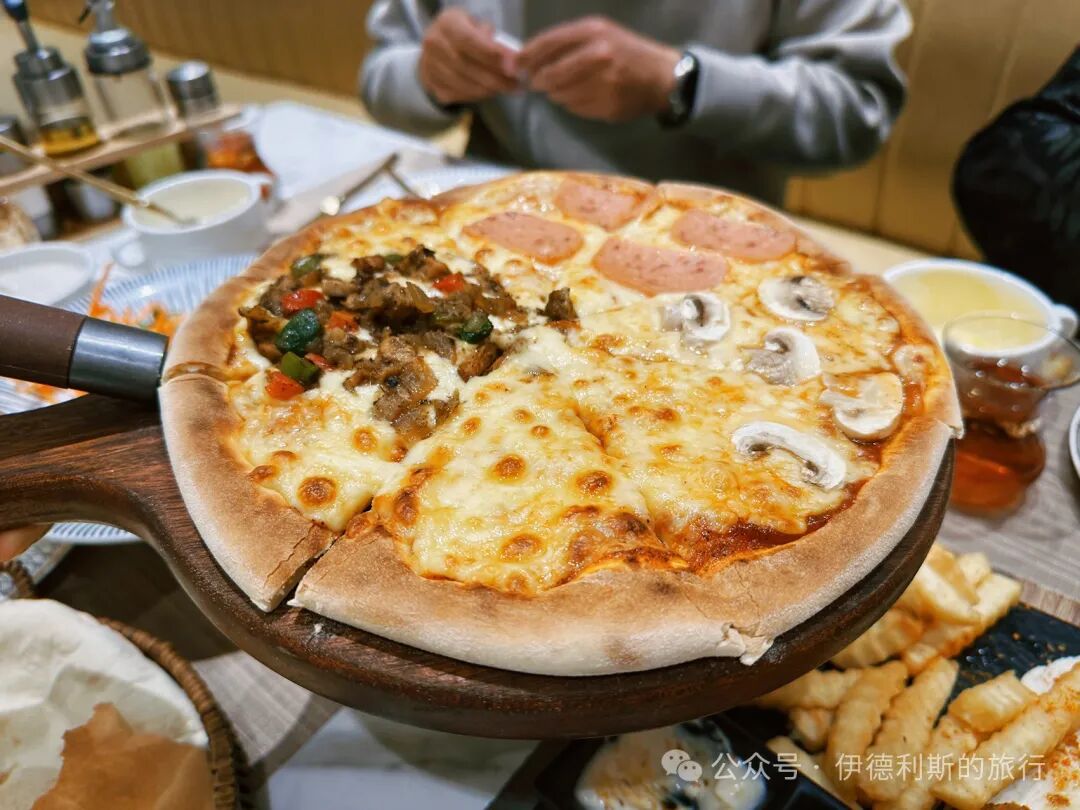
Two months later, we went back to Tianjin for a weekend trip with our kids. We arrived in Tianjin on Saturday at noon and headed straight to the Al-Andalus restaurant in the Nankai District Sunac Center for some Levantine food. The owner is Syrian. Al-Andalus was the name Arabs used for the Iberian Peninsula during the Middle Ages. In the 8th century, under the Umayyad dynasty, Al-Andalus was a famous center for economy, culture, academics, and education, serving as an important bridge for cultural and scientific exchange between the East and the West.
We ordered the four-person feast set, which included lentil soup, cream of mushroom soup, a hummus trio, lamb samosas (samosa), chicken wraps (shawarma), a four-season pizza, a mixed grill platter, black tea, and a crispy salad. We also ordered yogurt separately. Overall, the food was very authentic. It offers better value than the Arab restaurants in Beijing, and you don't have to wait in line. Their yogurt was especially good, with a rich, tangy flavor that beats many of the Arab restaurants in Beijing. The only downside was that the samosa dough was a bit thick, more like the South Asian version than the thin-crust Levantine style.
After lunch, we went to the Tianjin Museum, which is currently hosting an exhibition of historical artifacts from the National Museum of Kazakhstan. See diary: [Exhibition Visit] Tianjin Museum's Kazakhstan National Museum Historical Artifacts Exhibition.
The Tianjin Museum displays exquisite brick carvings by the Hui Muslim families known as the 'Fancy Work Ma Family' (Huahuo Majia) and 'Brick Carver Liu' (Kezhuan Liu) from the Northwest Corner. See diary: [Exhibition Visit] Exquisite brick carvings by Hui Muslim artisans 'Huahuomajia' and 'Kezhuanliu' in the Northwest Corner of Tianjin.
If you are a friend (dosti) from Beijing and are tired of the same old restaurants, a trip to Tianjin will definitely open your eyes. On this trip to Tianjin, we discovered a restaurant called Xiju that specializes in giant river prawns (luoshixia). It is located on Fuxing Road, just west of the Northwest Corner. It is run by local Hui Muslims and is very busy at night.
Their signature dish is a two-pound platter of giant river prawns, which you can get spicy or with garlic sauce. Giant river prawns are freshwater prawns originally from Malaysia in Southeast Asia. They are large and have plump, tender meat, but the texture isn't as firm as sea prawns, and the prawn flavor isn't as intense. It is similar to the difference between freshwater fish and sea fish. We ordered the garlic giant river prawns. You can add noodles to the sauce, which my son loved. He couldn't stop eating them, from start to finish, and he was the one at our table who enjoyed the meal the most.
Their Chaoshan seafood porridge was also excellent. Besides having plenty of prawns, it was packed with other seafood, making the flavor very rich.
They also have various barbecue items. We ordered squid, flounder, pineapple beef skewers, cheese bread slices, charcoal-grilled beef short ribs, and beef kimchi cheese rolls. Everything tasted great, especially the flounder, which had a wonderful texture and flavor.
Their sizzling sea bass pot (zhuzhu luyu bao) was also a hit with everyone. The sea bass was very fresh, and the garlic-clove-shaped meat had a great texture.
Their fried chicken racks are sweet and sour, making them a perfect snack that gets addictive the more you eat.
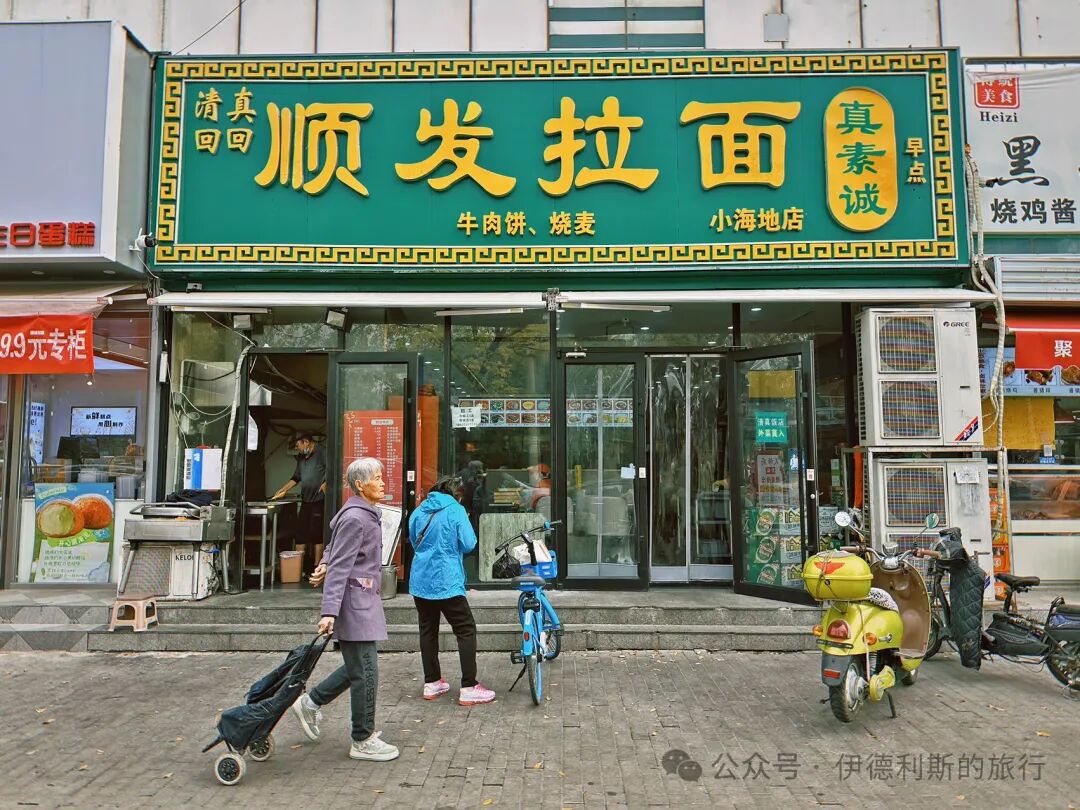
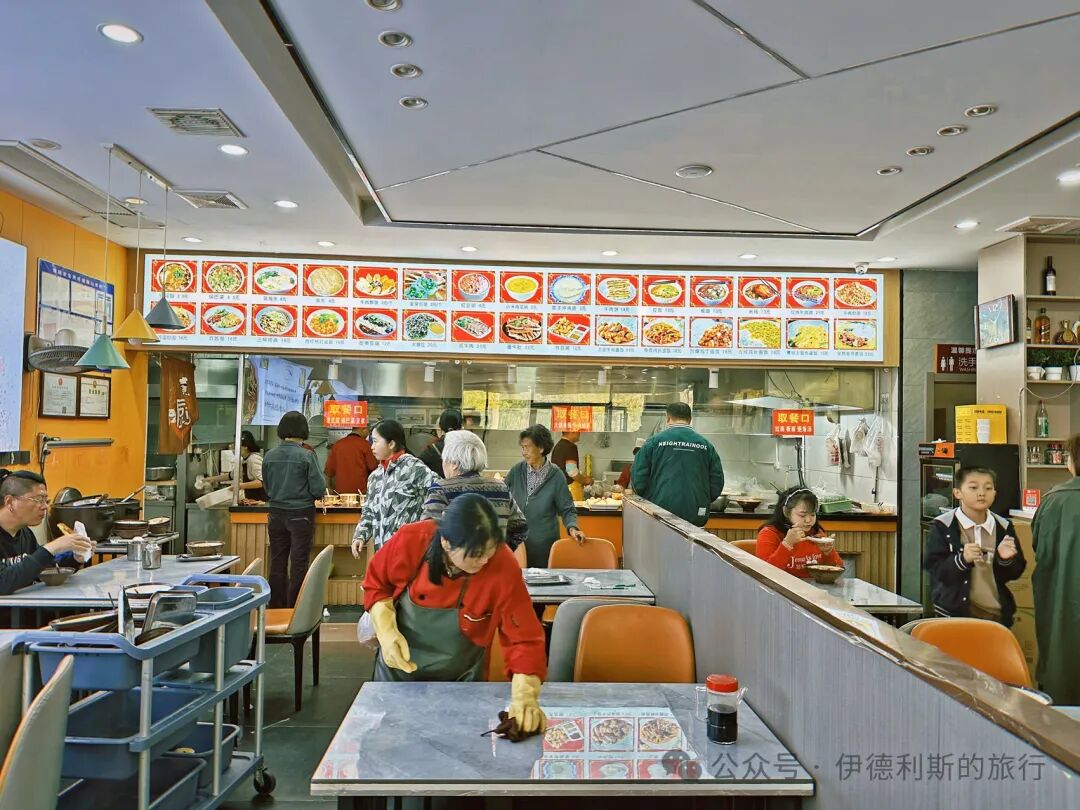
On Sunday morning, we had breakfast at Shunfa Lamian and Zhensucheng in the Xiaohaidi area of the Hexi District. Xiaohaidi is a lively residential area in the south of Tianjin with plenty of halal snacks. Shunfa Lamian is a noodle shop that has been open for over twenty years, specializing in yellow broth pulled noodles (lamian) and braised noodles (banmian). Zhensucheng is a breakfast shop that opened in 1979, specializing in crispy crepe strips in savory sauce (guobacai). Both of these shops are now franchises. The one in Xiaohaidi joined both brands, so now you can have yellow broth pulled noodles (huangtang lamian) and traditional breakfast at the same time in the morning.
We ordered yellow broth pulled noodles, water caltrop soup (lingjiao tang), flour tea (miancha), and beef pie (niurou bing). It was my first time having yellow broth pulled noodles. The yellow curry powder makes the flavor very rich, and I think it tastes even more satisfying than the clear broth version. Their water caltrop soup and flour tea both taste good, and Suleiman especially likes their flour tea. However, their beef pie has a bit too little filling. I noticed many people at the neighboring tables were eating flatbread rolls with fried fritters (dabing juanquan).
After eating at so many good restaurants in Tianjin, I finally hit a dud this time. On Sunday at noon, we went to the Galata Turkish Restaurant in Hengji Plaza, Hexi District. First of all, their tables are tiny. We ordered a meal for four, and it couldn't even fit on the table. Secondly, it is not authentic! We have eaten at so many Turkish restaurants in Beijing, Yiwu, Fuzhou, and Guangzhou, and they were all very authentic, whether run by Turkish or Azerbaijani people. This is the first time we have eaten at an inauthentic one; it is nothing like what we ate in Turkey.
Their potatoes and roasted chicken were covered in thick layers of salad dressing and ketchup. It felt just like fast food sold at a temple fair, which doesn't fit the Mediterranean diet of Turkey that focuses on spices. Also, the grilled meat was not good. Some parts were dry, and some were salty. The grill chef's skills need improvement. The grilled meat was served with pilaf (zhuafan) made with domestic short-grain rice. I suspect the chef is our fellow countryman from Xinjiang.
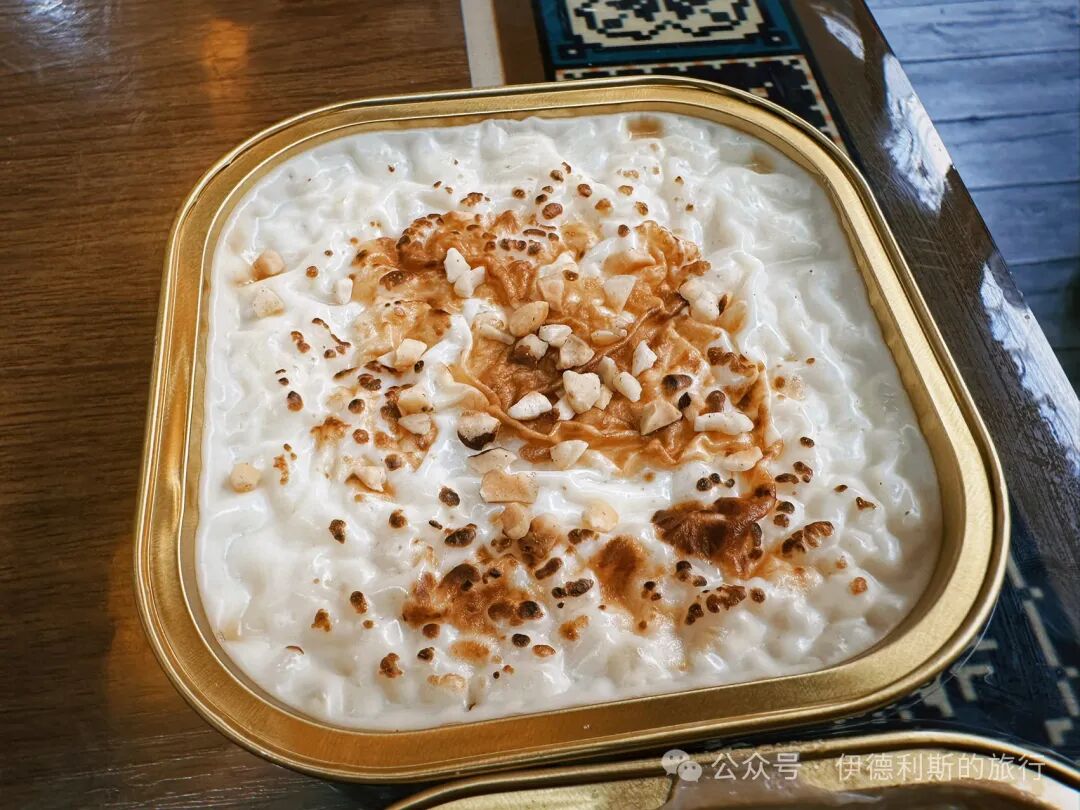
They do have one big advantage, which is that it is cheap! The price is about half of what you would pay at a Turkish restaurant in Beijing, so you get what you pay for. Their milk pudding and Turkish coffee also taste good. The milk pudding is not sweet, and it is quite pleasant to have with coffee. It is just that they served the coffee with a candy ball that children often eat, which is also a bad match. They should at least serve it with Turkish delight or even a piece of chocolate.
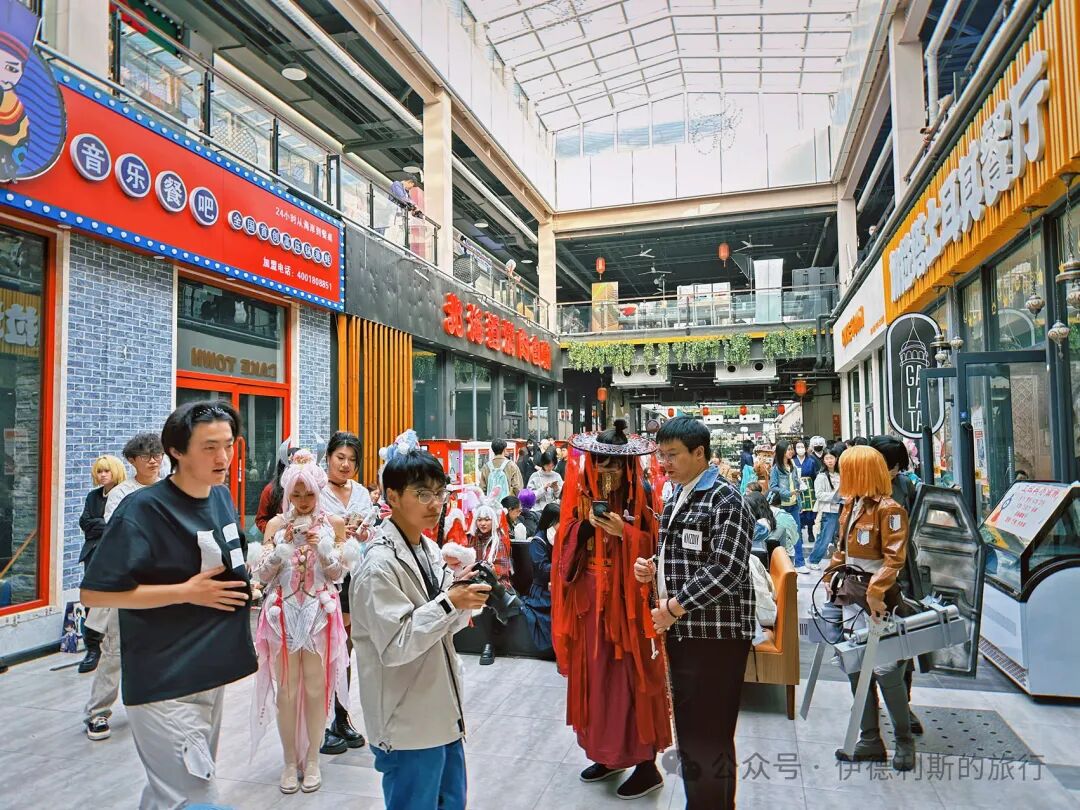
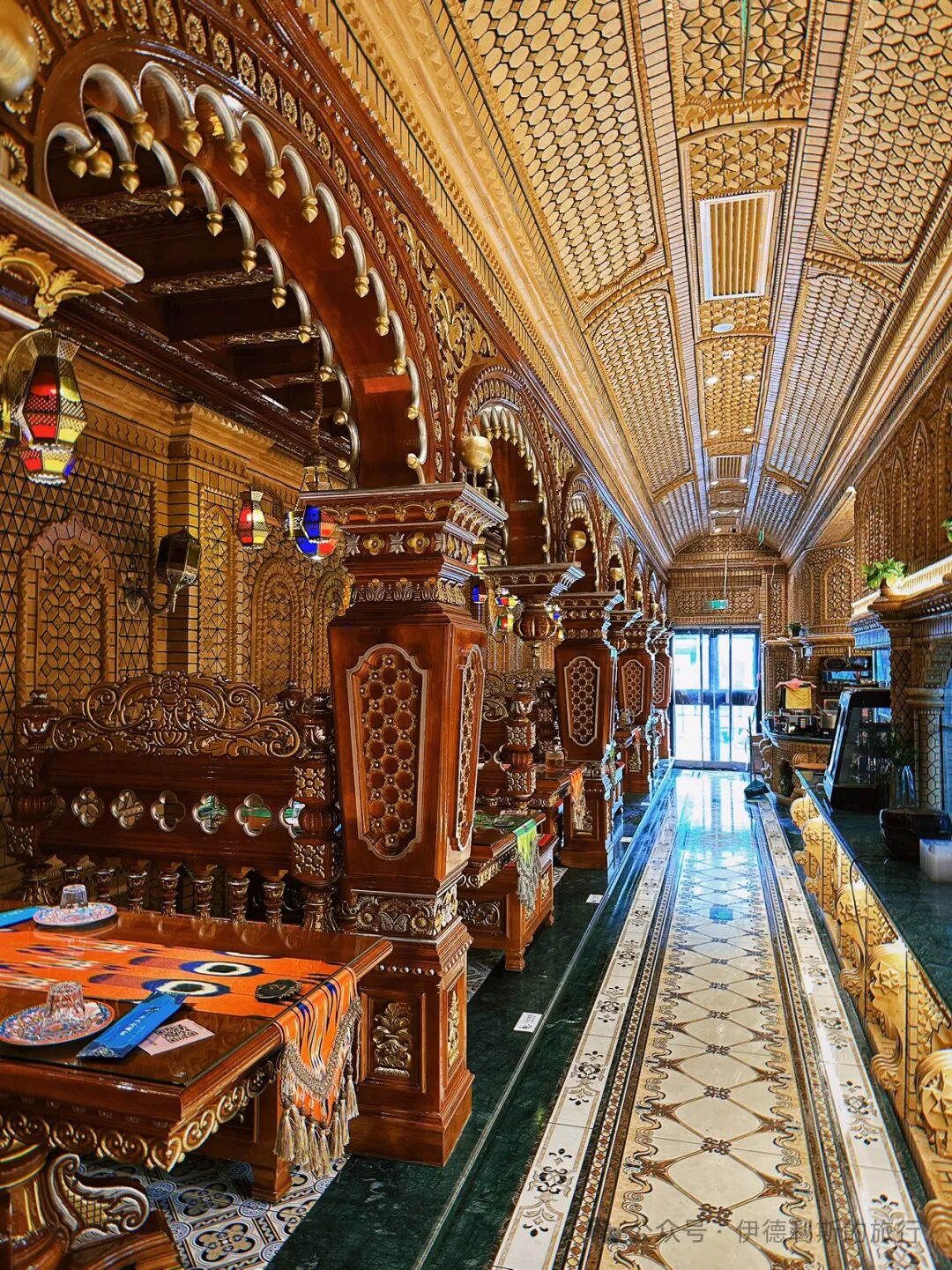
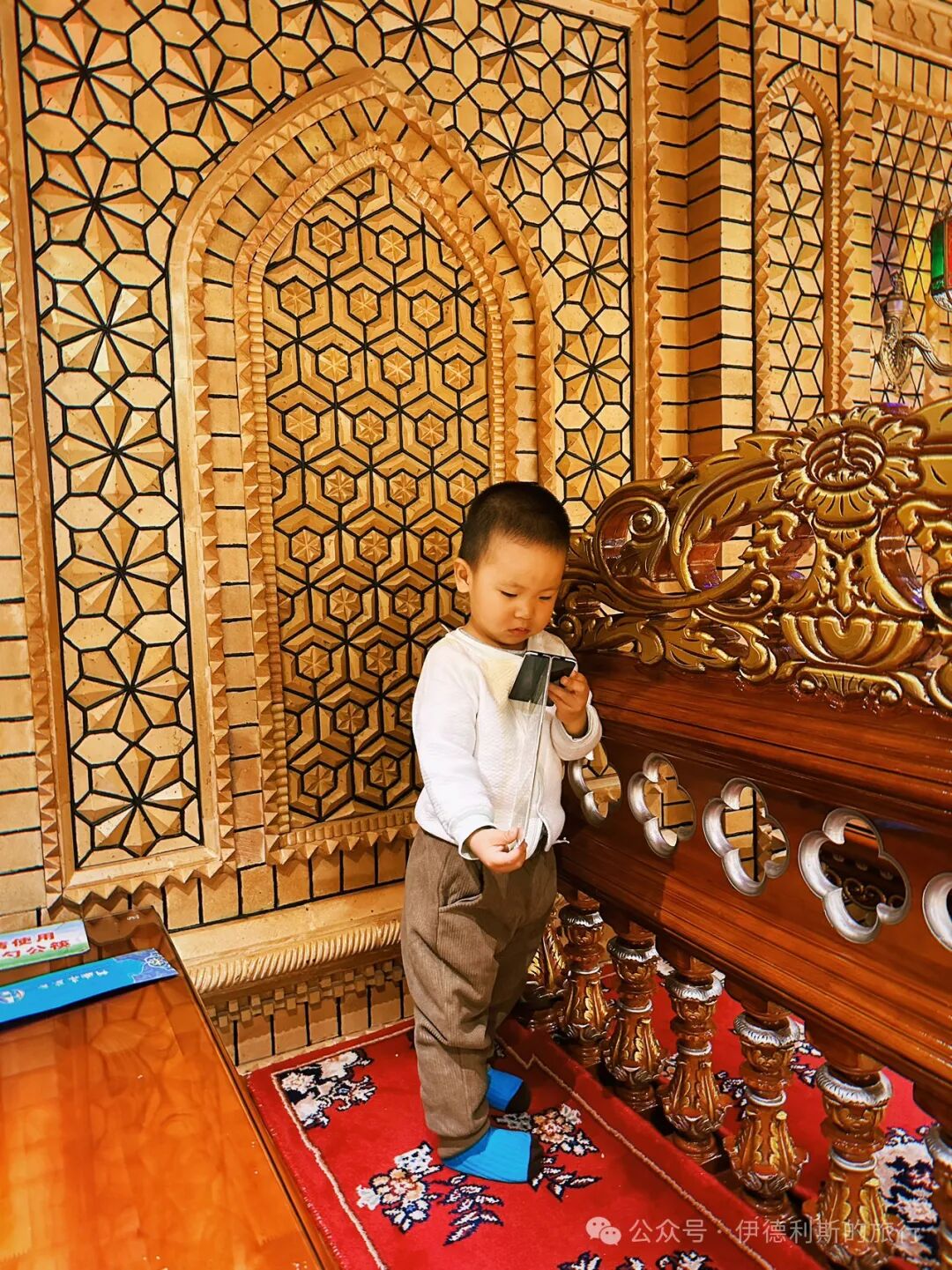
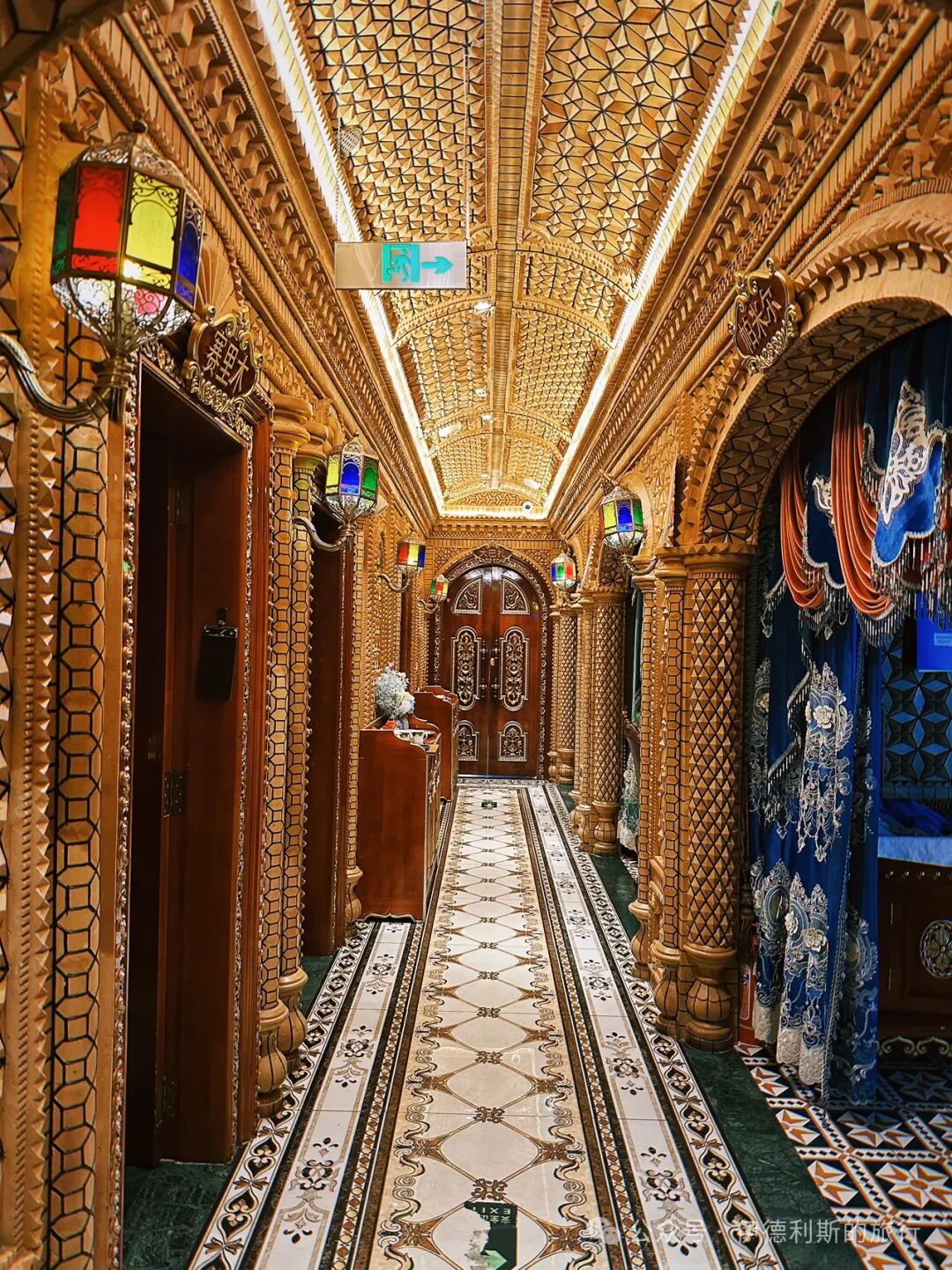
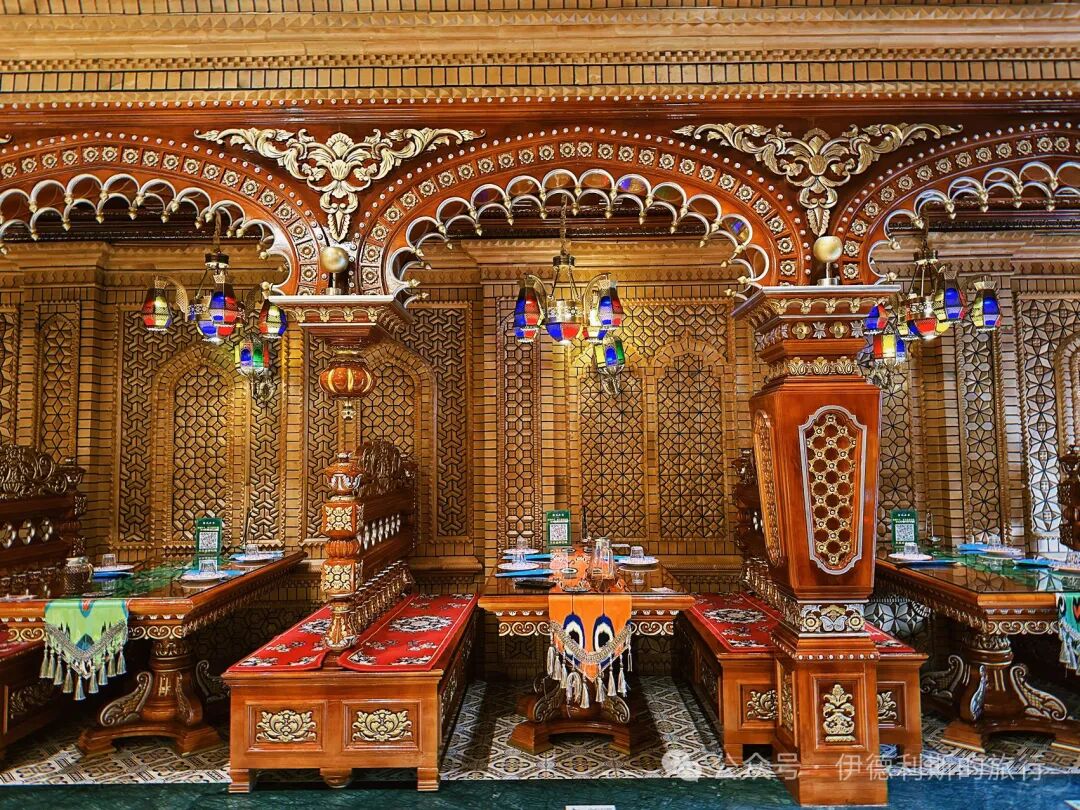
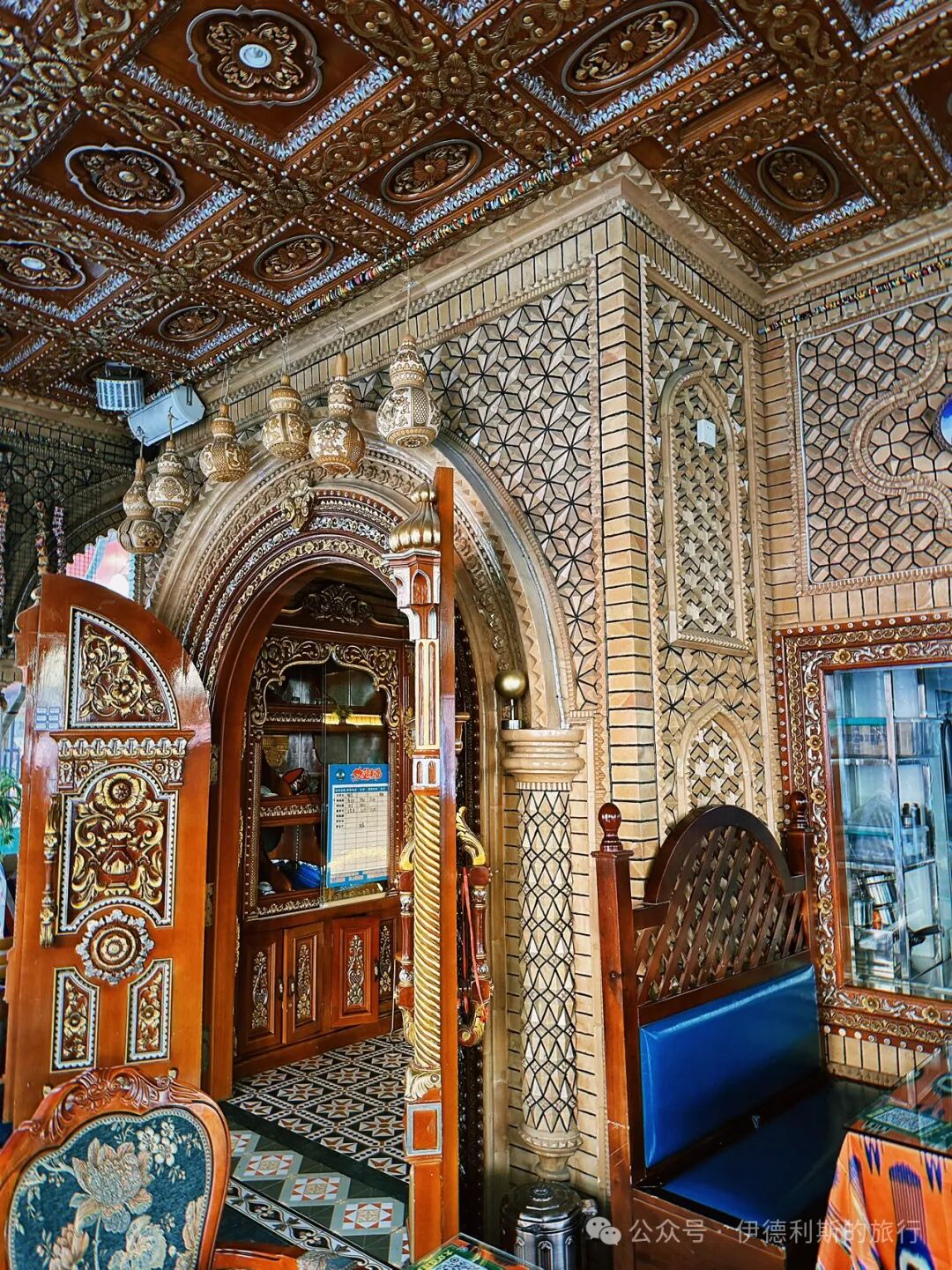
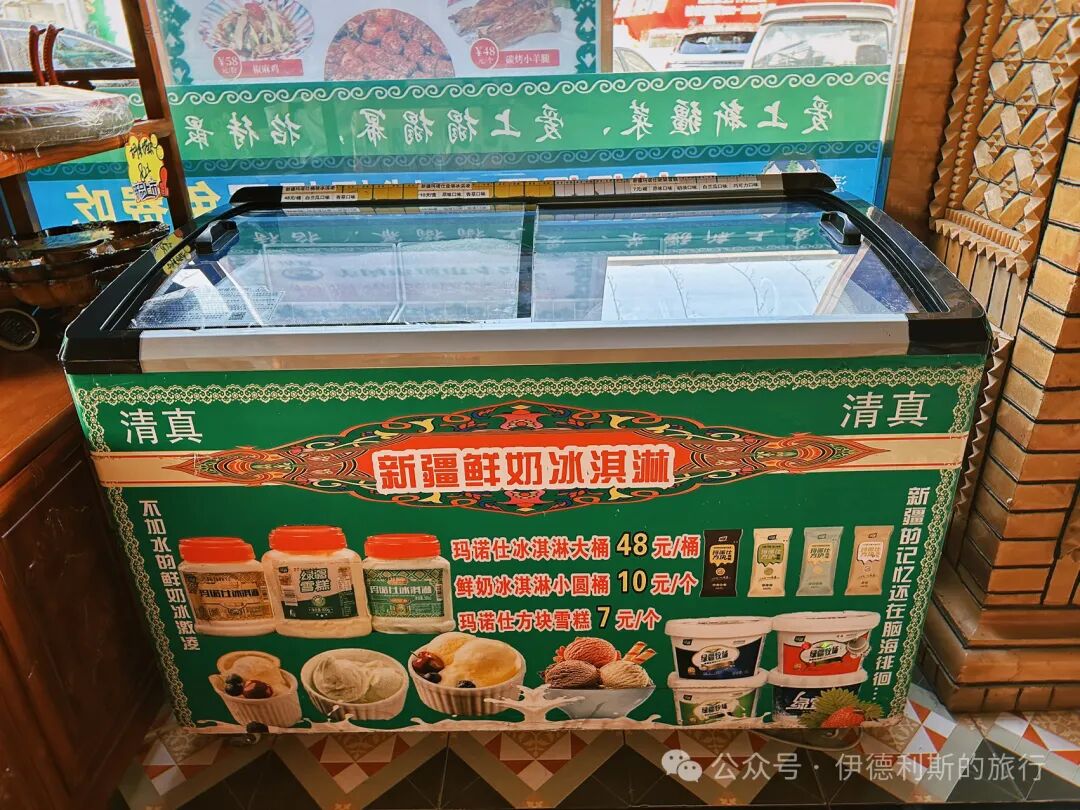
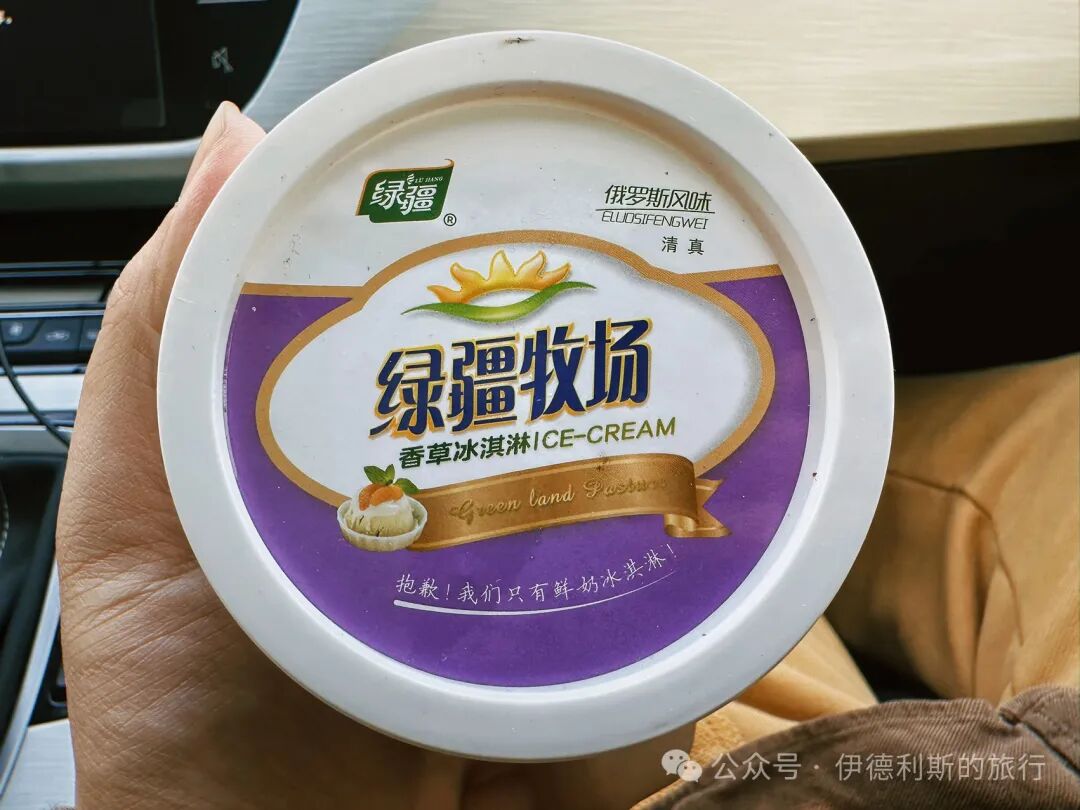
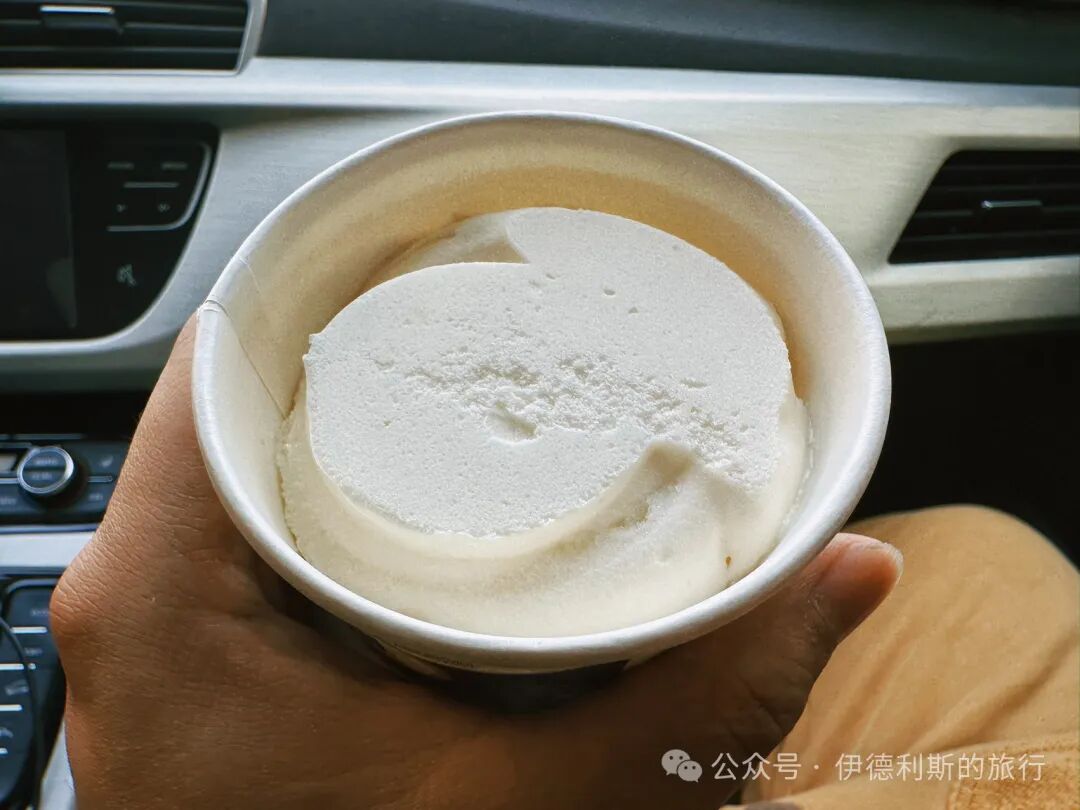
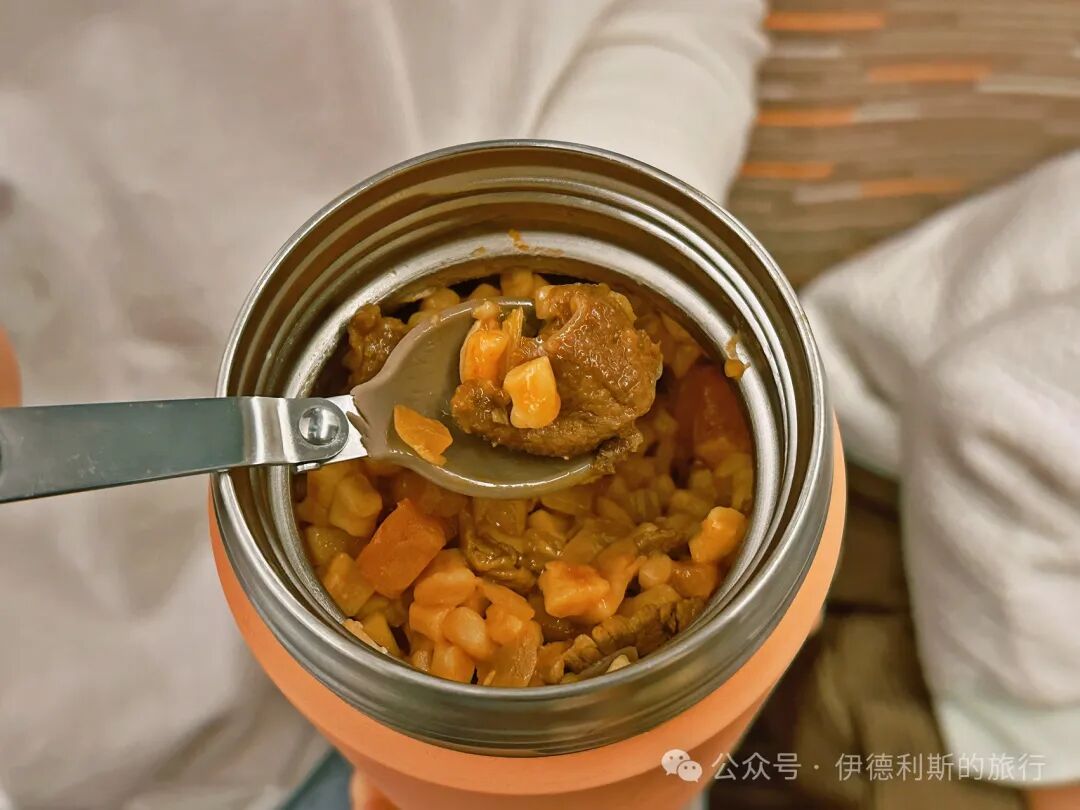
After leaving Hengji Plaza, we went to the Tatami Xinjiang Restaurant at the entrance to pack some diced noodle stir-fry (dingding chaomian) for Suleiman to eat in the evening. Their decor is quite good and very Xinjiang-style. The waiter who served us was Uyghur, and the chefs in the kitchen were all Hui Muslims. It is an open kitchen, and the chefs have real skill. We specifically asked for it to be made for a child, and the diced noodle stir-fry was indeed very suitable. Suleiman loved it. They also sell fresh milk ice cream from Tacheng, and I bought one that tasted quite good.
I just remembered that I can add locations to my official account posts, so I will also add locations for the Tianjin restaurants recommended in previous issues.
Between the mountains and the sea: from Huairou farmhouses to coastal Western restaurants.
Haishiwan Halal Western Restaurant.
Eating Halal Western food at Haishiwan on Binjiang Road in Tianjin. Overall, their dish names and plating are quite fancy and look great in photos, but the actual taste is average, similar to fast food in a shopping mall.
The best thing they have is probably the avocado salad, which is very healthy. The tuna salad is more like a simple home-style mixed vegetable dish. The seafood fried rice and beef fried rice are both soy sauce-based, which feels more suited to the tastes of the Shandong cuisine region. The seafood pizza is plated very beautifully, but the pizza base itself is very average, just like the taste of a cheap fast-food chain. They also have various drinks with names I don't recognize, which are just sparkling water mixed with syrup. The fog coffee is great for photos, but the coffee itself is also very average.
Nuobona Halal Western Restaurant.
Nuobona Halal Western Restaurant at the 80 Food Plaza in TEDA, Tianjin, is definitely the best Halal Western food I have ever eaten! The taste is far better than the ones in downtown Tianjin.
Muyi Chinese Restaurant, Nuobona Western Restaurant, and the Western bakery on the first floor in Taifeng are all part of the Yisilai Mu Restaurant founded in 1994, and their Halal license number is Binhai 001. We have eaten at Muyi before; it is creative Chinese food with many dishes they invented themselves, and the taste is excellent. This time we tried their Western food and still had nothing but praise. Their environment is also very good, and they have a special area for children to play, which is very thoughtful.
We ordered charcoal-grilled baby lobster and creamy lobster soup served two ways, French escargot, British fish and chips, baked potato skins, golden pillow durian pizza, lasagna, tiramisu, non-alcoholic mojito, dirty milk, and rose soda, and we also ordered a kids' meal for Suleiman (spaghetti, pumpkin soup, french fries, grilled chicken wings, and fruit salad). The lobster is very tender, and the creamy lobster soup is rich and very fragrant. This was my first time eating baked escargot; the texture is very chewy and bouncy, and the various spices are added perfectly. It was my first time eating British-style fried fish, though it didn't come with french fries. The way they make it is very different from the common cod cakes in China; the fish meat is ground very finely, and the texture is very moist.
Taking kids out to eat in Tianjin: Yemeni food, Algerian desserts, rice noodle rolls (changfen), Japanese food, and water caltrop soup.
Socotra Yemeni Restaurant.
Many Yemeni restaurants have opened in Guangzhou and Yiwu, but Beijing's Arab restaurants are still mostly Levantine style. If you want a Yemeni meal, you have to take an intercity train to Tianjin.
Socotra is Socotra Island in the Arabian Sea, southeast of Yemen. It was called Sugudala in the Ming Dynasty's Zheng He Navigation Map. Socotra Island was listed as a World Natural Heritage site in 2008. The island is most famous for its dragon blood trees. The Socotra restaurant's logo is a dragon blood tree, and there are photos of the trees hanging in the shop.
We ordered the signature soup, chicken lentil soup, lamb Zurbian rice, Mushakkal stir-fried vegetables, Fahsa beef stew, banana mango juice, and Khubz flatbread. Zurbian rice is a bit like Indian Biryani rice, as both are stir-fried with various spices. Their lamb is roasted and smells great, but we found the rice a bit dry. There are also small bone fragments inside, so be careful not to let children eat it.
When you go to a Yemeni restaurant, you must try the classic Yemeni dish, Fahsa beef stew. Fahsa is usually made with lamb, but this place uses beef. When they make it, they stew the meat until it is very tender. It starts in a large vat and is then moved to a small pot to continue stewing. Besides ginger, garlic, and cumin, they add a spice called fenugreek (Hulbah) when stewing the meat. Fenugreek is actually what people in Northwest China often call fragrant beans (kudou). People in the Northwest dry the leaves of the fenugreek plant and grind them into powder to steam buns, while Yemenis grind the seeds to stew meat. Fenugreek seeds expand when they meet water and easily foam up when stirred in a bowl.
The classic pairing for Fahsa stew is Mulawah Yemeni flatbread, but this place requires you to order it in advance. You can only get Khubz flatbread if you walk in. Khubz flatbread is actually the same as the pita bread in Levantine cuisine. The version they make is quite hard, and to be honest, it is not very tasty.
Qianmu Halal Japanese Cuisine
There are no longer any halal Japanese restaurants in Beijing, so you have to go to Tianjin for this. This place is very popular, and it is hard to get a seat without booking in advance. When we went after eight o'clock, they had even sold out of rice, so we had to go to the ramen shop across the street to buy some.
We ordered tempura udon, sukiyaki, eel rice, a grilled platter, cod roe potato gratin, cheese-baked crab shell, a slow-cooked sushi platter, and marble soda. Suleiman loves their udon noodles. He couldn't stop eating them, and after he finished, he was so happy that he fell right asleep. There are quite a few grilled items, but they are mostly mushroom-based vegetable dishes with less meat. The soy sauce for the sushi is a bit salty, and the sushi itself is just average, which is a pity. The staff saw we had a child, so they cooked the sukiyaki for us before bringing it to the table. That deserves a thumbs up. The eel rice tastes okay, and next time I want to try their teriyaki chicken rice.
Xue's Northwest Corner Old-Style Breakfast
Ever since the Northwest Corner became super popular, I basically stopped going there to eat. Actually, Tianjin has so many delicious breakfast spots, not just the Northwest Corner. I used to go to Tianmu and Jinjiayao for breakfast, but this time I went to Xue's Northwest Corner Old-Style Breakfast in the Lushuidao area of Jinnan District. Their shop is a simple neighborhood eatery on the ground floor of an apartment complex, where all the local seniors come to eat.
We didn't arrive until nine, so most things were sold out. We just ordered water caltrop dumplings (lingjiao tang), sesame flatbread with meat (shaobing jiarou), and savory crepe strips in sauce (guobacai). Their water caltrop dumplings are truly delicious. The skin is the perfect texture, and the filling is very fragrant. Suleiman ate several in one go. The sesame flatbread for the meat sandwich is crispy, and the flavor is quite good. The savory crepe strips are a traditional old-school flavor, but eating both the dumplings and the crepe strips together is a bit heavy. I feel like the crepe strips go best with iron-pot soy milk.
Algerian Bakery
I had an Algerian afternoon tea at Lyn's Healthy Bakeshop on Chifeng Road in Tianjin. Chifeng Road is in the former French Concession area, which is full of small Western-style villas and all kinds of little shops.
The owner, who is from Algeria, opened this small shop for tea and desserts. It should be the first Algerian restaurant in China. I have to say, Tianjin's food scene is once again at the forefront of internationalization!
They offer both à la carte and afternoon tea sets. They have both traditional Algerian desserts and Western pastries. Everything uses maple syrup instead of white sugar, focusing on healthy eating. It is probably the least sweet Arabic dessert shop I have ever visited!
We drank Algerian mint tea and Algerian orange blossom lemonade (Sherbet Mazhar). The mint tea is brewed to order, so you have to wait a while. The aroma is very strong, but because it is freshly brewed, you cannot get refills. Orange blossom water is definitely a signature Algerian drink, especially classic at wedding banquets in northern Algeria. The orange blossom drink is made from orange blossom water distilled from bitter orange blossoms, mixed with syrup and water. It is very refreshing in the summer.
We ate Algerian baklava (Baklawa), apple pie, milk pudding (M'halbi), and cheesecake. Suleiman loved the cheesecake the most. Baklava was introduced to Algeria from Turkey during the Ottoman period. The Algerian version adds crushed almonds and orange blossom water, so the taste is different from the Turkish one.
Milk pudding (M'halbi) is a classic Middle Eastern dessert for breaking the fast and is most popular during Ramadan. The name M'halbi comes from Al-Muhallab, the governor of Khorasan during the Umayyad Caliphate. Legend has it that he once had a stomachache, and a doctor made him milk-boiled rice flour with sugar. He liked it so much that he named the dessert after himself.
Finally, I want to say that their food is excellent, but the decor is still a bit simple. If they could highlight the Algerian theme more, it would definitely become a new trendy spot in Tianjin.
Yiweizhai Halal Rice Noodle Rolls
I ate rice noodle rolls (changfen) at Yiweizhai on Xihu Road in Tianjin. I used to go to Yeji Changfen whenever I visited Tianjin, but this was my first time at Yiweizhai. The shop at Yiweizhai is small, but they have a huge variety of dishes. We ordered seafood rice noodle rolls, fresh shrimp steamed dumplings (shaomai), chicken feet in black bean sauce (chizhi fengzhua), claypot rice with cured beef (laoniurou baozai fan), plain beef tendon balls, curry beef balls, curry fish balls, and traditional crispy mung bean starch jelly (laowei cuipi menzi). Except for the claypot rice, which takes a while because it is cooked from raw rice, the other dishes arrived very quickly.
Overall, their food is very good. It really shows how much effort Tianjin people put into their cooking. Their rice noodle rolls have a great texture, not as firm as the ones I had in Hong Kong. Their beef tendon balls and fish balls also have a fantastic texture; we ordered one portion and then added another. By comparison, the beef balls were just average. This was my first time eating crispy mung bean starch jelly. I had only ever had pan-fried versions before, which clearly do not taste as good as this crispy-on-the-outside, tender-on-the-inside version.
My hometown: Hexiwu Town, Wuqing, Tianjin.
Xinpengzhai Restaurant.
I first bought the signature golden-rimmed braised noodles (jinbian koumen) at Xinpengzhai Restaurant. It is beef and bean sprout braised noodles (menbing) topped with a fried egg. The egg was very fragrant, and it was my first time eating menbing this way. It tasted excellent.
Wangji Lirenzhai.
Inside the Hexiwu farmers' market is the Shouyi Snack Street, where the most famous item is the yellow rice fried cake (huangmi zhagao) from the century-old shop Wangji Lirenzhai. We arrived a bit late and they were closing at 1:00 PM, so we just bought all the remaining fried cakes.
Lirenzhai is a Tianjin intangible cultural heritage project for the craft of making Hexiwu Lirenzhai fried cakes. The Wang family's ancestral home was in Cangzhou, Hebei. At the end of the Qing Dynasty, they fled the war and came to Wuqing. They first settled in Yangcun, but later heard that Hexiwu was densely populated and had a large community of Hui Muslims, so they moved to Hexiwu to settle down. In 1918, Wang Zhenlong inherited the family craft and officially set up a stall in Hexiwu, specializing in yellow rice fried cakes. After 1958, the Wangji fried cake business was merged into a cooperative store, and it was shut down after the 1960s. It wasn't until 1979 that the second-generation successor, Wang Jinyuan, inherited the family business and revived Wangji fried cakes. In 1999, the third-generation successor, Wang Xueren, took over and renamed it Lirenzhai, which is what it is called today.
Yangji Gezhihe.
Besides yellow rice fried cakes, the fried mung bean flour rolls (gezhihe) in Hexiwu are also very famous. Unlike the common version, the ones here are filled. They come in mung bean flour and wheat flour varieties, giving them a richer texture than standard fried mung bean flour rolls.
Best Halal Food Tianjin: Pizza, Charcoal BBQ, Western Dining, Haishiwan Seafood and Muslim Snacks
Articles • yusuf908 posted the article • 0 comments • 253 views • 2026-05-23 07:26
Summary: This Tianjin halal food map part 5 covers Alishu Pizza and Pasta, Yanchunlou Restaurant, Chengcheng Charcoal BBQ, AINY Western Casual Dining, Muyi Nuobona Western Restaurant, Haishiwan Restaurant, desserts, seafood, and family-style Western halal dining.
This is the fifth installment of my Tianjin halal food map. It covers six restaurants I visited while traveling back and forth to Tianjin five times recently.
The halal restaurants in Tianjin I visited this time are:
1. Alishu Pizza and Pasta
2. Yanchunlou Restaurant
3. Chengcheng Charcoal BBQ
4. AINY Western Casual Dining
5. Muyi Nuobona Western Restaurant
6. Haishiwan Restaurant
1. Alishu Pizza and Pasta
Tianjin has many small, family-run Western restaurants like this. They are usually located near residential neighborhoods and offer great value. None of the small Western restaurants I visited sell alcohol. The owners are all locals from Tianjin. It is strange that Beijing does not have any similar restaurants.
When I am in Malaysia, I often take my children to Western restaurants for pasta. Kids seem to love pasta and french fries.
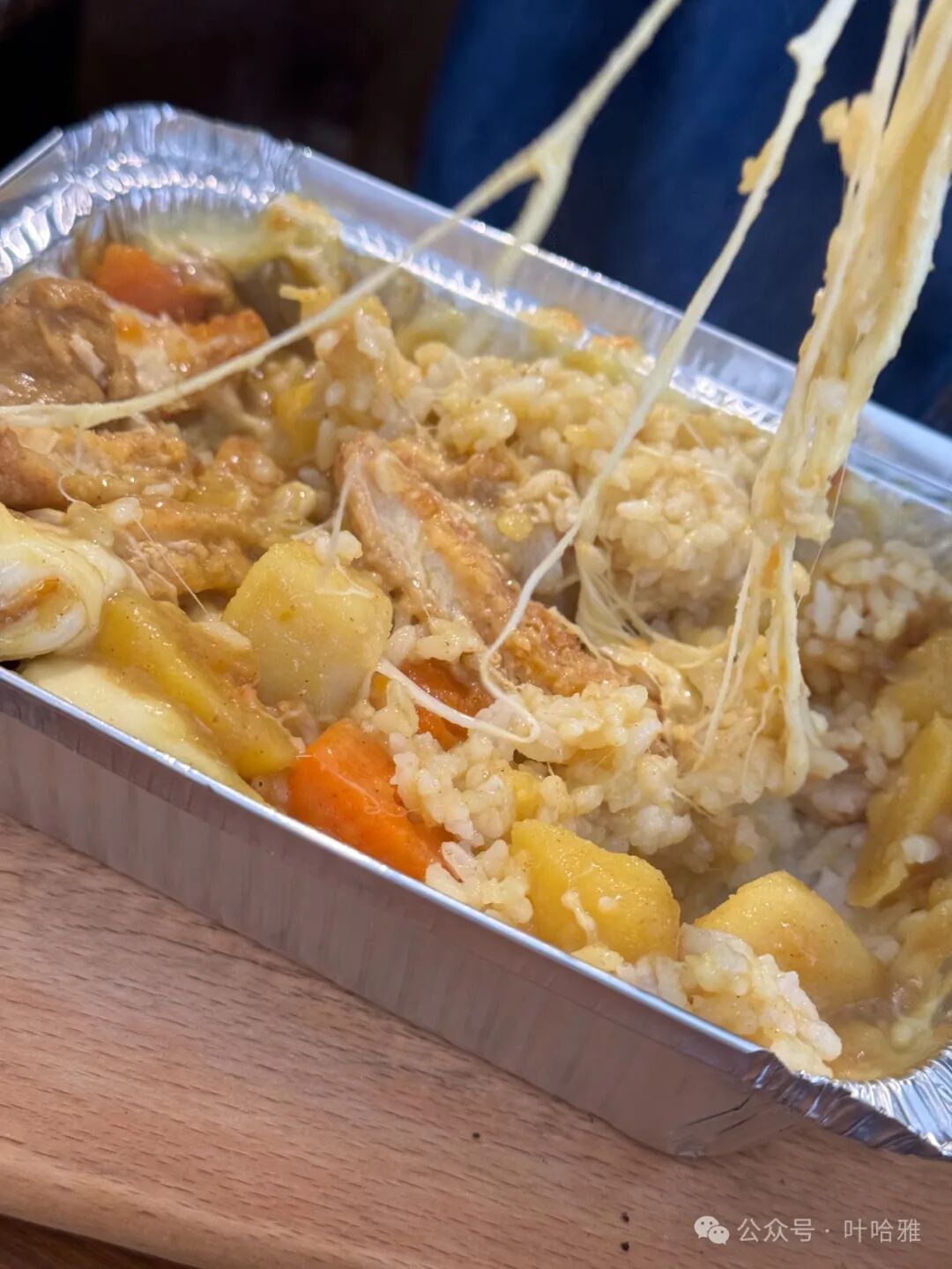
This shop serves baked beef rice with cheese and pizza, costing about 30 yuan per serving.
Two people can eat until they are full for about 100 yuan. People say this shop used to have several branches, but this is the only one left.
2. Yanchunlou Restaurant
Some internet users called this the best halal restaurant in Tianjin, so we made a special trip to try it while passing through the city.
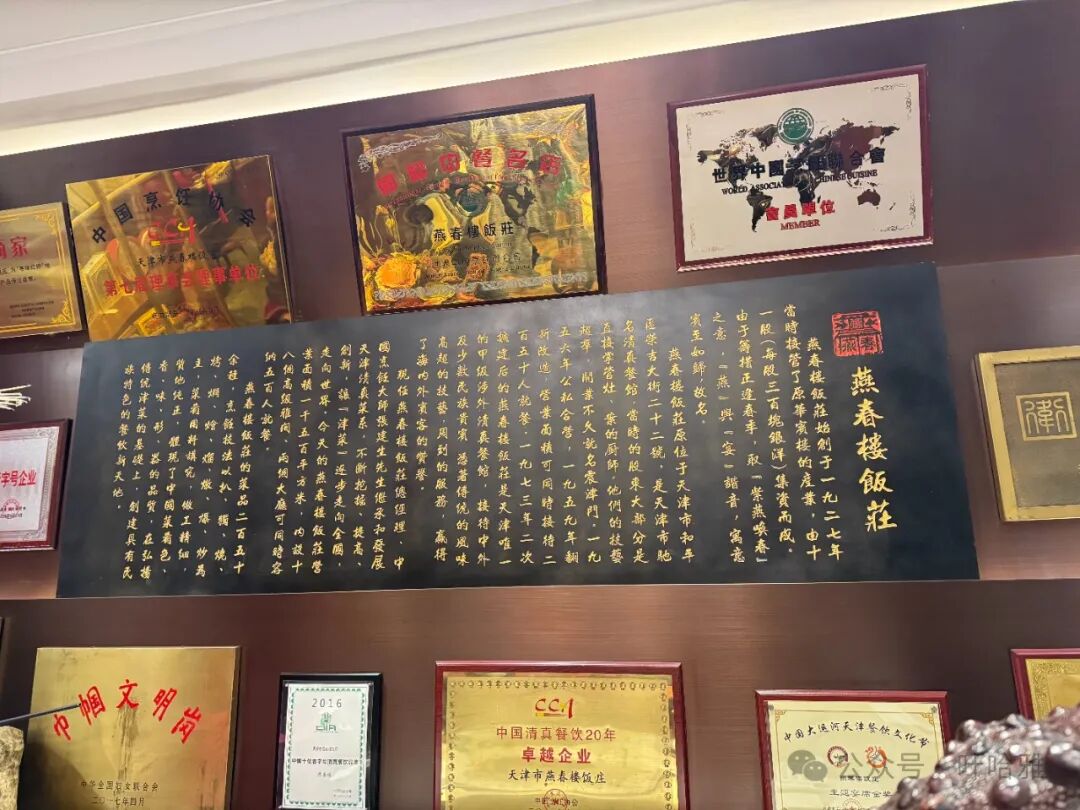
The restaurant has a fancy atmosphere and displays many collectibles inside.
Many people come here because of its reputation, so you have to wait in line for a table.
We tried the traditional stir-stir-fried meat liver and kidney (bao liang yang), braised oxtail, and shrimp with gluten. The taste was just okay and quite ordinary. It was not as amazing as people said online and fell short compared to Hongbinlou. However, the price is reasonable at about 150 yuan per person.
3. Chengcheng Charcoal BBQ
This shop was a surprise. I came here because my classmate was having a baby at a nearby maternity center, and we just picked the closest place. I did not expect it to be so good.
This place is a great value. Two people can eat plenty of meat for less than 200 yuan.
I highly recommend the rice mixed in a basin. It costs just over ten yuan, and the rice grains are distinct, which is the texture I like.
4. AINY Western Casual Dining
This small shop is a lot like the first one. It is even smaller, but it has been open for nearly 10 years.
They even write their menu by hand.
Two people can share a seafood pizza, a black pepper pasta, and a large order of fries for about 100 yuan. It tastes pretty good.
5. Muyi Nuobona Western Restaurant
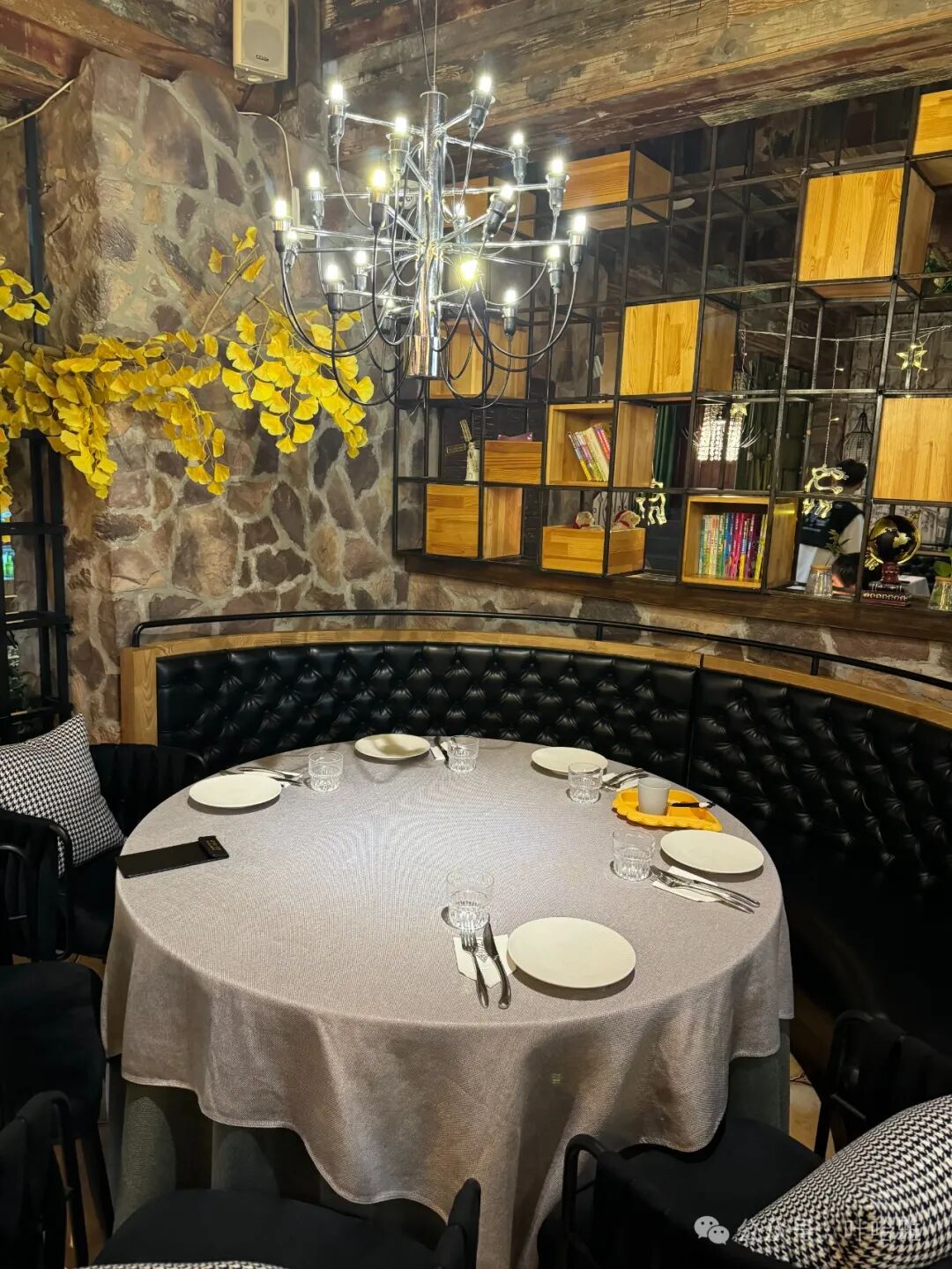
Muyi and Nuobona Western Restaurant are two restaurants with different styles run by the same owner. They are both in the same building. Muyi is a Chinese restaurant, and Nuobona is a Western restaurant.
We tried the Nuobona Western Restaurant this time. The food and the atmosphere were great. People say their Chinese food is also very delicious.
The best thing about Nuobona is the fireplace they use to bake pizzas. The pizza that comes out of it smells amazing.
I tried the famous French dish of baked snails (escargot) for the first time. It tasted quite good, just like eating sea snails.
Even though the food and the environment are quite fancy, the prices are not high. You can eat for about 100 yuan per person. Prices in Tianjin are generally lower than in Beijing.
6. Haishiwan Restaurant
We found this Western restaurant based on online reviews.
We ordered a wide variety of dishes here and tried almost all their signature items. However, the taste does not compare to Nuobona. This is a budget-friendly Western restaurant. It is definitely much cheaper than other places, costing only about 50 yuan per person, so you cannot expect too much from the flavor.
Still, their dishes look great in photos.
This huge cup of dessert was so sugary and rich that everyone could only manage one small bite before they were full. view all
Summary: This Tianjin halal food map part 5 covers Alishu Pizza and Pasta, Yanchunlou Restaurant, Chengcheng Charcoal BBQ, AINY Western Casual Dining, Muyi Nuobona Western Restaurant, Haishiwan Restaurant, desserts, seafood, and family-style Western halal dining.
This is the fifth installment of my Tianjin halal food map. It covers six restaurants I visited while traveling back and forth to Tianjin five times recently.
The halal restaurants in Tianjin I visited this time are:
1. Alishu Pizza and Pasta
2. Yanchunlou Restaurant
3. Chengcheng Charcoal BBQ
4. AINY Western Casual Dining
5. Muyi Nuobona Western Restaurant
6. Haishiwan Restaurant
1. Alishu Pizza and Pasta
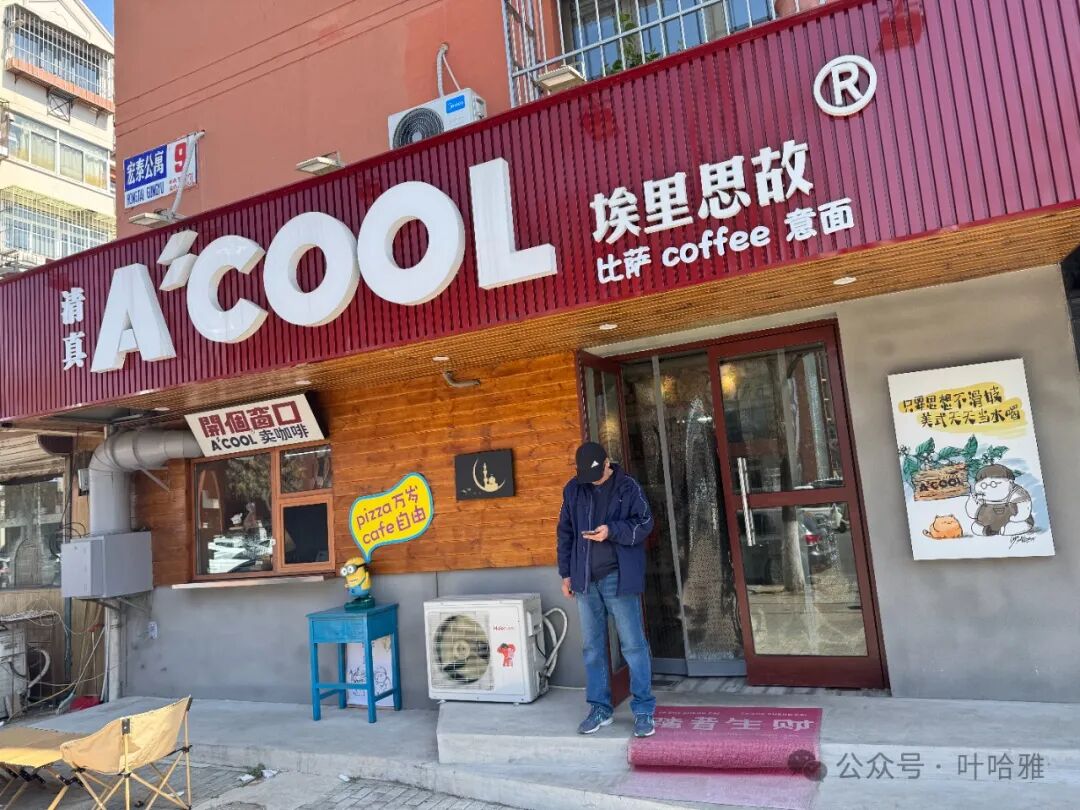
Tianjin has many small, family-run Western restaurants like this. They are usually located near residential neighborhoods and offer great value. None of the small Western restaurants I visited sell alcohol. The owners are all locals from Tianjin. It is strange that Beijing does not have any similar restaurants.
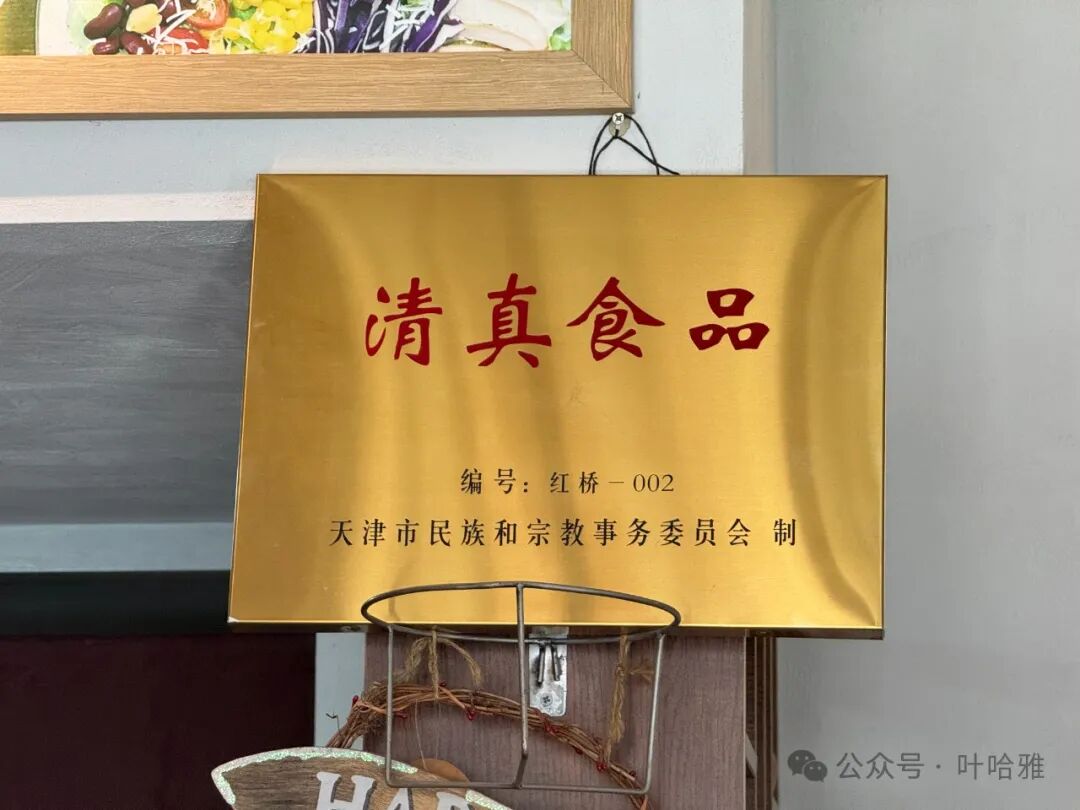
When I am in Malaysia, I often take my children to Western restaurants for pasta. Kids seem to love pasta and french fries.
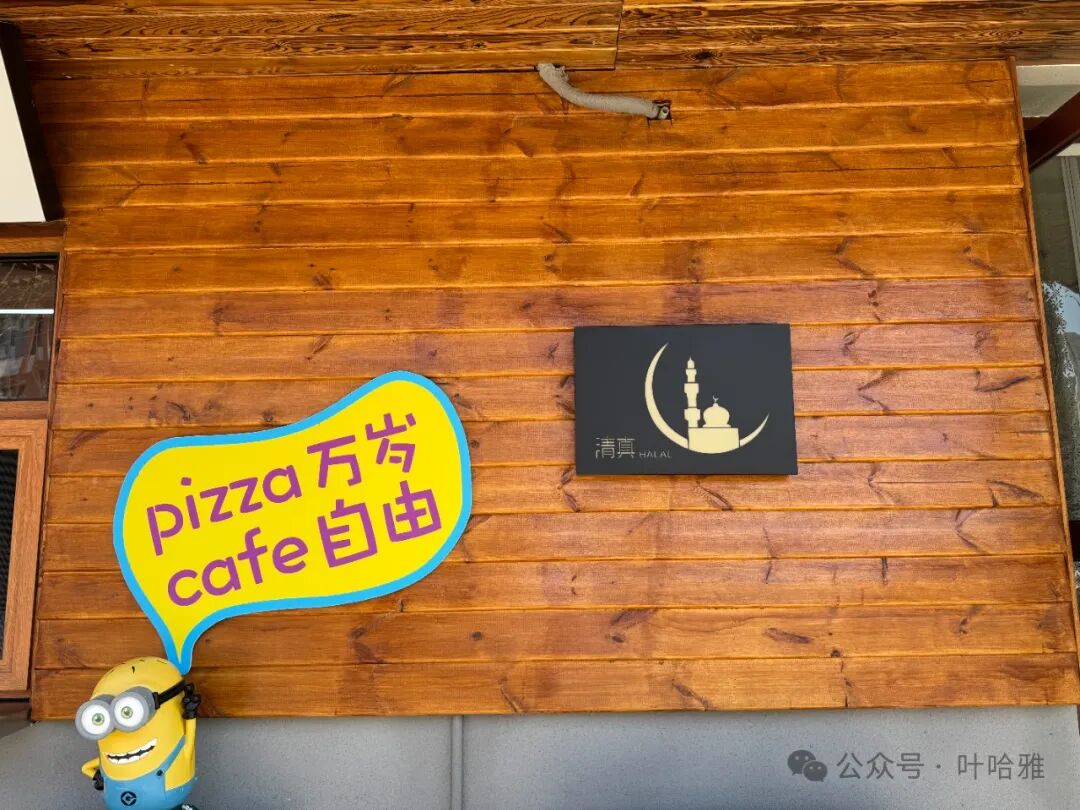
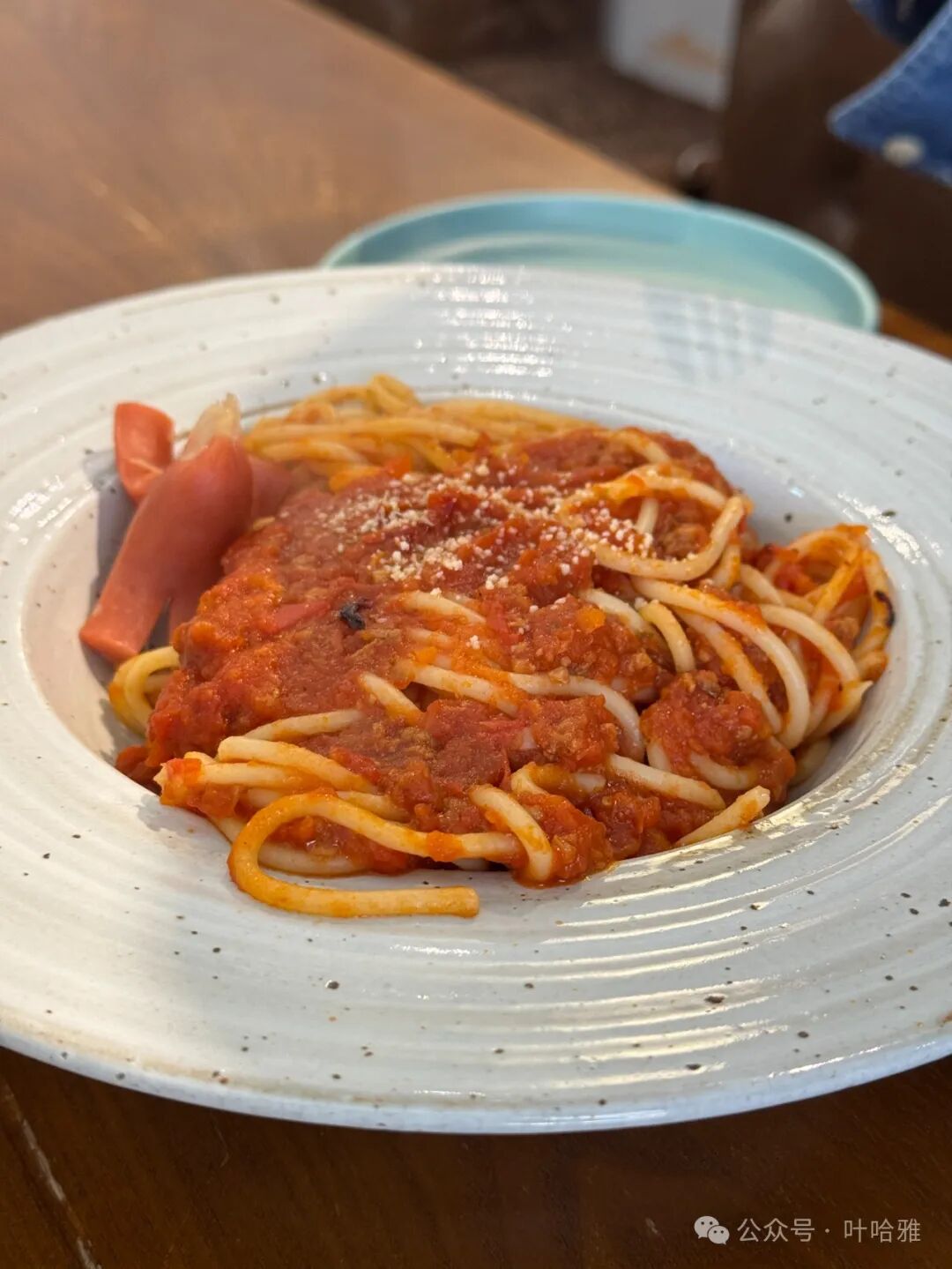
This shop serves baked beef rice with cheese and pizza, costing about 30 yuan per serving.
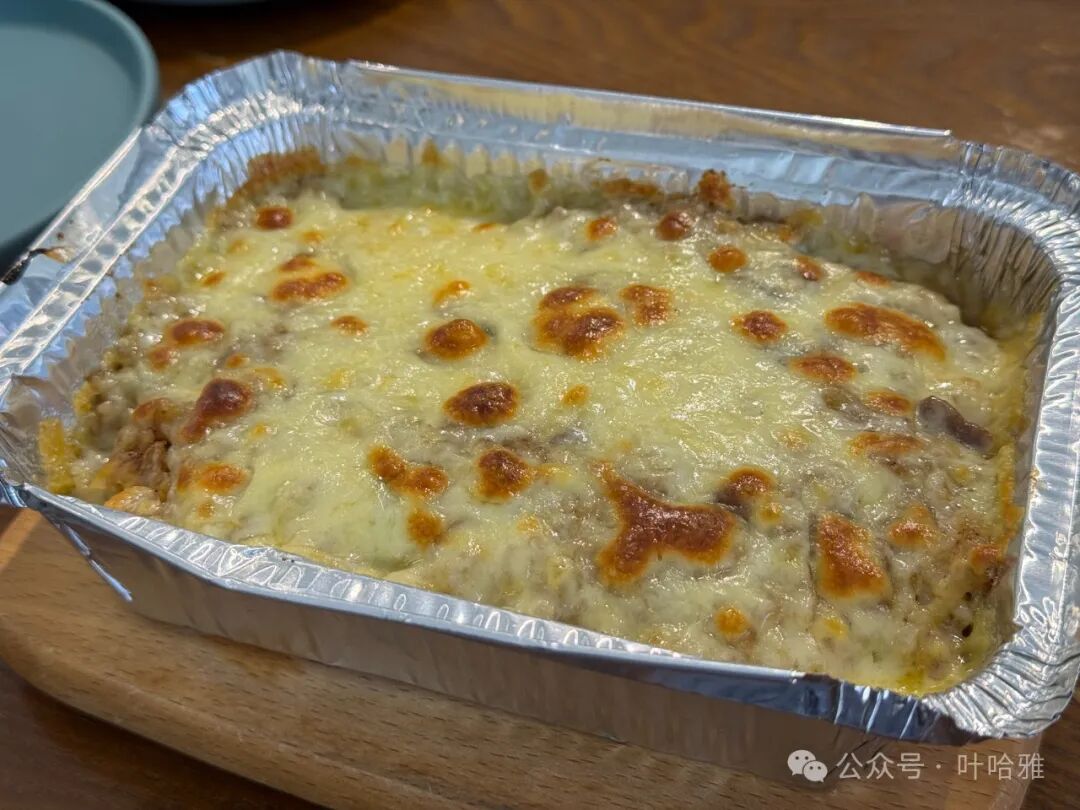
Two people can eat until they are full for about 100 yuan. People say this shop used to have several branches, but this is the only one left.
2. Yanchunlou Restaurant
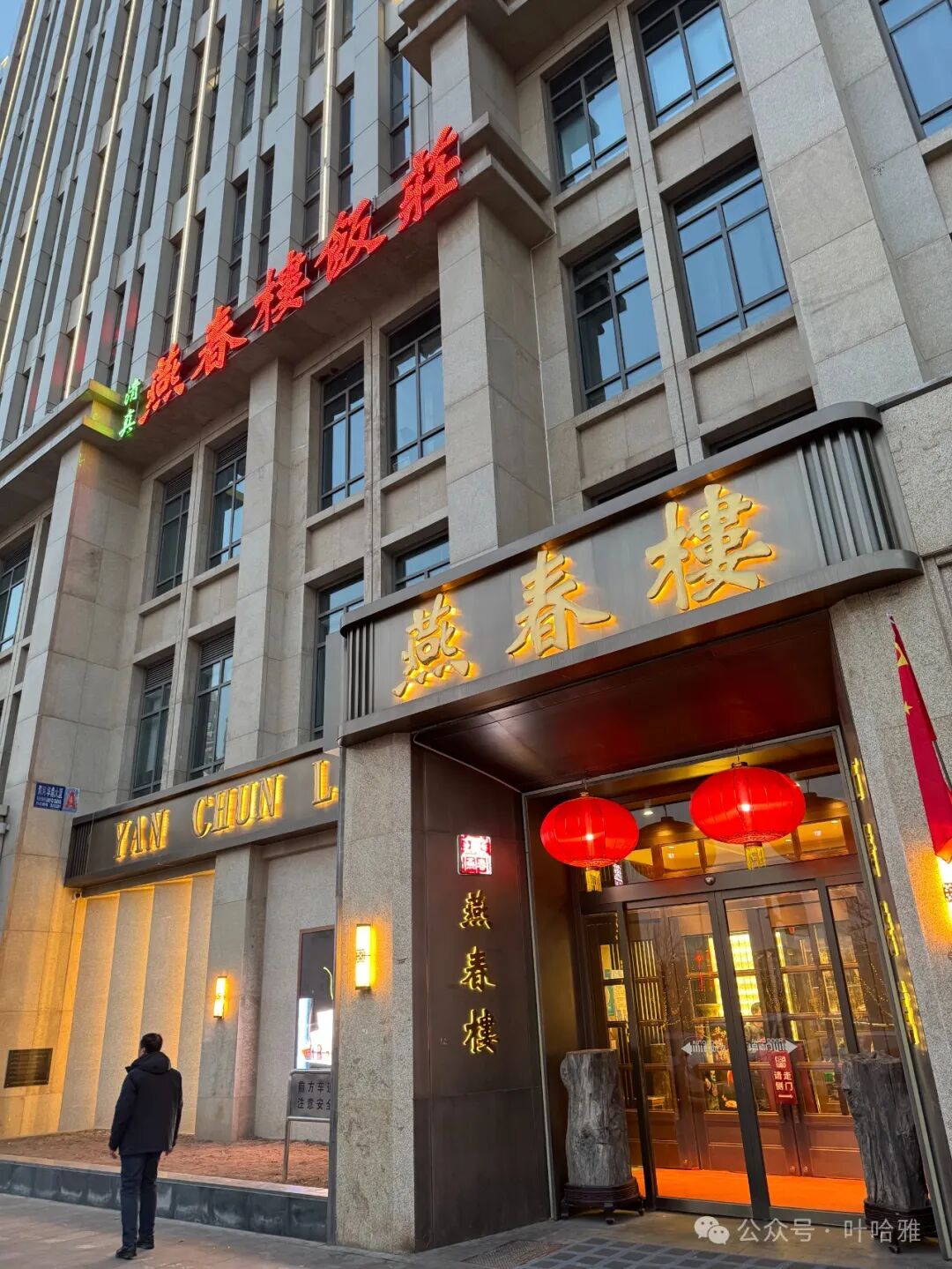
Some internet users called this the best halal restaurant in Tianjin, so we made a special trip to try it while passing through the city.
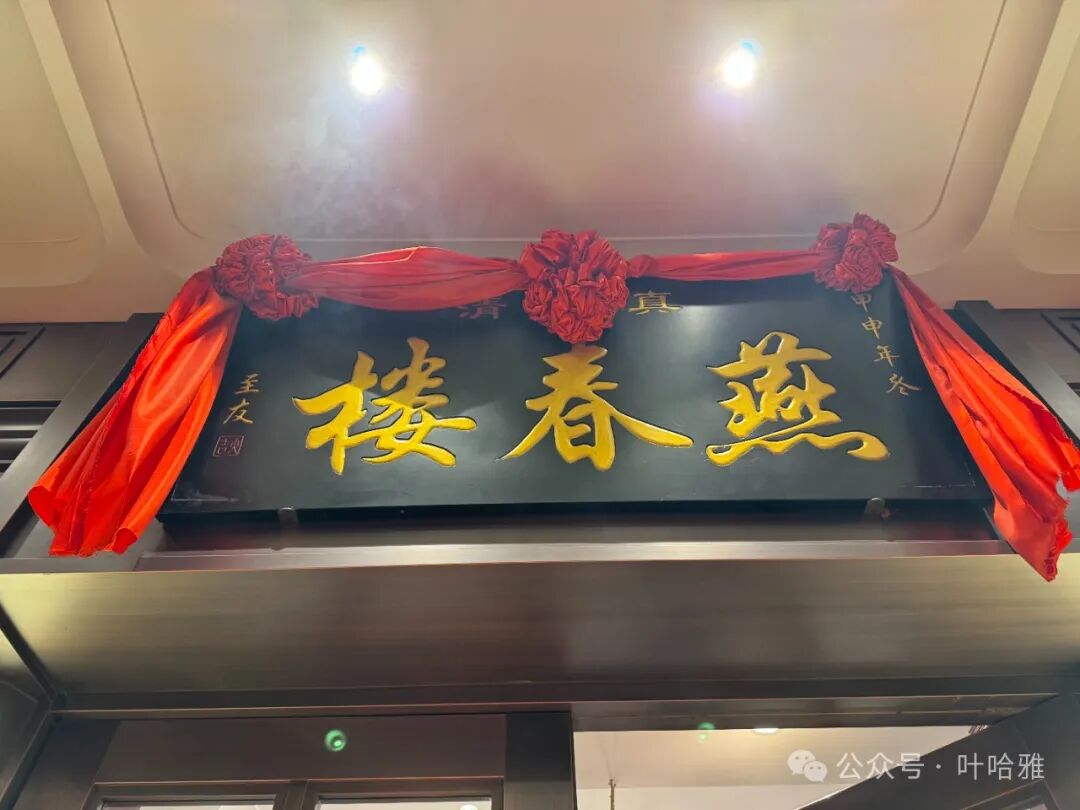
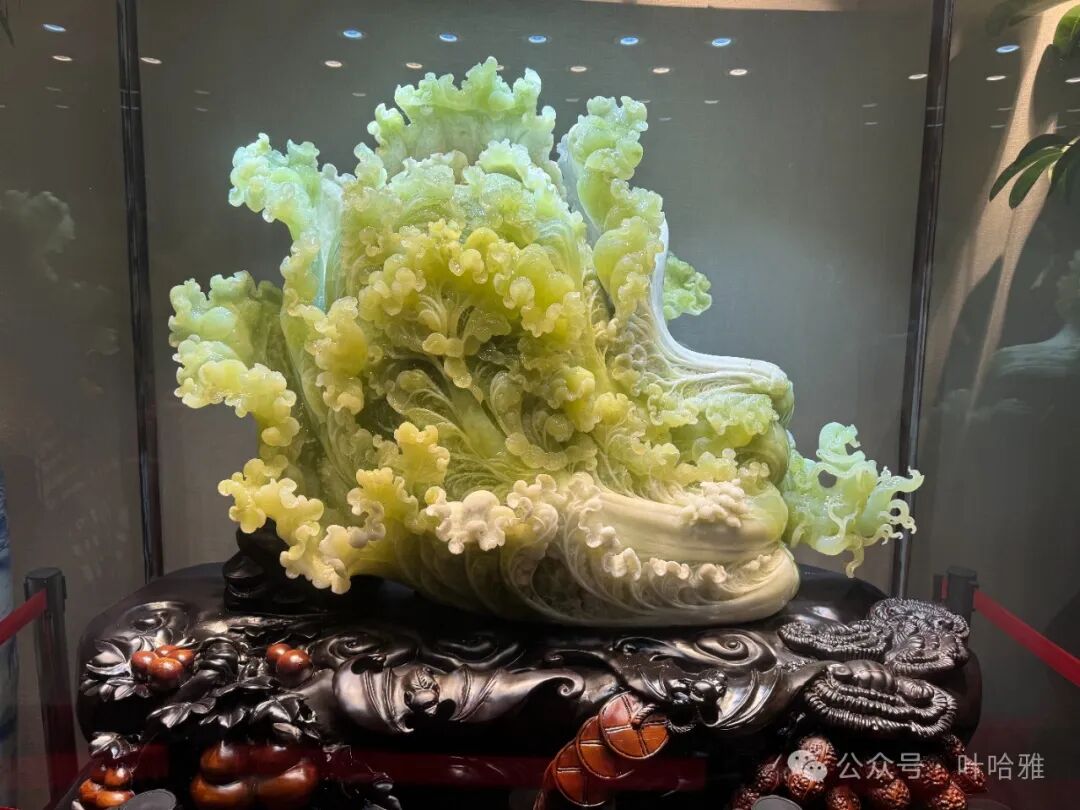
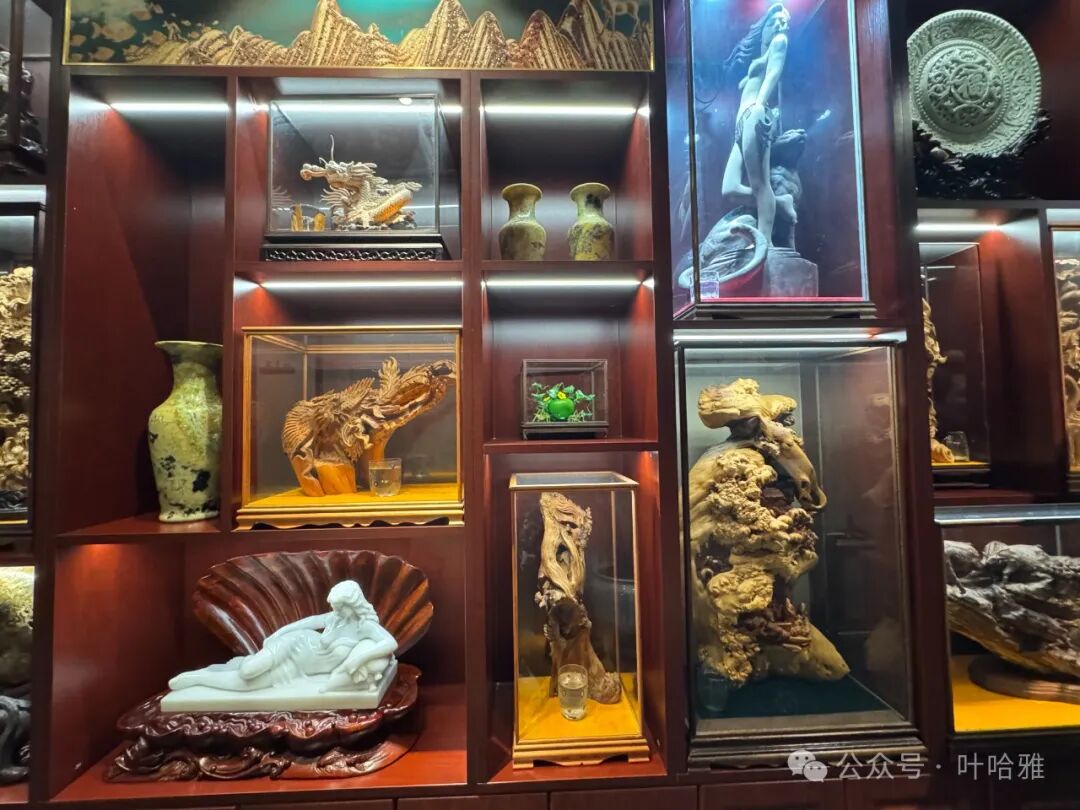
The restaurant has a fancy atmosphere and displays many collectibles inside.
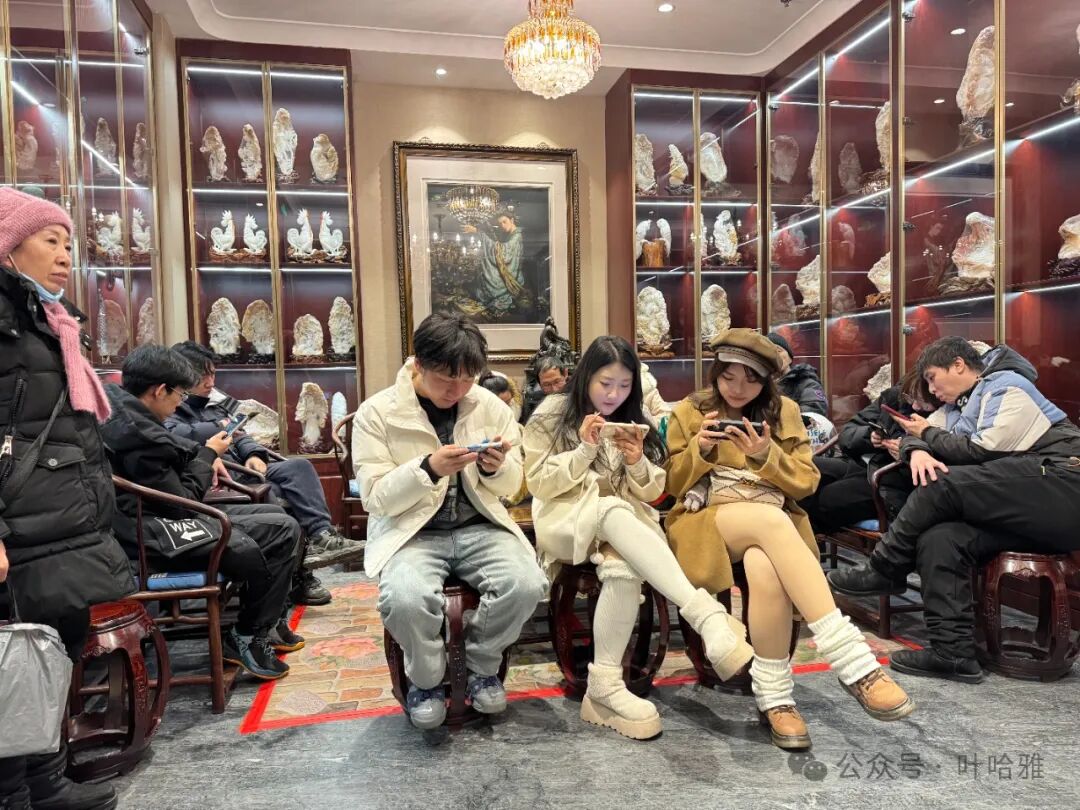
Many people come here because of its reputation, so you have to wait in line for a table.
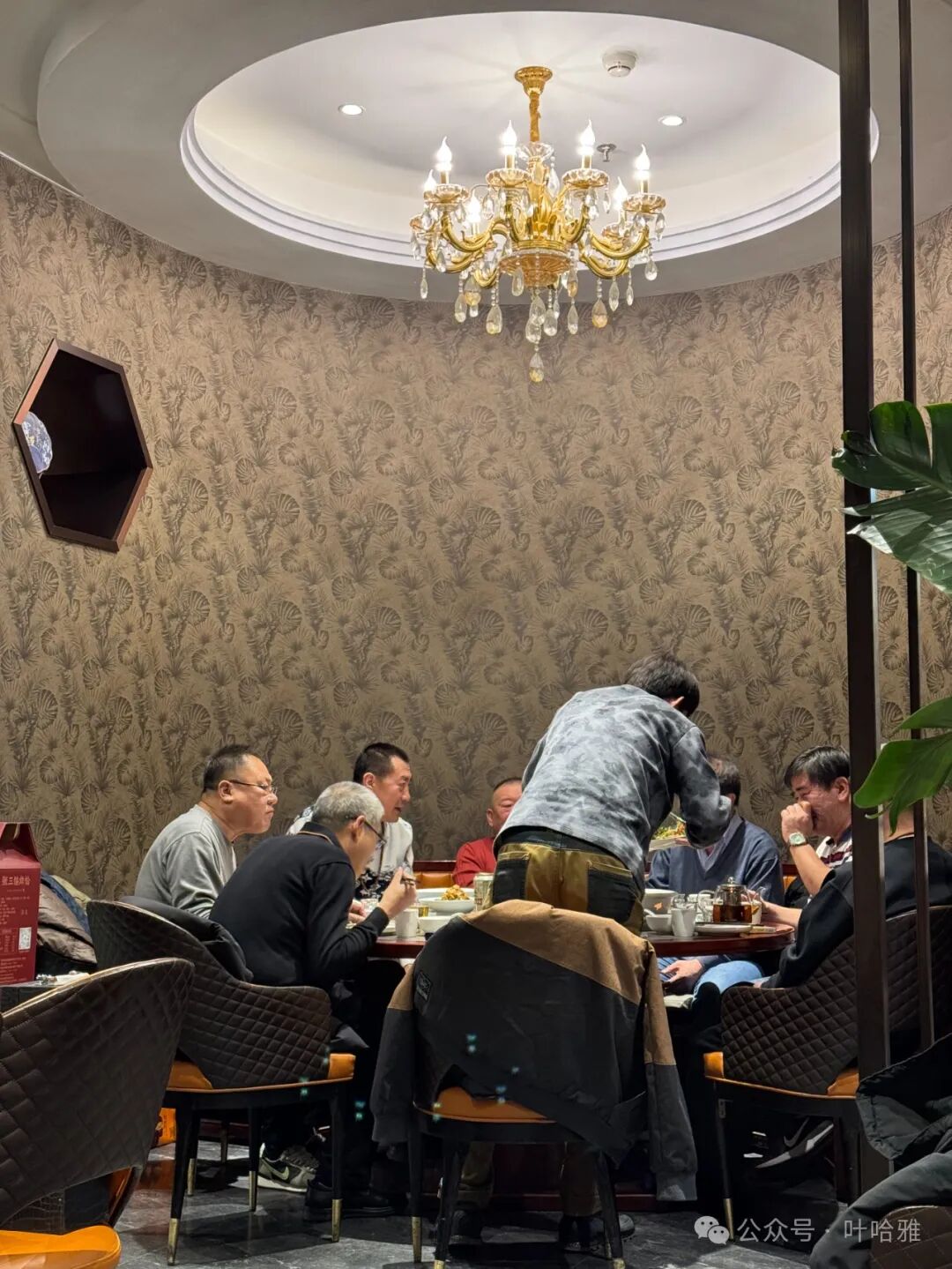
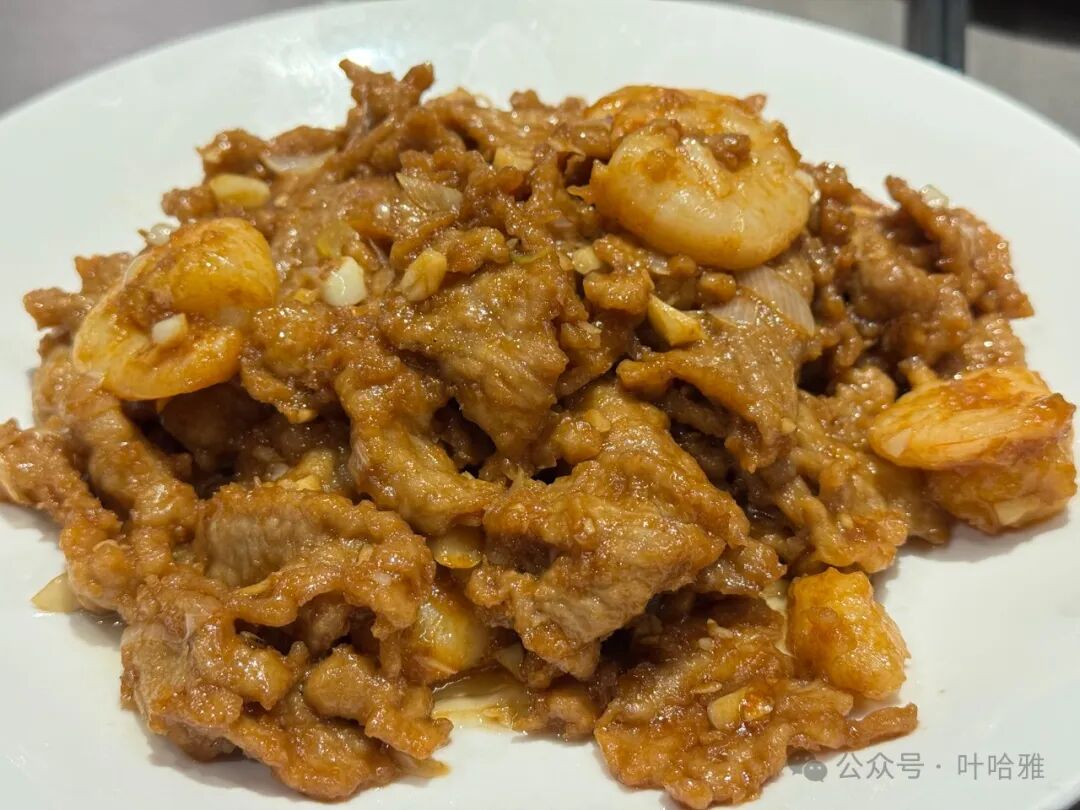
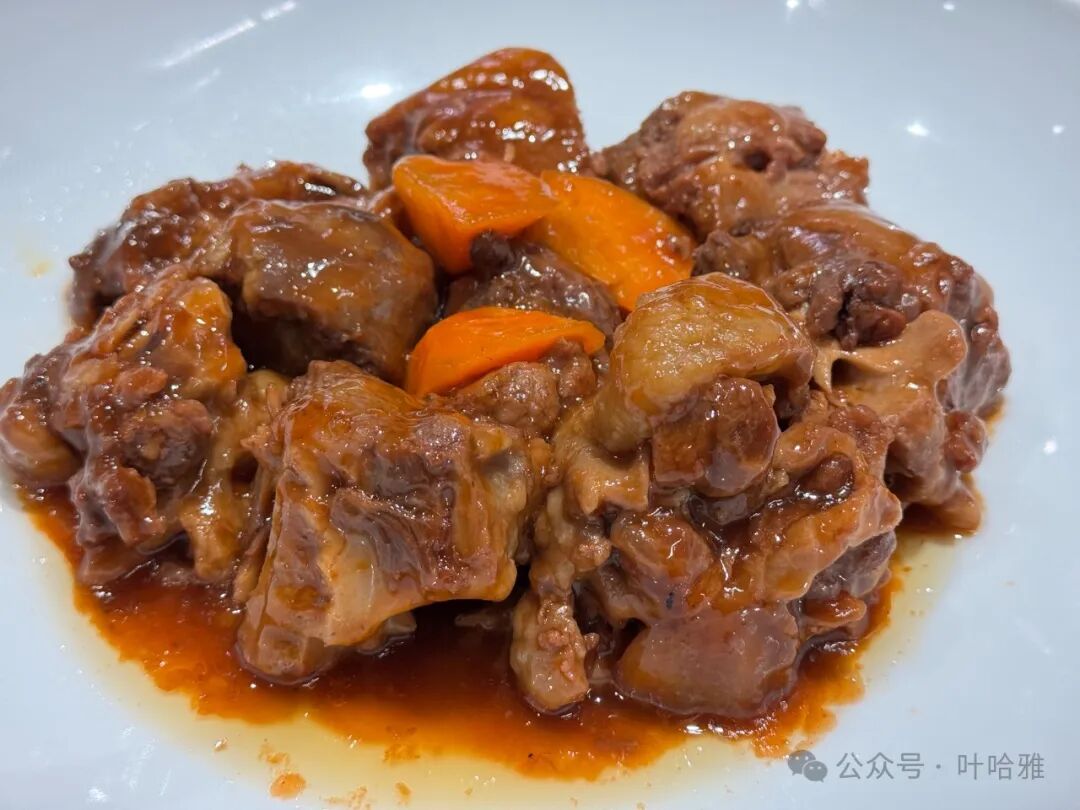
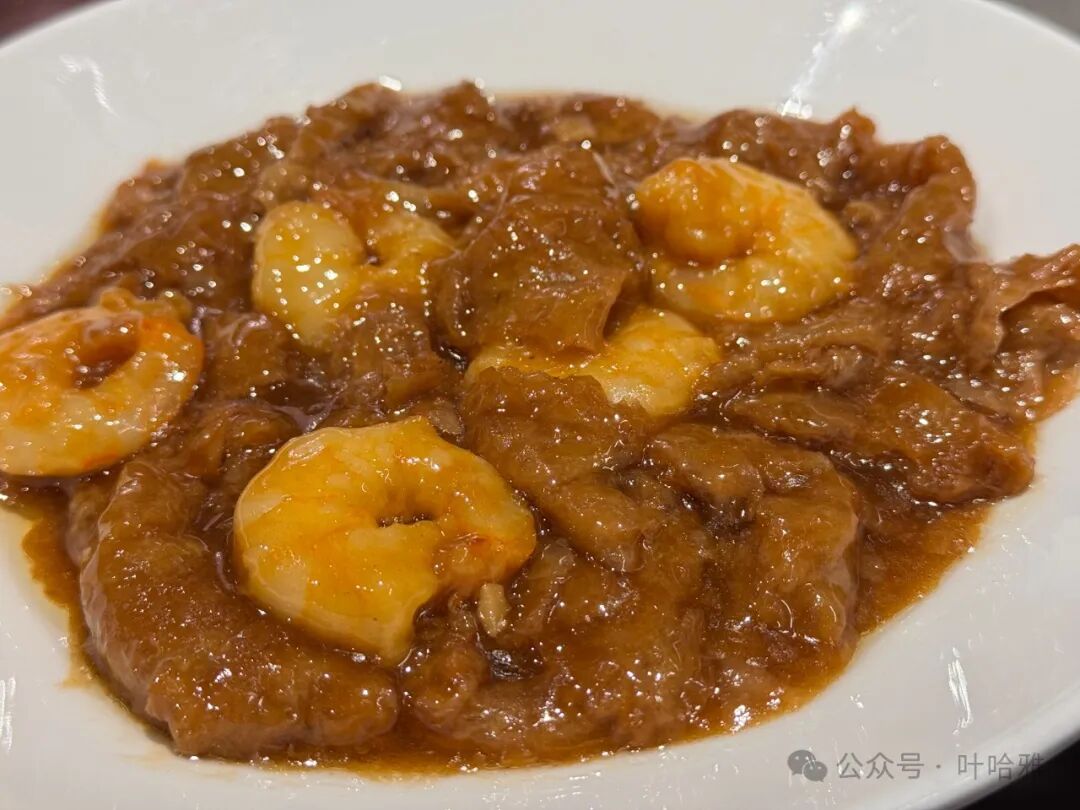
We tried the traditional stir-stir-fried meat liver and kidney (bao liang yang), braised oxtail, and shrimp with gluten. The taste was just okay and quite ordinary. It was not as amazing as people said online and fell short compared to Hongbinlou. However, the price is reasonable at about 150 yuan per person.
3. Chengcheng Charcoal BBQ
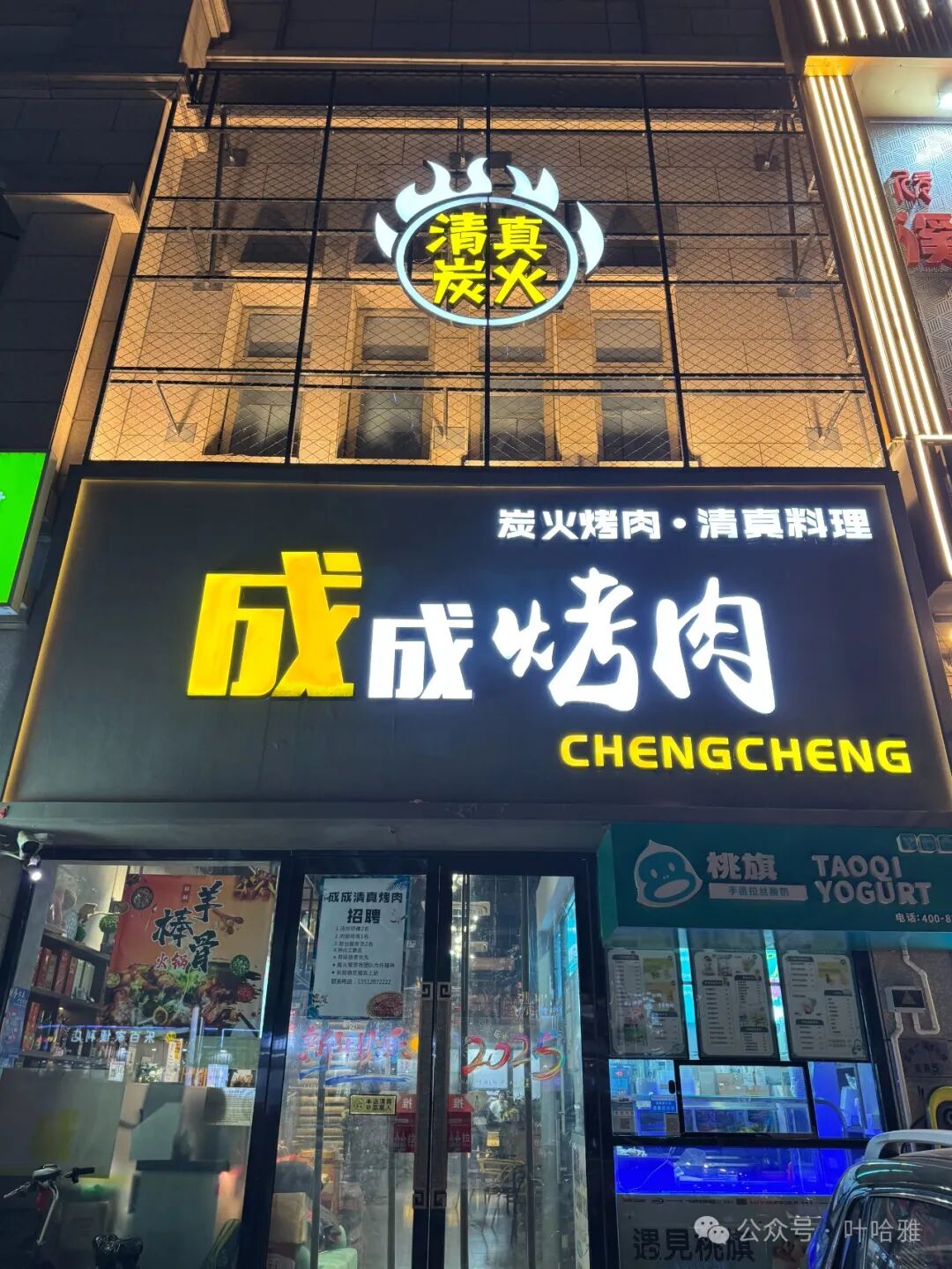
This shop was a surprise. I came here because my classmate was having a baby at a nearby maternity center, and we just picked the closest place. I did not expect it to be so good.
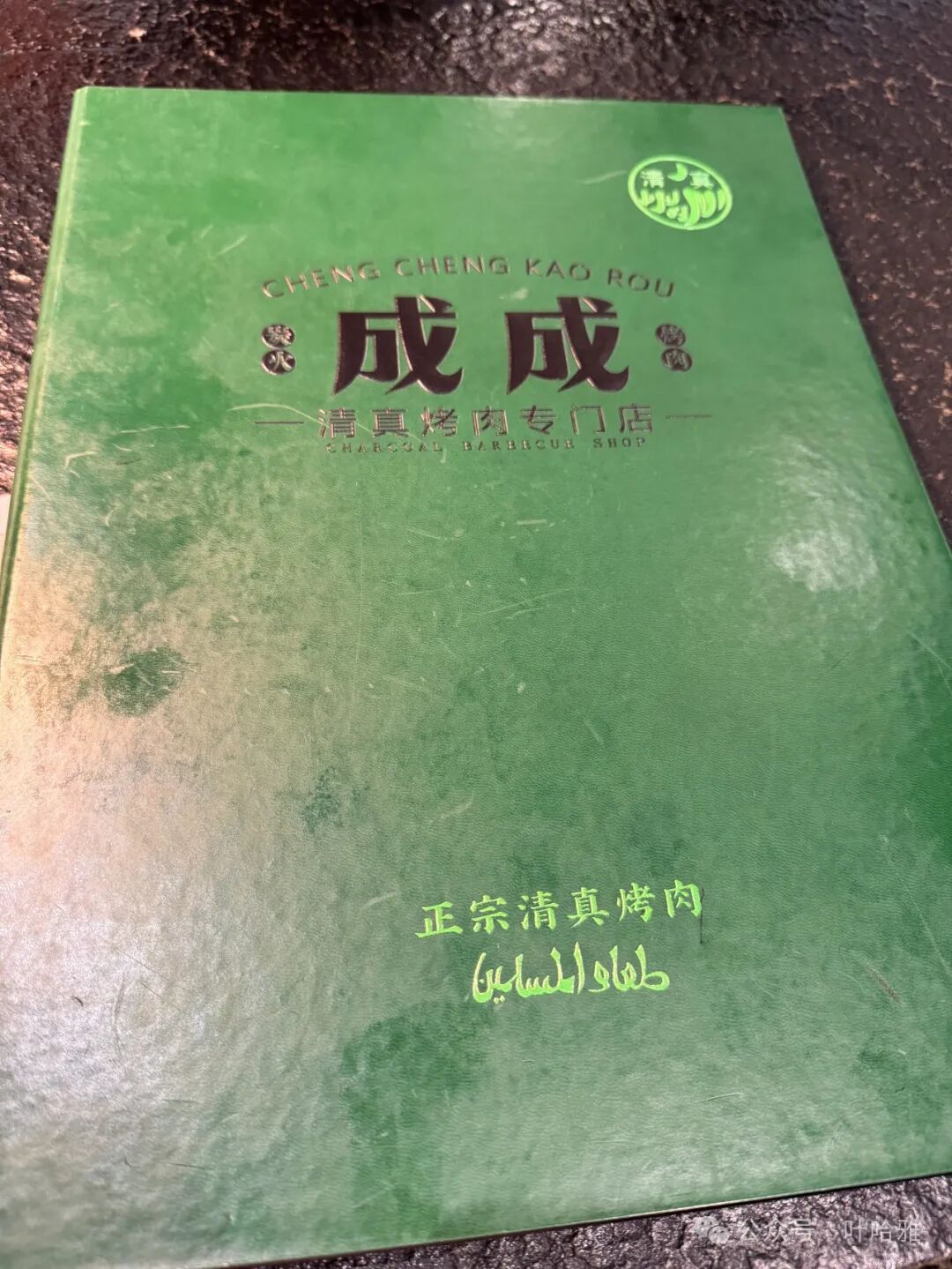
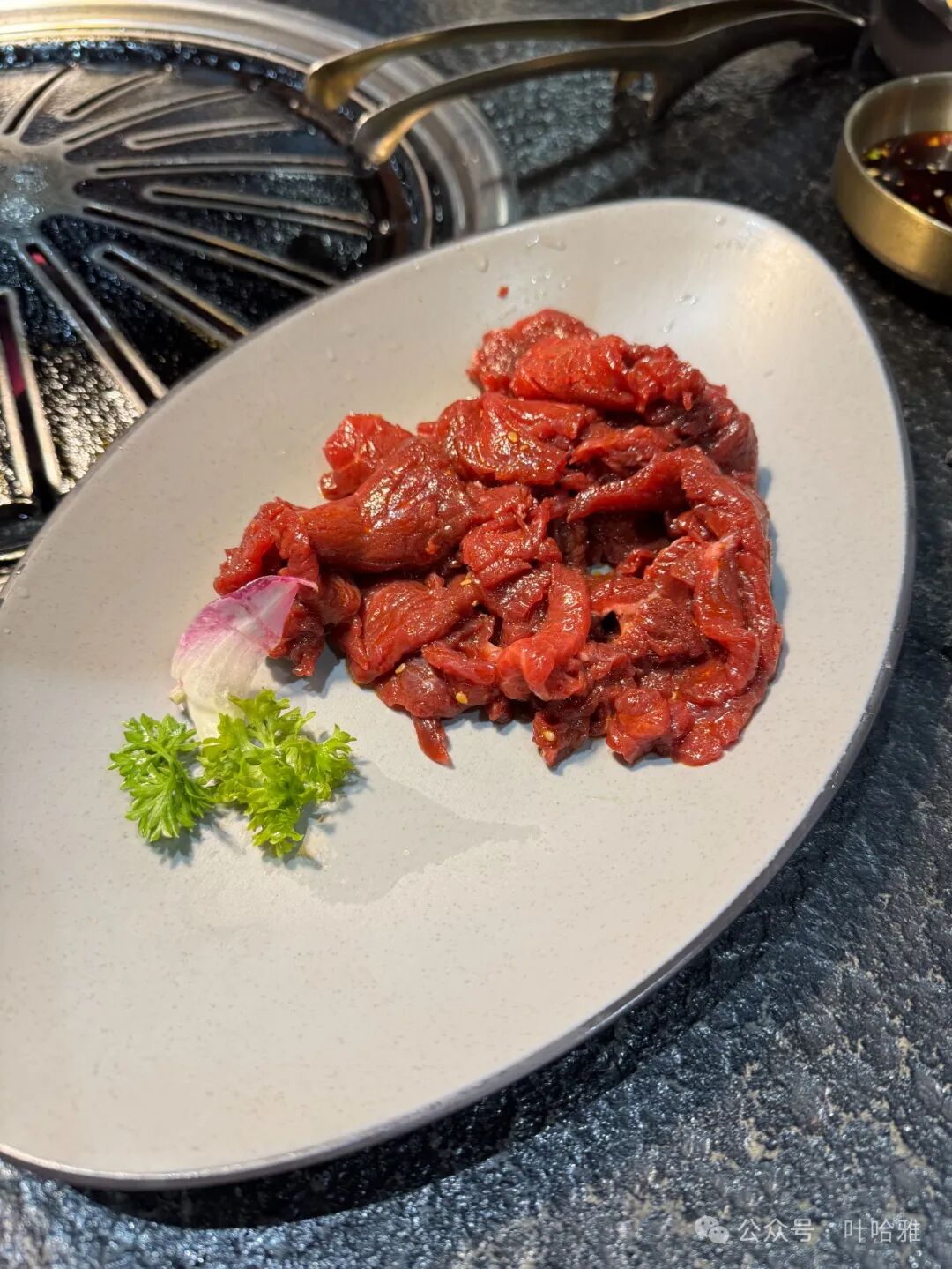
This place is a great value. Two people can eat plenty of meat for less than 200 yuan.
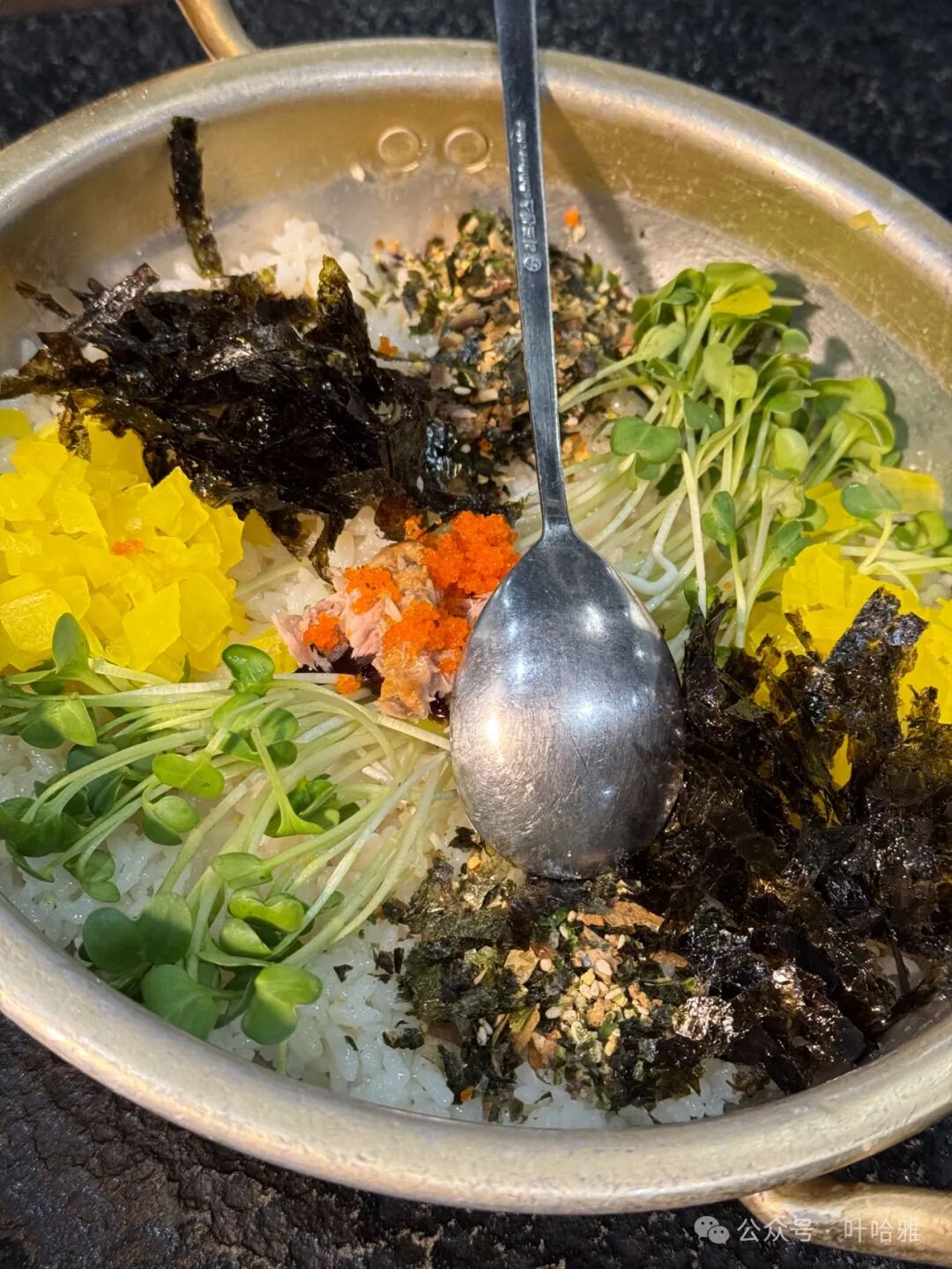
I highly recommend the rice mixed in a basin. It costs just over ten yuan, and the rice grains are distinct, which is the texture I like.
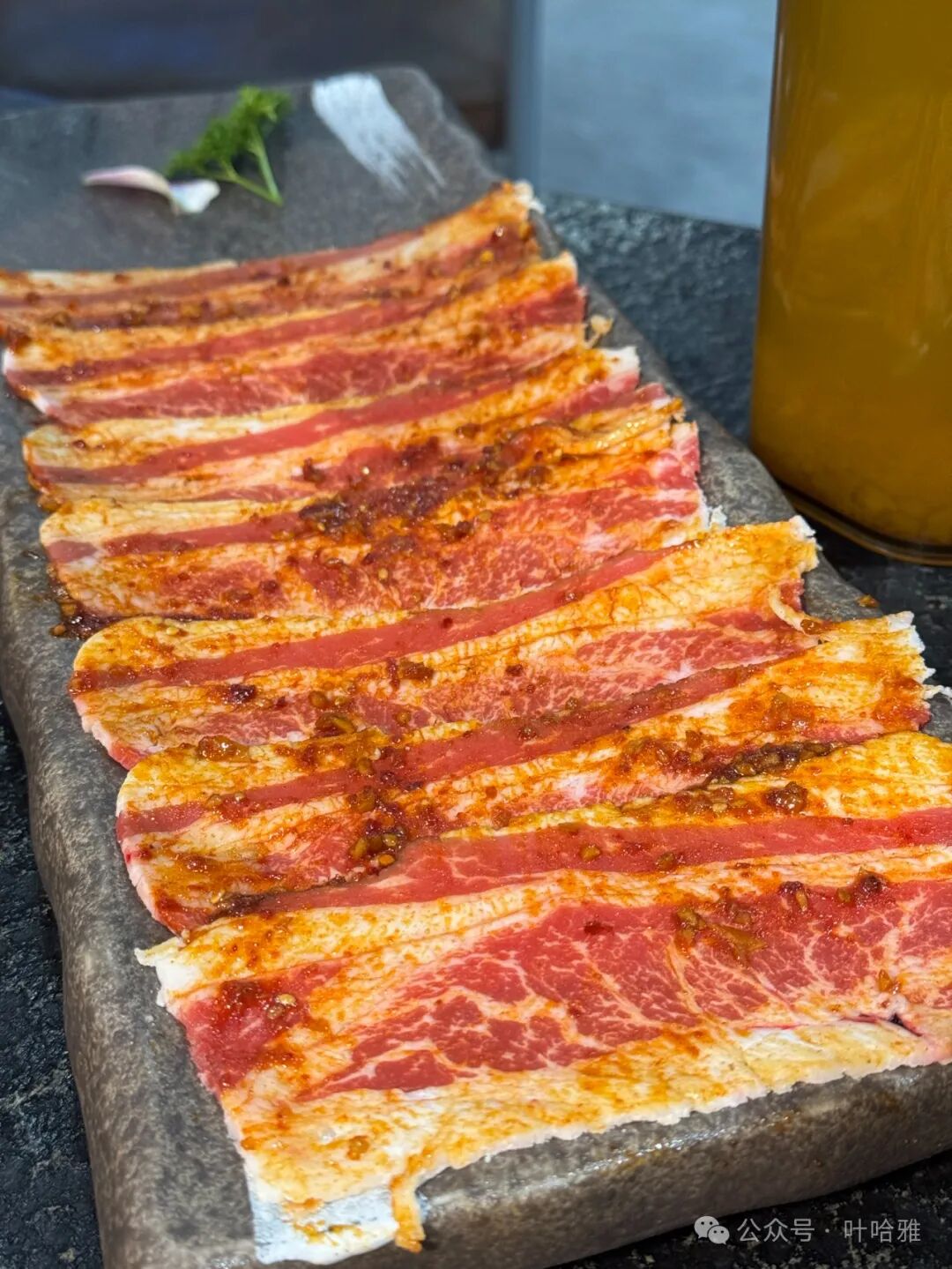
4. AINY Western Casual Dining
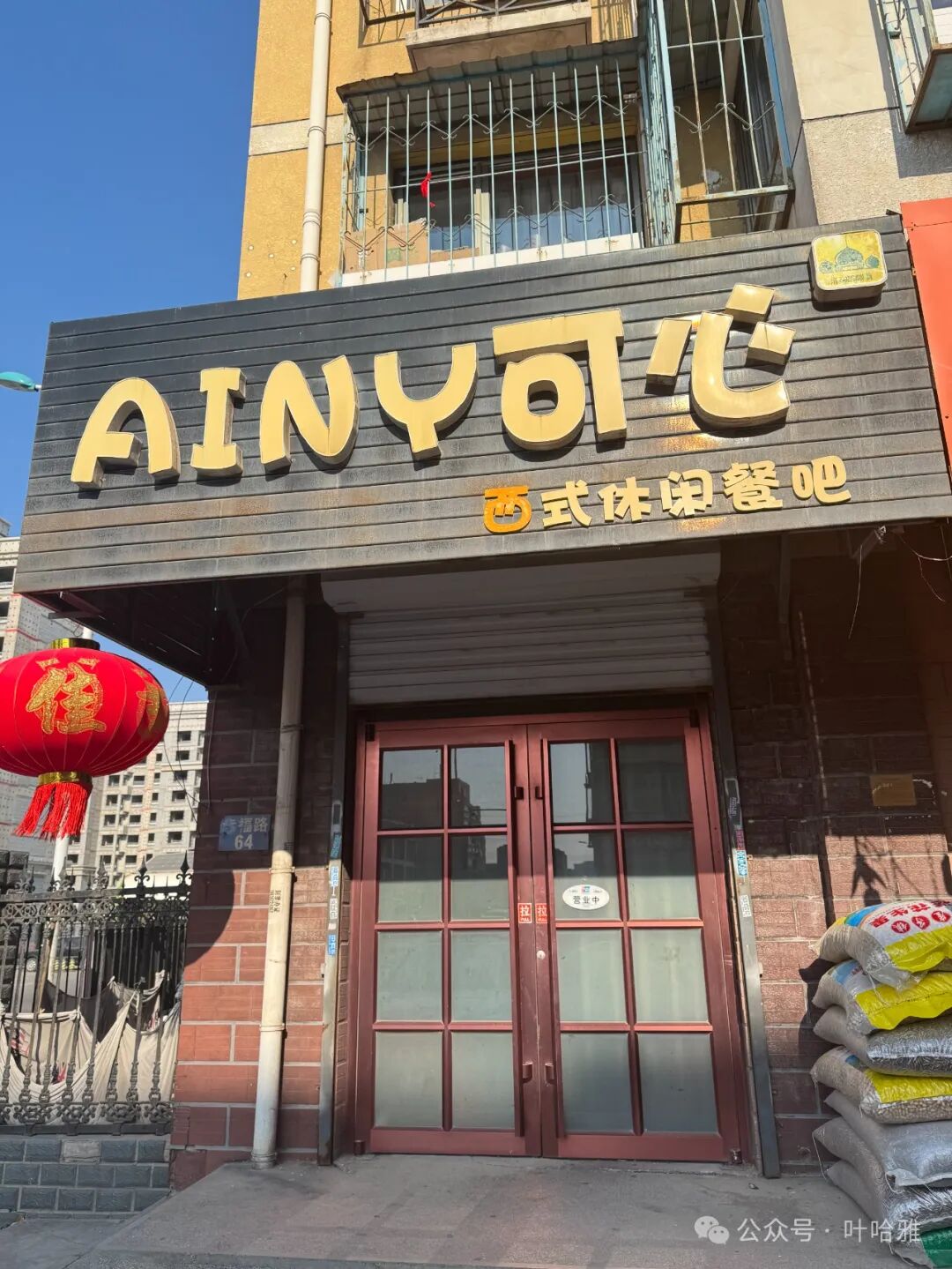
This small shop is a lot like the first one. It is even smaller, but it has been open for nearly 10 years.
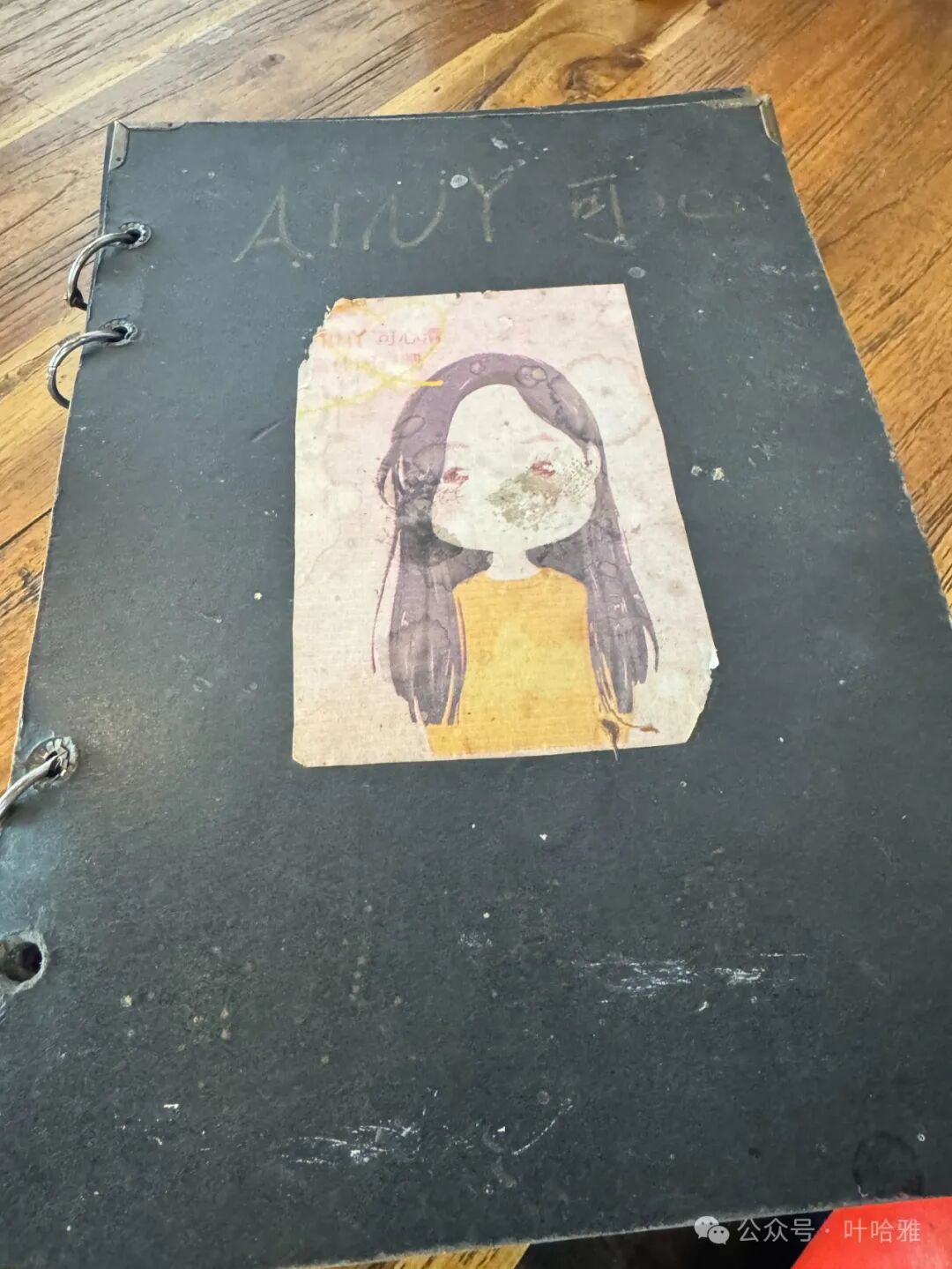
They even write their menu by hand.
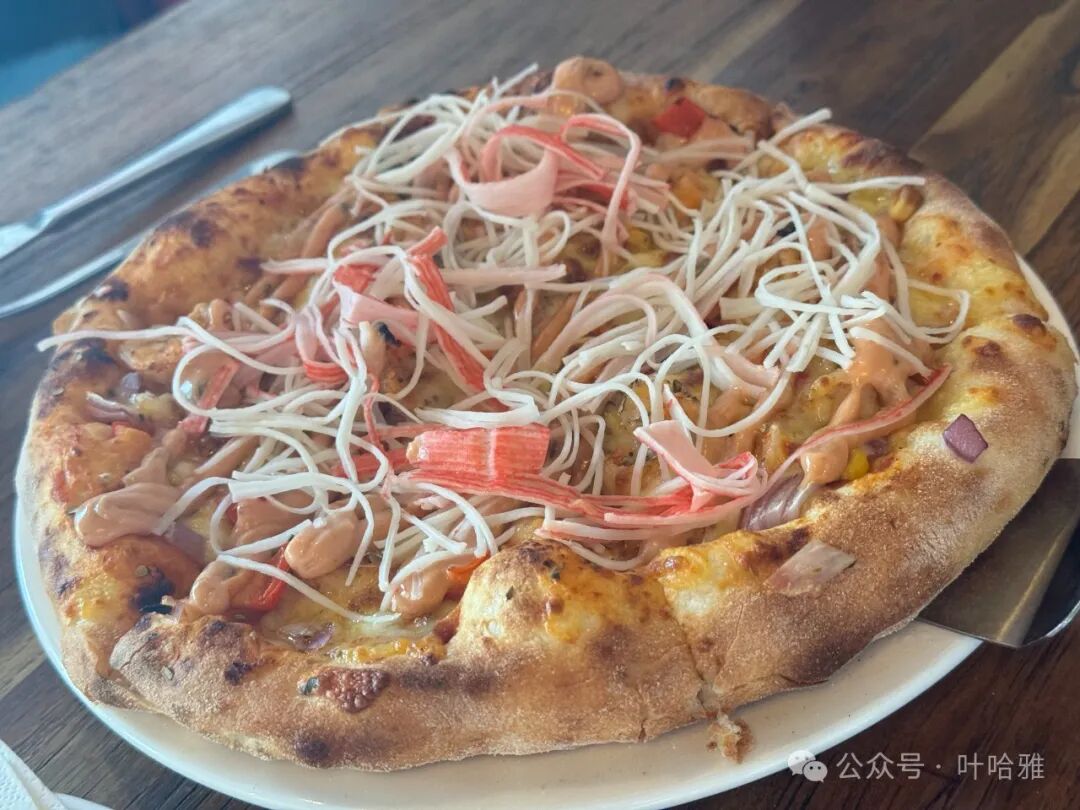
Two people can share a seafood pizza, a black pepper pasta, and a large order of fries for about 100 yuan. It tastes pretty good.
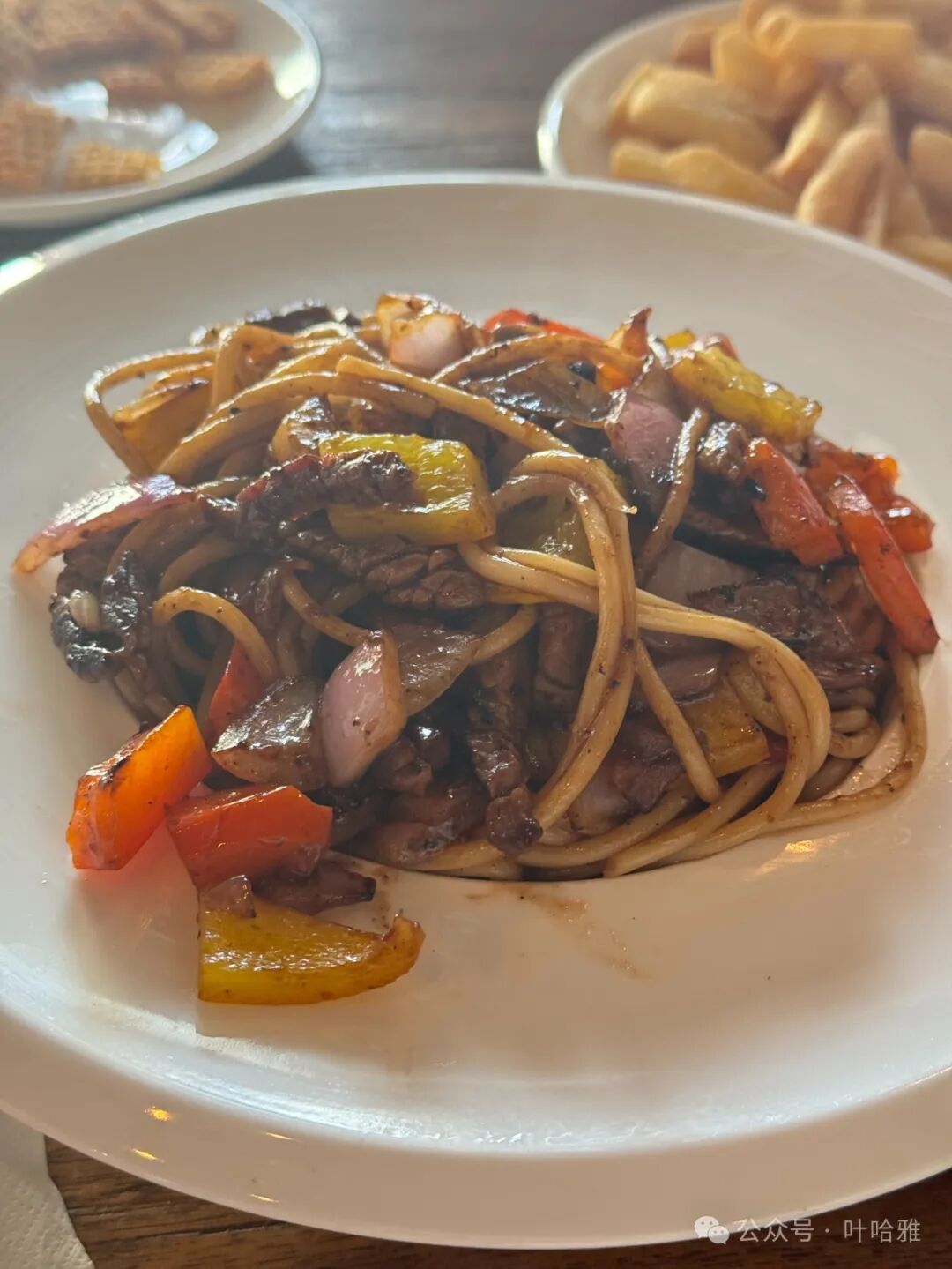
5. Muyi Nuobona Western Restaurant
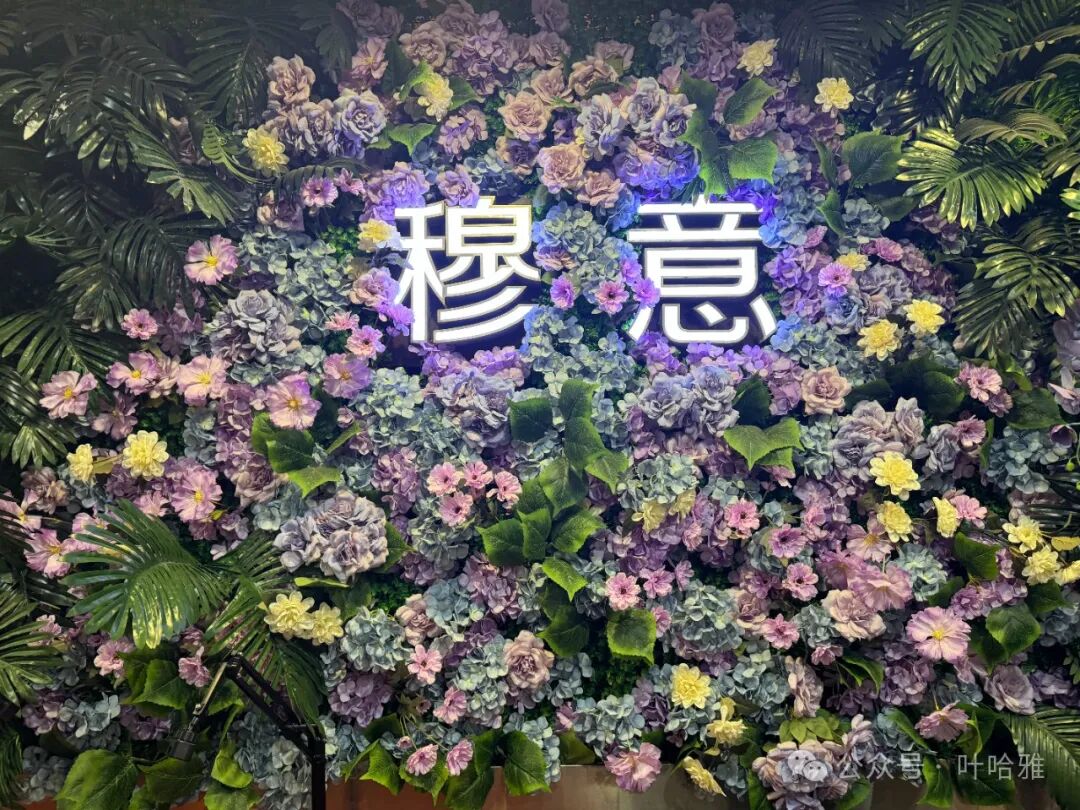
Muyi and Nuobona Western Restaurant are two restaurants with different styles run by the same owner. They are both in the same building. Muyi is a Chinese restaurant, and Nuobona is a Western restaurant.
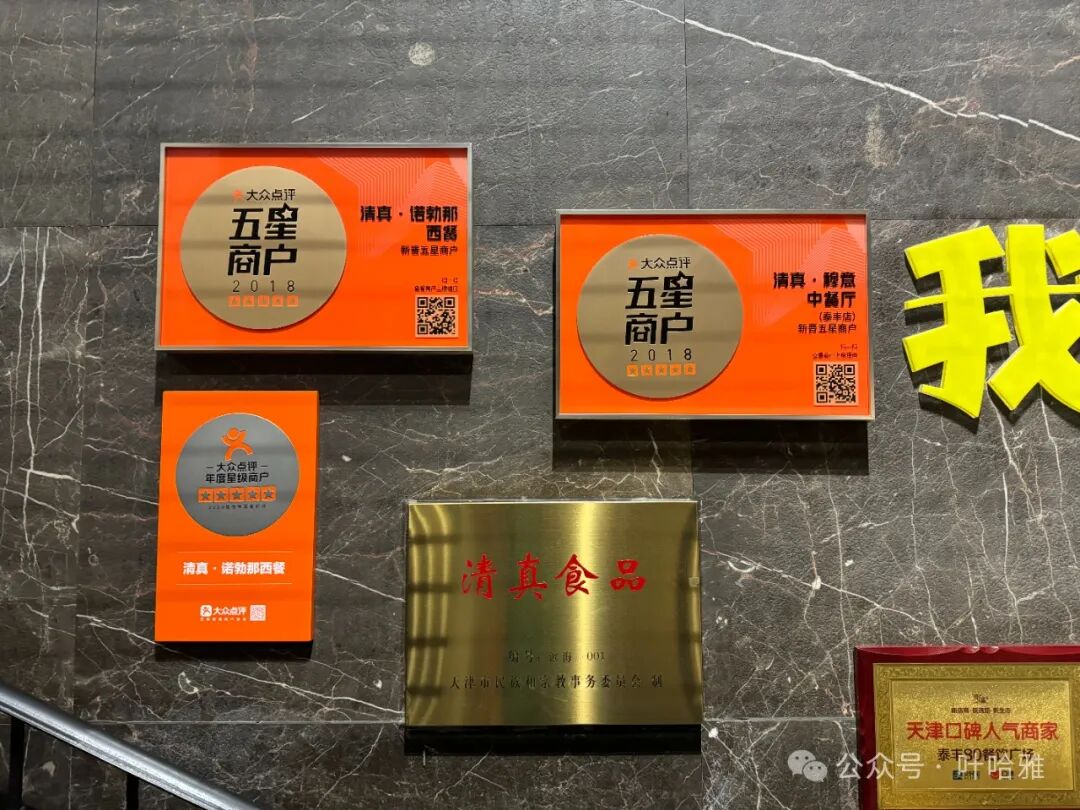
We tried the Nuobona Western Restaurant this time. The food and the atmosphere were great. People say their Chinese food is also very delicious.
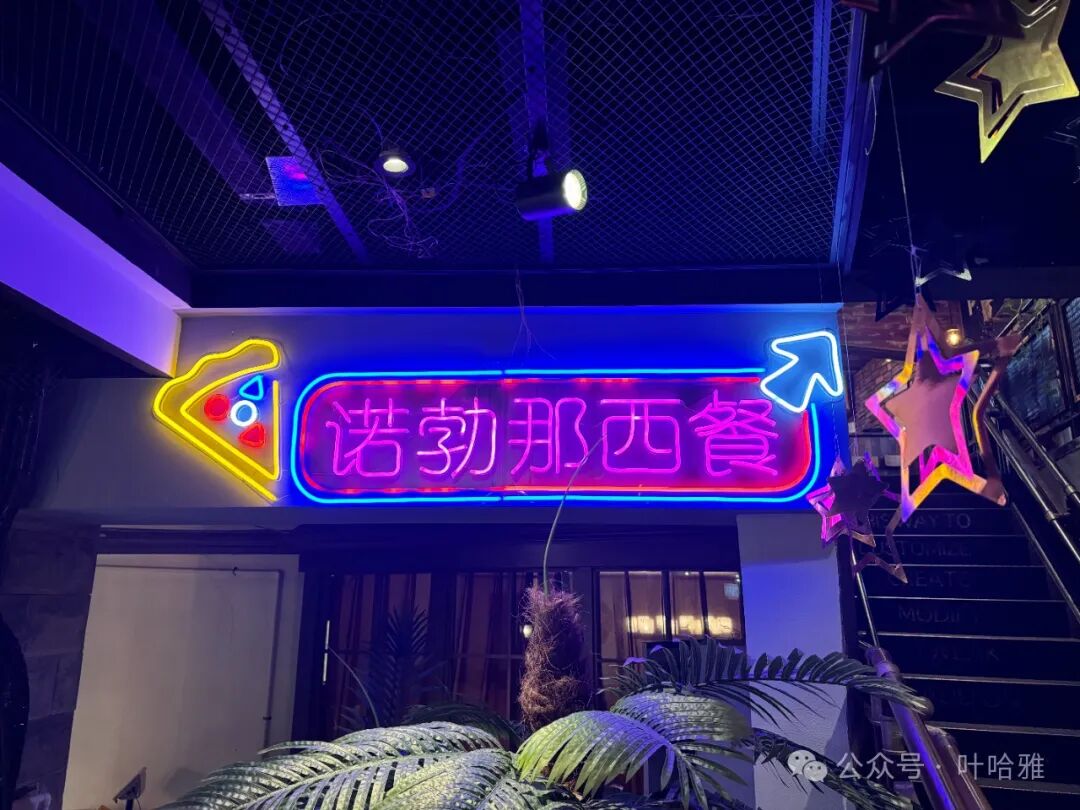
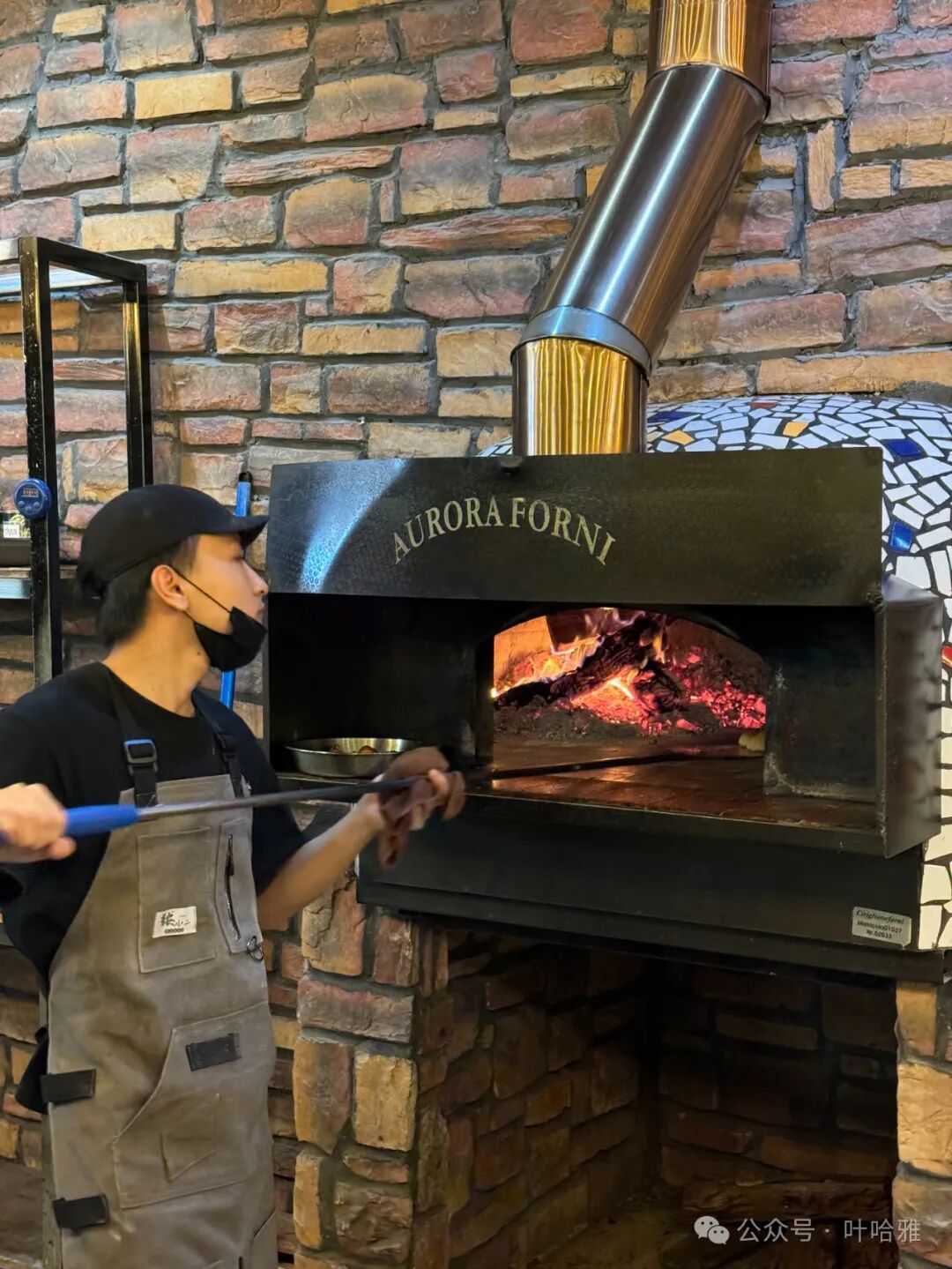
The best thing about Nuobona is the fireplace they use to bake pizzas. The pizza that comes out of it smells amazing.
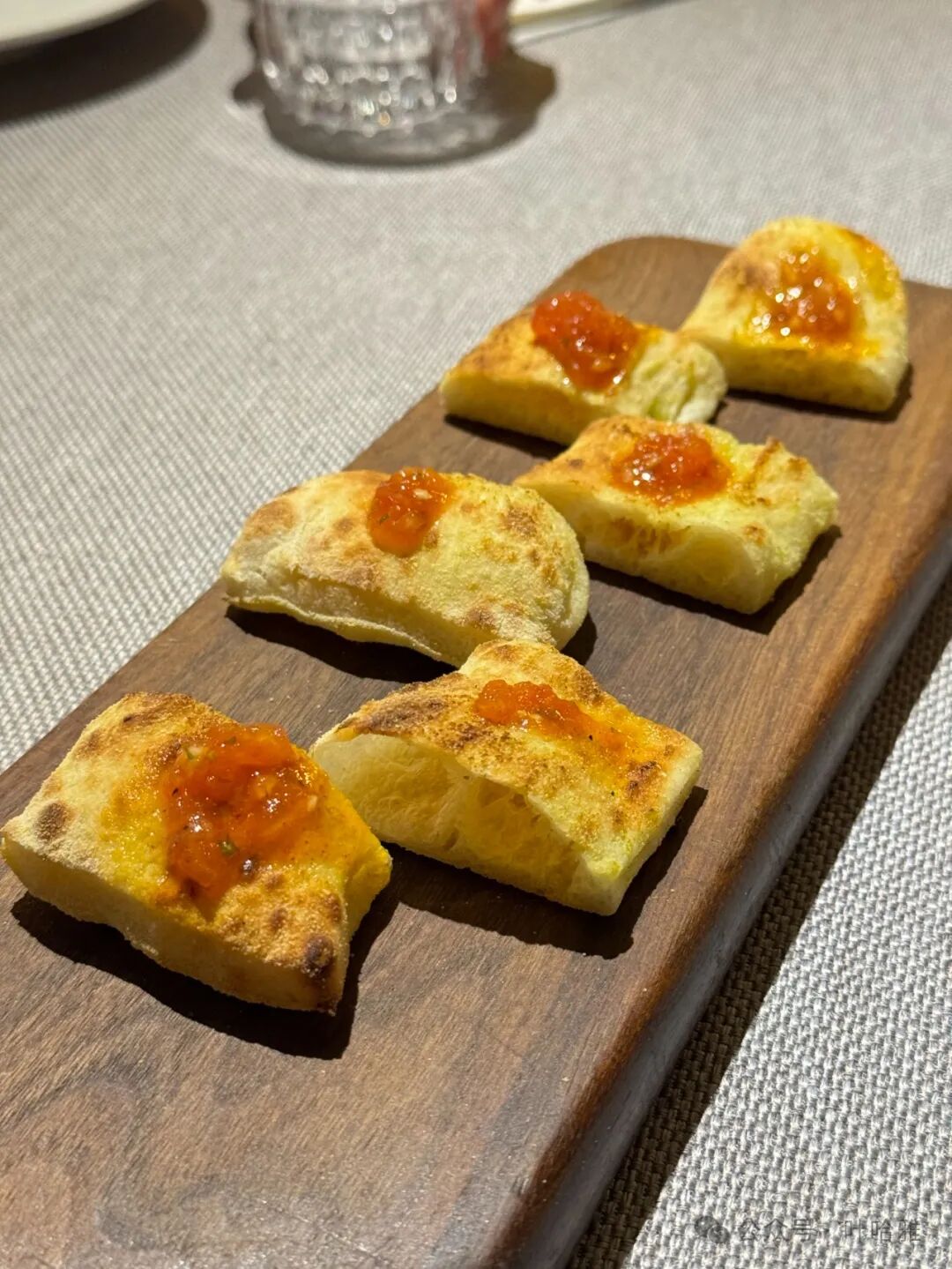
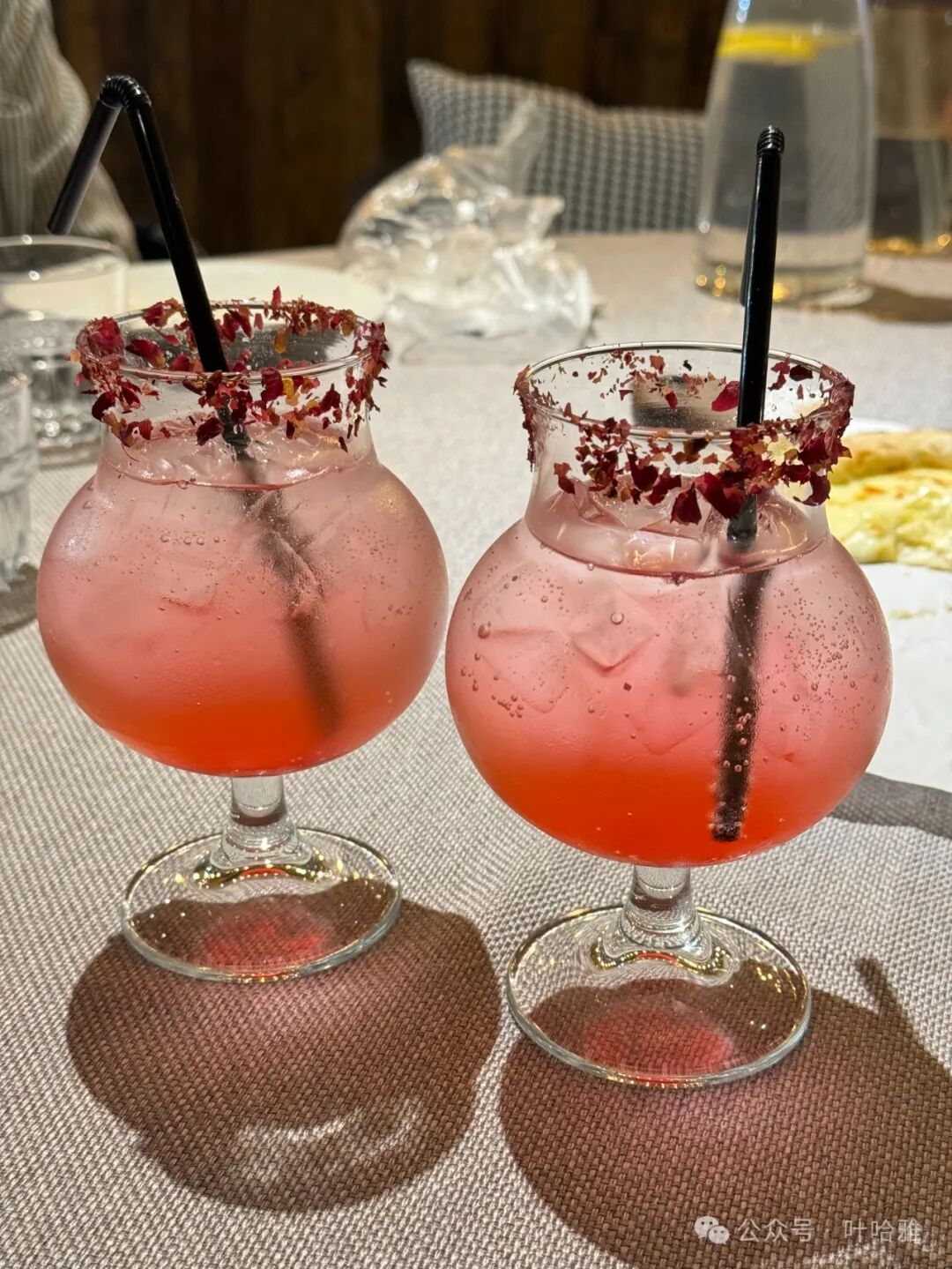
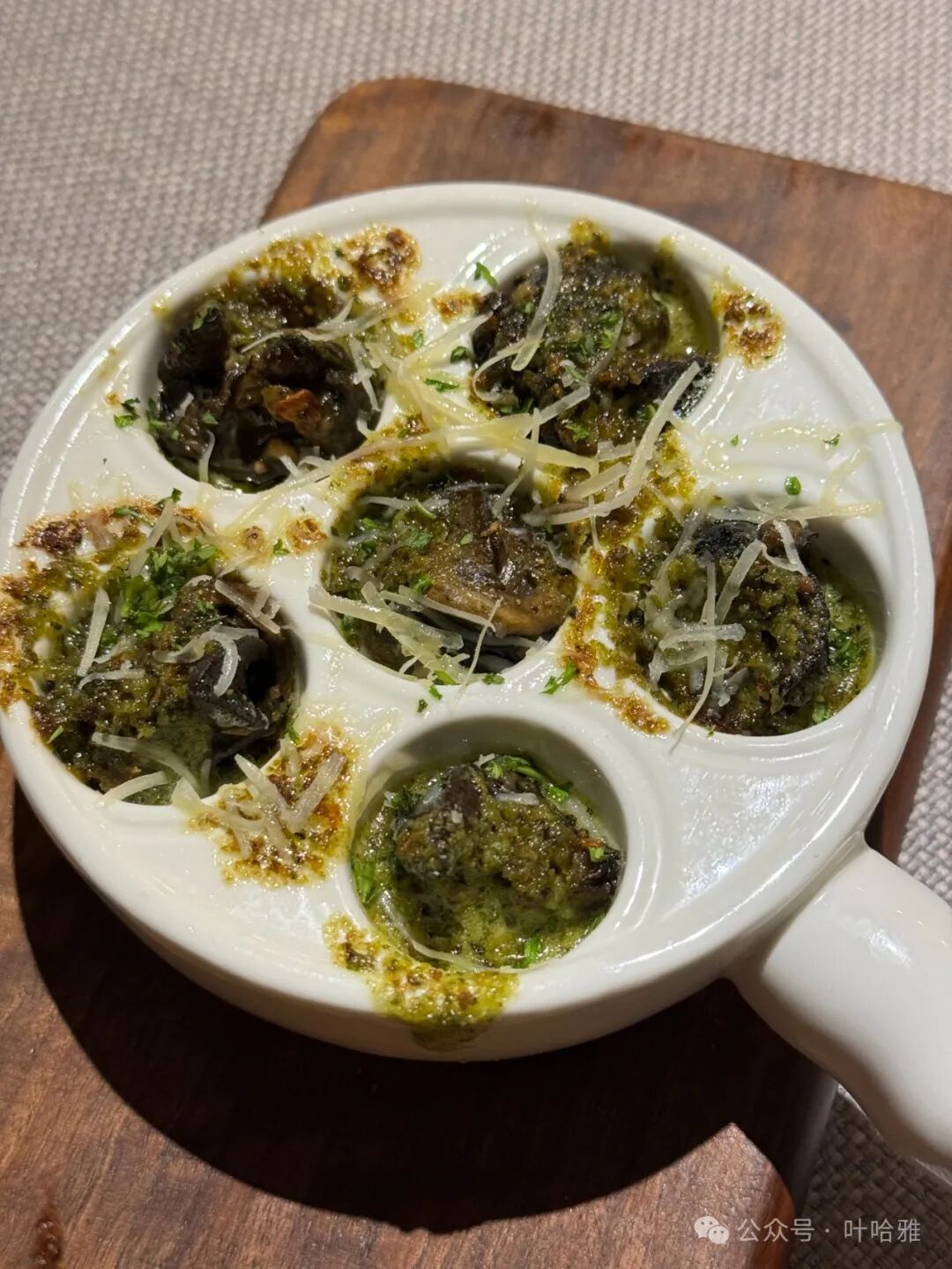
I tried the famous French dish of baked snails (escargot) for the first time. It tasted quite good, just like eating sea snails.
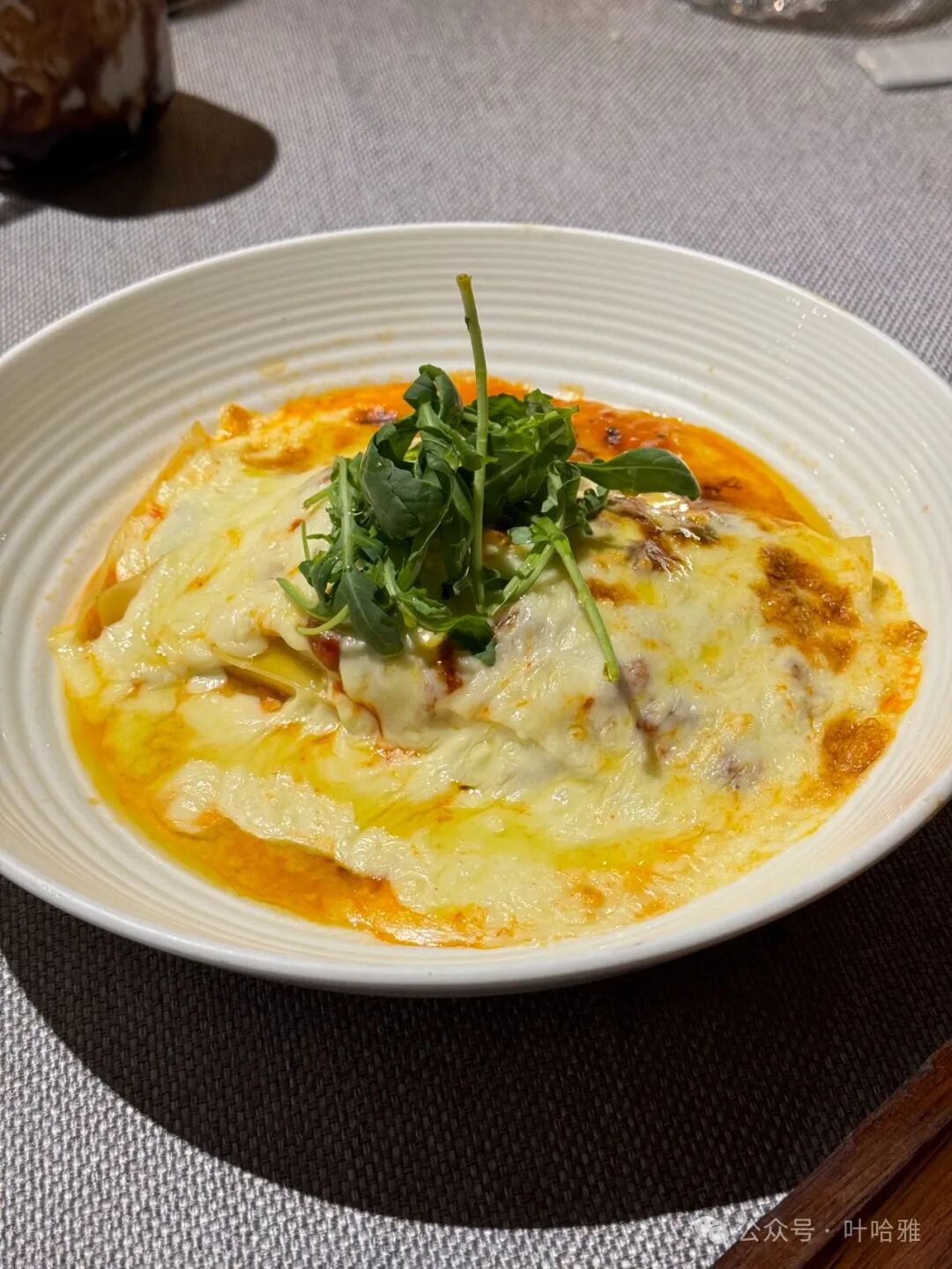
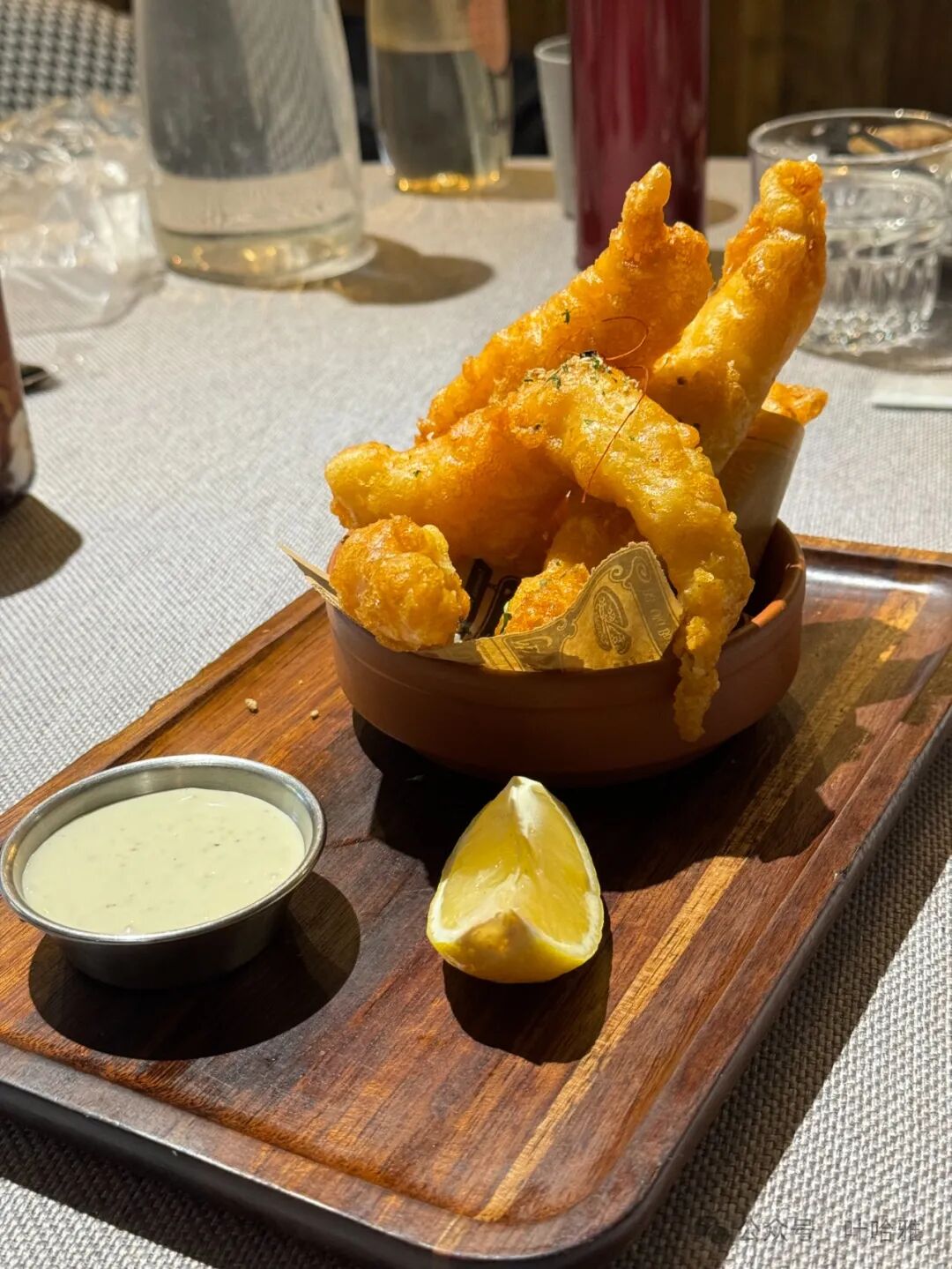
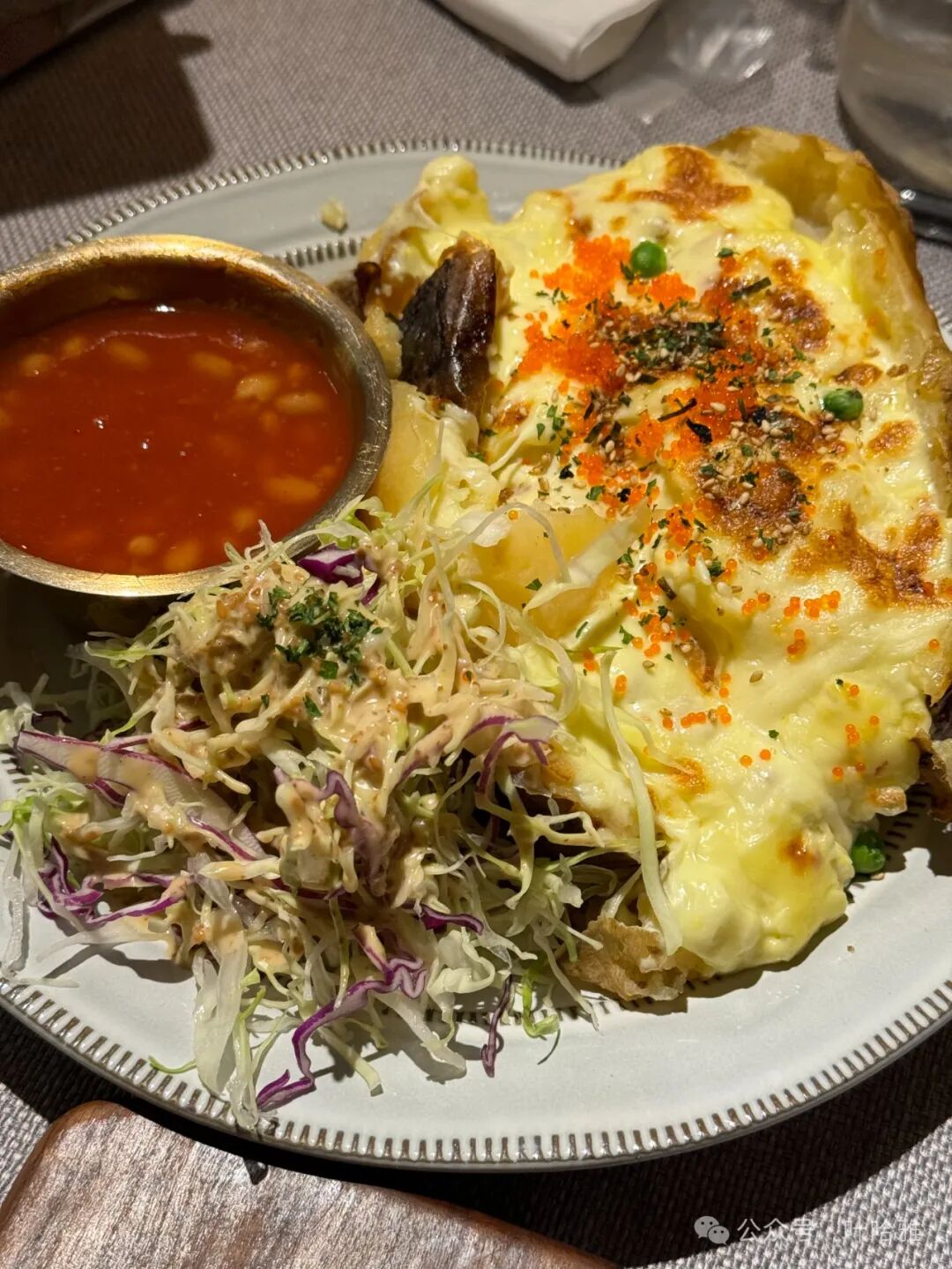
Even though the food and the environment are quite fancy, the prices are not high. You can eat for about 100 yuan per person. Prices in Tianjin are generally lower than in Beijing.
6. Haishiwan Restaurant
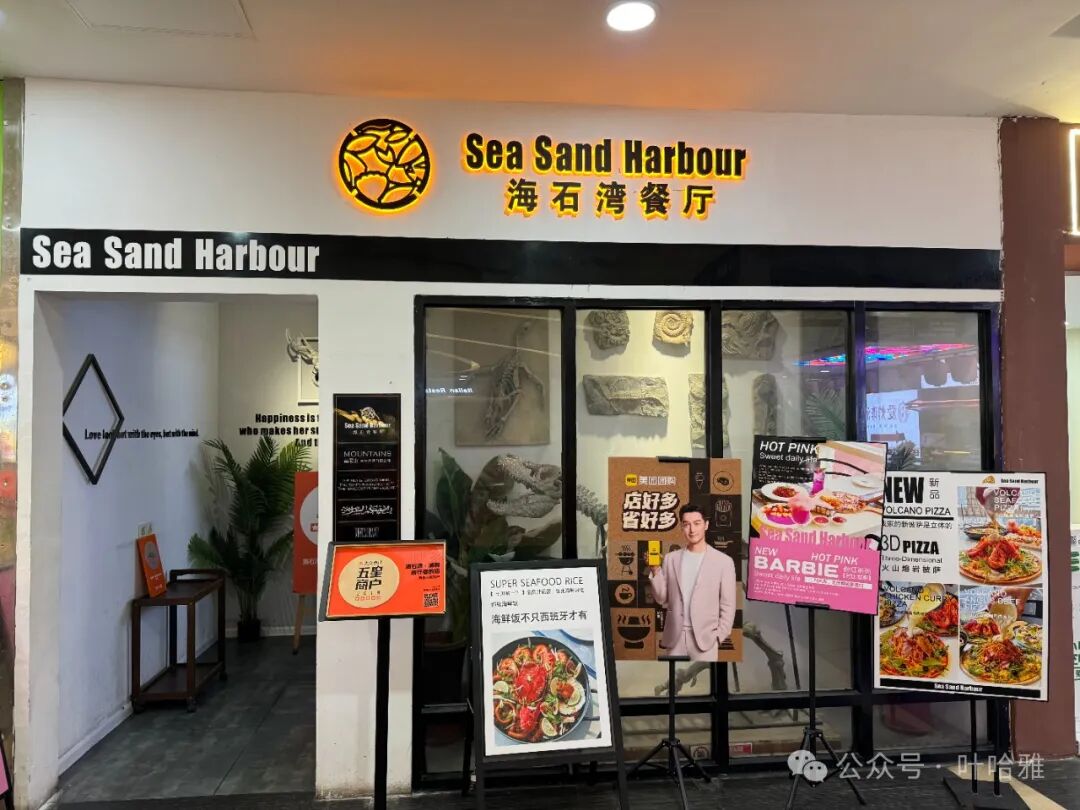
We found this Western restaurant based on online reviews.
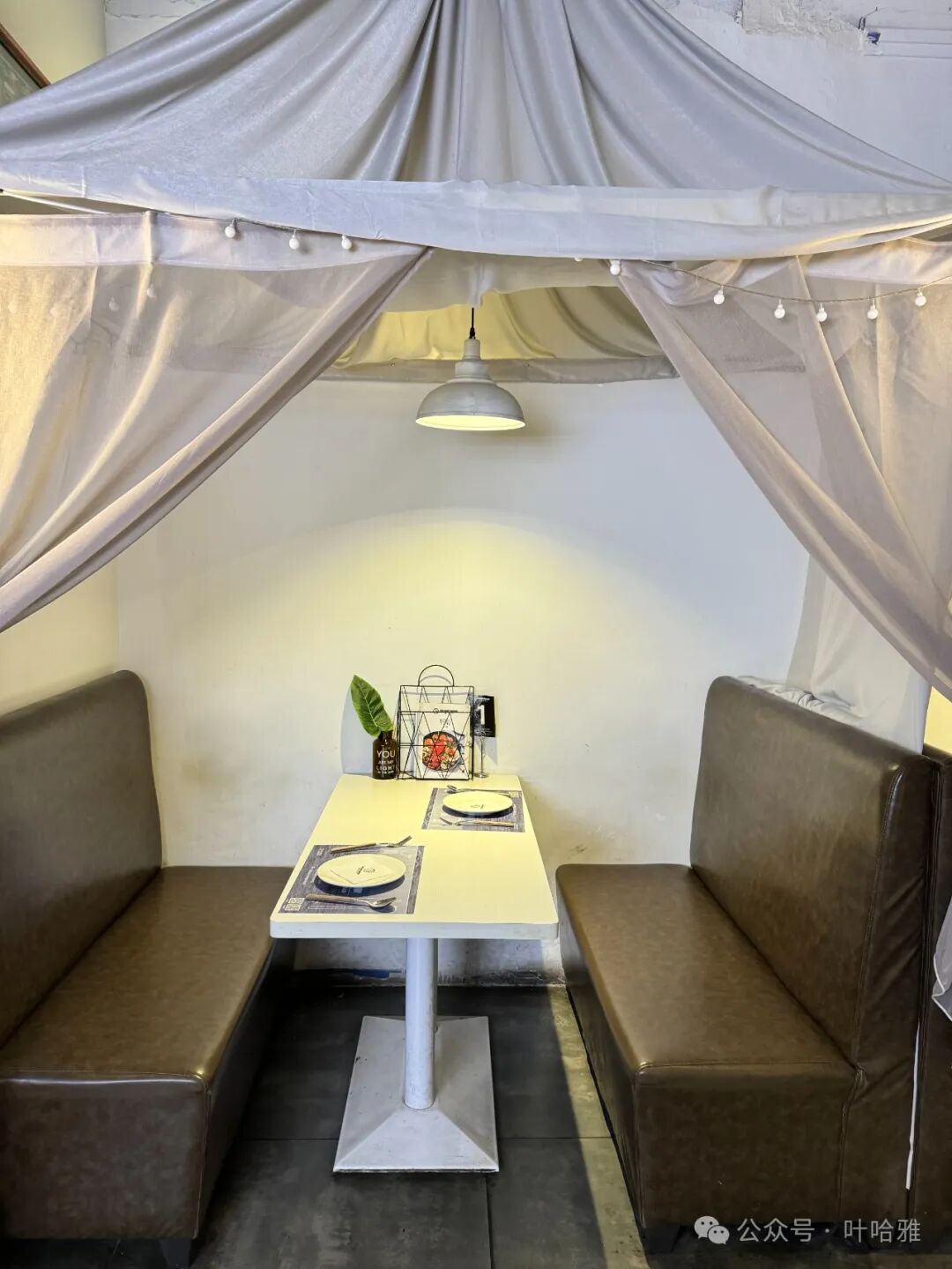
We ordered a wide variety of dishes here and tried almost all their signature items. However, the taste does not compare to Nuobona. This is a budget-friendly Western restaurant. It is definitely much cheaper than other places, costing only about 50 yuan per person, so you cannot expect too much from the flavor.
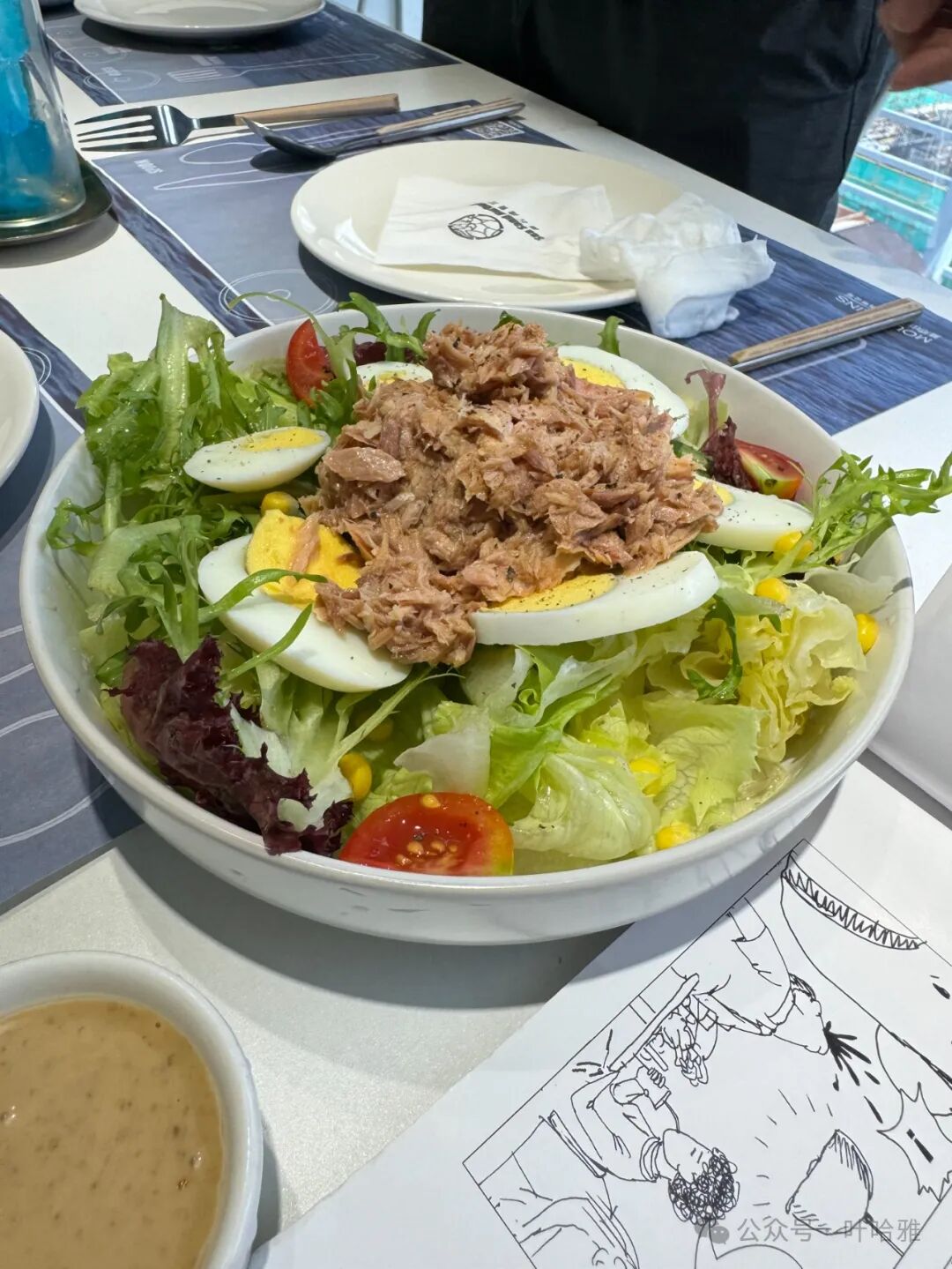
Still, their dishes look great in photos.
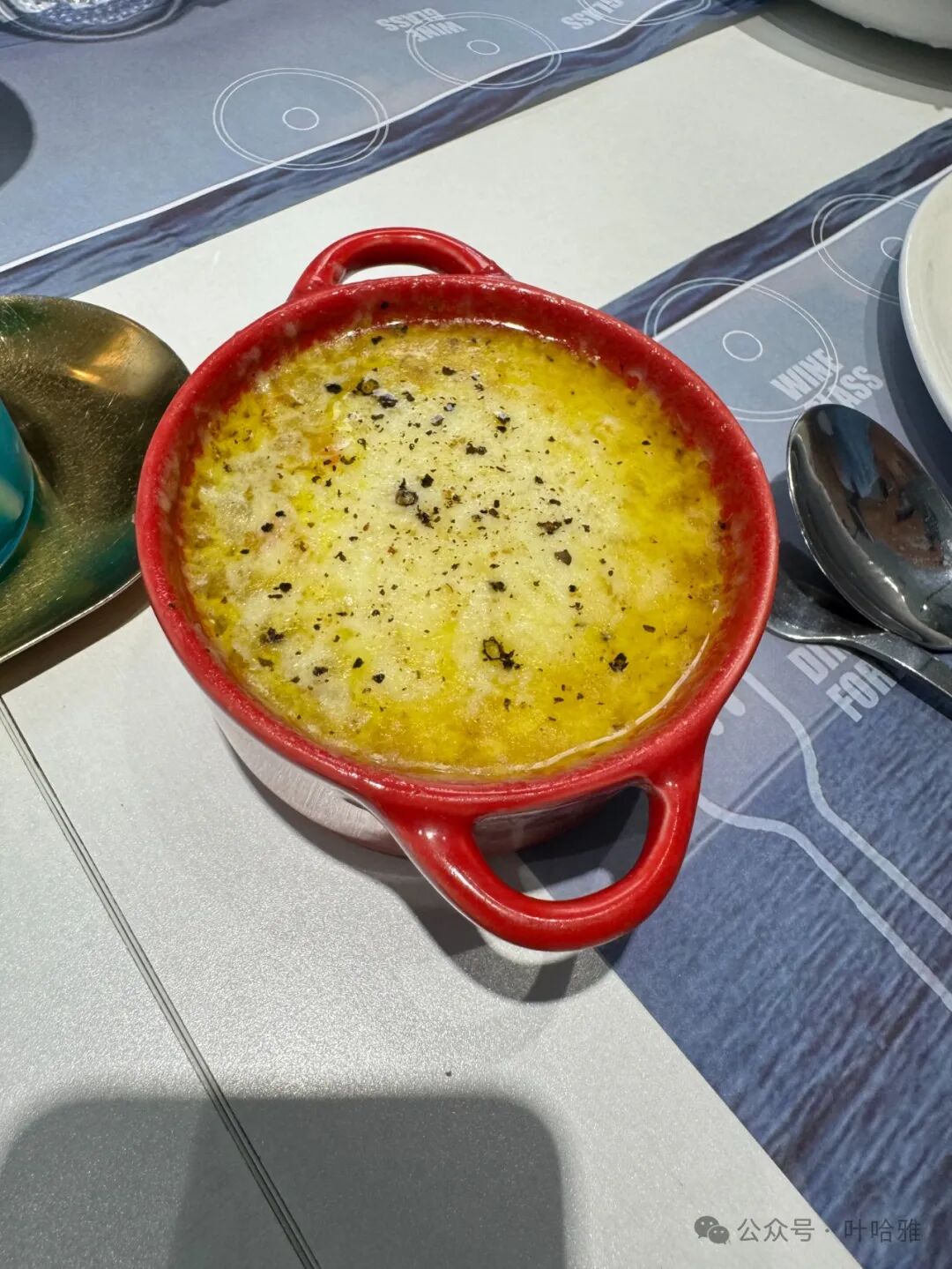
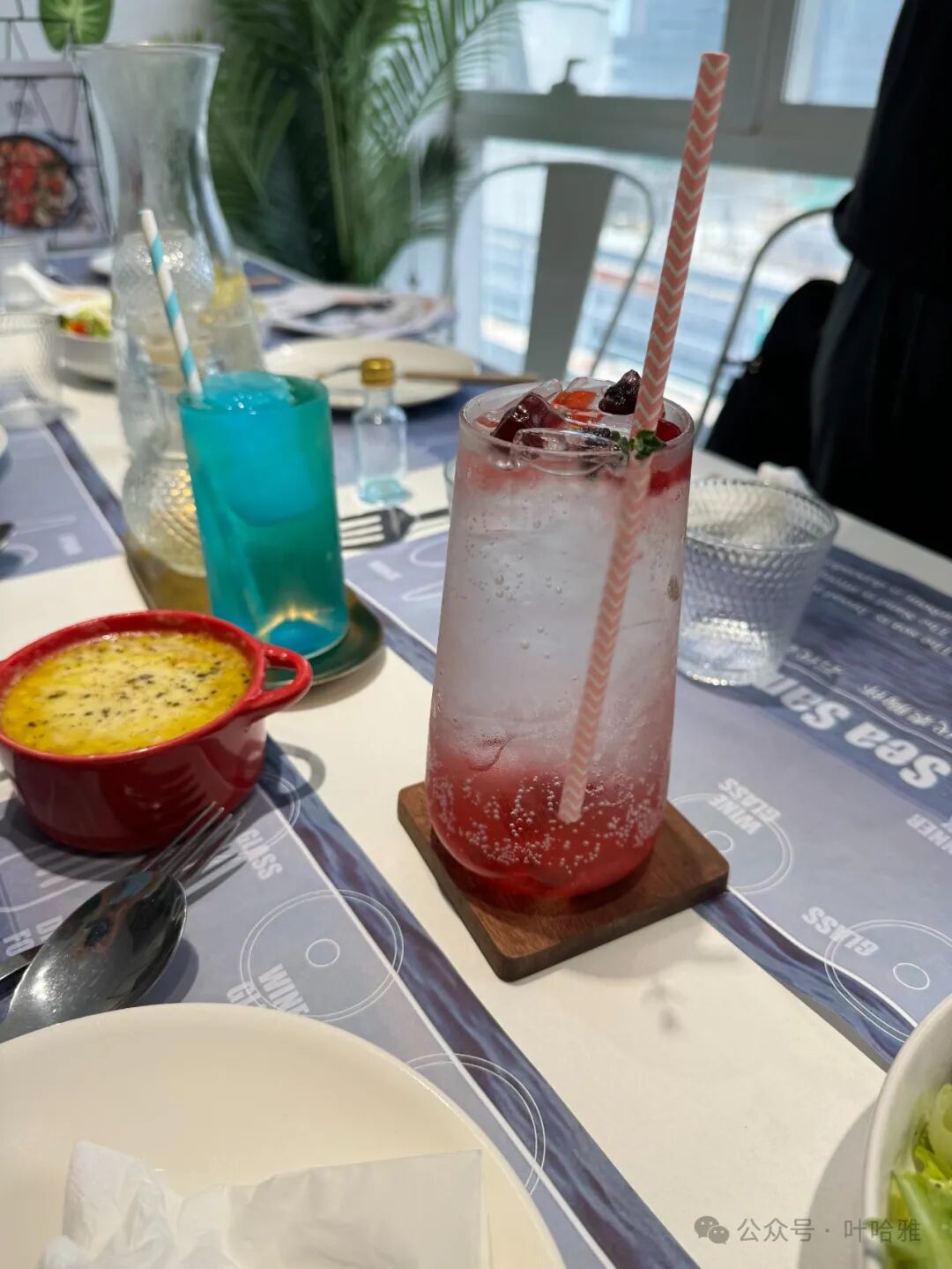
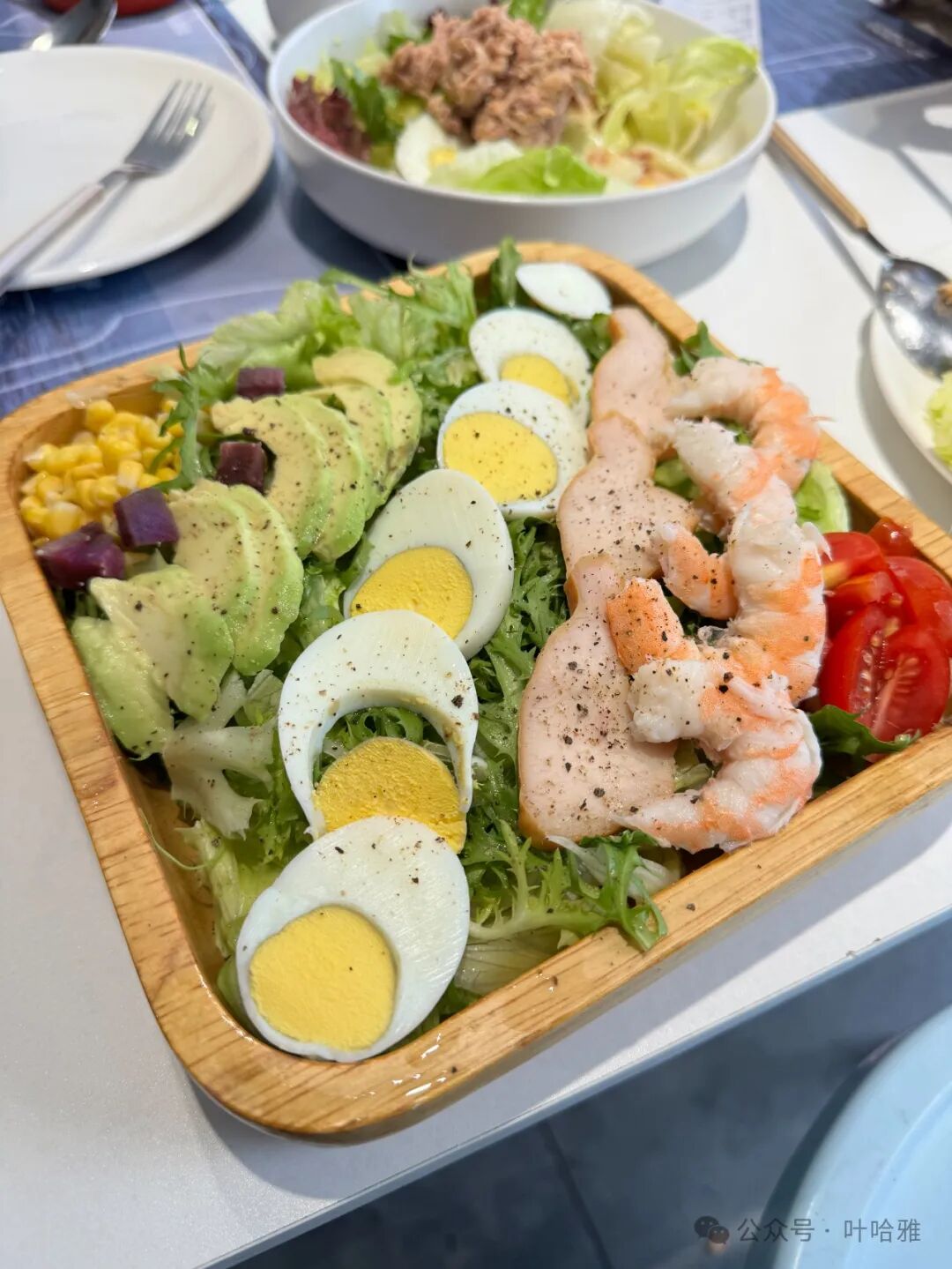
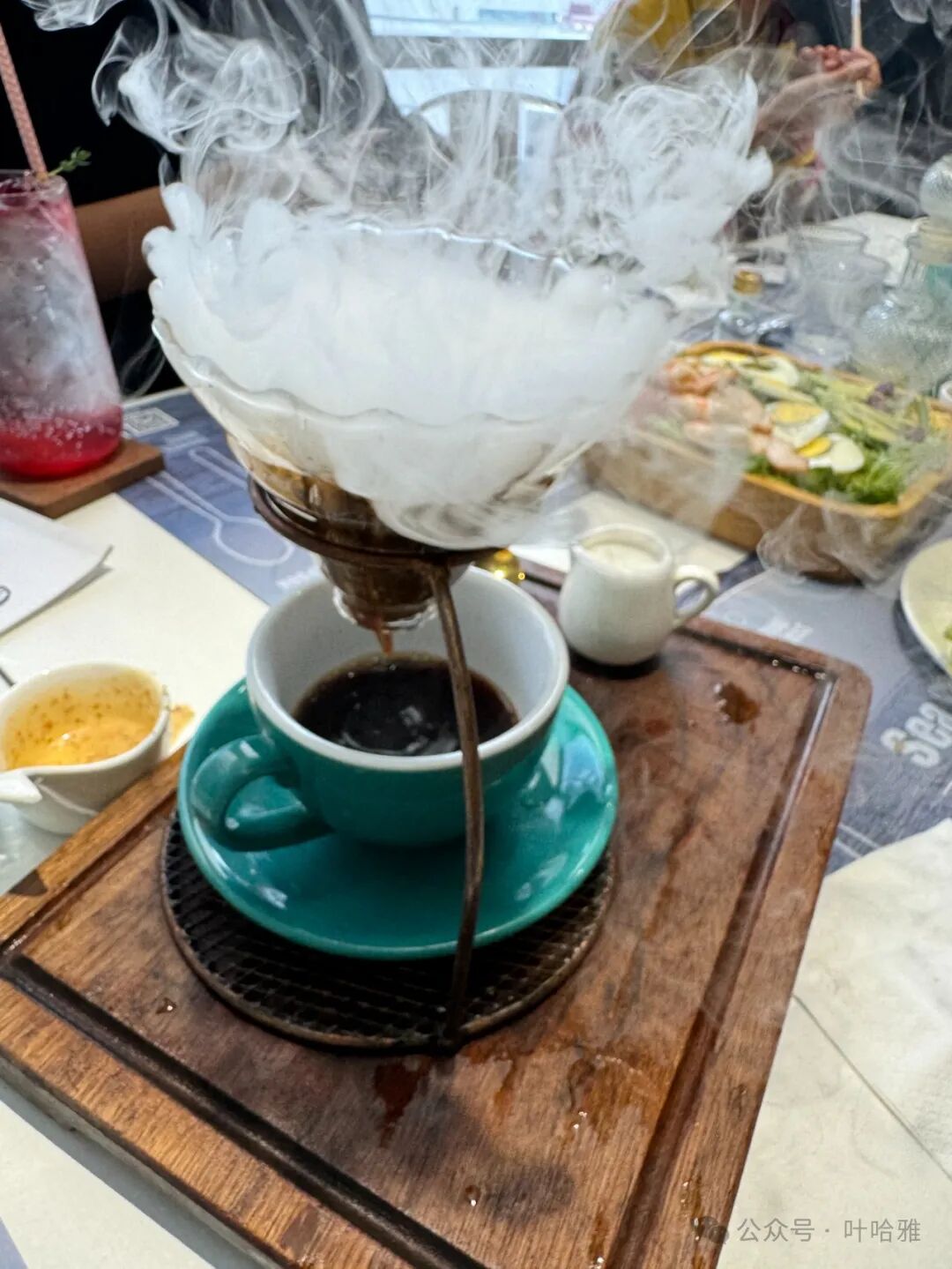
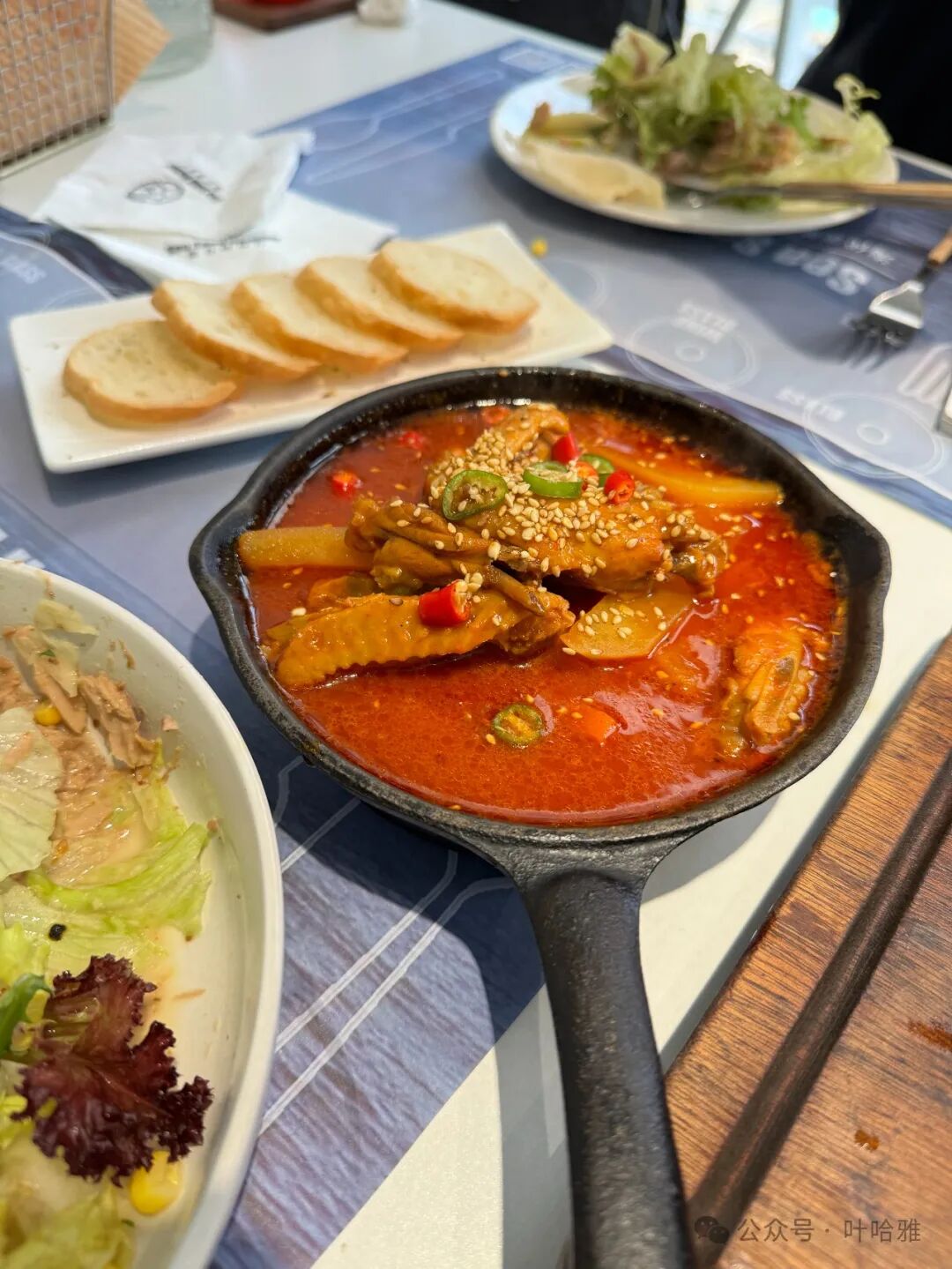
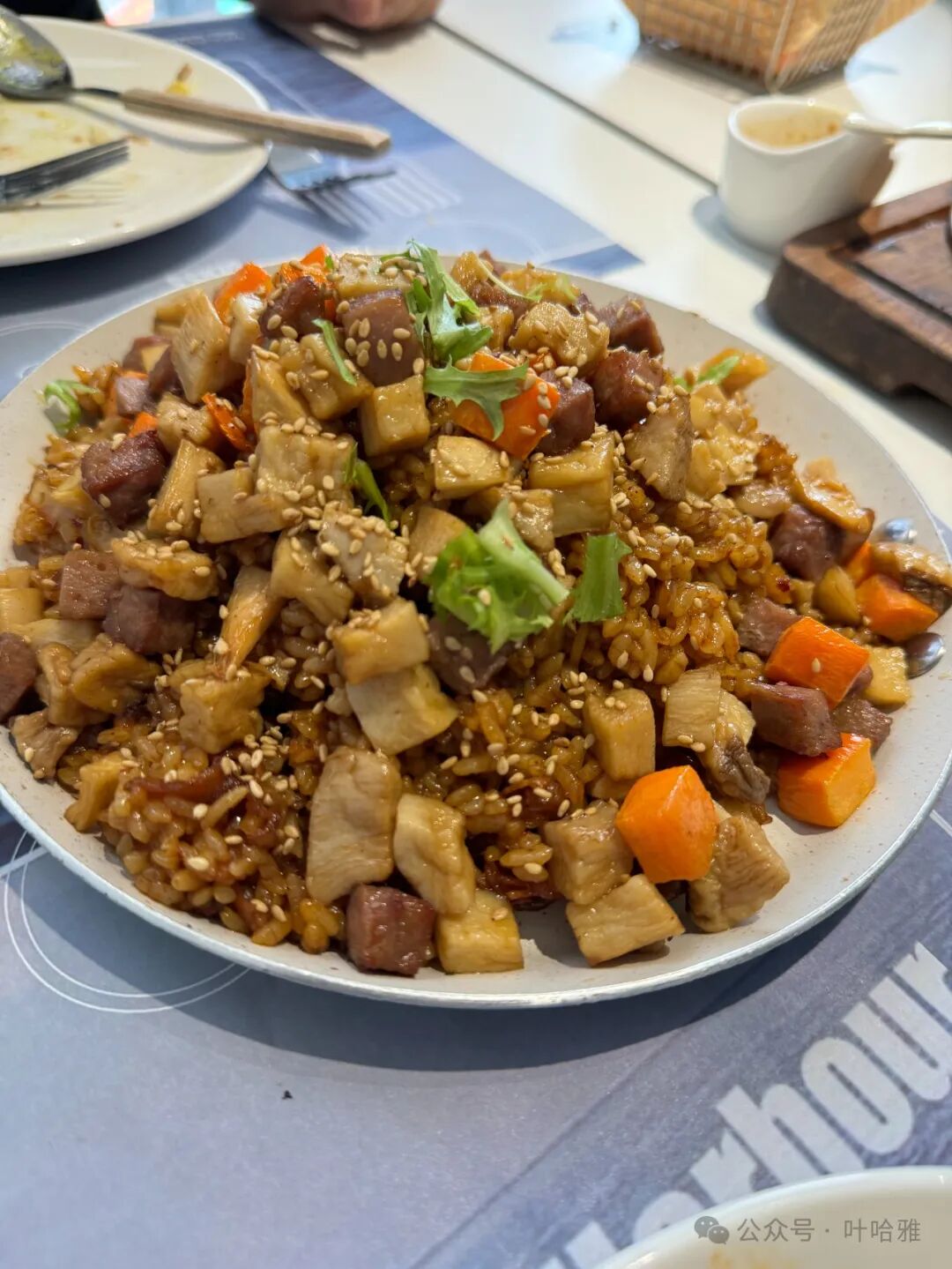
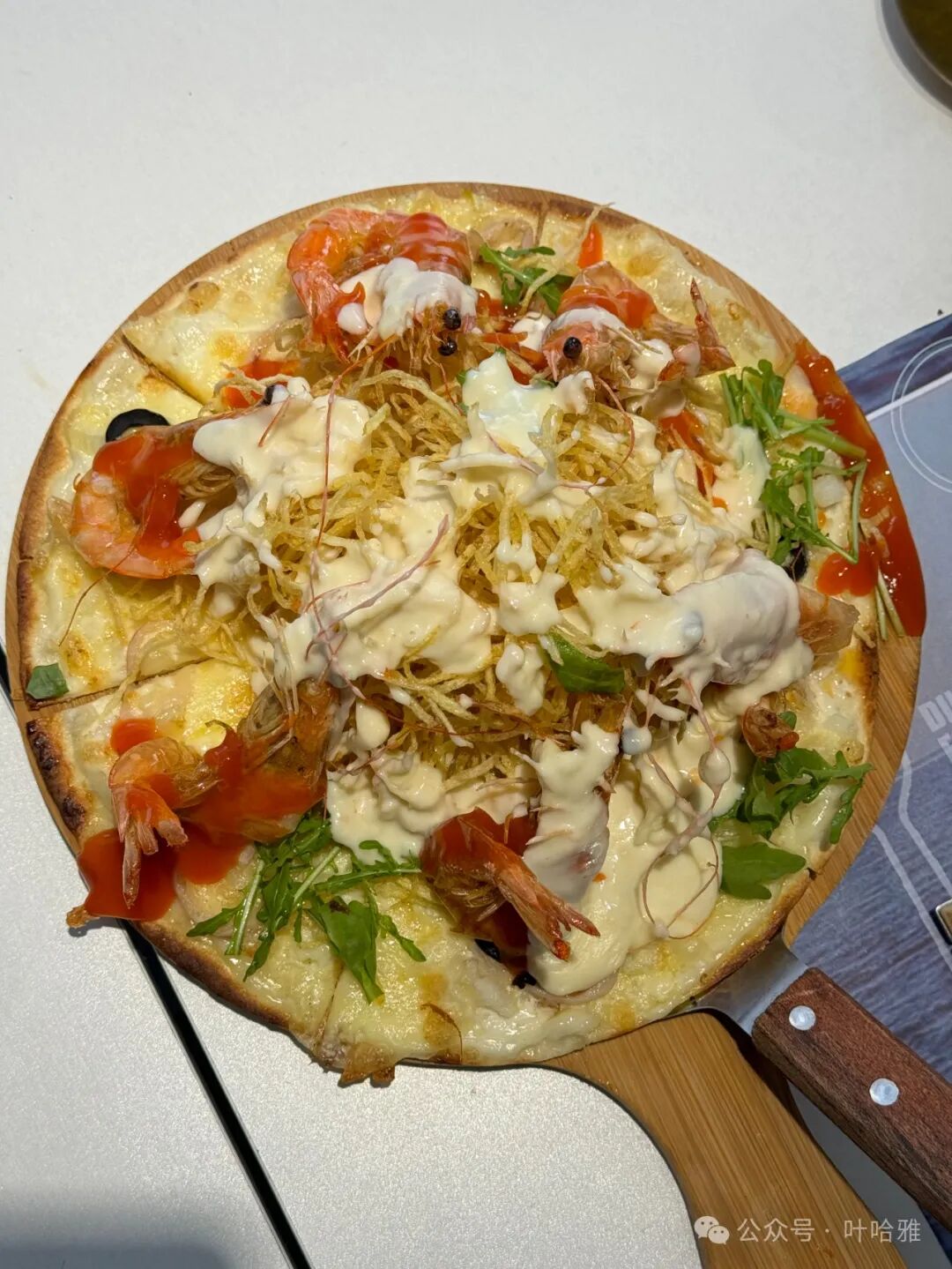
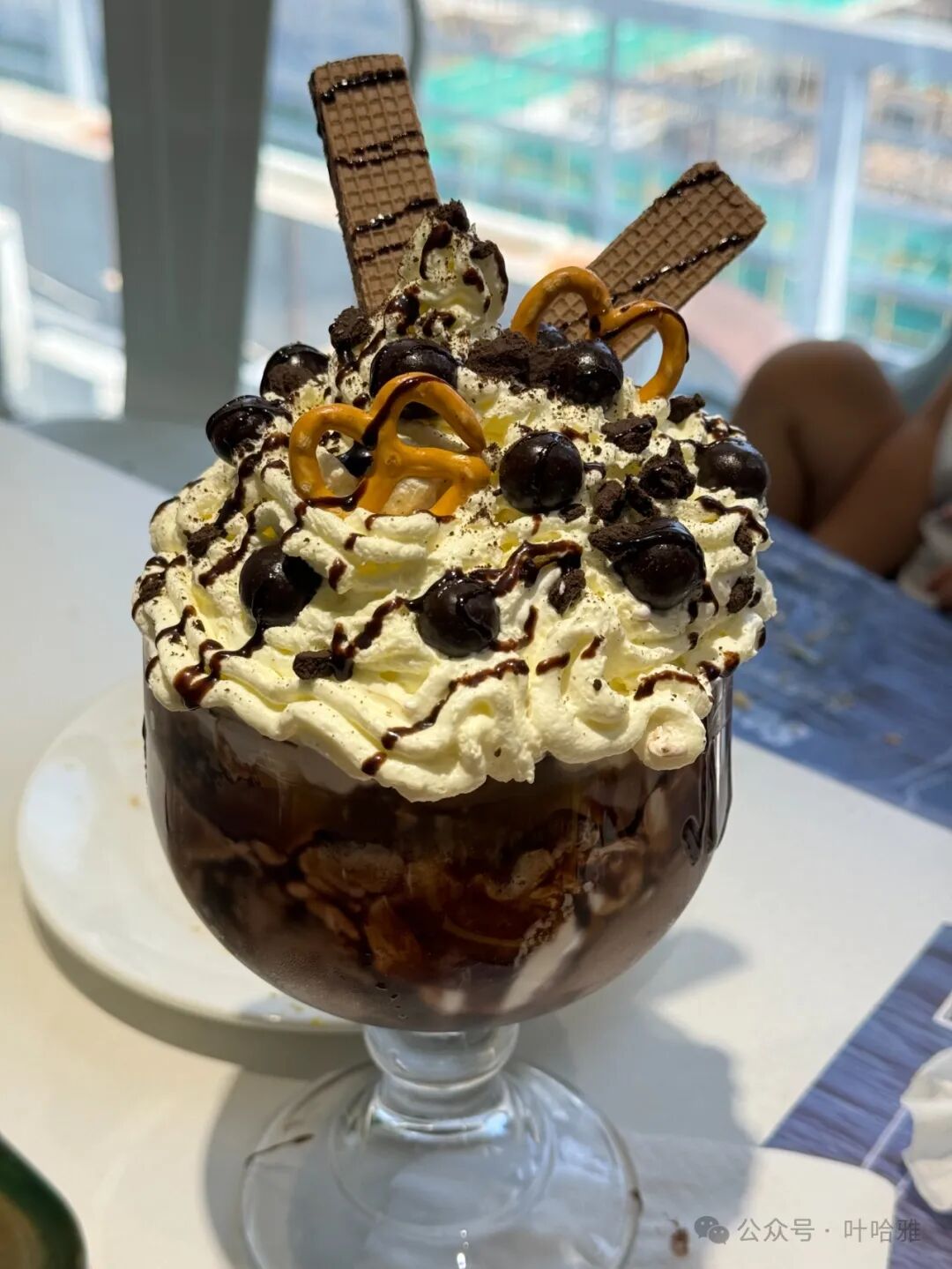
This huge cup of dessert was so sugary and rich that everyone could only manage one small bite before they were full.
Halal Food Guide Tianjin: Japanese Restaurants, Western Dining and Hui Muslim Local Food
Articles • yusuf908 posted the article • 0 comments • 236 views • 2026-05-22 11:45
Summary: This Tianjin halal food guide covers Muslim-friendly Japanese restaurants, Western dining, no-alcohol halal options, Hui Muslim local food, Tianmu village, and practical notes for halal travelers.
Tianjin Halal Food Map is presented here as a firsthand travel account in clear English, beginning with this scene: What attracts me most to Tianjin is the large number of halal Western and Japanese restaurants. Excluding noodle shops, Tianjin has more halal restaurants that do not sell alcohol than Beijing. The account keeps its focus on Halal Travel, Yiwu Food, Beijing while preserving the names, places, food, and historical details from the Chinese source.
What attracts me most to Tianjin is the large number of halal Western and Japanese restaurants. Excluding noodle shops, Tianjin has more halal restaurants that do not sell alcohol than Beijing.
Because of its history as a foreign concession, Tianjin has many Western and Japanese restaurants. Since there is a lot of civilian exchange between Tianjin and Japan, the quality of the Japanese food here is reliable.
Niaohe Kappo Cuisine
You need to book in advance to eat at this Japanese yakitori restaurant, which has a high rating on Dianping. It is located at 125 Hami Road. We did not check beforehand and arrived to find all the seats were booked, so we could not eat there. We just took some photos of the interior and will try again next time.
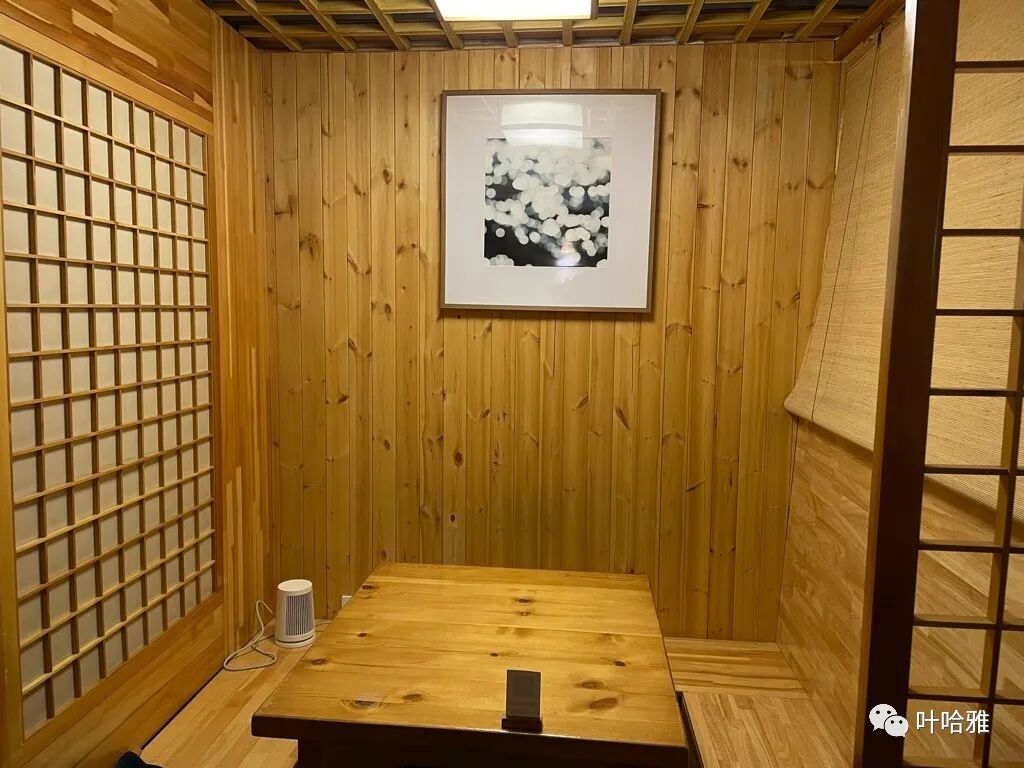
The wooden partitions inside and the wall decorations have a strong Japanese style.
Qianmu Halal Japanese Restaurant
Qianmu has two locations in Tianjin. One is in Guoyuan, not far from Tianmu Village, and the other is in Shuangjie. We visited the Guoyuan branch so we could also explore Tianmu, which is a village for Hui Muslims in the suburbs of Tianjin, quite far from the city center.
This restaurant is also busy, but to be safe, I called ahead to book a table.
Although marble soda (ramune) is very popular in Japan and has a long history, it was first invented in the UK. The Japanese name for it, ramune, is a transliteration of the English word lemonade.
Marble soda (ramune)
Battleship sushi platter (gunkan maki)
The battleship sushi platter is perfect for someone like me who wants to try many different flavors. You get one piece of each, and then you can just order more of the ones you like.
Natto
Natto is a common Japanese fermented soybean dish. People usually mix it with rice. It is sticky and stringy. Some say it smells bad, but I do not think so. I can swallow it, but I do not think it tastes good.
Grilled platter
This is a Japanese-style grilled combo. It has chicken skewers and grilled okra. I think the grilled fish balls are the best.
Baked cheese fish cake (chikuwa)
Chikuwa is a type of Japanese fish cake. The middle looks like it was grilled, and the ends are yellow and white. The texture is similar to a fish ball.
Salt-grilled ginkgo nuts
This is my first time eating salt-grilled ginkgo nuts. The shells are already cracked. The nut inside is tender and slightly bitter.
Eight-piece sashimi platter
The eight-piece sashimi platter costs 288 yuan. Each type of sashimi has five slices. The fish is fresh and does not taste fishy. A friend from Tianjin once told me a trick to identify fresh seafood: if it does not taste fishy when you eat it, the ingredients are fresh.
Live eel rice
The live eel is definitely fresh, which makes the rice taste savory and delicious. Japanese food is never cheap, and this meal cost about 150 yuan per person.
Luoyan Halal Western Restaurant
Luoyan is named after the owner's child. This is a smoke-free and alcohol-free Western restaurant, and it is closed on Mondays.
The interior of the small Western-style building caught my eye as soon as I walked in. The restaurant has two floors, and we chose to sit on the second floor to look down at the lobby.
Beijing really does not have this kind of standard European-style halal Western food. Halal Western food in Beijing is usually mixed with Middle Eastern cuisine.
European-style Western food usually includes alcohol, but this place offers non-alcoholic champagne and red wine, so the Western dining atmosphere is just as good.
This bottle of imported French halal champagne costs 288 yuan at the restaurant. We found the same one on Taobao for 94 yuan, so interested friends can go try it. The halal champagne tastes sour and astringent, and I am not sure if it is authentic. Because of this bottle of wine, our meal cost more than 200 yuan per person.
Here is a little bit of Islamic legal knowledge: although most regions accept non-alcoholic wine as a halal drink, a small number of jurists believe that non-alcoholic wine should not be consumed either, because it carries the suspicion of intending to drink alcohol. Even if you hold up a glass of water and say 'let us toast with water instead of wine,' that glass of water might also become impermissible to drink. Although we believe that the prohibition of alcohol is because it causes intoxication, some jurists only follow the literal meaning without considering the underlying intent.
Wasabi Avocado Shrimp Salad
The large shrimp are fresh and big, and the slight heat from the wasabi makes it perfect for people on a diet.
Malaysian durian pizza
The durian pizza is very fragrant and has plenty of durian filling. I will mention another Western restaurant's durian pizza later, which has even more filling.
Burmese giant tiger prawn with pan-seared foie gras
It is rare to find halal foie gras, so we splurged a little this time. The four of us each had one bite of the prawn and foie gras, and it was all gone.
Russian-style pot-stewed beef with garlic baguette
Pot-stewed beef is a classic Russian dish. The beef is stewed with tomatoes inside the pot and covered with a layer of puff pastry. The pastry is very crispy. After one bite, I knew the upcoming Beef Wellington would be great.
Beef Wellington
The signature of Beef Wellington is the puff pastry wrapping. Most Western restaurants use shortening for the pastry, which often contains lard and is not halal. Maiweitang in Beijing used to serve Beef Wellington, but the Hui Muslim owner stopped serving it, so we cannot eat it there anymore.
Thick-cut filet mignon
Filet mignon is beef tenderloin steak. It has a chewier texture than Beef Wellington. After ordering, the waiter will ask how you want it cooked, ranging from 1, 3, 5, 7, 9, to well-done. Well-done steak can be dry, so I suggest 5 to 7 minutes. Ours is cooked to 7 minutes.
Totoro Canteen (Longmao Shitang)
If you think the Japanese food I recommended earlier is too expensive, you can try Totoro Canteen. The average cost per person is under 100 yuan. It is located opposite the China Huaxia Bank in Hengxing World.
Non-alcoholic mojito
Their mojito tastes better than just okay.
Wasabi octopus
Wasabi octopus in small shops is usually canned, so it is fine for a quick taste.
Salmon sashimi
Queen eel rice
The eel rice is topped with bonito flakes (katsuobushi), which are thin shavings made from skipjack tuna and a common ingredient in Japanese cuisine.
Seafood ramen
A conservative estimate is that there are about ten halal Japanese restaurants currently in Tianjin, and I have saved a few more to visit.
Yiweizhai Halal rice noodle rolls (changfen)
I visited Yeji Rice Noodle Rolls years ago, and later learned they opened this shop, which has now been open for five years. The menu has almost all the Cantonese snacks, and it is also a restaurant that does not sell alcohol.
This place serves bigger portions than Yeji. I tried the most iconic version of every Cantonese snack, and they were all delicious. I wish they would open a branch in Beijing, as all the halal Cantonese restaurants there have closed down.
Seafood congee
Hong Kong-style shrimp dumpling noodles
Two-flavor steamed rice rolls (changfen)
Stir-fried rice noodles with beef (ganchao niuhe).
Custard bun (naihuangbao)
Cured beef claypot rice (baozai fan)
While we ate, we saw the owner deveining shrimp. Each of their shrimp dumplings contains two large shrimp, which is very generous.
Jin Jin Halal Curry Restaurant
This is a halal Western restaurant near Nankai Joy City. The address is in the picture, and it is also an alcohol-free restaurant.
The restaurant is a loft inside an apartment building. The owner is the only person working there, and she is also the chef. She is from Tianjin and very talkative. When she saw us, she greeted us with salaam first.
The two most popular dishes are the Beef Wellington and the Musang King durian pizza. The pizza has the most toppings I have ever seen, with a thick layer of durian.
Musang King durian pizza
I really liked the taste of the roast chicken with lemon. Squeeze the juice from a lemon slice onto the chicken pieces; the crispy chicken pairs perfectly with the refreshing lemon.
French-style lemon country roast chicken
The beef Wellington did not impress me. The steak quality is not as good as at Luoyan, but their dishes are affordable, costing about 100 yuan per person.
Beef Wellington
For drinks, I chose a non-alcoholic mojito and an Oreo yogurt potted plant. The mojito tasted just okay, but the portion of the yogurt potted plant was huge.
Non-alcoholic mojito
Oreo yogurt potted plant
That is all for the restaurant introduction for now. If you are interested in Tianjin snacks but do not know what to pick, I suggest visiting the Northwest Corner. Walk around the street in front of the Great Southern Mosque (Qingzhen Nandasi). Although it is not as lively as it used to be after the renovations and many traditional snacks are gone, there are still plenty of options.
Fried bean sprout roll (juanquan)
A juanquan is a wrap with fillings you can choose yourself. The deep-fried roll is filled with bean sprouts. You can only find this in Tianjin, not in Beijing.
Huiji Tea Soup (Huiji Chatang)
This is a thick dessert, but it is not as sweet as you might think. It has a light, refreshing taste and is quite good when eaten hot.
Wenji Rice Cake (gaogan)
The outer layer is made of rice and filled with various flavors. They cost 2 yuan each and are also sweet. These three snacks are quite good, and you should eat them while they are hot. You can come and try them during the Spring Festival holiday.
Halal Zhangji
Zhangji sells fried skewers in the Northwest Corner. Interestingly, they also added steamed rice rolls (changfen). If you want to try all kinds of snacks in the Northwest Corner, you can try their steamed rice rolls. The taste is also quite good.
Besides eating and walking around in Tianjin, you can also listen to crosstalk at the Tianjin Deyunshe. The venue is much larger than the one in Beijing. You need to book tickets on the Damai app. During the Spring Festival, Deyunshe has closed for the season, and you will have to wait until after the holiday for performances to resume.
Deyunshe is very popular now, and theater tickets are hard to get. We booked front-row seats a week in advance for 240 yuan per person.
Listening to crosstalk live is all about feeling the happy atmosphere. It is very relaxing to enjoy the show while drinking tea.
However, famous performers rarely appear in small theaters. The ones holding up the show are all Guo Degang's apprentices, and I do not recognize any of them.
X-RAY Art Lab
This is a DIY embroidery shop opened by a friend in Tianjin. I customized a tag and a handbag here for my son, Fahim.
I made a hanging ornament for Fahim embroidered with the words "Tawhid" (the Oneness of Allah) to help him remember the most important thing in life.
The English spelling of Faheem is Faheem.
Here is a quick tip on Islamic law: cartoon characters are halal for children. According to The Lawful and the Prohibited in Islam by Yusuf al-Qaradawi, photos are allowed. Statues that cast a shadow are forbidden, but children's toys are an exception because kids need them and there is no intent of idol worship.
I have often seen elderly people at the mosque criticize teenagers for wearing clothes with images on them. They really hate it. It is already rare for these young people to come to the mosque, and some are now afraid to enter because they worry about being scolded by the elders for an unintentional mistake. Besides, your criticism has no basis.
Search for "x-ray art lab" on Taobao or add the owner on WeChat at w287302278 to place an order. view all
Summary: This Tianjin halal food guide covers Muslim-friendly Japanese restaurants, Western dining, no-alcohol halal options, Hui Muslim local food, Tianmu village, and practical notes for halal travelers.
Tianjin Halal Food Map is presented here as a firsthand travel account in clear English, beginning with this scene: What attracts me most to Tianjin is the large number of halal Western and Japanese restaurants. Excluding noodle shops, Tianjin has more halal restaurants that do not sell alcohol than Beijing. The account keeps its focus on Halal Travel, Yiwu Food, Beijing while preserving the names, places, food, and historical details from the Chinese source.
What attracts me most to Tianjin is the large number of halal Western and Japanese restaurants. Excluding noodle shops, Tianjin has more halal restaurants that do not sell alcohol than Beijing.
Because of its history as a foreign concession, Tianjin has many Western and Japanese restaurants. Since there is a lot of civilian exchange between Tianjin and Japan, the quality of the Japanese food here is reliable.
Niaohe Kappo Cuisine
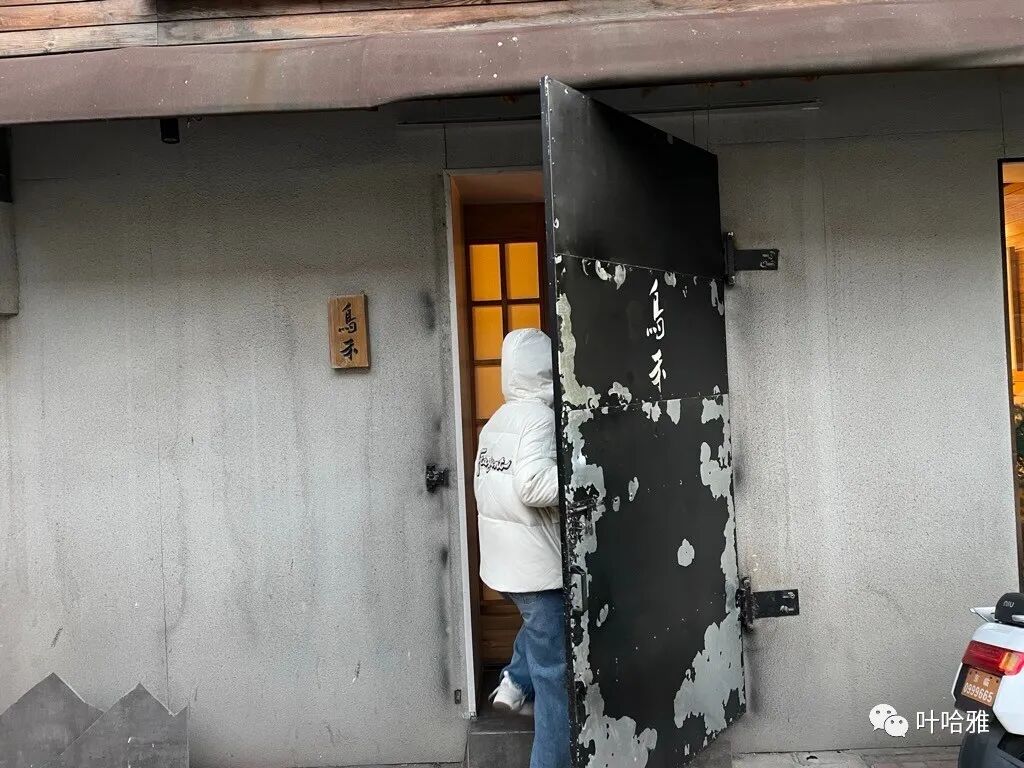
You need to book in advance to eat at this Japanese yakitori restaurant, which has a high rating on Dianping. It is located at 125 Hami Road. We did not check beforehand and arrived to find all the seats were booked, so we could not eat there. We just took some photos of the interior and will try again next time.
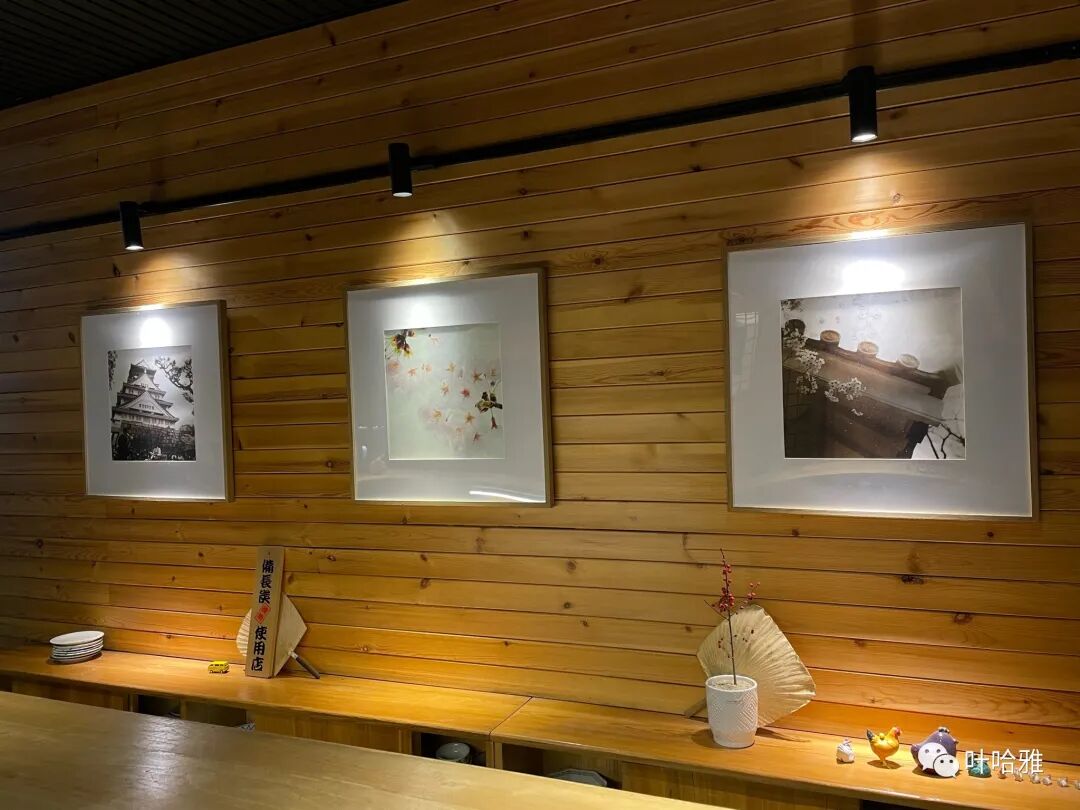
The wooden partitions inside and the wall decorations have a strong Japanese style.
Qianmu Halal Japanese Restaurant
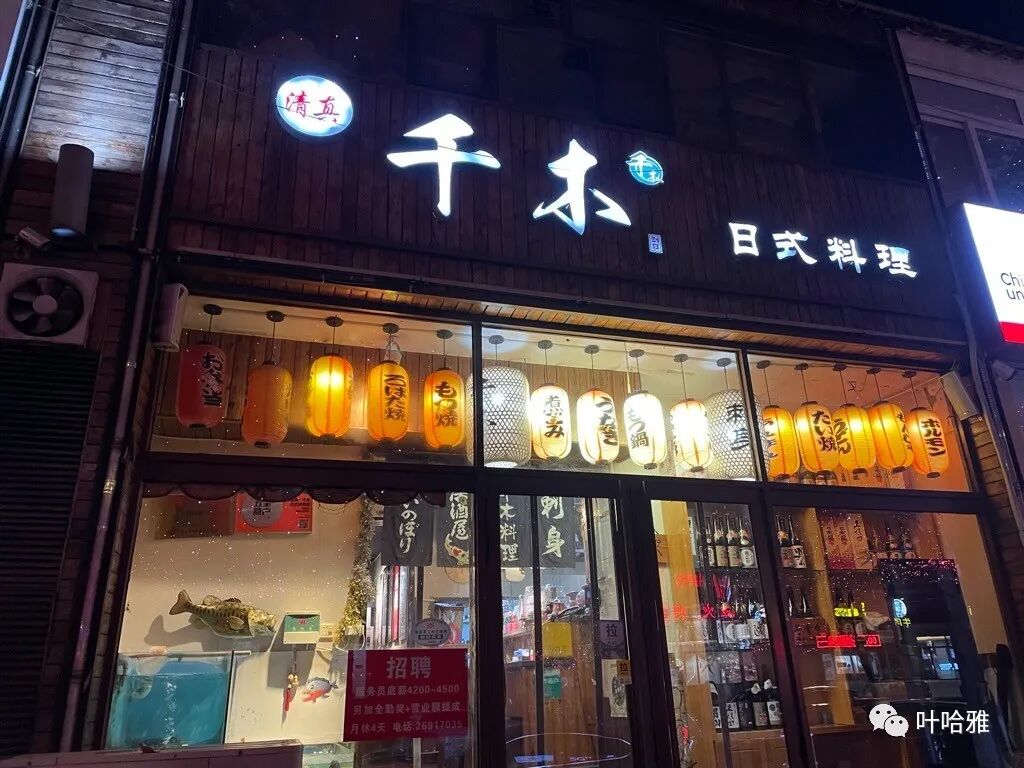
Qianmu has two locations in Tianjin. One is in Guoyuan, not far from Tianmu Village, and the other is in Shuangjie. We visited the Guoyuan branch so we could also explore Tianmu, which is a village for Hui Muslims in the suburbs of Tianjin, quite far from the city center.
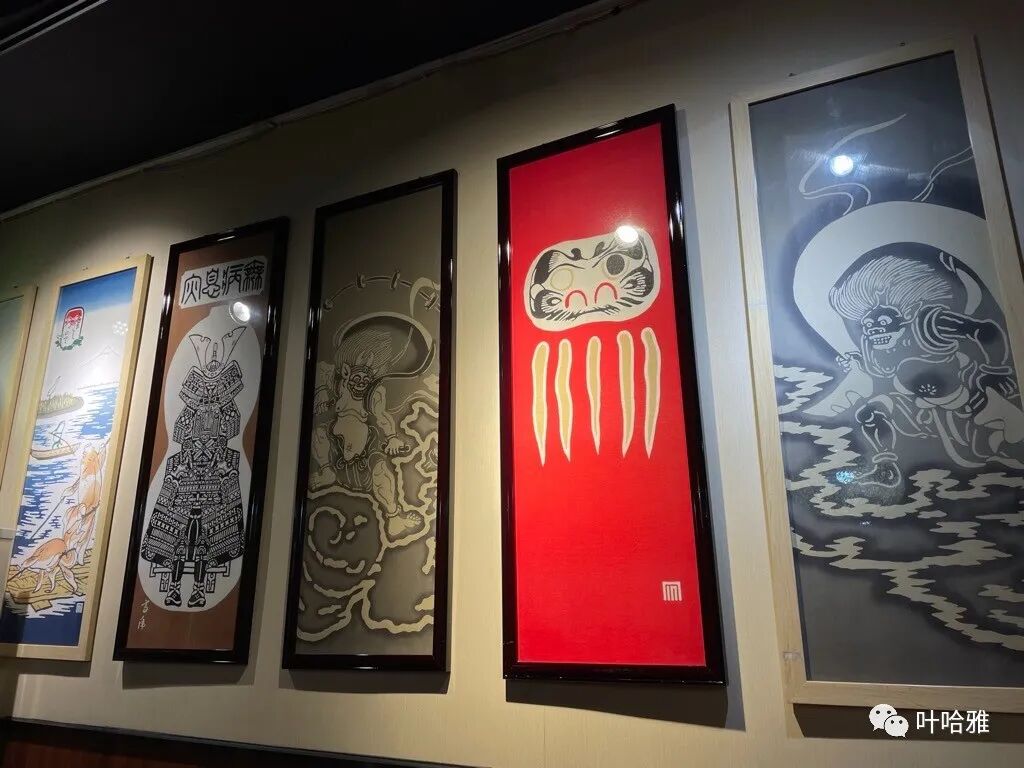
This restaurant is also busy, but to be safe, I called ahead to book a table.
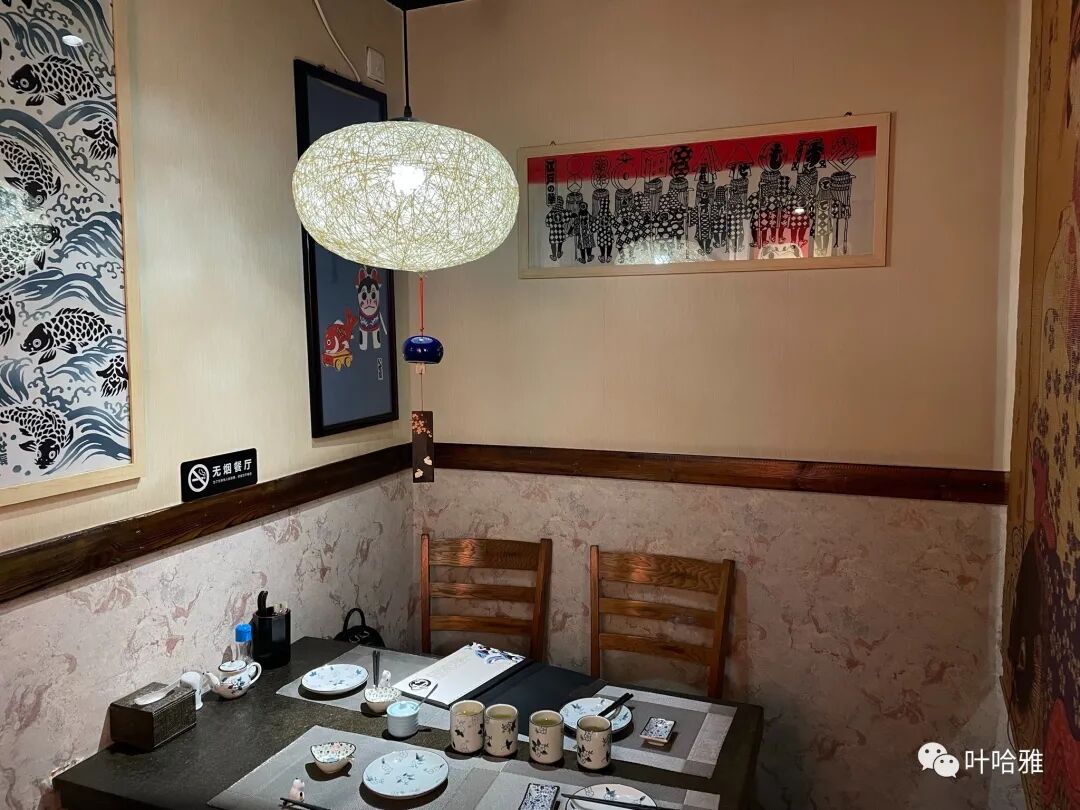
Although marble soda (ramune) is very popular in Japan and has a long history, it was first invented in the UK. The Japanese name for it, ramune, is a transliteration of the English word lemonade.
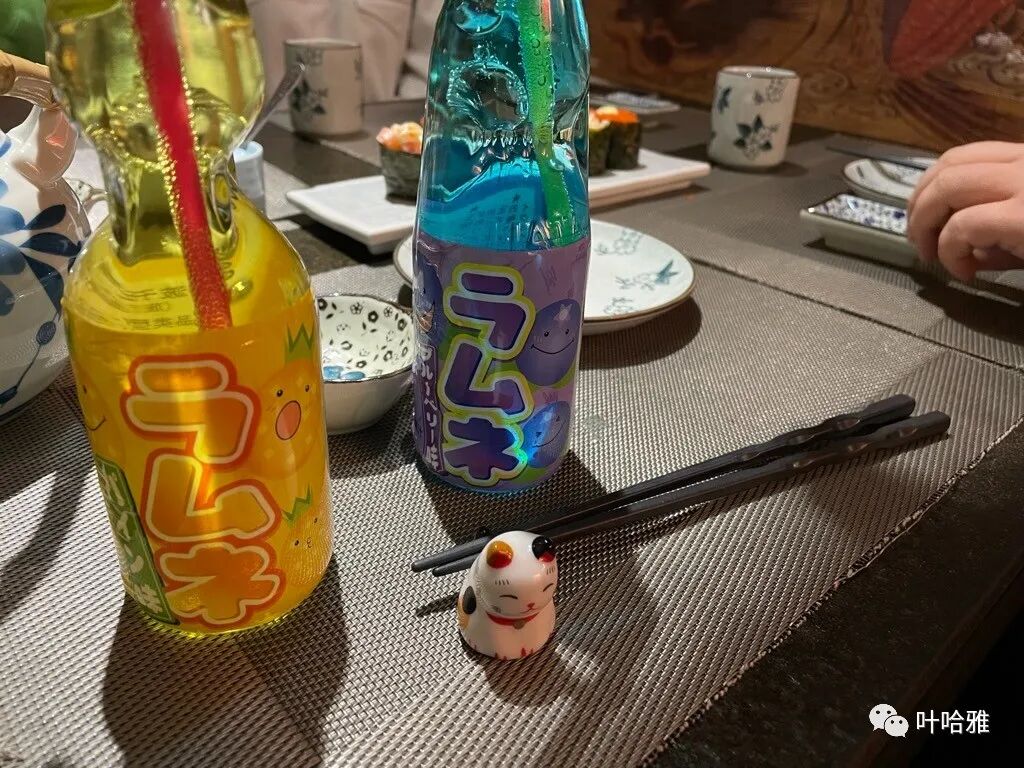
Marble soda (ramune)
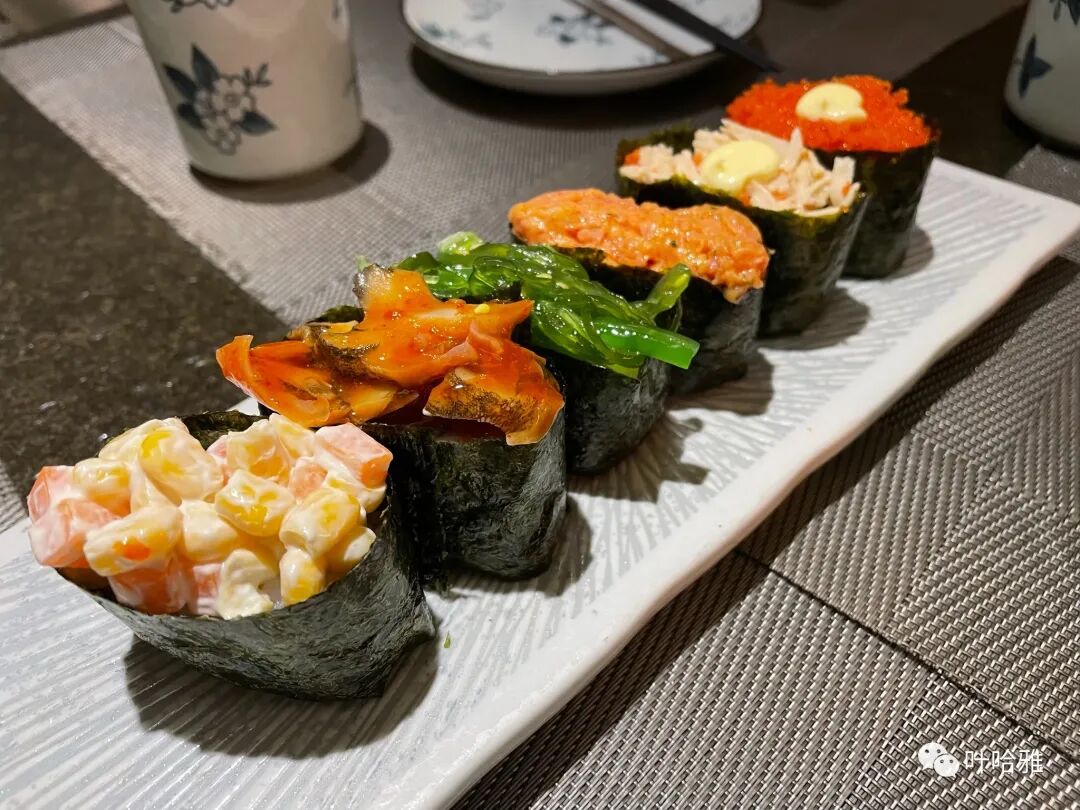
Battleship sushi platter (gunkan maki)
The battleship sushi platter is perfect for someone like me who wants to try many different flavors. You get one piece of each, and then you can just order more of the ones you like.
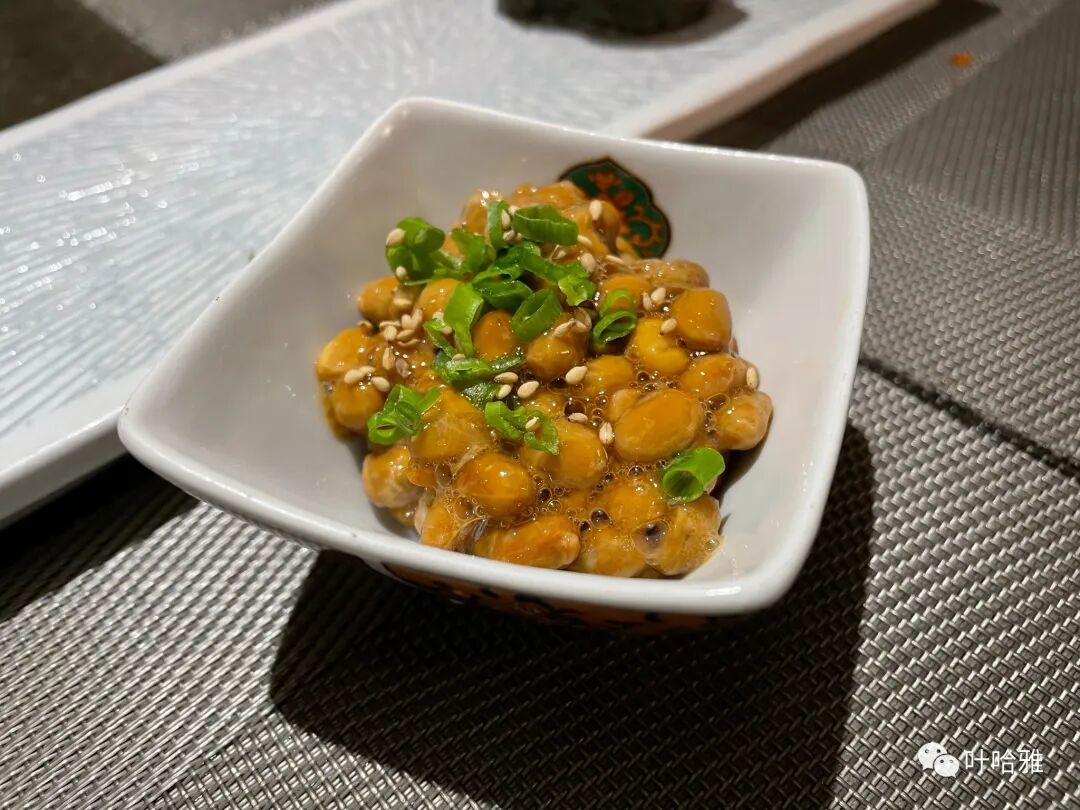
Natto
Natto is a common Japanese fermented soybean dish. People usually mix it with rice. It is sticky and stringy. Some say it smells bad, but I do not think so. I can swallow it, but I do not think it tastes good.
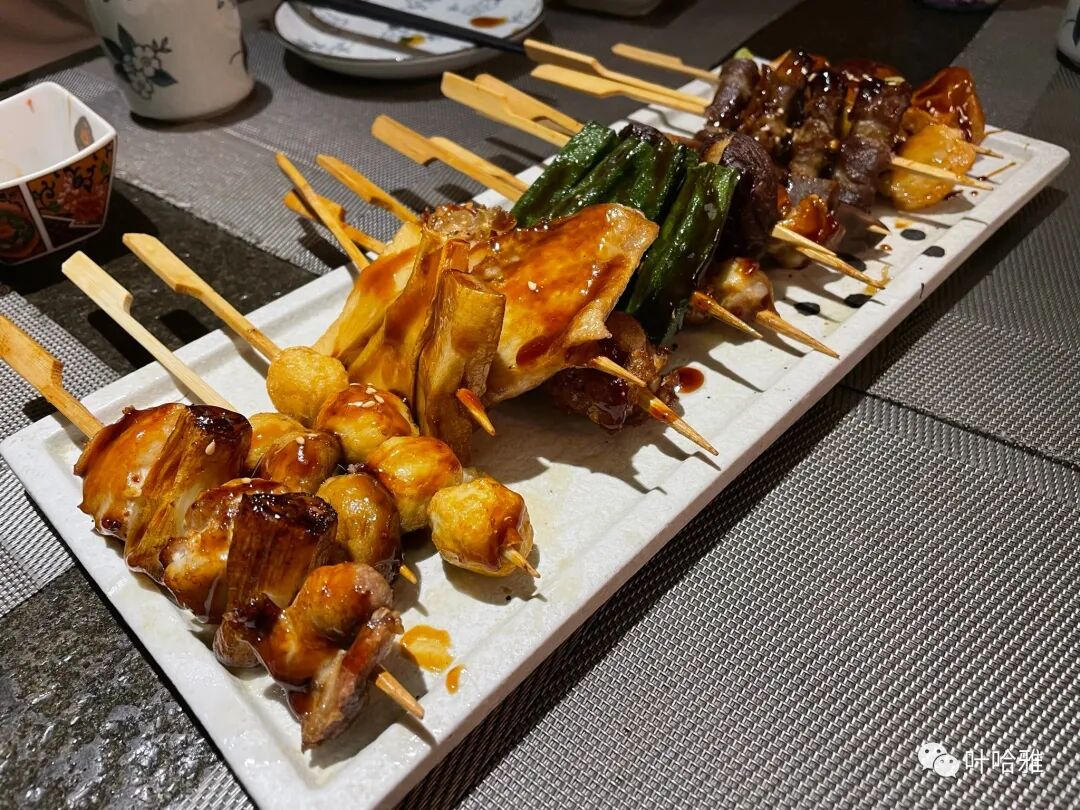
Grilled platter
This is a Japanese-style grilled combo. It has chicken skewers and grilled okra. I think the grilled fish balls are the best.
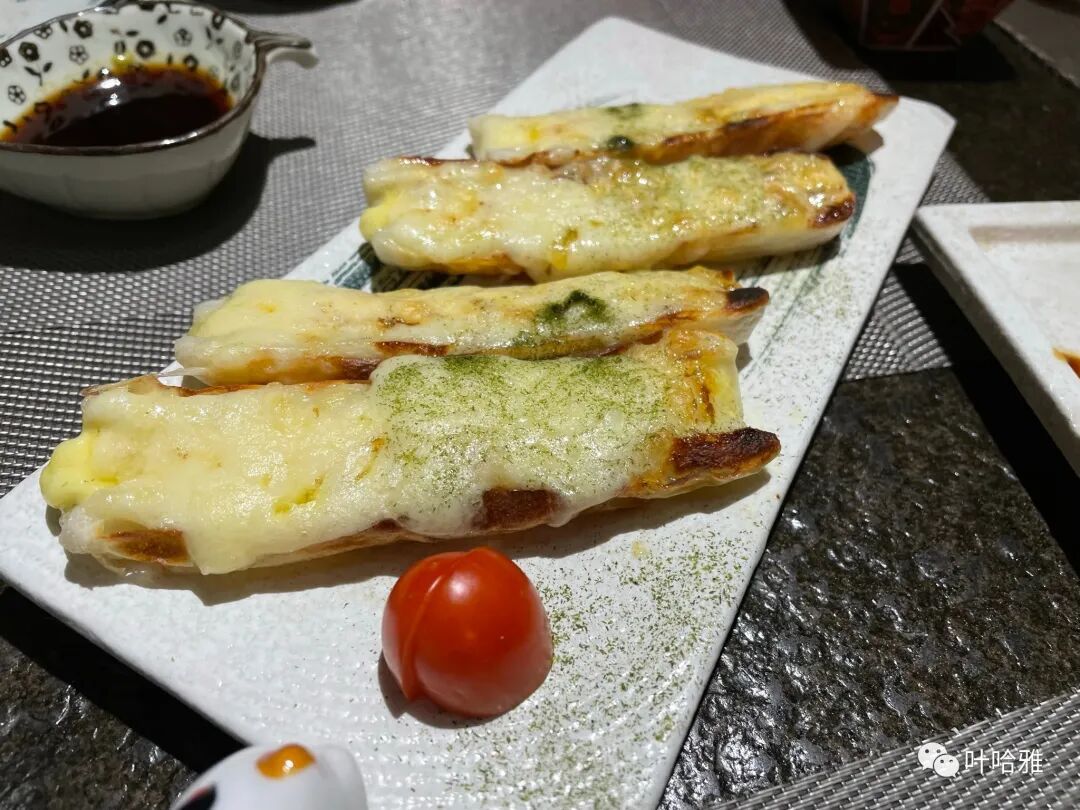
Baked cheese fish cake (chikuwa)
Chikuwa is a type of Japanese fish cake. The middle looks like it was grilled, and the ends are yellow and white. The texture is similar to a fish ball.
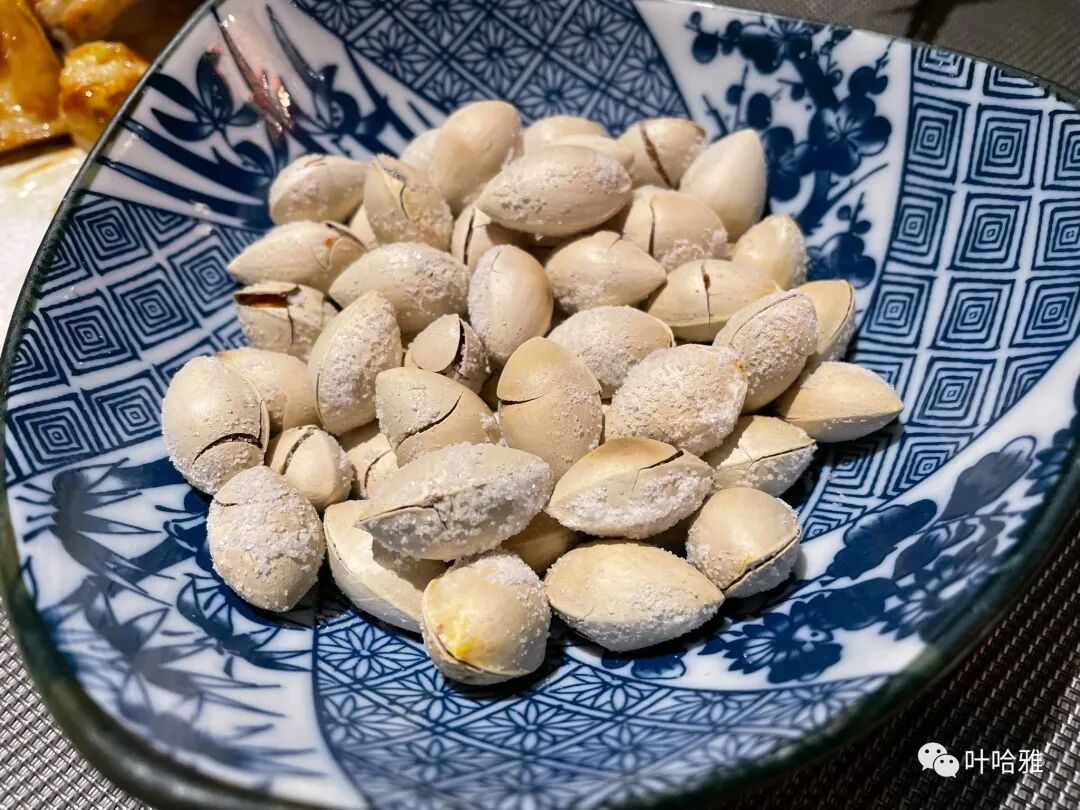
Salt-grilled ginkgo nuts
This is my first time eating salt-grilled ginkgo nuts. The shells are already cracked. The nut inside is tender and slightly bitter.
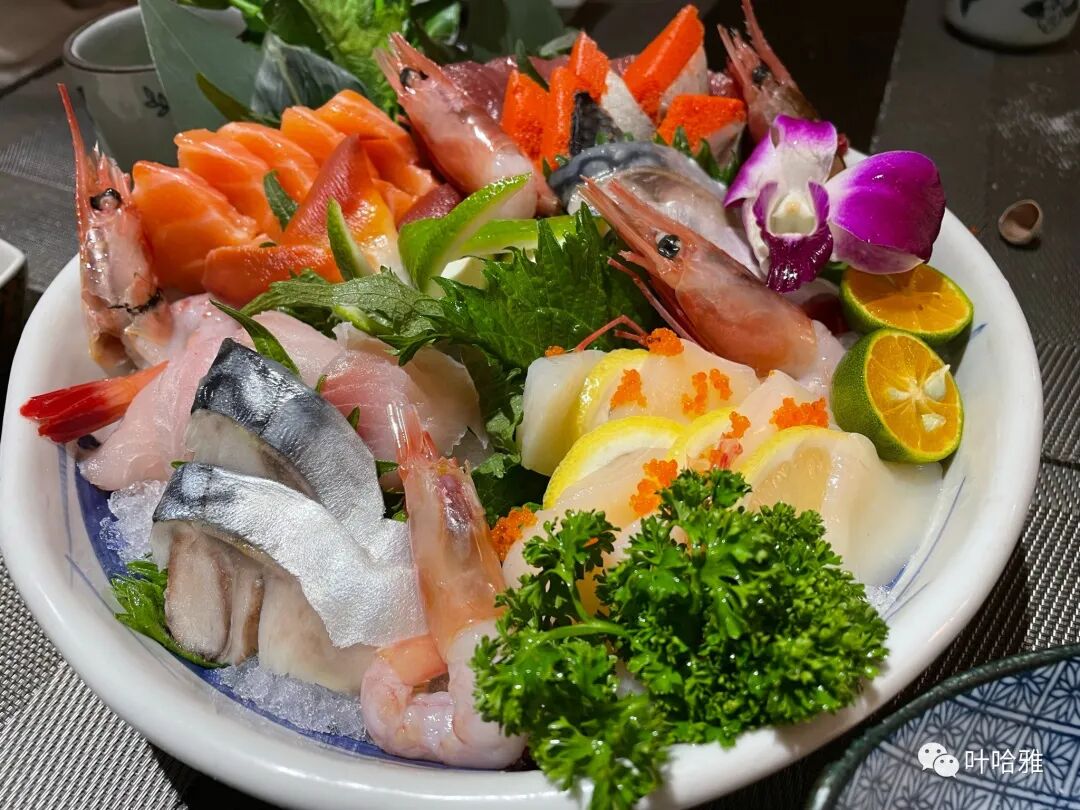
Eight-piece sashimi platter
The eight-piece sashimi platter costs 288 yuan. Each type of sashimi has five slices. The fish is fresh and does not taste fishy. A friend from Tianjin once told me a trick to identify fresh seafood: if it does not taste fishy when you eat it, the ingredients are fresh.
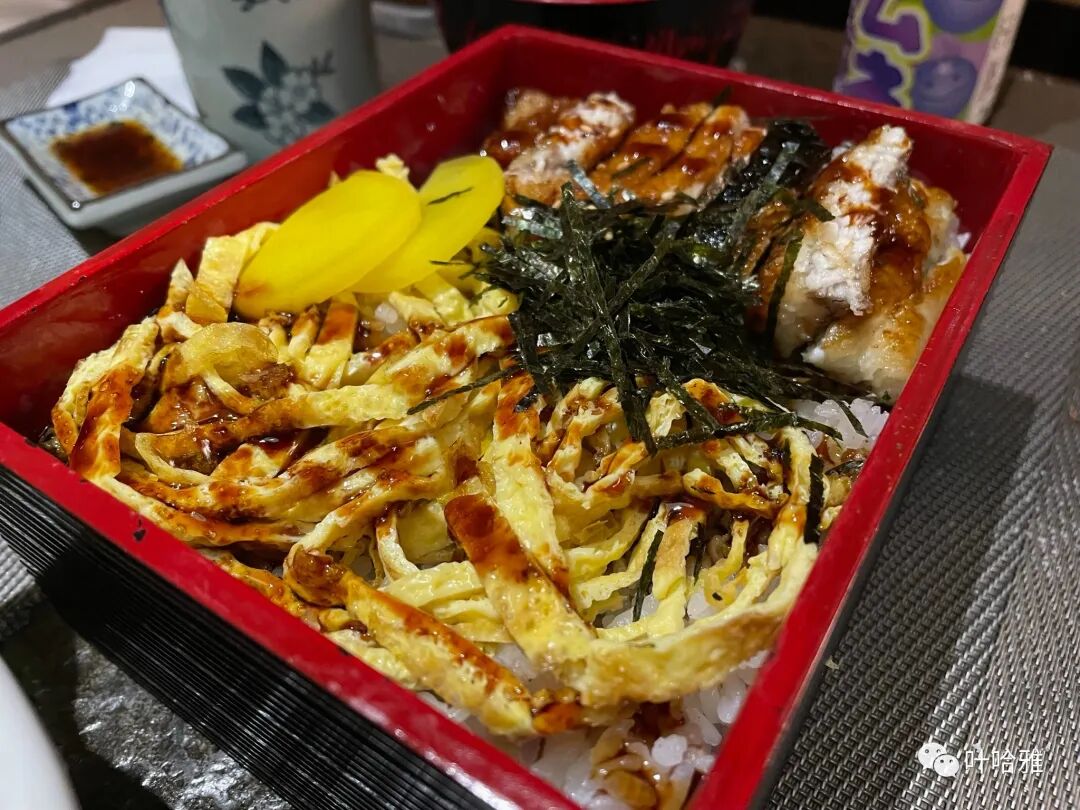
Live eel rice
The live eel is definitely fresh, which makes the rice taste savory and delicious. Japanese food is never cheap, and this meal cost about 150 yuan per person.
Luoyan Halal Western Restaurant
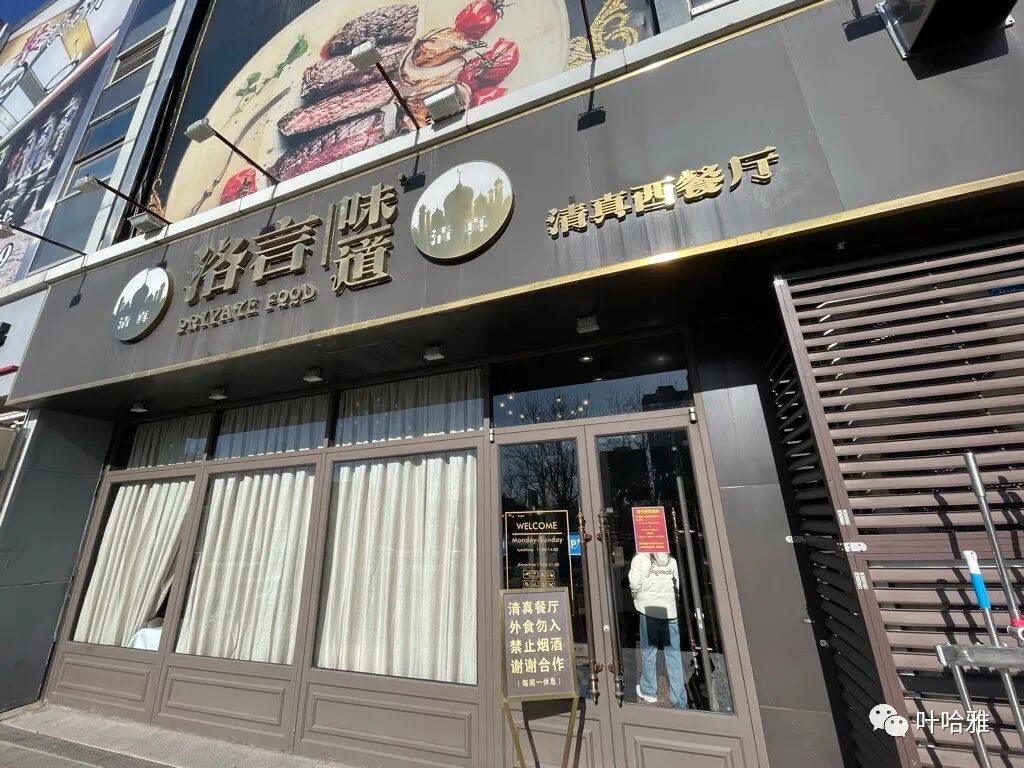
Luoyan is named after the owner's child. This is a smoke-free and alcohol-free Western restaurant, and it is closed on Mondays.
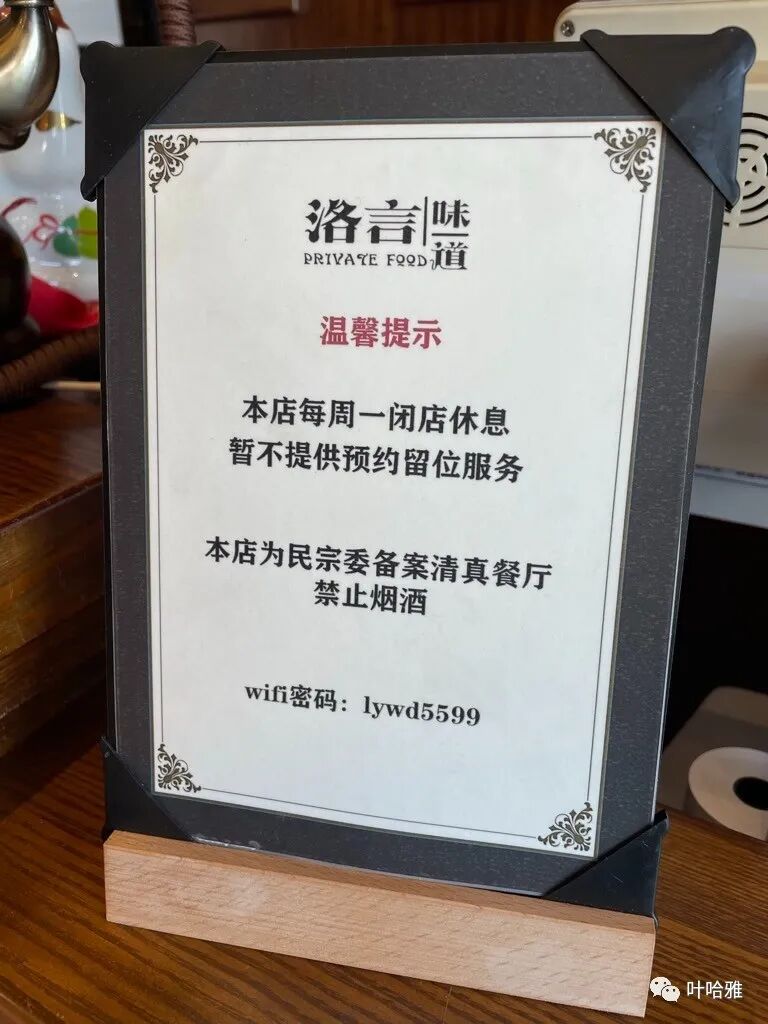
The interior of the small Western-style building caught my eye as soon as I walked in. The restaurant has two floors, and we chose to sit on the second floor to look down at the lobby.
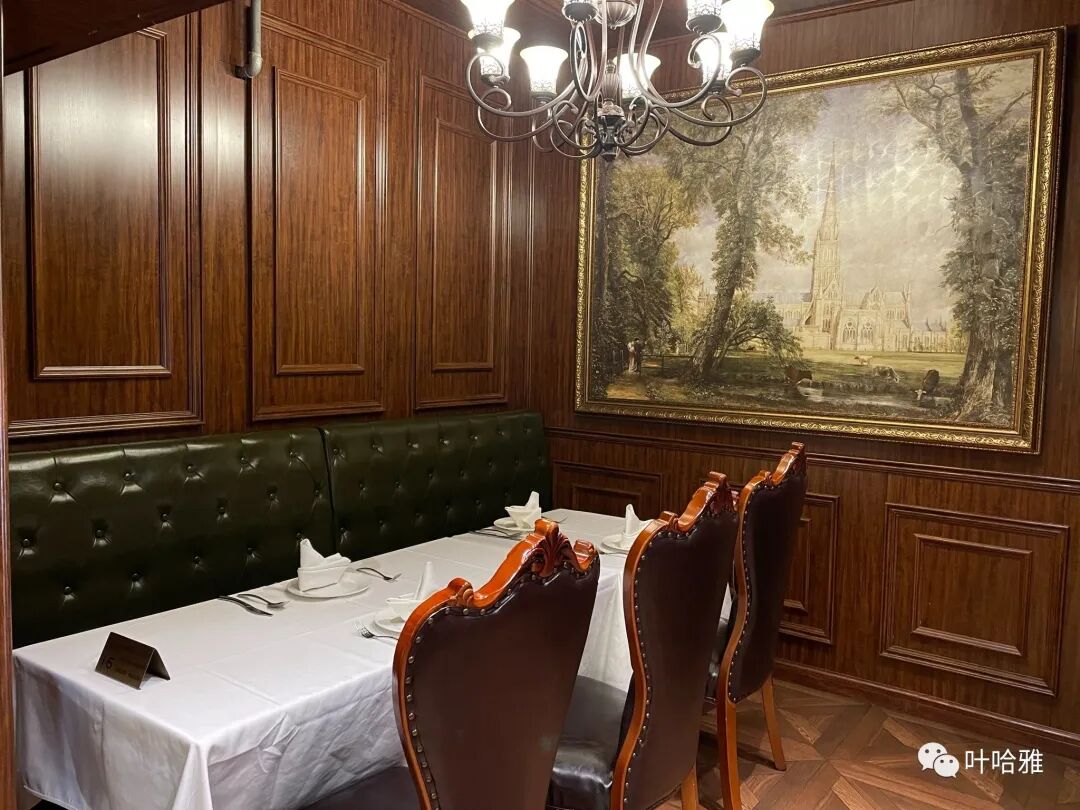
Beijing really does not have this kind of standard European-style halal Western food. Halal Western food in Beijing is usually mixed with Middle Eastern cuisine.
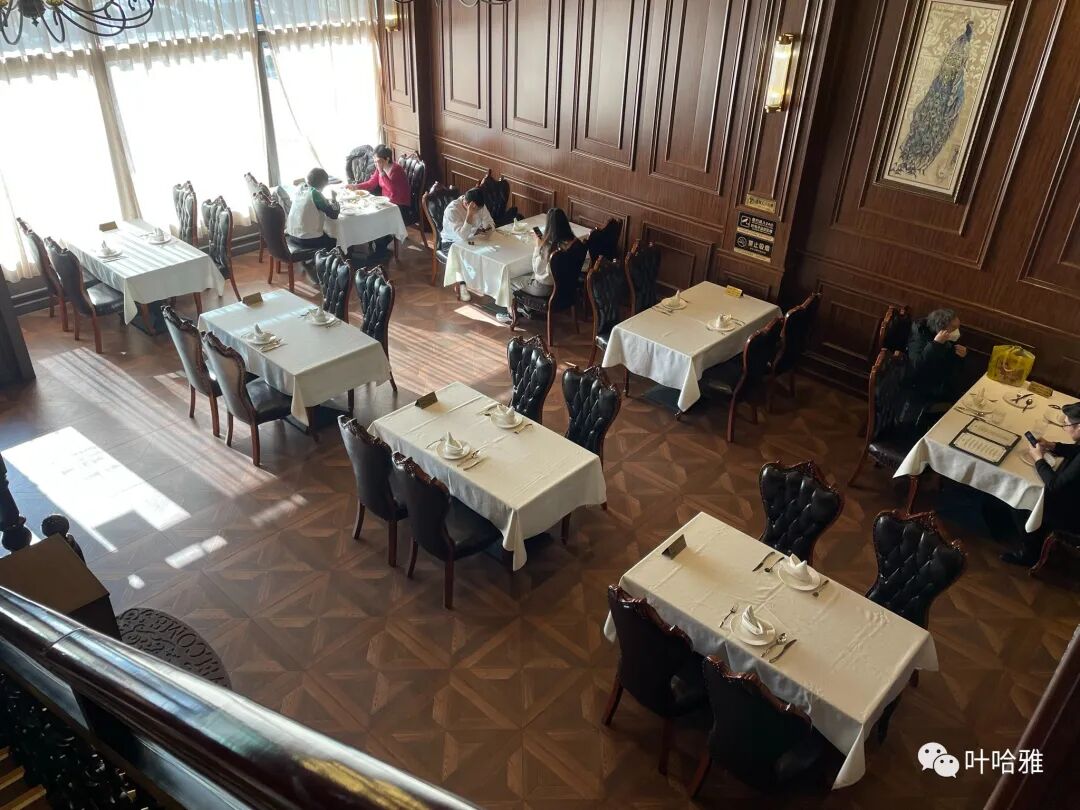
European-style Western food usually includes alcohol, but this place offers non-alcoholic champagne and red wine, so the Western dining atmosphere is just as good.
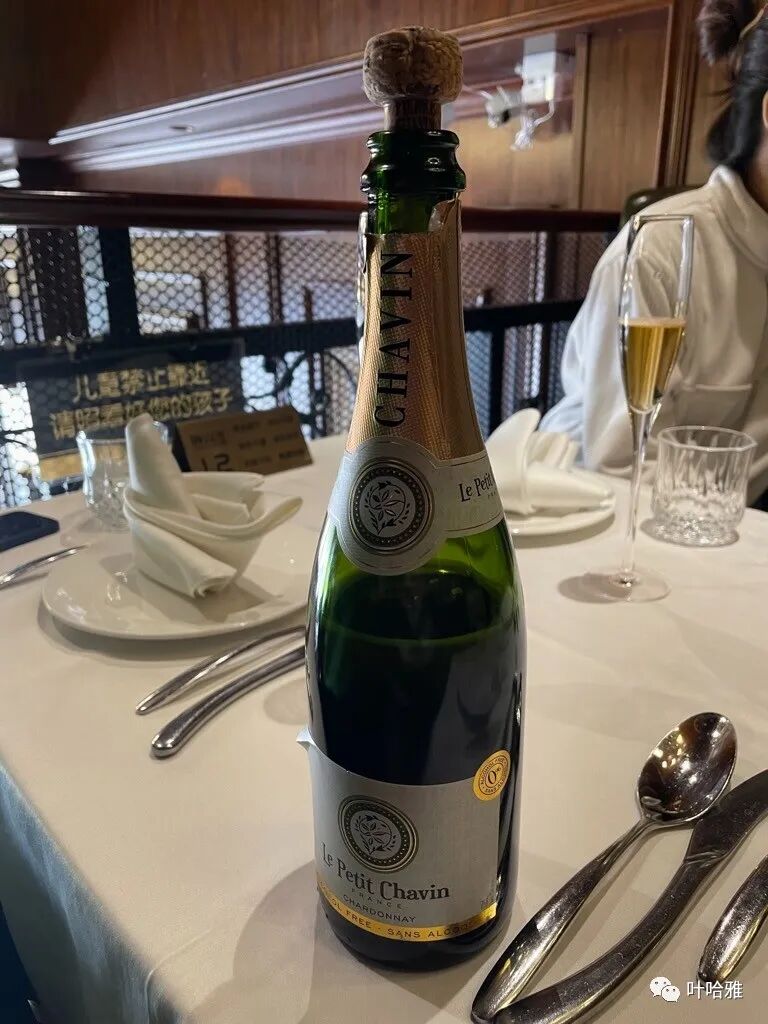
This bottle of imported French halal champagne costs 288 yuan at the restaurant. We found the same one on Taobao for 94 yuan, so interested friends can go try it. The halal champagne tastes sour and astringent, and I am not sure if it is authentic. Because of this bottle of wine, our meal cost more than 200 yuan per person.
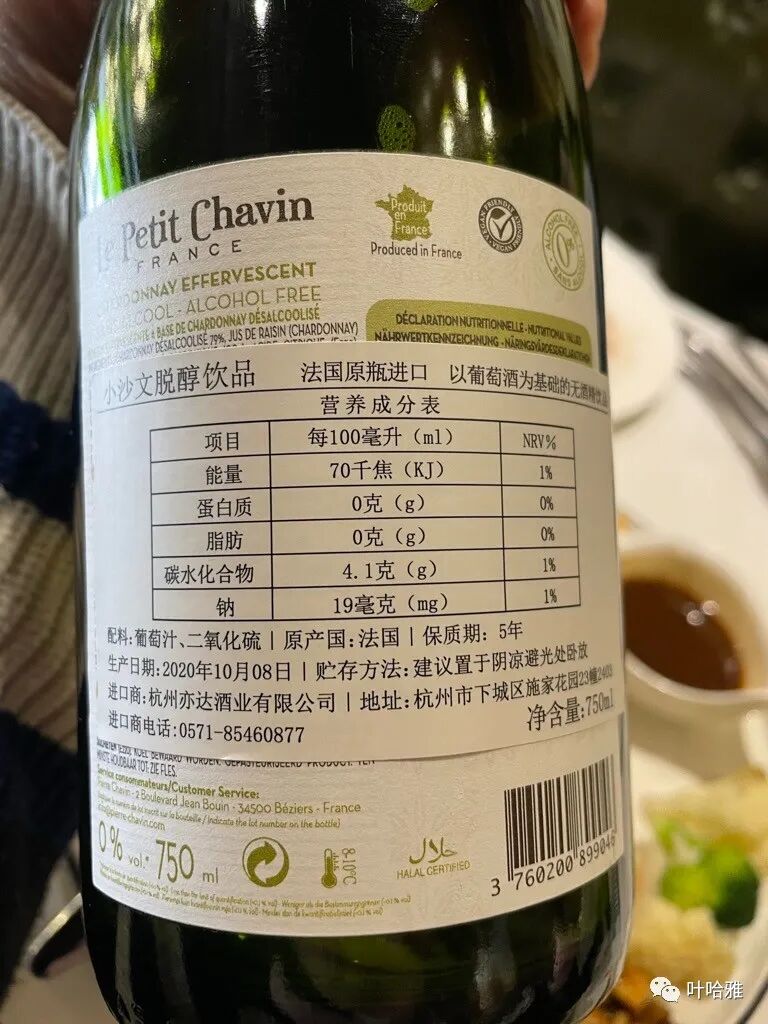
Here is a little bit of Islamic legal knowledge: although most regions accept non-alcoholic wine as a halal drink, a small number of jurists believe that non-alcoholic wine should not be consumed either, because it carries the suspicion of intending to drink alcohol. Even if you hold up a glass of water and say 'let us toast with water instead of wine,' that glass of water might also become impermissible to drink. Although we believe that the prohibition of alcohol is because it causes intoxication, some jurists only follow the literal meaning without considering the underlying intent.
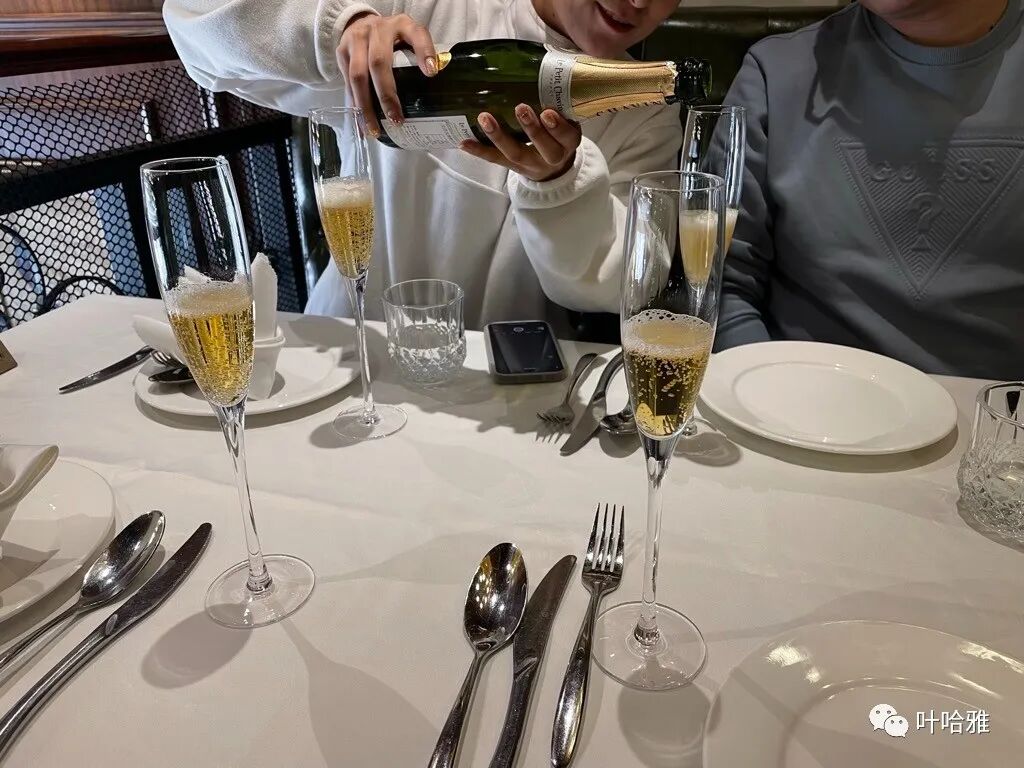
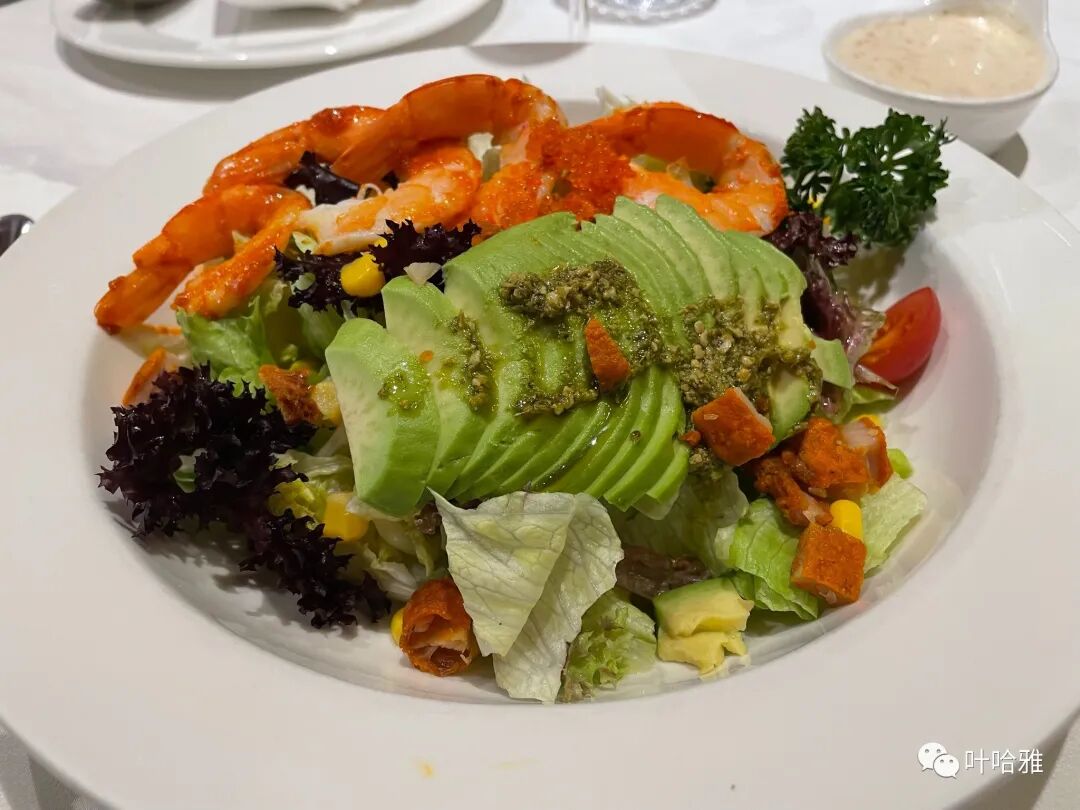
Wasabi Avocado Shrimp Salad
The large shrimp are fresh and big, and the slight heat from the wasabi makes it perfect for people on a diet.
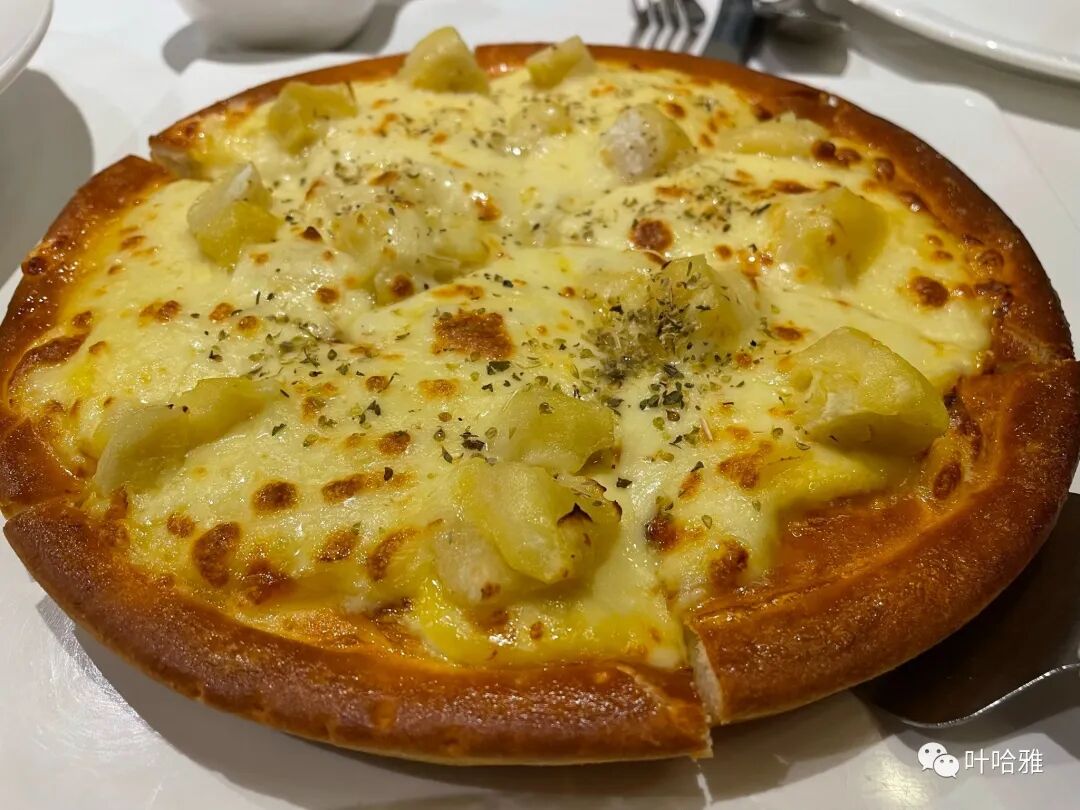
Malaysian durian pizza
The durian pizza is very fragrant and has plenty of durian filling. I will mention another Western restaurant's durian pizza later, which has even more filling.
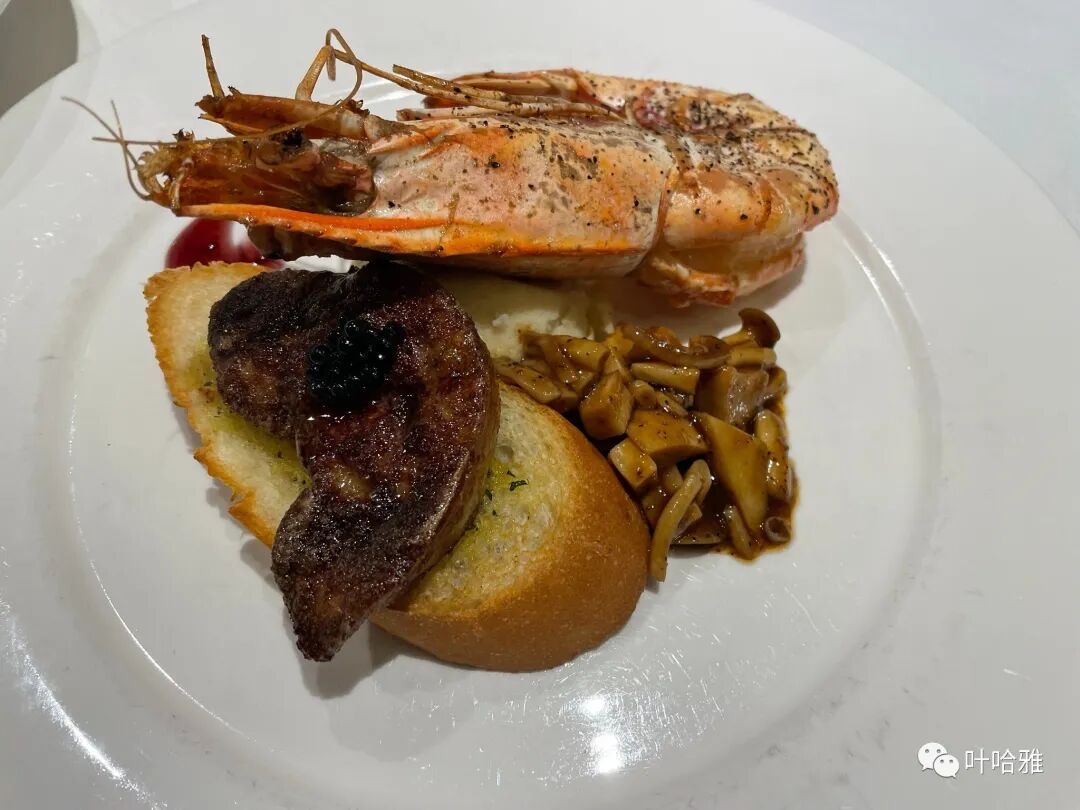
Burmese giant tiger prawn with pan-seared foie gras
It is rare to find halal foie gras, so we splurged a little this time. The four of us each had one bite of the prawn and foie gras, and it was all gone.
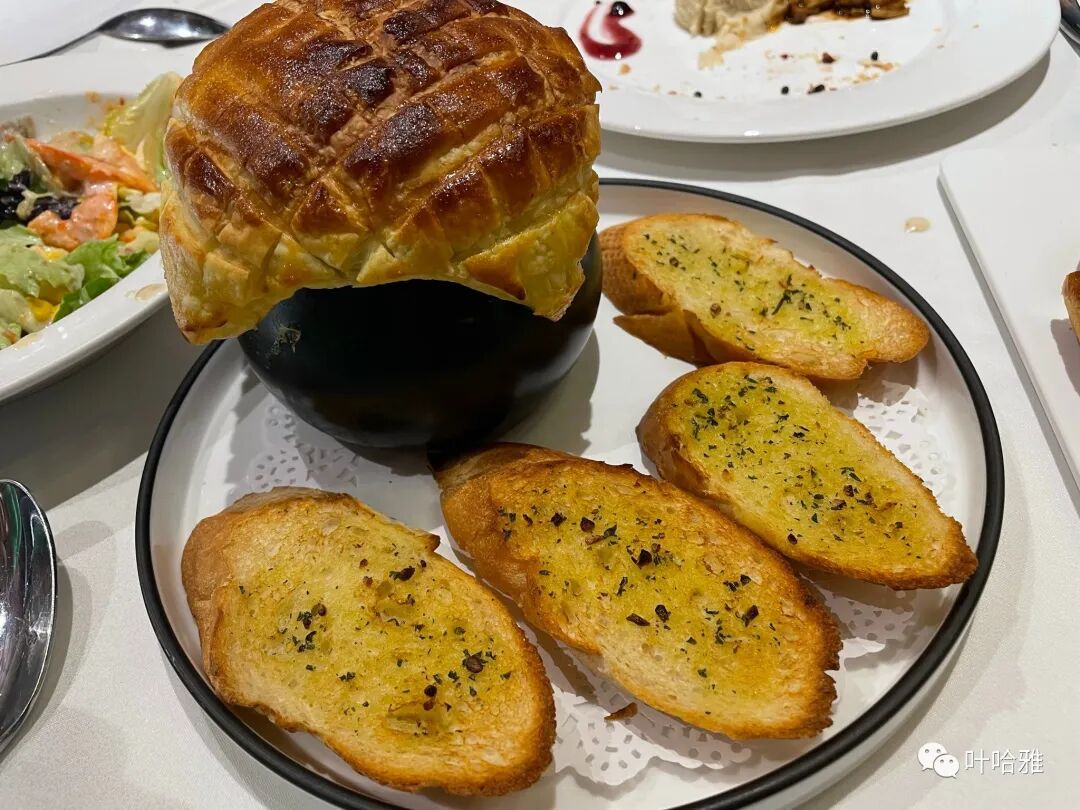
Russian-style pot-stewed beef with garlic baguette
Pot-stewed beef is a classic Russian dish. The beef is stewed with tomatoes inside the pot and covered with a layer of puff pastry. The pastry is very crispy. After one bite, I knew the upcoming Beef Wellington would be great.
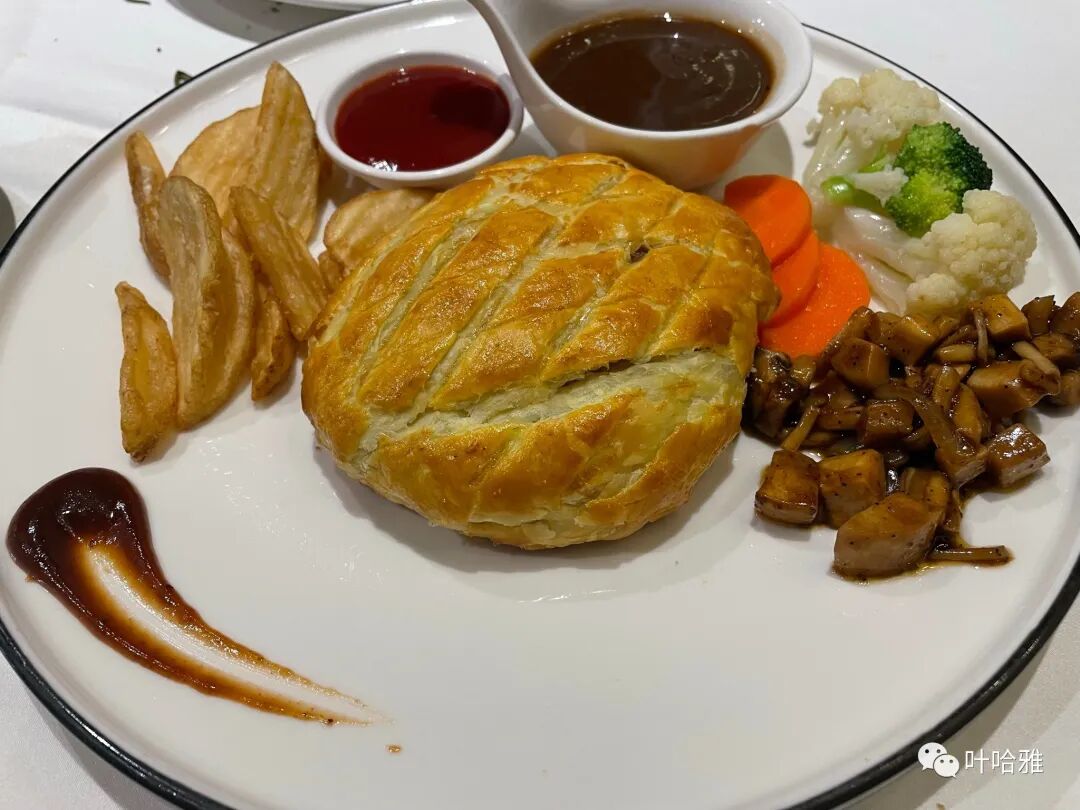
Beef Wellington
The signature of Beef Wellington is the puff pastry wrapping. Most Western restaurants use shortening for the pastry, which often contains lard and is not halal. Maiweitang in Beijing used to serve Beef Wellington, but the Hui Muslim owner stopped serving it, so we cannot eat it there anymore.
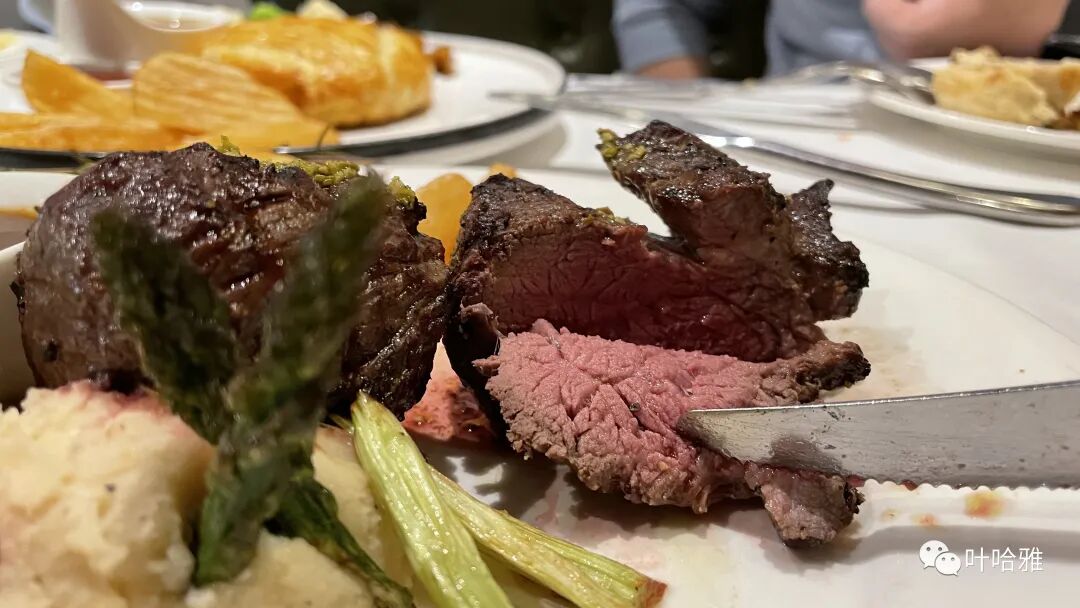
Thick-cut filet mignon
Filet mignon is beef tenderloin steak. It has a chewier texture than Beef Wellington. After ordering, the waiter will ask how you want it cooked, ranging from 1, 3, 5, 7, 9, to well-done. Well-done steak can be dry, so I suggest 5 to 7 minutes. Ours is cooked to 7 minutes.
Totoro Canteen (Longmao Shitang)
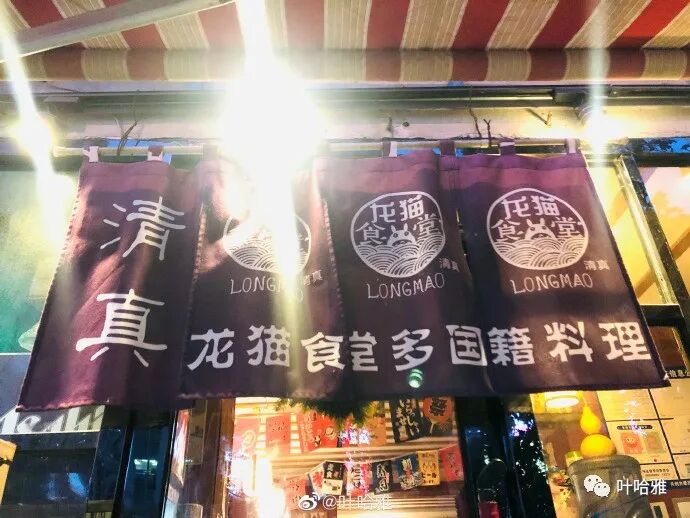
If you think the Japanese food I recommended earlier is too expensive, you can try Totoro Canteen. The average cost per person is under 100 yuan. It is located opposite the China Huaxia Bank in Hengxing World.
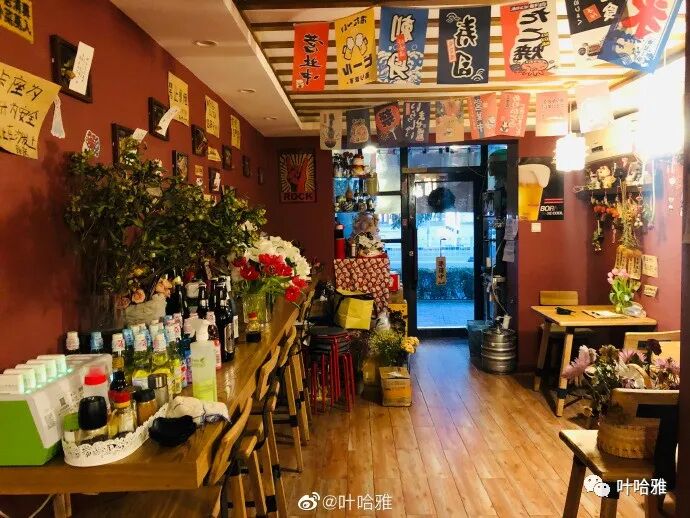
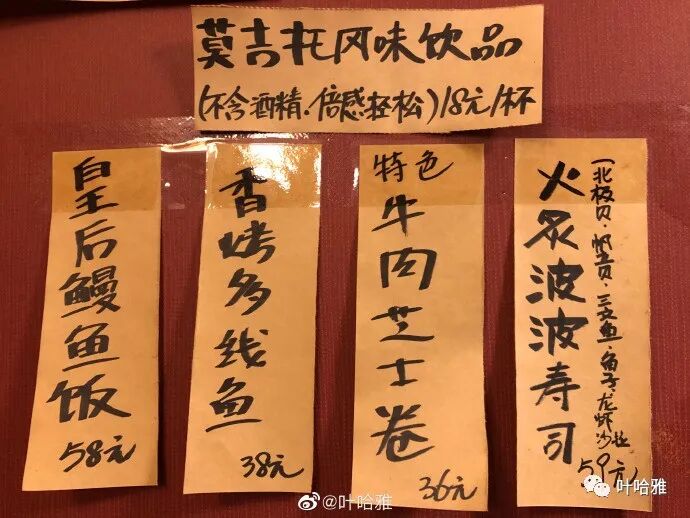
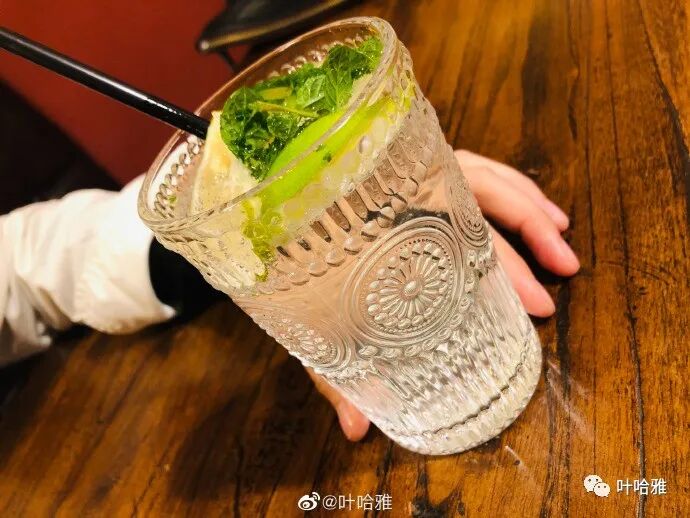
Non-alcoholic mojito
Their mojito tastes better than just okay.
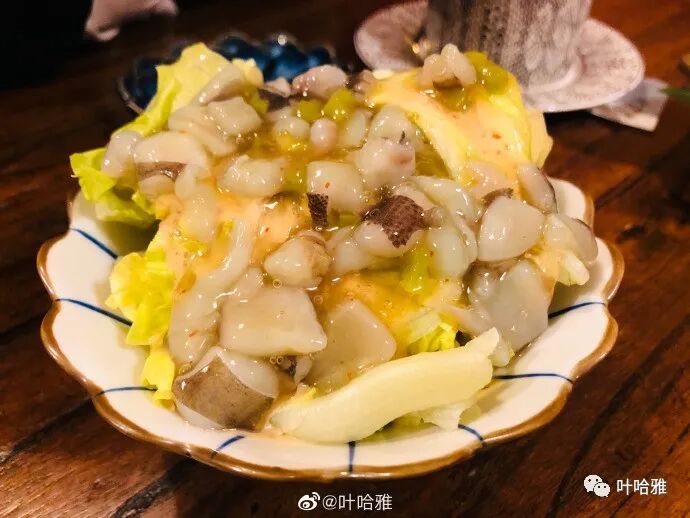
Wasabi octopus
Wasabi octopus in small shops is usually canned, so it is fine for a quick taste.
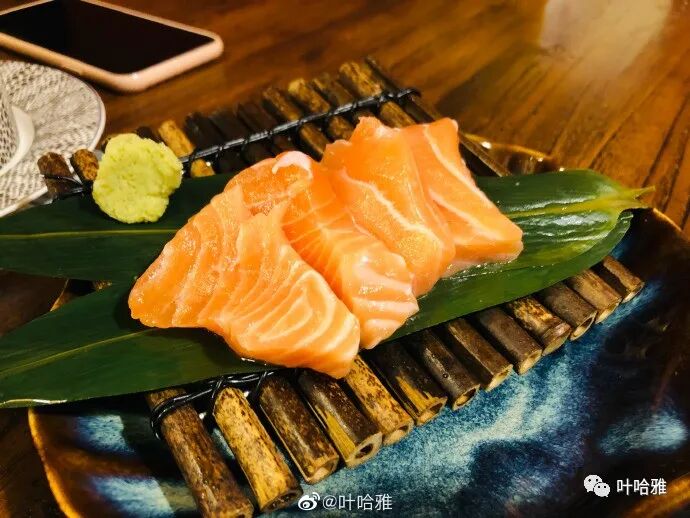
Salmon sashimi
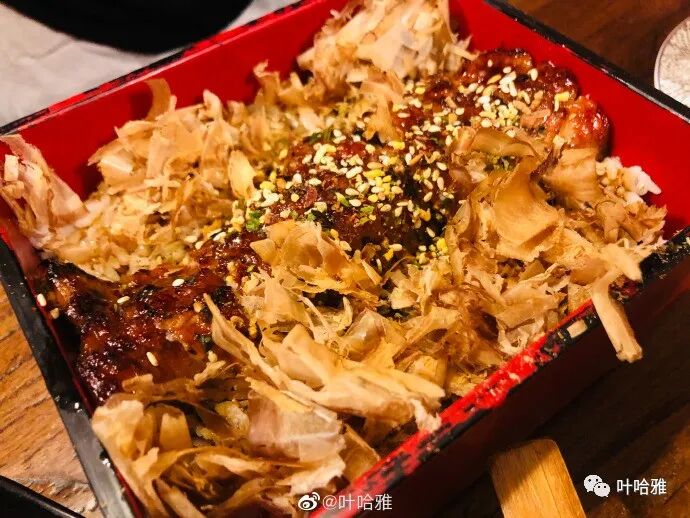
Queen eel rice
The eel rice is topped with bonito flakes (katsuobushi), which are thin shavings made from skipjack tuna and a common ingredient in Japanese cuisine.
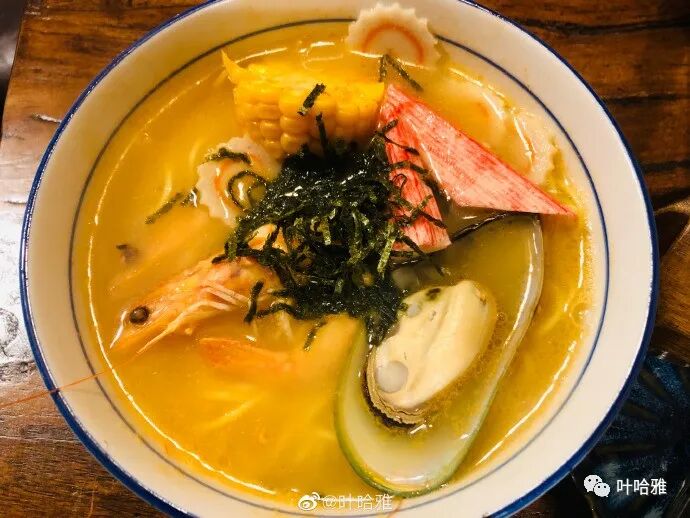
Seafood ramen
A conservative estimate is that there are about ten halal Japanese restaurants currently in Tianjin, and I have saved a few more to visit.
Yiweizhai Halal rice noodle rolls (changfen)
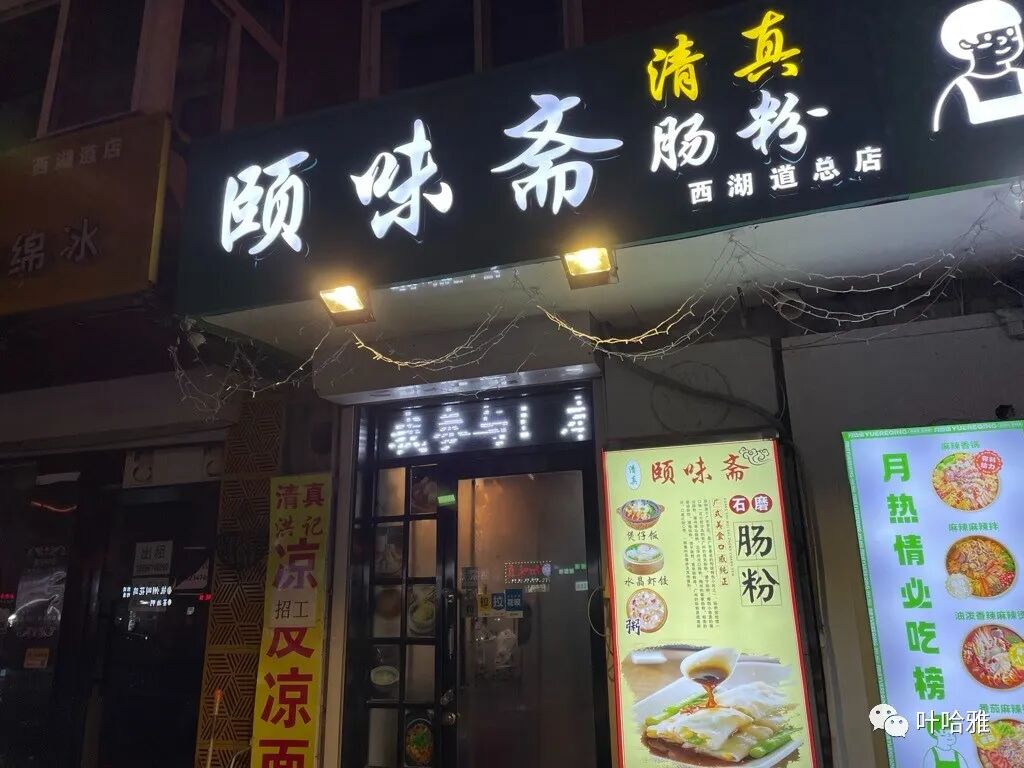
I visited Yeji Rice Noodle Rolls years ago, and later learned they opened this shop, which has now been open for five years. The menu has almost all the Cantonese snacks, and it is also a restaurant that does not sell alcohol.
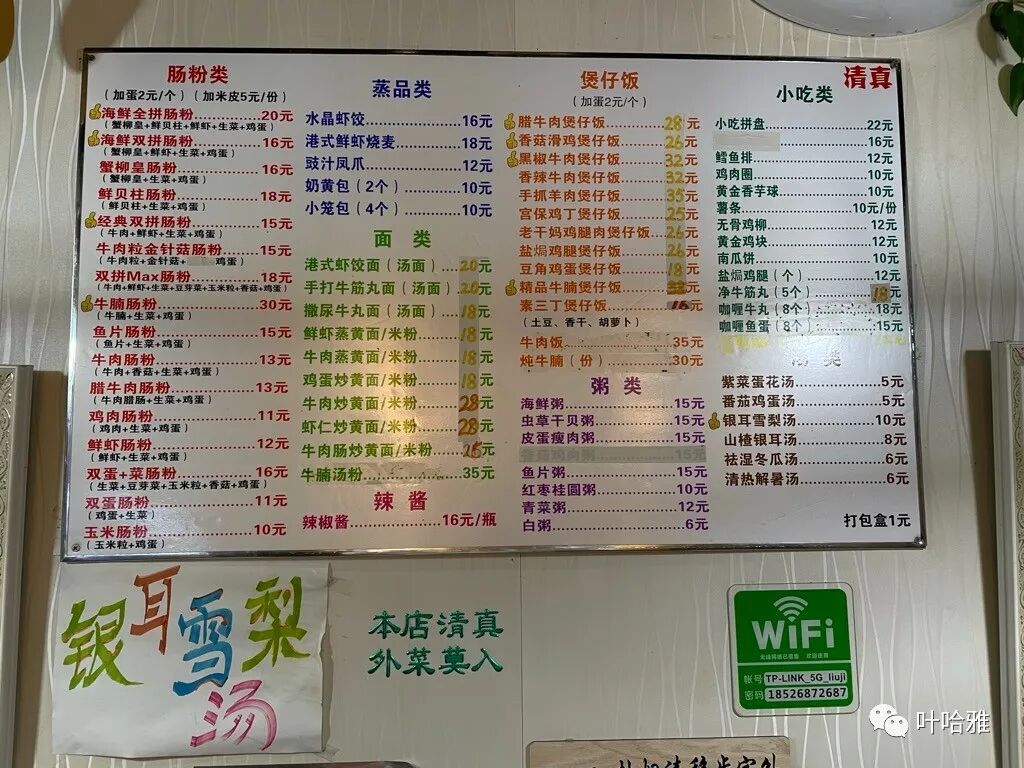
This place serves bigger portions than Yeji. I tried the most iconic version of every Cantonese snack, and they were all delicious. I wish they would open a branch in Beijing, as all the halal Cantonese restaurants there have closed down.
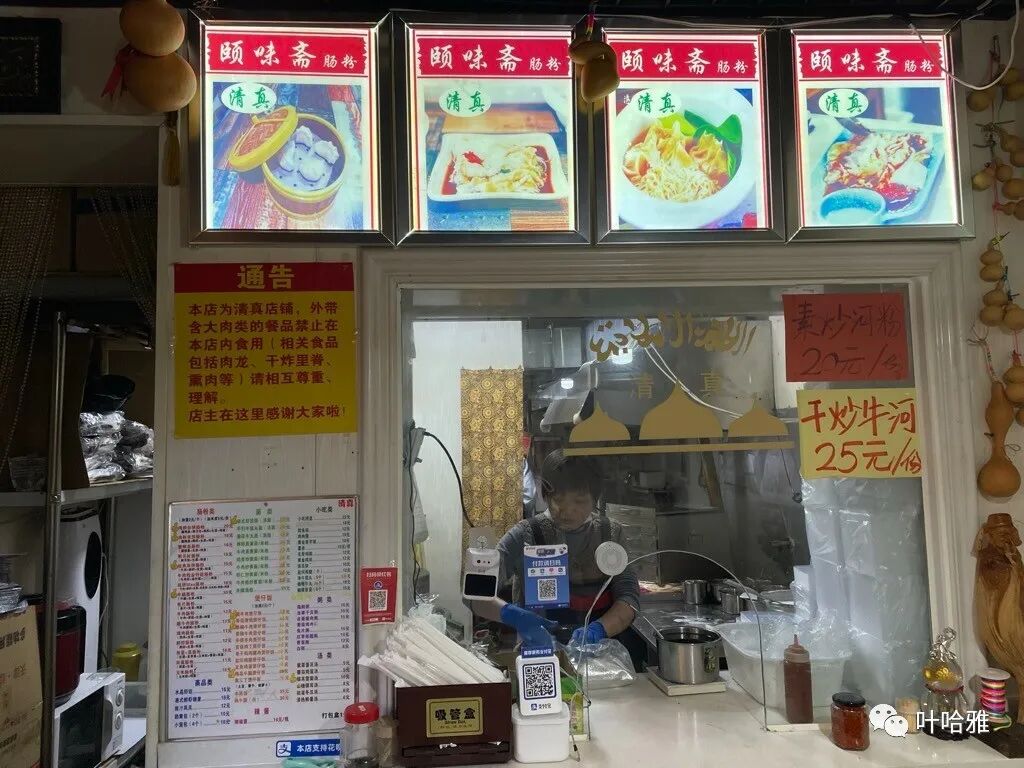
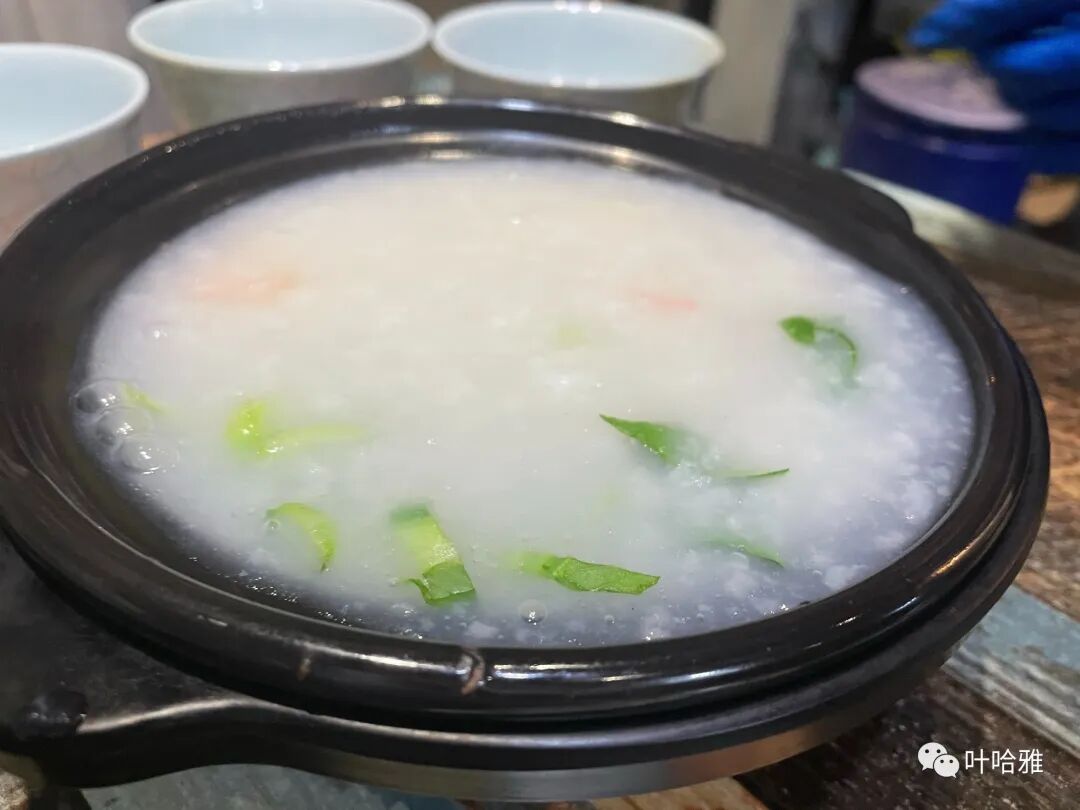
Seafood congee
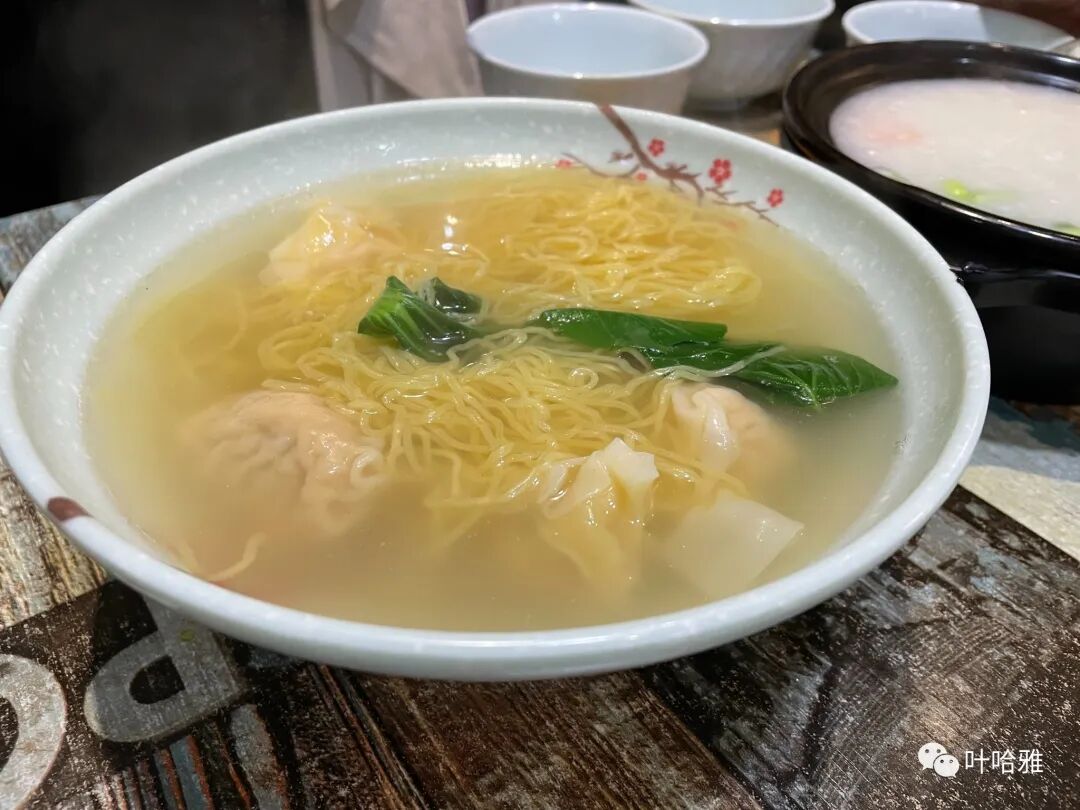
Hong Kong-style shrimp dumpling noodles
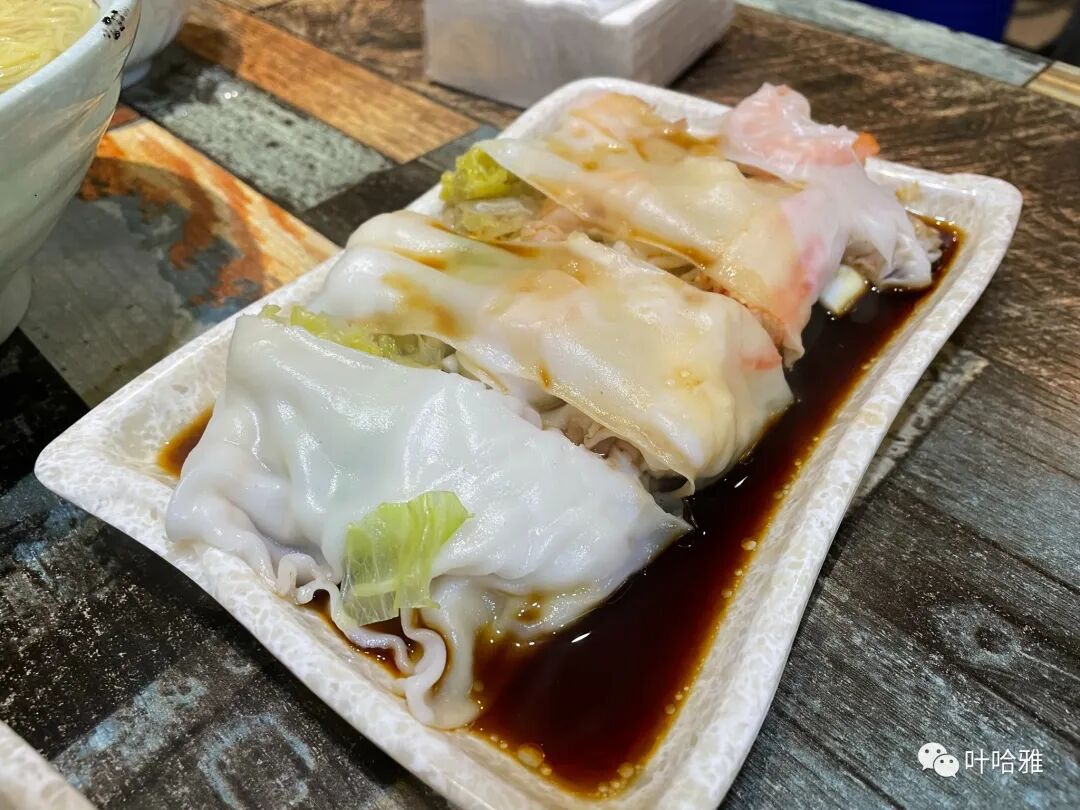
Two-flavor steamed rice rolls (changfen)
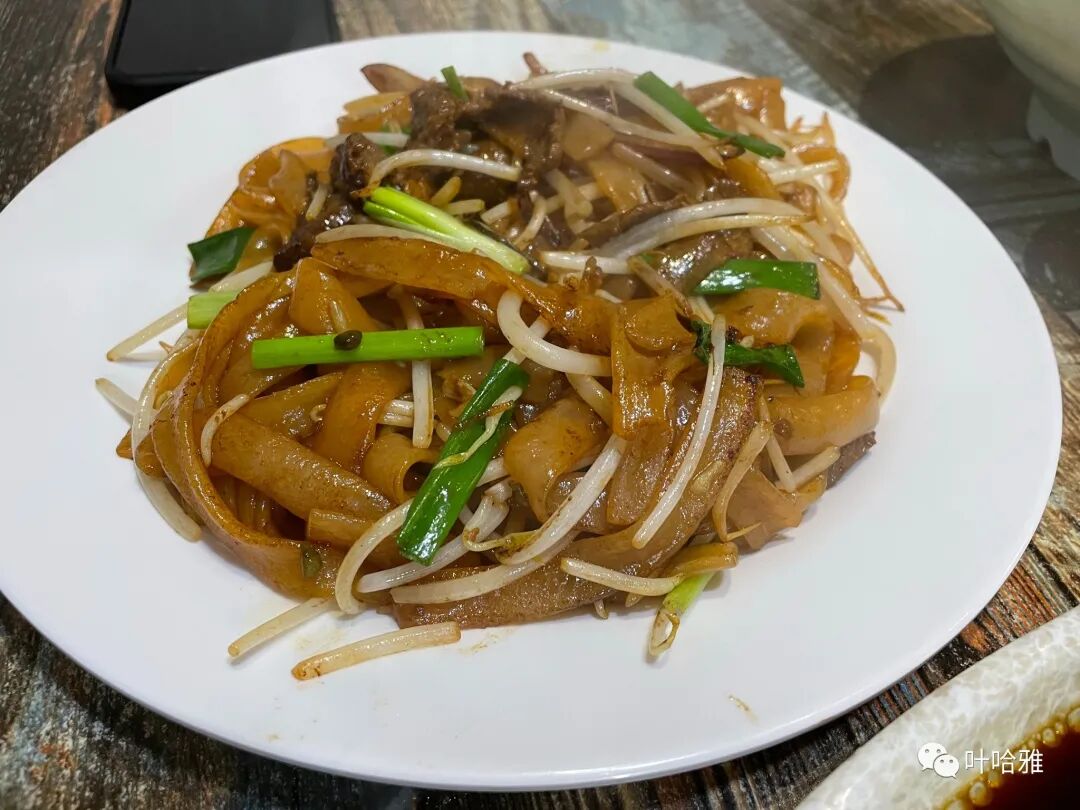
Stir-fried rice noodles with beef (ganchao niuhe).
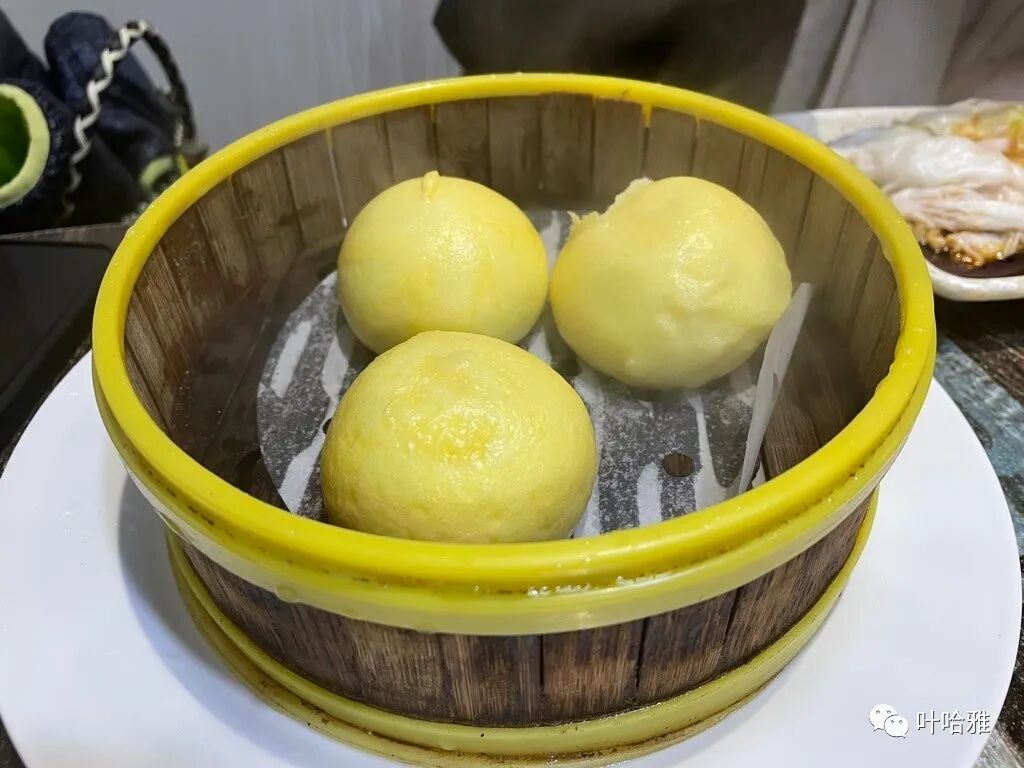
Custard bun (naihuangbao)
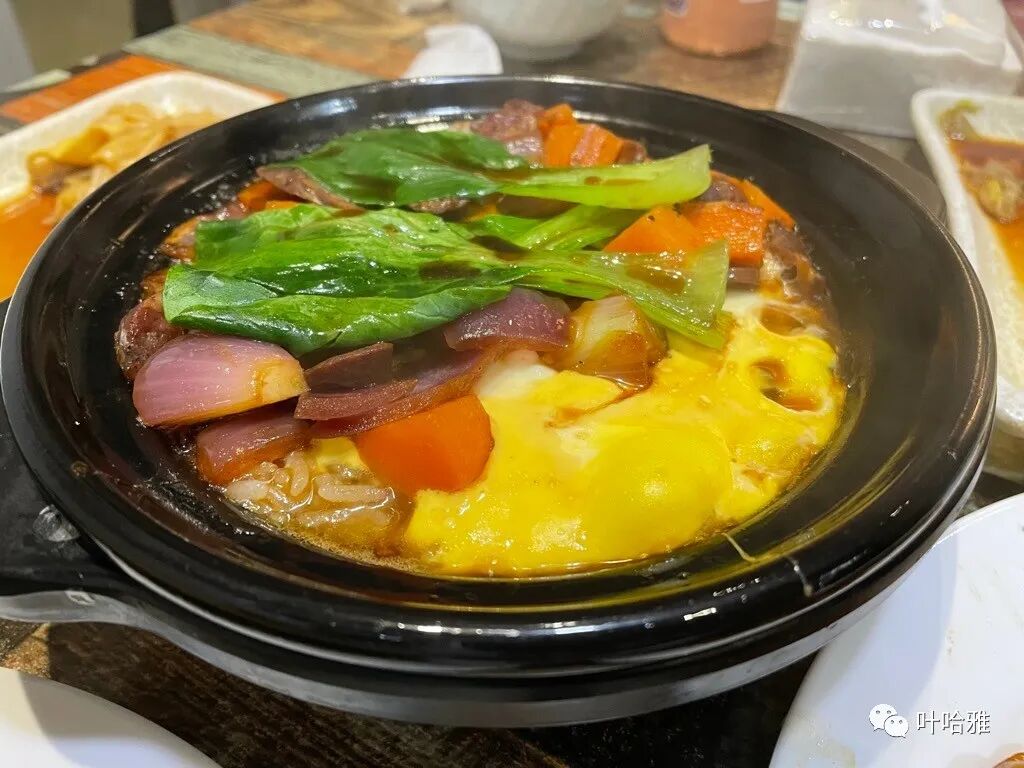
Cured beef claypot rice (baozai fan)
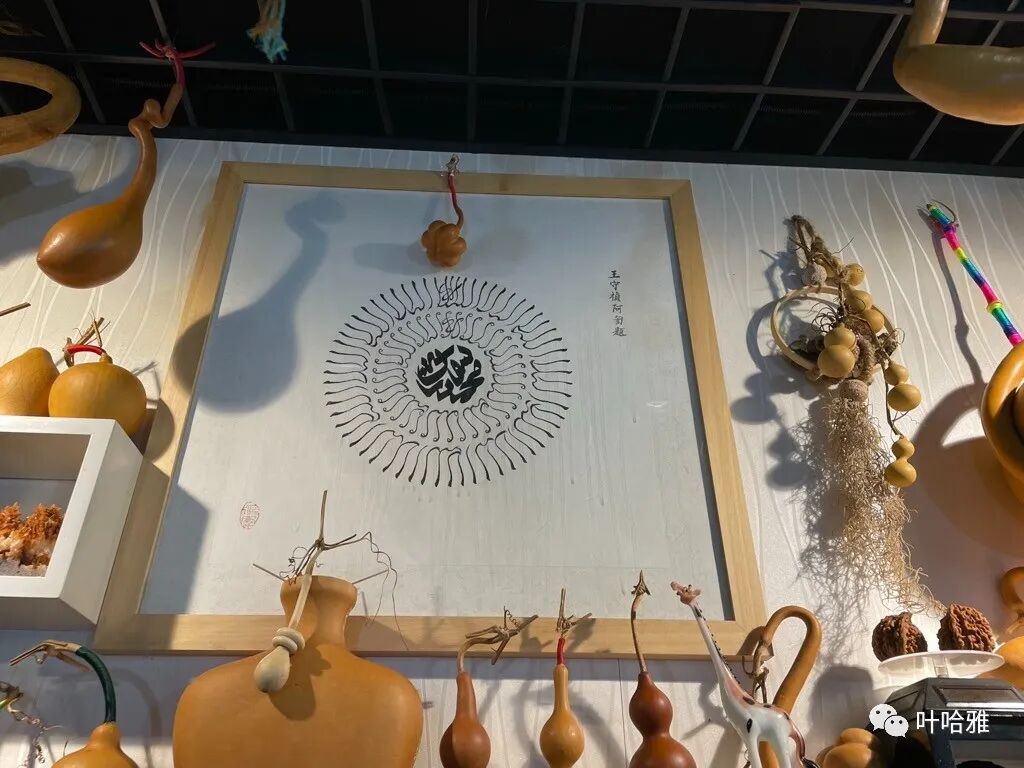
While we ate, we saw the owner deveining shrimp. Each of their shrimp dumplings contains two large shrimp, which is very generous.
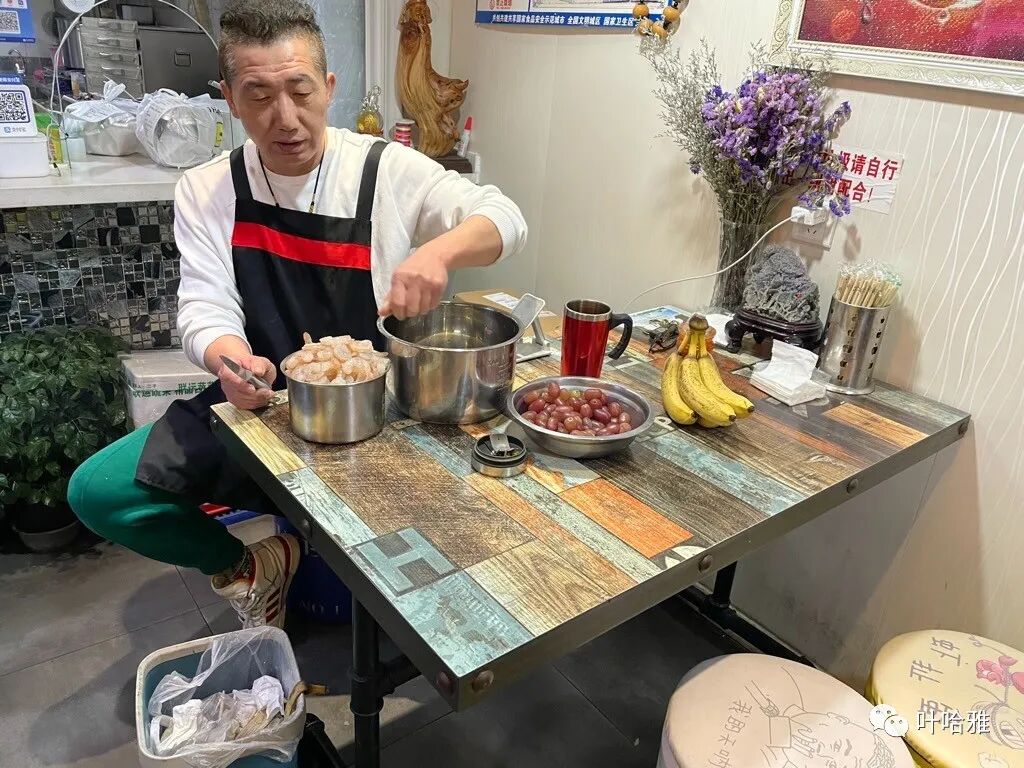
Jin Jin Halal Curry Restaurant
This is a halal Western restaurant near Nankai Joy City. The address is in the picture, and it is also an alcohol-free restaurant.
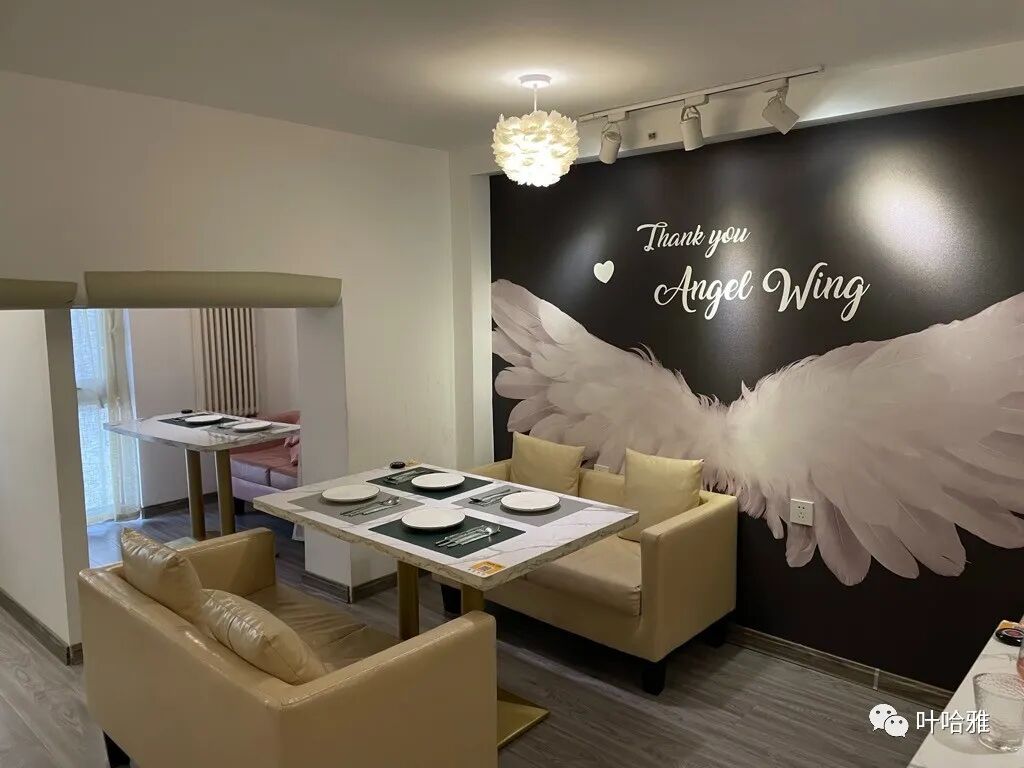
The restaurant is a loft inside an apartment building. The owner is the only person working there, and she is also the chef. She is from Tianjin and very talkative. When she saw us, she greeted us with salaam first.
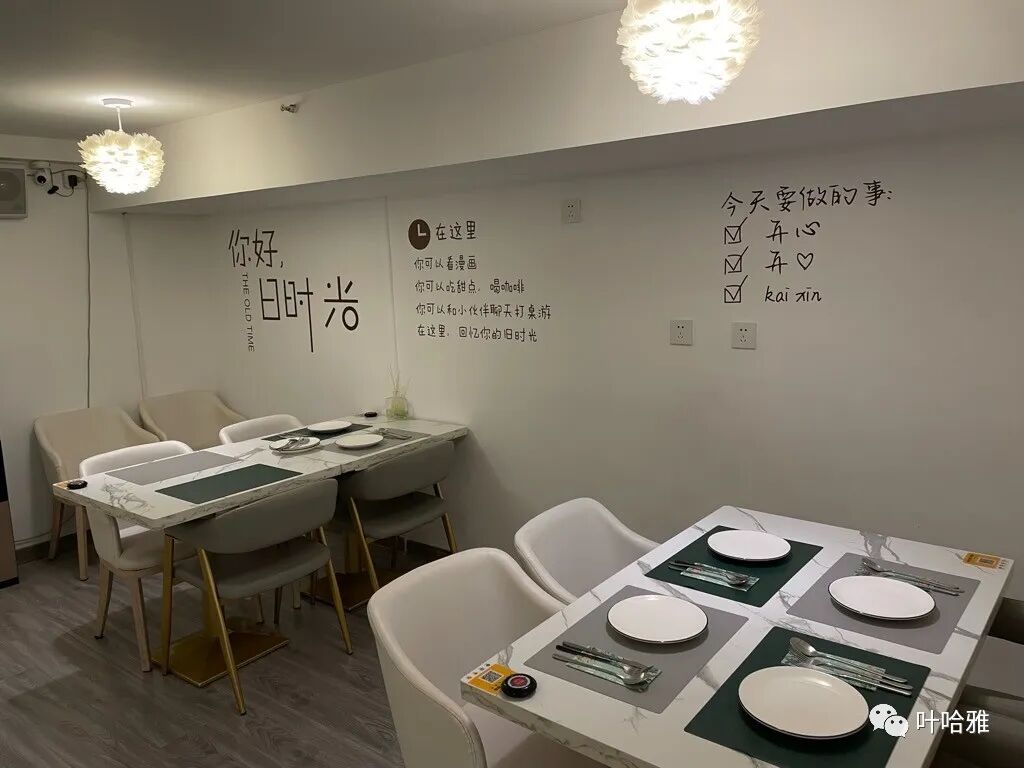
The two most popular dishes are the Beef Wellington and the Musang King durian pizza. The pizza has the most toppings I have ever seen, with a thick layer of durian.
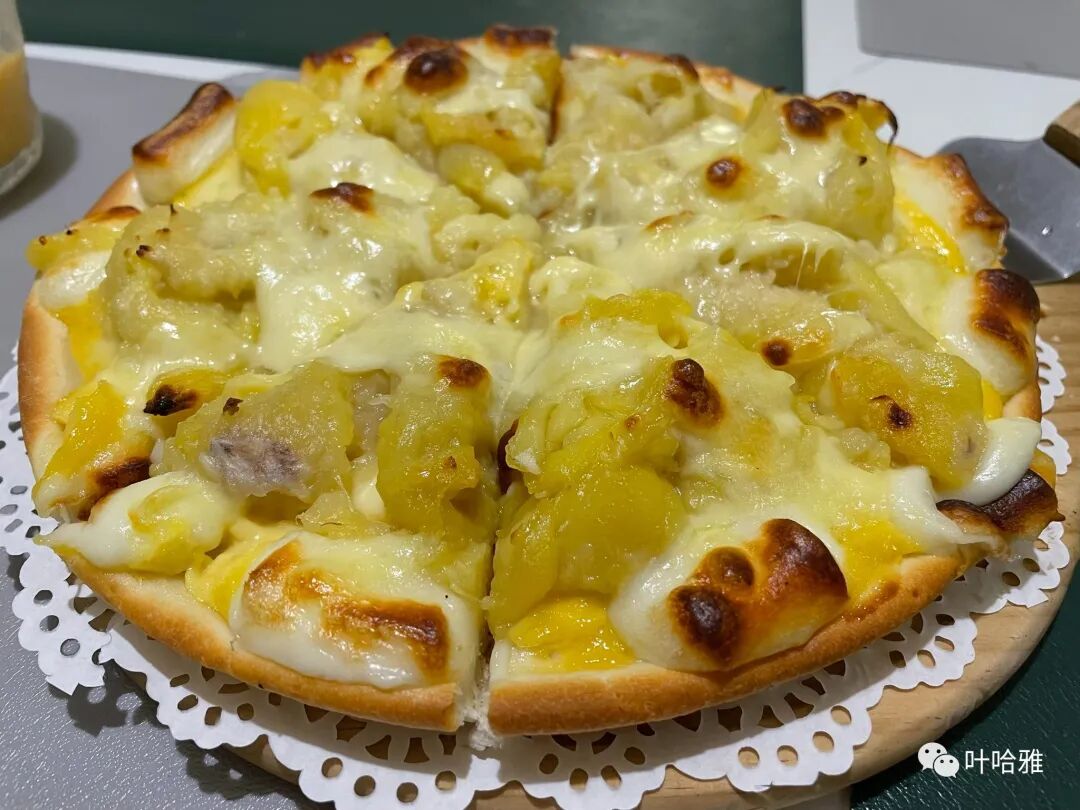
Musang King durian pizza
I really liked the taste of the roast chicken with lemon. Squeeze the juice from a lemon slice onto the chicken pieces; the crispy chicken pairs perfectly with the refreshing lemon.
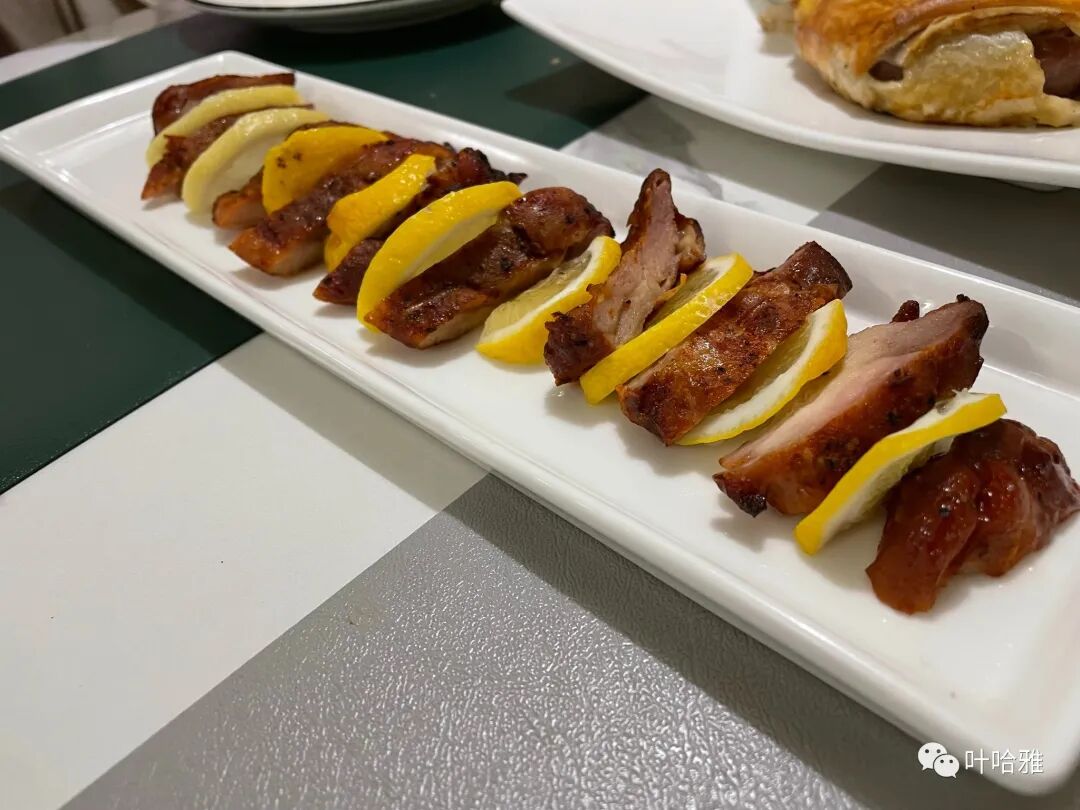
French-style lemon country roast chicken
The beef Wellington did not impress me. The steak quality is not as good as at Luoyan, but their dishes are affordable, costing about 100 yuan per person.
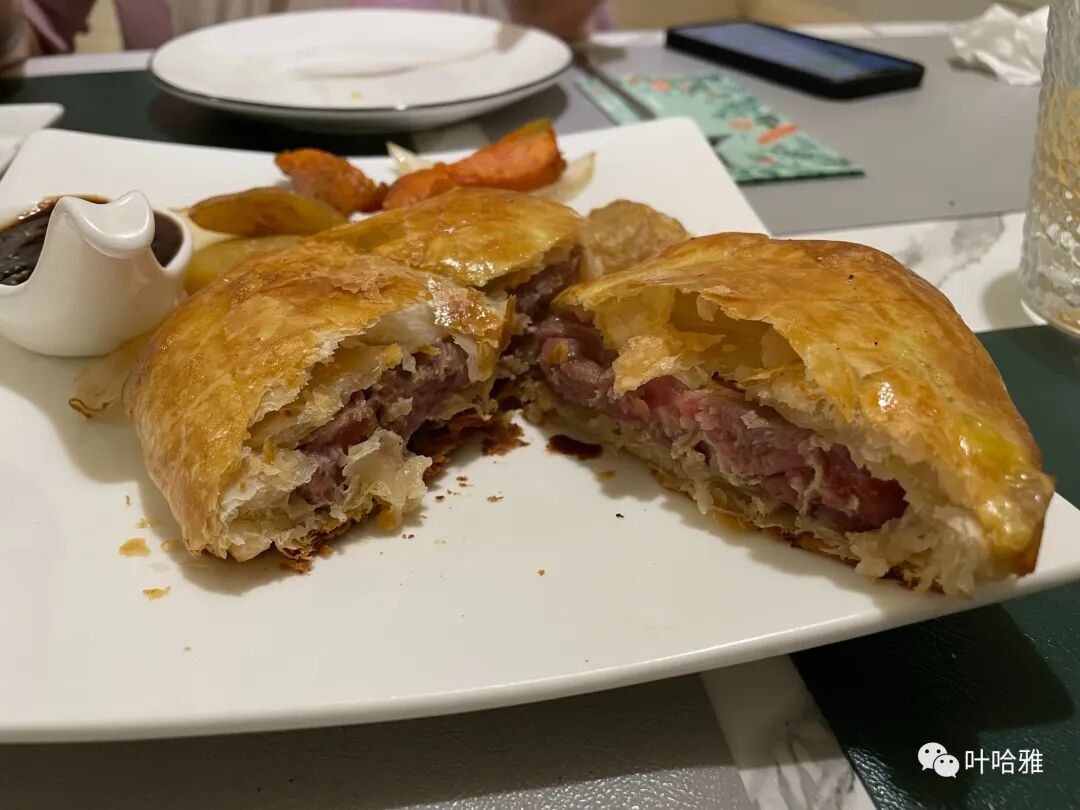
Beef Wellington
For drinks, I chose a non-alcoholic mojito and an Oreo yogurt potted plant. The mojito tasted just okay, but the portion of the yogurt potted plant was huge.
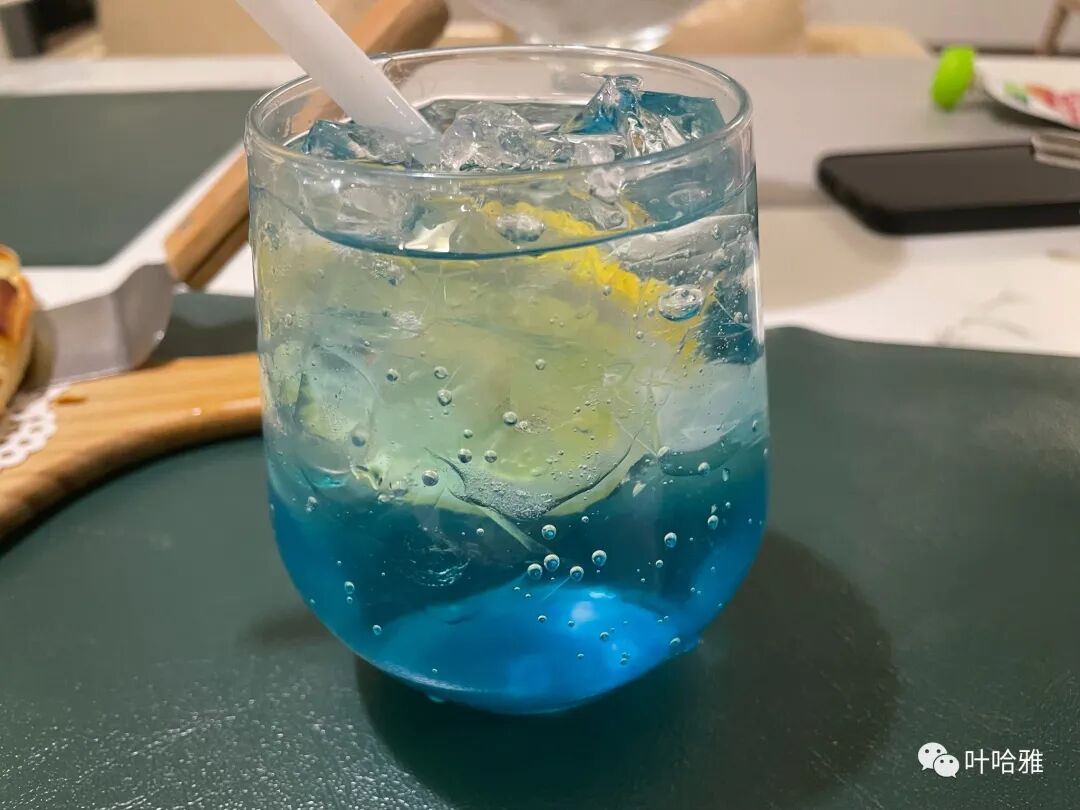
Non-alcoholic mojito
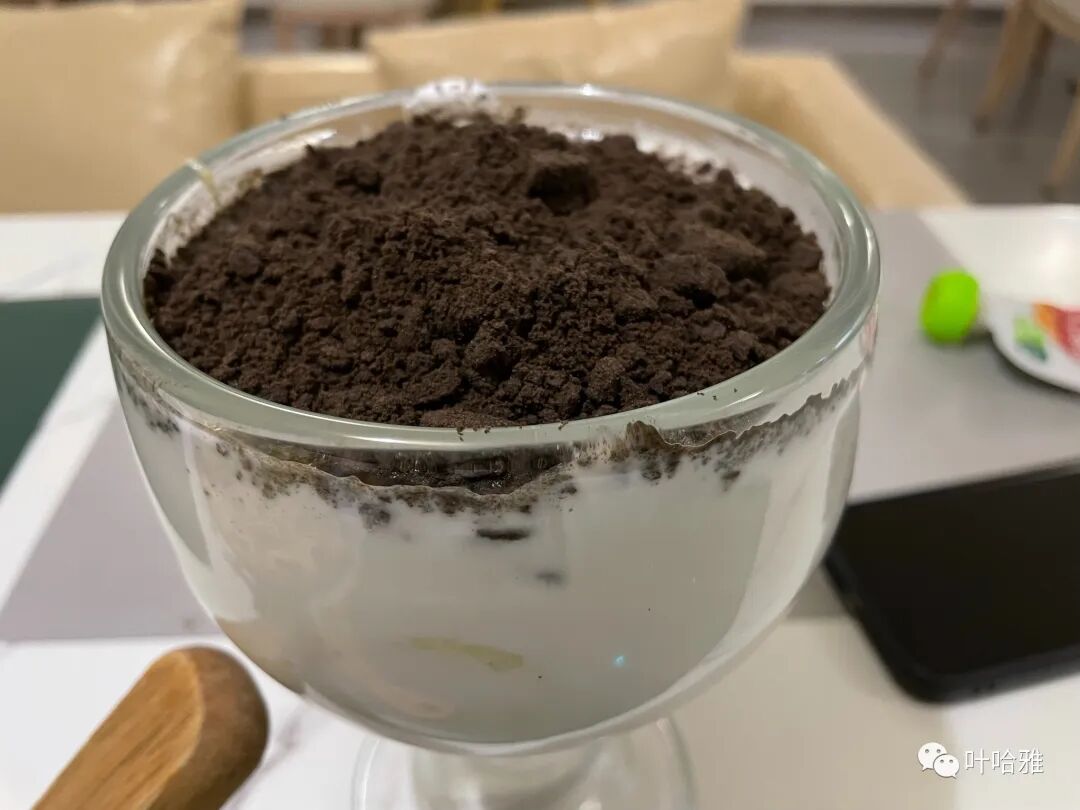
Oreo yogurt potted plant
That is all for the restaurant introduction for now. If you are interested in Tianjin snacks but do not know what to pick, I suggest visiting the Northwest Corner. Walk around the street in front of the Great Southern Mosque (Qingzhen Nandasi). Although it is not as lively as it used to be after the renovations and many traditional snacks are gone, there are still plenty of options.
Fried bean sprout roll (juanquan)
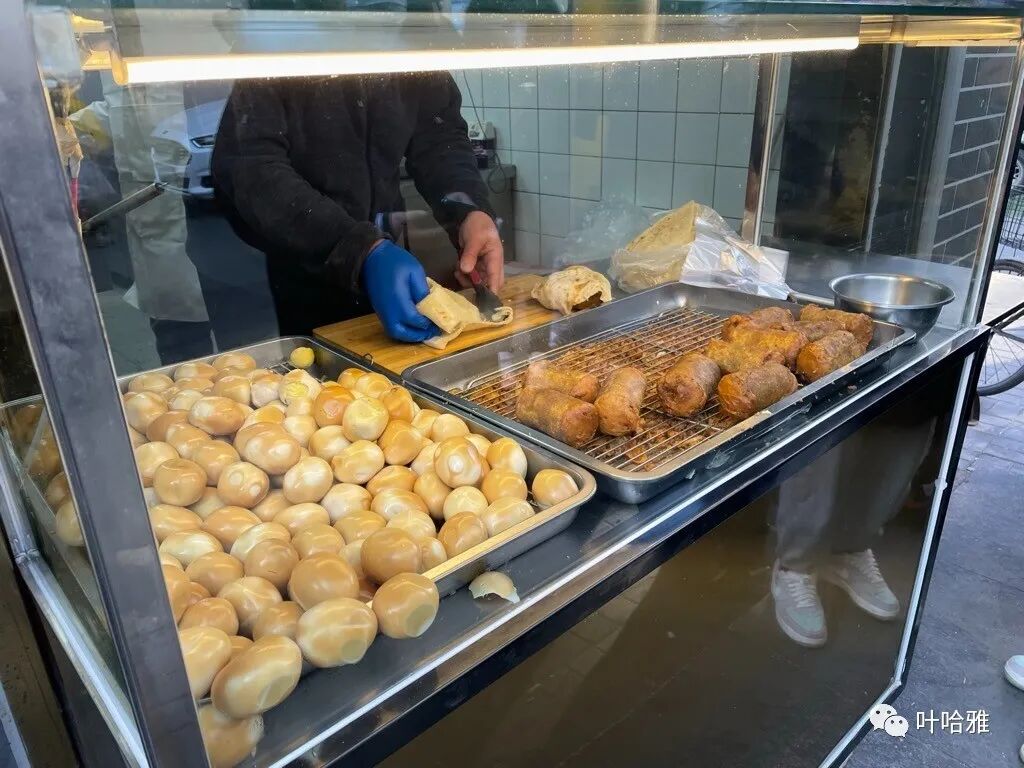
A juanquan is a wrap with fillings you can choose yourself. The deep-fried roll is filled with bean sprouts. You can only find this in Tianjin, not in Beijing.
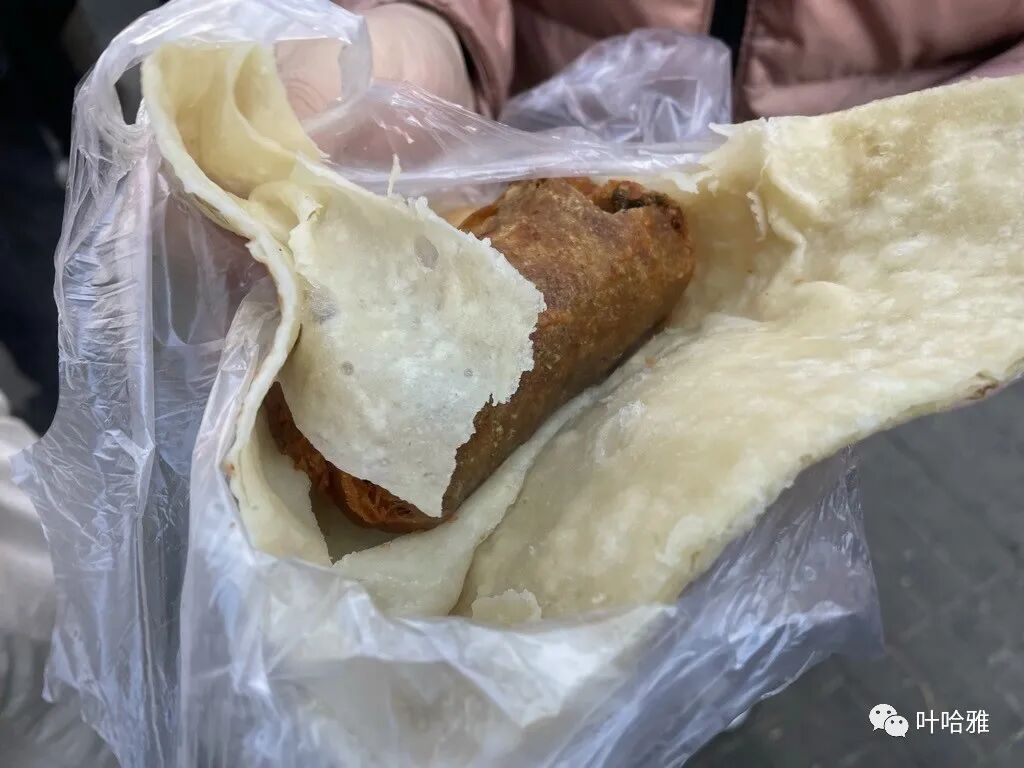
Huiji Tea Soup (Huiji Chatang)
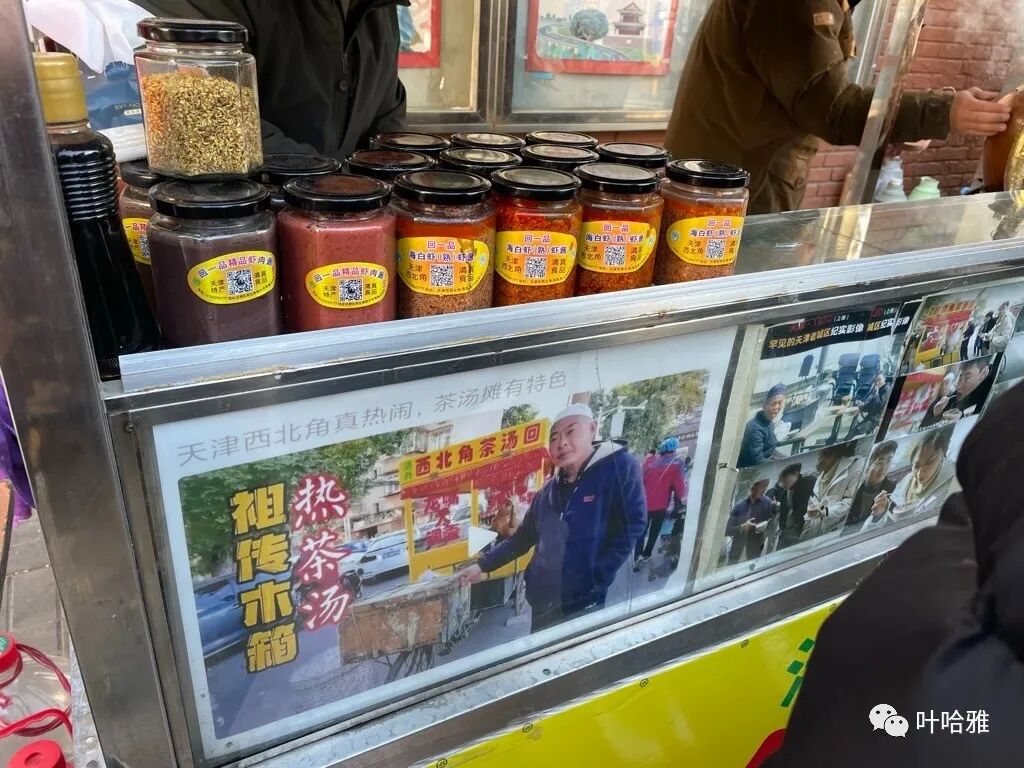
This is a thick dessert, but it is not as sweet as you might think. It has a light, refreshing taste and is quite good when eaten hot.
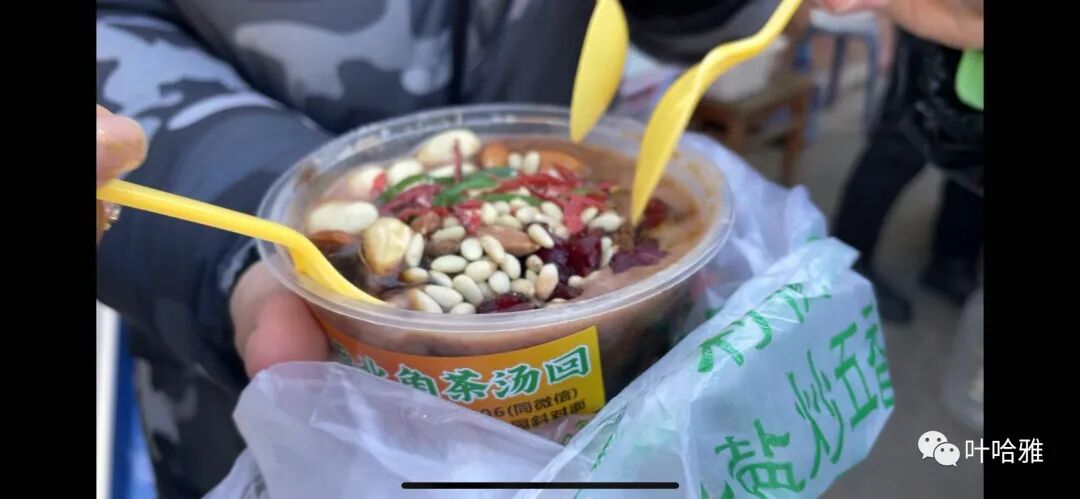
Wenji Rice Cake (gaogan)
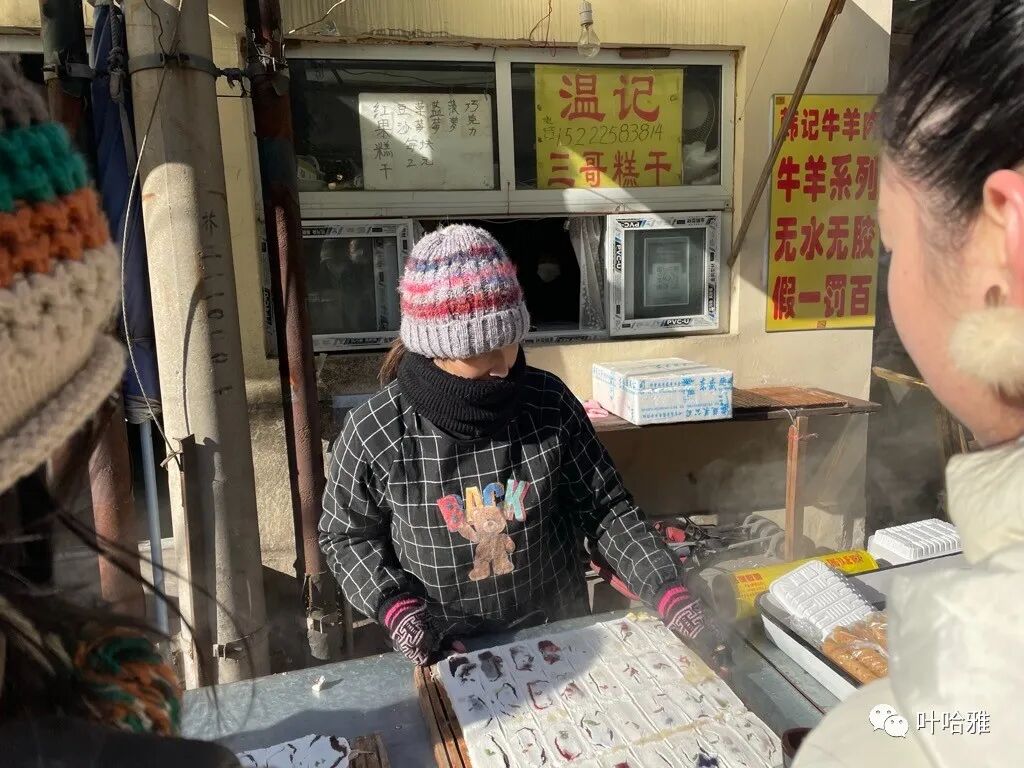
The outer layer is made of rice and filled with various flavors. They cost 2 yuan each and are also sweet. These three snacks are quite good, and you should eat them while they are hot. You can come and try them during the Spring Festival holiday.
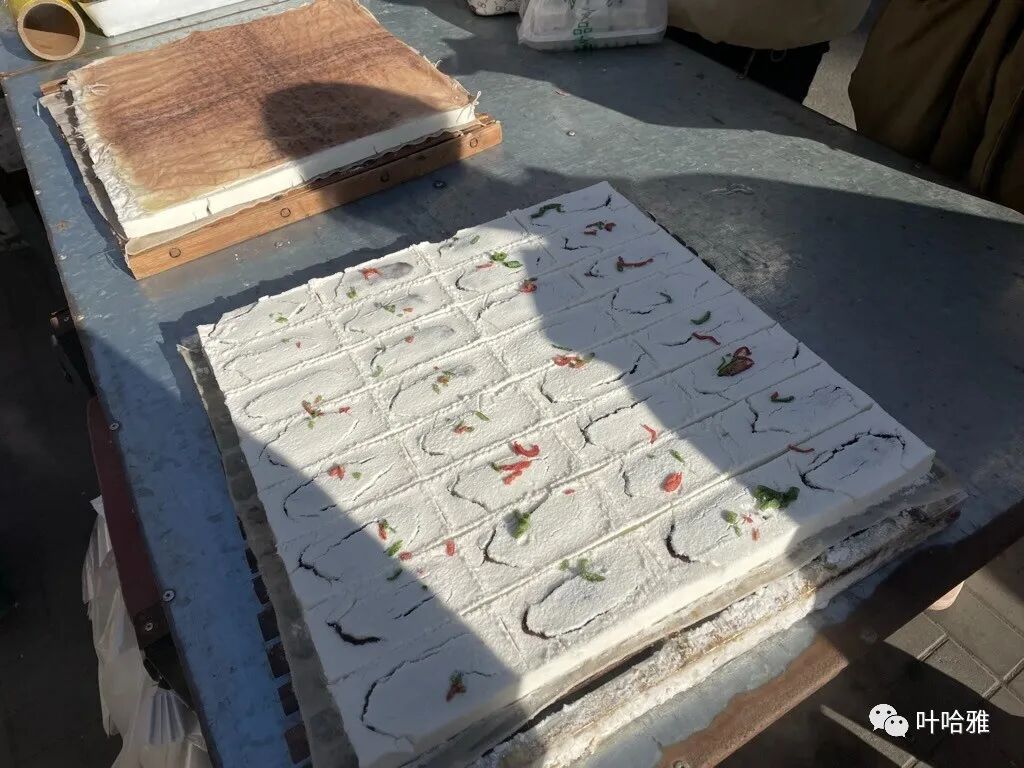
Halal Zhangji
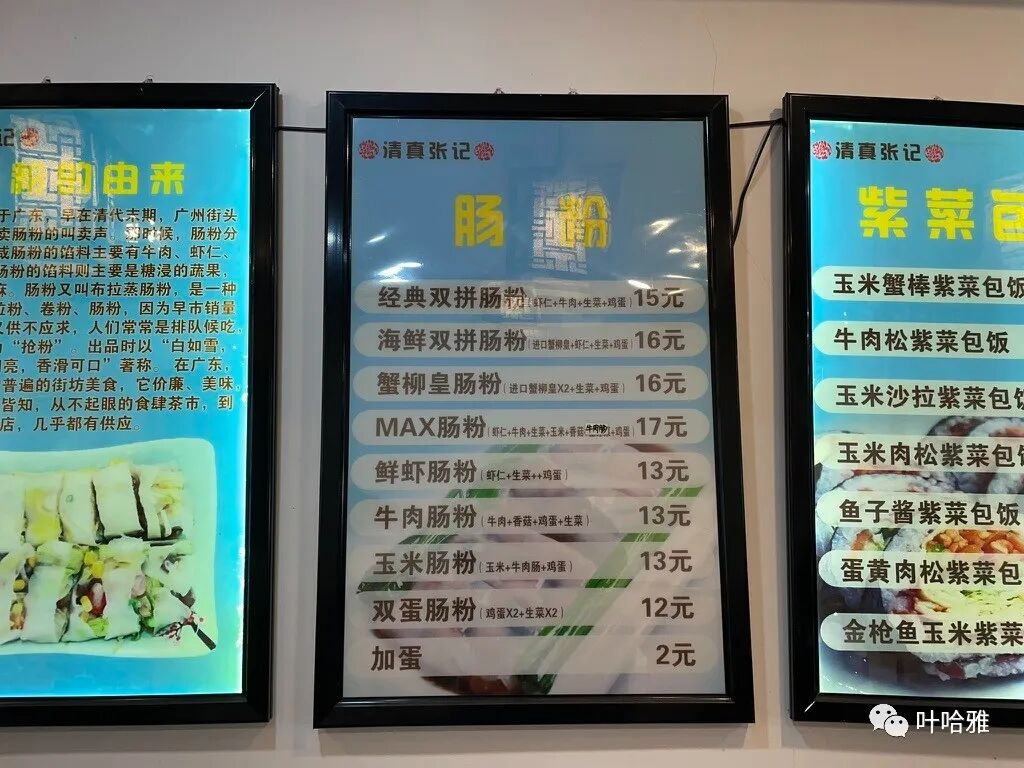
Zhangji sells fried skewers in the Northwest Corner. Interestingly, they also added steamed rice rolls (changfen). If you want to try all kinds of snacks in the Northwest Corner, you can try their steamed rice rolls. The taste is also quite good.
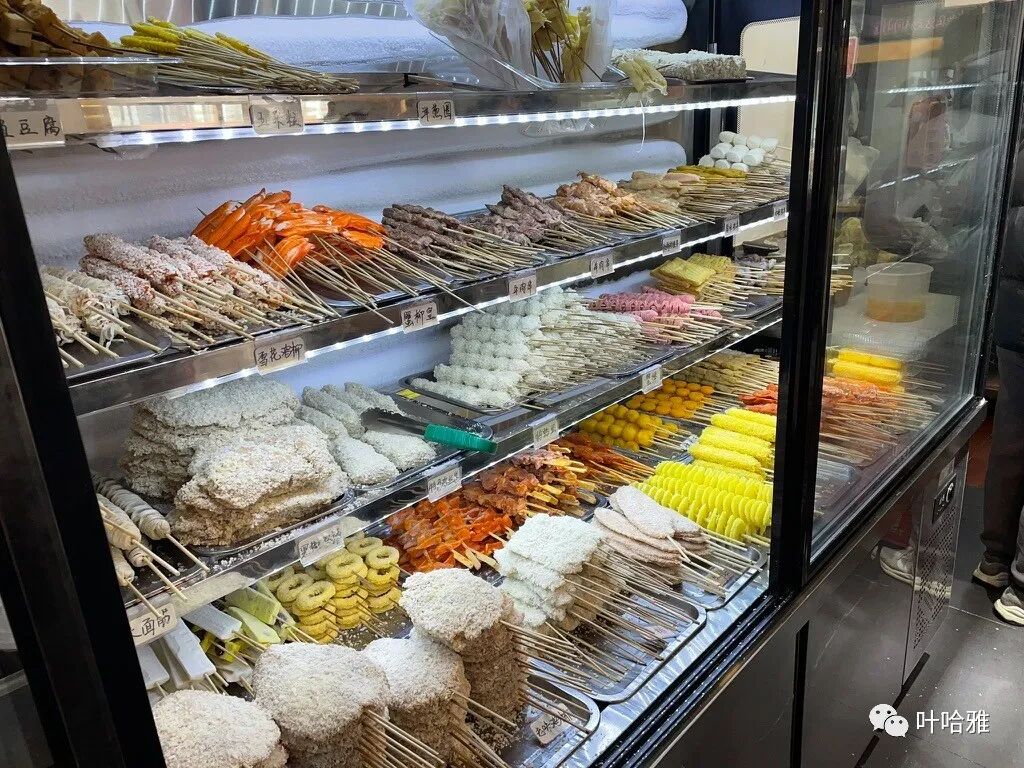
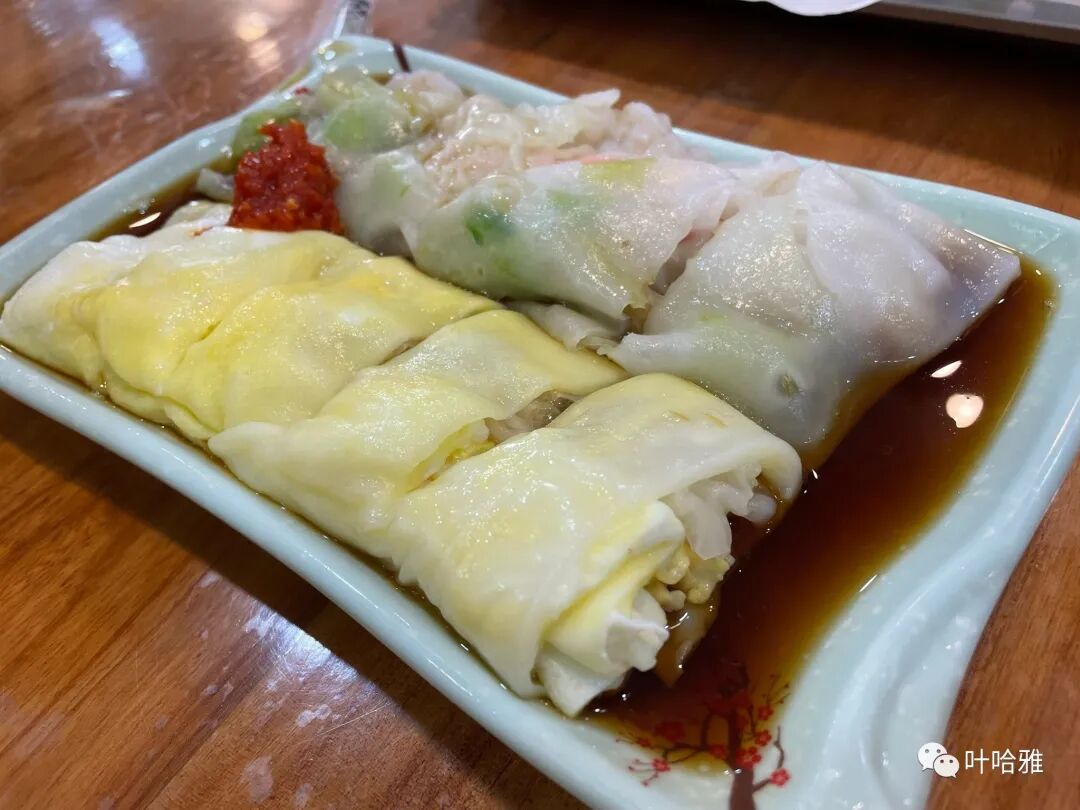
Besides eating and walking around in Tianjin, you can also listen to crosstalk at the Tianjin Deyunshe. The venue is much larger than the one in Beijing. You need to book tickets on the Damai app. During the Spring Festival, Deyunshe has closed for the season, and you will have to wait until after the holiday for performances to resume.
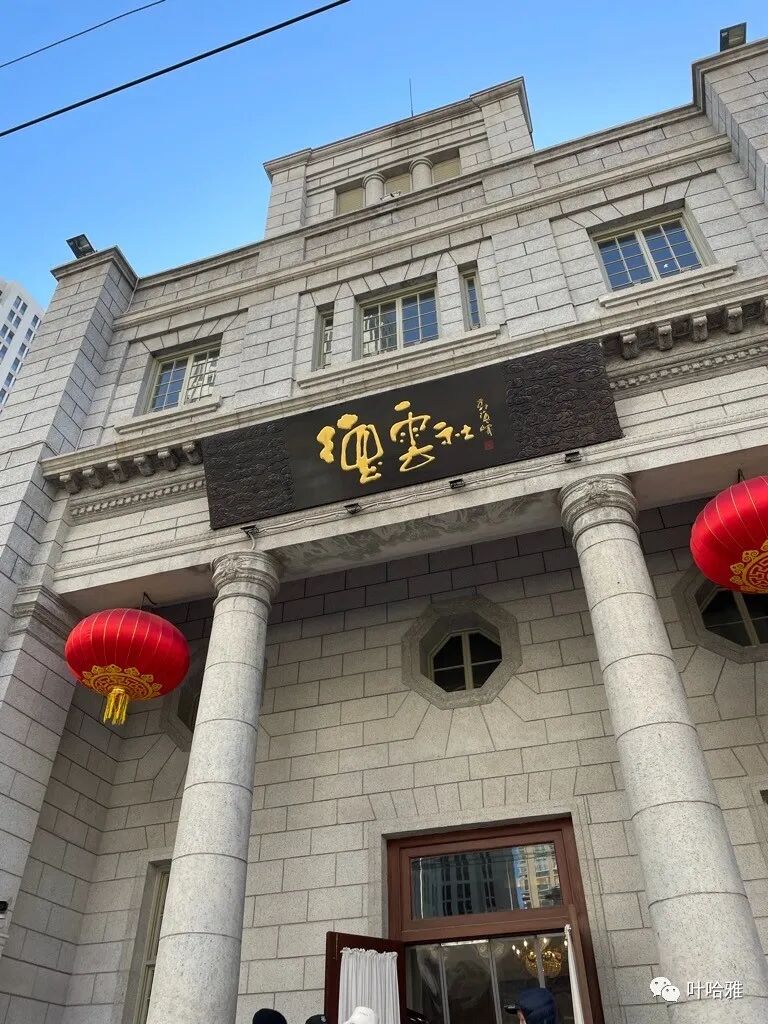
Deyunshe is very popular now, and theater tickets are hard to get. We booked front-row seats a week in advance for 240 yuan per person.
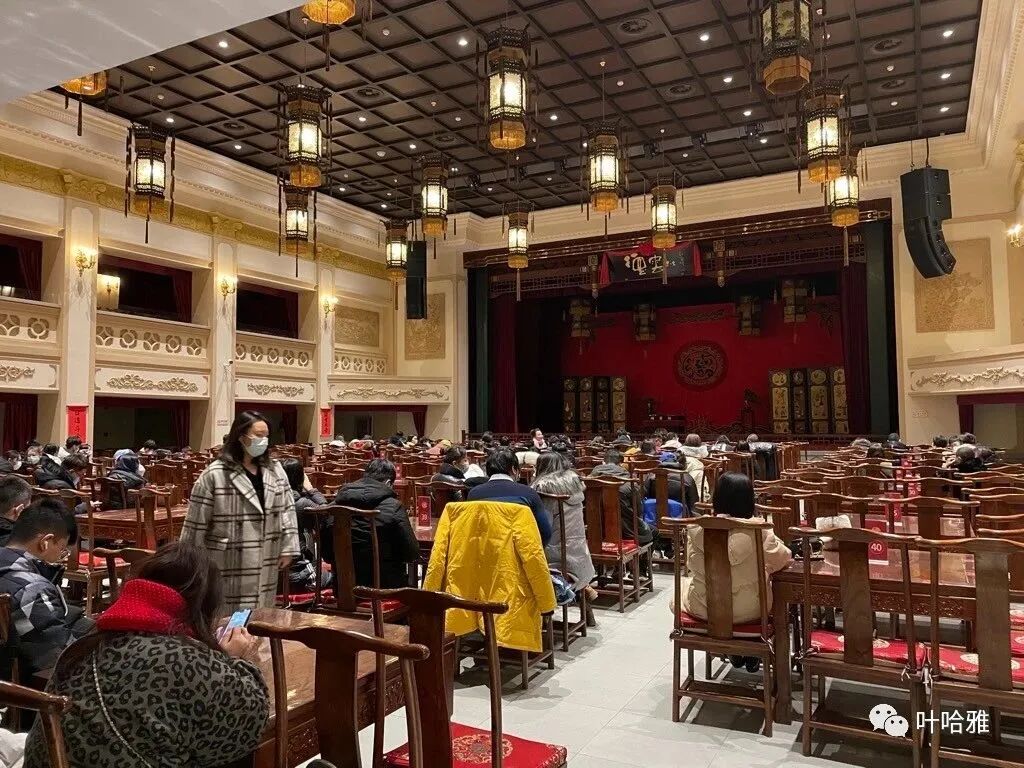
Listening to crosstalk live is all about feeling the happy atmosphere. It is very relaxing to enjoy the show while drinking tea.
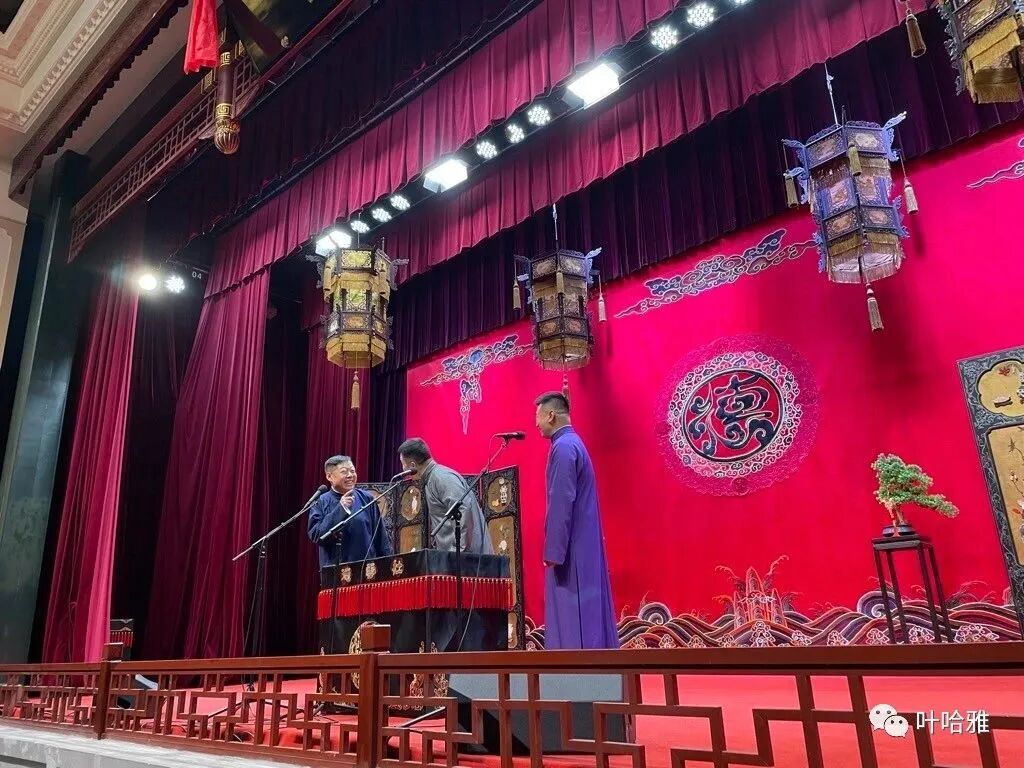
However, famous performers rarely appear in small theaters. The ones holding up the show are all Guo Degang's apprentices, and I do not recognize any of them.
X-RAY Art Lab
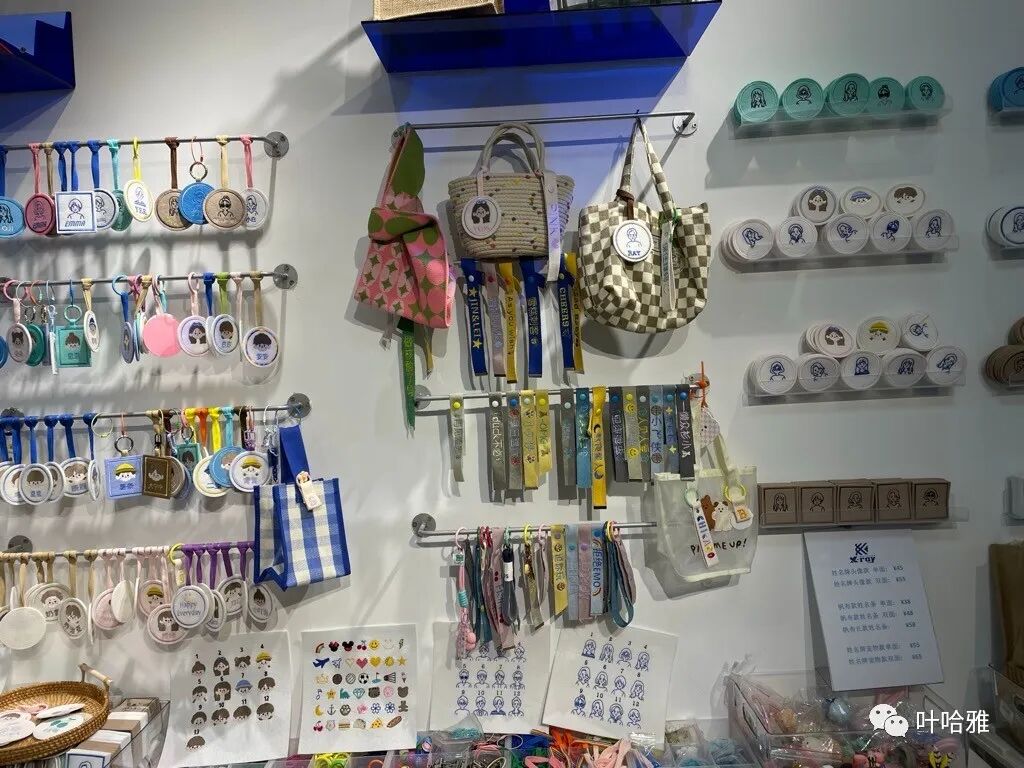
This is a DIY embroidery shop opened by a friend in Tianjin. I customized a tag and a handbag here for my son, Fahim.
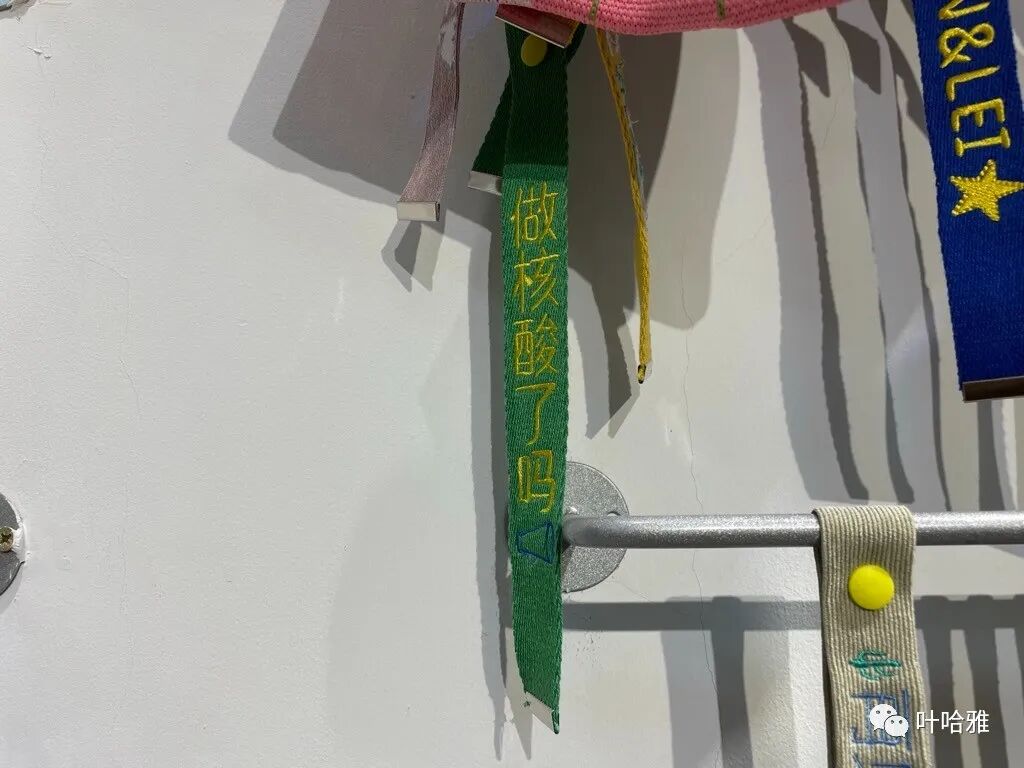
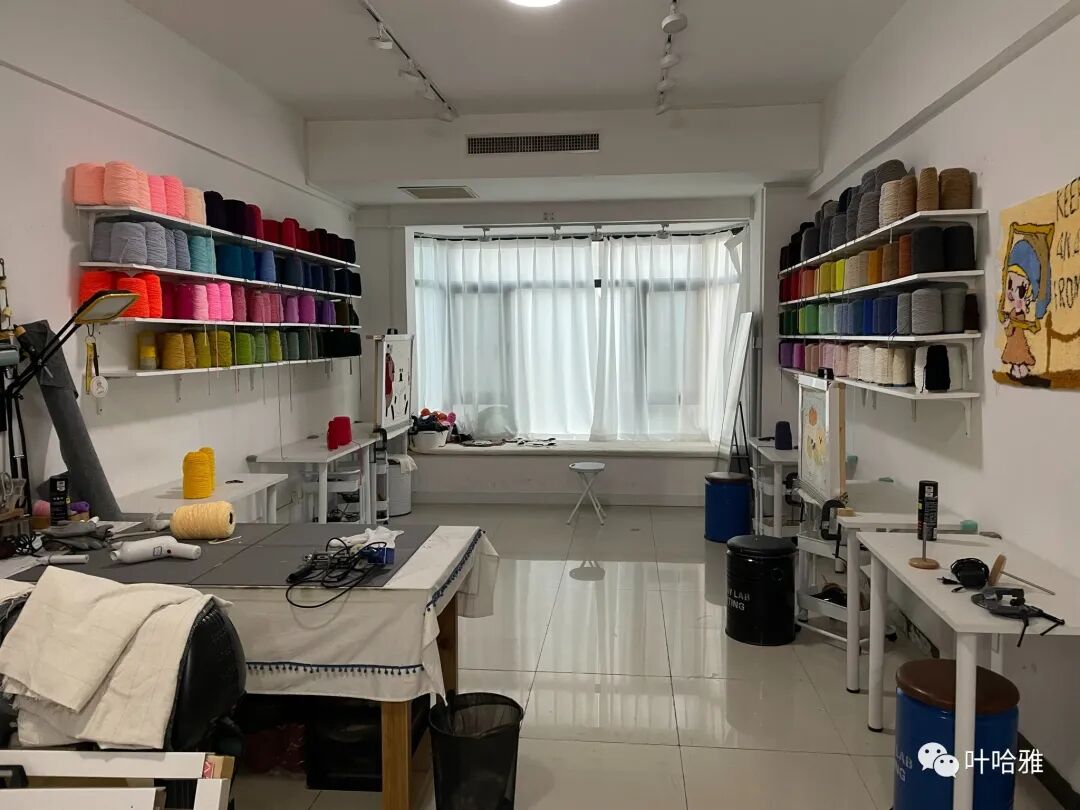
I made a hanging ornament for Fahim embroidered with the words "Tawhid" (the Oneness of Allah) to help him remember the most important thing in life.
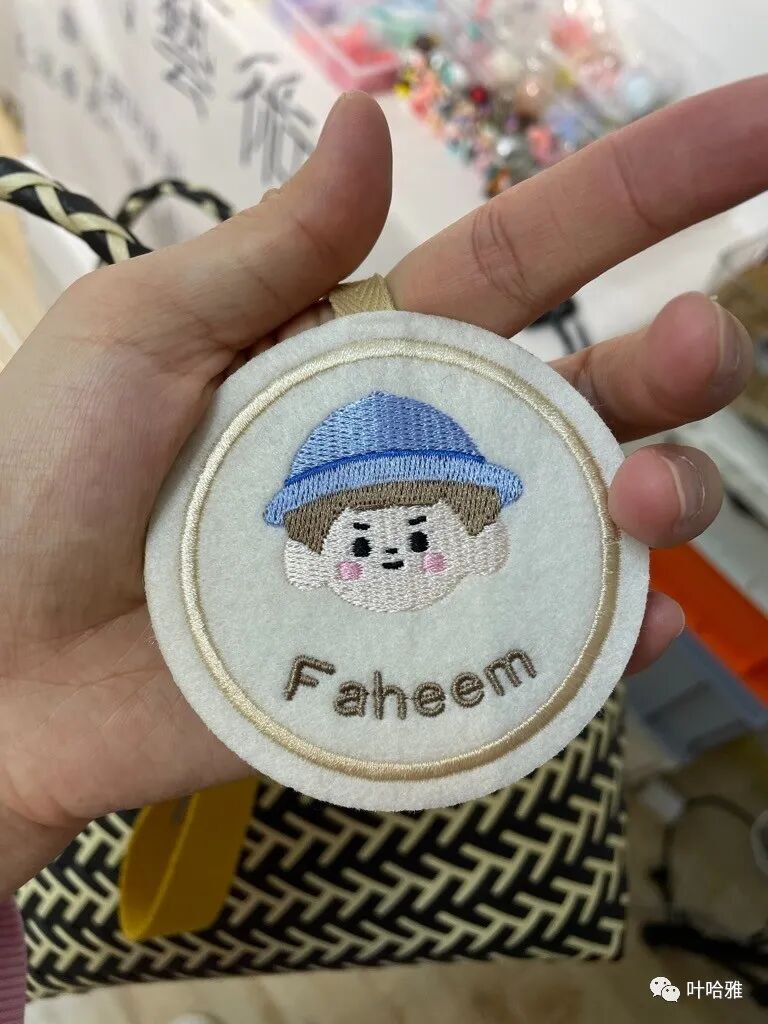
The English spelling of Faheem is Faheem.
Here is a quick tip on Islamic law: cartoon characters are halal for children. According to The Lawful and the Prohibited in Islam by Yusuf al-Qaradawi, photos are allowed. Statues that cast a shadow are forbidden, but children's toys are an exception because kids need them and there is no intent of idol worship.
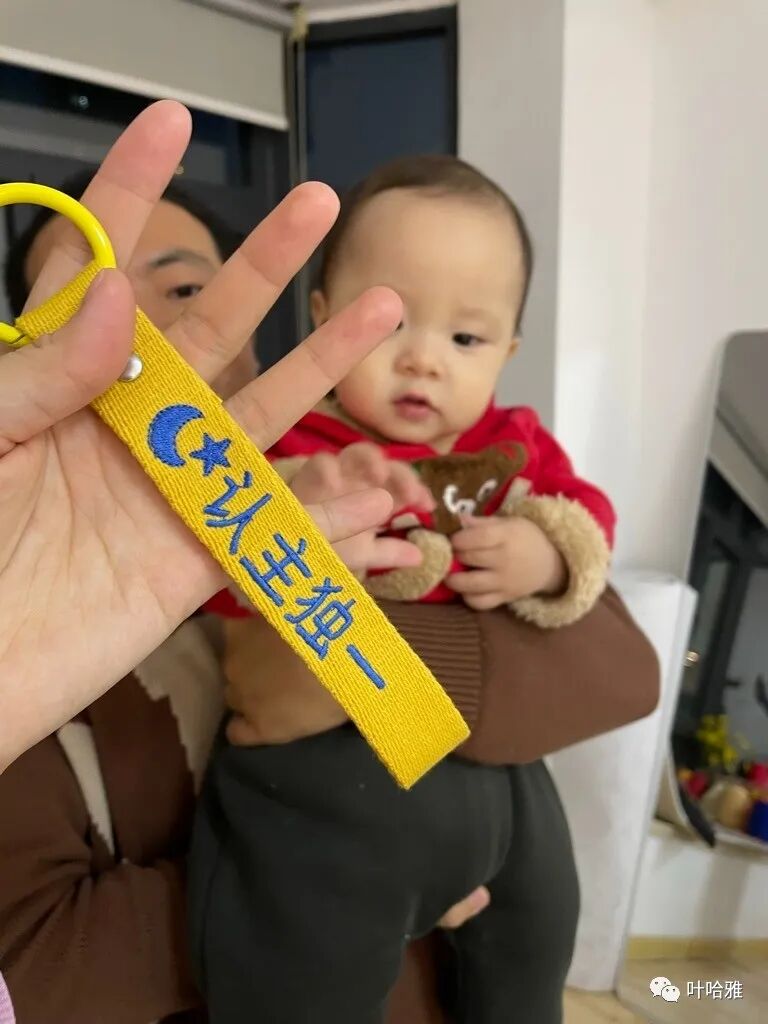
I have often seen elderly people at the mosque criticize teenagers for wearing clothes with images on them. They really hate it. It is already rare for these young people to come to the mosque, and some are now afraid to enter because they worry about being scolded by the elders for an unintentional mistake. Besides, your criticism has no basis.
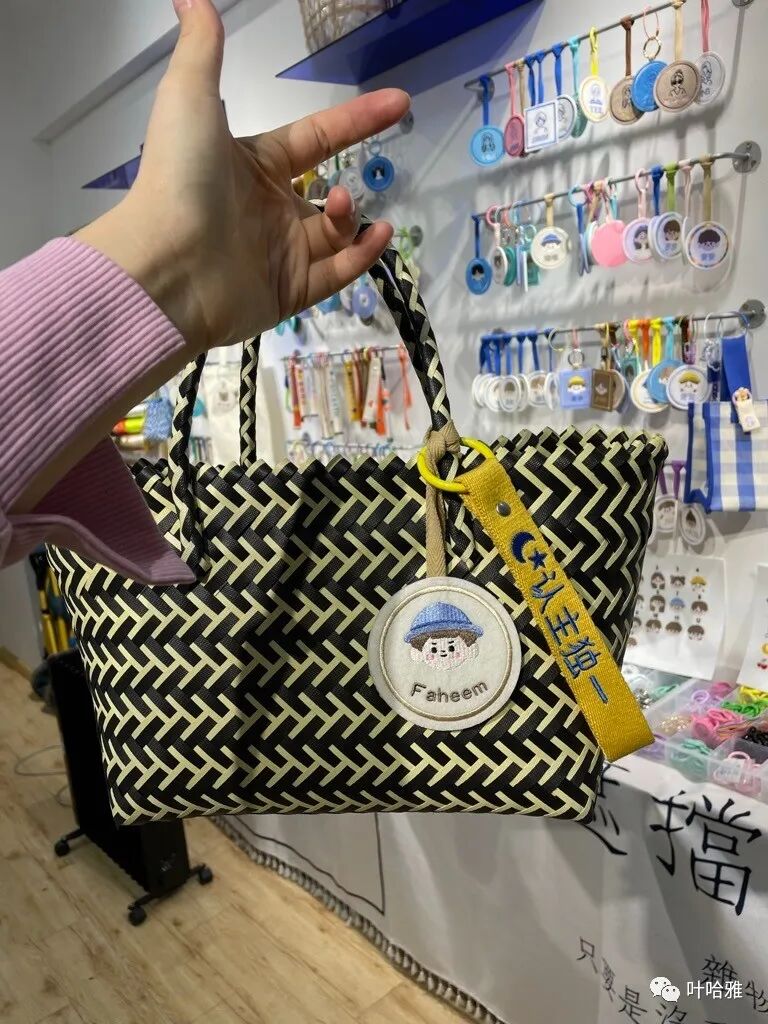
Search for "x-ray art lab" on Taobao or add the owner on WeChat at w287302278 to place an order.
Local Halal Food in China: Tianjin Northwest Corner, Gaba Cai and Muslim Restaurants
Articles • ali2007fr posted the article • 0 comments • 163 views • 2026-05-21 11:00
Summary: This Tianjin halal food in China guide keeps the original part-three food map, including Northwest Corner memories, gaba cai, Muslim restaurants, dishes, addresses, and photos. It is cleaned for easy English reading while preserving the source details.
I recently discovered that WeChat official accounts can add a keyword search feature for articles. I spent the whole night organizing information for over 70 cities. You can now just send a message with a city name to the account to see related articles.
This post continues to expand our halal food map of Tianjin. This is the third installment. When I visited Tianjin in the past, I mostly saw local Tianjin-style restaurants. In recent years, I have noticed a growing variety of food, including Cantonese, Sichuan, Japanese, Korean, and Western cuisine. The environment, taste, and service are all very high quality, and the prices are much cheaper than in Beijing.
Aimeike Western Restaurant
I found many halal Western restaurants in Tianjin and specifically chose the most popular one, Aimeike, to try. Aimeike is a chain store. We arrived at 2 p.m., a time when most restaurants are closed for a lunch break, but Aimeike was still busy. I imagine you would have to wait in line during peak meal times.
Drinks come with free refills, and there is free lemon water available.
I tried the Turkish chicken pizza, and even the 5-inch size was packed with toppings.
This purple sweet potato soup is delicious. It is slightly sweet and not greasy. You can eat bread after finishing the soup.
The pasta is also good. It cost less than 130 for two people, which is great value for money.
Address: B1, Pengxin Water Amusement City, No. 12-24 Dafeng Road, Hongqiao District, Tianjin.
On Fuxing Road in the Hongqiao District of Tianjin, about 1,000 meters from the Northwest Corner subway station, there is a cluster of halal restaurants near the ground-floor shops of Shuixiyuan. I took a walk and found several unique halal restaurants. The following restaurants are all located in the ground-floor shops of Shuixiyuan.
I just hate that my eyes are bigger than my stomach. I wanted to eat at every place I saw, but I couldn't. I was tempted to run over to other people's tables just to take pictures of their food.
Shengji Korean BBQ
This Korean BBQ spot in Shuixiyuan is the second one I have seen in Tianjin.
The style here is similar to Qingu BBQ in Changying, Beijing, but it does not taste as good.
The BBQ platter costs less than 100 yuan.
After the BBQ, you can eat the steamed egg (jidan geng) cooked on the side of the grill, and the restaurant gives you plenty of side dishes for free.
Address: Shop 115-116, Shuixiyuan, Fuxing Road.
Yilan Jin Fan'er
This is a popular place. We arrived at 7 p.m. and there were no seats left. The waiter said we could eat at the dumpling shop next door since they are the same business, but that was full too. We waited 10 minutes to get a table.
I did not know what stove-baked dumplings (lujiaozi) were at first. I ordered a pound of boiled dumplings at Yilan Jin Fan'er, and I realized what they were when they brought them out.
Iced jelly (bingfen), a dessert similar to pear syrup (qiuli gao).
Stir-fried lamb trio (laobao san) is a famous Tianjin dish made with lamb heart, liver, and kidney. It is a bit salty.
The signature dish is mustard shrimp, which is topped with popcorn and is a little greasy.
The red bean yogurt bun is delicious. It is filled with red beans and yogurt, and the texture is soft, fluffy, and lightly sweet.
Grilled oysters are tasty. Seafood is common in Tianjin restaurants.
This is the best dish and their signature item. The beef in the steak pot is incredibly fragrant, very tender, and full of flavor.
This is the pan-fried dumpling (lu jiaozi) sold at their other shop. It looks like a pan-fried bun and a potsticker at the same time. The portion is huge and salty, which is a typical feature of Tianjin cuisine.
While wandering near the Northwest Corner (Xibeijiao) at Shuiyou City, I found this halal Australian lobster hot pot on the fourth floor. I was too full to eat anymore, so I wish someone could go eat it for me.
On the first floor of Building B in Shuiyou City, I saw a halal Western-style bakery called Nisa Town (Nisa Xiaozhen). There is a lot of halal food in Shuiyou City.
This halal Sichuan spicy hot pot (mao cai) is on the basement level of Building A in Shuiyou City, very close to Aimeike Western Restaurant.
Early in the morning, I saw a long line at this Muji Pastry shop near the South Great Mosque (Nandasi). It felt very familiar, just as popular as Niujie.
To experience a local breakfast in Tianjin, you must have savory crepe strips in soup (gaba cai). You have to eat it at a small shop in a residential area like this to get the authentic taste.
Chaiji Breakfast is right across from the South Great Mosque. Just by looking at the exterior, I knew the food would be great.
Soy milk costs one yuan extra if you add sugar. I didn't expect that.
Savory mung bean and millet soup (gabacai) is a local snack that visitors usually try just for the novelty. You might not get used to the taste, but I think it is okay, just a bit salty.
A bowl of gabacai wasn't enough for breakfast, so I spotted some hanging oven flatbread (diaolu shaobing) nearby. I have loved all kinds of flatbreads since I was a kid. This one is hollow inside and sprinkled with Sichuan pepper salt, and I could eat it plain every day without getting tired of it.
I really envy the people of Tianjin. You don't see these kinds of cozy, local shops in Beijing much anymore.
You have to eat the hanging oven flatbread, and you have to eat the crepe with fried dough sticks (jianbing guozi) too. Jinfeng Lao Huiji Jianbing is right across from the flatbread shop. The man making the crepes, Brother Jin, is quite interesting. He chatted with me while he worked, saying my wife looks like a British person. Judging by his tone, he must have traveled to quite a few places.
Address: Near the South Mosque (Qingzhen Nandasi) in Hongqiao District.
Fresh from the oven.
This is the second halal Japanese restaurant I have tried in Tianjin. There must be at least five halal Japanese restaurants in the city.
The shop is quite small, but it feels just like a Japanese street-side eatery. If you go for lunch, you can use a voucher, which is like getting a 50% discount.
The salmon sashimi is very fresh.
Japanese-style smashed cucumber, which has a sweet flavor.
Grilled eel, which I order every time I eat Japanese food.
Cheesy mashed potatoes.
The owner gave us a complimentary pudding dessert.
Address: No. 43 Xinhua Road, Heping District, Tianjin.
Hongxishun.
The staff are very helpful, and the restaurant was half full at dinner time.
Napkins cost one yuan extra.
A half-jin (250 grams) plate of fresh-cut lamb costs 30 yuan; it is cheaper than in Beijing but slightly more expensive than in Inner Mongolia.
The house-made pickled vegetables are good.
Address: No. 44 Wenlan Road, northeast of Wangfu No. 1, Nankai District.
On the way back to Beijing, I saw a halal Sichuan-style hot pot restaurant called Huishuxiang. It is located at No. 985 Dagu South Road, Hexi District. It has been open for many years and I heard it is quite good.
Previous links:
Tianjin Halal Food Map (Part 2). view all
Summary: This Tianjin halal food in China guide keeps the original part-three food map, including Northwest Corner memories, gaba cai, Muslim restaurants, dishes, addresses, and photos. It is cleaned for easy English reading while preserving the source details.
I recently discovered that WeChat official accounts can add a keyword search feature for articles. I spent the whole night organizing information for over 70 cities. You can now just send a message with a city name to the account to see related articles.
This post continues to expand our halal food map of Tianjin. This is the third installment. When I visited Tianjin in the past, I mostly saw local Tianjin-style restaurants. In recent years, I have noticed a growing variety of food, including Cantonese, Sichuan, Japanese, Korean, and Western cuisine. The environment, taste, and service are all very high quality, and the prices are much cheaper than in Beijing.
Aimeike Western Restaurant
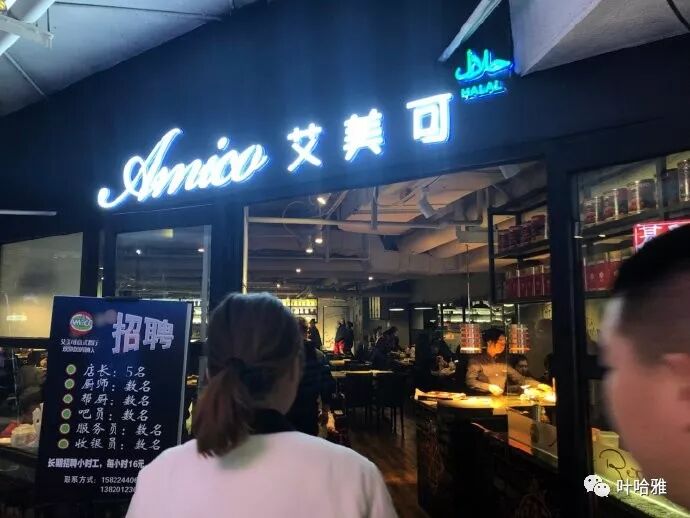
I found many halal Western restaurants in Tianjin and specifically chose the most popular one, Aimeike, to try. Aimeike is a chain store. We arrived at 2 p.m., a time when most restaurants are closed for a lunch break, but Aimeike was still busy. I imagine you would have to wait in line during peak meal times.
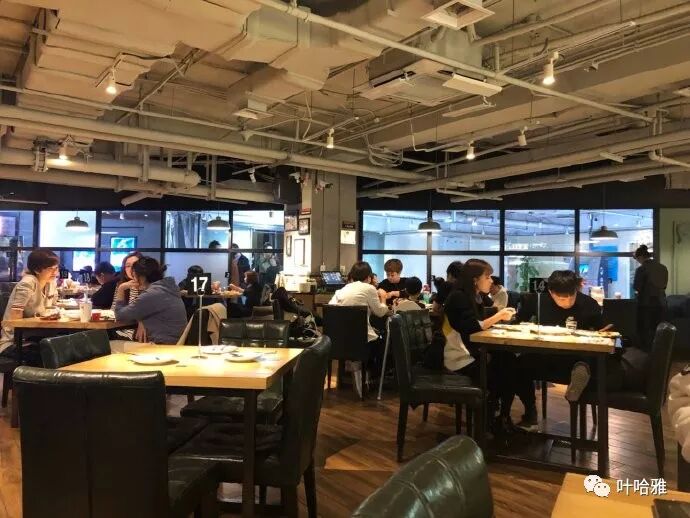
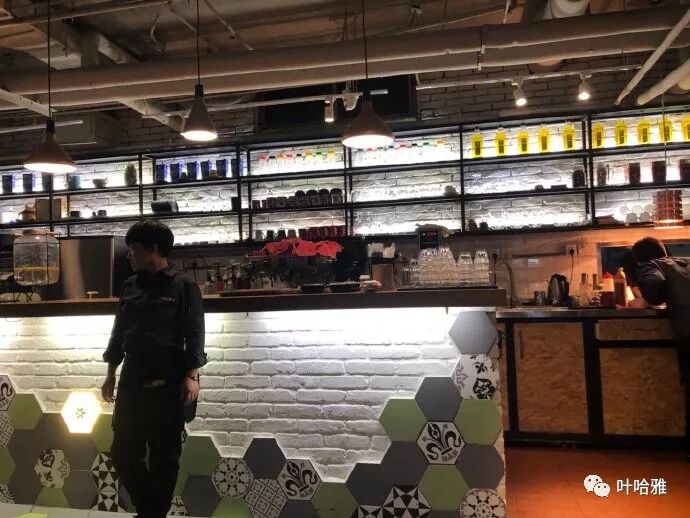
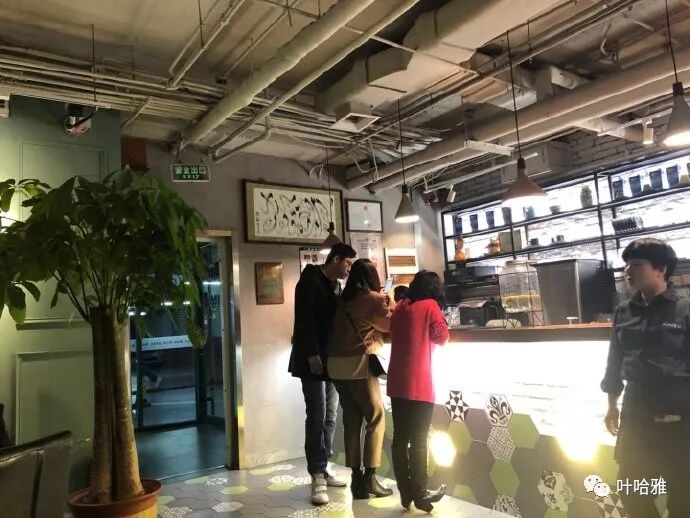
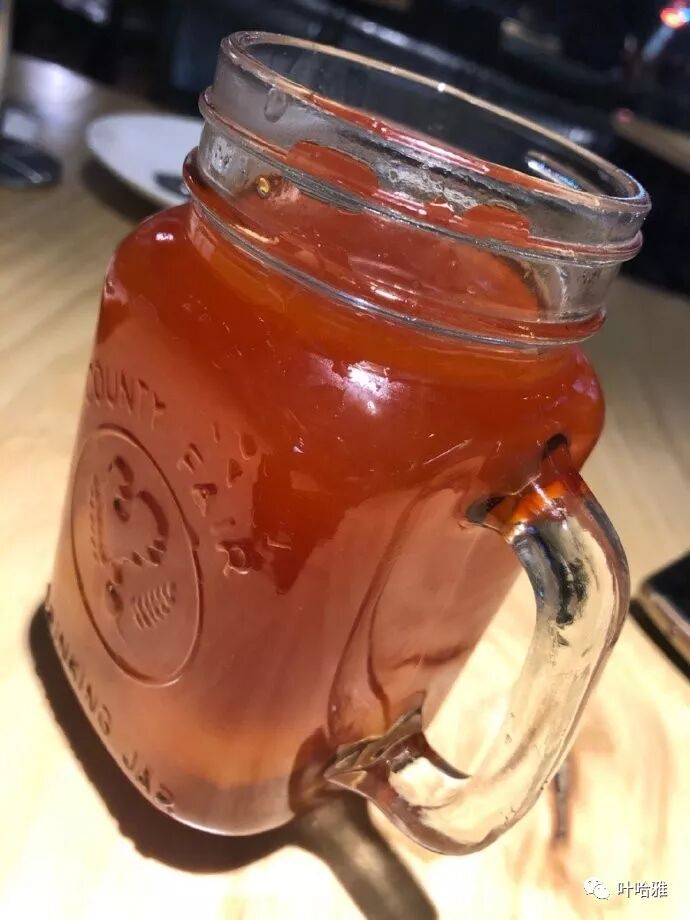
Drinks come with free refills, and there is free lemon water available.
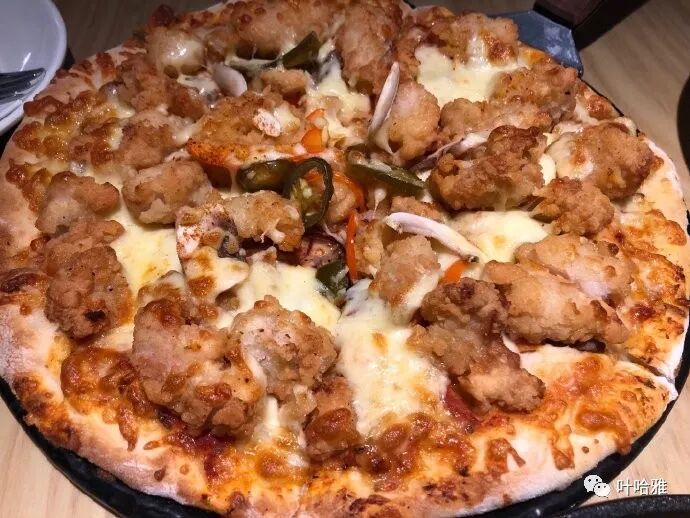
I tried the Turkish chicken pizza, and even the 5-inch size was packed with toppings.
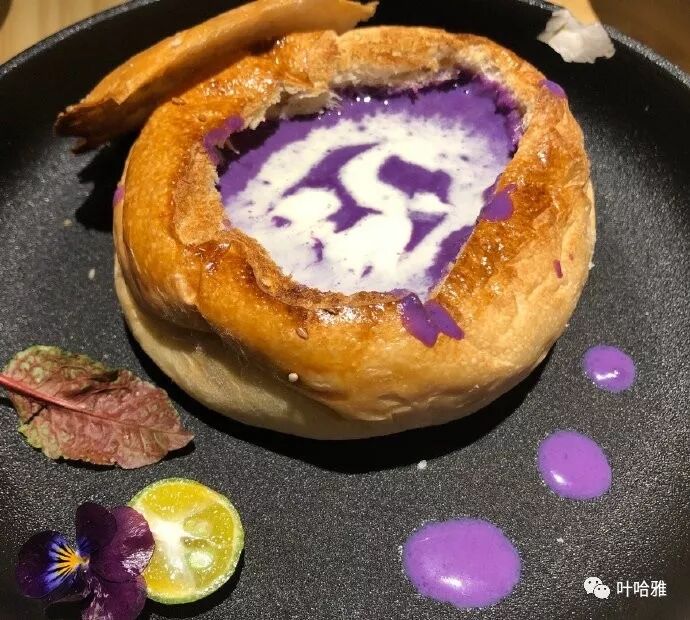
This purple sweet potato soup is delicious. It is slightly sweet and not greasy. You can eat bread after finishing the soup.
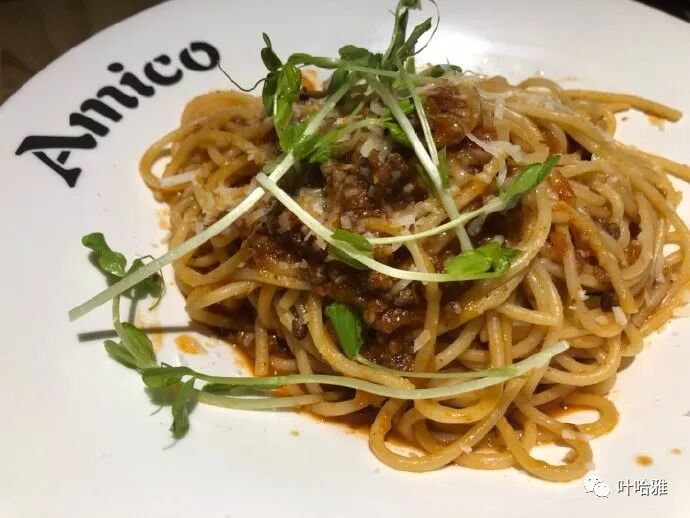
The pasta is also good. It cost less than 130 for two people, which is great value for money.
Address: B1, Pengxin Water Amusement City, No. 12-24 Dafeng Road, Hongqiao District, Tianjin.
On Fuxing Road in the Hongqiao District of Tianjin, about 1,000 meters from the Northwest Corner subway station, there is a cluster of halal restaurants near the ground-floor shops of Shuixiyuan. I took a walk and found several unique halal restaurants. The following restaurants are all located in the ground-floor shops of Shuixiyuan.
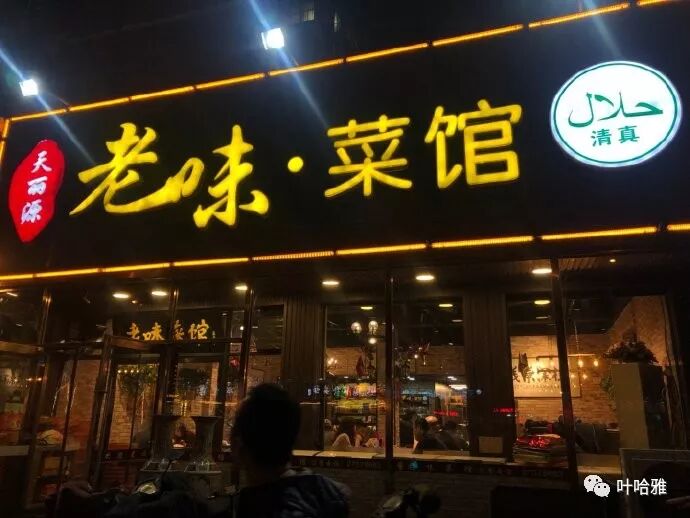
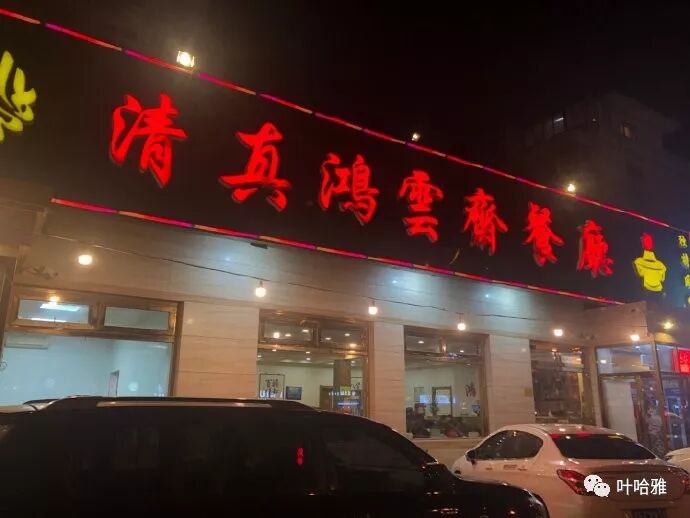
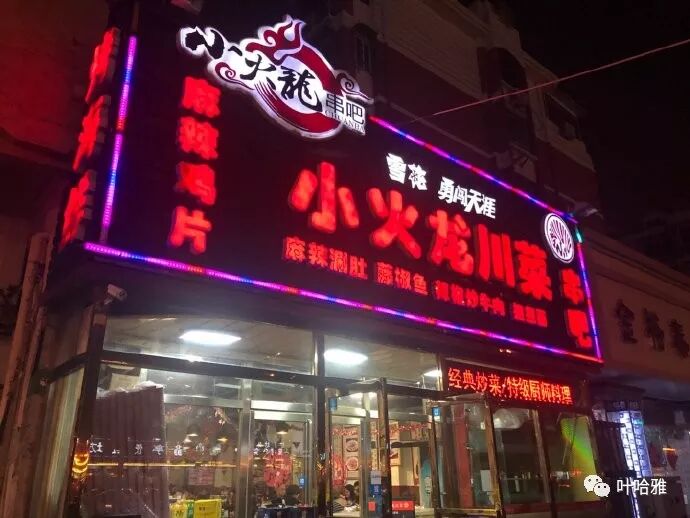
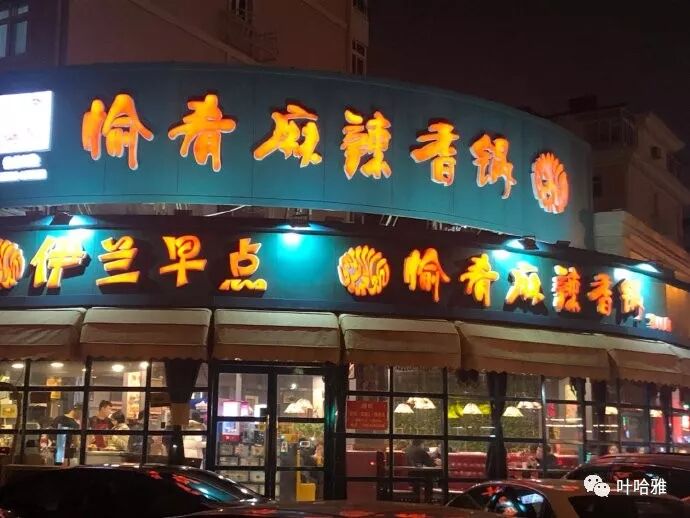
I just hate that my eyes are bigger than my stomach. I wanted to eat at every place I saw, but I couldn't. I was tempted to run over to other people's tables just to take pictures of their food.
Shengji Korean BBQ
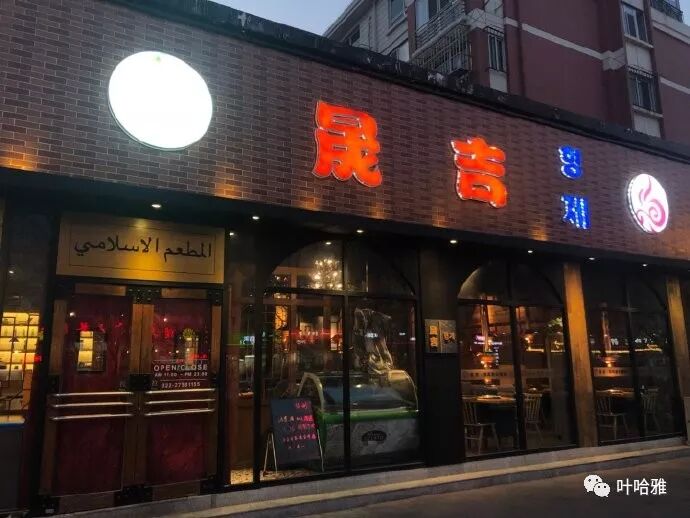
This Korean BBQ spot in Shuixiyuan is the second one I have seen in Tianjin.
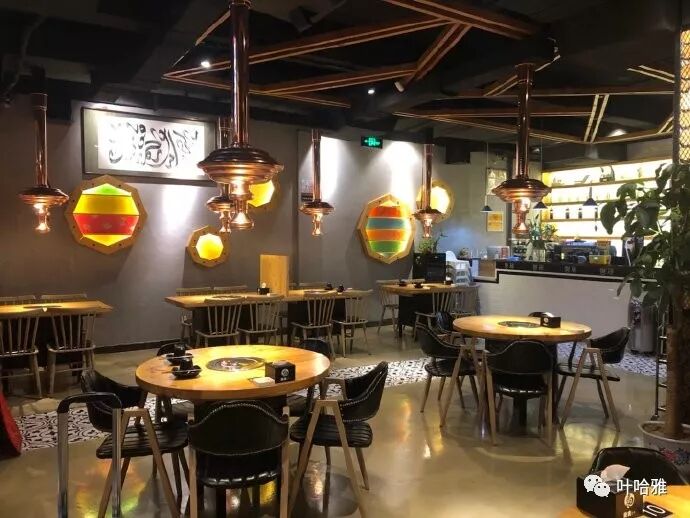
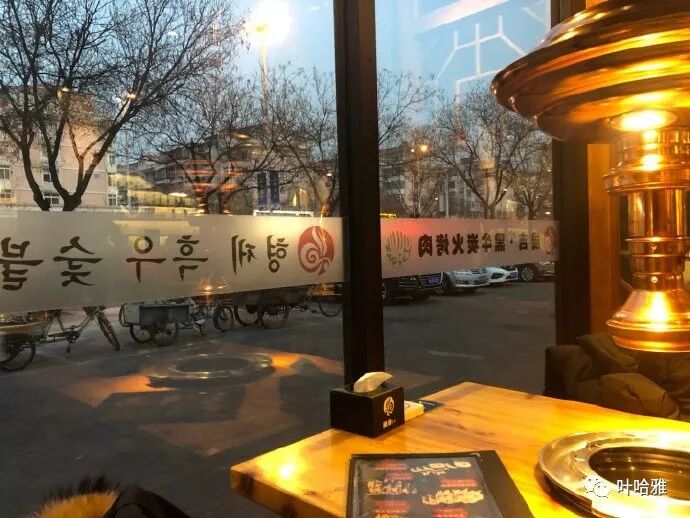
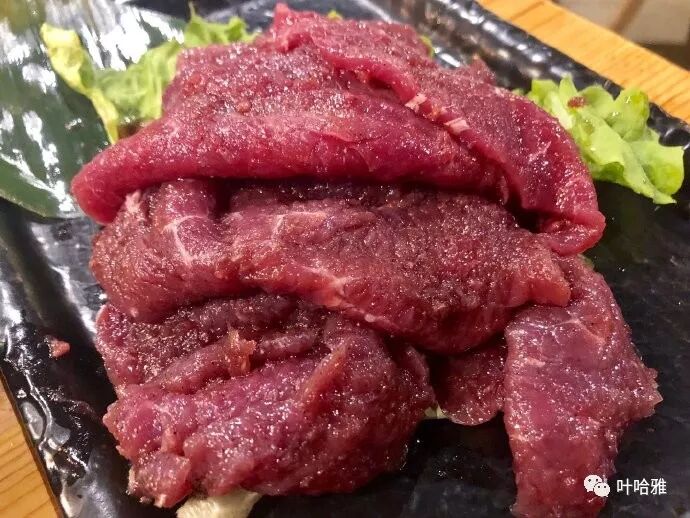
The style here is similar to Qingu BBQ in Changying, Beijing, but it does not taste as good.
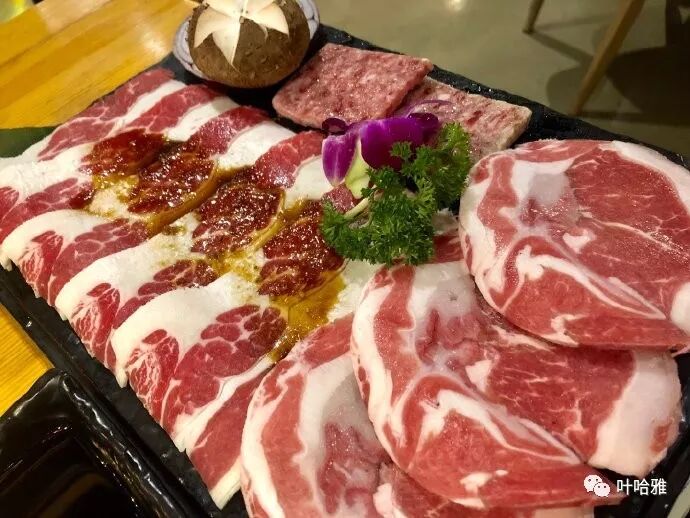
The BBQ platter costs less than 100 yuan.
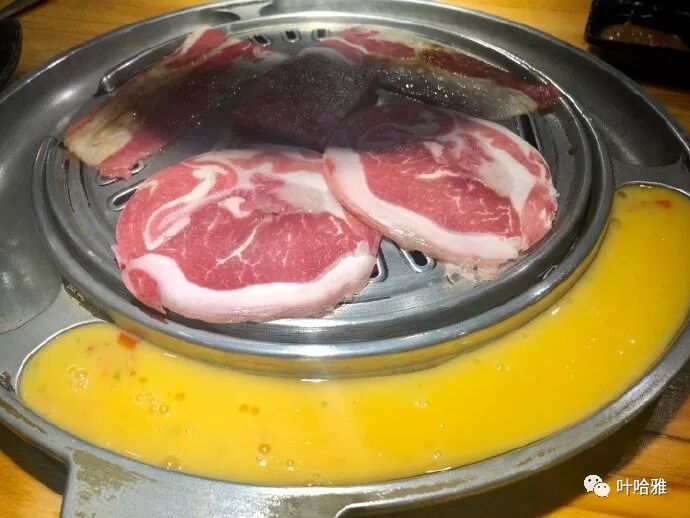
After the BBQ, you can eat the steamed egg (jidan geng) cooked on the side of the grill, and the restaurant gives you plenty of side dishes for free.
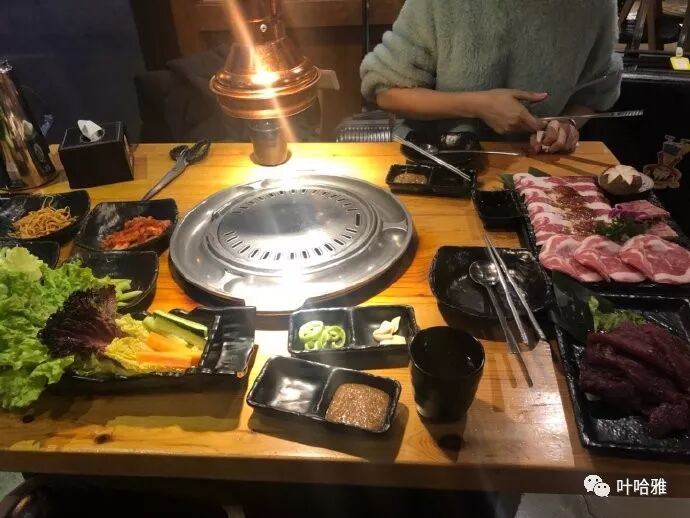
Address: Shop 115-116, Shuixiyuan, Fuxing Road.
Yilan Jin Fan'er
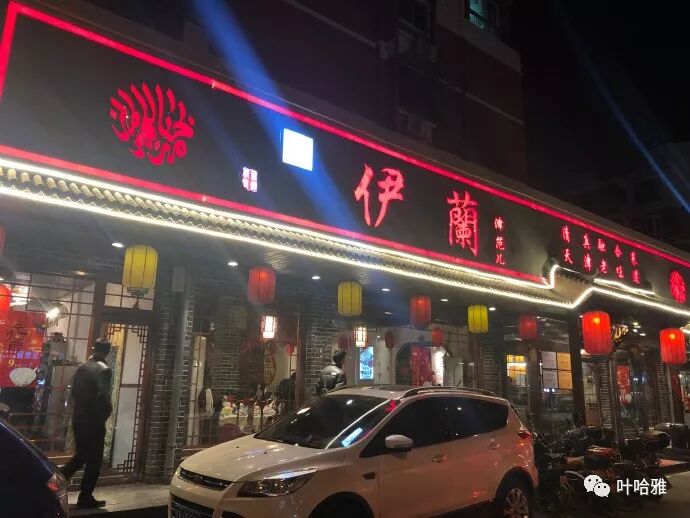
This is a popular place. We arrived at 7 p.m. and there were no seats left. The waiter said we could eat at the dumpling shop next door since they are the same business, but that was full too. We waited 10 minutes to get a table.
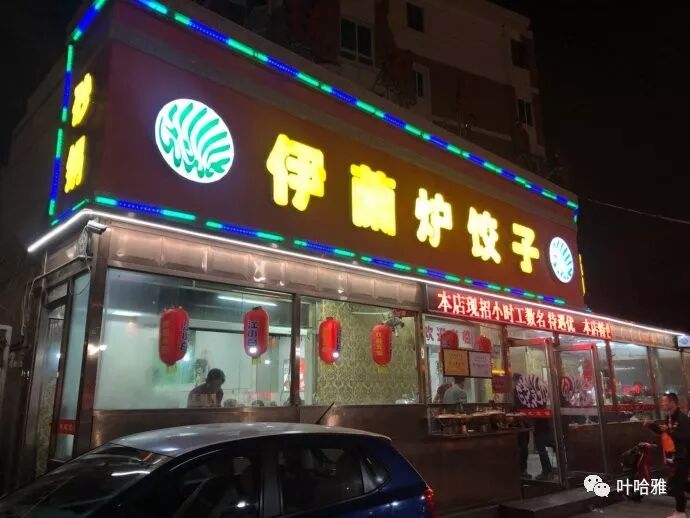
I did not know what stove-baked dumplings (lujiaozi) were at first. I ordered a pound of boiled dumplings at Yilan Jin Fan'er, and I realized what they were when they brought them out.
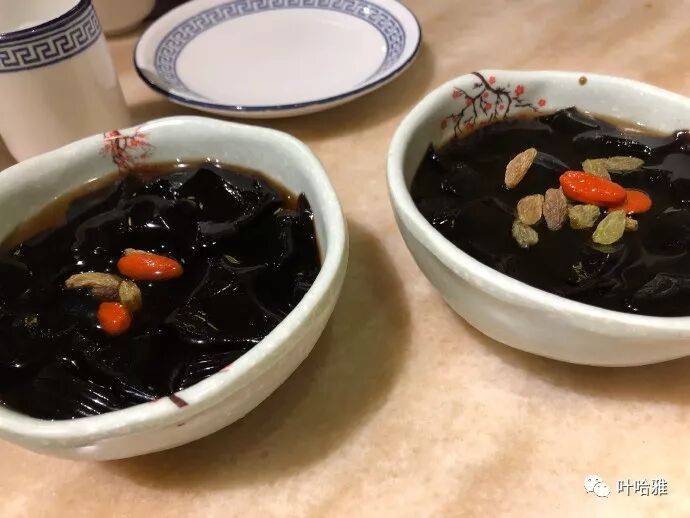
Iced jelly (bingfen), a dessert similar to pear syrup (qiuli gao).
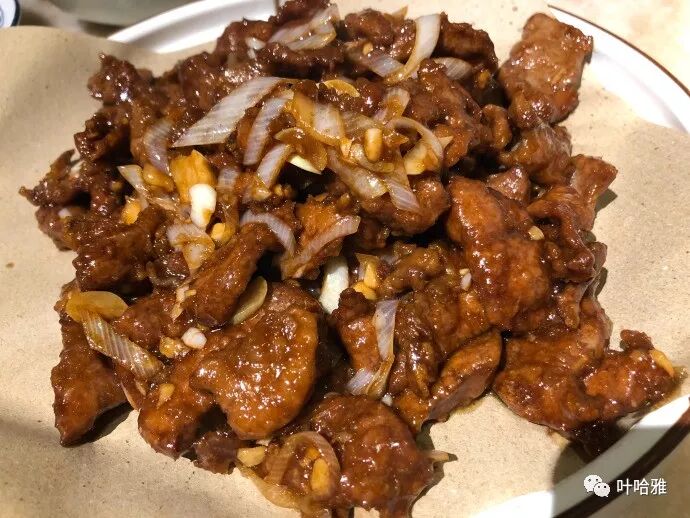
Stir-fried lamb trio (laobao san) is a famous Tianjin dish made with lamb heart, liver, and kidney. It is a bit salty.
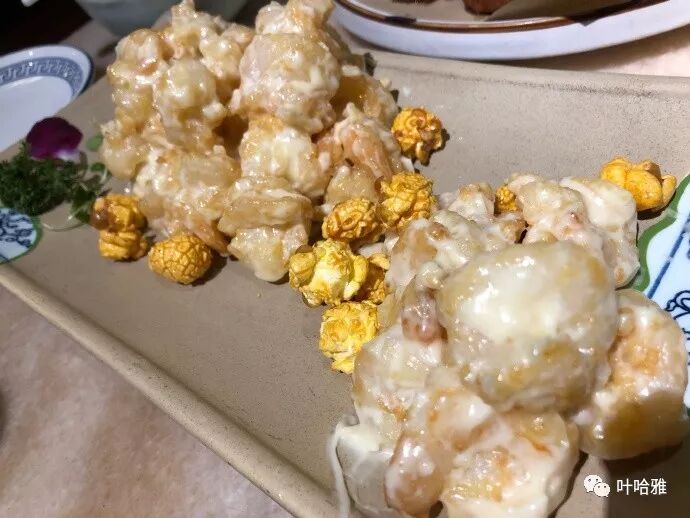
The signature dish is mustard shrimp, which is topped with popcorn and is a little greasy.
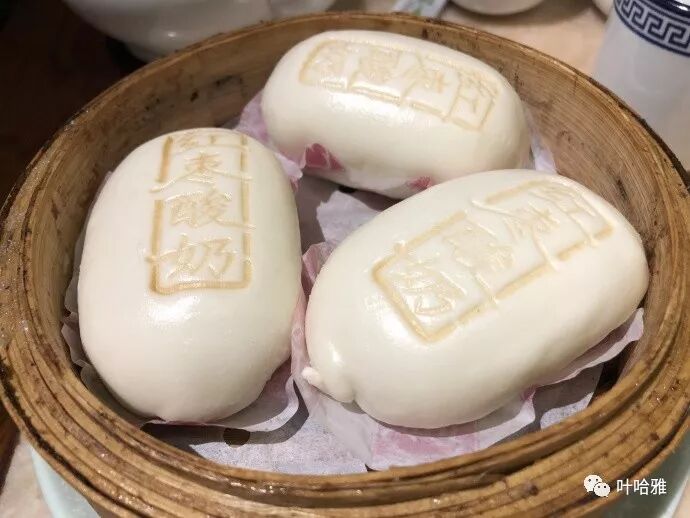
The red bean yogurt bun is delicious. It is filled with red beans and yogurt, and the texture is soft, fluffy, and lightly sweet.
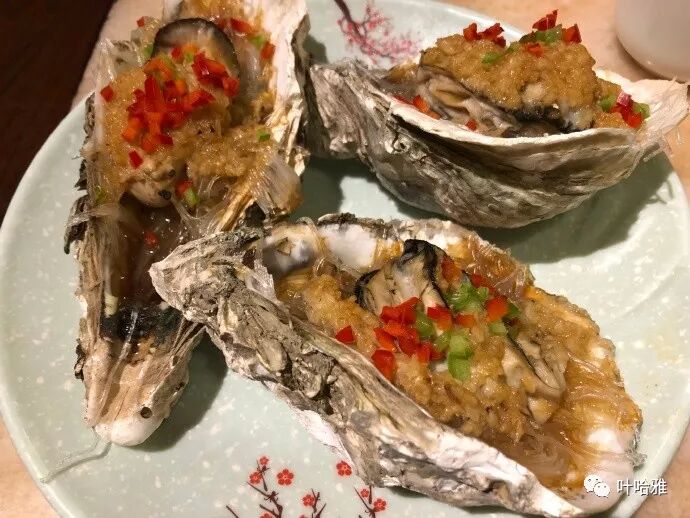
Grilled oysters are tasty. Seafood is common in Tianjin restaurants.
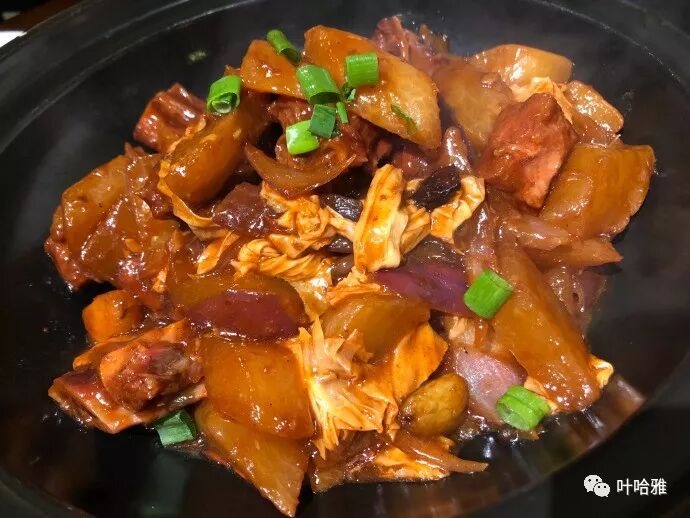
This is the best dish and their signature item. The beef in the steak pot is incredibly fragrant, very tender, and full of flavor.
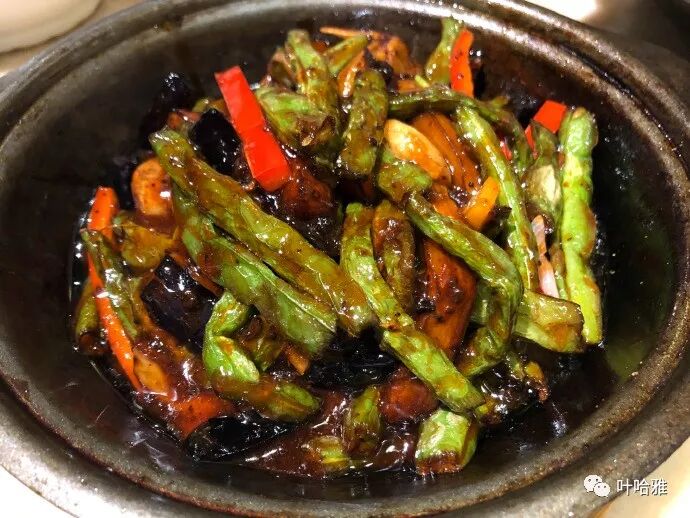
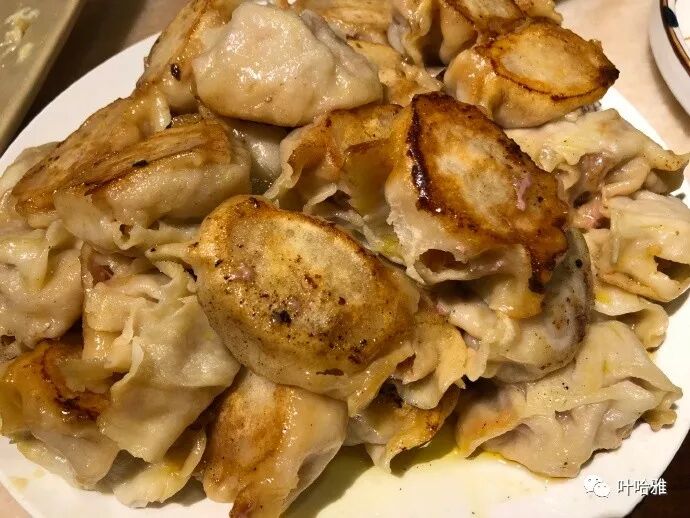
This is the pan-fried dumpling (lu jiaozi) sold at their other shop. It looks like a pan-fried bun and a potsticker at the same time. The portion is huge and salty, which is a typical feature of Tianjin cuisine.
While wandering near the Northwest Corner (Xibeijiao) at Shuiyou City, I found this halal Australian lobster hot pot on the fourth floor. I was too full to eat anymore, so I wish someone could go eat it for me.
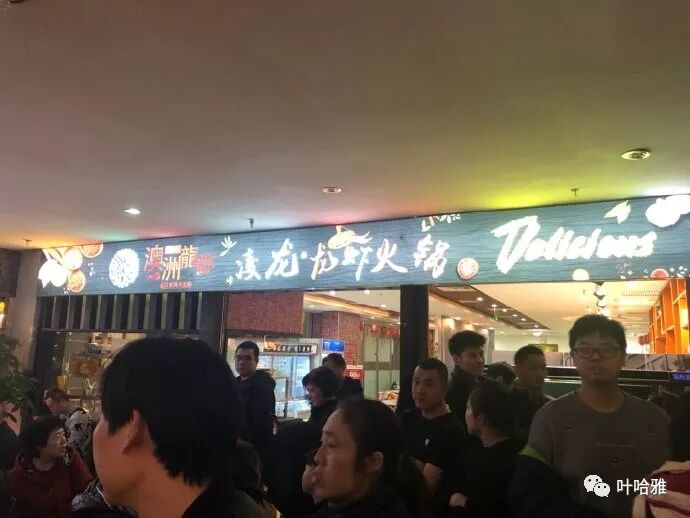
On the first floor of Building B in Shuiyou City, I saw a halal Western-style bakery called Nisa Town (Nisa Xiaozhen). There is a lot of halal food in Shuiyou City.
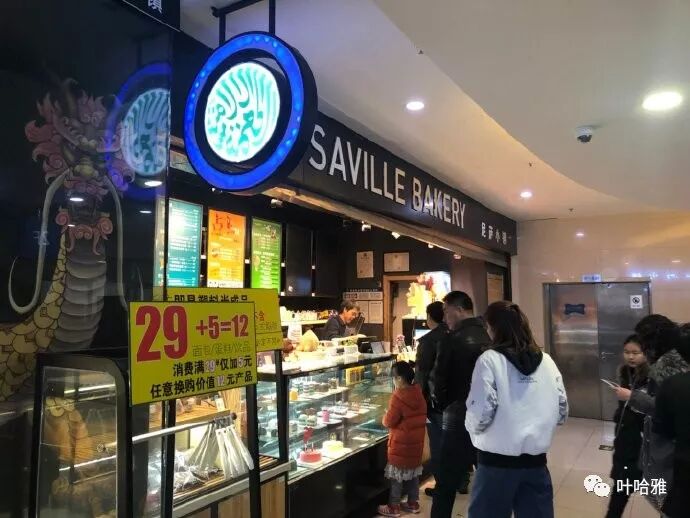
This halal Sichuan spicy hot pot (mao cai) is on the basement level of Building A in Shuiyou City, very close to Aimeike Western Restaurant.
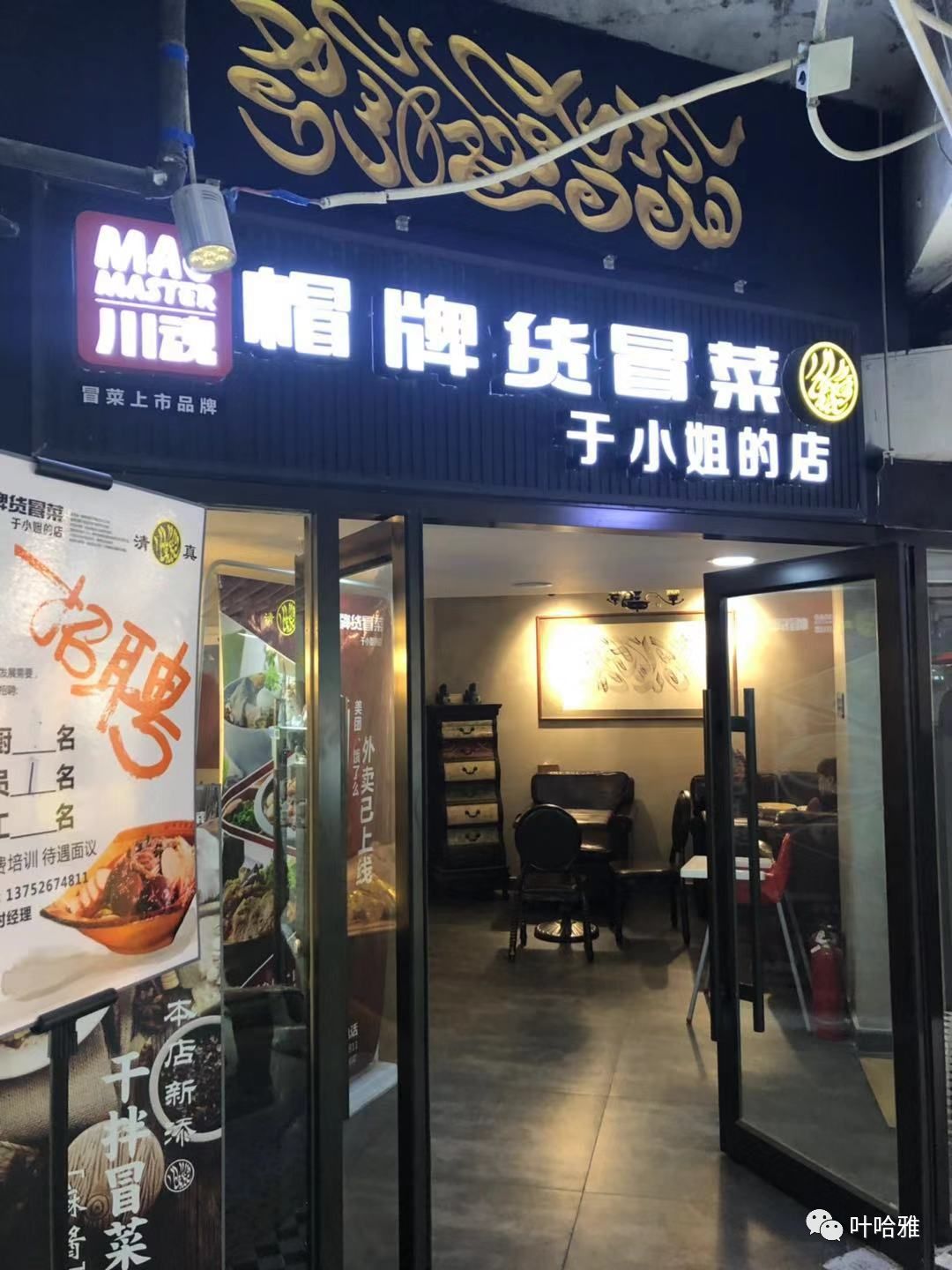
Early in the morning, I saw a long line at this Muji Pastry shop near the South Great Mosque (Nandasi). It felt very familiar, just as popular as Niujie.
To experience a local breakfast in Tianjin, you must have savory crepe strips in soup (gaba cai). You have to eat it at a small shop in a residential area like this to get the authentic taste.
Chaiji Breakfast is right across from the South Great Mosque. Just by looking at the exterior, I knew the food would be great.
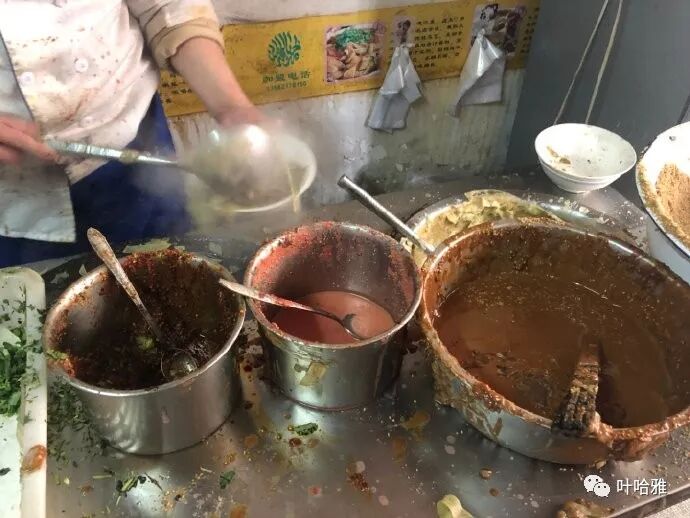
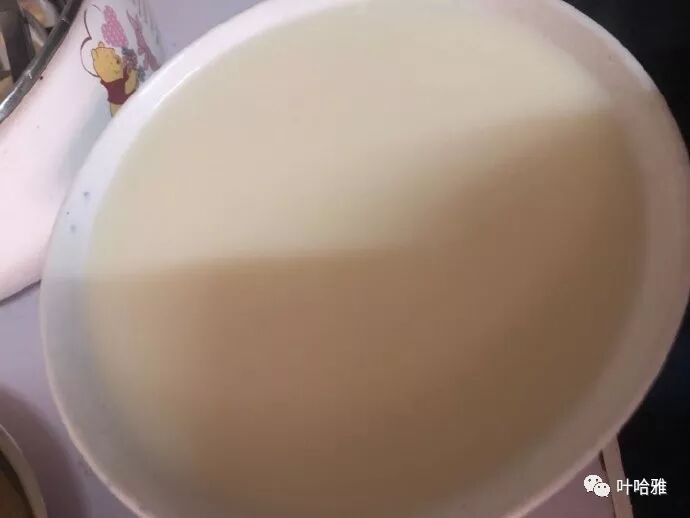
Soy milk costs one yuan extra if you add sugar. I didn't expect that.
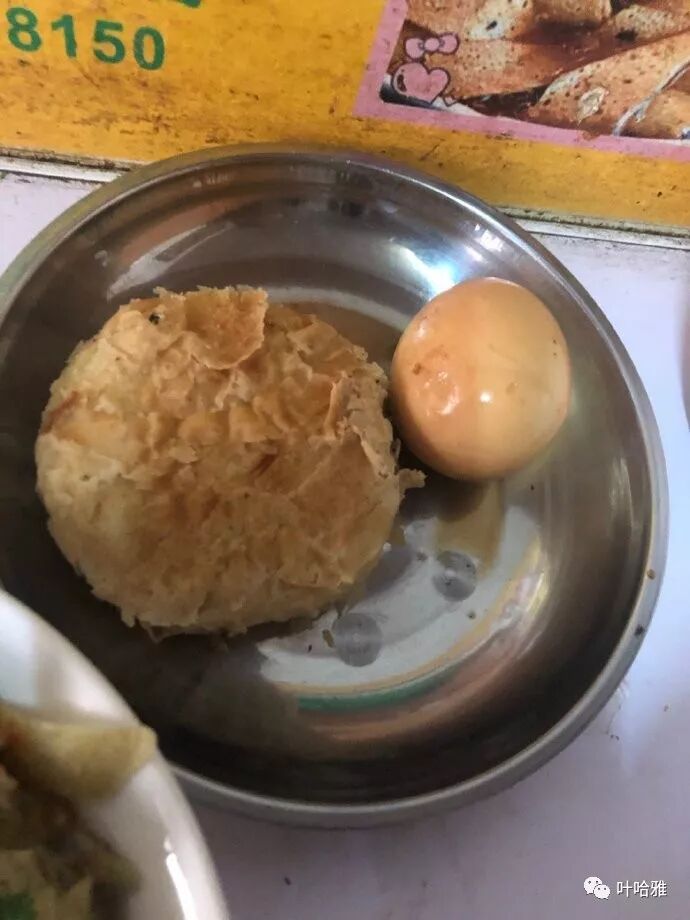
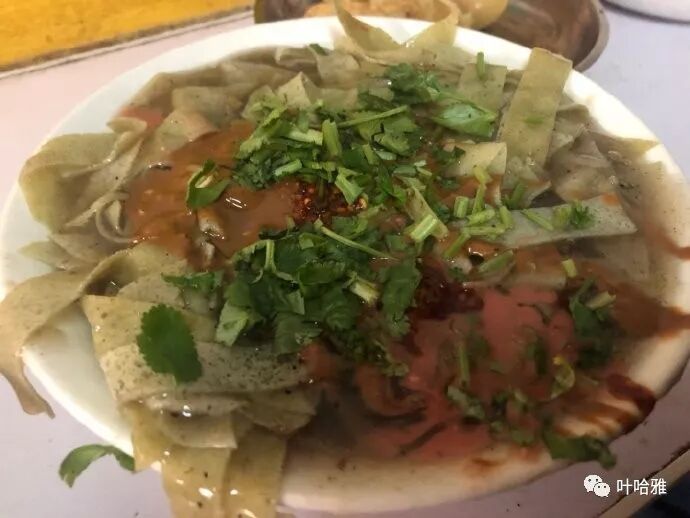
Savory mung bean and millet soup (gabacai) is a local snack that visitors usually try just for the novelty. You might not get used to the taste, but I think it is okay, just a bit salty.
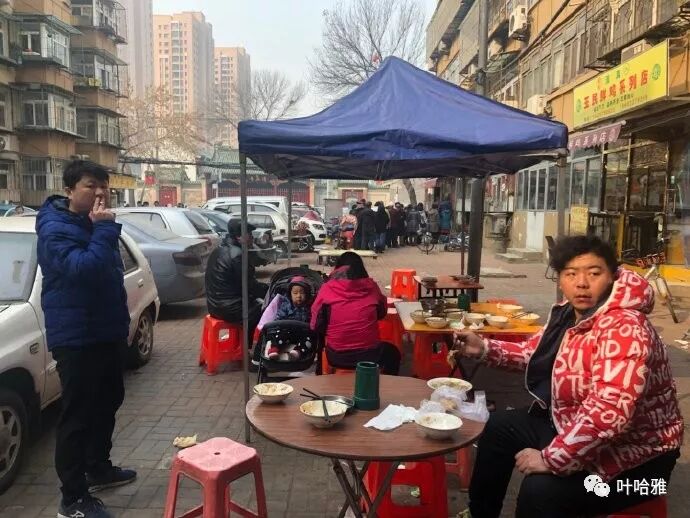
A bowl of gabacai wasn't enough for breakfast, so I spotted some hanging oven flatbread (diaolu shaobing) nearby. I have loved all kinds of flatbreads since I was a kid. This one is hollow inside and sprinkled with Sichuan pepper salt, and I could eat it plain every day without getting tired of it.
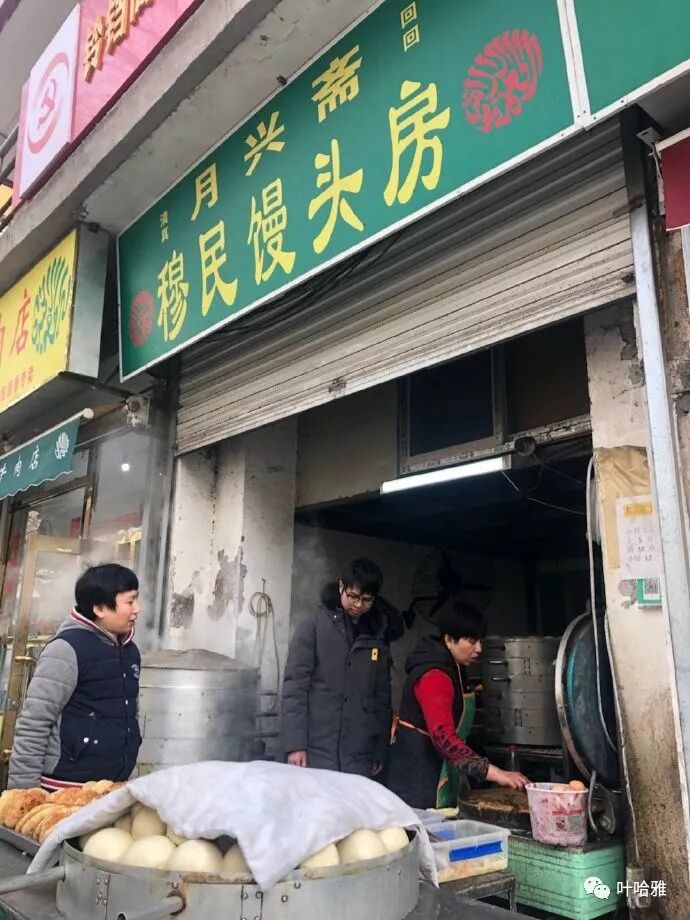
I really envy the people of Tianjin. You don't see these kinds of cozy, local shops in Beijing much anymore.
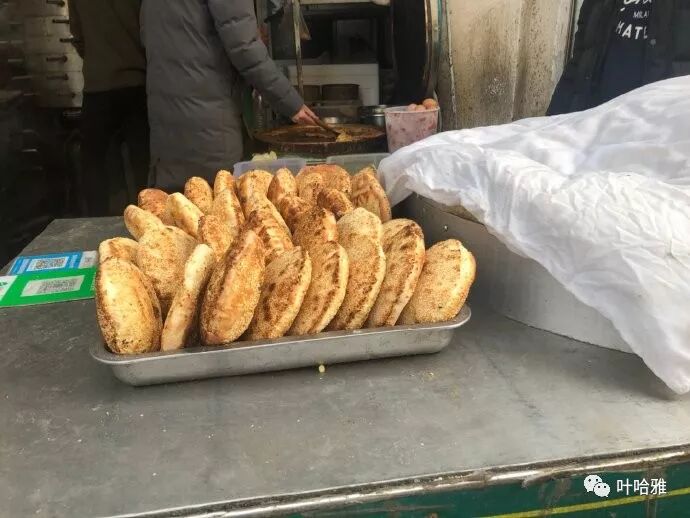
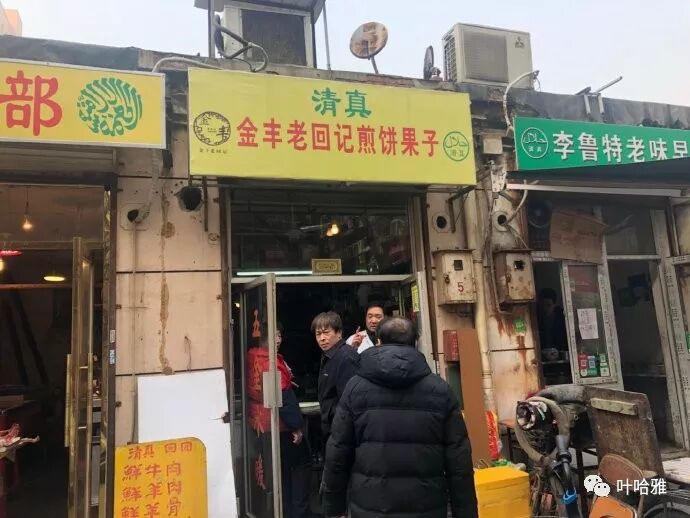
You have to eat the hanging oven flatbread, and you have to eat the crepe with fried dough sticks (jianbing guozi) too. Jinfeng Lao Huiji Jianbing is right across from the flatbread shop. The man making the crepes, Brother Jin, is quite interesting. He chatted with me while he worked, saying my wife looks like a British person. Judging by his tone, he must have traveled to quite a few places.
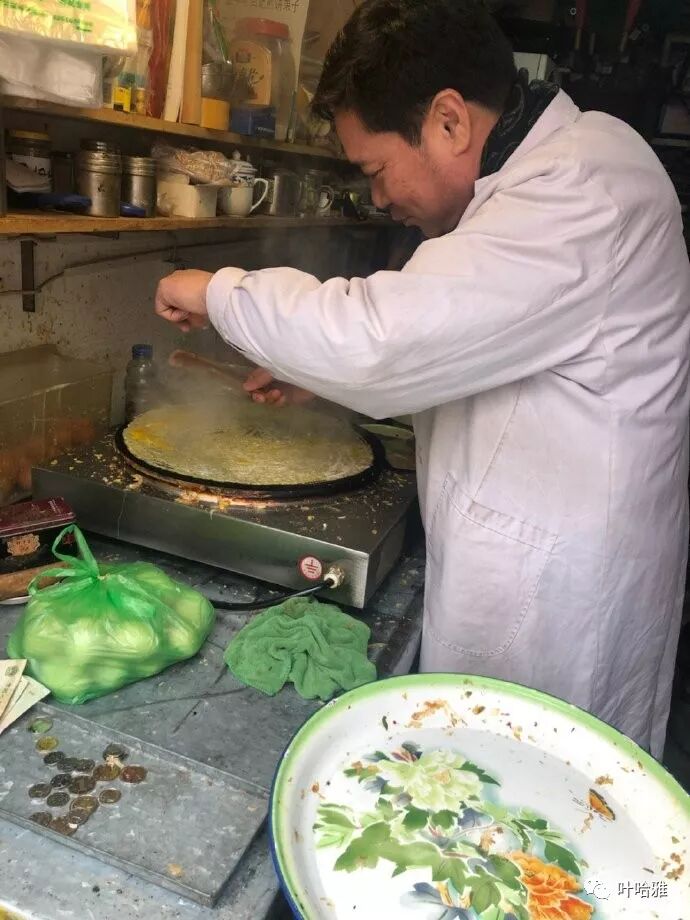
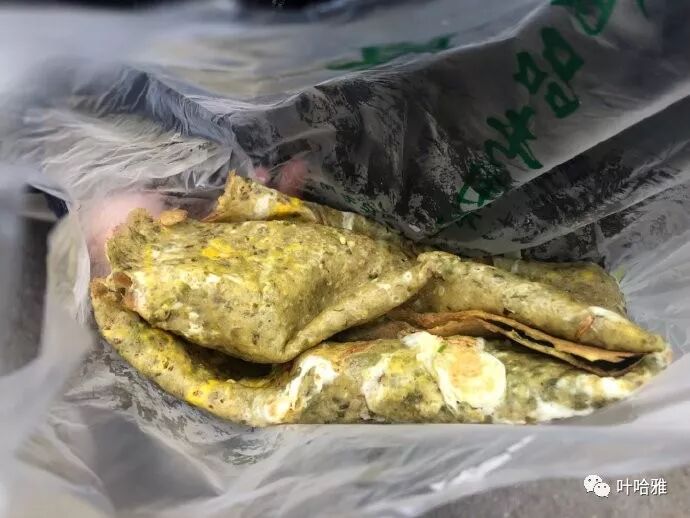
Address: Near the South Mosque (Qingzhen Nandasi) in Hongqiao District.
Fresh from the oven.
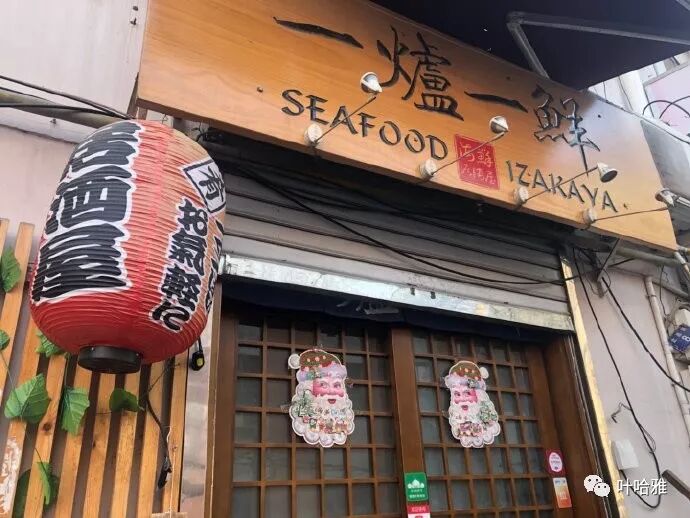
This is the second halal Japanese restaurant I have tried in Tianjin. There must be at least five halal Japanese restaurants in the city.
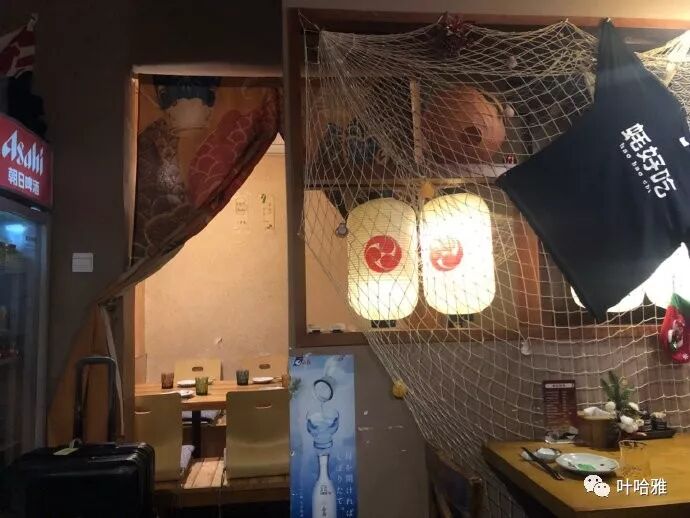
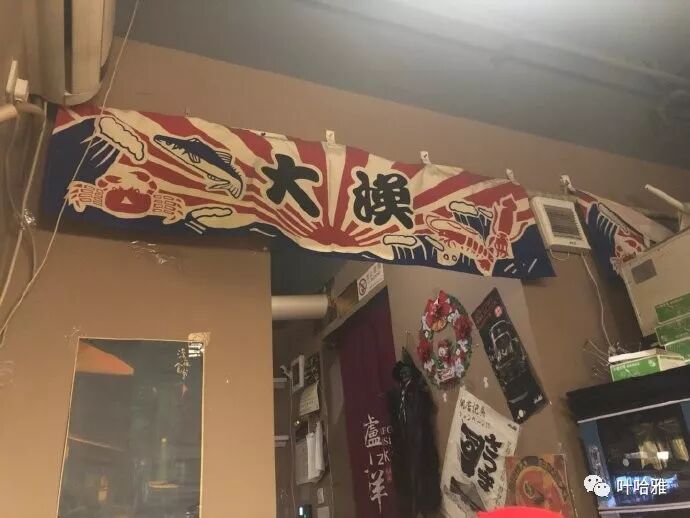
The shop is quite small, but it feels just like a Japanese street-side eatery. If you go for lunch, you can use a voucher, which is like getting a 50% discount.
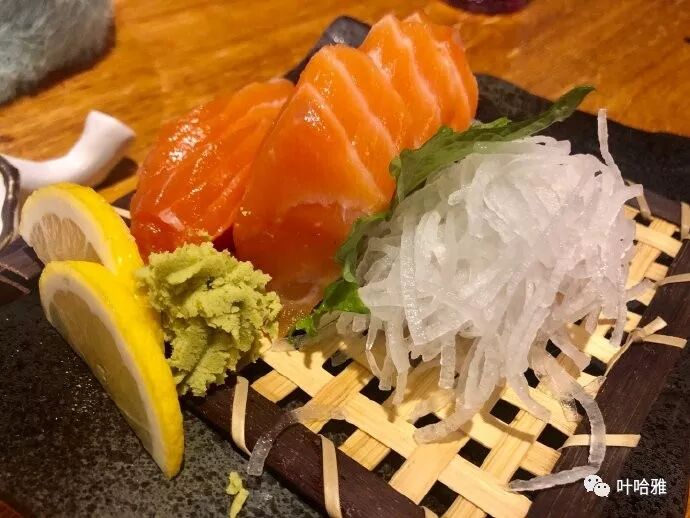
The salmon sashimi is very fresh.
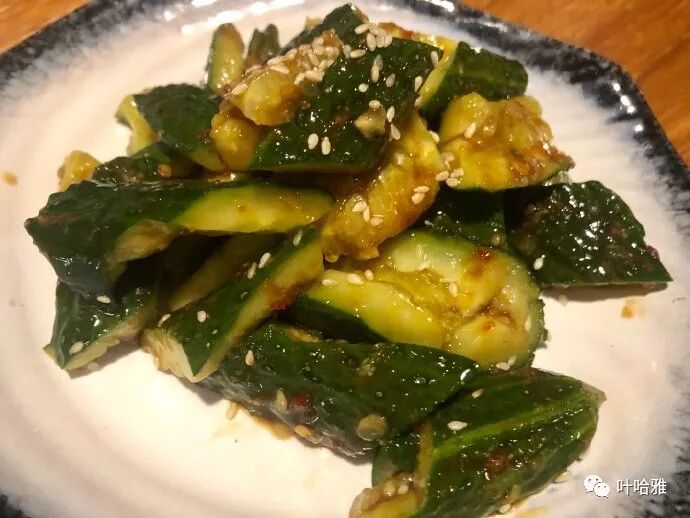
Japanese-style smashed cucumber, which has a sweet flavor.
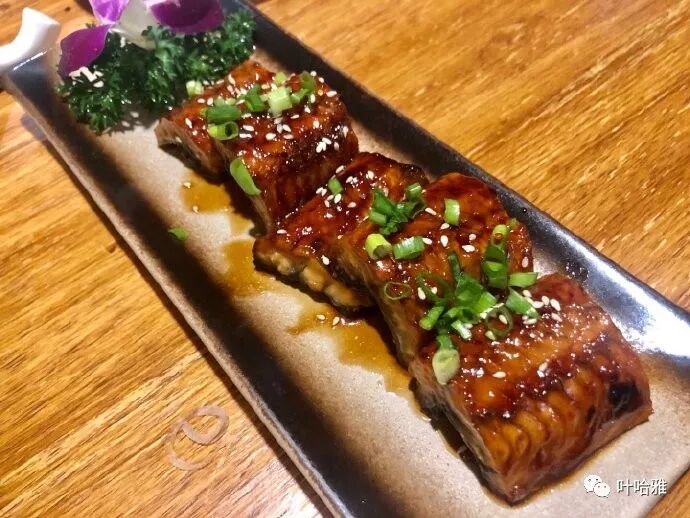
Grilled eel, which I order every time I eat Japanese food.
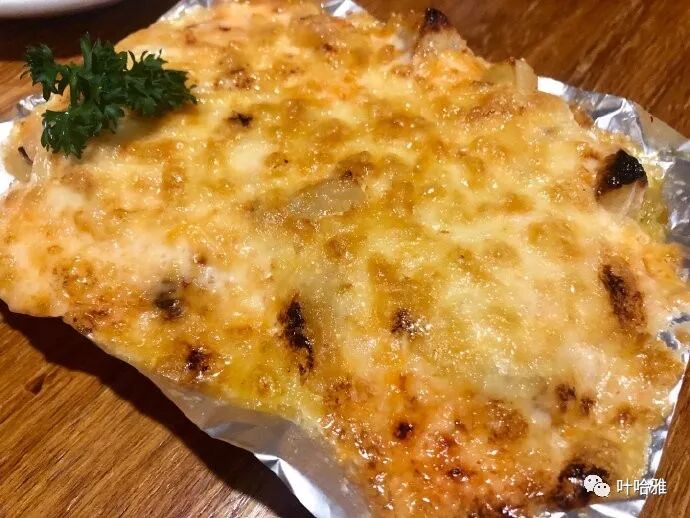
Cheesy mashed potatoes.
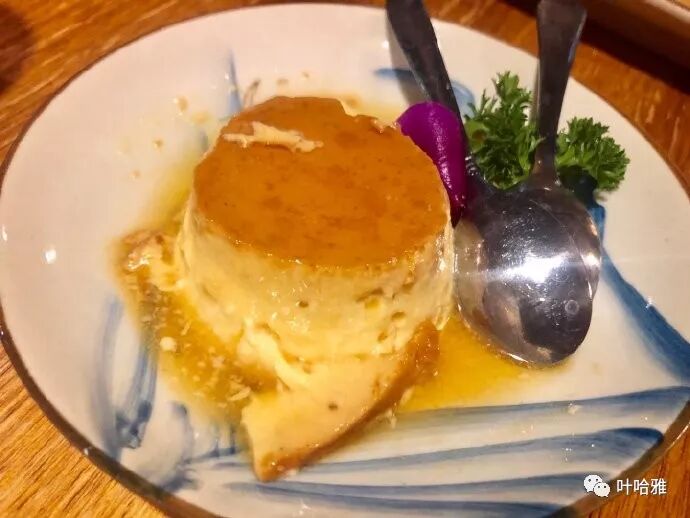
The owner gave us a complimentary pudding dessert.
Address: No. 43 Xinhua Road, Heping District, Tianjin.
Hongxishun.
The staff are very helpful, and the restaurant was half full at dinner time.
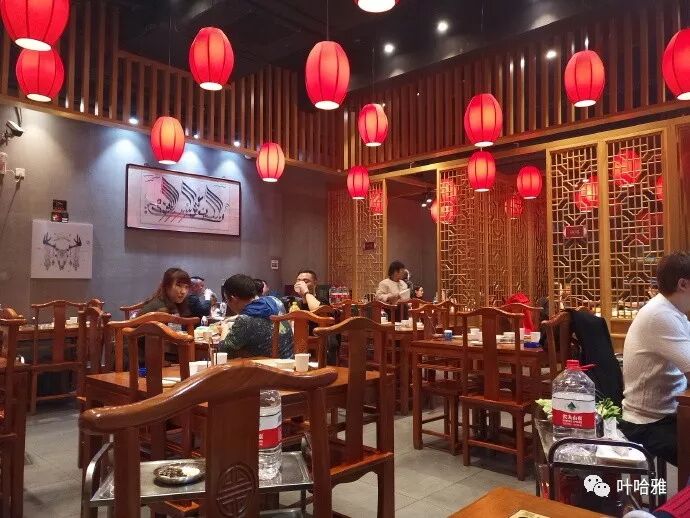
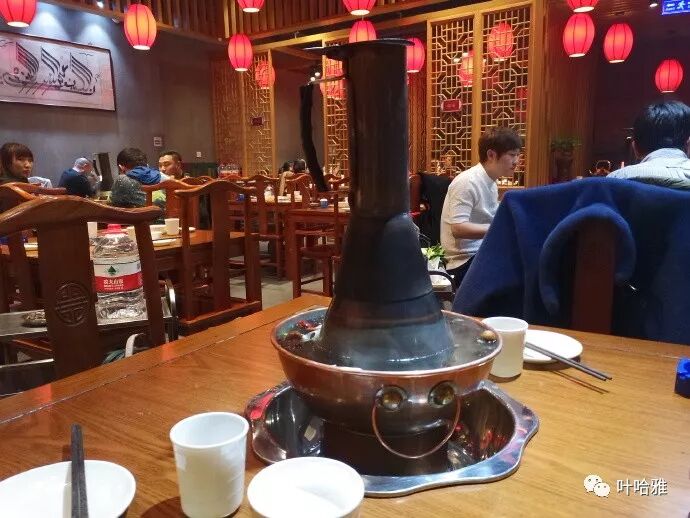
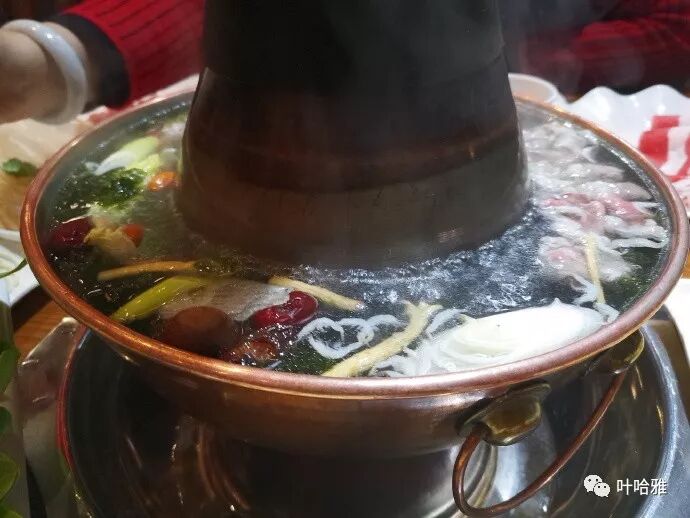
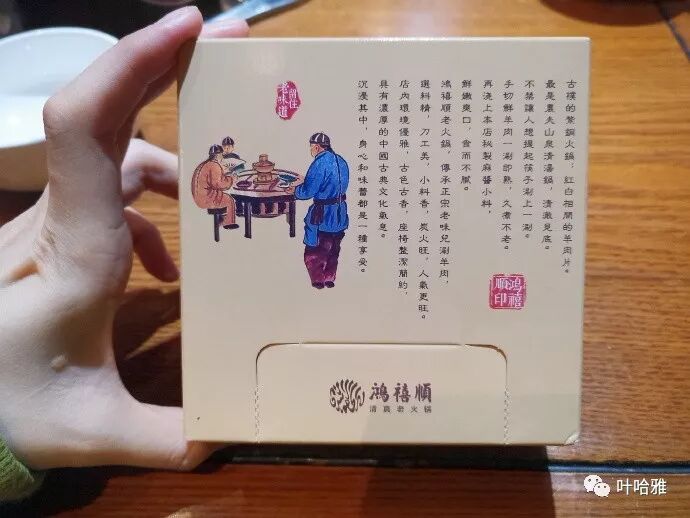
Napkins cost one yuan extra.
A half-jin (250 grams) plate of fresh-cut lamb costs 30 yuan; it is cheaper than in Beijing but slightly more expensive than in Inner Mongolia.
The house-made pickled vegetables are good.
Address: No. 44 Wenlan Road, northeast of Wangfu No. 1, Nankai District.
On the way back to Beijing, I saw a halal Sichuan-style hot pot restaurant called Huishuxiang. It is located at No. 985 Dagu South Road, Hexi District. It has been open for many years and I heard it is quite good.
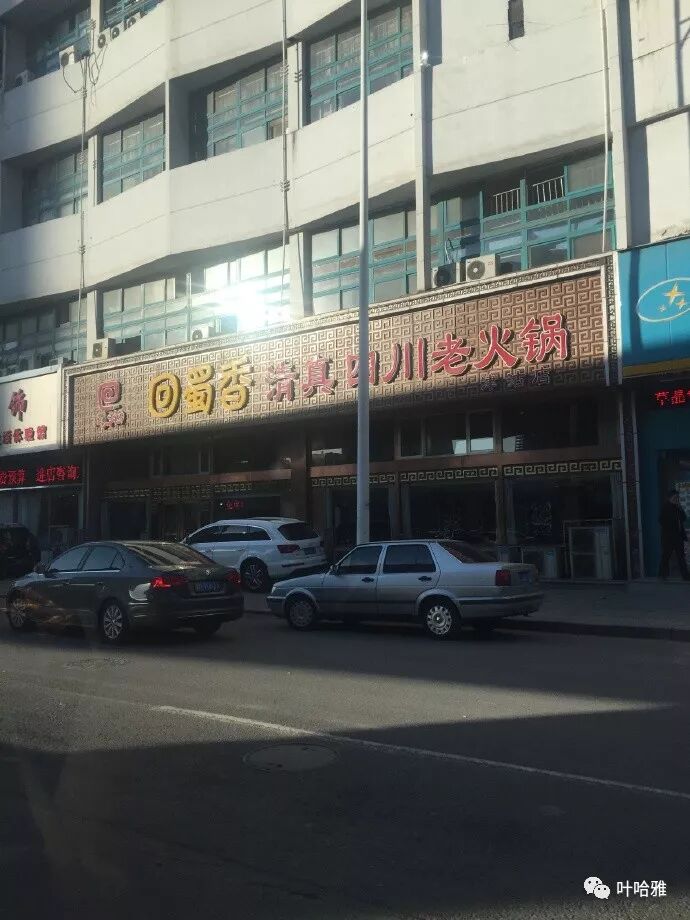
Previous links:
Tianjin Halal Food Map (Part 2).
Best Halal Food in Tianjin Part 2: Hui Muslim Restaurants, Local Snacks and Seafood
Articles • ali2007fr posted the article • 0 comments • 296 views • 2026-05-21 08:42
Summary: This second Tianjin halal food map adds more Hui Muslim restaurants, local snacks, seafood, and practical dining notes, continuing the original Tianjin halal food guide.
Following my previous map of halal food in Tianjin, here are a few more unique halal restaurants.
Heitaojiu Halal Japanese Cuisine.
Tianjin had halal Japanese restaurants before Beijing, and there is more than one.
Heitaojiu is a fairly famous Japanese restaurant in Tianjin.
The decor is Japanese style.
Japanese marble soda (bobo qishui).
This is live octopus. When it is served, the tentacles are still moving. The suction cups stick to the soy sauce dish so hard you can barely pull them off. When you put it in your mouth, it sticks to your tongue, which feels very strange.
Udon noodles.
Arctic surf clam (beijibei) sashimi.
The image above shows the address. This place is a great value, costing about 100 yuan per person, which is very cheap for Japanese food.
Hongyuxiang Restaurant.
This is a long-standing shop well-known among locals in Tianjin, commonly called the Yellow Facade (huangmenlian).
They sell pan-fried meat pies (huitou). I have only eaten these in Shenyang; they are a snack with filling similar to potstickers.
Pan-fried steamed dumplings (shaomai). There are two ways to eat shaomai: steamed or pan-fried.
The shop is small but very popular and has high ratings online.
The owners are a couple who perform namaz and fast, and the shop's decor reflects their faith.
Address: No. 30 Xiangyang Road, Heping District, Tianjin (at the Liuzhou Road intersection).
1618 Halal Mansion.
1618 Halal Mansion is arguably the best halal restaurant in Tianjin. The building was originally the home of Wu Taixun, the son of Fengtian clique warlord Wu Junsheng. Wu Taixun was a sworn brother of Zhang Xueliang.
The atmosphere is excellent.
Roast duck is also a Tianjin dish. This is half a duck.
Stir-fried trio (laobao san) is a famous Tianjin dish made with lamb heart, lamb liver, and lamb kidney.
Tianjin is a great place to eat seafood.
Papaya yogurt.
Address: 16-18 Machang Road, Heping District, Tianjin (near Munan Road)
Yuquan Restaurant
A Tianjin-style restaurant that has been open for many years.
Braised beef tongue and tail.
Vegetarian steamed dumplings (shaomai).
Address: 5 Yuquan Road
Renyi Min Halal Restaurant
A long-standing restaurant for Hui Muslims that serves all kinds of dishes.
They also have snacks for takeout.
The sign outside the shop is written very well.
Silver thread rolls (yinsijuan), a type of wheat-based food.
Cashews with shrimp, squid, and diced chicken.
Address: Liaoning Road, Heping District, Tianjin
Eryanyuan Halal Cuisine
Eryanyuan is a famous restaurant in Tianjin with a long history. Their fried rice cakes (zhagao) are one of the three famous snacks in Tianjin, along with Eighteen Street fried dough twists (mahua) and Goubuli steamed buns (baozi).
Eryanyuan started out by selling fried rice cakes, but it has now grown into a chain brand and launched high-end dining clubs.
These are the complimentary snacks and desserts from the restaurant, which are beautifully made.
A serving of roasted chicken.
Stir-fried trio (baosanyang).
Oily flour tea (youmiancha), which tastes similar to the version in Beijing.
Signature Eryanyuan fried rice cakes with red bean paste filling.
Address: 2nd Floor, Friendship Hotel, 94 Nanjing Road, Heping District, Tianjin (Friendship Hotel Branch)
To see the previous post on Tianjin halal food, please click: Tianjin Halal Food Map (Part 1) view all
Summary: This second Tianjin halal food map adds more Hui Muslim restaurants, local snacks, seafood, and practical dining notes, continuing the original Tianjin halal food guide.
Following my previous map of halal food in Tianjin, here are a few more unique halal restaurants.
Heitaojiu Halal Japanese Cuisine.
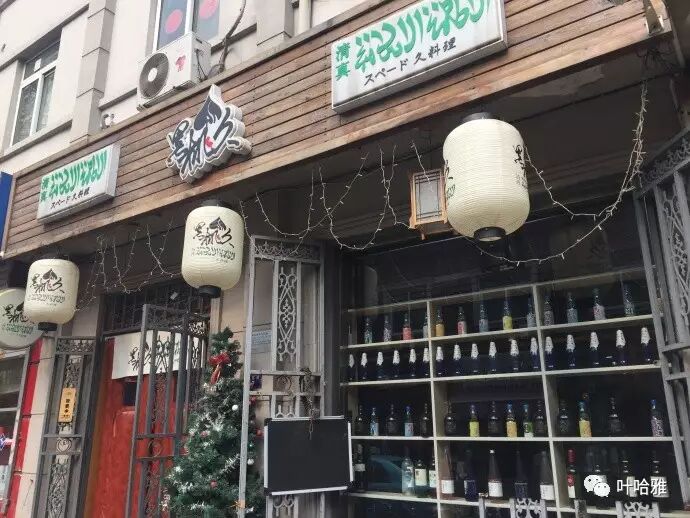
Tianjin had halal Japanese restaurants before Beijing, and there is more than one.
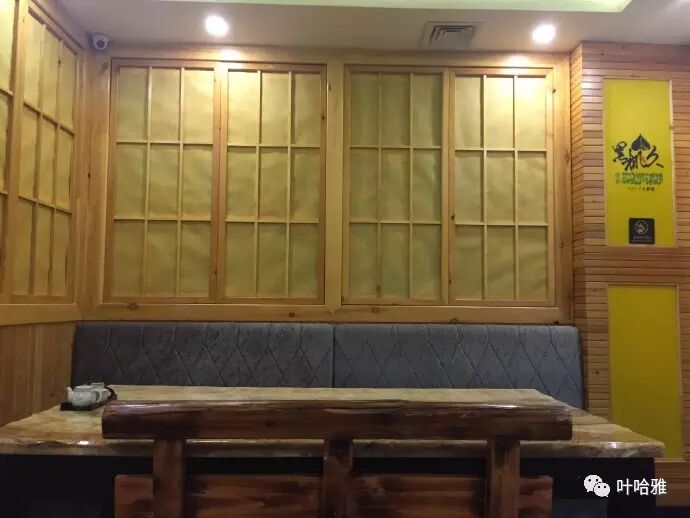
Heitaojiu is a fairly famous Japanese restaurant in Tianjin.
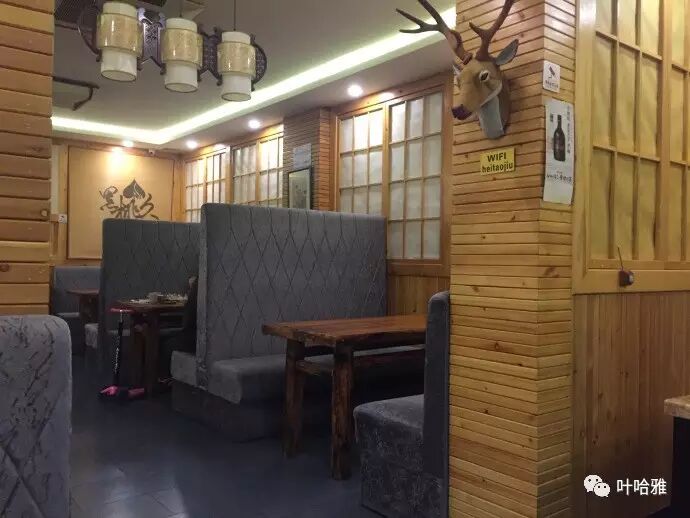
The decor is Japanese style.
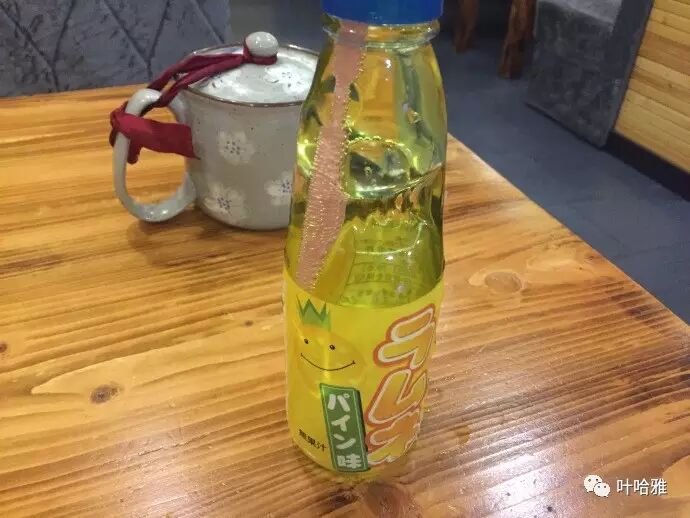
Japanese marble soda (bobo qishui).
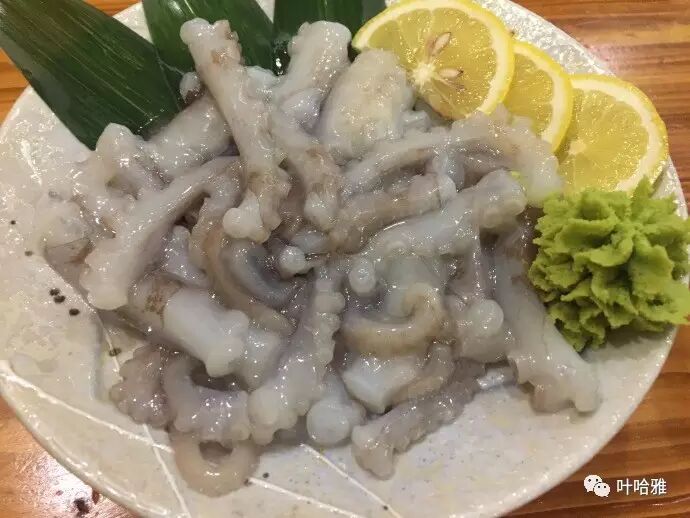
This is live octopus. When it is served, the tentacles are still moving. The suction cups stick to the soy sauce dish so hard you can barely pull them off. When you put it in your mouth, it sticks to your tongue, which feels very strange.
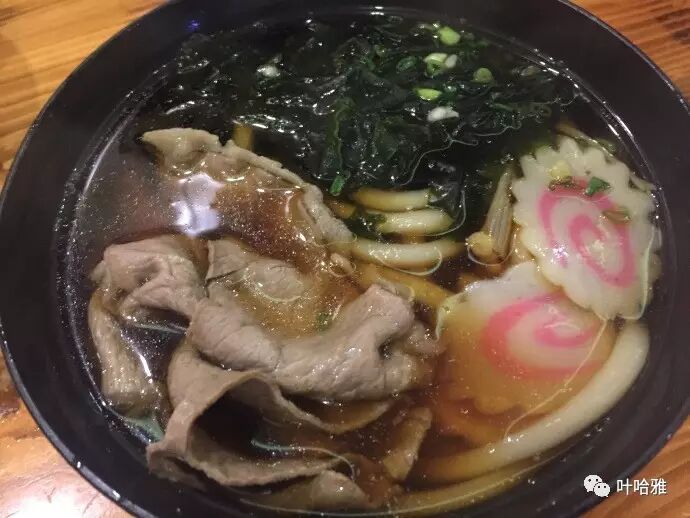
Udon noodles.
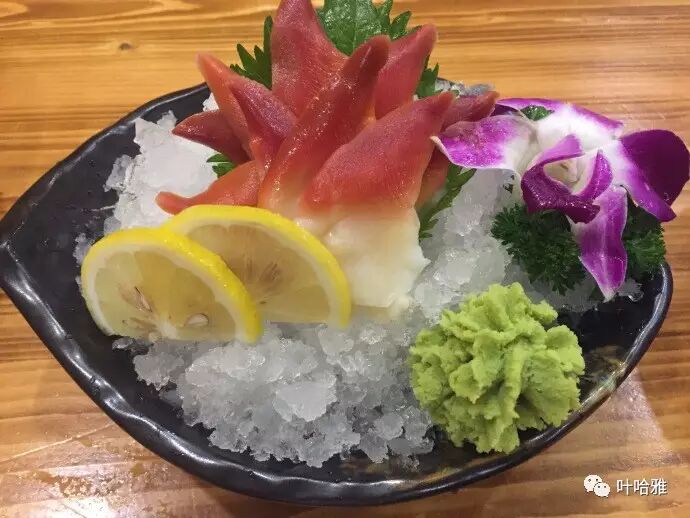
Arctic surf clam (beijibei) sashimi.
The image above shows the address. This place is a great value, costing about 100 yuan per person, which is very cheap for Japanese food.
Hongyuxiang Restaurant.
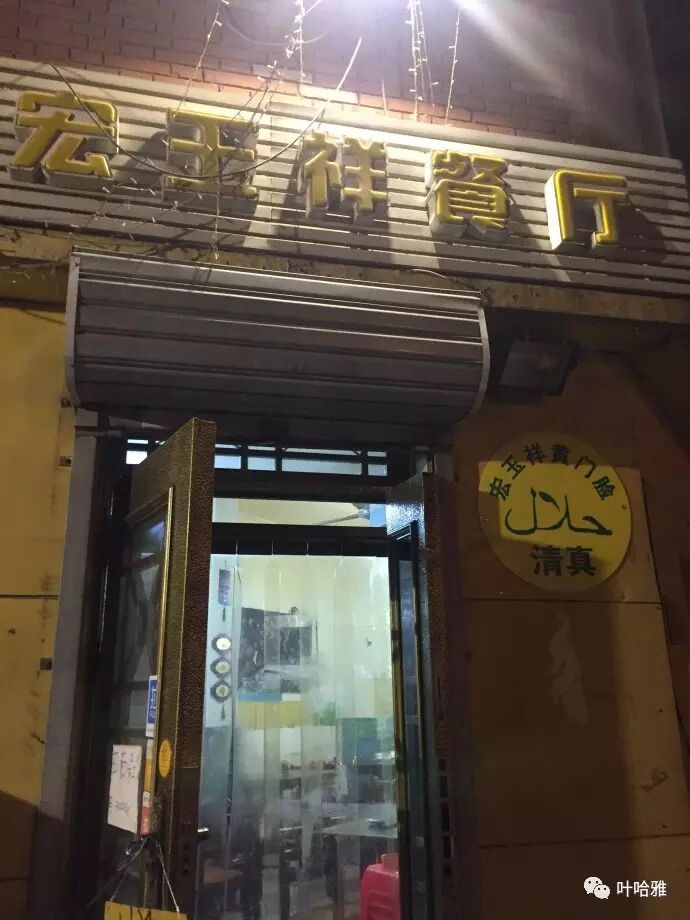
This is a long-standing shop well-known among locals in Tianjin, commonly called the Yellow Facade (huangmenlian).
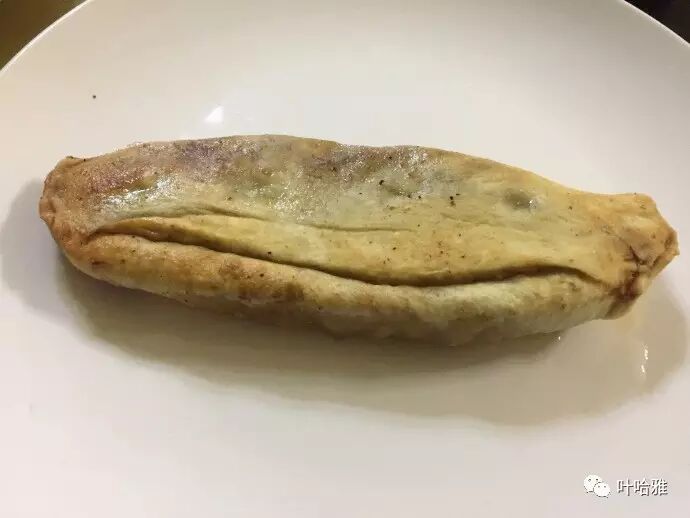
They sell pan-fried meat pies (huitou). I have only eaten these in Shenyang; they are a snack with filling similar to potstickers.
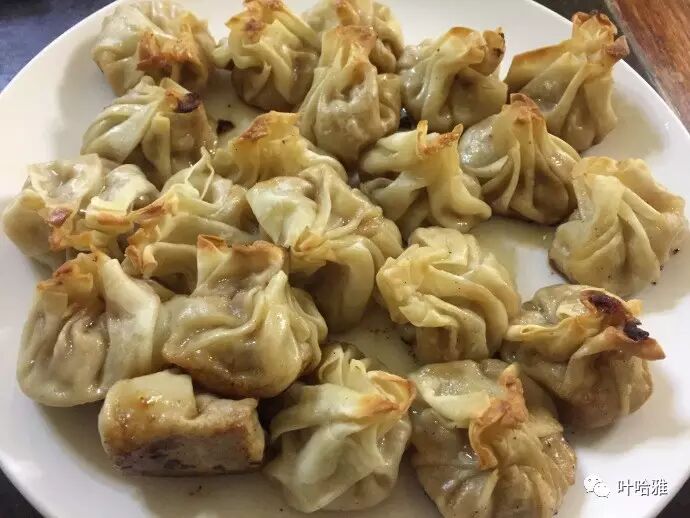
Pan-fried steamed dumplings (shaomai). There are two ways to eat shaomai: steamed or pan-fried.
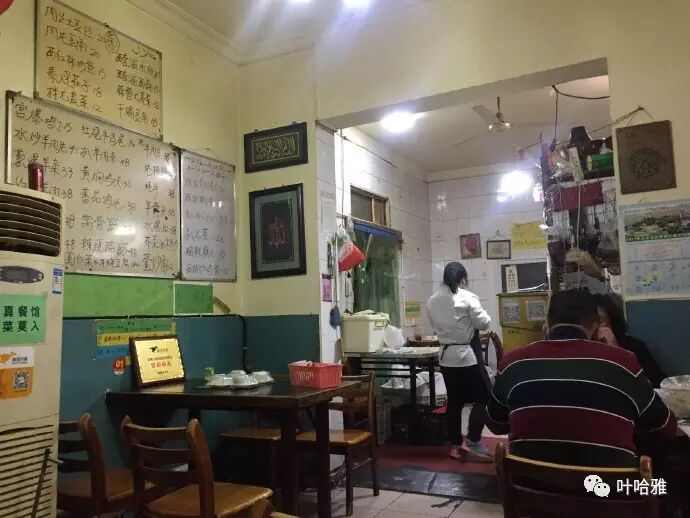
The shop is small but very popular and has high ratings online.
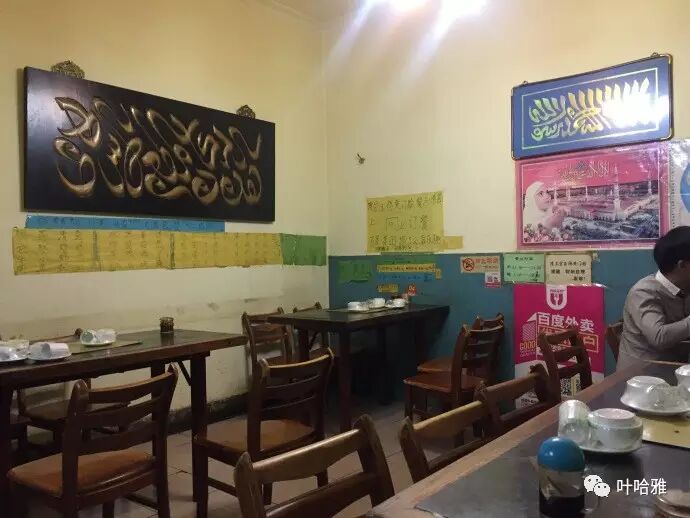
The owners are a couple who perform namaz and fast, and the shop's decor reflects their faith.
Address: No. 30 Xiangyang Road, Heping District, Tianjin (at the Liuzhou Road intersection).
1618 Halal Mansion.
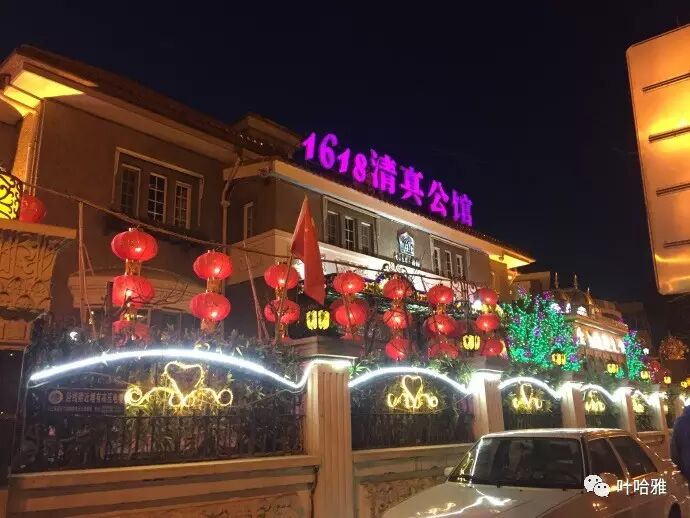
1618 Halal Mansion is arguably the best halal restaurant in Tianjin. The building was originally the home of Wu Taixun, the son of Fengtian clique warlord Wu Junsheng. Wu Taixun was a sworn brother of Zhang Xueliang.
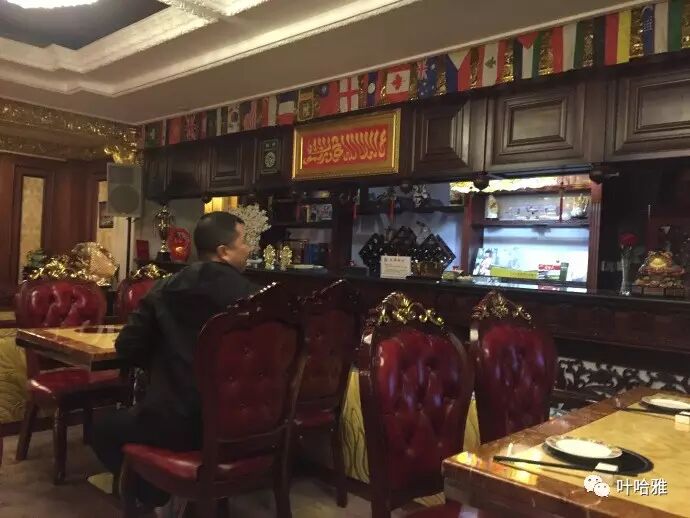
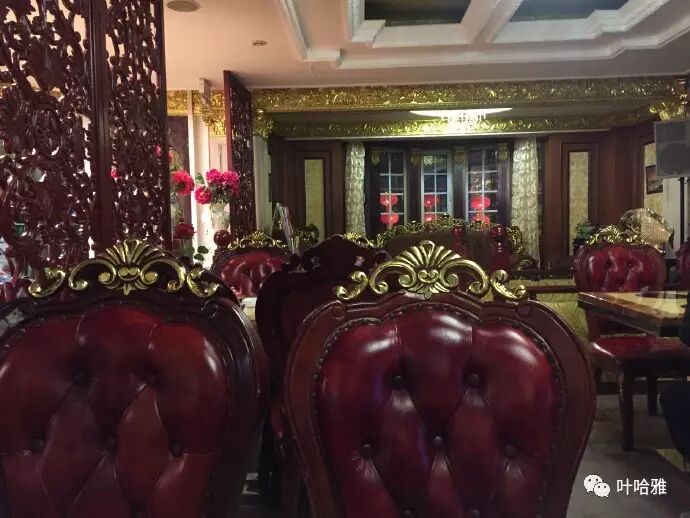
The atmosphere is excellent.
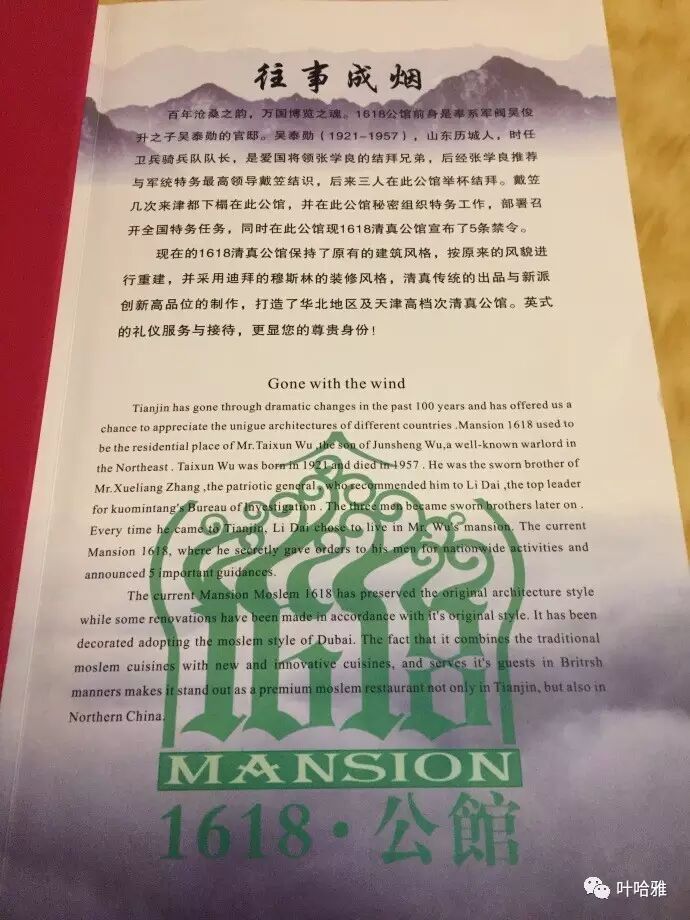
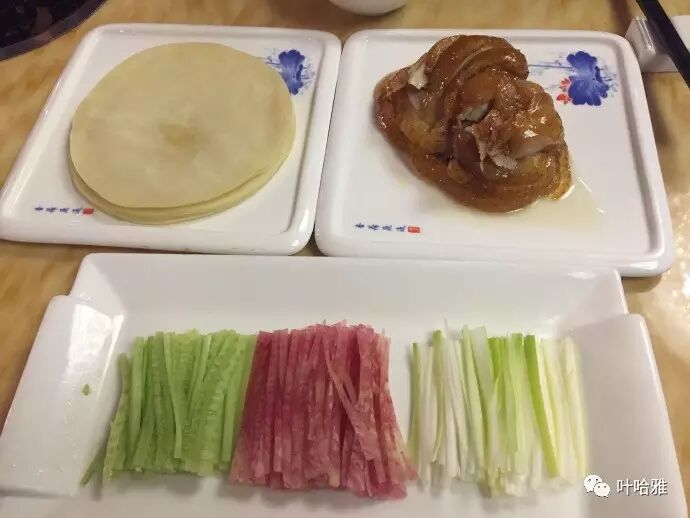
Roast duck is also a Tianjin dish. This is half a duck.
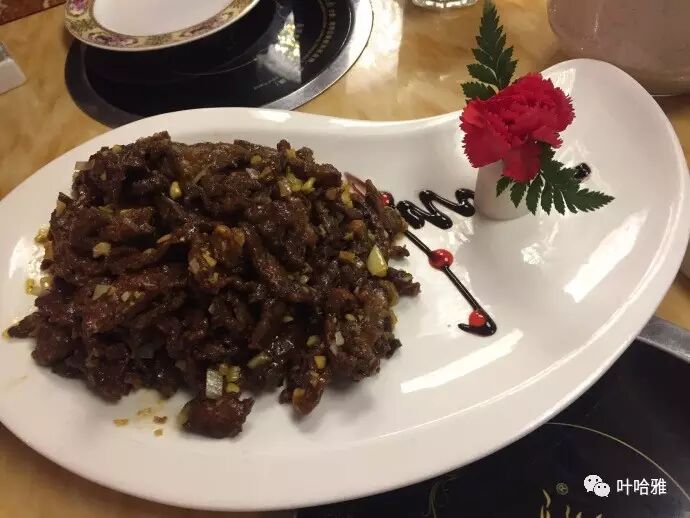
Stir-fried trio (laobao san) is a famous Tianjin dish made with lamb heart, lamb liver, and lamb kidney.
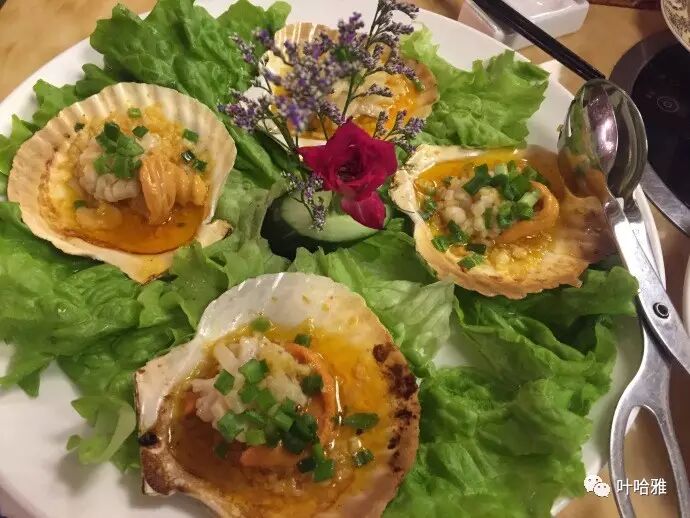
Tianjin is a great place to eat seafood.
Papaya yogurt.
Address: 16-18 Machang Road, Heping District, Tianjin (near Munan Road)
Yuquan Restaurant
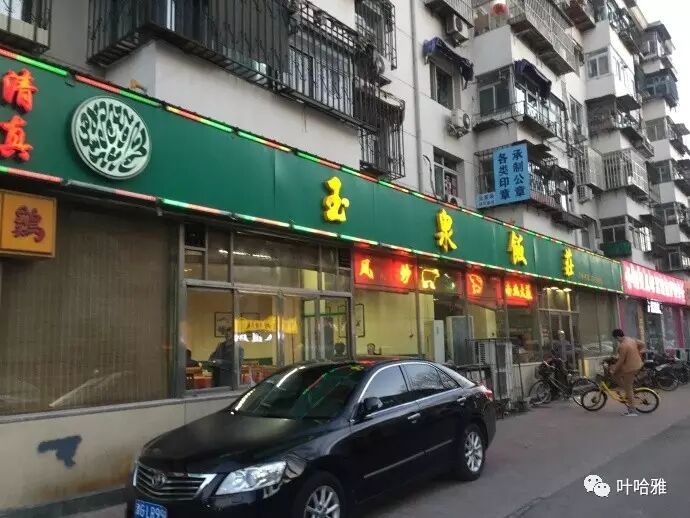
A Tianjin-style restaurant that has been open for many years.
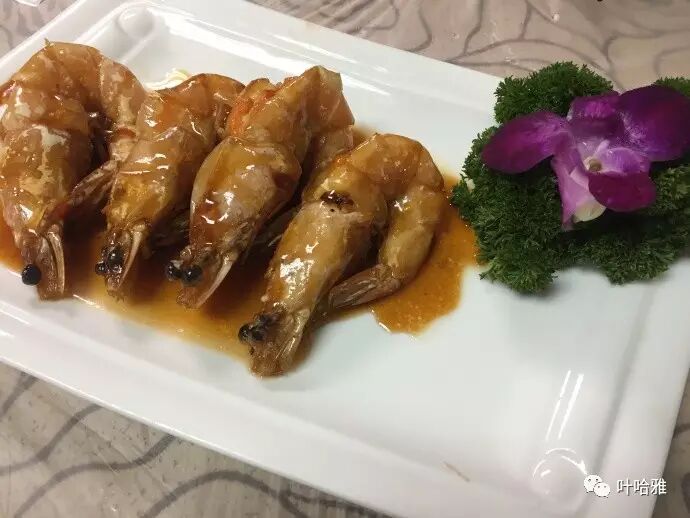
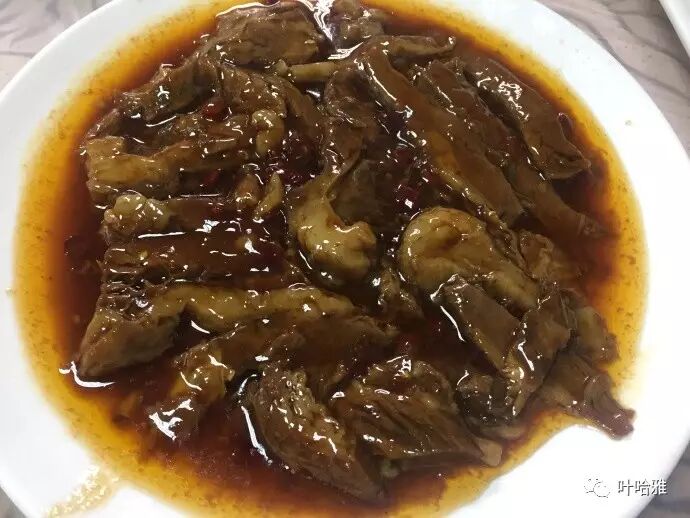
Braised beef tongue and tail.
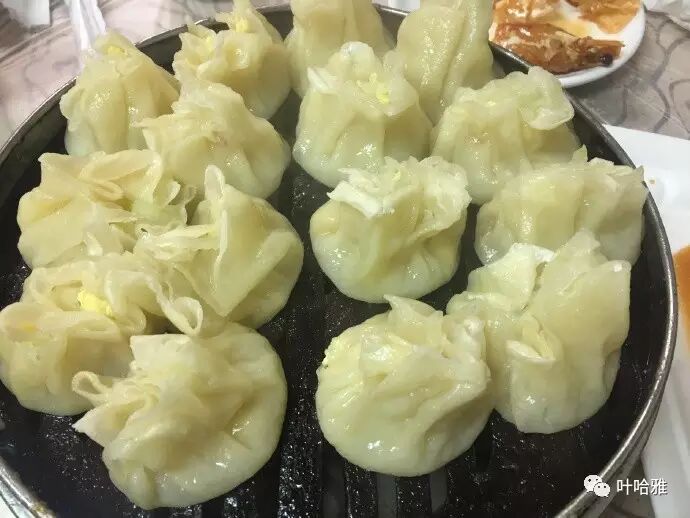
Vegetarian steamed dumplings (shaomai).
Address: 5 Yuquan Road
Renyi Min Halal Restaurant
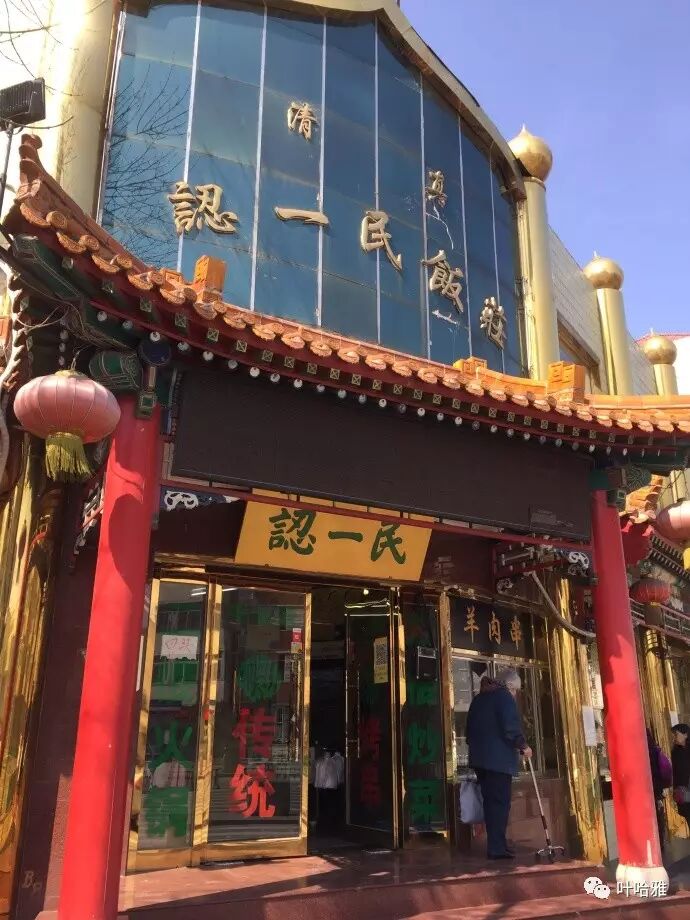
A long-standing restaurant for Hui Muslims that serves all kinds of dishes.
They also have snacks for takeout.
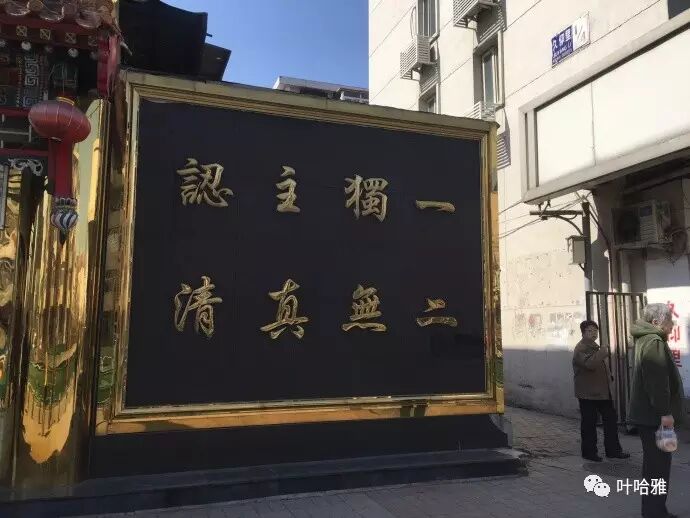
The sign outside the shop is written very well.
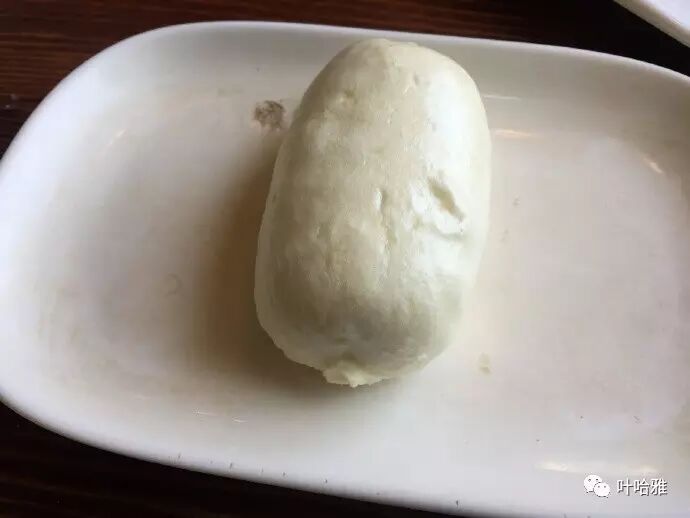
Silver thread rolls (yinsijuan), a type of wheat-based food.
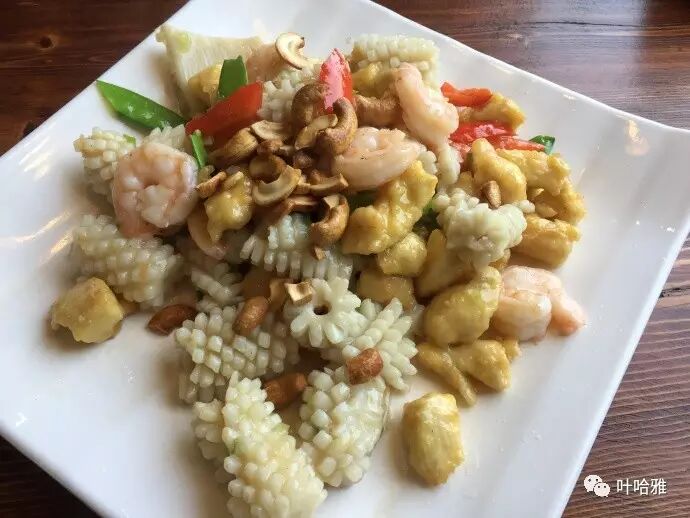
Cashews with shrimp, squid, and diced chicken.
Address: Liaoning Road, Heping District, Tianjin
Eryanyuan Halal Cuisine
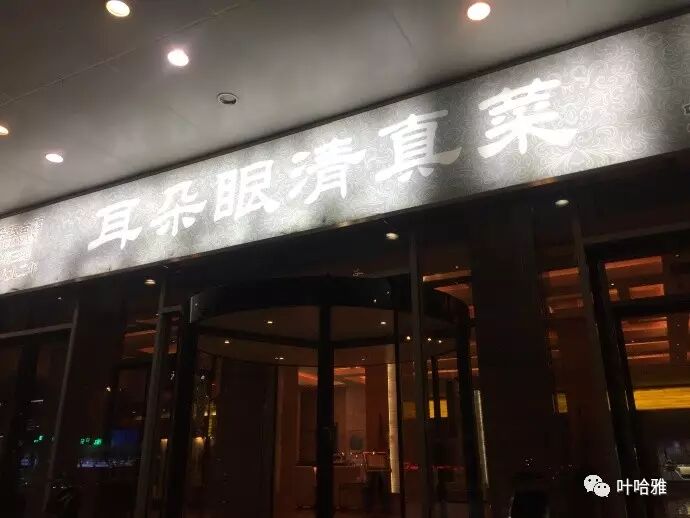
Eryanyuan is a famous restaurant in Tianjin with a long history. Their fried rice cakes (zhagao) are one of the three famous snacks in Tianjin, along with Eighteen Street fried dough twists (mahua) and Goubuli steamed buns (baozi).
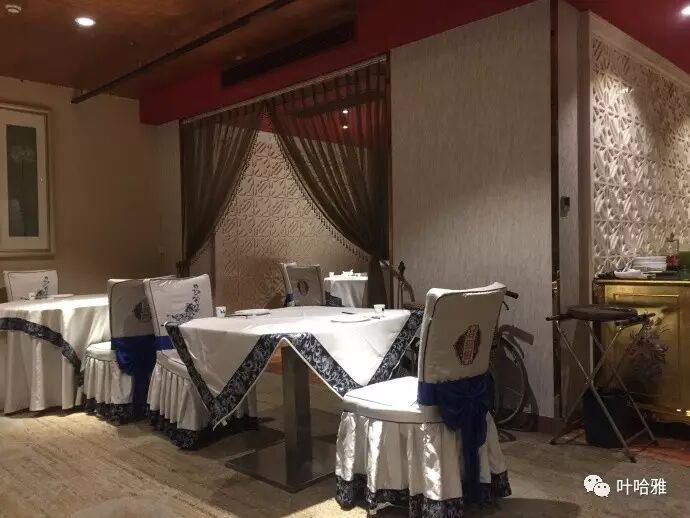
Eryanyuan started out by selling fried rice cakes, but it has now grown into a chain brand and launched high-end dining clubs.
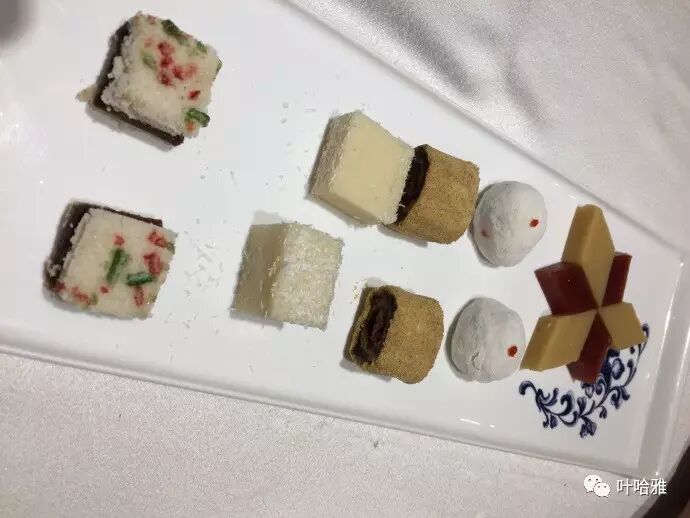
These are the complimentary snacks and desserts from the restaurant, which are beautifully made.
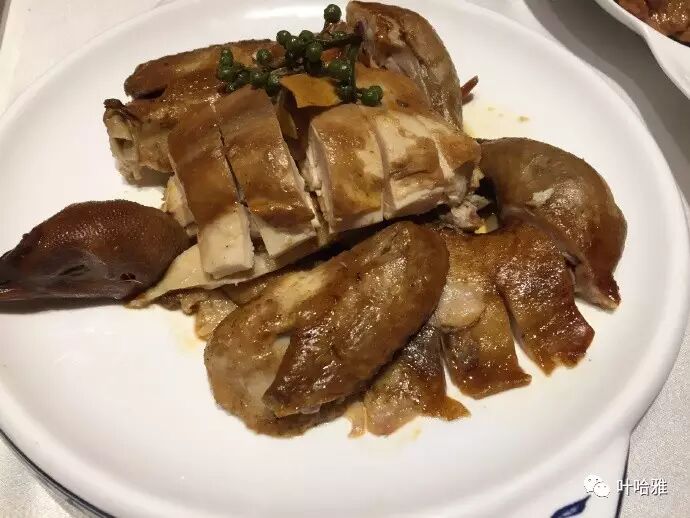
A serving of roasted chicken.
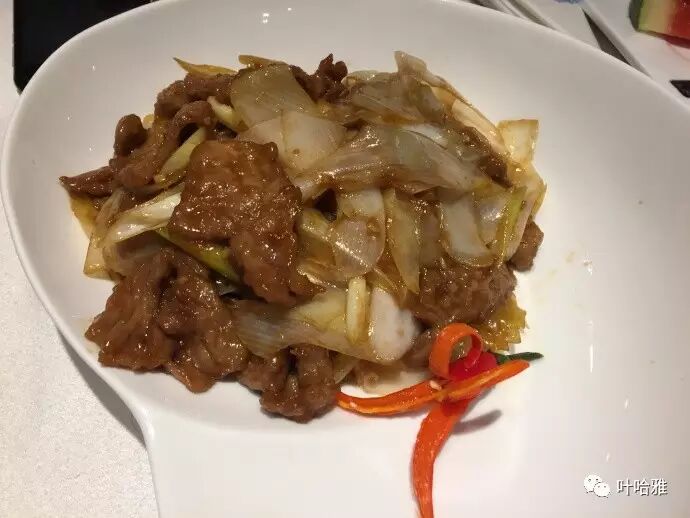
Stir-fried trio (baosanyang).
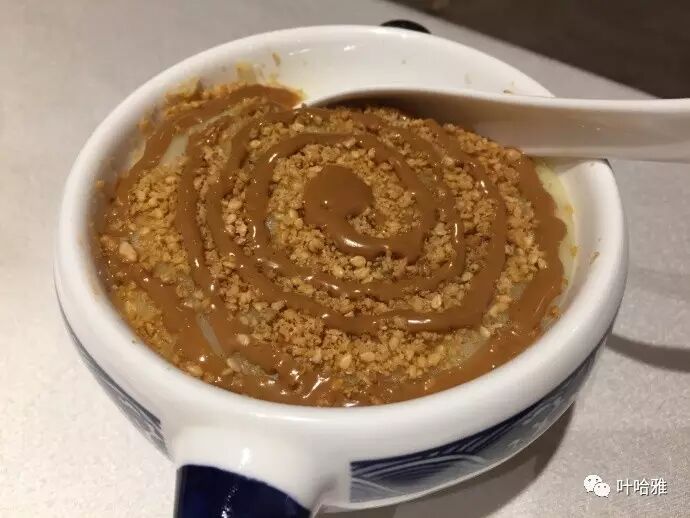
Oily flour tea (youmiancha), which tastes similar to the version in Beijing.
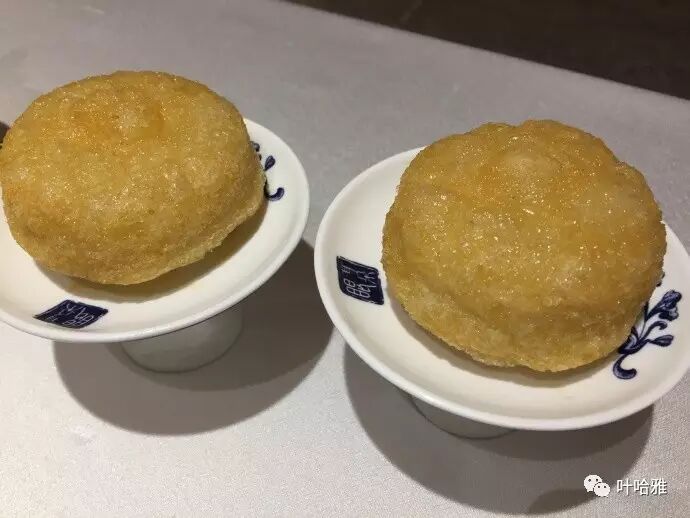
Signature Eryanyuan fried rice cakes with red bean paste filling.
Address: 2nd Floor, Friendship Hotel, 94 Nanjing Road, Heping District, Tianjin (Friendship Hotel Branch)
To see the previous post on Tianjin halal food, please click: Tianjin Halal Food Map (Part 1)
Best Halal Food in Tianjin: Hui Muslim Snacks, Seafood and Local Restaurants
Articles • ali2007fr posted the article • 0 comments • 273 views • 2026-05-21 08:18
Summary: This Tianjin halal food map gathers Hui Muslim snacks, seafood, beef dishes, local restaurants, and food stops across the city, keeping the names, locations, dishes, and photos from the Chinese source.
Last time we looked at halal food in Beijing. This time we are going a bit further to Tianjin to see what is good to eat. Tianjin is not far at all. It takes half an hour from the South Railway Station, about the same time as taking the subway from Niujie to Guomao.
8275 Temptation New-Style Cuisine
My first stop in Tianjin was a halal restaurant featuring new-style cuisine. New-style means they take traditional dishes and innovate them. Even the names of the dishes are unique, giving someone like me who is used to traditional halal food a fresh experience.
There is a plaque on the wall with the Shahada written in Arabic, so I knew it was a halal restaurant.
The style is clearly not the traditional West Asian or Middle Eastern look of most halal restaurants. It feels more like a trendy cafe.
Let's look at the food:
The yogurt comes in a lightbulb. It is thick and tastes quite good. Next to it is a Japanese soda with a light flavor.
This is not ice cream. It is a salmon salad served in an egg roll cone. It tastes delicious and the cone is crispy. I admire the chef's creativity.
This is stir-fried duck slices in bean sauce, but the menu calls it Childhood Taste Stir-fried Duck. Maybe the highlight is the sour plum powder on top. It is different from my childhood memories, as this duck is very sweet. My childhood memory of duck is roast duck, but that is understandable since I am not from Tianjin.
I don't remember the name of this scallop dish, but you can't go wrong eating seafood in Tianjin.
This big pot of seafood is called Seafood Castle. It is named a castle to show that the dish is big and has everything. Under the crabs are large shrimp, and there are also small squid, fish tofu, and other sides. It costs 138 yuan, and two people will be full after one plate.
8275 Temptation New-Style Cuisine address: 05-06, 1st Floor, North Building, Nanshi Hotel Street (next to Yangguofu Malatang).
Dashunzhai Liu Family Sesame Flatbread (shaobing)
This is a very famous and authentic Tianjin lamb soup shop. The storefront is small, but people line up every morning to drink the lamb soup.
A bowl of lamb soup with sesame paste and chili oil makes my mouth water before I even take a sip.
Sesame flatbread with cooked meat is their signature. I can easily eat two in one sitting. The beef is stewed until very tender and does not get stuck in your teeth. It sells out every day, and you must eat the flatbread fresh out of the oven.
The owner's family are authentic Hui Muslims from Tianjin. The shop is smoke-free and alcohol-free, the ladies wear headscarves, and they close every Friday for Jumu'ah. I like that.
Dashunzhai Liu Family Sesame Flatbread address: 5 Binguan Road (near Tonglou Hotel).
Halal Yuan Restaurant
A traditional halal restaurant with Tianjin flavors.
The environment has been newly renovated and is very spacious.
The tableware is quite pretty.
Steamed dumplings (shaomai) are not necessarily a Tianjin specialty, but the ones in Tianjin are truly delicious. I ordered the beef and green onion filling, and four were not enough for me.
Stir-fried gluten with shrimp is an appetizing dish that helps with digestion.
I like sole fish soup (longli yu tang) and other saltwater fish because they have few bones and are nutritious. However, Tianjin cuisine is noticeably salty. For a healthier diet, I think it is better to use less salt.
Location: Block B, 3rd Floor, Xinpeng Joy City, Hongqiao District.
Halal seafood food stall.
This is a very popular seafood food stall. Even though it is in an out-of-the-way location, it is always full of customers.
The red and green colors look bright and appetizing.
Everything is fresh, and because so many people eat here, the stock turns over quickly.
A platter of edamame and peanuts (maohua pin) is a must-have appetizer at any food stall.
Boiled octopus (baizhuo bazhua) has a fresh and tender texture.
Smashed cucumber (pai huanggua) is my go-to dish.
Boiled sea snails (baizhuo hualuo) are best prepared this way to bring out their natural flavor.
A food stall wouldn't be complete without barbecue, and their lamb skewers (yangrou chuan) are very flavorful.
Spicy crab (xiangla xie) is a great way to satisfy a craving.
It is not easy to find halal crayfish (xiaolongxia), but many places in Tianjin sell them.
Halal seafood food stall address: Near the intersection of Jieyuan West Road and Lintong Road.
Hongqishun flagship store.
Hongqishun is a famous, long-standing brand in Tianjin with many branches.
This is the flagship store.
Check the menu on the wall to order; they mainly serve local Tianjin dishes.
They had a promotion on roast duck, and I was curious about the taste of Tianjin-style roast duck, so I ordered one.
The pancake wraps (juanbing) come in three colors, but they all taste about the same.
The roast duck is decent; it is roasted with fruitwood, and the skin is crispy.
As someone from the capital, roast duck isn't what I would recommend most. What really surprised me were the pastries from the Hongqishun takeout window. The egg tarts (dan ta) and egg yolk pastries (danhuang su) were so delicious they were out of this world. I bought some to take home, and it is no exaggeration to say I would take the intercity train just to buy a box of Hongqishun pastries.
Hongqishun flagship store address: 120 Dazhigu Middle Road. view all
Summary: This Tianjin halal food map gathers Hui Muslim snacks, seafood, beef dishes, local restaurants, and food stops across the city, keeping the names, locations, dishes, and photos from the Chinese source.
Last time we looked at halal food in Beijing. This time we are going a bit further to Tianjin to see what is good to eat. Tianjin is not far at all. It takes half an hour from the South Railway Station, about the same time as taking the subway from Niujie to Guomao.
8275 Temptation New-Style Cuisine
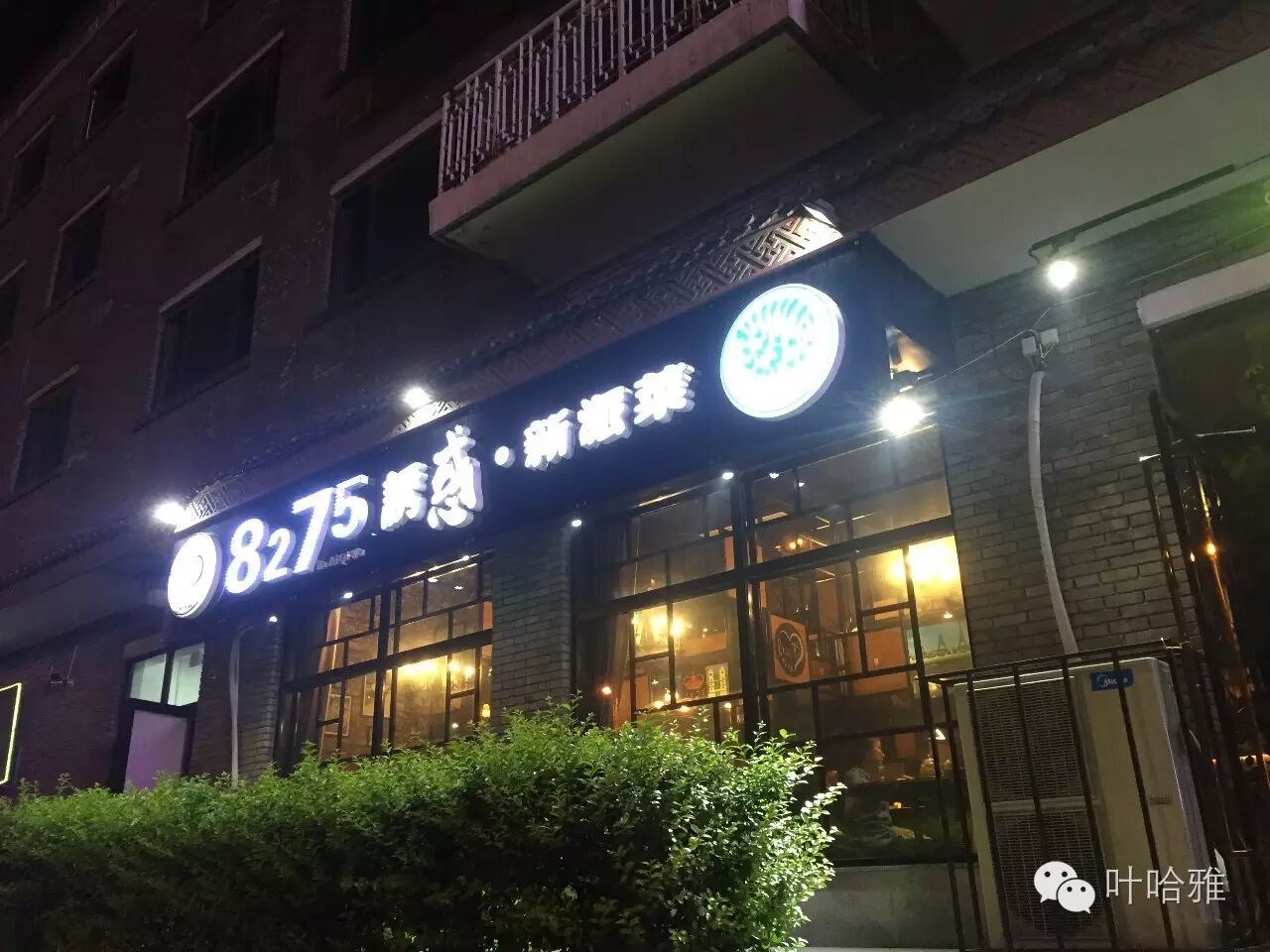
My first stop in Tianjin was a halal restaurant featuring new-style cuisine. New-style means they take traditional dishes and innovate them. Even the names of the dishes are unique, giving someone like me who is used to traditional halal food a fresh experience.
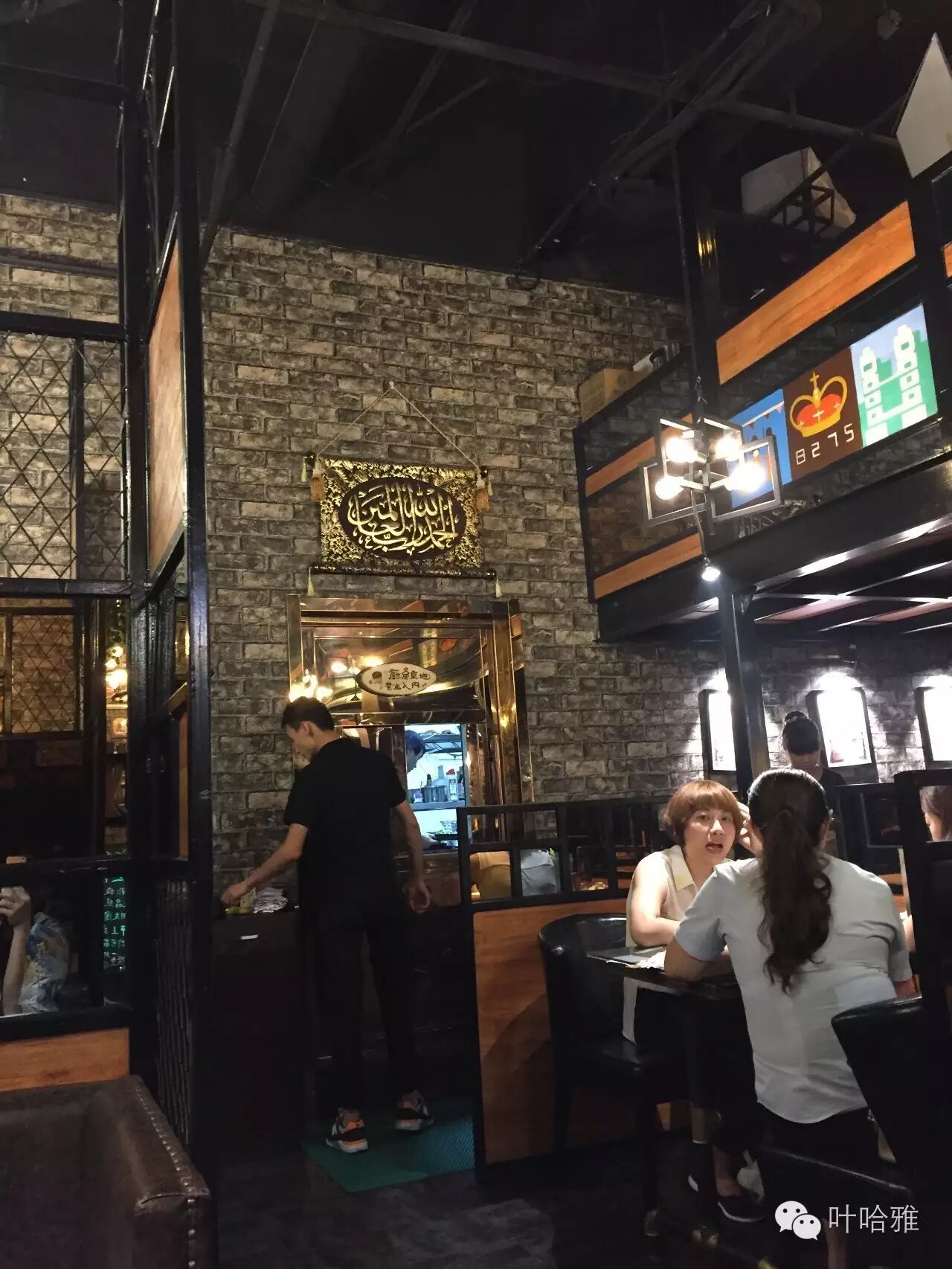
There is a plaque on the wall with the Shahada written in Arabic, so I knew it was a halal restaurant.
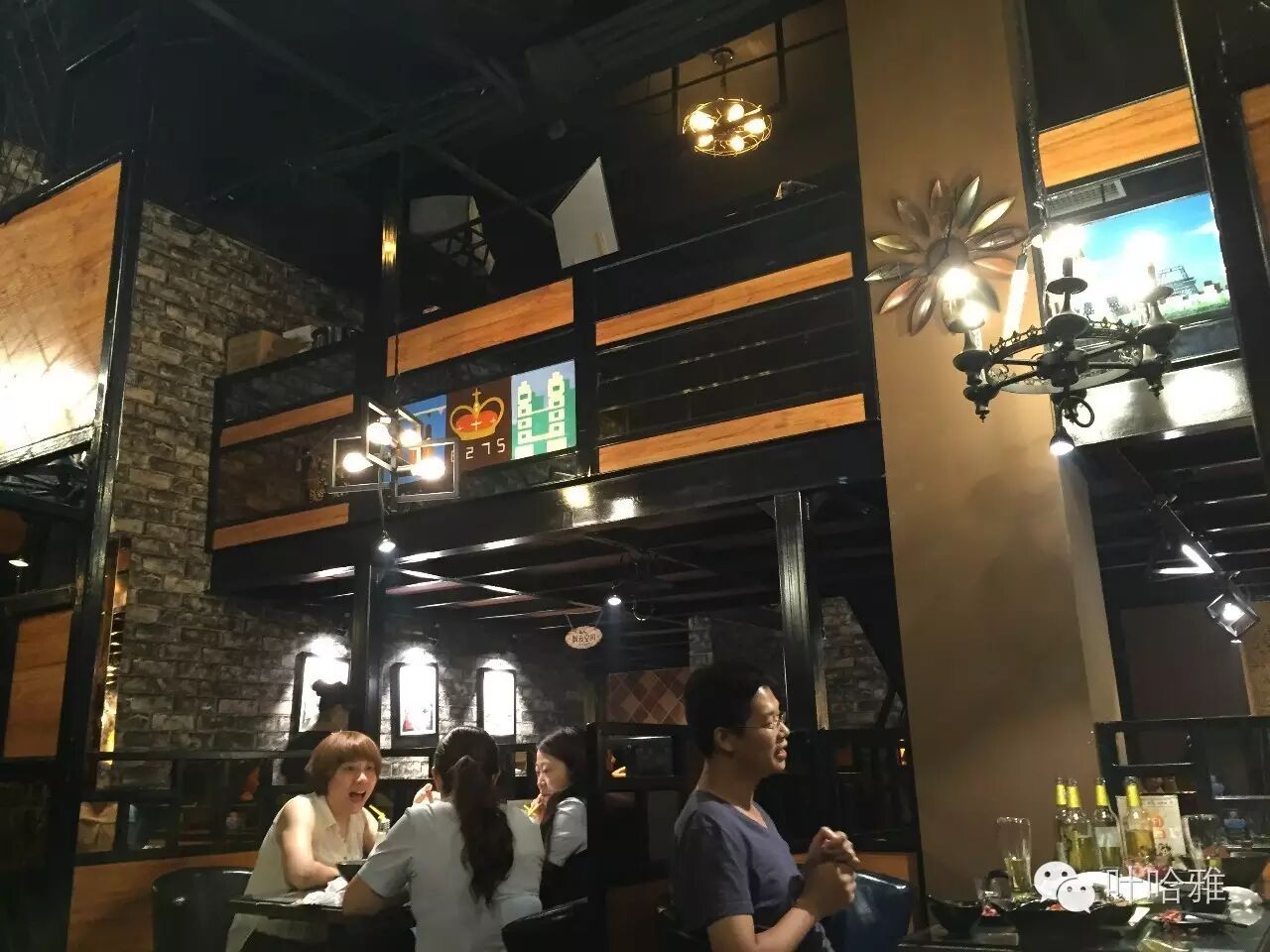
The style is clearly not the traditional West Asian or Middle Eastern look of most halal restaurants. It feels more like a trendy cafe.
Let's look at the food:
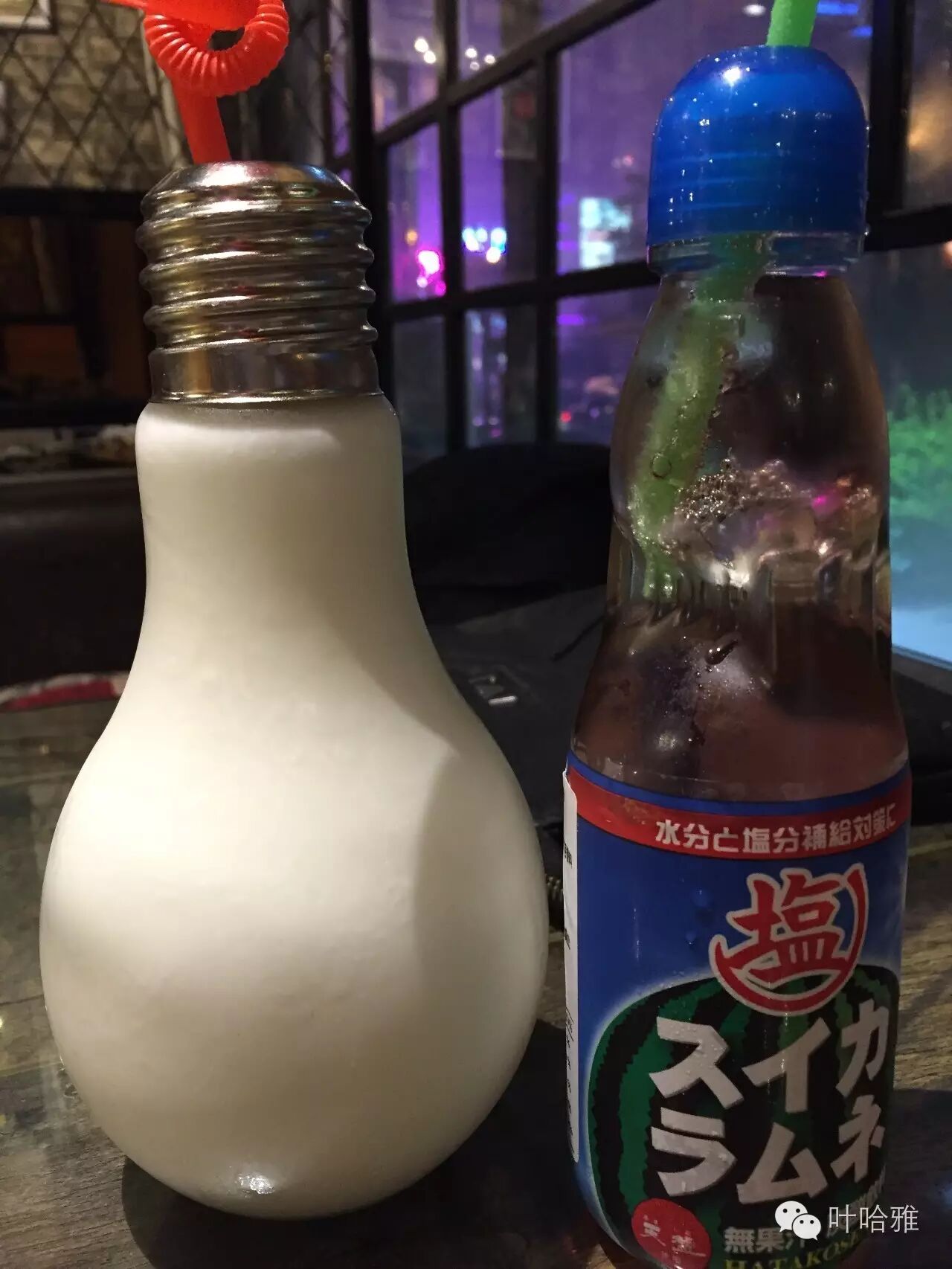
The yogurt comes in a lightbulb. It is thick and tastes quite good. Next to it is a Japanese soda with a light flavor.
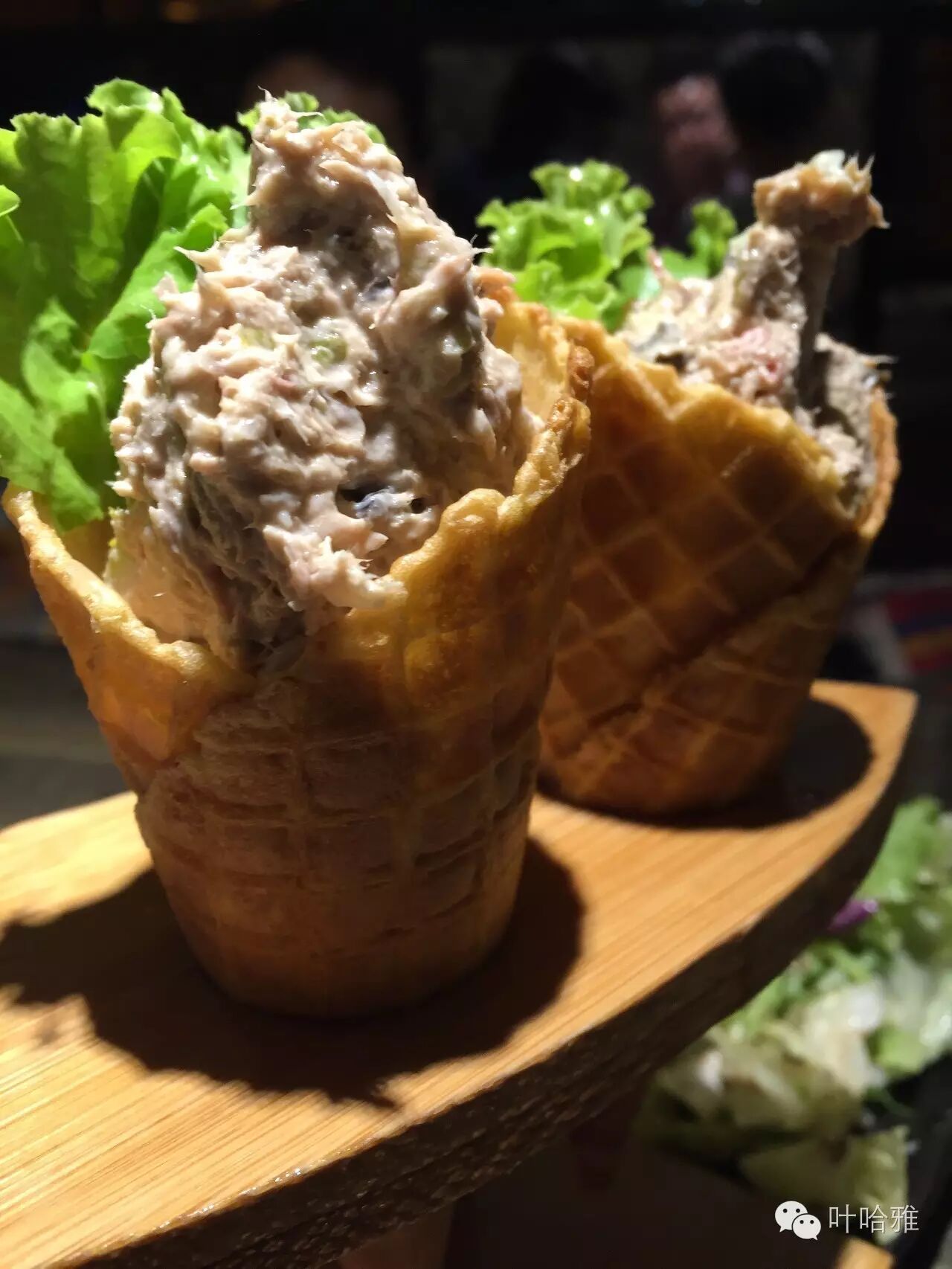
This is not ice cream. It is a salmon salad served in an egg roll cone. It tastes delicious and the cone is crispy. I admire the chef's creativity.
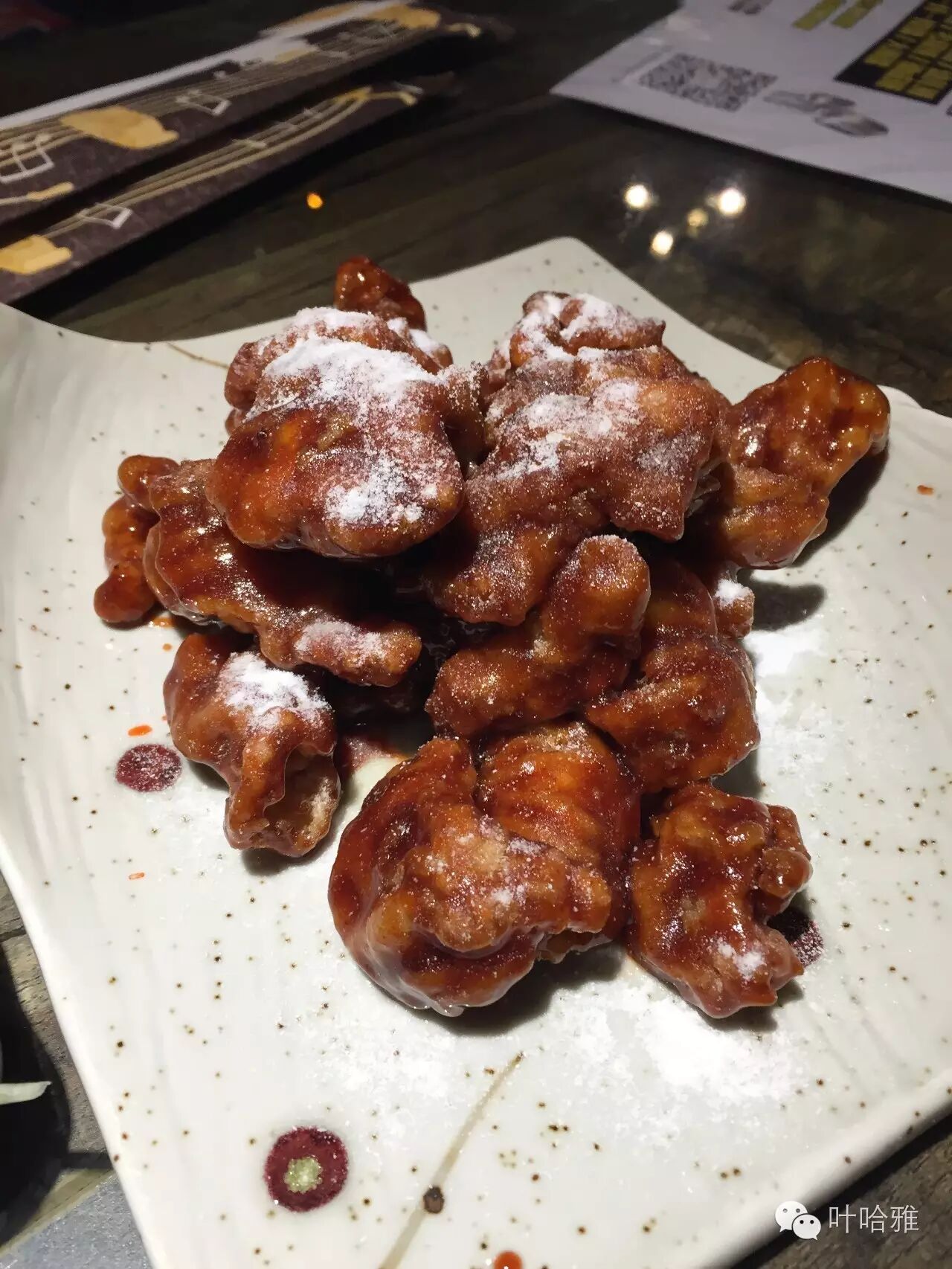
This is stir-fried duck slices in bean sauce, but the menu calls it Childhood Taste Stir-fried Duck. Maybe the highlight is the sour plum powder on top. It is different from my childhood memories, as this duck is very sweet. My childhood memory of duck is roast duck, but that is understandable since I am not from Tianjin.
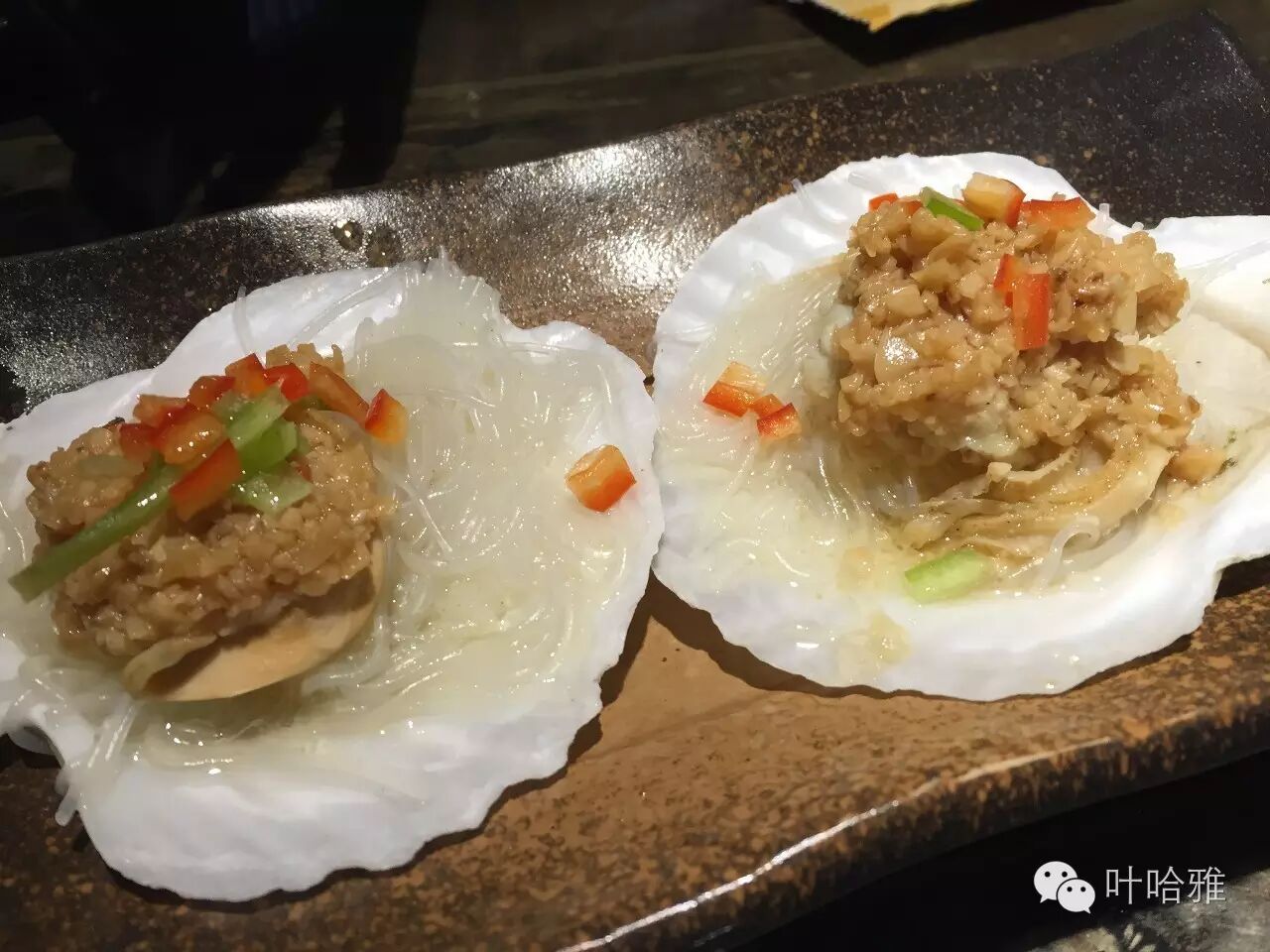
I don't remember the name of this scallop dish, but you can't go wrong eating seafood in Tianjin.
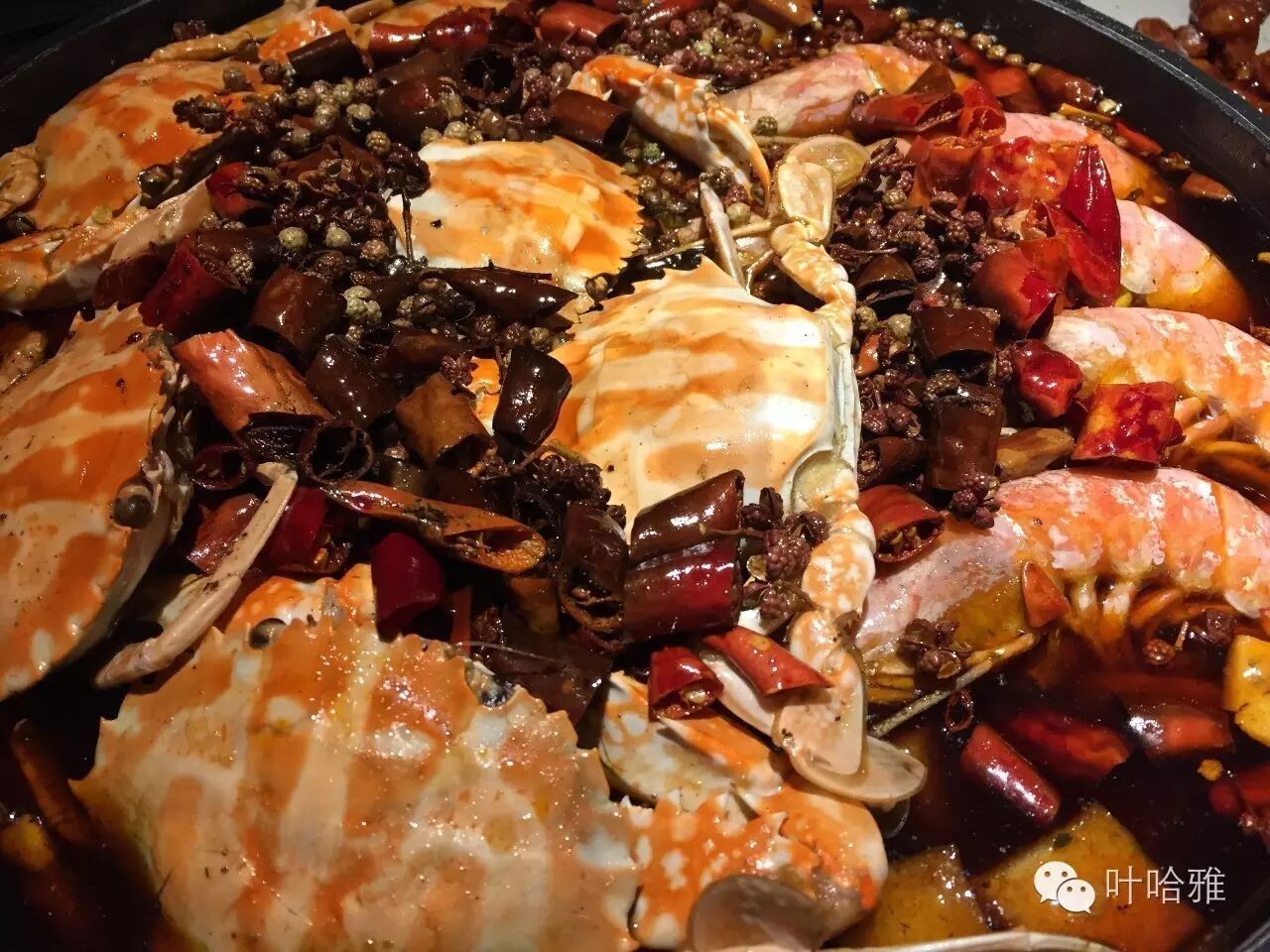
This big pot of seafood is called Seafood Castle. It is named a castle to show that the dish is big and has everything. Under the crabs are large shrimp, and there are also small squid, fish tofu, and other sides. It costs 138 yuan, and two people will be full after one plate.
8275 Temptation New-Style Cuisine address: 05-06, 1st Floor, North Building, Nanshi Hotel Street (next to Yangguofu Malatang).
Dashunzhai Liu Family Sesame Flatbread (shaobing)
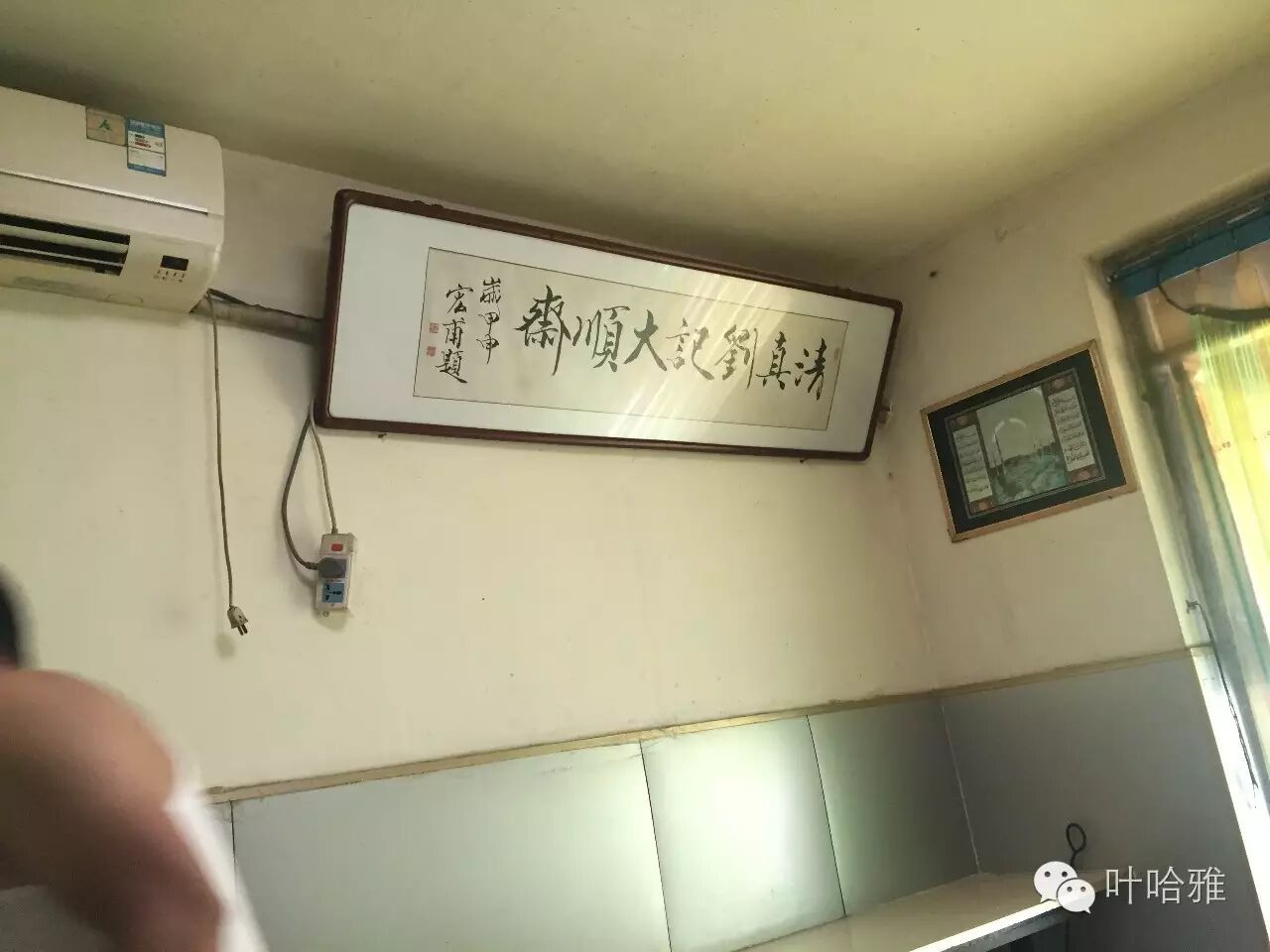
This is a very famous and authentic Tianjin lamb soup shop. The storefront is small, but people line up every morning to drink the lamb soup.
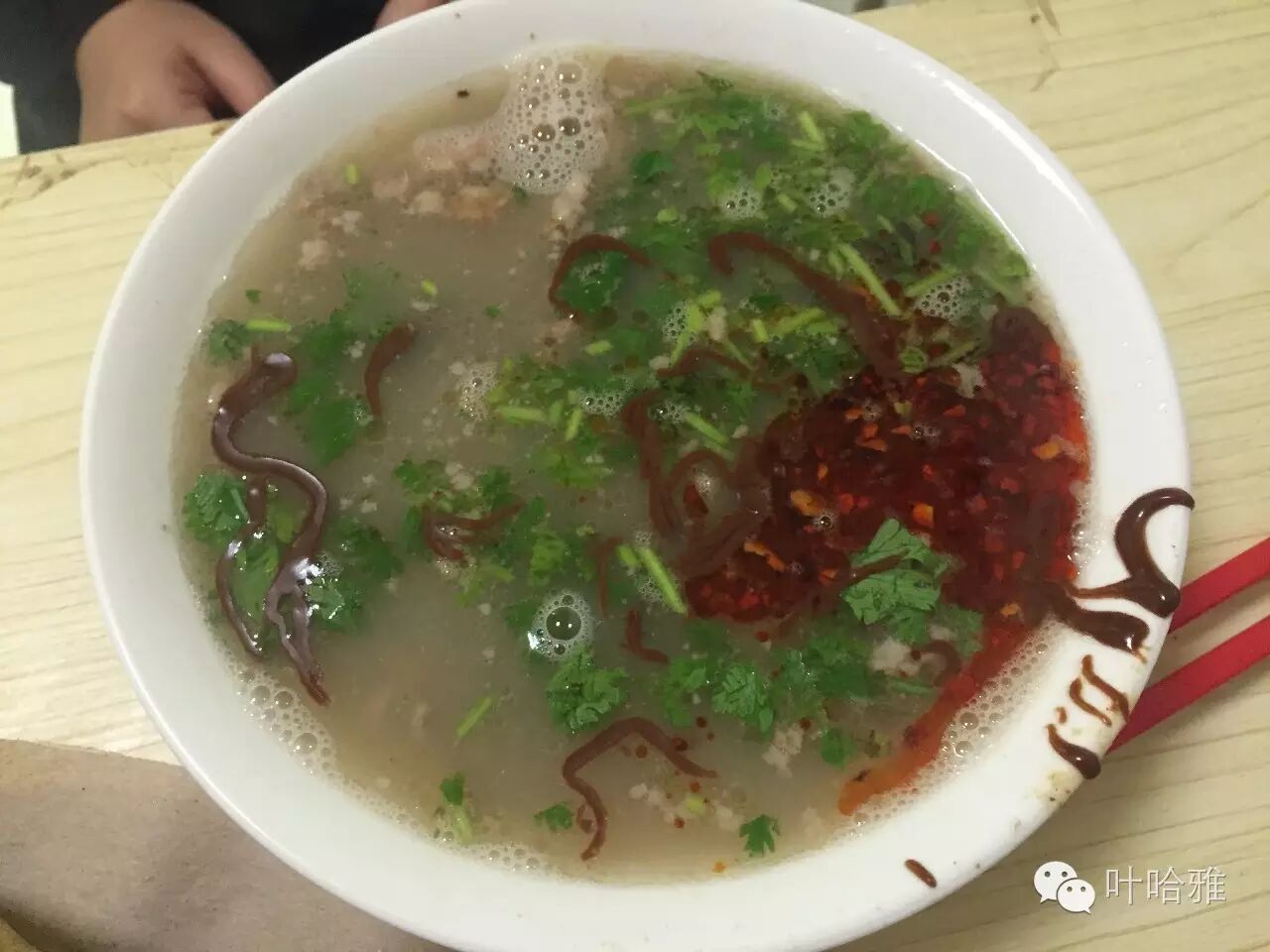
A bowl of lamb soup with sesame paste and chili oil makes my mouth water before I even take a sip.
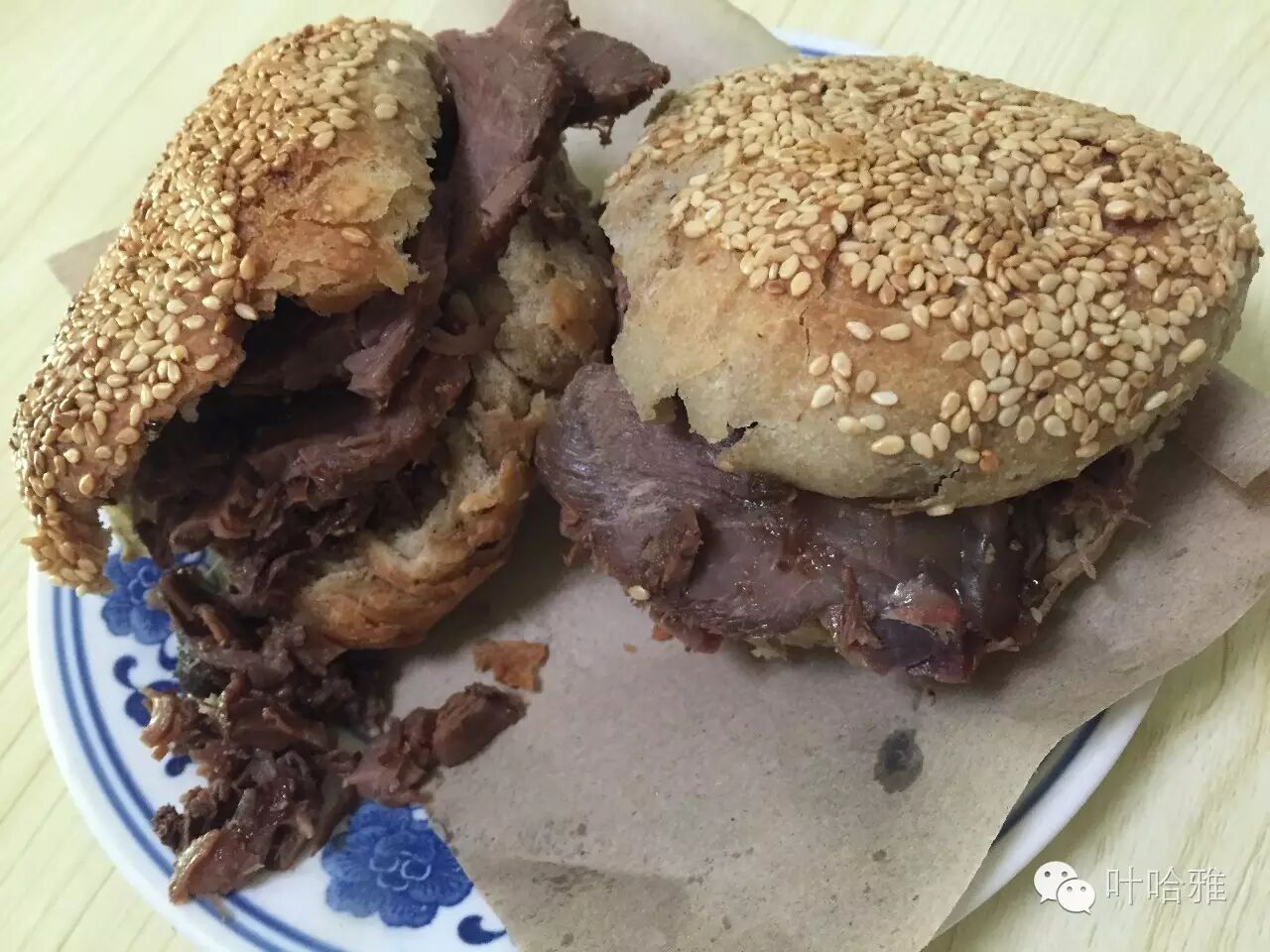
Sesame flatbread with cooked meat is their signature. I can easily eat two in one sitting. The beef is stewed until very tender and does not get stuck in your teeth. It sells out every day, and you must eat the flatbread fresh out of the oven.
The owner's family are authentic Hui Muslims from Tianjin. The shop is smoke-free and alcohol-free, the ladies wear headscarves, and they close every Friday for Jumu'ah. I like that.
Dashunzhai Liu Family Sesame Flatbread address: 5 Binguan Road (near Tonglou Hotel).
Halal Yuan Restaurant
A traditional halal restaurant with Tianjin flavors.
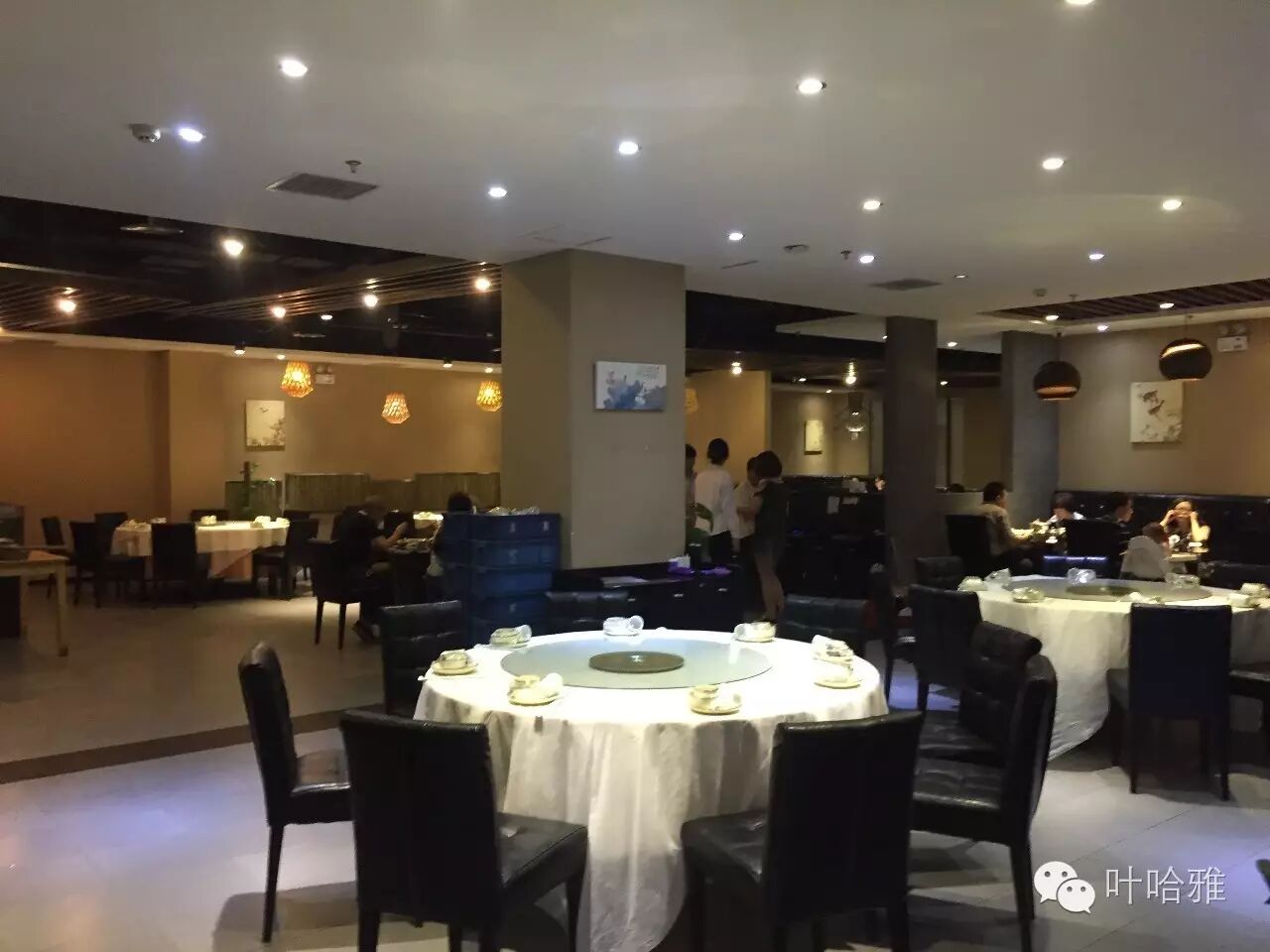
The environment has been newly renovated and is very spacious.
The tableware is quite pretty.
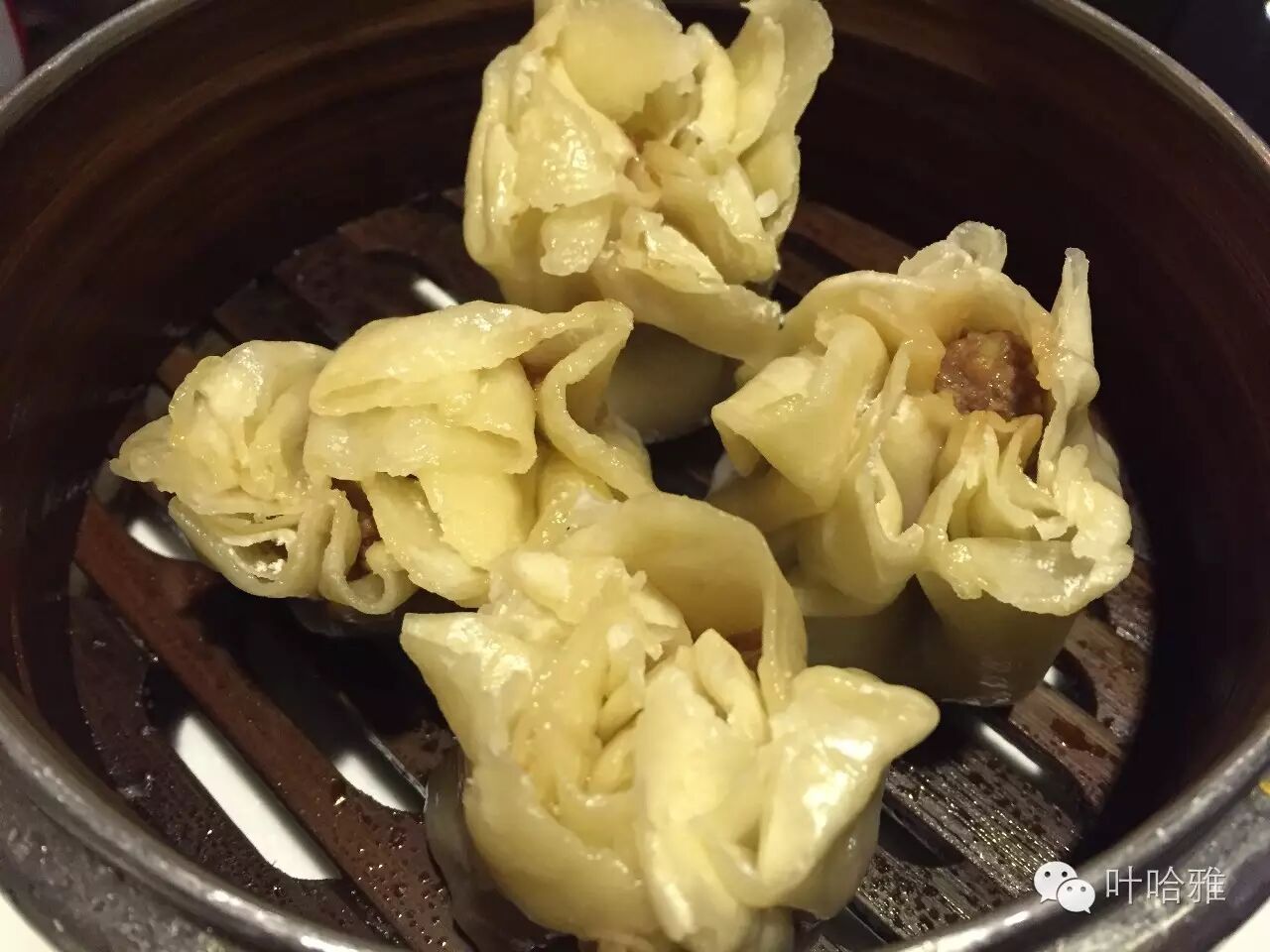
Steamed dumplings (shaomai) are not necessarily a Tianjin specialty, but the ones in Tianjin are truly delicious. I ordered the beef and green onion filling, and four were not enough for me.
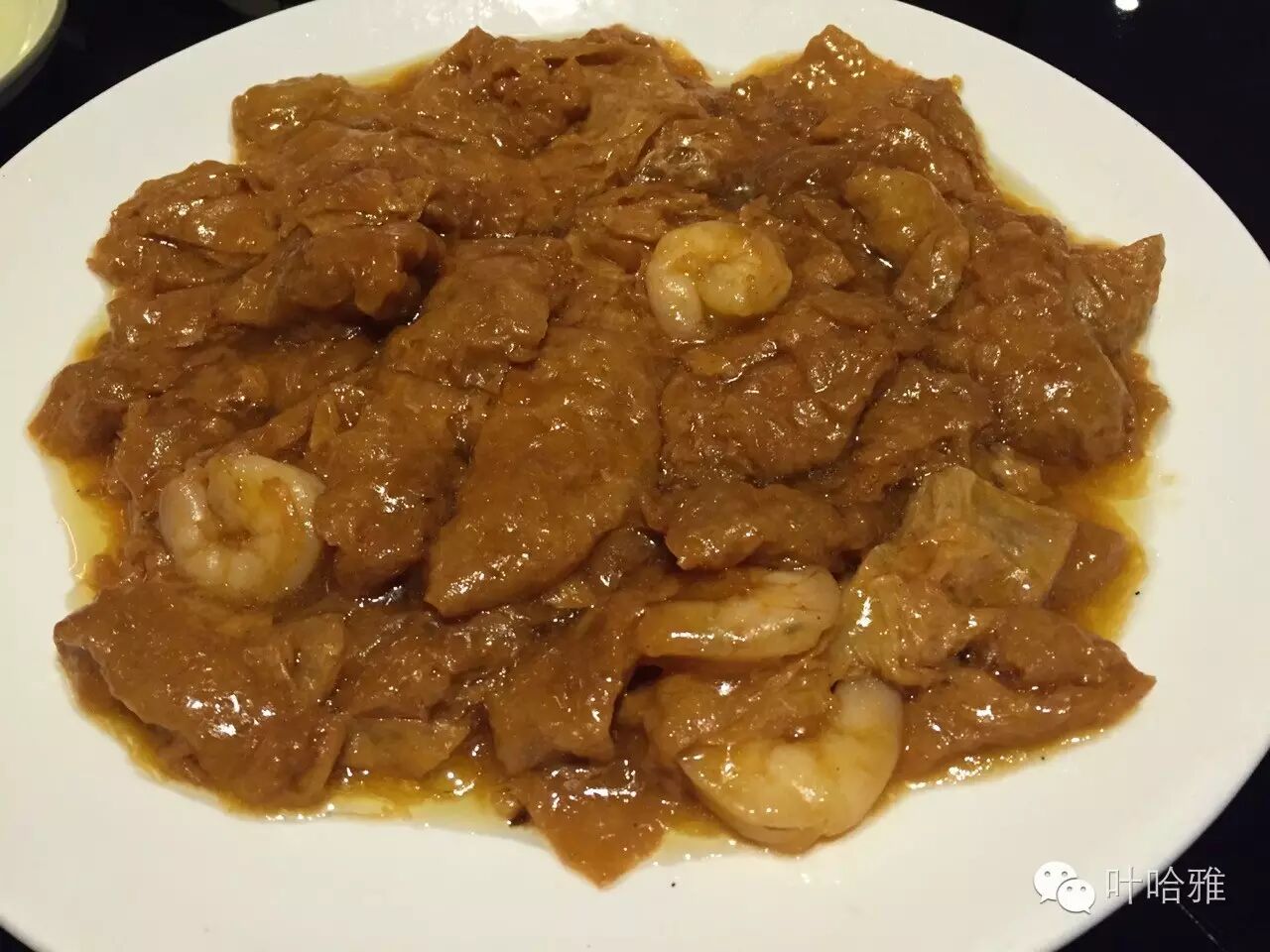
Stir-fried gluten with shrimp is an appetizing dish that helps with digestion.
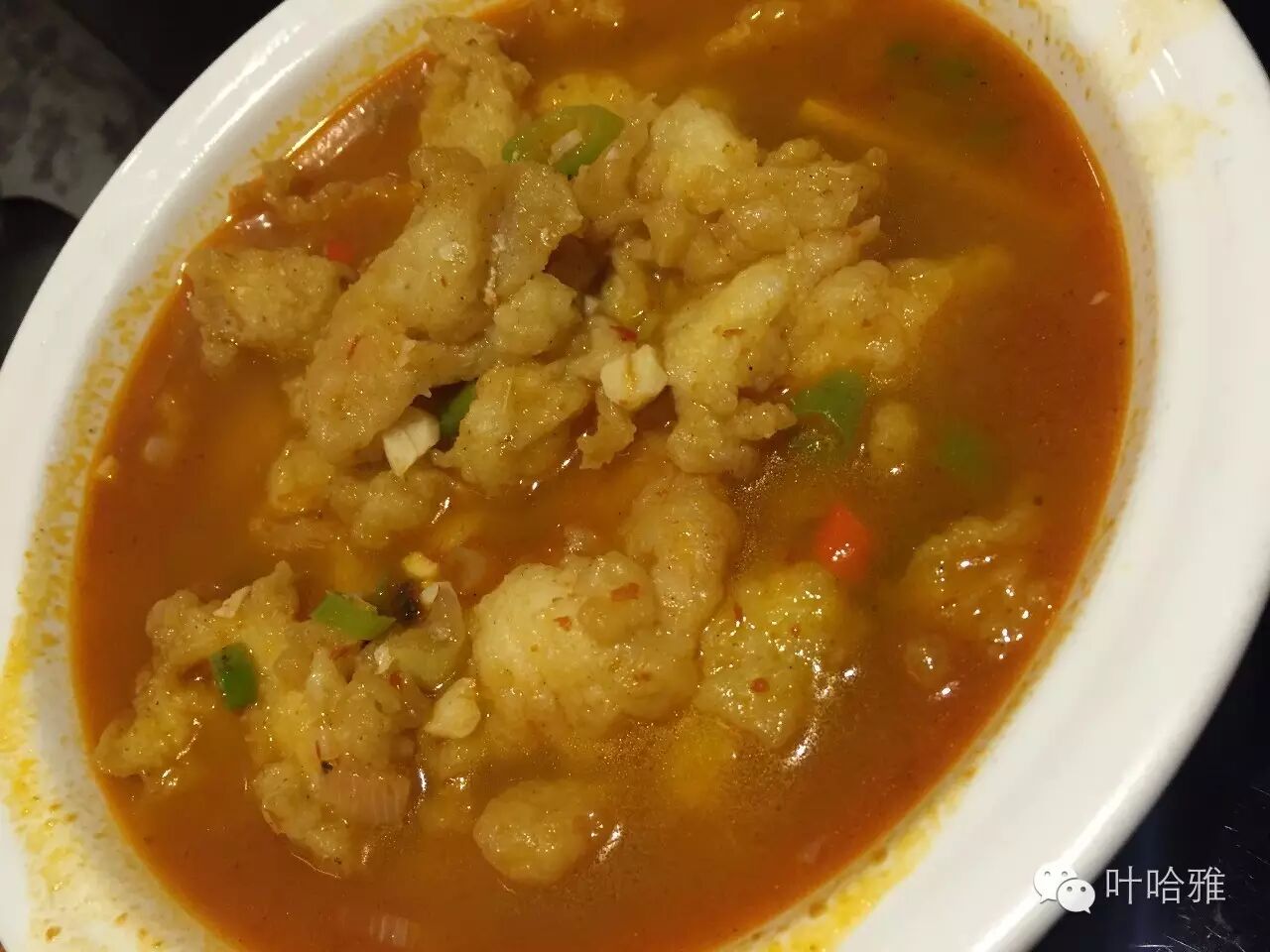
I like sole fish soup (longli yu tang) and other saltwater fish because they have few bones and are nutritious. However, Tianjin cuisine is noticeably salty. For a healthier diet, I think it is better to use less salt.
Location: Block B, 3rd Floor, Xinpeng Joy City, Hongqiao District.
Halal seafood food stall.
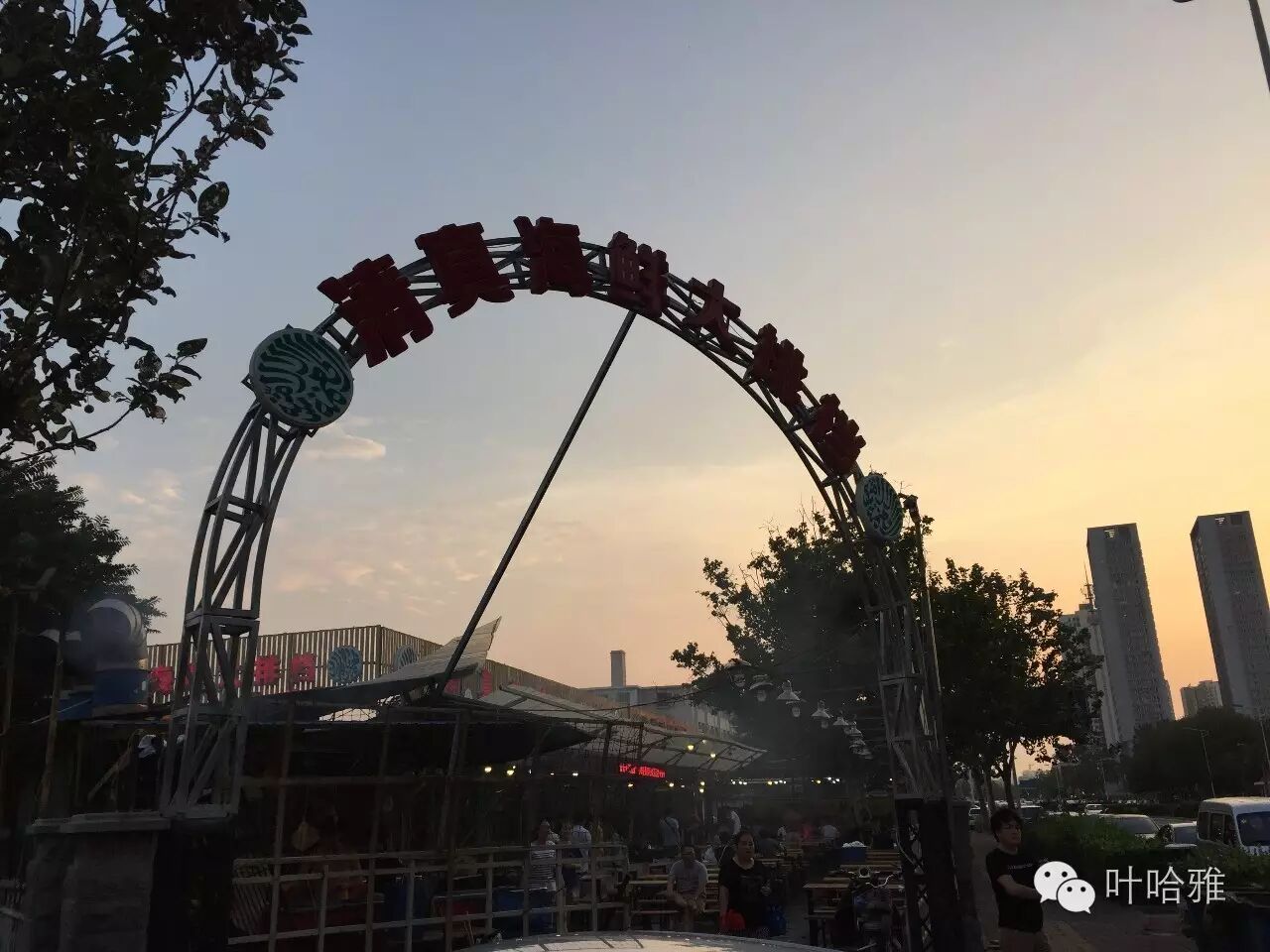
This is a very popular seafood food stall. Even though it is in an out-of-the-way location, it is always full of customers.
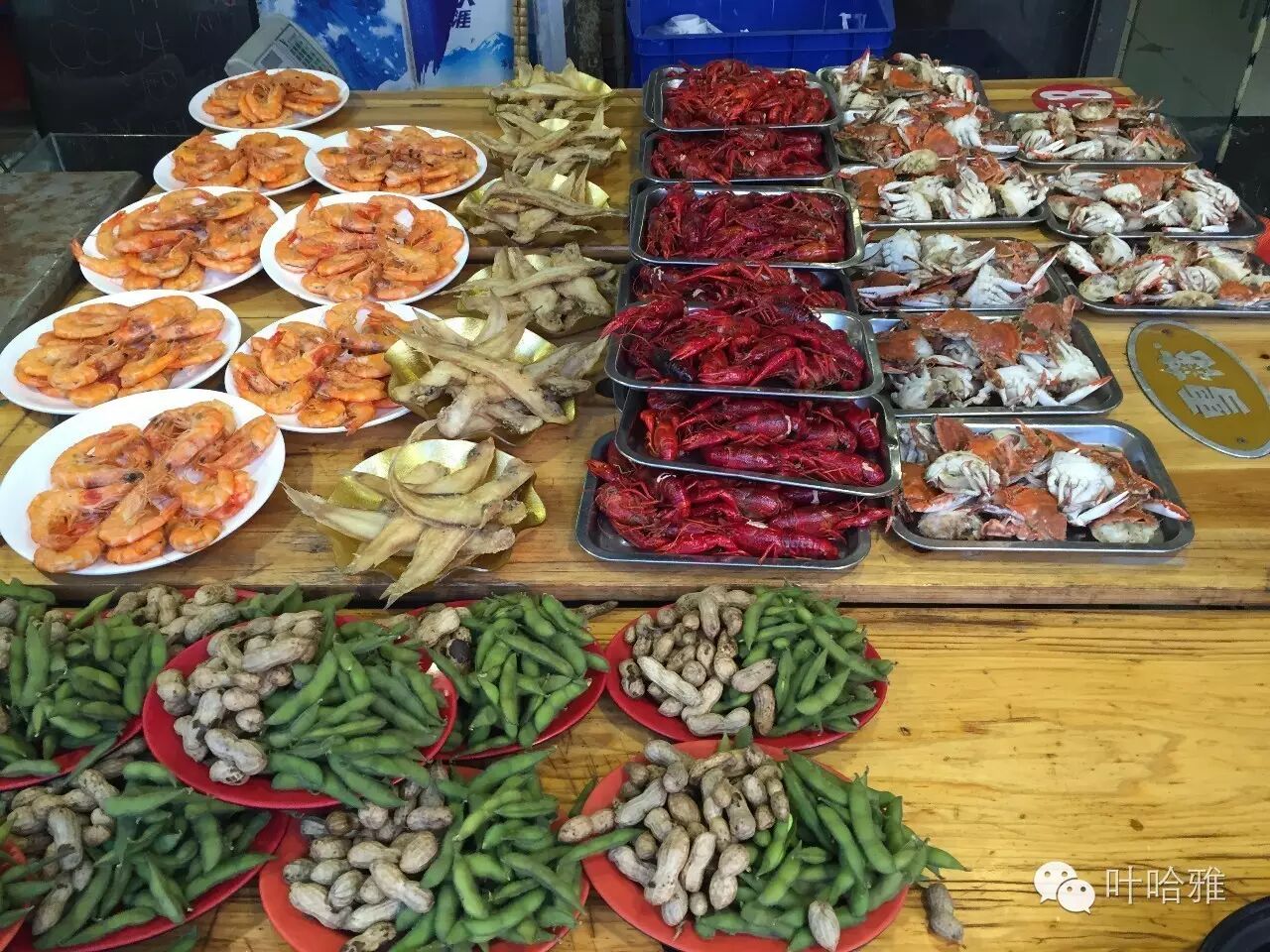
The red and green colors look bright and appetizing.
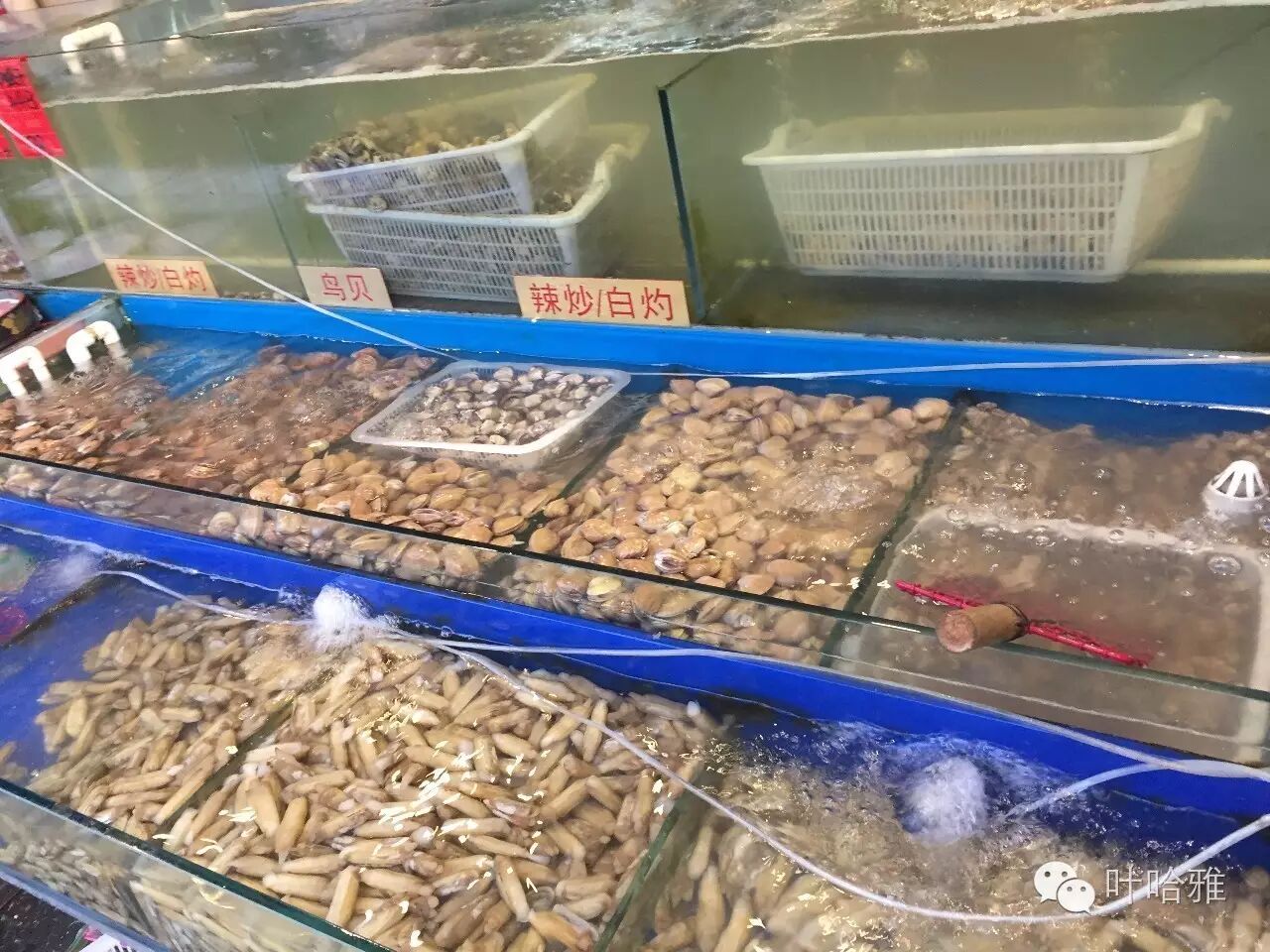
Everything is fresh, and because so many people eat here, the stock turns over quickly.
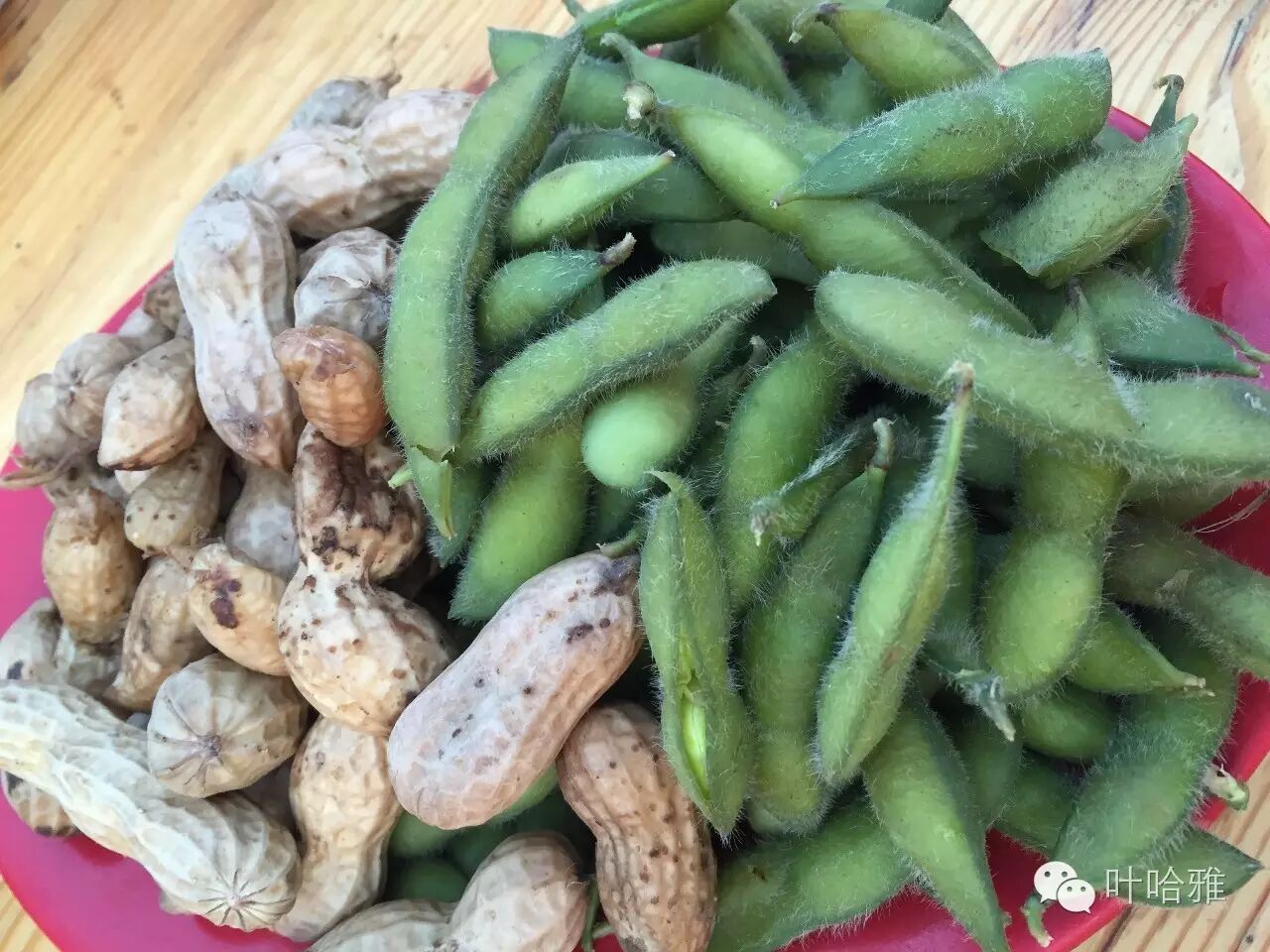
A platter of edamame and peanuts (maohua pin) is a must-have appetizer at any food stall.
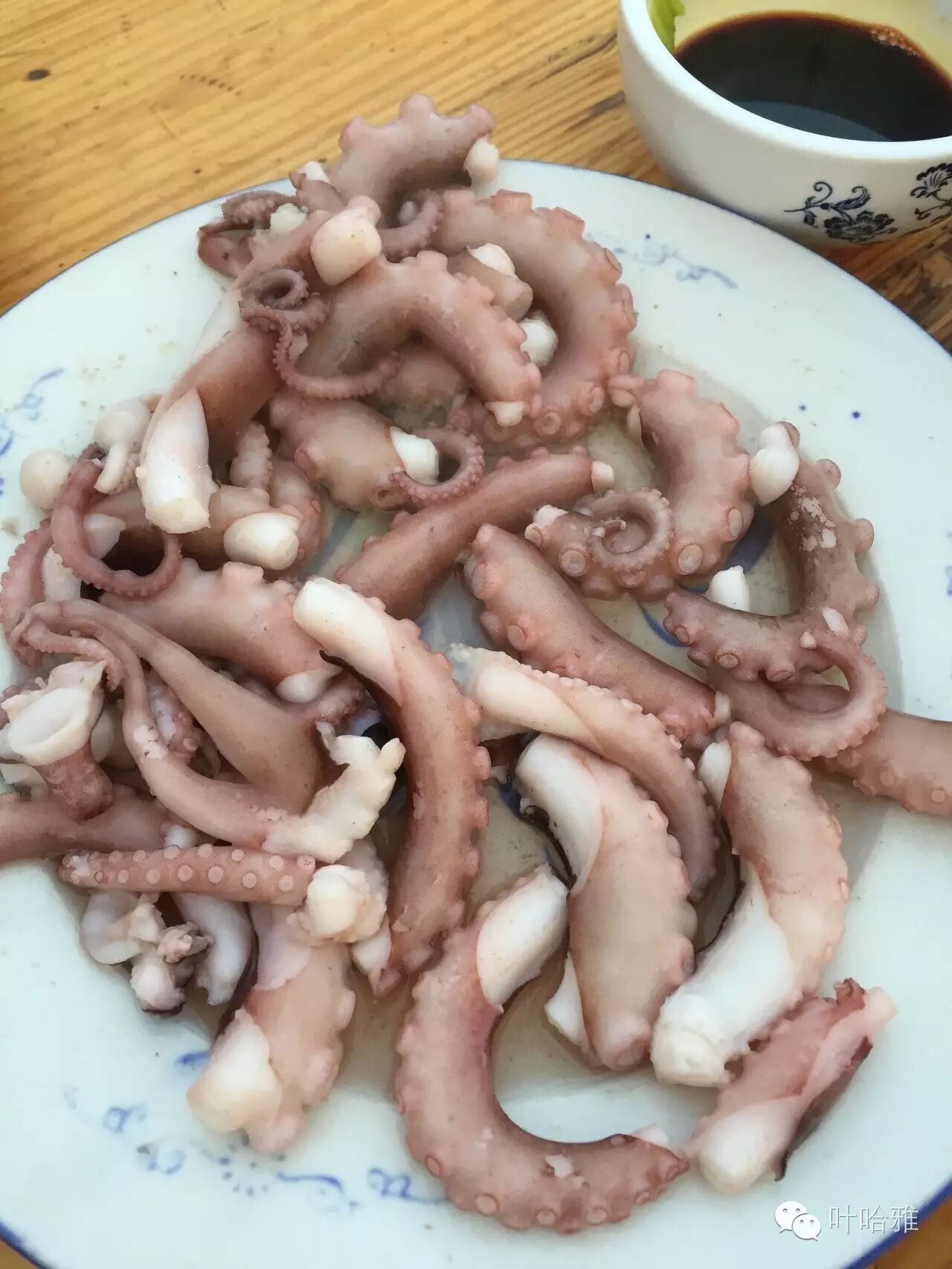
Boiled octopus (baizhuo bazhua) has a fresh and tender texture.
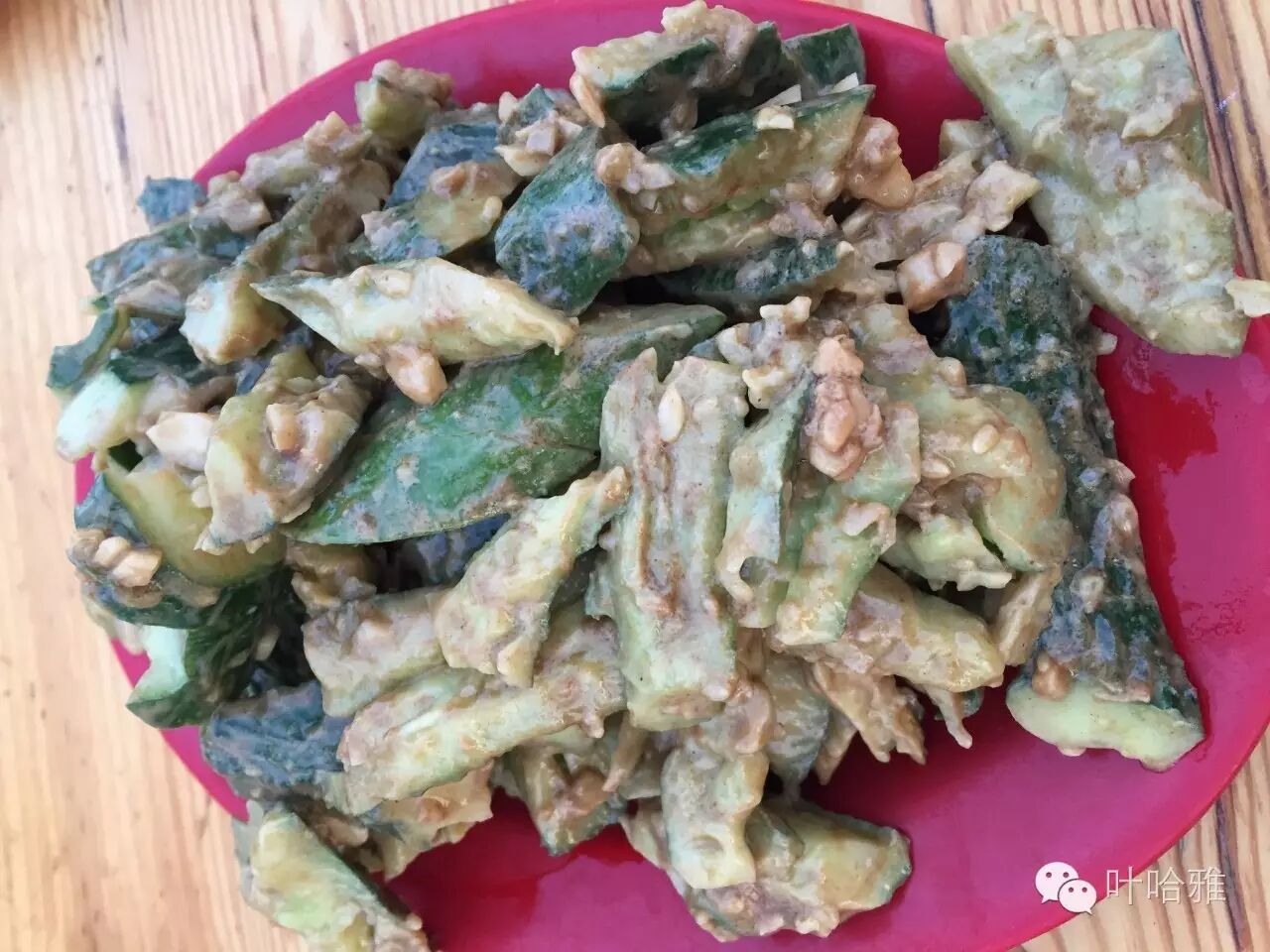
Smashed cucumber (pai huanggua) is my go-to dish.
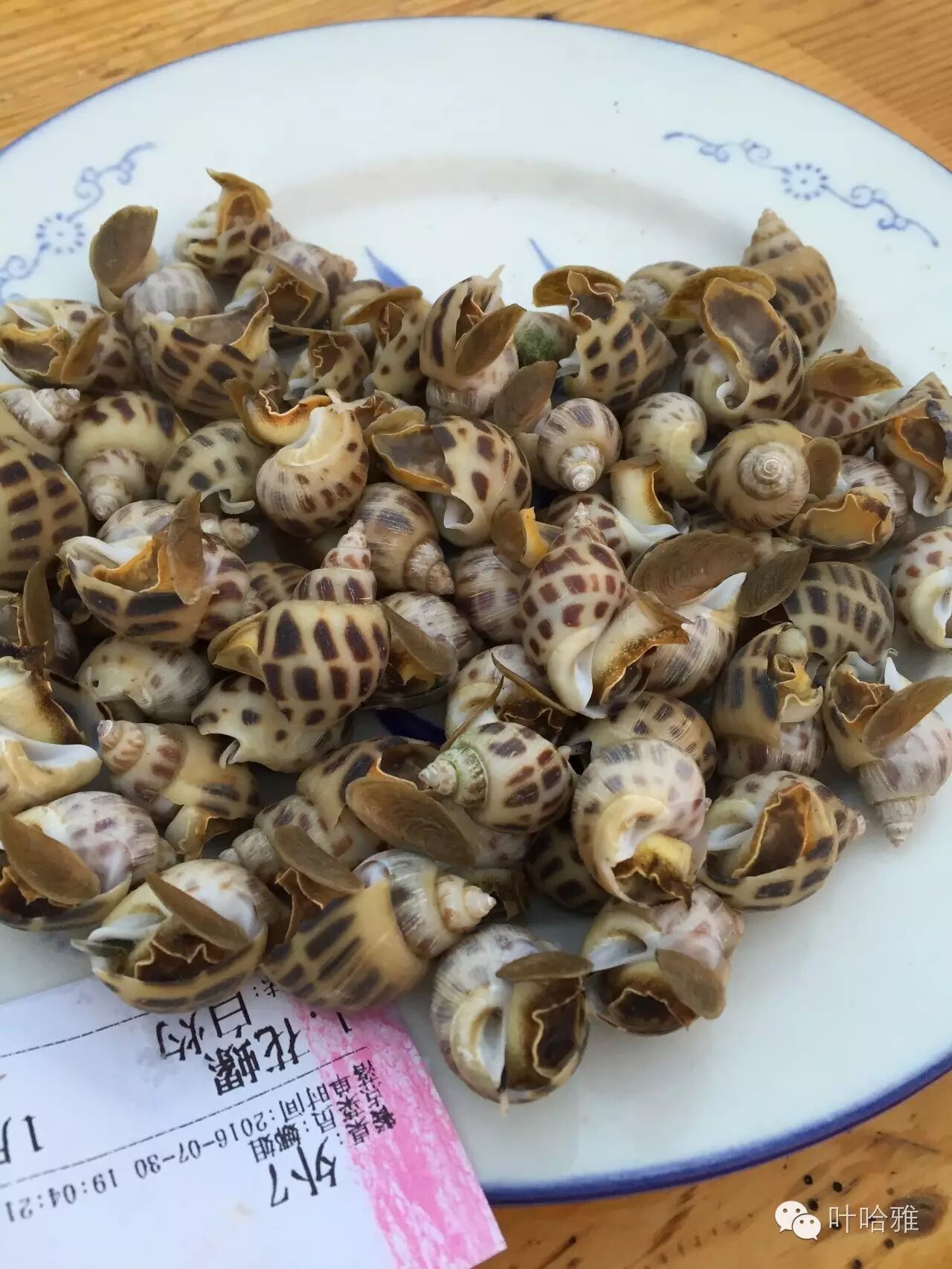
Boiled sea snails (baizhuo hualuo) are best prepared this way to bring out their natural flavor.
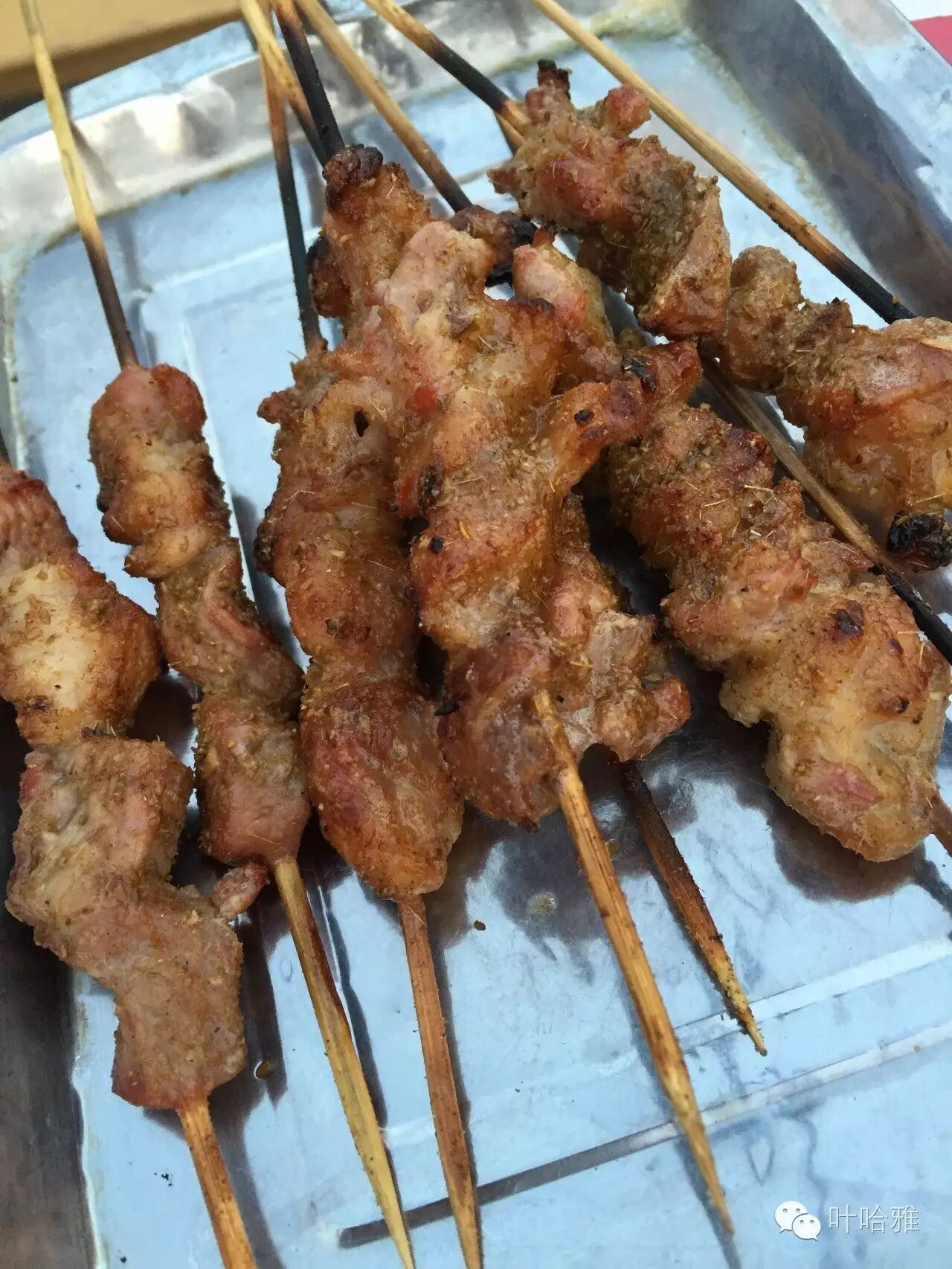
A food stall wouldn't be complete without barbecue, and their lamb skewers (yangrou chuan) are very flavorful.
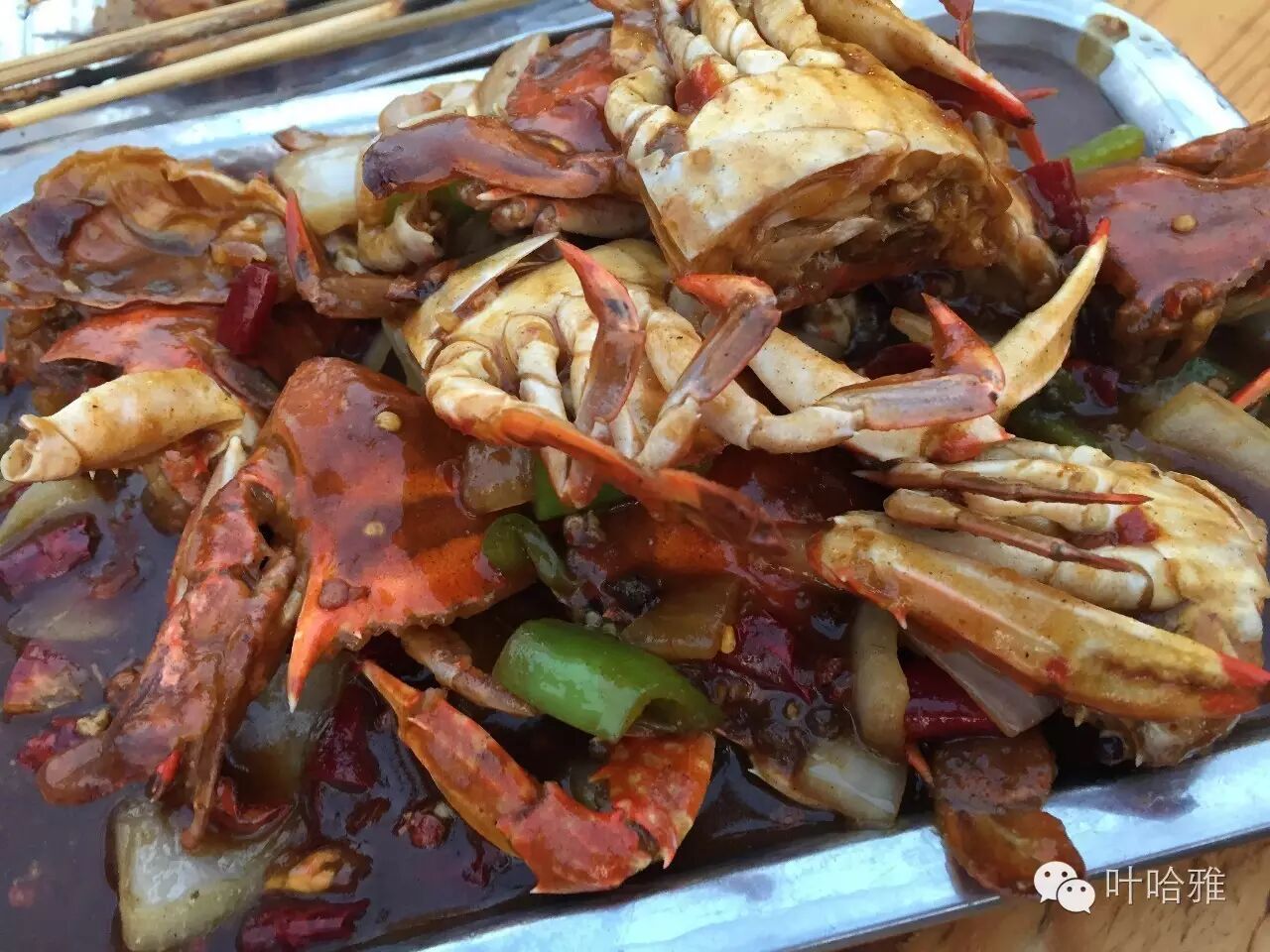
Spicy crab (xiangla xie) is a great way to satisfy a craving.
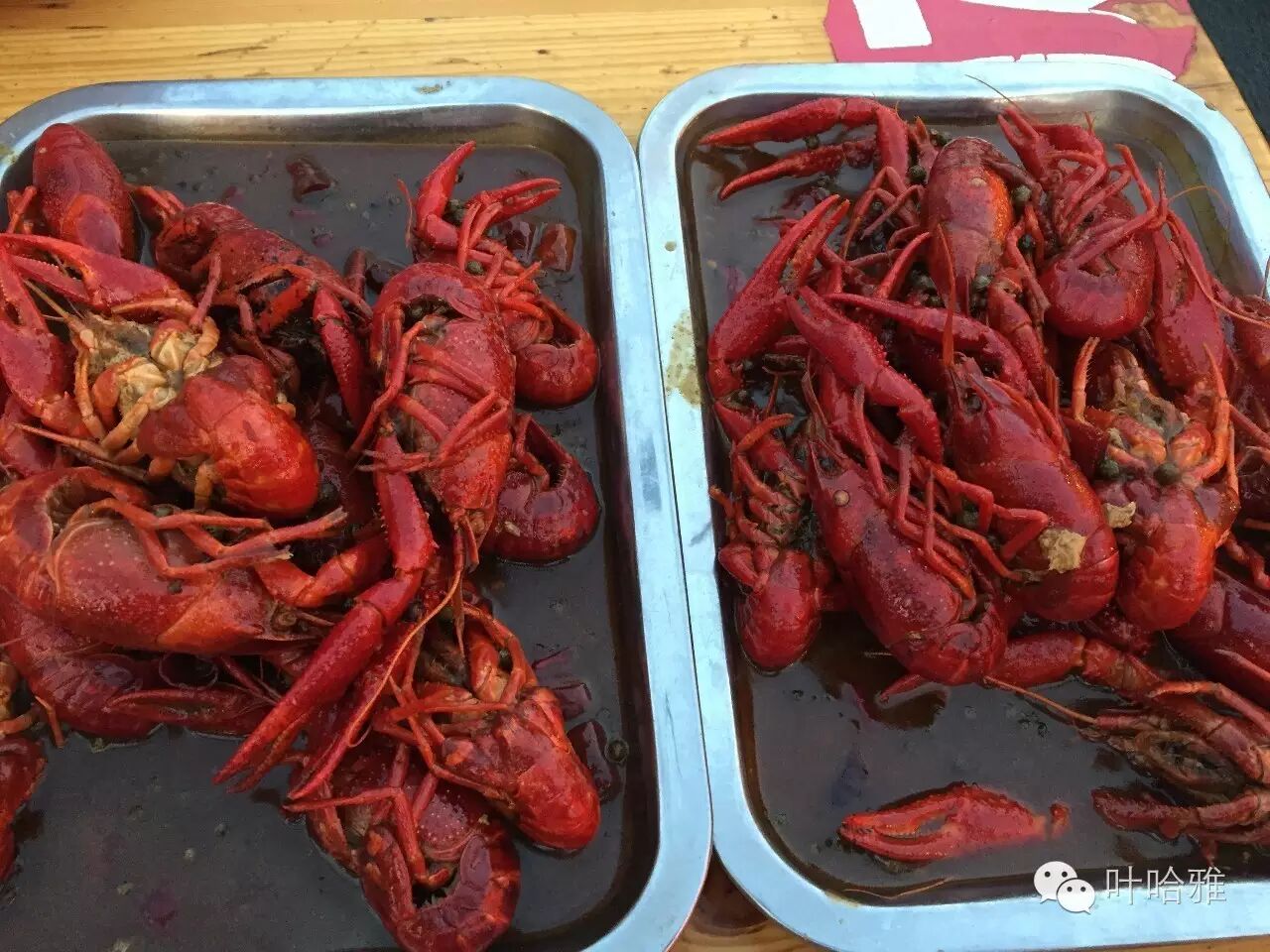
It is not easy to find halal crayfish (xiaolongxia), but many places in Tianjin sell them.
Halal seafood food stall address: Near the intersection of Jieyuan West Road and Lintong Road.
Hongqishun flagship store.
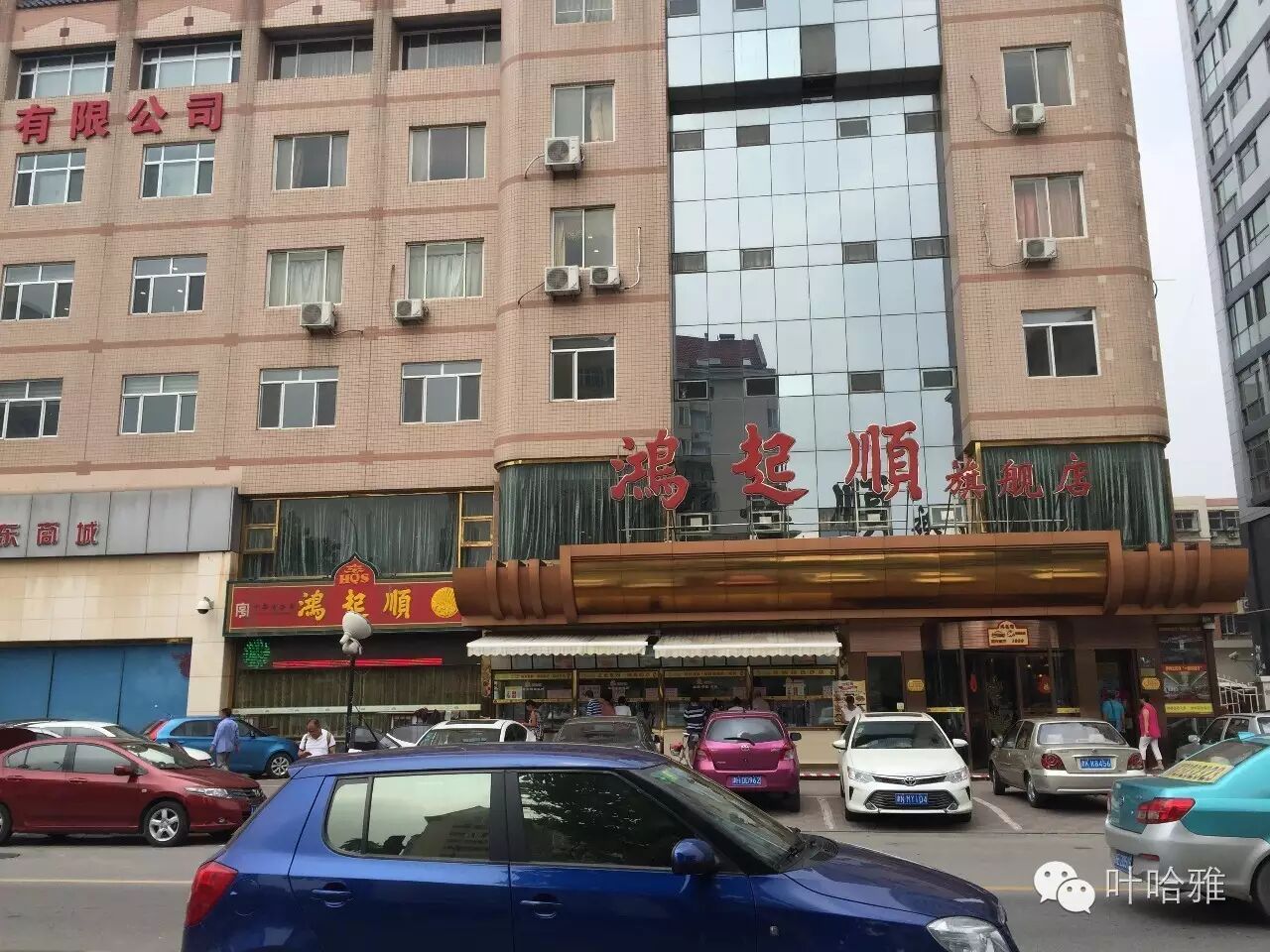
Hongqishun is a famous, long-standing brand in Tianjin with many branches.
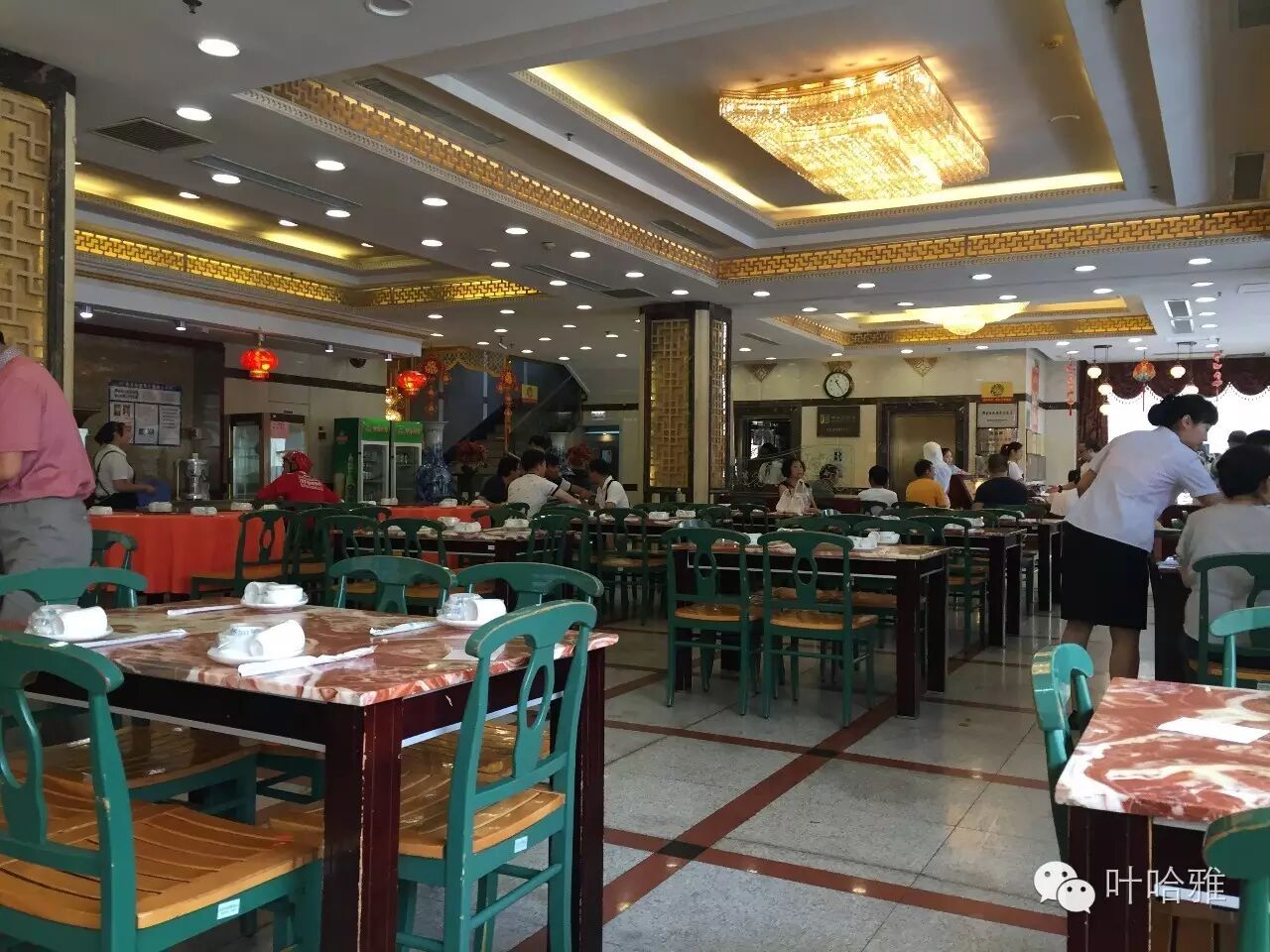
This is the flagship store.
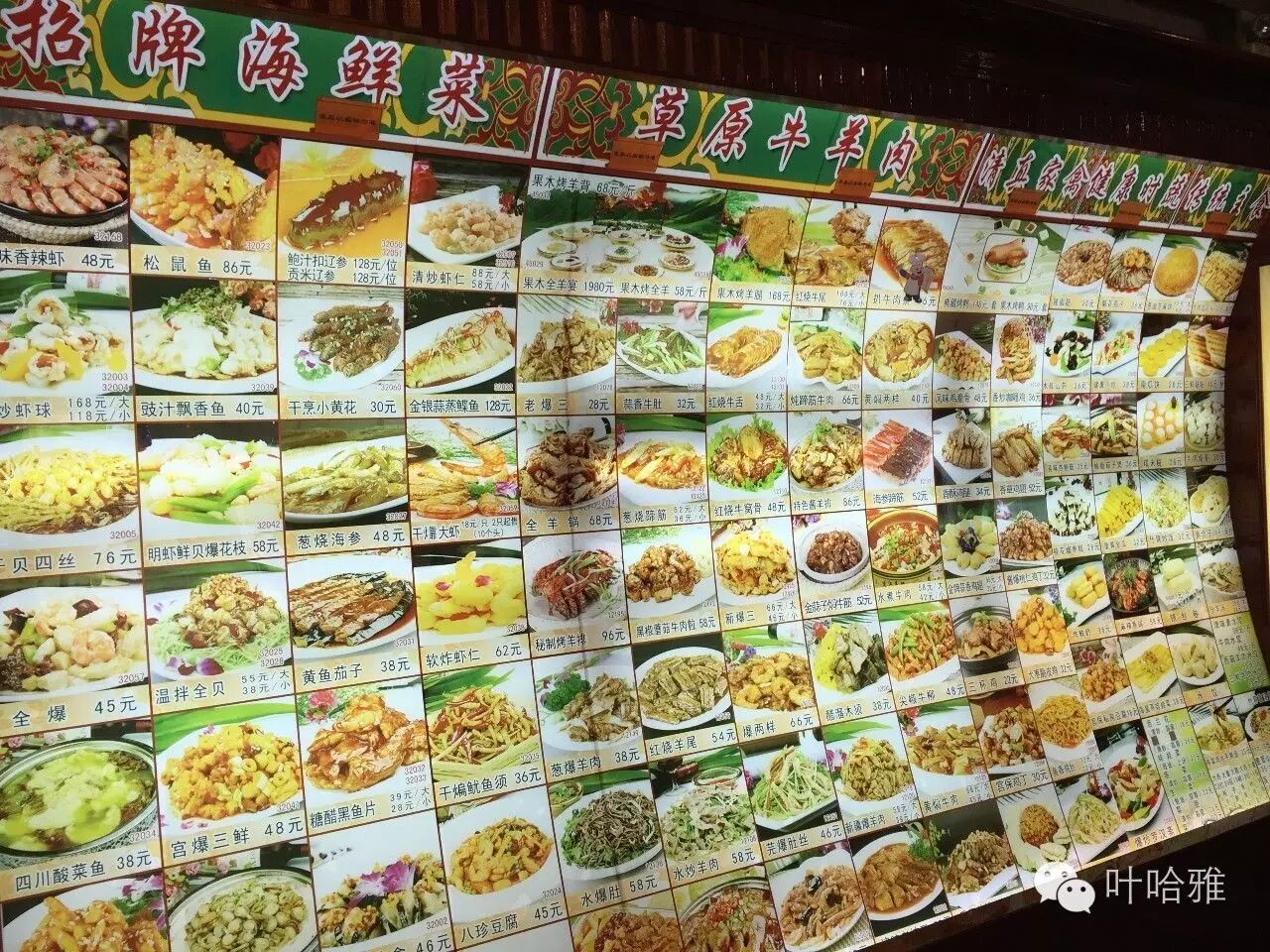
Check the menu on the wall to order; they mainly serve local Tianjin dishes.
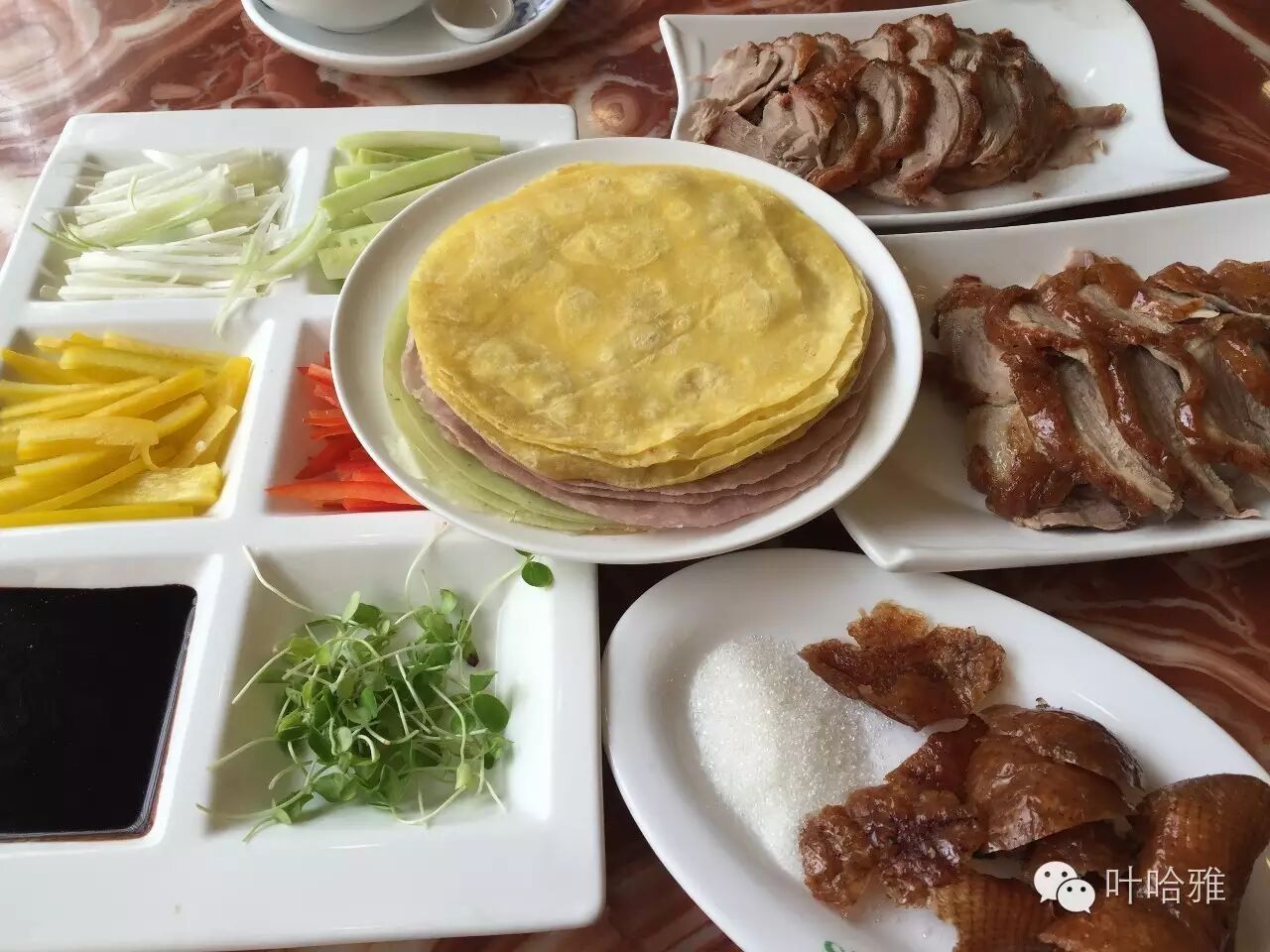
They had a promotion on roast duck, and I was curious about the taste of Tianjin-style roast duck, so I ordered one.
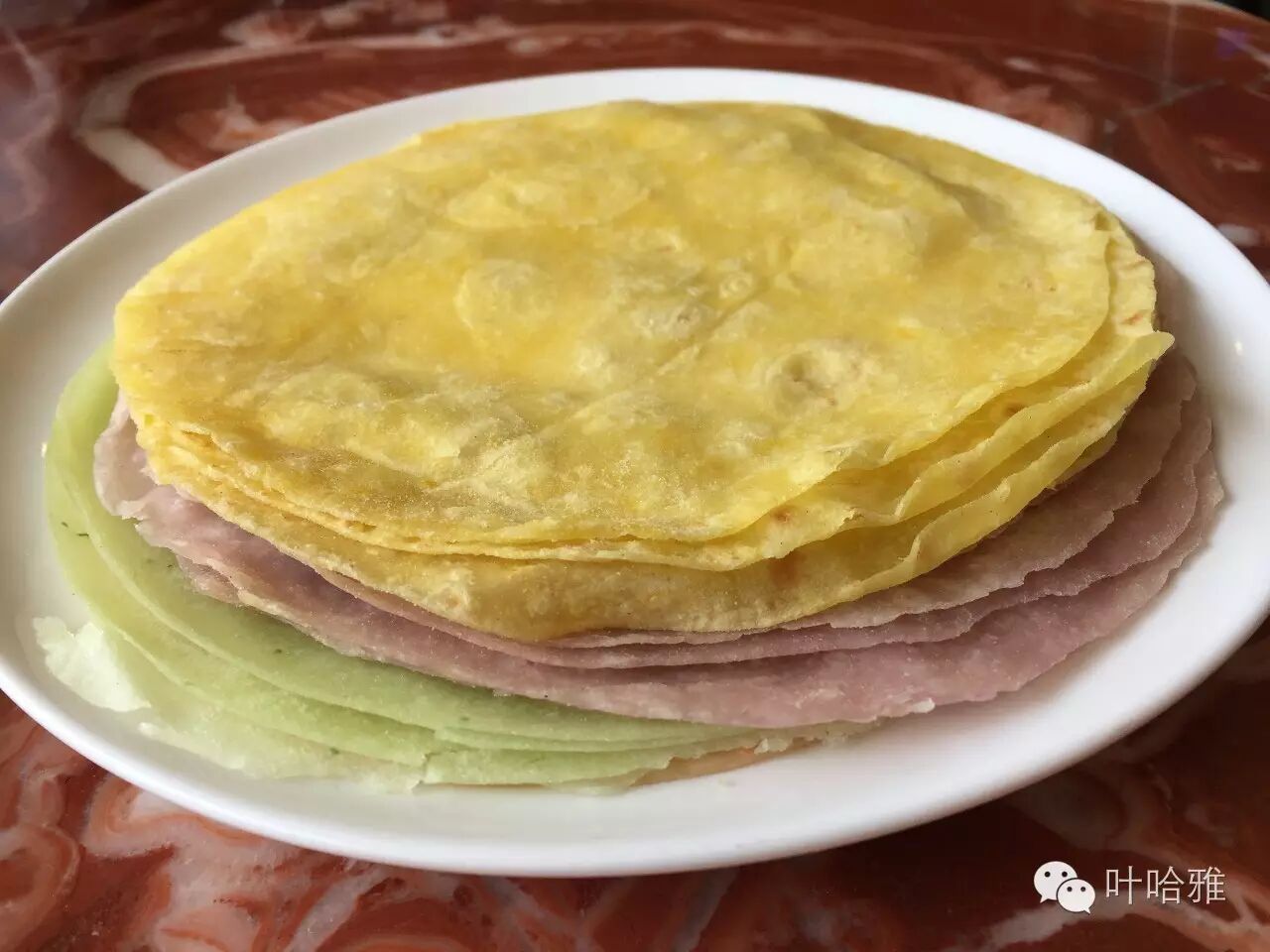
The pancake wraps (juanbing) come in three colors, but they all taste about the same.
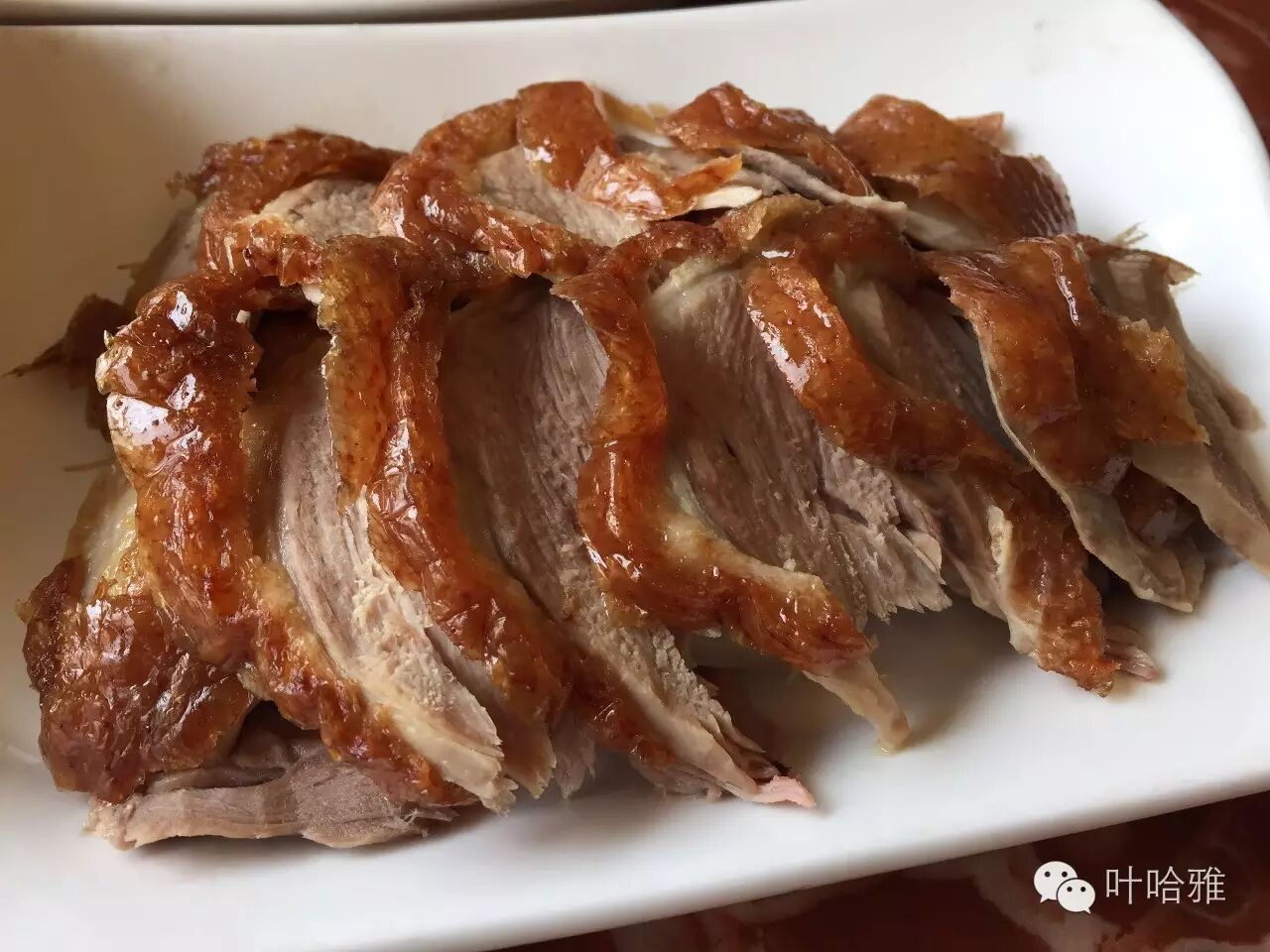
The roast duck is decent; it is roasted with fruitwood, and the skin is crispy.
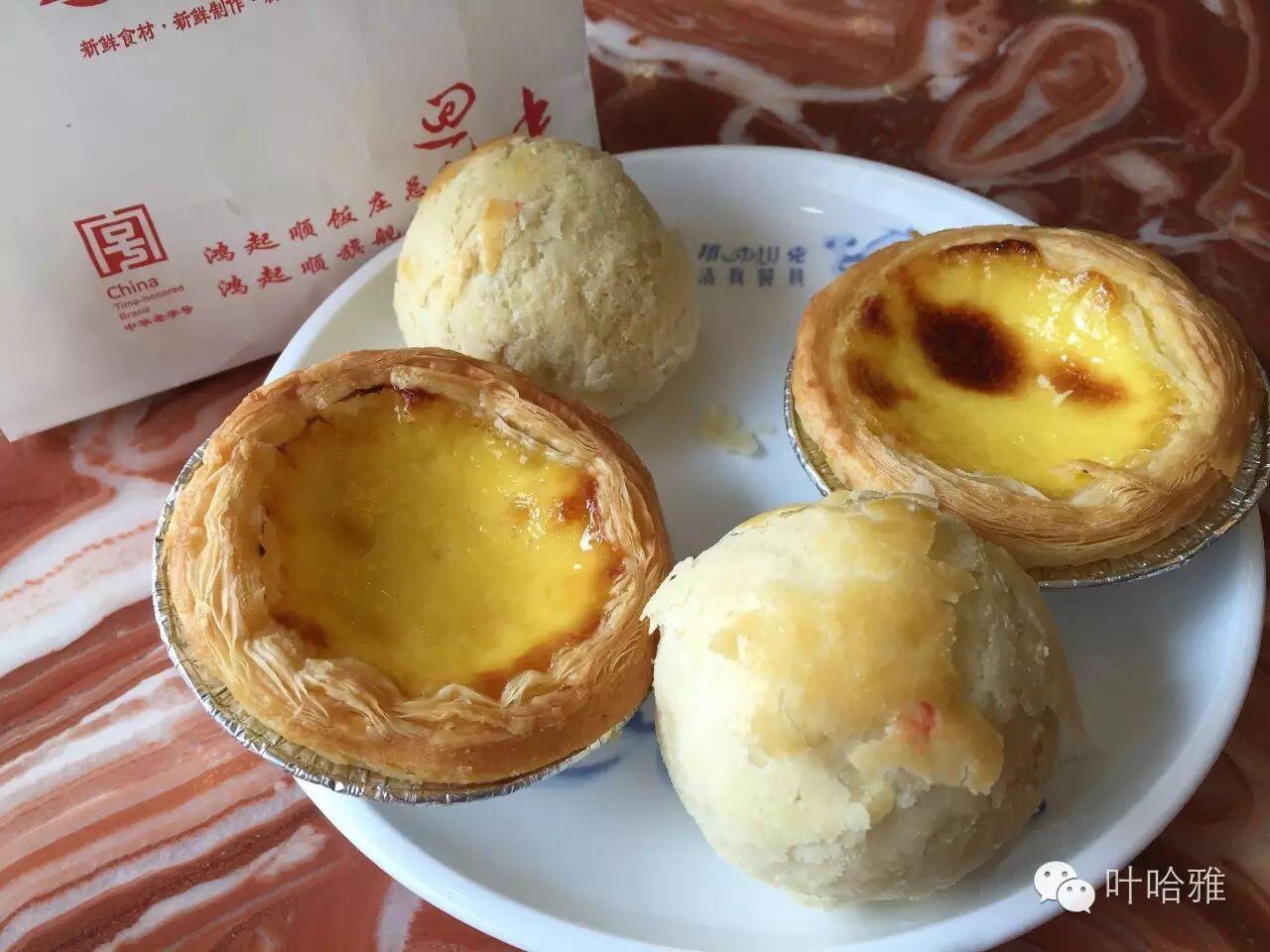
As someone from the capital, roast duck isn't what I would recommend most. What really surprised me were the pastries from the Hongqishun takeout window. The egg tarts (dan ta) and egg yolk pastries (danhuang su) were so delicious they were out of this world. I bought some to take home, and it is no exaggeration to say I would take the intercity train just to buy a box of Hongqishun pastries.
Hongqishun flagship store address: 120 Dazhigu Middle Road.
Halal Food Guide: Tianjin Autumn Eats - Syrian Food, Turkish Food and Noodles
Articles • ali2007fr posted the article • 0 comments • 246 views • 2026-05-19 22:56
Summary: This Tianjin halal food guide follows an autumn eating route through Syrian dishes, giant river prawns, yellow broth pulled noodles, Turkish food, and Xinjiang fresh milk ice cream. It keeps the original restaurant details, dishes, photos, and food notes for readers planning Muslim-friendly meals in Tianjin.
Two months later, we went back to Tianjin for a weekend trip with our kids. We arrived in Tianjin on Saturday at noon and headed straight to the Al-Andalus restaurant in the Nankai District Sunac Center for some Levantine food. The owner is Syrian. Al-Andalus was the name Arabs used for the Iberian Peninsula during the Middle Ages. In the 8th century, under the Umayyad dynasty, Al-Andalus was a famous center for economy, culture, academics, and education, serving as an important bridge for cultural and scientific exchange between the East and the West.
We ordered the four-person feast set, which included lentil soup, cream of mushroom soup, a hummus trio, lamb samosas (samosa), chicken wraps (shawarma), a four-season pizza, a mixed grill platter, black tea, and a crispy salad. We also ordered yogurt separately. Overall, the food was very authentic. It offers better value than the Arab restaurants in Beijing, and you don't have to wait in line. Their yogurt was especially good, with a rich, tangy flavor that beats many of the Arab restaurants in Beijing. The only downside was that the samosa dough was a bit thick, more like the South Asian version than the thin-crust Levantine style.
After lunch, we went to the Tianjin Museum, which is currently hosting an exhibition of historical artifacts from the National Museum of Kazakhstan. See diary: [Exhibition Visit] Tianjin Museum's Kazakhstan National Museum Historical Artifacts Exhibition.
The Tianjin Museum displays exquisite brick carvings by the Hui Muslim families known as the 'Fancy Work Ma Family' (Huahuo Majia) and 'Brick Carver Liu' (Kezhuan Liu) from the Northwest Corner. See diary: [Exhibition Visit] Exquisite brick carvings by Hui Muslim artisans 'Huahuomajia' and 'Kezhuanliu' in the Northwest Corner of Tianjin.
If you are a friend (dosti) from Beijing and are tired of the same old restaurants, a trip to Tianjin will definitely open your eyes. On this trip to Tianjin, we discovered a restaurant called Xiju that specializes in giant river prawns (luoshixia). It is located on Fuxing Road, just west of the Northwest Corner. It is run by local Hui Muslims and is very busy at night.
Their signature dish is a two-pound platter of giant river prawns, which you can get spicy or with garlic sauce. Giant river prawns are freshwater prawns originally from Malaysia in Southeast Asia. They are large and have plump, tender meat, but the texture isn't as firm as sea prawns, and the prawn flavor isn't as intense. It is similar to the difference between freshwater fish and sea fish. We ordered the garlic giant river prawns. You can add noodles to the sauce, which my son loved. He couldn't stop eating them, from start to finish, and he was the one at our table who enjoyed the meal the most.
Their Chaoshan seafood porridge was also excellent. Besides having plenty of prawns, it was packed with other seafood, making the flavor very rich.
They also have various barbecue items. We ordered squid, flounder, pineapple beef skewers, cheese bread slices, charcoal-grilled beef short ribs, and beef kimchi cheese rolls. Everything tasted great, especially the flounder, which had a wonderful texture and flavor.
Their sizzling sea bass pot (zhuzhu luyu bao) was also a hit with everyone. The sea bass was very fresh, and the garlic-clove-shaped meat had a great texture.
Their fried chicken racks are sweet and sour, making them a perfect snack that gets addictive the more you eat.
On Sunday morning, we had breakfast at Shunfa Lamian and Zhensucheng in the Xiaohaidi area of the Hexi District. Xiaohaidi is a lively residential area in the south of Tianjin with plenty of halal snacks. Shunfa Lamian is a noodle shop that has been open for over twenty years, specializing in yellow broth pulled noodles (lamian) and braised noodles (banmian). Zhensucheng is a breakfast shop that opened in 1979, specializing in crispy crepe strips in savory sauce (guobacai). Both of these shops are now franchises. The one in Xiaohaidi joined both brands, so now you can have yellow broth pulled noodles (huangtang lamian) and traditional breakfast at the same time in the morning.
We ordered yellow broth pulled noodles, water caltrop soup (lingjiao tang), flour tea (miancha), and beef pie (niurou bing). It was my first time having yellow broth pulled noodles. The yellow curry powder makes the flavor very rich, and I think it tastes even more satisfying than the clear broth version. Their water caltrop soup and flour tea both taste good, and Suleiman especially likes their flour tea. However, their beef pie has a bit too little filling. I noticed many people at the neighboring tables were eating flatbread rolls with fried fritters (dabing juanquan).
After eating at so many good restaurants in Tianjin, I finally hit a dud this time. On Sunday at noon, we went to the Galata Turkish Restaurant in Hengji Plaza, Hexi District. First of all, their tables are tiny. We ordered a meal for four, and it couldn't even fit on the table. Secondly, it is not authentic! We have eaten at so many Turkish restaurants in Beijing, Yiwu, Fuzhou, and Guangzhou, and they were all very authentic, whether run by Turkish or Azerbaijani people. This is the first time we have eaten at an inauthentic one; it is nothing like what we ate in Turkey.
Their potatoes and roasted chicken were covered in thick layers of salad dressing and ketchup. It felt just like fast food sold at a temple fair, which doesn't fit the Mediterranean diet of Turkey that focuses on spices. Also, the grilled meat was not good. Some parts were dry, and some were salty. The grill chef's skills need improvement. The grilled meat was served with pilaf (zhuafan) made with domestic short-grain rice. I suspect the chef is our fellow countryman from Xinjiang.
They do have one big advantage, which is that it is cheap! The price is about half of what you would pay at a Turkish restaurant in Beijing, so you get what you pay for. Their milk pudding and Turkish coffee also taste good. The milk pudding is not sweet, and it is quite pleasant to have with coffee. It is just that they served the coffee with a candy ball that children often eat, which is also a bad match. They should at least serve it with Turkish delight or even a piece of chocolate.
After leaving Hengji Plaza, we went to the Tatami Xinjiang Restaurant at the entrance to pack some diced noodle stir-fry (dingding chaomian) for Suleiman to eat in the evening. Their decor is quite good and very Xinjiang-style. The waiter who served us was Uyghur, and the chefs in the kitchen were all Hui Muslims. It is an open kitchen, and the chefs have real skill. We specifically asked for it to be made for a child, and the diced noodle stir-fry was indeed very suitable. Suleiman loved it. They also sell fresh milk ice cream from Tacheng, and I bought one that tasted quite good.
I just remembered that I can add locations to my official account posts, so I will also add locations for the Tianjin restaurants recommended in previous issues.
Between the mountains and the sea: from Huairou farmhouses to coastal Western restaurants.
Haishiwan Halal Western Restaurant.
Eating Halal Western food at Haishiwan on Binjiang Road in Tianjin. Overall, their dish names and plating are quite fancy and look great in photos, but the actual taste is average, similar to fast food in a shopping mall.
The best thing they have is probably the avocado salad, which is very healthy. The tuna salad is more like a simple home-style mixed vegetable dish. The seafood fried rice and beef fried rice are both soy sauce-based, which feels more suited to the tastes of the Shandong cuisine region. The seafood pizza is plated very beautifully, but the pizza base itself is very average, just like the taste of a cheap fast-food chain. They also have various drinks with names I don't recognize, which are just sparkling water mixed with syrup. The fog coffee is great for photos, but the coffee itself is also very average.
Nuobona Halal Western Restaurant.
Nuobona Halal Western Restaurant at the 80 Food Plaza in TEDA, Tianjin, is definitely the best Halal Western food I have ever eaten! The taste is far better than the ones in downtown Tianjin.
Muyi Chinese Restaurant, Nuobona Western Restaurant, and the Western bakery on the first floor in Taifeng are all part of the Yisilai Mu Restaurant founded in 1994, and their Halal license number is Binhai 001. We have eaten at Muyi before; it is creative Chinese food with many dishes they invented themselves, and the taste is excellent. This time we tried their Western food and still had nothing but praise. Their environment is also very good, and they have a special area for children to play, which is very thoughtful.
We ordered charcoal-grilled baby lobster and creamy lobster soup served two ways, French escargot, British fish and chips, baked potato skins, golden pillow durian pizza, lasagna, tiramisu, non-alcoholic mojito, dirty milk, and rose soda, and we also ordered a kids' meal for Suleiman (spaghetti, pumpkin soup, french fries, grilled chicken wings, and fruit salad). The lobster is very tender, and the creamy lobster soup is rich and very fragrant. This was my first time eating baked escargot; the texture is very chewy and bouncy, and the various spices are added perfectly. It was my first time eating British-style fried fish, though it didn't come with french fries. The way they make it is very different from the common cod cakes in China; the fish meat is ground very finely, and the texture is very moist.
Taking kids out to eat in Tianjin: Yemeni food, Algerian desserts, rice noodle rolls (changfen), Japanese food, and water caltrop soup.
Socotra Yemeni Restaurant.
Many Yemeni restaurants have opened in Guangzhou and Yiwu, but Beijing's Arab restaurants are still mostly Levantine style. If you want a Yemeni meal, you have to take an intercity train to Tianjin.
Socotra is Socotra Island in the Arabian Sea, southeast of Yemen. It was called Sugudala in the Ming Dynasty's Zheng He Navigation Map. Socotra Island was listed as a World Natural Heritage site in 2008. The island is most famous for its dragon blood trees. The Socotra restaurant's logo is a dragon blood tree, and there are photos of the trees hanging in the shop.
We ordered the signature soup, chicken lentil soup, lamb Zurbian rice, Mushakkal stir-fried vegetables, Fahsa beef stew, banana mango juice, and Khubz flatbread. Zurbian rice is a bit like Indian Biryani rice, as both are stir-fried with various spices. Their lamb is roasted and smells great, but we found the rice a bit dry. There are also small bone fragments inside, so be careful not to let children eat it.
When you go to a Yemeni restaurant, you must try the classic Yemeni dish, Fahsa beef stew. Fahsa is usually made with lamb, but this place uses beef. When they make it, they stew the meat until it is very tender. It starts in a large vat and is then moved to a small pot to continue stewing. Besides ginger, garlic, and cumin, they add a spice called fenugreek (Hulbah) when stewing the meat. Fenugreek is actually what people in Northwest China often call fragrant beans (kudou). People in the Northwest dry the leaves of the fenugreek plant and grind them into powder to steam buns, while Yemenis grind the seeds to stew meat. Fenugreek seeds expand when they meet water and easily foam up when stirred in a bowl.
The classic pairing for Fahsa stew is Mulawah Yemeni flatbread, but this place requires you to order it in advance. You can only get Khubz flatbread if you walk in. Khubz flatbread is actually the same as the pita bread in Levantine cuisine. The version they make is quite hard, and to be honest, it is not very tasty.
Qianmu Halal Japanese Cuisine
There are no longer any halal Japanese restaurants in Beijing, so you have to go to Tianjin for this. This place is very popular, and it is hard to get a seat without booking in advance. When we went after eight o'clock, they had even sold out of rice, so we had to go to the ramen shop across the street to buy some.
We ordered tempura udon, sukiyaki, eel rice, a grilled platter, cod roe potato gratin, cheese-baked crab shell, a slow-cooked sushi platter, and marble soda. Suleiman loves their udon noodles. He couldn't stop eating them, and after he finished, he was so happy that he fell right asleep. There are quite a few grilled items, but they are mostly mushroom-based vegetable dishes with less meat. The soy sauce for the sushi is a bit salty, and the sushi itself is just average, which is a pity. The staff saw we had a child, so they cooked the sukiyaki for us before bringing it to the table. That deserves a thumbs up. The eel rice tastes okay, and next time I want to try their teriyaki chicken rice.
Xue's Northwest Corner Old-Style Breakfast
Ever since the Northwest Corner became super popular, I basically stopped going there to eat. Actually, Tianjin has so many delicious breakfast spots, not just the Northwest Corner. I used to go to Tianmu and Jinjiayao for breakfast, but this time I went to Xue's Northwest Corner Old-Style Breakfast in the Lushuidao area of Jinnan District. Their shop is a simple neighborhood eatery on the ground floor of an apartment complex, where all the local seniors come to eat.
We didn't arrive until nine, so most things were sold out. We just ordered water caltrop dumplings (lingjiao tang), sesame flatbread with meat (shaobing jiarou), and savory crepe strips in sauce (guobacai). Their water caltrop dumplings are truly delicious. The skin is the perfect texture, and the filling is very fragrant. Suleiman ate several in one go. The sesame flatbread for the meat sandwich is crispy, and the flavor is quite good. The savory crepe strips are a traditional old-school flavor, but eating both the dumplings and the crepe strips together is a bit heavy. I feel like the crepe strips go best with iron-pot soy milk.
Algerian Bakery
I had an Algerian afternoon tea at Lyn's Healthy Bakeshop on Chifeng Road in Tianjin. Chifeng Road is in the former French Concession area, which is full of small Western-style villas and all kinds of little shops.
The owner, who is from Algeria, opened this small shop for tea and desserts. It should be the first Algerian restaurant in China. I have to say, Tianjin's food scene is once again at the forefront of internationalization!
They offer both à la carte and afternoon tea sets. They have both traditional Algerian desserts and Western pastries. Everything uses maple syrup instead of white sugar, focusing on healthy eating. It is probably the least sweet Arabic dessert shop I have ever visited!
We drank Algerian mint tea and Algerian orange blossom lemonade (Sherbet Mazhar). The mint tea is brewed to order, so you have to wait a while. The aroma is very strong, but because it is freshly brewed, you cannot get refills. Orange blossom water is definitely a signature Algerian drink, especially classic at wedding banquets in northern Algeria. The orange blossom drink is made from orange blossom water distilled from bitter orange blossoms, mixed with syrup and water. It is very refreshing in the summer.
We ate Algerian baklava (Baklawa), apple pie, milk pudding (M'halbi), and cheesecake. Suleiman loved the cheesecake the most. Baklava was introduced to Algeria from Turkey during the Ottoman period. The Algerian version adds crushed almonds and orange blossom water, so the taste is different from the Turkish one.
Milk pudding (M'halbi) is a classic Middle Eastern dessert for breaking the fast and is most popular during Ramadan. The name M'halbi comes from Al-Muhallab, the governor of Khorasan during the Umayyad Caliphate. Legend has it that he once had a stomachache, and a doctor made him milk-boiled rice flour with sugar. He liked it so much that he named the dessert after himself.
Finally, I want to say that their food is excellent, but the decor is still a bit simple. If they could highlight the Algerian theme more, it would definitely become a new trendy spot in Tianjin.
Yiweizhai Halal Rice Noodle Rolls
I ate rice noodle rolls (changfen) at Yiweizhai on Xihu Road in Tianjin. I used to go to Yeji Changfen whenever I visited Tianjin, but this was my first time at Yiweizhai. The shop at Yiweizhai is small, but they have a huge variety of dishes. We ordered seafood rice noodle rolls, fresh shrimp steamed dumplings (shaomai), chicken feet in black bean sauce (chizhi fengzhua), claypot rice with cured beef (laoniurou baozai fan), plain beef tendon balls, curry beef balls, curry fish balls, and traditional crispy mung bean starch jelly (laowei cuipi menzi). Except for the claypot rice, which takes a while because it is cooked from raw rice, the other dishes arrived very quickly.
Overall, their food is very good. It really shows how much effort Tianjin people put into their cooking. Their rice noodle rolls have a great texture, not as firm as the ones I had in Hong Kong. Their beef tendon balls and fish balls also have a fantastic texture; we ordered one portion and then added another. By comparison, the beef balls were just average. This was my first time eating crispy mung bean starch jelly. I had only ever had pan-fried versions before, which clearly do not taste as good as this crispy-on-the-outside, tender-on-the-inside version.
My hometown: Hexiwu Town, Wuqing, Tianjin.
Xinpengzhai Restaurant.
I first bought the signature golden-rimmed braised noodles (jinbian koumen) at Xinpengzhai Restaurant. It is beef and bean sprout braised noodles (menbing) topped with a fried egg. The egg was very fragrant, and it was my first time eating menbing this way. It tasted excellent.
Wangji Lirenzhai.
Inside the Hexiwu farmers' market is the Shouyi Snack Street, where the most famous item is the yellow rice fried cake (huangmi zhagao) from the century-old shop Wangji Lirenzhai. We arrived a bit late and they were closing at 1:00 PM, so we just bought all the remaining fried cakes.
Lirenzhai is a Tianjin intangible cultural heritage project for the craft of making Hexiwu Lirenzhai fried cakes. The Wang family's ancestral home was in Cangzhou, Hebei. At the end of the Qing Dynasty, they fled the war and came to Wuqing. They first settled in Yangcun, but later heard that Hexiwu was densely populated and had a large community of Hui Muslims, so they moved to Hexiwu to settle down. In 1918, Wang Zhenlong inherited the family craft and officially set up a stall in Hexiwu, specializing in yellow rice fried cakes. After 1958, the Wangji fried cake business was merged into a cooperative store, and it was shut down after the 1960s. It wasn't until 1979 that the second-generation successor, Wang Jinyuan, inherited the family business and revived Wangji fried cakes. In 1999, the third-generation successor, Wang Xueren, took over and renamed it Lirenzhai, which is what it is called today.
Yangji Gezhihe.
Besides yellow rice fried cakes, the fried mung bean flour rolls (gezhihe) in Hexiwu are also very famous. Unlike the common version, the ones here are filled. They come in mung bean flour and wheat flour varieties, giving them a richer texture than standard fried mung bean flour rolls. view all
Summary: This Tianjin halal food guide follows an autumn eating route through Syrian dishes, giant river prawns, yellow broth pulled noodles, Turkish food, and Xinjiang fresh milk ice cream. It keeps the original restaurant details, dishes, photos, and food notes for readers planning Muslim-friendly meals in Tianjin.
Two months later, we went back to Tianjin for a weekend trip with our kids. We arrived in Tianjin on Saturday at noon and headed straight to the Al-Andalus restaurant in the Nankai District Sunac Center for some Levantine food. The owner is Syrian. Al-Andalus was the name Arabs used for the Iberian Peninsula during the Middle Ages. In the 8th century, under the Umayyad dynasty, Al-Andalus was a famous center for economy, culture, academics, and education, serving as an important bridge for cultural and scientific exchange between the East and the West.
We ordered the four-person feast set, which included lentil soup, cream of mushroom soup, a hummus trio, lamb samosas (samosa), chicken wraps (shawarma), a four-season pizza, a mixed grill platter, black tea, and a crispy salad. We also ordered yogurt separately. Overall, the food was very authentic. It offers better value than the Arab restaurants in Beijing, and you don't have to wait in line. Their yogurt was especially good, with a rich, tangy flavor that beats many of the Arab restaurants in Beijing. The only downside was that the samosa dough was a bit thick, more like the South Asian version than the thin-crust Levantine style.
After lunch, we went to the Tianjin Museum, which is currently hosting an exhibition of historical artifacts from the National Museum of Kazakhstan. See diary: [Exhibition Visit] Tianjin Museum's Kazakhstan National Museum Historical Artifacts Exhibition.
The Tianjin Museum displays exquisite brick carvings by the Hui Muslim families known as the 'Fancy Work Ma Family' (Huahuo Majia) and 'Brick Carver Liu' (Kezhuan Liu) from the Northwest Corner. See diary: [Exhibition Visit] Exquisite brick carvings by Hui Muslim artisans 'Huahuomajia' and 'Kezhuanliu' in the Northwest Corner of Tianjin.
If you are a friend (dosti) from Beijing and are tired of the same old restaurants, a trip to Tianjin will definitely open your eyes. On this trip to Tianjin, we discovered a restaurant called Xiju that specializes in giant river prawns (luoshixia). It is located on Fuxing Road, just west of the Northwest Corner. It is run by local Hui Muslims and is very busy at night.
Their signature dish is a two-pound platter of giant river prawns, which you can get spicy or with garlic sauce. Giant river prawns are freshwater prawns originally from Malaysia in Southeast Asia. They are large and have plump, tender meat, but the texture isn't as firm as sea prawns, and the prawn flavor isn't as intense. It is similar to the difference between freshwater fish and sea fish. We ordered the garlic giant river prawns. You can add noodles to the sauce, which my son loved. He couldn't stop eating them, from start to finish, and he was the one at our table who enjoyed the meal the most.
Their Chaoshan seafood porridge was also excellent. Besides having plenty of prawns, it was packed with other seafood, making the flavor very rich.
They also have various barbecue items. We ordered squid, flounder, pineapple beef skewers, cheese bread slices, charcoal-grilled beef short ribs, and beef kimchi cheese rolls. Everything tasted great, especially the flounder, which had a wonderful texture and flavor.
Their sizzling sea bass pot (zhuzhu luyu bao) was also a hit with everyone. The sea bass was very fresh, and the garlic-clove-shaped meat had a great texture.
Their fried chicken racks are sweet and sour, making them a perfect snack that gets addictive the more you eat.
On Sunday morning, we had breakfast at Shunfa Lamian and Zhensucheng in the Xiaohaidi area of the Hexi District. Xiaohaidi is a lively residential area in the south of Tianjin with plenty of halal snacks. Shunfa Lamian is a noodle shop that has been open for over twenty years, specializing in yellow broth pulled noodles (lamian) and braised noodles (banmian). Zhensucheng is a breakfast shop that opened in 1979, specializing in crispy crepe strips in savory sauce (guobacai). Both of these shops are now franchises. The one in Xiaohaidi joined both brands, so now you can have yellow broth pulled noodles (huangtang lamian) and traditional breakfast at the same time in the morning.
We ordered yellow broth pulled noodles, water caltrop soup (lingjiao tang), flour tea (miancha), and beef pie (niurou bing). It was my first time having yellow broth pulled noodles. The yellow curry powder makes the flavor very rich, and I think it tastes even more satisfying than the clear broth version. Their water caltrop soup and flour tea both taste good, and Suleiman especially likes their flour tea. However, their beef pie has a bit too little filling. I noticed many people at the neighboring tables were eating flatbread rolls with fried fritters (dabing juanquan).
After eating at so many good restaurants in Tianjin, I finally hit a dud this time. On Sunday at noon, we went to the Galata Turkish Restaurant in Hengji Plaza, Hexi District. First of all, their tables are tiny. We ordered a meal for four, and it couldn't even fit on the table. Secondly, it is not authentic! We have eaten at so many Turkish restaurants in Beijing, Yiwu, Fuzhou, and Guangzhou, and they were all very authentic, whether run by Turkish or Azerbaijani people. This is the first time we have eaten at an inauthentic one; it is nothing like what we ate in Turkey.
Their potatoes and roasted chicken were covered in thick layers of salad dressing and ketchup. It felt just like fast food sold at a temple fair, which doesn't fit the Mediterranean diet of Turkey that focuses on spices. Also, the grilled meat was not good. Some parts were dry, and some were salty. The grill chef's skills need improvement. The grilled meat was served with pilaf (zhuafan) made with domestic short-grain rice. I suspect the chef is our fellow countryman from Xinjiang.
They do have one big advantage, which is that it is cheap! The price is about half of what you would pay at a Turkish restaurant in Beijing, so you get what you pay for. Their milk pudding and Turkish coffee also taste good. The milk pudding is not sweet, and it is quite pleasant to have with coffee. It is just that they served the coffee with a candy ball that children often eat, which is also a bad match. They should at least serve it with Turkish delight or even a piece of chocolate.
After leaving Hengji Plaza, we went to the Tatami Xinjiang Restaurant at the entrance to pack some diced noodle stir-fry (dingding chaomian) for Suleiman to eat in the evening. Their decor is quite good and very Xinjiang-style. The waiter who served us was Uyghur, and the chefs in the kitchen were all Hui Muslims. It is an open kitchen, and the chefs have real skill. We specifically asked for it to be made for a child, and the diced noodle stir-fry was indeed very suitable. Suleiman loved it. They also sell fresh milk ice cream from Tacheng, and I bought one that tasted quite good.
I just remembered that I can add locations to my official account posts, so I will also add locations for the Tianjin restaurants recommended in previous issues.
Between the mountains and the sea: from Huairou farmhouses to coastal Western restaurants.
Haishiwan Halal Western Restaurant.
Eating Halal Western food at Haishiwan on Binjiang Road in Tianjin. Overall, their dish names and plating are quite fancy and look great in photos, but the actual taste is average, similar to fast food in a shopping mall.
The best thing they have is probably the avocado salad, which is very healthy. The tuna salad is more like a simple home-style mixed vegetable dish. The seafood fried rice and beef fried rice are both soy sauce-based, which feels more suited to the tastes of the Shandong cuisine region. The seafood pizza is plated very beautifully, but the pizza base itself is very average, just like the taste of a cheap fast-food chain. They also have various drinks with names I don't recognize, which are just sparkling water mixed with syrup. The fog coffee is great for photos, but the coffee itself is also very average.
Nuobona Halal Western Restaurant.
Nuobona Halal Western Restaurant at the 80 Food Plaza in TEDA, Tianjin, is definitely the best Halal Western food I have ever eaten! The taste is far better than the ones in downtown Tianjin.
Muyi Chinese Restaurant, Nuobona Western Restaurant, and the Western bakery on the first floor in Taifeng are all part of the Yisilai Mu Restaurant founded in 1994, and their Halal license number is Binhai 001. We have eaten at Muyi before; it is creative Chinese food with many dishes they invented themselves, and the taste is excellent. This time we tried their Western food and still had nothing but praise. Their environment is also very good, and they have a special area for children to play, which is very thoughtful.
We ordered charcoal-grilled baby lobster and creamy lobster soup served two ways, French escargot, British fish and chips, baked potato skins, golden pillow durian pizza, lasagna, tiramisu, non-alcoholic mojito, dirty milk, and rose soda, and we also ordered a kids' meal for Suleiman (spaghetti, pumpkin soup, french fries, grilled chicken wings, and fruit salad). The lobster is very tender, and the creamy lobster soup is rich and very fragrant. This was my first time eating baked escargot; the texture is very chewy and bouncy, and the various spices are added perfectly. It was my first time eating British-style fried fish, though it didn't come with french fries. The way they make it is very different from the common cod cakes in China; the fish meat is ground very finely, and the texture is very moist.
Taking kids out to eat in Tianjin: Yemeni food, Algerian desserts, rice noodle rolls (changfen), Japanese food, and water caltrop soup.
Socotra Yemeni Restaurant.
Many Yemeni restaurants have opened in Guangzhou and Yiwu, but Beijing's Arab restaurants are still mostly Levantine style. If you want a Yemeni meal, you have to take an intercity train to Tianjin.
Socotra is Socotra Island in the Arabian Sea, southeast of Yemen. It was called Sugudala in the Ming Dynasty's Zheng He Navigation Map. Socotra Island was listed as a World Natural Heritage site in 2008. The island is most famous for its dragon blood trees. The Socotra restaurant's logo is a dragon blood tree, and there are photos of the trees hanging in the shop.
We ordered the signature soup, chicken lentil soup, lamb Zurbian rice, Mushakkal stir-fried vegetables, Fahsa beef stew, banana mango juice, and Khubz flatbread. Zurbian rice is a bit like Indian Biryani rice, as both are stir-fried with various spices. Their lamb is roasted and smells great, but we found the rice a bit dry. There are also small bone fragments inside, so be careful not to let children eat it.
When you go to a Yemeni restaurant, you must try the classic Yemeni dish, Fahsa beef stew. Fahsa is usually made with lamb, but this place uses beef. When they make it, they stew the meat until it is very tender. It starts in a large vat and is then moved to a small pot to continue stewing. Besides ginger, garlic, and cumin, they add a spice called fenugreek (Hulbah) when stewing the meat. Fenugreek is actually what people in Northwest China often call fragrant beans (kudou). People in the Northwest dry the leaves of the fenugreek plant and grind them into powder to steam buns, while Yemenis grind the seeds to stew meat. Fenugreek seeds expand when they meet water and easily foam up when stirred in a bowl.
The classic pairing for Fahsa stew is Mulawah Yemeni flatbread, but this place requires you to order it in advance. You can only get Khubz flatbread if you walk in. Khubz flatbread is actually the same as the pita bread in Levantine cuisine. The version they make is quite hard, and to be honest, it is not very tasty.
Qianmu Halal Japanese Cuisine
There are no longer any halal Japanese restaurants in Beijing, so you have to go to Tianjin for this. This place is very popular, and it is hard to get a seat without booking in advance. When we went after eight o'clock, they had even sold out of rice, so we had to go to the ramen shop across the street to buy some.
We ordered tempura udon, sukiyaki, eel rice, a grilled platter, cod roe potato gratin, cheese-baked crab shell, a slow-cooked sushi platter, and marble soda. Suleiman loves their udon noodles. He couldn't stop eating them, and after he finished, he was so happy that he fell right asleep. There are quite a few grilled items, but they are mostly mushroom-based vegetable dishes with less meat. The soy sauce for the sushi is a bit salty, and the sushi itself is just average, which is a pity. The staff saw we had a child, so they cooked the sukiyaki for us before bringing it to the table. That deserves a thumbs up. The eel rice tastes okay, and next time I want to try their teriyaki chicken rice.
Xue's Northwest Corner Old-Style Breakfast
Ever since the Northwest Corner became super popular, I basically stopped going there to eat. Actually, Tianjin has so many delicious breakfast spots, not just the Northwest Corner. I used to go to Tianmu and Jinjiayao for breakfast, but this time I went to Xue's Northwest Corner Old-Style Breakfast in the Lushuidao area of Jinnan District. Their shop is a simple neighborhood eatery on the ground floor of an apartment complex, where all the local seniors come to eat.
We didn't arrive until nine, so most things were sold out. We just ordered water caltrop dumplings (lingjiao tang), sesame flatbread with meat (shaobing jiarou), and savory crepe strips in sauce (guobacai). Their water caltrop dumplings are truly delicious. The skin is the perfect texture, and the filling is very fragrant. Suleiman ate several in one go. The sesame flatbread for the meat sandwich is crispy, and the flavor is quite good. The savory crepe strips are a traditional old-school flavor, but eating both the dumplings and the crepe strips together is a bit heavy. I feel like the crepe strips go best with iron-pot soy milk.
Algerian Bakery
I had an Algerian afternoon tea at Lyn's Healthy Bakeshop on Chifeng Road in Tianjin. Chifeng Road is in the former French Concession area, which is full of small Western-style villas and all kinds of little shops.
The owner, who is from Algeria, opened this small shop for tea and desserts. It should be the first Algerian restaurant in China. I have to say, Tianjin's food scene is once again at the forefront of internationalization!
They offer both à la carte and afternoon tea sets. They have both traditional Algerian desserts and Western pastries. Everything uses maple syrup instead of white sugar, focusing on healthy eating. It is probably the least sweet Arabic dessert shop I have ever visited!
We drank Algerian mint tea and Algerian orange blossom lemonade (Sherbet Mazhar). The mint tea is brewed to order, so you have to wait a while. The aroma is very strong, but because it is freshly brewed, you cannot get refills. Orange blossom water is definitely a signature Algerian drink, especially classic at wedding banquets in northern Algeria. The orange blossom drink is made from orange blossom water distilled from bitter orange blossoms, mixed with syrup and water. It is very refreshing in the summer.
We ate Algerian baklava (Baklawa), apple pie, milk pudding (M'halbi), and cheesecake. Suleiman loved the cheesecake the most. Baklava was introduced to Algeria from Turkey during the Ottoman period. The Algerian version adds crushed almonds and orange blossom water, so the taste is different from the Turkish one.
Milk pudding (M'halbi) is a classic Middle Eastern dessert for breaking the fast and is most popular during Ramadan. The name M'halbi comes from Al-Muhallab, the governor of Khorasan during the Umayyad Caliphate. Legend has it that he once had a stomachache, and a doctor made him milk-boiled rice flour with sugar. He liked it so much that he named the dessert after himself.
Finally, I want to say that their food is excellent, but the decor is still a bit simple. If they could highlight the Algerian theme more, it would definitely become a new trendy spot in Tianjin.
Yiweizhai Halal Rice Noodle Rolls
I ate rice noodle rolls (changfen) at Yiweizhai on Xihu Road in Tianjin. I used to go to Yeji Changfen whenever I visited Tianjin, but this was my first time at Yiweizhai. The shop at Yiweizhai is small, but they have a huge variety of dishes. We ordered seafood rice noodle rolls, fresh shrimp steamed dumplings (shaomai), chicken feet in black bean sauce (chizhi fengzhua), claypot rice with cured beef (laoniurou baozai fan), plain beef tendon balls, curry beef balls, curry fish balls, and traditional crispy mung bean starch jelly (laowei cuipi menzi). Except for the claypot rice, which takes a while because it is cooked from raw rice, the other dishes arrived very quickly.
Overall, their food is very good. It really shows how much effort Tianjin people put into their cooking. Their rice noodle rolls have a great texture, not as firm as the ones I had in Hong Kong. Their beef tendon balls and fish balls also have a fantastic texture; we ordered one portion and then added another. By comparison, the beef balls were just average. This was my first time eating crispy mung bean starch jelly. I had only ever had pan-fried versions before, which clearly do not taste as good as this crispy-on-the-outside, tender-on-the-inside version.
My hometown: Hexiwu Town, Wuqing, Tianjin.
Xinpengzhai Restaurant.
I first bought the signature golden-rimmed braised noodles (jinbian koumen) at Xinpengzhai Restaurant. It is beef and bean sprout braised noodles (menbing) topped with a fried egg. The egg was very fragrant, and it was my first time eating menbing this way. It tasted excellent.
Wangji Lirenzhai.
Inside the Hexiwu farmers' market is the Shouyi Snack Street, where the most famous item is the yellow rice fried cake (huangmi zhagao) from the century-old shop Wangji Lirenzhai. We arrived a bit late and they were closing at 1:00 PM, so we just bought all the remaining fried cakes.
Lirenzhai is a Tianjin intangible cultural heritage project for the craft of making Hexiwu Lirenzhai fried cakes. The Wang family's ancestral home was in Cangzhou, Hebei. At the end of the Qing Dynasty, they fled the war and came to Wuqing. They first settled in Yangcun, but later heard that Hexiwu was densely populated and had a large community of Hui Muslims, so they moved to Hexiwu to settle down. In 1918, Wang Zhenlong inherited the family craft and officially set up a stall in Hexiwu, specializing in yellow rice fried cakes. After 1958, the Wangji fried cake business was merged into a cooperative store, and it was shut down after the 1960s. It wasn't until 1979 that the second-generation successor, Wang Jinyuan, inherited the family business and revived Wangji fried cakes. In 1999, the third-generation successor, Wang Xueren, took over and renamed it Lirenzhai, which is what it is called today.
Yangji Gezhihe.
Besides yellow rice fried cakes, the fried mung bean flour rolls (gezhihe) in Hexiwu are also very famous. Unlike the common version, the ones here are filled. They come in mung bean flour and wheat flour varieties, giving them a richer texture than standard fried mung bean flour rolls.
Halal Travel Guide: Tianjin Northwest Corner — Muslim Food and Street Changes (Part 1)
Articles • ali2007fr posted the article • 0 comments • 139 views • 2026-05-18 02:39
Summary: Tianjin Northwest Corner — Muslim Food and Street Changes is presented here as a firsthand travel account in clear English, beginning with this scene: In January and February 2016, Xiao Lin took me to explore the food in the Northwest Corner of Tianjin twice. The account keeps its focus on Tianjin Halal Food, Northwest Corner, Muslim Streets while preserving the names, places, food, and historical details from the Chinese source.
In January and February 2016, Xiao Lin took me to explore the food in the Northwest Corner of Tianjin twice. Those two trips to the Northwest Corner made me fall in love with the place. Over the next five years, from 2016 to 2021, I visited the Northwest Corner 11 more times to eat and explore. These 13 trips allowed me to document some of the changes in the area, including the now-vanished Northwest Corner night market, the meat porridge (rouzhou) and fried cakes (zhagao) at the entrance of the South Mosque, and various shops that disappeared due to urban renewal. I will now share my 13 trips to the Northwest Corner with you.
The History of the Northwest Corner
First, let me briefly introduce the history of the Northwest Corner in Tianjin. The Northwest Corner was once the largest Hui Muslim community in Tianjin. Before the demolition, it was home to 26,000 Hui Muslims, accounting for one-fifth of the Hui population in Tianjin at that time.
After Tianjin Wei was fortified in 1404, Hui Muslims continuously moved to the area via the Grand Canal from places like Anhui, Jiangsu, and Hebei. Some chose to settle in the Northwest Corner of the old city near the bustling Beidaguan canal transport hub, and they built the Northwest Corner Great Mosque (Qingzhen Dasi) around 1644.
With the Great Mosque at its center, the Northwest Corner was filled with halal shops before 1995. It also had 20 ethnic kindergartens, 7 ethnic primary schools, 2 ethnic middle schools, and 2 ethnic hospitals. In 1985, the Wenchang Palace Ethnic Food Street was built, and in 1988, it was renovated into the Dahuoxiang Ethnic Farmers' Market.
Demolition began in the mid-1990s, and the Hui Muslims of the Northwest Corner gradually scattered. Some people opened shops elsewhere and used the "Northwest Corner" name to show their roots.
Between 2004 and 2007, demolition began east of Dafeng Road, clearing away all buildings outside the Great Mosque (Qingzhen Dasi), the Ethnic Culture Palace, and the Islamic Association. The Northwest Corner remains an important community for Hui Muslims in Tianjin today, centered around the South Mosque (Qingzhen Nansi), which is home to many delicious Hui Muslim snacks.
In 1900, three French expeditionary captains named Present, Carmel, and Discher used a reconnaissance hot air balloon to photograph the area inside and outside the West Gate of Tianjin, with the Northwest Corner visible in the top right.
The Northwest Corner in 1983.
Mosque.
The Great Mosque of Tianjin in the Northwest Corner was reportedly built in 1644 (the first year of the Shunzhi reign of the Qing Dynasty) and was not very large at first. It was expanded twice, in 1679 (the eighteenth year of the Kangxi reign) and 1801 (the sixth year of the Jiaqing reign), to reach its current size. A major structural renovation was carried out between 2009 and 2011. I will post a separate article later featuring photos of Tianjin mosques.
The South Mosque in the Northwest Corner was first built in 1819 (the twenty-fourth year of the Jiaqing reign) and was completed in 1845 (the twenty-fifth year of the Daoguang reign). It was closed after 1958 and turned into a school and a cardboard box factory after 1961. In 1976, the main prayer hall was turned into a factory workshop and was destroyed by a fire caused by heating equipment; it was rebuilt over 12 years starting in 1982. In 2001, the main hall roof was renovated, replacing the gray tube tiles with green glazed tiles.
The Northwest Corner West Mosque.
Next to it is the Women's Mosque.
January 2016.
In the Northwest Corner in January 2016, you could see Xiao Li Roasted Chicken (Xiao Li Shaoji) right outside the subway station, where there was always a long line.
Walking south along West Horse Road (Xi Ma Lu), this area used to be the west city wall of Tianjin.
Homemade candies and preserved fruits from Hui Muslim locals.
Turn into the Hui Muslim residential area on Huanqing West Alley.
Sticky bean buns (niandoubao) from Xiao Dong Sticky Foods.
The Ethnic Building (Minzu Lou) in the Northwest Corner Hui Muslim residential area.
Wen's Rice Cake (Wenji Gaogan) at the entrance of the South Mosque, though the area is now cleared out.
Li's Sizzling Rice Dish (Li Ji Guobacai) on the other side of the South Mosque is very popular now, but the stall shed is gone.
Keep heading south, and you will find more and more halal snacks.
The row of shops on the right has been cleared out and turned into a parking lot.
Walk west from Xiguan Beili, and you will reach the halal supermarket.
I bought a yellow cap made in Tianmu Village at the halal supermarket; yellow is the main color for Hui Muslims in Tianjin.
Head back to Xima Road.
For dinner, I ate at Qingfade Restaurant on Xima Road, which is a classic stir-fry spot that represents the Northwest Corner area.
Night view of Xiguan Main Street.
The famous Hailan black beans (hailan wudou) on Xiguan Main Street are still here.
Back at the Northwest Corner subway station, the night market here is gone now.
July 2016.
On a hot summer afternoon on July 9, 2016, my childhood friend and I came to the Northwest Corner again to see how it differs from winter.
To get to the Northwest Corner from Beijing, it is best to take the train to Tianjin West Station, then take the subway one stop south to Northwest Corner Station. Right outside the southwest exit of the subway station is a halal cold drink stand. They have house-made sour plum drink (suanmeitang), homemade lemonade, and shaved ice (xuehualao). My childhood friend and I bought the sour plum drink and lemonade. They were delicious.
We kept walking south along West Horse Road (Xima Lu). The afternoon temperature was high, and there were very few people on the street.
At Ring City Noodle Shop (Huancheng Mianguan), my friend and I each had a bowl of cold noodles with shredded chicken and a plate of tofu with century egg. It was very refreshing. Almost no other halal restaurant in Beijing makes cold noodles better than this one.
We continued walking south. I guess everyone was at home staying out of the heat. Not far ahead was the alley entrance facing the South Mosque (Qingzhen Nansi), where we turned into Huanqing West Alley.
The intersection of Huanqing West Alley and Xiguan North Street is the heart of the Northwest Corner, and it is full of shops. I bought two coarse-grain vegetable dumplings (caimian tuanzi).
We went into Mumin Supermarket and bought a jar of stir-fried shrimp paste. My friend and I first came to Tianjin together ten years ago and specifically came here to buy this paste to eat with steamed buns (mantou). Haha!
Mumin Supermarket has now changed its name to Mumin Supermarket (Mumin Chaoshi, using different characters).
Coming out of Mumin Supermarket, we entered the north-south market on the east side of Xiguan Beili that leads to Xiguan Street. There were very fragrant fried eggplant boxes and lotus root boxes.
We turned onto Xiguan Street. When I came here in winter, the thing that left the deepest impression was the hot black beans (wudou) at the east entrance. So, we went to buy 3 yuan worth of black beans. My friend highly praised them, saying they were truly delicious.
Further east from the black beans is the intersection of Xiguan Street and West Horse Road. On the northwest side of the road, they sell seaweed rice rolls, shaved ice, and milkshakes. I bought a cup of red bean condensed milk shaved ice, which was super refreshing.
August 2016
On August 20, 2016, over a month later, my childhood friend and I returned to Tianjin on a not-so-hot afternoon. We got off the train and took the subway straight to the Northwest Corner (Xibeijiao). We exited the southwest subway entrance and headed right to the cold drink shop we had been looking forward to. We had delicious sour plum drink (suanmeitang) there last time, so this time we tried the snowflake shaved ice (xuehualao).
The snowflake shaved ice felt like red hawthorn shaved ice. Imagine it as snow made of stir-fried red hawthorn (chaohongguo). It was not as sweet as the stir-fried red hawthorn in Beijing, and I really liked it.
We kept walking south along West Horse Road (Ximalu), then turned west at the intersection of the South Mosque (Qingzhen Nansi). Many shops were closed due to the extreme heat when we visited last month, but it was much livelier this time.
We walked south along Huanqing West Alley, turned west at the Muslim supermarket (Mumin Chaoshi), and walked to the end to find Wang Sangu Beef Pie. We could smell the aroma from far away. The kitchen was outdoors. We lined up from south to north. We paid and got a ticket from the man at the south end. Moving north, two women wrapped the pies, one woman handed them out, and two men cooked them. On the west side, others handled the cold dishes and stewed beef brisket. Everything was organized and lively.
My friend and I bought a 17-yuan beef pie and took it inside to eat. The best part was the crust, which was crispy and had a great texture.
We walked around outside and returned to the Northwest Corner in the evening.
The next morning, we went to the Northwest Corner for breakfast. Outside the South Mosque, we ate savory crepe strips (guobacai) and fried dough rolls (juanquan) at Chai's Breakfast. My childhood friend loves the fried dough rolls so much that he bought another one from the owner after finishing the first. The portion of savory crepe strips I had was huge, so I couldn't finish it all.
Sunday was much hotter than Saturday. My friend and I wandered around the Northwest Corner for a while, but the heat became too much, so we took the subway to the train station.
On Sunday, August 27, 2016, at 11:00 a.m., I took the intercity train to Tianjin. After exiting the Northwest Corner subway station, I first went to eat Wang Sangu meat pie (roubing), then bought two yuan worth of black beans (wudou) to snack on while walking. We walked from the Ancient Culture Street back to the Northwest Corner and had a snow-flake ice dessert (xuehualao) at the Guishunzhai shop at the intersection. It had frozen hawthorn and frozen raisins in it, which was very refreshing.
We strolled from Guishunzhai to Uncle Er's Specialty Clay Pot (erdaye tese shaguo) on Jieyuan Road, but it only opens in the evening. Following Xiaolin's suggestion, we ordered lamb knee bone (yanghaba) and vinegar pepper tofu. The lamb knee bone was stewed until very tender and full of flavor. The vinegar pepper tofu tasted like a mix of hot and sour soup and soft tofu, which I really liked.
After finishing the clay pot, a cart selling tea soup (chatang) happened to pull up. I had heard that Tianjin's tea soup is a local specialty, so I bought a bowl of almond tea soup. They were very generous with the toppings, and it reminded me of the tea soup I drank as a child.
January 2017
Whenever anyone mentions the Northwest Corner in Tianjin, my mouth starts watering. On Friday, January 13, 2017, right after work, I set off on another trip to the Northwest Corner of Tianjin.
I took the intercity train from Beijing South Station to Tianjin West Station, then transferred to Line 1 of the subway for one stop to reach the Northwest Corner. The halal night market is right across from the southwest exit of the Northwest Corner subway station. It has all kinds of snacks like fried skewers (zhachuan), braised rice (bafan), and steamed pear cakes (shuligao). My goal this time was the long-awaited Ye's Rice Noodle Rolls (Yeji changfen).
Ye's Rice Noodle Rolls hasn't been in the Northwest Corner for long, but it is the most popular spot at the night market. When I arrived, they had the longest line. I ordered the seafood combo rice noodle rolls with an egg, and the taste was very authentic! It was cold in the winter, so most people got their food to go. Since I came specifically to eat it, I sat in a small pavilion across the street.
Besides rice noodle rolls, they also sell radish beef offal (luobo niuza). The sign says the recipe comes from old Hui Muslims on Guangta Road in Guangzhou. More people buy the rice noodle rolls than the beef offal, but honestly, the beef offal was so, so good. It had that slightly sweet Cantonese flavor that instantly took me back to the Hui Muslim restaurant in Guangzhou. Their sweet and spicy chopped chili sauce is amazing and adds so much flavor. Even someone like me who doesn't usually eat much chili couldn't stop wanting more when I saw their sauce.
The next morning, I continued exploring and eating in the Northwest Corner. A great day starts with a set of savory crepe with fried dough sticks (jianbing guozi)! A unique feature of Tianjin jianbing guozi is that many locals bring their own two eggs for the cook to use. As tourists, we just stick to the cook's eggs.
Next to Lingdangge Middle School is the Mu Family spring roll (juanquan) shop, where people line up all year round. I waited in line to try one, but it felt a bit oily. view all
Summary: Tianjin Northwest Corner — Muslim Food and Street Changes is presented here as a firsthand travel account in clear English, beginning with this scene: In January and February 2016, Xiao Lin took me to explore the food in the Northwest Corner of Tianjin twice. The account keeps its focus on Tianjin Halal Food, Northwest Corner, Muslim Streets while preserving the names, places, food, and historical details from the Chinese source.
In January and February 2016, Xiao Lin took me to explore the food in the Northwest Corner of Tianjin twice. Those two trips to the Northwest Corner made me fall in love with the place. Over the next five years, from 2016 to 2021, I visited the Northwest Corner 11 more times to eat and explore. These 13 trips allowed me to document some of the changes in the area, including the now-vanished Northwest Corner night market, the meat porridge (rouzhou) and fried cakes (zhagao) at the entrance of the South Mosque, and various shops that disappeared due to urban renewal. I will now share my 13 trips to the Northwest Corner with you.
The History of the Northwest Corner
First, let me briefly introduce the history of the Northwest Corner in Tianjin. The Northwest Corner was once the largest Hui Muslim community in Tianjin. Before the demolition, it was home to 26,000 Hui Muslims, accounting for one-fifth of the Hui population in Tianjin at that time.
After Tianjin Wei was fortified in 1404, Hui Muslims continuously moved to the area via the Grand Canal from places like Anhui, Jiangsu, and Hebei. Some chose to settle in the Northwest Corner of the old city near the bustling Beidaguan canal transport hub, and they built the Northwest Corner Great Mosque (Qingzhen Dasi) around 1644.
With the Great Mosque at its center, the Northwest Corner was filled with halal shops before 1995. It also had 20 ethnic kindergartens, 7 ethnic primary schools, 2 ethnic middle schools, and 2 ethnic hospitals. In 1985, the Wenchang Palace Ethnic Food Street was built, and in 1988, it was renovated into the Dahuoxiang Ethnic Farmers' Market.
Demolition began in the mid-1990s, and the Hui Muslims of the Northwest Corner gradually scattered. Some people opened shops elsewhere and used the "Northwest Corner" name to show their roots.
Between 2004 and 2007, demolition began east of Dafeng Road, clearing away all buildings outside the Great Mosque (Qingzhen Dasi), the Ethnic Culture Palace, and the Islamic Association. The Northwest Corner remains an important community for Hui Muslims in Tianjin today, centered around the South Mosque (Qingzhen Nansi), which is home to many delicious Hui Muslim snacks.
In 1900, three French expeditionary captains named Present, Carmel, and Discher used a reconnaissance hot air balloon to photograph the area inside and outside the West Gate of Tianjin, with the Northwest Corner visible in the top right.
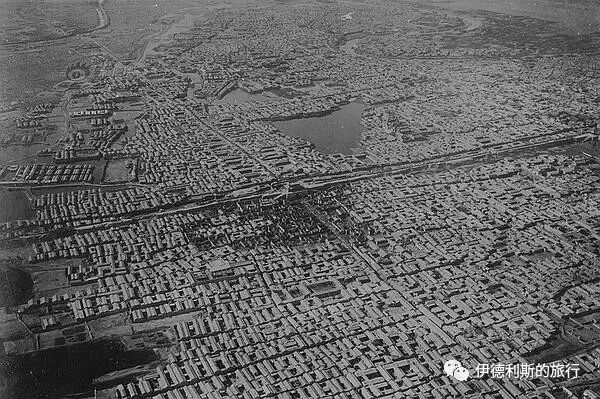
The Northwest Corner in 1983.
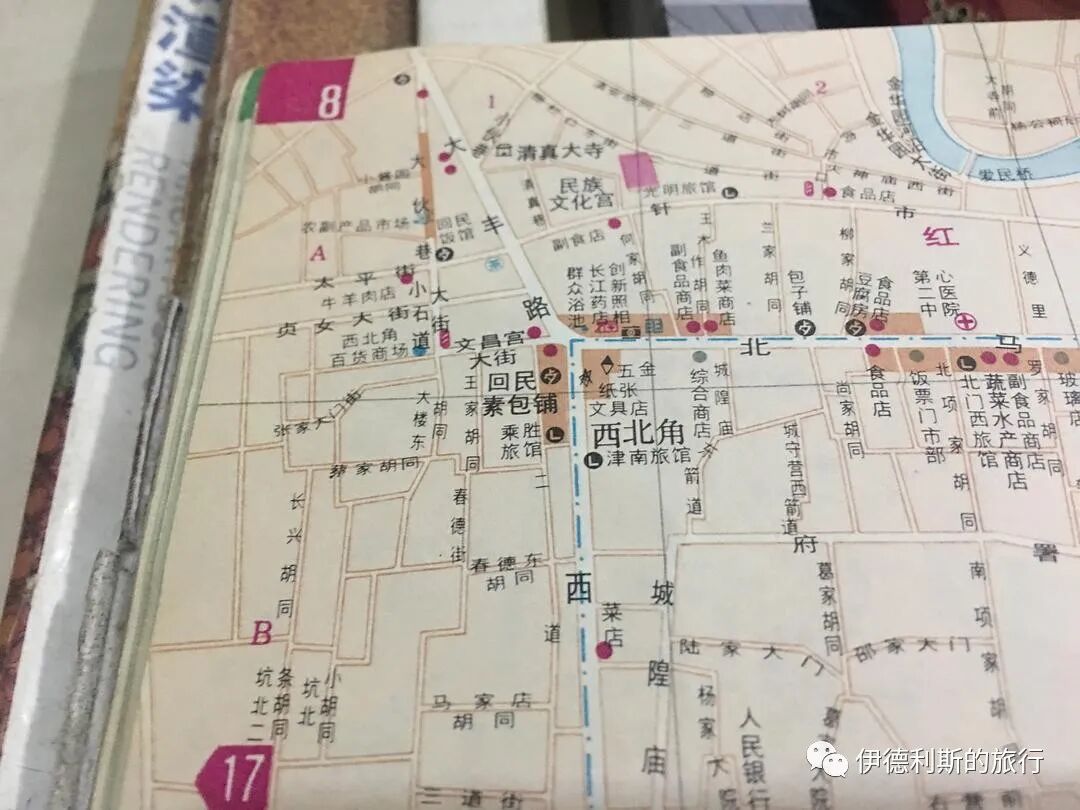
Mosque.
The Great Mosque of Tianjin in the Northwest Corner was reportedly built in 1644 (the first year of the Shunzhi reign of the Qing Dynasty) and was not very large at first. It was expanded twice, in 1679 (the eighteenth year of the Kangxi reign) and 1801 (the sixth year of the Jiaqing reign), to reach its current size. A major structural renovation was carried out between 2009 and 2011. I will post a separate article later featuring photos of Tianjin mosques.
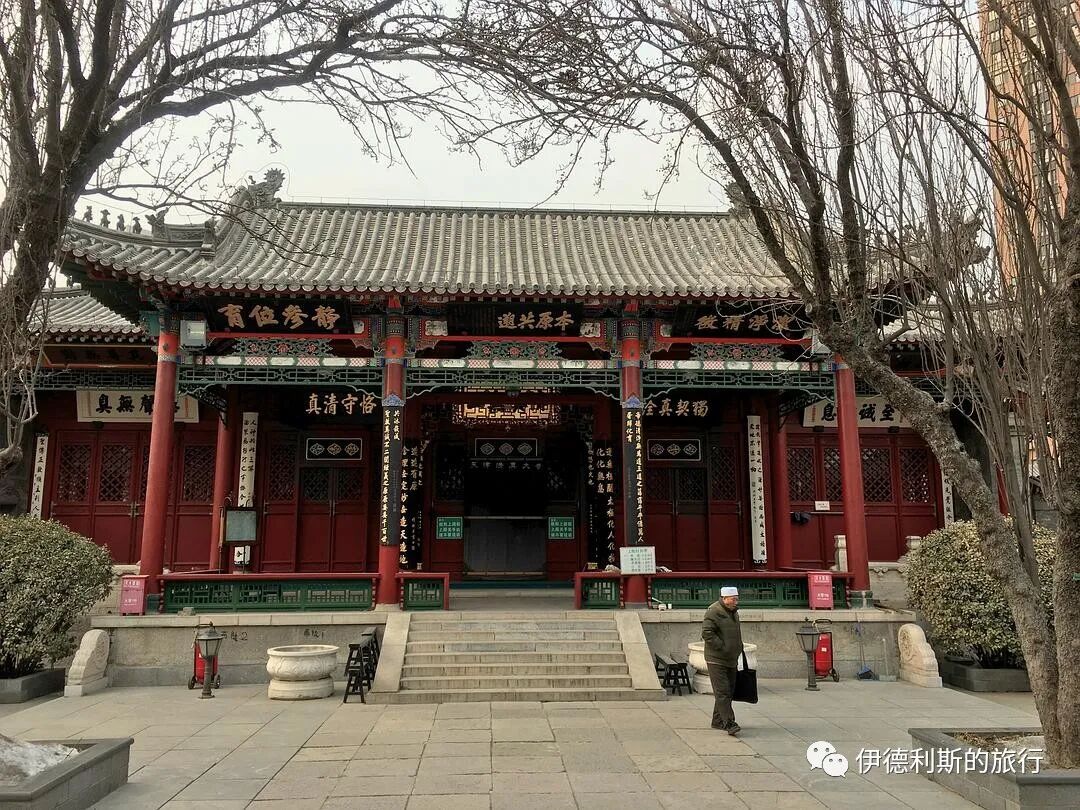
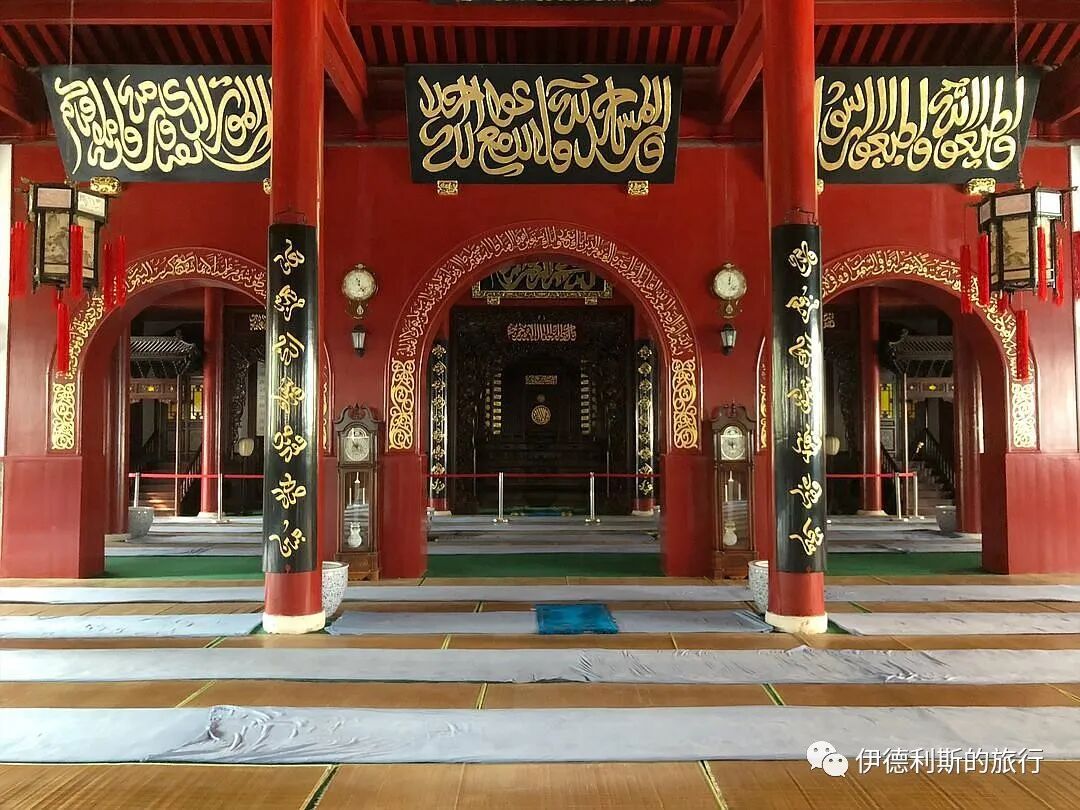
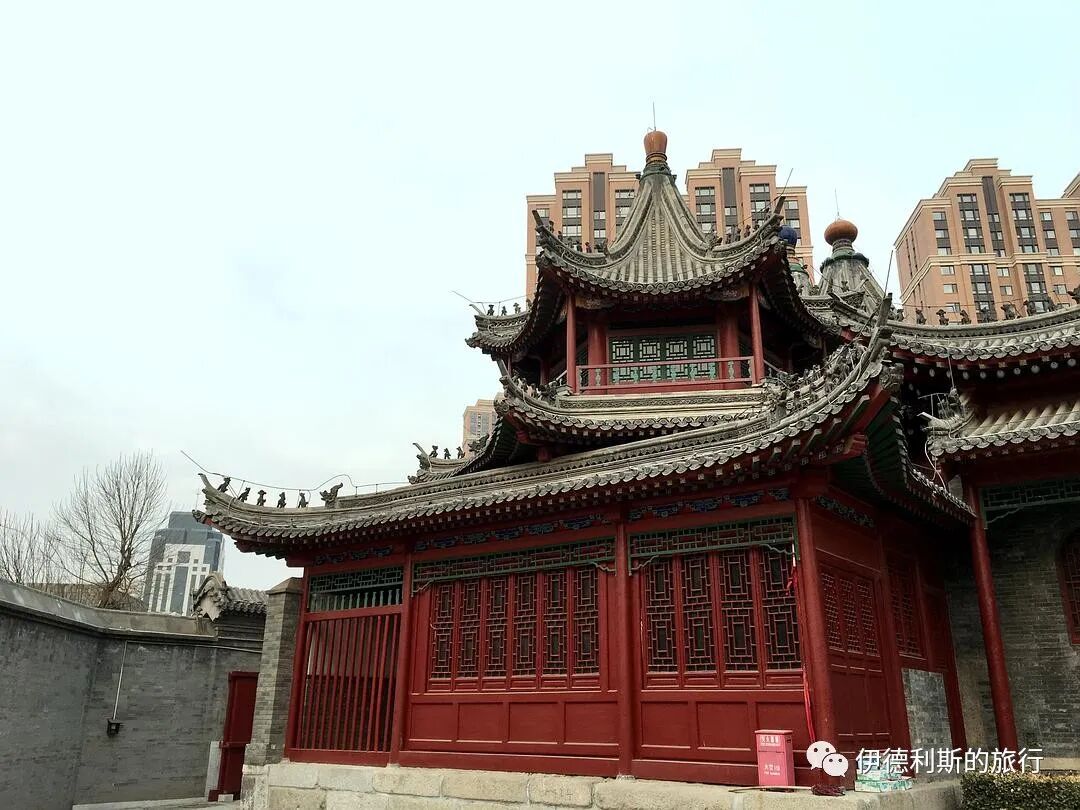
The South Mosque in the Northwest Corner was first built in 1819 (the twenty-fourth year of the Jiaqing reign) and was completed in 1845 (the twenty-fifth year of the Daoguang reign). It was closed after 1958 and turned into a school and a cardboard box factory after 1961. In 1976, the main prayer hall was turned into a factory workshop and was destroyed by a fire caused by heating equipment; it was rebuilt over 12 years starting in 1982. In 2001, the main hall roof was renovated, replacing the gray tube tiles with green glazed tiles.
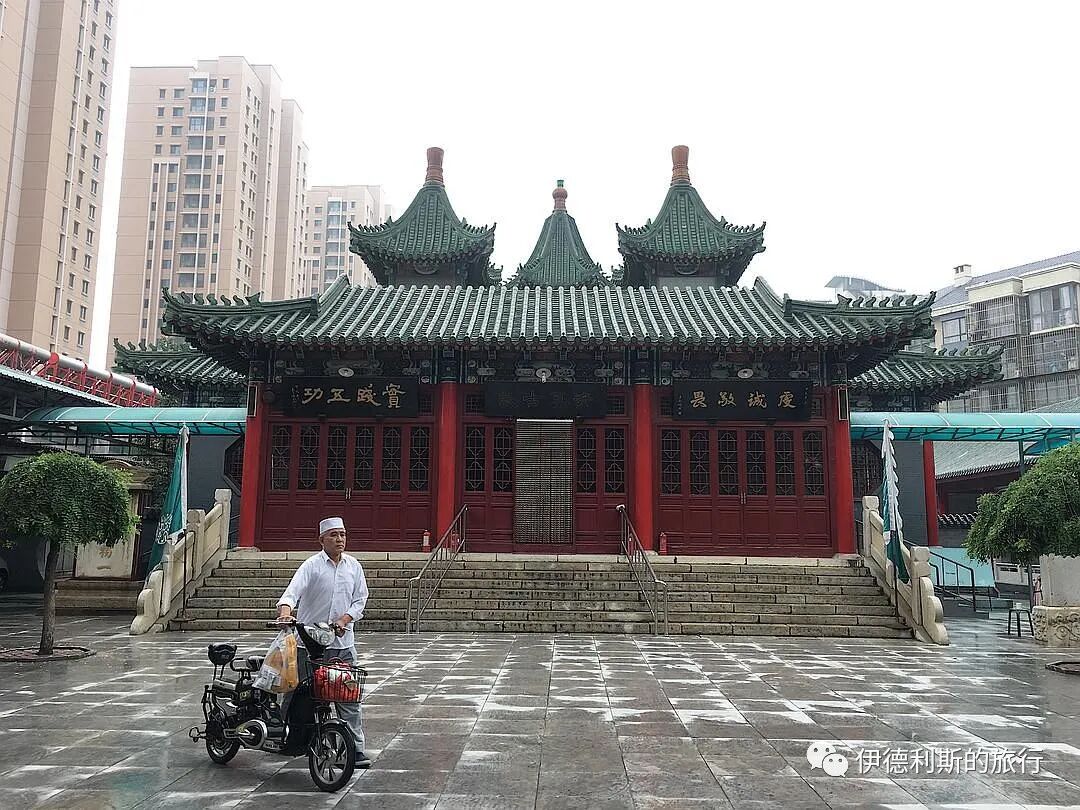
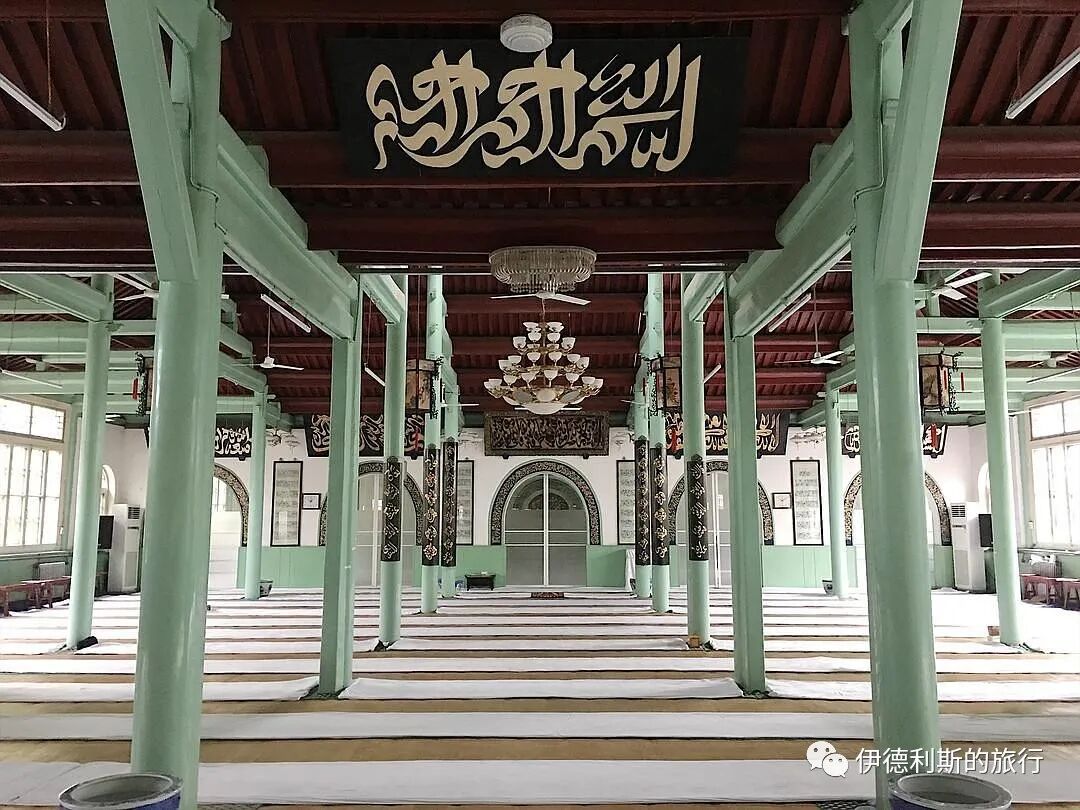
The Northwest Corner West Mosque.
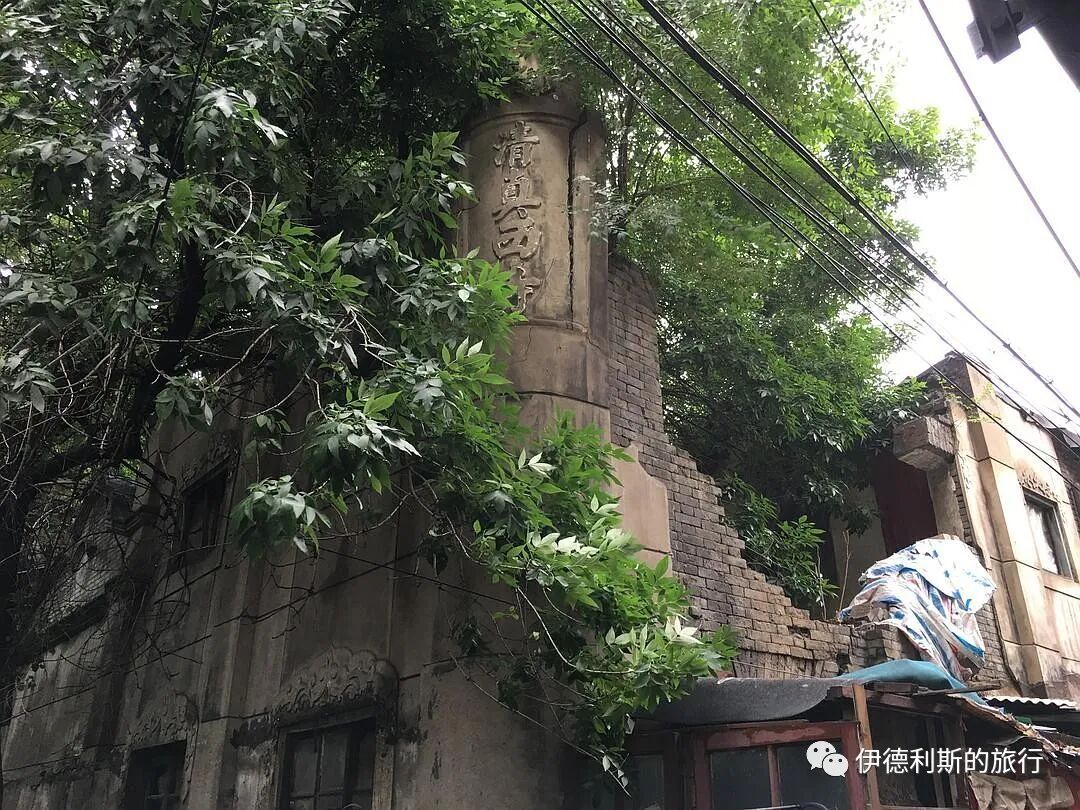
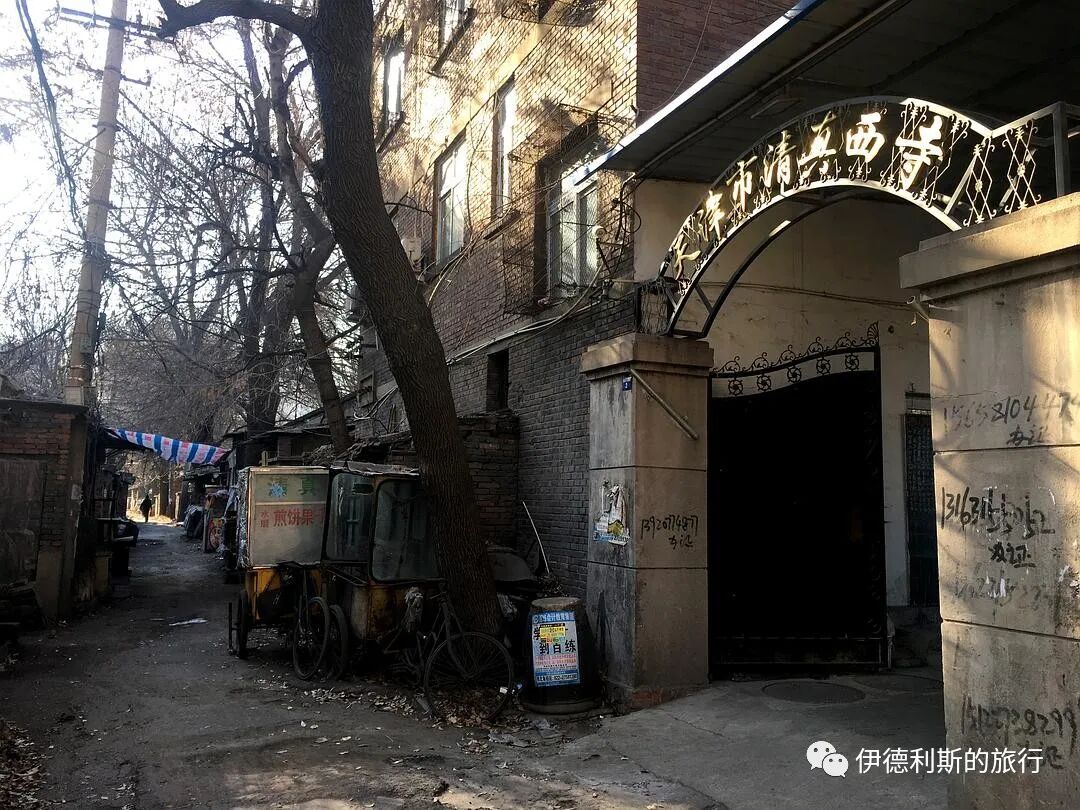
Next to it is the Women's Mosque.
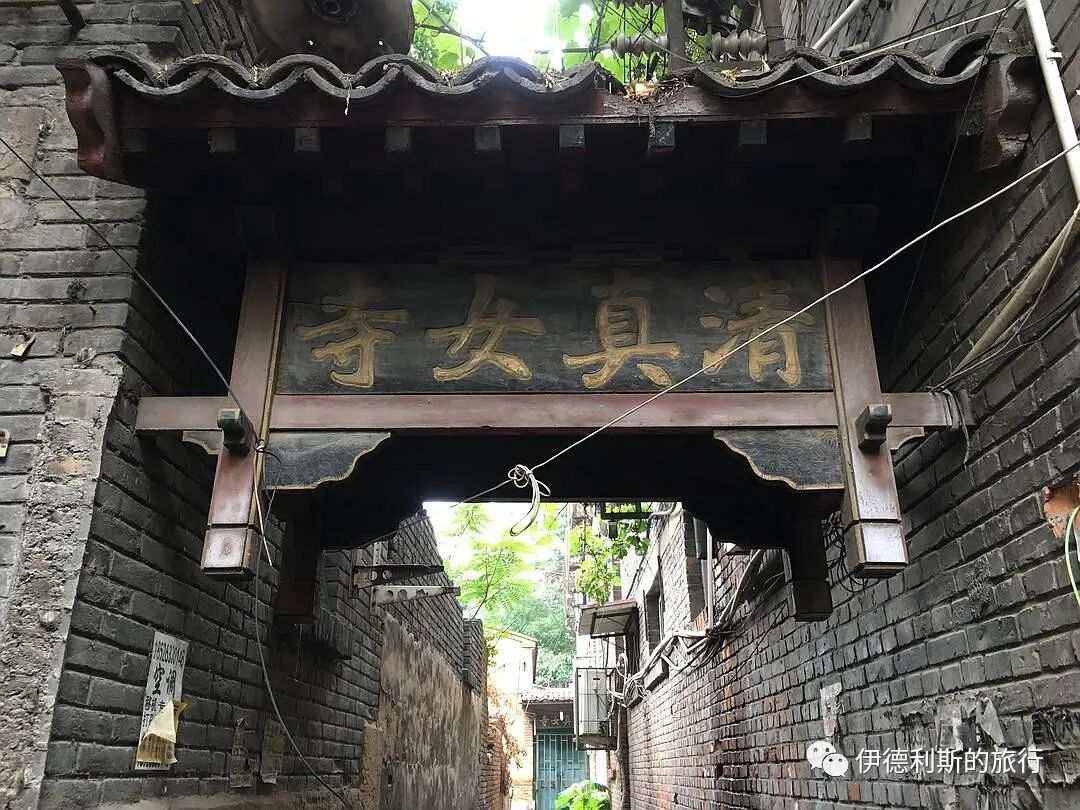
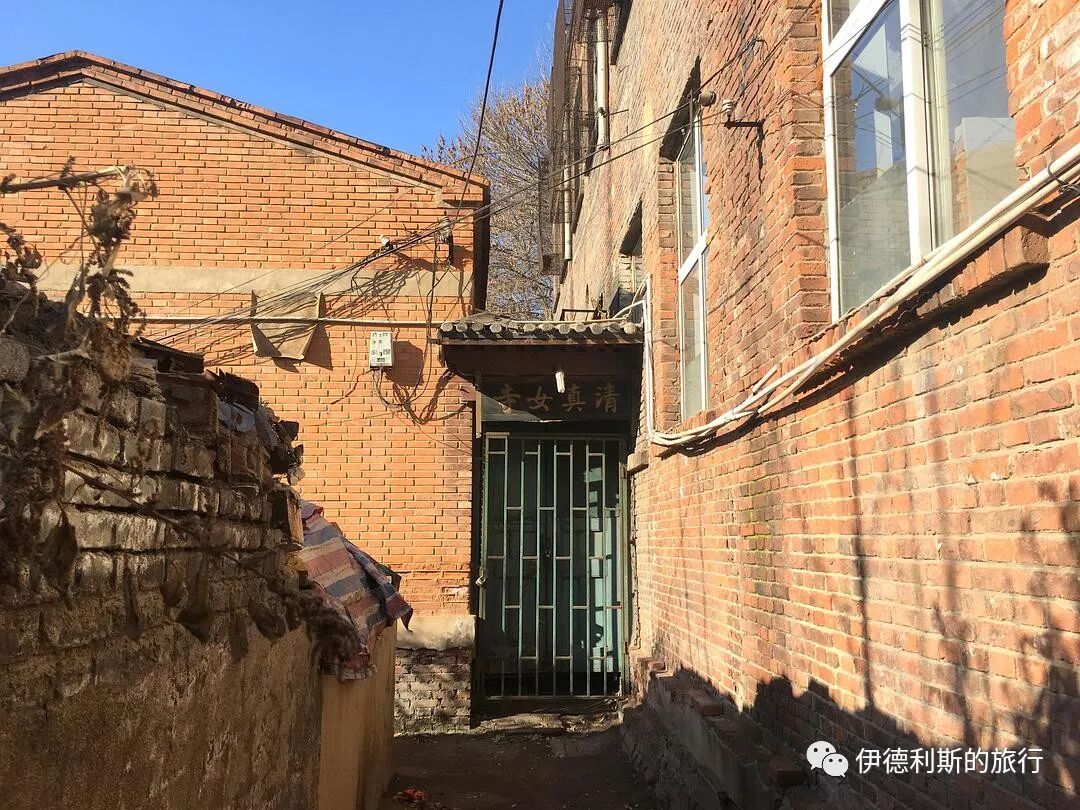
January 2016.
In the Northwest Corner in January 2016, you could see Xiao Li Roasted Chicken (Xiao Li Shaoji) right outside the subway station, where there was always a long line.
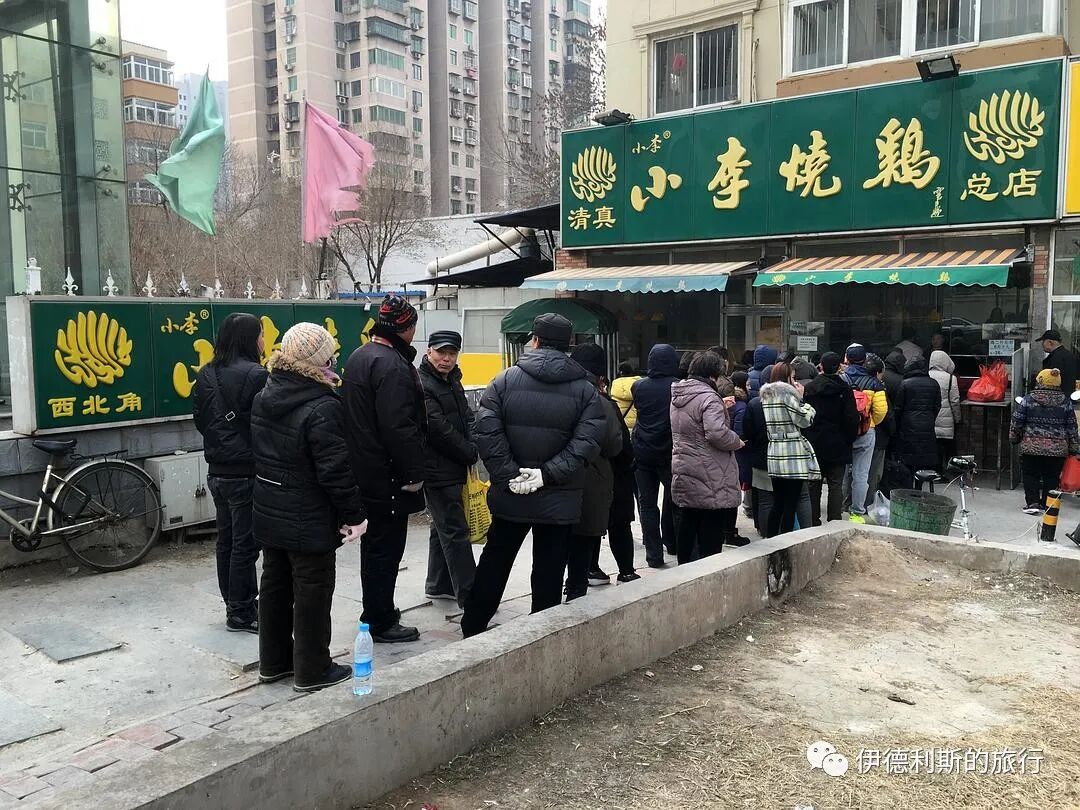
Walking south along West Horse Road (Xi Ma Lu), this area used to be the west city wall of Tianjin.
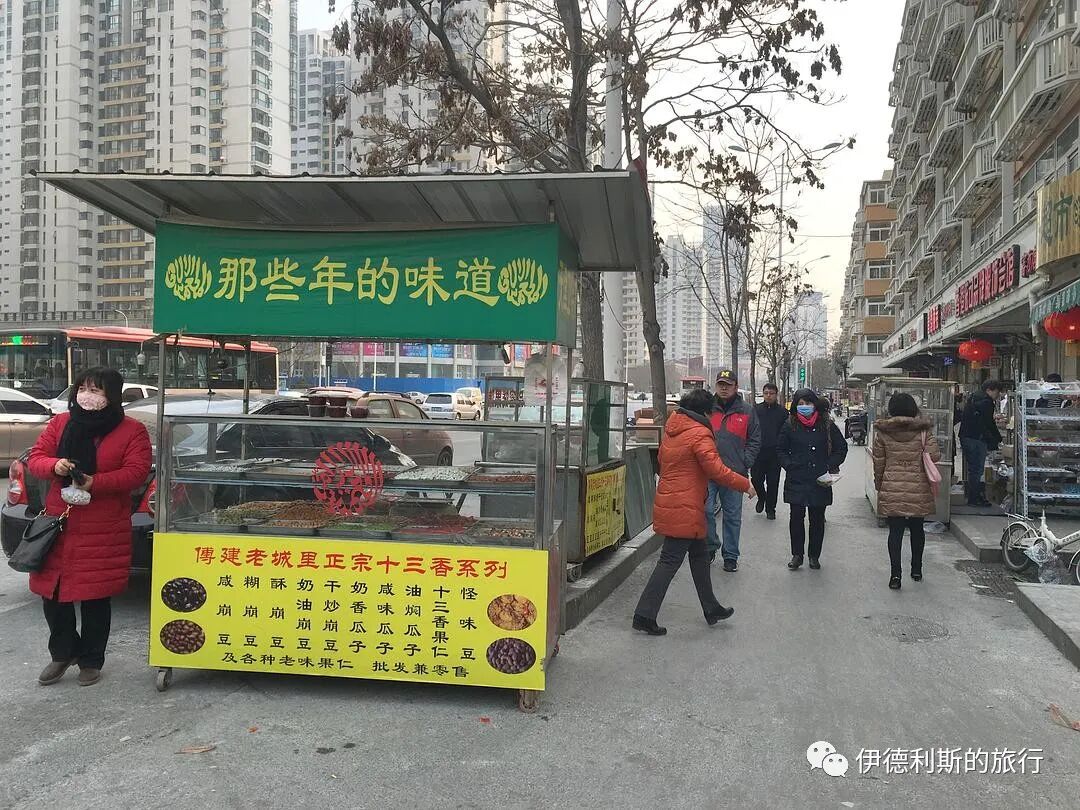
Homemade candies and preserved fruits from Hui Muslim locals.
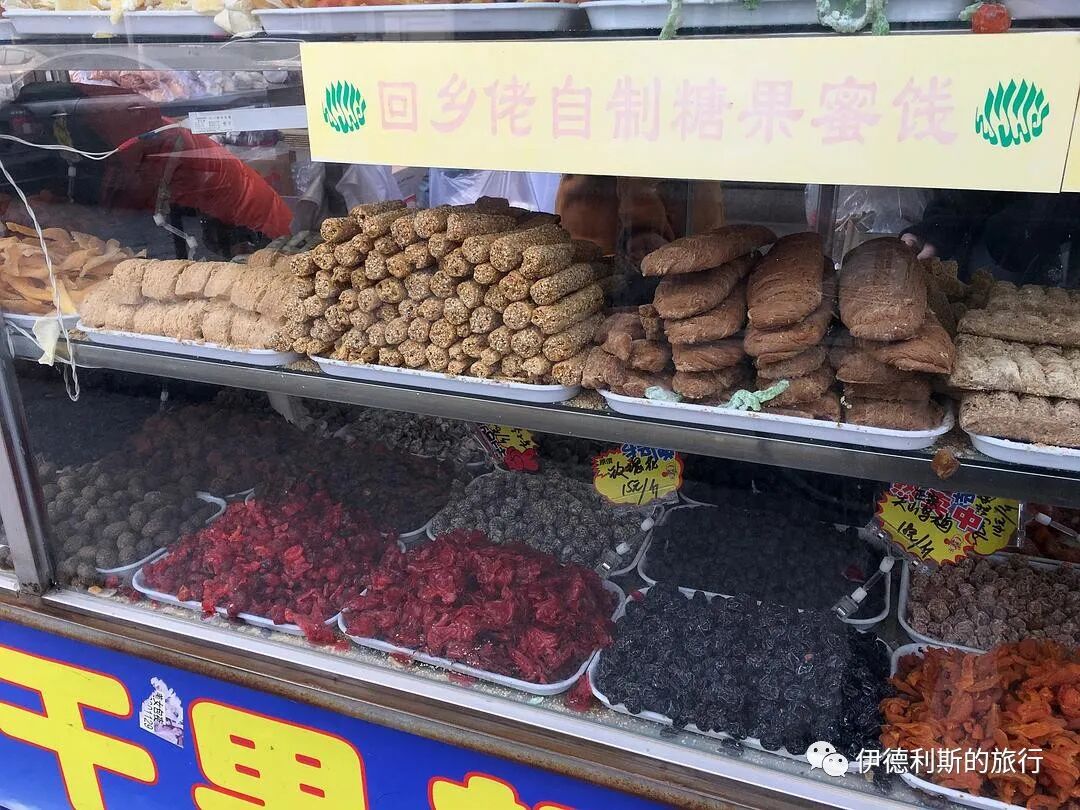
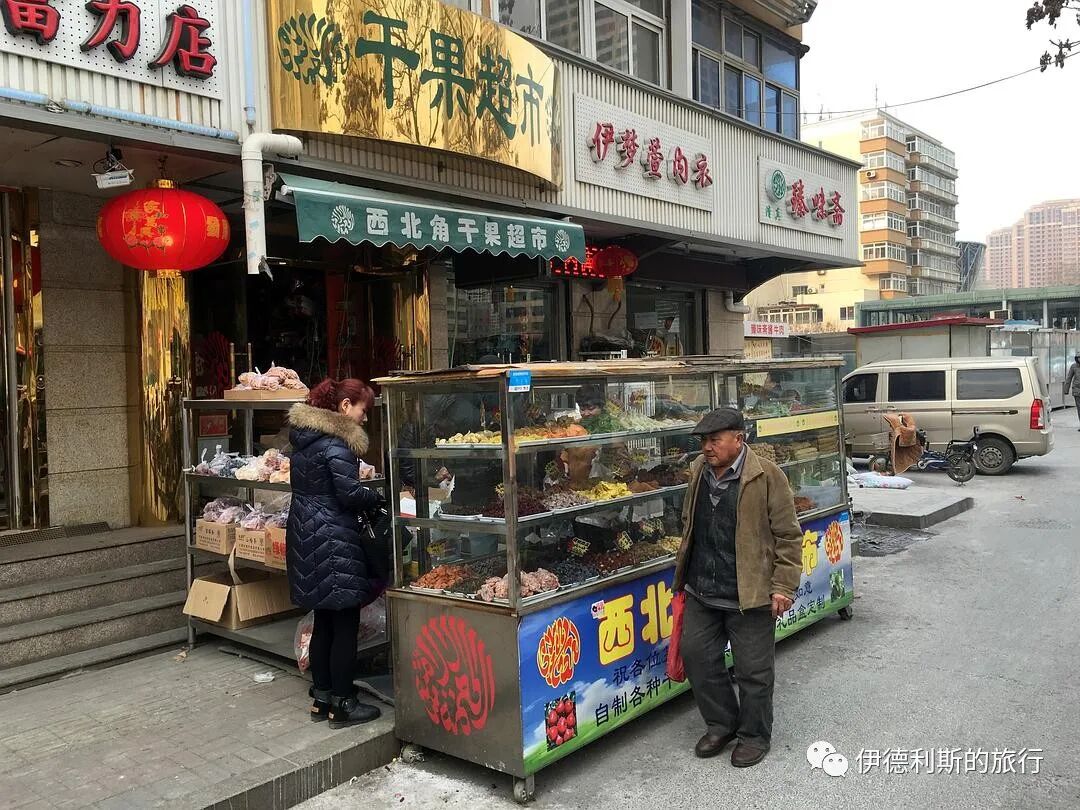
Turn into the Hui Muslim residential area on Huanqing West Alley.
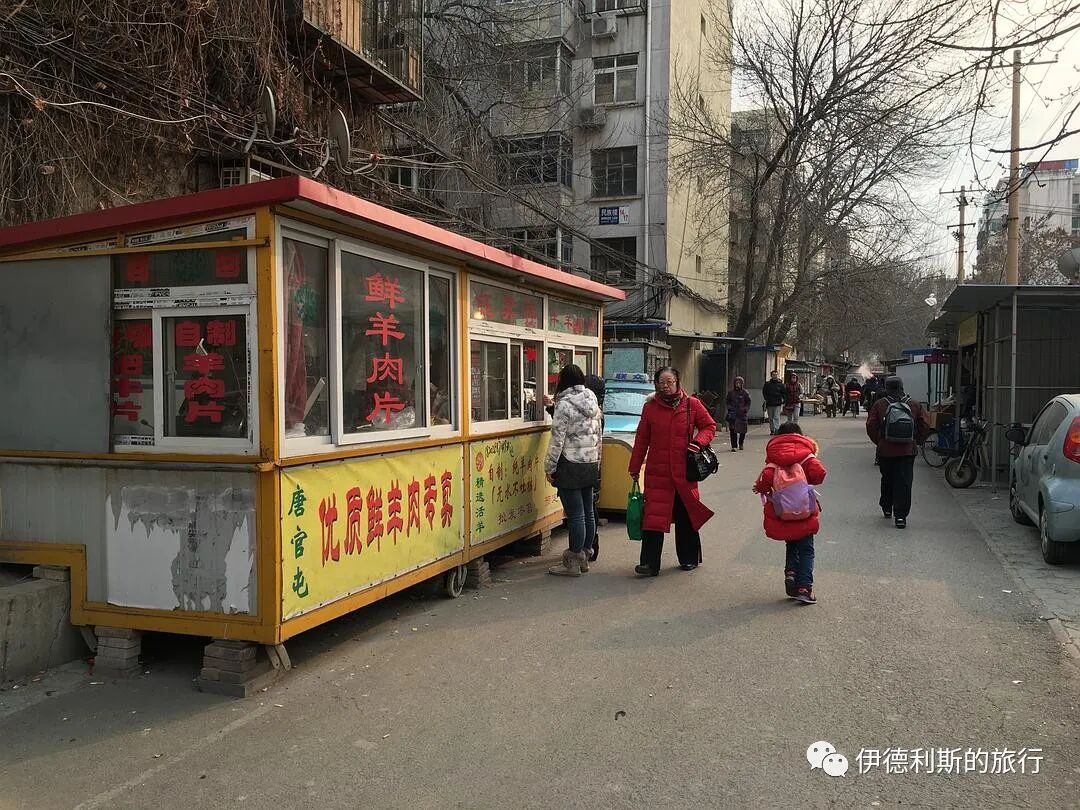
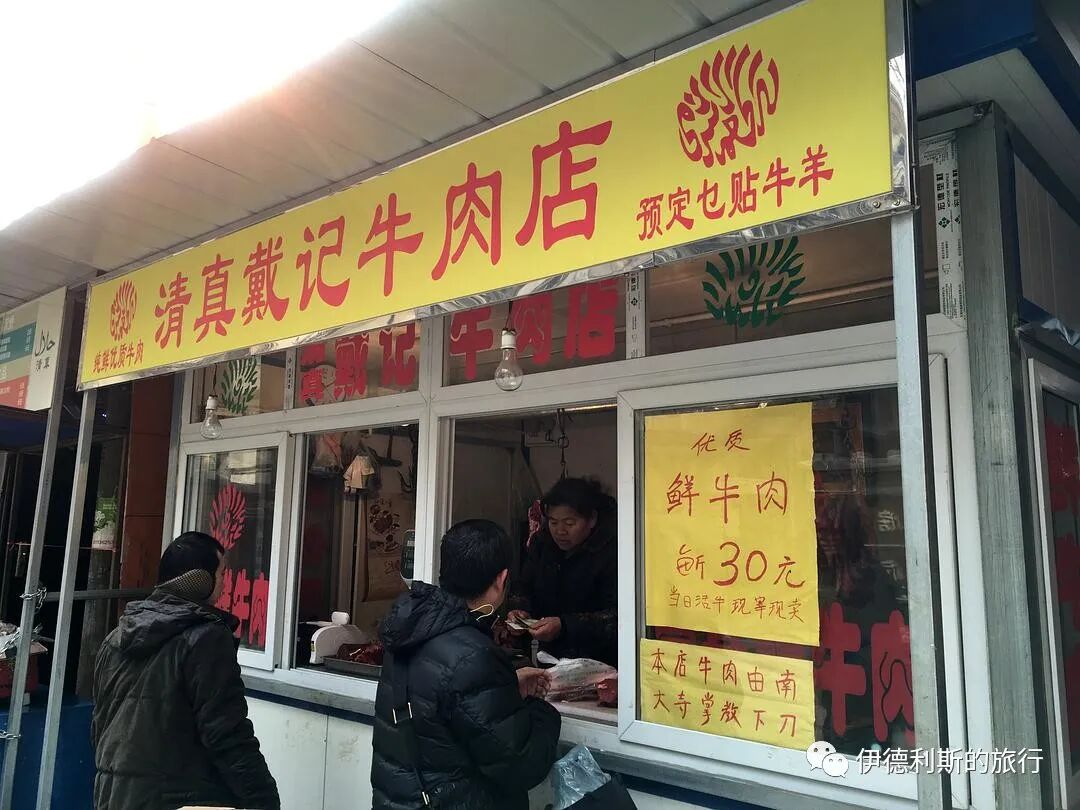
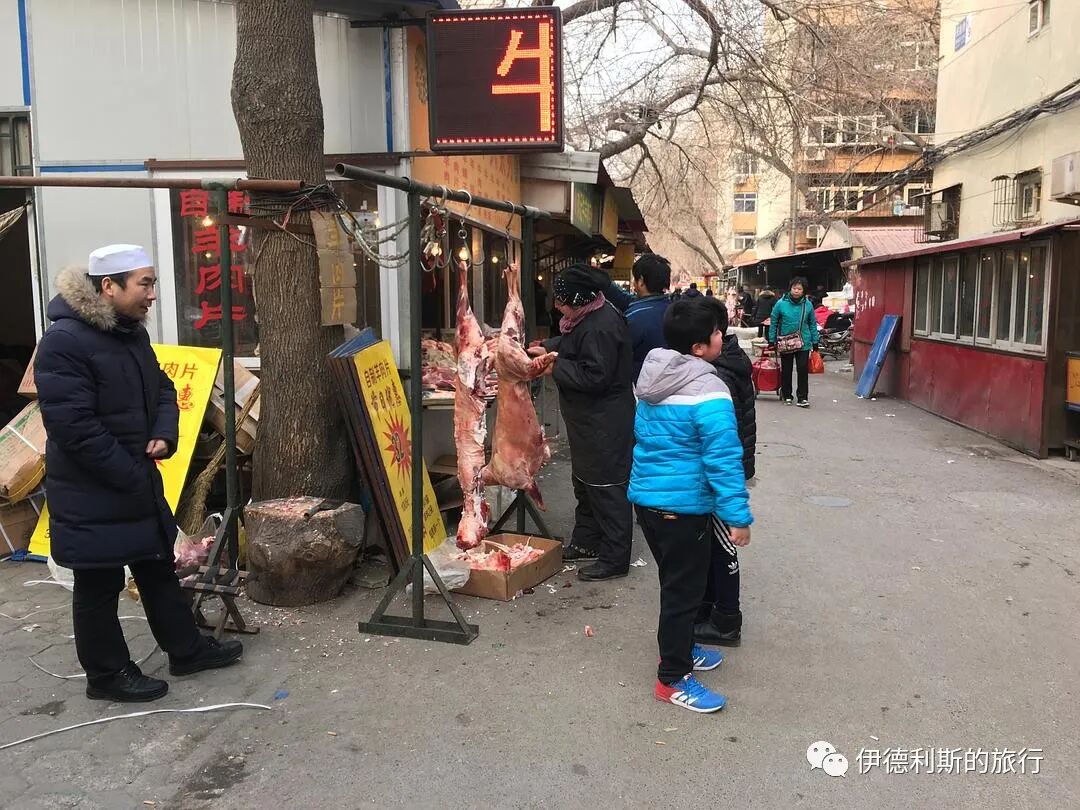
Sticky bean buns (niandoubao) from Xiao Dong Sticky Foods.
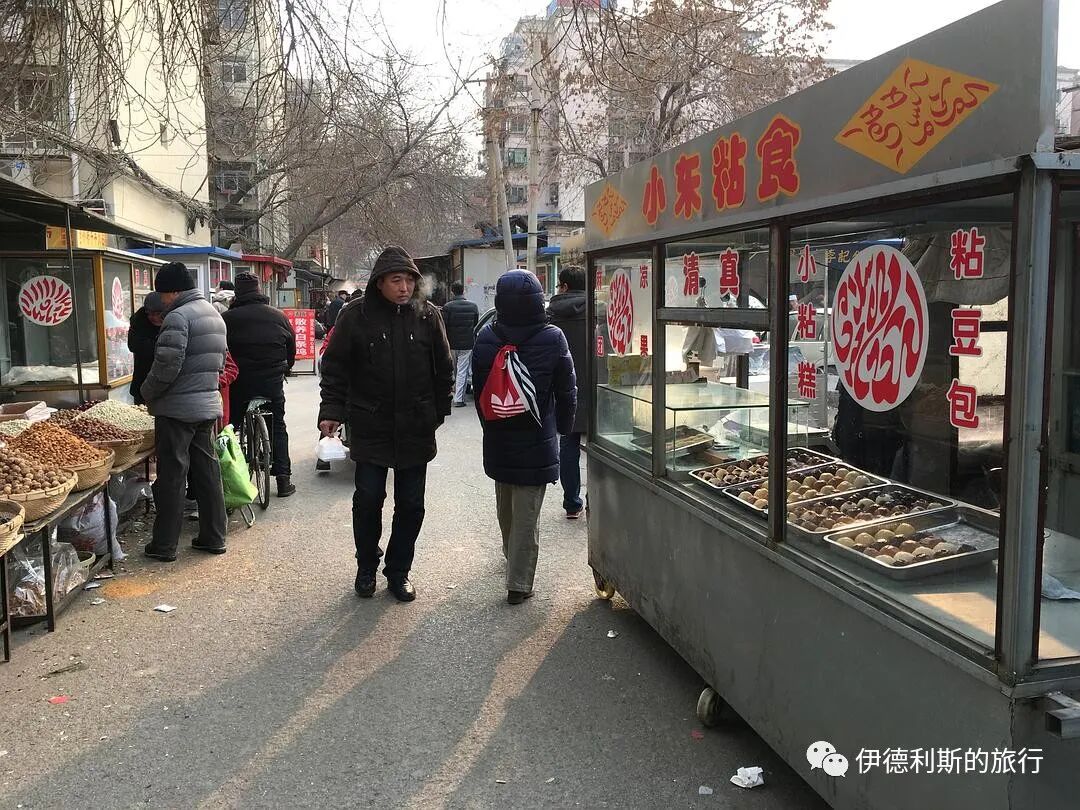
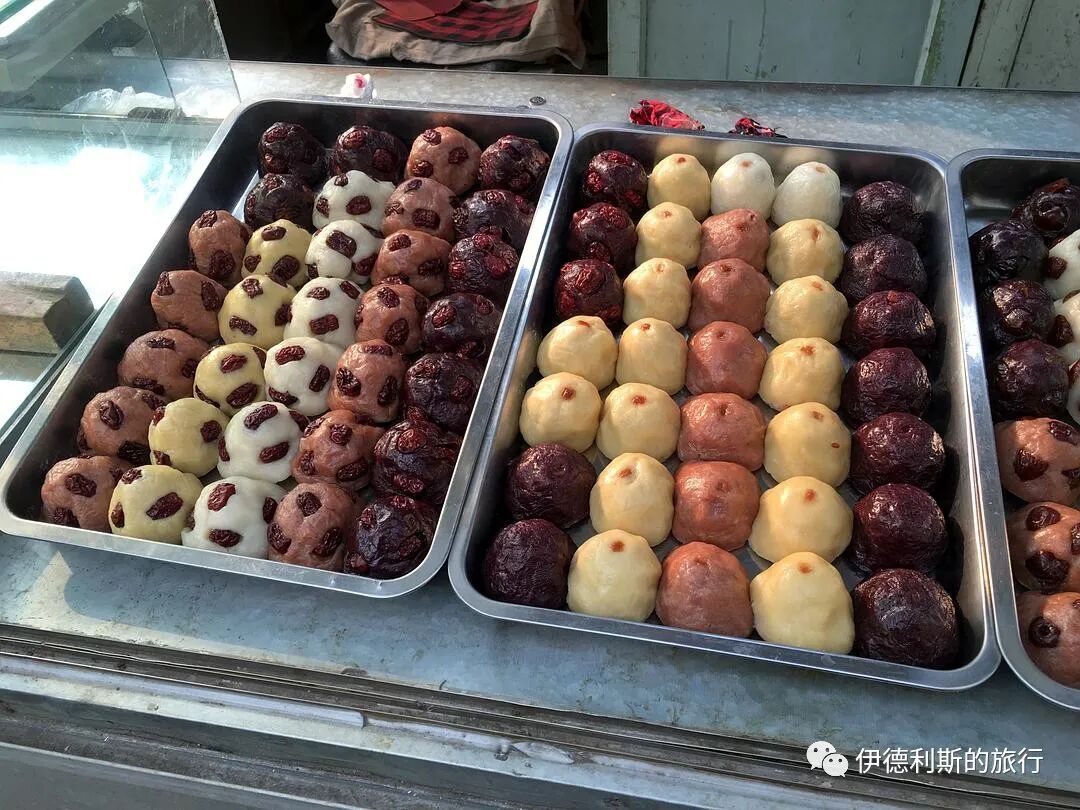
The Ethnic Building (Minzu Lou) in the Northwest Corner Hui Muslim residential area.
Wen's Rice Cake (Wenji Gaogan) at the entrance of the South Mosque, though the area is now cleared out.
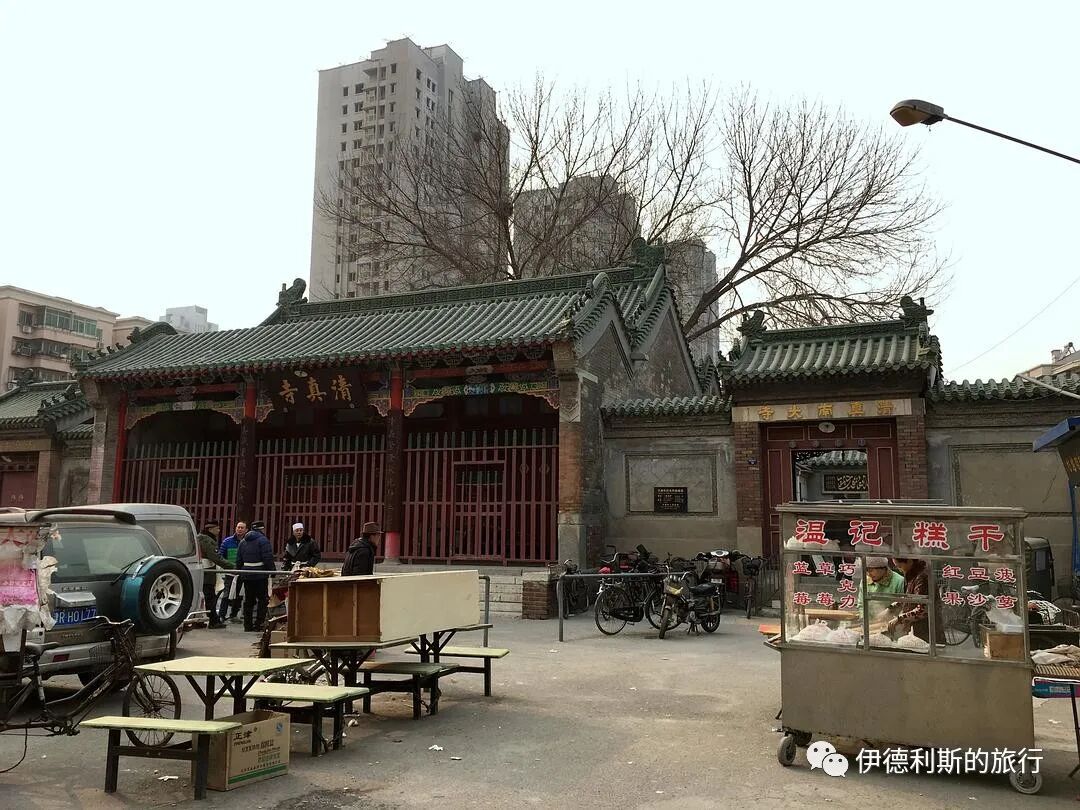
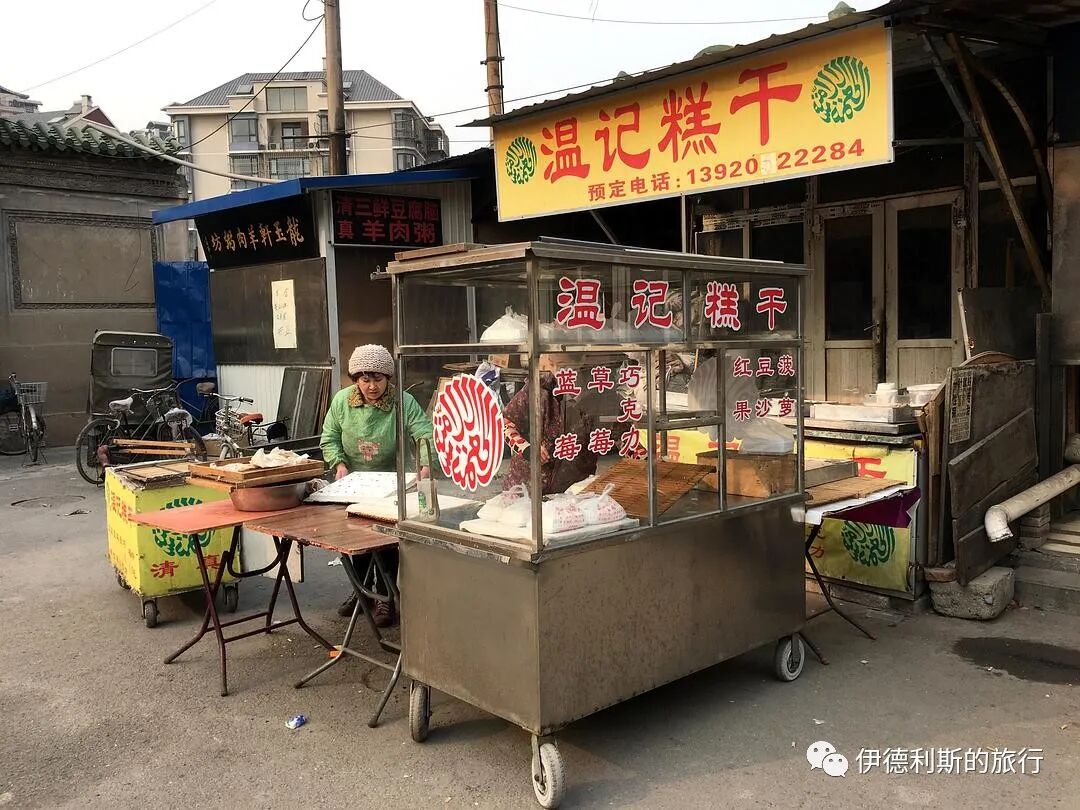
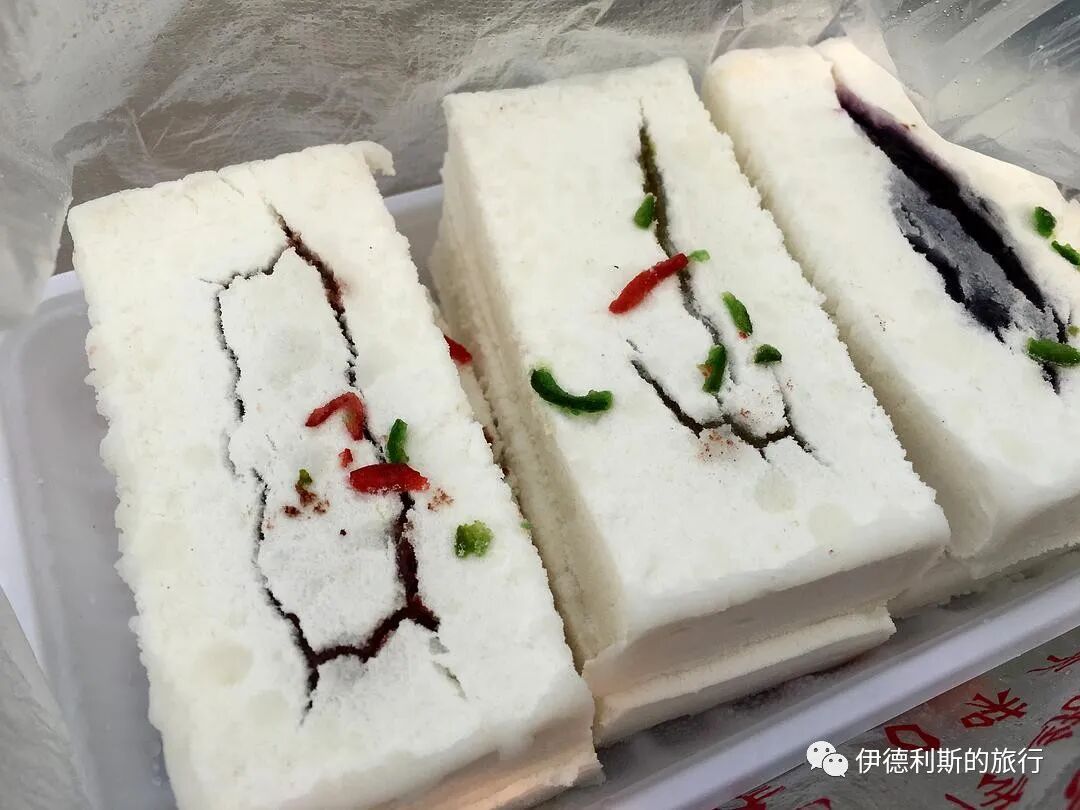
Li's Sizzling Rice Dish (Li Ji Guobacai) on the other side of the South Mosque is very popular now, but the stall shed is gone.
Keep heading south, and you will find more and more halal snacks.
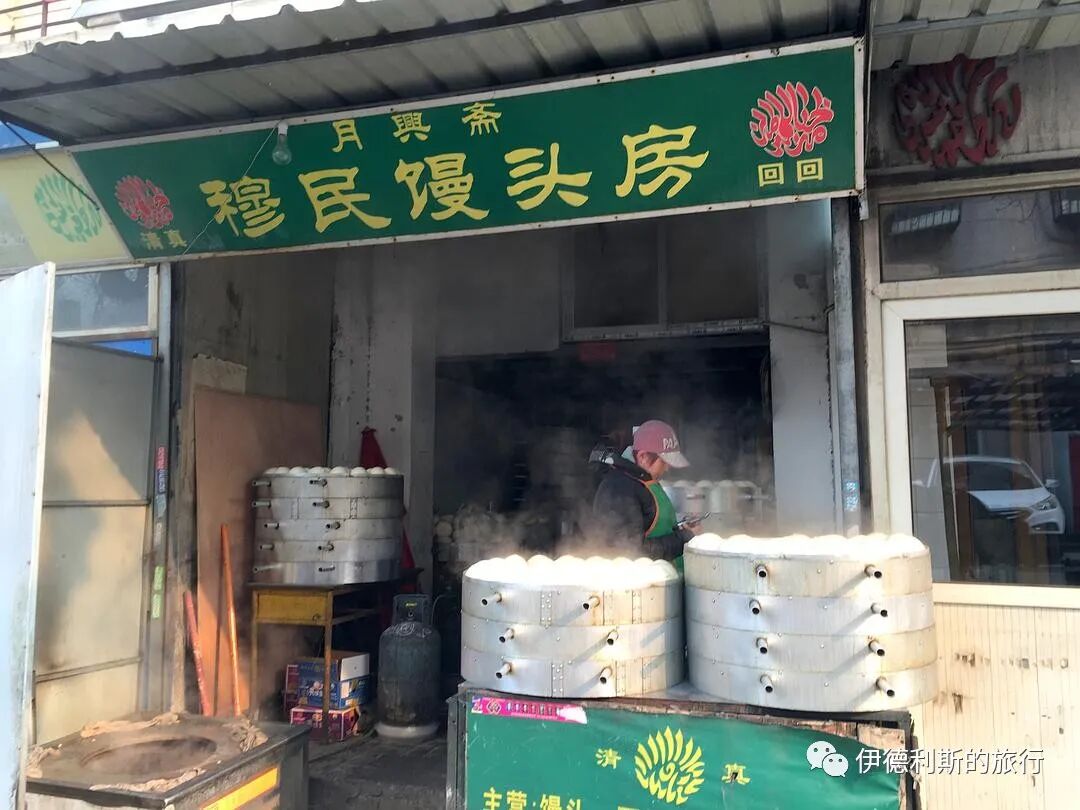
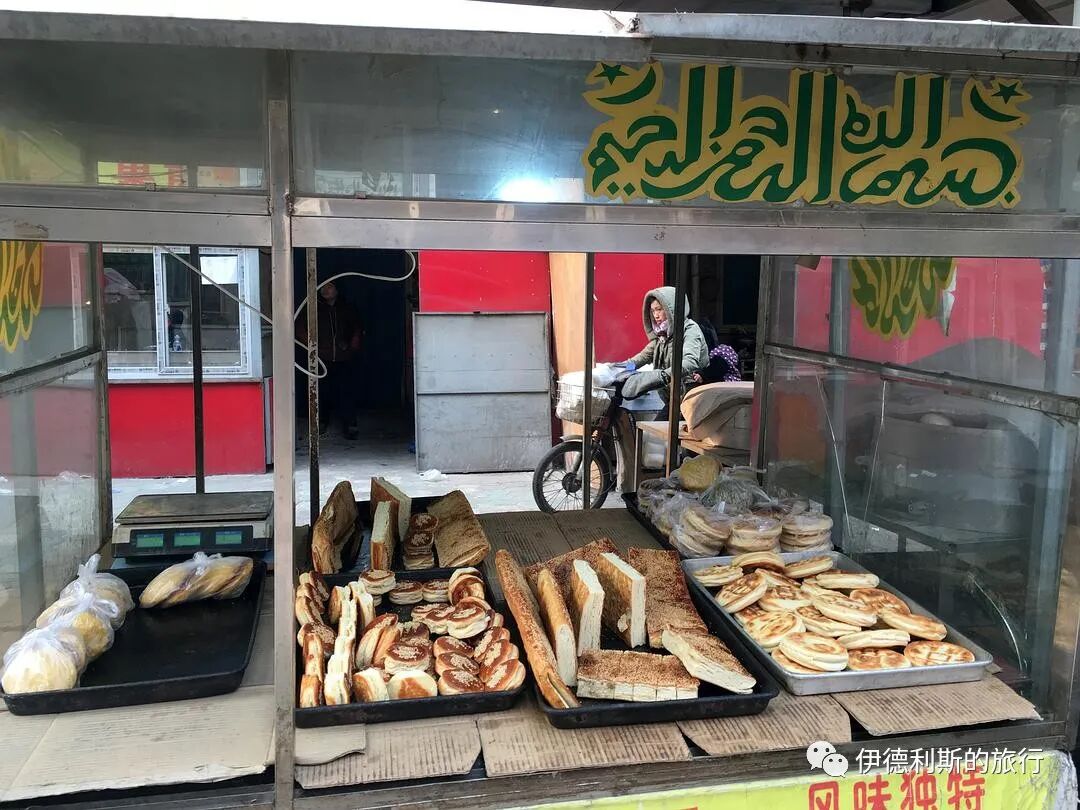
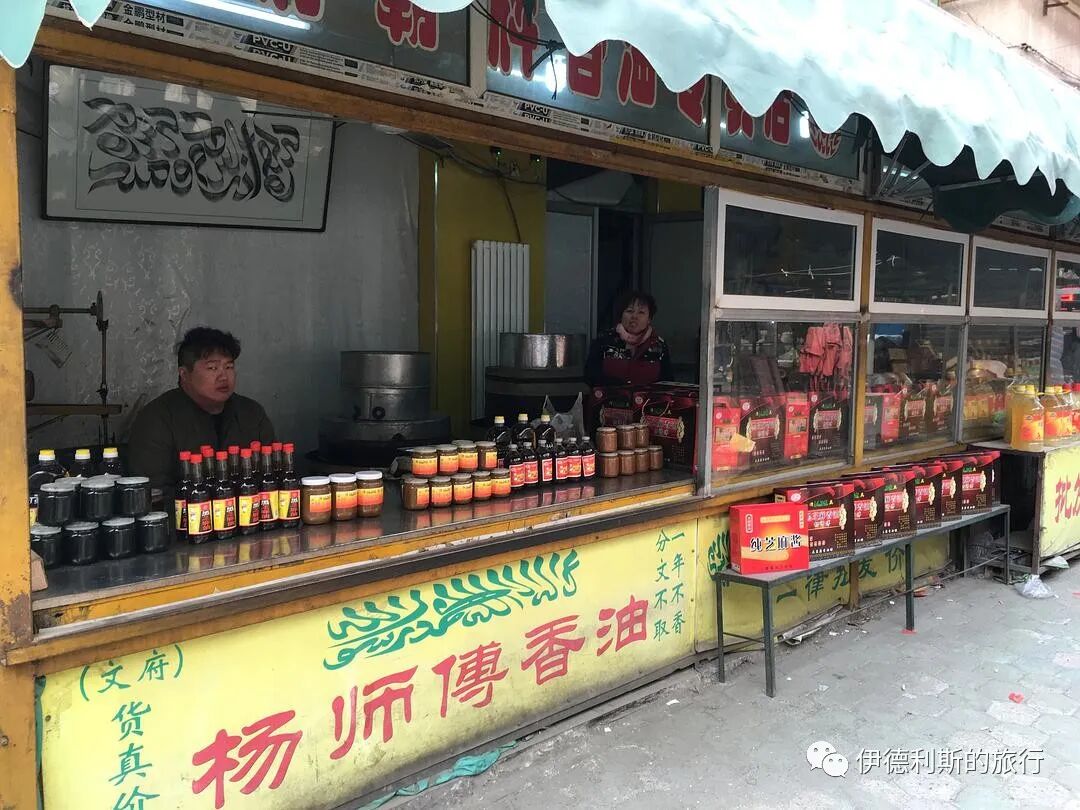
The row of shops on the right has been cleared out and turned into a parking lot.
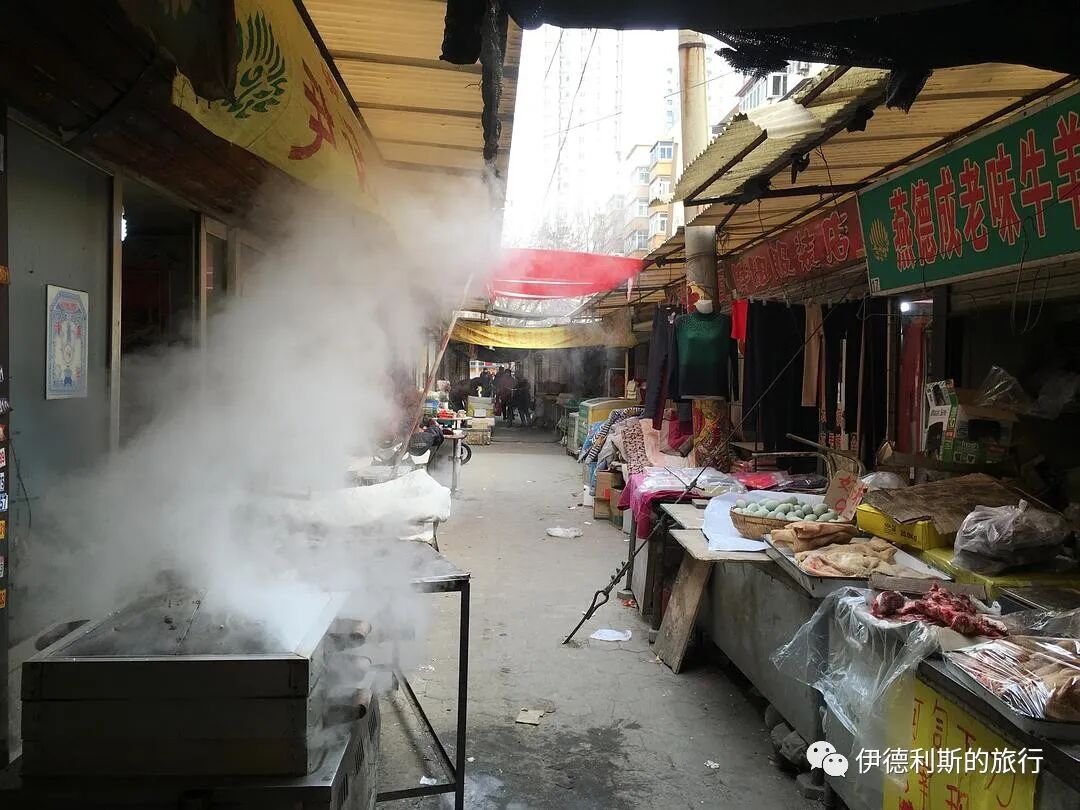
Walk west from Xiguan Beili, and you will reach the halal supermarket.
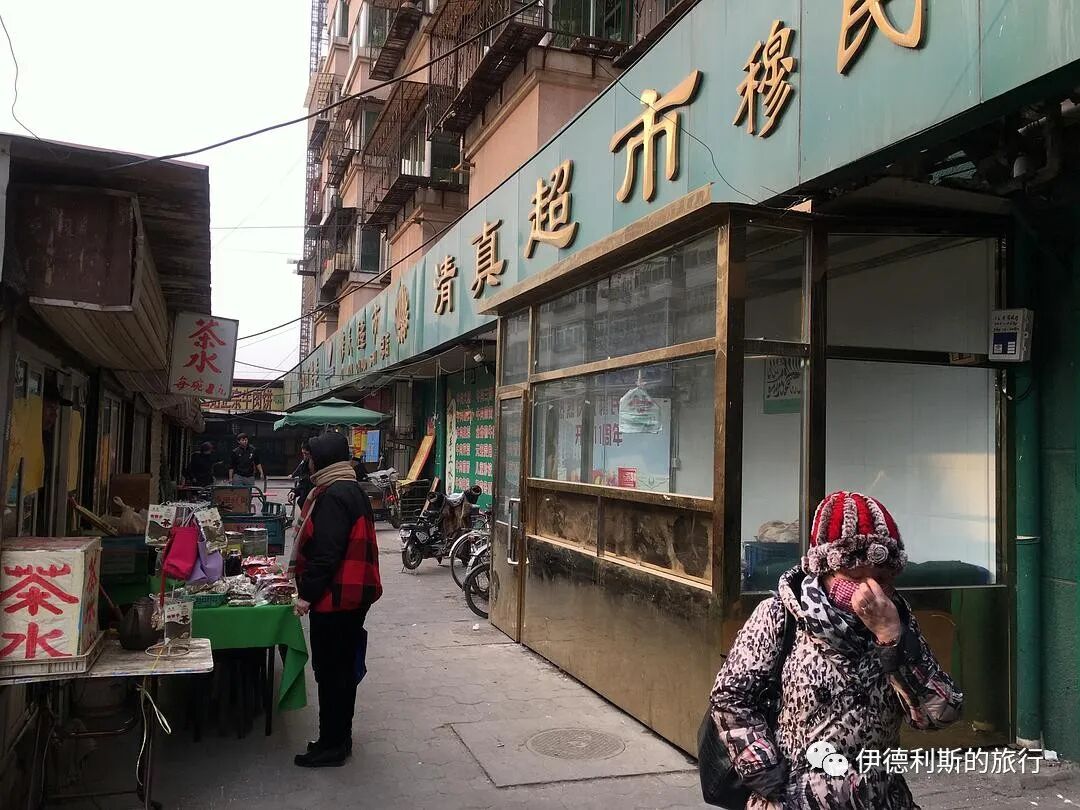
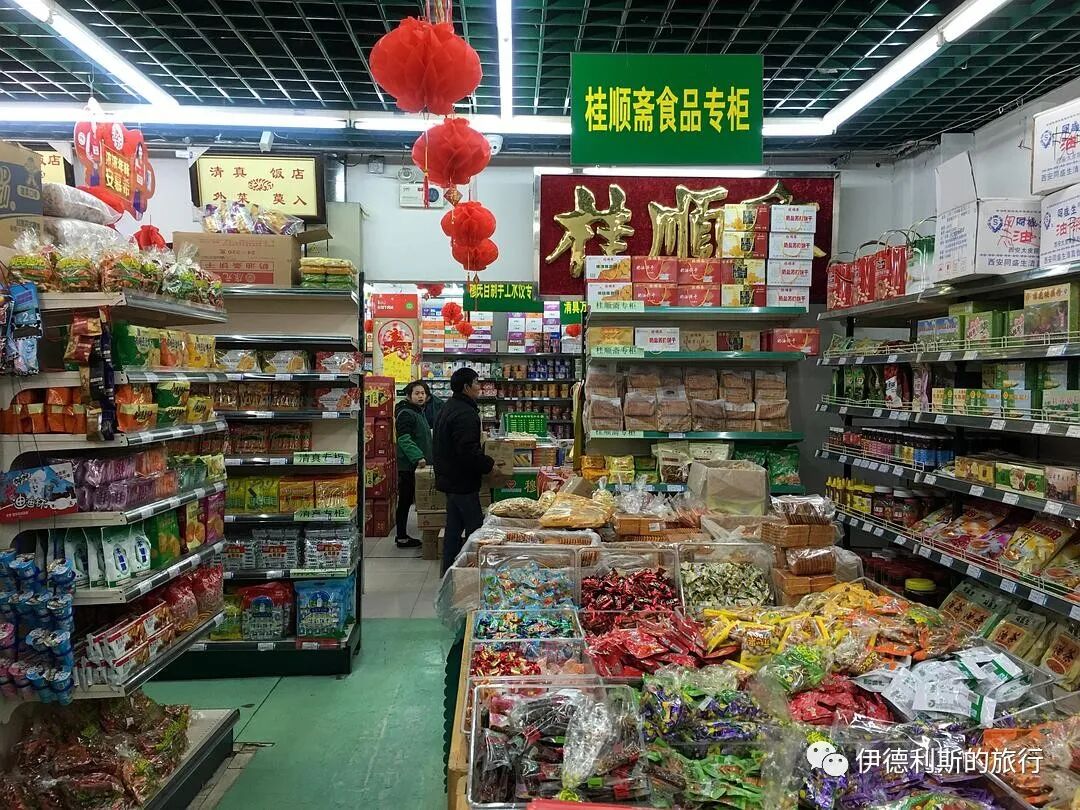
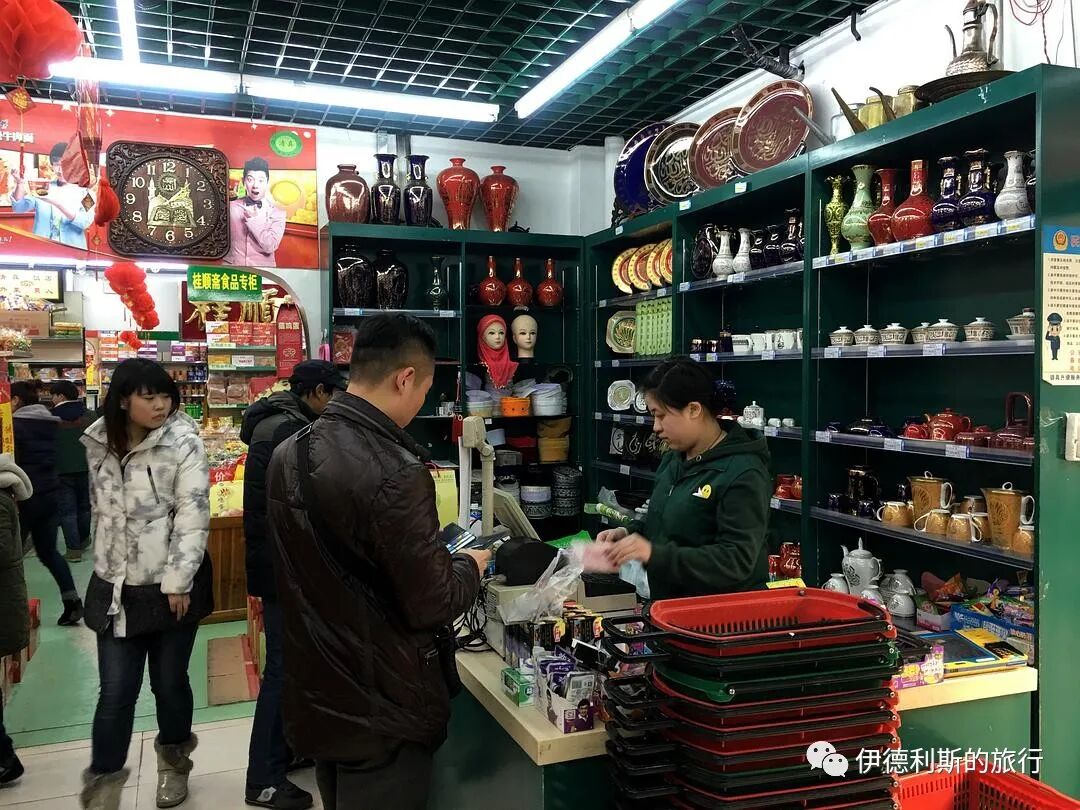
I bought a yellow cap made in Tianmu Village at the halal supermarket; yellow is the main color for Hui Muslims in Tianjin.
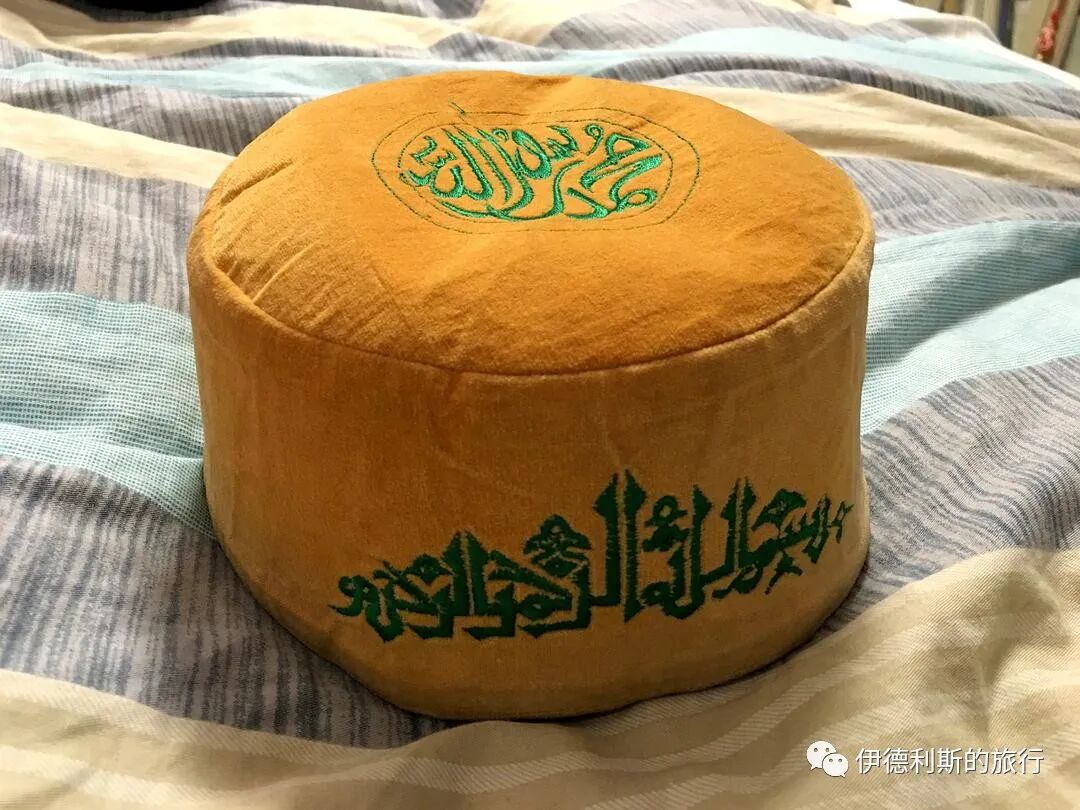
Head back to Xima Road.
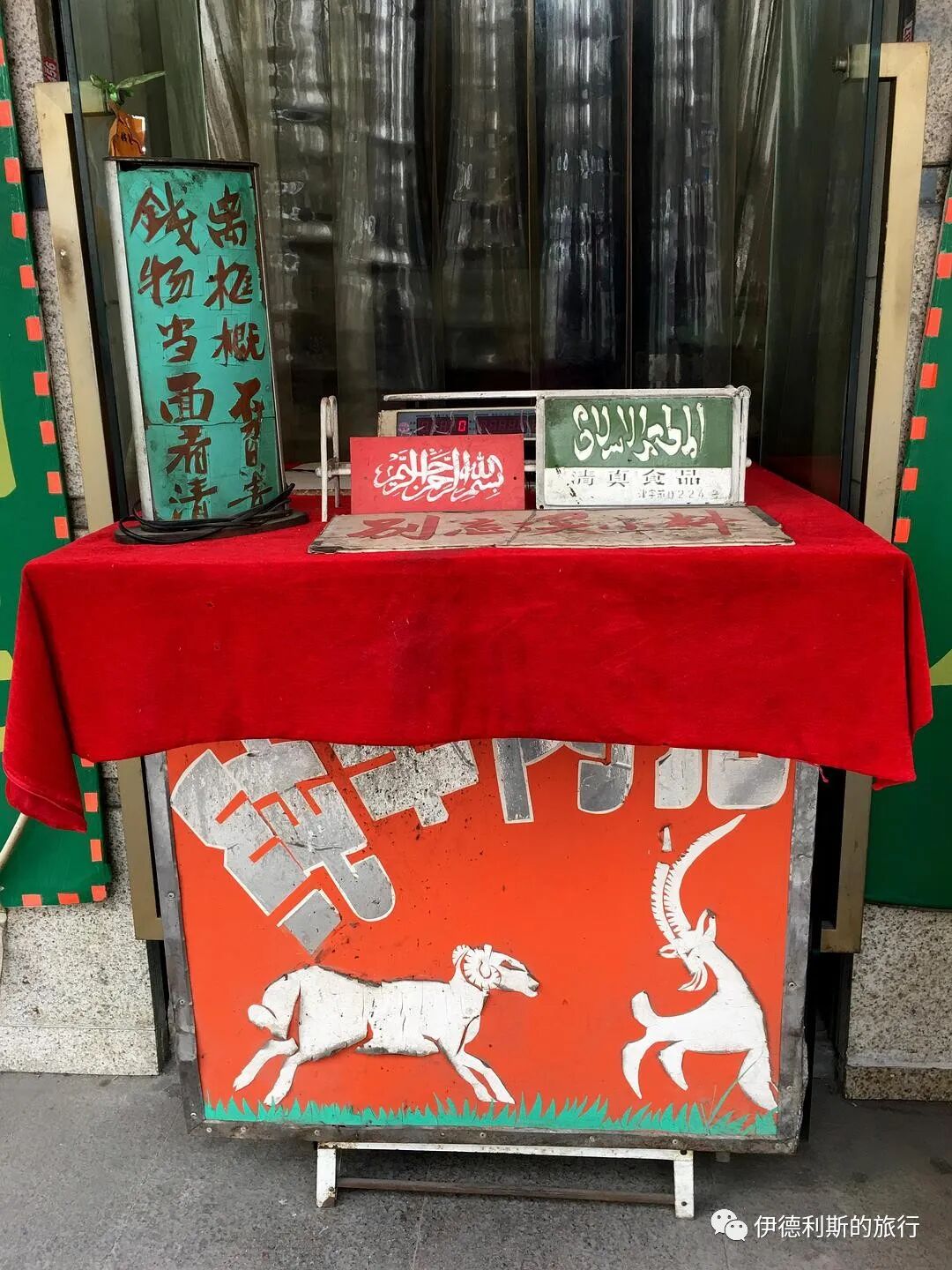
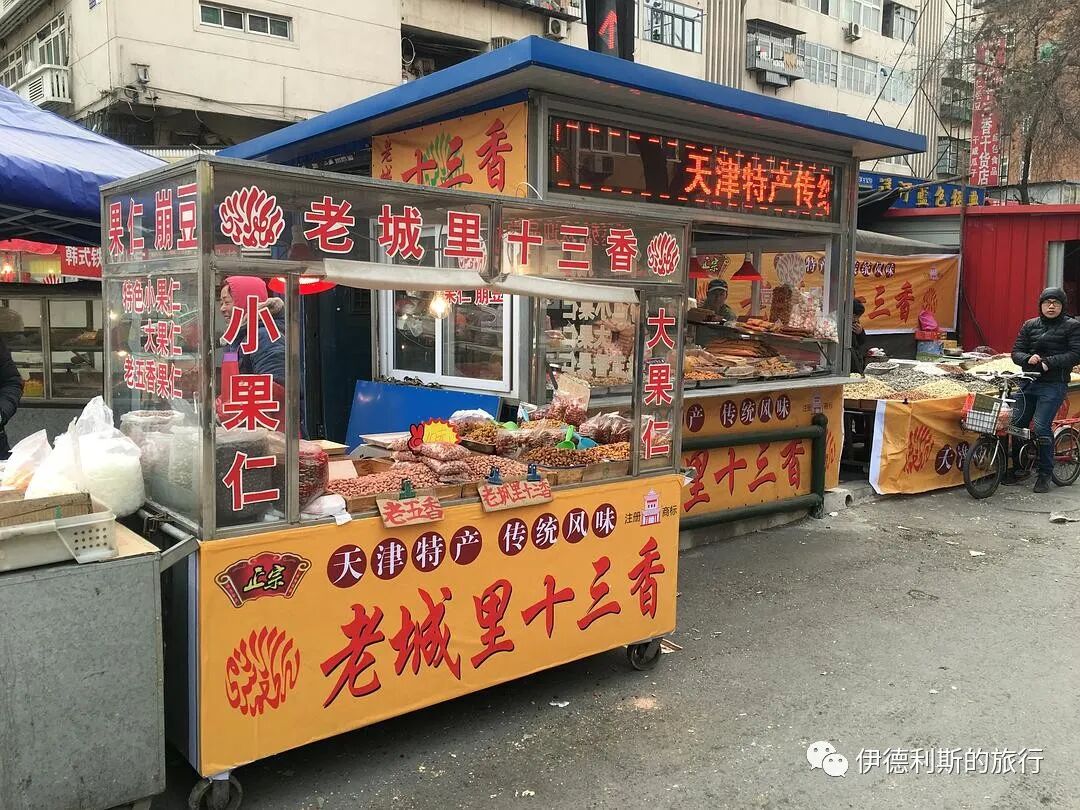
For dinner, I ate at Qingfade Restaurant on Xima Road, which is a classic stir-fry spot that represents the Northwest Corner area.
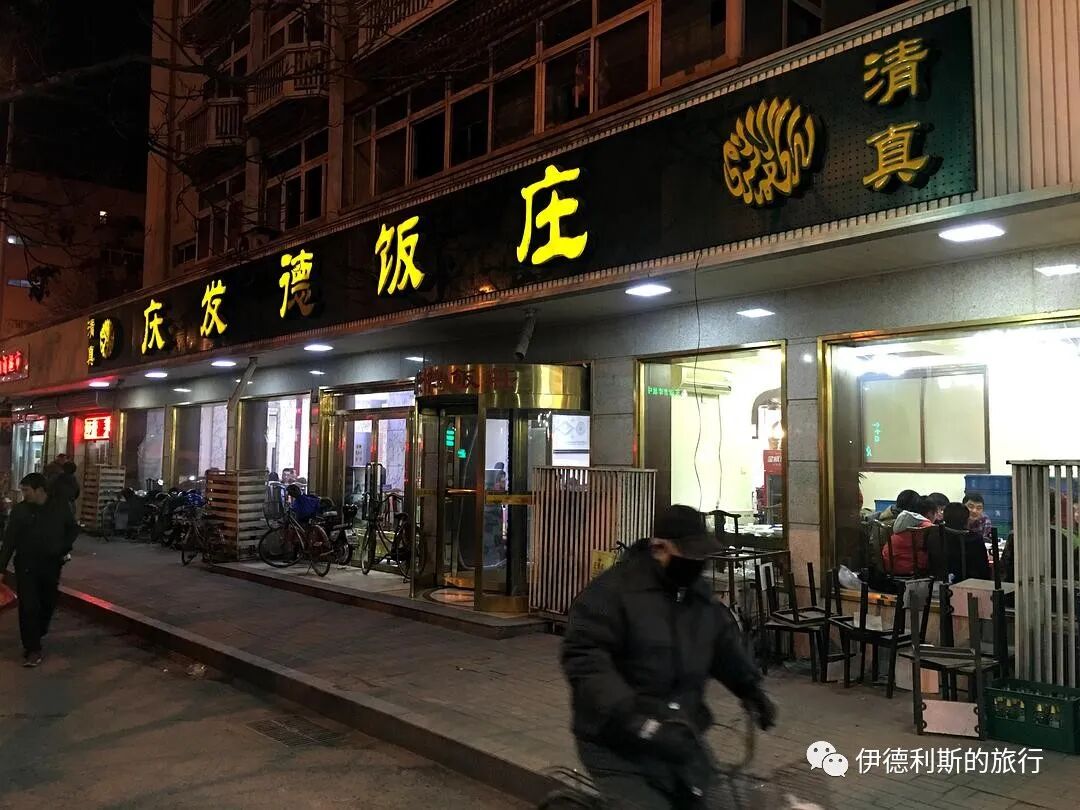
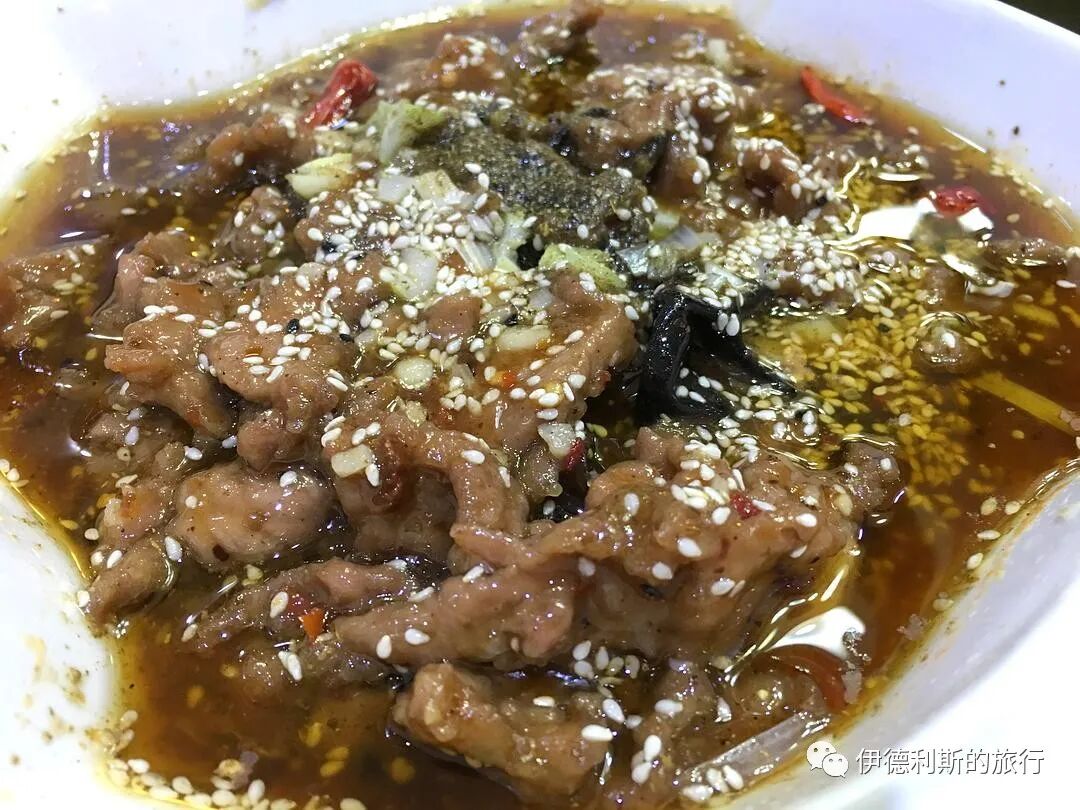
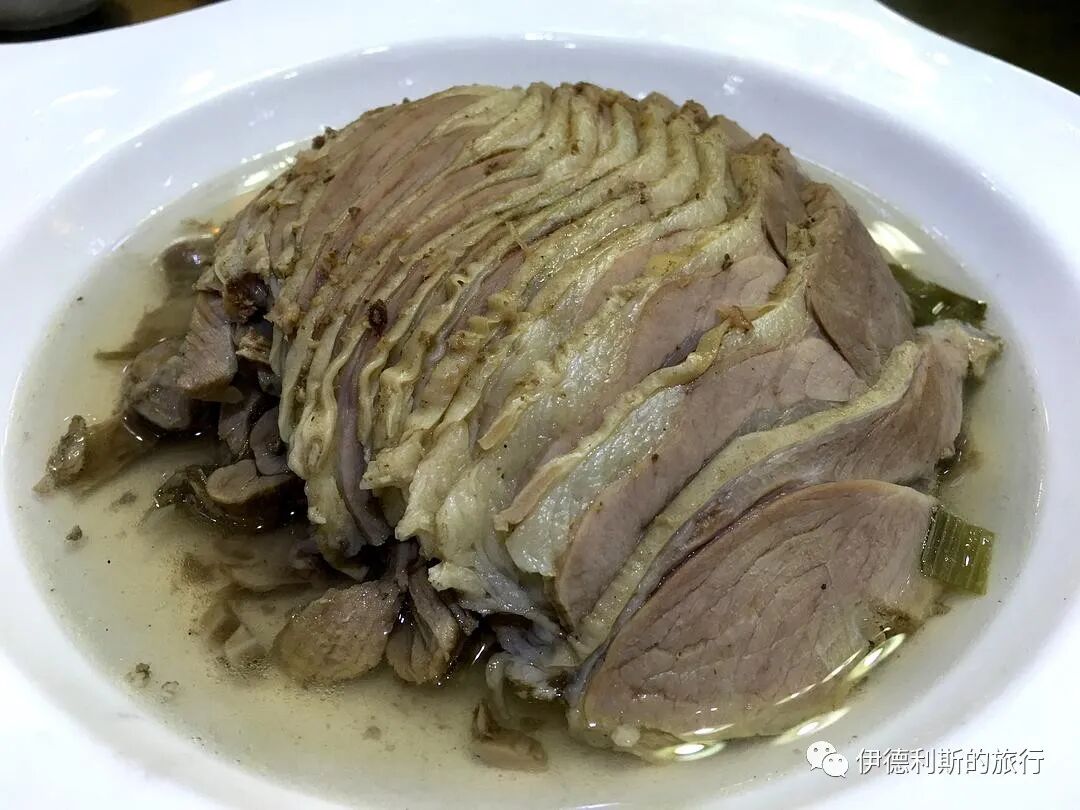
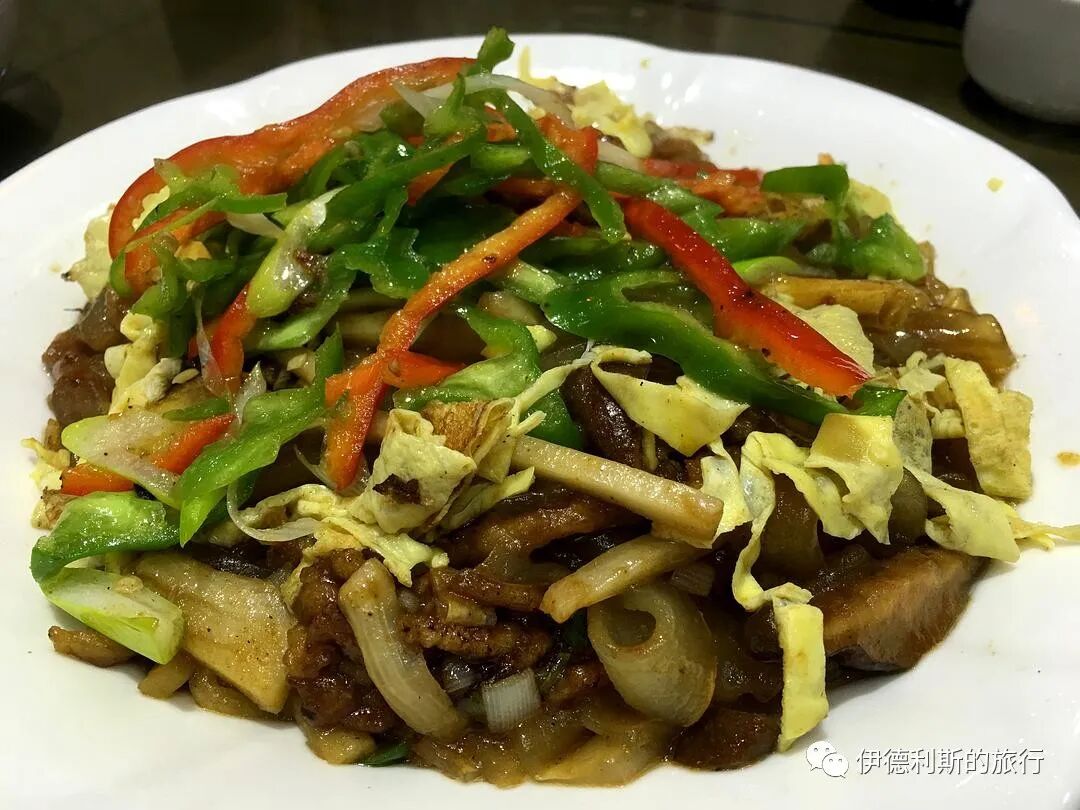
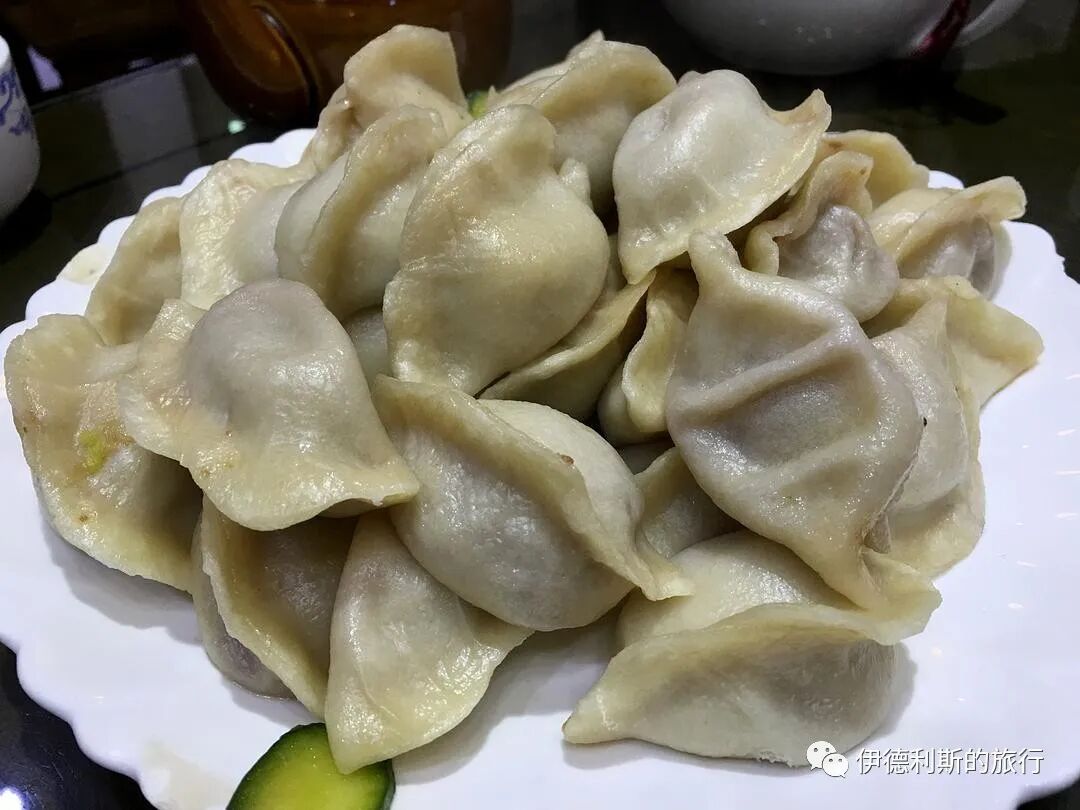
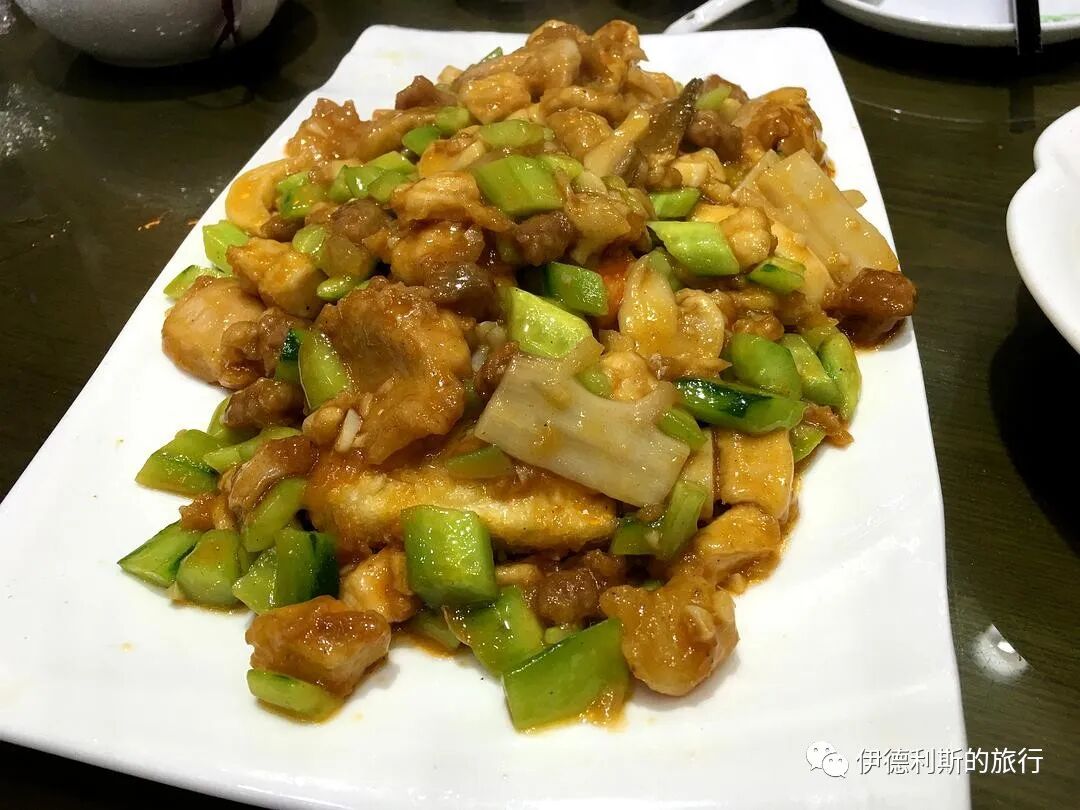
Night view of Xiguan Main Street.
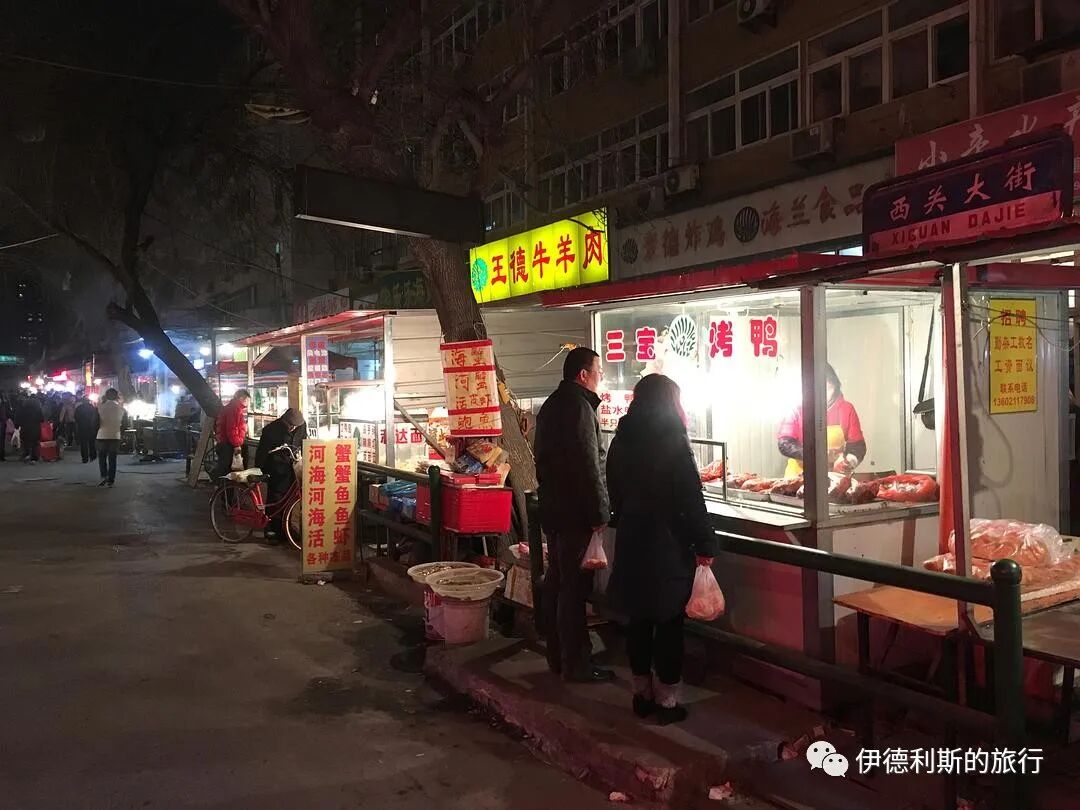
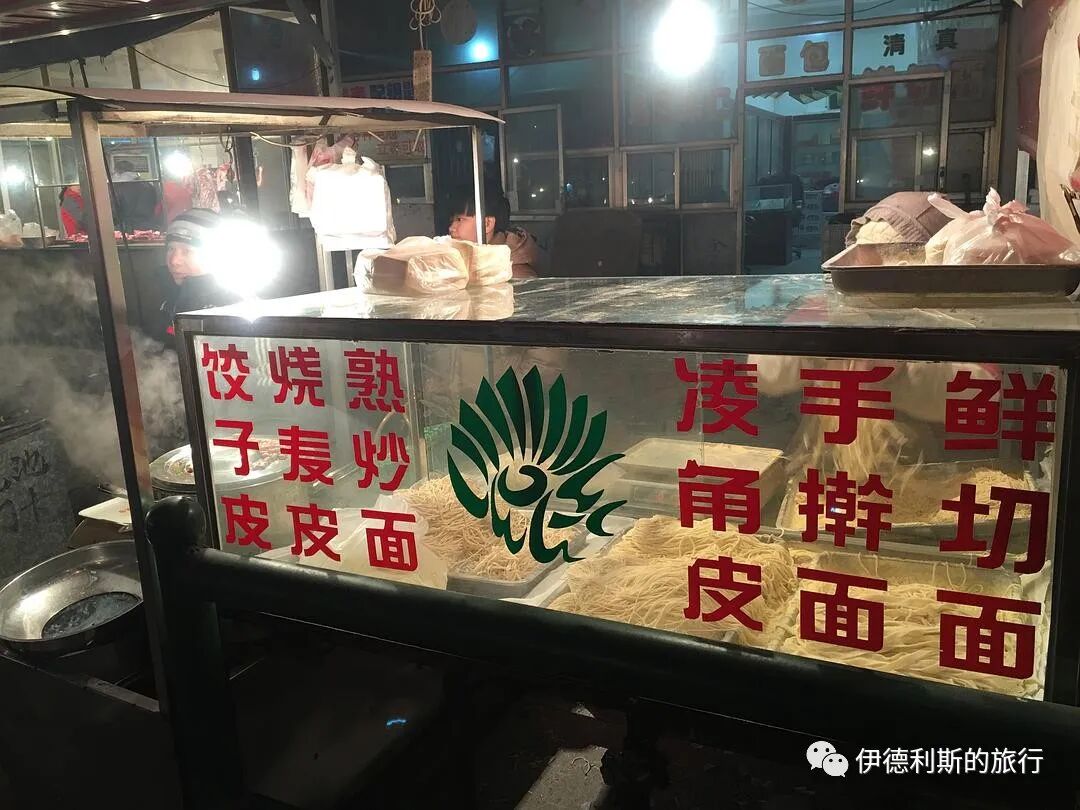
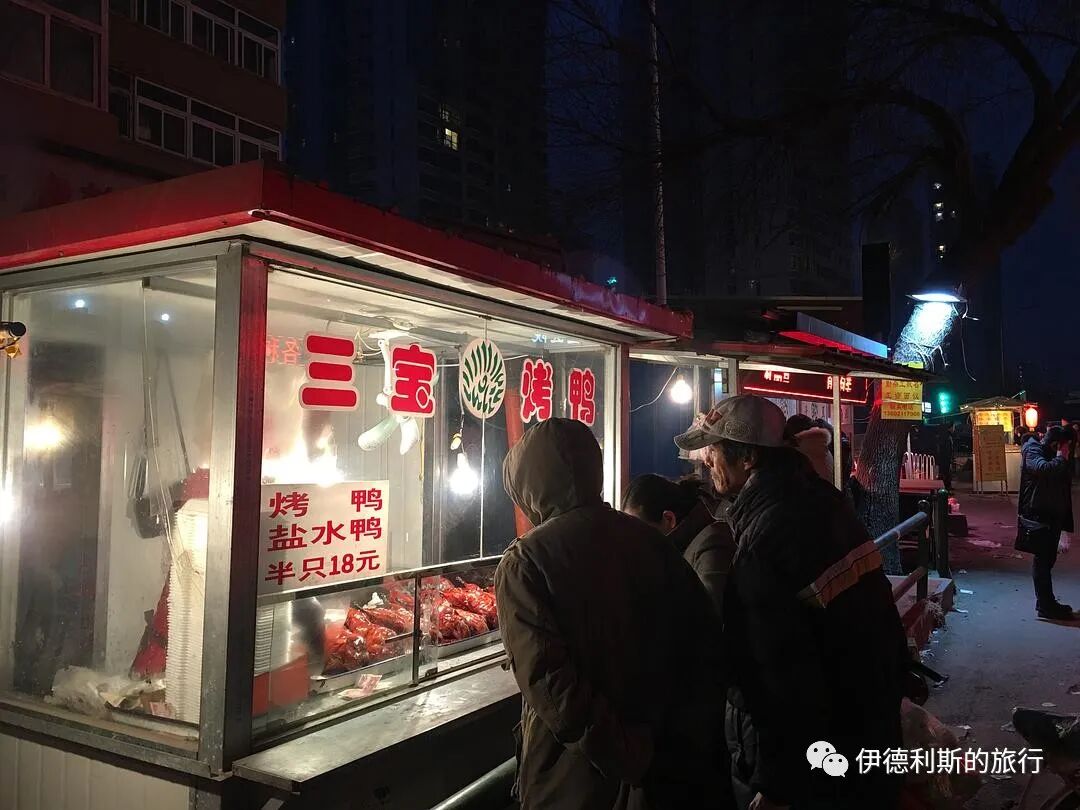
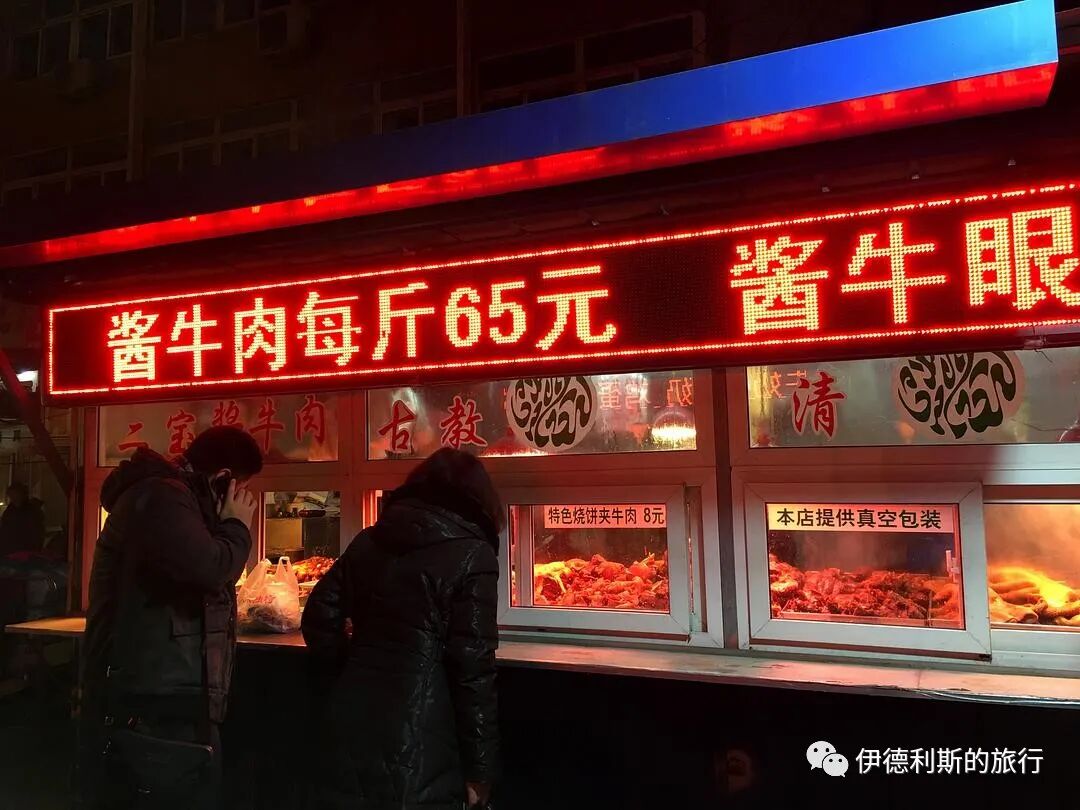
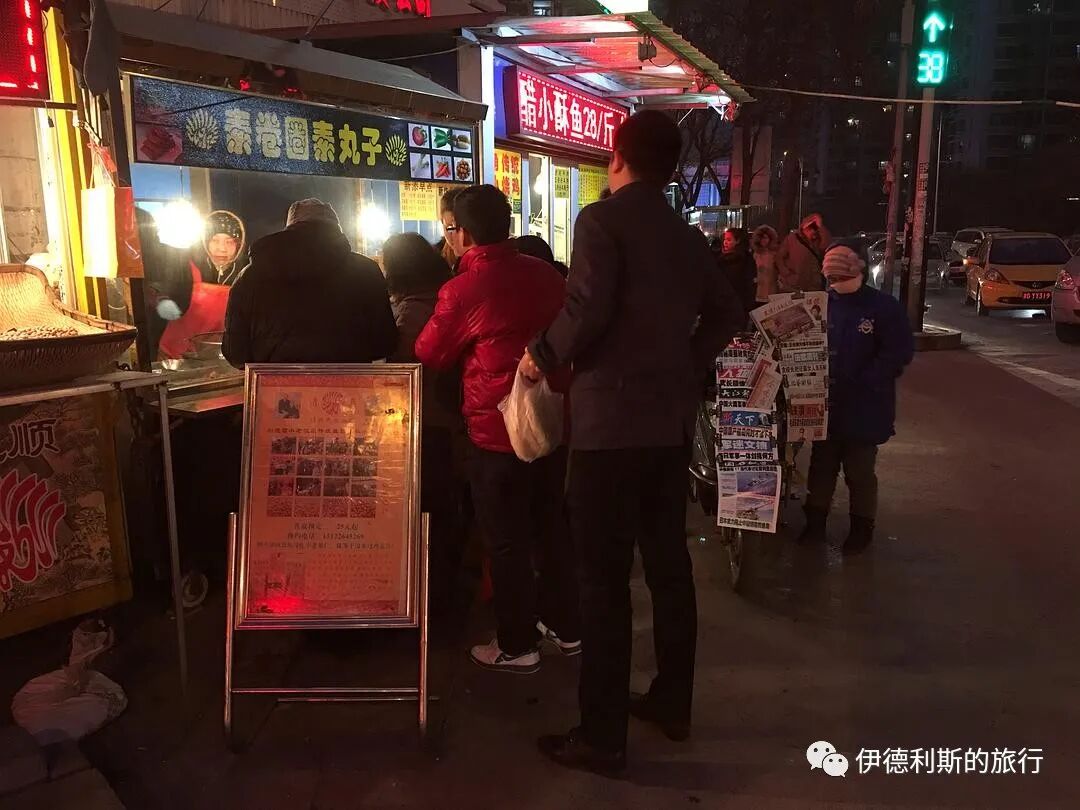
The famous Hailan black beans (hailan wudou) on Xiguan Main Street are still here.
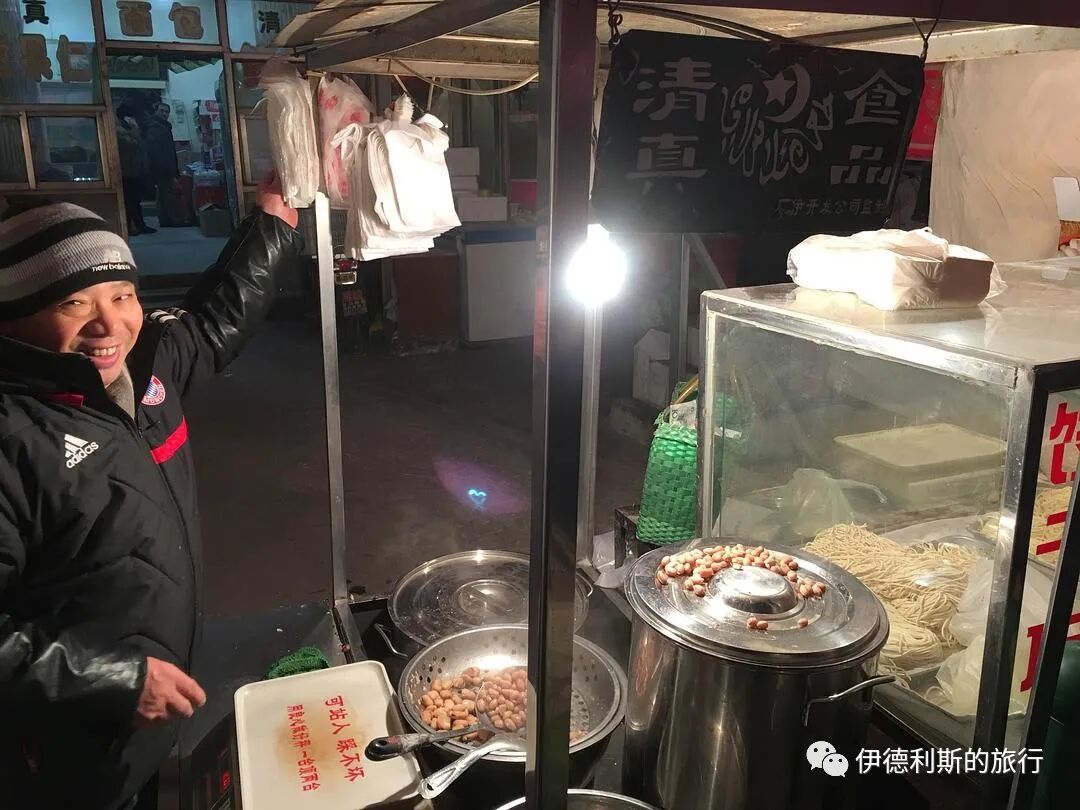
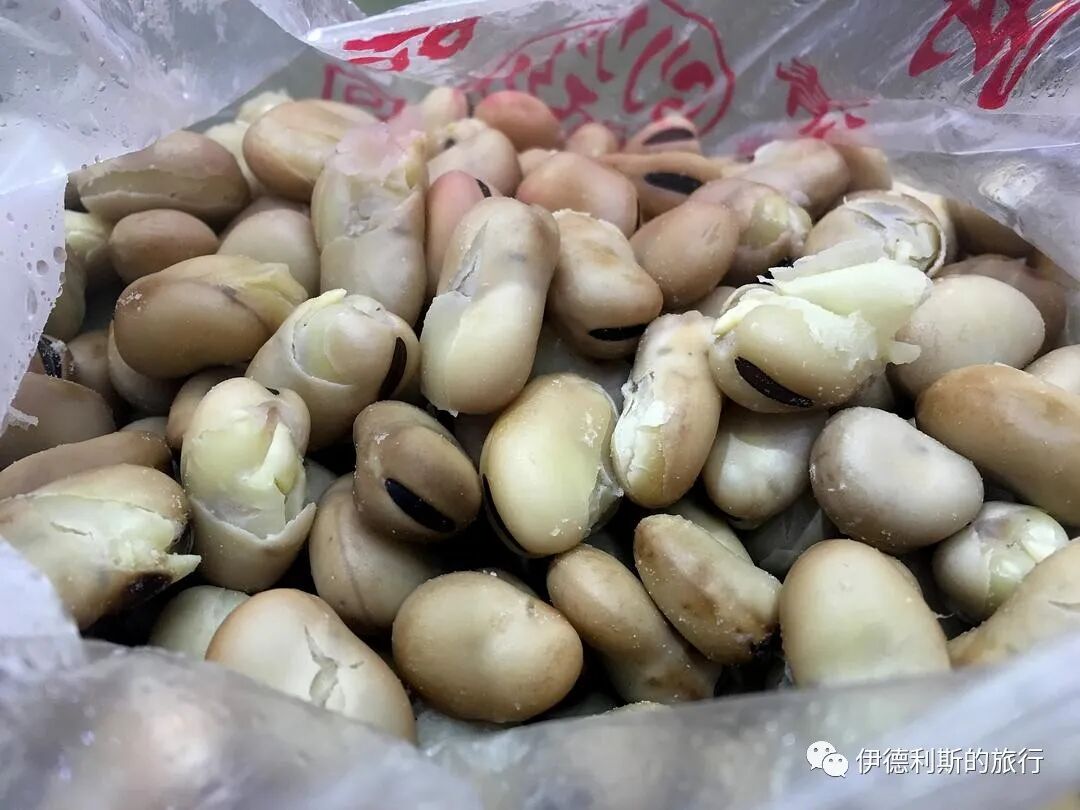
Back at the Northwest Corner subway station, the night market here is gone now.
July 2016.
On a hot summer afternoon on July 9, 2016, my childhood friend and I came to the Northwest Corner again to see how it differs from winter.
To get to the Northwest Corner from Beijing, it is best to take the train to Tianjin West Station, then take the subway one stop south to Northwest Corner Station. Right outside the southwest exit of the subway station is a halal cold drink stand. They have house-made sour plum drink (suanmeitang), homemade lemonade, and shaved ice (xuehualao). My childhood friend and I bought the sour plum drink and lemonade. They were delicious.
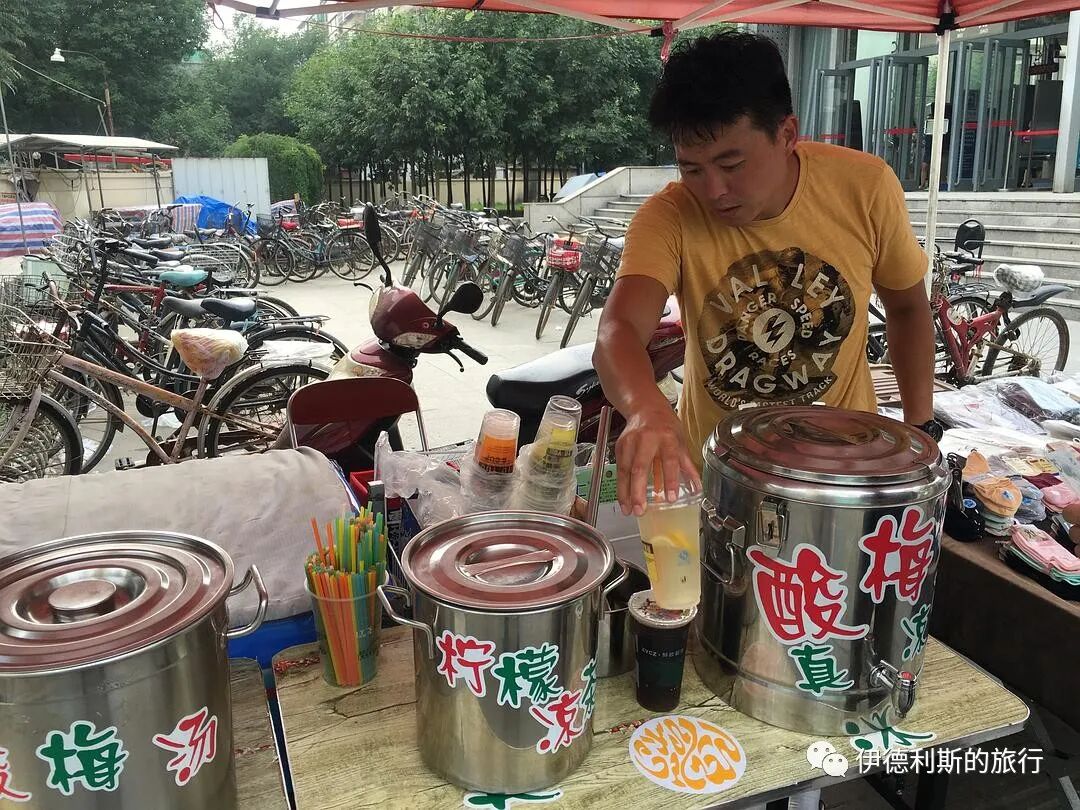
We kept walking south along West Horse Road (Xima Lu). The afternoon temperature was high, and there were very few people on the street.
At Ring City Noodle Shop (Huancheng Mianguan), my friend and I each had a bowl of cold noodles with shredded chicken and a plate of tofu with century egg. It was very refreshing. Almost no other halal restaurant in Beijing makes cold noodles better than this one.
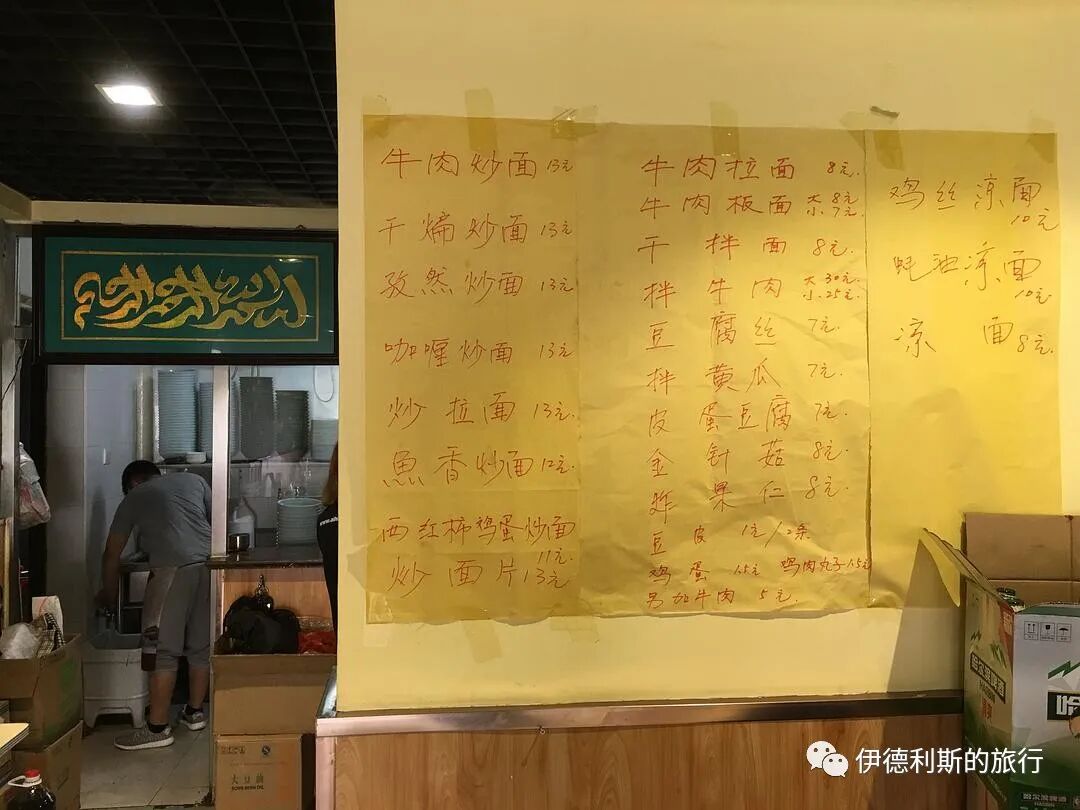
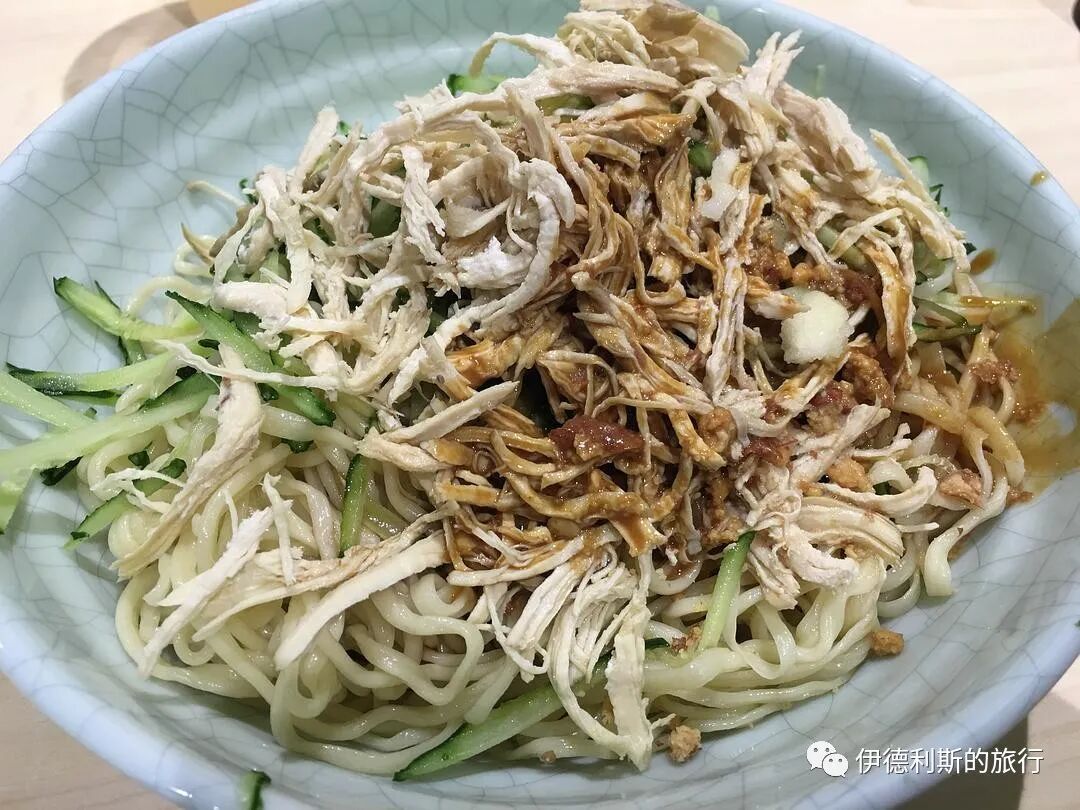
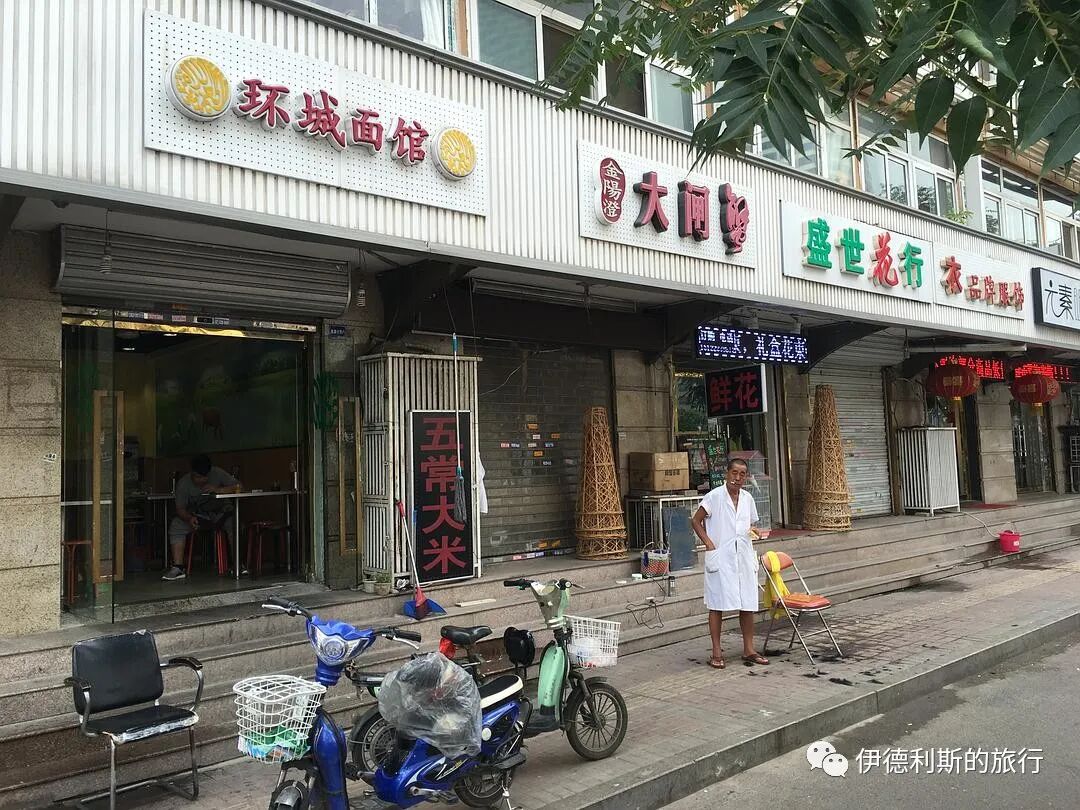
We continued walking south. I guess everyone was at home staying out of the heat. Not far ahead was the alley entrance facing the South Mosque (Qingzhen Nansi), where we turned into Huanqing West Alley.
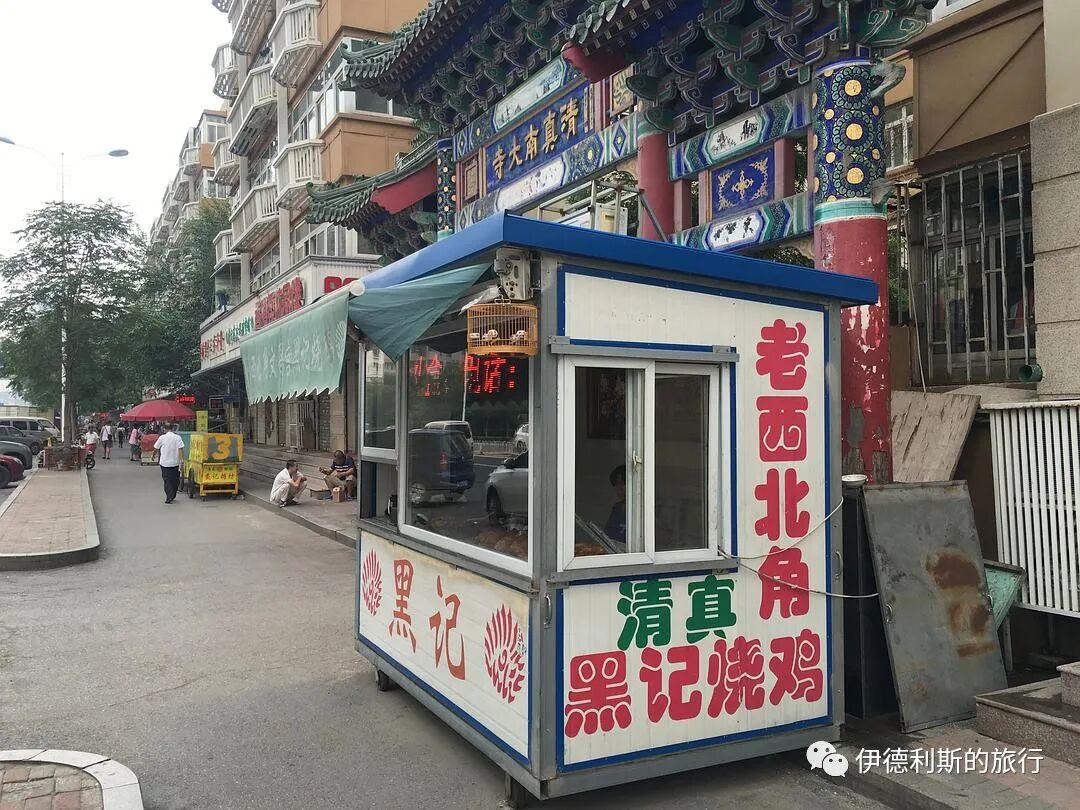
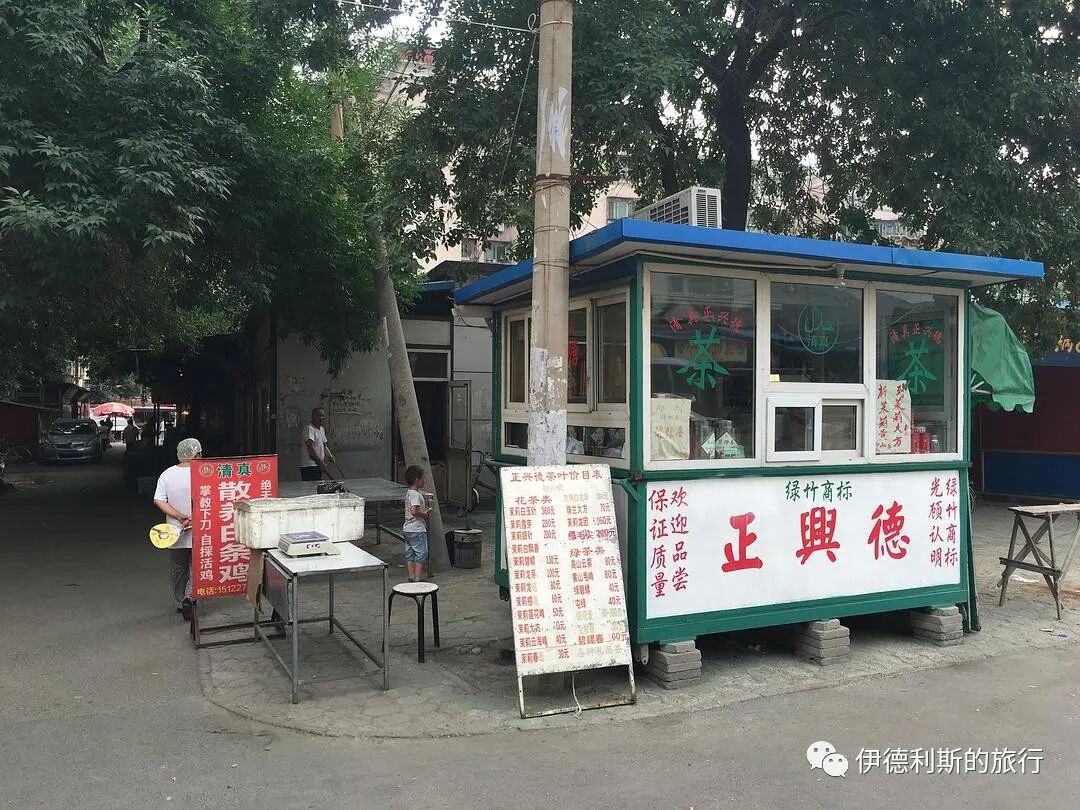
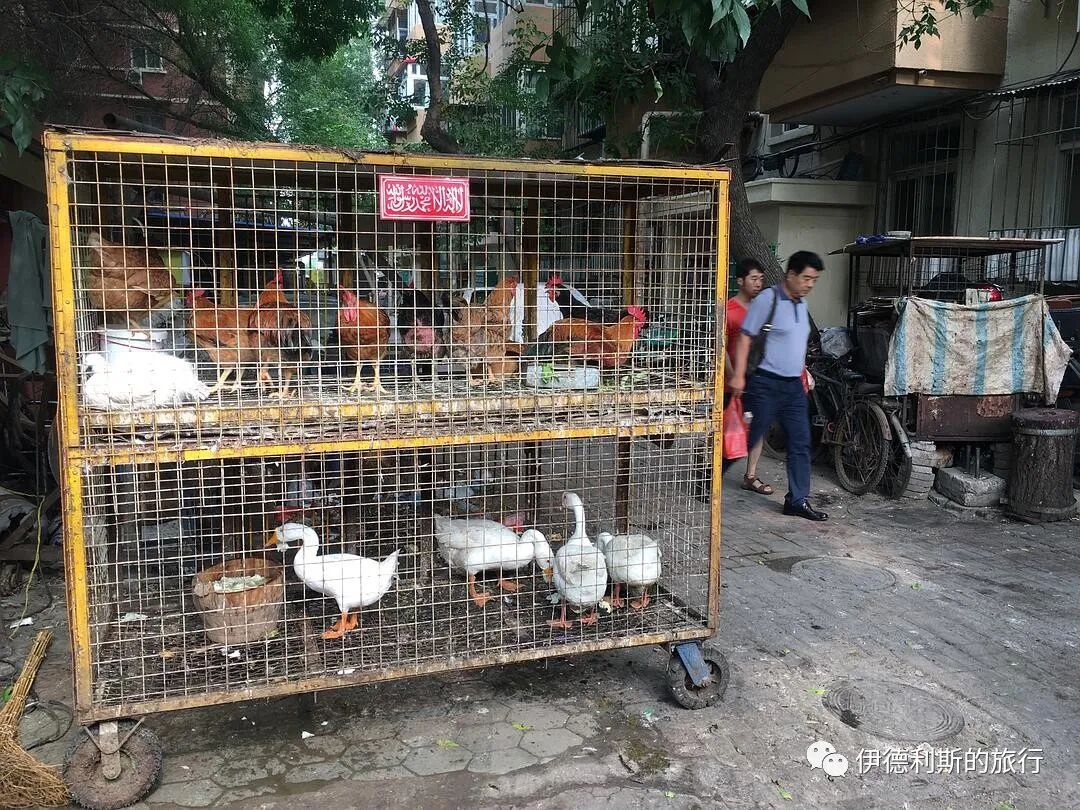
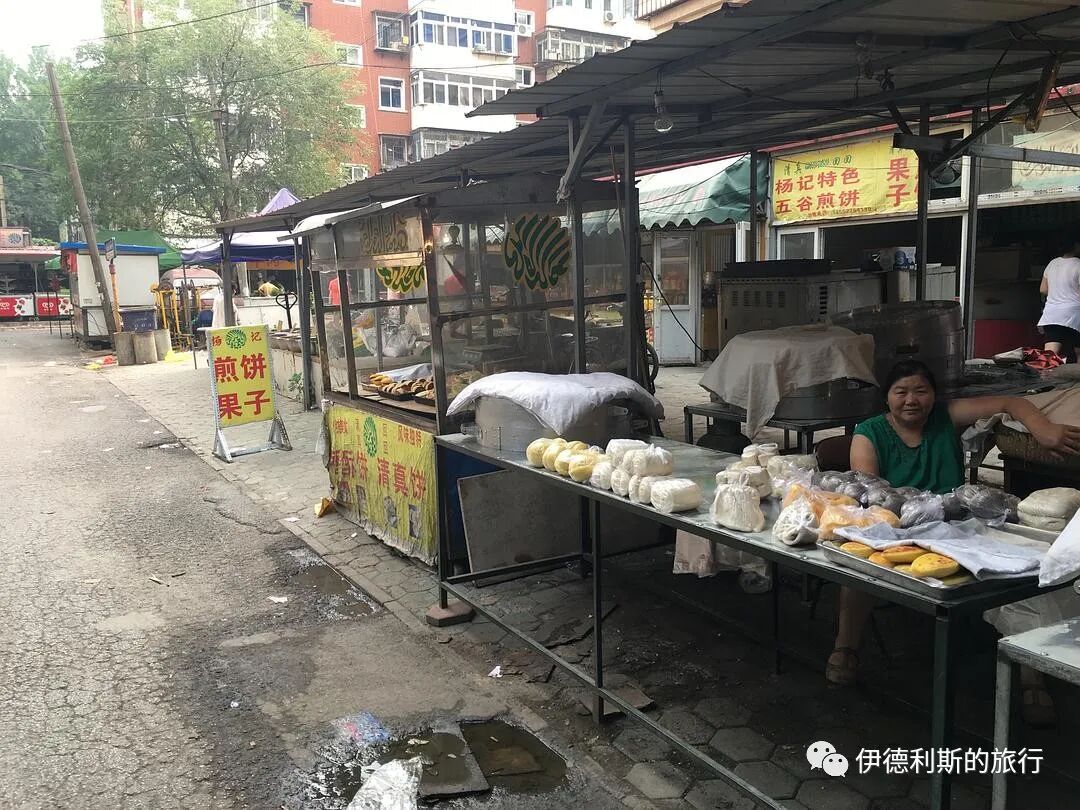
The intersection of Huanqing West Alley and Xiguan North Street is the heart of the Northwest Corner, and it is full of shops. I bought two coarse-grain vegetable dumplings (caimian tuanzi).
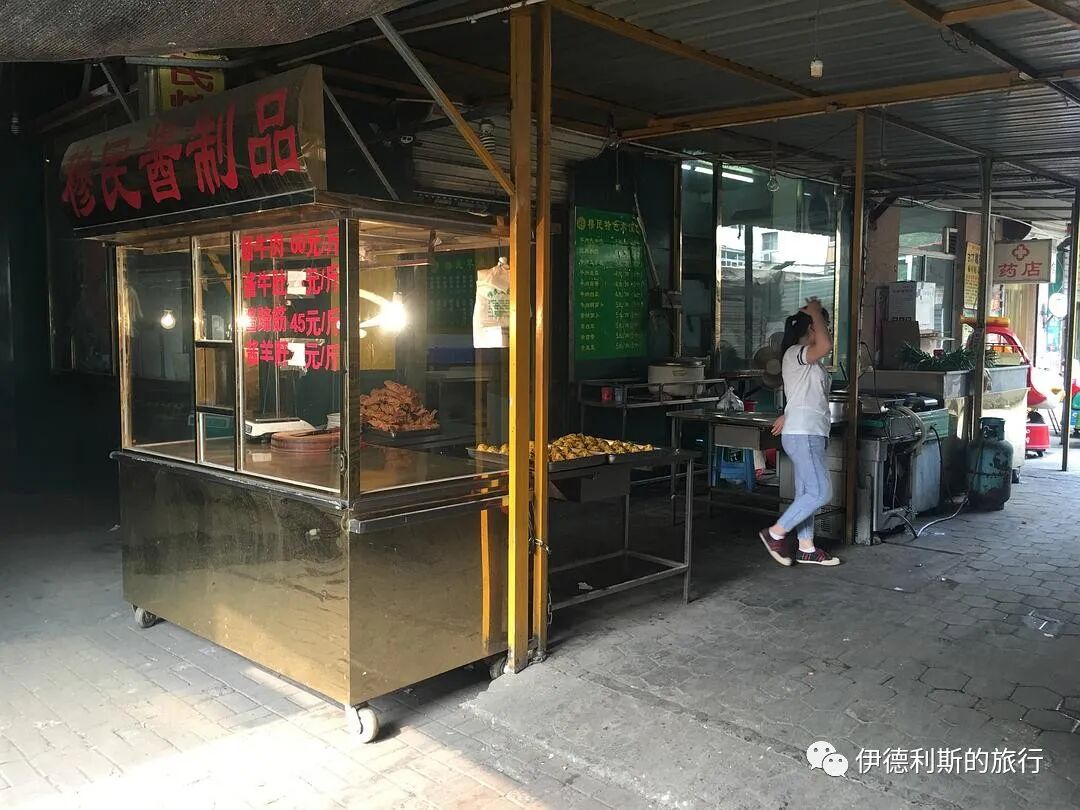
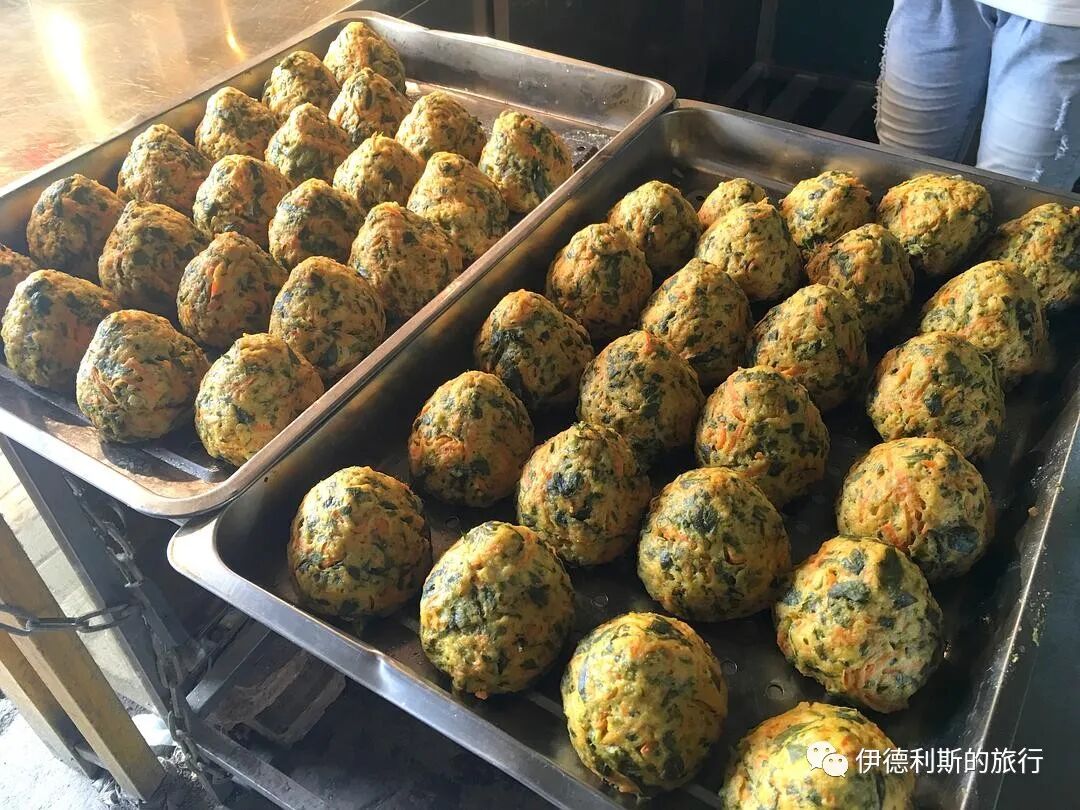
We went into Mumin Supermarket and bought a jar of stir-fried shrimp paste. My friend and I first came to Tianjin together ten years ago and specifically came here to buy this paste to eat with steamed buns (mantou). Haha!
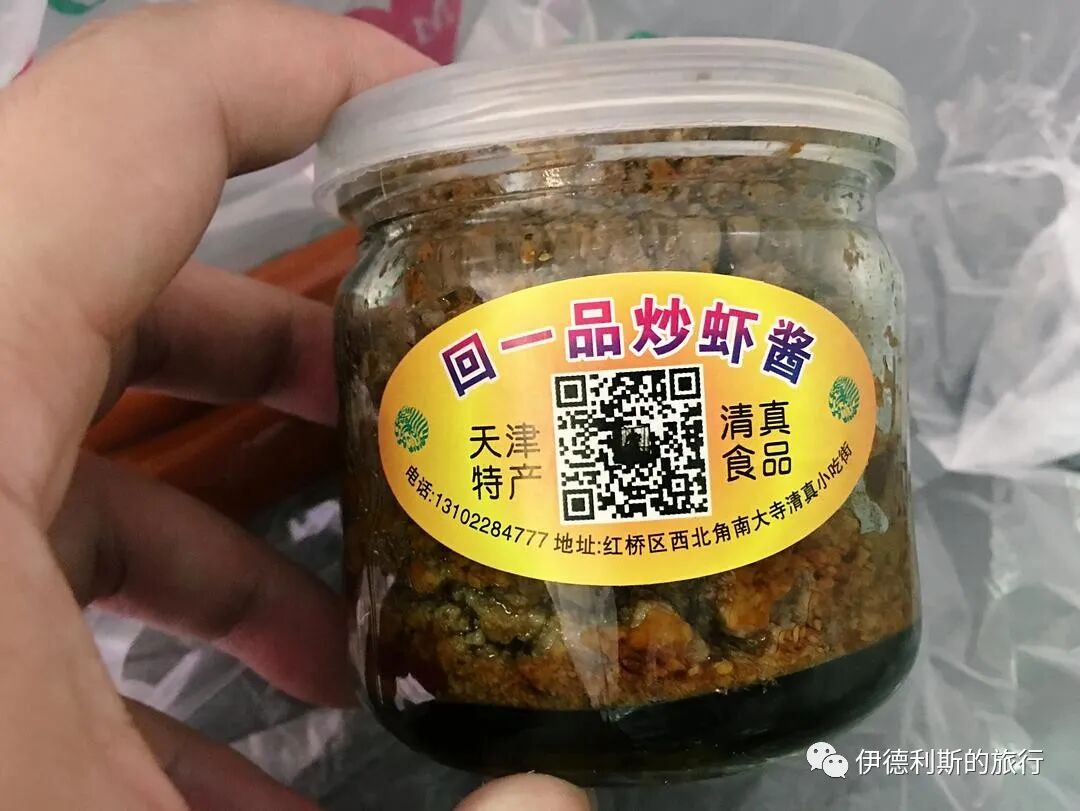
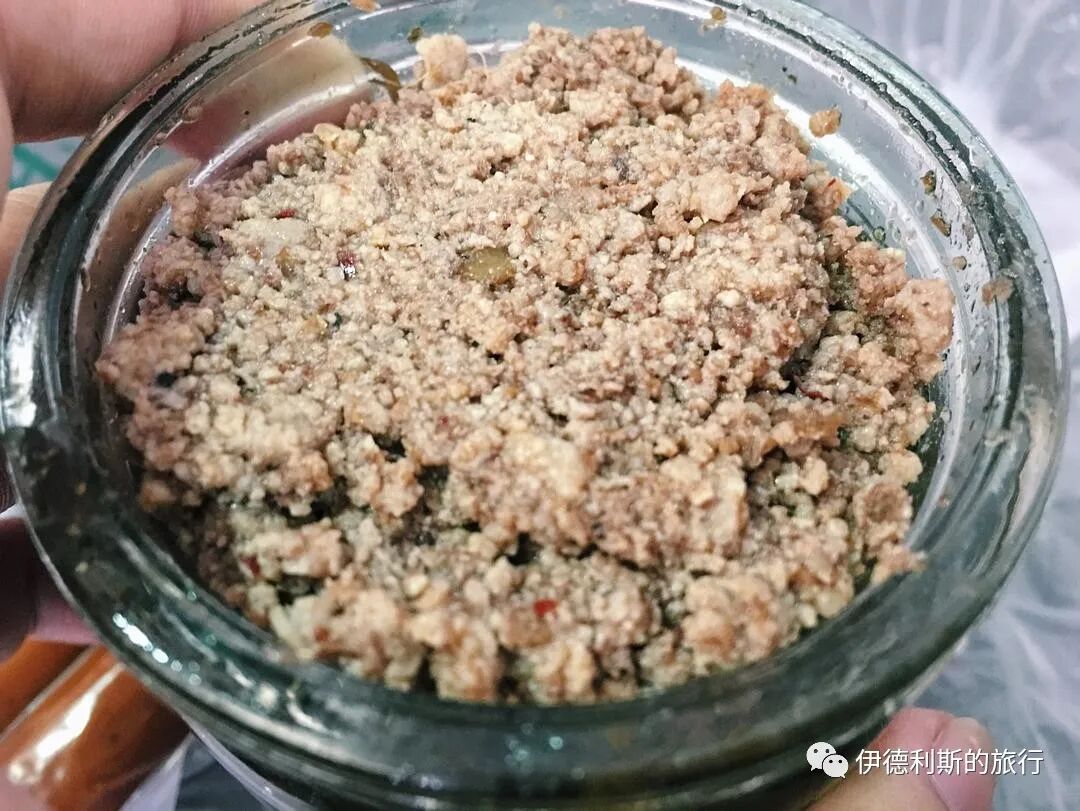
Mumin Supermarket has now changed its name to Mumin Supermarket (Mumin Chaoshi, using different characters).
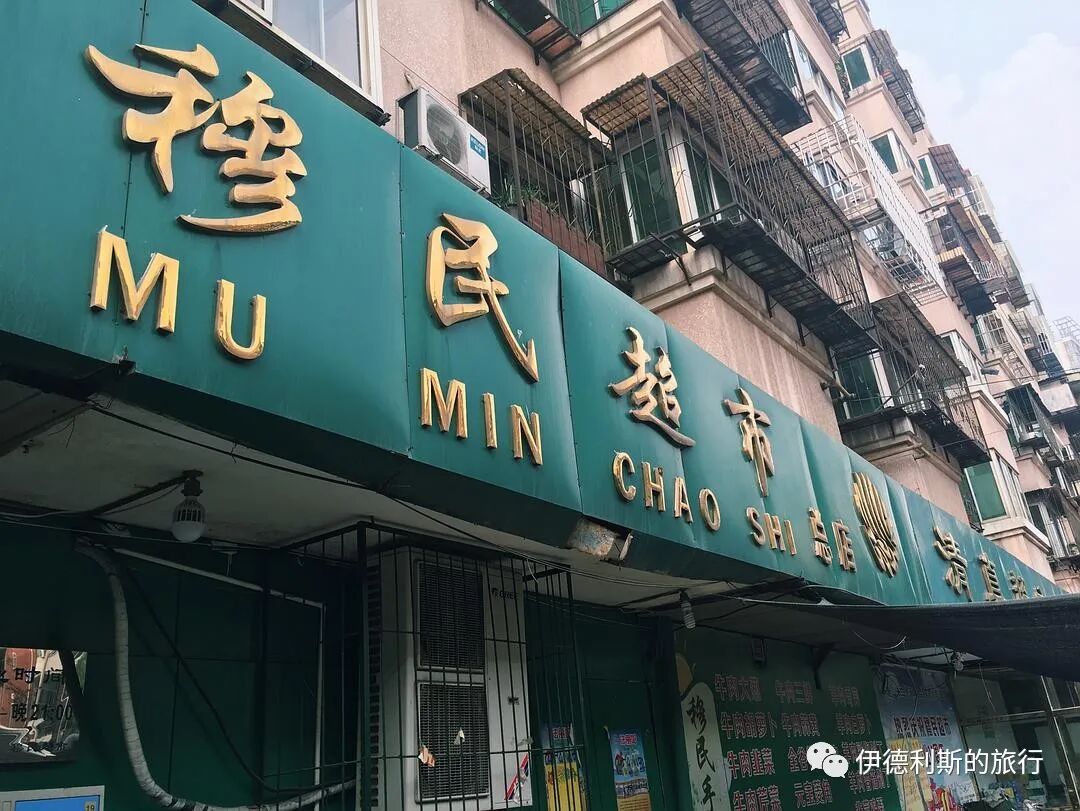
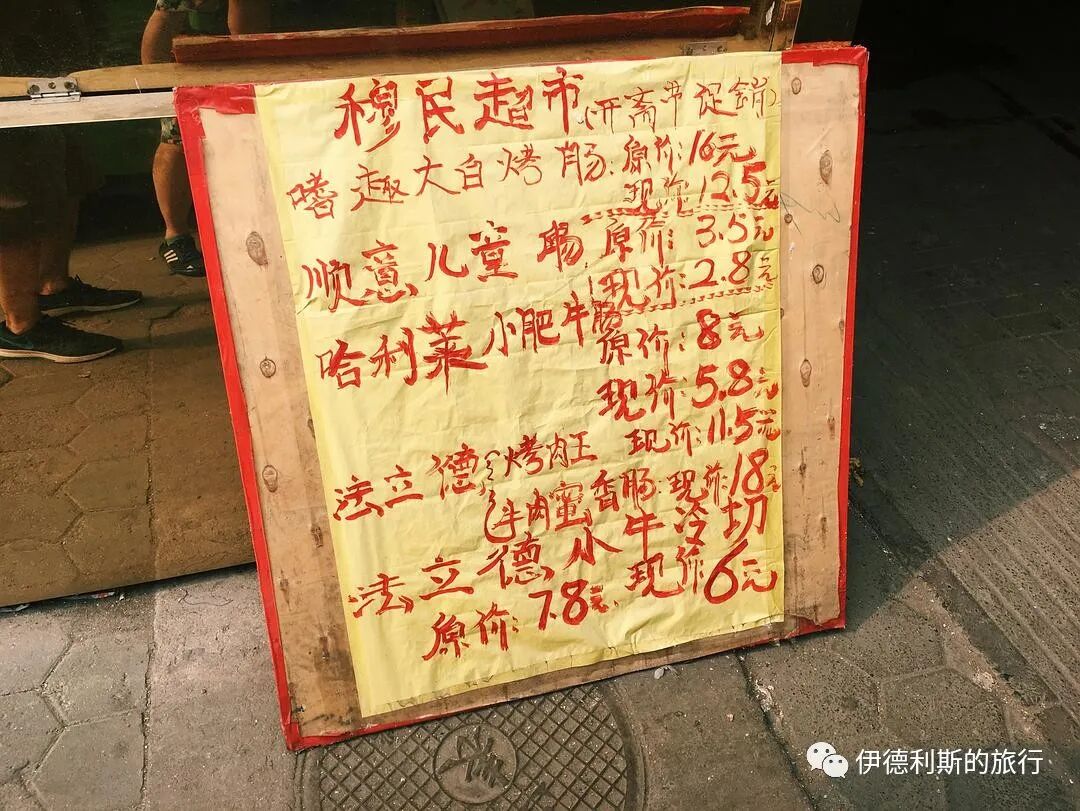
Coming out of Mumin Supermarket, we entered the north-south market on the east side of Xiguan Beili that leads to Xiguan Street. There were very fragrant fried eggplant boxes and lotus root boxes.
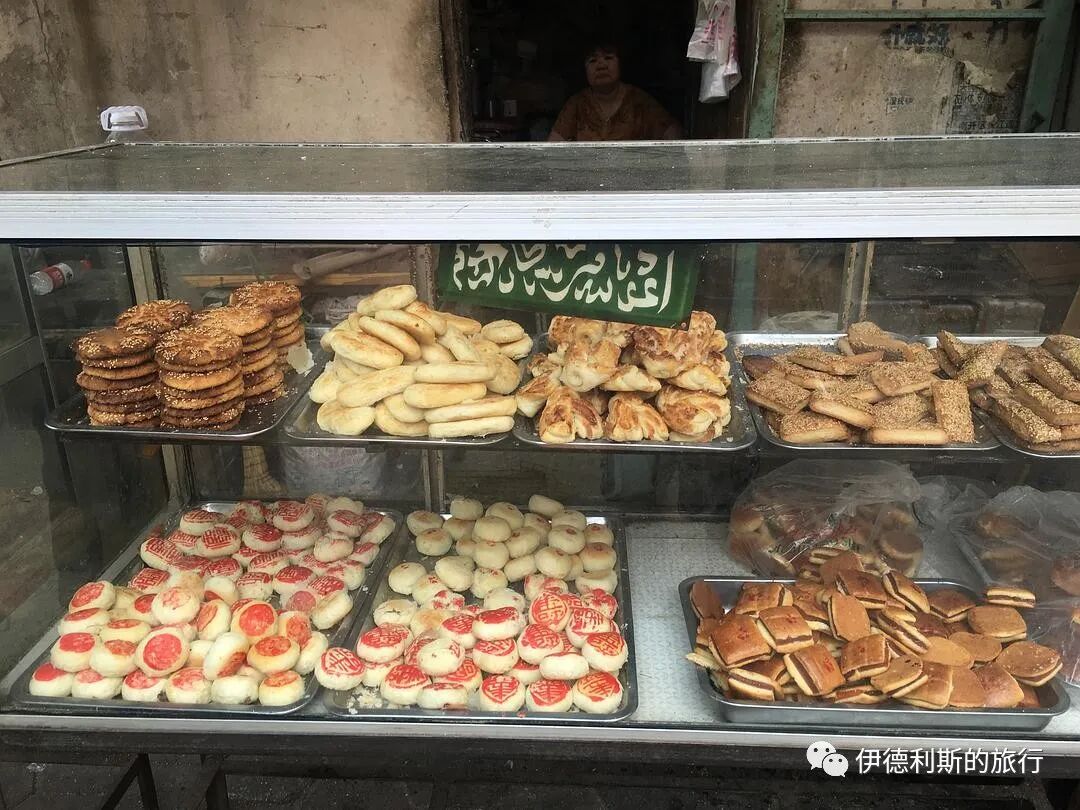
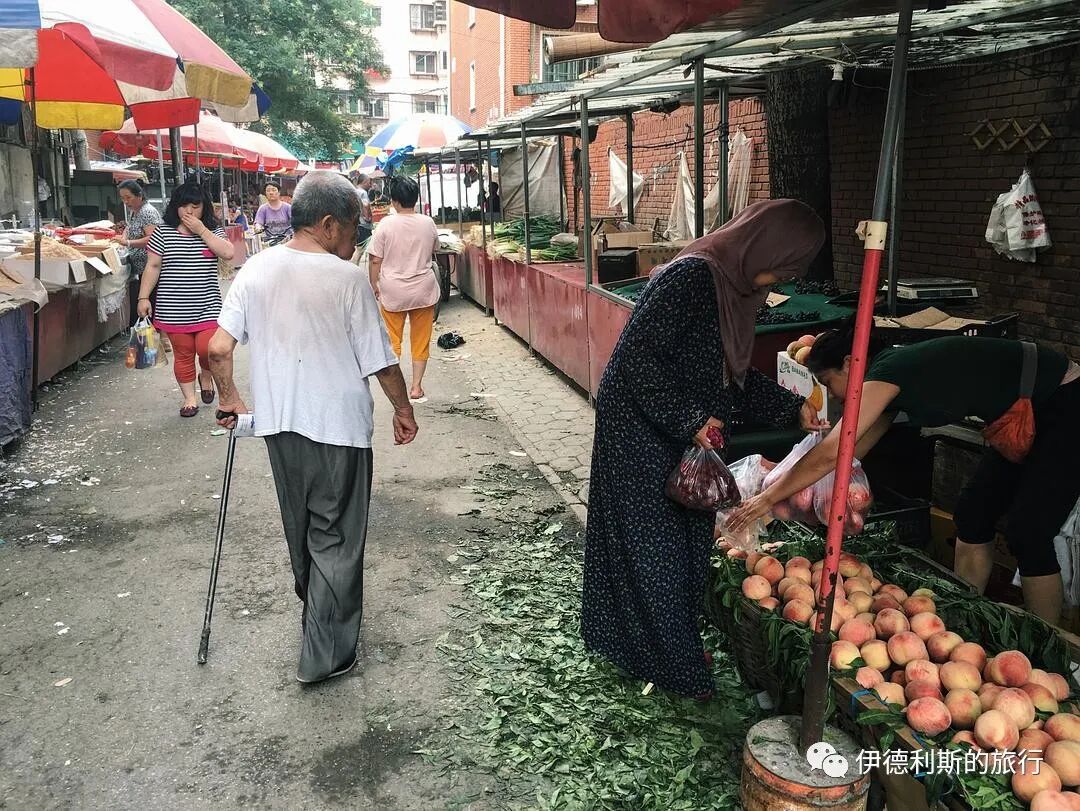
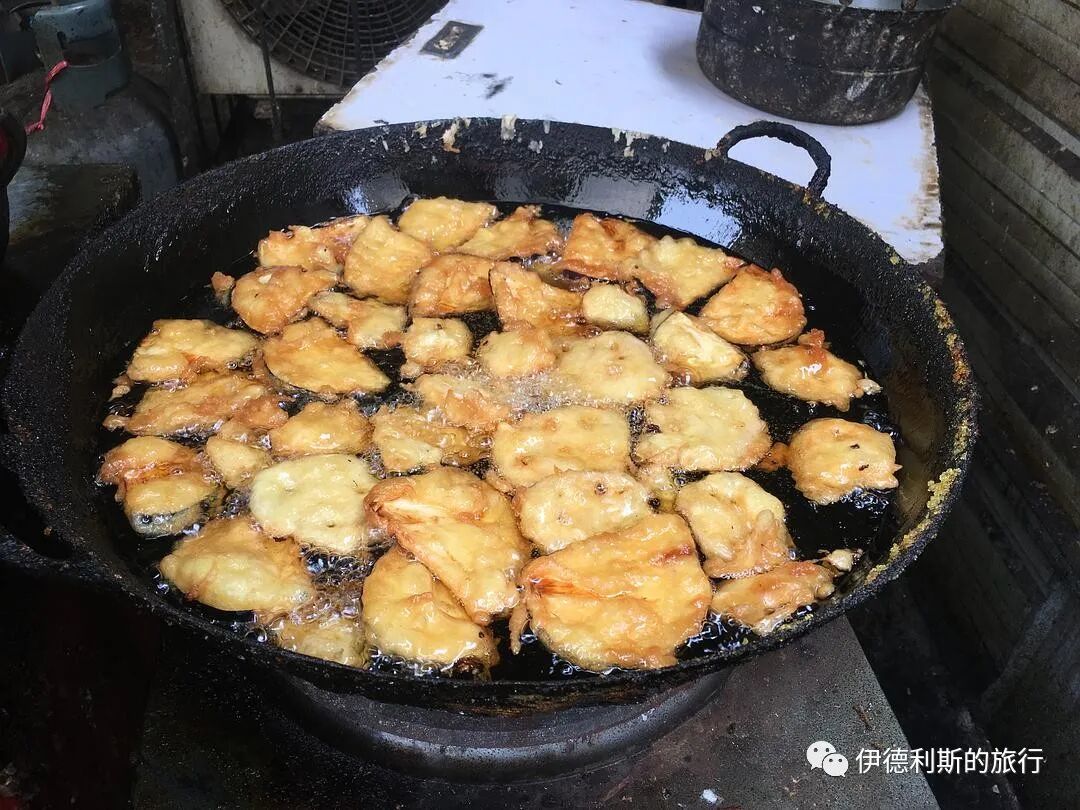
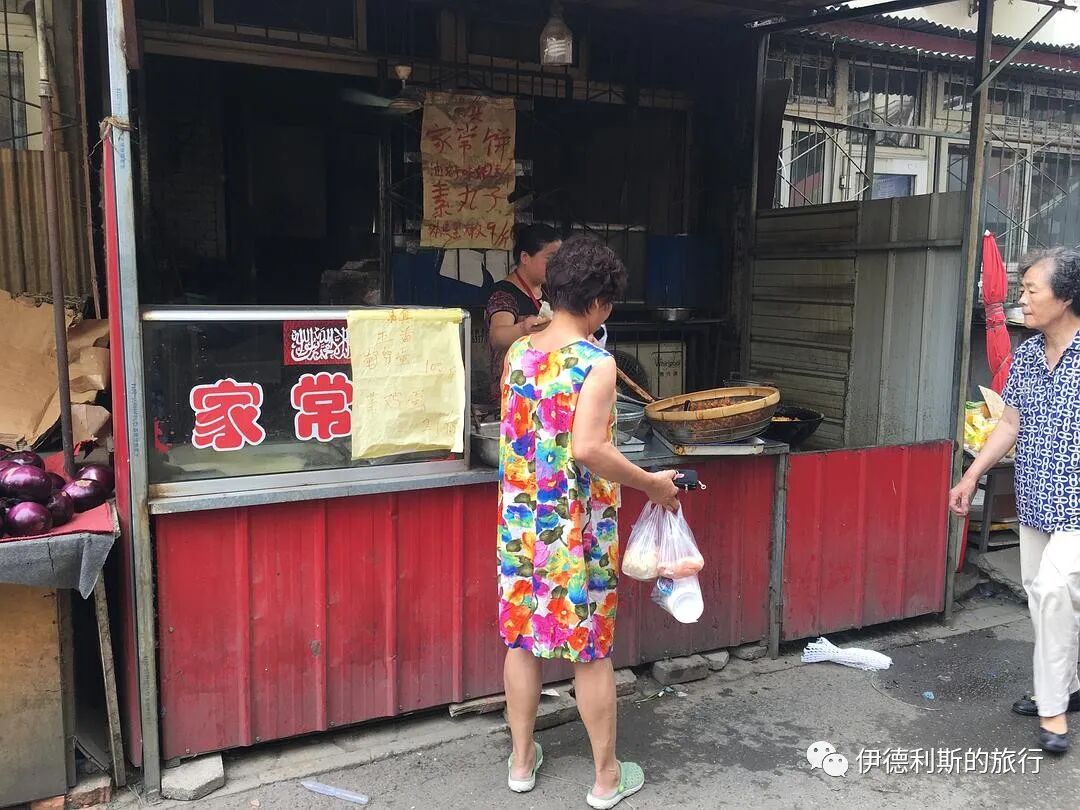
We turned onto Xiguan Street. When I came here in winter, the thing that left the deepest impression was the hot black beans (wudou) at the east entrance. So, we went to buy 3 yuan worth of black beans. My friend highly praised them, saying they were truly delicious.
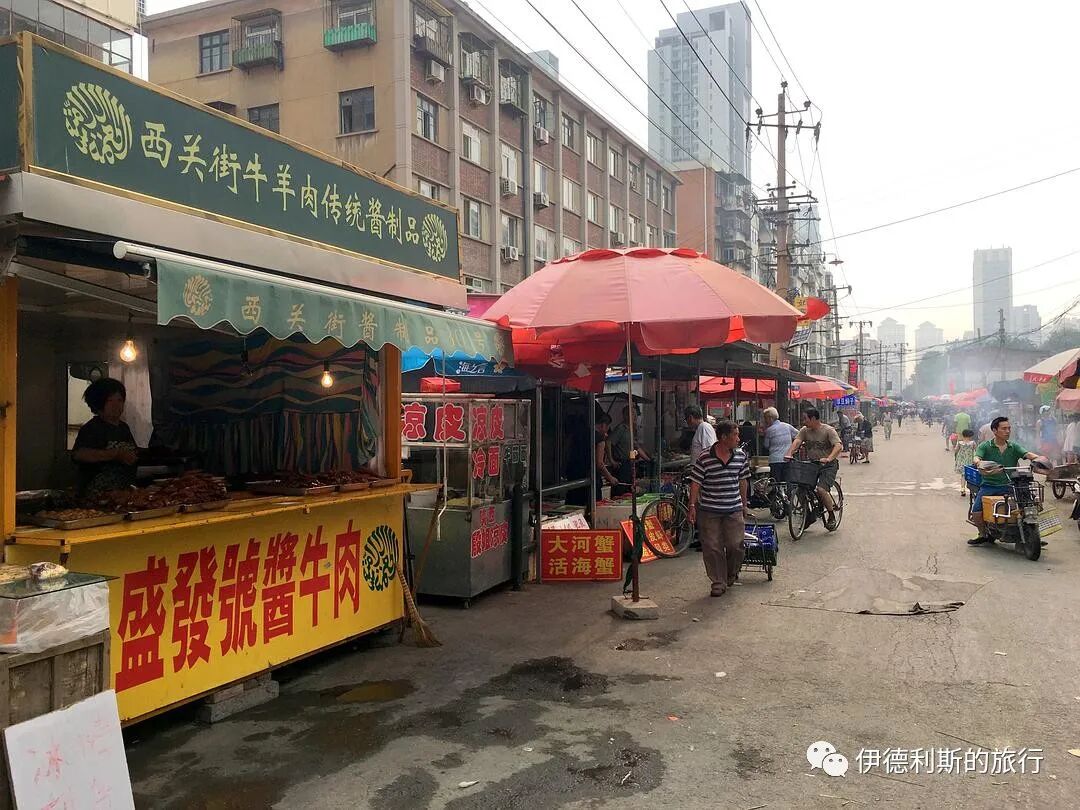
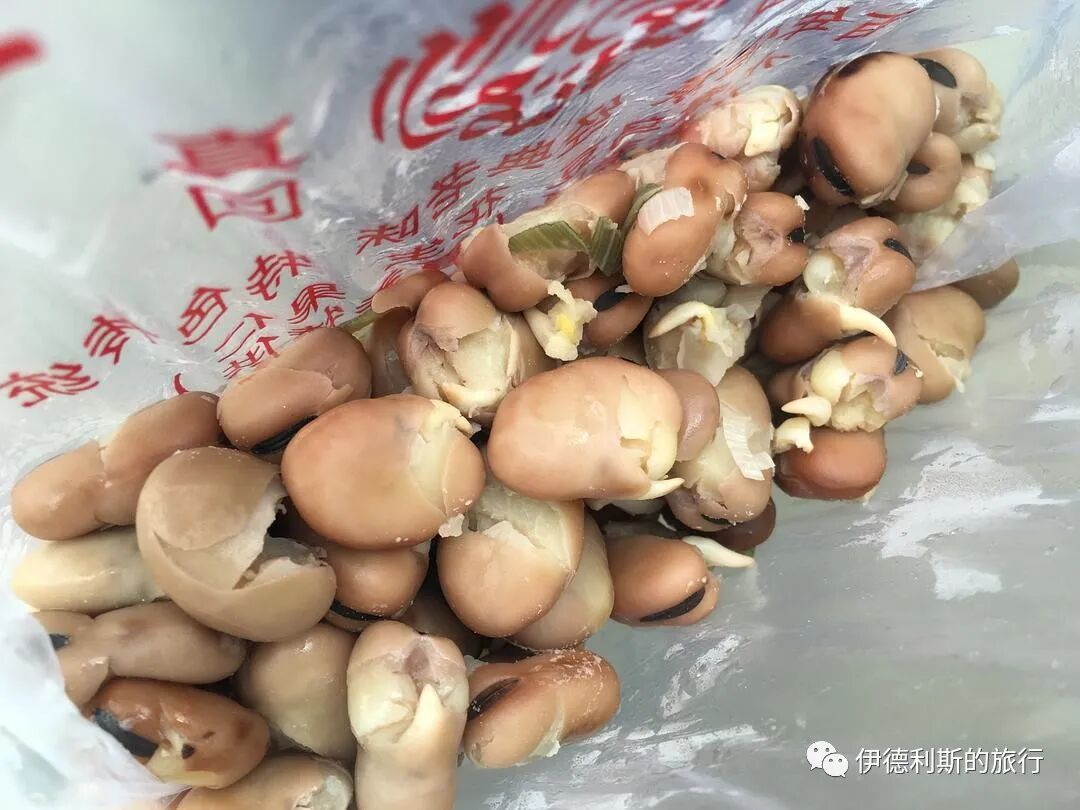
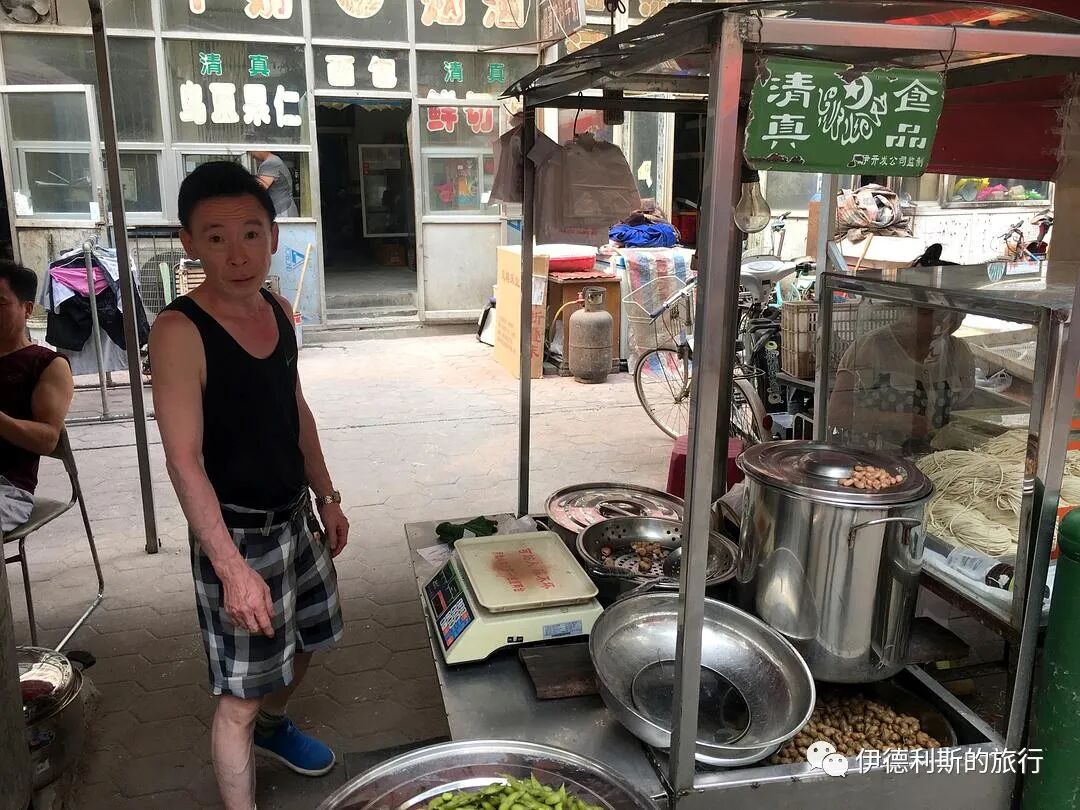
Further east from the black beans is the intersection of Xiguan Street and West Horse Road. On the northwest side of the road, they sell seaweed rice rolls, shaved ice, and milkshakes. I bought a cup of red bean condensed milk shaved ice, which was super refreshing.
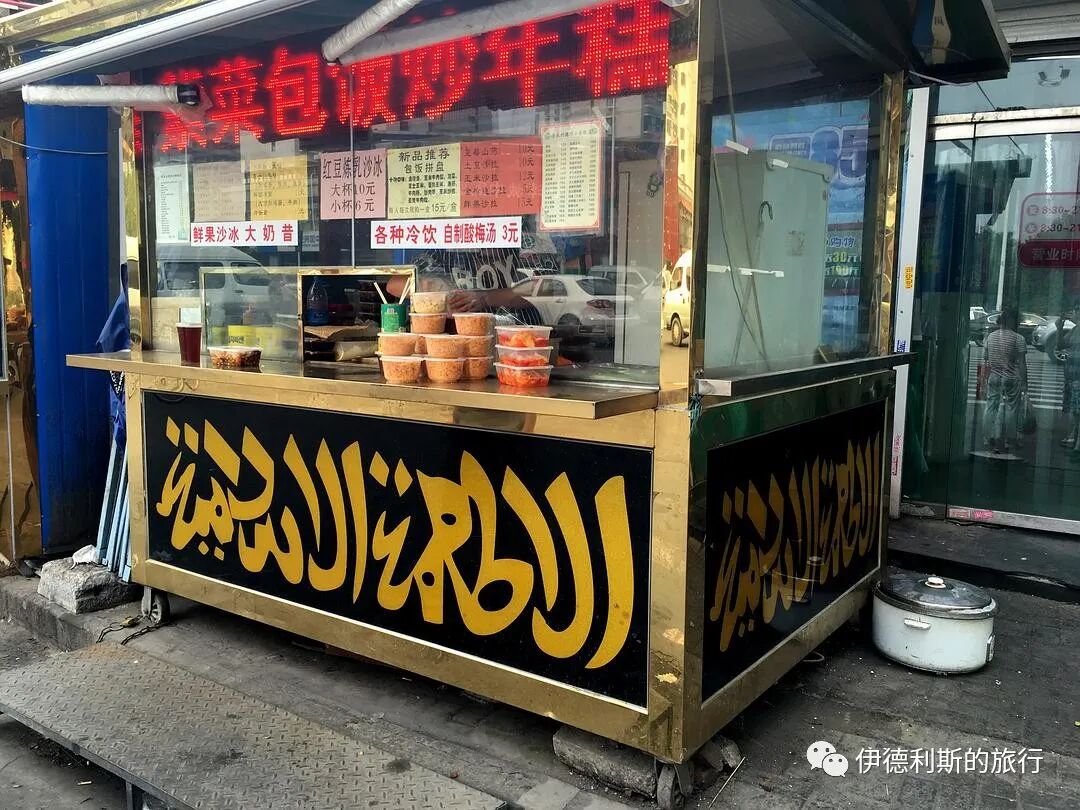
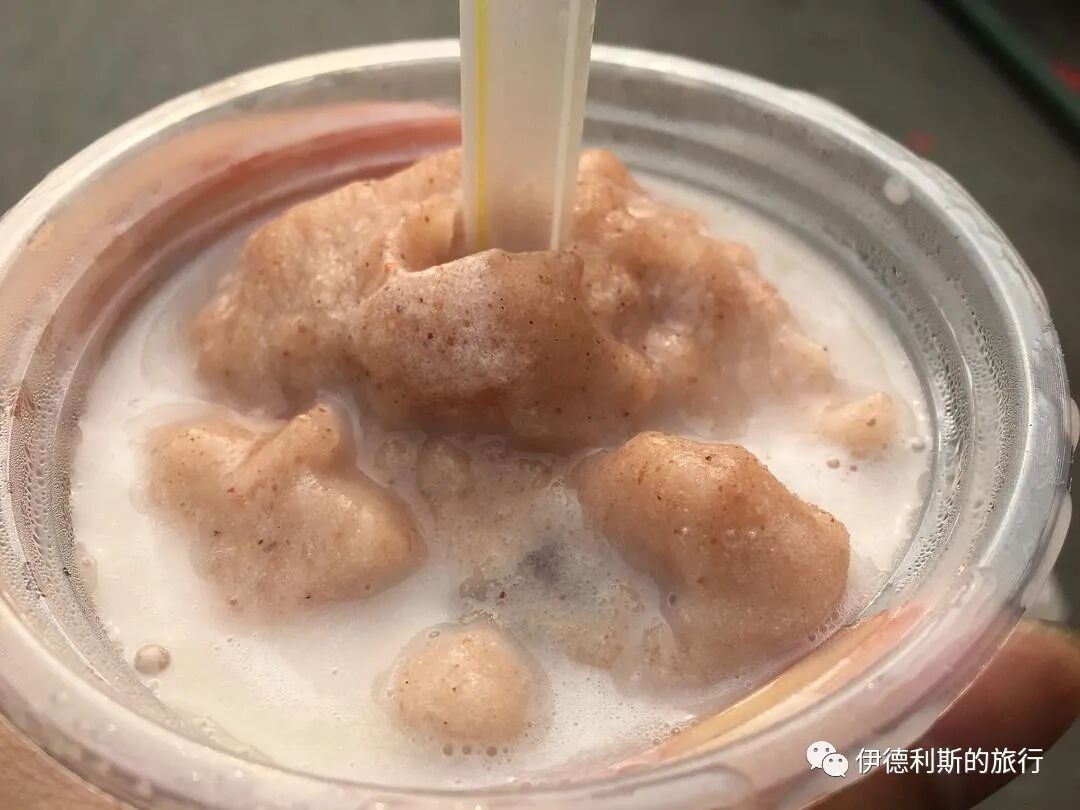
August 2016
On August 20, 2016, over a month later, my childhood friend and I returned to Tianjin on a not-so-hot afternoon. We got off the train and took the subway straight to the Northwest Corner (Xibeijiao). We exited the southwest subway entrance and headed right to the cold drink shop we had been looking forward to. We had delicious sour plum drink (suanmeitang) there last time, so this time we tried the snowflake shaved ice (xuehualao).
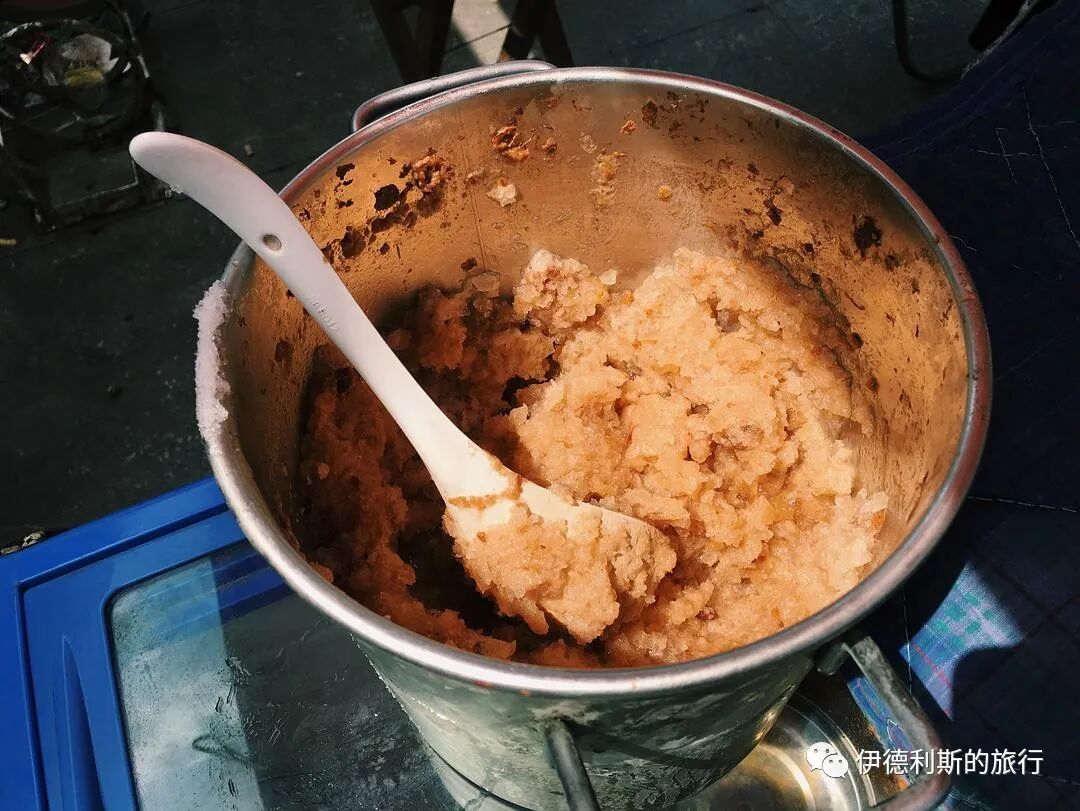
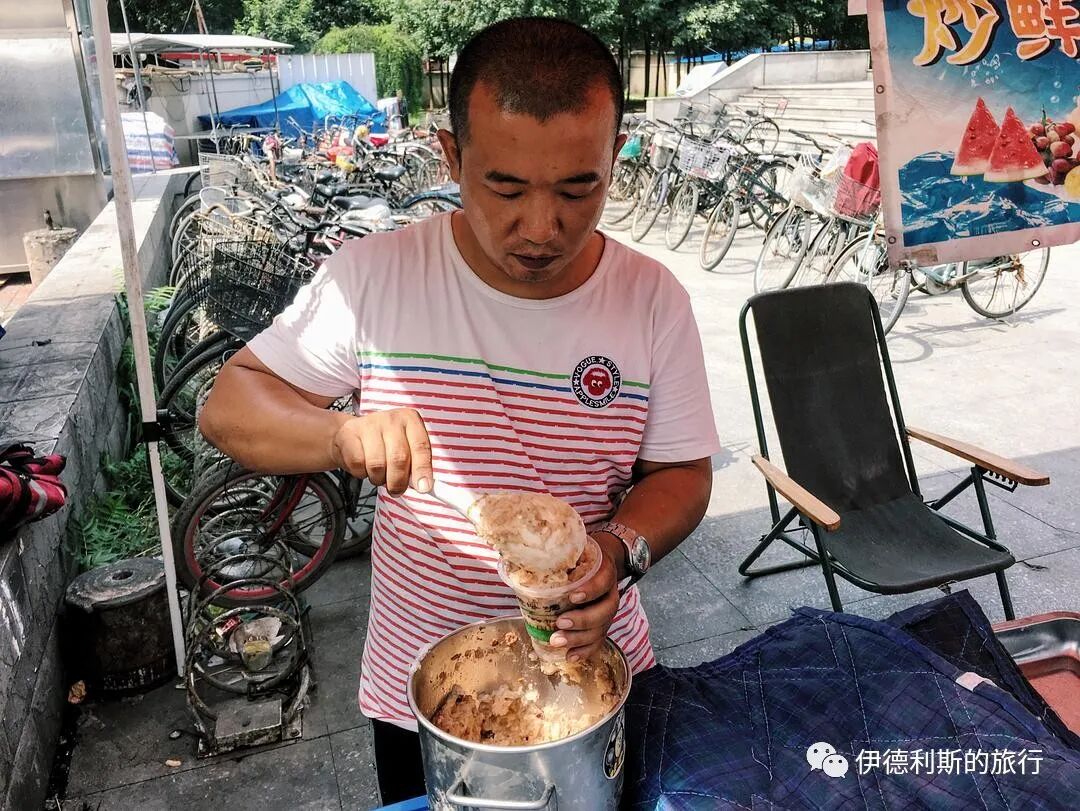
The snowflake shaved ice felt like red hawthorn shaved ice. Imagine it as snow made of stir-fried red hawthorn (chaohongguo). It was not as sweet as the stir-fried red hawthorn in Beijing, and I really liked it.
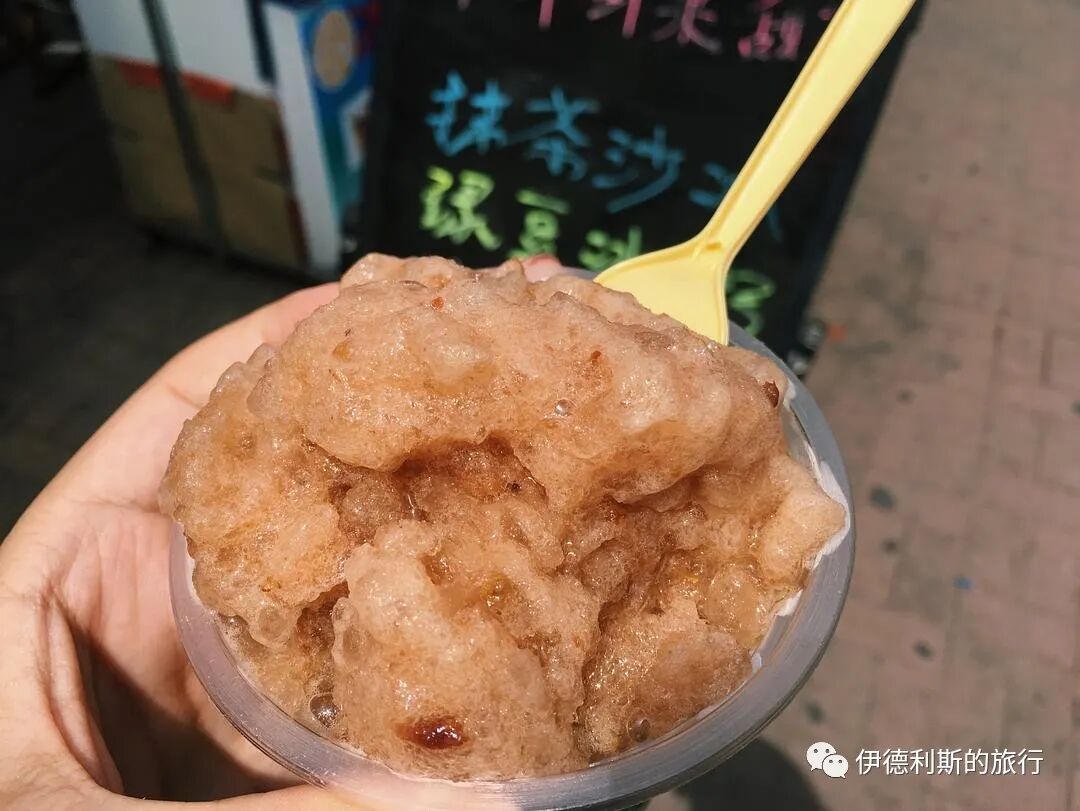
We kept walking south along West Horse Road (Ximalu), then turned west at the intersection of the South Mosque (Qingzhen Nansi). Many shops were closed due to the extreme heat when we visited last month, but it was much livelier this time.
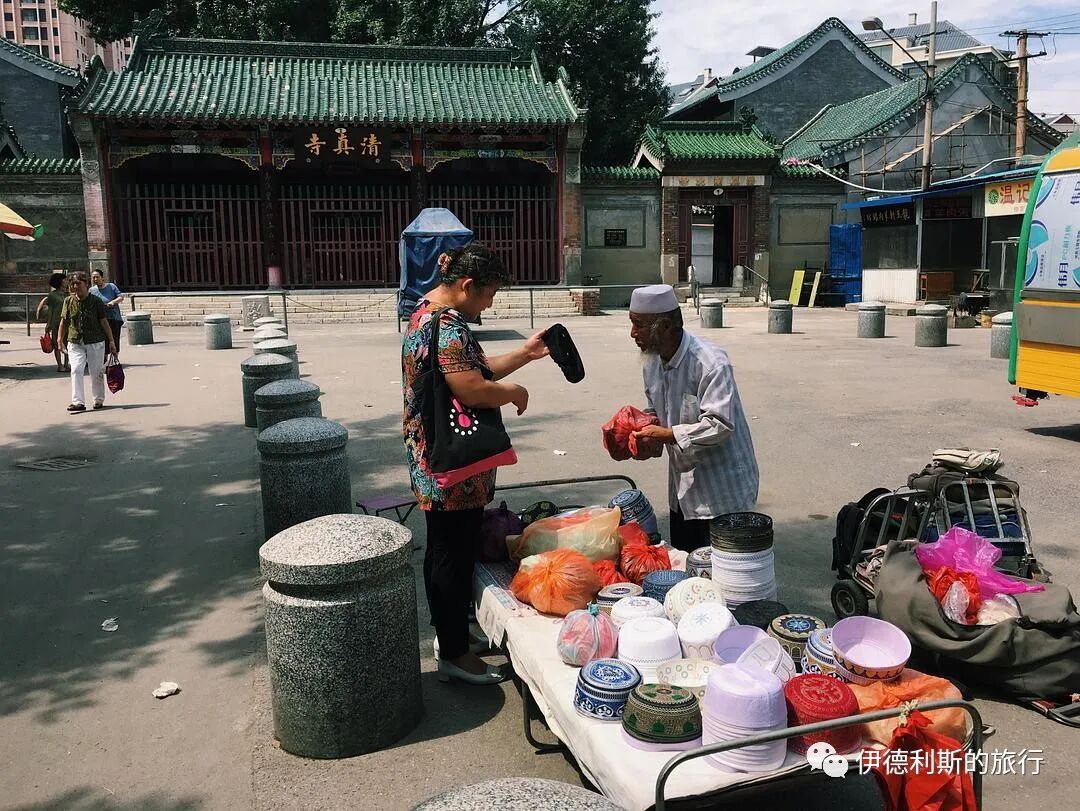
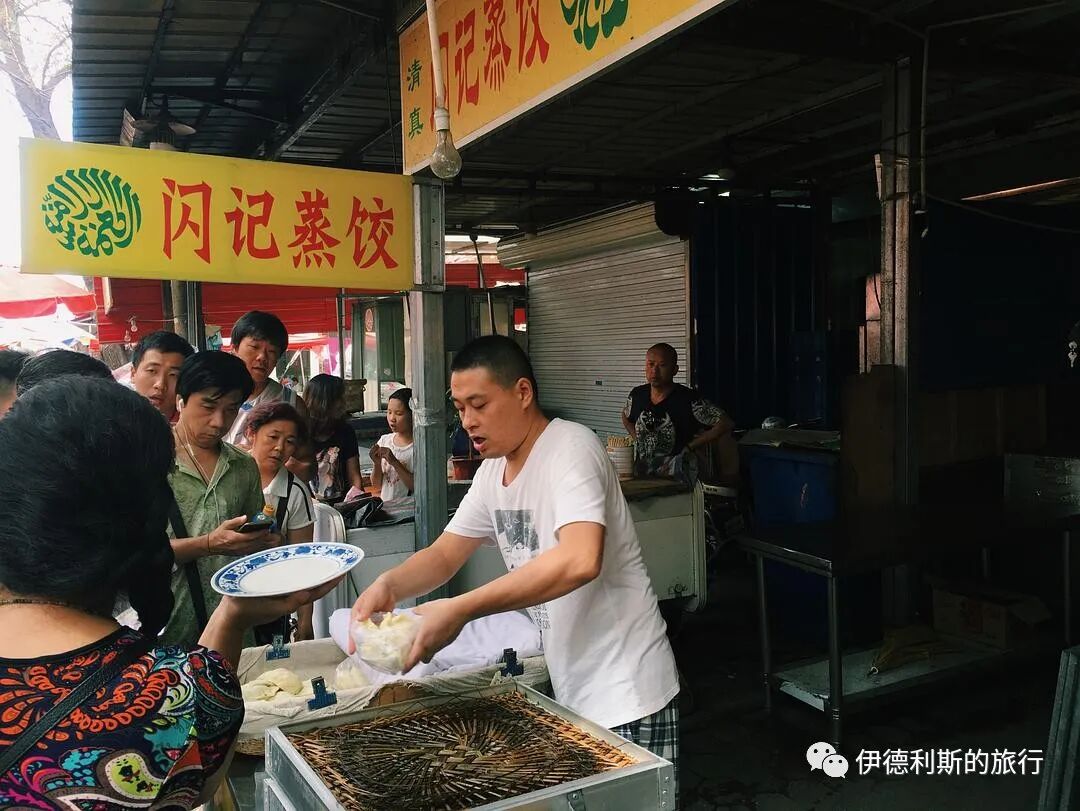
We walked south along Huanqing West Alley, turned west at the Muslim supermarket (Mumin Chaoshi), and walked to the end to find Wang Sangu Beef Pie. We could smell the aroma from far away. The kitchen was outdoors. We lined up from south to north. We paid and got a ticket from the man at the south end. Moving north, two women wrapped the pies, one woman handed them out, and two men cooked them. On the west side, others handled the cold dishes and stewed beef brisket. Everything was organized and lively.
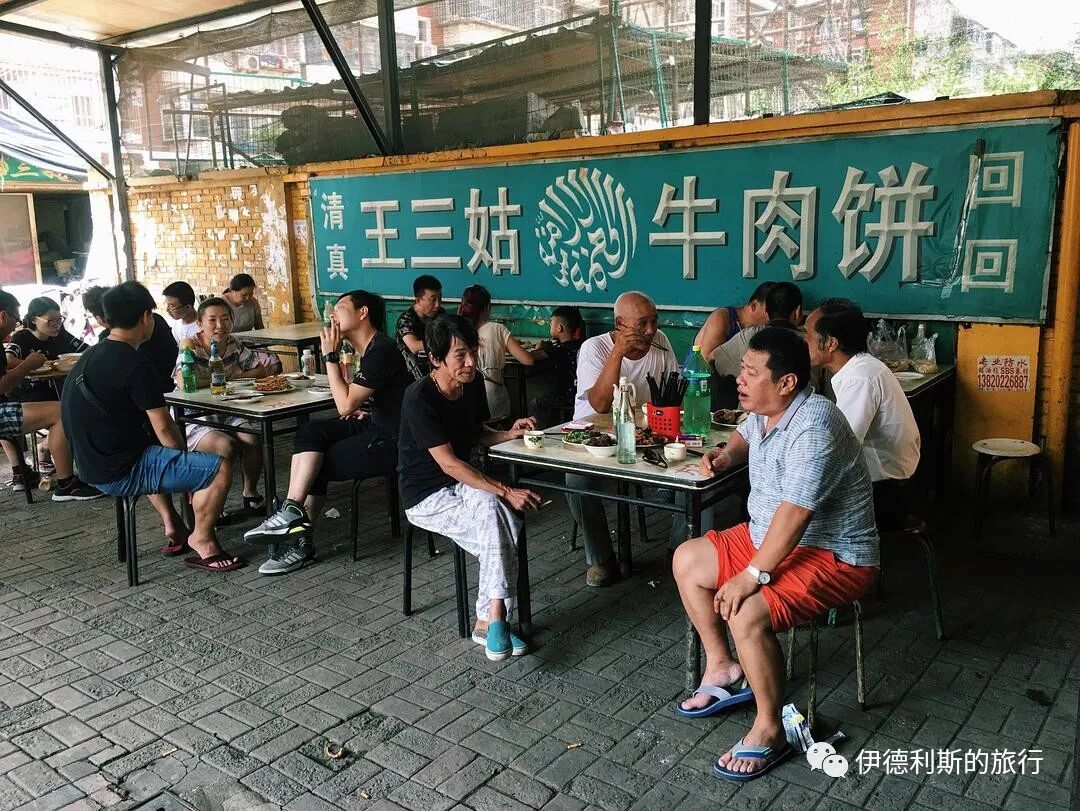
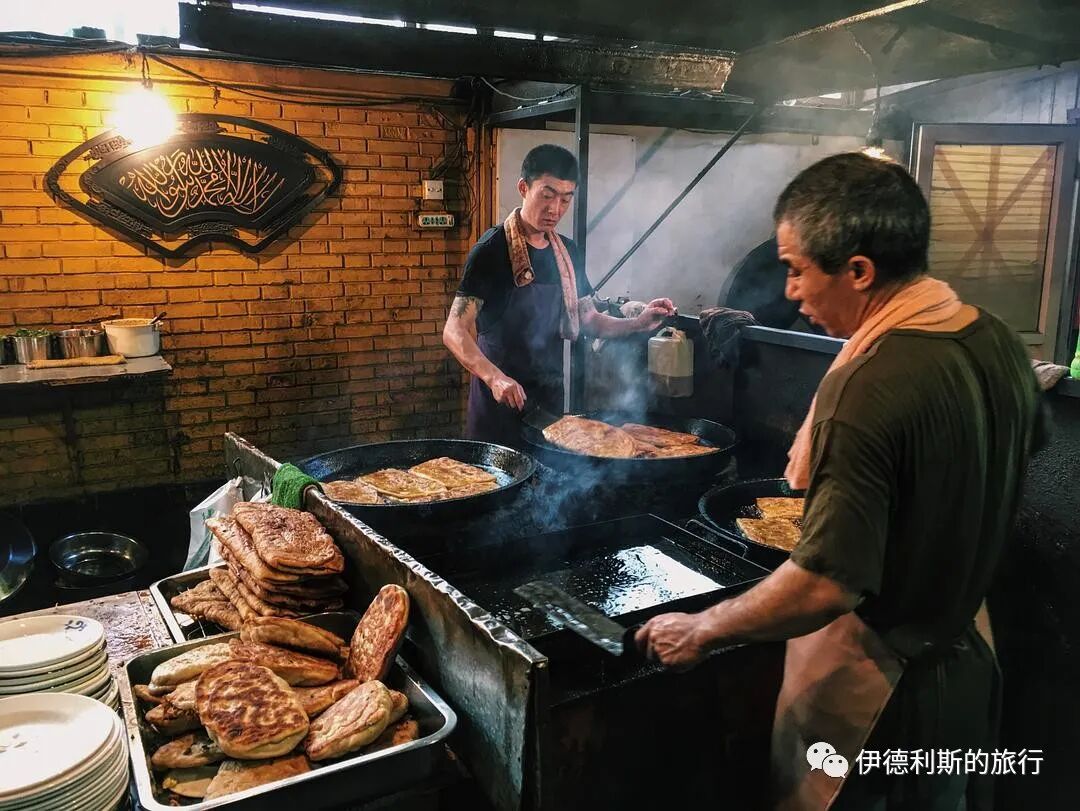
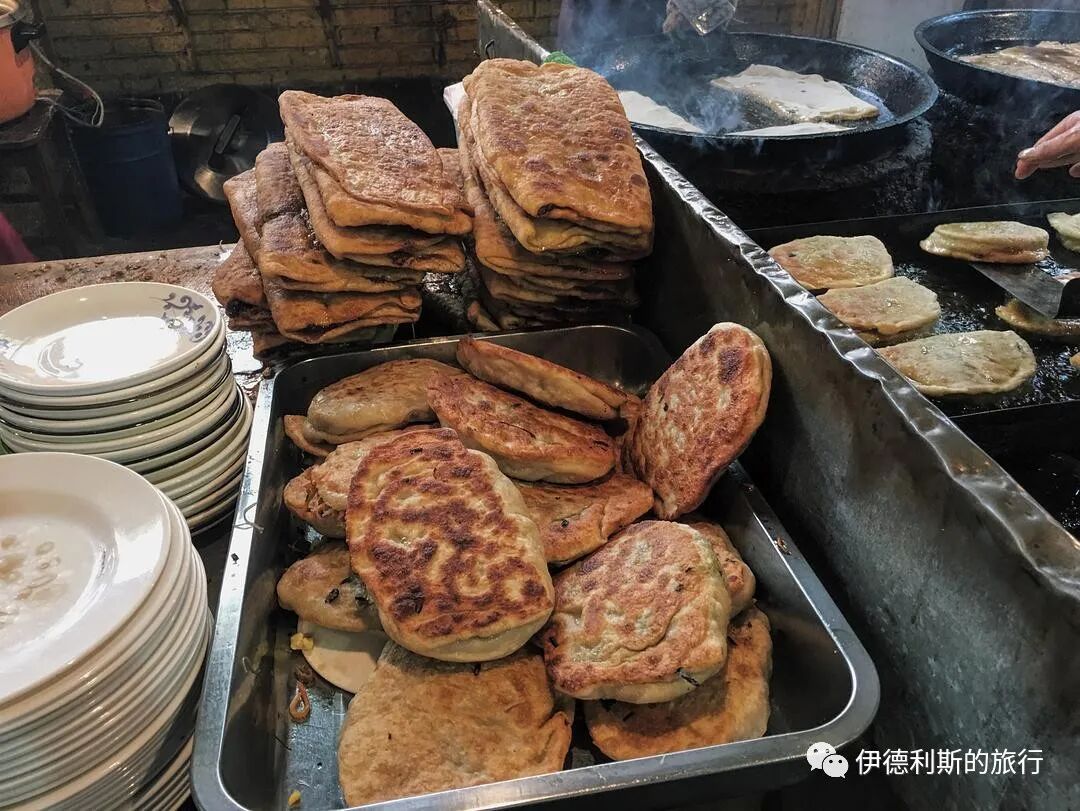
My friend and I bought a 17-yuan beef pie and took it inside to eat. The best part was the crust, which was crispy and had a great texture.
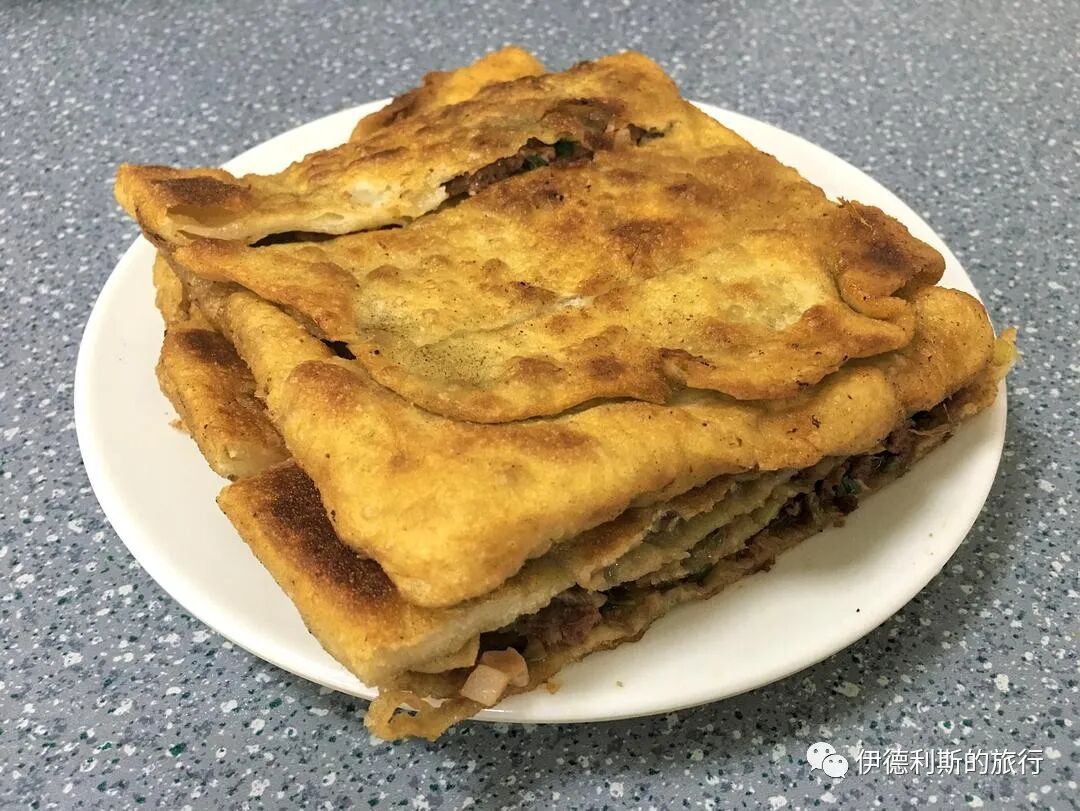
We walked around outside and returned to the Northwest Corner in the evening.
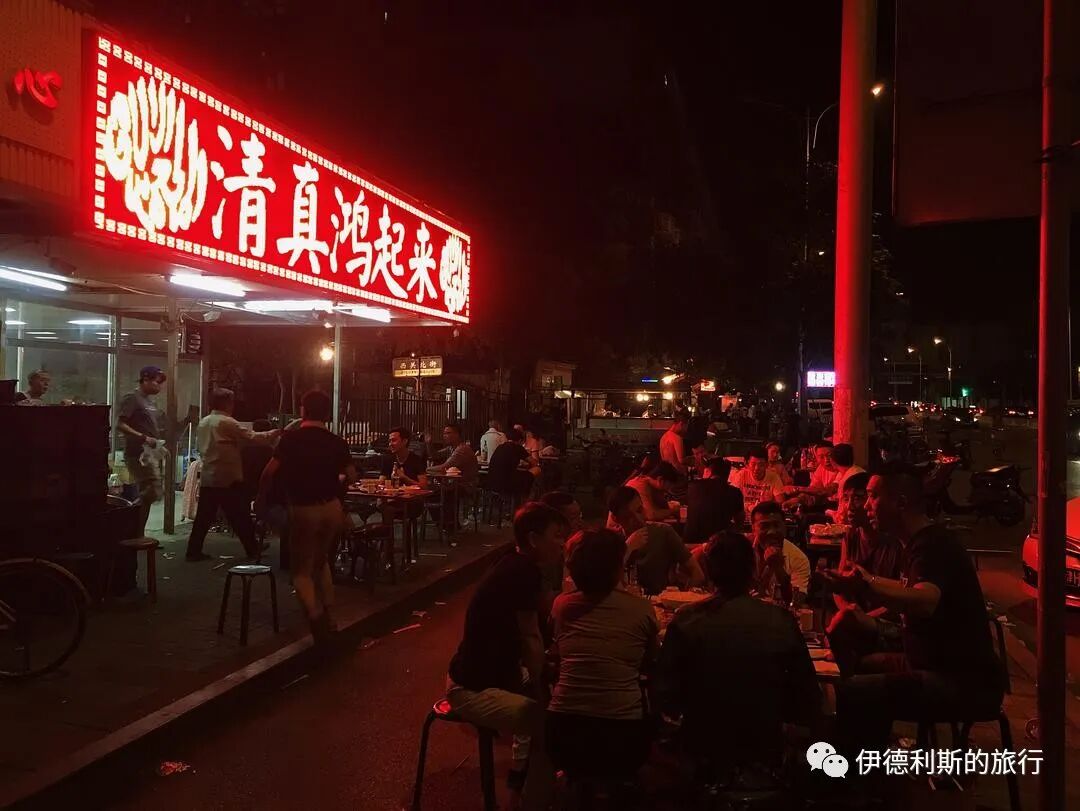
The next morning, we went to the Northwest Corner for breakfast. Outside the South Mosque, we ate savory crepe strips (guobacai) and fried dough rolls (juanquan) at Chai's Breakfast. My childhood friend loves the fried dough rolls so much that he bought another one from the owner after finishing the first. The portion of savory crepe strips I had was huge, so I couldn't finish it all.
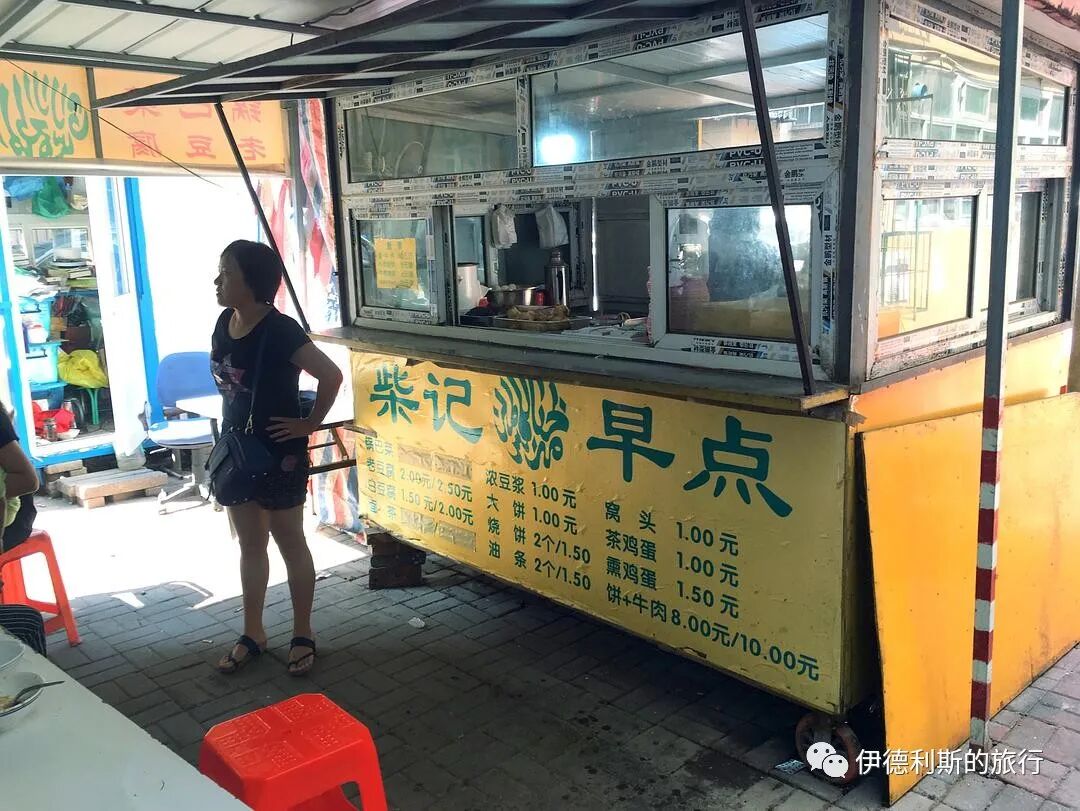
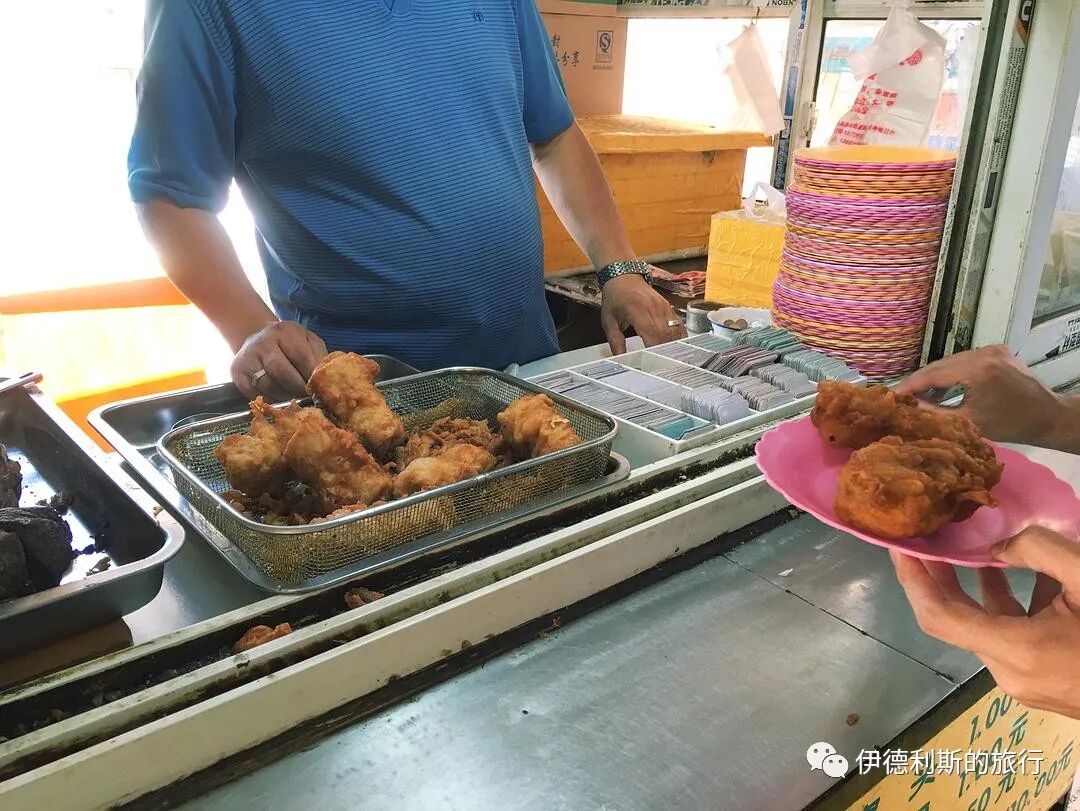
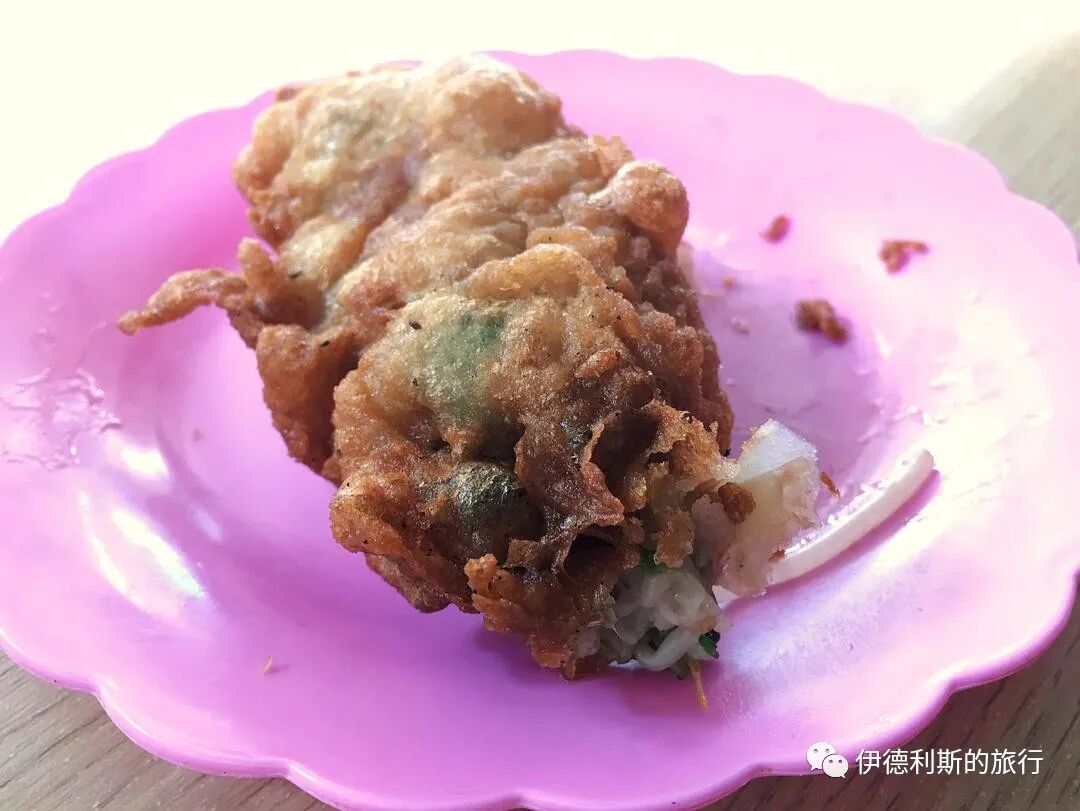
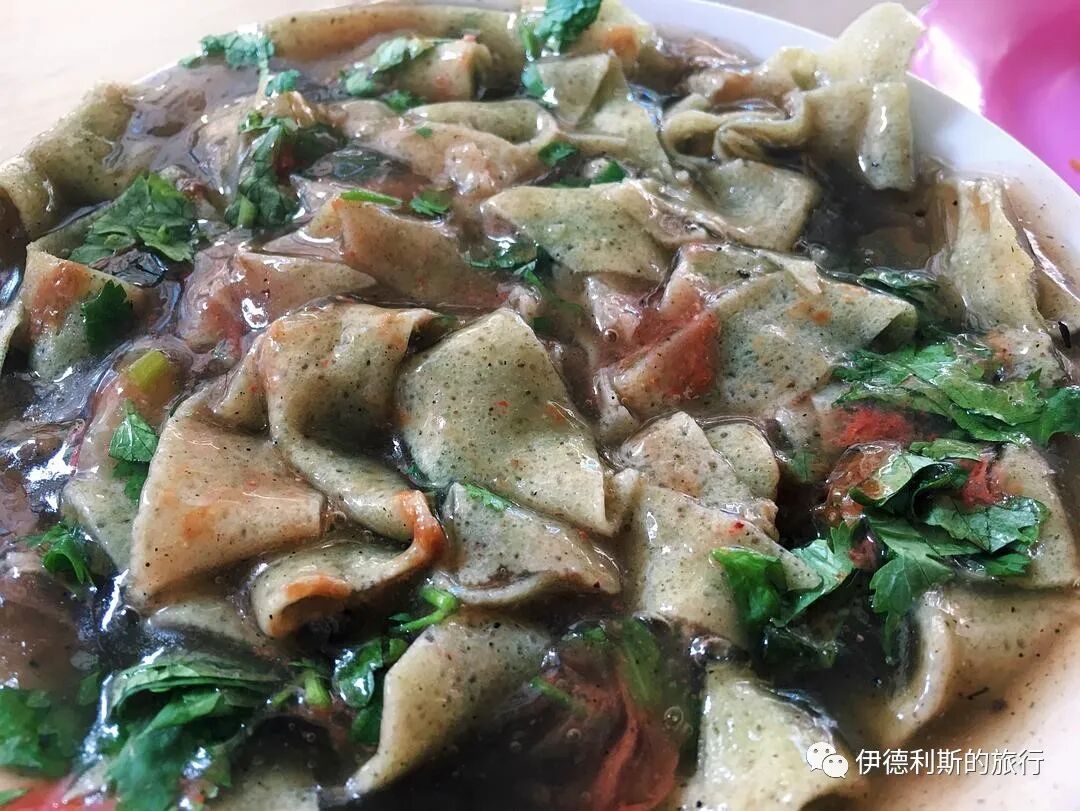
Sunday was much hotter than Saturday. My friend and I wandered around the Northwest Corner for a while, but the heat became too much, so we took the subway to the train station.
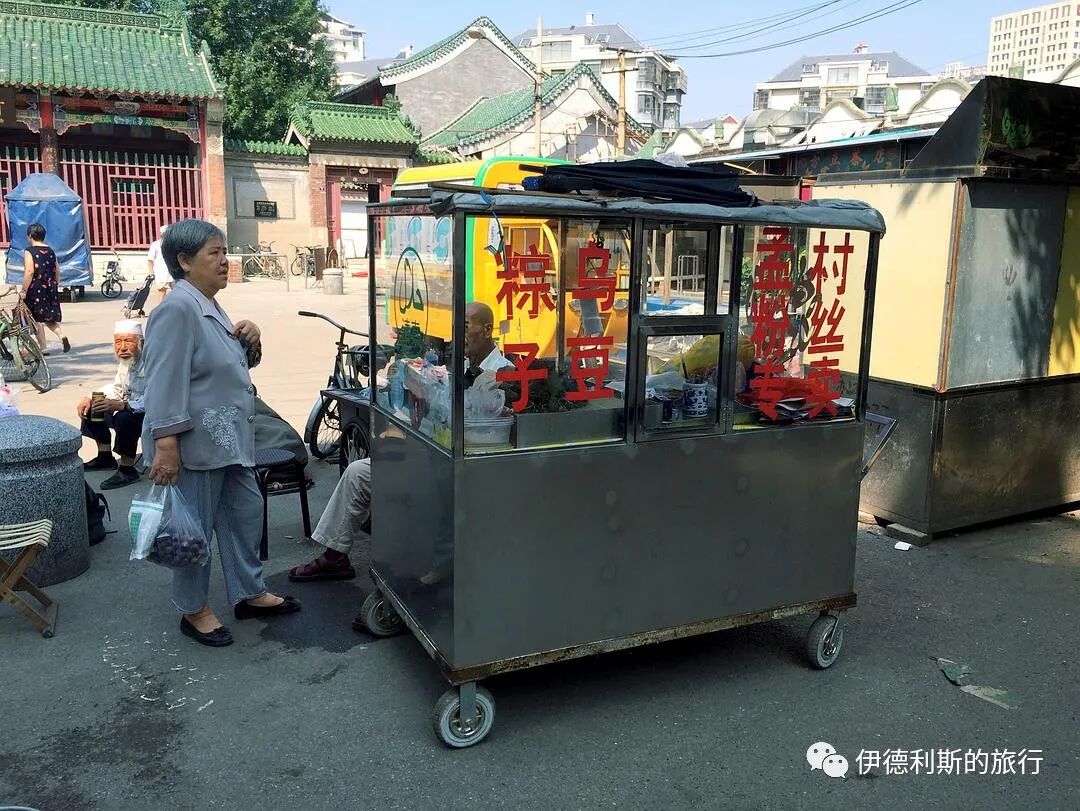
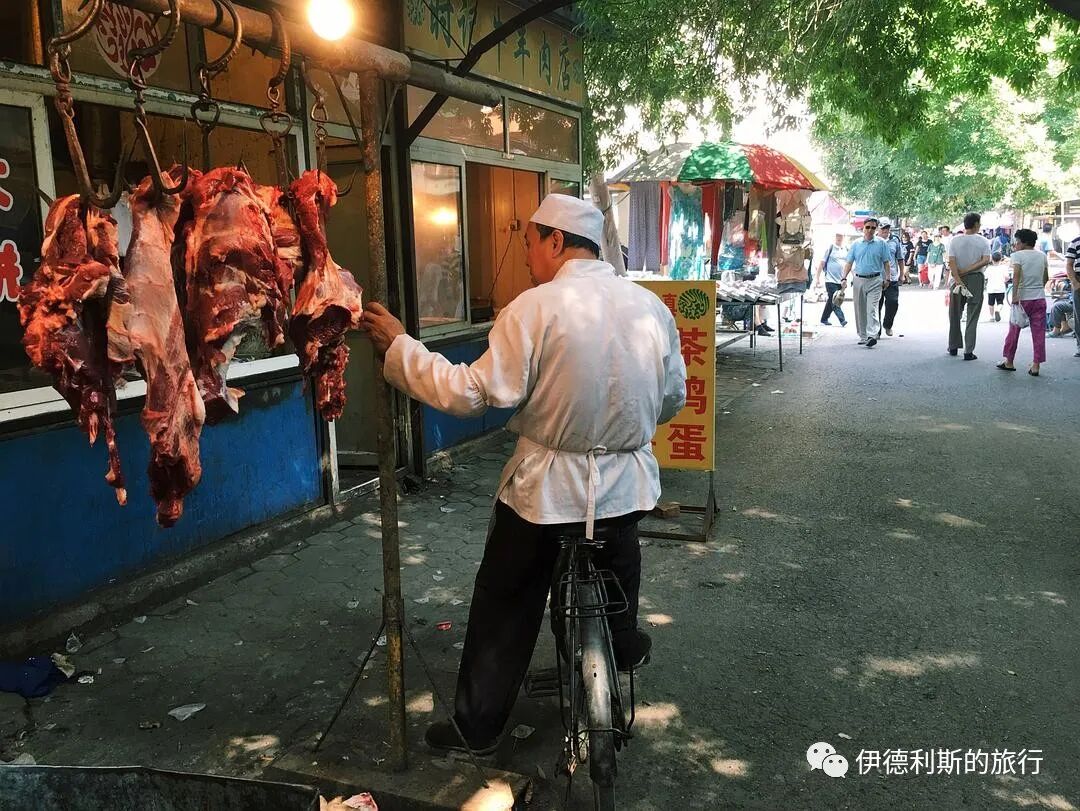
On Sunday, August 27, 2016, at 11:00 a.m., I took the intercity train to Tianjin. After exiting the Northwest Corner subway station, I first went to eat Wang Sangu meat pie (roubing), then bought two yuan worth of black beans (wudou) to snack on while walking. We walked from the Ancient Culture Street back to the Northwest Corner and had a snow-flake ice dessert (xuehualao) at the Guishunzhai shop at the intersection. It had frozen hawthorn and frozen raisins in it, which was very refreshing.
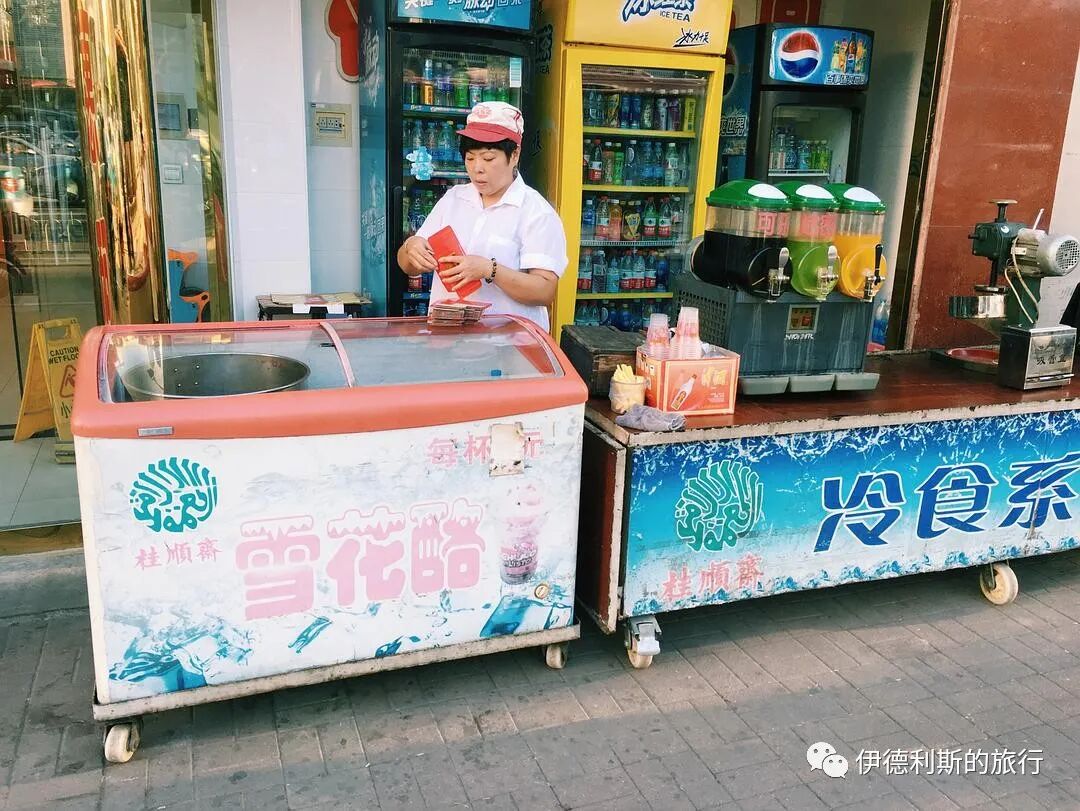
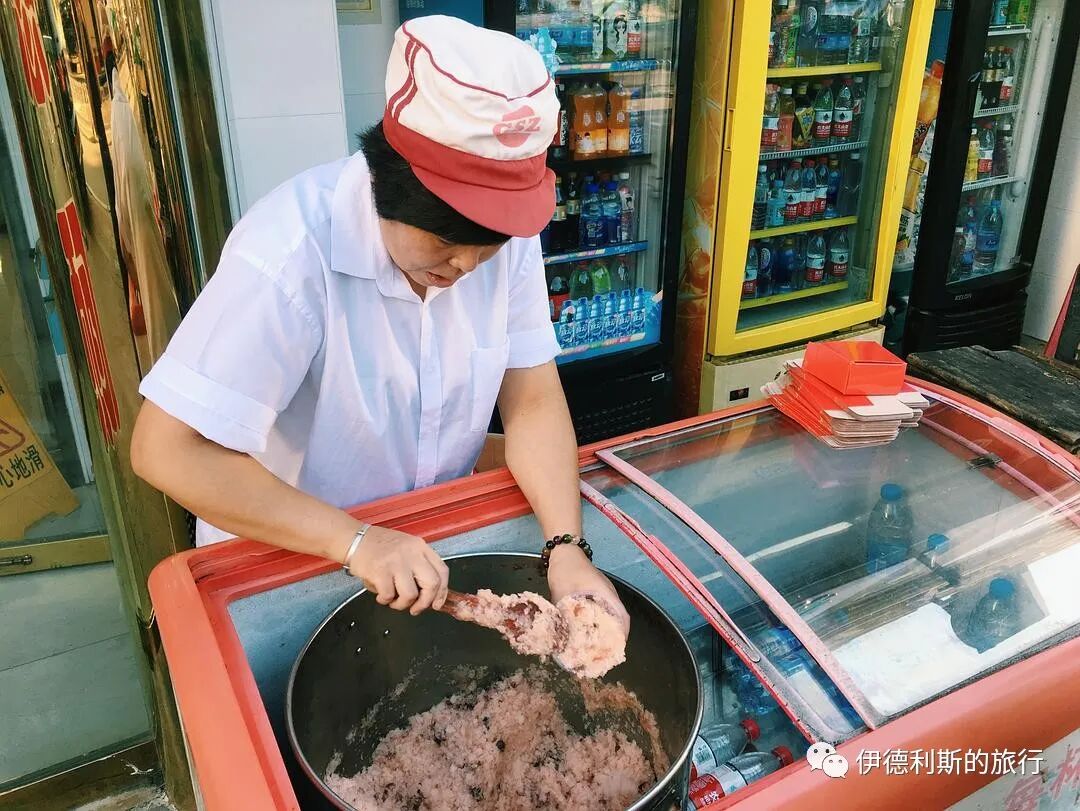
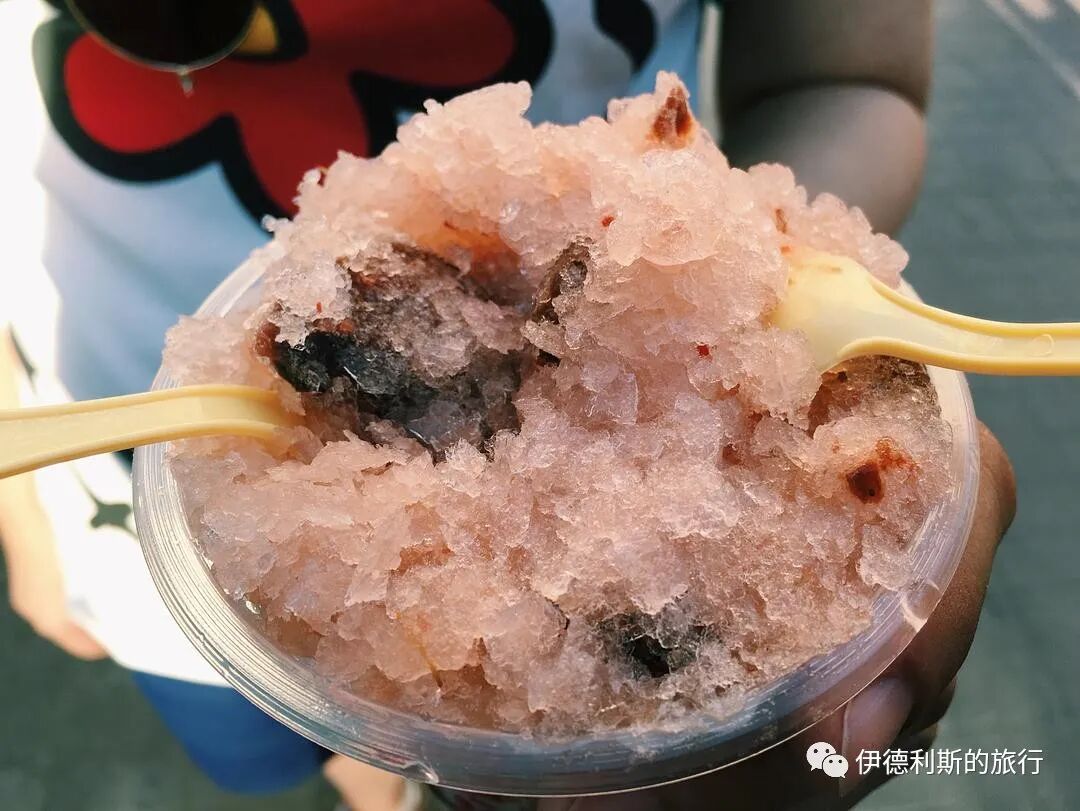
We strolled from Guishunzhai to Uncle Er's Specialty Clay Pot (erdaye tese shaguo) on Jieyuan Road, but it only opens in the evening. Following Xiaolin's suggestion, we ordered lamb knee bone (yanghaba) and vinegar pepper tofu. The lamb knee bone was stewed until very tender and full of flavor. The vinegar pepper tofu tasted like a mix of hot and sour soup and soft tofu, which I really liked.
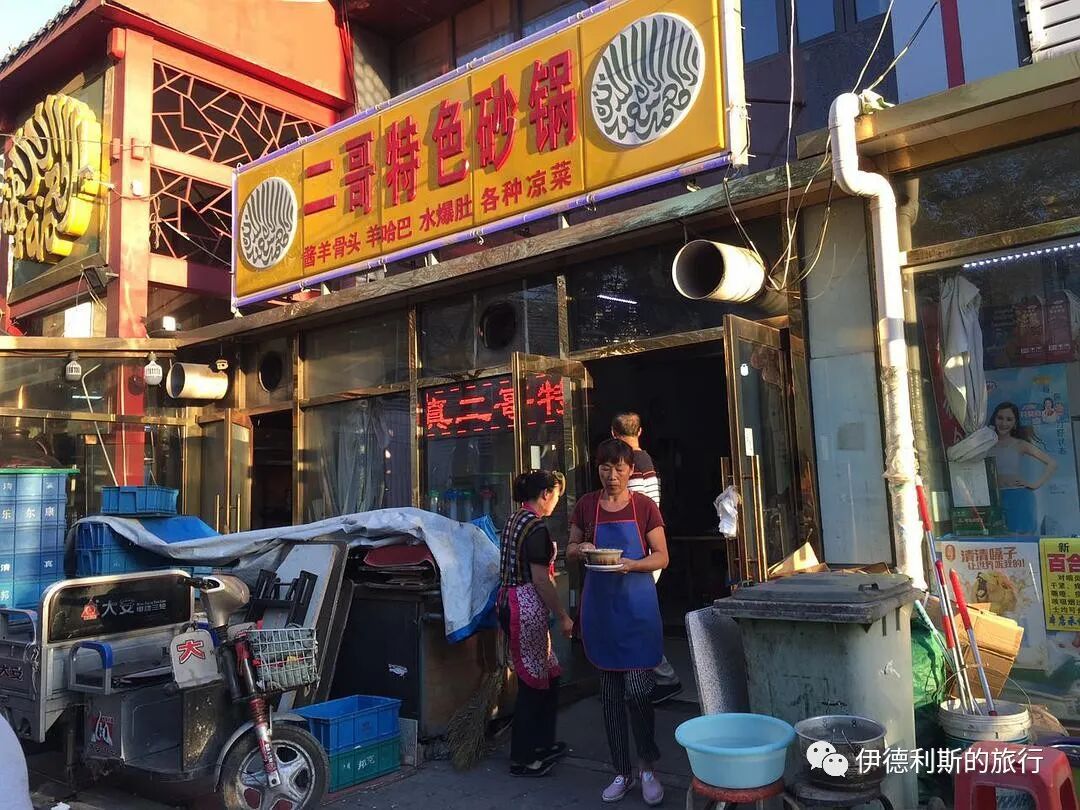
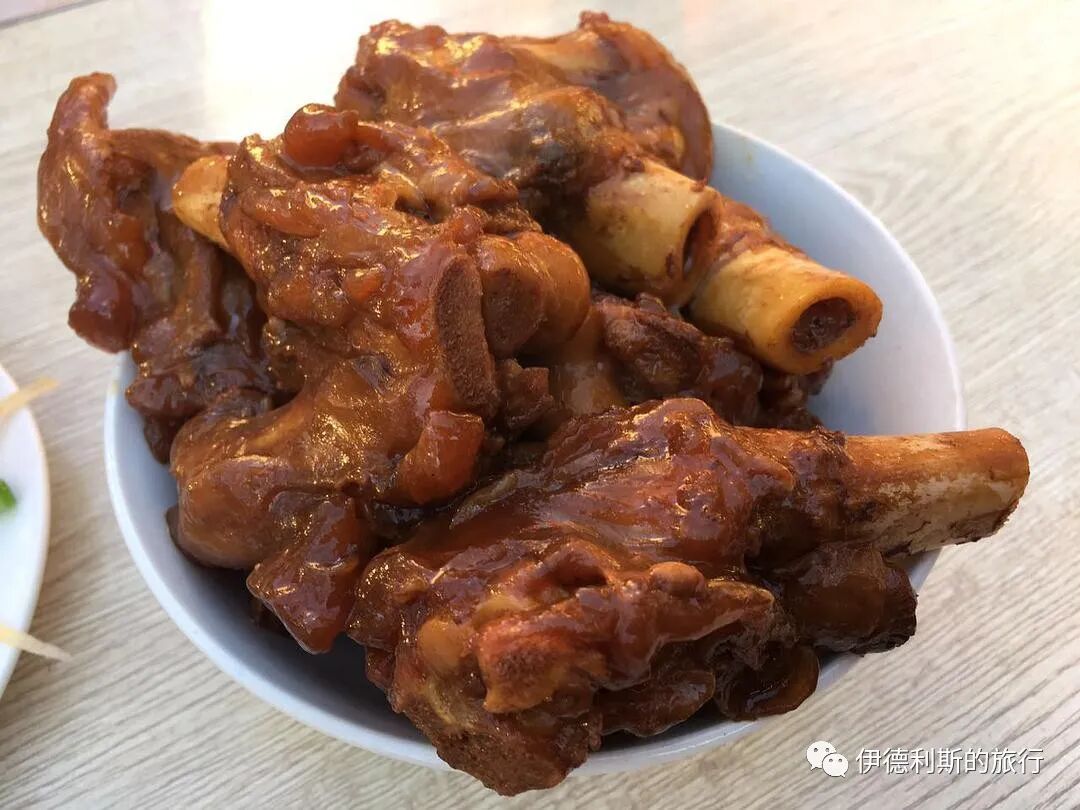
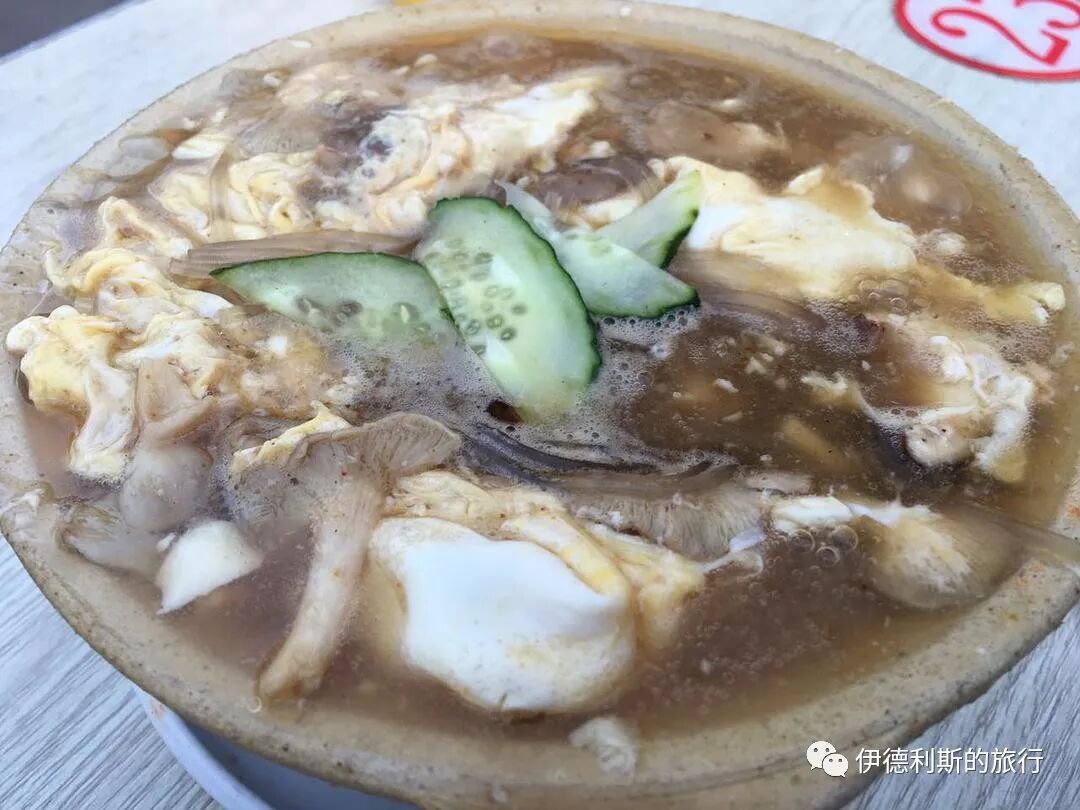
After finishing the clay pot, a cart selling tea soup (chatang) happened to pull up. I had heard that Tianjin's tea soup is a local specialty, so I bought a bowl of almond tea soup. They were very generous with the toppings, and it reminded me of the tea soup I drank as a child.
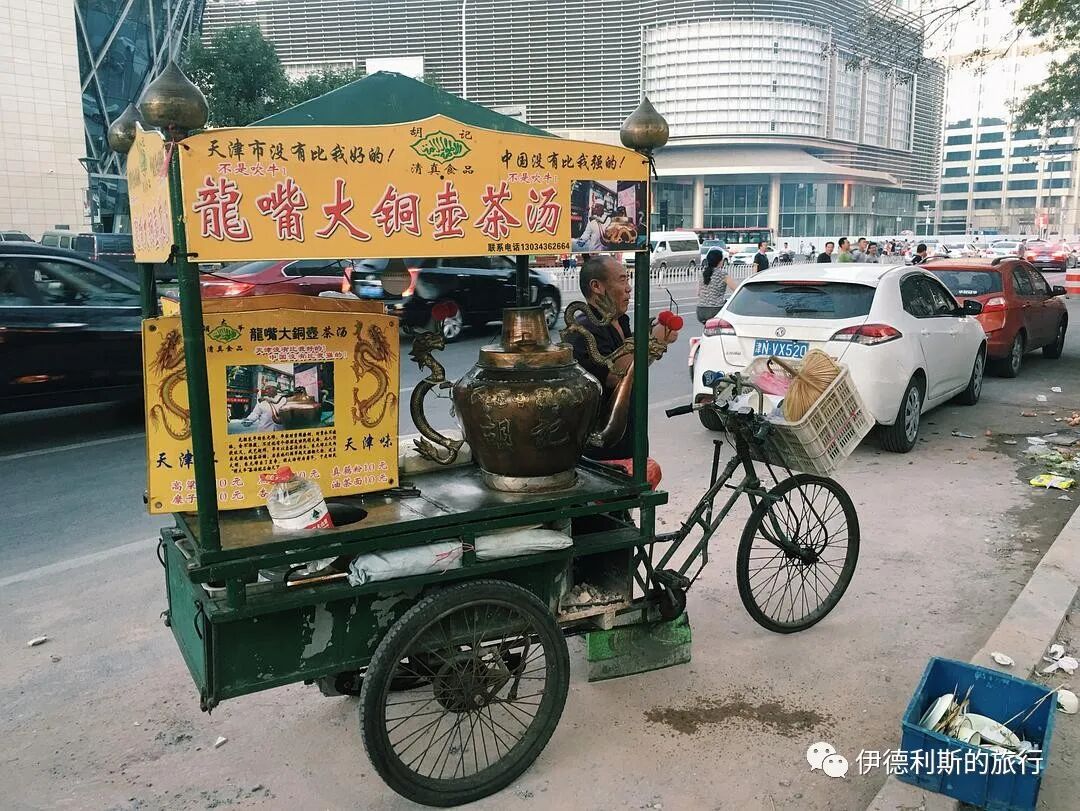
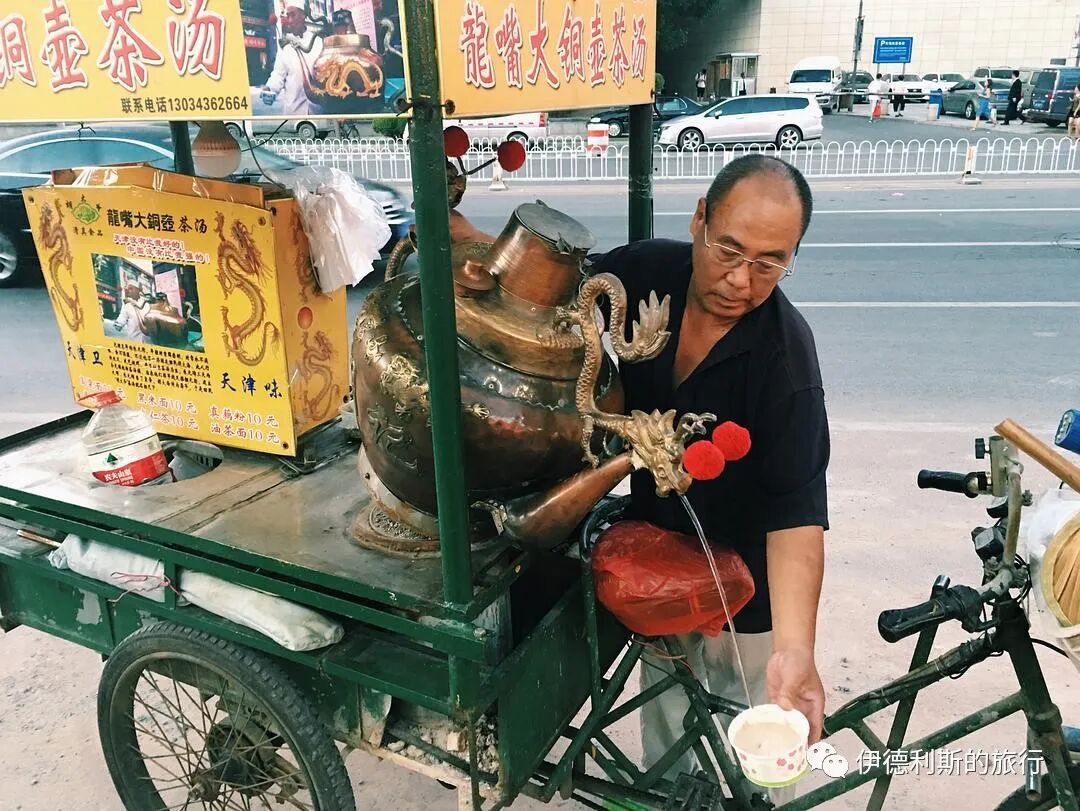
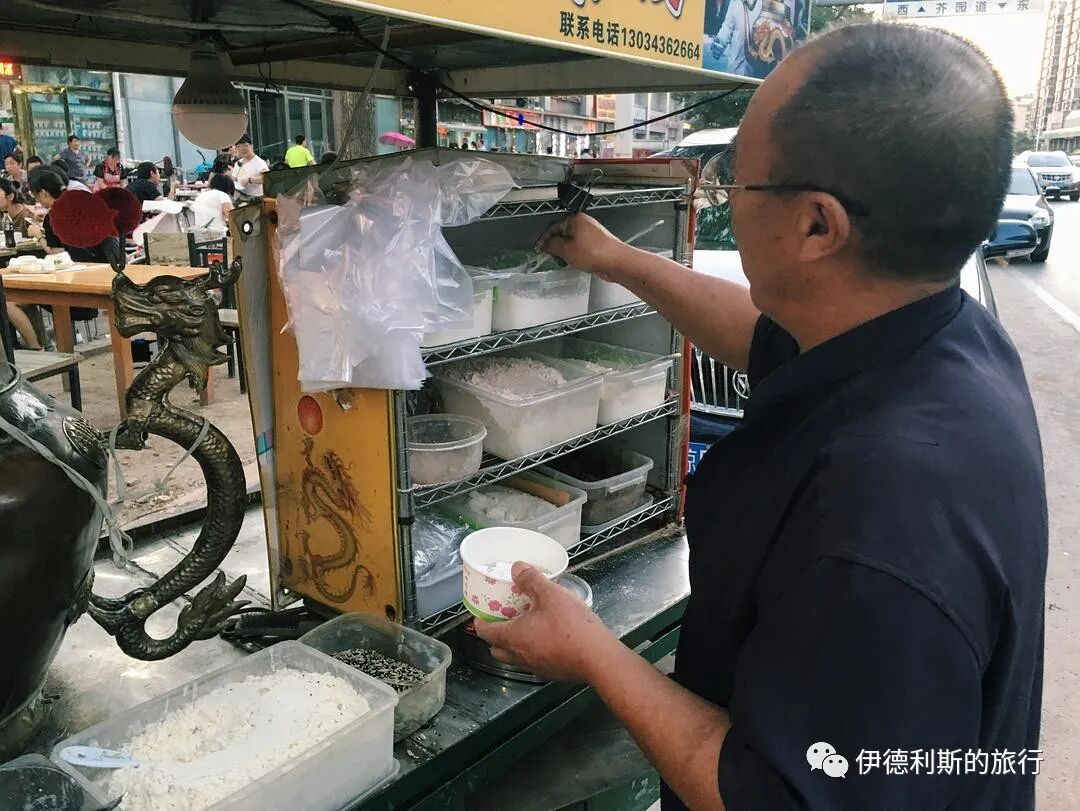
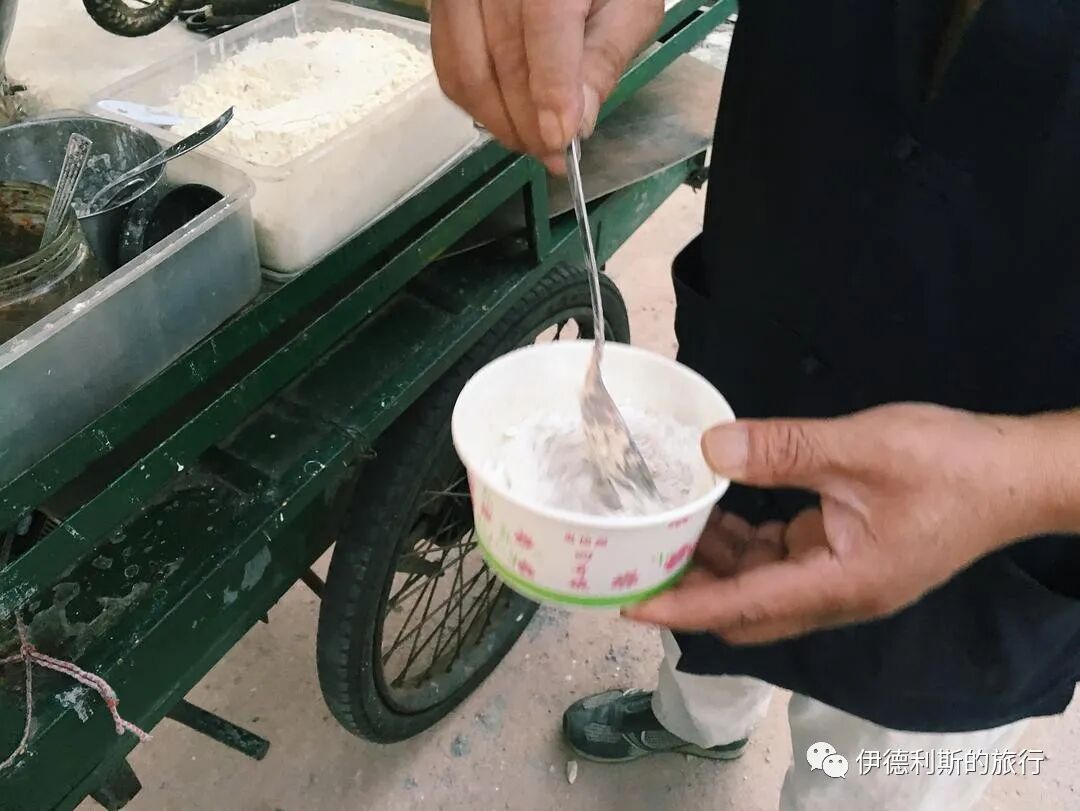
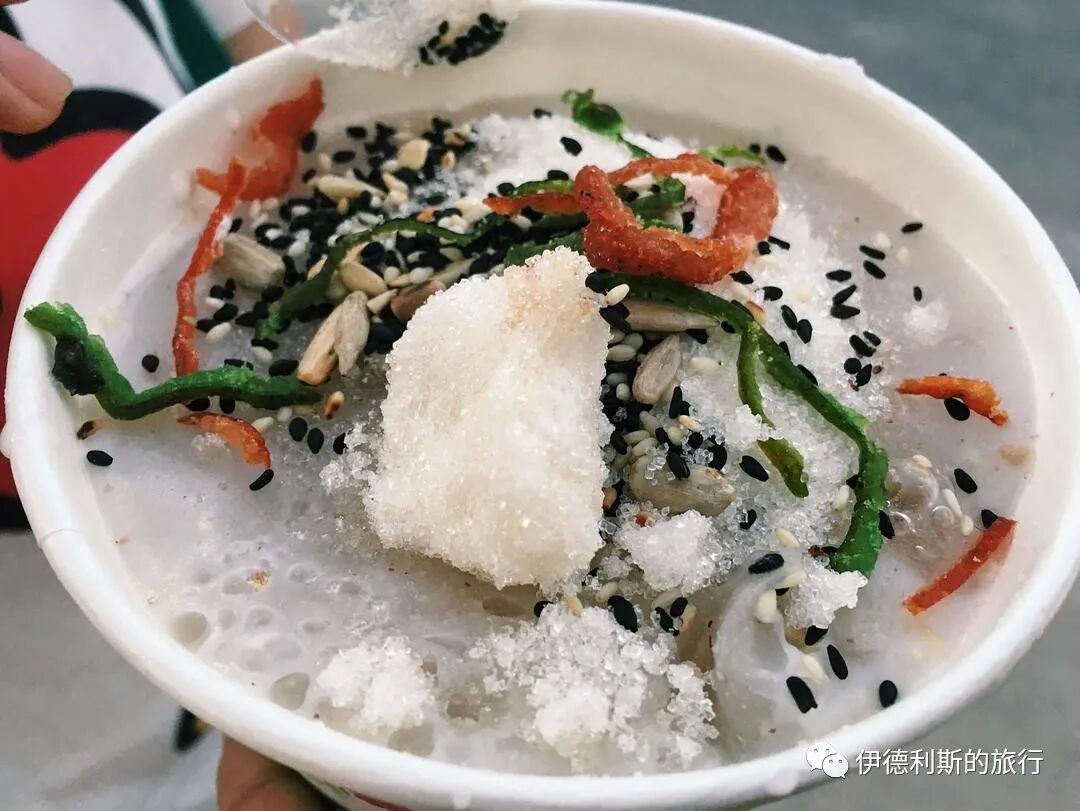
January 2017
Whenever anyone mentions the Northwest Corner in Tianjin, my mouth starts watering. On Friday, January 13, 2017, right after work, I set off on another trip to the Northwest Corner of Tianjin.
I took the intercity train from Beijing South Station to Tianjin West Station, then transferred to Line 1 of the subway for one stop to reach the Northwest Corner. The halal night market is right across from the southwest exit of the Northwest Corner subway station. It has all kinds of snacks like fried skewers (zhachuan), braised rice (bafan), and steamed pear cakes (shuligao). My goal this time was the long-awaited Ye's Rice Noodle Rolls (Yeji changfen).
Ye's Rice Noodle Rolls hasn't been in the Northwest Corner for long, but it is the most popular spot at the night market. When I arrived, they had the longest line. I ordered the seafood combo rice noodle rolls with an egg, and the taste was very authentic! It was cold in the winter, so most people got their food to go. Since I came specifically to eat it, I sat in a small pavilion across the street.
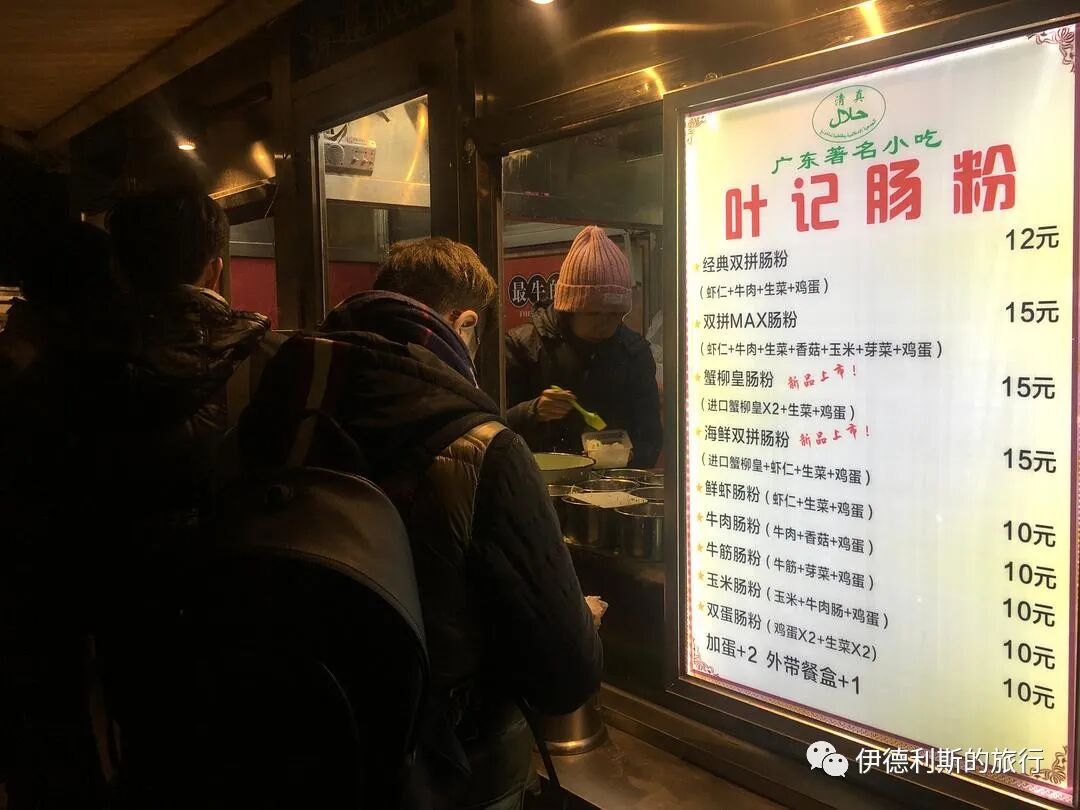
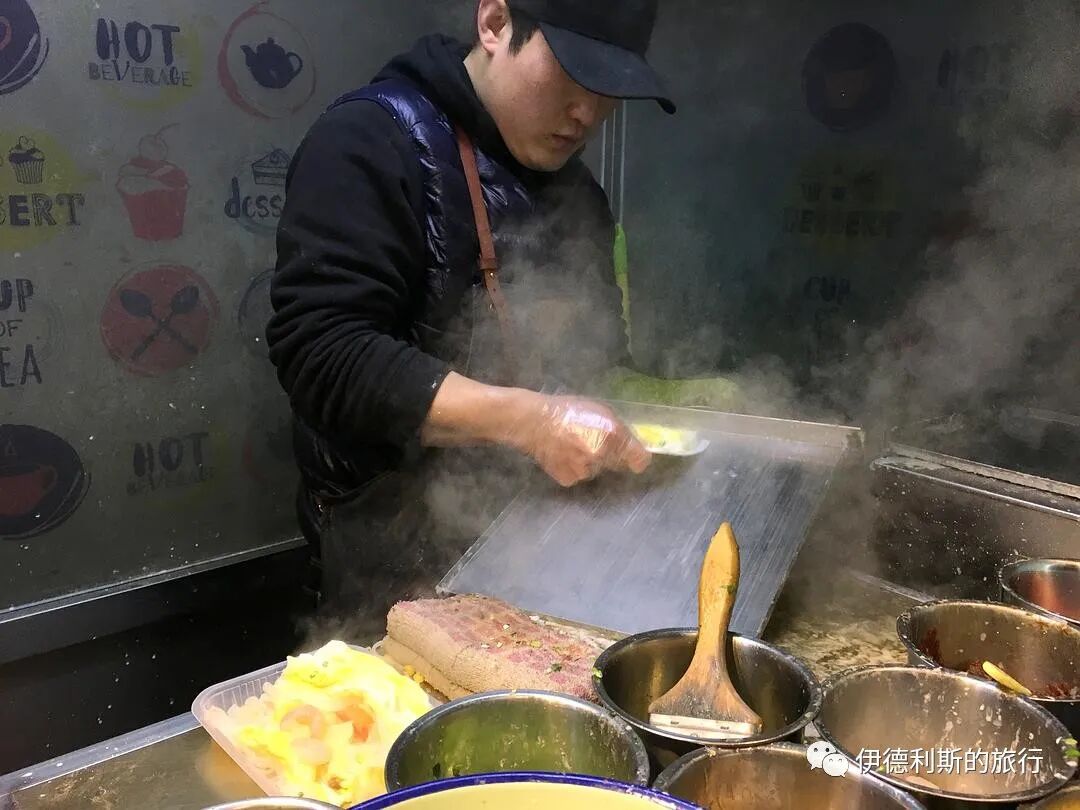
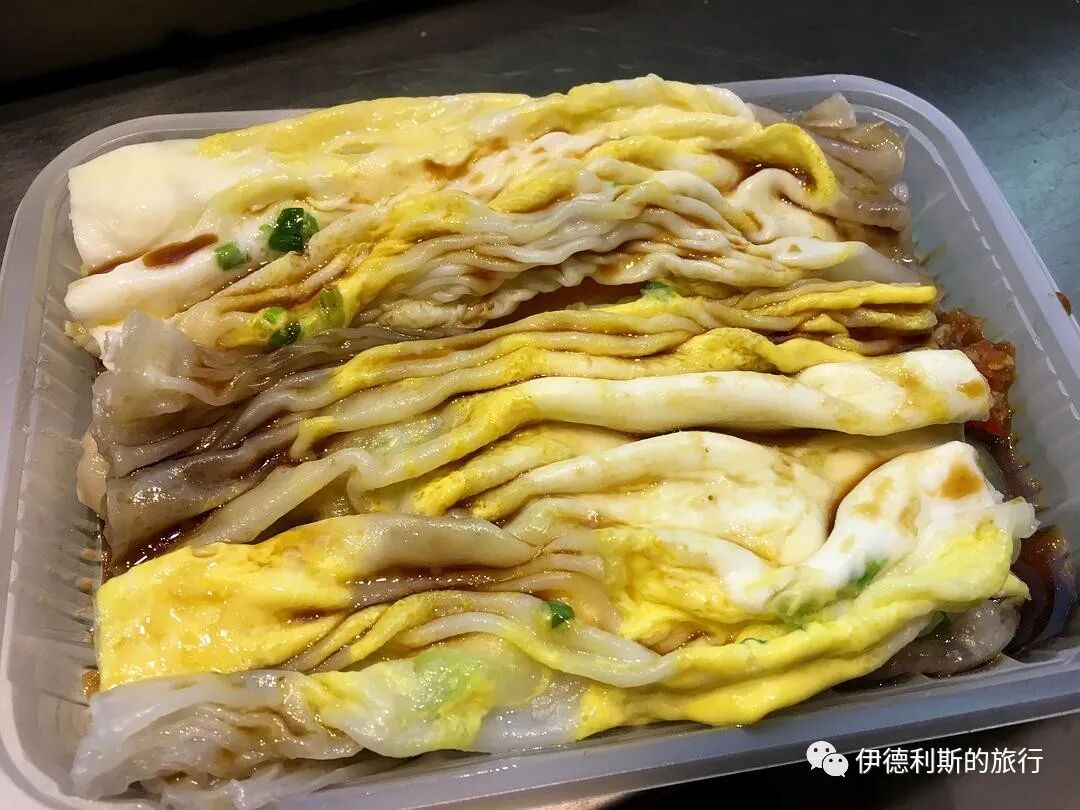
Besides rice noodle rolls, they also sell radish beef offal (luobo niuza). The sign says the recipe comes from old Hui Muslims on Guangta Road in Guangzhou. More people buy the rice noodle rolls than the beef offal, but honestly, the beef offal was so, so good. It had that slightly sweet Cantonese flavor that instantly took me back to the Hui Muslim restaurant in Guangzhou. Their sweet and spicy chopped chili sauce is amazing and adds so much flavor. Even someone like me who doesn't usually eat much chili couldn't stop wanting more when I saw their sauce.
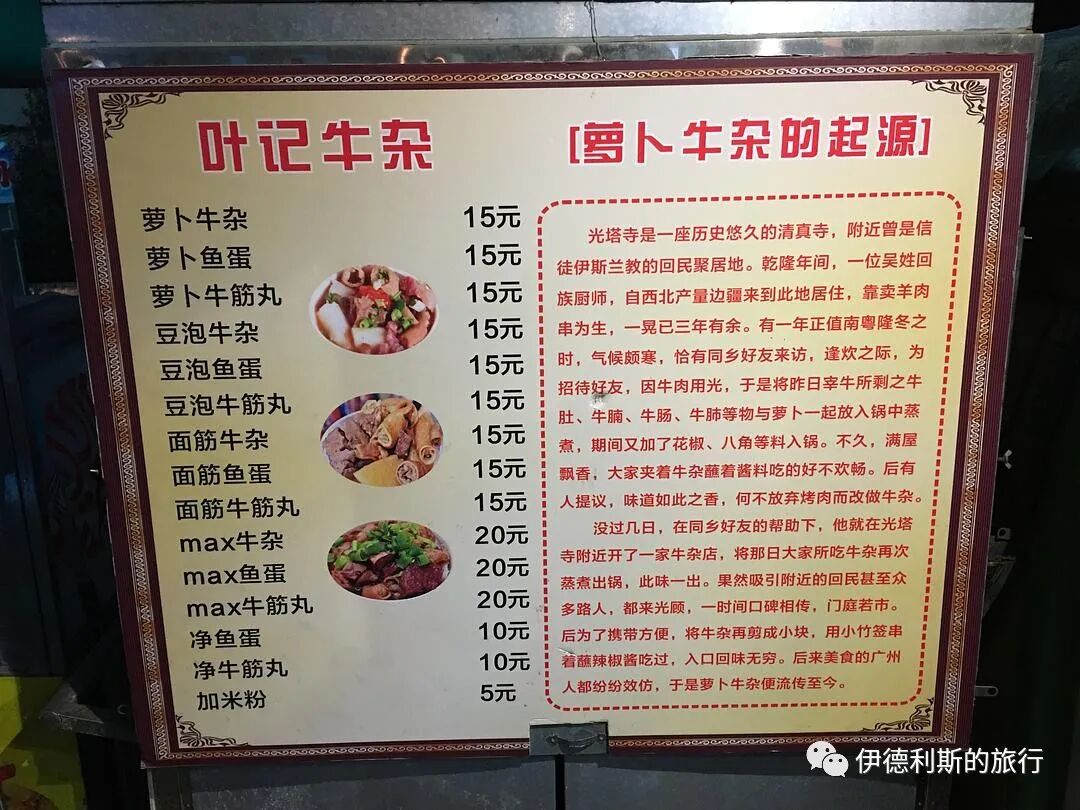
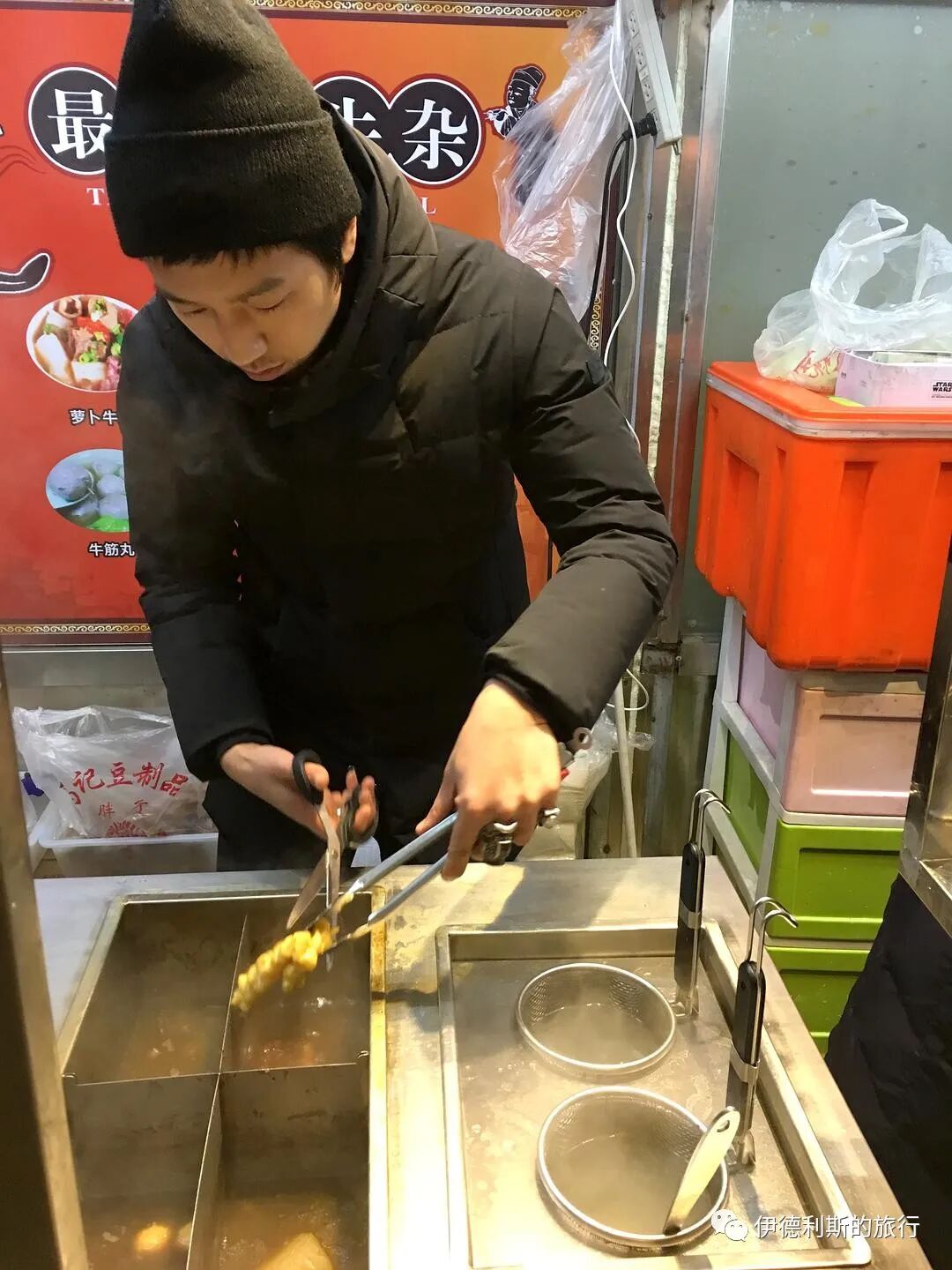
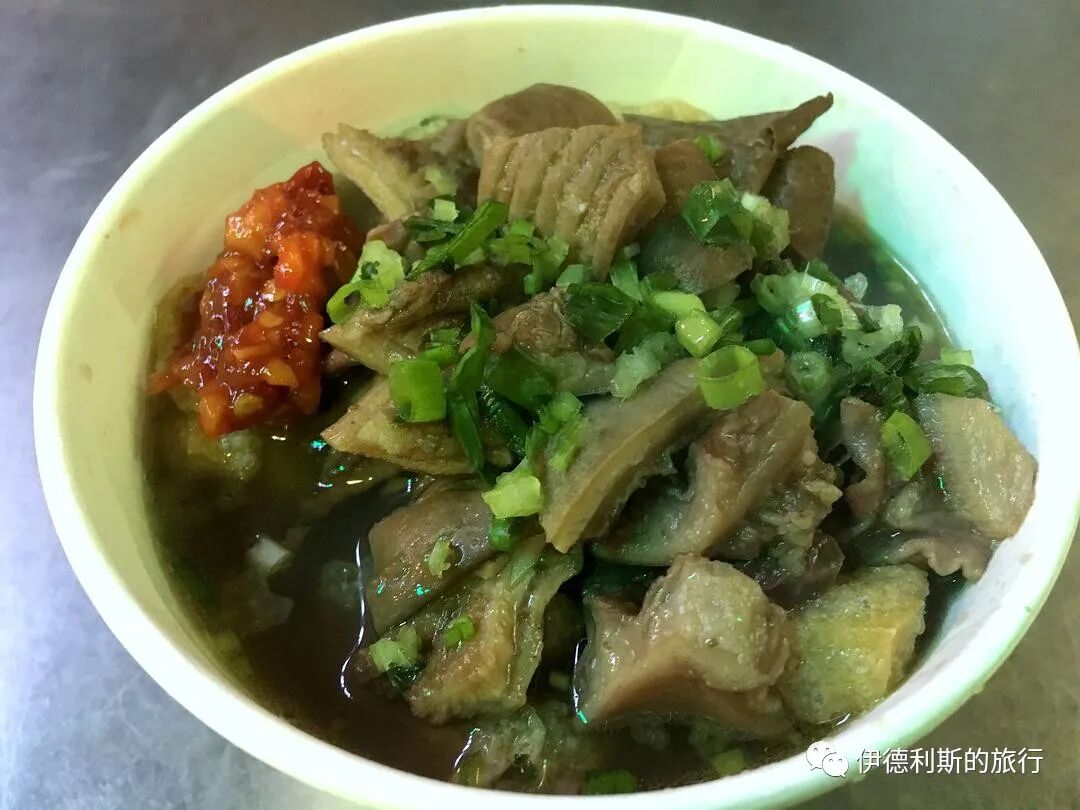
The next morning, I continued exploring and eating in the Northwest Corner. A great day starts with a set of savory crepe with fried dough sticks (jianbing guozi)! A unique feature of Tianjin jianbing guozi is that many locals bring their own two eggs for the cook to use. As tourists, we just stick to the cook's eggs.
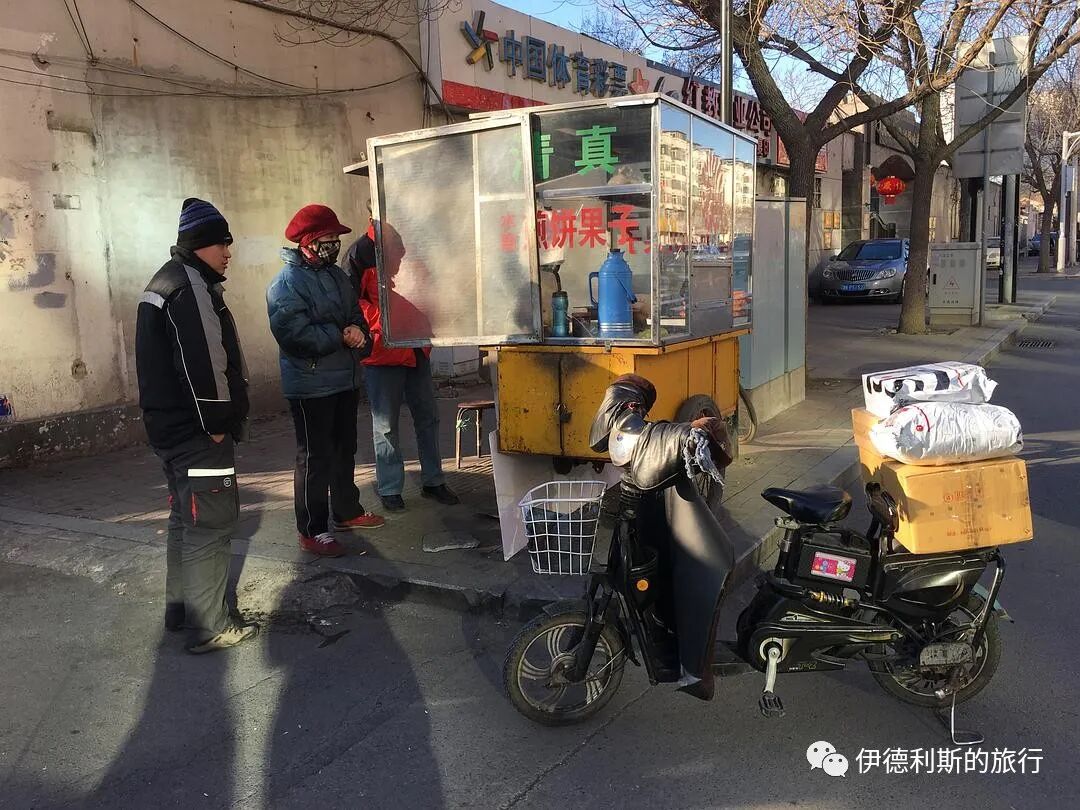
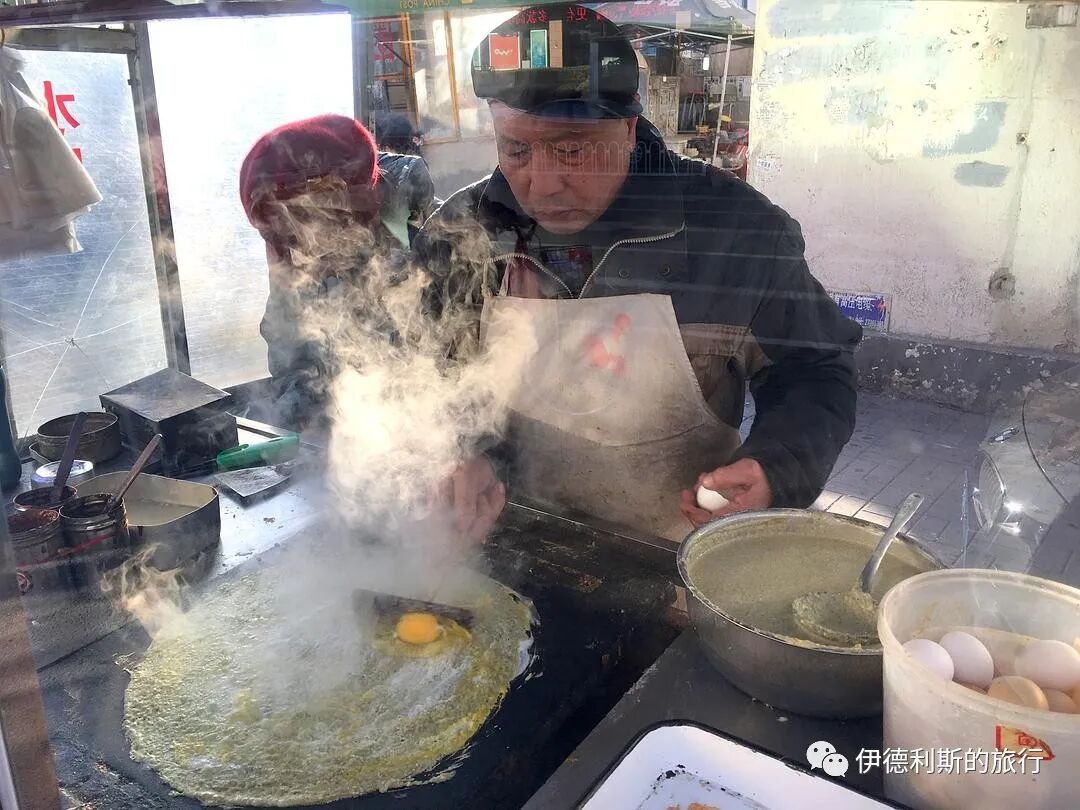
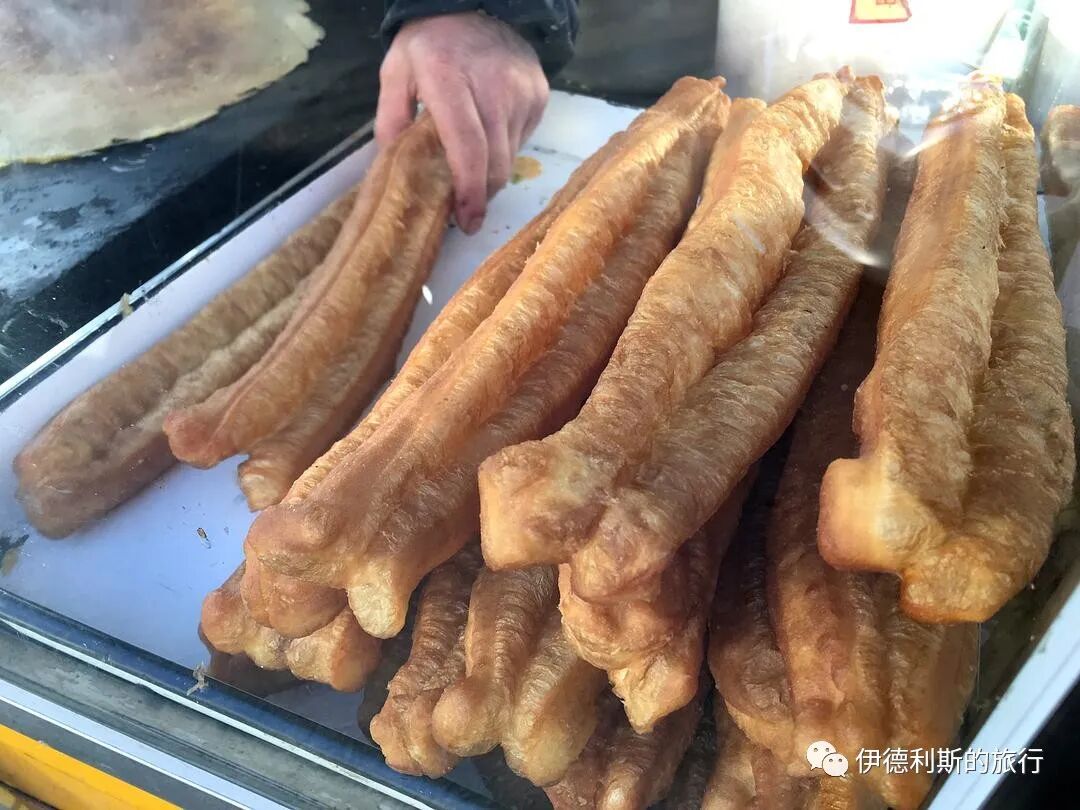
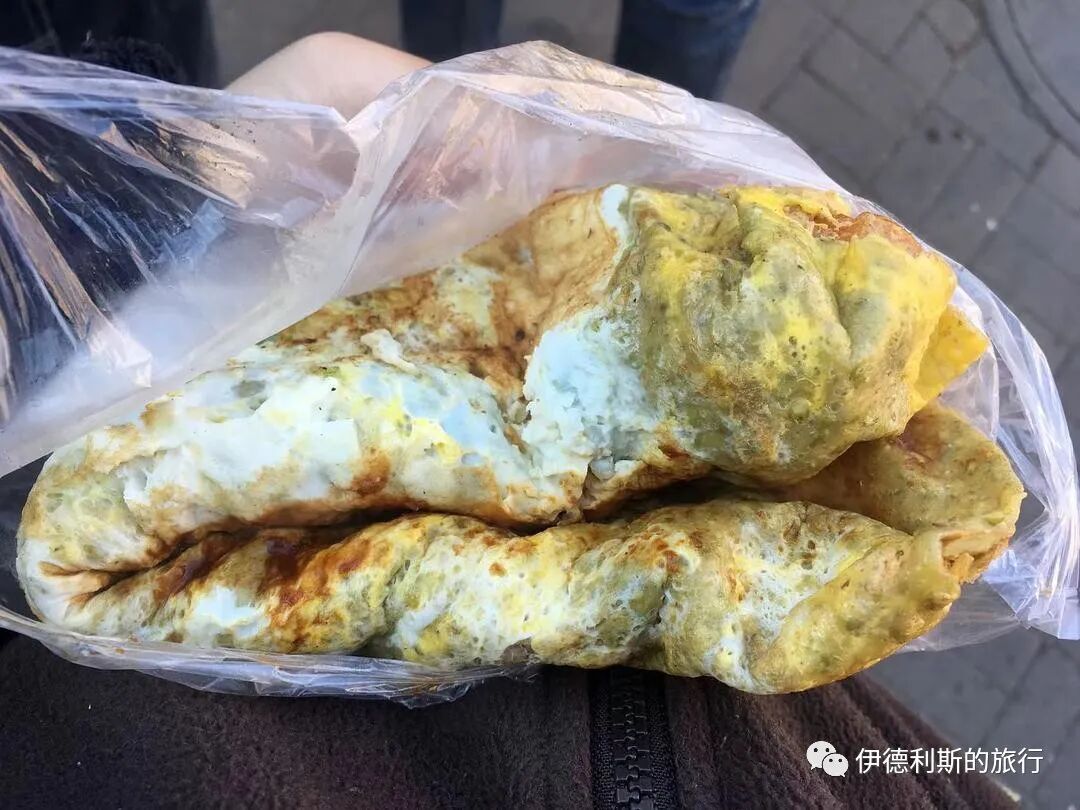
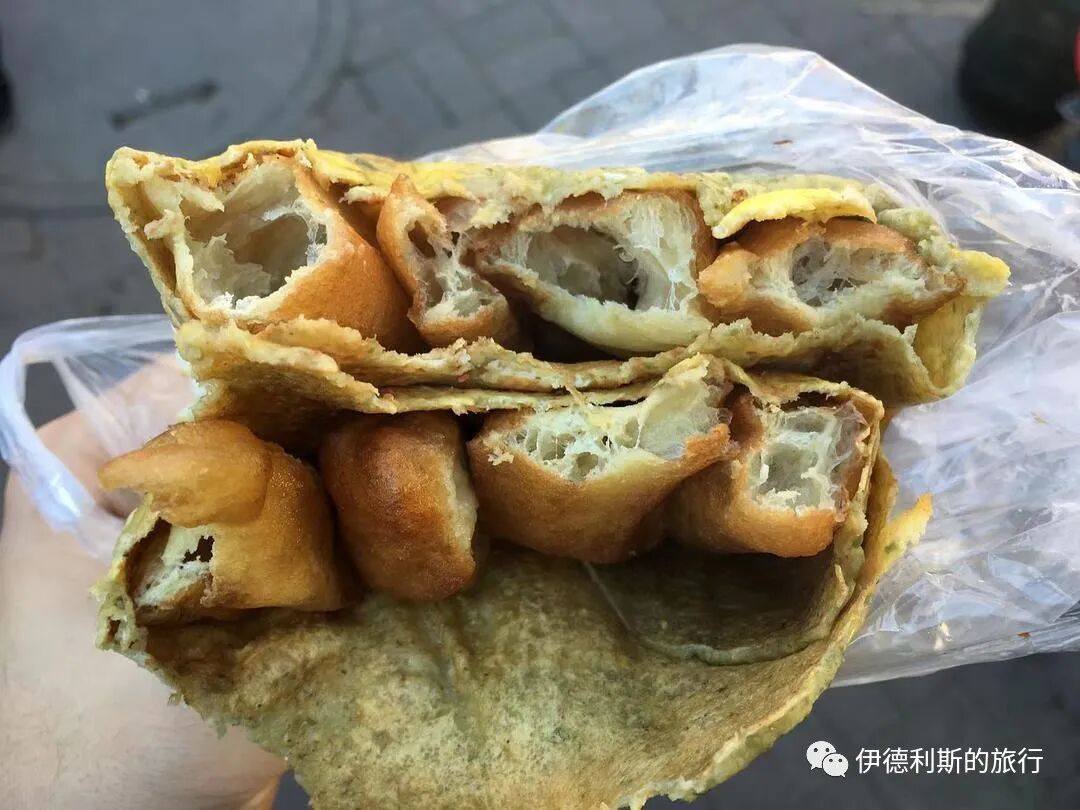
Next to Lingdangge Middle School is the Mu Family spring roll (juanquan) shop, where people line up all year round. I waited in line to try one, but it felt a bit oily.
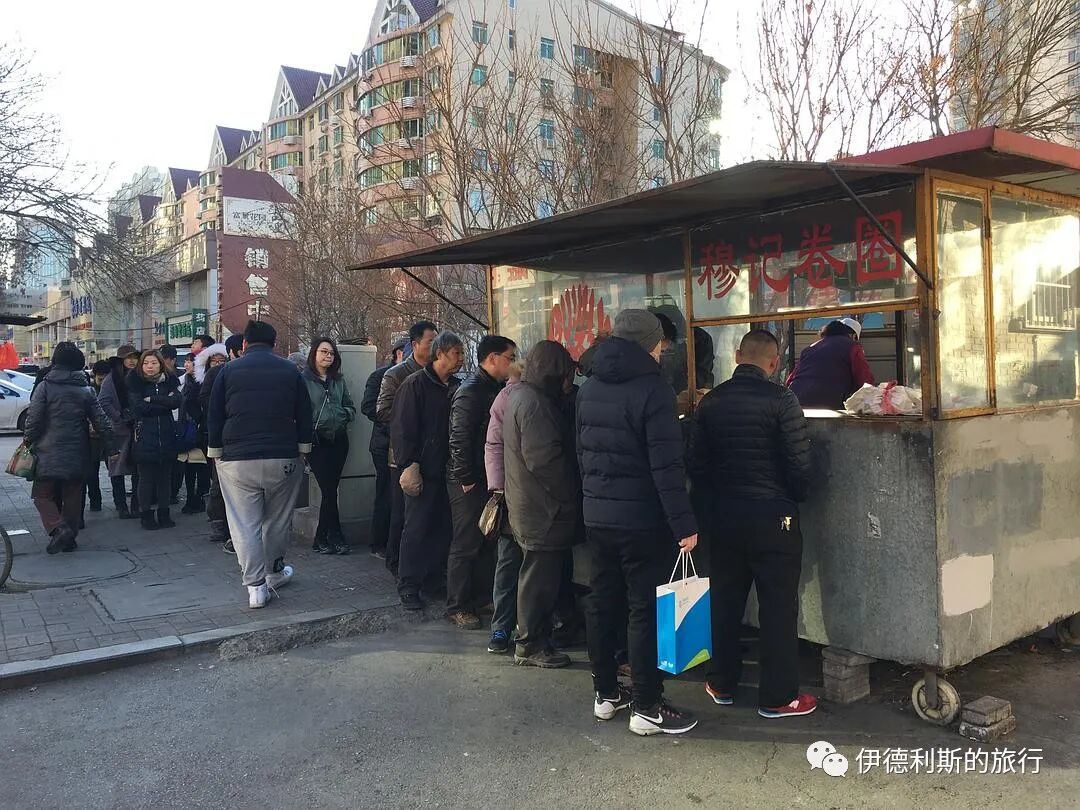
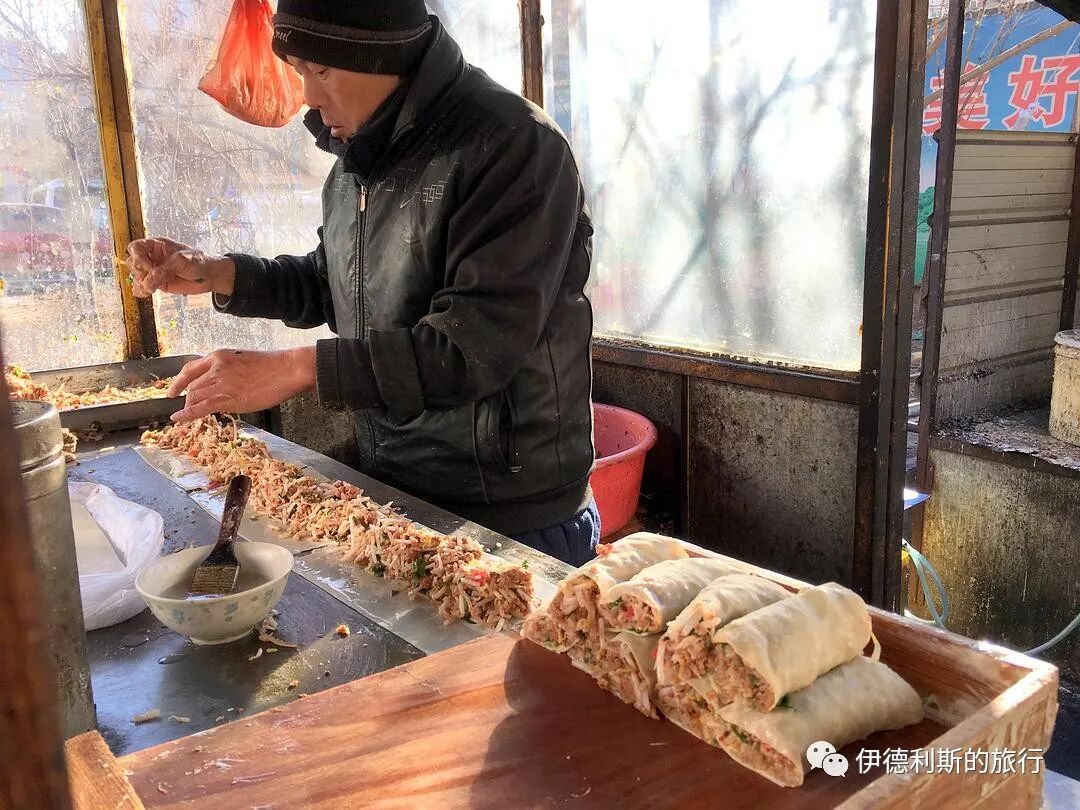
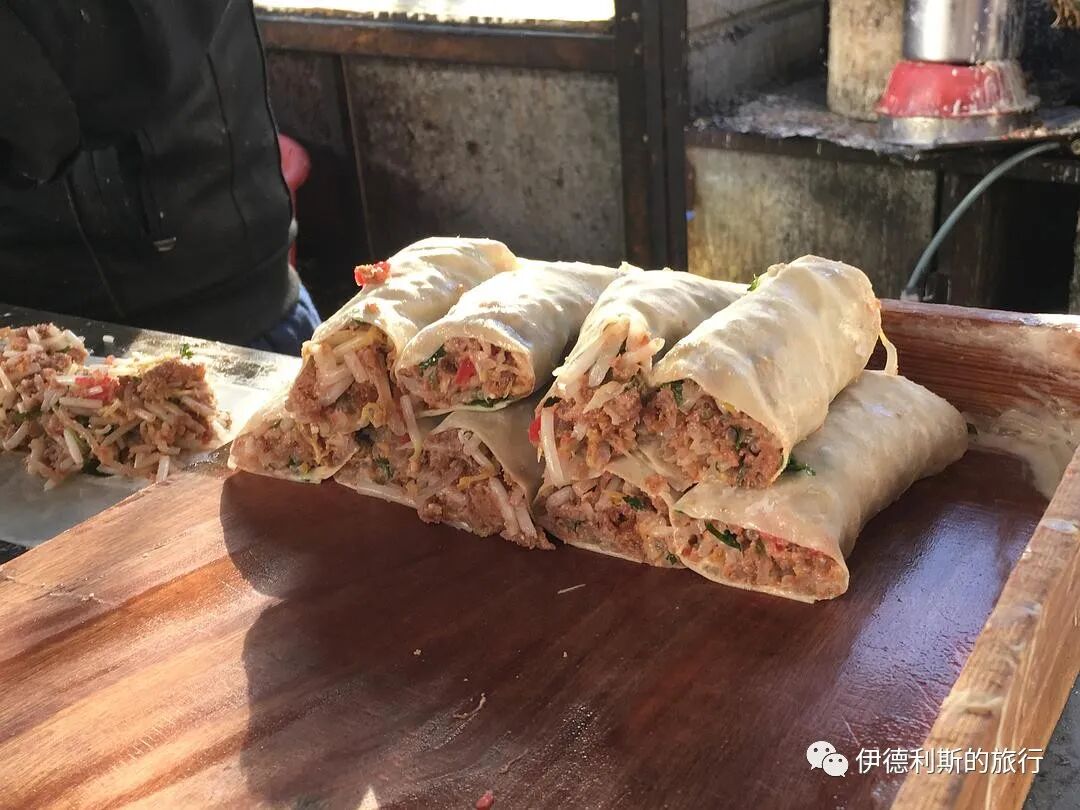
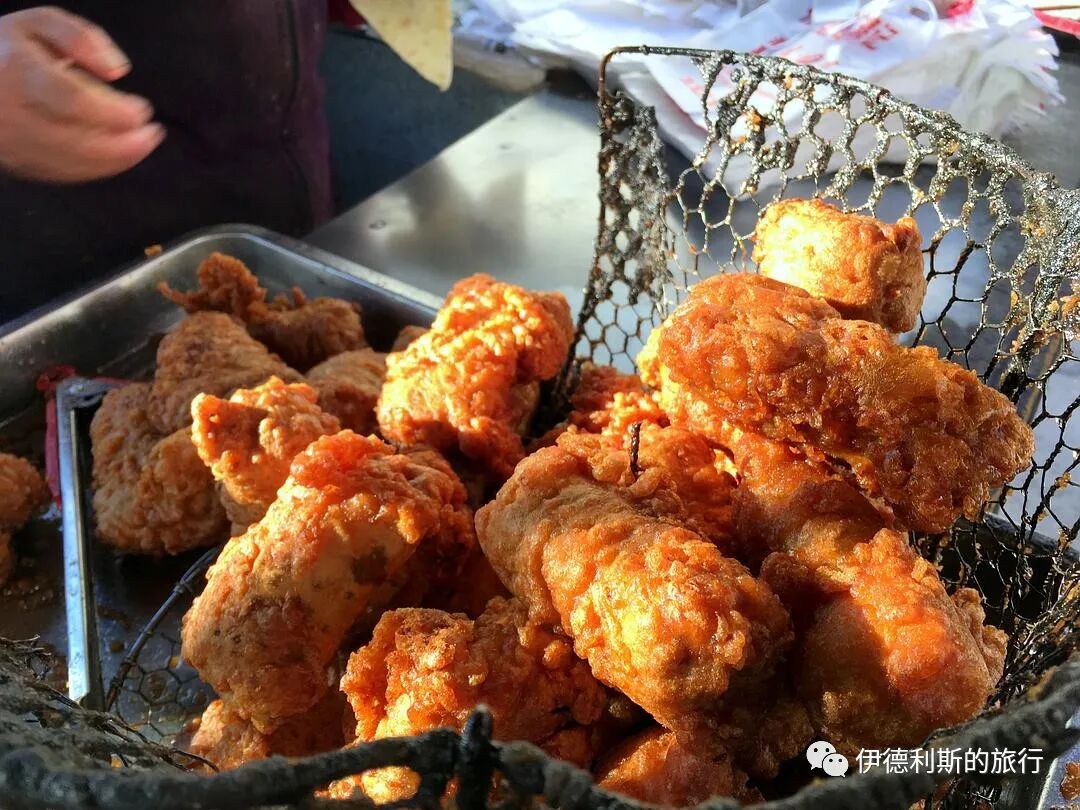
Halal Travel Guide: Tianjin Northwest Corner — Muslim Food and Street Changes (Part 2)
Articles • ali2007fr posted the article • 0 comments • 157 views • 2026-05-18 02:39
Summary: Tianjin Northwest Corner — Muslim Food and Street Changes is presented here as a firsthand travel account in clear English, beginning with this scene: Next, I went to Zhimeizhai, which Xiaolin recommended, to have water caltrop soup (lingjiao tang) and old-style tofu (lao doufu). Their beef sesame flatbread (shaobing) is really good. The account keeps its focus on Tianjin Halal Food, Northwest Corner, Muslim Streets while preserving the names, places, food, and historical details from the Chinese source.
Next, I went to Zhimeizhai, which Xiaolin recommended, to have water caltrop soup (lingjiao tang) and old-style tofu (lao doufu). Their beef sesame flatbread (shaobing) is really good.
The alleys near Lingdang Pavilion that were waiting to be torn down have now completely disappeared.
I returned to the busy Xiguan Street.
This was my second time at Ye's Rice Noodle Rolls (changfen), and I finally saw the owner. The owner is a girl from Guangzhou. They say she met a guy from Tianjin while traveling in Thailand. They fell in love, got married, and eventually came back to the Northwest Corner to open this rice noodle roll and beef offal shop.
Then I went to eat the shrimp-in-egg (xia che dan) and octopus balls (takoyaki) next door. Shrimp-in-egg is just a shrimp wrapped inside a quail egg, topped with mayonnaise and mustard, and finished with a generous sprinkle of bonito flakes. It is especially delicious!
When I went the night before, the candied hawthorn skewers (tangduier) were sold out, so I made a special trip this time to buy one to eat. I also bought their apricot jam, which is sweet and tastes great.
I met a little kid who really wanted some steamed pear cake (shuligao). The way he looked at it, he was practically diving into the cake. I believe this shop will be a wonderful memory for him when he grows up, just like the Longfu Mosque snack shop is in my heart.
June 2018
In 2018, I suddenly heard that the once-busy Xiguan Beili Market in the Northwest Corner had been cleared out. So, on June 10, I went to see what Xiguan Beili looked like after the clearance.
I had heard many people praise the crispy rice pancake (guobacai) at Zhengweizhai next to the South Mosque (Qingzhen Nansi) in the Northwest Corner. People say it is the best beef-sauce crispy rice pancake nearby. I headed straight to Zhengweizhai early in the morning, but when I arrived at nine o'clock, they had just sold the last bowl. I was very disappointed to miss it.
I strolled back from Zhengweizhai to the gate of the South Mosque and bought two fried cakes (zhagao) at Longyuezhai. You have to eat fried cakes while they are hot! Longyuezhai closed down in September 2018. This might have been the last summer everyone could eat fried cakes at the gate of the South Mosque.
Across from Longyuezhai is Enqingcheng Guobacai. Their shop is very busy, so I waited in line to buy millet porridge (miancha) and crispy rice pancake. Tianjin's millet porridge is thicker than Beijing's. You have to sprinkle two layers of spiced salt on it, and it is very satisfying to eat. Their crispy rice pancake is also very delicious.
Another big breakfast area in the Northwest Corner is on the south side of Jieyuan Road at the Northwest Corner intersection. I bought a Tianjin-style vegetable roll (sujuanquan) here to eat.
This fried dough stick (guoz) stall is right in front of Yangyi Restaurant on Jieyuan Road. People say their egg-filled fried dough stick (jidan guozi) is the best in the Northwest Corner.
A flatbread (dabing) filled with everything!
I really like the steam rising from the steamer; it creates such a great atmosphere.
This shop sells various kinds of rice cakes and donkey roll cakes (lvdagun).
A savory crepe (jianbing guozi) stall is a must-have.
Sesame flatbread (shaobing) and steamed buns (baozi).
Keep walking south from the South Mosque (Nan Si), and you will see that the shops in the northern part of Xiguan Beili are still there.
Keep heading south until you reach Xiguan Street, where most of the shops have been cleared out.
Luckily, my favorite Hailan black beans (wudou) are still there!
Eating hot black beans while walking is so delicious.
Compared to the morning, the night at Northwest Corner (Xibeijiao) is also very interesting. Although the night market at the intersection was cleared out two years ago, some stalls still appear there, like this Old Ma pancake (jianbing) stand.
Two eggs and two fried dough sticks (guozhi) make for a very satisfying meal.
Then I bought some sour plum drink (suanmeitang), which is homemade with rock sugar and plum pulp to help with digestion and boost the appetite.
Summer nights definitely need barbecue.
October 2018.
I went to Tianjin for a food tour on Sunday, October 14, 2018. Ten o'clock is an awkward time for the Northwest Corner. I went straight to the meat porridge (rouzhou) at the entrance of the South Mosque, but it had just sold out, and the millet flour tea (miancha) next door had also just sold out. I planned to have the meat porridge next time, but the shop was cleared out shortly after.
I ate a warm red bean paste rice cake (gaogan) from Wenergu Gaogan at the entrance of the Great Southern Mosque (Nandasi).
The Longyuezhai Zhangji fried cake (zhagao) I ate in the summer has actually closed down.
This Yishuncheng branch on Huanqing West Alley opened recently, so I had a bowl of scorched rice soup (guobacai) there.
The freshly brewed sour plum drink (suanmeitang) on Xima Road is really delicious.
I had a beef pancake (niuroubing) with rice porridge next to the Muslim supermarket.
I bought a pear cake (ligao) from Daiji Candy Shop at the archway of the Great Southern Mosque (Nandasi).
May 2019
I visited Tianjin again in May 2019 and took a walk around the Northwest Corner (Xibeijiao).
The various snacks at Daiji Candy Shop under the Great Southern Mosque (Nandasi) archway are perfect for tea. I bought beef jerky and potato chips, and I especially like their beef jerky.
You can buy the ingredients for making traditional sour plum drink (suanmeitang) at Daiji Candy Shop under the Great Southern Mosque (Nandasi) archway in the Northwest Corner (Xibeijiao) nearby.
I also bought Tianjin-style steamed pear cake (shuligao) on Xiguan Street, and every flavor was different.
June 2019
On June 30, 2019, I made a special trip to the Northwest Corner of Tianjin for a snack tour.
I got up early and headed straight to Zhengweizhai next to the South Mosque in the Northwest Corner to eat savory crepe strips in gravy (guobacai). They are open from 6:00 a.m. to 9:00 a.m. I had been there several times before and it was always sold out, but this time I finally got to eat it.
Zhengweizhai is known as the best place for guobacai in Tianjin, and the line there every morning is the longest in the Northwest Corner. Mu Sangu runs Zhengweizhai, making sure the gravy is hot, the toppings are plentiful, and the crepe strips are made in-house. The spoonful of black sauce that Mu Sangu ladles onto the crepe strips is their secret recipe, and that one spoonful puts them miles ahead of everyone else.
Also, mung bean crepe strips spoil easily in the summer, so guobacai shops traditionally used to close for the summer or switch to selling mung bean starch soup (fentang). Now that we have refrigerators, most breakfast shops keep the crepe strips in the fridge during the hottest days, but this ruins the flavor and texture. Zhengweizhai is the only one that still insists on closing for the summer, shutting down from mid-July to mid-August every year.
Zhengweizhai still keeps the tradition of serving guobacai with steamed corn buns (wotou), but this time we chose to buy hot-water dough red bean paste fried cakes (zhagao) from across the street. The hot-water dough fried cakes are red, which is different from the traditional yellow glutinous rice fried cakes, but they are also very delicious.
After finishing the crispy rice pancake (guobacai), I turned the corner and went to Chenmeizhai nearby for vermicelli soup (fentang) and millet porridge with sesame paste (miancha). Vermicelli soup is a traditional Tianjin breakfast, but it is getting harder to find these days, and this was my first time trying it. It is made by pouring a savory sauce over vermicelli noodles, topped with dried shrimp and chive leaves, which makes it taste incredibly fresh. I have been drinking millet porridge with sesame paste since I was a kid, but the version in Tianjin is truly better than the one in Beijing. Tianjin's version uses two layers of sesame paste and seasoned salt, making it much richer and more fragrant than the Beijing style.
Across from Chenmeizhai is a shop selling steamed rice cakes (gaogan), so I bought some fresh ones filled with red bean paste. I have loved these steamed rice cakes since I was little, but the ones sold in supermarkets dry out and lose their texture. They have to be freshly made and hot to taste good.
I walked north from the South Mosque in the Northwest Corner to Jieyuan Road to eat fried bean skin rolls (juanquan). Fried bean skin rolls are a Tianjin specialty snack. They are made by wrapping bean sprouts, starch noodles, and fermented bean curd paste in bean skin and deep-frying them until they are hot, crispy, and fragrant.
November 2019
On November 2, 2019, during late autumn, I went to Tianjin to explore and eat, heading straight to the Northwest Corner first thing in the morning. Over the past few years, I have watched the Northwest Corner go from bustling to quiet, seeing one renovation after another and shop after shop closing down. This time when I visited the Northwest Corner, it felt even quieter than before. The only good news is that a few new shops have opened in the Northwest Corner, and I tried two of them this time.
I started with a savory crepe (jianbing guozi) from the shop under the South Mosque archway. It is run by the nephew of Auntie Mu from Zhengweizhai, and it tastes just like the old days and is cheap.
I had lamb porridge at the halal porridge house by the entrance of the South Mosque. The porridge house has only been open for half a month, and after the renovations in the Northwest Corner, it is finally possible to get lamb porridge again. The lamb porridge of the Hui Muslims in Tianjin is made by boiling down the bone fat and marrow from lamb leg bones, making it very flavorful. It is a bit like the Kazakh Nauryz meat porridge I had before, made by Master Rouhua.
I also bought some stir-fried shrimp paste (chao xiajiang) at the South Mosque archway. view all
Summary: Tianjin Northwest Corner — Muslim Food and Street Changes is presented here as a firsthand travel account in clear English, beginning with this scene: Next, I went to Zhimeizhai, which Xiaolin recommended, to have water caltrop soup (lingjiao tang) and old-style tofu (lao doufu). Their beef sesame flatbread (shaobing) is really good. The account keeps its focus on Tianjin Halal Food, Northwest Corner, Muslim Streets while preserving the names, places, food, and historical details from the Chinese source.
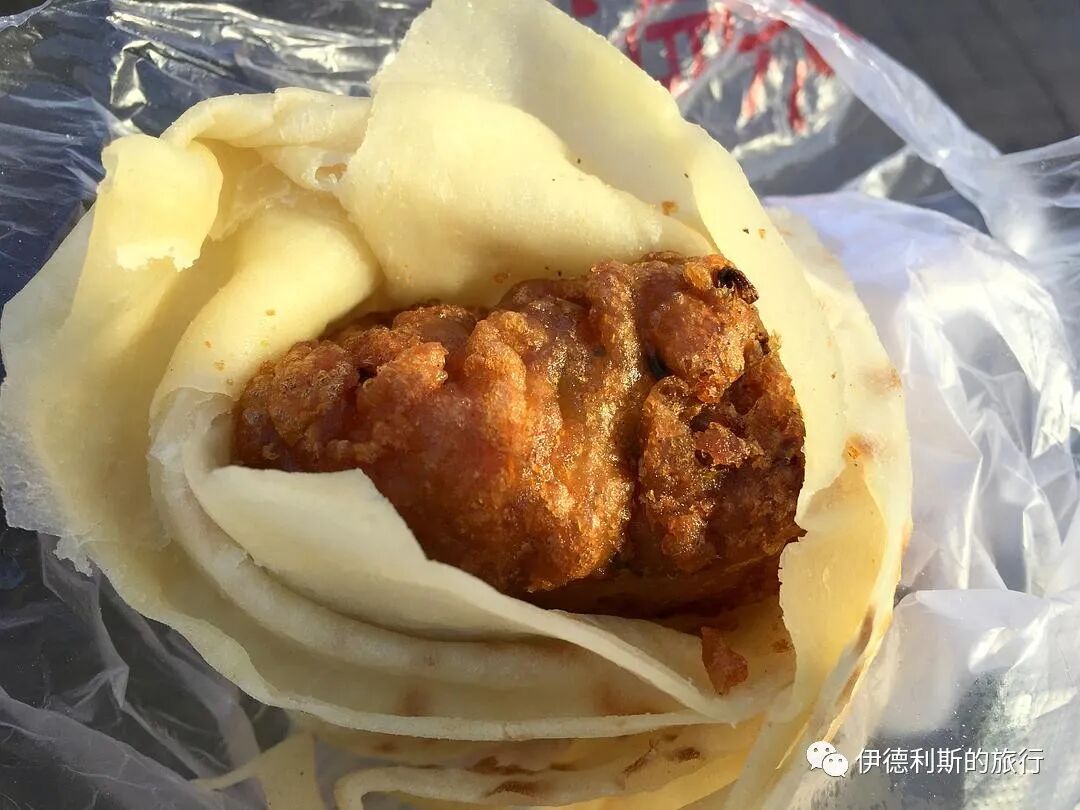
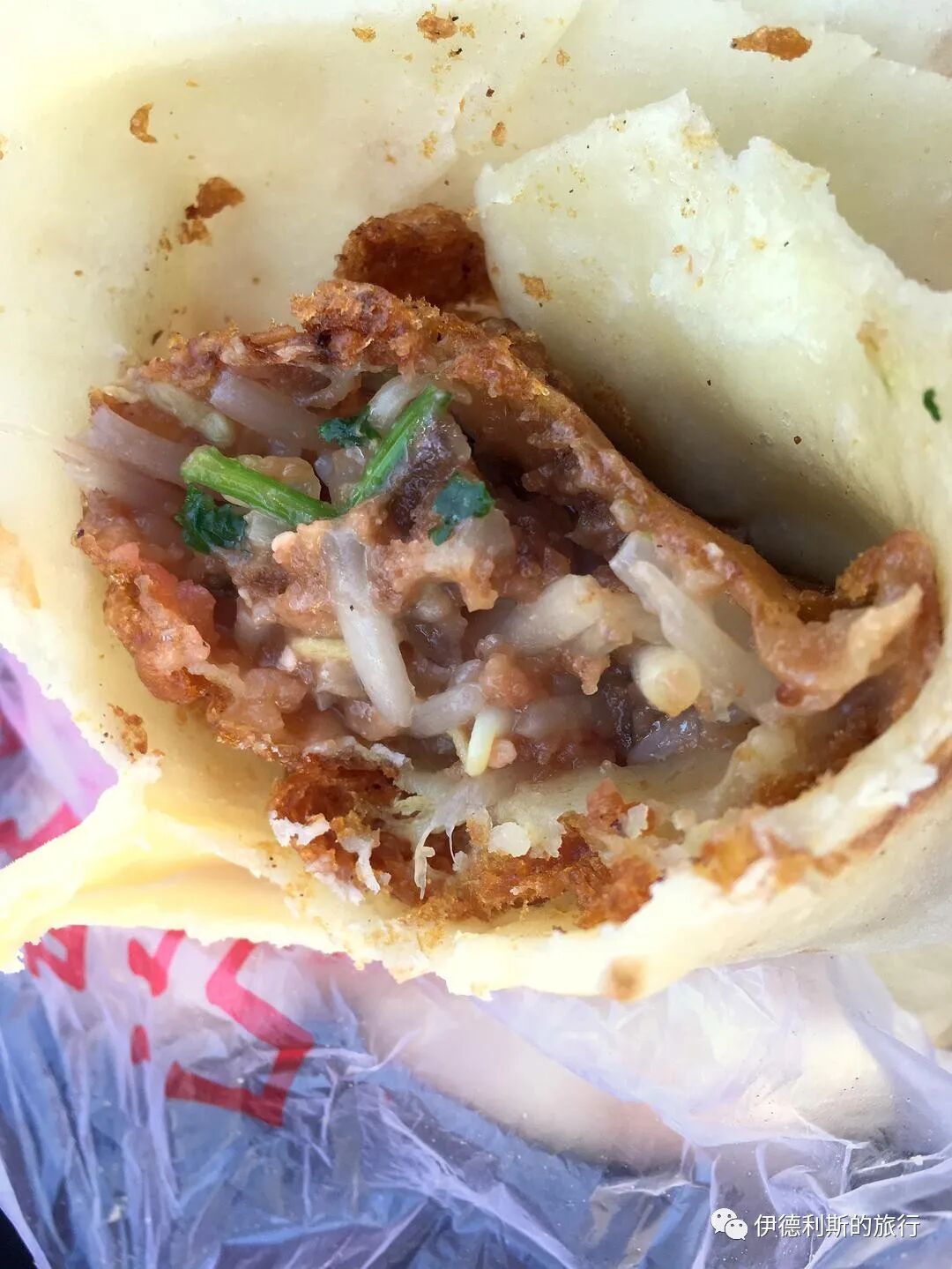
Next, I went to Zhimeizhai, which Xiaolin recommended, to have water caltrop soup (lingjiao tang) and old-style tofu (lao doufu). Their beef sesame flatbread (shaobing) is really good.
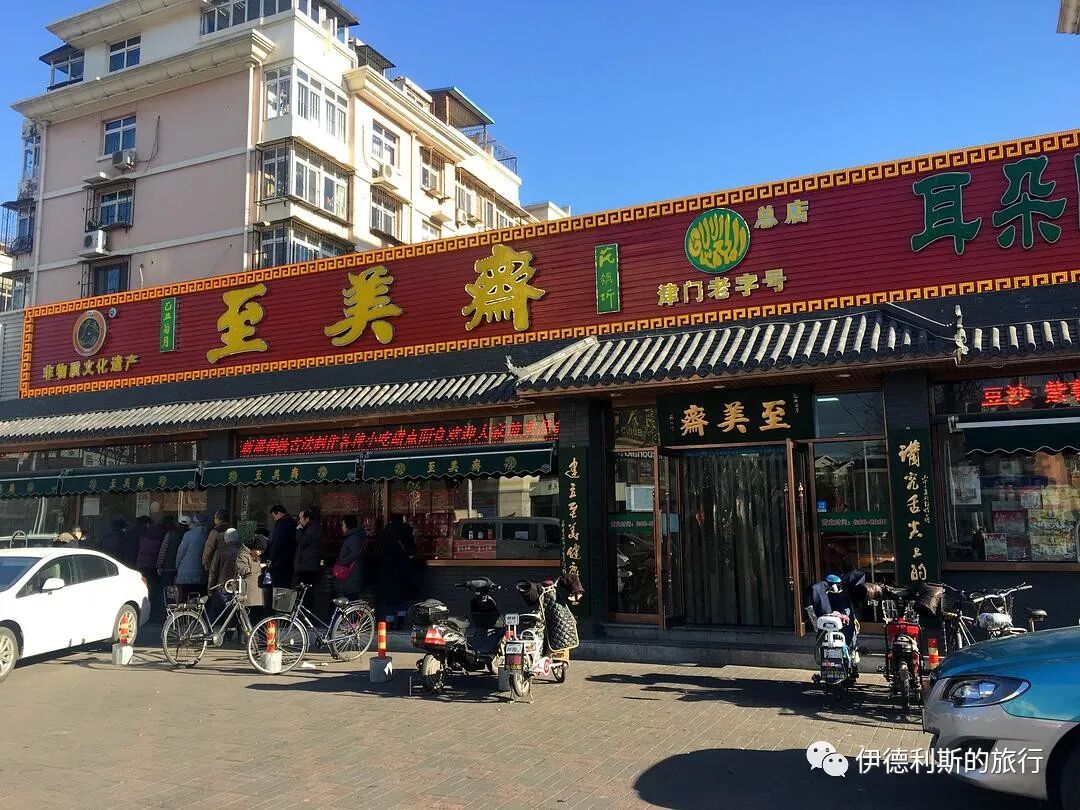
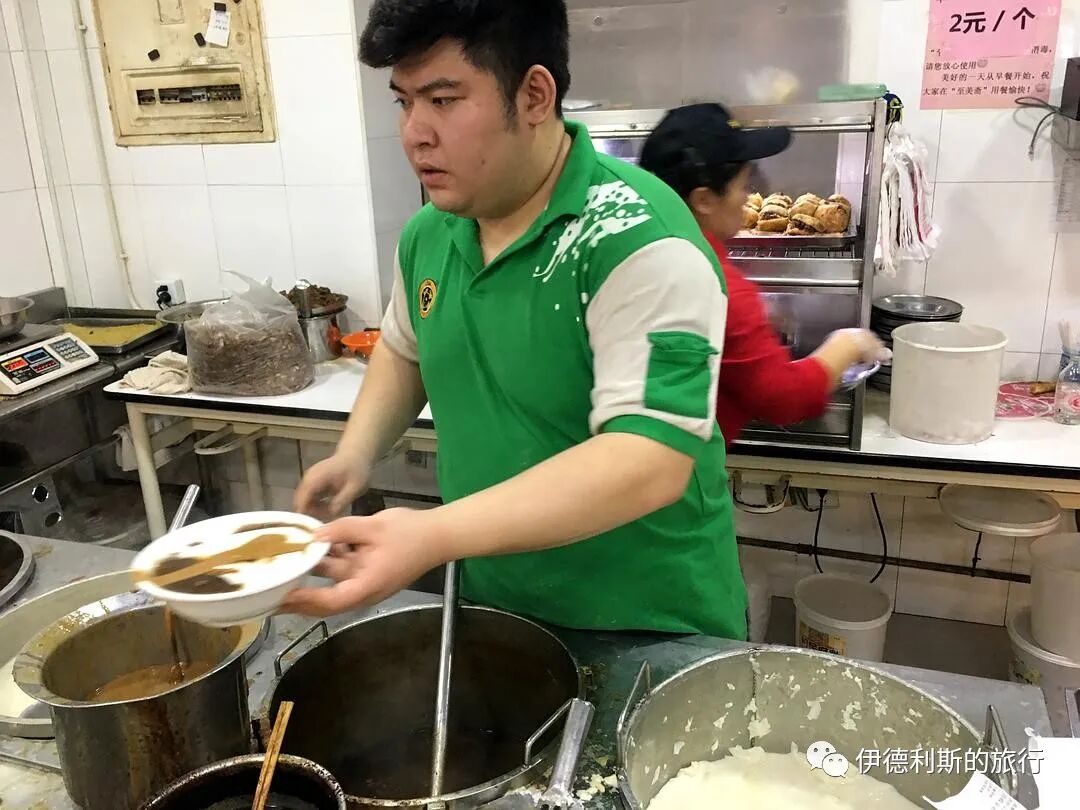
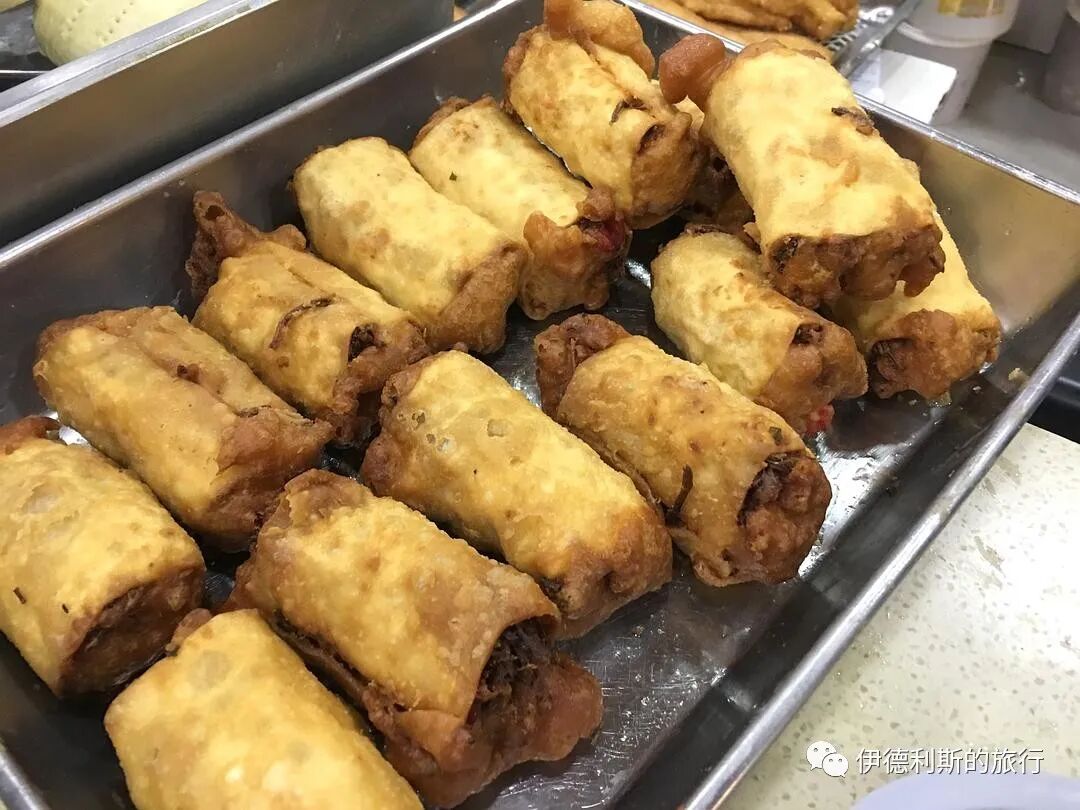
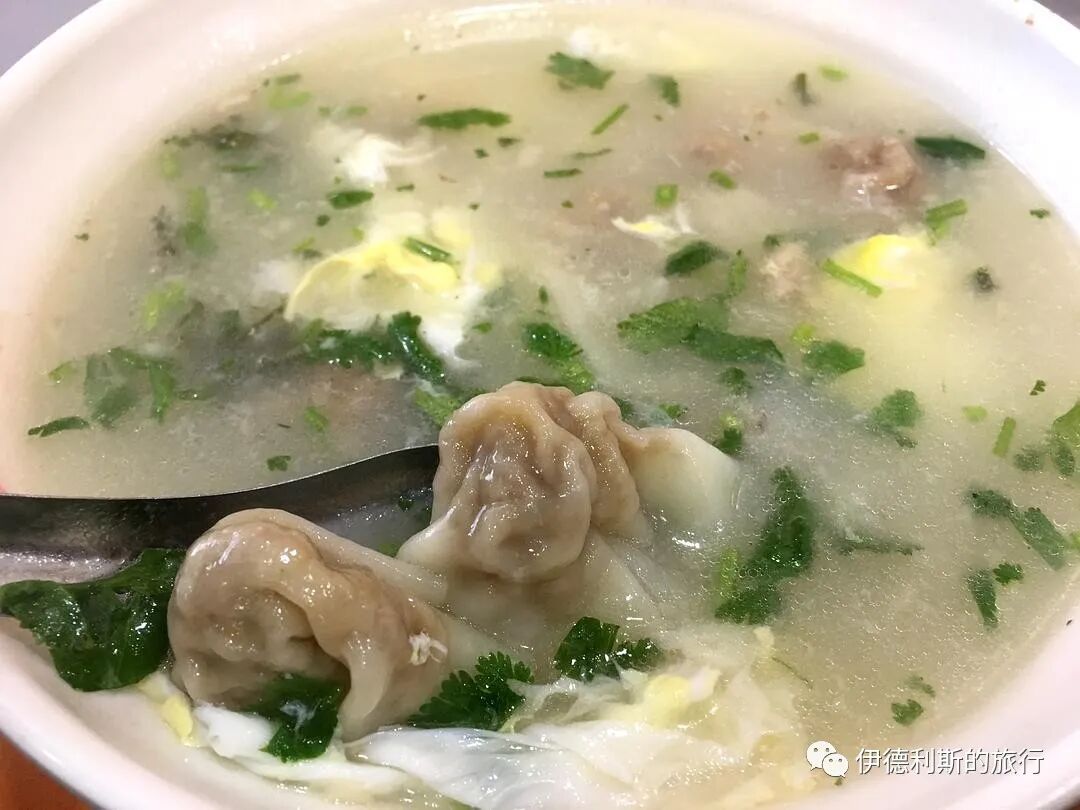
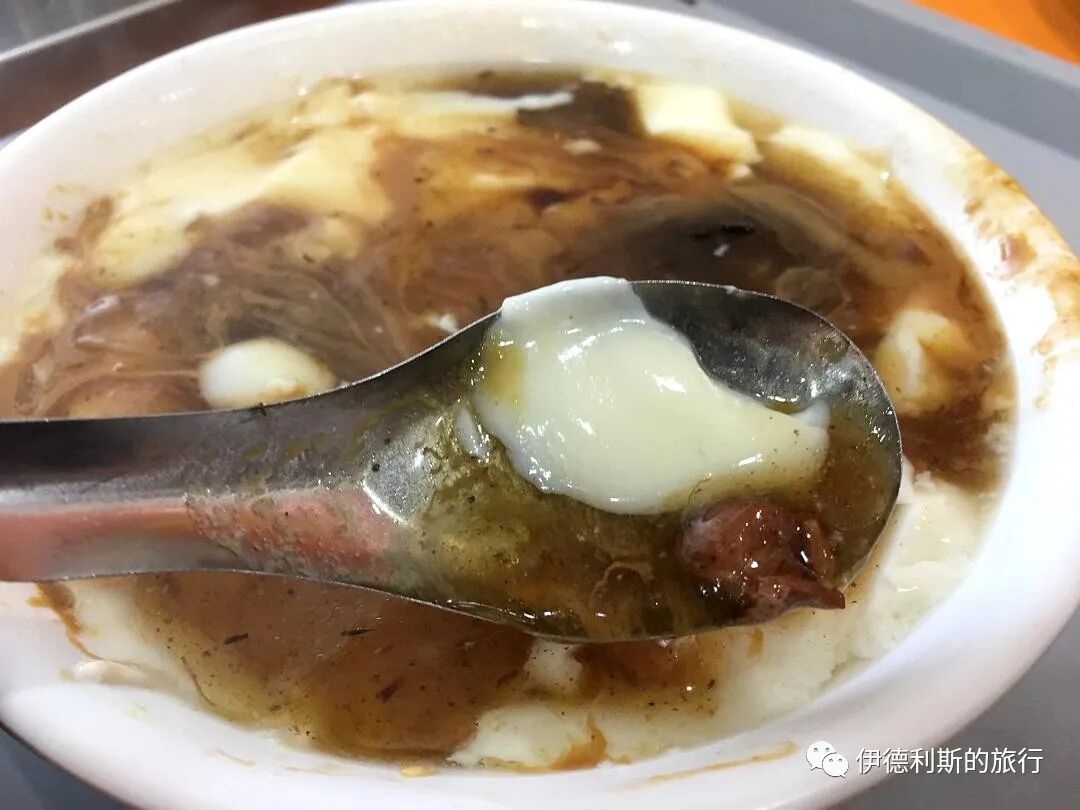
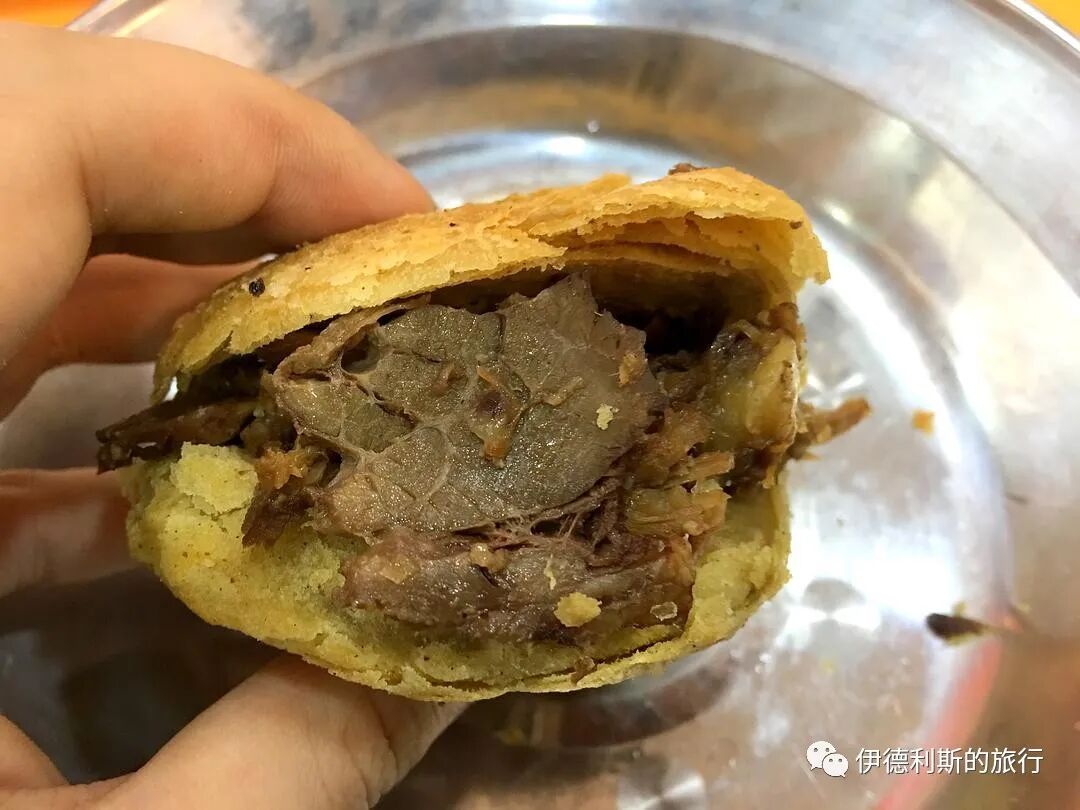
The alleys near Lingdang Pavilion that were waiting to be torn down have now completely disappeared.
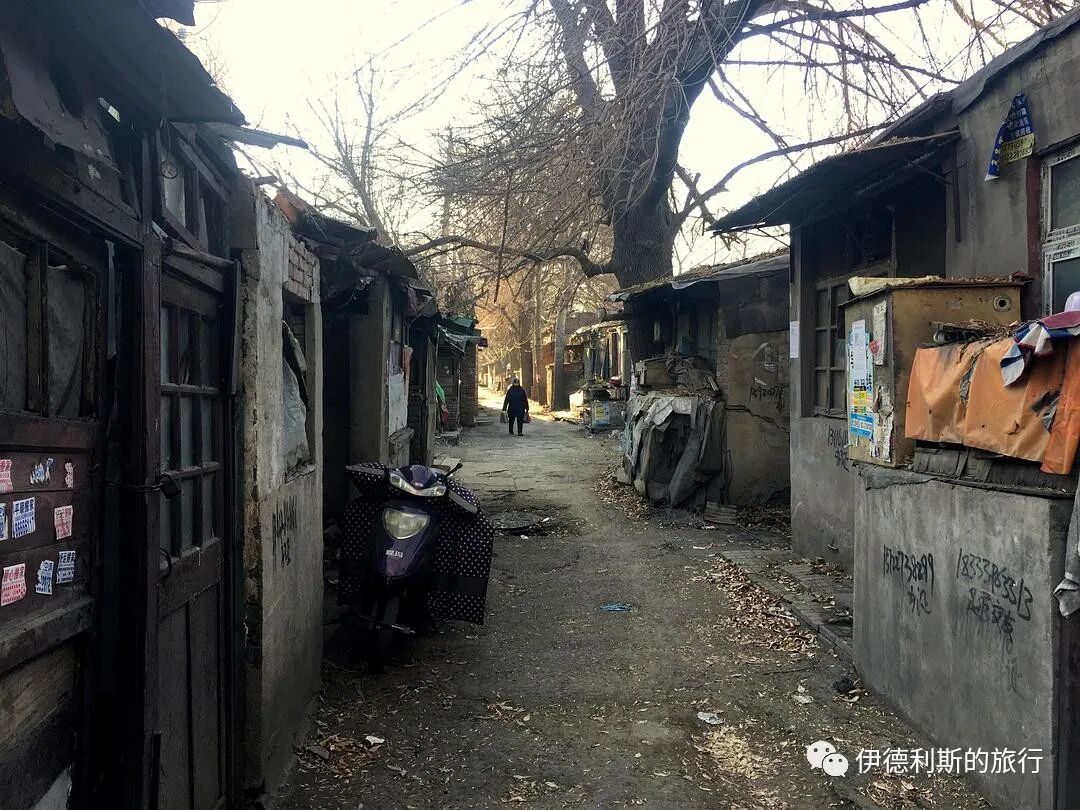
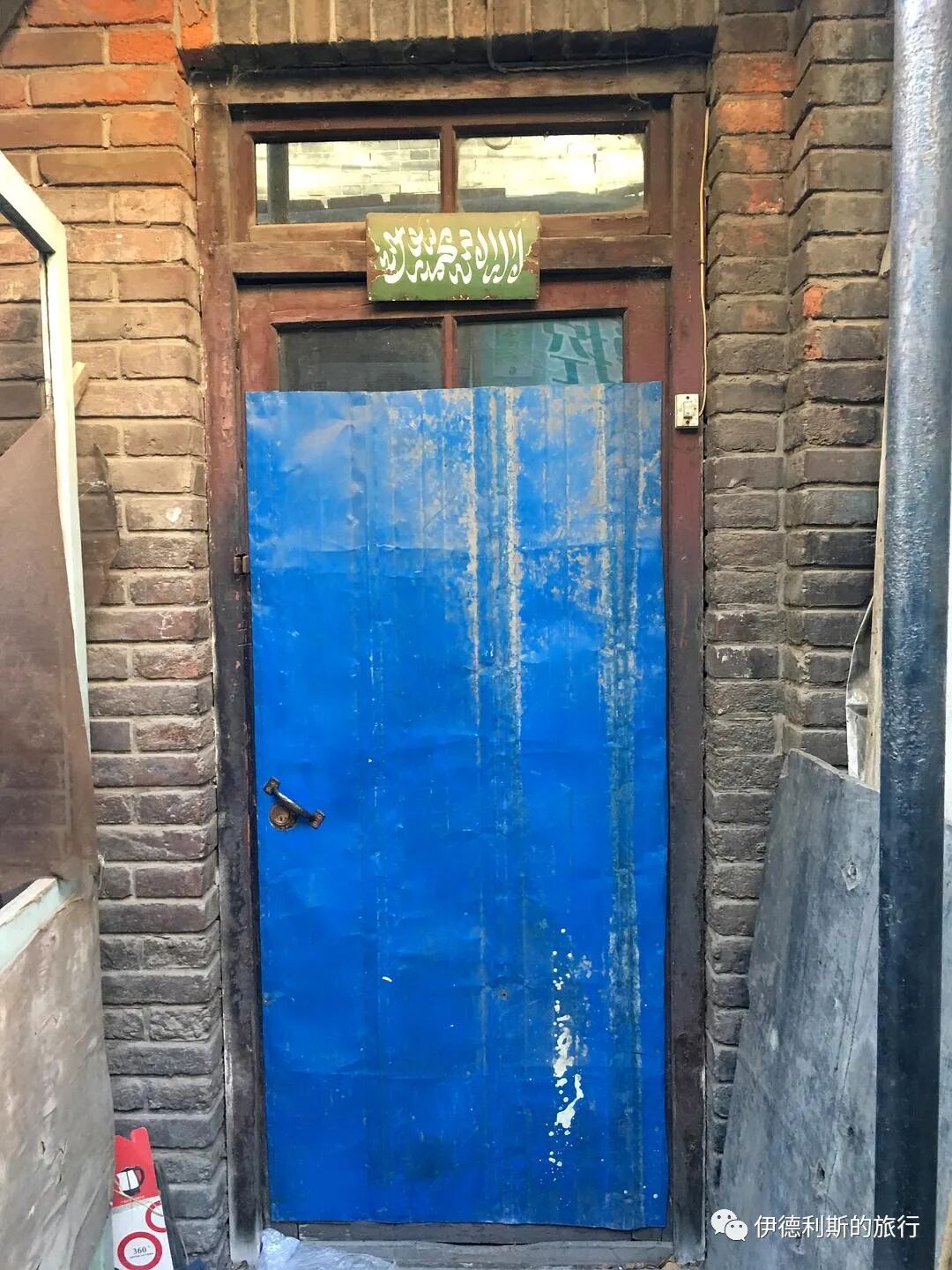
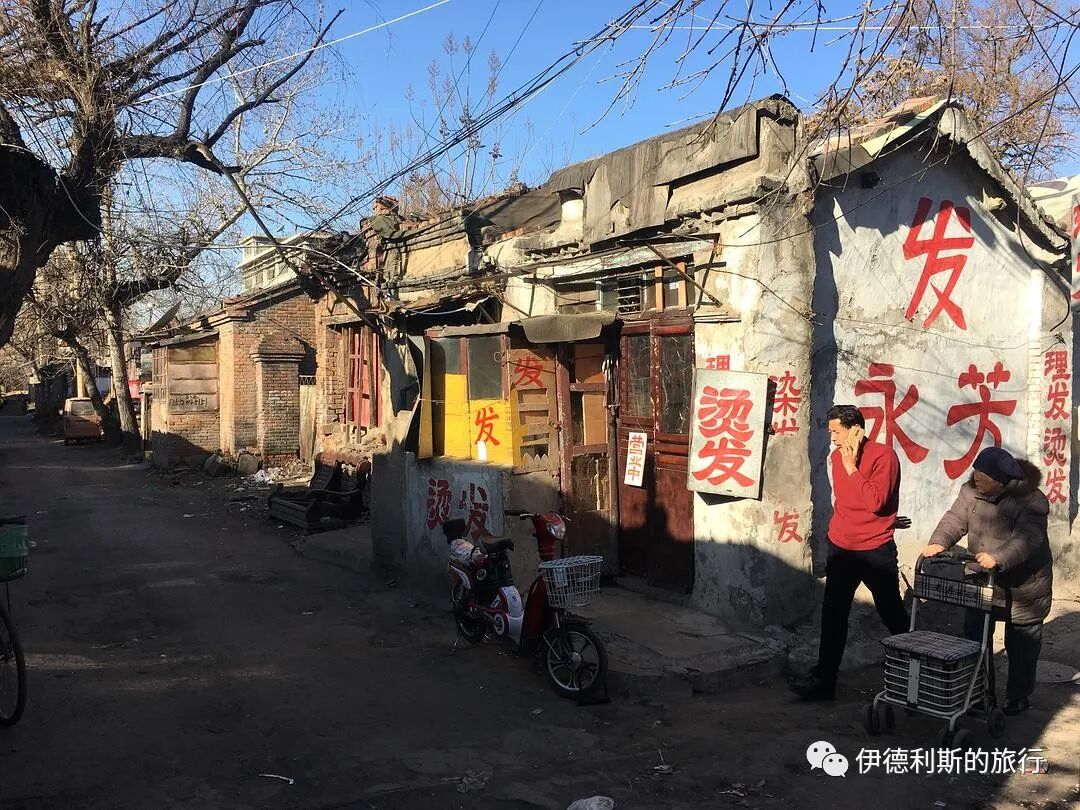
I returned to the busy Xiguan Street.
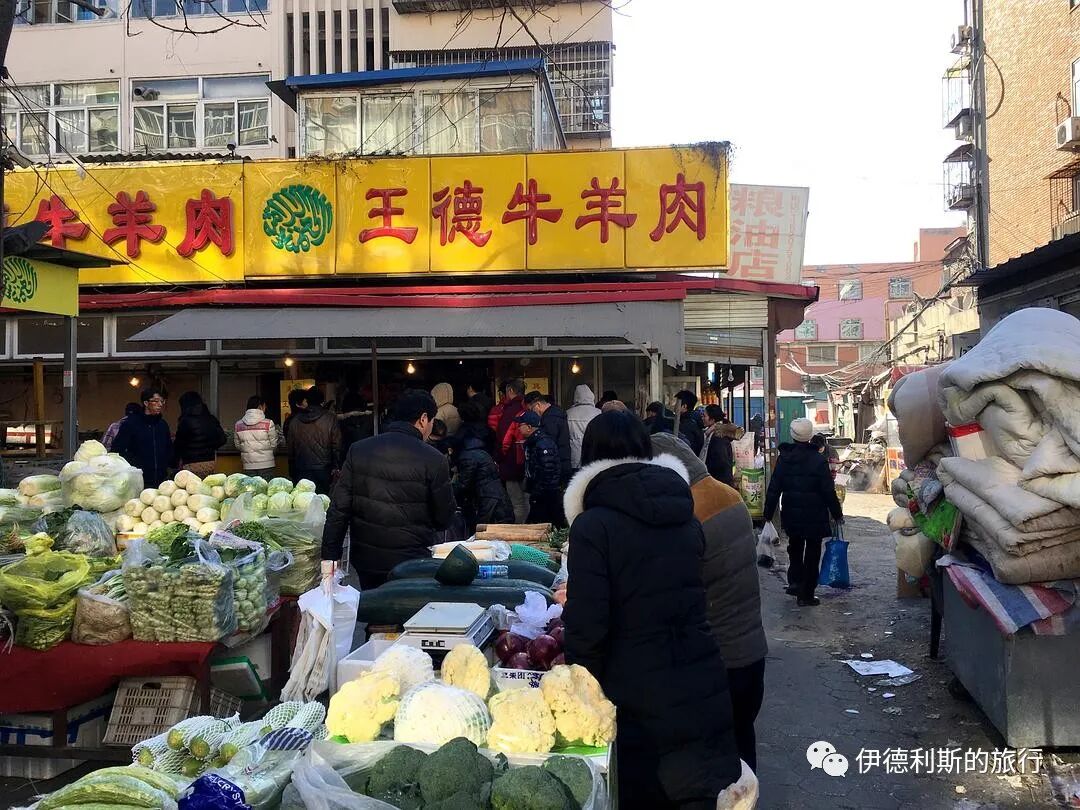
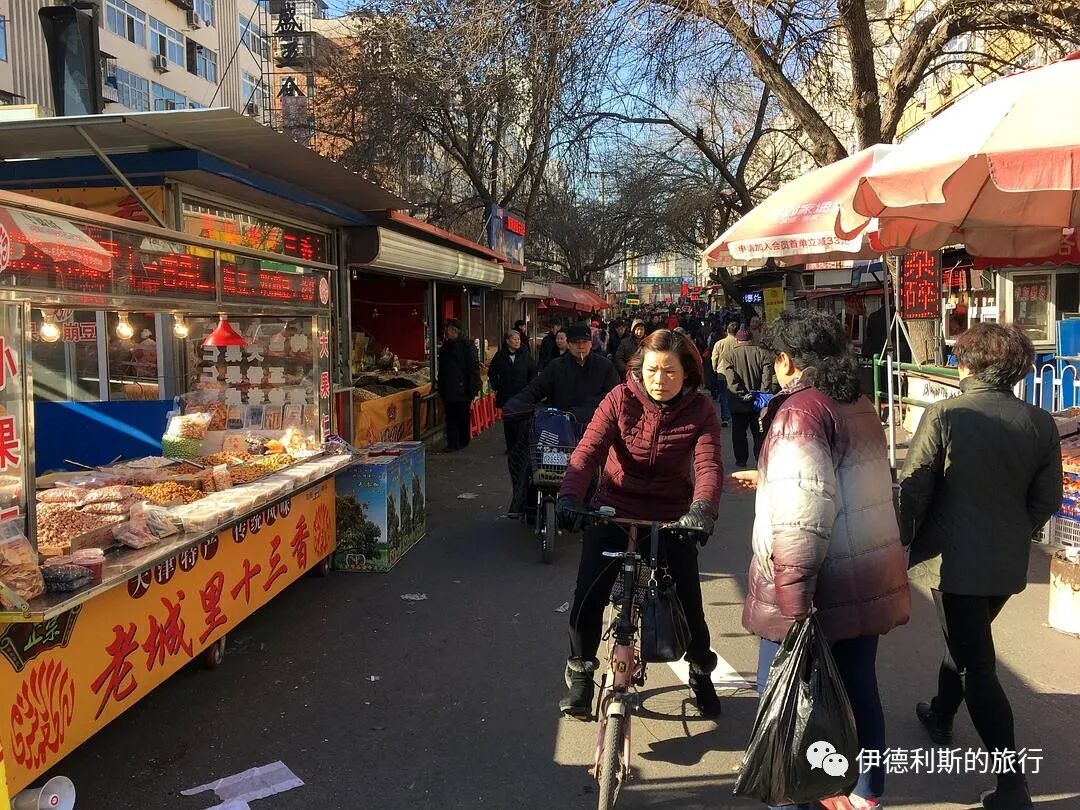
This was my second time at Ye's Rice Noodle Rolls (changfen), and I finally saw the owner. The owner is a girl from Guangzhou. They say she met a guy from Tianjin while traveling in Thailand. They fell in love, got married, and eventually came back to the Northwest Corner to open this rice noodle roll and beef offal shop.
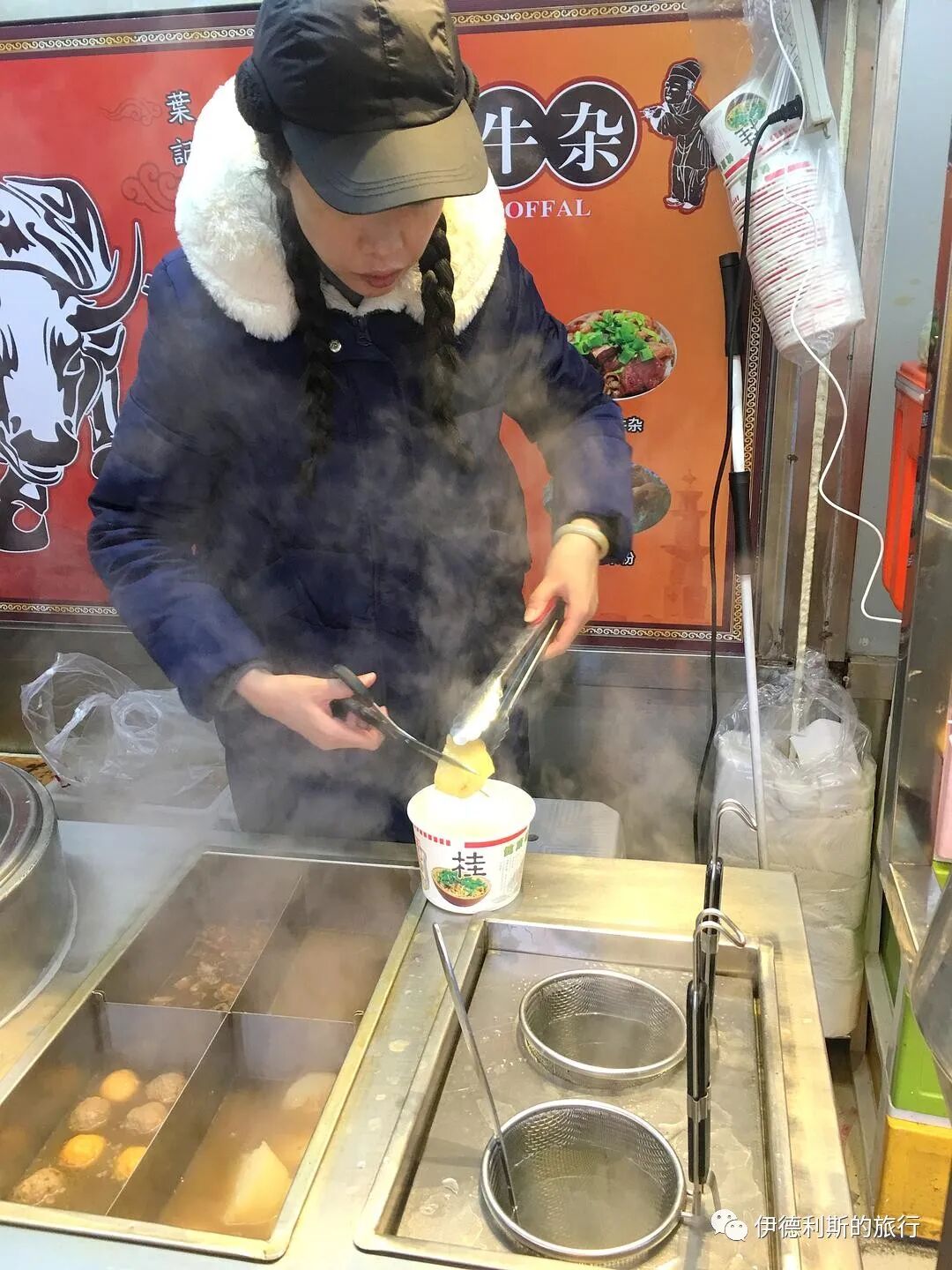
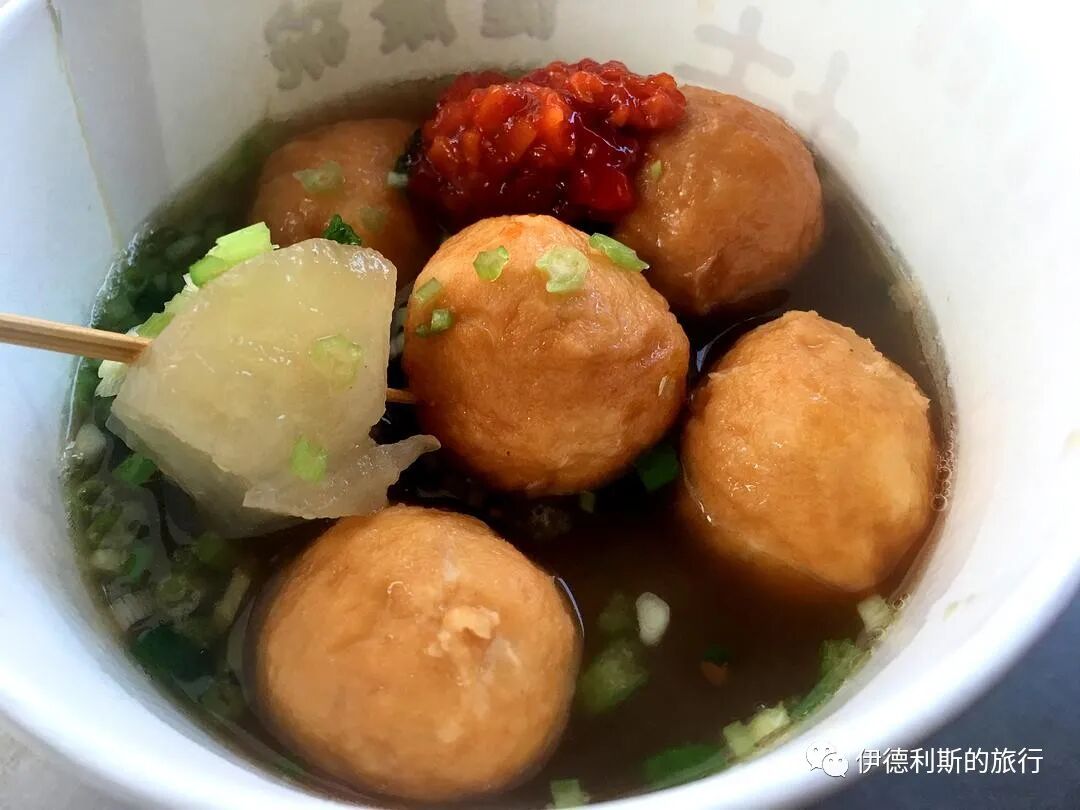
Then I went to eat the shrimp-in-egg (xia che dan) and octopus balls (takoyaki) next door. Shrimp-in-egg is just a shrimp wrapped inside a quail egg, topped with mayonnaise and mustard, and finished with a generous sprinkle of bonito flakes. It is especially delicious!
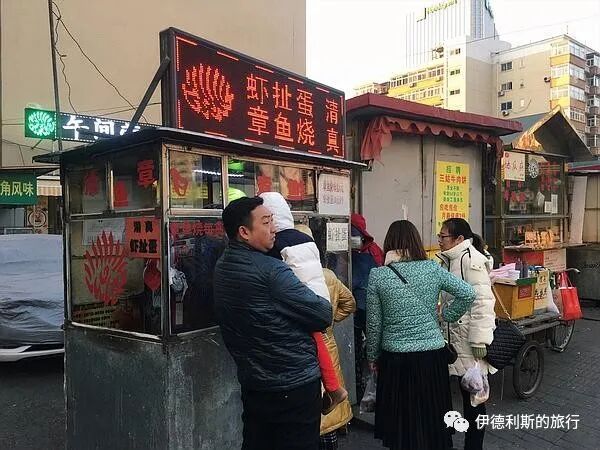
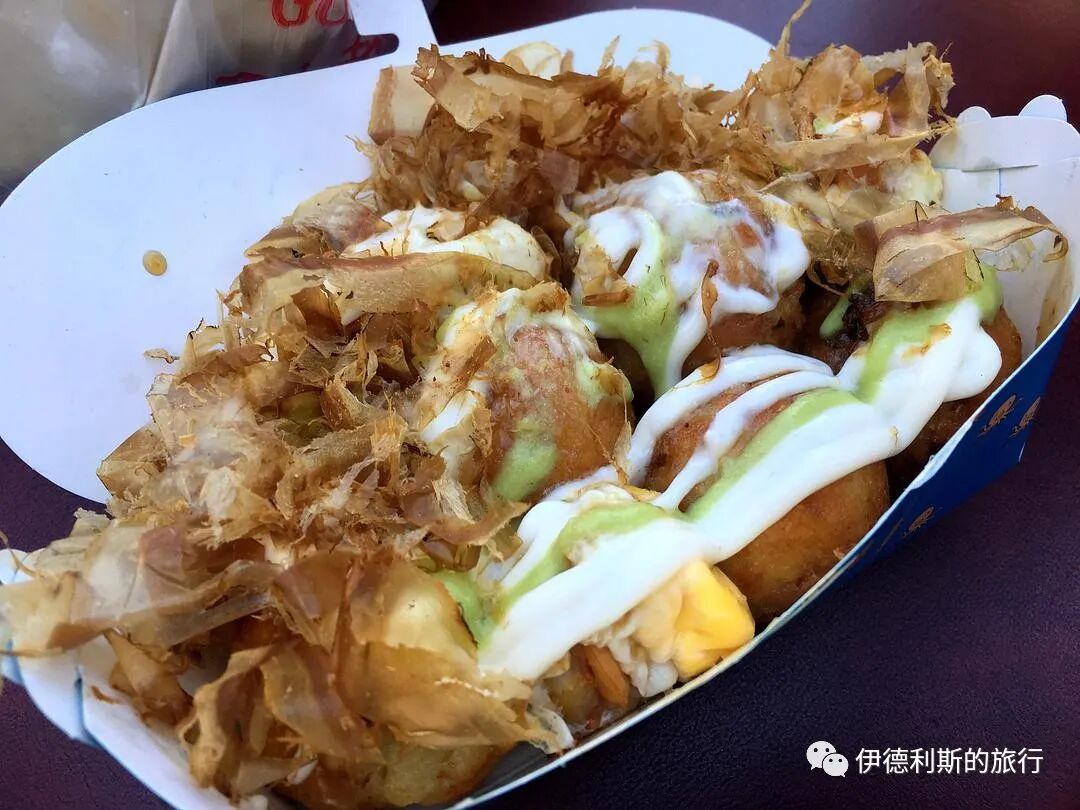
When I went the night before, the candied hawthorn skewers (tangduier) were sold out, so I made a special trip this time to buy one to eat. I also bought their apricot jam, which is sweet and tastes great.
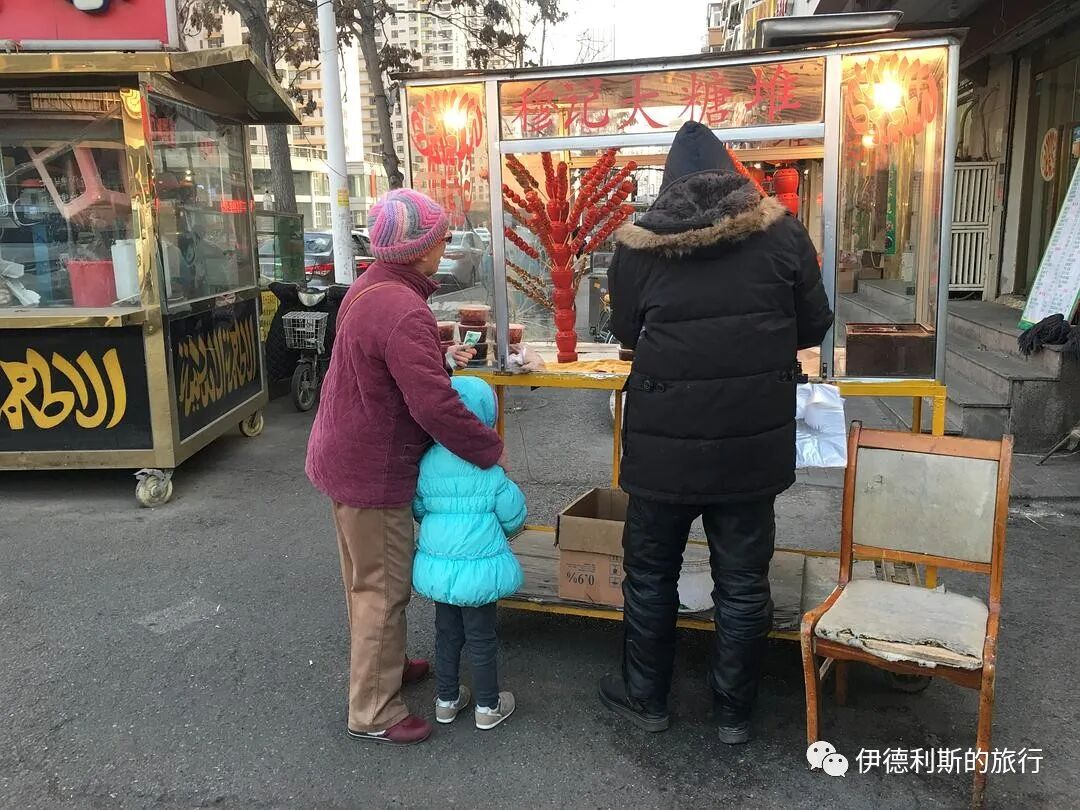
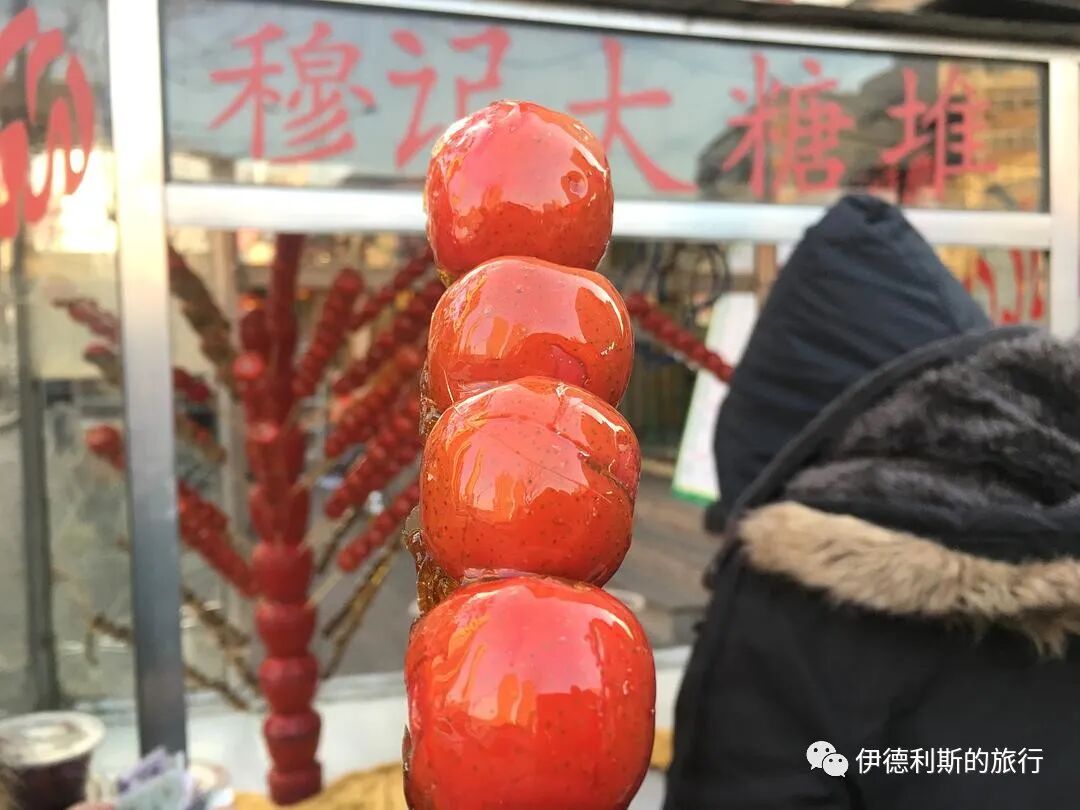
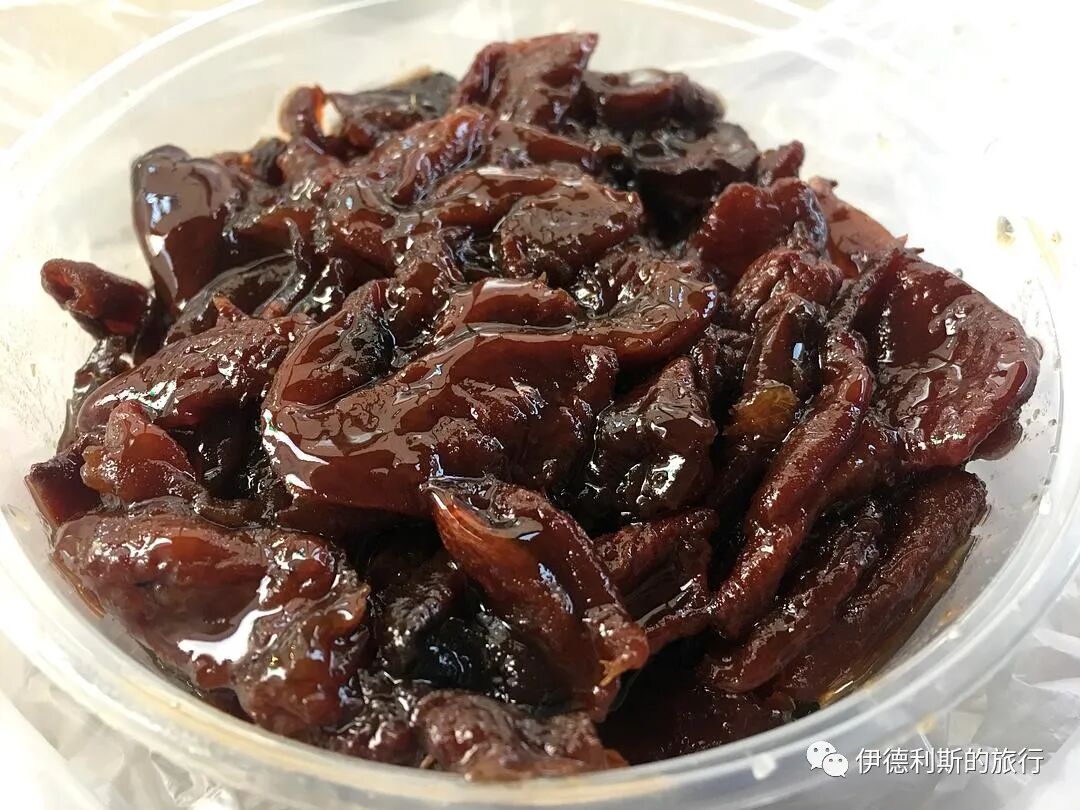
I met a little kid who really wanted some steamed pear cake (shuligao). The way he looked at it, he was practically diving into the cake. I believe this shop will be a wonderful memory for him when he grows up, just like the Longfu Mosque snack shop is in my heart.
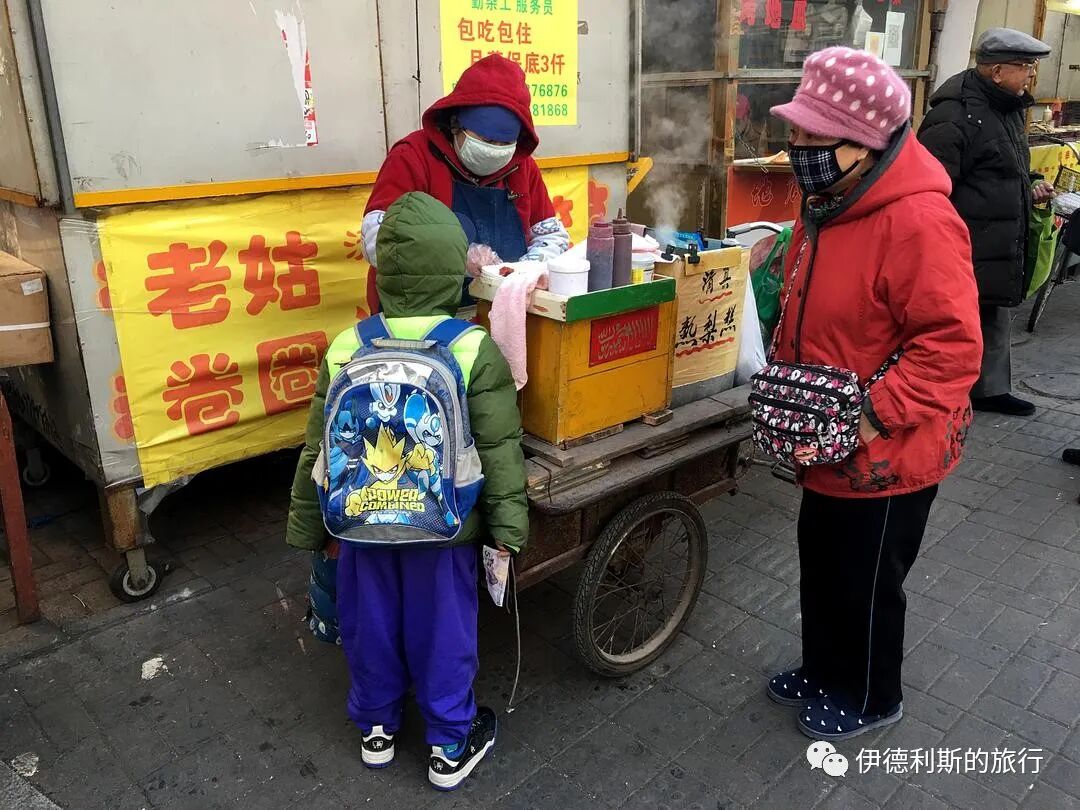
June 2018
In 2018, I suddenly heard that the once-busy Xiguan Beili Market in the Northwest Corner had been cleared out. So, on June 10, I went to see what Xiguan Beili looked like after the clearance.
I had heard many people praise the crispy rice pancake (guobacai) at Zhengweizhai next to the South Mosque (Qingzhen Nansi) in the Northwest Corner. People say it is the best beef-sauce crispy rice pancake nearby. I headed straight to Zhengweizhai early in the morning, but when I arrived at nine o'clock, they had just sold the last bowl. I was very disappointed to miss it.
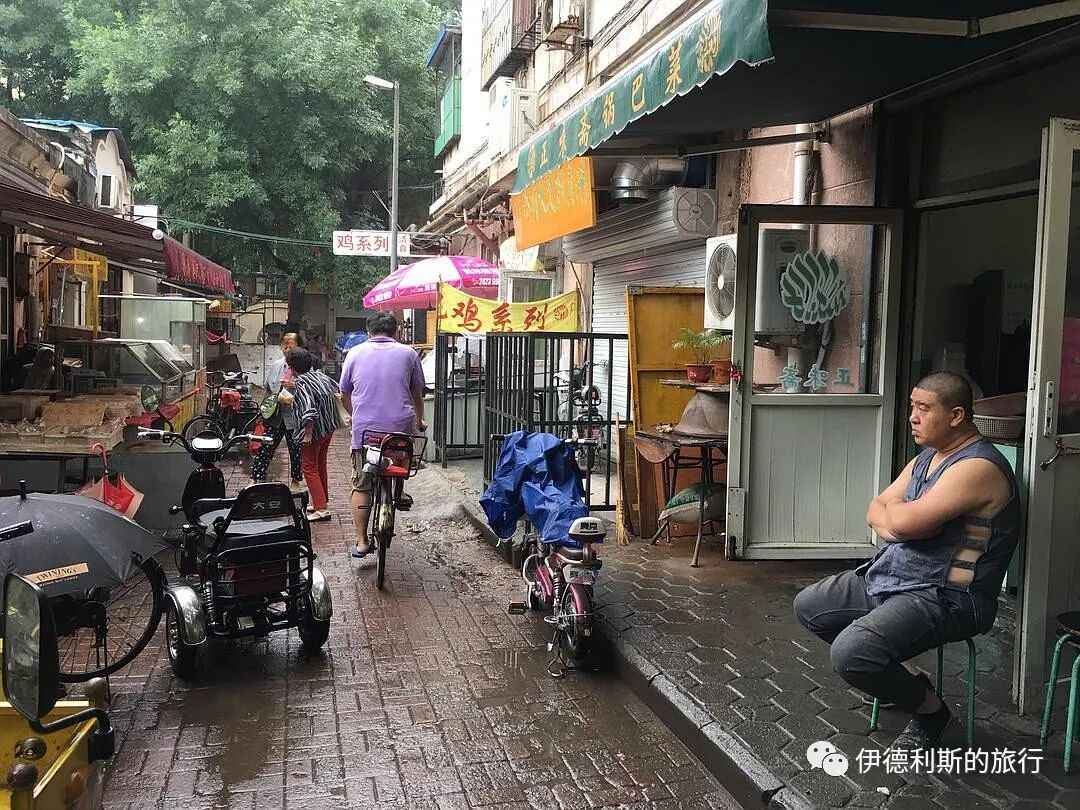
I strolled back from Zhengweizhai to the gate of the South Mosque and bought two fried cakes (zhagao) at Longyuezhai. You have to eat fried cakes while they are hot! Longyuezhai closed down in September 2018. This might have been the last summer everyone could eat fried cakes at the gate of the South Mosque.
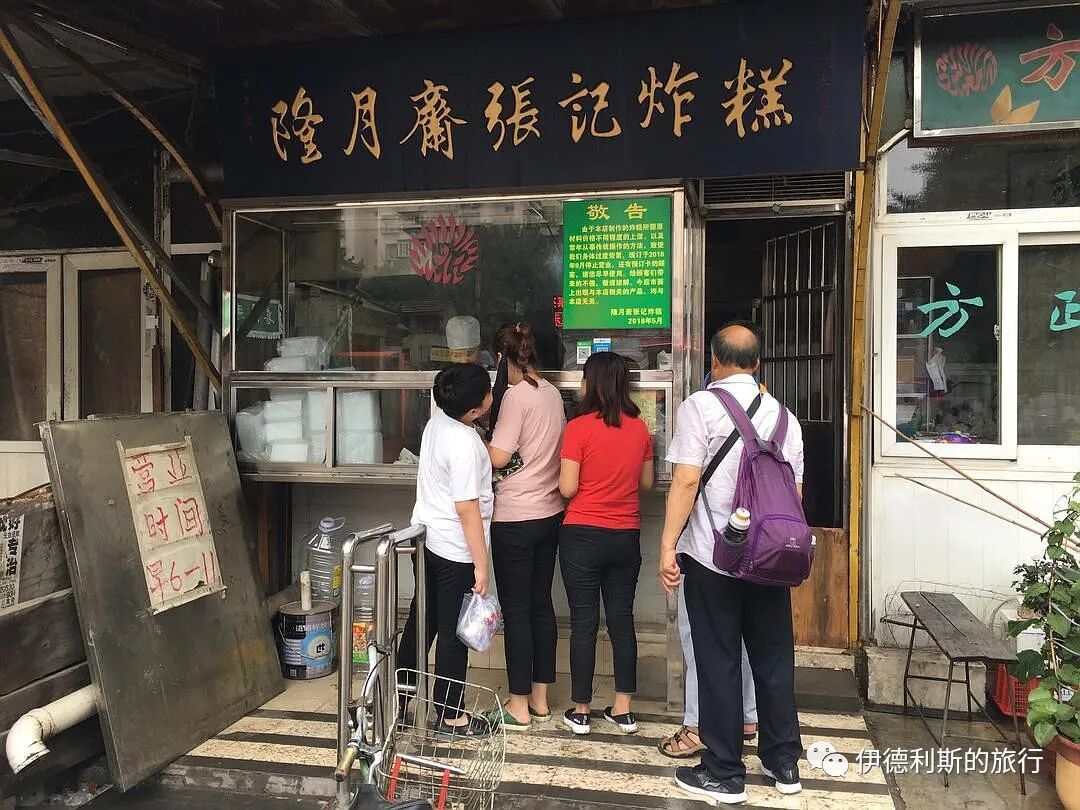
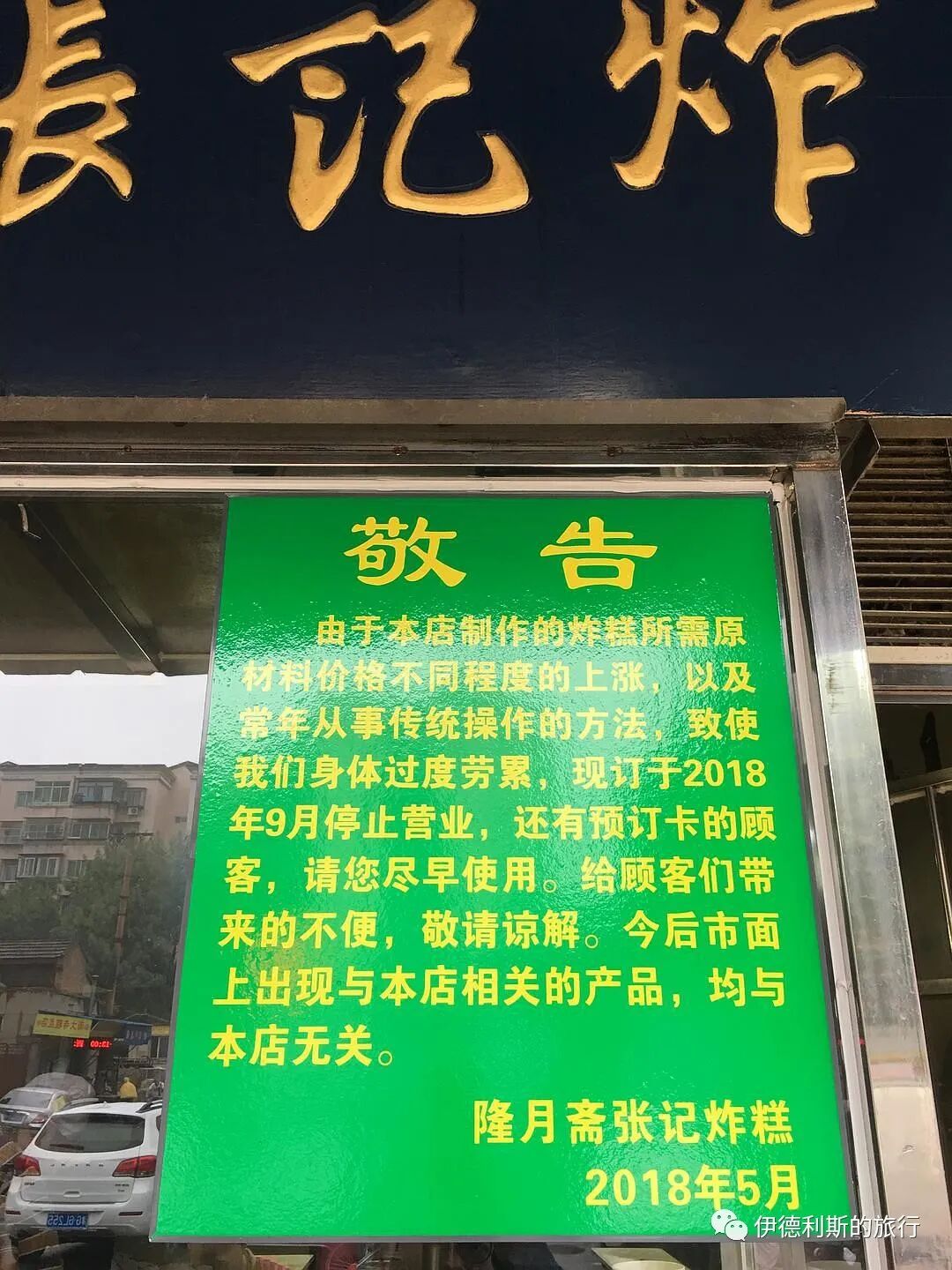
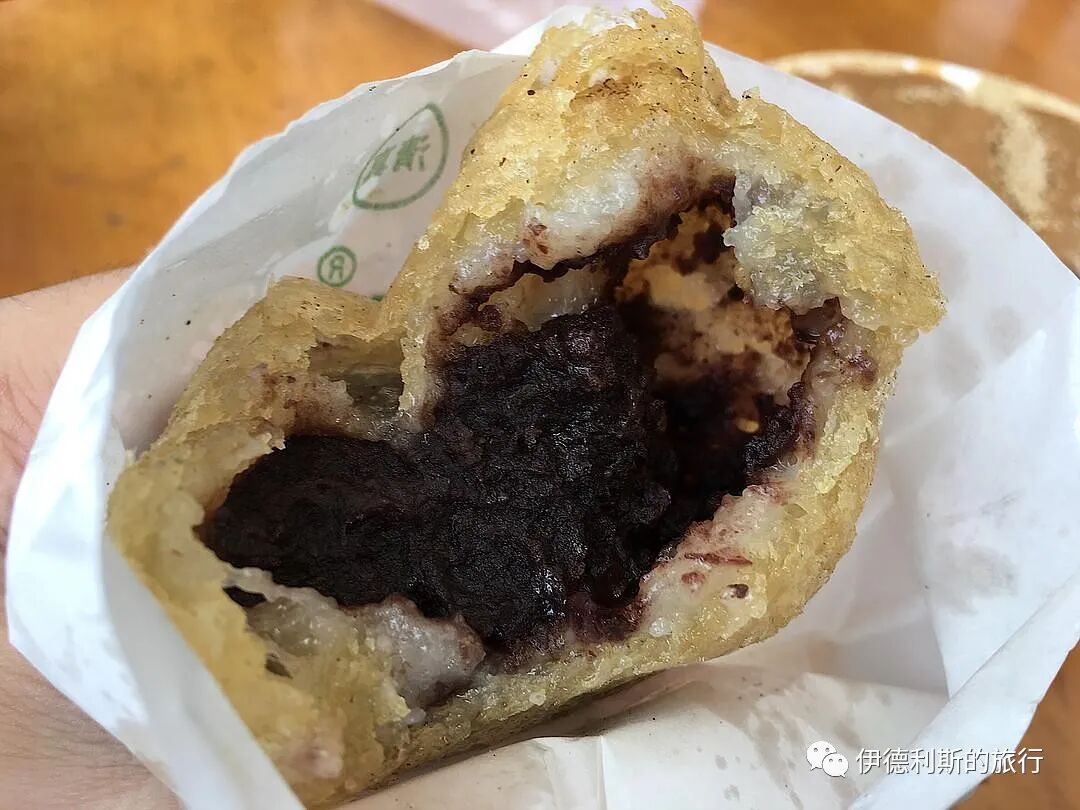
Across from Longyuezhai is Enqingcheng Guobacai. Their shop is very busy, so I waited in line to buy millet porridge (miancha) and crispy rice pancake. Tianjin's millet porridge is thicker than Beijing's. You have to sprinkle two layers of spiced salt on it, and it is very satisfying to eat. Their crispy rice pancake is also very delicious.
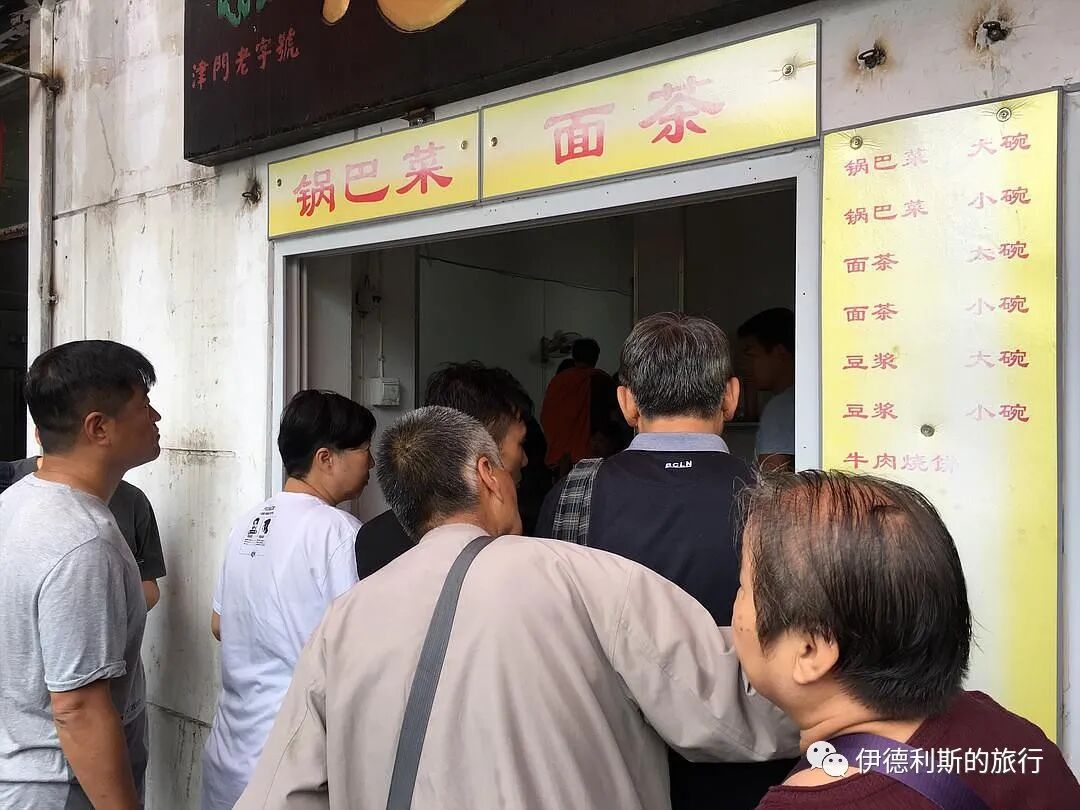
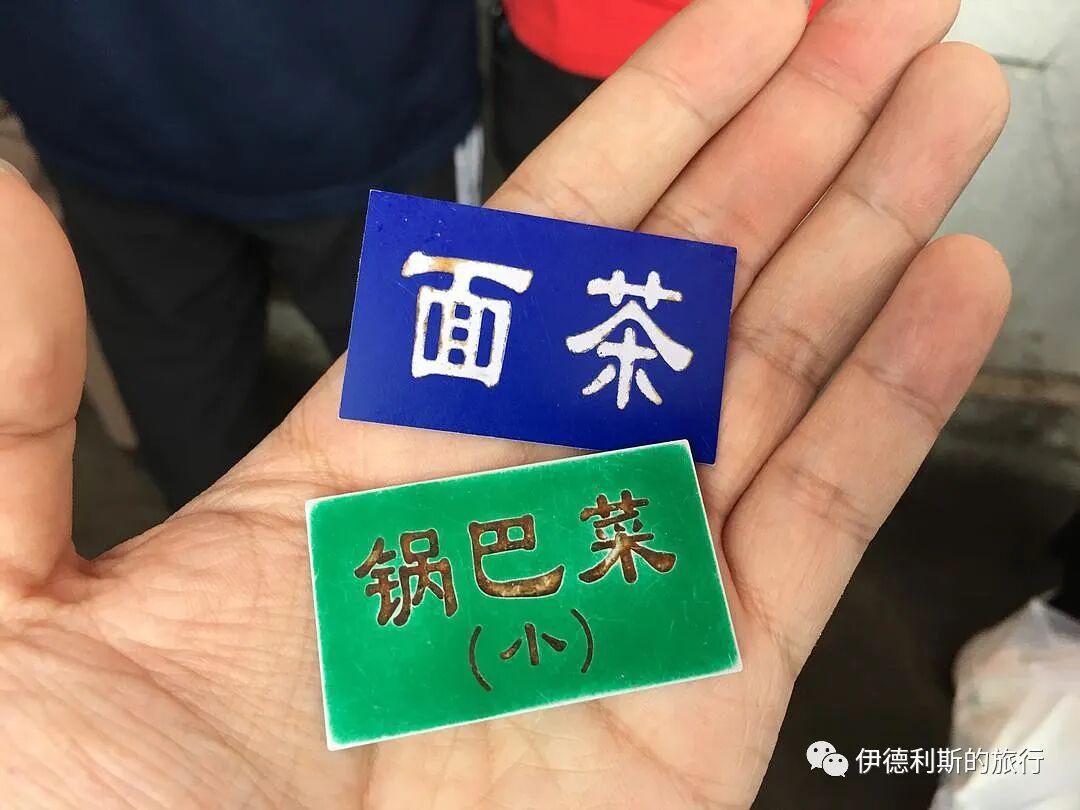
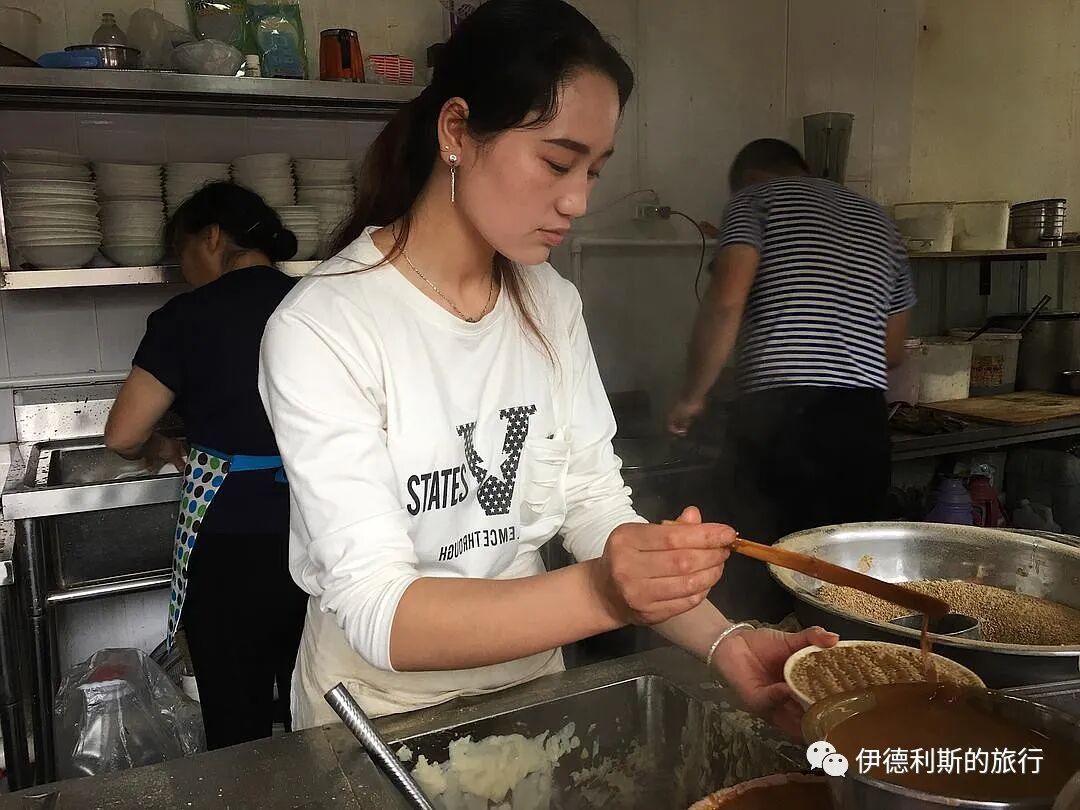
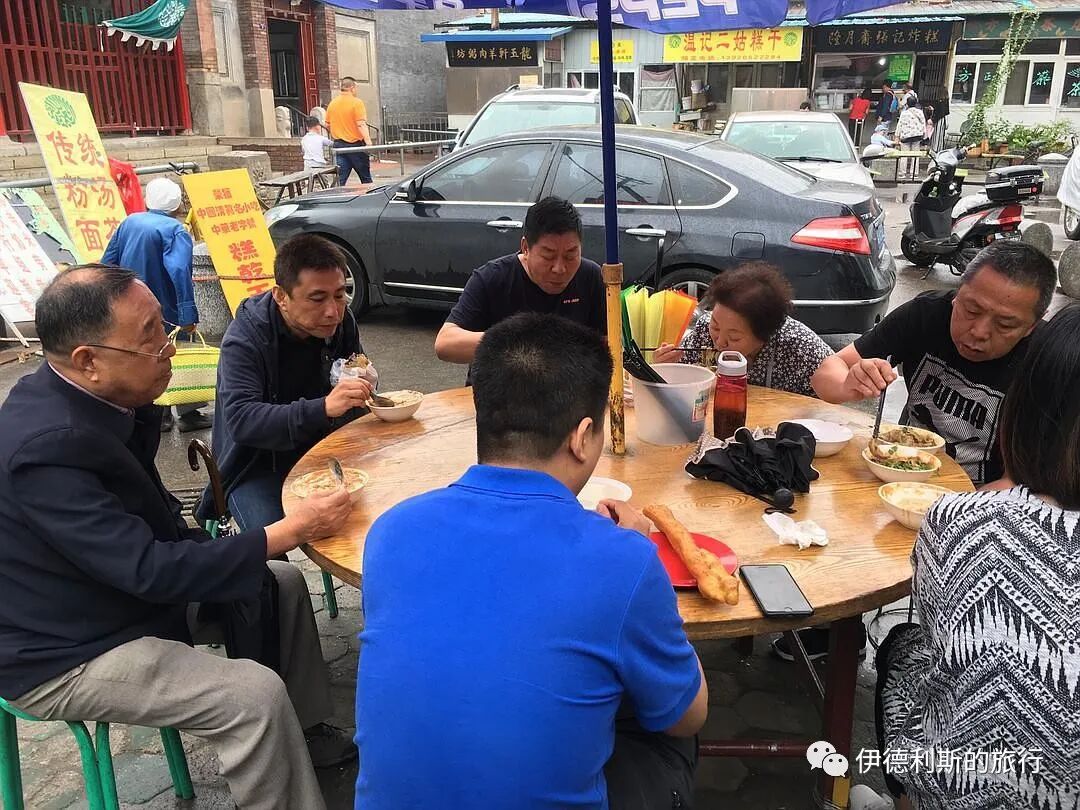
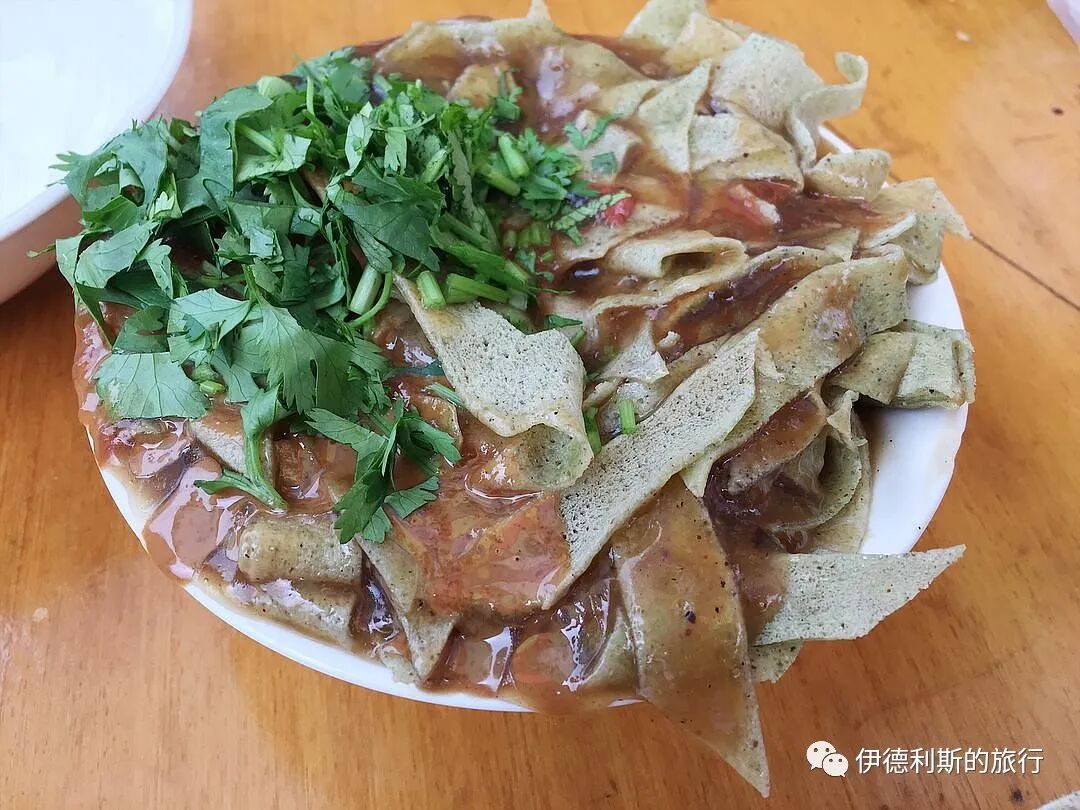
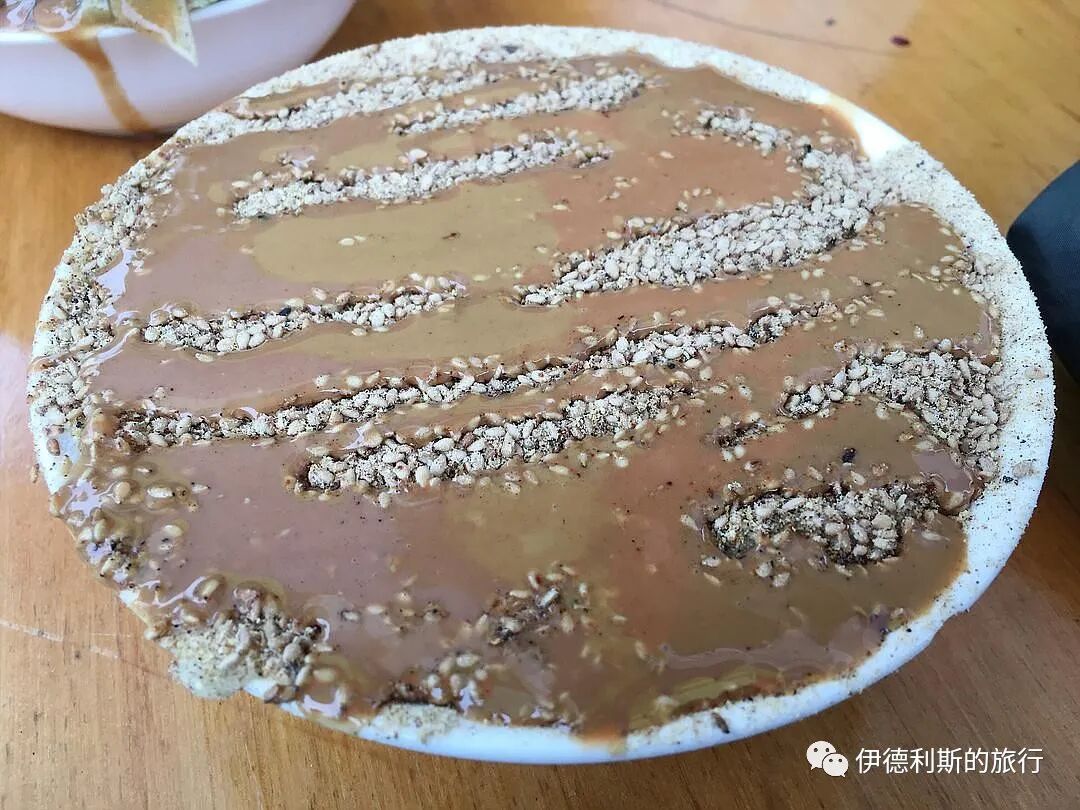
Another big breakfast area in the Northwest Corner is on the south side of Jieyuan Road at the Northwest Corner intersection. I bought a Tianjin-style vegetable roll (sujuanquan) here to eat.
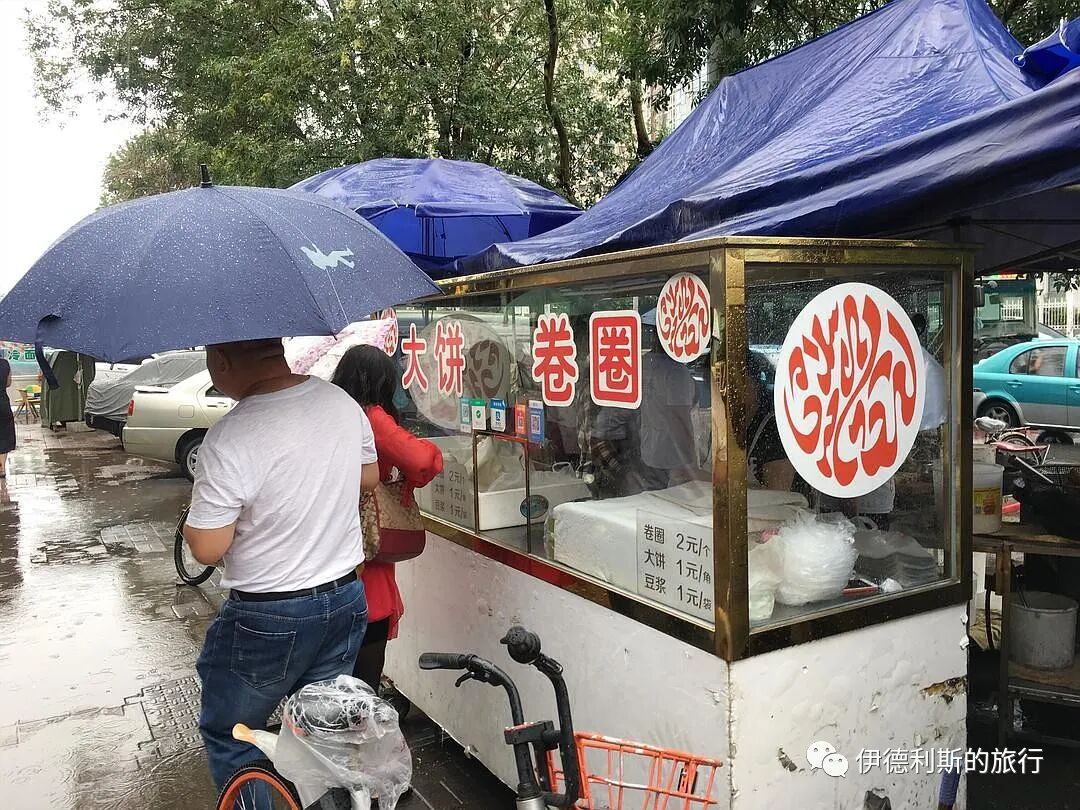
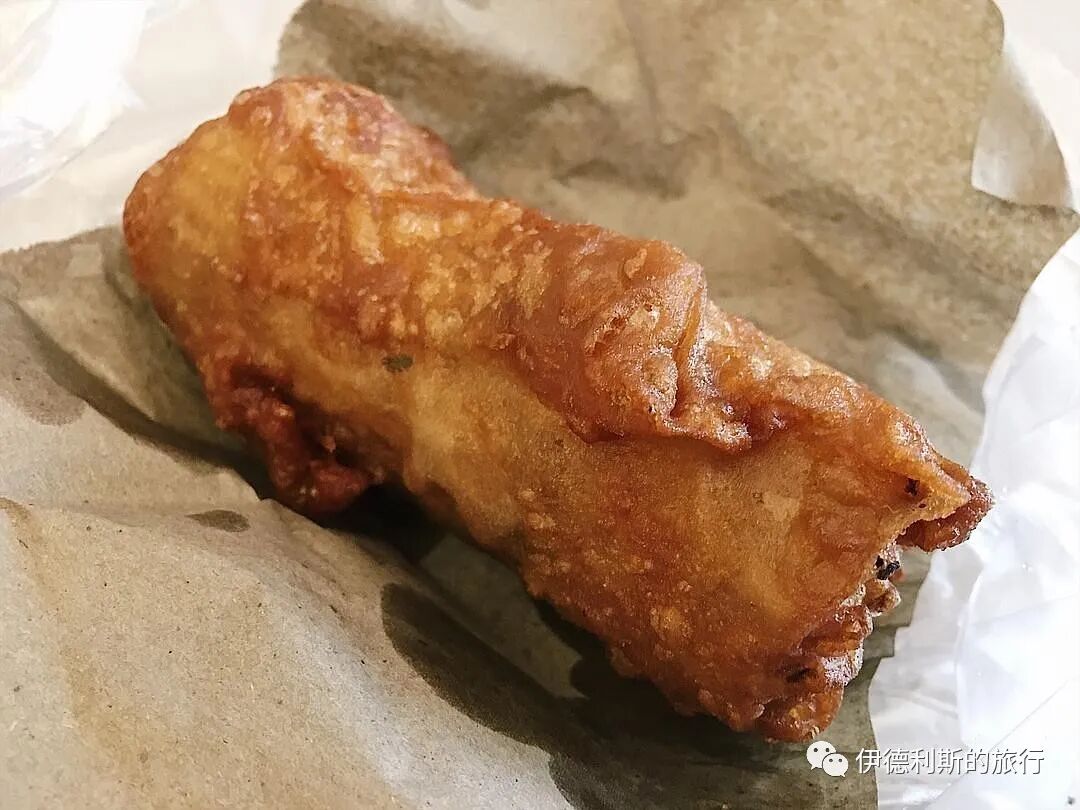
This fried dough stick (guoz) stall is right in front of Yangyi Restaurant on Jieyuan Road. People say their egg-filled fried dough stick (jidan guozi) is the best in the Northwest Corner.
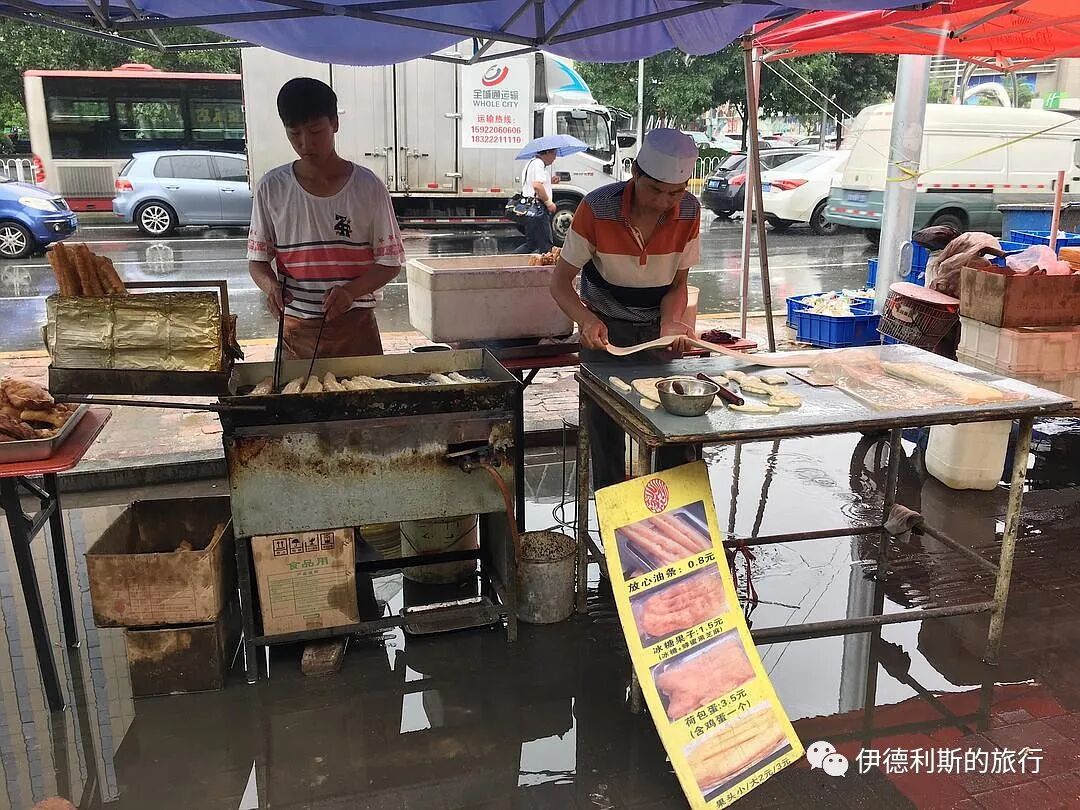
A flatbread (dabing) filled with everything!
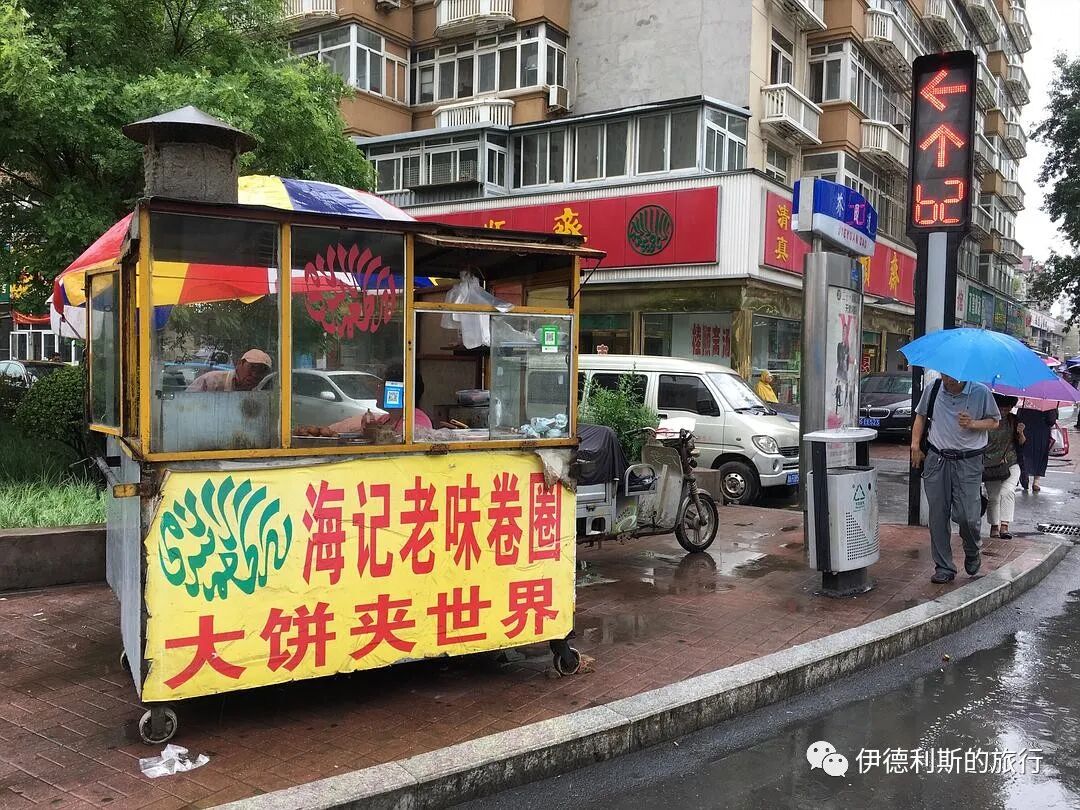
I really like the steam rising from the steamer; it creates such a great atmosphere.
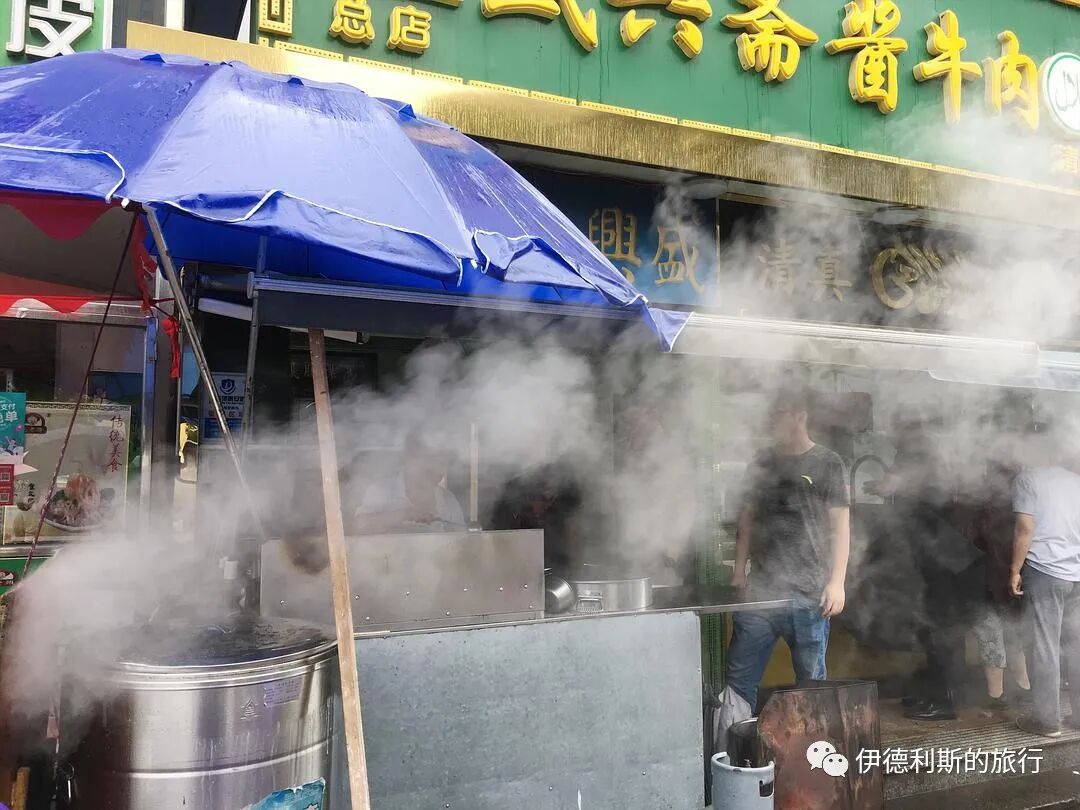
This shop sells various kinds of rice cakes and donkey roll cakes (lvdagun).
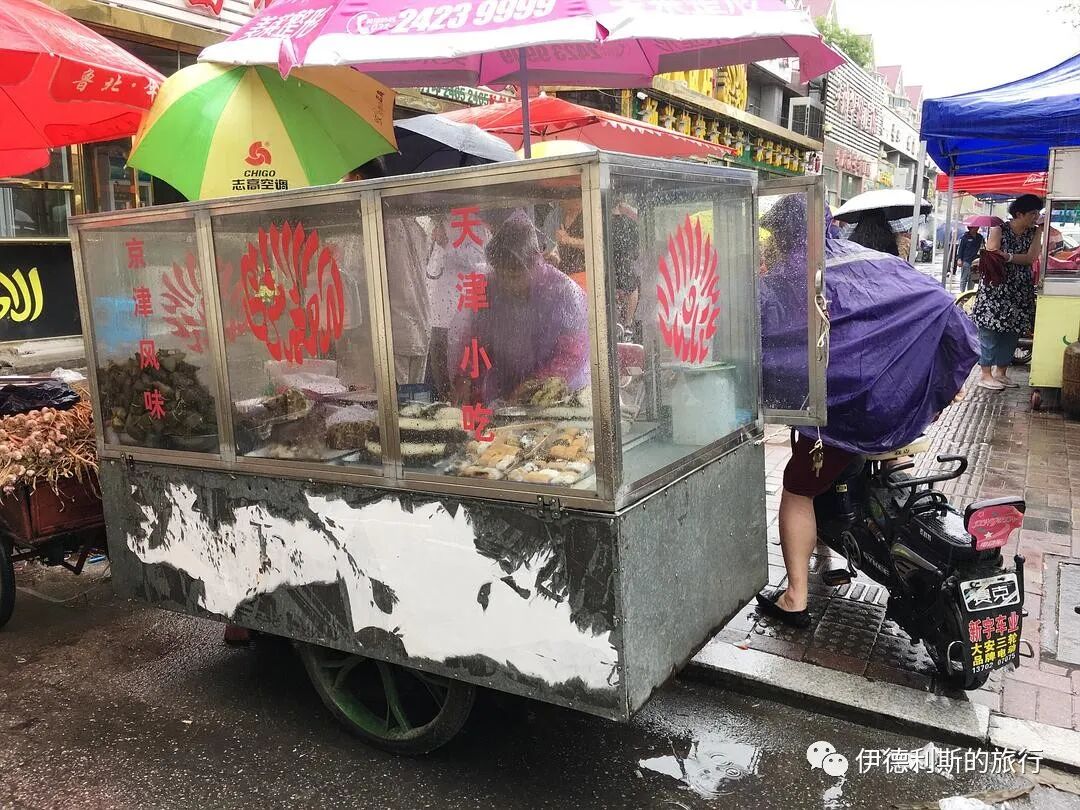
A savory crepe (jianbing guozi) stall is a must-have.
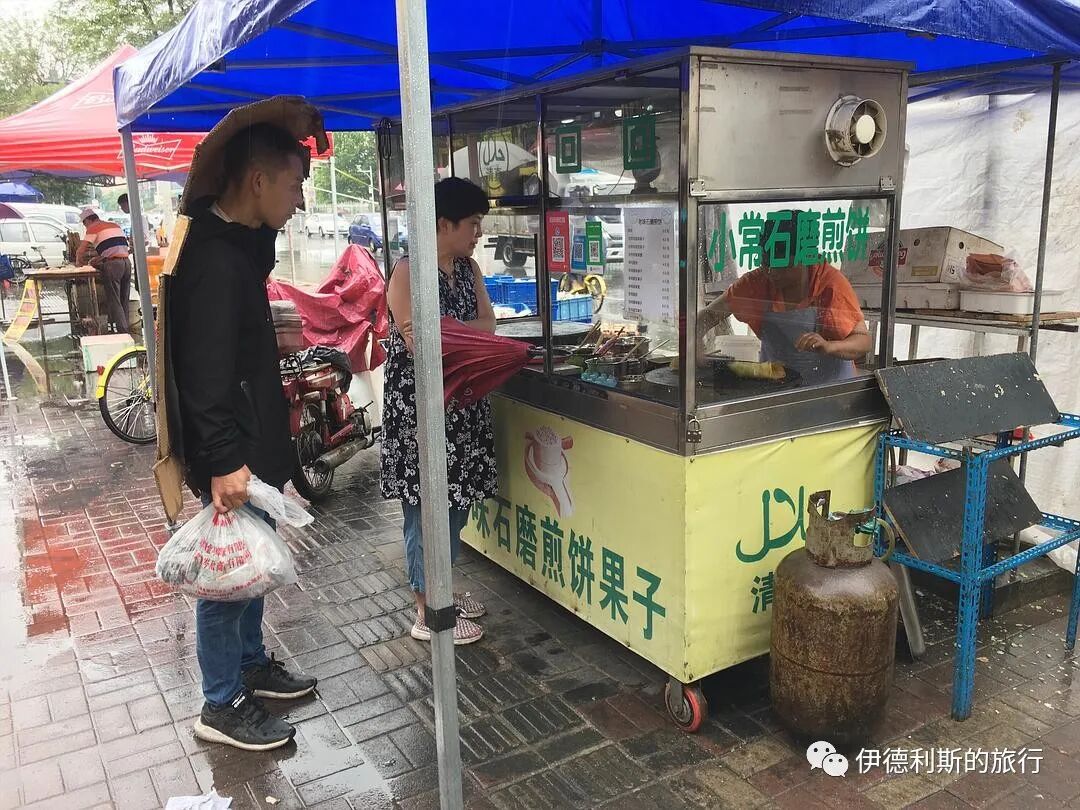
Sesame flatbread (shaobing) and steamed buns (baozi).
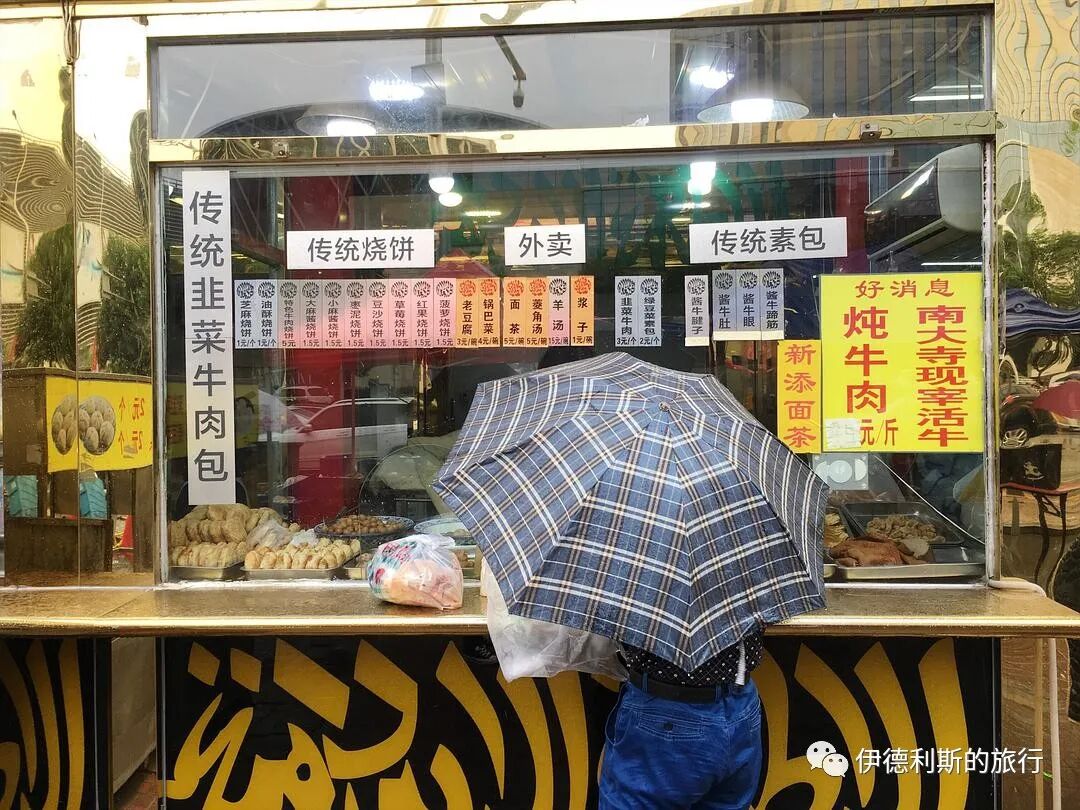
Keep walking south from the South Mosque (Nan Si), and you will see that the shops in the northern part of Xiguan Beili are still there.
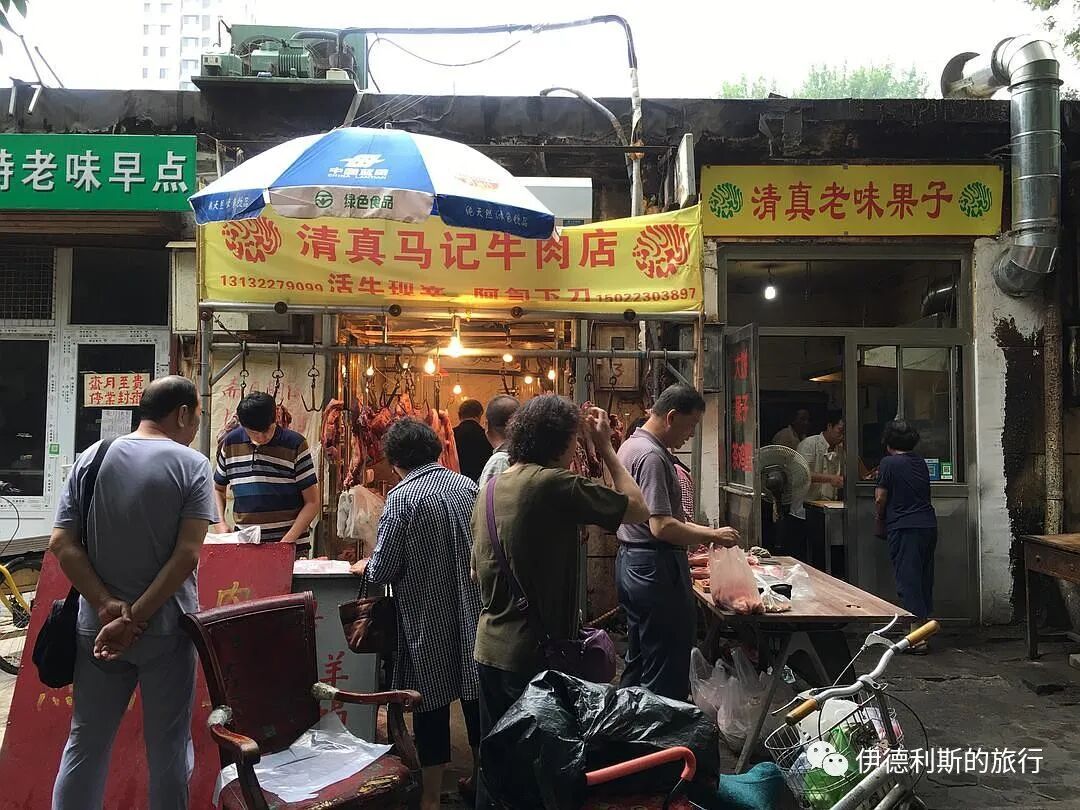
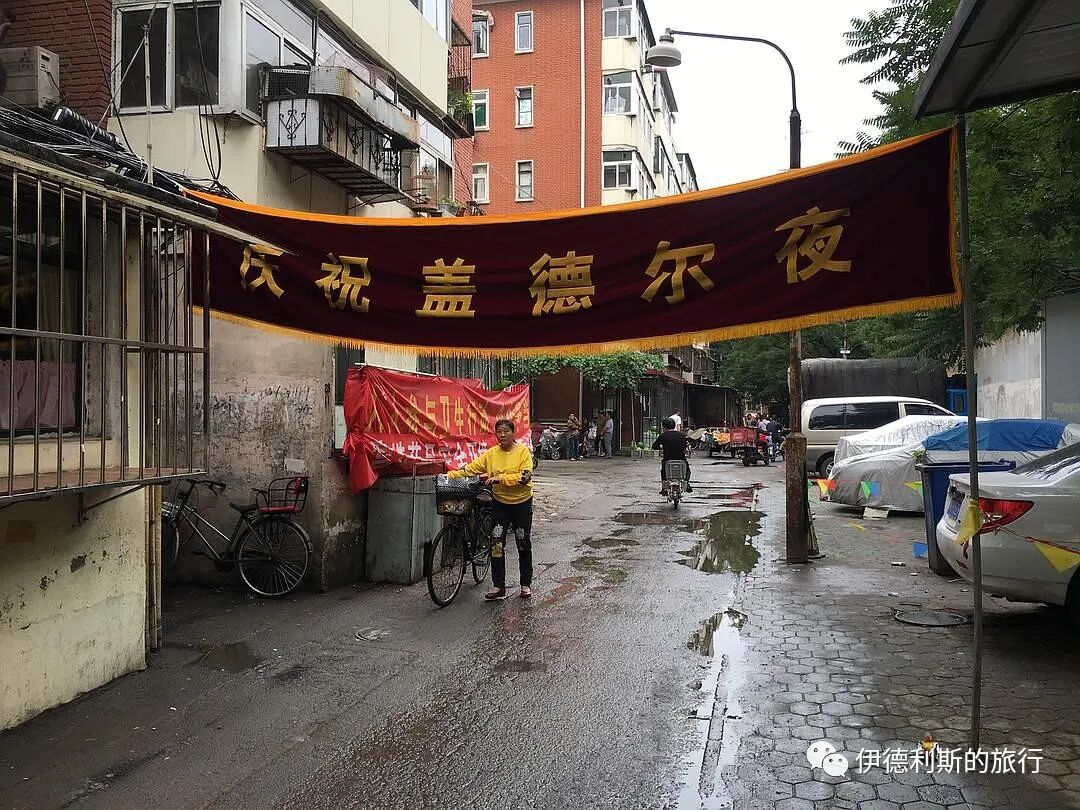
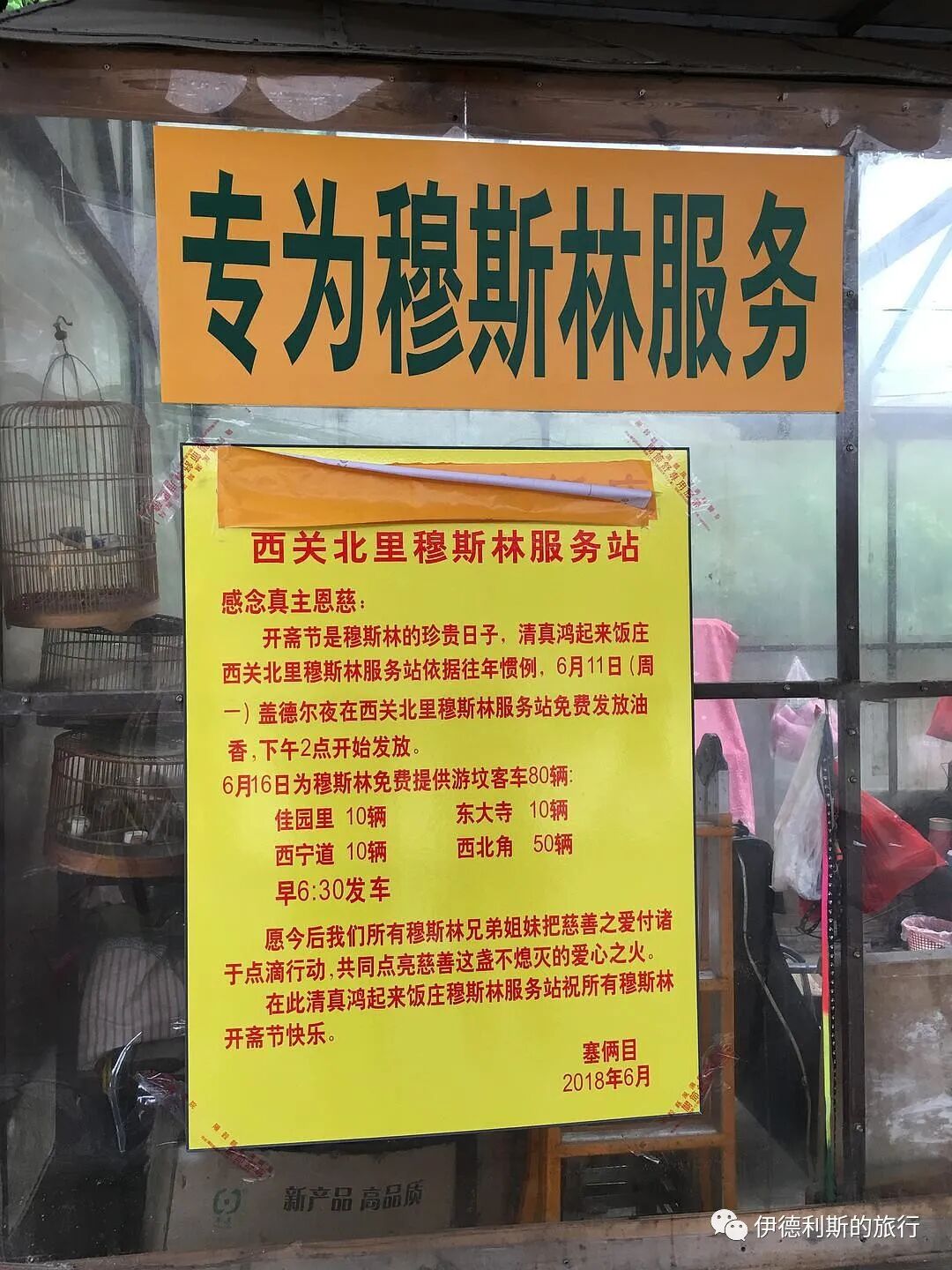
Keep heading south until you reach Xiguan Street, where most of the shops have been cleared out.
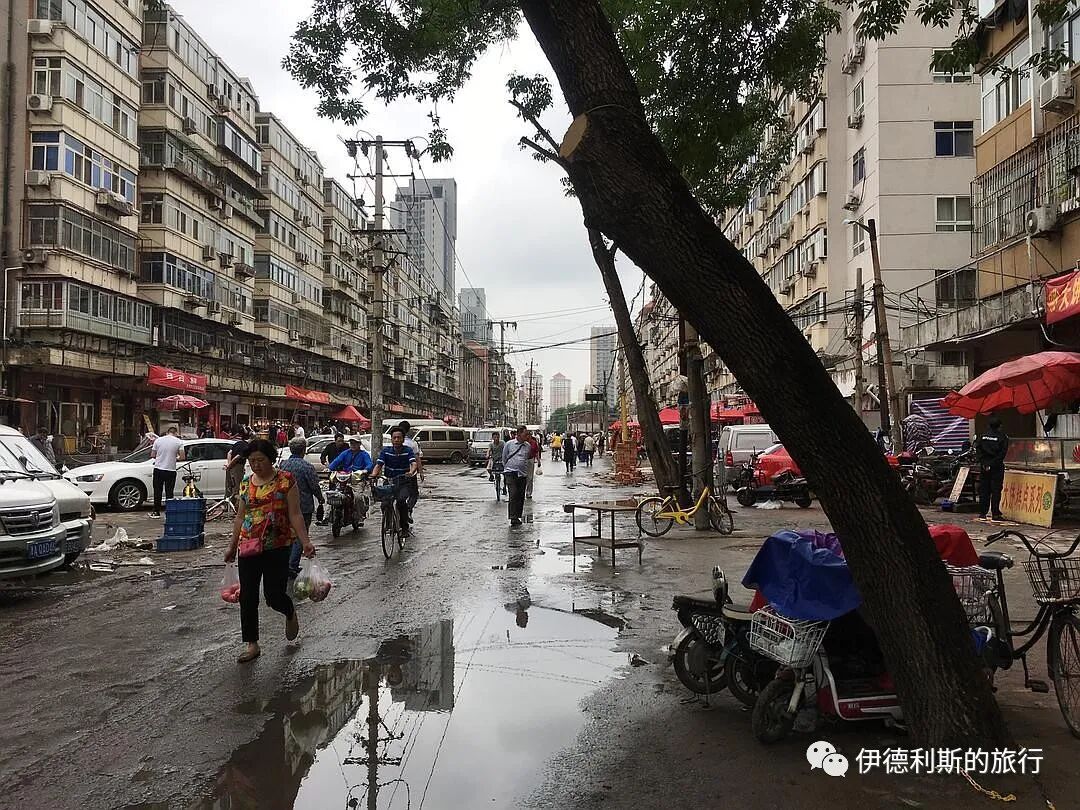
Luckily, my favorite Hailan black beans (wudou) are still there!
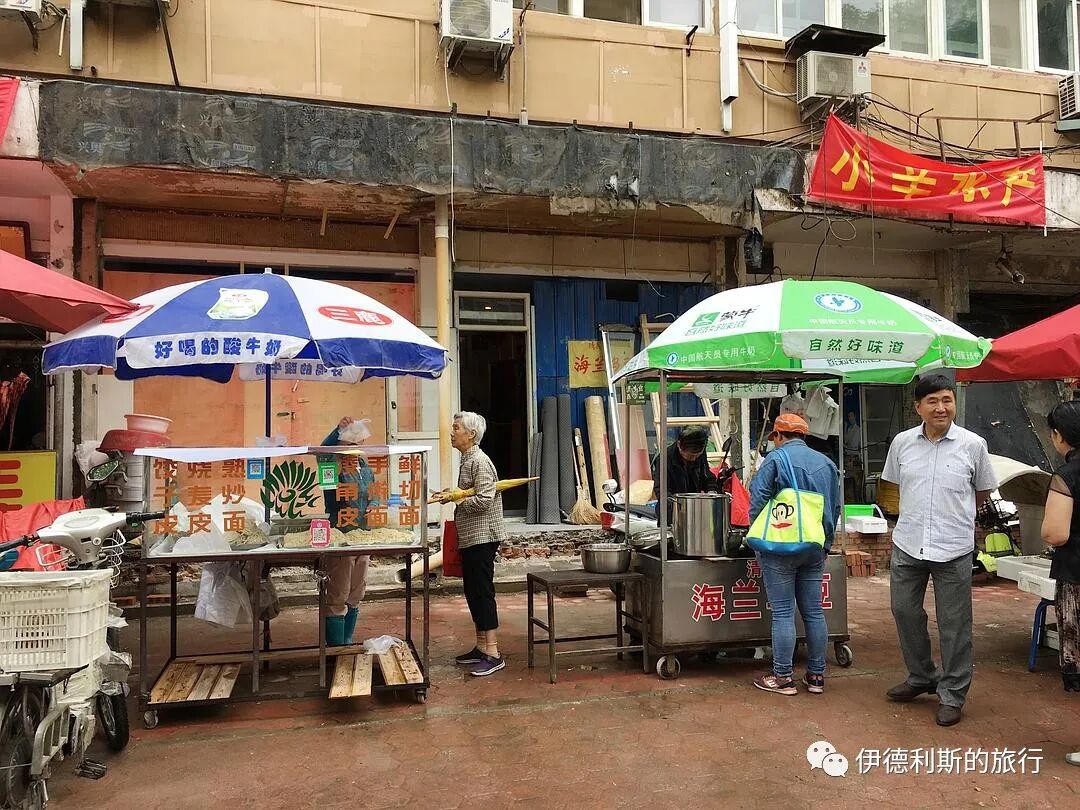
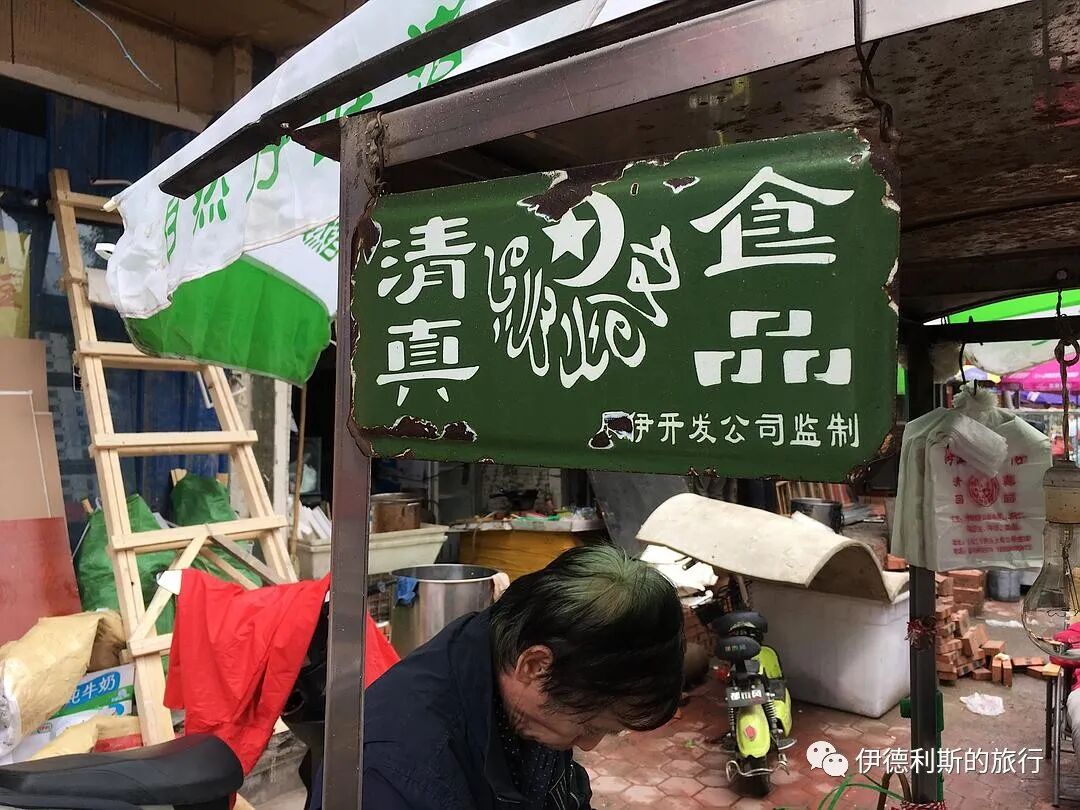
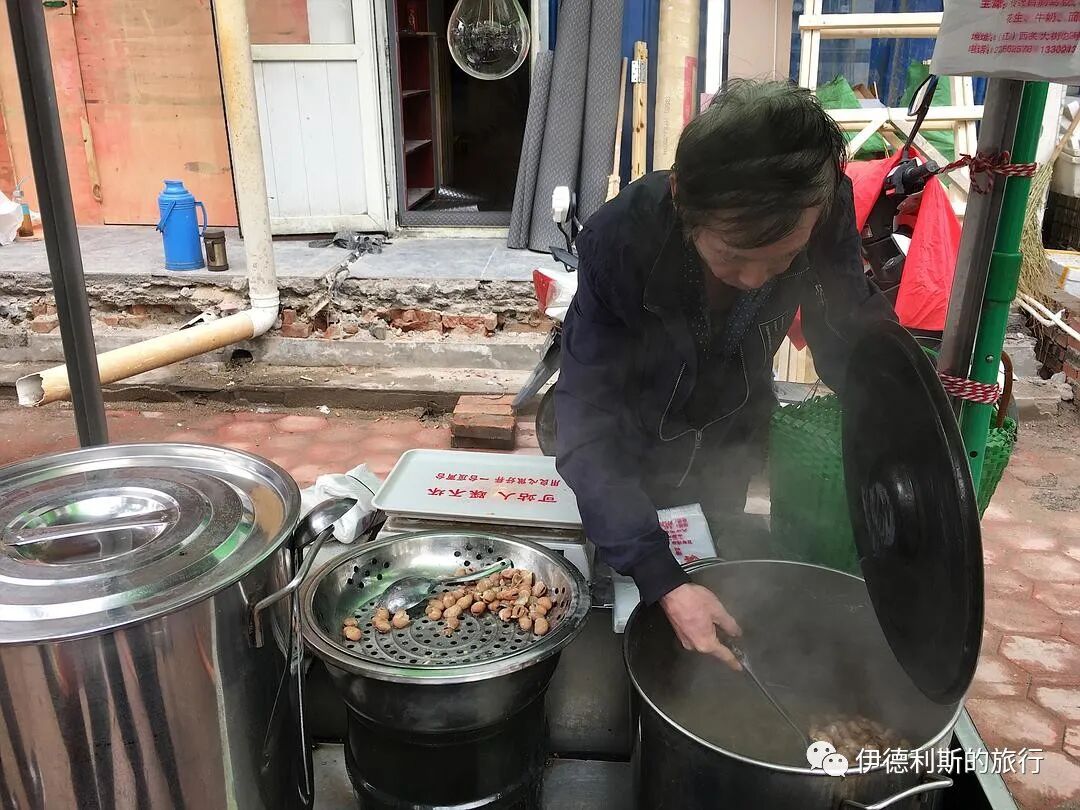
Eating hot black beans while walking is so delicious.
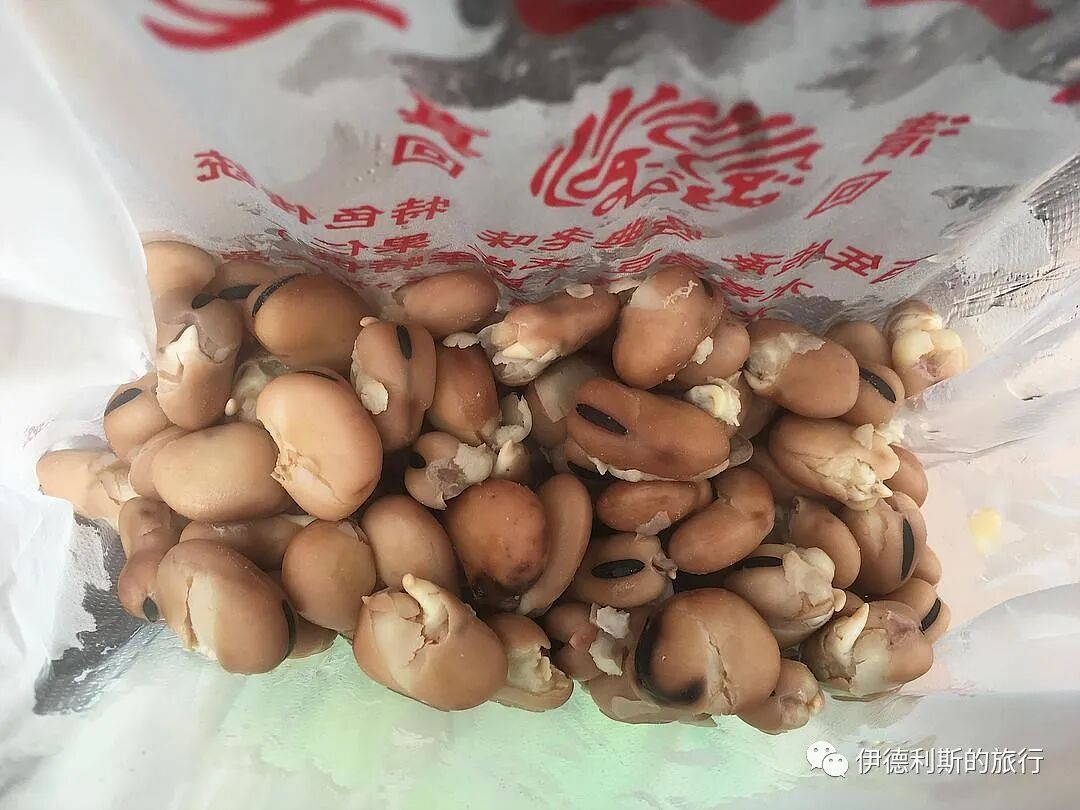
Compared to the morning, the night at Northwest Corner (Xibeijiao) is also very interesting. Although the night market at the intersection was cleared out two years ago, some stalls still appear there, like this Old Ma pancake (jianbing) stand.
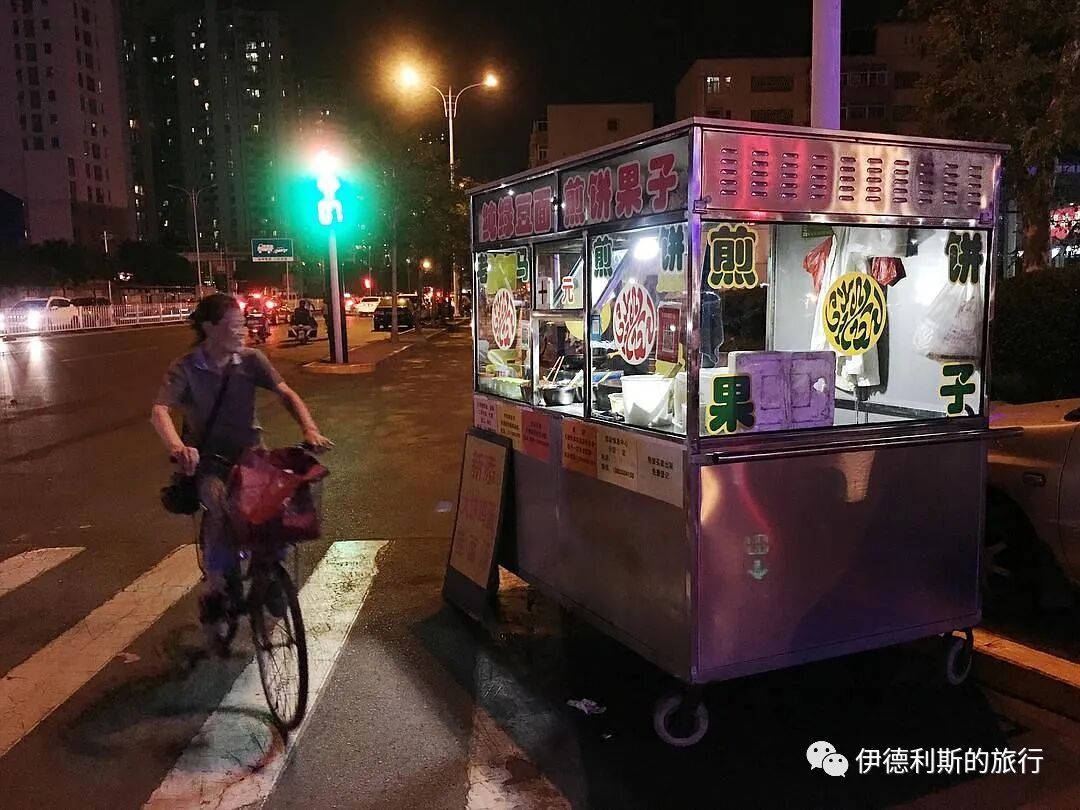
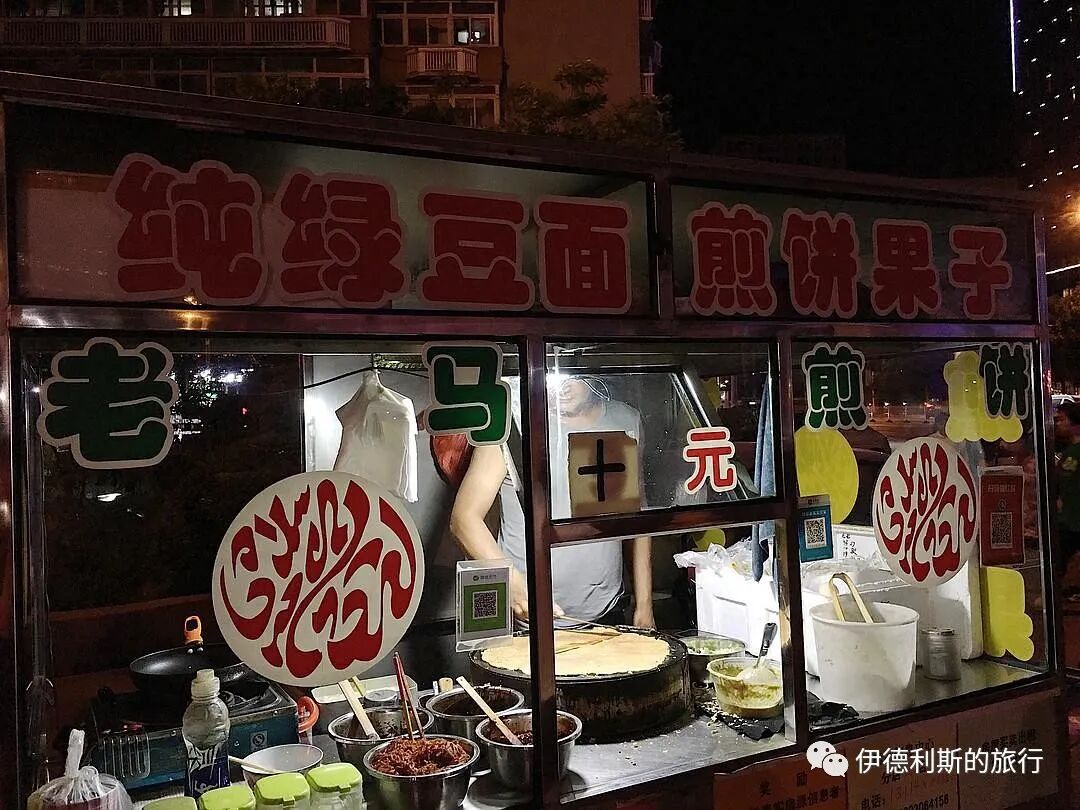
Two eggs and two fried dough sticks (guozhi) make for a very satisfying meal.
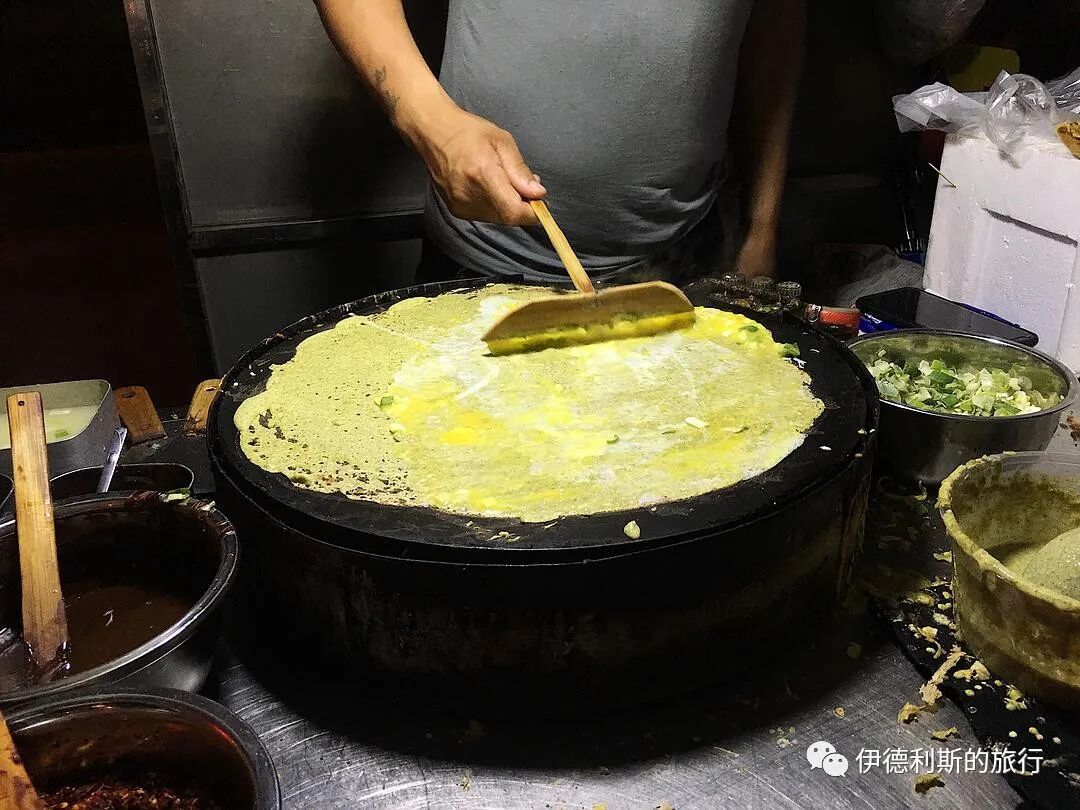
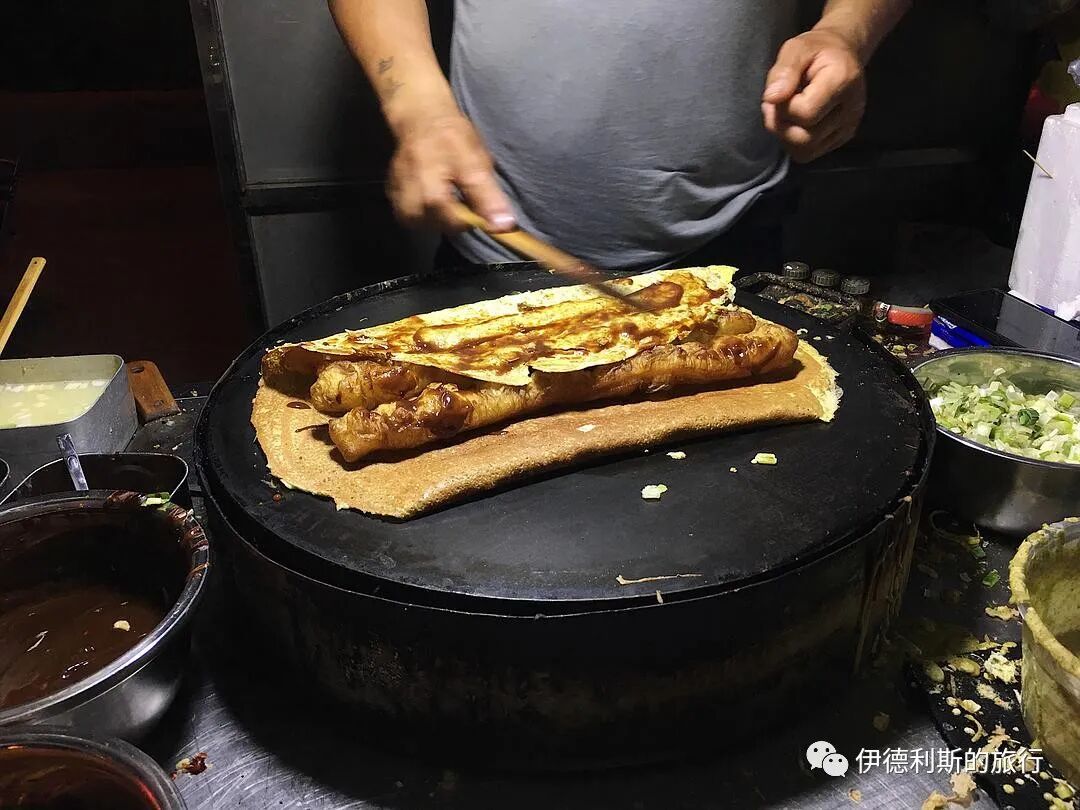
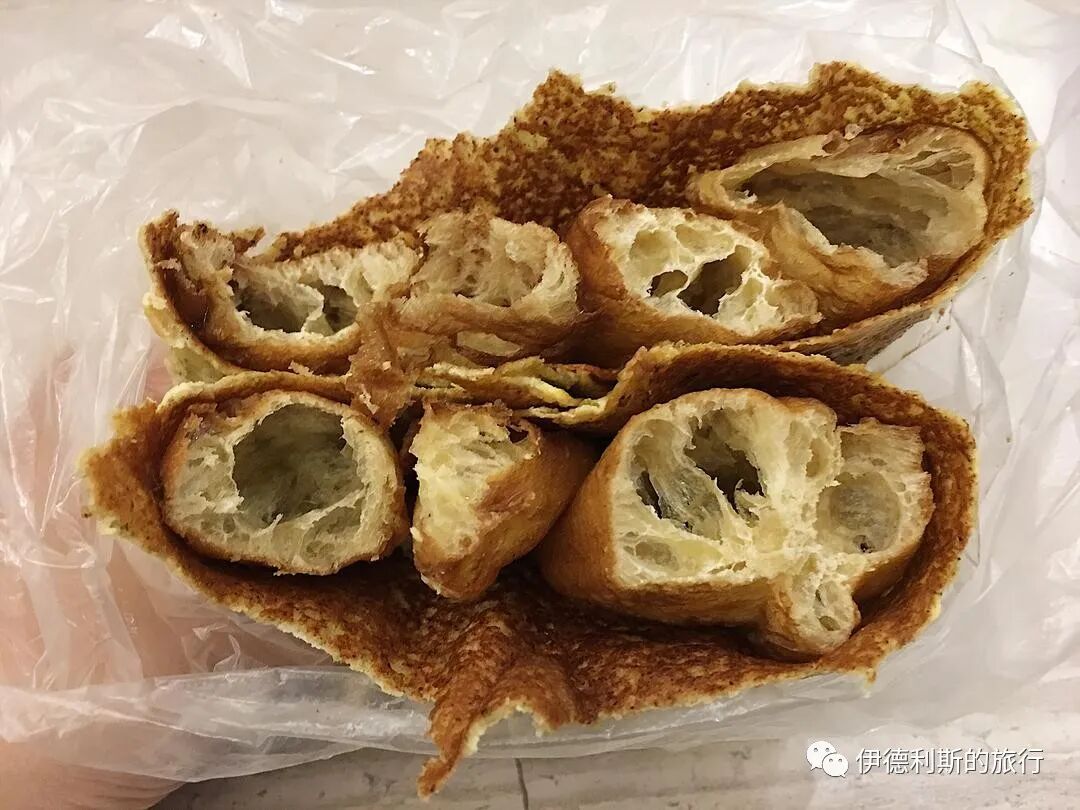
Then I bought some sour plum drink (suanmeitang), which is homemade with rock sugar and plum pulp to help with digestion and boost the appetite.
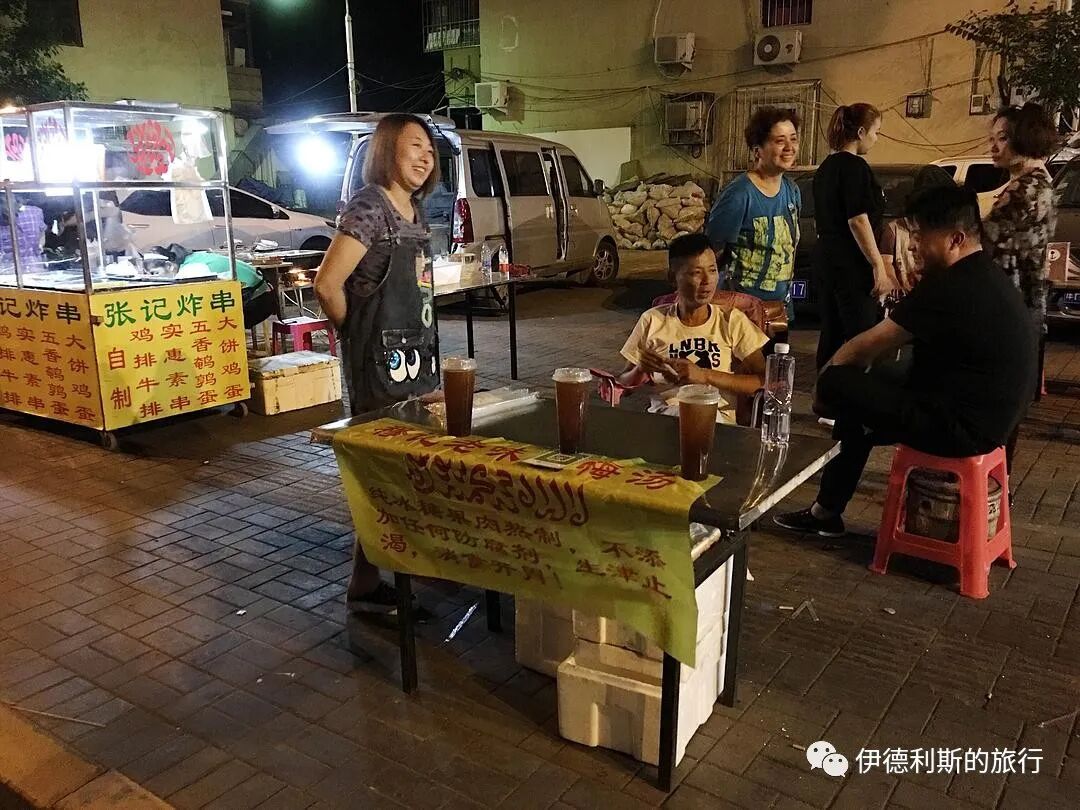
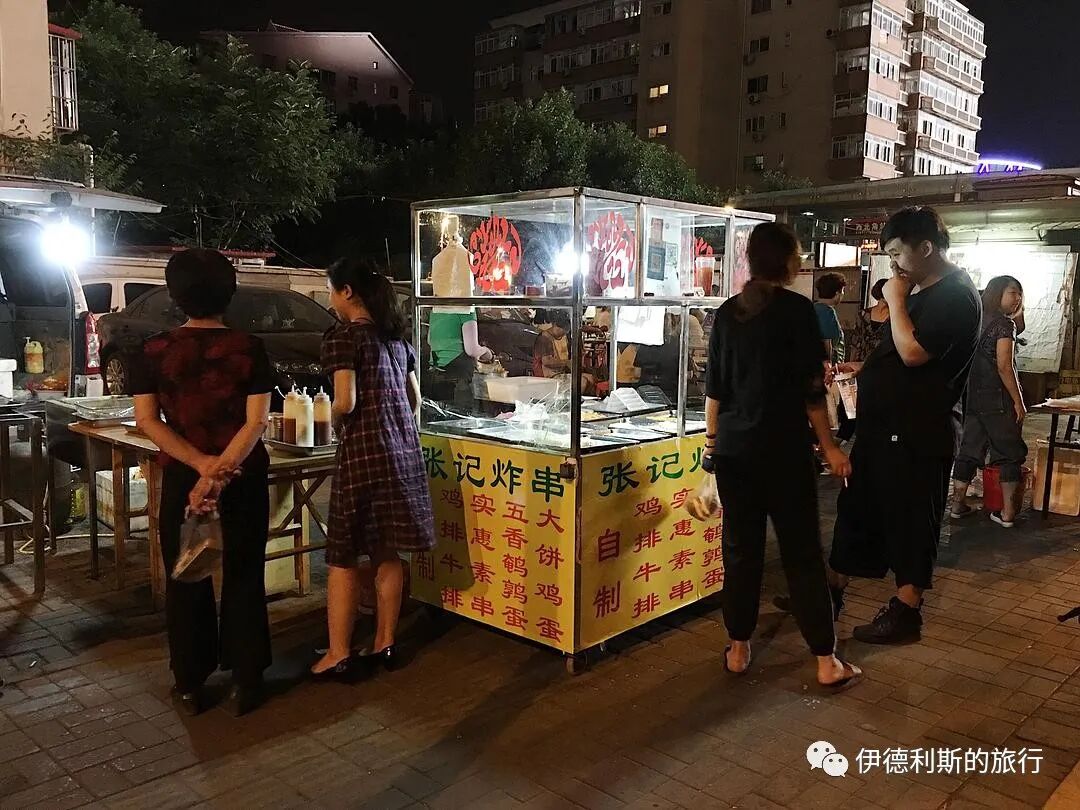
Summer nights definitely need barbecue.
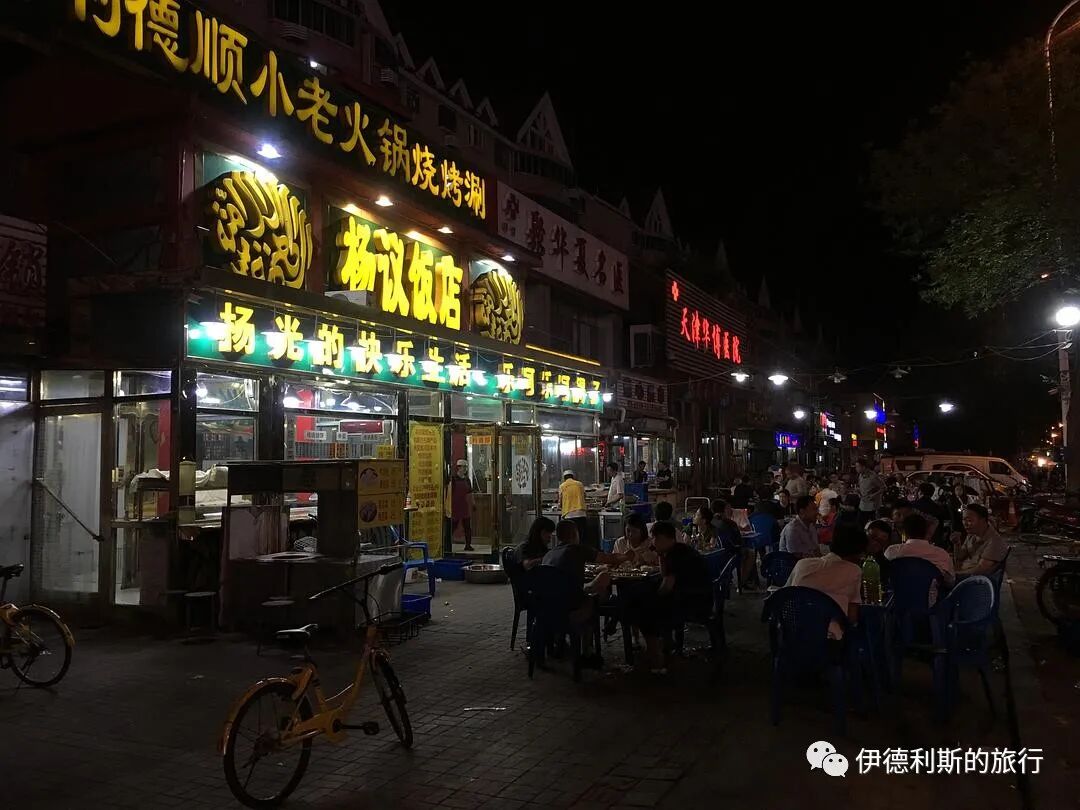
October 2018.
I went to Tianjin for a food tour on Sunday, October 14, 2018. Ten o'clock is an awkward time for the Northwest Corner. I went straight to the meat porridge (rouzhou) at the entrance of the South Mosque, but it had just sold out, and the millet flour tea (miancha) next door had also just sold out. I planned to have the meat porridge next time, but the shop was cleared out shortly after.
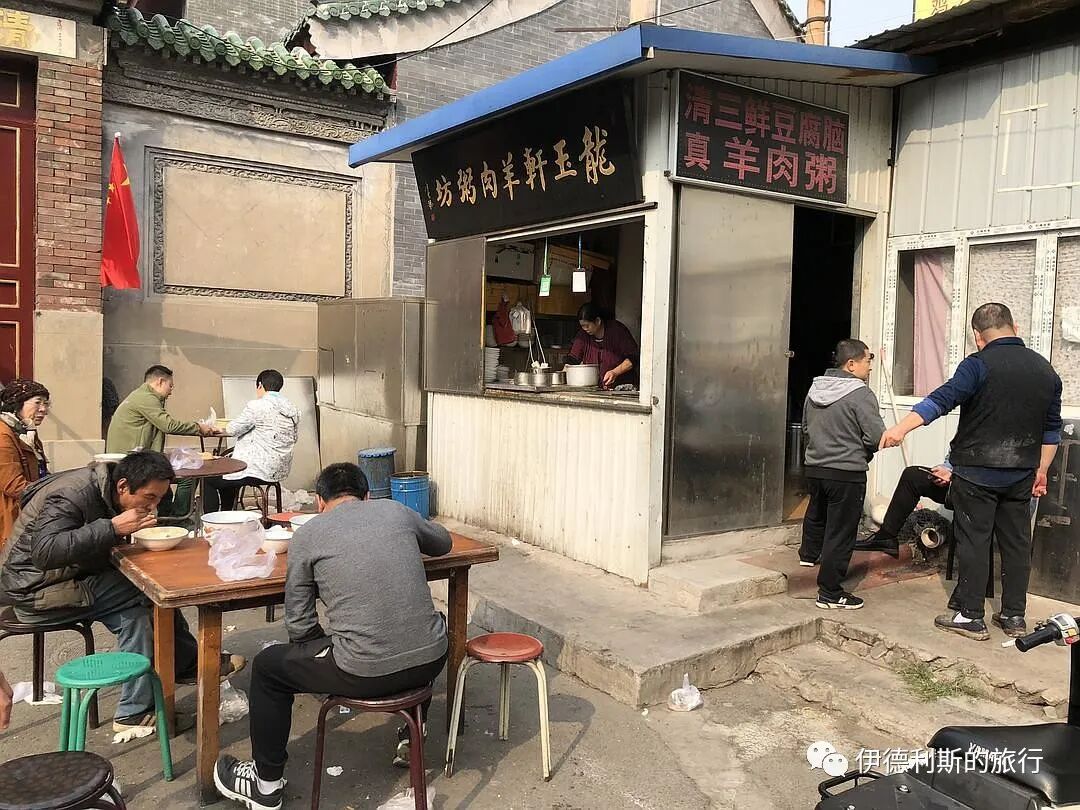
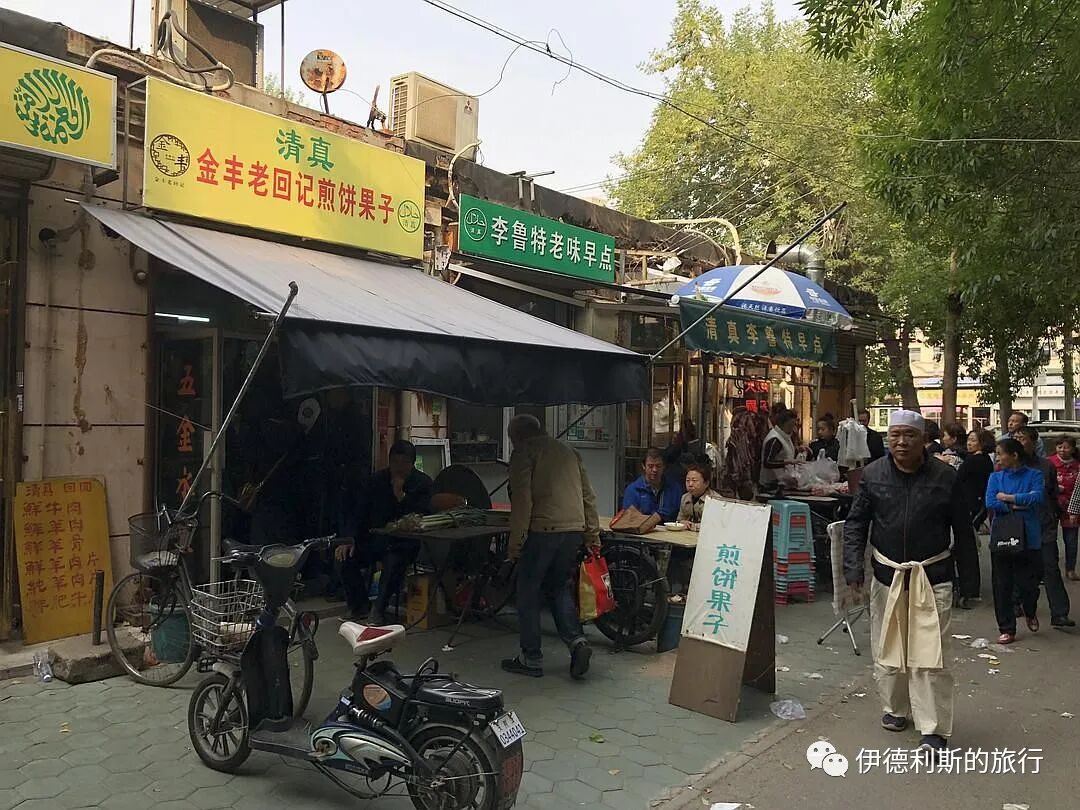
I ate a warm red bean paste rice cake (gaogan) from Wenergu Gaogan at the entrance of the Great Southern Mosque (Nandasi).
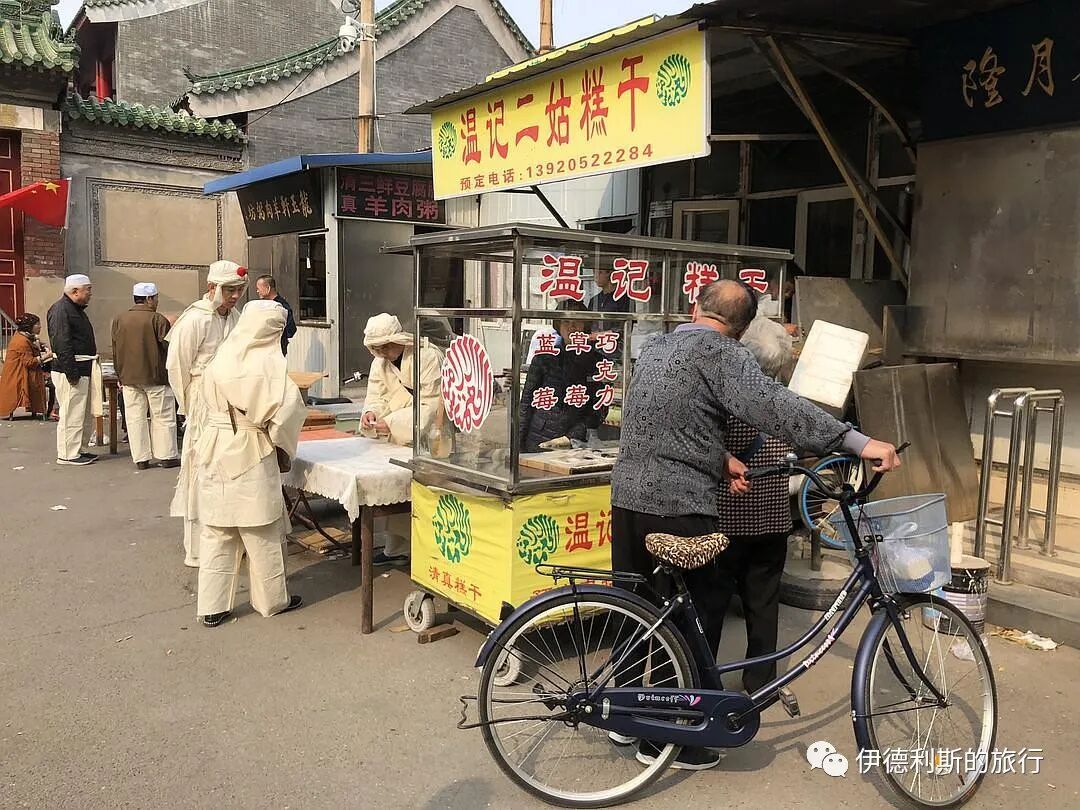
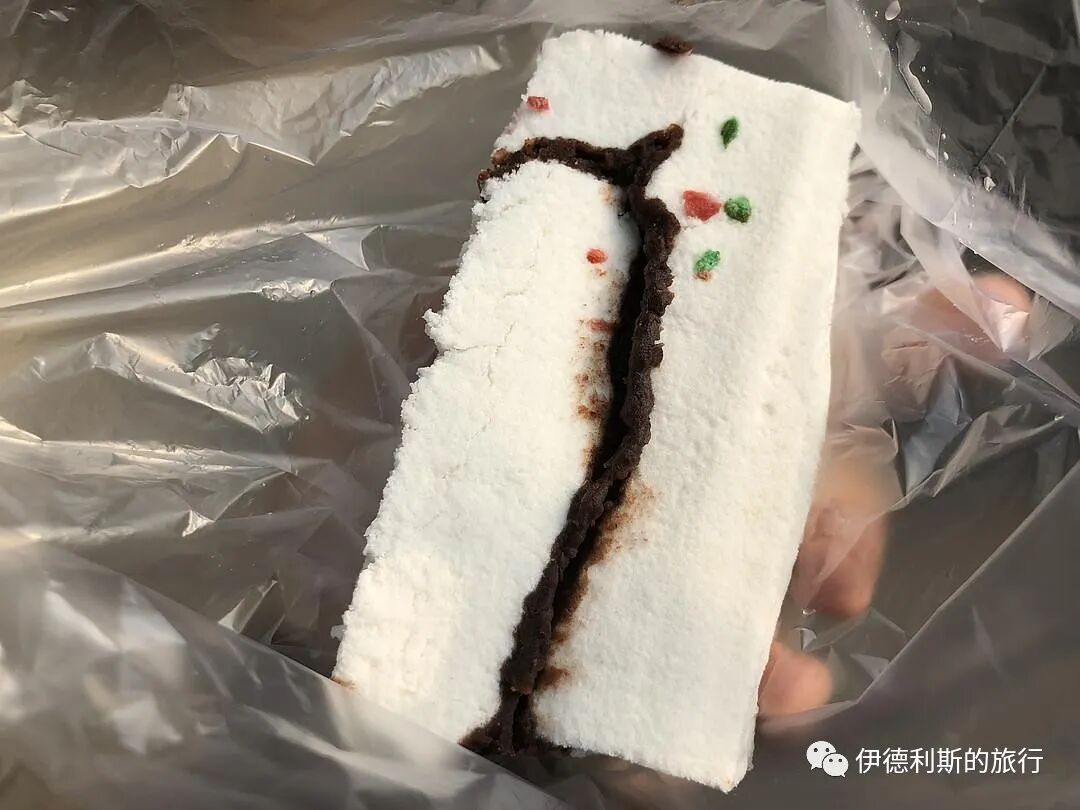
The Longyuezhai Zhangji fried cake (zhagao) I ate in the summer has actually closed down.
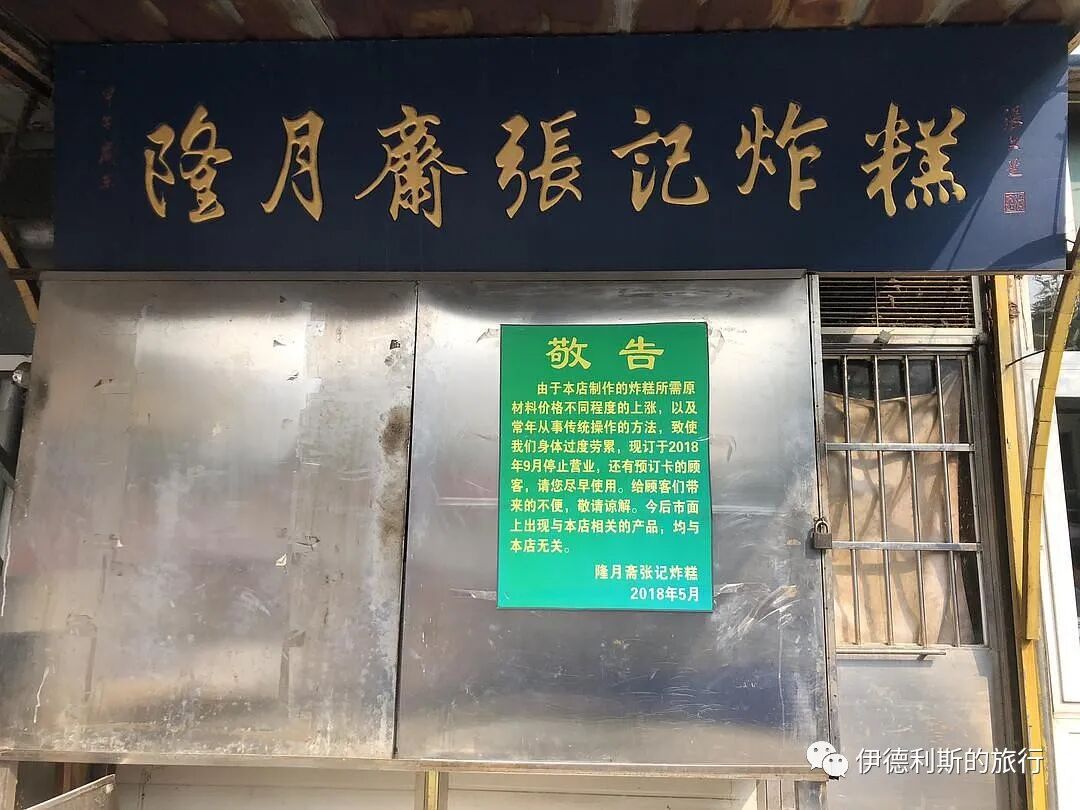
This Yishuncheng branch on Huanqing West Alley opened recently, so I had a bowl of scorched rice soup (guobacai) there.
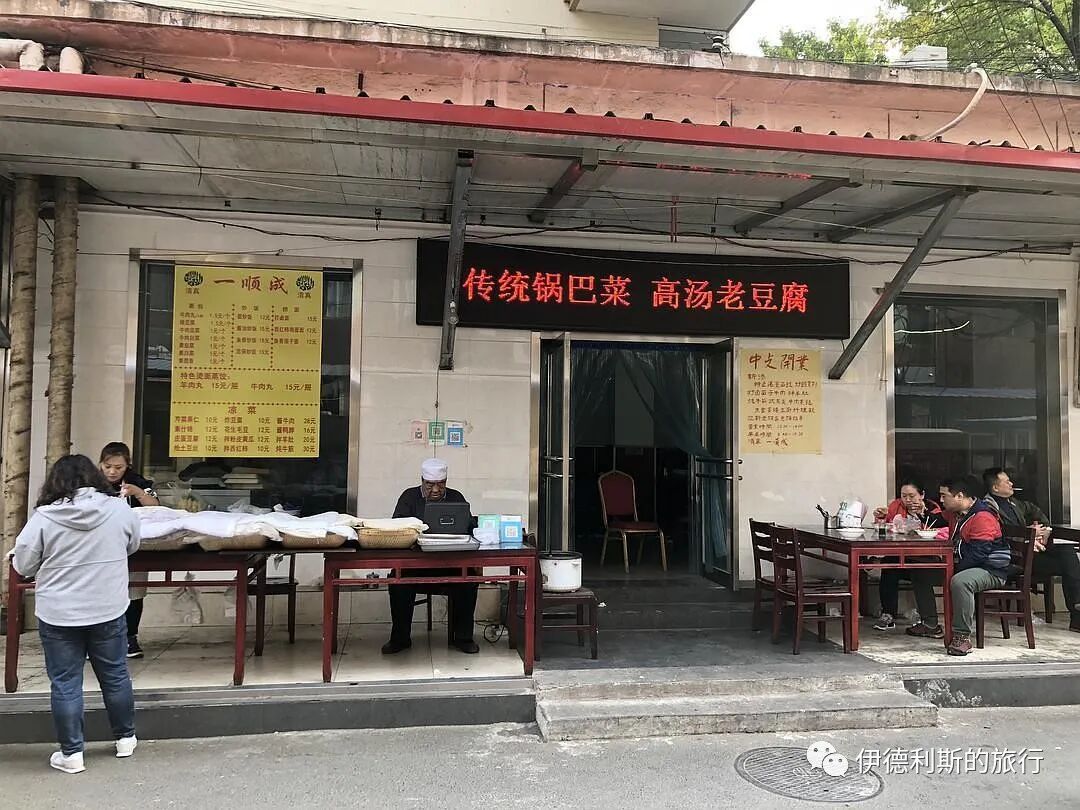
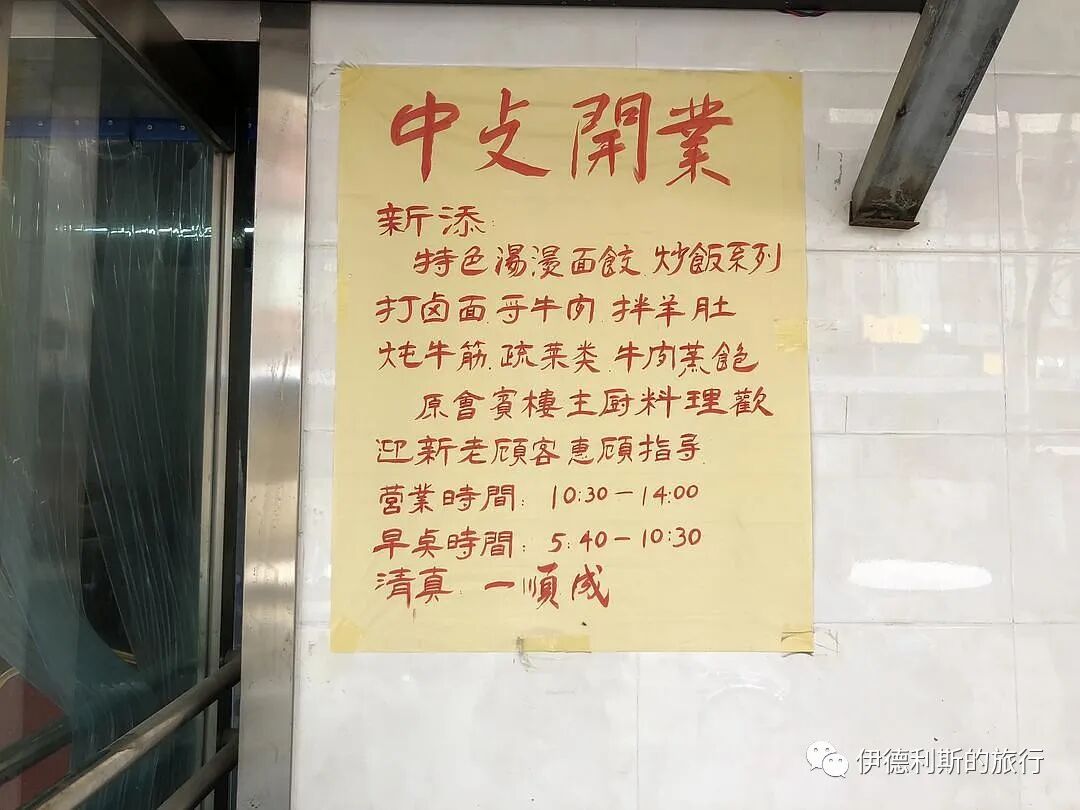
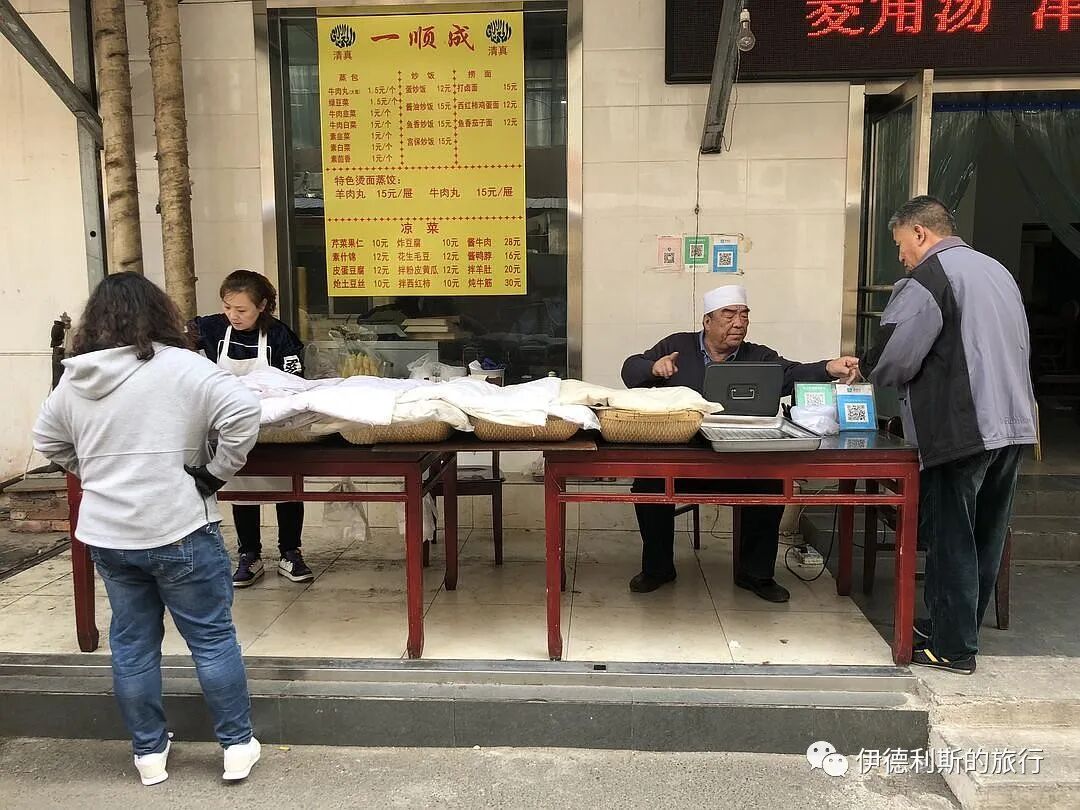
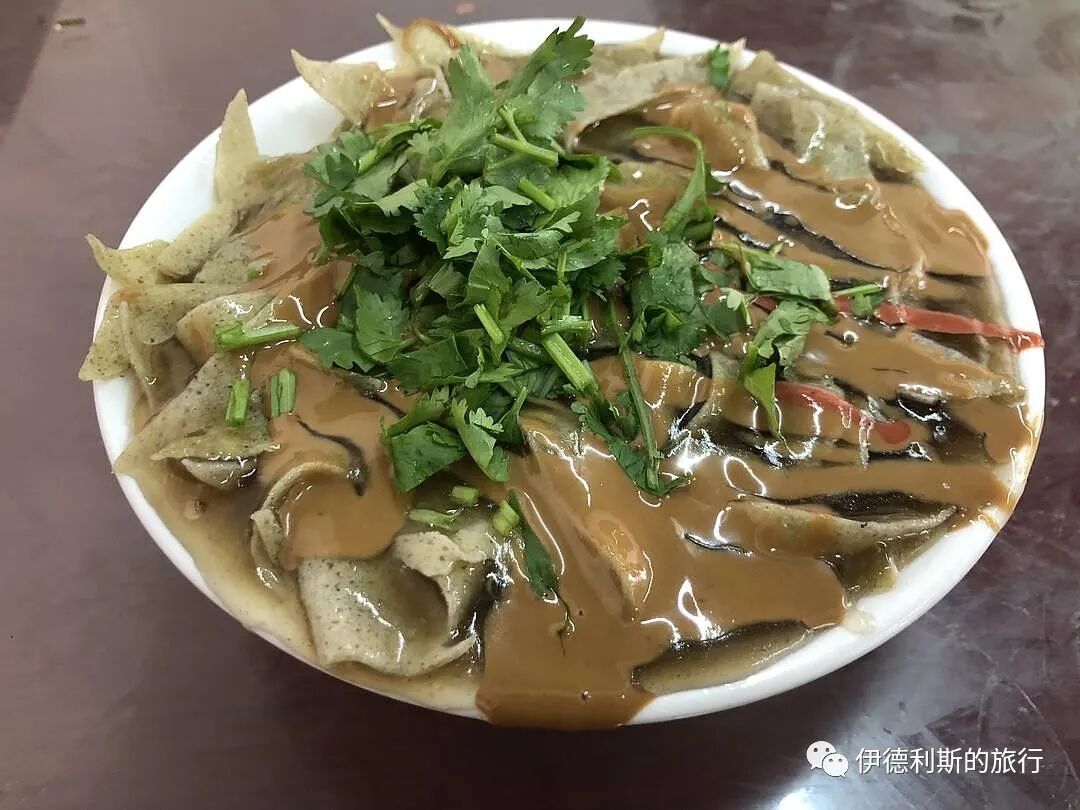
The freshly brewed sour plum drink (suanmeitang) on Xima Road is really delicious.
I had a beef pancake (niuroubing) with rice porridge next to the Muslim supermarket.
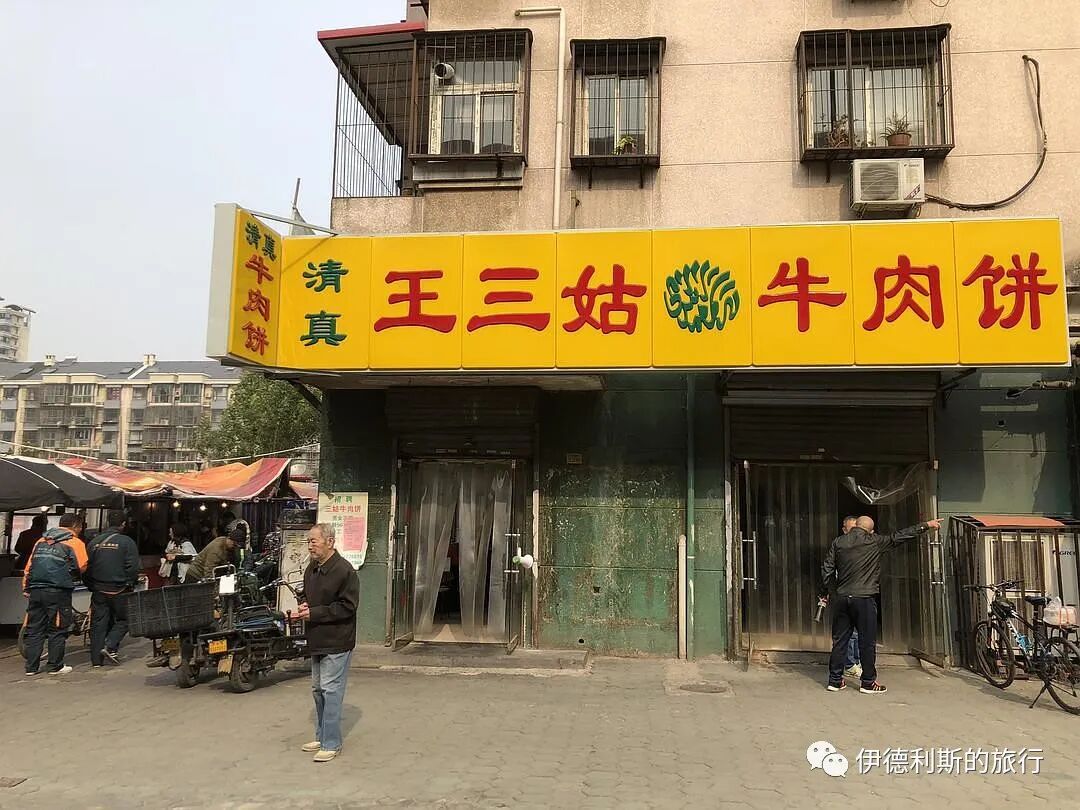
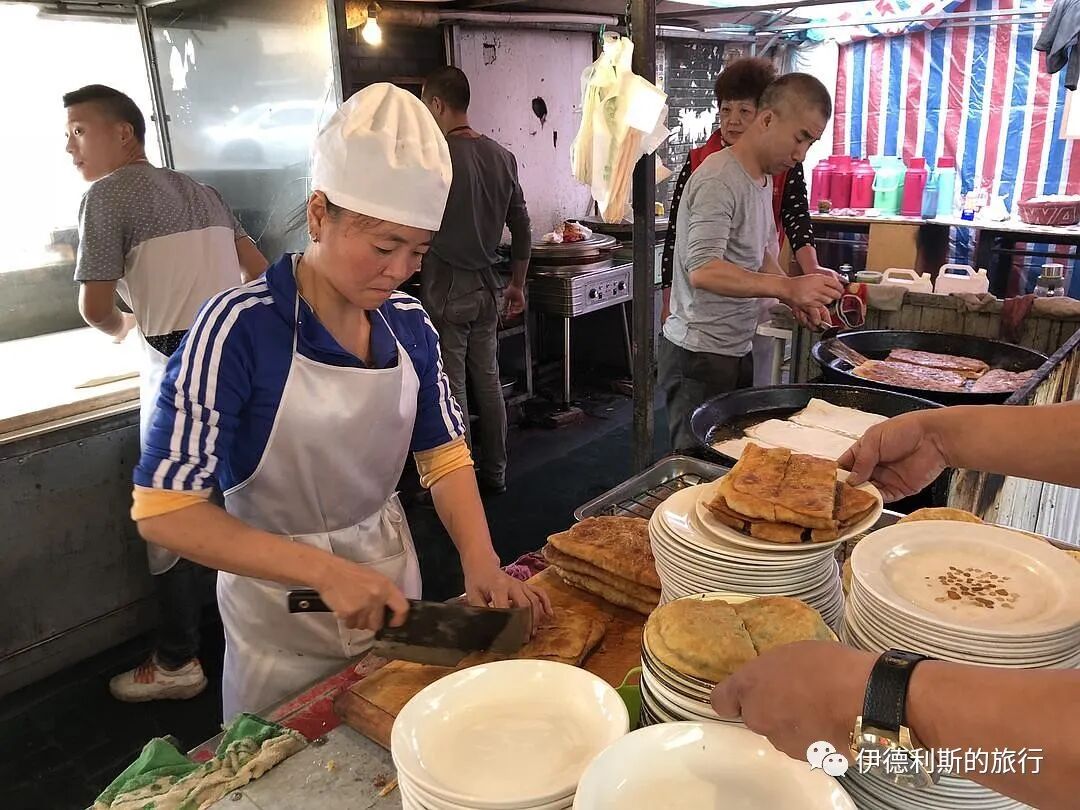
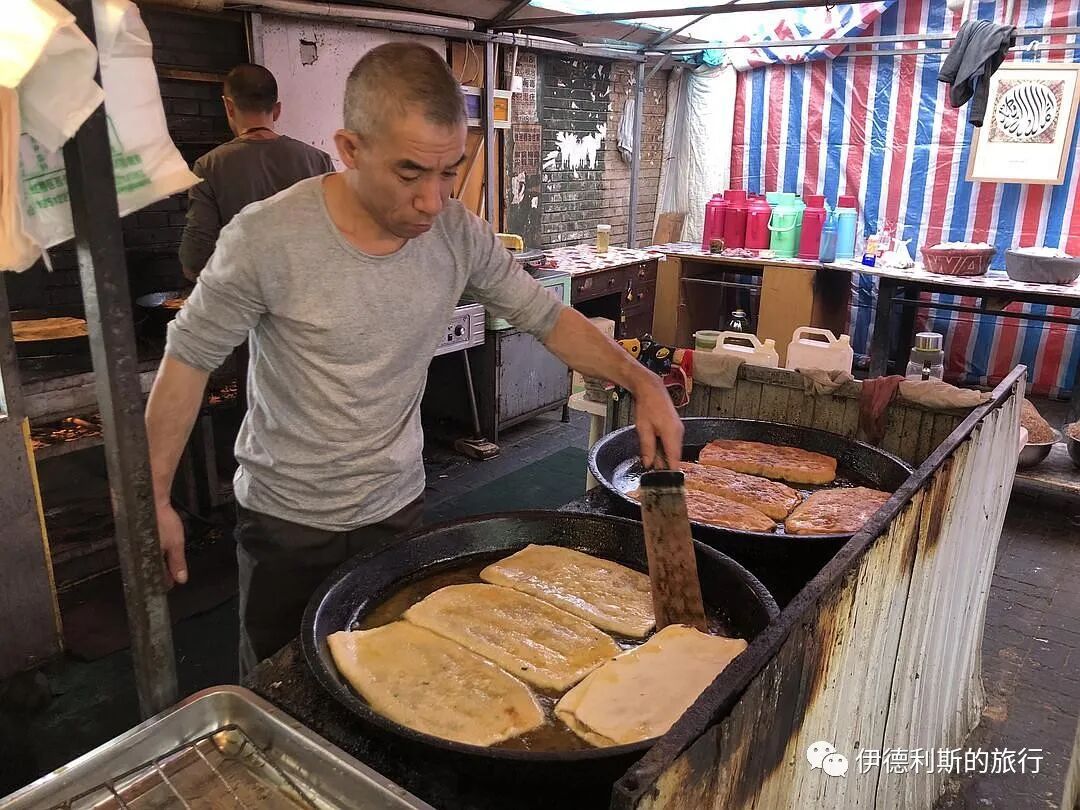
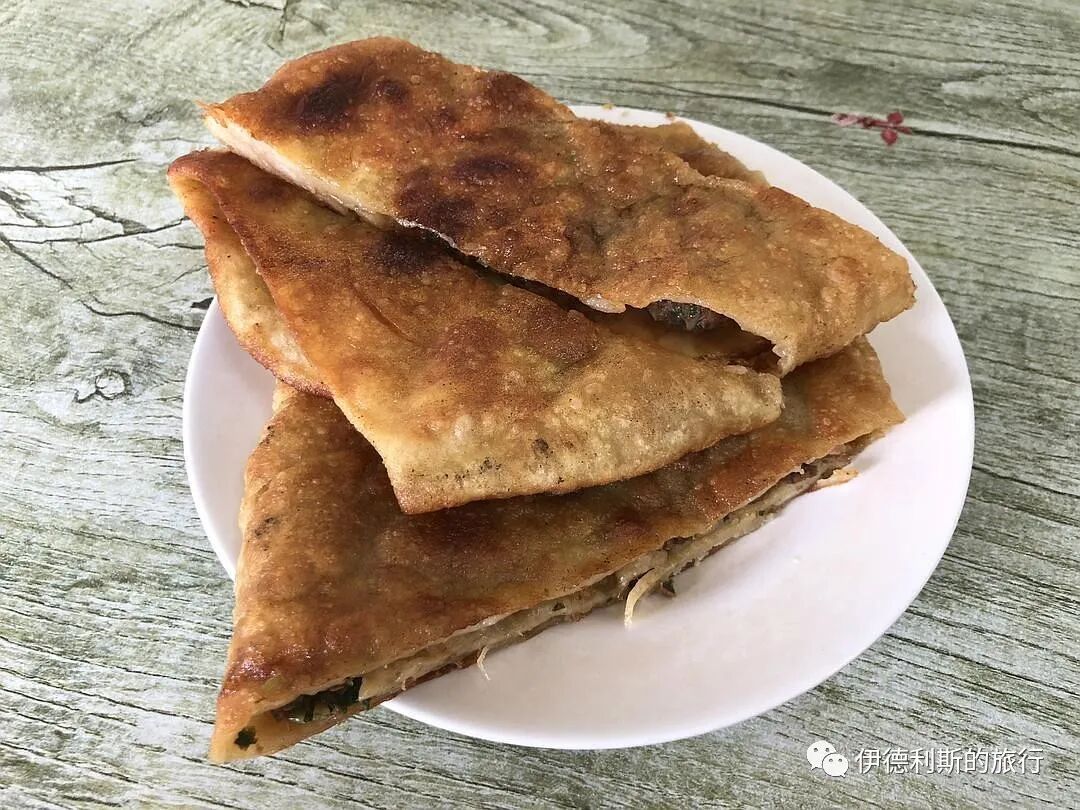
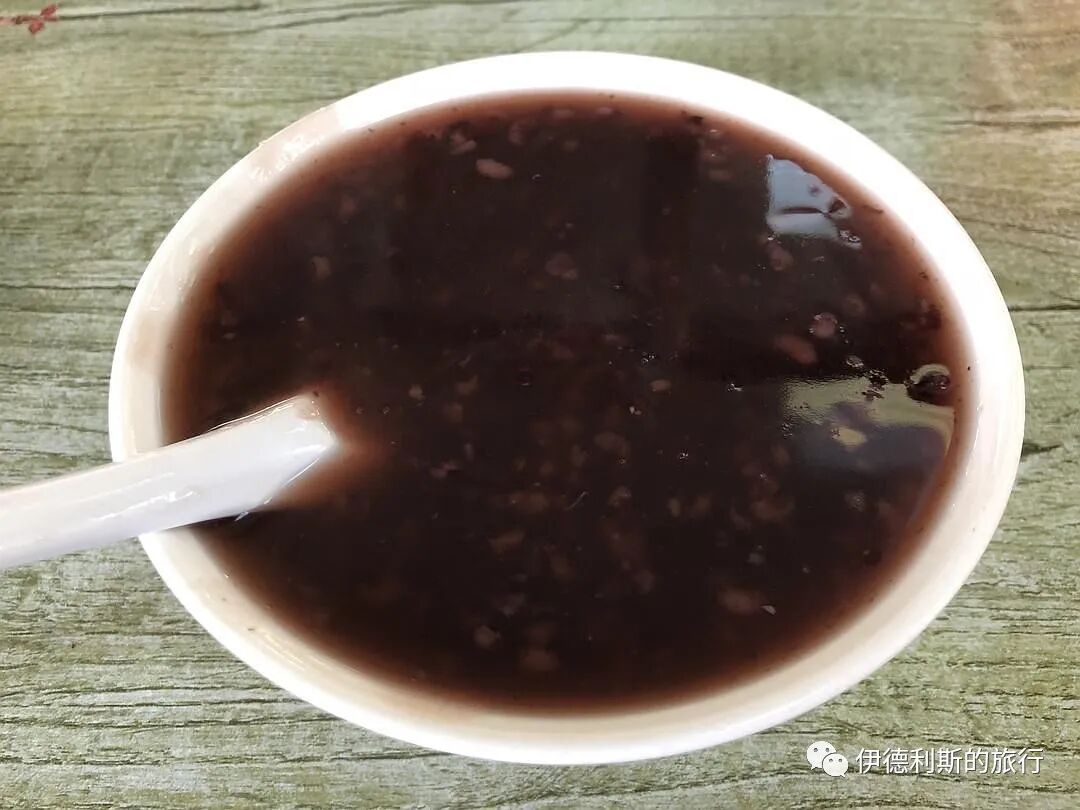
I bought a pear cake (ligao) from Daiji Candy Shop at the archway of the Great Southern Mosque (Nandasi).
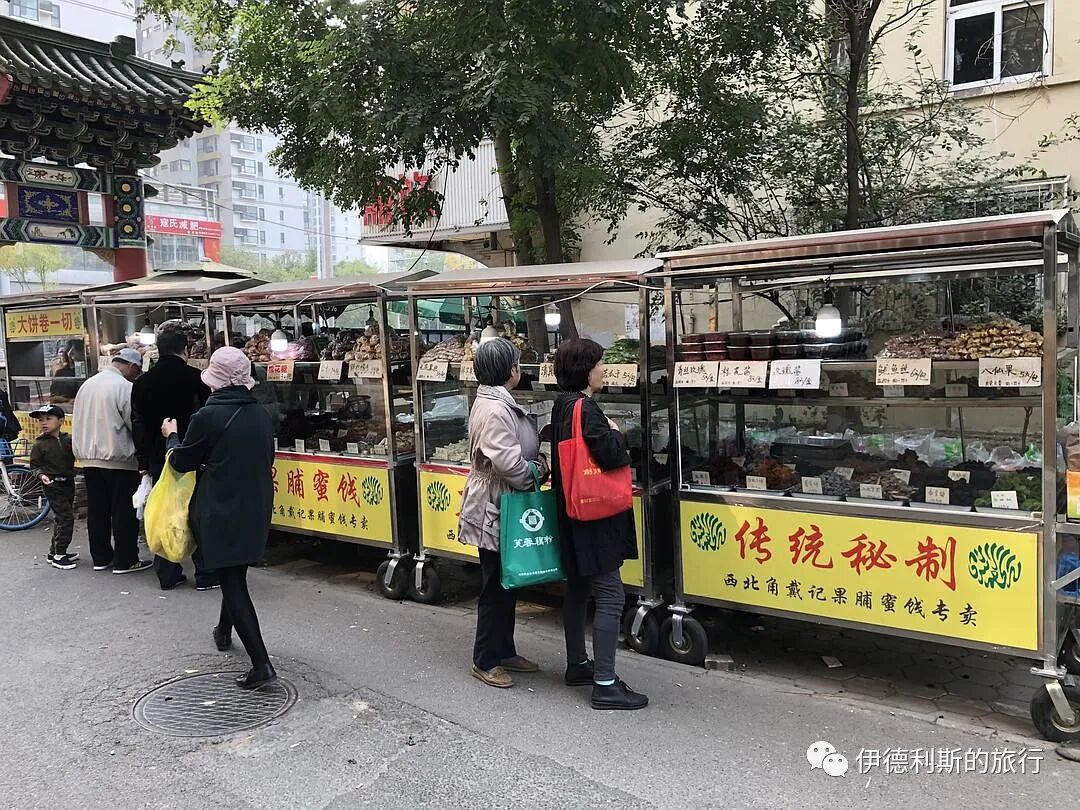
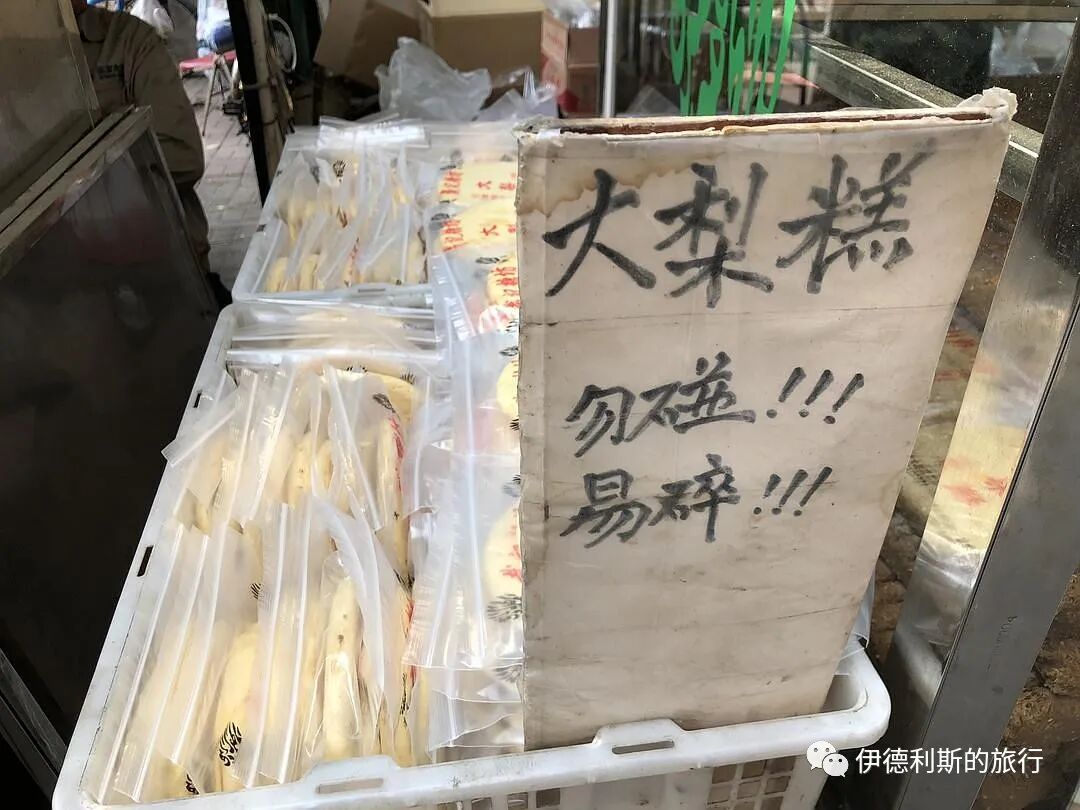
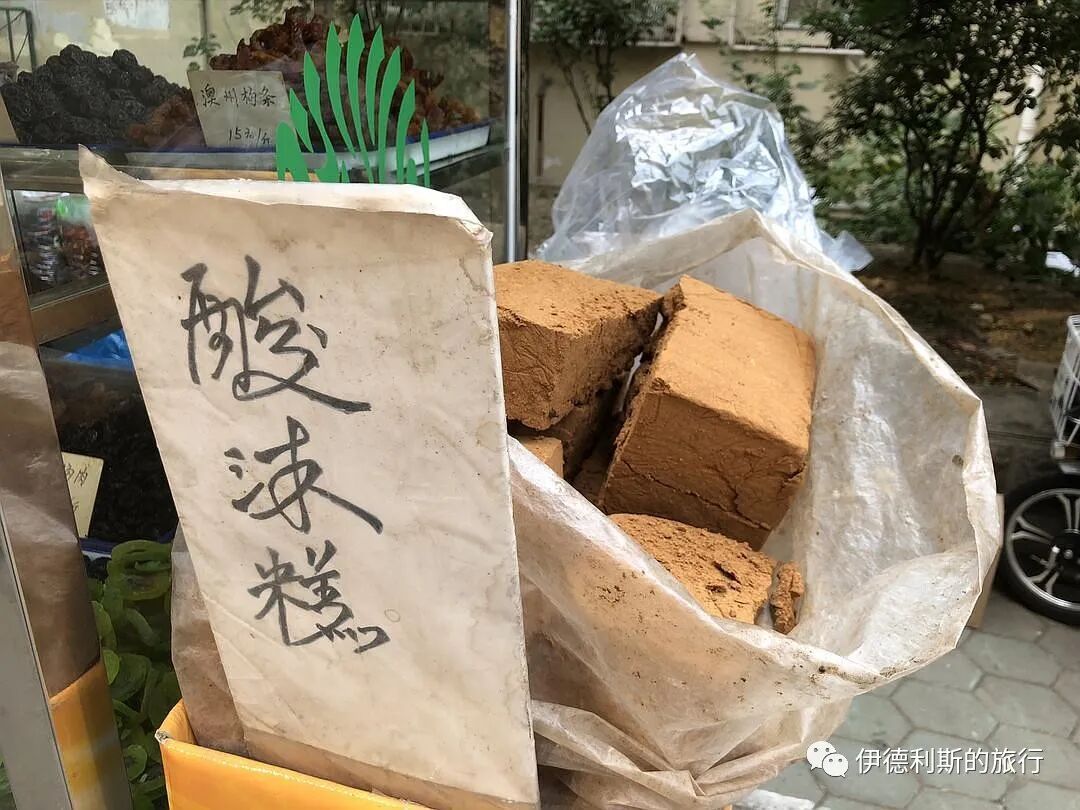
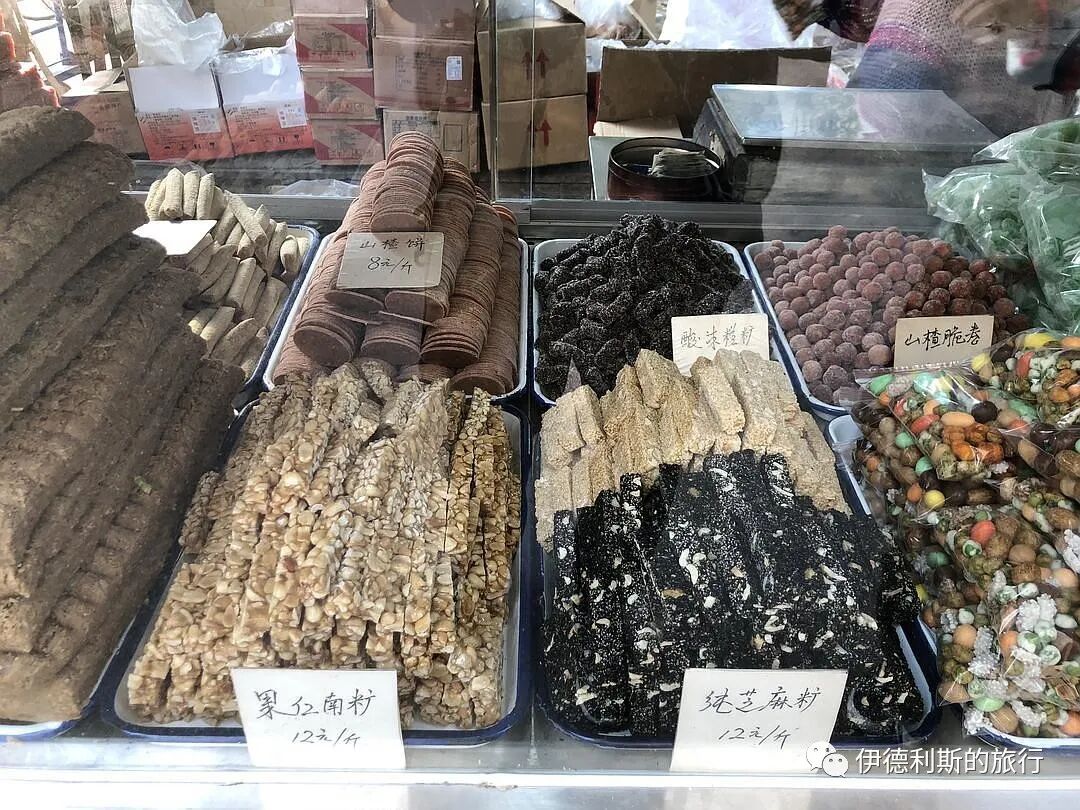
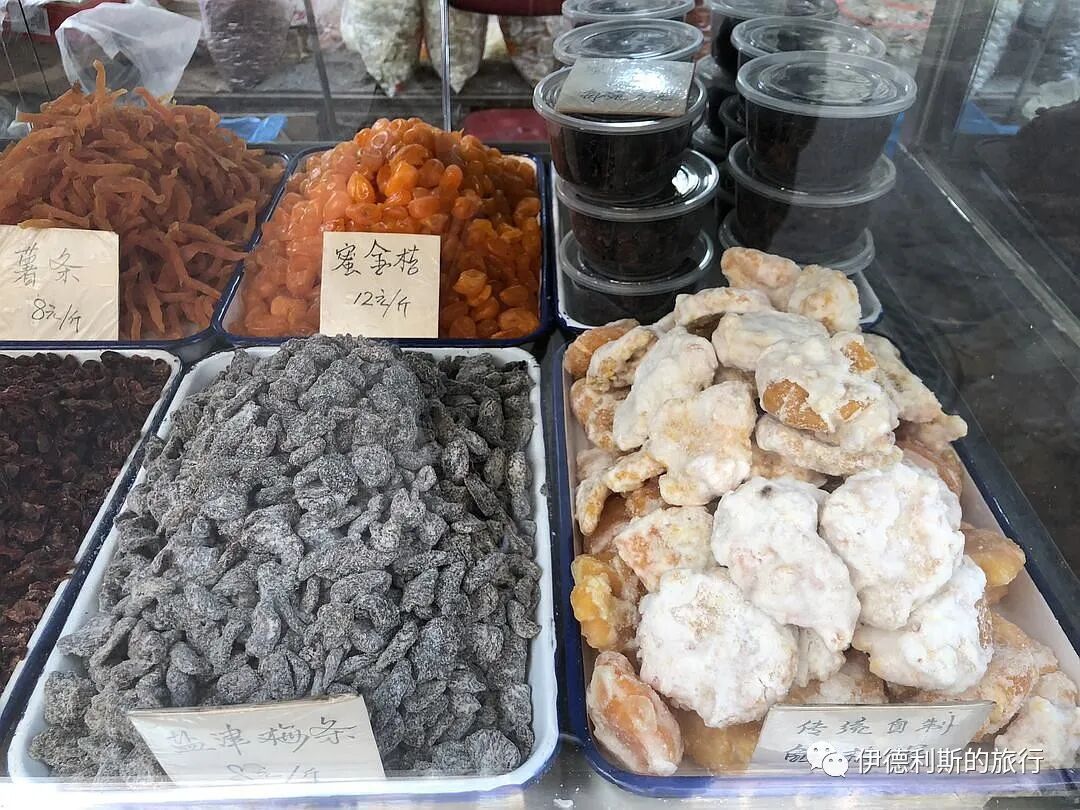
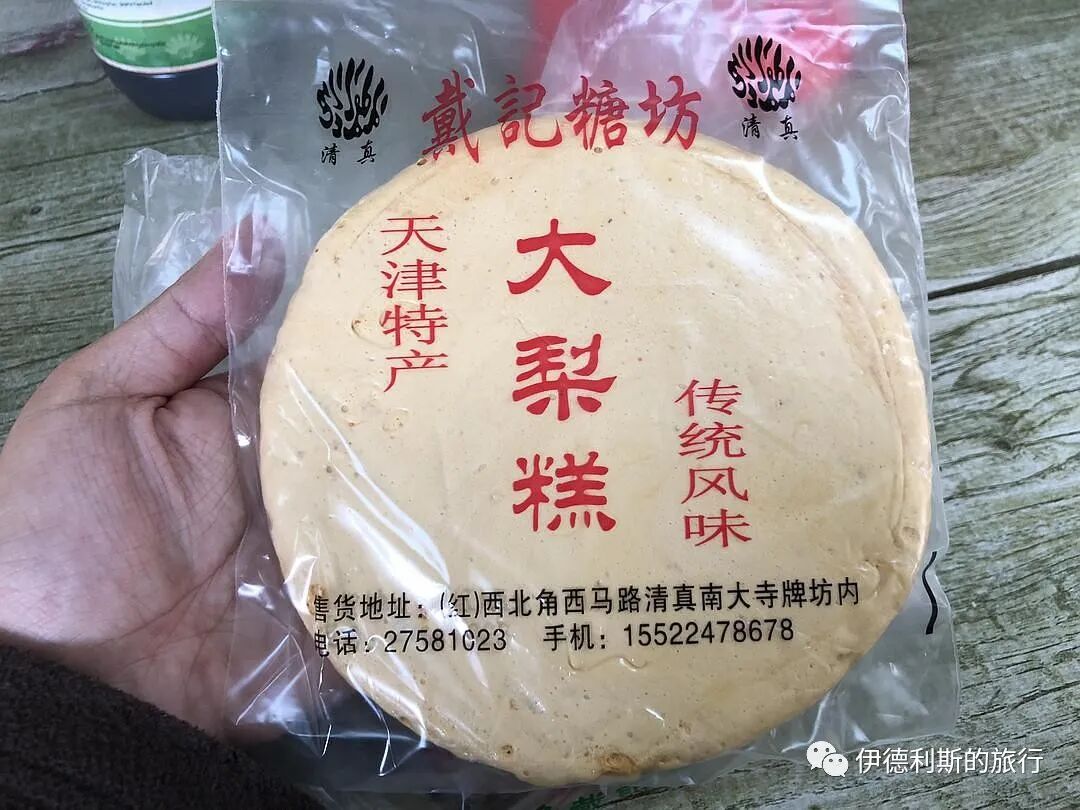
May 2019
I visited Tianjin again in May 2019 and took a walk around the Northwest Corner (Xibeijiao).
The various snacks at Daiji Candy Shop under the Great Southern Mosque (Nandasi) archway are perfect for tea. I bought beef jerky and potato chips, and I especially like their beef jerky.
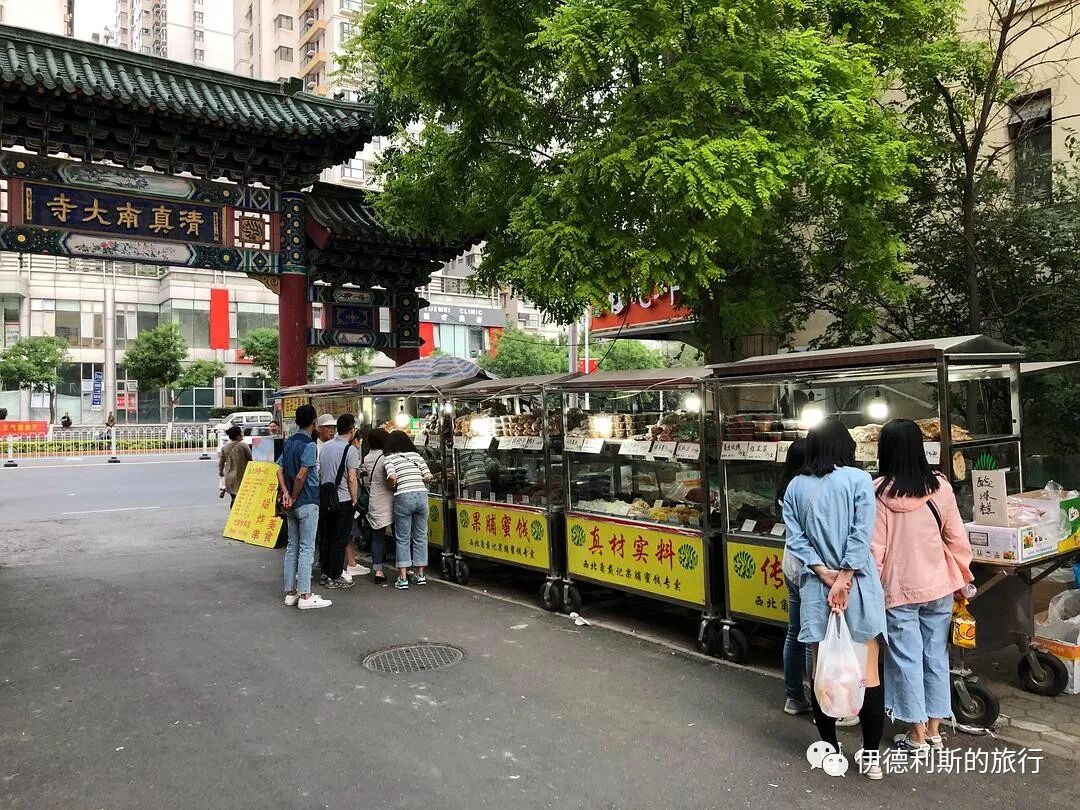
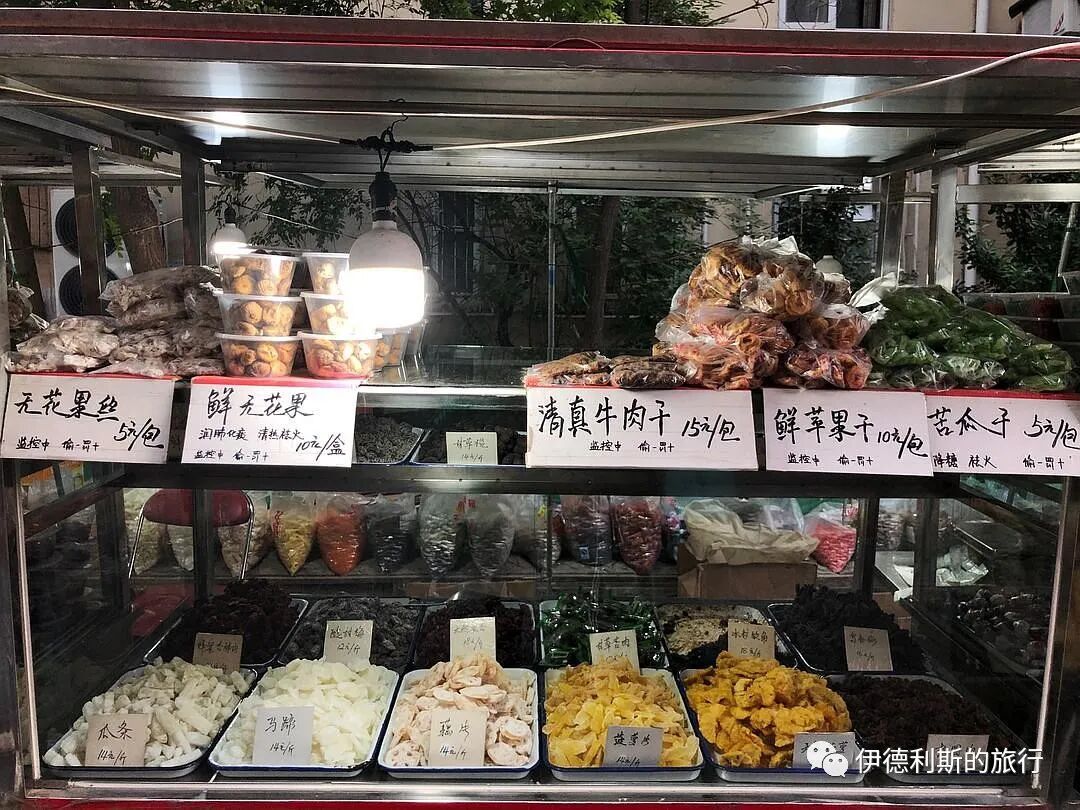
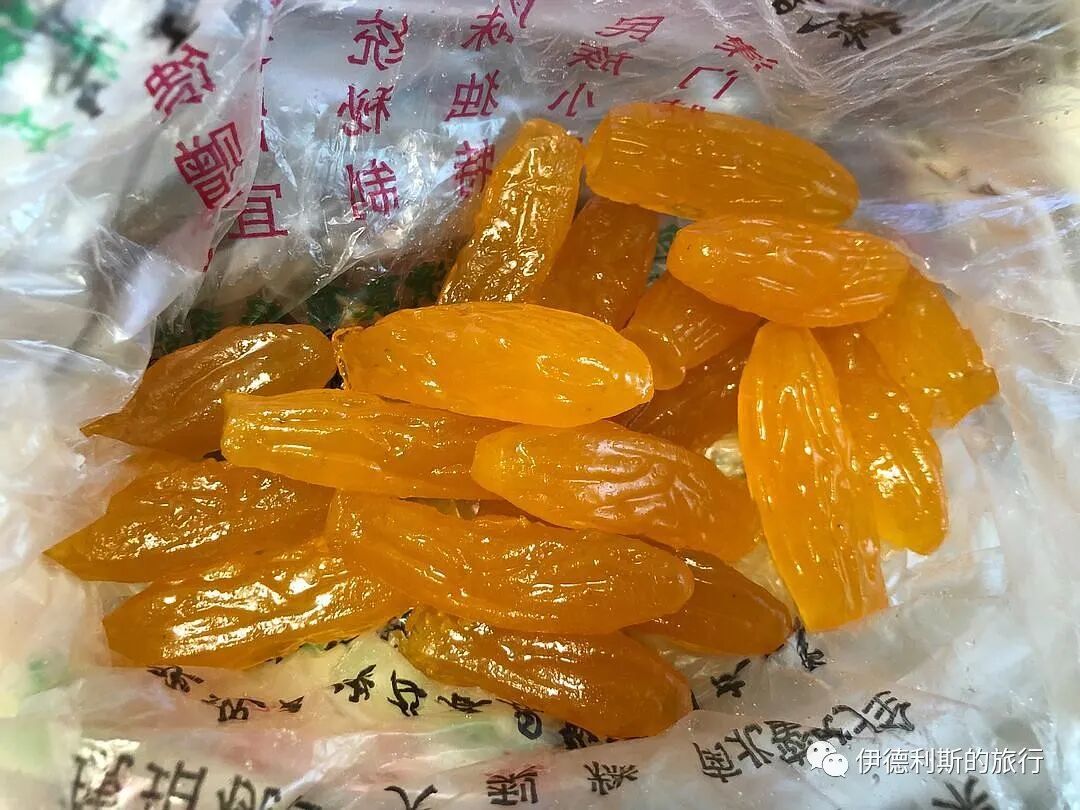
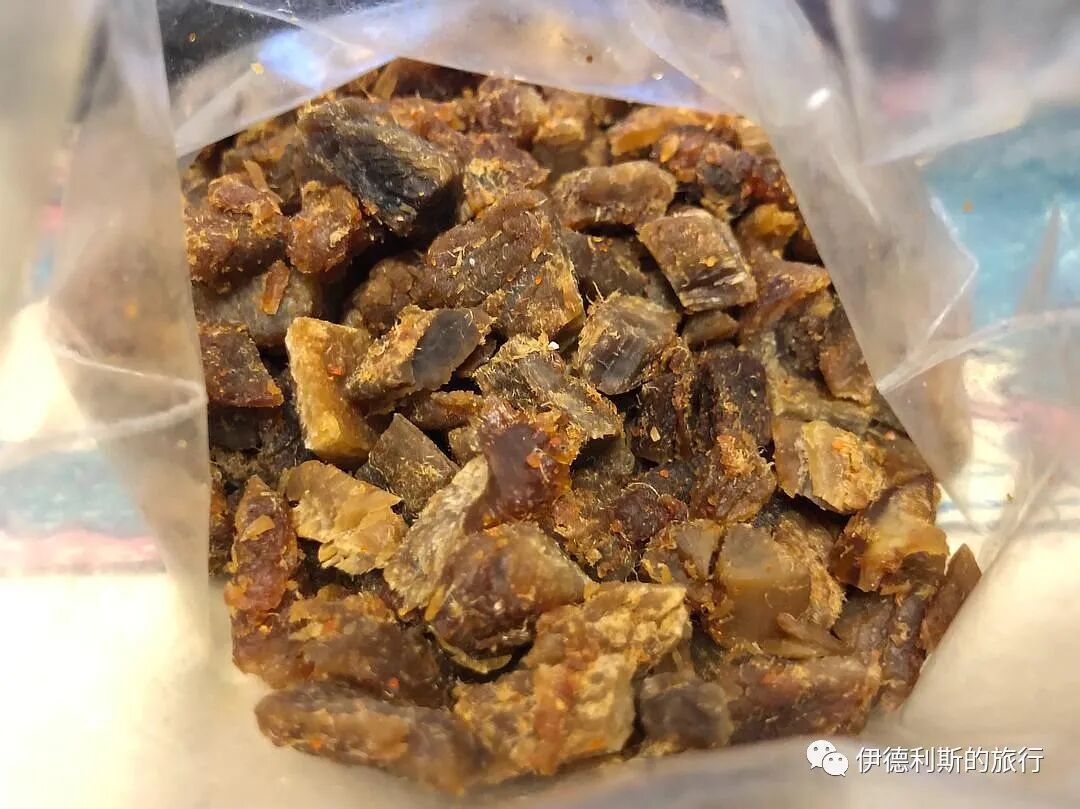
You can buy the ingredients for making traditional sour plum drink (suanmeitang) at Daiji Candy Shop under the Great Southern Mosque (Nandasi) archway in the Northwest Corner (Xibeijiao) nearby.
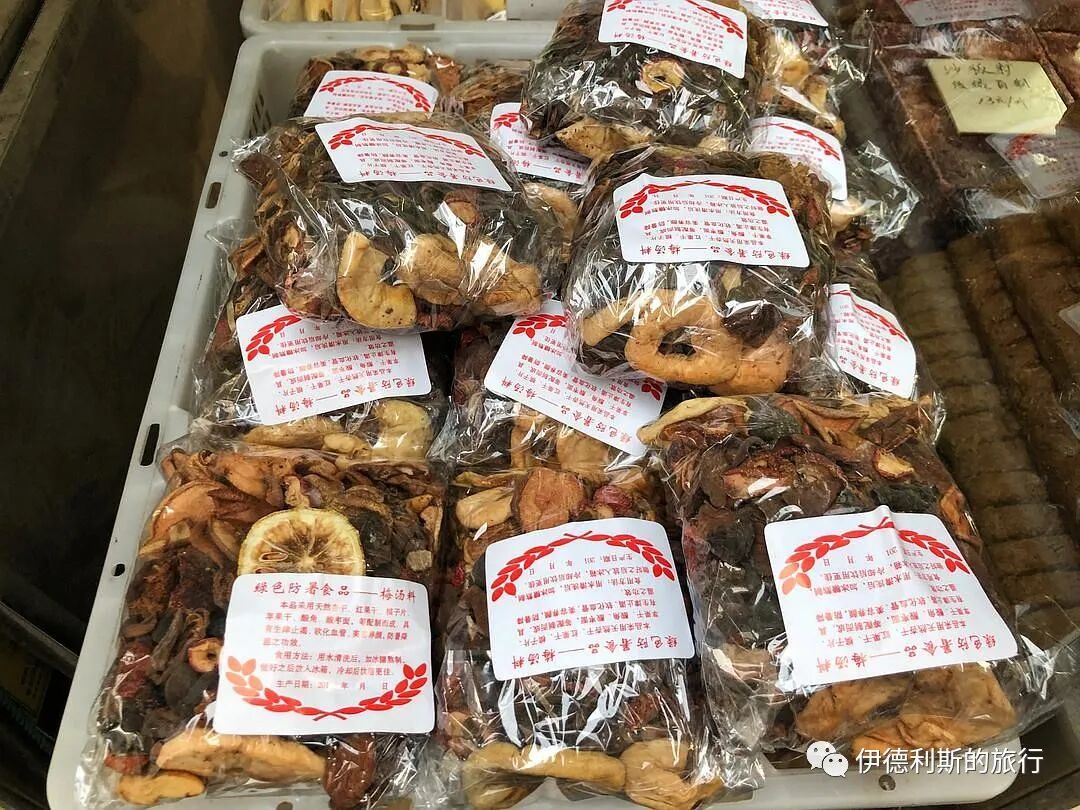
I also bought Tianjin-style steamed pear cake (shuligao) on Xiguan Street, and every flavor was different.
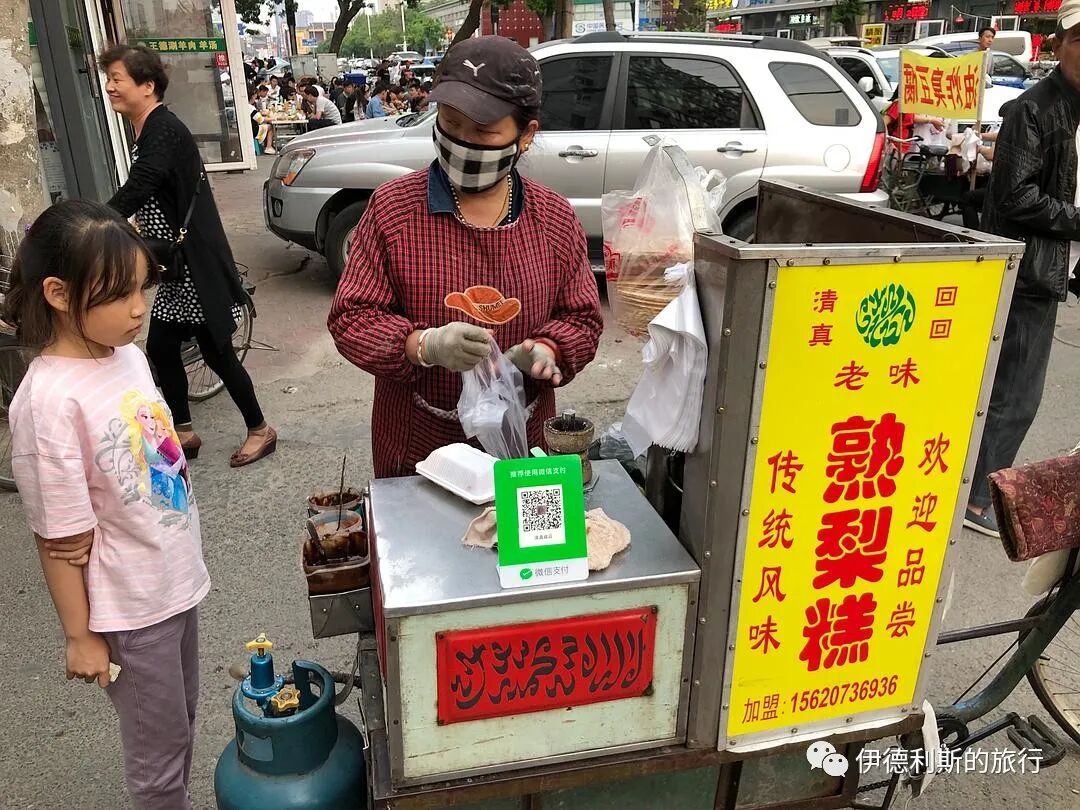
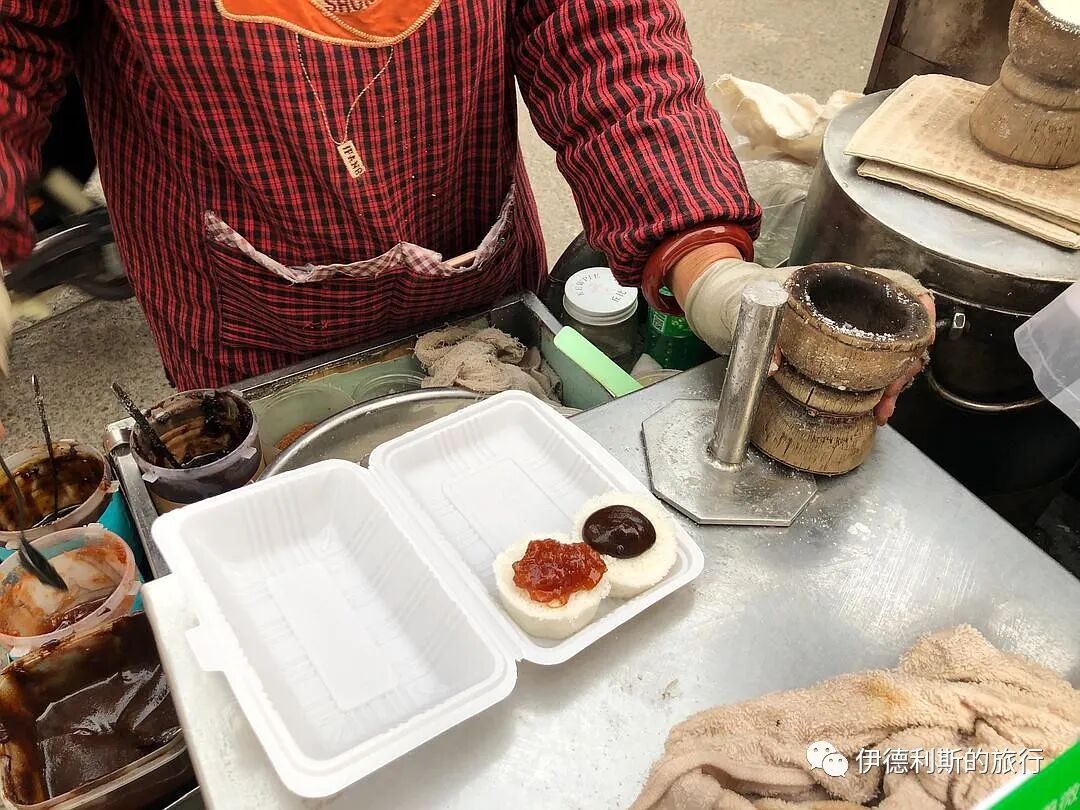
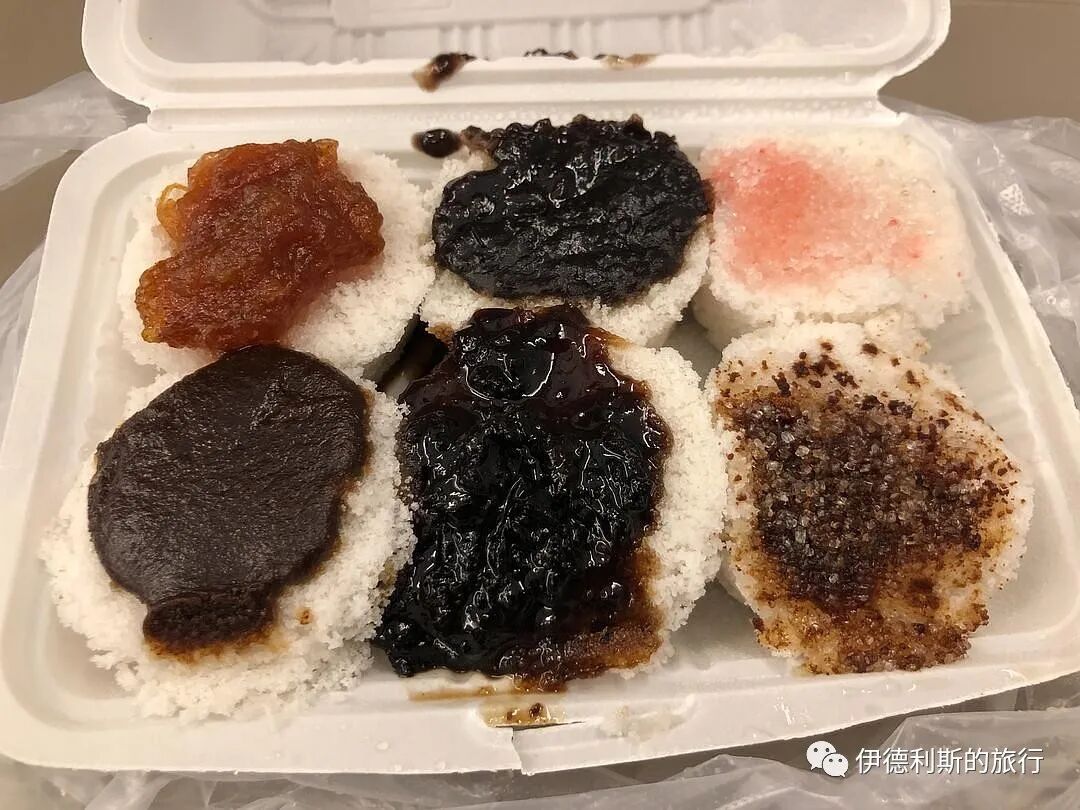
June 2019
On June 30, 2019, I made a special trip to the Northwest Corner of Tianjin for a snack tour.
I got up early and headed straight to Zhengweizhai next to the South Mosque in the Northwest Corner to eat savory crepe strips in gravy (guobacai). They are open from 6:00 a.m. to 9:00 a.m. I had been there several times before and it was always sold out, but this time I finally got to eat it.
Zhengweizhai is known as the best place for guobacai in Tianjin, and the line there every morning is the longest in the Northwest Corner. Mu Sangu runs Zhengweizhai, making sure the gravy is hot, the toppings are plentiful, and the crepe strips are made in-house. The spoonful of black sauce that Mu Sangu ladles onto the crepe strips is their secret recipe, and that one spoonful puts them miles ahead of everyone else.
Also, mung bean crepe strips spoil easily in the summer, so guobacai shops traditionally used to close for the summer or switch to selling mung bean starch soup (fentang). Now that we have refrigerators, most breakfast shops keep the crepe strips in the fridge during the hottest days, but this ruins the flavor and texture. Zhengweizhai is the only one that still insists on closing for the summer, shutting down from mid-July to mid-August every year.
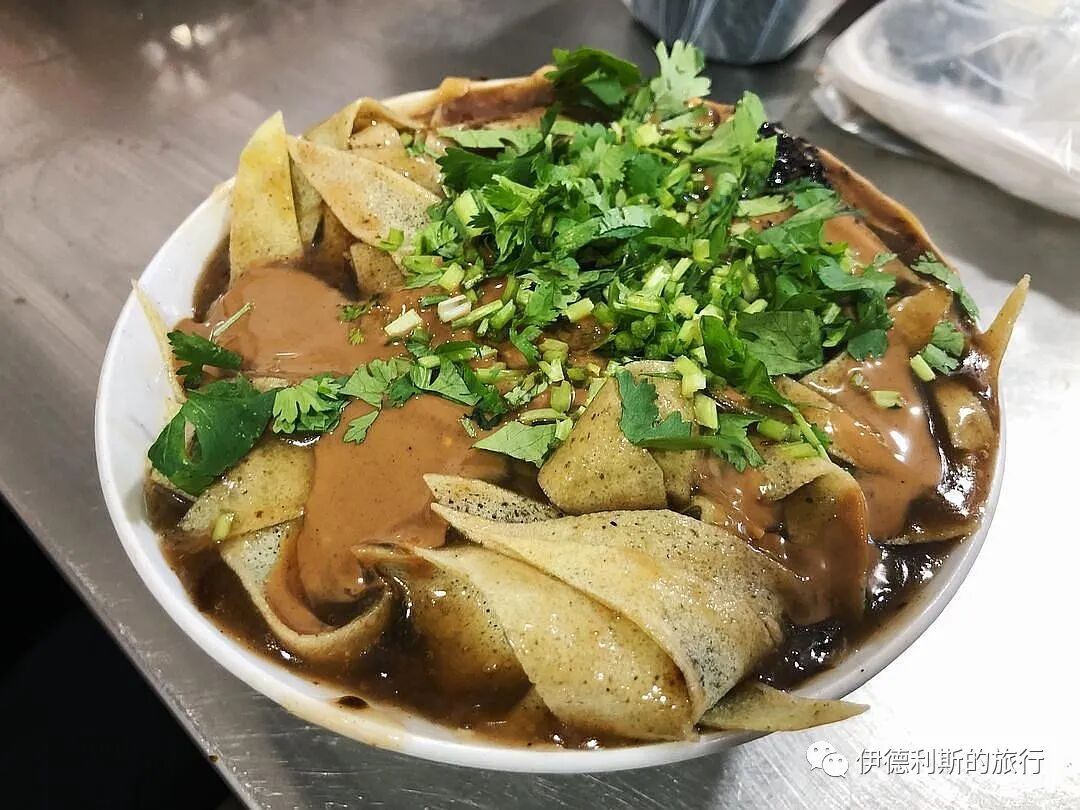
Zhengweizhai still keeps the tradition of serving guobacai with steamed corn buns (wotou), but this time we chose to buy hot-water dough red bean paste fried cakes (zhagao) from across the street. The hot-water dough fried cakes are red, which is different from the traditional yellow glutinous rice fried cakes, but they are also very delicious.
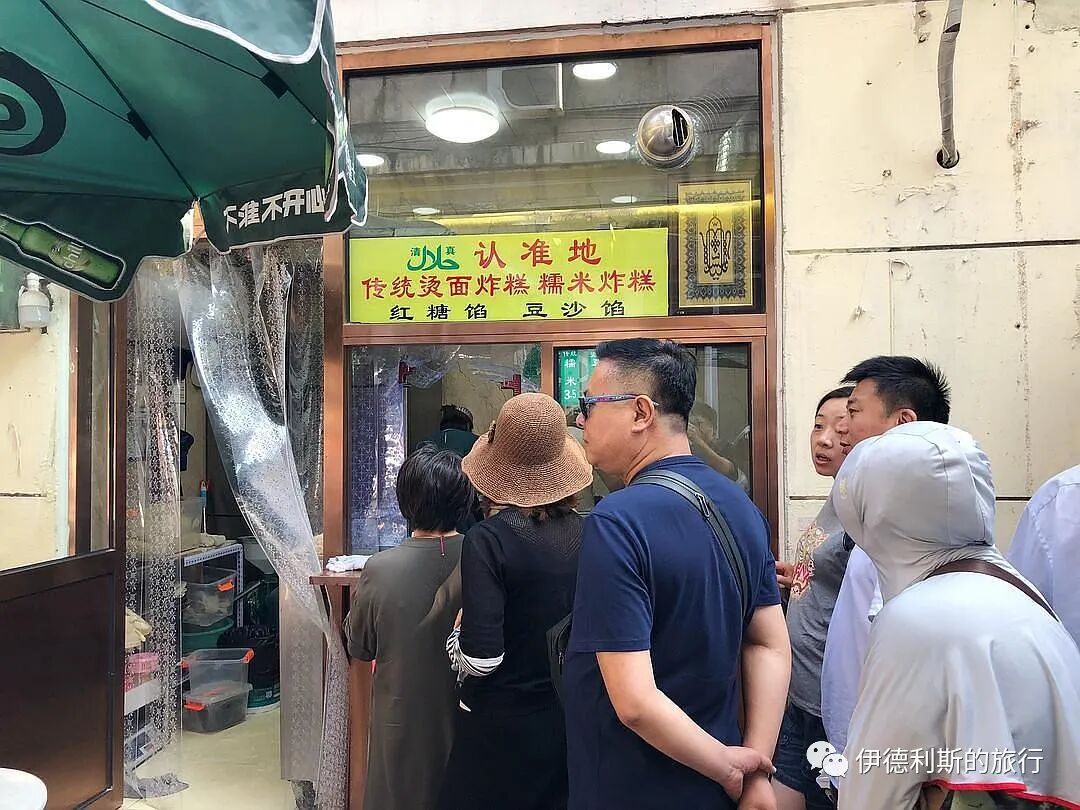
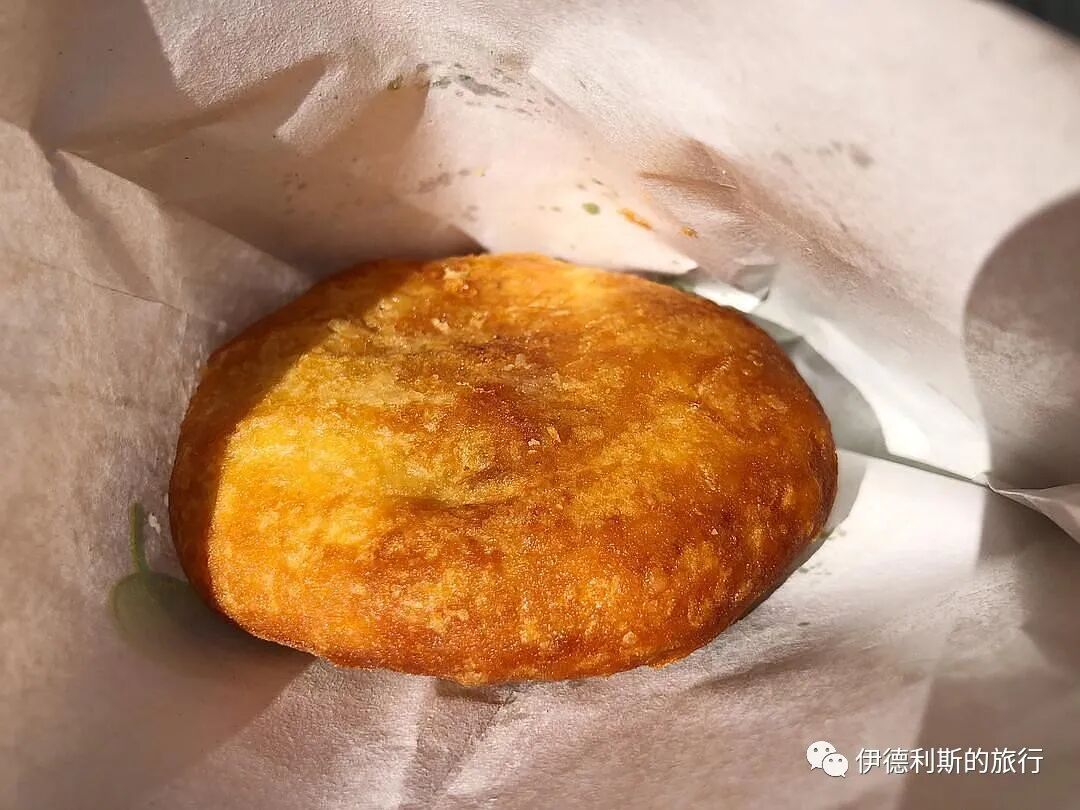
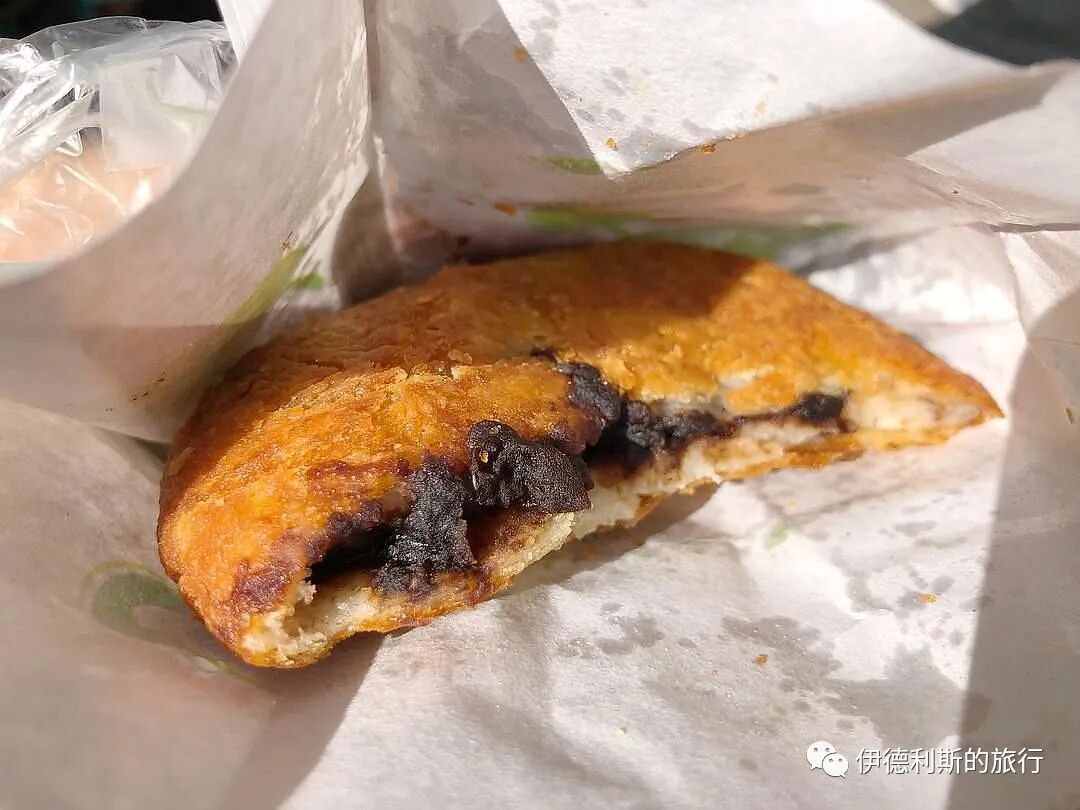
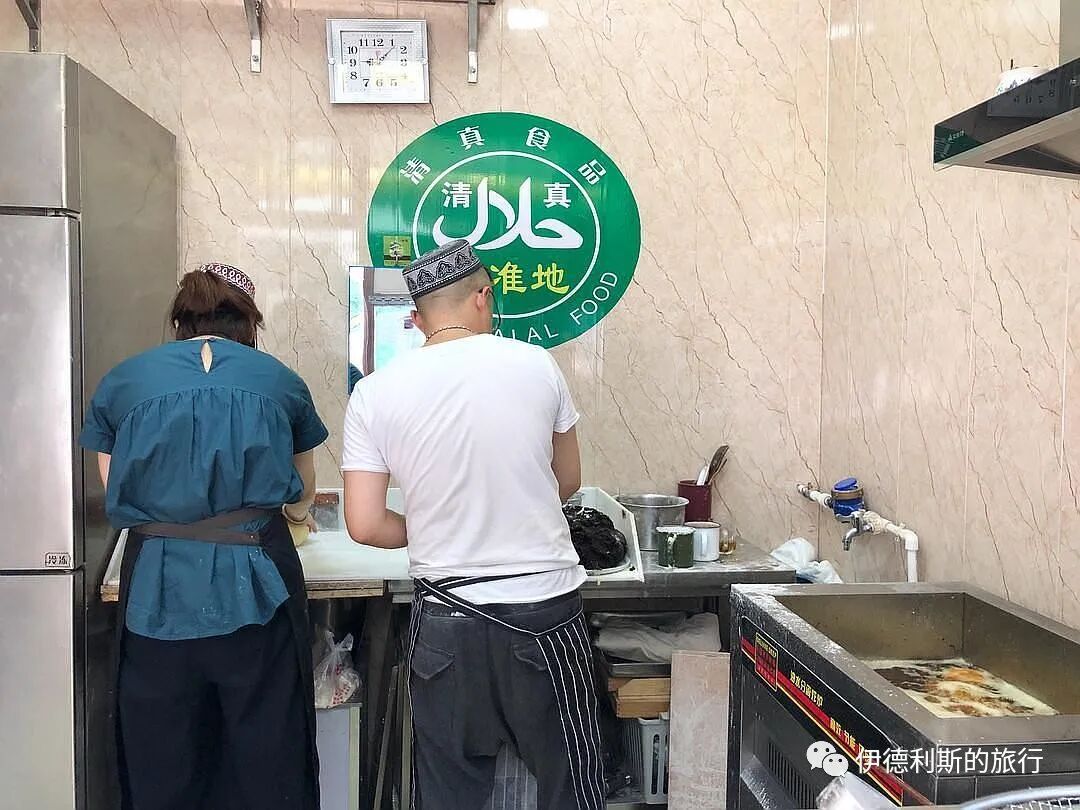
After finishing the crispy rice pancake (guobacai), I turned the corner and went to Chenmeizhai nearby for vermicelli soup (fentang) and millet porridge with sesame paste (miancha). Vermicelli soup is a traditional Tianjin breakfast, but it is getting harder to find these days, and this was my first time trying it. It is made by pouring a savory sauce over vermicelli noodles, topped with dried shrimp and chive leaves, which makes it taste incredibly fresh. I have been drinking millet porridge with sesame paste since I was a kid, but the version in Tianjin is truly better than the one in Beijing. Tianjin's version uses two layers of sesame paste and seasoned salt, making it much richer and more fragrant than the Beijing style.
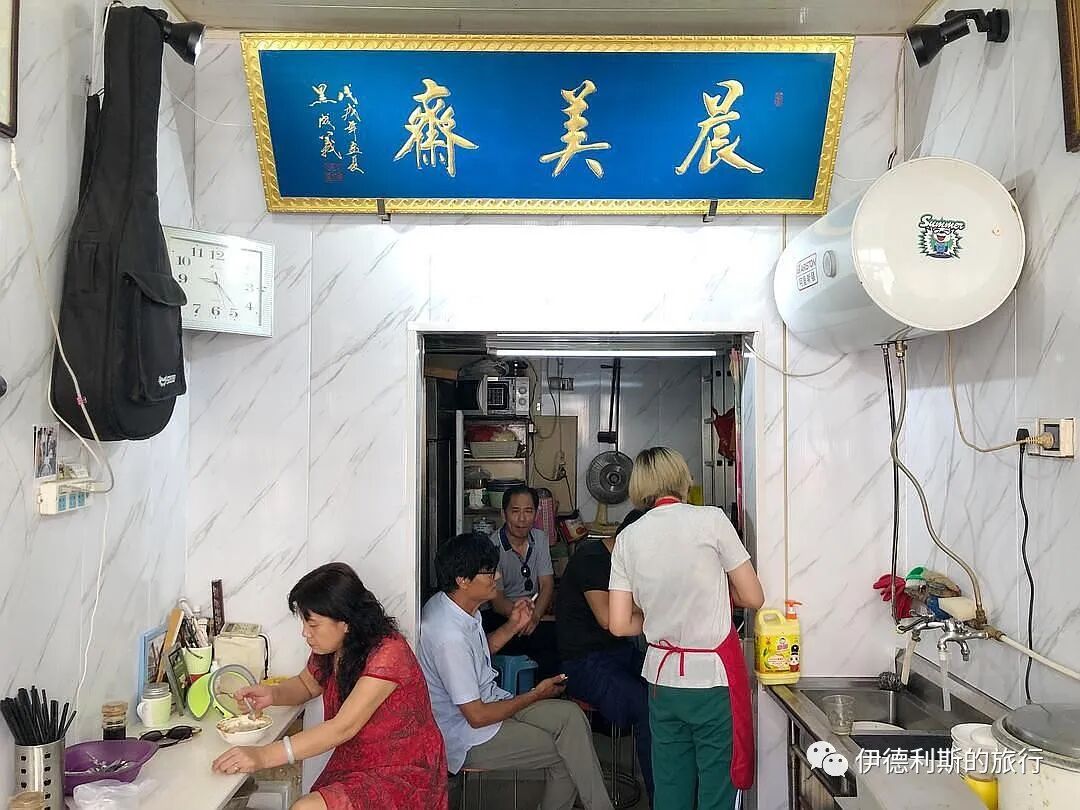
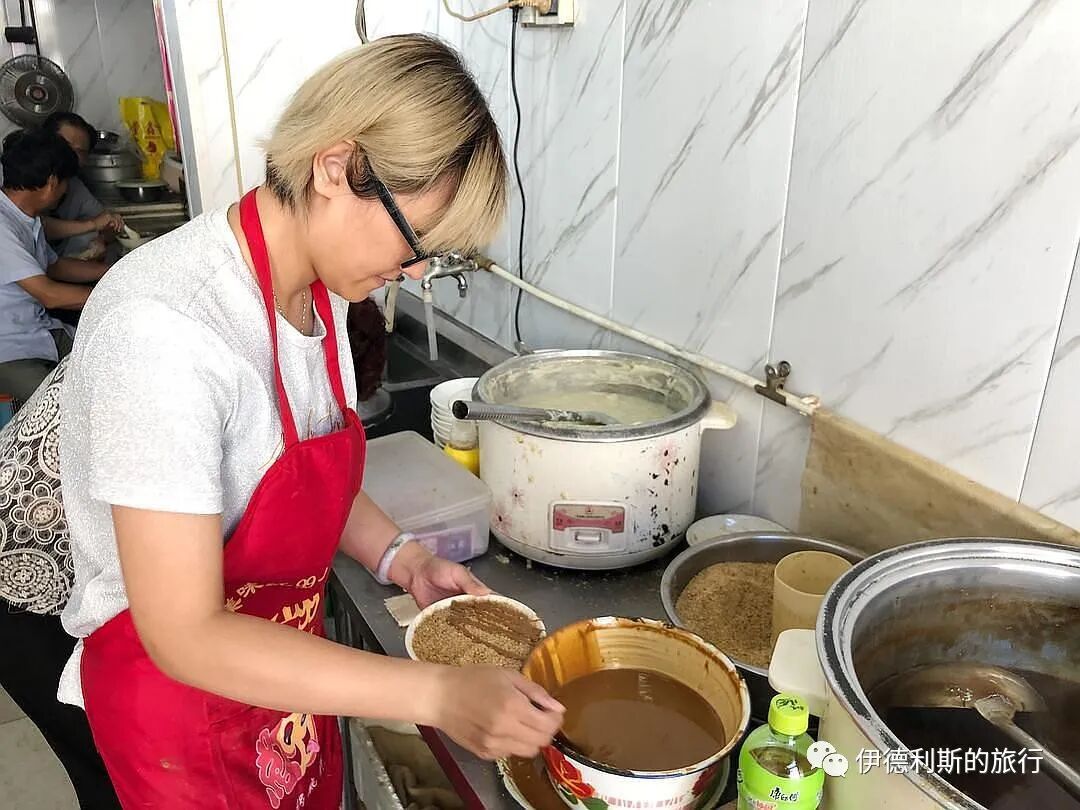
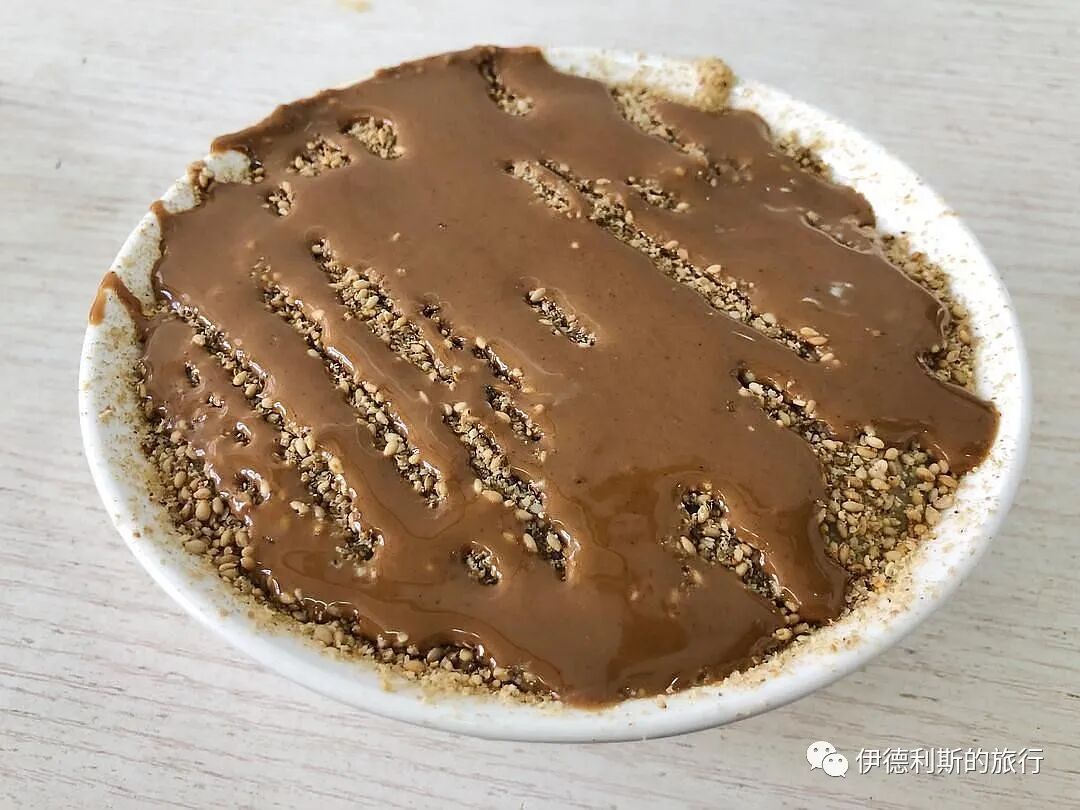
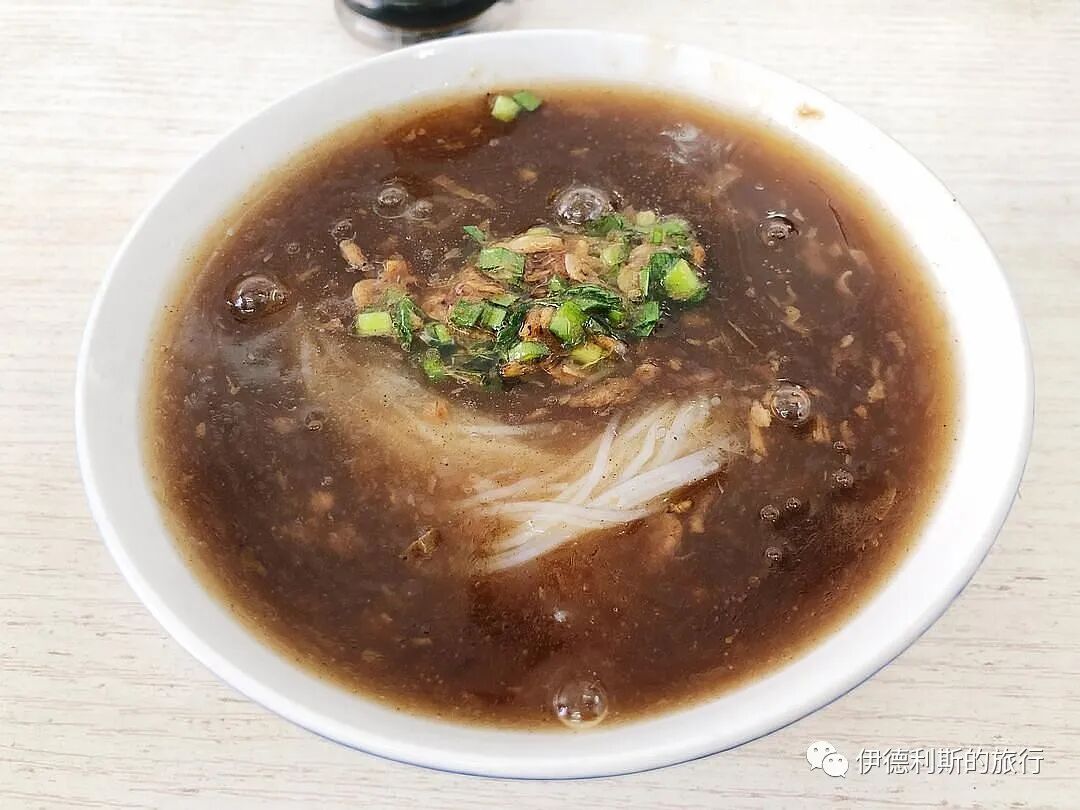
Across from Chenmeizhai is a shop selling steamed rice cakes (gaogan), so I bought some fresh ones filled with red bean paste. I have loved these steamed rice cakes since I was little, but the ones sold in supermarkets dry out and lose their texture. They have to be freshly made and hot to taste good.
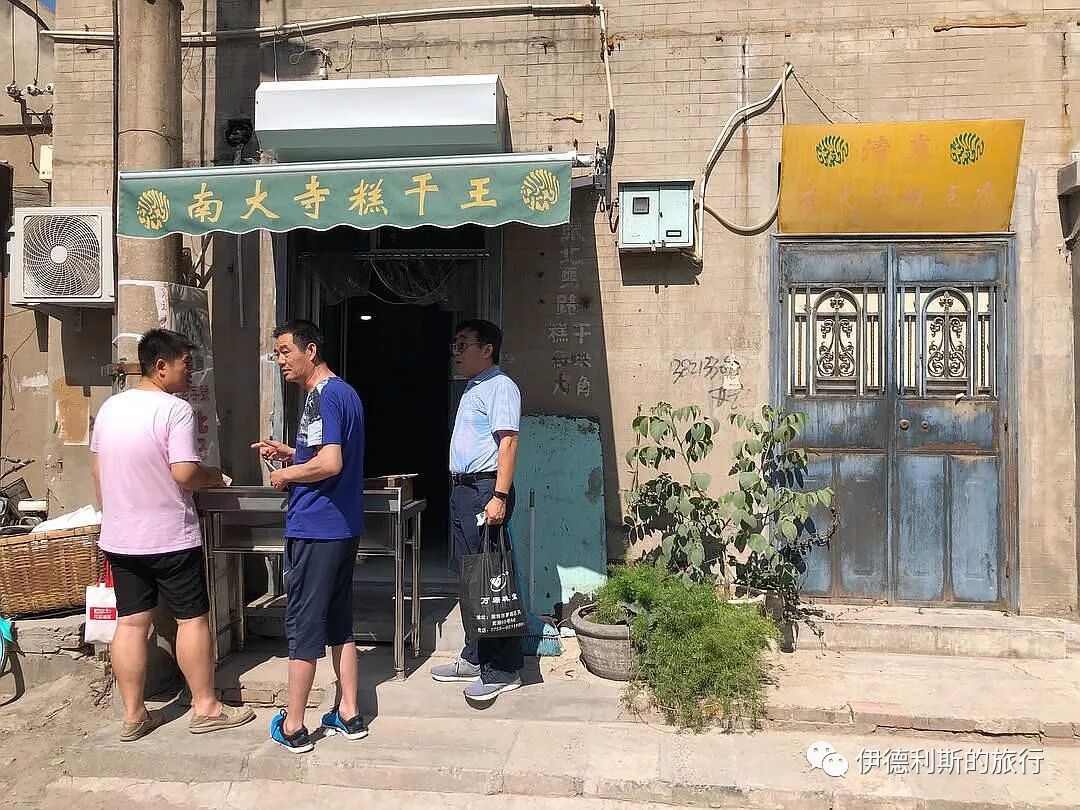
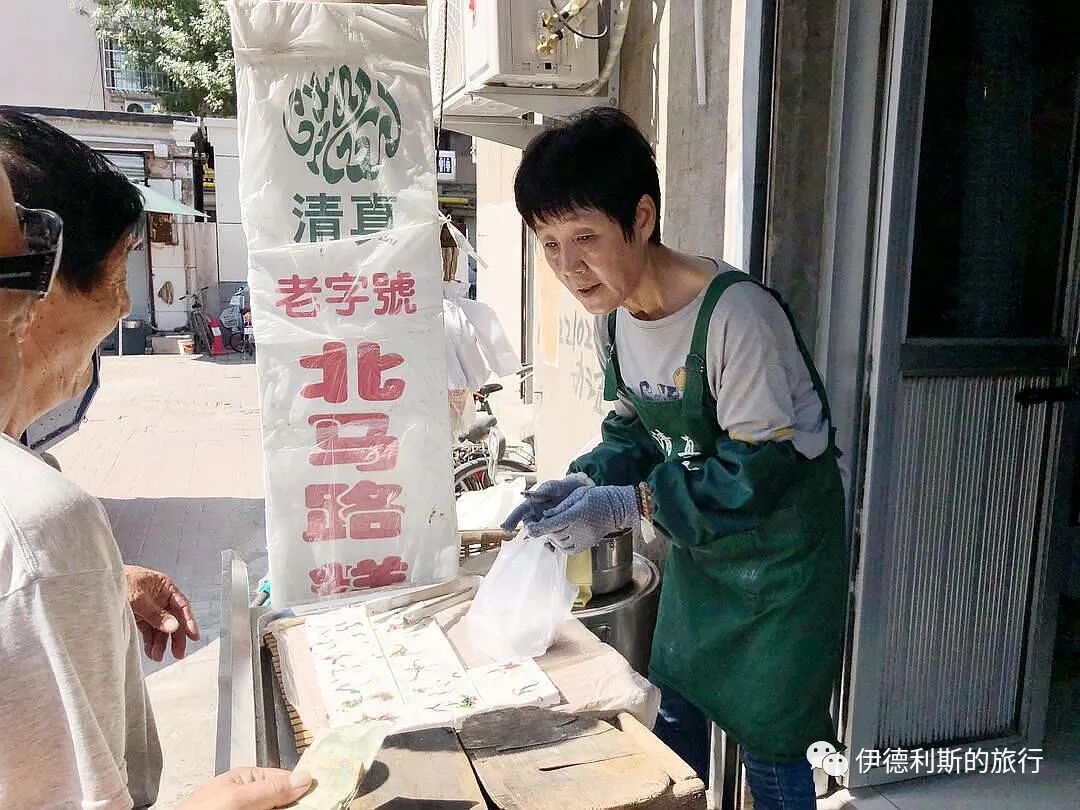
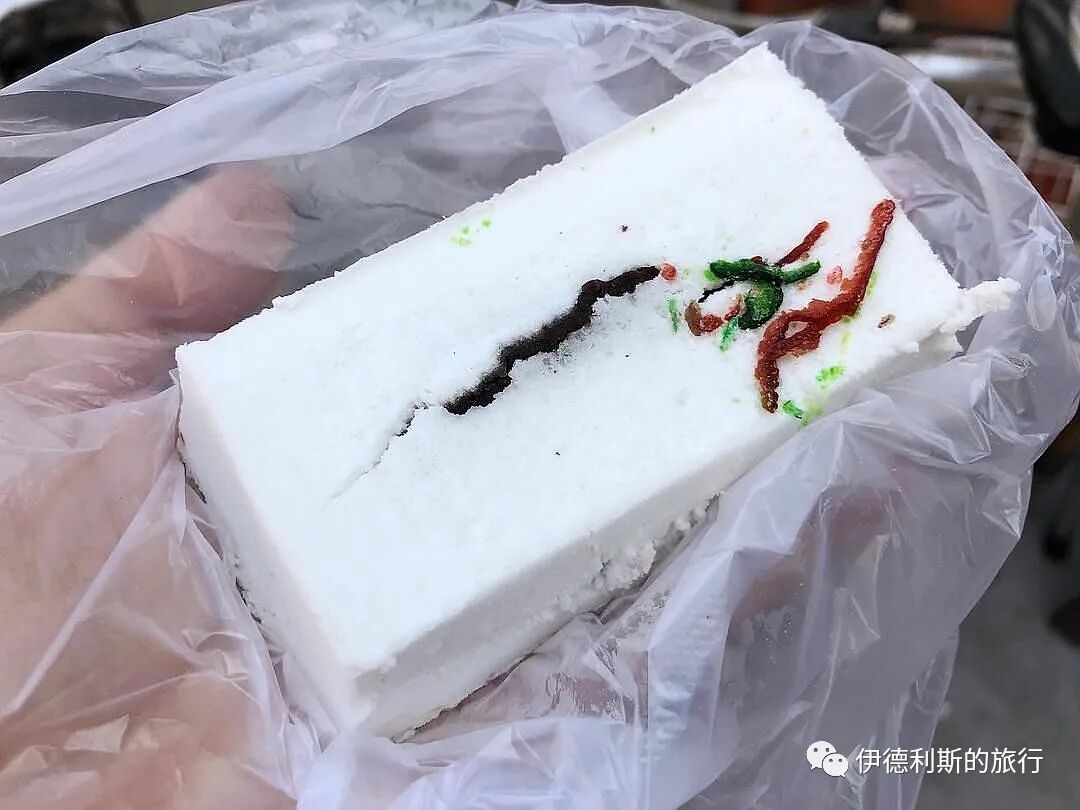
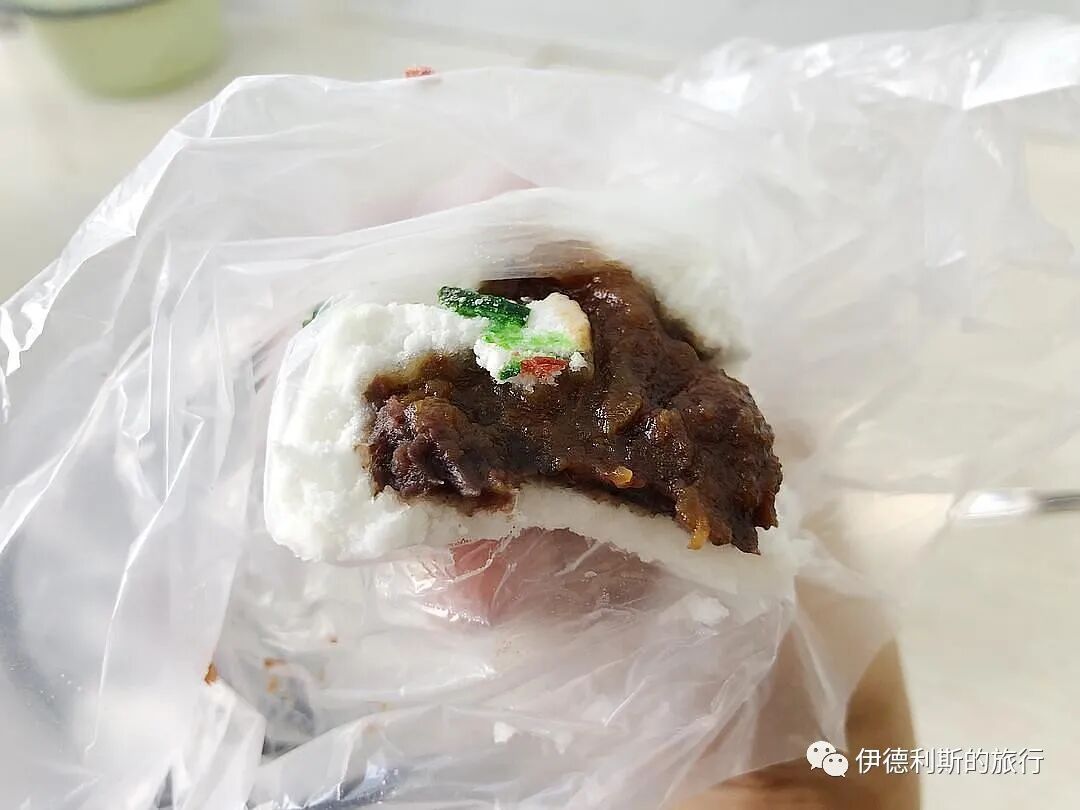
I walked north from the South Mosque in the Northwest Corner to Jieyuan Road to eat fried bean skin rolls (juanquan). Fried bean skin rolls are a Tianjin specialty snack. They are made by wrapping bean sprouts, starch noodles, and fermented bean curd paste in bean skin and deep-frying them until they are hot, crispy, and fragrant.
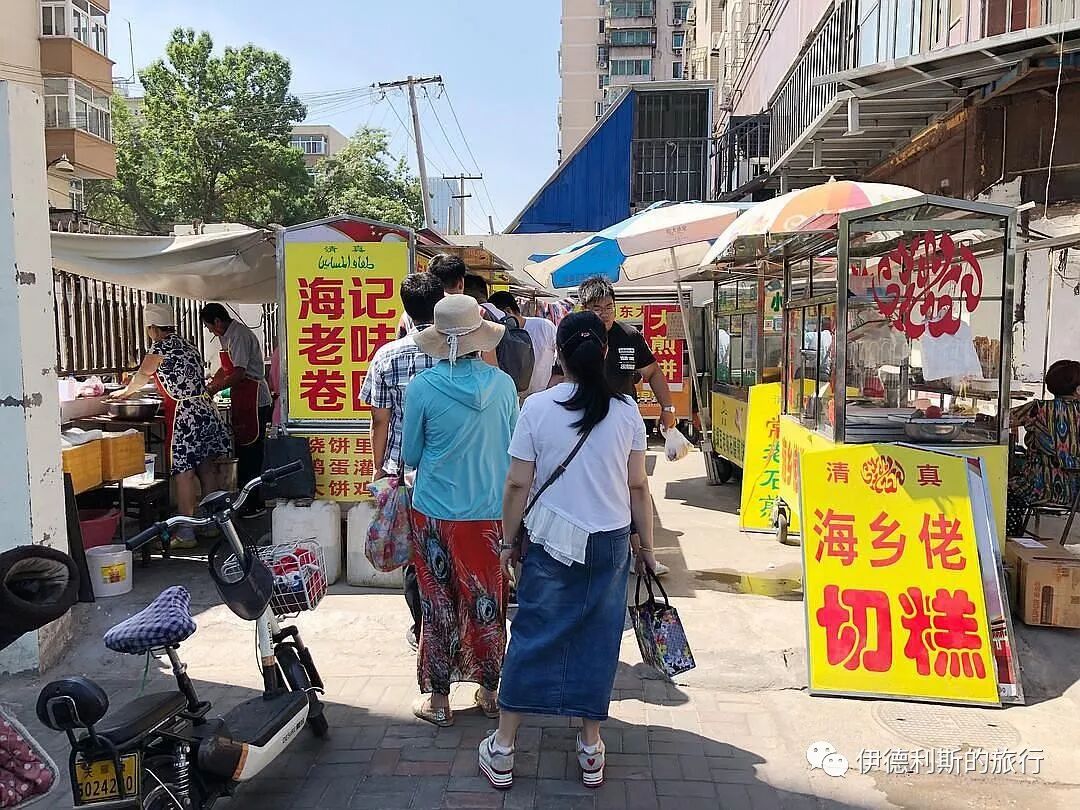
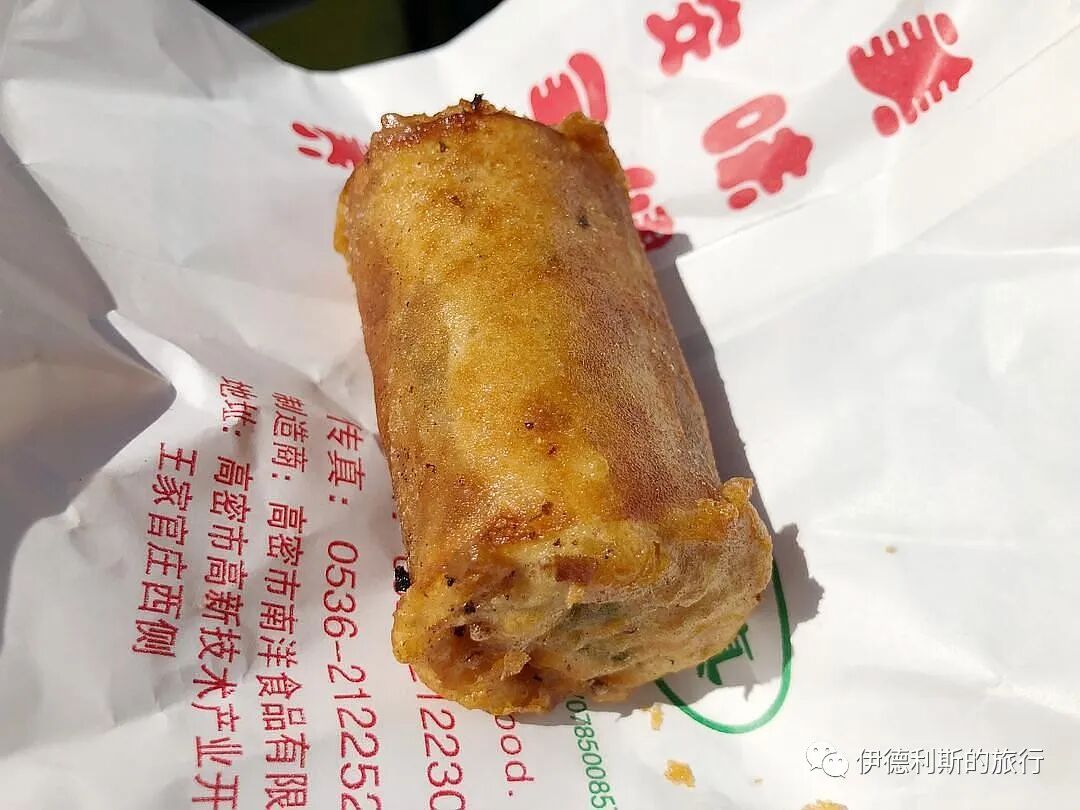
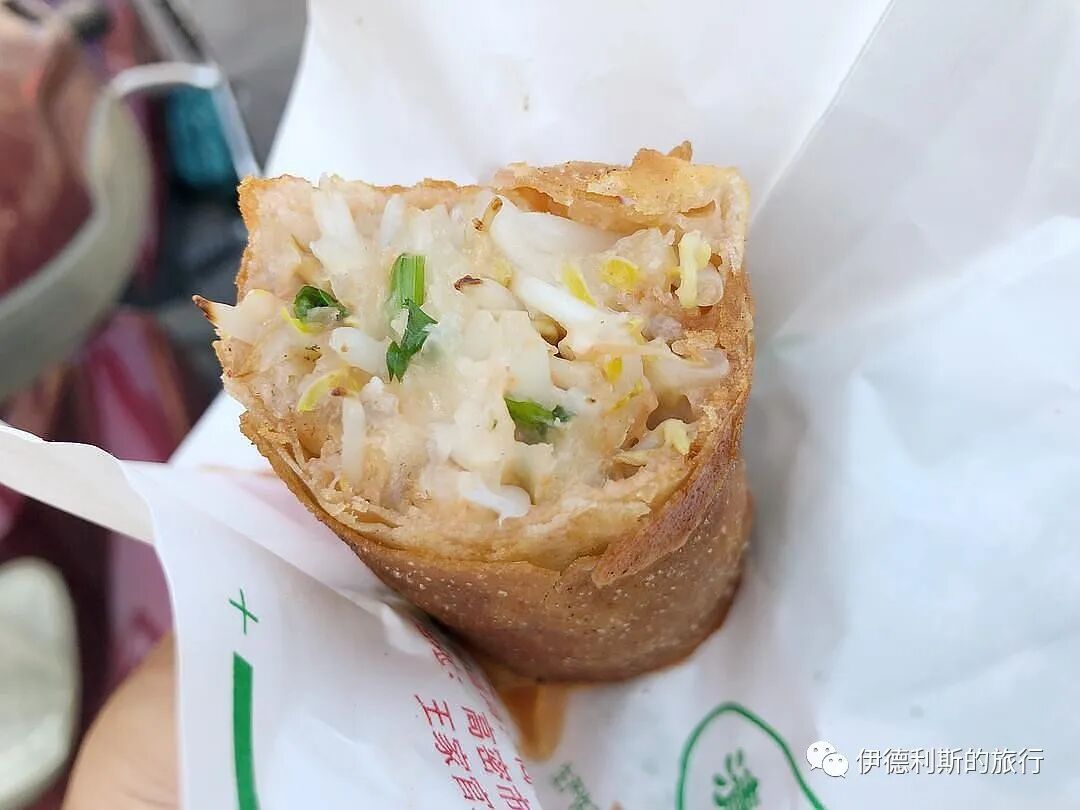
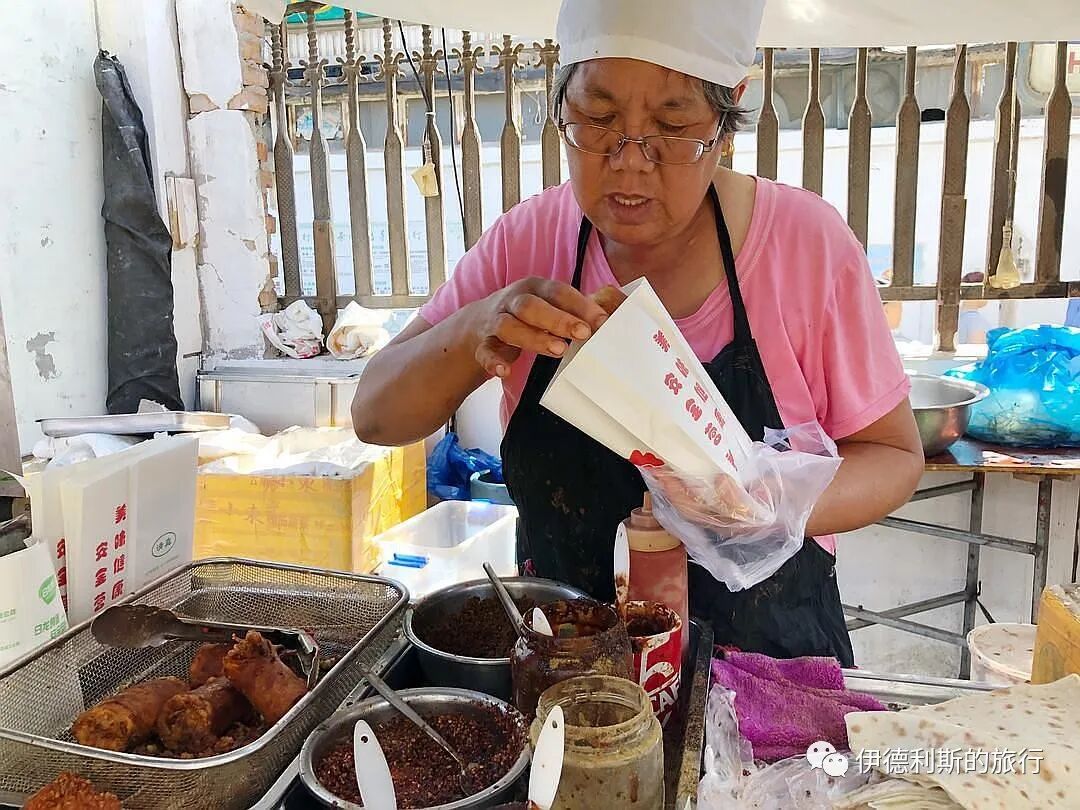
November 2019
On November 2, 2019, during late autumn, I went to Tianjin to explore and eat, heading straight to the Northwest Corner first thing in the morning. Over the past few years, I have watched the Northwest Corner go from bustling to quiet, seeing one renovation after another and shop after shop closing down. This time when I visited the Northwest Corner, it felt even quieter than before. The only good news is that a few new shops have opened in the Northwest Corner, and I tried two of them this time.
I started with a savory crepe (jianbing guozi) from the shop under the South Mosque archway. It is run by the nephew of Auntie Mu from Zhengweizhai, and it tastes just like the old days and is cheap.
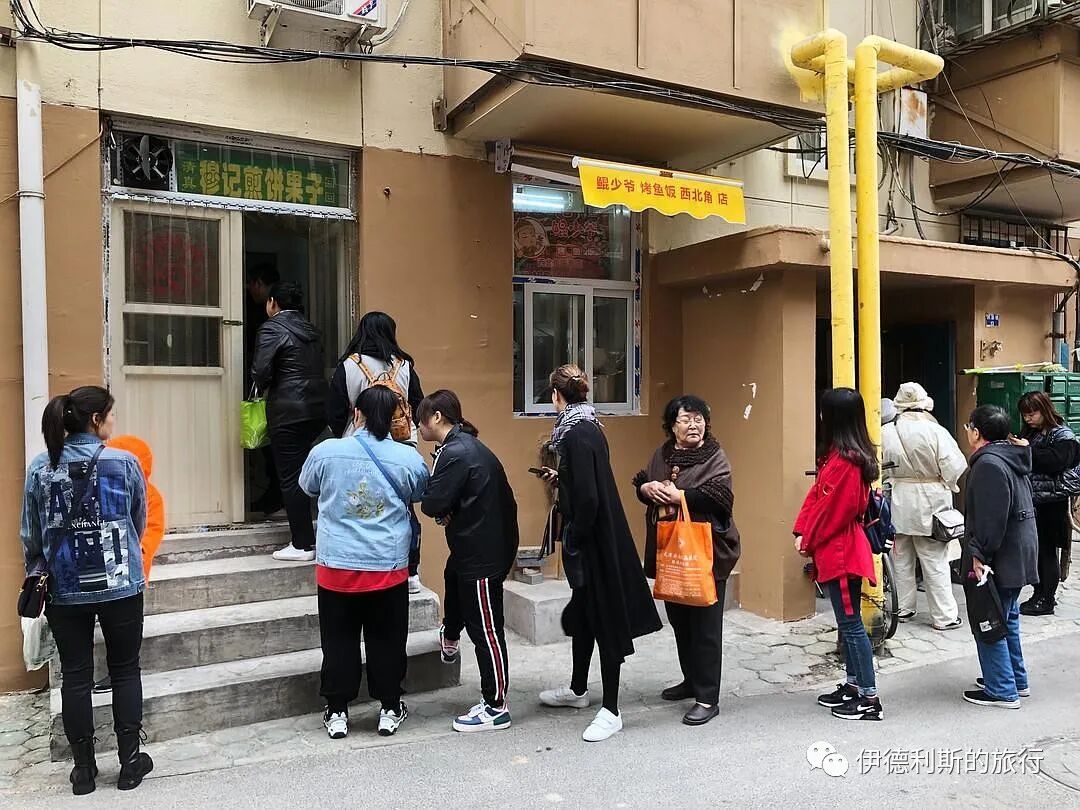
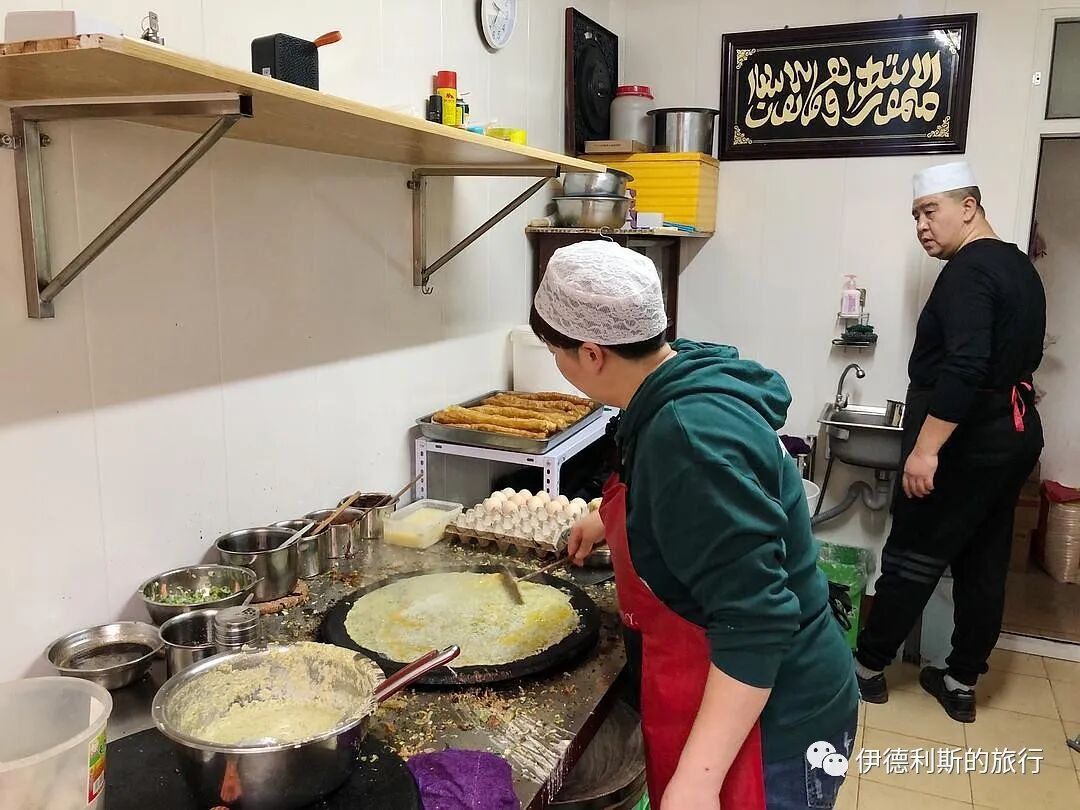
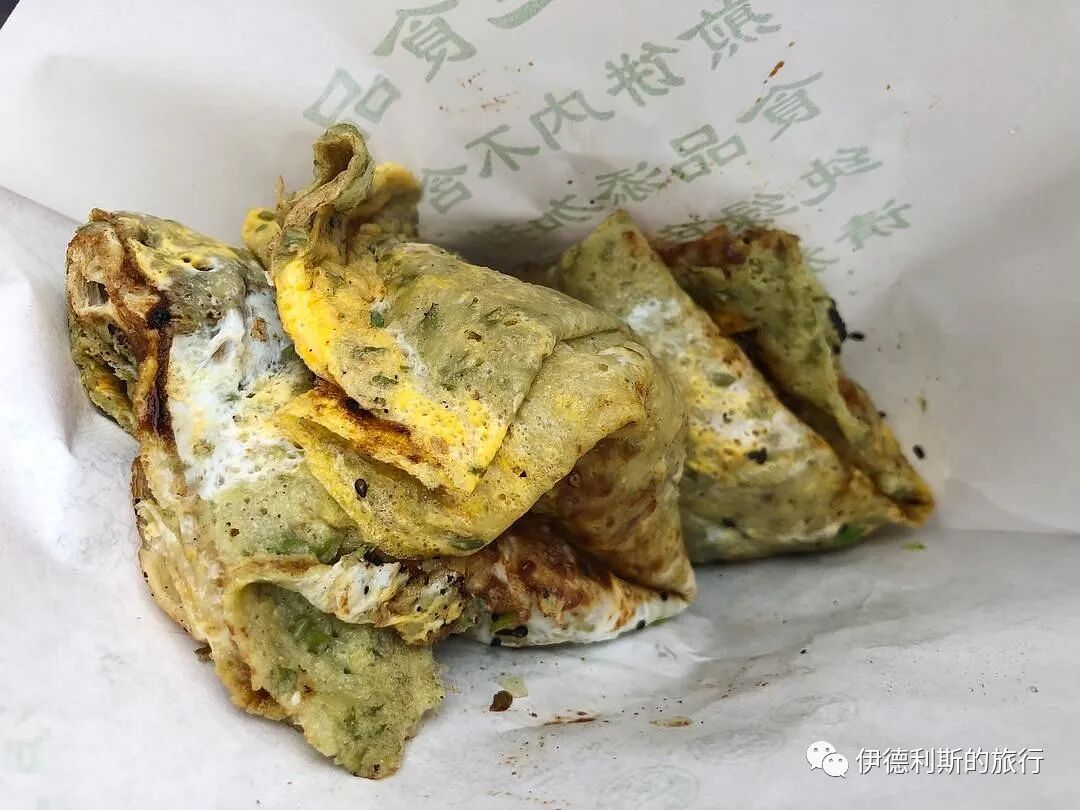
I had lamb porridge at the halal porridge house by the entrance of the South Mosque. The porridge house has only been open for half a month, and after the renovations in the Northwest Corner, it is finally possible to get lamb porridge again. The lamb porridge of the Hui Muslims in Tianjin is made by boiling down the bone fat and marrow from lamb leg bones, making it very flavorful. It is a bit like the Kazakh Nauryz meat porridge I had before, made by Master Rouhua.
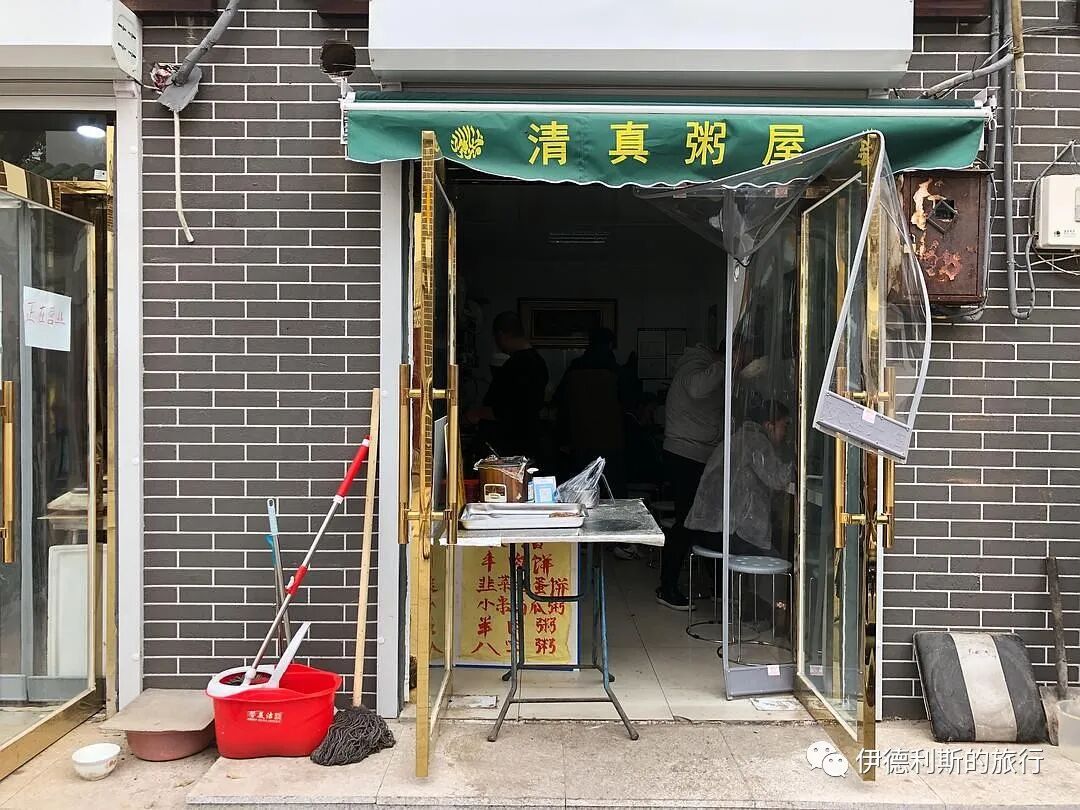
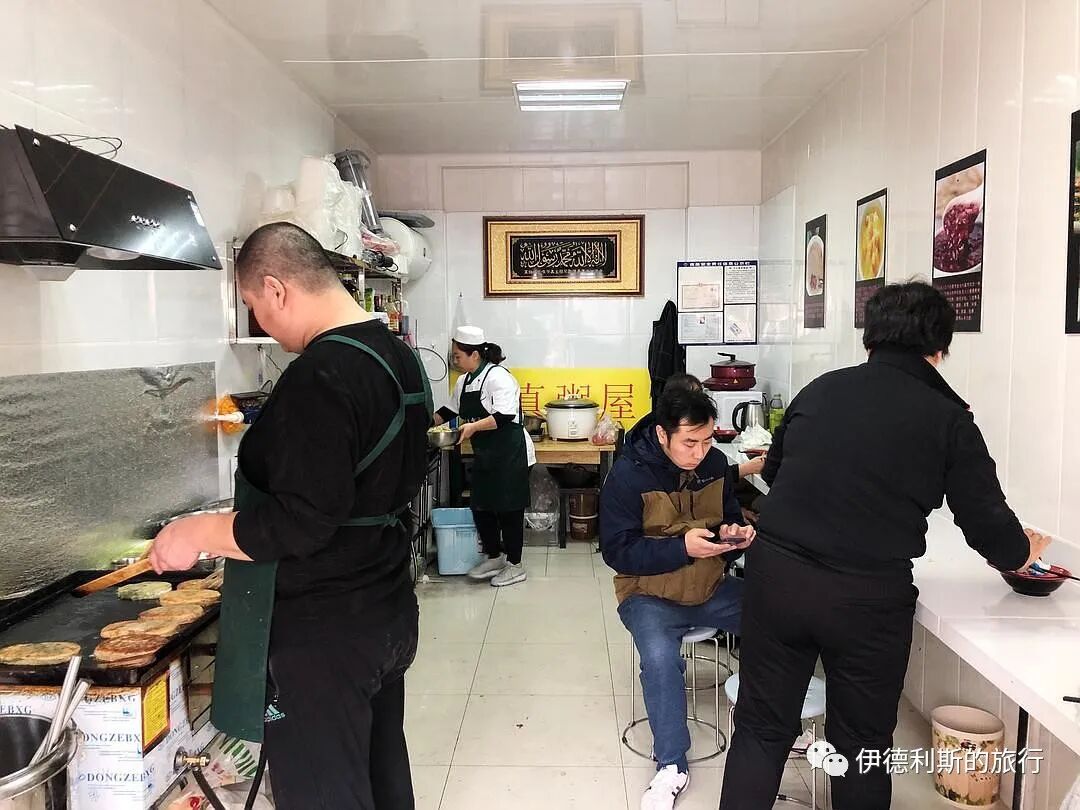
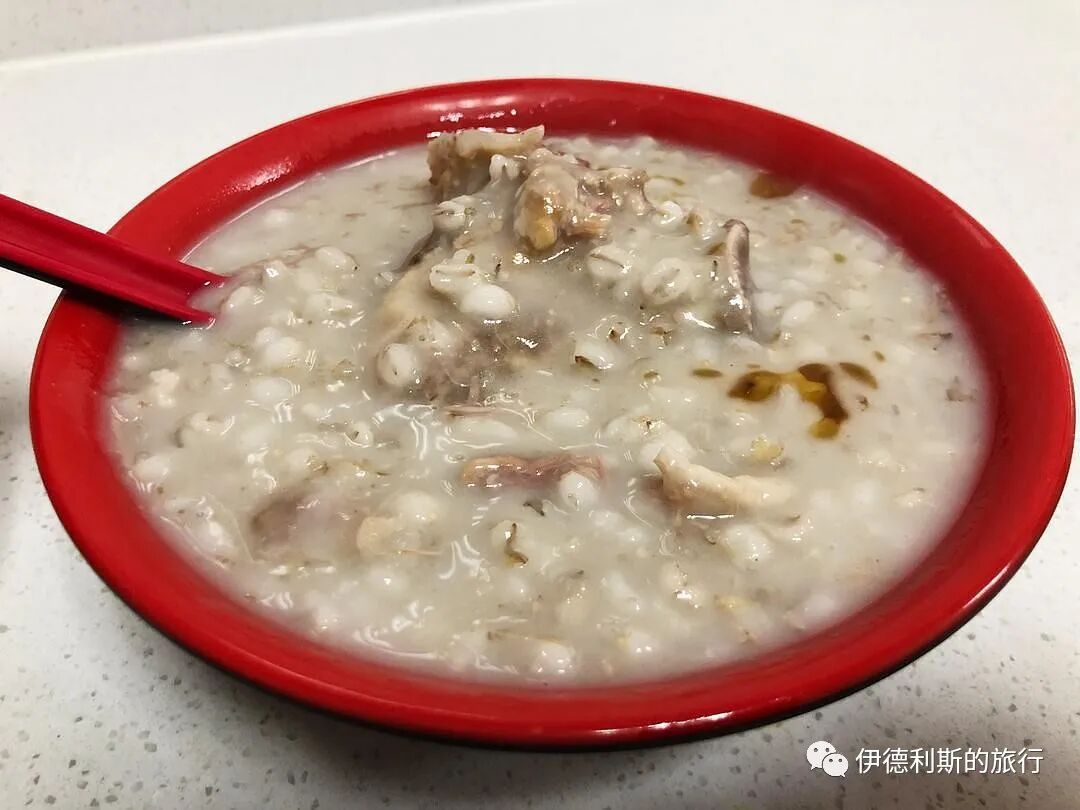
I also bought some stir-fried shrimp paste (chao xiajiang) at the South Mosque archway.
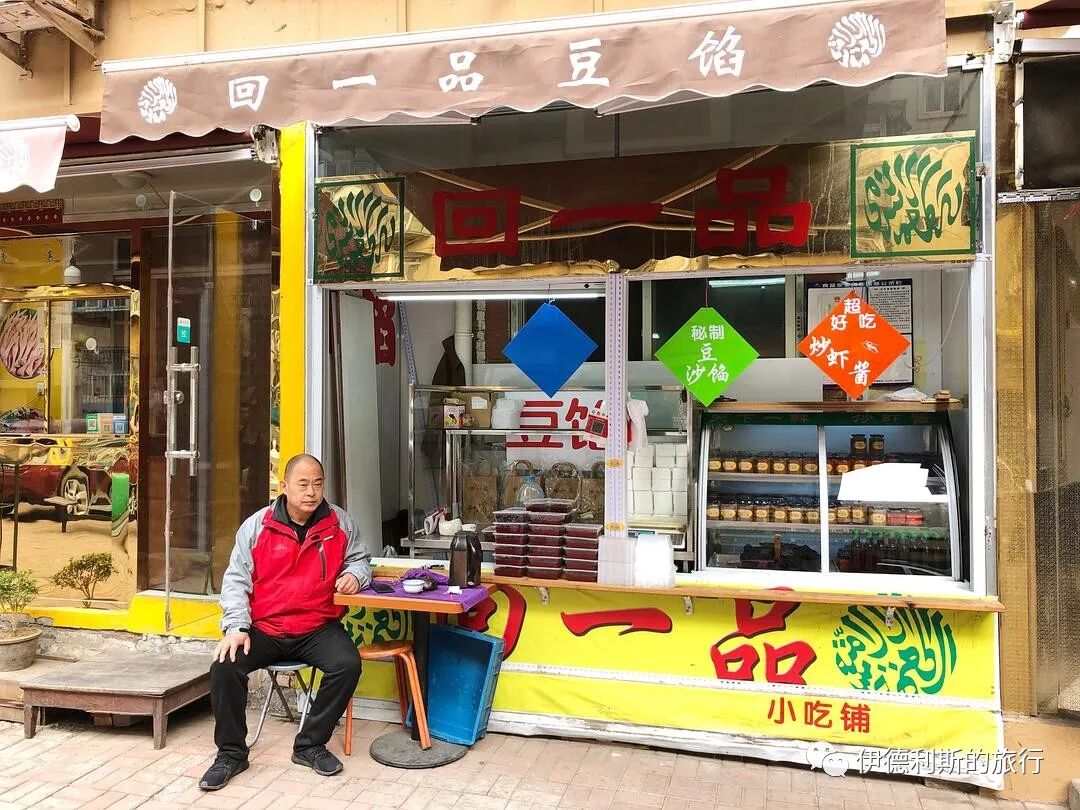
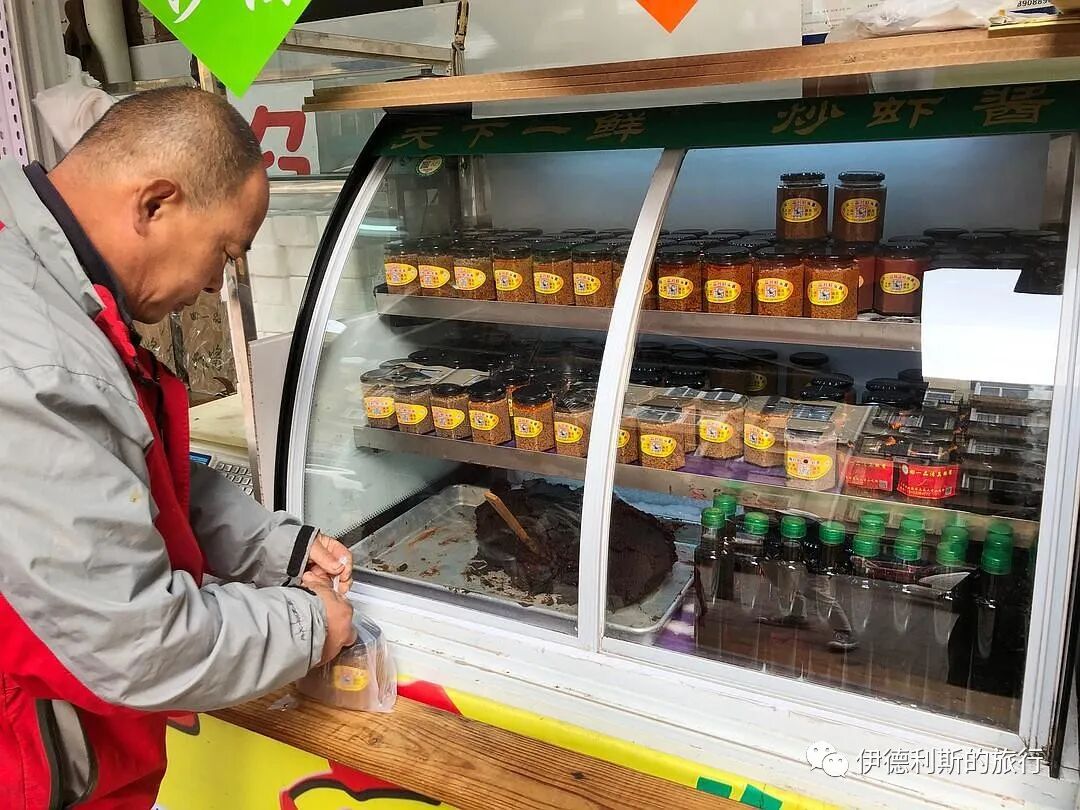
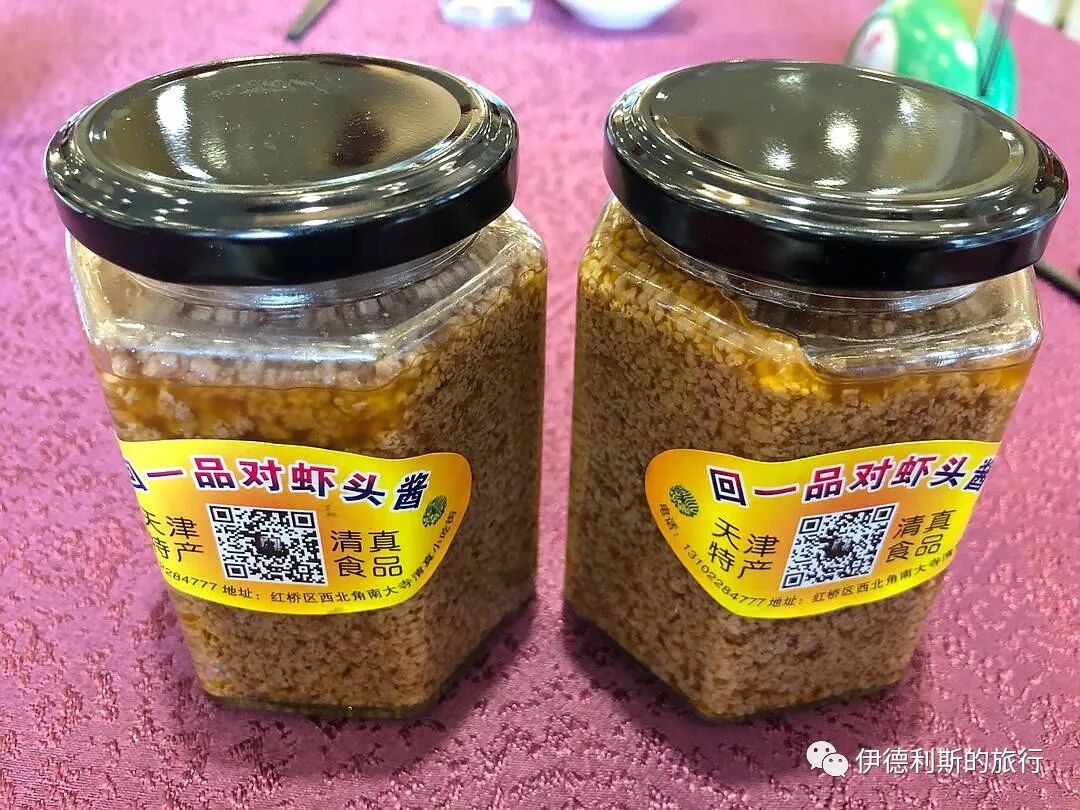
Halal Travel Guide: Tianjin Northwest Corner — Muslim Food and Street Changes (Part 3)
Articles • ali2007fr posted the article • 0 comments • 140 views • 2026-05-18 02:39
Summary: Tianjin Northwest Corner — Muslim Food and Street Changes is presented here as a firsthand travel account in clear English, beginning with this scene: Zainab loved the steamed rice cake (gaogan) we bought at the gate of the South Mosque last time. The account keeps its focus on Tianjin Halal Food, Northwest Corner, Muslim Streets while preserving the names, places, food, and historical details from the Chinese source.
Zainab loved the steamed rice cake (gaogan) we bought at the gate of the South Mosque last time. This time she tried it a new way, spreading hawthorn jam directly over the red bean paste, which made it taste twice as good.
I ate beef steamed dumplings (zhengjiao) at Shanji on Xiguan Street. They were made with leavened dough, so I felt full the moment I finished.
May 2020
I had not left Beijing for three months. When the Chaoyang District finally turned green during the May Day holiday, I quickly went to Tianjin for a visit. Since it was Ramadan, I could not really enjoy the food tour.
I came to the Northwest Corner in the afternoon to shop. I bought dried apple and pineapple and hawthorn strips (jinggaotiao) at Daiji Candy Shop, but unfortunately, I could not find the beef jerky I really like.
Dates (yezao) for Ramadan
I bought ingredients for sour plum drink (suanmeitang) at Xiaolao Yan Chaolaowei Nut Shop, and I started brewing it as soon as I got home!
Sheep trotters (yangti) and sour plum drink (suanmeitang) bought at Shengfahao
I bought a seaweed rice roll with egg yolk and pork floss at Zhangji Fried Skewers.
Xiguan Street during the pandemic
March 2021
On the weekend of March 12, my parents-in-law were in Tianjin, so Zainab and I went there to have a family reunion. This was also my first time leaving Beijing in 2021.
On Saturday morning, the whole family went to the Northwest Corner to have breakfast. We had millet flour porridge (miancha) and starch soup (fentang) at Chenmeizhai, and crispy crepe strips in sauce (guobacai) at Enqingcheng. The line at Zhengweizhai was too long, so we skipped it. It was a pity that the mutton porridge was sold out.
Then we had three-delicacy tofu (sanxian laodoufu) and water caltrop soup (lingjiao tang) at Yishuncheng, fried bean paste rolls (juanquan) at Dingji, and fried cakes (zhagao) at Shengxingzhai.
We passed by Guishunzhai.
Strolling around the Northwest Corner. view all
Summary: Tianjin Northwest Corner — Muslim Food and Street Changes is presented here as a firsthand travel account in clear English, beginning with this scene: Zainab loved the steamed rice cake (gaogan) we bought at the gate of the South Mosque last time. The account keeps its focus on Tianjin Halal Food, Northwest Corner, Muslim Streets while preserving the names, places, food, and historical details from the Chinese source.
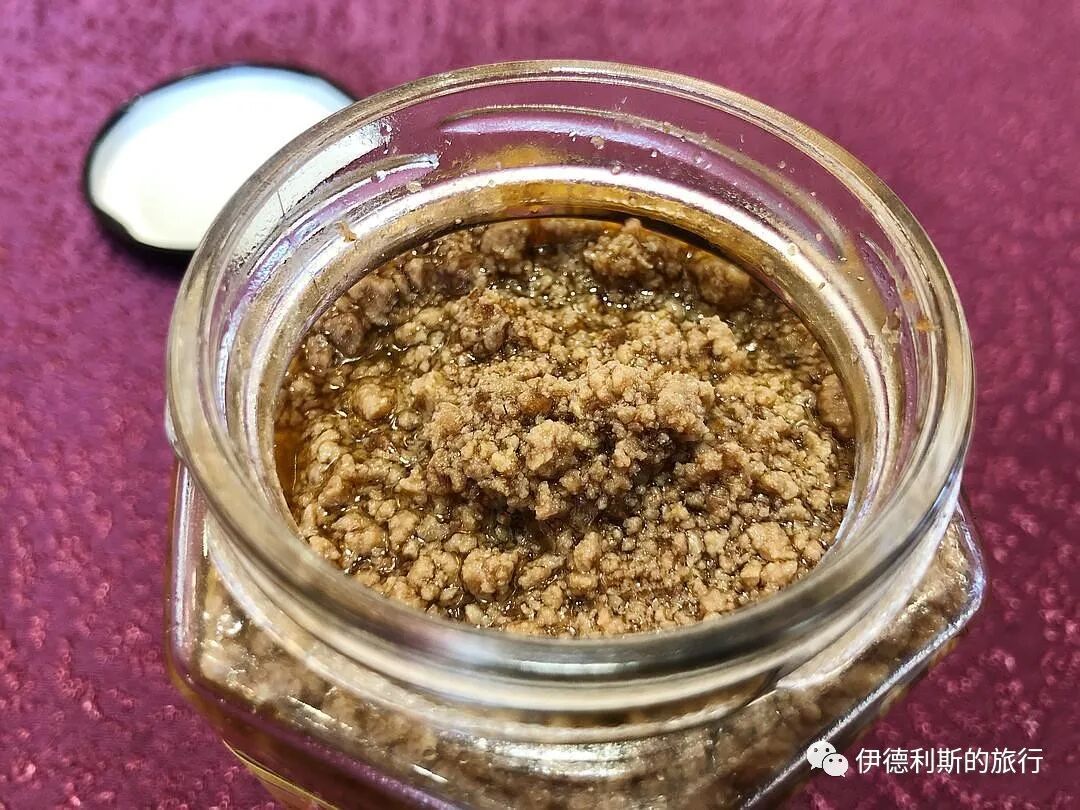
Zainab loved the steamed rice cake (gaogan) we bought at the gate of the South Mosque last time. This time she tried it a new way, spreading hawthorn jam directly over the red bean paste, which made it taste twice as good.
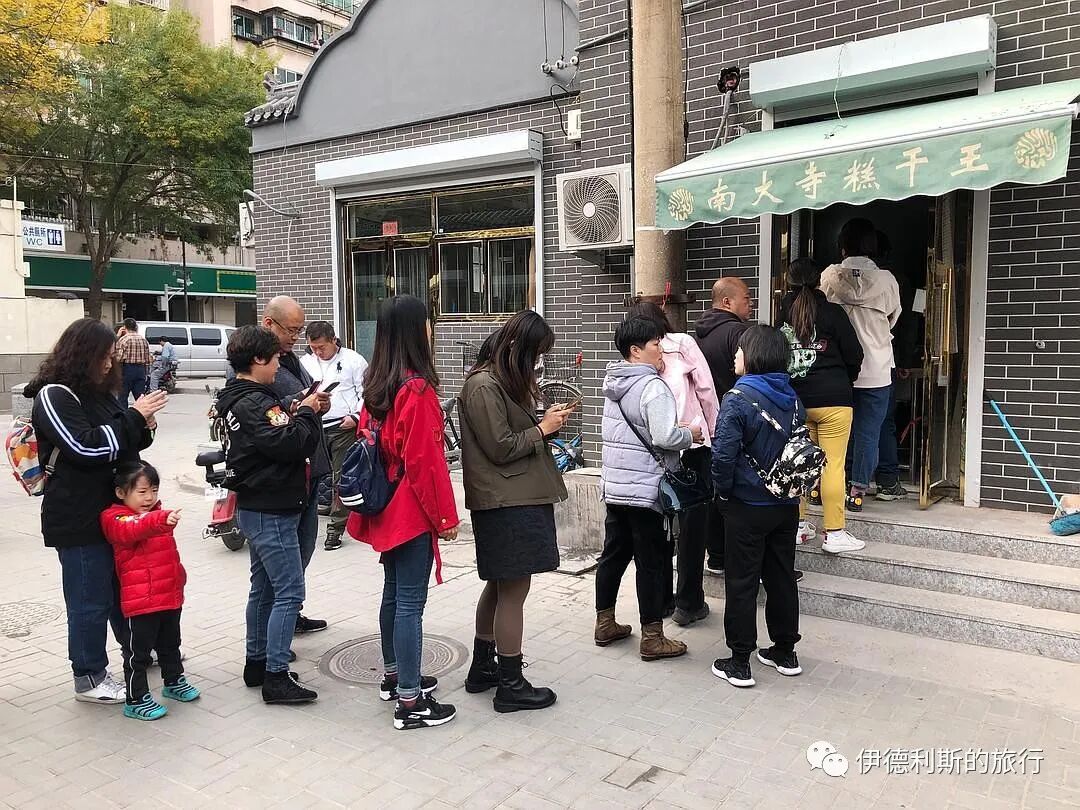
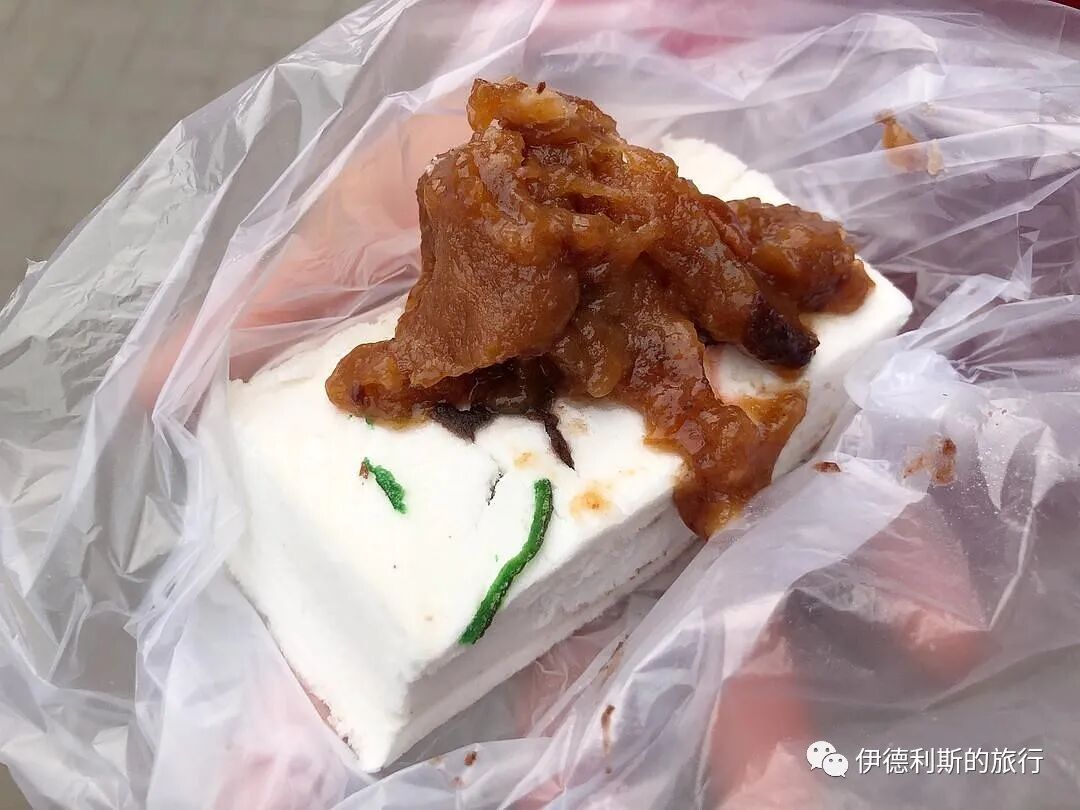
I ate beef steamed dumplings (zhengjiao) at Shanji on Xiguan Street. They were made with leavened dough, so I felt full the moment I finished.
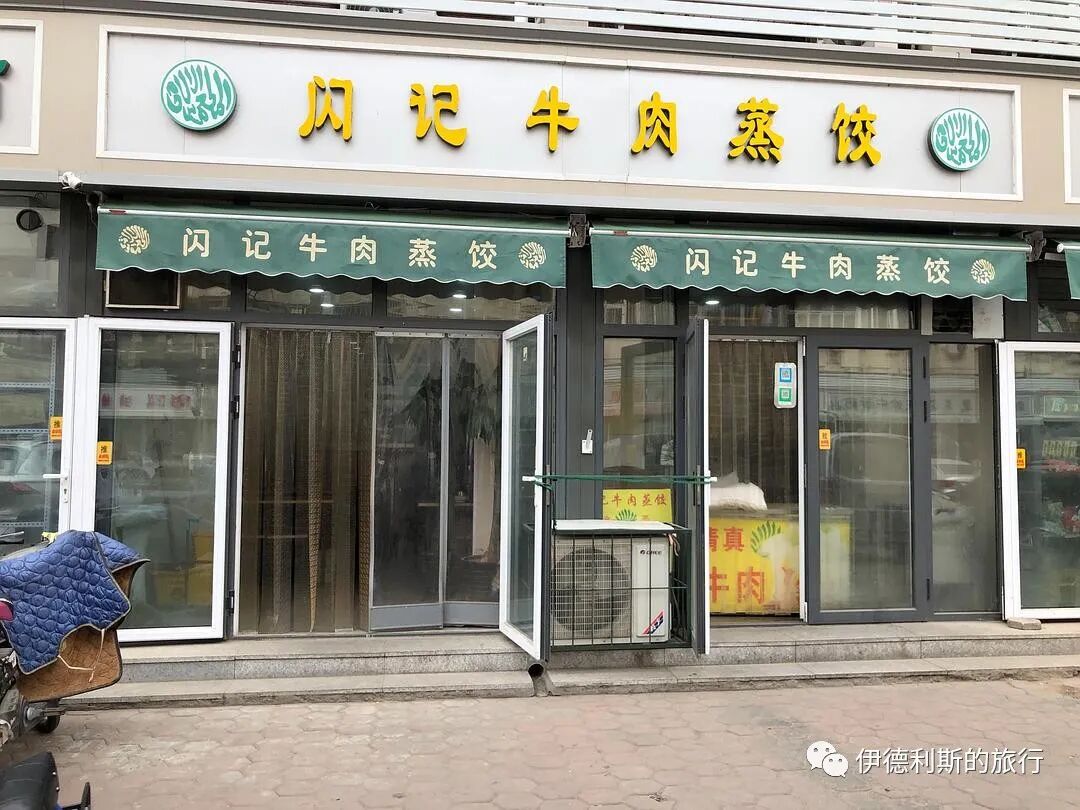
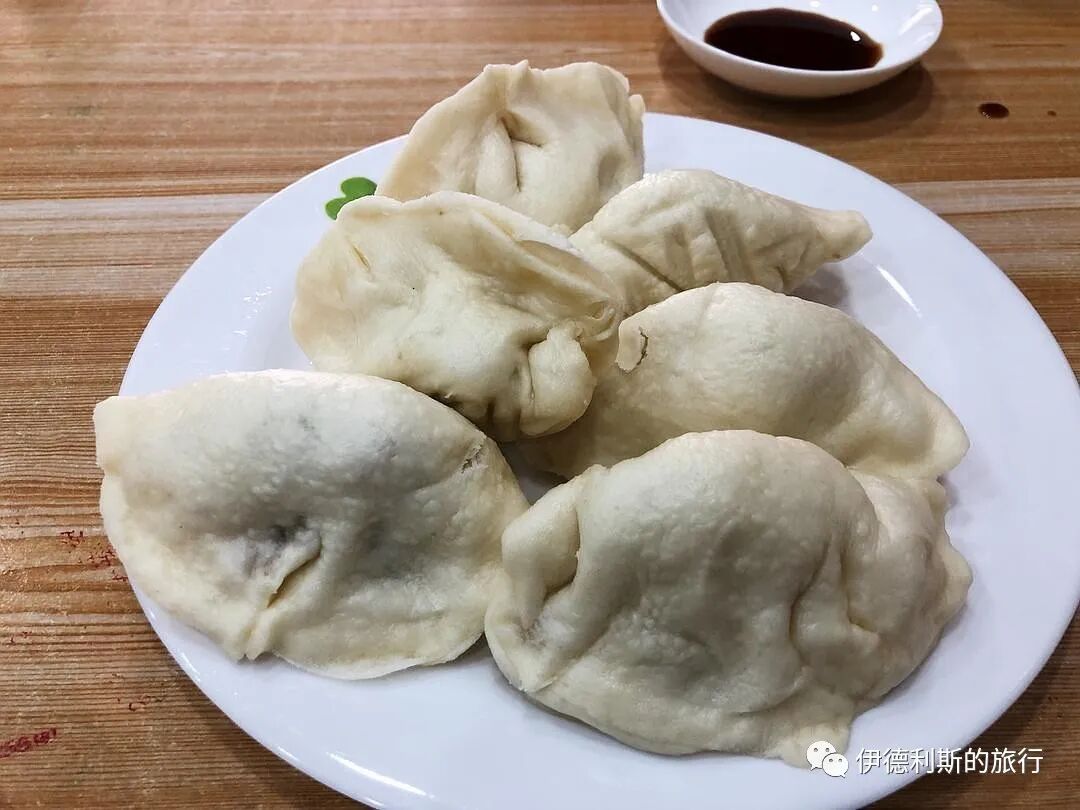
May 2020
I had not left Beijing for three months. When the Chaoyang District finally turned green during the May Day holiday, I quickly went to Tianjin for a visit. Since it was Ramadan, I could not really enjoy the food tour.
I came to the Northwest Corner in the afternoon to shop. I bought dried apple and pineapple and hawthorn strips (jinggaotiao) at Daiji Candy Shop, but unfortunately, I could not find the beef jerky I really like.
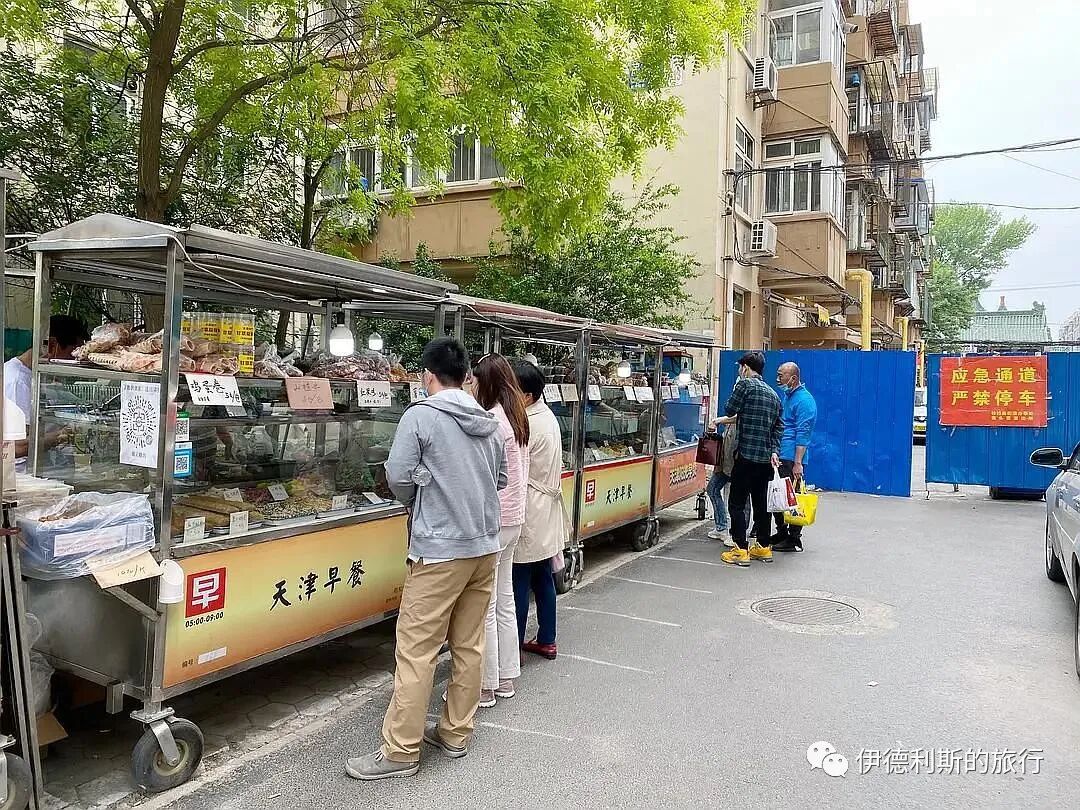
Dates (yezao) for Ramadan
I bought ingredients for sour plum drink (suanmeitang) at Xiaolao Yan Chaolaowei Nut Shop, and I started brewing it as soon as I got home!
Sheep trotters (yangti) and sour plum drink (suanmeitang) bought at Shengfahao
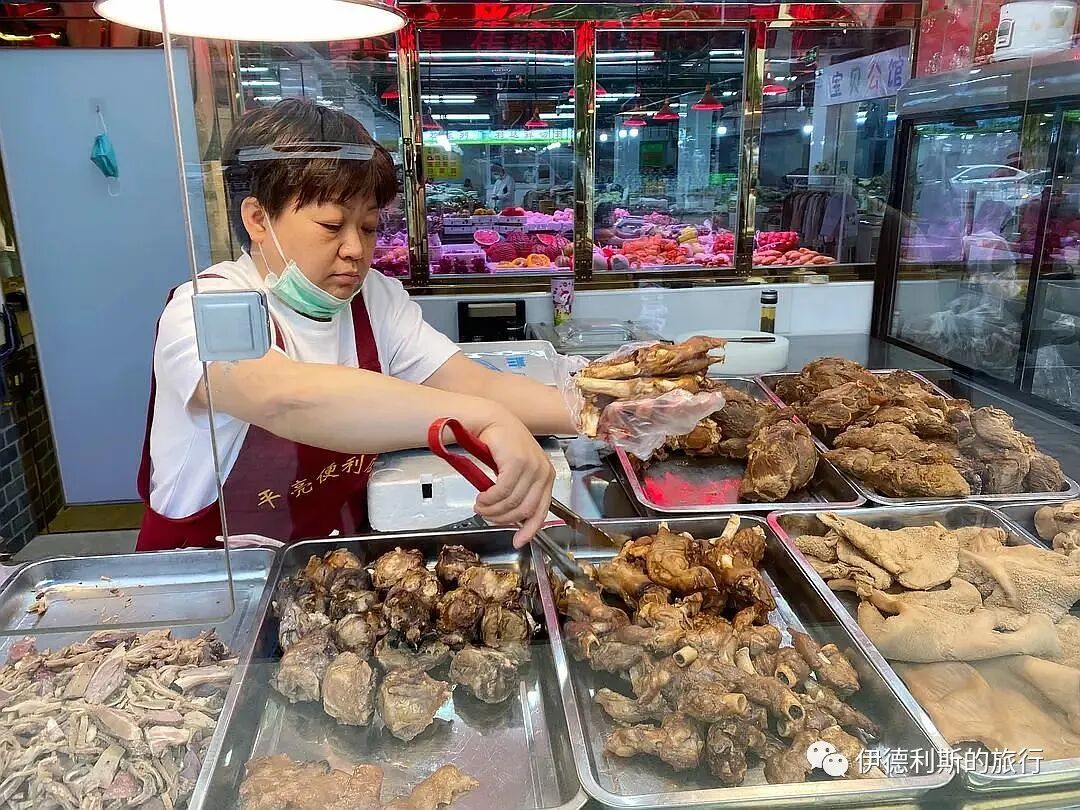
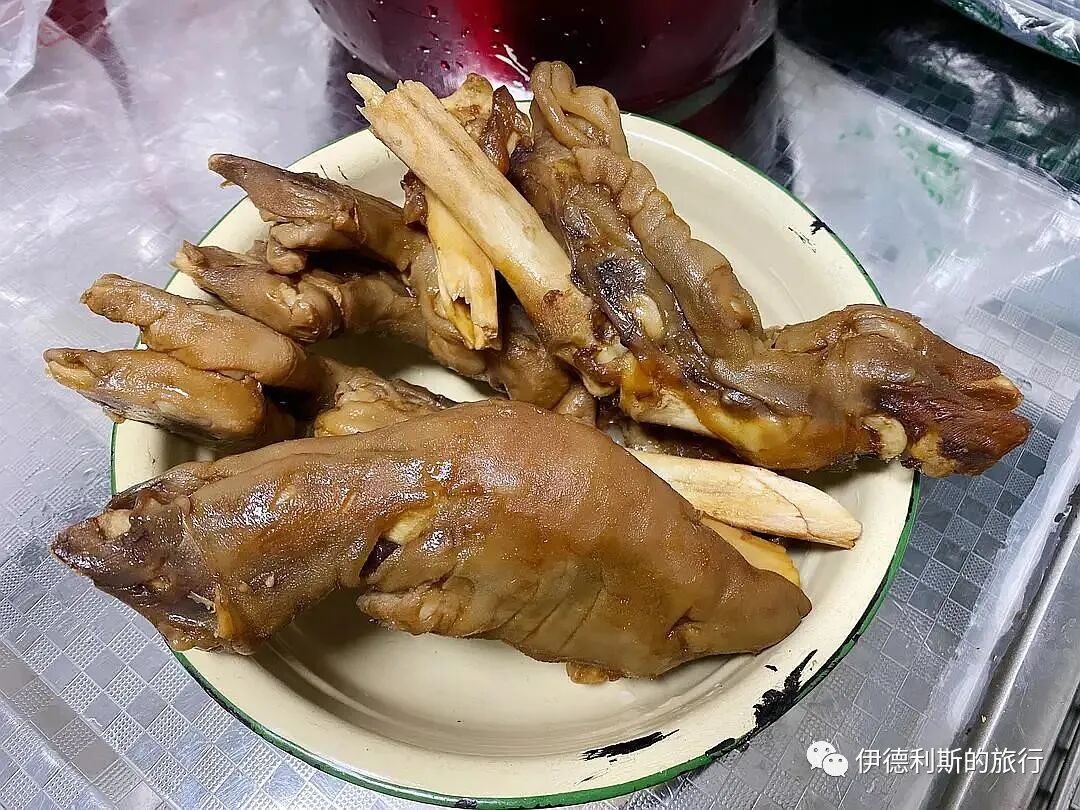
I bought a seaweed rice roll with egg yolk and pork floss at Zhangji Fried Skewers.
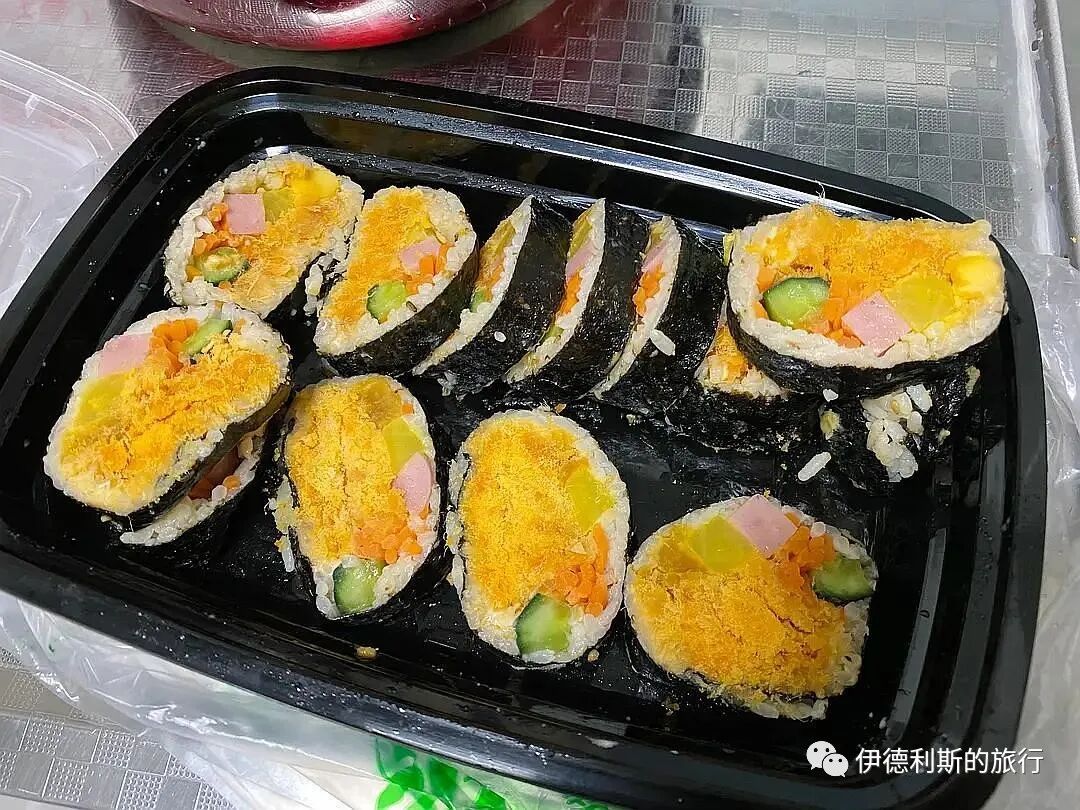
Xiguan Street during the pandemic
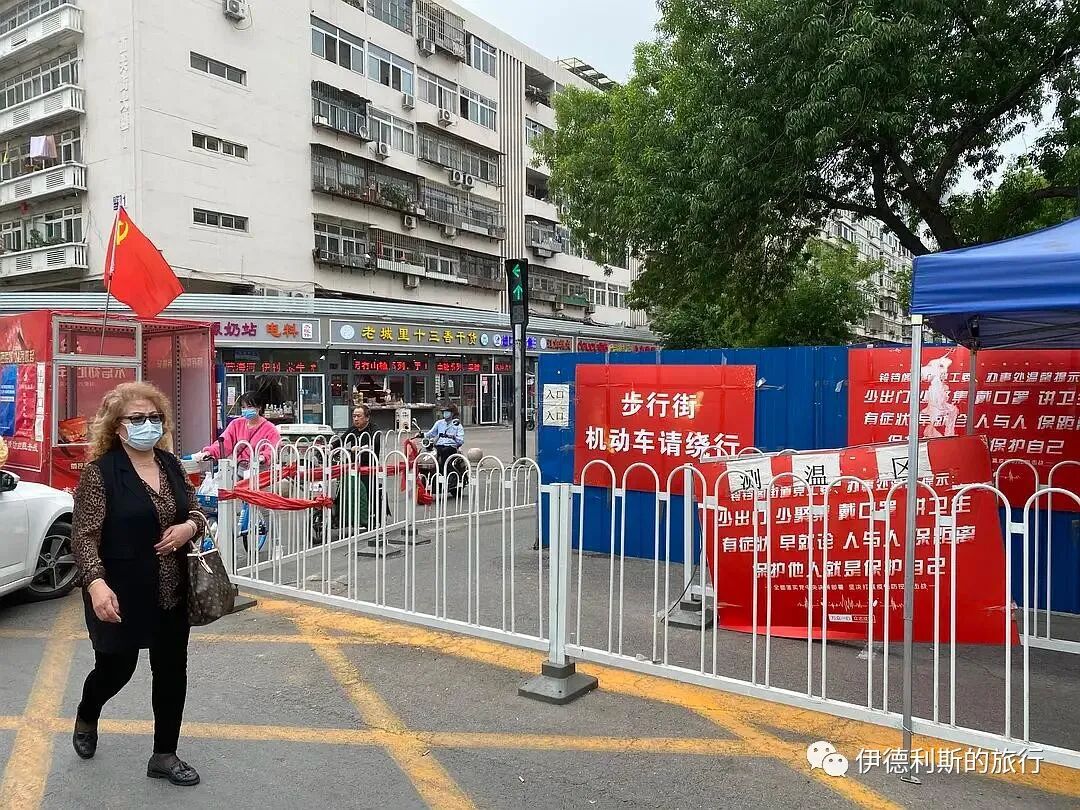
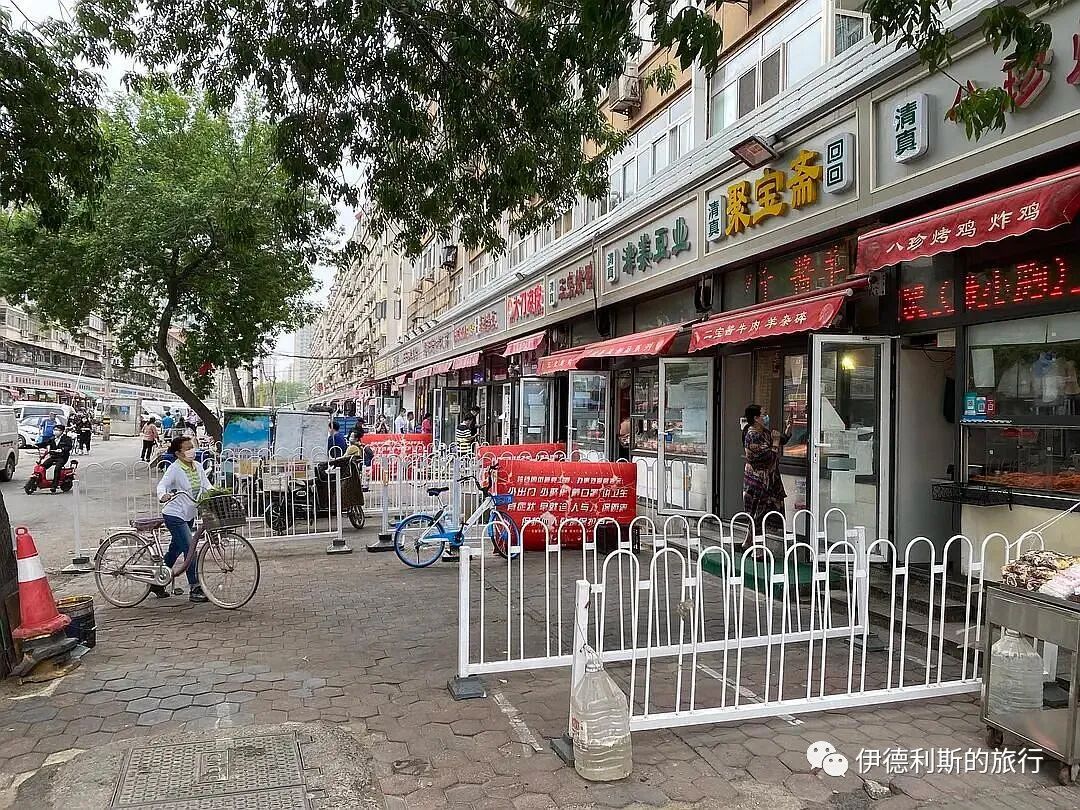
March 2021
On the weekend of March 12, my parents-in-law were in Tianjin, so Zainab and I went there to have a family reunion. This was also my first time leaving Beijing in 2021.
On Saturday morning, the whole family went to the Northwest Corner to have breakfast. We had millet flour porridge (miancha) and starch soup (fentang) at Chenmeizhai, and crispy crepe strips in sauce (guobacai) at Enqingcheng. The line at Zhengweizhai was too long, so we skipped it. It was a pity that the mutton porridge was sold out.
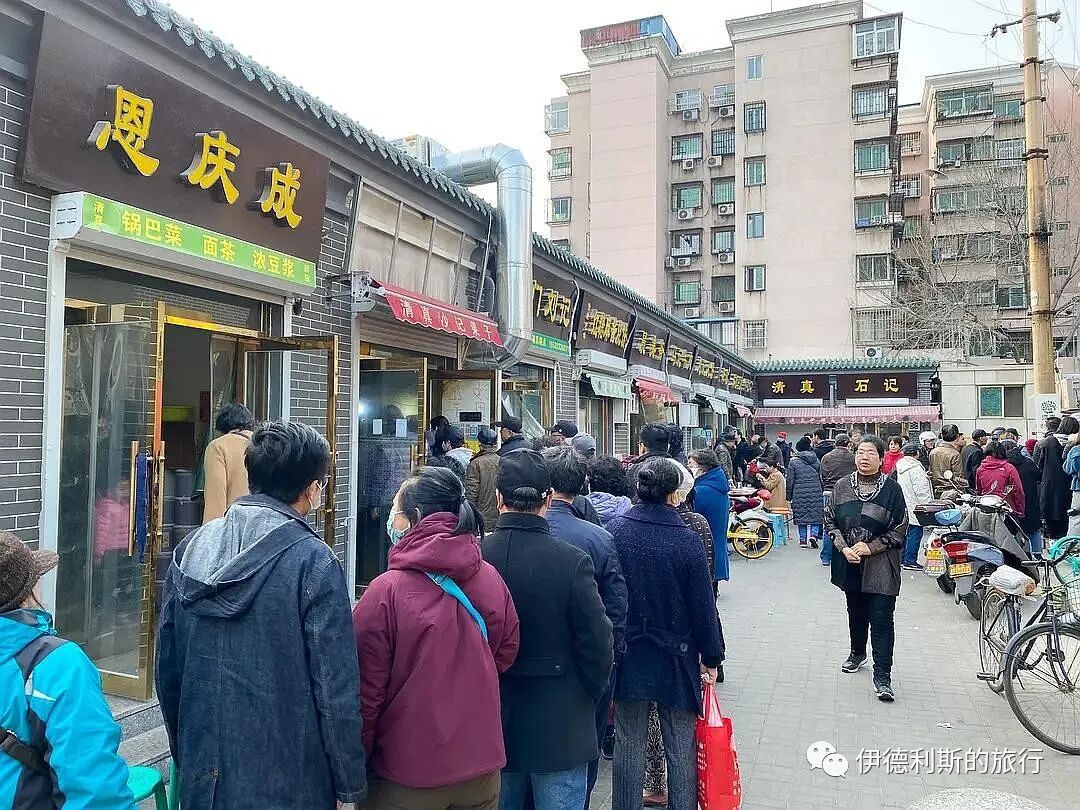
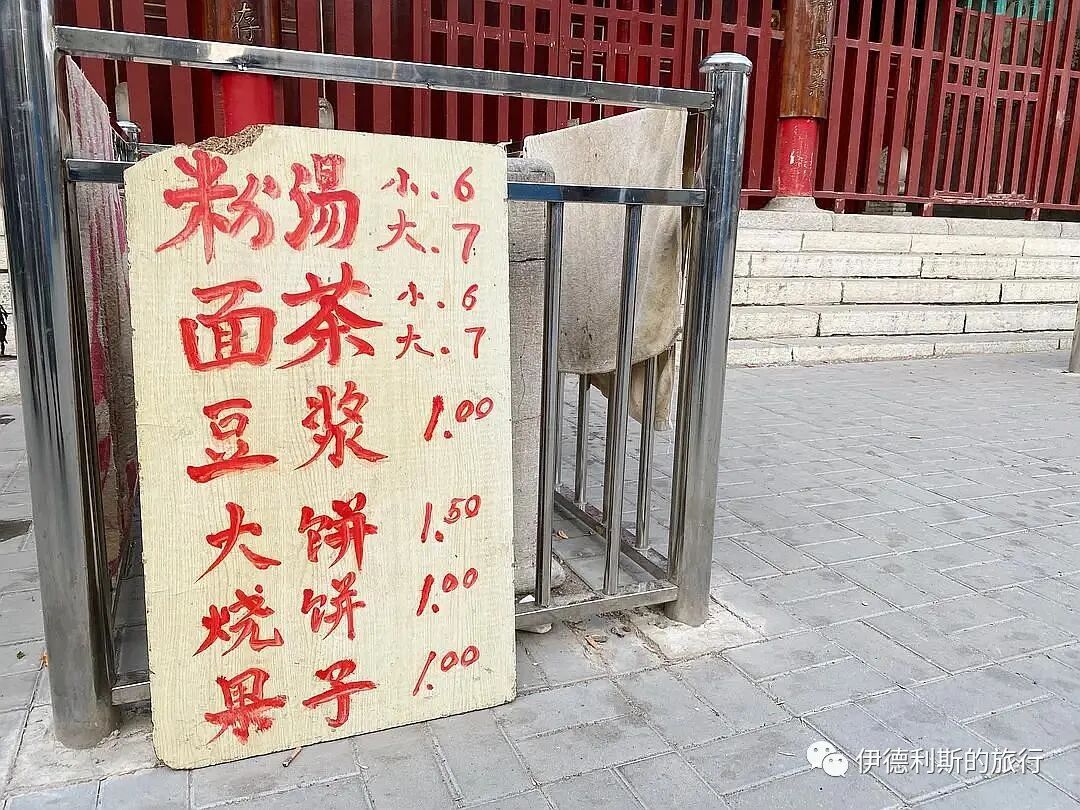
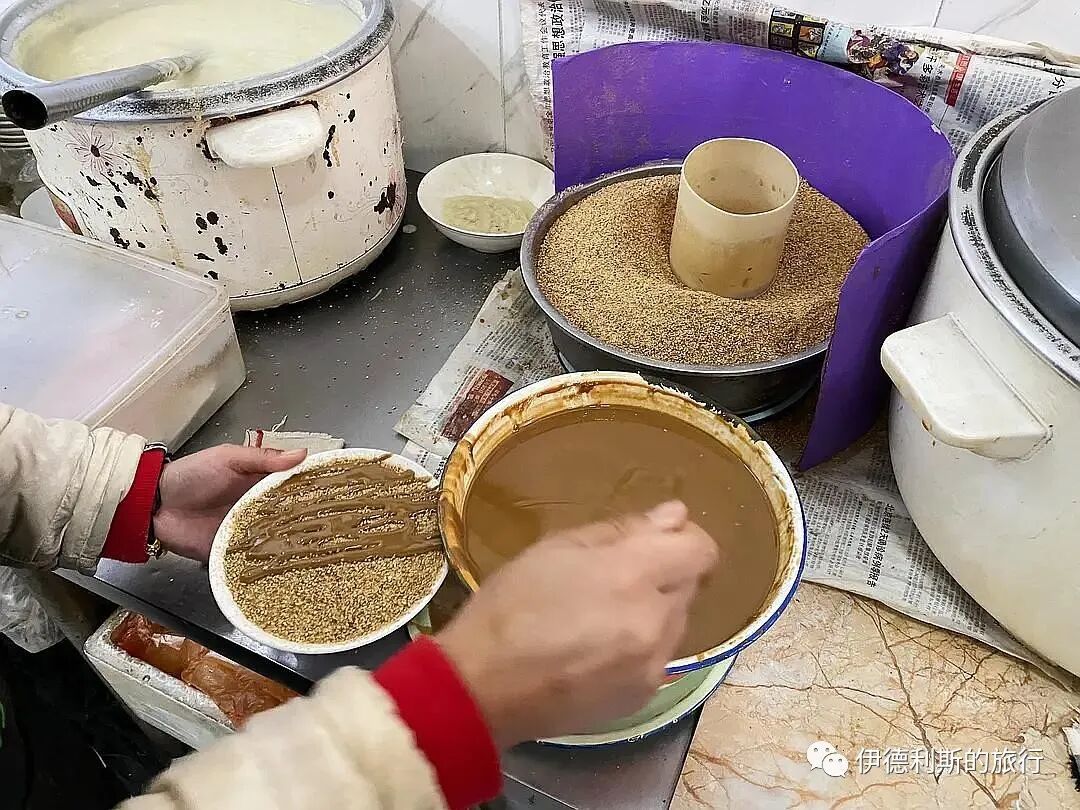
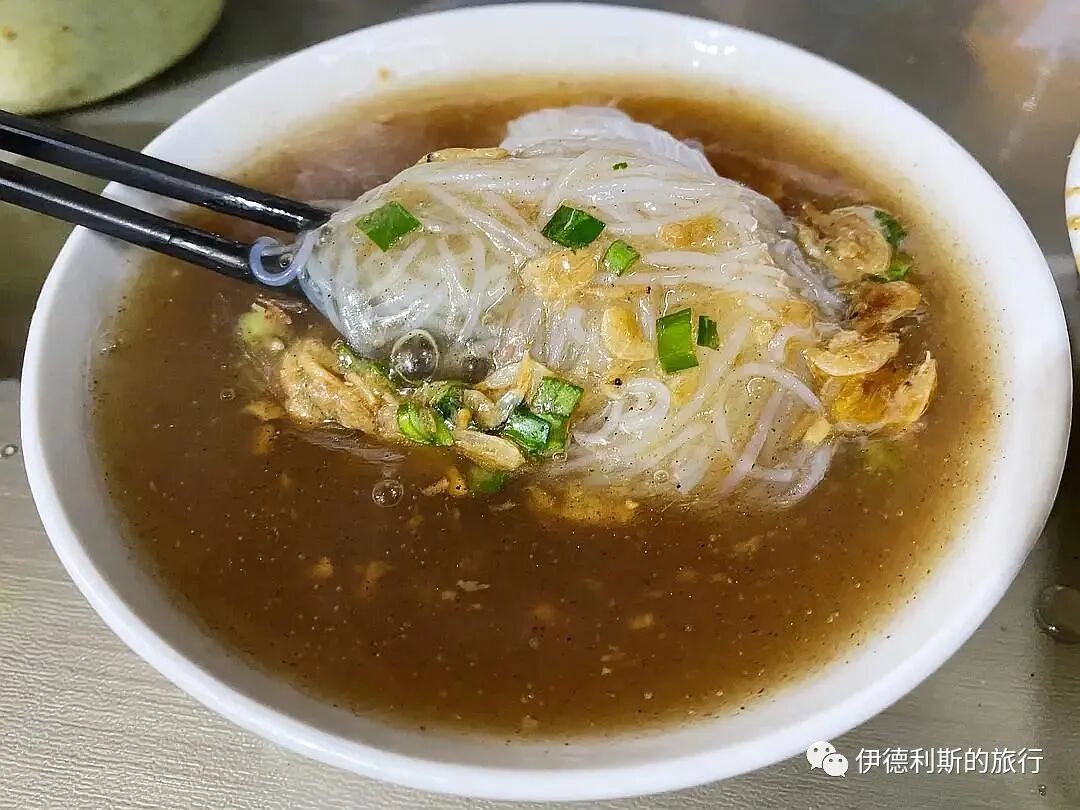
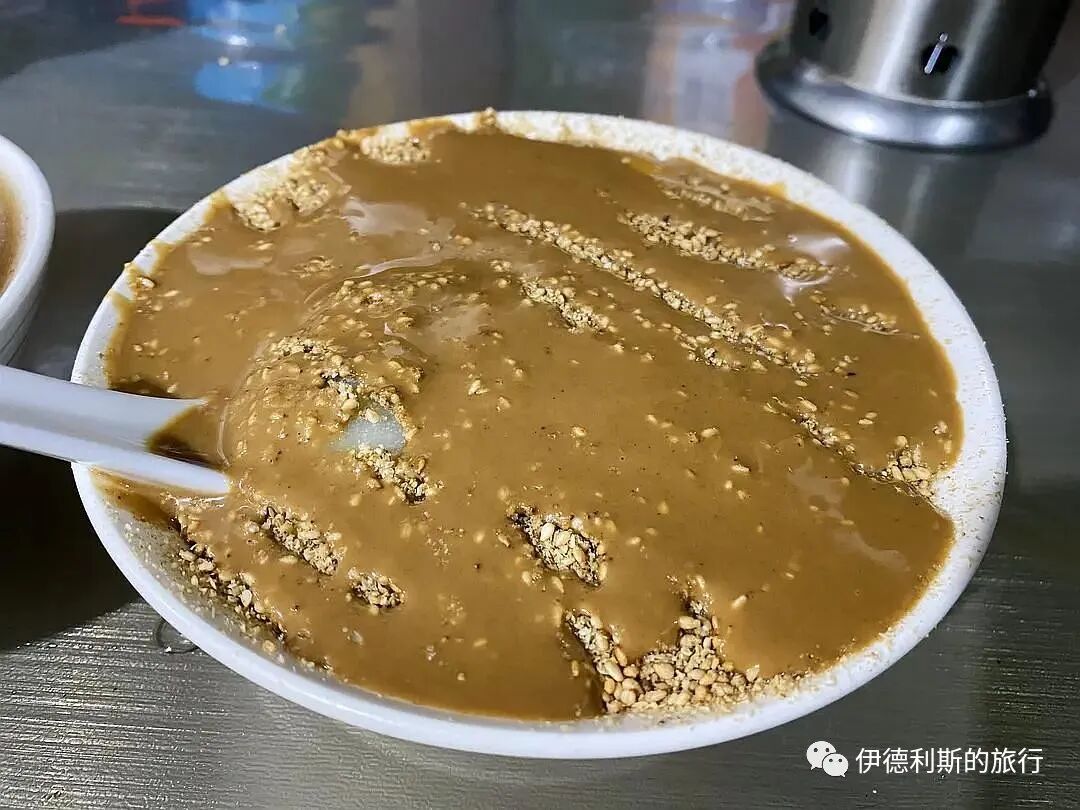
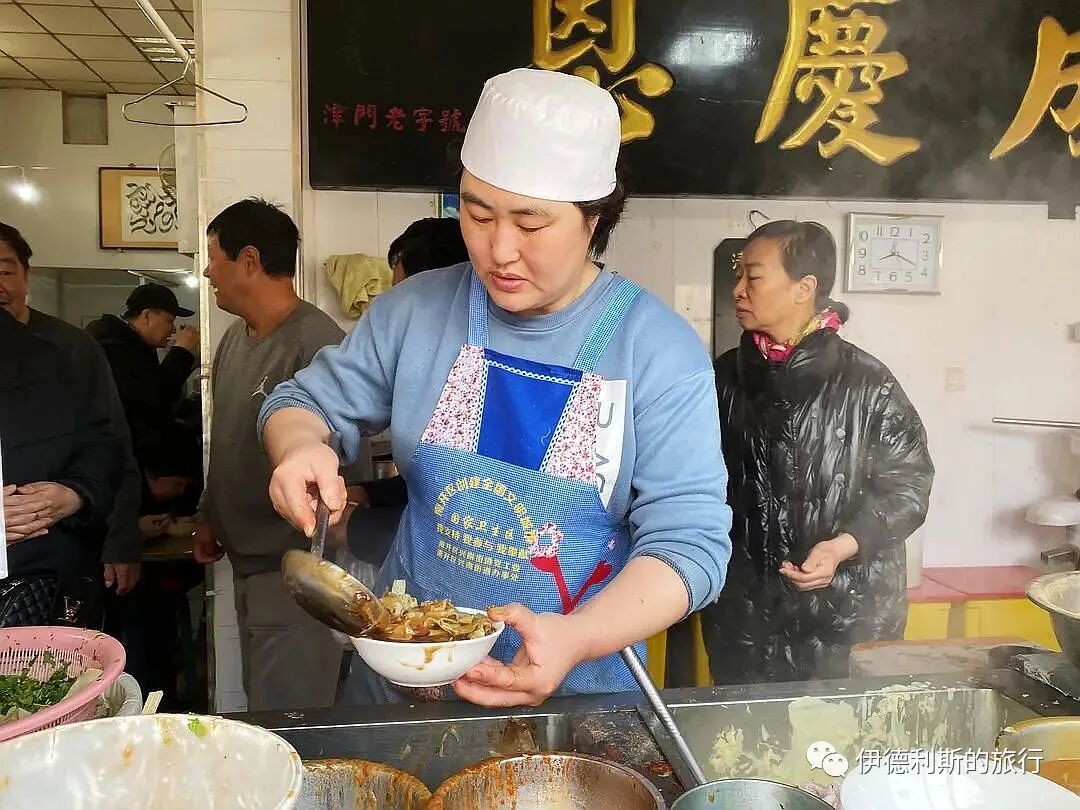
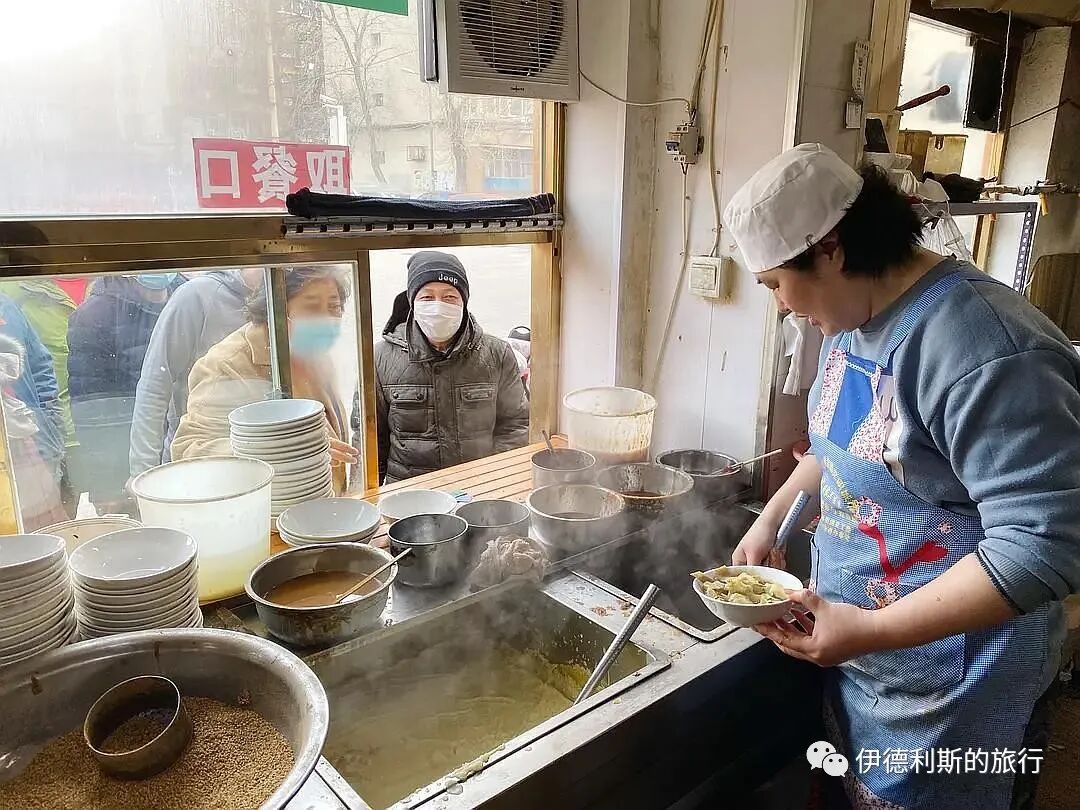
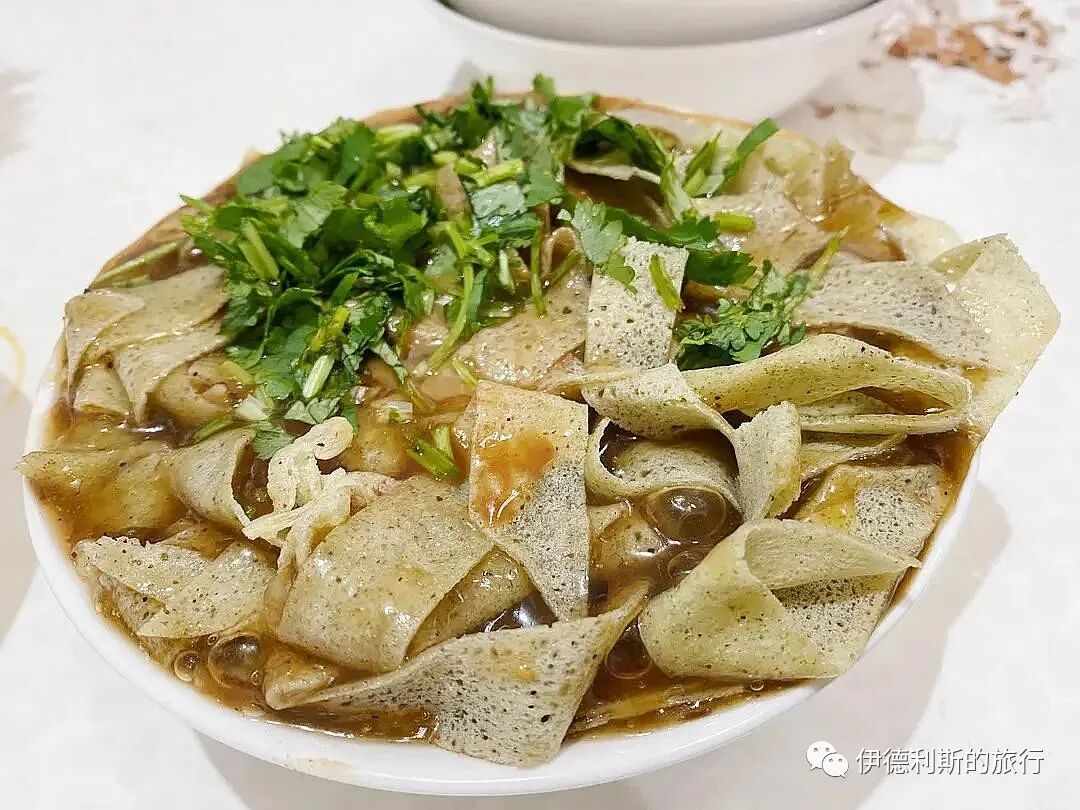
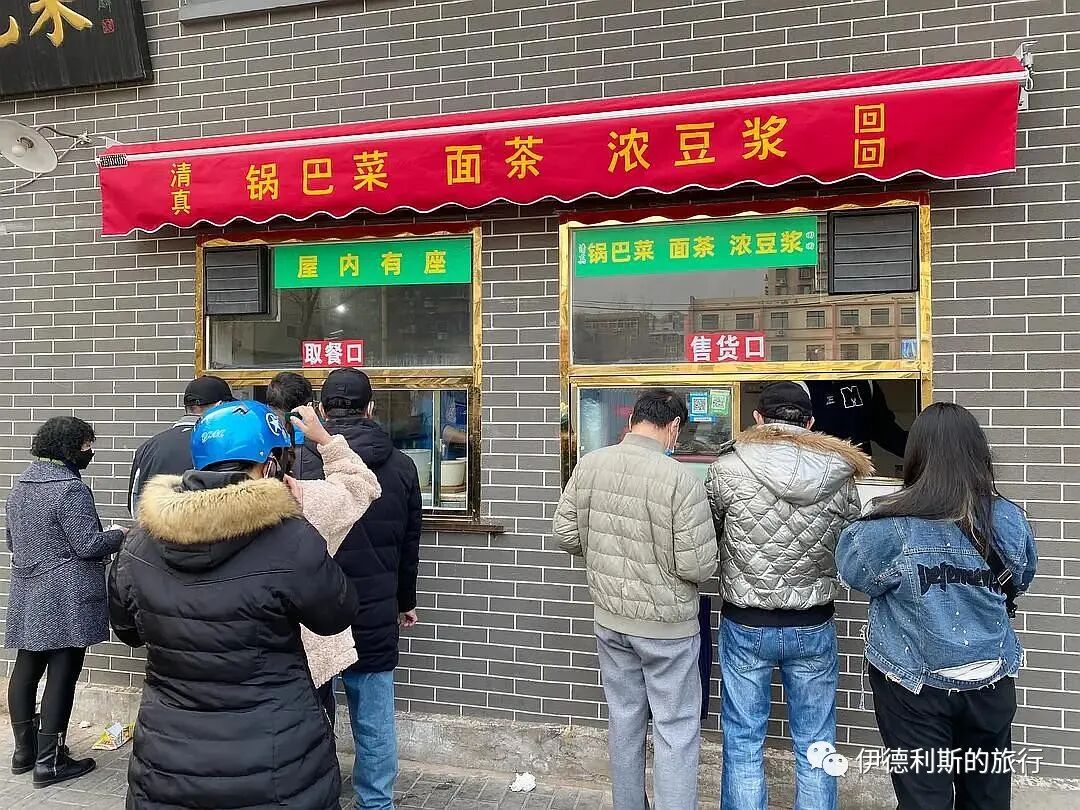
Then we had three-delicacy tofu (sanxian laodoufu) and water caltrop soup (lingjiao tang) at Yishuncheng, fried bean paste rolls (juanquan) at Dingji, and fried cakes (zhagao) at Shengxingzhai.
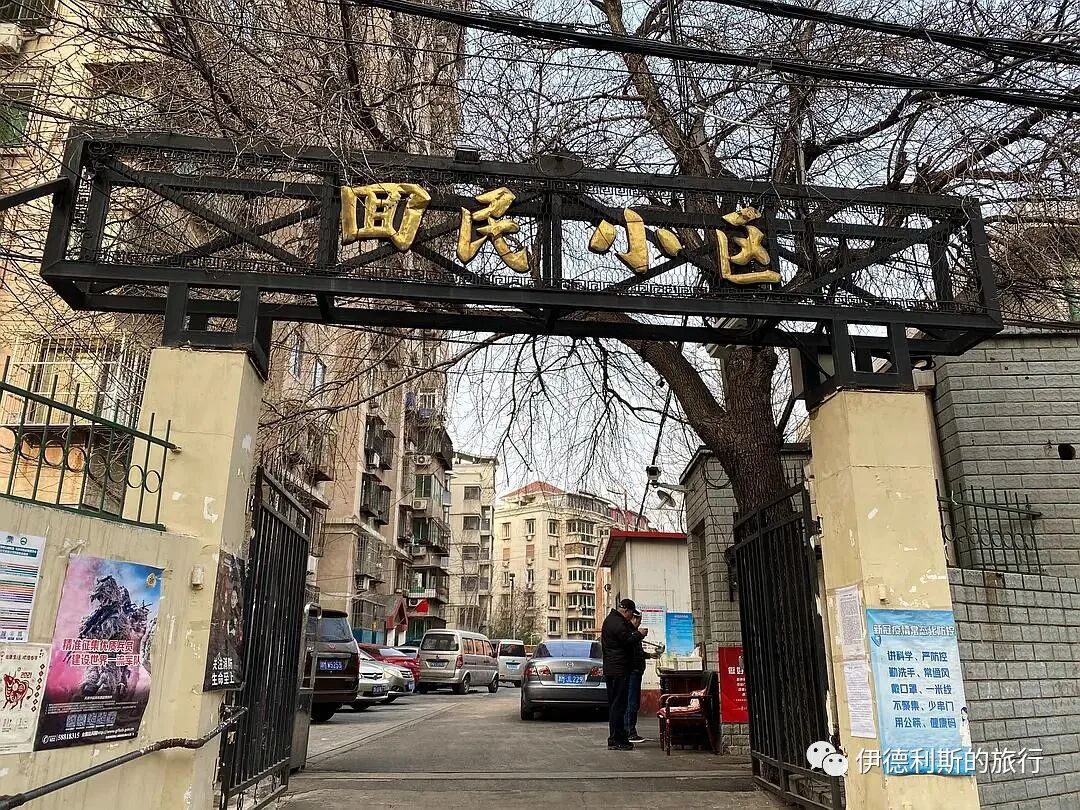
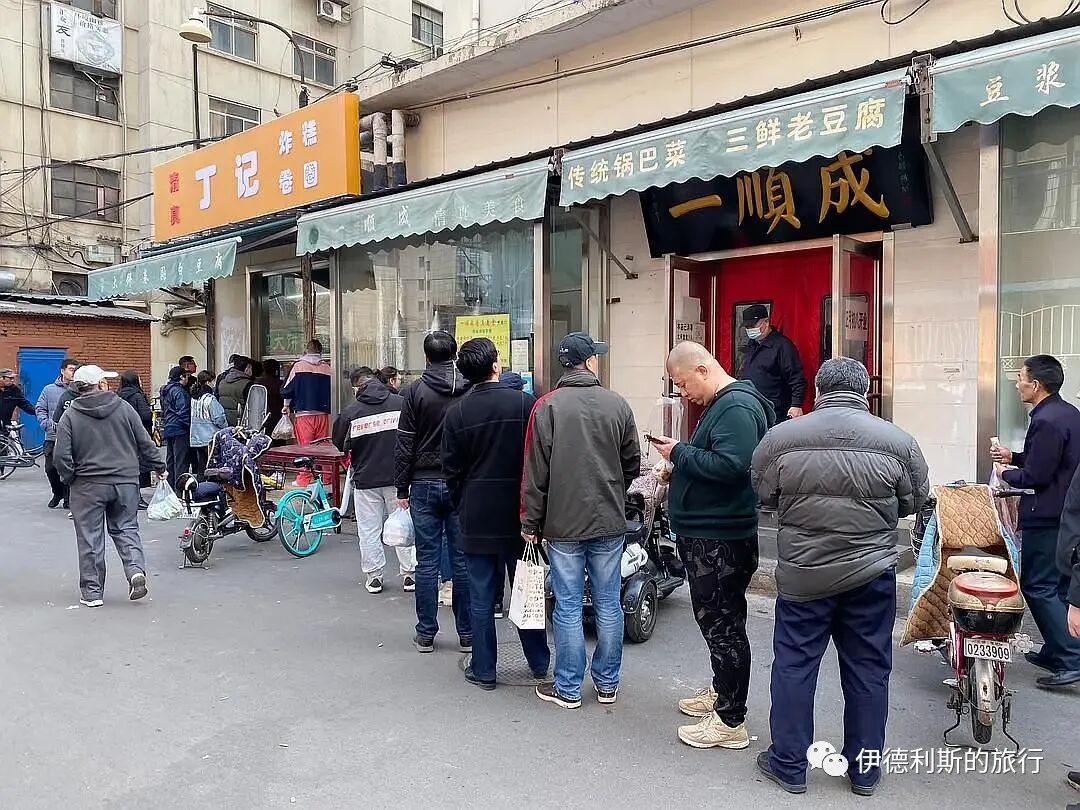
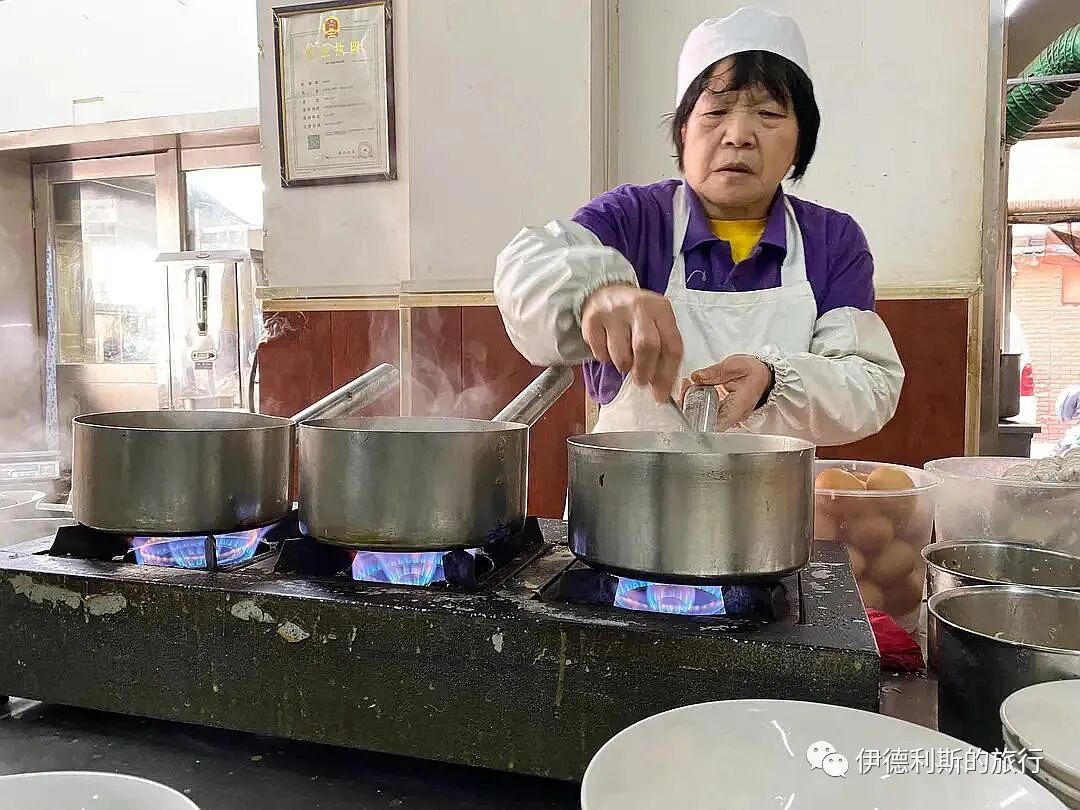
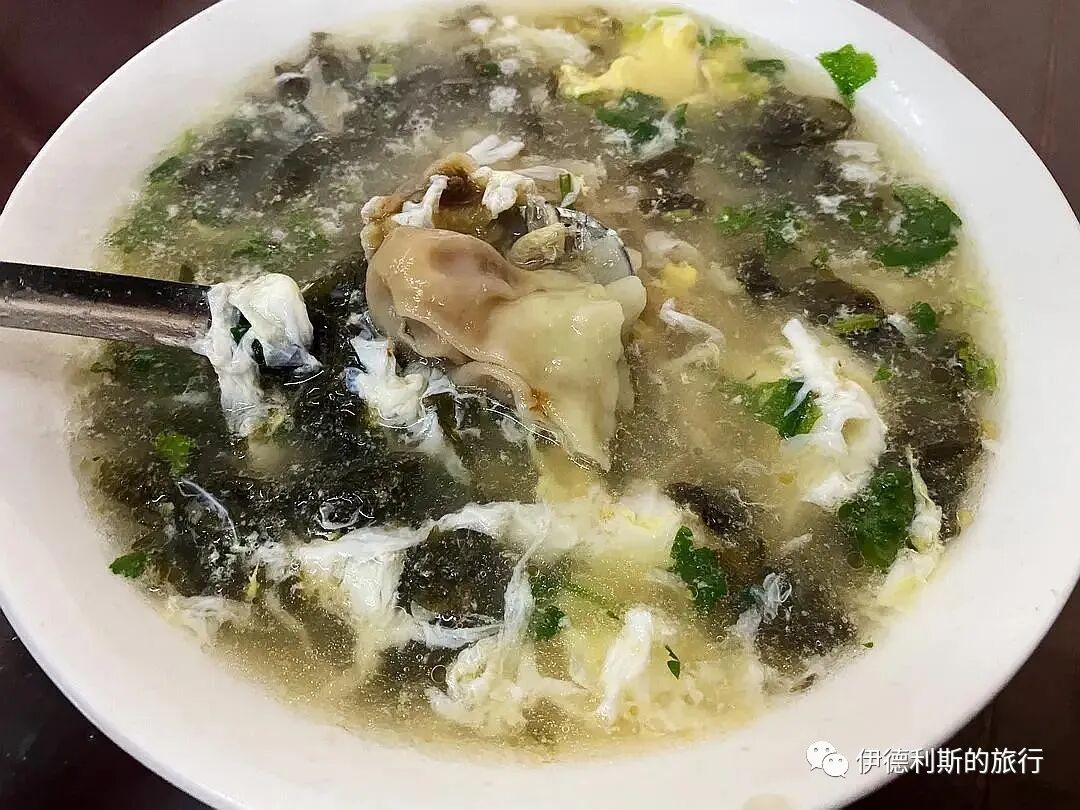
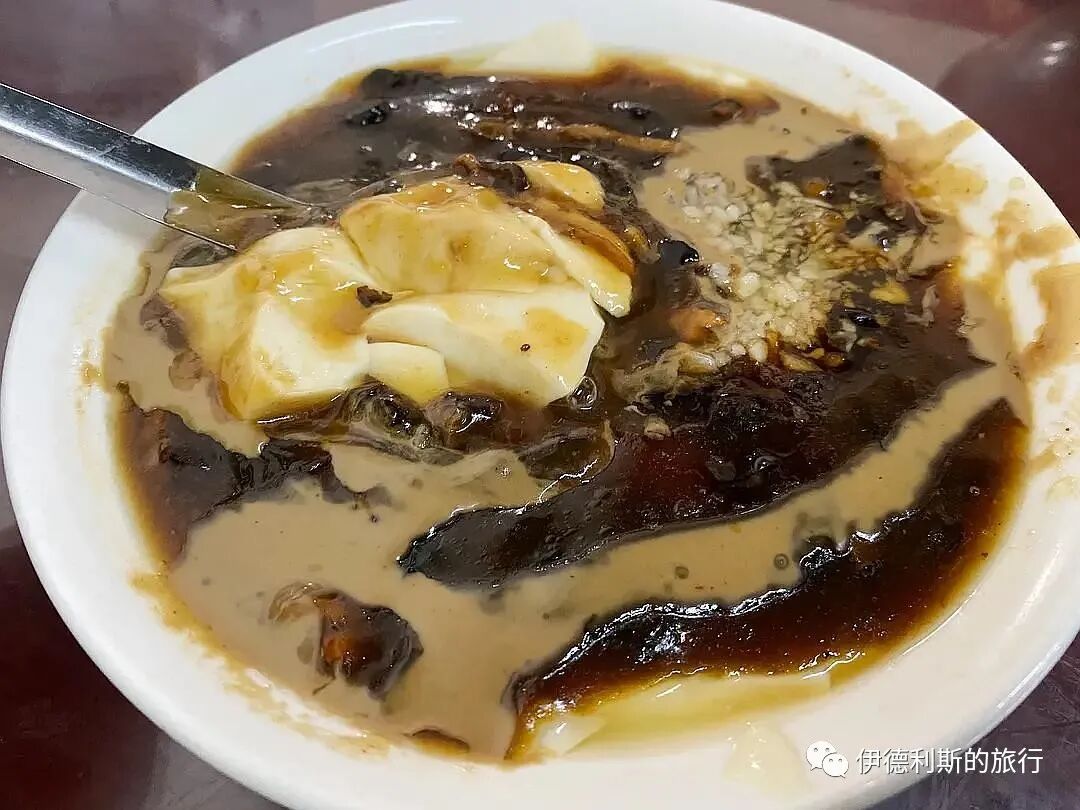
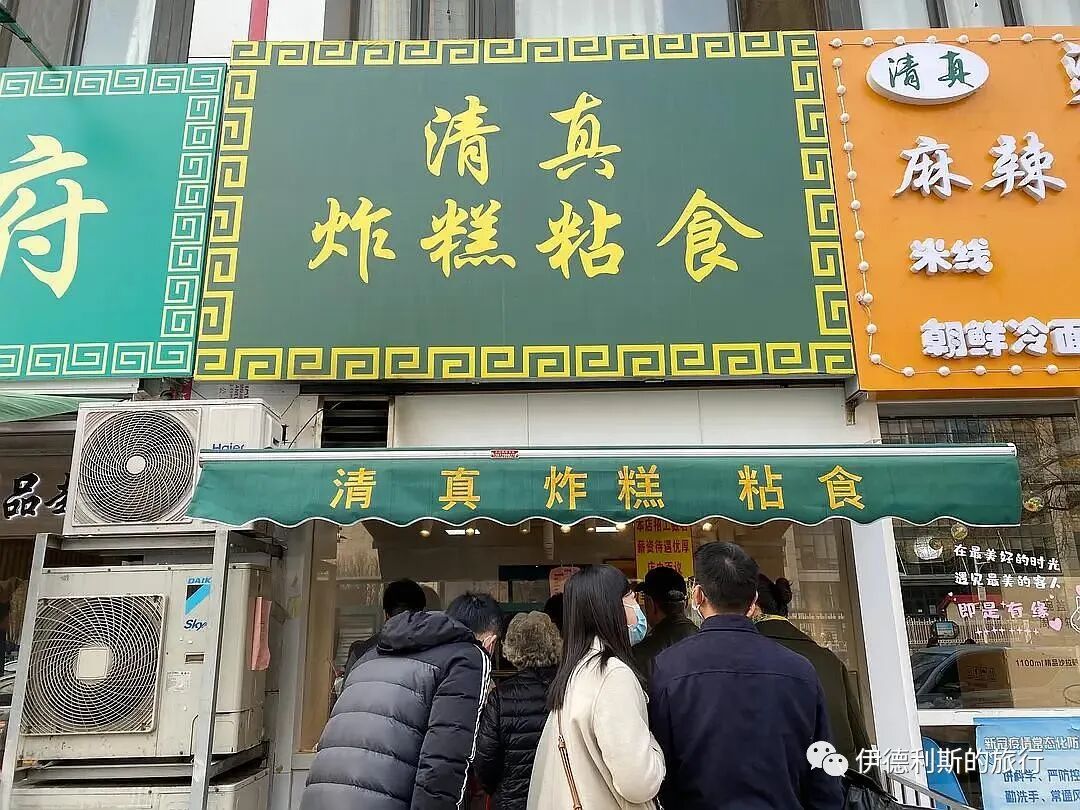
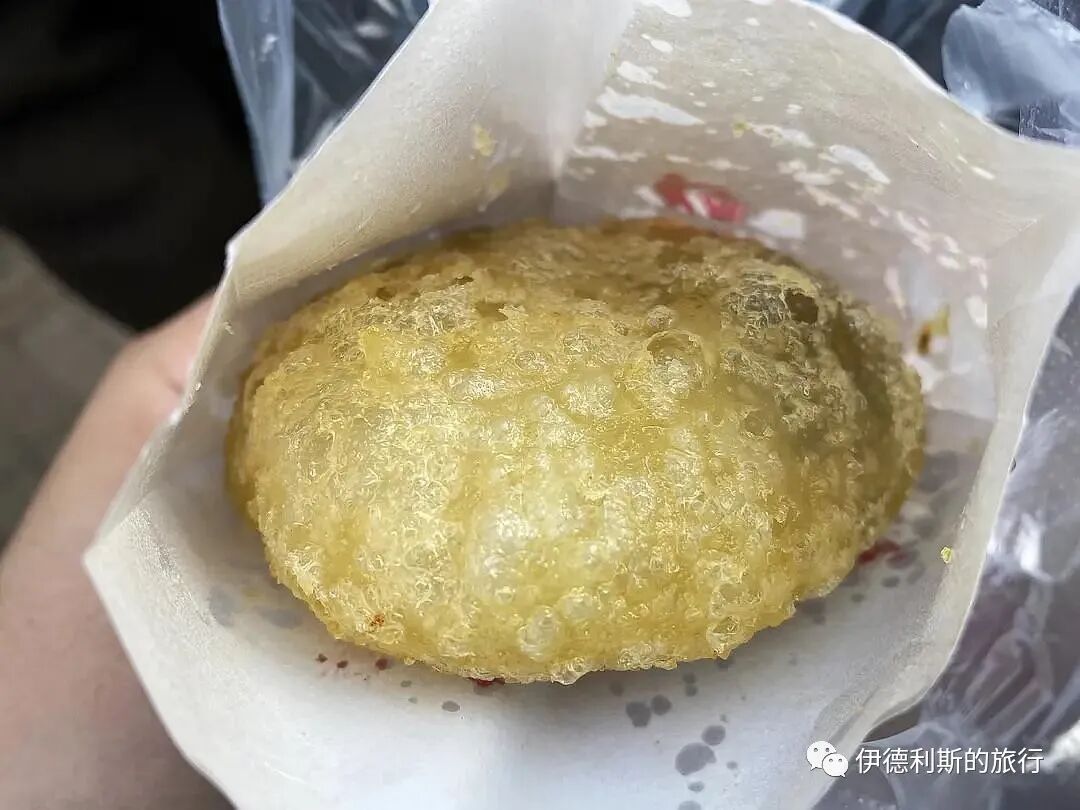
We passed by Guishunzhai.
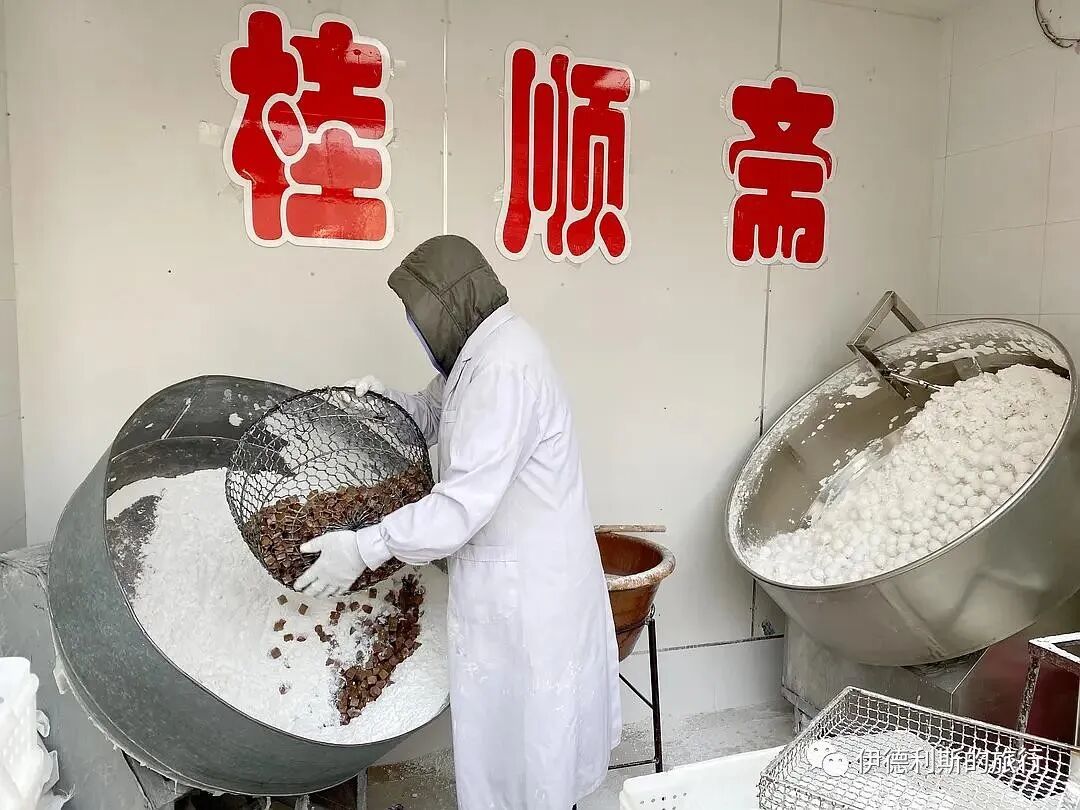
Strolling around the Northwest Corner.
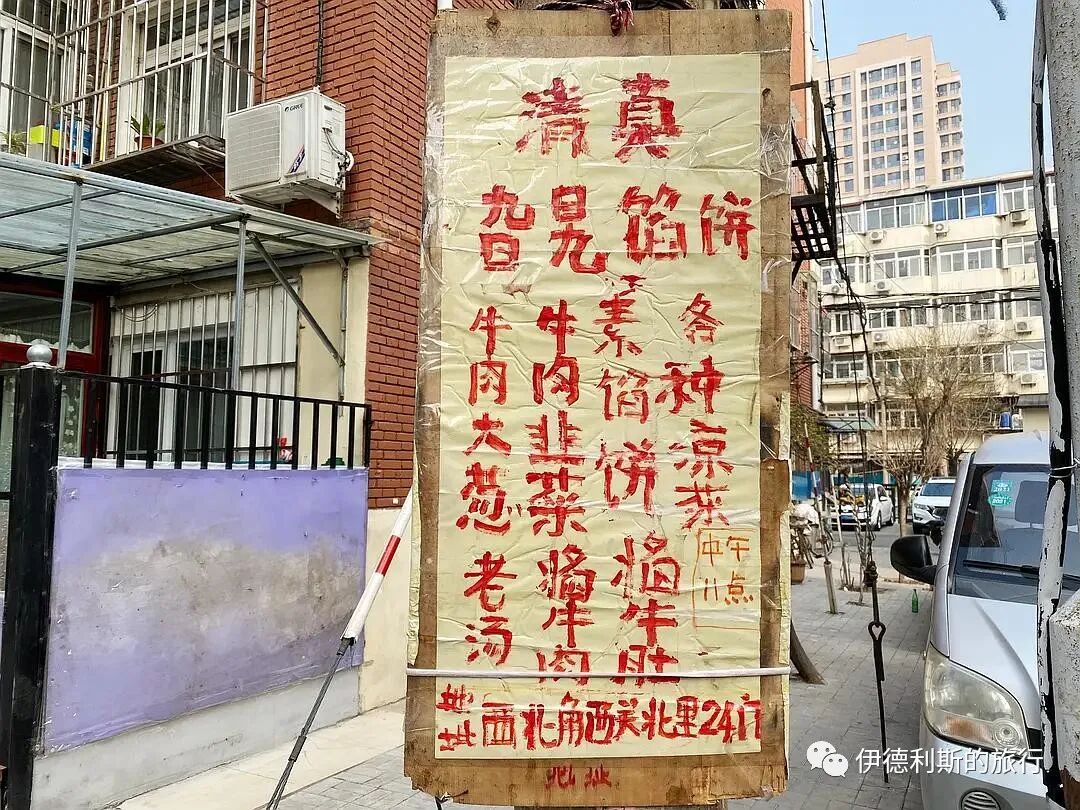
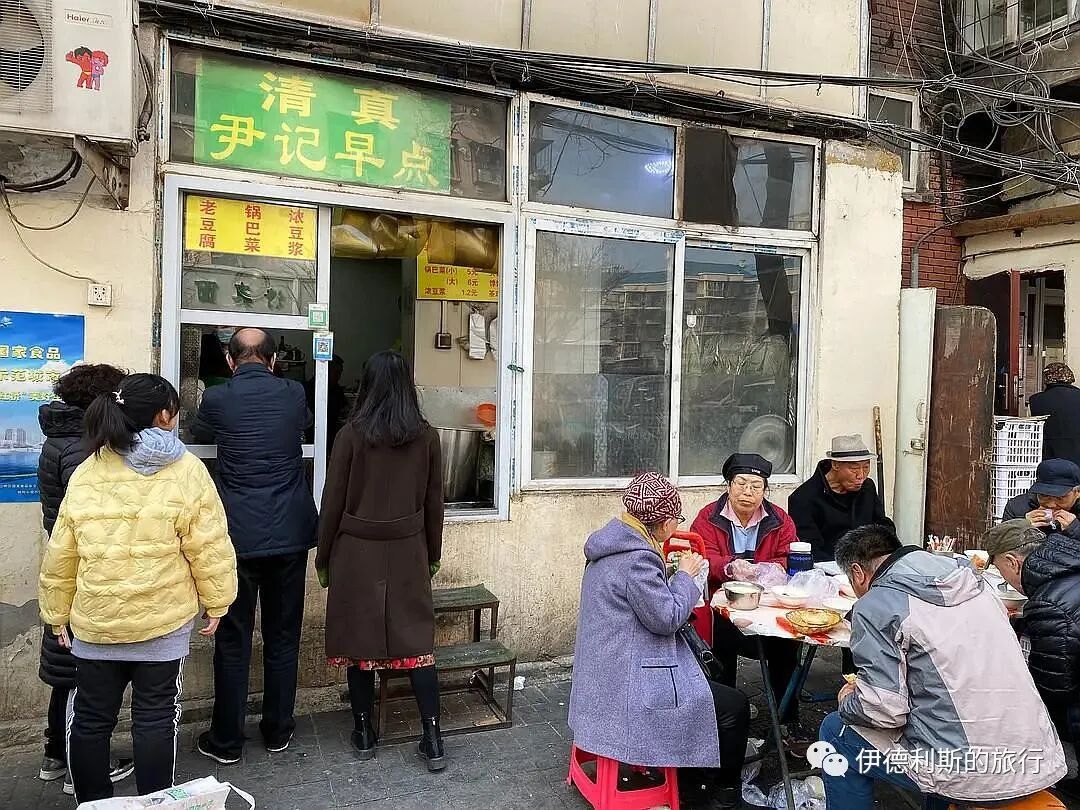
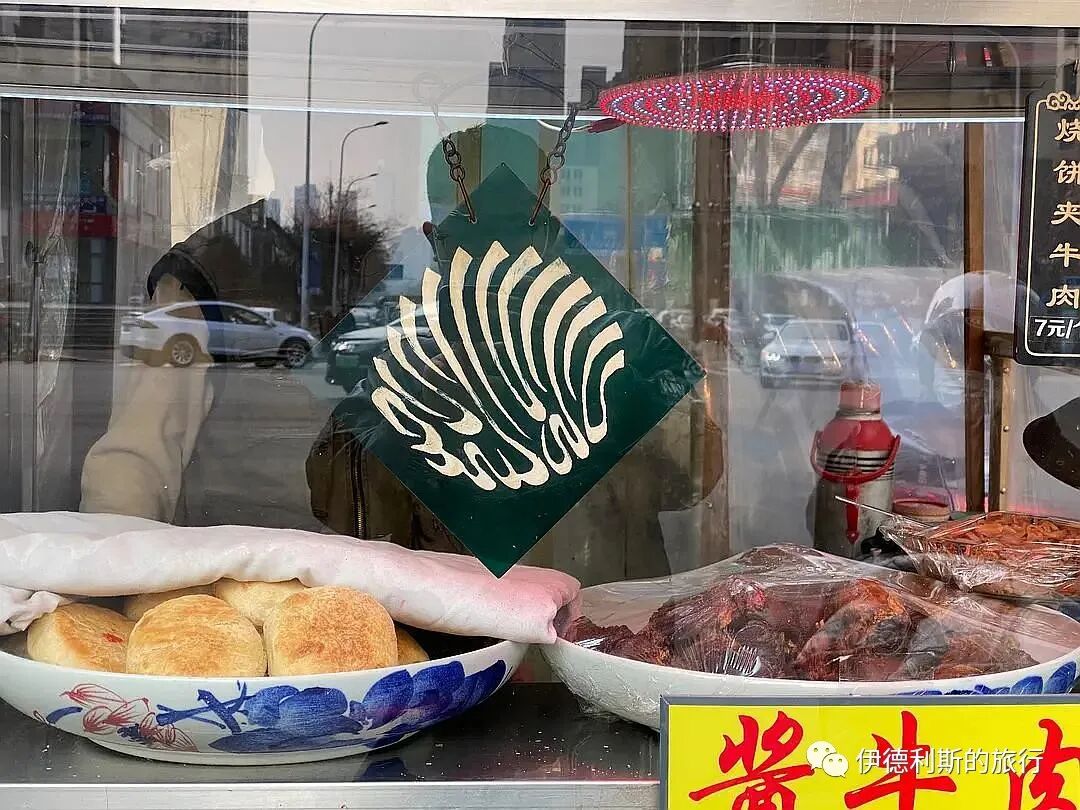
Halal Food Guide Tianjin: Syrian, Yemeni, Tunisian and Algerian Restaurants
Articles • yusuf908 posted the article • 0 comments • 215 views • 2026-05-23 23:23
Summary: This Tianjin food article follows Arabic restaurants representing Syrian, Yemeni, Tunisian, and Algerian cooking. It preserves the original restaurant details, dishes, photos, and travel observations while presenting the account in natural English.
Syrian food: Al-Andalus Restaurant.
We had Levantine food at Al-Andalus Restaurant in the Sunac Center, Nankai District. The owner is Syrian. Al-Andalus was the name Arabs used for the Iberian Peninsula during the Middle Ages. In the 8th century, under the Umayyad dynasty, it was a famous center for economy, culture, academics, and education, serving as a key bridge for cultural and scientific exchange between East and West.
We ordered the four-person feast set. It included lentil soup, cream of mushroom soup, a trio of hummus, lamb samosa (samosa), chicken shawarma (shawarma), four-season pizza, mixed grilled meats, black tea, and a crispy salad. We also ordered yogurt separately. Overall, the food is very authentic. It offers better value than Arab restaurants in Beijing, and you do not have to wait in line. Their yogurt is especially good. It has a rich, tangy milk flavor that beats many Arab restaurants in Beijing. The only downside is that the samosa pastry is a bit thick, more like the South Asian version than the thin-crust Levantine style.
Yemeni food: Socotra.
Socotra is an island in the Arabian Sea, southeast of Yemen. In the Ming Dynasty, the Zheng He navigation charts called it Sugudala. Socotra Island became a World Natural Heritage site in 2008 and is famous for its dragon blood trees. The Socotra restaurant logo is a dragon blood tree, and photos of the trees hang in the shop.
We ordered the specialty soup, chicken lentil soup, lamb zurbian (zurbian) rice, mushakkal (mushakkal) stir-fried vegetables, fahsa (fahsa) beef stew, banana mango juice, and khubz (khubz) flatbread. Zurbian rice is similar to Indian biryani, as both are stir-fried with various spices. Their lamb is grilled and very fragrant, but we found the rice a bit dry. It also contained small bone fragments, so be careful if feeding children.
When visiting a Yemeni restaurant, you must try the classic Yemeni dish, fahsa beef stew. Fahsa is usually made with lamb, but they use beef. The meat is stewed until very tender, first in a large vat and then finished in a small pot. Besides ginger, garlic, and cumin, the stew requires a spice called fenugreek (hulbah). Fenugreek is what people in Northwest China often call xiangdouzi (bitter beans). Northwesterners dry the leaves and grind them into powder to steam buns, while Yemenis grind the seeds to stew meat. Fenugreek seeds expand in water and easily foam up when stirred in a bowl.
The classic pairing for fahsa is mulawah (mulawah) Yemeni bread, but they require you to order it in advance. We could only get khubz flatbread at the restaurant. Khubz is essentially the pita bread found in Levantine cuisine. Their version was quite hard and, honestly, not very tasty.
Algerian tea and snacks: Lyn's Healthy Bakeshop.
We had Algerian afternoon tea at Lyn's Healthy Bakeshop on Chifeng Road in Tianjin. Chifeng Road is in the former French Concession area. There are many small Western-style buildings here, along with all kinds of little restaurants.
The owner is from Algeria and opened a small shop here for tea and desserts. It is likely the first Algerian restaurant in China. It is impressive to see Tianjin leading the way in international dining again!
You can order à la carte or choose an afternoon tea set. They serve both traditional Algerian desserts and Western pastries. They use maple syrup instead of white sugar for a healthier approach. This is probably the least sweet Arabic dessert shop I have ever visited!
We drank Algerian mint tea and an Algerian orange blossom lemonade called Sherbet Mazhar. The mint tea is brewed to order, so it takes a while. It has a very strong aroma, but since it is freshly brewed, you cannot get refills. Orange blossom water is definitely a signature Algerian drink, especially classic at wedding feasts in northern Algeria. This drink is made from orange blossom water distilled from bitter orange blossoms, mixed with syrup and water. It is very refreshing in the summer.
We ate Algerian baklava (Baklawa), apple pie, milk pudding (M'halbi), and cheesecake. Suleiman loved the cheesecake the most. Baklava was introduced to Algeria from Turkey during the Ottoman period. The Algerian version adds crushed almonds and orange blossom water, so the taste is different from the Turkish one.
Milk pudding (M'halbi) is a classic Middle Eastern dessert for breaking the fast and is most popular during Ramadan. The name M'halbi comes from Al-Muhallab, a governor of Khorasan during the Umayyad Caliphate. Legend says he once had a stomachache, and his doctor fed him rice flour cooked with milk and sugar. He liked it so much that he named the dessert after himself.
Finally, the food here is excellent, though the decor is a bit simple. If they could highlight the Algerian theme more, this place would definitely become a new trendy spot in Tianjin.
Tunisian food: Sidi Bou Said.
There is a Tunisian restaurant called Sidi Bou Said (Blue and White Town) in Aocheng Plaza where you can eat Tunisian food. The shop is small. The owner is Chinese, and the head chef is Tunisian. Since there is only one chef, service might be slow when it is busy. It is best to call ahead and book a table. We were the only table when we went, so our meal went quite smoothly.
The name Sidi Bou Said comes from a small Mediterranean town northeast of Tunis. It is named after the famous Sufi saint Abu Said al-Baji, who is buried there. In the 1920s, the French painter and musician Baron Rodolphe d'Erlanger introduced the blue and white color scheme, turning it into a famous tourist destination in Tunisia.
We ordered the 3-4 person set, which included tuna fried triangles (Brick), North African eggs (Shakshouka), lamb stew, pasta with meat sauce, and a dessert called Kunafa. They served mint tea first, which is very Tunisian. Then they brought the Brick. It is a classic Tunisian snack filled with tuna, minced meat, a raw egg, and harissa chili paste, wrapped in a very thin pastry called Malsouka. The North African eggs are made with eggs, tomatoes, olive oil, harissa, and onions, then sprinkled with cumin and chili powder. Tomatoes were not actually introduced to Tunisia from the Middle East until the late Ottoman period. Turkey has an appetizer with the same name, shakshuka (Şakşuka), but it does not contain eggs.
Their lamb leg is stewed until very tender and falls right off the bone, which is perfect for children. The lamb leg sits on a bed of mashed potatoes, which are soft and delicious. The pasta uses an Italian meat sauce (Bolognese), but it seems to be made with hand-rolled noodles. It ends up tasting a lot like the dry meat sauce noodles (saozi mian) eaten by Hui Muslims in Xinjiang. Their kunafa (kunafa) is delicious, and it is a low-sugar version that suits the Chinese palate. Kunafa appears in One Thousand and One Nights, and legend says it was invented by an Arab caliph for breaking the fast. view all
Summary: This Tianjin food article follows Arabic restaurants representing Syrian, Yemeni, Tunisian, and Algerian cooking. It preserves the original restaurant details, dishes, photos, and travel observations while presenting the account in natural English.
Syrian food: Al-Andalus Restaurant.
We had Levantine food at Al-Andalus Restaurant in the Sunac Center, Nankai District. The owner is Syrian. Al-Andalus was the name Arabs used for the Iberian Peninsula during the Middle Ages. In the 8th century, under the Umayyad dynasty, it was a famous center for economy, culture, academics, and education, serving as a key bridge for cultural and scientific exchange between East and West.
We ordered the four-person feast set. It included lentil soup, cream of mushroom soup, a trio of hummus, lamb samosa (samosa), chicken shawarma (shawarma), four-season pizza, mixed grilled meats, black tea, and a crispy salad. We also ordered yogurt separately. Overall, the food is very authentic. It offers better value than Arab restaurants in Beijing, and you do not have to wait in line. Their yogurt is especially good. It has a rich, tangy milk flavor that beats many Arab restaurants in Beijing. The only downside is that the samosa pastry is a bit thick, more like the South Asian version than the thin-crust Levantine style.
Yemeni food: Socotra.
Socotra is an island in the Arabian Sea, southeast of Yemen. In the Ming Dynasty, the Zheng He navigation charts called it Sugudala. Socotra Island became a World Natural Heritage site in 2008 and is famous for its dragon blood trees. The Socotra restaurant logo is a dragon blood tree, and photos of the trees hang in the shop.
We ordered the specialty soup, chicken lentil soup, lamb zurbian (zurbian) rice, mushakkal (mushakkal) stir-fried vegetables, fahsa (fahsa) beef stew, banana mango juice, and khubz (khubz) flatbread. Zurbian rice is similar to Indian biryani, as both are stir-fried with various spices. Their lamb is grilled and very fragrant, but we found the rice a bit dry. It also contained small bone fragments, so be careful if feeding children.
When visiting a Yemeni restaurant, you must try the classic Yemeni dish, fahsa beef stew. Fahsa is usually made with lamb, but they use beef. The meat is stewed until very tender, first in a large vat and then finished in a small pot. Besides ginger, garlic, and cumin, the stew requires a spice called fenugreek (hulbah). Fenugreek is what people in Northwest China often call xiangdouzi (bitter beans). Northwesterners dry the leaves and grind them into powder to steam buns, while Yemenis grind the seeds to stew meat. Fenugreek seeds expand in water and easily foam up when stirred in a bowl.
The classic pairing for fahsa is mulawah (mulawah) Yemeni bread, but they require you to order it in advance. We could only get khubz flatbread at the restaurant. Khubz is essentially the pita bread found in Levantine cuisine. Their version was quite hard and, honestly, not very tasty.
Algerian tea and snacks: Lyn's Healthy Bakeshop.
We had Algerian afternoon tea at Lyn's Healthy Bakeshop on Chifeng Road in Tianjin. Chifeng Road is in the former French Concession area. There are many small Western-style buildings here, along with all kinds of little restaurants.
The owner is from Algeria and opened a small shop here for tea and desserts. It is likely the first Algerian restaurant in China. It is impressive to see Tianjin leading the way in international dining again!
You can order à la carte or choose an afternoon tea set. They serve both traditional Algerian desserts and Western pastries. They use maple syrup instead of white sugar for a healthier approach. This is probably the least sweet Arabic dessert shop I have ever visited!
We drank Algerian mint tea and an Algerian orange blossom lemonade called Sherbet Mazhar. The mint tea is brewed to order, so it takes a while. It has a very strong aroma, but since it is freshly brewed, you cannot get refills. Orange blossom water is definitely a signature Algerian drink, especially classic at wedding feasts in northern Algeria. This drink is made from orange blossom water distilled from bitter orange blossoms, mixed with syrup and water. It is very refreshing in the summer.
We ate Algerian baklava (Baklawa), apple pie, milk pudding (M'halbi), and cheesecake. Suleiman loved the cheesecake the most. Baklava was introduced to Algeria from Turkey during the Ottoman period. The Algerian version adds crushed almonds and orange blossom water, so the taste is different from the Turkish one.
Milk pudding (M'halbi) is a classic Middle Eastern dessert for breaking the fast and is most popular during Ramadan. The name M'halbi comes from Al-Muhallab, a governor of Khorasan during the Umayyad Caliphate. Legend says he once had a stomachache, and his doctor fed him rice flour cooked with milk and sugar. He liked it so much that he named the dessert after himself.
Finally, the food here is excellent, though the decor is a bit simple. If they could highlight the Algerian theme more, this place would definitely become a new trendy spot in Tianjin.
Tunisian food: Sidi Bou Said.
There is a Tunisian restaurant called Sidi Bou Said (Blue and White Town) in Aocheng Plaza where you can eat Tunisian food. The shop is small. The owner is Chinese, and the head chef is Tunisian. Since there is only one chef, service might be slow when it is busy. It is best to call ahead and book a table. We were the only table when we went, so our meal went quite smoothly.
The name Sidi Bou Said comes from a small Mediterranean town northeast of Tunis. It is named after the famous Sufi saint Abu Said al-Baji, who is buried there. In the 1920s, the French painter and musician Baron Rodolphe d'Erlanger introduced the blue and white color scheme, turning it into a famous tourist destination in Tunisia.
We ordered the 3-4 person set, which included tuna fried triangles (Brick), North African eggs (Shakshouka), lamb stew, pasta with meat sauce, and a dessert called Kunafa. They served mint tea first, which is very Tunisian. Then they brought the Brick. It is a classic Tunisian snack filled with tuna, minced meat, a raw egg, and harissa chili paste, wrapped in a very thin pastry called Malsouka. The North African eggs are made with eggs, tomatoes, olive oil, harissa, and onions, then sprinkled with cumin and chili powder. Tomatoes were not actually introduced to Tunisia from the Middle East until the late Ottoman period. Turkey has an appetizer with the same name, shakshuka (Şakşuka), but it does not contain eggs.
Their lamb leg is stewed until very tender and falls right off the bone, which is perfect for children. The lamb leg sits on a bed of mashed potatoes, which are soft and delicious. The pasta uses an Italian meat sauce (Bolognese), but it seems to be made with hand-rolled noodles. It ends up tasting a lot like the dry meat sauce noodles (saozi mian) eaten by Hui Muslims in Xinjiang. Their kunafa (kunafa) is delicious, and it is a low-sugar version that suits the Chinese palate. Kunafa appears in One Thousand and One Nights, and legend says it was invented by an Arab caliph for breaking the fast.
Halal Food Guide Tianjin: Syrian, Turkish, Xinjiang Noodles and Autumn Eats
Articles • yusuf908 posted the article • 0 comments • 159 views • 2026-05-23 23:23
Summary: This Tianjin halal food guide follows an autumn eating route through Syrian dishes, giant river prawns, yellow broth pulled noodles, Turkish food, and Xinjiang fresh milk ice cream. It keeps the original restaurant details, dishes, photos, and food notes for readers planning Muslim-friendly meals in Tianjin.
Two months later, we went back to Tianjin for a weekend trip with our kids. We arrived in Tianjin on Saturday at noon and headed straight to the Al-Andalus restaurant in the Nankai District Sunac Center for some Levantine food. The owner is Syrian. Al-Andalus was the name Arabs used for the Iberian Peninsula during the Middle Ages. In the 8th century, under the Umayyad dynasty, Al-Andalus was a famous center for economy, culture, academics, and education, serving as an important bridge for cultural and scientific exchange between the East and the West.
We ordered the four-person feast set, which included lentil soup, cream of mushroom soup, a hummus trio, lamb samosas (samosa), chicken wraps (shawarma), a four-season pizza, a mixed grill platter, black tea, and a crispy salad. We also ordered yogurt separately. Overall, the food was very authentic. It offers better value than the Arab restaurants in Beijing, and you don't have to wait in line. Their yogurt was especially good, with a rich, tangy flavor that beats many of the Arab restaurants in Beijing. The only downside was that the samosa dough was a bit thick, more like the South Asian version than the thin-crust Levantine style.
After lunch, we went to the Tianjin Museum, which is currently hosting an exhibition of historical artifacts from the National Museum of Kazakhstan. See diary: [Exhibition Visit] Tianjin Museum's Kazakhstan National Museum Historical Artifacts Exhibition.
The Tianjin Museum displays exquisite brick carvings by the Hui Muslim families known as the 'Fancy Work Ma Family' (Huahuo Majia) and 'Brick Carver Liu' (Kezhuan Liu) from the Northwest Corner. See diary: [Exhibition Visit] Exquisite brick carvings by Hui Muslim artisans 'Huahuomajia' and 'Kezhuanliu' in the Northwest Corner of Tianjin.
If you are a friend (dosti) from Beijing and are tired of the same old restaurants, a trip to Tianjin will definitely open your eyes. On this trip to Tianjin, we discovered a restaurant called Xiju that specializes in giant river prawns (luoshixia). It is located on Fuxing Road, just west of the Northwest Corner. It is run by local Hui Muslims and is very busy at night.
Their signature dish is a two-pound platter of giant river prawns, which you can get spicy or with garlic sauce. Giant river prawns are freshwater prawns originally from Malaysia in Southeast Asia. They are large and have plump, tender meat, but the texture isn't as firm as sea prawns, and the prawn flavor isn't as intense. It is similar to the difference between freshwater fish and sea fish. We ordered the garlic giant river prawns. You can add noodles to the sauce, which my son loved. He couldn't stop eating them, from start to finish, and he was the one at our table who enjoyed the meal the most.
Their Chaoshan seafood porridge was also excellent. Besides having plenty of prawns, it was packed with other seafood, making the flavor very rich.
They also have various barbecue items. We ordered squid, flounder, pineapple beef skewers, cheese bread slices, charcoal-grilled beef short ribs, and beef kimchi cheese rolls. Everything tasted great, especially the flounder, which had a wonderful texture and flavor.
Their sizzling sea bass pot (zhuzhu luyu bao) was also a hit with everyone. The sea bass was very fresh, and the garlic-clove-shaped meat had a great texture.
Their fried chicken racks are sweet and sour, making them a perfect snack that gets addictive the more you eat.
On Sunday morning, we had breakfast at Shunfa Lamian and Zhensucheng in the Xiaohaidi area of the Hexi District. Xiaohaidi is a lively residential area in the south of Tianjin with plenty of halal snacks. Shunfa Lamian is a noodle shop that has been open for over twenty years, specializing in yellow broth pulled noodles (lamian) and braised noodles (banmian). Zhensucheng is a breakfast shop that opened in 1979, specializing in crispy crepe strips in savory sauce (guobacai). Both of these shops are now franchises. The one in Xiaohaidi joined both brands, so now you can have yellow broth pulled noodles (huangtang lamian) and traditional breakfast at the same time in the morning.
We ordered yellow broth pulled noodles, water caltrop soup (lingjiao tang), flour tea (miancha), and beef pie (niurou bing). It was my first time having yellow broth pulled noodles. The yellow curry powder makes the flavor very rich, and I think it tastes even more satisfying than the clear broth version. Their water caltrop soup and flour tea both taste good, and Suleiman especially likes their flour tea. However, their beef pie has a bit too little filling. I noticed many people at the neighboring tables were eating flatbread rolls with fried fritters (dabing juanquan).
After eating at so many good restaurants in Tianjin, I finally hit a dud this time. On Sunday at noon, we went to the Galata Turkish Restaurant in Hengji Plaza, Hexi District. First of all, their tables are tiny. We ordered a meal for four, and it couldn't even fit on the table. Secondly, it is not authentic! We have eaten at so many Turkish restaurants in Beijing, Yiwu, Fuzhou, and Guangzhou, and they were all very authentic, whether run by Turkish or Azerbaijani people. This is the first time we have eaten at an inauthentic one; it is nothing like what we ate in Turkey.
Their potatoes and roasted chicken were covered in thick layers of salad dressing and ketchup. It felt just like fast food sold at a temple fair, which doesn't fit the Mediterranean diet of Turkey that focuses on spices. Also, the grilled meat was not good. Some parts were dry, and some were salty. The grill chef's skills need improvement. The grilled meat was served with pilaf (zhuafan) made with domestic short-grain rice. I suspect the chef is our fellow countryman from Xinjiang.
They do have one big advantage, which is that it is cheap! The price is about half of what you would pay at a Turkish restaurant in Beijing, so you get what you pay for. Their milk pudding and Turkish coffee also taste good. The milk pudding is not sweet, and it is quite pleasant to have with coffee. It is just that they served the coffee with a candy ball that children often eat, which is also a bad match. They should at least serve it with Turkish delight or even a piece of chocolate.
After leaving Hengji Plaza, we went to the Tatami Xinjiang Restaurant at the entrance to pack some diced noodle stir-fry (dingding chaomian) for Suleiman to eat in the evening. Their decor is quite good and very Xinjiang-style. The waiter who served us was Uyghur, and the chefs in the kitchen were all Hui Muslims. It is an open kitchen, and the chefs have real skill. We specifically asked for it to be made for a child, and the diced noodle stir-fry was indeed very suitable. Suleiman loved it. They also sell fresh milk ice cream from Tacheng, and I bought one that tasted quite good.
I just remembered that I can add locations to my official account posts, so I will also add locations for the Tianjin restaurants recommended in previous issues.
Between the mountains and the sea: from Huairou farmhouses to coastal Western restaurants.
Haishiwan Halal Western Restaurant.
Eating Halal Western food at Haishiwan on Binjiang Road in Tianjin. Overall, their dish names and plating are quite fancy and look great in photos, but the actual taste is average, similar to fast food in a shopping mall.
The best thing they have is probably the avocado salad, which is very healthy. The tuna salad is more like a simple home-style mixed vegetable dish. The seafood fried rice and beef fried rice are both soy sauce-based, which feels more suited to the tastes of the Shandong cuisine region. The seafood pizza is plated very beautifully, but the pizza base itself is very average, just like the taste of a cheap fast-food chain. They also have various drinks with names I don't recognize, which are just sparkling water mixed with syrup. The fog coffee is great for photos, but the coffee itself is also very average.
Nuobona Halal Western Restaurant.
Nuobona Halal Western Restaurant at the 80 Food Plaza in TEDA, Tianjin, is definitely the best Halal Western food I have ever eaten! The taste is far better than the ones in downtown Tianjin.
Muyi Chinese Restaurant, Nuobona Western Restaurant, and the Western bakery on the first floor in Taifeng are all part of the Yisilai Mu Restaurant founded in 1994, and their Halal license number is Binhai 001. We have eaten at Muyi before; it is creative Chinese food with many dishes they invented themselves, and the taste is excellent. This time we tried their Western food and still had nothing but praise. Their environment is also very good, and they have a special area for children to play, which is very thoughtful.
We ordered charcoal-grilled baby lobster and creamy lobster soup served two ways, French escargot, British fish and chips, baked potato skins, golden pillow durian pizza, lasagna, tiramisu, non-alcoholic mojito, dirty milk, and rose soda, and we also ordered a kids' meal for Suleiman (spaghetti, pumpkin soup, french fries, grilled chicken wings, and fruit salad). The lobster is very tender, and the creamy lobster soup is rich and very fragrant. This was my first time eating baked escargot; the texture is very chewy and bouncy, and the various spices are added perfectly. It was my first time eating British-style fried fish, though it didn't come with french fries. The way they make it is very different from the common cod cakes in China; the fish meat is ground very finely, and the texture is very moist.
Taking kids out to eat in Tianjin: Yemeni food, Algerian desserts, rice noodle rolls (changfen), Japanese food, and water caltrop soup.
Socotra Yemeni Restaurant.
Many Yemeni restaurants have opened in Guangzhou and Yiwu, but Beijing's Arab restaurants are still mostly Levantine style. If you want a Yemeni meal, you have to take an intercity train to Tianjin.
Socotra is Socotra Island in the Arabian Sea, southeast of Yemen. It was called Sugudala in the Ming Dynasty's Zheng He Navigation Map. Socotra Island was listed as a World Natural Heritage site in 2008. The island is most famous for its dragon blood trees. The Socotra restaurant's logo is a dragon blood tree, and there are photos of the trees hanging in the shop.
We ordered the signature soup, chicken lentil soup, lamb Zurbian rice, Mushakkal stir-fried vegetables, Fahsa beef stew, banana mango juice, and Khubz flatbread. Zurbian rice is a bit like Indian Biryani rice, as both are stir-fried with various spices. Their lamb is roasted and smells great, but we found the rice a bit dry. There are also small bone fragments inside, so be careful not to let children eat it.
When you go to a Yemeni restaurant, you must try the classic Yemeni dish, Fahsa beef stew. Fahsa is usually made with lamb, but this place uses beef. When they make it, they stew the meat until it is very tender. It starts in a large vat and is then moved to a small pot to continue stewing. Besides ginger, garlic, and cumin, they add a spice called fenugreek (Hulbah) when stewing the meat. Fenugreek is actually what people in Northwest China often call fragrant beans (kudou). People in the Northwest dry the leaves of the fenugreek plant and grind them into powder to steam buns, while Yemenis grind the seeds to stew meat. Fenugreek seeds expand when they meet water and easily foam up when stirred in a bowl.
The classic pairing for Fahsa stew is Mulawah Yemeni flatbread, but this place requires you to order it in advance. You can only get Khubz flatbread if you walk in. Khubz flatbread is actually the same as the pita bread in Levantine cuisine. The version they make is quite hard, and to be honest, it is not very tasty.
Qianmu Halal Japanese Cuisine
There are no longer any halal Japanese restaurants in Beijing, so you have to go to Tianjin for this. This place is very popular, and it is hard to get a seat without booking in advance. When we went after eight o'clock, they had even sold out of rice, so we had to go to the ramen shop across the street to buy some.
We ordered tempura udon, sukiyaki, eel rice, a grilled platter, cod roe potato gratin, cheese-baked crab shell, a slow-cooked sushi platter, and marble soda. Suleiman loves their udon noodles. He couldn't stop eating them, and after he finished, he was so happy that he fell right asleep. There are quite a few grilled items, but they are mostly mushroom-based vegetable dishes with less meat. The soy sauce for the sushi is a bit salty, and the sushi itself is just average, which is a pity. The staff saw we had a child, so they cooked the sukiyaki for us before bringing it to the table. That deserves a thumbs up. The eel rice tastes okay, and next time I want to try their teriyaki chicken rice.
Xue's Northwest Corner Old-Style Breakfast
Ever since the Northwest Corner became super popular, I basically stopped going there to eat. Actually, Tianjin has so many delicious breakfast spots, not just the Northwest Corner. I used to go to Tianmu and Jinjiayao for breakfast, but this time I went to Xue's Northwest Corner Old-Style Breakfast in the Lushuidao area of Jinnan District. Their shop is a simple neighborhood eatery on the ground floor of an apartment complex, where all the local seniors come to eat.
We didn't arrive until nine, so most things were sold out. We just ordered water caltrop dumplings (lingjiao tang), sesame flatbread with meat (shaobing jiarou), and savory crepe strips in sauce (guobacai). Their water caltrop dumplings are truly delicious. The skin is the perfect texture, and the filling is very fragrant. Suleiman ate several in one go. The sesame flatbread for the meat sandwich is crispy, and the flavor is quite good. The savory crepe strips are a traditional old-school flavor, but eating both the dumplings and the crepe strips together is a bit heavy. I feel like the crepe strips go best with iron-pot soy milk.
Algerian Bakery
I had an Algerian afternoon tea at Lyn's Healthy Bakeshop on Chifeng Road in Tianjin. Chifeng Road is in the former French Concession area, which is full of small Western-style villas and all kinds of little shops.
The owner, who is from Algeria, opened this small shop for tea and desserts. It should be the first Algerian restaurant in China. I have to say, Tianjin's food scene is once again at the forefront of internationalization!
They offer both à la carte and afternoon tea sets. They have both traditional Algerian desserts and Western pastries. Everything uses maple syrup instead of white sugar, focusing on healthy eating. It is probably the least sweet Arabic dessert shop I have ever visited!
We drank Algerian mint tea and Algerian orange blossom lemonade (Sherbet Mazhar). The mint tea is brewed to order, so you have to wait a while. The aroma is very strong, but because it is freshly brewed, you cannot get refills. Orange blossom water is definitely a signature Algerian drink, especially classic at wedding banquets in northern Algeria. The orange blossom drink is made from orange blossom water distilled from bitter orange blossoms, mixed with syrup and water. It is very refreshing in the summer.
We ate Algerian baklava (Baklawa), apple pie, milk pudding (M'halbi), and cheesecake. Suleiman loved the cheesecake the most. Baklava was introduced to Algeria from Turkey during the Ottoman period. The Algerian version adds crushed almonds and orange blossom water, so the taste is different from the Turkish one.
Milk pudding (M'halbi) is a classic Middle Eastern dessert for breaking the fast and is most popular during Ramadan. The name M'halbi comes from Al-Muhallab, the governor of Khorasan during the Umayyad Caliphate. Legend has it that he once had a stomachache, and a doctor made him milk-boiled rice flour with sugar. He liked it so much that he named the dessert after himself.
Finally, I want to say that their food is excellent, but the decor is still a bit simple. If they could highlight the Algerian theme more, it would definitely become a new trendy spot in Tianjin.
Yiweizhai Halal Rice Noodle Rolls
I ate rice noodle rolls (changfen) at Yiweizhai on Xihu Road in Tianjin. I used to go to Yeji Changfen whenever I visited Tianjin, but this was my first time at Yiweizhai. The shop at Yiweizhai is small, but they have a huge variety of dishes. We ordered seafood rice noodle rolls, fresh shrimp steamed dumplings (shaomai), chicken feet in black bean sauce (chizhi fengzhua), claypot rice with cured beef (laoniurou baozai fan), plain beef tendon balls, curry beef balls, curry fish balls, and traditional crispy mung bean starch jelly (laowei cuipi menzi). Except for the claypot rice, which takes a while because it is cooked from raw rice, the other dishes arrived very quickly.
Overall, their food is very good. It really shows how much effort Tianjin people put into their cooking. Their rice noodle rolls have a great texture, not as firm as the ones I had in Hong Kong. Their beef tendon balls and fish balls also have a fantastic texture; we ordered one portion and then added another. By comparison, the beef balls were just average. This was my first time eating crispy mung bean starch jelly. I had only ever had pan-fried versions before, which clearly do not taste as good as this crispy-on-the-outside, tender-on-the-inside version.
My hometown: Hexiwu Town, Wuqing, Tianjin.
Xinpengzhai Restaurant.
I first bought the signature golden-rimmed braised noodles (jinbian koumen) at Xinpengzhai Restaurant. It is beef and bean sprout braised noodles (menbing) topped with a fried egg. The egg was very fragrant, and it was my first time eating menbing this way. It tasted excellent.
Wangji Lirenzhai.
Inside the Hexiwu farmers' market is the Shouyi Snack Street, where the most famous item is the yellow rice fried cake (huangmi zhagao) from the century-old shop Wangji Lirenzhai. We arrived a bit late and they were closing at 1:00 PM, so we just bought all the remaining fried cakes.
Lirenzhai is a Tianjin intangible cultural heritage project for the craft of making Hexiwu Lirenzhai fried cakes. The Wang family's ancestral home was in Cangzhou, Hebei. At the end of the Qing Dynasty, they fled the war and came to Wuqing. They first settled in Yangcun, but later heard that Hexiwu was densely populated and had a large community of Hui Muslims, so they moved to Hexiwu to settle down. In 1918, Wang Zhenlong inherited the family craft and officially set up a stall in Hexiwu, specializing in yellow rice fried cakes. After 1958, the Wangji fried cake business was merged into a cooperative store, and it was shut down after the 1960s. It wasn't until 1979 that the second-generation successor, Wang Jinyuan, inherited the family business and revived Wangji fried cakes. In 1999, the third-generation successor, Wang Xueren, took over and renamed it Lirenzhai, which is what it is called today.
Yangji Gezhihe.
Besides yellow rice fried cakes, the fried mung bean flour rolls (gezhihe) in Hexiwu are also very famous. Unlike the common version, the ones here are filled. They come in mung bean flour and wheat flour varieties, giving them a richer texture than standard fried mung bean flour rolls. view all
Summary: This Tianjin halal food guide follows an autumn eating route through Syrian dishes, giant river prawns, yellow broth pulled noodles, Turkish food, and Xinjiang fresh milk ice cream. It keeps the original restaurant details, dishes, photos, and food notes for readers planning Muslim-friendly meals in Tianjin.
Two months later, we went back to Tianjin for a weekend trip with our kids. We arrived in Tianjin on Saturday at noon and headed straight to the Al-Andalus restaurant in the Nankai District Sunac Center for some Levantine food. The owner is Syrian. Al-Andalus was the name Arabs used for the Iberian Peninsula during the Middle Ages. In the 8th century, under the Umayyad dynasty, Al-Andalus was a famous center for economy, culture, academics, and education, serving as an important bridge for cultural and scientific exchange between the East and the West.
We ordered the four-person feast set, which included lentil soup, cream of mushroom soup, a hummus trio, lamb samosas (samosa), chicken wraps (shawarma), a four-season pizza, a mixed grill platter, black tea, and a crispy salad. We also ordered yogurt separately. Overall, the food was very authentic. It offers better value than the Arab restaurants in Beijing, and you don't have to wait in line. Their yogurt was especially good, with a rich, tangy flavor that beats many of the Arab restaurants in Beijing. The only downside was that the samosa dough was a bit thick, more like the South Asian version than the thin-crust Levantine style.
After lunch, we went to the Tianjin Museum, which is currently hosting an exhibition of historical artifacts from the National Museum of Kazakhstan. See diary: [Exhibition Visit] Tianjin Museum's Kazakhstan National Museum Historical Artifacts Exhibition.
The Tianjin Museum displays exquisite brick carvings by the Hui Muslim families known as the 'Fancy Work Ma Family' (Huahuo Majia) and 'Brick Carver Liu' (Kezhuan Liu) from the Northwest Corner. See diary: [Exhibition Visit] Exquisite brick carvings by Hui Muslim artisans 'Huahuomajia' and 'Kezhuanliu' in the Northwest Corner of Tianjin.
If you are a friend (dosti) from Beijing and are tired of the same old restaurants, a trip to Tianjin will definitely open your eyes. On this trip to Tianjin, we discovered a restaurant called Xiju that specializes in giant river prawns (luoshixia). It is located on Fuxing Road, just west of the Northwest Corner. It is run by local Hui Muslims and is very busy at night.
Their signature dish is a two-pound platter of giant river prawns, which you can get spicy or with garlic sauce. Giant river prawns are freshwater prawns originally from Malaysia in Southeast Asia. They are large and have plump, tender meat, but the texture isn't as firm as sea prawns, and the prawn flavor isn't as intense. It is similar to the difference between freshwater fish and sea fish. We ordered the garlic giant river prawns. You can add noodles to the sauce, which my son loved. He couldn't stop eating them, from start to finish, and he was the one at our table who enjoyed the meal the most.
Their Chaoshan seafood porridge was also excellent. Besides having plenty of prawns, it was packed with other seafood, making the flavor very rich.
They also have various barbecue items. We ordered squid, flounder, pineapple beef skewers, cheese bread slices, charcoal-grilled beef short ribs, and beef kimchi cheese rolls. Everything tasted great, especially the flounder, which had a wonderful texture and flavor.
Their sizzling sea bass pot (zhuzhu luyu bao) was also a hit with everyone. The sea bass was very fresh, and the garlic-clove-shaped meat had a great texture.
Their fried chicken racks are sweet and sour, making them a perfect snack that gets addictive the more you eat.
On Sunday morning, we had breakfast at Shunfa Lamian and Zhensucheng in the Xiaohaidi area of the Hexi District. Xiaohaidi is a lively residential area in the south of Tianjin with plenty of halal snacks. Shunfa Lamian is a noodle shop that has been open for over twenty years, specializing in yellow broth pulled noodles (lamian) and braised noodles (banmian). Zhensucheng is a breakfast shop that opened in 1979, specializing in crispy crepe strips in savory sauce (guobacai). Both of these shops are now franchises. The one in Xiaohaidi joined both brands, so now you can have yellow broth pulled noodles (huangtang lamian) and traditional breakfast at the same time in the morning.
We ordered yellow broth pulled noodles, water caltrop soup (lingjiao tang), flour tea (miancha), and beef pie (niurou bing). It was my first time having yellow broth pulled noodles. The yellow curry powder makes the flavor very rich, and I think it tastes even more satisfying than the clear broth version. Their water caltrop soup and flour tea both taste good, and Suleiman especially likes their flour tea. However, their beef pie has a bit too little filling. I noticed many people at the neighboring tables were eating flatbread rolls with fried fritters (dabing juanquan).
After eating at so many good restaurants in Tianjin, I finally hit a dud this time. On Sunday at noon, we went to the Galata Turkish Restaurant in Hengji Plaza, Hexi District. First of all, their tables are tiny. We ordered a meal for four, and it couldn't even fit on the table. Secondly, it is not authentic! We have eaten at so many Turkish restaurants in Beijing, Yiwu, Fuzhou, and Guangzhou, and they were all very authentic, whether run by Turkish or Azerbaijani people. This is the first time we have eaten at an inauthentic one; it is nothing like what we ate in Turkey.
Their potatoes and roasted chicken were covered in thick layers of salad dressing and ketchup. It felt just like fast food sold at a temple fair, which doesn't fit the Mediterranean diet of Turkey that focuses on spices. Also, the grilled meat was not good. Some parts were dry, and some were salty. The grill chef's skills need improvement. The grilled meat was served with pilaf (zhuafan) made with domestic short-grain rice. I suspect the chef is our fellow countryman from Xinjiang.
They do have one big advantage, which is that it is cheap! The price is about half of what you would pay at a Turkish restaurant in Beijing, so you get what you pay for. Their milk pudding and Turkish coffee also taste good. The milk pudding is not sweet, and it is quite pleasant to have with coffee. It is just that they served the coffee with a candy ball that children often eat, which is also a bad match. They should at least serve it with Turkish delight or even a piece of chocolate.
After leaving Hengji Plaza, we went to the Tatami Xinjiang Restaurant at the entrance to pack some diced noodle stir-fry (dingding chaomian) for Suleiman to eat in the evening. Their decor is quite good and very Xinjiang-style. The waiter who served us was Uyghur, and the chefs in the kitchen were all Hui Muslims. It is an open kitchen, and the chefs have real skill. We specifically asked for it to be made for a child, and the diced noodle stir-fry was indeed very suitable. Suleiman loved it. They also sell fresh milk ice cream from Tacheng, and I bought one that tasted quite good.
I just remembered that I can add locations to my official account posts, so I will also add locations for the Tianjin restaurants recommended in previous issues.
Between the mountains and the sea: from Huairou farmhouses to coastal Western restaurants.
Haishiwan Halal Western Restaurant.
Eating Halal Western food at Haishiwan on Binjiang Road in Tianjin. Overall, their dish names and plating are quite fancy and look great in photos, but the actual taste is average, similar to fast food in a shopping mall.
The best thing they have is probably the avocado salad, which is very healthy. The tuna salad is more like a simple home-style mixed vegetable dish. The seafood fried rice and beef fried rice are both soy sauce-based, which feels more suited to the tastes of the Shandong cuisine region. The seafood pizza is plated very beautifully, but the pizza base itself is very average, just like the taste of a cheap fast-food chain. They also have various drinks with names I don't recognize, which are just sparkling water mixed with syrup. The fog coffee is great for photos, but the coffee itself is also very average.
Nuobona Halal Western Restaurant.
Nuobona Halal Western Restaurant at the 80 Food Plaza in TEDA, Tianjin, is definitely the best Halal Western food I have ever eaten! The taste is far better than the ones in downtown Tianjin.
Muyi Chinese Restaurant, Nuobona Western Restaurant, and the Western bakery on the first floor in Taifeng are all part of the Yisilai Mu Restaurant founded in 1994, and their Halal license number is Binhai 001. We have eaten at Muyi before; it is creative Chinese food with many dishes they invented themselves, and the taste is excellent. This time we tried their Western food and still had nothing but praise. Their environment is also very good, and they have a special area for children to play, which is very thoughtful.
We ordered charcoal-grilled baby lobster and creamy lobster soup served two ways, French escargot, British fish and chips, baked potato skins, golden pillow durian pizza, lasagna, tiramisu, non-alcoholic mojito, dirty milk, and rose soda, and we also ordered a kids' meal for Suleiman (spaghetti, pumpkin soup, french fries, grilled chicken wings, and fruit salad). The lobster is very tender, and the creamy lobster soup is rich and very fragrant. This was my first time eating baked escargot; the texture is very chewy and bouncy, and the various spices are added perfectly. It was my first time eating British-style fried fish, though it didn't come with french fries. The way they make it is very different from the common cod cakes in China; the fish meat is ground very finely, and the texture is very moist.
Taking kids out to eat in Tianjin: Yemeni food, Algerian desserts, rice noodle rolls (changfen), Japanese food, and water caltrop soup.
Socotra Yemeni Restaurant.
Many Yemeni restaurants have opened in Guangzhou and Yiwu, but Beijing's Arab restaurants are still mostly Levantine style. If you want a Yemeni meal, you have to take an intercity train to Tianjin.
Socotra is Socotra Island in the Arabian Sea, southeast of Yemen. It was called Sugudala in the Ming Dynasty's Zheng He Navigation Map. Socotra Island was listed as a World Natural Heritage site in 2008. The island is most famous for its dragon blood trees. The Socotra restaurant's logo is a dragon blood tree, and there are photos of the trees hanging in the shop.
We ordered the signature soup, chicken lentil soup, lamb Zurbian rice, Mushakkal stir-fried vegetables, Fahsa beef stew, banana mango juice, and Khubz flatbread. Zurbian rice is a bit like Indian Biryani rice, as both are stir-fried with various spices. Their lamb is roasted and smells great, but we found the rice a bit dry. There are also small bone fragments inside, so be careful not to let children eat it.
When you go to a Yemeni restaurant, you must try the classic Yemeni dish, Fahsa beef stew. Fahsa is usually made with lamb, but this place uses beef. When they make it, they stew the meat until it is very tender. It starts in a large vat and is then moved to a small pot to continue stewing. Besides ginger, garlic, and cumin, they add a spice called fenugreek (Hulbah) when stewing the meat. Fenugreek is actually what people in Northwest China often call fragrant beans (kudou). People in the Northwest dry the leaves of the fenugreek plant and grind them into powder to steam buns, while Yemenis grind the seeds to stew meat. Fenugreek seeds expand when they meet water and easily foam up when stirred in a bowl.
The classic pairing for Fahsa stew is Mulawah Yemeni flatbread, but this place requires you to order it in advance. You can only get Khubz flatbread if you walk in. Khubz flatbread is actually the same as the pita bread in Levantine cuisine. The version they make is quite hard, and to be honest, it is not very tasty.
Qianmu Halal Japanese Cuisine
There are no longer any halal Japanese restaurants in Beijing, so you have to go to Tianjin for this. This place is very popular, and it is hard to get a seat without booking in advance. When we went after eight o'clock, they had even sold out of rice, so we had to go to the ramen shop across the street to buy some.
We ordered tempura udon, sukiyaki, eel rice, a grilled platter, cod roe potato gratin, cheese-baked crab shell, a slow-cooked sushi platter, and marble soda. Suleiman loves their udon noodles. He couldn't stop eating them, and after he finished, he was so happy that he fell right asleep. There are quite a few grilled items, but they are mostly mushroom-based vegetable dishes with less meat. The soy sauce for the sushi is a bit salty, and the sushi itself is just average, which is a pity. The staff saw we had a child, so they cooked the sukiyaki for us before bringing it to the table. That deserves a thumbs up. The eel rice tastes okay, and next time I want to try their teriyaki chicken rice.
Xue's Northwest Corner Old-Style Breakfast
Ever since the Northwest Corner became super popular, I basically stopped going there to eat. Actually, Tianjin has so many delicious breakfast spots, not just the Northwest Corner. I used to go to Tianmu and Jinjiayao for breakfast, but this time I went to Xue's Northwest Corner Old-Style Breakfast in the Lushuidao area of Jinnan District. Their shop is a simple neighborhood eatery on the ground floor of an apartment complex, where all the local seniors come to eat.
We didn't arrive until nine, so most things were sold out. We just ordered water caltrop dumplings (lingjiao tang), sesame flatbread with meat (shaobing jiarou), and savory crepe strips in sauce (guobacai). Their water caltrop dumplings are truly delicious. The skin is the perfect texture, and the filling is very fragrant. Suleiman ate several in one go. The sesame flatbread for the meat sandwich is crispy, and the flavor is quite good. The savory crepe strips are a traditional old-school flavor, but eating both the dumplings and the crepe strips together is a bit heavy. I feel like the crepe strips go best with iron-pot soy milk.
Algerian Bakery
I had an Algerian afternoon tea at Lyn's Healthy Bakeshop on Chifeng Road in Tianjin. Chifeng Road is in the former French Concession area, which is full of small Western-style villas and all kinds of little shops.
The owner, who is from Algeria, opened this small shop for tea and desserts. It should be the first Algerian restaurant in China. I have to say, Tianjin's food scene is once again at the forefront of internationalization!
They offer both à la carte and afternoon tea sets. They have both traditional Algerian desserts and Western pastries. Everything uses maple syrup instead of white sugar, focusing on healthy eating. It is probably the least sweet Arabic dessert shop I have ever visited!
We drank Algerian mint tea and Algerian orange blossom lemonade (Sherbet Mazhar). The mint tea is brewed to order, so you have to wait a while. The aroma is very strong, but because it is freshly brewed, you cannot get refills. Orange blossom water is definitely a signature Algerian drink, especially classic at wedding banquets in northern Algeria. The orange blossom drink is made from orange blossom water distilled from bitter orange blossoms, mixed with syrup and water. It is very refreshing in the summer.
We ate Algerian baklava (Baklawa), apple pie, milk pudding (M'halbi), and cheesecake. Suleiman loved the cheesecake the most. Baklava was introduced to Algeria from Turkey during the Ottoman period. The Algerian version adds crushed almonds and orange blossom water, so the taste is different from the Turkish one.
Milk pudding (M'halbi) is a classic Middle Eastern dessert for breaking the fast and is most popular during Ramadan. The name M'halbi comes from Al-Muhallab, the governor of Khorasan during the Umayyad Caliphate. Legend has it that he once had a stomachache, and a doctor made him milk-boiled rice flour with sugar. He liked it so much that he named the dessert after himself.
Finally, I want to say that their food is excellent, but the decor is still a bit simple. If they could highlight the Algerian theme more, it would definitely become a new trendy spot in Tianjin.
Yiweizhai Halal Rice Noodle Rolls
I ate rice noodle rolls (changfen) at Yiweizhai on Xihu Road in Tianjin. I used to go to Yeji Changfen whenever I visited Tianjin, but this was my first time at Yiweizhai. The shop at Yiweizhai is small, but they have a huge variety of dishes. We ordered seafood rice noodle rolls, fresh shrimp steamed dumplings (shaomai), chicken feet in black bean sauce (chizhi fengzhua), claypot rice with cured beef (laoniurou baozai fan), plain beef tendon balls, curry beef balls, curry fish balls, and traditional crispy mung bean starch jelly (laowei cuipi menzi). Except for the claypot rice, which takes a while because it is cooked from raw rice, the other dishes arrived very quickly.
Overall, their food is very good. It really shows how much effort Tianjin people put into their cooking. Their rice noodle rolls have a great texture, not as firm as the ones I had in Hong Kong. Their beef tendon balls and fish balls also have a fantastic texture; we ordered one portion and then added another. By comparison, the beef balls were just average. This was my first time eating crispy mung bean starch jelly. I had only ever had pan-fried versions before, which clearly do not taste as good as this crispy-on-the-outside, tender-on-the-inside version.
My hometown: Hexiwu Town, Wuqing, Tianjin.
Xinpengzhai Restaurant.
I first bought the signature golden-rimmed braised noodles (jinbian koumen) at Xinpengzhai Restaurant. It is beef and bean sprout braised noodles (menbing) topped with a fried egg. The egg was very fragrant, and it was my first time eating menbing this way. It tasted excellent.
Wangji Lirenzhai.
Inside the Hexiwu farmers' market is the Shouyi Snack Street, where the most famous item is the yellow rice fried cake (huangmi zhagao) from the century-old shop Wangji Lirenzhai. We arrived a bit late and they were closing at 1:00 PM, so we just bought all the remaining fried cakes.
Lirenzhai is a Tianjin intangible cultural heritage project for the craft of making Hexiwu Lirenzhai fried cakes. The Wang family's ancestral home was in Cangzhou, Hebei. At the end of the Qing Dynasty, they fled the war and came to Wuqing. They first settled in Yangcun, but later heard that Hexiwu was densely populated and had a large community of Hui Muslims, so they moved to Hexiwu to settle down. In 1918, Wang Zhenlong inherited the family craft and officially set up a stall in Hexiwu, specializing in yellow rice fried cakes. After 1958, the Wangji fried cake business was merged into a cooperative store, and it was shut down after the 1960s. It wasn't until 1979 that the second-generation successor, Wang Jinyuan, inherited the family business and revived Wangji fried cakes. In 1999, the third-generation successor, Wang Xueren, took over and renamed it Lirenzhai, which is what it is called today.
Yangji Gezhihe.
Besides yellow rice fried cakes, the fried mung bean flour rolls (gezhihe) in Hexiwu are also very famous. Unlike the common version, the ones here are filled. They come in mung bean flour and wheat flour varieties, giving them a richer texture than standard fried mung bean flour rolls.
Best Halal Food Tianjin: Pizza, Charcoal BBQ, Western Dining, Haishiwan Seafood and Muslim Snacks
Articles • yusuf908 posted the article • 0 comments • 253 views • 2026-05-23 07:26
Summary: This Tianjin halal food map part 5 covers Alishu Pizza and Pasta, Yanchunlou Restaurant, Chengcheng Charcoal BBQ, AINY Western Casual Dining, Muyi Nuobona Western Restaurant, Haishiwan Restaurant, desserts, seafood, and family-style Western halal dining.
This is the fifth installment of my Tianjin halal food map. It covers six restaurants I visited while traveling back and forth to Tianjin five times recently.
The halal restaurants in Tianjin I visited this time are:
1. Alishu Pizza and Pasta
2. Yanchunlou Restaurant
3. Chengcheng Charcoal BBQ
4. AINY Western Casual Dining
5. Muyi Nuobona Western Restaurant
6. Haishiwan Restaurant
1. Alishu Pizza and Pasta
Tianjin has many small, family-run Western restaurants like this. They are usually located near residential neighborhoods and offer great value. None of the small Western restaurants I visited sell alcohol. The owners are all locals from Tianjin. It is strange that Beijing does not have any similar restaurants.
When I am in Malaysia, I often take my children to Western restaurants for pasta. Kids seem to love pasta and french fries.
This shop serves baked beef rice with cheese and pizza, costing about 30 yuan per serving.
Two people can eat until they are full for about 100 yuan. People say this shop used to have several branches, but this is the only one left.
2. Yanchunlou Restaurant
Some internet users called this the best halal restaurant in Tianjin, so we made a special trip to try it while passing through the city.
The restaurant has a fancy atmosphere and displays many collectibles inside.
Many people come here because of its reputation, so you have to wait in line for a table.
We tried the traditional stir-stir-fried meat liver and kidney (bao liang yang), braised oxtail, and shrimp with gluten. The taste was just okay and quite ordinary. It was not as amazing as people said online and fell short compared to Hongbinlou. However, the price is reasonable at about 150 yuan per person.
3. Chengcheng Charcoal BBQ
This shop was a surprise. I came here because my classmate was having a baby at a nearby maternity center, and we just picked the closest place. I did not expect it to be so good.
This place is a great value. Two people can eat plenty of meat for less than 200 yuan.
I highly recommend the rice mixed in a basin. It costs just over ten yuan, and the rice grains are distinct, which is the texture I like.
4. AINY Western Casual Dining
This small shop is a lot like the first one. It is even smaller, but it has been open for nearly 10 years.
They even write their menu by hand.
Two people can share a seafood pizza, a black pepper pasta, and a large order of fries for about 100 yuan. It tastes pretty good.
5. Muyi Nuobona Western Restaurant
Muyi and Nuobona Western Restaurant are two restaurants with different styles run by the same owner. They are both in the same building. Muyi is a Chinese restaurant, and Nuobona is a Western restaurant.
We tried the Nuobona Western Restaurant this time. The food and the atmosphere were great. People say their Chinese food is also very delicious.
The best thing about Nuobona is the fireplace they use to bake pizzas. The pizza that comes out of it smells amazing.
I tried the famous French dish of baked snails (escargot) for the first time. It tasted quite good, just like eating sea snails.
Even though the food and the environment are quite fancy, the prices are not high. You can eat for about 100 yuan per person. Prices in Tianjin are generally lower than in Beijing.
6. Haishiwan Restaurant
We found this Western restaurant based on online reviews.
We ordered a wide variety of dishes here and tried almost all their signature items. However, the taste does not compare to Nuobona. This is a budget-friendly Western restaurant. It is definitely much cheaper than other places, costing only about 50 yuan per person, so you cannot expect too much from the flavor.
Still, their dishes look great in photos.
This huge cup of dessert was so sugary and rich that everyone could only manage one small bite before they were full. view all
Summary: This Tianjin halal food map part 5 covers Alishu Pizza and Pasta, Yanchunlou Restaurant, Chengcheng Charcoal BBQ, AINY Western Casual Dining, Muyi Nuobona Western Restaurant, Haishiwan Restaurant, desserts, seafood, and family-style Western halal dining.
This is the fifth installment of my Tianjin halal food map. It covers six restaurants I visited while traveling back and forth to Tianjin five times recently.
The halal restaurants in Tianjin I visited this time are:
1. Alishu Pizza and Pasta
2. Yanchunlou Restaurant
3. Chengcheng Charcoal BBQ
4. AINY Western Casual Dining
5. Muyi Nuobona Western Restaurant
6. Haishiwan Restaurant
1. Alishu Pizza and Pasta
Tianjin has many small, family-run Western restaurants like this. They are usually located near residential neighborhoods and offer great value. None of the small Western restaurants I visited sell alcohol. The owners are all locals from Tianjin. It is strange that Beijing does not have any similar restaurants.
When I am in Malaysia, I often take my children to Western restaurants for pasta. Kids seem to love pasta and french fries.
This shop serves baked beef rice with cheese and pizza, costing about 30 yuan per serving.
Two people can eat until they are full for about 100 yuan. People say this shop used to have several branches, but this is the only one left.
2. Yanchunlou Restaurant
Some internet users called this the best halal restaurant in Tianjin, so we made a special trip to try it while passing through the city.
The restaurant has a fancy atmosphere and displays many collectibles inside.
Many people come here because of its reputation, so you have to wait in line for a table.
We tried the traditional stir-stir-fried meat liver and kidney (bao liang yang), braised oxtail, and shrimp with gluten. The taste was just okay and quite ordinary. It was not as amazing as people said online and fell short compared to Hongbinlou. However, the price is reasonable at about 150 yuan per person.
3. Chengcheng Charcoal BBQ
This shop was a surprise. I came here because my classmate was having a baby at a nearby maternity center, and we just picked the closest place. I did not expect it to be so good.
This place is a great value. Two people can eat plenty of meat for less than 200 yuan.
I highly recommend the rice mixed in a basin. It costs just over ten yuan, and the rice grains are distinct, which is the texture I like.
4. AINY Western Casual Dining
This small shop is a lot like the first one. It is even smaller, but it has been open for nearly 10 years.
They even write their menu by hand.
Two people can share a seafood pizza, a black pepper pasta, and a large order of fries for about 100 yuan. It tastes pretty good.
5. Muyi Nuobona Western Restaurant
Muyi and Nuobona Western Restaurant are two restaurants with different styles run by the same owner. They are both in the same building. Muyi is a Chinese restaurant, and Nuobona is a Western restaurant.
We tried the Nuobona Western Restaurant this time. The food and the atmosphere were great. People say their Chinese food is also very delicious.
The best thing about Nuobona is the fireplace they use to bake pizzas. The pizza that comes out of it smells amazing.
I tried the famous French dish of baked snails (escargot) for the first time. It tasted quite good, just like eating sea snails.
Even though the food and the environment are quite fancy, the prices are not high. You can eat for about 100 yuan per person. Prices in Tianjin are generally lower than in Beijing.
6. Haishiwan Restaurant
We found this Western restaurant based on online reviews.
We ordered a wide variety of dishes here and tried almost all their signature items. However, the taste does not compare to Nuobona. This is a budget-friendly Western restaurant. It is definitely much cheaper than other places, costing only about 50 yuan per person, so you cannot expect too much from the flavor.
Still, their dishes look great in photos.
This huge cup of dessert was so sugary and rich that everyone could only manage one small bite before they were full.
Halal Food Guide Tianjin: Japanese Restaurants, Western Dining and Hui Muslim Local Food
Articles • yusuf908 posted the article • 0 comments • 236 views • 2026-05-22 11:45
Summary: This Tianjin halal food guide covers Muslim-friendly Japanese restaurants, Western dining, no-alcohol halal options, Hui Muslim local food, Tianmu village, and practical notes for halal travelers.
Tianjin Halal Food Map is presented here as a firsthand travel account in clear English, beginning with this scene: What attracts me most to Tianjin is the large number of halal Western and Japanese restaurants. Excluding noodle shops, Tianjin has more halal restaurants that do not sell alcohol than Beijing. The account keeps its focus on Halal Travel, Yiwu Food, Beijing while preserving the names, places, food, and historical details from the Chinese source.
What attracts me most to Tianjin is the large number of halal Western and Japanese restaurants. Excluding noodle shops, Tianjin has more halal restaurants that do not sell alcohol than Beijing.
Because of its history as a foreign concession, Tianjin has many Western and Japanese restaurants. Since there is a lot of civilian exchange between Tianjin and Japan, the quality of the Japanese food here is reliable.
Niaohe Kappo Cuisine
You need to book in advance to eat at this Japanese yakitori restaurant, which has a high rating on Dianping. It is located at 125 Hami Road. We did not check beforehand and arrived to find all the seats were booked, so we could not eat there. We just took some photos of the interior and will try again next time.
The wooden partitions inside and the wall decorations have a strong Japanese style.
Qianmu Halal Japanese Restaurant
Qianmu has two locations in Tianjin. One is in Guoyuan, not far from Tianmu Village, and the other is in Shuangjie. We visited the Guoyuan branch so we could also explore Tianmu, which is a village for Hui Muslims in the suburbs of Tianjin, quite far from the city center.
This restaurant is also busy, but to be safe, I called ahead to book a table.
Although marble soda (ramune) is very popular in Japan and has a long history, it was first invented in the UK. The Japanese name for it, ramune, is a transliteration of the English word lemonade.
Marble soda (ramune)
Battleship sushi platter (gunkan maki)
The battleship sushi platter is perfect for someone like me who wants to try many different flavors. You get one piece of each, and then you can just order more of the ones you like.
Natto
Natto is a common Japanese fermented soybean dish. People usually mix it with rice. It is sticky and stringy. Some say it smells bad, but I do not think so. I can swallow it, but I do not think it tastes good.
Grilled platter
This is a Japanese-style grilled combo. It has chicken skewers and grilled okra. I think the grilled fish balls are the best.
Baked cheese fish cake (chikuwa)
Chikuwa is a type of Japanese fish cake. The middle looks like it was grilled, and the ends are yellow and white. The texture is similar to a fish ball.
Salt-grilled ginkgo nuts
This is my first time eating salt-grilled ginkgo nuts. The shells are already cracked. The nut inside is tender and slightly bitter.
Eight-piece sashimi platter
The eight-piece sashimi platter costs 288 yuan. Each type of sashimi has five slices. The fish is fresh and does not taste fishy. A friend from Tianjin once told me a trick to identify fresh seafood: if it does not taste fishy when you eat it, the ingredients are fresh.
Live eel rice
The live eel is definitely fresh, which makes the rice taste savory and delicious. Japanese food is never cheap, and this meal cost about 150 yuan per person.
Luoyan Halal Western Restaurant
Luoyan is named after the owner's child. This is a smoke-free and alcohol-free Western restaurant, and it is closed on Mondays.
The interior of the small Western-style building caught my eye as soon as I walked in. The restaurant has two floors, and we chose to sit on the second floor to look down at the lobby.
Beijing really does not have this kind of standard European-style halal Western food. Halal Western food in Beijing is usually mixed with Middle Eastern cuisine.
European-style Western food usually includes alcohol, but this place offers non-alcoholic champagne and red wine, so the Western dining atmosphere is just as good.
This bottle of imported French halal champagne costs 288 yuan at the restaurant. We found the same one on Taobao for 94 yuan, so interested friends can go try it. The halal champagne tastes sour and astringent, and I am not sure if it is authentic. Because of this bottle of wine, our meal cost more than 200 yuan per person.
Here is a little bit of Islamic legal knowledge: although most regions accept non-alcoholic wine as a halal drink, a small number of jurists believe that non-alcoholic wine should not be consumed either, because it carries the suspicion of intending to drink alcohol. Even if you hold up a glass of water and say 'let us toast with water instead of wine,' that glass of water might also become impermissible to drink. Although we believe that the prohibition of alcohol is because it causes intoxication, some jurists only follow the literal meaning without considering the underlying intent.
Wasabi Avocado Shrimp Salad
The large shrimp are fresh and big, and the slight heat from the wasabi makes it perfect for people on a diet.
Malaysian durian pizza
The durian pizza is very fragrant and has plenty of durian filling. I will mention another Western restaurant's durian pizza later, which has even more filling.
Burmese giant tiger prawn with pan-seared foie gras
It is rare to find halal foie gras, so we splurged a little this time. The four of us each had one bite of the prawn and foie gras, and it was all gone.
Russian-style pot-stewed beef with garlic baguette
Pot-stewed beef is a classic Russian dish. The beef is stewed with tomatoes inside the pot and covered with a layer of puff pastry. The pastry is very crispy. After one bite, I knew the upcoming Beef Wellington would be great.
Beef Wellington
The signature of Beef Wellington is the puff pastry wrapping. Most Western restaurants use shortening for the pastry, which often contains lard and is not halal. Maiweitang in Beijing used to serve Beef Wellington, but the Hui Muslim owner stopped serving it, so we cannot eat it there anymore.
Thick-cut filet mignon
Filet mignon is beef tenderloin steak. It has a chewier texture than Beef Wellington. After ordering, the waiter will ask how you want it cooked, ranging from 1, 3, 5, 7, 9, to well-done. Well-done steak can be dry, so I suggest 5 to 7 minutes. Ours is cooked to 7 minutes.
Totoro Canteen (Longmao Shitang)
If you think the Japanese food I recommended earlier is too expensive, you can try Totoro Canteen. The average cost per person is under 100 yuan. It is located opposite the China Huaxia Bank in Hengxing World.
Non-alcoholic mojito
Their mojito tastes better than just okay.
Wasabi octopus
Wasabi octopus in small shops is usually canned, so it is fine for a quick taste.
Salmon sashimi
Queen eel rice
The eel rice is topped with bonito flakes (katsuobushi), which are thin shavings made from skipjack tuna and a common ingredient in Japanese cuisine.
Seafood ramen
A conservative estimate is that there are about ten halal Japanese restaurants currently in Tianjin, and I have saved a few more to visit.
Yiweizhai Halal rice noodle rolls (changfen)
I visited Yeji Rice Noodle Rolls years ago, and later learned they opened this shop, which has now been open for five years. The menu has almost all the Cantonese snacks, and it is also a restaurant that does not sell alcohol.
This place serves bigger portions than Yeji. I tried the most iconic version of every Cantonese snack, and they were all delicious. I wish they would open a branch in Beijing, as all the halal Cantonese restaurants there have closed down.
Seafood congee
Hong Kong-style shrimp dumpling noodles
Two-flavor steamed rice rolls (changfen)
Stir-fried rice noodles with beef (ganchao niuhe).
Custard bun (naihuangbao)
Cured beef claypot rice (baozai fan)
While we ate, we saw the owner deveining shrimp. Each of their shrimp dumplings contains two large shrimp, which is very generous.
Jin Jin Halal Curry Restaurant
This is a halal Western restaurant near Nankai Joy City. The address is in the picture, and it is also an alcohol-free restaurant.
The restaurant is a loft inside an apartment building. The owner is the only person working there, and she is also the chef. She is from Tianjin and very talkative. When she saw us, she greeted us with salaam first.
The two most popular dishes are the Beef Wellington and the Musang King durian pizza. The pizza has the most toppings I have ever seen, with a thick layer of durian.
Musang King durian pizza
I really liked the taste of the roast chicken with lemon. Squeeze the juice from a lemon slice onto the chicken pieces; the crispy chicken pairs perfectly with the refreshing lemon.
French-style lemon country roast chicken
The beef Wellington did not impress me. The steak quality is not as good as at Luoyan, but their dishes are affordable, costing about 100 yuan per person.
Beef Wellington
For drinks, I chose a non-alcoholic mojito and an Oreo yogurt potted plant. The mojito tasted just okay, but the portion of the yogurt potted plant was huge.
Non-alcoholic mojito
Oreo yogurt potted plant
That is all for the restaurant introduction for now. If you are interested in Tianjin snacks but do not know what to pick, I suggest visiting the Northwest Corner. Walk around the street in front of the Great Southern Mosque (Qingzhen Nandasi). Although it is not as lively as it used to be after the renovations and many traditional snacks are gone, there are still plenty of options.
Fried bean sprout roll (juanquan)
A juanquan is a wrap with fillings you can choose yourself. The deep-fried roll is filled with bean sprouts. You can only find this in Tianjin, not in Beijing.
Huiji Tea Soup (Huiji Chatang)
This is a thick dessert, but it is not as sweet as you might think. It has a light, refreshing taste and is quite good when eaten hot.
Wenji Rice Cake (gaogan)
The outer layer is made of rice and filled with various flavors. They cost 2 yuan each and are also sweet. These three snacks are quite good, and you should eat them while they are hot. You can come and try them during the Spring Festival holiday.
Halal Zhangji
Zhangji sells fried skewers in the Northwest Corner. Interestingly, they also added steamed rice rolls (changfen). If you want to try all kinds of snacks in the Northwest Corner, you can try their steamed rice rolls. The taste is also quite good.
Besides eating and walking around in Tianjin, you can also listen to crosstalk at the Tianjin Deyunshe. The venue is much larger than the one in Beijing. You need to book tickets on the Damai app. During the Spring Festival, Deyunshe has closed for the season, and you will have to wait until after the holiday for performances to resume.
Deyunshe is very popular now, and theater tickets are hard to get. We booked front-row seats a week in advance for 240 yuan per person.
Listening to crosstalk live is all about feeling the happy atmosphere. It is very relaxing to enjoy the show while drinking tea.
However, famous performers rarely appear in small theaters. The ones holding up the show are all Guo Degang's apprentices, and I do not recognize any of them.
X-RAY Art Lab
This is a DIY embroidery shop opened by a friend in Tianjin. I customized a tag and a handbag here for my son, Fahim.
I made a hanging ornament for Fahim embroidered with the words "Tawhid" (the Oneness of Allah) to help him remember the most important thing in life.
The English spelling of Faheem is Faheem.
Here is a quick tip on Islamic law: cartoon characters are halal for children. According to The Lawful and the Prohibited in Islam by Yusuf al-Qaradawi, photos are allowed. Statues that cast a shadow are forbidden, but children's toys are an exception because kids need them and there is no intent of idol worship.
I have often seen elderly people at the mosque criticize teenagers for wearing clothes with images on them. They really hate it. It is already rare for these young people to come to the mosque, and some are now afraid to enter because they worry about being scolded by the elders for an unintentional mistake. Besides, your criticism has no basis.
Search for "x-ray art lab" on Taobao or add the owner on WeChat at w287302278 to place an order. view all
Summary: This Tianjin halal food guide covers Muslim-friendly Japanese restaurants, Western dining, no-alcohol halal options, Hui Muslim local food, Tianmu village, and practical notes for halal travelers.
Tianjin Halal Food Map is presented here as a firsthand travel account in clear English, beginning with this scene: What attracts me most to Tianjin is the large number of halal Western and Japanese restaurants. Excluding noodle shops, Tianjin has more halal restaurants that do not sell alcohol than Beijing. The account keeps its focus on Halal Travel, Yiwu Food, Beijing while preserving the names, places, food, and historical details from the Chinese source.
What attracts me most to Tianjin is the large number of halal Western and Japanese restaurants. Excluding noodle shops, Tianjin has more halal restaurants that do not sell alcohol than Beijing.
Because of its history as a foreign concession, Tianjin has many Western and Japanese restaurants. Since there is a lot of civilian exchange between Tianjin and Japan, the quality of the Japanese food here is reliable.
Niaohe Kappo Cuisine
You need to book in advance to eat at this Japanese yakitori restaurant, which has a high rating on Dianping. It is located at 125 Hami Road. We did not check beforehand and arrived to find all the seats were booked, so we could not eat there. We just took some photos of the interior and will try again next time.
The wooden partitions inside and the wall decorations have a strong Japanese style.
Qianmu Halal Japanese Restaurant
Qianmu has two locations in Tianjin. One is in Guoyuan, not far from Tianmu Village, and the other is in Shuangjie. We visited the Guoyuan branch so we could also explore Tianmu, which is a village for Hui Muslims in the suburbs of Tianjin, quite far from the city center.
This restaurant is also busy, but to be safe, I called ahead to book a table.
Although marble soda (ramune) is very popular in Japan and has a long history, it was first invented in the UK. The Japanese name for it, ramune, is a transliteration of the English word lemonade.
Marble soda (ramune)
Battleship sushi platter (gunkan maki)
The battleship sushi platter is perfect for someone like me who wants to try many different flavors. You get one piece of each, and then you can just order more of the ones you like.
Natto
Natto is a common Japanese fermented soybean dish. People usually mix it with rice. It is sticky and stringy. Some say it smells bad, but I do not think so. I can swallow it, but I do not think it tastes good.
Grilled platter
This is a Japanese-style grilled combo. It has chicken skewers and grilled okra. I think the grilled fish balls are the best.
Baked cheese fish cake (chikuwa)
Chikuwa is a type of Japanese fish cake. The middle looks like it was grilled, and the ends are yellow and white. The texture is similar to a fish ball.
Salt-grilled ginkgo nuts
This is my first time eating salt-grilled ginkgo nuts. The shells are already cracked. The nut inside is tender and slightly bitter.
Eight-piece sashimi platter
The eight-piece sashimi platter costs 288 yuan. Each type of sashimi has five slices. The fish is fresh and does not taste fishy. A friend from Tianjin once told me a trick to identify fresh seafood: if it does not taste fishy when you eat it, the ingredients are fresh.
Live eel rice
The live eel is definitely fresh, which makes the rice taste savory and delicious. Japanese food is never cheap, and this meal cost about 150 yuan per person.
Luoyan Halal Western Restaurant
Luoyan is named after the owner's child. This is a smoke-free and alcohol-free Western restaurant, and it is closed on Mondays.
The interior of the small Western-style building caught my eye as soon as I walked in. The restaurant has two floors, and we chose to sit on the second floor to look down at the lobby.
Beijing really does not have this kind of standard European-style halal Western food. Halal Western food in Beijing is usually mixed with Middle Eastern cuisine.
European-style Western food usually includes alcohol, but this place offers non-alcoholic champagne and red wine, so the Western dining atmosphere is just as good.
This bottle of imported French halal champagne costs 288 yuan at the restaurant. We found the same one on Taobao for 94 yuan, so interested friends can go try it. The halal champagne tastes sour and astringent, and I am not sure if it is authentic. Because of this bottle of wine, our meal cost more than 200 yuan per person.
Here is a little bit of Islamic legal knowledge: although most regions accept non-alcoholic wine as a halal drink, a small number of jurists believe that non-alcoholic wine should not be consumed either, because it carries the suspicion of intending to drink alcohol. Even if you hold up a glass of water and say 'let us toast with water instead of wine,' that glass of water might also become impermissible to drink. Although we believe that the prohibition of alcohol is because it causes intoxication, some jurists only follow the literal meaning without considering the underlying intent.
Wasabi Avocado Shrimp Salad
The large shrimp are fresh and big, and the slight heat from the wasabi makes it perfect for people on a diet.
Malaysian durian pizza
The durian pizza is very fragrant and has plenty of durian filling. I will mention another Western restaurant's durian pizza later, which has even more filling.
Burmese giant tiger prawn with pan-seared foie gras
It is rare to find halal foie gras, so we splurged a little this time. The four of us each had one bite of the prawn and foie gras, and it was all gone.
Russian-style pot-stewed beef with garlic baguette
Pot-stewed beef is a classic Russian dish. The beef is stewed with tomatoes inside the pot and covered with a layer of puff pastry. The pastry is very crispy. After one bite, I knew the upcoming Beef Wellington would be great.
Beef Wellington
The signature of Beef Wellington is the puff pastry wrapping. Most Western restaurants use shortening for the pastry, which often contains lard and is not halal. Maiweitang in Beijing used to serve Beef Wellington, but the Hui Muslim owner stopped serving it, so we cannot eat it there anymore.
Thick-cut filet mignon
Filet mignon is beef tenderloin steak. It has a chewier texture than Beef Wellington. After ordering, the waiter will ask how you want it cooked, ranging from 1, 3, 5, 7, 9, to well-done. Well-done steak can be dry, so I suggest 5 to 7 minutes. Ours is cooked to 7 minutes.
Totoro Canteen (Longmao Shitang)
If you think the Japanese food I recommended earlier is too expensive, you can try Totoro Canteen. The average cost per person is under 100 yuan. It is located opposite the China Huaxia Bank in Hengxing World.
Non-alcoholic mojito
Their mojito tastes better than just okay.
Wasabi octopus
Wasabi octopus in small shops is usually canned, so it is fine for a quick taste.
Salmon sashimi
Queen eel rice
The eel rice is topped with bonito flakes (katsuobushi), which are thin shavings made from skipjack tuna and a common ingredient in Japanese cuisine.
Seafood ramen
A conservative estimate is that there are about ten halal Japanese restaurants currently in Tianjin, and I have saved a few more to visit.
Yiweizhai Halal rice noodle rolls (changfen)
I visited Yeji Rice Noodle Rolls years ago, and later learned they opened this shop, which has now been open for five years. The menu has almost all the Cantonese snacks, and it is also a restaurant that does not sell alcohol.
This place serves bigger portions than Yeji. I tried the most iconic version of every Cantonese snack, and they were all delicious. I wish they would open a branch in Beijing, as all the halal Cantonese restaurants there have closed down.
Seafood congee
Hong Kong-style shrimp dumpling noodles
Two-flavor steamed rice rolls (changfen)
Stir-fried rice noodles with beef (ganchao niuhe).
Custard bun (naihuangbao)
Cured beef claypot rice (baozai fan)
While we ate, we saw the owner deveining shrimp. Each of their shrimp dumplings contains two large shrimp, which is very generous.
Jin Jin Halal Curry Restaurant
This is a halal Western restaurant near Nankai Joy City. The address is in the picture, and it is also an alcohol-free restaurant.
The restaurant is a loft inside an apartment building. The owner is the only person working there, and she is also the chef. She is from Tianjin and very talkative. When she saw us, she greeted us with salaam first.
The two most popular dishes are the Beef Wellington and the Musang King durian pizza. The pizza has the most toppings I have ever seen, with a thick layer of durian.
Musang King durian pizza
I really liked the taste of the roast chicken with lemon. Squeeze the juice from a lemon slice onto the chicken pieces; the crispy chicken pairs perfectly with the refreshing lemon.
French-style lemon country roast chicken
The beef Wellington did not impress me. The steak quality is not as good as at Luoyan, but their dishes are affordable, costing about 100 yuan per person.
Beef Wellington
For drinks, I chose a non-alcoholic mojito and an Oreo yogurt potted plant. The mojito tasted just okay, but the portion of the yogurt potted plant was huge.
Non-alcoholic mojito
Oreo yogurt potted plant
That is all for the restaurant introduction for now. If you are interested in Tianjin snacks but do not know what to pick, I suggest visiting the Northwest Corner. Walk around the street in front of the Great Southern Mosque (Qingzhen Nandasi). Although it is not as lively as it used to be after the renovations and many traditional snacks are gone, there are still plenty of options.
Fried bean sprout roll (juanquan)
A juanquan is a wrap with fillings you can choose yourself. The deep-fried roll is filled with bean sprouts. You can only find this in Tianjin, not in Beijing.
Huiji Tea Soup (Huiji Chatang)
This is a thick dessert, but it is not as sweet as you might think. It has a light, refreshing taste and is quite good when eaten hot.
Wenji Rice Cake (gaogan)
The outer layer is made of rice and filled with various flavors. They cost 2 yuan each and are also sweet. These three snacks are quite good, and you should eat them while they are hot. You can come and try them during the Spring Festival holiday.
Halal Zhangji
Zhangji sells fried skewers in the Northwest Corner. Interestingly, they also added steamed rice rolls (changfen). If you want to try all kinds of snacks in the Northwest Corner, you can try their steamed rice rolls. The taste is also quite good.
Besides eating and walking around in Tianjin, you can also listen to crosstalk at the Tianjin Deyunshe. The venue is much larger than the one in Beijing. You need to book tickets on the Damai app. During the Spring Festival, Deyunshe has closed for the season, and you will have to wait until after the holiday for performances to resume.
Deyunshe is very popular now, and theater tickets are hard to get. We booked front-row seats a week in advance for 240 yuan per person.
Listening to crosstalk live is all about feeling the happy atmosphere. It is very relaxing to enjoy the show while drinking tea.
However, famous performers rarely appear in small theaters. The ones holding up the show are all Guo Degang's apprentices, and I do not recognize any of them.
X-RAY Art Lab
This is a DIY embroidery shop opened by a friend in Tianjin. I customized a tag and a handbag here for my son, Fahim.
I made a hanging ornament for Fahim embroidered with the words "Tawhid" (the Oneness of Allah) to help him remember the most important thing in life.
The English spelling of Faheem is Faheem.
Here is a quick tip on Islamic law: cartoon characters are halal for children. According to The Lawful and the Prohibited in Islam by Yusuf al-Qaradawi, photos are allowed. Statues that cast a shadow are forbidden, but children's toys are an exception because kids need them and there is no intent of idol worship.
I have often seen elderly people at the mosque criticize teenagers for wearing clothes with images on them. They really hate it. It is already rare for these young people to come to the mosque, and some are now afraid to enter because they worry about being scolded by the elders for an unintentional mistake. Besides, your criticism has no basis.
Search for "x-ray art lab" on Taobao or add the owner on WeChat at w287302278 to place an order.
Local Halal Food in China: Tianjin Northwest Corner, Gaba Cai and Muslim Restaurants
Articles • ali2007fr posted the article • 0 comments • 163 views • 2026-05-21 11:00
Summary: This Tianjin halal food in China guide keeps the original part-three food map, including Northwest Corner memories, gaba cai, Muslim restaurants, dishes, addresses, and photos. It is cleaned for easy English reading while preserving the source details.
I recently discovered that WeChat official accounts can add a keyword search feature for articles. I spent the whole night organizing information for over 70 cities. You can now just send a message with a city name to the account to see related articles.
This post continues to expand our halal food map of Tianjin. This is the third installment. When I visited Tianjin in the past, I mostly saw local Tianjin-style restaurants. In recent years, I have noticed a growing variety of food, including Cantonese, Sichuan, Japanese, Korean, and Western cuisine. The environment, taste, and service are all very high quality, and the prices are much cheaper than in Beijing.
Aimeike Western Restaurant
I found many halal Western restaurants in Tianjin and specifically chose the most popular one, Aimeike, to try. Aimeike is a chain store. We arrived at 2 p.m., a time when most restaurants are closed for a lunch break, but Aimeike was still busy. I imagine you would have to wait in line during peak meal times.
Drinks come with free refills, and there is free lemon water available.
I tried the Turkish chicken pizza, and even the 5-inch size was packed with toppings.
This purple sweet potato soup is delicious. It is slightly sweet and not greasy. You can eat bread after finishing the soup.
The pasta is also good. It cost less than 130 for two people, which is great value for money.
Address: B1, Pengxin Water Amusement City, No. 12-24 Dafeng Road, Hongqiao District, Tianjin.
On Fuxing Road in the Hongqiao District of Tianjin, about 1,000 meters from the Northwest Corner subway station, there is a cluster of halal restaurants near the ground-floor shops of Shuixiyuan. I took a walk and found several unique halal restaurants. The following restaurants are all located in the ground-floor shops of Shuixiyuan.
I just hate that my eyes are bigger than my stomach. I wanted to eat at every place I saw, but I couldn't. I was tempted to run over to other people's tables just to take pictures of their food.
Shengji Korean BBQ
This Korean BBQ spot in Shuixiyuan is the second one I have seen in Tianjin.
The style here is similar to Qingu BBQ in Changying, Beijing, but it does not taste as good.
The BBQ platter costs less than 100 yuan.
After the BBQ, you can eat the steamed egg (jidan geng) cooked on the side of the grill, and the restaurant gives you plenty of side dishes for free.
Address: Shop 115-116, Shuixiyuan, Fuxing Road.
Yilan Jin Fan'er
This is a popular place. We arrived at 7 p.m. and there were no seats left. The waiter said we could eat at the dumpling shop next door since they are the same business, but that was full too. We waited 10 minutes to get a table.
I did not know what stove-baked dumplings (lujiaozi) were at first. I ordered a pound of boiled dumplings at Yilan Jin Fan'er, and I realized what they were when they brought them out.
Iced jelly (bingfen), a dessert similar to pear syrup (qiuli gao).
Stir-fried lamb trio (laobao san) is a famous Tianjin dish made with lamb heart, liver, and kidney. It is a bit salty.
The signature dish is mustard shrimp, which is topped with popcorn and is a little greasy.
The red bean yogurt bun is delicious. It is filled with red beans and yogurt, and the texture is soft, fluffy, and lightly sweet.
Grilled oysters are tasty. Seafood is common in Tianjin restaurants.
This is the best dish and their signature item. The beef in the steak pot is incredibly fragrant, very tender, and full of flavor.
This is the pan-fried dumpling (lu jiaozi) sold at their other shop. It looks like a pan-fried bun and a potsticker at the same time. The portion is huge and salty, which is a typical feature of Tianjin cuisine.
While wandering near the Northwest Corner (Xibeijiao) at Shuiyou City, I found this halal Australian lobster hot pot on the fourth floor. I was too full to eat anymore, so I wish someone could go eat it for me.
On the first floor of Building B in Shuiyou City, I saw a halal Western-style bakery called Nisa Town (Nisa Xiaozhen). There is a lot of halal food in Shuiyou City.
This halal Sichuan spicy hot pot (mao cai) is on the basement level of Building A in Shuiyou City, very close to Aimeike Western Restaurant.
Early in the morning, I saw a long line at this Muji Pastry shop near the South Great Mosque (Nandasi). It felt very familiar, just as popular as Niujie.
To experience a local breakfast in Tianjin, you must have savory crepe strips in soup (gaba cai). You have to eat it at a small shop in a residential area like this to get the authentic taste.
Chaiji Breakfast is right across from the South Great Mosque. Just by looking at the exterior, I knew the food would be great.
Soy milk costs one yuan extra if you add sugar. I didn't expect that.
Savory mung bean and millet soup (gabacai) is a local snack that visitors usually try just for the novelty. You might not get used to the taste, but I think it is okay, just a bit salty.
A bowl of gabacai wasn't enough for breakfast, so I spotted some hanging oven flatbread (diaolu shaobing) nearby. I have loved all kinds of flatbreads since I was a kid. This one is hollow inside and sprinkled with Sichuan pepper salt, and I could eat it plain every day without getting tired of it.
I really envy the people of Tianjin. You don't see these kinds of cozy, local shops in Beijing much anymore.
You have to eat the hanging oven flatbread, and you have to eat the crepe with fried dough sticks (jianbing guozi) too. Jinfeng Lao Huiji Jianbing is right across from the flatbread shop. The man making the crepes, Brother Jin, is quite interesting. He chatted with me while he worked, saying my wife looks like a British person. Judging by his tone, he must have traveled to quite a few places.
Address: Near the South Mosque (Qingzhen Nandasi) in Hongqiao District.
Fresh from the oven.
This is the second halal Japanese restaurant I have tried in Tianjin. There must be at least five halal Japanese restaurants in the city.
The shop is quite small, but it feels just like a Japanese street-side eatery. If you go for lunch, you can use a voucher, which is like getting a 50% discount.
The salmon sashimi is very fresh.
Japanese-style smashed cucumber, which has a sweet flavor.
Grilled eel, which I order every time I eat Japanese food.
Cheesy mashed potatoes.
The owner gave us a complimentary pudding dessert.
Address: No. 43 Xinhua Road, Heping District, Tianjin.
Hongxishun.
The staff are very helpful, and the restaurant was half full at dinner time.
Napkins cost one yuan extra.
A half-jin (250 grams) plate of fresh-cut lamb costs 30 yuan; it is cheaper than in Beijing but slightly more expensive than in Inner Mongolia.
The house-made pickled vegetables are good.
Address: No. 44 Wenlan Road, northeast of Wangfu No. 1, Nankai District.
On the way back to Beijing, I saw a halal Sichuan-style hot pot restaurant called Huishuxiang. It is located at No. 985 Dagu South Road, Hexi District. It has been open for many years and I heard it is quite good.
Previous links:
Tianjin Halal Food Map (Part 2). view all
Summary: This Tianjin halal food in China guide keeps the original part-three food map, including Northwest Corner memories, gaba cai, Muslim restaurants, dishes, addresses, and photos. It is cleaned for easy English reading while preserving the source details.
I recently discovered that WeChat official accounts can add a keyword search feature for articles. I spent the whole night organizing information for over 70 cities. You can now just send a message with a city name to the account to see related articles.
This post continues to expand our halal food map of Tianjin. This is the third installment. When I visited Tianjin in the past, I mostly saw local Tianjin-style restaurants. In recent years, I have noticed a growing variety of food, including Cantonese, Sichuan, Japanese, Korean, and Western cuisine. The environment, taste, and service are all very high quality, and the prices are much cheaper than in Beijing.
Aimeike Western Restaurant
I found many halal Western restaurants in Tianjin and specifically chose the most popular one, Aimeike, to try. Aimeike is a chain store. We arrived at 2 p.m., a time when most restaurants are closed for a lunch break, but Aimeike was still busy. I imagine you would have to wait in line during peak meal times.
Drinks come with free refills, and there is free lemon water available.
I tried the Turkish chicken pizza, and even the 5-inch size was packed with toppings.
This purple sweet potato soup is delicious. It is slightly sweet and not greasy. You can eat bread after finishing the soup.
The pasta is also good. It cost less than 130 for two people, which is great value for money.
Address: B1, Pengxin Water Amusement City, No. 12-24 Dafeng Road, Hongqiao District, Tianjin.
On Fuxing Road in the Hongqiao District of Tianjin, about 1,000 meters from the Northwest Corner subway station, there is a cluster of halal restaurants near the ground-floor shops of Shuixiyuan. I took a walk and found several unique halal restaurants. The following restaurants are all located in the ground-floor shops of Shuixiyuan.
I just hate that my eyes are bigger than my stomach. I wanted to eat at every place I saw, but I couldn't. I was tempted to run over to other people's tables just to take pictures of their food.
Shengji Korean BBQ
This Korean BBQ spot in Shuixiyuan is the second one I have seen in Tianjin.
The style here is similar to Qingu BBQ in Changying, Beijing, but it does not taste as good.
The BBQ platter costs less than 100 yuan.
After the BBQ, you can eat the steamed egg (jidan geng) cooked on the side of the grill, and the restaurant gives you plenty of side dishes for free.
Address: Shop 115-116, Shuixiyuan, Fuxing Road.
Yilan Jin Fan'er
This is a popular place. We arrived at 7 p.m. and there were no seats left. The waiter said we could eat at the dumpling shop next door since they are the same business, but that was full too. We waited 10 minutes to get a table.
I did not know what stove-baked dumplings (lujiaozi) were at first. I ordered a pound of boiled dumplings at Yilan Jin Fan'er, and I realized what they were when they brought them out.
Iced jelly (bingfen), a dessert similar to pear syrup (qiuli gao).
Stir-fried lamb trio (laobao san) is a famous Tianjin dish made with lamb heart, liver, and kidney. It is a bit salty.
The signature dish is mustard shrimp, which is topped with popcorn and is a little greasy.
The red bean yogurt bun is delicious. It is filled with red beans and yogurt, and the texture is soft, fluffy, and lightly sweet.
Grilled oysters are tasty. Seafood is common in Tianjin restaurants.
This is the best dish and their signature item. The beef in the steak pot is incredibly fragrant, very tender, and full of flavor.
This is the pan-fried dumpling (lu jiaozi) sold at their other shop. It looks like a pan-fried bun and a potsticker at the same time. The portion is huge and salty, which is a typical feature of Tianjin cuisine.
While wandering near the Northwest Corner (Xibeijiao) at Shuiyou City, I found this halal Australian lobster hot pot on the fourth floor. I was too full to eat anymore, so I wish someone could go eat it for me.
On the first floor of Building B in Shuiyou City, I saw a halal Western-style bakery called Nisa Town (Nisa Xiaozhen). There is a lot of halal food in Shuiyou City.
This halal Sichuan spicy hot pot (mao cai) is on the basement level of Building A in Shuiyou City, very close to Aimeike Western Restaurant.
Early in the morning, I saw a long line at this Muji Pastry shop near the South Great Mosque (Nandasi). It felt very familiar, just as popular as Niujie.
To experience a local breakfast in Tianjin, you must have savory crepe strips in soup (gaba cai). You have to eat it at a small shop in a residential area like this to get the authentic taste.
Chaiji Breakfast is right across from the South Great Mosque. Just by looking at the exterior, I knew the food would be great.
Soy milk costs one yuan extra if you add sugar. I didn't expect that.
Savory mung bean and millet soup (gabacai) is a local snack that visitors usually try just for the novelty. You might not get used to the taste, but I think it is okay, just a bit salty.
A bowl of gabacai wasn't enough for breakfast, so I spotted some hanging oven flatbread (diaolu shaobing) nearby. I have loved all kinds of flatbreads since I was a kid. This one is hollow inside and sprinkled with Sichuan pepper salt, and I could eat it plain every day without getting tired of it.
I really envy the people of Tianjin. You don't see these kinds of cozy, local shops in Beijing much anymore.
You have to eat the hanging oven flatbread, and you have to eat the crepe with fried dough sticks (jianbing guozi) too. Jinfeng Lao Huiji Jianbing is right across from the flatbread shop. The man making the crepes, Brother Jin, is quite interesting. He chatted with me while he worked, saying my wife looks like a British person. Judging by his tone, he must have traveled to quite a few places.
Address: Near the South Mosque (Qingzhen Nandasi) in Hongqiao District.
Fresh from the oven.
This is the second halal Japanese restaurant I have tried in Tianjin. There must be at least five halal Japanese restaurants in the city.
The shop is quite small, but it feels just like a Japanese street-side eatery. If you go for lunch, you can use a voucher, which is like getting a 50% discount.
The salmon sashimi is very fresh.
Japanese-style smashed cucumber, which has a sweet flavor.
Grilled eel, which I order every time I eat Japanese food.
Cheesy mashed potatoes.
The owner gave us a complimentary pudding dessert.
Address: No. 43 Xinhua Road, Heping District, Tianjin.
Hongxishun.
The staff are very helpful, and the restaurant was half full at dinner time.
Napkins cost one yuan extra.
A half-jin (250 grams) plate of fresh-cut lamb costs 30 yuan; it is cheaper than in Beijing but slightly more expensive than in Inner Mongolia.
The house-made pickled vegetables are good.
Address: No. 44 Wenlan Road, northeast of Wangfu No. 1, Nankai District.
On the way back to Beijing, I saw a halal Sichuan-style hot pot restaurant called Huishuxiang. It is located at No. 985 Dagu South Road, Hexi District. It has been open for many years and I heard it is quite good.
Previous links:
Tianjin Halal Food Map (Part 2).
Best Halal Food in Tianjin Part 2: Hui Muslim Restaurants, Local Snacks and Seafood
Articles • ali2007fr posted the article • 0 comments • 296 views • 2026-05-21 08:42
Summary: This second Tianjin halal food map adds more Hui Muslim restaurants, local snacks, seafood, and practical dining notes, continuing the original Tianjin halal food guide.
Following my previous map of halal food in Tianjin, here are a few more unique halal restaurants.
Heitaojiu Halal Japanese Cuisine.
Tianjin had halal Japanese restaurants before Beijing, and there is more than one.
Heitaojiu is a fairly famous Japanese restaurant in Tianjin.
The decor is Japanese style.
Japanese marble soda (bobo qishui).
This is live octopus. When it is served, the tentacles are still moving. The suction cups stick to the soy sauce dish so hard you can barely pull them off. When you put it in your mouth, it sticks to your tongue, which feels very strange.
Udon noodles.
Arctic surf clam (beijibei) sashimi.
The image above shows the address. This place is a great value, costing about 100 yuan per person, which is very cheap for Japanese food.
Hongyuxiang Restaurant.
This is a long-standing shop well-known among locals in Tianjin, commonly called the Yellow Facade (huangmenlian).
They sell pan-fried meat pies (huitou). I have only eaten these in Shenyang; they are a snack with filling similar to potstickers.
Pan-fried steamed dumplings (shaomai). There are two ways to eat shaomai: steamed or pan-fried.
The shop is small but very popular and has high ratings online.
The owners are a couple who perform namaz and fast, and the shop's decor reflects their faith.
Address: No. 30 Xiangyang Road, Heping District, Tianjin (at the Liuzhou Road intersection).
1618 Halal Mansion.
1618 Halal Mansion is arguably the best halal restaurant in Tianjin. The building was originally the home of Wu Taixun, the son of Fengtian clique warlord Wu Junsheng. Wu Taixun was a sworn brother of Zhang Xueliang.
The atmosphere is excellent.
Roast duck is also a Tianjin dish. This is half a duck.
Stir-fried trio (laobao san) is a famous Tianjin dish made with lamb heart, lamb liver, and lamb kidney.
Tianjin is a great place to eat seafood.
Papaya yogurt.
Address: 16-18 Machang Road, Heping District, Tianjin (near Munan Road)
Yuquan Restaurant
A Tianjin-style restaurant that has been open for many years.
Braised beef tongue and tail.
Vegetarian steamed dumplings (shaomai).
Address: 5 Yuquan Road
Renyi Min Halal Restaurant
A long-standing restaurant for Hui Muslims that serves all kinds of dishes.
They also have snacks for takeout.
The sign outside the shop is written very well.
Silver thread rolls (yinsijuan), a type of wheat-based food.
Cashews with shrimp, squid, and diced chicken.
Address: Liaoning Road, Heping District, Tianjin
Eryanyuan Halal Cuisine
Eryanyuan is a famous restaurant in Tianjin with a long history. Their fried rice cakes (zhagao) are one of the three famous snacks in Tianjin, along with Eighteen Street fried dough twists (mahua) and Goubuli steamed buns (baozi).
Eryanyuan started out by selling fried rice cakes, but it has now grown into a chain brand and launched high-end dining clubs.
These are the complimentary snacks and desserts from the restaurant, which are beautifully made.
A serving of roasted chicken.
Stir-fried trio (baosanyang).
Oily flour tea (youmiancha), which tastes similar to the version in Beijing.
Signature Eryanyuan fried rice cakes with red bean paste filling.
Address: 2nd Floor, Friendship Hotel, 94 Nanjing Road, Heping District, Tianjin (Friendship Hotel Branch)
To see the previous post on Tianjin halal food, please click: Tianjin Halal Food Map (Part 1) view all
Summary: This second Tianjin halal food map adds more Hui Muslim restaurants, local snacks, seafood, and practical dining notes, continuing the original Tianjin halal food guide.
Following my previous map of halal food in Tianjin, here are a few more unique halal restaurants.
Heitaojiu Halal Japanese Cuisine.
Tianjin had halal Japanese restaurants before Beijing, and there is more than one.
Heitaojiu is a fairly famous Japanese restaurant in Tianjin.
The decor is Japanese style.
Japanese marble soda (bobo qishui).
This is live octopus. When it is served, the tentacles are still moving. The suction cups stick to the soy sauce dish so hard you can barely pull them off. When you put it in your mouth, it sticks to your tongue, which feels very strange.
Udon noodles.
Arctic surf clam (beijibei) sashimi.
The image above shows the address. This place is a great value, costing about 100 yuan per person, which is very cheap for Japanese food.
Hongyuxiang Restaurant.
This is a long-standing shop well-known among locals in Tianjin, commonly called the Yellow Facade (huangmenlian).
They sell pan-fried meat pies (huitou). I have only eaten these in Shenyang; they are a snack with filling similar to potstickers.
Pan-fried steamed dumplings (shaomai). There are two ways to eat shaomai: steamed or pan-fried.
The shop is small but very popular and has high ratings online.
The owners are a couple who perform namaz and fast, and the shop's decor reflects their faith.
Address: No. 30 Xiangyang Road, Heping District, Tianjin (at the Liuzhou Road intersection).
1618 Halal Mansion.
1618 Halal Mansion is arguably the best halal restaurant in Tianjin. The building was originally the home of Wu Taixun, the son of Fengtian clique warlord Wu Junsheng. Wu Taixun was a sworn brother of Zhang Xueliang.
The atmosphere is excellent.
Roast duck is also a Tianjin dish. This is half a duck.
Stir-fried trio (laobao san) is a famous Tianjin dish made with lamb heart, lamb liver, and lamb kidney.
Tianjin is a great place to eat seafood.
Papaya yogurt.
Address: 16-18 Machang Road, Heping District, Tianjin (near Munan Road)
Yuquan Restaurant
A Tianjin-style restaurant that has been open for many years.
Braised beef tongue and tail.
Vegetarian steamed dumplings (shaomai).
Address: 5 Yuquan Road
Renyi Min Halal Restaurant
A long-standing restaurant for Hui Muslims that serves all kinds of dishes.
They also have snacks for takeout.
The sign outside the shop is written very well.
Silver thread rolls (yinsijuan), a type of wheat-based food.
Cashews with shrimp, squid, and diced chicken.
Address: Liaoning Road, Heping District, Tianjin
Eryanyuan Halal Cuisine
Eryanyuan is a famous restaurant in Tianjin with a long history. Their fried rice cakes (zhagao) are one of the three famous snacks in Tianjin, along with Eighteen Street fried dough twists (mahua) and Goubuli steamed buns (baozi).
Eryanyuan started out by selling fried rice cakes, but it has now grown into a chain brand and launched high-end dining clubs.
These are the complimentary snacks and desserts from the restaurant, which are beautifully made.
A serving of roasted chicken.
Stir-fried trio (baosanyang).
Oily flour tea (youmiancha), which tastes similar to the version in Beijing.
Signature Eryanyuan fried rice cakes with red bean paste filling.
Address: 2nd Floor, Friendship Hotel, 94 Nanjing Road, Heping District, Tianjin (Friendship Hotel Branch)
To see the previous post on Tianjin halal food, please click: Tianjin Halal Food Map (Part 1)
Best Halal Food in Tianjin: Hui Muslim Snacks, Seafood and Local Restaurants
Articles • ali2007fr posted the article • 0 comments • 273 views • 2026-05-21 08:18
Summary: This Tianjin halal food map gathers Hui Muslim snacks, seafood, beef dishes, local restaurants, and food stops across the city, keeping the names, locations, dishes, and photos from the Chinese source.
Last time we looked at halal food in Beijing. This time we are going a bit further to Tianjin to see what is good to eat. Tianjin is not far at all. It takes half an hour from the South Railway Station, about the same time as taking the subway from Niujie to Guomao.
8275 Temptation New-Style Cuisine
My first stop in Tianjin was a halal restaurant featuring new-style cuisine. New-style means they take traditional dishes and innovate them. Even the names of the dishes are unique, giving someone like me who is used to traditional halal food a fresh experience.
There is a plaque on the wall with the Shahada written in Arabic, so I knew it was a halal restaurant.
The style is clearly not the traditional West Asian or Middle Eastern look of most halal restaurants. It feels more like a trendy cafe.
Let's look at the food:
The yogurt comes in a lightbulb. It is thick and tastes quite good. Next to it is a Japanese soda with a light flavor.
This is not ice cream. It is a salmon salad served in an egg roll cone. It tastes delicious and the cone is crispy. I admire the chef's creativity.
This is stir-fried duck slices in bean sauce, but the menu calls it Childhood Taste Stir-fried Duck. Maybe the highlight is the sour plum powder on top. It is different from my childhood memories, as this duck is very sweet. My childhood memory of duck is roast duck, but that is understandable since I am not from Tianjin.
I don't remember the name of this scallop dish, but you can't go wrong eating seafood in Tianjin.
This big pot of seafood is called Seafood Castle. It is named a castle to show that the dish is big and has everything. Under the crabs are large shrimp, and there are also small squid, fish tofu, and other sides. It costs 138 yuan, and two people will be full after one plate.
8275 Temptation New-Style Cuisine address: 05-06, 1st Floor, North Building, Nanshi Hotel Street (next to Yangguofu Malatang).
Dashunzhai Liu Family Sesame Flatbread (shaobing)
This is a very famous and authentic Tianjin lamb soup shop. The storefront is small, but people line up every morning to drink the lamb soup.
A bowl of lamb soup with sesame paste and chili oil makes my mouth water before I even take a sip.
Sesame flatbread with cooked meat is their signature. I can easily eat two in one sitting. The beef is stewed until very tender and does not get stuck in your teeth. It sells out every day, and you must eat the flatbread fresh out of the oven.
The owner's family are authentic Hui Muslims from Tianjin. The shop is smoke-free and alcohol-free, the ladies wear headscarves, and they close every Friday for Jumu'ah. I like that.
Dashunzhai Liu Family Sesame Flatbread address: 5 Binguan Road (near Tonglou Hotel).
Halal Yuan Restaurant
A traditional halal restaurant with Tianjin flavors.
The environment has been newly renovated and is very spacious.
The tableware is quite pretty.
Steamed dumplings (shaomai) are not necessarily a Tianjin specialty, but the ones in Tianjin are truly delicious. I ordered the beef and green onion filling, and four were not enough for me.
Stir-fried gluten with shrimp is an appetizing dish that helps with digestion.
I like sole fish soup (longli yu tang) and other saltwater fish because they have few bones and are nutritious. However, Tianjin cuisine is noticeably salty. For a healthier diet, I think it is better to use less salt.
Location: Block B, 3rd Floor, Xinpeng Joy City, Hongqiao District.
Halal seafood food stall.
This is a very popular seafood food stall. Even though it is in an out-of-the-way location, it is always full of customers.
The red and green colors look bright and appetizing.
Everything is fresh, and because so many people eat here, the stock turns over quickly.
A platter of edamame and peanuts (maohua pin) is a must-have appetizer at any food stall.
Boiled octopus (baizhuo bazhua) has a fresh and tender texture.
Smashed cucumber (pai huanggua) is my go-to dish.
Boiled sea snails (baizhuo hualuo) are best prepared this way to bring out their natural flavor.
A food stall wouldn't be complete without barbecue, and their lamb skewers (yangrou chuan) are very flavorful.
Spicy crab (xiangla xie) is a great way to satisfy a craving.
It is not easy to find halal crayfish (xiaolongxia), but many places in Tianjin sell them.
Halal seafood food stall address: Near the intersection of Jieyuan West Road and Lintong Road.
Hongqishun flagship store.
Hongqishun is a famous, long-standing brand in Tianjin with many branches.
This is the flagship store.
Check the menu on the wall to order; they mainly serve local Tianjin dishes.
They had a promotion on roast duck, and I was curious about the taste of Tianjin-style roast duck, so I ordered one.
The pancake wraps (juanbing) come in three colors, but they all taste about the same.
The roast duck is decent; it is roasted with fruitwood, and the skin is crispy.
As someone from the capital, roast duck isn't what I would recommend most. What really surprised me were the pastries from the Hongqishun takeout window. The egg tarts (dan ta) and egg yolk pastries (danhuang su) were so delicious they were out of this world. I bought some to take home, and it is no exaggeration to say I would take the intercity train just to buy a box of Hongqishun pastries.
Hongqishun flagship store address: 120 Dazhigu Middle Road. view all
Summary: This Tianjin halal food map gathers Hui Muslim snacks, seafood, beef dishes, local restaurants, and food stops across the city, keeping the names, locations, dishes, and photos from the Chinese source.
Last time we looked at halal food in Beijing. This time we are going a bit further to Tianjin to see what is good to eat. Tianjin is not far at all. It takes half an hour from the South Railway Station, about the same time as taking the subway from Niujie to Guomao.
8275 Temptation New-Style Cuisine
My first stop in Tianjin was a halal restaurant featuring new-style cuisine. New-style means they take traditional dishes and innovate them. Even the names of the dishes are unique, giving someone like me who is used to traditional halal food a fresh experience.
There is a plaque on the wall with the Shahada written in Arabic, so I knew it was a halal restaurant.
The style is clearly not the traditional West Asian or Middle Eastern look of most halal restaurants. It feels more like a trendy cafe.
Let's look at the food:
The yogurt comes in a lightbulb. It is thick and tastes quite good. Next to it is a Japanese soda with a light flavor.
This is not ice cream. It is a salmon salad served in an egg roll cone. It tastes delicious and the cone is crispy. I admire the chef's creativity.
This is stir-fried duck slices in bean sauce, but the menu calls it Childhood Taste Stir-fried Duck. Maybe the highlight is the sour plum powder on top. It is different from my childhood memories, as this duck is very sweet. My childhood memory of duck is roast duck, but that is understandable since I am not from Tianjin.
I don't remember the name of this scallop dish, but you can't go wrong eating seafood in Tianjin.
This big pot of seafood is called Seafood Castle. It is named a castle to show that the dish is big and has everything. Under the crabs are large shrimp, and there are also small squid, fish tofu, and other sides. It costs 138 yuan, and two people will be full after one plate.
8275 Temptation New-Style Cuisine address: 05-06, 1st Floor, North Building, Nanshi Hotel Street (next to Yangguofu Malatang).
Dashunzhai Liu Family Sesame Flatbread (shaobing)
This is a very famous and authentic Tianjin lamb soup shop. The storefront is small, but people line up every morning to drink the lamb soup.
A bowl of lamb soup with sesame paste and chili oil makes my mouth water before I even take a sip.
Sesame flatbread with cooked meat is their signature. I can easily eat two in one sitting. The beef is stewed until very tender and does not get stuck in your teeth. It sells out every day, and you must eat the flatbread fresh out of the oven.
The owner's family are authentic Hui Muslims from Tianjin. The shop is smoke-free and alcohol-free, the ladies wear headscarves, and they close every Friday for Jumu'ah. I like that.
Dashunzhai Liu Family Sesame Flatbread address: 5 Binguan Road (near Tonglou Hotel).
Halal Yuan Restaurant
A traditional halal restaurant with Tianjin flavors.
The environment has been newly renovated and is very spacious.
The tableware is quite pretty.
Steamed dumplings (shaomai) are not necessarily a Tianjin specialty, but the ones in Tianjin are truly delicious. I ordered the beef and green onion filling, and four were not enough for me.
Stir-fried gluten with shrimp is an appetizing dish that helps with digestion.
I like sole fish soup (longli yu tang) and other saltwater fish because they have few bones and are nutritious. However, Tianjin cuisine is noticeably salty. For a healthier diet, I think it is better to use less salt.
Location: Block B, 3rd Floor, Xinpeng Joy City, Hongqiao District.
Halal seafood food stall.
This is a very popular seafood food stall. Even though it is in an out-of-the-way location, it is always full of customers.
The red and green colors look bright and appetizing.
Everything is fresh, and because so many people eat here, the stock turns over quickly.
A platter of edamame and peanuts (maohua pin) is a must-have appetizer at any food stall.
Boiled octopus (baizhuo bazhua) has a fresh and tender texture.
Smashed cucumber (pai huanggua) is my go-to dish.
Boiled sea snails (baizhuo hualuo) are best prepared this way to bring out their natural flavor.
A food stall wouldn't be complete without barbecue, and their lamb skewers (yangrou chuan) are very flavorful.
Spicy crab (xiangla xie) is a great way to satisfy a craving.
It is not easy to find halal crayfish (xiaolongxia), but many places in Tianjin sell them.
Halal seafood food stall address: Near the intersection of Jieyuan West Road and Lintong Road.
Hongqishun flagship store.
Hongqishun is a famous, long-standing brand in Tianjin with many branches.
This is the flagship store.
Check the menu on the wall to order; they mainly serve local Tianjin dishes.
They had a promotion on roast duck, and I was curious about the taste of Tianjin-style roast duck, so I ordered one.
The pancake wraps (juanbing) come in three colors, but they all taste about the same.
The roast duck is decent; it is roasted with fruitwood, and the skin is crispy.
As someone from the capital, roast duck isn't what I would recommend most. What really surprised me were the pastries from the Hongqishun takeout window. The egg tarts (dan ta) and egg yolk pastries (danhuang su) were so delicious they were out of this world. I bought some to take home, and it is no exaggeration to say I would take the intercity train just to buy a box of Hongqishun pastries.
Hongqishun flagship store address: 120 Dazhigu Middle Road.
Halal Food Guide: Tianjin Autumn Eats - Syrian Food, Turkish Food and Noodles
Articles • ali2007fr posted the article • 0 comments • 246 views • 2026-05-19 22:56
Summary: This Tianjin halal food guide follows an autumn eating route through Syrian dishes, giant river prawns, yellow broth pulled noodles, Turkish food, and Xinjiang fresh milk ice cream. It keeps the original restaurant details, dishes, photos, and food notes for readers planning Muslim-friendly meals in Tianjin.
Two months later, we went back to Tianjin for a weekend trip with our kids. We arrived in Tianjin on Saturday at noon and headed straight to the Al-Andalus restaurant in the Nankai District Sunac Center for some Levantine food. The owner is Syrian. Al-Andalus was the name Arabs used for the Iberian Peninsula during the Middle Ages. In the 8th century, under the Umayyad dynasty, Al-Andalus was a famous center for economy, culture, academics, and education, serving as an important bridge for cultural and scientific exchange between the East and the West.
We ordered the four-person feast set, which included lentil soup, cream of mushroom soup, a hummus trio, lamb samosas (samosa), chicken wraps (shawarma), a four-season pizza, a mixed grill platter, black tea, and a crispy salad. We also ordered yogurt separately. Overall, the food was very authentic. It offers better value than the Arab restaurants in Beijing, and you don't have to wait in line. Their yogurt was especially good, with a rich, tangy flavor that beats many of the Arab restaurants in Beijing. The only downside was that the samosa dough was a bit thick, more like the South Asian version than the thin-crust Levantine style.
After lunch, we went to the Tianjin Museum, which is currently hosting an exhibition of historical artifacts from the National Museum of Kazakhstan. See diary: [Exhibition Visit] Tianjin Museum's Kazakhstan National Museum Historical Artifacts Exhibition.
The Tianjin Museum displays exquisite brick carvings by the Hui Muslim families known as the 'Fancy Work Ma Family' (Huahuo Majia) and 'Brick Carver Liu' (Kezhuan Liu) from the Northwest Corner. See diary: [Exhibition Visit] Exquisite brick carvings by Hui Muslim artisans 'Huahuomajia' and 'Kezhuanliu' in the Northwest Corner of Tianjin.
If you are a friend (dosti) from Beijing and are tired of the same old restaurants, a trip to Tianjin will definitely open your eyes. On this trip to Tianjin, we discovered a restaurant called Xiju that specializes in giant river prawns (luoshixia). It is located on Fuxing Road, just west of the Northwest Corner. It is run by local Hui Muslims and is very busy at night.
Their signature dish is a two-pound platter of giant river prawns, which you can get spicy or with garlic sauce. Giant river prawns are freshwater prawns originally from Malaysia in Southeast Asia. They are large and have plump, tender meat, but the texture isn't as firm as sea prawns, and the prawn flavor isn't as intense. It is similar to the difference between freshwater fish and sea fish. We ordered the garlic giant river prawns. You can add noodles to the sauce, which my son loved. He couldn't stop eating them, from start to finish, and he was the one at our table who enjoyed the meal the most.
Their Chaoshan seafood porridge was also excellent. Besides having plenty of prawns, it was packed with other seafood, making the flavor very rich.
They also have various barbecue items. We ordered squid, flounder, pineapple beef skewers, cheese bread slices, charcoal-grilled beef short ribs, and beef kimchi cheese rolls. Everything tasted great, especially the flounder, which had a wonderful texture and flavor.
Their sizzling sea bass pot (zhuzhu luyu bao) was also a hit with everyone. The sea bass was very fresh, and the garlic-clove-shaped meat had a great texture.
Their fried chicken racks are sweet and sour, making them a perfect snack that gets addictive the more you eat.
On Sunday morning, we had breakfast at Shunfa Lamian and Zhensucheng in the Xiaohaidi area of the Hexi District. Xiaohaidi is a lively residential area in the south of Tianjin with plenty of halal snacks. Shunfa Lamian is a noodle shop that has been open for over twenty years, specializing in yellow broth pulled noodles (lamian) and braised noodles (banmian). Zhensucheng is a breakfast shop that opened in 1979, specializing in crispy crepe strips in savory sauce (guobacai). Both of these shops are now franchises. The one in Xiaohaidi joined both brands, so now you can have yellow broth pulled noodles (huangtang lamian) and traditional breakfast at the same time in the morning.
We ordered yellow broth pulled noodles, water caltrop soup (lingjiao tang), flour tea (miancha), and beef pie (niurou bing). It was my first time having yellow broth pulled noodles. The yellow curry powder makes the flavor very rich, and I think it tastes even more satisfying than the clear broth version. Their water caltrop soup and flour tea both taste good, and Suleiman especially likes their flour tea. However, their beef pie has a bit too little filling. I noticed many people at the neighboring tables were eating flatbread rolls with fried fritters (dabing juanquan).
After eating at so many good restaurants in Tianjin, I finally hit a dud this time. On Sunday at noon, we went to the Galata Turkish Restaurant in Hengji Plaza, Hexi District. First of all, their tables are tiny. We ordered a meal for four, and it couldn't even fit on the table. Secondly, it is not authentic! We have eaten at so many Turkish restaurants in Beijing, Yiwu, Fuzhou, and Guangzhou, and they were all very authentic, whether run by Turkish or Azerbaijani people. This is the first time we have eaten at an inauthentic one; it is nothing like what we ate in Turkey.
Their potatoes and roasted chicken were covered in thick layers of salad dressing and ketchup. It felt just like fast food sold at a temple fair, which doesn't fit the Mediterranean diet of Turkey that focuses on spices. Also, the grilled meat was not good. Some parts were dry, and some were salty. The grill chef's skills need improvement. The grilled meat was served with pilaf (zhuafan) made with domestic short-grain rice. I suspect the chef is our fellow countryman from Xinjiang.
They do have one big advantage, which is that it is cheap! The price is about half of what you would pay at a Turkish restaurant in Beijing, so you get what you pay for. Their milk pudding and Turkish coffee also taste good. The milk pudding is not sweet, and it is quite pleasant to have with coffee. It is just that they served the coffee with a candy ball that children often eat, which is also a bad match. They should at least serve it with Turkish delight or even a piece of chocolate.
After leaving Hengji Plaza, we went to the Tatami Xinjiang Restaurant at the entrance to pack some diced noodle stir-fry (dingding chaomian) for Suleiman to eat in the evening. Their decor is quite good and very Xinjiang-style. The waiter who served us was Uyghur, and the chefs in the kitchen were all Hui Muslims. It is an open kitchen, and the chefs have real skill. We specifically asked for it to be made for a child, and the diced noodle stir-fry was indeed very suitable. Suleiman loved it. They also sell fresh milk ice cream from Tacheng, and I bought one that tasted quite good.
I just remembered that I can add locations to my official account posts, so I will also add locations for the Tianjin restaurants recommended in previous issues.
Between the mountains and the sea: from Huairou farmhouses to coastal Western restaurants.
Haishiwan Halal Western Restaurant.
Eating Halal Western food at Haishiwan on Binjiang Road in Tianjin. Overall, their dish names and plating are quite fancy and look great in photos, but the actual taste is average, similar to fast food in a shopping mall.
The best thing they have is probably the avocado salad, which is very healthy. The tuna salad is more like a simple home-style mixed vegetable dish. The seafood fried rice and beef fried rice are both soy sauce-based, which feels more suited to the tastes of the Shandong cuisine region. The seafood pizza is plated very beautifully, but the pizza base itself is very average, just like the taste of a cheap fast-food chain. They also have various drinks with names I don't recognize, which are just sparkling water mixed with syrup. The fog coffee is great for photos, but the coffee itself is also very average.
Nuobona Halal Western Restaurant.
Nuobona Halal Western Restaurant at the 80 Food Plaza in TEDA, Tianjin, is definitely the best Halal Western food I have ever eaten! The taste is far better than the ones in downtown Tianjin.
Muyi Chinese Restaurant, Nuobona Western Restaurant, and the Western bakery on the first floor in Taifeng are all part of the Yisilai Mu Restaurant founded in 1994, and their Halal license number is Binhai 001. We have eaten at Muyi before; it is creative Chinese food with many dishes they invented themselves, and the taste is excellent. This time we tried their Western food and still had nothing but praise. Their environment is also very good, and they have a special area for children to play, which is very thoughtful.
We ordered charcoal-grilled baby lobster and creamy lobster soup served two ways, French escargot, British fish and chips, baked potato skins, golden pillow durian pizza, lasagna, tiramisu, non-alcoholic mojito, dirty milk, and rose soda, and we also ordered a kids' meal for Suleiman (spaghetti, pumpkin soup, french fries, grilled chicken wings, and fruit salad). The lobster is very tender, and the creamy lobster soup is rich and very fragrant. This was my first time eating baked escargot; the texture is very chewy and bouncy, and the various spices are added perfectly. It was my first time eating British-style fried fish, though it didn't come with french fries. The way they make it is very different from the common cod cakes in China; the fish meat is ground very finely, and the texture is very moist.
Taking kids out to eat in Tianjin: Yemeni food, Algerian desserts, rice noodle rolls (changfen), Japanese food, and water caltrop soup.
Socotra Yemeni Restaurant.
Many Yemeni restaurants have opened in Guangzhou and Yiwu, but Beijing's Arab restaurants are still mostly Levantine style. If you want a Yemeni meal, you have to take an intercity train to Tianjin.
Socotra is Socotra Island in the Arabian Sea, southeast of Yemen. It was called Sugudala in the Ming Dynasty's Zheng He Navigation Map. Socotra Island was listed as a World Natural Heritage site in 2008. The island is most famous for its dragon blood trees. The Socotra restaurant's logo is a dragon blood tree, and there are photos of the trees hanging in the shop.
We ordered the signature soup, chicken lentil soup, lamb Zurbian rice, Mushakkal stir-fried vegetables, Fahsa beef stew, banana mango juice, and Khubz flatbread. Zurbian rice is a bit like Indian Biryani rice, as both are stir-fried with various spices. Their lamb is roasted and smells great, but we found the rice a bit dry. There are also small bone fragments inside, so be careful not to let children eat it.
When you go to a Yemeni restaurant, you must try the classic Yemeni dish, Fahsa beef stew. Fahsa is usually made with lamb, but this place uses beef. When they make it, they stew the meat until it is very tender. It starts in a large vat and is then moved to a small pot to continue stewing. Besides ginger, garlic, and cumin, they add a spice called fenugreek (Hulbah) when stewing the meat. Fenugreek is actually what people in Northwest China often call fragrant beans (kudou). People in the Northwest dry the leaves of the fenugreek plant and grind them into powder to steam buns, while Yemenis grind the seeds to stew meat. Fenugreek seeds expand when they meet water and easily foam up when stirred in a bowl.
The classic pairing for Fahsa stew is Mulawah Yemeni flatbread, but this place requires you to order it in advance. You can only get Khubz flatbread if you walk in. Khubz flatbread is actually the same as the pita bread in Levantine cuisine. The version they make is quite hard, and to be honest, it is not very tasty.
Qianmu Halal Japanese Cuisine
There are no longer any halal Japanese restaurants in Beijing, so you have to go to Tianjin for this. This place is very popular, and it is hard to get a seat without booking in advance. When we went after eight o'clock, they had even sold out of rice, so we had to go to the ramen shop across the street to buy some.
We ordered tempura udon, sukiyaki, eel rice, a grilled platter, cod roe potato gratin, cheese-baked crab shell, a slow-cooked sushi platter, and marble soda. Suleiman loves their udon noodles. He couldn't stop eating them, and after he finished, he was so happy that he fell right asleep. There are quite a few grilled items, but they are mostly mushroom-based vegetable dishes with less meat. The soy sauce for the sushi is a bit salty, and the sushi itself is just average, which is a pity. The staff saw we had a child, so they cooked the sukiyaki for us before bringing it to the table. That deserves a thumbs up. The eel rice tastes okay, and next time I want to try their teriyaki chicken rice.
Xue's Northwest Corner Old-Style Breakfast
Ever since the Northwest Corner became super popular, I basically stopped going there to eat. Actually, Tianjin has so many delicious breakfast spots, not just the Northwest Corner. I used to go to Tianmu and Jinjiayao for breakfast, but this time I went to Xue's Northwest Corner Old-Style Breakfast in the Lushuidao area of Jinnan District. Their shop is a simple neighborhood eatery on the ground floor of an apartment complex, where all the local seniors come to eat.
We didn't arrive until nine, so most things were sold out. We just ordered water caltrop dumplings (lingjiao tang), sesame flatbread with meat (shaobing jiarou), and savory crepe strips in sauce (guobacai). Their water caltrop dumplings are truly delicious. The skin is the perfect texture, and the filling is very fragrant. Suleiman ate several in one go. The sesame flatbread for the meat sandwich is crispy, and the flavor is quite good. The savory crepe strips are a traditional old-school flavor, but eating both the dumplings and the crepe strips together is a bit heavy. I feel like the crepe strips go best with iron-pot soy milk.
Algerian Bakery
I had an Algerian afternoon tea at Lyn's Healthy Bakeshop on Chifeng Road in Tianjin. Chifeng Road is in the former French Concession area, which is full of small Western-style villas and all kinds of little shops.
The owner, who is from Algeria, opened this small shop for tea and desserts. It should be the first Algerian restaurant in China. I have to say, Tianjin's food scene is once again at the forefront of internationalization!
They offer both à la carte and afternoon tea sets. They have both traditional Algerian desserts and Western pastries. Everything uses maple syrup instead of white sugar, focusing on healthy eating. It is probably the least sweet Arabic dessert shop I have ever visited!
We drank Algerian mint tea and Algerian orange blossom lemonade (Sherbet Mazhar). The mint tea is brewed to order, so you have to wait a while. The aroma is very strong, but because it is freshly brewed, you cannot get refills. Orange blossom water is definitely a signature Algerian drink, especially classic at wedding banquets in northern Algeria. The orange blossom drink is made from orange blossom water distilled from bitter orange blossoms, mixed with syrup and water. It is very refreshing in the summer.
We ate Algerian baklava (Baklawa), apple pie, milk pudding (M'halbi), and cheesecake. Suleiman loved the cheesecake the most. Baklava was introduced to Algeria from Turkey during the Ottoman period. The Algerian version adds crushed almonds and orange blossom water, so the taste is different from the Turkish one.
Milk pudding (M'halbi) is a classic Middle Eastern dessert for breaking the fast and is most popular during Ramadan. The name M'halbi comes from Al-Muhallab, the governor of Khorasan during the Umayyad Caliphate. Legend has it that he once had a stomachache, and a doctor made him milk-boiled rice flour with sugar. He liked it so much that he named the dessert after himself.
Finally, I want to say that their food is excellent, but the decor is still a bit simple. If they could highlight the Algerian theme more, it would definitely become a new trendy spot in Tianjin.
Yiweizhai Halal Rice Noodle Rolls
I ate rice noodle rolls (changfen) at Yiweizhai on Xihu Road in Tianjin. I used to go to Yeji Changfen whenever I visited Tianjin, but this was my first time at Yiweizhai. The shop at Yiweizhai is small, but they have a huge variety of dishes. We ordered seafood rice noodle rolls, fresh shrimp steamed dumplings (shaomai), chicken feet in black bean sauce (chizhi fengzhua), claypot rice with cured beef (laoniurou baozai fan), plain beef tendon balls, curry beef balls, curry fish balls, and traditional crispy mung bean starch jelly (laowei cuipi menzi). Except for the claypot rice, which takes a while because it is cooked from raw rice, the other dishes arrived very quickly.
Overall, their food is very good. It really shows how much effort Tianjin people put into their cooking. Their rice noodle rolls have a great texture, not as firm as the ones I had in Hong Kong. Their beef tendon balls and fish balls also have a fantastic texture; we ordered one portion and then added another. By comparison, the beef balls were just average. This was my first time eating crispy mung bean starch jelly. I had only ever had pan-fried versions before, which clearly do not taste as good as this crispy-on-the-outside, tender-on-the-inside version.
My hometown: Hexiwu Town, Wuqing, Tianjin.
Xinpengzhai Restaurant.
I first bought the signature golden-rimmed braised noodles (jinbian koumen) at Xinpengzhai Restaurant. It is beef and bean sprout braised noodles (menbing) topped with a fried egg. The egg was very fragrant, and it was my first time eating menbing this way. It tasted excellent.
Wangji Lirenzhai.
Inside the Hexiwu farmers' market is the Shouyi Snack Street, where the most famous item is the yellow rice fried cake (huangmi zhagao) from the century-old shop Wangji Lirenzhai. We arrived a bit late and they were closing at 1:00 PM, so we just bought all the remaining fried cakes.
Lirenzhai is a Tianjin intangible cultural heritage project for the craft of making Hexiwu Lirenzhai fried cakes. The Wang family's ancestral home was in Cangzhou, Hebei. At the end of the Qing Dynasty, they fled the war and came to Wuqing. They first settled in Yangcun, but later heard that Hexiwu was densely populated and had a large community of Hui Muslims, so they moved to Hexiwu to settle down. In 1918, Wang Zhenlong inherited the family craft and officially set up a stall in Hexiwu, specializing in yellow rice fried cakes. After 1958, the Wangji fried cake business was merged into a cooperative store, and it was shut down after the 1960s. It wasn't until 1979 that the second-generation successor, Wang Jinyuan, inherited the family business and revived Wangji fried cakes. In 1999, the third-generation successor, Wang Xueren, took over and renamed it Lirenzhai, which is what it is called today.
Yangji Gezhihe.
Besides yellow rice fried cakes, the fried mung bean flour rolls (gezhihe) in Hexiwu are also very famous. Unlike the common version, the ones here are filled. They come in mung bean flour and wheat flour varieties, giving them a richer texture than standard fried mung bean flour rolls. view all
Summary: This Tianjin halal food guide follows an autumn eating route through Syrian dishes, giant river prawns, yellow broth pulled noodles, Turkish food, and Xinjiang fresh milk ice cream. It keeps the original restaurant details, dishes, photos, and food notes for readers planning Muslim-friendly meals in Tianjin.
Two months later, we went back to Tianjin for a weekend trip with our kids. We arrived in Tianjin on Saturday at noon and headed straight to the Al-Andalus restaurant in the Nankai District Sunac Center for some Levantine food. The owner is Syrian. Al-Andalus was the name Arabs used for the Iberian Peninsula during the Middle Ages. In the 8th century, under the Umayyad dynasty, Al-Andalus was a famous center for economy, culture, academics, and education, serving as an important bridge for cultural and scientific exchange between the East and the West.
We ordered the four-person feast set, which included lentil soup, cream of mushroom soup, a hummus trio, lamb samosas (samosa), chicken wraps (shawarma), a four-season pizza, a mixed grill platter, black tea, and a crispy salad. We also ordered yogurt separately. Overall, the food was very authentic. It offers better value than the Arab restaurants in Beijing, and you don't have to wait in line. Their yogurt was especially good, with a rich, tangy flavor that beats many of the Arab restaurants in Beijing. The only downside was that the samosa dough was a bit thick, more like the South Asian version than the thin-crust Levantine style.
After lunch, we went to the Tianjin Museum, which is currently hosting an exhibition of historical artifacts from the National Museum of Kazakhstan. See diary: [Exhibition Visit] Tianjin Museum's Kazakhstan National Museum Historical Artifacts Exhibition.
The Tianjin Museum displays exquisite brick carvings by the Hui Muslim families known as the 'Fancy Work Ma Family' (Huahuo Majia) and 'Brick Carver Liu' (Kezhuan Liu) from the Northwest Corner. See diary: [Exhibition Visit] Exquisite brick carvings by Hui Muslim artisans 'Huahuomajia' and 'Kezhuanliu' in the Northwest Corner of Tianjin.
If you are a friend (dosti) from Beijing and are tired of the same old restaurants, a trip to Tianjin will definitely open your eyes. On this trip to Tianjin, we discovered a restaurant called Xiju that specializes in giant river prawns (luoshixia). It is located on Fuxing Road, just west of the Northwest Corner. It is run by local Hui Muslims and is very busy at night.
Their signature dish is a two-pound platter of giant river prawns, which you can get spicy or with garlic sauce. Giant river prawns are freshwater prawns originally from Malaysia in Southeast Asia. They are large and have plump, tender meat, but the texture isn't as firm as sea prawns, and the prawn flavor isn't as intense. It is similar to the difference between freshwater fish and sea fish. We ordered the garlic giant river prawns. You can add noodles to the sauce, which my son loved. He couldn't stop eating them, from start to finish, and he was the one at our table who enjoyed the meal the most.
Their Chaoshan seafood porridge was also excellent. Besides having plenty of prawns, it was packed with other seafood, making the flavor very rich.
They also have various barbecue items. We ordered squid, flounder, pineapple beef skewers, cheese bread slices, charcoal-grilled beef short ribs, and beef kimchi cheese rolls. Everything tasted great, especially the flounder, which had a wonderful texture and flavor.
Their sizzling sea bass pot (zhuzhu luyu bao) was also a hit with everyone. The sea bass was very fresh, and the garlic-clove-shaped meat had a great texture.
Their fried chicken racks are sweet and sour, making them a perfect snack that gets addictive the more you eat.
On Sunday morning, we had breakfast at Shunfa Lamian and Zhensucheng in the Xiaohaidi area of the Hexi District. Xiaohaidi is a lively residential area in the south of Tianjin with plenty of halal snacks. Shunfa Lamian is a noodle shop that has been open for over twenty years, specializing in yellow broth pulled noodles (lamian) and braised noodles (banmian). Zhensucheng is a breakfast shop that opened in 1979, specializing in crispy crepe strips in savory sauce (guobacai). Both of these shops are now franchises. The one in Xiaohaidi joined both brands, so now you can have yellow broth pulled noodles (huangtang lamian) and traditional breakfast at the same time in the morning.
We ordered yellow broth pulled noodles, water caltrop soup (lingjiao tang), flour tea (miancha), and beef pie (niurou bing). It was my first time having yellow broth pulled noodles. The yellow curry powder makes the flavor very rich, and I think it tastes even more satisfying than the clear broth version. Their water caltrop soup and flour tea both taste good, and Suleiman especially likes their flour tea. However, their beef pie has a bit too little filling. I noticed many people at the neighboring tables were eating flatbread rolls with fried fritters (dabing juanquan).
After eating at so many good restaurants in Tianjin, I finally hit a dud this time. On Sunday at noon, we went to the Galata Turkish Restaurant in Hengji Plaza, Hexi District. First of all, their tables are tiny. We ordered a meal for four, and it couldn't even fit on the table. Secondly, it is not authentic! We have eaten at so many Turkish restaurants in Beijing, Yiwu, Fuzhou, and Guangzhou, and they were all very authentic, whether run by Turkish or Azerbaijani people. This is the first time we have eaten at an inauthentic one; it is nothing like what we ate in Turkey.
Their potatoes and roasted chicken were covered in thick layers of salad dressing and ketchup. It felt just like fast food sold at a temple fair, which doesn't fit the Mediterranean diet of Turkey that focuses on spices. Also, the grilled meat was not good. Some parts were dry, and some were salty. The grill chef's skills need improvement. The grilled meat was served with pilaf (zhuafan) made with domestic short-grain rice. I suspect the chef is our fellow countryman from Xinjiang.
They do have one big advantage, which is that it is cheap! The price is about half of what you would pay at a Turkish restaurant in Beijing, so you get what you pay for. Their milk pudding and Turkish coffee also taste good. The milk pudding is not sweet, and it is quite pleasant to have with coffee. It is just that they served the coffee with a candy ball that children often eat, which is also a bad match. They should at least serve it with Turkish delight or even a piece of chocolate.
After leaving Hengji Plaza, we went to the Tatami Xinjiang Restaurant at the entrance to pack some diced noodle stir-fry (dingding chaomian) for Suleiman to eat in the evening. Their decor is quite good and very Xinjiang-style. The waiter who served us was Uyghur, and the chefs in the kitchen were all Hui Muslims. It is an open kitchen, and the chefs have real skill. We specifically asked for it to be made for a child, and the diced noodle stir-fry was indeed very suitable. Suleiman loved it. They also sell fresh milk ice cream from Tacheng, and I bought one that tasted quite good.
I just remembered that I can add locations to my official account posts, so I will also add locations for the Tianjin restaurants recommended in previous issues.
Between the mountains and the sea: from Huairou farmhouses to coastal Western restaurants.
Haishiwan Halal Western Restaurant.
Eating Halal Western food at Haishiwan on Binjiang Road in Tianjin. Overall, their dish names and plating are quite fancy and look great in photos, but the actual taste is average, similar to fast food in a shopping mall.
The best thing they have is probably the avocado salad, which is very healthy. The tuna salad is more like a simple home-style mixed vegetable dish. The seafood fried rice and beef fried rice are both soy sauce-based, which feels more suited to the tastes of the Shandong cuisine region. The seafood pizza is plated very beautifully, but the pizza base itself is very average, just like the taste of a cheap fast-food chain. They also have various drinks with names I don't recognize, which are just sparkling water mixed with syrup. The fog coffee is great for photos, but the coffee itself is also very average.
Nuobona Halal Western Restaurant.
Nuobona Halal Western Restaurant at the 80 Food Plaza in TEDA, Tianjin, is definitely the best Halal Western food I have ever eaten! The taste is far better than the ones in downtown Tianjin.
Muyi Chinese Restaurant, Nuobona Western Restaurant, and the Western bakery on the first floor in Taifeng are all part of the Yisilai Mu Restaurant founded in 1994, and their Halal license number is Binhai 001. We have eaten at Muyi before; it is creative Chinese food with many dishes they invented themselves, and the taste is excellent. This time we tried their Western food and still had nothing but praise. Their environment is also very good, and they have a special area for children to play, which is very thoughtful.
We ordered charcoal-grilled baby lobster and creamy lobster soup served two ways, French escargot, British fish and chips, baked potato skins, golden pillow durian pizza, lasagna, tiramisu, non-alcoholic mojito, dirty milk, and rose soda, and we also ordered a kids' meal for Suleiman (spaghetti, pumpkin soup, french fries, grilled chicken wings, and fruit salad). The lobster is very tender, and the creamy lobster soup is rich and very fragrant. This was my first time eating baked escargot; the texture is very chewy and bouncy, and the various spices are added perfectly. It was my first time eating British-style fried fish, though it didn't come with french fries. The way they make it is very different from the common cod cakes in China; the fish meat is ground very finely, and the texture is very moist.
Taking kids out to eat in Tianjin: Yemeni food, Algerian desserts, rice noodle rolls (changfen), Japanese food, and water caltrop soup.
Socotra Yemeni Restaurant.
Many Yemeni restaurants have opened in Guangzhou and Yiwu, but Beijing's Arab restaurants are still mostly Levantine style. If you want a Yemeni meal, you have to take an intercity train to Tianjin.
Socotra is Socotra Island in the Arabian Sea, southeast of Yemen. It was called Sugudala in the Ming Dynasty's Zheng He Navigation Map. Socotra Island was listed as a World Natural Heritage site in 2008. The island is most famous for its dragon blood trees. The Socotra restaurant's logo is a dragon blood tree, and there are photos of the trees hanging in the shop.
We ordered the signature soup, chicken lentil soup, lamb Zurbian rice, Mushakkal stir-fried vegetables, Fahsa beef stew, banana mango juice, and Khubz flatbread. Zurbian rice is a bit like Indian Biryani rice, as both are stir-fried with various spices. Their lamb is roasted and smells great, but we found the rice a bit dry. There are also small bone fragments inside, so be careful not to let children eat it.
When you go to a Yemeni restaurant, you must try the classic Yemeni dish, Fahsa beef stew. Fahsa is usually made with lamb, but this place uses beef. When they make it, they stew the meat until it is very tender. It starts in a large vat and is then moved to a small pot to continue stewing. Besides ginger, garlic, and cumin, they add a spice called fenugreek (Hulbah) when stewing the meat. Fenugreek is actually what people in Northwest China often call fragrant beans (kudou). People in the Northwest dry the leaves of the fenugreek plant and grind them into powder to steam buns, while Yemenis grind the seeds to stew meat. Fenugreek seeds expand when they meet water and easily foam up when stirred in a bowl.
The classic pairing for Fahsa stew is Mulawah Yemeni flatbread, but this place requires you to order it in advance. You can only get Khubz flatbread if you walk in. Khubz flatbread is actually the same as the pita bread in Levantine cuisine. The version they make is quite hard, and to be honest, it is not very tasty.
Qianmu Halal Japanese Cuisine
There are no longer any halal Japanese restaurants in Beijing, so you have to go to Tianjin for this. This place is very popular, and it is hard to get a seat without booking in advance. When we went after eight o'clock, they had even sold out of rice, so we had to go to the ramen shop across the street to buy some.
We ordered tempura udon, sukiyaki, eel rice, a grilled platter, cod roe potato gratin, cheese-baked crab shell, a slow-cooked sushi platter, and marble soda. Suleiman loves their udon noodles. He couldn't stop eating them, and after he finished, he was so happy that he fell right asleep. There are quite a few grilled items, but they are mostly mushroom-based vegetable dishes with less meat. The soy sauce for the sushi is a bit salty, and the sushi itself is just average, which is a pity. The staff saw we had a child, so they cooked the sukiyaki for us before bringing it to the table. That deserves a thumbs up. The eel rice tastes okay, and next time I want to try their teriyaki chicken rice.
Xue's Northwest Corner Old-Style Breakfast
Ever since the Northwest Corner became super popular, I basically stopped going there to eat. Actually, Tianjin has so many delicious breakfast spots, not just the Northwest Corner. I used to go to Tianmu and Jinjiayao for breakfast, but this time I went to Xue's Northwest Corner Old-Style Breakfast in the Lushuidao area of Jinnan District. Their shop is a simple neighborhood eatery on the ground floor of an apartment complex, where all the local seniors come to eat.
We didn't arrive until nine, so most things were sold out. We just ordered water caltrop dumplings (lingjiao tang), sesame flatbread with meat (shaobing jiarou), and savory crepe strips in sauce (guobacai). Their water caltrop dumplings are truly delicious. The skin is the perfect texture, and the filling is very fragrant. Suleiman ate several in one go. The sesame flatbread for the meat sandwich is crispy, and the flavor is quite good. The savory crepe strips are a traditional old-school flavor, but eating both the dumplings and the crepe strips together is a bit heavy. I feel like the crepe strips go best with iron-pot soy milk.
Algerian Bakery
I had an Algerian afternoon tea at Lyn's Healthy Bakeshop on Chifeng Road in Tianjin. Chifeng Road is in the former French Concession area, which is full of small Western-style villas and all kinds of little shops.
The owner, who is from Algeria, opened this small shop for tea and desserts. It should be the first Algerian restaurant in China. I have to say, Tianjin's food scene is once again at the forefront of internationalization!
They offer both à la carte and afternoon tea sets. They have both traditional Algerian desserts and Western pastries. Everything uses maple syrup instead of white sugar, focusing on healthy eating. It is probably the least sweet Arabic dessert shop I have ever visited!
We drank Algerian mint tea and Algerian orange blossom lemonade (Sherbet Mazhar). The mint tea is brewed to order, so you have to wait a while. The aroma is very strong, but because it is freshly brewed, you cannot get refills. Orange blossom water is definitely a signature Algerian drink, especially classic at wedding banquets in northern Algeria. The orange blossom drink is made from orange blossom water distilled from bitter orange blossoms, mixed with syrup and water. It is very refreshing in the summer.
We ate Algerian baklava (Baklawa), apple pie, milk pudding (M'halbi), and cheesecake. Suleiman loved the cheesecake the most. Baklava was introduced to Algeria from Turkey during the Ottoman period. The Algerian version adds crushed almonds and orange blossom water, so the taste is different from the Turkish one.
Milk pudding (M'halbi) is a classic Middle Eastern dessert for breaking the fast and is most popular during Ramadan. The name M'halbi comes from Al-Muhallab, the governor of Khorasan during the Umayyad Caliphate. Legend has it that he once had a stomachache, and a doctor made him milk-boiled rice flour with sugar. He liked it so much that he named the dessert after himself.
Finally, I want to say that their food is excellent, but the decor is still a bit simple. If they could highlight the Algerian theme more, it would definitely become a new trendy spot in Tianjin.
Yiweizhai Halal Rice Noodle Rolls
I ate rice noodle rolls (changfen) at Yiweizhai on Xihu Road in Tianjin. I used to go to Yeji Changfen whenever I visited Tianjin, but this was my first time at Yiweizhai. The shop at Yiweizhai is small, but they have a huge variety of dishes. We ordered seafood rice noodle rolls, fresh shrimp steamed dumplings (shaomai), chicken feet in black bean sauce (chizhi fengzhua), claypot rice with cured beef (laoniurou baozai fan), plain beef tendon balls, curry beef balls, curry fish balls, and traditional crispy mung bean starch jelly (laowei cuipi menzi). Except for the claypot rice, which takes a while because it is cooked from raw rice, the other dishes arrived very quickly.
Overall, their food is very good. It really shows how much effort Tianjin people put into their cooking. Their rice noodle rolls have a great texture, not as firm as the ones I had in Hong Kong. Their beef tendon balls and fish balls also have a fantastic texture; we ordered one portion and then added another. By comparison, the beef balls were just average. This was my first time eating crispy mung bean starch jelly. I had only ever had pan-fried versions before, which clearly do not taste as good as this crispy-on-the-outside, tender-on-the-inside version.
My hometown: Hexiwu Town, Wuqing, Tianjin.
Xinpengzhai Restaurant.
I first bought the signature golden-rimmed braised noodles (jinbian koumen) at Xinpengzhai Restaurant. It is beef and bean sprout braised noodles (menbing) topped with a fried egg. The egg was very fragrant, and it was my first time eating menbing this way. It tasted excellent.
Wangji Lirenzhai.
Inside the Hexiwu farmers' market is the Shouyi Snack Street, where the most famous item is the yellow rice fried cake (huangmi zhagao) from the century-old shop Wangji Lirenzhai. We arrived a bit late and they were closing at 1:00 PM, so we just bought all the remaining fried cakes.
Lirenzhai is a Tianjin intangible cultural heritage project for the craft of making Hexiwu Lirenzhai fried cakes. The Wang family's ancestral home was in Cangzhou, Hebei. At the end of the Qing Dynasty, they fled the war and came to Wuqing. They first settled in Yangcun, but later heard that Hexiwu was densely populated and had a large community of Hui Muslims, so they moved to Hexiwu to settle down. In 1918, Wang Zhenlong inherited the family craft and officially set up a stall in Hexiwu, specializing in yellow rice fried cakes. After 1958, the Wangji fried cake business was merged into a cooperative store, and it was shut down after the 1960s. It wasn't until 1979 that the second-generation successor, Wang Jinyuan, inherited the family business and revived Wangji fried cakes. In 1999, the third-generation successor, Wang Xueren, took over and renamed it Lirenzhai, which is what it is called today.
Yangji Gezhihe.
Besides yellow rice fried cakes, the fried mung bean flour rolls (gezhihe) in Hexiwu are also very famous. Unlike the common version, the ones here are filled. They come in mung bean flour and wheat flour varieties, giving them a richer texture than standard fried mung bean flour rolls.
Halal Travel Guide: Tianjin Northwest Corner — Muslim Food and Street Changes (Part 1)
Articles • ali2007fr posted the article • 0 comments • 139 views • 2026-05-18 02:39
Summary: Tianjin Northwest Corner — Muslim Food and Street Changes is presented here as a firsthand travel account in clear English, beginning with this scene: In January and February 2016, Xiao Lin took me to explore the food in the Northwest Corner of Tianjin twice. The account keeps its focus on Tianjin Halal Food, Northwest Corner, Muslim Streets while preserving the names, places, food, and historical details from the Chinese source.
In January and February 2016, Xiao Lin took me to explore the food in the Northwest Corner of Tianjin twice. Those two trips to the Northwest Corner made me fall in love with the place. Over the next five years, from 2016 to 2021, I visited the Northwest Corner 11 more times to eat and explore. These 13 trips allowed me to document some of the changes in the area, including the now-vanished Northwest Corner night market, the meat porridge (rouzhou) and fried cakes (zhagao) at the entrance of the South Mosque, and various shops that disappeared due to urban renewal. I will now share my 13 trips to the Northwest Corner with you.
The History of the Northwest Corner
First, let me briefly introduce the history of the Northwest Corner in Tianjin. The Northwest Corner was once the largest Hui Muslim community in Tianjin. Before the demolition, it was home to 26,000 Hui Muslims, accounting for one-fifth of the Hui population in Tianjin at that time.
After Tianjin Wei was fortified in 1404, Hui Muslims continuously moved to the area via the Grand Canal from places like Anhui, Jiangsu, and Hebei. Some chose to settle in the Northwest Corner of the old city near the bustling Beidaguan canal transport hub, and they built the Northwest Corner Great Mosque (Qingzhen Dasi) around 1644.
With the Great Mosque at its center, the Northwest Corner was filled with halal shops before 1995. It also had 20 ethnic kindergartens, 7 ethnic primary schools, 2 ethnic middle schools, and 2 ethnic hospitals. In 1985, the Wenchang Palace Ethnic Food Street was built, and in 1988, it was renovated into the Dahuoxiang Ethnic Farmers' Market.
Demolition began in the mid-1990s, and the Hui Muslims of the Northwest Corner gradually scattered. Some people opened shops elsewhere and used the "Northwest Corner" name to show their roots.
Between 2004 and 2007, demolition began east of Dafeng Road, clearing away all buildings outside the Great Mosque (Qingzhen Dasi), the Ethnic Culture Palace, and the Islamic Association. The Northwest Corner remains an important community for Hui Muslims in Tianjin today, centered around the South Mosque (Qingzhen Nansi), which is home to many delicious Hui Muslim snacks.
In 1900, three French expeditionary captains named Present, Carmel, and Discher used a reconnaissance hot air balloon to photograph the area inside and outside the West Gate of Tianjin, with the Northwest Corner visible in the top right.
The Northwest Corner in 1983.
Mosque.
The Great Mosque of Tianjin in the Northwest Corner was reportedly built in 1644 (the first year of the Shunzhi reign of the Qing Dynasty) and was not very large at first. It was expanded twice, in 1679 (the eighteenth year of the Kangxi reign) and 1801 (the sixth year of the Jiaqing reign), to reach its current size. A major structural renovation was carried out between 2009 and 2011. I will post a separate article later featuring photos of Tianjin mosques.
The South Mosque in the Northwest Corner was first built in 1819 (the twenty-fourth year of the Jiaqing reign) and was completed in 1845 (the twenty-fifth year of the Daoguang reign). It was closed after 1958 and turned into a school and a cardboard box factory after 1961. In 1976, the main prayer hall was turned into a factory workshop and was destroyed by a fire caused by heating equipment; it was rebuilt over 12 years starting in 1982. In 2001, the main hall roof was renovated, replacing the gray tube tiles with green glazed tiles.
The Northwest Corner West Mosque.
Next to it is the Women's Mosque.
January 2016.
In the Northwest Corner in January 2016, you could see Xiao Li Roasted Chicken (Xiao Li Shaoji) right outside the subway station, where there was always a long line.
Walking south along West Horse Road (Xi Ma Lu), this area used to be the west city wall of Tianjin.
Homemade candies and preserved fruits from Hui Muslim locals.
Turn into the Hui Muslim residential area on Huanqing West Alley.
Sticky bean buns (niandoubao) from Xiao Dong Sticky Foods.
The Ethnic Building (Minzu Lou) in the Northwest Corner Hui Muslim residential area.
Wen's Rice Cake (Wenji Gaogan) at the entrance of the South Mosque, though the area is now cleared out.
Li's Sizzling Rice Dish (Li Ji Guobacai) on the other side of the South Mosque is very popular now, but the stall shed is gone.
Keep heading south, and you will find more and more halal snacks.
The row of shops on the right has been cleared out and turned into a parking lot.
Walk west from Xiguan Beili, and you will reach the halal supermarket.
I bought a yellow cap made in Tianmu Village at the halal supermarket; yellow is the main color for Hui Muslims in Tianjin.
Head back to Xima Road.
For dinner, I ate at Qingfade Restaurant on Xima Road, which is a classic stir-fry spot that represents the Northwest Corner area.
Night view of Xiguan Main Street.
The famous Hailan black beans (hailan wudou) on Xiguan Main Street are still here.
Back at the Northwest Corner subway station, the night market here is gone now.
July 2016.
On a hot summer afternoon on July 9, 2016, my childhood friend and I came to the Northwest Corner again to see how it differs from winter.
To get to the Northwest Corner from Beijing, it is best to take the train to Tianjin West Station, then take the subway one stop south to Northwest Corner Station. Right outside the southwest exit of the subway station is a halal cold drink stand. They have house-made sour plum drink (suanmeitang), homemade lemonade, and shaved ice (xuehualao). My childhood friend and I bought the sour plum drink and lemonade. They were delicious.
We kept walking south along West Horse Road (Xima Lu). The afternoon temperature was high, and there were very few people on the street.
At Ring City Noodle Shop (Huancheng Mianguan), my friend and I each had a bowl of cold noodles with shredded chicken and a plate of tofu with century egg. It was very refreshing. Almost no other halal restaurant in Beijing makes cold noodles better than this one.
We continued walking south. I guess everyone was at home staying out of the heat. Not far ahead was the alley entrance facing the South Mosque (Qingzhen Nansi), where we turned into Huanqing West Alley.
The intersection of Huanqing West Alley and Xiguan North Street is the heart of the Northwest Corner, and it is full of shops. I bought two coarse-grain vegetable dumplings (caimian tuanzi).
We went into Mumin Supermarket and bought a jar of stir-fried shrimp paste. My friend and I first came to Tianjin together ten years ago and specifically came here to buy this paste to eat with steamed buns (mantou). Haha!
Mumin Supermarket has now changed its name to Mumin Supermarket (Mumin Chaoshi, using different characters).
Coming out of Mumin Supermarket, we entered the north-south market on the east side of Xiguan Beili that leads to Xiguan Street. There were very fragrant fried eggplant boxes and lotus root boxes.
We turned onto Xiguan Street. When I came here in winter, the thing that left the deepest impression was the hot black beans (wudou) at the east entrance. So, we went to buy 3 yuan worth of black beans. My friend highly praised them, saying they were truly delicious.
Further east from the black beans is the intersection of Xiguan Street and West Horse Road. On the northwest side of the road, they sell seaweed rice rolls, shaved ice, and milkshakes. I bought a cup of red bean condensed milk shaved ice, which was super refreshing.
August 2016
On August 20, 2016, over a month later, my childhood friend and I returned to Tianjin on a not-so-hot afternoon. We got off the train and took the subway straight to the Northwest Corner (Xibeijiao). We exited the southwest subway entrance and headed right to the cold drink shop we had been looking forward to. We had delicious sour plum drink (suanmeitang) there last time, so this time we tried the snowflake shaved ice (xuehualao).
The snowflake shaved ice felt like red hawthorn shaved ice. Imagine it as snow made of stir-fried red hawthorn (chaohongguo). It was not as sweet as the stir-fried red hawthorn in Beijing, and I really liked it.
We kept walking south along West Horse Road (Ximalu), then turned west at the intersection of the South Mosque (Qingzhen Nansi). Many shops were closed due to the extreme heat when we visited last month, but it was much livelier this time.
We walked south along Huanqing West Alley, turned west at the Muslim supermarket (Mumin Chaoshi), and walked to the end to find Wang Sangu Beef Pie. We could smell the aroma from far away. The kitchen was outdoors. We lined up from south to north. We paid and got a ticket from the man at the south end. Moving north, two women wrapped the pies, one woman handed them out, and two men cooked them. On the west side, others handled the cold dishes and stewed beef brisket. Everything was organized and lively.
My friend and I bought a 17-yuan beef pie and took it inside to eat. The best part was the crust, which was crispy and had a great texture.
We walked around outside and returned to the Northwest Corner in the evening.
The next morning, we went to the Northwest Corner for breakfast. Outside the South Mosque, we ate savory crepe strips (guobacai) and fried dough rolls (juanquan) at Chai's Breakfast. My childhood friend loves the fried dough rolls so much that he bought another one from the owner after finishing the first. The portion of savory crepe strips I had was huge, so I couldn't finish it all.
Sunday was much hotter than Saturday. My friend and I wandered around the Northwest Corner for a while, but the heat became too much, so we took the subway to the train station.
On Sunday, August 27, 2016, at 11:00 a.m., I took the intercity train to Tianjin. After exiting the Northwest Corner subway station, I first went to eat Wang Sangu meat pie (roubing), then bought two yuan worth of black beans (wudou) to snack on while walking. We walked from the Ancient Culture Street back to the Northwest Corner and had a snow-flake ice dessert (xuehualao) at the Guishunzhai shop at the intersection. It had frozen hawthorn and frozen raisins in it, which was very refreshing.
We strolled from Guishunzhai to Uncle Er's Specialty Clay Pot (erdaye tese shaguo) on Jieyuan Road, but it only opens in the evening. Following Xiaolin's suggestion, we ordered lamb knee bone (yanghaba) and vinegar pepper tofu. The lamb knee bone was stewed until very tender and full of flavor. The vinegar pepper tofu tasted like a mix of hot and sour soup and soft tofu, which I really liked.
After finishing the clay pot, a cart selling tea soup (chatang) happened to pull up. I had heard that Tianjin's tea soup is a local specialty, so I bought a bowl of almond tea soup. They were very generous with the toppings, and it reminded me of the tea soup I drank as a child.
January 2017
Whenever anyone mentions the Northwest Corner in Tianjin, my mouth starts watering. On Friday, January 13, 2017, right after work, I set off on another trip to the Northwest Corner of Tianjin.
I took the intercity train from Beijing South Station to Tianjin West Station, then transferred to Line 1 of the subway for one stop to reach the Northwest Corner. The halal night market is right across from the southwest exit of the Northwest Corner subway station. It has all kinds of snacks like fried skewers (zhachuan), braised rice (bafan), and steamed pear cakes (shuligao). My goal this time was the long-awaited Ye's Rice Noodle Rolls (Yeji changfen).
Ye's Rice Noodle Rolls hasn't been in the Northwest Corner for long, but it is the most popular spot at the night market. When I arrived, they had the longest line. I ordered the seafood combo rice noodle rolls with an egg, and the taste was very authentic! It was cold in the winter, so most people got their food to go. Since I came specifically to eat it, I sat in a small pavilion across the street.
Besides rice noodle rolls, they also sell radish beef offal (luobo niuza). The sign says the recipe comes from old Hui Muslims on Guangta Road in Guangzhou. More people buy the rice noodle rolls than the beef offal, but honestly, the beef offal was so, so good. It had that slightly sweet Cantonese flavor that instantly took me back to the Hui Muslim restaurant in Guangzhou. Their sweet and spicy chopped chili sauce is amazing and adds so much flavor. Even someone like me who doesn't usually eat much chili couldn't stop wanting more when I saw their sauce.
The next morning, I continued exploring and eating in the Northwest Corner. A great day starts with a set of savory crepe with fried dough sticks (jianbing guozi)! A unique feature of Tianjin jianbing guozi is that many locals bring their own two eggs for the cook to use. As tourists, we just stick to the cook's eggs.
Next to Lingdangge Middle School is the Mu Family spring roll (juanquan) shop, where people line up all year round. I waited in line to try one, but it felt a bit oily. view all
Summary: Tianjin Northwest Corner — Muslim Food and Street Changes is presented here as a firsthand travel account in clear English, beginning with this scene: In January and February 2016, Xiao Lin took me to explore the food in the Northwest Corner of Tianjin twice. The account keeps its focus on Tianjin Halal Food, Northwest Corner, Muslim Streets while preserving the names, places, food, and historical details from the Chinese source.
In January and February 2016, Xiao Lin took me to explore the food in the Northwest Corner of Tianjin twice. Those two trips to the Northwest Corner made me fall in love with the place. Over the next five years, from 2016 to 2021, I visited the Northwest Corner 11 more times to eat and explore. These 13 trips allowed me to document some of the changes in the area, including the now-vanished Northwest Corner night market, the meat porridge (rouzhou) and fried cakes (zhagao) at the entrance of the South Mosque, and various shops that disappeared due to urban renewal. I will now share my 13 trips to the Northwest Corner with you.
The History of the Northwest Corner
First, let me briefly introduce the history of the Northwest Corner in Tianjin. The Northwest Corner was once the largest Hui Muslim community in Tianjin. Before the demolition, it was home to 26,000 Hui Muslims, accounting for one-fifth of the Hui population in Tianjin at that time.
After Tianjin Wei was fortified in 1404, Hui Muslims continuously moved to the area via the Grand Canal from places like Anhui, Jiangsu, and Hebei. Some chose to settle in the Northwest Corner of the old city near the bustling Beidaguan canal transport hub, and they built the Northwest Corner Great Mosque (Qingzhen Dasi) around 1644.
With the Great Mosque at its center, the Northwest Corner was filled with halal shops before 1995. It also had 20 ethnic kindergartens, 7 ethnic primary schools, 2 ethnic middle schools, and 2 ethnic hospitals. In 1985, the Wenchang Palace Ethnic Food Street was built, and in 1988, it was renovated into the Dahuoxiang Ethnic Farmers' Market.
Demolition began in the mid-1990s, and the Hui Muslims of the Northwest Corner gradually scattered. Some people opened shops elsewhere and used the "Northwest Corner" name to show their roots.
Between 2004 and 2007, demolition began east of Dafeng Road, clearing away all buildings outside the Great Mosque (Qingzhen Dasi), the Ethnic Culture Palace, and the Islamic Association. The Northwest Corner remains an important community for Hui Muslims in Tianjin today, centered around the South Mosque (Qingzhen Nansi), which is home to many delicious Hui Muslim snacks.
In 1900, three French expeditionary captains named Present, Carmel, and Discher used a reconnaissance hot air balloon to photograph the area inside and outside the West Gate of Tianjin, with the Northwest Corner visible in the top right.
The Northwest Corner in 1983.
Mosque.
The Great Mosque of Tianjin in the Northwest Corner was reportedly built in 1644 (the first year of the Shunzhi reign of the Qing Dynasty) and was not very large at first. It was expanded twice, in 1679 (the eighteenth year of the Kangxi reign) and 1801 (the sixth year of the Jiaqing reign), to reach its current size. A major structural renovation was carried out between 2009 and 2011. I will post a separate article later featuring photos of Tianjin mosques.
The South Mosque in the Northwest Corner was first built in 1819 (the twenty-fourth year of the Jiaqing reign) and was completed in 1845 (the twenty-fifth year of the Daoguang reign). It was closed after 1958 and turned into a school and a cardboard box factory after 1961. In 1976, the main prayer hall was turned into a factory workshop and was destroyed by a fire caused by heating equipment; it was rebuilt over 12 years starting in 1982. In 2001, the main hall roof was renovated, replacing the gray tube tiles with green glazed tiles.
The Northwest Corner West Mosque.
Next to it is the Women's Mosque.
January 2016.
In the Northwest Corner in January 2016, you could see Xiao Li Roasted Chicken (Xiao Li Shaoji) right outside the subway station, where there was always a long line.
Walking south along West Horse Road (Xi Ma Lu), this area used to be the west city wall of Tianjin.
Homemade candies and preserved fruits from Hui Muslim locals.
Turn into the Hui Muslim residential area on Huanqing West Alley.
Sticky bean buns (niandoubao) from Xiao Dong Sticky Foods.
The Ethnic Building (Minzu Lou) in the Northwest Corner Hui Muslim residential area.
Wen's Rice Cake (Wenji Gaogan) at the entrance of the South Mosque, though the area is now cleared out.
Li's Sizzling Rice Dish (Li Ji Guobacai) on the other side of the South Mosque is very popular now, but the stall shed is gone.
Keep heading south, and you will find more and more halal snacks.
The row of shops on the right has been cleared out and turned into a parking lot.
Walk west from Xiguan Beili, and you will reach the halal supermarket.
I bought a yellow cap made in Tianmu Village at the halal supermarket; yellow is the main color for Hui Muslims in Tianjin.
Head back to Xima Road.
For dinner, I ate at Qingfade Restaurant on Xima Road, which is a classic stir-fry spot that represents the Northwest Corner area.
Night view of Xiguan Main Street.
The famous Hailan black beans (hailan wudou) on Xiguan Main Street are still here.
Back at the Northwest Corner subway station, the night market here is gone now.
July 2016.
On a hot summer afternoon on July 9, 2016, my childhood friend and I came to the Northwest Corner again to see how it differs from winter.
To get to the Northwest Corner from Beijing, it is best to take the train to Tianjin West Station, then take the subway one stop south to Northwest Corner Station. Right outside the southwest exit of the subway station is a halal cold drink stand. They have house-made sour plum drink (suanmeitang), homemade lemonade, and shaved ice (xuehualao). My childhood friend and I bought the sour plum drink and lemonade. They were delicious.
We kept walking south along West Horse Road (Xima Lu). The afternoon temperature was high, and there were very few people on the street.
At Ring City Noodle Shop (Huancheng Mianguan), my friend and I each had a bowl of cold noodles with shredded chicken and a plate of tofu with century egg. It was very refreshing. Almost no other halal restaurant in Beijing makes cold noodles better than this one.
We continued walking south. I guess everyone was at home staying out of the heat. Not far ahead was the alley entrance facing the South Mosque (Qingzhen Nansi), where we turned into Huanqing West Alley.
The intersection of Huanqing West Alley and Xiguan North Street is the heart of the Northwest Corner, and it is full of shops. I bought two coarse-grain vegetable dumplings (caimian tuanzi).
We went into Mumin Supermarket and bought a jar of stir-fried shrimp paste. My friend and I first came to Tianjin together ten years ago and specifically came here to buy this paste to eat with steamed buns (mantou). Haha!
Mumin Supermarket has now changed its name to Mumin Supermarket (Mumin Chaoshi, using different characters).
Coming out of Mumin Supermarket, we entered the north-south market on the east side of Xiguan Beili that leads to Xiguan Street. There were very fragrant fried eggplant boxes and lotus root boxes.
We turned onto Xiguan Street. When I came here in winter, the thing that left the deepest impression was the hot black beans (wudou) at the east entrance. So, we went to buy 3 yuan worth of black beans. My friend highly praised them, saying they were truly delicious.
Further east from the black beans is the intersection of Xiguan Street and West Horse Road. On the northwest side of the road, they sell seaweed rice rolls, shaved ice, and milkshakes. I bought a cup of red bean condensed milk shaved ice, which was super refreshing.
August 2016
On August 20, 2016, over a month later, my childhood friend and I returned to Tianjin on a not-so-hot afternoon. We got off the train and took the subway straight to the Northwest Corner (Xibeijiao). We exited the southwest subway entrance and headed right to the cold drink shop we had been looking forward to. We had delicious sour plum drink (suanmeitang) there last time, so this time we tried the snowflake shaved ice (xuehualao).
The snowflake shaved ice felt like red hawthorn shaved ice. Imagine it as snow made of stir-fried red hawthorn (chaohongguo). It was not as sweet as the stir-fried red hawthorn in Beijing, and I really liked it.
We kept walking south along West Horse Road (Ximalu), then turned west at the intersection of the South Mosque (Qingzhen Nansi). Many shops were closed due to the extreme heat when we visited last month, but it was much livelier this time.
We walked south along Huanqing West Alley, turned west at the Muslim supermarket (Mumin Chaoshi), and walked to the end to find Wang Sangu Beef Pie. We could smell the aroma from far away. The kitchen was outdoors. We lined up from south to north. We paid and got a ticket from the man at the south end. Moving north, two women wrapped the pies, one woman handed them out, and two men cooked them. On the west side, others handled the cold dishes and stewed beef brisket. Everything was organized and lively.
My friend and I bought a 17-yuan beef pie and took it inside to eat. The best part was the crust, which was crispy and had a great texture.
We walked around outside and returned to the Northwest Corner in the evening.
The next morning, we went to the Northwest Corner for breakfast. Outside the South Mosque, we ate savory crepe strips (guobacai) and fried dough rolls (juanquan) at Chai's Breakfast. My childhood friend loves the fried dough rolls so much that he bought another one from the owner after finishing the first. The portion of savory crepe strips I had was huge, so I couldn't finish it all.
Sunday was much hotter than Saturday. My friend and I wandered around the Northwest Corner for a while, but the heat became too much, so we took the subway to the train station.
On Sunday, August 27, 2016, at 11:00 a.m., I took the intercity train to Tianjin. After exiting the Northwest Corner subway station, I first went to eat Wang Sangu meat pie (roubing), then bought two yuan worth of black beans (wudou) to snack on while walking. We walked from the Ancient Culture Street back to the Northwest Corner and had a snow-flake ice dessert (xuehualao) at the Guishunzhai shop at the intersection. It had frozen hawthorn and frozen raisins in it, which was very refreshing.
We strolled from Guishunzhai to Uncle Er's Specialty Clay Pot (erdaye tese shaguo) on Jieyuan Road, but it only opens in the evening. Following Xiaolin's suggestion, we ordered lamb knee bone (yanghaba) and vinegar pepper tofu. The lamb knee bone was stewed until very tender and full of flavor. The vinegar pepper tofu tasted like a mix of hot and sour soup and soft tofu, which I really liked.
After finishing the clay pot, a cart selling tea soup (chatang) happened to pull up. I had heard that Tianjin's tea soup is a local specialty, so I bought a bowl of almond tea soup. They were very generous with the toppings, and it reminded me of the tea soup I drank as a child.
January 2017
Whenever anyone mentions the Northwest Corner in Tianjin, my mouth starts watering. On Friday, January 13, 2017, right after work, I set off on another trip to the Northwest Corner of Tianjin.
I took the intercity train from Beijing South Station to Tianjin West Station, then transferred to Line 1 of the subway for one stop to reach the Northwest Corner. The halal night market is right across from the southwest exit of the Northwest Corner subway station. It has all kinds of snacks like fried skewers (zhachuan), braised rice (bafan), and steamed pear cakes (shuligao). My goal this time was the long-awaited Ye's Rice Noodle Rolls (Yeji changfen).
Ye's Rice Noodle Rolls hasn't been in the Northwest Corner for long, but it is the most popular spot at the night market. When I arrived, they had the longest line. I ordered the seafood combo rice noodle rolls with an egg, and the taste was very authentic! It was cold in the winter, so most people got their food to go. Since I came specifically to eat it, I sat in a small pavilion across the street.
Besides rice noodle rolls, they also sell radish beef offal (luobo niuza). The sign says the recipe comes from old Hui Muslims on Guangta Road in Guangzhou. More people buy the rice noodle rolls than the beef offal, but honestly, the beef offal was so, so good. It had that slightly sweet Cantonese flavor that instantly took me back to the Hui Muslim restaurant in Guangzhou. Their sweet and spicy chopped chili sauce is amazing and adds so much flavor. Even someone like me who doesn't usually eat much chili couldn't stop wanting more when I saw their sauce.
The next morning, I continued exploring and eating in the Northwest Corner. A great day starts with a set of savory crepe with fried dough sticks (jianbing guozi)! A unique feature of Tianjin jianbing guozi is that many locals bring their own two eggs for the cook to use. As tourists, we just stick to the cook's eggs.
Next to Lingdangge Middle School is the Mu Family spring roll (juanquan) shop, where people line up all year round. I waited in line to try one, but it felt a bit oily.
Halal Travel Guide: Tianjin Northwest Corner — Muslim Food and Street Changes (Part 2)
Articles • ali2007fr posted the article • 0 comments • 157 views • 2026-05-18 02:39
Summary: Tianjin Northwest Corner — Muslim Food and Street Changes is presented here as a firsthand travel account in clear English, beginning with this scene: Next, I went to Zhimeizhai, which Xiaolin recommended, to have water caltrop soup (lingjiao tang) and old-style tofu (lao doufu). Their beef sesame flatbread (shaobing) is really good. The account keeps its focus on Tianjin Halal Food, Northwest Corner, Muslim Streets while preserving the names, places, food, and historical details from the Chinese source.
Next, I went to Zhimeizhai, which Xiaolin recommended, to have water caltrop soup (lingjiao tang) and old-style tofu (lao doufu). Their beef sesame flatbread (shaobing) is really good.
The alleys near Lingdang Pavilion that were waiting to be torn down have now completely disappeared.
I returned to the busy Xiguan Street.
This was my second time at Ye's Rice Noodle Rolls (changfen), and I finally saw the owner. The owner is a girl from Guangzhou. They say she met a guy from Tianjin while traveling in Thailand. They fell in love, got married, and eventually came back to the Northwest Corner to open this rice noodle roll and beef offal shop.
Then I went to eat the shrimp-in-egg (xia che dan) and octopus balls (takoyaki) next door. Shrimp-in-egg is just a shrimp wrapped inside a quail egg, topped with mayonnaise and mustard, and finished with a generous sprinkle of bonito flakes. It is especially delicious!
When I went the night before, the candied hawthorn skewers (tangduier) were sold out, so I made a special trip this time to buy one to eat. I also bought their apricot jam, which is sweet and tastes great.
I met a little kid who really wanted some steamed pear cake (shuligao). The way he looked at it, he was practically diving into the cake. I believe this shop will be a wonderful memory for him when he grows up, just like the Longfu Mosque snack shop is in my heart.
June 2018
In 2018, I suddenly heard that the once-busy Xiguan Beili Market in the Northwest Corner had been cleared out. So, on June 10, I went to see what Xiguan Beili looked like after the clearance.
I had heard many people praise the crispy rice pancake (guobacai) at Zhengweizhai next to the South Mosque (Qingzhen Nansi) in the Northwest Corner. People say it is the best beef-sauce crispy rice pancake nearby. I headed straight to Zhengweizhai early in the morning, but when I arrived at nine o'clock, they had just sold the last bowl. I was very disappointed to miss it.
I strolled back from Zhengweizhai to the gate of the South Mosque and bought two fried cakes (zhagao) at Longyuezhai. You have to eat fried cakes while they are hot! Longyuezhai closed down in September 2018. This might have been the last summer everyone could eat fried cakes at the gate of the South Mosque.
Across from Longyuezhai is Enqingcheng Guobacai. Their shop is very busy, so I waited in line to buy millet porridge (miancha) and crispy rice pancake. Tianjin's millet porridge is thicker than Beijing's. You have to sprinkle two layers of spiced salt on it, and it is very satisfying to eat. Their crispy rice pancake is also very delicious.
Another big breakfast area in the Northwest Corner is on the south side of Jieyuan Road at the Northwest Corner intersection. I bought a Tianjin-style vegetable roll (sujuanquan) here to eat.
This fried dough stick (guoz) stall is right in front of Yangyi Restaurant on Jieyuan Road. People say their egg-filled fried dough stick (jidan guozi) is the best in the Northwest Corner.
A flatbread (dabing) filled with everything!
I really like the steam rising from the steamer; it creates such a great atmosphere.
This shop sells various kinds of rice cakes and donkey roll cakes (lvdagun).
A savory crepe (jianbing guozi) stall is a must-have.
Sesame flatbread (shaobing) and steamed buns (baozi).
Keep walking south from the South Mosque (Nan Si), and you will see that the shops in the northern part of Xiguan Beili are still there.
Keep heading south until you reach Xiguan Street, where most of the shops have been cleared out.
Luckily, my favorite Hailan black beans (wudou) are still there!
Eating hot black beans while walking is so delicious.
Compared to the morning, the night at Northwest Corner (Xibeijiao) is also very interesting. Although the night market at the intersection was cleared out two years ago, some stalls still appear there, like this Old Ma pancake (jianbing) stand.
Two eggs and two fried dough sticks (guozhi) make for a very satisfying meal.
Then I bought some sour plum drink (suanmeitang), which is homemade with rock sugar and plum pulp to help with digestion and boost the appetite.
Summer nights definitely need barbecue.
October 2018.
I went to Tianjin for a food tour on Sunday, October 14, 2018. Ten o'clock is an awkward time for the Northwest Corner. I went straight to the meat porridge (rouzhou) at the entrance of the South Mosque, but it had just sold out, and the millet flour tea (miancha) next door had also just sold out. I planned to have the meat porridge next time, but the shop was cleared out shortly after.
I ate a warm red bean paste rice cake (gaogan) from Wenergu Gaogan at the entrance of the Great Southern Mosque (Nandasi).
The Longyuezhai Zhangji fried cake (zhagao) I ate in the summer has actually closed down.
This Yishuncheng branch on Huanqing West Alley opened recently, so I had a bowl of scorched rice soup (guobacai) there.
The freshly brewed sour plum drink (suanmeitang) on Xima Road is really delicious.
I had a beef pancake (niuroubing) with rice porridge next to the Muslim supermarket.
I bought a pear cake (ligao) from Daiji Candy Shop at the archway of the Great Southern Mosque (Nandasi).
May 2019
I visited Tianjin again in May 2019 and took a walk around the Northwest Corner (Xibeijiao).
The various snacks at Daiji Candy Shop under the Great Southern Mosque (Nandasi) archway are perfect for tea. I bought beef jerky and potato chips, and I especially like their beef jerky.
You can buy the ingredients for making traditional sour plum drink (suanmeitang) at Daiji Candy Shop under the Great Southern Mosque (Nandasi) archway in the Northwest Corner (Xibeijiao) nearby.
I also bought Tianjin-style steamed pear cake (shuligao) on Xiguan Street, and every flavor was different.
June 2019
On June 30, 2019, I made a special trip to the Northwest Corner of Tianjin for a snack tour.
I got up early and headed straight to Zhengweizhai next to the South Mosque in the Northwest Corner to eat savory crepe strips in gravy (guobacai). They are open from 6:00 a.m. to 9:00 a.m. I had been there several times before and it was always sold out, but this time I finally got to eat it.
Zhengweizhai is known as the best place for guobacai in Tianjin, and the line there every morning is the longest in the Northwest Corner. Mu Sangu runs Zhengweizhai, making sure the gravy is hot, the toppings are plentiful, and the crepe strips are made in-house. The spoonful of black sauce that Mu Sangu ladles onto the crepe strips is their secret recipe, and that one spoonful puts them miles ahead of everyone else.
Also, mung bean crepe strips spoil easily in the summer, so guobacai shops traditionally used to close for the summer or switch to selling mung bean starch soup (fentang). Now that we have refrigerators, most breakfast shops keep the crepe strips in the fridge during the hottest days, but this ruins the flavor and texture. Zhengweizhai is the only one that still insists on closing for the summer, shutting down from mid-July to mid-August every year.
Zhengweizhai still keeps the tradition of serving guobacai with steamed corn buns (wotou), but this time we chose to buy hot-water dough red bean paste fried cakes (zhagao) from across the street. The hot-water dough fried cakes are red, which is different from the traditional yellow glutinous rice fried cakes, but they are also very delicious.
After finishing the crispy rice pancake (guobacai), I turned the corner and went to Chenmeizhai nearby for vermicelli soup (fentang) and millet porridge with sesame paste (miancha). Vermicelli soup is a traditional Tianjin breakfast, but it is getting harder to find these days, and this was my first time trying it. It is made by pouring a savory sauce over vermicelli noodles, topped with dried shrimp and chive leaves, which makes it taste incredibly fresh. I have been drinking millet porridge with sesame paste since I was a kid, but the version in Tianjin is truly better than the one in Beijing. Tianjin's version uses two layers of sesame paste and seasoned salt, making it much richer and more fragrant than the Beijing style.
Across from Chenmeizhai is a shop selling steamed rice cakes (gaogan), so I bought some fresh ones filled with red bean paste. I have loved these steamed rice cakes since I was little, but the ones sold in supermarkets dry out and lose their texture. They have to be freshly made and hot to taste good.
I walked north from the South Mosque in the Northwest Corner to Jieyuan Road to eat fried bean skin rolls (juanquan). Fried bean skin rolls are a Tianjin specialty snack. They are made by wrapping bean sprouts, starch noodles, and fermented bean curd paste in bean skin and deep-frying them until they are hot, crispy, and fragrant.
November 2019
On November 2, 2019, during late autumn, I went to Tianjin to explore and eat, heading straight to the Northwest Corner first thing in the morning. Over the past few years, I have watched the Northwest Corner go from bustling to quiet, seeing one renovation after another and shop after shop closing down. This time when I visited the Northwest Corner, it felt even quieter than before. The only good news is that a few new shops have opened in the Northwest Corner, and I tried two of them this time.
I started with a savory crepe (jianbing guozi) from the shop under the South Mosque archway. It is run by the nephew of Auntie Mu from Zhengweizhai, and it tastes just like the old days and is cheap.
I had lamb porridge at the halal porridge house by the entrance of the South Mosque. The porridge house has only been open for half a month, and after the renovations in the Northwest Corner, it is finally possible to get lamb porridge again. The lamb porridge of the Hui Muslims in Tianjin is made by boiling down the bone fat and marrow from lamb leg bones, making it very flavorful. It is a bit like the Kazakh Nauryz meat porridge I had before, made by Master Rouhua.
I also bought some stir-fried shrimp paste (chao xiajiang) at the South Mosque archway. view all
Summary: Tianjin Northwest Corner — Muslim Food and Street Changes is presented here as a firsthand travel account in clear English, beginning with this scene: Next, I went to Zhimeizhai, which Xiaolin recommended, to have water caltrop soup (lingjiao tang) and old-style tofu (lao doufu). Their beef sesame flatbread (shaobing) is really good. The account keeps its focus on Tianjin Halal Food, Northwest Corner, Muslim Streets while preserving the names, places, food, and historical details from the Chinese source.
Next, I went to Zhimeizhai, which Xiaolin recommended, to have water caltrop soup (lingjiao tang) and old-style tofu (lao doufu). Their beef sesame flatbread (shaobing) is really good.
The alleys near Lingdang Pavilion that were waiting to be torn down have now completely disappeared.
I returned to the busy Xiguan Street.
This was my second time at Ye's Rice Noodle Rolls (changfen), and I finally saw the owner. The owner is a girl from Guangzhou. They say she met a guy from Tianjin while traveling in Thailand. They fell in love, got married, and eventually came back to the Northwest Corner to open this rice noodle roll and beef offal shop.
Then I went to eat the shrimp-in-egg (xia che dan) and octopus balls (takoyaki) next door. Shrimp-in-egg is just a shrimp wrapped inside a quail egg, topped with mayonnaise and mustard, and finished with a generous sprinkle of bonito flakes. It is especially delicious!
When I went the night before, the candied hawthorn skewers (tangduier) were sold out, so I made a special trip this time to buy one to eat. I also bought their apricot jam, which is sweet and tastes great.
I met a little kid who really wanted some steamed pear cake (shuligao). The way he looked at it, he was practically diving into the cake. I believe this shop will be a wonderful memory for him when he grows up, just like the Longfu Mosque snack shop is in my heart.
June 2018
In 2018, I suddenly heard that the once-busy Xiguan Beili Market in the Northwest Corner had been cleared out. So, on June 10, I went to see what Xiguan Beili looked like after the clearance.
I had heard many people praise the crispy rice pancake (guobacai) at Zhengweizhai next to the South Mosque (Qingzhen Nansi) in the Northwest Corner. People say it is the best beef-sauce crispy rice pancake nearby. I headed straight to Zhengweizhai early in the morning, but when I arrived at nine o'clock, they had just sold the last bowl. I was very disappointed to miss it.
I strolled back from Zhengweizhai to the gate of the South Mosque and bought two fried cakes (zhagao) at Longyuezhai. You have to eat fried cakes while they are hot! Longyuezhai closed down in September 2018. This might have been the last summer everyone could eat fried cakes at the gate of the South Mosque.
Across from Longyuezhai is Enqingcheng Guobacai. Their shop is very busy, so I waited in line to buy millet porridge (miancha) and crispy rice pancake. Tianjin's millet porridge is thicker than Beijing's. You have to sprinkle two layers of spiced salt on it, and it is very satisfying to eat. Their crispy rice pancake is also very delicious.
Another big breakfast area in the Northwest Corner is on the south side of Jieyuan Road at the Northwest Corner intersection. I bought a Tianjin-style vegetable roll (sujuanquan) here to eat.
This fried dough stick (guoz) stall is right in front of Yangyi Restaurant on Jieyuan Road. People say their egg-filled fried dough stick (jidan guozi) is the best in the Northwest Corner.
A flatbread (dabing) filled with everything!
I really like the steam rising from the steamer; it creates such a great atmosphere.
This shop sells various kinds of rice cakes and donkey roll cakes (lvdagun).
A savory crepe (jianbing guozi) stall is a must-have.
Sesame flatbread (shaobing) and steamed buns (baozi).
Keep walking south from the South Mosque (Nan Si), and you will see that the shops in the northern part of Xiguan Beili are still there.
Keep heading south until you reach Xiguan Street, where most of the shops have been cleared out.
Luckily, my favorite Hailan black beans (wudou) are still there!
Eating hot black beans while walking is so delicious.
Compared to the morning, the night at Northwest Corner (Xibeijiao) is also very interesting. Although the night market at the intersection was cleared out two years ago, some stalls still appear there, like this Old Ma pancake (jianbing) stand.
Two eggs and two fried dough sticks (guozhi) make for a very satisfying meal.
Then I bought some sour plum drink (suanmeitang), which is homemade with rock sugar and plum pulp to help with digestion and boost the appetite.
Summer nights definitely need barbecue.
October 2018.
I went to Tianjin for a food tour on Sunday, October 14, 2018. Ten o'clock is an awkward time for the Northwest Corner. I went straight to the meat porridge (rouzhou) at the entrance of the South Mosque, but it had just sold out, and the millet flour tea (miancha) next door had also just sold out. I planned to have the meat porridge next time, but the shop was cleared out shortly after.
I ate a warm red bean paste rice cake (gaogan) from Wenergu Gaogan at the entrance of the Great Southern Mosque (Nandasi).
The Longyuezhai Zhangji fried cake (zhagao) I ate in the summer has actually closed down.
This Yishuncheng branch on Huanqing West Alley opened recently, so I had a bowl of scorched rice soup (guobacai) there.
The freshly brewed sour plum drink (suanmeitang) on Xima Road is really delicious.
I had a beef pancake (niuroubing) with rice porridge next to the Muslim supermarket.
I bought a pear cake (ligao) from Daiji Candy Shop at the archway of the Great Southern Mosque (Nandasi).
May 2019
I visited Tianjin again in May 2019 and took a walk around the Northwest Corner (Xibeijiao).
The various snacks at Daiji Candy Shop under the Great Southern Mosque (Nandasi) archway are perfect for tea. I bought beef jerky and potato chips, and I especially like their beef jerky.
You can buy the ingredients for making traditional sour plum drink (suanmeitang) at Daiji Candy Shop under the Great Southern Mosque (Nandasi) archway in the Northwest Corner (Xibeijiao) nearby.
I also bought Tianjin-style steamed pear cake (shuligao) on Xiguan Street, and every flavor was different.
June 2019
On June 30, 2019, I made a special trip to the Northwest Corner of Tianjin for a snack tour.
I got up early and headed straight to Zhengweizhai next to the South Mosque in the Northwest Corner to eat savory crepe strips in gravy (guobacai). They are open from 6:00 a.m. to 9:00 a.m. I had been there several times before and it was always sold out, but this time I finally got to eat it.
Zhengweizhai is known as the best place for guobacai in Tianjin, and the line there every morning is the longest in the Northwest Corner. Mu Sangu runs Zhengweizhai, making sure the gravy is hot, the toppings are plentiful, and the crepe strips are made in-house. The spoonful of black sauce that Mu Sangu ladles onto the crepe strips is their secret recipe, and that one spoonful puts them miles ahead of everyone else.
Also, mung bean crepe strips spoil easily in the summer, so guobacai shops traditionally used to close for the summer or switch to selling mung bean starch soup (fentang). Now that we have refrigerators, most breakfast shops keep the crepe strips in the fridge during the hottest days, but this ruins the flavor and texture. Zhengweizhai is the only one that still insists on closing for the summer, shutting down from mid-July to mid-August every year.
Zhengweizhai still keeps the tradition of serving guobacai with steamed corn buns (wotou), but this time we chose to buy hot-water dough red bean paste fried cakes (zhagao) from across the street. The hot-water dough fried cakes are red, which is different from the traditional yellow glutinous rice fried cakes, but they are also very delicious.
After finishing the crispy rice pancake (guobacai), I turned the corner and went to Chenmeizhai nearby for vermicelli soup (fentang) and millet porridge with sesame paste (miancha). Vermicelli soup is a traditional Tianjin breakfast, but it is getting harder to find these days, and this was my first time trying it. It is made by pouring a savory sauce over vermicelli noodles, topped with dried shrimp and chive leaves, which makes it taste incredibly fresh. I have been drinking millet porridge with sesame paste since I was a kid, but the version in Tianjin is truly better than the one in Beijing. Tianjin's version uses two layers of sesame paste and seasoned salt, making it much richer and more fragrant than the Beijing style.
Across from Chenmeizhai is a shop selling steamed rice cakes (gaogan), so I bought some fresh ones filled with red bean paste. I have loved these steamed rice cakes since I was little, but the ones sold in supermarkets dry out and lose their texture. They have to be freshly made and hot to taste good.
I walked north from the South Mosque in the Northwest Corner to Jieyuan Road to eat fried bean skin rolls (juanquan). Fried bean skin rolls are a Tianjin specialty snack. They are made by wrapping bean sprouts, starch noodles, and fermented bean curd paste in bean skin and deep-frying them until they are hot, crispy, and fragrant.
November 2019
On November 2, 2019, during late autumn, I went to Tianjin to explore and eat, heading straight to the Northwest Corner first thing in the morning. Over the past few years, I have watched the Northwest Corner go from bustling to quiet, seeing one renovation after another and shop after shop closing down. This time when I visited the Northwest Corner, it felt even quieter than before. The only good news is that a few new shops have opened in the Northwest Corner, and I tried two of them this time.
I started with a savory crepe (jianbing guozi) from the shop under the South Mosque archway. It is run by the nephew of Auntie Mu from Zhengweizhai, and it tastes just like the old days and is cheap.
I had lamb porridge at the halal porridge house by the entrance of the South Mosque. The porridge house has only been open for half a month, and after the renovations in the Northwest Corner, it is finally possible to get lamb porridge again. The lamb porridge of the Hui Muslims in Tianjin is made by boiling down the bone fat and marrow from lamb leg bones, making it very flavorful. It is a bit like the Kazakh Nauryz meat porridge I had before, made by Master Rouhua.
I also bought some stir-fried shrimp paste (chao xiajiang) at the South Mosque archway.
Halal Travel Guide: Tianjin Northwest Corner — Muslim Food and Street Changes (Part 3)
Articles • ali2007fr posted the article • 0 comments • 140 views • 2026-05-18 02:39
Summary: Tianjin Northwest Corner — Muslim Food and Street Changes is presented here as a firsthand travel account in clear English, beginning with this scene: Zainab loved the steamed rice cake (gaogan) we bought at the gate of the South Mosque last time. The account keeps its focus on Tianjin Halal Food, Northwest Corner, Muslim Streets while preserving the names, places, food, and historical details from the Chinese source.
Zainab loved the steamed rice cake (gaogan) we bought at the gate of the South Mosque last time. This time she tried it a new way, spreading hawthorn jam directly over the red bean paste, which made it taste twice as good.
I ate beef steamed dumplings (zhengjiao) at Shanji on Xiguan Street. They were made with leavened dough, so I felt full the moment I finished.
May 2020
I had not left Beijing for three months. When the Chaoyang District finally turned green during the May Day holiday, I quickly went to Tianjin for a visit. Since it was Ramadan, I could not really enjoy the food tour.
I came to the Northwest Corner in the afternoon to shop. I bought dried apple and pineapple and hawthorn strips (jinggaotiao) at Daiji Candy Shop, but unfortunately, I could not find the beef jerky I really like.
Dates (yezao) for Ramadan
I bought ingredients for sour plum drink (suanmeitang) at Xiaolao Yan Chaolaowei Nut Shop, and I started brewing it as soon as I got home!
Sheep trotters (yangti) and sour plum drink (suanmeitang) bought at Shengfahao
I bought a seaweed rice roll with egg yolk and pork floss at Zhangji Fried Skewers.
Xiguan Street during the pandemic
March 2021
On the weekend of March 12, my parents-in-law were in Tianjin, so Zainab and I went there to have a family reunion. This was also my first time leaving Beijing in 2021.
On Saturday morning, the whole family went to the Northwest Corner to have breakfast. We had millet flour porridge (miancha) and starch soup (fentang) at Chenmeizhai, and crispy crepe strips in sauce (guobacai) at Enqingcheng. The line at Zhengweizhai was too long, so we skipped it. It was a pity that the mutton porridge was sold out.
Then we had three-delicacy tofu (sanxian laodoufu) and water caltrop soup (lingjiao tang) at Yishuncheng, fried bean paste rolls (juanquan) at Dingji, and fried cakes (zhagao) at Shengxingzhai.
We passed by Guishunzhai.
Strolling around the Northwest Corner. view all
Summary: Tianjin Northwest Corner — Muslim Food and Street Changes is presented here as a firsthand travel account in clear English, beginning with this scene: Zainab loved the steamed rice cake (gaogan) we bought at the gate of the South Mosque last time. The account keeps its focus on Tianjin Halal Food, Northwest Corner, Muslim Streets while preserving the names, places, food, and historical details from the Chinese source.
Zainab loved the steamed rice cake (gaogan) we bought at the gate of the South Mosque last time. This time she tried it a new way, spreading hawthorn jam directly over the red bean paste, which made it taste twice as good.
I ate beef steamed dumplings (zhengjiao) at Shanji on Xiguan Street. They were made with leavened dough, so I felt full the moment I finished.
May 2020
I had not left Beijing for three months. When the Chaoyang District finally turned green during the May Day holiday, I quickly went to Tianjin for a visit. Since it was Ramadan, I could not really enjoy the food tour.
I came to the Northwest Corner in the afternoon to shop. I bought dried apple and pineapple and hawthorn strips (jinggaotiao) at Daiji Candy Shop, but unfortunately, I could not find the beef jerky I really like.
Dates (yezao) for Ramadan
I bought ingredients for sour plum drink (suanmeitang) at Xiaolao Yan Chaolaowei Nut Shop, and I started brewing it as soon as I got home!
Sheep trotters (yangti) and sour plum drink (suanmeitang) bought at Shengfahao
I bought a seaweed rice roll with egg yolk and pork floss at Zhangji Fried Skewers.
Xiguan Street during the pandemic
March 2021
On the weekend of March 12, my parents-in-law were in Tianjin, so Zainab and I went there to have a family reunion. This was also my first time leaving Beijing in 2021.
On Saturday morning, the whole family went to the Northwest Corner to have breakfast. We had millet flour porridge (miancha) and starch soup (fentang) at Chenmeizhai, and crispy crepe strips in sauce (guobacai) at Enqingcheng. The line at Zhengweizhai was too long, so we skipped it. It was a pity that the mutton porridge was sold out.
Then we had three-delicacy tofu (sanxian laodoufu) and water caltrop soup (lingjiao tang) at Yishuncheng, fried bean paste rolls (juanquan) at Dingji, and fried cakes (zhagao) at Shengxingzhai.
We passed by Guishunzhai.
Strolling around the Northwest Corner.