

Tripoli Lebanon
Halal Travel Guide: Tripoli, Lebanon - Mosques, Old City and Food
Articles • ali2007fr posted the article • 0 comments • 130 views • 2026-05-20 08:13
Reposted from the web
Summary: Tripoli in northern Lebanon is shown through its old city streets, mosques, markets, and everyday food. The account follows the original route from Beirut to Tripoli while keeping the local names, religious sites, and photographs in order.
Tripoli is in northern Lebanon. It takes about an hour to get there by minibus from across the street from the Mohammad Al-Amin Mosque in the capital, Beirut.
In 1289, the Mamluk dynasty took Tripoli from the Crusaders. They destroyed the old city and built a new one 4 kilometers inland below the castle, turning it into an important historic city for the faith. Today, about 35 ancient buildings from the Mamluk period remain in the old city of Tripoli. This makes Tripoli the city with the second-most preserved Mamluk monuments after Cairo.
After the Ottoman Empire left Lebanon in 1918, Tripoli fell into a long decline. The Lebanese Civil War that began in 1975 hit Tripoli hard. In 1985, a battle between Sunni and Alawite militias forced 200,000 people to leave their homes and led to the Syrian army staying in Tripoli until 2005. After the civil war ended, Tripoli seemed to be forgotten, and more than half of its residents live in poverty. At the same time, conflicts between Sunni and Alawite groups happen from time to time, often with bombings and suicide attacks, which has long made Tripoli an unsuitable place for tourism.
Table of Contents
Castle
Tripoli Castle: Rebuilt by the Mamluk dynasty in 1289 and again by Suleiman the Magnificent of the Ottoman Empire in 1521.
City Gates
Al-Mahatra Gate: Named after the military musicians who played to encourage the troops.
Mosques
Mansouri Great Mosque: Built by the Mamluk dynasty in 1294.
Taynal Mosque: Built by the Mamluk dynasty in 1336.
Attar Mosque: Built in the 1350s by a local wealthy perfume merchant; it is currently closed.
Al-Uwaysiyat Mosque: Built by the Mamluk dynasty in 1461.
Hanging Mosque (Muallaq Mosque): Built by the Ottoman Empire in 1561.
Tawba Mosque: Rebuilt by the Ottoman Empire in 1612.
Burtasi Mosque: Built by the Mamluk dynasty in the late 13th and early 14th centuries.
Madrasas
In the 14th century, the Mamluk dynasty built six madrasas around the Mansouri Great Mosque.
Hammam
Al Jadid Hammam: Built during the Ottoman period in 1740; it is currently closed.
Ezzedin Hammam: Built by the Mamluk dynasty in the late 13th century; it is currently open for visitors.
Market
Haraj Market: Built in the 14th century during the Mamluk dynasty.
Inn
Al Saboun Soap Inn: Built in 1480 during the late Mamluk dynasty, where you can buy traditional soap.
Misriyyin Soap Inn: Built in the 14th century during the Mamluk dynasty, where you can buy traditional soap.
Khayyatin Tailor Inn: Built in 1339 during the Mamluk dynasty, where you can buy traditional clothing.
Askar Inn: Built in the 14th century during the Mamluk dynasty, currently closed.
Food
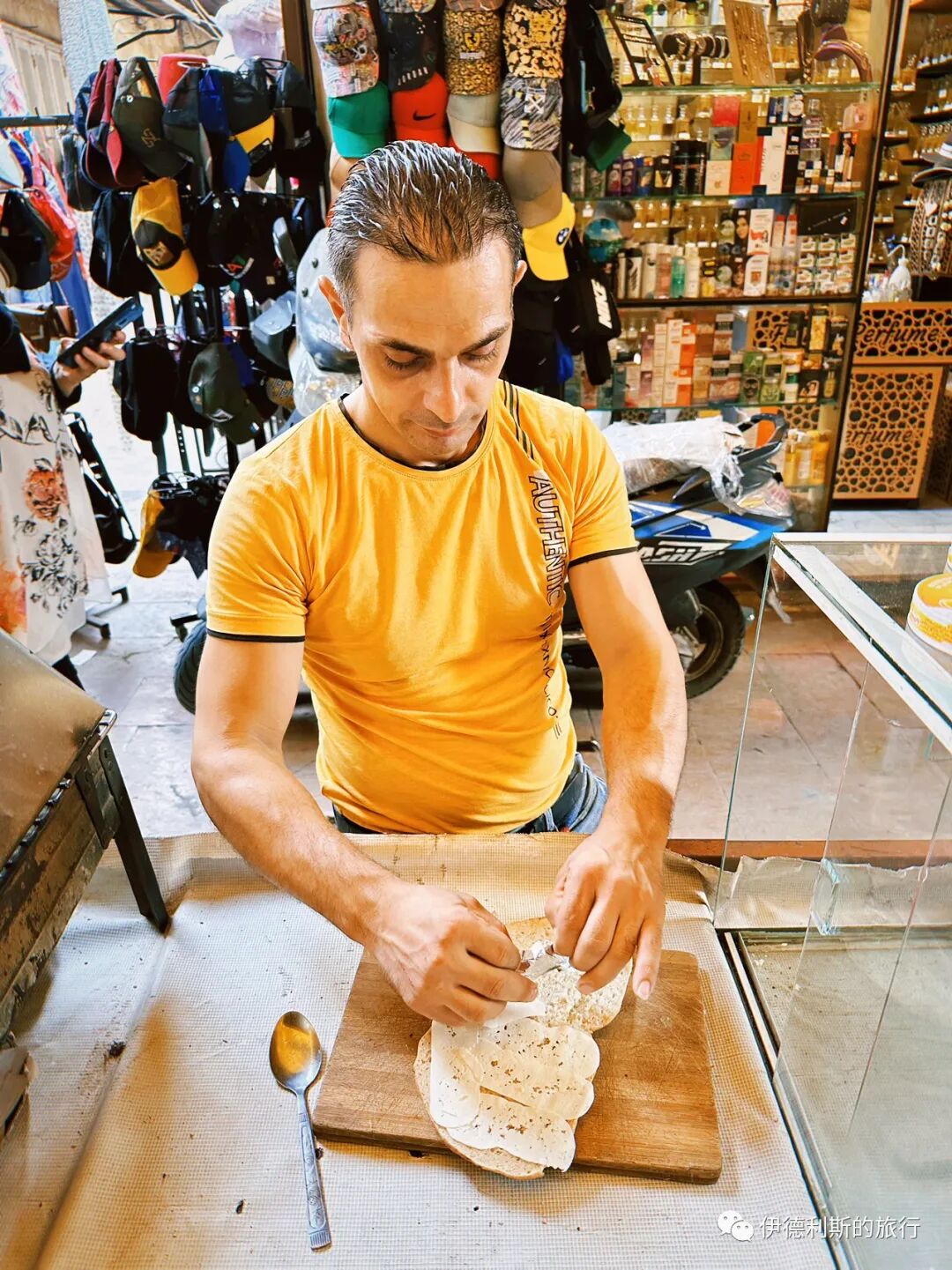
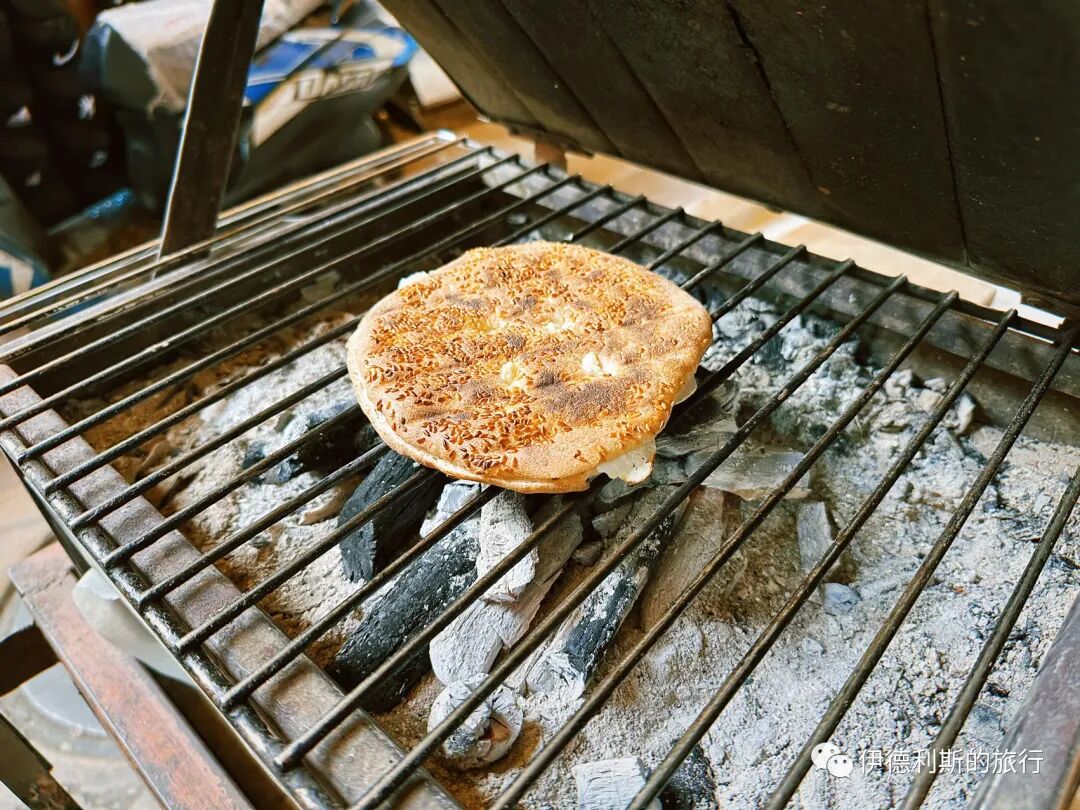
Cheese flatbread in the market.
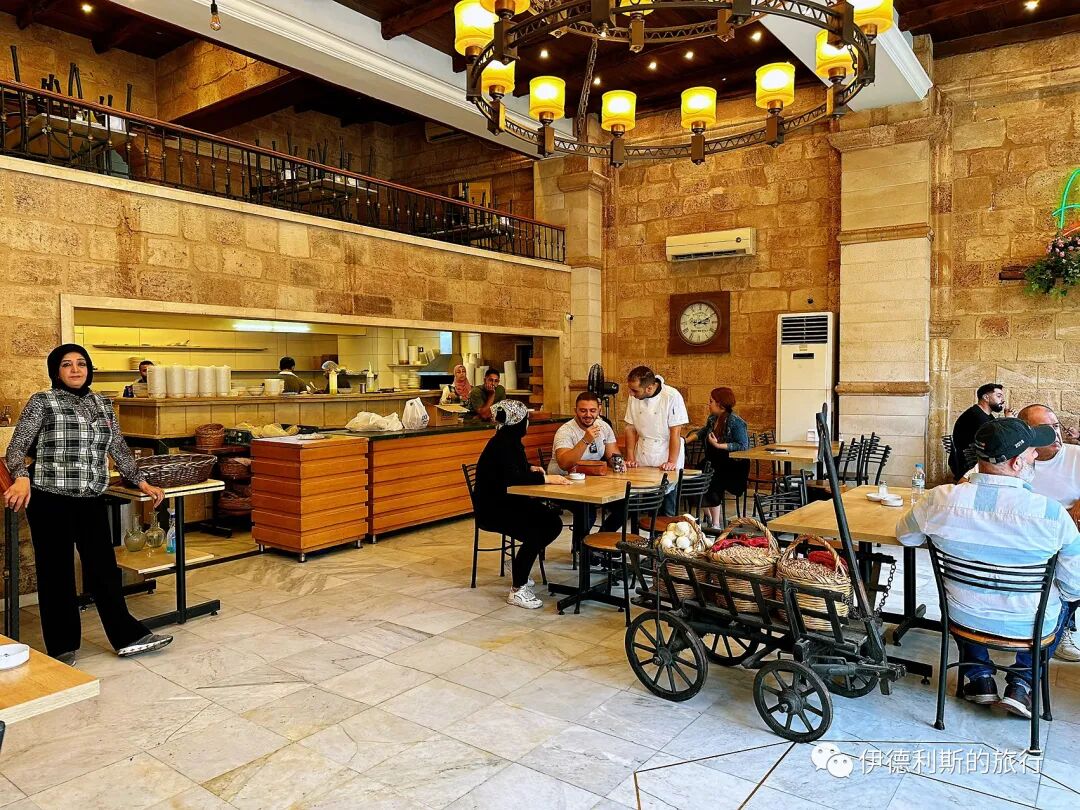
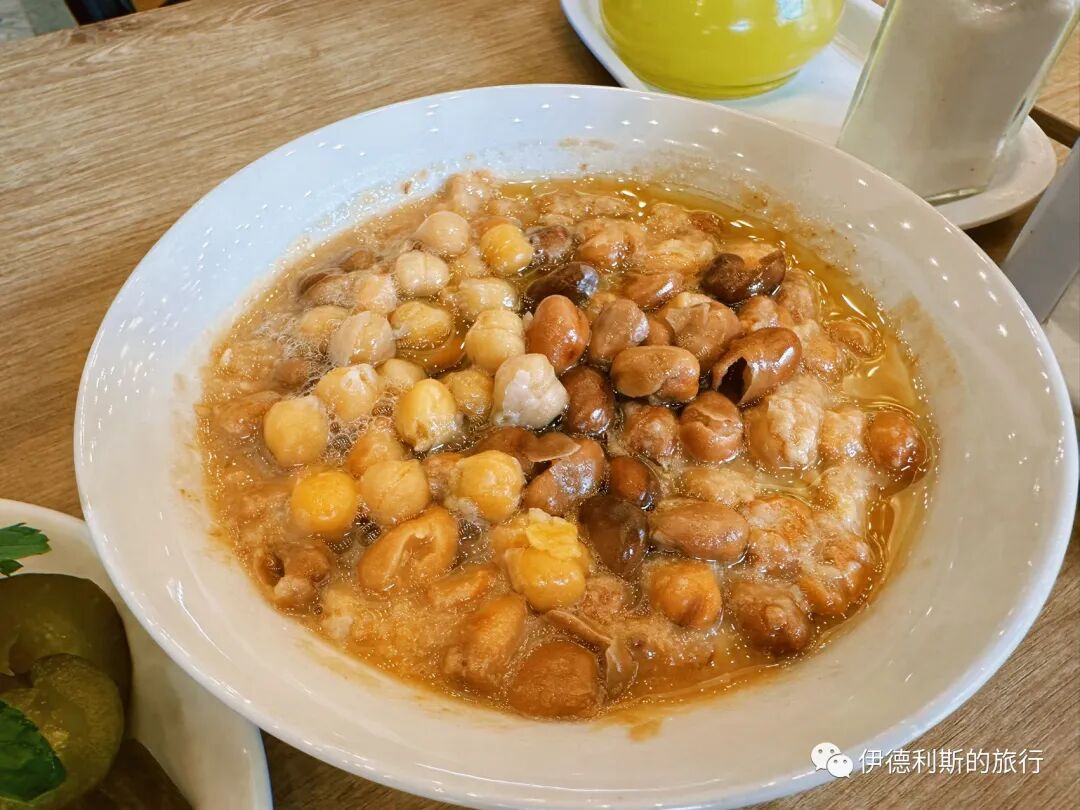
Eat at Akra Restaurant: Traditional bean stew brunch.
Castle
The site of Tripoli Castle was originally a Shia cemetery from the Fatimid dynasty. During the Frankish Crusader siege of Tripoli in 1102-1103, the Crusader leader Raymond of Saint-Gilles ordered it to be built into a castle, so it was later also called Saint-Gilles Castle. In 1289, after the Mamluk dynasty captured Tripoli, they rebuilt the castle using many Roman columns and other building materials found nearby. In 1521, the Ottoman Sultan Suleiman the Magnificent rebuilt the castle again, changing the arrow slits into cannon ports. In the early 19th century, the Ottoman governor of Tripoli carried out the last major renovation of the castle, giving it its current appearance.
The castle gate consists of two towers. The moat in front originally had a drawbridge, which has now been replaced by a stone bridge. The black and white marble facade on the gate was built by Suleiman the Magnificent in 1521. The stone inscription above reads: 'May the Emir never cease to obey his command, restoring this sacred castle, making it a strong fortress forever.'
City Gates
Al-Mahatra Gate in the old city of Tripoli. The name of this gate comes from the military musicians who played to encourage the army. Now that the war is over, houses have been built on top of the gate, and it has become a quiet alley.
Mosques
Mansouri Great Mosque, also known as the Great Mosque of Tripoli, was ordered to be built in 1294 by the Mamluk Sultan Al-Ashraf Khalil. It is the first building constructed by the Mamluk dynasty in Tripoli.
In 1109, the French Crusaders occupied Tripoli. For the next 180 years, Tripoli was ruled by European Christian nobles. In 1289, the Mamluk army arrived at the walls of Tripoli carrying large catapults. Under the assault of catapults, the two towers of Tripoli soon collapsed. The Mamluk army stormed the city and leveled it to the ground.
Shortly after, the Mamluk dynasty began building a new city at the foot of the castle on Tripoli's Pilgrim Mountain (Jabal al-Hajj). This included the Great Mansouri Mosque, built on the ruins of a Crusader church at the base of the hill. The mosque's minaret (mabkhara) is likely part of the Crusader Church of St. Mary, and the main gate may also incorporate the original Crusader church entrance. The main prayer hall was built by the Mamluk dynasty in 1294, and the courtyard's surrounding colonnades were added in 1314 by the Mamluk Sultan Al-Nasir Muhammad.
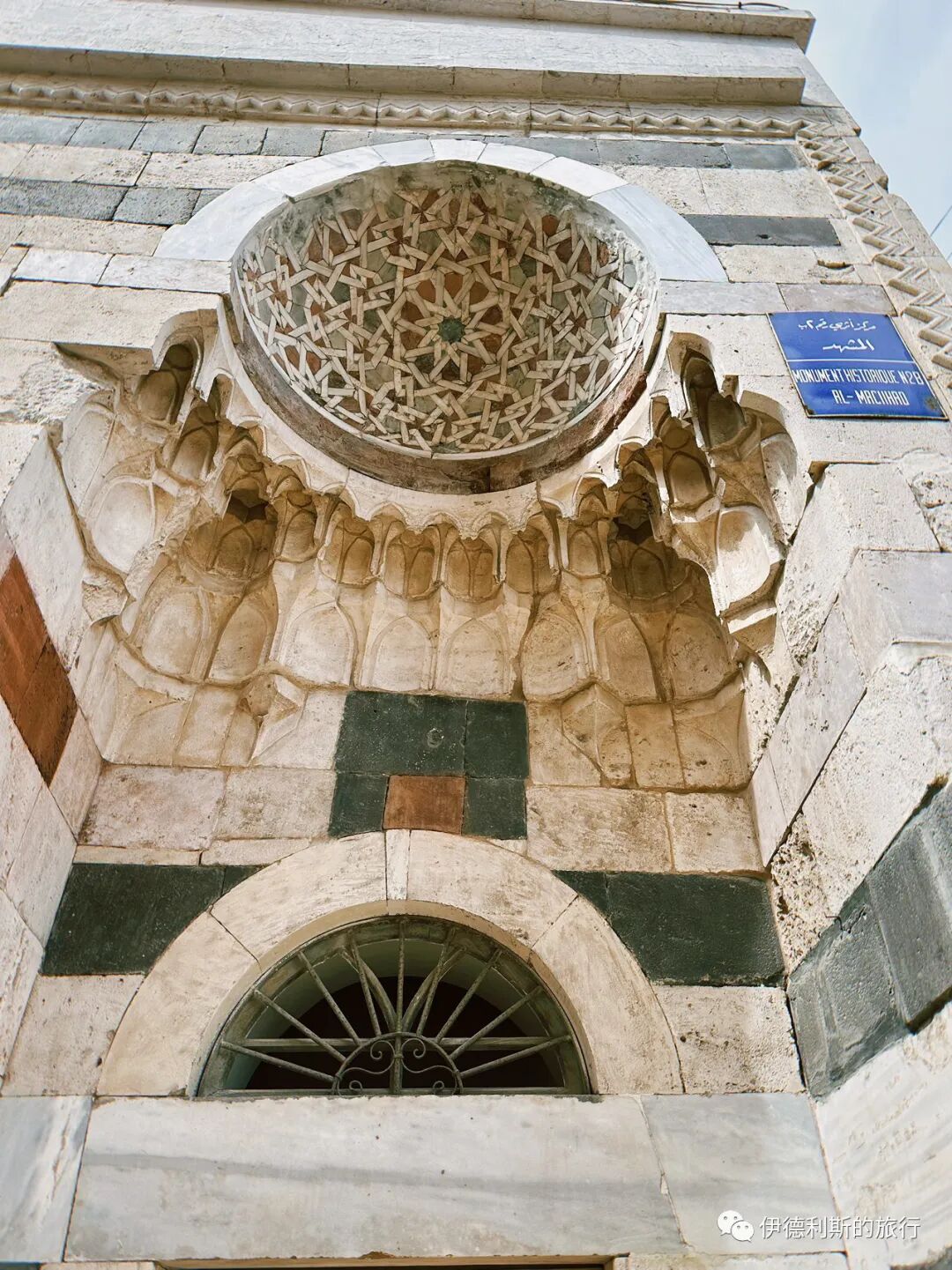
Taynal Mosque was built in 1336 by order of the Mamluk governor of Tripoli, Amir Taynal. The main prayer hall of Taynal Mosque consists of two consecutive halls. The most ornate feature is the entrance to the second hall, which has a gate with a stalactite-style cornice (muqarnas) and uses the ablaq technique of alternating black and white marble. Inside the prayer hall are some ancient Corinthian columns, which are thought to have come from a Crusader-era church or an even older Roman temple.
Attar Mosque was built in the 1350s by a wealthy local perfume merchant named Badr al-Din al-Attar on the ruins of a Crusader church. It was the first mosque in Tripoli not built by the Mamluks. Attar Mosque is known as one of the most beautiful mosques in Tripoli, but it has been closed for several years for renovations.
Al-Uwaysiyat Mosque was first built during the Mamluk period in 1461 and was renovated in 1534 during the reign of the Ottoman Sultan Suleiman the Magnificent.
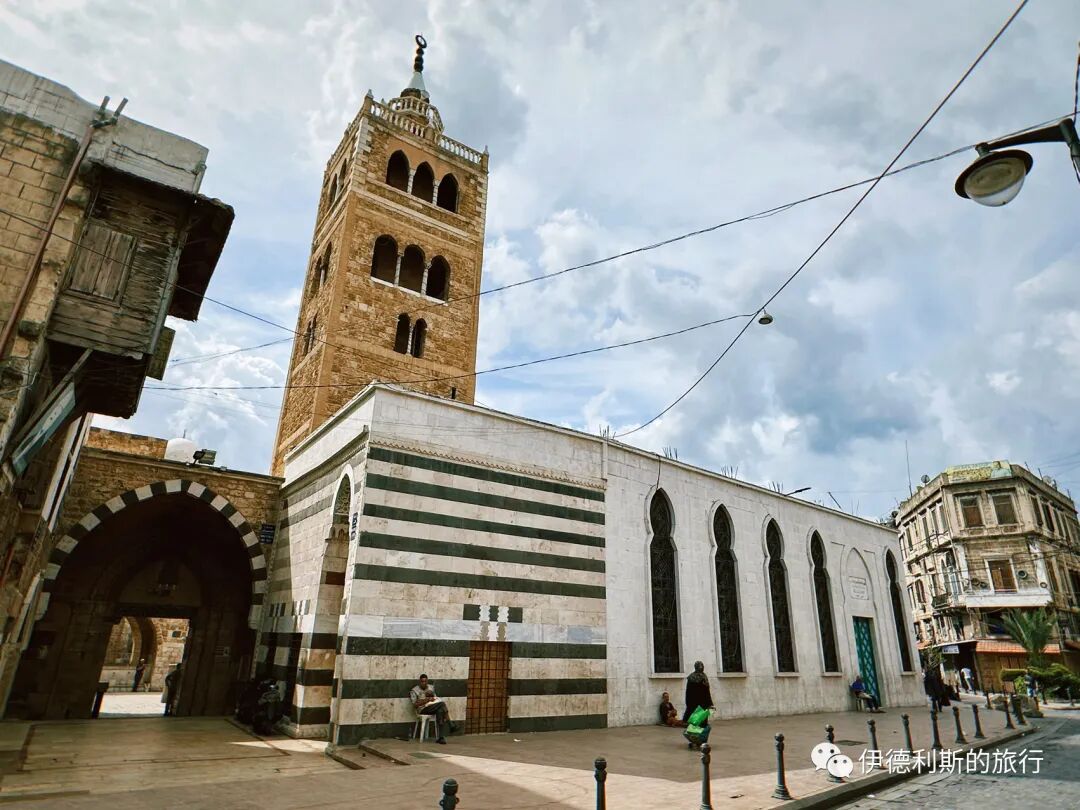
The Hanging Mosque (Muallaq Mosque) was commissioned in 1561 by the Ottoman governor of Tripoli, Mahmud Lutfi al-Za'im, during the reign of Ottoman Sultan Suleiman the Magnificent. The first floor of the Hanging Mosque is a culvert on the street level, so you must take the stairs to the side to reach the second-floor prayer hall. The octagonal minaret next to the prayer hall is very eye-catching and features two levels of balconies.
The construction date of Tawba Mosque is unknown, though it is believed to have been built during the Mamluk period. Because it sits right next to the riverbank, the stone inscription marking its construction was likely washed away in a flood. The inscription currently at the mosque entrance states that it was rebuilt after a flood in 1612. Many mosques in Lebanon lock their doors outside of prayer times, so I could not enter and only saw the octagonal minaret.
Burtasi Mosque was built by Isa ibn Umar al-Burtasi during the Mamluk period. Since Isa passed away in 1324, we can assume the mosque was built between the late 13th century and 1324. A flood in 1955 destroyed all the houses around Burtasi Mosque, and it is now the only building left standing on the riverbank. The minaret above the main gate is considered the most beautiful minaret in Tripoli. Above the three-tiered muqarnas cornice is a square balcony featuring Moorish-style double-arched windows. This type of double arch is a classic structure found in Muslim architecture in Andalusia, southern Spain.
Madrasas
During the 14th century, the Mamluk dynasty established six colleges around the Great Mansouri Mosque, which trained a large number of students. These include al-Khayriyya Hasan (1309 or later), al-Qartawiyya (c. 1326), al-Shamsiyya (1349), al-Nasiriyya (between 1354–60), al-Nuriyya (14th century), and the Mashhad Madrasa. The al-Qartawiyya Madrasa outside the east wall of the Mansouri Great Mosque is the most magnificent, though we could not find the main gate in the maze-like alleys of the old city, we did see the calligraphy carvings on the school's wall.
Hammam
Right next to the Hanging Mosque is the Al Jadid bathhouse (Hammam), built in 1740 during the Ottoman period, which was used until the 1970s and closed after the outbreak of the Lebanese Civil War. This bathhouse was a gift to Tripoli from the Damascus governor Asad Pasha Al Azem, and its gate is exquisite, featuring a fourteen-link chain carved from a single piece of stone.
The Ezzedin bathhouse (Hammam) was the first public bathhouse built by the Mamluk dynasty after they occupied Tripoli, commissioned by Emir Ezzedin Aibek (who ruled Tripoli from 1293 to 1298) and constructed using many marble pieces from the Byzantine and Crusader eras. This bathhouse operated from the end of the 13th century until 1975, when it closed due to the start of the Lebanese Civil War. It has now been restored and is free to visit.
Market
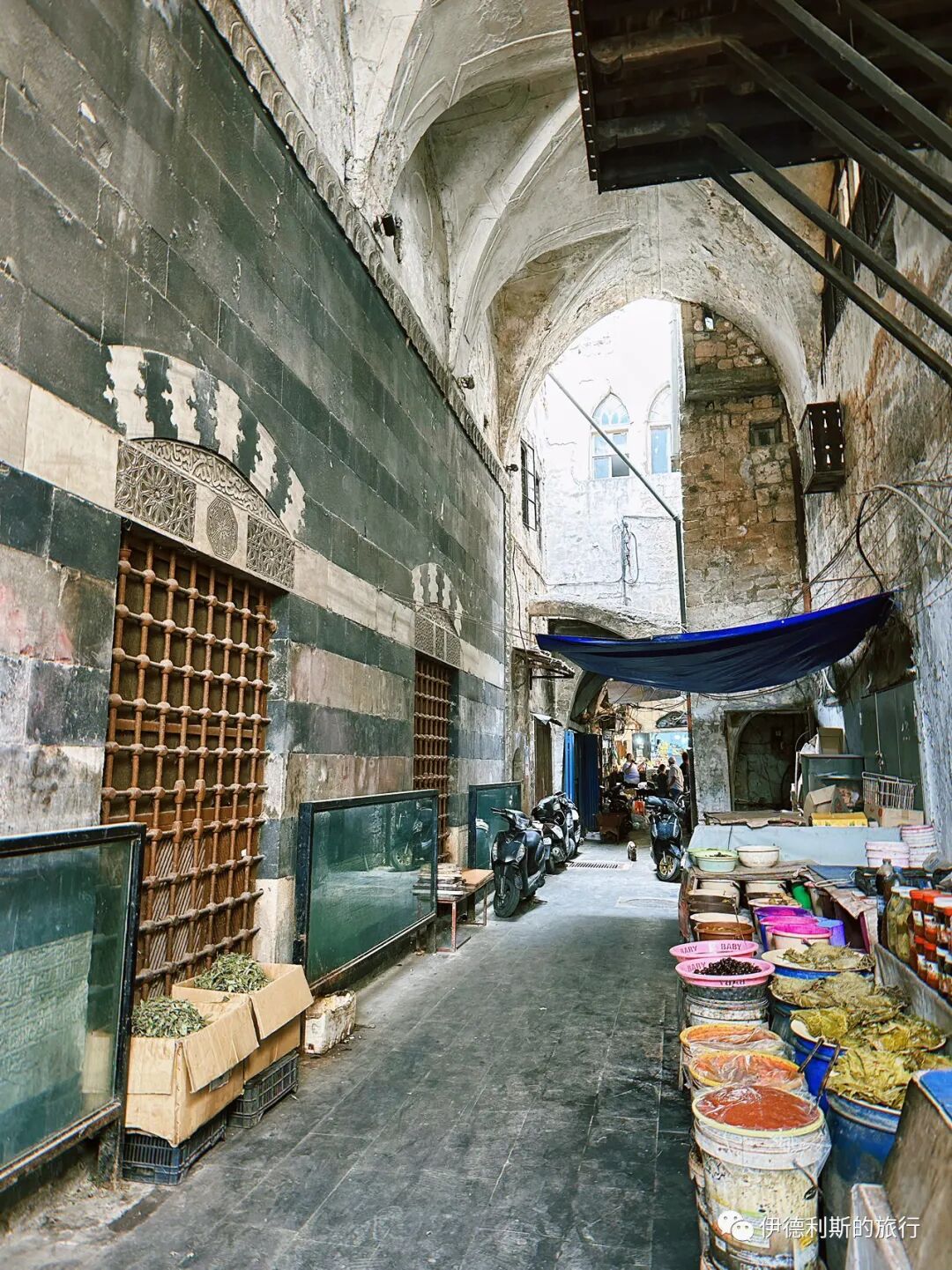
The markets in Tripoli's old city are very lively, which is a sharp contrast to Beirut. Ibn Battuta wrote in his travelogue: 'Afterward, we arrived at the city of Tripoli.' It is an important town in Sham, with several small rivers flowing through it. It is surrounded by fragrant orchards and lush green trees. The sea surrounds it with its deep blue water, and the earth nourishes it with its treasures. The goods in the market are dazzling and truly amazing.
We drank street coffee at the market and saw all kinds of dairy products, which was very interesting.
The Haraj market was built in the 14th century and has an 8-meter-high vaulted ceiling supported by black granite columns, some of which may be architectural pieces from the ancient Roman or Byzantine eras. The market has two floors; the upper rooms were for merchants to stay in and had wooden windows through which their female relatives could look down at the market, while the lower floor was for selling goods.
The 1983 bombing during the Lebanese Civil War caused severe damage to the Haraj market, which was later restored to its current state after a long process.
Inn
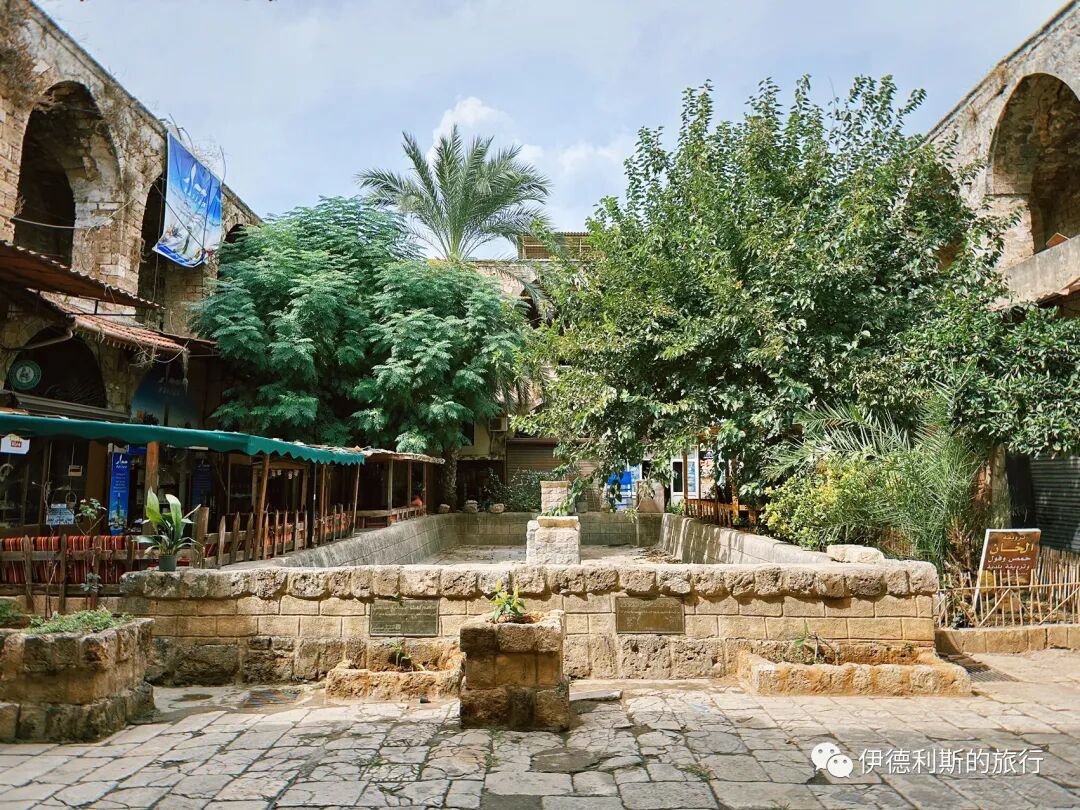
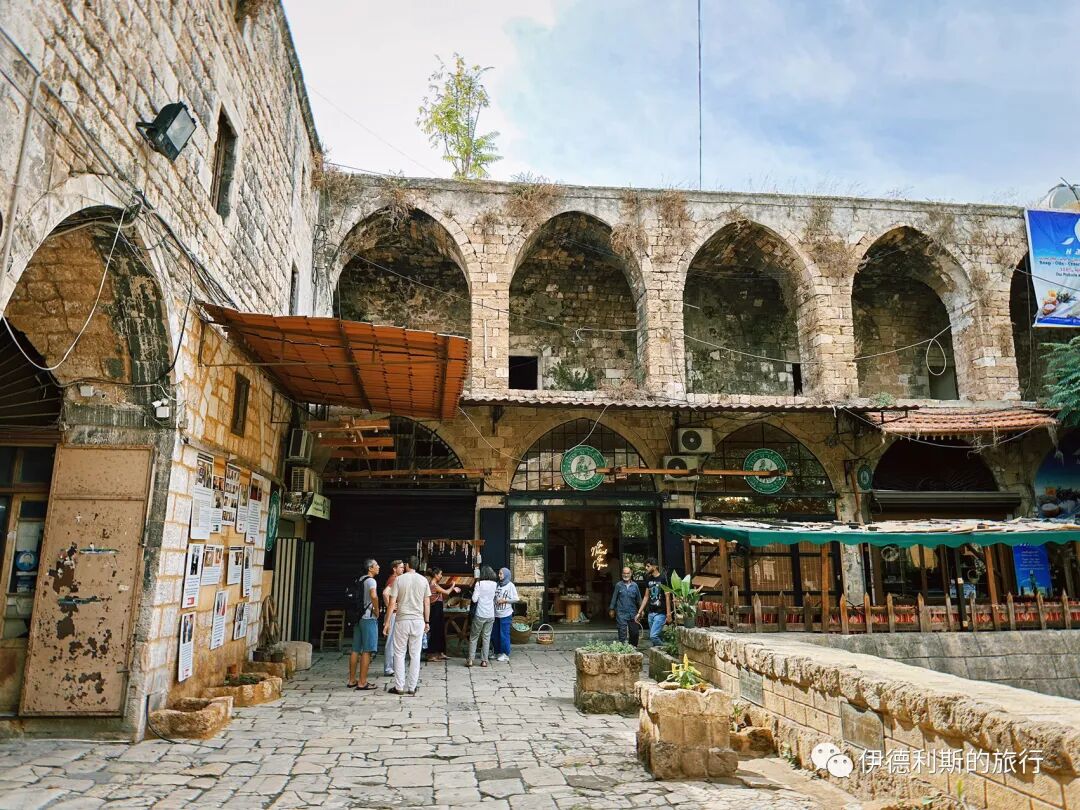
Tripoli has always been famous for producing perfume and handmade soap, with the most well-known brand being Bader Hassoun's Khan Al Saboun (Soap Inn). The history of the Hassoun family producing soap in Tripoli dates back to the early Mamluk dynasty in 1256, while the Soap Inn (Khan Al Saboun) in the old city of Tripoli was built in the late Mamluk dynasty in 1480.
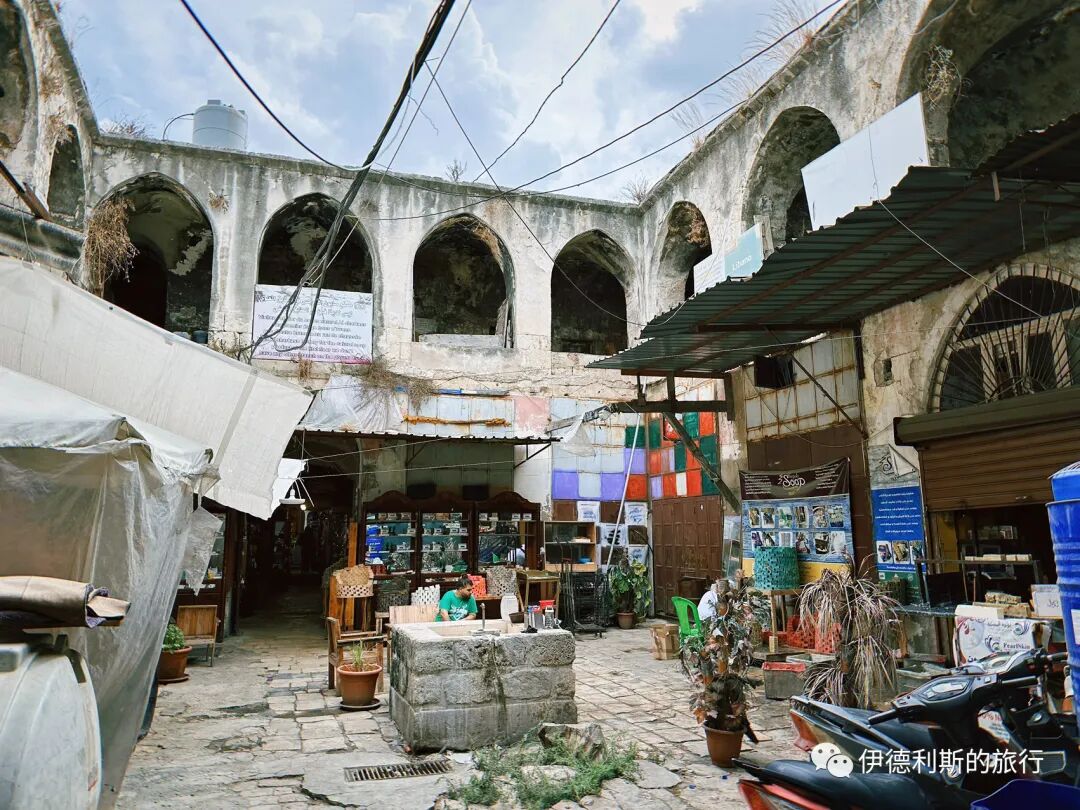
The Soap Inn has a courtyard with two levels of galleries and a pool in the middle. The second floor of the gallery was for caravan merchants to stay, while the first floor was for making and selling soap. People say the Ottoman Sultan Suleiman the Magnificent once received soap from Tripoli as a tribute, and at the urging of the Queen, Suleiman ordered the expansion of the Soap Inn in Tripoli. After it was built, the soap inn became a trade center for making and selling soap, and it started exporting soap to Europe. Today, the Bader Hassoun soap shop is located right here.
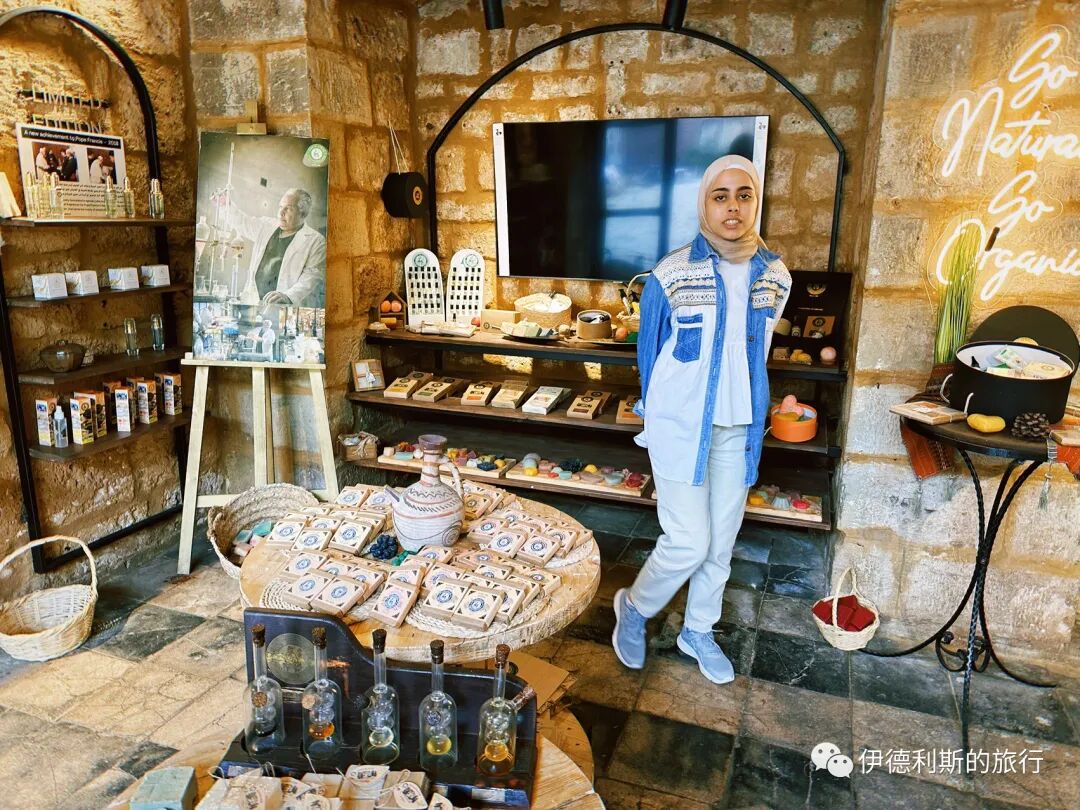
In 1993, Bader Hassoun's jewelry store in the old city of Tripoli was robbed, which led him to decide to restore his family's tradition of making soap. He and his wife spent one night making traditional soap with olive oil, dates, glycerin, natural coloring, and spices, and it all sold out the next day.
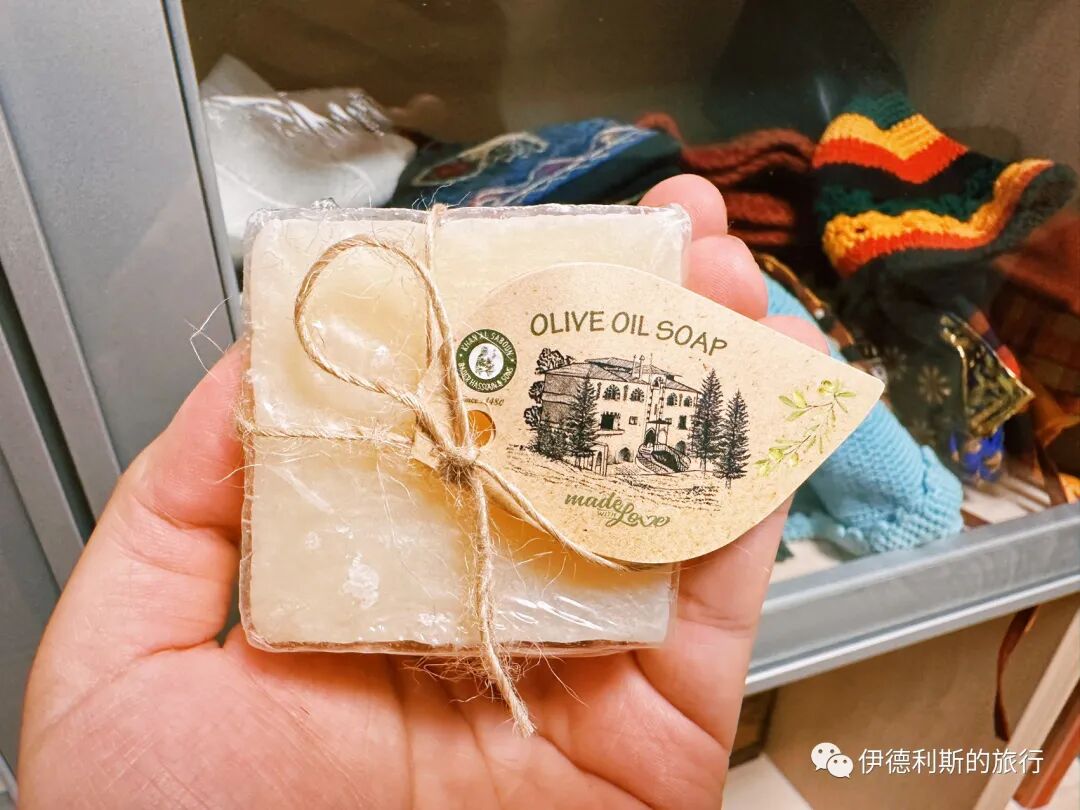
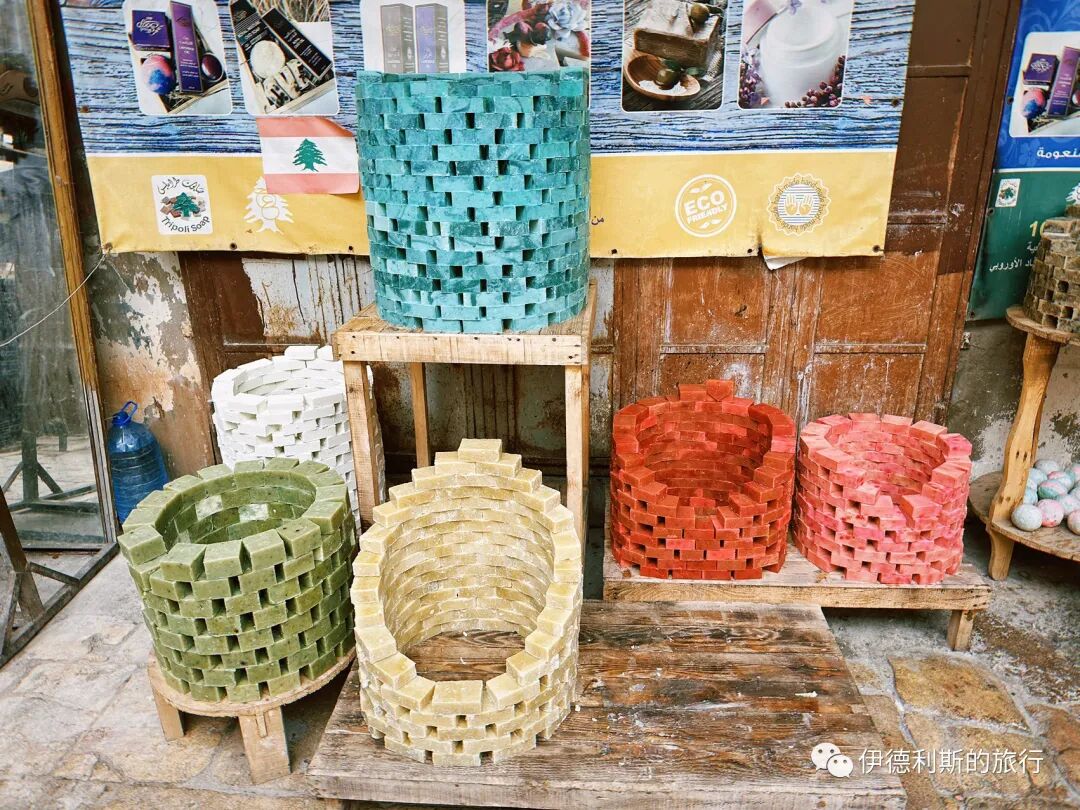
We bought the most traditional natural soap at the shop, which comes in three scents: green tea, lavender, and cedar. Cedar is an important symbol of Lebanon, and Lebanon is also known as the Land of Cedars. We also bought an olive oil soap safe for babies, which I can use for Suleiman.
Misriyyin Inn is located in the northern part of the old city of Tripoli and dates back to the Mamluk period in the 14th century. There is a Sharkass soap shop on the second floor of the inn, and they have been making traditional olive oil soap since 1803. The Tripoli Soap shop on the first floor opened in 1937, and you can watch the process of making natural soap on-site here.
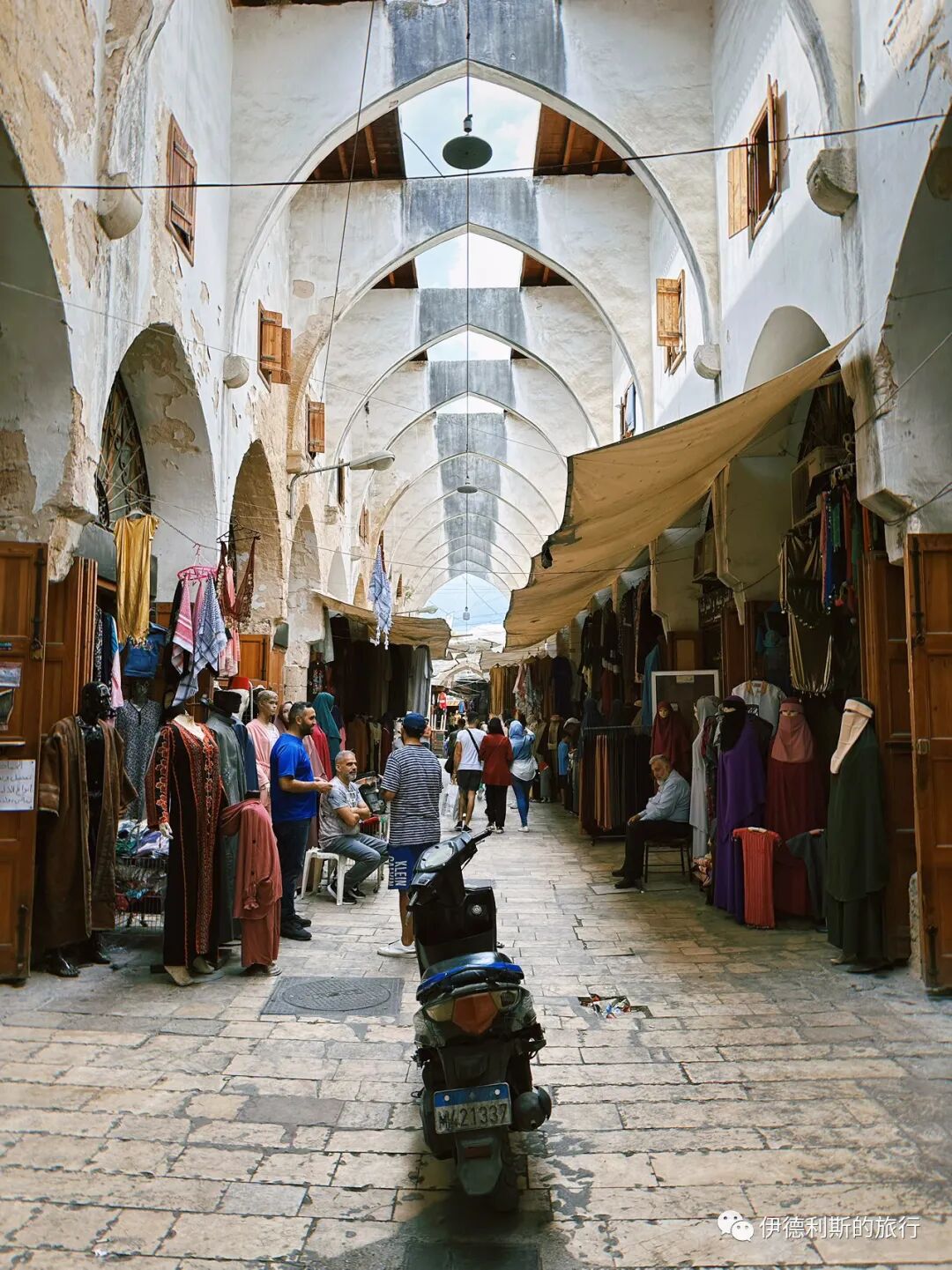
Right next to the Ezzedin bathhouse is the Tailors' Inn (Khan Khayyatin), a Mamluk-era commercial inn built by Prince Badr al-Din in 1339 that mainly sold needles, thread, textiles, and other sewing supplies. This is not a typical courtyard inn, but consists of two rows of shops with stores on the first floor and guest rooms on the second, which are not connected in the middle, and the top is covered by ten horizontally connected arches. People say it has its current shape because it was built on the foundation of a Byzantine-Crusader building.
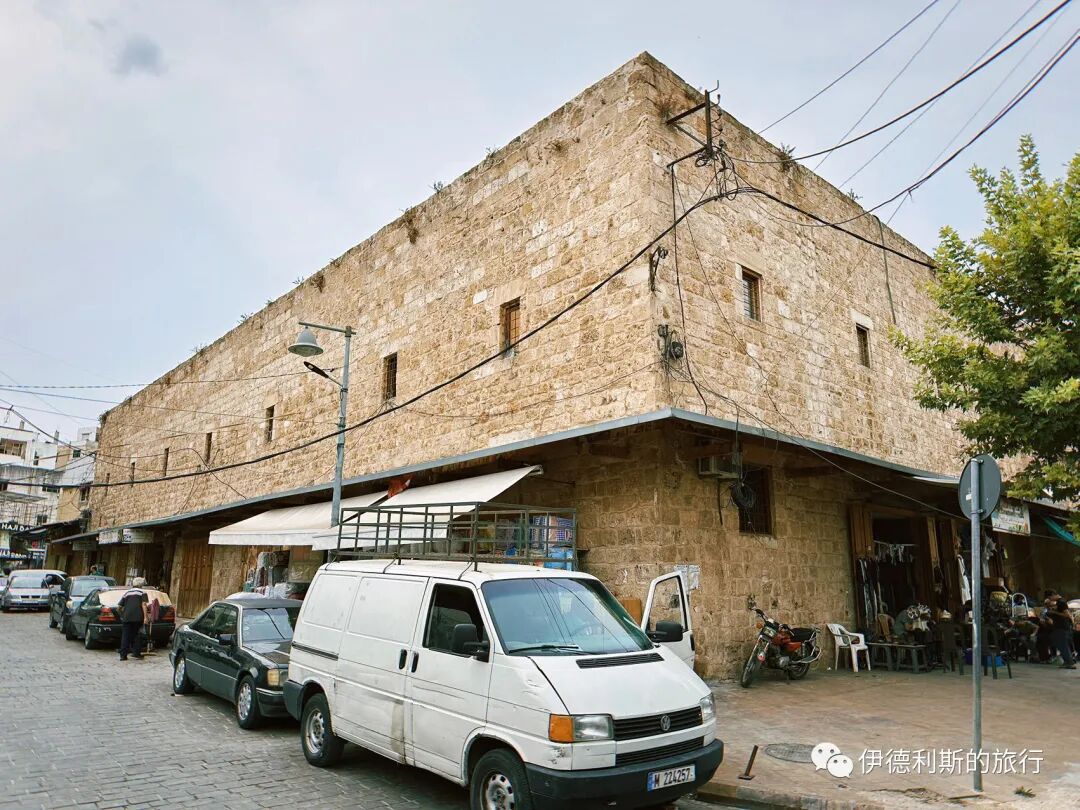
Askar Inn (Khan) was built during the Mamluk period in the 14th century and is the largest commercial inn in Tripoli.
Food
Cheese flatbread (manakish) at the market, which is likely the most classic snack in the market.
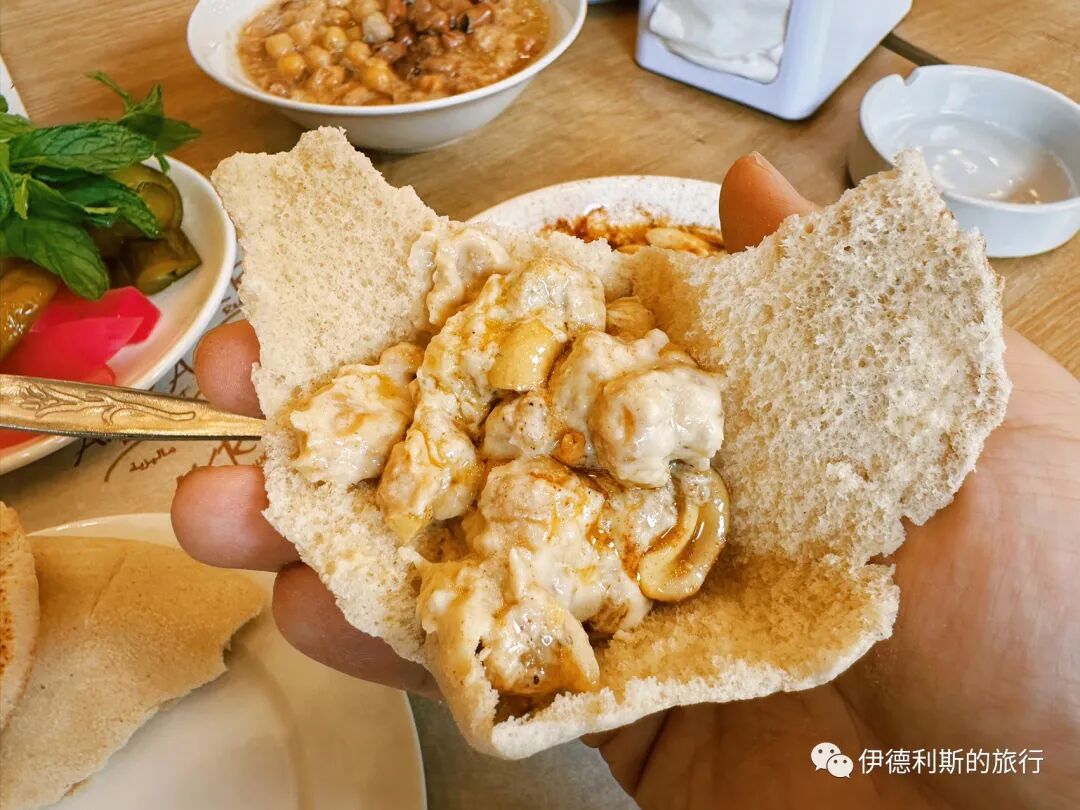
We had a traditional stewed bean brunch at Akra restaurant, ordering traditional stewed fava beans and chickpeas, along with hummus topped with cashews and peanuts, all eaten inside pita bread. view all
Summary: Tripoli in northern Lebanon is shown through its old city streets, mosques, markets, and everyday food. The account follows the original route from Beirut to Tripoli while keeping the local names, religious sites, and photographs in order.
Tripoli is in northern Lebanon. It takes about an hour to get there by minibus from across the street from the Mohammad Al-Amin Mosque in the capital, Beirut.
In 1289, the Mamluk dynasty took Tripoli from the Crusaders. They destroyed the old city and built a new one 4 kilometers inland below the castle, turning it into an important historic city for the faith. Today, about 35 ancient buildings from the Mamluk period remain in the old city of Tripoli. This makes Tripoli the city with the second-most preserved Mamluk monuments after Cairo.
After the Ottoman Empire left Lebanon in 1918, Tripoli fell into a long decline. The Lebanese Civil War that began in 1975 hit Tripoli hard. In 1985, a battle between Sunni and Alawite militias forced 200,000 people to leave their homes and led to the Syrian army staying in Tripoli until 2005. After the civil war ended, Tripoli seemed to be forgotten, and more than half of its residents live in poverty. At the same time, conflicts between Sunni and Alawite groups happen from time to time, often with bombings and suicide attacks, which has long made Tripoli an unsuitable place for tourism.
Table of Contents
Castle
Tripoli Castle: Rebuilt by the Mamluk dynasty in 1289 and again by Suleiman the Magnificent of the Ottoman Empire in 1521.
City Gates
Al-Mahatra Gate: Named after the military musicians who played to encourage the troops.
Mosques
Mansouri Great Mosque: Built by the Mamluk dynasty in 1294.
Taynal Mosque: Built by the Mamluk dynasty in 1336.
Attar Mosque: Built in the 1350s by a local wealthy perfume merchant; it is currently closed.
Al-Uwaysiyat Mosque: Built by the Mamluk dynasty in 1461.
Hanging Mosque (Muallaq Mosque): Built by the Ottoman Empire in 1561.
Tawba Mosque: Rebuilt by the Ottoman Empire in 1612.
Burtasi Mosque: Built by the Mamluk dynasty in the late 13th and early 14th centuries.
Madrasas
In the 14th century, the Mamluk dynasty built six madrasas around the Mansouri Great Mosque.
Hammam
Al Jadid Hammam: Built during the Ottoman period in 1740; it is currently closed.
Ezzedin Hammam: Built by the Mamluk dynasty in the late 13th century; it is currently open for visitors.
Market
Haraj Market: Built in the 14th century during the Mamluk dynasty.
Inn
Al Saboun Soap Inn: Built in 1480 during the late Mamluk dynasty, where you can buy traditional soap.
Misriyyin Soap Inn: Built in the 14th century during the Mamluk dynasty, where you can buy traditional soap.
Khayyatin Tailor Inn: Built in 1339 during the Mamluk dynasty, where you can buy traditional clothing.
Askar Inn: Built in the 14th century during the Mamluk dynasty, currently closed.
Food
Cheese flatbread in the market.
Eat at Akra Restaurant: Traditional bean stew brunch.
Castle
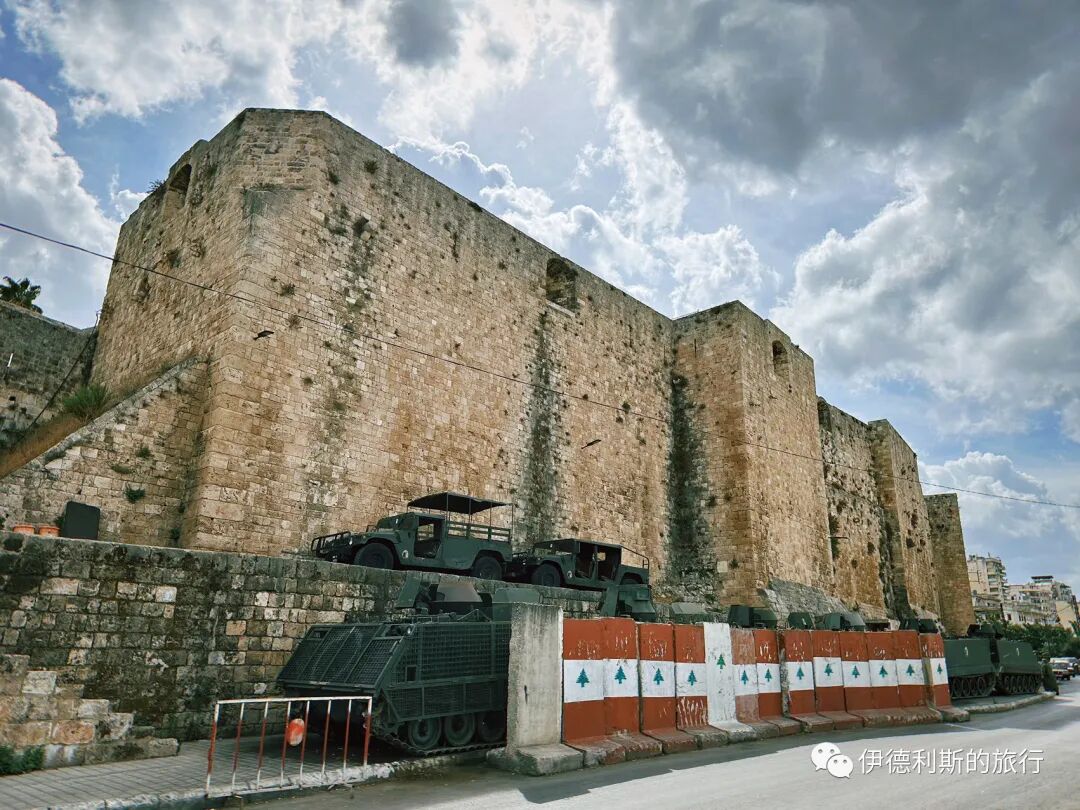
The site of Tripoli Castle was originally a Shia cemetery from the Fatimid dynasty. During the Frankish Crusader siege of Tripoli in 1102-1103, the Crusader leader Raymond of Saint-Gilles ordered it to be built into a castle, so it was later also called Saint-Gilles Castle. In 1289, after the Mamluk dynasty captured Tripoli, they rebuilt the castle using many Roman columns and other building materials found nearby. In 1521, the Ottoman Sultan Suleiman the Magnificent rebuilt the castle again, changing the arrow slits into cannon ports. In the early 19th century, the Ottoman governor of Tripoli carried out the last major renovation of the castle, giving it its current appearance.
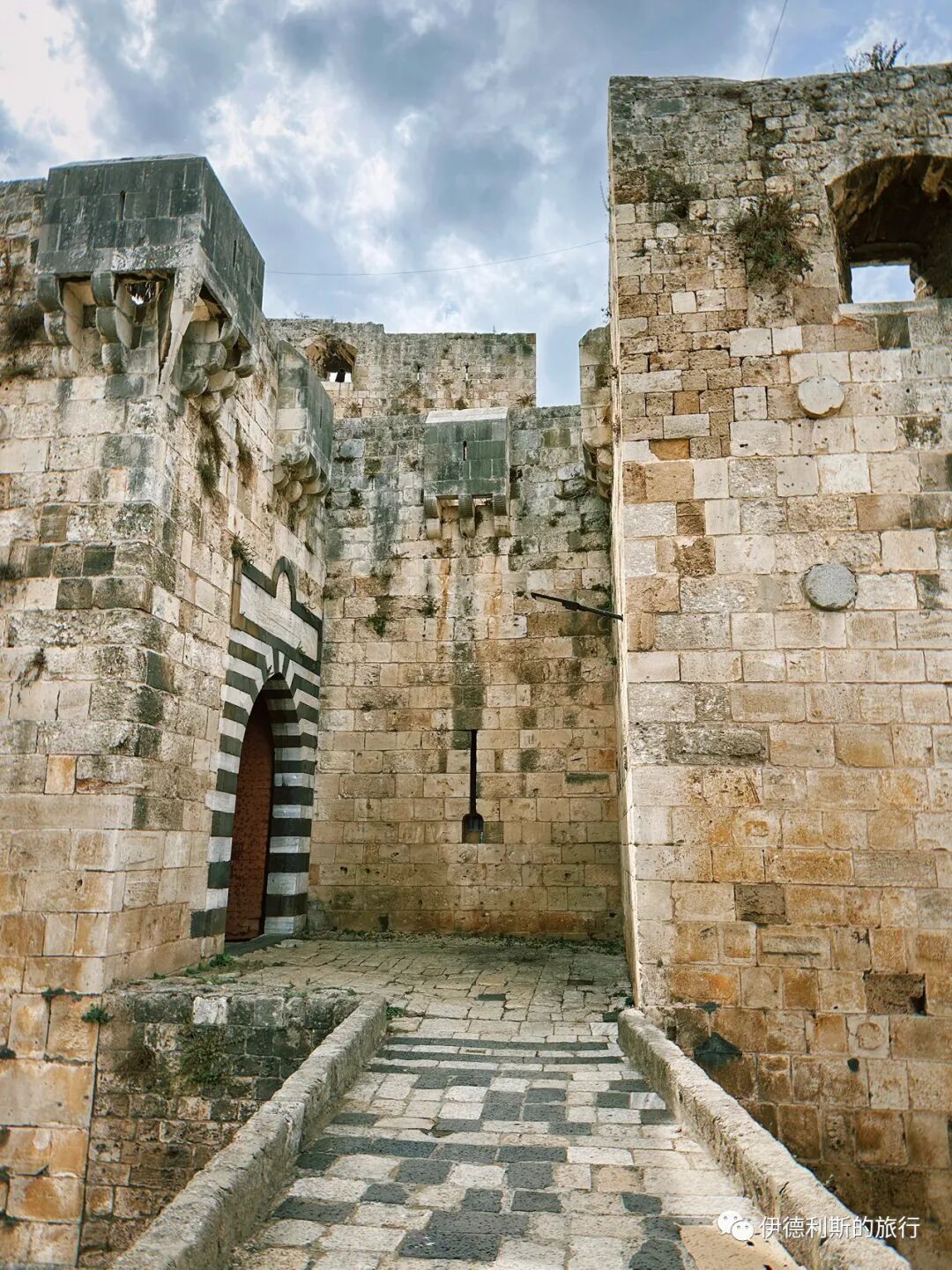
The castle gate consists of two towers. The moat in front originally had a drawbridge, which has now been replaced by a stone bridge. The black and white marble facade on the gate was built by Suleiman the Magnificent in 1521. The stone inscription above reads: 'May the Emir never cease to obey his command, restoring this sacred castle, making it a strong fortress forever.'
City Gates
Al-Mahatra Gate in the old city of Tripoli. The name of this gate comes from the military musicians who played to encourage the army. Now that the war is over, houses have been built on top of the gate, and it has become a quiet alley.
Mosques
Mansouri Great Mosque, also known as the Great Mosque of Tripoli, was ordered to be built in 1294 by the Mamluk Sultan Al-Ashraf Khalil. It is the first building constructed by the Mamluk dynasty in Tripoli.
In 1109, the French Crusaders occupied Tripoli. For the next 180 years, Tripoli was ruled by European Christian nobles. In 1289, the Mamluk army arrived at the walls of Tripoli carrying large catapults. Under the assault of catapults, the two towers of Tripoli soon collapsed. The Mamluk army stormed the city and leveled it to the ground.
Shortly after, the Mamluk dynasty began building a new city at the foot of the castle on Tripoli's Pilgrim Mountain (Jabal al-Hajj). This included the Great Mansouri Mosque, built on the ruins of a Crusader church at the base of the hill. The mosque's minaret (mabkhara) is likely part of the Crusader Church of St. Mary, and the main gate may also incorporate the original Crusader church entrance. The main prayer hall was built by the Mamluk dynasty in 1294, and the courtyard's surrounding colonnades were added in 1314 by the Mamluk Sultan Al-Nasir Muhammad.
Taynal Mosque was built in 1336 by order of the Mamluk governor of Tripoli, Amir Taynal. The main prayer hall of Taynal Mosque consists of two consecutive halls. The most ornate feature is the entrance to the second hall, which has a gate with a stalactite-style cornice (muqarnas) and uses the ablaq technique of alternating black and white marble. Inside the prayer hall are some ancient Corinthian columns, which are thought to have come from a Crusader-era church or an even older Roman temple.
Attar Mosque was built in the 1350s by a wealthy local perfume merchant named Badr al-Din al-Attar on the ruins of a Crusader church. It was the first mosque in Tripoli not built by the Mamluks. Attar Mosque is known as one of the most beautiful mosques in Tripoli, but it has been closed for several years for renovations.
Al-Uwaysiyat Mosque was first built during the Mamluk period in 1461 and was renovated in 1534 during the reign of the Ottoman Sultan Suleiman the Magnificent.
The Hanging Mosque (Muallaq Mosque) was commissioned in 1561 by the Ottoman governor of Tripoli, Mahmud Lutfi al-Za'im, during the reign of Ottoman Sultan Suleiman the Magnificent. The first floor of the Hanging Mosque is a culvert on the street level, so you must take the stairs to the side to reach the second-floor prayer hall. The octagonal minaret next to the prayer hall is very eye-catching and features two levels of balconies.
The construction date of Tawba Mosque is unknown, though it is believed to have been built during the Mamluk period. Because it sits right next to the riverbank, the stone inscription marking its construction was likely washed away in a flood. The inscription currently at the mosque entrance states that it was rebuilt after a flood in 1612. Many mosques in Lebanon lock their doors outside of prayer times, so I could not enter and only saw the octagonal minaret.
Burtasi Mosque was built by Isa ibn Umar al-Burtasi during the Mamluk period. Since Isa passed away in 1324, we can assume the mosque was built between the late 13th century and 1324. A flood in 1955 destroyed all the houses around Burtasi Mosque, and it is now the only building left standing on the riverbank. The minaret above the main gate is considered the most beautiful minaret in Tripoli. Above the three-tiered muqarnas cornice is a square balcony featuring Moorish-style double-arched windows. This type of double arch is a classic structure found in Muslim architecture in Andalusia, southern Spain.
Madrasas
During the 14th century, the Mamluk dynasty established six colleges around the Great Mansouri Mosque, which trained a large number of students. These include al-Khayriyya Hasan (1309 or later), al-Qartawiyya (c. 1326), al-Shamsiyya (1349), al-Nasiriyya (between 1354–60), al-Nuriyya (14th century), and the Mashhad Madrasa. The al-Qartawiyya Madrasa outside the east wall of the Mansouri Great Mosque is the most magnificent, though we could not find the main gate in the maze-like alleys of the old city, we did see the calligraphy carvings on the school's wall.
Hammam
Right next to the Hanging Mosque is the Al Jadid bathhouse (Hammam), built in 1740 during the Ottoman period, which was used until the 1970s and closed after the outbreak of the Lebanese Civil War. This bathhouse was a gift to Tripoli from the Damascus governor Asad Pasha Al Azem, and its gate is exquisite, featuring a fourteen-link chain carved from a single piece of stone.
The Ezzedin bathhouse (Hammam) was the first public bathhouse built by the Mamluk dynasty after they occupied Tripoli, commissioned by Emir Ezzedin Aibek (who ruled Tripoli from 1293 to 1298) and constructed using many marble pieces from the Byzantine and Crusader eras. This bathhouse operated from the end of the 13th century until 1975, when it closed due to the start of the Lebanese Civil War. It has now been restored and is free to visit.
Market
The markets in Tripoli's old city are very lively, which is a sharp contrast to Beirut. Ibn Battuta wrote in his travelogue: 'Afterward, we arrived at the city of Tripoli.' It is an important town in Sham, with several small rivers flowing through it. It is surrounded by fragrant orchards and lush green trees. The sea surrounds it with its deep blue water, and the earth nourishes it with its treasures. The goods in the market are dazzling and truly amazing.
We drank street coffee at the market and saw all kinds of dairy products, which was very interesting.
The Haraj market was built in the 14th century and has an 8-meter-high vaulted ceiling supported by black granite columns, some of which may be architectural pieces from the ancient Roman or Byzantine eras. The market has two floors; the upper rooms were for merchants to stay in and had wooden windows through which their female relatives could look down at the market, while the lower floor was for selling goods.
The 1983 bombing during the Lebanese Civil War caused severe damage to the Haraj market, which was later restored to its current state after a long process.
Inn
Tripoli has always been famous for producing perfume and handmade soap, with the most well-known brand being Bader Hassoun's Khan Al Saboun (Soap Inn). The history of the Hassoun family producing soap in Tripoli dates back to the early Mamluk dynasty in 1256, while the Soap Inn (Khan Al Saboun) in the old city of Tripoli was built in the late Mamluk dynasty in 1480.
The Soap Inn has a courtyard with two levels of galleries and a pool in the middle. The second floor of the gallery was for caravan merchants to stay, while the first floor was for making and selling soap. People say the Ottoman Sultan Suleiman the Magnificent once received soap from Tripoli as a tribute, and at the urging of the Queen, Suleiman ordered the expansion of the Soap Inn in Tripoli. After it was built, the soap inn became a trade center for making and selling soap, and it started exporting soap to Europe. Today, the Bader Hassoun soap shop is located right here.
In 1993, Bader Hassoun's jewelry store in the old city of Tripoli was robbed, which led him to decide to restore his family's tradition of making soap. He and his wife spent one night making traditional soap with olive oil, dates, glycerin, natural coloring, and spices, and it all sold out the next day.
We bought the most traditional natural soap at the shop, which comes in three scents: green tea, lavender, and cedar. Cedar is an important symbol of Lebanon, and Lebanon is also known as the Land of Cedars. We also bought an olive oil soap safe for babies, which I can use for Suleiman.
Misriyyin Inn is located in the northern part of the old city of Tripoli and dates back to the Mamluk period in the 14th century. There is a Sharkass soap shop on the second floor of the inn, and they have been making traditional olive oil soap since 1803. The Tripoli Soap shop on the first floor opened in 1937, and you can watch the process of making natural soap on-site here.
Right next to the Ezzedin bathhouse is the Tailors' Inn (Khan Khayyatin), a Mamluk-era commercial inn built by Prince Badr al-Din in 1339 that mainly sold needles, thread, textiles, and other sewing supplies. This is not a typical courtyard inn, but consists of two rows of shops with stores on the first floor and guest rooms on the second, which are not connected in the middle, and the top is covered by ten horizontally connected arches. People say it has its current shape because it was built on the foundation of a Byzantine-Crusader building.
Askar Inn (Khan) was built during the Mamluk period in the 14th century and is the largest commercial inn in Tripoli.
Food
Cheese flatbread (manakish) at the market, which is likely the most classic snack in the market.
We had a traditional stewed bean brunch at Akra restaurant, ordering traditional stewed fava beans and chickpeas, along with hummus topped with cashews and peanuts, all eaten inside pita bread. view all
Reposted from the web
Summary: Tripoli in northern Lebanon is shown through its old city streets, mosques, markets, and everyday food. The account follows the original route from Beirut to Tripoli while keeping the local names, religious sites, and photographs in order.
Tripoli is in northern Lebanon. It takes about an hour to get there by minibus from across the street from the Mohammad Al-Amin Mosque in the capital, Beirut.
In 1289, the Mamluk dynasty took Tripoli from the Crusaders. They destroyed the old city and built a new one 4 kilometers inland below the castle, turning it into an important historic city for the faith. Today, about 35 ancient buildings from the Mamluk period remain in the old city of Tripoli. This makes Tripoli the city with the second-most preserved Mamluk monuments after Cairo.
After the Ottoman Empire left Lebanon in 1918, Tripoli fell into a long decline. The Lebanese Civil War that began in 1975 hit Tripoli hard. In 1985, a battle between Sunni and Alawite militias forced 200,000 people to leave their homes and led to the Syrian army staying in Tripoli until 2005. After the civil war ended, Tripoli seemed to be forgotten, and more than half of its residents live in poverty. At the same time, conflicts between Sunni and Alawite groups happen from time to time, often with bombings and suicide attacks, which has long made Tripoli an unsuitable place for tourism.
Table of Contents
Castle
Tripoli Castle: Rebuilt by the Mamluk dynasty in 1289 and again by Suleiman the Magnificent of the Ottoman Empire in 1521.
City Gates
Al-Mahatra Gate: Named after the military musicians who played to encourage the troops.
Mosques
Mansouri Great Mosque: Built by the Mamluk dynasty in 1294.
Taynal Mosque: Built by the Mamluk dynasty in 1336.
Attar Mosque: Built in the 1350s by a local wealthy perfume merchant; it is currently closed.
Al-Uwaysiyat Mosque: Built by the Mamluk dynasty in 1461.
Hanging Mosque (Muallaq Mosque): Built by the Ottoman Empire in 1561.
Tawba Mosque: Rebuilt by the Ottoman Empire in 1612.
Burtasi Mosque: Built by the Mamluk dynasty in the late 13th and early 14th centuries.
Madrasas
In the 14th century, the Mamluk dynasty built six madrasas around the Mansouri Great Mosque.
Hammam
Al Jadid Hammam: Built during the Ottoman period in 1740; it is currently closed.
Ezzedin Hammam: Built by the Mamluk dynasty in the late 13th century; it is currently open for visitors.
Market
Haraj Market: Built in the 14th century during the Mamluk dynasty.
Inn
Al Saboun Soap Inn: Built in 1480 during the late Mamluk dynasty, where you can buy traditional soap.
Misriyyin Soap Inn: Built in the 14th century during the Mamluk dynasty, where you can buy traditional soap.
Khayyatin Tailor Inn: Built in 1339 during the Mamluk dynasty, where you can buy traditional clothing.
Askar Inn: Built in the 14th century during the Mamluk dynasty, currently closed.
Food
Cheese flatbread in the market.
Eat at Akra Restaurant: Traditional bean stew brunch.
Castle
The site of Tripoli Castle was originally a Shia cemetery from the Fatimid dynasty. During the Frankish Crusader siege of Tripoli in 1102-1103, the Crusader leader Raymond of Saint-Gilles ordered it to be built into a castle, so it was later also called Saint-Gilles Castle. In 1289, after the Mamluk dynasty captured Tripoli, they rebuilt the castle using many Roman columns and other building materials found nearby. In 1521, the Ottoman Sultan Suleiman the Magnificent rebuilt the castle again, changing the arrow slits into cannon ports. In the early 19th century, the Ottoman governor of Tripoli carried out the last major renovation of the castle, giving it its current appearance.
The castle gate consists of two towers. The moat in front originally had a drawbridge, which has now been replaced by a stone bridge. The black and white marble facade on the gate was built by Suleiman the Magnificent in 1521. The stone inscription above reads: 'May the Emir never cease to obey his command, restoring this sacred castle, making it a strong fortress forever.'
City Gates
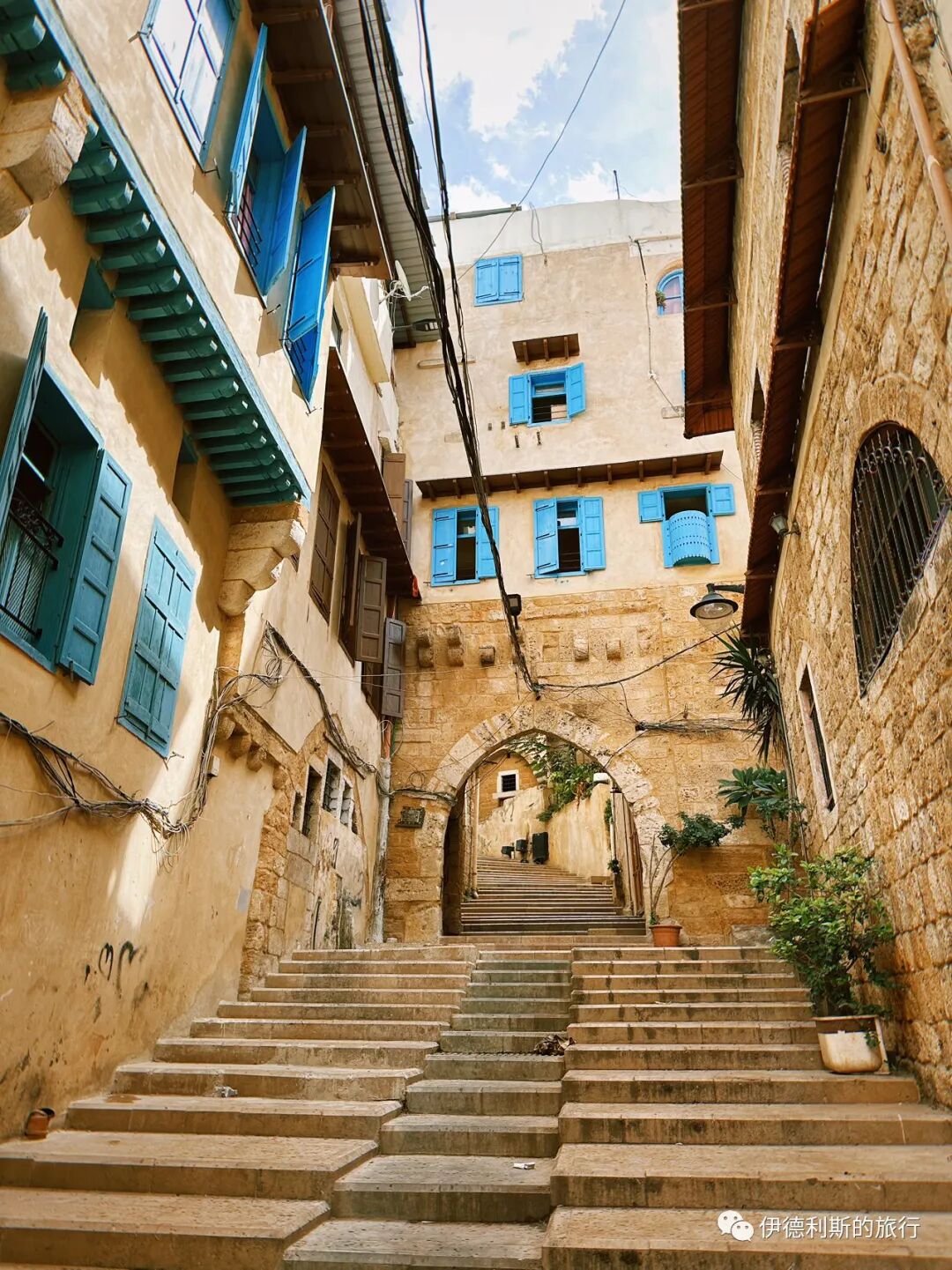
Al-Mahatra Gate in the old city of Tripoli. The name of this gate comes from the military musicians who played to encourage the army. Now that the war is over, houses have been built on top of the gate, and it has become a quiet alley.
Mosques
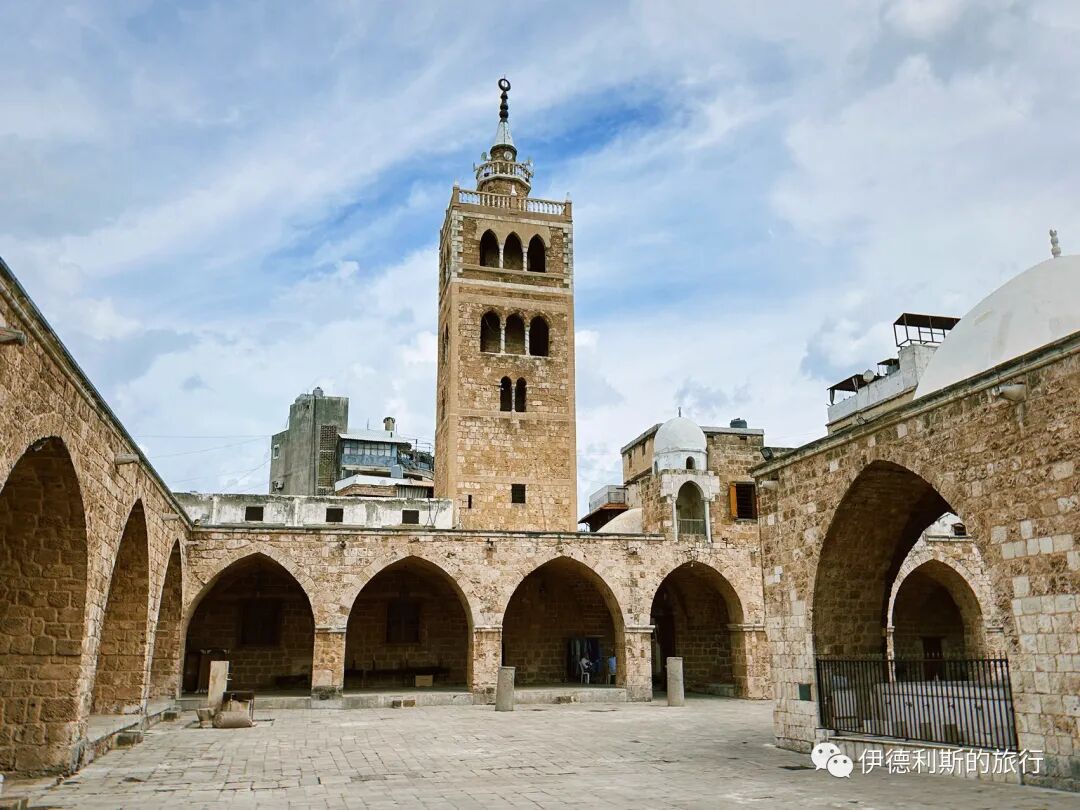
Mansouri Great Mosque, also known as the Great Mosque of Tripoli, was ordered to be built in 1294 by the Mamluk Sultan Al-Ashraf Khalil. It is the first building constructed by the Mamluk dynasty in Tripoli.
In 1109, the French Crusaders occupied Tripoli. For the next 180 years, Tripoli was ruled by European Christian nobles. In 1289, the Mamluk army arrived at the walls of Tripoli carrying large catapults. Under the assault of catapults, the two towers of Tripoli soon collapsed. The Mamluk army stormed the city and leveled it to the ground.
Shortly after, the Mamluk dynasty began building a new city at the foot of the castle on Tripoli's Pilgrim Mountain (Jabal al-Hajj). This included the Great Mansouri Mosque, built on the ruins of a Crusader church at the base of the hill. The mosque's minaret (mabkhara) is likely part of the Crusader Church of St. Mary, and the main gate may also incorporate the original Crusader church entrance. The main prayer hall was built by the Mamluk dynasty in 1294, and the courtyard's surrounding colonnades were added in 1314 by the Mamluk Sultan Al-Nasir Muhammad.
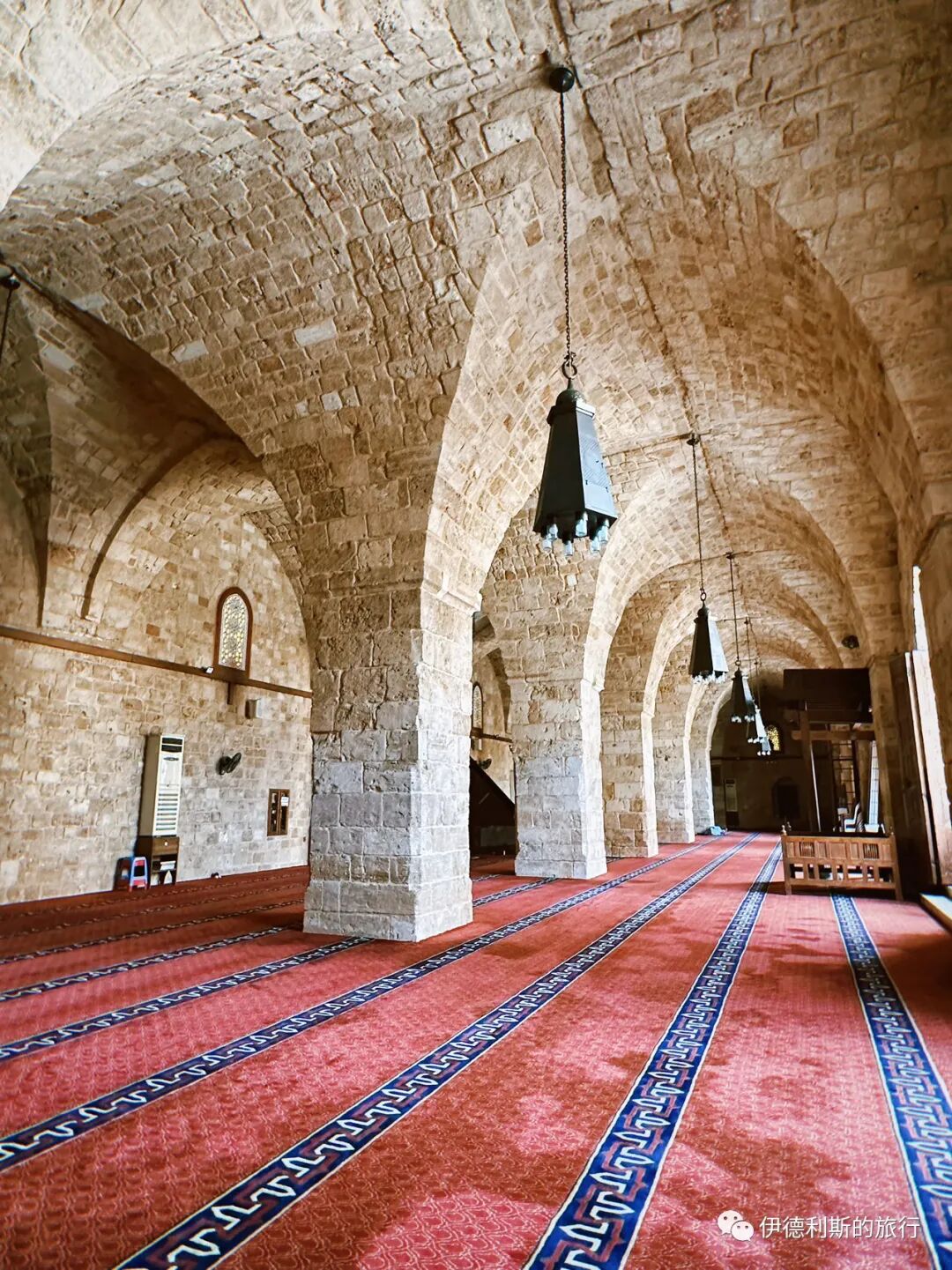
Taynal Mosque was built in 1336 by order of the Mamluk governor of Tripoli, Amir Taynal. The main prayer hall of Taynal Mosque consists of two consecutive halls. The most ornate feature is the entrance to the second hall, which has a gate with a stalactite-style cornice (muqarnas) and uses the ablaq technique of alternating black and white marble. Inside the prayer hall are some ancient Corinthian columns, which are thought to have come from a Crusader-era church or an even older Roman temple.
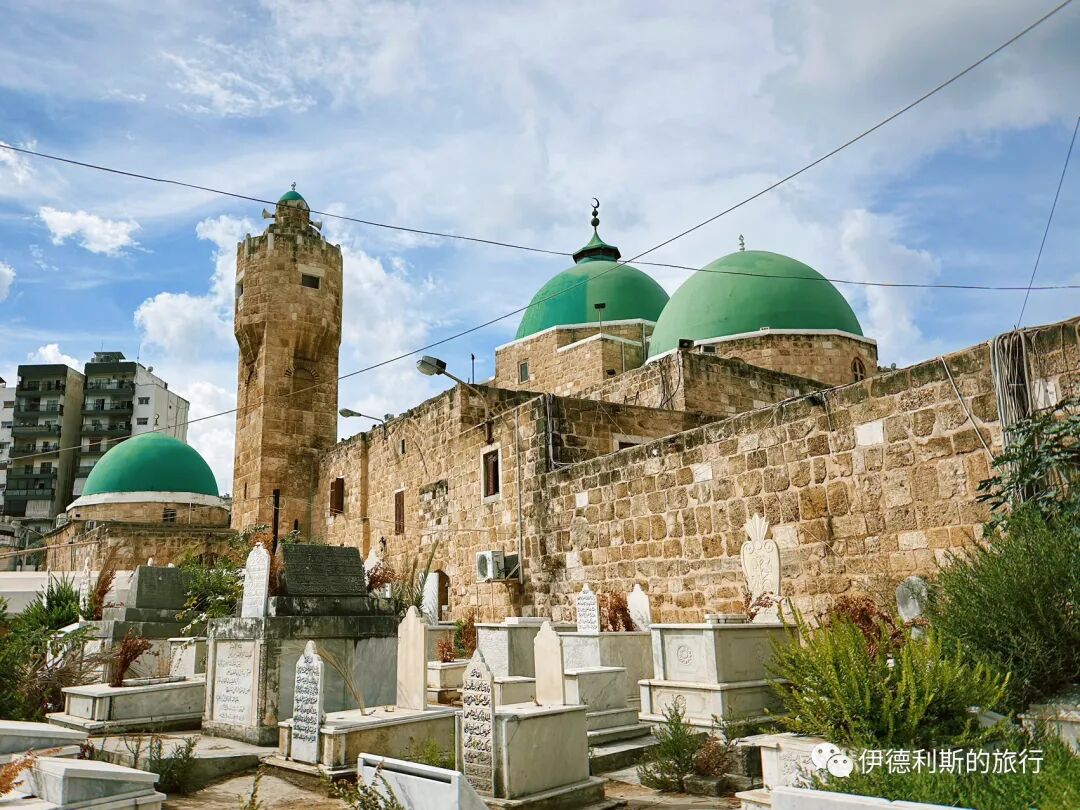
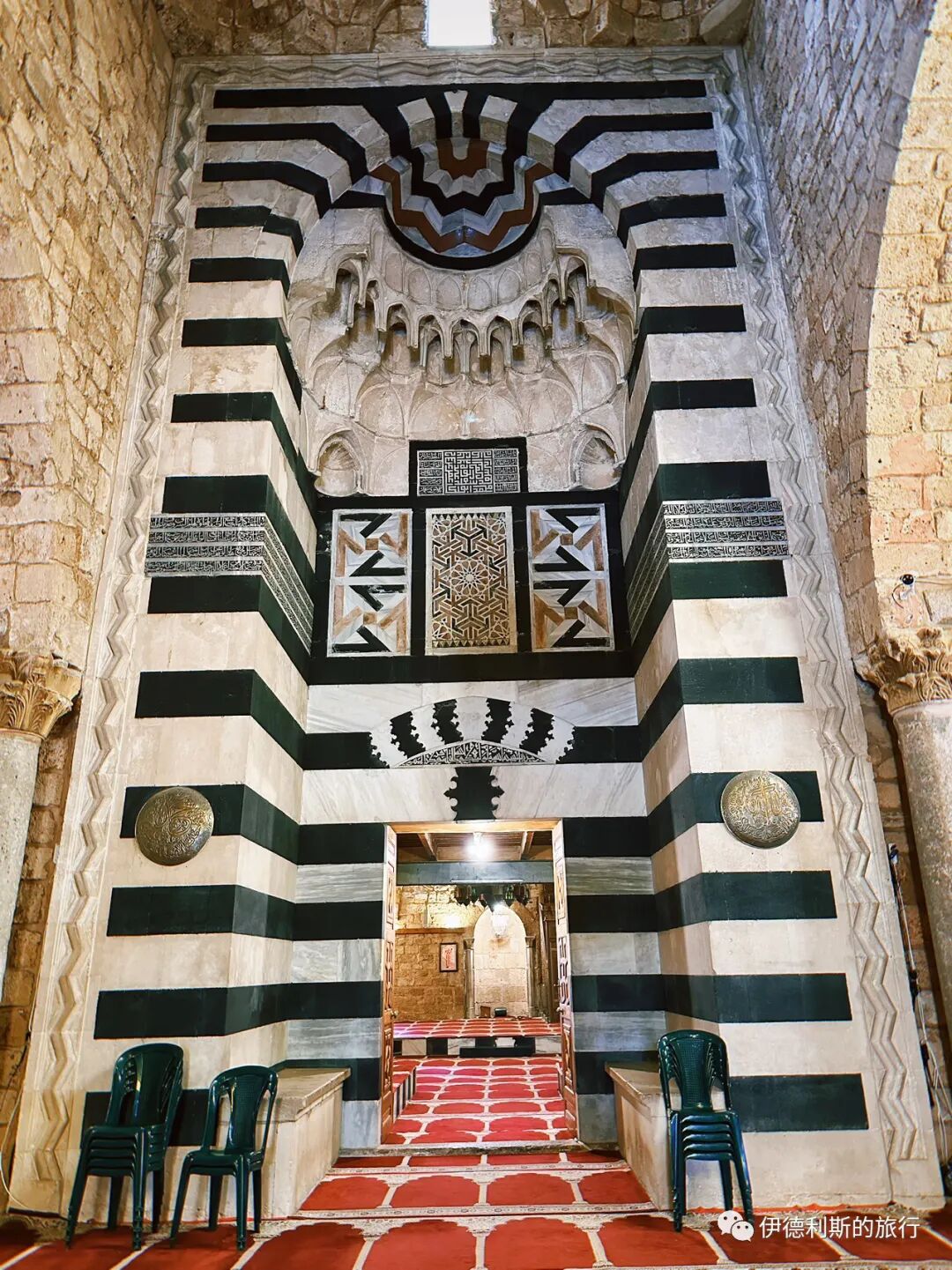
Attar Mosque was built in the 1350s by a wealthy local perfume merchant named Badr al-Din al-Attar on the ruins of a Crusader church. It was the first mosque in Tripoli not built by the Mamluks. Attar Mosque is known as one of the most beautiful mosques in Tripoli, but it has been closed for several years for renovations.
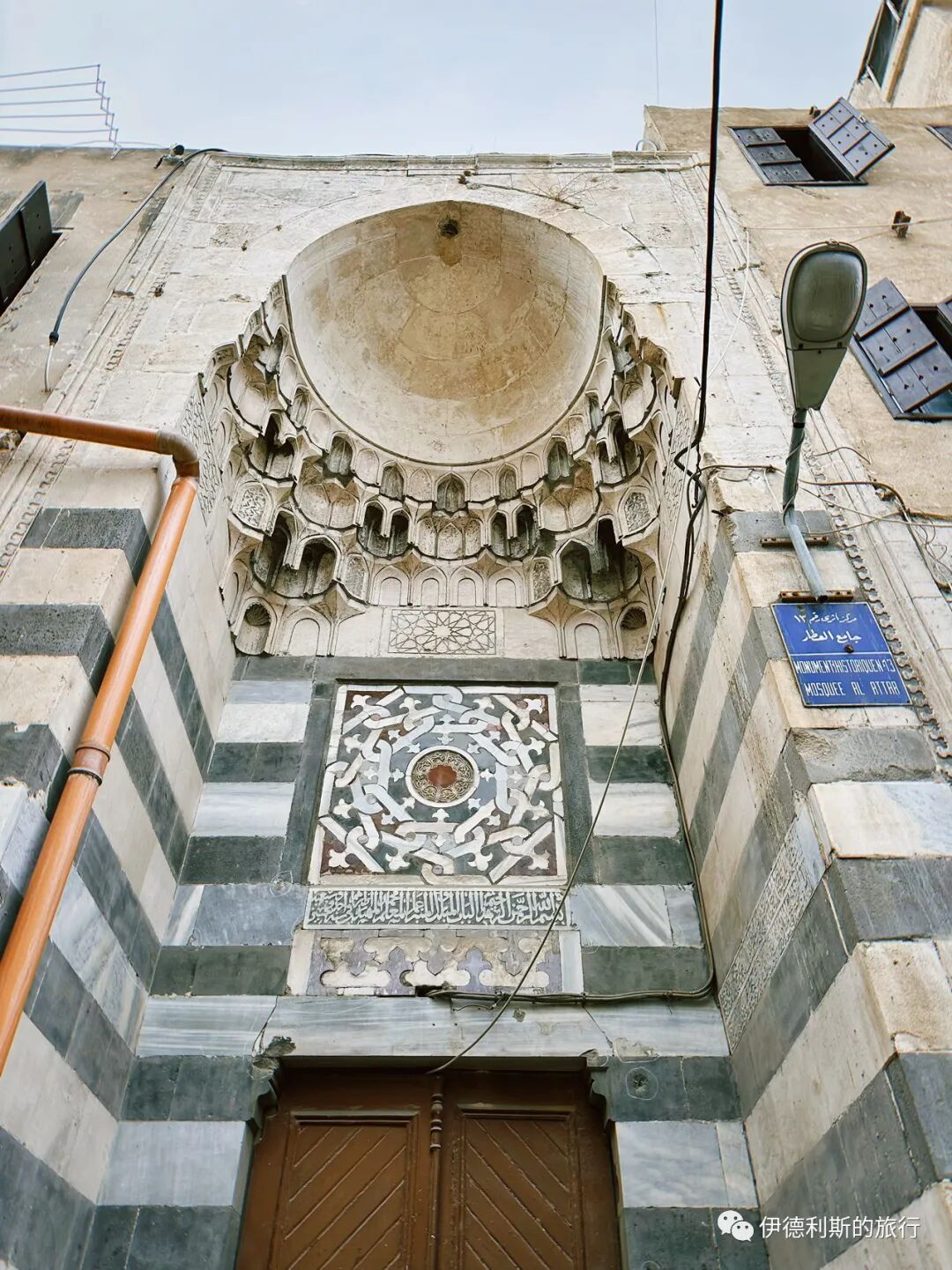
Al-Uwaysiyat Mosque was first built during the Mamluk period in 1461 and was renovated in 1534 during the reign of the Ottoman Sultan Suleiman the Magnificent.
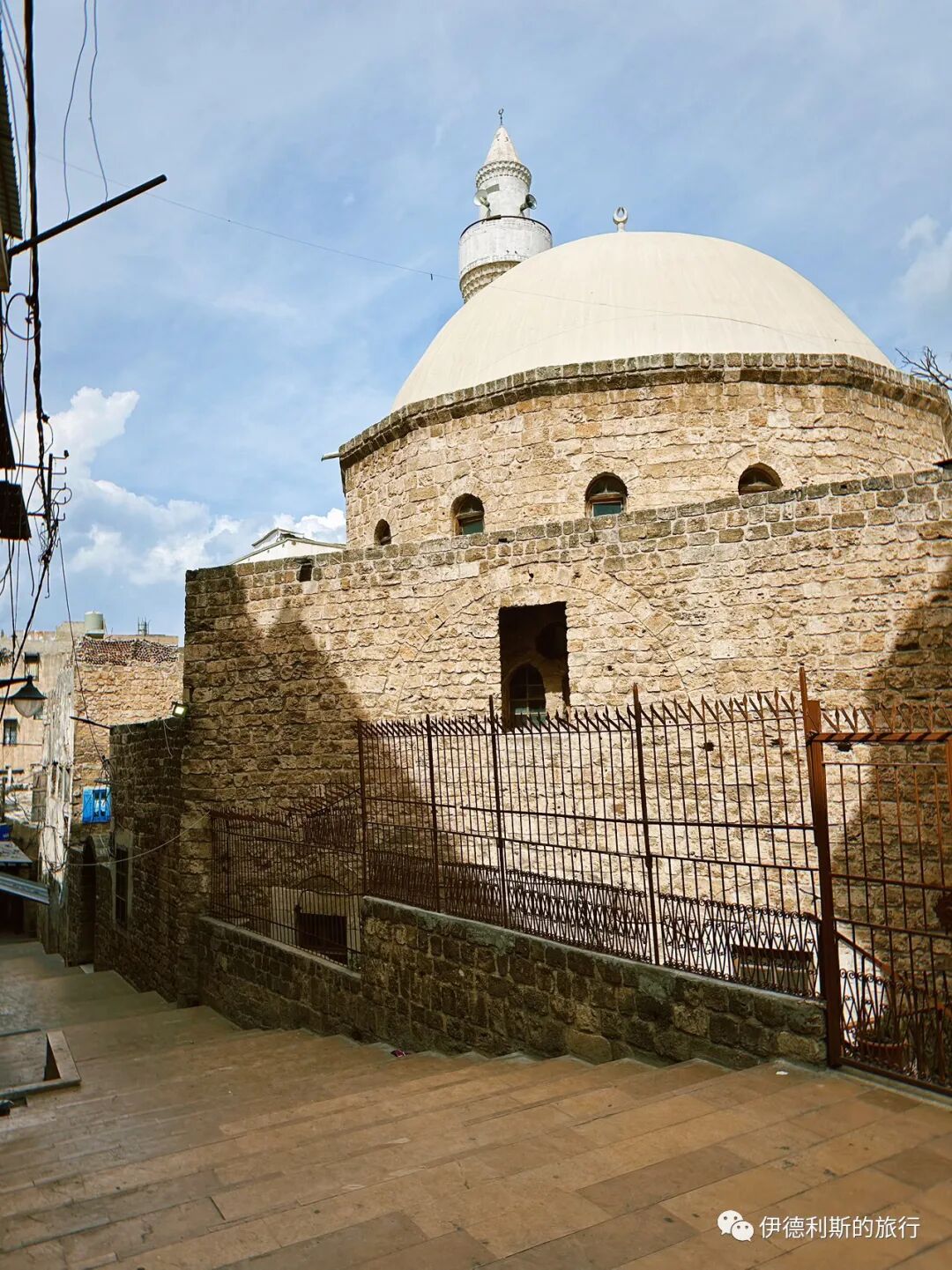
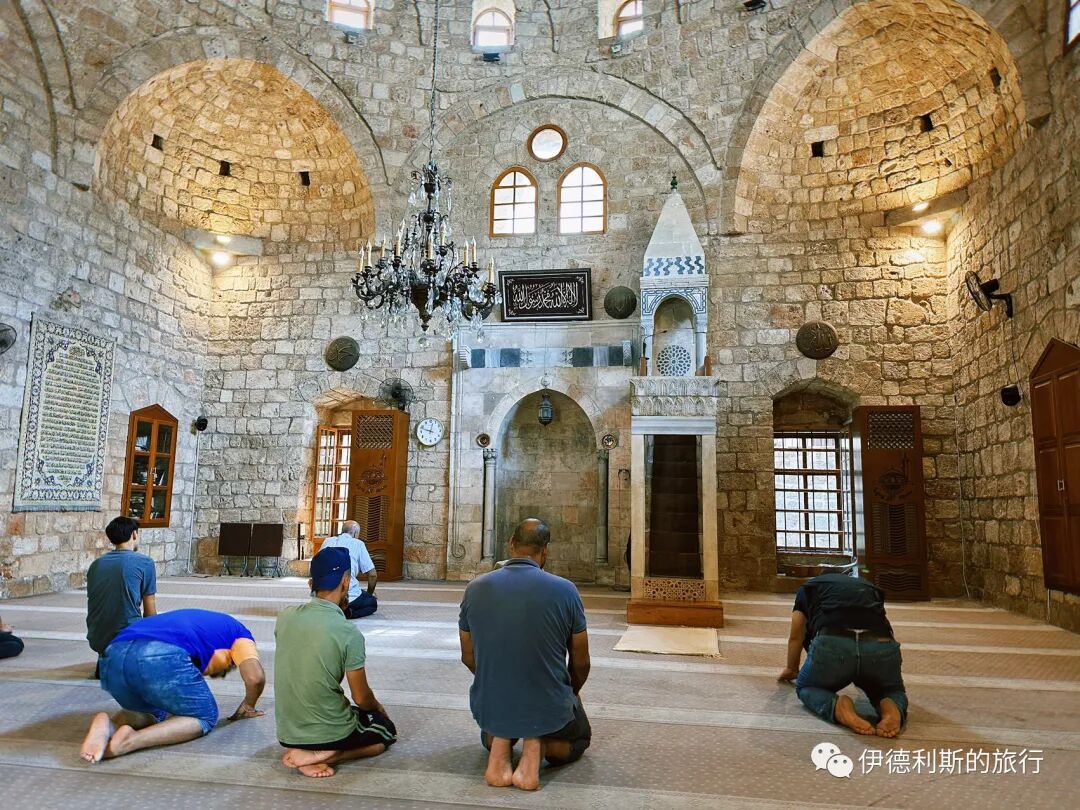
The Hanging Mosque (Muallaq Mosque) was commissioned in 1561 by the Ottoman governor of Tripoli, Mahmud Lutfi al-Za'im, during the reign of Ottoman Sultan Suleiman the Magnificent. The first floor of the Hanging Mosque is a culvert on the street level, so you must take the stairs to the side to reach the second-floor prayer hall. The octagonal minaret next to the prayer hall is very eye-catching and features two levels of balconies.
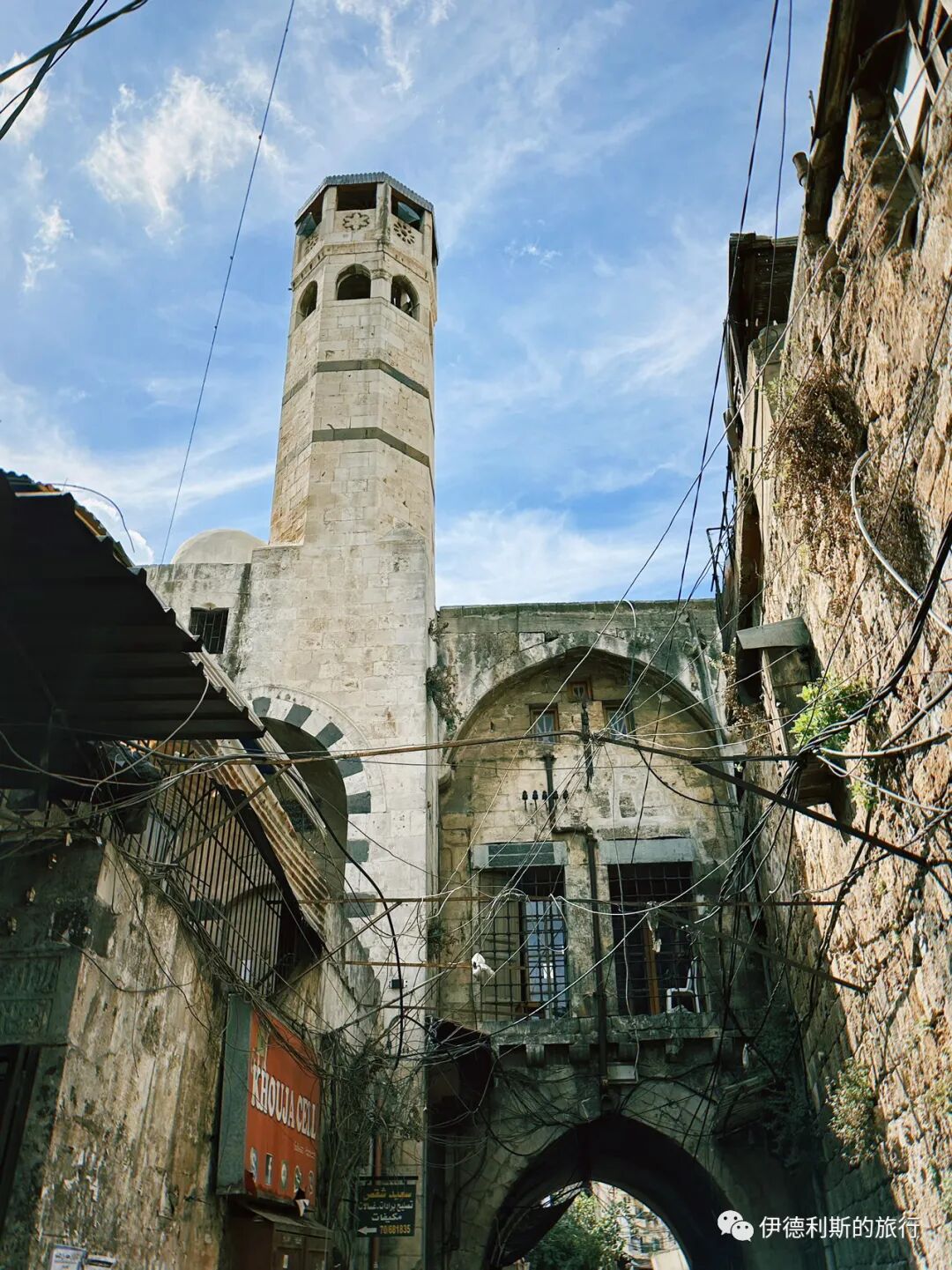
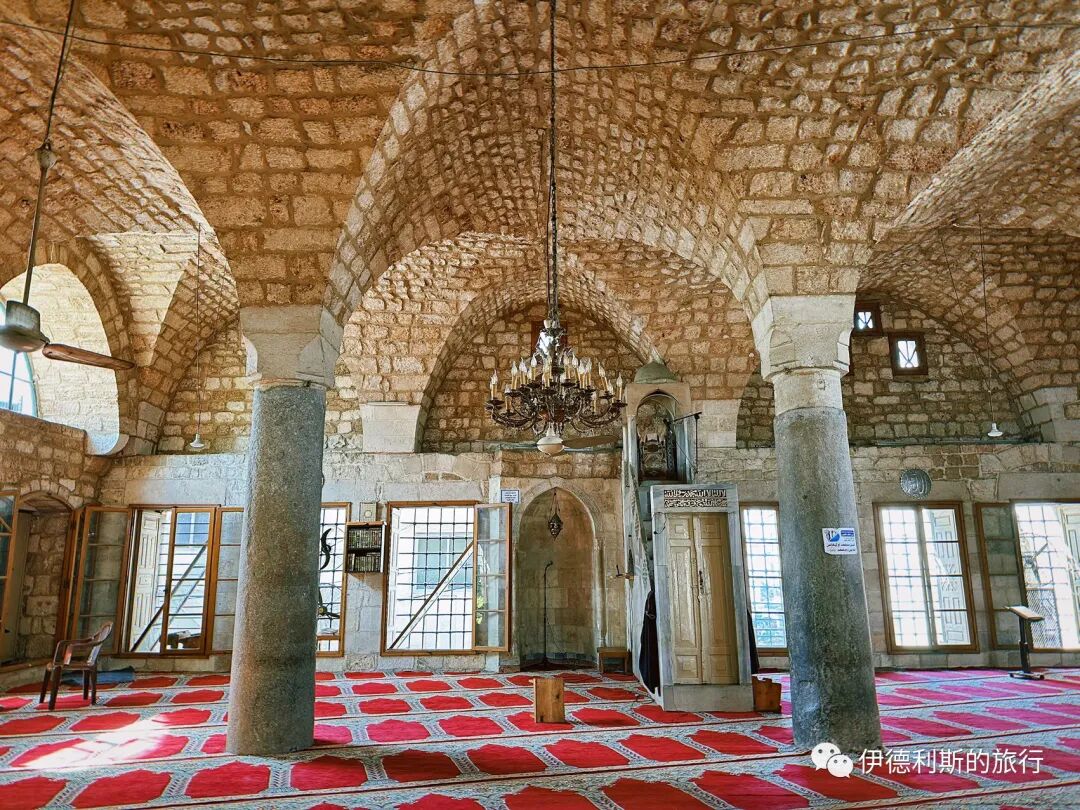
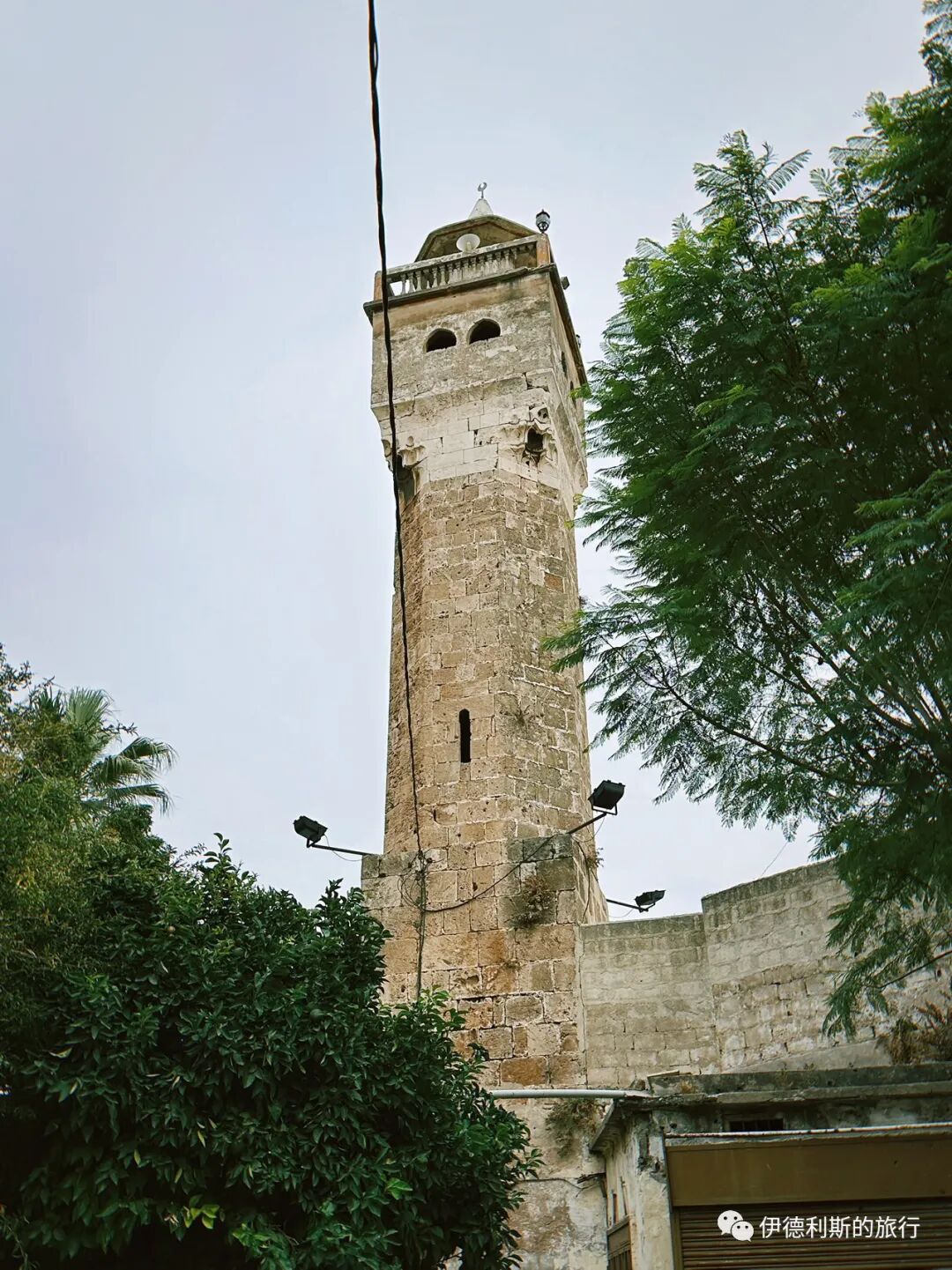
The construction date of Tawba Mosque is unknown, though it is believed to have been built during the Mamluk period. Because it sits right next to the riverbank, the stone inscription marking its construction was likely washed away in a flood. The inscription currently at the mosque entrance states that it was rebuilt after a flood in 1612. Many mosques in Lebanon lock their doors outside of prayer times, so I could not enter and only saw the octagonal minaret.
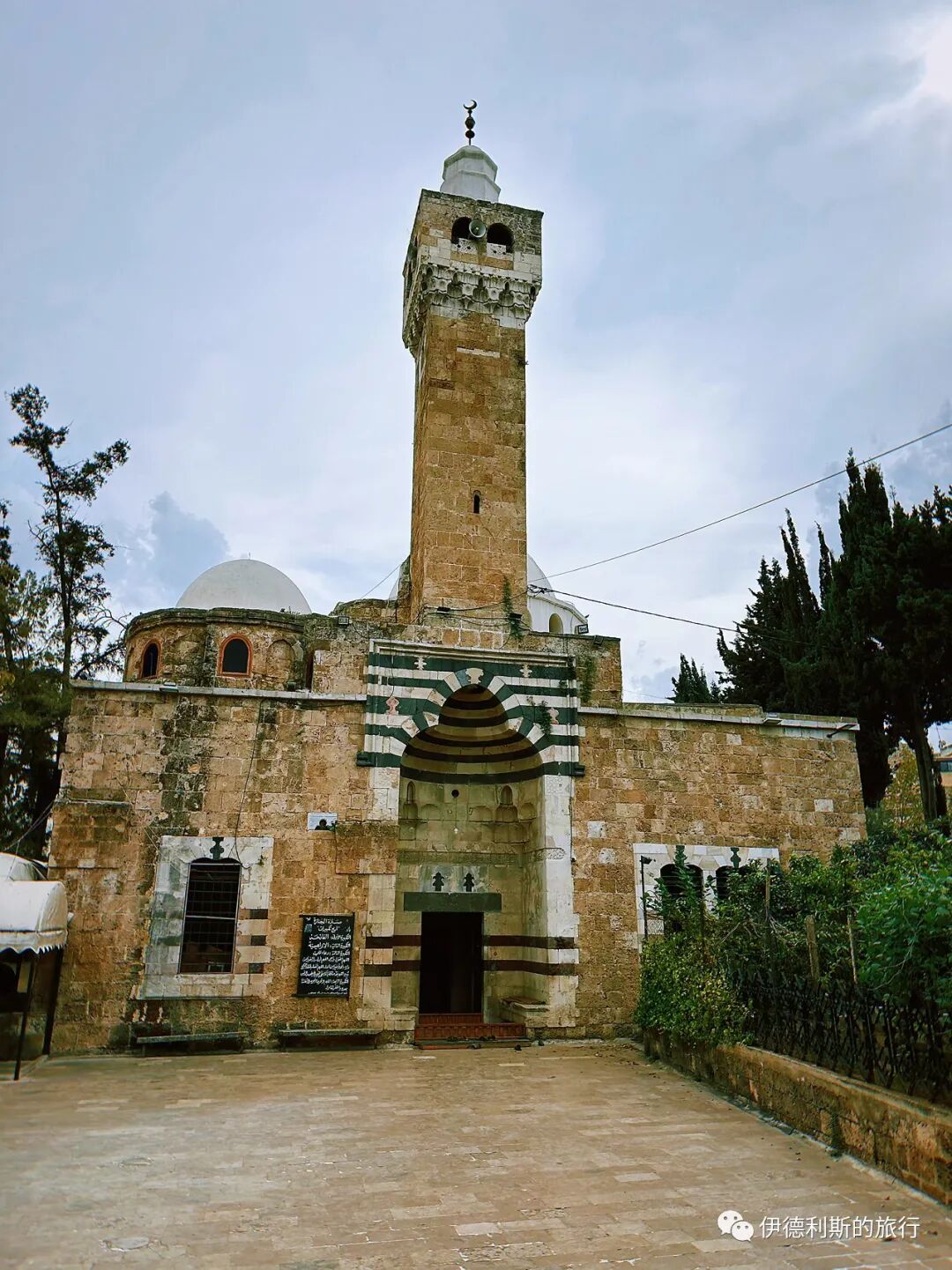
Burtasi Mosque was built by Isa ibn Umar al-Burtasi during the Mamluk period. Since Isa passed away in 1324, we can assume the mosque was built between the late 13th century and 1324. A flood in 1955 destroyed all the houses around Burtasi Mosque, and it is now the only building left standing on the riverbank. The minaret above the main gate is considered the most beautiful minaret in Tripoli. Above the three-tiered muqarnas cornice is a square balcony featuring Moorish-style double-arched windows. This type of double arch is a classic structure found in Muslim architecture in Andalusia, southern Spain.
Madrasas
During the 14th century, the Mamluk dynasty established six colleges around the Great Mansouri Mosque, which trained a large number of students. These include al-Khayriyya Hasan (1309 or later), al-Qartawiyya (c. 1326), al-Shamsiyya (1349), al-Nasiriyya (between 1354–60), al-Nuriyya (14th century), and the Mashhad Madrasa. The al-Qartawiyya Madrasa outside the east wall of the Mansouri Great Mosque is the most magnificent, though we could not find the main gate in the maze-like alleys of the old city, we did see the calligraphy carvings on the school's wall.
Hammam
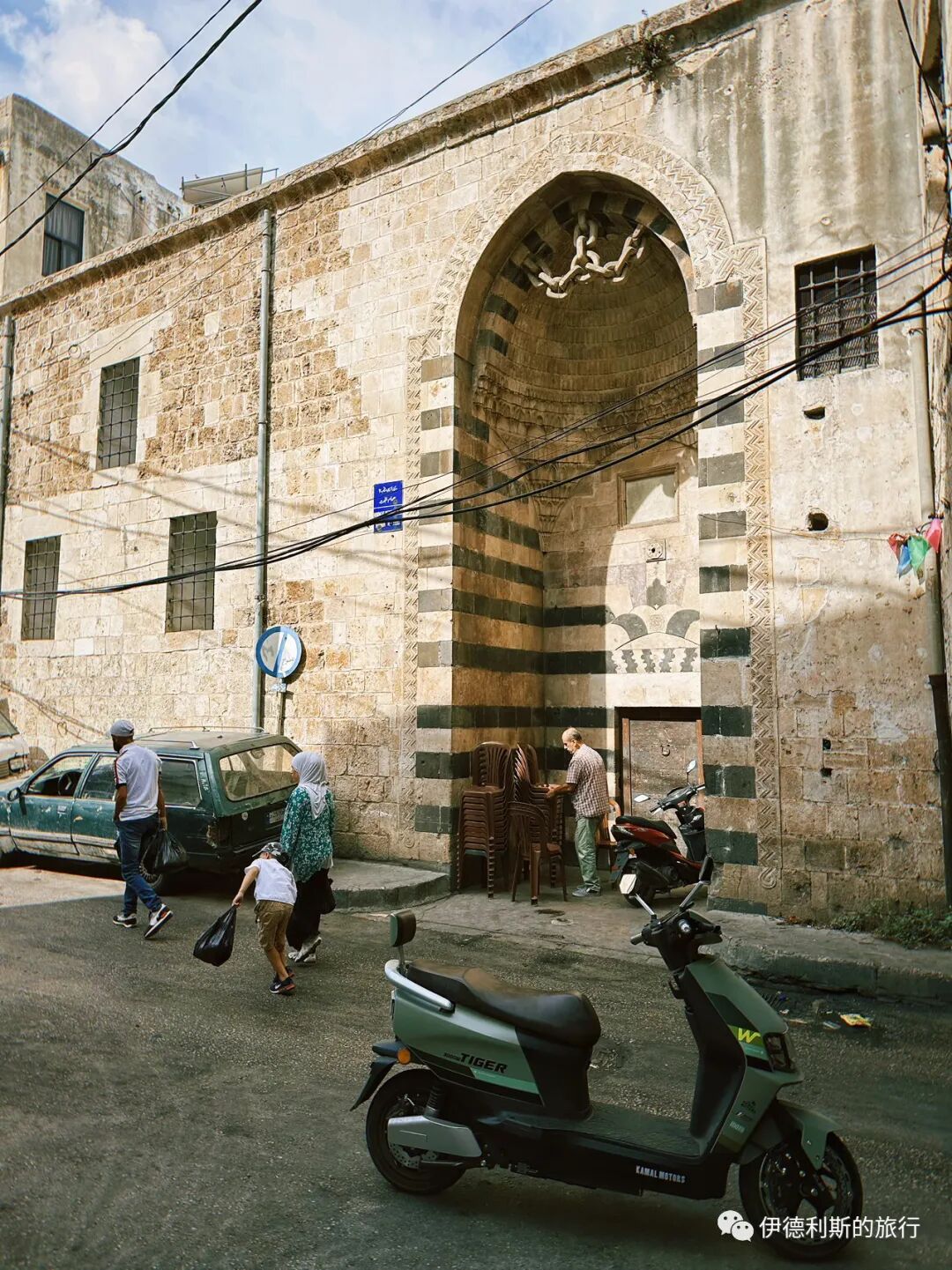
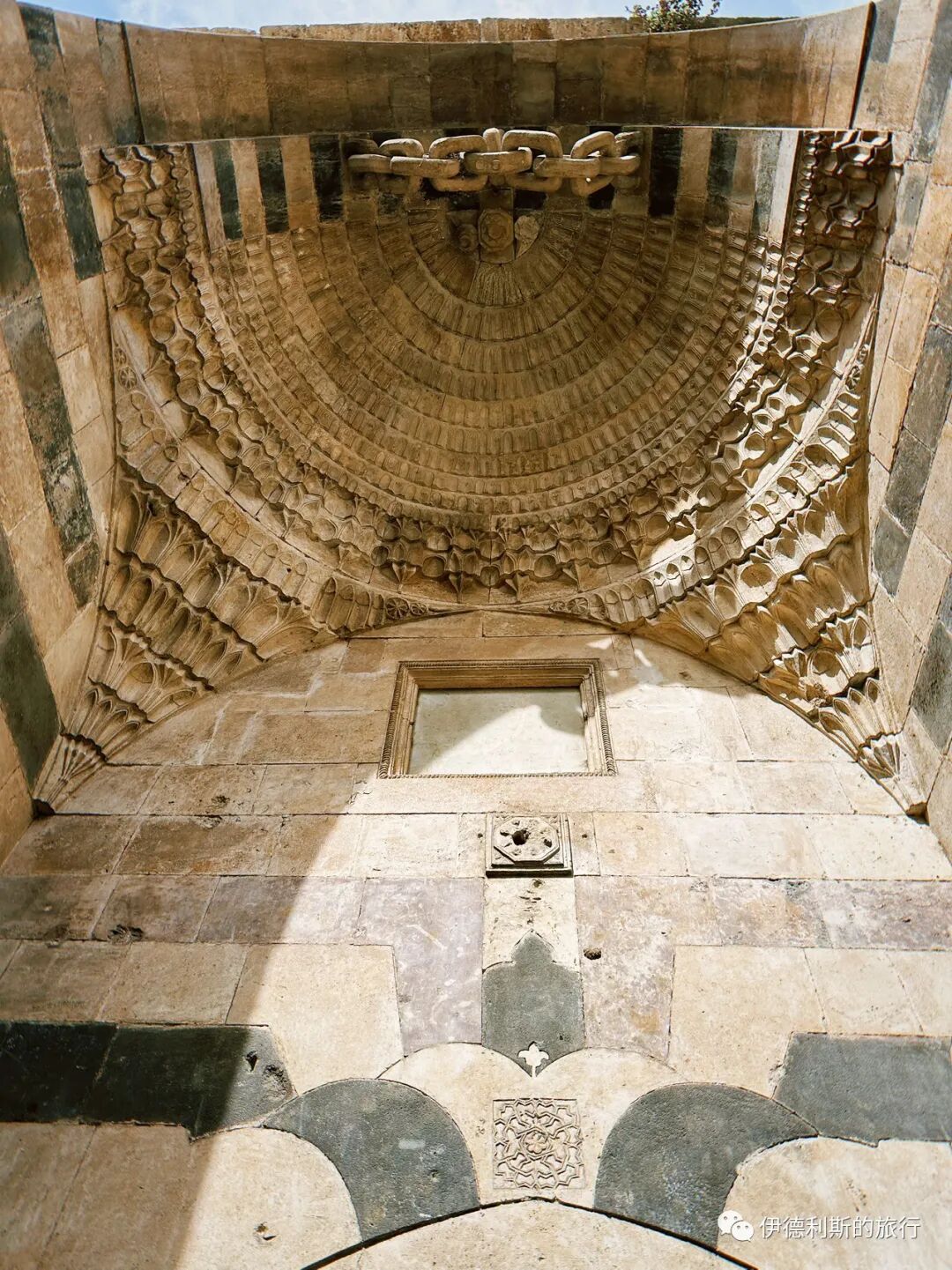
Right next to the Hanging Mosque is the Al Jadid bathhouse (Hammam), built in 1740 during the Ottoman period, which was used until the 1970s and closed after the outbreak of the Lebanese Civil War. This bathhouse was a gift to Tripoli from the Damascus governor Asad Pasha Al Azem, and its gate is exquisite, featuring a fourteen-link chain carved from a single piece of stone.
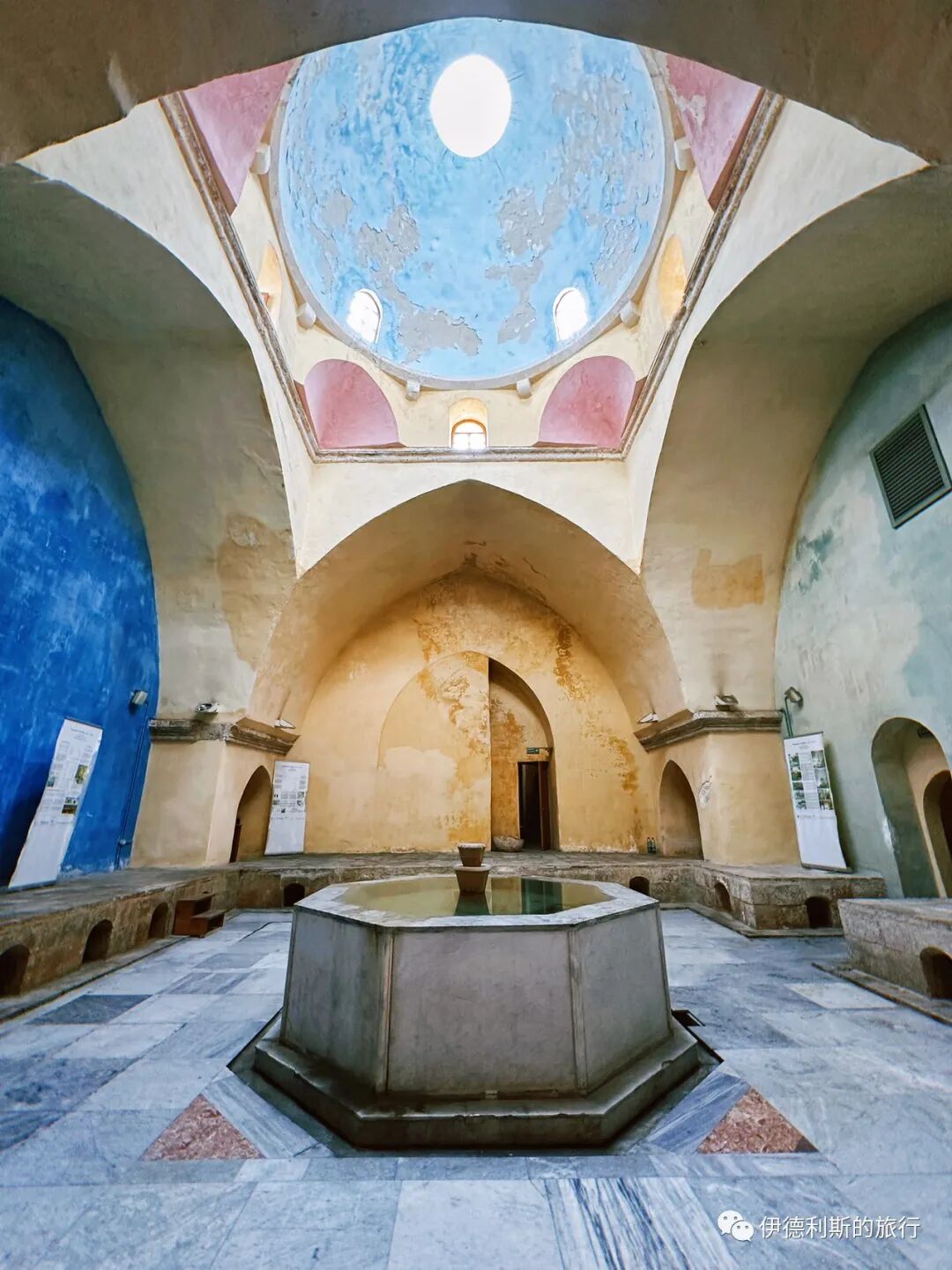
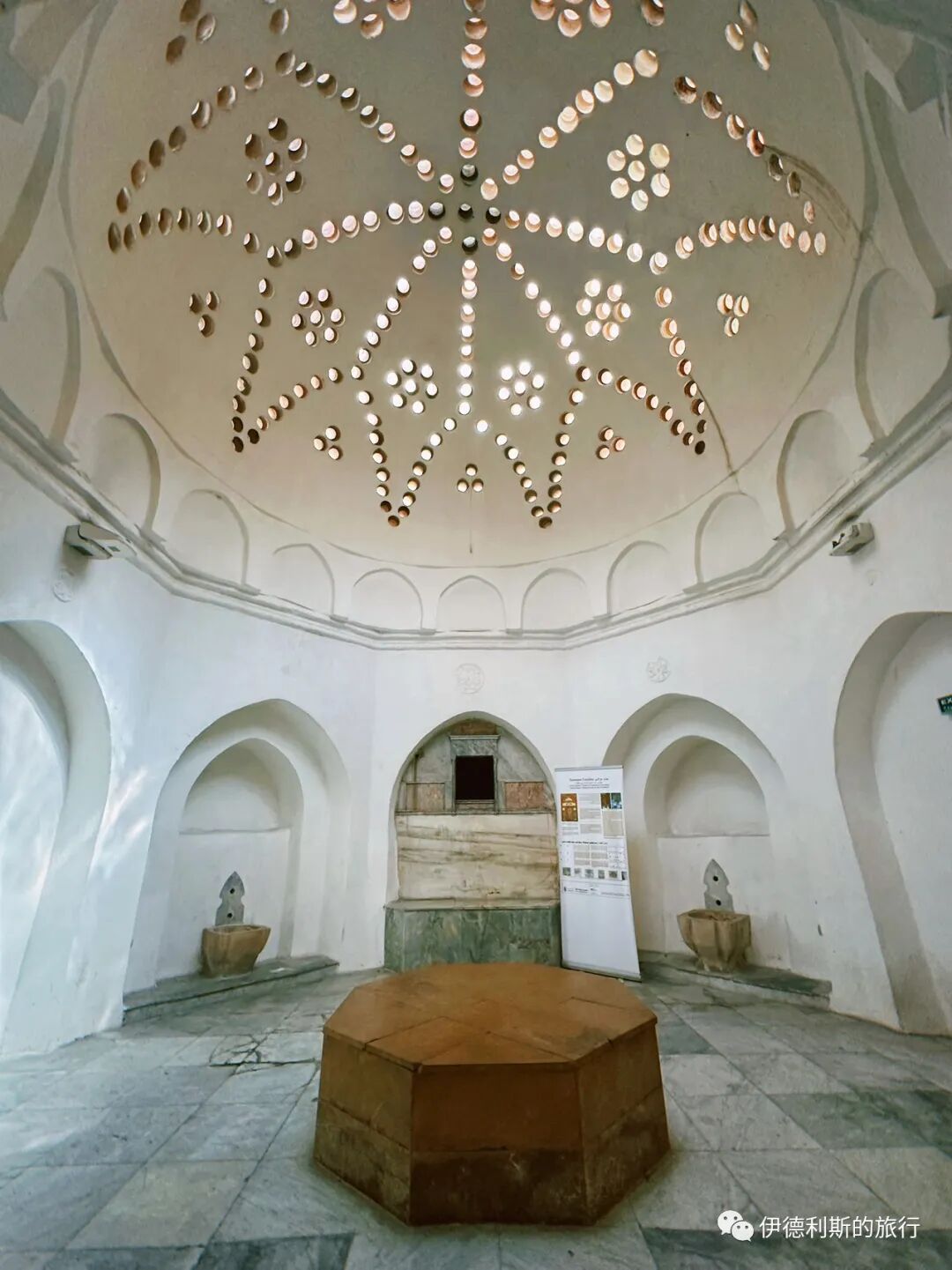
The Ezzedin bathhouse (Hammam) was the first public bathhouse built by the Mamluk dynasty after they occupied Tripoli, commissioned by Emir Ezzedin Aibek (who ruled Tripoli from 1293 to 1298) and constructed using many marble pieces from the Byzantine and Crusader eras. This bathhouse operated from the end of the 13th century until 1975, when it closed due to the start of the Lebanese Civil War. It has now been restored and is free to visit.
Market
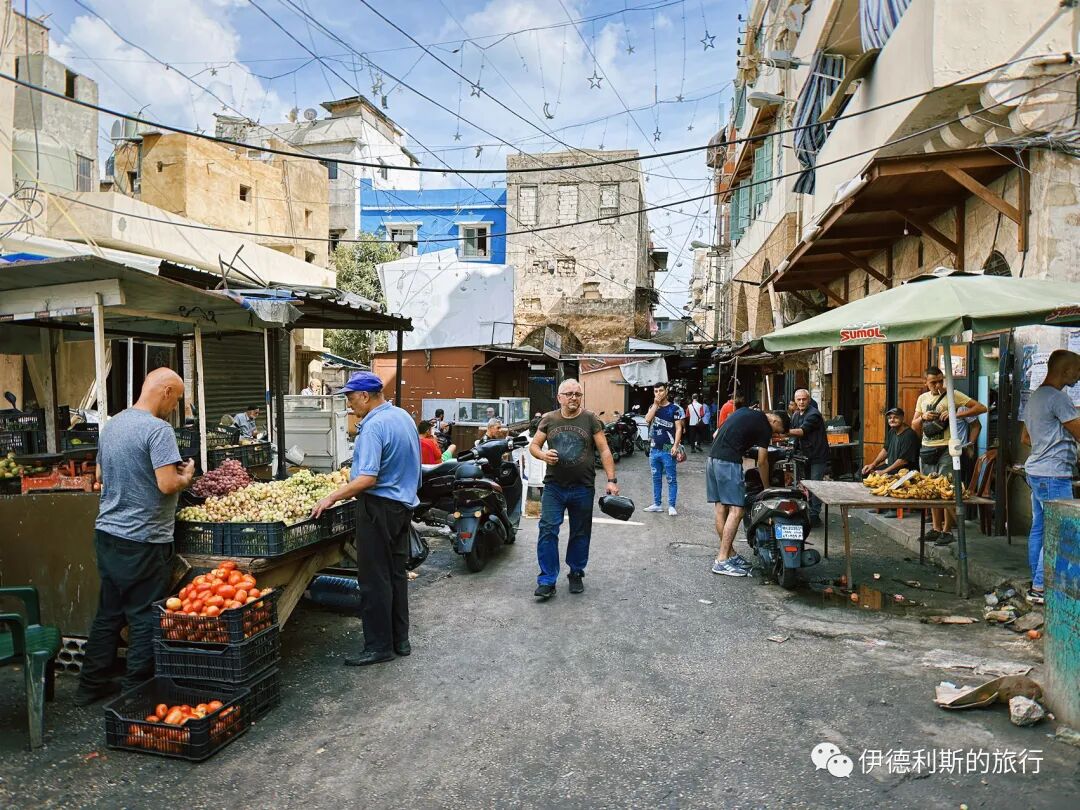
The markets in Tripoli's old city are very lively, which is a sharp contrast to Beirut. Ibn Battuta wrote in his travelogue: 'Afterward, we arrived at the city of Tripoli.' It is an important town in Sham, with several small rivers flowing through it. It is surrounded by fragrant orchards and lush green trees. The sea surrounds it with its deep blue water, and the earth nourishes it with its treasures. The goods in the market are dazzling and truly amazing.
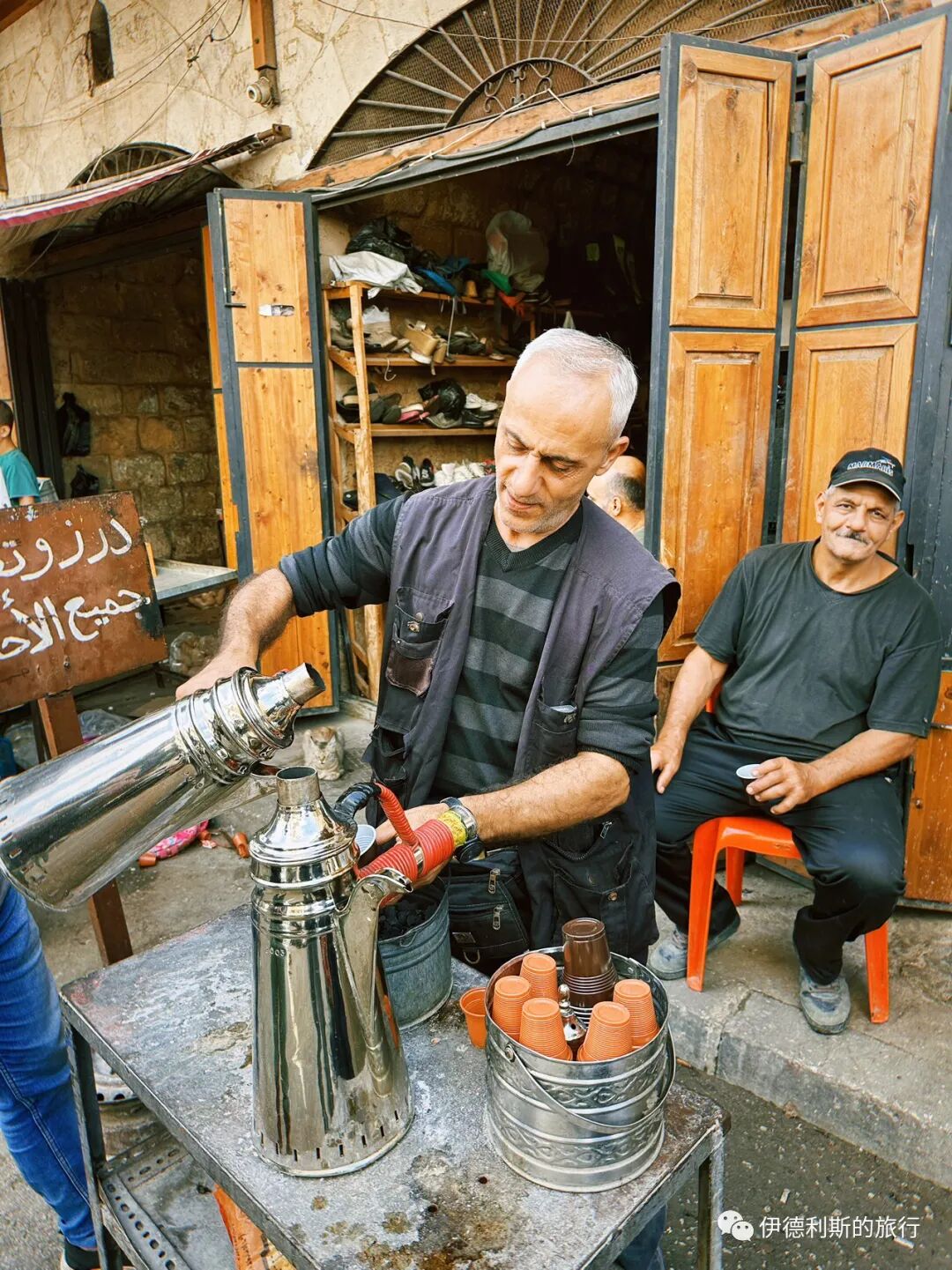
We drank street coffee at the market and saw all kinds of dairy products, which was very interesting.
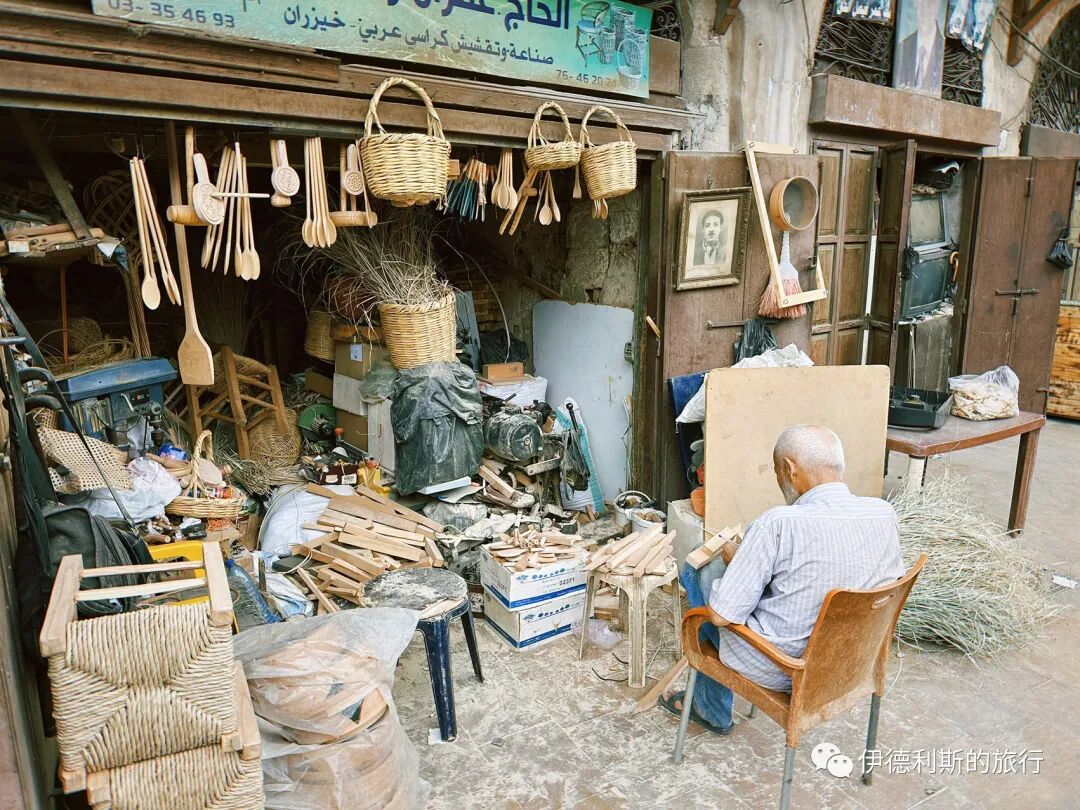
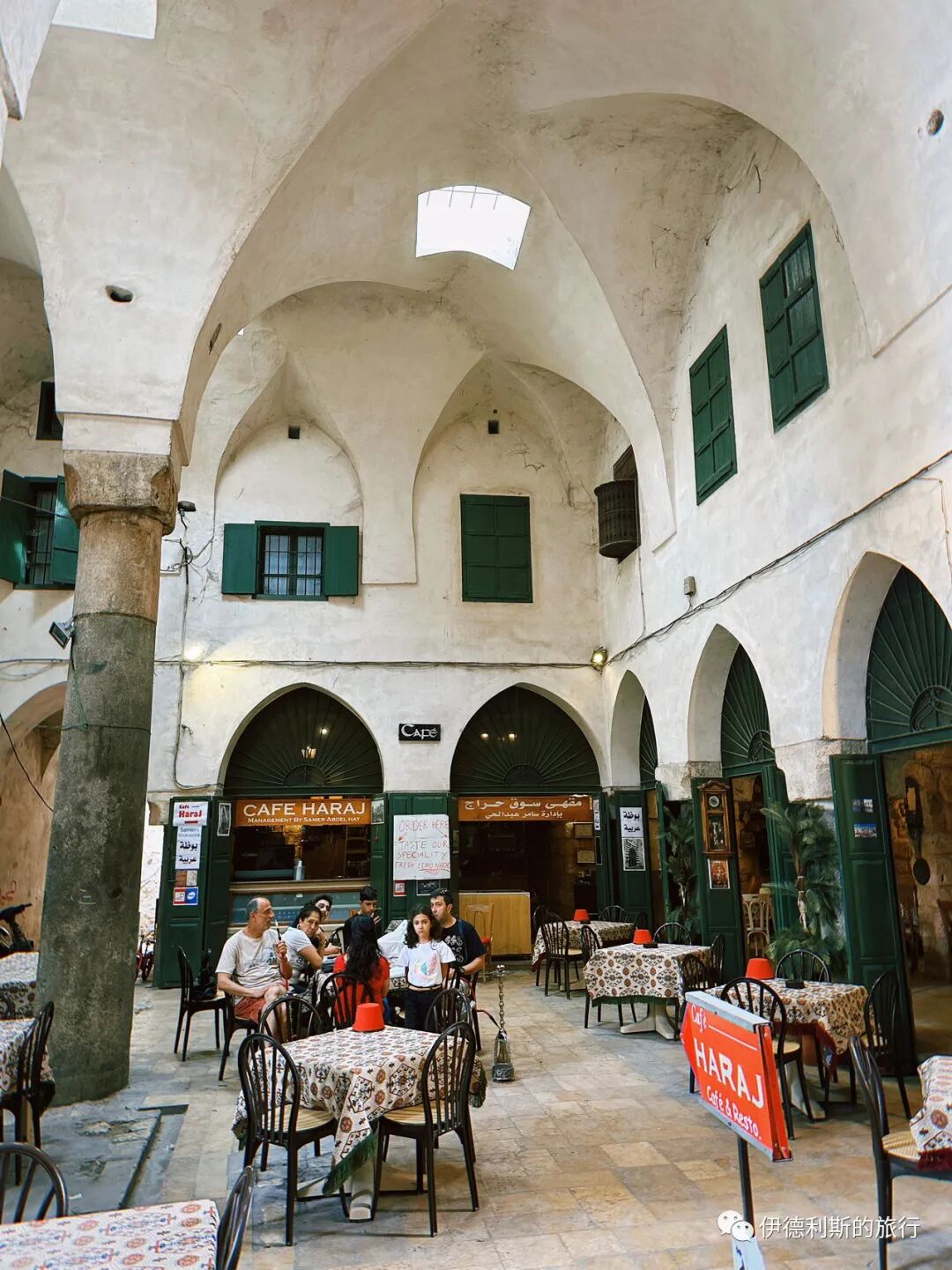
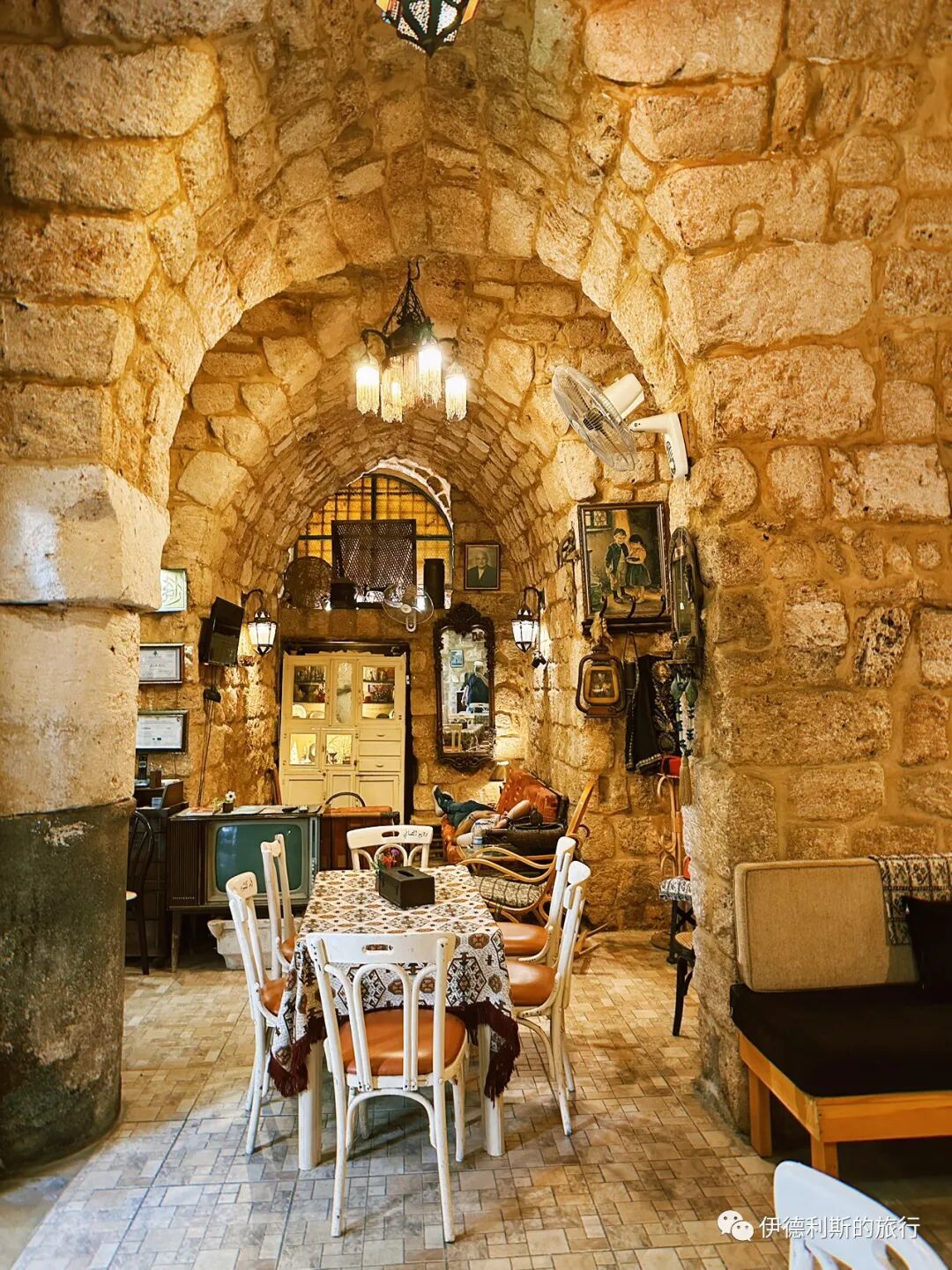
The Haraj market was built in the 14th century and has an 8-meter-high vaulted ceiling supported by black granite columns, some of which may be architectural pieces from the ancient Roman or Byzantine eras. The market has two floors; the upper rooms were for merchants to stay in and had wooden windows through which their female relatives could look down at the market, while the lower floor was for selling goods.
The 1983 bombing during the Lebanese Civil War caused severe damage to the Haraj market, which was later restored to its current state after a long process.
Inn
Tripoli has always been famous for producing perfume and handmade soap, with the most well-known brand being Bader Hassoun's Khan Al Saboun (Soap Inn). The history of the Hassoun family producing soap in Tripoli dates back to the early Mamluk dynasty in 1256, while the Soap Inn (Khan Al Saboun) in the old city of Tripoli was built in the late Mamluk dynasty in 1480.
The Soap Inn has a courtyard with two levels of galleries and a pool in the middle. The second floor of the gallery was for caravan merchants to stay, while the first floor was for making and selling soap. People say the Ottoman Sultan Suleiman the Magnificent once received soap from Tripoli as a tribute, and at the urging of the Queen, Suleiman ordered the expansion of the Soap Inn in Tripoli. After it was built, the soap inn became a trade center for making and selling soap, and it started exporting soap to Europe. Today, the Bader Hassoun soap shop is located right here.
In 1993, Bader Hassoun's jewelry store in the old city of Tripoli was robbed, which led him to decide to restore his family's tradition of making soap. He and his wife spent one night making traditional soap with olive oil, dates, glycerin, natural coloring, and spices, and it all sold out the next day.
We bought the most traditional natural soap at the shop, which comes in three scents: green tea, lavender, and cedar. Cedar is an important symbol of Lebanon, and Lebanon is also known as the Land of Cedars. We also bought an olive oil soap safe for babies, which I can use for Suleiman.
Misriyyin Inn is located in the northern part of the old city of Tripoli and dates back to the Mamluk period in the 14th century. There is a Sharkass soap shop on the second floor of the inn, and they have been making traditional olive oil soap since 1803. The Tripoli Soap shop on the first floor opened in 1937, and you can watch the process of making natural soap on-site here.
Right next to the Ezzedin bathhouse is the Tailors' Inn (Khan Khayyatin), a Mamluk-era commercial inn built by Prince Badr al-Din in 1339 that mainly sold needles, thread, textiles, and other sewing supplies. This is not a typical courtyard inn, but consists of two rows of shops with stores on the first floor and guest rooms on the second, which are not connected in the middle, and the top is covered by ten horizontally connected arches. People say it has its current shape because it was built on the foundation of a Byzantine-Crusader building.
Askar Inn (Khan) was built during the Mamluk period in the 14th century and is the largest commercial inn in Tripoli.
Food
Cheese flatbread (manakish) at the market, which is likely the most classic snack in the market.
We had a traditional stewed bean brunch at Akra restaurant, ordering traditional stewed fava beans and chickpeas, along with hummus topped with cashews and peanuts, all eaten inside pita bread.
Summary: Tripoli in northern Lebanon is shown through its old city streets, mosques, markets, and everyday food. The account follows the original route from Beirut to Tripoli while keeping the local names, religious sites, and photographs in order.
Tripoli is in northern Lebanon. It takes about an hour to get there by minibus from across the street from the Mohammad Al-Amin Mosque in the capital, Beirut.
In 1289, the Mamluk dynasty took Tripoli from the Crusaders. They destroyed the old city and built a new one 4 kilometers inland below the castle, turning it into an important historic city for the faith. Today, about 35 ancient buildings from the Mamluk period remain in the old city of Tripoli. This makes Tripoli the city with the second-most preserved Mamluk monuments after Cairo.
After the Ottoman Empire left Lebanon in 1918, Tripoli fell into a long decline. The Lebanese Civil War that began in 1975 hit Tripoli hard. In 1985, a battle between Sunni and Alawite militias forced 200,000 people to leave their homes and led to the Syrian army staying in Tripoli until 2005. After the civil war ended, Tripoli seemed to be forgotten, and more than half of its residents live in poverty. At the same time, conflicts between Sunni and Alawite groups happen from time to time, often with bombings and suicide attacks, which has long made Tripoli an unsuitable place for tourism.
Table of Contents
Castle
Tripoli Castle: Rebuilt by the Mamluk dynasty in 1289 and again by Suleiman the Magnificent of the Ottoman Empire in 1521.
City Gates
Al-Mahatra Gate: Named after the military musicians who played to encourage the troops.
Mosques
Mansouri Great Mosque: Built by the Mamluk dynasty in 1294.
Taynal Mosque: Built by the Mamluk dynasty in 1336.
Attar Mosque: Built in the 1350s by a local wealthy perfume merchant; it is currently closed.
Al-Uwaysiyat Mosque: Built by the Mamluk dynasty in 1461.
Hanging Mosque (Muallaq Mosque): Built by the Ottoman Empire in 1561.
Tawba Mosque: Rebuilt by the Ottoman Empire in 1612.
Burtasi Mosque: Built by the Mamluk dynasty in the late 13th and early 14th centuries.
Madrasas
In the 14th century, the Mamluk dynasty built six madrasas around the Mansouri Great Mosque.
Hammam
Al Jadid Hammam: Built during the Ottoman period in 1740; it is currently closed.
Ezzedin Hammam: Built by the Mamluk dynasty in the late 13th century; it is currently open for visitors.
Market
Haraj Market: Built in the 14th century during the Mamluk dynasty.
Inn
Al Saboun Soap Inn: Built in 1480 during the late Mamluk dynasty, where you can buy traditional soap.
Misriyyin Soap Inn: Built in the 14th century during the Mamluk dynasty, where you can buy traditional soap.
Khayyatin Tailor Inn: Built in 1339 during the Mamluk dynasty, where you can buy traditional clothing.
Askar Inn: Built in the 14th century during the Mamluk dynasty, currently closed.
Food
Cheese flatbread in the market.
Eat at Akra Restaurant: Traditional bean stew brunch.
Castle
The site of Tripoli Castle was originally a Shia cemetery from the Fatimid dynasty. During the Frankish Crusader siege of Tripoli in 1102-1103, the Crusader leader Raymond of Saint-Gilles ordered it to be built into a castle, so it was later also called Saint-Gilles Castle. In 1289, after the Mamluk dynasty captured Tripoli, they rebuilt the castle using many Roman columns and other building materials found nearby. In 1521, the Ottoman Sultan Suleiman the Magnificent rebuilt the castle again, changing the arrow slits into cannon ports. In the early 19th century, the Ottoman governor of Tripoli carried out the last major renovation of the castle, giving it its current appearance.
The castle gate consists of two towers. The moat in front originally had a drawbridge, which has now been replaced by a stone bridge. The black and white marble facade on the gate was built by Suleiman the Magnificent in 1521. The stone inscription above reads: 'May the Emir never cease to obey his command, restoring this sacred castle, making it a strong fortress forever.'
City Gates
Al-Mahatra Gate in the old city of Tripoli. The name of this gate comes from the military musicians who played to encourage the army. Now that the war is over, houses have been built on top of the gate, and it has become a quiet alley.
Mosques
Mansouri Great Mosque, also known as the Great Mosque of Tripoli, was ordered to be built in 1294 by the Mamluk Sultan Al-Ashraf Khalil. It is the first building constructed by the Mamluk dynasty in Tripoli.
In 1109, the French Crusaders occupied Tripoli. For the next 180 years, Tripoli was ruled by European Christian nobles. In 1289, the Mamluk army arrived at the walls of Tripoli carrying large catapults. Under the assault of catapults, the two towers of Tripoli soon collapsed. The Mamluk army stormed the city and leveled it to the ground.
Shortly after, the Mamluk dynasty began building a new city at the foot of the castle on Tripoli's Pilgrim Mountain (Jabal al-Hajj). This included the Great Mansouri Mosque, built on the ruins of a Crusader church at the base of the hill. The mosque's minaret (mabkhara) is likely part of the Crusader Church of St. Mary, and the main gate may also incorporate the original Crusader church entrance. The main prayer hall was built by the Mamluk dynasty in 1294, and the courtyard's surrounding colonnades were added in 1314 by the Mamluk Sultan Al-Nasir Muhammad.
Taynal Mosque was built in 1336 by order of the Mamluk governor of Tripoli, Amir Taynal. The main prayer hall of Taynal Mosque consists of two consecutive halls. The most ornate feature is the entrance to the second hall, which has a gate with a stalactite-style cornice (muqarnas) and uses the ablaq technique of alternating black and white marble. Inside the prayer hall are some ancient Corinthian columns, which are thought to have come from a Crusader-era church or an even older Roman temple.
Attar Mosque was built in the 1350s by a wealthy local perfume merchant named Badr al-Din al-Attar on the ruins of a Crusader church. It was the first mosque in Tripoli not built by the Mamluks. Attar Mosque is known as one of the most beautiful mosques in Tripoli, but it has been closed for several years for renovations.
Al-Uwaysiyat Mosque was first built during the Mamluk period in 1461 and was renovated in 1534 during the reign of the Ottoman Sultan Suleiman the Magnificent.
The Hanging Mosque (Muallaq Mosque) was commissioned in 1561 by the Ottoman governor of Tripoli, Mahmud Lutfi al-Za'im, during the reign of Ottoman Sultan Suleiman the Magnificent. The first floor of the Hanging Mosque is a culvert on the street level, so you must take the stairs to the side to reach the second-floor prayer hall. The octagonal minaret next to the prayer hall is very eye-catching and features two levels of balconies.
The construction date of Tawba Mosque is unknown, though it is believed to have been built during the Mamluk period. Because it sits right next to the riverbank, the stone inscription marking its construction was likely washed away in a flood. The inscription currently at the mosque entrance states that it was rebuilt after a flood in 1612. Many mosques in Lebanon lock their doors outside of prayer times, so I could not enter and only saw the octagonal minaret.
Burtasi Mosque was built by Isa ibn Umar al-Burtasi during the Mamluk period. Since Isa passed away in 1324, we can assume the mosque was built between the late 13th century and 1324. A flood in 1955 destroyed all the houses around Burtasi Mosque, and it is now the only building left standing on the riverbank. The minaret above the main gate is considered the most beautiful minaret in Tripoli. Above the three-tiered muqarnas cornice is a square balcony featuring Moorish-style double-arched windows. This type of double arch is a classic structure found in Muslim architecture in Andalusia, southern Spain.
Madrasas
During the 14th century, the Mamluk dynasty established six colleges around the Great Mansouri Mosque, which trained a large number of students. These include al-Khayriyya Hasan (1309 or later), al-Qartawiyya (c. 1326), al-Shamsiyya (1349), al-Nasiriyya (between 1354–60), al-Nuriyya (14th century), and the Mashhad Madrasa. The al-Qartawiyya Madrasa outside the east wall of the Mansouri Great Mosque is the most magnificent, though we could not find the main gate in the maze-like alleys of the old city, we did see the calligraphy carvings on the school's wall.
Hammam
Right next to the Hanging Mosque is the Al Jadid bathhouse (Hammam), built in 1740 during the Ottoman period, which was used until the 1970s and closed after the outbreak of the Lebanese Civil War. This bathhouse was a gift to Tripoli from the Damascus governor Asad Pasha Al Azem, and its gate is exquisite, featuring a fourteen-link chain carved from a single piece of stone.
The Ezzedin bathhouse (Hammam) was the first public bathhouse built by the Mamluk dynasty after they occupied Tripoli, commissioned by Emir Ezzedin Aibek (who ruled Tripoli from 1293 to 1298) and constructed using many marble pieces from the Byzantine and Crusader eras. This bathhouse operated from the end of the 13th century until 1975, when it closed due to the start of the Lebanese Civil War. It has now been restored and is free to visit.
Market
The markets in Tripoli's old city are very lively, which is a sharp contrast to Beirut. Ibn Battuta wrote in his travelogue: 'Afterward, we arrived at the city of Tripoli.' It is an important town in Sham, with several small rivers flowing through it. It is surrounded by fragrant orchards and lush green trees. The sea surrounds it with its deep blue water, and the earth nourishes it with its treasures. The goods in the market are dazzling and truly amazing.
We drank street coffee at the market and saw all kinds of dairy products, which was very interesting.
The Haraj market was built in the 14th century and has an 8-meter-high vaulted ceiling supported by black granite columns, some of which may be architectural pieces from the ancient Roman or Byzantine eras. The market has two floors; the upper rooms were for merchants to stay in and had wooden windows through which their female relatives could look down at the market, while the lower floor was for selling goods.
The 1983 bombing during the Lebanese Civil War caused severe damage to the Haraj market, which was later restored to its current state after a long process.
Inn
Tripoli has always been famous for producing perfume and handmade soap, with the most well-known brand being Bader Hassoun's Khan Al Saboun (Soap Inn). The history of the Hassoun family producing soap in Tripoli dates back to the early Mamluk dynasty in 1256, while the Soap Inn (Khan Al Saboun) in the old city of Tripoli was built in the late Mamluk dynasty in 1480.
The Soap Inn has a courtyard with two levels of galleries and a pool in the middle. The second floor of the gallery was for caravan merchants to stay, while the first floor was for making and selling soap. People say the Ottoman Sultan Suleiman the Magnificent once received soap from Tripoli as a tribute, and at the urging of the Queen, Suleiman ordered the expansion of the Soap Inn in Tripoli. After it was built, the soap inn became a trade center for making and selling soap, and it started exporting soap to Europe. Today, the Bader Hassoun soap shop is located right here.
In 1993, Bader Hassoun's jewelry store in the old city of Tripoli was robbed, which led him to decide to restore his family's tradition of making soap. He and his wife spent one night making traditional soap with olive oil, dates, glycerin, natural coloring, and spices, and it all sold out the next day.
We bought the most traditional natural soap at the shop, which comes in three scents: green tea, lavender, and cedar. Cedar is an important symbol of Lebanon, and Lebanon is also known as the Land of Cedars. We also bought an olive oil soap safe for babies, which I can use for Suleiman.
Misriyyin Inn is located in the northern part of the old city of Tripoli and dates back to the Mamluk period in the 14th century. There is a Sharkass soap shop on the second floor of the inn, and they have been making traditional olive oil soap since 1803. The Tripoli Soap shop on the first floor opened in 1937, and you can watch the process of making natural soap on-site here.
Right next to the Ezzedin bathhouse is the Tailors' Inn (Khan Khayyatin), a Mamluk-era commercial inn built by Prince Badr al-Din in 1339 that mainly sold needles, thread, textiles, and other sewing supplies. This is not a typical courtyard inn, but consists of two rows of shops with stores on the first floor and guest rooms on the second, which are not connected in the middle, and the top is covered by ten horizontally connected arches. People say it has its current shape because it was built on the foundation of a Byzantine-Crusader building.
Askar Inn (Khan) was built during the Mamluk period in the 14th century and is the largest commercial inn in Tripoli.
Food
Cheese flatbread (manakish) at the market, which is likely the most classic snack in the market.
We had a traditional stewed bean brunch at Akra restaurant, ordering traditional stewed fava beans and chickpeas, along with hummus topped with cashews and peanuts, all eaten inside pita bread.
Halal Travel Guide: Tripoli, Lebanon - Mamluk Mosques and Old City (Part 1)
Articles • ali2007fr posted the article • 0 comments • 148 views • 2026-05-19 06:55
Reposted from the web
Tripoli is in northern Lebanon. It takes about an hour to get there by minibus from across the street from the Mohammad Al-Amin Mosque in the capital, Beirut. The history of Tripoli dates back to the 14th century BC. For thousands of years, it has been an important port on the eastern Mediterranean coast. The early city of Tripoli was always along the coast. In 1289, the Mamluk dynasty took Tripoli from the Crusaders, destroyed the old city, and built a new one 4 kilometers inland below the castle. Today, about 35 ancient buildings from the Mamluk period remain in the old city of Tripoli. This makes Tripoli the city with the most preserved Mamluk monuments after Cairo.
Since the Ottoman Empire left Lebanon in 1918, Tripoli has fallen into a long decline, and Beirut has completely replaced it as a trade center. The Lebanese Civil War that began in 1975 hit Tripoli hard. In 1985, a battle between Sunni and Alawite militias forced 200,000 people to leave their homes and led to the Syrian army staying in Tripoli until 2005. After the civil war ended, Lebanon focused its funds on rebuilding the capital, Beirut. Tripoli seemed to be forgotten, and more than half of its residents live in poverty. At the same time, conflicts between Sunnis and Alawites happen from time to time. Explosions and suicide attacks often occur, making Tripoli a place unsuitable for tourism for a long time.
We first went to the Taynal Mosque south of the old city. The Taynal Mosque was built in 1336 by order of the Mamluk governor (Na'ib) of Tripoli, Amir Taynal. Amir Taynal served three terms as governor of Tripoli and one term as governor of Gaza in the mid-14th century. The famous 14th-century traveler Ibn Battuta wrote in his travelogue: 'About forty Turkish princes and nobles live in the city.' The governor of the city is Amir Taynal, who is known as the 'King of the Chiefs'. His residence is commonly known as the 'House of Blessings'. He was accustomed to riding out every Monday and Thursday, accompanied by chiefs and a large guard, and would not return to the city until he was satisfied. Amir Taynal passed away in Damascus in 1343. Although his tomb was built in the Taynal Mosque, he was eventually buried in Damascus.
The main prayer hall of Taynal Mosque consists of two connected halls. The most magnificent part is the entrance to the second hall, which features a gate with a stalactite-style cornice (muqarnas) built using the ablaq technique of alternating black and white marble. Inside the prayer hall are some ancient Corinthian columns, which are thought to have come from a Crusader-era church or an even older Roman temple. The original pulpit (minbar) in the mosque dated back to its construction in 1336, but it had been replaced with a new one by the time I visited.
Continue walking north into the market street of the old city of Tripoli, and you will see the Hanging Mosque (Mu'allaq Mosque) built over the middle of the road. The Hanging Mosque was commissioned in 1561 by Mahmud Lutfi al-Za'im, the Ottoman governor of Tripoli, during the reign of the Ottoman Sultan Suleiman the Magnificent. The first floor of the Hanging Mosque is a culvert over the street, so you must climb the stairs to the side to reach the second-floor prayer hall. The octagonal minaret (bangkelou) next to the prayer hall is very eye-catching and features two levels of balconies.
Right next to the Hanging Mosque is the Al Jadid bathhouse (hammam), built during the Ottoman period in 1740. It remained in use until the 1970s, when it closed after the outbreak of the Lebanese Civil War. This bathhouse was a gift to Tripoli from Asad Pasha Al Azem, the governor of Damascus at the time. The bathhouse gate is exquisite, featuring a fourteen-link chain carved from a single piece of stone.
The markets in the old city of Tripoli are very lively, which is a sharp contrast to Beirut. Ibn Battuta wrote in his travelogue: 'Afterward, we arrived at the city of Tripoli.' It was an important town in the Levant (Sham), with several small rivers flowing through it. It is surrounded by fragrant orchards and lush green trees. The sea surrounds it with its blue waters, and the earth nourishes it with its treasures. The goods in the market are dazzling and truly amazing.
We drank street coffee in the market and saw all kinds of dairy products, which was very interesting.
Continuing north from the market, we reached the Mansouri Great Mosque, a landmark in the center of Tripoli's old city. The Mansouri Great Mosque, also called the Great Mosque of Tripoli, was ordered to be built in 1294 by the Mamluk Sultan Al-Ashraf Khalil. It was the first building the Mamluk dynasty constructed in Tripoli.
In 1109, the French Crusaders captured Tripoli, and for the next 180 years, the city was ruled by European Christian nobles. In 1260, the Mongol army captured Damascus and took the last Ayyubid Sultan prisoner, ending the Ayyubid dynasty. From then on, the center of Islamic power on the eastern Mediterranean coast shifted to the Mamluk dynasty in Egypt. In 1289, the Mamluk army arrived at the walls of Tripoli with large catapults. Under the attack of the catapults, two of Tripoli's towers quickly collapsed. The Mamluk army entered the city and razed it to the ground.
Soon after, the Mamluk dynasty began building a new city at the foot of the castle on 'Pilgrim Mountain.' This included building the Mansouri Great Mosque on the ruins of a Crusader church at the foot of the hill. The mosque's minaret is likely part of the Crusader Church of St. Mary, and the main gate may also incorporate the original Crusader church entrance. The main hall was built by the Mamluk dynasty in 1294, and the courtyard's surrounding arcade was built in 1314 by the Mamluk Sultan Al-Nasir Muhammad.
During the 14th century, the Mamluk dynasty built six madrasas (Islamic schools) around the Mansouri Great Mosque, which trained a large number of students. These include the al-Khayriyya Hasan (1309 or later), al-Qartawiyya (around 1326), al-Shamsiyya (1349), al-Nasiriyya (between 1354–1360), al-Nuriyya (14th century), and the Mashhad madrasa. The al-Qartawiyya madrasa outside the east wall of the Mansouri Great Mosque is the most magnificent. Unfortunately, we could not find the madrasa's gate in the maze-like alleys of the old city, but we did see the calligraphy carvings on its walls.
Leaving the noisy market, we turned east onto Al-Asrar Alley, which was once the residential area for high-ranking Mamluk officers. On the way, we passed the Al-Mahatra Gate of Tripoli's old city. The gate's name comes from the military musicians who played to boost the army's morale. Now that the war is over, houses have been built on top of the gate, and it has become a quiet alley.
Passing through the alley, we arrived at another landmark in Tripoli: the Citadel of Tripoli. The site of the Citadel of Tripoli was originally a Shia cemetery from the Fatimid period. During the Frankish Crusader siege of Tripoli in 1102–1103, the Crusader leader Raymond of Saint-Gilles ordered it to be built as a fortress, which is why it is also called the Castle of Saint-Gilles. After the Mamluk dynasty captured Tripoli in 1289, they rebuilt the castle using many Roman columns and other building materials found nearby. In 1521, the Ottoman Sultan Suleiman the Magnificent rebuilt the castle again, changing the arrow slits into firing ports for cannons. In the early 19th century, the Ottoman governor of Tripoli carried out the last major renovation of the castle, giving it the appearance it has today.
The castle gate consists of two towers. There was originally a drawbridge over the moat in front, but it has now been replaced by a stone bridge. The black and white marble facade above the gate was built by Suleiman the Magnificent in 1521. The stone inscription on it reads, 'May the Emir never cease to obey his command, restoring this sacred castle so that it may forever be a strong fortress.'
Above the gate, you can see the machicolation built during the Mamluk period. This is a classic structure in medieval castle defense systems, where defenders on top of the walls and towers could pour boiling water and oil through the openings onto those below.
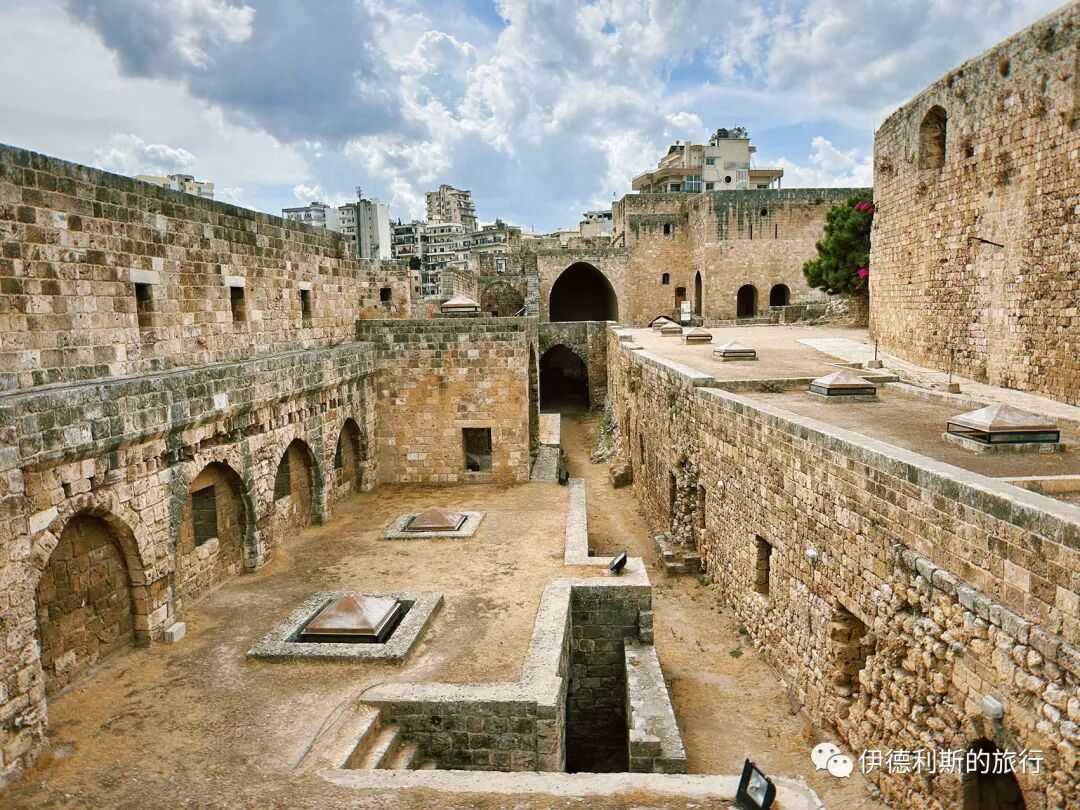
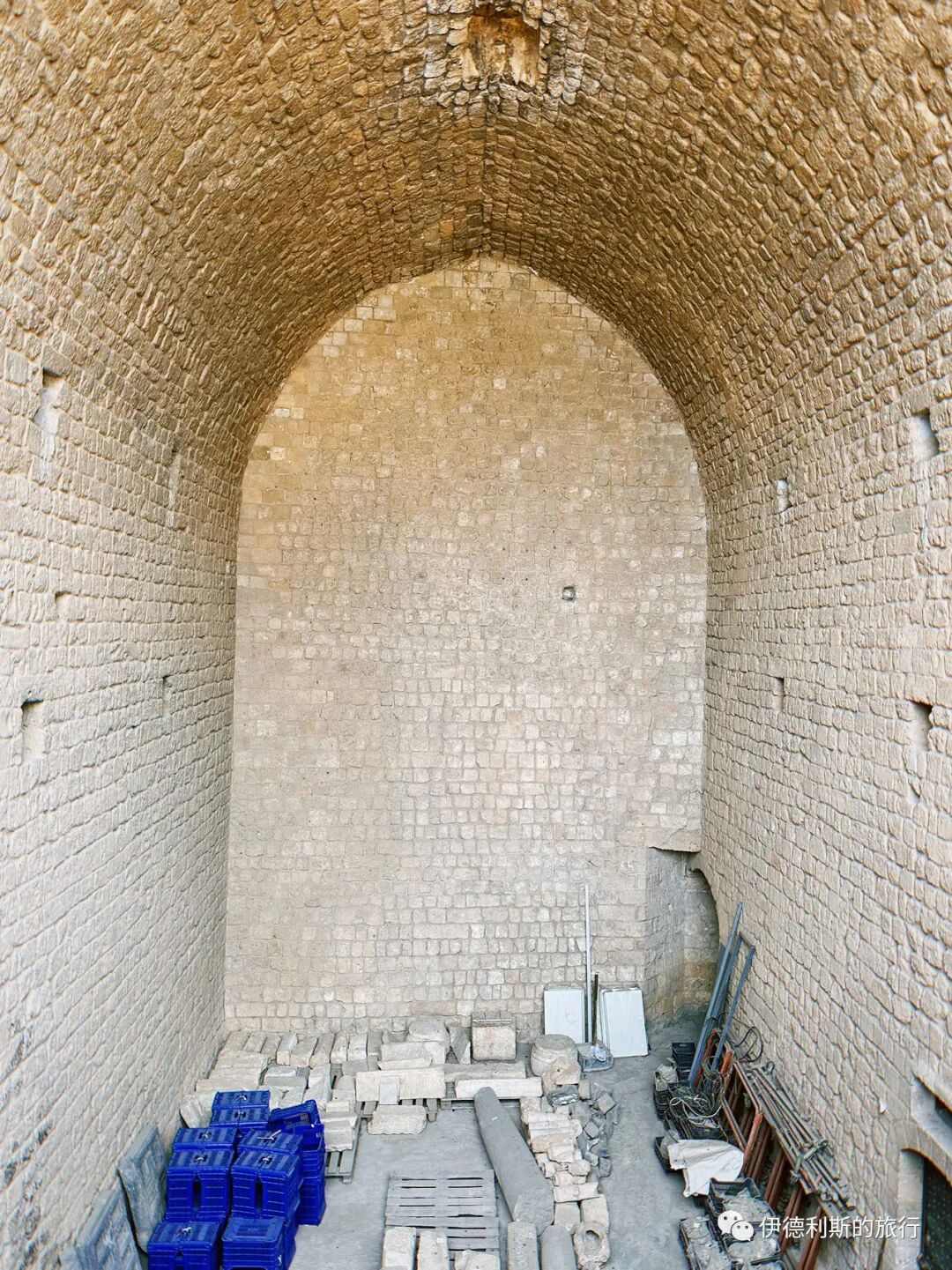
After entering the gate of Tripoli Castle, there is a small courtyard, and behind the courtyard is a taller tower gate. The tower was first built during the Frankish Crusader period, and the current structure was rebuilt by the Mamluk dynasty in 1345.
There was once a mosque in the courtyard built by the Ottoman governor of Tripoli, Barbar Agha (1767-1834). You can still see the mihrab niche on the north wall of the tower. Unfortunately, the stone inscription above the niche was lost during the Lebanese Civil War and its whereabouts remain unknown. Above the niche, you can still see a row of structural holes where the beams of the mosque roof were once placed.
From the drawbridge through the main gate to the tower, you must pass through six doors to enter the interior of the castle. These doors were once equipped with iron-studded panels, and there are narrow arrow slits on the walls, forming a very mature castle defense system.
If the first few gates were breached, the defenders could lure the enemy into the stables on the west side of the tower. The arrow slits in the stables could be used to deal with these enemies, and some of the slits were enlarged in the early 19th century to accommodate cannons. From the stables, you can reach the guard quarters on the upper level of the tower, and then climb to the roof to overlook the panoramic view of Tripoli.
The core area of Tripoli Castle consists of the prison and barracks built during the Ottoman period. A Frankish Crusader cemetery was excavated here in the 1970s and backfilled in 2011.
At the southernmost end of Tripoli Castle, the ruins of a Shia tomb from the Fatimid dynasty (909-1171) are preserved. The most prominent is an octagonal tomb carved with Kufic Arabic calligraphy. When the Frankish Crusaders built a castle here between 1102 and 1103, this octagonal tomb was turned into a small church, and the mihrab niche inside the tomb was converted into a bay window. Later, the Frankish Crusaders built a large church on top of the tomb, turning the tomb into a basement.
After the Mamluk dynasty captured the castle in 1289, the site of the Fatimid tomb was restored as a place of worship, and the mihrab niche was also repaired.
After finishing my tour of Tripoli Castle, I headed north back to the old city of Tripoli to perform the afternoon prayer (asr) at Al-Uwaysiyat Mosque. Al-Uwaysiyat Mosque was first built in 1461 during the Mamluk period and was renovated in 1534 during the time of the Ottoman Sultan Suleiman the Magnificent.
After the prayer, I returned to the old city market and ate a street-style cheese flatbread (manakish), which must be the most classic snack in the market. Then I watched the carpenters working diligently on the street.
I had ice cream and lemonade inside the Mamluk-era Haraj Market (souq). Haraj Market was built in the 14th century and features 8-meter-high vaulted ceilings supported by black granite columns, some of which may have come from ancient Roman or Byzantine buildings. The market has two floors. The upper rooms were for merchants to stay in and had wooden windows, allowing the merchants' female relatives to look down at the market below, while the lower floor was for selling goods.
Bombing during the Lebanese Civil War in 1983 caused severe damage to Haraj Market, but it was restored over a long period to its current state.
Tripoli has always been famous for producing perfume and handmade soap, with Bader Hassoun's Khan Al Saboun (Soap Inn) being one of the more well-known brands. The Hassoun family's history of making soap in Tripoli dates back to the early Mamluk dynasty in 1256, while the Khan Al Saboun in the old city of Tripoli was built in 1480 during the late Mamluk dynasty.
Khan Al Saboun has a courtyard made of two-story galleries with a pool in the middle. The second floor of the gallery was where caravans stayed, while the first floor was for making and selling soap. People say the Ottoman Sultan Suleiman the Magnificent once received soap from Tripoli as a tribute, and at the urging of the Queen, Suleiman ordered the expansion of the Khan Al Saboun in Tripoli. After it was built, the soap inn became a trade center for making and selling soap, and it started exporting soap to Europe. Today, the Bader Hassoun soap shop is located right here.
In 1993, Bader Hassoun’s jewelry shop in the old city of Tripoli was robbed, which led him to decide to revive his family tradition of making soap. He and his wife spent one night making traditional soap using olive oil, dates, glycerin, natural coloring, and spices, and it all sold out the next day.
We bought the most traditional natural soap at the shop, which comes in green tea, lavender, and cedar scents. The cedar is an important symbol of Lebanon, and Lebanon is known as the Land of the Cedars. We also bought an olive oil soap safe for babies, which we can use for Suleiman.
Misriyyin Inn is located in the northern part of the old city of Tripoli and dates back to the Mamluk period in the 14th century. On the second floor of the inn, there is a Sharkass soap shop, and they have been making traditional olive oil soap since 1803. The Tripoli Soap shop on the first floor opened in 1937, and you can watch them make natural soap on-site here. view all
Tripoli is in northern Lebanon. It takes about an hour to get there by minibus from across the street from the Mohammad Al-Amin Mosque in the capital, Beirut. The history of Tripoli dates back to the 14th century BC. For thousands of years, it has been an important port on the eastern Mediterranean coast. The early city of Tripoli was always along the coast. In 1289, the Mamluk dynasty took Tripoli from the Crusaders, destroyed the old city, and built a new one 4 kilometers inland below the castle. Today, about 35 ancient buildings from the Mamluk period remain in the old city of Tripoli. This makes Tripoli the city with the most preserved Mamluk monuments after Cairo.
Since the Ottoman Empire left Lebanon in 1918, Tripoli has fallen into a long decline, and Beirut has completely replaced it as a trade center. The Lebanese Civil War that began in 1975 hit Tripoli hard. In 1985, a battle between Sunni and Alawite militias forced 200,000 people to leave their homes and led to the Syrian army staying in Tripoli until 2005. After the civil war ended, Lebanon focused its funds on rebuilding the capital, Beirut. Tripoli seemed to be forgotten, and more than half of its residents live in poverty. At the same time, conflicts between Sunnis and Alawites happen from time to time. Explosions and suicide attacks often occur, making Tripoli a place unsuitable for tourism for a long time.
We first went to the Taynal Mosque south of the old city. The Taynal Mosque was built in 1336 by order of the Mamluk governor (Na'ib) of Tripoli, Amir Taynal. Amir Taynal served three terms as governor of Tripoli and one term as governor of Gaza in the mid-14th century. The famous 14th-century traveler Ibn Battuta wrote in his travelogue: 'About forty Turkish princes and nobles live in the city.' The governor of the city is Amir Taynal, who is known as the 'King of the Chiefs'. His residence is commonly known as the 'House of Blessings'. He was accustomed to riding out every Monday and Thursday, accompanied by chiefs and a large guard, and would not return to the city until he was satisfied. Amir Taynal passed away in Damascus in 1343. Although his tomb was built in the Taynal Mosque, he was eventually buried in Damascus.
The main prayer hall of Taynal Mosque consists of two connected halls. The most magnificent part is the entrance to the second hall, which features a gate with a stalactite-style cornice (muqarnas) built using the ablaq technique of alternating black and white marble. Inside the prayer hall are some ancient Corinthian columns, which are thought to have come from a Crusader-era church or an even older Roman temple. The original pulpit (minbar) in the mosque dated back to its construction in 1336, but it had been replaced with a new one by the time I visited.
Continue walking north into the market street of the old city of Tripoli, and you will see the Hanging Mosque (Mu'allaq Mosque) built over the middle of the road. The Hanging Mosque was commissioned in 1561 by Mahmud Lutfi al-Za'im, the Ottoman governor of Tripoli, during the reign of the Ottoman Sultan Suleiman the Magnificent. The first floor of the Hanging Mosque is a culvert over the street, so you must climb the stairs to the side to reach the second-floor prayer hall. The octagonal minaret (bangkelou) next to the prayer hall is very eye-catching and features two levels of balconies.
Right next to the Hanging Mosque is the Al Jadid bathhouse (hammam), built during the Ottoman period in 1740. It remained in use until the 1970s, when it closed after the outbreak of the Lebanese Civil War. This bathhouse was a gift to Tripoli from Asad Pasha Al Azem, the governor of Damascus at the time. The bathhouse gate is exquisite, featuring a fourteen-link chain carved from a single piece of stone.
The markets in the old city of Tripoli are very lively, which is a sharp contrast to Beirut. Ibn Battuta wrote in his travelogue: 'Afterward, we arrived at the city of Tripoli.' It was an important town in the Levant (Sham), with several small rivers flowing through it. It is surrounded by fragrant orchards and lush green trees. The sea surrounds it with its blue waters, and the earth nourishes it with its treasures. The goods in the market are dazzling and truly amazing.
We drank street coffee in the market and saw all kinds of dairy products, which was very interesting.
Continuing north from the market, we reached the Mansouri Great Mosque, a landmark in the center of Tripoli's old city. The Mansouri Great Mosque, also called the Great Mosque of Tripoli, was ordered to be built in 1294 by the Mamluk Sultan Al-Ashraf Khalil. It was the first building the Mamluk dynasty constructed in Tripoli.
In 1109, the French Crusaders captured Tripoli, and for the next 180 years, the city was ruled by European Christian nobles. In 1260, the Mongol army captured Damascus and took the last Ayyubid Sultan prisoner, ending the Ayyubid dynasty. From then on, the center of Islamic power on the eastern Mediterranean coast shifted to the Mamluk dynasty in Egypt. In 1289, the Mamluk army arrived at the walls of Tripoli with large catapults. Under the attack of the catapults, two of Tripoli's towers quickly collapsed. The Mamluk army entered the city and razed it to the ground.
Soon after, the Mamluk dynasty began building a new city at the foot of the castle on 'Pilgrim Mountain.' This included building the Mansouri Great Mosque on the ruins of a Crusader church at the foot of the hill. The mosque's minaret is likely part of the Crusader Church of St. Mary, and the main gate may also incorporate the original Crusader church entrance. The main hall was built by the Mamluk dynasty in 1294, and the courtyard's surrounding arcade was built in 1314 by the Mamluk Sultan Al-Nasir Muhammad.
During the 14th century, the Mamluk dynasty built six madrasas (Islamic schools) around the Mansouri Great Mosque, which trained a large number of students. These include the al-Khayriyya Hasan (1309 or later), al-Qartawiyya (around 1326), al-Shamsiyya (1349), al-Nasiriyya (between 1354–1360), al-Nuriyya (14th century), and the Mashhad madrasa. The al-Qartawiyya madrasa outside the east wall of the Mansouri Great Mosque is the most magnificent. Unfortunately, we could not find the madrasa's gate in the maze-like alleys of the old city, but we did see the calligraphy carvings on its walls.
Leaving the noisy market, we turned east onto Al-Asrar Alley, which was once the residential area for high-ranking Mamluk officers. On the way, we passed the Al-Mahatra Gate of Tripoli's old city. The gate's name comes from the military musicians who played to boost the army's morale. Now that the war is over, houses have been built on top of the gate, and it has become a quiet alley.
Passing through the alley, we arrived at another landmark in Tripoli: the Citadel of Tripoli. The site of the Citadel of Tripoli was originally a Shia cemetery from the Fatimid period. During the Frankish Crusader siege of Tripoli in 1102–1103, the Crusader leader Raymond of Saint-Gilles ordered it to be built as a fortress, which is why it is also called the Castle of Saint-Gilles. After the Mamluk dynasty captured Tripoli in 1289, they rebuilt the castle using many Roman columns and other building materials found nearby. In 1521, the Ottoman Sultan Suleiman the Magnificent rebuilt the castle again, changing the arrow slits into firing ports for cannons. In the early 19th century, the Ottoman governor of Tripoli carried out the last major renovation of the castle, giving it the appearance it has today.
The castle gate consists of two towers. There was originally a drawbridge over the moat in front, but it has now been replaced by a stone bridge. The black and white marble facade above the gate was built by Suleiman the Magnificent in 1521. The stone inscription on it reads, 'May the Emir never cease to obey his command, restoring this sacred castle so that it may forever be a strong fortress.'
Above the gate, you can see the machicolation built during the Mamluk period. This is a classic structure in medieval castle defense systems, where defenders on top of the walls and towers could pour boiling water and oil through the openings onto those below.
After entering the gate of Tripoli Castle, there is a small courtyard, and behind the courtyard is a taller tower gate. The tower was first built during the Frankish Crusader period, and the current structure was rebuilt by the Mamluk dynasty in 1345.
There was once a mosque in the courtyard built by the Ottoman governor of Tripoli, Barbar Agha (1767-1834). You can still see the mihrab niche on the north wall of the tower. Unfortunately, the stone inscription above the niche was lost during the Lebanese Civil War and its whereabouts remain unknown. Above the niche, you can still see a row of structural holes where the beams of the mosque roof were once placed.
From the drawbridge through the main gate to the tower, you must pass through six doors to enter the interior of the castle. These doors were once equipped with iron-studded panels, and there are narrow arrow slits on the walls, forming a very mature castle defense system.
If the first few gates were breached, the defenders could lure the enemy into the stables on the west side of the tower. The arrow slits in the stables could be used to deal with these enemies, and some of the slits were enlarged in the early 19th century to accommodate cannons. From the stables, you can reach the guard quarters on the upper level of the tower, and then climb to the roof to overlook the panoramic view of Tripoli.
The core area of Tripoli Castle consists of the prison and barracks built during the Ottoman period. A Frankish Crusader cemetery was excavated here in the 1970s and backfilled in 2011.
At the southernmost end of Tripoli Castle, the ruins of a Shia tomb from the Fatimid dynasty (909-1171) are preserved. The most prominent is an octagonal tomb carved with Kufic Arabic calligraphy. When the Frankish Crusaders built a castle here between 1102 and 1103, this octagonal tomb was turned into a small church, and the mihrab niche inside the tomb was converted into a bay window. Later, the Frankish Crusaders built a large church on top of the tomb, turning the tomb into a basement.
After the Mamluk dynasty captured the castle in 1289, the site of the Fatimid tomb was restored as a place of worship, and the mihrab niche was also repaired.
After finishing my tour of Tripoli Castle, I headed north back to the old city of Tripoli to perform the afternoon prayer (asr) at Al-Uwaysiyat Mosque. Al-Uwaysiyat Mosque was first built in 1461 during the Mamluk period and was renovated in 1534 during the time of the Ottoman Sultan Suleiman the Magnificent.
After the prayer, I returned to the old city market and ate a street-style cheese flatbread (manakish), which must be the most classic snack in the market. Then I watched the carpenters working diligently on the street.
I had ice cream and lemonade inside the Mamluk-era Haraj Market (souq). Haraj Market was built in the 14th century and features 8-meter-high vaulted ceilings supported by black granite columns, some of which may have come from ancient Roman or Byzantine buildings. The market has two floors. The upper rooms were for merchants to stay in and had wooden windows, allowing the merchants' female relatives to look down at the market below, while the lower floor was for selling goods.
Bombing during the Lebanese Civil War in 1983 caused severe damage to Haraj Market, but it was restored over a long period to its current state.
Tripoli has always been famous for producing perfume and handmade soap, with Bader Hassoun's Khan Al Saboun (Soap Inn) being one of the more well-known brands. The Hassoun family's history of making soap in Tripoli dates back to the early Mamluk dynasty in 1256, while the Khan Al Saboun in the old city of Tripoli was built in 1480 during the late Mamluk dynasty.
Khan Al Saboun has a courtyard made of two-story galleries with a pool in the middle. The second floor of the gallery was where caravans stayed, while the first floor was for making and selling soap. People say the Ottoman Sultan Suleiman the Magnificent once received soap from Tripoli as a tribute, and at the urging of the Queen, Suleiman ordered the expansion of the Khan Al Saboun in Tripoli. After it was built, the soap inn became a trade center for making and selling soap, and it started exporting soap to Europe. Today, the Bader Hassoun soap shop is located right here.
In 1993, Bader Hassoun’s jewelry shop in the old city of Tripoli was robbed, which led him to decide to revive his family tradition of making soap. He and his wife spent one night making traditional soap using olive oil, dates, glycerin, natural coloring, and spices, and it all sold out the next day.
We bought the most traditional natural soap at the shop, which comes in green tea, lavender, and cedar scents. The cedar is an important symbol of Lebanon, and Lebanon is known as the Land of the Cedars. We also bought an olive oil soap safe for babies, which we can use for Suleiman.
Misriyyin Inn is located in the northern part of the old city of Tripoli and dates back to the Mamluk period in the 14th century. On the second floor of the inn, there is a Sharkass soap shop, and they have been making traditional olive oil soap since 1803. The Tripoli Soap shop on the first floor opened in 1937, and you can watch them make natural soap on-site here. view all
Reposted from the web
Tripoli is in northern Lebanon. It takes about an hour to get there by minibus from across the street from the Mohammad Al-Amin Mosque in the capital, Beirut. The history of Tripoli dates back to the 14th century BC. For thousands of years, it has been an important port on the eastern Mediterranean coast. The early city of Tripoli was always along the coast. In 1289, the Mamluk dynasty took Tripoli from the Crusaders, destroyed the old city, and built a new one 4 kilometers inland below the castle. Today, about 35 ancient buildings from the Mamluk period remain in the old city of Tripoli. This makes Tripoli the city with the most preserved Mamluk monuments after Cairo.
Since the Ottoman Empire left Lebanon in 1918, Tripoli has fallen into a long decline, and Beirut has completely replaced it as a trade center. The Lebanese Civil War that began in 1975 hit Tripoli hard. In 1985, a battle between Sunni and Alawite militias forced 200,000 people to leave their homes and led to the Syrian army staying in Tripoli until 2005. After the civil war ended, Lebanon focused its funds on rebuilding the capital, Beirut. Tripoli seemed to be forgotten, and more than half of its residents live in poverty. At the same time, conflicts between Sunnis and Alawites happen from time to time. Explosions and suicide attacks often occur, making Tripoli a place unsuitable for tourism for a long time.
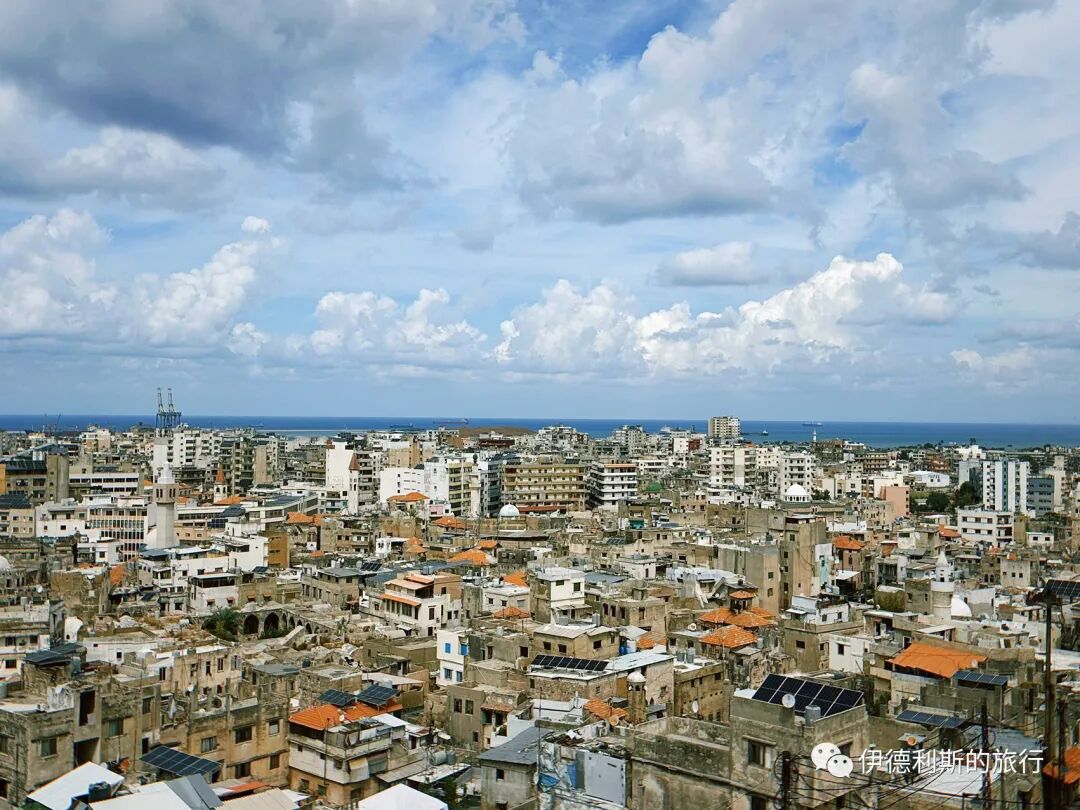
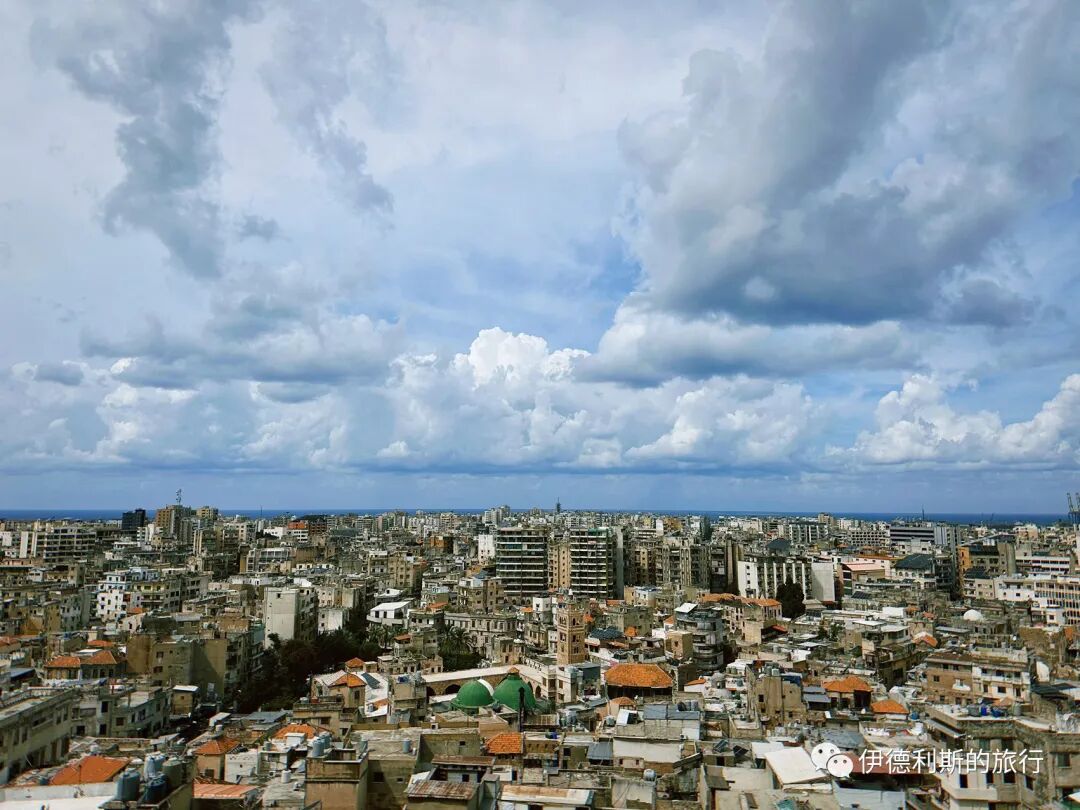
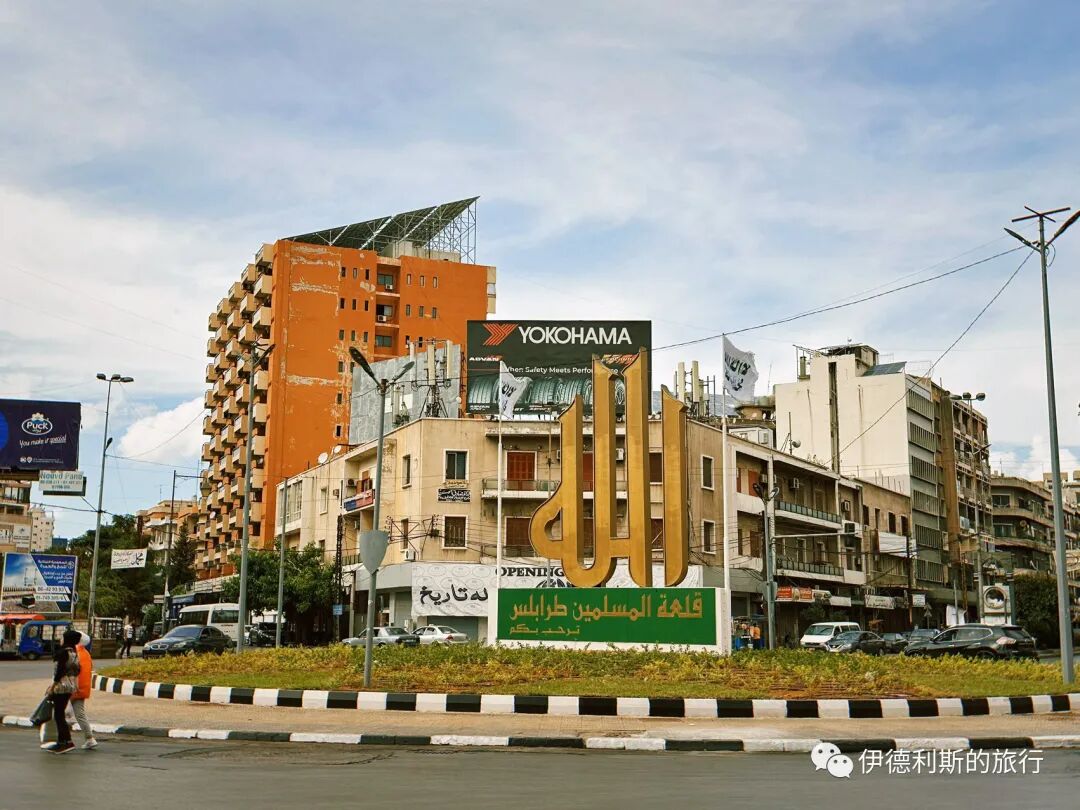
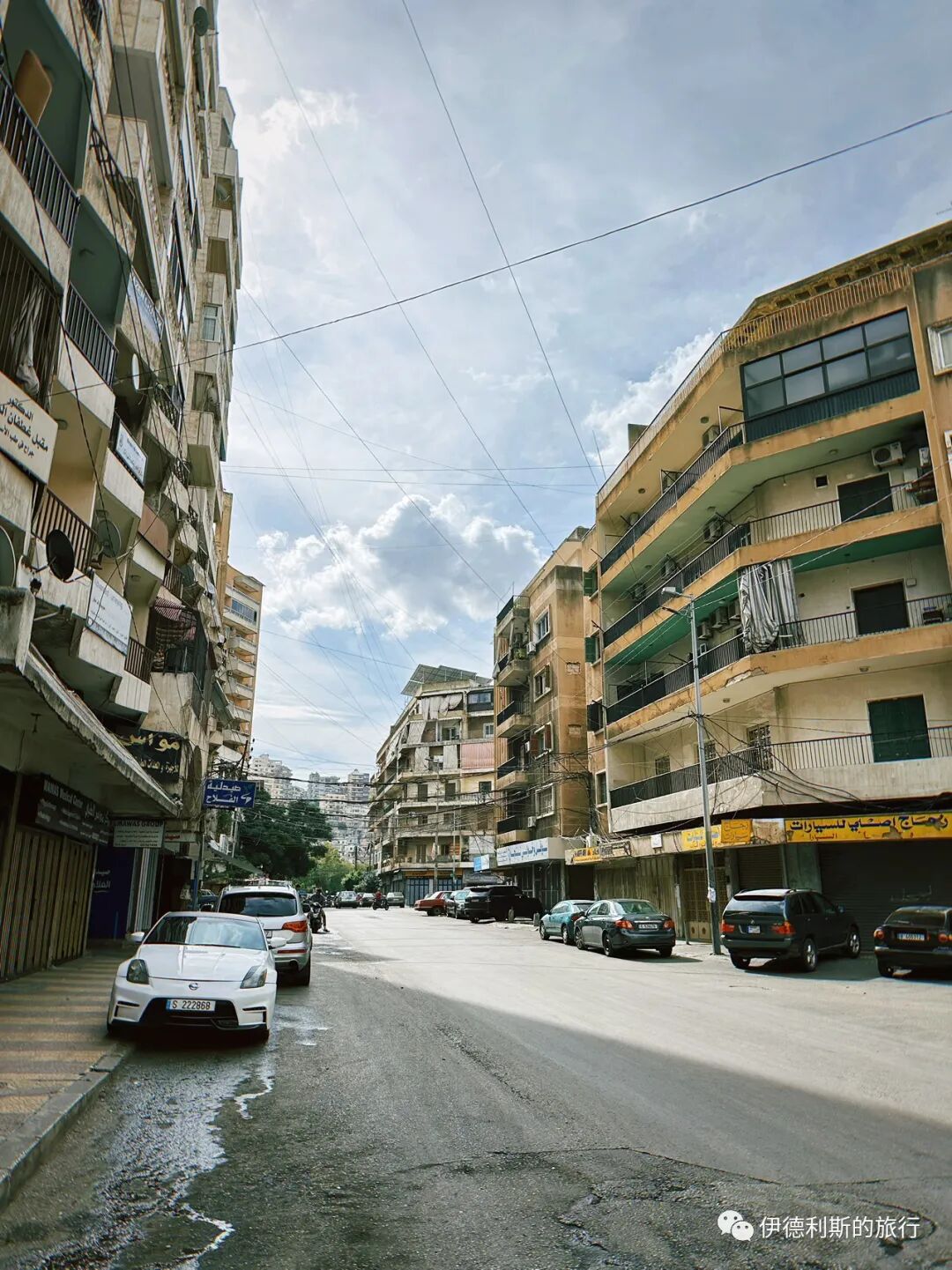
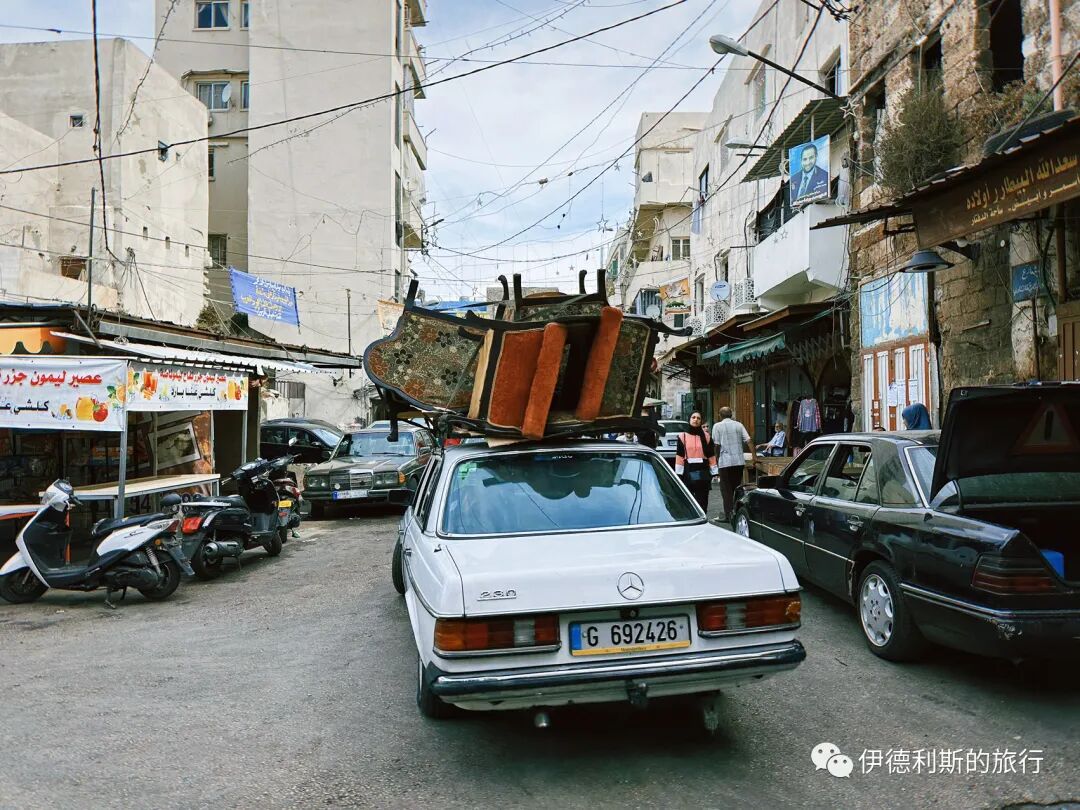
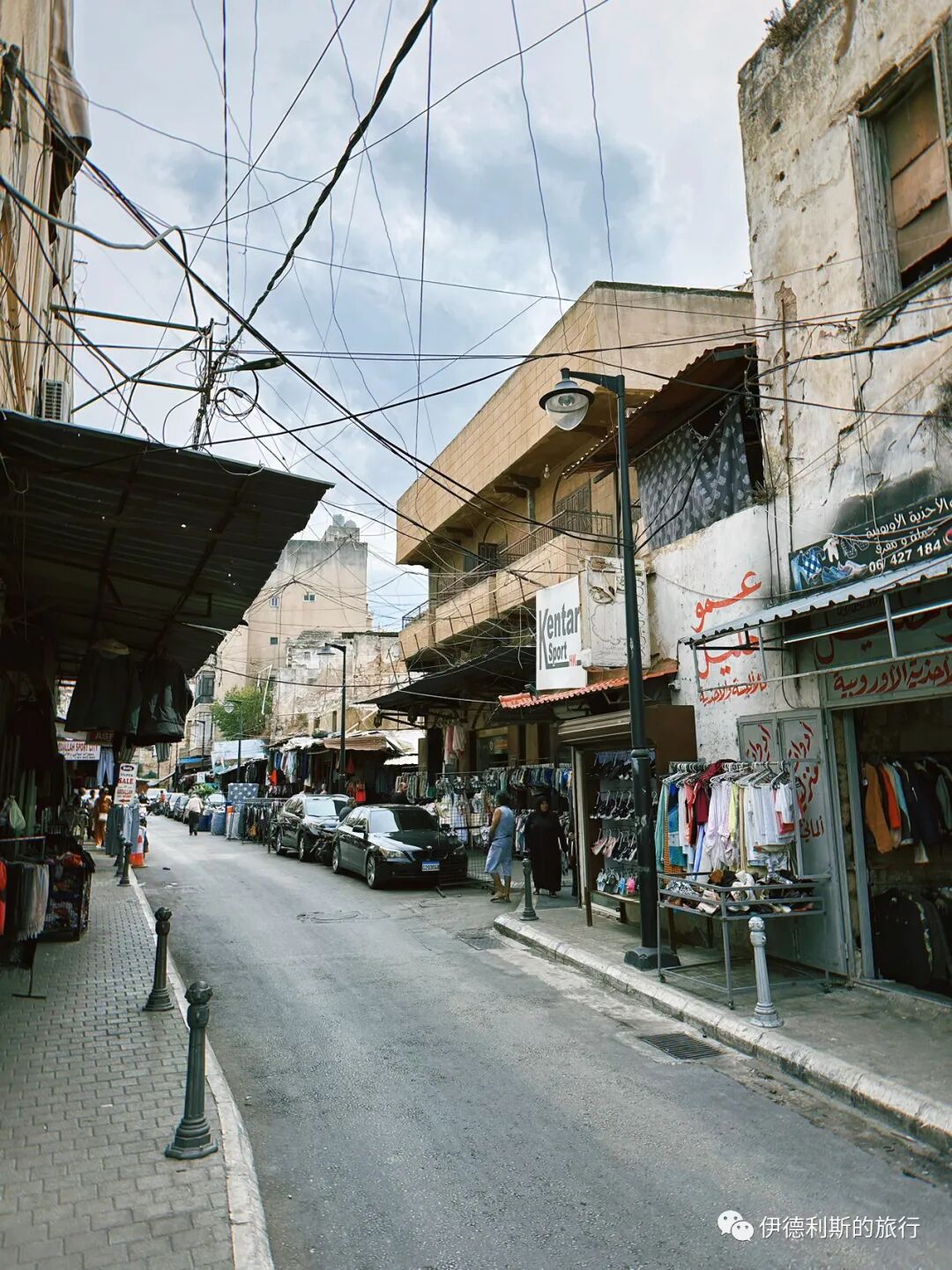
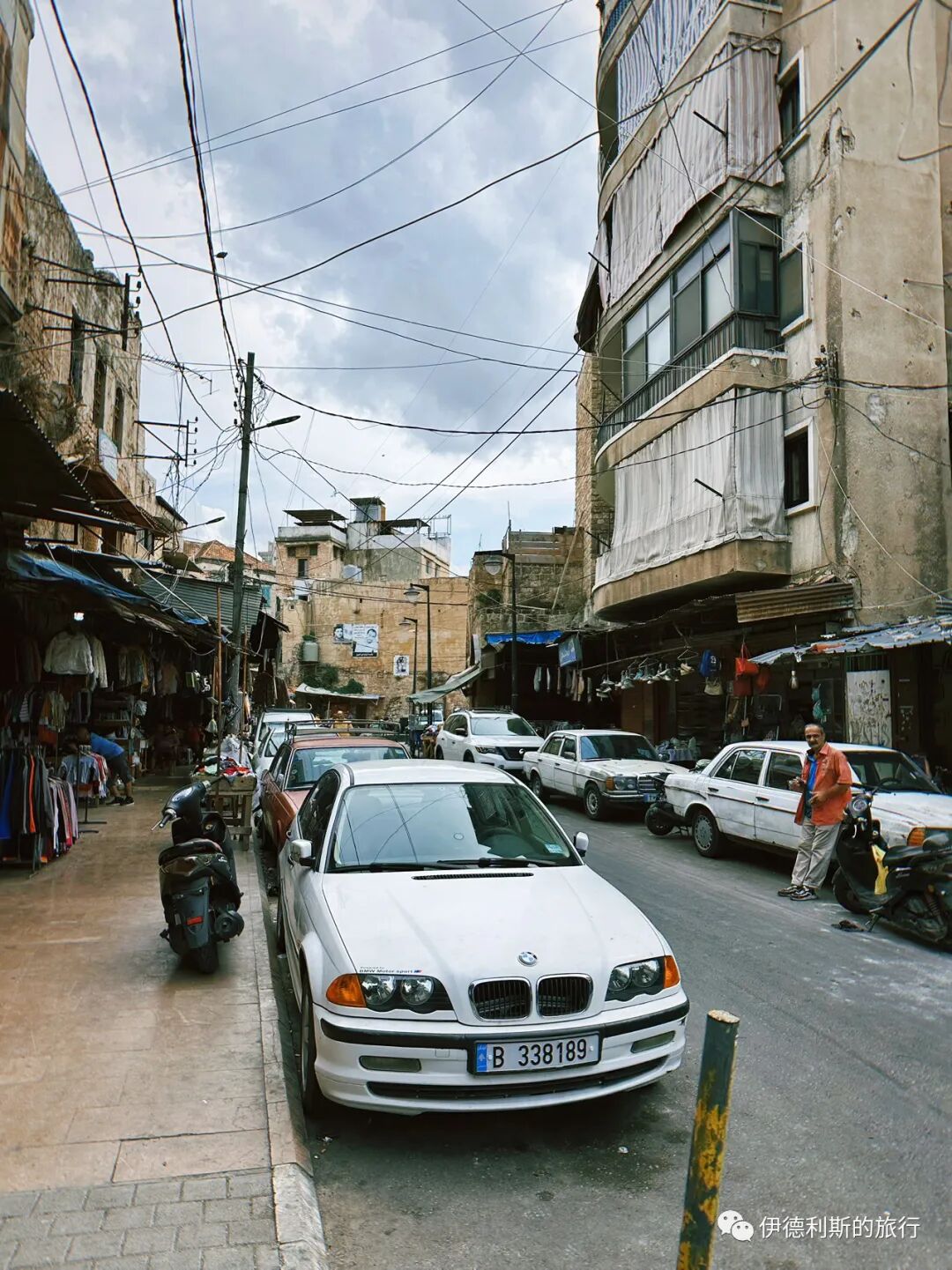
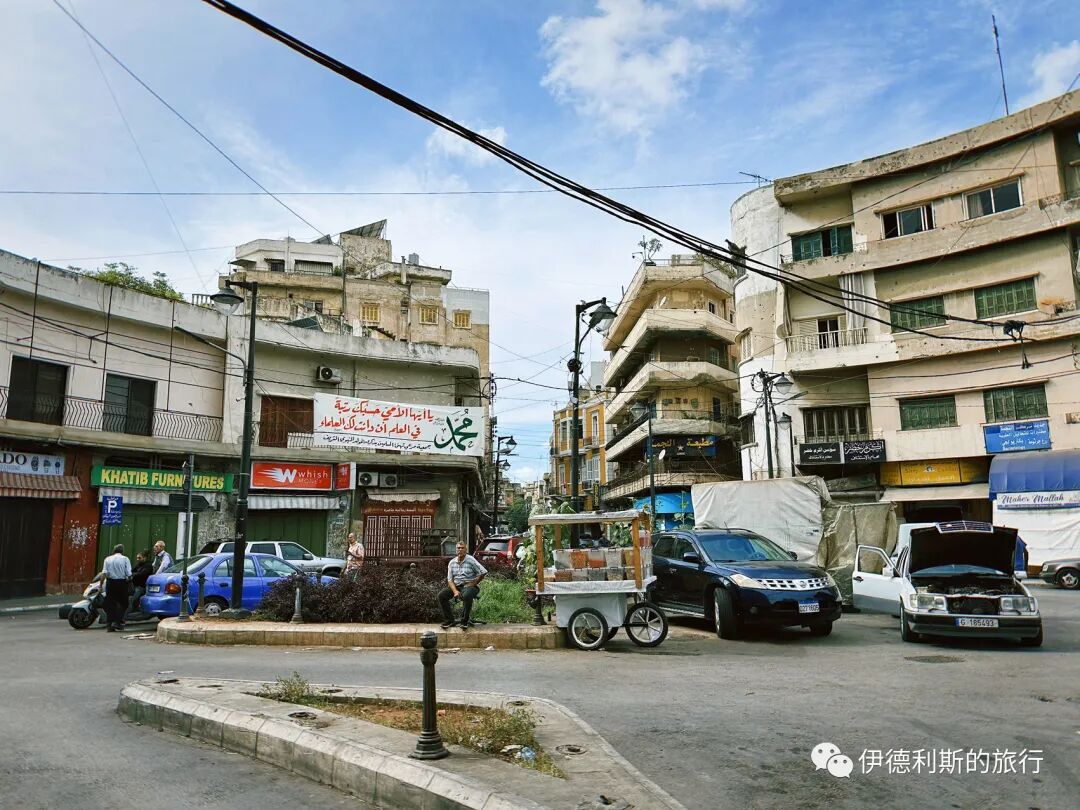
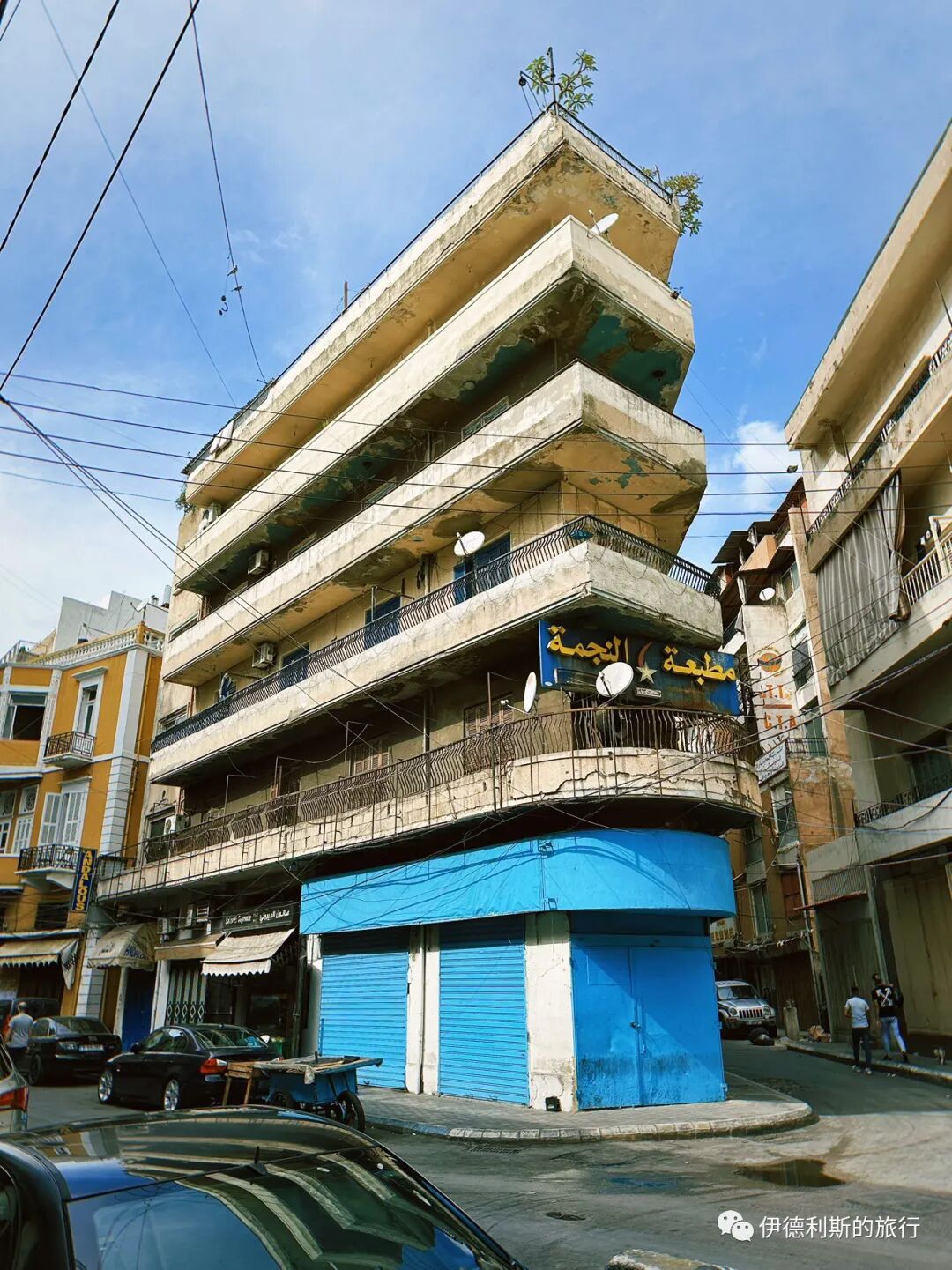
We first went to the Taynal Mosque south of the old city. The Taynal Mosque was built in 1336 by order of the Mamluk governor (Na'ib) of Tripoli, Amir Taynal. Amir Taynal served three terms as governor of Tripoli and one term as governor of Gaza in the mid-14th century. The famous 14th-century traveler Ibn Battuta wrote in his travelogue: 'About forty Turkish princes and nobles live in the city.' The governor of the city is Amir Taynal, who is known as the 'King of the Chiefs'. His residence is commonly known as the 'House of Blessings'. He was accustomed to riding out every Monday and Thursday, accompanied by chiefs and a large guard, and would not return to the city until he was satisfied. Amir Taynal passed away in Damascus in 1343. Although his tomb was built in the Taynal Mosque, he was eventually buried in Damascus.
The main prayer hall of Taynal Mosque consists of two connected halls. The most magnificent part is the entrance to the second hall, which features a gate with a stalactite-style cornice (muqarnas) built using the ablaq technique of alternating black and white marble. Inside the prayer hall are some ancient Corinthian columns, which are thought to have come from a Crusader-era church or an even older Roman temple. The original pulpit (minbar) in the mosque dated back to its construction in 1336, but it had been replaced with a new one by the time I visited.
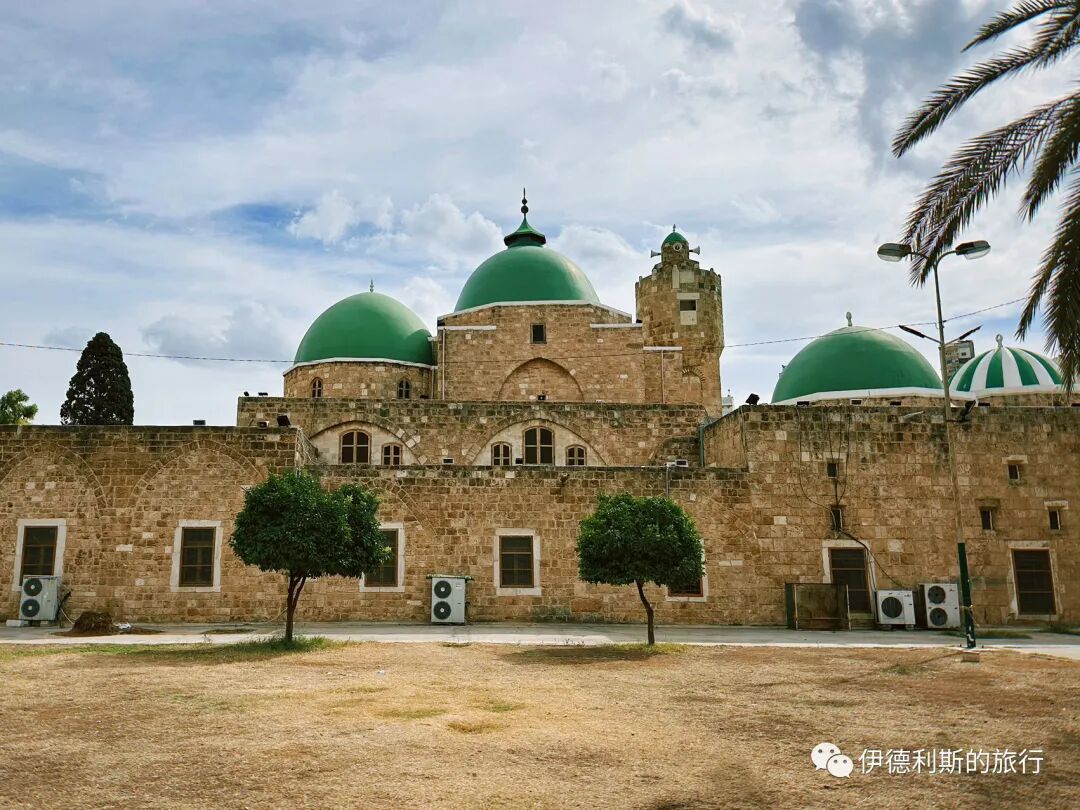
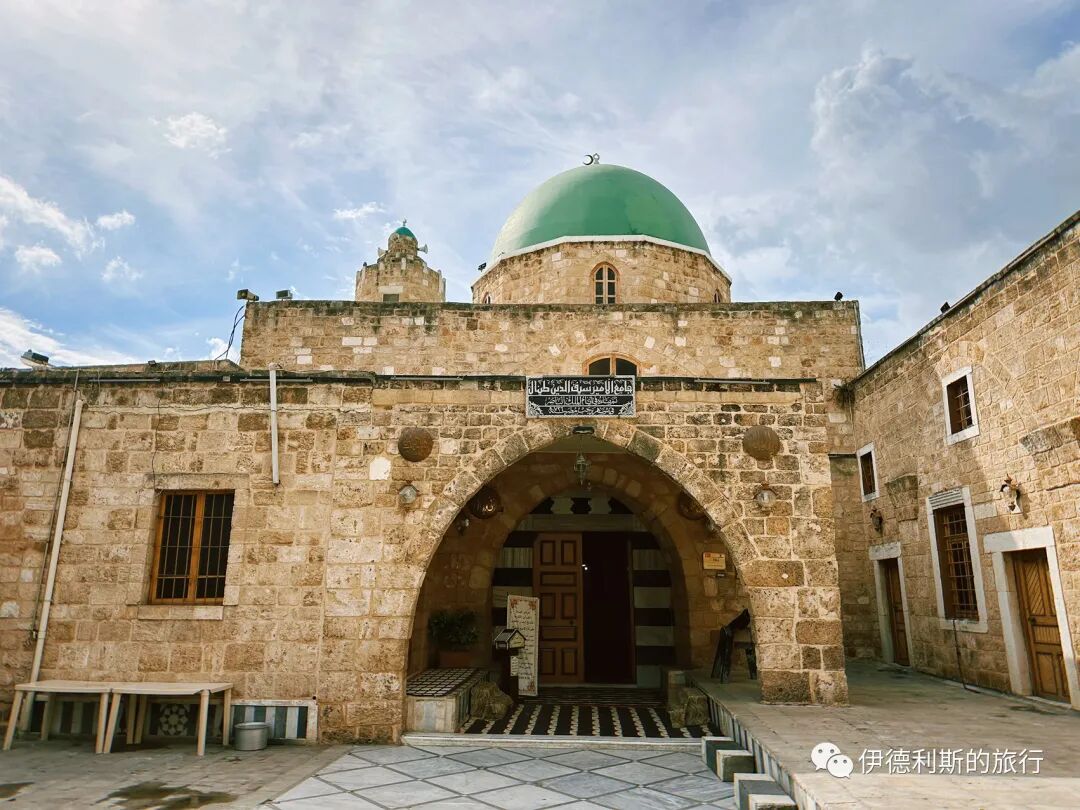
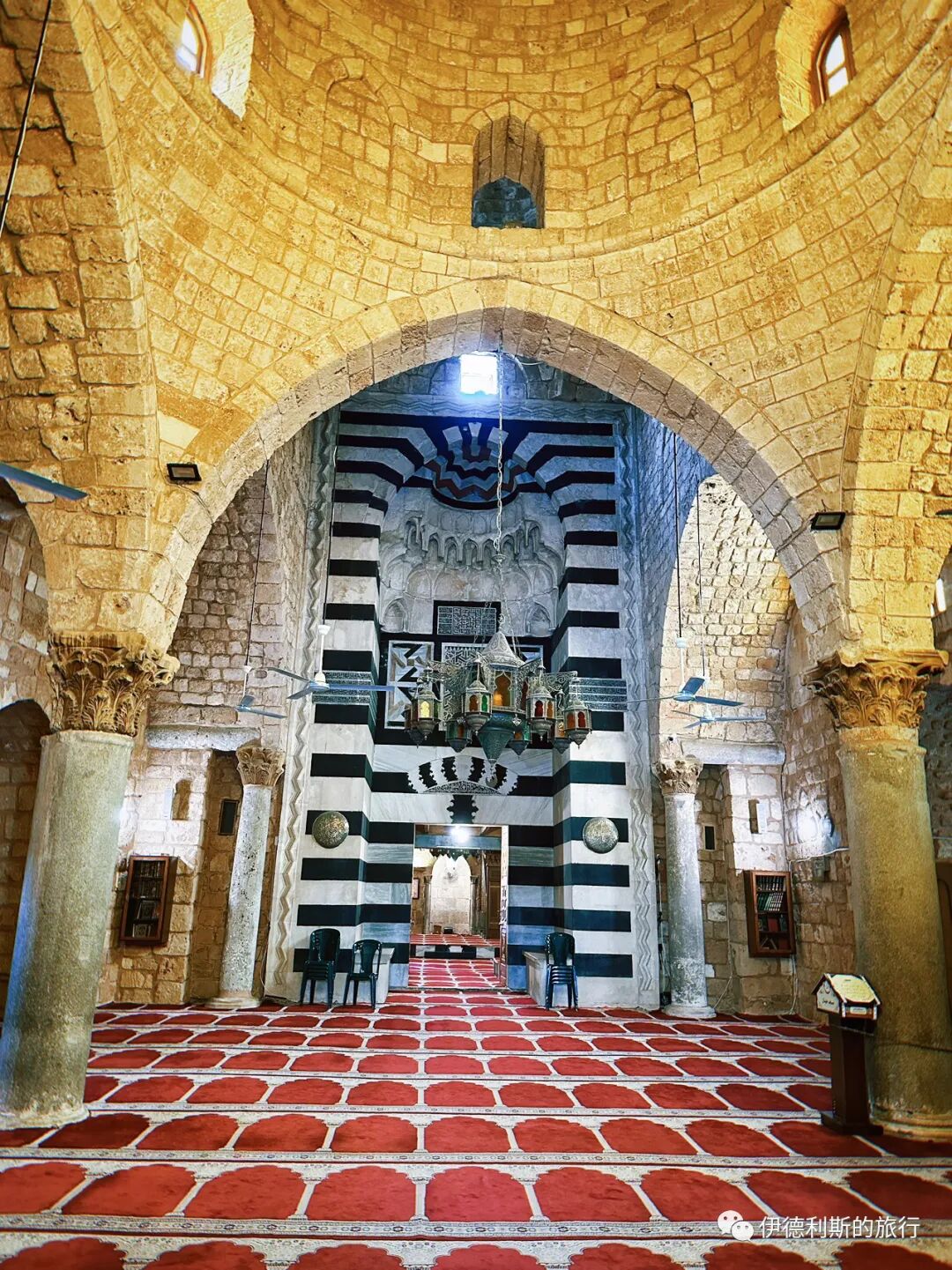
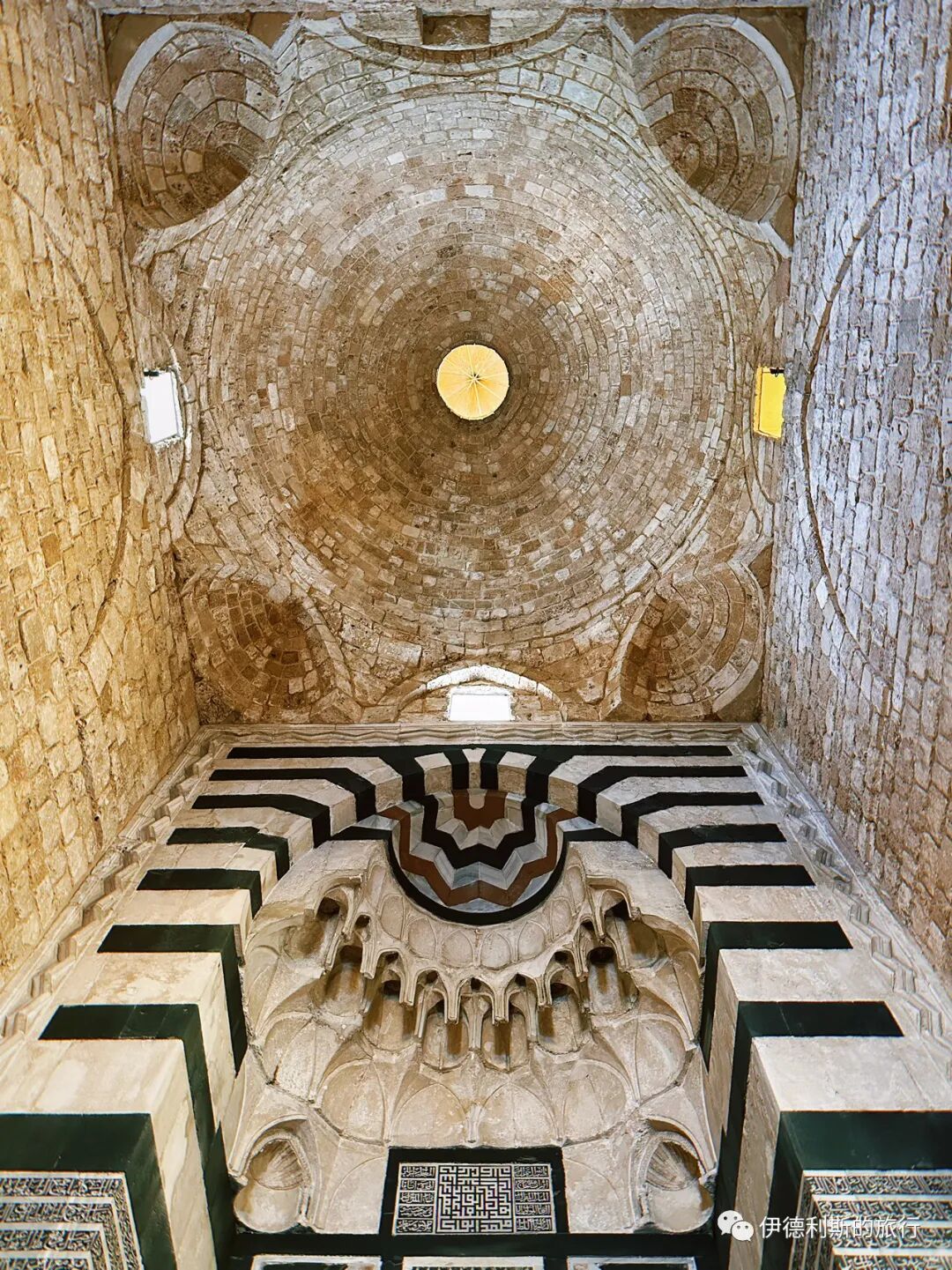
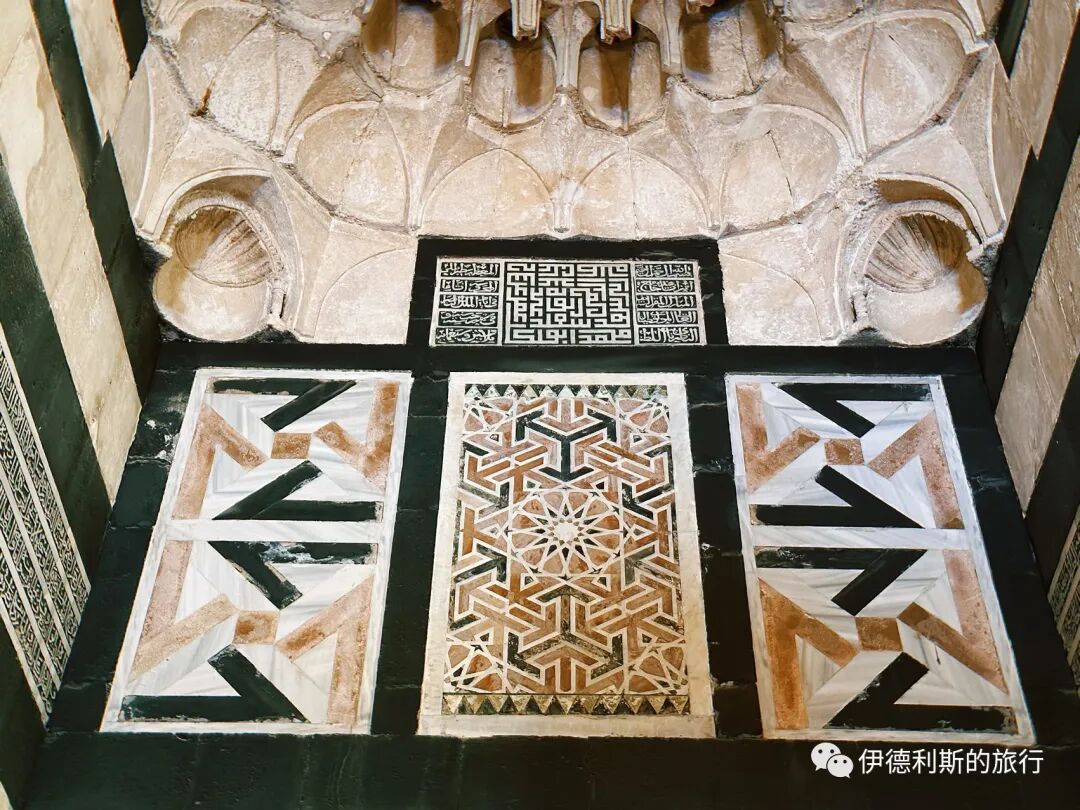
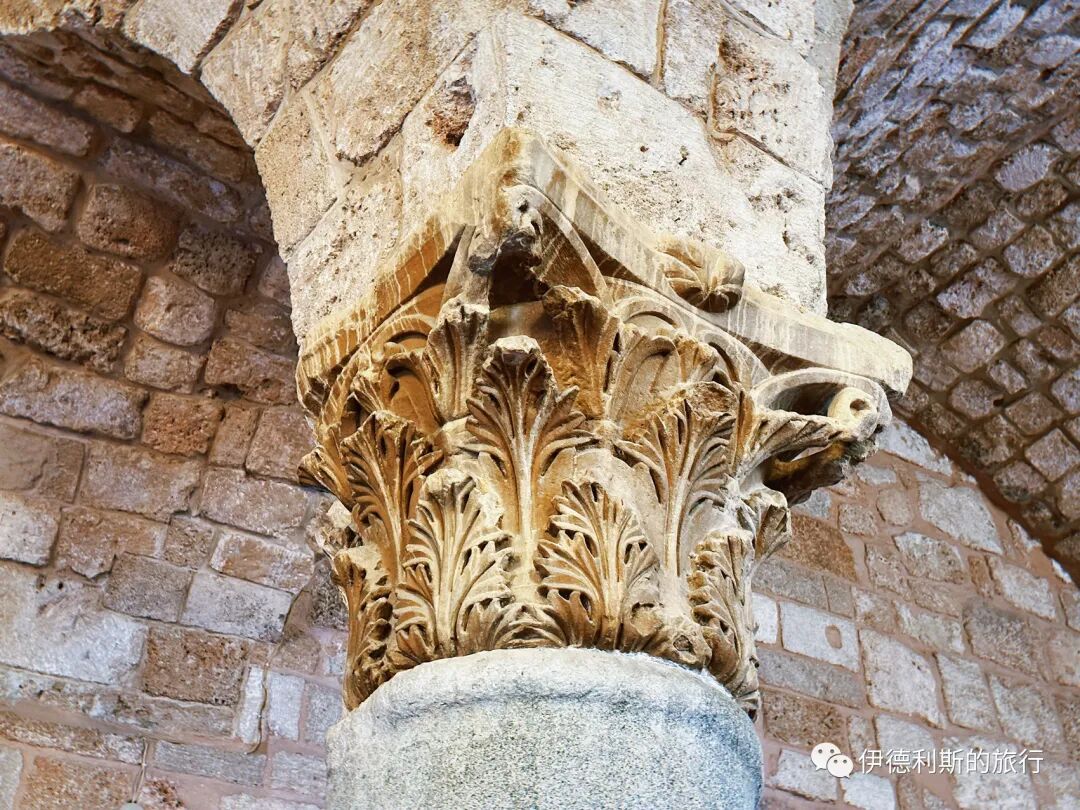
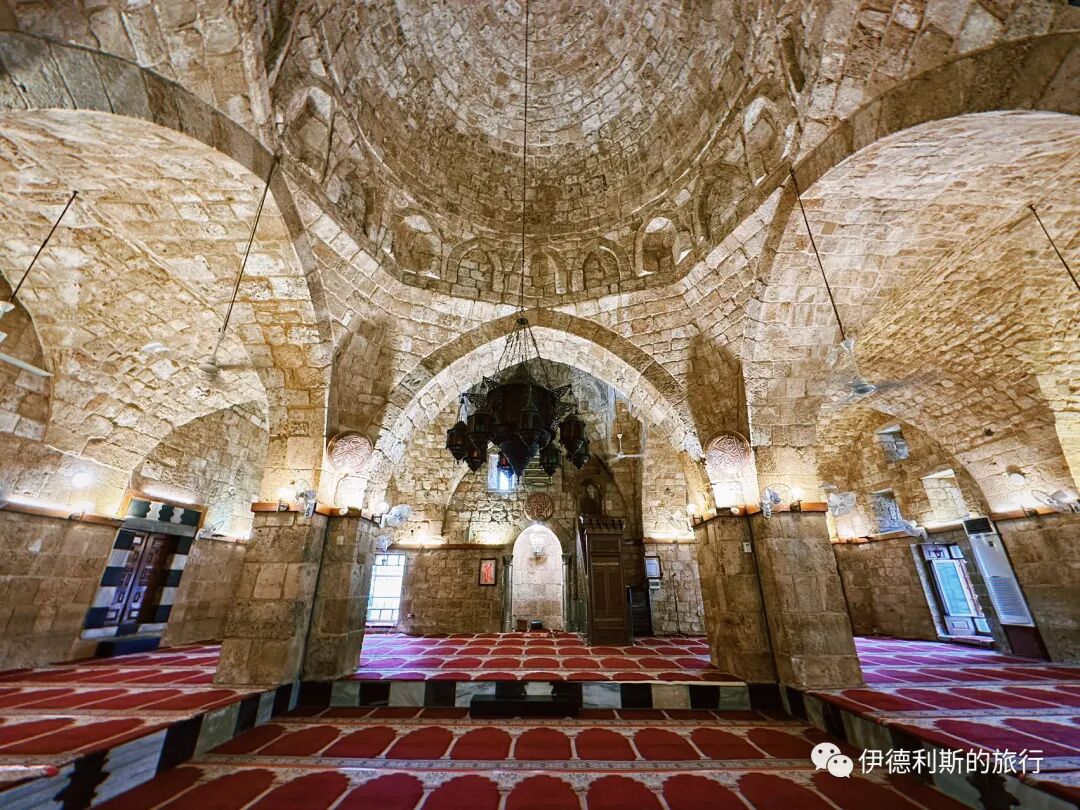
Continue walking north into the market street of the old city of Tripoli, and you will see the Hanging Mosque (Mu'allaq Mosque) built over the middle of the road. The Hanging Mosque was commissioned in 1561 by Mahmud Lutfi al-Za'im, the Ottoman governor of Tripoli, during the reign of the Ottoman Sultan Suleiman the Magnificent. The first floor of the Hanging Mosque is a culvert over the street, so you must climb the stairs to the side to reach the second-floor prayer hall. The octagonal minaret (bangkelou) next to the prayer hall is very eye-catching and features two levels of balconies.
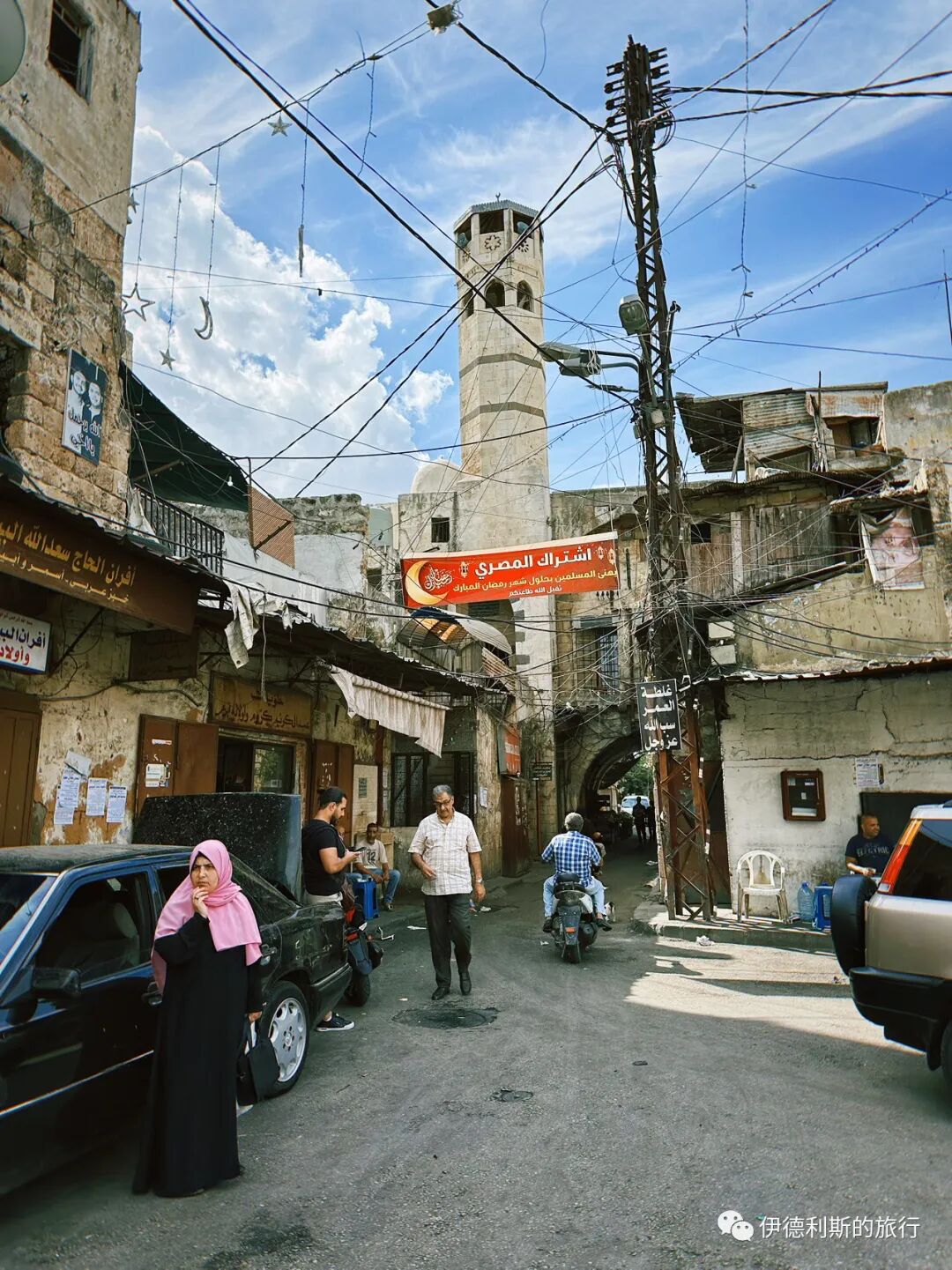
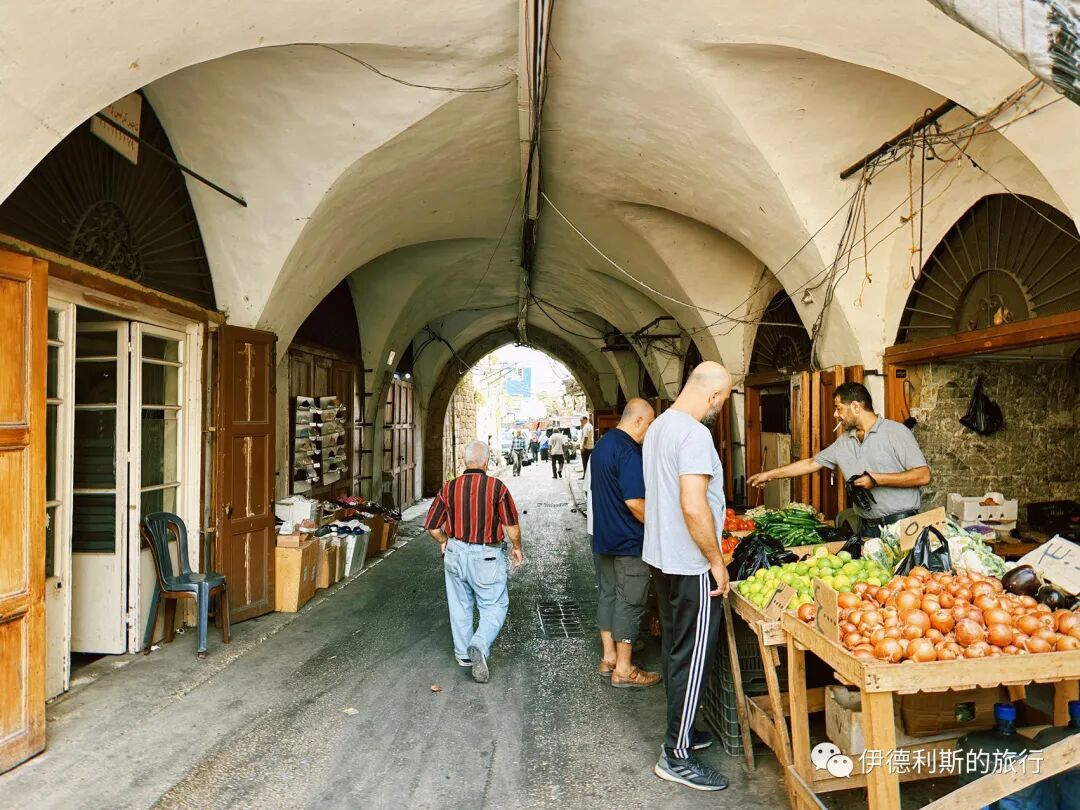
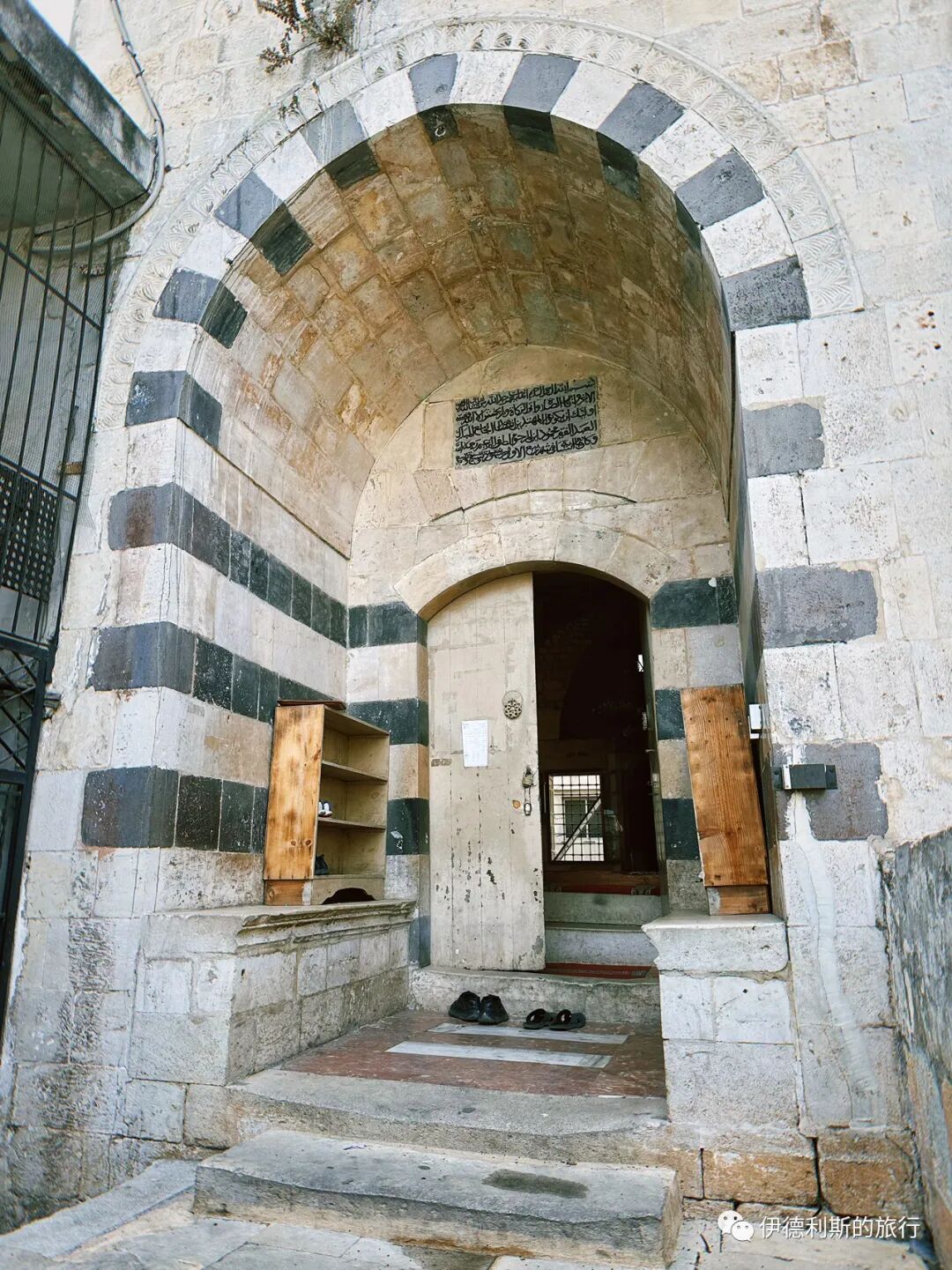
Right next to the Hanging Mosque is the Al Jadid bathhouse (hammam), built during the Ottoman period in 1740. It remained in use until the 1970s, when it closed after the outbreak of the Lebanese Civil War. This bathhouse was a gift to Tripoli from Asad Pasha Al Azem, the governor of Damascus at the time. The bathhouse gate is exquisite, featuring a fourteen-link chain carved from a single piece of stone.
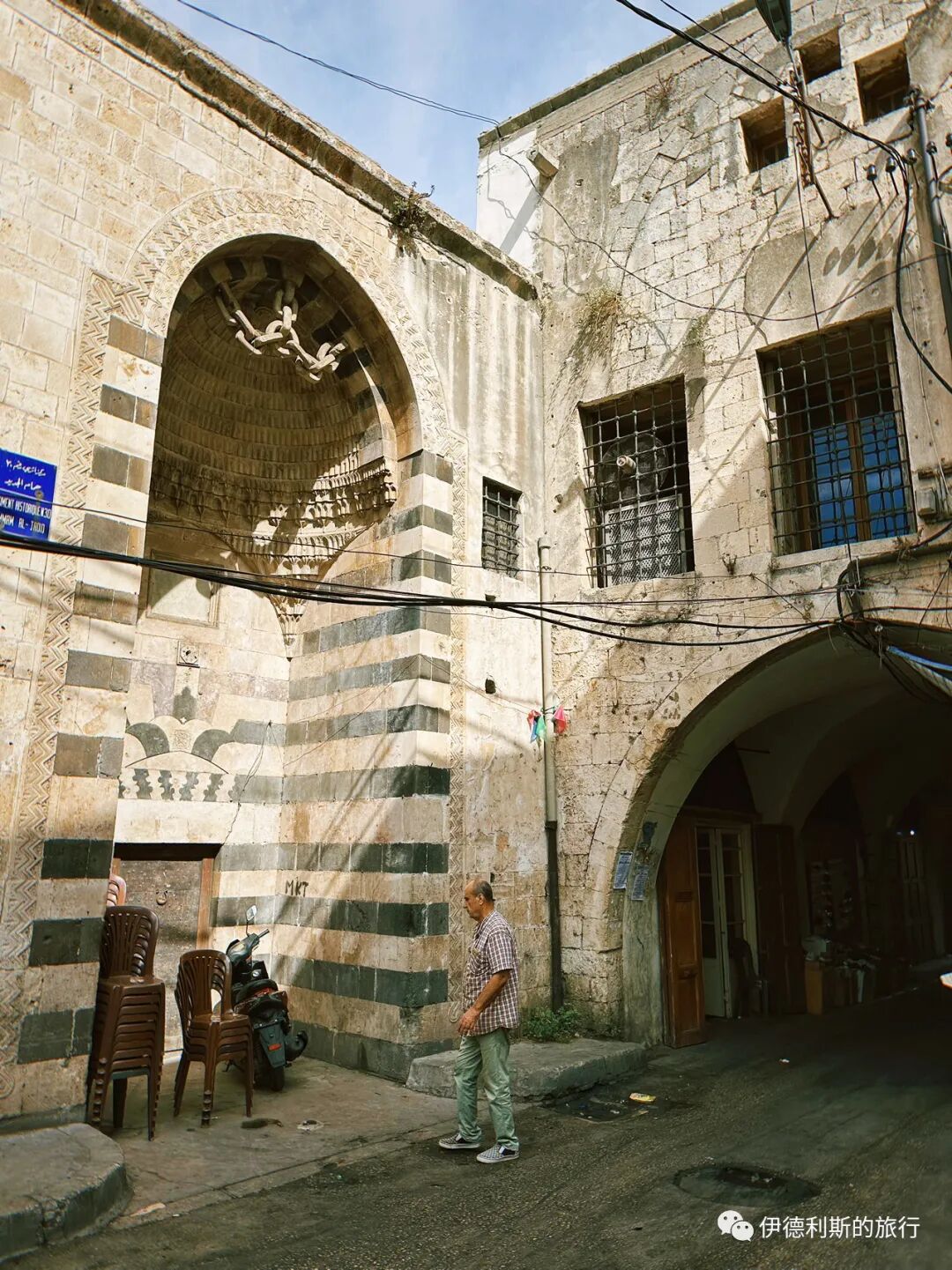
The markets in the old city of Tripoli are very lively, which is a sharp contrast to Beirut. Ibn Battuta wrote in his travelogue: 'Afterward, we arrived at the city of Tripoli.' It was an important town in the Levant (Sham), with several small rivers flowing through it. It is surrounded by fragrant orchards and lush green trees. The sea surrounds it with its blue waters, and the earth nourishes it with its treasures. The goods in the market are dazzling and truly amazing.
We drank street coffee in the market and saw all kinds of dairy products, which was very interesting.
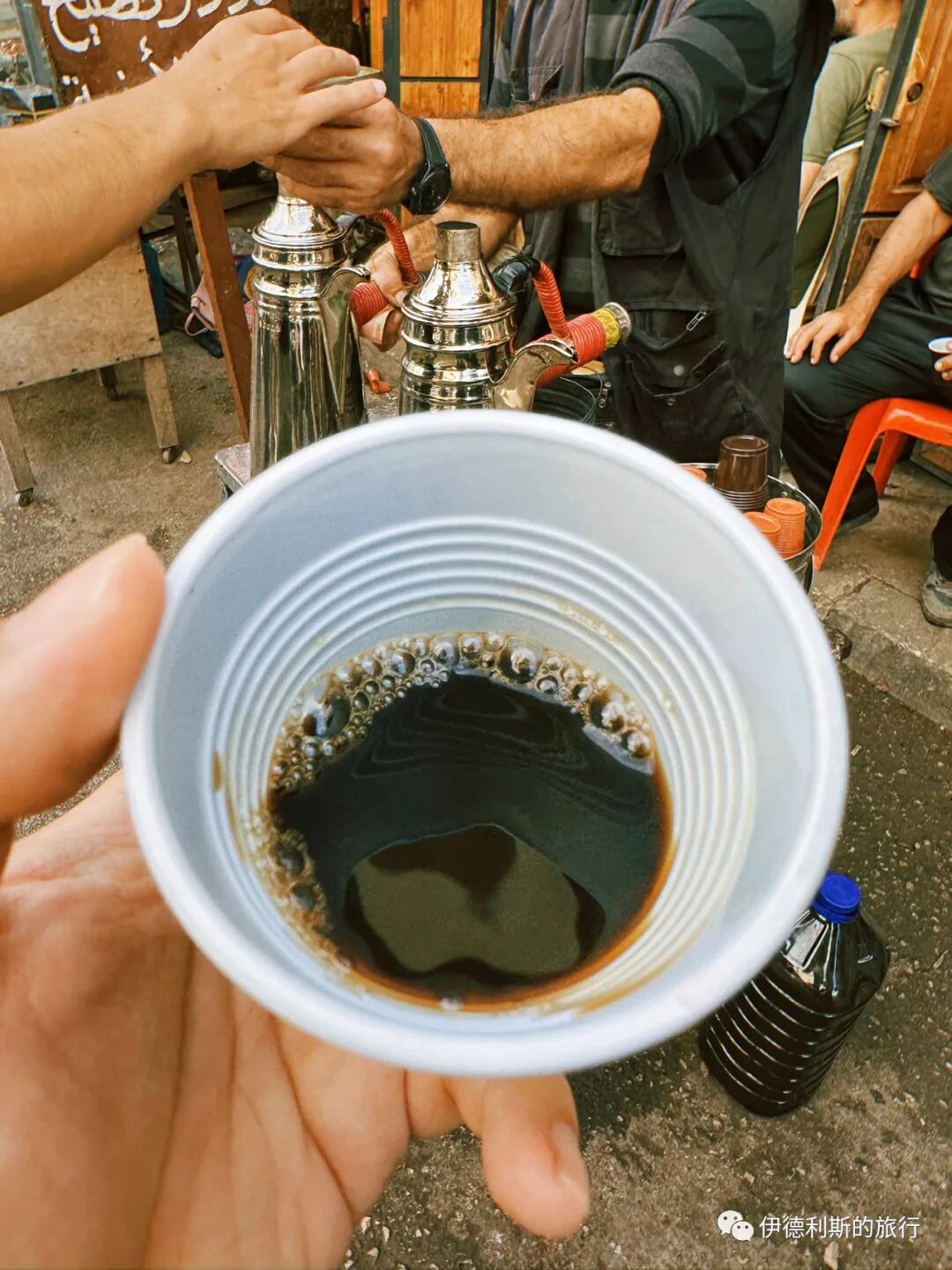
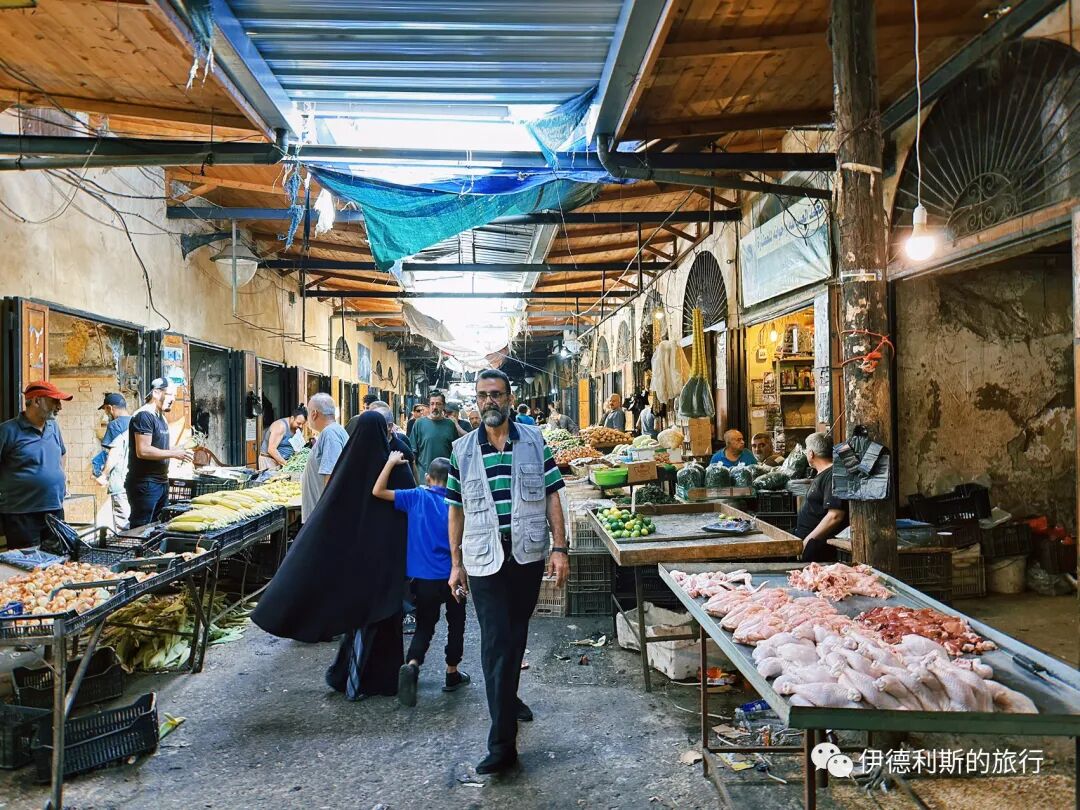
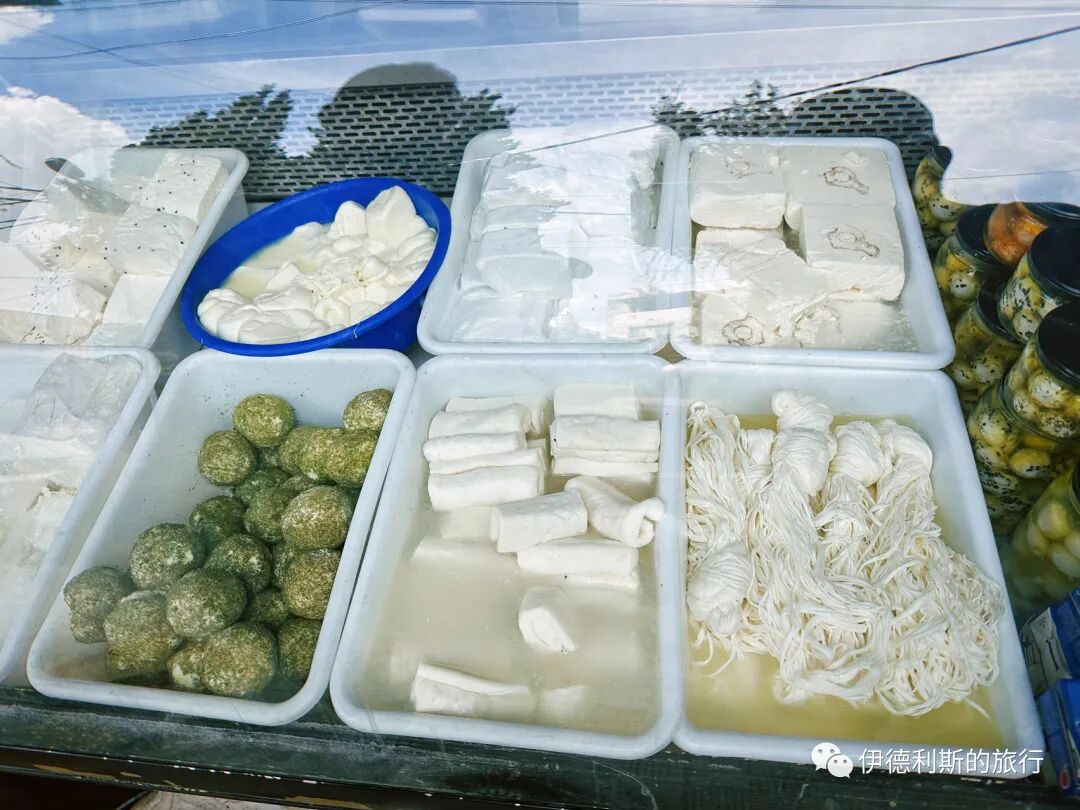
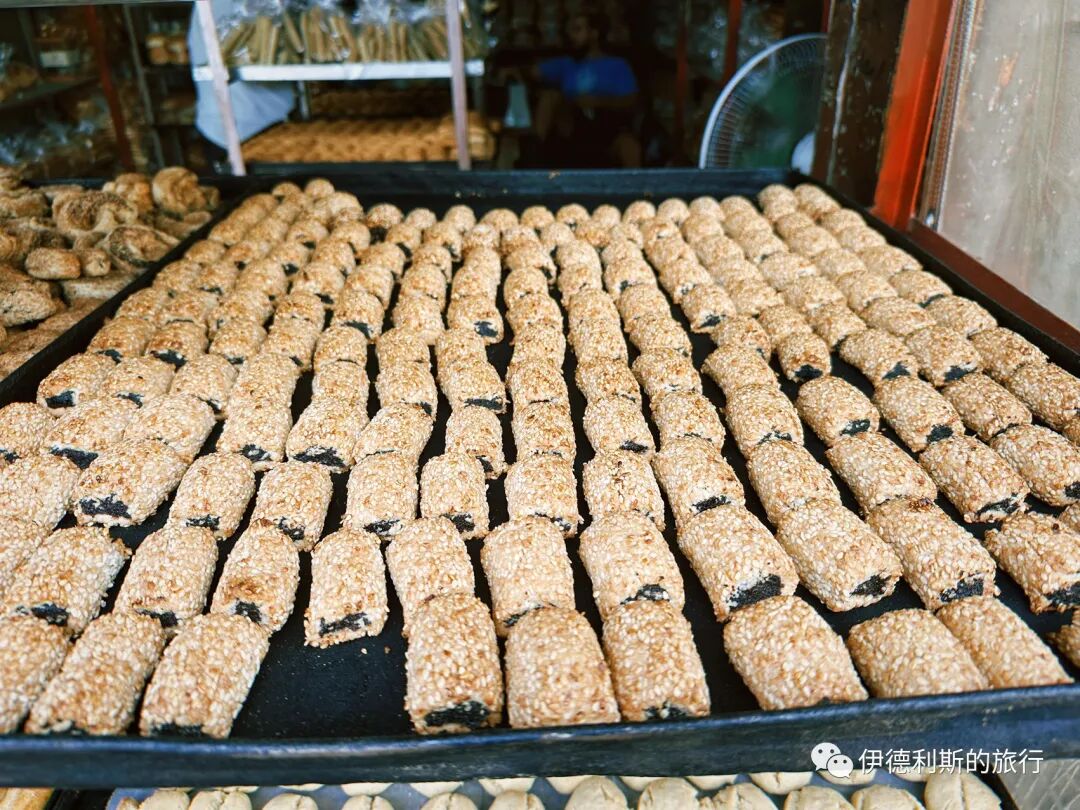
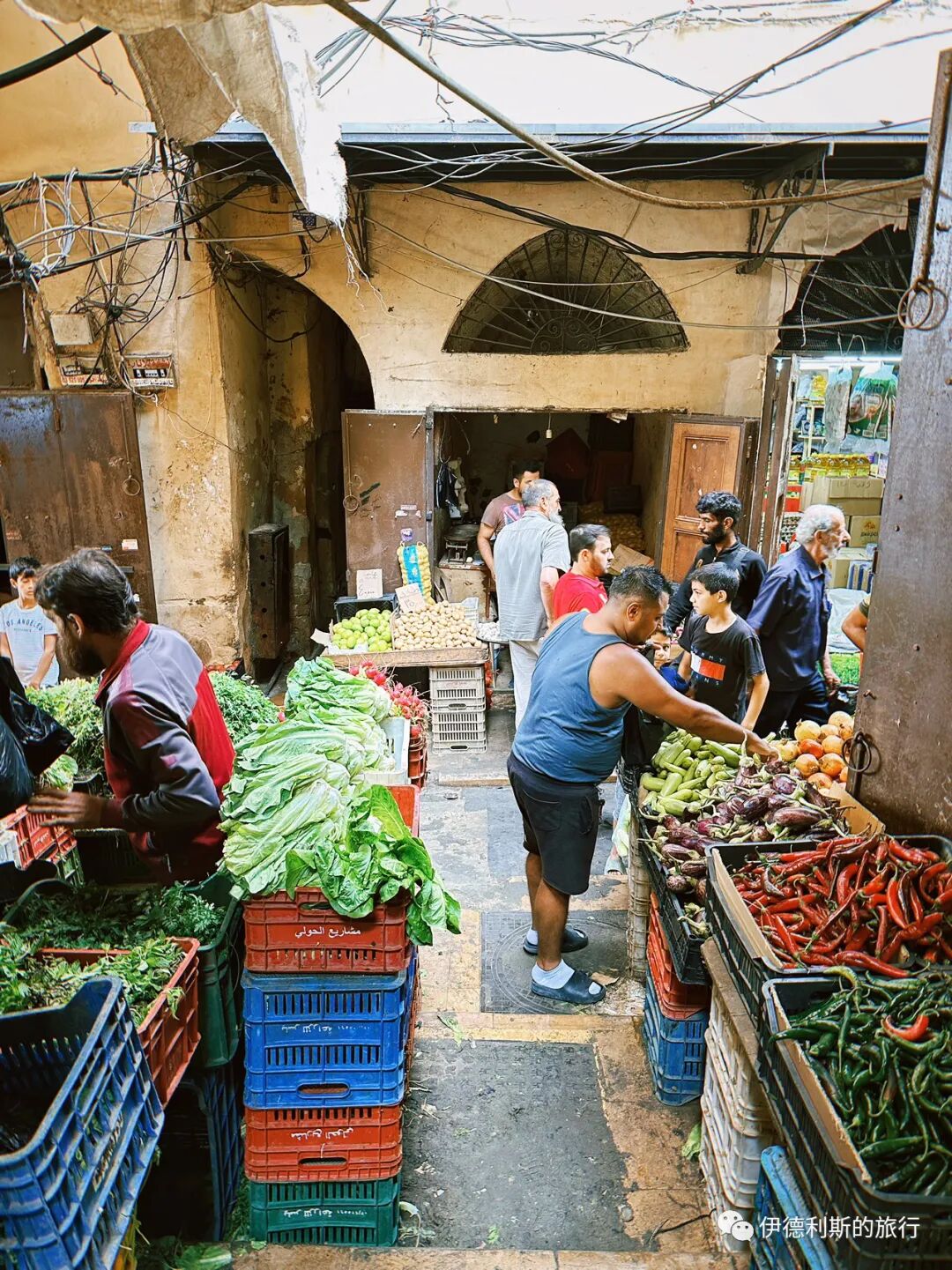
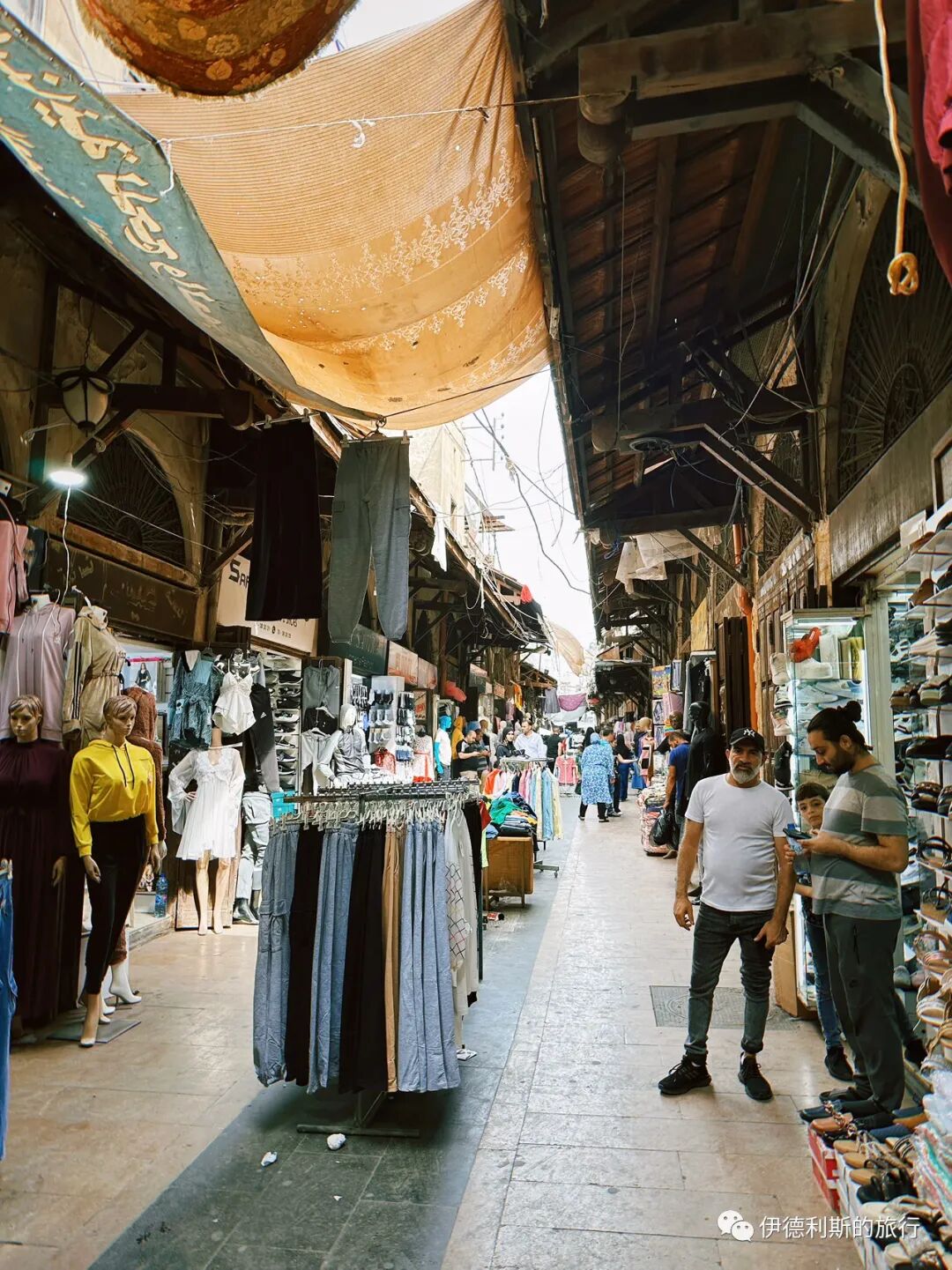
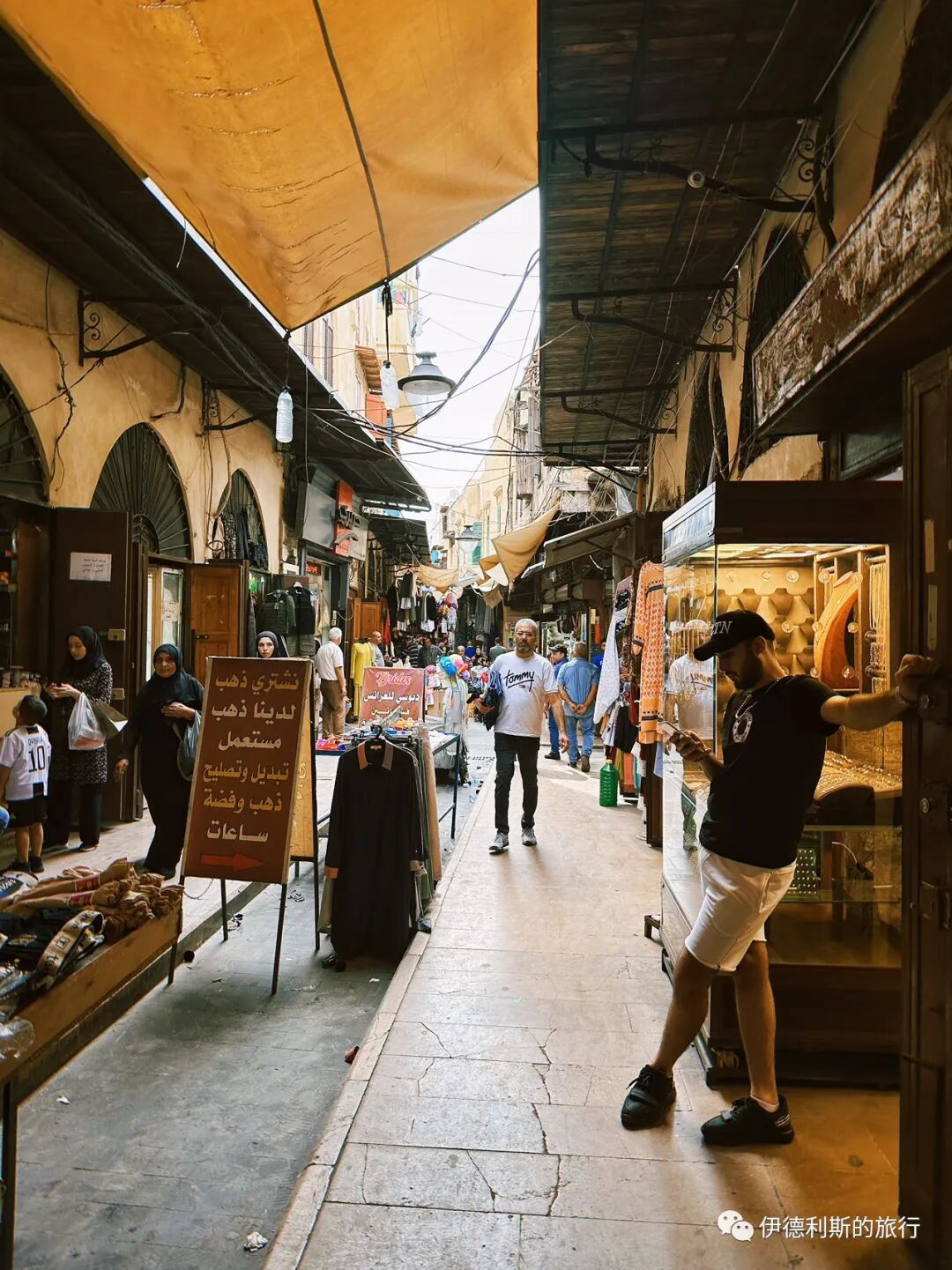
Continuing north from the market, we reached the Mansouri Great Mosque, a landmark in the center of Tripoli's old city. The Mansouri Great Mosque, also called the Great Mosque of Tripoli, was ordered to be built in 1294 by the Mamluk Sultan Al-Ashraf Khalil. It was the first building the Mamluk dynasty constructed in Tripoli.
In 1109, the French Crusaders captured Tripoli, and for the next 180 years, the city was ruled by European Christian nobles. In 1260, the Mongol army captured Damascus and took the last Ayyubid Sultan prisoner, ending the Ayyubid dynasty. From then on, the center of Islamic power on the eastern Mediterranean coast shifted to the Mamluk dynasty in Egypt. In 1289, the Mamluk army arrived at the walls of Tripoli with large catapults. Under the attack of the catapults, two of Tripoli's towers quickly collapsed. The Mamluk army entered the city and razed it to the ground.
Soon after, the Mamluk dynasty began building a new city at the foot of the castle on 'Pilgrim Mountain.' This included building the Mansouri Great Mosque on the ruins of a Crusader church at the foot of the hill. The mosque's minaret is likely part of the Crusader Church of St. Mary, and the main gate may also incorporate the original Crusader church entrance. The main hall was built by the Mamluk dynasty in 1294, and the courtyard's surrounding arcade was built in 1314 by the Mamluk Sultan Al-Nasir Muhammad.
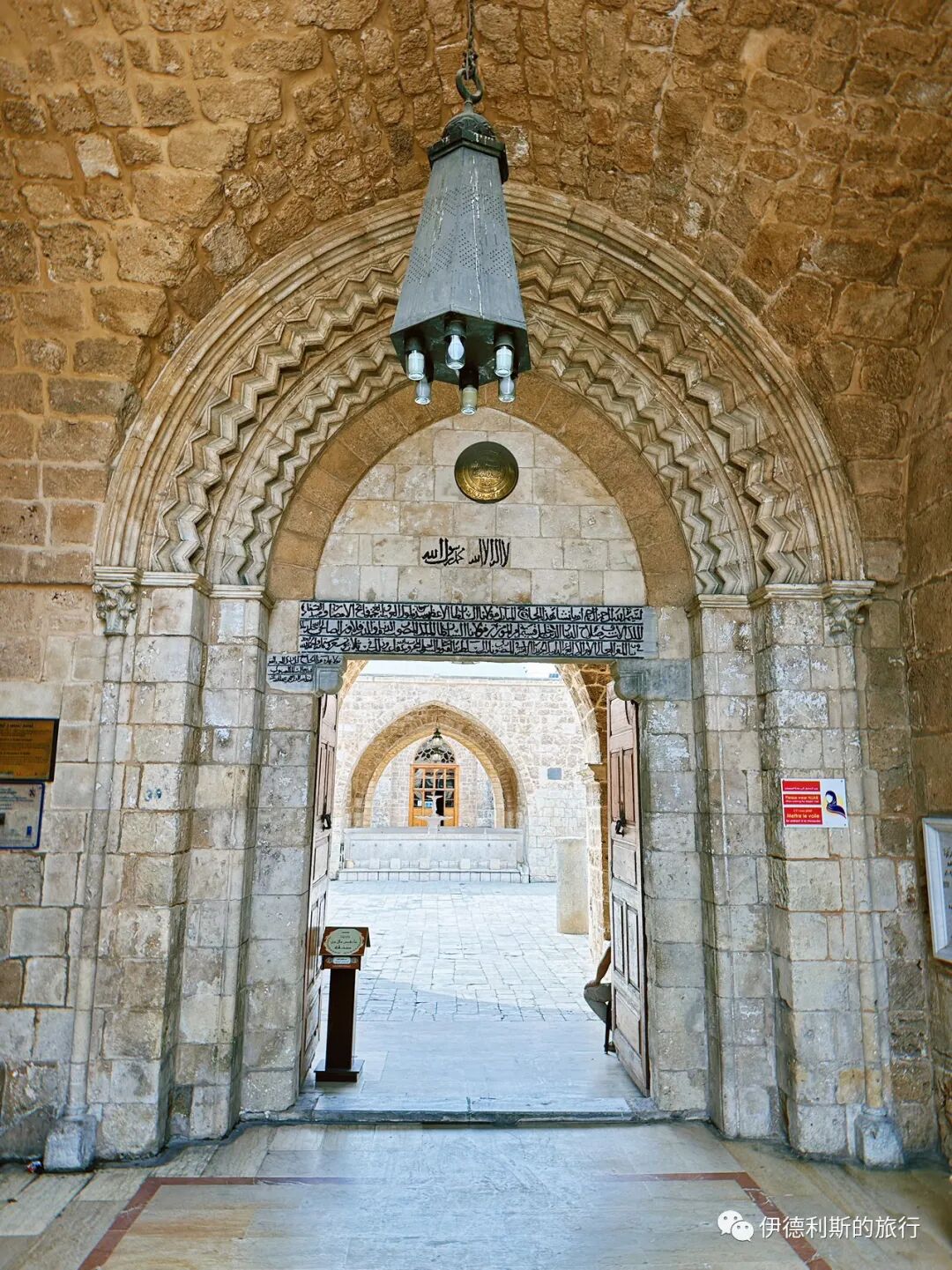
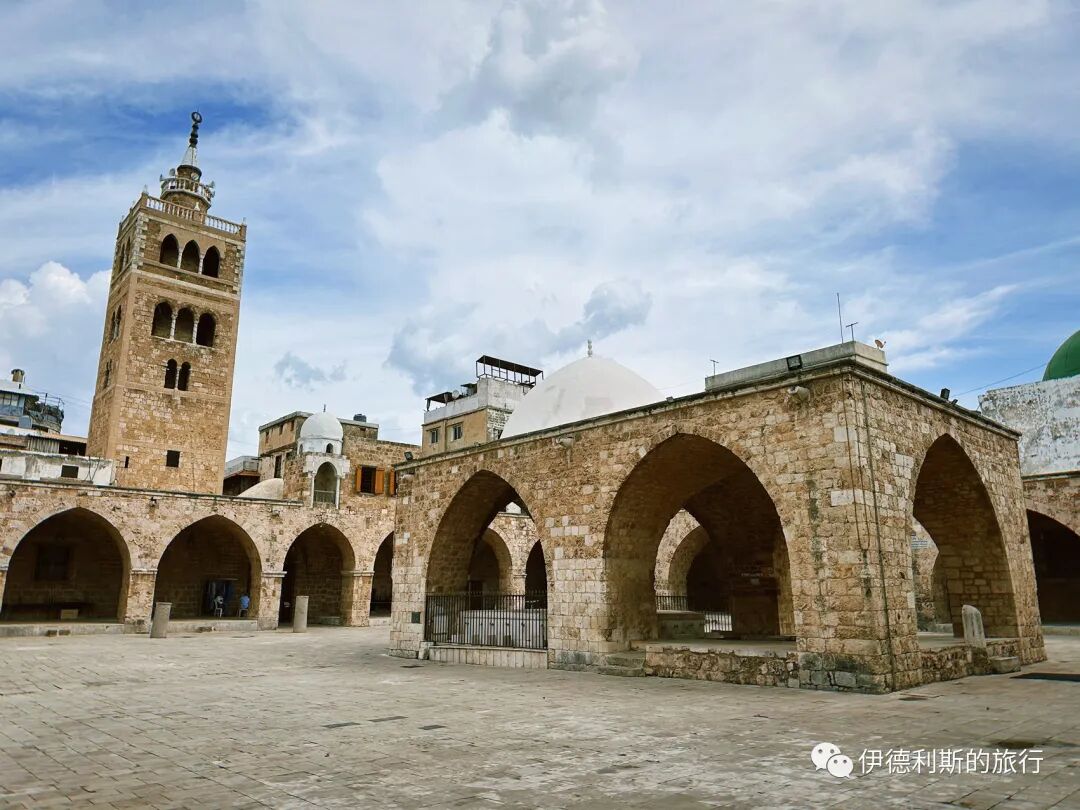
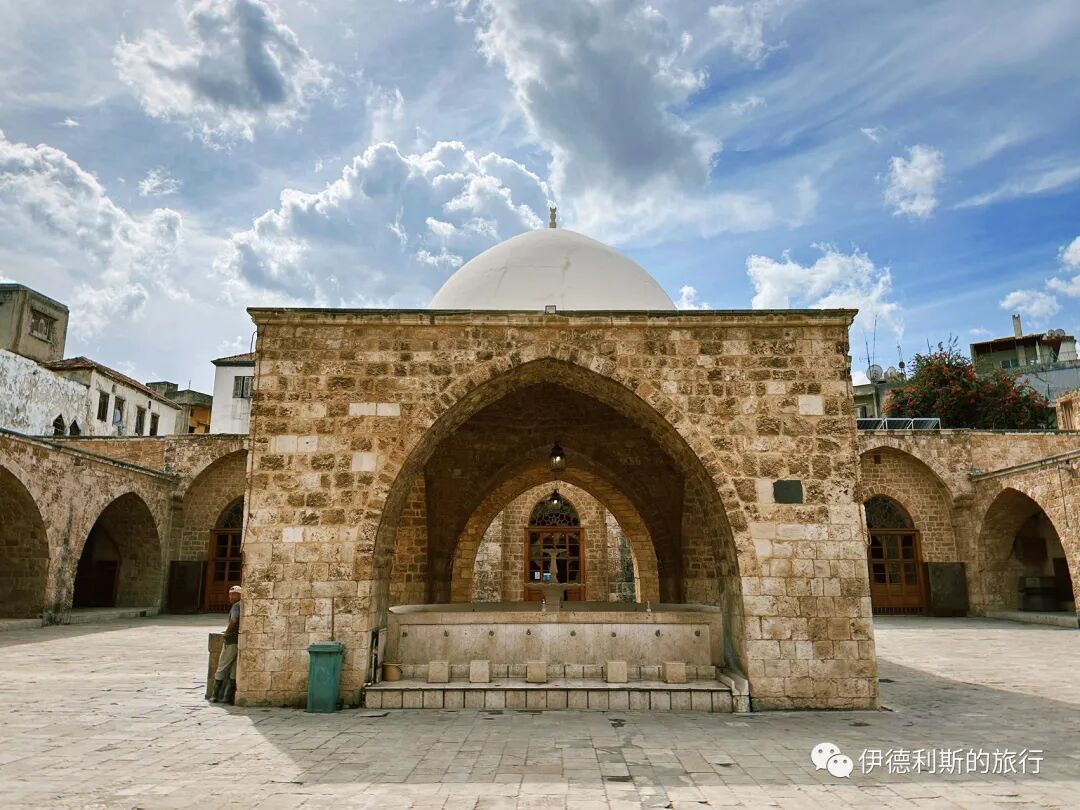
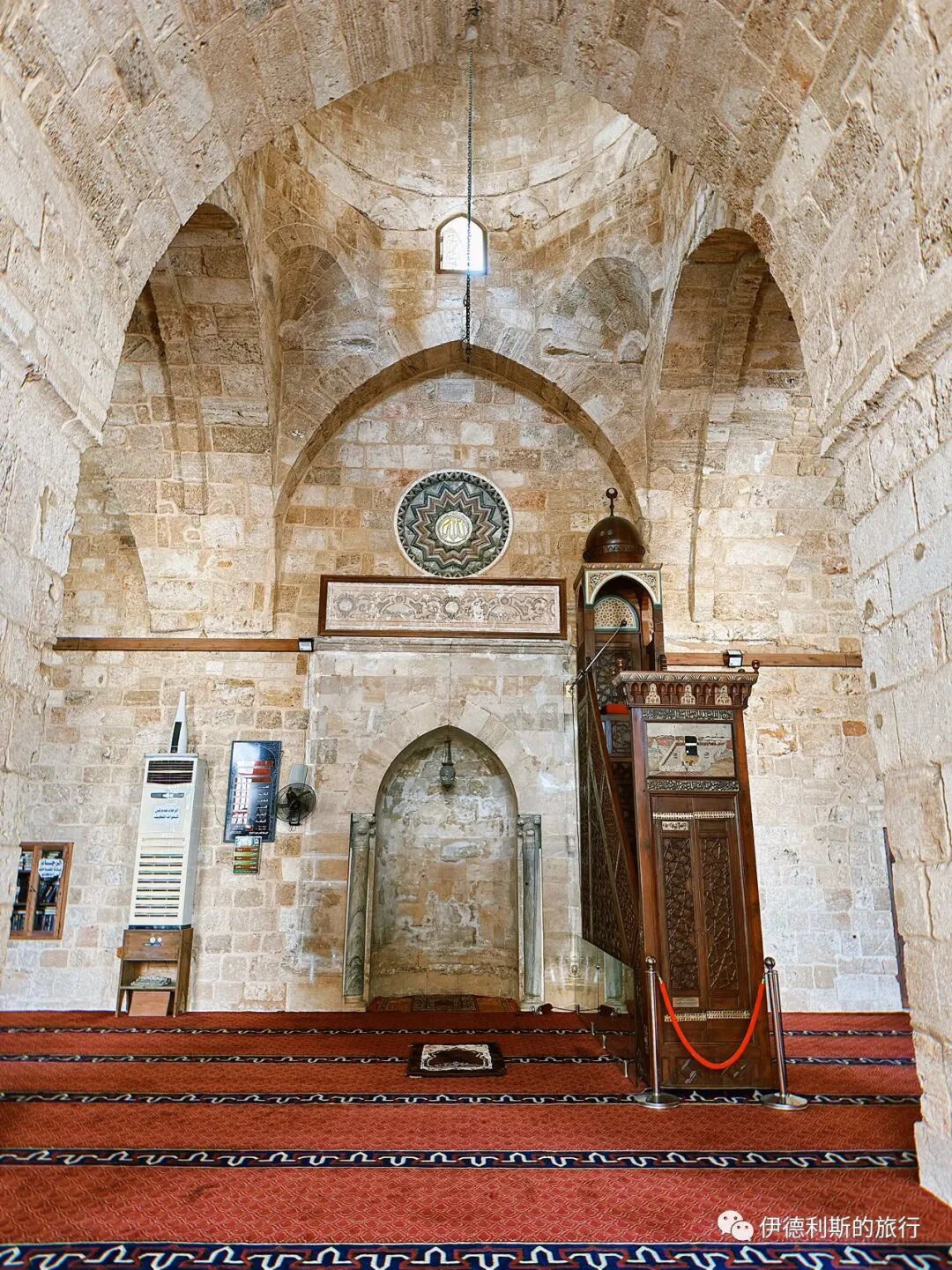
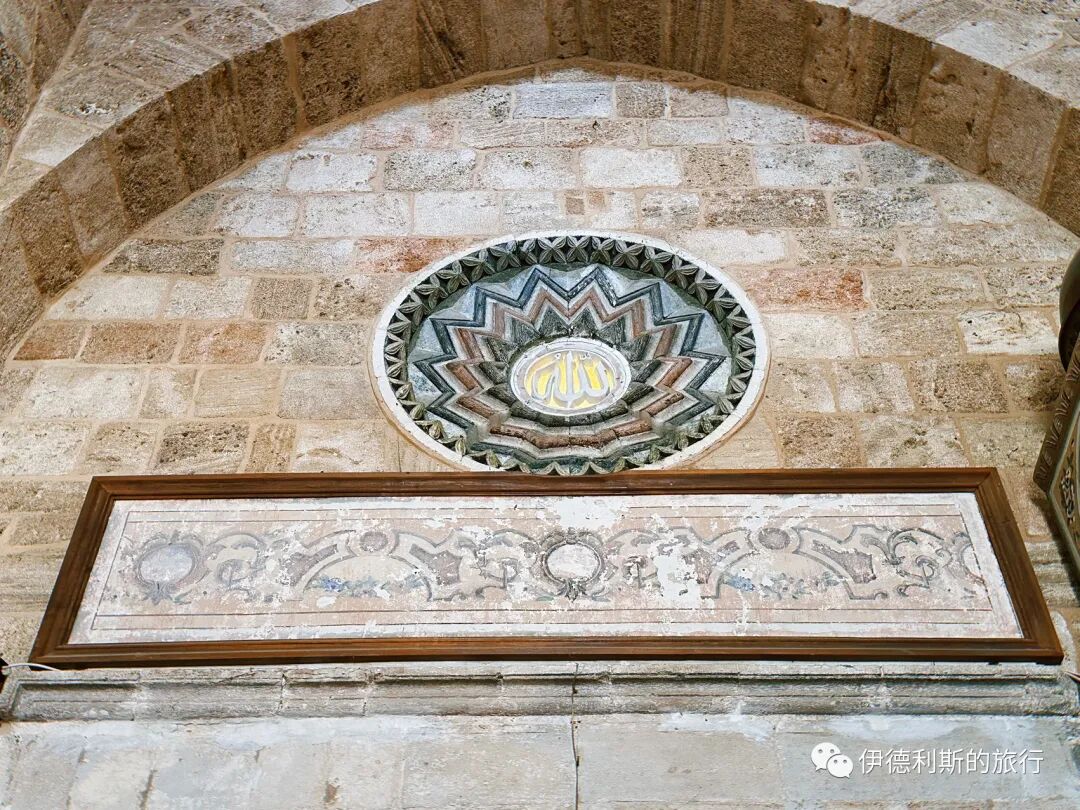
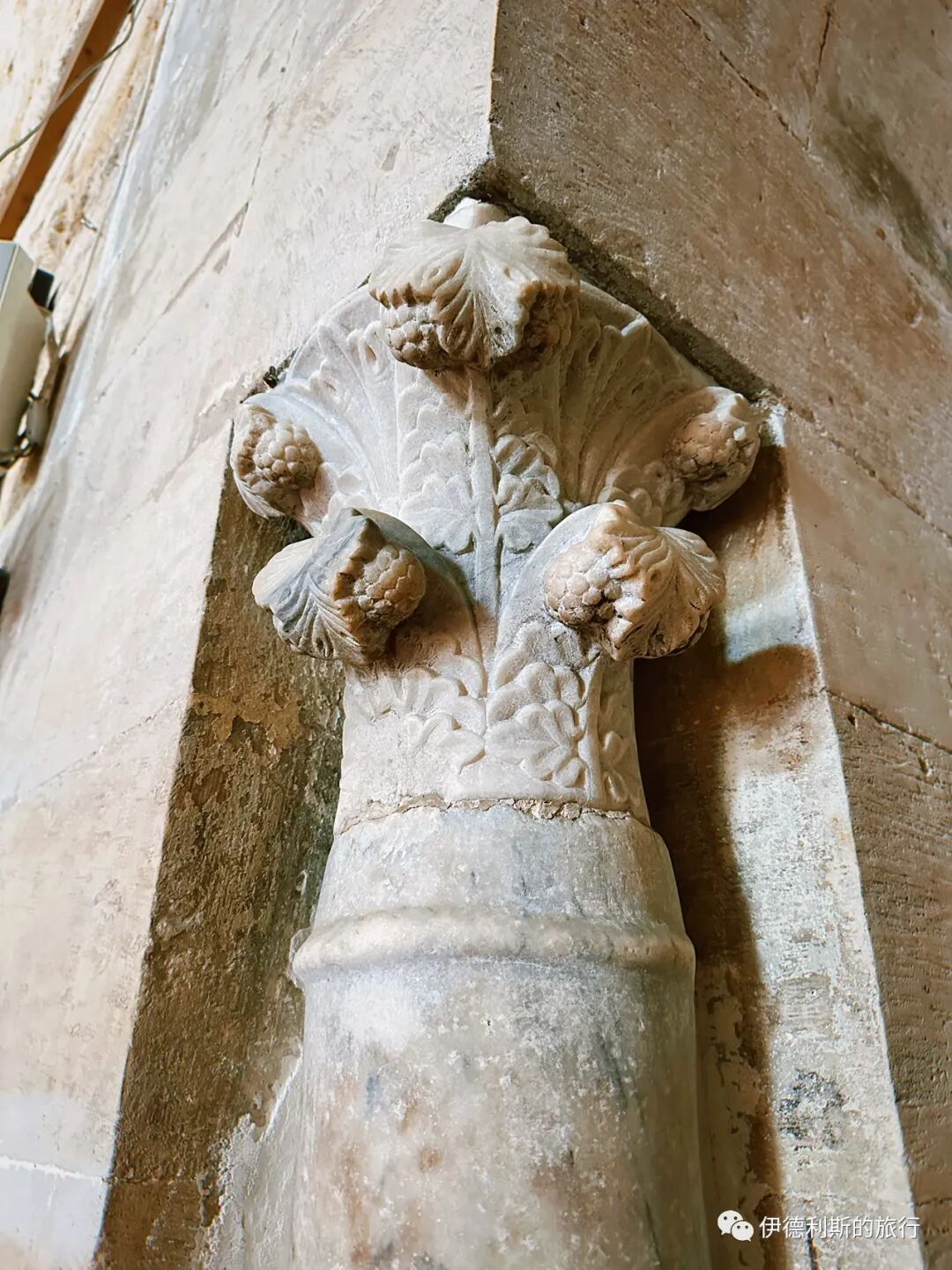
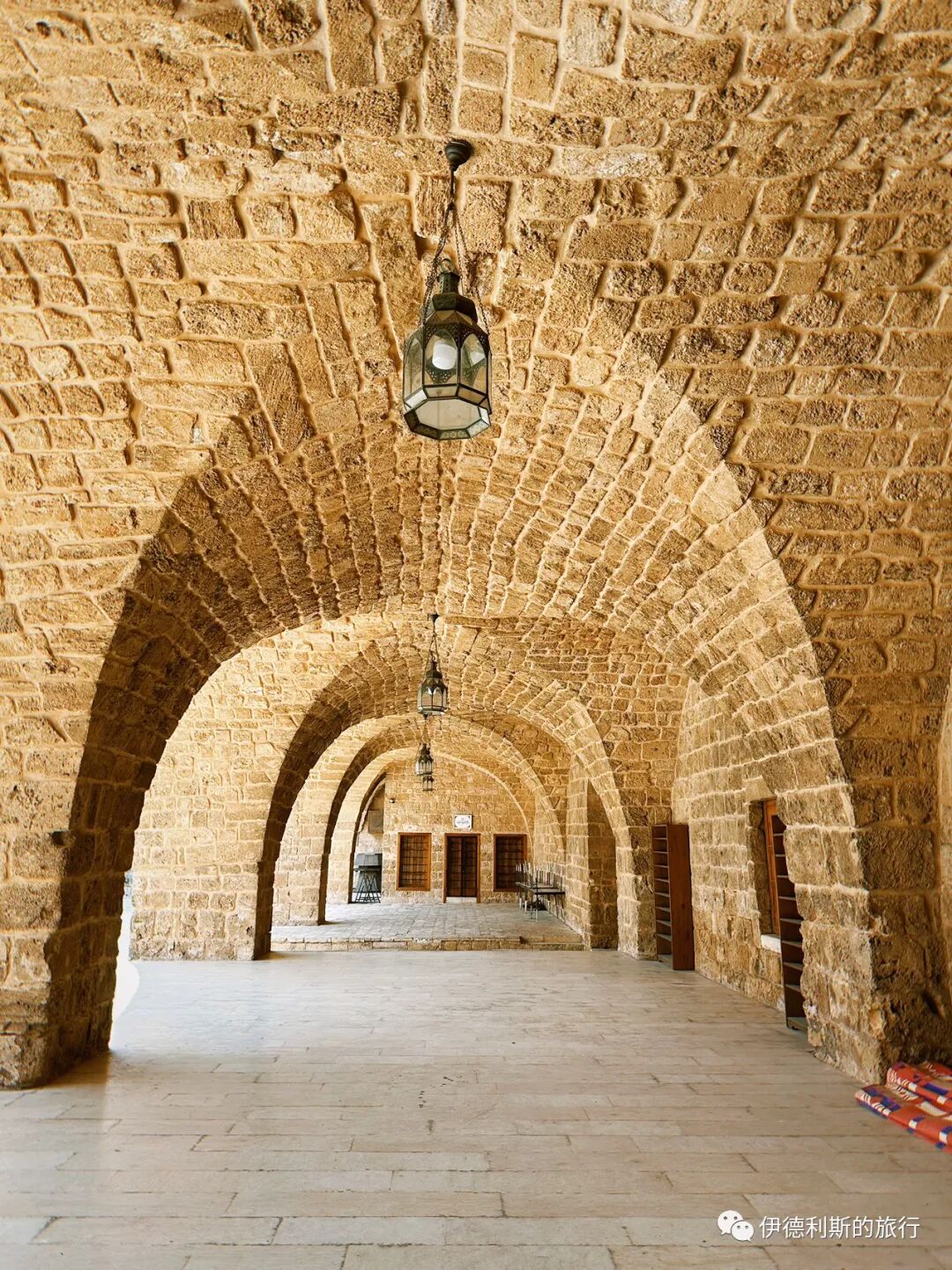
During the 14th century, the Mamluk dynasty built six madrasas (Islamic schools) around the Mansouri Great Mosque, which trained a large number of students. These include the al-Khayriyya Hasan (1309 or later), al-Qartawiyya (around 1326), al-Shamsiyya (1349), al-Nasiriyya (between 1354–1360), al-Nuriyya (14th century), and the Mashhad madrasa. The al-Qartawiyya madrasa outside the east wall of the Mansouri Great Mosque is the most magnificent. Unfortunately, we could not find the madrasa's gate in the maze-like alleys of the old city, but we did see the calligraphy carvings on its walls.
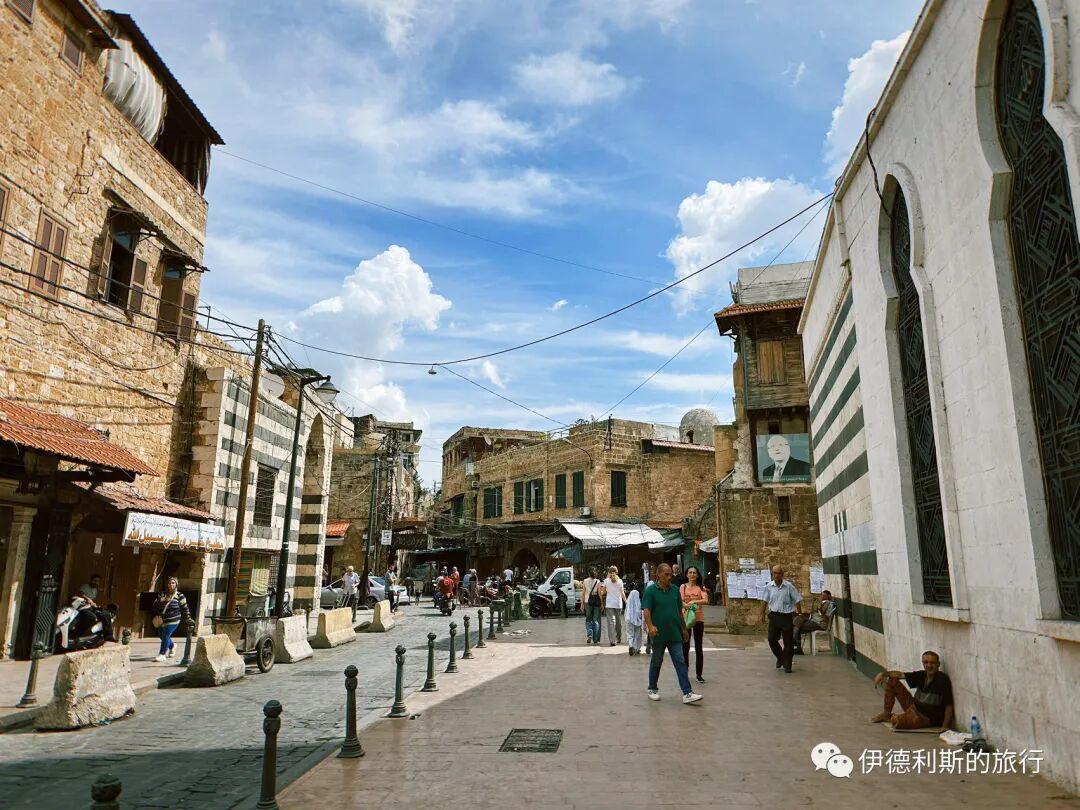
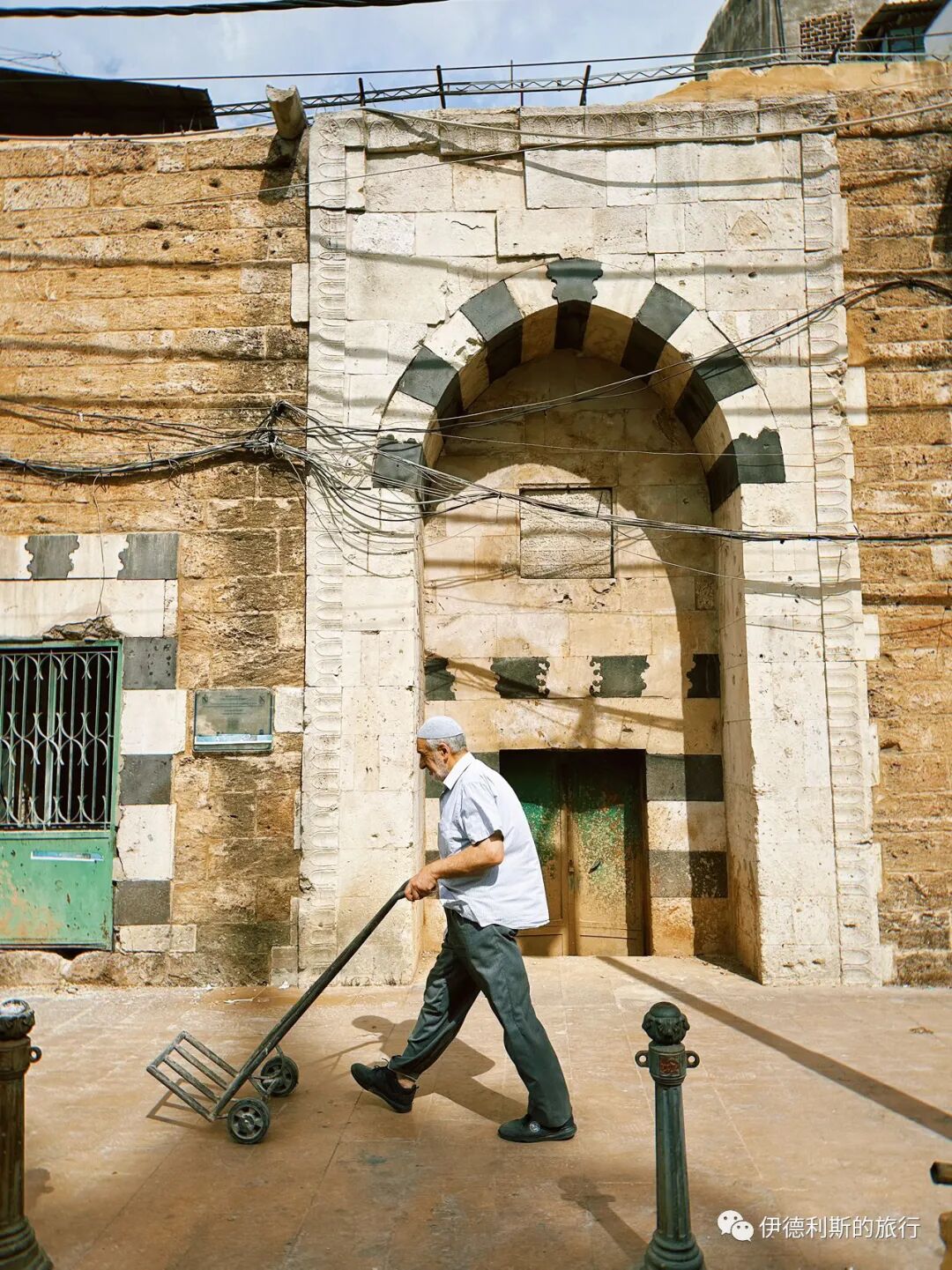
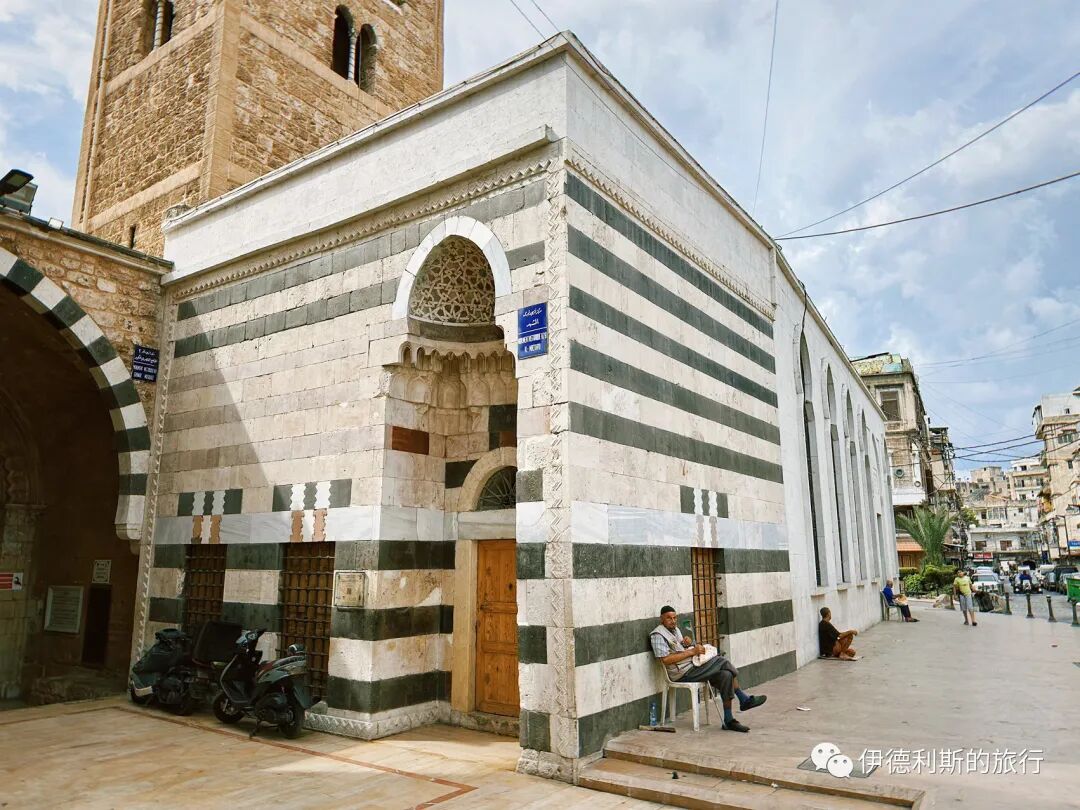
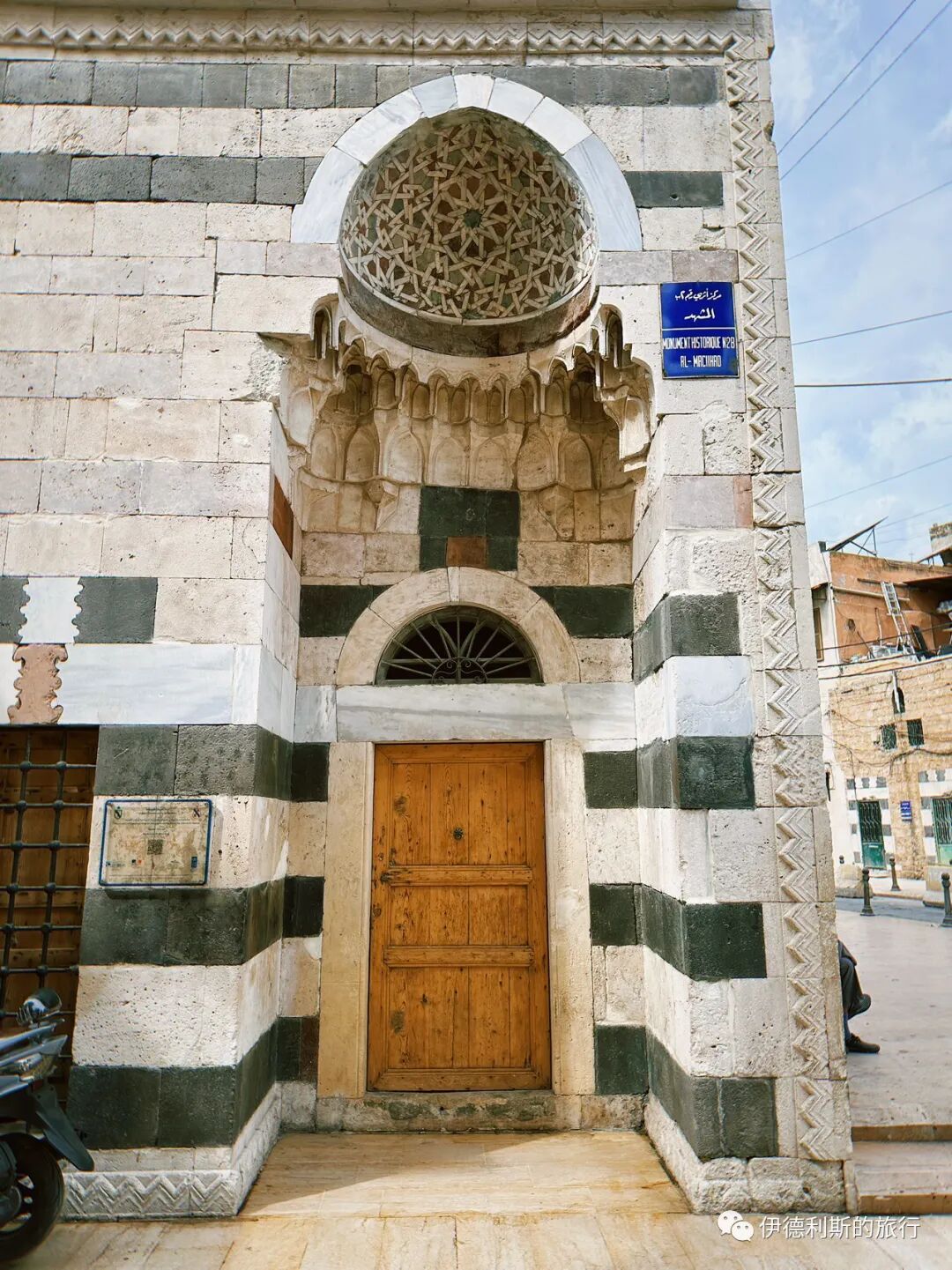
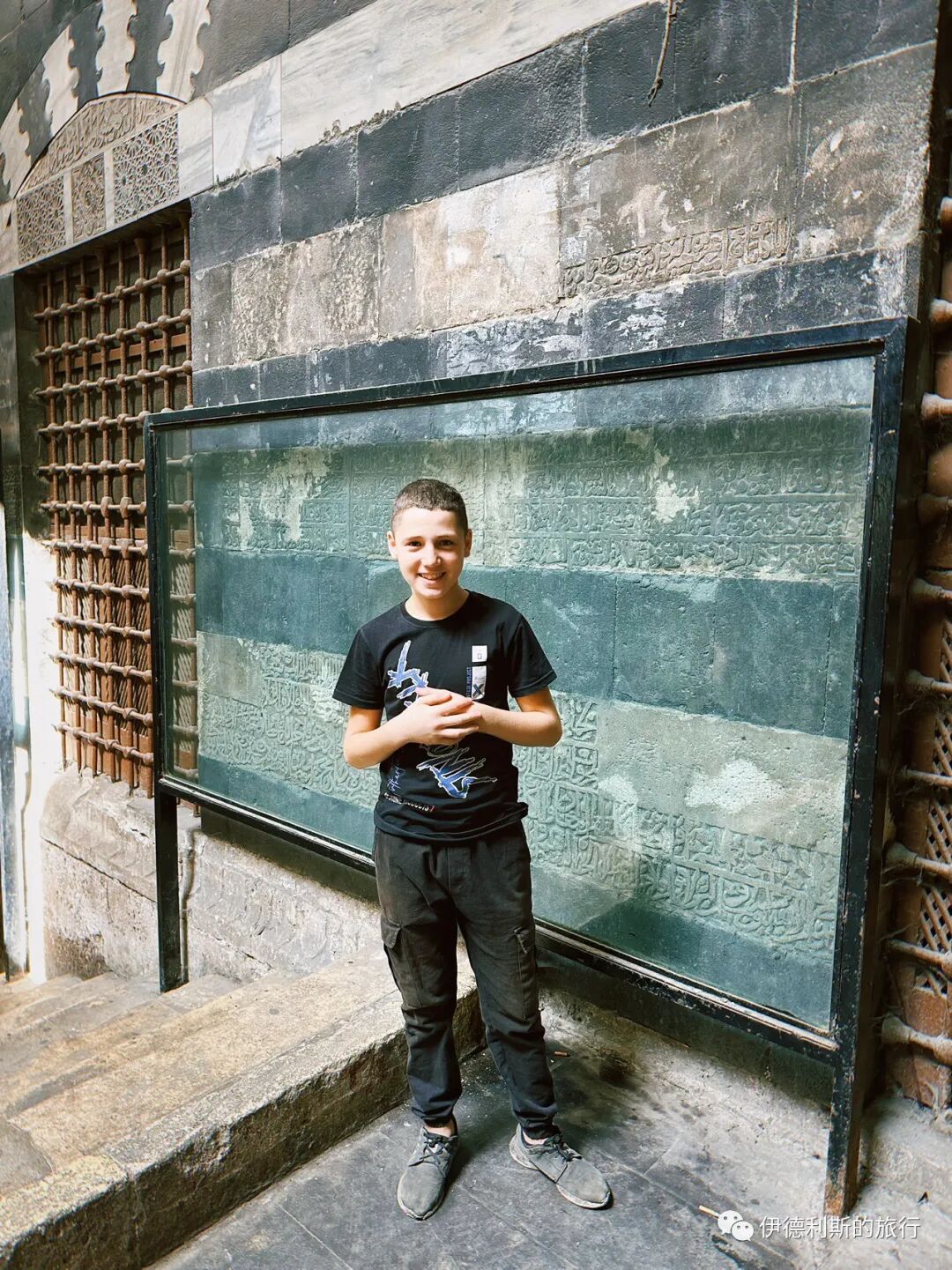
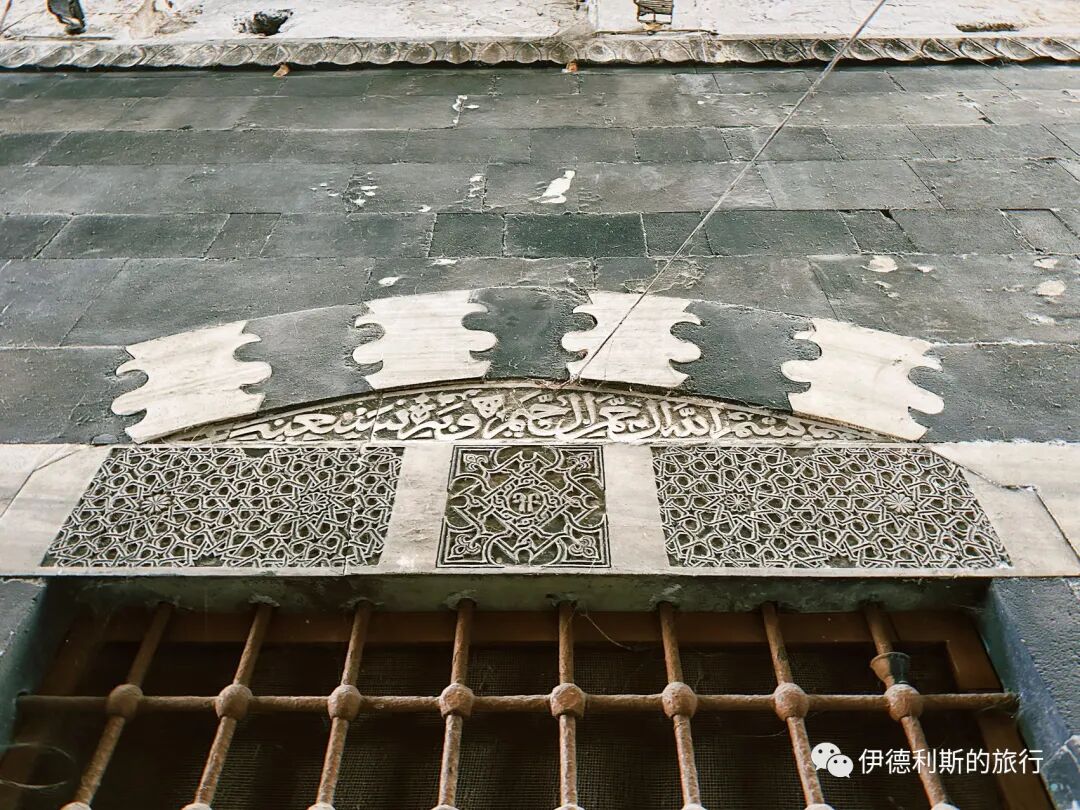
Leaving the noisy market, we turned east onto Al-Asrar Alley, which was once the residential area for high-ranking Mamluk officers. On the way, we passed the Al-Mahatra Gate of Tripoli's old city. The gate's name comes from the military musicians who played to boost the army's morale. Now that the war is over, houses have been built on top of the gate, and it has become a quiet alley.
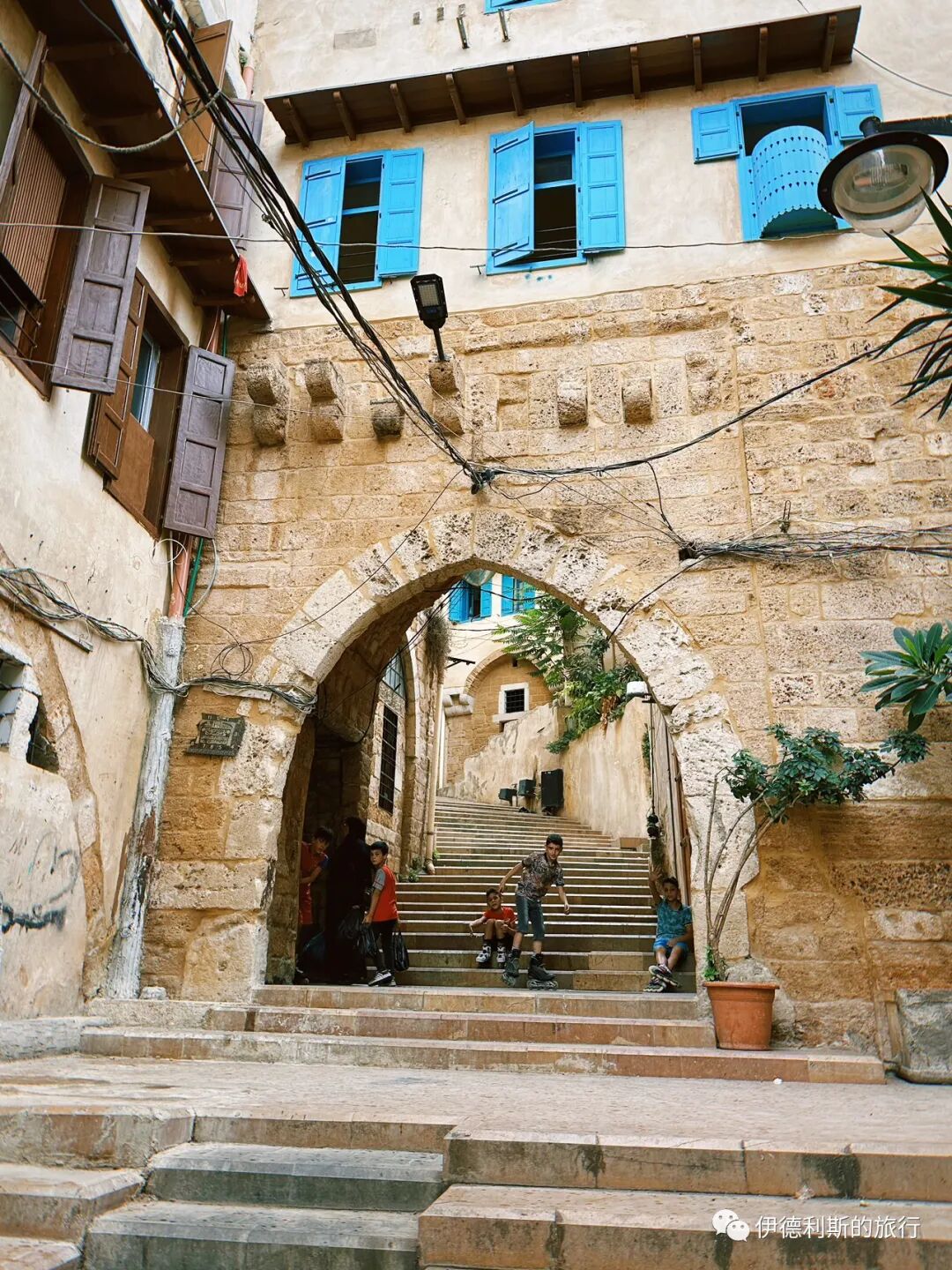
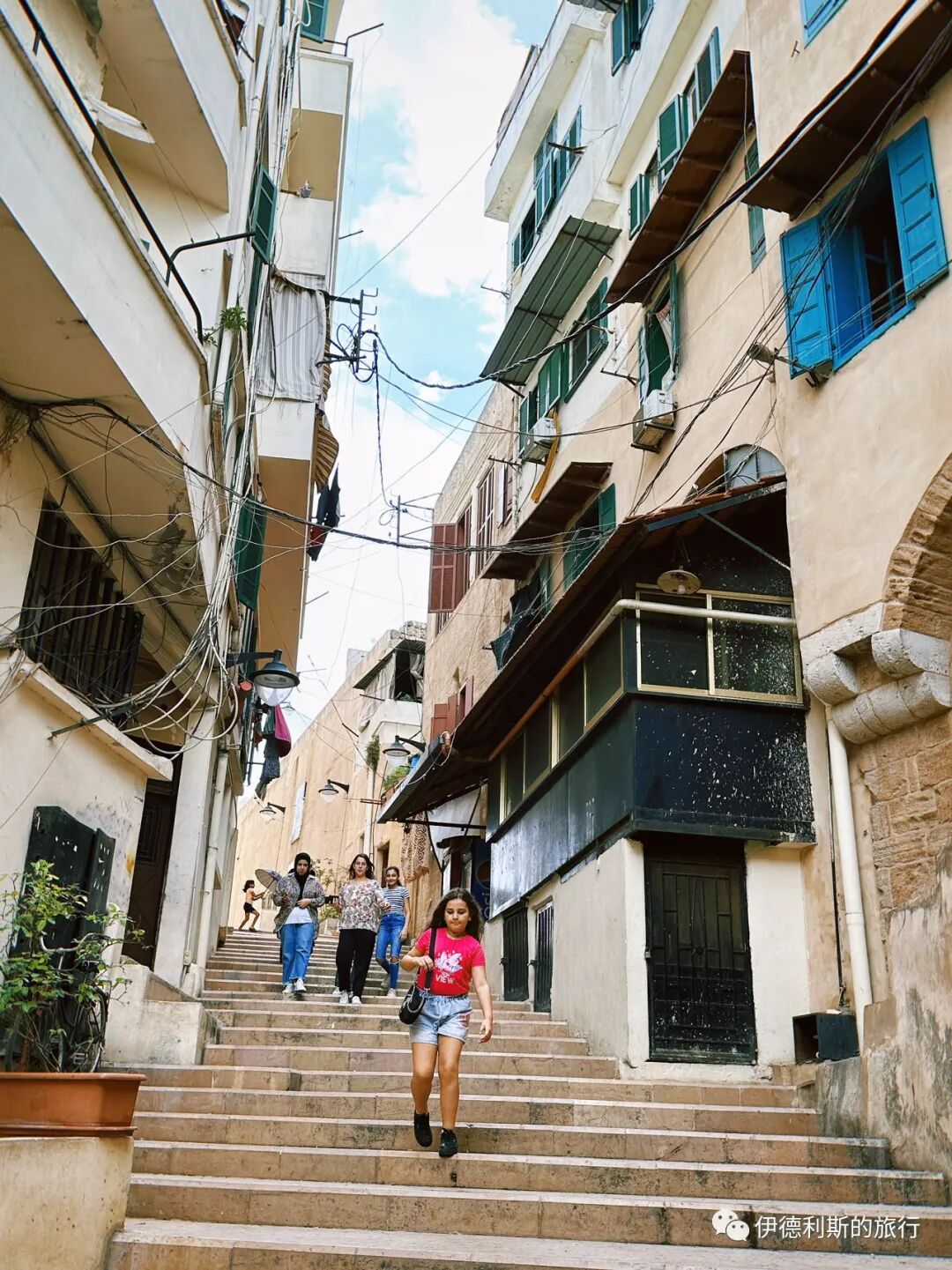
Passing through the alley, we arrived at another landmark in Tripoli: the Citadel of Tripoli. The site of the Citadel of Tripoli was originally a Shia cemetery from the Fatimid period. During the Frankish Crusader siege of Tripoli in 1102–1103, the Crusader leader Raymond of Saint-Gilles ordered it to be built as a fortress, which is why it is also called the Castle of Saint-Gilles. After the Mamluk dynasty captured Tripoli in 1289, they rebuilt the castle using many Roman columns and other building materials found nearby. In 1521, the Ottoman Sultan Suleiman the Magnificent rebuilt the castle again, changing the arrow slits into firing ports for cannons. In the early 19th century, the Ottoman governor of Tripoli carried out the last major renovation of the castle, giving it the appearance it has today.
The castle gate consists of two towers. There was originally a drawbridge over the moat in front, but it has now been replaced by a stone bridge. The black and white marble facade above the gate was built by Suleiman the Magnificent in 1521. The stone inscription on it reads, 'May the Emir never cease to obey his command, restoring this sacred castle so that it may forever be a strong fortress.'
Above the gate, you can see the machicolation built during the Mamluk period. This is a classic structure in medieval castle defense systems, where defenders on top of the walls and towers could pour boiling water and oil through the openings onto those below.
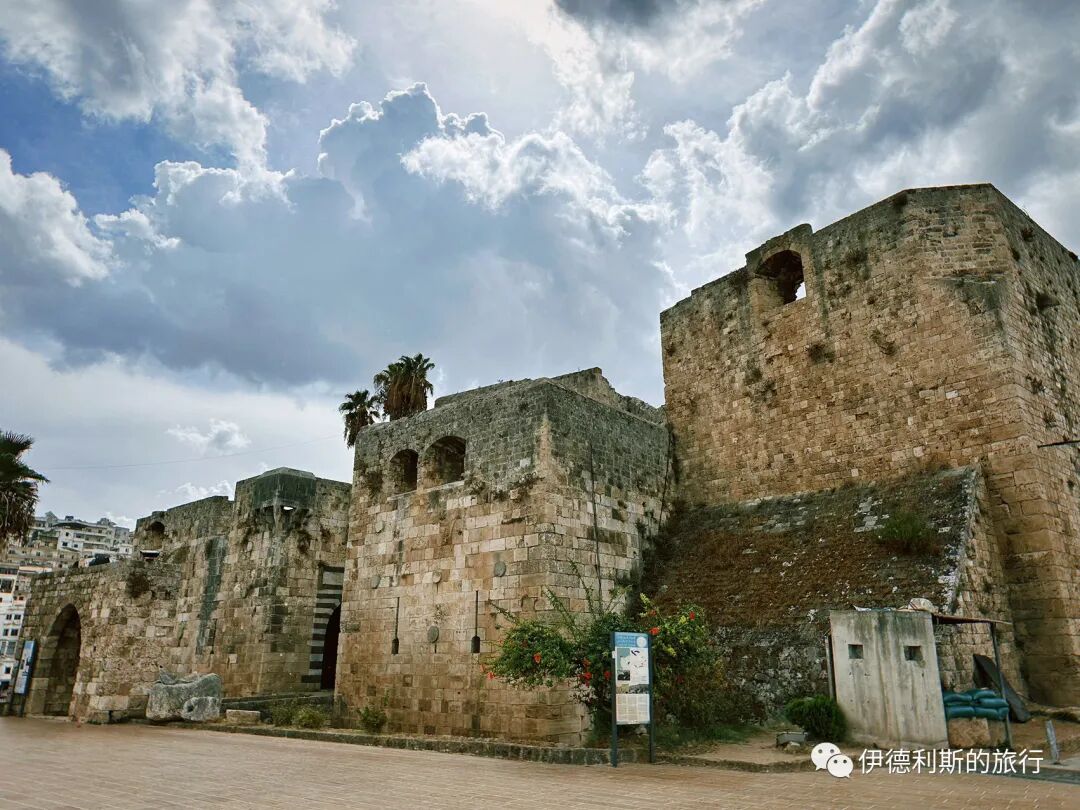
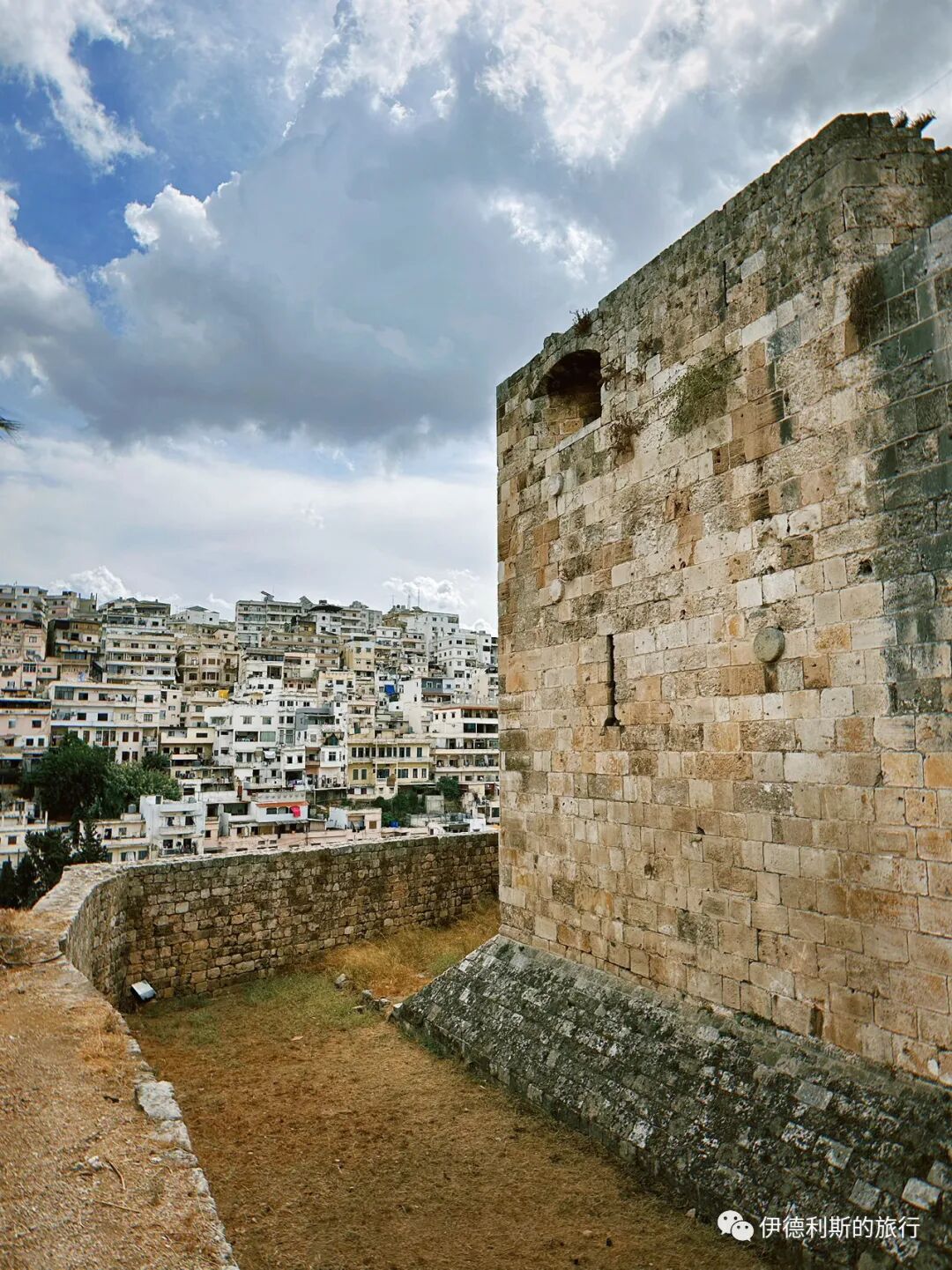
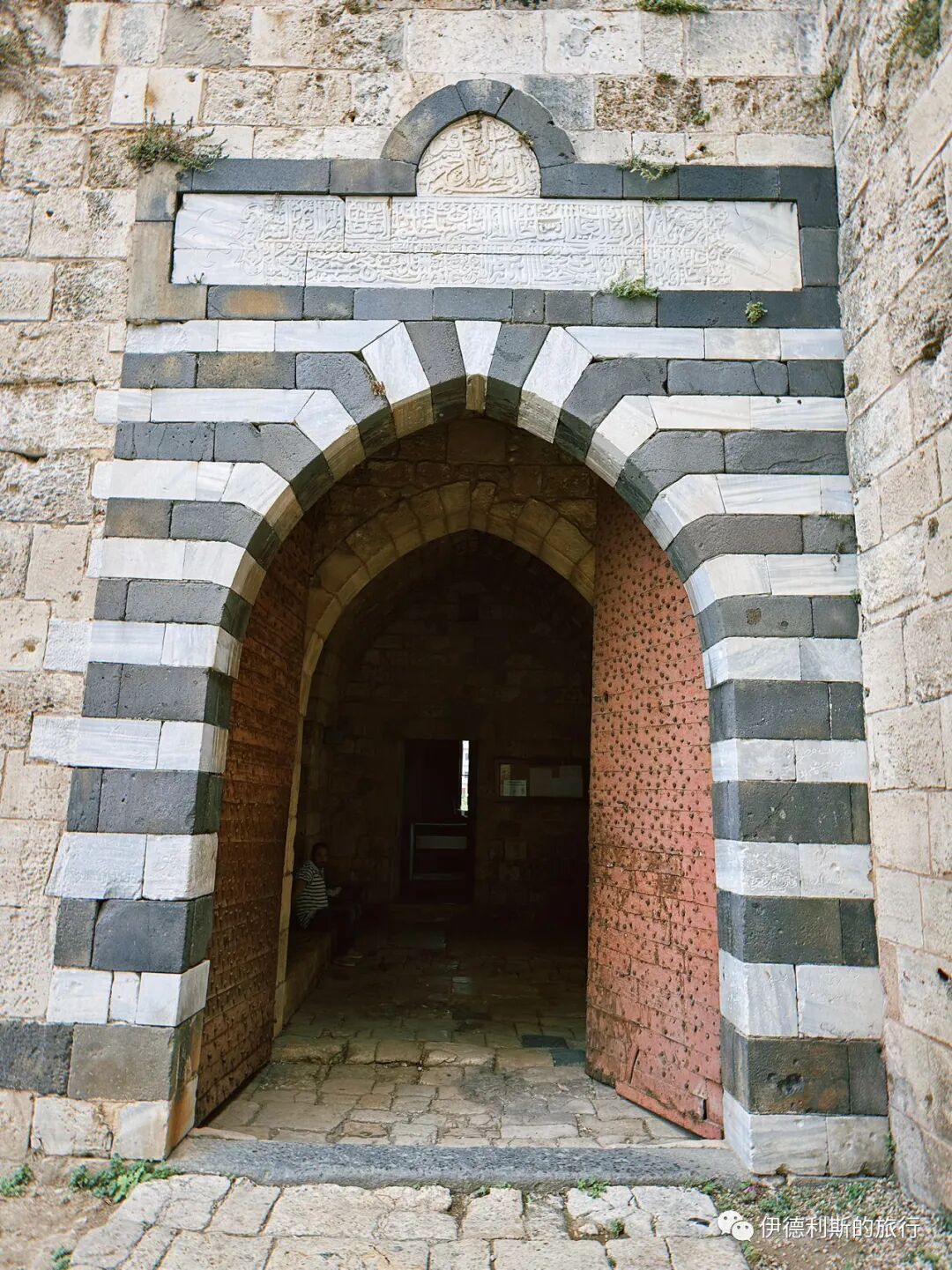
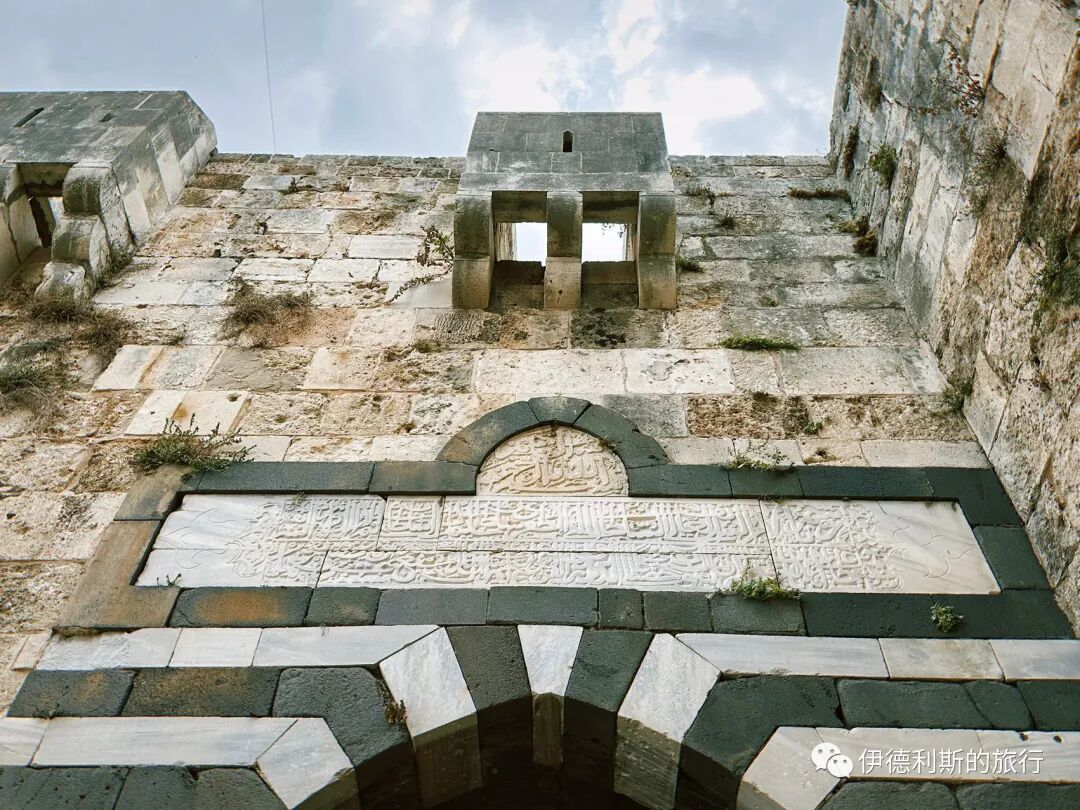
After entering the gate of Tripoli Castle, there is a small courtyard, and behind the courtyard is a taller tower gate. The tower was first built during the Frankish Crusader period, and the current structure was rebuilt by the Mamluk dynasty in 1345.
There was once a mosque in the courtyard built by the Ottoman governor of Tripoli, Barbar Agha (1767-1834). You can still see the mihrab niche on the north wall of the tower. Unfortunately, the stone inscription above the niche was lost during the Lebanese Civil War and its whereabouts remain unknown. Above the niche, you can still see a row of structural holes where the beams of the mosque roof were once placed.
From the drawbridge through the main gate to the tower, you must pass through six doors to enter the interior of the castle. These doors were once equipped with iron-studded panels, and there are narrow arrow slits on the walls, forming a very mature castle defense system.
If the first few gates were breached, the defenders could lure the enemy into the stables on the west side of the tower. The arrow slits in the stables could be used to deal with these enemies, and some of the slits were enlarged in the early 19th century to accommodate cannons. From the stables, you can reach the guard quarters on the upper level of the tower, and then climb to the roof to overlook the panoramic view of Tripoli.
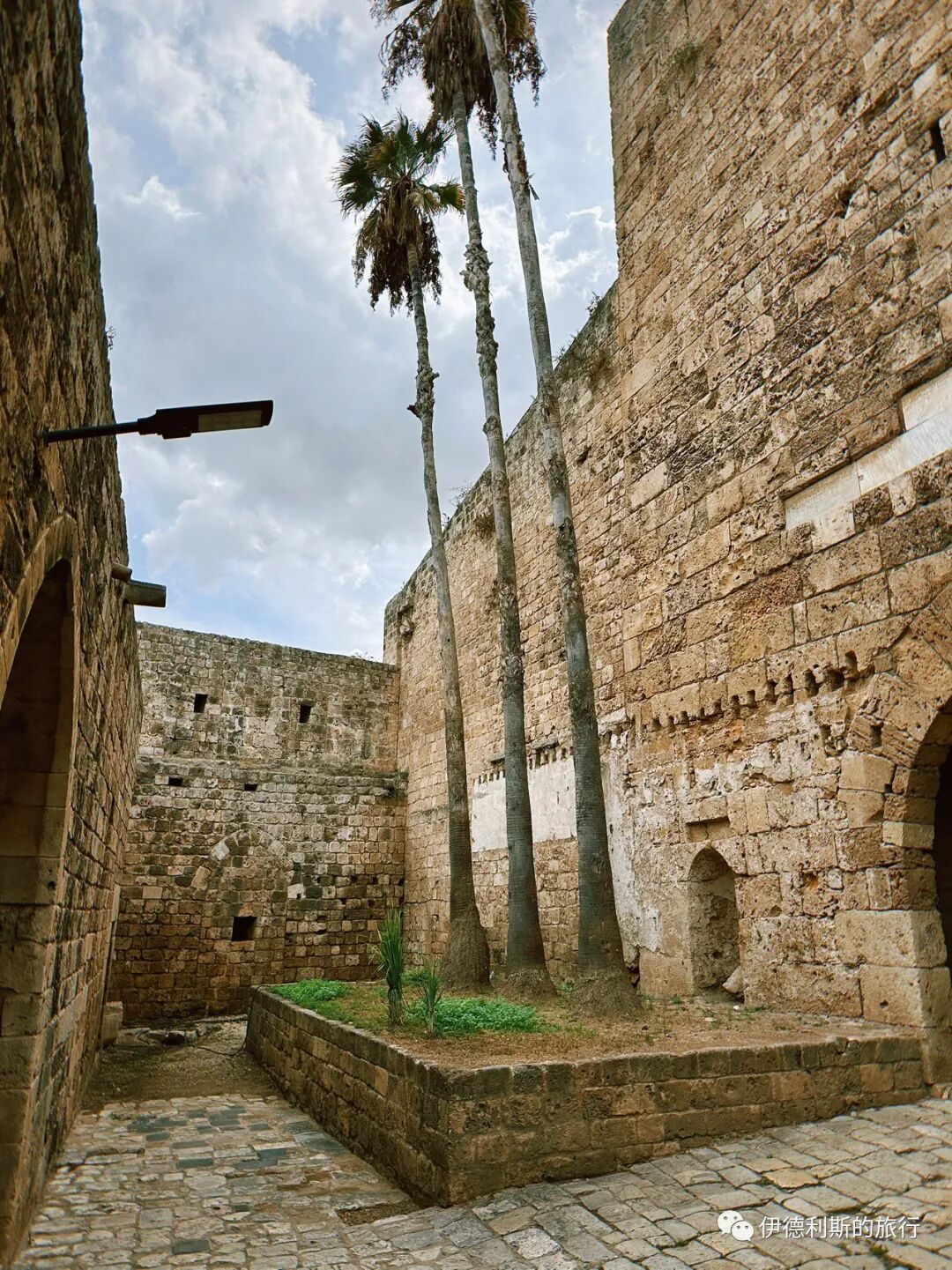
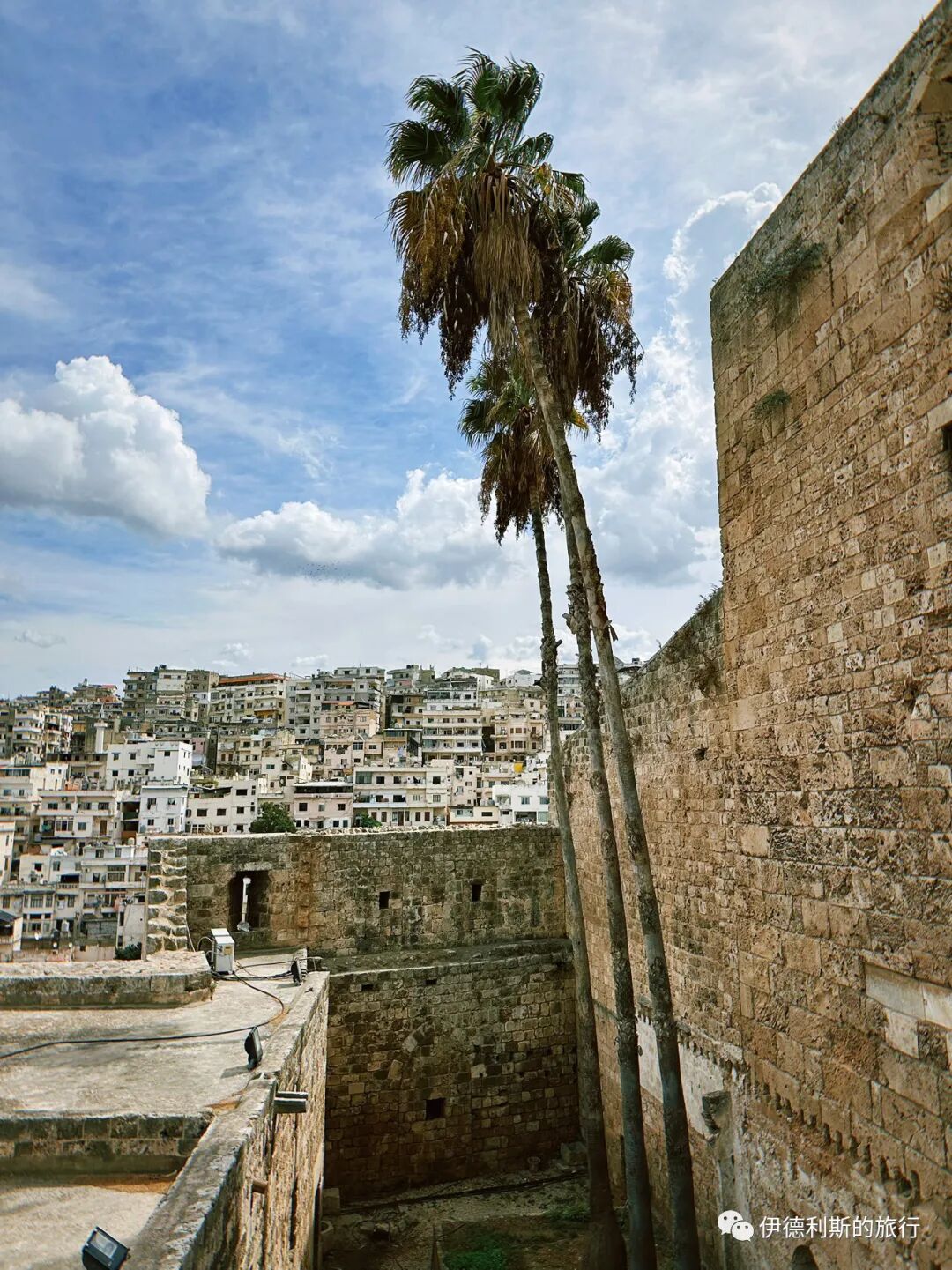
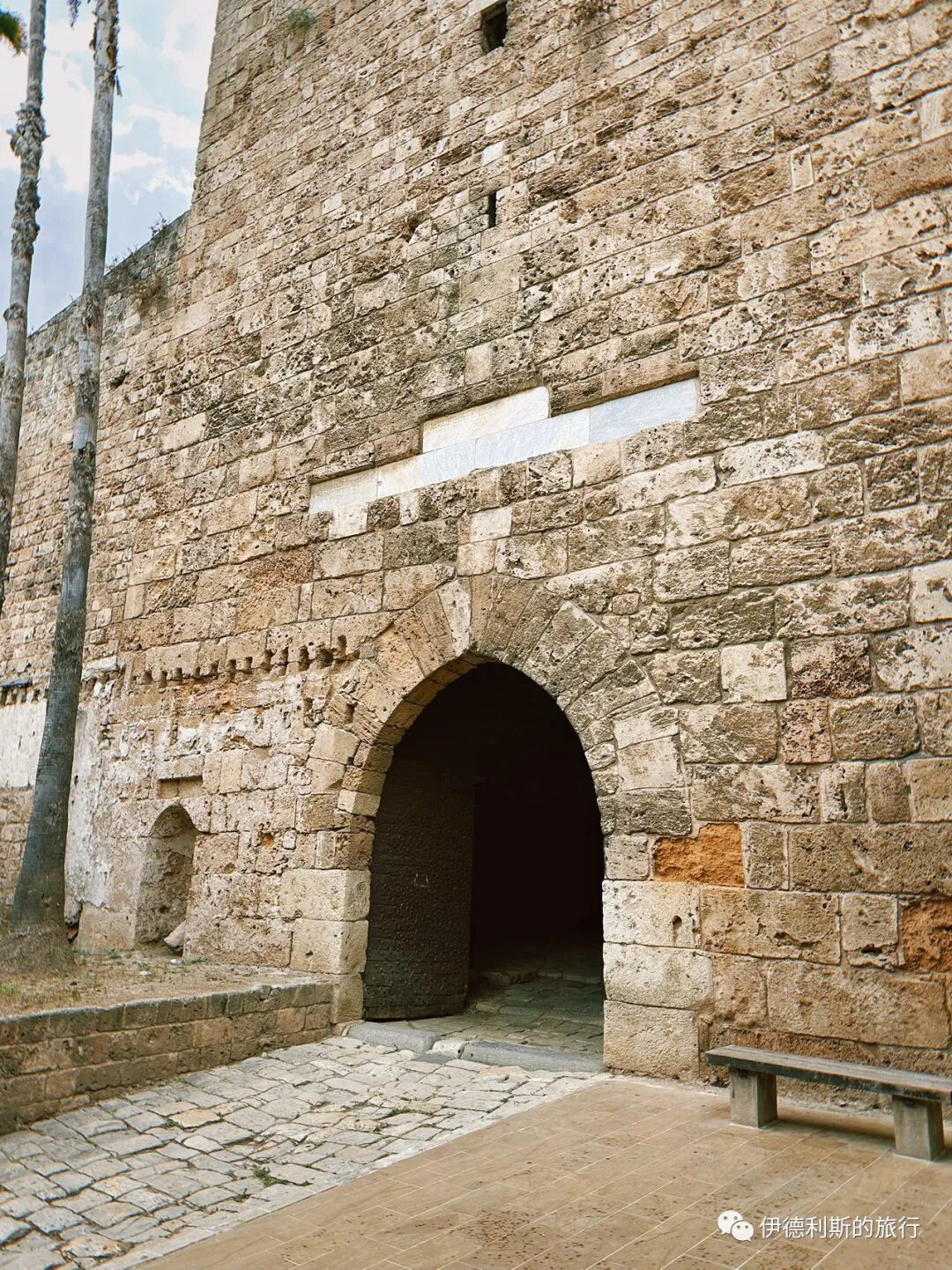
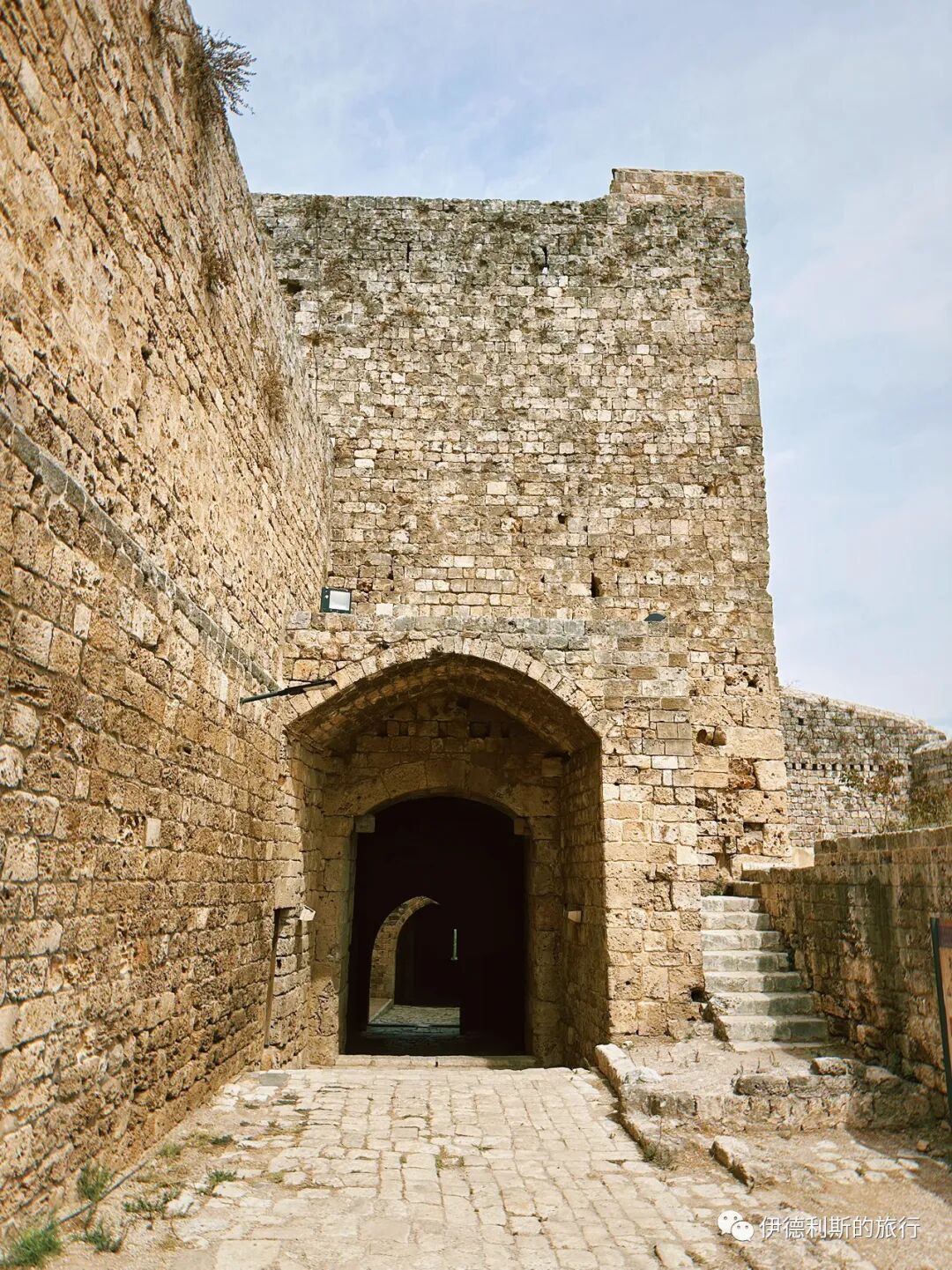
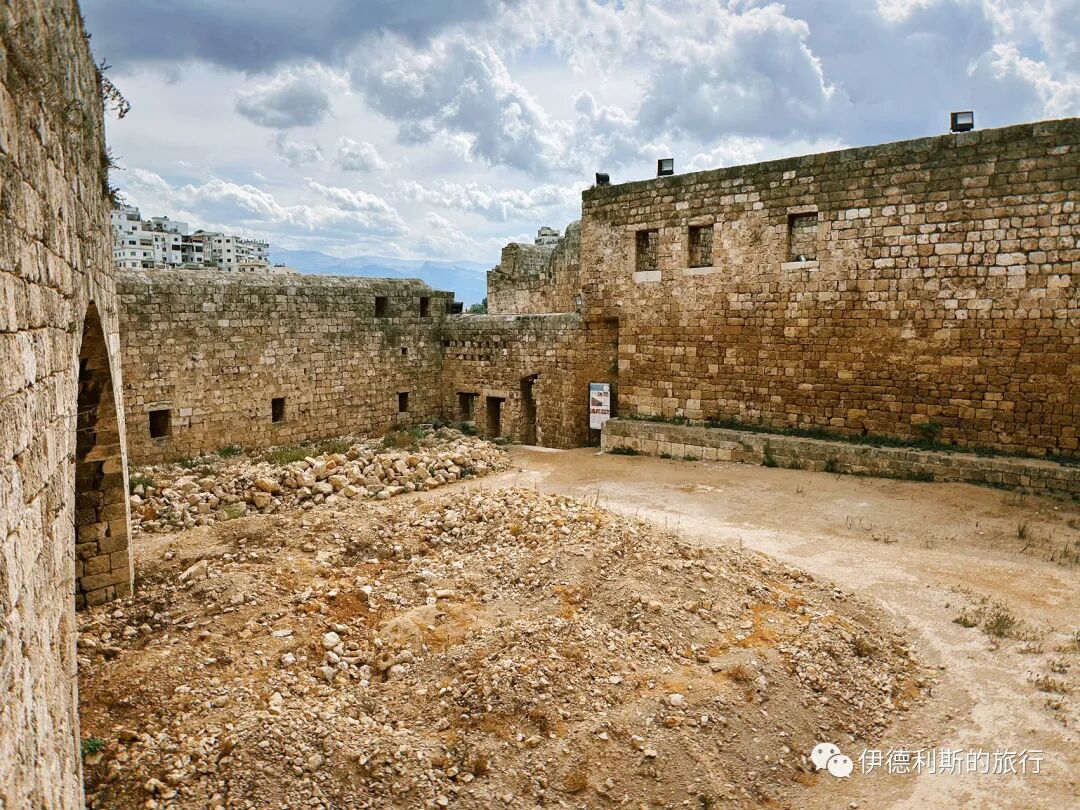
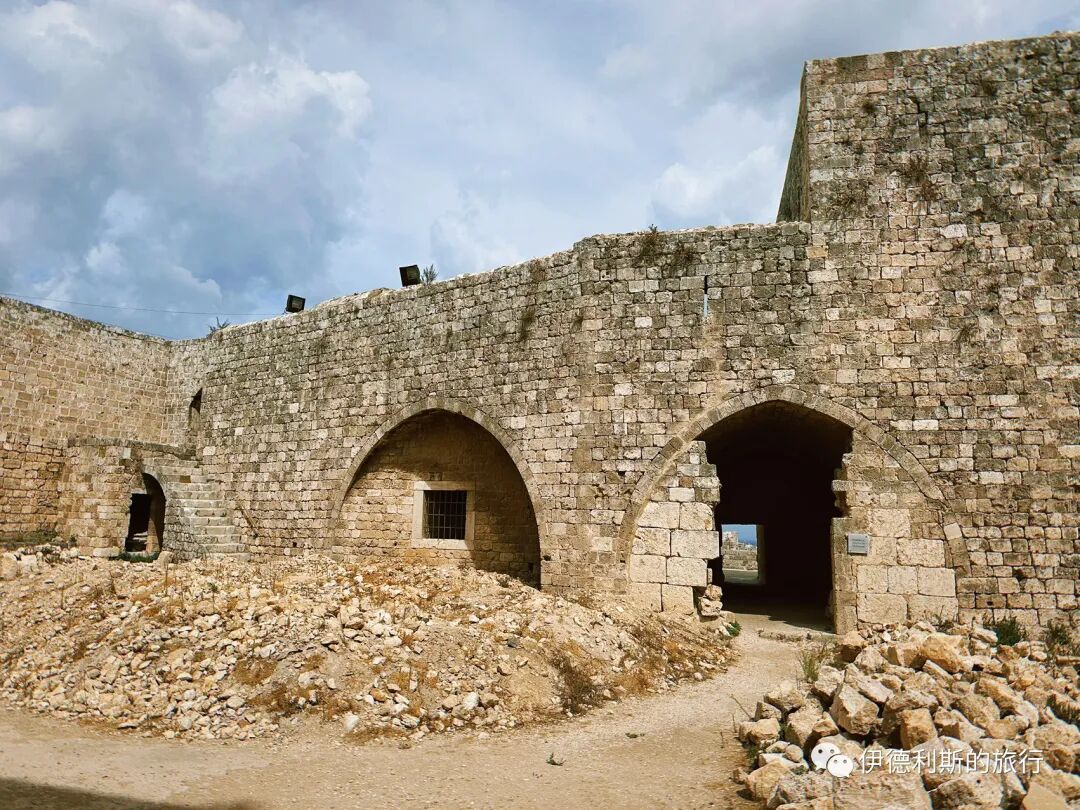
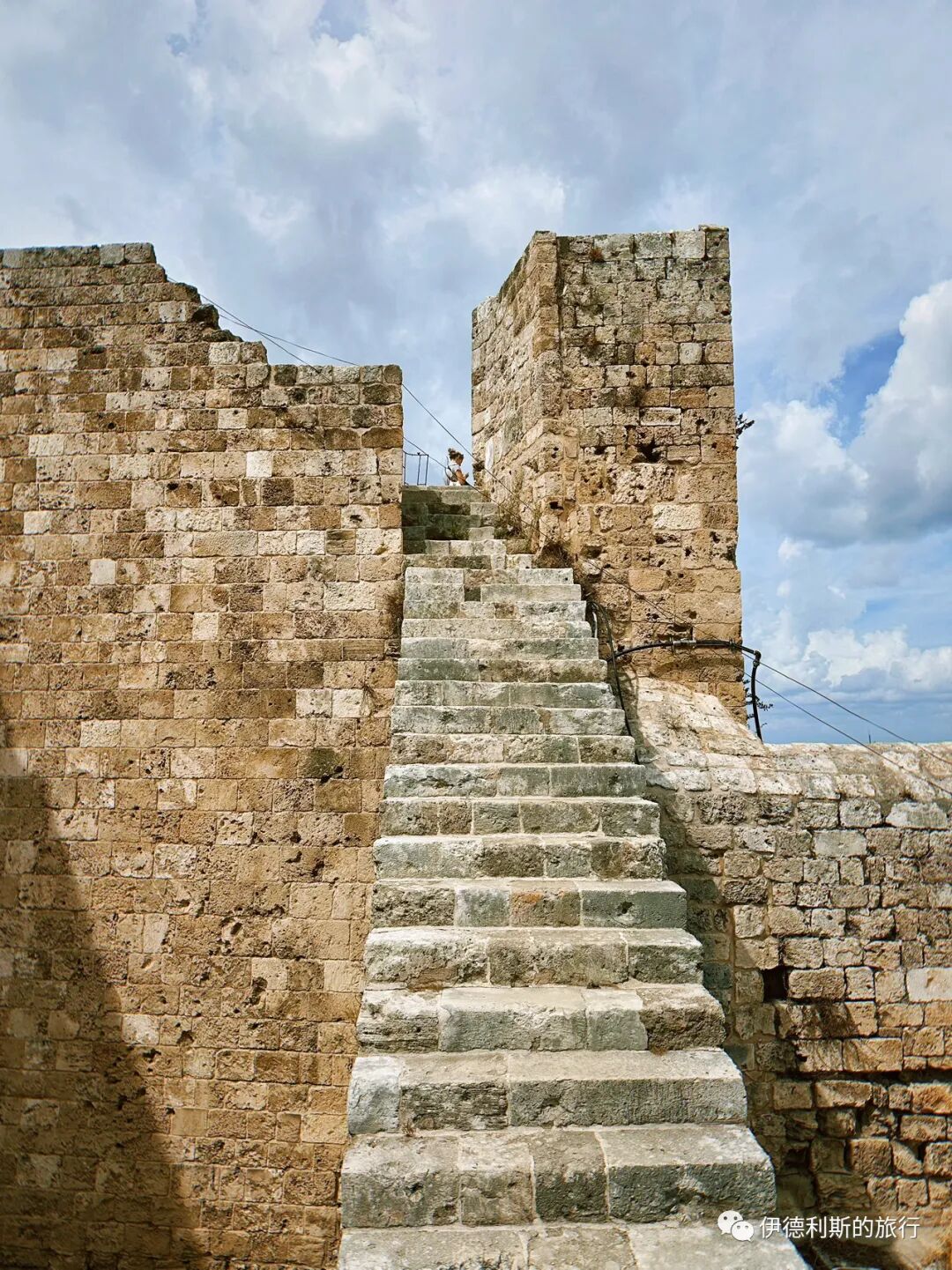
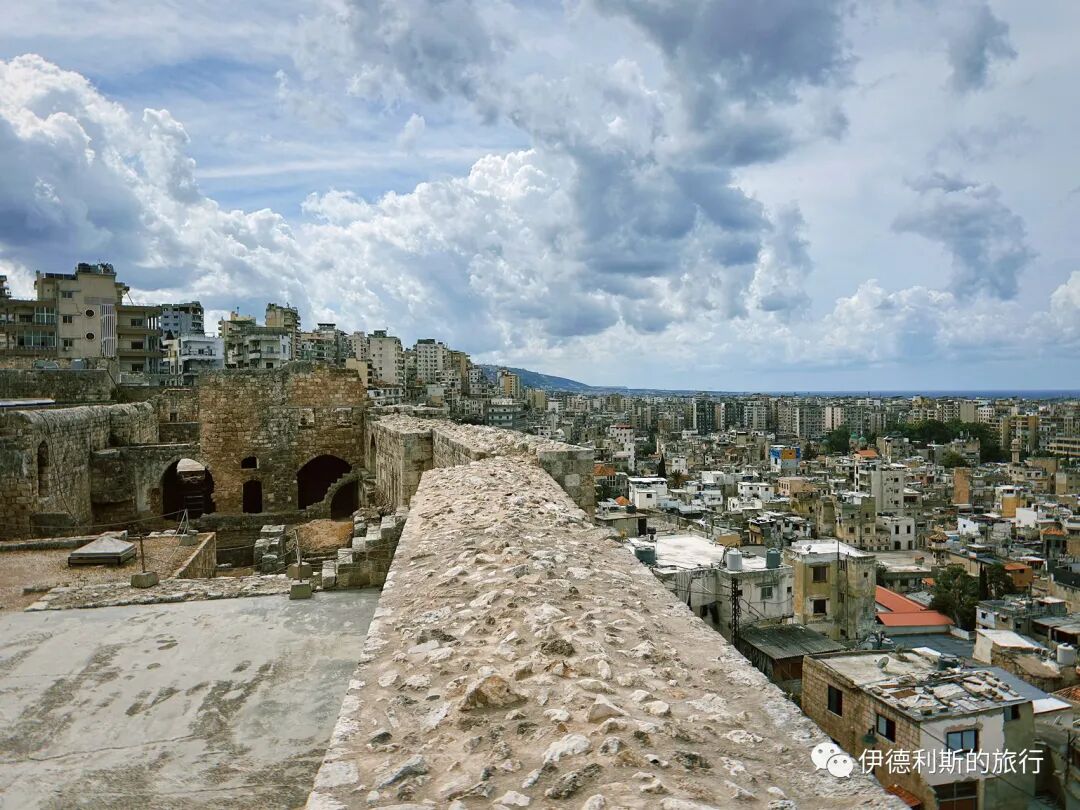
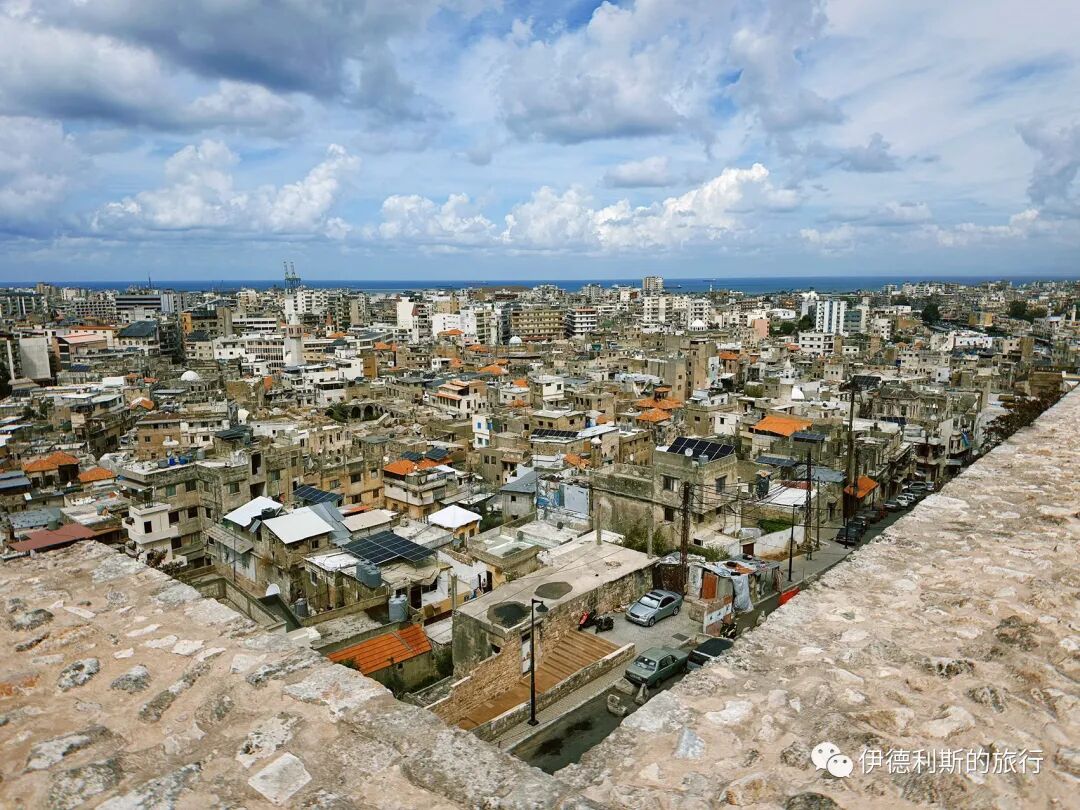
The core area of Tripoli Castle consists of the prison and barracks built during the Ottoman period. A Frankish Crusader cemetery was excavated here in the 1970s and backfilled in 2011.
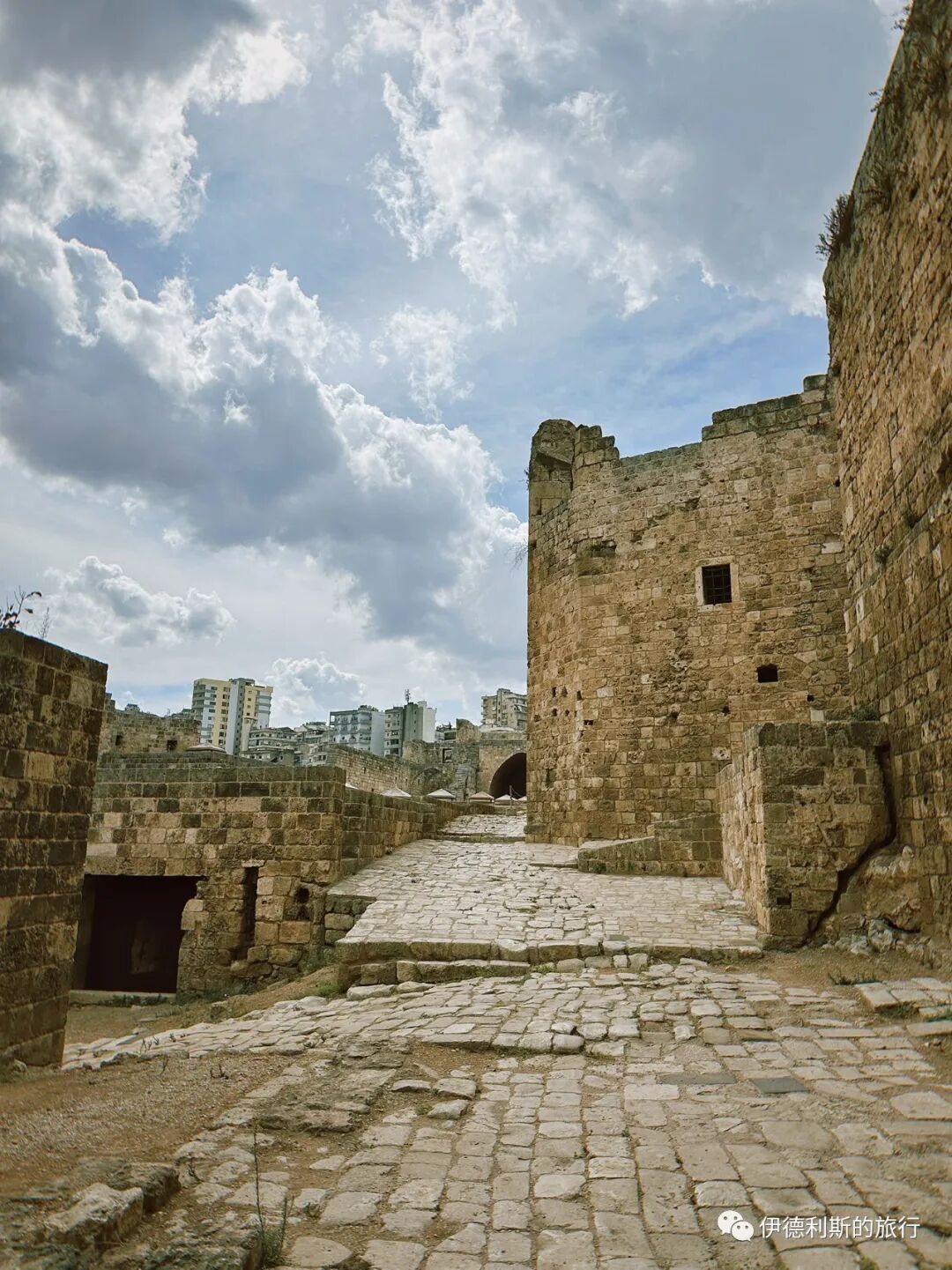
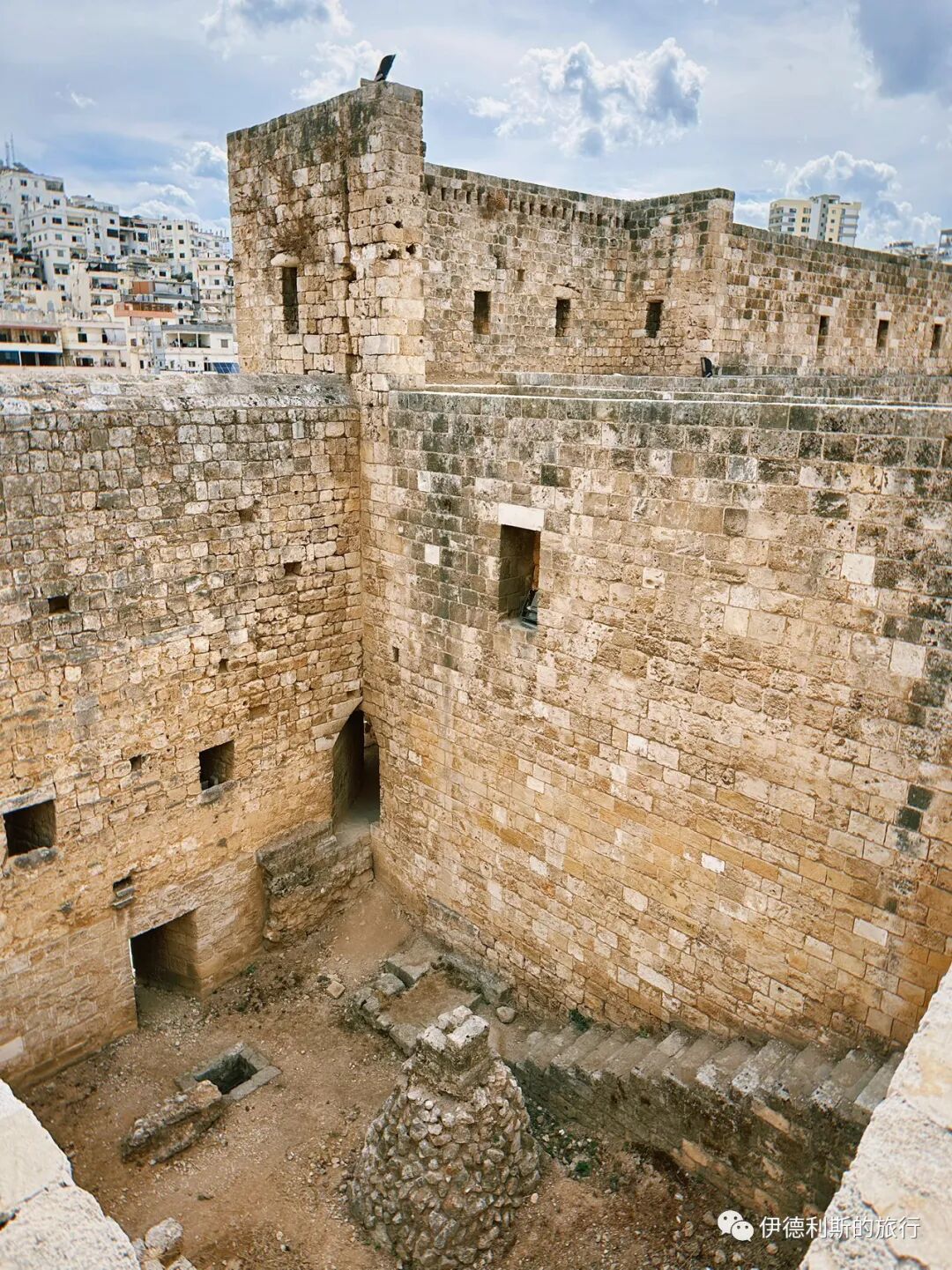
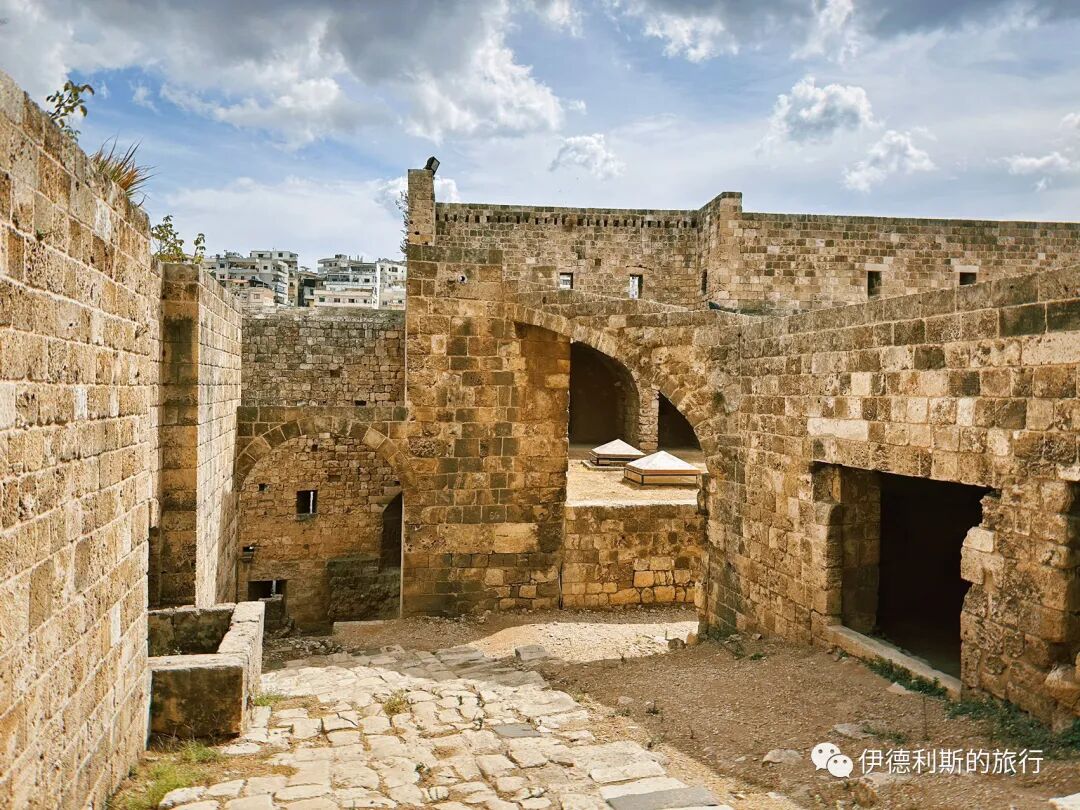
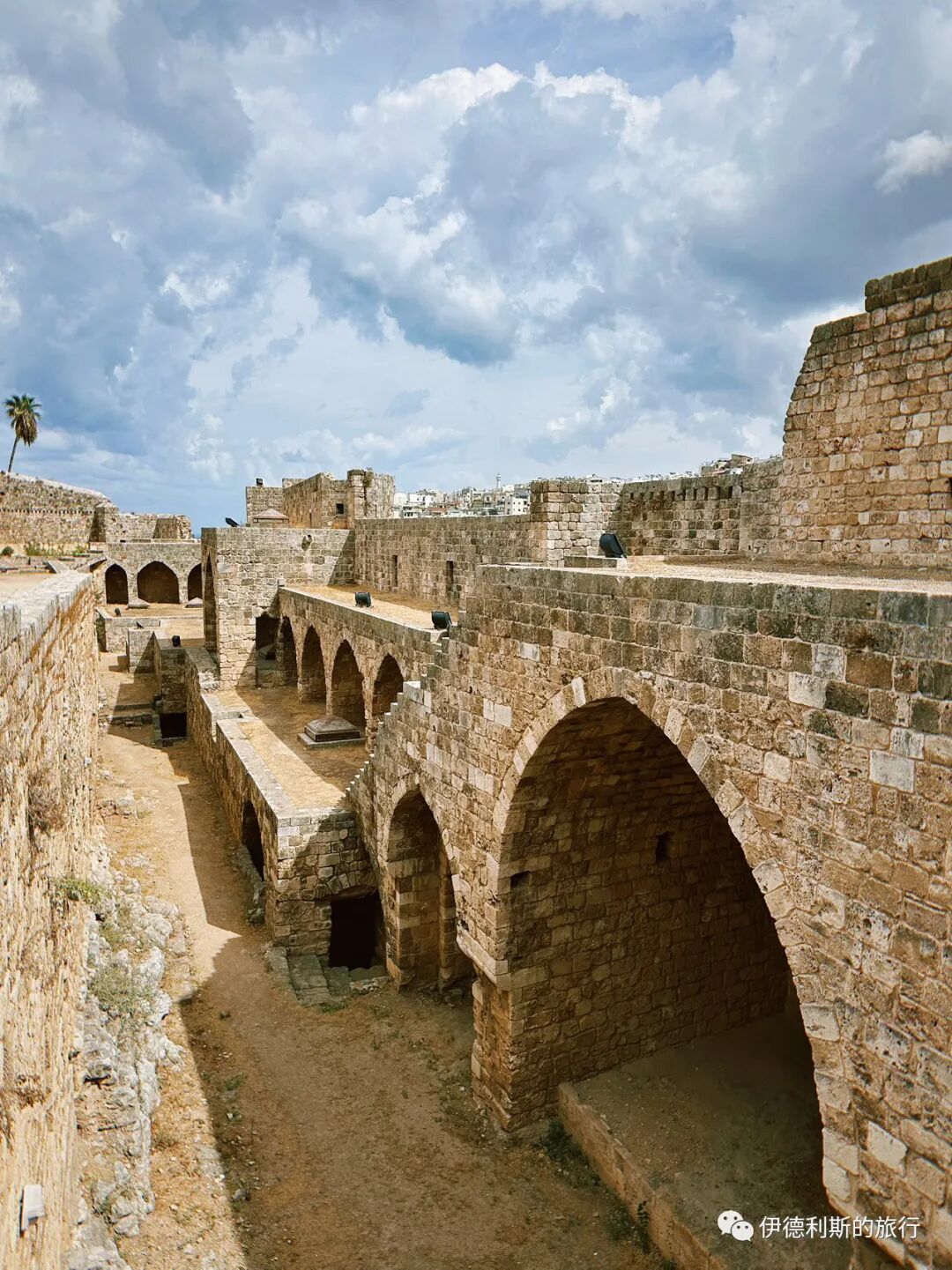
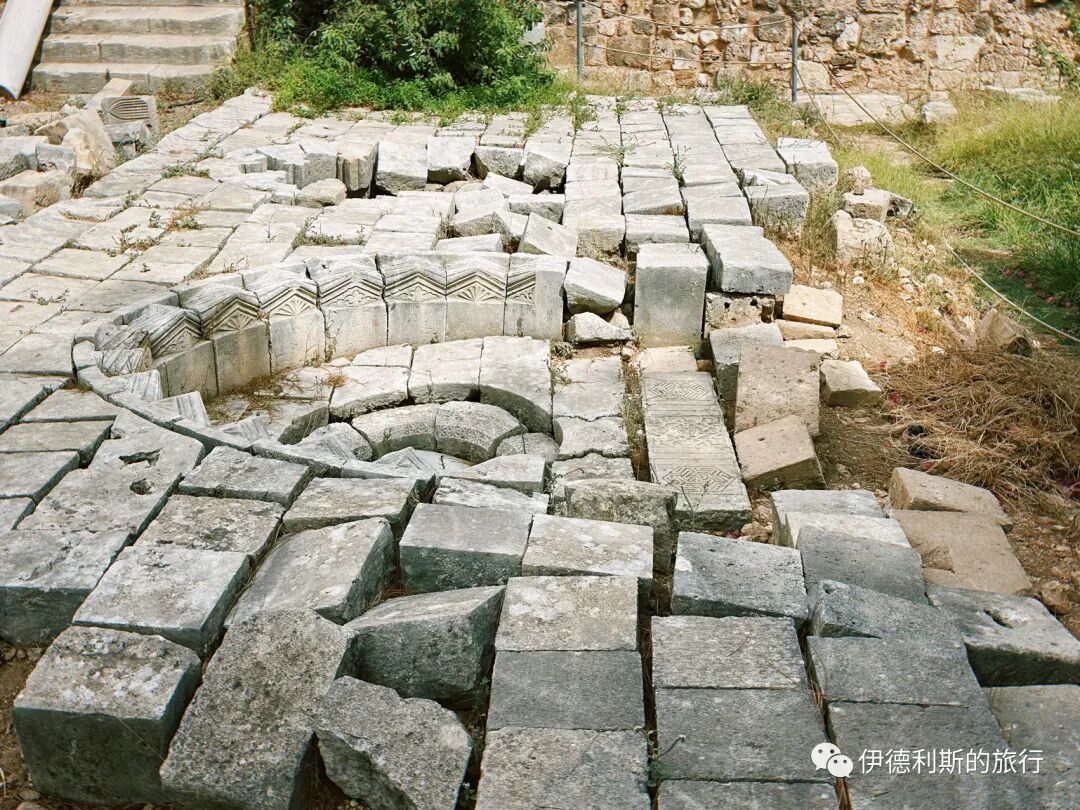
At the southernmost end of Tripoli Castle, the ruins of a Shia tomb from the Fatimid dynasty (909-1171) are preserved. The most prominent is an octagonal tomb carved with Kufic Arabic calligraphy. When the Frankish Crusaders built a castle here between 1102 and 1103, this octagonal tomb was turned into a small church, and the mihrab niche inside the tomb was converted into a bay window. Later, the Frankish Crusaders built a large church on top of the tomb, turning the tomb into a basement.
After the Mamluk dynasty captured the castle in 1289, the site of the Fatimid tomb was restored as a place of worship, and the mihrab niche was also repaired.
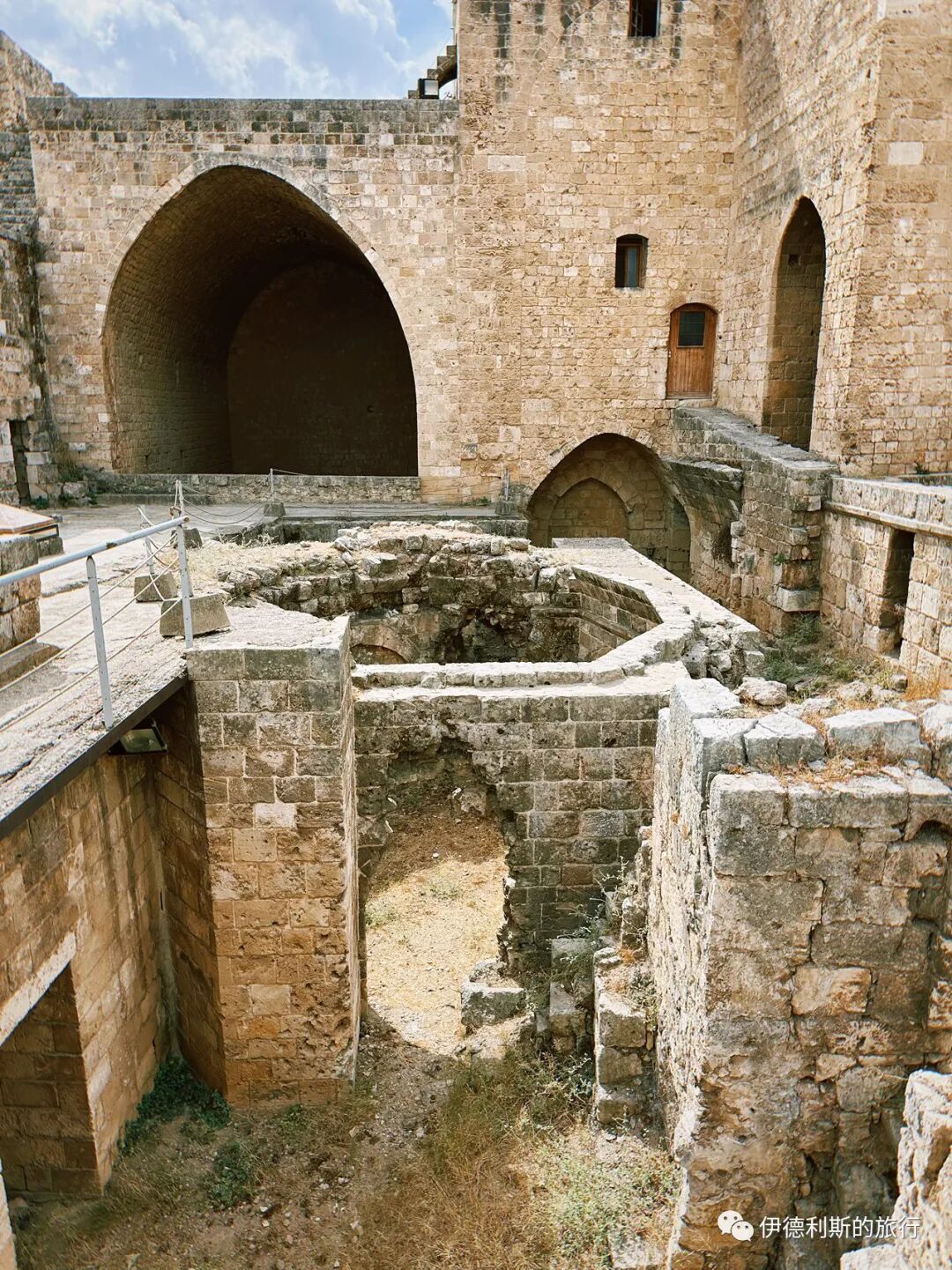
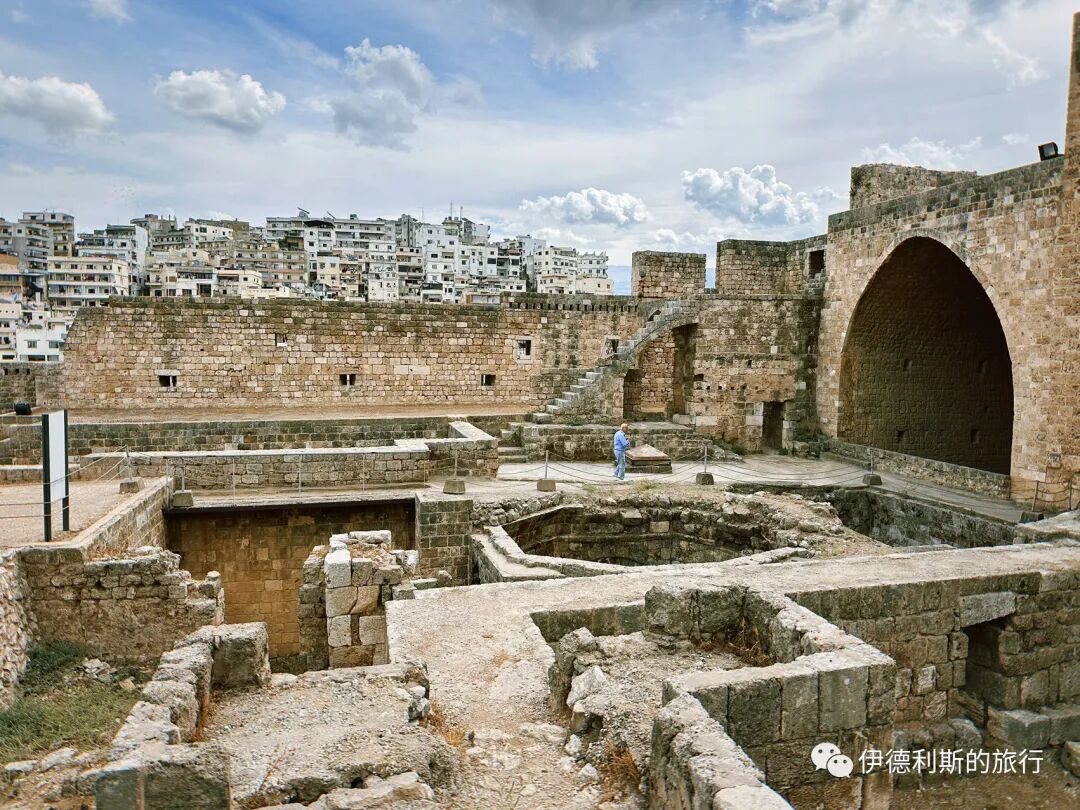
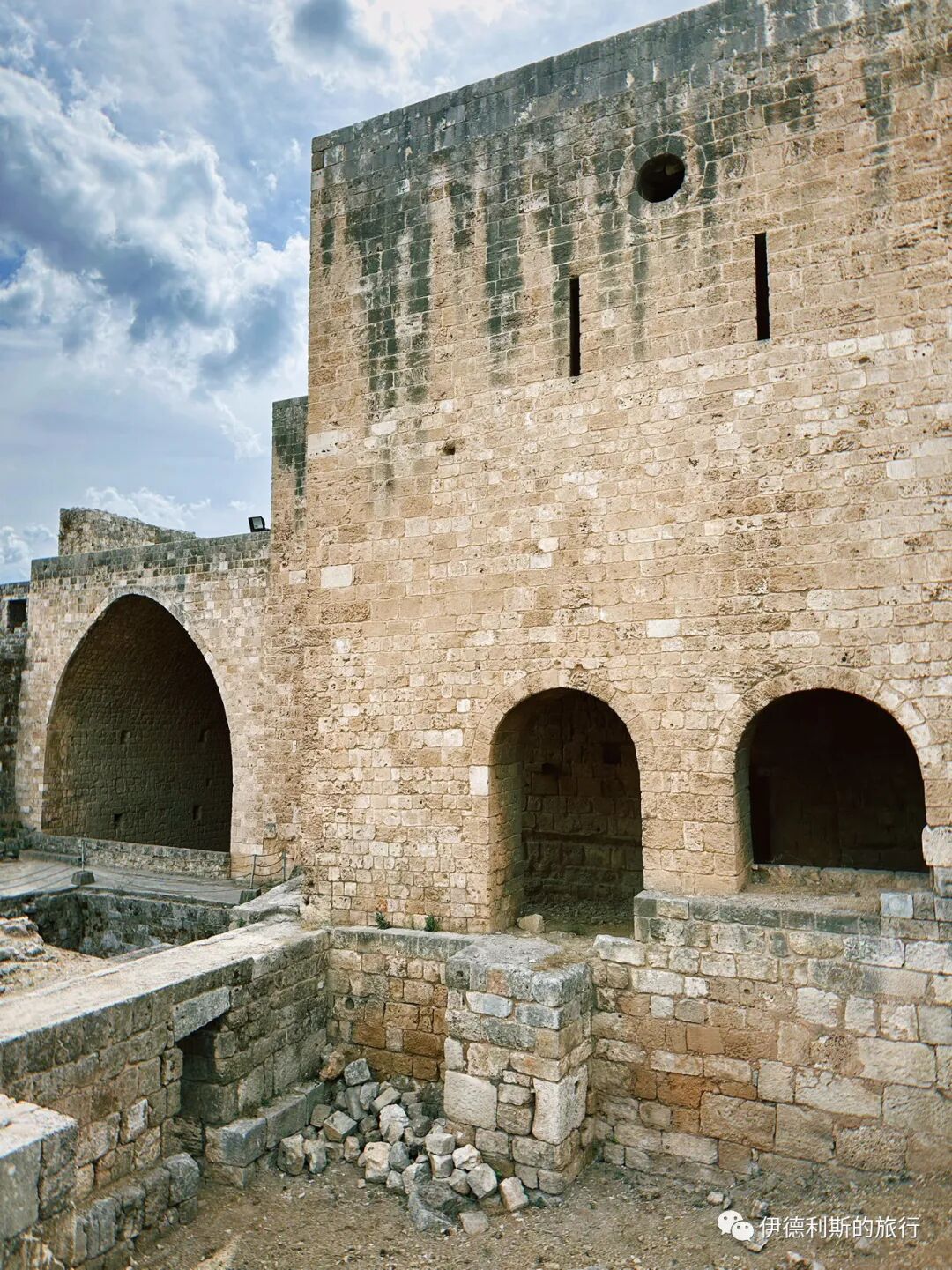
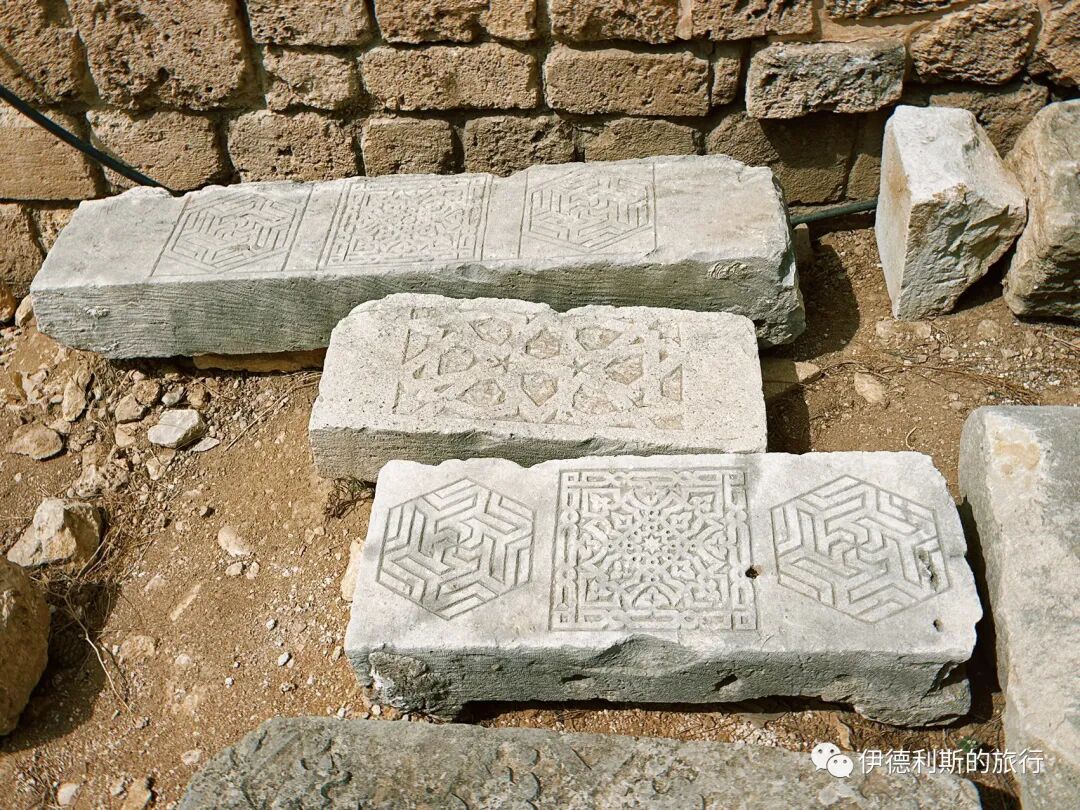
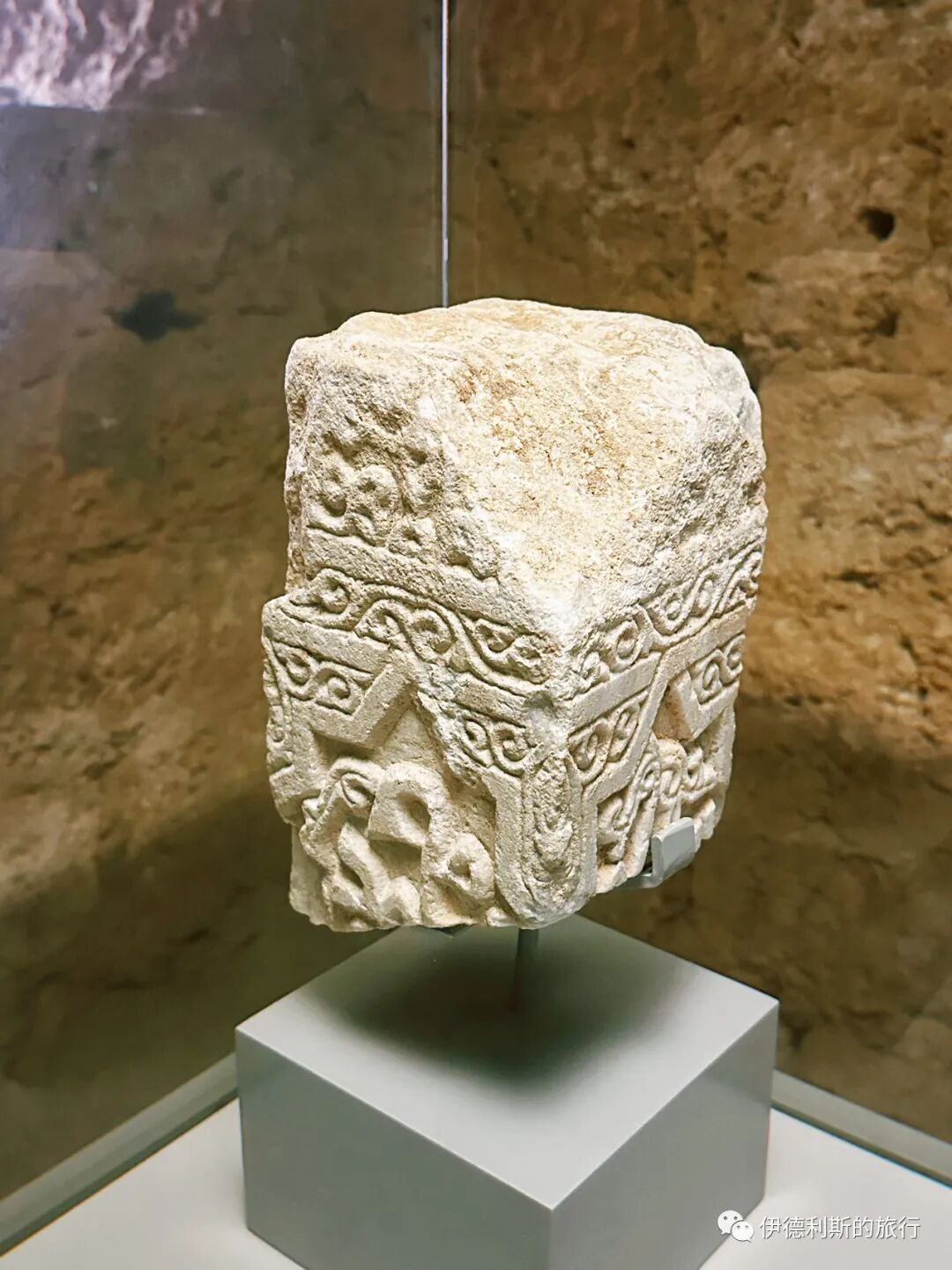
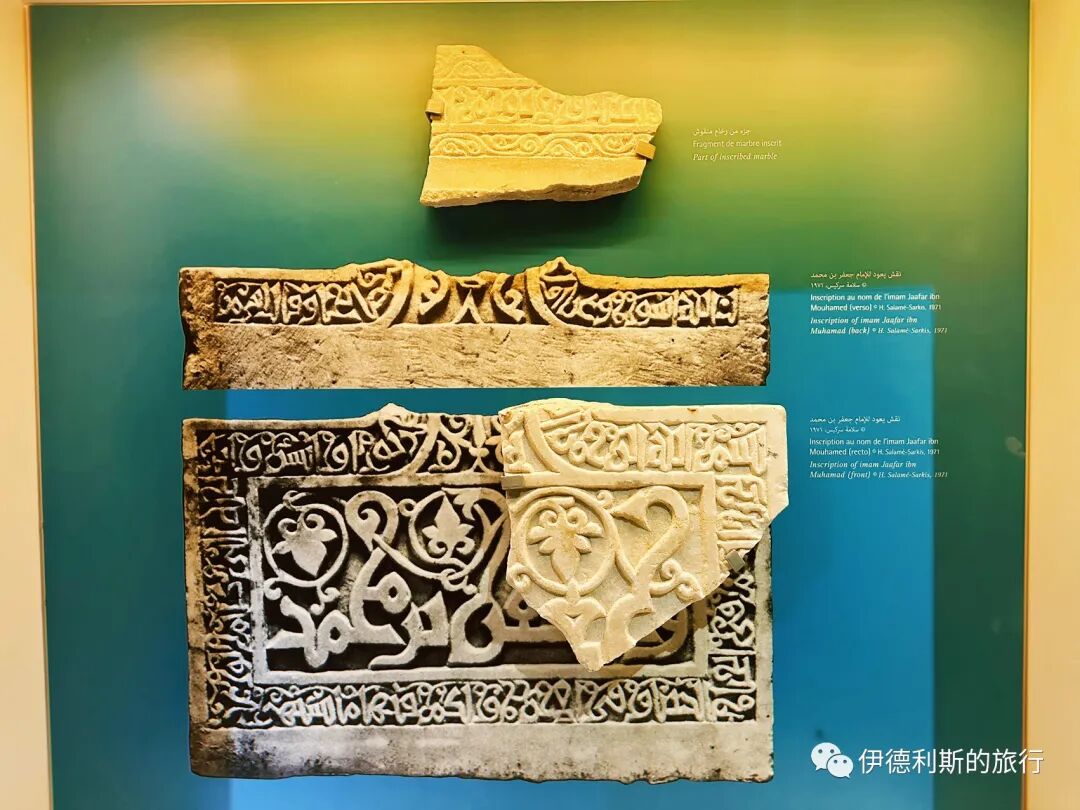
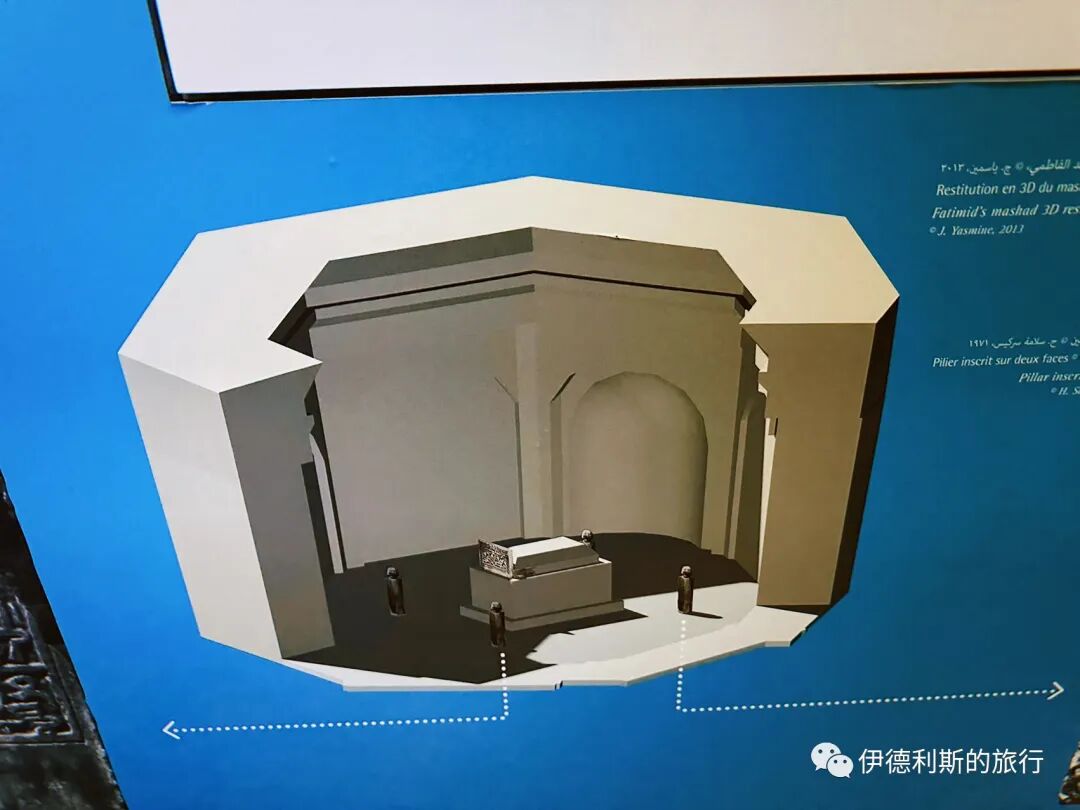
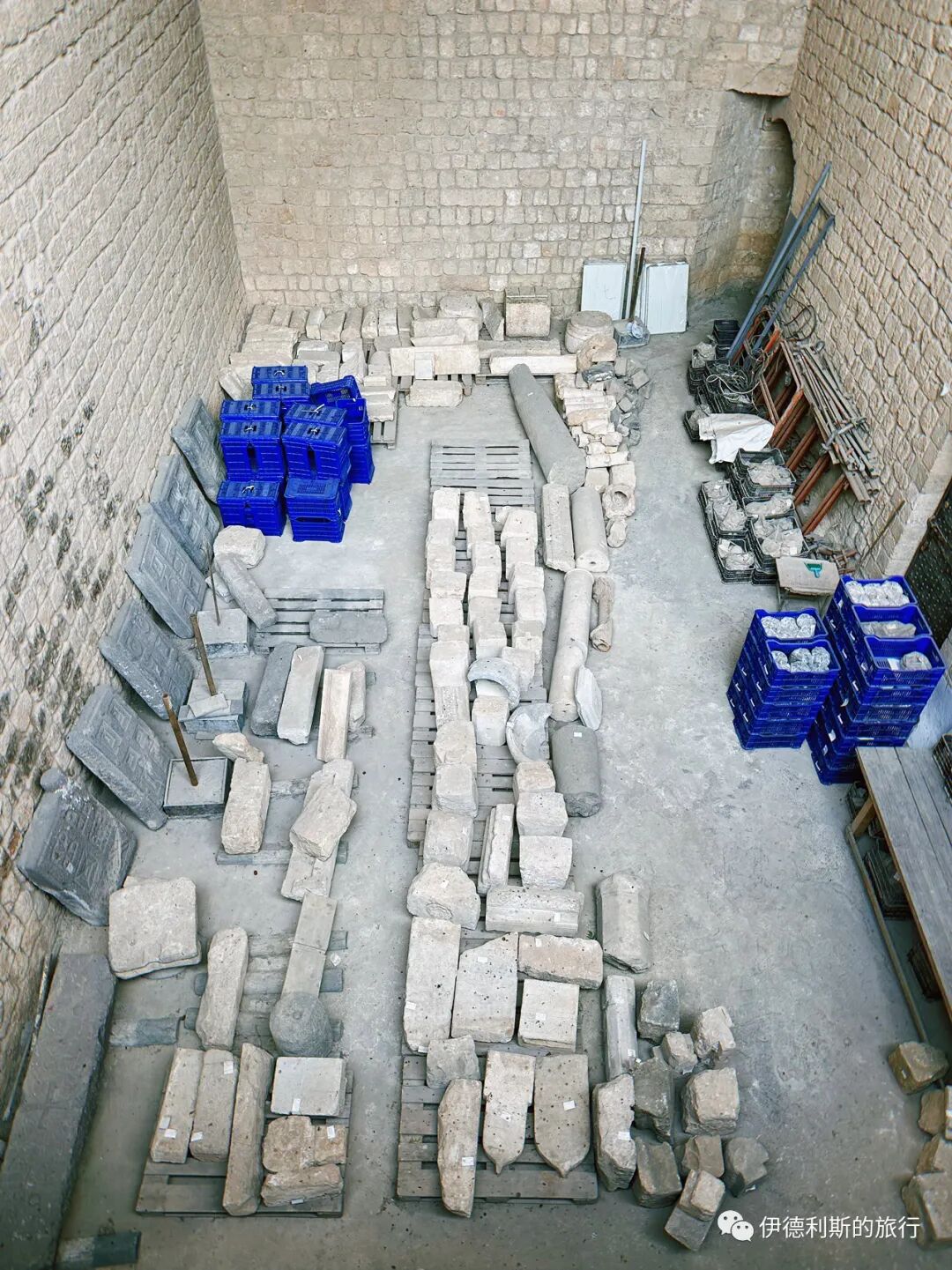
After finishing my tour of Tripoli Castle, I headed north back to the old city of Tripoli to perform the afternoon prayer (asr) at Al-Uwaysiyat Mosque. Al-Uwaysiyat Mosque was first built in 1461 during the Mamluk period and was renovated in 1534 during the time of the Ottoman Sultan Suleiman the Magnificent.
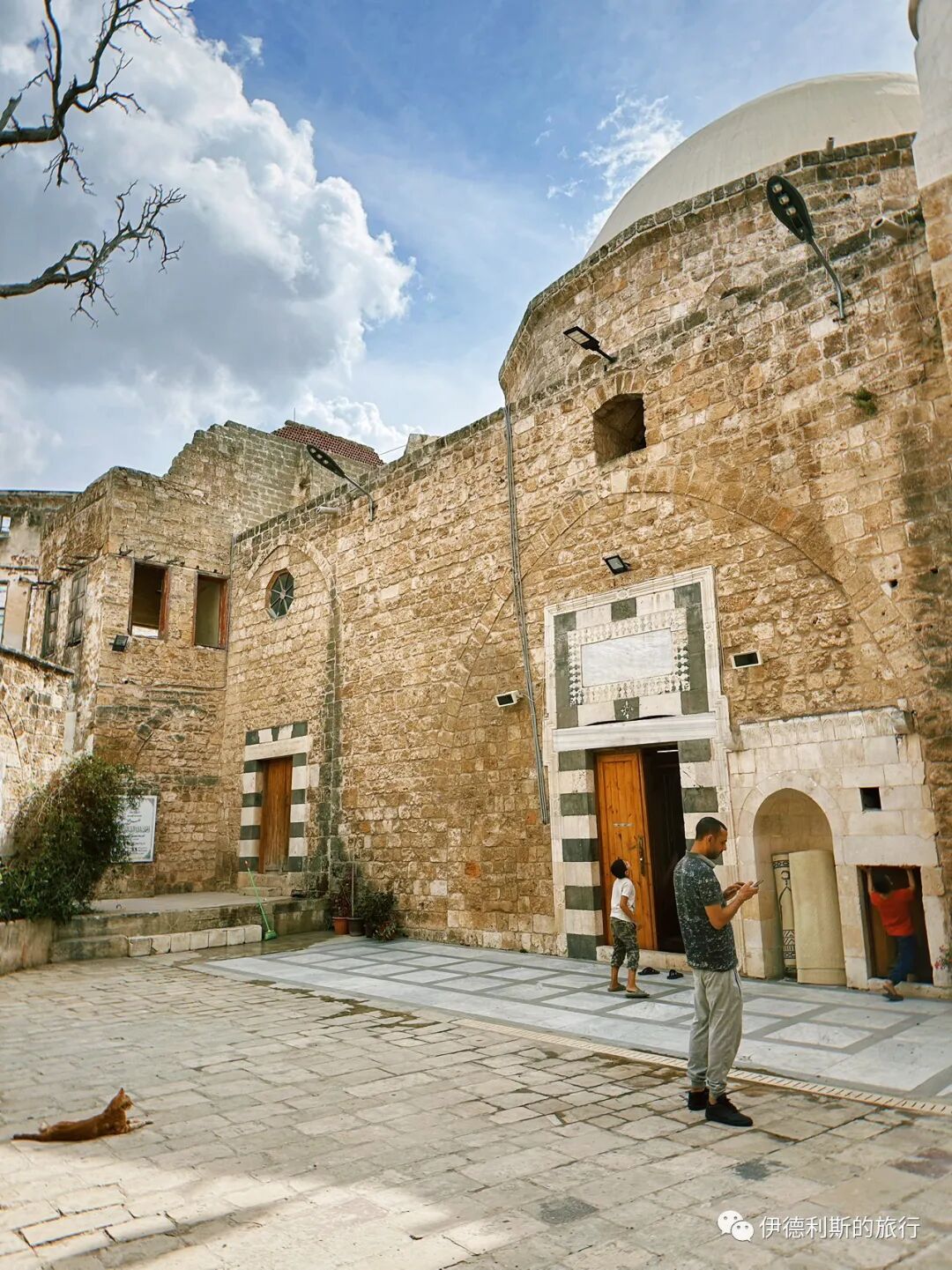
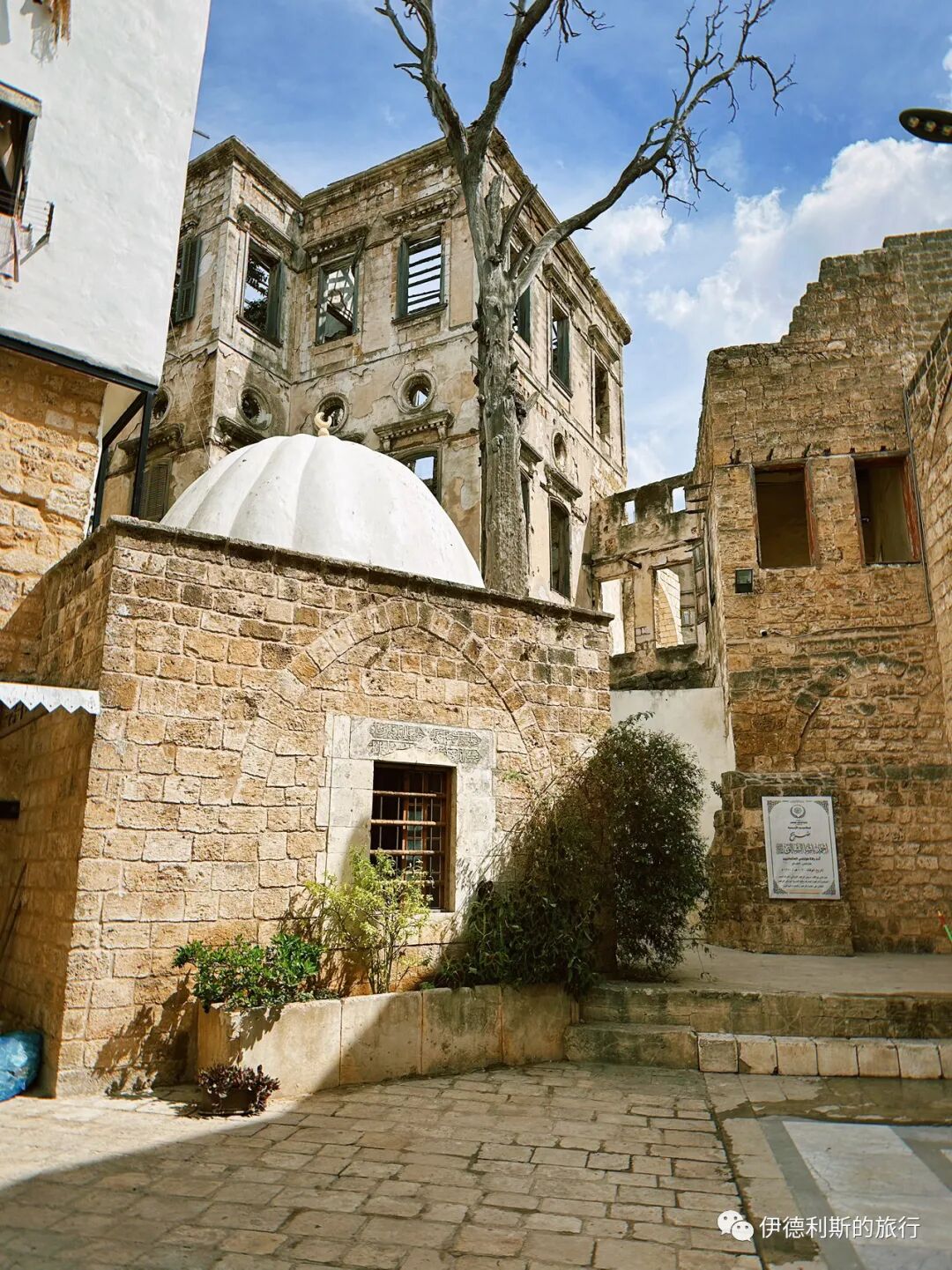
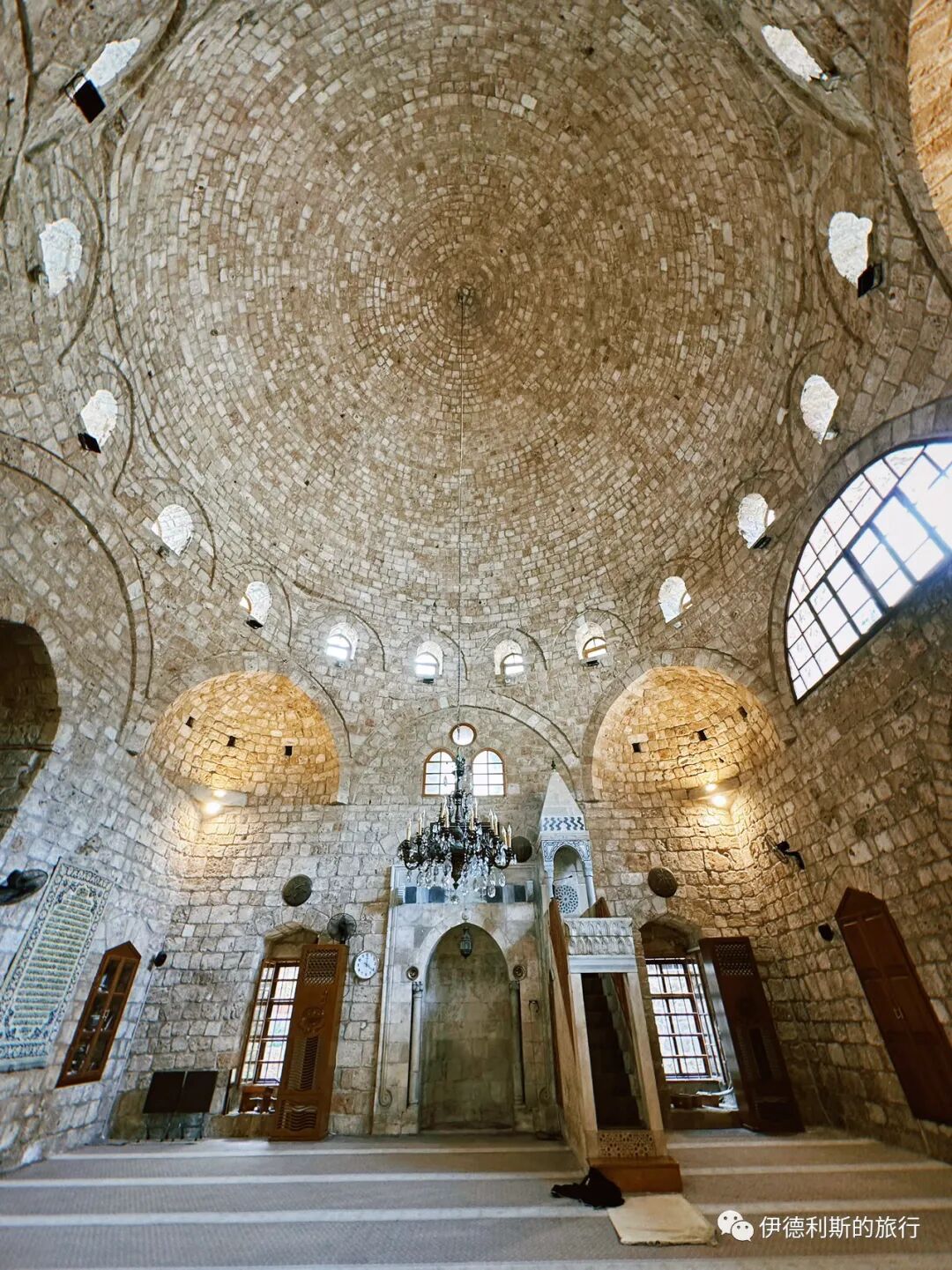
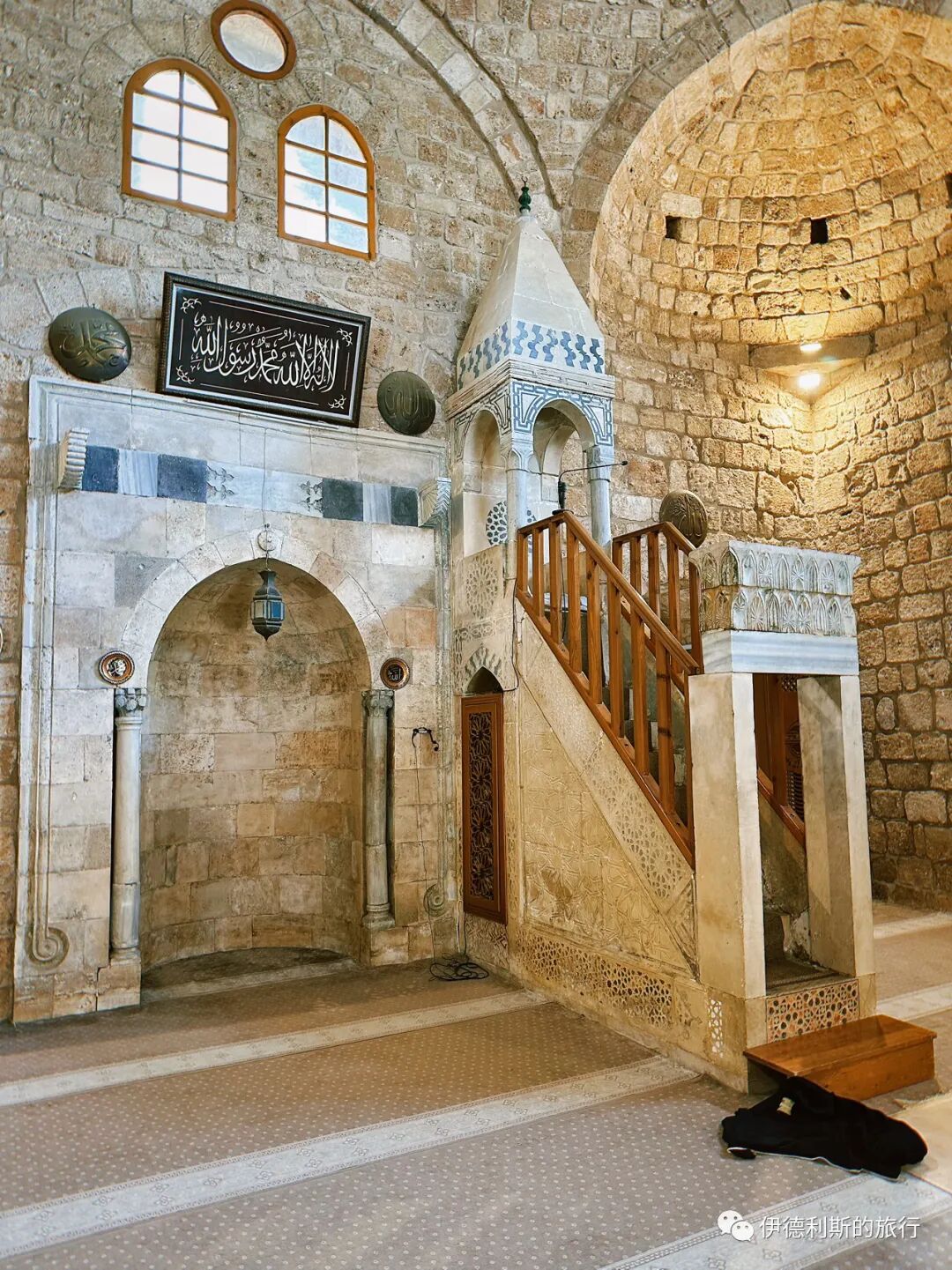
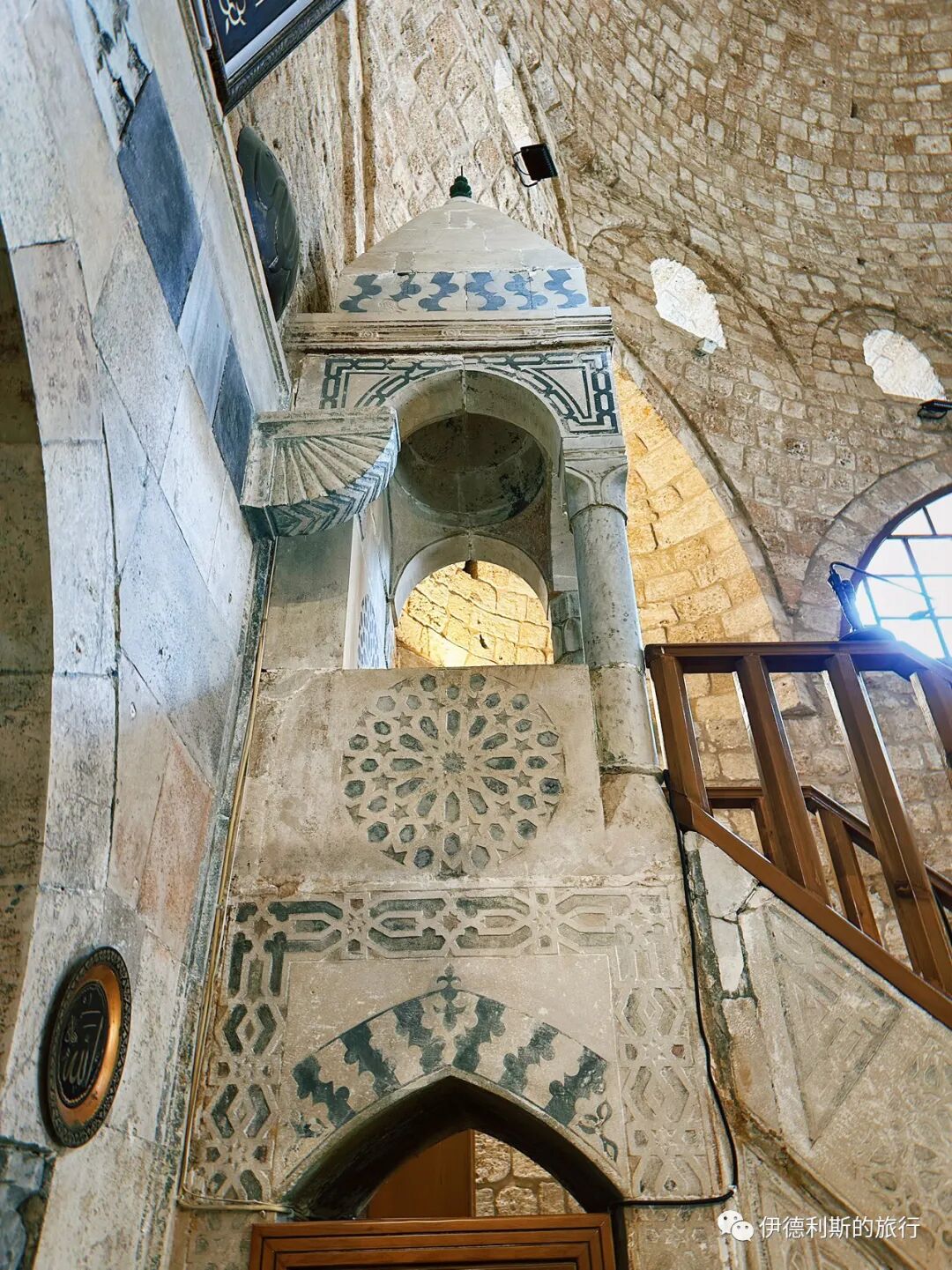
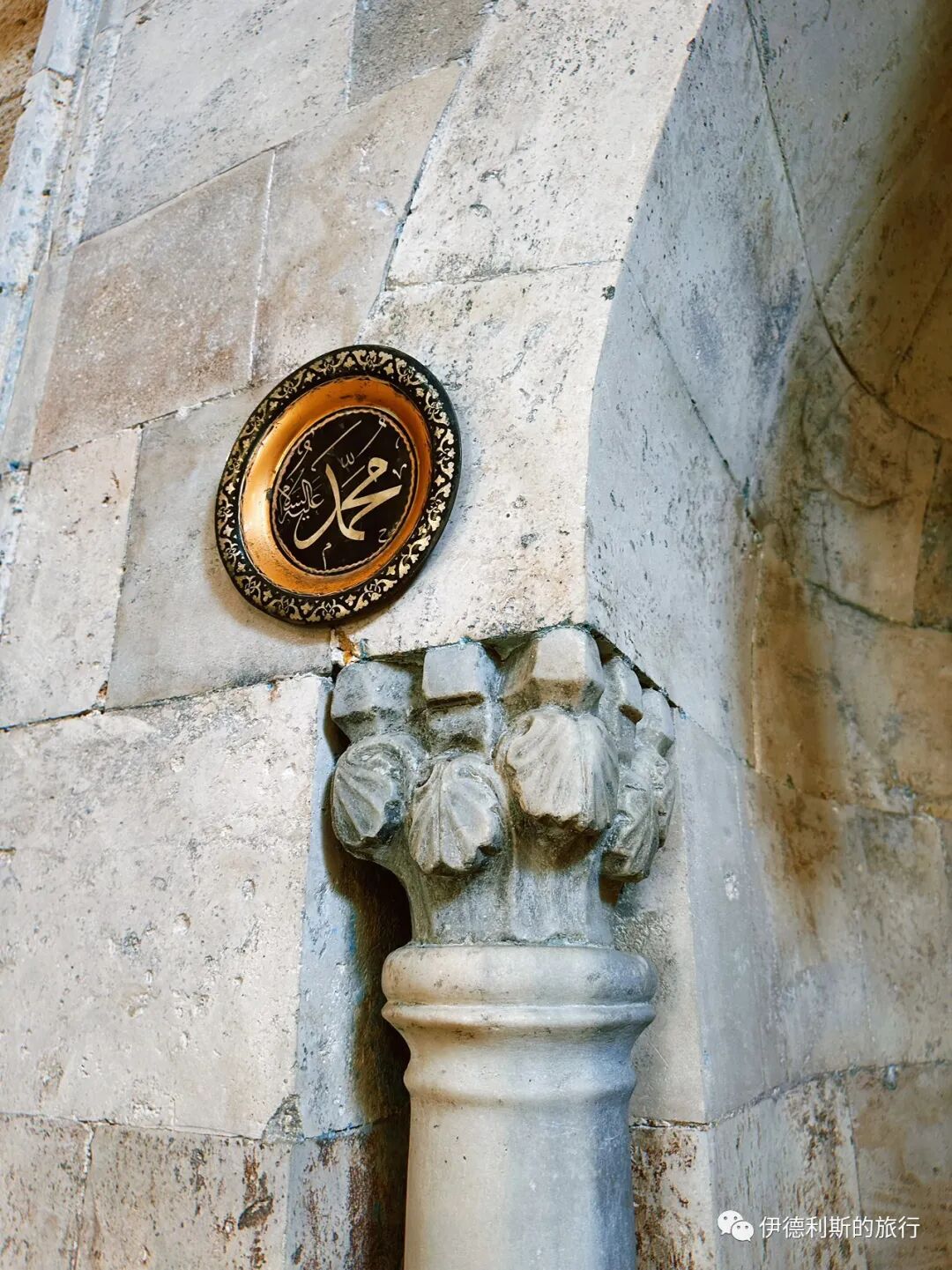
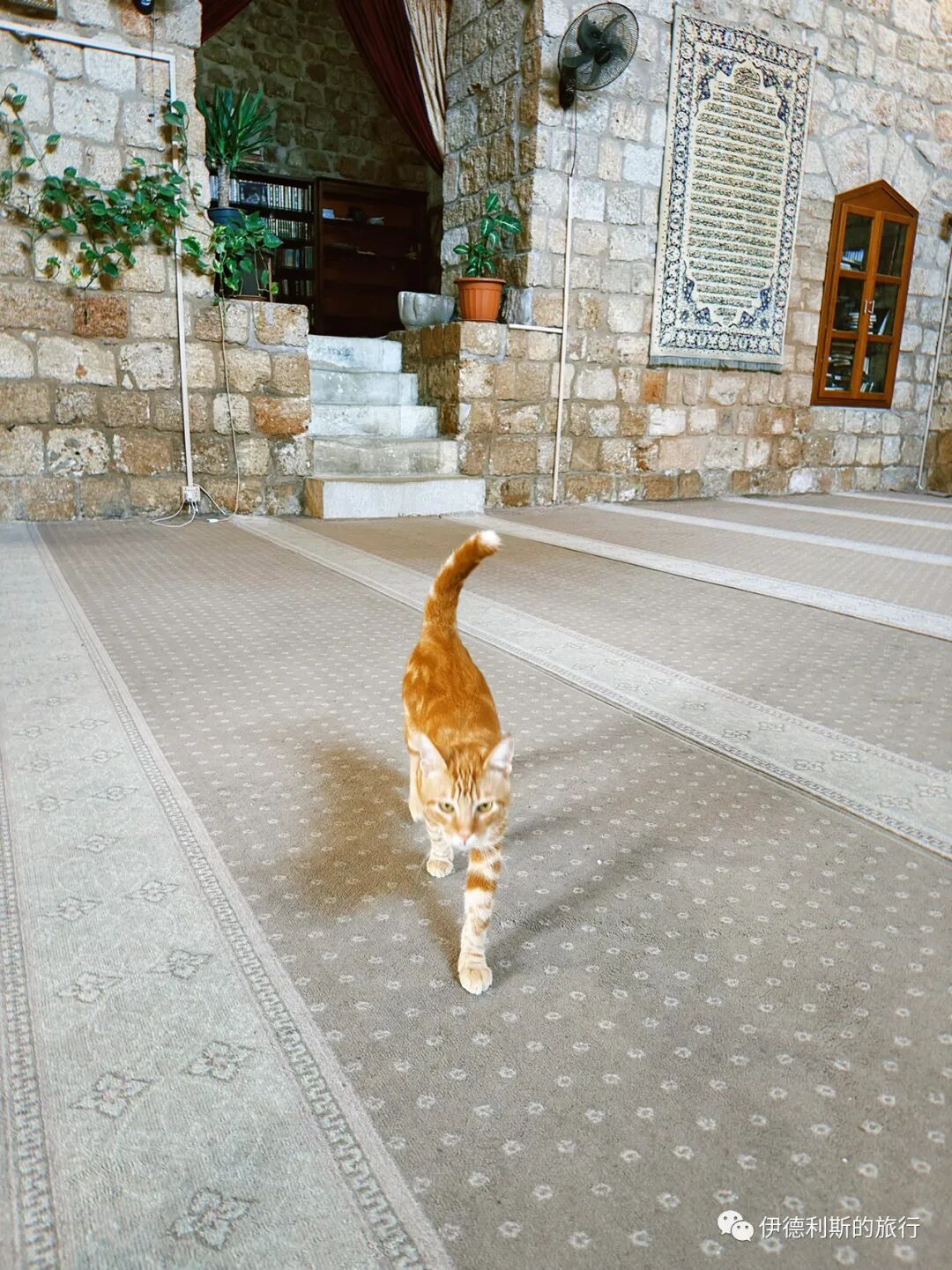
After the prayer, I returned to the old city market and ate a street-style cheese flatbread (manakish), which must be the most classic snack in the market. Then I watched the carpenters working diligently on the street.
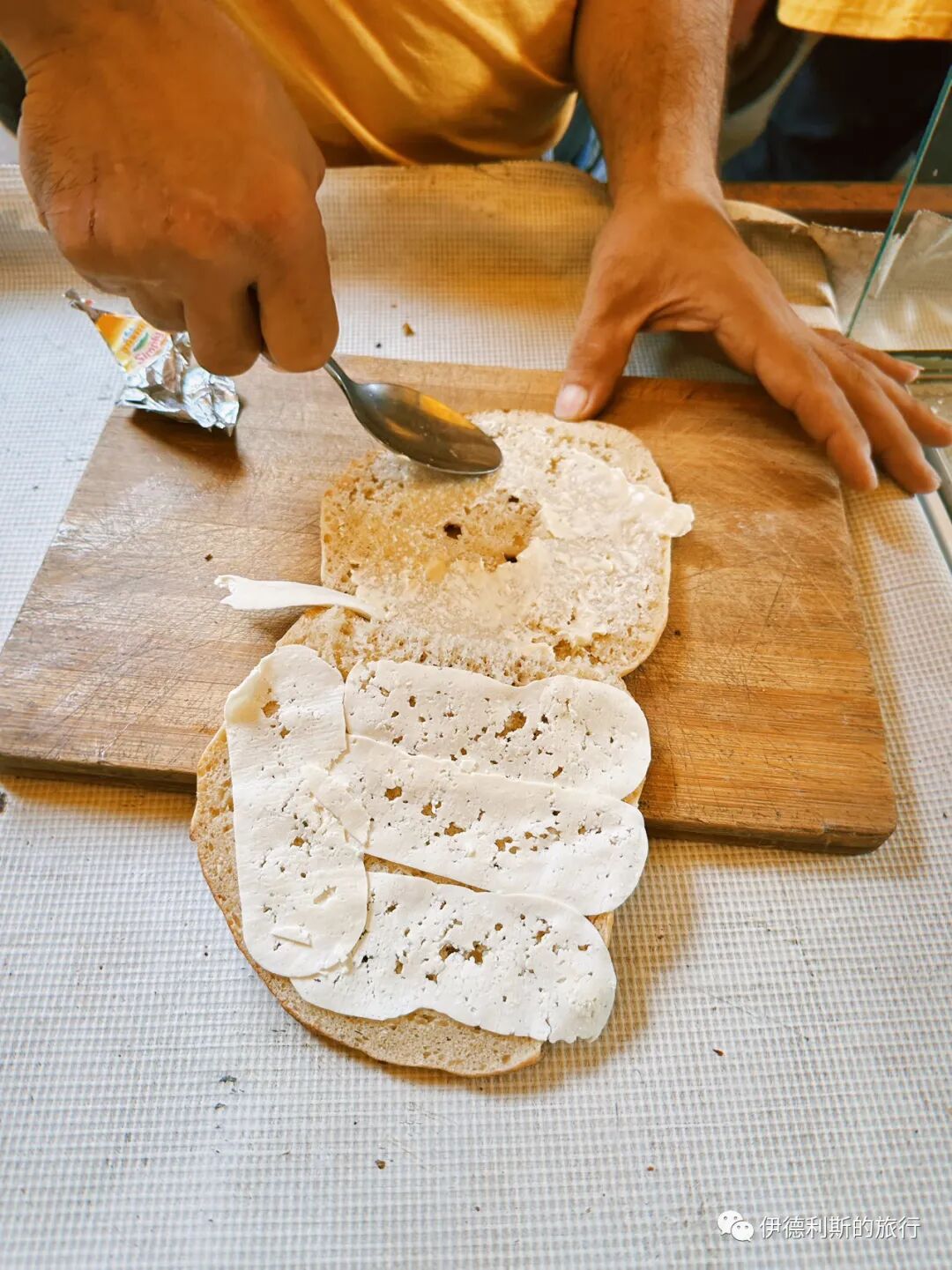
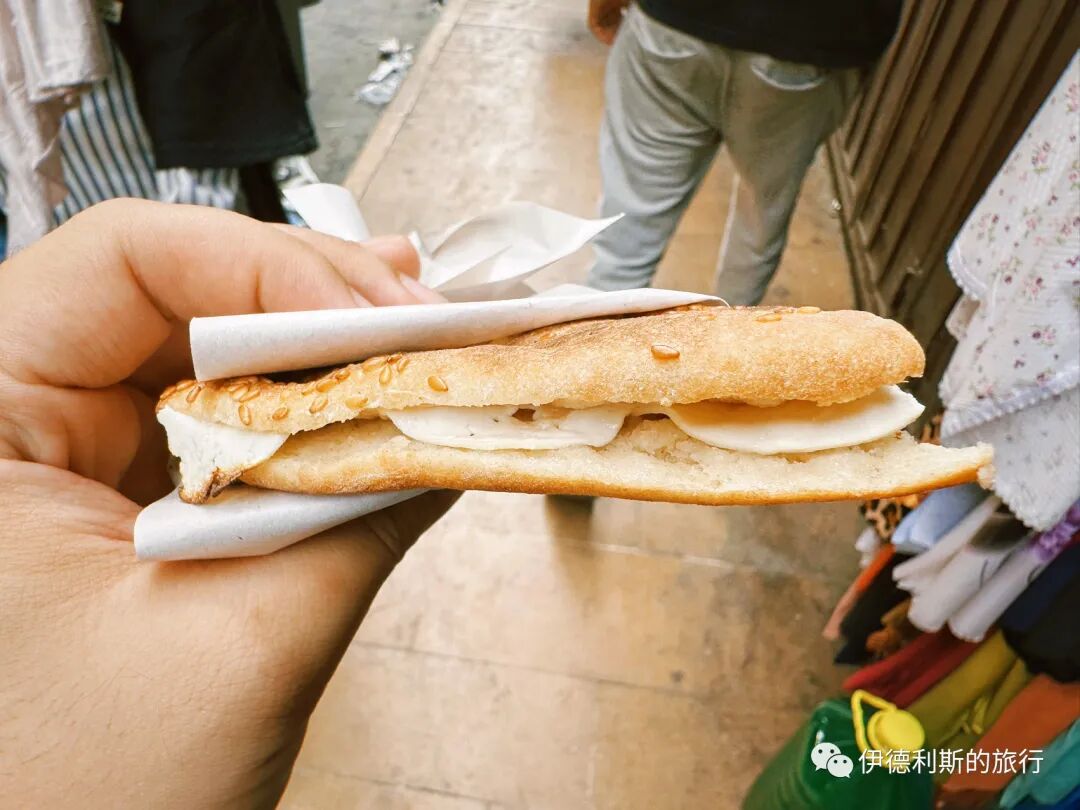
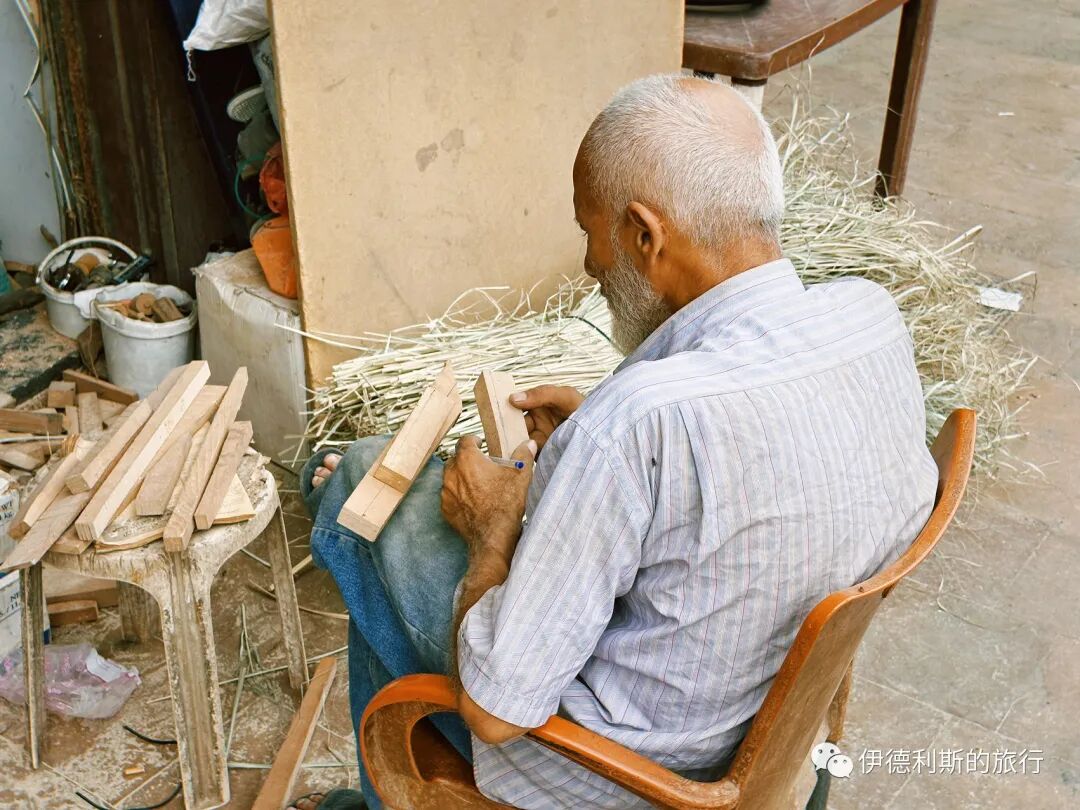
I had ice cream and lemonade inside the Mamluk-era Haraj Market (souq). Haraj Market was built in the 14th century and features 8-meter-high vaulted ceilings supported by black granite columns, some of which may have come from ancient Roman or Byzantine buildings. The market has two floors. The upper rooms were for merchants to stay in and had wooden windows, allowing the merchants' female relatives to look down at the market below, while the lower floor was for selling goods.
Bombing during the Lebanese Civil War in 1983 caused severe damage to Haraj Market, but it was restored over a long period to its current state.
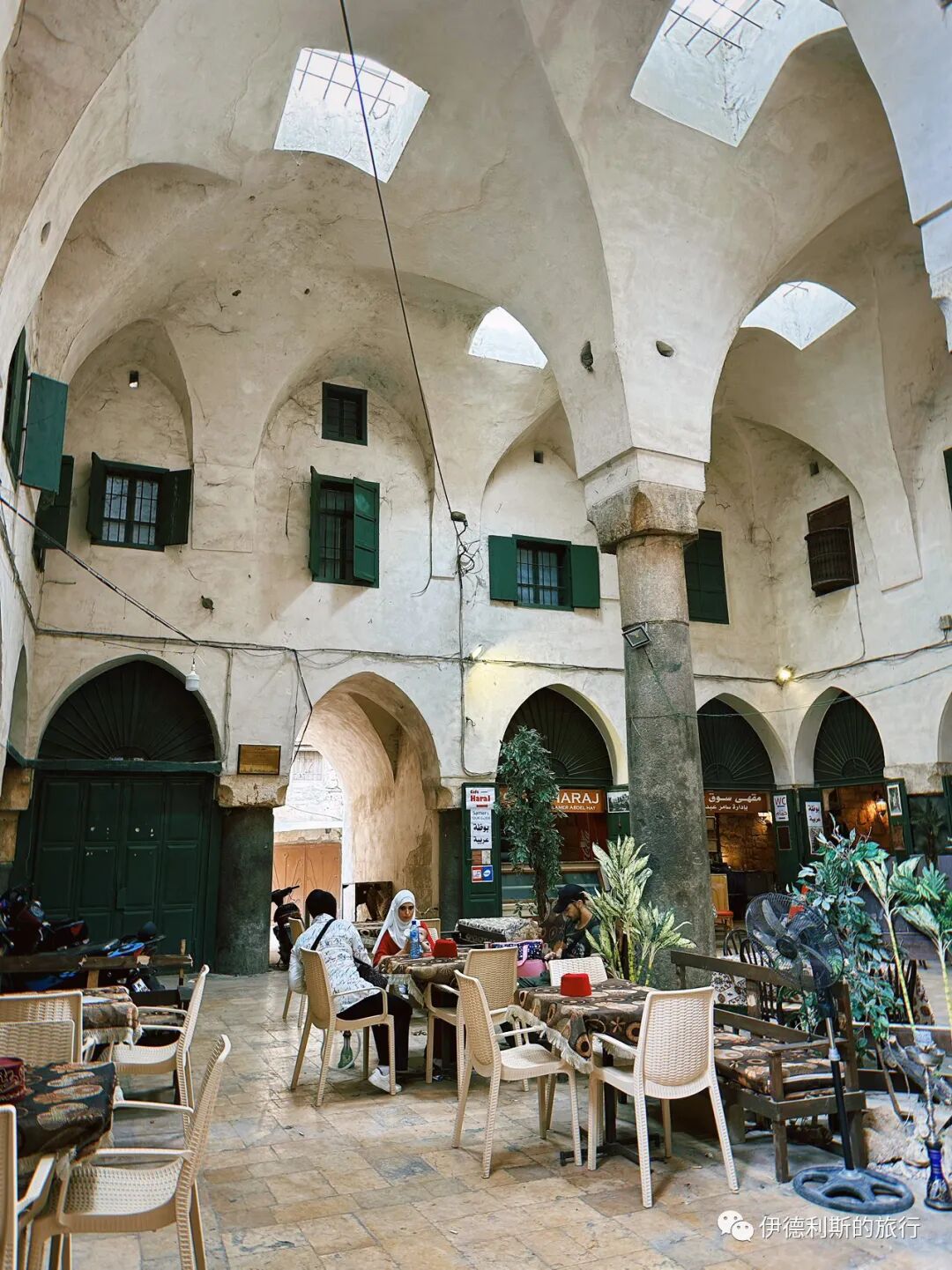
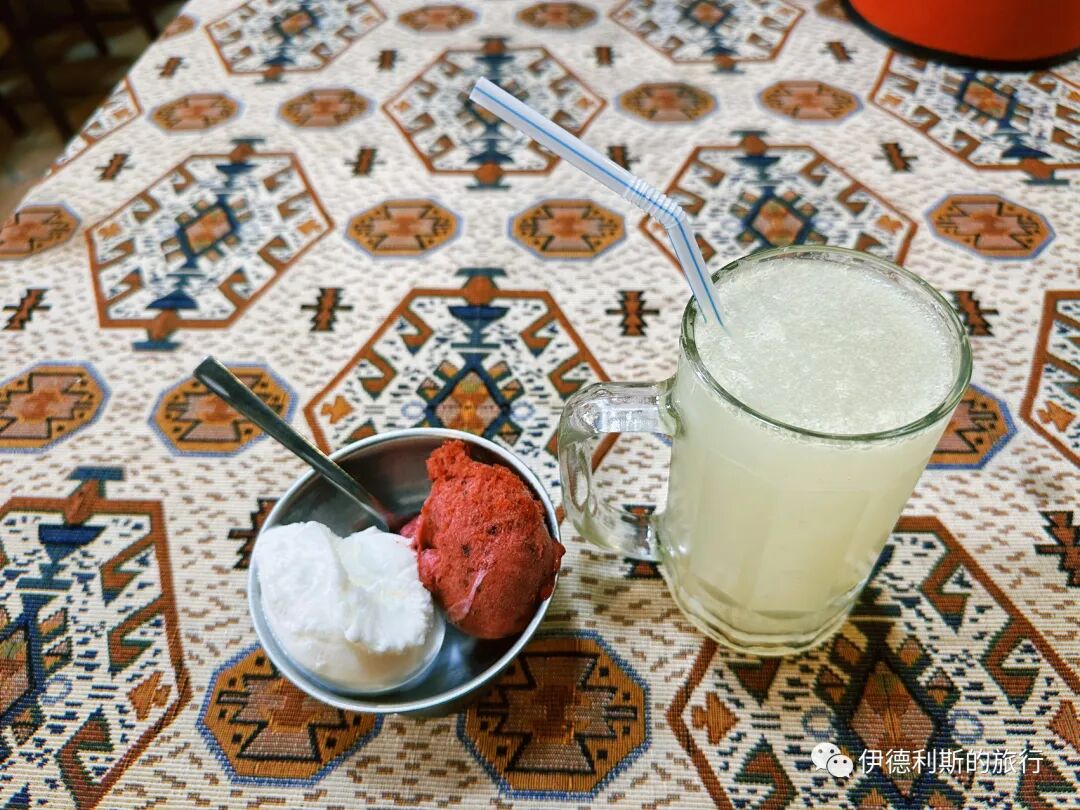
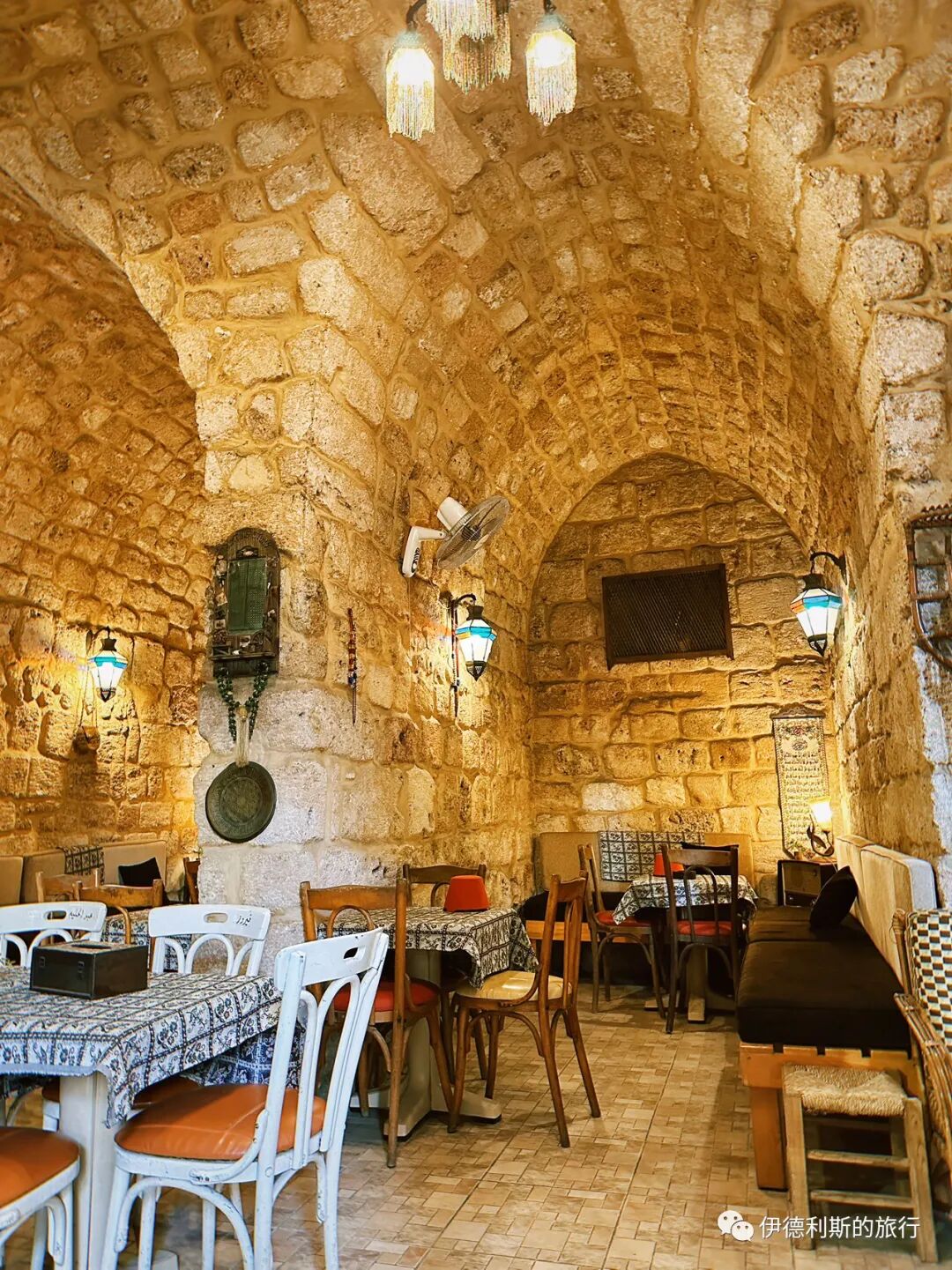
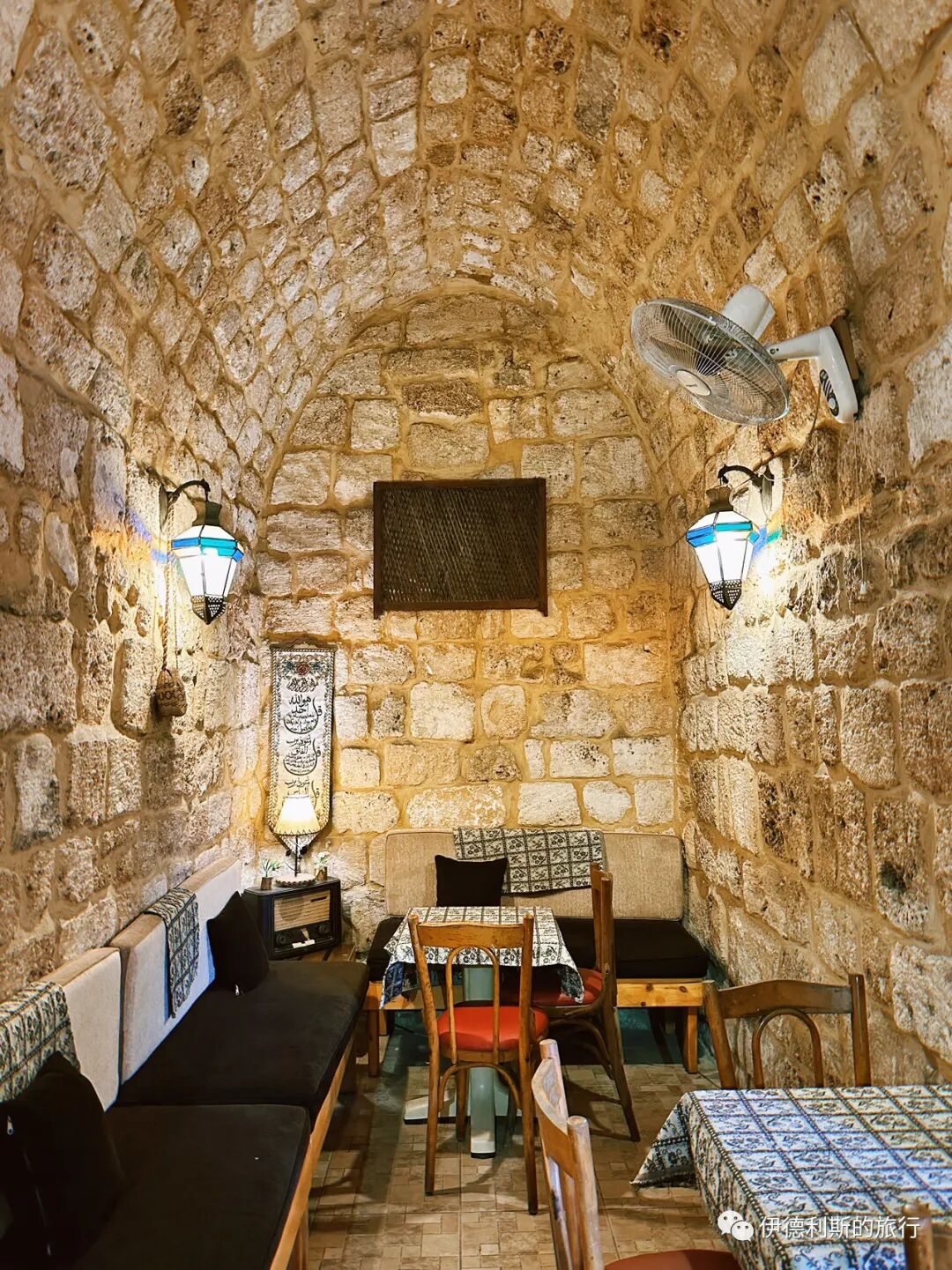
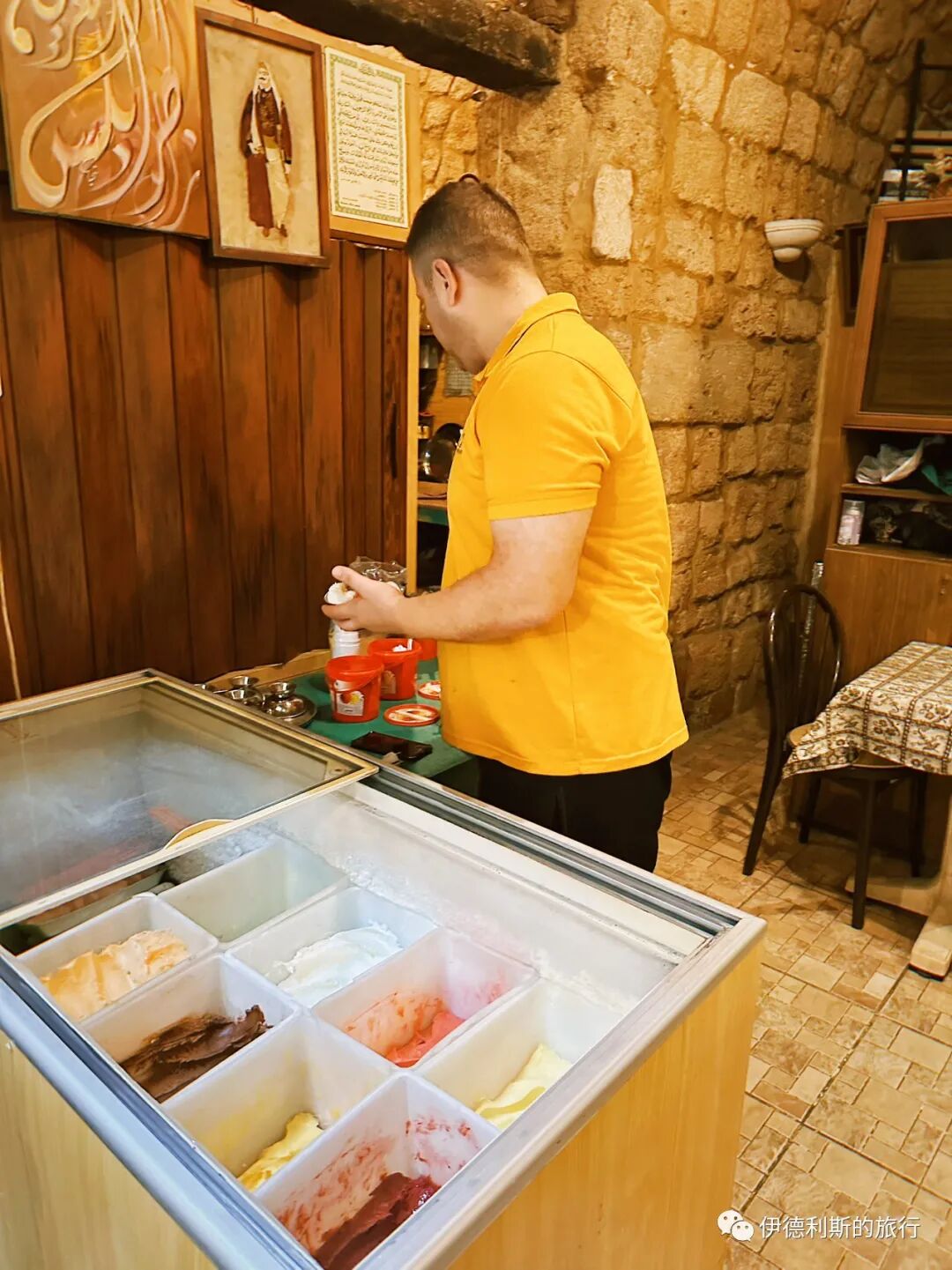
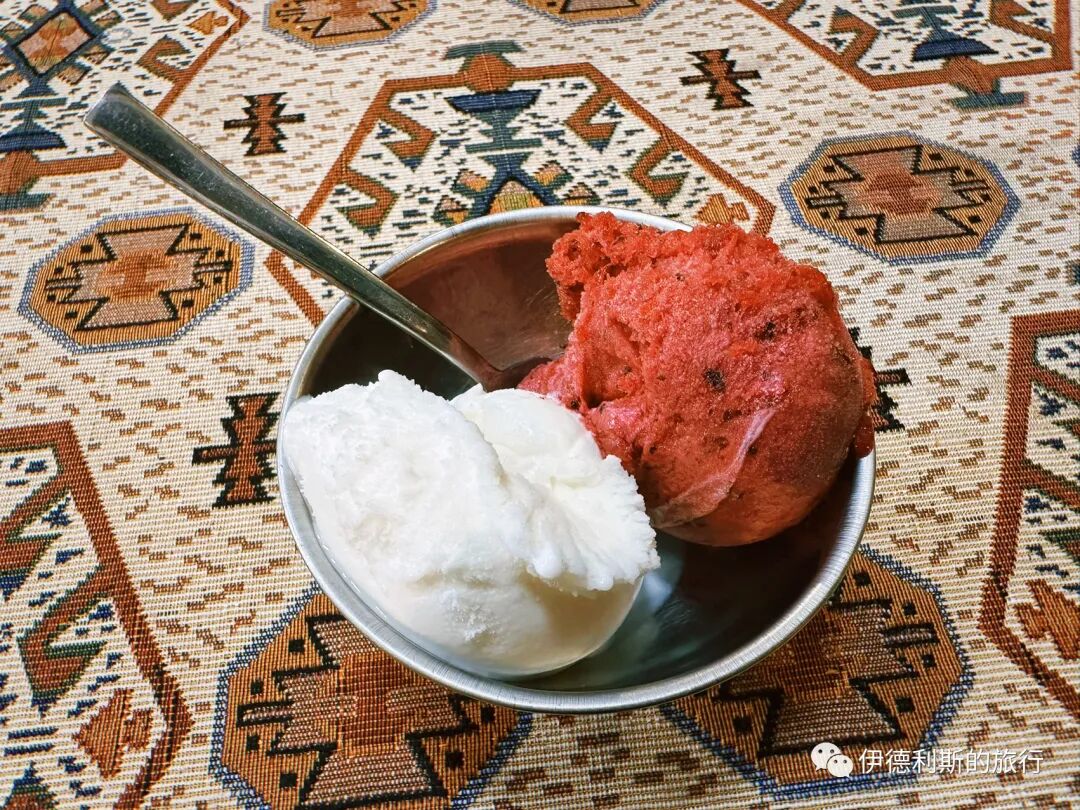
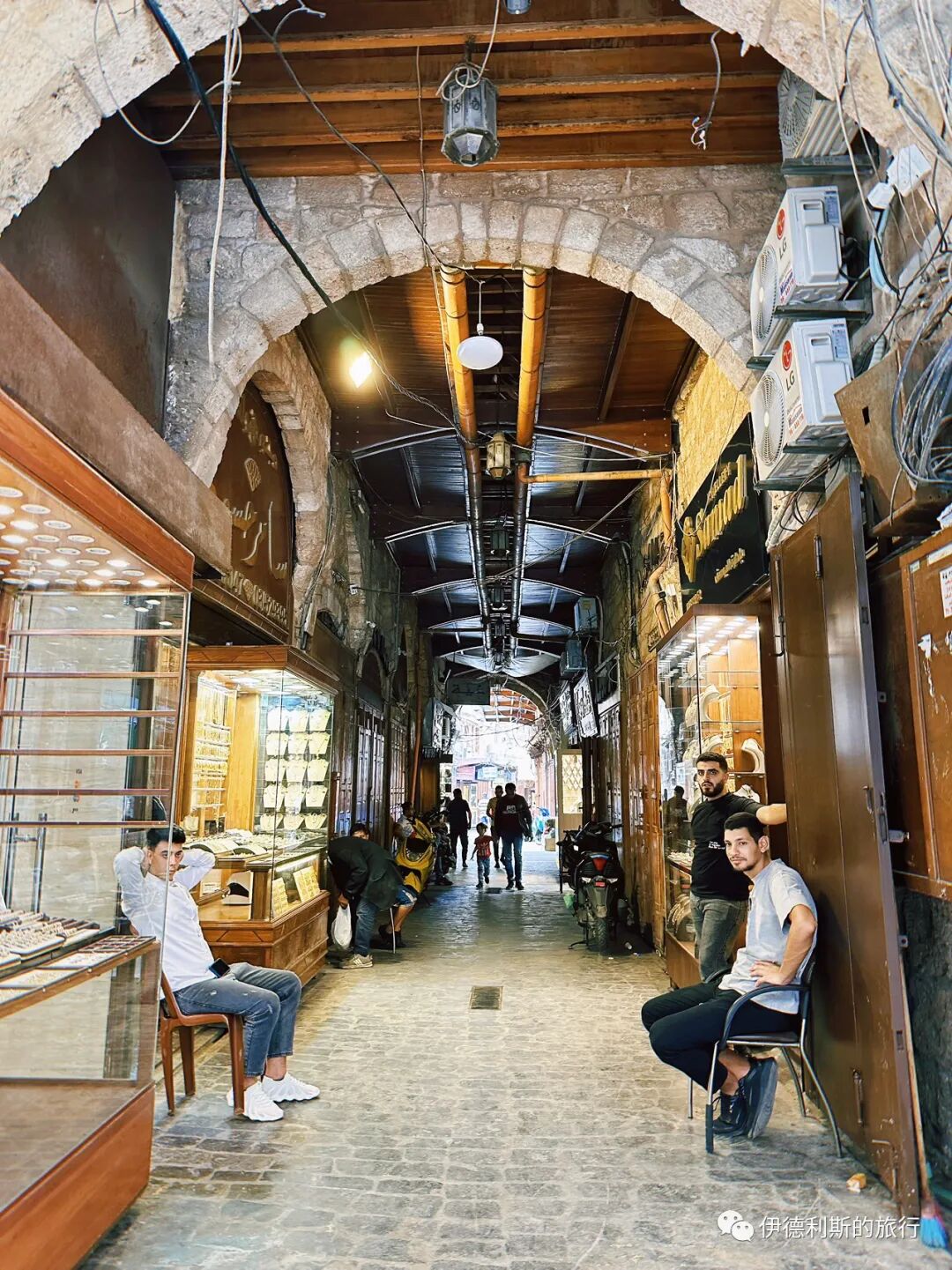
Tripoli has always been famous for producing perfume and handmade soap, with Bader Hassoun's Khan Al Saboun (Soap Inn) being one of the more well-known brands. The Hassoun family's history of making soap in Tripoli dates back to the early Mamluk dynasty in 1256, while the Khan Al Saboun in the old city of Tripoli was built in 1480 during the late Mamluk dynasty.
Khan Al Saboun has a courtyard made of two-story galleries with a pool in the middle. The second floor of the gallery was where caravans stayed, while the first floor was for making and selling soap. People say the Ottoman Sultan Suleiman the Magnificent once received soap from Tripoli as a tribute, and at the urging of the Queen, Suleiman ordered the expansion of the Khan Al Saboun in Tripoli. After it was built, the soap inn became a trade center for making and selling soap, and it started exporting soap to Europe. Today, the Bader Hassoun soap shop is located right here.
In 1993, Bader Hassoun’s jewelry shop in the old city of Tripoli was robbed, which led him to decide to revive his family tradition of making soap. He and his wife spent one night making traditional soap using olive oil, dates, glycerin, natural coloring, and spices, and it all sold out the next day.
We bought the most traditional natural soap at the shop, which comes in green tea, lavender, and cedar scents. The cedar is an important symbol of Lebanon, and Lebanon is known as the Land of the Cedars. We also bought an olive oil soap safe for babies, which we can use for Suleiman.
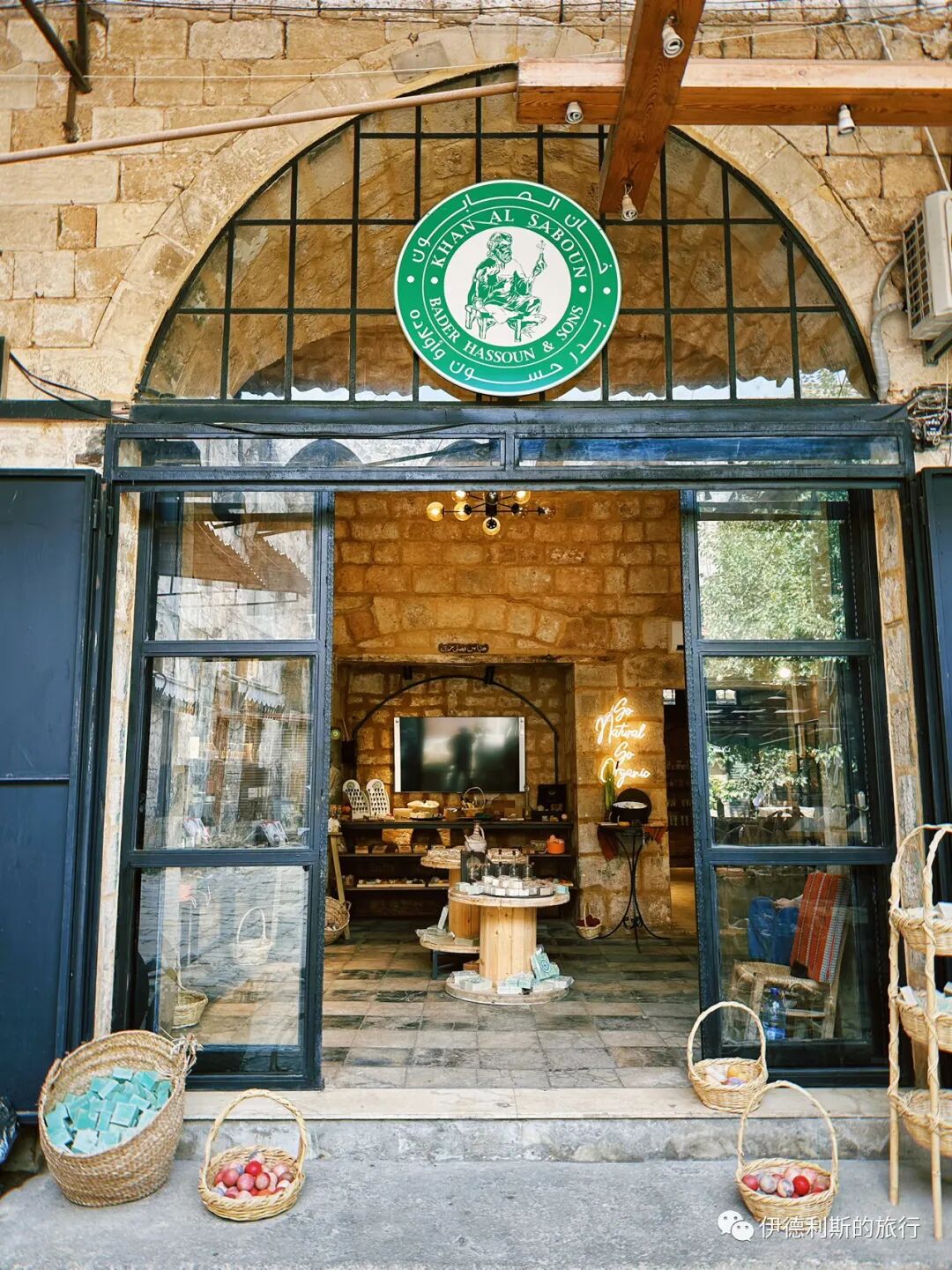
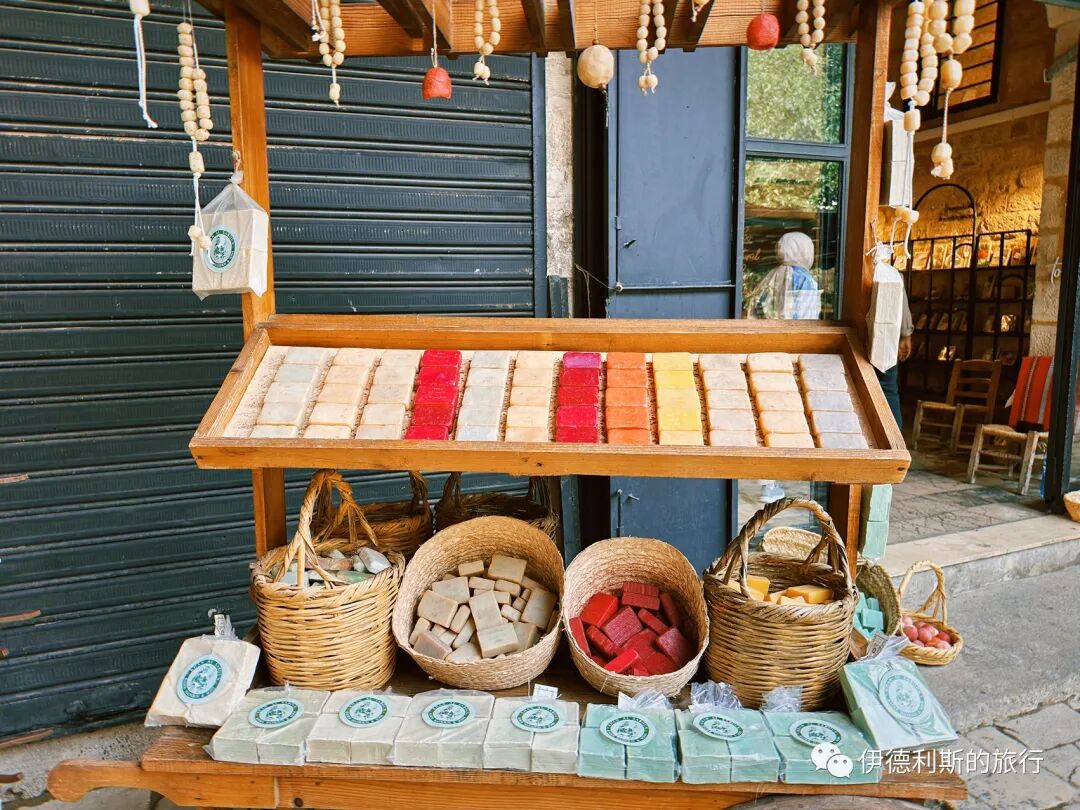
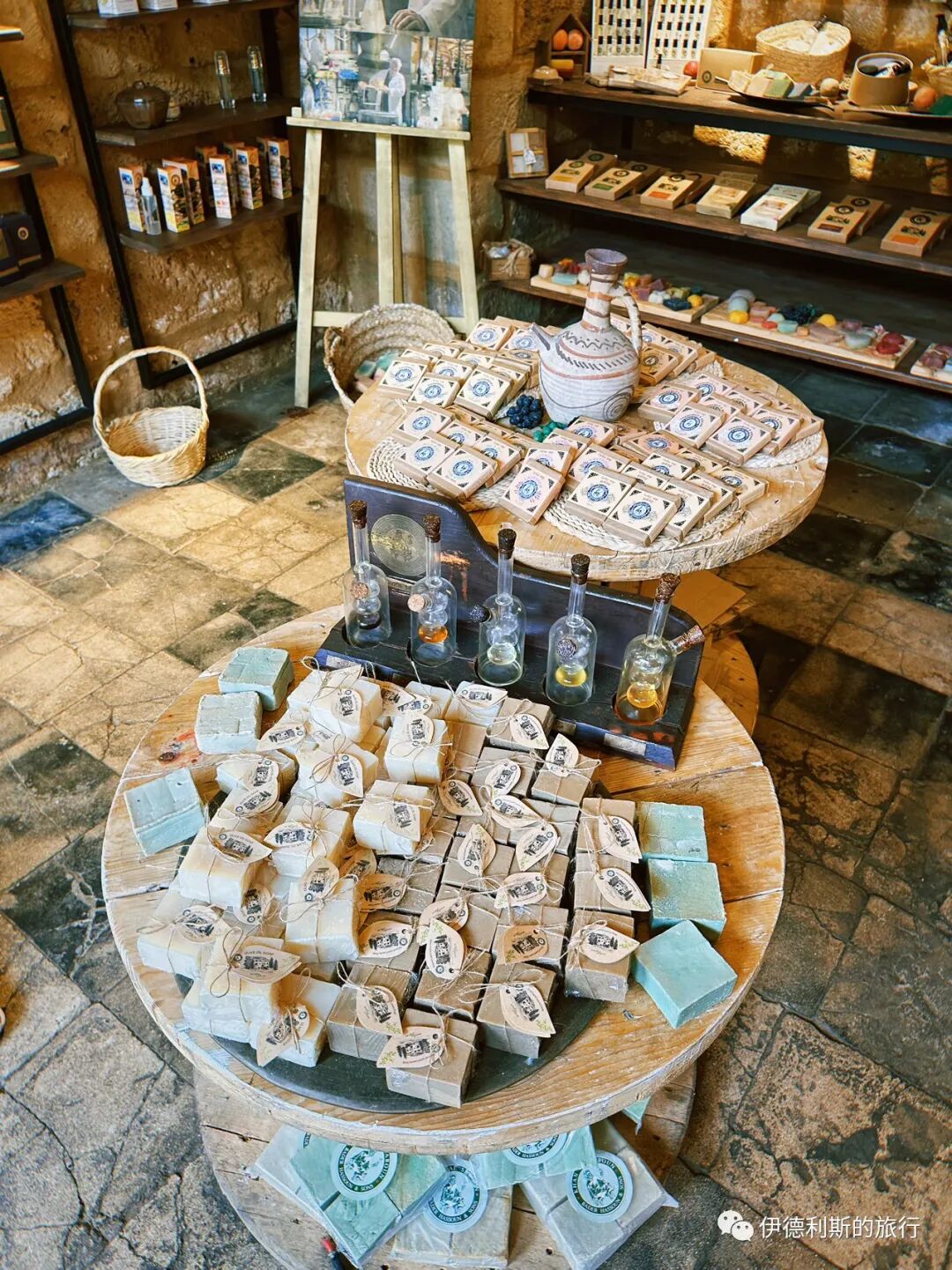
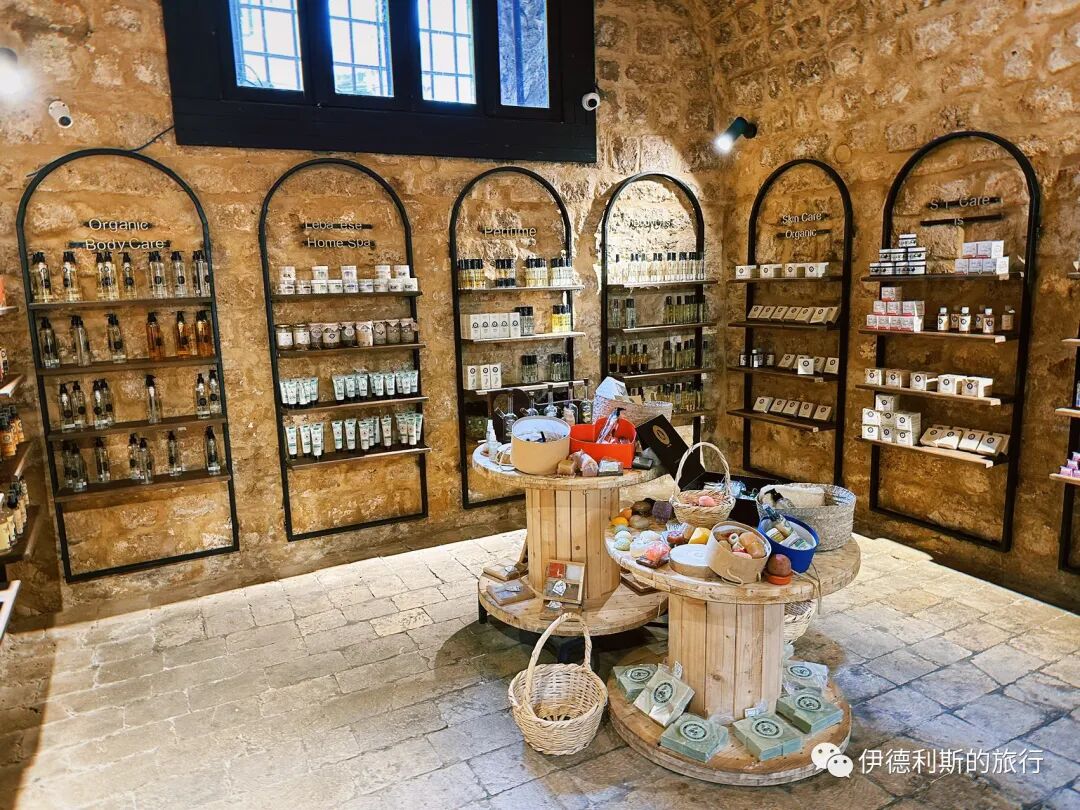
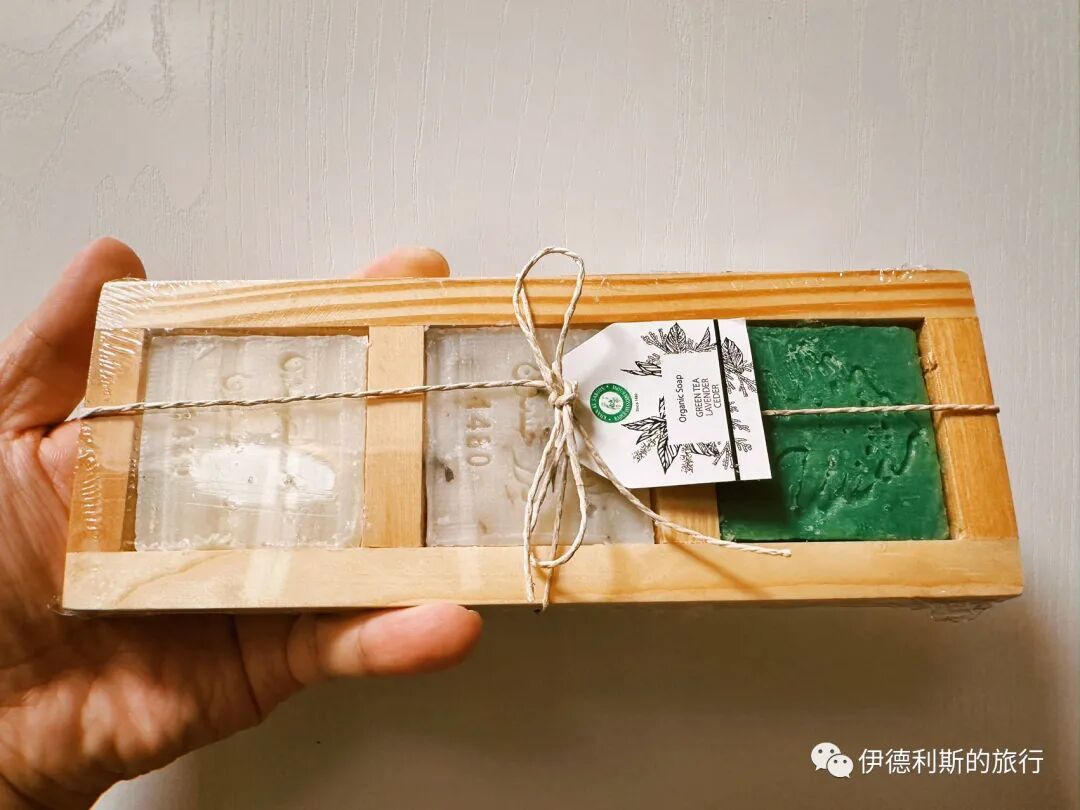
Misriyyin Inn is located in the northern part of the old city of Tripoli and dates back to the Mamluk period in the 14th century. On the second floor of the inn, there is a Sharkass soap shop, and they have been making traditional olive oil soap since 1803. The Tripoli Soap shop on the first floor opened in 1937, and you can watch them make natural soap on-site here.
Tripoli is in northern Lebanon. It takes about an hour to get there by minibus from across the street from the Mohammad Al-Amin Mosque in the capital, Beirut. The history of Tripoli dates back to the 14th century BC. For thousands of years, it has been an important port on the eastern Mediterranean coast. The early city of Tripoli was always along the coast. In 1289, the Mamluk dynasty took Tripoli from the Crusaders, destroyed the old city, and built a new one 4 kilometers inland below the castle. Today, about 35 ancient buildings from the Mamluk period remain in the old city of Tripoli. This makes Tripoli the city with the most preserved Mamluk monuments after Cairo.
Since the Ottoman Empire left Lebanon in 1918, Tripoli has fallen into a long decline, and Beirut has completely replaced it as a trade center. The Lebanese Civil War that began in 1975 hit Tripoli hard. In 1985, a battle between Sunni and Alawite militias forced 200,000 people to leave their homes and led to the Syrian army staying in Tripoli until 2005. After the civil war ended, Lebanon focused its funds on rebuilding the capital, Beirut. Tripoli seemed to be forgotten, and more than half of its residents live in poverty. At the same time, conflicts between Sunnis and Alawites happen from time to time. Explosions and suicide attacks often occur, making Tripoli a place unsuitable for tourism for a long time.
We first went to the Taynal Mosque south of the old city. The Taynal Mosque was built in 1336 by order of the Mamluk governor (Na'ib) of Tripoli, Amir Taynal. Amir Taynal served three terms as governor of Tripoli and one term as governor of Gaza in the mid-14th century. The famous 14th-century traveler Ibn Battuta wrote in his travelogue: 'About forty Turkish princes and nobles live in the city.' The governor of the city is Amir Taynal, who is known as the 'King of the Chiefs'. His residence is commonly known as the 'House of Blessings'. He was accustomed to riding out every Monday and Thursday, accompanied by chiefs and a large guard, and would not return to the city until he was satisfied. Amir Taynal passed away in Damascus in 1343. Although his tomb was built in the Taynal Mosque, he was eventually buried in Damascus.
The main prayer hall of Taynal Mosque consists of two connected halls. The most magnificent part is the entrance to the second hall, which features a gate with a stalactite-style cornice (muqarnas) built using the ablaq technique of alternating black and white marble. Inside the prayer hall are some ancient Corinthian columns, which are thought to have come from a Crusader-era church or an even older Roman temple. The original pulpit (minbar) in the mosque dated back to its construction in 1336, but it had been replaced with a new one by the time I visited.
Continue walking north into the market street of the old city of Tripoli, and you will see the Hanging Mosque (Mu'allaq Mosque) built over the middle of the road. The Hanging Mosque was commissioned in 1561 by Mahmud Lutfi al-Za'im, the Ottoman governor of Tripoli, during the reign of the Ottoman Sultan Suleiman the Magnificent. The first floor of the Hanging Mosque is a culvert over the street, so you must climb the stairs to the side to reach the second-floor prayer hall. The octagonal minaret (bangkelou) next to the prayer hall is very eye-catching and features two levels of balconies.
Right next to the Hanging Mosque is the Al Jadid bathhouse (hammam), built during the Ottoman period in 1740. It remained in use until the 1970s, when it closed after the outbreak of the Lebanese Civil War. This bathhouse was a gift to Tripoli from Asad Pasha Al Azem, the governor of Damascus at the time. The bathhouse gate is exquisite, featuring a fourteen-link chain carved from a single piece of stone.
The markets in the old city of Tripoli are very lively, which is a sharp contrast to Beirut. Ibn Battuta wrote in his travelogue: 'Afterward, we arrived at the city of Tripoli.' It was an important town in the Levant (Sham), with several small rivers flowing through it. It is surrounded by fragrant orchards and lush green trees. The sea surrounds it with its blue waters, and the earth nourishes it with its treasures. The goods in the market are dazzling and truly amazing.
We drank street coffee in the market and saw all kinds of dairy products, which was very interesting.
Continuing north from the market, we reached the Mansouri Great Mosque, a landmark in the center of Tripoli's old city. The Mansouri Great Mosque, also called the Great Mosque of Tripoli, was ordered to be built in 1294 by the Mamluk Sultan Al-Ashraf Khalil. It was the first building the Mamluk dynasty constructed in Tripoli.
In 1109, the French Crusaders captured Tripoli, and for the next 180 years, the city was ruled by European Christian nobles. In 1260, the Mongol army captured Damascus and took the last Ayyubid Sultan prisoner, ending the Ayyubid dynasty. From then on, the center of Islamic power on the eastern Mediterranean coast shifted to the Mamluk dynasty in Egypt. In 1289, the Mamluk army arrived at the walls of Tripoli with large catapults. Under the attack of the catapults, two of Tripoli's towers quickly collapsed. The Mamluk army entered the city and razed it to the ground.
Soon after, the Mamluk dynasty began building a new city at the foot of the castle on 'Pilgrim Mountain.' This included building the Mansouri Great Mosque on the ruins of a Crusader church at the foot of the hill. The mosque's minaret is likely part of the Crusader Church of St. Mary, and the main gate may also incorporate the original Crusader church entrance. The main hall was built by the Mamluk dynasty in 1294, and the courtyard's surrounding arcade was built in 1314 by the Mamluk Sultan Al-Nasir Muhammad.
During the 14th century, the Mamluk dynasty built six madrasas (Islamic schools) around the Mansouri Great Mosque, which trained a large number of students. These include the al-Khayriyya Hasan (1309 or later), al-Qartawiyya (around 1326), al-Shamsiyya (1349), al-Nasiriyya (between 1354–1360), al-Nuriyya (14th century), and the Mashhad madrasa. The al-Qartawiyya madrasa outside the east wall of the Mansouri Great Mosque is the most magnificent. Unfortunately, we could not find the madrasa's gate in the maze-like alleys of the old city, but we did see the calligraphy carvings on its walls.
Leaving the noisy market, we turned east onto Al-Asrar Alley, which was once the residential area for high-ranking Mamluk officers. On the way, we passed the Al-Mahatra Gate of Tripoli's old city. The gate's name comes from the military musicians who played to boost the army's morale. Now that the war is over, houses have been built on top of the gate, and it has become a quiet alley.
Passing through the alley, we arrived at another landmark in Tripoli: the Citadel of Tripoli. The site of the Citadel of Tripoli was originally a Shia cemetery from the Fatimid period. During the Frankish Crusader siege of Tripoli in 1102–1103, the Crusader leader Raymond of Saint-Gilles ordered it to be built as a fortress, which is why it is also called the Castle of Saint-Gilles. After the Mamluk dynasty captured Tripoli in 1289, they rebuilt the castle using many Roman columns and other building materials found nearby. In 1521, the Ottoman Sultan Suleiman the Magnificent rebuilt the castle again, changing the arrow slits into firing ports for cannons. In the early 19th century, the Ottoman governor of Tripoli carried out the last major renovation of the castle, giving it the appearance it has today.
The castle gate consists of two towers. There was originally a drawbridge over the moat in front, but it has now been replaced by a stone bridge. The black and white marble facade above the gate was built by Suleiman the Magnificent in 1521. The stone inscription on it reads, 'May the Emir never cease to obey his command, restoring this sacred castle so that it may forever be a strong fortress.'
Above the gate, you can see the machicolation built during the Mamluk period. This is a classic structure in medieval castle defense systems, where defenders on top of the walls and towers could pour boiling water and oil through the openings onto those below.
After entering the gate of Tripoli Castle, there is a small courtyard, and behind the courtyard is a taller tower gate. The tower was first built during the Frankish Crusader period, and the current structure was rebuilt by the Mamluk dynasty in 1345.
There was once a mosque in the courtyard built by the Ottoman governor of Tripoli, Barbar Agha (1767-1834). You can still see the mihrab niche on the north wall of the tower. Unfortunately, the stone inscription above the niche was lost during the Lebanese Civil War and its whereabouts remain unknown. Above the niche, you can still see a row of structural holes where the beams of the mosque roof were once placed.
From the drawbridge through the main gate to the tower, you must pass through six doors to enter the interior of the castle. These doors were once equipped with iron-studded panels, and there are narrow arrow slits on the walls, forming a very mature castle defense system.
If the first few gates were breached, the defenders could lure the enemy into the stables on the west side of the tower. The arrow slits in the stables could be used to deal with these enemies, and some of the slits were enlarged in the early 19th century to accommodate cannons. From the stables, you can reach the guard quarters on the upper level of the tower, and then climb to the roof to overlook the panoramic view of Tripoli.
The core area of Tripoli Castle consists of the prison and barracks built during the Ottoman period. A Frankish Crusader cemetery was excavated here in the 1970s and backfilled in 2011.
At the southernmost end of Tripoli Castle, the ruins of a Shia tomb from the Fatimid dynasty (909-1171) are preserved. The most prominent is an octagonal tomb carved with Kufic Arabic calligraphy. When the Frankish Crusaders built a castle here between 1102 and 1103, this octagonal tomb was turned into a small church, and the mihrab niche inside the tomb was converted into a bay window. Later, the Frankish Crusaders built a large church on top of the tomb, turning the tomb into a basement.
After the Mamluk dynasty captured the castle in 1289, the site of the Fatimid tomb was restored as a place of worship, and the mihrab niche was also repaired.
After finishing my tour of Tripoli Castle, I headed north back to the old city of Tripoli to perform the afternoon prayer (asr) at Al-Uwaysiyat Mosque. Al-Uwaysiyat Mosque was first built in 1461 during the Mamluk period and was renovated in 1534 during the time of the Ottoman Sultan Suleiman the Magnificent.
After the prayer, I returned to the old city market and ate a street-style cheese flatbread (manakish), which must be the most classic snack in the market. Then I watched the carpenters working diligently on the street.
I had ice cream and lemonade inside the Mamluk-era Haraj Market (souq). Haraj Market was built in the 14th century and features 8-meter-high vaulted ceilings supported by black granite columns, some of which may have come from ancient Roman or Byzantine buildings. The market has two floors. The upper rooms were for merchants to stay in and had wooden windows, allowing the merchants' female relatives to look down at the market below, while the lower floor was for selling goods.
Bombing during the Lebanese Civil War in 1983 caused severe damage to Haraj Market, but it was restored over a long period to its current state.
Tripoli has always been famous for producing perfume and handmade soap, with Bader Hassoun's Khan Al Saboun (Soap Inn) being one of the more well-known brands. The Hassoun family's history of making soap in Tripoli dates back to the early Mamluk dynasty in 1256, while the Khan Al Saboun in the old city of Tripoli was built in 1480 during the late Mamluk dynasty.
Khan Al Saboun has a courtyard made of two-story galleries with a pool in the middle. The second floor of the gallery was where caravans stayed, while the first floor was for making and selling soap. People say the Ottoman Sultan Suleiman the Magnificent once received soap from Tripoli as a tribute, and at the urging of the Queen, Suleiman ordered the expansion of the Khan Al Saboun in Tripoli. After it was built, the soap inn became a trade center for making and selling soap, and it started exporting soap to Europe. Today, the Bader Hassoun soap shop is located right here.
In 1993, Bader Hassoun’s jewelry shop in the old city of Tripoli was robbed, which led him to decide to revive his family tradition of making soap. He and his wife spent one night making traditional soap using olive oil, dates, glycerin, natural coloring, and spices, and it all sold out the next day.
We bought the most traditional natural soap at the shop, which comes in green tea, lavender, and cedar scents. The cedar is an important symbol of Lebanon, and Lebanon is known as the Land of the Cedars. We also bought an olive oil soap safe for babies, which we can use for Suleiman.
Misriyyin Inn is located in the northern part of the old city of Tripoli and dates back to the Mamluk period in the 14th century. On the second floor of the inn, there is a Sharkass soap shop, and they have been making traditional olive oil soap since 1803. The Tripoli Soap shop on the first floor opened in 1937, and you can watch them make natural soap on-site here.
Halal Travel Guide: Tripoli, Lebanon - Mamluk Old City and Mosques (Part 2)
Articles • ali2007fr posted the article • 0 comments • 145 views • 2026-05-19 06:55
Reposted from the web
The Ezzedin Bathhouse (Hammam) was the first public bath built by the Mamluk dynasty after they took Tripoli. Emir Ezzedin Aibek, who ruled Tripoli from 1293 to 1298, ordered its construction using many marble pieces from the Byzantine and Crusader eras. This bathhouse operated from the end of the 13th century until 1975, when it closed after the Lebanese Civil War began. It has been restored and is now free to visit.
The Ezzedin Bathhouse follows the classic Roman-Byzantine bath design. It has three parts: a changing room with a central fountain, a warm room with private stalls, and a hot steam room.
The bathhouse gate likely uses parts from a Crusader church. The lintel features two roses and a Paschal lamb, which are typical Christian symbols. You can still see an Arabic sign written before it closed in 1975: 'Women use it between 12 and 4, and men use it after 4.'
The dome in the main hall has many round holes for light. Blue glass cups cover these holes to keep the heat inside.
The Jawani Harrara room sits right next to the boiler. It is the hottest and most humid part of the bathhouse and has a delicate window that lets hot steam into the room. The red stone section in the middle is called the Blata. Pipes underneath connect to the boiler, and people can get massages on top of it.
Right next to the Ezzedin Bathhouse is the Tailors' Inn (Khan Khayyatin). Prince Badr al-Din built this Mamluk-era trading inn in 1339. It mainly sold needles, thread, and textiles for tailors. This is not a typical courtyard inn. It consists of two rows of shops with stores on the ground floor and guest rooms on the second floor. The two sides do not connect, and the roof has ten arched sections linked horizontally. People say the inn has this shape because it was built on the foundation of a Byzantine-Crusader building.
Some historical sites I did not enter.
The first is the Attar Mosque. A local Tripoli perfume merchant named Badr al-Din al-Attar built it in the 1350s on the ruins of a Crusader church. It is also the first non-Mamluk mosque in Tripoli. The Attar Mosque is known as one of the most beautiful mosques in Tripoli, but it has been closed for several years for repairs.
The second is the Tawba Mosque. The exact age of Tawba Mosque is unknown, but it is thought to have been built during the Mamluk period. Because it sits right next to the riverbank, the stone inscription marking its construction was likely washed away in a flood. A stone inscription now at the mosque entrance says it was rebuilt after a flood in 1612. Many mosques in Lebanon lock their doors outside of prayer times, so I could not go inside and only saw the octagonal minaret (bangke ta).
The third one is Burtasi Mosque, built by Isa ibn Umar al-Burtasi during the Mamluk period. Since Isa passed away in 1324, we can guess the mosque was built between the late 13th century and 1324. A flood in 1955 destroyed all the houses around Burtasi Mosque, and it is now the only building left standing on the riverbank. The minaret above the main gate is known as the most beautiful minaret in Tripoli. Above the three-story honeycomb-style decorative carving (muqarnas) is a square balcony with Moorish-style double-arched windows. This type of double arch is a classic feature of Muslim architecture from Andalusia in southern Spain.
The fourth site is Askar Inn (Khan), built in the 14th-century Mamluk period, which is the largest trading inn in Tripoli.
I had a traditional bean stew brunch at Akra Restaurant in the old city of Tripoli. I ordered traditional stewed fava beans and chickpeas, plus hummus topped with cashews and peanuts, all eaten inside pita bread. view all
The Ezzedin Bathhouse (Hammam) was the first public bath built by the Mamluk dynasty after they took Tripoli. Emir Ezzedin Aibek, who ruled Tripoli from 1293 to 1298, ordered its construction using many marble pieces from the Byzantine and Crusader eras. This bathhouse operated from the end of the 13th century until 1975, when it closed after the Lebanese Civil War began. It has been restored and is now free to visit.
The Ezzedin Bathhouse follows the classic Roman-Byzantine bath design. It has three parts: a changing room with a central fountain, a warm room with private stalls, and a hot steam room.
The bathhouse gate likely uses parts from a Crusader church. The lintel features two roses and a Paschal lamb, which are typical Christian symbols. You can still see an Arabic sign written before it closed in 1975: 'Women use it between 12 and 4, and men use it after 4.'
The dome in the main hall has many round holes for light. Blue glass cups cover these holes to keep the heat inside.
The Jawani Harrara room sits right next to the boiler. It is the hottest and most humid part of the bathhouse and has a delicate window that lets hot steam into the room. The red stone section in the middle is called the Blata. Pipes underneath connect to the boiler, and people can get massages on top of it.
Right next to the Ezzedin Bathhouse is the Tailors' Inn (Khan Khayyatin). Prince Badr al-Din built this Mamluk-era trading inn in 1339. It mainly sold needles, thread, and textiles for tailors. This is not a typical courtyard inn. It consists of two rows of shops with stores on the ground floor and guest rooms on the second floor. The two sides do not connect, and the roof has ten arched sections linked horizontally. People say the inn has this shape because it was built on the foundation of a Byzantine-Crusader building.
Some historical sites I did not enter.
The first is the Attar Mosque. A local Tripoli perfume merchant named Badr al-Din al-Attar built it in the 1350s on the ruins of a Crusader church. It is also the first non-Mamluk mosque in Tripoli. The Attar Mosque is known as one of the most beautiful mosques in Tripoli, but it has been closed for several years for repairs.
The second is the Tawba Mosque. The exact age of Tawba Mosque is unknown, but it is thought to have been built during the Mamluk period. Because it sits right next to the riverbank, the stone inscription marking its construction was likely washed away in a flood. A stone inscription now at the mosque entrance says it was rebuilt after a flood in 1612. Many mosques in Lebanon lock their doors outside of prayer times, so I could not go inside and only saw the octagonal minaret (bangke ta).
The third one is Burtasi Mosque, built by Isa ibn Umar al-Burtasi during the Mamluk period. Since Isa passed away in 1324, we can guess the mosque was built between the late 13th century and 1324. A flood in 1955 destroyed all the houses around Burtasi Mosque, and it is now the only building left standing on the riverbank. The minaret above the main gate is known as the most beautiful minaret in Tripoli. Above the three-story honeycomb-style decorative carving (muqarnas) is a square balcony with Moorish-style double-arched windows. This type of double arch is a classic feature of Muslim architecture from Andalusia in southern Spain.
The fourth site is Askar Inn (Khan), built in the 14th-century Mamluk period, which is the largest trading inn in Tripoli.
I had a traditional bean stew brunch at Akra Restaurant in the old city of Tripoli. I ordered traditional stewed fava beans and chickpeas, plus hummus topped with cashews and peanuts, all eaten inside pita bread. view all
Reposted from the web
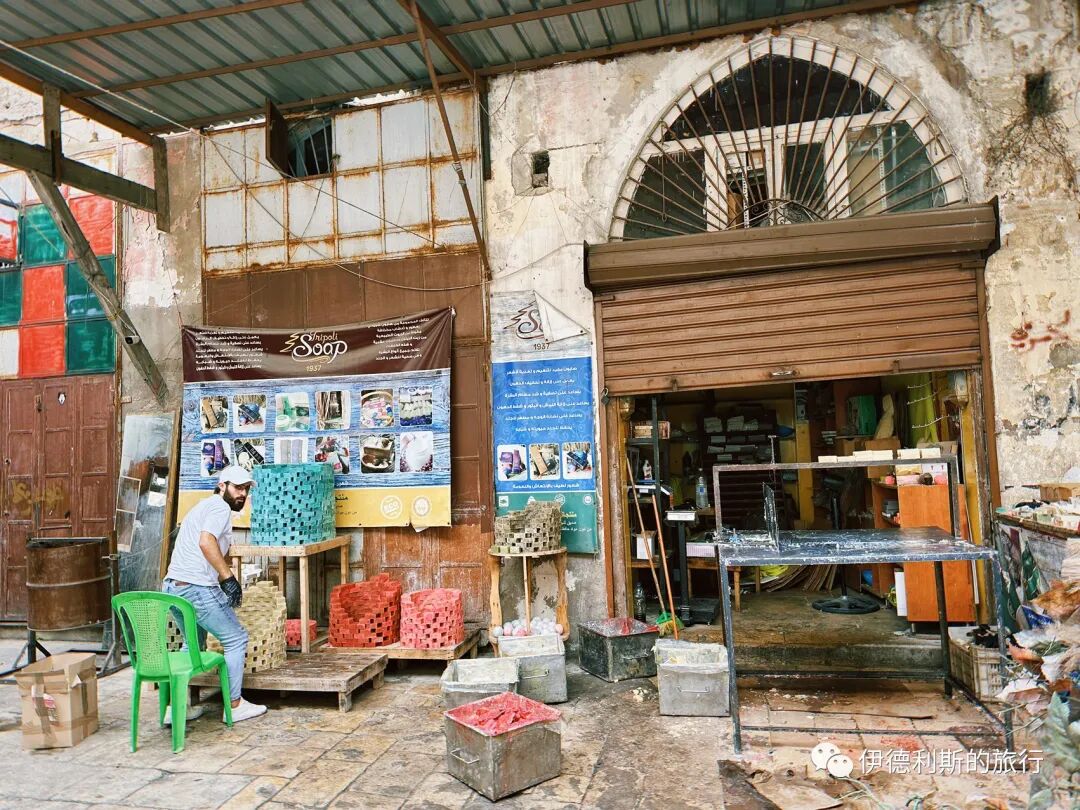
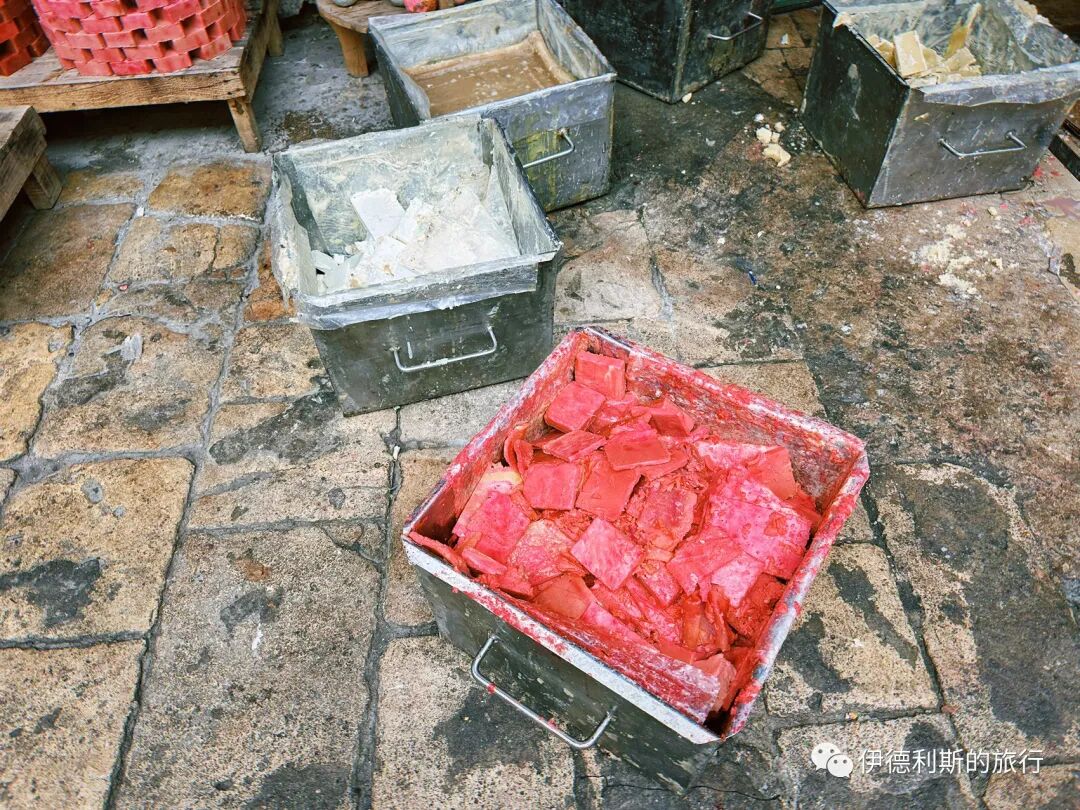
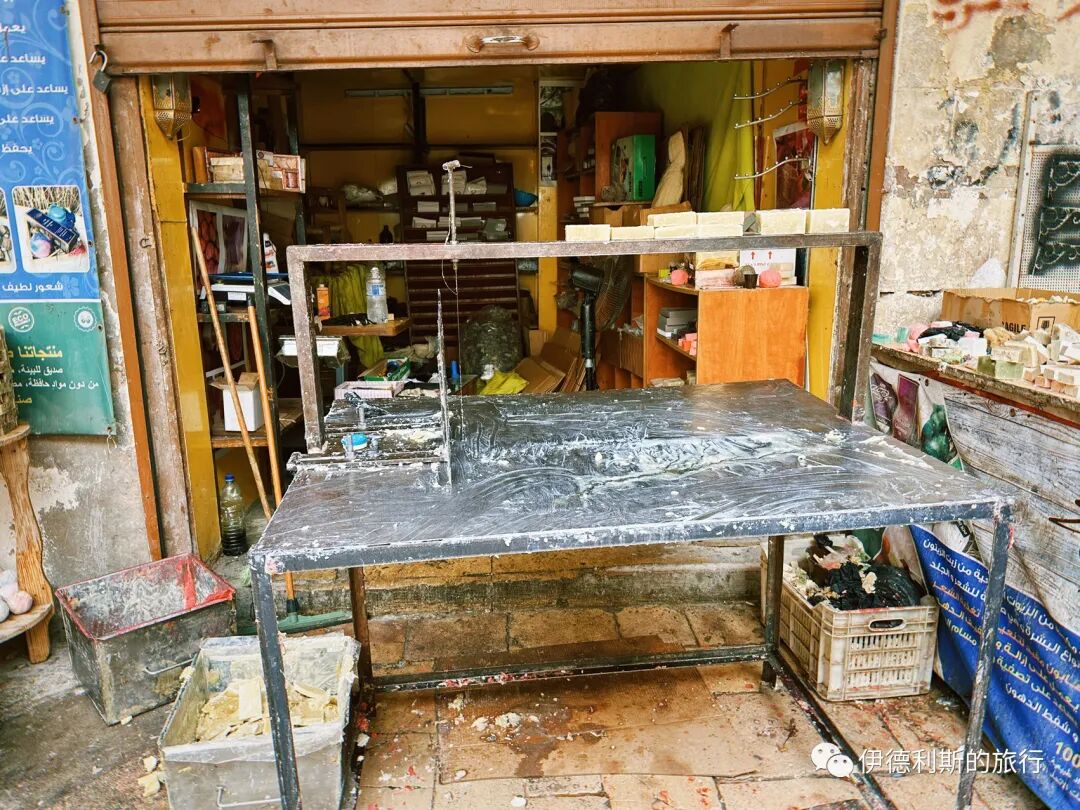
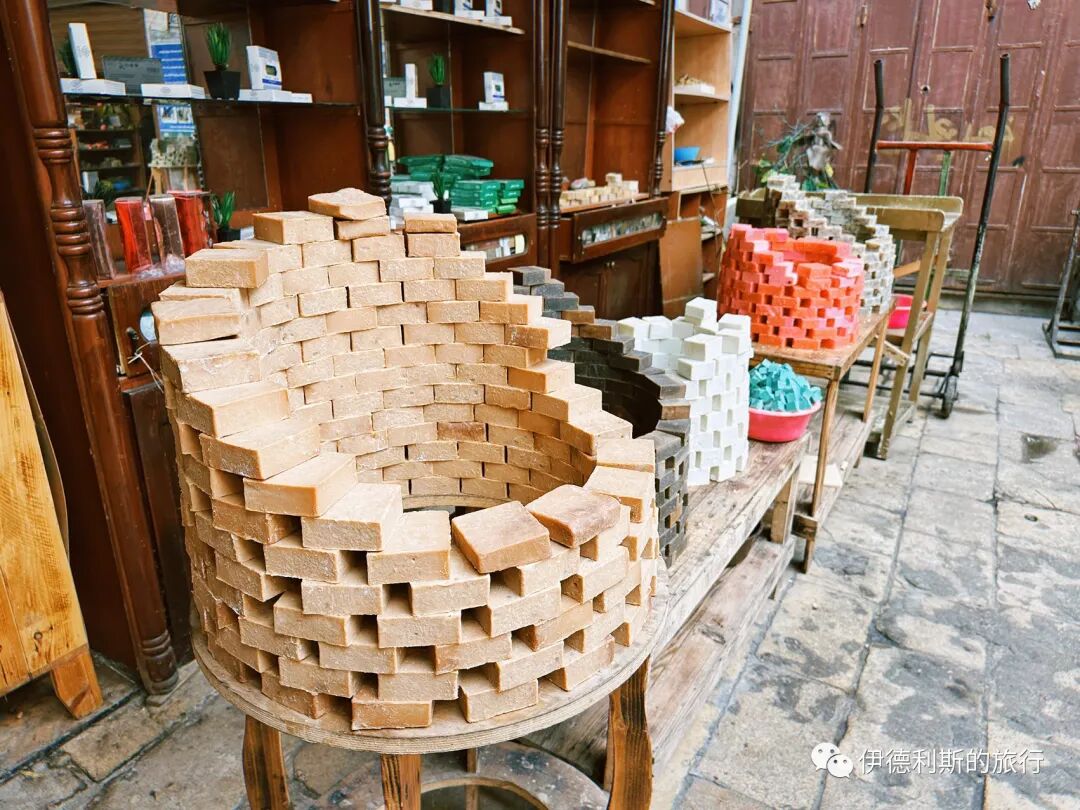
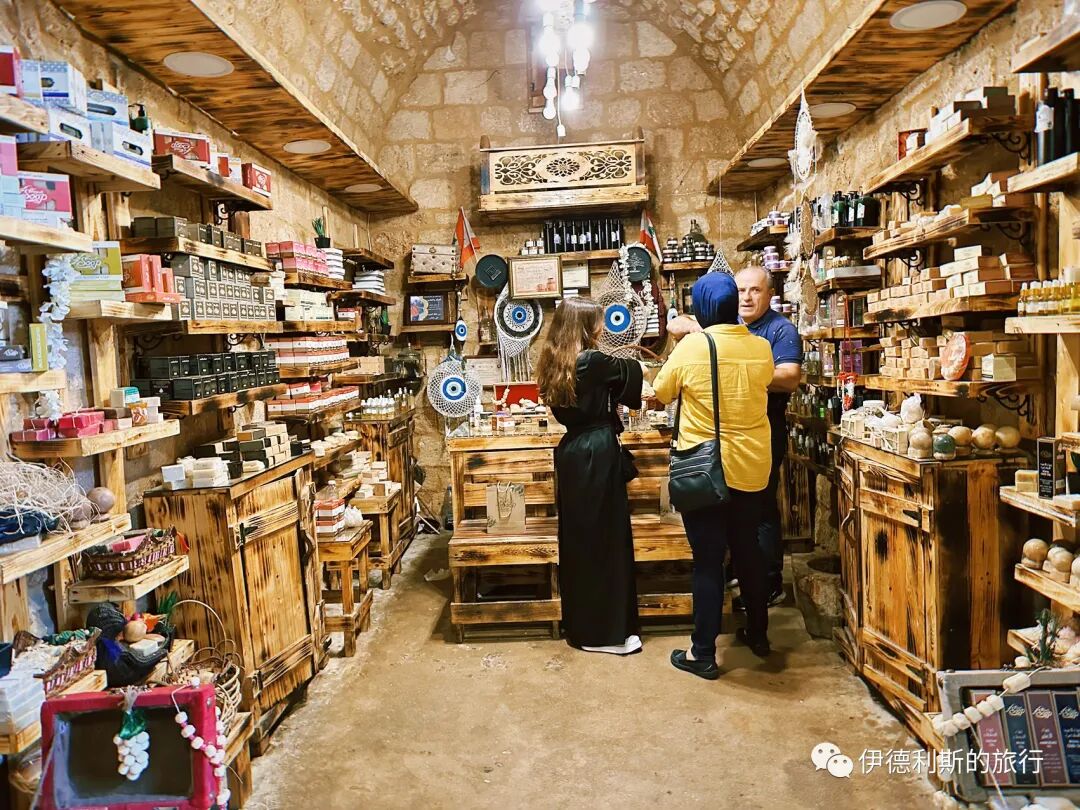
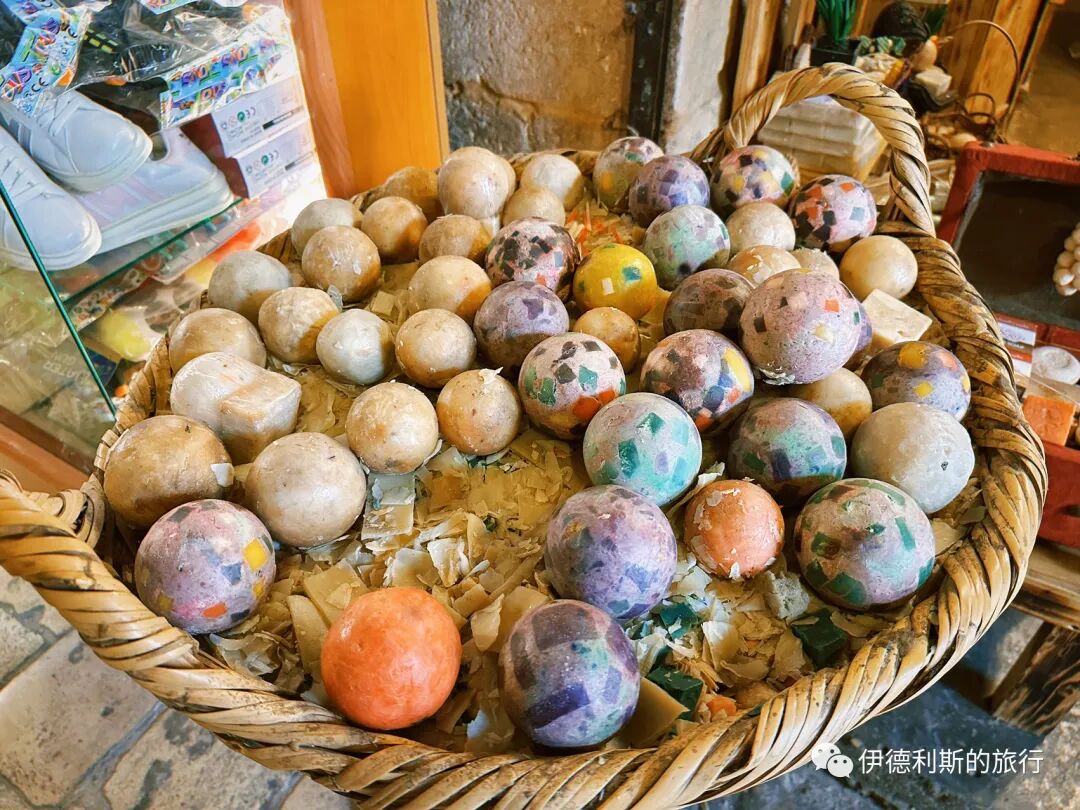
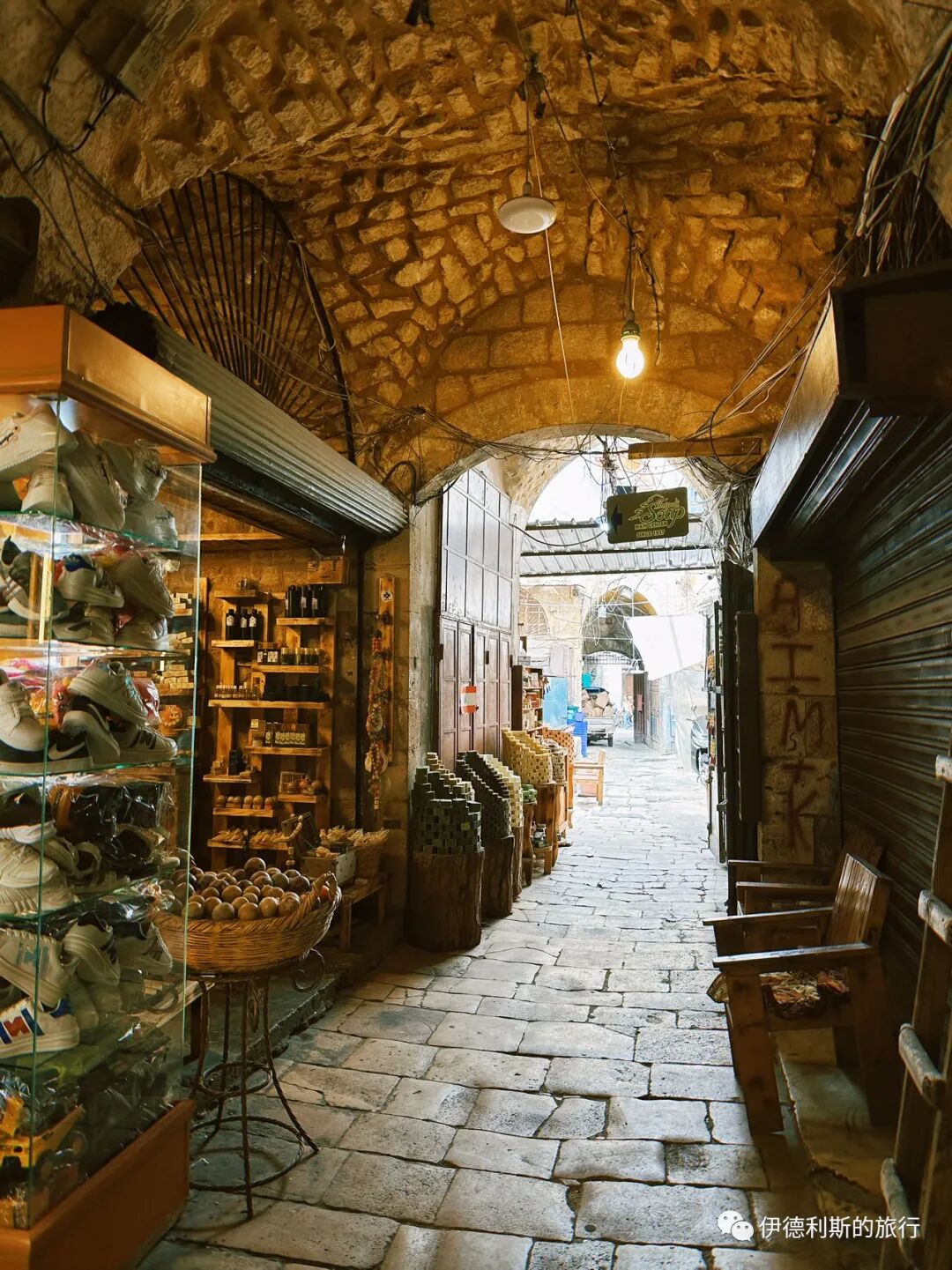
The Ezzedin Bathhouse (Hammam) was the first public bath built by the Mamluk dynasty after they took Tripoli. Emir Ezzedin Aibek, who ruled Tripoli from 1293 to 1298, ordered its construction using many marble pieces from the Byzantine and Crusader eras. This bathhouse operated from the end of the 13th century until 1975, when it closed after the Lebanese Civil War began. It has been restored and is now free to visit.
The Ezzedin Bathhouse follows the classic Roman-Byzantine bath design. It has three parts: a changing room with a central fountain, a warm room with private stalls, and a hot steam room.
The bathhouse gate likely uses parts from a Crusader church. The lintel features two roses and a Paschal lamb, which are typical Christian symbols. You can still see an Arabic sign written before it closed in 1975: 'Women use it between 12 and 4, and men use it after 4.'
The dome in the main hall has many round holes for light. Blue glass cups cover these holes to keep the heat inside.
The Jawani Harrara room sits right next to the boiler. It is the hottest and most humid part of the bathhouse and has a delicate window that lets hot steam into the room. The red stone section in the middle is called the Blata. Pipes underneath connect to the boiler, and people can get massages on top of it.
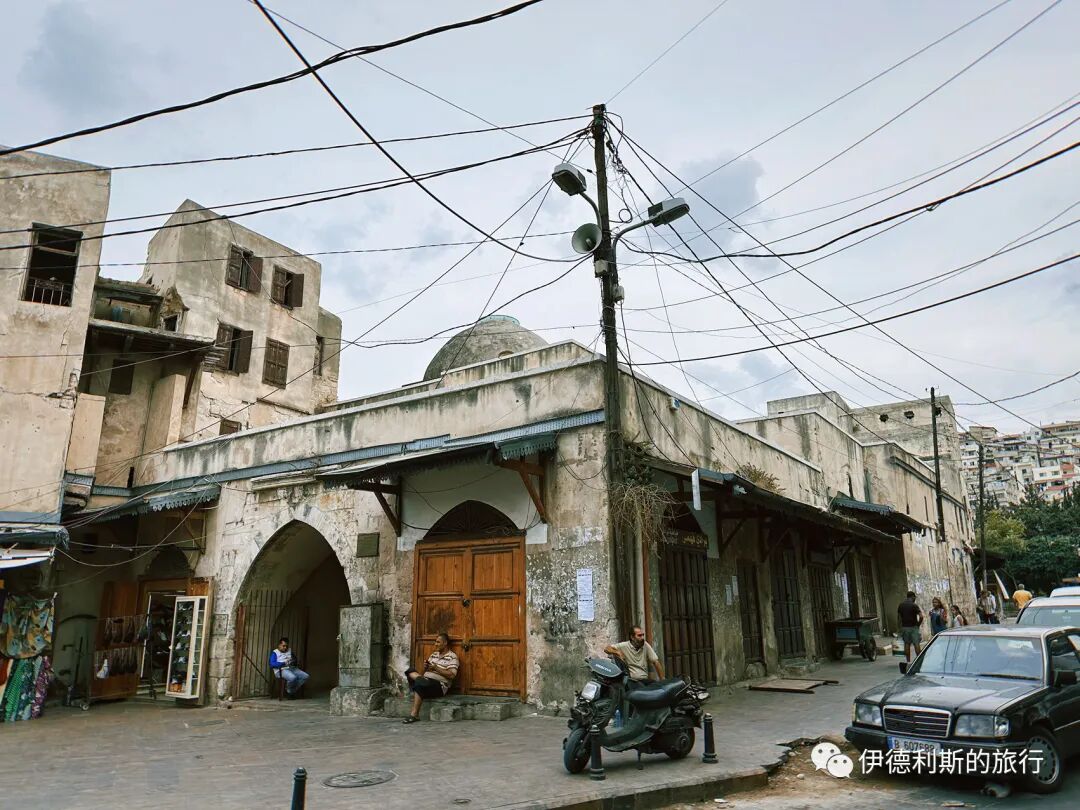
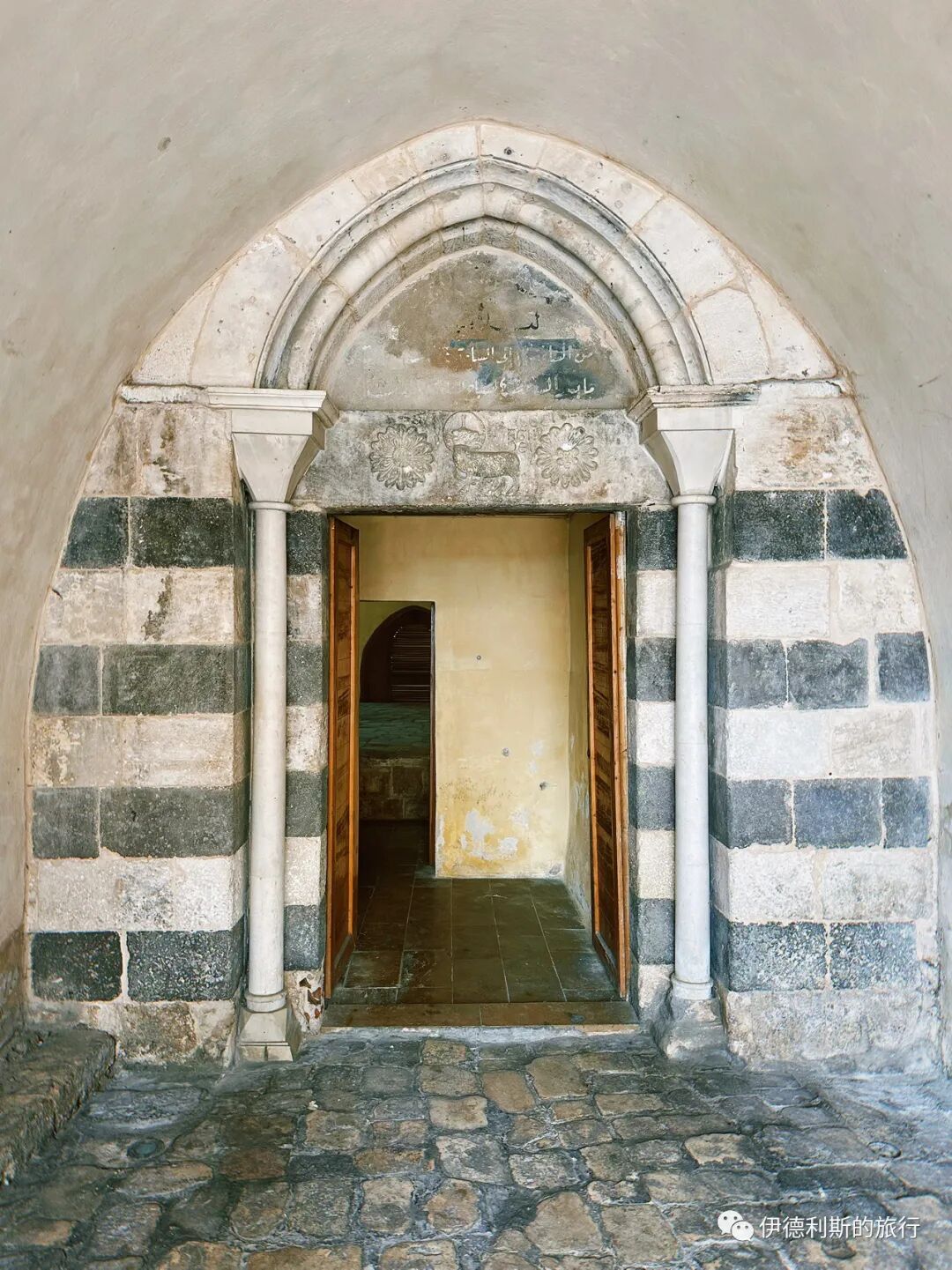
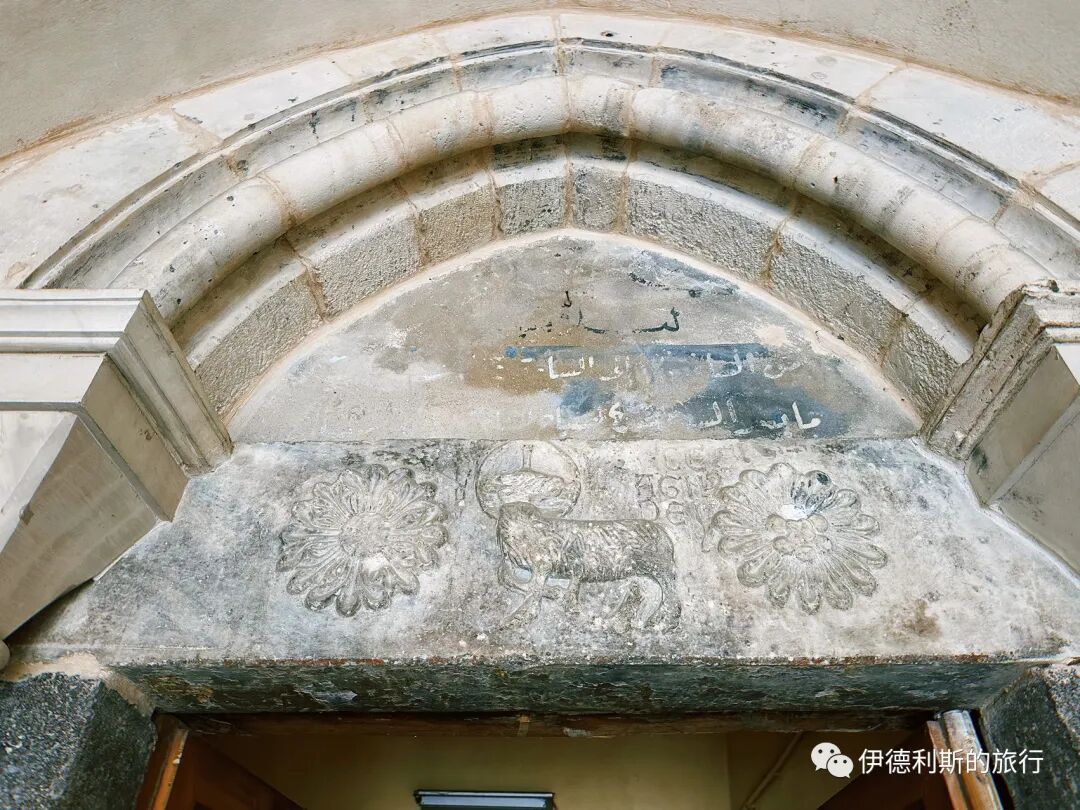
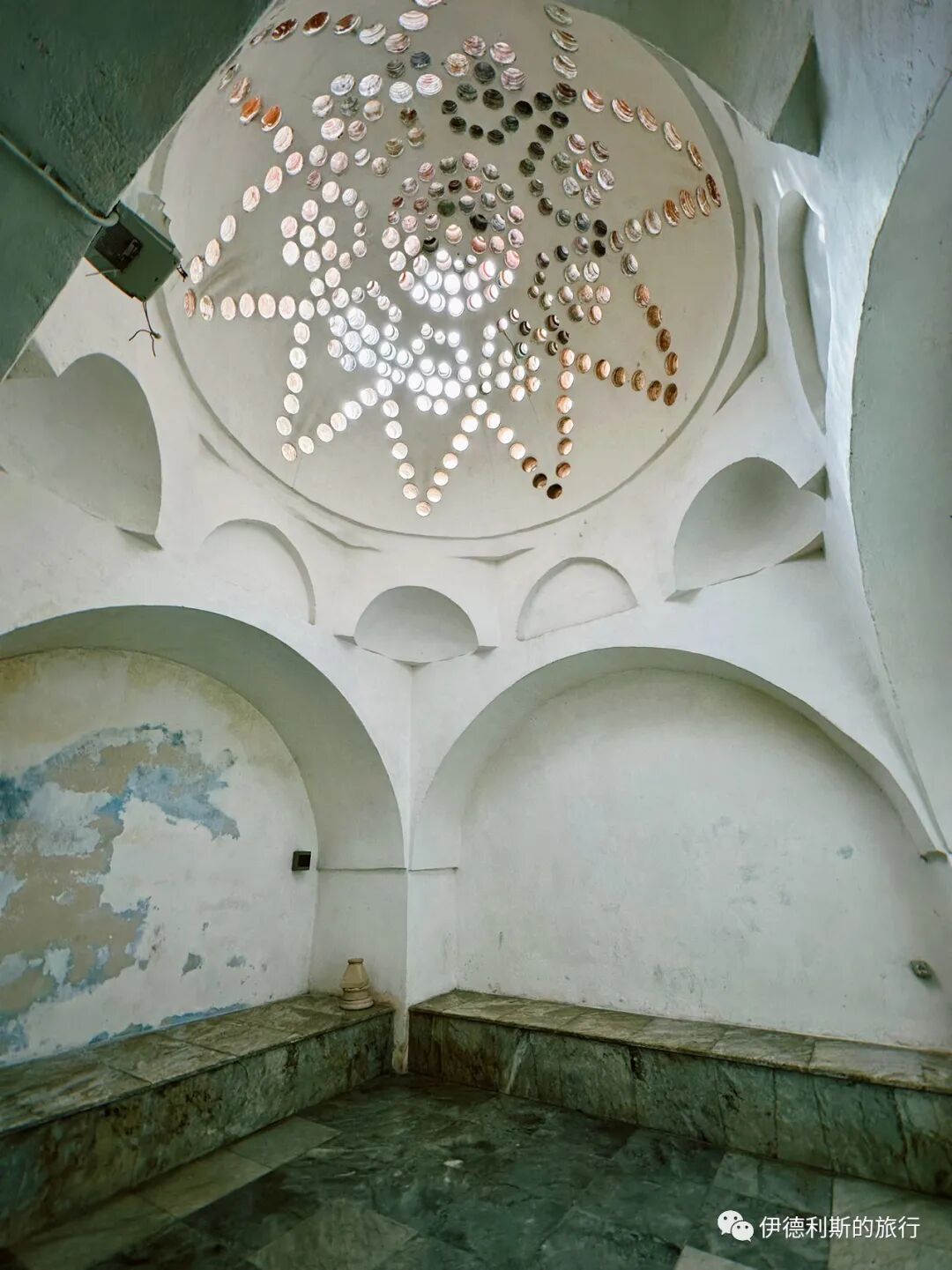
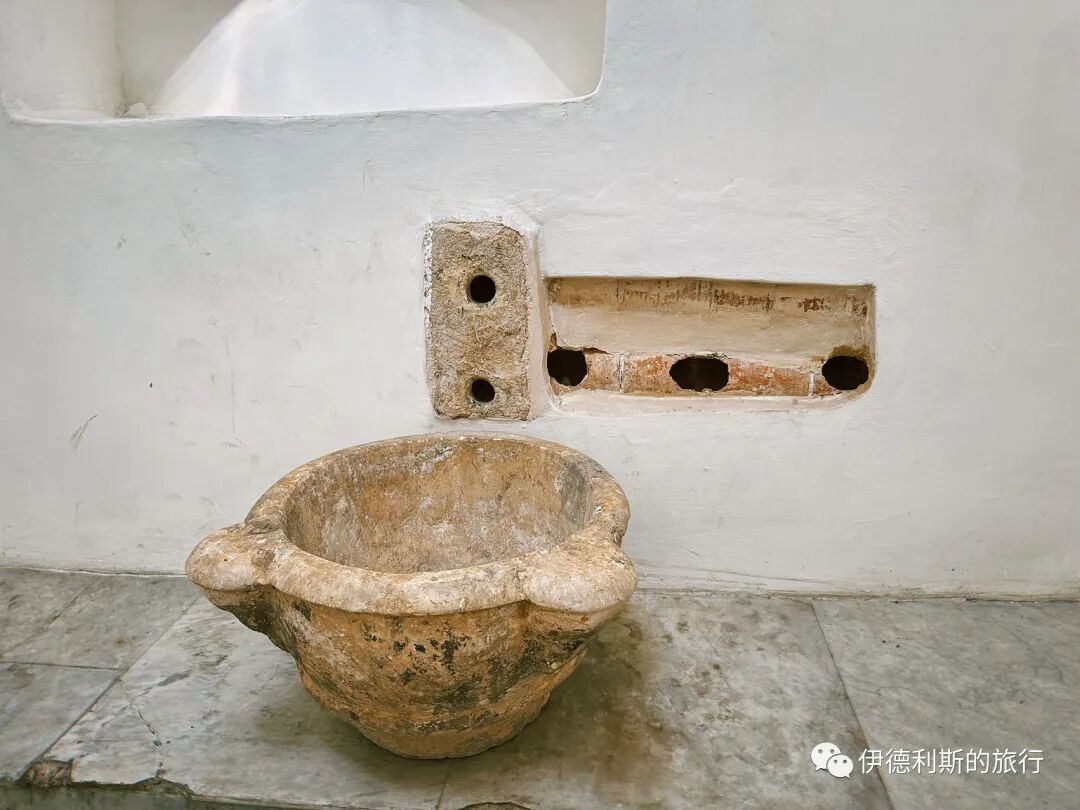
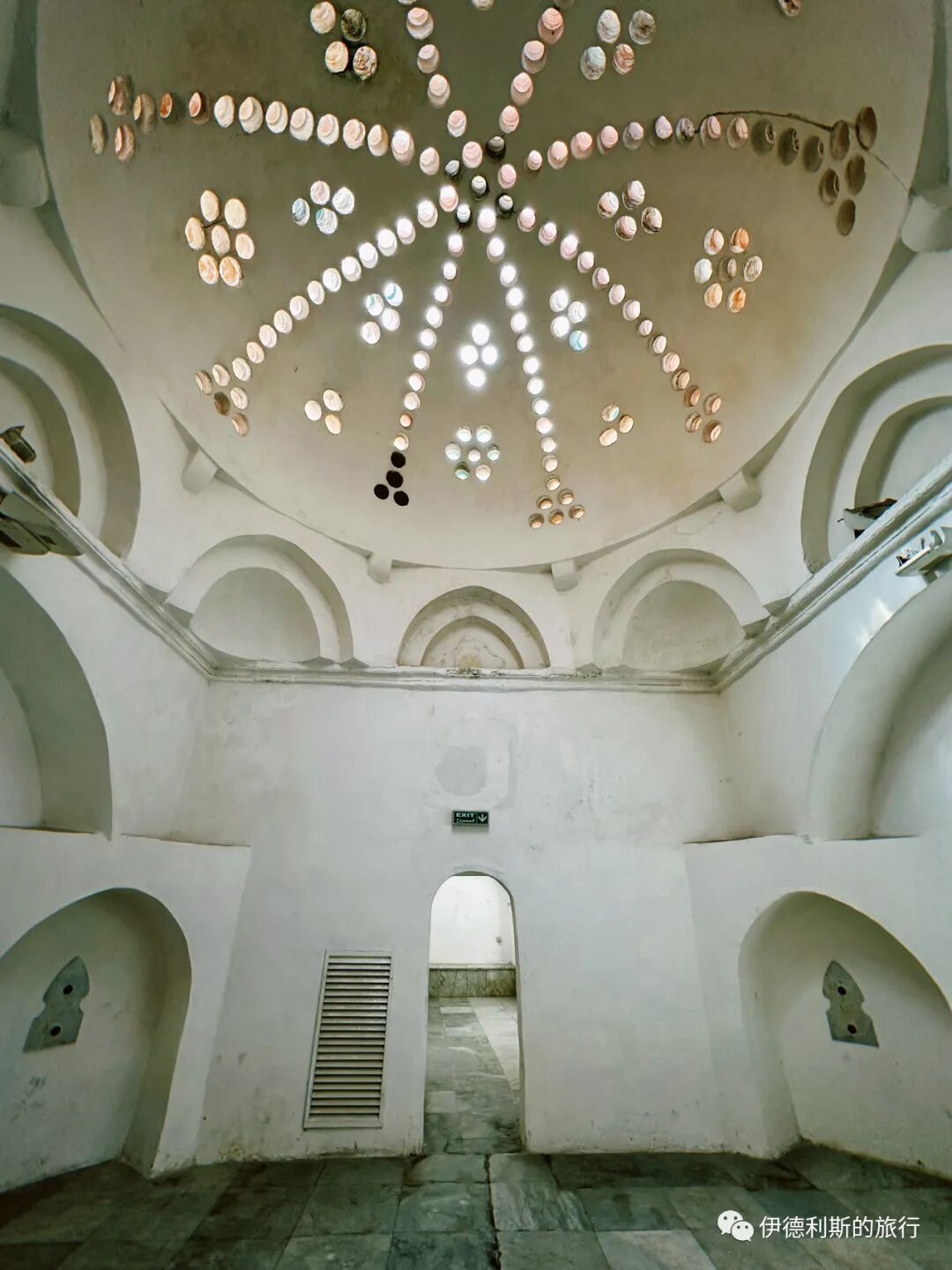
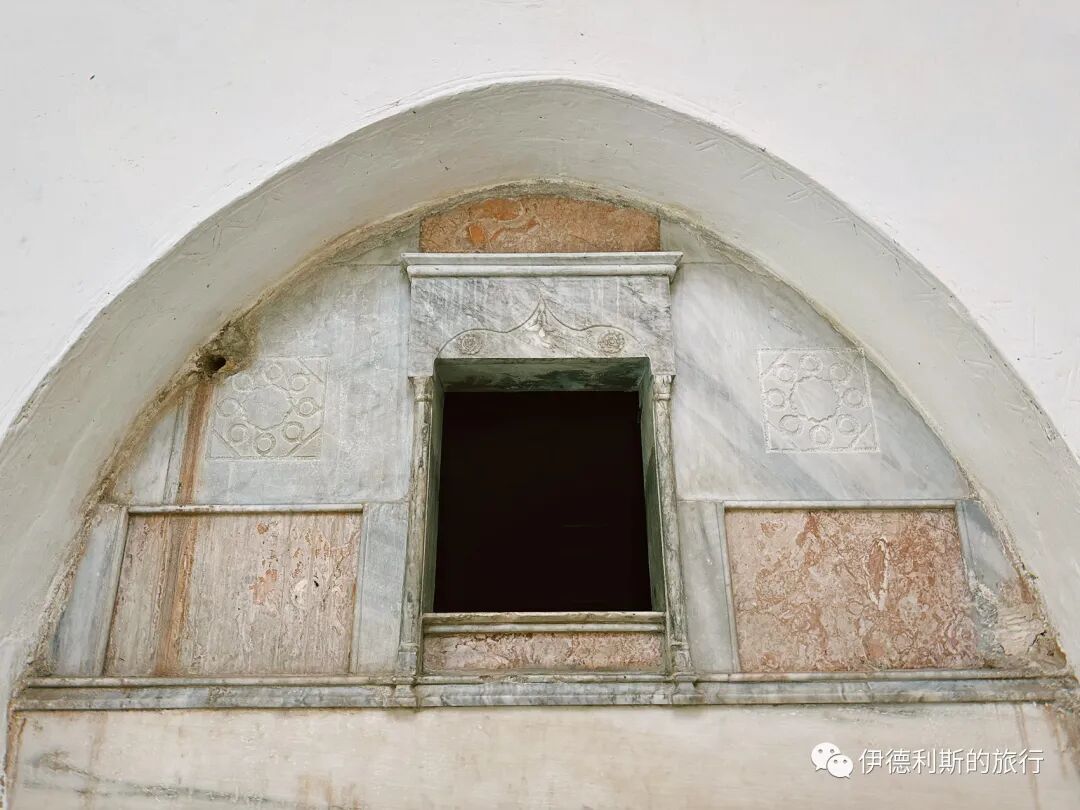
Right next to the Ezzedin Bathhouse is the Tailors' Inn (Khan Khayyatin). Prince Badr al-Din built this Mamluk-era trading inn in 1339. It mainly sold needles, thread, and textiles for tailors. This is not a typical courtyard inn. It consists of two rows of shops with stores on the ground floor and guest rooms on the second floor. The two sides do not connect, and the roof has ten arched sections linked horizontally. People say the inn has this shape because it was built on the foundation of a Byzantine-Crusader building.
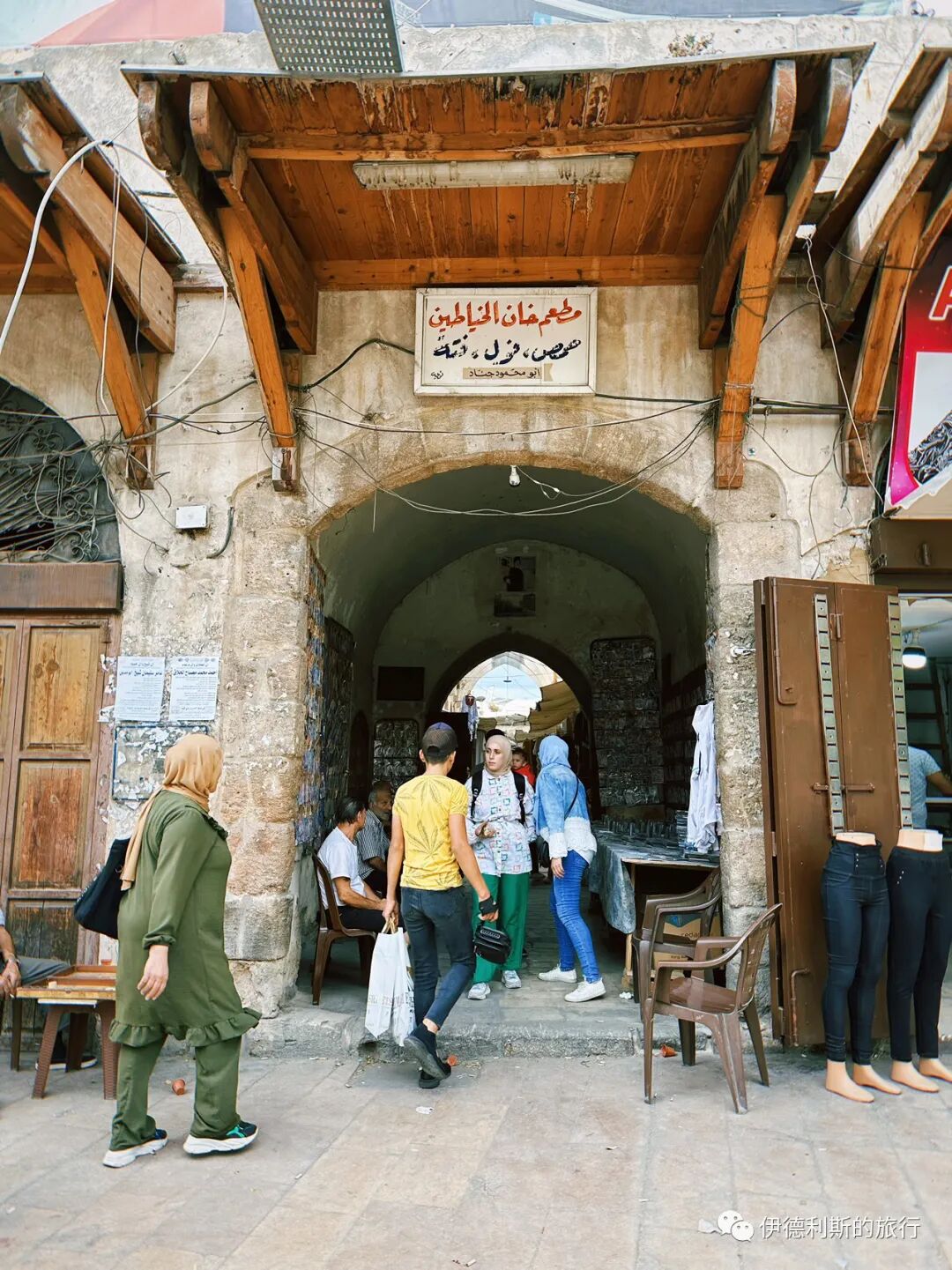
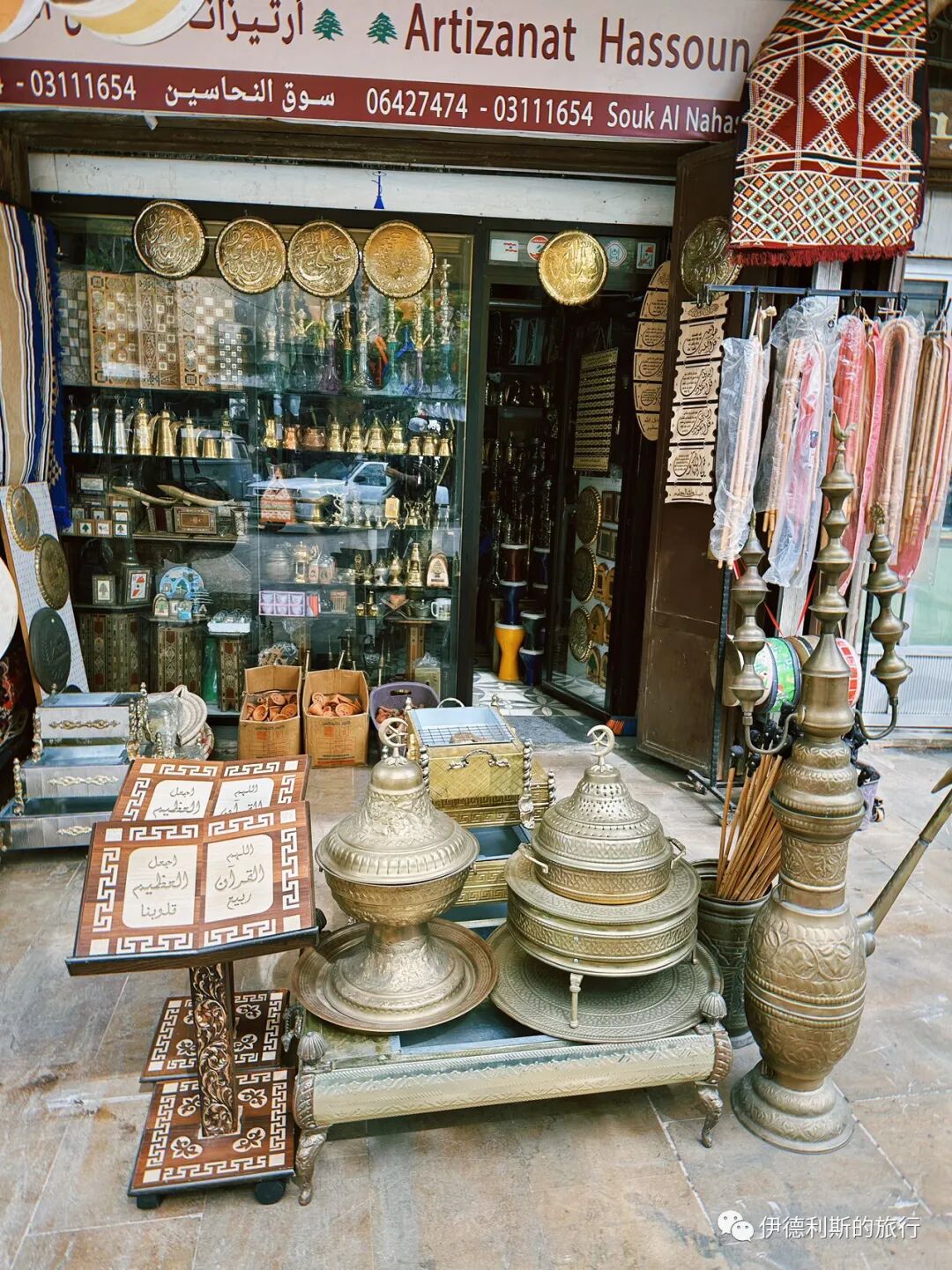
Some historical sites I did not enter.
The first is the Attar Mosque. A local Tripoli perfume merchant named Badr al-Din al-Attar built it in the 1350s on the ruins of a Crusader church. It is also the first non-Mamluk mosque in Tripoli. The Attar Mosque is known as one of the most beautiful mosques in Tripoli, but it has been closed for several years for repairs.
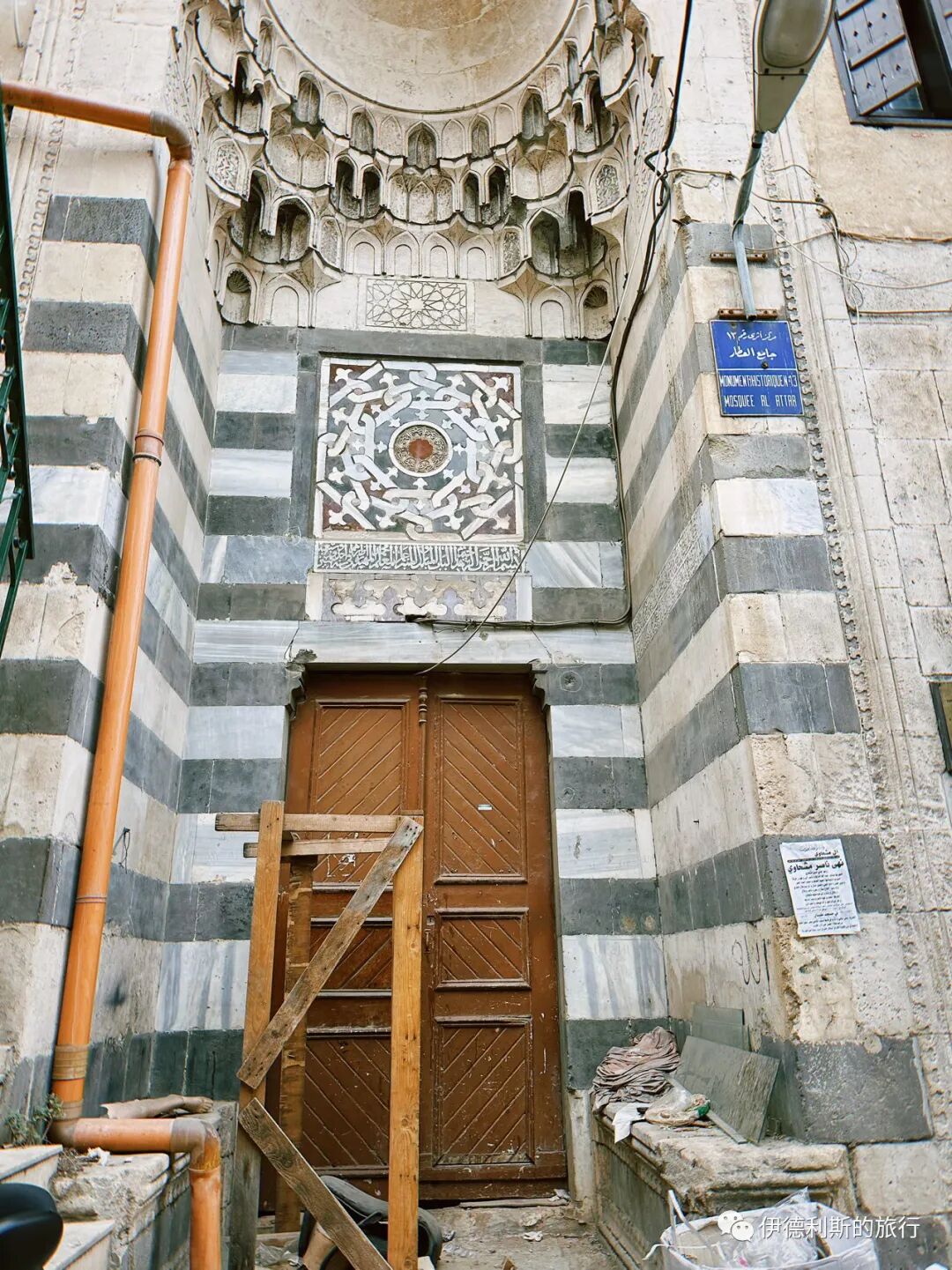
The second is the Tawba Mosque. The exact age of Tawba Mosque is unknown, but it is thought to have been built during the Mamluk period. Because it sits right next to the riverbank, the stone inscription marking its construction was likely washed away in a flood. A stone inscription now at the mosque entrance says it was rebuilt after a flood in 1612. Many mosques in Lebanon lock their doors outside of prayer times, so I could not go inside and only saw the octagonal minaret (bangke ta).
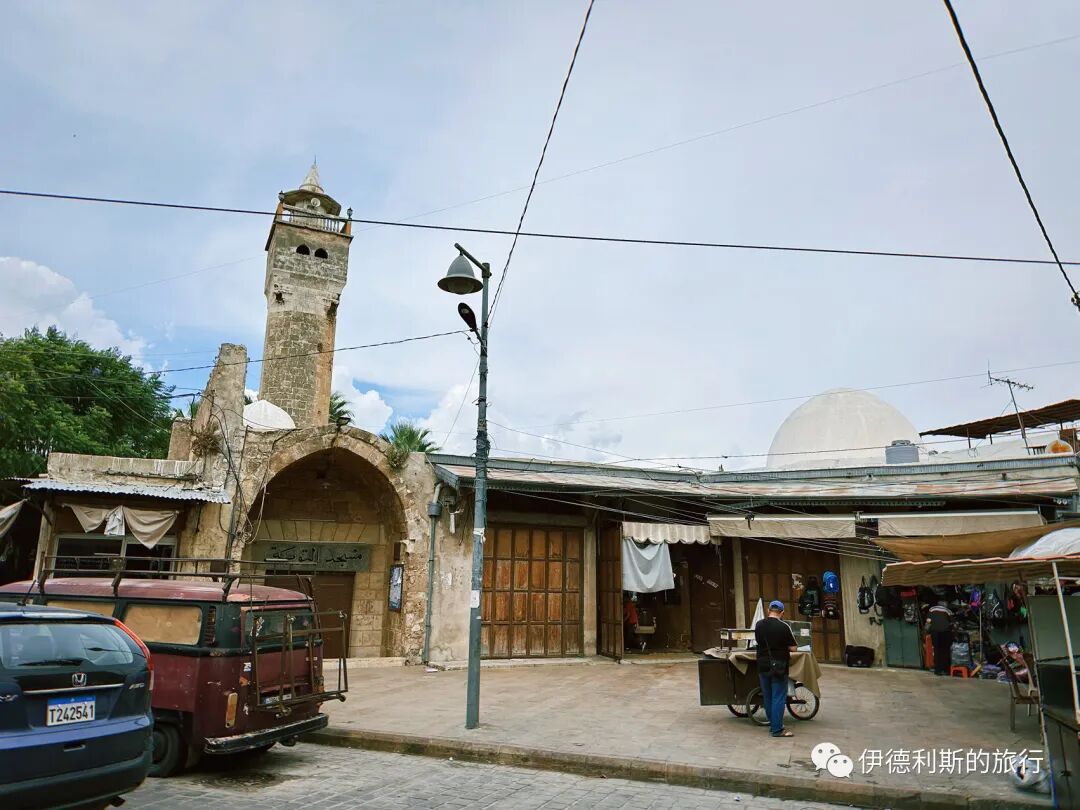
The third one is Burtasi Mosque, built by Isa ibn Umar al-Burtasi during the Mamluk period. Since Isa passed away in 1324, we can guess the mosque was built between the late 13th century and 1324. A flood in 1955 destroyed all the houses around Burtasi Mosque, and it is now the only building left standing on the riverbank. The minaret above the main gate is known as the most beautiful minaret in Tripoli. Above the three-story honeycomb-style decorative carving (muqarnas) is a square balcony with Moorish-style double-arched windows. This type of double arch is a classic feature of Muslim architecture from Andalusia in southern Spain.
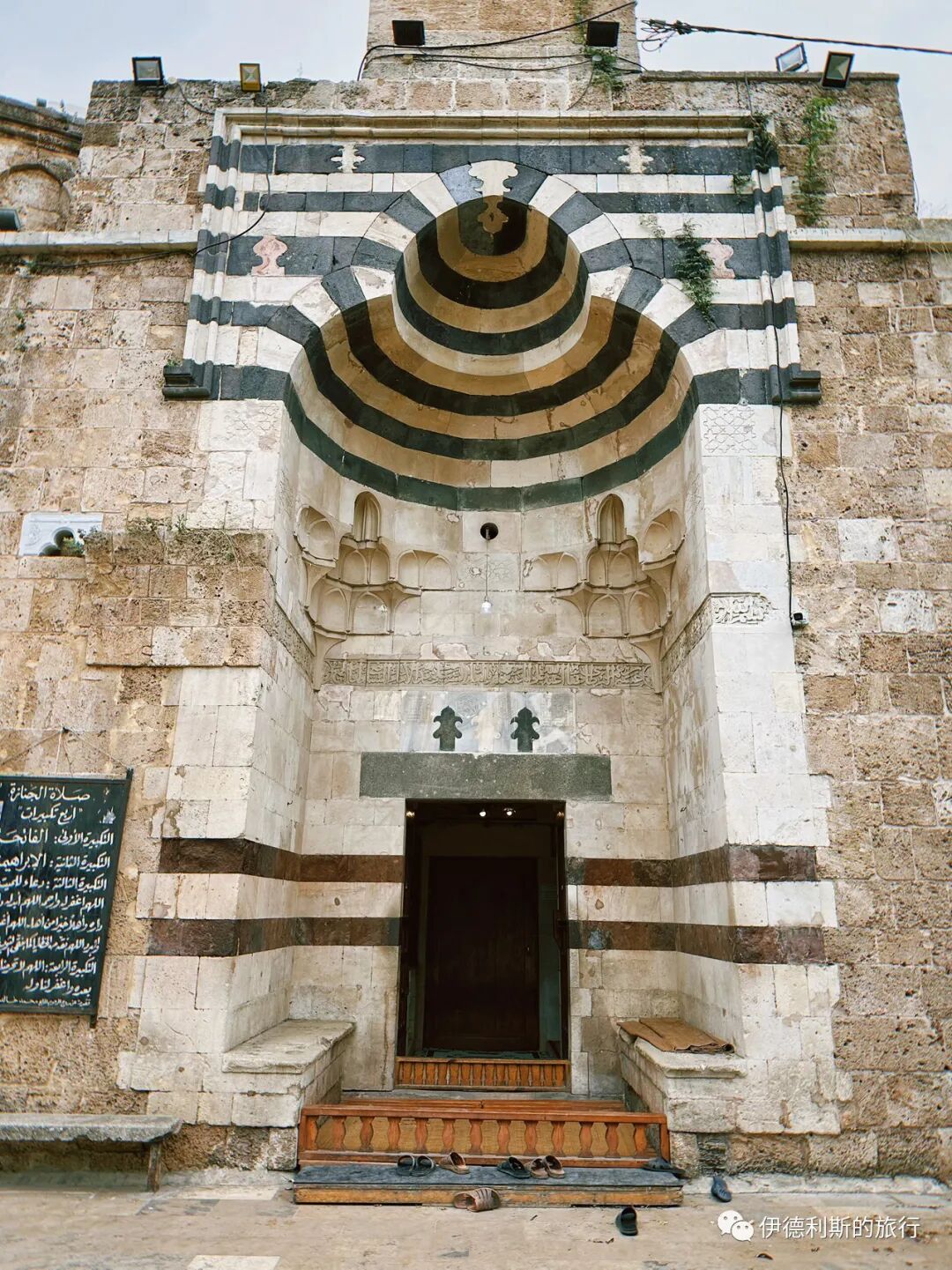
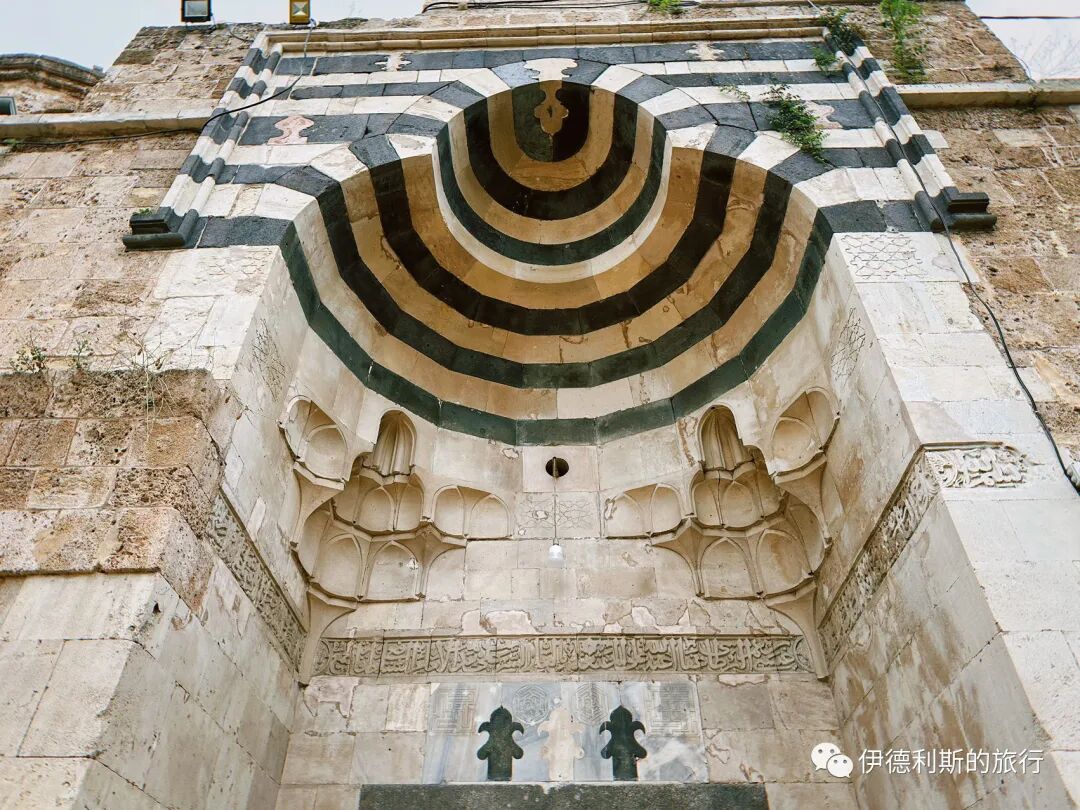
The fourth site is Askar Inn (Khan), built in the 14th-century Mamluk period, which is the largest trading inn in Tripoli.
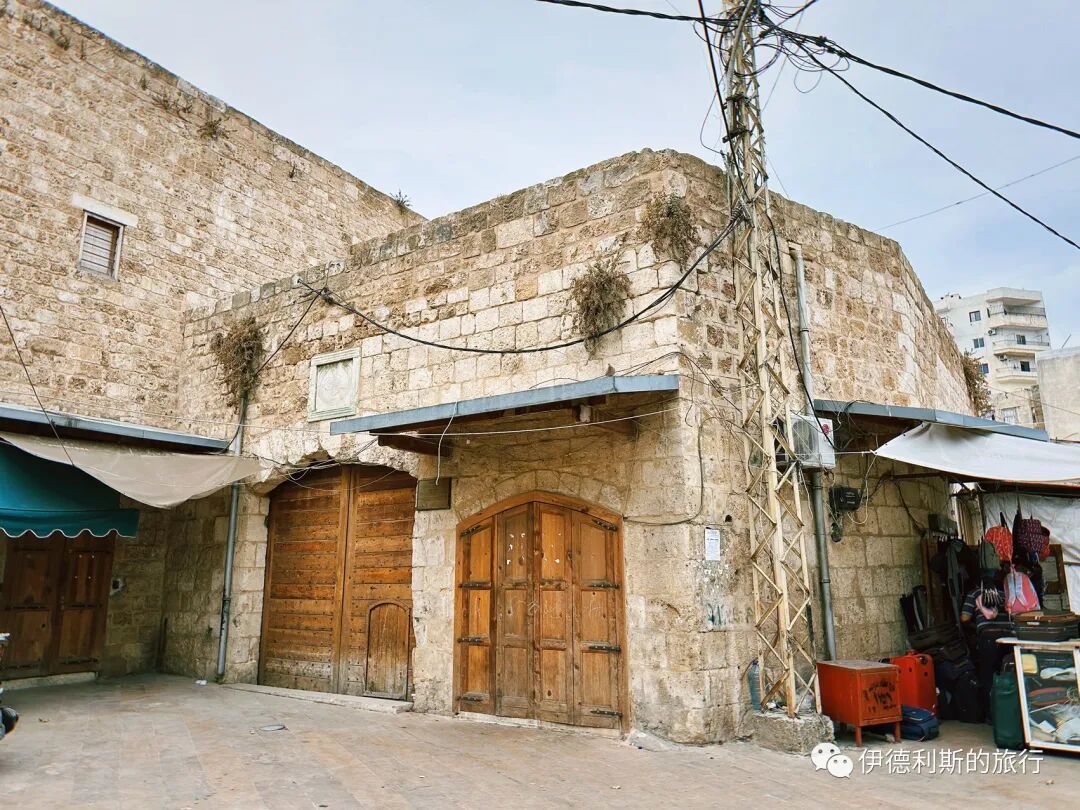
I had a traditional bean stew brunch at Akra Restaurant in the old city of Tripoli. I ordered traditional stewed fava beans and chickpeas, plus hummus topped with cashews and peanuts, all eaten inside pita bread.
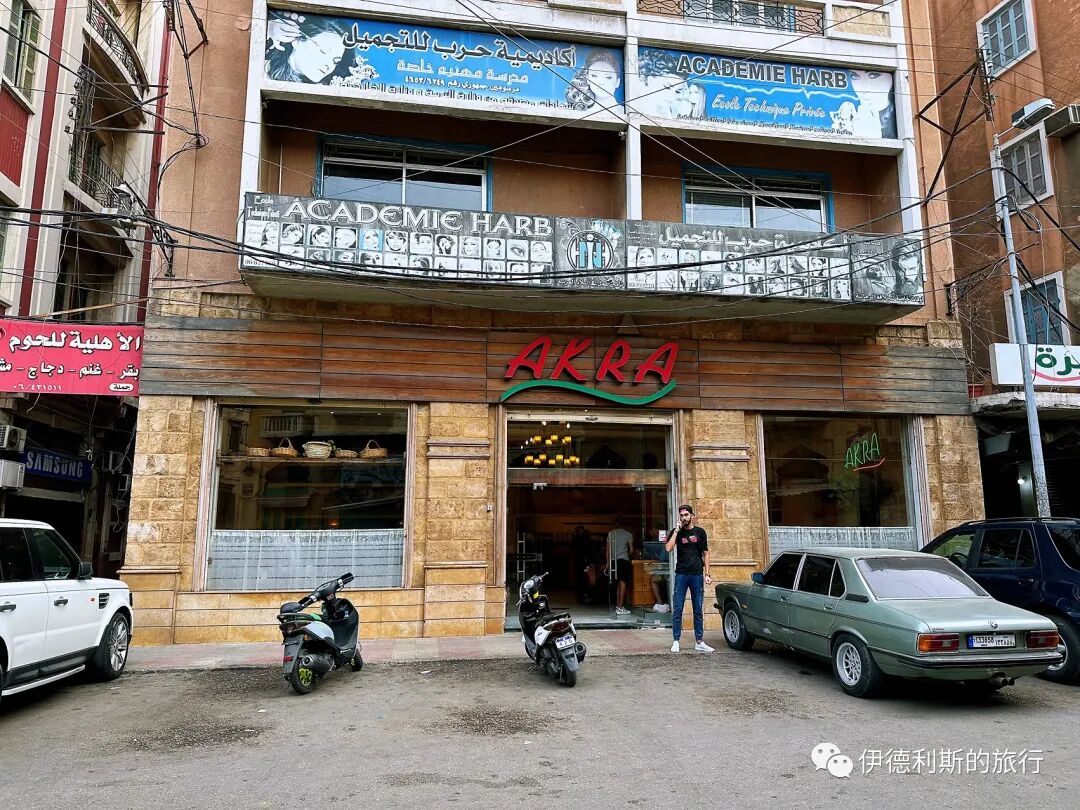
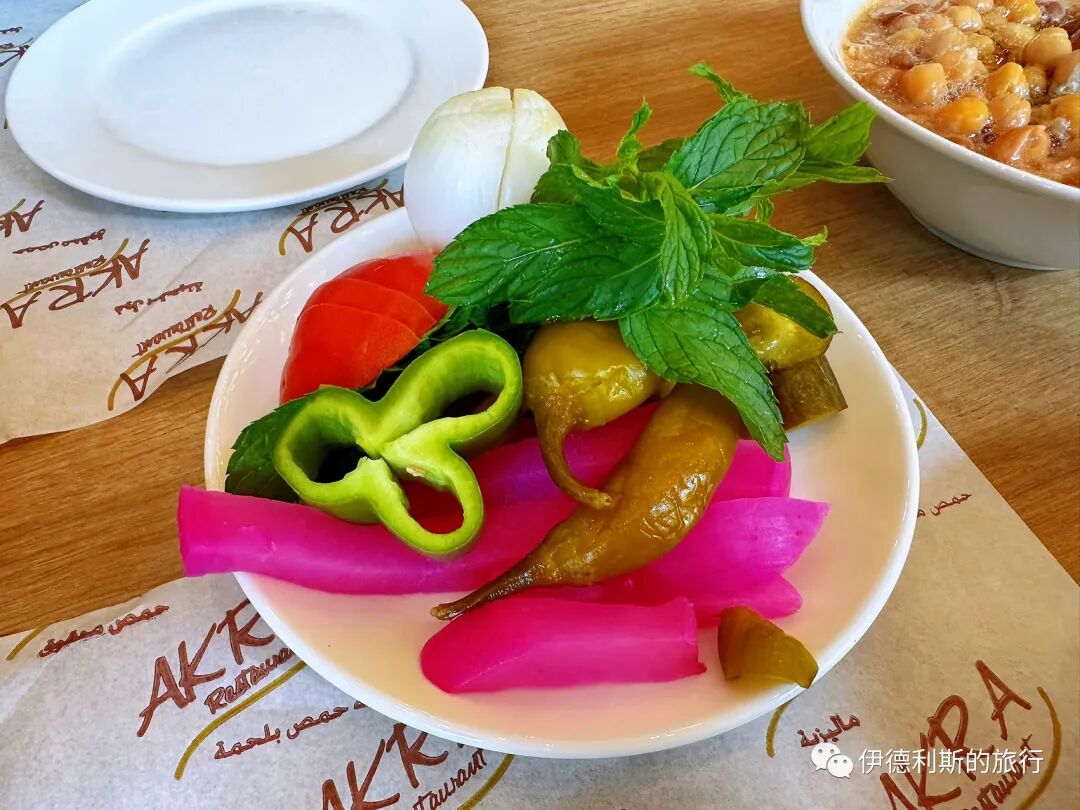
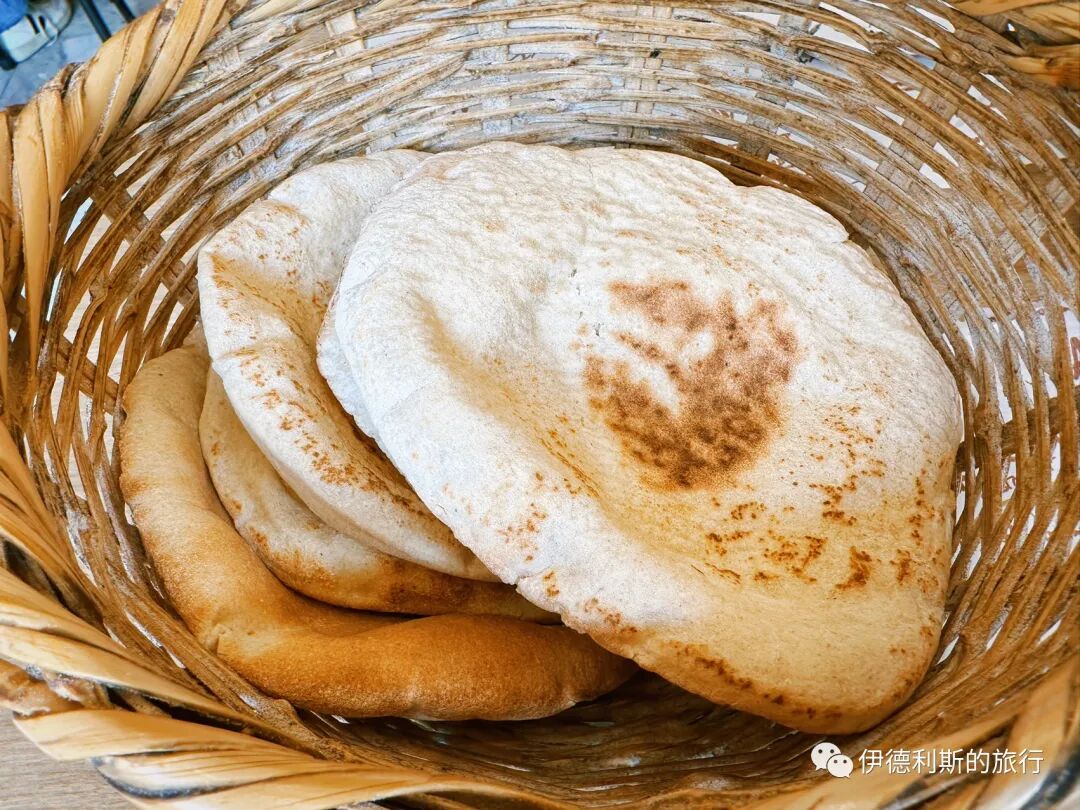
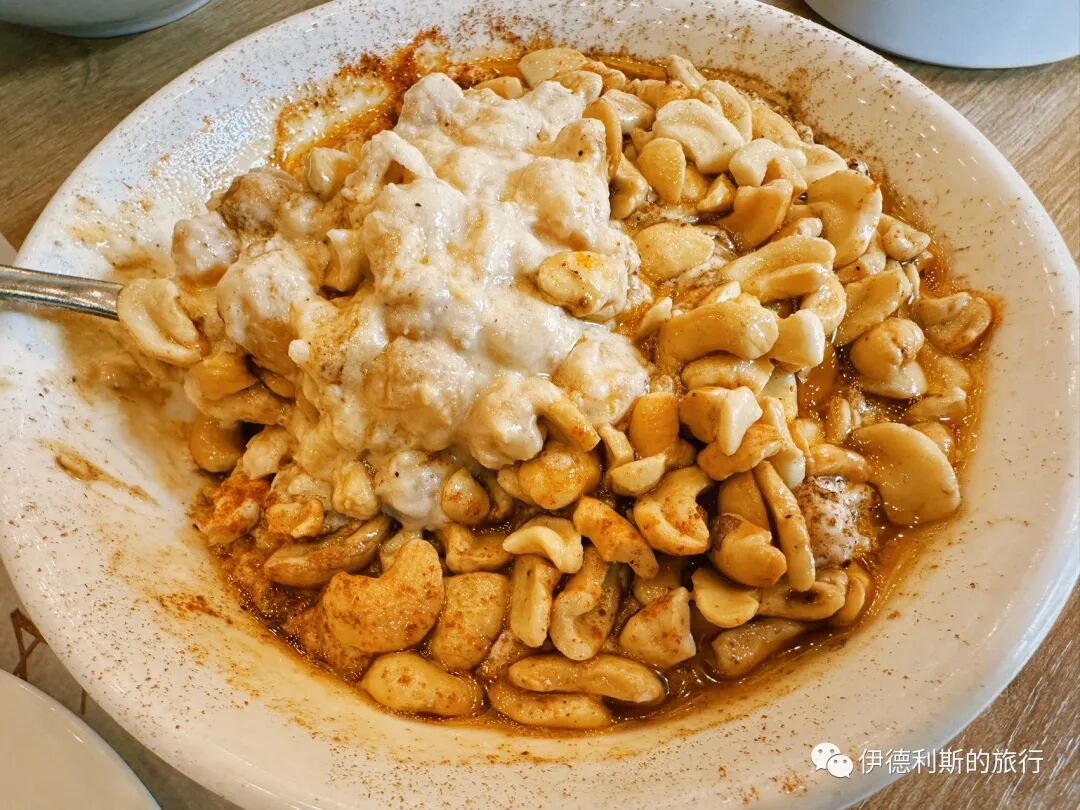
The Ezzedin Bathhouse (Hammam) was the first public bath built by the Mamluk dynasty after they took Tripoli. Emir Ezzedin Aibek, who ruled Tripoli from 1293 to 1298, ordered its construction using many marble pieces from the Byzantine and Crusader eras. This bathhouse operated from the end of the 13th century until 1975, when it closed after the Lebanese Civil War began. It has been restored and is now free to visit.
The Ezzedin Bathhouse follows the classic Roman-Byzantine bath design. It has three parts: a changing room with a central fountain, a warm room with private stalls, and a hot steam room.
The bathhouse gate likely uses parts from a Crusader church. The lintel features two roses and a Paschal lamb, which are typical Christian symbols. You can still see an Arabic sign written before it closed in 1975: 'Women use it between 12 and 4, and men use it after 4.'
The dome in the main hall has many round holes for light. Blue glass cups cover these holes to keep the heat inside.
The Jawani Harrara room sits right next to the boiler. It is the hottest and most humid part of the bathhouse and has a delicate window that lets hot steam into the room. The red stone section in the middle is called the Blata. Pipes underneath connect to the boiler, and people can get massages on top of it.
Right next to the Ezzedin Bathhouse is the Tailors' Inn (Khan Khayyatin). Prince Badr al-Din built this Mamluk-era trading inn in 1339. It mainly sold needles, thread, and textiles for tailors. This is not a typical courtyard inn. It consists of two rows of shops with stores on the ground floor and guest rooms on the second floor. The two sides do not connect, and the roof has ten arched sections linked horizontally. People say the inn has this shape because it was built on the foundation of a Byzantine-Crusader building.
Some historical sites I did not enter.
The first is the Attar Mosque. A local Tripoli perfume merchant named Badr al-Din al-Attar built it in the 1350s on the ruins of a Crusader church. It is also the first non-Mamluk mosque in Tripoli. The Attar Mosque is known as one of the most beautiful mosques in Tripoli, but it has been closed for several years for repairs.
The second is the Tawba Mosque. The exact age of Tawba Mosque is unknown, but it is thought to have been built during the Mamluk period. Because it sits right next to the riverbank, the stone inscription marking its construction was likely washed away in a flood. A stone inscription now at the mosque entrance says it was rebuilt after a flood in 1612. Many mosques in Lebanon lock their doors outside of prayer times, so I could not go inside and only saw the octagonal minaret (bangke ta).
The third one is Burtasi Mosque, built by Isa ibn Umar al-Burtasi during the Mamluk period. Since Isa passed away in 1324, we can guess the mosque was built between the late 13th century and 1324. A flood in 1955 destroyed all the houses around Burtasi Mosque, and it is now the only building left standing on the riverbank. The minaret above the main gate is known as the most beautiful minaret in Tripoli. Above the three-story honeycomb-style decorative carving (muqarnas) is a square balcony with Moorish-style double-arched windows. This type of double arch is a classic feature of Muslim architecture from Andalusia in southern Spain.
The fourth site is Askar Inn (Khan), built in the 14th-century Mamluk period, which is the largest trading inn in Tripoli.
I had a traditional bean stew brunch at Akra Restaurant in the old city of Tripoli. I ordered traditional stewed fava beans and chickpeas, plus hummus topped with cashews and peanuts, all eaten inside pita bread.
Halal Travel Guide: Tripoli, Lebanon - Mosques, Old City and Food
Articles • ali2007fr posted the article • 0 comments • 130 views • 2026-05-20 08:13
Reposted from the web
Summary: Tripoli in northern Lebanon is shown through its old city streets, mosques, markets, and everyday food. The account follows the original route from Beirut to Tripoli while keeping the local names, religious sites, and photographs in order.
Tripoli is in northern Lebanon. It takes about an hour to get there by minibus from across the street from the Mohammad Al-Amin Mosque in the capital, Beirut.
In 1289, the Mamluk dynasty took Tripoli from the Crusaders. They destroyed the old city and built a new one 4 kilometers inland below the castle, turning it into an important historic city for the faith. Today, about 35 ancient buildings from the Mamluk period remain in the old city of Tripoli. This makes Tripoli the city with the second-most preserved Mamluk monuments after Cairo.
After the Ottoman Empire left Lebanon in 1918, Tripoli fell into a long decline. The Lebanese Civil War that began in 1975 hit Tripoli hard. In 1985, a battle between Sunni and Alawite militias forced 200,000 people to leave their homes and led to the Syrian army staying in Tripoli until 2005. After the civil war ended, Tripoli seemed to be forgotten, and more than half of its residents live in poverty. At the same time, conflicts between Sunni and Alawite groups happen from time to time, often with bombings and suicide attacks, which has long made Tripoli an unsuitable place for tourism.
Table of Contents
Castle
Tripoli Castle: Rebuilt by the Mamluk dynasty in 1289 and again by Suleiman the Magnificent of the Ottoman Empire in 1521.
City Gates
Al-Mahatra Gate: Named after the military musicians who played to encourage the troops.
Mosques
Mansouri Great Mosque: Built by the Mamluk dynasty in 1294.
Taynal Mosque: Built by the Mamluk dynasty in 1336.
Attar Mosque: Built in the 1350s by a local wealthy perfume merchant; it is currently closed.
Al-Uwaysiyat Mosque: Built by the Mamluk dynasty in 1461.
Hanging Mosque (Muallaq Mosque): Built by the Ottoman Empire in 1561.
Tawba Mosque: Rebuilt by the Ottoman Empire in 1612.
Burtasi Mosque: Built by the Mamluk dynasty in the late 13th and early 14th centuries.
Madrasas
In the 14th century, the Mamluk dynasty built six madrasas around the Mansouri Great Mosque.
Hammam
Al Jadid Hammam: Built during the Ottoman period in 1740; it is currently closed.
Ezzedin Hammam: Built by the Mamluk dynasty in the late 13th century; it is currently open for visitors.
Market
Haraj Market: Built in the 14th century during the Mamluk dynasty.
Inn
Al Saboun Soap Inn: Built in 1480 during the late Mamluk dynasty, where you can buy traditional soap.
Misriyyin Soap Inn: Built in the 14th century during the Mamluk dynasty, where you can buy traditional soap.
Khayyatin Tailor Inn: Built in 1339 during the Mamluk dynasty, where you can buy traditional clothing.
Askar Inn: Built in the 14th century during the Mamluk dynasty, currently closed.
Food
Cheese flatbread in the market.
Eat at Akra Restaurant: Traditional bean stew brunch.
Castle
The site of Tripoli Castle was originally a Shia cemetery from the Fatimid dynasty. During the Frankish Crusader siege of Tripoli in 1102-1103, the Crusader leader Raymond of Saint-Gilles ordered it to be built into a castle, so it was later also called Saint-Gilles Castle. In 1289, after the Mamluk dynasty captured Tripoli, they rebuilt the castle using many Roman columns and other building materials found nearby. In 1521, the Ottoman Sultan Suleiman the Magnificent rebuilt the castle again, changing the arrow slits into cannon ports. In the early 19th century, the Ottoman governor of Tripoli carried out the last major renovation of the castle, giving it its current appearance.
The castle gate consists of two towers. The moat in front originally had a drawbridge, which has now been replaced by a stone bridge. The black and white marble facade on the gate was built by Suleiman the Magnificent in 1521. The stone inscription above reads: 'May the Emir never cease to obey his command, restoring this sacred castle, making it a strong fortress forever.'
City Gates
Al-Mahatra Gate in the old city of Tripoli. The name of this gate comes from the military musicians who played to encourage the army. Now that the war is over, houses have been built on top of the gate, and it has become a quiet alley.
Mosques
Mansouri Great Mosque, also known as the Great Mosque of Tripoli, was ordered to be built in 1294 by the Mamluk Sultan Al-Ashraf Khalil. It is the first building constructed by the Mamluk dynasty in Tripoli.
In 1109, the French Crusaders occupied Tripoli. For the next 180 years, Tripoli was ruled by European Christian nobles. In 1289, the Mamluk army arrived at the walls of Tripoli carrying large catapults. Under the assault of catapults, the two towers of Tripoli soon collapsed. The Mamluk army stormed the city and leveled it to the ground.
Shortly after, the Mamluk dynasty began building a new city at the foot of the castle on Tripoli's Pilgrim Mountain (Jabal al-Hajj). This included the Great Mansouri Mosque, built on the ruins of a Crusader church at the base of the hill. The mosque's minaret (mabkhara) is likely part of the Crusader Church of St. Mary, and the main gate may also incorporate the original Crusader church entrance. The main prayer hall was built by the Mamluk dynasty in 1294, and the courtyard's surrounding colonnades were added in 1314 by the Mamluk Sultan Al-Nasir Muhammad.
Taynal Mosque was built in 1336 by order of the Mamluk governor of Tripoli, Amir Taynal. The main prayer hall of Taynal Mosque consists of two consecutive halls. The most ornate feature is the entrance to the second hall, which has a gate with a stalactite-style cornice (muqarnas) and uses the ablaq technique of alternating black and white marble. Inside the prayer hall are some ancient Corinthian columns, which are thought to have come from a Crusader-era church or an even older Roman temple.
Attar Mosque was built in the 1350s by a wealthy local perfume merchant named Badr al-Din al-Attar on the ruins of a Crusader church. It was the first mosque in Tripoli not built by the Mamluks. Attar Mosque is known as one of the most beautiful mosques in Tripoli, but it has been closed for several years for renovations.
Al-Uwaysiyat Mosque was first built during the Mamluk period in 1461 and was renovated in 1534 during the reign of the Ottoman Sultan Suleiman the Magnificent.
The Hanging Mosque (Muallaq Mosque) was commissioned in 1561 by the Ottoman governor of Tripoli, Mahmud Lutfi al-Za'im, during the reign of Ottoman Sultan Suleiman the Magnificent. The first floor of the Hanging Mosque is a culvert on the street level, so you must take the stairs to the side to reach the second-floor prayer hall. The octagonal minaret next to the prayer hall is very eye-catching and features two levels of balconies.
The construction date of Tawba Mosque is unknown, though it is believed to have been built during the Mamluk period. Because it sits right next to the riverbank, the stone inscription marking its construction was likely washed away in a flood. The inscription currently at the mosque entrance states that it was rebuilt after a flood in 1612. Many mosques in Lebanon lock their doors outside of prayer times, so I could not enter and only saw the octagonal minaret.
Burtasi Mosque was built by Isa ibn Umar al-Burtasi during the Mamluk period. Since Isa passed away in 1324, we can assume the mosque was built between the late 13th century and 1324. A flood in 1955 destroyed all the houses around Burtasi Mosque, and it is now the only building left standing on the riverbank. The minaret above the main gate is considered the most beautiful minaret in Tripoli. Above the three-tiered muqarnas cornice is a square balcony featuring Moorish-style double-arched windows. This type of double arch is a classic structure found in Muslim architecture in Andalusia, southern Spain.
Madrasas
During the 14th century, the Mamluk dynasty established six colleges around the Great Mansouri Mosque, which trained a large number of students. These include al-Khayriyya Hasan (1309 or later), al-Qartawiyya (c. 1326), al-Shamsiyya (1349), al-Nasiriyya (between 1354–60), al-Nuriyya (14th century), and the Mashhad Madrasa. The al-Qartawiyya Madrasa outside the east wall of the Mansouri Great Mosque is the most magnificent, though we could not find the main gate in the maze-like alleys of the old city, we did see the calligraphy carvings on the school's wall.
Hammam
Right next to the Hanging Mosque is the Al Jadid bathhouse (Hammam), built in 1740 during the Ottoman period, which was used until the 1970s and closed after the outbreak of the Lebanese Civil War. This bathhouse was a gift to Tripoli from the Damascus governor Asad Pasha Al Azem, and its gate is exquisite, featuring a fourteen-link chain carved from a single piece of stone.
The Ezzedin bathhouse (Hammam) was the first public bathhouse built by the Mamluk dynasty after they occupied Tripoli, commissioned by Emir Ezzedin Aibek (who ruled Tripoli from 1293 to 1298) and constructed using many marble pieces from the Byzantine and Crusader eras. This bathhouse operated from the end of the 13th century until 1975, when it closed due to the start of the Lebanese Civil War. It has now been restored and is free to visit.
Market
The markets in Tripoli's old city are very lively, which is a sharp contrast to Beirut. Ibn Battuta wrote in his travelogue: 'Afterward, we arrived at the city of Tripoli.' It is an important town in Sham, with several small rivers flowing through it. It is surrounded by fragrant orchards and lush green trees. The sea surrounds it with its deep blue water, and the earth nourishes it with its treasures. The goods in the market are dazzling and truly amazing.
We drank street coffee at the market and saw all kinds of dairy products, which was very interesting.
The Haraj market was built in the 14th century and has an 8-meter-high vaulted ceiling supported by black granite columns, some of which may be architectural pieces from the ancient Roman or Byzantine eras. The market has two floors; the upper rooms were for merchants to stay in and had wooden windows through which their female relatives could look down at the market, while the lower floor was for selling goods.
The 1983 bombing during the Lebanese Civil War caused severe damage to the Haraj market, which was later restored to its current state after a long process.
Inn
Tripoli has always been famous for producing perfume and handmade soap, with the most well-known brand being Bader Hassoun's Khan Al Saboun (Soap Inn). The history of the Hassoun family producing soap in Tripoli dates back to the early Mamluk dynasty in 1256, while the Soap Inn (Khan Al Saboun) in the old city of Tripoli was built in the late Mamluk dynasty in 1480.
The Soap Inn has a courtyard with two levels of galleries and a pool in the middle. The second floor of the gallery was for caravan merchants to stay, while the first floor was for making and selling soap. People say the Ottoman Sultan Suleiman the Magnificent once received soap from Tripoli as a tribute, and at the urging of the Queen, Suleiman ordered the expansion of the Soap Inn in Tripoli. After it was built, the soap inn became a trade center for making and selling soap, and it started exporting soap to Europe. Today, the Bader Hassoun soap shop is located right here.
In 1993, Bader Hassoun's jewelry store in the old city of Tripoli was robbed, which led him to decide to restore his family's tradition of making soap. He and his wife spent one night making traditional soap with olive oil, dates, glycerin, natural coloring, and spices, and it all sold out the next day.
We bought the most traditional natural soap at the shop, which comes in three scents: green tea, lavender, and cedar. Cedar is an important symbol of Lebanon, and Lebanon is also known as the Land of Cedars. We also bought an olive oil soap safe for babies, which I can use for Suleiman.
Misriyyin Inn is located in the northern part of the old city of Tripoli and dates back to the Mamluk period in the 14th century. There is a Sharkass soap shop on the second floor of the inn, and they have been making traditional olive oil soap since 1803. The Tripoli Soap shop on the first floor opened in 1937, and you can watch the process of making natural soap on-site here.
Right next to the Ezzedin bathhouse is the Tailors' Inn (Khan Khayyatin), a Mamluk-era commercial inn built by Prince Badr al-Din in 1339 that mainly sold needles, thread, textiles, and other sewing supplies. This is not a typical courtyard inn, but consists of two rows of shops with stores on the first floor and guest rooms on the second, which are not connected in the middle, and the top is covered by ten horizontally connected arches. People say it has its current shape because it was built on the foundation of a Byzantine-Crusader building.
Askar Inn (Khan) was built during the Mamluk period in the 14th century and is the largest commercial inn in Tripoli.
Food
Cheese flatbread (manakish) at the market, which is likely the most classic snack in the market.
We had a traditional stewed bean brunch at Akra restaurant, ordering traditional stewed fava beans and chickpeas, along with hummus topped with cashews and peanuts, all eaten inside pita bread. view all
Summary: Tripoli in northern Lebanon is shown through its old city streets, mosques, markets, and everyday food. The account follows the original route from Beirut to Tripoli while keeping the local names, religious sites, and photographs in order.
Tripoli is in northern Lebanon. It takes about an hour to get there by minibus from across the street from the Mohammad Al-Amin Mosque in the capital, Beirut.
In 1289, the Mamluk dynasty took Tripoli from the Crusaders. They destroyed the old city and built a new one 4 kilometers inland below the castle, turning it into an important historic city for the faith. Today, about 35 ancient buildings from the Mamluk period remain in the old city of Tripoli. This makes Tripoli the city with the second-most preserved Mamluk monuments after Cairo.
After the Ottoman Empire left Lebanon in 1918, Tripoli fell into a long decline. The Lebanese Civil War that began in 1975 hit Tripoli hard. In 1985, a battle between Sunni and Alawite militias forced 200,000 people to leave their homes and led to the Syrian army staying in Tripoli until 2005. After the civil war ended, Tripoli seemed to be forgotten, and more than half of its residents live in poverty. At the same time, conflicts between Sunni and Alawite groups happen from time to time, often with bombings and suicide attacks, which has long made Tripoli an unsuitable place for tourism.
Table of Contents
Castle
Tripoli Castle: Rebuilt by the Mamluk dynasty in 1289 and again by Suleiman the Magnificent of the Ottoman Empire in 1521.
City Gates
Al-Mahatra Gate: Named after the military musicians who played to encourage the troops.
Mosques
Mansouri Great Mosque: Built by the Mamluk dynasty in 1294.
Taynal Mosque: Built by the Mamluk dynasty in 1336.
Attar Mosque: Built in the 1350s by a local wealthy perfume merchant; it is currently closed.
Al-Uwaysiyat Mosque: Built by the Mamluk dynasty in 1461.
Hanging Mosque (Muallaq Mosque): Built by the Ottoman Empire in 1561.
Tawba Mosque: Rebuilt by the Ottoman Empire in 1612.
Burtasi Mosque: Built by the Mamluk dynasty in the late 13th and early 14th centuries.
Madrasas
In the 14th century, the Mamluk dynasty built six madrasas around the Mansouri Great Mosque.
Hammam
Al Jadid Hammam: Built during the Ottoman period in 1740; it is currently closed.
Ezzedin Hammam: Built by the Mamluk dynasty in the late 13th century; it is currently open for visitors.
Market
Haraj Market: Built in the 14th century during the Mamluk dynasty.
Inn
Al Saboun Soap Inn: Built in 1480 during the late Mamluk dynasty, where you can buy traditional soap.
Misriyyin Soap Inn: Built in the 14th century during the Mamluk dynasty, where you can buy traditional soap.
Khayyatin Tailor Inn: Built in 1339 during the Mamluk dynasty, where you can buy traditional clothing.
Askar Inn: Built in the 14th century during the Mamluk dynasty, currently closed.
Food
Cheese flatbread in the market.
Eat at Akra Restaurant: Traditional bean stew brunch.
Castle
The site of Tripoli Castle was originally a Shia cemetery from the Fatimid dynasty. During the Frankish Crusader siege of Tripoli in 1102-1103, the Crusader leader Raymond of Saint-Gilles ordered it to be built into a castle, so it was later also called Saint-Gilles Castle. In 1289, after the Mamluk dynasty captured Tripoli, they rebuilt the castle using many Roman columns and other building materials found nearby. In 1521, the Ottoman Sultan Suleiman the Magnificent rebuilt the castle again, changing the arrow slits into cannon ports. In the early 19th century, the Ottoman governor of Tripoli carried out the last major renovation of the castle, giving it its current appearance.
The castle gate consists of two towers. The moat in front originally had a drawbridge, which has now been replaced by a stone bridge. The black and white marble facade on the gate was built by Suleiman the Magnificent in 1521. The stone inscription above reads: 'May the Emir never cease to obey his command, restoring this sacred castle, making it a strong fortress forever.'
City Gates
Al-Mahatra Gate in the old city of Tripoli. The name of this gate comes from the military musicians who played to encourage the army. Now that the war is over, houses have been built on top of the gate, and it has become a quiet alley.
Mosques
Mansouri Great Mosque, also known as the Great Mosque of Tripoli, was ordered to be built in 1294 by the Mamluk Sultan Al-Ashraf Khalil. It is the first building constructed by the Mamluk dynasty in Tripoli.
In 1109, the French Crusaders occupied Tripoli. For the next 180 years, Tripoli was ruled by European Christian nobles. In 1289, the Mamluk army arrived at the walls of Tripoli carrying large catapults. Under the assault of catapults, the two towers of Tripoli soon collapsed. The Mamluk army stormed the city and leveled it to the ground.
Shortly after, the Mamluk dynasty began building a new city at the foot of the castle on Tripoli's Pilgrim Mountain (Jabal al-Hajj). This included the Great Mansouri Mosque, built on the ruins of a Crusader church at the base of the hill. The mosque's minaret (mabkhara) is likely part of the Crusader Church of St. Mary, and the main gate may also incorporate the original Crusader church entrance. The main prayer hall was built by the Mamluk dynasty in 1294, and the courtyard's surrounding colonnades were added in 1314 by the Mamluk Sultan Al-Nasir Muhammad.
Taynal Mosque was built in 1336 by order of the Mamluk governor of Tripoli, Amir Taynal. The main prayer hall of Taynal Mosque consists of two consecutive halls. The most ornate feature is the entrance to the second hall, which has a gate with a stalactite-style cornice (muqarnas) and uses the ablaq technique of alternating black and white marble. Inside the prayer hall are some ancient Corinthian columns, which are thought to have come from a Crusader-era church or an even older Roman temple.
Attar Mosque was built in the 1350s by a wealthy local perfume merchant named Badr al-Din al-Attar on the ruins of a Crusader church. It was the first mosque in Tripoli not built by the Mamluks. Attar Mosque is known as one of the most beautiful mosques in Tripoli, but it has been closed for several years for renovations.
Al-Uwaysiyat Mosque was first built during the Mamluk period in 1461 and was renovated in 1534 during the reign of the Ottoman Sultan Suleiman the Magnificent.
The Hanging Mosque (Muallaq Mosque) was commissioned in 1561 by the Ottoman governor of Tripoli, Mahmud Lutfi al-Za'im, during the reign of Ottoman Sultan Suleiman the Magnificent. The first floor of the Hanging Mosque is a culvert on the street level, so you must take the stairs to the side to reach the second-floor prayer hall. The octagonal minaret next to the prayer hall is very eye-catching and features two levels of balconies.
The construction date of Tawba Mosque is unknown, though it is believed to have been built during the Mamluk period. Because it sits right next to the riverbank, the stone inscription marking its construction was likely washed away in a flood. The inscription currently at the mosque entrance states that it was rebuilt after a flood in 1612. Many mosques in Lebanon lock their doors outside of prayer times, so I could not enter and only saw the octagonal minaret.
Burtasi Mosque was built by Isa ibn Umar al-Burtasi during the Mamluk period. Since Isa passed away in 1324, we can assume the mosque was built between the late 13th century and 1324. A flood in 1955 destroyed all the houses around Burtasi Mosque, and it is now the only building left standing on the riverbank. The minaret above the main gate is considered the most beautiful minaret in Tripoli. Above the three-tiered muqarnas cornice is a square balcony featuring Moorish-style double-arched windows. This type of double arch is a classic structure found in Muslim architecture in Andalusia, southern Spain.
Madrasas
During the 14th century, the Mamluk dynasty established six colleges around the Great Mansouri Mosque, which trained a large number of students. These include al-Khayriyya Hasan (1309 or later), al-Qartawiyya (c. 1326), al-Shamsiyya (1349), al-Nasiriyya (between 1354–60), al-Nuriyya (14th century), and the Mashhad Madrasa. The al-Qartawiyya Madrasa outside the east wall of the Mansouri Great Mosque is the most magnificent, though we could not find the main gate in the maze-like alleys of the old city, we did see the calligraphy carvings on the school's wall.
Hammam
Right next to the Hanging Mosque is the Al Jadid bathhouse (Hammam), built in 1740 during the Ottoman period, which was used until the 1970s and closed after the outbreak of the Lebanese Civil War. This bathhouse was a gift to Tripoli from the Damascus governor Asad Pasha Al Azem, and its gate is exquisite, featuring a fourteen-link chain carved from a single piece of stone.
The Ezzedin bathhouse (Hammam) was the first public bathhouse built by the Mamluk dynasty after they occupied Tripoli, commissioned by Emir Ezzedin Aibek (who ruled Tripoli from 1293 to 1298) and constructed using many marble pieces from the Byzantine and Crusader eras. This bathhouse operated from the end of the 13th century until 1975, when it closed due to the start of the Lebanese Civil War. It has now been restored and is free to visit.
Market
The markets in Tripoli's old city are very lively, which is a sharp contrast to Beirut. Ibn Battuta wrote in his travelogue: 'Afterward, we arrived at the city of Tripoli.' It is an important town in Sham, with several small rivers flowing through it. It is surrounded by fragrant orchards and lush green trees. The sea surrounds it with its deep blue water, and the earth nourishes it with its treasures. The goods in the market are dazzling and truly amazing.
We drank street coffee at the market and saw all kinds of dairy products, which was very interesting.
The Haraj market was built in the 14th century and has an 8-meter-high vaulted ceiling supported by black granite columns, some of which may be architectural pieces from the ancient Roman or Byzantine eras. The market has two floors; the upper rooms were for merchants to stay in and had wooden windows through which their female relatives could look down at the market, while the lower floor was for selling goods.
The 1983 bombing during the Lebanese Civil War caused severe damage to the Haraj market, which was later restored to its current state after a long process.
Inn
Tripoli has always been famous for producing perfume and handmade soap, with the most well-known brand being Bader Hassoun's Khan Al Saboun (Soap Inn). The history of the Hassoun family producing soap in Tripoli dates back to the early Mamluk dynasty in 1256, while the Soap Inn (Khan Al Saboun) in the old city of Tripoli was built in the late Mamluk dynasty in 1480.
The Soap Inn has a courtyard with two levels of galleries and a pool in the middle. The second floor of the gallery was for caravan merchants to stay, while the first floor was for making and selling soap. People say the Ottoman Sultan Suleiman the Magnificent once received soap from Tripoli as a tribute, and at the urging of the Queen, Suleiman ordered the expansion of the Soap Inn in Tripoli. After it was built, the soap inn became a trade center for making and selling soap, and it started exporting soap to Europe. Today, the Bader Hassoun soap shop is located right here.
In 1993, Bader Hassoun's jewelry store in the old city of Tripoli was robbed, which led him to decide to restore his family's tradition of making soap. He and his wife spent one night making traditional soap with olive oil, dates, glycerin, natural coloring, and spices, and it all sold out the next day.
We bought the most traditional natural soap at the shop, which comes in three scents: green tea, lavender, and cedar. Cedar is an important symbol of Lebanon, and Lebanon is also known as the Land of Cedars. We also bought an olive oil soap safe for babies, which I can use for Suleiman.
Misriyyin Inn is located in the northern part of the old city of Tripoli and dates back to the Mamluk period in the 14th century. There is a Sharkass soap shop on the second floor of the inn, and they have been making traditional olive oil soap since 1803. The Tripoli Soap shop on the first floor opened in 1937, and you can watch the process of making natural soap on-site here.
Right next to the Ezzedin bathhouse is the Tailors' Inn (Khan Khayyatin), a Mamluk-era commercial inn built by Prince Badr al-Din in 1339 that mainly sold needles, thread, textiles, and other sewing supplies. This is not a typical courtyard inn, but consists of two rows of shops with stores on the first floor and guest rooms on the second, which are not connected in the middle, and the top is covered by ten horizontally connected arches. People say it has its current shape because it was built on the foundation of a Byzantine-Crusader building.
Askar Inn (Khan) was built during the Mamluk period in the 14th century and is the largest commercial inn in Tripoli.
Food
Cheese flatbread (manakish) at the market, which is likely the most classic snack in the market.
We had a traditional stewed bean brunch at Akra restaurant, ordering traditional stewed fava beans and chickpeas, along with hummus topped with cashews and peanuts, all eaten inside pita bread. view all
Reposted from the web
Summary: Tripoli in northern Lebanon is shown through its old city streets, mosques, markets, and everyday food. The account follows the original route from Beirut to Tripoli while keeping the local names, religious sites, and photographs in order.
Tripoli is in northern Lebanon. It takes about an hour to get there by minibus from across the street from the Mohammad Al-Amin Mosque in the capital, Beirut.
In 1289, the Mamluk dynasty took Tripoli from the Crusaders. They destroyed the old city and built a new one 4 kilometers inland below the castle, turning it into an important historic city for the faith. Today, about 35 ancient buildings from the Mamluk period remain in the old city of Tripoli. This makes Tripoli the city with the second-most preserved Mamluk monuments after Cairo.
After the Ottoman Empire left Lebanon in 1918, Tripoli fell into a long decline. The Lebanese Civil War that began in 1975 hit Tripoli hard. In 1985, a battle between Sunni and Alawite militias forced 200,000 people to leave their homes and led to the Syrian army staying in Tripoli until 2005. After the civil war ended, Tripoli seemed to be forgotten, and more than half of its residents live in poverty. At the same time, conflicts between Sunni and Alawite groups happen from time to time, often with bombings and suicide attacks, which has long made Tripoli an unsuitable place for tourism.
Table of Contents
Castle
Tripoli Castle: Rebuilt by the Mamluk dynasty in 1289 and again by Suleiman the Magnificent of the Ottoman Empire in 1521.
City Gates
Al-Mahatra Gate: Named after the military musicians who played to encourage the troops.
Mosques
Mansouri Great Mosque: Built by the Mamluk dynasty in 1294.
Taynal Mosque: Built by the Mamluk dynasty in 1336.
Attar Mosque: Built in the 1350s by a local wealthy perfume merchant; it is currently closed.
Al-Uwaysiyat Mosque: Built by the Mamluk dynasty in 1461.
Hanging Mosque (Muallaq Mosque): Built by the Ottoman Empire in 1561.
Tawba Mosque: Rebuilt by the Ottoman Empire in 1612.
Burtasi Mosque: Built by the Mamluk dynasty in the late 13th and early 14th centuries.
Madrasas
In the 14th century, the Mamluk dynasty built six madrasas around the Mansouri Great Mosque.
Hammam
Al Jadid Hammam: Built during the Ottoman period in 1740; it is currently closed.
Ezzedin Hammam: Built by the Mamluk dynasty in the late 13th century; it is currently open for visitors.
Market
Haraj Market: Built in the 14th century during the Mamluk dynasty.
Inn
Al Saboun Soap Inn: Built in 1480 during the late Mamluk dynasty, where you can buy traditional soap.
Misriyyin Soap Inn: Built in the 14th century during the Mamluk dynasty, where you can buy traditional soap.
Khayyatin Tailor Inn: Built in 1339 during the Mamluk dynasty, where you can buy traditional clothing.
Askar Inn: Built in the 14th century during the Mamluk dynasty, currently closed.
Food
Cheese flatbread in the market.
Eat at Akra Restaurant: Traditional bean stew brunch.
Castle
The site of Tripoli Castle was originally a Shia cemetery from the Fatimid dynasty. During the Frankish Crusader siege of Tripoli in 1102-1103, the Crusader leader Raymond of Saint-Gilles ordered it to be built into a castle, so it was later also called Saint-Gilles Castle. In 1289, after the Mamluk dynasty captured Tripoli, they rebuilt the castle using many Roman columns and other building materials found nearby. In 1521, the Ottoman Sultan Suleiman the Magnificent rebuilt the castle again, changing the arrow slits into cannon ports. In the early 19th century, the Ottoman governor of Tripoli carried out the last major renovation of the castle, giving it its current appearance.
The castle gate consists of two towers. The moat in front originally had a drawbridge, which has now been replaced by a stone bridge. The black and white marble facade on the gate was built by Suleiman the Magnificent in 1521. The stone inscription above reads: 'May the Emir never cease to obey his command, restoring this sacred castle, making it a strong fortress forever.'
City Gates
Al-Mahatra Gate in the old city of Tripoli. The name of this gate comes from the military musicians who played to encourage the army. Now that the war is over, houses have been built on top of the gate, and it has become a quiet alley.
Mosques
Mansouri Great Mosque, also known as the Great Mosque of Tripoli, was ordered to be built in 1294 by the Mamluk Sultan Al-Ashraf Khalil. It is the first building constructed by the Mamluk dynasty in Tripoli.
In 1109, the French Crusaders occupied Tripoli. For the next 180 years, Tripoli was ruled by European Christian nobles. In 1289, the Mamluk army arrived at the walls of Tripoli carrying large catapults. Under the assault of catapults, the two towers of Tripoli soon collapsed. The Mamluk army stormed the city and leveled it to the ground.
Shortly after, the Mamluk dynasty began building a new city at the foot of the castle on Tripoli's Pilgrim Mountain (Jabal al-Hajj). This included the Great Mansouri Mosque, built on the ruins of a Crusader church at the base of the hill. The mosque's minaret (mabkhara) is likely part of the Crusader Church of St. Mary, and the main gate may also incorporate the original Crusader church entrance. The main prayer hall was built by the Mamluk dynasty in 1294, and the courtyard's surrounding colonnades were added in 1314 by the Mamluk Sultan Al-Nasir Muhammad.
Taynal Mosque was built in 1336 by order of the Mamluk governor of Tripoli, Amir Taynal. The main prayer hall of Taynal Mosque consists of two consecutive halls. The most ornate feature is the entrance to the second hall, which has a gate with a stalactite-style cornice (muqarnas) and uses the ablaq technique of alternating black and white marble. Inside the prayer hall are some ancient Corinthian columns, which are thought to have come from a Crusader-era church or an even older Roman temple.
Attar Mosque was built in the 1350s by a wealthy local perfume merchant named Badr al-Din al-Attar on the ruins of a Crusader church. It was the first mosque in Tripoli not built by the Mamluks. Attar Mosque is known as one of the most beautiful mosques in Tripoli, but it has been closed for several years for renovations.
Al-Uwaysiyat Mosque was first built during the Mamluk period in 1461 and was renovated in 1534 during the reign of the Ottoman Sultan Suleiman the Magnificent.
The Hanging Mosque (Muallaq Mosque) was commissioned in 1561 by the Ottoman governor of Tripoli, Mahmud Lutfi al-Za'im, during the reign of Ottoman Sultan Suleiman the Magnificent. The first floor of the Hanging Mosque is a culvert on the street level, so you must take the stairs to the side to reach the second-floor prayer hall. The octagonal minaret next to the prayer hall is very eye-catching and features two levels of balconies.
The construction date of Tawba Mosque is unknown, though it is believed to have been built during the Mamluk period. Because it sits right next to the riverbank, the stone inscription marking its construction was likely washed away in a flood. The inscription currently at the mosque entrance states that it was rebuilt after a flood in 1612. Many mosques in Lebanon lock their doors outside of prayer times, so I could not enter and only saw the octagonal minaret.
Burtasi Mosque was built by Isa ibn Umar al-Burtasi during the Mamluk period. Since Isa passed away in 1324, we can assume the mosque was built between the late 13th century and 1324. A flood in 1955 destroyed all the houses around Burtasi Mosque, and it is now the only building left standing on the riverbank. The minaret above the main gate is considered the most beautiful minaret in Tripoli. Above the three-tiered muqarnas cornice is a square balcony featuring Moorish-style double-arched windows. This type of double arch is a classic structure found in Muslim architecture in Andalusia, southern Spain.
Madrasas
During the 14th century, the Mamluk dynasty established six colleges around the Great Mansouri Mosque, which trained a large number of students. These include al-Khayriyya Hasan (1309 or later), al-Qartawiyya (c. 1326), al-Shamsiyya (1349), al-Nasiriyya (between 1354–60), al-Nuriyya (14th century), and the Mashhad Madrasa. The al-Qartawiyya Madrasa outside the east wall of the Mansouri Great Mosque is the most magnificent, though we could not find the main gate in the maze-like alleys of the old city, we did see the calligraphy carvings on the school's wall.
Hammam
Right next to the Hanging Mosque is the Al Jadid bathhouse (Hammam), built in 1740 during the Ottoman period, which was used until the 1970s and closed after the outbreak of the Lebanese Civil War. This bathhouse was a gift to Tripoli from the Damascus governor Asad Pasha Al Azem, and its gate is exquisite, featuring a fourteen-link chain carved from a single piece of stone.
The Ezzedin bathhouse (Hammam) was the first public bathhouse built by the Mamluk dynasty after they occupied Tripoli, commissioned by Emir Ezzedin Aibek (who ruled Tripoli from 1293 to 1298) and constructed using many marble pieces from the Byzantine and Crusader eras. This bathhouse operated from the end of the 13th century until 1975, when it closed due to the start of the Lebanese Civil War. It has now been restored and is free to visit.
Market
The markets in Tripoli's old city are very lively, which is a sharp contrast to Beirut. Ibn Battuta wrote in his travelogue: 'Afterward, we arrived at the city of Tripoli.' It is an important town in Sham, with several small rivers flowing through it. It is surrounded by fragrant orchards and lush green trees. The sea surrounds it with its deep blue water, and the earth nourishes it with its treasures. The goods in the market are dazzling and truly amazing.
We drank street coffee at the market and saw all kinds of dairy products, which was very interesting.
The Haraj market was built in the 14th century and has an 8-meter-high vaulted ceiling supported by black granite columns, some of which may be architectural pieces from the ancient Roman or Byzantine eras. The market has two floors; the upper rooms were for merchants to stay in and had wooden windows through which their female relatives could look down at the market, while the lower floor was for selling goods.
The 1983 bombing during the Lebanese Civil War caused severe damage to the Haraj market, which was later restored to its current state after a long process.
Inn
Tripoli has always been famous for producing perfume and handmade soap, with the most well-known brand being Bader Hassoun's Khan Al Saboun (Soap Inn). The history of the Hassoun family producing soap in Tripoli dates back to the early Mamluk dynasty in 1256, while the Soap Inn (Khan Al Saboun) in the old city of Tripoli was built in the late Mamluk dynasty in 1480.
The Soap Inn has a courtyard with two levels of galleries and a pool in the middle. The second floor of the gallery was for caravan merchants to stay, while the first floor was for making and selling soap. People say the Ottoman Sultan Suleiman the Magnificent once received soap from Tripoli as a tribute, and at the urging of the Queen, Suleiman ordered the expansion of the Soap Inn in Tripoli. After it was built, the soap inn became a trade center for making and selling soap, and it started exporting soap to Europe. Today, the Bader Hassoun soap shop is located right here.
In 1993, Bader Hassoun's jewelry store in the old city of Tripoli was robbed, which led him to decide to restore his family's tradition of making soap. He and his wife spent one night making traditional soap with olive oil, dates, glycerin, natural coloring, and spices, and it all sold out the next day.
We bought the most traditional natural soap at the shop, which comes in three scents: green tea, lavender, and cedar. Cedar is an important symbol of Lebanon, and Lebanon is also known as the Land of Cedars. We also bought an olive oil soap safe for babies, which I can use for Suleiman.
Misriyyin Inn is located in the northern part of the old city of Tripoli and dates back to the Mamluk period in the 14th century. There is a Sharkass soap shop on the second floor of the inn, and they have been making traditional olive oil soap since 1803. The Tripoli Soap shop on the first floor opened in 1937, and you can watch the process of making natural soap on-site here.
Right next to the Ezzedin bathhouse is the Tailors' Inn (Khan Khayyatin), a Mamluk-era commercial inn built by Prince Badr al-Din in 1339 that mainly sold needles, thread, textiles, and other sewing supplies. This is not a typical courtyard inn, but consists of two rows of shops with stores on the first floor and guest rooms on the second, which are not connected in the middle, and the top is covered by ten horizontally connected arches. People say it has its current shape because it was built on the foundation of a Byzantine-Crusader building.
Askar Inn (Khan) was built during the Mamluk period in the 14th century and is the largest commercial inn in Tripoli.
Food
Cheese flatbread (manakish) at the market, which is likely the most classic snack in the market.
We had a traditional stewed bean brunch at Akra restaurant, ordering traditional stewed fava beans and chickpeas, along with hummus topped with cashews and peanuts, all eaten inside pita bread.
Summary: Tripoli in northern Lebanon is shown through its old city streets, mosques, markets, and everyday food. The account follows the original route from Beirut to Tripoli while keeping the local names, religious sites, and photographs in order.
Tripoli is in northern Lebanon. It takes about an hour to get there by minibus from across the street from the Mohammad Al-Amin Mosque in the capital, Beirut.
In 1289, the Mamluk dynasty took Tripoli from the Crusaders. They destroyed the old city and built a new one 4 kilometers inland below the castle, turning it into an important historic city for the faith. Today, about 35 ancient buildings from the Mamluk period remain in the old city of Tripoli. This makes Tripoli the city with the second-most preserved Mamluk monuments after Cairo.
After the Ottoman Empire left Lebanon in 1918, Tripoli fell into a long decline. The Lebanese Civil War that began in 1975 hit Tripoli hard. In 1985, a battle between Sunni and Alawite militias forced 200,000 people to leave their homes and led to the Syrian army staying in Tripoli until 2005. After the civil war ended, Tripoli seemed to be forgotten, and more than half of its residents live in poverty. At the same time, conflicts between Sunni and Alawite groups happen from time to time, often with bombings and suicide attacks, which has long made Tripoli an unsuitable place for tourism.
Table of Contents
Castle
Tripoli Castle: Rebuilt by the Mamluk dynasty in 1289 and again by Suleiman the Magnificent of the Ottoman Empire in 1521.
City Gates
Al-Mahatra Gate: Named after the military musicians who played to encourage the troops.
Mosques
Mansouri Great Mosque: Built by the Mamluk dynasty in 1294.
Taynal Mosque: Built by the Mamluk dynasty in 1336.
Attar Mosque: Built in the 1350s by a local wealthy perfume merchant; it is currently closed.
Al-Uwaysiyat Mosque: Built by the Mamluk dynasty in 1461.
Hanging Mosque (Muallaq Mosque): Built by the Ottoman Empire in 1561.
Tawba Mosque: Rebuilt by the Ottoman Empire in 1612.
Burtasi Mosque: Built by the Mamluk dynasty in the late 13th and early 14th centuries.
Madrasas
In the 14th century, the Mamluk dynasty built six madrasas around the Mansouri Great Mosque.
Hammam
Al Jadid Hammam: Built during the Ottoman period in 1740; it is currently closed.
Ezzedin Hammam: Built by the Mamluk dynasty in the late 13th century; it is currently open for visitors.
Market
Haraj Market: Built in the 14th century during the Mamluk dynasty.
Inn
Al Saboun Soap Inn: Built in 1480 during the late Mamluk dynasty, where you can buy traditional soap.
Misriyyin Soap Inn: Built in the 14th century during the Mamluk dynasty, where you can buy traditional soap.
Khayyatin Tailor Inn: Built in 1339 during the Mamluk dynasty, where you can buy traditional clothing.
Askar Inn: Built in the 14th century during the Mamluk dynasty, currently closed.
Food
Cheese flatbread in the market.
Eat at Akra Restaurant: Traditional bean stew brunch.
Castle
The site of Tripoli Castle was originally a Shia cemetery from the Fatimid dynasty. During the Frankish Crusader siege of Tripoli in 1102-1103, the Crusader leader Raymond of Saint-Gilles ordered it to be built into a castle, so it was later also called Saint-Gilles Castle. In 1289, after the Mamluk dynasty captured Tripoli, they rebuilt the castle using many Roman columns and other building materials found nearby. In 1521, the Ottoman Sultan Suleiman the Magnificent rebuilt the castle again, changing the arrow slits into cannon ports. In the early 19th century, the Ottoman governor of Tripoli carried out the last major renovation of the castle, giving it its current appearance.
The castle gate consists of two towers. The moat in front originally had a drawbridge, which has now been replaced by a stone bridge. The black and white marble facade on the gate was built by Suleiman the Magnificent in 1521. The stone inscription above reads: 'May the Emir never cease to obey his command, restoring this sacred castle, making it a strong fortress forever.'
City Gates
Al-Mahatra Gate in the old city of Tripoli. The name of this gate comes from the military musicians who played to encourage the army. Now that the war is over, houses have been built on top of the gate, and it has become a quiet alley.
Mosques
Mansouri Great Mosque, also known as the Great Mosque of Tripoli, was ordered to be built in 1294 by the Mamluk Sultan Al-Ashraf Khalil. It is the first building constructed by the Mamluk dynasty in Tripoli.
In 1109, the French Crusaders occupied Tripoli. For the next 180 years, Tripoli was ruled by European Christian nobles. In 1289, the Mamluk army arrived at the walls of Tripoli carrying large catapults. Under the assault of catapults, the two towers of Tripoli soon collapsed. The Mamluk army stormed the city and leveled it to the ground.
Shortly after, the Mamluk dynasty began building a new city at the foot of the castle on Tripoli's Pilgrim Mountain (Jabal al-Hajj). This included the Great Mansouri Mosque, built on the ruins of a Crusader church at the base of the hill. The mosque's minaret (mabkhara) is likely part of the Crusader Church of St. Mary, and the main gate may also incorporate the original Crusader church entrance. The main prayer hall was built by the Mamluk dynasty in 1294, and the courtyard's surrounding colonnades were added in 1314 by the Mamluk Sultan Al-Nasir Muhammad.
Taynal Mosque was built in 1336 by order of the Mamluk governor of Tripoli, Amir Taynal. The main prayer hall of Taynal Mosque consists of two consecutive halls. The most ornate feature is the entrance to the second hall, which has a gate with a stalactite-style cornice (muqarnas) and uses the ablaq technique of alternating black and white marble. Inside the prayer hall are some ancient Corinthian columns, which are thought to have come from a Crusader-era church or an even older Roman temple.
Attar Mosque was built in the 1350s by a wealthy local perfume merchant named Badr al-Din al-Attar on the ruins of a Crusader church. It was the first mosque in Tripoli not built by the Mamluks. Attar Mosque is known as one of the most beautiful mosques in Tripoli, but it has been closed for several years for renovations.
Al-Uwaysiyat Mosque was first built during the Mamluk period in 1461 and was renovated in 1534 during the reign of the Ottoman Sultan Suleiman the Magnificent.
The Hanging Mosque (Muallaq Mosque) was commissioned in 1561 by the Ottoman governor of Tripoli, Mahmud Lutfi al-Za'im, during the reign of Ottoman Sultan Suleiman the Magnificent. The first floor of the Hanging Mosque is a culvert on the street level, so you must take the stairs to the side to reach the second-floor prayer hall. The octagonal minaret next to the prayer hall is very eye-catching and features two levels of balconies.
The construction date of Tawba Mosque is unknown, though it is believed to have been built during the Mamluk period. Because it sits right next to the riverbank, the stone inscription marking its construction was likely washed away in a flood. The inscription currently at the mosque entrance states that it was rebuilt after a flood in 1612. Many mosques in Lebanon lock their doors outside of prayer times, so I could not enter and only saw the octagonal minaret.
Burtasi Mosque was built by Isa ibn Umar al-Burtasi during the Mamluk period. Since Isa passed away in 1324, we can assume the mosque was built between the late 13th century and 1324. A flood in 1955 destroyed all the houses around Burtasi Mosque, and it is now the only building left standing on the riverbank. The minaret above the main gate is considered the most beautiful minaret in Tripoli. Above the three-tiered muqarnas cornice is a square balcony featuring Moorish-style double-arched windows. This type of double arch is a classic structure found in Muslim architecture in Andalusia, southern Spain.
Madrasas
During the 14th century, the Mamluk dynasty established six colleges around the Great Mansouri Mosque, which trained a large number of students. These include al-Khayriyya Hasan (1309 or later), al-Qartawiyya (c. 1326), al-Shamsiyya (1349), al-Nasiriyya (between 1354–60), al-Nuriyya (14th century), and the Mashhad Madrasa. The al-Qartawiyya Madrasa outside the east wall of the Mansouri Great Mosque is the most magnificent, though we could not find the main gate in the maze-like alleys of the old city, we did see the calligraphy carvings on the school's wall.
Hammam
Right next to the Hanging Mosque is the Al Jadid bathhouse (Hammam), built in 1740 during the Ottoman period, which was used until the 1970s and closed after the outbreak of the Lebanese Civil War. This bathhouse was a gift to Tripoli from the Damascus governor Asad Pasha Al Azem, and its gate is exquisite, featuring a fourteen-link chain carved from a single piece of stone.
The Ezzedin bathhouse (Hammam) was the first public bathhouse built by the Mamluk dynasty after they occupied Tripoli, commissioned by Emir Ezzedin Aibek (who ruled Tripoli from 1293 to 1298) and constructed using many marble pieces from the Byzantine and Crusader eras. This bathhouse operated from the end of the 13th century until 1975, when it closed due to the start of the Lebanese Civil War. It has now been restored and is free to visit.
Market
The markets in Tripoli's old city are very lively, which is a sharp contrast to Beirut. Ibn Battuta wrote in his travelogue: 'Afterward, we arrived at the city of Tripoli.' It is an important town in Sham, with several small rivers flowing through it. It is surrounded by fragrant orchards and lush green trees. The sea surrounds it with its deep blue water, and the earth nourishes it with its treasures. The goods in the market are dazzling and truly amazing.
We drank street coffee at the market and saw all kinds of dairy products, which was very interesting.
The Haraj market was built in the 14th century and has an 8-meter-high vaulted ceiling supported by black granite columns, some of which may be architectural pieces from the ancient Roman or Byzantine eras. The market has two floors; the upper rooms were for merchants to stay in and had wooden windows through which their female relatives could look down at the market, while the lower floor was for selling goods.
The 1983 bombing during the Lebanese Civil War caused severe damage to the Haraj market, which was later restored to its current state after a long process.
Inn
Tripoli has always been famous for producing perfume and handmade soap, with the most well-known brand being Bader Hassoun's Khan Al Saboun (Soap Inn). The history of the Hassoun family producing soap in Tripoli dates back to the early Mamluk dynasty in 1256, while the Soap Inn (Khan Al Saboun) in the old city of Tripoli was built in the late Mamluk dynasty in 1480.
The Soap Inn has a courtyard with two levels of galleries and a pool in the middle. The second floor of the gallery was for caravan merchants to stay, while the first floor was for making and selling soap. People say the Ottoman Sultan Suleiman the Magnificent once received soap from Tripoli as a tribute, and at the urging of the Queen, Suleiman ordered the expansion of the Soap Inn in Tripoli. After it was built, the soap inn became a trade center for making and selling soap, and it started exporting soap to Europe. Today, the Bader Hassoun soap shop is located right here.
In 1993, Bader Hassoun's jewelry store in the old city of Tripoli was robbed, which led him to decide to restore his family's tradition of making soap. He and his wife spent one night making traditional soap with olive oil, dates, glycerin, natural coloring, and spices, and it all sold out the next day.
We bought the most traditional natural soap at the shop, which comes in three scents: green tea, lavender, and cedar. Cedar is an important symbol of Lebanon, and Lebanon is also known as the Land of Cedars. We also bought an olive oil soap safe for babies, which I can use for Suleiman.
Misriyyin Inn is located in the northern part of the old city of Tripoli and dates back to the Mamluk period in the 14th century. There is a Sharkass soap shop on the second floor of the inn, and they have been making traditional olive oil soap since 1803. The Tripoli Soap shop on the first floor opened in 1937, and you can watch the process of making natural soap on-site here.
Right next to the Ezzedin bathhouse is the Tailors' Inn (Khan Khayyatin), a Mamluk-era commercial inn built by Prince Badr al-Din in 1339 that mainly sold needles, thread, textiles, and other sewing supplies. This is not a typical courtyard inn, but consists of two rows of shops with stores on the first floor and guest rooms on the second, which are not connected in the middle, and the top is covered by ten horizontally connected arches. People say it has its current shape because it was built on the foundation of a Byzantine-Crusader building.
Askar Inn (Khan) was built during the Mamluk period in the 14th century and is the largest commercial inn in Tripoli.
Food
Cheese flatbread (manakish) at the market, which is likely the most classic snack in the market.
We had a traditional stewed bean brunch at Akra restaurant, ordering traditional stewed fava beans and chickpeas, along with hummus topped with cashews and peanuts, all eaten inside pita bread.
Halal Travel Guide: Tripoli, Lebanon - Mamluk Mosques and Old City (Part 1)
Articles • ali2007fr posted the article • 0 comments • 148 views • 2026-05-19 06:55
Reposted from the web
Tripoli is in northern Lebanon. It takes about an hour to get there by minibus from across the street from the Mohammad Al-Amin Mosque in the capital, Beirut. The history of Tripoli dates back to the 14th century BC. For thousands of years, it has been an important port on the eastern Mediterranean coast. The early city of Tripoli was always along the coast. In 1289, the Mamluk dynasty took Tripoli from the Crusaders, destroyed the old city, and built a new one 4 kilometers inland below the castle. Today, about 35 ancient buildings from the Mamluk period remain in the old city of Tripoli. This makes Tripoli the city with the most preserved Mamluk monuments after Cairo.
Since the Ottoman Empire left Lebanon in 1918, Tripoli has fallen into a long decline, and Beirut has completely replaced it as a trade center. The Lebanese Civil War that began in 1975 hit Tripoli hard. In 1985, a battle between Sunni and Alawite militias forced 200,000 people to leave their homes and led to the Syrian army staying in Tripoli until 2005. After the civil war ended, Lebanon focused its funds on rebuilding the capital, Beirut. Tripoli seemed to be forgotten, and more than half of its residents live in poverty. At the same time, conflicts between Sunnis and Alawites happen from time to time. Explosions and suicide attacks often occur, making Tripoli a place unsuitable for tourism for a long time.
We first went to the Taynal Mosque south of the old city. The Taynal Mosque was built in 1336 by order of the Mamluk governor (Na'ib) of Tripoli, Amir Taynal. Amir Taynal served three terms as governor of Tripoli and one term as governor of Gaza in the mid-14th century. The famous 14th-century traveler Ibn Battuta wrote in his travelogue: 'About forty Turkish princes and nobles live in the city.' The governor of the city is Amir Taynal, who is known as the 'King of the Chiefs'. His residence is commonly known as the 'House of Blessings'. He was accustomed to riding out every Monday and Thursday, accompanied by chiefs and a large guard, and would not return to the city until he was satisfied. Amir Taynal passed away in Damascus in 1343. Although his tomb was built in the Taynal Mosque, he was eventually buried in Damascus.
The main prayer hall of Taynal Mosque consists of two connected halls. The most magnificent part is the entrance to the second hall, which features a gate with a stalactite-style cornice (muqarnas) built using the ablaq technique of alternating black and white marble. Inside the prayer hall are some ancient Corinthian columns, which are thought to have come from a Crusader-era church or an even older Roman temple. The original pulpit (minbar) in the mosque dated back to its construction in 1336, but it had been replaced with a new one by the time I visited.
Continue walking north into the market street of the old city of Tripoli, and you will see the Hanging Mosque (Mu'allaq Mosque) built over the middle of the road. The Hanging Mosque was commissioned in 1561 by Mahmud Lutfi al-Za'im, the Ottoman governor of Tripoli, during the reign of the Ottoman Sultan Suleiman the Magnificent. The first floor of the Hanging Mosque is a culvert over the street, so you must climb the stairs to the side to reach the second-floor prayer hall. The octagonal minaret (bangkelou) next to the prayer hall is very eye-catching and features two levels of balconies.
Right next to the Hanging Mosque is the Al Jadid bathhouse (hammam), built during the Ottoman period in 1740. It remained in use until the 1970s, when it closed after the outbreak of the Lebanese Civil War. This bathhouse was a gift to Tripoli from Asad Pasha Al Azem, the governor of Damascus at the time. The bathhouse gate is exquisite, featuring a fourteen-link chain carved from a single piece of stone.
The markets in the old city of Tripoli are very lively, which is a sharp contrast to Beirut. Ibn Battuta wrote in his travelogue: 'Afterward, we arrived at the city of Tripoli.' It was an important town in the Levant (Sham), with several small rivers flowing through it. It is surrounded by fragrant orchards and lush green trees. The sea surrounds it with its blue waters, and the earth nourishes it with its treasures. The goods in the market are dazzling and truly amazing.
We drank street coffee in the market and saw all kinds of dairy products, which was very interesting.
Continuing north from the market, we reached the Mansouri Great Mosque, a landmark in the center of Tripoli's old city. The Mansouri Great Mosque, also called the Great Mosque of Tripoli, was ordered to be built in 1294 by the Mamluk Sultan Al-Ashraf Khalil. It was the first building the Mamluk dynasty constructed in Tripoli.
In 1109, the French Crusaders captured Tripoli, and for the next 180 years, the city was ruled by European Christian nobles. In 1260, the Mongol army captured Damascus and took the last Ayyubid Sultan prisoner, ending the Ayyubid dynasty. From then on, the center of Islamic power on the eastern Mediterranean coast shifted to the Mamluk dynasty in Egypt. In 1289, the Mamluk army arrived at the walls of Tripoli with large catapults. Under the attack of the catapults, two of Tripoli's towers quickly collapsed. The Mamluk army entered the city and razed it to the ground.
Soon after, the Mamluk dynasty began building a new city at the foot of the castle on 'Pilgrim Mountain.' This included building the Mansouri Great Mosque on the ruins of a Crusader church at the foot of the hill. The mosque's minaret is likely part of the Crusader Church of St. Mary, and the main gate may also incorporate the original Crusader church entrance. The main hall was built by the Mamluk dynasty in 1294, and the courtyard's surrounding arcade was built in 1314 by the Mamluk Sultan Al-Nasir Muhammad.
During the 14th century, the Mamluk dynasty built six madrasas (Islamic schools) around the Mansouri Great Mosque, which trained a large number of students. These include the al-Khayriyya Hasan (1309 or later), al-Qartawiyya (around 1326), al-Shamsiyya (1349), al-Nasiriyya (between 1354–1360), al-Nuriyya (14th century), and the Mashhad madrasa. The al-Qartawiyya madrasa outside the east wall of the Mansouri Great Mosque is the most magnificent. Unfortunately, we could not find the madrasa's gate in the maze-like alleys of the old city, but we did see the calligraphy carvings on its walls.
Leaving the noisy market, we turned east onto Al-Asrar Alley, which was once the residential area for high-ranking Mamluk officers. On the way, we passed the Al-Mahatra Gate of Tripoli's old city. The gate's name comes from the military musicians who played to boost the army's morale. Now that the war is over, houses have been built on top of the gate, and it has become a quiet alley.
Passing through the alley, we arrived at another landmark in Tripoli: the Citadel of Tripoli. The site of the Citadel of Tripoli was originally a Shia cemetery from the Fatimid period. During the Frankish Crusader siege of Tripoli in 1102–1103, the Crusader leader Raymond of Saint-Gilles ordered it to be built as a fortress, which is why it is also called the Castle of Saint-Gilles. After the Mamluk dynasty captured Tripoli in 1289, they rebuilt the castle using many Roman columns and other building materials found nearby. In 1521, the Ottoman Sultan Suleiman the Magnificent rebuilt the castle again, changing the arrow slits into firing ports for cannons. In the early 19th century, the Ottoman governor of Tripoli carried out the last major renovation of the castle, giving it the appearance it has today.
The castle gate consists of two towers. There was originally a drawbridge over the moat in front, but it has now been replaced by a stone bridge. The black and white marble facade above the gate was built by Suleiman the Magnificent in 1521. The stone inscription on it reads, 'May the Emir never cease to obey his command, restoring this sacred castle so that it may forever be a strong fortress.'
Above the gate, you can see the machicolation built during the Mamluk period. This is a classic structure in medieval castle defense systems, where defenders on top of the walls and towers could pour boiling water and oil through the openings onto those below.
After entering the gate of Tripoli Castle, there is a small courtyard, and behind the courtyard is a taller tower gate. The tower was first built during the Frankish Crusader period, and the current structure was rebuilt by the Mamluk dynasty in 1345.
There was once a mosque in the courtyard built by the Ottoman governor of Tripoli, Barbar Agha (1767-1834). You can still see the mihrab niche on the north wall of the tower. Unfortunately, the stone inscription above the niche was lost during the Lebanese Civil War and its whereabouts remain unknown. Above the niche, you can still see a row of structural holes where the beams of the mosque roof were once placed.
From the drawbridge through the main gate to the tower, you must pass through six doors to enter the interior of the castle. These doors were once equipped with iron-studded panels, and there are narrow arrow slits on the walls, forming a very mature castle defense system.
If the first few gates were breached, the defenders could lure the enemy into the stables on the west side of the tower. The arrow slits in the stables could be used to deal with these enemies, and some of the slits were enlarged in the early 19th century to accommodate cannons. From the stables, you can reach the guard quarters on the upper level of the tower, and then climb to the roof to overlook the panoramic view of Tripoli.
The core area of Tripoli Castle consists of the prison and barracks built during the Ottoman period. A Frankish Crusader cemetery was excavated here in the 1970s and backfilled in 2011.
At the southernmost end of Tripoli Castle, the ruins of a Shia tomb from the Fatimid dynasty (909-1171) are preserved. The most prominent is an octagonal tomb carved with Kufic Arabic calligraphy. When the Frankish Crusaders built a castle here between 1102 and 1103, this octagonal tomb was turned into a small church, and the mihrab niche inside the tomb was converted into a bay window. Later, the Frankish Crusaders built a large church on top of the tomb, turning the tomb into a basement.
After the Mamluk dynasty captured the castle in 1289, the site of the Fatimid tomb was restored as a place of worship, and the mihrab niche was also repaired.
After finishing my tour of Tripoli Castle, I headed north back to the old city of Tripoli to perform the afternoon prayer (asr) at Al-Uwaysiyat Mosque. Al-Uwaysiyat Mosque was first built in 1461 during the Mamluk period and was renovated in 1534 during the time of the Ottoman Sultan Suleiman the Magnificent.
After the prayer, I returned to the old city market and ate a street-style cheese flatbread (manakish), which must be the most classic snack in the market. Then I watched the carpenters working diligently on the street.
I had ice cream and lemonade inside the Mamluk-era Haraj Market (souq). Haraj Market was built in the 14th century and features 8-meter-high vaulted ceilings supported by black granite columns, some of which may have come from ancient Roman or Byzantine buildings. The market has two floors. The upper rooms were for merchants to stay in and had wooden windows, allowing the merchants' female relatives to look down at the market below, while the lower floor was for selling goods.
Bombing during the Lebanese Civil War in 1983 caused severe damage to Haraj Market, but it was restored over a long period to its current state.
Tripoli has always been famous for producing perfume and handmade soap, with Bader Hassoun's Khan Al Saboun (Soap Inn) being one of the more well-known brands. The Hassoun family's history of making soap in Tripoli dates back to the early Mamluk dynasty in 1256, while the Khan Al Saboun in the old city of Tripoli was built in 1480 during the late Mamluk dynasty.
Khan Al Saboun has a courtyard made of two-story galleries with a pool in the middle. The second floor of the gallery was where caravans stayed, while the first floor was for making and selling soap. People say the Ottoman Sultan Suleiman the Magnificent once received soap from Tripoli as a tribute, and at the urging of the Queen, Suleiman ordered the expansion of the Khan Al Saboun in Tripoli. After it was built, the soap inn became a trade center for making and selling soap, and it started exporting soap to Europe. Today, the Bader Hassoun soap shop is located right here.
In 1993, Bader Hassoun’s jewelry shop in the old city of Tripoli was robbed, which led him to decide to revive his family tradition of making soap. He and his wife spent one night making traditional soap using olive oil, dates, glycerin, natural coloring, and spices, and it all sold out the next day.
We bought the most traditional natural soap at the shop, which comes in green tea, lavender, and cedar scents. The cedar is an important symbol of Lebanon, and Lebanon is known as the Land of the Cedars. We also bought an olive oil soap safe for babies, which we can use for Suleiman.
Misriyyin Inn is located in the northern part of the old city of Tripoli and dates back to the Mamluk period in the 14th century. On the second floor of the inn, there is a Sharkass soap shop, and they have been making traditional olive oil soap since 1803. The Tripoli Soap shop on the first floor opened in 1937, and you can watch them make natural soap on-site here. view all
Tripoli is in northern Lebanon. It takes about an hour to get there by minibus from across the street from the Mohammad Al-Amin Mosque in the capital, Beirut. The history of Tripoli dates back to the 14th century BC. For thousands of years, it has been an important port on the eastern Mediterranean coast. The early city of Tripoli was always along the coast. In 1289, the Mamluk dynasty took Tripoli from the Crusaders, destroyed the old city, and built a new one 4 kilometers inland below the castle. Today, about 35 ancient buildings from the Mamluk period remain in the old city of Tripoli. This makes Tripoli the city with the most preserved Mamluk monuments after Cairo.
Since the Ottoman Empire left Lebanon in 1918, Tripoli has fallen into a long decline, and Beirut has completely replaced it as a trade center. The Lebanese Civil War that began in 1975 hit Tripoli hard. In 1985, a battle between Sunni and Alawite militias forced 200,000 people to leave their homes and led to the Syrian army staying in Tripoli until 2005. After the civil war ended, Lebanon focused its funds on rebuilding the capital, Beirut. Tripoli seemed to be forgotten, and more than half of its residents live in poverty. At the same time, conflicts between Sunnis and Alawites happen from time to time. Explosions and suicide attacks often occur, making Tripoli a place unsuitable for tourism for a long time.
We first went to the Taynal Mosque south of the old city. The Taynal Mosque was built in 1336 by order of the Mamluk governor (Na'ib) of Tripoli, Amir Taynal. Amir Taynal served three terms as governor of Tripoli and one term as governor of Gaza in the mid-14th century. The famous 14th-century traveler Ibn Battuta wrote in his travelogue: 'About forty Turkish princes and nobles live in the city.' The governor of the city is Amir Taynal, who is known as the 'King of the Chiefs'. His residence is commonly known as the 'House of Blessings'. He was accustomed to riding out every Monday and Thursday, accompanied by chiefs and a large guard, and would not return to the city until he was satisfied. Amir Taynal passed away in Damascus in 1343. Although his tomb was built in the Taynal Mosque, he was eventually buried in Damascus.
The main prayer hall of Taynal Mosque consists of two connected halls. The most magnificent part is the entrance to the second hall, which features a gate with a stalactite-style cornice (muqarnas) built using the ablaq technique of alternating black and white marble. Inside the prayer hall are some ancient Corinthian columns, which are thought to have come from a Crusader-era church or an even older Roman temple. The original pulpit (minbar) in the mosque dated back to its construction in 1336, but it had been replaced with a new one by the time I visited.
Continue walking north into the market street of the old city of Tripoli, and you will see the Hanging Mosque (Mu'allaq Mosque) built over the middle of the road. The Hanging Mosque was commissioned in 1561 by Mahmud Lutfi al-Za'im, the Ottoman governor of Tripoli, during the reign of the Ottoman Sultan Suleiman the Magnificent. The first floor of the Hanging Mosque is a culvert over the street, so you must climb the stairs to the side to reach the second-floor prayer hall. The octagonal minaret (bangkelou) next to the prayer hall is very eye-catching and features two levels of balconies.
Right next to the Hanging Mosque is the Al Jadid bathhouse (hammam), built during the Ottoman period in 1740. It remained in use until the 1970s, when it closed after the outbreak of the Lebanese Civil War. This bathhouse was a gift to Tripoli from Asad Pasha Al Azem, the governor of Damascus at the time. The bathhouse gate is exquisite, featuring a fourteen-link chain carved from a single piece of stone.
The markets in the old city of Tripoli are very lively, which is a sharp contrast to Beirut. Ibn Battuta wrote in his travelogue: 'Afterward, we arrived at the city of Tripoli.' It was an important town in the Levant (Sham), with several small rivers flowing through it. It is surrounded by fragrant orchards and lush green trees. The sea surrounds it with its blue waters, and the earth nourishes it with its treasures. The goods in the market are dazzling and truly amazing.
We drank street coffee in the market and saw all kinds of dairy products, which was very interesting.
Continuing north from the market, we reached the Mansouri Great Mosque, a landmark in the center of Tripoli's old city. The Mansouri Great Mosque, also called the Great Mosque of Tripoli, was ordered to be built in 1294 by the Mamluk Sultan Al-Ashraf Khalil. It was the first building the Mamluk dynasty constructed in Tripoli.
In 1109, the French Crusaders captured Tripoli, and for the next 180 years, the city was ruled by European Christian nobles. In 1260, the Mongol army captured Damascus and took the last Ayyubid Sultan prisoner, ending the Ayyubid dynasty. From then on, the center of Islamic power on the eastern Mediterranean coast shifted to the Mamluk dynasty in Egypt. In 1289, the Mamluk army arrived at the walls of Tripoli with large catapults. Under the attack of the catapults, two of Tripoli's towers quickly collapsed. The Mamluk army entered the city and razed it to the ground.
Soon after, the Mamluk dynasty began building a new city at the foot of the castle on 'Pilgrim Mountain.' This included building the Mansouri Great Mosque on the ruins of a Crusader church at the foot of the hill. The mosque's minaret is likely part of the Crusader Church of St. Mary, and the main gate may also incorporate the original Crusader church entrance. The main hall was built by the Mamluk dynasty in 1294, and the courtyard's surrounding arcade was built in 1314 by the Mamluk Sultan Al-Nasir Muhammad.
During the 14th century, the Mamluk dynasty built six madrasas (Islamic schools) around the Mansouri Great Mosque, which trained a large number of students. These include the al-Khayriyya Hasan (1309 or later), al-Qartawiyya (around 1326), al-Shamsiyya (1349), al-Nasiriyya (between 1354–1360), al-Nuriyya (14th century), and the Mashhad madrasa. The al-Qartawiyya madrasa outside the east wall of the Mansouri Great Mosque is the most magnificent. Unfortunately, we could not find the madrasa's gate in the maze-like alleys of the old city, but we did see the calligraphy carvings on its walls.
Leaving the noisy market, we turned east onto Al-Asrar Alley, which was once the residential area for high-ranking Mamluk officers. On the way, we passed the Al-Mahatra Gate of Tripoli's old city. The gate's name comes from the military musicians who played to boost the army's morale. Now that the war is over, houses have been built on top of the gate, and it has become a quiet alley.
Passing through the alley, we arrived at another landmark in Tripoli: the Citadel of Tripoli. The site of the Citadel of Tripoli was originally a Shia cemetery from the Fatimid period. During the Frankish Crusader siege of Tripoli in 1102–1103, the Crusader leader Raymond of Saint-Gilles ordered it to be built as a fortress, which is why it is also called the Castle of Saint-Gilles. After the Mamluk dynasty captured Tripoli in 1289, they rebuilt the castle using many Roman columns and other building materials found nearby. In 1521, the Ottoman Sultan Suleiman the Magnificent rebuilt the castle again, changing the arrow slits into firing ports for cannons. In the early 19th century, the Ottoman governor of Tripoli carried out the last major renovation of the castle, giving it the appearance it has today.
The castle gate consists of two towers. There was originally a drawbridge over the moat in front, but it has now been replaced by a stone bridge. The black and white marble facade above the gate was built by Suleiman the Magnificent in 1521. The stone inscription on it reads, 'May the Emir never cease to obey his command, restoring this sacred castle so that it may forever be a strong fortress.'
Above the gate, you can see the machicolation built during the Mamluk period. This is a classic structure in medieval castle defense systems, where defenders on top of the walls and towers could pour boiling water and oil through the openings onto those below.
After entering the gate of Tripoli Castle, there is a small courtyard, and behind the courtyard is a taller tower gate. The tower was first built during the Frankish Crusader period, and the current structure was rebuilt by the Mamluk dynasty in 1345.
There was once a mosque in the courtyard built by the Ottoman governor of Tripoli, Barbar Agha (1767-1834). You can still see the mihrab niche on the north wall of the tower. Unfortunately, the stone inscription above the niche was lost during the Lebanese Civil War and its whereabouts remain unknown. Above the niche, you can still see a row of structural holes where the beams of the mosque roof were once placed.
From the drawbridge through the main gate to the tower, you must pass through six doors to enter the interior of the castle. These doors were once equipped with iron-studded panels, and there are narrow arrow slits on the walls, forming a very mature castle defense system.
If the first few gates were breached, the defenders could lure the enemy into the stables on the west side of the tower. The arrow slits in the stables could be used to deal with these enemies, and some of the slits were enlarged in the early 19th century to accommodate cannons. From the stables, you can reach the guard quarters on the upper level of the tower, and then climb to the roof to overlook the panoramic view of Tripoli.
The core area of Tripoli Castle consists of the prison and barracks built during the Ottoman period. A Frankish Crusader cemetery was excavated here in the 1970s and backfilled in 2011.
At the southernmost end of Tripoli Castle, the ruins of a Shia tomb from the Fatimid dynasty (909-1171) are preserved. The most prominent is an octagonal tomb carved with Kufic Arabic calligraphy. When the Frankish Crusaders built a castle here between 1102 and 1103, this octagonal tomb was turned into a small church, and the mihrab niche inside the tomb was converted into a bay window. Later, the Frankish Crusaders built a large church on top of the tomb, turning the tomb into a basement.
After the Mamluk dynasty captured the castle in 1289, the site of the Fatimid tomb was restored as a place of worship, and the mihrab niche was also repaired.
After finishing my tour of Tripoli Castle, I headed north back to the old city of Tripoli to perform the afternoon prayer (asr) at Al-Uwaysiyat Mosque. Al-Uwaysiyat Mosque was first built in 1461 during the Mamluk period and was renovated in 1534 during the time of the Ottoman Sultan Suleiman the Magnificent.
After the prayer, I returned to the old city market and ate a street-style cheese flatbread (manakish), which must be the most classic snack in the market. Then I watched the carpenters working diligently on the street.
I had ice cream and lemonade inside the Mamluk-era Haraj Market (souq). Haraj Market was built in the 14th century and features 8-meter-high vaulted ceilings supported by black granite columns, some of which may have come from ancient Roman or Byzantine buildings. The market has two floors. The upper rooms were for merchants to stay in and had wooden windows, allowing the merchants' female relatives to look down at the market below, while the lower floor was for selling goods.
Bombing during the Lebanese Civil War in 1983 caused severe damage to Haraj Market, but it was restored over a long period to its current state.
Tripoli has always been famous for producing perfume and handmade soap, with Bader Hassoun's Khan Al Saboun (Soap Inn) being one of the more well-known brands. The Hassoun family's history of making soap in Tripoli dates back to the early Mamluk dynasty in 1256, while the Khan Al Saboun in the old city of Tripoli was built in 1480 during the late Mamluk dynasty.
Khan Al Saboun has a courtyard made of two-story galleries with a pool in the middle. The second floor of the gallery was where caravans stayed, while the first floor was for making and selling soap. People say the Ottoman Sultan Suleiman the Magnificent once received soap from Tripoli as a tribute, and at the urging of the Queen, Suleiman ordered the expansion of the Khan Al Saboun in Tripoli. After it was built, the soap inn became a trade center for making and selling soap, and it started exporting soap to Europe. Today, the Bader Hassoun soap shop is located right here.
In 1993, Bader Hassoun’s jewelry shop in the old city of Tripoli was robbed, which led him to decide to revive his family tradition of making soap. He and his wife spent one night making traditional soap using olive oil, dates, glycerin, natural coloring, and spices, and it all sold out the next day.
We bought the most traditional natural soap at the shop, which comes in green tea, lavender, and cedar scents. The cedar is an important symbol of Lebanon, and Lebanon is known as the Land of the Cedars. We also bought an olive oil soap safe for babies, which we can use for Suleiman.
Misriyyin Inn is located in the northern part of the old city of Tripoli and dates back to the Mamluk period in the 14th century. On the second floor of the inn, there is a Sharkass soap shop, and they have been making traditional olive oil soap since 1803. The Tripoli Soap shop on the first floor opened in 1937, and you can watch them make natural soap on-site here. view all
Reposted from the web
Tripoli is in northern Lebanon. It takes about an hour to get there by minibus from across the street from the Mohammad Al-Amin Mosque in the capital, Beirut. The history of Tripoli dates back to the 14th century BC. For thousands of years, it has been an important port on the eastern Mediterranean coast. The early city of Tripoli was always along the coast. In 1289, the Mamluk dynasty took Tripoli from the Crusaders, destroyed the old city, and built a new one 4 kilometers inland below the castle. Today, about 35 ancient buildings from the Mamluk period remain in the old city of Tripoli. This makes Tripoli the city with the most preserved Mamluk monuments after Cairo.
Since the Ottoman Empire left Lebanon in 1918, Tripoli has fallen into a long decline, and Beirut has completely replaced it as a trade center. The Lebanese Civil War that began in 1975 hit Tripoli hard. In 1985, a battle between Sunni and Alawite militias forced 200,000 people to leave their homes and led to the Syrian army staying in Tripoli until 2005. After the civil war ended, Lebanon focused its funds on rebuilding the capital, Beirut. Tripoli seemed to be forgotten, and more than half of its residents live in poverty. At the same time, conflicts between Sunnis and Alawites happen from time to time. Explosions and suicide attacks often occur, making Tripoli a place unsuitable for tourism for a long time.
We first went to the Taynal Mosque south of the old city. The Taynal Mosque was built in 1336 by order of the Mamluk governor (Na'ib) of Tripoli, Amir Taynal. Amir Taynal served three terms as governor of Tripoli and one term as governor of Gaza in the mid-14th century. The famous 14th-century traveler Ibn Battuta wrote in his travelogue: 'About forty Turkish princes and nobles live in the city.' The governor of the city is Amir Taynal, who is known as the 'King of the Chiefs'. His residence is commonly known as the 'House of Blessings'. He was accustomed to riding out every Monday and Thursday, accompanied by chiefs and a large guard, and would not return to the city until he was satisfied. Amir Taynal passed away in Damascus in 1343. Although his tomb was built in the Taynal Mosque, he was eventually buried in Damascus.
The main prayer hall of Taynal Mosque consists of two connected halls. The most magnificent part is the entrance to the second hall, which features a gate with a stalactite-style cornice (muqarnas) built using the ablaq technique of alternating black and white marble. Inside the prayer hall are some ancient Corinthian columns, which are thought to have come from a Crusader-era church or an even older Roman temple. The original pulpit (minbar) in the mosque dated back to its construction in 1336, but it had been replaced with a new one by the time I visited.
Continue walking north into the market street of the old city of Tripoli, and you will see the Hanging Mosque (Mu'allaq Mosque) built over the middle of the road. The Hanging Mosque was commissioned in 1561 by Mahmud Lutfi al-Za'im, the Ottoman governor of Tripoli, during the reign of the Ottoman Sultan Suleiman the Magnificent. The first floor of the Hanging Mosque is a culvert over the street, so you must climb the stairs to the side to reach the second-floor prayer hall. The octagonal minaret (bangkelou) next to the prayer hall is very eye-catching and features two levels of balconies.
Right next to the Hanging Mosque is the Al Jadid bathhouse (hammam), built during the Ottoman period in 1740. It remained in use until the 1970s, when it closed after the outbreak of the Lebanese Civil War. This bathhouse was a gift to Tripoli from Asad Pasha Al Azem, the governor of Damascus at the time. The bathhouse gate is exquisite, featuring a fourteen-link chain carved from a single piece of stone.
The markets in the old city of Tripoli are very lively, which is a sharp contrast to Beirut. Ibn Battuta wrote in his travelogue: 'Afterward, we arrived at the city of Tripoli.' It was an important town in the Levant (Sham), with several small rivers flowing through it. It is surrounded by fragrant orchards and lush green trees. The sea surrounds it with its blue waters, and the earth nourishes it with its treasures. The goods in the market are dazzling and truly amazing.
We drank street coffee in the market and saw all kinds of dairy products, which was very interesting.
Continuing north from the market, we reached the Mansouri Great Mosque, a landmark in the center of Tripoli's old city. The Mansouri Great Mosque, also called the Great Mosque of Tripoli, was ordered to be built in 1294 by the Mamluk Sultan Al-Ashraf Khalil. It was the first building the Mamluk dynasty constructed in Tripoli.
In 1109, the French Crusaders captured Tripoli, and for the next 180 years, the city was ruled by European Christian nobles. In 1260, the Mongol army captured Damascus and took the last Ayyubid Sultan prisoner, ending the Ayyubid dynasty. From then on, the center of Islamic power on the eastern Mediterranean coast shifted to the Mamluk dynasty in Egypt. In 1289, the Mamluk army arrived at the walls of Tripoli with large catapults. Under the attack of the catapults, two of Tripoli's towers quickly collapsed. The Mamluk army entered the city and razed it to the ground.
Soon after, the Mamluk dynasty began building a new city at the foot of the castle on 'Pilgrim Mountain.' This included building the Mansouri Great Mosque on the ruins of a Crusader church at the foot of the hill. The mosque's minaret is likely part of the Crusader Church of St. Mary, and the main gate may also incorporate the original Crusader church entrance. The main hall was built by the Mamluk dynasty in 1294, and the courtyard's surrounding arcade was built in 1314 by the Mamluk Sultan Al-Nasir Muhammad.
During the 14th century, the Mamluk dynasty built six madrasas (Islamic schools) around the Mansouri Great Mosque, which trained a large number of students. These include the al-Khayriyya Hasan (1309 or later), al-Qartawiyya (around 1326), al-Shamsiyya (1349), al-Nasiriyya (between 1354–1360), al-Nuriyya (14th century), and the Mashhad madrasa. The al-Qartawiyya madrasa outside the east wall of the Mansouri Great Mosque is the most magnificent. Unfortunately, we could not find the madrasa's gate in the maze-like alleys of the old city, but we did see the calligraphy carvings on its walls.
Leaving the noisy market, we turned east onto Al-Asrar Alley, which was once the residential area for high-ranking Mamluk officers. On the way, we passed the Al-Mahatra Gate of Tripoli's old city. The gate's name comes from the military musicians who played to boost the army's morale. Now that the war is over, houses have been built on top of the gate, and it has become a quiet alley.
Passing through the alley, we arrived at another landmark in Tripoli: the Citadel of Tripoli. The site of the Citadel of Tripoli was originally a Shia cemetery from the Fatimid period. During the Frankish Crusader siege of Tripoli in 1102–1103, the Crusader leader Raymond of Saint-Gilles ordered it to be built as a fortress, which is why it is also called the Castle of Saint-Gilles. After the Mamluk dynasty captured Tripoli in 1289, they rebuilt the castle using many Roman columns and other building materials found nearby. In 1521, the Ottoman Sultan Suleiman the Magnificent rebuilt the castle again, changing the arrow slits into firing ports for cannons. In the early 19th century, the Ottoman governor of Tripoli carried out the last major renovation of the castle, giving it the appearance it has today.
The castle gate consists of two towers. There was originally a drawbridge over the moat in front, but it has now been replaced by a stone bridge. The black and white marble facade above the gate was built by Suleiman the Magnificent in 1521. The stone inscription on it reads, 'May the Emir never cease to obey his command, restoring this sacred castle so that it may forever be a strong fortress.'
Above the gate, you can see the machicolation built during the Mamluk period. This is a classic structure in medieval castle defense systems, where defenders on top of the walls and towers could pour boiling water and oil through the openings onto those below.
After entering the gate of Tripoli Castle, there is a small courtyard, and behind the courtyard is a taller tower gate. The tower was first built during the Frankish Crusader period, and the current structure was rebuilt by the Mamluk dynasty in 1345.
There was once a mosque in the courtyard built by the Ottoman governor of Tripoli, Barbar Agha (1767-1834). You can still see the mihrab niche on the north wall of the tower. Unfortunately, the stone inscription above the niche was lost during the Lebanese Civil War and its whereabouts remain unknown. Above the niche, you can still see a row of structural holes where the beams of the mosque roof were once placed.
From the drawbridge through the main gate to the tower, you must pass through six doors to enter the interior of the castle. These doors were once equipped with iron-studded panels, and there are narrow arrow slits on the walls, forming a very mature castle defense system.
If the first few gates were breached, the defenders could lure the enemy into the stables on the west side of the tower. The arrow slits in the stables could be used to deal with these enemies, and some of the slits were enlarged in the early 19th century to accommodate cannons. From the stables, you can reach the guard quarters on the upper level of the tower, and then climb to the roof to overlook the panoramic view of Tripoli.
The core area of Tripoli Castle consists of the prison and barracks built during the Ottoman period. A Frankish Crusader cemetery was excavated here in the 1970s and backfilled in 2011.
At the southernmost end of Tripoli Castle, the ruins of a Shia tomb from the Fatimid dynasty (909-1171) are preserved. The most prominent is an octagonal tomb carved with Kufic Arabic calligraphy. When the Frankish Crusaders built a castle here between 1102 and 1103, this octagonal tomb was turned into a small church, and the mihrab niche inside the tomb was converted into a bay window. Later, the Frankish Crusaders built a large church on top of the tomb, turning the tomb into a basement.
After the Mamluk dynasty captured the castle in 1289, the site of the Fatimid tomb was restored as a place of worship, and the mihrab niche was also repaired.
After finishing my tour of Tripoli Castle, I headed north back to the old city of Tripoli to perform the afternoon prayer (asr) at Al-Uwaysiyat Mosque. Al-Uwaysiyat Mosque was first built in 1461 during the Mamluk period and was renovated in 1534 during the time of the Ottoman Sultan Suleiman the Magnificent.
After the prayer, I returned to the old city market and ate a street-style cheese flatbread (manakish), which must be the most classic snack in the market. Then I watched the carpenters working diligently on the street.
I had ice cream and lemonade inside the Mamluk-era Haraj Market (souq). Haraj Market was built in the 14th century and features 8-meter-high vaulted ceilings supported by black granite columns, some of which may have come from ancient Roman or Byzantine buildings. The market has two floors. The upper rooms were for merchants to stay in and had wooden windows, allowing the merchants' female relatives to look down at the market below, while the lower floor was for selling goods.
Bombing during the Lebanese Civil War in 1983 caused severe damage to Haraj Market, but it was restored over a long period to its current state.
Tripoli has always been famous for producing perfume and handmade soap, with Bader Hassoun's Khan Al Saboun (Soap Inn) being one of the more well-known brands. The Hassoun family's history of making soap in Tripoli dates back to the early Mamluk dynasty in 1256, while the Khan Al Saboun in the old city of Tripoli was built in 1480 during the late Mamluk dynasty.
Khan Al Saboun has a courtyard made of two-story galleries with a pool in the middle. The second floor of the gallery was where caravans stayed, while the first floor was for making and selling soap. People say the Ottoman Sultan Suleiman the Magnificent once received soap from Tripoli as a tribute, and at the urging of the Queen, Suleiman ordered the expansion of the Khan Al Saboun in Tripoli. After it was built, the soap inn became a trade center for making and selling soap, and it started exporting soap to Europe. Today, the Bader Hassoun soap shop is located right here.
In 1993, Bader Hassoun’s jewelry shop in the old city of Tripoli was robbed, which led him to decide to revive his family tradition of making soap. He and his wife spent one night making traditional soap using olive oil, dates, glycerin, natural coloring, and spices, and it all sold out the next day.
We bought the most traditional natural soap at the shop, which comes in green tea, lavender, and cedar scents. The cedar is an important symbol of Lebanon, and Lebanon is known as the Land of the Cedars. We also bought an olive oil soap safe for babies, which we can use for Suleiman.
Misriyyin Inn is located in the northern part of the old city of Tripoli and dates back to the Mamluk period in the 14th century. On the second floor of the inn, there is a Sharkass soap shop, and they have been making traditional olive oil soap since 1803. The Tripoli Soap shop on the first floor opened in 1937, and you can watch them make natural soap on-site here.
Tripoli is in northern Lebanon. It takes about an hour to get there by minibus from across the street from the Mohammad Al-Amin Mosque in the capital, Beirut. The history of Tripoli dates back to the 14th century BC. For thousands of years, it has been an important port on the eastern Mediterranean coast. The early city of Tripoli was always along the coast. In 1289, the Mamluk dynasty took Tripoli from the Crusaders, destroyed the old city, and built a new one 4 kilometers inland below the castle. Today, about 35 ancient buildings from the Mamluk period remain in the old city of Tripoli. This makes Tripoli the city with the most preserved Mamluk monuments after Cairo.
Since the Ottoman Empire left Lebanon in 1918, Tripoli has fallen into a long decline, and Beirut has completely replaced it as a trade center. The Lebanese Civil War that began in 1975 hit Tripoli hard. In 1985, a battle between Sunni and Alawite militias forced 200,000 people to leave their homes and led to the Syrian army staying in Tripoli until 2005. After the civil war ended, Lebanon focused its funds on rebuilding the capital, Beirut. Tripoli seemed to be forgotten, and more than half of its residents live in poverty. At the same time, conflicts between Sunnis and Alawites happen from time to time. Explosions and suicide attacks often occur, making Tripoli a place unsuitable for tourism for a long time.
We first went to the Taynal Mosque south of the old city. The Taynal Mosque was built in 1336 by order of the Mamluk governor (Na'ib) of Tripoli, Amir Taynal. Amir Taynal served three terms as governor of Tripoli and one term as governor of Gaza in the mid-14th century. The famous 14th-century traveler Ibn Battuta wrote in his travelogue: 'About forty Turkish princes and nobles live in the city.' The governor of the city is Amir Taynal, who is known as the 'King of the Chiefs'. His residence is commonly known as the 'House of Blessings'. He was accustomed to riding out every Monday and Thursday, accompanied by chiefs and a large guard, and would not return to the city until he was satisfied. Amir Taynal passed away in Damascus in 1343. Although his tomb was built in the Taynal Mosque, he was eventually buried in Damascus.
The main prayer hall of Taynal Mosque consists of two connected halls. The most magnificent part is the entrance to the second hall, which features a gate with a stalactite-style cornice (muqarnas) built using the ablaq technique of alternating black and white marble. Inside the prayer hall are some ancient Corinthian columns, which are thought to have come from a Crusader-era church or an even older Roman temple. The original pulpit (minbar) in the mosque dated back to its construction in 1336, but it had been replaced with a new one by the time I visited.
Continue walking north into the market street of the old city of Tripoli, and you will see the Hanging Mosque (Mu'allaq Mosque) built over the middle of the road. The Hanging Mosque was commissioned in 1561 by Mahmud Lutfi al-Za'im, the Ottoman governor of Tripoli, during the reign of the Ottoman Sultan Suleiman the Magnificent. The first floor of the Hanging Mosque is a culvert over the street, so you must climb the stairs to the side to reach the second-floor prayer hall. The octagonal minaret (bangkelou) next to the prayer hall is very eye-catching and features two levels of balconies.
Right next to the Hanging Mosque is the Al Jadid bathhouse (hammam), built during the Ottoman period in 1740. It remained in use until the 1970s, when it closed after the outbreak of the Lebanese Civil War. This bathhouse was a gift to Tripoli from Asad Pasha Al Azem, the governor of Damascus at the time. The bathhouse gate is exquisite, featuring a fourteen-link chain carved from a single piece of stone.
The markets in the old city of Tripoli are very lively, which is a sharp contrast to Beirut. Ibn Battuta wrote in his travelogue: 'Afterward, we arrived at the city of Tripoli.' It was an important town in the Levant (Sham), with several small rivers flowing through it. It is surrounded by fragrant orchards and lush green trees. The sea surrounds it with its blue waters, and the earth nourishes it with its treasures. The goods in the market are dazzling and truly amazing.
We drank street coffee in the market and saw all kinds of dairy products, which was very interesting.
Continuing north from the market, we reached the Mansouri Great Mosque, a landmark in the center of Tripoli's old city. The Mansouri Great Mosque, also called the Great Mosque of Tripoli, was ordered to be built in 1294 by the Mamluk Sultan Al-Ashraf Khalil. It was the first building the Mamluk dynasty constructed in Tripoli.
In 1109, the French Crusaders captured Tripoli, and for the next 180 years, the city was ruled by European Christian nobles. In 1260, the Mongol army captured Damascus and took the last Ayyubid Sultan prisoner, ending the Ayyubid dynasty. From then on, the center of Islamic power on the eastern Mediterranean coast shifted to the Mamluk dynasty in Egypt. In 1289, the Mamluk army arrived at the walls of Tripoli with large catapults. Under the attack of the catapults, two of Tripoli's towers quickly collapsed. The Mamluk army entered the city and razed it to the ground.
Soon after, the Mamluk dynasty began building a new city at the foot of the castle on 'Pilgrim Mountain.' This included building the Mansouri Great Mosque on the ruins of a Crusader church at the foot of the hill. The mosque's minaret is likely part of the Crusader Church of St. Mary, and the main gate may also incorporate the original Crusader church entrance. The main hall was built by the Mamluk dynasty in 1294, and the courtyard's surrounding arcade was built in 1314 by the Mamluk Sultan Al-Nasir Muhammad.
During the 14th century, the Mamluk dynasty built six madrasas (Islamic schools) around the Mansouri Great Mosque, which trained a large number of students. These include the al-Khayriyya Hasan (1309 or later), al-Qartawiyya (around 1326), al-Shamsiyya (1349), al-Nasiriyya (between 1354–1360), al-Nuriyya (14th century), and the Mashhad madrasa. The al-Qartawiyya madrasa outside the east wall of the Mansouri Great Mosque is the most magnificent. Unfortunately, we could not find the madrasa's gate in the maze-like alleys of the old city, but we did see the calligraphy carvings on its walls.
Leaving the noisy market, we turned east onto Al-Asrar Alley, which was once the residential area for high-ranking Mamluk officers. On the way, we passed the Al-Mahatra Gate of Tripoli's old city. The gate's name comes from the military musicians who played to boost the army's morale. Now that the war is over, houses have been built on top of the gate, and it has become a quiet alley.
Passing through the alley, we arrived at another landmark in Tripoli: the Citadel of Tripoli. The site of the Citadel of Tripoli was originally a Shia cemetery from the Fatimid period. During the Frankish Crusader siege of Tripoli in 1102–1103, the Crusader leader Raymond of Saint-Gilles ordered it to be built as a fortress, which is why it is also called the Castle of Saint-Gilles. After the Mamluk dynasty captured Tripoli in 1289, they rebuilt the castle using many Roman columns and other building materials found nearby. In 1521, the Ottoman Sultan Suleiman the Magnificent rebuilt the castle again, changing the arrow slits into firing ports for cannons. In the early 19th century, the Ottoman governor of Tripoli carried out the last major renovation of the castle, giving it the appearance it has today.
The castle gate consists of two towers. There was originally a drawbridge over the moat in front, but it has now been replaced by a stone bridge. The black and white marble facade above the gate was built by Suleiman the Magnificent in 1521. The stone inscription on it reads, 'May the Emir never cease to obey his command, restoring this sacred castle so that it may forever be a strong fortress.'
Above the gate, you can see the machicolation built during the Mamluk period. This is a classic structure in medieval castle defense systems, where defenders on top of the walls and towers could pour boiling water and oil through the openings onto those below.
After entering the gate of Tripoli Castle, there is a small courtyard, and behind the courtyard is a taller tower gate. The tower was first built during the Frankish Crusader period, and the current structure was rebuilt by the Mamluk dynasty in 1345.
There was once a mosque in the courtyard built by the Ottoman governor of Tripoli, Barbar Agha (1767-1834). You can still see the mihrab niche on the north wall of the tower. Unfortunately, the stone inscription above the niche was lost during the Lebanese Civil War and its whereabouts remain unknown. Above the niche, you can still see a row of structural holes where the beams of the mosque roof were once placed.
From the drawbridge through the main gate to the tower, you must pass through six doors to enter the interior of the castle. These doors were once equipped with iron-studded panels, and there are narrow arrow slits on the walls, forming a very mature castle defense system.
If the first few gates were breached, the defenders could lure the enemy into the stables on the west side of the tower. The arrow slits in the stables could be used to deal with these enemies, and some of the slits were enlarged in the early 19th century to accommodate cannons. From the stables, you can reach the guard quarters on the upper level of the tower, and then climb to the roof to overlook the panoramic view of Tripoli.
The core area of Tripoli Castle consists of the prison and barracks built during the Ottoman period. A Frankish Crusader cemetery was excavated here in the 1970s and backfilled in 2011.
At the southernmost end of Tripoli Castle, the ruins of a Shia tomb from the Fatimid dynasty (909-1171) are preserved. The most prominent is an octagonal tomb carved with Kufic Arabic calligraphy. When the Frankish Crusaders built a castle here between 1102 and 1103, this octagonal tomb was turned into a small church, and the mihrab niche inside the tomb was converted into a bay window. Later, the Frankish Crusaders built a large church on top of the tomb, turning the tomb into a basement.
After the Mamluk dynasty captured the castle in 1289, the site of the Fatimid tomb was restored as a place of worship, and the mihrab niche was also repaired.
After finishing my tour of Tripoli Castle, I headed north back to the old city of Tripoli to perform the afternoon prayer (asr) at Al-Uwaysiyat Mosque. Al-Uwaysiyat Mosque was first built in 1461 during the Mamluk period and was renovated in 1534 during the time of the Ottoman Sultan Suleiman the Magnificent.
After the prayer, I returned to the old city market and ate a street-style cheese flatbread (manakish), which must be the most classic snack in the market. Then I watched the carpenters working diligently on the street.
I had ice cream and lemonade inside the Mamluk-era Haraj Market (souq). Haraj Market was built in the 14th century and features 8-meter-high vaulted ceilings supported by black granite columns, some of which may have come from ancient Roman or Byzantine buildings. The market has two floors. The upper rooms were for merchants to stay in and had wooden windows, allowing the merchants' female relatives to look down at the market below, while the lower floor was for selling goods.
Bombing during the Lebanese Civil War in 1983 caused severe damage to Haraj Market, but it was restored over a long period to its current state.
Tripoli has always been famous for producing perfume and handmade soap, with Bader Hassoun's Khan Al Saboun (Soap Inn) being one of the more well-known brands. The Hassoun family's history of making soap in Tripoli dates back to the early Mamluk dynasty in 1256, while the Khan Al Saboun in the old city of Tripoli was built in 1480 during the late Mamluk dynasty.
Khan Al Saboun has a courtyard made of two-story galleries with a pool in the middle. The second floor of the gallery was where caravans stayed, while the first floor was for making and selling soap. People say the Ottoman Sultan Suleiman the Magnificent once received soap from Tripoli as a tribute, and at the urging of the Queen, Suleiman ordered the expansion of the Khan Al Saboun in Tripoli. After it was built, the soap inn became a trade center for making and selling soap, and it started exporting soap to Europe. Today, the Bader Hassoun soap shop is located right here.
In 1993, Bader Hassoun’s jewelry shop in the old city of Tripoli was robbed, which led him to decide to revive his family tradition of making soap. He and his wife spent one night making traditional soap using olive oil, dates, glycerin, natural coloring, and spices, and it all sold out the next day.
We bought the most traditional natural soap at the shop, which comes in green tea, lavender, and cedar scents. The cedar is an important symbol of Lebanon, and Lebanon is known as the Land of the Cedars. We also bought an olive oil soap safe for babies, which we can use for Suleiman.
Misriyyin Inn is located in the northern part of the old city of Tripoli and dates back to the Mamluk period in the 14th century. On the second floor of the inn, there is a Sharkass soap shop, and they have been making traditional olive oil soap since 1803. The Tripoli Soap shop on the first floor opened in 1937, and you can watch them make natural soap on-site here.
Halal Travel Guide: Tripoli, Lebanon - Mamluk Old City and Mosques (Part 2)
Articles • ali2007fr posted the article • 0 comments • 145 views • 2026-05-19 06:55
Reposted from the web
The Ezzedin Bathhouse (Hammam) was the first public bath built by the Mamluk dynasty after they took Tripoli. Emir Ezzedin Aibek, who ruled Tripoli from 1293 to 1298, ordered its construction using many marble pieces from the Byzantine and Crusader eras. This bathhouse operated from the end of the 13th century until 1975, when it closed after the Lebanese Civil War began. It has been restored and is now free to visit.
The Ezzedin Bathhouse follows the classic Roman-Byzantine bath design. It has three parts: a changing room with a central fountain, a warm room with private stalls, and a hot steam room.
The bathhouse gate likely uses parts from a Crusader church. The lintel features two roses and a Paschal lamb, which are typical Christian symbols. You can still see an Arabic sign written before it closed in 1975: 'Women use it between 12 and 4, and men use it after 4.'
The dome in the main hall has many round holes for light. Blue glass cups cover these holes to keep the heat inside.
The Jawani Harrara room sits right next to the boiler. It is the hottest and most humid part of the bathhouse and has a delicate window that lets hot steam into the room. The red stone section in the middle is called the Blata. Pipes underneath connect to the boiler, and people can get massages on top of it.
Right next to the Ezzedin Bathhouse is the Tailors' Inn (Khan Khayyatin). Prince Badr al-Din built this Mamluk-era trading inn in 1339. It mainly sold needles, thread, and textiles for tailors. This is not a typical courtyard inn. It consists of two rows of shops with stores on the ground floor and guest rooms on the second floor. The two sides do not connect, and the roof has ten arched sections linked horizontally. People say the inn has this shape because it was built on the foundation of a Byzantine-Crusader building.
Some historical sites I did not enter.
The first is the Attar Mosque. A local Tripoli perfume merchant named Badr al-Din al-Attar built it in the 1350s on the ruins of a Crusader church. It is also the first non-Mamluk mosque in Tripoli. The Attar Mosque is known as one of the most beautiful mosques in Tripoli, but it has been closed for several years for repairs.
The second is the Tawba Mosque. The exact age of Tawba Mosque is unknown, but it is thought to have been built during the Mamluk period. Because it sits right next to the riverbank, the stone inscription marking its construction was likely washed away in a flood. A stone inscription now at the mosque entrance says it was rebuilt after a flood in 1612. Many mosques in Lebanon lock their doors outside of prayer times, so I could not go inside and only saw the octagonal minaret (bangke ta).
The third one is Burtasi Mosque, built by Isa ibn Umar al-Burtasi during the Mamluk period. Since Isa passed away in 1324, we can guess the mosque was built between the late 13th century and 1324. A flood in 1955 destroyed all the houses around Burtasi Mosque, and it is now the only building left standing on the riverbank. The minaret above the main gate is known as the most beautiful minaret in Tripoli. Above the three-story honeycomb-style decorative carving (muqarnas) is a square balcony with Moorish-style double-arched windows. This type of double arch is a classic feature of Muslim architecture from Andalusia in southern Spain.
The fourth site is Askar Inn (Khan), built in the 14th-century Mamluk period, which is the largest trading inn in Tripoli.
I had a traditional bean stew brunch at Akra Restaurant in the old city of Tripoli. I ordered traditional stewed fava beans and chickpeas, plus hummus topped with cashews and peanuts, all eaten inside pita bread. view all
The Ezzedin Bathhouse (Hammam) was the first public bath built by the Mamluk dynasty after they took Tripoli. Emir Ezzedin Aibek, who ruled Tripoli from 1293 to 1298, ordered its construction using many marble pieces from the Byzantine and Crusader eras. This bathhouse operated from the end of the 13th century until 1975, when it closed after the Lebanese Civil War began. It has been restored and is now free to visit.
The Ezzedin Bathhouse follows the classic Roman-Byzantine bath design. It has three parts: a changing room with a central fountain, a warm room with private stalls, and a hot steam room.
The bathhouse gate likely uses parts from a Crusader church. The lintel features two roses and a Paschal lamb, which are typical Christian symbols. You can still see an Arabic sign written before it closed in 1975: 'Women use it between 12 and 4, and men use it after 4.'
The dome in the main hall has many round holes for light. Blue glass cups cover these holes to keep the heat inside.
The Jawani Harrara room sits right next to the boiler. It is the hottest and most humid part of the bathhouse and has a delicate window that lets hot steam into the room. The red stone section in the middle is called the Blata. Pipes underneath connect to the boiler, and people can get massages on top of it.
Right next to the Ezzedin Bathhouse is the Tailors' Inn (Khan Khayyatin). Prince Badr al-Din built this Mamluk-era trading inn in 1339. It mainly sold needles, thread, and textiles for tailors. This is not a typical courtyard inn. It consists of two rows of shops with stores on the ground floor and guest rooms on the second floor. The two sides do not connect, and the roof has ten arched sections linked horizontally. People say the inn has this shape because it was built on the foundation of a Byzantine-Crusader building.
Some historical sites I did not enter.
The first is the Attar Mosque. A local Tripoli perfume merchant named Badr al-Din al-Attar built it in the 1350s on the ruins of a Crusader church. It is also the first non-Mamluk mosque in Tripoli. The Attar Mosque is known as one of the most beautiful mosques in Tripoli, but it has been closed for several years for repairs.
The second is the Tawba Mosque. The exact age of Tawba Mosque is unknown, but it is thought to have been built during the Mamluk period. Because it sits right next to the riverbank, the stone inscription marking its construction was likely washed away in a flood. A stone inscription now at the mosque entrance says it was rebuilt after a flood in 1612. Many mosques in Lebanon lock their doors outside of prayer times, so I could not go inside and only saw the octagonal minaret (bangke ta).
The third one is Burtasi Mosque, built by Isa ibn Umar al-Burtasi during the Mamluk period. Since Isa passed away in 1324, we can guess the mosque was built between the late 13th century and 1324. A flood in 1955 destroyed all the houses around Burtasi Mosque, and it is now the only building left standing on the riverbank. The minaret above the main gate is known as the most beautiful minaret in Tripoli. Above the three-story honeycomb-style decorative carving (muqarnas) is a square balcony with Moorish-style double-arched windows. This type of double arch is a classic feature of Muslim architecture from Andalusia in southern Spain.
The fourth site is Askar Inn (Khan), built in the 14th-century Mamluk period, which is the largest trading inn in Tripoli.
I had a traditional bean stew brunch at Akra Restaurant in the old city of Tripoli. I ordered traditional stewed fava beans and chickpeas, plus hummus topped with cashews and peanuts, all eaten inside pita bread. view all
Reposted from the web
The Ezzedin Bathhouse (Hammam) was the first public bath built by the Mamluk dynasty after they took Tripoli. Emir Ezzedin Aibek, who ruled Tripoli from 1293 to 1298, ordered its construction using many marble pieces from the Byzantine and Crusader eras. This bathhouse operated from the end of the 13th century until 1975, when it closed after the Lebanese Civil War began. It has been restored and is now free to visit.
The Ezzedin Bathhouse follows the classic Roman-Byzantine bath design. It has three parts: a changing room with a central fountain, a warm room with private stalls, and a hot steam room.
The bathhouse gate likely uses parts from a Crusader church. The lintel features two roses and a Paschal lamb, which are typical Christian symbols. You can still see an Arabic sign written before it closed in 1975: 'Women use it between 12 and 4, and men use it after 4.'
The dome in the main hall has many round holes for light. Blue glass cups cover these holes to keep the heat inside.
The Jawani Harrara room sits right next to the boiler. It is the hottest and most humid part of the bathhouse and has a delicate window that lets hot steam into the room. The red stone section in the middle is called the Blata. Pipes underneath connect to the boiler, and people can get massages on top of it.
Right next to the Ezzedin Bathhouse is the Tailors' Inn (Khan Khayyatin). Prince Badr al-Din built this Mamluk-era trading inn in 1339. It mainly sold needles, thread, and textiles for tailors. This is not a typical courtyard inn. It consists of two rows of shops with stores on the ground floor and guest rooms on the second floor. The two sides do not connect, and the roof has ten arched sections linked horizontally. People say the inn has this shape because it was built on the foundation of a Byzantine-Crusader building.
Some historical sites I did not enter.
The first is the Attar Mosque. A local Tripoli perfume merchant named Badr al-Din al-Attar built it in the 1350s on the ruins of a Crusader church. It is also the first non-Mamluk mosque in Tripoli. The Attar Mosque is known as one of the most beautiful mosques in Tripoli, but it has been closed for several years for repairs.
The second is the Tawba Mosque. The exact age of Tawba Mosque is unknown, but it is thought to have been built during the Mamluk period. Because it sits right next to the riverbank, the stone inscription marking its construction was likely washed away in a flood. A stone inscription now at the mosque entrance says it was rebuilt after a flood in 1612. Many mosques in Lebanon lock their doors outside of prayer times, so I could not go inside and only saw the octagonal minaret (bangke ta).
The third one is Burtasi Mosque, built by Isa ibn Umar al-Burtasi during the Mamluk period. Since Isa passed away in 1324, we can guess the mosque was built between the late 13th century and 1324. A flood in 1955 destroyed all the houses around Burtasi Mosque, and it is now the only building left standing on the riverbank. The minaret above the main gate is known as the most beautiful minaret in Tripoli. Above the three-story honeycomb-style decorative carving (muqarnas) is a square balcony with Moorish-style double-arched windows. This type of double arch is a classic feature of Muslim architecture from Andalusia in southern Spain.
The fourth site is Askar Inn (Khan), built in the 14th-century Mamluk period, which is the largest trading inn in Tripoli.
I had a traditional bean stew brunch at Akra Restaurant in the old city of Tripoli. I ordered traditional stewed fava beans and chickpeas, plus hummus topped with cashews and peanuts, all eaten inside pita bread.
The Ezzedin Bathhouse (Hammam) was the first public bath built by the Mamluk dynasty after they took Tripoli. Emir Ezzedin Aibek, who ruled Tripoli from 1293 to 1298, ordered its construction using many marble pieces from the Byzantine and Crusader eras. This bathhouse operated from the end of the 13th century until 1975, when it closed after the Lebanese Civil War began. It has been restored and is now free to visit.
The Ezzedin Bathhouse follows the classic Roman-Byzantine bath design. It has three parts: a changing room with a central fountain, a warm room with private stalls, and a hot steam room.
The bathhouse gate likely uses parts from a Crusader church. The lintel features two roses and a Paschal lamb, which are typical Christian symbols. You can still see an Arabic sign written before it closed in 1975: 'Women use it between 12 and 4, and men use it after 4.'
The dome in the main hall has many round holes for light. Blue glass cups cover these holes to keep the heat inside.
The Jawani Harrara room sits right next to the boiler. It is the hottest and most humid part of the bathhouse and has a delicate window that lets hot steam into the room. The red stone section in the middle is called the Blata. Pipes underneath connect to the boiler, and people can get massages on top of it.
Right next to the Ezzedin Bathhouse is the Tailors' Inn (Khan Khayyatin). Prince Badr al-Din built this Mamluk-era trading inn in 1339. It mainly sold needles, thread, and textiles for tailors. This is not a typical courtyard inn. It consists of two rows of shops with stores on the ground floor and guest rooms on the second floor. The two sides do not connect, and the roof has ten arched sections linked horizontally. People say the inn has this shape because it was built on the foundation of a Byzantine-Crusader building.
Some historical sites I did not enter.
The first is the Attar Mosque. A local Tripoli perfume merchant named Badr al-Din al-Attar built it in the 1350s on the ruins of a Crusader church. It is also the first non-Mamluk mosque in Tripoli. The Attar Mosque is known as one of the most beautiful mosques in Tripoli, but it has been closed for several years for repairs.
The second is the Tawba Mosque. The exact age of Tawba Mosque is unknown, but it is thought to have been built during the Mamluk period. Because it sits right next to the riverbank, the stone inscription marking its construction was likely washed away in a flood. A stone inscription now at the mosque entrance says it was rebuilt after a flood in 1612. Many mosques in Lebanon lock their doors outside of prayer times, so I could not go inside and only saw the octagonal minaret (bangke ta).
The third one is Burtasi Mosque, built by Isa ibn Umar al-Burtasi during the Mamluk period. Since Isa passed away in 1324, we can guess the mosque was built between the late 13th century and 1324. A flood in 1955 destroyed all the houses around Burtasi Mosque, and it is now the only building left standing on the riverbank. The minaret above the main gate is known as the most beautiful minaret in Tripoli. Above the three-story honeycomb-style decorative carving (muqarnas) is a square balcony with Moorish-style double-arched windows. This type of double arch is a classic feature of Muslim architecture from Andalusia in southern Spain.
The fourth site is Askar Inn (Khan), built in the 14th-century Mamluk period, which is the largest trading inn in Tripoli.
I had a traditional bean stew brunch at Akra Restaurant in the old city of Tripoli. I ordered traditional stewed fava beans and chickpeas, plus hummus topped with cashews and peanuts, all eaten inside pita bread.